OBSERVATIONS OF A NATURALIST IN THE PACIFIC BETWEEN 1896 AND 1899
Whole book · 41 sections
OBSERVATIONS OF A NATURALIST IN THE PACIFIC BETWEEN 1896 AND 1899
Transcriber’s Note
The cover image was created by the transcriber and is placed in the public domain.
Some corrections have been made to the printed text. These
are listed in a second transcriber’s note at the end of the text.
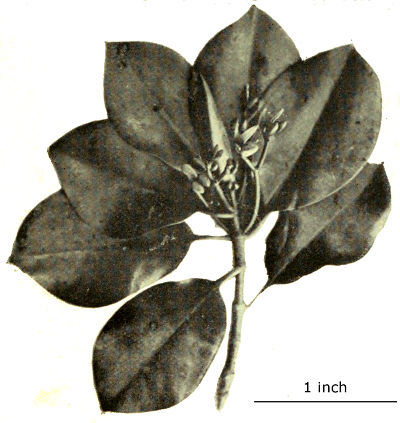
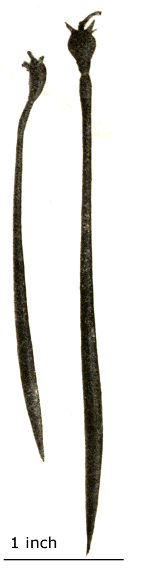
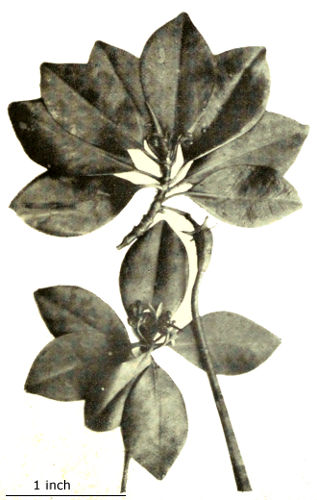
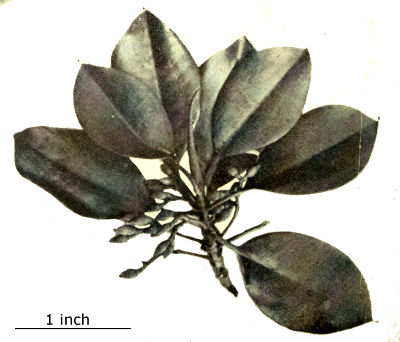
[Frontispiece.
Selala (Vanua Levu, Fiji) (1⁄3).
Fruits with seedlings nearly ready to fall from the tree of Rhizophora mangle (shortest) and Rhizophora mucronata (longest). From Vanua Levu, Fiji. (1⁄4 of the true length.)
Rhizophora mangle (Vanua Levu, Fiji) (1⁄4).
Rhizophora mucronata (Vanua Levu, Fiji) (1⁄5).
OBSERVATIONS OF
A NATURALIST IN
THE PACIFIC BETWEEN
1896 AND 1899
BY
H. B. GUPPY, M.B., F.R.S.E.
VOLUME II
PLANT-DISPERSAL
London
MACMILLAN AND CO., Limited
NEW YORK: THE MACMILLAN COMPANY
1906
All rights reserved
Richard Clay and Sons, Limited,
BREAD STREET HILL, E.C., AND
BUNGAY, SUFFOLK.
Dedication
TO THOSE NUMEROUS PERSONS TO WHOM I WAS INDEBTED FOR
GREAT KINDNESS AND ASSISTANCE DURING MY
SOJOURN IN HAWAII AND FIJI
PREFACE
vii
Although this volume contains a great amount of original
material, I am largely indebted to the labours of my predecessors
for its present form; and a scheme that at first was limited
only to my own observations in the Pacific has gradually extended
itself to the general subject of plant-dispersal. The
farther I proceeded in my work the more I realised that the
floras of the Pacific islands are of most interest in their connections,
and that the problems affecting them are problems
concerning the whole plant-world. Deprived of the writings
of Seemann, Hillebrand, Drake del Castillo, and other botanists,
several of whom have lived and died in the midst of their
studies of these floras, and without the aid of the works of
Hemsley and Schimper, generalisers who have mainly cleared
the way for the systematic study of plant-distribution and
plant-dispersal, it would not have been possible for me to accomplish
such an undertaking.
My interest in plant-dispersal dates back to 1884, when,
whilst surgeon of H.M.S. Lark, in the Solomon Islands, I made
some observations on the stocking of a coral island with its
plants, which were published in the Report on the Botany of
the “Challenger” Expedition. In 1888 I followed up the same
line of investigation during a sojourn of three months on
Keeling Atoll, and during a journey along the coasts of West
Java. But realising that as yet I had barely touched the
fringe of a great subject, and that several years of study would
be required before one could venture even to appreciate the
nature of the problems involved and much less to weigh results,
viiiI took advantage of the circumstances of my life to make,
between the years 1890 and 1896, a prolonged investigation of
the plants of the British flora, mainly from the standpoint of
dispersal by water. This involved the study of the seed-drift
of ponds and rivers and of the plants supplying it, a study
which brought me into close relation with aquatic and sub-aquatic
plants. This line of investigation led me into contact
with many other aspects of plant-life; and as time went on
my field of interest extended to the plants of dry stations and
to the bird as an agent in plant-dispersal. Only a few of these
results have been published, as in the journals of the Linnean
Society and of the Royal Physical Society of Edinburgh as well as
in the pages of Science Gossip. They lie for the most part still
within my note-books, and fitly so, since I regarded such studies
chiefly as a preparation for the investigation of the general
question of plant-dispersal.
When again, in October, 1896, I found myself once more in
the Pacific, the subject was taken up again with zeal; but my
larger experience had only increased my diffidence, and the
unknown looked so overwhelming that I settled down for the
next three years content with merely making experiments and
recording observations. Here again the main problem was
attacked through the study of seed-buoyancy, and gradually
it led me to the systematic study of the mangroves and of the
beach-plants, whilst my inland excursions brought me into
familiarity with the plants of the interior. My geological
exploration of the island of Vanua Levu, in Fiji, greatly
assisted me by giving a method to my botanical examination
of the island.
Whilst working out my geological collections in England, in
the years 1900-1902, I devoted an hour or two daily to the
elaboration of my botanical notes and to a consideration of
the problems concerned. During a winter in Sicily I took up
again the subject of the beach-plants; and after the publication
of the volume on the geology of Vanua Levu I was able
to accomplish a plan, for years in my dreams, of visiting the
eastern shores of the Pacific. During a period of three months
ixfrom December, 1903, to March, 1904, I examined the littoral
flora of the west side of South America at various localities
between Southern Chile and Ecuador; and finally completed
this investigation by comparing the shore-plants on the Pacific
and Atlantic coasts of the isthmus of Panama. Returning to
England with a fresh collection of data, I passed many months
in elaborating and arranging all my notes, waiting vainly for a
clue to guide me in framing a scheme by which I could bring
the results of many years of work into some connected form.
At last I decided once again to take the floating seed as my
clue, and without any prearranged plan I allowed the work to
evolve itself. Now that it is finished, I can see some obvious
defects; but if any other plan had been adopted I scarcely
think that I should have been more successful in piecing
together in a single argument materials resulting from so
many years of research and relating to so many aspects of
plant-life.
Yet the final object of a naturalist would be but a sorry one,
if his aim were only to write a treatise and append his name to it.
His personal faith lies behind all his work; and no one can pursue
a long line of study of the world around him without rising from
his task with some convictions gained and some convictions lost.
As far as the observation of Nature’s processes at present in
operation can guide us, the world presents itself to us only as a
differentiating world. We can perceive, it is true, a progressive
arrangement of types of organisms from the lowest to the highest,
and we can perceive a development of varieties of the several
types; but the only process evident to our observation is that
concerned with the production of varieties of the type. Nature
does not enlighten us as to the mode of development of the type
itself. We can, for instance, detect in actual operation the process
by which the different kinds of bats or the different kinds of men
have been developed; but there is no principle in Nature evident
to our senses that is concerned with type-creation. Though we
can supply it by hypothesis, we cannot discover it in fact. On the
other hand, the evidence of differentiation is abundant on all sides
of us, both in the organic and in the inorganic worlds. The history
xof the globe has ever proceeded from the uniform to the complex;
and in the closing chapter of this book an endeavour is made to
connect the differentiation of plant and bird with the differentiation
of the conditions of existence on the earth. But this leaves no
room for the development of new types of organisms; and so far
as observation of the processes of Nature at present working around
us can guide us, each type might well be regarded as eternal. We
can never hope to arrive at an explanation of the progressive
development of types by studying the differentiating process;
and since the last is alone cognisable for us, evolution, as it is
usually termed, becomes an article of our faith, and of faith only.
In illustration of this argument, let me take the case of the
races of men. We see mankind in our own day illustrating the
law of differentiation all over the globe, as far as physical characters
are concerned. Just as the ornithologist would postulate a
generalised type in tracing the origin of various allied groups of
birds, so the anthropologist, guided by his observation of the
changes now offered by man in different regions, would postulate
a generalised original type as the parent-stock of mankind.
Observation of the processes of change now in operation by no
means leads us to infer that such a generalised type was an
anthropoid ape, or even simian in character. In so doing we
should be forming a conclusion not warranted by the observation
of existing agencies of change, and we should be confusing the
two distinct processes of evolution and differentiation, or rather
of progressive and divergent evolution, of which the last alone
comes within our field of cognition. The study of variation can
do no more than enable us to ascertain the mode of development
of different kinds, we will say, of birds or of men. The origin of
the type lies outside our observation. “Given the type, to explain
its origin”: this is the problem we can never solve, and Nature
aids us nothing by the study of her ways. On the other hand,
there is the subsidiary problem.... “Given a type, to explain its
varieties” ...; and here Nature’s processes are apparent to us in
a thousand different shapes.
It might seem that the presumptive evidence connecting man
in his origin with the monkeys is so strong that, supposing his
xisimian descent were regarded as a crime, a jury would without
hesitation pronounce his guilt; but until some observer of the
processes followed by Nature can bridge over the gap that divides
man from the ape, until indeed he can offer a legitimate illustration
of how it is accomplished in similar cases in our own day, the gap
remains. Those who have read the recent work of Prof. Metchnikoff
on the Nature of Man will properly regard his chapter on the
simian origin of man as a brilliant argument advanced by a most
competent authority. Yet he fails to complete his case by bridging
over this gap, and can only appeal to the results of the now
famous researches of De Vries concerning the mutations of the
evening primrose (Œnothera). It is probable, he says, that man
owes his origin to a similar phenomenon (English edition, p. 57).
Several objections could be raised against this illustration from
the plant-world, the most important of them lying in the circumstance
that these mutations could only be urged as instances of
the sudden development of new species of the evening primrose
type. They merely illustrate the process of differentiation from
a given type, and by no means represent the process of progressive
evolution from a simian to a man.
However, look where we may—and this is the great lesson I
have learned from my researches in the Pacific islands—Nature
does not present to our observation any process in operation by
which a new type of organism is produced. The processes involved
lie hidden from our view. The channels by which impressions
from the outside world reach us are comparatively few; and
although it seems likely that the future development of man will
be mainly concerned with the acquirement of additional sense-channels,
no newly acquired sense will enable him to be at once
an actor in and a spectator of the great drama presented in the
organic world. That a creature should be able to get at the back
of its own existence, or, in other words, to penetrate the secret of
its own creation, is unthinkable. Outside the limited field of
observation that immediately surrounds us extends the region
where reason alone can guide us, and beyond lies the realm where
reason fails and faith begins.
H. B. GUPPY.
November 8th, 1905.
LIST OF SOME OF THE PRINCIPAL AUTHORITIES QUOTED IN THIS VOLUME, WITH AN ENUMERATION OF THE AUTHOR’S BOTANICAL PAPERS
xiii
Burkill, I. H., “The Flora of Vavau, one of the Tonga Islands,” Journal of
the Linnean Society, vol. xxxv., Botany, 1901.
Cheeseman, T. F., “The Flora of Rarotonga,” Transactions of the Linnean
Society, 2nd Ser., Botany, vol. vi., part 6, 1903.
Drake del Castillo, E., “Flore de la Polynésie Française,” Paris, 1893.
“Remarques sur la Flore de la Polynésie” (Mémoire couronné par
l’Académie des Sciences), Paris, 1890.
Eggers, Baron H. von, “Die Manglares in Ecuador,” Botanisches Centralblatt,
No. 41, 1892.
“Das Küstengebiet von Ecuador,” Deutsche Geographische Blätter,
heft 4, band 17, Bremen, 1894.
“Einige blütenbiologische Beobachtungen auf Spitzbergen,” Tromso
Museums Aarshefter, 20, 1897.
Guppy, H. B., “The Dispersal of Plants as illustrated by the Flora of Keeling
Atoll,” Journal of the Victoria Institute, London, 1889.
“The Polynesians and their Plant-Names,” Journal of the Victoria
Institute, London, 1896.
“The River Thames as an Agent in Plant-Dispersal,” Journal of the
Linnean Society, Botany, vol. xxix., 1891-93.
xiv“River-Temperature,” part iii., Proceedings of the Royal Physical
Society of Edinburgh, 1896. (The first two parts deal principally with the
temperature of ponds and rivers, whilst in the last part the thermal
conditions are discussed especially in connection with the life of aquatic
plants.)
“On the Postponement of the Germination of the Seeds of Aquatic
Plants,” Proceedings of the Royal Physical Society of Edinburgh, 1897.
“On the Temperature of Springs as especially illustrated by the Wandle
and other Tributaries of the Thames.” (This paper, of which I have no copy,
was published in the Journal of the Royal Meteorological Society, about
1895. It throws light on the thermal conditions of plants in springs.)
“Water-Plants and their Ways,” Science Gossip, Sept., Oct., Nov., 1894.
(The various modes of dispersal of land as well as water plants are here
dealt with, their thermal conditions are discussed, and in the November
number are given the results of four years’ observations on the life-history
and life-conditions of Ceratophyllum demersum.)
“Caddis-Worms and Duckweed,” Science Gossip, March, 1895. (A short
note.)
“Stations of Plants and Buoyancy of Seeds,” Science Gossip, April and
May, 1895.
“Irregularity of some Cotyledons,” Science Gossip, September, 1895.
“Plants of the Black Pond, Oxshott,” Science Gossip, October, 1895.
“On the Habits of Lemna minor, L. gibba, and L. polyrrhiza,” Journal of
the Linnean Society, Botany, vol. xxx. (This paper contains the results of
three years’ systematic observations of these plants.)
“The Distribution of Aquatic Plants and Animals,” The Scottish
Geographical Magazine, January, 1893.
Hemsley, W. B., “Report on the Botany of the Challenger Expedition,” 1885.
“The Flora of the Tonga Islands,” Journal of the Linnean Society,
Botany, vol. xxx.
Hillebrand, W., “Flora of the Hawaiian Islands,” Heidelberg, 1888.
Horne, J., “A Year in Fiji,” London, 1881.
Kolpin Ravn, F., “Om Flydeevnen hos Froene af vore Vand-og Sumpplanter,”
Botanisk Tidsskrift, 19 bind., 2 hefte, Kjobenhavn, 1894 (“On the
Floating Capacity of the Seeds of Aquatic and Marsh Plants”). (A résumé
in French is appended to the paper.)
Martins, Ch., “Expériences sur la Persistance de la Vitalité des Graines
flottant à la Surface de la Mer,” Bull. Soc. Botanique de France tome iv.,
1857.
xvNadeaud, J., “Enumération des Plantes indigènes de l’Ile de Tahiti,” Paris,
1873.
Penzig, O., “Die Fortschritte der Flora des Krakatau,” Annales du Jardin
Botanique de Buitenzorg, 2 ser., tome 3, Leide, 1902.
Perkins, R. C. L., “Fauna Hawaiiensis,” vol. i., part iv. (Vertebrata)
Cambridge University Press, 1903.
Reinecke, F., “Die Flora der Samoa-Inseln,” Engler’s “Botanische
Jahrbücher,” band xxv., heft v., Leipzig, 1898.
Schimper, A. F. W., “Die indo-malayische Strandflora,” Jena, 1891.
Seemann, B., “Flora Vitiensis,” London, 1865-73.
Sernander, R., “Den Scandinaviska Vegetationens Spridnings-biologi,”
Upsala, 1901.
Thuret, G., “Expériences sur des Graines de diverses Espèces plongées dans
de l’eau de Mer,” Archives des Sciences (Phys. et Nat.) de la Bibliothèque
Universelle, tome 47, Geneva, 1873.
Treub, M., “Notice sur la nouvelle Flore de Krakatau,” Annales du Jardin
Botanique de Buitenzorg, 1888.
Note.—Amongst the works quoted which are not specially particularised in the
text are Scott Elliot’s “Nature Studies,” 1902, and Beal’s “Seed
Dispersal,” Boston, 1900.
The study of insular floras.—Their investigation in this work from the standpoint
of dispersal.—The significance of plant-distribution in the Pacific.—The
problems connected with the mountain-flora of Hawaii.—The persistence
of dispersing agencies at the coast, their partial suspension on the
mountain-top, their more or less complete suspension in the forest, and the
effect on the endemic character of plants.—The connection between the
endemism of birds and plants.—The relative antiquity of plants of the coast,
forest, and mountain-top.—The genetic relation between coast and inland
species of the same genus.—The ethics of plant-dispersal.—Evolution takes
no heed of modes of dispersal.—The seed-stage is the price of Adaptation.
THE FLORAS OF THE PACIFIC ISLANDS FROM THE STANDPOINT OF DISPERSAL
BY CURRENTS
The initial experiment.—The proportion of littoral plants.—The two great
principles of buoyancy.—The investigations of Professor Schimper.—The
investigations of the author.—The great sorting process of the ages.—Preliminary
results of the inquiry into the buoyancy of seeds and fruits.
Results of observations on the buoyancy of over 300 British plants.—The small
proportion of plants with buoyant seeds or seedvessels.—Their station by
the water-side.—The great sifting experiment of the ages.—Summary.
The choice of station of the water-side plant possessing buoyant seeds or seedvessels.—Determined
by its fitness or unfitness for living in physiologically
dry stations.—In the internal organisation of a plant lies the first determining
influence of station.—The grouping of the British strand-plants.—Whilst
the Xerophyte with buoyant seed or fruit finds its station at the
coast, the Hygrophyte similarly endowed makes its home at the river or
pond side.—The grouping of the plants of the river and the pond.—Summary.
(From materials supplied mainly by the work of Drake del Castillo)
Lacks the mangroves and their associated plants.—Possesses mainly the
plants of the coral beach.—Predominant agency of the currents.—Inland
extension of shore-plants.—Summary
Its poverty.—Its negative features.—Their explanation.—The subordinate part
taken by the currents.—The Oregon drift.—The inland extension of the
beach-plants.—Summary
THE LITTORAL PLANTS AND THE CURRENTS OF THE PACIFIC
The working value of the currents as plant-dispersers.—The relation between
the currents and the distribution of shore-plants.—The clue afforded by
the American plants.—Two regions of tropical shore-plants, the American
and the Asiatic.—America, the home of the cosmopolitan tropical shore-plants
that are dispersed by the currents.—Hawaii and the currents.—Summary
Germination in the floating seed-drift of tropical estuaries.—A strain of vivipary.—Abortive
germination of seeds in warm seas.—A barrier to plant dispersal.—The
borderland of vivipary.—Summary
THE RELATION OF THE BUOYANCY OF SEEDS AND SEEDVESSELS TO THE DENSITY
OF SEA-WATER
The general principles concerned.—The subject assumes a statistical character.—Seeds
and seedvessels are as a rule either much heavier than sea-water
or much lighter than fresh water.—The present littoral plants with buoyant
seeds or seedvessels could be equally well dispersed by currents in oceans
of fresh water.—Seed-buoyancy has no relation either in the present or in
the past to the density of the sea.—Though an accidental attribute, the
specific weight of seeds has had a profound influence on plant-distribution.—Summary
Nature has never concerned herself directly with providing means of dispersal.—Fleshy
fruits not made to be eaten.—Nor “sticky” seeds to adhere to
plumage.—Nor prickly fruits to entangle themselves in fur and feathers.—The
dispersal of seeds a blind result of the struggle between the intruding
Evolutionary power and the controlling influence of Adaptation.
THE CAUSES OF THE BUOYANCY OF SEEDS AND FRUITS OF LITTORAL PLANTS,
WITH ESPECIAL REFERENCE TO THOSE OF THE PACIFIC ISLANDS
The classification of buoyant seeds and fruits.—The first group, where the cavity
of the seed or seedvessel is incompletely filled.—The second group, where
the kernel is buoyant.—The third group, where there is air-bearing tissue
in the seed-tests or fruit-coats.—The buoyant seeds and seedvessels of the
littoral plants of the British flora.—Summary
The question of the operation of Natural Selection.—Are there two principles
at work?—The presence of buoyant tissue in the seed-tests and fruit-coats
of inland plants, both wild and cultivated.—Useless buoyancy.—The
buoyancy of seeds and fruits is not concerned with Adaptation.—Summary.
Professor Schimper’s views.—Great antiquity of the mangrove-formation.—Problem
mainly concerned with the derivation of inland from littoral plants.—Grouping
of the genera possessing both coast and inland species.—Scævola.—Morinda.—Calophyllum.—Colubrina.—Tacca.—Vigna.—Premna
THE RELATION BETWEEN LITTORAL AND INLAND PLANTS (continued)
Inland species of a genus developed from littoral species originally brought by
the currents but no longer existing in the group.—Illustrated by the
Leguminous genera Erythrina, Canavalia, Mezoneuron, and Sophora, and
by the Apocynaceous genus Ochrosia.—The Hawaiian difficulty.
THE RELATION BETWEEN LITTORAL AND INLAND PLANTS (continued)
The Fijian difficulty.—Inland species of a genus possessing fruits not known
to have any means of dispersal through agencies now at work in the
Pacific.—Pandanus.—Its remarkable distribution in oceanic groups.—To
be attributed perhaps to extinct Columbæ or extinct Struthious birds.—Barringtonia.—Guettarda.—Eugenia.—Drymispermum.—Acacia
laurifolia.—Conclusions to be drawn from the discussion.—Summary of Chapters
XIV., XV., XVI.
THE STORIES OF AFZELIA BIJUGA, ENTADA SCANDENS, AND CÆSALPINIA
BONDUCELLA
Afzelia bijuga.—The African home of the genus.—The double station of Afzelia
bijuga, inland and at the coast.—The nature of the buoyancy of its seeds.—Summary
relating to Afzelia bijuga.—Entada scandens.—Its station and
distribution.—Darwin’s opinion of the plant.—The dispersal of its seeds by
the currents.—Summary relating to the plant.—Cæsalpinia bonducella and
C. bonduc.—Their station and distribution.—Their characters in various
Pacific groups.—The parents of inland species.—Their dispersal by the
currents.—The germination of their seeds.—A dream of vivipary.—The
causes of the seed-buoyancy.—Summary of results
THE ENIGMAS OF THE LEGUMINOSÆ OF THE PACIFIC ISLANDS
Leguminosæ predominate in tropical littoral floras.—The anomalies of their
distribution in the Pacific islands.—They conform to no one rule of dispersal
or of distribution.—Strangers to their stations.—The American home
of most of the Leguminous littoral plants.—Summary
Preliminary Comparison of the Physical Conditions of Hawaii,
Fiji, and Tahiti
Introductory remarks.—The tranquil working of the winds and currents contrasted
with the revolutionary influence of the bird.—The Hawaiian, Fijian,
and Tahitian groups.—Their surface-areas and elevations.—Their climates.—The
mountain climate of Hawaii.—The rainfall of the three groups.—Summary
THE ERAS IN THE FLORAL HISTORY OF THE PACIFIC ISLANDS
The Age of Ferns
The eras in the plant-stocking.—The age of ferns and lycopods.—The
relative proportion of vascular cryptogams in Hawaii, Fiji, and Tahiti.—The
large number of peculiar species in Hawaii.—The mountain ferns of
Hawaii.—The origin of peculiar species.—Dr. Hillebrand’s views.—Their
origin connected not with greater variety of climate in Hawaii, but with
isolation.—Summary
The islands of the tropical Pacific as the homes of new genera and new species.—The
significance of a large endemic element.—Synopsis of the eras.—The
era of endemic genera.—The endemic genera of Compositæ.—Their
affinities and mode of dispersal.—The mystery of the suspension of the
dispersing agencies.—Mr. Bentham’s views.—The remnant of an ancient
Composite flora in the tropical Pacific.—The dispersion of the Compositæ
antedates the emergence of the island-groups of the Fijian region at the
close of the Tertiary period.—Summary
The distribution of the arborescent Lobeliaceæ.—On the upper flanks of Ruwenzori.—The
Lobeliaceæ of the Hawaiian Islands.—The Lobeliaceæ of the
Tahitian or East Polynesian region.—The capacities for dispersal.—The
explanation of the absence of the early Lobeliaceæ from West Polynesia.—The
other Hawaiian endemic genera.—The Fijian endemic genera.—Summary
THE ERA OF THE NON-ENDEMIC GENERA OF FLOWERING PLANTS
The Mountain Floras of the Pacific Islands as illustrated by
the Non-endemic Genera
The mountain-flora of Hawaii.—A third of it derived from high southern
latitudes.—An American element.—Compared with Tahiti and Fiji.—Capacities
for dispersal of the genera possessing only endemic species.—Acæna,
Lagenophora, Plantago, Artemisia, Silene, Vaccinium, &c.—Capacities
for dispersal of the genera possessing non-endemic species.—Cyathodes,
Santalum, Carex, Rhynchospora.—Fragaria chilensis, Drosera
longifolia, Nertera depressa, Luzula campestris.—Summary.
THE ERA OF THE NON-ENDEMIC GENERA OF FLOWERING PLANTS (continued)
The Mountain-Floras of the Tahitian and Fijian Regions
The mountain-flora of the Tahitian region, as illustrated by the non-endemic
genera.—Derived chiefly from high southern latitudes.—Weinmannia,
Coprosma, Vaccinium, Astelia, Coriaria, Cyathodes, Nertera depressa,
Luzula campestris.—The mountain flora of Rarotonga.—The mountain-flora
of the Fijian region, as illustrated by the non-endemic genera.—Weinmannia,
Lagenophora, Coprosma, Astelia, Vaccinium, Nertera
depressa.—The Fijian Coniferæ.—Dammara, Podocarpus, Dacrydium.—Not
belonging to the present era of dispersal.—The age of dispersal of the
Coniferæ in the Pacific.—Earlier than the age of Compositæ and Lobeliaceæ.—The
first in the Mesozoic period.—The last in the Tertiary period.—Summary
THE ERA OF THE NON-ENDEMIC GENERA OF FLOWERING PLANTS (continued)
The Age of the Malayan Plants as represented in the Low-level
Flora of Hawaii and in the Bulk of the Floras of
the Fijian and Tahitian Regions
The Age of Wide Dispersal over the Tropical Pacific
The widely dispersed genera which possess only peculiar species in Hawaii.—Pittosporum.—Reynoldsia.—Gardenia.—Psychotria.—Cyrtandra.—Freycinetia.—Sapindus.—Phyllanthus.—Pritchardia.—Summary.
THE ERA OF THE NON-ENDEMIC GENERA OF FLOWERING PLANTS (continued)
The Age of Malayan Plants (continued)
The Age of Wide Dispersal over the Tropical Pacific (continued)
The widely dispersed genera that are as a rule not entirely represented by
endemic species in any archipelago.—Elæocarpus.—Dodonæa.—Metrosideros.—Alyxia.—Alphitonia.—Pisonia.—Wikstrœmia.—Peperomia.—Eugenia.—Gossypium.—The
last stage in the general dispersal of plants
of the Malayan era as illustrated by the widely-dispersed genera having
as a rule no peculiar species.—Rhus.—Osteomeles.—Plectronia.—Boerhaavia.—Polygonum.—Pipturus.—Dianella.—Summary.
Identity of the problems presented by the indigenous plants and the peoples
of the Pacific islands.—The food-plants of the Polynesians and the pre-Polynesians.—Their
weeds.—The aboriginal weeds.—The white man’s
weeds.—Weeds follow the cultivator but are distributed by birds.—The
general dispersion of weeds antedates the appearance of the Polynesian in
the Pacific.—Weeds of little value to the ethnologist.—Aleurites moluccana.—Inocarpus
edulis, Gyrocarpus Jacquini, Serianthes myriadenia, Leucæna
Forsteri, Mussænda frondosa, Luffa insularum.—Summary
In the south of England.—On the coast of Scandinavia.—In the Mediterranean.—Southern
Chile.—Very little effective dispersal by currents in temperate
latitudes.—Cakile maritima.—In tropical regions.—River drift.—River
and beach drift of Fiji.—Musa Ensete.—The coco-nut.—River and beach
drift of Hawaii.—Comparison of the beach drift of the Old and New
Worlds.—Summary
Rhizophora.—Represented by Rhizophora mucronata, Rhizophora mangle, and
the Selala, a seedless intermediate form.—Their mode of association and
characters.—The relation of the Selala.—Polyembryony.—The history of
the plant between the fertilisation of the ovule and the detachment of the
seedling.—Absence of a rest period.—Mode of detachment of the seedling.—Capacity
for dispersal by the currents.—Bruguiera.—The mode of dispersal.—Peculiar
method of fertilisation.—Length of period between
fertilisation and the detachment of the seedling.—Mode of detachment of
the seedling.—Summary
The significance of vivipary.—The scale of germinative capacity.—A lost habit
with many inland plants.—The views of Goebel.–-The shrinking in the
course of ages of tropical swamp areas.—The variation in the structures
concerned with vivipary.—Abnormal vivipary.—Summary.
The littoral floras of the West Coast of South America.—The Convolvulus
soldanella zone of Southern Chile.—The plantless or desert zone of
Northern Chile.—The Sesuvium zone of Peru.—The Mangrove zone of
Ecuador and Colombia.—The two varieties of Rhizophora mangle, the
“mangle chico” and the “mangle grande.”—The floating vegetable drift
of the Guayaquil River.—The Humboldt current and the climate of the
West Coast of South America.—The advance northward of the arid
climatic conditions of the Peruvian sea-border.—The retreat of the mangroves.—Evidence
of ancient coral reefs on the coast of Peru.—The shore
plants and stranded seed-drift of the Panama Isthmus.—Summary.
The shifting of the source of Polynesian plants from the New to the Old
World.—The floral history of Polynesia stated in terms of geological time.—The
suspension of the agencies of dispersal in later periods.—Parallel
differentiation in the course of ages of climate, bird, and plant.—New
Zealand.—Insects and bats as agents in plant-dispersal.—The effective
agency of sea-birds in other regions.—The observations of Ekstam.—The
Spitzbergen controversy.—The efficacy of ducks as distributors of aquatic
plants.—Summary
Page 122. Sir W. Buller includes the fruits of the Puriri tree
(Vitex littoralis, according to Kirk) amongst the food of the New Zealand fruit-pigeons.
Page 177.For Entata, in the head-line, read Entada.
Page 266. The fruits of Oncocarpus vitiensis have been found in
the crop of a Fijian fruit-pigeon (Carpophaga latrans). See Hemsley’s Bot.
Chall. Exped., Introd., 46, and iv. 308; also Newton’s Dictionary of
Birds, p. 724.
Page 368. Sernander (p. 185) observes that the fruits of Naias
marina have little or no floating power.
Page 416. For the first eight lines read as follows:—“Of these,
22 occur in Continental regions on both sides of the Pacific; 12 are found in the Old
World alone; one is peculiarly American, and two are confined to the Australian and
Polynesian regions. A few of these can be regarded as exclusively American in their
origin, though the bulk of them hail evidently in the first place from the Old World. But
from the circumstance that all or most of the other species of the genus concerned are
confined to America, it may legitimately be inferred that Waltheria americana, Ageratum
conyzoides, and Physalis angulata are American-born species. Teucrium inflatum is a
peculiar instance of an American weed collected in Polynesia before apparently it had
been recorded from the Old World.”
Page 417. Add after Cardiospermum halicacabum.... “Its seeds, as
my experiments show, possess little or no capacity for dispersal by currents, since they
sink at once or within a few days, even after drying for months.”
Page 455. Omit the reference to figure 6 in the centre of the
page.
Page 508. Amongst my Solomon Island collections identified at Kew
were the fruits of a species of Litsea from the crop of a fruit-pigeon (Hemsley’s
Bot. Chall. Exped., IV. 295.)
Page 618. Under Mascarene Islands add Myoporum to the plants linking
them to the Pacific Islands.
1OBSERVATIONS OF A NATURALIST
IN THE PACIFIC
The study of insular floras.—Their investigation in this work from the standpoint
of dispersal.—The significance of plant-distribution in the Pacific.—The
problems connected with the mountain-flora of Hawaii.—The persistence
of dispersing agencies at the coast, their partial suspension on the
mountain-top, their more or less complete suspension in the forest, and the
effect on the endemic character of plants.—The connection between the
endemism of birds and plants.—The relative antiquity of plants of the coast,
forest, and mountain-top.—The genetic relation between coast and inland
species of the same genus.—The ethics of plant-dispersal.—Evolution takes
no heed of modes of dispersal.—The seed-stage is the price of Adaptation.
To proceed from the general to the special is the only method
of dealing with insular floras. A broad and comprehensive grasp
of plant-distribution, such as is only acquired by a life-time of
research aided by travel and the handling of large collections, is a
necessary foundation for the study; yet in the nature of things
such qualifications can be possessed by but a few. To direct an
inquiry in the opposite direction, and endeavour to attack the
problem of continental floras through the insular floras would
result merely in the investigation of a few of the many questions
connected with plant-distribution.
The panoramic sketch of the surveyor on the mountain-top
aids him in a thousand ways when after months of tedious labour
he plots the details in his chart. Without such a panoramic view
of the plant-world in his mind’s eye, an observer like myself can
only look for guidance to the writings of those who have
2generalised on the foundations of a far broader experience, such as
those of Bentham, De Candolle, Gray, Hooker, Schimper, and
others.
It would be quite possible for a botanist possessing a profound
general acquaintance with the plant-world to dispense altogether
with actual observation and experiment on modes of dispersal. It
would be quite possible for him to arrive at conclusions, which,
even if they did not always come into line with results of observation
and experiment, we should be compelled to prefer. It is
only from his more elevated position that a general can follow the
course of a battle; whilst the private with his experience confined
to a limited area of the field of conflict may form the most
erroneous ideas of the progress of the fight. So it is with
observers whose employment it is to struggle with the details and
secondary principles of plant-distribution, and so it is with the
generaliser who has already roughly mapped out the principal
features of the main problem.
When Mr. Bentham in 1869, remarking on the paucity of
species common to tropical Asia and America, characterised them
either as plants wholly or partially maritime and spread by the
currents, or as weeds dispersed by cultivation over the warm
regions of the globe, he mentioned amongst the plants in the
former category, Gyrocarpus jacquini. This tree presents one of
the mysteries connected with the Pacific islands; and I don’t
imagine that this eminent botanist could have known anything
except inferentially as regards the mode of dispersal of its fruits.
Yet experiment shows how well founded the inference was, whilst
behind it lay a life-time of botanical research.
The author thus approaches the subject of the floras of the
Pacific islands rather as a plotter of detail than as a delineator of
great designs. However much we may study the means of
dispersal, we have behind them the great facts of distribution,
serving like the main stations of a trigonometrical survey, and with
these we have to make our lesser facts and observations square.
One is conscious all the time that much of what seems new in
one’s researches has already been foreseen by the generaliser, and
that one can do little else than assist in confirming some of his
results. This is all that I can lay claim to in this work.
The floras of the islands and coasts of the tropical Pacific are
here regarded entirely from the standpoint of plant-dispersal. The
fruits and seeds rather than the flowers have been the subject of
my investigations; and although there is much to please the eye
3in the flora of a Pacific island, it was always with a sense of
disappointment that I turned away from some pretty flowering
plant that failed to present me with its seed. Amongst the
wonders of the plant-world rank the Tree Lobelias of the
Hawaiian Islands; yet their greatest charm to me lay not so much
in their giant-flowers and their arborescent habit as in the mystery
surrounding the home of their birth and their mode of arrival in
these islands. When I first stood under the shade of the lofty
Dammara vitiensis, the Kauri Pine of Fiji, all my interest lay in
its cones lying on the ground; and I remember how eagerly I
handled my first specimen, and how anxiously I watched its
behaviour when experimenting on its capacity for different modes
of transport. When a strange plant presented itself on a beach,
my first care was to ascertain the fitness of its fruits or seeds for
transport by the currents; and all inland plants with fruits likely
to attract frugivorous birds were at once invested with a special
interest for me.
The mangrove swamps were always great places of interest, and
months of my sojourn in the Pacific must have been passed in
exploring their creeks and in examining their vegetation. Botanists
usually avoid these regions; but the observation of the germination
of the Rhizophora fruits on the trees and the inquiries connected
with their methods of distribution over the oceans were pursuits so
engrossing that I ignored the numerous discomforts connected with
the exploration of these gloomy regions. The magnificent mangrove
forests of the Ecuador coast of the Pacific will live longest
in my memory, though the risks were considerably greater and the
discomfort of existence extreme. But the mangrove swamps
present us with glimpses into the conditions of plant life during
the warmer epochs of the earth’s history, when perhaps the seed-stage
was largely dispensed with, whilst an atmosphere, laden
with moisture and screening off much of the sun’s light, enveloped
most of the circumference of the globe.
The plant world viewed only from the standpoint of dispersal
may lack much that is pleasing to the eye, though it abounds with
small and great problems fascinating to the reason. Matters of
great moment are here involved, and in the case of the Pacific
islands they concern not only the source of the oceanic floras,
but the story of the islands themselves; whilst behind these there
rise up questions of yet deeper import, questions that are bound up
with the beginnings of genera and species, and with other mysteries
of life on the earth. The distribution of plants presents something
4more than a problem of means of dispersal, or a problem of
station, or a problem of plant migration connected with climatic
changes. It is something a great deal more than all three,
since it is indissolubly connected with a past, of which unfortunately
we know very little. Let us take it to be a question of
means of dispersal, and then in imagination transporting ourselves
to the Scandinavian coast, let us gather up the stranded West
Indian beans of Cæsalpinia, Mucuna, and Entada, that have been
drifted there for ages by the Gulf Stream, and lie in some cases
semifossilised in the adjacent peat-bog. Was ever dispersal so
utterly purposeless as this? Yet here lies a principle of plant-dispersal
that is fundamental. We see it in the thistle-seed floating
seaward in the wind. Nature never intended its pappus for such
an end. It was formed for quite another purpose, yet it aids
largely the dispersion of the plant. What can be more significant
than that?
Or let us take it to be a matter of station. Given time and the
recurrence of the same conditions, with others I once imagined that
we could explain most things in plant-distribution, whether of
plants at the coast or of plants inland, whether of plants of the
alpine peaks or of plants of the plains, or of plants of the river or
of the pond. Time, it was held, had long since discounted the
means of dispersal, and distribution became merely an affair of
station. But the supplanting of many indigenous species of a flora
by introduced species is a common story in the plant-world; and
such a view needs no further discussion here. Nor is distribution
only concerned with plant-migration. Any theory of the origin of
alpine floras on tropical mountains will have to explain the presence
of the temperate genera, Geranium and Sanicula, not alone on
the summits of the mountains of Equatorial Africa and Madagascar,
but on the uplands of Hawaii in mid-Pacific, where also are found
Ranunculus, Vaccinium, Fragaria chilensis (the Chilian strawberry),
and Drosera longifolia.
Taking genera of different stations each in their turn, and following
up the clues thus afforded, it would be possible to find
support for all the reputable views relating to plant-distribution.
The wide range of aquatic plants under conditions that completely
change the character of the terrestrial vegetation, such, for instance,
as Myriophyllum and Ceratophyllum, might be plausibly
attributed to the relative uniformity of the conditions of aquatic
life both in time as well as space. The occurrence of Vaccinium
on mountain-tops over most of the world, even on the highlands
5of Samoa, Tahiti, and Hawaii in the Pacific Ocean, would be rightly
regarded as evidence of active dispersal of the seeds through the
agency of birds from one mountain-summit to another, whether in
mid-ocean or in the centre of a continent. The prevalence of the
same beach-plants over most of the globe in the same climatic
zones would point unmistakably to the predominant agency of
currents. But with many plant-genera, some of which range the
world, whilst others again may be restricted to a single group
of islands in the Pacific, there is often no question either of
means of dispersal, or of station, or of plant-migration, and
problems of a very different nature are opened up.
When we leave the beach and the mountain-top, the river and
the pond, all the troubles of distribution begin; and since but a
small proportion of plants in a typical flora belong to these stations,
it follows that difficulties will dog our steps with the large majority
of the plants. The agencies of dispersal now working around us,
the current, the wind, the insect, the bird, and the bat, will explain
many of the features of littoral and alpine floras and of the vegetation
of ponds and rivers. Here we have in so many cases wide-ranging
genera with the means of dispersal ready to hand. We
can connect the wide range of Vaccinium with the wide range of
birds of the grouse and other families that feed on the berries.
We can associate the great areas of aquatic or sub-aquatic genera,
like Potamogeton and Sparganium, with the migratory habits of
the ducks in the stomachs of which we find their seeds. We can
connect the great ranges of beach plants like Ipomœa pes capræ
in the tropics, and Convolvulus soldanella in the temperate regions
with the currents, and the almost cosmopolitan range of many
ferns and lycopods with the winds and other agencies.
When, however, we enter the forests we find genera that are
often much more restricted in their areas, and species that are yet
more limited in their range. There is very little dispersal going
on here. The birds are strange. Their distribution is usually
very local. They look lazily down at us from the branches, as
they disgorge the seeds and stones of the fruits they have eaten,
which cover the ground around. We can almost fancy that they
say:—“Our work is done. We rest from the toil of our ancestors.
They carried seeds to far-distant Hawaii, Tahiti, and Savaii. Our
work is done.” And as we walk through those noiseless forests,
where the machinery of species-making is ever in silent motion,
we become aware that we are treading one of Nature’s great workshops
for the manufacture of species and genera. Outside the
6forest all is bustle and hurry. We are in the streets, or rather in
the distributing areas of the plant-world. We hear the noise of
the breaker, the roar of the gale, the cry of the sea-gull, the
flapping of a myriad pairs of wings of some migrating host overhead,
and we know that the current, the wind, and the bird are
actively at work; but their operations are confined mainly to the
beach, the mountain-top, the river, and the pond.
Let us take a well-wooded Pacific island several thousand feet
in height. We find on its beaches the same littoral plants that
we have seen before on the tropical shores of Malaya, of Asia,
of Africa, and of America. We find in its ponds and rivers the
same species of water-plants, such as Ceratophyllum demersum,
Ruppia maritima, and Naias marina, that are familiar to us in the
cool and tepid waters of much of the globe. On its level summit,
if it remains within the clouds we find in the boggy ground, where
Sphagnum thrives, genera that are represented in Fuegia, New
Zealand, and the Antarctic islands, such as Acæna, Lagenophora,
and Astelia, and the world-ranging Drosera longifolia. In other
elevated localities we find Ranunculus, Geranium, Sanicula, Artemisia,
Vaccinium, and Plantago, chiefly genera of the temperate
regions of the northern hemisphere; whilst there are also found
Gunnera, Nertera, and Uncinia, all hailing from the south and
belonging to the Antarctic flora characterising all the land-area
around the globe in the latitude of New Zealand and Fuegia.
The Hawaiian species of Nertera and of Uncinia occur also in
New Zealand, and the first-named is found also in Tristan da
Cunha and in South America. In the Hawaiian uplands there
is also to be seen Deyeuxia, a genus of grasses found in the
Tibetan highlands and in the Bolivian Andes at elevations of
16,000 to 19,000 feet; and the same species that exists in
Australia may be found in the mountains of Hawaii. Here
also, both in Hawaii and Tahiti, occurs Luzula campestris.
In making the foregoing remarks on the alpine plants of a
Pacific island, I have had Hawaii in my mind, but we find the
elements of a similar widely-distributed mountain-flora in the less
lofty peaks of Tahiti and Samoa, and traces even in Fiji, where
the mountains, however, have only a moderate elevation. But the
point I wish to lay stress on is the cosmopolitan yet temperate
character of the mountain-flora of an island lying in the midst of
the tropical Pacific. As he shifts his station on this mountain-summit,
the observer might at different times imagine himself in
the Sierra Nevada of California, on a Mexican tableland, on a peak
7of the Andes, or in the lowlands of Fuegia. Other plants that I
have not mentioned, such as Coprosma, would bring back to him
New Zealand. He might even be on a mountain-top in Central
Africa, or on a Madagascar plateau; whilst in the boggy region of
an elevated Hawaiian tableland he would meet with not only the
physical conditions, but also several of the plants found on the
higher levels of Tristan da Cunha.
It is, however, to be noted that although these mountain-tops
in the mid-Pacific have been stocked with genera from the four
quarters of the compass, the species as a rule are restricted to that
particular archipelago. Whilst the beach and the river in most
cases possess plants that have very wide ranges over the earth, a
good proportion of the species on the mountain-summit are not
found elsewhere. This implies a partial suspension of the means
of dispersal on the mountain-top, whilst the currents and waterfowl
are still actively distributing the seeds of the littoral tree and of
the aquatic plant. We here get a foreshadowing of another great
principle, or of another line along which Nature has worked in
stocking these islands of the Pacific with their plants, a subject
concerning which much will be said in later pages.
Hitherto, we have dealt only with a small proportion of the
flora, and with but a small portion of the area of the island. We
have yet to deal with the intermediate region between the sea-border
and the summit of the island, or, in other words, with
the forested mountain slopes. This is the home of many of the
peculiar species and peculiar genera, both of plants and birds; and
it is with this zone that we shall be mainly concerned when
we come to contrast the floras of the several archipelagoes of the
tropical Pacific. Here the agencies of dispersal have, to a large
extent, ceased to act; and the question will arise as to the connection
between the endemic character of the plants and the endemic
character of the birds. We shall have to ask why this island, after
receiving so many plants, ceased to be centres of dispersal to other
regions. It is possible that these seeds or fruits have lost their
capacity for dispersal; but only a few instances of this change
present themselves. Rather it may be supposed that the birds
that originally brought the seeds to the island came to stay; and
this at once suggests another query as to the cause of the change
of habit. I am alluding here not to the plants with minute seeds,
such as Sagina and Orchis, which Mr. Wallace, in his Darwinism,
regards as capable of being transported by strong winds over
a thousand miles of sea; but to those numerous plants found in
8the Fijian, Tahitian, and Hawaiian forests, where the seeds and
“stones” are large and heavy, measuring often as much as a
quarter of an inch (6 mm.), and sometimes nearly an inch (25 mm.)
in size. The reader will be surprised to learn how little “size” has
determined the distribution of seeds and fruits in the Pacific. He
will have to appeal to the habits of pebble-swallowing of the Dodo,
the Solitaire, the Goura pigeon, the Nicobar pigeon, &c., if he
desires to find a parallel in the habits of birds.
It is here assumed that the reader is already acquainted with
the principles involved in a discussion of island-floras, principles
clearly laid down in the writings of Hooker, Wallace, Hemsley,
and others. As a general rule in an island or in a group of islands
where there are a large number of plants not found elsewhere,
there is also a large endemic element in the avifauna, and where
none of the plants are peculiar, endemic birds are either few
or wanting. As an example of the first we may mention Hawaii,
and Iceland affords an instance of the second. But there is no
hard and fast rule connecting the endemic character of the plants
and birds of an island with its distance from other regions. Even
the small group of Fernando Noronha, lying only some 200 miles
off the coast of Brazil, possesses its peculiar birds and its peculiar
plants; and we can there witness the singular spectacle, as
described by Mr. Ridley, of an endemic bird, a frugivorous dove,
engaged in scattering the seeds of endemic plants over the little
group. This is the only fruit-eating bird in the islands, remarks
the same botanist in the Journal of the Linnean Society (vol. 27,
1891); and “when one sees the number of endemic species with
edible fruits, one is tempted to wonder if it were possible that they
were all introduced by this single species of dove, or whether other
frugivorous birds may not at times have wandered to these shores.”
This inter-island dispersal in a particular group of peculiar plants
by peculiar birds is a common spectacle in the Pacific. The contrast
between the large number of plant-genera possessing fruits
that would be dispersed by frugivorous birds and the poverty of
fruit-eating birds in the avifauna is well displayed in Hawaii.
The island of St. Helena would seem to offer an exception
to the rule that endemic birds and endemic plants go together,
since, though its flora possesses a very large endemic element,
there are scarcely any endemic or even indigenous birds recorded
from the island. We can never know, however, how much of the
original fauna disappeared with the destruction of the forests. It
would nevertheless appear that but few of the genera possessing
9peculiar species of plants were adapted for dispersal by frugivorous
birds. The lesson to be learned from this island concerns the
Compositæ, often arboreous, that constitute the principal feature of
its flora. St. Helena retains almost more than any other island
evidence of the age of Compositæ which has left its impress on
many insular floras; and when we discuss the original modes
of dispersal of the endemic Hawaiian genera of the same order we
shall look to the flora of this Atlantic island for assistance in the
matter. To the age of Compositæ belong the beginnings of
several insular floras.
To return to the main line of our argument, it would seem
that in a Pacific island there is a constant relation between free
means of dispersal and the preservation of specific characters. The
ocean-current and the aquatic bird are in our own time actively
engaged in dispersing the seeds of shore-plants and water-plants,
and we see the same species ranging over the world. On the
other hand on the mountain-top the agencies of dispersal are
beginning to fail, and as a result many a mountain has some of its
species restricted to its higher regions. In the forest zone there
has been a more or less complete suspension of the activity of the
dispersing agencies, and new genera are formed whilst peculiar
species abound. Free means of communication with other regions
restrains but does not arrest the differentiating process that is ever
in progress throughout the organic world. Isolation within certain
limits gives it play.
It is in this connection interesting to reflect that during the
differentiation of the inland flora the littoral plants have lagged
behind or have remained relatively unchanged. The currents have
been working without a break throughout the ages; and the
cosmopolitan Ipomœa, that now creeps over the sand of the beach,
or the wide-ranging Rhizophora, that forms the mangroves of the
coast-swamp, must have witnessed the arrival of the ancestors of
several of the endemic inland genera. The swamp-plants of the
littoral flora are probably older, however, than the beach-plants
which have been recruited from time to time in one region or
another of the tropics from the inland flora. Yet as a body the
littoral plants have lagged far behind the inland flora. We might
thus expect that in a Pacific island, excluding the wind-distributed
plants, such as the ferns and the lycopods, the most ancient types
of the plants would be found at the coast, the most modern in the
forests, whilst the plants of the mountain-summit would represent
an intermediate age.
10But true as this may be, the composition of a strand-flora is a
very complex one. Although, as Prof. Schimper remarks, the
mangrove formation is more isolated than the beach formation, and
affords evidence of a much earlier separation, the beach-plants as a
body are anything but homogeneous in their character. Their
physiognomy varies to some extent with the alteration in the
characters of the inland flora, changes to which the mangrove
formation makes a very slow response. Yet amongst the plants of
the beach we find strangely assorted forms that are as ancient
denizens of the coast as the mangroves themselves. Take, for
instance, Salsola Kali, that thrives alike on a beach in Chile, on the
sea-shore in Devonshire, and in the salt-marshes of the interior of
Tibet. Then, again, there is a type of littoral plant, of which
Armeria vulgaris and Plantago maritima may be taken as examples,
which is equally at home on the beach and on the tops of inland
mountains. We might in a sense apply the wrecker’s motto,
“What the sea sends and the land lends,”
to the history of a littoral flora. Yet on the other hand the inland
flora in its turn receives a few recruits from the littoral flora; and
it is the relation between the inland and coast species of the same
genus that offers one of the most fascinating studies in the botany
of the Pacific Islands.
This introductory chapter may be concluded with a few
remarks on what may be termed “the ethics of plant-dispersal.”
Not that this is in any way a suitable phrase, but it best expresses
my sense of the lack of propriety in some things connected with
this subject. It is odd, for instance, that we speak of the dispersal
of plants and animals in the same breath, as if the process was in
both cases identical. Seeing that from this point of view we judge
a plant only by its seeds and fruits, it is apparent that we are
following quite a different method than that which we employ in
the study of the dispersal of animals. Whilst the zoologist
classifies the units of dispersal, the botanist does nothing of the
kind; and the two systems of classification are at the outset
fundamentally distinct. The student of plant-dispersal thus often
finds himself placed in an awkward dilemma. For him a family is
a collection of allied genera having similar seeds or fruits and
fitted often for the same mode of dispersal. A family like
Sterculiaceæ, possessing such a variety of seeds and fruits suitable
for very different modes of dispersal, is from his standpoint a
collection of dissimilar units. Genera like Commersonia,
11Waltheria, Kleinhovia, Sterculia, and Heritiera, that he so often
meets with in the Pacific Islands, have in these respects frequently
very little in common; and yet one of the earliest determining
influences in plant-life must have lain in the capacity for dispersal.
Yet chance seems to reign in the processes of plant-dispersal
ever going on around us. In the floating seed, in the achene with
its light pappus blown before the gale, in the prickly mericarp
entangled in the plumage of a bird, in the “stone” of the drupe
disgorged or ejected by the pigeon, in the small grain that becomes
adhesive in the rain, in the tiny rush-seed enclosed in the dried
pond-mud on the legs of some migratory bird, in all these we see
the agencies of dispersal making use of qualities and of structures
that were developed in quite another connection and for quite
another purpose. That such characters have been so to speak
appropriated by these agencies is a pure accident in a plant’s life-history.
If the evolutionary force had been in operation here, it
would have selected some common ground to work on. There
would have been some uniformity in its methods, whereas the
modes of dispersal are infinite. The qualities and characters that
happen to be connected with dispersal belong to a plant’s development
in a particular environment. They can never have been
adapted to another set of conditions that lie quite outside that
environment. There is a relation of a kind between the specific
weight of wood and the density of water, and this, in a sense, sums
up the connection between a seed and its distributing agencies.
Evolution has never concerned itself directly with means of
dispersal. Evolution and Adaptation represent the dual forces
that rule the organic world, the first an intruding force, the last a
passive power representing the laws governing the inorganic world.
To these laws the intruding power has often been compelled to
bend, and it has had to pay its price, and sometimes it has
succumbed, and sometimes it has turned its defeat into a victory.
Nature, so watchful over the young plant, as represented by the
seed, is finally compelled to let it go, and dispersal begins where
evolution ends, or rather when the evolutionary power fails. The
seed-stage itself is the price of adaptation. The death of the
individual may also be regarded from the same standpoint. It
represents a defeat of the evolutionary force, which, however, has
been retrieved by the gift of reproductive power.
CHAPTER II THE FLORAS OF THE PACIFIC ISLANDS FROM THE STANDPOINT OF DISPERSAL BY CURRENTS
12
The initial experiment.—The proportion of littoral plants.—The two great
principles of buoyancy.—The investigations of Professor Schimper.—The
investigations of the author.—The great sorting process of the ages.—Preliminary
results of the inquiry into the buoyancy of seeds and fruits.
In the previous introductory chapter some of the numerous
questions affecting insular floras were briefly referred to. I will
now ask my reader, if he has had the patience to read it, to consign
that chapter for the time at least into oblivion, and to proceed
with me to our Pacific island with the intention of investigating
its flora from the standpoint of dispersal. We will together take
up the subject de novo, after banishing from our minds all
preconceptions that we may have possessed.
After having been over the island gathering specimens of all
the seeds and fruits, we return to our abode on the beach. But we
are puzzled where to begin. The problem presents itself as a
tangled skein, and our difficulty is to find an “end” that we can
follow along with some chances of success. In our trouble we
look around us; and at that moment we see a number of floating
seeds and fruits carried by the current past the beach. This
presents us with a clue and our investigation begins.
OCEANIA John Bartholomew & Co., Edinr.
We place all our seeds and fruits in a bucket of sea-water and
notice that many of them sink at once. In a few days we look
again and observe that many more are at the bottom of the bucket,
only a small percentage remaining afloat. We then remark to our
surprise that nearly all of the floating seeds and fruits belong to
coast plants, those of the inland plants, which indeed make up the
great bulk of the flora, having, as a rule, little or no buoyancy.
After a lapse of weeks and months the seeds and fruits of the
13coast plants are found to be still afloat. In the results of this
experiment we see the work of the ages. There has been, in fact,
a great sorting process, during which Nature has “located” the
plants with buoyant seeds or seed-vessels at the sea-coast, placing
the others inland. This is the clue that we shall follow up during
many chapters of this book; and having in this manner introduced
the reader to the subject, I will now refer to the general results of
my investigations in this direction in the Pacific Islands.
In Fiji there are about eighty littoral plants out of a total of at
least 900 species of indigenous flowering plants, that is to say
about nine or ten per cent. (Note 1), the littoral grasses and the
sedges being with one or two exceptions excluded. These shore
plants belong to the sandy beach and to the coast swamp, and
most of them are distributed over the tropical shores of the Indian
and Pacific Oceans, whilst not a few occur on the coasts of tropical
America. They form the characteristic plants of the coral atoll,
and many of them have long been known to be dispersed by the
currents. From the list given in Note 2 it will be seen that these
eighty species belong to about seventy genera. Nearly all of them
(95 per cent.) possess seeds or seed-vessels that float at first in
sea-water; whilst three-fourths of them (75 per cent.) will float
unharmed for two months and usually much more, and several of
them will be found afloat after a year or more, being still capable
of reproducing the plant (Note 3).
The prevalence in the Fijian strand-flora of Leguminosæ,
which are included in my list under the divisions Papilionaceæ,
Cæsalpinieæ, and Mimoseæ, is very significant. They make up
about 29 per cent. of the total. Excluding weeds and a few other
introduced plants, there are some fifty species known from the
Fijian Islands, and of these almost half belong to the littoral flora,
which as we have seen constitutes only a fraction (one-tenth) of the
whole flora. If we regard the genera, we find that out of some
thirty Leguminous genera twenty are littoral and in most cases
exclusively so. This conspicuous feature in the constitution of the
strand-flora is of prime importance as concerns the question of
adaptation to dispersal by currents, since nearly all the Leguminosæ
with buoyant seeds offer themselves as defiant exceptions to any
such law.
I will now contrast the Fijian inland flora with that of the
coast from the point of view of the buoyancy of the seed or fruit,
according as it presented itself for possible dispersal by currents.
Rather over a hundred plants were experimented upon (Note 4).
14After excluding some introduced plants there remain some ninety
species belonging to about sixty genera, and of these quite 75 per
cent. sank at once or in a few days. I may add that all kinds of
fruits are here represented, the capsule, the achene, the coccus, the
berry, the drupe, &c. Of the buoyant residue few possess seeds or
fruits that will float uninjured for any length of time. Not many
gave indications directly in opposition to the principle that whilst
the seeds or fruits of shore-plants generally float, those of inland
plants usually sink, since as pointed out in Note 5 most of the
difficulties are removed during the subsequent developments of the
principle discussed in the later pages of this work or are to be
explained on other grounds stated in the note.
We pass now from Fiji as typical in its flora of the Western
Pacific to Tahiti as representing in its flora the more strictly
oceanic groups of Eastern Polynesia. In the Tahitian region,
which is taken as including in a general sense the Society Islands,
the Marquesas, and the Paumotus, there are only between 50 and
60 littoral plants, excluding the occasional additions from the
inland flora. As indicated by the letter T preceding the species
in the list of Fijian shore plants, nearly all are to be found in Fiji,
and the few not yet recorded from that group, which I have
referred to in the remarks following the list, will probably be found
there by some subsequent investigator. In Tahiti also between
75 and 80 per cent. of the strand plants have seeds or seedvessels
that float for months; and here also Leguminosæ
predominate, forming about 30 per cent. of the total. A conspicuous
negative feature in the Tahitian strand-flora is concerned
with the absence of the mangroves and their numerous associated
plants, which together form the mangrove formation in Fiji. This
remarkable character in the distribution of shore plants in the
Pacific is discussed in Chapter VI.
Not having visited Tahiti, I can only deal inferentially with the
inland plants, as in the case of the strand-flora. Here also the
plants are in the mass Fijian in a generic and often in a specific
sense, and there is no reason to believe that the principle involving
the non-buoyancy of the seeds or fruits of inland plants does not
as a rule apply to Tahiti as well as to Fiji.
The Hawaiian Islands, standing alone in the North Pacific,
form a floral region in themselves, a region that is the equivalent
not of one group in the South Pacific, such as that of Fiji or of
Tahiti, but of the whole area comprising all the groups extending
from Fiji to the Paumotu Archipelago. Lying as it does mainly
15outside the zone of influence of the regular currents that would
bring the seeds of tropical plants to its shores, Hawaii possesses a
strand-flora that is meagre in the extreme. Not only does it lack
the mangrove formation so characteristic of Fiji, but it lacks also
many of the plants of the beach formation that are found both in
Fiji and in Tahiti, plants that give a peculiar beauty to the reef-girt
beaches all over the South Pacific. Its poverty is sufficiently
indicated in the number of its species, thirty in all, barely more
than half of the number found in Tahiti, and not much over a
third of those occurring in Fiji. Though coral reefs with their
accompanying beaches of calcareous sand are relatively scanty, the
characteristic littoral plants have not been numerous enough to
hold their own against intruders from the inland flora, and endemic
species have taken a permanent place amongst the strand plants.
The Hawaiian strand-flora has thus quite a facies of its own, and
it will be found discussed in Chapter VII., whilst a list of the
plants is given in Note 28. It will thus not be a matter for surprise
that the littoral flora of Hawaii follows the principle of buoyancy
only in a modified degree. It is true that about two-thirds of the
species of the present beach flora possess seeds or seed-vessels that
float for months; but since there are reasons for believing that
several of them are of aboriginal introduction, this proportion is
reduced to a third. In the list of the Fijian shore plants given in
Note 2, those occurring also in Hawaii are preceded by H.
When we look to the Hawaiian inland flora for indications
respecting the principle of the non-buoyancy of the seeds or seed-vessels
of inland plants, we find that so far as it has been there
tested this principle receives fresh support from the plants growing
on the slopes of the Hawaiian mountains. Although the author
was only able to sample the inland flora, we have in the list given
in Note 6 all kinds of plants, from the forest-tree to the herb, and
most varieties of fruits. Excluding a few introduced plants, there
are in this list about fifty species of indigenous plants belonging to
about forty genera. Of these plants quite 80 per cent. possess
seeds or fruits that sink either at once or in a week or two. Of
the “buoyant” residue very few have seeds or fruits that will float
for months. These apparent exceptions to the principle are in
great part capable of being explained on the grounds referred to
in Note 5 in connection with the Fijian inland plants; and I have
alluded to them in Note 7.
The littoral flora of Fiji is essentially Malayan and Asiatic, and
for our purpose is eminently typical. Its plants are found far and
16wide on the tropical coasts of the Old World, and sometimes also
in the New World. In more than half the species we are concerned
with the dispersal by currents of more or less dry indehiscent
fruits that range usually in size from a marble to a
cricket-ball, as illustrated by those of Hernandia peltata and
Barringtonia speciosa, whilst with most of the rest the currents
distribute large seeds, several of which are Leguminous, as in the
case of Mucuna, Cæsalpinia, and Entada, with others of the Convolvulus
type, as in the instance of Ipomœa pes capræ. It is
remarkable that in selecting plants with buoyant seeds or seed-vessels
for a station at the coast Nature has generally ignored
those with very small seeds. When such small seeded plants, as
Sesuvium portulacastrum, occur on the beach, the seeds have as a
rule no buoyancy. Pemphis acidula is, however, an exception;
but its case is a very rare one. It will be established in the next
chapter that the non-buoyancy of small seeds is generally true also
of plants growing by the river or by the pond.
The point at which we have arrived in our inquiry concerning the
general collection of seeds and seed-vessels that we placed in sea-water
is that the plants with buoyant seeds or seed-vessels have been for
the most part “located” at the coast. But if we look a little more
closely at the sunken and floating seeds, we find that in the same
genus there are species with seeds or seed-vessels that sink and
species with those that float. We look again and then perceive that
the same general principle is true of different species of the same
genus growing inland and at the coast. We learn now that as a rule
when a genus possesses both littoral and inland species, the seeds or
fruits of the former float in sea-water for a long time, whilst those
of the latter have little or no floating power. But we have yet to
examine the structure of the coverings of the buoyant seed or
fruit; and we shall then discover that the different behaviour in
water is often associated with corresponding structural differences
of a striking character. The structural causes of buoyancy are
dealt with in Chapter XII.; and we will now content ourselves
with enunciating the second principle that in a genus comprising
both coast and inland species, only the coast species possess buoyant
seeds or seed-vessels.
The important principle above indicated was not altogether new
to me, as is shown in the next chapter. But it was new in the case
of the floras of the Pacific Islands. When it first presented itself in
Hawaii I was engaged in trying to find a connection between the
inland and littoral species of Scævola; and its discovery led me
17to form a plan worthy almost of Don Quixote, namely, to cultivate
the beach species of Ipomœa, Scævola, and Vitex in the interior
with the hope of finding them converted into inland species
when I returned to Hawaii after a lapse of years. Little matters
often determine a career, and for a while my future movements and
probably the remainder of my life were largely centred around my
interests in the well-being of Scævola Kœnigii. The scheme was
actually undertaken, and I had fixed on a little plot of land at the
foot of the mountains rising behind Punaluu in Kau. The transaction
was on the point of completion when the owner changed his
mind and the plan fell through. Subsequent observation and
reflection have led me to believe that in most cases no connection
exists between the littoral and inland species of a genus; and I
have dwelt on this incident merely to show the importance that I
rightly attached to this distinction, whilst misinterpreting its
meaning.
But to return to my own investigations. Had I indeed read
more carefully Professor Schimper’s work on the Malayan
strand-flora, this subject would have been found discussed by
an observer far abler than myself, though from a very different
standpoint, that of Adaptation and Natural Selection. He points
out (pp. 179-182) that with a number of these tropical genera
possessing both littoral and inland species, such as Barringtonia,
Calophyllum, Clerodendron, Cordia, Guettarda, and Terminalia,
greater buoyancy of the fruits of the shore species is associated
with certain structural characters in the fruit-coverings, whilst with
the inland species, where the floating power of the fruits is either
much diminished or entirely absent, these structural characters are
either less developed or lacking altogether.
The question of structure and the debateable matters concerned
with it are treated at some length in Chapters XII. and
XIII., and Professor Schimper’s views are there given. I will
content myself with remarking that the genus Terminalia was
especially studied by him in this respect. He tested the buoyancy
of the fruits of ten species, and found that the flotation period
varied from nothing to 126 days and more. By far the best
“floaters” were the fruits of Terminalia Katappa, the only littoral
species tested, all the others being inland species with less buoyant
fruits, and diminished ranges, some of the fruits sinking at once,
whilst the others sank usually in a few days or in a few weeks.
It was also ascertained that, although the buoyant tissue in the
fruit-coats varied in amount generally with the floating-powers,
18it was rarely absent altogether in the inland species, a very
significant conclusion, as will subsequently be pointed out.
Several other striking examples of this principle came under
my notice in the Pacific, and perhaps the most significant is that
of Scævola, a genus of the Goodeniaceæ, confined mainly to
Australia and the Pacific islands, but possessing also a littoral
species, S. Kœnigii, that is found on tropical beaches all round
the globe. It is associated in both Hawaii and Fiji with inland
species, none of which are common to the two archipelagoes, and
in the case of the Hawaiian species not found outside the group.
All the species have fleshy drupes, both coast and inland plants,
the “stone” in the littoral species possessing a thick covering of
buoyant tissue, which is absent or but slightly developed in the
inland species. The fruits of the shore species float for many
months; whilst those of the inland species experimented on by
me (S. Chamissoniana and S. Gaudichaudii in Hawaii, and S.
floribunda in Fiji) sank at once or within a few hours. Here we
are only concerned with the difference of buoyancy between inland
and littoral species. The several other questions involved concerning
this genus will be dealt with later on in this work.
The genus Morinda offers another good example of this
principle. It includes one widely-spread littoral species (M. citrifolia),
found not only in all the Pacific archipelagoes, but also over
much of the tropics. It is associated in all the large groups with
one or more inland species, some of which are endemic and others
more generally distributed. The littoral species displays in its
pyrenes a singular air-cavity, the nature of which is discussed in
Chapter XII., which endows them with great floating powers.
This cavity is not found in inland species, and the pyrenes have
in consequence no floating power (see Note 8).
Calophyllum Inophyllum, an Old-World littoral tree, spread far
and wide over the Pacific islands, has very buoyant fruits. In the
groups of the South Pacific it is associated with inland species that
are commonly found in the forests, namely, C. spectabile and C.
Burmanni, the fruits of both of which, according to my observations
in Fiji, have limited floating powers, sinking after periods
varying from a few days to four weeks, and lacking in great part
the buoyant coverings of the littoral species. Professor Schimper
obtained similar results with inland species from other regions
(Note 9).
The fruits of the two Fijian coast trees, Barringtonia speciosa
and B. racemosa, possess great floating powers; whilst those of an
19undescribed species that I found in the mountains of Vanua Levu
sink at once. Another Fijian inland species (B. edulis, Seem.) that
is often planted, has fruits that float heavily for about a month.
This difference in buoyant powers is also associated with characteristic
differences in the structure of the fruits. It would be interesting
to learn what floating capacity belongs to those of the Samoan
endemic species (B. samoensis, Gray). Professor Schimper’s observations
on the genus in the Malayan region point in the same
direction, but more than one difficulty awaits its solution in the
re-examination of the genus. He says, however, that B. excelsa,
Bl., a Malayan species, sometimes cultivated and growing both
inland and at the coast, has fruits that floated for one hundred
days after drying (p. 173).
A striking instance of this principle is afforded in the case of
the two Fijian species of Tacca, the wide-ranging littoral species,
T. pinnatifida, where the seeds float for several months, and the
inland species, T. maculata, Seem., found also in Australia and
Samoa, where the seeds sink at once or in a few days. The seeds
of the shore plant owe their buoyancy to the spongy tissue in
their coverings, which is either absent or much less developed
in those of the inland species. This point might also be determined
for the new Samoan inland species described by Reinecke,
the German botanist, as T. samoensis.
Another good illustration is afforded by the two species of
Premna of the South Pacific, though here the buoyancy of the
“stone” of a drupe is concerned. With P. taitensis or P. integrifolia,
a small littoral tree or shrub, these stones possess great floating-power,
and are often found in the floating seed-drift of the
Fijian estuaries and in the stranded drift of the beaches. In the
case of Premna serratifolia, an inland tree of moderate size, the
stones have as a rule little or no buoyancy. As shown in Note 32,
where this genus is discussed in detail, the buoyancy is mainly due
to empty seed-cavities.
Other instances might be given in illustration of this principle;
but it will have been noticed that already many of the familiar
trees and shrubs of a tropical beach have been mentioned in
this connection either by Professor Schimper or by myself. There
are other genera that afford similar indications but in a less direct
fashion.
For instance, there are three widely spread Leguminous beach
plants of the Pacific, Erythrina indica, Canavalia obtusifolia, and
Sophora tomentosa, none of which are found in Hawaii; but
20in that group the genus is represented in each case by an inland
species, Erythrina monosperma, Canavalia galeata, and Sophora
chrysophylla, the last two species being peculiar to those islands.
The seeds of the three littoral species will float for a long time in
sea-water, whilst those of the three Hawaiian inland species have
no buoyancy. I may say that some very interesting questions
relating to the origin of these inland species are here raised. They
will be discussed in a later chapter (Chap. XV.).
There are a number of plants belonging to the Convolvulaceæ in
these islands that behave in an irregular way in flotation experiments
; but their inconstant behaviour can in most cases be
explained in accordance with the principle that in the same genus
the shore species have buoyant seeds and the inland species non-buoyant
seeds. Thus, whilst the seeds of the littoral species,
Ipomœa pes capræ, I. grandiflora (Lam.), and I. glaberrima (Boj.),
can float for long periods, and those of the inland species, I. pentaphylla,
I. tuberculata, and I. Batatas (Sweet Potato), have no
buoyancy, the seeds of other inland species, I. insularis (Steud.),
I. bona nox (L.), and I. turpethum (R. Br.), are inconstant in their
behaviour. The three last-named species are, however, to be found
also flourishing at times at and near the coast, and the varying
floating powers of their seeds may probably be connected with
their varying stations. This is indeed suggested by the case
of Argyreia tiliæfolia in Hawaii, in which in my experiments
the seeds of plants growing at the coast floated, sometimes for
months, whilst those from inland plants sank.
This behaviour of the Convolvulaceæ becomes yet more intelligible,
and more in accordance with the principle, when we reflect
that the cause of buoyancy is not concerned with the seed-coats or
with the nucleus, neither of which are able to float, but with
the air-spaces left by the incomplete filling-up of the seed-cavity
by the crumpled embryo. The extent to which the seed-cavity is
filled up varies not only between different genera and between
different species of the same genus, but also amongst individuals of
the same species. Even the seeds of Ipomœa pes capræ, amongst
the most typical of floating seeds, display this variation, and they
show it also in their floating power, since about a third of the seeds
usually sink during the first month or two of the flotation experiments.
We can thus explain also why in the case of Ipomœa
insularis seeds from Fiji floated for months, whilst those from
Hawaii had no floating power.
The seeds of the different species of Hibiscus also appear to
21behave very irregularly; but even here most of the difficulties can
be removed, when we come to consider a further extension of the
principle. Thus, whilst the seeds of Hibiscus tiliaceus, a wide-ranging
littoral tree known to be dispersed by the currents, float for
a long time, those of H. Youngianus (Gaud.), an endemic Hawaiian
species, and of two wide-ranging species, H. diversifolius (Jacq.)
and H. Abelmoschus (L.), also float for some time. The Hawaiian
plant, however, grows in wet places; and this applies also to
H. diversifolius which grows in swamps at and near the coast.
The extension of the principle to water-side plants generally,
which is discussed in the next chapter, will explain the difficulties
connected with these two species. But we have in H. Abelmoschus
a remarkable exception to any rule of buoyancy, since it grows in
dry situations, is often cultivated, and yet possesses a special layer
of buoyant tissue in the seed-coats to which the floating power is
due. The seeds of Hibiscus esculentus (L.), the widely spread
cultivated plant of the tropics, have no buoyancy.
Some curious indications are supplied by Cæsalpinia, a
Leguminous genus, containing two wide-ranging shore species.
Speaking generally the rule applies; and I found in Fiji that
whilst the seeds of the two littoral plants (C. Bonducella and
C. Bonduc) were as a rule buoyant, those of an inland mountain
species sank. But it is very remarkable that although the seeds of
C. Bonducella have long been known to be transported by the
currents, and are often stranded by the Gulf Stream on the coast
of Scandinavia, when it grows in Hawaii, where it is as a rule an
inland plant, the seeds lose their buoyancy. This is quite in
accordance with the general principle; but I must refer the reader
for a general treatment of this genus to Chapter XVII. There
also will be found the instance of another Fijian littoral plant,
Afzelia bijuga, a common littoral tree with buoyant seeds which
also lose their buoyancy when the tree grows inland. A similar
instance is afforded by Kleinhovia Hospita, the seeds of which
seem to lose their buoyancy in inland stations. Not all littoral
plants, however, lose the floating power of the seeds when grown
away from the coast. The seeds of Ipomœa pes capræ retain it in
spite of the change of station. This point is dealt with in
Chapter XIII and in Note 44.
In concluding this general sketch of the first results obtained
by testing the buoyancy in sea-water of a collection of seeds and
fruits from a mountainous Pacific island, such as we find in Fiji, I
must remind the reader that the subject has only been lightly
22treated. Enough, however, has been said to illustrate the character
of the sorting-process by which in the course of ages the plants
with buoyant seeds or seedvessels have been gathered at the coast.
This is indicated:—
(1) By the far greater proportion of species with buoyant seeds
and seedvessels amongst the shore plants than among the inland
plants.
(2) By the circumstance that almost all the seeds or fruits that
float unharmed for long periods belong to shore plants.
(3) By the fact that when a genus has both inland and littoral
species, the seeds or fruits of the coast species as a rule float for a
long time, whilst those of the inland species either sink at once or
float only for a short period.
These results, therefore, justify our dividing the flora of our
island into two groups, the one including the plants with buoyant
seeds or fruits and comprising most of the littoral plants, the
other including the plants with non-buoyant seeds or fruits, a
group which contains almost all the inland plants and indeed
nine-tenths of the flora. This classification is a very crude one;
but it enables us at once to assign a value to the agency of
currents in stocking a Pacific island with its plants. Yet this is
but the initial step in an inquiry that branches off in a thousand
different ways, even if restricted to the littoral plants. There are
a host of difficulties connected with the history of the strand-flora
of such an island which can only be properly gauged when viewed
from various standpoints.
CHAPTER III THE LESSON OF THE BRITISH FLORA
23
Results of observations on the buoyancy of over 300 British plants.—The small
proportion of plants with buoyant seeds or seedvessels.—Their station by
the water-side.—The great sifting experiment of the ages.—Summary.
The singular relation between station and seed-buoyancy that
exists in an island of the tropical Pacific, such for instance
as Vanua Levu, Tahiti, or Hawaii, would lose much of its
significance if it stood alone in the economy of plant-life. It
must be true not only of tropical floras generally, but of those
of the temperate regions; and there can be little doubt that it
prevails all over the world. Displayed to us at first in a Pacific
island, it acquires a new significance when we study it in the light
of numerous observations made in Europe. It exhibits itself then
as part of a far wider method pursued by Nature in determining
the stations of plants. It is not only at the coast, but also at the
river-bank and at the lake-side that Nature “locates” the plant
with the buoyant seed or seedvessel. This relation is indeed
as well exhibited in inland districts as it is at the coast.
In this connection I have the results of my own investigations
on the buoyancy of the seeds and fruits of British plants and on
the composition of the seed-drift of ponds and rivers, which were
carried on in the years 1890-96. Some of them were published
in a short paper on the seed-drift of the Thames, read before the
Linnean Society of London in June, 1892, and in the columns of
Science Gossip for April, May, and October, 1895; but the mass of
the observations remain in my notebooks. Nor do my observations
of the period since elapsed lead me to alter the position then
adopted. I have since pursued the same line of inquiry in Hawaii,
24Fiji, on the Pacific coast of South America, and in Sicily, and with
the same results.
Since the elaboration of my notes was begun in 1900, Dr.
Sernander, the Swedish botanist, has published (1901) his work in
Swedish on the Dispersal-biology of the Scandinavian plant-world,
in which the seed-drift of river, pond, and sea is exhaustively
treated. Although this author has dealt with plant-dispersal from
a somewhat different standpoint, I have perused his pages with the
keenest interest and with great profit, having gone over much of
the same ground with respect to the seed-drift of ponds and rivers.
Yet the introductory remarks to my paper in Science Gossip in 1895
are as apposite now as they were then, and the reader will, I trust,
pardon my reproducing them.
“By following up the path of inquiry that is concerned with the
flotation of seeds and seedvessels, we are guided into other fields of
research that give promise of interesting discoveries in connection
with plant-life. We are led in the first place to consider the question
of utility, and to ask whether the buoyancy of the seed or
fruit has been a matter of moment in the history of the species.
Nature is ever engaged in telling off the plants to their various
stations. She places the yellow iris at the river’s side and assigns
to the blue iris its home in a shady wood. Under her direction
the common alder thrives at the water’s edge, whilst its fellow
species live on the mountain slope. These and similar operations
are carried on daily around us, and we know but little of the wherefore
and the how. We are induced, therefore, to inquire whether
by pursuing the line of investigation above indicated we may be
able to get a glimpse at the methods adopted by Nature in selecting
stations for plants.”
I possess the results, which are given in Note 10, of buoyancy
experiments and observations on the seeds and seedvessels of
about 320 British flowering plants belonging to about 65 families.
Of these about 260 are included in my own results, the data for the
rest being obtained from the writings of Darwin, Martins, Thuret,
Kolpin Ravn, and Sernander. In the great proportion of cases,
240, or 75 per cent., sinking took place at once or within a week;
whilst 80, or 25 per cent., floated for a longer period, usually a month
or more; and about 60, or nearly 20 per cent., floated for several
months. It is to this last small group that belong the seeds or
seedvessels that float through the winter in our ponds and rivers.
If the grasses had been properly represented, the grains of which
possess as a rule but little buoyancy, except through air-bubbles
25temporarily entangled in the glumes, the proportion of seeds and
fruits that sink at once or in a few days would probably have been
about 80 per cent. Then again, since the plants from stations
where buoyant seeds and seedvessels are most frequently found—that
is at the river-side, the pond-margin, and the sea-coast—are
much more completely represented in these experiments than those
from other stations, it would seem that even 80 per cent. is too low
a figure. Even if the 80 plants with the buoyant seeds or seedvessels
included all the species thus characterised, which they
certainly do not, we should obtain an estimate for the British
flora (rather over 1,200 species of flowering plants) of about 93 per
cent. with non-buoyant seeds or fruits. This is, of course, too high.
It is, however, very probable that the proportion of plants with
non-buoyant seeds or seedvessels for the whole British flora is
about 90 per cent.
This proportion of plants with non-buoyant seeds or seedvessels,
that is to say, of those that sink at once or within a week,
is also approximately correct for the flora of one of the larger
islands of the tropical Pacific. The data at my disposal only
enable me in the cases of Fiji and Hawaii to fix it at between
95 and 85 per cent., or on an average 90 per cent. With the floras
of continental regions the proportion would doubtless be markedly
higher. That seeds and seedvessels as a rule possess but little
buoyancy was a sound conclusion of Darwin, and one, as he
remarked, that is in accordance with the common experience
of gardeners. Thuret, after experimenting on the buoyancy in
sea-water of the seed or seedvessels of 251 species of plants,
belonging to 77 families and to various regions, found that
scarcely two per cent. had any powers of flotation, all the
rest sinking at once or in a few days, a result that led De
Candolle in a note to this memoir to reiterate his opinion
regarding the inefficacy of currents as plant distributors. Thuret,
however, did not select many of his plants from stations where
buoyancy is most frequently exhibited, and his estimate errs,
therefore, in imputing too little buoyancy to seeds in general. The
power of seeds and fruits to germinate after prolonged flotation in
sea-water has long been well established, and it is often illustrated
in this work, so that there is no need to dwell upon it here. (See
Note 11.)
Of the 240 species of British plants where sinking took place
at once or within a week, in about 50 per cent. the plants had dry
indehiscent fruits, such as we find in the genus Ranunculus and in
26the Umbelliferæ, the Compositæ, and the Labiatæ; whilst in about
a third the plants had dehiscent fruits with small seeds, such as
are characteristic of the Cruciferæ, the Caryophyllaceæ, and the
Juncaceæ. Plants with large seeds, such as those of Nuphar
luteum and Convolvulus arvensis, make up only six per cent. of
those of the non-buoyant group, the remainder comprising plants
with berries, such as Solanum, and others with miscellaneous fruits.
Of the 80 plants where the seeds or fruits floated more than a
week, usually for several weeks, and often for months, 70 per cent.
possessed dry, indehiscent fruits, such as those of Hydrocotyle
vulgaris, Bidens cernua, Lycopus europæus, Carex, &c., whilst only
6 or 7 per cent. had dehiscent fruits with small seeds, such as we
find in Lysimachia and Menyanthes, the remainder being generally
characterised by large seeds, such as those of Convolvulus sepium,
C. soldanella, Iris pseudacorus, Calla palustris, &c. It would thus
appear that, in so far as buoyancy is concerned, Nature has for the
most part ignored the small seed and has confined herself mainly
to the dry indehiscent fruit. We have already seen that this
is also true of the same great sorting-process in the tropical islands
of the Pacific, and it doubtless applies all over the world.
We have now to learn the significance of this distinction
amongst British plants between those with and those without
buoyant seeds or seedvessels. When we regard the stations of
these 80 plants of the buoyant group we find that about 70 per cent.
of them are placed by the river, or the pond, or the sea, the fresh-water
stations much predominating. But if we include the plants
of the moist meadows adjoining the rivers, such as Ranunculus
repens, Rhinanthus crista galli, some Cyperaceæ, &c., the buoyant
fruits or seeds of which are regularly swept into the stream in the
time of flood, we shall raise the proportion possessing a water-side
station to 80 per cent. On the other hand, about two-thirds of the
240 plants of the non-buoyant group, which are enumerated in
Note 10, live away from the water-side; but the proportion of
plants with a relatively dry station would be considerably higher
than this figure for the whole flora, since my investigations
were especially directed towards plants frequenting wet stations,
and the number of them is excessive in the list.
Supposing, however, that our materials were restricted to the
260 plants tested by myself, we should obtain highly instructive
results, since in a general sense the floating powers of their seeds
or fruits were tested to the finish. We place them, let us say, in a
bucket of water, and after six months we find that in not more
27than forty plants are the seeds or seedvessels still afloat. These
forty plants, excluding two or three littoral plants, are nearly all
plants of the borders and vicinity of rivers and ponds. (They are
indicated in the list given in Note 10 by the numbers vi. and xii.,
the last being those where the flotation experiment was prolonged
to a year and over.)
It would thus seem—I am now quoting mainly from my paper
in Science Gossip for May, 1895—that there are gathered at the
margins of rivers and ponds, as well as at the sea-border, most of
the British plants that could be assisted in the distribution of their
seeds by the agency of water. This great sifting experiment has
been the work of the ages, and we here get a glimpse at Nature in
the act of selecting a station. But the curious character of the
sorting process becomes yet more apparent when we discover that
the buoyancy of the seeds or fruits of species of the same genus
may become a matter of station.
We will first take the four British species of Stachys (arvensis,
betonica, sylvatica, and palustris). Of these the fruits of S. palustris
alone possess any buoyancy, being able to float for weeks. It
is the only species that finds its characteristic home at the water-side;
and as observed by Sernander its reproductive shoots occur
in the Scandinavian fresh-water drift.
Galium illustrates the same principle. Whilst in my experiments
the fruits of G. aparine and of another species growing in a
dry station displayed little or no floating power, those of G. palustre,
which alone grows at the water-side and in wet situations, have
great buoyancy. As my observations show, they float unharmed
through the winter in our ponds and rivers, and, according to
Sernander, are often found in the Baltic sea-drift. (See Note 12.)
The achenes of Potentilla afford another example. Those of
P. tormentilla and of another species from dry situations have but
little floating power. On the other hand, those of P. comarum
float indefinitely. The last also came under my notice in the
floating drift of ponds in February; and we learn from
Sernander that they occur in the fresh-water and salt-water drift
of Scandinavia.
As a further instance, I will take the two British species of
Iris. The familiar river-side Iris pseudacorus has seeds that float
unharmed in our ponds and rivers from the autumn to the spring,
and often for a year or more. On the other hand, the seeds of
Iris fœtidissima, which has its home in the shady wood, sink at
once even after drying for months.
28The nature of the sorting-process is especially well shown in
some of the families, as for instance with the Labiatæ. Let the
reader put on one side the four species with buoyant fruits, namely,
Lycopus europæus, Mentha aquatica, Scutellaria galericulata, and
Stachys palustris, and on the other side all the species with non-buoyant
fruits, such as Salvia verbenaca, Thymus sp., Calamintha
officinalis, Nepeta glechoma, N. cataria, Prunella vulgaris, Stachys
arvensis, S. betonica, S. sylvatica, Galeopsis tetrahit, Ballota nigra,
Lamium purpureum, L. album, Teucrium scorodonia, and Ajuga
reptans, and he will at once perceive that he has separated the
regular water-side plants from those growing in drier stations.
If he does the same with the Umbelliferæ he will find that
when he is separating Hydrocotyle vulgaris, Cicuta virosa,
Œnanthe crocata, and Angelica sylvestris from Æthusa cynapium,
Pastinaca sativa, and Chærophyllum sylvestre, on account of their
buoyant fruits, he is also distinguishing them on account of their
stations. On the other hand, there are apparently weighty exceptions
to this rule in the non-buoyancy of the fruits of the three
British species of Apium (graveolens, nodiflorum, inundatum),
which grow in streams and marshes. Or, again, if we look at the
sea-coast representatives of the family, we find that whilst the
fruits of the Samphire (Crithmum maritimum) float buoyantly for
months, those of Eryngium maritimum seemingly set the law at
defiance, and all sink in less than a week or ten days, even after
months of drying. To regard these as exceptions, however, is to
miss the essential point of the principle concerned. It is not
thereby implied that all water-side plants, whether by the sea or
by the river or by the pond, have buoyant fruits or seeds, but that
nearly all plants with such fruits or seeds have been gathered at
the water-side. It will be shown in the next chapter that several
other influences go to determine the station of a plant on a beach
or by a river. This is true of the Compositæ, which, if we except
our two species of Bidens (cernua and tripartita), come under the
play of other determining causes, as indicated by the little or no
buoyancy displayed by the fruits of Aster tripolium, Senecio
aquaticus, and Carduus palustris.
Within the limits of a genus we can, however, point to other
examples of this principle. Take, for instance, Convolvulus arvensis,
the common weed of our fields. Its seeds, whether fresh or dried
for months, have no buoyancy. On the other hand, those of
Convolvulus soldanella float unharmed in sea-water for half a year
and more. Its seeds have come frequently under my notice among
29the stranded drift of the Devonshire beaches, and also on the
coasts of Chile; whilst Sernander includes them amongst the drift
of the beaches on the Norwegian coasts. It is remarkable that
Convolvulus sepium, which accompanies C. soldanella over much
of its great range, has seeds that are sometimes able to float
unharmed for long periods, even for years (Notes 13, 41, 49).
Though not strictly a water-side plant, it grows commonly over
other plants on the banks of the Thames; and when it fruits its
seeds occur typically in the floating drift of that river. According
to Gray, it is almost a river-side plant in the United States, where
it is found “especially on the moist banks of streams.” Not all
the seeds of C. sepium, however, are buoyant; and in its varying
behaviour in this respect it resembles the inland species of Ipomœa,
which are referred to in the previous chapter.
The British species of Euphorbia also seem to behave in
accordance with the principle that when a genus has littoral and
inland species, the first-named alone possesses buoyant fruits or
seeds. Thus, whilst the sound fruits of E. helioscopia and of
another species found commonly as a garden weed are non-buoyant,
those of E. paralias, the familiar beach-plant, float for
several weeks, and are to be noticed among the stranded drift of
the coasts frequented by this plant. (See Note 90 for later results.)
The structural characters connected with the buoyancy of the
seeds or seedvessels of some of the British plants are dealt with in
Chapter XII. Here it may be remarked that this capacity is often
associated, as with the Pacific island plants, with a “buoyant”
tissue, that is either absent or less developed in the case of the
non-buoyant group.
Enough has now been said to show in a general fashion how
Nature through the agency of buoyant seeds and fruits has affected
the stations of plants of the British flora. Allowing this line of
inquiry to develop itself as the work proceeds, we will here pause
and close the chapter with a reference to some of the principal
points that have been brought into prominence.
(a) The proportion of flowering plants of the British flora that
possess buoyant seeds or seedvessels is very small, probably not
more than 10 per cent.
(b) In so far as buoyancy is concerned, Nature has for the most
part ignored the dehiscent fruit with small seeds, such as we see in
the Cruciferæ and the Caryophyllaceæ, and has chiefly endowed
with floating power the dry indehiscent fruit, such as we see in the
Umbelliferæ and in the Labiatæ.
30(c) In the great sorting-process that has been in operation
through the ages, nearly all the plants with buoyant seeds or seedvessels
have been located at the water-side, principally by ponds
and rivers, but also on the sea-beach. On the other hand, the
great majority of the plants with seeds or seedvessels that sink
have found a home in drier stations.
(d) The character of the operation is well displayed in certain
genera possessing species of the water-side and species of drier
situations, and in the case of genera having both coast and inland
species. In both instances the species by the water-side possesses
buoyant seeds or fruits, whilst that of the station in a drier locality
or removed from the coast has seeds or fruits that sink.
(e) Yet it is necessary to remember that the principle involved
is not that all water-side plants have buoyant seeds or fruits, but
merely that plants thus endowed gather at the water-side. There
are many plants with non-buoyant seeds or fruits on our beaches
and beside our ponds and rivers.
(f) We have now learned from the British flora that the
“locating” of plants with buoyant fruits or seeds on the beaches
of the tropical islands of the Pacific, and indeed of tropical regions
generally, is but a part of a much wider principle by which plants
thus endowed are placed at the water-side, whether by a river or a
pond or by the sea.
(g) It is with this distinction between a fresh-water and a salt-water
station that we shall be occupied in the next chapter; and
it is of great interest, since it leads us to discover that the wider
principle is in its turn part of a far larger scheme.
Note.—It must be clearly understood that by water-side plants
the true aquatic plants, such as the Water-lilies, the Myriophylls,
the Potamogetons, &c., are not implied. It will be seen from the
list in Note 10 that in most cases the seeds or fruits of aquatic
plants have little or no floating power. This is true, for instance,
of Ranunculus aquatilis, Nymphæa, Nuphar, Myriophyllum, Ceratophyllum,
Callitriche, Naias, Zannichellia, Ruppia, and half the
Potamogetons.
CHAPTER IV THE LESSON OF THE BRITISH FLORA ( continued )
31
The choice of station of the water-side plant possessing buoyant seeds or seedvessels.—Determined
by its fitness or unfitness for living in physiologically
dry stations.—In the internal organisation of a plant lies the first determining
influence of station.—The grouping of the British strand-plants.—Whilst
the Xerophyte with buoyant seed or fruit finds its station at the
coast, the Hygrophyte similarly endowed makes its home at the river or
pond side.—The grouping of the plants of the river and the pond.—Summary.
By following up the clue supplied by the floating seed, we have
arrived at the conclusion with respect to the British flora that
plants with buoyant seeds or fruits gather at the water-side. But
we have yet to inquire why some of these plants are “located” at
the sea-coast and others on the borders of ponds and rivers. Mere
buoyancy aided by chance has not determined the choice. There
are definite principles at work in the economy of plant-life that
make the selection for each plant.
Rivers in all parts of the world carry to the sea in great
abundance the seeds and fruits of the plants that are stationed
at their borders; and such seed-drift is found in quantity washed
up on the beaches in the vicinity of the estuary. One finds, for
instance, on such beaches in the South of England the stranded
fruits and seeds of Bidens cernua, Alnus glutinosa, Sparganium
ramosum, Iris pseudacorus, &c., mingled with those of true beach
plants like Cakile maritima, Convolvulus soldanella, Euphorbia
paralias, &c. Yet we would be much surprised if either the Bidens
or the Alder or the Sparganium were to establish itself on the
sandy beach, even though they have had through the ages innumerable
opportunities of doing so. We thus see that mere
32buoyancy of fruit or seed cannot determine a station on a sea-beach,
and that some other factor makes the choice. The nature
of this factor I will now endeavour to explain; but in so doing
it will be necessary to employ a few technical terms, which it is
not easy to dispense with altogether.
It may be doubted whether Professor Schimper could have
conferred a greater benefit on the student of plant-distribution
than in his clear delineation of the connection between the habit
or organisation of a plant and its station. Nature has imposed an
important structural distinction between plants that have been
endowed with the means of checking excessive transpiration or
water-loss in stations where there is risk of drought, as in deserts
and in similar arid localities, and those that live in stations where
such safeguards are not needed. Hence arises the distinction
between Xerophytes on the one hand, and Hygrophytes on the
other. This contrast is shown not only in minute structural
features, but also, as my readers are aware, in the external
characters, as in hairiness, succulency, a leathery cuticle, the
occurrence of thorns, and in several other characters of the
plants of the steppe and the desert. This important subject is
dealt with by Professor Schimper in his recent work on Plant-Geography;
but it was from his earlier work on the Indo-Malayan
strand-flora that I learned this valuable lesson in
plant-distribution.
It has been ascertained, however, that a safeguard against
excessive water-loss by transpiration is not only needed by plants
living in arid localities, but also by those placed at the coast. Both
the shore plant and the plant of the steppe and the desert present the
same xerophilous organisation, provision against excessive transpiration
being also required by the beach plant to prevent the injury of
the green cells from the accumulation of salt in the tissues. It would
thus appear that plants of the Hygrophytes that possess buoyant
seeds or fruits are gathered at the borders of ponds and rivers, whilst
those of the Xerophytes that are similarly endowed find their
station on the sea-shore. This important distinction penetrates
very deeply into the conditions defining the stations of plants.
The connection between the plant of the coast and the plant of the
steppe or the desert is strikingly shown on those occasions when
the beach plants extend inland over parched and arid plains, such
as occurs for instance in North Africa, and in the larger islands of
Fiji, as described in Chapter V.
The causes of the buoyancy of fruits and seeds, as pointed out
33in Chapter XII, are so various, that it appears at first sight impossible
to connect them with the xerophilous or hygrophilous
organisation of a plant, or, in other words, with any structural
characters associated with particular stations; yet behind all lies
the general principle that, given a plant of the buoyant group,
if it is a Xerophyte it finds its way to the coast, and if a Hygrophyte
it makes its home by ponds and rivers. In the case of a tropical
littoral flora, such as we find in a Pacific island, the large proportion
of plants with buoyant fruits or seeds gives so much prominence to
the subject of their distribution by currents that the question of
“station” is often masked. On the other hand, in the shore-flora
of a temperate region like that of Great Britain, the plants with
buoyant seeds or fruits are in the minority, and the question of
“station” is the first to obtrude itself.
In establishing the principle that most of the plants with
buoyant seeds or fruits have been gathered at the water-side, it
was never implied that all the plants by the river or by the pond
or at the coast are thus characterised. There is much to learn
from the circumstance that whilst nearly all plants with buoyant
seeds or fruits are placed at the water-side, not all water-side plants
have buoyant seeds or fruits. In the first place, it is to be inferred
in the light of what has been said above that the first determining
principle in the selection of a station is concerned not with the
buoyancy of the seeds or fruits, but with the xerophytic or hygrophytic
organisation of a plant. In other words, it is the fitness or the
unfitness of a plant for living in situations where the loss of water
by transpiration requires to be checked that primarily determines
the station at the coast. We thus see in the internal organisation
of the plant the primary determining influence on station. Buoyancy
of seed or fruit comes subsequently into play, the Xerophyte and
the Hygrophyte, thus endowed, ultimately finding their way, the
first to the beach, the second to the bank of the river or to the
margin of the lake or pond.
In the next place, when we regard the composition of the
British coast-flora, and examine the distribution of the plants
in other situations than on the beach, we obtain some interesting
results. There is first a group of plants, including such as Armeria
vulgaris, Artemisia maritima, Cochlearia officinalis, Erodium maritimum,
Matricaria inodora, Plantago coronopus, Polycarpon tetraphyllum,
Raphanus maritimus, Spergularia rubra, Silene maritima
(see Note 15), and others, all of which occur not only at the coast
and on the adjacent hill-slopes, but also often far inland, and
34sometimes at considerable elevations in mountainous districts, as in
Central Europe. It is on this occurrence of certain shore-plants in
alpine regions that Prof. Schimper lays much stress in his
memoir on the Indo-Malayan strand-flora (p. 28), and in his later
work on Plant Geography (Engl. edit., p. 716), when pointing out
that here temperature does not play a determining part, and that
in both stations, whether on the sandy beach or on the mountain-top,
the same xerophilous organisation is needed to obviate the
risk of impeded water-supply. He quotes in this connection
the observation of Battandier that many alpine species from
the Atlas Mountains occur on the Algerian beaches, but not in
intervening regions. Mr. Druce, in his discussion of the British
species of Sea-Thrifts and Sea-Lavenders (Armeria, Statice), brought
the subject of the occurrence of maritime plants on mountain summits
again to the front; but he did not advance any general
explanation, and seems to regard it as the result, as it doubtless
is, of the recurrence of suitable stations (Jour. Linn. Soc. Bot.,
Dec. 1900).
Very few of these plants have any capacity for dispersal by
currents, a subject dealt with in Note 16. Several of them have
dehiscent, small-seeded fruits which, as pointed out in the previous
chapter, hardly ever come into the buoyant category. I have
experimented on the greater number of them, and in only one
species, Matricaria inodora (var. maritima), do the results indicate
a capacity for dispersal over wide tracts of sea.
If we look again at a list of British shore-plants, we find
another group of plants frequenting salt marshes and muddy
shores, and found also often far inland, as in the saline plains
of Central Asia. Here we have such plants as Aster tripolium,
Glaux maritima, Plantago maritima, Salicornia herbacea, Salsola
kali, Samolus valerandi, Scirpus maritimus, Suæda fruticosa,
S. maritima, Triglochin maritimum, T. palustre, &c. It becomes in
this connection a subject of peculiar interest to the student of plant-distribution
when he reads in Mr. Hemsley’s paper on the flora of
Tibet (Jour. Linn. Soc. Bot., vol. 35) that amongst the British shore-plants
above-named the two species of Triglochin and the same
species of Glaux and Salsola occur in the salt marshes of the Tibetan
uplands at elevations of 15,000 to 16,000 feet, Scirpus maritimus
also being found in the swamps of the lower levels. We have the
same thing, affecting much the same plants, illustrated in America.
Thus we learn from Asa Gray that Salicornia herbacea, Scirpus
maritimus, Triglochin maritimum, &c., which are common in salt
35marshes on the coast of the United States, occur also in the
interior of the continent in the vicinity of salt-springs.
Facts of this sort are well known, and I merely refer to them
here in order to emphasise the importance of this little group
of British littoral plants, those of the salt marsh. Their very wide
distribution is connected with the frequent recurrence of suitable
conditions, not only in space, but what seems of greater import,
also in time. One can scarcely doubt when the Saltwort (Salsola
kali) is seen on the Devonshire coast, on a beach in Chile, and in
the elevated regions of Central Asia that here a very ancient type
of plant finds its still more ancient conditions of existence. In the
capacity which most of the plants of the salt marsh possess of
germinating in sea-water, this group of littoral plants is sharply
distinguished, as far as my observations show, from the other
groups of British shore-plants. For instance, in my experiments
the seeds of Aster tripolium, Salicornia herbacea, and Triglochin
maritimum germinated freely in sea-water, whilst those of Spergularia
rubra, Cakile maritima, Convolvulus soldanella and others
failed to do so (see Note 19). It will also be noticed with
respect to this group of littoral plants that, except in the case of
Scirpus maritimus, the seeds or fruits have little or no floating
power, the exception offered by Salsola kali being not very striking.
This feature is brought out in the Table given in Note 10; but
some of the details of my observations are given in Note 17.
There yet remains a third group of the British shore-plants,
namely, that comprising the plants that rarely stray far from the
beach and often possess seeds or seedvessels that will float for
months. Here we have such species as Arenaria (Honckeneya)
peploides, Beta maritima, Cakile maritima, Crambe maritima, Crithmum
maritimum, Convolvulus soldanella, Eryngium maritimum,
Euphorbia paralias, Glaucium luteum, Lathyrus maritimus, Polygonum
maritimum, &c. The seeds or seedvessels of quite half
of these species will float for months unharmed in sea-water, but
in a few, as with Cakile maritima and Eryngium maritimum, they
float for only a week or two, whilst in others again like Glaucium
luteum they have no buoyancy. (Some details of the buoyancy
experiments on these plants are given in Note 18; and the long
list in Note 10 may be first consulted.)
It is not necessary to enter here into more detail with respect to
British shore-plants. Enough has been said to disclose cleavage-lines
in what might have appeared as a homogeneous plant-formation.
We can thus discern the elements of at least three groups
36amongst the plants of our beaches, each group bearing the impress
of an independent history:—
(a) The plants of the beach and of the inland plain or of the
distant mountain peak, excluding those of the salt marshes.
Armeria vulgaris, Silene maritima, and Spergularia rubra may be
taken as examples. The currents here as a rule take little or no
part in their dispersal.
(b) The “saline” group, including the plants of the saline plains
and the salt marshes of the interior of continents. Of these Glaux
maritima, Salsola kali, and Triglochin maritimum are examples.
The capacity of germinating in sea-water is a distinguishing
character of most of the plants; and but few of them possess seeds
or seedvessels that are markedly buoyant.
(c) The true beach plants that rarely stray far from the beach,
of which Arenaria peploides, Cakile maritima, and Convolvulus
soldanella are examples. Many of them have buoyant seeds or
fruits capable of dispersion over wide areas through the agency
of the currents.
The reader will be able to extend this subject for himself if he
is so inclined, but we have gone far enough together to learn that
the plants with buoyant seeds or fruits are in the minority on our
beaches, scarcely a third of the total being fitted for dispersal by
the currents over broad tracts of sea. The British strand-flora thus
differs strikingly from the littoral flora of a Pacific island, or indeed
of any ordinary tropical coast, and in this respect it is to be
regarded as typical of the temperate regions. It has been remarked
before that on a beach in the tropics we would expect
to find that quite three-fourths of the plants are provided with
buoyant fruits or seeds distributed far and wide over the tropical
seas by the currents.
We pass on now to briefly discuss from the same standpoint
the British plants that find their homes on the borders of rivers
and ponds. It is here that the hygrophytes with buoyant seeds or
fruits gather together, just as the xerophytes with similar seeds or
fruits collect on the beaches. We have seen before that only a
portion of the beach plants belong to the buoyant group, and the
same applies to the plants at the edges of rivers and ponds. The
plant-formation is no more homogeneous there than it is in the
case of the strand-flora. Let us see if we can discern some lines of
division there also, or in other words let us endeavour to connect
the absence or presence of floating power in the fruits and seeds
with some variations in the placing of the plants. We still pursue
37the clue to the study of the complicated problems connected with
plant-stations by taking the floating seed as our guide.
We will carry ourselves in thought to the Thames-side between
Teddington and Twickenham at the end of August, 1892. The
river is at the high-water level, and we see flourishing at the
margins, sometimes a little above the water and sometimes a little
within its reach, Ranunculus repens, R. sceleratus, Spiræa ulmaria,
Lycopus europæus, Scutellaria galericulata, different species of
Rumex, Alnus glutinosa, Iris pseudacorus, Sparganium ramosum,
and different species of Carex, with several other plants, all contributing
their seeds or fruits to the drift that floats in the river
from the autumn to the spring.
But besides these plants there are a number more or less
submerged in the stream, including Nasturtium amphibium, N.
sylvestre, Stellaria aquatica, Myosotis palustris, and Veronica
beccabunga; and as the water falls other plants still more submerged
come into view on the exposed flats, such as Nasturtium
officinale, Apium nodiflorum, and Polygonum hydropiper. None
of these plants are represented by their seeds or fruits in the floating
river-drift. Several of them possess dry dehiscent fruits with
small seeds, such as Nature ignores in the matter of buoyancy, and
the small fruits of Myosotis, Apium, and Polygonum have little or
no floating power.
We have thus here a clear dividing line between the plants with
buoyant seeds or fruits that were more or less exposed above the
high-water level, and those that were more or less submerged at
that state of the tide. That which occurs in the Lower Thames
twice in the day within the reach of the tide represents what
happens in the higher part of the river during the seasonal floods,
but in the last case the effects cannot be so readily distinguished.
We thus perceive that the buoyant seed or fruit is as a rule only
characteristic of the plants of the river-side that grow more or less
exposed above the water, whilst those plants liable to periodic
submergence have seeds or fruits that sink.
In this connection it is of especial interest to observe that as a
general rule the truly aquatic plants of English rivers contribute
little or nothing to the floating seed-drift. I pointed this out
several years ago, in my paper on the Thames, as an agent in plant-dispersal,
and it has been already noticed in this work (page 30).
We look in vain amongst the floating winter drift of our rivers
for the seeds or fruits of Ranunculus aquatilis, Nuphar luteum,
Nymphæa alba, and of the species of Myriophyllum, Limnanthemum,
38Callitriche, Ceratophyllum, Zannichellia, and of several
of the Potamogetons, all of which give character in summer to the
aquatic vegetation of the river. In their place we find only the
seeds and fruits of the plants growing on the banks.
There is, however, another small group of river plants, which
in their structure and habits and in the behaviour of their floating
fruits come between the true aquatics and the plants of the river-banks.
They belong mostly to the Alisma family, and Alisma
plantago and Sagittaria sagittifolia may here be specially
mentioned. Their fruits display great variation in their floating
power; and on this point M. Kolpin-Ravn, writing to me in 1895,
made the following interesting suggestion, that since these plants
approach true aquatics in structure they may be also regarded as
approaching them in the inconstancy of the buoyant capacity of
their fruits, those of aquatics having typically little or no floating
power.
Seed-buoyancy, however, does not play quite such an important
part in the plant-economy of a river as the examination of the
floating drift would lead one to expect. Only a portion of the
bank-plants have buoyant seeds or fruits, whilst amongst the true
aquatics, the semi-aquatics, and the plants periodically submerged,
the rule of non-buoyancy prevails. And, indeed, when we look at
all the possible stations for the plants of the British flora, we
discover that seed-buoyancy can rarely be connected with station.
It is, however, in those few stations that plants with buoyant seeds
have mainly gathered. There it is, probably, that the remnants of
a past floral age find a refuge, since it would seem likely that the
tendency has been in the course of geological time for the development
of dry stations for plants at the expense of the wet stations.
The following is a summary of some of the points discussed in
this chapter:—
(1) In the case of the strand-flora of a Pacific island, and
indeed in that of an ordinary tropical region, the large proportion
of plants with buoyant seeds or fruits tends to mask all other
issues, and we are seemingly only concerned with dispersal by
currents.
(2) But in the British strand-flora where plants with buoyant
seeds and fruits are in a minority, constituting less than a third of
the total, it is seen that the issue is primarily an affair of station,
an inference that may be applied generally to temperate regions.
(3) All British shore-plants may be regarded as owning certain
characters in common which may be collectively designated the
39xerophilous habit, and we may extend this view to other temperate
strand-floras.
(4) But this xerophilous habit is also characteristic of inland
plants in certain localities, as of those of the steppe, the desert, the
rocky mountain-top, and of other exposed situations, in all of
which checks to the loss of water by transpiration are required.
Whilst the risks of drought are thus guarded against in the case of
plants stationed in arid localities, the risk of injury to the plant
from the accumulation of salt in the tissues is obviated in the
instance of the plants of the coast.
(5) On the other side we have the hygrophilous habit
characteristic of plants living under conditions where checks to
transpiration are relatively little needed. All the plants of the
margins of rivers and ponds belong here, and indeed all plants
living under moist conditions.
(6) This distinction between the xerophilous and hygrophilous
habits penetrates deeply into all questions connected with stations,
and lies behind all matters relating to the buoyancy of seeds or
fruits. It is the fitness or unfitness of a plant for living in dry
situations that primarily determines the station. If a xerophilous
plant has a buoyant seed or seedvessel it finds its way ultimately
to the coast; if it is hygrophilous and its seeds or fruits can float,
then it is finally established on the side of a pond or river.
(7) The composite character of the British strand-flora is to be
explained on the above principles. We have in the first place the
plants confined to the sandy beach, many of which possessing
buoyant seeds or fruits are dispersed by the currents. Next come
the plants of the sandy beach which are found also far inland in
open plains and on mountain-tops; and afterwards come the plants
of the salt-marsh and mud-flats of the coast, which appear again
in the saline plains and swamps in the interior of the continents.
(8) The plant-formation of the river’s border displays also
lines of division, and is by no means homogeneous; and indeed
other factors besides those connected with seed-buoyancy have
here been in operation.
(9) In only a few of the possible stations of British plants can
a direct connection be traced with seed-buoyancy. Yet it is at
these few stations, such as at the coast and by the pond or river,
that the plants with buoyant seeds and fruits have mainly gathered.
(10) The plants now frequenting wet stations may often be
regarded as the remains of an age when moist conditions for
plant-life prevailed.
CHAPTER V THE FIJIAN STRAND-FLORA — The Fijian Strand-flora THE INLAND EXTENSION OF THE BEACH PLANTS — THE GROUPING OF THE FIJIAN LITTORAL PLANTS. — THE MODES OF DISPERSAL OF THE FIJIAN STRAND-PLANTS.
40
The inland extension of the beach plants.—The grouping of the coast plants.—Their
modes of dispersal.—The zone of change.—Summary.
Having learned from the British flora the real significance of the
buoyant seed or fruit in a littoral flora, we will now return to the
Pacific and proceed to deal with the composition and general
character of the strand-plants.
Speaking of the Malayan strand-plants, Professor Schimper
remarks (pp. 11, 12) that both in outward appearance and in
anatomical structure they are xerophilous in character, whether in
the case of those of the mangrove-swamp or in those of the beach.
Since the tropical shore-flora of the Pacific islands is essentially
Malayan, the identity usually extending to the species, the same
conclusion may be applied to its character. The xerophilous habit
may show itself externally in a variety of ways, as in hairiness,
leaf-structure, a leathery cuticle, succulency, &c.
From this xerophilous habit of the Pacific strand-flora we
should expect to find that many of the plants stray far from the
coast, wherever the suitable conditions for their type of organisation
occur, whether in the inland plain or on the mountain-top.
This is indeed the case; but in dealing with this subject it will be
necessary to discuss in some general detail the littoral floras of the
Fijian, Hawaiian, and Tahitian groups in succession.
Viewed from the old standpoint of “station,” where one would
distinguish sharply between the coast and the inland plants, the
Fijian strand-flora exhibits a number of inconsistencies, all at first
41sight extremely puzzling. When, however, we regard their xerophilous
character and reflect that this habit, and not mere fitness
for growing at the coast, is the primary determining factor of their
station, much that is strange appears normal and plain.
Let me refer in this connection to the impression that the
distribution of the Fijian shore-plants made on Mr. Horne, the
director of the Botanic Gardens of Mauritius, who spent a year
in the botanical investigation of the group about a quarter of a
century ago. In his account of the group (pp. 59, 60) he says that
several of “what are known as sea-shore plants” are found far in
the interior of the larger islands; and amongst others he names
such characteristic beach plants as Cerbera Odollam, Hibiscus
tiliaceus, Ipomœa pes capræ, and Pandanus odoratissimus. On the
other hand, he remarks that several species of inland plants occur
at the coast, and that several plants growing on the mountain-tops
are found near the sea. This apparent confusion of station he
seems to attribute to the circumstance that the mountains of Fiji
are not high enough for the development of an alpine flora. But
such a view could not be held now, since the effect of an alpine
flora would be the introduction of further elements of confusion in
the occasional occurrence of some of the alpine plants on the sea-coast,
as we find in Hawaii.
Yet this apparent mingling of the littoral and inland floras in
Fiji becomes intelligible when we perceive that the seeming confusion
of station is mainly restricted to the xerophilous plants of
the arid inland plains and of the bare mountain-tops. The rank
humid forests that cover so much of the interior of the islands, and
the luxuriant vegetation of the mountain-gorges, are not here concerned.
Such a mingling occurs it is true under certain conditions;
but in the general physiognomy of the flora the distinction between
the shore and inland plants holds good. The same shore plants
that are distributed far and wide over the Pacific here present
themselves; and although some of them extend far inland, where
the scantily-vegetated plains descend to the coast, this does not
deprive them of the right of being still regarded as littoral
plants.
Still, when we look at a fairly complete list of the shore-plants
of Fiji, numbering in all about eighty, we perceive that about two-thirds
of them also occur inland, either in Fiji or in some other
tropical region; and if we reflect that many of the residue are
plants of the mangroves that would not be found inland except
under estuarine conditions, it becomes evident that with this
42reservation there are very few littoral plants in Fiji that do not at
times leave the coast.
Cæsalpinia Bonducella may be taken as a type of those shore-plants
that stray far away from the coast, even into the interior of
continents, since in India it reaches the Himalayas. Although
Terminalia Katappa and Calophyllum Inophyllum often owe
their existence inland in different parts of the tropics to man’s
agency, this cannot be said of most others, as Cassytha filiformis,
Casuarina equisetifolia, Cycas circinalis, Ipomœa pes capræ, Pandanus
odoratissimus, Premna tahitensis, Tacca pinnatifida, Tephrosia
piscatoria, Vitex trifolia, &c., when they occupy the extensive
inland plains that slope to the coasts on the lee sides of the large
islands of Fiji. Plants, like Hibiscus tiliaceus, are found in a
Pacific island almost as frequently away from the beach as on the
beach itself; and this is true of most other regions of the tropics
where it occurs.
Other plants that appear to be altogether confined to the
sandy beach in Fiji, break away on rare occasions from their
usual station and appear on the bare rocky summits of hills near
the coast, even though the hill-slopes are densely wooded. On
such bare hilltops in Vanua Levu, varying from 500 to 1,100 feet
in elevation, one is surprised at times to find shore creepers and
climbers like Canavalia obtusifolia and Derris uliginosa associated
with other beach-plants more frequently found inland, such as
Tephrosia piscatoria and Vitex trifolia, and in the company of
climbing species of Morinda and of small trees of Fagræa
Berteriana. When the “talasinga” (sun-burnt) districts, as the
Fijians term the plains on the north sides of the islands, extend a
long distance from the coast into the heart of the island, they carry
with them their peculiar vegetation and the intruding beach-plants
up to considerable elevations above the sea. We then find
familiar beach-plants like Cerbera Odollam and Ipomœa pes capræ
growing far inland at heights of 1,000 feet and over above the sea.
(See Notes 20 and 21.)
One is never quite sure of the behaviour of shore-plants in Fiji
when the “talasinga” plains lie behind the beach, since even
Scævola Kœnigii, usually a steadfast beach-plant, occurs at times
some miles inland. (See Notes 20 and 55.) There are, however,
a few that never came under my notice inland, such as Pemphis
acidula, Triumfetta procumbens, and Tournefortia argentea. The
extension of sea-coast plants for any distance inland depends
a good deal on the occurrence of scantily-vegetated plains, or of
43scrub-covered, rolling country at the back of the beaches; and
doubtless that which I have described in the case of Fiji is to
be found in other tropical coast-regions. Professor Schimper
informed me by letter that he had noticed a similar inland extension
of the shore-plants in the Seychelles.... I have only here
touched on this subject. In Notes 20 and 21 the reader will find
further details of the inland extension of the beach-plants, and in
Note 22 is given a general account of the “talasinga” plains,
in which the wandering beach-plants mingle with the peculiar
vegetation of the plains themselves. Covered with reeds and
bracken, and dotted over with clumps of Casuarinas and Acacias,
with the Cycad and Pandanus distributed irregularly over their
surfaces, such level districts possess, as remarked by Seemann,
a South Australian look.
The littoral plants readily divide themselves into three principal
groups as concerning their station, namely:
(a) The “beach-formation,” typically exhibited on the whitish
calcareous beaches of reef-bound coasts.
(b) The “mangrove-formation,” found at intervals all along the
coasts, but most fully developed at the estuaries, and for the most
part occupying flats regularly overflown by the tide.
(c) The “intermediate formation,” comprising the plants of the
tracts between the beach and the mangrove-swamp and at the
borders of the swamps.
This grouping does not differ materially from that adopted by
Professor Schimper in the instance of the Indo-Malayan strand-flora.
(See Note 23.)
To the beach-formation belong, amongst the trees and shrubs,
Barringtonia speciosa, Calophyllum Inophyllum, Guettarda
speciosa, Pemphis acidula, Scævola Kœnigii, Tournefortia
argentea, &c., and amongst the creepers and procumbent plants,
Canavalia obtusifolia, Ipomœa pes capræ, Triumfetta procumbens,
&c. To the mangrove-formation belong the Asiatic and the
American species of Rhizophora, and species of Bruguiera, Carapa,
Lumnitzera, &c. Amongst the trees that gather around the
borders of the mangrove-swamp, constituting the intermediate
formation, occur Barringtonia racemosa, Excæcaria Agallocha,
Heritiera littoralis, Hibiscus tiliaceus, and several other species, all
of them being equally at home on the sandy beach, at the border
44of a mangrove-swamp, and on the banks of an estuary. The
climbers, such as Entada scandens, Mucuna gigantea, Derris
uliginosa, &c., belong more to the mangrove and to the intermediate
formations than they do to that of the beach. Referring
the reader to the more complete lists given in Note 24, I may
remark that it is not always possible to distinguish sharply between
the three formations, since some of the plants belong to two, and a
tree like Cerbera Odollam may, in different localities, be referred to
all three formations. The general distinction, however, prevails in
the physiognomy of the coast-flora.
The mangrove-formation comprises, it may be pointed out,
many plants other than mangroves, plants that find a home in the
mangrove-swamps of Fiji, either within their limits or at their
borders. It presents, indeed, a world in itself. When the mangroves
establish themselves in a new locality they carry along
with them a host of hangers-on, both plants and animals, that only
find a home under the favourable conditions of a mangrove-swamp.
Thus, the absence of the mangrove-formation from a
Pacific island deprives its littoral flora of many very striking
features. For this reason the Tahitian shore-flora must seem to a
botanist coming from Fiji comparatively tame and monotonous;
whilst that of Hawaii, for this and for other reasons to be subsequently
mentioned, is still less interesting, and scarcely even gives
a character to the coasts.
We are now, therefore, prepared to learn that a large number
of the plants other than true mangroves, that thrive in or around
the Fijian mangrove-swamp, are not to be found in those Polynesian
islands where true mangroves do not exist; and that a law
of association here exists. Many of the plants of the intermediate
formation are so closely bound up with the mangroves in their life-conditions
that they are not to be found where the mangroves are
absent, even though their seeds or fruits are pre-eminently fitted
for dispersal by the currents. The influence of “station” here
rules supreme. This matter will be treated more in detail when
discussing the Tahitian and Hawaiian strand-floras in Chapters
VI. and VII.
The predominant influence of the currents having been already
established, there remains for consideration the distribution of the
floating capacity of the seeds or fruits among the different formations.
45One can say that almost without exception the seeds or
fruits or seedlings of the mangrove and intermediate formations
float for long periods. In the case of some of the true mangroves,
as in Rhizophora and in Bruguiera, where germination takes place
on the tree, it is the seedling that floats, whilst in others, as in
Carapa and Lumnitzera, it is the seedvessel that floats. The
plants with non-buoyant seeds or fruits that belong to the littoral
flora are all confined to the beach formation, but they do not form
more than a sixth of the total. Almost all the “good floaters” of
the beach-plants are widely spread over the shores of the Pacific
and of much of the tropics, and include such familiar species
as Barringtonia speciosa, Cæsalpinia Bonducella, Terminalia
Katappa, and many others mentioned in the lists of Notes 2
and 24.
When, however, we come to the dozen or so of beach-plants
that possess seeds or fruits with little or no floating power, we find
that several of them have a limited distribution in the Pacific, such
as Acacia laurifolia, Drymispermum Burnettianum, Eugenia Richii,
&c., whilst others, such as Casuarina equisetifolia, Tephrosia piscatoria,
Triumfetta procumbens, and Wikstrœmia fœtida, are widely
spread. This small non-buoyant group of the beach-plants has a
nondescript appearance, and it is here that the inland flora is most
likely to make its influence felt by additions to the number. It is
here indeed that the littoral floras of the tropics mostly differ, the
accessions from the inland flora varying in each region. It is in
fact the zone of change.
A number of these plants, such as the species of Drymispermum,
Eugenia, and Wikstrœmia, have probably been dispersed by frugivorous
birds; whilst others, like Triumfetta procumbens, possess
fruits that might have been transported in birds’ plumage. From
the frequency with which Tephrosia piscatoria is associated on
hilltops in Fiji with Fagræa Berteriana and climbing species
of Morinda that are well suited for dispersal by frugivorous birds,
it seems likely that it is also distributed by birds fond of a drier
diet. It is possible that the Polynesians, who much value the wood
of Casuarina equisetifolia, have often assisted in dispersing the tree.
The following is a summary of the contents of the chapter.
(1) The extension inland of the Fijian strand-flora is to be
attributed to the xerophilous organisation of the plants, and to the
exceptionally favourable conditions that are offered to such plants
on the plains, and in other scantily vegetated localities, lying
usually on the drier sides of the larger islands.
46(2) Excluding the mangroves and the plants associated with
them in the coast-swamps, there are few littoral plants of the
islands of the tropical Pacific that do not extend inland in one
region or another.
(3) The Fijian shore-plants can be rudely arranged in three
groups, those of the mangrove-swamp, those of the sandy beach,
and those of the intermediate districts, the last including those
plants that occur typically at the borders of a mangrove-swamp,
though some of them can thrive equally well on a beach.
(4) There is a law of association connecting many plants with
a mangrove-swamp in such a manner that when the true mangroves
are not represented in a Polynesian group, as in Tahiti or
in Hawaii, the plants in question are also absent, notwithstanding
that in many cases, such as those of Clerodendron inerme and
Heritiera littoralis, they possess seeds or seedvessels of great
floating power.
(5) The fruits or seeds or seedlings, as the case may be, of the
plants of the mangrove-swamp and of the bordering districts float
almost without exception for long periods. This is true also of
five-sixths of the beach-plants, whilst the remainder owe their
dispersal chiefly to birds.
(6) The small non-buoyant group of the beach-plants represents
that portion of the strand-flora that is most likely to be
recruited from the inland flora. It is here that exists the zone of
change; and it is in this respect that the littoral floras of the
tropics differ principally amongst each other, the recruits from
inland varying naturally with the floras of different regions.
Though it does not come within my plan to discuss the littoral
floras of the adjacent smaller groups of Tonga and Samoa, it may
be remarked that they reflect most of the principal features of the
strand-flora of Fiji. In particular it may be observed that they
possess the mangrove-formation, but to a more limited extent.
Both own the mangrove genera Rhizophora and Bruguiera, whilst
Carapa is also found in Tonga. The intermediate formation is
represented in Tonga by Clerodendron inerme, Excæcaria Agallocha,
and Heritiera littoralis; whilst in Samoa we find, besides
the first-named species, Barringtonia racemosa and Scirpodendron
costatum. In both the beach-formation is well represented.
CHAPTER VI THE TAHITIAN STRAND-FLORA ( From materials supplied mainly by the work of Drake del Castillo ) — Summary of the Chapter.
47
Lacks the mangroves and their associated plants.—Possesses mainly the
plants of the coral beach.—Predominant agency of the currents.—Inland
extension of shore-plants.—Summary.
Just as the littoral plants of Fiji may be regarded as typical of
Western Polynesia, so the strand-flora of Tahiti, or, rather, of the
Tahitian Islands, may be considered as representing Eastern Polynesia.
We have thus the Tahitian area, comprising generally the
Cook and Austral Groups, the Society Islands, the Paumotus, and
also the Marquesas, as contrasted with the Fijian area, including the
neighbouring Samoan and Tongan groups. For the sake of brevity
the terms Fiji and Tahiti are often used as equivalents of the entire
areas (see Note 25).
The littoral flora of this part of the Pacific lacks the mangroves
and most of the plants that are associated in the Fijian region
with a mangrove-swamp, either at its borders or within its interior.
Thus we miss here the true mangroves of the genera Rhizophora,
Bruguiera, Carapa, and Lumnitzera, as well as the accompanying
trees and shrubs, such as Barringtonia racemosa, Excæcaria Agallocha,
and Heritiera littoralis. The climbers and straggling plants
that are so characteristic of the borders of the mangrove-creeks in
Fiji proper are also wanting, such as Clerodendron inerme, Derris
uliginosa, and Smythea pacifica; and we do not find in the Tahitian
region the Giant-Sedge (Scirpodendron costatum) that is so
common in the mangrove-swamps of Fiji, and occurs also in
Samoa.
It is not at first sight easy to account for the absence from
Tahiti of the mangrove-formation and of so many of the plants
48that grow at the borders of a mangrove-swamp in Fiji. Their
absence can scarcely be due to the want of suitable stations, as is
indicated by the common occurrence in the Tahitian coast-marshes
of Chrysodium aureum, the Great Swamp-fern, that not only
abounds in the mangrove belts of Fiji, Tonga, and Samoa, but is
associated with mangrove-swamps over much of the tropical zone.
Nor can it be said that the currents are ineffective, or that the
seeds or fruits of the missing plants possess, as a rule, insufficient
floating powers. Most of the plants of the Tahitian beaches hail,
like those of Fiji, from Malaya, and have been brought through the
agency of the currents; and many of the absent littoral plants that
have the same home, such as Heritiera littoralis and Clerodendron
inerme, have fruits or seeds just as capable of floating unharmed
over the same extent of ocean. It is not any defect in floating-power
that has prevented the establishment of two such plants in
the Tahitian area. Entada scandens, which in some parts of the
world is a typical climber of the mangrove-formation, and in other
places thrives well in the absence of mangrove-swamps, has only
been recorded from Rarotonga in this region by botanists, but I
believe Wyatt Gill refers to its occurrence in Mangaia in one of
his books.
On the other hand, it is likely that the floating seedlings of
Rhizophora and Bruguiera, which represent the only means of dispersal
by the currents at the service of these mangroves, would not
arrive at Tahiti in a condition favourable for the establishment of
the plants. My observations, which are described in Chapter XXX.,
go to show that, though the seedlings will float uninjured in still
sea-water for months, they will not withstand prolonged sea-buffeting.
These two genera of mangroves, it is most important to
remember, supply the pioneers and the principal components of a
mangrove-swamp in the Western Pacific. Where they fail to
establish themselves, the requisite conditions for the large number
of plants and animals that find their home in and around a mangrove-swamp
would not be provided. We thus perceive that the
absence from the Tahitian coast flora of several plants that are
associated in Fiji with the mangrove-swamps depends on a law of
association, which has already been referred to in the preceding
chapter, and is not concerned with incapacity for dispersal by
currents (see Note 26).
Whilst the Tahitian coast flora does not, therefore, possess the
plants of the mangrove-swamp and its vicinity, it includes most of
the typical beach-trees of the coral islands and reef-fronted coasts of
49other parts of the South Pacific. Thus we find here on the sandy
beaches Barringtonia speciosa, Calophyllum Inophyllum, Cerbera
Odollam, Hernandia peltata, Guettarda speciosa, and numerous other
plants that are indicated by the letter T in the list of Fijian littoral
plants given in Note 2. The total number of Tahitian shore-plants
is thus considerably less than that of Fiji (there are about 55 in
Tahiti and about 80 in Fiji); but in its turn, as will subsequently
be shown, it is much larger than that of Hawaii, where the number
is about 30.
Quite three-fourths of the strand-flora of this region have
buoyant seeds or seedvessels capable of floating for long periods;
and there is no difficulty in assigning by far the greater share in
the stocking of the beaches with their plants to the agency of the
currents. The currents in their operations have indeed carried the
fruits or seeds of many of these plants across the South Pacific as
far as the islands extend, namely, to Ducie Island and to Easter
Island. There are few more significant proofs of the efficacy of the
currents in distributing plants over the Pacific than the discovery,
by Mr. Arundel, of Barringtonia speciosa in Ducie Island in
association with Tournefortia argentea (Challenger, Botany,
III. 116).
The residue of the Tahitian coast flora possessing fruits or seeds
that are unsuited for dispersal by currents includes such plants as
Heliotropium anomalum, Triumfetta procumbens, Tephrosia piscatoria,
Wikstrœmia fœtida, &c. The small nucules of the first-named
are perhaps dispersed by granivorous birds; the fruits of Triumfetta
are probably transported in birds’ plumage; those of Wikstrœmia
are distributed by frugivorous birds; and the seeds of Tephrosia
may be dispersed like those of Heliotropium.
The recruits or intruders from the inland flora do not appear to
be numerous or to give any special character to the shore flora.
(See Note 27.)
From not having a personal acquaintance with this region it is
not possible for me to discuss the extension of the shore-plants
inland except in a general way. From the pages of the work of
Drake del Castillo we can, however, infer that several plants such as
Cassytha filiformis, Cerbera Odollam, Colubrina asiatica, Hernandia
peltata, Morinda citrifolia, and Pandanus odoratissimus have
extended inland to the mouths of the Tahitian valleys, and have
ascended the lower slopes of the hills that lie near the coast.
Others, like Cæsalpinia Bonduc, Gyrocarpus Jacquini, and Ochrosia
parviflora, have climbed far up the mountain-sides to elevations of
50from 2,000 to 2,400 feet above the sea. It is also evident from
Mr. Cheeseman’s memoir on the Rarotongan flora that coast plants
also stray inland in that island. In an island like Rarotonga, where
a sorry substitute for a mangrove-swamp exists in the form of a few
coastal muddy places occupied by Vitex trifolia and Sesuvium
Portulacastrum, Entada scandens takes to the hills; and thus it is
that in this island it is most abundant in the interior, climbing to
the tops of the highest trees and “covering acres of the forest with
a dense canopy of green.”
(1) The Tahitian region possesses most of the plants that
frequent the sandy beaches of the Pacific islands.
(2) But it lacks the mangroves and the associated plants of the
mangrove-swamp.
(3) It also wants many of the plants that grow in the vicinity of
such swamps.
(4) But since the plants last-mentioned often possess
fruits or seeds capable of being carried great distances by the
currents, their absence is to be attributed to the necessary
conditions being lacking on account of the failure of the
mangroves.
(5) Most of the beach plants, however, owe their existence in
this region to the transport of their buoyant fruits or seeds by
the currents.
(6) The negative features of the Tahitian strand-flora are
mostly to be connected with the absence of Rhizophora and
Bruguiera, the pioneers of the mangrove-swamp; and their absence
is, in turn, to be attributed to the inability of their floating
seedlings to reach this region in a fit condition for establishing
themselves.
CHAPTER VII THE HAWAIIAN STRAND-FLORA
51
Its poverty.—Its negative features.—Their explanation.—The subordinate part
taken by the currents.—The Oregon drift.—The inland extension of the
beach plants.—Summary.
Compared with the rich strand-flora of Fiji, that of Hawaii
presents but a sorry aspect. In the number of species (30) it does
not amount to half; whilst it lacks the great mangrove-formation
and the luxuriant vegetation accompanying it that gives so much
character to the shores and estuaries of Fiji. Strangely enough, it
is also deprived of most of the familiar trees that, whether in
foliage, in flower, or in fruit, form the chief attraction of the sandy
beaches of the Pacific islands.
Neither the mangroves, therefore, nor the plants of the intermediate
formation, are to be found in Hawaii; and when we
reflect that the absentees from the beach formation include most of
the trees, under the shade of which the visitor to the Pacific islands
can nearly always find protection from the fierce rays of a tropical
sun, it cannot be a matter of surprise that this littoral flora has
such a poverty-stricken appearance. We look in vain for such
shady beach trees as Barringtonia speciosa, Terminalia Katappa,
and Hernandia peltata; and we are lucky if we find some small
trees under which we can obtain a scanty shade.
I have been speaking, of course, of the indigenous shore-plants,
those that have arrived at these islands without the assistance of
man. Yet it must be added that the existing littoral flora does
include some of the missing indigenous trees, though rarely in any
number. There is, however, scarcely one of them that is regarded
by Dr. Hillebrand as having formed part of the original flora.
That botanist would indeed rob the present beach flora, scanty as
it is, of most of its conspicuous plants, as far as their claims to be
52considered indigenous are concerned. Dr. Hillebrand indeed
includes Calophyllum Inophyllum, Hibiscus tiliaceus, Thespesia
populnea, Morinda citrifolia, Cordia subcordata, and Pandanus
odoratissimus in the present Hawaiian flora, and nearly all of them
are to be found at times at the coast as well as inland; but he
regards all, excepting the last-named, as having been introduced
by the aborigines. I was not inclined at first to go quite so far as
Dr. Hillebrand in this direction; but he carefully considered the
case of each individual plant, and, remembering his sojourn of
twenty years in the islands, his authority cannot be lightly put
aside. In the list of Hawaiian strand-plants given in Note 28
there are several species not always littoral in the group, but
typically littoral in other tropical regions. One species, Ipomœa
glaberrima, Boj., has not been recorded before from these islands.
A strong reason in favour of the contention of this botanist is
that all the trees above-named are useful in some way to the
natives; and, indeed, when we look at the works dealing with the
floras of the islands of the South Pacific, we observe that in almost
all the groups one or other of these six trees bears the reputation
of having been introduced by the aborigines. All of them in their
turn lose their fame as truly indigenous plants in some group or
other. The occurrence of two or three useless South Pacific
beach trees, that are known to be dispersed by the currents, in the
indigenous strand-flora of Hawaii, would go far to invalidate
Dr. Hillebrand’s argument, since the six trees in dispute are also
known to be dispersed by the currents. But such trees are not to
be found; and we look in vain for trees like Cerbera Odollam,
Guettarda speciosa, Gyrocarpus Jacquini, and Hernandia peltata,
that are spread far and wide over the beaches of the South Pacific.
It is also of interest to notice how trees like Morinda citrifolia
and Terminalia Katappa, concerning the non-indigenous character
of which there can be but little doubt, are in our own day acquiring
a littoral station. The second is not even regarded by Dr. Hillebrand
as having been introduced by the natives, but is referred by
him to the European epoch. After having been extensively
planted, it is now, as I found, becoming a littoral tree on the coast
of Oahu, and supplies its buoyant fruits in a regular way to the
beach drift. Its native name of Kamani is merely that of
Calophyllum Inophyllum. All the six trees in dispute are known
in Hawaii by the names by which they are distinguished far and
wide over the South Pacific, a fact of which the reader may satisfy
himself by referring to my paper on Polynesian plant-names. The
53Hawaiians, when their ancestors abode in the South Pacific, must
have been well acquainted with one or other of the prevailing
names of Terminalia Katappa (Talie, Tara, &c.); but it had
lapsed in the memory of the race when the Europeans introduced
the tree into Hawaii.
It may be added in this connection that Dr. Hillebrand
weakens his argument by regarding Pandanus odoratissimus as
of pre-aboriginal origin or as truly indigenous. Like the other six
trees in question, its fruits are known to be capable of dispersal
far and wide by the currents; and if this species of Pandanus is
indigenous, we are obliged to assume that its fruits were first
brought by the currents. That being so, we cannot exclude the
probability of the currents having been also effective with several
of the other plants regarded by Hillebrand as of aboriginal
introduction, more especially those with large fruits like
Calophyllum Inophyllum, and Cordia subcordata, where the
alternative agency of frugivorous birds would be impracticable, at
least over a wide extent of ocean. Pandanus odoratissimus is,
as I venture to think, a tree that was introduced ages since by
the aborigines. Next to the Coco palm, few trees have been
more utilised by island-peoples, more particularly perhaps in the
ruder stages of their history.
This point has been discussed at some length, because on the
correctness of Dr. Hillebrand’s view depends the explanation to
be subsequently given of the origin of the shore-flora of Hawaii.
Though differing in some details, my observations on the
Hawaiian coast plants, which are given in Note 29, tend to
strengthen his contention.
I now return to the consideration of some of the negative
features of the Hawaiian strand-flora, and will allude first to the
absence of the mangroves and of the numerous other plants that
live in and around a mangrove-swamp. This cannot be connected
with a total absence of suitable stations. Although it is true that
there are but few large rivers and but few suitable localities, yet
such localities exist. The shores of Hilo Bay might readily have
been the home of a mangrove-swamp; and one can point to
different places on the coast of Oahu, such, for instance, as Pearl
Harbour, which in Fiji would have been occupied by a luxuriant
growth of mangroves. The same argument applies to the
missing beach trees, such as Barringtonia speciosa, Hernandia
peltata, Guettarda speciosa, &c., that adorn the beaches of many a
coral island or of many a coral-bound coast in the South Pacific.
54Although in a large island like Hawaii with its lava-bound coasts
but few white calcareous beaches exist where we might expect to
find such a flora, yet such beaches occur wherever the scanty coral
reefs are found off the coast; and it is just in those localities, as is
pointed out in the account of my observations in Note 29, that the
“plantes madréporiques” of the French botanists, the plants of
the coral atoll and of the reef-girt coast, make their best
endeavours to establish themselves. In other islands like Oahu,
where coral reefs are more developed, calcareous beaches are more
frequent, and there the few “madreporic” plants of Hawaii make
a home.
Nor can the deficiencies in the Hawaiian strand-flora be
connected with climatic conditions. That its meagre character
cannot be so explained is indicated by the manner in which the
Indo-Malayan shore-plants have pushed their way northward on
the western side of the Pacific to the Liukiu and Bonin Islands.
Here in latitude 26-27° N. we find several Fijian littoral trees and
shrubs, such as Hernandia peltata, Pemphis acidula, Pongamia
glabra, Sophora tomentosa, Terminalia Katappa, Tournefortia
argentea, &c., that do not occur in Hawaii, although this group is
some degrees nearer the equator, namely, in latitude 19-22° N.
They are accompanied by the mangroves (Rhizophora, Bruguiera,
&c.) in strength as far as South Liukiu in latitude 25° N.; but we
learn from Dr. Warburg that the mangroves thin off further
north, though they reach to South Japan, where Döderlein found
in latitude 32° N. solitary examples of Rhizophora mucronata.
These interesting facts of distribution, which are taken from
Schimper’s work on the Indo-Malayan shore-plants (pp. 85, 90),
show us that we can scarcely look to climatic conditions for the
explanation of the absence of mangroves and of many other
tropical littoral plants from Hawaii. We form the same opinion
when we regard the extension northward of the mangrove-formation
on the American coasts of the North Pacific Ocean.
According to the account of Dr. Seemann given in the “Botany of
the Voyage of H.M.S. Herald,” the mangroves with the coco-nut
palm, and many other littoral plants common on the western
shores of tropical America, reach their northern limit a little north
of Mazatlan within the mouth of the Gulf of California in latitude
24° 38ʹ N. The parallel of 25° N. latitude, as indicated in Drude’s
Atlas, probably represents the extreme northern limit, which is
thus five or six degrees north of the latitude of the large island
of Hawaii.
55Neither can the explanation be found in the deficient floating
powers of the seeds or seedvessels of many of the “absentees.”
Those of Barringtonia speciosa, Guettarda speciosa, Heritiera
littoralis, the two species of Terminalia, &c., possess great buoyant
powers equal to, and probably often exceeding, those of the plants
that, like Ipomœa pes capræ, have succeeded in establishing themselves
in Hawaii. One has only to look at the lists giving the
results of flotation experiments in Notes 2 and 3, in order to
realise that there are very few of the “absentee” littoral plants,
the non-existence of which in Hawaii could be attributed to
deficient floating powers of the fruit or seed. Being able to float
unharmed for months, and in several cases even for years, the
seeds or fruits of the shore-plants unrepresented on the Hawaiian
beaches have been carried far and wide by the currents over the
tropical Pacific even to Ducie and Easter Islands, that is, as far as
the islands extend.
The only plants about which one could express a doubt
concerning their ability to reach Hawaii through the agency of
the currents, and to establish themselves there, are the true
mangroves of the genera Rhizophora and Bruguiera. Since
germination takes place on the tree, it is only through the
floating seedlings that they could reach these islands; but, as
shown in Chapter XXX., it is doubtful whether the seedlings would
be in a fit condition for reproducing the plant after such a long
oceanic voyage. If they had been as successful in establishing
themselves in Hawaii as they have been in the Liukiu Islands,
which lie in latitude a few degrees farther north, these two species
through their reclaiming agency would alone have prepared the
way for the whole mangrove formation. We have seen in the
preceding chapter that the absence of the mangrove formation
from Tahiti appears to be mainly due to the failure of the
pioneer species of Rhizophora and Bruguiera to establish themselves
there. This evidently also applies to Hawaii, the cause of
their exclusion being connected neither with climate nor with
station, but as in Tahiti with the general unfitness of the floating
mangrove seedlings for crossing broad tracts of ocean without
injury to the growing plantlet.
With regard, however, to the bulk of the “absentee” littoral
plants, those of the beach-formation, no such incapacity on the
part of the buoyant seed or fruit can be accepted. These plants,
which have reached Tahiti in numbers, have in the mass failed to
reach Hawaii. It will, therefore, be of interest to glance at the
56character of the fruits of the “absentee” trees, which a traveller
fresh from a visit to the coral islands and reef-girt coasts of the
South Pacific sadly misses on the Hawaiian beaches. We notice
in the first place that the absent trees, such as Barringtonia
speciosa, Cerbera Odollam, Guettarda speciosa, Heritiera littoralis,
Terminalia Katappa, &c., have large fruits which could only have
been carried to Hawaii by the currents, the agency of birds being
quite out of the question. On the other hand, almost all the
littoral plants of Hawaii, whether trees, shrubs, or herbs, which
are regarded as truly indigenous by Mann, Hillebrand, and other
Hawaiian botanists, have only small fruits or seeds available for
dispersal, from which the agency of birds cannot, on the point of
size, be excluded. Amongst these shore plants possessing buoyant
seeds or fruits are Cassytha filiformis, Colubrina asiatica, Ipomœa
pes capræ, Scævola Kœnigii, Vigna lutea, and Vitex trifolia; whilst
amongst the plants with non-buoyant fruits or seeds are to be
reckoned Heliotropium anomalum, H. curassavicum, Tephrosia
piscatoria, Tribulus cistoides, &c. The seeds or seedvessels of the
plants of the buoyant group possess great floating powers; and it
seems at first sight scarcely credible that the currents which have
failed to establish Barringtonia speciosa, Guettarda speciosa, and
the other trees that through this agency have often found a home
on the remotest islands of the Pacific, should have succeeded in
the instances of plants like Scævola Kœnigii and Vitex trifolia.
It would indeed almost seem that in nearly all cases where it
would be impossible in point of size for a bird to transport the
fruit or seed of a shore-plant to Hawaii, such a plant is not to be
found in the strand-flora of that group, even though it is well
adapted for dispersal by the currents. Many of the littoral trees
missing from the Hawaiian coast-flora, having large buoyant
fruits, come into this category; and grave suspicion is thus
apparently cast on the agency of the currents in the case of the
plants with small fruits and seeds that really compose the strand-flora,
even when their capacity for sea-transport has been well
established by observation and experiment. The efficacy of the
currents would thus seem to be called into question for the whole
littoral flora of Hawaii.
If, however, we were to adopt such a sweeping conclusion we
should be led into an error. It is pointed out in the following
chapter that nearly all these large-fruited beach trees that are
found far and wide over the South Pacific, but are absent from
Hawaii, do not occur as indigenous plants in America. If, therefore,
57the fruits of such Old World littoral trees as Barringtonia
speciosa, Cerbera Odollam, Guettarda speciosa, Ochrosia parviflora,
Terminalia Katappa, &c., that could be dispersed only by the
currents, have failed to reach Hawaii, it is essential to remember
that they have also failed to reach America. This suggests that
Hawaii may have received some of its littoral plants from America
through the agency of the currents; and it is shown in the
following chapter that, as a rule, when a South Pacific plant
with buoyant fruits or seeds is not found in America, it is equally
absent from Hawaii. The question thus acquires quite a different
aspect, and we shall accordingly have to regard tropical America
in the next chapter as a possible centre of diffusion of littoral
plants over the globe, a centre possibly as important as that
connected with the tropics of the Old World.
Although, however, the currents have played a part in stocking
the Hawaiian beaches with their plants, their share in the work has
been unimportant, and the number of plants concerned is limited.
If we take away the seven or eight littoral plants introduced by the
aborigines, as well as the three endemic species as indicated in the
list in Note 28, and then remove from the residue the plants with
small fruits or seeds possessing little or no buoyancy, there remain
only the following eight species, the presence of which in Hawaii
might be attributed to the currents, namely, Cæsalpinia Bonducella,
Cassytha filiformis, Colubrina asiatica, Ipomœa glaberrima, Ipomœa
pes capræ, Scævola Kœnigii, Vigna lutea, and Vitex trifolia. Of
these plants, three species, those of Cassytha, Scævola, and Vitex,
possess fruits that would be likely to attract frugivorous birds, and
are in some cases known to be dispersed by them (see Chapter XIII.);
so that we are not in these instances restricted to the agency
of the currents. With the other five the currents offer the readiest
explanation, but, as is indicated in the cases of Cæsalpinia Bonducella
and Ipomœa glaberrima (Chapter XVII.), it is quite possible
that birds have occasionally intervened. Altogether we may infer
that in stocking the Hawaiian beaches with their littoral plants the
currents have taken a subordinate part.
Coming to the Hawaiian littoral plants having seeds or fruits
that have no floating power, we find that they present a motley
group. It has been already remarked that this is the group of
shore plants that derives most recruits from the inland flora, and
that it is in this group that the differences between the shore-floras
of tropical regions find their expression. Yet a very odd collection
of plants is here exhibited. Sometimes the beach-flora is composed
58in great part of these plants; and a sorry spectacle is presented by
a beach possessing such plants as Gossypium tomentosum, Heliotropium
anomalum and H. curassavicum, Lipochæta integrifolia,
Tephrosia piscatoria, Tribulus cistoides, &c. Yet to the student of
plant-distribution such a motley collection would be full of
suggestiveness. From the circumstance that species of Cuscuta,
Jacquemontia, and Lipochæta, that are peculiar to the Hawaiian
Islands, have made their homes on the beach, he would infer that
since Nature has been compelled to borrow from the endemic
inland flora, there has been some difficulty in stocking the beaches
with their plants. The occurrence of endemic species amongst the
strand-plants would be viewed by him as especially indicating
incapacity on the part of the ocean currents.
Yet in the quantities of drift timber, showing evidence of many
months and probably even of years of ocean-transport, to be seen
stranded on the weather coasts of these islands, the observer discerns
undoubted evidence of the efficacy of the ocean currents. But
what he finds are huge stranded pine logs of “red-cedar” and
“white-cedar” from the north-west coasts of America. He may
search the drift for days together, as I have done, and discover no
tropical fruits or seeds except such as could be supplied by the
present Hawaiian flora. The subject of this drift is especially
discussed in Note 30; and it need only be mentioned here that it
is not improbable that, as shown in the next chapter, some drift may
reach Hawaii from tropical America under exceptional conditions,
and that its presence is masked by the Oregon drift.
The agency of the drifting log in carrying small seeds in its
crevices would be effectual in the instance of plants from the
temperate coasts of North America. For example, the nutlets of
Heliotropium curassavicum, which have no buoyancy, might easily
be washed, together with sand, into the cracks of a pine log stranded
temporarily on the Oregon coast where this plant occurs. The
modus operandi was brought home to me when examining the
drift brought down by the Chancay River on the coast of Peru.
Here I found this species of Heliotropium growing on the margin
of a swamp near some stranded logs, that would probably be
carried out to sea when the river was next in flood.
It is probable, I may add, that the seeds or fruits of some of
the plants of the non-buoyant group of the Hawaiian littoral flora
may be dispersed in birds’ plumage. For instance, the spiny
fruits of Tribulus cistoides sink in sea-water; but they are well
suited for entangling themselves in birds’ feathers.
59It is possible that the hairy seeds of Gossypium tomentosum
may have been thus distributed; but there is much that is
enigmatical about this plant (see Chapter XXVI).
The Inland Extension of the Beach Plants of
Hawaii.—When we regard the inland extension of littoral plants
in Hawaii, we get fresh indications of the meagreness of the strand-flora.
Several of the species, as Cæsalpinia Bonducella, Cassytha
filiformis, Tephrosia piscatoria, &c., show themselves only occasionally
on the sandy beaches, though they are common enough on the
old scantily vegetated lava-flows near the coast and are often found
miles inland. Indeed, Dr. Hillebrand not infrequently in describing
the station only gives prominence to the situation of the plants
away from the beaches, and places most of them on the old lava
plains that extend inland from the coast. It is only by a detailed
examination of extensive coast lines in these islands that I have
succeeded in preserving to a small degree their reputation as
beach plants. A few of them behave somewhat strangely in their
inland station. Thus, the seeds of Cæsalpinia Bonducella obtained
from various localities showed no buoyancy in my experiments;
and had I not found a solitary buoyant seed in the stranded drift
I should have inferred that this was a rule without exception.
It is to be remarked that whilst some plants like Scævola
Koenigii occasionally stray a few hundred yards inland on the
surface of the old lava-flows, others like Ipomœa pes capræ and
Vitex trifolia, that are spread far and wide over the inland plains
of Fiji, are confined in Hawaii to the beaches and their immediate
vicinity. Some of the plants like Hibiscus tiliaceus, Morinda
citrifolia, and Pandanus odoratissimus, that are regarded as having
been introduced by the aborigines, behave exactly like indigenous
plants in the inland plains; but this is not necessarily an indication
of an indigenous plant in this group, since the Cactus (Opuntia Tuna)
and the Castor-Oil Plant (Ricinus communis) have spread all over
the drier lower regions of the islands, whilst Aleurites moluccana,
the Candle-Nut Tree, which has no means of reaching these islands
without man’s agency, now forms entire woods on the mountain
slopes, usurping the place often of the original forests.... Further
details relating to this subject are given in Note 31.
The principal points in the foregoing discussion of the strand-flora
of Hawaii may be thus summed up:—
(1) The indigenous, that is, the pre-aboriginal, strand-flora of
this group lacks not only the mangroves and their associated
plants, but also most of the characteristic beach-trees of the South
60Pacific, which are known to owe their wide distribution in
tropical regions to the currents.
(2) The meagreness of the littoral flora is intensified by the
tendency of some of the plants to extend inland and to desert the
coasts, and by the occurrence on the beaches of peculiar species
not found outside the Hawaiian Islands.
(3) The absence of the mangrove formation and of so many of
the typical beach trees of the Pacific cannot be attributed either to
the lack of suitable stations, or to climatic conditions, or to deficient
floating power of the seed or fruit.
(4) As in the case of Tahiti, the mangroves and their associated
plants are lacking because the floating seedlings of Rhizophora
and Bruguiera, the pioneer plants of a mangrove-swamp, have
failed to reach Hawaii in a fit condition for establishing themselves.
The numerous plants that accompany a mangrove-swamp have
thus been unable to find a home, though the buoyant powers of
their fruits or seeds are often great.
(5) With the missing beach-trees, however, which possess fruits
that can float for years unharmed in sea-water, no such incapacity
is suggested. Most of them have large fruits, which could only
reach Hawaii through the currents. This absence from the Hawaiian
indigenous strand-plants of most, if not all, of the large-fruited
species, where on account of size the agency of birds is absolutely
excluded, is very remarkable; and it at first seems to throw grave
suspicion on the efficacy of the currents for the whole strand-flora.
(6) It is, however, to be noticed that these large-fruited beach
trees have not only failed to reach Hawaii but have also failed to
reach America. The question thus acquires quite a different aspect,
and America becomes the possible source of most of the Hawaiian
plants with buoyant seeds or fruits.
(7) This subject is discussed in the next chapter; but it is here
shown that at their best the currents have taken but a secondary
part in stocking the Hawaiian beaches with their plants, since
many of the plants have non-buoyant seeds or fruits.
(8) The drift stranded on the shores of the Hawaiian Islands is
composed of logs from the north-west coast of North America. No
drift from the south has been discovered; but it is not unlikely
that future investigators will find some seed-drift from tropical
America.
THE WORLD SHOWING OCEAN CURRENTS
John Bartholomew & Co., Edinr.
CHAPTER VIII THE LITTORAL PLANTS AND THE CURRENTS OF THE PACIFIC — Summary of the Chapter.
61
The working value of the currents as plant-dispersers.—The relation between
the currents and the distribution of shore-plants.—The clue afforded by
the American plants.—Two regions of tropical shore-plants, the American
and the Asiatic.—America, the home of the cosmopolitan tropical shore-plants
that are dispersed by the currents.—Hawaii and the currents.—Summary.
Active as the currents are in dispersing seeds and fruits over the
Pacific, it should be remembered that those plants that owe their
distribution to this agency are only shore-plants, and not, indeed,
all the shore-plants, but only those with buoyant seeds or fruits.
Even the coral atoll owes a great deal to the agency of the fruit-pigeon
and of other birds; for instance, their species of Ficus,
Eugenia, and Pisonia. In order, therefore, not to form an exaggerated
notion of the efficacy of the currents, it will be necessary
to obtain some numerical idea of what they have really accomplished
in transporting seeds and seedvessels over the oceans in a
state fit for successful germination on the shores upon which they
are stranded. It is requisite to make this proviso, because in some
cases the currents work to no purpose. Thus, the empty nuts of
Aleurites moluccana are carried far and wide over the Indian and
Pacific Oceans, and are stranded on the beaches of the various
islands, as I have found myself in the cases of Keeling Atoll, Java,
and Fiji. The Coco-de-Mer, or the Double Coco-nut Palm, is
another apt instance. Though its fruits have been carried far and
wide over the Indian Ocean, the species is restricted to the Seychelles.
So also the acorns of various species of Quercus are
widely but ineffectually distributed by the currents both in temperate
and tropical regions. (This subject of useless dispersal is
dealt with in Chapter XIII.)
62It is essential to bear in mind at the outset that for their inland
plants the Pacific islands can draw on the floras of a relatively
large portion of the globe. Such plants, having as a rule fruits or
seeds that sink in sea-water, or are incapable of floating for long
periods, could only have arrived at these islands, where man’s
interference is excluded, through the agencies of winds and birds,
assisted by other lesser agencies, as those of bats, insects, &c. On
the other hand, for their littoral plants, which are for the most part
dispersed by the currents, the source of supply is very restricted.
The shore-plants with buoyant seeds or fruits of the islands of the
tropical Pacific, that are here dealt with, number only about seventy,
and it is not likely that this number will be greatly increased, since,
whatever may be the deficiencies in our acquaintance with the inland
floras of these islands, we have a fairly complete knowledge of the
strictly littoral plants.
I do not suppose, indeed, that the number of such plants with
seeds or fruits capable of being transported unharmed over wide
tracts of sea would much exceed 100 for the whole Indo-Pacific
region from India to Tahiti. Professor Schimper gives a list containing
117 tropical plants distributed far and wide over the shores
of this region, and made up of species dispersed by currents, birds,
and man. Taking a liberal estimate, not over two-thirds of the
plants mentioned in this list are dispersed by currents. Then,
again, if the flora of a coral atoll, like that of Diego Garcia or of
the Keeling Islands, is taken as affording an index of the work
of the currents, the number of plants dispersed by the currents
would appear to be indeed restricted, since in either case their indigenous
flowering plants, including those of both the buoyant and
non-buoyant groups, do not exceed fifty.
About twenty years ago, Mr. Hemsley, who, in his work on
the botany of the Challenger Expedition, prepared the way for the
investigation of this subject, made a list of not less than 120 plants,
almost all tropical, that are “certainly or probably dispersed” by
the currents (Introd. Chall. Bot., p. 42). This is admittedly only
a preliminary list, and as the result of recent investigations some
plants have to be omitted and others to be added; but I doubt
whether, numerically, it is far below the mark. The relative
efficacy of the currents seems to have been first systematically
discussed by De Candolle in his Géographie Botanique, which
was published in 1855. Data were then very scanty, and out of a
list of nearly 100 inter-tropical species (Old World plants found in
the New World and New World plants found in the Old World)
63he designates nine only as exclusively dispersed by the currents.
Even this list, in one respect, needs correction (see Note 33); but
it is of interest to note that this eminent botanist from the first
never looked upon the agency of the currents as a very important
factor in plant-dispersal; and, finding in the specially directed and
carefully performed experiments of Thuret confirmation of his
views, he reiterated his opinion in a note to that author’s paper in
1873 (cited in Chapter III.).
However, De Candolle was quite right in minimising the effect
of currents on the distribution of plants. His extensive survey of
the plant-world from the standpoint of dispersal gave him that
sense of proportion in assigning values to dispersing agents which
enabled him to feel his way almost intuitively, even where exact
data were often lacking. It is, however, a little disappointing to
find such a slight treatment of the subject in Kerner’s great work
on the Natural History of Plants, though one can scarcely controvert
his opinion that the dispersion of plants, as a whole, is not
appreciably affected by this process. Numerically speaking, this
is in the main correct; yet it is here that the genius of Schimper
led him to recognise and to mark out a line of investigation, fruitful
in important results, in connection with the weighty question
of “Adaptation.” If the author of this work has been able to add
a little to our acquaintance with this subject, he owes much to the
inspiration he received from Schimper’s memoir on the Indo-Malayan
Strand-Flora.
Still, it must be admitted that the effectual operations of the
currents as plant-dispersers are limited to the shore-plants with
buoyant seeds or fruits. If we were to include in our list the
shore-plants of temperate regions that possess seeds or fruits
capable of floating in sea-water for long periods, and of afterwards
germinating, the total for the whole world would not, I imagine,
reach 200. We cannot here concern ourselves with those purely
river-side plants that contribute their buoyant seeds and seed-vessels
to river-drift, since there is no evidence indicating that river-side
plants are effectively dispersed by the currents unless they
also frequent the estuary and the coast-swamp; and in that case
they come under the head of littoral plants. The total for the
whole British flora would probably not far exceed a dozen, and
nearly all of them are very widely dispersed.
The working value of the currents as plant-dispersers in the
Pacific can be rudely estimated by the number of littoral plants
with buoyant seeds or fruits that occur in the various groups.
64Most of these plants hail from the Indo-Malayan region.
Speaking generally of the extension eastward of the Indo-Malayan
strand-plants over the Pacific, Prof. Schimper (page 195)
remarks that they become fewer and fewer in number as they
extend farther from their original home, their number shrinking to
a very few in the most remote groups of the Marquesas and the
Hawaiian Islands. This is well illustrated in the following
numerical results that I have prepared. Of the whole number,
some seventy in all, of the littoral plants of the tropical Pacific
with buoyant seeds or fruits, Fiji possesses about sixty-five, Tahiti
about forty, and Hawaii only about sixteen. As shown, however, in
Chapter VII., some of the Hawaiian littoral trees that are useful
to the aborigines were probably introduced by them. The number
actually introduced through the currents into Hawaii in all
likelihood therefore does not exceed ten. There is a method in
this diminution in numbers, as the plants migrate eastward and
northward over the Pacific, which has been described in detail in
the preceding chapter. The efficacy of the currents as plant-dispersers
in the tropical Pacific therefore diminishes as we proceed
eastward.
In the South Pacific the littoral plants preserve their Old
World origin as far as the Polynesian archipelagoes extend eastward
across to Pitcairn, Elizabeth, and Ducie Islands, where we
find in one or other of them such characteristic Indo-Malayan
beach trees as Barringtonia speciosa, Cerbera Odollam, Guettarda
speciosa, Hernandia peltata, and Tournefortia argentea (see Note 34).
In the more distant Easter Island there is a suspicion, for the first
time, of immigration from South America in the presence of
Sophora tetraptera. In the islands relatively close to the
American continent, as in Juan Fernandez and in the Galapagos
group, the Indo-Malayan strand-plants are no longer represented.
We come now to consider the relation between the distribution
of the shore-plants and the currents. It is quite legitimate to
discuss the currents of the Pacific from the botanist’s point of view,
that is to say, from the standpoint of the distribution of littoral
plants with buoyant seeds or fruits. For ages the buoyant seeds
and fruits of the strand-plants of the tropical Pacific have been
drifting over that ocean, and we have the results now before us in
the dispersal of the species to which they belong. There is no
necessity to endeavour to make the distribution of such littoral
plants square with the arrangement of the currents as shown in a
chart. The usual result of such a comparison has been to lead the
65investigator, whether an anthropologist, a zoologist, or a botanist,
to find his facts at variance with the course of the prevailing
currents. Man, animals, and plants have entered the Pacific from
the west, whilst the most available currents are from the east; and
one may be perhaps permitted the solecism that the Pacific islands
have apparently been stocked with their shore-plants, with their
aborigines, and with much of their fauna by currents running in the
wrong direction. These Pacific islands could only have had a direct
communication with the Old World, from which they have mainly
derived their shore-plants, by the currents; but since both the
aborigines and the plants have forced their way across the ocean
to the Tahitian region in the teeth of the regular currents,
indicated as such in the chart, we are compelled to assume that
they have availed themselves either of the Equatorial Counter-Current
or of the occasional easterly drift currents that mark the
prevalence of westerly winds during the short season of the year
when the easterly trade-winds do not prevail.
The Equatorial Counter-Current hypothesis would involve a
preliminary crossing of the whole breadth of the Pacific Ocean,
that is to say, a voyage of some 8,000 miles, before the drifting
seed doubled back to the Polynesian Islands. The other view is a
much more probable one, as is sufficiently indicated by the following
extract from the “Admiralty Sailing Directions for the Pacific
Islands” (II., p. 25, 1900).... “In the western part of the Pacific
these trades ... are frequently interrupted by winds which blow
from west or north-west, especially during the months of January,
February, and March, when the north-west monsoon of the Indian
Ocean extends out in the Pacific as far as the Samoa Islands.” In
various works on this region one may find reference to canoes
blown off the shore during this season and carried some hundreds of
miles to the eastward. A ship can then sometimes sail with a fair
wind from the southern end of the Solomon Group to the Fijis;
and as we learn from Mariner, the crocodile may be at such times
carried away from the Solomon Islands and stranded in Fiji.
Mr. Hedley, in his exceedingly interesting paper on a zoogeographic
scheme for the mid-Pacific (Proc. Linn. Soc. N.S.W.,
1899), gives many details of this nature; but there is no space to
deal further with the matter here.
After all, the botanist must take his cue from the drifting seed
and the distribution of the plant. He finds the seed floating in
the open sea as well as stranded on the beach. He then discovers
the plant growing on the beaches, and by experiment he tests the
66floating capacity of the fruit or seed. Finally he ascertains the
home of the plant. He does this for all the littoral plants with
buoyant seeds or fruits, and he forms his own conclusions of the
efficacy of the currents independently of the current-chart,
remembering that he has in Time an important factor that the
geographer does not possess in dealing with the currents. The
effect of time has often been to obscure the differential results of
the operations of the currents in the case of those species that, like
Barringtonia speciosa, are almost universally distributed in the
islands of the Pacific. It is obvious that such plants cannot aid
us much in the matter of ascertaining the track followed by the
drifting seed in entering this ocean. But if we find a littoral
plant with buoyant seed or fruit that has only partially performed
the traverse we shall possess in the interrupted operation an
important piece of evidence.
Several years ago, in my paper on Polynesian plant-names, read
before the Victoria Institute, I developed this argument when
endeavouring to find in the floating seed a clue to the route
pursued by the Polynesians in entering the Pacific. Since that
time my acquaintance with these islands and their plants has been
considerably extended; but no important modification of the
principal argument is now needed. It was then pointed out that
in Nipa fruticans, the swamp-palm of the Malayan Islands and of
tropical south-eastern Asia, we have a plant well fitted for the
purpose and one well known to be dispersed by the currents over
small tracts of ocean. The Nipa Palm has attempted to enter
Polynesia from the Malayan region by two routes, namely, by
Melanesia and by Micronesia. Along the first route it has in the
course of ages reached the Solomon Islands, where I found it in
1884. Along the second route it has extended its range to Ualan
at the eastern end of the Caroline Group, where it was observed
by Kittlitz many years ago, as indicated in the narrative of his
voyage (Reise nach russische America, nach Mikronesien, etc., 1858,
ii. 35), and in Dr. Seemann’s English edition of the same author’s
Vierundzwanzig Vegetationsansichten ... des stillen Oceans.
The question now arises as to which of these two routes was
taken by the drifting seed. In my paper I adopted the view that
the shore plants reached Fiji and Samoa by Micronesia, that is to
say, by the Caroline, Marshall, and Gilbert Groups. This is the
route which, as mentioned by Mr. Hedley in the paper above
quoted, Mr. Woodford prefers for some of the Lepidoptera; and it
is the one that is favoured by Mr. Wiglesworth for the birds, since
67in his memoir entitled Aves Polynesiæ he remarks that certain
indications tend to show that the Pelew Islands have served as a
sort of bridge for the spread of species from Indo-Austro-Malaya
right across the Pacific. Though I still think that the beach trees,
most of which would find a home on the numerous coral atolls of
the Marshall, Gilbert, and Ellice Groups, often followed that
track, yet I am now inclined to consider that the mangroves and
their associates, plants which find their most suitable home in the
estuaries of large elevated islands, like those of the Solomon
Group, in all probability reached Fiji in the mass by the
Melanesian route.
TRADE ROUTES
OF THE
PACIFIC OCEAN
(On Mercator's projection)
John Bartholomew & Co., Edinr.
Although the Old World has supplied to the Pacific islands
most of their littoral plants that are dispersed by the currents,
that is to say, the plants with buoyant seeds or seed vessels, yet
there is an appreciable American element, and it is with the plants
occurring in the New World that we are now concerned. The
total number of the littoral plants of these islands that possess
buoyant seeds or fruits is, according to the lists given under
Note 35, about seventy. Of these about forty-five are exclusively
Old World species, sixteen occur in both the Old and New
Worlds, three are exclusively American, and six are Polynesian.
The question we have now to ask ourselves is whether the
shore plants common to both the Old World and America have
their homes in America, or whether they have been derived from
the other hemisphere. With one or two exceptions, as in the cases
of the Australian genera Dodonæa, Scævola, and Cassytha, which,
as shown in a later page in this chapter, present no great difficulty,
there does not seem to be any serious objection, as far as the
numerical distribution of the species is concerned, in regarding
America as a possible home of the genus. It is not often we shall
come upon such a striking instance of the principle that where
the species are most numerous there is the home of the genus, as
in the instance of Cocos. The Coco-nut palm has been carried
around the world through the agencies of man and the currents,
whilst the home of the genus is in America.
Now assuming that in having to choose between the Old World
and the New World as the home of most of the genera in the list
we selected the latter, we have to ask ourselves in what degree this
would be consistent with the place America holds with regard to
the distribution of tropical shore-plants dispersed by the currents
and with reference to the arrangement of the currents. If we
except the African continent, there is no part of the world that
68bears such a definite relation to the currents as America, and with
an ordinary chart of these regions their arrangement is to be
understood at a glance. Yet strange to say, as far as the distribution
of tropical littoral plants is concerned, America holds a position
that the present system of the currents on its coasts will not
altogether explain. Within the lifetime of the species of mangroves
and other plants of the coast swamps that are found on both
the Pacific and Atlantic coasts of tropical America the two
continents of this name have been united by the emergence of the
Isthmus of Panama.
Few things are more significant in plant-distribution than the
arrangement of the tropical littoral plants with buoyant seeds or
fruits, a subject that is discussed with some detail by Professor
Schimper in his work on the Indo-Malayan strand-flora (page 190).
These plants group themselves into four sections:—
(a) Those of the Pacific and Atlantic coasts of tropical America
(including the West Indies) and of the West Coast of Africa.
They include mostly plants of the mangrove-swamps and their
vicinity, such as Anona paludosa, Avicennia tomentosa, A. nitida,
Conocarpus erectus, Laguncularia racemosa, Rhizophora mangle,
etc.
(b) Those of the Old World excluding the African West Coast
and extending from the East Coast of Africa eastward to the
Pacific islands. This is much the largest group and comprises
many of the plants named in the list given in Note 35 under Old
World species. One may cite as examples of plants ranging
almost all over this area, Barringtonia speciosa, B. racemosa,
Bruguiera gymnorhiza (in its most comprehensive sense), Carapa
moluccensis, Derris uliginosa, Guettarda speciosa, Hernandia
peltata, Heritiera littoralis, Pemphis acidula, Rhizophora mucronata,
etc. Plants of the mangrove-swamp and of the beach are, therefore,
here included.
(c) Those occurring all around the tropics and including many
of the plants mentioned under Note 35 as Pacific island shore-plants
found also in America. Most of them belong to the Leguminosæ,
and there may here be mentioned Canavalia obtusifolia,
Cæsalpinia Bonducella, Entada scandens, Gyrocarpus jacquini,
Ipomœa pes capræ, Sophora tomentosa, and Vigna lutea.
(d) Those confined to a portion of the two great regions, such
as Nipa fruticans in the Old World, and the Manchineel (Hippomane
mancinella) to tropical America.
It is to be noted that the ubiquitous species do not include any
69of the mangroves. Each of the two regions has its own species,
none being common to both the American and Asiatic regions,
although, as is shown in Chapter XXX., the American species of
Rhizophora is now seemingly breaking its bounds and intruding
into the Pacific islands. On the other hand, some of the mangrove
genera, Avicennia, Carapa, and Rhizophora, are found all round
the globe, whilst others are restricted to one or other of the two
regions, Bruguiera, Lumnitzera, and Sonneratia, for instance, to
the Old World region, and Laguncularia to the American and
West African region.
For convenience we may designate the two great regions of
tropical strand-plants, with buoyant seeds or fruits, the American and
the Asiatic regions, remembering that the first includes both coasts
of America as well as the African West Coast, whilst the second
extends from the East Coast of Africa to Polynesia. Excluding
the ubiquitous species, these two regions are well distinguished from
each other. If we look at the chart of the currents we perceive the
reason of the American region including the West African Coast,
and we see why none of the indigenous plants of this region occur
on the African East Coast. So also with the Asiatic region, a
glance at the chart will show that all the portions of its area are in
connection with each other directly or indirectly through the
currents, and that only time is required for the transport of buoyant
seeds over most of the region.
Hitherto I have mainly followed Professor Schimper in this
matter; but since my visit to Ecuador and the Panama Isthmus
some further considerations have presented themselves to me. If
the reader will look again at the map of the currents, he will
observe that there is little reason for supposing that the Asiatic
region can lend its littoral plants to the American region. On the
other hand there are greater facilities, as far as currents are concerned,
for America supplying the Asiatic region, namely by
means of the great equatorial currents that course westward across
the Pacific to the tropics of the Old World.
It would therefore seem that the American region can receive
nothing by the currents from the Asiatic region. If accordingly it
gives but gets nothing back, we are compelled to assign an origin
in the American region to all littoral plants dispersed by the
currents that are found in the tropics around the globe. This is
what we have already regarded on other grounds as possible for
nearly all the littoral plants of the tropical Pacific with buoyant
seeds or seedvessels that are found in America. These plants are
70practically the same as those distributed around the tropical zone
which are enumerated in the list given under Note 35, b. With
their home in America, by crossing the Pacific they would ultimately
arrive at the East African coast, where their course
westward would terminate; whilst commencing their journey from
the east side of the American continent they would reach the West
African coast; and their distribution around the tropics of the
world would be explained. There follow from these considerations
the corollaries that a tropical strand-plant dispersed by the currents
which has its birthplace in Asia could never reach the American
region, and that American strand-plants are for the most part
native-born, excepting those, if there are any, that hail originally
from the African West Coast.
It is necessary in passing to explain the similarity of shore
plants on the Pacific and Atlantic coasts of Tropical America.
For the mangroves and their accompanying plants inter-communication
between the two coasts is now impossible; and a
communication between the two oceans must be postulated
within the lives of the existing species. For the plants like
Entada scandens and Ipomœa pes capræ, which occur inland as
well as at the coast, it is easy to show that in the case of the
Panama Isthmus, their seeds could be readily carried into the
Atlantic and Pacific Oceans by rivers draining the opposite slopes
of the same “divide,” so that the dispersal of the same species from
a common centre into two oceans may be seen in operation in our
own day. My observations on this subject are given in Chapter XXXII.,
to which the reader is referred.
I have now gone far enough to indicate the place that America
holds with regard to the distribution of tropical shore-plants dispersed
by the currents and with regard to the currents. There is
every probability, as I venture to think I have shown, that the
Pacific islands have derived most of their ubiquitous shore-plants
with buoyant seeds or fruits from America. But one of the results
of our discussion of America in this double aspect was that
excepting in the case of the African West Coast it gives but does
not receive plants from the Old World. We apply this test, with
perhaps a little hesitation, to the shore-plants of the Pacific islands
that are dispersed by the currents; and we find, as will be seen
below, that it is responded to in a remarkable manner.
It has been observed in the previous chapter that scarcely any
of the large-fruited beach-plants of the South Pacific islands, that
could only have been dispersed by the currents, have reached
71Hawaii. We do not find amongst the truly indigenous coast flora
of this group any of the following trees: Barringtonia speciosa,
Calophyllum Inophyllum, Cerbera Odollam, Guettarda speciosa,
Hernandia peltata, Ochrosia parviflora, Pongamia glabra, Terminalia
Katappa, Terminalia littoralis, &c. It was also noted that
the currents had not only failed to establish these plants in Hawaii,
but that they had also failed to establish them in America, the
suggestion being that the Hawaiian Islands had been, in part at
least, stocked by the currents from America. That the Indo-Malayan
strand-plants in their extension eastward over the Pacific should
have failed to reach America, is a result we might have expected
from the arrangement of the currents. Yet mingled with them
we have plants like Ipomœa pes capræ, Canavalia obtusifolia, and
Sophora tomentosa, that also occur in America. Since, however,
their seeds are not better adapted for accomplishing the passage
across the Pacific from the Old World to America than the equally
buoyant fruits of the above-named littoral trees that have failed,
the presumption arises that their home is in America, and that they
have performed the easier passage across the Pacific westward from
America to the Old World.
The exclusion of so many characteristic shore-trees from America
that range often over the whole tropical region from the African
East Coast to the islands of the Central Pacific, is not a matter of
seed or fruit-buoyancy, but a matter concerned with the home of the
species, and with the arrangement of the currents. Those shore-plants
of this region that occur also in America have their home
in that continent, and have subsequently been carried across the
Pacific by the currents westward to the Asiatic shores.
The only exceptions, that I can recall, to the rule that America
does not receive shore-plants dispersed by the currents from the
Old World, are presented by the three Australian genera,
Dodonæa, Scævola, and Cassytha, of which widely spread littoral
species occur in America, namely, Scævola Lobelia, Dodonæa
viscosa, and Cassytha filiformis. They offer, however, but little
difficulty, since, as pointed out in other parts of this work,
Dodonæa viscosa has probably been in part dispersed by man,
whilst the other two species are as well fitted for dispersal by birds
as by currents. The occurrence therefore of these species in
America does not necessarily raise the question of the currents.
The same exclusive principle is illustrated in the scanty littoral
flora of Hawaii. Deprived, like America, of the characteristic
large-fruited beach-trees of the South Pacific, species that could
72only have reached it through the agency of the currents, it is
scarcely to be expected that it would have received its few littoral
plants with buoyant seeds from the source which has failed it in
the cases of the numerous absentees. It is to America therefore
that we look for the source of its littoral plants as far as the
agency of the currents is concerned.
The Hawaiian Islands contain about twelve plants, named in
the list given in Note 36, that possess seeds or fruits known to be
dispersed by the currents, and capable, as experiments indicate, of
floating in sea-water for prolonged periods. Not all of them are
at present littoral in their station in this group; but their claim to
be considered such in other regions is established in the Note
above mentioned. Of these plants, seven at least are found in
America, five in the Old World also, and two exclusively in
America. This proportion of American plants is far greater than
that characterising the whole littoral flora of the Pacific islands
dispersed by currents, where out of some seventy species only
nineteen are found in America (see Note 35). As far as the
distribution of the plants is concerned, it is therefore quite possible
that Hawaii has received most of its plants that are dispersed by
the currents from tropical America.
We will now consider how such a possibility is in accordance
with the arrangement of the currents in the North Pacific. If we
look at the Quarterly Current Charts for this ocean published by
the British Admiralty we notice that all through the year the
Hawaiian Group lies more or less within the area of currents
flowing from the West Coast of America, the Northern Equatorial
Currents as they are collectively named. Except in the winter
months these currents come from the N.E. and E.N.E., and bring
drift from the coasts of British Columbia, Oregon, and Northern
California. It is then that they pile up huge pine logs on the
shores of the Hawaiian Islands, as I have described in Chapter VII.
and in Note 30; and, according to Dr. Hillebrand, they transport
this drift timber much farther south to the shores of the Marshall
and Caroline Groups. One might cite other facts illustrative of
the working of these currents, such as one finds in the pages of
Fornander and other authors; but this would scarcely come
within the province of this work. I may here remark that when
in Honolulu I was informed that a bell-buoy which had got adrift
on the Californian coast was subsequently washed up on the coasts
of Kauai. It is stated in Findlay’s “North Pacific Directory”
(1886, p. 1068), that a junk carrying nine hands that had been
73blown off the south coast of Japan in a typhoon, anchored, after
ten or eleven months at sea, in December, 1832, near Waialea in
Oahu, the view taken of its course being that after drifting along
in the Japan Current it came within the range of the south-west
current that carries pine timber to Hawaii from the West Coast of
America.
The portion of the Northern Equatorial Current that strikes
the Hawaiian Group during the greater part of the year is no
doubt a south-westerly deflection of the Japan Current from the
American West Coast; and it would be impossible to find any
tropical drift mingled with the pine logs stranded on the islands
during that period. However, in the winter months, centering in
January, the Japan Current flows down the West Coast of America
to about the latitude of Cape Corrientes on the coast of Mexico,
before being deflected westward. Here it meets with a portion of
the Peruvian Current, and both flow westward, the united stream
striking probably only the southernmost islands of the Hawaiian
Group. It is at this season alone that there would be any
likelihood of drift from tropical America being stranded on the
Hawaiian beaches, and it is quite possible that at such a time the
Northern Equatorial Current may carry intermingled in its stream
pine logs from Oregon and seed-drift from Panama.
I am not inclined to attach any value except in the Western
Pacific to the agency of the Equatorial Counter-Current in transporting
seeds and fruits over the Pacific. It presents seemingly
the only opportunity of the transportal of the seeds and fruits of
Asiatic littoral plants to America; but if at all effective in this
way, it would have endowed the littoral flora of the western shores
of tropical America with many of the trees so characteristic of the
coral islands of the Pacific. In this sense, it has failed completely
as an effective agency in plant-dispersal; and judging by results
we may, I think, dismiss it from our consideration. However,
Dr. Hillebrand (p. xv.) assumes that during the prevalence of
south-westerly gales in winter in the Hawaiian Islands, the
Equatorial Counter-Current would be pushed northward so as
to mingle to the east of the group with the North Equatorial
Current. In this manner it is supposed that seed-drift brought
direct from the Asiatic side of the Pacific would be stranded on
these islands. This appears to me to be most improbable, since
some ten or twelve degrees of latitude usually intervene between
the Hawaiian Group and the Equatorial Counter-Current (see
Admiralty Sailing Directions, Pacific Islands, 1900, II., 31, and the
74Quarterly Current Charts; also Encyclopædia Britannica, vol. 18,
p. 118).
The most serious objection from the botanist’s standpoint
against such a view as that of Dr. Hillebrand is the absence from
Hawaii of most of the shore-plants that we should expect the
currents to have brought from the Old World. It is also evident
that as far as the currents are concerned the Hawaiian Islands are
far more likely to receive littoral plants from America than from
the Old World. Though no tropical drift has yet been found
stranded on the coasts of these islands, yet it is not unlikely that
future investigators may find some seed-drift from Central America
on the most southerly coasts of the group, as on the south-east
shores of the large island of Hawaii. It would only be stranded in
the winter months and then probably in small quantities.
(a) Since the effective operations of the currents are limited to
the shore-plants with buoyant seeds or fruits, such plants forming
but a small proportion of any flora, it must be acknowledged that,
numerically speaking, the results of the dispersing-agency of the
currents on plant-distribution in general are but slight.
(b) Yet the importance of the subject is by no means to be
measured by a numerical scale of results, a line of inquiry being
here opened up leading to fields of investigation full of promise for
the student of plant-distribution.
(c) Whilst dealing with the relation between the distribution
of shore-plants and the arrangement of the currents, it is quite
legitimate to discuss the currents of the Pacific from the point of
view of the botanist, who, after all, must take his cue from the
drifting seed and the resulting distribution of the plant.
(d) The shore-plants of the Pacific islands that are dispersed by
the currents being mainly Indo-Malayan in origin, it follows that
they have extended eastward over the Pacific to the Tahitian
islands against the stream of the South Equatorial Current and
against the trade-wind. It is, however, shown that they could
have availed themselves of the interval between January and
March when the North-west Monsoon reaches the Pacific.
(e) It is claimed that whilst the mangroves and their associated
plants have for the most part entered the Pacific by the Melanesian
route through the Solomon Islands, the beach-plants have also
followed the route through Micronesia by the Caroline, Marshall,
and Ellice Groups.
75(f) A small number of the strand-plants of the Pacific islands
that are dispersed by currents occur in America as well as in the
Old World; and questions of prime importance arise when we
have to decide whether their home is in the Old World or in the
New World.
(g) Good reasons are given for regarding them as chiefly of
American origin; and it is shown that America with regard to
the arrangement of the currents stands in the singular relation of
being a disperser but not a recipient of shore-plants.
(h) It is pointed out that the tropical shore-plants that are distributed
by currents belong to two great regions which are the
effect of the present arrangement of the currents, viz., the American
including the West Coast of Africa, and the Asiatic comprising the
remainder of the tropical zone. Each region has its own plants,
and those that occur in both, being in fact distributed all round the
tropics, are regarded, according to the principle above stated, as
having their home in the American region.
(i) The occurrence of the same strand species on the Pacific and
Atlantic coasts of tropical America is regarded as indicating that
the arrangement of the existing species of its shore-plants, more
particularly of the mangroves, antedates the emergence of the
Panama Isthmus. This hypothesis is not needed for the coast
plants like Entada scandens that occur inland, since we can now
observe their seeds being carried down into the Atlantic and
Pacific Oceans by rivers draining the opposite slopes of the same
“divide” in the Panama Isthmus.
(j) It is shown that the currents of the Pacific have failed to
establish the numerous beach-trees (possessing buoyant fruits) of
the Pacific islands, not only in the Hawaiian Group, but also on
the coast of America; and it is therefore argued that we should
expect the Hawaiian Group to have received through the currents
its shore-plants with buoyant seeds or fruits from the tropical west
coasts of America.
(k) In support of this contention it is pointed out that most of
the Hawaiian strand-plants that are dispersed by the currents are
found in America, and some indeed in America to the exclusion
of the Old World.
(l) The arrangement of the currents in the North Pacific also
favours the view that the Hawaiian Islands are more likely to
receive plants by the agency of the currents from America than
from the Asiatic side of the Pacific.
CHAPTER IX THE GERMINATION OF FLOATING SEEDS — Summary of the Chapter.
76
Germination in the floating seed-drift of tropical estuaries.—A strain of vivipary.—Abortive
germination of seeds in warm seas.—A barrier to plant dispersal.—The
borderland of vivipary.— Summary.
The tendency of the floating seed or fruit to germinate in the
estuaries of tropical rivers is especially characteristic of the plants
of the mangrove-swamps and of their borders. In the Fijian
rivers, and particularly in the estuary of the Rewa, where the
river-water is usually mixed with that of the sea, there are
frequently to be found in a state of germination floating fruits of
Barringtonia racemosa, Carapa obovata, Clerodendron inerme,
Derris uliginosa, Smythea pacifica, &c.; whilst the floating fruits
of more characteristic beach-trees like Barringtonia speciosa and
Cerbera Odollam, that grow also on the sides of the estuaries, were
never noticed in this condition. That this tendency should be
restricted to the plants of the mangrove-formation and is not to be
observed in the beach-trees is a singular fact. There is, however,
an intermediate group of littoral plants mostly belonging to
genera of the Leguminosæ and Convolvulaceæ, such as Mucuna
and Ipomœa, where germination of the floating seed is apt to
begin but ends abortively, and results in the sinking and death of
the seed. The subject of the germination of seeds in the floating
drift of tropical estuaries presents itself, therefore, in three
aspects:—
(1) As concerning the plants of the mangrove-formation, where,
excluding the viviparous species (when germination takes place on
the plant), germination is frequent in the water:
(2) As concerning the beach-trees where it is rare or absent
altogether:
(3) As concerning certain Leguminous and Convolvulaceous
77littoral plants where germination is not infrequent but always
abortive.
Dealing first with the plants of the mangrove-formation, it may
be remarked that the same tendency of the floating fruits or seeds
to germinate, which is above noticed in the case of the estuaries of
Fiji, came under my observation in the floating drift of the estuary
of the Guayaquil River in Ecuador, the germinating fruits and
seeds being carried far out to sea. The seeds of Anona
paludosa, which float in quantities in the river-drift, were often
found germinating; and the same may be said of the fruits of
Laguncularia racemosa and of the “joints” of Salicornia peruviana
which abound in the creeks of the mangrove-delta and are carried
out to sea in the germinating condition.
It might be expected that this readiness to germinate in the
brackish water of estuaries would prove to be a formidable
obstacle to the dispersal of these plants over wide tracts of ocean.
The exposed portions of the seedling might be deemed ill-suited
to withstand, without injury, the “wear-and-tear” of transport by
currents over long distances, even when not affected by the sea-water;
and it might be thought that they would be often nibbled
off by fish or destroyed by other aquatic animals. Only the
specially organised seedlings produced by a viviparous process on
the tree, such as those of Rhizophora and Bruguiera, might be
regarded as able to survive the effects of prolonged immersion in
the oceanic currents.
Observation, indeed, shows that such seedlings are exposed to
and suffer from these perils; yet it is evident from the distribution
of the species that, whether in the germinating condition or not,
the seeds and fruits of Anona paludosa and Laguncularia racemosa
have been carried by the currents from America to the West Coast
of Africa. The seedlings of Avicennia and of Rhizophora mangle
have also performed the same trans-Atlantic voyage. Those of
both these mangroves are to be observed floating off the coasts
and in the estuaries of both coasts of America. The seedlings of
Avicennia are particularly abundant in the mangrove-creeks of the
delta of the Guayaquil River; and I observed them in a healthy
condition, ten to twenty miles out at sea, floating together with
those of the Rhizophora. Since, as in the case of Rhizophora,
germination occurs normally on the plant, Avicennia can only be
dispersed by its floating seedlings. Yet it is noteworthy that
although Avicennia seedlings appear, to a marked degree, less
fitted for ocean transport than those of Rhizophora and Bruguiera,
78the species have a much wider distribution. Avicennia officinalis has
a cosmopolitan distribution in the tropics and beyond, occurring as
it does on the Atlantic and Pacific coasts of America, on both
coasts of Africa, over Asia and Australia, as well as in New
Caledonia and New Zealand, but not in Polynesia (Bot. Chall.
Exped., III., 178).... I have now gone far enough to show that
the tendency displayed by the seeds and fruits of several of the
plants of the mangrove-formation to germinate either on the tree
or in the floating drift of estuaries has not affected the general
distribution of the species in its main outlines. Few fruits are
found more often in a germinating condition in the floating drift
of the Rewa River in Fiji than those of Barringtonia racemosa,
yet the species ranges from the African East Coast eastward to
Polynesia. Seedlings as well as seeds or fruits, whether or not in
a germinating condition, are, therefore, able in such cases to disperse
the species.
This readiness of the floating fruits of plants of the mangrove
formation (excluding the viviparous species) to germinate in the
estuaries is, I am inclined to think, due in the main to the strain of
vivipary that runs through nearly all the plants of the mangrove-swamp
and of its borders. It would, indeed, appear that the
viviparous habit (the capacity of germinating on the plant) which
finds its extreme development in Rhizophora and Bruguiera of the
Fijian swamps is represented in its earliest stage in the readiness
of the floating fruits of Barringtonia racemosa, Carapa obovata, &c.,
to germinate in the Fijian estuaries, and as remarked in Note 37
there is a suspicion of vivipary in the instances of both the species
just named. Intermediate cases, as that of Laguncularia in the
Ecuador swamps, occur in other regions with species where
germination only takes place at times on the plant. This subject
is, however, generally discussed in Chapter XXX. and need not
be further dealt with here.
A predisposing cause of the germination of floating seeds and
fruits in tropical estuaries would seem to be afforded by the super-heating
of the water of the estuary. This came under my notice
both in the Rewa River in Fiji and in the Guayaquil River in
Ecuador, where the water of the estuary is often noticed to be
some degrees warmer than that of the sea outside, and of the
water from the river above the estuary. (See Note 38.)
We come now to the subject of the non-germination in tropical
estuaries of the floating fruits of the beach-trees, such as Barringtonia
speciosa and Cerbera Odollam, that in the Pacific islands
79may contribute to river-drift. Such trees may grow on the banks
of the estuary, and their fruits would thus readily fall into the
water; but in the Rewa estuary in Fiji it was evident that the
fruits and seeds of beach-plants, such as Scævola Koenigii, are also
brought in by the tide. The seeds of Morinda citrifolia were
often noticed in the Rewa drift together with the fruits of Heritiera
littoralis, which is both a beach and a swamp plant, but never in a
germinating condition. The same remark applies also to the
fruits of beach trees found afloat in the sea between the islands,
such as Cordia subcordata, Guettarda speciosa, and Terminalia.
It is possible that a few of these plants, as in the case of Barringtonia
speciosa, display traces in the structure of their fruits of
a lost viviparous habit. (See Note 50.) It is pointed out in
discussing Guettarda that germination is much more easily induced
than one would expect in the case of fruits with such a hard
ligneous putamen.
An interesting subject is presented in the abortive germination
of the floating seeds of many plants of the Leguminosæ and
Convolvulaceæ both at sea and in a tropical estuary. My conclusions
on this matter are based partly on observations made in
Fiji, but mainly on the results of numbers of experiments, this
being unavoidable, since the abortive germination causes the
sinking of the seed. The principal determining cause of the
germination in water of one of these floating seeds is evidently to
be sought in the temperature of the water, it being immaterial for
the earliest stage of germination, as many of my experiments
indicate, whether the seed or fruit is afloat in the sea or in the
river. In these flotation experiments, when conducted under warm
conditions with sea-water, the earliest signs of germination were
frequently displayed in the softening, swelling, and sinking of the
seed. If the swelling seed is taken out in time and planted after a
preliminary soaking in fresh water, the germinating process is at
once resumed and is often successfully and rapidly completed; but
if the seed is allowed to remain in the vessel after it has absorbed
sea-water the vitality of the embryo is destroyed and the seed
decays.
That many seeds would fail from this cause to cross an ocean
my experiments repeatedly demonstrated. Nor does the appearance
of a seed afford any indication of its probable failure to
cross an ocean. Some seeds of Mucuna, as far as their hard
coverings could guide one, would seem to be quite secure from
such a risk. The stony seeds, for instance, of M. urens D.C. look
80as if they might safely be transported by the currents round and
round the globe; and De Candolle very rightly placed this species
in his scanty list of plants dispersed by currents. Yet few seeds
are more treacherous when their buoyancy in sea-water is tested in
a warm place, as in a hot-house. They may take up water, swell,
and sink in a week, or they may float unharmed for a year.
The seeds most exposed to this risk are those of the
Leguminous giant climbers, the lianes of the coast and inland
forests of the islands of the tropical Pacific. They belong to the
genera Mucuna, Strongylodon, &c.; and thus several of the plants
that constitute for the student of plant-dispersal the enigmas of
the Pacific are here included. The seeds of Mucuna are especially
liable when afloat in sea-water under warm conditions to display
the early signs of germination, swelling up and sinking to the
bottom of the vessel, a process, however, soon arrested and
followed by the death of the embryo unless the seed is removed in
time. Yet the seeds of this genus are notably long “floaters.”
Those of an American species, variously designated as Mucuna
pruriens D.C. and M. urens D.C., have long been known to be
washed ashore together with the seeds of Entada scandens on the
western shores of Europe, and particularly on the Scandinavian
coast, where they form regular constituents of what the Scandinavian
botanists correctly term the Gulf-stream Drift.
Mucuna urens D.C. occurs with other American shore-plants
that are dispersed by the currents on the African West Coast; and
there is no reason to doubt that its seeds perform the trans-Atlantic
voyage. It is found in Polynesia, in Hawaii, in the
Marquesas, and according to Reinecke also in Samoa; and
probably it occurs in other groups. The specific determinations of
the genus, however, need thorough overhauling, so that it is not
possible to deal more than in general terms with the distribution
of a species. The distribution of Mucuna urens in the Pacific is,
however, irregular, and no doubt this is to be connected with the
uncertain behaviour of its seeds when transported by tropical
currents. The seeds would, I venture to think, often sink through
abortive germination in the warm areas of equatorial seas.
When in Hawaii I kept ten of the seeds of this species
(M. urens D.C.) in sea-water for four and a half months, none of
them sinking in that period, the temperature of the water rarely
reaching over 80°F., the average daily temperature being 76-77°.
However, when four years afterwards in England I placed five of
the seeds obtained at the same time in sea-water under conditions
81where the water-temperature ranged for the first few weeks
between 75° and 90°, three of them began to swell within ten days,
and on removal at once germinated healthily. The remaining two
were afloat at the end of twelve months, and when planted one of
them germinated a month afterwards.
Having experimented on the seeds of about half a dozen
different species of Mucuna in sea-water, all with buoyant qualities,
it is possible for me to lay down the general rule for the buoyant
seeds of the genus that sinking is the result of an attempt at
germination, which, as before observed, proves abortive unless the
seed is removed in time. It is obvious that the gardener wishing
to raise plants of this genus without delay might profitably adopt
the method of keeping them afloat in water at a temperature of
80-90° F. until they begin to swell, which may happen in some
cases in a few days. Sea-water seems to produce the most rapid
results.
When on Keeling Atoll in the Indian Ocean I collected,
amongst the stranded seed-drift brought by the currents to those
islands, the seeds of five or six species of Mucuna, two of which
were identified at Kew as M. macrocarpa, Wall., and M. gigantea
D.C. (see my paper on the dispersal of plants at Keeling Atoll).
No plant of this genus appears up to that time to have been
recorded from the Keeling Islands, so that at all events most if not
all of the seeds had been brought by the currents from the Indian
Archipelago, some 700 miles away. It may be added that amongst
the drift gathered by me on the south coast of Java the seeds of
three species of Mucuna were identified at Kew, including the two
above-named species from Keeling Atoll.
These current-borne seeds of the Keeling beaches had probably
performed an ocean journey of a thousand miles, since the route
could scarcely have been direct. Yet their behaviour when placed
eighteen months after in sea-water in a hothouse in England was
most erratic. Of three seeds of Mucuna gigantea all swelled and
sank within eight days. Two seeds of M. macrocarpa sank after
floating from sixty to a hundred days; whilst of two seeds of
another species both remained afloat after a year. In a sea-water
experiment in England on five Hawaiian seeds of M. gigantea,
under the conditions referred to in the Mucuna urens experiment,
one sank within ten days, whilst three of them were afloat after
twelve months, one of them subsequently germinating. This
species, it may be remarked, is widely distributed as a coast plant
over tropical Asia, Australia, and in Polynesia. It seems to take
82the place in the Old World which Mucuna urens takes in America,
and it is curious that they meet in Polynesia, being sometimes
associated as in Hawaii. In the chapter on my observations in
Ecuador and in Panama it is remarked that Mucuna seeds are
frequent constituents of river, sea, and stranded drift. I, therefore,
have enjoyed the opportunity of observing the behaviour of the
seeds of this genus in a variety of localities, namely, in the Keeling
Islands, in West Java, in Fiji, Hawaii, and tropical America; and
this may be pleaded as an excuse for entering into so much detail
respecting them.
The large seeds of Strongylodon lucidum (S. ruber), a Leguminous
liane that ranks with the species of Mucuna amongst the huge
climbers of the forest of the Pacific islands, behaved in a similar
way in my flotation experiments in sea-water. Though, as shown
in Note 3, these seeds can float for a year and retain their
germinating power, some of them brought their buoyant capacity
prematurely to an end by an abortive attempt at germination.
These black rounded seeds form a common object amongst the
river seed-drift stranded on some of the Fijian beaches in the
vicinity of estuaries. They are so hard and durable that they are
mounted in brooches in Honolulu. Yet these pebble-like seeds will
sometimes begin to swell in a few days in sea-water. Out of five
seeds placed in sea-water in England under warm conditions (the
water temperature for the first few weeks ranging between 75° and
90° F.), one swelled and sank within ten days, another did so after
two months, whilst the other three were afloat after twelve months,
and one of them subsequently germinated. There is some
disagreement amongst botanists as to the limits of the specific
characters of the plants of this genus (see Note 39); but the
plan seemingly most in accord with the fundamental principles
regulating plant-distribution in this region of the Pacific is to
regard the forms found in Hawaii, Tahiti, and Fiji, as referable to
one species. In addition to the Polynesian forms there are only
two or three species, found in the Philippines, Madagascar, and
Ceylon, and it is with the species from the last-named locality that
the Polynesian species is by some identified.
The seeds of several other Leguminous climbers would probably
act in a similar way, for instance, those of Entada scandens; but
the seeds of this plant experimented on by me were too few to
enable an opinion to be formed. Of four seeds of Dioclea violacea
from Fiji that were subjected to the same experiment as those of
Strongylodon lucidum, all floated in sea-water after a year, with
83the exception of one that did not swell and sink until after ten
months. On the other hand, in my experiment in Fiji on the fresh
seeds of Canavalia obtusifolia, a plant found on tropical beaches all
round the globe, seventy per cent. sank in the first six or seven
weeks, swelling and displaying the first signs of germination, but
quite ten per cent. were afloat after three months.
My experiments on the foregoing and other littoral species of
the Leguminosæ merely indicate that under the ordinary temperature
of tropical currents a portion of the seeds will probably sink
owing to abortive attempts at germination. It is likely that if in
the experiments in England a constant temperature of 85° to 90° F.
had been sustained throughout, most if not all of the seeds would
have swelled and sunk within a month or two. The temperature
of the experiments in Fiji and Hawaii did not exceed that of many
tropical currents; but there are areas of superheating in equatorial
seas, which I think would prove insurmountable barriers in the path
of most drifting Leguminous seeds, a subject to which further
reference will be made.
Coming to the Convolvulaceæ, my experiments show that the
buoyant seeds often lose their floating powers from the same cause.
Those of Ipomœa pes capræ may be taken as an example. I was
surprised to find when experimenting on the buoyancy in sea-water
of these seeds in Fiji and Hawaii that a considerable proportion,
about a third, sank in the first two months, swelling and
sinking to the bottom. That this swelling represented the early
stage of germination was well brought out in parallel experiments
in fresh water and sea-water made in England on the buoyant
seeds of the British littoral species, Convolvulus soldanella. A
good proportion of the seeds in the first part of the experiment
absorbed water, swelled, and sank, those in fresh water proceeding
at once to germinate healthily at the bottom, whilst those that sank
in sea-water merely decayed. Of the survivors about fifty per
cent. in either case floated after six months. It may be added
that the seeds of other tropical littoral species, such as those of
Ipomœa glaberrima and I. grandiflora, behaved in the same way.
It would appear from my experiments, and it is a result that
we should expect, that buoyant seeds of the Leguminosæ and
Convolvulaceæ would often float for much longer periods under
cool than under warm conditions. There must be areas of high
temperature in mid-ocean that would prove much more fatal to the
chances of a drifting tropical seed than the icy waters of a Polar
current. In my paper on Keeling Atoll I have described how I
84procured the germination of a seed of Ipomœa grandiflora, Lam.,
after a year’s flotation in sea-water in London, which included a
period of three weeks when the water temperature was at or about
32° F. These seeds from this point of view would be exposed to
much more risk of sinking through abortive attempts at germination
when drifting across some parts of the Pacific Ocean. It
would appear from the Admiralty Chart of Surface-Temperatures,
published in 1884, that such an area with a surface-temperature of
83° to 86° throughout the year extends north and east of New
Guinea well into the Pacific, reaching in the first half of the year as
far east as the Tahitian region. It would seem highly probable
that the immersion of Leguminous or Convolvulaceous seeds for
many months in these tepid waters would in most if not in all
cases induce incipient germination which would lead to the sinking
of the seed. There are, however, exceptional cases, as that of
Cæsalpinia bonducella, which, as my experiments recorded in
Chapter XVII. indicate, appear to be quite proof against any
conditions of temperature such as are likely to be found in tropical
seas in the present day.
There are a few general considerations arising out of the foregoing
observations to which reference may now be made. The
study of the behaviour of the floating seed or fruit often carries us,
as I have before implied, to the borderland of vivipary. When
from a canoe on a Fijian river we lift up the germinating fruit of
Barringtonia racemosa from amongst the drift floating past in the
stream and pull down from the branches overhead the seedling a
foot in length of Rhizophora, we hold in our hands the two extremes
of the series of vivipary. With many of the plants of the mangrove-formation
there is a fine adjustment with respect to the germinating
capacity of the seed, or in other words a delicate balancing of
organisation on one side and of physical conditions on the other.
A slight disturbance of the equilibrium would produce great results
in plant distribution. Thus, an elevation of the temperature of the
sea-water in the tropics to 90° F. would, I apprehend, produce the
abortive germination of nearly every floating seed and fruit in
equatorial seas, even of those of the beach-trees like Barringtonia
speciosa and Terminalia littoralis that are regarded as proof
against such risks under existing conditions where the surface-temperatures
would average 78° to 80°.
There would thus be a barrier to the dispersal of plants by
currents as effective as that of a frozen ocean. In the warm, humid
climates of the early geological ages, seed-transport by currents
85may have been often impossible, since the seeds that did not begin
to germinate on the plants of the swamps would probably do so
in the tepid water of the sea. Viviparous plants would, however,
be placed at no greater disadvantage than they are at present, since
the genera Rhizophora, Avicennia, and others are now only
dispersed by the floating seedlings. But such an increase of
temperature at the present time would mean the death in the
current of the floating seeds and fruits of nearly all non-viviparous
shore-plants. As a rule every Leguminous and Convolvulaceous
seed would swell up and go to the bottom; whilst fruits like those
of Barringtonia racemosa and Carapa obovata, that often germinate
afloat in tropical estuaries, would invariably do so under the
changed conditions, and the seedlings not being adapted for ocean
transport would perish.
Yet we know that with the seeds of many inland plants
temperature has seemingly very little to do with starting the
process of germination. We are familiar with the fact that the
seeds of many plants that fail to germinate in the summer of their
production habitually germinate under apparently less favourable
conditions of temperature in the following spring. This is attributed
by botanists to the immaturity of the seed on first falling from the
plant, a further period of maturation being necessary before, under
any conditions, germination is possible.
We see this also well illustrated in the floating seeds and fruits
of the Thames drift. Most of them fail to germinate in the drift at
the end of the summer and the beginning of autumn, and defer the
process until the following spring, when they germinate freely in
the water under much cooler conditions than those which they
experienced in the early part of their flotation in the drift. There
are, however, exceptions to this rule. Plants like Caltha palustris,
for instance, are rarely represented in the spring seed-drift of ponds
and rivers, because most of the fruits or seeds germinated soon after
falling into the water in the previous summer.
In most of my sea-water experiments in England the immersion
had a very marked influence, not in causing premature germination
and destroying the germinating capacity, as often happens with the
floating seeds of Convolvulaceæ and Leguminosæ, especially in the
tropics, but in postponing without injury to the seed the process of
reproducing the plant. Such seeds or fruits when placed in fresh
water after many months of flotation in sea-water germinated very
freely in a few days, whilst those left in the sea-water under precisely
the same conditions remained unchanged. This is true of many of
86the seeds and fruits found in the Thames drift, such as those of
Ranunculus repens, Lycopus europæus, Rumex, &c. A striking
instance was also afforded by the seeds of Arenaria (Honckeneya)
peploides, where seeds transferred directly to fresh water, after many
months flotation in sea-water, germinated in a few days; whilst
those left in the sea-water remained unchanged. This subject is
discussed at length in Note 19, and needs no further mention here.
If the seeds of many plants in Great Britain postpone through
immaturity their germination to the following or even to the second
spring, it goes without saying that this does not exclude temperature
as the ultimate determining factor in germination. The immaturity
of seeds adds another link to the series of the germination-range
in plants. This range begins with the plants where germination
takes place on the tree and the seedlings hang suspended from
the branches, as in the typical mangroves Rhizophora and Bruguiera.
Here, as is shown in Chapter XXX., there is evidently no period of
repose between the completion of the maturation of the seed and
the commencement of germination. The range ends with the
detachment of immature seeds which ripen apart from the parent
plant, and may postpone the germinating process for months and
often for years. All intermediate stages exist between these two
extremes. Thus the seedling may at once detach itself from the
parent as in Avicennia, or the germinating process on the plant
may be limited to the protrusion of the radicle as in Laguncularia,
or the seeds may be quite mature and ready to germinate as soon
as they fall to the ground, as we find with many small seeded
plants. All the stages, of which only a few are here indicated, are
full of suggestiveness for the student of plant-life.
This subject is dealt with from other standpoints in Chapter XXX.,
but the reader will now see more clearly what was meant
when I said that the study of the behaviour of the floating seed leads
us to the borderland of vivipary. In this range of the germinating
process we may possess an epitome of the history of the climatic
conditions of plant-life from an early era in the world’s story,
beginning with those ages when perhaps under the uniform
conditions that then prevailed, all plants were more or less coast-plants
and more or less viviparous, and coming down to the present
era when with an extensive and varied land-surface there is great
variety both in climate and in the range of germination. The
mangrove-swamp and its viviparous trees would thus represent
from this point of view a condition of things once more or less
universal on the globe.
87
(a) The tendency of the floating seed or fruit to germinate in
the brackish water of tropical estuaries is especially characteristic
of the plants of the mangrove-swamp and their vicinity; but with
those of the beach trees that occur in the river-drift it is rarely if at
all to be observed.
(b) From the wide distribution of plants of the mangrove-formation
it is evident that this readiness of the floating seed or
fruit to germinate is not prejudicial to the dispersal of the species.
(c) It may perhaps be in the main attributed to a strain of
vivipary running through all the plants of the mangrove-formation,
which finds its extreme development in the viviparous species,
where germination takes place on the tree. But it is probably
favoured by the superheating of the waters of tropical estuaries.
(d) In the case of the buoyant seeds of several climbers and
creepers of the Leguminosæ and Convolvulaceæ, more or less
littoral in their station, it is shown that in warm water, whether
fresh or salt, a good proportion are apt to sink through incipient
germination, which results when the experiment is made in sea-water
in the death of the embryo.
(e) Though in tropical currents of ordinary temperature a good
number of such floating seeds would escape this risk, it is argued
that there are certain warm areas in the tropical seas that would
prove much more fatal to the chances of these drifting Leguminous
and Convolvulaceous seeds than the icy waters of a polar current.
It is thus held that these seeds often sink in mid-ocean in tropical
latitudes through abortive germination.
(f) The study of the behaviour of the floating seed or fruit
leads us to the borderland of vivipary. In the scale of the
germinative capacity of plants it is possible to arrange a continuous
series that commencing with the mangroves, where germination
takes place on the tree, ends with those numerous inland
plants where seeds are liberated in an immature condition.
(g) It is suggested that the viviparous habit may have been the
rule under the uniform climatic conditions of early geological
periods and that with the differentiation of climates that marked
the emergence and extension of the continental areas the viviparous
habit has been lost, except in those regions of the mangrove-swamps
which to some extent retain the climatic conditions once
general over the globe. With differentiation of climate the true
seed-stage with its varying rest-periods has been developed.
CHAPTER X THE RELATION OF THE BUOYANCY OF SEEDS AND SEEDVESSELS TO THE DENSITY OF SEA-WATER — Summary of the Chapter.
88
The general principles concerned.—The subject assumes a statistical character.—Seeds
and seedvessels are as a rule either much heavier than sea-water
or much lighter than fresh water.—The present littoral plants with buoyant
seeds or seedvessels could be equally well dispersed by currents in oceans
of fresh water.—Seed-buoyancy has no relation either in the present or in
the past to the density of the sea.—Though an accidental attribute, the
specific weight of seeds has had a profound influence on plant-distribution.—Summary.
To find amongst the results of my numerous experiments
examples illustrating the influence of density on flotation has not
been so easy as I at first imagined. Excluding all adventitious
causes of buoyancy, a matter discussed in Note 40, it may be
inferred that the great majority of seeds and fruits sink both in
fresh water and sea-water. Of those that are buoyant many float
indefinitely in both waters, whilst in a very few cases, where the
floating power is derived from an outer fleshy covering, as with the
fruits of Potamogeton natans, the fruits float a much shorter time
in sea-water than in fresh water, on account of the injurious effect
of the salt upon their coats.
Experiments have to be specially directed towards this subject.
It would be useless to experiment in fresh water at one time and
in sea-water a month later. Nor would it answer to employ seeds
and fruits from different localities, since variations in this way
sometimes occur. It is necessary that the experiments should
be made on seeds or fruits collected at the same time and place,
and that they should be simultaneous and carried on under the
same conditions. As the discussion proceeds, the reader will
perceive that many interesting points are opened up, and that such
89an investigation, instead of being, as the title of this chapter might
suggest, an abstruse and disconnected inquiry, is of considerable
importance in relation to the dispersal of plants through the agency
of currents.
Guided by the results of my experiments in this direction I
will proceed to lay down certain general principles:—
(A) In the first place it may be accepted as a general rule that
seeds or seedvessels that sink in fresh water sink also in sea-water,
the difference in density between the two being rarely a factor of
any importance in determining buoyancy. The great majority of
seeds and fruits come under this category, since, as is pointed out
in Chapter VIII., only a small proportion of the whole, say a tenth,
possess floating power. We might cite, as illustrative of this
principle in temperate regions, almost all the 240 species included
in the non-buoyant group of the British plants experimented on
(see Chapter III. and Note 10). As a general rule this is true alike
of the small seeds of the Cruciferæ and Scrophulariaceæ, of the
nutlets of the Labiatæ and Boragineæ, of the genus Scirpus, and
of the dust-like seeds of Juncus. The results of my experiments
on the plants of the tropical Pacific are no doubt typical of other
tropical regions; and if I wished to quote instances, I should have
to enumerate not only most of the plants without buoyant seeds
or fruits that are mentioned in the Fijian and Hawaiian lists given
under Notes 2, 4, and 6, but also to appeal to tropical regions
generally.
(B) One can carry the principle above-named yet further and
say that not only as a rule do seeds or fruits that sink in fresh
water sink also in sea-water, but that so far as tested many of them
sink in water of much greater density than that of ordinary sea-water
(1·026). Thus, for instance, the seeds of Nuphar luteum,
Scrophularia aquatica, and Stellaria aquatica, the nutlets of Polygonum
persicaria, and the achenes of Aster tripolium sank in sea-water
the density of which had been raised to 1·050, the limit of
the experiment. The minute seeds of Juncus communis and
J. glaucus and the larger seeds of Luzula campestris, even after
drying for six months, sank in salt water having a density of
1·075. It would, however, seem probable that for most of these
small seeds and seedvessels a density of 1·100 would prove to be
the critical point. If this is so, then most of those that sink in
sea-water would float in the dense water (1·160) of the Dead Sea.
However, my investigations have only gone a small way in
this direction; and perhaps some of my readers will pursue the
90inquiry. I will take the case of the nutlets of Scirpus palustris.
They sink in fresh water and in sea-water, or may float in
rare cases for a day or two. Out of 100 of these seed-like
fruits, 25 floated in salt water of a density of 1·075, 13 in
water of 1·050, 7 in sea-water (1·025), and 3 in fresh water,
(1·000). It would thus appear that the proportion of buoyant
nutlets is doubled with every increase of ·025 of the density
scale. At this rate of increase they would all float in salt
water of a density of 1·125, which may be regarded as the
suitable medium for the flotation of the fruits of this Scirpus....
The seeds of Glaucium luteum, the Sea-Poppy, have no
buoyancy either in fresh water or in sea-water even after prolonged
drying. They all sank in water of a density of 1·050,
but 18 per cent. floated when the density was raised to 1·075.
At the rate of increase noticed in the case of Scirpus palustris,
all the seeds would float in water of a density of 1·130-1·140....
The acorns of the Common Oak (Quercus robur) have usually
but little buoyancy unless they have been long drying. After
soaking in fresh water for half an hour 100 mature fruits, without
the cupule, that had been kept a fortnight, I found that only
2 floated in fresh water, 6 in sea-water (1·025), and 18 in water
of 1·050. At this rate of increase all would float in water having
a density of 1·080-1·090.
(C) There is also another general rule, and it is this:—Seeds or
fruits that float for a long time in sea-water usually float almost as
long in fresh water. Here belong the greater number of buoyant
seeds and fruits, those only able to float for a few weeks being
comparatively few. Now with the long-floating seeds and fruits,
those for instance that float in the drift of English rivers from
the autumn to the spring, or those that are transported by
currents over the tropical zone, there is, as a rule, but a slight
difference between their flotation periods in fresh water and sea-water.
If one of them sinks after floating for several months
in fresh water, it will sink in sea-water a few days after.
Fruits of Scævola Kœnigii, pyrenes of Morinda citrifolia, and
seeds of Thespesia populnea, Ipomœa grandiflora, Cæsalpinia
bonducella, and of different species of Mucuna, that had been
kept afloat for a year in sea-water, floated just as buoyantly
in fresh water at the close; and in those cases where any
sank during the course of the experiment, it was ascertained
that they were able to float in fresh water almost to the end.
That many of the seeds and fruits of tropical littoral plants
91that are known to be dispersed by the ocean-currents will float
well in fresh water is shown in the constant occurrence in the
floating drift of Fijian estuaries, where the water may be quite
fresh or brackish, of the seeds and fruits of plants like Cerbera
odollam, Clerodendron inerme, Entada scandens, Heritiera littoralis,
Ipomœa pes capræ, Morinda citrifolia, Mucuna, Vigna lutea,
&c. In the same way I noticed afloat in the Guayaquil River
in Ecuador, when the water was quite fresh, seeds and fruits
characteristic of the sea-drift, such as those of Anona paludosa
(seeds), Entada scandens, Ipomœa, Mucuna, Vigna, &c.; and
when we supplement observation with experiment, as for instance
in the case of Anona paludosa, we find that they will float
equally long in fresh and sea-water.
The same rule prevails with most of the buoyant seeds
and seedvessels of plants of the British flora—seeds and fruits,
as I may remind the reader, that are mostly to be found in
river and pond drift. I am not able to distinguish any difference
of importance in the results of the separate fresh-water
and sea-water experiments. Thus with the seeds or seedvessels
of Bidens cernua, several species of Carex, Galium palustre,
Iris pseudacorus, Lycopus europæus, Ranunculus repens, and
numerous others, the difference after a flotation of many months
was but slight. If the results of the separate experiments were
to be compared, there would be at least ninety afloat in fresh
water for every hundred afloat in sea-water; and if at the end
of a sea-water experiment, whether occupying three, six, or
twelve months, the seed or fruits were to be placed in fresh
water, quite nine-tenths and sometimes more would remain afloat.
A striking illustration of the principle that the excess in density
of sea-water, as compared with fresh water, adds but little to
the floating capacity of seeds is to be found in the results
given in Note 41 of simultaneous experiments made some years
since by Mr. Millett and myself at Marazion and in London
on the seeds of Convolvulus soldanella.
(D) In their relation, therefore, to the density of fresh water
and sea-water, most seeds and seedvessels may be placed in two
principal classes, the first including quite four-fifths of the total,
where they are much heavier than sea-water, and the second comprising
most of the remainder, where they are much lighter than
fresh water.
(E) It would be surprising, however, if there were not some
seeds or seedvessels that come between these two extreme
92groups; some, indeed, that have a specific weight approximating
to that of fresh water, or to that of sea-water, or fluctuating
between them, and presenting such evidence of a fine adjustment
that the observer, forgetting that they are members of a series,
might be apt to regard them as specially adaptive in their origin.
It will thus be seen that this subject is gradually assuming a
statistical character; and in truth we shall ultimately recognise
here the play of the laws of numbers.
As an example of the plants where the specific weight of the
seeds or fruits is near that of fresh water, Alisma plantago may
be taken. In the course of an experiment, by lowering the
density of the water from 1·025 to 1·020, I sent a shower of
floating carpels to the bottom. The results vary considerably,
as one might expect; but, generally, during the first few days of
an experiment about twice as many (sometimes in all as much as
80 per cent.) sank in fresh water as in sea-water, a few only
floating in either water for long periods.... The seeds of
Arenaria peploides present an example where the specific weight
is between that of fresh water and of sea-water. For the purposes
of dispersal they may be considered as heavier than fresh water
and lighter than sea-water. The details are given in Note 18;
but it may be remarked here that plants possessing seeds or fruits
that sink in fresh water and float in sea-water are very rare. As
indicated below, this is what we might look for on statistical
grounds.
Plants whose seeds or fruits are not much lighter than sea-water
are exceptional. In such cases the effect of increased density
of the water is to extend the period of flotation. Thus, in my
experiments on the nutlets of Scirpus maritimus, the majority of
the fruits floated in fresh water only eight to ten days; whilst
in ordinary sea-water they floated in most cases two to three
weeks; but when the density was raised to 1·050, the greater
number of them were afloat after two months. In a few plants, as
with Spiræa ulmaria, the effect of the difference in density between
fresh and sea-water was not to extend the period of flotation, but
to increase the number that floated for a given period, the extreme
limit of the buoyancy of the carpels in either water with this
species being about three weeks.
Amongst tropical plants, as illustrated by those of the Pacific
islands, cases also came under my notice where the mean specific
weight of the seed is somewhere between those of fresh water and
sea-water. The seeds of Afzelia bijuga, an inland as well as a
93littoral tree in Fiji, offer an interesting example. If we place
100 seeds of a littoral tree in sea-water, we find that on the
average about 70 float. If then we lower the density gradually,
some of the seeds begin to sink at once; and on the removal of
the survivors to fresh water, about 47 will remain afloat. The
results may thus be stated:—Out of 100 littoral seeds, 30 are
specifically heavier than sea-water (1·025); 23 are between sea-water
and fresh water in specific weight; whilst 47 are lighter
than fresh water (1·000). When, however, we take 100 seeds of
inland trees, we find that on the average 87 are heavier than sea-water,
5 are in weight between sea-water and fresh water, and 8
are lighter than fresh water. The significance of these figures
becomes evident when we arrange them in curves. The combined
result for littoral and inland seeds is given in the diagram below;
and we see there, what is also indicated with the separate curves
that we are dealing with a double series, one concerned with
seeds lighter than fresh water, and the other with seeds heavier
than sea-water. The reader can himself supply the separate
curves for the littoral and inland seeds. The point, however, to
notice is that if a botanist with a statistical bent were to make a
miscellaneous collection of the seeds of the Vesi (Afzelia bijuga) in
one of the Fijian islands, in order to test their buoyancy, he would
obtain such a result as is given in this diagram. Two varieties of
the tree would be at once indicated, and further research would
indicate that these varieties were connected with littoral and inland
stations. This subject is further dealt with in Chapter XVII.
Combined results for 200 seeds of Afzelia bijuga (100 littoral; 100 inland).
Percentage.
Heavier than sea-water, or +1·025.
Between sea-water and fresh water in weight.
Lighter than fresh water, or -1·000.
100
80
60
40
20
0
94It might seem strange that the seeds of Entada scandens should
come into the category of seeds with a specific weight near that of
fresh water; yet my observations in Fiji indicate that such is the
case. In the discussion of this plant in Chapter XVII. it is pointed
out that, as a rule, not more than a fourth will float in a river when
they are first freed from the pod, and not more than fifty per cent.
will float in the sea. Those that float, however, in either water will
usually float indefinitely. The seeds also of Mucuna gigantea D.C.
are not very much lighter than fresh water. Out of six seeds that
floated in sea-water buoyantly, five floated in fresh water, but heavily.
It is of interest to notice in this connection that the mangrove-seedlings
produced by germination on the tree, as in the case of
Rhizophora and Bruguiera, have a mean specific weight somewhere
between fresh water and sea-water. This is often illustrated in a
curious way, when the seedling has not been prematurely detached
from the tree. Thus in the sea off the coast of tropical America, as
well as amongst the Fijian Islands, the seedlings of Rhizophora
mangle are as a rule to be observed floating horizontally; whilst in
the fresh or brackish water of the estuaries of these regions they
assume a more or less vertical position, only the plumular portion
protruding above the water. This is also true of the seedlings of
Rhizophora mucronata, the Asiatic mangrove, and of Bruguiera
rheedii. This subject is discussed in detail in Chapter XXX.; but
it may be here remarked that a good proportion of Rhizophora
seedlings, when detached in the mature condition from the tree,
have no buoyancy, between 20 and 50 per cent. going to the
bottom when they fall into a river, and between 5 and 10 per cent.
when they drop into the sea. The navigator might often obtain an
indication of the density of the sea-surface when approaching the
mouth of a large river by observing the floating Rhizophora
seedlings (a foot long) which are carried out to sea in numbers. If
he sees them from the deck of his ship floating horizontally he will
infer that the surface-water is mainly sea-water. In ordinary fresh
water when they float vertically he would not be able to distinguish
them from floating seeds or fruits.
It has only been possible to treat this subject in an illustrative
manner. More details might have been given; but I have gone
far enough to bring the following points into relief and to justify
one in drawing the conclusions to be now stated.
Most seeds and seedvessels in respect of their floating powers tend
to gather around two centres or means and to form two groups, the
sinking group and the buoyant group.
95In the sinking or non-buoyant group, which includes 80 per cent.
of the whole, the mean specific weight is considerably greater than that
of sea-water (1·026), which would require its density to be raised to
1·100 in order to serve as a floating medium for many of them.
In the buoyant group the mean specific weight is much lighter than
that of fresh water (1·000); and from this it is to be inferred that in
oceans of fresh water the same fruits and seeds in the mass would be
distributed by the currents that are transported by them at the present
day. Even though it arose from an ocean of fresh water, the coral
island would receive the same littoral plants through the agency of the
currents that it receives under its existing conditions.
The number of plants with seeds or fruits between fresh water
and sea-water in specific weight is very small, probably not over 2
per cent. of the total. Most seeds or fruits that sink in fresh water
sink also in sea-water, and most that float in sea-water float also in
fresh water. Nature has thus created a wide gap between the sinking
and the floating seed; and nearly all of the work of the present
currents in plant-dispersal might have been effected, so far as the
density is concerned, in fresh water. She has not arranged seeds and
seedvessels in what the statistician would term “a good series.” As
indicated in the diagram below, there are two series that meet in
the neutral region where the density is between fresh water and
sea-water, but with culminating points placed on the one side far
above the density of sea-water and on the other far below that of
fresh water.
Relation of the specific weight of seeds and fruits to the density of fresh and sea-water.
Percentage.
Heavier than sea-water, or +1·026.
Between fresh and sea-water, 1·000-1·026.
Lighter than fresh water, or -1·000.
100
80
60
40
20
0
96I do not, therefore, think that the buoyancy of seeds and fruits
has had any relation either in the present or in the past to the
density of the sea. Nor is it to be supposed that any slight
variations in density in the course of ages would have materially
affected the dispersal of plants by currents. It is to be inferred
that the physicist and the geologist would be prepared to grant
only small variations, such as a change from 1·020 to 1·025. It
will be gathered from what has been said before that changes of
this nature would have a very slight influence on the buoyancy of
seeds and fruits, since the plants they would affect would be very
few. The change that the student of plant-dispersal would require
to produce any marked alteration in distribution would be in
amount alarming to the physicist.
Whether or not the oceans have been getting fresher or salter
in the course of ages (see Note 42), we will be moderate in our
demands, and will listen to the physicist when he argues that a
diminishing density, for instance, from 1·035 to 1·025, in the course of
ages might explain some of the peculiar features in the present
isolation of insular floras. Many seeds, he would contend, that
could float across an ocean having a density of 1·035 would be
unable to accomplish it when the density fell to 1·025. It has,
however, been remarked that the critical point of density for the
flotation of seeds or fruits that sink under present conditions is
probably about 1·100. Cases of such a fine adjustment to the
density of sea-water are too few to endow this argument with any
weight. Or it might be suggested that with a gradual increase in
density in the lapse of ages seeds might float now that sank before,
or they might float for a longer period. Such a change, however,
would not have much effect, since nearly all the seeds and seedvessels
that sink in our rivers sink also in our seas, and a much
greater increase of density is required to make any difference.
Yet, although we might term the sinking of a seed or fruit an
accidental attribute of certain plants, just as we might regard the
floating of a log as an accidental attribute of a pine, since in either
case the specific weight might have been acquired without any
direct relation to the density of water, still the sinking of the seed
or fruit signifies a profound distinction not only, as is stated below,
in plant distribution, but, as we shall see later on, in plant-development.
Especially striking, says Prof. Schimper (p. 153), is the
dependence between an over-sea area of distribution and a station
at the coast in the case of species of the same genus of which some
belong to the littoral and some to the inland flora. In the first
97place, as has been often remarked in these pages, we have a wide
distribution generally associated with considerable buoyancy
of the seeds or fruits. In the second case the areas are usually
very restricted and there is little or no buoyancy. The better
fitted a seed or fruit is for dispersal by currents the greater, therefore,
is the area of the plant. Whether such an important relationship
depends on an accidental attribute of the seed or fruit is the
question that immediately presents itself. But it is obvious that
in raising such a question we touch on a very vital point in
adaptation, since if attributes developed in one connection have a
profound influence in another we may have to rearrange some of
our fundamental notions of the inner workings of Nature.
Let us, therefore, look a little closer into this matter, and turn
again to the Pacific islands. The present state of things may be
thus tersely described. Whilst the shore-plants dispersed by the
currents have remained relatively the same, changes of all kinds,
from the production of a variety and of a species to the development
of a genus, have taken place in the inland floras. Now, let
us imagine that all this is altered and that every seed or fruit is
buoyant. There would then be but little distinction between the
strand and inland floras, since they would be in a constant state of
interchange, and most species would be widely distributed. A
relatively monotonous aspect would belong to all insular floras, and
indeed to much of the plant-world, since isolation, one of the
principal conditions for the origin of new species and new genera,
would often not exist.
On the other hand, let us suppose that all seeds and fruits
were non-buoyant. The agency of birds would then be alone
available for stocking new islands with most of their plants. The
conditions of isolation would be intensified. There would be no
widely-ranging strand-flora, since every island and every stretch of
continental sea-board would possess its own littoral plants that
could only reflect the peculiarities of the inland flora. The only
determining factor between coast and inland plants would be the
presence or absence of the capacity or organisation for occupying
a station on the sea-shore.
We have now proceeded far enough to disclose the far-reaching
influence on plant-distribution and on plant-development that the
relation between the specific weight of seeds and fruits and the
density of sea-water must possess. Yet it has been shown that
when such a relation is viewed statistically it has an accidental
aspect. We will accordingly devote the next few chapters to the
98discussion of the buoyancy of seeds and fruits from the structural
standpoint.
(a) The great majority of seeds and seedvessels (quite 80 per
cent.) are much heavier than sea-water, but a noticeable proportion
are considerably lighter than fresh water, whilst those with a specific
weight near that of fresh water or of sea-water are very few.
(b) The buoyancy of seed and fruit has no direct relation to
the density of sea-water, and even if the ocean was deprived of all
its dissolved salts, the agency of the dispersal of plants by currents
would not be materially affected.
(c) Small changes in sea-density, such as the physicist would
allow, would, therefore, have no appreciable influence on the operations
of the currents as plant dispersers; and only great changes
in density, such as are presented by the waters of the Dead Sea,
would add materially to the number of floating seeds and fruits.
(d) Although the specific weight of seeds and fruits in its
relation to sea-density may be regarded as an accidental attribute,
their non-buoyancy in the great majority of plants has had a far-reaching
influence not only on plant-distribution, but on plant-development.
The plant-world would be transformed if all seeds
and fruits floated in sea-water.
(e) If the floating seed or fruit displays a quality that, so far as
the density of the sea is concerned, has been developed in quite
another connection, we have next to inquire whether the structure
of such buoyant seeds and fruits also affords evidence of non-adaptation.
CHAPTER XI ADAPTATION AND MEANS OF DISPERSAL
99
Nature has never concerned herself directly with providing means of dispersal.—Fleshy
fruits not made to be eaten.—Nor “sticky” seeds to adhere to
plumage.—Nor prickly fruits to entangle themselves in fur and feathers.—The
dispersal of seeds a blind result of the struggle between the intruding
Evolutionary power and the controlling influence of Adaptation.
Before entering into a discussion of the causes of the floating
powers of seeds, it is necessary that I should state my general
position on the relation between capacities of dispersal in the
organic world and the question of adaptation. Adaptation runs
through all the organic and inorganic worlds, and we cannot conceive
an universe without it. The naturalist who looks only for
the end in the purpose served makes but a partially legitimate use
of the phrase. On the other hand, it has been improperly appropriated
by those who hold to the theory of Natural Selection, as
indicating the result of small fortuitous variations that have
chanced to be of service to the species in the struggle for existence.
There is no question here of any end in view. Nature is represented
as working blindly, and the result of such “fortuitous
variation” is termed an adaptation. We cannot, however, pick
and choose only adaptations that are very evident in their character.
We must include everything in the organic world as an adaptation,
whether apparent or not, that is in direct relation with the organism’s
conditions of existence. It is not conceivable that an organism
can be adapted to conditions outside its environment, and yet
many so-called adaptations are of this character.
Nature—and I here confess my belief in a determining agency
working above and through all living and dead matter, but largely
controlled and checked by the laws of the physical world—Nature,
as I apprehend, has never concerned herself directly with providing
100means of dispersal either for plants or animals. With regard to
plants, she makes no direct provision for the distribution of their
fruits or seeds. If she had done so, she would have employed
some uniformity in her methods, as in the instance of the means
of reproduction; whereas the modes of dispersal are almost infinite
in their variety. When I say that Nature makes no direct provision
for the dispersal of plants and animals, I mean not in the
sense that a bird is adapted for an aerial life, or an aquatic plant
for a more or less submerged existence. That a bird is often able
to distribute its kind over a great area is the “accident” of its
conditions of existence. In a similar way the wide distribution of
the “ticks” that they carry round the world is due to the parasitical
habits of these insects, habits that have been acquired without
any view to their mode of dispersal by birds.
Similarly it cannot be said of seeds or fruits that are transported
by birds, whether adhering to their plumage by means of hooks or
hairs, or through some viscid excretion, or inclosed in soil adhering
to the feet or legs, or carried in the stomach and intestines, that
Nature has made any special provision for their dispersal. The
dispersing agencies take advantage of certain capacities or characters
of a seed or fruit that have been developed in the plant for
quite other reasons and in conformity with quite other principles.
There may be mentioned as examples the mucosity of seeds, the
fleshiness of fruits, the occurrence of hairs and prickles, &c. Yet
as far as their connection with dispersal is concerned, such capacities
and characters are blind results in the history of the plant’s
development, the dispersing agencies making use of what was
not intended for them.
“Adaptation to definite life-purposes,” as Sachs terms it
(Physiology of Plants, 1887, p. 122), is seen everywhere; but it
is adaptation restricted to the organism’s conditions of existence.
It is not conceivable, as I have said, that an organism can be
adapted to conditions outside its environment. If there is such
a seeming adaptation, it is but a blind result, the accidental outcome
of collision or contact between two sets of conditions. If
we represent a number of these sets of conditions by several circles
gradually increasing in size until they encroach on each other, we
find that the circles lose their form and acquire a polygonal shape.
All characters seemingly connected with modes of dispersal have
only this indirect relation to such agencies; and their utility in
these respects is an accident in the plant’s life. They have not
been acquired in connection with the dispersing medium, but are
101the products of the laws of growth and heredity, guided by a
determining agency, and acting within the organism’s conditions
of existence. It is within these narrow limits that all evident
adaptations lie. In matters outside the conditions of the development
of seeds and fruits, the evolutionary or determining principle
“lets them go.” Detached from the plant, they come in contact
with conditions for which they were never created. The predominant
power in Nature, that brings to a successful issue the
development of an organism, has its limitations, and this is one of
them, the evolutionary or determining influence being ever checked
and hampered by the laws of the inorganic world.
I can only refer briefly to some of the reasons that have led me
to apply this view of the duality of forces in Nature to the subject
of plant-dispersal. The principles of evolution and adaptation
rule the world except in matters of dispersal. Take, for instance,
the fleshy fruits which the gardener often makes more attractive
to birds than they are in the wild condition. The result is certainly
to increase their facilities for dispersal by birds; but such
a result was as little intended by man as it was by Nature when
species of Cornus, Ficus, Prunus, Viburnum, and other genera
matured their drupes, berries, and fleshy fruits in the Cretaceous
epoch.
Children are now taught in several excellent little books on
“Nature-Study” that fleshy fruits are specially adapted to be eaten
by animals to secure the distribution of the seeds. We read in one
book that plants produce these fruits “on purpose to be eaten,” in
another that they are “intended to be eaten,” and in a third that
the seed-coverings are adaptations, all with the ulterior object of
distribution by frugivorous animals. I must be pardoned if I
venture to express my dissent from these statements, more especially
since they are made by authors from whom it might be
thought almost impertinent for me to differ. Yet authority can
be claimed for holding the opposite view.
When the botanist speaks of “useless secretions” in a plant, he
is alluding amongst other things to the sugar and organic acids of
fruits. “How and why all these substances originate is,” as Professor
Sachs observed in the work before quoted, “not known.” It
is, however, suggested by Dr. Kerner, in his Natural History of
Plants (Engl. edit. i, 460-462), that such secretions, though useless
to plants, may exist for the purpose of alluring animals to assist in
seed-dispersal. There are some botanists, it may be remarked,
that would reject such a view of the nature of fruits. Dr. Stapf in
102his memoir on the flora of Kinabalu observes in this connection
that the fact that a fruit is fleshy and attractive to birds is “no
proof that it is really devoured by them, and still less that it is
dispersed by them.” Neither in fleshy fruits, nor in minute seeds,
nor in seeds capable of being transported by the wind does he
regard the general object of the particular character as primarily
to act as a means of dispersion.
The same plea is made for the mucosity of seeds like those
of Capsella and Plantago (see Note 43), or for the “stickiness” of
other seeds and fruits like those of Pisonia, qualities that favour
adherence to passing objects. This is the reason, we are told, why
seeds are “sticky.” Such secretions I infer are often materials lost
to the plant; and being in that sense excretory we are not called
on to supply a use for them. They can, therefore, not be regarded
as having any teleological significance, since adaptation arises only
from the requirements of the plant’s conditions of existence. If
they are serviceable in assisting the distribution of seeds, such an
event can only be described as an accident in the plant’s life arising
from chance contact with another environment.
The appendages of seeds and fruits, such as hooks and hairs,
that render them liable to adhere to fur or feathers, are also
regarded as special adaptations to this end. Without entering into
the physiological significance of hairs and prickles generally, concerning
which, as many of my readers will know, much might be
said not in favour of such a view, I would refer to cases like that of
Cæsalpinia Bonducella, where the large prickly pods could not
possibly be intended to aid the plant’s dispersal, whilst the leaf-branches
are also prickly, and the seeds are well known to be distributed
by the currents. There are other cases like that of Bidens
cernua where the achenes, by reason of their barbed bristles, and on
account of a layer of “buoyant tissue” in the fruit-coats, are dispersed
both by birds and by water. We may fitly ask to which
capacity the theory of adaptation should be applied. Spiny fruits
may be sometimes so large, as in the instance of Trapa natans,
that the question of adaptation to dispersal cannot be raised.
The great variety of the modes of dispersal of seeds is in itself
an indication that the dispersing agencies avail themselves in
a hap-hazard fashion of characters and capacities that have been
developed in other connections. Seeds and fruits, having developed
certain characters under a particular set of life-conditions, on being
detached from the parent plant are brought into contact with conditions
quite outside their original environment. Qualities and
103capacities are then brought into play which have no connection
with the life-history of the plant. The care with which the mother
plant guards the maturing seeds, and the protection of the environment,
are at a certain period withdrawn, and the seeds are left to
take their chance under strange conditions. It would be idle
to see anything purposeful in the waste that results. Rather
we would see in it the effect of one of the numerous limitations of
the determining or evolutionary power in Nature. Such a power
has to adapt its workings to the laws of the physical world, checked
here, frustrated there, at times, as in this particular case, losing all
control, but in the end prevailing.
My general position may be thus summarised. As concerning
the distribution of fruits and seeds, the dispersing agencies take
advantage of characters and capacities that were never intended
for them, characters and qualities indeed that are often only
brought out in relation to another environment. Thus no question
of adaptation as regards means of dispersal can arise, since such
capacities for dispersal have no connection with the plant’s life-history.
That seeds are dispersed at all is a blind result of the
ever-continued struggle between the opposing forces of evolution
and adaptation; that is to say, between the determining power
that lies behind organic life and the physical conditions to which it
has to adapt its ends.
CHAPTER XII THE CAUSES OF THE BUOYANCY OF SEEDS AND FRUITS OF LITTORAL PLANTS WITH ESPECIAL REFERENCE TO THOSE OF THE PACIFIC ISLANDS — The First Group. — EXPLANATION OF THE DIAGRAMS ILLUSTRATING THE CAUSES OF SEED-BUOYANCY — The Second Group. — The Third Group. — The structure of the buoyant seeds and seedvessels of the littoral plants of the British flora. — Summary of the Chapter.
104
The classification of buoyant seeds and fruits.—The first group, where the cavity
of the seed or seedvessel is incompletely filled.—The second group, where
the kernel is buoyant.—The third group, where there is air-bearing tissue
in the seed-tests or fruit-coats.—The buoyant seeds and seedvessels of the
littoral plants of the British flora.—Summary.
In the following pages I have adopted in its main features the
classification of buoyant seeds and fruits employed by Professor
Schimper in his work on the strand-flora of the Indo-Malayan
region. The causes of buoyancy, as he points out, are very various,
but they can be arranged in a few categories; each category, however,
usually admitting great variety within its limits. It is this
want of uniformity that first attracts our attention when we
come to study the structure of seeds and fruits from the standpoint
of their buoyancy. Whilst in the Pacific I went over most of the
field traversed by Professor Schimper in Malaya (the majority of
littoral plants of these regions being common to both), and as a
result I have added not a few plants to his original groups.
It will be seen from the following synopsis that there are three
principal groups. The first group includes those seeds and fruits
where the buoyancy is derived from unfilled space in the seed or
fruit cavity. The second group comprises those seeds or fruits
where the floating power is due to the buoyant kernel or nucleus.
The third group includes those where the buoyancy arises from the
existence of air-bearing tissue in the coverings of the seed or
fruit.
The first two groups I will term the mechanical or non-adaptive
groups, not only on account of the structure inducing the buoyancy,
105but because, as Professor Schimper remarks, the same structure
often occurs with inland fruits and seeds possessing little or no
floating power. In many of these cases, as he points out, the
question of adaptation to dispersal by ocean currents cannot, therefore,
be raised. The third group may be named the adaptation
group, because it is on these examples of buoyant seeds and fruits
that this investigator chiefly based his contention that in the main
the structures concerned with buoyancy represent adaptations to
dispersal by currents effected through the agency of Natural Selection.
It is accordingly to this group that Professor Schimper
especially directed his attention, and the result of his observations
made in the home of the plants and of his investigations in the
laboratory has been the elucidation of many difficult points in the
structure of their fruits and seeds. To the two “mechanical”
groups he did not pay the same attention; and as their examination
came more within the limits of my own capacity as an inquirer
I have worked them out with some detail, the subdivisions of the
first group being my own as well as much of the material.
Synopsis of the buoyant fruits and seeds of littoral plants of the
tropical Pacific classified according to the cause of buoyancy. (The
authorities are indicated by the initial letter, S = Schimper,
G = Guppy. Details are given under some of the species in
latter part of volume.)
First Group.—The floating power is derived from unoccupied
space in the cavity of the seed or fruit, no
part of the seed or fruit as a rule possessing independent
floating power.
Sub-group I., where the seed is concerned.
Section I. The seeds have little or no albumen, and
neither the tests nor the seed-contents have any
buoyancy. The cotyledons are generally large,
foliaceous, and crumpled or folded, or otherwise
arranged, so that the seed-cavity is incompletely
filled.
S. G. Hibiscus tiliaceus.
G. Hibiscus diversifolius.
S. G. Thespesia populnea.
S. Suriana maritima.
G. Kleinhovia hospita, variable.
S. G. Colubrina asiatica.
106 S. Dodonæa viscosa.
G. Argyreia tiliæfolia, variable.
G. Ipomœa bona nox, variable.
G. Ipomœa glaberrima, Boj.
S. G. Ipomœa grandiflora.
S. G. Ipomœa pes capræ.
G. Ipomœa turpethum, variable.
G. Cassytha filiformis.
S. Euphorbia atoto.
Notes.—The species marked “variable” have seeds that sometimes
sink and sometimes float. With the exception of Kleinhovia
they are only at times littoral in station.
The plants of the British flora are represented by Convolvulus
soldanella and C. sepium, the last being “variable” and not a
littoral species.
Section II. All the seeds belong to the Leguminosæ.
Neither the tests nor the seed-contents have any
buoyancy, the floating power arising from a large
central cavity produced by the bending outward of
the cotyledons during the final shrinking stage of the
maturation of the seed.
S. Mucuna (generically).
G. Mucuna urens D.C. (Hawaii).
G. Mucuna, species of.
S. G. Vigna lutea.
S. G. Cæsalpinia bonducella.
G. Cæsalpinia bonduc.
G. Entada scandens.
Sub-group II., where the fruit is concerned.
Section III. The seed only partially fills the fruit-cavity,
and as a rule is not buoyant. The fruit shell,
usually woody, may be also buoyant.
S. G. Heritiera littoralis.
G. Smythea pacifica.
G. Dalbergia monosperma.
S. G. Derris uliginosa.
S. G. Pongamia glabra.
G. Desmodium umbellatum.
G. Gyrocarpus jacquini.
107Section IV. The floating power is derived from empty
seed-cavities, where owing to abortion of the ovule
or some similar cause the seed is not developed.
S. G. Morinda citrifolia.
G. Premna tahitensis.
Note.—Professor Schimper, in the case of Morinda citrifolia,
holds the view that we have here a special adaptation to dispersal
by currents.
Second Group.—Here the floating power is due mainly or
entirely to buoyant kernels. In the case of seeds the
tests are non-buoyant; but with “stones” the floating
capacity may be aided by a layer of air-bearing tissue
inside the shell.
Section I. Non-Leguminous.
S. G. Ximenia americana (drupe).
S. G. Calophyllum inophyllum (drupe).
Note.—Professor Schimper would place these two plants in the
second section of the third group on account of the layer of air-bearing
tissue inside the shell of the “stone”; but they are
assigned to this section, since the floating power is mainly due to
the buoyant kernel.
Arenaria (Honckeneya) peploides, a British beach plant, belongs
here.
Section II. Leguminous seeds.
G. Dioclea.
G. Strongylodon lucidum.
S. Canavalia (generic).
G. Canavalia sericea.
S. G. Canavalia obtusifolia.
S. Erythrina (generic).
S. G. Erythrina indica.
P. Erythrina ovalifolia (Penzig).
S. G. Sophora tomentosa.
G. Afzelia bijuga.
G. Lathyrus?
Third Group.—The floating power is due to the presence
of air-bearing tissue in the seed-tests or fruit-coats.
108Section I. The buoyant tissue occurs at the outside or
forms the periphery of the seed or fruit. Unless
otherwise indicated the fruit is implied in the list
below.
S. G. Carapa moluccensis (seed).
S. G. Carapa obovata (seed).
G. Inocarpus edulis.
G. Serianthes myriadenia.
G. Parinarium laurinum.
S. G. Barringtonia speciosa.
G. Barringtonia racemosa.
S. G. Pemphis acidula (seed).
S. Terminalia (generic).
S. G. Terminalia katappa.
G. Terminalia litorea.
S. Lumnitzera (generic).
S. G. Lumnitzera coccinea.
S. G. Guettarda speciosa.
G. Wedelia strigulosa.
S. G. Scævola Kœnigii.
S. G. Cerbera Odollam.
G. Ochrosia parviflora.
S. G. Cordia subcordata.
S. G. Tournefortia argentea.
S. G. Clerodendron inerme.
G. Vitex trifolia.
G. Vitex trifolia, var. unifoliolata.
G. Tacca pinnatifida (seed).
S. Nipa fruticans.
S. Cocos nucifera.
G. Scirpodendron costatum.
Additions of shore-plants from Malaya and tropical America
mostly given in Schimper’s work on the Indo-Malayan strand-flora.
S. Cynometra cauliflora.
S. Conocarpus erectus.
S. G. Laguncularia racemosa.
S. Lumnitzera racemosa.
S. Sonneratia (seed).
S. Barringtonia excelsa.
109 S. Scyphiphora hydrophyllacea.
S. Wollastonia glabrata.
G. Hippomane mancinella.
Note.—Here belong a species of Vitex, probably V. agnus castus,
the fruits of which occur in the stranded drift of the Sicilian
beaches, and also the British littoral shore-plants, Cakile maritima,
Crithmum maritimum, Matricaria inodora, and Scirpus maritimus.
Section II. The buoyant tissue forms a layer inside the
hard test of a seed or inside the shell of the “stone”
of a drupaceous fruit, and to this cause the floating
power is mainly or entirely due.
G. Mucuna gigantea (seed).
S. Hernandia peltata.
S. Excæcaria agallocha.
S. Cycas circinalis.
S. Pandanus odoratissimus.
G. Anona paludosa (seed) of tropical America.
Note.—I have followed Schimper in respect to Pandanus, but
it might be by some placed in the first section of this group.
Here belongs Euphorbia paralias, a British littoral plant, the
buoyant seeds of which occur in the stranded seed-drift of English
and Mediterranean beaches.
In the following general discussion of the groups, reference will
be made only to the plants best illustrating the different varieties
of structure connected with buoyancy; whilst mention of the other
plants will in some cases be found in other parts of this volume, as
shown in the Index; and the matter is discussed at some length in
not a few of the species.
Of the first group, where the floating power is due to the unoccupied
space in the cavity of the seed or fruit, the Convolvulaceæ
offer the most typical examples. Here as a rule the
crumpled embryo fills the seed-cavity more or less incompletely;
and it is on the relative size of the unoccupied space that the
sinking or floating of the seed depends. In those plants where the
seed sinks the seed-cavity may be almost filled, as in Ipomœa
tuberculata, or densely packed, as in Ipomœa pentaphylla, and
110in species of Cuscuta. When the seed floats, as with Ipomœa
pes capræ, I. glaberrima, &c., the unoccupied space is relatively
large; and when, as with I. bona nox and I. turpethum, the
behaviour of the seeds is irregular, some floating, and others
sinking, a corresponding variation exists in the extent to which
the seed-cavity is filled. This applies also to the irregular
behaviour of the seeds of Ipomœa peltata and of Argyreia
tiliæfolia. A singular instance is afforded by the seeds of
Ipomœa insularis, collected by me in Fiji and Hawaii. Those
from Fiji were incompletely filled, and consequently buoyant.
Those from Hawaii were more densely packed and sank....
The three British species of Convolvulus illustrate the
same principle, namely, C. arvensis, with non-buoyant seeds;
C. soldanella, with buoyant seeds; and C. sepium, with seeds
irregular in behaviour.
In the case of plants of the Convolvulaceæ, possessing buoyant
seeds, there is always evidence of marked shrinking of the seed-contents
before the final setting and hardening of the seed-coats.
The embryo often appears shrivelled and dried up, and is almost
brittle, so that large spaces are produced in the seed-cavity. If
we partly divide such a seed and place it in water, the embryo
absorbs water rapidly, and within an hour is soft, healthy-looking,
and much swollen, the interspaces being filled with a jelly-like
mucilage. It is therefore evident that absolute impermeability
of the seed-coats is essential for the successful transport by sea-currents
of the floating seed; and we can only suppose that the
shrinking of the seed-contents takes place before the final setting
of the tests. That with the buoyant seeds the coats are quite
waterproof was illustrated in many of my experiments where, after
a period of flotation covering several months, and sometimes a
year or more, the seed-contents were still quite dry and shrunken.
The limit of buoyancy, as I have shown in Chapter IX., depends
on an attempt at germination on the part of the floating seed,
which then absorbs water, softens, swells, and sinks.
It is, therefore, not a matter of surprise that non-buoyant seeds
of the Convolvulaceæ do not gain floating power after prolonged
drying of many months. It is also to be expected that, as we find
in Fiji, when a characteristic shore-species with buoyant seeds like
Ipomœa pes capræ extends far inland, the seeds retain their floating
powers. Seed-buoyancy of this description is, on the face of it,
purely mechanical.
1. Entada scandens (natural size): (a), the shell; (b), the kernel; (c), the intercotyledonary
cavity. The shell consists of three coats—an outer and an inner
hard chitinous coat, and an intermediate layer of brown cellular tissue containing
little or no air. The buoyancy is due entirely to the central cavity, neither
the seed-tests nor the seed contents possessing any floating power (see page 181).
2. Mucuna urens, from Hawaii (natural size). The kernel (b) sinks, and the shell has
no floating power except where it possesses (under the raphe) a layer of dark
brown, air-bearing, spongy tissue (a). This, however, is not sufficiently developed
to endow the seed with buoyancy, which is due to the intercotyledonary cavity (c).
(see page 111).
3., 4. Mucuna gigantea, from Fiji (natural size). The kernel (b) sinks, and the seed owes
its floating power entirely to the existence in the shell (a) of a layer of brown,
spongy, air-bearing tissue which is mostly developed at the circumference and is
almost wanting at the flat sides of the seed (see page 115).
5., 6. Dioclea (violacea?), from Fiji (natural size). Here the kernel (b) is buoyant and
endows the seed with floating power. Though the shell (a) possesses a thick
layer of reddish-brown cellular tissue, this tissue contains but little air and aids
the floating power but slightly (see page 113).
7. Strongylodon lucidum, from Fiji (natural size). The floating power is due entirely
to the buoyant kernel (b). There is a very scanty amount of loose brown tissue
(a) under the raphe; but it has no appreciable effect on the buoyancy (see
page 113).
8., 9., 10. Cæsalpinia bonducella and C. bonduc, from Fiji (natural size). Neither the seed-tests
(a) nor the kernel (b) have any floating power in themselves, the buoyancy
being connected with a large internal cavity (c), which normally is intercotyledonary,
as in Fig. 8 (C. bonducella). With both plants, but more especially
with C. bonduc (Figs. 9 and 10), there may be a lateral cavity (d), or the kernel
may be loose in the shell (Fig. 10), but this does not necessarily imply buoyancy
(see page 194).
11., 12. Arenaria peploides (enlarged: seeds 4 mm. in size). Here the curved embryo (a)
sinks, and the spongy air-bearing albumen (b) gives buoyancy to the seed (see
page 116).
13. Euphorbia paralias (enlarged: seeds 3 mm. in size). The kernel (b) sinks, and the
seed owes its buoyancy to a layer of air-bearing tissue (a) in the shell (see
page 116).
14. Morinda citrifolia (enlarged pyrene 7 mm. long). The floating power is due
to the bladder-like air cavity (a). The seed (b) proper is enclosed in the
woody tissue behind the bladder (see page 112).
15. Cucurbita (seed enlarged), from the Valparaiso beach-drift (see page 125). The
kernel (b) has no buoyancy. The shell (a) is formed of two layers of air-bearing
tissue, the outer composed of prismatic cells and the inner of a spongy vacuola-material.
Diagrams illustrating some of the causes of seed-buoyancy.
Another type of the buoyant seeds of the first group is
111presented by several species of Leguminosæ, as with Entada
scandens, some species of Mucuna, and Cæsalpinia bonducella.
As with the Convolvulaceous seed, the embryo sinks and the seed-shell
has no buoyancy; but here the floating power is due to
the existence of a more or less symmetrical long central cavity
produced by the arching or bending outwards of the large
cotyledons which lie usually in close contact with the seed-shell.
This arching outward of the cotyledons depends on a shrinking
process in the setting or final stage of the maturation of the
seed. The stages of the process may be traced in the immature
seeds, which are much larger and in some cases twice the size of
the mature seed. In this immature condition the seed-coats are
soft, and the flabby fleshy and thick cotyledons fill up the seed-cavity.
As the hardening and setting process continues, the
cotyledons diminish in size, become firmer, and gradually bend
outward, leaving a central cavity. This arching outwards is no
doubt in part the result of the contraction of the seed-tests during
the shrinking process. Considerable variation prevails in the
results, and where the cavity is very small the seed sinks. Further
details relating to this subject will be given in my treatment of
some of the plants, and especially under Cæsalpinia. But it may
be here remarked with reference to Hawaiian seeds of Mucuna
urens D.C., that although they are strictly referable to this group,
they display beneath the hard test, on the side beneath the raphe, a
scanty layer of dark spongy air-bearing tissue which is sufficiently
buoyant to float up detached portions of the test, but does not of
itself give buoyancy to the seed. The significance of this structure
will be subsequently pointed out. The seed owes its floating
power to the large central cavity, but this layer of spongy tissue
adds to its buoyancy.
The section where the buoyancy of the fruit is connected with
unoccupied space in the fruit-cavity is extremely heterogeneous in
its composition. Every fruit has a method of its own, and the
great variety of causes of buoyancy of a mechanical character is
here exemplified. For instance, with Gyrocarpus jacquini and
Cassytha filiformis the cause of buoyancy is in the main the same
as that described in the case of the Convolvulaceæ. The origin of
the floating power of the pods of Derris uliginosa is two-fold. In
the first place the seed or seeds but partly fill the pod, and in the
second place the seed is able to float of itself by reason of its
possessing, as in the seeds of Entada scandens, a large central
cavity produced by the arching out of the cotyledons during the
112final stage of maturation. A double cause is also to be assigned
to the buoyancy of the fruits of Heritiera littoralis and of Smythea
pacifica, where, in addition to the unoccupied space produced by
the shrinking of the seed, the fruit-case itself floats, though nothing
but a mechanical explanation is to be given of the floating of
empty ligneous fruits.
One of the most suggestive types of buoyancy belonging to the
first group is presented by those cases, which are, however, not
very frequent, where the floating power is to be attributed to
empty seed-cavities produced by the abortion of the ovule or
failure of the development of the seed. A significant instance of
this is afforded by the fruits of Premna taitensis, a coast plant.
The buoyant “stone” of the drupe, which is often found afloat in
the Rewa estuary in Fiji, is 4-locular, each cell containing normally
one seed, but as a rule only one cavity contains a mature seed, the
three other cavities becoming more or less empty through the
failure of their seeds. It can be proved that neither the seeds nor
the substance of the “stone” are buoyant, and that the “stone”
owes its capacity of floating for months to the empty cavities
arising from the failure in development of three out of the four
seeds. In Fiji we see the rivers distributing these small fruits, and
we find the “stones” stranded on the beaches and floating in the
currents amongst the islands; and there can be no doubt that this
is one of the effective modes of dispersal of the species; yet, if
there was ever a case of accidental buoyancy concerned with
dispersal by currents, we have it here. Further details are given in
Note 32.
It is probably also to the abortion of the ovule, or to the
failure of the seed, that the remarkable air-cavity (see Note 8) to
which the pyrenes of Morinda citrifolia owe their floating power, is
to be attributed. To this structure Professor Schimper (pp. 165,
183, 200) attaches considerable importance as an example of
special adaptation to dispersal by currents through the influence of
Natural Selection. He suggests, however, that possibly its morphological
significance may be found in its being a peculiarly
modified seed-chamber. The case of Premna taitensis above cited
indicates that the latter view is the most probable. The subject
awaits a careful microscopical study of the seed-development of
the genus Morinda since, as elsewhere remarked, the non-buoyant
pyrenes of inland species have not such an air-chamber. An
outline sketch of a pyrene of Morinda citrifolia is given in the
preceding plate. A good figure of it occurs in Schimper’s Plant
113Geography, p. 28. A very suggestive instance of this nature is
described under Brackenridgea in Note 46 and in Chapter XIII.
Here are included those seeds and stone-fruits that possess
buoyant kernels. Professor Schimper points out that since this is
a feature both with inland as well as coast plants such a character
cannot be viewed as an adaptation to dispersal by currents. The
plants concerned belong mostly to the Leguminosæ, and we find
here some of the most widely spread of strand species, such as
Canavalia obtusifolia and Sophora tomentosa, as well as some of
the giant climbers of the coast forests belonging to the genera
Dioclea and Strongylodon. The kernels when divested of their
coverings float buoyantly, but they soon absorb water and sink
usually in a day or two, a circumstance indicating that it is to the
impervious coverings that they indirectly owe their capacity to
keep the seed or fruit afloat. It is noteworthy that seeds of
Strongylodon lucidum from Fiji display beneath the raphe a trace
of an internal layer of loose cellular tissue which, however, has no
appreciable effect on the buoyancy; whilst with seeds of Dioclea
(violacea?) from the same locality there is a thick layer of loose
tissue which aids the floating power of the kernel but is not of
itself sufficiently aeriferous to buoy up the seed.
This leads one to refer to two other plants belonging to this
group, Calophyllum inophyllum (Guttiferæ) and Ximenia americana
(Olacineæ), where, though the floating power is mainly due to
the buoyant kernel, it is also aided by a layer of air-bearing tissue
inside the hard shell of the “stone” of the drupe. Professor
Schimper places these fruits in the third or adaptive group on
account of the layer of buoyant tissue, but it would be more
correct to class them according to the predominant cause of their
buoyancy. It can be shown that with a non-buoyant kernel the
“stone” no longer floats. This double cause of the floating power
renders an explanation very difficult, since it would seem indefensible
to give conflicting interpretations of their nature. With
Ximenia americana there is another great difficulty. Its drupes
are known to be dispersed by fruit-pigeons (Introd. Chall. Bot.
p. 46); and judging from the rare occurrence of the “stones”
in the drift there is good reason to believe that bird agency in the
Western Pacific is predominant in the dispersal of the plant. It is
by such test cases as this that we must put to the proof the reality
or non-reality of the influence of adaptation on seed-buoyancy.
114
We have here those plants where the floating-power is entirely
or mainly due to an air-bearing tissue in the seed-tests or fruit-coats.
Several of the fruits are figured in Schimper’s Indo-malayische
Strand-flora, and one or two are figured in the English
edition of his work on Plant-Geography, p. 29.
In the first section, where the buoyant tissue occurs at the outside
or forms the periphery of the seed or fruit, are included
several of the most familiar of the littoral trees and shrubs of the
Pacific islands, such as Barringtonia speciosa, Cerbera Odollam,
Guettarda speciosa, Pemphis acidula, Scævola Kœnigii, Terminalia
katappa, and several others named in the synopsis. I cannot enter
into detail here, but the reader will find fuller particulars of each
plant in most cases in Professor Schimper’s work, and in some
instances in my separate discussion of the plants concerned. In
nearly all cases we are concerned here with the fruits, and only in
a few cases with the seeds, as with Carapa and Pemphis acidula.
This investigator observes that to this sub-group belong the
fruits and seeds usually described in systematic works as provided
with corky or suberous coverings; but he points out (p. 167) that
the resemblance is nearly always quite superficial, and is limited to
colour and consistence, suberous tissue occurring in only a few
cases, as in the fruit-coats of Clerodendron inerme. The buoyant
tissues, he remarks, are often more or less ligneous, and in those
cases where there is no lignin reaction they resist the action of
sulphuric acid much more effectively than pure cellulose; whilst
in their physical characters, as well as in their behaviour with
reagents, they differ just as much from ordinary cork. Thus, they
are but little elastic and often easily crumble away; whilst in
large fruits, like those of Cerbera and Terminalia, they would soon
be stripped off entirely when subjected to the “wear-and-tear” of
transport by currents, if they were not traversed by numbers
of stout, tough fibres which hold the materials together. Where
the buoyant tissues are firmer, as with Clerodendron inerme and
Cordia subcordata, the fibrous framework is scanty or absent,
whilst very small seeds or fruits, like those of Tournefortia argentea
and Pemphis acidula, where the “wear-and-tear” would be comparatively
slight, often possess no protecting fibres in the buoyant
tissues.
In one or two fruits, like those of Cerbera Odollam, these
tissues display large intercellular spaces; but in the majority of
115cases such spaces are insignificant in size or absent altogether.
Speaking generally, however, there is, as Professor Schimper
observes, great similarity in the structure of the buoyant tissue in
the coverings of these fruits and seeds. The cell-walls are thin or
only slightly thickened, and detached air-bearing portions of the
tissue will float for many weeks. The great floating capacity
of these fruits and seeds is stated by this investigator to be
entirely due to the tenacity with which the air is retained in the
covering tissues. It is, however, noteworthy that in the case
of Scævola Kœnigii the fruits are just as well suited for dispersal
by frugivorous birds as by the currents, a significant circumstance
discussed in the next chapter.
The second section contains those plants where the buoyant
tissue occurs inside the hard shell of the fruit or seed, such as
is found, for example, in Anona paludosa, Mucuna gigantea,
Hernandia peltata, Cycas circinalis, &c. Professor Schimper here
includes Calophyllum inophyllum and Ximenia americana; but I
have before remarked that the buoyancy of their fruits is mainly
due to their buoyant kernels. This aeriferous tissue forms a layer
between the seed or nucleus and the hard outer shell. It is
described by the above-named authority as soft or friable and dark
brown. The cells contain air and may be closely arranged or
separated by small interspaces, their walls being neither woody
nor suberous.
The littoral plants with floating seeds or fruits form but a
section of the strand-plants of the British flora, scarcely a third, as
is pointed out in Chapter IV., of the total number. Though small
in number they exhibit great variety in structure; and notwithstanding
that as far as they have been examined they may all be
referred to one or other of the groups and sections of the classification
adopted in the synopsis for the plants of the Pacific islands,
nearly every plant presents in the structure of its seeds or seedvessels
a type of buoyant structure different from the others.
The first group is represented by the seeds of Convolvulus
soldanella, which owe their floating power to the incomplete filling
of the seed-cavity. The second group, where the buoyancy arises
from the buoyancy of the kernel or nucleus, is illustrated by the
116seeds of Arenaria (Honckeneya) peploides, but in a fashion quite
unique. The test is thin but impervious, and has no buoyancy;
the curved embryo also sinks; and the floating power arises
from the air contained in the loose spongy albumen, around which
the embryo is coiled (see figure). A more normal component
of the second group is represented in some Leguminous seeds,
perhaps of Lathyrus maritimus, that occur regularly amongst the
stranded seed-drift of the north coast of Devon. Here the kernel
of the seed is buoyant. The seeds of Euphorbia paralias are
indebted for their floating capacity to a layer of spongy tissue containing
large air-spaces placed between the kernel and the
chitinous outer test, neither of which possess any floating power
(see figure). They thus belong to the second section of the third
group.
The fruits of Cakile maritima, Crithmum maritimum, Matricaria
inodora, and Scirpus maritimus, all belong to the first subdivision
of the third group where the air-bearing tissue exists in the
peripheral coverings, the seed or nucleus in all cases sinking. With
Cakile maritima there is a light spongy outer case of aeriferous
tissue, which, however, soon loses the epidermis, a circumstance
that probably explains the limited period of flotation of about a
week. The walls of the mericarp of Crithmum maritimum are
composed of spongy cellular air-bearing tissue with a persistent
epidermis, and the floating powers of the fruits are consequently
great. The achenes of Matricaria inodora have beneath the
epidermis a layer of buoyant tissue, and their structure is similar to
that found with the buoyant achenes of littoral species of Wedelia,
plants of the same order of Compositæ that are found on the
Pacific islands. The cause of the floating power of the fruits of
Scirpus maritimus lies entirely, according to Kolpin Ravn, in the
air-bearing cells of the epidermis. The reader will find the results
of my experiments on the buoyancy of the seeds in Notes 16, 17,
and 18.
(1) Following the main lines of Schimper’s classification of
those of the Indo-Malayan region which possesses for the most
part the same species, the buoyant seeds and fruits of the littoral
plants of the Pacific islands are classed in three groups: the first
where the cavity of the seed or fruit is incompletely filled, the
floating power arising from the empty space; the second where the
117buoyancy is derived from the buoyant nucleus or kernel; and the
third where it arises from air-bearing tissues in the coats of the seed
or fruit.
(2) The first and second groups, in which the question of
adaptation to distribution by currents through the agency of
Natural Selection is not raised, since the same structural characters
are found in seeds and fruits of inland plants not dispersed by the
currents, are termed the mechanical or non-adaptive groups. The
third is distinguished as the adaptive group, because it is here that
Schimper finds evidence in favour of the Selection Theory.
(3) The first group is best represented by the Convolvulaceous
and the Leguminous types. In the former, which is well illustrated
by Ipomœa pes capræ, the seed-cavity is imperfectly filled by the
crumpled embryo, the result of the shrinking process during the
final setting of the seed. In the latter, which is exemplified by
Entada scandens and Cæsalpinia bonducella, the seed displays a
large central cavity produced by the arching outward of the
cotyledons during the shrinking process accompanying the last
stage of the maturation of the seed. As an instance of fruits
belonging to the group, those of Heritiera littoralis may be cited.
An uncommon type is presented in the “stones” of the drupes of
Premna taitensis, and in the pyrenes of Morinda citrifolia, where
the buoyancy arises from empty seed-cavities resulting from the
failure of some of the seeds.
(4) The second group with buoyant kernels includes mostly
widespread Leguminous species, such as Canavalia obtusifolia and
Sophora tomentosa.
(5) The third or “adaptive” group comprises many of the
characteristic littoral trees and shrubs of the Pacific islands, such
as Barringtonia speciosa, Guettarda speciosa, Terminalia katappa,
Tournefortia argentea, &c., that contain in their fruit-coverings a
buoyant cork-like material often bound together by fibres, but
which proves on examination to resemble cork only in appearance.
In another type, illustrated by the fruits of Cycas circinalis and the
seeds of Anona paludosa, the buoyant tissue forms a layer inside
the shell of the seed or “stone.”
(6) Some fruits like those of Ximenia americana and Calophyllum
inophyllum illustrate both the so-called mechanical and
adaptive principles in their structure; whilst with the first-named
species they are as well adapted for dispersal by frugivorous birds
and are known to be a favourite food of fruit-pigeons. The same
difficulty arises with the fruits of some other characteristic littoral
118plants, as with Scævola Kœnigii, the drupes of which are equally
well fitted for dispersal by birds and currents.
(7) The same general principles have been at work in determining
the structures concerned with the buoyancy of the fruits and
seeds of British littoral plants. Although the species are few in
number they exhibit in this respect great variety, eight species
illustrating six or seven types of buoyant structure.
CHAPTER XIII ADAPTATION AND SEED-BUOYANCY — Summary of the Chapter.
119
The question of the operation of Natural Selection.—Are there two principles
at work?—The presence of buoyant tissue in the seed-tests and fruit-coats
of inland plants, both wild and cultivated.—Useless buoyancy.—The
buoyancy of seeds and fruits is not concerned with adaptation.—Summary.
When we speak of a certain structure as an adaptation to dispersal
by currents through the agency of Natural Selection, it is necessary
at the outset to be quite clear as to what is implied. Professor
Schimper, who brought his great and varied knowledge of many
other phases of plant-life to bear on this subject, is careful to clear
the ground of preliminary erroneous conceptions in such a perspicuous
and impartial manner that we cannot do better than follow
his guidance. There are, he observes (p. 178), many mechanisms
or contrivances in plants, which, though they seem to have arisen
with a fixed purpose, can in no wise be regarded as having been
developed for that end, since they were produced in quite a different
connection and have merely acquired a new or supplementary
function, of which they are the cause and not the effect.
This is very much the position that I have taken up for the
whole subject of the relation between plants and their dispersing
agencies, and it will be found discussed in Chapter XI. It involves,
as I venture to think, a dominant principle in the organic world,
which it is one of the objects of this work to emphasise, namely,
that Nature in dispersing plants habitually makes use of structures
and capacities that were originally developed in quite another
connection. Behind this change of function, this new purpose, lies
the secret of the organic world. There is for me no more pregnant
fact in plant-life than the thistle-seed blown before the wind, or the
seed of our sea-convolvulus floating in the sea. It proves to my
mind that the evolutionary power in nature is checked and
120hampered by conditions not of its own creation, and that two
opposing forces are ever at work, the one creating and the other
limiting the creative power, the actual mode of dispersal being but
a blind and accidental result of the struggle.
The question of the operation of Natural Selection is not raised,
as Professor Schimper indicates, until we consider whether the new
function has had any bettering influence on the structure or
mechanism with which it has come to be concerned. If such a
modification is thus brought about it might be legitimately claimed
as a result of this agency, and the term “adaptation” could be
used. But if there is no evident change produced, we should be
compelled to assign very subordinate limits to the capacity of
Natural Selection; and in the instance of buoyant fruits and seeds
it would be restricted to determining a plant’s station by the water-side
and in increasing its area. It is only in the first case that we
could speak of them as adaptations in the meaning attached to this
term in the language of the Selection Theory. It would at first
sight seem easy to ascertain whether the characters of fruits and
seeds, to which the buoyancy is due, are adaptations in this sense
of the word; but in reality it is far from being so. We can, however,
proceed with unanimity up to a certain stage in the argument;
but there agreement ends.
It has been before established that in the Pacific islands, and
indeed in the tropics generally, the plants with buoyant seeds or
seedvessels are mainly stationed at the coast. It has also already
been shown that this littoral station is often associated with a
special buoyant-tissue in the coverings of the seed or fruit; and it
will now be pointed out that this tissue is, as a rule, absent or but
scantily developed in the case of inland species of the same genus.
Of great importance, remarks Professor Schimper (p. 179), in
relation to the Selection Theory and the development of adaptations,
is the comparison of the fruits and seeds of strand-plants
with those of allied inland species; and he finds here evidence in
support of the Darwinian view. He takes the cases of the genera
Terminalia and Calophyllum, which contain both inland and littoral
species; and he shows that although the same buoyant-tissue occurs
in the fruit-coats of inland species, it is there much diminished, and
in consequence the floating powers are considerably lessened or lost
altogether (see Chapter II.). It is not pretended that this tissue
has had any connection in its origin with dispersal by currents, but
merely that its greater development in the shore species is an
adaptation to this mode of transport.
121Further testimony is adduced by this investigator (p. 182) in
supporting his view in the fruits of the genera Barringtonia,
Clerodendron, Cordia, and Guettarda, where the buoyant tissues
extensively developed in the coast species are either non-existent
or only represented by a trace in the inland species of the same
genus, a difference in structure associated with the loss or great
diminution of the floating capacity of the fruits concerned. I have
been able to establish other examples in the cases of the genera
Scævola and Tacca, which will be found referred to in Chapter II.
Professor Schimper (p. 200) points to the circumstance that the
“adaptations” in these fruits all belong to the diagnostic marks
of the genera and the species, and contends that these plants
abundantly prove the erroneous nature of the contention that
Natural Selection could have played no part in the elimination of
the strand-flora. My own contention is that Natural Selection has
played such a part, but that in doing so it has merely availed itself
of characters previously existing, without originating, modifying, or
improving them in any way. The foregoing evidence might with
equal fitness be employed to show, as pointed out in Chapter II.,
that in the course of ages there has been a great sorting process by
which, excluding the mangroves, plants of the xerophilous habit
possessing buoyant seeds and fruits have been sorted out and placed
at the coast. Direct evidence does not lead us farther than to the
establishment of a littoral station for plants thus endowed. The
problem whether the characters of their fruits and seeds that are
concerned with buoyancy may be regarded as adaptive in the
Darwinian sense lies beyond the reach of direct testimony. We
can, however, approach it from the outside by several directions,
and from some of these we will now proceed to deal with it.
There is first the singular circumstance that in Fiji, when the
littoral plants with buoyant seeds or fruits leave the beach and
extend far inland, they, as a rule, retain their floating powers
and, of course, their buoyant structures. I found this to be true of
Cassytha filiformis, Cerbera Odollam, Ipomœa pes capræ, Morinda
citrifolia, Scævola Kœnigii, and one or two other plants mentioned
in Note 44, where this subject is discussed. My experiments
on these plants indicated that their fruits or seeds floated equally
long, whether obtained from coast or from inland plants.
This, at first sight, appears to present a serious objection to the
adaptation theory; but it was not so regarded by Professor
Schimper, who in a letter to me, dated March 8th, 1900, observed
that he did not see “why littoral plants growing inland should lose
122their adaptations to littoral life, especially if those adaptations are
not conflicting with the conditions of life beyond the littoral
zone, and if the competition does not require special adaptations.”
My view, however, is that any process of adaptation is
unnecessary. All these plants, it is contended, were originally
inland plants that acquired the buoyant qualities of their seeds and
fruits in the inland stations, and ultimately found a station at the
coast through the sorting process above referred to. In the case of
plants like Ipomœa pes capræ and Cassytha filiformis this would
be conceded, since they belong to the acknowledged non-adaptive
groups discussed in the preceding chapter. It is only to some of
these plants, such as Scævola Kœnigii and Cerbera Odollam, that
the adaptation view of Professor Schimper is applied; and the
question arises whether we are justified in making such a distinction,
or, in other words, whether it is antecedently probable that two
independent principles have been at work in determining the
fitness of seeds and fruits for dispersal by the currents.
The plants for which the influence of adaptation through Natural
Selection is claimed belong, as stated in Chapter XII., almost
entirely to the third group. It is admitted that with the other two
groups the utmost that any sorting or selecting process would effect
would be to determine a station at the coast and to extend the area
of distribution. The numerical aspect of the question therefore
acquires some importance; and the reader’s attention is accordingly
directed to the results tabulated in Note 45, where it is shown
(assuming for the time that there is no difference of opinion
about the adaptive significance of the seeds and fruits concerned)
that the plants of the third or adaptive group make up only about
half the total. It would therefore appear that if the agencies of
Natural Selection have been at work here either in bettering or
in developing buoyant structures, half of the shore-plants with
buoyant seeds or fruits have not come within their influence.
But the subject takes another aspect when we reflect that in
some buoyant fruits, as with Ximenia americana and Calophyllum
inophyllum, the two principles would seem to have been at work.
Whilst from this standpoint Natural Selection is regarded as
having either developed or increased in amount the layer of
buoyant tissue in the fruit-coats, the buoyant kernels are not viewed
as adaptive in their origin. In the case of Ximenia americana the
dispersing agency of frugivorous birds adds another factor, since,
as before stated, its drupes are known to be dispersed by fruit-pigeons.
In the cases of Scævola Kœnigii and of Vitex trifolia,
123two plants belonging to the adaptive group, Professor Schimper
(pp. 156, 188) admits also the dispersing agency of frugivorous
birds, and he claims it for Morinda citrifolia, in the pyrenes of
which he also detects a special adaptation to dispersal by currents.
It may be added that, as he also points out, fruits of the non-adaptive
group of littoral plants, such as Premna integrifolia
(P. taitensis) and Cassytha filiformis, would sometimes also attract
birds. In fact, those of the last-named have been found in the
crops of pigeons (Introd. Chall. Bot., p. 46).
Looking at all these littoral plants with fruits that are equally
fitted for dispersal by birds and by currents, we may now ask,
Where does the general principle of adaptation to dispersal lie?
Whatever view we adopt, we must apply the same view to all,
whether it be a question of dispersal by birds or by currents. We
cannot choose between two sets of principles determining the
buoyancy of seeds and fruits any more than we can regard a
fleshy drupe and a buoyant seed as illustrating different principles
regulating the dispersal of plants. Nature works with uniformity
in these matters, and if the Natural Selection theory is held to
explain one case it ought to account for all. Yet nobody would
go so far as this; and this view of dispersal is on many grounds
antecedently improbable. These difficulties disappear if we assume
that in all cases the dispersing agencies have without modification
made use of characters and capacities that were developed, as we
now see them, in quite other connections and under quite other
conditions.
It will now be necessary to look a little closer into the subject
of the buoyant tissue, to the existence of which in their coats about
half of the littoral plants concerned owe the floating power of
their fruits or seeds. In the first place, it is to be remarked that in
the case of some of the seeds of the plants of the non-adaptive
groups it is also represented to a small degree in the seed-coats,
although, as with Strongylodon lucidum and Mucuna urens, it is
not present in sufficient amount to float the seed. In the next
place, it should be noted that with some genera possessing, like
Terminalia, both inland and coast species it is to be found alike in
the fruit-coverings of inland and of littoral plants, though in a less
degree in the case of the fruits of inland species, the floating power
of which is proportionately diminished. There are, however, a
few cases where this buoyant tissue is developed in inland species
which belong to genera or subgenera that have no littoral species.
This is what we would expect, if Natural Selection has merely
124concerned itself with placing plants of xerophilous habit possessing
buoyant seeds or fruits at the coast. Under such conditions we
would now and then expect to find an inland plant possessing
buoyant fruits or seeds of this description that has never been able
to establish itself at the coast.
A good instance is afforded by Pritchardia Gaudichaudii, a fan
palm peculiar to Hawaii, the drupes of which float for several
weeks and have a covering of spongy buoyant tissue (see Chapter XXV.).
The seeds of Hibiscus Abelmoschus, a species distinguished
subgenerically from the littoral Hibiscus tiliaceus,
offer another example. They float for months, and owe their
buoyancy to a layer of air-bearing tissue between the kernel and
the test, in this respect differing from the seeds of the littoral
species, where the floating power is due to unoccupied space in the
seed-cavity. The buoyancy of the seeds of Hibiscus Abelmoschus
thus offers another example of ineffectual floating power, since it
is not a littoral plant, is often cultivated, and has accompanied
aboriginal man over much of the tropical zone.
A singular instance of the dispersal by currents of an inland
plant that occurs both wild and cultivated in tropical America, the
West Indies, and on the West Coast of Africa, is afforded by
Spondias lutea, Linn., which is referred to at the end of Chapter XXXII.
Its “stones,” which are provided with a cork-like covering
much as we find with those of Cordia subcordata and Guettarda
speciosa, possess great buoyancy, and are found in the river and
beach drift of those regions with the seeds in a sound condition.
A very remarkable case of ineffectual buoyancy is presented
by the seedvessels of Brackenridgea, which have been found
floating in the drift off the coast of New Guinea. They owe their
floating power to closed cavities which would seem to arise from
the failure of one of the seeds or from the abortion of an ovule.
But, according to Beccari, their fleshy coverings would aid their
dispersal by frugivorous birds; and since the species are all much
localised and are rarely littoral in their habit, it is very probable
that birds have mainly effected the dispersal of the genus (see
Note 46). It has, however, been shown in the previous chapter
that Premna taitensis and Morinda citrifolia owe their dispersal by
currents to similar cavities in the seeds or “stones.”
Amongst the inland plants possessing seeds or fruits that are
dispersed by the currents without aiding the distribution of the
species may be recognised types of both the adaptive and non-adaptive
groups. A singular instance is afforded by the large
125seeds almost an inch long of a huge pumpkin (Cucurbita) which, in
sound condition, form one of the commonest constituents of the
beach drift on the coast of Chile from Valparaiso northward to
Iquique. The fruit is commonly eaten by the lower classes. The
seeds, which are very buoyant, contain a kernel that does not
float, the buoyancy being due to the water-tight coats which, as
shown in the plate in Chapter XII., possess well developed air-bearing
tissues. It may here be observed that Martins refers to
the germination of seeds of Cucurbita pepo after 45 and 93 days’
flotation in sea-water.
One sometimes finds buoyant tissue developed in the seeds of
bottle-gourds, where it can serve no useful purpose of dispersal.
Thus small bottle-gourds, seemingly of the genus Cucurbita rather
than of Lagenaria, are to be commonly found afloat in the Guayaquil
River and stranded on the Ecuador beaches. They will float
for many months, and contain the seeds dried up into a small loose
compacted mass in their interior. These seeds, which contain a
layer of spongy air-bearing tissue in their coverings, will in several
cases float for months. Some that I had been keeping two months
afloat in sea-water germinated freely. It is shown in Note 47 that
bottle-gourds containing sound seeds are dispersed far and wide by
the currents. In some species the seeds are buoyant, and in others
they sink in sea-water; but the gourds themselves will float for
probably a year or more, and the floating capacity of the seeds
when it exists is too insignificant to affect the fruit’s buoyancy.
Other instances of the useless buoyancy of fruits of inland
plants are afforded by different species of Citrus. In the floating
drift of the Fijian rivers the fruits of the wild and indigenous
Shaddock (C. decumana) and of an inedible Orange, also wild and
indigenous (C. vulgaris?), are at certain times to be found, the
latter often in numbers. The first-named floats four to five weeks
in sea-water, and the last-named nearly two months, and both are
to be observed floating out at sea between the islands. The fruits
of the Tahitian Orange, a variety of C. aurantium, floated in sea-water
between three and four weeks. The seeds of these and
other species of Citrus sank in from a few hours to a day or two.
The buoyancy of the fruit depends on the rind—the thicker the
rind the greater the floating power. This was not only shown in
the length of the period of flotation, but also in the buoyant
behaviour of the fruit. With the Tahitian Orange, where the rind
is relatively thin, the fruits floated heavily in sea-water and only
protruded slightly above the surface. With the Shaddock and
126with the other indigenous species of Citrus, the fruits floated lightly
and protruded half-way out of the water.
There is nothing trivial in these examples of buoyant fruits.
That they have at times aided in the dispersal of the genus, with
man’s assistance in planting the seeds of the stranded fruits, I
cannot doubt; but unaided by man such buoyant capacities would
be useless for purposes of effective dispersal by currents. Between
the two genera Terminalia and Citrus there is this great distinction,
that the former is more or less halophilous, some of its species
being at home on the sea-beaches, whilst the latter, as Schimper
would term it, is salt-shy, and includes no halophytes or plants of
the sea-shore amongst its species. The only effect of buoyancy of
the fruits on the distribution of the species of Citrus would be to
place them by the side of the river and the pond. This has
evidently been its result in the case of the Shaddock in Fiji, where,
as Seemann remarks, it often thickly lines the banks of the rivers.
As also indicating that the buoyancy of the seed or fruit would
never, apart from the halophilous habit, endow an inland plant
with a littoral station, the examples of the Oak (Quercus robur)
and of the Hazel (Corylus avellana) may be taken. As shown in
Note 48, these fruits acquire floating power by drying, on account
of the space formed by the shrinking of the kernel. They occur
commonly in beach drift, but rarely in a sound condition; yet
experiment has proved that they will sometimes germinate after
prolonged sea-water flotation. The fruits of other species of
Quercus are also transported in tropical regions by the currents,
but never, as far as I could learn, effectively. The Amentaceæ as
an order are “salt-shy,” and with only a few exceptions shun the
sea-beach.
In the great sorting-process, by which xerophytic plants with
buoyant seeds or fruits have been placed at the coast, and hygrophytic
plants with similar fruits or seeds have been stationed at
the riverside or by ponds and lakes, one might expect to find
that other influences may have at times been in conflict with the
selecting operation here indicated. To this cause may probably
be attributed the cases of “useless buoyancy” above referred to.
Here we find in some inland plants fruits and seeds with buoyant
tissues in their coverings that in the case of littoral plants would
have been regarded as the result of adaptation to dispersal by
currents. Such cases go to emphasize the conclusion already
indicated that these tissues could not have been developed through
the agency of Natural Selection. But the great objection against
127the application of the Darwinian view to the general subject of the
buoyancy of the seeds and fruits of littoral plants lies in the circumstance
that quite half of the plants concerned are admitted to
be outside the scope of the theory, and that for these another
explanation has to be found. I think we may fairly claim that in
a matter which finally resolves itself into a question of buoyancy
one explanation should cover all. We have thus to decide whether
to regard as adaptations to dispersal by currents the structures of
the buoyant seeds and fruits of littoral plants; or whether to hold
the view that as far as dispersal by currents is concerned such
structures are purely accidental, and that Nature has never directly
concerned herself in the matter at all. The first explanation lies
under the disadvantage above alluded to, and it remains to be
learned whether the second view could be made to cover all cases
of dispersal by currents. Further investigation on many points
is yet required; but, apart from the evidence against Natural
Selection as the principal agency that has been produced in this
chapter, a powerful argument in favour of the view that the
buoyancy of seeds and fruits is not concerned with adaptation
is, that as a rule the floating capacity of the seed or fruit has
no direct relation with the density of sea-water. Generally
speaking, as shown in Chapter X., these seeds and fruits are
much more buoyant than they need to be, that is to say, if
they owe their floating power to adaptation to dispersal by
currents. This is quite in accordance with the argument developed
in Chapter XI. with regard to the general question of
plant-distribution, that dispersing agencies make use of characters
and capacities of seeds and fruits that were never intended for
them.
(1) There are many mechanisms or contrivances in plants
that now serve a purpose for which they were not originally
developed.
(2) Of this nature, it is contended, is the relation between fruits
and seeds and the agencies of dispersal.
(3) If, however, the structure or mechanism is made more
effective by the new function, such a modification may be regarded
as an “adaptation” in the language of the theory of Natural
Selection.
128(4) It is held by Professor Schimper that the structures connected
with the buoyancy of the fruits or seeds of several tropical
littoral plants are, in the above sense, adaptations; and he points
to several genera where the buoyant tissues in the coverings of the
fruits or seeds of the coast species are scantily represented or
absent in the inland species of the same genus, a difference
corresponding with the loss or diminution of the floating powers.
(5) This contrast in structure and in floating capacity between
the fruits or seeds of inland and coast species of the same genus is
beyond dispute, and the author adduces fresh data in support
of it.
(6) But he contends that it is not proved that the relatively
great development of buoyant tissues in the case of littoral plants is
the effect of adaptation; and that if the selecting process had been
confined to sorting out the xerophilous plants with buoyant seeds
or fruits and to placing them at the coast, the same contrast
would have been produced.
(7) In support of this contention he points out that when such
littoral plants extend inland the floating capacity and the buoyant
tissues are as a rule retained; and that in those exceptional cases
where inland plants possess buoyant fruits or seeds these tissues
are sometimes well developed under conditions in which they could
never aid the plant’s dispersal.
(8) But the most serious objection against the adaptation
view is that admittedly only about half of the shore-plants with
buoyant fruits or seeds come within its scope. Therefore a
second explanation has to be framed for the other plants
concerned.
(9) As showing the difficulties raised by regarding some of the
structures connected with buoyancy as “adaptive” and others as
“accidental,” it is pointed out that some fruits possess the two
kinds of structure. It is also shown that in several cases fruits
endowed with buoyant tissues are just as well adapted for
dispersal by frugivorous birds; and the instance of Ximenia
americana is cited where a drupaceous fruit, known to be dispersed
by fruit-pigeons, possesses also in its “stone” both the “adaptive”
and “non-adaptive” types of “buoyant structures.”
(10) It is urged that whatever is the relation between the
buoyancy of the seeds and fruits of shore-plants and dispersal by
currents, there has been a uniform principle affecting all.
(11) The weight of evidence is regarded as adverse to the
Natural Selection theory, an inference which is consistent with the
129conclusion arrived at in Chapter X. that there is no direct relation
between the density of sea-water and the buoyancy of seeds and
fruits, the floating capacities being as a rule far greater than the
adaptation view would explain. Nature, it is held, has never
made any provision for dispersal by currents, the buoyancy of
seeds and fruits being, as concerns the currents, a purely accidental
quality.
CHAPTER XIV THE RELATION BETWEEN LITTORAL AND INLAND PLANTS — Grouping of the Plant-Genera of the Islands of the Tropical Pacific that possess both Littoral and Inland Species. — Section I — Section II
130
Professor Schimper’s views.—Great antiquity of the mangrove-formation.—Problem
mainly concerned with the derivation of inland from littoral plants.—Grouping
of the genera possessing both coast and inland species.—Scævola.—Morinda.—Calophyllum.—Colubrina.—Tacca.—Vigna.—Premna.
In discussing the relation between the littoral and inland floras in
the Pacific it will be at first necessary to pick up some of the
threads of the various lines of investigation dealt with in the
previous portion of this work. Apart from considerations connected
with the genetic history of the plants concerned, when
we come to inquire into the sources of any individual strand-flora,
whether in the temperate or in the tropical regions, we arrive
at the rough and ready inference that it is composed of “what the
sea sends and the land lends.” But it has been already shown
that the relative proportion of the current-borne and in consequence
widely dispersed plants in a strand-flora varies greatly
in different regions. Thus in the Pacific islands, as typified by
those of Fiji, about 90 per cent. have buoyant seeds or seedvessels
originally brought from distant localities; and in the
tropics, as a rule, the average would probably be never under
75 per cent. On the other hand, in a temperate region the plants
derived from inland would be most predominant, making up
probably some three-fourths of the whole, whilst the proportion of
current-dispersed plants hailing from distant places would be
relatively few.
It is on this account that there is such uniformity in the
general composition of the strand-flora over a large part of the
tropics, since current-dispersed plants are widely spread. But in
the temperate regions we find a great contrast in this respect.
131There are, it is true, a few current-borne plants that one meets
everywhere. For instance, Convolvulus soldanella is to be
gathered on English beaches and on those of New Zealand and
of the coast of Chile. But these littoral plants with buoyant
fruits hardly give a feature to the strand-flora. A multitude
of intruders, either characteristic of the inland flora of the region
or confined only to the seaboard of that part of the world,
also make their home on the beach and frequently endow a
beach-flora with its leading features. The possible associations of
plants on a beach in a temperate region are thus very great; and
I have already discussed this in part in Chapter IV. as concerning
the British shore-flora. One has only to look at a work like that
of Dr. Willkomm on the vegetation of the strand and steppe-regions
of the Iberian peninsula to realise how the few littoral
plants familiar to the English eye cut but a sorry figure amongst
the numbers of strange intruders from the arid regions inland.
So again, as I found on the Chilian beaches, Convolvulus
soldanella finds odd associates amongst the species of Nolana
and Franseria that are peculiar to the coasts of that part of the
globe (see Chapter XXXII.); and different grotesque American
forms of the Cactaceæ with a Mesembryanthemum and a host of
strange-looking plants descend from the arid slopes of the hills
behind to keep company with the far-travelled English beach-plant
(see Note 49). Or again, a glance at the pages of Professor
Schimper’s great work on Plant-Geography will bring the same fact
home in a still more varied fashion.
Yet on tropical coasts the intruding inland element is also
distinguishable, though it may influence only to a small degree the
general character of the strand-flora. Dividing it, as we have
described in Chapter V., into the plants of the sandy beach and of
the mangrove-swamp, we find in the mangroves the most stable
element and in the beach-plants those most liable to change.
Professor Schimper observes that whilst the physiognomy of the
beach-flora varies to some extent with the alterations in the inland
flora, the mangrove-formation makes but a slow response to such
changes. As he points out in his work on the Indo-Malayan
Strand-Flora (p. 199), seeds and seedvessels are being continually
brought down to the sea-coast through the agencies of rivers,
winds, and birds; and in this manner, in the course of ages, the
beach-flora is recruited from the inland plants. But for the
mangroves such additions to their numbers are rarely possible.
Whilst the same genera are often shared by both the beach
132and inland floras, we have in the mangrove-formation families,
sub-families, and genera almost peculiar to itself, and including
plants, like those of the Rhizophoreæ, that in their characters
betray but little kinship with others and give but little indication
of their descent. The mangroves have remained through the ages
as something apart from other coast-plants, isolated both in their
history and in their characters, and especially distinguished by
their “adaptations” to their surroundings.
Such is the line of argument followed by this eminent German
botanist in his account of the development of a tropical strand-flora.
In various parts of this work I have ventured to suggest
that the mangroves may be the remnant of an ancient flora widely
distributed over the lower levels and coastal regions of the globe
in an age when vivipary (meaning, thereby, germination on the
plant) was the rule rather than the exception. At such a period,
as I imagine, the climatic conditions of the earth were much more
uniform than they are at present, at least in the lower levels; and a
warm atmosphere, charged with aqueous vapour and heavy with
mist and cloud, enveloped a large portion of the globe. The
mangroves, it may be remarked, are by no means universally
distributed on tropical coasts in our own time. (Professor
Schimper describes their distribution in his Indo-malayische
Strand-Flora, pp. 85, 86, and in the English edition of his
Plant-Geography, p. 409.) They are not found on rainless coasts
even when under the Line, except where there happen to be large
estuaries; but where a rank and luxuriant inland flora betokens a
high degree of humidity, there they thrive. This is well illustrated
on the rainless shores of tropical Peru, a locality described in
Chapter XXXII. of this work.
Yet if, as it is here contended, the mangroves form a remnant
of a once widely spread viviparous flora, it might be expected that
the beach-plants of that age would have been also viviparous, and
that with their present descendants, as well as with some of the
inland plants allied to them, we ought to find in the anomalous
structure of the seed some indication of the lost viviparous habit.
This appears to be the case, as described in Note 50, with the
Barringtoniæ, a tribe that has supplied some of the most
characteristic beach-trees, and also with some genera of the
Guttiferæ. Perhaps, indeed, when the seeds of several other
littoral beach-trees come to be examined, for instance, Guettarda,
analogous structures may be found.
Although the beach-flora of the tropics is less stable in its
133composition than the mangrove-formation, it is not to be assumed
that in the Pacific region or in the tropics generally it is at all
modern in its character. Though in the main, no doubt, more
recent than the mangroves, since it is likely that in early
geological periods the swamp rather than the sandy beach formed
the predominant feature of the sea-border throughout the tropics,
yet it bears in several respects the impress of a high antiquity.
There are few beach plants in the tropical Pacific that are not
found over the tropics of a large portion of the globe, a
circumstance that would in itself warrant our assigning a great age
to the beach-flora; and it is highly probable that some at least of
the beach plants of the Pacific that occur on the east and west
coasts of tropical America are, for reasons given in Chapter XXXII.,
older than the barrier now interposed by Central America between the
Atlantic and Pacific oceans. There are, it is true, a few species,
like Acacia laurifolia and Drymispermum Burnettianum, which, on
account of their restriction to the beaches of the Western Pacific
and their lack of capacity for dispersal by currents, may be
regarded as local productions; but for the great majority, ranging
as they do over much of the tropics, it is not possible to determine
when and where they assumed their littoral habits. That except
in a few instances their home in some bygone age lay outside the
Pacific can scarcely be doubted.
It is therefore to be expected that in a discussion of the relation
between the strand and inland floras in the Pacific islands the
problem will be mainly concerned with the possible derivation of
inland from littoral plants. In such a discussion the relation
between the beach and inland species of the same genus becomes a
subject of great interest. It is a subject that had a peculiar
fascination for Professor Schimper, who refers to it more than once
in his pages; and though never able to take it up, he viewed it
as a very promising field of inquiry. The question has been
frequently alluded to in this work; and it is especially dealt with
in one connection in Chapter II. It is there shown that whilst, as
a general rule, the seeds or seedvessels of the coast species possess
great floating power, those of the inland species of the same genus
have little or none, and that both may have independent modes of
dispersal, the first by currents, and the last through frugivorous birds.
A close connection between the beach and inland floras is
apparently displayed in the circumstance that quite a third of the
genera of the Pacific insular floras containing littoral species (some
70 in all, excluding the mangroves) possess in this region also
134inland species. But the further examination of this interesting
group of genera, which are enumerated in the list below, goes to
show that the connection between the inland and coast species of a
genus is by no means always so close, or of such a character, as
one might have expected. It will not be possible, however, to do
much more than indicate in this chapter the results of this
inquiry; but the details will usually be found either in the separate
discussion of the genus or in other parts of this work. For
convenience of treatment these genera may be grouped in the
following sections.
Section I. Where the littoral and inland species are most
probably of independent origin, both possessing their own means
of dispersal; Calophyllum, Hibiscus, Colubrina, Morinda, Scævola,
Cordia, Ipomœa, Vitex, Tacca, Casuarina.
Section II. Where the littoral species have probably given
rise to inland species, and both still exist in the group of islands:
Vigna, Premna.
Section III. Where inland species have been probably
developed from littoral species no longer existing in the group:
Canavalia, Erythrina, Sophora, Ochrosia.
Section IV. Where the littoral and inland species are
evidently of independent origin, and there is no means of
accounting for the existence of the inland species by agencies of
dispersal at present in operation: Barringtonia, Pandanus.
Section V. Where in the same genus some inland species are
derivatives of the coast species and others are of independent
origin: Guettarda.
Section VI. Where the coast species, having little or no
capacity for dispersal by currents, are regarded as derived from
the inland species in one group of islands and as afterwards
distributed to those in the vicinity: Eugenia, Drymispermum,
Acacia.
This group, which includes those genera where the coast and
inland species are regarded as of independent origin, both possessing
their own means of dispersal, contains about half of the total
135number of genera here concerned. We will first deal with the
genera Calophyllum, Morinda, and Scævola, where the littoral
species have buoyant fruits or seeds that are dispersed by currents,
whilst the inland species have more or less non-buoyant fleshy
fruits that could only be dispersed by frugivorous birds. Here the
inland and coast species could have arrived independently at the
island, and we are not called upon either on this ground or by
reason of affinity of characters to connect the one with the
other.
The genus Scævola is very typical of its kind and has been
already in part discussed in Chapter II. The wide-ranging shore-species,
S. Kœnigii, that is distributed over the Pacific may sometimes,
as in Hawaii, be accompanied by numerous inland species,
all endemic, seven of them being enumerated by Hillebrand; or,
as in Fiji and Tonga, there may be associated with it a solitary
inland species, S. floribunda (see Note 51); or, as in Tahiti, it may
exist by itself. On the other hand, as in the Kermadec Islands,
a single inland peculiar species may alone represent the genus.
The inland species have fleshy drupes which, as far as examined,
have no floating power and possess no buoyant tissues in their
coverings; and their independent dispersal by birds cannot be
doubted. The endemic character of most of the inland species of
the Pacific islands is most probably due to the suspension of the
transporting agency of frugivorous birds, just as the wide range
of the solitary littoral species may be attributed to the uninterrupted
agency of the currents. There is nothing in the description
of the endemic species given in Hillebrand’s Hawaiian Flora
to indicate any especial genetic connection between the inland
species and the beach plant, S. Kœnigii; and the occurrence of
a solitary inland peculiar species in the Kermadec Islands clearly
proves an origin independent of any littoral plant.
Morinda is another critical genus in this discussion. Besides
the widespread littoral species (M. citrifolia) that is distributed by
the currents and is also dispersed by man, there are in the Pacific
islands a number of inland species, mostly climbers and denizens of
the forests. In the Index Kewensis six are accredited to Fiji and five
to New Caledonia. Hillebrand gives a peculiar Hawaiian species,
and there is a widespread species (M. Forsteri) that ranges over
the South Pacific from New Caledonia to the Marquesas and the
Paumotu Islands. Since, as indicated in Chapter II. and in Note 8,
the pyrenes of the fruits of the inland species are not dispersed by
the currents and could readily be transported by frugivorous birds,
136we are not called upon to connect them in their origin with
M. citrifolia, the wide-ranging species of tropical beaches.
The fact of the dispersal of certain inland species of the genus
over large areas of the tropics, such as in the case of Morinda
umbellata through tropical Asia and Malaya, and M. Forsteri in
the Pacific, is indeed sufficient proof that these inland plants are
independent of any littoral species in the Pacific and possess their
own means of distribution. Though the genus, comprising at least
forty species, is mainly confined to the Old World, there are a few
species in America; but M. citrifolia, the familiar beach species
of the Old World and the Pacific, is not indigenous there, and, as
far as I can gather, all the American species belong inland. Facts
of distribution of this nature negative the possibility that the
Pacific islands have received their inland species of Morinda
through the intervention of the far-ranging littoral plant.
As respecting Calophyllum, which is represented all over the
tropical South Pacific by the wide-ranging C. inophyllum and by
a tree of the inland forests found also in Malaya and in Ceylon
(C. spectabile), there are, apart from questions of affinity, grave
objections against the derivation of the same inland species from
the coast species all over this area. The fruits of the two inland
species of Fiji, C. spectabile and C. burmanni, have sappy outer
coverings and are quite suited for dispersal by fruit-pigeons. As
observed in Chapter II. and Note 9, they have limited floating
capacities and their dispersal by birds is necessary to explain their
distribution. Since the timber is greatly valued by the Polynesians,
it is not unlikely, however, that those islanders have assisted in the
distribution of the inland species. It is not possible to do more
than touch on this subject here; but it may be inferred that the
history of Calophyllum in the Pacific has not been one that would
warrant our regarding the inland trees as derivatives of a coast
species.
There are other genera of this section where, for reasons of a
different character, there is no cause for assuming that the inland
species are derived from the coast species, or vice versâ. Thus, in
Fiji, Casuarina equisetifolia, a widely distributed species of the
Old World, occurs at the coast and in the scantily wooded plains
behind; while C. nodiflora, a New Caledonian species, finds its
home in the lower forests. There are many endemic species in
Australia and New Caledonia; and we are not called on to connect
together these two species in Fiji. In the same way we are
not under any obligation in the case of the numerous inland species
137of Ipomœa of the Pacific islands to connect them with the coast
species. They are all widely ranging species, and their seeds have
been carried to the islands, each in its own fashion. So again with
the inland species of Hibiscus found in the Polynesian islands and
often cultivated, we cannot either from the point of view of
dispersal or of affinity connect them with the far-ranging littoral
species, H. tiliaceus, which belongs to a section of the genus
distinct from those sections to which the inland species belong.
In a similar way there is no ground for supposing that Cordia
aspera, an inland species confined to Fiji, Tonga, and Samoa, is
derived from C. subcordata, the widely distributed littoral species
of the Pacific and of the Old World, since they belong to different
sections of the genus. But, apart from any question of affinity,
the drupes of inland species of Cordia are known to be well suited
for dispersal by frugivorous birds, though, unlike the littoral species
above named, not adapted for transportal by the currents. The
genus Vitex, which is represented by a wide-ranging littoral species
in the Pacific (V. trifolia), appears to be associated with inland
species only in Fiji, where one or two, seemingly endemic, occur.
But there is nothing in Dr. Seemann’s description of V. vitiensis, one
of these species, that at all suggests its derivation from the strand
species, a very variable plant that often extends far inland into the
plains, adopting a different habit of growth in those localities. It
is known that Vitex fruits can be dispersed both by birds and by
currents. This genus is more fully discussed in a later chapter.
Of the genus Colubrina there seem to be only two Pacific
species known—one the widely distributed shore-plant, C. asiatica,
a straggling shrub with alternate leaves found in all the Pacific
groups and on the beaches of much of the tropics of the Old
World; the other a tree, C. oppositifolia, with opposite leaves, that
is peculiar to the Hawaiian islands, where it frequents the open-wooded
and scrubby inland districts. The seeds of the shore-plant
float unharmed for many months, whilst the fruits of the
inland plant, which differ in some important respects (see Note 52),
would float only for a week or two. The strand species is also quite
at home inland in many parts of the world; and there is nothing
from the standpoint of affinity to indicate that in Hawaii it has
given birth to an inland species so divergent in habit and in
character. There is of course the difficulty of explaining how a
plant like C. oppositifolia, with such a dry, unattractive fruit, could
be indebted to birds for its original introduction into the group;
but the same difficulty arises with a host of Hawaiian plants. It
138is, however, evident from its distribution over the islands of this
archipelago that it possesses or has possessed some means of
inter-island dispersal, and since it is not of much service to the
aborigines we must look therefore to the bird.
In the instance of the genus Tacca there is in Fiji an inland
species, T. maculata, associated with a wide-ranging beach species,
T. pinnatifida, which also grows inland. The first-named is
recorded from the north coast of Australia and from Samoa, and
though, unlike the beach plant, its seeds are unfitted for dispersal by
currents (see Chapter II.), they might be distributed by birds. Dr.
Reinecke describes another inland species from Samoa, T. samoensis.
The beach plant, T. pinnatifida, grows so typically (sometimes side
by side with T. maculata) in the inland plains of Fiji that one
would not be justified, apart from questions of affinity, in regarding
it as the parent form of inland species in the Pacific islands.
For food and other purposes Tacca pinnatifida is or was much
valued by the Pacific islanders, and it grows so abundantly that
cultivation is rarely practised. That the Polynesians have aided
the currents in the distribution of the plant there can be no doubt,
and this is particularly indicated by its occurrence in Hawaii. The
genus contains ten or a dozen species, of which at least three are
peculiar to America; but T. pinnatifida, the characteristic shore-plant
of the Old World, and according to Schimper the only one
that can be so designated, is not found in America, where, as far as
I can gather, there is no widely-spread beach species dispersed by
the currents from which the peculiar species could have been
derived. In the case of the Pacific species, however, it should be
noted that I am not endeavouring to prove the improbability of the
inland species having been derived from the coast species in other
regions, as in Australia, but that my point is to show there is
no reason to suppose that this has taken place in the Pacific.
There is no difficulty in attributing the dispersal of inland species
to birds; and we are therefore not called on to connect them with
the beach plants.
This division includes those genera where the littoral species
has apparently given rise to one or more inland species and both
still exist in the same group of islands. Two genera alone, Vigna
and Premna, come into this category. The first-named seems to
present a good case for the derivation of an inland from a coast
139species in Hawaii. Besides Vigna lutea, the beach species, which
is found not only all over the Pacific islands but on the tropical
beaches of the Old World, there are in Hawaii two endemic species
(V. sandwicensis and V. oahuensis) that occur in the mountains,
usually at elevations of from 1,500 to 5,000 feet; but I do not find
any more inland species recorded from the other Polynesian
archipelagoes. It may at first be noted that Vigna lutea, which in
some parts of the world strays inland, displays considerable variety
in its littoral station in the Pacific. Thus, in Hawaii, I found it
sometimes on the sandy beach, sometimes on a rocky shore, and
sometimes on the edge of old lava-cliffs overlooking the sea. In
Fiji, though usually a trailer on the beach, it may become a climber
hanging from the trees bordering the creeks in the mangrove-swamps.
Though Hillebrand makes no mention of forms intermediate
between coast and inland species in Hawaii, I found in one
locality at the coast some specimens of Vigna lutea displaying the
twisted pods and two callosities on the standard that are characteristic
of V. sandwicensis, one of the inland species. The seeds
of Vigna lutea float in sea-water unharmed for months, and they
are to be found in the stranded drift of the Hawaiian and Fijian
beaches, and floating in the drift of the Fijian rivers. I was unable
to obtain the mature seeds of the inland species, and it has therefore
yet to be determined whether they follow the rule in the loss
of buoyancy. It may be added that a plant of Vigna lutea
raised in Hawaii from seed displayed some small tubers of the size
of a pea on its roots.
The case for Premna is stated in Note 32. In this genus, as
with Vigna, the final test of experiment is needed; but the data at
my disposal point to the probability that an inland species has
here been derived from a littoral plant.
The summary of this chapter is given at the end of Chapter XVI.
CHAPTER XV THE RELATION BETWEEN LITTORAL AND INLAND PLANTS ( continued ) — Section III — Erythrina. — Canavalia. — Mezoneuron. — Sophora. — Ochrosia (Apocyneæ). — Summary of Chapter (see end of Chapter XVI. ).
140
Inland species of a genus developed from littoral species originally brought by
the currents but no longer existing in the group.—Illustrated by the
Leguminous genera, Erythrina, Canavalia, Mezoneuron, and Sophora, and
by the Apocynaceous genus, Ochrosia.—The Hawaiian difficulty.
Here we have three genera of the Leguminosæ, namely,
Erythrina, Canavalia, and Sophora, and one Apocynaceous genus,
Ochrosia, in which it is considered that inland species have been
probably developed from littoral species no longer found in the
group. In this case the shore species, possessing buoyant seeds or
fruits that are known to be dispersed by the currents, is absent
from the particular group in which the inland species occurs; and
since the last-named displays no capacity for distribution by
currents, or seemingly by birds, we are driven to infer that it was
originally derived from a coast species, brought by the currents, that
has since disappeared.
Hawaii is the only region concerned here; and these four
genera may be said to well illustrate the particular “Hawaiian
difficulty.” If this explanation of the origin of the inland species
is legitimate, then it offers us a mode of explaining still more
perplexing cases in the Hawaiian flora, such as those relating to
the endemic species of Mezoneuron (Leguminosæ) and to Hillebrand’s
Vallesia (Apocynaceæ), where there is apparently no
littoral species known from any region.
Dealing with the three Leguminous genera, it is at first to be
remarked that the great floating powers of the seeds of the littoral
species are in all three cases to be attributed to the buoyant
141kernel; whilst on account of the non-buoyancy of the kernel the
seeds of all the inland species possess no floating power. Some
very interesting points are raised in each of the three genera, and I
will first deal with the genus Erythrina.
If we look over the Pacific islands in search of a critical locality
for the investigation of the genetic relation between the littoral
and coast species of Erythrina, we discover it, as far as I can gather,
only in one group. In Fiji, Tonga, and Samoa we find only the
littoral species; in Hawaii there is only an inland species; whilst
in Tahiti occur both the littoral and the inland species—E. indica,
the wide-ranging shore-tree of the South Pacific, and E. monosperma,
the inland tree of Hawaii—the last found nowhere else in
Polynesia, and confined to the Pacific. In Tahiti there are no
other species, and it is between these two species that the connection,
if it exists, is to be sought. (Further details relating to the
genus are given in Note 53. In this place only the facts bearing
on the argument will be discussed.)
The buoyant seeds of Erythrina indica are well known to be
dispersed by the currents; whilst those of E. monosperma, as
obtained from Hawaii, have no floating power and sink at once, or
in a day or so, even after drying for two years. In Tahiti the first-named
species is a characteristic plant of the beach, whilst the last
grows there in the valleys and on the mountains up to elevations
of 700 to 800 metres. We have now to inquire whether there is
any decided affinity between the two species, and whether the
divergent characters of the inland species can be connected with
its station. With regard to the first query we may quote in reply
the observation of Drake del Castillo, that as concerning the foliage
and the inflorescence E. monosperma is very nearly related to
E. indica, differing only from it in the more hairy calyx, in the
more permanently tomentose and much shorter pod, and in the
paucity of seeds (one or two in number).
We will now see whether it is possible to connect these
differences in character with differences of station. Neither
Nadeaud nor Drake del Castillo give precise descriptions of
the station of Erythrina monosperma in Tahiti; but Nadeaud and
Lepine remark that it grows on precipices as well as in the valleys
on the north or dry side of the island; and we may infer that it
142affects exposed dry rocky stations. In Hawaii, according to
Hillebrand, it is found on the dry rocky hills and plains of all the
islands up to 1,000 feet. I was particularly interested in this tree
whilst in the group, and found it in the large islands of Maui and
Hawaii thriving in rocky arid districts of little rainfall, accompanied
by Cactus opuntia, Ricinus communis, and Cæsalpinia
bonducella. It is often to be observed on scantily vegetated lava-flows,
a solitary tree growing here and there out of a crack in the
old lava, or it may dot the rocky slopes of some barren declivity.
I found it in the dry gulches behind Lahaina at elevations of 800
to 1,200 feet above the sea, growing amongst huge blocks of
stone in clumps of ten or twelve trees. When one contrasts the
inland station of E. monosperma with that of E. indica on the beach
where the atmosphere is more humid and the conditions more
suited for plant-growth, it appears probable that the differences
between these two species may be largely connected with station,
especially as regards hairiness and the diminished size of the pods.
Assuming, therefore, that Erythrina monosperma is but the
inland form of E. indica and that the differences between the two
species are mainly an affair of station, we have next to account for
the occurrence of the inland species in Hawaii without the littoral
species. The agency of currents in explanation of the existence of
E. monosperma in Hawaii is at once excluded, since the pods
dehisce on the tree, and the seeds, as already remarked, have no
floating power. Nor does it seem likely that beans half an inch
(13 mm.) long could be transported unharmed in a bird’s stomach
over the two thousand miles of sea that intervene between Tahiti
and Hawaii. Yet one cannot doubt that the pyrenes and
“stones” of genera like Coprosma, Nertera, Cyathodes, and
Osteomeles have been carried by frugivorous birds to Hawaii.
But a bean is somewhat different from the crustaceous pyrene of
Coprosma or the hard “stone” of Cyathodes; and although, as
indicated by the occurrence of an endemic species of Erythrina in
Fernando Noronha, birds may carry large beans unharmed over a
couple of hundred miles of sea, one hesitates to conclude that they
could effect this when the tract of ocean to be traversed is ten
times as great. There are again reasons for believing that the
seeds of Erythrina monosperma are particularly ill-suited for
dispersal by birds, since, notwithstanding their hardness, they soon
absorb water through the micropylar opening; and they germinated
so readily in my experiments that the digestive juices in a
bird’s stomach would probably soon find access and destroy the
143kernel. It is, however, known from the observations of the
Messrs. Layard in New Caledonia that a small crow and different
species of parrots feed on the seeds of Erythrina, and they may
aid in the local dispersal (Ibis, vol. 6, 1882).
To admit man’s agency in carrying to Hawaii the seeds of a
tree which is only useful in supplying him with light wood for his
outriggers and his fishing-net floats would compel us to place in
the same category a great number of plants in some way useful
to him which are recognised as indigenous. The Polynesian
ransacks the vegetable world for his wants, and carries with him
in his migrations only his food-plants and the seeds of his sacred
trees.
There remains then the possibility that the parent species,
Erythrina indica, was once in Hawaii but has since disappeared.
In order to establish this, it will be requisite to show not only
that the extinction of a shore-plant is probable, but also to
explain why the new species has selected such arid inland
localities for its stations, to account for the loss of buoyancy of the
seeds, and, if possible, to give an instance of the production of a
new species of Erythrina in a small isolated oceanic island.
A study of the special circumstances of Hawaii leads one to
conclude that a shore-tree may become extinct in one of two ways.
It may be exterminated by insect pests, or it may be forced inland
through unsuitable coast-conditions and there be lost in the
resulting new species. One characteristic shore-tree, Cordia
subcordata, has indeed been almost exterminated by insects,
and even Erythrina monosperma is now from the same cause
on its road to extinction (see Note 53); but there is no
indication of their leaving modified descendants behind that
are pest-proof. The most probable view then is that the littoral
tree, having been driven inland through the unsuitability of the
coast-conditions, such as lack of beaches or want of moisture, has
there become modified. This is what has really happened, as I
have shown, with Cæsalpinia bonducella in Hawaii. As indicated
in Chapter XVII., this characteristic beach-plant has here been
driven off the beach. There would thus be no difficulty in
assigning a reason why a littoral tree like Erythrina indica
should select arid localities when it extends inland, since, as is
pointed out in Chapter IV. and in other parts of this work, the
plants of the beach and of the arid inland district possess the same
xerophilous habit.
With regard to the loss of buoyancy of the seeds in the case of
144Erythrina monosperma, it may be remarked that this is precisely
what has happened with the seeds of Cæsalpinia bonducella, its
usual associate on the old lava-wastes in Hawaii, and with an
inland species of Cæsalpinia in Fiji. It is argued that the same
thing has occurred with the inland Hawaiian species of Canavalia
and Sophora, as shown in later pages of this chapter. It has
certainly happened with the inland form of Afzelia bijuga in Fiji,
a tree dealt with in Chapter XVII. These are all Leguminous
genera; and in all of them, with the exception of Cæsalpinia,
where the floating power arises from a central cavity in the seed,
the seeds of the littoral species possess, like Erythrina indica,
buoyant kernels. Whilst most littoral plants with buoyant seeds
or fruits retain the floating capacity of the seed or fruit when
they extend inland, the Leguminosæ often offer exceptions to the
rule.
That inland endemic species of Erythrina can be developed
in isolated islands is illustrated by the existence in Fernando
Noronha, some two hundred miles from the coast of Brazil, of a
peculiar species, E. aurantiaca, described by Mr. Ridley. Here
also is found an inland species of Guettarda peculiar to the locality;
but in neither genus does the littoral species occur.
Many difficulties will yet have to be explained before it can be
finally established that Erythrina monosperma has been derived
from E. indica or some similar shore species that was originally
dispersed by the currents; but we are almost driven towards such
a view, since it is hard to believe that the beans were carried to
Hawaii by birds over some two thousand miles of sea. Observers
in other regions where littoral and inland species of the genus occur
may perhaps devote their attention to the relation between the
two; and if they are able to supplement observation and
experiment by a microscopical investigation, some interesting
results would be obtained. For instance, I would suggest that in
Queensland a thorough examination of the littoral E. indica and
the inland E. vespertilio might be undertaken; or perhaps there
may be some other littoral form.
With the two other Leguminous genera, Canavalia and
Sophora, to be immediately discussed, we have for the most part
the same questions raised. Both possess wide-ranging current-dispersed
littoral species in other parts of the Pacific, but only
endemic inland species with non-buoyant seeds in Hawaii. The
pivot of the discussion will be here also the impracticability of
these inland species ever having reached the Hawaiian Islands
145through the agency of the currents, and the great difficulty in
believing that their beans were carried unharmed by birds over
half the breadth of the Pacific Ocean. If we reject alike the
current, the bird, and the parentage of a lost littoral species, we
must fall back on the continental hypothesis, against which in the
case of Hawaii the evidence is overwhelming.
This genus is represented in the tropical islands of the South
Pacific from Fiji to Tahiti by three littoral species, none of which
have been found in Hawaii, where only an endemic inland species
exists. Reference will alone be made here to such facts as bear
on the probable history of the mysterious Hawaiian species,
additional particulars being given in Note 54. The littoral species,
Canavalia obtusifolia (D.C.), C. sericea (Gray), and C. ensiformis
(D.C.), have buoyant seeds and are dispersed by the currents;
whilst the inland Hawaiian species, C. galeata (Gaud.), a forest
climber peculiar to that group, has non-buoyant seeds. We thus
have repeated the problem of Erythrina monosperma. The absence
of the littoral species from Hawaii can scarcely be attributed to the
failure of the currents, since Ipomœa pes capræ, which accompanies
C. obtusifolia as a beach-creeper all round the tropical globe, is
present on the Hawaiian beaches. Nor can it arise from lack of
floating-power on the part of the seeds, since experiment indicates
that the seeds of C. obtusifolia will float for months unharmed in
sea-water. Nor can it be ascribed to climatic conditions, since
this tropical shore species extends into cooler latitudes than
those of the Hawaiian Islands, being found in the Kermadec Group
and in the Bermudas, which are subtropical both in position and
as regards much of their vegetation. The reason perhaps we may
never learn from the plants themselves, though it may be possible
to obtain some light on the problem from outside sources.
Canavalia galeata differs much in its habits, as well as in some
of its characters, from the existing littoral species of regions outside
the Hawaiian Group. It is a stout climber ascending the forest
trees to a considerable height, though, as is indicated in Note 54,
the shore species sometimes display a tendency in the same
direction. It is described by Hillebrand as occurring “on all
islands, in forests up to 2,000 feet.” Like those of the inland
species of Erythrina (E. monosperma), its seeds sink in sea-water
even after being kept for four years, nor could the pods be utilised
146for dispersal by the currents, since they float, when unopened, only
for four or five days. Here also, as with Erythrina, the seeds of the
inland species no longer possess the buoyant kernels to which the
floating capacity of the seeds of the coast species is due. Though
we have to exclude the currents, we can scarcely in its case appeal
to bird-agency when we wish to account for the transportal of the
original seeds to Hawaii, as that would imply that birds can carry
beans nearly an inch, or 2 to 2.5 centimetres, in length unharmed
in their stomachs over a tract of ocean some 1,500 or 2,000 miles
across. We should have to learn much that is unexpected of the
modes of dispersal of the Leguminosæ before we could accept such
an hypothesis.
Canavalia galeata indeed presents to the student of dispersal
one of the enigmas of the Hawaiian flora; and it should be noted
that the mystery of its distribution is concerned not only with the
means of transportal of the seeds of the original species to the
group, but also with its present dispersal among the islands. It is,
however, suggestive that Dr. Hillebrand mentions two varieties,
one of them found on Kauai, with somewhat smaller seeds; so that
some inter-island differentiation is evidently in progress. No
attempt is made here to connect this inland species directly with
the absent beach-plants. That is a matter for the systematist; but
we are not tied down to existing shore-plants in finding an ancestor,
since the common parent of the littoral and inland species may
have been a shore-plant dispersed by the currents.
Another closely parallel instance, offering, from the standpoint
of dispersal, the same difficulties presented by Canavalia galeata,
is to be found in Mezoneuron kauaiensis (Hillebr.), a tall inland
shrub also peculiar to the group and belonging alike to the
Leguminosæ. The difficulties are so nearly identical that the
same explanation will have to cover both; but it is significant that
with Mezoneuron there is no littoral species to which we can
appeal to extricate us from the difficulty. Yet the genus is related
to Cæsalpinia, and the species was first described by Mann as
C. kauaiensis, so that it may have once possessed a littoral species
that has ceased to exist as such. When we come to discuss
Cæsalpinia and Afzelia (Chapter XVII.) we shall obtain from those
genera many suggestions as to the probable past of Canavalia
147galeata and Mezoneuron kauaiensis, two of the greatest riddles
presented by the Leguminosæ of Hawaii.
The flat seeds of this species of Mezoneuron measure about an
inch (2·5 cm.), and seem most unsuitable for dispersal by birds
over a wide extent of ocean. Nor can we appeal to the currents,
since my experiments in Hawaii show that the seeds have no
buoyancy and that the pods only float for a week in sea-water.
Dr. Hillebrand records this shrub from Kauai, Oahu, and Maui; I
found it also on the lower slopes of Hualalai in Hawaii and therefore
the same question of inter-island dispersal here presents itself
that was connected with Canavalia galeata, since we have also to
explain the transport of the seeds between islands 70 to 150 miles
apart. The critical point in the history of these two enigmatic
inland plants of the Hawaiian Islands was doubtless concerned
with the loss of buoyancy of the seeds of the original littoral plant.
It will subsequently be shown that this is what is now in actual
operation with Cæsalpinia and Afzelia in different parts of the
Pacific.
In this genus, as in Erythrina and Canavalia, we have a littoral
species, Sophora tomentosa, that ranges over the tropical beaches
of the globe, including most of the islands of the Pacific, but does
not occur in Hawaii, where the genus is represented by an endemic
inland species, S. chrysophylla. Here also we find the shore-species
with seeds capable of floating for months on account
of their buoyant kernels, and the inland species with seeds
that sink even after years of drying (see Note 56). Unless other
inland species of Sophora have recently been described from the
tropical Pacific, the Hawaiian species is the only one of its kind
known from this region.
But the problem wears a different aspect in the case of this
genus, since the endemic inland species of Hawaii is a tree of the
mountains where a temperate climate prevails, whilst Sophora
tomentosa is a shrub of the tropical beach that only at times
extends into subtropical latitudes. The Mamani tree, as the
Hawaiians name S. chrysophylla, extends up to 9,000 or 10,000
feet above the sea, forming, with Myoporum sandwicense and one
or two other trees and shrubs, the highest belt of the forest in the
larger islands. It is in the open woodland between 6,000 and
7,000 feet that it is most at home, and here it attains a height of
20 to 30 feet. It descends in places to as low as 2,000 feet above
148sea-level; but here is living under uncongenial conditions, and, like
Myoporum sandwicense, becomes dwarfed and shrubby. The
climatic conditions under which S. chrysophylla thrives in the
Hawaiian mountains are therefore those of the temperate zone.
From the data given in Chapter XIX., the mean annual temperature
at an elevation of 6,000 to 7,000 feet would probably be about
55°, the average temperature of New Zealand.
We must therefore look to the temperate and not to the
tropical zone for the home of the parent species of Sophora
chrysophylla; and if it was originally derived from a shore-plant
dispersed by the currents, the widespread S. tomentosa could
scarcely have been the species concerned. But this strand-plant is
disqualified for another potent reason, since it belongs to a
different section of the genus. Whilst S. tomentosa belongs to
the section possessing smooth pods, S. chrysophylla is referred to
the section Edwardsia having four-winged pods, which comprises
about ten species found in Chile and Peru, Hawaii, New Zealand,
Further India, and the Isle of Bourbon. What strange principle
in distribution, we may fitly ask, has linked together in this
odd fashion the continents of the Old and New World and the
islands of the Indian and Pacific oceans?
Yet, discredited as Sophora tomentosa is as a possible parent of
the Hawaiian mountain species, it may yet afford us a clue. It is
significant that the distribution of this wide-ranging beach-shrub in
the tropics of the southern hemisphere is almost coterminous with
that of Sophora tetraptera, a species widely spread in the south
temperate zone from Chile to New Zealand and extending towards
the tropics as far as Juan Fernandez in lat. 33° S. and to Easter
Island in lat. 27° S. Though not strictly a beach-plant, S. tetraptera
is a plant of the sea-border; and it is remarkable, but not
surprising, how in New Zealand, one of its principal homes, its
behaviour in respect of its vertical distribution presents a great
contrast to that of S. chrysophylla in the tropical latitudes of
Hawaii. We have seen that, in Hawaii, S. chrysophylla, which
thrives as a tree 20 to 30 feet high in the mountains, becomes
shrubby when it descends to the lower levels. In New Zealand,
S. tetraptera is, as we learn from Kirk, a prostrate shrub in the
mountains, whilst in the lower elevations towards the sea it
becomes a tree 30 and even 50 feet in height. It can scarcely
be doubted that, if we exchanged the habitats of these Hawaiian
and New Zealand species, each would to a great extent take up
the other’s station and the other’s habit.
149The whole problem of the dispersal of Sophora was brought
immediately to my notice at Corral, in latitude 40° S. on the coast
of Chile. Here a small tree of the section Edwardsia was growing
in fruit on the lower slopes of the hills, becoming bushy when
descending to the beach. Specimens of its four-winged pods have
been identified at the Kew Museum as those of Sophora tetraptera;
and, as far as the pod is concerned, I cannot distinguish
between my specimens of the Hawaiian S. chrysophylla and the
Chilian species. Subsequently I found the buoyant seeds of the
same plant amongst the stranded beach-drift at Bahia San
Vincente, nearly 200 miles further north. This led to my experimenting
on the capacity of the plant for dispersal by the currents,
and as a result it was ascertained (see Note 56) that whilst, as in
the case of S. chrysophylla, the pods floated only one or two weeks,
the seeds on account of their buoyant kernels floated for several
months in sea-water, retaining their power of germination. The
Chilian plant thus differs significantly in its capacity for dispersal
by currents from the Hawaiian species, the seeds of which sink in
sea-water even after years of drying.
The Mamani tree in Hawaii had always been an object of great
interest to me. I was attracted by the mystery surrounding its
origin and had long suspected that the clue was to be found in the
non-buoyancy of its seeds and in the absence of a littoral species
of the genus. When in Fiji it was to the littoral Sophora
tomentosa that I looked in vain for a solution of the riddle, and
seven years afterwards on the coast of Chile a solution of this
enigma of the Hawaiian mountains presented itself in the form of
an argument somewhat in this shape.
On account of the elevated station of the Mamani tree
(S. chrysophylla) in Hawaii it is to be inferred that the original
species was a plant of the temperate regions or of the uplands
of some tropical mountains. If it has had its origin in some
shore-plant dispersed by the currents, that species can only now be
found on the coasts of extra-tropical regions. Such a maritime
plant had buoyant seeds; and plants of this type are presented by
Sophora tetraptera and its allied species that are at home in the
cool latitudes of the southern hemisphere, as in Chile and New
Zealand. No difficulty, as I argued, could be connected with the
loss of buoyancy of the seeds of the Hawaiian mountain species,
since it follows the general principle (laid down in Chapter II.) that
in the same genus coast species have buoyant seeds or fruits, and
inland species those that sink; and in support of this view it was
150recalled that this is what happens to the seeds of Cæsalpinia
bonducella and Afzelia bijuga when the plants extend inland
in the Pacific islands. It was held, in short, that the original
form of Sophora chrysophylla in Hawaii was a coast plant with
buoyant seeds, and therefore indebted for its presence to the
currents. Hailing from an extra-tropical region, it abandoned the
beach and found suitable conditions of existence in the mountains,
where it underwent specific differentiation. Such was the
explanation that presented itself to me on a Chilian beach.
The first objection that offers itself against this view is that
Sophora chrysophylla is one of several species characterising the
antarctic element of the mountain flora of Hawaii, and that many
of these plants, such as those of the genera Astelia, Coprosma,
Gunnera, Myoporum, &c., could only have reached these islands
through the agency of frugivorous birds (see Chapter XXIII.).
There is, therefore, something to be said for this mode of dispersal;
but though one can understand how hard seeds and the “stones”
and crustaceous pyrenes of fleshy fruits might be transported
unharmed in a bird’s stomach half-way across the Pacific Ocean
to the distant group of Hawaii, it is difficult to understand how
Leguminous seeds, except in such cases as Tephrosia piscatoria,
could be ejected unharmed by a bird after an ocean passage of some
1,500 or 2,000 miles. Yet evidence pointing to such a possibility
is not lacking. It was pointed out by W. O. Focke (Nat. schaft.
Ver. zur Bremen, Abhandl., Band 5, 1876) that for many Leguminosæ
we are driven to the agency of birds in order to explain
their dispersal. In this connection he mentions the case of a
pigeon killed by some beast of prey that he found in his garden in
the early winter. In the following spring he noticed numerous
seedlings of Vicia faba sprouting up from amongst the feathers
that alone remained of the bird. In this observation he detected
the normal method of the dispersal of the Leguminosæ by birds,
the seeds not being ejected by the bird but being set free by
its death. It is well known that Darwin had this idea in his mind
when he conducted his experiments on the dispersal of seeds; and
reference may here be made to one that is recorded in More Letters
of Charles Darwin (i., 436). Out of a number of seeds left in
the stomach of an eagle for eighteen hours, the majority were
killed; but amongst the few that germinated afterwards was a seed
of clover (Trifolium). If such a bird had carried a Sophora seed to
Hawaii, this would have involved a continuous flight of, on the
average, 100 miles per hour for a period of fifteen to twenty hours.
151This would just come within the limitations laid down by Gätke
as regards length and velocity of flight—a subject discussed in
Chapter XXXIII.
We will now turn to the Sophora seeds themselves for evidence
of their capacity of surviving the perils of such a journey. The
seeds of Sophora chrysophylla, which are about a quarter of an
inch (6 to 7 mm.) in length, possess unusually hard coverings for
the order, and in that respect appear fitted for dispersal by animals.
Indeed, in the large island of Hawaii wild pigs and sheep feed on
the pods, and no doubt aid in the distribution of the plant over the
island through the germination of ejected undigested seeds. But
since the species is found on most of the larger islands, it is
apparent that to birds we must look for the explanation of its
inter-island dispersal. Mr. Wilson, in his Aves Hawaienses,
remarks that one of the Hawaiian finches (Loxioides) feeds on the
seeds of this tree, which probably, he adds, also serve as the food of
Chloridops kona, another big finch; and it is to be inferred from
the observations of Mr. Perkins, quoted by Mr. Evans in his book
on Birds, that the Drepanididæ, a family peculiar to Hawaii, are
in the habit of splitting the pods of trees like Acacia koa and
Sophora chrysophylla to obtain the seeds. It would, however,
seem that the agency of birds confined to these islands does not
carry us very far when we wish to explain the original transport of
the seeds over a breadth of ocean of some 1,500 miles and more.
Yet we know that this must have happened with some of the
Hawaiian plants, such as Osteomeles anthyllidifolia and Nertera
depressa, that are not confined to these islands and possess fruits
that would attract frugivorous birds. But whether it has occurred
with the dry beans of the Hawaiian species of Sophora is another
matter.
On the whole I am inclined to the view, bearing in mind the
general indications of the Leguminosæ in the Pacific, that S.
chrysophylla originally reached Hawaii as a littoral plant through
the agency of the currents. Many points still need investigation;
but it may be pointed out that South America probably received
Sophora tetraptera from New Zealand by the West Wind Drift
Current.
This genus seems to offer the strongest testimony in support of
the derivation of an inland species from a strand-plant. The
drupes are so large, the minimum size of the “stone” being
11⁄2
or
1522 inches (37 to 50 mm.), and so dry and unattractive for birds, that
any other agency but that of the currents appears to be out of the
question. Indeed their dry appearance would suggest to my
readers that only birds of the habits of the ostrich would venture
on such a diet. It is, however, worth noting that whilst in the
Keeling Islands I learned that a cassowary that had been kept on
the atoll was a very efficient distributor of the seeds of Ochrosia
parviflora, scattering the undigested stones everywhere, and causing
the young trees to become so numerous that they had to be
destroyed. A similar habit of the cassowary in the Aru Islands is
recorded by Beccari, where the dry fruits of a palm,
21⁄2
inches
across, are swallowed by these birds and the seeds dispersed.
Cassowaries are active agents in dissemination, for they swallow
every kind of pulpy fruit, and convey them long distances
undigested; they are also excellent swimmers and traverse
considerable expanses of water (Beccari, quoted in Chall. Bot., iv.,
297, 313).
Modern ornithologists would probably not object to our appealing
to the former volant habits of the cassowary and its allies even
across a wide tract of sea; but, excepting in New Zealand and its
vicinity, such birds are not at our disposal in the island groups of
the open Pacific. There is a possibility that the extinct Columbæ
and other exterminated birds of the Mascarene Islands might
account for some anomalies in their floras; and in Chapter XVI.
reference is made to the fact that these islands possess more
endemic species of Pandanus than any other oceanic groups,
a genus possessing drupes that in the case of inland species seem
unfit for any mode of dispersal with which we are familiar. In the
islands of the tropical Pacific, however, it is not possible to find
such a way out of the difficulty, since, as shown in Chapter XXXIII.,
the birds are lacking.
The genus, according to the Index Kewensis, includes about
ten species distributed over the islands of the Indian Ocean, and
found also in Malaya, Australia, and throughout the Pacific. It is
essentially an insular genus, and two at least of the species are
wide-ranging littoral trees, one, Ochrosia borbonica, mainly distributed
over the islands of the Indian Ocean and of Malaya,
and the other, O. parviflora, chiefly of the islands of the Pacific.
It will be out of place to deal here in any detail with this
interesting genus, and my remarks will be confined to such matters
as concern the origin of the inland species of the Hawaiian Islands,
species that are peculiar to that group. Some confusion has prevailed
153amongst different authors in the determination of the limits
of the various species, and to avoid this I have mainly followed
Schumann in his monograph on the order (Engler’s Naturl. Pflanz.
Fam., Theil 4, Abth. 2, 1895), as indicated in Note 57.
Besides the littoral species Ochrosia parviflora, Hensl., that
ranges over most of the archipelagoes of the Pacific from the
Solomon Islands to Tahiti, but is not found in Hawaii, we have in
the Pacific, O. elliptica, Lab., of New Caledonia and Fiji; another
species of New Guinea and the Ladrones; and one or two inland
species of Hawaii. Ochrosia parviflora was familiar to me on
Keeling Atoll, in the coral islets of the Solomon Group, and
on the islets and coasts of certain parts of Fiji. Its fruits, which
are dispersed by the currents, were found amongst the stranded
drift of the Keeling and Fijian beaches. Although usually a coast-tree
in Fiji, it came under my notice in one locality growing
inland; and it is a very suggestive circumstance in connection with
the inland species of Hawaii, that in Tahiti this tree is only
described by the French botanists as growing in the mountains at
elevations of 700 to 800 metres above the sea, it having for some
reason abandoned the beach. The process which we thus see
in operation in Tahiti is completed in Hawaii, and we there find a
peculiar inland species far away in the interior of the islands which
is placed by Schumann in the same section of the genus with the
littoral O. parviflora, that is not, however, found in the group.
It may be remarked that Gray describes only one species from
Hawaii, O. sandwicensis, but Schumann makes two species of it—one,
O. compta, Sch., peculiar to the group and referred to the
same section as O. parviflora; the other, the original species of
Gray, which he considers as probably a variety of O. borbonica.
These determinations of the German botanist, who had no theory
to serve, are especially interesting. It is with the littoral trees
now missing from the Hawaiian beaches that he compares the
inland species of the group, trees now chiefly characteristic the
one of the Indian Ocean and the other of the South Pacific; and
we can scarcely doubt that originally one littoral tree ranged over
both oceans.
Hillebrand describes Ochrosia sandwicensis of Gray as a shrub
or small tree, 6 to 12 feet in height, growing in the open woods of
the lower and middle regions on all the islands. Its dry ellipsoid
fruit is two inches (5 cm.) long, and possesses a thin suberose covering
on one side and a very thick woody endocarp, one-quarter to one-third
of an inch (6 to 8 mm.) in depth. The other species which he
154characterises as a variety is not so generally distributed in the
group. We have to explain not only how the original species
reached the group, but also how they have been distributed over
the islands. The currents could scarcely have transported the
fruits as we now see them. Those of O. sandwicensis have only a
trace of a buoyant covering, and, judging from some fruits that I
examined, they could possess little or no floating power. Even the
most enthusiastic advocate of dispersal by birds must pause here;
and there remains the view, supported by evidence of a striking
character, that the inland Hawaiian species are derived from littoral
species that, having been originally brought by the currents, like
O. parviflora in Fiji, abandoned the beach and took to the
mountains, where they have become differentiated.
It is probable that the lesson of Ochrosia in Hawaii can be
applied to one or two of the other Hawaiian “difficulties,” and
that plants that now set at defiance all the attempts of the student
of dispersal to explain their occurrence in this group may have
commenced their existence in these islands as littoral species
brought originally by the currents and afterwards driven off the
beach. One of the greatest enigmas of the Hawaiian flora is
connected with another small Apocynaceous tree peculiar to the
group and described by Hillebrand as Vallesia macrocarpa and by
other Hawaiian botanists as a species of Ochrosia. Schumann,
however, places it in a new genus, Pteralyxia, near to Alyxia,
a genus already in the islands. However this may be, its dry
drupaceous fruits two inches (5 cm.) in length, and its pyrenes
almost as long, could never have been transported as such by the
birds of our own time; and if they could have been carried in the
stomach of a bird given to the dietetic humours of the cassowary,
such birds in their trans-oceanic passages would have left some
trace behind in the groups of the mid-Pacific. In our perplexity
we read again the lesson of Ochrosia.
CHAPTER XVI THE RELATION BETWEEN LITTORAL AND INLAND PLANTS ( continued ) — Section IV — Pandanus. — Barringtonia. — Section V. — Section VI. — The conclusions to be drawn from the discussion of the relations between the littoral and inland species of the same genus in the Pacific islands. (Chapters XIV. , XV. , XVI. ) — Summary of Chapters XIV., XV., XVI.
155
The Fijian difficulty.—Inland species of a genus possessing fruits not known to
have any means of dispersal through agencies now at work in the Pacific.—Pandanus.—Its
remarkable distribution in oceanic groups.—To be
attributed perhaps to extinct Columbæ or extinct Struthious birds.—Barringtonia.—Guettarda.—Eugenia.—Drymispermum.—Acacia
laurifolia.—Conclusions
to be drawn from the discussion.—Summary of chapters
XIV, XV, XVI.
Here we deal with two genera, Pandanus and Barringtonia,
where inland endemic species occur in the same group with the
wide-ranging coast species, but possess fruits concerning which it
is either difficult or almost impossible to suggest a mode of dispersal
by existing agencies. This section is especially concerned with
Fiji, and represents the peculiar “Fijian difficulty” that is illustrated
by other genera as—for instance, the Coniferous genus Dammara—which
are not in any sense littoral. Further investigation is,
however, requisite in the case of Barringtonia, and to a less degree
with Pandanus; and I can only here point to the general indications
of the data at my disposal. We have in these genera to
assume either that the inland species are derived from the coast
species, or that the seeds were brought by one of the extinct
birds of the Western Pacific, by a megapode or by one of the
Columbæ, or by some Struthious bird like the moa or the
cassowary, or, if these two assumptions fail, that there has been a
continental connection through the islands to the westward with
the mainland beyond.
I take this genus first because the recent monograph on the
Pandanaceæ by Dr. Warburg (Engler’s Das Pflanzenreich, 1900)
156enables me to tread on relatively safe ground in making my
deductions. The three genera of the order, Freycinetia, Pandanus,
and Sararanga, each tell their own story; and in each and all of
them I have taken an especial interest from the standpoint of
their dispersal. Freycinetia is fully discussed in Chapter XXV.,
and presents no difficulties respecting its dispersal. In the
discovery of Sararanga the author has had a share. It was first
established by Mr. Hemsley from specimens sent by me to Kew in
1885; and it has received from the botanist the name given to it
by the natives of the islands of Bougainville Straits in the Solomon
Group, where I first collected it. It contains only one species and
was also discovered by Dr. Beccari, the celebrated Italian botanist, in
Jobie Island, New Guinea. From the other two genera of the
order, Pandanus and Freycinetia, it stands quite apart; and it
apparently presents us with a relic of some ancient flora on the
western borders of the Pacific. Its fleshy drupes (one-half to three-quarters
of an inch in size) inclosing several small osseous pyrenes
seem suited for dispersal by birds; and it is not at first sight easy
to understand why its distribution should be so limited, unless this
is connected with its diœcious habit (see Guppy’s Solomon Islands,
p. 302; Journ. Linn. Soc. Bot. vol. xxx.; and Warburg’s monograph).
It is, however, with the genus Pandanus that we are here
especially concerned. If the advocate of the previous continental
connections of Fiji and the groups around were to look for
evidence in support of his views, he apparently could not do better
than take this genus. Whilst P. odoratissimus, the littoral species
of tropical Asia and Malaya, is found on the coasts of almost
all the Pacific islands from Fiji to Tahiti and northward to
Hawaii, it is only in the archipelagoes of the Western Pacific,
namely, in Fiji and Samoa, that inland endemic species have been
found. (Such species occur also in the more western islands
not dealt with here—New Caledonia, Solomon Islands, &c.) Not
even in Hawaii, with all its botanical evidence of antiquity, has an
inland endemic species been found, although the coast species
extends miles inland, and for nearly 2,000 feet up the mountain
slopes. When, however, we turn to Fiji and Samoa, we find in
each group two endemic inland species. To endeavour to connect
the inland species of Fiji and Samoa with the widespread littoral
Pandanus odoratissimus, that owes its dispersal largely to the
currents, is out of the question, at least for the student of plant-dispersal,
since they belong to different sections of the genus, and
in their characters are often far removed (see Note 58).
157As regards the agency of birds, it is of course possible that
fruit-pigeons that can disperse the “stones” of Canarium and
Elæocarpus could transport the smaller drupes of Pandanus to
oceanic islands like the Fijis, Samoa, and the Mascarene Islands;
and in Note 58 reference is made to the size of the drupes of the
endemic species of Pandanus in those groups. But my difficulty is
that I have not come upon any record of birds eating these fruits;
and I should imagine that amongst living birds only those like the
cassowary and its kin would prefer such a kind of diet; whilst the
only pigeon that could have ever attempted it must have been able
to swallow pebbles like the dodo. It is remarkable that the
Mascarene Islands, the home of the extinct Columbæ, possess more
endemic species of Pandanus than any other groups.
Dr. Warburg points out that, with the exception of some three
or four species dispersed by the currents (P. dubius, P. leram,
P. polycephalus, P. odoratissimus), almost all the species (156 in
number) are very restricted in their areas. When we look at his
table of the distribution of the genus we notice that, excepting the
islands of the Hawaiian and Tahitian regions, nearly all the
elevated or mountainous islands of the tropical and subtropical
latitudes of the Indian and Pacific oceans have their peculiar
species, whether in the case of Mauritius, Rodriguez, Réunion, and
the Seychelles in the one ocean, or of Lord Howe Island, New
Caledonia, Fiji, and Samoa in the other. The student here hesitates
even to raise the question of present plant-dispersal in the face
of such evidence of isolation all over the area of the genus. He is
almost inclined to evade the issue and to place the matter beside
that of the dying or extinct Columbæ that have been found in
some of these islands, as in Mauritius, Rodriguez, Réunion, and
Samoa.
For reasons above given in the instance of Fiji and Samoa,
it would seem futile to attempt to connect in their origin the inland
with the coast species; and it may be inferred that, excepting the
few dispersed by the currents, the species are in the main inland in
their stations. Those peculiar to Fiji, for instance, occur in the
swampy forests of the lower regions of the interior, as well as high
up towards the mountain summits. When traversing the Fijian
forests I often used to speculate on the modes of dispersal of the
plants familiar to me; but the sight of a strange Pandanus usually
brought my speculations to a close. Many of the enigmas of
insular floras would be solved if we could interpret aright the
156 species of Pandanus that are enumerated and described by
158Dr. Warburg in his monograph. Observers like myself obtain
little peeps into the conditions of existence of these interesting
plants; and the travelled botanist, who becomes a systematist
in his later years, attains to a far more extensive view, yet even
he can only penetrate the mystery for a little way.
It is doubtful whether Pandanus odoratissimus, the shore-tree
of the tropical beaches of the islands of the Pacific and Indian
oceans, of Australia, Malaya, and Southern Asia, can aid us much
in any one locality, since its distribution has no doubt been often
assisted by man. Yet it is probable that the currents have played
a predominant part in its dispersal. Its fruits occur commonly
in beach-drift, both in the Indian and Pacific oceans, and are
often incrusted with serpulæ, polyzoa, and cirripedes. At certain
seasons the currents bring them to Keeling Atoll in abundance.
When, however, we come to inquire why it is that this beach
species is the only representative of the genus in Hawaii and
Tahiti, we are met with the possibility of its having been introduced
by the aborigines. The tree is almost as useful to a Polynesian as
the coco-nut palm, and it has been cultivated by him in some of
the atoll-groups, as in the Marshall and in the Radack archipelagoes.
In Chapter VII. good reasons are advanced for regarding it
as an aboriginal introduction into Hawaii. When, therefore, we
learn that in the group just named it extends from the sea-coast
to nearly 2,000 feet above the sea, that in Samoa it may at
times be found at a similar elevation though usually restricted to
the sea-border, and that in the same way in Tahiti and in Fiji
it may leave the coast-region and extend into the heart of the
islands, we are not inclined to look for any marked differentiation
in its character. This indeed appears to be the case. Numerous
varieties in different regions are referred to by Dr. Warburg; but
the only important one in the Pacific islands here mentioned is
a cultivated form from the Marshall Group. A variety from
Hawaii is distinguished chiefly by the smaller size of its drupes.
Assuming, therefore, that the inland species are as a rule
not derived from littoral species originally brought by the currents,
and that no birds of our own time are in the habit of carrying the
drupes of Pandanus to oceanic islands, in order to explain the
distribution of such species we have to choose between the
possibility of the agency of extinct Columbæ and birds similar
in their habits and the alternative of a continental connection.
Dr. Warburg, who says but little of the mode of dispersal of
Pandanus drupes, regards the genus as having now two centres,
159one in the East African islands (Madagascar, the Mascarenes, and
the Seychelles), and the other in Papuasia (New Guinea, extending
doubtless to New Caledonia). My readers will recall to their
minds that zoologists have at times felt bound to postulate a
continent in both the centres of the genus Pandanus. There is the
well-known Lemuria of the Indian Ocean, and then we have in the
Western Pacific Forbes’ Antipodea and Hedley’s Melanesian
Plateau.
Before, however, we accept the indications of the distribution of
Pandanus as favouring a continental hypothesis for either area it is
essential to exclude the agency of the extinct Aves. In this connection
it is of prime importance to notice that the Mascarene
Islands are remarkable, when contrasted with all other oceanic
islands, not only for the predominance of peculiar species of
Pandanus, but also as having been the home of extinct Columbæ
like the dodo and the solitaire. The dodo’s habit of swallowing
pebbles of the size of a nutmeg (Encyclopædia Britannica, vii., 322),
and the solitaire’s inclination for swallowing stones as large as a
hen’s egg (Birds, by A. H. Evans, p. 331), doubtless represent, as
explained below, a capacity for the dispersal of large fruits and
seeds that would be regarded as “impossible” for distribution by
birds now. It is quite possible that at some time the ancestors of
these birds possessed the powers of flight now owned by the
Nicobar pigeon, in the gizzard of which, in the Solomon Islands, I
found quartz pebbles half an inch across (Solomon Islands, p. 324).
In the work just quoted I refer on page 325 to the observation of
Messrs. Chalmers and Gill that the Goura pigeon of New Guinea
usually carries a good-sized pebble in its gizzard. We do not,
however, seem to possess any record of extinct Columbæ in the
tropical islands of the Western Pacific. The nearly extinct
Didunculus of Samoa apparently prefers berries and soft fruits.
Dr. Reinecke says that it especially favours the berries of Cananga
odorata, the seeds of which are not over a third of an inch (8 mm.)
in length.
It would appear from Mr. Hamilton’s note in the Transactions
and Proceedings of the New Zealand Institute (vol. 24) that the
extinct Struthious birds of New Zealand, as in the case of the moa,
carried crop-stones sometimes as large as a pigeon’s egg. These
pebbles are, of course, swallowed by birds to enable them to crush
the hard seeds, and “stones” of fleshy fruits, on which they feed.
In the Solomon Islands I noticed that the Nicobar pigeon was
able in this way to crack the seeds of Adenanthera pavonina, which
160for their fracture require a blow with a hammer. The implication is
that the extinct Columbæ were able to transport to oceanic groups
seeds and “stones” which no existing pigeon could now carry over
a tract of ocean. I am inclined to extend this view also to extinct
Struthious birds, and to suppose that they were able, like the cassowary
(see page 152), to fly across tracts of sea in ages gone by. Though
such an agency would come under discussion in connection with
the floras of New Zealand and Madagascar, we have no evidence
to show that birds of this family ever reached the tropical islands
of the open Pacific.
The Megapodidæ of the Western Pacific are a family of birds
that suggest themselves in this connection. Their distribution
corresponds with that of Pandanus in the Western Pacific, excepting
the littoral species; and like Pandanus the Megapodes have
“differentiated” in every group. The limited powers of flight
possessed by existing species would unfit them for crossing wide
tracts of sea; but the parent form or forms of all these species
must have been able to traverse broad tracts of ocean. These
birds subsist on fallen fruits, seeds, &c.; but I have no data
relating to them as seed-dispersers.
It is evident from the endemic character of most of the species
of Pandanus in oceanic islands that, except with a few widely-spread
littoral species, the dispersal of the genus has been for ages
suspended. Whether the explanation is to be found in the isolation
and differentiation of the extinct Columbæ of the Mascarene
Islands, where the endemic species of Pandanus are most numerous,
has yet to be established. It seems to offer the only way out of
the difficulty, unless we accept the old view concerned with the
continent of Lemuria.
There are two littoral species of this genus in the Pacific,
B. speciosa and B. racemosa, both widely spread over the Old
World, but only the first is generally distributed over the Polynesian
region reaching east to Ducie Island, whilst the second does not
extend east of Fiji and Samoa. With the exception of one or two
inland species in Fiji and Samoa no inland species have been
recorded from the groups of the open Pacific, and the genus is not
represented at all in Hawaii. If it were not for a suspicion that the
aborigines may have aided in the distribution of the inland species,
the advocate of the previous continental connections of the islands
161of the Western Pacific would receive from their occurrence in these
islands considerable support for his views. The fruits of the
inland Fijian species are large, the smallest being three inches in
length; and the agency of birds seems to be out of the question.
The fruits of the littoral species possess dry buoyant husks that
enable them to be carried by the currents over wide tracts of ocean.
Those of the Fijian inland species display only a trace of these
buoyant coverings and the floating power is much diminished or
absent altogether. These inland species are two or three in
number. One of them, described as a new species by Seemann
under the name of B. edulis, has edible kernels and is sometimes
cultivated. A species that I found growing in the plantations
of the Solomon Islanders in Bougainville Straits may be near
the Fijian tree just named (Solomon Islands, pp. 85, 297). Its
kernels are edible; and I may add that the Solomon Islanders
cultivate other species with edible fruits. We cannot, therefore,
exclude the agency of the aborigines in the distribution of the
inland species of this genus. Horne found an undescribed species
in Fiji, which may be that which I found on the slopes of Mount
Seatura in Vanua Levu, as described in Note 50; and it is quite
possible that it was originally a cultivated tree, though not
necessarily within the memory of the later generations of the
aborigines.
This retrocession to the wild state of cultivated plants and the
resulting production of apparently new species is a point on which
Dr. Beccari lays considerable stress in the English edition of his
book on the Great Forests of Borneo. He takes the case of
Nephelium and other fruit-trees and shows how in old clearings,
long since abandoned, they have undergone singular alteration in
characters. For these reasons, therefore, Barringtonia can scarcely
be regarded as offering in its inland species unequivocal evidence
of a previous continental condition of the islands of the Western
Pacific. Nor, as shown in Note 50, should we be justified in
establishing a genetic connection between the inland and coast
species; but a great deal of research is needed before we can
handle the numerous interesting problems connected with the
genus; and indeed it cannot be said that the specific limits of the
inland Polynesian trees have been definitely determined, or the
species themselves diagnosed.
162
In this section are included those genera where within the same
genus some inland species have been derived from the coast species
whilst others have been originally brought by birds. Guettarda alone
belongs here. In this genus we find, as is so frequently the case,
a littoral tree (G. speciosa) widely spread in the Old World and
ranging over the whole tropical Pacific as far east as Pitcairn and
Elizabeth islands, but absent from Hawaii. Here also as with
Pandanus it is only in the Western Pacific that we find inland
endemic species so distinct in character from the littoral tree that
they may be regarded as of independent origin.
Since, however, there is an inland form of the coast species in
Tahiti (Guettarda speciosa, var. tahitensis) which, according to
Drake del Castillo, is distinguished only by its more rounded
leaves and by the more marked pubescence of the under leaf-surfaces,
we evidently have there an inland species in process of
development from the littoral species. This inland tree is found
at elevations as great as 600 metres or almost 2,000 feet above the
sea; and indeed if we follow Nadeaud the specific differentiation
is complete. However, there is no doubt raised as to its close
affinity to the beach tree; and we are almost compelled for another
reason to regard it as a derivative of the shore species, because, as
pointed out in Chapter XXVII., there are very few inland plants in
the Tahitian flora possessing fruits as large as those of Guettarda
that owe their presence in those islands to frugivorous birds.
Of the two inland species of the genus found in Fiji, G.
inconspicua and G. vitiensis, it may at once be said that, as indicated
in Dr. Seemann’s work, their characters are far from suggesting any
connection in origin with G. speciosa, the shore-species, the inland
and littoral plants belonging to different sections of the genus. In
their case we can only look to the frugivorous bird for the explanation
of their existence in the group. The fruits would be probably
small; and in this connection it is to be noted that Mr. H. N.
Ridley in his paper on the flora of Fernando Noronha evidently
looks to birds to account for the presence of a species of Guettarda
on the island, a species not found elsewhere.
But another inland Fijian form of Guettarda found by me in
Vanua Levu at elevations of 1,000 to 1,400 feet above the sea, and
dubbed by the natives with the name of the littoral tree (Mbua-mbua),
corresponds in its close relation to G. speciosa with the
163inland Tahitian form of that tree, and is to all appearance a
derivative of it. It is chiefly distinguished by its thinner, more
hairy leaves, which taper at each end and are not subcordate at the
base as is often the case with the leaves of G. speciosa. The
coverings of the fruit are less fibrous and the putamen is not
so deeply notched or grooved. The difference also extends to
the buoyancy of the fruits in accordance with the principle laid
down in Chapter II. Whilst those of G. speciosa float for many
months and are of common occurrence amongst the stranded drift
of tropical beaches, as for instance in the Keeling Islands, in the
Solomon Group, and in Fiji, those of the inland species float only
for a few weeks, their softer coverings decaying more rapidly
in sea-water.
We seem therefore to have had two principles at work in Fiji
in determining the origin of the inland species of Guettarda.
Whilst in one case the inland species is so sharply distinguished
from the coast species as to require the independent agency of
frugivorous birds to explain its presence, in the other the inland
form, as in the instance also of the Tahitian variety, is so much
akin to it that the probability of derivation from it is very great.
In this section are contained genera possessing littoral species
restricted to the Western Pacific islands, and dispersed by birds,
but having little or no capacity for dispersal by the currents.
They are regarded as derived from the inland species of the genus
in the western part of the Pacific, and as distributed from thence
over the islands in that part of the ocean. We are here only
concerned with Fiji, Tonga, and Samoa and the neighbouring
islands. The genera Eugenia, Drymispermum, and Acacia are
here comprised.
The genus Eugenia, though essentially inland in its station, is
apt to lend species to the beach-flora in different parts of the
tropics. Such species, being dispersed by frugivorous birds and
other animals, and possessing but slight capacity for distribution
by the currents, are usually restricted in their areas. Thus,
Schimper (p. 118) names two or three species, including E.
javanica, as amongst the Indo-Malayan strand-flora. Ridley
notices that E. grandis is a common sea-shore tree in the Malay
peninsula; and the author observed two littoral trees of the genus
164in the islands of Bougainville Straits in the Solomon Group, the
fruits of one of them that flourished in the interior of the coral
islets being found in the crops of fruit-pigeons. So also in Fiji,
some of the inland species, as E. rariflora, appear at times amongst
the strand vegetation and in the coral islets. There is, however,
one Fijian species found also in Samoa and Tonga that is a
characteristic beach tree, namely E. richii (Gray), and it is more or
less confined to that station. The fruits will float a fortnight
in sea-water, which is nearly twice as long as most other Eugenia
fruits will float; and it is quite possible that the currents may
assist the pigeons in distributing the species. This genus is dealt
with more in detail in Chapter XXVI.
The genus Drymispermum (Thymeleaceæ) comprises in the
Western Pacific a number of species, of which two range over the
groups of Fiji, Tonga, and Samoa, whilst some four or more
are peculiar to Fiji. All are inland plants with the exception
of D. Burnettianum, a characteristic littoral shrub of these three
groups. Its bright red drupes float only from five to ten days, even
after some weeks of drying; and like those of the inland species
they are well suited for dispersal by fruit-pigeons. This beach-plant
may be regarded as probably an intruder in the strand-flora
from the interior of one of the islands of the Western Pacific,
whence birds, perhaps assisted a little by currents, have carried it
to the neighbouring groups.
The very remarkable coast tree, Acacia laurifolia, alone represents
its genus in the littoral flora of the Pacific islands. It is confined
to the Western Pacific, having been found in New Caledonia,
the New Hebrides, Fiji, Tonga, and Samoa; but it is doubtful
whether it is truly indigenous in all these localities. Thus, in
Samoa, though restricted to the coast districts, as we learn from
Reinecke it seldom flowers, and according to that botanist it
was probably introduced through cultivation. It is, however,
evidently regarded by the Samoans as a tree of their group, as
is shown in a curious legend, given by Dr. George Turner in
his latest book on those islands, which I have quoted in my book
on the Solomon Islands, p. 287. Both in Fiji and Samoa it bears
the name “tatangia” or “tatania,” whilst its hard wood was
employed for various purposes, the leaves being used as spoons.
The tree flowers and seeds freely on the Fijian beaches. The pods
dry up on the plant, and do not dehisce, but are apt to break
across between the seeds into article-like portions, the seeds being
ultimately liberated by the decay of the pod or its fragments.
165The seeds either sink at once or in the course of a day or two;
whilst the pods or their fragments float at first in sea-water, but all
are at the bottom in a week or less. With its absence of any
apparent means of dispersal this small tree presents quite an
anomaly in the strand-floras of the Western Pacific, and can only
be regarded as a loan from the inland flora, though probably of a
very ancient date, and perhaps going back like Acacia koa, the
forest-tree of Hawaii to some early epoch in the history of these
islands.
In ten of the twenty-two genera here dealt with (Calophyllum,
Hibiscus, Colubrina, Morinda, Scævola, Cordia, Ipomœa, Vitex,
Tacca, Casuarina) the shore and inland species have their own
independent modes of dispersal, usually by currents in the case of
coast plants, and by birds in that of inland plants; and the
relations between the two are not such as to suggest a derivation
of one from the other.
In six genera the inland species are regarded as derived from
the littoral species. In two of them, as in Vigna and Premna,
where the coast and inland species occur in the same group of
islands and are connected by intermediate forms, there is direct
evidence in favour of this conclusion; but such a development
of inland species need not have taken place in every group, since
in the instance of Premna it has apparently occurred only in
the Western Pacific, and the inland and coast species have
extended independently to the eastern groups through the agencies
of birds and currents.... In the other four genera (Canavalia,
Erythrina, Sophora, Ochrosia) we have presented the so-called
“Hawaiian difficulty,” that group being alone concerned. Although
these genera have no littoral species in Hawaii, they have inland
species in those islands, which are in three genera endemic. Since
these inland species have non-buoyant seeds or seedvessels, the
transport of which by birds half-way across the Pacific Ocean is in
the case of the first three genera unlikely and in the last impossible, it
is assumed that they are all derived from original coast species with
buoyant seeds or fruits, such as are widely distributed over the
Pacific but are not now existing in Hawaii. This assumption,
in the instance of the Leguminosæ, to which the first three genera
166belong, derives support from the singular fact in the distribution of
the order pointed out by Mr. Hemsley, that it is wanting in many
oceanic islands where there is no littoral flora.
In one genus, Guettarda, the inland species are regarded as
having been sometimes developed independently of the coast
species, and as at other times derived from it, both principles
having been at work in Fiji and only the last in Tahiti.
In two genera, Pandanus and Barringtonia, which represent the
“Fijian difficulty,” there is no reason on grounds of affinity to
connect the inland with the coast species; and since the agency of
existing birds is improbable in the first genus and out of the
question in the second, whilst the operation of the currents is
excluded for the inland species of both genera, it is assumed that
we must either appeal to the agency of extinct birds, such as those
of the Mascarene Islands, or we must fall back on the hypothesis
of a continental connection. In the instance of Barringtonia it is
also possible that some of the inland species may have been derived
from species spread through cultivation.
Lastly, in three genera (Eugenia, Drymispermum, Acacia) the
coast species are viewed as derivatives of the inland flora in the
Western Pacific, not necessarily in Fiji, but it may be in New
Caledonia or in one of the other large groups. In this case the
coast species of all three genera are either unfitted for dispersal by
currents, or display the capacity only in a small degree.
We thus see that in only seven of these twenty-two genera,
containing both littoral and inland species in the Pacific islands,
can it be argued from the standpoint of dispersal that the inland
species are or may have been derived from the shore species; and in
most instances the evidence is largely presumptive in its character.
In three genera the reverse has been the case, and here the coast has
borrowed from the inland flora. In twelve, or more than half of the
genera, the shore and inland species have been evidently independent
in their origin. It is accordingly apparent that in the
Pacific the strand flora has lent more to the inland flora than it has
borrowed from it; but with a large proportion of these coast genera
no interchange has taken place. Two-thirds of the genera of the
beach-plants have no inland species, and in their case the question
of such a connection cannot be raised. With the remaining genera
such a relation can be suggested in only two-fifths of the cases, or
in about one-seventh of the total number of beach genera. Where
a connection can be traced, it points more frequently to the derivation
of the inland from the shore plant. Taking all the evidence
167together, the beach flora presents itself in the Pacific as practically
independent of the inland flora as regards its origin. It has
received in these regions but few recruits from inland. It has
yielded, except in Hawaii, but few recruits to the inland flora. In
this ocean it bears the stamp of a high antiquity, though in the
mass no doubt of more recent origin than the mangrove flora.
Yet, as I have remarked in different parts of this work, even
with the beach genera possessing no inland species, considerable
variety is displayed in the behaviour of the strand species. Thus,
whilst some, like Pemphis acidula, Tournefortia argentea, and
Triumfetta procumbens, rarely if ever leave the beach, others, like
Heritiera littoralis and Excæcaria agallocha, find a home on the
borders of the mangrove swamps, and one or two extend inland
and take their place in the forests, either as trees (Afzelia bijuga)
or as giant climbers (Entada scandens). Others again, like
Cassytha filiformis, Cerbera Odollam, and Cycas circinalis, with a
number of other beach-plants, may invade the interior of the island
wherever arid plains or exposed scantily wooded districts offer
conditions conformable to the xerophytic habit of the beach-plants.
It will thus be perceived that although the inland and coast
floras of an island are in the mass distinct, the line of separation is
by no means always well defined. Beach-plants are something
more than salt-lovers in their ways. They are in the first place
xerophilous, or, in other words, they will be equally at home in
exposed situations away from the coast where the soil is dry and
the rainfall scanty. Whenever these conditions are presented by
the districts backing the coast, as we find for instance in the plains
on the lee or dry sides of many a Pacific island, the shore-plants
will often leave the beach and travel far inland.
(1) Though littoral floras are as a rule chiefly made up of
two sets of plants, one brought through the agency of the currents
from regions outside, and the other derived from the inland flora
of the region concerned, the proportion of the two varies much
amongst temperate and tropical strand-floras, the current-borne
plants forming the majority in the tropics, and those from the
inland flora of the region prevailing in the temperate zone.
(2) There is, therefore, far greater uniformity as a rule amongst
tropical strand-floras than in the temperate zone, since in temperate
latitudes the prevailing constituents of the strand flora vary with
168the inland flora of every region, whilst in the tropics the predominant
plants are those ranging far and wide on the shores of
the warm regions of the globe.
(3) Regarding the tropical strand-flora as comprising two formations,
that of the beach and that of the mangrove swamp, the last,
which is the older of the two, may, it is suggested, be viewed as the
remnant of an ancient flora widely spread over the lower levels and
coastal regions of the globe, during an age when, in a warm
atmosphere charged with watery vapour and heavy with mist and
cloud, vivipary or germination on the plant was not the exception
but the rule.
(4) But it is contended that even in the beach formation
some of the plants may date back to this age of vivipary, as is
indicated by the anomalous seed-structures of some of the genera,
such as Barringtonia, which seem to indicate a lost viviparous
habit.
(5) Since the beach formation of the islands of the tropical
Pacific is largely formed of plants ranging over great areas in the
tropics, there is no reason to expect that it owes much to recruits
from the inland floras of this region. The discussion, therefore, of
the relation between the littoral and inland floras is mainly
concerned with the possible origin of inland from coast plants
in these islands.
(6) Yet there are numerous cases of genera possessing both
coast and inland species that are of peculiar interest in determining
the true relation between the beach and inland floras.
(7) As the result of a detailed discussion of these genera,
the conclusion is formed that the beach and inland floras have
been in the main developed on independent lines, the beach flora
receiving from the inland flora but few recruits, and except in
Hawaii yielding but few plants to the inland flora. Only a third
of the genera of the beach flora have also inland species, and in
only a few of these genera, or about a seventh of the whole beach
flora, can any question of a connection between coast and inland
species of the same genus be raised.
(8) Two special difficulties arise in this discussion. The first is
the “Hawaiian difficulty,” which is more particularly concerned
with genera of the orders Leguminosæ and Apocynaceæ. Here are
genera which possess both inland and littoral species, but only the
first occur in Hawaii. In the absence of any likely means of
dispersal, whether by currents or by birds, it is assumed that
the inland species are derived from shore plants, originally brought
169by the currents, that have since disappeared, a view supported
by the fact that Leguminosæ are wanting in oceanic islands where
there is no littoral flora. The second is the “Fijian difficulty”
which is best represented by Pandanus. From our inability to
regard the inland species as derivatives of the coast species, or to
supply them with a means of dispersal, we are compelled to regard
them either as having been a part of the original continental flora
of Fiji or as owing their existence there to the agency of extinct
birds having the habits of the Nicobar pigeon and of the extinct
Columbæ of the Mascarene Islands. Since the Mascarene Islands
are noted not only for their extinct Columbæ but also for their
number of peculiar species of Pandanus, the implication seems
to lie against the continental view. The subject, however, awaits
further investigation. In the Western Pacific the possible agency
of the parent forms of the existing species of Megapodidæ is
worthy of attention. Like the Columbæ and Pandanus in the
Mascarene Islands, the Megapodes and Pandanus have “differentiated”
together in the Western Pacific.
(9) The general view of the independent origin of the beach
and inland floras of the Pacific islands is supported by the large
number of genera in the strand flora that only possess littoral
species.
(10) Such shore species, together with other strand plants,
sometimes extend into the interior of an island, but only as a rule
where the requisite conditions for a plant of xerophilous habit
exist.
(11) Shore plants, it is pointed out, are xerophytes first and
halophytes afterwards; and under certain conditions the purely
xerophilous inclination prevails and the plants travel far inland.
CHAPTER XVII THE STORIES OF AFZELIA BIJUGA, ENTADA SCANDENS, AND CÆSALPINIA BONDUCELLA — Afzelia bijuga (Gray). — Summary relating to Afzelia bijuga. — Entada scandens (Benth.). — Summary relating to Entada scandens — Cæsalpinia
170
Afzelia bijuga.—The African home of the genus.—The double station of Afzelia
bijuga, inland and at the coast.—The nature of the buoyancy of its seeds.—Summary
relating to Afzelia bijuga.—Entada scandens.—Its station and
distribution.—Darwin’s opinion of the plant.—The dispersal of its seeds by
the currents.—Summary relating to the plant.—Cæsalpinia bonducella and
C. bonduc.—Their station and distribution.—Their characters in various
Pacific groups.—The parents of inland species.—Their dispersal by the
currents.—The germination of their seeds.—A dream of vivipary.—The
causes of the seed-buoyancy.—Summary of results.
In this chapter we have a study of Leguminous strand plants that
are of great interest. It can be safely said that the student of
plant-dispersal in the Pacific will be brought into contact with the
problems here involved wherever he goes.
This Old World tree, which belongs to the sub-family Cæsalpiniæ,
is of great interest to the student of plant-dispersal. It is
one of that large group of Indo-Malayan plants that extend into
the Western Pacific, and give the prevailing character to the
floras of such archipelagoes as that of Fiji. It is a large tree yielding
a valuable timber used by the Fijians and Samoans for many
purposes, such as for canoes, house-posts, clubs, kava bowls, &c.,
but it has not been recorded from the Tahitian region, and is
unknown from Hawaii. In the fact of its being a littoral as well
as an inland tree, it possesses a peculiar interest from the standpoint
of plant-dispersal, and especially since this difference in
station is associated with a difference in buoyancy, the seeds of the
171inland trees usually sinking, whilst those of the coast trees usually
float, and often for a period of months.
A glance at the distribution of the genus will enable us to
appreciate some of the points that will be touched upon in the
following discussion; and it may be here remarked that the
explanation of the distribution of these Leguminous trees will go
far to make clear some of the most difficult points in plant-geography.
Of the eleven species enumerated in the Index
Kewensis, five belong to tropical Africa, occurring on both the
east and west coasts as well as in the interior, three are confined
to the mainland of tropical Asia, and two are peculiar to Malaya.
In the last place we have the wide-ranging Afzelia bijuga, which,
if it does not actually occur on the east coast of Africa, is found at
all events in Madagascar and in the Seychelles, and is to be
followed by the way of the Chagos Archipelago to the Malayan
Islands and Queensland, and eastward to Fiji and Samoa.
The most suggestive feature in the distribution of the genus is
to be seen in the frequent station of the species by rivers. We
learn from Oliver’s Flora of Tropical Africa that these trees find a
home along river-courses on both sides of the continent, as on the
banks of the Congo, the Niger, the rivers of Senegambia, and the
Zambesi, the Zambesi species being found also on the shores of
Lake Nyassa. Since tropical Africa possesses about half of the
species, it would seem highly probable that it is the home of the
genus, and that from the rain-forests in the heart of the continent
rivers flowing east and west have borne the buoyant seeds of the
wandering species to the coasts of the Atlantic and Pacific Oceans.
The operation that I witnessed on a miniature scale in the case
of a species of Entada (E. scandens) in the Isthmus of Panama, as
described in a later page of this chapter, has been in progress
through the ages with the genus of Afzelia in the breadth of the
African continent. According to the principle illustrated by
Afzelia bijuga in the forests of Fiji, the seeds of the African forest-trees
would, as a rule, possess no floating power; but now and
then in the lapse of long periods of time buoyancy in some species
would be developed, and such species would ultimately, through
their buoyant seeds, find their station along the lower courses of
the rivers.
To sustain this view it is not necessary that continuous rain-forests
should now clothe the elevated regions in the interior of
tropical Africa; but it is requisite that there should be sometimes a
generic similarity between the plants of the East African and West
172African rain-forests; and it is evident that this is the case. Pechuel-Lösche,
as quoted by Schimper (Plant-Geography, p. 299), describes
the rain-forest on the Loango coast as covering the mountain ranges
and as extending to the river-plains. In such a locality the operation
would be rapid. In advancing this hypothesis I am referring
to the possibility, however, of such an operation having effected the
distribution of Afzelia in tropical Africa in the past rather than in
the present. I would suggest that botanists in other habitats of
the genus, as for instance in Queensland, might put it to the test
of observation and experiment.
The interest that attaches itself to the story of the genus in its
African home may be extended to the species that forms its outpost
in the Pacific, and we shall see there a littoral species that
doubtless had its home in the interior of a continent endeavouring,
with a considerable measure of success, to become again an inland
plant. Horne (p. 112), who was familiar with Afzelia bijuga at
the two extremes of its range, namely, in the Mascarene Islands
and in Fiji, speaks of it as characteristic of the shores of tropical
regions; and Schimper, who includes it in the Indo-Malayan
strand-flora, implies that it is more or less exclusively confined to
the coast and its immediate vicinity (pages 121, 191-2). In the
Seychelles, according to Mr. Button, this tree attains gigantic
dimensions on the sandy flats. Still larger trees occur in the
coral islands of the Chagos Archipelago; but in the atoll of
Diego Garcia, as we learn from Mr. Bourne, it is almost extinct
only some four or five trees existing there about twenty years
ago, the increase of the tree being prevented through the destruction
of the fallen seeds by the rats (Journ. Linn. Soc. Bot.,
vol. 22, 1887).
Afzelia bijuga may, therefore, be safely regarded as a littoral
tree. We shall now see the importance of this conclusion when
we come to consider its station in the Pacific islands, where it grows
both inland and at the coast, and we have to decide to which
station we must assign the priority. Speaking of its occurrence
in Fiji, Dr. Seemann says it is “common in the forests all over
Viti,” but makes no allusion to it as a littoral tree either in Fiji
or elsewhere. On the other hand, Mr. Horne (p. 112) describes it
as “generally growing on the shore or sandy beaches, and in
rocky clefts, and by the sides of streams in the interior of Viti
Levu and Vanua Levu.” It was on or near the coast in Fiji that
the present writer was most familiar with this tree, sometimes
bordering the sandy beach, at other times growing behind the
173mangrove-belt, or again thriving in the half sandy and half swampy
soil of some low islet off the mouth of the Rewa. Especially is
it to be found on those parts of the coast where the hill-slopes
descend rapidly to the beach, or where some lofty spur from the
mountains of the interior reaches the shore. It is also not uncommon
on the banks of rivers both in their lower and upper
courses. But it is as a forest-tree of the interior that it is most
valued by both the white men and the natives on account of the
superior quality of its timber in that station. There, far removed
from stream or river, the Vesi, as the Fijians name Afzelia bijuga,
takes its place amongst the lofty forest-trees, such as the Ndamanu
(Calophyllum), the Ndakua (Dammara), and the Wathi-wathi
(Sterculia). It is not often that one finds a tree in these islands
that, like the Vesi, is able to make its home in almost any station,
excepting, however, the “talasinga” or “sun-burnt” regions of
the plains. Wherever tall trees grow gregariously in Vanua Levu,
one will probably find Afzelia bijuga, whether beside a sandy
beach, or bordering a swamp, or on a river’s bank, or on some
rocky declivity, or on the great forest-clad mountain-slopes and
plateaux of the interior. No doubt the same diversity of station
is displayed in Samoa, where, according to Dr. Reinecke, the tree
is most frequent in the “coast-bush.”
From the variety in station it might be expected that corresponding
variations in character would be found. There are differences,
such as in the quality of the timber and in the size of the
seeds between coast and inland trees; but the most important distinction
in connection with the study of the dispersal of the species
is to be found in the circumstance that whilst the seeds of the
coast trees are, as a rule, buoyant, and often float for months, those of
the inland trees usually sink, even after being kept for three or four
years. I made a considerable number of experiments on the
buoyancy of the seeds of this tree in Vanua Levu, and found that
with the coast trees, as a rule, either all the seeds or the majority
of them floated in sea-water, whilst with the inland trees either all
of them or the majority of them sank. The buoyant seeds are
able in most cases to float for a long time. Thus, in one experiment
half were afloat after two months, and in another half were
afloat after five months. It is probable that several of the exceptions,
where inland seeds float, will prove to be connected with an
inland station by a river. (I experimented on eight sets of seeds
of coast trees from eight different localities, and found 70 to be the
mean percentage of buoyant seeds. In the same way, four sets of
174seeds from four different inland localities gave 13 as the mean percentage
of buoyant seeds.)
As in the case of Entada scandens, there is a rather fine adjustment
between the mean specific weight of seeds and the density
of water. If we place a number of the buoyant seeds in sea-water
and begin to lower the density, some of the seeds will at once
commence to float heavily and afterwards sink; and when the
density has been lowered to approximately that of fresh water,
usually about a third will be found at the bottom of the vessel.
Out of 100 coast seeds, 70 will, as a rule, float in the sea and about
47 in the river; whilst of the same number of inland seeds, 13 on
the average will float in sea-water and 8 or 9 in fresh water. The
bearing of facts of this kind is especially discussed in Chapter X.
Coming to the causes of the floating-power of the seeds, we find
that with the buoyant seeds the kernel floats, whilst with the non-buoyant
seeds it sinks, the seed-tests in neither case possessing any
floating-power. In this respect, therefore, the seeds of Afzelia
bijuga belong, with the seeds of some other Leguminous littoral
plants of the Pacific islands, such as Canavalia obtusifolia, Erythrina
indica, and Sophora tomentosa, to the second section of the
second non-adaptive group of buoyant seeds (page 107).
But though we can in a measure explain the cause of the
buoyancy, we are still ignorant of the manner in which the difference
in the buoyant behaviour of coast and inland seeds has been
brought about. It is possible that this may be connected with
another difference between the coast and inland seeds, the latter
being markedly smaller, and it is noteworthy that in my experiments
the smaller seeds were generally those that sank. (Whilst
the inland seeds averaged between
8⁄10
and 1 inch, or 20 to 25 mm.,
in greatest diameter, 12 to 16 being required to make an ounce,
the coast seeds measured 1 to
12⁄10
inch, or 25 to 30 mm., and only
10 or 11 were needed to weigh an ounce.)
There can be no question that the seeds are at times transported
by the currents over wide tracts of sea, and this no doubt
explains the occurrence of Afzelia bijuga in oceanic islands. They
may be usually seen lying free in numbers on the ground beneath
the tree or else still inclosed in the fallen dehiscing and decaying
pods; and they might be swept sometimes into the sea or washed
down into an adjacent stream. They thus came under my notice
amongst the stranded beach drift at the mouths of estuaries in Fiji.
But it is remarkable that the seeds have not apparently been
recorded from the beach drift of other tropical regions. Penzig
175does not note them amongst the seeds stranded on the shores
of Krakatoa. They did not occur amongst my collections from
the beaches of Keeling Atoll or of the south coast of Java; nor
does Schimper mention them amongst the drift of the Java Sea. In
the Botany of the “Challenger” Expedition the species is not even
referred to in any connection. Although, however, the capacity of
these seeds for dispersal by currents is for the first time established
by me, their fitness in this respect was surmised by Schimper
(p. 191), when he placed the species in his list of tropical shore
plants evidently distributed by the currents.
It will thus be gathered that we have yet much to learn in this
matter; and I would recommend any resident in the tropics to
take up this subject. When indeed we remember the fine adjustment
existing between the specific weight of the seeds and the
density of water, and recall the unknown factor determining the
difference in buoyancy between the kernels of coast and inland
seeds, we can understand how under particular conditions in certain
portions of its range the seeds of Afzelia bijuga may perhaps never
possess any floating power. It would seem, in fact, that the seeds
are much more buoyant in the Western Pacific than they are in the
Java Sea; or it may be that the tree is much less frequent; or that
the stranded seeds are soon destroyed by crabs, such as is the fate
of much seed-drift on the Keeling beaches; or lastly that, as in
Diego Garcia, rats in destroying the fallen seeds are bringing about
the extermination of the species.
(1) Assuming that the genus has its home in the African
continent, and that the species have frequently a riverside station,
it is argued that the distribution of the genus on both sides of that
continent can only be explained by its dispersal by rivers from a
centre in the interior.
(2) Afzelia bijuga, a widely distributed shore tree of tropical
Asia, occurs in Fiji both at the coast and in the inland forests.
(3) This double station is associated inter alia with a
different buoyant behaviour of the seeds, those of the coast trees
usually floating for long periods, whilst those from inland generally
sink.
(4) There can be no doubt that this widely ranging littoral tree
has been dispersed by the currents; but the specific weight of the
176coast seeds is on the average but slightly less than that of sea-water;
and it is to this fine adjustment, always liable to be
disturbed by variations in the environment, that the irregularities
in the distribution of the species are to be attributed.
The story of Entada scandens, a plant familiar to many of my
readers under the name of the Queensland Bean, is a story of three
continents, Africa, Asia, and America. From the point of view of
its dispersal two features at once attract attention in the case
of this giant-climber; in the first place its wide distribution over the
tropics of the Old and New Worlds, and in the second place the
great capacity of its large seeds, often two inches across, for dispersal
by the currents. But before discussing these matters it will
be necessary to glance at the distribution of the genus, since much
light will thereby be thrown on some of the numerous difficult
points affecting this extremely interesting tropical plant. Of the
thirteen species enumerated in the Index Kewensis, seven are
African, three are American, one is Burmese, one hails from
Madagascar, and, lastly, there is the world-ranging Entada scandens,
concerning whose home botanists are not agreed. Most of the
species would seem to be inland plants, whilst Entada scandens
thrives both inland and at the coast. Africa would thus appear to
be, as with Afzelia, the principal home of the genus, but with
America as a subsidiary centre.
In many points Entada scandens presents a parallel to Cæsalpinia
bonducella, another Leguminous tropical plant which occurs
also at the coast and inland. But since they both owe their wide
distribution to their littoral station, it will be as coast plants that
they will be most properly considered in this and the following
chapter. Yet if the student were to regard the distribution of
these two plants in a continental region as in India, where they
extend inland to the Himalayas, he might fail to discern their true
station. To accurately gauge the matter of their station, it is
necessary for him to look at the plants as they occur in the islands
of the Pacific. There he will first see the stranding of the seeds on
a shore by the currents, then their germination and their development
into giant-climbers over the littoral trees or into straggling
bushes on the beach; and afterwards he will observe the plants of
both species extending inland, and in these three stages he will
177learn their history in the Pacific; but a history, it may be observed,
that in this region represents their efforts to return to an inland
station, such as they once possessed in their birthplace in some
distant region of the globe.
Dealing first with the station of Entada scandens, it may be
remarked, as Dr. Seemann points out, that in Fiji it is most
characteristic of the mangrove-formation. But it also occurs
amongst the trees at the back of the mangrove swamp, on the
beaches, on the banks of the estuaries, and at the edge of the
inland forests where they border on the plains. Sometimes in the
company of Derris uliginosa it grows not as a climber, but as a
prostrate plant on the sandy beaches; and here, not being able to
assume its normal habit of a climber, it does not seed. It is to be
found at times far inland in open-wooded districts. Thus in Vanua
Levu I found it growing in the Mbua district four miles inland, and
1,400 feet above the sea. Reinecke speaks of it in Samoa only in
connection with the “urwald,” or primeval forest. Cheeseman
describes it as most abundant in the interior of Rarotonga, covering
the trees with a wide-spreading canopy of green. In the
Malayan region Schimper refers to it as a plant of the beach-tree
formation. In Ecuador and on the Panama Isthmus it grows not
only at the coast, but also on the hill-slopes in the rear of the
mangrove-belt.
With reference to the distribution of the plant, it may be
remarked that, although it is found all round the tropics and
possesses great capacity for dispersal by currents, there are certain
difficulties in explaining its wide area and in accounting for its
very peculiar distribution in the Pacific islands. It was doubtless
in allusion to some of these difficulties that Mr. Darwin, in a letter
to Sir Joseph Hooker, remarked: “Entada is a beast” (More
Letters, &c., i, 93). There is at first the question of the identity
of the species in the Old and New Worlds. It is here assumed
that it is the same in both hemispheres; but it must not be
forgotten that the identity is “not beyond doubt” (Bot. Chall.
Exped. iv, 147).
Then there is the difficulty connected with its occurrence on
both coasts of tropical America. In this respect it is at one
with some other littoral plants, like Ipomœa pes capræ, as well as
with the plants of the mangrove formation, as is pointed out in
Chapter VIII. Whilst with the mangroves it is necessary to
assume that they antedate the land connection between North and
South America, this is not requisite in the case of Entada scandens,
178since it grows in the interior of the Panama Isthmus, and rivers on
the north and south sides now carry its seeds seaward from the
same “divide” to the Atlantic and Pacific Oceans, as described in
Chapter XXXII.
But, as I have also shown in Chapter VIII, America forms with
the West Coast of Africa a region characterised by the same
tropical littoral flora. This region, on account of the arrangement
of the currents, stands in a very peculiar relation with the Asiatic
region, which comprises the rest of the tropics, and to a great extent
possesses its own peculiar strand-flora. There are a few littoral
plants, like Entada scandens, Canavalia obtusifolia, Sophora tomentosa,
and Ipomœa pes capræ that occur in both areas; but the
large majority are confined to one or other of them, either to
the American region, including the African West Coast, or to the
Old World region, which includes the African East Coast. The
American region gives to the Old World, but it can receive nothing
in return. For this reason, it is argued, we are compelled to regard
most, if not all, of the cosmopolitan tropical shore plants that are
dispersed by the currents, such as those above named, as having
their home in the American region. Entada scandens would, therefore,
from this standpoint have its home in America.
Then, again, there is the difficulty connected with the distribution
of this plant on both sides of tropical Africa. Though Oliver
in his Flora of Tropical Africa mentions this species only in
connection with the West Coast, he says it is probably widely
spread in that continent, and he refers to a pod in the Kew
Museum indistinctly labelled “Lake Ngami.” I have not come
upon any reference to its being a littoral plant on the East Coast,
but since numerous littoral plants of tropical Asia are found on
that coast its occurrence there or in the East African islands would
be expected. However, as the genus has a centre in America, and
as this species is regarded as of American birth, we are not called
upon to employ the argument used in assigning to a non-American
genus like Afzelia an African home. Since the African West
Coast belongs to the American region of tropical shore plants
dispersed by the currents, the presence of Entada scandens on that
coast of Africa can be readily explained, whilst if it has reached
the Malayan Archipelago from America by way of the Pacific, it
would, by extending like many other Malayan coast-plants along
the shores of the Indian Ocean, almost complete its circuit of the
globe. It is in this fashion, I believe, that the other littoral plants,,
like Cæsalpinia bonducella, Canavalia obtusifolia, and Ipomœa pes
179capræ, that are found all round the tropics, have performed the
circuit of the globe with America as their home.
One may remark in passing that the double home of the genus
in America and the Old World, though offering a serious difficulty
in plant geography, has no immediate bearing on the present mode
of distribution of Entada scandens. Questions relating to the distribution
of tropical shore-plants that are dispersed by the currents
at first resolve themselves into considerations of the arrangement
of the currents. Entada is not alone amongst the genera containing
littoral species in having a home both in the Old and in the
New World. Carapa is another instance, and additional cases
might be cited.
The next peculiarity in the geographical range of this species is
concerned with its irregular distribution in the archipelagoes of the
tropical Pacific. Notwithstanding its great capacity for dispersal
by the currents, although it occurs in all the groups of the Western
Pacific as well as in the Cook Islands, it has not been recorded
from the Society Islands, the Paumotus, the Marquesas, and
Hawaii. Since, however, its seeds have been gathered by
Mr. Arundel on the beaches of Flint Island, lying about six
degrees north of Tahiti (Bot. Chall. iv, 302), it is not unlikely that
it will be found growing in other parts of Eastern Polynesia south
of the equator. One might have looked for an explanation of its
rarity in Eastern Polynesia to the absence of mangrove swamps, in
which, as in Fiji, it is sometimes most at home; but this is negatived
by its abundance in Rarotonga, where mangrove swamps do
not exist.
The dispersal of Entada scandens by the currents.—This
plant offers one of the most conspicuous examples of the transport
of seeds across oceans through the agency of the currents. In the
pages of many botanical works, from the close of the 17th century
onward, reference is made to the transport of its beans (often in
association with those of Mucuna urens and Cæsalpinia bonducella)
by the Gulf Stream or other currents across the Atlantic to
St. Helena, the Azores, the west coast of Ireland, the Hebrides, the
Orkney Islands, the coasts of Scandinavia, and even as far north as
Nova Zembla (see Hemsley’s Bot. Chall. Exped.; Sernander’s
Skand. Veg. Spridningsbiologi, &c.). That the seeds of Entada
scandens retain their germinating capacity after this ocean-transport
has been demonstrated not only by the germination of
stranded seeds on the shores of St. Helena, but also by the
germination when sown at Kew of seeds drifted to the Azores, as
180well as by the results obtained by Lindman, who procured the
germination of the seeds of this plant and of Mucuna urens that
had been washed up on the Scandinavian beaches (see Sernander,
pp. 7, 390).
One of the most interesting references to the conveyance by
currents of these seeds to the coasts of Europe is to be found
in Dr. Sernander’s recent work on the modes of dispersal of
the Scandinavian flora, where he sums up the results of Lindman’s
investigations respecting the Gulf Stream drift. The stranded
seeds of Entada scandens, it appears, have been found all along the
Norwegian coast, but occur most frequently north of the Söndmöre
district. They have even been found in a sub-fossil condition in
the peat-bogs of Tjörn on the Bohuslän coast in Sweden, having
been originally stranded on a beach in that locality at some
distant, but post-glacial, epoch. Few phenomena in plant-distribution
are more suggestive than this ineffectual transport through the
ages of these large tropical beans to coasts within the Arctic
Circle. The seed, no longer under the care of the mother-plant,
becomes a waif, exposed to the pitiless laws of the physical world
which here prevail. It was not thus that the plant was reared, but
it is in this haphazard fashion that its seeds are spread. The
philosopher could unravel most of the tangled problems connected
with present and past plant-dispersal, if he could follow the clue
supplied by this stranded tropical seed on a Scandinavian
beach.
It is a far jump from the North Cape to the coral islands of the
Pacific and Indian Oceans; yet it is within the area covered by the
drifting Entada bean. The stranded seeds occur commonly on the
Fijian beaches and on other islands of the South Pacific; but
I never found them in Hawaii. They were gathered by me on the
shores of Keeling Atoll in the Indian Ocean, and on the south
coast of Java. Penzig found on the Krakatoa beaches, in 1897,
not only the stranded seed but the established plant. They came
under my notice in numbers on the beaches of Ecuador and on the
Pacific and Atlantic coasts of the Panama Isthmus; and, as I
learned, they are equally common on the other parts of the coasts
of Central America. Not uncommonly these stranded seeds in
various parts of the world are to be found incrusted with
polyzoa and tubicular annelids, which afford proof of prolonged
flotation in the sea. These seeds are also to be frequently noticed
floating in the drift of the tropical estuaries. Thus they came
under my observation afloat in numbers in the Fijian estuaries, in
181the Guayaquil river, in the estuary of the Chagres at Colon, and in
the mouth of a river on the Panama side of the isthmus.
The mode of liberation of the seeds is worthy of a passing
remark. The huge pods, often several feet in length, ultimately
break up into separate joints bearing the seeds. The joints may
decay on the ground, and the seeds are thus freed; or not infrequently
in a mangrove-swamp they fall at once into the water, and
there they float, as may often be observed in Fijian rivers, until
their decay sets free the seed.
The seeds of Entada scandens are often quoted, and justly so,
as striking examples of the dispersal of seeds by currents. Yet in
few plants could the nature or the structural cause of the buoyancy
have so little claim to be considered as adaptive in its character.
Quite half, and sometimes even the majority, of the seeds freshly
liberated from the plant have no buoyancy at all. The mean
specific weight of the seed is about that of sea-water, but markedly
higher than that of fresh water; whilst the principal determining
cause of the buoyancy is, as shown below, purely mechanical, and
one that, whilst favouring the wide distribution of the species, could
not be improved by or come within the scope of Natural Selection.
From experiments made in Fiji and Ecuador, it appears that at
least 50 per cent., and often more than half, of the seeds when first
liberated from the pod have no buoyancy in sea-water. Of those
that float in sea-water, a proportion varying between one-third and
one-half sink in fresh water, so that in the case of plants growing
on the banks of a river only about one-fourth or one-third would
be carried down to the sea. So fine is the adjustment of the
specific weight of these seeds to the density of water, a subject
discussed in its general bearings in Chapter X, that if one gathers
a number of drift seeds on a beach, let it be in Fiji or in Ecuador,
although, of course, all will float in the sea, only one-half or two-thirds
will float in the neighbouring fresh-water stream. Those
that float appear to be able to float almost indefinitely. This is
sufficiently established by the transport of the seeds in a sound
condition by the currents across the Atlantic, and by such evidence
as the stranding of seeds incrusted with polyzoa and serpulæ on
the beaches of Keeling Atoll. It has been also proved by the
following experiment. Several years since, I placed a seed in a
vessel of sea-water, where it still floated buoyantly in a perfectly
sound condition twelve months afterwards.
With regard to the cause of the buoyancy, investigation shows
that neither the seed tests nor the seed contents have any floating
182power, the buoyancy arising from a large central cavity produced
by the shrinking and bending outward of the cotyledons during the
drying and hardening of the maturing seed (see figure in
Chapter XII). With the seeds that sink, this cavity is, as a rule,
reduced to small dimensions, and may be represented only by a
narrow slit. In some cases, however, where the cotyledons are unusually
thick and heavy, even a large central cavity will not give
floating power to the seed. There is an indication in my experiments
that seeds from inland plants that have matured their pods
in the forests sink in a much greater proportion than seeds of coast
plants, or of those growing on the banks of estuaries. This we
might expect, since in the shade of the forests the drying process
that accompanies the setting and final maturation of the seed would
be less complete and the intercotyledonary cavity smaller than with
the seeds matured in more exposed situations. This is a point,
however, that requires further investigation.
It will thus be seen that in respect of buoyancy the seeds of
Entada scandens are to be referred to the mechanical or non-adaptive
group of buoyant seeds, described in Chapter XII, which
comprises several other Leguminous strand-plants, including
Cæsalpinia bonducella. I especially studied the various stages in
the development of the buoyancy of seeds in this mechanical group
in the case of the species of Cæsalpinia just named, and the
description of the process as given under that plant will apply
to all.
(1) This plant, which has been distributed by the currents over
the tropics of the globe, has its station in the mangrove swamp, on
the beach, by the estuary, and in the inland forest.
(2) It is regarded as an American plant that has reached the
shores of the Indian Ocean by crossing the Pacific, and the coast
of West Africa by crossing the Atlantic.
(3) Its occurrence on both coasts of America is attributed to
its having a focus of dispersal in the forests of Central America,
from which its seeds have been transported by the rivers to the
shores of the Atlantic and Pacific Oceans.
(4) Its irregular distribution in the Pacific islands, to wit, its
absence from Hawaii and its rarity in the Tahitian region, is not to
be easily explained, but it is more than likely that it will be subsequently
recorded from other localities in Eastern Polynesia.
183(5) Although the seeds offer a striking example of dispersal by
currents, since they are to be found stranded on beaches over much
of the globe, from within the Arctic Circle to the Coral Sea, in few
plants could the character of the buoyancy and the structure
connected with it have so little claim to be considered as adaptive
in their nature. At least 50 per cent. of the seeds sink in sea-water,
and the cause of the buoyancy of the other seeds is only to be
connected with the large size of a cavity produced by the shrinking
of the embryo within the seed tests during maturation.
This genus is represented in the tropics of both the Old and
the New World by some eighty species of trees, shrubs, and
climbers, some of which are noted for their dye-woods, and others
for the beauty of their flowers. In the Pacific islands the botanist
is only concerned with three widely distributed species, all more or
less littoral in their station, and in great part dispersed by the
currents, namely, Cæsalpinia nuga (Ait.), C. bonducella (Flem.), and
C. bonduc (Roxb.).
With Cæsalpinia nuga we have little to do, since, although
widely distributed in tropical Asia and the Malayan region, and
reaching to both New Guinea and North Australia, it has not
apparently penetrated into the Pacific further east than the Solomon
and New Hebrides groups. I found it growing on the coasts of
the larger islands of the Solomon group, but no observations were
made on its mode of dispersal. However, as its seeds were
identified at Kew (Bot. Chall. Exped. iv, 311) amongst my
collections of stranded drift from those islands, it would appear to
be to some degree dispersed by the currents, though since it does
not extend far into the Pacific, its capacity for dispersal by this
agency would seem to be limited. Schimper includes it among
the strand-plants of the Indo-Malayan region.
It is with the other two species, Cæsalpinia bonducella and
C. bonduc that we are especially interested. Their extremely hard,
marble-like seeds at once attract attention, and when pale in colour
they look not unlike quartz pebbles as they lie stranded on a beach.
The prickly pods and the recurved prickles of the leaf-branches
often make these plants provokingly evident to a stranger.
Though usually to be characterised when growing on a beach as
straggling shrubs, they will often climb trees when opportunities
184occur, and they then display themselves as stout-stemmed climbers.
I have seen one or other of them in the mangrove swamps of Fiji
ascending the Bruguiera trees to a height of 30 feet and more, the
stem quite bare below, but leafing and flowering in the tree-branches
above.
From the standpoint of dispersal there are few more interesting
plants in the Pacific islands; but their discussion raises several
difficult questions, and it will be, therefore, requisite to treat them
somewhat in detail. With regard first to the diagnostic characters
between the species, it may be observed that, as a rule, they are
sufficiently evident, such, for instance, as the number, size, and
form of the leaflets, the presence or absence of foliaceous stipules,
and the colour of the seeds, though, as shown below, the seed-colour
in the case of Fijian plants does not always present a
constant distinction. Yet as I found in Fiji the difference between
the two species is not in all cases well pronounced, and intermediate
forms occur, about which it is sometimes difficult to
decide to which of the two species they should be assigned.
Mr. Hemsley remarks (Bot. Chall. Exped. iii, 114, 145, 300) that
the two species have been often confused. I venture to think that
this has been in some cases due to the occurrence of these
intermediate forms. One has only to look at the different
“distributions” given by botanists for C. bonduc, as indicated
below, in order to suspect that the cause of confusion has been at
times with the plants themselves. When in Fiji I paid a good
deal of attention to this subject, and the results of the comparison
of the foliage and seeds of the plants obtained from fourteen
different localities in Vanua Levu are given below.
It will be seen in this table that I distinguish in Fiji three
littoral forms and one inland or mountain variety, which may
perhaps be a distinct species. Those of the strand include
Cæsalpinia bonducella, C. bonduc, and an intermediate form.
C. bonduc is typically distinguished by its large leaflets, by the
absence of foliaceous stipules, and by its pale yellow seeds; whilst
C. bonducella is similarly characterised by its small leaflets, its
foliaceous stipules, and its lead-coloured or darkish grey seeds.
But in the first species the colour of the seeds may often be yellow
mixed with pale-grey, or almost white; whilst in the second
species the seeds may be stained with brownish-yellow patches.
It seemed to me when examining fresh specimens in Hawaii
and Fiji that the ultimate colour of the seed is a good deal
determined by the degree of alteration of the original olive-green
185colour of the immature seed. All gradations may be noticed
from the olive-green of immaturity to the yellow, pale grey, and
dirty white hues of the mature seeds of Cæsalpinia bonduc and to
the lead or slate-colour of those of C. bonducella. It almost
appeared as if the changes might be compared to the bleaching
which a dark volcanic rock undergoes in the weathering process
through the hydration and removal of the iron oxides.
Cæsalpinia in Fiji, Tahiti, and Hawaii.
Locality.
Species.
Foliaceous stipules.
Pairs of pinnæ.
Leaflets
Seeds
Pairs.
Length in inches.
Form.
Size in tenths of inch.
Colour
Coast, Fiji
Bonducella
Present
8-9
9-11
11⁄4-11⁄2
Oblong, obtuse mucronate: base rounded and in—equilateral
61⁄2-71⁄2
Usually lead-colour with at times brownish-yellow patches.
Bonduc
Absent
5-6
4-6
21⁄2-5
Oblong, acuminate mucronate, base rounded or subcordate
51⁄2-6
Pale yellow
61⁄2-71⁄2
Pale grey, sometimes mixed with yellow.
Intermediate
Present
7-8
7-9
2-3
Oblong, obtuse mucronate,rounded at base; upper leaflets may be elliptical
6-7
Lead-colour or pale grey with brownish-yellow patches
Inland, Fiji
Mountain species
Present
5-6
9-10
11⁄2-23⁄4
Lanceolate with long tapering aristate apex and rounded base
6
Yellowish or pale grey or mixed.
Coast, Tahiti
Bonducella
Present
1⁄2-14⁄5
Oblong
Inland, Tahiti
Bonduc
Absent
5-6
Oblong
Inland, Hawaii
Bonducella
4-6
6-8
14⁄5-2
Oblong, obtuse, not cordate at base
6-7
Lead-colour.
Locality.
Species.
Foliaceous stipules.
Pairs of pinnæ.
Leaflets
Pairs.
Length in inches.
Form.
Coast, Fiji
Bonducella
Present
8-9
9-11
11⁄4-11⁄2
Oblong, obtuse mucronate: base rounded and in—equilateral
Bonduc
Absent
5-6
4-6
21⁄2-5
Oblong, acuminate mucronate, base rounded or subcordate
Intermediate
Present
7-8
7-9
2-3
Oblong, obtuse mucronate,rounded at base; upper leaflets may be elliptical
Inland, Fiji
Mountain species
Present
5-6
9-10
11⁄2-23⁄4
Lanceolate with long tapering aristate apex and rounded base
Coast, Tahiti
Bonducella
Present
1⁄2-14⁄5
Oblong
Inland, Tahiti
Bonduc
Absent
5-6
Oblong
Inland, Hawaii
Bonducella
4-6
6-8
14⁄5-2
Oblong, obtuse, not cordate at base
Locality.
Species.
Foliaceous stipules.
Pairs of pinnæ.
Seeds
Size in tenths of inch.
Colour
Coast, Fiji
Bonducella
Present
8-9
61⁄2-71⁄2
Usually lead-colour with at times brownish-yellow patches.
Bonduc
Absent
5-6
51⁄2-6
Pale yellow
61⁄2-71⁄2
Pale grey, sometimes mixed with yellow.
Intermediate
Present
7-8
6-7
Lead-colour or pale grey with brownish-yellow patches
Inland, Fiji
Mountain species
Present
5-6
6
Yellowish or pale grey or mixed.
Coast, Tahiti
Bonducella
Present
Inland, Tahiti
Bonduc
Absent
Inland, Hawaii
Bonducella
4-6
6-7
Lead-colour.
Note.—The characters of the Fijian plants are from my own observations. Drake del
Castillo is quoted for Tahiti, and Hillebrand for Hawaii. Reinecke observes that
the pods of C. bonducella in the inland forests have no prickles.
In Fiji all three coast forms may be found on the same beach,
or they may exist apart. The large-leaved species (C. bonduc)
appears to be much the most frequent in Vanua Levu; and the
intermediate form is common enough to disturb the serenity
of the observer’s mind when he is anxious to diagnose
rather than to collect cumbersome specimens. The mountain
form, which came under my notice as a climber in the forest at an
186elevation of 1,700 feet on the slopes of Koro-mbasanga in Vanua
Levu, acquires from the lanceolate shape of its leaflets quite a
character of its own, though it comes nearest to Cæsalpinia bonducella.
Mountain forms also occur, as indicated in a later page, in the
forests of Samoa and in Tahiti; but in the first-named group they
are referred by Reinecke to C. bonducella, and in Tahiti by Drake
del Castillo to C. bonduc. In the Samoan forests the inland
plants possess pods deprived of the prickles that are so characteristic
of the beach plants. Before one can pronounce definitely on
the relation between the coast and inland forms in any of the
groups, a thorough investigation of the connections between the
two shore-species is needed. I am inclined to think that they will
prove to belong to a single dimorphic (or perhaps polymorphic)
species.
The distribution of Cæsalpinia bonducella and C. bonduc.—Botanists
agree in giving C. bonducella a distribution around the tropics of
the globe; but they are not at all unanimous with respect to the
other species. According to Mr. Hemsley this species is by no
means so universally dispersed as C. bonducella. It is unknown
from Africa and Australia; but it is generally characteristic of
tropical Asia and the Malay Archipelago. The same authority
alludes to specimens in the Kew Herbarium from Florida and the
West Indies (Bot. Chall. iv, 300). Drake del Castillo gives both
species a range through the tropics, whilst Schimper seems in
doubt about the occurrence of C. bonduc in the New World, and
Mr. Burkill makes no allusion to its American habitat in his paper
on the Tongan flora. The cause of this confusion is doubtless to
be mainly attributed to the variation in characters of the plants,
and to the occurrence of intermediate forms.
We should be scarcely consistent if we assumed that of two
kindred shore-species dispersed by the currents one had its home
in America and the other in the Old World. The same home
must belong to both. According to the principle laid down in
Chapter VIII, and referred to under Entada scandens, it is held
that a strand-plant, with its home in Asia, on account of the arrangement
of the currents could never reach the American continent,
and that American shore-plants are for the most part native-born
except those hailing from the African West Coast, which, however,
lies within the American province of tropical strand-plants. From
this standpoint Cæsalpinia bonducella would be regarded as now
having its home in the New World, and since it is found on both
the Pacific and Atlantic coasts of that continent (as well as on
187both coasts of Africa), it is assumed, as with Entada scandens, that
it has reached the African West Coast by crossing the Atlantic,
and the African East Coast by way of the Pacific and Indian
Oceans. The genus, I may remark, is distributed over the tropics
of the eastern and western hemispheres.
As regards the general distribution of the two species in the
Pacific islands, it would appear from the writings of Seemann,
Hillebrand, Hemsley, Drake del Castillo, Reinecke, Cheeseman,
and Burkill that with the exception of Hawaii and Samoa, where
Cæsalpinia bonducella alone occurs, and of Rarotonga where C.
bonduc alone is found, they are generally associated in the larger
groups, as in Fiji, Tonga, Tahiti, and the Marquesas.
The station of Cæsalpinia bonducella and C. bonduc.—Both the
species are to be regarded as littoral plants likely to stray inland.
The first-named is described in the Botany of the “Challenger”
Expedition as essentially a sea-side plant, though flourishing
equally well inland, and in India extending to the Himalayas as
far as Kumaon, and up to elevations of 2,500 feet. Schimper
speaks of both species as characteristic of the Indo-Malayan
strand-flora, and he quotes Kurz when referring to C. bonduc as a
constituent of the beach-jungle of Pegu.
In the Pacific islands they are typically littoral in their station;
but they may extend inland, and in one or two groups they are
only known in their inland station. Dr. Seemann speaks of both
species only in connection with the beaches in Fiji, and alludes to
Cæsalpinia bonducella (p. 72) as sometimes climbing over the
mangroves. In Vanua Levu both came under my notice on the
beaches, and in their immediate vicinity, usually as straggling bushes,
whilst at times they were to be observed climbing the mangroves at
the borders of the adjacent swamp. In this island of the Fijis they
do not, as a rule, stray far from the beach, and strange to say are
not to be ranked amongst those seashore plants that frequent the
“talasinga” regions or inland plains. Judging from the mountain
form found in the forests of Koro-mbasanga, if they extend inland
in Fiji they prefer the forests and become differentiated in character.
In Tahiti, as we learn from Nadeaud and Drake del Castillo,
C. bonducella occurs on the beach and extends inland to the
mouths of the valleys; whilst C. bonduc is only recorded from the
mountains at elevations of 600 to 700 metres (2,000 to 2,300
feet). Jouan is quoted by Mr. Hemsley as remarking that C.
bonduc is as common in the Marquesas as brambles are in Europe
(Bot. Chall. Exped. iii, 145). In Rarotonga, according to Cheeseman,
188C. bonduc is restricted to the interior. In Samoa, as we are informed
by Reinecke, C. bonducella is frequent both in the coast
districts and in the mountain-forests. In the Samoan mountains
the pods lose their prickles, and from this circumstance, as well as
from the extremely widespread distribution of the species over the
islands, the German botanist concludes that the plant has been for
ages established in the group.
In Hawaii, Cæsalpinia bonducella, which alone occurs, rarely
figures as a beach plant; but it is found, as Hillebrand observes, in
the lower plains of all the islands. In the large island of Hawaii
I found it not on the scanty beaches of the coast, but on the
partly vegetated surface of the old lava-flows at distances varying
usually between a hundred yards and a mile from the sea, but
extending at times a few miles inland, and in one locality reaching
an elevation of 2,000 feet above the sea. It was mostly observed
by me on the dry side of the island, where, associated with Erythrina
monosperma, the Cactus, and the Castor-Oil plant, it thrives in
very arid localities, where the rainfall is only a few inches in the
year. Farther inland, where the old lava-surfaces were more
vegetated, it was associated with such shrubs as Osteomeles
anthyllidifolia and Cyathodes tameiameiæ. Dr. Hillebrand, writing
of a generation and more ago, says that in his time the plant was
less common than formerly.
The Methods of Dispersal of Cæsalpinia bonducella and C. bonduc.—We
come now to the modes of dispersal of these plants; and in
so doing we have to choose between the agencies of birds and of
currents. The seeds of C. bonducella are on the average
7⁄10
of an
inch (18 mm.) in diameter, whilst those of C. bonduc are rather
smaller
(6⁄10
of an inch or 15 mm.). As far as their size and
character go, it would seem scarcely likely that birds could transport
these seeds across an ocean; but our knowledge of the
agency of birds is of a very imperfect nature. Yet their occasional
dispersal by birds is not improbable. When I was in the Keeling
Islands the residents informed me that the seeds of C. bonducella
are sometimes found in the stomachs of sea-birds, such as frigate-birds
and boobies. (See Note 59.)
However, it has long been known that the seeds of one or both
of these species are carried great distances by the currents; but it
is to be gathered that the older botanists, in alluding to this fact,
more usually referred under the synonym of Guilandina bonduc
to Cæsalpinia bonducella. De Candolle, loth to attach much
importance to the effective transport of seeds by currents, was
189compelled to admit this species in his scanty list of current-dispersed
plants (see Note 33). For more than two centuries it
has been known that the seeds of C. bonducella are carried in the
Gulf Stream drift to the coast of Europe from the American side
of the Atlantic; and ever since they were recorded by Sloane in
1696 as stranded in a fresh condition on the beaches of the Orkney
Islands, they have been found washed up on other localities, as on
the coasts of Ireland and of Scandinavia and on the shores of the
islands of the Western Atlantic. According to Robert Brown, a
plant was raised from a seed cast up on the west coast of Ireland;
and with respect to Scandinavia, Dr. Sernander informs us that
the seeds of Cæsalpinia bonducella, like those of Entada scandens
and of Mucuna urens, are of frequent occurrence amongst the “Gulf
Stream products” stranded on the Norwegian coasts. The seeds
of this species are commonly washed ashore at St. Helena, and
there are specimens in the Kew Museum that were stranded on
Tristan da Cunha. (Those interested in the subject will find it
discussed by Mr. Hemsley in the Botany of the “Challenger”
Expedition, and also by Dr. Sernander in his recent work on
Scandinavia.)
The seeds of Cæsalpinia bonducella have been also found stranded
on beaches in other parts of the world. Thus Prof. Schimper found
them in the beach-drift of the south coast of Java. Prof. Penzig
noticed them amongst the stranded seeds of the Krakatoa beaches;
but it does not appear that the plant had established itself up to
the date of his visit in 1897, or fourteen years after the great
eruption. They have been picked up on the other side of the
Indian Ocean on the east shores of Africa (Bot. Chall. Exped. iv, 300).
They came frequently under my notice stranded on the beaches of
Keeling Atoll in the same ocean; and seedlings sprouting from
the seeds were sometimes to be seen growing amongst the drift
just above the high-tide level. The seeds of both C. bonducella
and C. bonduc have been found also on the shores of Jamaica.
Those of both species are not uncommon amongst the stranded
drift of the Fijian beaches; but notwithstanding a careful search
I found only a solitary seed of C. bonducella in the Hawaiian
beach-drift, a circumstance explained below as arising from the
usual non-buoyancy of Hawaiian seeds.
That the seeds of Cæsalpinia bonducella stranded on the coasts
of an oceanic island are able to germinate and reproduce the plant
is, of course, established by the distribution of the species; and we
have just observed that the process was noticed by the author on
190Keeling Atoll where the plant has found a home. It is to be
noted that the plant collected by Darwin in this atoll was identified
by Prof. Henslow as C. bonduc; but the plant observed by me
was more like C. bonducella, and the stranded seeds collected by
me were referred at Kew to this species. Some curious considerations
arise from the fact that although, just as in the Keeling
Islands, the plants of C. bonducella have evidently established
themselves from drift seed in one locality in the Bermudas, they
do not seem to have done so either on the shores of Krakatoa, or
of St. Helena, where, although they are frequently washed ashore,
Mr. Melliss never met with an instance of germination (see Bot.
Chall. Exped. iv, 300, and Penzig). This is doubtless in part the
result of the destructive efforts of the crabs, which, as I have shown
in my paper on Keeling Atoll, nibble off the shoots of many germinating
seeds in beach drift.
The readiness or non-readiness of seeds to germinate on a
beach, and the nature of the conditions essential for the process, are
matters that are directly concerned with their effective dispersal
by currents. On account of the stony character of the seeds of
these two species, it might be expected that germination would
only take place under exceptional conditions. It should, however,
be observed that the fine transverse striæ on their outer surface
represent original fissures or cracks in the epidermis of the soft
immature seed; and as such may be regarded as lines of weakness
in the seed-tests. If a pod is opened before the seeds are mature,
we find the seeds about twice the size of maturity, and so soft that
they can be indented by the nail. The transverse striæ that mark
the mature seed are displayed as indistinct cracks in the epidermis;
and if the immature seed is exposed to the sun, in a few hours
these cracks gape widely, and the seed has the grooved appearance
of a top. If a pod opens prematurely on a plant, as sometimes
happens, the immature seeds will be noticed with the epidermis
scaling off. It is evident that the “setting” or the induration of
the seed-coats and the final great contraction of the seed take
place in the pod before dehiscence. From these remarks it would
seem probable that seeds lying exposed to the fierce rays of the
sun on a tropical beach would be liable to develop cracks along
the old fissures, and that such cracks by permitting the entrance of
moisture would favour germination.
My experiments show that high temperature under moist conditions
will not of itself induce germination or in any way affect
the seed. Thus in two sets of experiments, in 1890 and 1902, I
191failed to induce the germination of seeds which, after floating a
year in sea-water, were kept in moist soil at a high temperature.
In one case a temperature varying from 80° to 110° F. was sustained
for several weeks, and in the other experiment a temperature of
80° to 90° was kept up for five months. When, however, an incision
was made into the epidermis, or the seed-coats were partially
penetrated with a file, the seeds swelled up in a day or two, and in
a few days began to germinate.
The rapid transformation of the stone-like seed into a softened,
swollen, germinating mass ranks amongst the numerous little
wonders of the plant world. The seed, in fact, assumes again the
appearance of immaturity, and in so doing it suggests to us that
the rest-stage exemplified in the hard, pebble-like seed is but an
adaptation to general climatic conditions, and that in a region of
great heat and humidity, where there are no seasons, and where the
sun’s rays are for ever screened off by mist and cloud, it could be
dispensed with altogether. One of my Hawaiian dreams was to
establish vivipary in Cæsalpinia bonducella by subjecting the
maturing pod on the plant to very warm and humid conditions, my
expectation being that the soft, swollen seed would at once proceed
to germinate in the pod, and that the final process of setting, as
indicated by the induration and contraction of the coats, or in
other words the rest-stage, would be done away with. The dream,
however, bore some fruits in enlarging my standpoint in the
matter of vivipary, and I have referred to the subject in Chapter XXXI.
The seed-shell, about 1·5 mm. in thickness, consists of three
coats: the outer skin very tough and waterproof; the inner skin
seemingly permeable; and the intermediate layer of hard prismatic
tissue, the “prismenschicht” of Schimper (p. 164). This middle
layer absorbs water rapidly and in large quantity, so that if a
fragment of the shell is placed in water it will be found after a
day’s soaking to be three times as thick as it was in the dry state.
If one files a seed, or makes a small incision, so as to expose the
middle layer without piercing the inner coat, and then places it in
water, it will be noticed that the middle layer at once begins to
absorb water; and within a couple of days the whole seed will
swell and attain the size it possessed in the so-called immature
condition. During the process the outer skin stretches, usually
without rupturing; and all three coats, previously so hard that a
heavy blow with a hammer is required to break the seed, become
in a day or two soft enough to be easily cut with a knife. The
192seeds thus treated swell in two days to three times their original
size and increase their weight fourfold. Water finds its way to
the nucleus or embryo partly through the dilated inner opening of
the micropylar passage and partly through the inner skin. The
nucleus then swells up into a fleshy mass, filling the seed-cavity,
and in two or three days more germination begins.
I pass now to the discussion of the buoyancy of the seeds.
Considering that both species occur in oceanic islands, and that the
currents are active agents in transporting the seeds, their behaviour
under experiment appears at first sight to be full of anomalies.
Thus, it was ascertained at Kew (Bot. Chall. Exped. iv., 301), both
with comparatively fresh and with older seeds, that those of
Cæsalpinia bonducella floated in salt water, whilst those of
C. bonduc sank; but in the record given of the experiment no
mention is made of the original station of the parent plants; and it
will be shown later on that the station of the plant, whether at the
coast or inland, has an important determining influence on the
buoyancy.
In Fiji I found that almost without exception the seeds of littoral
plants of Cæsalpinia bonducella floated both in sea-water and in fresh
water. On the other hand, in Hawaii the seeds of this species,
obtained from three typical localities removed inland from the
beach, sank without exception, even after drying for several months;
and the only buoyant seed noted in these islands was a solitary seed
collected from the beach drift. In Hawaii, however, as before
remarked, the species is not strictly a littoral plant, occurring as it
does in the lower levels, but not necessarily in the vicinity of the
coast. In the case of seeds of littoral plants of C. bonduc in
Fiji, I found that sometimes all floated in sea-water and sometimes
only a portion of them, whilst their specific weight was
on the whole rather greater than that of the seeds of the other
species. Thus, in one experiment half the seeds floated in sea-water
and a quarter in fresh water, whilst with seeds from another
locality 90 per cent. of the seeds floated in sea-water and 80 per
cent. in fresh-water; and in a third set of seeds all floated in both
waters.
The above experiments on Fijian seeds all relate to littoral
plants. In the instance, however, of the inland species from the
mountains of Vanua Levu, all the seeds sank in sea-water, even
after being kept for five years. If we follow the indications of
these several experiments we shall find that Cæsalpinia presents
another illustration of the general principle established in Chapter II193that the seeds of inland plants sink and those of coast plants
float.
My data, therefore, show that with the seeds of Cæsalpinia
buoyancy goes with station and not necessarily with species. It is
probable, therefore, that with the two widespread species, C. bonducella
and C. bonduc, varying results will be obtained with seeds
from different localities, whether insular or continental, according
to the original station. The typically buoyant seeds of the former
species may, as we have seen in Hawaii, lose their floating powers
when they grow inland; and the seeds of an inland species from
the mountains of Fiji sink at once. It is essential in interpreting
the results of experiments on the seeds of these plants to be
acquainted with the stations; and in this respect those of the
Tahitian plants may be regarded as probable test cases. We have
seen that in Tahiti, C. bonduc is an inland plant, and C. bonducella
usually a beach plant; and I have no doubt that experiments in
that island on the seeds of these two species from the particular
stations just referred to will give results in agreement with the
principle here laid down.
With reference to the duration of the floating powers of these
seeds it may be observed that a seed of Cæsalpinia bonducella,
originally found stranded on the beaches of Keeling Atoll, floated
after a year in sea-water as buoyantly as at the commencement of
the experiment. Seeds of Fijian littoral plants of both
C. bonducella and C. bonduc floated in my experiments after
two and a half years’ immersion in sea-water, showing no change
whatever. Some of the seeds removed at the end of the first year
were filed and placed in soil, when they germinated healthily. In
Chapter IX it is pointed out that some buoyant seeds of other
Leguminous plants, such as Mucuna urens, would be apt to
germinate abortively and to sink in crossing the more heated areas
of tropical seas. The seeds of Cæsalpinia, judging from my experiments
and observations noted on page 84, seem to be quite proof
against such risks. This was well brought out in an experiment
where seeds of the two species of Cæsalpinia were kept afloat for two
and a half years in a vessel of sea-water together with seeds of
Mucuna and Strongylodon. None of the Cæsalpinia seeds attempted
to germinate in the sea-water; but with the other genera
some of the seeds began to germinate, and sank in the course of
the first warm season, when the water-temperature ranged from
75 to 90° Fahr.
The seeds develop their buoyancy during the great contraction
194that, as before described, marks the final setting of the seed-coats
and the ultimate maturation, as it is termed, of the seed. During
this shrinking process the kernel also shrinks within the seed-tests,
and cavities are thus produced within the seed-shell, on the
relative size of which depends the buoyancy of the seed, neither
the seed-shell nor the kernel possessing independent floating-power.
These cavities, as illustrated in the figures given in
Chapter XII, are of two kinds. That usually produced, being the
one that mainly determines the buoyancy, is a large central hollow
caused by the arching outwards of the cotyledons during the
shrinking process, such as is found also in the seeds of Entada
scandens, Mucuna urens, and some other Leguminous littoral
plants. With such seeds the kernel never rattles when the
seed is shaken, since the cotyledons lie in close contact with the
seed-shell. The other kind of cavity is produced between the seed-shell
and the kernel by the general or partial shrinking of the
kernel away from the shell, the cotyledons remaining in apposition,
as shown in the figures. When the shrinking away from the shell
is general, the kernel lies loose within the shell, and the seed
rattles when shaken. When the shrinking is partial the cavity is
on one side of the seed and the kernel is fixed.
Professor Schimper (p. 164) remarks that the buoyant seeds of
Cæsalpinia bonducella all rattle when shaken, and that it is to the
incomplete filling of the seed-cavity, thus indicated by the loose
kernels, that the buoyancy of the seed is due. The rattling of the
kernel was, however, quite exceptional in the seeds handled by me,
even in the case of originally buoyant seeds kept for five
years. Seeds with loose kernels were, in fact, more frequent
with non-buoyant seeds than with those that floated. Thus in
Fiji I found that whilst with the buoyant seeds 17 to 20
per cent. had loose kernels, with non-buoyant seeds the proportion
was as much as 60 per cent.
The normal cause of buoyancy is, therefore, a large intercotyledonary
cavity with the cotyledons lying in close contact with
the seed-shell; but the two kinds of cavity may sometimes be
combined. Out of a number of buoyant seeds of Cæsalpinia
bonducella examined by me, 80 per cent. owed their buoyancy
solely to a large central cavity (4 to 5 mm. across). In 6 per
cent. it was due solely to the shrinking of the kernel away from
the seed-shell; whilst in 14 per cent. it was to be attributed partly
to a reduced central cavity (2 to 3 mm. wide), and partly to a space
outside the kernel. The only difference noted in the structure of the
195buoyant seeds of C. bonduc was that the two kinds of cavities were
more often combined.
The reason of the absence of floating power was clearly
indicated in the non-buoyant Hawaiian seeds, where there was no
central cavity, or it was represented by a narrow slit. The solitary
buoyant seed found in the beach drift had a typical large central
cavity. With the non-buoyant seeds of the inland species of the
mountains of Vanua Levu it was ascertained that two-thirds had
loose kernels with the cotyledons closely appressed. In the others
there was a lateral cavity outside the kernel, the central cavity
being only represented by a slit, a hair’s width in breadth. In
the non-buoyant seeds of C. bonduc, the central cavity was only
2 to 3 mm. wide, and the lateral cavities were small.
Respecting the influence of “station” in producing the
differences in buoyancy, it cannot be said to be connected with the
maturation of the seeds of inland plants under more humid conditions
than those which prevail at the coast. In Fiji some of the
littoral plants with buoyant seeds grow on the mangrove-trees in
the shade and humidity of the swamps; whilst in Hawaii the
inland plants of Cæsalpinia bonducella with their non-buoyant
seeds thrive in exposed arid situations in districts of little rainfall,
such as on scantily vegetated lava-flows. With non-buoyant seeds,
where there is little or no cavity, the cotyledons are always
thicker and moister than in the case of the seeds that float.
Though associated with differences in station, as implied in the
terms “coast” and “inland,” the cause of the difference in
buoyancy is not connected with different degrees of humidity, but
with some other cause or causes acting on the spot which, while
they favour the drying of the kernel in coast plants before the
seed-coats finally set, impede it in the inland plants. That the
seed does not subsequently acquire floating power, even after
years of drying, was shown in several of my experiments.
The light, unopened prickly pods of both species float buoyantly,
even when the inclosed seeds have no floating power. In an
experiment on Cæsalpinia bonduc in Fiji the pods remained afloat
after a month in sea-water. With those of C. bonducella in Hawaii
I found that they floated for several weeks, and in one case a pod
was afloat after three months. The pods dehisce on the plant;
but they sometimes do not open sufficiently to allow the seeds to
fall out. The pods, however, have to be torn off from the plant,
and are not likely to occur in the drift. Indeed, they never came
under my notice in any locality in the drift, and as an effective aid
196to dispersal they must be disregarded. The buoyancy of the seeds
and their well established distribution by currents render unnecessary
an appeal to the floating pod.
The following is a summary of the foregoing remarks on
Cæsalpinia bonducella and C. bonduc.
(1) The two species in Fiji are not always sharply distinguished,
since intermediate forms occur, and here probably lies the explanation
of the confusion that has sometimes occurred in diagnosing the
species.
(2) Both are typical littoral plants, distributed over most of the
tropical zone, and occurring in company in most of the Pacific
archipelagoes; but they at times extend far inland.
(3) Though it is not unlikely that sea-birds may have aided in
their dispersal, the oceanic currents have been the great agencies in
their dispersal, as is indicated by the frequent transport of seeds
in the Gulf Stream drift across the Atlantic, and by their occurrence
in beach drift in various parts of the world.
(4) Having regard to the present arrangement of the currents
and the distribution of the two species, reasons are given for the
belief that their original birthplace was in the interior of the
American continent.
(5) Notwithstanding the stony hardness of the seeds, when a
notch is made in the outer skin a seed rapidly takes up water, and
in a few days it becomes a soft and much swollen germinating
mass. The author is inclined to think that this was the original
condition of the seed, and that the rest-stage is an adaptation
to secular differentiation of climate in later epochs.
(6) Unlike the seeds of other Leguminous littoral plants, those
of Cæsalpinia are not likely to germinate abortively when floating
in warm tropical seas, a risk that restricts the distribution of several
littoral species.
(7) As tested by experiment, the seeds of both species are often
able to float unharmed for years; but on the other hand seeds not
infrequently have no floating power.
(8) Observation, however, shows that buoyancy goes with
station, and that the general rule here applies that the seeds of
coast plants float and those of inland plants sink.
(9) The nature of the influence of “station” on the seed-buoyancy
is obscure; but it is evidently not connected with the
usual differences between coast and inland localities, such as those
concerned with exposure or shade, dryness of soil, relative humidity,
and similar contrasts.
197(10) The buoyancy of the seed is developed during the final
shrinking process associated with its maturation, a large cavity
between the cotyledons being usually produced.
Note.—Since most of the principal conclusions of this work are
involved in my especial study of the littoral species of Afzelia,
Cæsalpinia, and Entada, the reader is advised, if he wishes to form
an opinion of the author’s method of investigation, to read this
chapter carefully through. With most other shore-plants, though
in not a few cases studied with the same detail, the exigencies of
space have often limited me to the employment of the general
results in the appropriate chapters without entering into details.
Should he desire to test any view of his own relating to plant-dispersal,
he could not do better than begin with the materials here
provided.
CHAPTER XVIII THE ENIGMAS OF THE LEGUMINOSÆ OF THE PACIFIC ISLANDS — Summary.
198
Leguminosæ predominate in tropical littoral floras.—The anomalies of their
distribution in the Pacific islands.—They conform to no one rule of dispersal
or of distribution.—Strangers to their stations.—The American home
of most of the Leguminous littoral plants.—Summary.
It is my intention here to gather up some of the “ends” of
the great tangle presented by the Leguminosæ in the Pacific.
When we look at the indigenous phanerogamic floras of Fiji,
Samoa, Tahiti, and Hawaii we find that the Leguminosæ form
5 or 6 per cent. of the total in each of the three first-named groups,
and only about 2·5 per cent. in Hawaii. The paucity of Leguminosæ
in oceanic floras was long ago pointed out by Sir Joseph
Hooker, whose work forms the foundation of much of our knowledge
of insular plant-life. This is emphasised by Mr. Hemsley in
his volume on the Botany of the “Challenger” Expedition (Introd.
p. 25), where he makes the very significant remark that the
Leguminosæ are wanting in a large number of oceanic islands
where there is no truly littoral flora. The islands, however, here
more especially referred to, are those of the southern Atlantic and
Indian oceans, such as St. Helena, Tristan da Cunha, and Amsterdam.
It is especially true of New Zealand, where the Leguminosæ
barely make 2 per cent. of the total. Of the Polynesian islands, as
he points out, it is not so correct; and, in fact, the proportion found
in the Fijian, Samoan, and Tahitian floras, respectively, is much
the same as that which characterises the British flora, namely,
5 to 6 per cent.
When we come to explain the paucity of the Leguminosæ
in the Hawaiian flora we bring to light the singular principle that
Leguminosæ are far more characteristic of the littoral flora than of
199the inland flora of a Pacific island. About half of the Leguminosæ
of Fiji and Tahiti are coast plants; and about 30 per cent. of the
littoral plants of the islands of the tropical Pacific belong to
this order. Since, therefore, Hawaii possesses much fewer shore-plants
(30) than does Tahiti (55) or Fiji (80), the paucity of its
Leguminous plants is readily accounted for.
We have next to notice a principle, which is, in fact, deducible
from the first, namely, that buoyant seeds are much more characteristic
of the Pacific Leguminosæ than of any other order. Three-fourths
of the species have buoyant seeds, and, in fact, about a third
of the littoral Polynesian plants with buoyant seeds or fruits belong
to this order.
It may, therefore, be inferred that the Leguminosæ owe their
presence in the islands of the tropical Pacific mainly to the currents.
From Mr. Hemsley’s conclusion that the Leguminosæ are
wanting in a large number of islands where there is no truly
littoral flora, the presumptions arise that when inland species exist
that possess no capacity for dispersal by currents they are to be regarded
as derivatives from the littoral flora, and that they owe their
origin to a strand-plant possessing buoyant seeds originally brought
by the currents. It has been shown in the case of Afzelia bijuga
and of Cæsalpinia that when Leguminous shore-plants extend
inland the seeds often lose their buoyancy, and it is probable that
divergence in other characters may occur, leading, as in the mountains
of Fiji, to the development of a new species of Cæsalpinia. It
is urged that by a continuation of the same process the inland
species, Erythrina monosperma, has been developed in Tahiti and
Hawaii, and the inland species, Canavalia galeata and Sophora
chrysophylla, have been produced in the last-named group. All
these species have non-buoyant seeds, and in all three cases there
is no littoral species in Hawaii, it being assumed that the parent
strand-plant has been driven inland from the beach. It is not
necessary that the littoral species should be now represented in the
flora.
It is remarkable that in almost all cases the cause of buoyancy is
of the non-adaptive or mechanical kind, due either to cavities formed
by the shrinking of the seed-nucleus during the setting of the seed
or to the light specific weight of the kernel. There is but little
to show that the buoyancy of the seeds of Leguminosæ is anything
but an adventitious character of the seed, as far as its relation to
dispersal by currents is concerned. Although this capacity has
been the great factor in the wide distribution of the species, yet it
200is evident that Nature here takes advantage of a quality that could
never by its aid become a specific distinction. The upshot of the
selecting process would be the dispersal by the currents of nearly
empty seeds or seeds that have lost their germinating capacity.
The distribution of the Leguminosæ in the Pacific islands, and
indeed of tropical islands generally, is often full of inconsistencies.
This is the only order that sets at nought most of the principles
established for the other plants of the sea-coast, and that defies the
application of the laws of plant-dispersal now most in evidence.
Take, for instance, the inexplicable affinity of Acacia koa, the
well-known Koa tree of the Hawaiian forests, to Acacia heterophylla,
a tree restricted to the Mascarene islands of Mauritius and
Bourbon. Mr. Bentham, who placed them in the same group with
three or four Australian species, even doubted whether the difference
between the Hawaiian and Mascarene species amounted to
specific rank. These two closely related Acacia trees of far-separated
islands of the Indian and Pacific Oceans represent outliers of
the great formation of phyllodineous Acacias that have their home
in Australia (Introd. Chall. Bot. p. 26). As far as I can gather
Acacia seeds have no known means of dispersal. Not even when
the tree has a littoral station, as in the case of Acacia laurifolia in
Fiji, have the seeds or pods any capacity worth speaking of for
dispersal by currents. We must appeal to the birds; but to what
birds we may ask, unless it be to the extinct Columbæ and their
kin, or to the Megapodes. Some of the other Hawaiian difficulties
connected with the inland Leguminosæ are repeated in the Mascarene
Islands. Thus, Bourbon, like Hawaii, has its inland species of
Sophora of the section Edwardsia.
In their irregular distribution the Leguminosæ of the Pacific
islands are often a source of perplexity to the student of plant-dispersal.
Take, for example, the inland Erythrina, E. monosperma,
of Hawaii, Tahiti, and perhaps New Caledonia. Then
look at the singular distribution of the Sophoras of the Edwardsia
section in Chile and Peru, Hawaii, New Zealand, Further India,
and Bourbon. The botanist, again, finds a climber like Strongylodon
in the forests of Fiji, Tahiti, and Hawaii, and he picks up the
seeds on the beaches of those islands and notices that they float
unharmed for many months in the sea, yet when he pays heed to
the distribution of the genus he finds that it only comprises four or
five species, and that it occurs outside the Pacific only in the
Philippines, Ceylon, and Madagascar. The extraordinary distribution
of Entada scandens in the Pacific islands has been before
201alluded to in these pages. Here we have a plant, the seeds of
which are known to be transported unharmed by currents all round
the tropics. Yet it is absent from Hawaii and from almost all of
the islands of Eastern Polynesia. In many cases an endeavour has
been made in this work to explain these difficulties. But the order
in the Pacific teems with such difficulties. We may ask with
astonishment why it is that the genera, and sometimes even the
separate species, of the Leguminosæ seem so often to follow in
each case a principle of their own.
Plants of this order in the Pacific conform to no one rule of
dispersal or distribution, whether we regard a species, a genus, or
the whole order. Take, for instance, the presence in Hawaii of
Canavalia galeata, a plant that, as we know it now, could not
possibly have reached there through the agency of the currents,
and the absence from the same group of Entada scandens that could
have been readily transported there by the currents from America.
Or, if we take the whole order and look at the structures connected
with the buoyancy of the seeds, we find two types of structure and
the elements of a third. Then, again, whilst most littoral plants
with buoyant seeds retain the buoyancy of their seeds when they
extend inland, Leguminous shore-plants, like Afzelia bijuga and
Cæsalpinia bonducella, when they extend inland in Fiji and Hawaii,
lose in great part or entirely the floating power of their seeds.
Furthermore, most strand-plants, being typically xerophilous in
character, when they extend inland shun the forests and prefer the
dry soil and sparsely vegetated surface of the open plain; but the
Leguminous genera and species (Mucuna, Afzelia, Entada, &c.)
when they leave the coast take to the forests, growing usually as
stout lianes, but sometimes as tall trees. Here again the Leguminosæ
seem to follow a principle of their own. As far as I know,
this is the only order in the Pacific possessing forest-trees which,
as in the case of Afzelia bijuga in Fiji, are equally at home in the
woods of the interior and of the coast.
Indeed, judging from Professor Schimper’s observations, the
littoral Leguminosæ of the tropics often display a physiological
constitution that seems in some respects out of touch with their
surroundings. They may, as in Sophora tomentosa and in Canavalia,
present the xerophytic character of strand-plants, but frequently
they are not halophilous or “salt-loving,” like other plants
associated with them on the same shore-station. They are often
shy of salt in their tissues, though able to thrive in salt-rich localities.
That capacity which strand-plants usually possess of storing
202up chlorides in their tissues, and especially in their leaves, without
injury to themselves, is but slightly possessed by such characteristic
shore-plants as Canavalia, Pongamia glabra, and Sophora tomentosa.
This capacity, which, as Professor Schimper indicates, goes
to determine whether or not plants are capable of living in salt-rich
localities, has often no determining influence with the Leguminosæ.
(See Note 60.)
Though the plants of this order form such a large element in the
strand-flora of the Pacific islands and of the tropics generally,
they seem in other respects, besides those just referred to, to act as
if they were strangers to the station. Look, for instance, at the
readiness of the floating beans of Mucuna, Strongylodon, &c., to
germinate, as shown in Chapter IX, in the tepid waters of the
warmer areas of the tropical oceans. This is a great deal more
than a disturbing factor of distribution. It is significant also of
the plants being out of touch with their dispersing agencies.
One may notice in conclusion the fact brought out in
Chapter VIII that nearly all the littoral plants dispersed by the
currents that are common to the Old and the New Worlds belong
to the Leguminosæ. This is held to indicate that their home is in
America, since that continent distributes but does not receive
tropical littoral plants dispersed by currents.
The Leguminosæ are far more characteristic of the littoral flora
than of the inland flora of the Pacific islands; and since the greater
number of them have buoyant seeds, it follows that this order
mainly owes its presence in this region to the currents.
As it has been shown that in a large number of islands where
there is no littoral flora the Leguminosæ are wanting, the presumption
arises that when, as in Hawaii, inland species occur which at present
have no capacity for dispersal by currents, they have been derived
from strand-plants originally brought by the currents, even though
such shore species no longer belong to the flora.
As far as its relation to dispersal by currents is concerned, the
buoyancy of the seeds of Leguminosæ is merely an adventitious
character, and the structure connected with it has no specific
value.
Plants of this order in the Pacific are a source of much
perplexity and conform to no one rule of dispersal, whether as
regards their disconnected distribution, their means of dispersal, the
203structural cause of buoyancy, the loss of buoyancy of inland species,
and in other particulars. Even in their physiological constitution
they are often at variance with the bulk of littoral plants when they
grow on the sea-shore, since typical beach-plants of the order,
though thriving in salt-rich localities, are shy of salt in their
tissues.
It is probable that whilst the Pacific islands have derived most
of their littoral plants that are dispersed by currents from the
tropics of the Old World, they have received most of their strand
Leguminosæ from America.
CHAPTER XIX THE INLAND PLANTS OF THE PACIFIC ISLANDS Preliminary Comparison of the Physical Conditions of Hawaii, Fiji, and Tahiti — Introductory Remarks. — Comparison of the Areas and Altitudes of Hawaii, Fiji, and Tahiti. — Comparison of the Climates of Hawaii, Fiji, and Tahiti. — The Rainfall. — Summary of the Chapter.
204
Introductory remarks.—The tranquil working of the winds and currents contrasted
with the revolutionary influence of the bird.—The Hawaiian, Fijian,
and Tahitian groups.—Their surface-areas and elevations.—Their climates.—The
mountain climate of Hawaii.—The rainfall of the three groups.—Summary.
I will carry my readers back to that moment when we began to
investigate together the composition of the floras of the islands of
the tropical Pacific from the standpoint of dispersal. It will be
remembered that after collecting all the fruits and seeds of a
particular island we placed them in sea-water, and that some nine-tenths
of them went to the bottom at once or in a few days. We
found, speaking generally, that the buoyant seeds and fruits
belonged to coast plants, whilst those at the bottom of the vessel
proved to be obtained from inland plants. Since that period we
have been occupied in following up the clue supplied by the floating
seeds and fruits. In their company we have travelled far beyond
the Pacific islands. We have not only seen their fellows in other
parts of the tropics, both on the coral atoll and on the continental
coast, but we have met their representatives on the beaches of
Europe and of temperate South America. We have followed them
in their ocean traverses round most of the tropical zone, and on the
way we have naturally interested ourselves in the question of the
currents. We have weighed these seeds and fruits and have
compared their specific weight with that of sea-water. We have
205cut them up and carefully examined them, and under their
guidance we have explored the mangrove-swamps both of Polynesia
and of Ecuador, and have penetrated the mysterious cul de sac of
vivipary. Having formed our opinion of them, we now bid the
subject farewell, and stand once more on the same Pacific beach
where, it seems so long ago, our investigations began.
For the seed and fruits lying at the bottom of the sea-water we
have to appeal to other agencies than to that of the currents if we
wish to inquire into their means of arriving at this island. In
imagination we leave the reef-lined shores for the interior, and
exchange the exhilarating surroundings of a coral beach, where
“the sky is always blue and the wind is always true,” for the arid
conditions of an inland plain, or for the humid conditions of the
forest, where the rain is incessant and the cloud-cap and mist
seemingly eternal. When we look at the motley collection of fruits
and seeds obtained in such localities, we are at a loss to know
where to take up the clue. After vainly endeavouring to obtain
some inspiration as to the manner of commencing the inquiry, we
do what all good naturalists in the Pacific islands do from force of
habit when they meet with difficulties of any kind—we sit down and
light our pipes. Then come a flood of old memories and old trains
of thought that came to us years before on some mountain-top or
in a shady gorge or on some river-bank, in regions Pacific and non-Pacific,
and by degrees our ideas shape themselves and we begin to
think the matter over in an orderly fashion.
When the winds first brought the spores of ferns to this Pacific
island, the ocean currents brought the seeds and fruits of littoral
plants, and the birds transported the seeds and “stones” of various
inland species. All three agencies have been working side by side
since the earliest stage in its history. Yet it is only in the work of
the wind and the current that we find any indication of stability in
the floral history of the island. With the work of the bird it has
been very different. Since the first bird carried seeds to this
locality all else has been turmoil and change. Wave after wave of
migrant plants has overrun the interior of the island, and all have
left their mark; but the great distributing factor and disturbing
agent has always been the bird. Genera have been born and have
disappeared, and in their place new genera have arisen. Whole
families even have participated in the revolutions of the plant-world,
and species have grown rankly in the great confusion. Last of all
came man with his cultivated plants and his weeds, introducing
new elements of change and discord into the island, and often upsetting
206the floral economy altogether. The history of man’s most
troubled epoch would not be more full of catastrophes and great
events than the history of the plants of this Pacific island. Yet
through all these changes the winds and currents have been quietly
carrying on their work, bringing the same plants to beach and hillside
that they did before the age of unrest began.
The monotonous character of an island flora that has been
supplied by the winds and currents can be readily imagined. For
their variety the floras of the Pacific islands are mainly indebted
to the bird, the great disturber of the peace of the plant world.
We cannot attach too much importance to the contrast in the
results produced by these several agencies in stocking a Pacific
island with its plants. On the one hand we have the tranquil
working through the ages of the winds and currents. On the other
hand there has been the revolutionary influence of the bird. One
cannot doubt that many of the species of flowering plants now
growing on the beach and many of the ferns on the upper
mountain-slopes have witnessed changes within the forest-zone of
the island, such as an antediluvian might record if he had lived
through the ages to the present time.
Now, what are these changes? How has the bird acted unconsciously
such a determining part? These are questions which
I will endeavour in some way to answer as one picks one’s path
slowly through the various epochs in the plant-history of these
islands. We already are fairly well acquainted with the beginnings
of a flora either on a coral atoll or on an ordinary tropical beach.
What we have yet to learn is the subsequent history of the flora.
When Dr. Treub undertook, in 1886, his now celebrated examination
of the new flora of Krakatoa after the great eruption, he commenced
a series of observations which will no doubt be prolonged
into future centuries. Botanists a hundred and two hundred years
hence will complete a long chain of observations which will be
unique as a record of plant-colonisation; and science is deeply
indebted to Prof. Penzig for making, in 1897, the second examination
of the new flora. Though deprived of the valuable record
that future generations will possess for Krakatoa, we yet have at
our disposal in the completed process displayed by many a Pacific
island a means of working backward and in a sense completing
the history.
In order to attack this problem I have mainly confined myself
to the Fijian, Tahitian, and Hawaiian floras, taking the three archipelagoes
just named as the centres of the regions in which they
207occur. These three groups lie near the three angles of the triangular
area of the Pacific over which the various archipelagoes
are scattered. They are thus geographically well placed for an
inquiry into the subject of plant-dispersal over this ocean, and
each of their floras has been investigated by botanists of various
nationalities—American, Austrian, British, French, German, and
Italian. The Fijian area may be regarded as including the adjacent
Samoan and Tongan groups, though the individual group or the
whole area will always be in this work particularised. In the same
way Tahiti will be viewed as usually representative of the larger
islands of the surrounding groups of the Cook and Austral Islands
and of the Marquesas; and under the designation of the Tahitian
area or Tahitian region there will be generally included the
Paumotu archipelago.
Since differences in physical conditions have played an important
part in plant distribution in these groups—such, for instance,
as in determining the development of a mountain flora or in
favouring the relative abundance of particular types of plants—it
is at first essential to obtain a general idea, in the case of the
larger islands of each group, of their size and elevation, and of
the more conspicuous differences in their climates.
Hawaii, the largest island of the Hawaiian archipelago, has an
area of 4,210 square miles. All the other islands of the group are
considerably smaller—Maui, the second in size, having a surface of
760 square miles; Oahu coming next; and after it Kauai, with an
area of 590 square miles. The area of Viti Levu, the largest
island of the Fijis, is 4,112 square miles, being thus closely similar
to that of the island of Hawaii; Vanua Levu, the second in size,
is 2,433 square miles in extent; whilst the other important islands
of the group are much smaller, Taviuni, the third in size, having
an area of 218, and Kandavu an area of 125 square miles. Tahiti,
the largest and loftiest island of Eastern Polynesia, has a surface
of about 400 square miles; whilst most of the other elevated
islands of the groups around are considerably smaller.
In respect of elevation above the sea, there is a great contrast
between the islands of these three regions. Taking the Hawaiian
Group first, we notice that the three principal mountains of the
large island of Hawaii rise in the cases of Mauna Kea and Mauna
208Loa to between 13,000 and 14,000 feet, and in that of Hualalai to
rather over 8,000 feet. Situated between these three mountains
there is an extensive tableland or plateau, known as the Cattle
Plains, which is elevated between 4,000 and 6,000 feet, and has an
area of not less than 200 square miles. At least a third of the
whole area of the island exceeds 4,000 feet in altitude. In the
eastern portion of Maui the huge mass of Haleakala rises to rather
over 10,000 feet; whilst Mount Eeka, in West Maui, rises in bulk
to some 6,000 feet. The island of Kauai, which is elevated between
5,000 and 6,000 feet, possesses in its interior an elevated tableland
40 square miles in extent and 4,000 feet in altitude. Oahu attains
in Mount Kaala a maximum elevation of 4,000 feet, but 3,000 feet
is the limit of the other peaks, and much of the island is low in
elevation.
On the other hand, in the two largest islands of Fiji, namely,
Viti Levu and Vanua Levu, we find in the first-named only two or
three of the highest mountain peaks rising to between 4,000 and 5,000
feet; whilst the highest peak of Vanua Levu reaches only to about
3,500 feet. Amongst the lesser islands, Taviuni just reaches the
level of 4,000 feet, and Kandavu, the next in height, about 2,750
feet. The area of the land-surface in this group that is above
a level of 4,000 feet is very scanty, and for the botanist a negligible
quantity, so that for purposes of comparison the Fijian Islands,
as far as elevation is concerned, correspond to the lower levels of
the Hawaiian Islands, that is, to the areas below 4,000 feet. The
same may be said of the Samoan Islands with the exception of a
limited area in the centre of Savaii, where a peak rises to 5,400 feet
above the sea.
Coming to the Tahitian region, we find that Tahiti, the most
elevated island, attains an extreme height of about 7,300 feet; but
from its surface-configuration it is evident that not one-tenth of the
area exceeds 5,000 feet; yet since its total extent is about 400
square miles there must be an elevated region of some 30 square
miles in amount comparable in some degree with the uplands
of Hawaii. The Marquesas, next in order in size and height, attain
a maximum elevation of about 4,000 feet; whilst, amongst the Cook
and Austral Groups, Rarotonga reaches a height, according to
Mr. Cheeseman, of 2,250 feet. Excepting the limited elevated
area of the uplands of Tahiti, there is nothing in Eastern Polynesia
corresponding to the higher levels of the Hawaiian Islands over
4,000 feet. We formed the same conclusion for Fiji, and I may
add that it applies to the whole area of Fiji, Samoa, and Tonga,
209since the solitary peak of Savaii in the second-named group, which
reaches 5,400 feet, alone represents a high-level area. The uplands
of Hawaii—that is to say, the elevated region between 4,000 or
5,000 feet and 14,000 feet (strictly speaking 13,800 feet)—are
therefore almost unrepresented amongst the Oceanic groups of the
South Pacific; and it is only in the peak of Savaii and in the
limited high levels of Tahiti that we would expect to find their
conditions reproduced. The great effect that this contrast implies
in determining differences between the floras of the Hawaiian,
Fijian, and Tahitian regions will become apparent as we proceed
in this discussion.
Before comparing the climatic conditions in the three groups,
it may first be remarked that since they lie, roughly speaking, at
not very dissimilar distances north and south of the equator a great
contrast is not to be expected in so far as they agree in elevation.
The mean latitudes do not differ greatly, that of Hawaii being 20°
to 21° N., and those of Fiji and Tahiti both about 18° S. The
climate of both groups is tempered by the north-east trade in the
one region and by the south-east trade in the other. Still there is
a difference in the temperature and dryness of the air which
noticeably distinguishes Hawaii from Fiji, and to a less extent
from Tahiti. The mean temperature of the Hawaiian Islands
would be 74° or 75°; whilst that of Tahiti is placed at 76° to 77°,
and that of Fiji at 79°. But it is to be observed that to a person
residing in Fiji after a residence in Hawaii the climate is perceptibly
warmer, more humid, and more enervating. No doubt this is in
part connected with the greater dryness of the air in Hawaii, where
the average relative humidity at Honolulu is placed at 72 per cent.,
and it must be much less on the Kona coast on the dry side of
the largest island. It is, however, probable that the Hawaiian
climate was less dry before the destruction of the forests, and that
the contrast with the Fijian climate was then less pronounced.
The great distinguishing feature, however, of the Hawaiian
Islands is to be found in their mountain climate. This is not
represented in Fiji, but slightly in Samoa, and to a small extent in
Tahiti; and I will now refer more particularly to this important
subject.
In the uplands of the large island of Hawaii, on the tops of the
210lofty mountains 10,000 to 14,000 feet above the sea, we have a mean
temperature only found far north. Snow lies often on these barren
summits in winter, more particularly on Mauna Kea, which thus
derives its native name of the White Mountain. The details of
my meteorological observations on Mauna Loa will be found in
Note 61; and only some of the general results will be referred to
here.
The mean temperature for the period of twenty-three days
passed by me on the summit of Mauna Loa (13,600 feet) between
August 9th and 31st, 1897, was 38·5° F. The mean temperature
for a period of twenty days from December 24th, 1840, to January
12th, 1841, during which Commodore Wilkes and his party were
making pendulum observations on the summit of the same mountain,
was approximately 33·5° (see Note 61). From these
results, which are tabulated below, it will be seen that the mean
annual temperature would be probably about 36°, which is scarcely
comparable with any continental climate, since only a difference of
a few degrees is indicated between the mean temperatures of
August and of a similar period in mid-winter. I may add that
although it was in the summer month of August, water froze inside
my tent during twenty out of the twenty-three nights passed on
the top. We may, therefore, infer that the temperature falls below
the freezing point at night practically throughout the year. It will
be seen from the table that the mean annual temperature for the
summit of Mauna Loa, as here computed from the observations
of Commodore Wilkes and myself, comes very near to that which
might be estimated by employing Hann’s tables of variation in
temperature with altitude on tropical mountains (see Schimper’s
Plant-Geography, iv. 691).
Winter and Summer Temperatures on the Summit of Mauna Loa
(13,600 feet), in Degrees Fahrenheit.
Observer.
Period.
Mean daily range.
Lowest.
Highest.
Mean for period.
Approximate yearly mean.
Wilkes
Dec. 24, 1840-Jan. 12, 1841
17-50°=33°
13°
55°?
33·5°
36°
Guppy
Aug. 9-31, 1897
23·2-53·8=30·6
15
61·2
38·5
Estimated mean annual temperature of the summit of Mauna
Loa, taking that of the coast at 75°, would be 34° if the rate of
increase was the same as on Mount Pangerango in Java (1° per
328 feet).
211The great daily range of temperature is one of the most
striking features of the climate of the summit of Mauna Loa. The
extreme recorded by me was 38·7°, whilst Wilkes registered as
much as 42°. As on most lofty mountains the dryness of the air,
as indicated by the relative humidity, was usually great. The
average percentage during my stay between 8 and 9 A.M. was
44, at midday 43, and between 5 and 6 P.M. 56. This may be
contrasted with 72, the average for the year at Honolulu. In the
tropics the mean for the year in the lower levels often rises to 80
and over; and it can scarcely be doubted that the Hawaiian
climate is generally drier than it was before the destruction of the
forests. The lowest relative humidity recorded by me on the
summit of Mauna Loa was 20 per cent. Junghuhn on the summits
of two mountains in Java, 10,500 and 11,500 feet in height, recorded
percentages as low as 5 and 13. Further details relating to this
subject are given in Note 61. The rainfall on the top of Mauna
Loa is probably very slight. During my sojourn rain was noted
on six days, but on only two could it be measured, and the total
fall could not have amounted to over a third of an inch.
The mean annual temperature of the great forest-zone at the
elevations where it displays the greatest luxuriance of growth
on the island of Hawaii, that is, between 4,000 and 6,000 feet,
would be estimated at 63° and 57° F., if we take the rate of
decrease before employed of about three degrees per 1,000 feet.
But remembering the heavy rainfall in this region and the usual
occurrence of a protecting belt of cloud during the day, this might
seem to be too high. According, however, to a table given by Mr.
Jared G. Smith in his annual report of the Hawaii Agricultural
Experiment Station for 1902, the average temperature at 4,000
feet would be 65°. I cannot help thinking this is excessive as an
average for the island. In the latter part of May, 1897, the mean
temperature during my sojourn of twelve days at elevations between
6,000 and 6,700 feet around the slopes of Mauna Kea was 51·2°;
whilst for eight days in the first part of June in the same region
the mean temperature was 58·2° at an altitude of 4,000 to 4,300
feet.
It is possible, as I have pointed out on a later page, to recognise
in the different zones of vegetation the floras of a variety of latitudes;
and these zones are to a large extent controlled by temperature
as well as by other conditions. Thus the Fijian would be
amongst familiar vegetation on the lower slopes of Mauna Kea,
whilst the Maori would be at home halfway up the mountain-slopes,
212and the African from the upper forests of Kilima Njaro
and Ruwenzori would find in the higher levels much to remind
him of his native land.
The upper woods extend usually to 8,000 or 9,000 feet above
the sea, and vegetation of a scrubby character occurs as high
generally as 10,000 or 11,000 feet. The highest regions present
only a barren rocky waste.
The Hawaiian Islands.—Although on account of the extensive
deforesting of the Hawaiian Islands since their discovery the contrast
between this group and that of Fiji is now, as regards rainfall,
somewhat emphasised, it is almost certain that in early times the
contrast was much less marked. In the lower levels the natives
and sandal wood traders in the past, and the agriculturists in
the present, have accomplished much in this direction. Between
1,000 and 3,000 feet, whole forests were in my time disappearing
under fire and axe for the coffee plantations. Above those levels
up to the higher limits of the woods, cattle were destroying the
forests in a wholesale fashion; whilst foreign insects were proving
themselves almost as great enemies to the vegetation. I remember
an enterprising agriculturist explaining to me how he cleared the
land of forest around his station. A large tract having been
fenced in, the cattle were introduced. After destroying the undergrowth
and the young trees, the animals attacked the bark of the
trees, and in a year or two, without fire or axe, the land was
cleared. The consequence of this unchecked destruction of the
forests was in my time becoming only too evident. When I passed
through Ookala, on the Hamakua coast, at the end of May, 1897,
there was a water famine. Water was sold at a quarter of a dollar
a bucket, and the allowance for a family was three oil-cans a week.
Stealing water was a crime and punished by the plantation
authorities by dismissal or a five-dollar fine.
If we could look back for fifty or sixty years—I am now
quoting from the reports of Prof. Koebele and Dr. Stubbs—we
should see large forests where we now see barren slopes and
plains. Originally forests covered the upland plateaux and mountain
slopes of all the islands. Now much of the original forests
has been removed, and large areas of naked soils and bare rocks
remain. The present forest area, writes Mr. Giffard, the editor of
the Hawaiian Forester (August, 1904), is about 20 per cent. of
213the islands, a small fraction of what it was a hundred years ago.
It is, however, very satisfactory to learn that American energy
is now combating this evil. Already in the January number of the
same journal is to be found a report by Mr. W. L. Hall, of the
Bureau of Forestry, on “The Forests of Hawaii”; and now, under
the charge of Mr. Jared G. Smith, institutions have been formed
and experiment stations have been established for “the intelligent
and skilful cultivation of the soil.” Hawaii owes much to the
United States Department of Agriculture. May we in England
take the cue in the case of our own Crown colonies!
Under these circumstances the comparison of the present rainfall
of Hawaii must be carried out with discrimination. But it may
be at once observed that to make a contrast in detail between the
rainfalls of these three groups is quite beyond the province of this
work; and this remark applies also to the other observations on the
climatic conditions. I can only treat the subject in an illustrative
fashion in connection with the general subject of their floras.
Thanks to Professor Lyons, the Government meteorologist, the
rainfall has long been systematically investigated. It may be said
to range anywhere between 10 and 300 inches. As in most groups
within the trade-wind belts, there is a great contrast in the rainfall
between the weather and leeward sides of the islands, which is well
exhibited in the large island of Hawaii. Whilst in the Hilo
district on the wet side of the island the annual rainfall near the
coast is about 120 inches, on the Kona coast of the dry side of the
island it may be anything between 20 and 50 inches and it may fall
to less than 10. The effect of elevation is, however, evident on both
the weather and lee sides of the island. Thus at a height of 1,650
feet in the Hilo district it is as much as 180 inches, and at a greater
elevation 210 inches. At a height of about 1,600 feet at Kealakekua,
on the dry side of the island the average yearly rainfall,
according to the results kindly supplied to me by the Rev.
S. H. Davis, was for the six years, 1891-6, 60 inches. On the
beach, as he says, it is “very much less,” probably not 30 inches.
Dr. Maxwell, in his report on “Irrigation in Hawaii,” mentions a
locality in Maui where the rainfall at the sea-shore was 28 inches, and
at a height of 2,800 feet up the mountain side as much as 179 inches.
In the region of the cloud-belt, which coincides with that of the
forest-zone on the slopes of the great mountains of Hawaii and
extends up from about 3,000 to 7,000 or 8,000 feet above the sea,
the average annual rainfall would probably be rarely under 200
inches, and in some localities it might approach 300 inches. There
214are some particularly wet mountains, and amongst these may
be placed the high table-land of Kauai (4,000 feet) and the
flat summit of Mount Eeka (6,000 feet) in West Maui. Here in
a region almost of eternal mist we have developed a special
bog-flora.
Hillebrand describes the flat top of Mount Eeka as “wrapt in a
cloud of mist nearly the whole year.” Whilst descending this
mountain I was overtaken by the darkness at a little under
5,000 feet above the sea. Through the night there was a continuous
soft rain, or rather a heavy wet mist, and I passed it under
conditions suggestive of living in a sponge. Everything was reeking
with moisture. The air was saturated with it, and water
dripped from every leaf and branch, whilst the ground on which I
stood was soft and yielding and soaked with water like a sponge.
The surface was cut up by numerous narrow water-channels ten to
twenty feet deep and only a couple of feet wide, their very existence
almost concealed by ferns, whilst torrents rushed along at
the bottom and kept up a strange music through the night. This
was the longest night I have ever experienced, as my standing-ground
was very limited, and with a water-channel a foot or two
away on either side I had to keep on my legs until the dawn.
Above the cloud-belt, at elevations of 10,000 feet and over, the
rainfall is evidently very small. I have before remarked that
during my stay of twenty-three days (August 9-31) on the summit
of Mauna Loa (13,600 feet) the rain did not exceed one-third of
an inch in amount. I have by my side the report to the Weather
Bureau, compiled by Prof. Lyons, on the rainfall of this large island
of Hawaii for the entire month (August, 1897); and it enables one
to make a comparison, in some respects unique, of the distribution
of the August rainfall on Mauna Loa, from its base to its summit,
where it occupies the breadth of the island. Whilst on the east or
wet side from the coast up to 1,500 feet amounts ranging from
11 to 15 inches were measured, on the west or dry side between
one and two inches were registered at the coast, and 10 inches
at Kealakekua, about 1,600 feet above the sea. But the level
of maximum precipitation would lie much further up the mountain
slopes on either side, probably at an altitude of 4,000 or 5,000 feet,
and here the rainfall for the month could not have been less
in either case than 20 inches. Above this line of greatest rainfall
the amount of atmospheric precipitation would become less and
less until beyond the upper forest zone above 10,000 feet to
the summit (13,600 feet) the quantity would be very small; and
215judging from my observations, that covered three-fourths of the
month, the rainfall on the top of the mountain for August would
not have far exceeded half an inch.
The dry climate of the summits of Mauna Kea and Mauna
Loa is reproduced on the tops of the Java mountains and on the
summits of the Owen Stanley Range in New Guinea. Sir W.
Macgregor found a fine and dry climate on the top of the mountains
last named, beyond the limits of the forests, which extend
to 12,000 feet above the sea. Below lay the cloud belt, a zone of
moss and fog, where at an elevation of 7,000 to 8,000 feet everything
was reeking with moisture (Journ. Roy. Geogr. Soc. 1890).
Observers at the coast often little imagine, when looking at a cloud-concealed
mountain peak, that although the cloud-belt from below
looks black and lowering and rain is falling heavily in the gloomy
forests, there is on the upper side a region of bright sunshine, and
that the peak stands out, unseen by them, above a sea of clouds
sparkling brilliantly in the sun and dazzling in their whiteness.
It will be seen from the table given in Note 61, that during my
sojourn on the summit of Mauna Loa the sky was cloudless or
almost free from cloud during nearly half the time. The mean
cloudiness in the forenoon for twenty-two days was 1·3 and for
the afternoon 3·5, whilst the nights were cloudless.
The Rainfall of Fiji.—The rainfall of Fiji is known to be very
large. In illustration I will take Vanua Levu, the second largest
island, partly because of my familiar acquaintance with it, and
partly because I have at my disposal measurements for both the
lee and weather sides of the island—the first dry and characterised
by a scanty and peculiar vegetation, the second humid and densely
forested. At Davutu, near the sea-level on the weather or wet
side of the island, the average yearly fall for a period of sixteen
years up to 1898 was 160 inches (these observations were made in
the grounds of the manager’s house and I am indebted to
Mr. Barratt for allowing me to inspect them). The mountainous
backbone of the island, which has an elevation ranging usually from
2,000 to 3,000 feet, is generally in the rain-clouds. During the
months I was occupied in examining the geology of these mountains,
it was a common experience to be drenched to the skin all
day long, and I cannot doubt that the annual rainfall in the higher
levels must often reach 300 inches. Those familiar with the “sun-burnt”
lands or “talasinga” plains that mainly form the north or
lee side of the island, would expect a great difference in rainfall as
compared with the south or weather side. There is a marked
216difference, it is true, but it is far less than we might have looked for.
At Delanasau on the north coast, less than a hundred feet above the
sea, the mean rainfall for seven years (1871-77), according to the
observations of Mr Holmes, was 113 inches, and the range 80
to 159 inches (see Horne’s Year in Fiji). In discussing the
origin of the arid-looking plains on the north or lee side of the
island in Note 22, I have shown that the explanation is to be found
not so much in the rainfall as in the dryness of the air as indicated
by the relative humidity.
The rainfall varies greatly in and around Vanua Levu, but there
is little doubt that by far the greatest bulk of the rain is precipitated
on the upper weather slopes of the mountainous backbone
of the island. Taviuni, which lies off its weather coast, is probably
the wettest among the smaller islands of the group. In 1877, when
80 inches were recorded by Mr. Holmes at Delanasau on the north
side of Vanua Levu and 73 inches at Levuka in the island
of Ovalau, 251 inches were measured in Taviuni at Ngara Walu
564 feet above the sea; and in 1875 the rainfall recorded at
Taviuni was 212 inches, and at Delanasau 126 inches (Horne).
Fortunately, the Fijian islands have not been long enough
occupied by the whites to produce much effect on the rainfall
through the destruction of the forests. A significant warning,
however, has been given in the vicinity of Levuka. The woods of
the hills around the town, as we learn from Mr. Horne, were cut
down to prevent them from affording shelter to the unfriendly
natives of the interior, the result being to reduce the number of
rainy days in a few years from 256 to 149 per annum.
The Tahitian rainfall.—The annual rainfall of the coast
districts of Tahiti is placed at about 50 inches (Encycl. Brit.
vol. 23); but, as is observed by Nadeaud and Drake del Castillo, the
rain-clouds gather round the peaks, and the precipitation is much
greater in the interior than at the “littoral,” with a corresponding
result in a striking difference between the vegetation of the two
regions. Probably, therefore, the rainfall for the year on the wooded
mountain slopes and at the heads of valleys where the vegetation is
most luxuriant would be over 100, and perhaps as much as 150
inches in places. (The annual rainfall in Rarotonga is, according
to Cheeseman, about 90 inches.)
It is evident that in the three groups of Hawaii, Fiji, and Tahiti,
the rainfall varies greatly with situation and with elevation; but
the contrast is much greater in Hawaii than in Fiji. Thus there
would be scarcely any place on the lee side of Vanua Levu where
217the average annual fall would be less than 80 or 90 inches, except
perhaps in the Undu Promontory, whilst on the lava-bound coast
of the west or lee side of Hawaii, it may be reduced to 20 inches
and less. There is no doubt that this was to some extent the case
in pre-European times, since Fiji must have possessed for ages, on
the northern sides of the larger islands, its arid “talasinga” or
“sun-burnt” plains; and in the island of Hawaii there must have
always been vast, scantily vegetated lava fields at the sea-border.
It is probable, however, that it is in the older islands of the
Hawaiian group, those where the volcanic forces have been long
extinct, that the rainfall has been chiefly affected by deforestation.
Speaking generally, in pre-European times the climatic conditions
of the lower levels of the group, that is below 4,000 feet, which are
alone comparable with Fiji, were less contrasted with the climatic
conditions of the Fijian islands than they are at present. By reason
of their great elevation, the Hawaiian islands present a mountain
climate not found in Fiji, and scantily represented in Tahiti. It is,
therefore, in the flora of the Hawaiian uplands that we should
expect to find the great distinguishing feature between that group
and Fiji.
(1) Whilst the winds and the currents have been working
tranquilly through the ages, bringing always the same vascular
cryptogams and shore-plants to the Pacific islands, the bird has
ever been a disturbing factor in the inland flora, and changes often
of a revolutionary character have taken place from time to time
within the forest-zone.
(2) In the discussion of the inland plants of these islands, the
Fijian, Tahitian and Hawaiian areas are taken as centres of development
and dispersal, and as including the groups around.
(3) On account of the contrast in physical conditions presented
by these archipelagoes, differences with which some of the most
distinctive features of the floras are to be connected, a comparison
of the islands from this standpoint is first necessary.
(4) Since the largest islands of the Fijian and Hawaiian areas
are from five to ten times the size of Tahiti, the largest island of
the Tahitian region, we would expect to find in the two first-named
groups a much more varied flora.
(5) There are three huge mountain-masses in the Hawaiian
group which rise to between 10,000 and 14,000 feet, and there is in
218the aggregate a large area elevated more than 4,000 feet above the
sea. These elevated regions are almost unrepresented in the
southern groups, the Fijian islands being only comparable with the
lower levels of the Hawaiian islands below 4,000 feet, and the same
is true of all the groups with the exception of a limited area in
Tahiti, where the mountains reach a height of 7,300 feet, and of
the solitary peak of Savaii in Samoa, which attains an altitude of
5,400 feet. Thus the conditions for a high-level or mountain flora
which exist in Hawaii are not to be found in Fiji, but slightly in
Samoa, and to a limited extent in Tahiti.
(6) From their position with regard to the equator and with
reference to the trade-winds a great contrast between the climates
of these three regions—the Fijian, the Tahitian, and the Hawaiian—is,
as far as the islands agree in elevation, not to be expected,
and in fact does not exist. The Fijian climate, however, is now
warmer and more humid, and the general rainfall is greater than in
the case of Hawaii, but it is probable that these differences were
much less pronounced before the destruction of the Hawaiian
forests, which has been in progress since the discovery of the
group.
(7) Anywhere around the coasts of the larger Fijian islands we
might expect an annual rainfall of not less than 80 or 100
inches. In the Hawaiian group the rainfall at the coast may be
anything between 10 and 100 inches, but is generally less than 50
inches. In Tahiti, at the coast, it is 50 inches. In all cases the
rainfall increases greatly with elevation. In the Fijian mountains
the rainfall probably varies between 200 and 300 inches. In the
Hawaiian forest-zone it would range probably between 100 and
200 inches, though this is probably exceeded in a few localities.
In the Tahitian uplands it would doubtless exceed 100 inches and
approach 150 inches.
(8) Quite a different climate prevails on the lofty summits of
Hawaii 13,000 to 14,000 feet above the sea. Here the snow lies in
winter, and the mean annual temperature is only a few degrees
above the freezing point, probably about 36° F. The difference
between the mean summer and winter temperatures is very small,
and does not exceed five or six degrees. Water freezes here during
nearly every night of the year. The daily variation of temperature
is very large, the average being probably about thirty degrees.
Great dryness of the air prevails, the average relative humidity in
August, 1897, being about 43 per cent. There is but little rain.
The sun shines fiercely, and the sky is usually clear.
219(9) All Pacific climates are represented in the Hawaiian mountains,
that of Fiji on the lower slopes, that of New Zealand half
way up, and that of the Antarctic islands on the summits.
(10) When contrasting the floras of Fiji, Tahiti, and Hawaii, it
will be necessary to restrict our comparison in the case of Hawaii
to the lower slopes below 4,000 or 5,000 feet; and we should expect
the Hawaiian mountain flora to be scantily represented in Tahiti,
and scarcely at all in Fiji and Samoa.
CHAPTER XX THE EPOCHS IN THE FLORAL HISTORY OF THE PACIFIC ISLANDS The Age of Ferns — Introductory Remarks — The Age of Ferns.
220
The epochs in the plant-stocking.—The age of ferns and lycopods.—The
relative proportion of vascular cryptogams in Hawaii, Fiji, and Tahiti.—The
large number of peculiar species in Hawaii.—The mountain ferns of
Hawaii.—The origin of peculiar species.—Dr. Hillebrand’s views.—Their
origin connected not with greater variety of climate in Hawaii, but with
isolation.—Summary.
In the endeavour to follow the various stages in the floral history
of the Pacific islands from the standpoint of plant-dispersal, a
method is here adopted which is not often employed. The usual
mode of making a general description of a flora is not intended to
bring out its genesis in point of time. We describe the result of a
long series of changes dating back to some unknown period, much
as one might describe the present condition of a people without
reference to their history; and for obvious reasons rarely is an
effort made to differentiate the epochs of the stocking of the
region with its plants. The difficulties investing such a task in the
case of a region situated within a continental area would be almost
insuperable. With the oceanic groups of the Pacific such difficulties,
though still very numerous, would at all events be fewer in
number and less formidable in appearance.
Taking my cue from the well-known instance of Krakatoa, it
is here assumed that the earliest epoch is connected with the
arrival of the cryptogamic flora (ferns, mosses, lichens, &c.) through
the agency of the winds, and with the arrival of the littoral plants
221through the agency of the currents. The next era is represented
by the genera now peculiar to each group, since it is implied that
they have descended from the earliest phanerogams that established
themselves in the group. The following epoch, which ends only
with the arrival of man, is characterised by the genera found outside
the group; and here different degrees of antiquity are indicated
according as the genus is represented wholly or in part by peculiar
species, or contains only species found in other regions. The
following eight chapters will be devoted to the development of the
method here briefly indicated.
It was established by Dr. Treub in the case of Krakatoa that
ferns and algæ formed the earliest vegetation of this island after it
had been completely stripped of all its plants in the great eruption
of 1883. It is, therefore, but natural that the vascular cryptogams
should first be dealt with in any discussion relating to the historical
aspects of these floras.
It has been before remarked that the epoch of ferns and lycopods,
which began with the earliest stage in the island’s floral history,
may be regarded as extending to our own day. It is thus implied
that the vascular cryptogams of those early times are yet brought
there, and that, alike with the littoral plants, these ferns and lycopods
have witnessed almost unchanged the great revolutions that have
marked the history of the inland flowering plants, more particularly
those of the forest flora. This, as I will show, is true in Hawaii,
though only in a partial sense in comparison with the other island-groups
of Fiji and Tahiti, since in Hawaii nearly half the ferns and
lycopods are peculiar to that group, whilst in Fiji and Tahiti not
more than 8 or 9 per cent. appear to be endemic. (Rarotonga,
according to Cheeseman, possesses one new species amongst its
seventy-two ferns and lycopods, and probably in this it is typical of
the smaller elevated islands of Eastern Polynesia.)
The large proportion of peculiar Hawaiian species is the central
fact in the distribution of vascular cryptogams in the Hawaiian,
Fijian, and Tahitian archipelagoes, and indeed in the Pacific islands;
and it is around this fact that much of the following discussion will
lie. (For the data relating to the Tahitian region, I have almost
exclusively followed Drake del Castillo.)
On looking at the table given below, it will be noticed that
whilst there are about the same number of species of ferns and
222lycopods in the Tahitian and Hawaiian islands there are at least
half as many again in Fiji. When we reflect that the total areas
of the Fijian and Hawaiian groups are in each case about 7,000
square miles and that the extent of the whole Tahitian region does
not amount to 2,000 square miles, these facts acquire a fresh
significance. Ferns and lycopods might, therefore, be expected to
figure more largely in the Tahitian flora than in those of Fiji and
Hawaii; and this is indeed the case. When we examine the
relative proportion of the vascular cryptogams to the indigenous
flowering plants in each area we find that whilst in Hawaii they
form about 18 per cent. of the total flora and in Fiji not much
more than this (see Note 62), in Tahiti they constitute just a third.
This excess of vascular cryptogams is reflected in the flora of the
outlying groups, the proportion in Rarotonga being, according to
Cheeseman, 30 per cent. It is, therefore, evident that in comparison
with the other groups Tahiti possesses a marked preponderance
in ferns and lycopods. In this respect the Tahitian islands
resemble those of Juan Fernandez, where judging from the data
relating to the indigenous flora given in Hemsley’s Botany of the
Challenger Expedition, the proportion of vascular cryptogams
amounts to between 30 and 38 per cent.
But it has been already implied that the proportion of endemic
species of ferns and lycopods is from four to five times as large in
Hawaii as it is in Tahiti or Fiji. In Hawaii, therefore, there has been
a production of many new species, whilst in Fiji and Tahiti there
has been a great rush of immigrants. “Formative energy” in
Hawaii (to adopt an expression of Dr. Hillebrand) and “active
colonisation” in Fiji and Tahiti, such would appear to be the most
conspicuous features in the history of the vascular cryptogams of
these three archipelagoes.
In these floras it is, therefore, apparent that respecting the vascular
cryptogams the average number of species in a genus does not
supply a means of contrasting them. As indicated in the table,
223the fern and lycopod floras of Fiji and Hawaii are similar in this
respect. Yet in each the average number of species to a genus has
a separate significance. A genus may acquire its species through
immigration, or they may arise from its formative energy within
the particular area. The first principle has been largely dominant
in Fiji, the last in Hawaii, and the resemblance between the
average number of species in a genus in these two groups is to a
large extent accidental. Between the vascular cryptogams of Fiji
and Tahiti, however, such a comparison is legitimate; and since
the average formative energy is in these groups about the same,
the difference is to be attributed to a lessened number of immigrants
into the Tahitian area.
Table of Vascular Cryptogams (Ferns and Lycopods) in the Groups of
Percentage of ferns and lycopods among the vascular plants.
Tahiti
38
154
4·1
13
8
33
Hawaii
29
155
5·4
70
45
18
Fiji
40
237
5·9
20
8
21
The results, so far mentioned, are in the main consistent with
the geographical position and the degree of isolation of these three
areas. From their proximity to the large continental islands of
the Western Pacific, the Fijian islands would have readily received
a great number of immigrants from the west, since the intervening
sea is not over 500 miles in breadth. They lie in the track of the
main line of migration into and across the South Pacific, a track
which has been followed by flowering plants and animals as well as
by aboriginal man. Assuming that the migration of the vascular
cryptogams extended from Fiji eastward to Tahiti, fewer of the
immigrants would reach the last-named group. Fewer still would
reach the Hawaiian islands, which excluding the groups of low
coral islands to the southward are cut off on all sides, whether from
the Fiji-Samoan and Tahitian areas, from the coasts of North
America, or from the regions north and west, by a breadth of
ocean that is never less than 1,500 miles.
That the main track of the ferns and lycopods across the South
Pacific to Tahiti has been eastward there can be little doubt. This
is indicated in the tables given by Drake del Castillo for Eastern
Polynesia, and also by an analysis I have prepared of the distributions
that he gives for the species of the Tahitian region (see Note 64).
Out of the 154 species there are only two that belong exclusively
to the American side of the Pacific; whilst 58 are derived
exclusively from the Asiatic side, and mainly from Indo-Malaya.
The drift of the ferns and lycopods eastward from Fiji is also
brought out in the number of Tahitian species common to Hawaii
and Fiji. Of these about 76 per cent. are common to Fiji or to
the groups around, and only 30 per cent. occur in Hawaii. The
Tahitian species found in Hawaii occur also in Fiji with the exception
of two or three mountain species which have doubtless failed
224to find a suitable elevation in Fiji. These two or three mountain
ferns and lycopods are probably the only vascular cryptogams
possessed in common by Hawaii and Tahiti to the exclusion of
other groups. (See Note 64.)
The prevailing Indo-Malayan origin of the ferns and lycopods
of the archipelagoes of the Fijian area (Fiji, Tonga, Samoa) is
so well established in the writings of Seemann, Baker, Hemsley,
Christ, and Burkill that there is no necessity to enter into details
here. That the stream of vascular cryptogams to Hawaii has
proceeded mainly from the Old World side of the Pacific is
shown in the circumstance that of the eighty and odd species
found outside the group nearly half are from the Asiatic side
exclusively and only three from America alone, whilst about a
fourth occur in both continents, and a fourth are confined to
Polynesia. One point, says Dr. Hillebrand, comes out in strong
relief, and that is “the great number of ferns scattered over the
long track which leads from the Hawaiian islands through Polynesia
and Malaysia to the east coast of tropical Africa.” But he
adds significantly that “it cannot be inferred from this fact that
all the species in question have travelled eastward to find the
terminus of their long migration on this group, unless the
principle be established, that the formative energy of a species or
genus be greatest at the circumference or farthest extremity of
its area” (p. 542).
Though evidently prepared to admit the general eastward
trend of plants in the Pacific, Dr. Hillebrand (p. xxviii) puts
forward in the case of the ferns the startling view that originally
spores of a few simple species have been diffused over various
countries and that they have there evolved on parallel lines
“predetermined by the structure of the original immigrant” a series
of higher forms, so that the same form might have been produced
in two widely distant localities, as, for instance, in Ceylon and
Hawaii. The editor, Mr. W. F. Hillebrand, gives good reasons for
his belief that this does not represent the matured opinion of the
author. It is, however, worth noting in this connection that
Dr. Karl Mueller has advanced a similar view with respect to the
lower orders of plants. (See a translation of his paper in Trans.
and Proc. N. Z. Inst. Vol. 25.) Bearing in mind the known
capacity of ferns for dispersal by the winds, an hypothesis of this
kind, even if established, seems scarcely needed in the study of
fern-dispersal.
It is probable that many of the ferns and lycopods reached
225Hawaii directly and not through South Polynesia. The mountain-ferns
of this group could hardly have been received by that route,
since, as is shown below, they do not as a rule occur in that
region.
Some other interesting relations present themselves in connection
with the Hawaiian ferns and lycopods when we consider
the distribution of its non-endemic species in the other two groups
of Fiji and Tahiti. Out of these species, some eighty in all, not
more than half are common to all three groups, and about two
dozen have not been found either in Fiji or in Tahiti. Of these
last quite half are mountain species in Hawaii, having their station
at elevations exceeding those of the highest districts of Fiji and of
the several islands of the Tahitian area, excepting the limited
region comprised in the uplands of Tahiti itself.
A glance at the list, given in Note 65 of some of the mountain
ferns of Hawaii not recorded from Fiji and Tahiti will show that
these species are very widely distributed. Ferns and lycopods
found in the Himalayas and in the Andes meet on the higher
slopes of the lofty mountains of Hawaii and in no other of the
less elevated island-groups of the open Pacific. This distribution
of the vascular cryptogams thus foreshadows a principle that will
come into prominence in the case of the flowering plants, namely,
that difference in elevation has been an important factor in
determining some of the contrasts between the Hawaiian, Fijian,
and Tahitian floras. The contrasts here implied are those
connected with the climatic conditions of station, since several
plants of temperate regions, such as Aspidium filix mas,
Asplenium trichomanes, Asplenium adiantum nigrum, &c.,
that are at home in the highlands of Hawaii, do not occur in
either Fiji or Tahiti. We can infer that widely ranging ferns
and lycopods have been dispersed over the oceanic groups of
the tropical Pacific with a fair degree of uniformity, and that
any marked contrasts in their distribution may be attributed to
considerable differences in the altitude of the islands.
In appreciating such a conclusion, and in dealing with
apparent exceptions to the rule, the relation between the vertical
range of a species and its lateral distribution has to be considered.
We find, for instance, that whilst the Common Bracken (Pteris
aquilina) is a mountain plant in Hawaii, it occurs also in Fiji
and Tahiti. Since, however, it is found all over the temperate
and tropical regions, and has a vertical range in Hawaii of from
800 to 8,000 feet, any difficulty in this respect is thus explained.
226Aspidium aculeatum, a characteristic fern of temperate latitudes,
seems at first to present a difficulty, which, however, proves to be
more apparent than real. Whilst it has been recorded from
Hawaii at heights of 6,000 to 9,000 feet, and from Tahiti at 4,000
feet, it has also been found in Fiji and Samoa; but since it was
not collected by Seemann in Fiji, it can scarcely be common, and
Horne seems only to have obtained it from the tops of mountains
in Vanua Levu at an elevation of 1,800 feet.
Up to this point the non-endemic ferns and lycopods have been
chiefly discussed. We will now briefly deal with the probable
cause of the relative preponderance of peculiar or endemic species
in Hawaii as contrasted with Fiji and Tahiti. In this respect the
Hawaiian islands, as remarked at the commencement of this
chapter, come into sharp contrast with the other two groups; but
it would seem that the differentiation has rarely acquired a generic
value (see Note 66). In this respect the age of ferns is markedly
distinguished from the succeeding era, the age of the arborescent
Compositæ and of Tree-Lobelias, to which a large number of
peculiar genera belong. This, according to my view, is to be
attributed to the circumstance that whilst the dispersion of spores
by the wind is probably as active in our own time as it was in the
earliest stage of the floral history of Hawaii, the dispersion of
seeds by birds, to which the flowering plants in the main originally
owe their presence in this group, has been greatly influenced by
the various changes that have affected the migration of birds over
the Pacific, a subject discussed in later pages.
Respecting the origin of the species of ferns and lycopods
peculiar to Hawaii, it is first of importance to quote the remarks
of Dr. Hillebrand on the subject. Speaking of the whole flora
(p. xxv), but evidently with the ferns more especially in his mind,
he says:—“Nature here luxuriates in formative energy. Is it
because the islands offer a great range of conditions of life? Or is
it because the leading genera are in their age of manhood, of
greatest vigour? Or is it because the number of types which here
come into play is limited, and, therefore, the area offered to their
development comparatively great and varied?” It is deeply to
be regretted that sickness and death intervened before the author
was able to give to the world his matured views on the very
important points here raised. Yet they are much the same
questions that man is ever putting to the life around him. There
is the same querulous note that we find in all, the question that
begins, the question that ends, and the reply that never comes.
227“The evolution theory (writes Dr. Hillebrand, p. xxix) could
hardly find a more favourable field for observation than an isolated
island-group in mid-ocean, large enough to have produced a number
of original forms, and at the same time so diversified in conditions
of temperature, humidity, and atmospheric currents as to admit an
extraordinary development in nearly every direction of vegetable
morphology, uninfluenced by intercrossing with foreign elements.”
Isolation thus admittedly offers the preliminary determining or
favouring conditions. This is directly indicated by the fact that
Hawaii possesses fewer genera of ferns and lycopods than either
Fiji or Tahiti, notwithstanding that it has the same area as Fiji,
and is in extent three or four times the size of the whole Tahitian
area. One effect of isolation in Hawaii has, therefore, been greater
room for the development of new forms. It has, however, already
been remarked that the islands of the Fijian area are much less
isolated than those of the Hawaiian group, and that in consequence
the free immigration possible in the one group has been checked
in the other. Fiji possesses in respect to vascular cryptogams at
least half as many species again as Hawaii, but Hawaii has three
or four times the number of peculiar species. Yet before this great
contrast can be ascribed to different degrees of isolation, it is
necessary to exclude another possible cause presented by the
greater range of life-conditions in Hawaii. It is possible that all
the Hawaiian peculiar species may belong to the higher levels,
elevations, as before shown, not represented in the Fijian islands,
which correspond only to the lowlands of Hawaii, that is, to levels
below 4,000 feet. If this is the case, the contrast between Fiji and
Hawaii would be connected mainly with a difference in life-conditions,
and, however potent the isolating influences might have
been in Hawaii, they could hardly have been concerned with this
striking difference.
In order to determine this point, I went carefully through the
account given by Hillebrand of the Hawaiian ferns and lycopods,
noting the altitudes there given, and making use of the maps and
of my own local knowledge of the islands of Oahu and Hawaii,
where the elevation is neither directly nor indirectly implied. As
a result, I found that out of sixty-six endemic species available for
my purpose, forty-seven had their stations at levels below 4,000 feet,
that is in the region corresponding to Fiji, and nineteen at elevations
exceeding this height. This, however, did not finally decide
the question, since the proportion of endemic species may be much
smaller in the region below 4,000 feet than in that above it. I,
228therefore, went over the ground again, and found, as shown in the
table below, that the percentages of peculiar species amongst the
total available for my use were not very far apart, 58 per cent. for
the upper region and 43 per cent. for the lower region.
Distribution of the Hawaiian ferns and lycopods above and below 4,000 feet.
Number.
Endemic.
Percentage of endemic species.
Species below 4,000 feet
110
47
43
Species above 4,000 feet
33
19
58
From the above it would appear that although the process of
species-production in the Hawaiian islands has seemingly been
rather more active above than below 4,000 feet, if we were to
compare the entire vascular cryptogamic flora of Fiji with that of
the corresponding lower levels of the Hawaiian group we should
obtain much the same contrast in the proportion of peculiar species
that we obtained when comparing all the ferns and lycopods of
both groups. In other words, if we were to restrict our comparison
with Fiji, and I may add Tahiti, to that lower portion of
Hawaii that corresponds in elevation, we should not get results
very different from those to be obtained by including the Hawaiian
upland regions as well.
We are, I think, on these grounds justified in assuming that the
relatively great development of new species of ferns and lycopods
in Hawaii as contrasted with Fiji is not to be connected with the
greater elevation of those islands. The only thing that we have
been able to associate with the greater altitude of the Hawaiian
Islands, and the consequent greater range of climatic conditions,
when contrasting the Fijian and Hawaiian vascular cryptogams, is
the occurrence of a number of peculiar mountain species and of
wide-ranging temperate species that are found in the uplands of
Hawaii, but not in the less elevated islands of Fiji.
On the whole, therefore, it is to be inferred that the greater
display of formative power among the ferns and lycopods of the
Hawaiian Islands is in great part to be associated with the isolation
of this group as compared with those of Fiji and Tahiti. The
indications supplied by the vascular cryptogams resemble in kind
those we shall obtain from the study of the flowering plants, but
there is this important distinction. In formative power, as shown
229in the development of new specific and generic types, the Hawaiian
vascular cryptogams are far exceeded by the flowering plants where
the proportion of endemic species amounts to 80 per cent. We have
no reason to believe that the winds, to which the ferns and lycopods
chiefly owe their dispersal, are less effective now in carrying their
spores than they were in the earliest era of the floral history of
Hawaii or in the intervening periods. In the course of ages the
winds have been more uniform in their action as plant-dispersers
even than the currents, and certainly far more than birds.
On the other hand, in the case of the Hawaiian flowering plants
that depend on the varying influence of the migrant bird, the
agency of dispersal has often been suspended altogether, and far
greater differentiation or departure from the original type has
resulted, the amount of change often reaching to the value of
a generic distinction. It is a question, however, whether the
isolation of the Hawaiian Islands is to be entirely connected with
their mid-oceanic position. It will be shown in Chapter XXXIII.
that effects almost as great have been produced in continental
regions and in continental islands, and that the isolated situation of
Hawaii has not induced but has intensified these results. In the
later eras of plant-life a process of segregation has been ever active
throughout the tropical world whether in the case of an elevated
oceanic island or of a mid-continental mountain.
The following are some of the principal points that have been
emphasised in the foregoing discussion of the ferns and lycopods of
the Hawaiian, Fijian, and Tahitian Islands:—
(a) In all three groups the vascular cryptogams (ferns and
lycopods) have been largely supplied from the warmer regions
of the Old World. But whilst in the South Pacific the migration
has been mainly from Fiji eastward to Tahiti, it is probable
that Hawaii in the North Pacific has been in part independently
stocked.
(b) Whilst in Hawaii many peculiar species of ferns and
lycopods have been developed, in Fiji and Tahiti there have been
comparatively few.
(c) Whilst there has been more or less free immigration into
Fiji and Tahiti there has been comparative isolation in Hawaii.
Though the areas of the Fijian and Hawaiian archipelagoes are
about the same, Fiji possesses at least half as many species
again as Hawaii; but Hawaii owns three or four times the number
of peculiar species.
(d) Though the land-area of the Tahitian region does not
230exceed a fourth part of that of Hawaii, it has the same number of
species. The Tahitian islands therefore display a predominance of
ferns and lycopods.
(e) The non-effective influence of the greater elevation of the
Hawaiian Islands on its preponderance of peculiar species is shown
by comparing all the ferns and lycopods of the Fijian and Tahitian
Islands with those of the corresponding lower levels of the Hawaiian
Islands, when we find much the same contrast exhibited in the
number of peculiar species.
(f) Whilst a large proportion of the ferns and lycopods are
common to all three groups, Hawaii possesses a number of
mountain species, widely distributed in temperate regions and on
the higher levels of mountainous areas in the tropics, that are not
found either in Fiji or in Tahiti. Their absence from these two
groups is due to the insufficient elevation of the islands and to the
non-existence there of extensive areas of any altitude.
(g) The agency of the winds in dispersing the spores of ferns
and lycopods has been relatively uniform through the ages when
compared with the varying agency of the migrant bird, to which
the flowering plants mainly owe their distribution. Thus it is that
in the Pacific islands the vascular cryptogams have experienced
much less differentiation than the flowering plants, though as a rule
far older denizens of the islands. Yet we cannot doubt that the
same principle has been at work in both cases, the difference
arising in the instance of the flowering plants from the interrupted
and often suspended agency of birds in the work of dispersal.
(h) It is a question whether there is not something more
concerned in the isolation of the Hawaiian group than its mid-oceanic
position, since effects almost as great have been produced
in continental regions.
CHAPTER XXI THE ERAS OF THE FLOWERING PLANTS The Age of Compositæ. — The Endemism of the Pacific Island Floras. — Synopsis of the Eras of the Flowering Plants in the Tropical Pacific. — The First Era of the Flowering Plants, being the Age of the Endemic Genera. — The Endemic Genera of Compositæ. — Summary of Chapter.
231
The islands of the tropical Pacific as the homes of new genera and new species.—The
significance of a large endemic element.—Synopsis of the eras.—The
era of endemic genera.—The endemic genera of Compositæ.—Their
affinities and mode of dispersal.—The mystery of the suspension of the
dispersing agencies.—Mr. Bentham’s views.—The remnant of an ancient
Composite flora in the tropical Pacific.—The dispersion of the Compositæ
antedates the emergence of the island-groups of the Fijian region at the
close of the Tertiary period.—Summary.
As far as the production of new species is concerned, the
Hawaiian group presents the same contrast with the Fijian and
Tahitian groups in respect of the flowering plants that it does as
regards the ferns and lycopods. The proportion of endemic species,
after excluding all introduced plants, is in Hawaii 80 per cent., in
Fiji about 50 per cent., and in Tahiti 35 per cent. (see Table A).
The same contrast is also displayed in the number of peculiar
genera. In Hawaii there are, according to Dr. Hillebrand, 37 or
38, and in Fiji Dr. Seemann discovered 16; whilst, as we learn
from Drake del Castillo, there are only 3 or 4 in the Tahitian
Islands. (As will be pointed out later on, these numbers for Fiji
and Hawaii have to be reduced, but the general inference to be
drawn from them is not materially affected; see Table B.)
But if we look at the accompanying table (Table B) we notice
that the flora of Hawaii is sharply contrasted with those of Fiji
and Tahiti not only in the large proportion of endemic genera, but
also in the large number of non-endemic genera with peculiar
232species, and in the small proportion of genera possessing no
peculiar species. There is an endemic element of greater or less
degree in about 70 per cent. of the Hawaiian genera, whilst in Fiji
only about 53 per cent. and in Tahiti as few as 34 per cent. of the
genera contain to a varying extent peculiar species. Another
feature brought out in this table is the relative poverty of genera
in the Hawaiian Islands. Fiji, though about the same size as
Hawaii, contains nearly half as many genera again, whilst the
islands of the Tahitian region, which in the aggregate amount to
only one-third or one-fourth of the area of the islands of Hawaii,
possess nearly as many genera.
Table A (Flowering Plants).
Proportions of Endemic Species in the Hawaiian, Fijian, and Tahitian floras, with those
for Samoa, Tonga, and Rarotonga added.
Groups.
Number of species.
Number of endemic species.
Percentage of endemic species.
Hawaii
686
546
80
Fiji
S. 617
288
47
H.1086
620
57
Tahiti
315
112
35
Samoa
326
110
34
Tonga
285
17
6
Rarotonga Island
140
17
12
Remarks.—The materials for this table have been obtained
from the works of Hillebrand for Hawaii, Seemann and Horne for
Fiji, Drake del Castillo for Tahiti, Reinecke for Samoa, Hemsley
and Burkill for Tonga, and Cheeseman for Rarotonga. The two
estimates for Fiji are marked S. for Seemann and H. for Horne,
the last being a rough preliminary computation made by Horne
himself.
The results given are only to be considered as approximations
liable to emendation, but as regards the proportion of endemic
species in the several groups they no doubt illustrate fairly well the
relative degree of endemism in the various archipelagoes. The
results for Samoa, Tonga, and Rarotonga are merely added in
order to enable a comparison to be made with sub-groups of a
233region and with solitary islands, the Hawaiian, Fijian, and Tahitian
groups being regarded as the three principal centres of plant-life
in the open Pacific.
All plants introduced by the aborigines and the white man are
excluded. In so doing, I have mainly followed Seemann, a safe
guide in all matters relating to weeds and to cultivated plants.
The flora of a Pacific island thus treated undergoes serious diminution
in its extent. In the case of the Rarotonga flora, for example,
which according to Cheeseman includes about 260 flowering plants,
the number of truly indigenous plants, in the sense here implied, is
only 140. Though this is an extreme case, it will serve to illustrate
the principle here followed.
Table B (Flowering Plants).
Comparison of the Hawaiian, Fijian, and Tahitian genera. (All genera containing
introduced plants entirely are excluded.)
Group.
Non-endemic genera.
Endemic genera.
Total.
No endemic species.
Some species endemic, some not.
All species endemic.
Hawaii
70(31)
30(13)
95(43)
28(13)
223(100)
Fiji
S. 150(47)
S. 74(23)
S. 87(27)
S. 10(3)
S. 321(100)
H. 162(47)
H. 80(23)
H. 94(27)
H. 10(3)
H. 346(100)
Tahiti (Eastern Polynesia)
125(66)
21(11)
40(21)
4(2)
190(100)
Remarks.—The figures in brackets are percentages. S. = Seemann,
H. = Horne and Seemann.
In the construction of this table, Hillebrand, Seemann, and
Drake del Castillo have been mainly followed, except with regard
to the endemic genera for Hawaii and Fiji. In this respect the
Index Kewensis has been largely consulted as well as Engler’s
publications, as indicated in the text. Hillebrand’s total of nearly
forty Hawaiian peculiar genera and Seemann’s total of sixteen for
Fiji have thus been considerably reduced. The two results given
for Fiji are those of Seemann alone and with Horne superadded.
Horne discovered, according to Hemsley, no new genera, but several
genera from outside regions were added to the Fijian flora. Taking
them as twenty-five (two-thirds of his own computation), I have
234apportioned them as in Seemann’s results. The Tahitian region
here includes Eastern Polynesia.
It is necessary before proceeding further to obtain a correct
idea of the significance of a large endemic element in the phanerogamic
flora of a Pacific archipelago. We have therefore at the outset
to inquire whether it is indicative of isolation or of antiquity.
If the number of peculiar genera is to be regarded as the test of the
relative antiquity of different Pacific floras and, by implication, of
the islands to which they belong, these three groups, as shown in
Table B, would arrange themselves in the following order, namely,
Hawaii, Fiji, Tahiti. This test might be reliable if the several
groups were in the same condition of isolation. Since, however,
as we have previously seen, the Fijian Islands still enjoy a fairly
free communication with the islands westward, whilst the Hawaiian
group is largely cut off, it is apparent that the tendency to generic
differentiation in Fiji might have been often swamped by immigration,
and that Fiji with its much smaller number of endemic genera
may even be older than Hawaii. This objection does not apply
quite as forcibly to a comparison between Hawaii and Tahiti, yet
for reasons before given it may be regarded as sufficient to negative
any inferences concerned with relative antiquity.
On account, therefore, of the great differences in the degree of
isolation of these three groups, we cannot be guided in our estimation
of the relative antiquity of their floras by their number
of peculiar genera. With the evidence at our disposal we are
compelled to accept the view, which indeed a single glance at a
map would suggest, that the number or proportion of endemic
genera is to be connected with the degree of isolation. Whether a
parallelism can be traced in the original stocking of these groups
with their earliest flowering-plants is a matter that can only be
elucidated by a further analysis of the peculiar genera.
A. The Era of the Endemic Genera.—Mostly American in
their affinities. Represented particularly by Compositæ and
Lobeliaceæ.
B. The Era of Non-Endemic Genera.
(1) The mountain genera, either cosmopolitan in temperate
latitudes or derived from the New Zealand or the
Antarctic flora. Mostly represented in Hawaii.
235(2) The genera forming the low-level flora of Hawaii
below 4,000 or 5,000 feet and composing almost the
entire floras of the Fijian and Tahitian regions. Predominantly
Indo-Malayan.
(a) The age of general dispersal over the tropical Pacific,
the genera with only peculiar species being first
treated, and afterwards those possessing a non-endemic
element.
(b) The age of local dispersal over the tropical Pacific.
With the above preliminary remarks I pass on to the next
stage in the history of the stocking of these islands with their
plants. The age of the ferns and lycopods is left behind, and it
is assumed that the next era is mainly indicated by those genera
of phanerogams that are now peculiar to their respective groups.
In this connection by far the most interesting of the three regions,
the Hawaiian, the Tahitian or East Polynesian, and the Fijian, is
that of Hawaii, which, as before observed, is distinguished from the
groups of the Fijian and Tahitian regions, or, in other words, from
all the oceanic archipelagoes of the tropical Pacific, by its large
number of endemic genera.
Peculiar genera of shrubby and arborescent Compositæ and of
arborescent Lobeliaceæ form the most striking characteristics of the
endemic genera, and therefore of the ancient flora of Hawaii. It is
in this connection of singular interest to remark that of the three
endemic genera of the Tahitian flora one is an arborescent genus of
the Compositæ, and the other two are shrubby genera of the
Lobeliaceæ. There are, therefore, indications here of an ancient
insular flora of the Pacific, characterised mainly by the prevalence
of Compositæ and Lobeliaceæ. It is, however, remarkable that
not only are no endemic genera of these orders known from Fiji or
from the adjacent groups of Samoa and Tonga, but that the
Lobeliaceæ are not represented at all, whilst amongst the Fijian
Compositæ, with the exception of Lagenophora, the genera display
no endemic element as far as the data at my disposal indicate.
The problem we are brought face to face with is clearly stated
by Mr. Hemsley in the Introduction to the Botany of the Challenger
Expedition (p. 68). “In Polynesia as elsewhere,” he remarks,
“the Compositæ more particularly are perplexing to the
236botanical geographer, for although they have their greatest affinities
in America, as well as the sub-arboreous Lobeliaceæ, so numerous
in the Sandwich Islands, yet the bulk of the vegetation seems to
have been derived from the Australo-Asiatic region.”
In attempting to approach this problem I do so from the standpoint
of dispersal. There are so many intricate questions bound
up with the systematic position of these genera that in dealing with
them the student of plant-distribution would require the capacities
and opportunities of the eminent botanist who dealt with the distribution
of ten thousand species of Compositæ. On such ground,
therefore, and only under the guidance of others, I will lightly
tread.
On account of their endemic character the peculiar genera of
Compositæ are regarded as belonging to the oldest era of the
flowering plants of the island-groups lying in the tropical latitudes
of the open Pacific. This is the view of Bentham, but it is, of
course, the opinion that most botanists would arrive at with the
facts before them. With the exception of the solitary Tahitian
genus Fitchia, they are all restricted to the Hawaiian Islands, and
nearly all are either shrubby or arborescent, the greatest height of
25 to 30 feet being attained in the Tahitian genus and in Hesperomannia
of Hawaii.
Nine Hawaiian genera are included in this era, though, strictly
speaking, we ought only to concern ourselves with the six genera,
Remya, Argyroxiphium, Wilkesia, Dubautia, Raillardia, and Hesperomannia,
since the other three, Tetramolopium, Lipochæta, and
Campylotheca, are only on the borderland of generic distinction.
It is, however, necessary that we should include these three genera
in our treatment of the Hawaiian endemic genera, more especially
because they appear to have been the last arrivals of the early
Compositæ. They still display, as shown below, a very suggestive
connection with the land of their birth, a circumstance that is of
much importance in finally determining the source of the other
strictly endemic genera, where the links with their original homes
have been in most cases largely severed.
It would, however, be quite out of place here to enter into any
details into the affinities of these Hawaiian genera of Compositæ,
and I will limit myself here to such general conclusions as may be
derived from the pages of Bentham, Hillebrand, Hemsley, and
237other writers, and such as are in accordance with the facts of distribution
given in the Index Kewensis. Most ancient of all are the
genera Remya, Argyroxiphium, Wilkesia, and Hesperomannia,
which, although belonging to tribes that only occur on the American
continent, as in the Mexican region, stand quite isolated, and, as
Dr. Hillebrand remarks, probably belong to the oldest denizens of
the Hawaiian Islands. It is noteworthy that these four ancient
genera only contain two species apiece, a circumstance that favours
their priority in point of age.
The American affinities, however, are not always of the character
that we might have expected. Thus, it was remarked by Mr.
Bentham that although the tribe Mutisiaceæ attains a great development
in South America, and especially in Chile, its only
representative in the Pacific islands is the very rare arboreous
Hesperomannia of Hawaii.
Rather less isolated in character, and we would presume therefore
of somewhat less antiquity, are the two closely allied genera
of Raillardia and Dubautia, which have a close relative in Raillardella
of the Sierra Nevada in California. Then we come to the
three genera, Tetramolopium, Lipochæta, and Campylotheca, that,
being still in touch with the world outside, may be regarded as
the latest arrivals of the early genera of the Compositæ. Tetramolopium,
concerning which botanists were unable to agree, would
seem, according to the Index Kewensis, to possess Mexican and
Ecuadorian as well as Hawaiian species. Lipochæta, nearly related
to other American genera, contains a dozen species, of which
eleven are found only in Hawaii, whilst the twelfth occurs, according
to the Index Kewensis, in California, and, according to Dr. Hillebrand,
in the Galapagos group. Of the generic value of Campylotheca
there seems a doubt, and its distinctness is scarcely recognised
in the Index Kewensis. It is, however, closely allied to
Coreopsis, an American genus represented, according to Drake del
Castillo, in the Marquesas.
In the Tahitian region, that is to say in Eastern Polynesia, the
genus Fitchia alone belongs to the early age of the Compositæ, so
characteristic of Hawaii. Indications of the former widespread
range of the genus over this region of the South Pacific are afforded
by its being now represented by two species in Tahiti and by one
species in Rarotonga, localities nearly 700 miles apart. It was
thus regarded by Bentham, who saw in it a solitary remnant of the
ancient South Pacific flora. Like the Hawaiian genera, as shown
below, it is often restricted to the higher levels. Botanists differ
238about its affinities, and a discussion of the subject will be found
on pages 20 and 66 of the Introduction to the Botany of the
Challenger Expedition.
The restriction of these ancient genera of the Polynesian
Compositæ to the upland regions is of some interest. “The preponderance
of Compositæ among the high-level plants obtains
almost throughout the world.” This observation was made by
Mr. Hemsley in connection with the flora of the highlands of Tibet
(Journ. Linn. Soc. Bot. vol. 35, 1902), where the Compositæ
constitute about 19 per cent. of the flowering plants; and I may
remark in passing that, according to Mr. Ball, one of the most conspicuous
elements in point of frequency in the higher flora of the
Great Atlas is presented by the Compositæ which make up between
12 and 13 per cent. of the whole flora (Hooker and Ball’s Marocco
and the Great Atlas). This feature of alpine floras is brought into
great prominence in Schimper’s recent book on Plant Geography.
Some of the most lasting reminiscences that the naturalist will
bear away with him from the highlands of Hawaii are connected
with the Compositæ. Those who have ascended the mountains of
Mauna Kea and Mauna Loa, will remember that amongst the last
plants occurring above the forest zone, and scattered about on the
ancient lava fields at elevations exceeding 10,000 feet above the
sea, are species of Raillardia and the beautiful “Ahinahina”
(Argyroxiphium). It is, however, in the open, scantily wooded
region, elevated 6,000 to 9,000 feet, and lying between the true
forest zone below and the bare lava slopes above, that the shrubby
and arborescent Compositæ of the large island of Hawaii are most
at home. Such regions, as Hillebrand well describes (p. xxiv), are
characterised by stunted trees, chiefly Sophora, Cyathodes,
Myoporum, and others, associated with arborescent Raillardiæ of
the order of Compositæ. Between them luxuriate other shrubby
Compositæ of the genera Raillardia, Dubautia, Campylotheca, and
Artemisia, together with Strawberries, Raspberries, and species of
Vaccinium.
Botanists have not given us much account of the associates of
the interesting genus Fitchia on the uplands of Tahiti. We learn,
however, from Nadeaud that in his time these Composite trees and
shrubs were spread over the higher region of the island of Tahiti
above 800 and 1,000 metres. Cheeseman, to whom we are indebted
for the discovery and the description of the Rarotongan species,
tells us that this tree, which attains a height of 25 feet in the
sheltered valleys, and is much dwarfed on the exposed ridges and
239hill-tops, often forms the greater part of the forest above 500 feet,
and reaches the highest peaks of the island (2,250 feet).
In discussing the probable mode of dispersal of these early
Composite plants of the Pacific we shall be treading on somewhat
debatable ground. We will, however, point out that the mere
possession of structures that could be utilised for dispersal of the
seeds is not the only important question here involved. If we could
demonstrate that all these genera possess exceptional capacities for
distribution over the ocean, we should prove too much, since the
process has been in the main suspended for ages. If, on the other
side, it could be shown that their fruits are not at all suited for
such dispersal, we should prove too little, since the ancestors of
these genera must have been transported to these islands in some
fashion or other. This clearly indicates that other important
factors have also come into play in determining the distribution of
the early Compositæ of the Pacific islands.
It was long ago pointed out by De Candolle that the possession
of a pappus does not, as a rule, increase the area of a Composite
plant, although as regards hooks and barbed appendages, such as
occur in Bidens, the greater areas of the plants thus provided may
be, as he thought, in some measure explained. Even in respect to
hooks and barbs it would be easy to point to cases where, as
Bentham remarks, unusual powers of adherence are by no means
indicative of wide dispersal in all cases. In any event it will be
also incumbent on us to explain why these genera no longer possess
facilities for distribution. This suspension of the means of dispersal
is not, however, peculiar to the age of the endemic genera of
the Pacific islands. It is a character but in a less degree of the
succeeding age, the age of genera found outside the group, but
represented within it by endemic species; and from this we may
suspect that we have had in operation in the Pacific an influence,
far-reaching both in time and space, to which the agencies of
dispersal have been compelled to adapt themselves, an influence
which has acted as a distributor of the distributing agencies.
Coming to the fitness for dispersal of the achenes of the early
Composite genera of the Pacific islands, it will be assumed that
they have been, as a general rule, transported in birds’ plumage.
The fruits are usually 2·5 to 12 millimetres
(1⁄16
to
1⁄2
inch) in length,
and are provided either with a pappus of soft or stiff bristles, or
with awns or teeth, but these appendages vary much in size in the
different genera and in different species of the same genus. The
instance of Lipochæta is especially significant as indicating the
240alterations which the appendages of the achene may have undergone
in the cases of other genera. With most species there are usually
two or three teeth or short awns, but in some species these are
obsolete, and in others they are long and stout.
Bearing these facts in mind we should hesitate to rely too much
on the present condition of the achenes in the other genera as an
indication of the fitness for dispersal of the fruits of their ancestors.
In one genus, Campylotheca, which may be regarded as among the
youngest of the genera, the achenes are provided with barbed or
hooked awns which cause them to adhere as tenaciously to one’s
clothes as in the case of those of Bidens, an allied genus. In
Fitchia, the Tahitian genus, which may be looked upon as one of
the oldest of the Pacific genera of Compositæ, the achene is
furnished with two long awns or setæ, which, as Drake del Castillo
observes, recall those of Bidens. The achenes of the other Hawaiian
genera, as regards their fitness for dispersal in plumage, may be
said to give less definite indications. In some, as in Dubautia and
Raillardia, there is a typical pappus of ten to twenty long hair-like
bristles. In others again, as in Wilkesia and Argyroxiphium, the
pappus is much reduced, and in some species of Lipochæta it is, as
above remarked, quite obsolete.
The chances of the achenes of the parent plants having in
some cases been originally transported to the islands in the
plumage of birds would be increased by a bird making its nest of
the plant-materials or amongst the plants themselves, or by its
pecking at the fruit-heads. In our own time different species of
the grouse family on the slopes of the Californian and Columbian
mountains make their nests on the ground under the shade of
Artemisia bushes and find a portion of their sustenance in their
fruits. Artemisias also form one of the features of the vegetation of
the Hawaiian uplands; but since they present only specific
differentiation they are referred to a later era. Yet it will be on the
slopes of the Rocky Mountains and of the Californian Sierra
Nevada, amongst the “sage-brush” and the grouse, that we may
have to stand when we look in thought across the Pacific towards
far distant Hawaii and ask ourselves whence came its tree-like
Raillardias, its shrubby Dubautias, its tall Wilkesias, and the
silvery Ahinahinas (Argyroxiphium).
It is possible that in some genera the achenes have, or had, a
means of adhering to plumage through a “sticky” secretion, such
as is sometimes found with Lagenophora, an Hawaiian genus of
the next era, and also with the weed-plant Adenostemma viscosum;
241but this is a point that has not yet been investigated. Nor can we
altogether exclude the chance of the achenes having in some cases
been transported unharmed to Hawaii in a bird’s stomach. The
possibility of this has been above implied in the case of Artemisia;
and it is pointed out in Chapter XXXIII. that pigeons in Hawaii
feed sometimes on the achenes of Compositæ. The Hawaiian
goose (Bernicla sandwicensis) lives, according to Mr. Dole, on
Sonchus asper, an introduced plant, as well as on berries (Wilson’s
Aves Hawaiiensis). There are numerous references of this nature
in books about birds, and it should always be remembered that
birds in pecking at the fruit-heads scatter the seeds on their
feathers. (See Note 67.)
From the foregoing remarks it may, I think, be inferred that
the achenes of the ancestors of the original Composite genera of
the Pacific islands were in all probability not unfitted for transport
by birds, more especially in their plumage. Some of my readers,
however, may express a doubt as to whether birds likely to disperse
seeds would be found in any numbers at the great heights where
some of the continental Compositæ occur. But it is well known
that birds of the grouse and partridge family frequent high levels
in continental regions over much of the globe. Arborescent Compositæ
are found at heights of 10,000 to 14,000 feet on the
mountains of Central Africa; and it should be noticed that Sir
Harry Johnston observed “francolins” on the slopes of Ruwenzori
up to 13,000 feet (Uganda Protectorate, vol. 1; Trans. Linn.
Soc. Bot., Ser. II. vol. 2). Sir Martin Conway in the Bolivian
Andes found geese, ducks, gulls, snipe, &c., numerous in suitable
places up to 17,000 feet (Journ. Roy. Geogr. Soc., 1899); whilst
geese and teal were noticed by Sir Joseph Hooker and others at
elevations of 17,000 feet in the mountains of Tibet (Hooker’s
Himalayan Journals; Journ. Linn. Soc. Bot., vol. 35, p. 147).
These are all birds, as shown in Chapter XXXIII., that are likely
to disperse plants, and probably none more effectually than the
goose, of which Hawaii possesses a particular variety or species.
It may be remarked that geese, ducks, gulls, and other birds use
Cotula plumosa in Kerguelen for making their nests (Dr. Kidder
quoted by Mr. Dixon in his book on Birds’ Nests).
Sea-birds were probably the principal agents in carrying the
achenes of the early genera of the Compositæ to Hawaii. Dr.
Hillebrand attached importance to the tropic-bird (Phaethon) in
the distribution of species (Introd., p. 30); and since these birds
breed at the crater of Kilauea in Hawaii, 4,000 feet above the sea,
242and also high up in Tahiti (Moseley), its agency is not unlikely,
I am inclined to think, however, that birds like the petrels and
puffins, that in nesting burrow in the ground, choosing places where
the vegetation is thickest, and where they would be likely to get
seeds on their feathers, would be more efficient agents. This is
the view expressed by Prof. Moseley in Wallace’s Island Life,
p. 250. He considered that albatrosses, petrels, and puffins have
played a great part in the distribution of plants, and to some
degree especially account for the otherwise difficult fact that widely
distant islands in tropical seas have similar mountain plants.
Birds, he says, that in high latitudes, as at Tristan da Cunha and
Kerguelen, often burrow near the sea-level, in the tropics choose
the mountains for their nesting-place; and he refers to a puffin
that nests on the top of one of the high mountains of Viti Levu at
an altitude of 4,000 feet, to a petrel nesting among ferns at Tahiti
at an elevation of 4,400 feet, and to another petrel breeding in like
manner in the high mountains of Jamaica at a height of several
thousand feet above the sea. He gives point to these interesting
remarks, which might be supplemented by data from other parts of
the world, by observing that it is not necessary that the same
species should now cover the range of the plants concerned. The
ancestor of the species might have carried the seeds, and the
range of the genus is alone sufficient. It may be added that, as I
have shown in Chapter XXXIII., sea-birds have been far more
active agents in the distribution of plants than many people might
imagine. The more recent observations of Ekstam in Spitzbergen
have thrown considerable light on this subject.
Having in the first place formed the opinion that the achenes
of the early Hawaiian Compositæ are suited for dispersal by birds,
and then shown that sea-birds were probably the principal agents,
we are met with the curious difficulty that in the case of the early
Hawaiian genera of Compositæ the complete suspension for ages
of the means of dispersal is involved in the circumstances that
these genera are confined to the Hawaiian group. We can attribute
to the agency of existing sea-birds the occurrence of the
genus Lagenophora in the uplands of Hawaii, on the mountain-tops
of Fiji, and in Australia and New Zealand; but the agency of
birds as at present in operation does not assist us except indirectly
in the case of the genera restricted to Hawaii or to Tahiti. Is it
possible, we may inquire, to penetrate this mystery? Why, we
may ask with Mr. Hemsley, has the agency ceased acting, and why
have its operations been confined to the conveyance of seeds to243the islands and not from the islands as well (Intr. Bot. Chall. Exped.,
p. 66)? I need scarcely add that the same question presents itself
with all the other peculiar genera of these islands, and in fact with
endemic genera all over the world. What can be stranger, it may
be remarked, than the limited distribution of the Pandanaceous
genus Sararanga in the Western Pacific, although suited for
dispersal by frugivorous birds. This is not, indeed, a special
difficulty connected with oceanic islands; it applies to the whole
plant-world; yet it is possible that, as it is exhibited by the Compositæ
in these islands, we may be in a better position to grapple
with the problem. But before doing so it will be requisite to look
a little closer at these early Hawaiian genera of the Compositæ.
The distribution within the archipelago of the genera and
species of the early Compositæ of Hawaii is worthy of notice
from the light it throws, not only on the relative antiquity of the
genera, but also on the subsequent conditions of isolation. Of the
nine genera here referred to five are distributed over most of the
islands of the group. These include all the genera possessing a
number of species, namely, Tetramolopium with seven species,
Lipochæta with eleven, Campylotheca with twelve, Dubautia with
six, and Raillardia with twelve species. Of the four genera
remaining all have only two species, and are restricted to two or
three islands, Remya and Wilkesia being in both cases found in
Kauai and Maui, whilst Argyroxiphium is confined to the adjacent
islands of Maui and Hawaii, and Hesperomannia to those of Oahu,
Lanai, and Maui. These four genera that are restricted to only
two or three islands are the same before referred to as regarded
by Hillebrand as the oldest, partly on account of their isolated
generic position, and partly because in each case they only possess
two species.
Although the early Hawaiian Compositæ were evidently
originally transported to most of the islands of the group, it is
noteworthy that their subsequent isolation from the rest of the
world has in the later ages been repeated within the limits of the
archipelago. Of the 56 species, all of which are now endemic,
28, or just half, as shown in the table on the following page, are
confined to a single island. Of the remainder, almost all are
restricted to two or three adjacent islands. Hillebrand gives
only a solitary species, Lipochæta connata, as occurring in all
the islands. This suspension, to a great extent, of the means of
dispersal between the islands is also strikingly illustrated by the
Lobeliaceæ.
244We have only to mention the flora of Fiji and those of the
adjacent groups of Samoa and Tonga to exclude them from any
share in the early era of the Compositæ in the Pacific. The prevailing
adventitious character of the Fijian Compositæ is indicated
in the fact that the species of the majority of the genera are
included by Seemann in his list of Fijian weeds. There are only
one or two Fijian Compositæ, such as the mountain species of
Lagenophora and the littoral species of Wedelia, that merit the
special attention of the student of dispersal. So also with Samoa,
Reinecke enumerates eight species, of which six are weeds either
of aboriginal or of European introduction, the others being the
littoral Wedelia above alluded to, and a species of Blumea found
also in Fiji.
Distribution of the Endemic Genera of Compositæ in the Hawaiian Islands.
Genus.
Distribution of the Species.
Total.
One island.
Two islands.
Three islands.
Four islands.
General.
Remya
2
—
—
—
—
2
Tetramolopium
1
4
2
—
—
7
Lipochæta
3
4
3
—
1
11
Campylotheca
5
4
3
—
—
12
Argyroxiphium
1
1
—
—
—
2
Wilkesia
2
—
—
—
—
2
Dubautia
4
—
2
—
—
6
Raillardia
9
1
—
2
—
12
Hesperomannia
1
1
—
—
—
2
28
15
10
2
1
56
We have now, I venture to think, gone far to establish the
existence of an early “Composite” flora with mainly American
affinities in the Pacific islands, an ancient flora of which only the
remnants now occur in the uplands of Hawaii, Tahiti, and Rarotonga.
That the achenes were originally transported in birds’
plumage is, as we have seen, probable; but we are still quite in
the dark as to the causes of the subsequent suspension of the
means of dispersal and of the resulting period of isolation, during
which the original immigrant plants acquired their endemic
characters. In our uncertainty, therefore, we will look to Fiji in
the hope that in the absence of the early Compositæ from that
245group we may find a clue that will enable us to divest this problem
of some of its difficulties.
It might be at first considered that since these peculiar genera
of Compositæ occur in the higher levels of Hawaii and Tahiti
their absence from Fiji might be connected with the relatively low
altitude of those islands, a character that is concerned with the
exclusion from the Fijian flora of many Hawaiian and Tahitian
mountain plants (see Chapters XXIII. and XXIV.). But this view
is at once negatived by the fact that Fitchia thrives in Rarotonga,
an island which does not far exceed 2,000 feet in elevation. It is
negatived also by the extensive development of shrubby and
arborescent Compositæ in the Galapagos Islands, on the equator,
in St. Helena in 16° South latitude, and in other tropical islands,
which are less than, or do not exceed, the Fijian Islands in their
altitude.
During the age of the Compositæ it is reasonable to suppose
that the dispersal was general over the Pacific. The absence of
genera indicating this era from the islands of the Fijian region,
that is, from Fiji, Tonga, and Samoa, would become intelligible if
these groups were submerged during this age of the general
dispersal of the order over this ocean. In my volume on the
geology of Vanua Levu in Fiji, I have shown that these island-groups
of the Western Pacific emerged from the sea towards the
close of the Tertiary period, a conclusion that would enable us to
assign the age of the general dispersal of the Compositæ over the
tropical Pacific to an earlier portion of the same period.
In order, however, to make further progress in the discussion of
this difficult problem we are obliged to approach it from the outside.
We must in fact regard these genera from the standpoint of
their position as members of the vast and ancient order of the
Compositæ. It is now more than thirty years since Mr. Bentham
completed his remarkable memoir on the classification, history,
and geographical distribution of the Compositæ (Journal Linnean
Society, Botany, London, Vol. 13, 1873). Like De Candolle, when
dealing with the facts of distribution, he handled thousands of
species, and as a result he drew certain inferences which are of
prime importance to students of plant-dispersal. In his time the
order included nearly 10,000 known species, and although this
number has since no doubt been considerably increased, it is not
likely that his main conclusions, in so far as they are free from
purely hypothetical considerations, will be materially affected by
the later discoveries.
246Accepting the antiquity of the order, and regarding it as
probably dating far back in geological time, he observes that the
evidence points to a very wide dispersion of its original stock at an
early period. Africa, West America, and possibly Australia,
possessed the order at the earliest recognisable stage. There
must have existed, he contends, at this early period some means of
reciprocal interchange of races between these regions. Then
followed a stoppage of communication, or a suspension of the
means of dispersal, between the tropical regions of the Old and
New Worlds; but long after communication was broken off in the
warmer regions, it still existed, as he holds, between the alpine
heights in those regions and also between the high northern
latitudes of both hemispheres. Referring particularly to the
Hawaiian Group, he considers that the large endemic element
among the Compositæ indicates that the ancient connection,
whether with America or with Australasia, has been so long
severed as not to have left a single unmodified common form.
Fitchia, the Tahitian genus, as we have already remarked, is
regarded as the only remnant of an ancient Composite flora in the
tropical islands of the South Pacific.
In the light of these reflections it will be interesting to glance
at the general distribution of the shrubby and arborescent or woody
Compositæ. Mr. Hemsley, having generally discussed the subject,
arrived at the conclusion that, “although they form so large a
proportion of the floras of St. Helena, Juan Fernandez, the
Sandwich Islands, and some other islands, they are not specially
insular.” There are scores of them, he goes on to say, in South
America, Africa, Madagascar, India, Australia, and New Zealand
from twenty to forty feet high, and more truly arboreous than the
insular ones; whilst nearly every sub-order has its arboreous
representatives. He was, however, unable to form any definite
opinion of the method of distribution of the woody Compositæ.
Taking those of St. Helena and Juan Fernandez, he observes that
they are not more closely allied to the Compositæ of the nearest
continents than they are to those of more distant regions. The
occurrence of arboreous Compositæ, belonging in each case to
different tribes, in so many remote oceanic islands, coupled with
the distribution of the genera to which they bear the greatest
affinity, seems, he observes, to indicate that they are the remains of
very ancient types (Introd. Bot. Chall. Exped., pp. 19-24, 66, 68;
also Parts ii. p. 61, and iii. p. 23).
The further discussion of this subject would lead us into a wide
247field of inquiry, quite beyond the scope of this work. There is,
however, an inference that I think we may legitimately draw from
geological evidence in this region. With respect to the antiquity
of the woody Compositæ of the Pacific as illustrated by the
endemic genera, both Mr. Bentham and Mr. Hemsley view them
as belonging to ancient types. Mr. Wallace, in his Island Life, a
book that becomes more and more indispensable for the student of
dispersal as years progress, dwells on the importance of these
ancient Compositæ in the floral history of the Pacific islands. We
may look upon the Hawaiian Compositæ, he remarks, as representing
the most ancient portion of the existing flora, carrying us back
to a very remote period when the facilities for communication with
America were greater than they are now. The date of this period
of oceanic dispersal of the Compositæ we can now approximately
determine, since these plants are absent from the Fijian region, an
area of submergence during the Tertiary era. Before the island-groups
of the Fijian region had emerged towards the close of the
Tertiary period the achenes of the early Compositæ had been
dispersed far and wide over the tropical Pacific.
But this is not all that we can infer from the convergence
of these independent lines of botanical and geological investigation.
Mr. Bentham observes that the tribes of the Compositæ had
acquired the essential characters now employed in classification
before the dispersion of the order over the Pacific. Since this
general dispersion took place, as we hold, during the Tertiary submergence
of the island-groups of West Polynesia (Fiji, Tonga,
Samoa), it follows that the birth of the tribes of the Compositæ
antedates that period. If this interesting order could supply
us with a “datum-mark” in the history of the Pacific floras, it
would be stated in terms of the development of specific and generic
characters, but not of those of a tribe.
(1) The Hawaiian Islands present the same contrast with the
Fijian and Tahitian groups as regards the development of new
species in the case of the flowering plants that they offer in
the case of the vascular cryptogams (ferns and lycopods). But
the contrast is intensified, and it is further emphasised as respecting
the flowering plants by the evolution of a large number of endemic
genera.
248(2) This great preponderance of peculiar species and genera in
Hawaii is not to be connected with the relative antiquity of the
group but with its degree of isolation.
(3) The earliest stage of the flowering plants of the islands
of Hawaii and of Eastern Polynesia (the Tahitian region) is
indicated by the endemic genera, particularly those of the
Compositæ and Lobeliaceæ. Such genera are numerous in
Hawaii, and occur also in the Tahitian region, as in Tahiti and
Rarotonga; but do not exist in the groups of the Fijian region
(Fiji, Tonga, and Samoa).
(4) The endemic genera of the Hawaiian Compositæ are
mainly American in their affinities. The relationship of the
solitary Tahitian genus (Fitchia) is still a subject of discussion.
(5) In the Hawaiian Islands, as well as in Tahiti and Rarotonga,
the plants of the endemic genera of Compositæ are, as a rule,
arborescent or shrubby; and in the first two localities they are
mainly restricted to the higher levels.
(6) In discussing the mode of dispersal of the achenes of the
original genera we have also to explain why the process of dispersal
has been in the main suspended.
(7) It is shown that the achenes of these early Compositæ were
in all probability suited for dispersal in birds’ plumage.
(8) Yet the isolating influence that cut off these genera from
the outside world has, in later ages, been active within the limits
of the Hawaiian archipelago, with the result that half the species
are not found in more than a single island. Inter-island dispersal
has, therefore, been also largely suspended.
(9) The absence of endemic genera of Compositæ from Fiji,
Tonga, and Samoa cannot be attributed to unsuitable climatic
conditions connected with the relatively low elevation of those
islands as contrasted with those of Hawaii, since a species of
Fitchia abounds in Rarotonga, which is not far over 2,000 feet
in elevation. Shrubby and arborescent Compositæ of peculiar
types also occur in the Galapagos and other tropical islands
not more elevated than the Fijis.
(10) These endemic genera are the remains of an ancient
Composite flora in the islands of the tropical Pacific, and ages
have elapsed since the severance of their connections with regions
outside.
(11) According to Mr. Bentham the Compositæ were distributed
over Africa, West America, and possibly Australia, at an early
period, but subsequent to the differentiation of the tribes of
249the order. Some means of reciprocal interchange of races between
these regions then existed. Then followed a suspension of the
means of dispersal between the tropical regions of the Old and
New Worlds except between the alpine heights of those latitudes.
(12) It is inferred by the author of this volume that the general
dispersion of the early Compositæ over the Pacific took place
during the Tertiary submergence of the island-groups of the
Fijian region (Fiji, Tonga, and Samoa), and that their absence
from that region may be thus explained. At the time of this
general dispersion, as above pointed out, the tribes of the
Compositæ had been already differentiated.
CHAPTER XXII THE ERA OF THE ENDEMIC GENERA ( continued ) The Compositæ and Lobeliaceæ ( continued ) The Age of the Tree-Lobelias — The Lobeliaceæ of the Hawaiian Islands. — The Lobeliaceæ of the Tahitian or East Polynesian Region. — The Hawaiian Endemic Genera excepting those of the Compositæ and Lobeliaceæ. — The Endemic Genera of the Fijian Islands. — Summary.
250
The distribution of the arborescent Lobeliaceæ.—On the upper flanks of Ruwenzori.—The
Lobeliaceæ of the Hawaiian Islands.—The Lobeliaceæ of the
Tahitian or East Polynesian region.—The capacities for dispersal.—The
explanation of the absence of the early Lobeliaceæ from West Polynesia.—The
other Hawaiian endemic genera.—The Fijian endemic genera.—Summary.
The Lobeliaceæ rank with the Compositæ in the prominence of
their position in the early Pacific floras. Though absent, as far as
is known, from Fiji, they are represented in Hawaii by 58
species, all endemic and belonging to six genera, of which five are
not found elsewhere. All possess, as Hillebrand remarks, a woody
stem, by far the greater number being either tall shrubs, 5 or 6 feet
high, or small trees, 10 to 20 feet or more in height. In the East
Polynesian or Tahitian region, the order is represented by two
genera containing in all five known species and restricted to those
islands. One genus is common to the islands of Tahiti and
Rarotonga, and the other is confined to Raiatea. The species may
be shrubby or arborescent.
It was for some time considered that the oceanic archipelagoes
of the Pacific were the exclusive centres of these singular arborescent
Lobeliaceæ (I am here quoting Baillon in his Natural History
of Plants). And indeed this idea would receive some support from
the circumstance that Dr. Hillebrand, in his work on Hawaii, says
little or nothing about the affinities or general relations of plants
which he enthusiastically termed “the pride of our flora.” His
death in 1886 deprived his work of its crowning piece, a discussion
251of “the interesting questions of the origin and development of the
Hawaiian flora” (see the Editor’s Introduction, p. ix.). In no group
of plants is this want more keenly felt than with the Lobeliaceæ.
Yet in his time the explorations had yet to be made that could set
the student of plant-distribution on the road to investigate this
problem.
It was true, no doubt, that types analogous to those of the
Hawaiian Lobeliaceæ were known from the American and African
continents. Thus Oliver in his Flora of Tropical Africa, published
in 1877, gives an account of the species of Lobelia then known
from the mountains of this region. The genus was, however, not
entirely confined to mountainous districts, but it would almost
seem that most of the high mountains of Equatorial Africa had
their peculiar species, some of them being tree-like and others
shrubby. Two mountain species were recorded from Abyssinia,
one of them from an elevation of 11,000 to 13,000 feet and growing
to a height of 12 to 15 feet, the other from an altitude of about
8,000 feet; another, Lobelia Deckenii, attaining a height of 4 feet,
was recorded from the uplands of Kilimanjaro, 12,000 to 13,000
feet above the sea, and yet another from the mountains of
Fernando Po, at an altitude of 9,000 feet. So again, in the
case of the American continent, Hemsley, writing in 1885 (Intr.
Bot. Chall. Exped., p. 32), speaks of arborescent species of the
American genera Centropogon, Siphocampylus, &c.; and Baillon
in his Natural History of Plants (Engl. edit. viii. 350) refers to the
similar Tupas and Haynaldias from South America. But what
the student of plant-distribution looked for was not merely the
occurrence of “tree-lobelias” in other parts of the world, but also
the reproduction of these wonderful plants under the same conditions
and on the same scale as those familiar to him on the
Hawaiian mountains. He has accordingly had to wait for the
results of the more recent explorations of the mountains of Central
Africa in order to obtain his wish.
On the upper flanks of Ruwenzori, Kilimanjaro, and Kenya, at
elevations of 9,000 to 13,000 feet and reaching to the snow-line,
there flourish in boggy portions of the forest arborescent Lobeliaceæ
that attain a height of 15 or 20 feet. They have the habit sometimes
of a Dracæna and sometimes of an Aloe, and do not exhibit
the branching trunks so characteristic of the Hawaiian genus of
Clermontia. They all belong, however, to the genus Lobelia, and
thus do not display the extensive differentiation of the endemic
genera of Hawaii. Nor, apparently, has there been the same
252degree of formative energy in the development of species, since
only about half a dozen species are hitherto known. We find,
however, produced on these lofty mountains of Equatorial Africa
the same climatic conditions under which the arborescent Lobeliaceæ
flourish in Hawaii, namely, the very humid atmosphere,
the heavy rainfall, and the mild temperature; and if there are
important contrasts in their character and in the amount of differentiation
which they have undergone in the two regions, the one a
continental and the other an insular region, it will be from such
contrasts that some of the most interesting results of this comparison
of a mountain of Central Africa with an island of the open
Pacific will be ultimately derived (see Sir H. Johnston’s Uganda
Protectorate, 1902, and Kilimanjaro Expedition, 1886; also Trans.
Linn. Soc. Bot., ser. 2, vol. 2, p. 341.)
THE LOBELIACEÆ OF THE HAWAIIAN AND OF THE EAST POLYNESIAN OR TAHITIAN ISLANDS.[1]
1. The materials are nearly all derived from the works of Hillebrand and Drake del Castillo. Some
of those relating to the elevations in Hawaii are supplemented from my notes. All the genera are
endemic except Lobelia, of which all the species are apparently endemic, excepting perhaps one, which,
according to Hillebrand, resembles greatly a species from the Liukiu Islands.
2. The range of the heights of different species of Clermontia is from 5 or 6 feet for shrubs to 25 feet
for trees.
3. The heights attained by different species of Cyanea range from 3 or 4 feet to between 30 and 40
feet, thus:—
In 8 species 3 to 6 feet.
In 9 species 6 to 10 feet.
In 7 species 10 to 15 feet.
In 3 species 15 to 25 feet.
In 1 species 30 to 40 feet.
253
Having thus prepared the way, I will proceed to the discussion
of the Hawaiian Lobeliaceæ, dealing first with their “station.”
Their vertical distribution is well illustrated in the large and lofty
island of Hawaii. Whilst the woody Compositæ, as before described,
are most at home on the open-wooded and often scantily-forested
slopes between 5,000 and 9,000 feet, the Lobeliaceæ are
most characteristic of the middle or true forest zone that extends
from 2,000 or 3,000 feet to between 5,000 and 6,000 feet above the
sea. This lies within the region of clouds and mists, and it is here
that the rain-belt or area of greatest rainfall is situated, the annual
amount averaging probably 150 to 200 inches. It is in such humid
conditions that, as Hillebrand observes, trees and jungle are
developed in greatest luxuriance; and it is here that “the Lobeliaceæ
exhibit their most striking forms.” The traveller, as he
ascends the mountains, finds the Tree-Lobelias in the region of mist
and rain-cloud; and he is lucky if he escapes the usual downpour
and encounters only a fine drizzling rain.
The mild climate of this region is indicated by a mean annual
temperature ranging probably with elevation from 65° to 55° F.
It is secure from the frosts of the upper slopes of the mountain;
whilst at the same time it is above the regions of tropical heat.
There is, however, no doubt that when the forests extended to the
coasts, as they occasionally do now on the north side of Hawaii,
the Lobeliaceæ occurred much lower down than they do at present,
though still only attaining their greatest development in size and
number in the higher levels. Thus, at rare intervals, I noticed in
the forests of Hamakua and Kohala, where they descended to the
coasts, species of Clermontia at an elevation of only 500 or 600
feet above the sea.
Probably in no part of the Hawaiian Islands are the conditions
under which the “Tree-Lobelias” thrive better illustrated than
on the higher slopes of Mount Eeka, a bulky mountain mass about
6,000 feet in height, forming the western portion of Maui. Its flat
top, as Hillebrand observes, is wrapped in a cloud of mist nearly the
whole year. On the boggy surface of the summit, where Acæna
exigua gives a tussocky appearance, and Sphagnum or bog-moss
abounds, flourish Cyperaceæ, Lycopods, and Selaginellæ; and here
Drosera longifolia and a peculiar species of marsh violet (Viola
mauiensis) find a home. The upper slopes, down to 4,000 feet,
present similar moist conditions, and here in an open-wooded
254district, associated with Cyrtandræ, Marattias, and true Tree-Ferns,
the ground being covered with Lycopods, the “Tree-Lobelias”
abound. I noted four kinds within two hundred yards. Of the
humidity of the upper slopes of Mount Eeka I have a very vivid
recollection, and my experience of passing a night on that mountain
is described in Chapter XIX.
The Lobeliaceæ, as Hillebrand remarks, occur invariably as
isolated individuals. I was often struck, however, with the preference
the genera showed for particular localities. Thus, Clermontia
is well represented on the western slopes of Mount Eeka, Delissea
on the northern slopes of Hualalai (3,800 to 4,500 feet), Cyanea on
the Hamakua slopes of Mauna Kea (2,300 to 4,100), and Lobelia
on the southern slopes of Mauna Loa behind Punaluu (2,000 to
3,500 feet).
To the student of geographical distribution the Hawaiian
Lobeliaceæ are of especial interest. Mr. Hemsley observes that
they have their greatest affinities in America (Intr. Bot. Chall.
Exped., p. 68). M. Drake del Castillo, in his “Mémoire couronné
par l’Académie des Sciences” (Paris, 1890), remarks that these
plants connect Hawaii with America just as the Goodeniaceæ link
the same group with Australia. This is what we might have
expected since the centre of the order is in America, principally in
the Mexican and Andine regions (Drake del Castillo, Flore Polyn.
Franc., xi.).
Though five out of the six genera are endemic, the sixth, that
of Lobelia, has a world-wide distribution. Here then, we have
a genus that belongs strictly to the next or second stage of the
plant-stocking of the Hawaiian Group, namely, when the non-endemic
genera now containing endemic species were introduced.
As with the Composite genera, Campylotheca and Lipochæta,
Lobelia marks the beginning of the new or the close of the old era.
It is, however, necessary to point out that many of the conditions
favouring luxuriant and rank vegetable growth are pre-eminently
represented in the zone of the Lobeliaceæ. In these soft-stemmed
plants with their copious milky sap and large fleshy flowers, sometimes
two or three inches long, the very redundancy of growth
would tend both to exaggerate and to disguise the generic distinctions.
To the ordinary observer these “Tree-Lobelias” call up
vague notions of a flora of a bygone age, and by their bizarre
appearance he might with some excuse be led to give play to his
imagination when describing them; but the systematic botanist,
seeing through their disguise, frames rather more prosaic notions of
255their antiquity and degree of differentiation. According to my
view, the first Hawaiian Lobeliaceæ occupied open, exposed
localities such as are held by the decadent genus Brighamia now,
and acquired their monstrous form in the humid forests of a later
age. (See Perkins in Note 80.)
In his monograph on the Campanulaceæ (Engler’s Nat. Pflanz.
Fam., teil 4, abth. 5, 1894), S. Schönland, speaking of the sub-family
Lobelioideæ, places the seven endemic Hawaiian and
Tahitian genera in a group by themselves. Though, as he
observes, the Hawaiian tree-forms appear at first sight to constitute
a natural group, they cannot be sharply distinguished from
other forms, and even in habit come near some Indian and
Abyssinian types of Lobelia. In their treatment, he says, they
should all go together, and he does not approve of the endeavours
of some botanists to isolate one of them (Brighamia) from the rest
and to connect it with the Australian genus Isotoma.
It is also to be noted that whilst four of the Hawaiian genera
are more or less dispersed over the group, one (Brighamia) with
only one species is confined to the islands of Molokai and Niihau,
the double habitat being suggestive of its approaching extinction.
Another (Rollandia) with six species is restricted to the island
Oahu. Cyanea, which possesses twenty-eight out of the total
of fifty-eight species, may, from the point of view of its formative
energy, be regarded as in its prime. It is thus apparent that, as
with the Compositæ, the early Lobeliaceous immigrants were not
all contemporaneous arrivals.
DISTRIBUTION OF THE LOBELIACEÆ IN THE HAWAIIAN ISLANDS.[4]
Another interesting fact of distribution, brought out by an
analysis of Hillebrand’s materials and illustrated in the subjoined
table, is that out of the fifty-eight Hawaiian species, all of which are
endemic, thirty-eight, or 66 per cent., are recorded from only one
island. In most of the other cases they are recorded from two or
256three islands, usually adjacent, like Maui and Molokai; and except
in the instance of two species of Lobelia and one species of Clermontia
they never range over the length of the group.
These facts speak eloquently of the suspension to a great extent
of the agencies of dispersal in recent times within the group. Some
corrections of the figures will be rendered necessary by future
investigations, but the main conclusion will not be materially
affected. Such facts are paralleled in the distribution of the
Hawaiian insects, mollusca, &c.; but these matters need only
be mentioned here. We might, indeed, have expected, apart from
other considerations, that the isolation of the Hawaiian Lobeliaceæ
from their kindred in other parts of the world would not have been
reproduced within the group itself. This, however, is not the case;
and we now see that not only have they been deprived for ages of
their means of distribution over the Pacific, but that even within
the archipelago their transportal from island to island has been
largely suspended. We have before arrived at similar conclusions
with regard to the early Compositæ, when we saw that about half
the species were not found in more than one island. It is therefore
evident that the same great principle regulating the operations
of the distributing agencies has influenced to a similar extent both
the Compositæ and the Lobeliaceæ of the Hawaiian Group.
The order is represented in this region by two endemic genera,
Sclerotheca of Tahiti and Rarotonga, and Apetahia of Raiatea.
These islands are, however, not sufficiently large for the extensive
development of the arborescent Lobeliaceæ, such as we find in
Hawaii. The species in both genera are either arborescent or
shrubby; but I do not gather that they give any character to the
floras of these islands. According to the data given by Drake del
Castillo for one of the two peculiar species of Sclerotheca occurring
in Tahiti, these plants grow on the humid wooded slopes of
the mountains at elevations of 2,000 to 3,000 feet. Whilst in one
species the plants attain a height of 10 to 25 feet, in the other they
do not exceed 10 feet. Rarotonga possesses a peculiar species of
Sclerotheca, 4 to 6 feet high, which was discovered by Cheeseman
growing plentifully on the upper slopes of the highest mountain of
the island at altitudes of 1,500 to 2,200 feet. The same botanist
also came upon a second species of the genus on another mountain
257in Rarotonga at elevations of 1,000 to 1,500 feet, but it was rare
and has not yet been described. The other genus, Apetahia, has
only been recorded from Raiatea, where it is represented by a
solitary species (6 feet high) growing, according to Nadeaud, in the
mountains of that island.
It is apparent that the dispersal of these genera of the Lobeliaceæ
amongst the groups of Eastern Polynesia ceased long ago.
From the circumstance that Sclerotheca exists in Tahiti and in
Rarotonga, which are about 650 miles apart, it may be inferred
either that the genus was introduced into this region from outside,
or else, which is perhaps more probable, that it was developed in
Tahiti whence it was transported to Rarotonga. Hemsley speaks
of this Tahitian genus as seemingly marking a former wide extension
of the Hawaiian arborescent type of the Lobeliaceæ (Introd.
Bot. Chall. Exped., p. 68). This is the view that will be adopted
in this chapter, and it is precisely the view advocated by Bentham
and followed here, in the case of the early Compositæ of the
Pacific.
With regard to the absence of these arborescent Lobeliaceæ
from the island-groups of the Western Pacific, and notably from
Fiji and Samoa, where no members of the order seem to occur, it
is probable that, as in the case of the similar distribution of the
early Compositæ described in the preceding chapter, this is to be
attributed to the fact that the Western Pacific archipelagoes were
more or less submerged during the general dispersion of the Compositæ
and Lobeliaceæ over the Pacific in the earliest age of
the floral history of these islands. The occurrence of the early
Compositæ and Lobeliaceæ in Rarotonga, which is almost half-way
between Tahiti and Tonga on the outskirts of the Fijian
region, sufficiently indicates that they are not lacking in that region
from inability to reach there in the past. During the age of
general dispersal of these two orders over the Pacific, probably
only a few rocky islets, tenanted perhaps by Conifers, marked the
situation in the Tertiary period of the present archipelagoes of
Fiji and Samoa.
One may note in passing the general absence of these arborescent
types of the Lobeliaceæ from Malaya, since they do not
seem to have been recorded either from the Owen Stanley Range
in New Guinea or from Kinabalu in North Borneo, the highest
mountain in the Malayan Islands, or from the mountains of Java.
The consideration of the occurrence of these plants in other
tropical or subtropical oceanic islands need not detain us long,
258since, with the exception of the solitary Lobelia scævolifolia of St.
Helena, they seem rarely to be found. This species, which is
endemic, is a shrub growing on the upper slopes and summit of
the island at elevations of 2,000 to 2,700 feet (Introd. Bot. Chall.
Exped., p. 40, and Part ii. pp. 54, 76).
There are two herbaceous species of Lobelia in Juan Fernandez,
of which one only, according to Hemsley, could be regarded as
indigenous. This is a showy Chilian and Peruvian species (Lobelia
tupa) noticed by Bertero as very common in 1829 (Bot. Chall.
Exped., Part iii.). Since, however, it would belong to the present
age of plant-dispersal in the Pacific, it does not require further
mention here; and indeed it would almost appear, when we bear
in mind the geographical position and the history of this island
since its discovery in 1563, that even as a truly indigenous plant it
is not above suspicion. Lobelias of this type are now amongst
the commonest plants of the coast regions of northern Chile,
where I noticed some as much as 9 or 10 feet high.
On the Capacities of Dispersal of the Lobeliaceæ of the Pacific.—Of
actual observations, with the exception of the instance of birds
pecking at the capsules of our garden Lobelias, I have come upon
few that bear directly on this point. When writing of the flora
of the Kermadec Group, many years ago, Sir Joseph Hooker
referred (Journ. Linn. Soc. Bot., vol. i.) to the minute seeds of
Lobelia as not adapted for transport unless their minuteness and
number fit them for it; but since he associates in this connection
the tiny seeds of Metrosideros, which is now represented by a
species found all over the Pacific, it would seem that the difficulty
in the case of Lobelia is not connected so much with the nature as
with the suspension of these means of distribution during the later
stages of the plant-stocking of the oceanic islands of the tropical
Pacific. It will be gathered from the following remarks that the
descendants of the early Pacific Lobeliaceæ are probably as well
fitted for dispersal as their ancestors, and that the break in the
communication is the ultimate subject for inquiry.
The fruits of the Hawaiian endemic genera are in four out of
five cases baccate, with usually fleshy or pulpy contents. Such
berries, which are generally yellow, but sometimes bluish in colour,
vary in size from about half an inch in Rollandia and Delissea to
an inch in Cyanea, and not infrequently to more than an inch in
Clermontia. The fruits of Lobelia and Brighamia are capsular
and dehiscent. With regard to the two genera of the Society
Islands and Rarotonga, the fruits of Sclerotheca are hard-walled
259capsules, opening by two pores; whilst those of Apetahia are
seemingly dry and indehiscent. I do not imagine, therefore, that
the character of the fruit has determined to any important degree
the distribution of these plants.
Nor is there reason to suppose that the fruits have acquired
their baccate character in Hawaii, and that they were originally
dry and capsular. Both types of fruit are found among the
arborescent Lobeliaceæ of America, with which the Hawaiian
genera have their affinities. Centropogon, for instance, which
occurs in Central America and in the warm parts of North and
South America, has, according to Baillon, a somewhat fleshy berry.
It is noteworthy that a similar question is raised with respect to
Cyrtandra as to the relation between fleshy fruits in the Pacific
islands and dry or capsular fruits in the continental home of the
genus (see Chapter XXV.).
The berries of the Tree-Lobelias would attract birds. We
learn from Mr. Perkins that one of the Hawaiian Drepanids, the
Ou, is very partial to the berries of some of the Tree-Lobelias
and especially those of Clermontia, the seeds passing unharmed
in the droppings. The mode of dispersal of the seeds of
the dry-capsular fruits is not so apparent; but the fruits could
scarcely be less inviting to birds than the dry capsules of Metrosideros,
the small seeds of which have in some way or other
been carried to almost every island-group of the Pacific. I have
beside me the dark brown, smooth crustaceous seeds of a species of
Clermontia. They measure
1⁄42
of an inch or 0·6 of a millimetre, and
about 500 go to a grain. Mr. Wallace, in his book on Darwinism,
advocates the paramount influence of winds over birds for carrying
small seeds, like those of Orchis and Sagina, over tracts of ocean
a thousand miles across. I am, however, not inclined to think that,
except as regards the spores of cryptogams, winds have done
very much for Hawaii. For small seeds we can appeal not only to
the agency of birds and bats but also to insects (see Chapter XXXIII.).
Observations of this kind, however, merely indicate that these
early Lobeliaceæ possessed the same capacities for dispersal that
in the succeeding stages of the plant-stocking of the Pacific islands
have belonged to Metrosideros, Cyrtandra, Ophiorrhiza, Freycinetia,
and many other small-seeded genera. They go no way to explain
why the same agencies which transported the minute seeds in a
later age could not have been available for continuing the dispersal
of the early Lobeliaceæ. To find an explanation we are compelled
260to go behind the mere capacities for dispersal and to appeal to the
general laws of distribution in so far as our facts enable us to
interpret them.
We have seen that the two principal components of the early
Pacific flora, the Compositæ and the Lobeliaceæ, have American
affinities. The plants of the later ages are mainly Old World in
their connections. Though containing often endemic species in
the various groups, the genera occur also outside each group.
The stream of migration that came from America during the early
age of the Compositæ and the Lobeliaceæ, when the islands
of the Western Pacific were more or less submerged, was during
the later ages (after these islands had re-emerged) suspended
or diverted, giving place to a stream that brought plants in
numbers from tropical Asia, Malaya, and Australia. The general
dispersion of the Compositæ and Lobeliaceæ took place during
the Tertiary submergence of the islands of the Western Pacific,
including the island-groups of Fiji, Samoa, and Tonga. The
migration from the west, mainly Indo-Malayan in character,
occurred after the re-emergence of those archipelagoes. Thus we
get to understand how genera like those of the early Lobeliaceæ
and Cyrtandra, which possess, as regards the minute size of their
seeds, closely similar capacities for dispersal, have such different
distributions, the first confined to Hawaii and Tahiti and American
in their affinities, the second widely spread over the Pacific with its
home in Malaya.
We have yet to inquire whether this suspension of the means
of transport in the later ages of the Pacific Lobeliaceæ is confined
to the tropics or whether it extends to the colder latitudes in the
southern hemisphere. The indications of the Lobeliaceæ of the
“antarctic flora” go to establish that the dispersal of the order is
still, or was very recently, in operation in these high latitudes. It
is well illustrated, among other plants, by Lobelia anceps, which is
found in extra-tropical South America, Australia and New Zealand,
and South Africa. This, indeed, recalls Bentham’s view concerning
the Compositæ, that whilst communication was broken off in the
tropics, it was kept up in higher latitudes.
Here ends, therefore, our consideration of the Tree-Lobelias of
the Pacific islands; but as it is not quite complete without a discussion
of the remaining endemic genera of other orders than
the Compositæ and Lobeliaceæ which also belong to the same
early age of the Pacific floras, I will proceed at once to their
consideration.
261
It will not be possible for me to do more than point out a few
general indications that can legitimately be drawn from these
genera. The subject bristles with difficulties for the systematist;
but on one point there can be but little danger of going astray,
namely, in imputing to them a high antiquity in the floral history
of Hawaii. This can be said of all of them, whether or not the
generic distinction adopted in Dr. Hillebrand’s work is always
adopted by botanists. It is therefore in this general sense that
they may be regarded as belonging to the early age of the
Hawaiian flora.
Although the genera of Compositæ and Lobeliaceæ are prominent
amongst the representatives of the original flora of the
Hawaiian Islands, forming about two-fifths of the whole, the
genera of other orders are by no means inconspicuous, and their
variety is shown in the fact that though twenty-three in number
they belong to twelve orders. It is possible to divide these genera
into two groups—one the older and perhaps more or less contemporaneous
with the Lobeliaceæ and Compositæ, the affinities
when apparent being American; the other the more recent and
marking the close of the first era of the plant-stocking of these
islands, the affinities being all with the Old World, and especially
with Malaysia. This grouping is indicated in the list subjoined;
and it may be here remarked that whilst shrubs, undershrubs, and
perennial herbs of the Caryophyllaceæ, Labiatæ, and Urticaceæ
form the features of the earlier group, trees of the Rubiaceæ and
Araliaceæ are the most conspicuous members of the later group.
At the close of the earliest era known to us of the floral history of
the Hawaiian Islands we observe the commencement of those
forests that now throughout Polynesia as well as in Hawaii betray
their Asiatic origin.
In making this distinction I am proceeding on the assumption
that the stream of migration, at first chiefly American in its source,
came ultimately in the main from the Asiatic side of the Pacific.
The change commenced, as I hold, in the latter portion of the first
era of plant-stocking, an era characterised by the arrival of those
early plants that are now represented by the endemic genera of
the archipelago. The genera of this early period that belong
neither to the Compositæ nor to the Lobeliaceæ are, as above
observed, arranged by me in two groups, one regarded as
262contemporaneous with, the other as of later origin than, the genera
of these two orders. To the first belong the shrubby, highly differentiated
genera of the Caryophyllaceæ, Schiedea and Alsinidendron,
and the Labiate genera, similarly differentiated, of Phyllostegia
and Stenogyne. To the second belong the Rubiaceous
genera Kadua, Gouldia, Bobea, and Straussia, the Araliads
Cheirodendron, Pterotropia, and Triplasandra, and the Loganiaceous
Labordea.
In the earlier group the fruits are dry in half the genera, and
in such cases granivorous birds probably were usually the transporting
agents. Only in one case (Nothocestrum) is the fruit a
berry, and in the other cases we have fruits like the fleshy nucules
of Phyllostegia and Stenogyne which would probably attract birds.
In the later group two-thirds or three-fourths of the genera have
moist fruits such as would be eaten by frugivorous birds. Of
these most are drupes, possessing not a single stone, but two or
more pyrenes. This is the first appearance of the drupe in the
plant-history of the archipelago. The Rubiaceous type of drupe
inclosing two or more pyrenes plays a very conspicuous part in the
distribution of plants over the Pacific in the succeeding eras.
I would here lay stress on an important characteristic of all the
fruits of the endemic genera of the Hawaiian Islands. There are
no “impossible” fruits of this era in Hawaii, such as we occasionally
find in the succeeding eras. I mean by this term, fruits that
defy the efforts of the student of distribution to explain their
transport in their present condition. The discovery of a new
inland genus possessing dry indehiscent fruits three or four inches
long, or even of a single species of the coniferous Dammara, would
play havoc with all our views respecting the stocking of these
islands with their plants. The finding here of a large marsupial
would scarcely produce more astonishment. The fruits indeed of
this early era are very modest in their size, the dry indehiscent
fruits and the stone-fruits rarely exceeding half an inch (12 mm.)
in size.
There is another interesting point which is connected with the
deterioration of some of the fruits in their capacity for dispersal.
Some of the species of Phyllostegia, and a few also of the Araliads,
as well as those of Nototrichium, are ill fitted for dispersal by
birds now, the coverings of the seeds being not sufficiently hard to
protect them from injury in a bird’s stomach. At the same time
there are in some cases other species of the same genera that are
better suited for this mode of transport. The effect of dispersal
263by frugivorous birds is that only the hard-coated seeds propagate
the plant in a new locality. When, however, as has occurred in
the Hawaiian Islands, bird-agency largely ceases to act, this
selective influence is removed (see Note 68).
ENDEMIC HAWAIIAN GENERA, EXCLUDING THOSE OF THE COMPOSITÆ AND
LOBELIACEÆ, AS GIVEN IN HILLEBRAND’S “FLORA OF THE HAWAIIAN
ISLANDS.”
[Those preceded by * are not usually regarded now by botanists as endemic, though they nearly
take that rank.]
The Earlier Group.
Genus.
Order.
Number of species.
Character.
Fruit.
Affinities.
Isodendrion
Violaceæ.
3
Shrubs.
Capsule.
American (H).
Schiedea
Caryophyllaceæ.
17
Undershrubs, &c.
Capsule.
Near Colobanthus of the Antarctic islands,
temperate South America, and Australia (C).
Alsinidendron
Caryophyllaceæ.
1
Undershrubs.
Capsule, with fleshy calyx.
Platydesma
Rutaceæ.
4
Small trees or shrubs.
Capsule.
—
Hillebrandia
Begoniaceæ.
1
Herbs.
Capsule.
—
Nothocestrum
Solanaceæ.
4
Small trees.
Berry.
South American (H).
*Haplostachys
Labiatæ.
3
Herbs.
Dry nucules.
Regarded by Gray as a section of Phyllostegia.
*Phyllostegia
Labiatæ.
16
Undershrubs.
Fleshy nucules.
Belong to the tribe Prasiæ, which is mostly Asiatic.
Two other species of Phyllostegia recorded from Tahiti and Paumotu Islands.
Stenogyne
Labiatæ.
17
Trailers or climbers.
Fleshy nucules.
Charpentiera
Amarantaceæ
2
Trees.
Utricle.
American (H).
Touchardia
Urticaceæ.
1
Shrubs.
Achene with fleshy perigone.
—
Neraudia
Urticaceæ.
2
Shrubs.
Achene with fleshy perigone.
Allied to Bœhmeria, a genus of Old and New Worlds.
The Later Group.
*Pelea
Rutaceæ.
20
Trees.
Capsular.
Belongs to Melicope, an Old World genus (IK).
Broussaisia
Saxifragaceæ.
2
Small trees.
Berry.
Malayan (H).
*Cheirodendron
Araliaceæ.
2
Trees.
Drupe.
Referred to Panax, an Old World genus (IK).
*Pterotropia
Araliaceæ.
3
Trees.
Drupe.
Malayan (H). Pterotropia referred to
Heptapleurum of Old World (IK).
Triplasandra
Araliaceæ.
4
Trees or shrubs.
Drupe.
Kadua
Rubiaceæ.
16
Shrubs, &c.
Capsular
Approaches both Asiatic and American types (C).
Gouldia
Rubiaceæ.
5
Small trees or shrubs.
Drupaceous berry.
American (C).
*Bobea
Rubiaceæ.
5
Small trees.
Drupe.
Malayan (H). Genus also in Malaya (IK).
Straussia
Rubiaceæ.
5
Trees.
Drupe.
Near Psychotria, a genus of Asia and America (H).
Labordea
Loganiaceæ.
9
Small trees or shrubs.
Capsule with pulp.
Malayan (H).
*Nototrichium
Amarantaceæ.
3
Trees or shrubs.
Utricle.
Referred to the Australian Ptilotus (IK).
(H) = Hillebrand’s Flora of the Hawaiian Islands.
(C) = Drake del Castillo’s Remarques sur la Flore de la Polynésie.
(IK) = Index Kewensis.
Note.—Probably Schumann’s genus, Pteralyxia, should be placed in the later group (see p. 154).
264Another feature of interest is to be found in the distribution
within the archipelago of the species of the peculiar genera. As
in the case of the Compositæ and Lobeliaceæ, but few of the
species are generally distributed, most being restricted to one
island or to two or three adjacent islands. The suspension of the
dispersal among the islands is, however, not so marked as with the
species of the two orders just named.
Note.—Some further remarks on some of these genera are
given in Note 68.
The interest that is associated with the endemic genera of
Hawaii fails to attach itself to those of Fiji. For this there are
several reasons. In the first place, our acquaintance with the
Fijian flora is much less complete. In the next place, the group
holds a much less isolated position, and the history of an endemic
genus may have a significance quite different from that connected
with it in Hawaii. Fiji also lacks, on account of its submergence
in the Tertiary period, those highly interesting genera of the
Compositæ and Lobeliaceæ that form the chief feature in the early
history of the flowering plants of Hawaii. Then, again, on account
of our imperfect knowledge of the floras of the neighbouring groups
of continental islands to the westward, the New Hebrides, Santa
Cruz, and Solomon Groups, we can never feel quite confident that
any particular genus is really peculiar to the Fijian archipelago.
This is well brought out in the later history of the genera
designated by Dr. Seemann in his Flora Vitiensis as peculiar to
Fiji.
Of the sixteen genera enumerated by Dr. Seemann, and given
in the table below, only about half now retain their character
of being restricted to Fiji. Nor does it seem likely that future
investigations will increase this number, since, judging from a
remark made by Mr. Hemsley in his paper on the botany of
the Tongan Group, explorations subsequent to those of Dr.
Seemann, more especially those of Mr. Horne, have not apparently
added a single new endemic genus to the Fijian flora. It will
be seen from the list that at least four of the sixteen genera have
since been found in the Malayan region, and in one case (Smythea
pacifica) the same species occurs in both regions; whilst a fifth
genus (Haplopetalon) has been recorded from New Caledonia.
265There are, however, some peculiarities about the Fijian endemic
genera that will attract our attention from the standpoint of
dispersal. One remarkable feature is the paucity of species.
Almost all the genera are monotypic, that is to say, they are only
known by a single species. Amongst the twenty-eight Hawaiian
genera that are strictly endemic, only four or five are monotypic,
and they are mostly regarded by Hillebrand as worn-out, decadent
types found in only one or two islands. In Hawaii there are
on the average six species to each endemic genus; and it is
thus apparent that in the display of formative energy Nature has
worked on very different lines in these two groups. Since the nine
Fijian endemic genera belong to nearly as many different orders,
the composition of this endemic generic flora is by no means
homogeneous. It is, I venture to think, such a motley collection as
one might expect in a region that has been exposed to wave after
wave of migration from the west, with no lofty mountains, as
in Hawaii, to afford a refuge against extinction. It by no means
follows that all these endemic genera have been produced in Fiji.
Some of them may represent genera that have become extinct in
the large continental groups to the westward.
SEEMANN’S SIXTEEN FIJIAN ENDEMIC GENERA.
Genus.
Order.
Number of species.
Character.
Fruit.
Affinities or other localities.
Richella
Anonaceæ.
1
Tree.
Baccate(?).
Indian in type (C).
Trimenia
Ternstrœmiaceæ.
1
Tree.
Unknown.
Pimia
Sterculiaceæ.
1
Tree.
Small spinose capsule.
Related to Australian genera (S).
Græffea
Tiliaceæ.
1
Tree.
Unknown.
Near Trichospermum, a Fijian and Malayan genus (S).
Thacombauia
Humiriaceæ.
1
Shrub.
Drupe.
Order mainly South American.
Amarouria
Simarubeæ.
1
Tree.
Dry drupe.
Near Soulamea, a Malayan genus (S).
*Smythea
Rhamneæ.
1
Straggling shrub.
Capsule.
Also in Burma, New Guinea, and Malaya (IK), (Sc).
*Oncocarpus
Anacardiaceæ.
2(H)
Tree.
Drupe.
Also in New Guinea (IK).
*Haplopetalon
Rhizophoreæ.
2
Shrub.
Unknown.
Also in New Caledonia (IK).
*Nesopanax
Plerandreæ.
1
Tree.
Drupe.
=Plerandra (IK).
Bakeria
Plerandreæ.
1
Tree.
Drupe.
Pelagodendron
Rubiaceæ.
1
Shrub.
Berry.
*Paphia
Ericaceæ.
1
Shrub.
Berry.
=Agapetes, a Malayan genus (IK).
*Carruthersia
Apocyneæ.
2(H)
Climber.
Berry.
Also in Philippines (IK).
*Couthovia
Loganiaceæ.
2
Tree.
Drupe.
Also in Kaiser Wilhelmsland, New Guinea (So).
Canthiopsis
Loganiaceæ.
1
Shrub.
Drupe.
Those genera marked * have since been found outside the group.
The authorities are thus indicated: (C)=Drake del Castillo; (H)=Horne; (IK)=Index Kewensis
(S)=Seemann; (Sc)=Schimper; (So)=Solereder in Engler’s Nat. Pflanz. Fam.
266The fact that several of them are fitted for dispersal by
frugivorous birds is very suggestive of the lack of means of
transport in later times. In the instance of Couthovia corynocarpa
the drupes are known to be the food of fruit-pigeons at the present
time (Seemann), whilst this is also true of Oncocarpus vitiensis,
though this genus has since been found in New Guinea. Since, as
will be pointed out in a later chapter, birds must still be fairly
active in carrying seeds to Fiji from regions westward, it would
seem that genera only become peculiar to Fiji when they fail
at their source, and it is indeed doubtful whether any of the
Fijian peculiar genera are home productions. One may instance
in this connection the genus Pimia, the fruits of which are especially
well suited for attachment to a bird’s plumage, yet it is only
known from Fiji.
It should be here observed that no peculiar generic types have
been recorded from the adjacent Tongan Group, and scarcely any
from Samoa. Except perhaps with the Palmaceæ, no peculiar
genera seem to be mentioned in Dr. Reinecke’s memoir on Samoa.
(1) The Lobeliaceæ, like the Compositæ, take a prominent
place in the early Pacific flora, being represented, more particularly
in Hawaii but also in the East Polynesian or Tahitian region, by
endemic genera of tall shrubby and tree-like species.
(2) Tree-Lobelias occur in other parts of the world, as in South
America and tropical Africa; but it is especially on the higher
slopes of the mountains of Equatorial Africa that they attain a
development comparable with that of Hawaii.
(3) In Hawaii the Tree-Lobelias are most characteristic of the
middle forest-zone (3,000-6,000 feet), where the temperature is
mild, the rainfall heavy, and the atmosphere laden with humidity.
(4) The affinities of these endemic genera of the Lobeliaceæ are
mainly American; but their generic distinctions have been both
exaggerated and disguised by redundant growth.
(5) From the distribution of the genera and species within the
Hawaiian Group it is evident that, as with the early Compositæ, the
original Lobeliaceous immigrants were not all contemporaneous
arrivals. Some of the genera are on the point of extinction, whilst
others are in their prime.
(6) The absence of the Lobeliaceæ from the groups of the
Fijian area (Fiji, Tonga, Samoa) is probably to be connected, as in
267the case of the absence of the early Compositæ, with the circumstance
that the general distribution of these two orders over the
tropical Pacific occurred during the Tertiary submergence of these
archipelagoes.
(7) These endemic genera of the Lobeliaceæ possess the same
facilities for dispersal that are owned by other genera with minute
seeds, such as Cyrtandra, &c., that are dispersed over the Pacific;
but in the case of the Lobeliaceæ the agencies of dispersal have
been for ages suspended.
(8) This suspension is to be associated with the diverting of the
main stream of migration from its source in America, during the
early age of the Lobeliaceæ and Compositæ, to a source on the
Asiatic side of the Pacific.
(9) The Hawaiian endemic genera other than those of the
Compositæ and Lobeliaceæ arrange themselves in two groups—an
earlier group containing highly differentiated Caryophyllaceæ and
Labiatæ, and belonging to the age of the Compositæ and Lobeliaceæ;
and a later group, characterised by Rubiaceæ and Araliaceæ,
which marks the close of the first era, as well as the change in the
main source of the plants from America to the Old World, the
beginning of the Hawaiian forests, the appearance of the Rubiaceous
drupe, and the first active intervention of frugivorous birds.
(10) Though there are no “difficult” or “impossible” fruits
(fruits, the dispersal of which is not easy to explain) amongst the
forty and odd endemic genera of Hawaii and Tahiti, it is noteworthy
that in some cases the fruits are seemingly little fitted for
dispersal now, and that this deterioration in capacity for dispersal
is to be frequently associated with more or less failure of the inter-island
dispersal in the case of Hawaii.
(11) The interest associated with the Hawaiian endemic genera
fails to attach itself to those of Fiji, where genera only seem
to have become peculiar because they have failed at their sources
in the regions to the west. The endemic genera of the Compositæ
and Lobeliaceæ are here lacking, and this is true also of the
neighbouring Samoan and Tongan Groups, it being held that
the age of the general dispersion of these orders over the Pacific
corresponded with the Tertiary submergence of the archipelagoes
of the Western Pacific. Those of Fiji, which do not amount to ten
in number, belong to nearly as many orders and present a motley
collection such as one might look for in a group much less isolated
than Hawaii and exposed to wave after wave of migration from
the west.
CHAPTER XXIII THE ERA OF THE NON-ENDEMIC GENERA OF FLOWERING PLANTS The Mountain-Floras of the Pacific Islands as illustrated by the Non-endemic Genera — The Age of the Endemic Genera of Flowering Plants. — The Mountain-Floras of the Pacific Islands. — The Mountain-Flora of Hawaii as illustrated by the Non-endemic Genera. — Summary.
268
The mountain-flora of Hawaii.—A third of it derived from high southern
latitudes.—An American element.—Compared with Tahiti and Fiji.—Capacities
for dispersal of the genera possessing only endemic species.—Acæna,
Lagenophora, Plantago, Artemisia, Silene, Vaccinium, &c.—Capacities
for dispersal of the genera possessing non-endemic species.—Cyathodes,
Santalum, Carex, Rhynchospora.—Fragaria chilensis, Drosera
longifolia, Nertera depressa, Luzula campestris.—Summary.
We are now entering an era distinguished from the preceding age
of the endemic genera, the age chiefly of the Compositæ and
Lobeliaceæ, by the fact that the extreme isolation that followed that
era no longer prevails. In a sense these island-floras are in touch
again with the world around, though the main stream of plant-migration
now comes from the south and from the west. Yet in a
large number of cases, the amount varying greatly in the different
groups, it is evident that this stream has not flowed continuously
to the present day. The agencies of dispersal are often no longer
active; but the period of inactivity has not been sufficiently
prolonged to produce generic distinction, and the differentiating
energy has been restricted to the development of new species.
Yet within these limits the development of new forms, as
indicated in Table B on p. 233, has often been very great. Thus,
nearly half the Hawaiian genera that are non-endemic are composed
entirely of species not found outside the group; and in
269this sense they may be regarded as cut off from the regions
around. In Fiji and Tahiti only about a fourth are in this
manner isolated, the agencies of dispersal being still effective with
the majority of the genera. It is apparent, therefore, that the
same question concerning the cause of the failure of the means
of dispersal presents itself in this era as in the last, and most
markedly in the instance of Hawaii.
The simplest and quickest plan for bringing into relief the
prominent features of this age is first to regard the genera from
the standpoint of the elevation of their stations. We have before
remarked that in the occurrence of extensive regions of great
altitude the Hawaiian Islands differ conspicuously from the groups
of Tahiti and Fiji (and I may add Samoa); and that they present
conditions for the development of a temperate mountain-flora that
are not found at all in Fiji and are barely represented in Tahiti.
That the Hawaiian flora responds to this contrast between the
elevations of the three groups is well established; and I will now
proceed to refer more in detail to the subject.
In the Hawaiian Islands there are at least 37 or 38 genera,
making up about 19 or 20 per cent. of those belonging to this era,
that may be designated mountain genera, nearly all of them being
characterised as appertaining exclusively or in the main to
temperate regions, or as frequenting mountain-tops in tropical
latitudes. In Tahiti there are only 7 or 8 of such genera, about
4 per cent. of the total for the era. In Fiji, excluding the Conifers,
there are only 4 or 5, or not 2 per cent. of the whole. In Samoa,
which may be included in the Fijian area, there are 3, or about 2
per cent. of the total. These are results which we might have
expected from the varying altitudes of these groups, as described
in Chapter XIX.
Few things give more pleasure to the botanist than his
recognition in some remote locality of plants long familiar to him
in other regions. This will often be his lot on the mountain
summits of Hawaii. If he has been a mountain-climber in many
countries, he will there notice again the genera Artemisia,
Geranium, Plantago, Ranunculus, Rubus, Sanicula, Vaccinium,
and others that he has met perhaps either in the Rocky Mountains
or in the Andes or in Equatorial Africa or in the Himalayas. If
fresh from Chile he will find on these heights the familiar Gunnera
270and the Chilian Strawberry (Fragaria chilensis). If he has been
in New Zealand and in the islands of the Southern Ocean he will
find old friends in the genera Acæna and Coprosma. He may
handle once again plants like Nertera depressa, that he gathered
on Tristan da Cunha; and on the boggy summits of some of
the mountains he will find the ubiquitous Sun-dew (Drosera
longifolia).
Within the limited area occupied by the peaks of Tahiti he
will find genera like Astelia and Coprosma that are at home
in New Zealand or in Antarctic America, and may even find, as in
the cases of Coriaria ruscifolia and Nertera depressa, the identical
species that are at home in those distant regions. Even on the
summit of Rarotonga he will gather a species of Vaccinium. In
Fiji, here and there on some isolated mountain-top he may come
upon a remnant of this Antarctic flora, such as a solitary species of
Coprosma or Lagenophora, that will carry him back for a moment
to high southern latitudes; and in the highlands of Savaii, in the
neighbouring Samoan Group, he will find again Nertera depressa
and a species of Vaccinium. But that which will interest him
most in Fiji will be the tall conifers of the genera Dammara,
Podocarpus, and Dacrydium, which will bring to him memories
perhaps of New Zealand and southern Chile, of South Africa, and
of the mountain-woods of Java and of Southern Japan.
Yet the influence of isolation has been at work amongst the
mountain-plants of all these groups. The agencies that have
dispersed over the tropical Pacific plants from the cold latitudes
of the southern hemisphere, and those that have borne the seeds
of Plantago, Sanicula, and Vaccinium from mountain-top to
mountain-top, even though it be to a peak in mid-ocean, are to a
great extent inactive now.
Let us look in the first place at Hawaii, where the breaking off
of communication with the outside world is especially pronounced.
Here, all the species of two-thirds or more of the mountain-genera
are confined to that group. Only in a relatively small number of
cases are the species in touch with the regions outside. The
mystery of disconnection that is so evident in the instance of
the peculiar or endemic mountain-genera of the Compositæ and
Lobeliaceæ and other orders is here again presented to us, and
271once more in the upland regions 4,000 to 10,000 feet above the sea.
We will now endeavour to discover from an examination of the
present distribution of the isolated mountain-genera (those non-endemic
genera possessing only peculiar species) along what tracks
they arrived at the Hawaiian uplands, tracks, as indicated by the
local distribution of the species, that have been more or less
abandoned since.
The Mountain Genera with only Endemic Species.—By referring
to the Table on the following page it will be observed that nearly
a third of these mountain genera have now their principal
homes in the high latitudes of the southern hemisphere. They
are components of what Forster and Hooker have termed the
“Antarctic” flora, a collection of plants that range round the globe
in high southern latitudes, namely, over Fuegia, New Zealand,
southern Australia, South Africa, and the islands of the Southern
Ocean, the “Antarctic” islands, as they have been termed. These
genera are Acæna, Gunnera, Coprosma, Lagenophora, Astelia,
Oreobolus, and Uncinia. (It is necessary to observe that I am
entirely indebted to the Introduction to the Botany of the
“Challenger” Expedition for my information on the “Antarctic”
flora.)
We are thus led to expect that some of the other mountain
genera may have been similarly derived from cool southern
latitudes, even though they may be scarcely included in the
“Antarctic” flora. This is very probably true of Myoporum and
Exocarpus, two genera that are chiefly centred in Australia. A
species of Sophora (S. tetraptera) is now one of the most widely
dispersed of the plants of high southern latitudes, a circumstance
which at all events explains the capacity for transport that the
ancestor of the Hawaiian “Mamani” (S. chrysophylla) must have
originally possessed (see Chapter XV.). Kinship between the
Hawaiian species and southern forms has been found in the case
of a few of the widely ranging genera here represented. Thus
Decaisne placed Plantago princeps next to P. fernandeziana
of Juan Fernandez; whilst according to Hillebrand, Plantago
pachyphylla resembles P. aucklandica from the Auckland Islands.
These resemblances are consistently associated with the respective
range in altitude of the Hawaiian plants, since Plantago princeps
occurs usually between 2,000 and 4,000 feet, and P. pachyphylla
between 6,000 and 8,000 feet, the species of greatest elevation
being related with the species of highest latitude. It is thus seen
that these endemic mountain genera with peculiar species have
272very evident affinities with the plants of extra-tropical southern
latitudes, and especially with the “Antarctic” flora. This affinity
will also be found, as will subsequently be noticed, in the case of
genera like Cyathodes and Nertera, where there is still a specific
connection with the outside world.
THE MOUNTAIN-FLORA OF HAWAII, AS REPRESENTED BY THE NON-ENDEMIC
GENERA (Compiled from Hillebrand’s Flora).
Genus
Usual altitude of station in feet.
Distribution outside Polynesia.
Distribution in Hawaii, Fiji, and Tahiti.
Fruit.
Both Worlds.
Old World.
New World.
Antarctic flora.
Australia and New Zealand
Hawaii only.
Hawaii, Fiji.
Hawaii, Tahiti.
All three groups.
With all Species Endemic.
Ranunculus (2)
6,000- 7,000
+
...
...
...
...
+
...
...
...
Achene.
Viola (5)
2,000- 6,000
+
...
...
...
...
+
...
...
...
Capsule.
Silene (4)
2,000- 9,000
+
...
...
...
...
+
...
...
...
Capsule.
Geranium (6)
5,000-10,000
+
...
...
...
...
+
...
...
...
Carpels.
Vicia (1)
7,000- 8,000
+
...
...
...
...
+
...
...
...
Pod.
Sophora (1)
5,000-10,000
+
...
...
...
...
...
...
...
+
Pod.
Rubus (3)
4,000- 7,000
+
...
...
...
...
...
+
...
...
Berry.
Acæna (1)
5,000- 6,000
...
...
...
+
...
+
...
...
...
Spinose achene.
Gunnera (1)
3,000- 6,000
...
...
...
+
...
+
...
...
...
Drupe.
Sanicula (1)
6,000- 8,000
...
...
+
...
...
+
...
...
...
Prickly carpel.
Coprosma (9)
3,000- 9,000
...
...
...
...
+
...
...
...
+
Drupe.
Lagenophora (1)
6,000-
...
...
...
+
...
...
+
...
...
Viscid achene.
Artemisia (2)
4,000- 8,000
+
...
...
...
...
+
...
...
...
Achene.
Lobelia (5)
2,000- 6,000
+
...
...
...
...
+
...
...
...
Capsule.
Vaccinium (2)
3,000- 8,000
+
...
...
...
...
...
...
...
+ Samoa
Berry.
Myoporum (1)
Coast to 10,000
...
...
...
...
+
+
...
...
...
Drupe.
Plantago (2)
2,000- 8,000
+
...
...
...
...
+
...
...
...
Capsule.
Exocarpus (2)
3,000- 6,000
...
...
...
...
+
+
...
...
...
Fleshy nut.
Sisyrinchium (1)
4,000- 7,000
...
...
+
...
...
+
...
...
...
Capsule.
Astelia (2)
2,000- 6,000
...
...
...
+
...
...
...
...
+
Berry.
Oreobolus (1)
6,000
...
...
...
+
...
+
...
...
...
Toothed nutlet.
Uncinia (1)
3,000- 5,000
...
...
...
+
...
+
...
...
...
Awned nutlet.
Agrostis (3)
4,000- 6,000
+
...
...
...
...
+
...
...
...
Awned grain.
Deschampsia (3)
3,000- 6,000
+
...
...
...
...
+
...
...
...
Awned grain.
Trisetum (1)
3,000- 5,000
+
...
...
...
...
+
...
...
...
Awned grain.
Poa (2)
+
...
...
...
...
+
...
...
...
Grain.
With Endemic and Non-endemic Species.
Cyathodes (2)
2,000-10,000
...
...
...
...
+
...
...
+
...
Drupe.
Lysimachia (6)
Coast to 6,000
+
...
...
...
...
+
...
...
...
Capsule.
Chenopodium (2)
Up to 7,000
+
...
...
...
...
+
...
...
...
Seed-like.
Santalum (3)
Coast to 10,000
...
+
...
...
...
...
...
...
+
Drupe.
Carex (5)
2,000- 7,000
+
...
...
...
...
...
+
...
...
Nutlet.
Rhynchospora (4)
Up to 10,000
+
...
...
...
...
...
...
...
+
Nutlet.
Panicum (14)
Coast to 6,000
+
...
...
...
...
...
...
...
+
Grain.
Deyeuxia (3)
Up to 10,000
+
...
...
...
...
+
...
...
...
Awned grain.
With no Endemic Species.
Fragaria chilensis
4,000- 6,000
...
...
+
...
...
+
...
...
...
Fleshy.
Drosera longifolia
4,000
+
...
...
...
...
+
...
...
...
Capsule.
Nertera depressa
2,500- 5,000
...
...
...
+
...
...
...
...
+
Drupe.
Luzula campestris
3,000-10,000
+
...
...
...
...
...
...
+
...
Capsule.
Genus
Usual altitude of station in feet.
Distribution outside Polynesia.
Both Worlds.
Old World.
New World.
Antarctic flora.
Australia and New Zealand
With all Species Endemic.
Ranunculus (2)
6,000- 7,000
+
...
...
...
...
Viola (5)
2,000- 6,000
+
...
...
...
...
Silene (4)
2,000- 9,000
+
...
...
...
...
Geranium (6)
5,000-10,000
+
...
...
...
...
Vicia (1)
7,000- 8,000
+
...
...
...
...
Sophora (1)
5,000-10,000
+
...
...
...
...
Rubus (3)
4,000- 7,000
+
...
...
...
...
Acæna (1)
5,000- 6,000
...
...
...
+
...
Gunnera (1)
3,000- 6,000
...
...
...
+
...
Sanicula (1)
6,000- 8,000
...
...
+
...
...
Coprosma (9)
3,000- 9,000
...
...
...
...
+
Lagenophora (1)
6,000-
...
...
...
+
...
Artemisia (2)
4,000- 8,000
+
...
...
...
...
Lobelia (5)
2,000- 6,000
+
...
...
...
...
Vaccinium (2)
3,000- 8,000
+
...
...
...
...
Myoporum (1)
Coast to 10,000
...
...
...
...
+
Plantago (2)
2,000- 8,000
+
...
...
...
...
Exocarpus (2)
3,000- 6,000
...
...
...
...
+
Sisyrinchium (1)
4,000- 7,000
...
...
+
...
...
Astelia (2)
2,000- 6,000
...
...
...
+
...
Oreobolus (1)
6,000
...
...
...
+
...
Uncinia (1)
3,000- 5,000
...
...
...
+
...
Agrostis (3)
4,000- 6,000
+
...
...
...
...
Deschampsia (3)
3,000- 6,000
+
...
...
...
...
Trisetum (1)
3,000- 5,000
+
...
...
...
...
Poa (2)
+
...
...
...
...
With Endemic and Non-endemic Species.
Cyathodes (2)
2,000-10,000
...
...
...
...
+
Lysimachia (6)
Coast to 6,000
+
...
...
...
...
Chenopodium (2)
Up to 7,000
+
...
...
...
...
Santalum (3)
Coast to 10,000
...
+
...
...
...
Carex (5)
2,000- 7,000
+
...
...
...
...
Rhynchospora (4)
Up to 10,000
+
...
...
...
...
Panicum (14)
Coast to 6,000
+
...
...
...
...
Deyeuxia (3)
Up to 10,000
+
...
...
...
...
With no Endemic Species.
Fragaria chilensis
4,000- 6,000
...
...
+
...
...
Drosera longifolia
4,000
+
...
...
...
...
Nertera depressa
2,500- 5,000
...
...
...
+
...
Luzula campestris
3,000-10,000
+
...
...
...
...
Genus
Distribution in Hawaii, Fiji, and Tahiti.
Fruit.
Hawaii only.
Hawaii, Fiji.
Hawaii, Tahiti.
All three groups.
With all Species Endemic.
Ranunculus (2)
+
...
...
...
Achene.
Viola (5)
+
...
...
...
Capsule.
Silene (4)
+
...
...
...
Capsule.
Geranium (6)
+
...
...
...
Carpels.
Vicia (1)
+
...
...
...
Pod.
Sophora (1)
...
...
...
+
Pod.
Rubus (3)
...
+
...
...
Berry.
Acæna (1)
+
...
...
...
Spinose achene.
Gunnera (1)
+
...
...
...
Drupe.
Sanicula (1)
+
...
...
...
Prickly carpel.
Coprosma (9)
...
...
...
+
Drupe.
Lagenophora (1)
...
+
...
...
Viscid achene.
Artemisia (2)
+
...
...
...
Achene.
Lobelia (5)
+
...
...
...
Capsule.
Vaccinium (2)
...
...
...
+ Samoa
Berry.
Myoporum (1)
+
...
...
...
Drupe.
Plantago (2)
+
...
...
...
Capsule.
Exocarpus (2)
+
...
...
...
Fleshy nut.
Sisyrinchium (1)
+
...
...
...
Capsule.
Astelia (2)
...
...
...
+
Berry.
Oreobolus (1)
+
...
...
...
Toothed nutlet.
Uncinia (1)
+
...
...
...
Awned nutlet.
Agrostis (3)
+
...
...
...
Awned grain.
Deschampsia (3)
+
...
...
...
Awned grain.
Trisetum (1)
+
...
...
...
Awned grain.
Poa (2)
+
...
...
...
Grain.
With Endemic and Non-endemic Species.
Cyathodes (2)
...
...
+
...
Drupe.
Lysimachia (6)
+
...
...
...
Capsule.
Chenopodium (2)
+
...
...
...
Seed-like.
Santalum (3)
...
...
...
+
Drupe.
Carex (5)
...
+
...
...
Nutlet.
Rhynchospora (4)
...
...
...
+
Nutlet.
Panicum (14)
...
...
...
+
Grain.
Deyeuxia (3)
+
...
...
...
Awned grain.
With no Endemic Species.
Fragaria chilensis
+
...
...
...
Fleshy.
Drosera longifolia
+
...
...
...
Capsule.
Nertera depressa
...
...
...
+
Drupe.
Luzula campestris
...
...
+
...
Capsule.
273It is evident that in one or two cases the connection between
the representatives of the “Antarctic” genera on the Hawaiian
uplands and those of high southern latitudes has only been
recently broken off. Thus with reference to the Hawaiian species
of the Cyperaceous genus, Uncinia, it may be observed that
although Hillebrand regards it as a distinct species, Hemsley
(Intr. Bot. Chall. Exped., p. 31) remarks that it is very near if not
the same as a New Zealand species, an affinity very significant of
the source of the mountain plants of this group that are derived
from these southern latitudes.
The next component to be recognised in these Hawaiian
mountain genera with peculiar species is a small special American
element; and in this connection Sanicula and Sisyrinchium may be
especially mentioned. The first is mainly North American, and
particularly Californian; but there are two solitary species found
on the continents and in oceanic islands such as the Azores. The
continental species, Sanicula europæa, occurs not only in Europe
and Central Asia, but in South Africa, and at high elevations on
the mountains of Equatorial Africa and of Madagascar. It is not,
however, with this widely ranging species that Sanicula sandwicensis
is related, but with S. menziesii, a species from California
and Oregon (Hillebrand). Sisyrinchium is confined to temperate
and tropical America; but a singular and suggestive outlier of the
genus (S. bermudiana) is found in Bermuda.
The mountain genera that are distributed on both sides of the
Pacific constitute about three-fifths of the total. So far as my
scanty data show, they seem to have reached Hawaii from the four
quarters of the compass. The probable southerly origin of
Plantago has been already indicated. Hillebrand notes the great
resemblance between Lobelia gaudichaudii and an undescribed
species from the Liukiu Islands, lying on the west side of the
Pacific. It is likely, also, that the genus Ranunculus reached
Hawaii from the west, since one of the species, R. mauiensis,
resembles R. repens of the Old World (Hillebrand); whilst the
other, R. hawaiiensis, comes near R. sericeus of Mauritius (Drake
del Castillo). On the other hand, the genus Rubus may hail
from an American source, since, in the opinion of Gray, Rubus
hawaiiensis, one of the mountain raspberries, finds its nearest
relative in R. spectabilis from the north-west coast of America;
and there are reasons for believing, as will subsequently be shown,
that the genus Artemisia has an American source. It is also
probable that some of these genera have reached Hawaii from the
274north, since it is likely, as pointed out in a later page, that the
Carices of the Hawaiian uplands came originally from north-eastern
Asia.
In the previous paragraphs the mountain genera have been
considered with especial reference to their distribution and source
beyond the confines of the Pacific. If we now briefly discuss them
from the standpoint of their distribution within the Pacific, or
rather as concerning their presence or absence in the Fijian and
Tahitian groups, we shall see that to a large extent Hawaii has
received its mountain genera of this era independently of the other
Pacific groups.
Mountain genera possessing only peculiar species, in Hawaii only
20
Mountain genera possessing only peculiar species, in Hawaii and Fiji
2
Mountain genera possessing only peculiar species, in Hawaii and Tahiti
0
Mountain genera possessing only peculiar species, in all three groups
4
—
26
It is here shown that three-fourths of the genera of the
Hawaiian mountains in this era are not found either in Fiji or
Tahiti. This, as before pointed out, is mainly to be attributed to
the greater elevation of the Hawaiian Islands. Had there been
an island 13,000 to 14,000 feet in height in Fiji, we cannot think
that any such contrast in the floras would have existed. The
temperate genera of the Hawaiian uplands would have been
largely represented in the Fijian flora. Yet although we do not
find such genera as Ranunculus, Geranium, Sanicula, Uncinia, &c.,
in Fiji and Tahiti, a small number of the Hawaiian mountain
genera have obtained a scanty footing. This is what we might
have expected. Thus, Lagenophora has been found on the
mountains of Vanua Levu, and Vaccinium in Tahiti and Rarotonga;
whilst Coprosma and Astelia occur on the tops of some
of the mountains in both regions. In Fiji their distribution seems
sporadic, as shown not in Lagenophora alone, but also by Astelia,
which has been found only on the summit of Kandavu.
The Capacities for Dispersal of the Hawaiian Non-endemic
Mountain Genera possessing only Peculiar Species.—As shown in
the Table, seven, or 27 per cent., of these genera have fleshy fruits
that would attract frugivorous birds. In three cases (Gunnera,
Coprosma, Myoporum) they are drupes, in three others (Rubus,
Vaccinium, Astelia) they are berries, and in one (Exocarpus)
there is a nut with a fleshy perigone. It is particularly interesting
to notice that frugivorous birds, and I include here granivorous
275birds that are known to be frugivorous at times, could have
transported seeds of the “Antarctic” flora to this group. We can
observe the process in operation in our own time within the limits
of the group. It has been long known, and we find it referred to
in the pages of Hillebrand’s work, that the wild mountain-goose
(Bernicla sandwicensis) feeds upon the fruits of Coprosma ernodeoides,
and of Vaccinium reticulatum, the famous “ohelo.” The
fruits of the first are known to the natives as “kukai neenee”
(droppings of geese), and the hard stones or pyrenes are very well
suited for withstanding the risks of the digestive process. I found
a number of these pyrenes in the stomach of a mountain-goose
shot by my companion, Dr. Krämer, high up the slopes of Mauna
Loa.
According to Mr. Perkins, Chloridops kona, a big Hawaiian
finch, feeds on the fruits of the bastard sandal-tree (Myoporum
sandwicense). There are no “impossible fruits” among the
mountain genera of Hawaii, that is to say, fruits so large that
bird agency must be excluded. All of them are practicable in
point of size. Thus amongst the largest, the “stones” of Gunnera
would not exceed
1⁄5
of an inch (5 mm.), and those of Myoporum
scarcely
1⁄4
of an inch (6 mm.); whilst the nuts of Exocarpus range
in the Hawaiian species from
3⁄10
to
6⁄10
of an inch (7-15 mm.), and
the beans of Sophora chrysophylla do not at the most exceed
1⁄4
of an inch (6 mm.).
The principal feature, however, which these mountain genera
exhibit from the point of view of their dispersal is the number of
plants possessing seeds or fruits capable of adhering to plumage.
Half of these genera are thus characterised. Of these Sanicula
and Acæna represent the ordinary hooked fruits; whilst the fruits
of the Grasses and Sedges, Agrostis, Deschampsia, Trisetum, Poa,
Oreobolus, and Uncinia, are enabled by means of their awns or of
their serrated beaks to attach themselves to plumage, and the same
may be said of the carpels of Geranium. The fruits of Lagenophora
and the seeds of Plantago display the capacity of adhesiveness
by means of a gummy secretion.
One or two of these genera need further mention. I will first
take Acæna, which is spread all over the south temperate zone
both on the continents and on the islands. The Hawaiian species
(A. exigua) forms tussocky growths on the swampy summits of
Mount Eeka in Maui, and in Kauai, at an elevation of 6,000 feet
above the sea. Numerous observers refer to the probable mode of
dispersal of the genus in the “Antarctic” and neighbouring islands.
276Captain Carmichael, in the instance of Acæna sanguisorbæ on
Tristan da Cunha, observes that it overruns the low ground. Its
burr-like fruit, as he describes, “fixes itself on the slightest touch
into one’s clothes, and falling into a hundred pieces covers one all
over with an unseemly crust of prickly seeds not to be got rid of
without infinite labour” (Trans. Linn. Soc., xii. 483, 1818). Both
Mr. Moseley (Wallace’s Island Life, p. 250) and Dr. Kidder (Bull.
U.S. Nat. Mus., 2) refer to the burrowing habits of the Petrels,
Puffins, and other sea-birds amongst the vegetation covering the
ground in Tristan da Cunha, Marion Island, Kerguelen, &c., in
places where Acæna, amongst other plants, thrives. Mr. Moseley
remarks that the fruits of this genus stick like burrs to feathers,
and he looks to sea-birds for the dispersal of this and similar
plants over the ocean. He especially notes that the Petrels and
other seafowl burrow and breed high up the mountain-slopes of
tropical islands as in Tahiti, Viti Levu, Hawaii, and Jamaica....
It should be noted in the case of the Hawaiian endemic species
that it has been found only on two mountain tops; and that
however active may be the dispersal of the genus in south
temperate latitudes now, the Hawaiian Islands lie outside the
present area of dispersal.
The next mountain genus I will specially refer to is Lagenophora,
one of the Compositæ. The solitary Hawaiian endemic
species, L. mauiensis, is restricted to the summit of Mount Eeka,
in Maui. In the mountains of Vanua Levu, Fiji, another peculiar
species, L. pickeringii, has been found; and there is a species,
L. petiolata, in the Kermadec Islands (Hooker, in Journ. Linn. Soc.,
i. 127); but the genus is chiefly characteristic of Australia, New
Zealand, and temperate South America, one species occurring
both in Fuegia and Tristan da Cunha. The genus has no pappus;
but Hooker in the case of the Kermadec species considered that
the “viscid fruit” favoured its dispersal; and this may probably
be true of the genus.
With regard to the capacity for dispersal of the seeds of
Plantago, it may be pointed out that the seeds of Plantago major,
P. lanceolata, &c., become coated with a mucilaginous material
when wetted. In 1892, when experimenting on these plants, I
found that the wetted seeds adhered firmly to a feather, so that it
could be blown about without their becoming detached. Species
of Plantago are so characteristic of the “alpine” floras of the
summits of lofty mountains in the tropics, as in Java and many
other regions, that the mode of dispersal has always been a subject
277of curiosity. I cannot myself doubt that this is the explanation of
the occurrence of the representatives of the genus that now thrive
as endemic species on the higher slopes of the Hawaiian mountains.
This method of dispersal for Plantago is recognised by recent
writers on the subject of seed-dispersal. (In a paper in Science
Gossip for September, 1894, I dealt with the “mucous adhesiveness”
of such seeds as a factor in dispersal. The subject had previously
been discussed by Kerner in one of the earlier volumes of his
Pflanzenleben; and I have summed up some of the results in Note 43
of the present volume.) My readers can readily ascertain by a
simple experiment that a bird pecking the fruit-spikes in wet
weather would often carry away some of the sticky seeds in its
plumage. Several years ago, when I was endeavouring to examine
the condition of these seeds in the droppings of a canary, my
efforts were defeated by the bird itself, since, in spite of all my care,
some seeds and capsules were always carried by the bird on its
feathers into the clean cage reserved for the experiment.
The plants of these mountain genera possessing dry seeds or
fruits neither very large nor very minute and suitable for bird-food
are Ranunculus, Viola, Vicia, Sophora, Artemisia, Sisyrinchium, six
in all, or 24 per cent. of the total. On the probable method of
transport of the ancestors of these endemic species the following
remarks may be made. With regard to Ranunculus, some authors
like C. M. Weed (Seed-Travellers, p. 48, Boston, 1899) perceive in
the curved or hooked beaks of the achenes a means of attaching
the fruit to plumage. This no doubt applies to some species, and
it is advocated by Ekstam for some of the plants of the Nova
Zembla flora. There are others to which this explanation would
not be applicable, and the achenes of the Hawaiian species do not
appear to be specially fitted for this mode of transport. I have
found the achenes of Ranunculus frequently in the stomachs of
birds in England, in partridges frequently, and in wild ducks at
times. Those of certain species that possess buoyancy are
common in the floating seed-drift of rivers, as of the Thames
(Journ. Linn. Soc. Bot., xxix. 333), and they would probably in
this way be often swallowed by waterfowl.
I have but few data directly relating to the dispersal of seeds
of Viola by birds. From the frequent occurrence of species in
alpine floras, as in the Caucasus, the Great Atlas, in the mountains
of Equatorial Africa, in Madagascar, &c., it may be inferred that
birds transport the seeds between the higher levels of many
continental ranges in tropical regions and to the mountain-slopes
278of neighbouring large islands. Viola abyssinica, for instance, which
occurs in Madagascar, is spread over the elevated mountain ranges
of tropical Africa. With regard to the five Hawaiian species, it
may be remarked that three of them are bog species and two occur
in dry situations. The first are most characteristic of the mountains,
one species occurring on the summit of Mount Eeka, 6,000
feet above the sea. Judging from the stations alone, at least two
species were originally introduced into the Hawaiian Group.
Viola seeds, as indicated by my experiments on the different
British species, including Viola palustris, are not buoyant, and
there is no possibility of the seeds being picked up by birds in
floating drift. There is, however, a possible means of dispersal in
birds’ plumage by means of the mucosity of the seeds of some
species. Thus, although this is not exhibited, as shown by my
experiments, by Viola canina and V. palustris, it is well displayed
by the Field-Pansy (V. tricolor). I found that the seeds of this
species, after lying a little time in water, were thickly covered with
mucus, and that they adhered to a feather, on drying, as firmly as if
gummed. This did not, however, come under my notice in the
case of the seeds of one of the Hawaiian species, V. chamissoniana,
examined by me. One sometimes observes Viola canina in
England growing in places, as in the crevices and on the tops of
old walls, where its seeds could have only been carried by birds.
In some cases the propellent force of the seed ejected by the contracting
valves of the capsule would explain queer stations. In
its power of seed-expulsion, Viola chamissoniana, the common
Hawaiian species, is just as active as our British species.
With regard to the Leguminous genus Vicia we have the
observation of Focke on the dispersal of its seeds by pigeons, as
described before on page 150.
Sophora chrysophylla, the “Mamani” of the natives and one of
the most familiar of the trees of the Hawaiian mountains, is discussed
at length in Chapter XV., where the difficulty of supposing
that its seeds could be transported unharmed in a bird’s stomach
half-way across the Pacific is pointed out; and it is suggested that
it was more probably derived from a littoral species brought by the
currents. However, the point is a debatable one, and the seeds of
the “Mamani” can scarcely be regarded as “impossible” from the
standpoint of dispersal.
With reference to the possibilities of dispersal of the achenes of
Artemisia, some very suggestive indications are to be obtained
from a paper by Mr. D. Douglas on the North American Tetraonidæ
279published in the Transactions of the Linnæan Society for
1833. The “Cock of the Plains” (Tetrao urophasianus), as we
here learn, makes its nest on the ground under the shade of
Artemisia bushes, and lives on the foliage and fruits of these and
other plants. This bird is plentiful in Columbia and North
California, and another allied species is mentioned which lives on
the same sort of food. Later authors refer to these and other
birds of the same family as living chiefly on the Sage-brush
(Artemisia tridentata), a plant prevailing over great regions of the
plains as well as on the slopes of the Sierra Nevada and of the
Rocky Mountains. According to Dr. Sernander (page 228), birds
when feeding on the fruits of Artemisia vulgaris in the district of
Upsala scatter them about and thus aid in its dispersal. Artemisia
achenes, since they have neither pappus nor other appendages, nor
any special adhesiveness when wetted, depend largely on their
small size and light weight to aid them in dispersal. (Those of
A. absinthium measure a millimetre in length, or
1⁄25
of an inch,
whilst those of A. vulgaris measure 1·8 mm., or
1⁄14
of an inch.)
Driven as we are to look to bird-dispersal for the means of
transport of Artemisia achenes, it is interesting to find a possible
source of the Hawaiian endemic species on the nearest American
mainland, even though it is some 2,000 miles away. It is assumed
that they would be ordinarily carried in adherent soil or entangled
in the feathers, and on rare occasions in the bird’s stomach.
The small seeds of Sisyrinchium possess no means of adherence
to plumage. They are crustaceous, and in cases where the stomach
and intestines of a bird are well filled with other food they are
quite capable of resisting injury. The solitary Hawaiian species
has, according to Hillebrand, a range in altitude from 3,500 to
7,000 feet. I found this pretty herb most abundant on the “cattle-plains”
of Hawaii between 5,000 and 6,000 feet, where it is evidently
in part dispersed by the cattle and other animals. The seeds are
very small, being about a millimetre in size, and when dried nearly
100 go to a grain (0·65 decigramme). They might thus also be
transported in mud on birds’ feet.
For the mode of dispersal of the minute seeds of Lobelia, the
last of the mountain genera to be specially noticed, I must refer
the reader to the remarks on this subject in Chapter XXII.
They would probably be carried in soil adhering to the legs or feet
of a bird.
There are one or two interesting points relating to the temperate
genus Silene, which is represented on these mountains. The four
280Hawaiian species show a great range in altitude. Thus, whilst S.
struthioloides finds its home in Hawaii and Maui at elevations of
5,000 to 9,000 feet, another species (S. lanceolata) thrives equally
at elevations of 5,000 or 6,000 feet on the central plateau of
Hawaii and at heights only of 300 to 500 feet above the sea.
Although I have not yet come upon any direct reference to the
mode of dispersal of the small seeds of this genus, there is little
doubt that their rough tuberculated surfaces would favour their
attachment to plumage. A very significant observation, however,
is made by Jens Holmboe in a paper on littoral plants in the
interior of Norway. He refers to the occurrence in no small
quantity of Silene maritima on the top of “Linnekleppen,” 331
metres high, one of the highest peaks of Smaalenene, and distant
about 29 kilometres from the nearest coast (Strandplanter i det
indre af Norge, “Naturen,” Bergen, 1899). Sernander (p. 405),
commenting on this observation, remarks that since bare hill-tops
are frequented by birds, such an agency in this instance is not
impossible.
I will conclude these remarks on the non-endemic Hawaiian
mountain genera possessing only peculiar species, with a few
observations on the genus Vaccinium in the Pacific. This genus
is known to be distributed over the northern hemisphere and to
occur on the uplands of tropical mountains, as, for instance, on the
summits of the Java mountains and on the high levels of the
Equatorial Andes at altitudes even of 15,000 to 16,000 feet. There
are apparently only some four or five species known from the
Pacific islands, from Hawaii, the Marquesas, Tahiti, Rarotonga,
Samoa, and the New Hebrides, and it would almost seem that
these can be reduced to one or two species. Although not yet
recorded from Fiji, the probability of the genus being represented
on some of the mountains is pointed out by Seemann. Of these
Pacific forms a single species, V. cereum, is spread over the East
Polynesian region including the Marquesas, Tahiti, and Rarotonga;
and, according to Hillebrand, V. reticulatum, one of the two
endemic Hawaiian species, is nearly related to it. Even the New
Hebrides species (V. macgillivrayi) resembles it, according to
Seemann, in general appearance. That there has been a single
Pacific polymorphous species is, as shown below, not impossible;
but Reinecke, in describing in 1898 the Samoan species, V. antipodum,
was under the impression that it was the only species
known from the southern hemisphere, and says nothing of its
affinity to other Pacific plants.
281A few words on the station and habit of Vaccinium in the
Pacific islands may be here of interest. In Hawaii there are,
according to Hillebrand, two species, a high-level form, V. reticulatum,
occurring at elevations of 4,000 to 8,000 feet, and a low-level
form, V. penduliflorum, ranging between 1,000 and 4,000 feet. I
may, however, remark that the last species occasionally came under
my notice at elevations of 6,000 to 7,000 feet. This species
exhibits much variation, and Gray, Wawra, and other botanists
have evidently not been always able to distinguish between the two
species in their varying forms. It is not only distinguished from
the high-level species by its lower station, but also by its epiphytic
habit, a circumstance that, as pointed out below, may explain some
of the differences, since such a habit is bound up with the difference
in station. It seems, therefore, safer to regard them as station
forms of one species which is closely allied to V. cereum, the
species of the South Pacific, an inference which, if well founded,
would make highly probable the view that there has been a single
polymorphous Pacific species.... In Tahiti, as we learn from
Nadeaud, V. cereum occurs on the mountain-tops at altitudes
exceeding 800 metres (2,600 feet). In Rarotonga, according to
Cheeseman, it is found on the summits of most of the higher
hills extending almost to the summit of the island, 2,250 feet above
the sea. The Samoan species, V. antipodum of Reinecke, which
that botanist considers as probably one with V. whitmei, a Polynesian
(Samoa?) species originally described by Baron F. von
Müller, grows in the central mountains of Savaii at an elevation of
1,500 metres (4,920 feet).
These Pacific species of Vaccinium, as on tropical mountains of
the continents, occasionally assume an epiphytic habit, and it is
here, as above observed, that lies one of the distinctions between
the Hawaiian species. V. penduliflorum, the low-level form, occurs
typically in the forests, where, according to Hillebrand, it grows on
the trunks of old trees. The trees, however, may be quite in their
prime, and I have observed it growing in the fork of the trunk of
an Olapa tree (Cheirodendron gaudichaudii). It is in this connection
of significance to notice that a variety found in open glades
and on grassy slopes is described by Hillebrand as terrestrial in
habit. The other high-level form, V. reticulatum, grows gregariously
on open ground, and is typically terrestrial in its habit. The
Samoan species, as we learn from Reinecke, grows on trees, as on
the branches of Gardenia. The epiphytic habit of species of
Vaccinium is especially discussed by Schimper in the case of plants
282growing on the Java mountains. He there shows (Plant-Geography,
i. 14) that species which are epiphytes in the virgin forest become
terrestrial plants in the treeless alpine region. This interchange of
station, which is exhibited by several other plants, including orchids
and ferns, is connected with their xerophilous characteristics, and
is given by Schimper as an example of the interchange of physiologically
dry habitats.
Of the mode of dispersal of Vaccinium by frugivorous birds,
much has been written and much will be familiar to my readers.
The berries of V. reticulatum are known to be the principal food
of the Hawaiian mountain-goose. But probably birds of the grouse
family have been the chief agents in distributing the genus over
the continents. I have frequently found the fruits in the stomachs
of the Black Cock (Tetrao tetrix), the Scotch Grouse (Lagopus
scoticus), and the Capercailzie (Tetrao urogallus); but the same
story comes from all over the northern hemisphere. The Willow
Grouse (Lagopus albus), which travels round the globe, is known to
feed on them. Hesselman in Sweden and Ekstam in Nova Zembla
have especially investigated the dispersal of Vaccinium by Tetrao
tetrix and Lagopus (see Sernander, pp. 6, 226); and according
to Mr. Douglas and others the different species of Tetrao that
frequent the subalpine regions of the Rocky Mountains and the
uplands of Columbia and North California subsist on Vaccinium
fruits. This family is not now represented in the Hawaiian
avifauna; but it is noteworthy, as indicated by the differentiation
of the Pacific species of Vaccinium, that dispersal of the genus is
there almost suspended except within the region of Eastern
Polynesia. It is probable that numerous other birds, except the
Hawaiian goose, aided the original dispersal.
The Mountain Genera with both Endemic and Non-endemic
Species.—I pass on now to consider those Hawaiian mountain genera
that possess species some of which are confined to the group,
whilst others occur in regions outside the islands. They are not
many, as may be seen from the table before given, and but few of
them are entirely restricted to the high levels, a range in altitude
that may be frequently associated with great lateral extension of
the genus over different latitudes. Here the agents of dispersal
have through some species in each genus preserved a connection
with the outer world, though it may be restricted to the limits of
the Pacific islands.
Cyathodes tameiameiæ, an Epacridaceous species found also in
the uplands of Tahiti, occurs, according to Hillebrand, on all the
283Hawaiian Islands, from 1,800 feet up to the limit of vegetation
10,000 feet and over above the sea. I found it, however, at even
lower levels. On the Puna coast of Hawaii, associated with
Metrosideros polymorpha, Osteomeles anthyllidifolia, and other
inland plants, it descends on the surface of ancient lava-flows to
the coast wherever the bolder spurs reach the sea-border. The
other species, C. imbricata, is more exclusively confined to the
greater altitudes. It is endemic, and may possibly be a station
form of the other species.
The six species of Lysimachia are found at different elevations,
one near the sea-shore, others at altitudes of 2,000 to 3,000 feet,
and others again at elevations of 6,000 feet. Chenopodium sandwicheum
occurs at all elevations from near the coast to the high
inland plains of Hawaii and to the upper slopes of Mauna Kea,
that is to say, up to altitudes of 6,000 or 7,000 feet. Hillebrand
observes that it is a low decumbent plant at the coast, and may
become arborescent with a height of 12 to 15 feet in the upper
forests of Mauna Kea.
The species of Santalum (sandal-wood trees) also display great
vertical range in these islands. Though S. freycinetianum, which
is also a Tahitian species, is most at home in the forests 2,000 to
4,000 feet above the sea, it has, as Hillebrand informs us, a dwarfed
form that extends far up the mountain slopes of Mauna Loa and
Hualalai to elevations of 7,000 or 8,000 feet, and another dwarfed
shrubby variety that grows only near the sea-shore. Another
species, S. haleakalæ, occurs as a tall shrub on Haleakala at elevations
of 8,000 to 10,000 feet. Among the sedges, most of those of
the genera Carex and Rhynchospora are found at altitudes of
between 3,000 and 7,000 feet, and two grasses of the genus
Deyeuxia occur at elevations of 6,000 to 8,000 feet.
Amongst these Hawaiian mountain genera with both endemic
and non-endemic species there are no plants possessing fruits which
from their size could be with difficulty regarded as dispersed by
birds. The mode of dispersal of these plants is in some cases
indeed not far to seek. Thus in the stomach of an Hawaiian
goose (Bernicla sandwicensis), shot by my companion Dr. Krämer
on the slopes of Mauna Loa, I found a number of the “stones”
of Cyathodes tameiameiæ, the plant being abundant in fruit in the
immediate vicinity. It is highly probable that the seeds of
Santalum have been carried over the Pacific by frugivorous birds.
We learn from Dr. Brandis that Santalum album in India is mainly
spread through the agency of birds (Bot. Chall. Exped., iii. 13).
284The drupes of the Pacific species, S. freycinetianum, that occurs
alike in Hawaii, the Marquesas, and Tahiti (Drake del Castillo),
measure about half an inch. There can be little doubt that with
this tree, as with the species of Cyathodes above mentioned, which
also links together Tahiti and Hawaii, there has been up to recent
times an interchange by means of frugivorous birds between these
two regions, some 2,000 miles apart.
The small seeds of the capsular fruits of Lysimachia could be
transported in birds’ plumage or in dried soil attached to their feet
or feathers. The seed-like fruits of Chenopodium were probably
dispersed by some granivorous bird, much as nowadays our partridges
carry about in their stomachs the similar fruits of Atriplex. The
long-awned fruits of Deyeuxia were, it is likely, transported in
birds’ plumage, and doubtless also those of Panicum; whilst the
nutlets of Carex and Rhynchospora might have been carried about
in a similar fashion.
The distribution of the non-endemic species of these Hawaiian
mountain genera may perhaps aid us in determining the original
source of the genus as well as in confirming the conclusions formed
concerning the other mountain genera that only possess species
restricted to the group. Lysimachia, Chenopodium, Carex,
Rhynchospora, Deyeuxia, and Panicum are found in both the Old
and New Worlds. Since Hillebrand remarks that one of the six
species of Lysimachia (L. spathulata) occurs in Japan and in the
Liukiu, Bonin, and Marianne groups, we have here a valuable
indication of the route followed by a genus that has not been
recorded from the oceanic groups of the South Pacific.
The capricious distribution of the genus Carex in the Pacific is
remarkable, and it is noticed by Hemsley in the Introduction to
the Botany of the “Challenger” Expedition. No species have been
recorded from Tahiti, the Marquesas, and Rarotonga, but three
Fijian species are mentioned by Hemsley, and there is another in
Samoa. Of the five Hawaiian species given by Hillebrand, two
are endemic. Of the rest, C. wahuensis (oahuensis), Meyer, occurs
also in Korea and Japan, whilst C. brunnea, Thunb., is found in
Japan and Australia, and the third, C. propinqua, Nees., occurs
all round the border of the Pacific Ocean, from Kamschatka
through Alaska south to the Straits of Magellan. These three
species all possess a home in common in north-east Asia, and
probably there lies the source of the Hawaiian species of Carex—a
conclusion which would help to explain the irregular distribution
of the genus amongst the South Pacific groups.
285The genus Rhynchospora occurs alike in the Hawaiian,
Tahitian, and Fijian islands; but the groups in the North and
South Pacific seem to have been independently supplied with the
original species, since R. aurea, a widely spread tropical species,
ranging the South Pacific from New Caledonia to Tahiti, has not
been recorded from Hawaii. A connection between Hawaii and
the Australian region seems to be indicated by a species of
Deyeuxia (D. forsteri) that is found also in Easter Island,
Australia, and New Zealand, and by the presence of the Australian
and New Zealand genus Cyathodes in Hawaii, though the
existence of a species common to both Tahiti and Hawaii goes to
show that the route followed by the genus lay through Eastern
Polynesia. It is also not unlikely that the genus Santalum reached
Hawaii through Eastern Polynesia, since two forms found in
Hawaii and Tahiti are closely allied, and are, in fact, regarded by
Drake del Castillo as the same species. The genus occurs in
tropical Asia, Australia, and New Zealand.
Looking at the indications above given, I should be inclined to
think that the genera Lysimachia and Carex reached the Hawaiian
mountains from temperate Asia or the islands off its Pacific coast,
and that Cyathodes, Santalum, and Deyeuxia hail from the
Australian or New Zealand region by way of Eastern Polynesia.
The Mountain Genera possessing no Endemic Species.—The
few remaining mountain plants of Hawaii to be considered are
solitary, widely ranging species of genera that here possess no
peculiar species. Such may be regarded as belonging to the latest
age of the indigenous plants. They still keep up, or kept up
until recently, the connection with the world outside Hawaii, and
among them one may name here Fragaria chilensis, Drosera
longifolia, Nertera depressa, and Luzula campestris.
Fragaria chilensis, the Chilian strawberry, flourishes at elevations
of between 4,000 and 6,000 feet on the Hawaiian mountains.
Its fruits, according to Hillebrand and other authors, are much
appreciated by the wild goose of the islands. This plant ranges
in America from Chile north to Alaska; and Drake del Castillo is
doubtless on safe ground when he assumes that a congener of this
bird originally brought the species from the nearest part of the
American continent, namely from California (Remarques, &c., p. 8).
In this connection it should be remembered that one of the
endemic mountain-raspberries of Hawaii (Rubus hawaiiensis) finds
its nearest relative, according to Gray, in Rubus spectabilis, a species
from the north-west coast of America.
286The species of Sun-dew, Drosera longifolia, hitherto found only
on the marshy tableland of Kauai at an elevation of 4,000 feet
above the sea, occurs both in Asia and North America. Its
minute fusiform seeds are very light in weight, and might readily
become entangled in a bird’s plumage, or they could be carried in
adherent dried mud.
Luzula campestris, which grows on the high mountains of the
Hawaiian group from 3,000 feet upward, is also found in Tahiti.
It is widely distributed in cool latitudes, and there is no special
indication of its source. Its seeds are especially well suited for
adhering to birds’ feathers. When experimenting on these seeds
in 1893 I ascertained that whether freshly gathered or kept for
more than a year they became on wetting coated with mucus, and
adhered firmly to a feather on drying. There are many ways in
which the “sticky” seeds in wet weather might fasten themselves
to a bird’s plumage. The plant-materials might be used, for
instance, for making nests. The Sea Eagle (Aquila albicilla), as
we learn from Mr. Napier (Lakes and Rivers), uses materials
derived from Luzula sylvatica in the construction of its nest.
Nertera depressa, a creeping Rubiaceous plant, with red, fleshy
drupes containing two coriaceous pyrenes, is found in all the
Hawaiian Islands at elevations of 2,500 to 5,000 feet, and it grows
on the mountains of Tahiti at altitudes over 3,000 feet. The
genus is widely diffused over the southern hemisphere. This
particular species is characteristic of the Antarctic flora, being
found all round the south temperate zone (excepting South Africa)
in New Zealand, Fuegia, the Falkland Islands, and Tristan da
Cunha, and extending up the Andes to Mexico, occurring also on
the summits of Malayan mountains at elevations of 9,000 to
10,500 feet above the sea, as on Pangerango in West Java
(Schimper), and on Kinabalu in North Borneo (Stapf). Captain
Carmichael, who resided on Tristan da Cunha in the early part of
last century, states (Trans. Linn. Soc., xii. 483) that its drupes are
eaten by a species of thrush and by a bunting. Professor Moseley,
who visited the island in the Challenger many years after, remarks
that its fruits are “the favourite food of the remarkable endemic
thrush, Nesocichla eremita,” the bunting being Emberiza brasiliensis
(Bot. Chall. Exped., ii. 141). It would seem most likely that the
Hawaiian Islands received this representative of the Antarctic flora
through the Tahitian Islands, as in the case of the species of
Cyathodes common to both these groups.
Looking at the indications of these four widely ranging plants,
287the Chilian strawberry (Fragaria chilensis), the Sun-dew (Drosera
longifolia), Nertera depressa, and Luzula campestris, it may be
inferred that with the exception of Nertera they all reached
Hawaii from either the Asiatic or American sides of the North
Pacific, the last route being evident in the case of the strawberry.
Nertera depressa was probably derived from southern latitudes.
(1) The second era of the flowering plants of the Pacific islands
is indicated by the non-endemic genera. Here also the isolating
influences have been generally active, and the work of dispersal is
in some regions largely suspended. Thus in Hawaii nearly half
the non-endemic genera possess only species that are restricted to
the group, whilst in Fiji and Tahiti about a fourth are thus
isolated.
(2) The contrast in the elevations of the islands of the
Hawaiian, Tahitian, and Fijian regions is reflected in the
development of an extensive mountain-flora in Hawaii, in its
scanty development in Tahiti, and, excluding the Fijian conifers,
in a mere remnant in Fiji and Samoa.
(3) The influence of isolation has been very active in the
Hawaiian mountains, since about two-thirds of the genera contain
only species confined to the group, and are thus disconnected from
the world outside.
(4) Amongst these disconnected Hawaiian mountain genera,
Antarctic or New Zealand genera, like Acæna, Gunnera, Coprosma,
and Lagenophora, constitute nearly a third. The American element,
represented, for instance, by Sanicula and Sisyrinchium, is small;
whilst the genera found on both sides of the Pacific form more
than one-half of the total, and include genera like Ranunculus,
Viola, Rubus, Artemisia, Vaccinium, and Plantago, that often
represent the flora of the temperate zone on the summits of
tropical mountains. Three-fourths of these genera are not found
either in Fiji or in Tahiti.
(5) The proportion of the disconnected Hawaiian mountain
genera possessing seeds or seedvessels suited for dispersal in a
bird’s plumage is very large, quite half belonging to this category;
whilst only about a fourth have fruits that would be dispersed by
frugivorous birds.
(6) The Hawaiian mountain genera that still remain in touch
with the external world through species found outside the islands
288whilst other species are confined to the group, present a later stage
in the plant-stocking. Their widely ranging species, which would
be dispersed either by frugivorous birds, as with Santalum and
Cyathodes, or in birds’ plumage, as with Lysimachia, Carex, and
Deyeuxia, seem to indicate that the main lines of migration
for these genera have been from temperate Asia and from the
Australian and New Zealand region, the last by way of Eastern
Polynesia.
(7) The latest stage of the Hawaiian mountain-flora is exemplified
by those genera that are only represented in the group
by a solitary widely-ranging species, such as Fragaria chilensis,
Nertera depressa, Drosera longifolia, and Luzula campestris. It is
our own age; and birds are shown to be actual agents in the
dispersal of the two first-named species and to be probable agents
with the two other species. The two last-named species probably
reached Hawaii from one or other side of the North Pacific;
whilst Fragaria chilensis doubtless hails from the adjacent part of
the American continent, and Nertera depressa from high southern
latitudes by way of Tahiti.
CHAPTER XXIV THE MOUNTAIN-FLORAS OF THE TAHITIAN AND FIJIAN REGIONS — The Mountain-Flora of the Tahitian Region as Illustrated by the Non-Endemic Genera — The Fijian Coniferæ. — Summary.
289
The mountain-flora of the Tahitian region, as illustrated by the non-endemic
genera.—Derived chiefly from high southern latitudes.—Weinmannia,
Coprosma, Vaccinium, Astelia, Coriaria, Cyathodes, Nertera depressa,
Luzula campestris.—The mountain flora of Rarotonga.—The mountain-flora
of the Fijian region, as illustrated by the non-endemic genera.—Weinmannia,
Lagenophora, Coprosma, Astelia, Vaccinium, Nertera
depressa.—The Fijian Coniferæ.—Dammara, Podocarpus, Dacrydium.—Not
belonging to the present era of dispersal.—The age of dispersal of the
Coniferæ in the Pacific.—Earlier than the age of Compositæ and Lobeliaceæ.—The
first in the Mesozoic period.—The last in the Tertiary period.—Summary.
This floral region of the Pacific corresponds with the limits of
Eastern Polynesia, and includes not only the Tahitian group
proper, but also the Cook, Austral, Paumotuan, and Marquesan
groups. It is only, however, in Tahiti, the peaks of which rise to
over 7,000 feet above the sea, that we should expect to find such a
mountain-flora, since the islands of the other groups are much
lower, the highest of them in the Marquesan group barely exceeding
4,000 feet. Yet even in Tahiti it is not possible to speak of a
mountain-flora in the sense that we attach to it in Hawaii. The
elevated area of its interior is, as described in Chapter XIX.,
relatively very small; whilst, as Drake del Castillo points out, the
conditions presented by the steep mountain-slopes rarely afford a
hold for trees of any size, ferns often predominating in the higher
levels. Still, we can observe the traces of such a flora, and it is in
290this sense only that the term “mountain-genera” is used in
relation with this group.
Mountain-Genera of the Tahitian or East Polynesian Region.
Weinmannia, Saxifragaceæ, from New Zealand.
Coprosma, Rubiaceæ, from New Zealand.
Vaccinium, Vacciniaceæ, from the northern hemisphere.
Astelia, Liliaceæ, from New Zealand.
all species endemic.
Coriaria, Coriariaceæ, from New Zealand
Cyathodes, Epacridaceæ, from New Zealand
some species endemic
Nertera depressa, Rubiaceæ, a species of the Antarctic flora.
Luzula campestris, Juncaceæ, from the northern hemisphere.
The Tahitian non-endemic mountain-genera, though scanty in
number, are of considerable interest to the student of plant-dispersal.
Among those possessing only species that are confined
to Eastern Polynesia, genera that would be regarded as belonging
to a past era of dispersal, Weinmannia, Coprosma, Vaccinium, and
Astelia may be mentioned.
Weinmannia, a Saxifragaceous genus of trees and shrubs, not
represented in Hawaii, but recorded from almost all the elevated
oceanic groups of the tropical South Pacific, as well as from the
New Hebrides and New Caledonia, has its home in South
America, more particularly in the Andes, and also occurs in New
Zealand, Tasmania, and the Mascarene Islands. One can scarcely
doubt that, as in the case of Coprosma, the Pacific Islands
derived their species originally from high southern latitudes, as
from New Zealand, the absence of the genus from Hawaii
negativing an American origin. Of the two Tahitian species, one
is peculiar to Tahiti, whilst the other, W. parviflora, which is
conspicuous on the mountain-crests at elevations of 3,000 feet and
over, occurs also in the Marquesas. Another species grows in
abundance in the interior of Rarotonga. Samoa possesses two
species, one of which, W. affinis, occurs in Fiji, and the other,
W. samoensis, which frequents the mountains at elevations of
1,500 to 3,300 feet, is seemingly endemic. Fiji possesses four or
five species of Weinmannia occurring at all altitudes up to 2,000
feet, of which some are evidently peculiar. The capsular fruits of this
genus contain hairy seeds that would probably become entangled
in a bird’s plumage. Dispersal by birds is distinctedly indicated
291in the curious observation of Dr. Reinecke in the case of the
Samoan peculiar species. The seeds, he says, appear to germinate
by preference on the bark of other trees, young plants growing
epiphytically being of frequent occurrence.
There is some evidence that the species of Weinmannia, about
ten in all, found in the tropical islands of the open Pacific are
derived from one or two polymorphous species. As we learn from
Mr. Cheeseman, the Rarotongan species, W. rarotongensis, has
considerable affinity to several closely allied Polynesian species,
and its nearest allies are a Fijian and Samoan species, W. vitiensis
and W. samoensis. Possibly, he remarks, fuller materials may
lead to the union of several of these forms under one species.
The interesting New Zealand genus Coprosma, which we have
noticed in Hawaii, occurs also in the Tahitian region and Fiji;
and it will be further discussed under the last-named locality.
The genus Vaccinium has been previously dealt with in Chapter XXIII.
The Liliaceous genus Astelia may be considered as representing,
like Coprosma, the Antarctic or New Zealand flora in the
higher levels (usually) of the islands of the tropical Pacific, where it
grows both on trees and on the ground. The genus, according to
Hemsley, is chiefly at home in New Zealand, but is also found in
Fuegia and in South-east Australia. It is represented in Hawaii,
Tahiti, Samoa, and Fiji. In Hawaii there are two peculiar species
ranging between 2,000 to 6,000 feet in elevation. The solitary
Tahitian species, A. nadeaudi, is found in the central mountains of
Tahiti, reaching to the crests of Mount Aorai, which attains a
height of 6,700 feet. Fiji and Samoa possess a species in common,
A. montana, which is only recorded by Seemann, from the summit
of Kandavu, 2,750 feet above the sea; whilst in Samoa it frequents,
according to Reinecke, moist coast districts. The fruits of Astelia
are berries with crustaceous seeds that would be dispersed by
frugivorous birds.
Amongst the Tahitian mountain-genera that possess species
ranging far beyond this region as well as species confined to the
group may be mentioned Coriaria and Cyathodes. It is to their
non-endemic species that we look for further clues as to the
general lines of migration by which the mountain-genera that only
possess peculiar species reached this group. The evidence afforded
by Coriaria is of some importance. The genus has not been
recorded from Hawaii, and, so far as the collections of Seemann
and Home show, not from Fiji. It is found in the Mediterranean
292region, the Himalayas, Japan, New Zealand, and Antarctic
America, including Chile; and there are two particular species,
C. ruscifolia and C. thymifolia, that occur in both cases in New
Zealand and the adjacent islands and in South America (Introd.
Chall. Bot. p. 53). The first of these, which is very common in
Chile, exists also in Tahiti on the crest of Aorai, 6,700 feet above
the sea. Drake del Castillo also describes a peculiar Tahitian
species, C. vescoi, of which the altitude is not given. Here one is
in doubt whether Tahiti derived its wide-ranging species from New
Zealand or from Chile; but in the New Zealand home of
Coprosma, another Tahitian mountain-genus, we are afforded the
clue. The fruits of Coriaria possess fleshy cocci that attract birds,
though it would seem that the seeds of plants of this genus are
poisonous for man. Among the numerous fruits that form the diet
of the New Zealand fruit-pigeon (Carpophaga novæ zealandiæ) are
included, as we learn from Sir W. Buller in his Birds of New
Zealand, those of the “tupakihi” or “tutu” shrub, which Kirk
identifies with C. ruscifolia, the species that also occurs on the
summit of Tahiti.
The Australian and New Zealand genus Cyathodes (Epacridaceæ)
has been already noticed in the case of Hawaii (page 282).
The two Tahitian species occur on the elevated mountain-ridges
forming the summits of Tahiti, one of them, C. tameiameiæ, occurring
also in Hawaii, and the other, C. pomaræ, being restricted to
the group. I have shown that the fruits are dispersed by frugivorous
birds, and I can only include the genus as another example of
the representation of the New Zealand flora in Tahiti.... There
remain of these so-called Tahitian mountain-genera the Antarctic
Nertera and the north-temperate Luzula, each represented by
a solitary widely ranging species, N. depressa and L. campestris,
which I have fully discussed under Hawaii (Chapter XXIII), in
which group they also occur.
When we look at the evidence of origin supplied by the
four Tahitian mountain-genera possessing species that are found
outside the group, namely Coriaria, Cyathodes, Nertera, and
Luzula, we find that the first three hail from high southern
latitudes, and more especially from New Zealand; and when with
this clue in our hands we take up the four genera Weinmannia,
Coprosma, Vaccinium, and Astelia, possessing only species
restricted to the Tahitian region, we find that all but the third-named
genus hail also from the south. It would thus appear that
the element of the Antarctic flora is much more evident in the
293Tahitian mountain-genera than with those of Hawaii. In the
Hawaiian mountain-flora, excluding, of course, the endemic genera,
it includes about a fourth of the mountain-genera, which number
about thirty-eight or forty in all; whilst in the Tahitian mountain-flora
it comprises six out of the eight genera. It may, indeed, be said
that the resemblance between the mountain-genera of Hawaii and
Tahiti is mainly restricted to genera that are found in high southern
latitudes, namely, Nertera, Coprosma, Cyathodes, and Astelia, the
only other genera linking the mountain-floras of both groups
together being Vaccinium and Luzula, which probably hail from
high northern latitudes. The agency of the frugivorous bird
is plainly marked in the case of five out of the six genera that
connect the cloud-capped peaks of Tahiti and Hawaii. In two of
these genera, Cyathodes and Nertera, the same species occurs
in both archipelagoes.
The Mountain-flora of Rarotonga.—A word may here be said on
the representation of these mountain-genera in Rarotonga, a small
island 2,250 feet in height and about eight miles in length, which
is, however, the most important island of the Cook group. The
recent important explorations of Mr. Cheeseman show that its flora
is essentially Tahitian in character. As in Tahiti, the early age of
the Compositæ and Lobeliaceæ is well represented in the high
levels by peculiar species of Fitchia and Sclerotheca which are discussed
in Chapters XXI and XXII. On account, however, of its
relatively low altitude and its small size, we could not expect any
extensive representation of the eight non-endemic mountain-genera
of Tahiti. Yet three of these occur, a Tahitian species of Vaccinium
(page 281) growing on its summits, whilst peculiar species of
Weinmannia (page 290) and Coprosma (page 295) are found in its
interior. The prevailing condition of many of the genera growing
in the higher levels is one of isolation, since other genera, like Pittosporum
and Elæocarpus, only possess peculiar species; but seeing that
in several cases the species are closely allied to others found in the
Western Pacific, as in Samoa, Fiji, and the Kermadec group, it is
apparent that the period of isolation has not long commenced.
The Mountain-Flora of the Fijian Region.
Weinmannia, Saxifragaceæ, Fiji and Samoa.
Lagenophora, Compositæ, Fiji.
Coprosma, Rubiaceæ, Fiji.
Astelia, Liliaceæ, Fiji and Samoa.
Derived from New Zealand or from the Antarctic flora.
294
Vaccinium, Vacciniaceæ, Samoa, from the northern hemisphere.
Nertera depressa, Rubiaceæ, Samoa, from the Antarctic flora.
Dammara, Coniferæ, Fiji.
Podocarpus, Coniferæ, Fiji and Tonga.
Dacrydium, Coniferæ, Fiji.
Not as a rule belonging to the present age of dispersal
But little can be said of the mountain-flora of Fiji, since on
account of the relatively low elevation of the islands there are but
few special mountain-genera; and as a rule we find only here and
there a solitary species on some isolated peak that recalls the
upland flora of the Hawaiian mountains. “None of the mountains
of Fiji,” remarks Horne (page 60), “are high enough for an alpine
flora to exist. Many of the plants found on the tops of the mountains
are also found near the level of the sea. On the other hand
sea-level plants may also be found on the tops of the hills.”
Fiji lacks the endemic genera of Compositæ and of Lobeliaceæ that often
give a character to the mountain-floras of the Hawaiian
and Tahitian regions, though, as remarked in Chapters XXI and
XXII., their absence involves something more than a question of
station. We find, however, four genera of the Antarctic or New
Zealand flora, Weinmannia, Lagenophora, Coprosma, and Astelia.
The first-named genus possesses four or five species ranging up to 2,000
feet, some of which are endemic, and it has been already
discussed in this chapter. The United States Exploring Expedition
found a single species of Lagenophora (L. pickeringii) on the
mountains of the Mathuata coast of Vanua Levu, and no other
species seems to have since been found. The subject is dealt with
in Chapter XXIII in the case of Hawaii, but it may be here
observed that there is an Hawaiian mountain species, and that the
route followed by the ancestor of the Fijian species from the New Zealand
home of the genus is indicated by a species in the intermediate
Kermadec group. The genus Astelia has been discussed
on page 291. It is represented in Hawaii and in most of the oceanic
groups of elevated islands. The solitary species, A. montana,
discovered by Seemann on the summit of Kandavu in Fiji, has
since been found in Samoa, and probably Mr. Horne’s collections
contain another species.
The Rubiaceous genus Coprosma needs a few special remarks,
since a particular genus of birds seems to have been concerned in
dispersing it in the South Pacific. About fifty species are
enumerated in the Index Kewensis, and if we include a few other
species from the collections of Hillebrand, Horne, Cheeseman,
295&c., the total would be about sixty. Of these, about half are
restricted to New Zealand, which may be justly regarded as the
home of the genus, the rest being confined to Australia and the
islands of the Pacific, excepting a Chilian and three or four
Malayan species. Hawaii with its nine species, Tahiti with two,
Rarotonga with one, and Fiji with two or three species represent
approximately the distribution of the genus in the oceanic archipelagoes
of the tropical Pacific. (It most probably exists on the
high peaks of Samoa, though it has not yet been recorded from the
group.) In all, or in almost all cases, the species are restricted
to their particular groups, so that we may regard the dispersal of
the genus over the Pacific as suspended, though, as will be observed
below, the period of suspension in the South Pacific has not been
of sufficient duration to obliterate the affinities of species in distant
groups and to prevent us from tracing out the route followed by
the genus.
This genus of temperate latitudes, which in its New Zealand
home ranges from near the sea-level to the region of the alpine
floras, finds its usual station in the tropics on the summits of mountains.
Thus, on Mount Kinabalu, in Borneo, it is found at altitudes
of 10,500 to 13,000 feet (Stapf), and on the mountains of East Java
at elevations exceeding 9,000 feet (Schimper). In Hawaii its
species grow at elevations ranging from 3,000 to 9,000 feet, and in
Tahiti at altitudes of 2,600 to 3,300 feet; whilst in Rarotonga it
grows in the hilly parts of the island, its elevation in Fiji not being
recorded.
When we come to consider the route by which the genus
(Coprosma) entered the tropical Pacific, we must remember that
unless we establish some special connection with its New Zealand
home it will always be open for any one to suggest that the genus
might have been derived, like Vaccinium, from other regions than
the south, as from the summits of the Malayan mountains. However,
a curious connection has been discovered by Mr. Cheeseman
in his examination of the Kermadec and Rarotongan floras, and it
would indeed appear that he has traced the Rarotongan peculiar
species to its New Zealand home. Thus, he says that Coprosma
lævigata, his new Rarotongan species, is very closely allied to the
Kermadec endemic plant, C. acutifolia, Hook., which itself comes
near C. lucida, Forst., a New Zealand species. The connection
between Rarotonga and New Zealand by way of the Kermadec
group is rendered yet more probable by the occurrence of two
New Zealand species of Coprosma in the Kermadec flora (Journ.
296Linn. Soc. i. 1857; Trans. Linn. Soc. Bot. vi. 1903; Trans. N.Z.
Instit. xx. 1887).
When speaking of the genus in Hawaii (page 275), mention
was made of the inter-island dispersal of the fruits of one of
the species by the native mountain-goose, Bernicla sandwicensis.
We learn from Sir W. Buller’s History of the Birds of New
Zealand that when the Coprosma is in fruit the Swamp-Hens
(Porphyrio melanotus) come out to feed on it. These birds,
he says, are capable of prolonged flight; and I chance to have
beside me a cutting from the Field of July 9, 1904, in which
“Hy. S.” refers to a Black-backed Porphyrio that was captured
in 1876 four hundred miles off the coast of New Zealand. This
genus, which is widely dispersed in the tropics, the birds being
commonly known as Sultanas, Blue Gallinules, Purple Water-Hens,
&c., has probably been a very important factor in the
dispersal of plants, especially in connection with insular floras.
The birds live on a variety of food. The Messrs. Layard
observed that Porphyrio vitiensis, which abounds in the swamps
of New Caledonia, fed on maize, yams, &c. (Ibis, 1882); whilst
in the stomach of a bird of the same genus shot in the Rewa
swamps in Fiji I found a number of the stony fruits of Scleria,
a genus of the Cyperaceæ. According to Mr. Wiglesworth, each
region in the South Pacific has its own species of Porphyrio.
There is one in the Tahitian Islands, and another common to
Fiji, Tonga, and Samoa; whilst New Caledonia and the New
Hebrides have their species (“Aves Polynesiæ”). However, it is
evident that the power of dispersing seeds from group to group is
not quite suspended, since, as we learn from Sir W. Buller, the
New Zealand species, above named as partial to Coprosma drupes,
is distributed over Tasmania and Australia, and reaches also Niue
and New Caledonia; whilst the Messrs. Layard evidently regarded
one species as common to Fiji and New Caledonia.
It is doubtless to birds of this description that we owe some of
the specific connections of Coprosma between groups of the Western
Pacific. That the dispersal of the species over distant regions was
recently in active operation is shown by the close affinity, according
to Dr. Stapf, of two species growing on the summit of Kinabalu, the
Bornean mountain, with certain species from New Zealand and
South-east Australia. Other Rubiaceous species, like Nertera
depressa, possessing Coprosma-like fruits and fitted for the same
mode of dispersal, link the heights of Kinabalu with the flora of
high southern latitudes.
297Being included in the Fijian area, the scanty mountain-flora of
Samoa may be here referred to. As in Fiji, the endemic genera
of Compositæ and Lobeliaceæ are not to be found, but we find in
the central elevated district of Savaii, which rises to over 5,000 feet
above the sea, a peculiar species of Vaccinium (4,900 feet), the
Antarctic Nertera depressa (4,000 feet), and two species of Weinmannia,
a genus hailing probably from high southern latitudes.
It has been found most convenient to discuss here these
interesting plants, which belong in a general sense to the mountain-flora
of this archipelago. That which the Fijian flora loses in
interest in the eyes of the student of plant-dispersal in not
possessing the mysterious Composite and Lobeliaceous genera
of Hawaii and Tahiti, it regains in the possession of its genera
of Coniferæ. If he felt loth to apply his empirical principles
to the above-named Hawaiian and Tahitian endemic genera, he
feels more than uneasy when he comes to deal with the three
Coniferous genera of Fiji, Dammara (Agathis), Podocarpus, and
Dacrydium.
These three genera represent an order that has not found a
home either in Tahiti or in East Polynesia generally, or in the
more distant Hawaii; and they present at first sight in their
existence in Fiji a powerful argument in favour of the previous
continental condition of the islands of the Western Pacific. But in
advocating this view we should remember that it involves the
original continuity of the Fijian land-area, not only with the
neighbouring islands of the New Hebrides and of New Caledonia
where these genera alike occur, but also with New Zealand,
Tasmania, and Australia, where they sometimes attain a great
development.
In Fiji these trees often chiefly form the forests of the larger
islands, extending in the moister regions from near the sea to the
mountain-tops, and being often abundant on the great mountain-ridges
of the interior. It may be at once remarked that, viewed
merely from the standpoint of dispersal, there is no great difficulty
in regarding it as probable that the seeds of Podocarpus and
Dacrydium have been dispersed by frugivorous birds over tracts of
ocean 500 or 600 miles across. Dammara, however, so far as my
Fijian observations show, possesses none of the means of dispersal
298across oceans that we are at present acquainted with. The two
first-named genera occur in South America as well as in the
Australo-Polynesian region, some of the species in these two
regions, though the Pacific Ocean divides them, being closely
related. Dammara is, on the other hand, confined to a much more
limited area, extending from New Zealand to Borneo. It is from
the distribution of this genus that the continental theory derives its
chief support.
Yet it may be remarked that something more than questions
relating to the capacity for dispersal are involved here. This is at
once indicated by the circumstance that although Podocarpus is
known to be dispersed by frugivorous birds, it is not found in
Polynesia east of Tonga, and the same may be said of Dacrydium,
which does not occur east of Fiji. In this connection it is
necessary to notice the intrusion of Araucaria into the tropical
Pacific from Eastern Australia to New Caledonia and the New
Hebrides. The fact of this genus not having been recorded from
Fiji or any of the groups east of the New Hebrides is very
remarkable, and scarcely in accordance with the continental
hypothesis. There is a persistence in type of these genera of the
Coniferæ during geological time that prevents us from dealing with
them on the lines that are required by the mass of the flowering-plants.
Other factors intervene, and we apply with hesitation the
same canons of dispersal that we employ for the general bulk of
the plants of the Pacific islands. If, as often happens, a specific
distinction alone separates the Conifers of the same genus on
either side of the Pacific Ocean, it must possess in point of
time a very different value from that which we would usually
attach to specific distinctions in the floras of the Pacific islands.
Dammara (Agathis).—The Dammara region includes
Eastern Australia, New Zealand, New Caledonia, with the New
Hebrides, Fijian, and Santa Cruz groups, and extends north-west
to Java and Borneo. Only ten species are named in the Index
Kewensis, and of these four are assigned to New Caledonia and
two to Fiji, the focus of geographical distribution being, therefore,
as Seemann long since pointed out, in the islands of the Western
Pacific. The absence of the genus from the neighbouring Samoan
and Tongan groups is very significant; and it is evident that the
ordinary agencies of dispersal, whether birds, winds, or currents,
have here failed to extend the genus over a few hundred miles
of sea.
When by means of observation and experiment we turn to the
299fruits and look for a reply, we find in the first place that they are
never to be noticed either whole or in part in the floating drift of
sea or river, or amongst the stranded materials of the beaches.
This is at once explained when we ascertain that the fresh cones
sink in the river-water, and thus could never reach the coast in their
entire condition. Nor could they do so in fragments, since the
detached cone falls to pieces on the ground and the separate scales
and seeds sink at once or float only for a few hours. In order to
test the buoyancy of a cone after drying, it is necessary to bind it
round with string to keep it from breaking down. One such fruit,
after being kept for ten days, was placed in sea-water, where it
floated heavily for eleven days and then sank. This is, of course, a
most unnatural experiment, but it was well to have carried it
out. That the entire fruit could never be transported by water is
indirectly implied by Kirk respecting the fruit of Dammara
australis, the Kauri Pine of New Zealand. In this case, when the
fruit reaches maturity the scales, he remarks, fall away from the
woody axis of the cone and the seeds are freed.
The fleshy, unprotected seeds, which, as above noted, possess
little or no floating power, could scarcely withstand the injurious
effect of sea-water; and they are absolutely unfitted for any known
mode of dispersal by birds. It is observed by Kirk that the seeds
of the New Zealand tree are widely spread by winds. But this
could only avail them for local dispersion, and they appear ill-suited
for being transported for more than a few paces. The seeds are
winged, and are in form a little like the samara of the Maple
(Acer); but they have not the same protective coverings, the wing
being, however, only a little more than half the length of the
entire seed. Those of both Dammara australis and D. vitiensis are
about two-thirds of an inch in length, and are heavy-looking; and
the agency of the wind could never be invoked except for local
dispersion.
Looking at these results, the cones of Dammara may be regarded
as most unsuited for any of the ordinary means of dispersal
over an ocean except through the agency of man. There is, however,
no necessity to introduce man’s aid here, unless the gum or
resin which the Fijian burns in his torches and employs as a glaze
for his pottery gave his ancestors an object in carrying the cones
with them in their migrations. But in that case the same argument
would have to be applied to all partially useful plants, and much of
the Fijian flora would lose its indigenous reputation. The endemic
character of the Fijian species also militates against such a view,
300and we should have to apply the same explanation to the New
Zealand species, concerning which no one, so far as I know, has ever
ventured to suggest that it was introduced by the Maoris.
The native names of the trees seem to have been sometimes
connected with general words for gums or resins; whilst at other
times the tree and the resin have separate designations. Thus the
Fijians call the tree “ndakua” and the resin “makandre,” which
last Hazlewood in his dictionary seemingly connects with
“ndrenga,” the word for “gum.” In my work on the Solomon
Islands, page 190, I have endeavoured to show that the Maori
name of “kauri” may be connected with “gatah,” the general
Malayan word for gums and resins, transitional stages being
presented in the names of resin-yielding trees in the intermediate
regions, as, for instance, by “gutur,” a species of Canarium,
on the Maclay coast of New Guinea, and by “katari,” a species of
Calophyllum, in Bougainville Straits, Solomon group. It may be
pointed out that these facts of plant-nomenclature do not promise
us any aid in determining the mode of dispersion of Dammara in
the Western Pacific. There is a suspicious resemblance between
the Fijian name of “ndakua” and “dundathu,” the Queensland
aboriginal name for Dammara robusta; but even if the comparison
is legitimate, its explanation may lie far back in the ages in some
root-word as ancient as the Malayan “gatah.”
If there is a real difficulty in applying our canons of plant-dispersal
to the distribution of Dammara, it is merely the same
difficulty that has so often perplexed the botanist with other
Coniferous genera in continental regions, such as, for instance, the
occurrence of Pinus excelsa on the far-removed mountains of
Europe and of the Himalayas, and the existence of the cedar in
its isolated homes on the Atlas, the Lebanon mountains, and the
Himalayas. Such difficulties largely disappear if we regard the
present distribution of the Coniferæ as the remnant of what it was
in an ancient geological period. In the case of Dammara it seems
almost as idle to puzzle over its means of dispersal as to consider
the mode of dispersal of the Marsupials. The questions, indeed,
that affect the Dammaras of Fiji and the Western Pacific far
ante-date any questions concerning a previous continental condition
of those regions. The attitude of the palæobotanist to such
questions would probably be one of indifference; yet to the
student of plant-distribution they are of prime importance; and
nolens volens we must admit that Dammara may well be cited
301in support of any continental hypothesis affecting the Western
Pacific.
Podocarpus.—In this connection I will mainly depend on
Pilger’s recent monograph on the Taxaceæ (heft 18, Engler’s Das
Pflanzenreich, 1903). More than sixty species are here enumerated,
which are distributed in Africa, Asia, Australasia, and South
America. With a range that extends north to Japan and south to
Southern Chile in latitude 48°, this genus attains its greatest
development in respect of species in Malaya, in the region comprised
by Australia, New Zealand, and New Caledonia, in South
America, and in Africa. Eastward of New Caledonia it is found
in Fiji and in Tonga, but not in Samoa, and it is altogether absent
from the Tahitian region as well as from Hawaii. Of the four
species accredited by Seemann to Fiji, two are enumerated by
Pilger, namely, P. affinis and P. vitiensis. The first-named,
according to Stapf, is allied to P. bracteata, which occurs on the
upper slopes of Kinabalu, in Borneo, and is distributed not only
over Malaya, but occurs in Japan and in the Himalayas. The
Tongan species, P. elatus, is, according to Hemsley, found in East
Australia.
This Tongan tree is suggestive of bird-agency in the dispersal
of the genus, and the same may be said of the occurrence of
another species, P. ferrugineus, found in both New Caledonia and
New Zealand. Since the seeds of the genus possess an outer
fleshy and an inner bony covering, they would appear to be well
fitted both to attract and to be dispersed by birds. In fact, we
learn from Sir W. Buller that the New Zealand fruit-pigeon feeds
on the seeds of the “matai” tree (Podocarpus spicata) and of the
“kahikatea” (P. dacrydioides), and no doubt to the agency of
frugivorous birds we can attribute the presence of the genus in
Fiji and Tonga. Yet it is strange that bird-agency should have
failed both with Tahiti and Hawaii. In point of size the seeds,
which range from one-quarter to an inch across, present no
great difficulty, and one would have thought that the birds that
carried the “stones” of Elæocarpus to Hawaii could have also
carried the seeds of Podocarpus.
It is, however, necessary to remember, in dealing with a genus
that has a wide distribution both in time and space, that specific
affinities may have a very different significance with the Gymnosperms
than with most other flowering plants. When Hemsley
remarks (Introd. Chall. Bot. p. 56) that the New Zealand Podocarpus
302spicata is closely allied to the South American P. andina,
he does not imply that the two regions are in touch with each
other though some 5,000 to 6,000 miles of ocean intervene. One
is prepared to credit these seeds with a capacity of dispersal by
birds over tracts of sea such as the extent of ocean separating
New Caledonia and New Zealand, which are some 900 miles
apart; but one hesitates to admit that frugivorous birds could
carry them across the Southern Ocean. If we assign a home in
the high latitudes of the northern hemisphere to a genus that was
well represented in Europe in the Tertiary period, a movement of
migration southward would explain most of the difficulties in its
present distribution. The great vertical range of some of the
species leads us to attribute a corresponding power of adaptation
to the genus in respect of widely different climates. Thus,
according to Stapf, the vertical range of P. bracteata in the Malay
Archipelago extends, including varieties, from the coast to an
altitude of 12,000 feet. With such a capacity for adaptation,
migrations of the genus would be rendered easy over the globe.
Dacrydium.—It may happen that some additional light on
the mystery of the Fijian Coniferæ may be afforded by Dacrydium
elatum, a tree that occurs not only in Fiji, but in Further India and
in Malaya. Pilger confirms Seemann’s view in his identification of
the Fijian tree, and this opinion is, in the main, shared by Stapf.
This species, so to speak, affords us a point d’appui in the history
of the distribution of the genus in the Western Pacific. This
distribution somewhat resembles that of Dammara in extending
from New Zealand (its principal centre) to Malaya and Further
India; but, unlike Dammara, Dacrydium is represented in America
by a solitary species in South Chile. Of the sixteen species
enumerated by Pilger, seven belong to New Zealand, four to New
Caledonia, three to Malaya, one to Tasmania, and one to Chile.
The seeds are, as a rule, smaller than those of Podocarpus, and on
account of their somewhat similar structure would serve as bird-food,
and might be distributed in this fashion. Yet the genus has
been only recorded from Fiji, and is not only unrepresented in
Hawaii and Tahiti, but is also not known from the Tongan and
Samoan groups that belong to the Fijian floral region of the
Pacific. Capacities for dispersal appear meaningless here, especially
when we have regard to the solitary American species,
Dacrydium fonkii, that as a shrub finds a refuge in the bleak
region of Southern Chile.
303The three Fijian genera of the Coniferæ, Dammara, Podocarpus,
and Dacrydium, appear at first sight to be beyond the reach of our
canons of plant-dispersal, by which we connect specific affinity
with a continuity of range, and by which we co-ordinate means of
dispersal and area of distribution. We begin to realise that there
may have been an age of Coniferæ in the Pacific islands that
is even less amenable to our methods than the later era of the
Compositæ and Lobeliaceæ in Hawaii and Tahiti. Such an age
would be concerned only with that region in the Western Pacific
which is now held by the genera Dammara, Podocarpus, and
Dacrydium, a region that did not participate in the era of the
Compositæ and Lobeliaceæ. We thus have evidence of an ancient
era of the Coniferæ that was confined to the Western Pacific, and
of a later era indicated by the peculiar genera of Compositæ and
Lobeliaceæ that was restricted to Hawaii and to Eastern Polynesia
(Tahiti, Rarotonga, &c.). The key to the situation here presented
seems to lie in the following considerations.
It is assumed that there was an age of Coniferæ in the Pacific,
or rather that this region shared in an era of dispersion of existing
genera of the order. In this age only the islands of the Western
Pacific participated, neither the Hawaiian nor the Tahitian islands
taking a part in it. Such a result is to be attributed either to the
inability of these genera of Conifers to reach Hawaii and the
islands of East Polynesia, or to the non-existence of the Hawaiian
and Tahitian archipelagoes at that epoch. The first explanation
seems scarcely acceptable, since, although the powers of dispersal
of the genus Dammara are very limited, there seems no reason
why the genera Podocarpus and Dacrydium could not have
reached those distant regions of the Pacific. The second explanation
is most probable, and it is the one suggested by Hillebrand
(p. xxx) in the case of Hawaii, namely, that “the absence
of Gymnosperms militates for the view that the islands were
formed subsequent to the age in which these were universally
distributed.”
If this conclusion is legitimate we have here a datum-mark in
the history of the islands of this ocean. Before the appearance of
the Hawaiian and Tahitian islands (using the term Tahitian to
cover the East Polynesian region) there existed a land-area in
the Western Pacific held by the Coniferæ, probably in the late
Secondary period. After the formation of the Hawaiian and
Tahitian islands, perhaps in the early Tertiary epoch, came the
age characterised by the ancestors of the present endemic genera
304of the Compositæ and Lobeliaceæ, and of a few other orders in
Hawaii and Tahiti. In this age the islands of the Western Pacific
do not seem to have participated, and it is to be inferred that this
was an age of extensive but probably not of complete submergence
in that part of the ocean, since at least the genus Dammara was
able in places to hold its ground. Then ensued the great Tertiary
emergence of the land-areas of the Western Pacific, when small
islands that dotted the sea-surface in this region became the nuclei
for the formation of the large islands of the present Fijian, New
Hebrides, and Solomon groups. This prepared the way for the
migration of Malayan plants which now predominate over the
islands of the tropical Pacific; and in a later age man, following
the same track from Indo-Malaya, occupied these islands.
In my volume on the geology of Vanua Levu it was shown that
the Tertiary period was an age of submergence in the Western
Pacific, and a disbelief in any previous continental condition was
expressed. My later view is more in accordance with that of
Wichmann, who, on geological grounds, contended that the islands
of the Western Pacific were in a continental condition during the
Palæozoic and Mesozoic periods, and that their submergence and
subsequent emergence took place in Tertiary times. The distribution
of the genus Dammara has thus led me to modify the views
expressed in the final chapter of my first volume on the geology of
Vanua Levu. Though still holding that there is no geological
evidence that the various islands of the Fijian group were ever
amalgamated, or that they were joined as such to the westward
groups, it is quite possible that their position was indicated by
a few small islands a few miles across and a few hundred feet
in height in early Tertiary times. On these small islands, which
probably represented the remains of a submerged Mesozoic land-area,
such as is in part implied in Dr. Forbes’ Antipodea, or in
Mr. Hedley’s Melanesian Plateau, the genus Dammara survived.
Such islands merely indicated the situation of some of the present
groups of the Western Pacific, which have been since largely built
up by submarine eruptions, and the greater number of the islands
were no doubt completely submerged. Between the groups as we
know them now there never was any land connection, since they
are the product of later eruptions, mainly submarine; and they
have acquired their present composite character during the emergence
that followed the period of volcanic activity. Except, perhaps,
in New Caledonia, which does not seem to have shared in the
Tertiary submergence, the islands of the Western Pacific have
305a configuration acquired in comparatively recent times, and one
that gives no idea of the character of the Mesozoic continent.
Such, as I understand them, are the indications of the Fijian
Coniferæ and particularly of Dammara. In the distribution of this
genus we have outlined an ancient, more or less continuous land
area which, with the exception of a few isolated points, disappeared
beneath the sea in Tertiary times to re-appear near the close of
that period in the form of a number of archipelagoes that were
largely built up by submarine eruptions, and probably altogether
mask the form of the original land-area. It may be remarked that
New Zealand, which largely shared in the Tertiary submergence,
especially in the Miocene age, is included in the range of the genus
Dammara, as well as in those of the genera Podocarpus and
Dacrydium.
(1) The evidences of a mountain-flora in Tahiti, as indicated by
the non-endemic genera, though, as we would expect, of a scanty
nature when contrasted with Hawaii, are nevertheless of considerable
interest. There is much kinship with the Hawaiian mountain-flora,
but it is mainly confined to genera from high southern
latitudes, such as Nertera, Coprosma, Cyathodes, and Astelia,
which are all dispersed by frugivorous birds. Amongst other
plants linking the Tahitian mountains with the region of the
Antarctic flora, and with New Zealand in particular, may be
mentioned Coriaria ruscifolia and the genus Weinmannia.
(2) On account of their relatively low altitude the Fijian islands
do not present the conditions for an alpine flora. Traces, however,
of the Antarctic flora, or of the New Zealand flora, occur on
occasional mountain-tops, as is indicated by the occurrence of
species of Lagenophora, Coprosma, and Astelia. In Samoa
the mountain-flora is also scantily developed, as we might have
expected; but here occurs the genus Vaccinium as well as a
widely-ranging species of the Antarctic flora, Nertera depressa.
(3) The route by which some of the representatives of the flora
of high southern latitudes reached the mountains of the islands of
the tropical Pacific is directly indicated by the genus Coprosma to
have been from New Zealand by way of the Kermadec Islands.
(4) In the distribution of plants possessing drupes or berries
that connect the tropical islands of the South Pacific with New
Zealand, it is highly probable that birds of the genus Porphyrio
306(Swamp-Hens or Purple Water-Hens) have taken a prominent
part.
(5) In the possession of species of the three genera of Coniferæ,
Dammara, Podocarpus, and Dacrydium, which often largely form
the forests of the mountain-slopes, Fiji is distinguished from all the
other groups of the open Pacific with the exception of Tonga,
which owns a species of Podocarpus probably introduced by birds.
From the circumstance that Dammara has no known means of
crossing a tract of ocean, whilst Podocarpus and Dacrydium could
be dispersed by frugivorous birds, all three genera having, however,
much the same limited distribution in the Western Pacific, it
is apparent that something more than a question of means of
dispersal is here involved. It is assumed that they mark the site
of a Mesozoic continental area in this region, and that at this period
the Tahitian and Hawaiian groups which possess no Conifers did
not exist. This area was submerged during the Tertiary period
with the exception of a few peaks that formed small islands
on which the Conifers held their ground. During the Tertiary
submergence of the Western Pacific region, the Hawaiian and
Tahitian islands were built up by subaërial volcanoes and received
the ancestors of the Compositæ and Lobeliaceæ that now exist as
endemic genera in those groups. Then followed the emergence of
the islands of the Western Pacific and their occupation mainly by
Indo-Malayan plants that extended eastward over the Pacific.
Thus in the Pacific there has been first an age of Conifers in which
the islands of the Hawaiian and Tahitian regions could not participate,
since they did not exist. Then ensued an era of American
forms of Compositæ and Lobeliaceæ in which only Hawaii and
Tahiti participated, since the Western Pacific region was submerged.
Lastly came the invasion of Indo-Malayan plants, which
have largely occupied every group in the tropical Pacific.
CHAPTER XXV THE ERA OF THE NON-ENDEMIC GENERA OF FLOWERING PLANTS ( continued ) The Age of the Malayan Plants as represented in the Low-level Flora of Hawaii and in the Bulk of the Floras of the Fijian and Tahitian Regions — The Age of Wide Dispersal over the Tropical Pacific. — The Widely-dispersed Genera which possess only Peculiar Species in Hawaii . — Pittosporum (Pittosporeæ). — Reynoldsia (Araliaceæ). — Gardenia (Rubiaceæ). — Psychotria (Rubiaceæ). — Cyrtandra (Gesneraceæ). — Freycinetia (Pandanaceæ). — SAPINDUS AND PHYLLANTHUS. — Pritchardia (Palmaceæ). — Summary.
307
The widely dispersed genera which possess only peculiar species in Hawaii.—Pittosporum.—Reynoldsia.—Gardenia.—Psychotria.—Cyrtandra—Freycinetia.—Sapindus.—Phyllanthus.—Pritchardia.—Summary.
We pass now from the consideration of the mountain-flora of
Hawaii and its scanty representation in the Fijian and Tahitian
regions to a discussion of the low-level Hawaiian flora, belonging
to stations under 4,000 or 5,000 feet, and of the corresponding
floras of the other two regions. It has been previously pointed out
that in mass the plants of Fiji and Tahiti correspond to the low-level
flora of Hawaii.
There are numerous ways of comparing this era of the non-endemic
genera of these three regions of the Pacific. The necessities
of space, however, compel me to treat the subject only in an
illustrative fashion, and in adopting the plan which seems easiest
and simplest I have also been obliged to keep my limitations
mainly in view.
Amongst the oldest denizens of the Pacific islands in this era of
the non-endemic genera may be taken those genera of flowering
plants which are found in all three regions, Hawaii, Fiji, and
308Tahiti, but possess in the first group only endemic species, whilst
in the other two regions they may include species both confined to
and occurring outside the respective groups. They represent an
age of wide dispersal over the Pacific, an age which for Hawaii
has long since passed away, since all the genera have been disconnected
from the outer world, whilst in the groups of the South
Pacific they as a rule in each case remain in touch through some of
the species with the groups around.
The problem of plant-distribution in the Pacific thus assumes a
different aspect in an age which we term Malayan or Indo-Malayan,
since the bulk of the plants are thence derived. The
earliest age of the Coniferæ was, as we have seen in the previous
chapter, restricted to the region of the Western Pacific. The
following age of the Compositæ and the Lobeliaceæ was concerned
with the regions of Tahiti and Hawaii. Now, however, in the
Malayan era, the whole of the tropical Pacific is concerned. Yet,
although we shall still regard, for purposes of convenience, the
groups of Fiji, Tahiti, and Hawaii as the three foci of plant-distribution,
it will soon become apparent that in future there will
be in reality only two regions to deal with, the Hawaiian in
the North Pacific, and the whole region of the South Pacific
extending from Fiji to Tahiti and as far east as the islands
stretch. It will be also seen that in making our comparison
we shall sometimes have to regard each of the principal Hawaiian
islands as the equivalent as a plant-centre of an entire archipelago
of the South Pacific.
The genera that are here selected to represent this epoch
of wide dispersion are very characteristic of the floras of the
Pacific islands. Genera like Pittosporum, Gardenia, Psychotria,
Cyrtandra, Freycinetia, and others one meets with everywhere in
the larger islands, and it should be observed that they are predominantly
Old World, and more especially Malayan, in their origin,
not a single purely American genus, unless we except the decadent
genus of fan-palms, Pritchardia, occurring among them. Here we
notice [what we shall see is especially typical of the era of the non-endemic
genera, excepting those of the lofty uplands of Hawaii]
that the frugivorous bird has been the principal agent in dispersing
the plants, quite two-thirds of the total genera possessing drupes
or berries that would attract such birds. The transport of seeds
or seedvessels in birds’ plumage, which was a conspicuous feature
in the case of the mountain-flora of Hawaii, is not a feature of this
age of wide dispersal of tropical plants over the Pacific.
309The genera selected to represent this age are given in the
following table. Those on which my observations directly bear, or
in which I was particularly interested when in the Pacific, will be
discussed in detail from the standpoint of dispersal; whilst only a
brief reference will be made to a few of the others, not, however,
from lack of materials at my disposal, but merely to keep this
volume within moderate bounds.
Genera selected to represent the Age of Wide-dispersal of Indo-Malayan
or Malayan Plants over the Pacific, and possessing in
Hawaii only Endemic Species.—Most of the genera of this age are
exclusively from the tropics of the Old World, whilst those found
on both sides of the Pacific can be shown in most cases to have
been derived from the same source, and only very few, like
Pritchardia, can be traced to America.
Pittosporum (Pittosporeæ).
Sapindus (Sapindaceæ).
Reynoldsia or Trevesia (Araliaceæ)
Gardenia (Rubiaceæ).
Psychotria (Rubiaceæ).
Cyrtandra (Gesneraceæ).
Phyllanthus (Euphorbiaceæ).
Pritchardia (Palmaceæ).
Freycinetia (Pandanaceæ).
This genus, which contains nearly a hundred species, usually of
small trees, is widely spread in the warmer regions of Africa, Asia,
Australia, and New Zealand. It is also especially a genus of
oceanic islands, occurring not only in those of the Pacific but also
in Madeira and Teneriffe in the Atlantic.
Though found in most of the larger Pacific groups, it has
apparently never been recorded from Samoa. From Hawaii
ten species are known, all peculiar to that group. About half
a dozen have been described from Fiji, of which three at least have
been observed outside the group in the neighbouring Tongan
Islands. Rarotonga possesses a peculiar species which, however, is
so near to two other Fijian and Tongan species that, according to
Cheeseman’s memoir, they may have to be subsequently united.
Tahiti is credited by Drake del Castillo with a solitary species
310widely distributed in the Old World, whilst in the Index Kewensis
a peculiar species is assigned to it. They form small trees of the
wooded mountain-slopes of Fiji; whilst in Hawaii, beside occurring
in the lower forests, they may extend to altitudes of between
5,000 and 7,000 feet. In the connection that more or less exists
between the species of the South Pacific archipelagoes, and in the
endemic character of all the Hawaiian species, we see the principle
exemplified that there are two regions of distribution in the islands
of the tropical Pacific—the Hawaiian region and the South Pacific
region.
Before their dehiscence, the wrinkled, woody capsules would
seem very unlikely to attract birds; but the observer on handling
an opening fruit, with its orange or brightly coloured lining
and displaying black or dark-purple seeds immersed in a semi-liquid
pulp, would form a different idea of the plant’s capacity for
this mode of dispersal. The mature dehiscing fruits are very conspicuous
on the tree; and the seeds covered with the “sticky”
material of the pulp might possibly adhere to birds pecking at the
fruit. But this would only aid in local dispersion, since the weight
and size of the seeds, 5 to 8 millimetres
(2⁄10
to
3⁄10
inch), would unfit
them for this mode of transport across an ocean. They are,
however, sufficiently protected by their hard tests to be able to
pass unharmed through a bird’s intestinal canal.
Yet the distribution of the species of Pittosporum in the Pacific
would show that their dispersal is more a matter of the past than of
the present. Out of the ten peculiar Hawaiian species, Hillebrand
designates none as generally distributed over the group. But it is
evident that, though it is on the point of breaking off, some sort of
connection still exists in the South Pacific between the Tongan and
Fijian species, and until recently between the species of those two
groups and of Rarotonga.
The Polynesian genus of Reynoldsia, originally established
by Gray, is merged by Hooker and Bentham into the Malayan
genus Trevesia, a step that brings the Pacific plants into line with
many other of the plants hailing originally from the Old World.
The significant fact in the distribution of this genus of small trees
in the Pacific is that its dispersal over the ocean has ceased long
ago, since the three species here occurring are restricted each to a
particular group, namely, to Hawaii, Tahiti, and Samoa. Yet the
311inter-island dispersal still continues in the Hawaiian Group, the
species characteristic of that archipelago being found in all the
islands.
Reynoldsia sandwicensis came frequently under my notice
in Hawaii, and the fairly fleshy drupes, about one-third of an inch,
or 8 millimetres, in size, with their crustaceous pyrenes appeared to
me well fitted for assisting the dispersal of the plant by frugivorous
birds. Yet here the same question arises that presents itself with
so many other Hawaiian plants, and that is, How has it happened
that the birds have continued to disperse the species over the
scattered islands of this group long after they ceased to transport
fresh seeds from the outside world? The answer is an obvious one.
The birds that originally brought the seeds of the parent species
from some distant region came at last to remain permanently
in the Hawaiian Group, and not only the plant but probably also
the bird has since undergone specific differentiation. This link
between bird and plant in the floral history of a group of Pacific
islands is the common theme of the story of most of the endemic
species of plants in this region of the globe.
This genus, comprising about a hundred known species, is
spread over tropical Africa, Asia, and America, and over all the
groups of the tropical Pacific. On account of their handsome,
white, scented flowers these shrubs are much appreciated by the
Pacific islanders, who employ the flowers for personal decoration.
Some ten species have been described from the groups of the open
Pacific, all of which, with the exception of Gardenia tahitensis,
which ranges the South Pacific from Fiji to the Marquesas and
Tahiti, are seemingly peculiar to the different archipelagoes.
Thus there are some six species endemic to Fiji, one to Samoa,
and two to Hawaii.
The Hawaiian Islands are, however, quite isolated in this
respect, since the group possesses only peculiar species; whilst
a solitary species keeps up the connection between the groups on
the south side of the equator. The Gardenias thus tell the
same story of complete isolation in Hawaii, and of partial isolation
in the archipelagoes of the South Pacific that is repeated by many
other Pacific genera. Yet in Hawaii there has subsequently been
some inter-island dispersal, since the species are not restricted each
to a single island, but are found on two or three islands. The
312significance of the relation of the Hawaiian Gardenias to those of
the combined Fijian and Tahitian areas consists in regarding the
two regions, the Hawaiian and the South Pacific, as of equivalent
value, and each large Hawaiian island as equivalent to one of the
southern archipelagoes.
The Station of the Pacific Gardenias.—Although they may occur
in the forests, the Gardenias of the Pacific are most characteristic
of dry, thinly vegetated localities, and they have an inclination for
the vicinity of the coast. In the Tahitian Group, as we learn from
the writings of Nadeaud and Drake del Castillo, Gardenia tahitensis
thrives much better on coral islands than on volcanic soils, and,
in fact, rarely quits the “région madréporique.” It is sometimes
planted in Polynesia near the houses, and both Nadeaud in Tahiti
and Cheeseman in Rarotonga consider that it was probably introduced
into those islands before the arrival of Europeans. The
aborigines may have assisted in the dispersal of the genus to
a small extent, but from the presence of peculiar species in
Hawaii, Samoa, and Fiji it is apparent that the genus is truly
indigenous in the Pacific islands, and long antedated their occupation
by man. This is also evident from the station of the
species in Hawaii, Samoa, and Fiji. In Hawaii they may be
found on the dry forehills in the vicinity of the sea-border. In
Samoa, as Reinecke informs us, Gardenia tahitensis is very widely
spread in the mountain-forests, whilst the endemic species is found
thriving in inundated coast districts. In Fiji I found the Gardenias
to be especially characteristic (as is also pointed out by Horne) of
the dry districts on the leeward side of the larger islands. On the
rolling “talasinga” or “sun-burnt” plains of the north side of
Vanua Levu they thrive in numbers; and here their leaf-buds and
the extremities of the young shoots are often tipped or covered
over with an amber-like gum-resin which the natives chew.
The Mode of Dispersal of the Pacific Gardenias.—The fruits
of this genus are usually described as indehiscent. If this were true
of Pacific plants it would be very difficult to explain the dispersal
of hard, dry fruits an inch in size over this region. In the case of
two or three Fijian species, I paid especial attention to this point
by examining the plants in fruit. As exhibited in Fiji the fruits
are globose, hard, and almost stony, with persistent adherent calyx,
the seeds lying horizontally in a pulp at first firm and subsequently
softening as the fruit matures. The fruits are not as a rule to
be observed opening on the plant; but they are to be seen
dehiscing septicidally on the ground beneath, the detached woody
313valves being scattered around. If one of the fruits gathered from
the plant is kept soaking in water for some time it will begin
to dehisce; and this is probably what occurs with fallen fruits
in wet weather. Dr. Hillebrand regards the fruits of the Hawaiian
species as indehiscent. I did not myself examine them, but it
is not improbable that, like those in Fiji, they dehisce whilst lying
soaking on the ground.
Judged merely from the dispersal standpoint, the fruits of the
Fijian Gardenias come near to those of Pittosporum, and both can
be in a sense described as baccate capsules. The flat, crustaceous
seeds of Gardenia, which are usually two or three millimetres in
size, are also well fitted for passing without injury through the
digestive canal of a bird. It is likely that the two genera have
been dispersed in the Pacific by the same kind of birds; and
it should be remarked that their distribution is somewhat similar,
both belonging to the warm regions of the Old World.
It might at first appear from some experiments of mine made
in Fiji that the dried fruits of Gardenia could be dispersed over
oceans by the currents. This receives some support by the
preference for a littoral station sometimes shown by G. tahitensis
in Tahiti, and by the occurrence of G. zanguebarica in the East
African strand-flora (Schimper’s Ind. Mal. Strand-flora, p. 131).
It will, however, be pointed out that currents could only have
aided the dispersal of the genus to a limited extent. The fresh
fruits of Fijian species, with or without the adherent calyx, have
little or no buoyancy, and the seeds sink even after drying for
months. But it was ascertained that fruits which had been kept
for three months floated after four or five weeks’ immersion in sea-water.
On examination, however, it was found that the valves
gaped a little, being only held in apposition by the adherent calyx,
and that water had penetrated into the interior, the pulp being in
a state of decay. The fruits were, in fact, kept afloat in the latter
part of the experiment partly by the investing calyx and partly
by gas generated in the decomposing pulp. Ultimately they broke
down altogether and the seeds sank. In the “rough-and-tumble”
of ocean-transport this could scarcely be deemed an effective means
of dispersal; and in the open sea a fortnight would probably
represent the limit of the floating power. It is to the agency that
has distributed the genus Pittosporum over the Pacific that we
must look for the explanation of the dispersal of Gardenia over the
same ocean, namely, to birds.
314
We find in this large genus of the Old and New Worlds a
typical example of the plants with fleshy drupes containing hard
pyrenes that represent, from the standpoint of dispersal, a common
Rubiaceous type of plant in the tropical Pacific. Such plants,
of which those of Coprosma and Nertera may be cited as other
instances, are in a generic sense always widely distributed in these
islands. They are eminently suited for dispersal by frugivorous
birds; and it is a matter for surprise, therefore, that in a genus
like Nertera the solitary Pacific species has such a wide range,
whilst with Psychotria and Coprosma the numerous species are
usually restricted to particular groups. Genera doubtless have
their periods of development and decadence in the Pacific, and
probably Nertera is to be regarded as a decadent genus. These
Rubiaceous genera, however, appear to be well fitted for the
investigation of the centres of dispersal of particular genera and of
their relative age.
The Psychotrias in these islands are typically shrubs of the
shady woods, and they may be seen thriving best where the forest-growth
is rank and the humidity greatest. Their bright red ovoid
drupes, which range from eight to twenty-five millimetres in length
(1⁄3
to 1 inch), would readily attract birds, and their crustaceous
pyrenes, that vary between five and eight millimetres
(1⁄5
to
1⁄3
inch)
in length, would pass unharmed through a bird’s digestive canal.
That fruit pigeons can distribute their seeds over the Pacific has
been long established, and Mr. Hemsley includes Psychotria
amongst those genera which, from the collections of fruits and seeds
found in the crops of fruit-pigeons, made by Professor Moseley,
myself, and others, in the groups of the Western Pacific, are “known
to be dispersed by birds in Polynesia” (Introd. Bot. Chall. Exped.,
p. 45). It is thus hardly necessary to point out that neither the
entire fruits nor the separate pyrenes could be transported by the
currents, my observations showing that in both cases they sink at
once or in a day or two.
Psychotria, however, is an enormous genus including, according
to the Index Kewensis, some 600 or 700 described species, distributed
in the tropics all over the world, and also extending into
subtropical regions, the greatest concentration being in America.
It is described in the Genera Plantarum as a polymorphous genus
distinguished by no certain characters from some other genera of
315the tribe of the Rubiaceæ to which it has given its name. We have
here a genus that has overrun the tropical regions of the world,
probably originating in America; and we may contrast it with the
relatively small Rubiaceous genus of Coprosma (with its three
score of species, and quite comparable with it from the standpoint
of capacity for dispersal), that, having its birthplace in New
Zealand, is only beginning to reach the mainlands of the New and
the Old World.
One is a genus of the tropics and the other is a genus of
south temperate latitudes; and both have occupied the Pacific
islands; but Coprosma naturally finds its most appropriate station
on the cool uplands of Hawaii and Tahiti. We may ask, indeed,
whether the great contrast in the fecundity of the two genera,
dispersed as they are in the same fashion by the agency of frugivorous
birds, is to be connected with questions of relative antiquity
or with geographical position. It would certainly have been a
more difficult task in the past, other things being similar, for a New
Zealand genus to stock the temperate regions with its species than
for a tropical American genus to overrun the warmer regions of
the globe. However that may be, the age of dispersal of both
genera is largely over now.
A vast genus like Psychotria, that is not sharply defined from
other genera, presents difficulties to the systematic botanist which
are reflected in a complex synonymy; but there are certain broad
facts which the student of dispersal can gather for himself without
much difficulty. When we look at its distribution in the islands
of the open Pacific, we find that the genus attains its greatest
development in the Western Pacific, there being from thirty to
forty species known from Fiji and quite a dozen from Samoa, and
that it shades away as we proceed eastward and northward, some
six species being recorded from Tahiti and the Marquesas, two
from Hawaii, and one from Juan Fernandez near the South
American mainland. The arrangement of the species shows fairly
conclusively that the genus Psychotria, as it is found in the Pacific,
has, like most of the other plants of this era of non-endemic genera,
been derived from the Asiatic side of the ocean. (The absence of
species of this genus from Mr. Cheeseman’s Rarotongan collections
seems strange. It is represented by some species in Tonga, and it
is extremely probable that it will be subsequently found also in the
Rarotongan group.)
That the age of dispersal of the genus Psychotria over the Pacific
islands has almost passed away is evident from the circumstance that
316of the half-hundred species known from these groups, all but some
four or five are confined to particular groups. There is one species,
P. insularum, that ranges over the South Pacific from Fiji to the
Tahitian region; and there are two or three others that keep up a
connection between the adjacent groups of Fiji, Samoa, and Tonga,
the last having no peculiar species; but, apart from these indications,
isolating influences generally prevail. The two Hawaiian
species are both endemic and are only recorded from the island of
Kauai, so that in that archipelago there has not even been inter-island
dispersal of the genus. For Fiji it would seem from the
Index Kewensis and other authorities that at least two-thirds of
the species are confined to the group. Of the dozen Samoan
species only two or three are known outside the islands. Four out
of the five Tahitian species are peculiar, and the only Marquesan
species named by Drake del Castello is endemic. Even the solitary
species of Juan Fernandez is endemic, there attaining the dimensions
of a fair-sized tree. It forms the subject of an illustration in
Schimper’s Plant-Geography, page 491.
Speaking generally, birds may be said to have almost ceased
dispersing this genus over the Pacific. This is not because birds
have ceased to be partial to the fruits, but because the frugivorous
birds that used to range over the Pacific archipelagoes now restrict
their wanderings to the limits of a single group. If we find
occasionally in other parts of the world, as in the occurrence of a
Florida species of Psychotria in the Bermudas, some evidence of a
dispersal still in operation, this is nothing more than we observe
in the case of a few of the Polynesian species now. The connection
between birds and plants in the Pacific is discussed in Chapter XXXIII.
In this ocean the dispersal of the genus is now practically
dead, and Psychotria presents no exception to that general
tendency towards isolation and differentiation exhibited by most
genera of the tropical Pacific as the result of failure of the means
of dispersal.
This remarkable genus of shrubs, which forms the subject of an
important memoir by Mr. C. B. Clarke (De Cand. Mon. Phan. v.
1883-87), offers, as Mr. Hemsley remarks, an example of a Malayan
genus extending to Polynesia and there developing numerous
species. Of some 180 known species, about 80 or nearly half are
confined to Polynesia, the rest being mainly Malayan. Of the
317Polynesian species about thirty are Hawaiian, twenty Fijian, fifteen
Samoan, and twelve Tahitian; whilst solitary species are restricted
to Tonga and Rarotonga respectively.
The most significant feature in the distribution of this genus in
Polynesia is not only, as is pointed out by Mr. Clarke, that every
group has its peculiar species, but that very few species are found
in more than one group, and that even in the same archipelago
each island has its own species. Thus, of the thirty Hawaiian
species, all of which are peculiar to the group, only two or three,
according to Hillebrand, are at all generally distributed over the
islands, whilst four-fifths have not yet been found to be common to
more than one island. So again, all the species found in the
Tahitian Group proper are peculiar, with the exception of one extending
to the neighbouring Paumotu Islands; and even Rarotonga
has its own species. In the region comprising Fiji, Tonga, and
Samoa the same rule prevails, only two or three species connecting
the three groups together. There thus seems to be not only a
complete suspension of the dispersal agencies between the various
archipelagoes, but also often between the several islands of a group.
This is particularly to be remarked with the relatively contiguous
groups of Fiji, Samoa, and Tonga, since with most other genera a
number of species are common to all three archipelagoes. “The
polymorphism of the Hawaiian Cyrtandras,” says Hillebrand, “is
extraordinary: no single form extends over the whole group, and
not many are common to more than one island. The variations
affect nearly every part of the plant, and branch out and intercross
each other to such an extent that it is next to impossible to define
exact limits of species.” Genera, however, run riot in other groups
of the Pacific besides Hawaii, and Reinecke uses much the same
language with reference to Elatostema, an Urticaceous genus in
Samoa, attributing the wealth of forms to the sensitiveness of the
plants to the varying conditions of station (see Chapter XXVII).
The behaviour of Cyrtandra in the Pacific is rather startling to
the student of plant-dispersal when he reflects on the suitability of
the berries for dispersing the plant through the agency of birds.
That the vegetation of oceanic islands should be of an endemic
character is a fact, remarks Mr. Clarke, that is illustrated by many
other orders besides the Gesneraceæ. But the point we have to
remember is that not only does the genus Cyrtandra display the
same prolific character in the large continental islands of Malaya,
such as Java, Sumatra, and Borneo, each of which possesses at least
a couple of dozen species, but that this seems to be a feature of the
318tribe Cyrtandreæ and of the whole order. The genera, as observed
by Mr. Clarke, are very continuous in their areas of distribution, and
in the tribe Cyrtandreæ there are very few species that extend to
more than one region, whether on the mainland or in an oceanic
archipelago. In the Himalayas, he says, closely allied species of
Didymocarpus are confined to single districts, although there
appears no reason either in soil or climate why they should not
spread to the adjacent valleys.
There is therefore, we may infer, nothing peculiarly characteristic
of insular floras in this prolific display of the genus Cyrtandra
in the Pacific, except that it is rather more pronounced in an
oceanic group than in a continent. The same general cause is
working alike in an island in mid-ocean, in a large continental
island bordering the mainland, and on the mainland itself. With
the Pacific Cyrtandras as with the British species of Rubus the
variability may be so great that the ordinary agencies of dispersal
fail to keep it in check; and when, as in the Pacific islands, the
suspension of the activity of these agencies is complete, the
formative energy of the species knows no bounds other than
the determining limits of station. Our lesson from the Pacific
Cyrtandras is therefore this. The isolation of the oceanic
archipelagoes may not explain the endemic character of the flora,
but only the extreme degree to which the endemism is carried.
When a genus is in its prime, it can defy all the limiting conditions
imposed by similarity of station and by free and unchecked
means of dispersal, the essential marks of a species or a genus
having probably in their development little or no connection with
environment.
The Cyrtandras of the Pacific Islands are most frequent where
vegetation is rank, as in moist woods, in humid valleys, and in
shady ravines and gorges; but they may also occur in more
exposed and drier stations. They often grow gregariously, and
Schimper says the same of them in the Java forests (Plant-Geography,
pp. 291, 297).
The fruit of the genus is described by Clarke as a fleshy or a
coriaceous berry. Almost everywhere in the Pacific groups the
berry is white and fleshy; but it is noteworthy that out of the nine
Tahitian species where the fruit is particularised by Drake del
Castello, in two cases it is designated a capsule and in seven a
berry. It is in this connection worth remarking that in Malaya
other genera of the tribe often have capsular or dry and coriaceous
berries. The conspicuous white berries of the Pacific species would
319readily attract birds, and their minute roughened seeds scattered
through the pulp might readily adhere to their plumage or even be
ejected unharmed in their droppings. As respecting the capacity for
dispersal, the Pacific Cyrtandras come near the Hawaiian endemic
genera of Lobeliaceæ with baccate fruits and minute seeds. Speaking
of Malayan genera of the tribe Cyrtandreæ, Mr. Ridley says
that their dry, dull-coloured, and inconspicuous corky fruits are
often devoured by animals. The seeds, on account of their
roughened surface, adhere to rocks and other surfaces and readily
germinate.
If there is any genus of tropical plants to which the student of
distribution can look for guidance in the region of the Pacific, it is
to Freycinetia as dealt with by Dr. Warburg in his monograph on
the order (Engler’s Pflanzenreich, iv. 9, 1900). Its characters and
its distribution are well defined; and here, if anywhere, we might
be able to work out the history of a genus. In the words of the
German botanist, it stands quite apart from Pandanus and Sararanga,
the two other genera of the order. When Hillebrand was
preparing his work on the Hawaiian flora, more than a quarter of a
century ago, only about thirty species were known. Warburg’s
list, excluding doubtful forms, comprises sixty species, and even
this number the author surmises will be doubled in future years.
The later investigators, however, have not materially extended the
range of the genus; and the statement of the botanists of a
generation ago, that it extends from Ceylon through Malaya
and Australia to New Zealand, and is found on almost every
elevated island of the Pacific, can only be supplemented by extending
its area to the Asiatic mainland in Burma where a wide-ranging
Malayan species exists.
It is, however, remarkable that no endemic species can be with
certainty accredited to the mainland of Asia either in Burma or in
the Malay peninsula where the genus also occurs. The Malayan
region from Java to the Philippines possesses quite three-fifths of
the species, and it is singular how few wide-ranging species there
are. The Philippine Islands, Borneo, Celebes, Sumatra, Java, New
Guinea, &c., have all their own species, the only wide-ranging plant
being Freycinetia angustifolia, which occupies the region from
Burma to Java and Borneo. So also in the Pacific, there is no
widely distributed species, every group possessing its own plant or
plants, and there does not appear to be any Freycinetia that is
320common to two groups. Thus, Hawaii and Tahiti each have their
own species. Rarotonga, according to Cheeseman, owns a peculiar
but not yet fully described form. Samoa has two and Tonga has
one species. Westward from Tonga and Samoa the numbers
of species increase, Fiji possessing five and New Caledonia four.
Australia and New Zealand each claim two species as their own.
Dr. Warburg, who has studied the genus in its home, remarks
on page 43 that none of the species possess any means of dispersal
enabling them to cross an ocean; and he connects with this
the fact that the genus is only found (to use his own words)
on islands like those of Samoa, Tahiti, and Hawaii, that possess a
“palæobiotic” nucleus (paläobiotischen Kern) and not on islands
like the Bonin Islands of new formation (auf Neubildungen).
This attitude towards the problem of plant-distribution in the
Pacific is backed by a great experience; but it is one, of course, that
is directly opposed to the line of argument followed in these pages;
and it is needless to say that it is not encouraging to the student
of plant-dispersal. Yet one could hardly look upon the islands of
the Tongan Group with their representative of the endemic
Freycinetias as of more ancient origin than the Bonin Islands that
have none; and plants that find their homes on the peaks and in
the forests of mountainous islands would rarely find a suitable
station on the low coral islands of the Pacific. It is, however,
noteworthy that Professor Schimper is inclined to include a species
of Freycinetia as amongst the strand-flora of the coral islands of
the Java Sea (Ind. Mal. Strand-flora, p. 134). With regard to the
question of the means of dispersal of Freycinetias, it will at once be
shown that these plants possess many opportunities for dispersal
by birds.
Though in our own time dispersal by birds between the various
Pacific archipelagoes is often largely suspended, the inter-island
dispersal in each group is usually active through the agency of
birds, now like the plants they distribute confined to each group.
Thus with Freycinetia we find that, notwithstanding that each
Pacific group is, as regards this genus, isolated from the others, the
separate islands, as in the case of those of Hawaii, may possess
a common species dispersed over the area. The ripe fruit, which
consists of a number of berries in a head or spike, is juicy and
pulpy, and contains in each berry a large number of minute oblong
or fusiform seeds, usually one or two millimetres long and possessing
thick toughish tests. Birds, indeed, are fond of pecking at the
ripe fruit-heads in Hawaii. Thus we learn from the Aves Hawaiienses
321of Wilson and Evans that a Grosbeak (Psittacirostra) and the
Hawaiian Crow (Corvus tropicus) feed principally on ripe Freycinetia
fruits, the seeds having been often found by Mr. Wilson in
the stomach of the former bird. No doubt these birds distribute
the seeds over the islands of the group. Mr. Perkins tells me that
the Grosbeak is found unmodified all over the group, and that it
no doubt frequently gets carried nolens volens from one island
to another. In his memoir on the birds in the Fauna Hawaiiensis,
he remarks that the essential food of the “Ou,” the native name of
this bird, is the fruiting inflorescence of Freycinetias. The “Oo”
(Acrulocercus) and the Hawaiian Crow above mentioned, as he also
observes, feed on these ripe red fruits. Like Mr. Wilson, he sometimes
found the Crow absolutely filled with this food to the
exclusion of all others (see Chapter XXXIII). Facts of a similar
kind came under my notice whilst in these islands. Thus on
one occasion I observed, on a leaf below a fruit-head that had
been partly eaten by a bird, a pellet half an inch long composed
entirely of Freycinetia seeds well soaked with the gastric juices
and apparently only recently disgorged. Sir W. Buller refers
to different New Zealand birds, as the Banded Rail (Rallus
philippensis), the Kaka Parrot (Nestor meridionalis), and the
“Tui” (Prosthemadera), that live on the “sugary flowering
spadices” of Freycinetia Banksii. One can legitimately suppose
that they also attack the juicy berries. It is singular that as
we learn from Dr. Warburg (p. 17), Flying-Foxes (Pteropidæ) feed
on the flowers and top-leaves of many species of Freycinetia, and
he considers that they would aid in fertilisation by carrying about
the pollen in the hair of the head. Here again it would seem to
us highly probable that whilst brushing past a ripe fruit-head these
bats might readily carry away in their fur some of the minute
seeds, which in the fresh berry are “sticky” or adhesive.
Just as it was possible in the case of Coprosma in the South
Pacific (see page 296) to connect its distribution with the range of
the Purple Water-Hens (Porphyrio), so it may perhaps be legitimate
to associate the range of Freycinetia over Polynesia with the
distribution of the Honey-Eaters (Meliphagidæ) in the Pacific,
a family sometimes possessing peculiar genera as in New Zealand
and Hawaii, and one in which the species have usually a very
confined range, being sometimes limited to a single island
(Newton in Encycl. Brit. xii. 139). To this family belongs the
New Zealand “Tui” above mentioned; and it may be remarked
that these birds as a rule feed on soft fruits, such as figs, and
322bananas. It is to Acrulocercus, one of the Hawaiian genera of the
Meliphagidæ, that Mr. Perkins refers me, on my asking him to
name some of the fruit-eaters in that group.
These climbing shrubs, as Dr. Warburg observes, mostly frequent
the tropical forests up to 4,000 feet and over. Though their
most familiar habit is as tree-climbers in the forests, in localities
where there are no trees they adopt a trailing habit and cover
mountain peaks and ridges with a dense growth to the exclusion of
almost all other plants. Many a peak in the Pacific islands would
be inaccessible if it were not for the dense growth of these plants
on their precipitous sides. It was owing to the friendly aid of
a tangled mass of Freycinetia stems that Lieutenant Heming and
myself were able to clamber to the summit of Fauro Island
(1,900 feet) in the Solomon Group, where I discovered a tree that
under the name of Sararanga forms the type of the third genus of
the Pandanaceæ.
Whilst describing their station, it will be of interest to also
record the altitudes at which these plants have been observed in
the tropical Pacific. Since they can be independent of trees and
are as much at home on treeless rocky peaks and mountain crests,
the upper limit would usually be determined by climatic conditions,
abundance of rain and great humidity being the chief requisites;
but, as will be seen below, this limit does not seem to be reached in
the tropical islands of the South Pacific except perhaps in Tahiti.
In the Fijis the Freycinetias ascend to the highest mountain peaks.
Thus, three of the species discovered here by Seemann were found
at elevations of about 4,000 feet on Voma Peak in Viti Levu and
in the highlands of Taviuni. In Vanua Levu, as I found, they
cover the highest peaks 3,500 feet above the sea. They are especially
abundant on the lofty mountain ridges, and clothe the higher
slopes of the Mbatini Ridge which terminates in the highest peak
of the island. In no locality did I find them growing in such
densely tangled masses as on the long ridge-like crest that forms
the upper part of Mount Freeland, 2,740 feet above the sea. For
more than an hour in order to reach the summit I had to clamber
along the crest of a ridge covered with a dense growth several feet
deep of these trailing plants, without touching the ground beneath.
In Samoa, as we learn from Reinecke, Freycinetias are common
on the mountain ridges, climbing the trees and forming also a
dense undergrowth covering the ground and concealing the rocks.
They occur at all levels from 1,000 feet above the sea up to the
highest region of Savaii, rather over 5,000 feet in elevation. In
323Rarotonga, according to Mr. Cheeseman, the Freycinetias are very
abundant on the mountains, which reach a height of 2,200 feet, the
plants scrambling up the trunks of trees or over rocks and frequently
rendering the forest almost impenetrable. In Tahiti,
Nadeaud tells us, the Freycinetias often cover in an inextricable
network the sides of the valleys at elevations of 2,000 to 3,300 feet,
extending in their vertical range from the lower levels of the island
to the highest inaccessible peaks which attain a maximum height
of about 7,300 feet.
These plants in the Hawaiian group are common in the lower
woods as Hillebrand informs us, that is to say, at elevations of
2,000 or 3,000 feet. During my descent from Mauna Kea through
the Hamakua forests on the north-east side I observed that the
Freycinetias commenced at an altitude of 3,900 feet, and that they
attained their greatest development between 3,200 and 2,000 feet.
These plants ascended quite a thousand feet higher on these
mountain slopes than the Bird’s Nest Fern (Asplenium Nidus),
which reached an altitude of 2,800 feet. In the forests on the west
side of Mauna Loa they were abundant at altitudes of 3,500 to
4,000 feet and were not noticed above 4,500 feet. On the slopes of
Mount Eeka in West Maui they abounded between 3,500 and 4,400
feet. In those localities where the forest descends to the sea, Freycinetias
occur at the coast, and on Oahu they are often found at
elevations under a thousand feet.
I have but few data showing the altitude obtained by Freycinetias
in other regions, as, for instance, in their most southerly habitat in
New Zealand, where they give a tropical luxuriance to the forests,
or in their chief home in Malaya. From Schimper’s observations
(Plant-Geography, p. 293) it would seem that they thrive in the
Gedeh forest of Java at elevations of about 5,000 feet. Except for
the lower levels, Warburg makes but few references to this subject
in dealing with the species. It appears to me that some very
interesting results might be obtained by comparing the vertical
range of this genus in different regions, as, for instance, in New
Zealand and in Borneo or in Java. We might get indications that
since the age of Freycinetia began the climate in tropical latitudes
has been getting warmer, and that the erstwhile plants of the lower
levels are now as a result climbing the mountain slopes. The
student of distribution may find here a genus that has been
“cornered” not only in space and time, but as regards its conditions
of existence. Since it is obvious that during a gradual increase
of temperature it would ascend the mountains and during a
324lowering of temperature it would descend to the plains, it follows
that in the mountains of an oceanic island it might be driven into
the sea or await extinction on a mountain-top. In the tropics also
there would be no escape during a gradual increase of temperature.
Here again it would make its last stand on the strand, and, forced
to choose between Death and Adaptation, the genus might select
the latter alternative and present us with a startling new form. In
this sense Freycinetia seems to offer itself as “fair game” for the
speculative botanist, and at all events he will be able to interrogate
it as to the connection between its existing range of altitude
and the climatic conditions of the earlier phases of its history.
The Freycinetias bear the same name over Polynesia, “ie-ie”
in Hawaii, “ie” and “ie-ie” in Tahiti and Samoa, which appear
in their full form in the Rarotongan and Maori “kie-kie.” The
secret of the wide distribution of the name lies in the circumstance
that this is a mat-word over much of Polynesia, as in Fiji, Tonga,
Samoa, the Gilbert group, Tahiti, &c., Freycinetia leaves being
often employed for making mats, as in Samoa and New Zealand.
The same word is applied in some groups to small species of
Pandanus that were also used in mat-making. Thus in Fiji
“kie-kie” was not only the name for a mat-dress, but also of Pandanus
caricosus that supplied the material. In the home of the Polynesians
in Malaya and its vicinity the same word for mat and
Pandanus occur. Thus, “gerekere” in the Motu dialect of New
Guinea and “keker” or “kekel” in Amboyna are the names of
small species of Pandanus employed in mat-manufacture; whilst
“kihu” and “kiel” in Celebes are the words for the mats themselves.
Therefore in one form or another the word, originally
applied to the mats, but now often restricted to the plants from
which the materials were derived, ranges over the great region
extending from Malaya to New Zealand, Tahiti, and Hawaii, and,
as I have shown in the table given in my paper on Polynesian
Plant-Names (Journ. Victor. Inst., London, 1896), it may be traced
even to Further India, as in Annam, and to North-East Australia.
It thus covers the area to which the migrations of the Polynesians
of the Pacific have been confined, and it covers also the area of the
genus Freycinetia. There is something far more than mere analogy
between man and plants in their occupation of the Pacific islands.
The plants are Malayan and the Polynesians are from Malaya also,
whilst in both man and plants we experience the same difficulty in
explaining their dispersal over the ocean. Divesting his mind of
all previous conceptions, the ethnologist might profitably study
325de novo the dispersion of man in the Pacific from the standpoint of
plant-dispersal (see Chapter XXVIII).
Brief reference can alone be made to these two genera. Foremost
comes Sapindus, which is represented by two endemic species,
one in Hawaii and one in Fiji, and by another species, found in
Tahiti, the Marquesas, and Easter Island, which is identified by
some botanists with the well-known American “soap-tree,” S.
saponaria. There are several difficulties connected with the
presence of this genus of the Old and New World in the Pacific.
Not the least of them is connected with the transport of the large
seeds of this genus, an inch in size, to the isolated Hawaiian Group,
where it is represented by a solitary endemic species in the island
of Oahu. The fleshy mesocarp of the fruits might attract birds;
but it is not easy to perceive how birds could carry such large seeds
over some 1,500 or 2,000 miles of ocean. Yet the same difficulty
exists with a few other genera, such as Osmanthus and Sideroxylon,
that are only represented in Hawaii by endemic species, genera
which require the agency of birds to explain their occurrence
unless we wish to postulate a continental connection for this group.
(See under those genera in Chapter XXVII.)
The large Euphorbiaceous genus Phyllanthus, spread universally
over the tropics and containing some 500 known species,
clearly indicates by its distribution in the Pacific islands that
genera with dry fruits, such as are typical of the order, are as
widely distributed and just as much at home in these islands as
the genera with fleshy fruits, such as Psychotria and Cyrtandra.
The small trees and shrubs of Phyllanthus are common in dry,
open, partially wooded districts near the sea-border. The genus
attains its greatest development in this ocean in New Caledonia
and Fiji; and since the number of species diminishes the further we
penetrate the Pacific, it can be scarcely doubted that the genus has
entered this ocean from the west. In Fiji there are at least 20
species, of which probably half are not recorded from elsewhere.
In Samoa there are seemingly but few peculiar species. In
Hawaii there is only one indigenous species, and that is endemic.
The genus, however, has developed a lesser centre of distribution
in East Polynesia, there being about a dozen species known from
Tahiti and the Marquesas, of which half are peculiar to one
or other of those groups. From experiments made by me in Fiji
326on the fruits and seeds of two species it was evident that they
possessed little or no capacity for dispersal by the currents. We
look, therefore, to the birds, and in this connection it is of interest
to note that this genus is included amongst those known to be
dispersed by birds in the Pacific, some of the fruits having been
found in the crops of fruit-pigeons shot by Prof. Moseley in the
Admiralty Islands (Bot. Chall. Exped., Introd. 46; iv. 308).
This genus of Fan Palms supplies an instructive lesson for the
student of plant-distribution, more especially with reference to the
loss of the endemic reputation of a genus. Regarded by the
earlier botanists who visited the Pacific as identical with the
familiar Asiatic Talipot Palm (Corypha umbraculifera), the Fan
Palms of this region, as represented in Fiji and Hawaii, were
subsequently placed by Seemann and Wendland in a new genus
restricted to Polynesia and named after a former British Consul in
Fiji. Since that time it has lost its reputation as a peculiarly
Pacific genus, since a species (Pritchardia filifera) has been found
lingering in a few valleys in Arizona, where it enjoys the distinction
of being the most northerly in station of all the world’s palms
(Linden in Illustr. Hort. vol. 24, 1876-77). It would thus appear
that the Pacific islands have derived this genus of palms from the
western part of North America, but the whole question is beset
with many difficulties, and not the least is that connected with the
confusion that seems to reign in several cases as regards the
allocation and identity of the species.
Six species are named in the Index Kewensis, viz.: Pritchardia
macrocarpa, restricted to Hawaii; P. martii and P. gaudichaudii, of
the Pacific islands; P. pacifica, assigned to Fiji; P. vuylstekeana,
from the Paumotus; and P. filifera, from the west side of North
America. Though it is sometimes difficult to reconcile this
account of the distribution of the genus in the Pacific with views
held by other botanists, it offers the safest basis for the future
investigation of the subject. It would be, however, necessary
to remember that Pritchardia gaudichaudii and P. martii are
regarded by Hillebrand as peculiar to the Hawaiian Islands,
and that the exact locality of the Paumotu species is not very
definitely settled, if it depends on the remarks made on this species
in the Gardeners’ Chronicle for 1883. No mention is indeed made
by Drake del Castillo of any Tahitian or Paumotuan species.
327Whilst in Hawaii and Fiji I was much interested in these
palms, and the following remarks are merely intended to be a
contribution to the subject. According to Seemann, Hemsley,
Drake del Castillo, and Burkill, Pritchardia pacifica, which often
attains a height of thirty to thirty-five feet, occurs in Fiji, Tonga,
Samoa, and the Marquesas, but it does not exist in Tahiti, and
Cheeseman does not include it in the Rarotongan flora. Except
in the Tonga Group, where, according to Lister as quoted by
Hemsley, the palms form conspicuous objects along the weather
shore of the island of Eua, this species is rarely found in the wild
state in the South Pacific. This especially applies to Fiji, as
Mr. Horne also observes; and at most one is accustomed to see (to
employ the words of Dr. Seemann) one or two trees outside
a village which are reserved, as in many parts of Polynesia, for
the use of the chiefs who employ the leaves for fans and for other
purposes. But even this reason for preserving the palms scarcely
now exists in Fiji, and at the time of my sojourn in Vanua Levu
(1897-99) the trees were rare enough to be regarded as curiosities.
In the Marquesas, according to Bennett (quoted by Seemann), they
grow in groves in the valleys of the interior. Dr. Reinecke does
not even include the species in the Samoan flora, but mentions it
with the Date-Palm (Phœnix dactylifera) as if it were recently
introduced. It was, however, found in that group by the United
States Exploring Expedition about 1840, and this is evidently the
palm referred to by Captain Cook as existing at his time in
the Tongan Group.
The Hawaiian species of the palm appear to be three in
number, Pritchardia gaudichaudii and P. martii, both regarded by
Hillebrand as confined to the group, and P. macrocarpa of Linden,
also endemic (Illustr. Hort. vol. 26). The two first-named species
are evidently on the road to extinction in the wild state, and often
find their last refuge on rocky, almost inaccessible, inland cliffs.
Pritchardia gaudichaudii, about twenty feet in height, is found in
the wild state, as we learn from Hillebrand, on the islands of
Molokai and Hawaii. It was at one time frequently met with near
native dwellings; but during my sojourn in 1896-97 on the last-named
island it was not at all frequent, and as a rule only came
under my notice occasionally in clumps of three or four trees
on the Kona and Puna coasts, as near Kiholo, Milolii, and
Kalapana. However, it was more frequent in the Waimanu
district of Kohala in the same island. Here I noticed it growing
in clumps in precipitous rocky situations at elevations ranging
328from 1,200 to 2,000 feet. The other palm mentioned by Hillebrand,
P. martii, is only five or six feet high, and is confined mostly
to Oahu and Molokai.
The agency of man in introducing these interesting Fan-Palms
into the Hawaiian Islands seems out of the question, since they are
home productions in a specific sense and are doubtless ancient
components of the flora; and, of course, grave objections exist on
ethnological grounds, if this genus had originally its home in
America. With reference, however, to Pritchardia pacifica of the
South Pacific, it is not unlikely that man has aided in the distribution
of a palm mainly preserved by planting in and about the
villages and set apart from time immemorial for the use of the
chiefs.
In this connection the aboriginal names are of some importance
and may be very briefly here referred to. The Fijian “Viu,”
the “Piu” of Samoa, Tonga, and Futuna, and the Tongan “Biu”
are forms of the same name applied to this palm all over West
Polynesia; and I have shown in my paper on Polynesian Plant-Names
that in the form of “Firo” in the Solomon Islands (Bougainville
Straits) and of “Wiru” in Sundanese, one of the Malayan
languages, the same name is given to another genus of Fan Palms,
namely, Licuala. But since these West Polynesian names do
not always conform with the laws of consonantal interchange
in this region, they cannot all be considered as indigenous in
the languages concerned. If, for instance, “Viu” is an indigenous
Fijian name, as no doubt it is, since it follows the phonetic laws
affecting the Malayan and Fijian languages, “Piu” must be
a foreign word in Samoa and Tonga, and “Biu” must be another
introduced Tongan name.... The Fijians have in “Sakiki”
(contracted into “Saii” in the Somosomo dialect) another name for
this palm. This is probably derived from “Kiekie,” a mat-word in
different forms in various Polynesian groups, and applied in many
islands to the plants that supply the materials for mat-making,
such as Pandanus and Freycinetia.
The Hawaiian generic name of “Loulu” for these palms appears
to be quite local; but it may possibly have a common origin with
“Roro,” one of the Fijian names of Cycas circinalis. It is pointed
out by Hillebrand that the Hawaiian name of the edible kernels of
these palms, “Hawane” or “Wahane,” occurs in the Marquesas as
“Vahana” applied to the palm, a comparison that is on linguistic
grounds quite legitimate. “Vaake” is another Marquesan name,
which recalls “Vakoa,” the Malagasy word for Pandanus.
329When we compare the variety of the names of the Pritchardia
fan-palms in the Pacific Islands with the prevailing uniformity of
the names of cultivated plants transported by the aborigines in
their migrations from Malaya, such as the taro, the yam, the sugar-cane,
the coco-nut, and the Malay-apple, we perceive that the
testimony of the names points to the same conclusion as the
botanical evidence, namely, that the ancestors of the Hawaiians
found these palms in the group at the time of its occupation. In
the South Pacific much uncertainty prevails. The ancestors of the
West Polynesian peoples evidently brought the word for a fan-palm
from their Malayan home; but it is doubtful if they found
Pritchardia already established in all the islands; and the apparent
home of the genus in America prevents us from attributing to a
palm, that is by some botanists regarded as confined to the Western
Pacific, a home in the neighbouring regions to the west. There is
thus a lack of agreement between the botanical and ethnological
indications as regards the original American origin of Pritchardia
in the South Pacific.
There remain then the agencies of the currents and of birds.
A singular feature in the distribution of the Hawaiian species,
Pritchardia gaudichaudii, at once affords a clue as concerning the
dispersal in the North Pacific. Dr. Hillebrand remarks that this
palm covers part of Bird Island, a small volcanic rock forming an
outlier of the Hawaiian group about 400 miles north-east of Kauai.
Here the agency of birds is suggested, since it is scarcely likely,
though, as shown below, not impossible, that stranded fruits of the
palm could have established themselves in this fashion. Mr.
Perkins has an interesting note on the food of Ciridops anna, an
Hawaiian bird, now nearly extinct, that feeds principally on the
blossoms and unripe fruits of the Loulu palms, probably of this
species. The drupes when fresh have a somewhat fleshy mesocarp
and are about
9⁄10
of an inch (22 mm.) across, and their crustaceous
inner shell would undoubtedly fit the seeds for dispersal by frugivorous
birds like pigeons. The fruits of the other two Hawaiian
species are considerably larger, that of P. macrocarpa being, according
to Linden, of the size of a nut of Juglans regia, that is, about
11⁄8
inch or 29 mm., whilst that of P. martii, as we learn from Hillebrand,
is from
11⁄2
to 2 inches or 37 to 50 mm. Allowing for the
variation in size of the fruits within the limits of the genus, there
need be no more difficulty in assuming that the original species
had fruits that could have been brought by birds, than in holding
that the fruits of Elæocarpus have been carried to Hawaii in the
330same fashion. The drupes of Pritchardia pacifica are barely half
an inch in diameter. They are fitted by reason of their hard
crustaceous endocarp for dispersal by fruit-pigeons; and I may
here add that these birds are known to distribute the fruits of
other palms, such as Kentia and Areca, in the islands of the
South Pacific (Bot. Chall. Exped. iv. 308, 312).
Both in Hawaii and in Fiji I experimented on the capacity of
Pritchardia drupes for dispersal by the currents. Those of the
Hawaiian species, P. gaudichaudii, have when well dried a light
buoyant rather fibrous mesocarp which enables them to float in the
case of a good proportion of the fruits for at least five weeks. I
had no opportunity of testing the buoyancy of the fruits of P.
martii, another Hawaiian species; but, judging from the existence
in the coats of a fibrous layer as described by Hillebrand, they
ought to display some floating power. The fruits of P. pacifica,
the South Pacific species, lack the light buoyant covering of the
Hawaiian species above referred to, and display little or no floating
power even after drying for weeks. Looking at the results of these
experiments, it would seem that it is not impossible that Hawaii
received the genus through the agency of the currents; but it
seems scarcely probable, since it could only have been derived
from America, and the American species grows in the interior of
the continent and not near the sea-border. The possibility of
course exists; but I am inclined to attribute the presence of
Pritchardia in Hawaii to bird-agency.
My position from the standpoint of dispersal with regard to
Pritchardia in the Pacific is this. The Hawaiian species I would
consider as American in origin. The Marquesan species, unless
recently described, still awaits detailed investigation. The West
Polynesian species of Fiji and Tonga, according to the principles of
distribution prevailing in the South Pacific, ought to hail from the
west.
(1) Whilst the earliest age characterised by the Coniferæ was
restricted to the Western Pacific, and whilst the following age of
the Compositæ and Lobeliaceæ, mainly American in their affinities,
was concerned with the regions of Hawaii and Tahiti, we have now
to discuss the Malayan era during which the bulk of the plants
were derived from the nearest tropical regions of the Old World.
Here we have to deal with the low-level flora of Hawaii, that is to
say, with the plants of the levels below 4,000 or 5,000 feet, and with
331almost the entire floras of the areas of Fiji-Samoa and of East
Polynesia. The whole of the tropical Pacific is here concerned,
and not a portion of it, as in the two preceding eras; and in our
comparison we shall see that there are two, and not as heretofore
three, regions to be regarded—the Hawaiian in the North Pacific,
and the whole Polynesian area of the South Pacific extending from
Fiji to Tahiti.
(2) Here the frugivorous bird has been the principal agent in
dispersing the plants, quite two-thirds of the genera possessing
drupes or berries that would attract such birds.
(3) The genera representative of the first part of this era are
those which have only peculiar species in Hawaii, and are composed
in the South Pacific either entirely of peculiar species or
sometimes of a mixture of endemic and non-endemic species. It
is an era of complete isolation in Hawaii and often of a partial
connection between the groups of the southern region. Except to
some extent in the South Pacific, the dispersing agencies are
now no longer active between the groups.
(4) Amongst the genera typical of this period are Pittosporum,
Gardenia, Psychotria, Cyrtandra, and Freycinetia.
(5) The two genera of the Rubiaceæ, Psychotria and Coprosma
(the last belonging to the mountain-flora), appear to be well suited
for the investigation of the effect on distribution of the geographical
position of the home of the genus, the first with 600 to 700 species
distributed over the tropics of the Old and New Worlds, the second
with some sixty species having its home in New Zealand.
(6) From the Pacific Cyrtandras we derive the lessons that the
display of great formative power in a genus may not be a peculiarity
of an insular flora; that the isolation of an oceanic archipelago does
not necessarily induce “endemism,” but merely intensifies it; and
that the production of new species within the limits of a genus like
Cyrtandra may be nearly as active on the mainland as in an island
in mid-ocean.
(7) From the Freycinetias we learn that it may be possible to
connect the distribution of a genus of plants with that of a genus or
a family of birds. Just as in Chapter XXIV we endeavoured to
connect Coprosma and Porphyrio (the Purple Water-Hens), so we
here suggest a connection, in their range over the Pacific, between
the Freycinetias and the Meliphagidæ (the Honey-eaters), a connection
that in the last case at least belongs to the past.
(8) From the genus Phyllanthus we learn that genera with dry
fruits may be as widely distributed and may display the same
332formative power in the Pacific as those with fleshy fruits that would
seem much more likely to be dispersed by birds. Here again we
obtain an indirect indication that species-making in these islands is
not altogether dependent on isolation.
(9) In the case of the genus Sapindus we are apparently
compelled to infer that its large seeds (in the present species an
inch in size) have been transported by birds to Hawaii. Yet in
point of size the difficulties here raised are no greater than those
arising from the existence of such genera as Sideroxylon and
Elæocarpus in Hawaii, the fruits of which are known to attract
frugivorous birds.
CHAPTER XXVI THE MALAYAN ERA OF THE NON-ENDEMIC GENERA OF FLOWERING PLANTS ( continued ) The Age of Wide Dispersal over the Tropical Pacific ( continued ) — Elæocarpus (Tiliaceæ). — Dodonæa (Sapindaceæ). — Metrosideros (Myrtaceæ) — Alyxia (Apocynaceæ). — The Last Stage of the General Dispersal of Plants of the Malayan Era. — Summary.
333
The widely dispersed genera that are as a rule not entirely represented by
endemic species in any archipelago.—Elæocarpus.—Dodonæa.—Metrosideros.—Alyxia.—Alphitonia.—Pisonia.—Wikstrœmia.—Peperomia.—Eugenia.—Gossypium.—The
last stage in the general dispersal of plants
of the Malayan era as illustrated by the widely-dispersed genera having
as a rule no peculiar species.—Rhus.—Osteomeles.—Plectronia.—Boerhaavia.—Polygonum.—Pipturus.—Dianella.—Summary.
A later period in the era of the general dispersal of Malayan
plants over the Pacific is indicated by those genera that as a rule
are never entirely represented by endemic species in any archipelago.
Hawaii now comes into touch with the world outside, and
all the groups possess some connecting link. But the beginning
of the effect of the isolating influence is shown in the association in
each principal archipelago of peculiar species with those that occur
in other groups.
We see here illustrated in all but the final stage that process by
which a solitary widely-ranging species, alone representing its
genus, becomes ultimately in each group the parent of a number of
peculiar species. The polymorphous, or extremely variable, species
plays in this period the all-important part. The earliest stage
is exhibited by such genera as Alphitonia, Dodonæa, Metrosideros,
Pisonia, and Wikstrœmia, that possess in the tropical Pacific
a solitary widely-ranging species, varying independently in every
group and giving rise to forms that, in their degree of differentiation,
sometimes approach a specific value. Later stages are shown
334when the polymorphous species, having done its work of distributing
the genus, settles down and “differentiates” in every group;
and this we see now illustrated in the genera Elæocarpus, Alyxia,
Peperomia, and others.
The bulk of the genera of this period, of which only a few can
be mentioned here, hail from the tropics of the Old World through
Malaya. Thus Alyxia, Elæocarpus, Morinda, and Wikstrœmia
are Malayan; whilst genera like Eugenia, Peperomia, and Pisonia,
that occur in the Old and New Worlds, can similarly be traced to
the Asiatic side of the ocean by the distribution of their species.
Others again have their home in New Zealand like Metrosideros, or
in Australia, as with Dodonæa and Scævola. None are exclusively
American. Some of the genera, as Morinda and Scævola, have
littoral as well as inland species; but, as shown in Chapter XIV,
there is rarely anything to suggest a derivation of the inland from
the coast species, both being, from the standpoint of dispersal, of
independent origin.
About half of the plants have fleshy or sappy fruits (drupes and
berries) that would attract frugivorous birds, such as we find
in Xylosma, Elæocarpus, Eugenia, Scævola, Wikstrœmia, &c.,
whilst the others have often dry capsular fruits, with minute seeds
as in Metrosideros, or with larger seeds as in Dodonæa. Some of
them, like Pisonia, have fruits that excrete a viscid material that
causes them to adhere firmly to plumage. Birds both granivorous
and frugivorous have been actively at work; and there are few
difficulties relating to dispersal connected with the genera, except
with such as Gossypium and Elæocarpus.
I will adopt the method employed in the preceding chapter of
discussing in detail from the standpoint of dispersal some of
the genera that came most frequently under my notice, or in which
I am greatly interested, and of dealing briefly with some of
the rest. Those dealt with in other connections will not be
treated.
This is a genus of trees containing, according to the Index
Kewensis, about 130 species, most of which are confined to tropical
Asia, including Malaya; but a fair number occur in the Pacific
region, in Australia, New Zealand, and the islands of the tropical
Pacific, and the genus is also found in Japan. It will thus be seen
that Elæocarpus is not only a continental but also a typical insular
genus. It has reached not only some of the most isolated island-groups
335of the Pacific, but it is to be found also in the smaller
islands of the Indian Ocean, there being an endemic species in
Mauritius. Amongst the Pacific Islands, a region with which
we are more immediately concerned, it has been recorded from the
Solomon Islands, New Caledonia, Fiji, Tonga, Samoa, Rarotonga,
and Hawaii. It is strange that the genus is not accredited to
Tahiti, but since it is represented in Rarotonga we may regard it as
not altogether absent from East Polynesia. Reinecke does not
include it amongst the Samoan plants, but Horne, in a short
list of plants collected in Upolu about 1878, mentions Elæocarpus
græffei, a Fijian species (Year in Fiji, p. 285).
New Caledonia represents the principal centre of the genus
in the tropical Pacific, thirteen species being accredited to it in the
Index Kewensis. Seemann found six species in Fiji, a number that
does not seem to have been added to by Horne. Of these one is
found in Tonga and Samoa, and of the rest perhaps most are
peculiar; but one of them is closely allied to a second peculiar
Tongan species. Tonga possesses the two species just alluded to,
whilst Rarotonga and Hawaii have each a peculiar species.
From an interesting comparison made by Mr. Burkill of some
of the Polynesian species, it would seem that Elæocarpus, if not
actually possessing a widely-spread polymorphous species in
the tropical Pacific, presents us with the next stage in the differentiation
of the species. Thus, he says in his paper on the flora
of Vavau that an endemic Tongan species, E. tonganus, is allied to
three different species—E. græffei from Fiji, E. floridanus from the
Solomon Group, and E. glandulifer from Ceylon—three species, he
remarks, which are “so closely allied that it is possible to regard
them as insular subspecies.” It would thus appear that some of
the species of the Western Pacific are almost in touch with Asiatic
species. It would be of importance to determine whether some
affinity can be detected between the species of this part of
the Pacific and some of the widely-ranging species of Indo-Malaya,
such as E. ganitrus and E. oblongus. Mr. Burkill goes on to say
that the solitary Hawaiian and Rarotongan species are closely
allied, an inference which is of interest as indicating the route
by which Hawaii received its species. The genus, we may fairly
infer, once possessed a widely-ranging polymorphous or very variable
Asiatic species in the tropical Pacific; and we see it now in the
next stage of specific differentiation in various far-removed regions.
In this connection Seemann significantly remarks that all the
Fijian species are evidently very local in the group.
336It will be appropriate here to refer briefly to the station and
mode of occurrence of the species. They occur most typically as
forest-trees, often of considerable height. In New Zealand, according
to Hochstetter, they form a feature in the temperate rain-forest;
and, as we learn from Kurz, they are similarly conspicuous
in the tropical rain-forests of Pegu. To this seeming indifference
to the varying thermal conditions of different latitudes we shall
have subsequently to refer again. The tree of the Hawaiian
Group, as Hillebrand tells us, is common in the forests of Oahu
and Kauai, but is scarce in Maui and Hawaii, a singular distribution
that may be due to the inflorescence being “often monstrously
deformed by oviposition of some dipterous insect.” The Rarotongan
species, according to Cheeseman, is common throughout
the island from the sea-level to the tops of the hills. In Vanua
Levu I found that these trees preferred the crests of wooded
mountain-ridges or the partially vegetated mountain peaks. They
came under my notice in the forests of the island of Fauro, in the
Solomon Group, associated with other large trees of the genera
Canarium and Calophyllum.
Much interest is attached to the mode of dispersal of this genus,
since in some species the size of the drupes and of the included
“stone” is so great that, judged by those species only, it might be
deemed impossible to attribute the existence of the genus in
isolated oceanic groups to the agency of frugivorous birds. We
are, however, compelled to appeal to the bird, since, as my
experiments in Fiji indicate, the genus has little or no capacity for
dispersal by currents, the “stone” when containing a seed always
sinking, whilst the entire fruit either sinks at once or floats heavily
for a few days.
The degree of fleshiness of the drupes of Elæocarpus varies
in different species, being sometimes slight and at other times
pronounced, but, speaking generally, they would be expected to
attract frugivorous birds. The colour of the fruits of some species
is dark and purplish, whilst in others it is a bright blue. In the last
case the fruits are very conspicuous and sappy. A Solomon
Island species collected by me and a Malayan species observed
by Ridley had bright blue fruits, and Cheeseman refers to the
Rarotongan species as possessing fruits of this hue. Their colour,
therefore, would often aid in attracting birds, and we are not
surprised to learn that they form a favourite food with fruit-pigeons,
parrots, and other frugivorous birds in different regions. Amongst
the fruits found by Professor Moseley in the crops of fruit-pigeons
337in the Admiralty Islands were those of Elæocarpus; whilst in the
Solomon Islands I noticed that the blue fruits of the “Toa,” a
species of the genus, were a favourite food of the same birds (Bot.
Chall. Exped., iv. 307, 308; Guppy’s Solomon Islands, 293, 295).
We learn also from Hochstetter and from Sir W. Buller that the
drupes of the “Hinau” (Elæocarpus) form a favourite food of
the parrots and fruit-pigeons of New Zealand (Hochstetter’s New
Zealand; Buller’s Birds of New Zealand).
The question of size acquires considerable importance when we
come to consider the transport of the seeds of the genus to a
group of islands lying, like Hawaii, in the middle of the Pacific
Ocean. The protection of the seed is also another important
matter. There can, however, be no doubt that the hard woody or
often osseous “stone” sufficiently protects the seed. With regard
to size, if we were to judge from the dimensions of the fruits of
some of the Fijian species, where, as I found, the “stone” measures
from 3 to 5 centimetres
(11⁄4
to 2 inches) in length, we might be led
to form a very erroneous opinion of the capacity of the genus for
conveyance through the agency of frugivorous birds to Hawaii.
But when we turn to the Hawaiian species we find the difficulty
much diminished, though still serious, the fruits being smaller and
possessing a “stone”
21⁄2
centimetres or about an inch long. In
other regions, however, the genus may possess fruits yet smaller in
size. The Tongan endemic species, as described by Burkill, has
fruits 1·7 cm. or
7⁄10
of an inch in length; and closely similar
dimensions are given by Kirk for a New Zealand species. In both
these cases the “stone” would not be more than half an inch or
1·2 cm. in length, and this would also apply to the Solomon Island
species above mentioned. In another New Zealand species, where
the drupe is only half an inch, the “stone” would be still smaller.
It is thus evident that the fruits of different species vary greatly in
size in different regions, and that there is no difficulty in assuming
that a small-fruited species could be dispersed over the Pacific
by frugivorous birds, and carried either to Hawaii or New
Zealand.
It might be an interesting point to determine to what extent
a species in an oceanic island could effect its own isolation by
developing a “stone” too large and too heavy to be transported
across an ocean by birds, such as seems to have happened with
some Fijian species. But a similar curious question is raised
by the deterioration of a drupe in its capacity for dispersal by
frugivorous birds, when, as in the case of the Hawaiian species
338of Elæocarpus, the drupes become dry and almost sapless. As
remarked in Note 68, this same feature is to be noticed in the
fruits of some of the Hawaiian endemic genera. This, of course,
would be quite in accord with what we should expect from the
standpoint of dispersal.
I will conclude these remarks on Elæocarpus with a reference
to the similarity of its distribution with that of Freycinetia. Both
genera are at home in the temperate rain-forests of New Zealand
and in the tropical rain-forests of the Pacific islands and of
Malaya. Their capacities for dispersal are so different and so
unequal, the dispersal of Freycinetia being seemingly so much
more readily effected, that we can only suppose that time has long
since discounted any special advantage one genus possesses over
the other as regards distribution.
This genus of small trees and shrubs includes between fifty and
sixty known species, of which about forty are confined to Australia;
but a few species are found over the tropical and subtropical regions
of the world, extending sometimes into temperate latitudes. There
are, it seems, only three species known from the oceanic groups of
the tropical Pacific: one, the cosmopolitan Dodonæa viscosa, that
occurs in every island of volcanic formation; and two others
associated with it in the Hawaiian Group, to which they are
restricted. We have thus repeated in this genus what is true
of several other genera in Hawaii, such as Metrosideros and
Wikstrœmia, namely, the occurrence in that group of a widely-ranging
species accompanied by other species peculiar to those
islands. In the case of Dodonæa in Hawaii we should not expect
to find it very difficult to connect the endemic species with the
widely-ranging D. viscosa, which is a very variable species. The
extreme forms in different parts of the world are so different in
character that Bentham viewed this species as probably including
the whole of the extra-Australian species, excepting perhaps the
Hawaiian endemic species and one or two South African and
Mexican plants (Bot. Chall. Exped., iii. 136).
Of the two Hawaiian peculiar species, one, Dodonæa eriocarpa,
is a mountain shrub found in most of the large islands and occurring
sometimes at elevations of 6,000 to 8,000 feet. The other
species, D. stenoptera, is, according to Hillebrand, a very distinct
species found only on Molokai. Bentham was only acquainted
339with the first-named, and his hesitation to include it as one of the
innumerable forms of the widely-ranging D. viscosa is very suggestive.
However, whether or not one or both of these peculiar forms
are connected in their origin with this species, it is certain that the
genus has been established for ages in Hawaii; and from D. viscosa
we can learn how a species of the genus can cross an ocean, and
also how from a widely-ranging species exhibiting extreme variability
species peculiar to a group of islands could have been
derived.
The great variability of Dodonæa viscosa is associated with
great adaptability to different stations. Thus, as Mr. Hemsley
tersely puts it, it is one of those plants that thrive on the sea-coast
as well as inland, and in almost any soil or situation—provided, it
may be added, that the station is well exposed to the sun. Although
Mr. Ridley characterises it as a regular sea-shore plant in the Malay
peninsula, and although Prof. Schimper places it in the Indo-Malayan
strand-flora, it is as an inland plant that it is most characteristic
of the Pacific islands; and the key to its powers of adaptation
to different stations is to be found in its xerophilous habit.
It is essentially a plant of sunny places, and is equally at home on
the parched inland plain, in the open wood, on the sandy beach,
on an old lava-field, or on rocky declivities. It is not a plant of
the rain-forest, preferring dryness to humidity and sunshine to
shade.
The following remarks on the mode of dispersal of the wide-ranging
Dodonæa viscosa will serve to roughly indicate the
capacity of the genus for distribution. It is a subject, however,
that requires further detailed investigation. The light, inflated,
winged capsules of this species, about an inch across, could be
blown for long distances along the ground and carried for short
distances in the air by strong winds, but, as is also remarked by
Prof. Schimper (Ind. Mal. Strand-flora, p. 157), they are much too
large to be transported by winds across a broad tract of sea. The
currents, however, may have aided in the dispersal of the species
in the case of island-groups 500 or 600 miles apart. Although the
membranous capsules before dehiscing would be unable to withstand
the “rough-and-tumble” of ocean-transport for more than a
few days, the seeds possess some floating powers of a purely accidental
nature due to the imperfect filling up of the seed-cavity in
some of the seeds. In an experiment made in Hawaii I found
that only half the seeds floated in sea-water. Prof. Schimper, in an
experiment conducted in Germany with seeds that must have been
340well dried by keeping, found that they floated for from ten to sixty
days. This limited capacity for flotation might possibly allow the
species to reach Tahiti by easy stages from Fiji; but it is not sufficient
to explain its occurrence in the more isolated Hawaiian Group. The
fruits and seeds of this plant never, however, came under my notice
in the floating or stranded seed-drift of Fiji; and I am not inclined,
for this and the reasons above mentioned, to consider that the currents
have been very effective agents in dispersing this plant over
the Pacific islands.
Hillebrand endeavoured to account for the wide distribution of
Dodonæa viscosa by “the glutinous capsules which would easily
adhere to the plumage of birds.” It may be here remarked that in
the dried state specimens of the plant have a varnished appearance
as respecting the leaves, branchlets, and capsules. In the living
condition this is represented by a glutinous or viscid condition of
the surface of these portions of the plant, rendering them adhesive
to the touch. I found, however, that only the immature capsules
are markedly “sticky,” and that in any case the adhesive power
was quite insufficient to allow of adherence for any length of time
of fruits of this size to a bird’s feathers. Mr. Ridley, who allows
much latitude to birds in matters of dispersal, remarks that the
stickiness only appears when the specimen is dry (Trans. Linn.
Soc. Bot., 1888-94, p. 289). It is, nevertheless, likely that the crustaceous
seeds, which do not exceed
1⁄5
of an inch (5 mm.) in size,
when swallowed by a bird granivorous in its diet, might be voided
unharmed, and the dispersal of the species assured. It is in this
fashion, I imagine, that the plant reached distant groups like Tahiti
and Hawaii.
There is, of course, the possibility that man has in past times
aided in the distribution of Dodonæa viscosa over the warmer
regions of the globe. But such an agency seems largely discounted
in the case of an isolated archipelago like Hawaii by the occurrence
of endemic species. Nor does the usual station in the Pacific
islands support the view that it was introduced by the aborigines.
According to Hillebrand, it possesses a variety (var. spathulata) in
Hawaii which seems also to occur in Tahiti and New Zealand.
Nadeaud observes that in Tahiti it grows as a bush on dry crests,
and as a small tree, ten feet in height, in the mountains.
Nor do the aboriginal names of Dodonæa viscosa point in the
direction of man’s agency. It possesses a different name in every
group, and is evidently not a plant with which the ancestors of the
Polynesians were familiar in the home of the race. Thus it is
341named “aalii” in Hawaii, “apiri” in Tahiti, “ake” in Rarotonga,
“lala vao” in Samoa, and I may add “usi” or, as Seemann writes
it, “wase” in Fiji.
Looking at these various facts, I am not inclined to exclude
altogether any one of the three agencies above discussed; but I
should imagine that, placed in their order of effectiveness, we should
have first birds, then the currents, and lastly man.
Whilst this genus of trees and shrubs has its home in New
Zealand and Australia, there is an extremely variable Polynesian
species, Metrosideros polymorpha, ranging over all the volcanic
groups of the tropical Pacific, from Fiji to Pitcairn Island and
from Hawaii to the Kermadec group, but seemingly only in the
Hawaiian group associated with endemic species. According to
the Index Kewensis the genus comprises about forty known species,
of which two-thirds are confined to New Zealand and Australia in
equal proportions; whilst, among the rest, six species belong to
New Caledonia, two to Hawaii, and three to Malaya, and there
are solitary species in Chile, Madagascar, and South Africa.
I will attack the problem connected with the distribution of
the genus through the widely-ranging Polynesian species, Metrosideros
polymorpha. “This genus,” wrote Dr. Seemann, “is in a
fair way of becoming in Polynesia what Rubus is in Europe. It is
very much given to variation, and it is very difficult to find out the
limits of the different species.” In making these remarks he had
this species in view, and his adoption of Gaudichaud’s specific name
of “polymorpha” to cover almost all the Polynesian forms has been
generally followed. Although so widely distributed over the
Pacific, it is in the Hawaiian Islands that this tree attains its greatest
development, growing gregariously and often forming almost exclusively
entire forests; and it is here that it displays the greatest
variation. But it was remarked by Seemann, and this was confirmed
by Hillebrand, that almost all the Hawaiian forms occur in
the Society or Tahitian Islands.
In connection with the great variability of Metrosideros
polymorpha must be considered its variety of stations and its great
range in altitude. Hillebrand describes seven Hawaiian forms of
this species, and their various stations and characters are well
illustrated in his descriptions. Thus, whilst the trees may attain a
height of forty feet in the forests, in elevated exposed situations
342they may be small and gnarled or low and shrubby; whilst in the
bogs and swamps of the high levels of Maui and Kauai the plant
grows as a prostrate shrub. It is not at all unlikely that the two
peculiar Hawaiian species of the genus had a common origin from
a widely-ranging species, which, if not the present M. polymorpha,
was its immediate ancestor. One of them was, indeed, included by
Dr. Seemann within the wide limits of this species, and the other
was accepted with a doubt.
To illustrate the great vertical range in the Hawaiian Group of
Metrosideros polymorpha, I will take it as I found it in the island
of Hawaii. Here it ranges from the coast up to about 8,000 feet
above the sea. But it is in the middle forest-zone at elevations of
2,000 to 4,000 feet, where it is often associated with the Koa and
Olapa Trees (Acacia koa and Cheirodendron Gaudichaudii), that it is
most at home and attains its greatest size. Higher up at heights
of 5,000 to 7,000 feet in the more open forests it is still in the
company of the trees just named together with Sophora chrysophylla
and Myoporum sandwicense. At 8,000 feet it becomes very
stunted and is accompanied usually by bushes of Cyathodes and
other plants of similar bushy growth. In the lower parts of its
range, from 2,000 down to 1,000 feet, it forms forests with the
Kukui Tree (Aleurites moluccana), mingled also with smaller trees
such as the Hawaiian Olive (Osmanthus), and the Kopiko
(Straussia). Below 1,000 feet, and wherever bold promontories reach
the coast and the inland forest descends to the sea, we find it
associated with such trees and shrubs as the Lama (Maba sandwicensis)
and different Akeas (Wikstrœmia). On the partially
vegetated surfaces of old lava-flows near the coast it grows beside
bushes of the Ulei (Osteomeles anthyllidifolia) and of Cyathodes.
Compared with its behaviour in Hawaii, Metrosideros polymorpha
takes a relatively unimportant part in the vegetation of
Fiji. As Horne observes, the trees are most common in the dry
parts of the two largest islands and grow in the poorest soil. I
found them in Vanua Levu usually in open exposed situations,
generally in the dry “talasinga” plains on the north side of the
island, where they were associated with Acacia Richii, Dodonæa
viscosa, and Casuarinas; and sometimes they occurred in a shrubby
form on the rocky peaks of the highest mountains. In Rarotonga
also, as we learn from Cheeseman, it is on the tops of the rocky
peaks and along the crests of the ridges that this species, which is
abundant in the island, is frequently found.
I may here allude to the curious fact observed by me on the
343upper open wooded slopes of Mauna Kea at elevations of 6,000 to
7,000 feet, and therefore on the outskirts of the true forest-zone.
Here the Ohia Tree, as the Hawaiians name Metrosideros polymorpha,
often grows in close association with the Olapa Tree
(Cheirodendron Gaudichaudii). In one locality, for instance, a
large Olapa was growing in the fork of an Ohia at about eight feet
from the ground, and sending down roots on either side. Sometimes
the trunks of the Olapa and the Ohia were to be seen growing
in such close contact as to look like one tree. In one such case a
young tree, four feet high, of Myoporum sandwicense was growing
in a fork of the Ohia, whilst in a fork of the Olapa a plant of
Vaccinium penduliflorum, three or four feet in height, had
established itself. This remarkable instance of epiphytic growth
also proved to be quite a revelation with regard to the dispersal of
seeds in this island. Amongst these four associated plants, which
include three trees and one shrub, all except the Ohia, which was
probably the original tree, have fruits that would attract frugivorous
birds; and in succession these birds had first dropped a pyrene of
the Olapa in the fork of the Ohia, and afterwards the seeds of
Myoporum again on the Ohia, whilst finally the Vaccinium seeds
were dropped into the fork of the Olapa after it had developed into
a tree.
The mode of dispersal of the seeds of Metrosideros polymorpha
now invites our attention. Since the fruits are dry, dehiscent
capsules possessing minute fusiform seeds, we are not able to
appeal directly to the agency of frugivorous birds to explain the
wide dispersal of this species. The seeds are light in weight and
remind one a little of those of the succulent fruits of Freycinetia.
For purposes of dispersal, however, they must be placed in the
same category with other plants with dry, dehiscent fruits and small
seeds, such as the Vota (Geissois ternata) of Fiji, a tree that in
those islands grows in similar stations. On a later page I have
suggested that the seeds of the Vota are dispersed by large bats
that visit the trees for the sake of the honey in the red flowers.
With Metrosideros polymorpha birds act probably in the same way.
We are, in fact, informed by Mr. Perkins that the nectar-feeding
birds of the Hawaiian Drepanids now obtain their main supply of
this food from the blossoms of this tree. If bats or birds visit the
large red flowers of Metrosideros polymorpha for the same
purpose, it is not difficult to imagine that they might carry away
in their fur or in their plumage some of the small seeds shaken
out of old dehiscent capsules. In this connection we may note
344that the Kaka Parrot (Nestor meridionalis) of New Zealand is
said to feed largely on the scarlet blossoms and nectar of
Metrosideros robusta (Evans’ Birds, p. 374).
The seeds of Metrosideros polymorpha might no doubt be
carried by winds from one mountain-top to another and across
narrow straits, but only whilst adherent to a bat or a bird could
they be carried across a wide tract of ocean. Speaking of the
genera Metrosideros and Lobelia in connection with their
occurrence in the Kermadec Islands, Sir J. Hooker long ago
referred to their minute seeds as not adapted for transport across
oceans unless their minuteness and number fitted them for it (Journ.
Linn. Soc., i. 127). The point that is raised here for these genera
in the Kermadec Group can be raised for the same two genera in
Hawaii and for a multitude of other small-seeded genera in those
islands.
This genus of climbing or straggling shrubs tells its own story
of the widely dispersed Indo-Malayan genera in the Pacific islands.
Containing about forty known species, it is distributed over the
tropical regions from Madagascar and the Mascarene Islands eastward
to the Paumotu Group and Pitcairn Island in mid-Pacific,
and has its focus in the area comprised by Malaya, Australia, and
New Caledonia. In the Index Kewensis about eight species are
assigned to New Caledonia, seven to Australia, and seven to
Malaya. One species, Alyxia stellata, ranges over nearly the
whole of the area of the genus from tropical Asia, through
Malaya, across the South Pacific to Tahiti. It will be for the
future investigator to determine how far the present distribution of
the genus can be connected with one or two widely-ranging polymorphous
species. The data at my disposal seem to show that in
the open Pacific, at all events, the history of the genus has gone a
step beyond this stage.
Of the seven or eight species recorded from the Pacific islands
east of New Caledonia, only two or three seem to be now
recognised as restricted to particular groups, namely, one in Hawaii
(Schumann), one in Fiji, and one in Rarotonga. The other species
indirectly connect together all the groups, although no single
species occurs over the whole region. Thus the Hawaiian species,
Alyxia olivæformis (Gaud.) has in recent years been found in
Upolu, in the Samoan Group, by Dr. Reinecke, an exceedingly
interesting though unusual specific link between these two
345archipelagoes. Two species, A. stellata and A. scandens, range
over the South Pacific from Fiji to Tahiti, the last-named also
occurring in the Paumotu or Low Archipelago; whilst Rarotonga
possesses a form closely allied to the first-named, and to it Cheeseman
has given specific rank. Another species, A. bracteolosa,
links together the contiguous Fijian, Tongan, and Samoan groups.
This distribution is what we should have expected if one or two
polymorphous species had originally ranged over the Pacific and
were advancing towards that stage of differentiation when each
group possesses its own peculiar species. (It may be here
remarked that an undetermined species of Alyxia is accredited by
Maiden to Pitcairn Island, which indicates that the genus has
extended east in the Pacific almost as far as the extreme limit of
the Polynesian region.—Australas. Assoc. Reports, Melb., 1901, viii.)
All visitors to these islands that are interested in their floras
will be familiar with the Alyxias; and there are few of their plants
that the natives take more pleasure in pointing out to white men.
They are readily recognised on account of their black moniliform
drupes and their milky sap. All over Polynesia, whether in
Hawaii, Tahiti, Samoa, or Fiji, the aborigines value the plants on
account of the delicate fragrance of their foliage and bark. These
materials they use for personal decoration and in making wreaths,
stripping off the bark of the young branches with their teeth in the
same fashion in Fiji and Hawaii and probably in all the Pacific
islands. Throughout Polynesia, excluding Fiji, they bear the same
name, which takes the form of “maile” in Hawaii and Samoa, and
of “maire” in Tahiti and Rarotonga—a name which the Maoris,
remembering the Alyxias of their tropical home in the South
Pacific, have applied to New Zealand species of Olea and Eugenia.
The Fijian generic name for Alyxia is “vono.”
A word may be said about the station of these plants in the
Pacific islands. In Hawaii they occur in the middle and lower
forests, and usually between 2,000 and 4,000 feet in elevation. In
Tahiti they frequent the crests and precipitous rocky slopes of the
mountains at elevations of from 3,000 to over 6,000 feet. The
Rarotongan species often forms extensive thickets in rocky
localities on the hills. In Samoa they are found usually in the
mountain forests. In Fiji they grow on the outskirts of the virgin
forests and on rocky sparingly vegetated mountain peaks. I found
them often in Vanua Levu growing amongst the open vegetation
on the summits of isolated mountains at elevations of 2,000 to
2,500 feet, where they were associated with other plants like
346Elæocarpus, Pleiosmilax, and Scævola, possessing similar fleshy
fruits likely to be dispersed by frugivorous birds.
The Alyxias indeed seem well suited for dispersal by birds.
The black fleshy drupes would readily attract them; and the
solitary seed protected by a very tough horny albumen might be
ejected unharmed in their droppings.
It would be possible to enter into similar detail with several
other genera of this period; but here I can only direct attention to
their principal indications, permitting myself a little more license
when discussing the means of dispersal.
Alphitonia (Rhamnaceæ).—Amongst other genera with
polymorphous species closely following the lines taken by
Metrosideros in the Pacific is Alphitonia, a small Malayan and
Polynesian genus of tall trees, containing at most three or four
species, one of which (A. excelsa) has almost the range of the
genus and is found in most of the Pacific archipelagoes. So
variable is this widely-ranging tree that Bentham suggested that
there was only one species in the genus (Bot. Chall. Exped., iii.
133), a suggestion especially interesting in connection with the
rôle taken by polymorphous species in the Pacific. As bearing on
the mode of dispersal of this species, it may be observed that my
Fijian experiments show that the fruits are not fit for transport by
currents. With the mature drupe the outer coverings become
pulverulent, and the fruit breaks down, freeing the pyrenes which
do not float; nor have the seeds any buoyancy. Although the dry
drupes would seem unattractive to birds, it is to birds we must
look for the dispersal of the genus.
Pisonia (Nyctagineæ).—Like Dodonæa, Metrosideros, and
Alphitonia, the cosmopolitan genus Pisonia possesses a polymorphous
species that displays its variation in every Pacific group
and occupies a considerable number of stations. The earlier
botanists in the Pacific differed much as to the species of this
region, and this led Mr. Hemsley to observe in his paper on
the Tongan flora that it is difficult to understand the various
Polynesian and Australian species except on the assumption that
there is one very variable species. Recognising this difficulty,
Drake del Castillo deals somewhat summarily with nearly all these
forms, uniting them under one comprehensive species, P. umbellifera
(Seem.), thus constituting “une espèce très-polymorphe” that
ranges (generally in maritime districts) over tropical Asia and the
347islands of the Indian and Pacific Oceans, extending to North-East
Australia and to New Zealand. On account of the unusual
capacity for dispersal possessed by this species—a subject to be
immediately discussed—the tendency to specific differentiation has
been kept in check, though the process has gone farther in some
groups than in others, as in the case of Hawaii, where Hillebrand’s
endemic species has, however, been included by Drake del Castillo
in his polymorphous species, P. umbellifera.
The fruits of this genus possess no capacity for dispersal by
currents. They never came under my notice either in floating
or stranded seed-drift, and have little or no buoyancy. Prof.
Schimper, experimenting on the well-dried fruits of Pisonia
aculeata, a seaside shrub common in America and in the Old
World, and destined probably to be brought by the systematist
into touch with the polymorphous P. umbellifera, found that they
sank in a day or two (Ind. Mal. Strand-flora, p. 156). Dismissing
the agency of the current, he looked to that of the bird for the
explanation of the dispersal. The probability of the effectiveness
of this last-named agency has long been surmised. It attracted
the notice of Darwin and especially invited the attention of another
student of plant-dispersal, Dr. H. O. Forbes. The long, narrow,
often fusiform fruits are invested by a somewhat coriaceous
perigone and range from less than an inch to three inches in
length (2-7·5 cm.). They excrete a very viscid fluid often in
quantity, and sometimes also possess glandular spines. The
Hawaiians, according to Hillebrand, used this material as bird-lime
for catching birds, and the fruits, he says, will stick fast to the
paper in the herbarium for years. In that group I often found the
fruit adhering firmly to my clothes. Writing of these trees on
Keeling Atoll, Forbes observes that their sticky fruits are often
such a pest to birds roosting in their branches that they have
proved fatal to herons and boobies by collecting in their plumage.
“It is easy to perceive,” he remarks, “how widely this tree might be
disseminated by the birds that roost on it” (The Eastern Archipelago,
p. 30). In New Zealand, as we learn from Kirk, the viscid
fruits of Pisonia brunoniana attract small birds which become
firmly caught and die miserably. A cat has been known to wait
under a tree watching its opportunity of preying on the entangled
birds. Sir W. Buller states that the New Zealand fruit-pigeon
feeds at times on the green fruits of P. umbellifera; and we can
infer that it occasionally carries off some of the riper fruits in its
feathers.
348Wikstrœmia (Thymelæaceæ).—This is a small genus of shrubs
and small trees, with red or yellowish drupes fitted for dispersal
by frugivorous birds, that is confined mainly to tropical Asia,
Australia, and Polynesia. Following Seemann and Drake del
Castillo, we may say, that like several other genera of this period,
this genus possesses in the tropical Pacific a widely-ranging
species, W. indica, that occurs in Hawaii, the Marquesas, Tahiti,
Samoa, and Fiji, growing amongst the vegetation immediately
behind the beaches and in the plains and open wooded districts
inland. In Hawaii it is associated with half a dozen peculiar
species, and in Tonga there is also an endemic species. The widely-ranging
species has its home in the Indian Archipelago and in the
Asiatic mainland, and occurs also in Australia. According to
Gray, the American botanist, it is represented by a different
variety in almost every group in the tropical Pacific, and it presents
us therefore with another example of a polymorphous species
which links Polynesia directly with Malaya. As bearing on the
dispersal of the genus by birds, it may be added that Mr. Perkins
in the Fauna Hawaiiensis speaks of some of the Drepanids and of
a species of Phaeornis as feeding at times on the fruits of these
plants.
Peperomia (Piperaceæ).—All observers of tropical plant-life
will be familiar with this genus of low herbs growing on tree-trunks,
on the soil, on rocks, and on stonewalls, and comprising
about 500 known species distributed over the warmer regions of
the globe and sometimes extending into cooler latitudes. In
Polynesia it attains its greatest development in Hawaii, where
Hillebrand enumerates about twenty species, of which, after excluding
doubtful forms, at least a third must be endemic. Tahiti,
Samoa, and Fiji are each known to possess three or four species,
of which one is usually restricted to the group. Two species,
P. reflexa and P. leptostachya, link together nearly all the groups
of the tropical Pacific, including Hawaii, the first cosmopolitan,
and the second hailing from North-East Australia and indicating
that the genus has entered Polynesia from the west.... These
plants possess spikes of small berries containing a single seed,
and are evidently, like other Piperaceæ, dispersed by frugivorous
birds. It is to be noted that the presence of a West Indian and
Mexican species in the Bermudian caves is attributed by Mr.
Hemsley to frugivorous birds (Bot. Chall. Exped., Introd. 49, i. 62).
In Vanua Levu they occur on the bare rocky peaks of some of the
mountains under such conditions that the seeds could only have
349been brought by birds. Thus, on the bare surface of a large block
of tuff forming the highest peak of Koro-Mbasanga, 2,500 feet
above the sea, I found only two plants, Oxalis corniculata and a
species of Peperomia.
Eugenia (Myrtaceæ).—This is a very extensive genus split up
into different subgenera, and comprising some 600 or 700 known
species scattered over the warm regions of the globe. Their
fleshy, usually red, berries contain as a rule one or two large seeds,
and attract birds and animals of all descriptions. The feature
most interesting to us is the dispersal of the genus over the Pacific
islands eastward to the Low Archipelago and northward to Hawaii.
The track by which it has entered the Pacific from the west is
indicated in the distribution of the species. The genus is only
well represented in the Western Pacific, whilst eastward and
northward of Samoa and Tonga the distribution is fitful and
irregular, it being evident that the extension beyond these two
groups has been accomplished with difficulty.
There are at least twenty-five species in Fiji, of which perhaps
half would be peculiar; in Tonga eight species, of which two may
be endemic; in Samoa thirteen species, of which four are peculiar;
in Rarotonga none; in Tahiti a single non-endemic species; and
in Hawaii two species, of which one is peculiar. Only truly
indigenous species are here recorded, and Eugenia malaccensis,
which has accompanied the aborigines in their migrations, is not
included. A solitary species, E. rariflora, connects together all the
principal archipelagoes from Fiji to Tahiti and the Gambier
Islands, and northward to Hawaii. Nine species are known to be
common to the region in which lie the three groups of Fiji, Tonga,
and Samoa; and since some of these species occur in the groups
further west they may be regarded as keeping up the connection
with the original home of their ancestors in the Malayan region.
Looking at these facts of distribution of the genus Eugenia
in the open Pacific, it is evident that whatever dispersal of the
genus is now in progress in this ocean is mainly confined to
an interchange between the groups of Fiji, Tonga, and Samoa
in the Western Pacific, and doubtless between the islands further
west of these groups. The smaller islands lying between and
around these three groups participate in the distribution of the
species common to all. Thus Wallis Island, according to Drake
del Castillo, possesses two of these species. Over the rest of
the ocean the dispersal of the genus seems to be no longer
effective, since Eugenia rariflora, which links together Fiji, Tahiti,
350and Hawaii, shows signs of differentiation in nearly every group.
In Hawaii, where it is very rare and is only recorded from two of
the islands, it has developed a small-leaved variety. In Tahiti
it displays the same variation; and Seemann observes that there
are differences between the Tahitian and Fijian species which may
be almost specific in value. It would also appear that both
in Hawaii and Tahiti the fruits have become less attractive to
birds, being described as “dryish” and “dry,” which is, as Dr.
Seemann remarks, certainly not true of the Fijian plant.
In Fiji the Eugenias, as small trees and shrubs, find their home
usually on the banks of streams and rivers, on the outskirts of
forests, and occasionally at the coast. One of them, E. richii
(Gray), is a characteristic littoral tree in the group. A tree near it
in character was found by me of common occurrence in the interior
of coral islets in the Solomon Group (Solomon Islands, p. 297).
E. rariflora occurs also in the interior of coral islets in Fiji and
amongst the vegetation at the back of the mangrove-swamps.
Coming to the mode of dispersal of the genus in the Pacific, I
may remark that all the species, with the doubtful exception of the
Fijian and Samoan Eugenia neurocalyx (the Lemba of Fiji), are
wild trees and shrubs useless to man, but much appreciated by
pigeons, pigs, &c., on account of their fleshy fruits. Since exact
observations on the possibility of their dispersal by currents
seemed to be wanting, I made some experiments in Fiji. Out of
six species, which included E. corynocarpa, rariflora, richii, and
rivularis, the mature fruits of most species sank in sea-water
in from seven to ten days. However, those of the beach tree,
E. richii, floated for a fortnight. The cause of sinking in all cases
lay in the decay of the outer fleshy covering. As I have observed
in river and sea drift, fish bite at the floating fruits, and in this
manner the seeds would soon be liberated and sink. The seeds of
all the plants sank at once in my experiments except with one
species, where the seed loosely filled its test and thus a floating-power
of a few days was acquired. Currents, it is apparent, could
never account for the dispersal of the genus over a broad extent of
ocean, though in a few cases, as in that of the littoral tree above
noted, it is quite possible that the fruits could be successfully
transported across a tract of sea 200 or 300 miles in width.
It has long been known that fruit-pigeons are fond of the fruits
of wild species of Eugenia, and I found the Solomon Islanders and
the Fijians well acquainted with the fact. The fruits of a tall
Eugenia tree, near E. richii, common in the interior of the
351coral islets of Bougainville Straits in the Solomon Group, were
found by me in quantities in the crops of fruit-pigeons shot by
Lieut. Heming and Lieut. Leeper on the islets (Solomon Islands,
pp. 293, 297; Bot. Chall. Exped., Introd. 46, iv. 312). Dr. Seemann
remarks that in Fiji the red fruits of E. brackenridgei are eaten by
pigeons. The somewhat thin coverings of the seeds of this genus
would seem to offer but a slight protection in a bird’s stomach,
though in one species the test was almost crustaceous.
Most species possessed only one or two large seeds in each
fruit, though this number may vary in the same individual. Thus,
out of ten fruits of Eugenia rariflora in Fiji, six had one seed, three
had two seeds, and one had three seeds. In the fruit of E. neurocalyx,
however, the seeds range from three to five.
It is the question of size that is of importance in considering
the possibility of birds transporting the seeds over a broad tract of
ocean. Eugenia rariflora, the species found all over the Pacific,
has seeds that measure in the Fijian plant one-fourth to one-third
of an inch (6 to 8 mm.) across; and in Hawaii, according to Hillebrand,
they would perhaps be rather smaller. In point of size
there is less difficulty with regard to the transport by birds across
the ocean to Hawaii of the seeds of Eugenia rariflora than with the
“stones” and seeds of some other genera, like Elæocarpus,
Osmanthus, and Sideroxylon, that must have been conveyed there
by the same agency. The fruits of several of the Fijian species
are of the size of a large cherry; but it is noteworthy that in those
species like E. corynocarpa and E. neurocalyx, where the fruits are
large and the seeds about an inch in size, the plants are confined to
the Western Pacific only, namely, to the Fiji-Samoa region.
There is therefore no difficulty, from the standpoint of size, in
accounting for the distribution by birds of the widely-ranging
Eugenia rariflora over Polynesia; but at first sight there seems to
be a real difficulty with regard to the protective coverings of the
seed. Yet Nature speaks with no hesitating voice in the matter.
The West Indian and Florida species, E. monticola, regarded as
indigenous in the Bermudas, must have reached that group through
the agency of birds that carried its seeds over quite 800 or 900
miles of sea; and it may here be noted that South Trinidad, lying
some 600 miles off the coast of Brazil, and Rodriguez, distant
about 330 miles from Mauritius, each possess species (Bot. Chall.
Exped., Introd., 12, i. 32, ii. 128). If fruit-pigeons can transport
Eugenia seeds across 600 or 800 miles of ocean, there would be
no difficulty in accounting for the stocking of the Fijian, Tongan,
352and Samoan Islands with the genus from regions to the west.
But the occurrence of the genus in Hawaii seems to compel
us to assume that the seeds have been carried in a bird’s
stomach over 1,500 to 2,000 miles of ocean. This difficulty,
however, does not really exist. Eugenia rariflora, the Polynesian
species found in Hawaii, frequents, as before observed, coast
districts and coral islets in Fiji, and if we suppose that the
low islands of the Fanning and Phœnix Groups, lying between
Hawaii and Samoa, have served as stepping-stones, a capacity
of crossing 1,000 miles of ocean would be alone required. This
is not much in excess of the distance that must have been
traversed by the bird that first brought the seeds of Eugenia
monticola to the Bermudas.
Other genera like Morinda and Scævola, possessing fleshy fruits
dispersed by frugivorous birds, have been mentioned in different
connections in other parts of this work, and will not be further
dealt with here. But before concluding this chapter I will refer
briefly to one of the disquieting mysteries in the flora of the
Pacific which is presented to us in the genus Gossypium. Three
species are, or were, truly indigenous in this region. One is
Gossypium drynarioides, a small endemic tree found by Nelson,
the companion of Captain Cook, in Hawaii, which was very rare in
Hillebrand’s time, and is perhaps now extinct. The second is G.
tomentosum (Nuttall), which is also peculiar to Hawaii, where it
is found on the beaches. I am following here the Index Kewensis;
but it should be remarked that this species occurs also in Fiji, though
Seemann regards it as introduced. The third is G. religiosum (L.),
found by Captain Cook’s botanists growing wild in Tahiti, and hailing
from the tropics of the Old World. The seeds of the first species
are covered with a short brownish tomentum, and could never have
been of any value. The tawny wool of the seeds of the second
species has a staple too short for cultivation; whilst the Tahitians
do not seem to have made any use of the third species. It is
difficult to draw any conclusion concerning the presence of these
plants in the Pacific islands at the time of their discovery; nor can
Dr. Seemann, who was especially well informed in these matters,
aid us much in our endeavours to solve the mystery. From the
aboriginal names we get no clue. The Hawaiian name of
“huluhulu” seemingly refers to the hairy covering of the seed;
whilst the Tahitian “vavai” and “ovari” simulate the Fijian
“vauvau,” which is merely the reduplicated form of “vau” (the
word in many shapes for Hibiscus tiliaceus in Malaya and Polynesia),
353and is applied by the Fijians to Hibiscus esculentus and to
the introduced species of Gossypium.
When in Hawaii I ascertained that neither the seeds of the
littoral plant, Gossypium tomentosum, nor those of two cultivated
species possessed any fitness for dispersal by the currents, the
scraped seeds sinking at once, whilst when covered with the wool
they floated only for a few days. Further references to G. tomentosum
in Hawaii are given in the index of this volume.
We arrive now at the close of the era of the general dispersal
of tropical plants, mainly Malayan, over the Pacific, and this
brings us down to our own age. The few genera that are still
dispersed have no peculiar species in particular groups. The
species which often range over all the groups, and retain as a rule
their characters in most of them, do not therefore display, except
in a few cases, that extreme variation which would give them a
place in the ranks of the polymorphous species. The dispersing
agencies, in fact, are sufficiently active to check marked variations,
and the process of isolation has scarcely begun.
We perceive the reason of this when we look at the nine genera
which are taken as samples of this period, viz., Rhus, Osteomeles,
Viscum, Plectronia, Boerhaavia, Polygonum, Pipturus, Boehmeria,
and Dianella, most of them being known to be dispersed by birds
at the present day. Six of the genera possess fruits likely to
attract frugivorous birds; whilst one of them, Boerhaavia, has
sticky fruits that would be apt to adhere to plumage. Actual
observations in the cases of Rhus, Viscum, and Plectronia establish
the fact of their dispersal by fruit-eating birds; and there is no
difficulty in postulating the same agency for Osteomeles, Pipturus,
and Dianella. A method by which Boerhaavia fruits
would be transported in the plumage of birds has been
observed by Mr. Lister; whilst the nutlets of Polygonum are
known to afford food to a variety of birds and to be thus
distributed.
In this period the plants all hail from the Asiatic side of the
Pacific. Three of the genera, Plectronia, Pipturus, and Dianella,
belong almost exclusively to the Old World. Five occur in both
the Old and New Worlds, but, as with Rhus, Viscum, Boerhaavia,
and Boehmeria, are represented by Old World species in the Pacific,
354or, as with Polygonum, possess a cosmopolitan species (P. glabrum)
ranging over the warm regions of the globe. Even Osteomeles
presents no exception to the rule, since the Pacific plant is the only
one of its species that is not American.
We have in Polygonum glabrum the only aquatic or semi-aquatic
plant widely distributed over the Pacific islands that can
lay claim in all groups to be indigenous. It is associated in
Hawaii with species of Potamogeton and Naias, aquatic genera
that have, however, a limited distribution in Polynesia.
I will now make a few remarks on each genus such as bear on
their distribution and on their mode of dispersal in the Pacific.
Rhus (Anacardiaceæ).—The representation of this genus by
indigenous species in oceanic islands not only in the Pacific but
also in the Atlantic, as in the Bermudas, is of especial interest in
connection with dispersal by frugivorous birds, since the drupes are
typically dryish and might appear to be not very attractive to
birds. There are two Old World species known from the Pacific
islands: one being R. simarubæfolia (Gray), distributed over the
South Pacific groups from Fiji to Tahiti and hailing from Malaya;
the other, R. semialata (Murray), alone recorded from the Hawaiian
Group and derived probably from China or Japan. This indication
that the groups of the North and South Pacific have derived their
species, the first from Temperate Asia and the second from Tropical
Asia, is of some interest. In Samoa, according to Reinecke, the
fruits of R. simarubæfolia, which are of the size of a pea, form the
favourite food of the fruit-pigeons. That birds disperse the seeds
of the various Sumachs is familiarly known. In the United States,
as we learn from Barrows, Beal, and Weed, crows, woodpeckers,
and other birds feed extensively in winter on the fruits of different
species of Rhus, including the Poison Ivy (R. toxicodendron).
The crows discharge the seeds in pellets after retaining them for
about thirty minutes. Some seeds we must infer would pass into
the intestines, where they might be retained for ten to twelve hours
(see Chapter XXXIII.), which would be long enough, according to
Gätke’s views of bird-velocity, to enable them to be transported
over a thousand miles of ocean.
Osteomeles (Rosaceæ).—One of the most interesting cases of
dispersal in recent times over the Pacific islands is that of O.
anthyllidifolia. Of the ten known species of the genus, nine are
confined to South America; whilst the Pacific species, which is
not recorded from America, has been found in Upper Burma,
Japan, the Liukiu and Bonin Groups, Hawaii, Pitcairn Island,
355Mangaia, and Rarotonga. The remarkable distribution of the
Pacific plant at once attracts attention. I was very familiar with
it in Hawaii, where it forms one of the commonest bushes in open-wooded
and thinly vegetated districts at elevations usually ranging
from the coast to 3,000 feet. Its small, white, somewhat fleshy
fruits would attract birds, and the hard pyrenes would be able to
pass unharmed through a bird’s digestive canal. It seems probable
that, like Rhus semialata, this plant entered the Pacific Ocean from
the north-west, taking the route by Japan and the Bonin Islands,
and following the trend of the archipelagoes over Polynesia (see
Bot. Chall. Exped., Introd. p. 18; Journ. Linn. Soc. Bot., vol. 28,
1891, &c.).
Viscum (Loranthaceæ).—A single species, V. articulatum,
which has its home in Southern Asia, is found in most of the
Pacific groups, such as Hawaii, Marquesas, Tahiti, Rarotonga, Fiji,
&c. The dispersal of the genus by frugivorous birds is well known.
Plectronia (Rubiaceæ).—I have found it more convenient to
place this genus here, although there are probably one or two
species peculiar to Fiji. This genus of shrubs, which is spread
over the warm regions of the Old World, is represented by two
widely distributed species in Polynesia, Plectronia odorata (B. and
H.) and P. barbata (B. and H.), the first alone extending to Hawaii.
I was very familiar with P. odorata in Hawaii and was much interested
in its mode of dispersal, since the species has also been
found in Fiji, Tahiti, the Marquesas, and Pitcairn Island (Maiden).
In one locality, where an old lava-field was partially covered by its
bushes then in fruit, the doves were feeding greedily on the drupes,
the “stones” of which, as well as the partially digested fruits, were
to be seen in quantity in their excrement near a water-hole. The
stones are very hard and about a third of an inch (8 mm.) in length,
and are exceedingly well suited for transport by frugivorous
birds. It was very probably to one of these species of Plectronia
that Peale alluded when he wrote of the berries of a species of
Canthium forming the principal food, on one of the Paumotu
Islands, of Numenius tahitensis, a curlew that has its home in
Alaska, migrating south in autumn to Hawaii, Tahiti, and the
Paumotu Group (Wilson’s Aves Hawaiienses).
Boerhaavia (Nyctagineæ).—Two or three Asiatic species of
this genus, B. diffusa, B. tetranda, &c., are spread all over the
Pacific islands from the Fijis to the Paumotus and northward to
Hawaii. Similar or allied species occur on the coral islands of the
Indian Ocean, as on Diego Garcia and on Keeling Atoll. Though
356these plants have often been accidentally spread by man with his
cultivated plants, it is probable that sea-birds have regularly aided
in their dispersal. The fruits, on account of their small size and
their glutinous sticky surfaces, are well suited for transport in a
bird’s feathers. Mr. Lister, as quoted by Hedley (from Proc.
Zoolog. Soc., 1891), made an interesting note in this connection on
one of the islands of the Phœnix Group, where he found a fruit of
Boerhaavia tetrandra entangled in some of the down that had been
preened by a booby (Sula piscatrix) out of its feathers whilst
roosting in a clump of Tournefortia trees.
Polygonum (Polygonaceæ).—This genus is represented by the
cosmopolitan Polygonum glabrum, the only aquatic or semi-aquatic
plant that is generally distributed in the Pacific islands. It occurs
in fresh-water swamps and beside streams and ponds in Tahiti,
Tonga, Fiji, Hawaii, &c., and was gathered by Banks and Solander
when Captain Cook first visited Tahiti. That this plant has been
distributed by geese, ducks, and waterfowl over the tropics of the
globe can scarcely be doubted. In England I have found the
nutlets of Polygonum convolvulus, P. persicaria, and P. aviculare
in the stomachs of a wild duck and a curlew; and they came
frequently under my notice in the crops and intestines of different
kinds of partridges and of wood-pigeons. Though most of the
fruits were generally injured, a few of them were not uncommonly
obtained in a sound condition.
Pipturus (Urticaceæ).—This is a genus of small trees and
shrubs found in the Mascarene Islands, Malaya, Australia, New
Zealand, and throughout Polynesia. Besides P. albidus, which is
confined to Hawaii and Tahiti, there are two Malayan species,
P. argenteus and P. velutinus, which are widely distributed over the
islands of the South Pacific, extending to Tahiti and the Marquesas.
The fleshy receptacle and small achenes of the compound fruit of
Pipturus give it the appearance of a white immature strawberry,
and as such it would be likely to attract frugivorous birds. Plants
of this genus are included amongst the numerous plants from the
bast of which the natives used to prepare their native cloth or from
which they obtained the fibres for their fishing-lines.
Bœhmeria (Urticaceæ).—There is an Asiatic species widely
spread in the South Pacific and another closely-allied species in
Hawaii; but I possess no data relating to the dispersal of the
genus. The fruits are dry and consist of an achene in a persistent
perianth.
Dianella (Liliaceæ).—This is a genus of herbs, possessing
357often pretty blue berries, that extends over tropical Africa, tropical
Asia, the Mascarene Islands, Malaya, Australia, and New
Zealand, and is found in all the larger Pacific archipelagoes.
Of the twelve species named in the Index Kewensis only two
belong to America, occurring respectively in Cuba and Venezuela.
There are two species in the islands of the tropical Pacific:
(a) Dianella ensifolia, found in Hawaii and ranging over the
Mascarene Islands, India, China, Malaya, and tropical Australia;
and (b) D. intermedia, recorded from most of the groups of the
South Pacific (Fiji, Tonga, Rarotonga, Tahiti), and occurring also
in Norfolk Island and New Zealand. These two plants occur in
similar stations all over Polynesia, sometimes growing in the grassy
plains on the dry side of an island, at other times extending up
the thinly wooded mountain slopes and reaching the hill-crests
some 2,000 or 3,000 feet above the sea. Their berries would readily
attract birds; and their seeds, about one-fifth of an inch (5 mm.)
in size in the case of D. ensifolia, could be carried uninjured in the
stomach and intestines of a bird.
(1) A later period in the era of the general dispersal of
Malayan plants over the Pacific is indicated by the genera
that contain species found outside each group as well as species
restricted to it.
(2) In this period the extremely variable or polymorphous
species plays a conspicuous part, as represented in such genera as
Alphitonia, Dodonæa, Metrosideros, Pisonia, and Wikstrœmia.
(3) The first stage is displayed by a solitary widely-ranging
species found over most of the Polynesian archipelagoes, and varying
independently in every group.
(4) The next stage is shown where the polymorphous species,
having done its work of distributing the genus, ceases to wander
and settles down and “differentiates” in all the groups; and the
genus thus includes both peculiar and widely-ranging species in each
group. Most of the genera possessing polymorphous species are in
this stage.
(5) The following stage is displayed by those genera like
Elæocarpus, Eugenia, and Peperomia, where peculiar species are
especially developed in particular groups, and we get subcentres
of distribution for the genus, that is to say, small gatherings of
358peculiar species. A few species, however, still keep up a connection
with neighbouring island-groups. Should this be severed we
get the type of genus belonging to the earlier period of the
Malayan era as described in the preceding chapter, a genus possessing
only peculiar species and destined, after ages of further
isolation through the failure of the dispersing agencies, to give rise
to a new generic type or types.
(6) Frugivorous birds were chiefly active in dispersing these
genera over the Pacific. Some of the genera possess seeds or
“stones” of such a size that at first sight their transport by
frugivorous birds to Hawaii seems improbable; but, as in the case
of Elæocarpus, it is shown that this difficulty does not apply to all
species of a genus, some of them having much smaller seeds
or stones.
(7) The close of the era of the general dispersal of Malayan
plants over the Polynesian Islands is indicated by those genera
that are represented more or less entirely by widely ranging
species. Though such species may vary among the different
groups, they rarely take the rank of polymorphous species, the
agencies of dispersal being sufficiently active to check marked
variations.
(8) Several of the genera of this concluding stage, like Rhus,
Viscum, and Plectronia, are known to be dispersed by frugivorous
birds, whilst others, like Osteomeles and Dianella, are equally well
suited for this mode of dispersal.
(9) Distinct indications are afforded by the genera Rhus,
Osteomeles, and Dianella that the Hawaiian Group has been often
supplied with its plants directly from the Old World by the
Asiatic mainland, whilst the groups of the South Pacific have
received different species of the same genus by Malaya and
tropical Australia.
CHAPTER XXVII THE MALAYAN ERA OF THE NON-ENDEMIC GENERA OF FLOWERING PLANTS ( continued ) The Age of Local Dispersal — Synopsis of the Chapter. — Hawaii. — The Hawaiian Residual Genera. — Hawaiian Genera found in Tahiti to the Exclusion of Fiji. — Hawaiian Genera found in Fiji to the Exclusion of Tahiti. — The Absentees from Hawaii. — Tahiti. — The Tahitian Residual Genera. — Tahitian Genera found in Hawaii to the Exclusion of Fiji. — Tahitian Genera found in Fiji to the Exclusion of Hawaii. — The Absentees from Tahiti — Fiji The Fijian Genera not found in either the Tahitian or Hawaiian Regions — Sterculia — Trichospermum (Sterculiaceæ) — Micromelum (Rutaceæ) — Cananga odorata (Anonaceæ) — Geissois (Saxifragaceæ) — Begonia — Dolicholobium (Rubiaceæ) — Lindenia (Rubiaceæ) — Limnanthemum (Gentianaceæ) — Ceratophyllum demersum — Dracontomelon (Anacardiaceæ) — Canarium (Burseraceæ) — Couthovia (Loganiaceæ) — Veitchia (Palmaceæ) — Hibbertia (Dilleniaceæ) — Myrmecodia and Hydnophytum (Rubiaceæ) — Myristica — Rhaphidophora (Araceæ) — Gnetum (Gnetaceæ) — Elatostema (Urticaceæ) — Scirpodendron costatum (Cyperaceæ) — Lemnaceæ — Marsilea (Marsileaceæ) — Summary of the Chapter
359
Hawaii.—(1) The Hawaiian residual genera, being those not found in
either the Fijian or the Tahitian regions. The genera especially
discussed are Osmanthus, Sicyos, Jacquemontia, Cuscuta, Rumex,
Dracæna, Naias, Potamogeton; and amongst others mentioned are
Perrottetia and Embelia.
(2) The Hawaiian genera found in Tahiti and not in Fiji. Very few,
and illustrated by Byronia, Reynoldsia or Trevesia, Phyllostegia, and
Pseudomorus, though it is likely that most of these will be subsequently
discovered in Fiji.
(3) The Hawaiian genera found in Fiji and not in Tahiti. Illustrated
by Eurya, Gouania, Maba, Sideroxylon, Antidesma, Pleiosmilax,
Ruppia.
(4) The absentees from Hawaii. Illustrated amongst the orders by the
Sterculiaceæ (see text), the Meliaceæ, the Rhizophoreæ, the Melastomaceæ,
and the Coniferæ, and amongst the genera by Trichospermum
Loranthus, Stylocoryne, Ophiorrhiza, Alstonia, Hoya, Ficus; and a
great many others might be cited.
Tahiti.—(1) The Tahitian residual genera. Only six in number—Cratæva,
Buettneria, Berrya, Coriaria, Bidens, Lepinia.
(2) The Tahitian genera found in Hawaii and not in Fiji. See above
under (2).
(3) The Tahitian genera found in Fiji and not in Hawaii. (a) Those
possessing only species confined to the Tahitian region or to East
Polynesia, of which Meryta, Ophiorrhiza, Alstonia, and Loranthus
are examples.
(b) Those possessing widely-ranging species besides, often, species confined
to the Tahitian region, such as Grewia, Nelitris, Melastoma, Randia
Geniostoma, Tabernæmontana, Fagræa, Bischoffia, Macaranga, and
Ficus. The widely-ranging species is in many genera polymorphous.
360(4) The absentees from Tahiti. Amongst the orders are the Meliaceæ, the
Rhizophoreæ, and the Coniferæ. Amongst the genera, usually those
with “stones” or large seeds an inch in size, such as Canarium,
Dracontomelon, Myristica, Sterculia, Veitchia, &c. Numerous other
absent genera might be named.
Fiji.—The Fijian genera not found either in Tahiti or Hawaii. These
genera compose about half the Fijian flora, being at least 160 in
number. Those especially discussed here are the following:—Hibbertia,
Cananga, Sterculia, Trichospermum, Micromelum, Canarium,
Dracontomelon, Begonia, Geissois, Dolicholobium, Lindenia, Myrmecodia,
Hydnophytum, Couthovia, Limnanthemum, Myristica,
Elatostema, Ceratophyllum, Gnetum, Veitchia, Rhaphidophora,
Lemna, Wolffia, Scirpodendron. The Coniferæ are dealt with in
Chapter XXIV.
Note appended on Marsilea
Having completed our discussion of the general dispersal of
tropical genera, chiefly Indo-Malayan, over the Pacific islands, we
pass on now to consider the more restricted distribution of non-endemic
genera over this region. Here as before we take Hawaii,
Tahiti, and Fiji as the three centres of distribution; and here also
we deal with the flowering plants after excluding the orchids, the
sedges, the grasses, the mountain-plants, and all plants introduced
either by the aborigines or by white men.
After excluding the endemic genera as well as those that
are confined to the mountains, we find that this group possesses
very few genera that do not occur in the Fijian and Tahitian
regions, and fewer still that it owns in common with Tahiti to the
exclusion of Fiji. On the other hand, we observe that Fiji
possesses a great number of genera, mostly Asiatic in origin, that
have not reached Hawaii, and in several cases are not known, from
the Tahitian region. These contrasts might have been expected,
since the Pacific islands have in later ages been mainly stocked
from the Asiatic side of the Pacific, the principal route lying
through the Fijian region.
As far as the flora of the lower levels (below 4,000 feet) is concerned,
Hawaii only possesses a portion of that which Fiji has
derived from the Old World, chiefly through Malaya. Although,
as will be shown below, there is a noticeable contribution from
America, it is very far from counterbalancing the loss which
the Hawaiian flora has sustained in comparison with Fiji through
361the isolated position of the group. The want of variety, however,
in the flora of the Hawaiian lower levels, which up to 4,000
or 5,000 feet represent the islands of the less elevated Fijian
region, is in a small degree compensated for by the development
of new genera and new species and by the great number of
individuals. Trees like Metrosideros polymorpha and Aleurites
moluccana, that in the southern groups form only one of many
contributors to the forests, rise suddenly into prominence in
the northern archipelago and form entire forests. Pandanus
odoratissimus largely composes extensive forests in the province of
Puna in the large island of Hawaii, extending several miles inland
and nearly 2,000 feet up the mountain slopes.
The remarkable contrast between the Fijian flora, which is
almost entirely tropical, and the Hawaiian flora, which on account
of the great elevation of the islands is temperate as well as tropical,
is brought into yet greater prominence when we look at it more
closely and treat it numerically. The Hawaiian Group, it must be
first observed, though possessing the same area as Fiji and presenting
a far greater variety of climatic conditions, has only two-thirds
the number of genera of flowering plants (see Chapter XXI.,
Table B). Whilst at least 200 of the Fijian genera of indigenous
plants (excluding the orchids and the grasses) are not found
in Hawaii, only about 100 of the Hawaiian genera are absent from
Fiji, and the two groups possess about 100 genera in common.
When we look more closely at the hundred Hawaiian genera
not found in Fiji, we find that about sixty represent endemic
genera (thirty-seven) and non-endemic mountain-genera (twenty-two),
which naturally are not to be found in Fiji, so that there
remain but a small number of genera distinguishing the tropical
flora of Hawaii from the Fijian flora. When we take from
them a few that occur in the Tahitian region, there is left a
very small residuum characteristic of Hawaii alone to the
exclusion of the Fijian and Tahitian regions of the South Pacific.
It is my purpose now to deal in an illustrative fashion with this
Hawaiian residual flora which is composed, as above explained, of
the non-endemic tropical genera that are not represented in the
Fijian and Tahitian regions. Up to the present we have been
dealing with the characters that the floras of Fiji, Tahiti, and
Hawaii possess in common as far as tropical genera are concerned.
362We will now proceed to discuss their differences in this respect, and
will begin with the residual Hawaiian flora.
After eliminating two or three genera that will probably be
found in Fiji, but including one or two others that are best treated
under the endemic genera, about twenty-seven present themselves
for our purpose. Nearly all of them possess only endemic species,
and belong therefore to an age of dispersal that has passed away.
These residual genera plainly indicate that although Hawaii largely
received its flora during the age of general dispersal of Old World
genera over the Pacific, it was at the same time independently
stocked with plants from other sources. They include among
others—Cocculus (4), Cleome (1), Perrottetia (1), Mezoneuron (1),
Lythrum, Sicyos (8), Peucedanum (2), Campylotheca (12), Senecio
(2), Lobelia (5), Embelia (1), Chrysophyllum (1), Rauwolfia (1),
Nama (1), Osmanthus (1), Jacquemontia (1), Breweria (1), Cuscuta
(1), Lycium (1), Sphacele (1), Phytolacca, Rumex (2), Urera (2),
Pilea, Dracæna (1), Naias, Potamogeton. Those printed in italics are
regarded as derived from America; whilst the figures in brackets
indicate the number of endemic species, nearly all of the genera
except the five above indicated possessing only peculiar species,
and these five (Lythrum, Phytolacca, Pilea, Naias, Potamogeton)
are only represented by species found outside the group.
American genera form a more conspicuous element than they
do amongst the genera that have been generally dispersed over
the Pacific, those exclusively American being fairly represented,
making a third of the whole. We find, for instance, in the
Hawaiian “Olomea,” Perrottetia sandwicensis, a small tree that
represents in the woods of all the islands the Perrottetias of
Mexico and the Andes; whilst with some of those genera that, like
Sicyos and Urera, are at home in both the Old and New Worlds,
we obtain indications of America being the source of the Hawaiian
plants. A few genera again, like Lythrum and Phytolacca, are
represented in Hawaii by American species.
Plants with drupes, berries, or other fleshy fruits likely to
attract frugivorous birds compose about a third of the total number
of these residual genera, whilst fruits or seeds, that were in all
probability originally brought entangled in a bird’s feathers, are
represented by Sicyos. Some of the genera with stone fruits, such
as Osmanthus, to which belongs the Hawaiian Olive, present
special difficulties on account of the size of the stone, in this case
two-thirds of an inch in length. There are also a number of genera
with large dry fruits and sometimes large seeds, of which the
363method of dispersal is not easy to discover. Thus, Mezoneuron, a
Leguminous genus with seeds an inch across (2·5 cm.), and
Peucedanum, of the Umbelliferæ, with mericarps half to three-quarters
of an inch (1·2 to 1·8 cm.) in length, offer serious difficulties
to the student of plant-dispersal. In discussing the difficulty connected
with Mezoneuron (see Chapter XV.) he will keep in view the
possibility that the original species may have been a littoral plant
possessing seeds dispersed by the currents, seeds that lost their
buoyancy when the plant established itself inland, just as is now
taking place with Afzelia bijuga, a Leguminous littoral tree
of Fiji (see Chapter XVII.).
He will also find much to puzzle him in the mode of dispersal
of the Hawaiian residual genera of the Convolvulaceæ (Breweria,
Jacquemontia, and Cuscuta) that possess only endemic species,
and he will speculate as to the manner in which seeds that would
seem to possess but little attraction for birds and have no capacity
for transportation by the currents could ever have reached these
islands, and he will ask himself why it is that the agencies of
dispersal, whatever they are, have now ceased to be active. He
will perhaps see a way out of his difficulties when he perceives that
if isolation has led to the development of peculiar species in
Hawaii, it has strangely enough in the case of the Myrsinaceous
genus Embelia produced the same effect over the whole range of
the genus, and that Hawaii has in this respect derived no advantage
from being an oceanic group. According to Carl Mez, nearly all
the ninety species of this Old World genus are restricted in their
areas, whether continental or insular (“Myrsinaceæ,” Das Pflanzenreich,
1902); and indeed we do not seem justified in assuming that
the isolating influences in the case of this genus have been more
effective in Hawaii in the mid-Pacific, or in Mauritius in the Indian
Ocean, than they have been in continental regions like the Deccan
and Nyassa Land, in all of which localities endemic species occur.
The remarkable development of the Cucurbitaceous genus
Sicyos, in Hawaii alone of all the tropical Pacific groups, will
attract his attention, and he will find here another instance of that
predominant principle in the distribution of Pacific plants, where
in a widely-ranging genus we find one of its species covering most of
its area, whilst the other species are more or less localised. He
will wonder at the limitation to Hawaii of a genus like Dracæna,
that is so well adapted for dispersal over the Pacific by frugivorous
birds; and in endeavouring to explain the presence in the
Hawaiian forests of the gigantic Rumex, R. giganteus, he will
364remember that the small group of Tristan da Cunha, equally
isolated in the South Atlantic, possesses an endemic species of the
same genus. He will discover in the recognised dispersing
agencies of wild ducks and other waterfowl an explanation of the
occurrence in Hawaii of the aquatic genera Naias and Potamogeton;
but he will be puzzled at their restriction to this group alone of the
three tropical Pacific archipelagoes here especially discussed.
Amidst these various perplexities he will probably look with
relief on the appearance of Phytolacca brachystachys, an endemic
species of the American “pokeweeds”; and he will feel grateful to
the American botanists like Professor Weed when they tell him
that in the United States crows, blackbirds, and other birds
successfully disperse these plants, the seeds of which are sometimes
able to pass through the alimentary canal undigested.
But by far the most significant lesson that the student of
distribution will carry away from his study of the Hawaiian
residual genera will be that which he learns from the genera
Embelia and Naias. He perceives here that not only with a
typical land-genus has specific differentiation occurred to much the
same extent in the continental and insular localities of its range,
but that even with a typical genus of submerged aquatic plants,
where the conditions of existence are as uniform as they are varied
in the case of land plants, the process of differentiation has proceeded
on the same broad lines in the interior of a continent and
in an island in mid-ocean.
The following notes on some of the residual genera refer more
particularly to matters connected with distribution and dispersal.
Osmanthus (Oleaceæ).—This genus, according to the Index
Kewensis, contains six species localised in their several habitats
of North America, Hawaii, Japan (two), Hongkong, and the
Himalayas. Its representative in this group is the Hawaiian Olive,
the Olea sandwicensis of Gray, a prevailing tree in the lower and
middle woods (1,000 to 4,000 feet) of all the islands, which, like
other Hawaiian plants, such as those of the genera Eurya and
Antidesma, indicates that the group has been sometimes independently
stocked from the regions of the northern hemisphere. The
drupe of this tree contains a stone two-thirds of an inch (17 mm.)
in length, and suitable for dispersal by frugivorous birds; and
birds have evidently distributed the tree all over the group.
In fact Mr. Perkins in mentioning the favourite food of birds of
the Hawaiian genus, Phaeornis, refers to the fruits of this tree as
well as of the Opiko (Straussia) and of the Olapa (Cheirodendron).
365When, however, we come to consider the feasibility of the stones
of the genus having been thus originally carried to Hawaii either
from Japan or from North America, we meet with the difficulty
presented to us by other Hawaiian genera with stone-fruits, such
as Elæocarpus, or with berries containing large seeds, such as
Sideroxylon.
Sicyos (Cucurbitaceæ).—This genus comprises about thirty-five
known species, of which three-fourths are confined to the New
World, being mainly South American, whilst the remainder are
restricted to Hawaii, with the exception of two species in the
Galapagos Group and Norfolk Island, and a widely-ranging
species, S. angulatus. The plant just named, the small fruits
of which possess hooked spines, adapting them for dispersal in
a bird’s plumage, occurs in Africa, Australia, New Zealand, and
America, but has only been recorded in the Pacific islands from
the Kermadec Group.
North America was probably the home of the original
Hawaiian species. Hillebrand describes eight species, of which
five are not found in more than one island, whilst one species is
spread over most of the islands. The fruits vary much in size, and
only in a couple of species do they now possess any fitness for
attaching themselves to plumage, some of them being pubescent or
even glabrate, so that deterioration in the capacity for dispersal has
here taken place. Their size is usually a quarter to half an inch
(6-12 mm.); but it is noteworthy that the species with the largest
fruit (Sicyos cucumerinus, one to two inches, or 25 to 50 mm.) is
the species most widely dispersed over the group. This appears to
indicate that there is some other means of inter-island dispersal in
this archipelago than by attachment to birds’ plumage. The
isolation of the genus in Hawaii from the rest of the world is,
however, complete, since all the species are endemic; and when,
therefore, we come to ask how Sicyos angulatus, that has been
dispersed in the recent era over America, Australia, and New
Zealand, is not found in these islands, we are brought face to face
with the ever-recurring difficulty, the suspension in later times of
the agency of dispersal in the tropical North Pacific.
Jacquemontia (Convolvulaceæ).—This genus, which is chiefly
American, is represented in Hawaii by a peculiar species, J. sandwicensis.
This species grows occasionally on the sandy beaches
associated with Heliotropium anomalum and Tribulus cistoides;
but it is most at home on rocky ground and on old lava-flows near
the sea-border, making its abode often in the pockets of black
366sand produced by the disintegration of the lava. Its small seeds
sink in sea-water even after prolonged drying; and it can perhaps
be supposed that the original seeds were brought from North
America in the crevices of a drifting log. According to Ridley,
Fernando Noronha possesses a peculiar species also growing near
the sea; and it may be that the drifting log has here been the
agent also: but in neither case would this explanation account for
the endemic character of the species.
Cuscuta (Convolvulaceæ).—It would seem that with the exception
of Hawaii, where an endemic species, C. sandwichiana,
occurs, no other oceanic group in the globe possesses a peculiar
species of the Dodders. With the exception of an endemic
species in New Zealand, and an introduced species in Fiji which is
found usually near the gardens of the white residents on Viti Levu,
the genus takes but little part in the Pacific floras. The Hawaiian
species is a characteristic beach-plant growing on Ipomœa pes
capræ, Scævola Kœnigii, Tribulus cistoides, and on other plants
that find a permanent or a temporary abode on the beaches. We
learn from Ridley and Moseley that Cuscuta americana in
Fernando Noronha finds its host also in Ipomœa pes capræ. Since
the seeds of the Hawaiian plant and of the introduced Fijian
species possess no buoyancy, even after drying for years, we cannot
look to the agency of the current unless we call the drifting log to
our assistance, and in that case the endemic character of the
Hawaiian species would present the difficulty already alluded to in
the case of Jacquemontia. The seeds of the Hawaiian plant are
about one-twelfth of an inch (2 mm.) in diameter, and as far as size is
concerned they might have been transported in a bird’s stomach;
but, on account of the rapidity with which the seeds of the genus
absorb moisture and swell up, it is most unlikely that they would
escape injury. This is one of the several difficulties in plant-dispersal
which New Zealand and Hawaii share in common.
Further remarks on the germination of the Hawaiian species are
made in Note 69.
Rumex (Polygonaceæ).—Hawaii possesses two peculiar species
of Rumex, a genus not recorded from any other of the Polynesian
groups. One of these species, R. giganteus, is a very remarkable plant,
growing to a height of thirty or forty feet when supported by trees.
It is noteworthy that the small group of Tristan da Cunha in the
South Atlantic possesses a species, R. frutescens, confined to those
islands (Bot. Chall. Exped., ii. 154). Both Hawaii and Tristan da
Cunha lie in mid-ocean, cut off from the nearest continent by some
3671,800 or 2,000 miles of sea; and we may have to choose between
the bird and the current in selecting the agency concerned with
the transportation of the original seeds; or perhaps they have
co-operated. Birds could disperse the nutlets of Rumex as readily
as they do those of Polygonum, and I have found these fruits at
times in the stomachs of partridges. On the other hand, Rumex
fruits occur amongst the drift stranded on beaches in England and
in Scandinavia; and, as indicated by the observations of Sernander
and myself in these two localities, they float through the winter in
ponds and rivers, germinating afloat in the spring. The nutlets
sink, but they owe their buoyancy to the persistent perianth. In
my sea-water experiments the fruits of Rumex hydrolapathum and
R. conglomeratum were still afloat after from six to twelve months’
immersion, and their seeds subsequently germinated. It is quite
possible, therefore, that currents can carry these fruits unharmed
to oceanic island-groups like Hawaii and Tristan da Cunha.
Dracæna (Liliaceæ).—This Old World genus, which on account
of its berries is eminently suited for dispersal by frugivorous birds,
is represented in Polynesia by a solitary species (D. aurea) peculiar
to the Hawaiian Group. Attaining a height of twenty to twenty-five
feet, it often forms a striking feature in the vegetation of the open
wooded regions up to altitudes of 3,000 feet. I found it growing
in abundance in the large island of Hawaii between Waimanu and
Waipio, and on the northern slopes of Hualalai. It grows in a
variety of stations, and I came upon it once in the broken-down
caverns of an old lava-flow that were frequented by pigeons which
no doubt brought the seeds. Its conspicuous yellow berries have
hard rounded seeds a quarter of an inch (6 mm.) across and weighing
two to three grains when dry, which would probably withstand injury
in a bird’s stomach, the minute embryo being protected by a very
tough albumen. Neither the entire berry nor the seed could be
transported by currents, the last sinking even after drying for six
years.
Naias (Naiadaceæ).—If we except New Caledonia, where two
or three species have been found, Hawaii is the only island-group
in the tropical Pacific from which this interesting world-ranging
genus of submerged aquatic plants has been recorded. Chamisso,
the celebrated naturalist of Kotzebue’s expedition, collected Naias
marina in Oahu in the early part of last century; but apparently
it did not come under Hillebrand’s observation in the group.
However, in 1897 I found it in another locality, namely, just within
the mouth of the Waipio, a river on the north-west side of the
368island of Hawaii. The mature fruits of this genus have never been
experimented on by me; but there is nothing in the structure of
the fruits to indicate that they have any buoyancy, or to show that
they differ in this respect from the fruits of other completely
submerged aquatic plants like Ceratophyllum, Ruppia, and some
of the Potamogetons. It is to ducks and other waterfowl that we
must attribute the dispersal of this and the other genera just
mentioned over wide tracts of ocean, a subject dealt with in discussing
those plants.
The Hawaiian Group probably represents the most isolated
locality occupied by this genus, since none of the other islands from
which species have been recorded, such as New Caledonia, Mauritius,
and Bourbon, are so far removed from continental regions. The
source of the Hawaiian form of Naias marina lies evidently on the
Asiatic side of the Pacific, since it is referred by Mr. Rendle to the
variety “angustifolia,” an Asiatic plant found also in the island of
Bourbon and in West Australia, but not recorded from the New
World. The important little monograph of the genus by Mr. Rendle
(“Naiadaceæ,” in Engler’s Das Pflanzenreich, 1901) is full of suggestiveness
for the student of plant-distribution. His interest is excited
when he discovers that one of the most typical genera of aquatic
plants displays the same principle of differentiation at work that is
so well illustrated by many of the land genera of the Pacific islands.
I refer to the principle implied in the existence of a widely-ranging
genus comprising “a polymorphic species occurring over almost
the whole area of the genus,” as well as a number of less widely
distributed species, most of which have “restricted areas and fall
for the most part into small geographical groups.” I have just
been quoting Mr. Rendle’s description of the distribution of Naias,
the “polymorphic” species concerned being N. marina; but it need
scarcely be remarked that it would apply just as well to several of
the land genera dealt with in the previous chapter (XXVI.), such as
Alphitonia, Metrosideros, Pisonia, &c.
Although there is such a contrast in the degree of uniformity of
their life-conditions between land and water plants, a strictly
aquatic plant being but slightly affected by changes in the physical
conditions that are accompanied by a complete transformation in
the character of the terrestrial vegetation, yet—and this is the
important point—we find the same principle of differentiation at
work with both land and water plants. If one wished to produce
proof of the contention that the production of new species is largely
independent of external conditions, one could not do better than
369take the cases of Elæocarpus, Metrosideros, and Naias. In all
cases we see a widely-ranging polymorphous species settling down
and “differentiating” in particular localities or regions, and forming
subcentres for the distribution of the genus.
Potamogeton (Potameæ).—Though well suited for dispersal by
waterfowl, the Potamogetons have been recorded from the
Hawaiian and Marianne Islands alone among the tropical groups
of the open Pacific. The genus, though not so well represented in
insular floras as we might have expected, is still not infrequently
to be found. Widely-ranging species have been observed in the
Azores, Madeira, and the Canaries in the Atlantic, as well as in
Hawaii in the Pacific; whilst species have been recorded that are
peculiar to Martinique, the Mascarene Islands, and to the Marianne
Group. Hillebrand gives for Hawaii, Potamogeton fluitans, a plant
of the Old and New Worlds, and P. pauciflorus, a North American
species; whilst in the Index Kewensis a peculiar species,
P. owaihiensis of Chamisso (which is, however, regarded by
Hillebrand as a form of P. fluitans), is also accredited to the
group. Owing, however, to the paucity of streams and rivers this
genus takes no prominent part in the Hawaiian flora, and the
species seem to have been recorded alone from Oahu. As they
were discovered by Chamisso in the early part of last century they
are in all probability truly indigenous in Hawaii, even if none are
peculiar to the group.
That ducks and similar birds are the agents in carrying the
seeds of Potamogeton to oceanic islands cannot be doubted.
About twelve years ago I examined the stomachs and intestines of
thirteen wild ducks obtained in the London market. Three of
them contained in all forty-one Potamogeton seeds, or rather
“stones,” most of which subsequently germinated in water. In one
of my experiments, carried out in the month of December, I fed
a domestic duck with the fruits of Potamogeton natans. They
appeared in quantity in the droppings, for the most part divested
of their soft coverings, but otherwise uninjured. Sixty per cent.
germinated in the following spring; whilst of those left in the
vessel, from which the duck had been fed, only one per cent.
germinated in the next spring, and another year elapsed before any
number did so. These results were published in Science Gossip
for September, 1894.
One often reads in books of travel interesting remarks bearing
indirectly on the dispersal of the Potamogetons. Thus, when
Sir Joseph Hooker (then Dr. Hooker) noted in his Himalayan
370Journals the occurrence of P. natans in the Neongong Lake in the
Himalayas, and the presence of coots, he most probably mentioned
the bird that brought the plants, coots being active distributors of
the seeds of water plants. It is of importance to remember that
(as shown in my experiment on the duck) seeds of water-plants are
voided in a condition peculiarly favourable to early germination.
Ducks, coots, and other water birds might often be characterised as
“travelling germinators.” My experiment showed that seven to
eight hours at least were occupied by Potamogeton nutlets in
passing through the digestive canal of a duck, and that probably
nine or ten hours would be required after an average full meal.
But this does not represent the possible maximum period, since the
bared “stone” may remain in the gizzard for a long time with
ordinary gravel. Most of the Potamogeton fruits found by me in
wild ducks were obtained from the gizzard, where they were mixed
with gravel and other hard seeds or seedvessels, as described in
Chapter XXXIII. Such fruits afterwards germinated. With
regard to the chances, therefore, of the fruits of Potamogeton being
carried by a bird without injury across an ocean, we may infer that,
whether they are retained in its body for only ten hours or for as
long as three or four days, they will preserve in some cases their
germinating power.
Taking only the genera that are strictly indigenous, and
excluding therefore all those introduced by the aborigines, the
number available for establishing an independent connection
between the Hawaiian and Tahitian regions is exceedingly few.
Amongst the Hawaiian shore-plants not found in Fiji proper but
occurring in the Tahitian region are Heliotropium anomalum and
Sesuvium portulacastrum. The last-named, however, has been
recorded from Tonga, which lies within the Fijian area; whilst the
first will probably be found in the same region. Amongst the
Hawaiian and Tahitian mountain genera not recorded from Fiji
proper are Nertera, Vaccinium, Cyathodes, and Luzula. As is
pointed out in Chapter XXIII., the absence of these genera from
Fiji is connected with the relatively low elevation of those islands,
though it is quite possible that one or more of them may yet be
found on the highest summits of Fiji; and indeed Nertera depressa
371and Vaccinium have been discovered in the more elevated uplands
of Savaii in Samoa.
After removing the littoral plants and the mountain genera,
there are probably not more than half a dozen inland genera that
connect the Hawaiian lowlands with the Tahitian region to the
exclusion of the Fijian Group; and Byronia (Ilicineæ), Reynoldsia
or Trevesia (Araliaceæ), Phyllostegia (Labiatæ), and Pseudomorus
(Urticaceæ) may be taken as examples. Of these, Pseudomorus,
which has a small drupaceous fruit suitable for dispersal by
frugivorous birds, has been recorded from New Caledonia, and not
improbably it exists in the Fijian area; and the same may be
postulated of Reynoldsia, which is discussed in a later page, since it
has been found in Samoa. We may almost form the same opinion
of Byronia, since it exists in Australia. This genus of small trees
contains only three known species, one in Australia, one in Tahiti,
and one in Hawaii. Its fleshy drupes, about a third of an inch
(8 mm.) in size, would attract birds, and their numerous cartilaginous
pyrenes would probably pass unharmed through a bird’s
alimentary canal. Phyllostegia, a Labiate genus with fleshy
nucules that might attract birds, is, with the exception of a
solitary Tahitian species, entirely confined to Hawaii (see Chapter XXII.).
From these data it may be inferred that the interchange of
plants between the regions of Hawaii and Tahiti to the exclusion
of Fiji has been very slight. The facts of distribution are just
such as we might look for in the case of a general dispersal over
the oceanic groups of the tropical Pacific, with the altitudes of the
islands playing a determining part. In this general dispersal
Hawaii has shared; and except in the case of Phyllostegia it is
evident that this group has kept nearly all it received and has
distributed but little.
We shall be able to throw further light on the floral history of
Hawaii by discussing the few tropical genera, not a score in all,
that it possesses in common with Fiji to the exclusion of the
Tahitian region. The following genera offer themselves for treatment:—Eurya
(Ternstrœmiaceæ), Gouania (Rhamnaceæ), Maba
(Ebenaceæ), Sideroxylon (Sapotaceæ), Antidesma (Euphorbiaceæ),
Pleiosmilax (Smilaceæ), and Ruppia (Potameæ).
372These seven genera, which with the exception of Ruppia, an
aquatic genus, are only represented in Hawaii by peculiar species,
possess in all cases, except Gouania and the last-named genus,
drupaceous or baccate fruits likely to attract frugivorous birds.
Two of them, Eurya and Antidesma, have their home in Malaya
and in the Asiatic continent; three of them, Gouania, Maba, and
Sideroxylon, are found on both the Asiatic and the American sides
of the Pacific Ocean; whilst Pleiosmilax should, strictly speaking,
be regarded as a Polynesian subgenus of Smilax, a world-ranging
genus; and Ruppia is a cosmopolitan brackish- and salt-water
genus.
It is highly probable that Fiji received almost all these genera
from the Old World through Malaya; and in some cases the
resemblance between the Malayan and the Fijian species is so close
that, as in Gouania, Dr. Seemann questioned if they were not forms
of the same species. In other instances, as with Maba, we find a
widely-ranging Asiatic and Malayan species, like Maba buxifolia,
extending into Western Polynesia, where it is accompanied by
other species peculiar to that region. But if the genera were able
subsequently to extend their range thence to Hawaii, it is difficult
to understand why they have not reached the Tahitian region. It
is therefore likely that Hawaii received most of these genera by a
northern route and not through the South Pacific; and it is
legitimate to suppose that when Old World genera like Eurya
and Antidesma occur in north-eastern Asia, as in Japan and in
the neighbouring mainland, Hawaii received the genus by that
route. In the case of Eurya it is noteworthy that Fijian and
Samoan forms, regarded by Seemann and Gray as distinct species,
are viewed by Reinecke as forms of E. japonica, an extremely
variable species found in Japan. With genera like Gouania and
Maba, that exist on both sides of the Pacific, it is possible that they
may have originally reached Hawaii from America.
A noticeable feature in the instance of genera like Maba and
Sideroxylon is that hard seeds or pyrenes
3⁄4
to 1 inch (18 to 25 mm.)
in length have seemingly been transported by frugivorous birds
across the ocean to Hawaii. This at first sight seems improbable;
but it is known that fruit-pigeons can swallow very large drupes, as
in the case of those of Canarium, Dracontomelon, and Elæocarpus,
afterwards disgorging the “stones.” They have carried such stones to
Fiji, across some 500 or 600 miles of ocean; and unless we impute a
continental origin to Hawaii we must assume that in some cases, as
with Elæocarpus, Maba, and Sideroxylon, they have been able to
373transport these large stones or pyrenes to that group. The extent
of ocean to be crossed is no doubt much greater, but this area of
the Pacific is not without some small half-way groups that would
serve as resting-places.
That fruits of the order Sapotaceæ are much appreciated
by fruit-pigeons is already known. We learn from Kirk that
the fruits of Sideroxylon costatum (Sapota costata) are a favourite
food of the New Zealand fruit-pigeon, the fruits, about an inch
long, containing three hard crescentic bony seeds nearly as long as
the fruit. The natives of Vanua Levu informed me that a Fijian
species of Sideroxylon with hard seeds about an inch long was
much appreciated on account of its fruit by the pigeons. I found
the hard, sound seeds of a species of Sapota, two-thirds of an inch
(or 16 mm.) in size, in the crop of a Fijian fruit-pigeon. The
similarly large seeds of a species of Achras were identified by Mr.
Charles Moore, of Sydney, amongst a collection of seeds, &c.,
found by me in the crops of fruit-pigeons shot in the Solomon
Islands (Guppy’s Solomon Islands, p. 293). It may be added that
the difficulty concerned with Sideroxylon in Hawaii is the difficulty
concerned with other large-seeded Sapotaceous trees in Fiji and
New Zealand, and the same explanation must be applied to all.
Some further remarks on the Sapotaceæ in the Pacific are given
below.
The mode of dispersal of some of these genera is illustrated
in other regions. The berries of Pleiosmilax, a subgenus of
Smilax, are well suited for aiding the dispersal of the genus by
frugivorous birds; and we learn from Prof. Barrows (Weed, p. 42)
that in the United States crows feed on the fruits of Smilax
rotundifolia and disperse the seeds. On the other hand, it is not at
first sight easy to understand how a genus like Gouania has been
distributed over the tropics of the globe, since it possesses dry
capsular fruits about half an inch across, separating into three
woody cocci that appear most unlikely to attract birds. The same
difficulty exists, however, with other dry-fruited widely-ranging
genera like Alphitonia and with many of the Euphorbiaceæ.
Amongst these genera found in Hawaii and Fiji to the
exclusion of Tahiti we can at times detect indications of the
operations of a polymorphous species as described in Chapter XXVI.,
when a widely-ranging highly variable species is associated
in some groups with peculiar species. We see some evidence of this
in the genera Gouania, Maba, and Eurya, alluded to on a previous
page. (See also Bot. Chall. Exped., iii. 134, under “Gouania.”)
374One of the mysteries of the Pacific is concerned with the distribution
of the Sapotaceæ, the dispersal of which by frugivorous
birds has been dealt with above. It is strange that whilst the
order seems to have found a rendezvous in Tonga, no one except
Horne appears to have recorded any of the genera from Samoa.
They are fairly well represented in Fiji; but it is in Tonga that we
especially note the gathering together of several Sapotaceous trees
with large heavy seeds, of the genera Bassia, Mimusops, and
Sideroxylon. Besides owning one or two species of Sideroxylon
in common with Fiji (Burkill), this small group possesses Bassia
amicorum and Mimusops kauki, both of which were found there by
Forster at the time of Cook’s visit. In a list of a small collection
of plants made by him in Upolu in the Samoan Group about 1879,
Horne includes two species of Sideroxylon (Year in Fiji, p. 286);
and according to Seemann there is a Sapotaceous tree in Wallis
Island. A species of Bassia exists in Rarotonga, the seeds of
which, from Mr. Cheeseman’s description of the fruit, must be
almost an inch long. Drake del Castillo refers to an endemic
Tahitian tree near Mimusops; but its fruit was not known to
him.
As already indicated, the difficulties connected with the
Sapotaceæ affect the whole Pacific from New Zealand north to
Hawaii and from Fiji east to Tahiti. We are driven to appeal to
the agency of frugivorous birds, at least in the case of Sideroxylon,
since some fruits experimented on by me in Fiji sank at once or in
a day or two, the seeds having no buoyancy. That birds actually
disperse the seeds of this and other genera of the order has been
already pointed out, yet it is possible that currents have at times
aided in the dispersal of some of the genera. This is indicated
by the circumstance that, as we learn from Schimper, some
Sapotaceous trees are to be included in the Malayan strand-flora,
namely, Sideroxylon ferrugineum, Mimusops kauki, and M. littoralis,
all occurring as well on the Asiatic mainland, the first growing also
in the Liukiu Islands, and the last in the Andaman and Nicobar
Groups.
Ruppia maritima (Potameæ).—This cosmopolitan aquatic
plant has only been recorded in Polynesia from Hawaii, Samoa,
and Fiji. It had not been collected in Fiji before my discovery
of it in 1897. Amongst other oceanic islands where
it occurs may be mentioned the Bermudas, where, according to
Hemsley, it exists as an indigenous plant in the lagoons.
Chamisso first noticed it in Hawaii, and Hillebrand remarks that
375it grows in shallow waters along the coasts. Amongst other
localities where I noticed it in this group may be mentioned the
north-west coast of the large island of Hawaii between Kailua and
Keahole Point. Here in 1896 it was thriving in brackish-water
ponds, with Sesuvium portulacastrum growing at the edges.
Reinecke observes that it occurs in similar ponds in Samoa.
In 1897 I found it in abundance in the Rewa estuary (Fiji), both
in the creeks and in the main channel. In the following year
it was not to be found in this locality, a circumstance noticed
both by the natives and by resident whites. The fruits of this
plant possess no floating power, sinking, even after prolonged
drying, in a few hours. It is to ducks and to birds of similar habit
that its dispersal must be attributed.
It has been before remarked that of the 330 or 340 genera
of flowering-plants recorded from Fiji some 200 are not known in
Hawaii. It will only be possible to deal with the absent genera in
a cursory manner; but enough will be done to show that we
are face to face here with a multitude of the seeming inconsistencies
that so often beset the study of plant-distribution.
A host of plants are unrepresented in Hawaii, of which it may
be said that their seeds or fruits are not less suited for being
carried across the Pacific than those of many that are now in that
group. On the other hand, a number of genera exist there
which we should never expect to have been endowed with the
capacity, and to have received the opportunity, of crossing nearly
2,000 miles of ocean. Yet perhaps when Nature acts in a wholesale
fashion and excludes entire orders we may be able to perceive
the dim outlines of a principle of exclusion at work. But even
here much caution and some clearing of the ground are needed.
For example, having regard to the several modes of dispersal
possessed by the great variety of fruits and seeds of the Sterculiaceæ,
it would be almost meaningless to remark that the order
so well represented in Fiji is practically non-existent in Hawaii as
far as truly indigenous plants are concerned. It is true that
two species of Waltheria are here present, but one of them
W. americana, is a weed probably introduced by the aborigines
whilst the other, W. pyrolæfolia, recorded from a solitary locality
by the Wilkes Expedition, has seemingly never been found since.
From the standpoint of dispersal the genera Sterculia, Heritiera,
376Kleinhovia, Melochia, and Commersonia, that are represented in
Fiji but not in Hawaii, cannot be discussed together. With
Sterculia is concerned the dispersal by birds of large seeds, an inch
in length, not particularly well protected, the genus being confined
to Fiji alone of all the oceanic Pacific groups. Heritiera is only
represented by a littoral species, the large fruits of which are
carried great distances by the currents; and no other agency
of dispersal is here possible. The last three genera are distributed
over the South Pacific, their relatively small seeds being probably
in the main dispersed by granivorous birds; whilst the setose fruits
of Commersonia may have been at times transported in birds’
plumage.
It is more legitimate, perhaps, to speak collectively of the
orders Meliaceæ and Melastomaceæ as absent from Hawaii; but
even here the issue raised is one concerned rather with opportunities
than with capacities for dispersal. Several years ago,
M. Casimir de Candolle remarked that “it is hardly credible
that the Meliaceæ should be entirely absent from the Sandwich
archipelago” (Trans. Linn. Soc. Bot., vol. i. 1880). Yet it can
scarcely be said that this is a matter connected with means of
dispersal. Amongst the Meliaceous genera represented in Fiji,
Vavæa and Aglaia have a berry, Melia has a drupe, and Dysoxylum
has a capsule. So again with the Melastomaceæ; it possesses
at least six genera in Fiji, two in Tahiti, and none in Hawaii.
Whilst the genera Melastoma and Medinilla have baccate fruits
with minute seeds, Astronia has a capsule with similar seeds, and
Memecylon has a single-seeded berry. Since, however, minute
seeds are most typical of the order, those of Melastoma denticulatum
being about one-fiftieth of an inch or ·5 mm. in size,
it would seem that this character has not aided its dispersal in the
Pacific so far as Hawaii is concerned. From the circumstance that
berries, drupes, and capsules are represented in these two Fijian
orders we may form the opinion that their non-occurrence in
Hawaii is due not so much to lack of capacities for dispersal as to
failure of opportunities.
This opinion is much strengthened when we come to deal with
the individual genera, where the predominant cause of the absence
of so many Fijian genera from Hawaii is concerned with the
failure of the agencies of dispersal. It is not a question of a
difference in size between the groups, since, although the surface-area
is approximately the same in both groups, Hawaii possesses
only two-thirds of the number of genera occurring in Fiji. It is not
377a question of capacity for dispersal across an ocean, since birds
have transported across the Pacific to Hawaii the “stones” and
large seeds of genera like Elæocarpus and Sideroxylon, a feat that
would have been deemed impossible by many botanists. It is no
lack of capacity for dispersal that has excluded Loranthus from
Hawaii and has admitted Viscum.
Few genera, indeed, would seem to be better fitted for dispersal
by frugivorous birds in the Pacific than that of Ficus. Its fruits
are known to be eaten by birds all over the area of the genus; and
we find the species distributed over the South Pacific from Fiji to
Tahiti, but they are quite absent from Hawaii. This is the more
remarkable on account of the occurrence of a species of Ficus
resembling a banyan in Fanning Island about 900 miles south
of the group (Bot. Chall. Exped., iii. 116, 194), and because the
Hawaiian Islands possess the Meliphagidæ or Honey-eaters,
which are widely distributed in Polynesia and are known to feed
on these fruits—a matter further discussed in my treatment of Ficus
later on in this chapter.
Of several Rubiaceous genera with fleshy fruits that are represented
both in Fiji and Tahiti, such as Stylocoryne and others, and
of those Rubiaceous genera with minute seeds that, like Ophiorrhiza,
are distributed over the South Pacific, none occur in Hawaii. Here we
find represented other genera of the order, like Gardenia, Plectronia,
and Coprosma, that do not appear to be better fitted for dispersal
by frugivorous birds than many of the genera not existing there.
If birds have carried to Hawaii in their plumage the fruits of
Pisonia and Sicyos, it cannot be merely a question of capacity for
dispersal that is concerned with the restriction to the South Pacific
of genera with hairy seeds, such as Trichospermum, Alstonia, and
Hoya.
It is unnecessary to dwell longer here on the subject of the
Hawaiian absentee-genera, since many of the absent plants will be
discussed when dealing with the peculiarities of the Fijian flora.
The data there given all go to show that mere lack of capacity for
dispersal over the Pacific often counts for little in supplying us with
an explanation of the absence of so many likely genera from the
Hawaiian flora. Hawaii has only been stocked with those genera
common to Fiji and Tahiti that could have reached it during each
age of general dispersal over the Pacific. In later eras the dispersing
agencies have been mainly active in the tropical South Pacific;
and thus it is that, as will be pointed out in a later page, the bulk
of the plants of the Malayan era are confined to the region between
378Fiji and Tahiti. In a still later period the dispersing agencies have
confined their operations mainly to Western Polynesia and the last
immigrant genera have not reached beyond the Fijian region.
The whole story of plant-life in the tropical Pacific is bound up
with these successive stages of decreasing activity of the dispersing
agencies. The story of plant-distribution in this region is well
illustrated in its earlier phases of general dispersion in the floral
history of Hawaii, in its later phase by those Asiatic genera that
have only crossed the South Pacific to Tahiti, and in its last phase
by those genera that have never extended beyond the groups of
the Fijian area. The area of active dispersion, that first comprised
the whole of the tropical Pacific, was afterwards restricted to the
South Pacific, and finally to the western portion of that area. It
can scarcely be doubted that these successive stages in the contraction
of the area of active dispersion of plants in the Pacific were
accompanied by a corresponding diminution in the general distribution
of birds in the same ocean, to which it stood in the relation of
an effect to a cause.
The peculiarities of the Tahitian flora as compared with Hawaii
and Fiji may be discussed by treating first those genera that are
alone represented in Tahiti, the “residual” genera; then those that
it possesses in common first with Hawaii and then with Fiji; and
lastly by pointing out the more noticeable gaps in the flora. By
Tahiti is typically signified the whole Tahitian region, which
includes the Austral and Cook Groups, the Society Islands, the
Paumotus, and the Marquesas.
The non-endemic genera occurring alone in the Tahitian region
and not found either in Hawaii or in one or other of the three
groups of the Fijian region (Fiji, Tonga, Samoa) are not more than
half a dozen. These six genera are exceedingly interesting; but
since each tells a different story and gives its own independent
indication they cannot be treated in a collective sense. Nor are
they all to be regarded as anomalies in plant-distribution, since
with a single exception there is scarcely one concerning which it is
not in some way possible to give an explanation of its isolation
without coming into conflict with the principles of plant-dispersal.
The exception is Lepinia tahitensis, which, without presenting any
379very evident capacity for dispersal, has not been recorded from any
other localities in the Pacific than the far-separated Solomon and
Tahitian Groups. There is a suspicion that, as in the case of the
residual genera of Hawaii, America may have contributed some of
the original plants, since three of the genera, Buttneria, Coriaria,
and Bidens, occur in that continent, and in the case of Coriaria
Tahiti possesses a species found in South America as well as in
New Zealand.
One of the trees in question is Cratæva religiosa, an Asiatic
species, which may be placed among a group of trees, including
Cananga odorata and Fagræa Berteriana, which, whilst they are
much esteemed by the inhabitants of the South Pacific for their fruits
or their flowers, and are often planted in and around their villages,
possess fruits that attract birds, and in the case of Cananga are
known to be dispersed by fruit-pigeons. Probably the aborigines
and the birds have worked together in the distribution of these
trees.
The genera Buttneria of the Sterculiaceæ and Berrya of the
Tiliaceæ are represented in this region by species that must owe
their dispersal to birds, though I have no data relating to the matter
of their dispersal, their fruits being capsular, in the first case prickly.
Coriaria is a mountain genus in Tahiti and will be found discussed
in Chapter XXIV. in connection with the Tahitian mountain-flora.
Its absence from the West Polynesian groups is no doubt
to be connected with their insufficient altitude. In addition to
the introduced Bidens pilosa, a common tropical weed, Tahiti
possesses two other truly indigenous species of Bidens, of which one
at least is peculiar to the region. The achenes of this genus are
well known to be adapted for dispersal in a bird’s feathers; and
since the genus has its principal home in America, no other indigenous
species having been recorded from South Polynesia, it is not
unlikely that the parent species was American.
One of the numerous enigmas of the Pacific floras is concerned
with the presence in the islands of Tahiti and Moorea
(Eimeo), in the Society Group, of the Apocynaceous tree, Lepinia
tahitensis. The genus contains this solitary species, which
has been collected only in one other locality, namely, in the
Solomon Group, where it was obtained by the Rev. R. B. Comins.
Such an instance of disconnected distribution is rare in the Pacific
Islands, and undoubtedly it represents one of the difficulties of the
Tahitian flora. The fruits, which are indehiscent and five or six
inches in length, possess a fibrous pericarp and a single seed.
380No data are to hand relating to the capacities for dispersal possessed
by this plant, but it is certain that it has had some means of crossing
the sea between the adjacent islands of Tahiti and Moorea.
(See Hemsley, Journ. Linn. Soc. Bot., xxx. 165.)
This subject has been already discussed in this chapter in
dealing with the genera restricted to Hawaii and Tahiti.
Excluding the orchids, sedges, and grasses, as well as the
few endemic genera, between sixty and seventy genera, or rather
less than half of the genera of the flowering-plants of Tahiti, are
found in Fiji to the exclusion of Hawaii. Of these, rather over a
half are Old World genera; about a third occur in both the Old
and the New World; four are confined to Polynesia, and not one
is exclusively American. One-third are genera now possessing in
the Tahitian region endemic species either entirely or in part,
and in such cases we may consider that the agencies of dispersal
are now inactive or partially suspended; the others belong
entirely to the present era of dispersal. About half have more
or less fleshy fruits fitted for dispersal by frugivorous birds. About
a fourth have capsular or other dry fruits that must have been also
dispersed by birds preferring a drier diet. Three only possess
hairy seeds or fruits suitable for being carried in a bird’s plumage,
namely, Commersonia, Weinmannia, and Alstonia. There remain
about a fourth of the total that are shore-plants dispersed by the
currents, being in two cases (Ximenia and Kleinhovia) assisted
by birds; whilst Triumfetta, another littoral genus, is probably
distributed by birds alone.
There are no cases of special difficulty from the standpoint of
dispersal in these sixty and odd non-endemic genera that Tahiti
possesses in common with Fiji to the exclusion of Hawaii. The
lack of difficulties connected with the dispersal of all these
Tahitian genera is worthy of note, because there are very few
difficult genera amongst the rest of the Tahitian flora. Excluding
Lepinia tahitensis, which has been already referred to, there are
scarcely any “impossible” plants in the Tahitian region; and even
in this case, when the modes of dispersal of Lepinia come to be
381investigated, it is likely that much of the difficulty will disappear.
Hawaii, as we have before seen, abounds with perplexing questions
of this nature. When dealing with the absentee Tahitian genera,
later on in this chapter, it will be shown that “size” has played a
prominent determining part in the exclusion of genera from
Tahiti, genera with seeds or “stones” exceeding half an inch or
twelve millimetres in dimension being, as a rule, unrepresented
amongst the truly indigenous plants.
My further remarks on these Tahitian genera found in Fiji but
not in Hawaii will be limited to some general observations from
the standpoint of dispersal. I will first discuss some of those
genera that possess only peculiar species. They belong to an era
of dispersal that, as far as Tahiti is concerned, is passing or has
passed away. Here we have the species of each genus more or
less localised in the various South Pacific archipelagoes; but, as
with Meryta, Alstonia, and Loranthus, it is often apparent that,
although the Tahitian region is mainly outside the zone of present
dispersal, the different groups of the Western Pacific are kept in
touch by the possession of species in common. This testifies to
the activity of dispersal in that region after it had become suspended
in Eastern Polynesia. The connection between the isolated
endemic species of Eastern Polynesia and a species ranging over
the Western Pacific can sometimes be shown, as in the case of
Loranthus, where a species confined to the Society Islands and to
the Marquesas is very closely related to L. insularum, a widely-ranging
West Polynesian species that reaches eastward as far as
Rarotonga.
We next have those genera like Grewia, Nelitris, Melastoma,
Randia, Geniostoma, Tabernæmontana, Fagræa, Bischoffia, Macaranga,
and Ficus, that possess in Polynesia one or more widely-ranging
species. The agency of the polymorphous species, which
I have described in the preceding chapter in connection with the
general dispersal of Malayan plants over the whole of Polynesia,
is evidently also active when the work of dispersal is restricted to
the South Pacific. Its operation is to be distinctly traced in all
the genera above named except in Fagræa and Ficus. Thus, in
the genera Grewia, Melastoma, Randia, Geniostoma, and Macaranga
we find a single variable species ranging over the South Pacific
from Fiji to Tahiti, keeping all the groups in touch, but associated
in each, as a rule, with one or more peculiar species. A yet earlier
stage in the process is to be seen in those genera which, like
Nelitris, Tabernæmontana, and Bischoffia, possess only a solitary
382species ranging over the South Pacific, varying in each group, but
not usually associated with endemic species. As with Melastoma,
Macaranga, and others, we can often trace the widely-ranging
species of Polynesia back to its home in Malaya, and with these
and other genera the connection between a species confined to
a group and a variable species ranging through all the archipelagoes
of the South Pacific can sometimes be detected in the affinity of
their characters.
It is thus seen that one of the principal determining causes of
the differentiation of species in Polynesia lies in the failure of the dispersing
agencies, a widely-ranging species becoming in consequence
gradually isolated in the various groups. With some genera, as
with Ophiorrhiza, it is possible to show that the resulting endemic
species pass into each other by intermediate forms.
My further remarks on the Tahitian genera occurring in Fiji
but not in Hawaii will be devoted mainly to those with which I
was most familiar from the standpoint of dispersal.
The Tiliaceous genus Grewia offers a good example of those
Polynesian genera which possess in the South Pacific a single widely-ranging
species associated often with endemic species in the individual
groups. It is likely that a polymorphous form, including
most of the Polynesian species, could be here constituted. The
fruits are dryish drupes, becoming black and moist when over-ripe,
and containing three or four pyrenes suitable for distribution by
birds and five or six millimetres in size.
The berries of Nelitris, a genus of the Myrtaceæ, contain a
few hard seeds that are well fitted for dispersal by frugivorous
birds. I am inclined to follow Drake del Castillo, who considers
that there is only one varying species, N. vitiensis (Gray), which is
distributed over the whole of the South Pacific from the Solomon
Islands to Tahiti. The tendency of this widely-ranging species to
vary in different groups is indicated in the fact that some botanists
have distinguished other species within these limits. It is noteworthy
that N. paniculata in Indo-Malaya and N. vitiensis in the
Pacific cover the whole range of the genus. It would be interesting
to establish a connection between them.
Melastoma, an Old World genus of forty and more species,
has one very variable species, M. denticulatum, which, as defined by
Bentham, has the range of the genus from tropical Asia across the
Pacific to Tahiti. This plant is associated in some groups, as in
Fiji, Tonga, and Samoa, with other more or less localised species,
and it affords a good example of the principle of polymorphism in
383species-making. The berry-like fruits contain an abundance of
minute seeds, half a millimetre in size, which, when rendered
adhesive by adherent pulp, might readily stick to feathers, or they
might pass unharmed through the alimentary canal of a bird. It
is noteworthy that amongst the plants regarded by Prof. Penzig as
introduced by frugivorous birds into Krakatoa since the eruption
is a species of Melastoma.
Few genera in these islands would better repay a careful study
of their species with regard both to the influence of station on
specific characters and to the question of “mutations” than
Ophiorrhiza. I found the three Fijian species of this Rubiaceous
genus so often in close association, that I cannot doubt there
is some connection between them. Seemann and Gray, indeed,
characterise two of them as confluent species. The island of Tahiti
alone possesses five peculiar species, and it is evident that this
island has been a centre of development for species of Ophiorrhiza,
just as Samoa has become the birthplace of many species of the
Urticaceous genus Elatostema. The minute angular seeds of
Ophiorrhiza would probably be transported in a bird’s feathers or
in adherent soil. As my experiments showed, they do not become
adhesive when wet.
The genus Loranthus as distributed in the South Pacific has
already been briefly noticed. There is a species confined to the
Tahitian region, and there is another peculiar to Samoa, whilst one
widely-ranging species, L. insularum, that connects these regions
together, reaching east to Rarotonga, is closely related with the
Tahitian species. There was no doubt originally a single polymorphous
plant that ranged over the tropical South Pacific. With
regard to the mode of dispersal of the seeds of this genus of
parasites, I should at once refer to the systematic and careful
observations made by Mr. F. W. Keeble in Ceylon (Trans. Linn.
Soc., v. 1895-1901). He formed the opinion that the seeds of
Loranthus usually reach their host without passing through the
alimentary canal of a bird, being merely wiped off its bill. This
method would never carry the seeds to Tahiti or even to Fiji; and
since this observer remarks that, although most of the seeds in the
droppings were completely rotten, some of them “possibly pass
through the gut uninjured,” we may accept this possibility as
sufficient for the purpose of dispersal in the Pacific Ocean.
Mr. Keeble notes the observation in Teil 3 of Engler’s Die
Natürlichen Pflanzenfamilien that the seeds may germinate after
passing through a bird’s intestine; and we may therefore infer
384that whilst the method he describes is typical of local dispersal, the
other method is required in the instance of oceanic dispersal.
Alstonia, an Apocynaceous genus of tropical Asia and
Australia, yields the caoutchouc of Fiji. Besides possessing in Fiji
and Samoa peculiar species, the islands of Western Polynesia
have in A. plumosa a species common to Fiji, Samoa, and New
Caledonia. Another species, A. costata, is restricted to Eastern
Polynesia, occurring in the different islands of the Tahitian Group
as well as in Rarotonga. It is possible that the Pacific species
may be connected with A. scholaris, a species possessing the range
of the genus with the exception of Polynesia. The long ciliated
or hairy seeds, six to nine millimetres in length, are fitted for
transport by the winds and in birds’ plumage. The follicles
dehisce on the tree, and, according to Horne, the light seeds are
distributed locally by the wind. It is probable that the thick
white juice oozing from a broken branch would at times aid the
adhesion of the seeds to a bird’s feathers.
Geniostoma, a genus of the Loganiaceæ, is found in Malaya,
Australia, and New Zealand. It possesses in G. rupestre a species
that ranges across the South Pacific from New Caledonia to Tahiti,
being associated with one or more endemic species in most of the
groups. The fruit is a dehiscent capsule containing numerous
small seeds imbedded in a yellowish pulp; and from the standpoint
of dispersal it may be placed in the same category with
Pittosporum and Gardenia (see pages 310, 313).
The same principle involved in the occurrence of a species
ranging the South Pacific from New Caledonia to Tahiti, and
associated with one or more endemic species in most of the
principal groups, is illustrated in the Euphorbiaceous genus
Macaranga. It is specially noteworthy that M. tanarius, which
ranges from India to East Australia and the New Hebrides, comes
in touch in the group just named with M. harveyana, the widely-ranging
plant of the South Pacific above alluded to, and itself an
Asiatic species (see Burkill; Bot. Chall. Exped., iii. 191; Index
Kewensis). The connection between M. harveyana, the widely-ranging
species of the South Pacific, and the endemic species in
the various groups is indicated by its affinity with M. reineckei, a
Samoan species. The Macarangas in Fiji grow in a variety of
situations, on the borders of estuaries, in the mountain forests, and
on the isolated mountain peaks. It is to birds that we must look
for the dispersal of the genus. In the case of a species, apparently
M. seemanni, common in the Rewa delta, the seeds, which soon fall
385out of the cocci, are not infrequently found in the drift of the estuary,
but they sink in a week or two. Other species examined showed
no capacity for dispersal by currents. The fruit of M. harveyana is
provided with a few prickles, but since it breaks up into the cocci,
from which the seeds soon fall out, these appendages could scarcely
aid its dispersal.
Like many other genera, Tabernæmontana, an Apocynaceous
genus distributed through the tropics, is represented in Polynesia by
a widely-ranging species, T. orientalis, which extends from Malaya
and Eastern Australia through all the large groups of the South
Pacific from the New Hebrides to Tahiti, and is associated in Fiji
with one or two peculiar species, one of which, according to
Mr. Burkill, is nearly related to it. This genus therefore seems
to illustrate the earliest stage in the Pacific of that process by
which a widely-ranging species takes on a polymorphous habit
and through its variations gives rise to different species in various
groups. Prof. Schimper ranks T. orientalis amongst the Malayan
strand-flora; but in Fiji the Tabernæmontanas are only littoral
where the soil is rich as in alluvial regions; and they have no
capacity for dispersal by currents that is worth speaking of, the
seeds in the case of T. orientalis and another species sinking after
drying for years, whilst the follicles soon open in water and go to
the bottom in a few days. The observations of Gaudichaud and
Moseley indicate that some Malayan species are dispersed locally
by the currents (Bot. Chall. Exped., iii, 279, 293); but the fruits
of the genus are evidently quite unfit for oceanic dispersal by
this agency. We find in the bird the agent that has carried the
genus to the distant island-groups of the Pacific; and from the
standpoint of dispersal the fruits may be placed with those of
Pittosporum and Gardenia, being follicular, and in the Fijian
plants possessing seeds, 5 to 10 millimetres in size, embedded in
a pulp.
Fagræa, an Asiatic and Malayan genus of the Loganiaceæ, is
represented in the Pacific by F. berteriana ranging through all the
groups and islands of the South Pacific from the Solomon Islands
and New Caledonia to Tahiti and the Marquesas, and by one or
two other species in Fiji. It is with Fagræa berteriana that we are
entirely concerned. The tree is often planted by the Pacific
islanders near their villages; and since they value its timber and
use its large fragrant flowers for personal decoration and for other
purposes, it is probable that they have aided in its dispersal. But,
as shown below, it behaves in most localities as an indigenous
386plant; and its berries are well fitted for promoting its dispersal by
frugivorous birds.
I was familiar with Fagræa berteriana both in the Solomon
Islands and in Fiji; and in the last-named locality I especially
studied it from the standpoint of dispersal. All over the South
Pacific, whether in the Solomon Islands, in Fiji, in Rarotonga, or in
Tahiti, this tree, though thriving also in the lower levels, especially
frequents rocky scantily vegetated or open-wooded hill-tops and
crests up to 2,000 or 2,500 feet above the sea. In the rich alluvial
soil of the Rewa delta in Fiji it attains a height of 25 or 30 feet or
more, whilst in the poor, dry soil of the “talasinga” plains in this
group it is much dwarfed, and often does not exceed 10 feet, and
may be only 6 feet high. It is in these “talasinga,” or “sun-burnt,”
plains of Fiji, especially in the Mbua province of Vanua
Levu, that the tree, although dwarfed, seems most at home. Here
it flowers and fruits abundantly whilst associated with Acacia,
Casuarina, and Pandanus trees, and it is in such dry localities that
this tree reflects in its choice of station the behaviour of different
species of the genus in the Malay Peninsula, where they grow in
open heath-country and sometimes on sandy heaths (Ridley in
Trans. Linn. Soc. Bot., iii, 1888-94). The fruits and seeds of F.
berteriana have little or no capacity for dispersal by currents. On
the Fijian plains the berries partially wither and rot on the tree. In
the western part of its area this tree almost comes in touch with
the Asiatic species, F. obovata, that ranges from India and
Ceylon to the Malayan region, a species that must be indebted to
frugivorous birds for its wide distribution.
The Euphorbiaceous genus Bischoffia seems to offer another
example of polymorphism in a wide-ranging species. Following
Drake del Castillo, I take the genus as including only a single
species, B. Javanica, a tree distributed over tropical Asia, Malaya,
and Polynesia as far east as Tahiti. The variable character of the
species is indicated by the different views held by the several
botanists who have discussed the South Pacific species. Whilst it
is a common forest-tree in Indo-Malaya, it affects in the Pacific
islands the open-wooded districts of the lower levels, and it is not
uncommon on the dry “talasinga” plains of Fiji. The fruits and
seeds displayed in my experiments little or no capacity for dispersal
by currents; nor do these dryish berries, with seeds four or five
millimetres long, seem to be especially attractive for fruit-eating
birds; and it is likely that the same birds that distribute Macaranga
seeds also disperse those of this genus. The tree bears the same
387name over the South Pacific, “koka” in Fiji and Rarotonga, and
“oa” in Samoa. Like many other Polynesian trees, it has its uses,
but there is no reason to believe that the natives have aided
materially in its dispersal.
Ficus, a large genus comprising several hundred species, attains
its greatest development in tropical Asia and in Malaya. It is well
represented in the Western Pacific from the Solomon Islands to
Fiji and Samoa; but in Eastern Polynesia the species are very
few, and the genus is altogether absent from Hawaii, although a
species has been found in the North Pacific in Fanning Island,
about 900 miles south of the Hawaiian group (see page 377).
The Polynesian species are for the most part restricted to the
Pacific islands, but there are only two species that range over the
South Pacific as far east as Tahiti, namely, Ficus prolixa, the
Tahitian banyan, and F. tinctoria. Some species are confined to
Western Polynesia, such as F. obliqua, the Fijian banyan, F. scabra,
and F. aspera, the last occurring in East Australia. Among the
individual groups Fiji possesses probably fourteen or fifteen species,
of which, perhaps, a third would be peculiar. According to Dr.
Warburg, as cited in Dr. Reinecke’s paper, Samoa owns eight species,
of which six may be endemic. In Rarotonga and Tahiti we find
only F. prolixa and F. tinctoria. The species in the groups where
they are best represented belong to three or four sections of the
genus.
The banyans of the South Pacific are represented by three or
four species, namely, Ficus prolixa, the Tahitian banyan, found all
over the tropical groups of the South Pacific from the New
Hebrides and New Caledonia to Tahiti, the Marquesas and
Pitcairn Island (Maiden); F. obliqua, the Fijian banyan, confined
to the islands of the Western Pacific from the New Hebrides to
Tonga; and two new banyans in Samoa, as described by Dr.
Warburg in Dr. Reinecke’s paper. In my paper on Polynesian
plant-names it is shown that the banyans possess two names in the
Pacific, one being “aoa,” the Polynesian name, found in all the
groups from Samoa eastward, and connected linguistically with the
Malayan and Malagasy banyan-words; the other, the Melanesian
name typified in the Fijian “mbaka,” and represented in a variety
of forms in the New Hebrides and neighbouring groups.
It is probable that the Pacific islanders have assisted in the
dispersal of one or two of the species of Ficus, such as F. tinctoria,
which they employ for different purposes, but, generally speaking,
birds are active agents in distributing the genus. I need scarcely
388say that the agency of the currents is quite insufficient to explain
the distribution of Ficus. When in Fiji I experimented on three or
four different species of Ficus belonging to the sections of the genus
there represented. The fruits may float at first, but within a week
or ten days they break down, and the seeds escape and sink.
Beneath a tree of F. scabra growing on the banks of the Wai
Tonga in Viti Levu, I noticed a number of its fruits floating in a
sodden condition among the reeds at the river-side.
It is with the banyans that the dispersal of the seeds by
frugivorous birds becomes most evident. This is at once indicated
by the frequent occurrence of these trees in the interior of coral
islets in the Western Pacific, as in Fiji and in the Solomon Islands.
Fruit-pigeons roost in their branches, and birds shot on these islets
often contain the fruits in their crops (Bot. Chall. Exped., iv, 310).
The process may also be seen in operation in Krakatoa. Professor
Penzig found in 1897 that three species of Ficus had established
themselves there since the eruption of 1883 through the agency of
frugivorous birds. Besides pigeons, we find that parrots, hornbills,
honey-eaters, &c., feed on these fruits, and I possess a large number
of references to this subject. The Messrs. Layard in New Caledonia,
Dr. Meyer in Celebes, Mr. Everett in Borneo, Dr. Forbes in
Sumatra, and several other contributors to Ibis might be here
mentioned. Dr. Beccari, in his Wanderings in the Great Forests of
Borneo, speaks of “the facile dissemination of the various species of
Ficus through the agency of birds,” and he arrives at certain
important conclusions which are discussed in Chapter XXXIII.
I have before alluded to the absence of Ficus from Hawaii.
This group possesses the Honey-Eaters (Meliphagidæ), birds well
suited for dispersing species of Ficus over Polynesia; but this
family of birds is only represented by peculiar genera in Hawaii,
and therein lies the explanation. At the time when the Honey-Eaters
roamed over Polynesia, the genus Ficus had not arrived
from Malaya. The connection between the bird and the plant is
well shown on Fernando Noronha, which possesses a peculiar
species of Ficus and a peculiar species of dove, the only fruit-eating
bird in the island (Ridley).
Generally speaking, all the “difficult” genera which puzzle the
student of plant-dispersal in Fiji and Hawaii are absent from the
Tahitian region. Those with stone-fruits and with large seeds,
389where the stone or seed is an inch in size and over, are absent from
Tahiti. Thus the genera Canarium, Dracontomelon, Myristica,
Sterculia, and others, of which the three first-named are known to
be dispersed by fruit-pigeons, have not advanced into the Pacific
eastward of the Fijian region. We miss in the Tahitian islands the
large-fruited palms of Fiji, such as the Veitchias with fruits two to
two and a half inches (5 to 6 cm.) long, and we find in their place
a Ptychosperma, evidently very rare, and the widely spread
Pritchardia pacifica, that may have been introduced by man, both
with drupes not far exceeding half an inch (1·2 cm.) in size. The
islands of the Tahitian region also lack the Coniferæ; and genera
like Dammara, Dacrydium, and Podocarpus that give such a
character to the Fijian forests are not to be found. In this region
we do not find many of the large-seeded Leguminous genera, such
as Cynometra, Storckiella, and Afzelia, that occur in Fiji, the only
large-seeded genera that it possesses being such as are brought by
the currents, namely, Mucuna, Strongylodon, Cæsalpinia. The
difficulties presented by the occurrence of the inland species of
Canavalia and Mezoneuron in Hawaii do not offer themselves in
Tahiti (see Chapter XV). Tahiti also lacks, as often before
observed, the mangroves and most of the plants of the mangrove-formation.
As above remarked, the Fijian trees with large “stones” and
heavy seeds an inch in size are not to be reckoned amongst the
indigenous Tahitian plants, “size” being an important determining
factor in the exclusion. The occurrence of Elæocarpus in Rarotonga
presents no real difficulty, as I have explained in Chapter XXVI.
An apparent exception is presented by the existence in Tahiti of
Calophyllum spectabile, where the stones are about an inch across;
but since its fruits can float in sea-water for nearly a month, and on
account of the value placed on its timber by the Polynesians, we
cannot altogether exclude the agencies of man and the currents.
One seeming exception is also offered by the presence of Serianthes
myriadenia, a tree which in Fiji grows both in the forests and on
the banks of the tidal estuaries. Its seeds, which are six to seven-tenths
of an inch (15 to 18 mm.) in length, have no buoyancy, and
the pods float only two or three weeks. The case of Lepinia
tahitensis is alluded to elsewhere, but it may be added that these
and other difficulties await further investigation.
A great many Fijian plants are not found in the Tahitian
region, such as Micromelum, those of the order Meliaceæ, the
Melastomaceous genus Medinilla, Myrmecodia, Ophiorrhiza, &c.,
390which are often quite as well fitted for over-sea transport as are
several of the plants already established there. But it should be
remembered that crowding out would often come into play in such
a contracted region. The area, however, has been very generously
dealt with as regards plant genera. Though the total land-surface
cannot be more than one-fourth or one-third that of Fiji or Hawaii,
it possesses more than half the number of genera found in Fiji, and
four-fifths of the number found in Hawaii.
We have already in some degree dealt with Fiji in so far as the
partial dispersal of genera over the Pacific islands is concerned.
We have seen that it possesses very few genera (not a score in all)
in common with Hawaii that are not found in the Tahitian region,
and it is assumed that in most cases such genera reached Hawaii
independently and not through the South Pacific. On the other
hand, excluding the grasses, sedges, and vascular cryptogams, Fiji
owns in common with Tahiti between sixty and seventy genera
that do not occur in Hawaii. This shows unmistakably the trend
of plant migration in the Pacific islands. Several interesting
features in plant-distribution have been already brought out, and
notably the fact that Indo-Malayan genera with large seeds or
“stones” an inch in size have been arrested in the Fijian region
in their passage into the South Pacific. Thus Canarium,
Dracontomelon, Myristica, and Sterculia have not extended eastward
of the Fijian area.
Yet a very large proportion of the Fijian genera, quite half of
the total number, are not represented either in the Tahitian or in the
Hawaiian region; and of many of them it is obvious that they are
as well fitted to be carried over the Pacific as are those that have
actually reached Tahiti and Hawaii. Take, for instance, Begonia,
which has not extended east of Fiji, though Hillebrandia, a genus
of the order, is peculiar to Hawaii. Nor can we explain why with
three genera like Geissois, Dolicholobium, and Alstonia, possessing
seeds dispersed by the winds, only the last-named has passed
beyond Fiji. However, as before remarked, it is probable that lack
of opportunity rather than capacity for dispersal has determined the
matter, and we must, therefore, assume that many of the genera have
391halted in the Fijian region because they entered the Pacific after
the age of active general dispersal over that ocean.
Occasionally we notice in this region that which we have
observed in the case of Cyrtandra in different Pacific groups,
namely, a sudden development of what Hillebrand terms “formative
energy” in a genus, such as we find in the case of Elatostema in
Samoa, and in that of Psychotria in Fiji and Samoa. The principle
of polymorphism in the development of species is also illustrated
by Micromelum and by Limnanthemum. In the last case we
possess a typical polymorphous species in Limnanthemum indicum
that has played in this respect the rôle of Naias marina in the warm
waters of the globe.
With several genera that like Gnetum, Myristica, and Sterculia
occur both in the Old and the New World, it is evident that in
explaining their distribution we are dealing with something more
than questions of means of dispersal. With these genera, and with
others like Lindenia, it seems almost futile to talk of means of
dispersal, when to all appearance their existing distribution is but
the remnant of an age of general dispersion over the greater part
of the warm regions of the world. These genera, with others, might
be cited in favour of the continental hypothesis relating to the
islands of the Western Pacific. Trees with stone-fruits, such as
Canarium, Couthovia, Dracontomelon, and Veitchia, where the
stones are an inch and more in length, might be also adduced by
some in evidence of this theory. But in these cases the lesson of
Elæocarpus (Chapter XXVI) should always be remembered, since
the “stones” of drupes may vary greatly in size amongst the
different species of a genus, and species seemingly “impossible”
from the standpoint of dispersal in one group may be represented
in other groups by species where the size of the “stone” presents
no difficulty in attributing the dispersal of the genus to frugivorous
birds.
The problem connected with the presence of this genus in Fiji
is but a part of the still more difficult problem connected with the
dispersal of the genus over the tropics. The riddle presented by
the Fijian species seems, indeed, difficult enough; but it merely
presents in miniature the great mystery surrounding the whole
genus. According to the Index Kewensis no other species have
been found in oceanic islands except those occurring in the
Western Pacific, as in Fiji, the New Hebrides, and New Caledonia,
and most of these seem to be confined to those islands. We have
392here a genus that repeats the Dammara difficulty of the Western
Pacific.
The trees are common in places in the Vanua Levu forests,
where the large, woody, open follicles may be seen lying in numbers
on the ground, empty and in all stages of decay. The seeds of one
species, near Sterculia vitiensis, were nearly an inch long and sank
like stones. The unopened follicles will float for weeks; but it is
evident that Nature does not disperse the genus in this fashion,
since the fruits before dehiscence remain on the tree. It is also
noteworthy that Gaudichaud, when describing the floating drift of
the Molucca seas, refers to the open follicles of two or three species
of Sterculia (Bot. Chall. Exped., iii, 279). The fruits never came
under my notice in the drift of Fiji. The seeds of a Fijian species
examined by me were four-fifths of an inch (2 cm.) long. They had a
thin, brittle, outer skin and crustaceous inner test, and, being edible,
might attract birds; but such birds would be ground feeders, like
the Megapod, and the Goura pigeon of New Guinea, and the
Nicobar pigeon, birds of this habit being rare in Fiji. I should
doubt whether the seeds are sufficiently protected to be preserved
from injury in a bird’s stomach during a long sea-passage; and they
may thus be placed in the same category with the seeds of
Myristica, a genus that has also failed to reach Tahiti and Hawaii.
But the distribution of Sterculia raises other more important
questions than that connected with its occurrence in Fiji, which
involves an over-sea passage of only 500 or 600 miles. As in
Podocarpus amongst the Coniferæ, which has a similar distribution
in the Western Pacific, we have to explain the existence of the
genus in the three great continental masses of Africa, Asia, and
America, now separated by oceans several thousands of miles
across. Here also we must look far back into the ages for a
common centre of diffusion in the extreme north, such as is in a
sense suggested by the occurrence of the order in the Eocene beds
of Europe.
As showing unmistakably that Fiji received its species from the
Old World, it may be observed that one of its trees, Sterculia
vitiensis, is very closely allied to S. fœtida, widely spread in
tropical Asia, in Malaya, and Australia, as well as in Africa.
There are only two species of this tree recorded in the Index
Kewensis, one in Java, and one in Fiji as well as in Samoa. The
393fruit is a capsule with small, flat seeds, margined by long hairs, that
might possibly attach themselves to a bird’s feathers.
This small genus of tropical Asia, Malaya, tropical Australia
and the islands of the Western Pacific, has one species, Micromelum
pubescens, possessing the range of the genus with other species
that are restricted to different localities. We thus have apparently
another illustration of the part played by a wide-ranging polymorphous
plant in providing new species. The red berries would
easily attract frugivorous birds; but the seed-tests seem too delicate
to allow the seeds to remain more than a few hours in a bird’s
stomach without injury.
This tree, which is cultivated in many places in tropical Asia
and Malaya, but is certainly indigenous, according to the authors of
the Flora Indica, in Ava and Tenasserim, has apparently extended
into the Pacific by cultivation. But though much valued by the
natives on account of its fragrant flowers, and in consequence often
planted by them near their villages, it grows in some localities in
Fiji and Samoa as an indigenous plant. The berries are especially
suited for dispersal by frugivorous birds, their flat seeds, 8 mm. in
length, possessing hard crustaceous tests that would enable them to
pass unharmed in a bird’s droppings. According to Reinecke the
fruits are sought after by pigeons, and particularly by Didunculus
strigirostris, the Samoan Tooth-Billed Pigeon. The tree has not
travelled eastward of Tonga and Samoa, with the exception of its
occurrence in Rarotonga; and according to Mr. Cheeseman the
Rarotongans received it from Samoa several years ago.
This genus of seven or eight known species is found in
Australia, New Caledonia, the New Hebrides, and Fiji. Since
New Caledonia possesses four species, it may be considered the
home of the genus. To the Fijian endemic species, G. ternata, I
paid special attention. The capsules dehisce on the tree and allow
the small seeds to escape. These seeds, which are very light, 150
to 200 going to a grain, are 3 to 4 mm. long and are winged at one
end. They could no doubt be carried some distance by strong
394winds; but they possess no buoyancy. Large bats probably aid in
their dispersal. The Fijians assert that these animals are in the
habit of visiting the trees for the sake of the honey furnished by
the conspicuous red flowers. When they see a bat flying towards
these trees, they are wont to remark that it is going to drink the
“se ni vota,” that is, to suck the flowers of the Vota tree. It is
very likely that seeds would sometimes be carried in their fur for
considerable distances.
Before the discovery of Hillebrandia, a new genus of the
Begoniaceæ, in Hawaii, the order was not known from Polynesia.
However, in 1878 Mr. Horne collected a species of Begonia in Fiji,
and it was probably this species that frequently came under my
notice in the rain-forests of the Vanua Levu mountains. In 1883
I collected a Begonia in the Solomon Islands, which I gave to
Baron F. von Mueller, who informed me that it was the first record
of the genus east of New Guinea, the description of Mr. Horne’s
Fijian plant apparently not having been published (see Guppy’s
Solomon Islands, p. 288). It is not easy to explain why a genus
with such minute seeds, which are apparently as well fitted for
dispersal as those of the orchids, should have such a limited distribution
in the Pacific.
In the Index Kewensis this genus, containing five species, is
restricted to Fiji. It must, however, be more generally distributed
in the Western Pacific, since the genus was identified at Kew
among my Solomon Island collections, and it is recorded in the
list given in my book on that group (pages 283, 288, 297).
The showy, large, white, fragrant flowers of these small trees
recall those of Lindenia, with which Dolicholobium is often
associated in Fiji by the sides of streams and rivers. As Horne
observes, the Fijian Dolicholobiums range from the sea-shores and
the heads of the estuaries to the tops of the highest mountains. As
noticed by me in the Solomon Islands they affected the same
station, being especially common on the banks of streams. The
genus has a long, narrow capsule six inches or more in length.
The linear seeds, though very light, are an inch or more long, the
coats being drawn out into a long tail at either end, and thus
differing greatly from those of Lindenia, the other Rubiaceous
genus, with which these plants are so frequently associated at the
395river-side. I can only suppose that the seeds are transported by
the winds. The history of the genus is suggested in my remarks
on Lindenia.
Respecting its distribution in the Pacific, this genus of showy
river-side shrubs takes the same place amongst the plants that
Galaxias takes among the fishes. It is full of mystery. Of the
four species known, two grow on the river-banks of Central America
and two in similar stations in the islands of the Western Pacific.
Of the last-named both occur in New Caledonia, one of them being
endemic, whilst the other, Lindenia vitiensis, is found also in Fiji
and Samoa. Reinecke seemingly records no Samoan species, but
in the list of additions at the end of his Flora Vitiensis, Seemann
refers to the Fijian species as having been found in Samoa by Dr.
Graeffe.
Lindenia vitiensis, as Horne aptly remarks, adorns the rocky
banks of many Fijian streams with its cream-coloured flowers,
which impregnate the air with their sweet odour. I found it in
Vanua Levu, both at the heads of the estuaries and beside the
stream and the torrent in the heart of the mountains. It was often
associated with a species of Dolicholobium, which it resembled
strangely in its large, showy, scented flowers and in the form of the
leaf. Seemann says it is also accompanied at the river-side in Viti
Levu by Ficus bambusæfolia and Acalypha rivularis. It is noteworthy
that all the four plants here mentioned as being associated
river-side plants in Fiji possess the long, narrow leaves of the willow
type, a subject that is discussed in note 79.
The capsules of Lindenia vitiensis contain numbers of small,
angular seeds about 1·5 mm. across, some 400 of them when
well dried going to a grain. The seeds float buoyantly by reason
of their outer covering of crisp, air-bearing, cellular tissue. When
this outer covering is stripped off, the minute nucleus, or seed
proper, which is barely a millimetre across and is but slightly protected,
sinks at once. As the seeds float on the surface of a stream
they might readily get on the plumage of an aquatic bird; but they
have no special means of attachment; though, if they dried on the
feathers they might adhere to some extent. That they could be
carried in mud adhering to a bird across an ocean’s breadth I think
most unlikely; and it should be remembered in this connection
that only the dead or sickly seeds would be found at the bottom of
a stream.
396The most reasonable explanation of the extraordinary distribution
of Lindenia is that it was in a past age found over the
tropical regions of both America and the Old World, and that it
has died out over the greater part of its original area. To study
the means of dispersal of plants with such a distribution seems
almost futile. I am inclined to think that the limited range of
Dolicholobium, so frequently its station-companion in Fiji, may be
similarly explained.
This interesting genus of aquatic plants is dispersed over the
tropical and temperate regions of the globe, but with the exception
of Fiji and the New Hebrides it is not found in oceanic groups,
though it occurs in large continental islands like New Caledonia
and Cuba. About twenty species are enumerated in the Index
Kewensis, but it is stated in the Genera Plantarum that they can
probably be reduced to ten, the reduction being chiefly applicable
to the tropical species, nearly all of which are reducible to varieties
of L. indicum, the temperate species being often very distinct. It
would thus appear that although dispersal is still active in the
tropics, it is in part suspended in the temperate zone, and we seem
to possess in L. indicum a typical polymorphous species that has
played the rôle of Naias marina in the warm, fresh waters of the
globe (see page 368).
Although some of the temperate species, like Limnanthemum
nymphæoides in Europe and Northern Asia, have a wide range,
it is probable that this is connected not so much with means of
dispersal, as with its relation to present and past drainage-areas.
Rivers in the lapse of ages change their courses and carry their
aquatic floras with them, leaving, however, a few of their plants
around the springs and in the lakes which serve still as centres of
dispersal. Rivers may even exchange their plants in flood-time in
extensive level districts. Nor is the occurrence of the genus in the
Old and New Worlds in the northern hemisphere to be connected
with questions of dispersal across an ocean. Except in the case of
small-seeded plants, like Nasturtium and Lythrum, where the
dispersal could be carried on by water-fowl, the plant-species being
often identical on both sides of the Atlantic, it is probable that
most of the large-seeded river-side genera common to Europe and
North America, such as Iris and Acorus, had in past ages their
home in the extreme north, whence the plants spread as from a
397focus into the continents of America and Eurasia. It is also to be
doubted whether even in the tropics there has been much over-sea
dispersal of Limnanthemum without the aid of man, and reasons
will be given for the belief that probably in Fiji, in the New
Hebrides, and in New Caledonia the seeds of the first plants were
unintentionally introduced by the aborigines.
Following Bentham we may regard the species of the Western
Pacific Islands as a form of the wide-ranging Limnanthemum
indicum. These plants in Fiji do not play the part in river-vegetation
that they do in the temperate regions, as for instance
in the Upper Thames. They are not common except in places,
and seem to be chiefly confined to Viti Levu, particularly to ponds
in the Rewa delta, where their rôle is that of an Indian tank plant.
In the Rewa delta they may be sometimes seen thriving in brackish
water having a density of 1·005.
Looking at the mode of dispersal to which the Limnanthemums
owe their existence in the Western Pacific, we cannot disregard,
especially in Fiji, the possibility of the seeds having been unintentionally
transported by the natives when they carried in their
migrations their edible tubers, such as Colocasia antiquorum,
Alocasia indica, and Cyrtosperma edulis, that are cultivated in wet
places. It is in the ponds around which these plants grow that the
Limnanthemums thrive. The Chinese, with their peculiar methods
of cultivation, are now carrying with them strange water-plants
over the warmer regions of the globe; and it would be surprising
if the Pacific islanders in their migrations did not do the same. If
such an introduction, however, took place, it must have happened
before the time of Captain Cook, when the plant was found in New
Caledonia. (It may be remarked in this connection that the seeds
of the genus will germinate after being kept dry for years. Seeds
of the British species which I had kept dry for two and a half
years germinated healthily when placed in water.)
Some years ago I ascertained that the seeds of the British
plants were enabled, by means of their fringe of hairs, to attach
themselves firmly to the downy plumage of a bird’s breast. This
could not happen with the Fijian plant as the seeds are naked, and
the same may be said of some species described by Gray and
Chapman as widely spread over the United States. The seeds of
the genus appear quite unsuited for safe transport inside the body
of a bird. The Fijians give the plants a variety of names, nearly
all of which are associated with the word for a duck, and none of
them bear an ancient impress. Thus we find such names as
398“Ndambe-ndambe-ni-nga” and “Vothe-vothe-ni-nga,” meaning
respectively “the duck’s seat” and “the duck’s paddle.”
This wonderful aquatic has been dispersed over most of the
globe; but I will only mention its occurrence in oceanic islands,
such as Fiji, Samoa, the Bermudas, and the Azores, to indicate
the necessity of attributing its distribution in islands to birds.
Several years ago I made a careful study in England of the
habits and mode of germination of this plant, the results of which
are given in Science Gossip for November, 1894; but reference can
only be made here to such points as bear on the occurrence of the
plant in the Pacific islands.
It is well known that in our English ponds and rivers the plant
propagates itself, as a rule, by budding; and that it is only in
unusually hot and dry summers, such as that of 1893, when many
ponds became very low and were excessively heated, that the fruits
mature in any quantity. My observations clearly showed that
a higher temperature is required for the completion of maturation
than for the early stage of the fruiting process and for the flowering.
After a comparison of my river and pond temperatures, I
formed the conclusion that whilst in water 12 to 18 inches deep
this plant requires for a week or more an average daily maximum
water temperature of 70° F. to produce its flowers, a warmth of
80° and over is necessary to mature its fruit, a condition to be
found in England only in shallow ponds, where the plants may
fruit abundantly, but not in rivers, where they flower and rarely
mature the fruit (see also for the thermometric conditions my
paper in Proc. Roy. Phys. Soc. Edin., xii, 296). Since a yet lower
temperature (an average maximum water temperature of 66° for
a week or more) is sufficient for germination, it follows that
the thermal conditions of our English climate will allow Ceratophyllum
to germinate and to flower, though but rarely to mature
the fruit.
Even in Fiji we can notice the distinction between the cooler
river and the superheated ponds and swamps of the Rewa delta as
regards the maturation of the fruit. In 1897 I found Ceratophyllum
thriving in the main channel of the Lower Rewa where the water
was quite fresh; whilst lower down where the water was often
brackish its place was taken by Ruppia maritima. In the main
river, where the water unmixed with sea-water rarely acquires
399a temperature of 80° F., the reading being usually 78° to 79°, I
never found the plants in fruit, and it is only in the superheated
shallow waters of the swamps and back-waters that they mature
their fruits.
Since Ceratophyllum even in tropical climates would probably
only mature its fruits in the superheated waters of shallow ponds,
tanks, and ditches, it follows that its dispersal by birds is confined
to warm regions. In the cold waters of the Siberian lakes and
rivers it would never mature its seeds, and could only be propagated
by budding. If it existed in the head-springs of the sources of a
river in these latitudes, it would be distributed by means of its
floating shoots and fragments along the length of the river basin,
and in the times of flood it might pass in the lower plains from
one river system to another. When rivers changed their courses it
would be left behind in the lakes and ponds and springs, and would
also be carried away to the new region. In this manner it would
in the course of ages be distributed over a continent without the
aid of seed, propagating itself in a vegetative fashion.
In the case of oceanic islands, however, we have to appeal to
the seed. Since the fruits sink in sea-water even after prolonged
drying, and since a few days’ immersion in sea-water, as I found,
kills the floating plant, we are driven to the agency of birds. The
fruits, which without appendages are a quarter of an inch (6 mm.)
in length, are too large and heavy to be carried in dry mud adhering
to birds. The chances of their becoming entangled in a bird’s
feathers by means of their basal spines and terminal style seem
small, since they would be lying usually on the mud under the
water. They are quite fitted for safe transport in the stomach and
intestines of birds, such as is established in Chapter XXXIII for
Potamogeton and Sparganium in the case of ducks. As my
experiments show, drying for a period of three months does not
injure the germinating capacity of the seeds.
This is a genus accredited in the Index Kewensis with eight
species, of which three belong to Borneo, one to Sumatra, one to
Java, one to the Philippines, and two to Fiji, all the species being
restricted in their range. My observations were confined to
D. vitiense, Engler (D. sylvestre in Seemann’s work), the Tarawau
of the Fijians, who regard it as a tree that is planted by the dead
in Naithombothombo, the place of departed spirits, according to the
400legend given by Hazlewood in his Fijian Dictionary. Its method
of dissemination in the Fijian forests is, however, far more prosaic.
Pigs and fruit-pigeons assist in the dispersal of the seeds in these
islands. Pigs are often found in the vicinity of a Tarawau tree;
and evidently they much appreciate the fallen fleshy fruits, which
are about
11⁄3
inch (3·3 cm.) across and inclose a large stone
7⁄8
inch
(2·2 cm.) in diameter. The entire fruit and the detached stone sink
in sea-water, the last floating only a few hours, even after drying for
four years. Mr. Hemsley regards the genus as probably dispersed
by the currents, since a stone was found amongst the floating drift
collected by the Challenger Expedition off the coast of New
Guinea. The stone, however, is described as seedless, which may
explain its buoyancy. It is, however, to the fruit-pigeon that we
must look for the dispersal of this genus. In the crop of one of
these birds shot in Fiji I found the entire fruit of a Tarawau
tree.
This genus of trees, to which nearly a hundred species are
referred in the Index Kewensis, belongs mainly to tropical Asia
and Malaya, a few species occurring in tropical Africa, Madagascar,
the Mascarene Islands, and Polynesia. Its great home is in
Malaya, to which two-thirds of the species are confined; but its
distribution in the oceanic islands of the Indian and Pacific Oceans
is especially interesting, Mauritius, Bourbon, Fiji, Tonga, and
Samoa (Horne) each possessing a species.
The large drupes of the genus, as I found in Fiji, have no
capacity for dispersal by currents; and we are, therefore, compelled
to appeal to the agency of the frugivorous bird. Yet to a person
unaccustomed to the ways of fruit-pigeons the transportation
across a broad tract of ocean of large heavy “stones,” an inch and
more in size, would seem impossible; and even to a student of
dispersal improbable. Unless, however, we prefer to accept the
Lemurian theory for the Indian Ocean and the theory of a
Melanesian continent for the Pacific we are compelled to appeal to
these birds; and it can scarcely be said that our appeal is without
some justification. Both in the Solomon Islands and in the Fijis I
was familiar with the dispersal of the stones of these trees by fruit-pigeons;
and Wallace, amongst other writers, observed the same
long ago in the Malayan Islands (Malay Archipelago). Stones
obtained from the crops of Fijian pigeons measured
12⁄10
× 1 inch
(3 × 2·5 cm.). In the Solomon Islands these birds stock the
401interior of the coral islets with trees of the genus, and the ground
below the trees is often strewn with the disgorged stones (Bot.
Chall. Exped., iv, 310; Guppy’s Solomon Islands, p. 85).
Although the difficulty concerned with the transport of the
seeds across a broad tract of ocean seems very great, it is quite
possible that further investigation will enable us to overcome this
objection, just as we have done in Chapter XXVI when explaining
how the genus Elæocarpus may have reached Hawaii. It is, indeed,
not unlikely that, as with Elæocarpus, the stones of the drupes
may in some species be much smaller and far more fitted for being
carried in a bird’s body over several hundred miles of ocean.
Reference is here made to this genus because its mode of
dispersal is known, and because I was familiar with it in Fiji.
Seemann gives two species for Fiji, C. corynocarpa and C. seemanni,
and the few other species known seem to be confined to the
Western Pacific. Solereder gives a third species, C. densiflora, for
Kaiser-Wilhelmsland in New Guinea (Engler’s Pflanz. Fam. teil 4,
abth. 2); and a Solomon Island species, nearly allied to, if not
a variety of, the Fijian species, C. seemanni, is referred to in
the list of plants from that group given in my book on those
islands. I found C. corynocarpa not infrequently growing on the
banks of small rivers in the heart of Vanua Levu. Its drupes,
which float for a few days in sea-water, are, according to Seemann,
eaten by fruit-pigeons. The “stone” varies from 2 to 4 centimetres
(3⁄4-11⁄2
inch) in length; and from the standpoint of dispersal
the genus ranks with Canarium and Dracontomelon. Seemann
describes and figures this species, which was constituted by Gray,
in his Flora Vitiensis; but, apparently through an error, it is in
the Index Kewensis accredited to Hawaii. Hillebrand makes no
reference to the genus in his book on the Hawaiian flora.
This genus of palms is closely allied to Ptychosperma, a Malayan
genus also represented in Fiji. The Index Kewensis names four
species, one New Hebridean, and three Fijian. The fruits of two
of the last-named species tested by me had no floating power. The
seed is about an inch long, and the genus would be likely to
be spread by fruit-pigeons. From the standpoint of dispersal the
genus would be placed with Canarium and Couthovia; but possibly
402its presence in the Pacific may be indicative of an ancient Western
Pacific continent.
This genus of some eighty known species is almost entirely
Australian, with the exception of a few species found in New
Caledonia, Tasmania, and apparently also in the Mascarene
Islands. Horne was the first to record a species from Fiji, where
it grows commonly in the “talasinga” plains on the lee sides of
the islands, and also on the scantily vegetated mountain summits.
In Vanua Levu I often found these plants growing on the rocky
peaks of the highest mountains of the island, as on Mbatini, 3,500
feet, and on Mariko, 2,900 feet. Their presence on these isolated
peaks can only be attributed to birds. The carpels contain one or
two seeds, which have a membranous aril; but in the plains the
seeds are usually destroyed by grubs.
These two genera of epiphytes, distributed over Malaya and
extending to the islands of the Western Pacific, possess tuber-like
stems, which are extensively chambered by ants that find a home
in the interior. They were familiar to me in the Solomon Islands,
where they frequently grow on the mangroves and on other littoral
trees. They do not form such a feature in the shore vegetation of
Fiji, and judging from the observations of Dr. Seemann and myself
they occur most often on the wooded mountain-peaks. The berries
of these plants would attract frugivorous birds; and their pyrenes,
which in a Fijian Myrmecodia I found to be 4 millimetres long,
appear quite suitable for dispersal through this agency. It would
seem that germination may occur in the berry on the plant. A
specimen of Myrmecodia in fruit, that had been lying overlooked
for a fortnight between newspapers during one of my mountain
journeys, displayed on examination the pyrenes in a germinating
condition, the process being subsequently completed. The reader
will find these interesting plants described and illustrated in
the English edition of Schimper’s work on Plant-Geography,
pp. 149, 150.
The Nutmeg trees, though principally at home in Indo-Malaya,
are found also in the warm regions of Africa and America, as well
403as in the islands of the Western Pacific from the Solomon group
eastward to Fiji, Tonga, and Samoa. The Tongan and Samoan
groups possess two species in common, whilst Fiji seems to possess
its own species, four or five in number.
The seeds of this genus have long been known to be dispersed
by fruit-pigeons. Mr. Moseley, in his Notes of a Naturalist, and in
the Journal of the Linnean Society (vol. xv), tells us how at one
time these birds in their dissemination of the seeds in the Banda
Islands were active opponents of the policy of the Dutch Government
in preserving their monopoly of the cultivation of the nutmeg
of commerce. He found numbers of wild nutmegs in the crops of
these birds in the Admiralty Islands, some of which were partially
digested and others seemingly sound; and Mr. Hemsley includes
the genus as amongst those dispersed in the Western Pacific by
birds (Bot. Chall. Exped., Introd. 46; iv, 229, 308). In my book
on the Solomon Islands I refer to the occurrence of these seeds in
the crops of fruit-pigeons; and I found that the seeds were
similarly dispersed by these birds in Fiji. It is likely that the
absence of the genus from Eastern Polynesia is to be partially
connected with the insufficient protection of the seeds against
injury during such a long ocean passage in a bird’s body.
Gaudichaud, as quoted by Hemsley, refers to the occurrence of
the fruits of three or four species of Myristica in the drift floating
in the Molucca Sea. When in the Solomon Islands I noticed that
the unopened fruits of a species floated in sea-water. In later years
in Fiji I tested this point, and found that whilst the fruits just
before dehiscing will float between three and seven days in sea-water,
the seeds sink. As I have pointed out in the chapter on
Drift, rivers carry down to the sea an abundance of seeds and
fruits that can float a few days but do not imply dispersal by
currents.
Although, as I have above remarked, the localised range of the
genus in Polynesia may be in part connected with the insufficient
protection of the seed, it is apparent that in the case of a genus
found in Asia, Africa, and America we are brought into contact
with questions other than those of means of dispersal. No one
would pretend that Myristica seeds could be carried by birds
uninjured across the Pacific Ocean; and to explain the present
distribution of the genus we must recall cases of a similar kind,
such as Podocarpus, where the genus in past ages had a home in
the north, from which, as from a focus of dispersion, it extended
into the continents of the Old and the New World (see p. 302).
404
This genus of climbing aroids, which gives a character to the
forests of Indo-Malaya as well as to those of the Western Pacific,
is represented in the New Hebrides, Fiji, Tonga, and Rarotonga
by a variety of the widely spread R. pertusa that ranges over Indo-Malaya
and Eastern Australia. The ripe berries would readily
attract birds; and the seeds, 4·5 millimetres long in the case of a
Fijian plant, appear hard enough to pass unharmed through a bird’s
digestive canal. We seem here to have evidence of a somewhat
recent connection between Indo-Malaya and Polynesia through
the agency of frugivorous birds. That the genus has been long
established in Polynesia is, however, indicated by the occurrence
there of a species seemingly peculiar to Fiji. We are disappointed
that in Engler’s recent contribution to the Pflanzenreich (in his
volume on the Araceæ-Pothoideæ) he has not been able to include
this genus in the field of his studies.
This Gymnospermous genus, which is found in the warm regions
both of the Old and the New World, is represented in Fiji by a
Malayan species, Gnetum gnemon, which exists also in the Solomon
group with other species of the genus (Guppy’s Solomon Islands, pp.
288, 301). I was familiar with this species in both Fiji and the
Solomon group; but in the first-named locality it is seemingly
restricted to the borders of Wainunu Bay on the south side of Vanua
Levu, where Dr. Harvey first found it. It grows there abundantly
in young wood.
It seems almost idle to discuss the mode of dispersal of a genus
that is placed in a class apart with the African Welwitschia and
the European Ephedra, possessing with them a history of which
we know nothing. Yet it is ranked by Mr. Hemsley amongst
those genera that are dispersed in Polynesia by birds, and he
produces better evidence in support of this view than we possess
for many other plants. Thus a fruit of a species of Gnetum,
perhaps G. gnemon, has been found in a New Guinea fruit-pigeon;
and the fruits of two species of the genus were found in the crops
of fruit-pigeons shot by Mr. Moseley in the Admiralty Islands
(Bot. Chall. Exped., Introd. 46; iv, 308). The red drupes of
Gnetum gnemon of Fiji would readily attract birds, and their
nut-like stones, about 8 millimetres long, are well suited for this
405mode of dispersal. My experiments in Fiji show that neither the
drupe nor the stone of this species floats in sea-water; and it is
probable that the fruits of this genus referred to by Mr. Hemsley
as having been picked up on the beach in the Aru Islands
possessed only a temporary buoyancy.
This genus presents us with the same puzzling question put to
us by several Fijian genera, such as Myristica and Podocarpus,
that occur in both Asia and America; and until we answer that
query it seems almost futile to study modes of dispersal.
This genus of annual and perennial herbs belongs to the
tropical regions of the Old World. It is represented in Samoa by
fifteen known species and by at least four or five in Fiji, whilst
with the exception of a solitary Tahitian species it is not recorded
from East Polynesia. Reference is here made to it particularly on
account of its great development in Samoa. We have here a
genus that, like Psychotria in Fiji and Cyrtandra in Fiji, Samoa,
and Hawaii, runs riot in respect to the production of species (see
p. 317). Dr. Reinecke describes fifteen Samoan species, of which,
with the exception of two found in Malaya, all seem to be
described for the first time. So sensitive, he remarks, is the genus
to external conditions that station-forms abound; and he points
out that if we were to follow the dividing lines usually recognised
between species, we should account every station-form a
new species. It is, of course, obvious that the polymorphism
of the Samoan Elatostemas depends primarily not on the varying
influence of station but on their sensitiveness to external conditions.
One might put the question to the Samoan Elatostemas
that Hillebrand put to the Hawaiian Cyrtandras, and ask why nature
in this particular genus in this particular locality thus luxuriates in
formative energy. Almost every Pacific group in respect of some
of its plants presents the problem so well stated by Dr. Reinecke
for this genus in Samoa. It is noteworthy that Schimper, in his
work on Plant-Geography (English edition, pp. 291, 297, 299),
especially singles out Elatostema and Cyrtandra as growing
socially in the tropical rain-forests of Java and of the Asiatic
mainland.
As far as I can gather, this giant-sedge has not been previously
recorded from Fiji; but it is included in the Samoan flora, and has
406also been found at Penang and Singapore, as well as in Borneo,
Java, and Queensland. In Samoa, as we learn from Reinecke, it
grows both in the coast swamps and on dry ground. In Fiji it is
very common in the mangrove-swamps at the mouths of rivers,
especially in the Lower Rewa; but in Vanua Levu it is also
frequent in the marshy localities of inland plateaux, 700 to 800
feet above the sea, as well as by the side of streams in swampy
districts on the lower hill slopes. This double station in the
salt-water swamp of the coast and in the fresh-water marsh of the
interior seems to be repeated in Java, where the plant was first
discovered by Zippelius on the banks of torrents in mountainous
regions and in swampy places.
The genus comprises, according to the Index Kewensis, only
this species, though variations are to be observed in plants from
different localities. The species was described by Kurz in the
Journal of the Asiatic Society of Bengal (vol. 38, 1869) and by
Bentham in his Flora Australiensis; and an illustration is given by
Miquel in his Illustrations de la Flore de l’Archipel Indien (1871).
The plant is so common in Fiji that one can only suppose that
its resemblance to a stemless Pandanus, from which, as Kurz
observes, it is with difficulty distinguished except when in flower
or fruit, led to its being overlooked by both Seemann and Horne.
Its leaves, from 9 to 12 feet in length, are commonly used for
making mats and for thatching, both in Fiji and Samoa. The
plant usually attains a height of 3 to 5 feet.
The fruits occur abundantly in the floating and stranded river
and sea drift in Fiji, a circumstance that led to my discovery of
the parent plant in the swamps. The fruit, which is about half an
inch (12 mm.) long, consists of a hard, stony nut invested by a
thick ribbed cork-like covering, to which it owes its buoyancy,
since the nut sinks. The detached fruit is perforated at the base
through both coverings, and only a little soft tissue closes the
aperture in the inner shell, the protection against the entry of
sea-water in the case of floating fruits being quite inadequate.
This explains also why the stranded fruits were so frequently
found by me germinating on the beach, where, as my observations
showed, they never established the plant. This early germination
would prove to be an advantage in the case of fruits stranded in a
suitable locality.
But though the perforation in the fruit favours its early
germination, it lessens its ability to withstand a long sea-passage
without injury to the embryo. I found in different experiments on
407fruits of plants growing in the mangrove swamps, that when placed
in sea-water 40 per cent. sank during the first fortnight, whilst 15
per cent. floated after five or six weeks, but all were at the bottom
in two months. On the other hand, fruits from plants of the
swamps of the inland plateaux displayed much feebler floating
power, in some cases sinking at once, in others floating for a few
days, and in others again floating for a week or two. In this case
the outer cork-like covering proved to have lost most of its floating
power.
From the number of empty seed-vessels found, both in the
floating and stranded drift, it appeared evident that the seed had
often rotted away during the flotation. It is apparent from these
observations and experiments that Scirpodendron costatum is not
suited for dispersal by currents over wide tracts of ocean. The
fruits might be able to float unharmed for a few weeks, but they
would be unable to accomplish much more than the 500 or 600
miles intervening between Fiji and the nearest groups to the west.
This order, judging from the writings of Hegelmaier, Schenck,
and Hemsley, is represented by one or other of the common
species, Lemna minor, L. gibba, L. polyrrhiza, in various Atlantic
islands, as in the Bermudas, the Azores, Madeira, the Canary
Islands, and St. Helena; but doubts frequently arise as to their
being truly indigenous. Lemna trisulca is regarded by Hemsley
as indigenous in the Bermudas. Lemna minor has been introduced
in recent years into Hawaii, where I observed it flowering and
sometimes fruiting abundantly in the heated waters of the ponds.
Two species found in other regions were recorded by Seemann
from Fiji, and I have come upon few other records of the occurrence
of the order in the tropical islands of the open Pacific. I am
inclined to the opinion, based not only on the facts of distribution,
but also on the results of numerous experiments on the means of
dispersal, that this order has in most cases reached oceanic islands
with man’s assistance.
Some years ago I made a systematic study of the habits of the
British Lemnæ, most of the results being published in the Linnean
Society’s Journal (vols. xxix and xxx), as far as concerned
Lemna minor, L. gibba, and L. polyrrhiza. During this inquiry I
ascertained that with these species, as well as with L. trisulca, the
chances of a bird’s carrying their fronds uninjured in its plumage
408over a wide extent of ocean were small. None of them survived
twenty-four hours’ drying in fine weather, whether in the sun or in
the shade; but in rainy weather they withstand an exposure of one
or two days. It is, therefore, unlikely, even if the fronds were
entangled by their rootlets in a bird’s feathers, that they would be
able under ordinary conditions to reproduce the plants after a day’s
flight of some five hundred miles across the sea. It must also be
remembered that the drying capacity of the air when a bird is in
full flight in ordinary weather would be that displayed during a
gale of wind with a velocity of at least thirty to forty miles an
hour. For this reason I do not think with Kerner that under usual
conditions drops of water would be a factor of importance in
causing the adherence of minute seeds of any kind to birds’ plumage.
Where the seeds are not available, it is most probable that
birds disperse the duckweeds by their fronds over short distances,
but not across broad seas. This would certainly apply to temperate
latitudes, where these plants rarely seed. Thus with Lemna,
as with Ceratophyllum, it would seem that the dispersal of the
seeds by birds takes place normally only in warm latitudes.
Those of the duckweeds could be transported in adherent mud
over land-areas.
According to Hegelmaier, the two species of Lemna found in
Fiji are L. paucicostata, an Asiatic species, and a variety of an
Australian species, L. oligorrhiza, possessing dark root-sheaths.
These plants mostly came under my notice in the Rewa delta.
They were rarely seen in Vanua Levu, where in one locality I found
the typical Lemna minor. The first species is also Samoan.
In 1897 and in 1899, in a pool near Notho in the Rewa delta,
in Viti Levu, Fiji, I found a great abundance of a species of
Wolffia, specimens of which were sent to Prof. Schimper with my
mangrove collections, but his death intervened, and I have not been
able to follow up the matter. On comparing the specimens with
Hegelmaier’s descriptions and plates, it would seem that the
species is near W. arrhiza and W. brasiliensis, but differs from both
in the greater length of the fronds. As concerning the means of
dispersal of the genus, I may add that the fronds were killed after
being allowed to dry for eighteen hours.
A species of this genus, apparently near Marsilea villosa, was
common in the ditches and ponds around Notho, in the Rewa
409delta, Fiji, in 1897-99. The genus is included by Horne in his list
of Fijian plants; but is not given by Seemann. The villous
sporocarps, when dry, are very light and readily catch in cloth and
in feathers. Hillebrand includes in the Hawaiian flora M. villosa
and M. crenulata. The first-named, which was collected by
Chamisso and Gaudichaud, finds (he says on the authority of
Braun) its nearest relative in a species from Oregon and California.
The other has been collected in the Liukiu Islands, the Philippines,
Mauritius, and Bourbon. It is very probable that the occurrence
of the genus in oceanic islands is due to the agency of birds.
(1) We are here concerned with the more restricted distribution
of non-endemic tropical genera over the Pacific. The general trend
eastward of these genera is well brought out in the fact that whilst
Fiji possesses some sixty or seventy genera in common with
Tahiti to the exclusion of Hawaii, it does not possess a score
in common with Hawaii to the exclusion of Tahiti. The grasses
and sedges and the mountain genera are not here included; and
we are comparing the flora of the Hawaiian lowlands below 4,000
feet with the floras in mass of Fiji and Tahiti.
(2) Hawaii possesses very few genera (less than thirty) that are
not found either in Fiji or in Tahiti, or in both; and of these quite
a third are to be traced to America.
(3) From two of these genera, Embelia, a land genus, and
Naias, an aquatic genus, we obtain two important indications,
namely, that specific differentiation has taken place to much
the same extent in a water plant as in a land plant, whether
in a continent or in an island. In other words, new species have
been developed or are developing independently of the immediate
environment and of isolating influences.
(4) The interchange of plants between the regions of Hawaii
and Tahiti to the exclusion of Fiji has been very slight. Probably
not half a dozen genera belong to this category.
(5) Excluding plants brought by man and by the currents,
Tahiti possesses very few that present any difficulty from the
standpoint of dispersal, plants with seeds or “stones” an inch in
size being, as a rule, absent.
(6) With the genera (60-70) common to Fiji and Tahiti, and
distributed, therefore, over the South Pacific, the wide-ranging
410highly variable plant is an important factor in the development of
peculiar species in the different groups, just as it has been shown to
be in the previous chapter in the case of genera dispersed over the
whole Pacific. The rôle of the polymorphous species has always
been an important one in this region.
(7) In the case of several Fijian genera it seems almost futile
to talk of existing means of dispersal, since the present distribution
of genera like Sterculia and Gnetum, that occur on both
sides of the Pacific, in America and in Asia, is not to be thus
explained.
(8) On account of the large size of their seeds and “stones”
it might be argued that certain of the Fijian plants afford evidence
of a previous continental condition of the islands of the Western
Pacific, since it is not easy to understand how such large seeds and
“stones” could have been transported over broad seas by birds.
It is, however, pointed out that in these respects the species of
a genus may vary greatly, and that the seeds and stones may be
large in some species and small in others.
(9) The greater number of the genera that have entered the
Pacific from the Old World have not advanced eastward of the
Fijian region, half of the Fijian genera not occurring in the
Hawaiian and Tahitian regions; and the explanation of this is to
be found not in any lack of capacities for dispersal, but in a want
of opportunities. The story of plant-distribution in the Pacific is
bound up with the successive stages of decreasing activity in the
dispersing agencies. The area of active dispersion that at first
comprised the whole of the tropical Pacific was afterwards restricted
to the South Pacific, and finally to the Western Pacific only. The
birds that in an early age carried seeds all over this ocean became
more and more restricted in their ranges, probably on account of
increasing diversity of climatic conditions. The plants of necessity
responded to the ever narrowing conditions of bird-life in this
ocean, and the differentiation of the plant and of the bird have
taken place together.
CHAPTER XXVIII THE POLYNESIAN AND HIS PLANTS — Man and the Seed — The Food-Plants of the Polynesians and Pre-Polynesians — THE POLYNESIAN WEEDS — Aleurites Moluccana (The Candle-Nut Tree) — Inocarpus Edulis ( The Tahitian Chestnut ) — Gyrocarpus Jacquini — Serianthes myriadenia — Leucæna Forsteri — Mussænda frondosa — Luffa insularum — Summary of the Chapter
411
Identity of the problems presented by the indigenous plants and the peoples
of the Pacific islands.—The food-plants of the Polynesians and the pre-Polynesians.—Their
weeds.—The aboriginal weeds.—The white man’s
weeds.—Weeds follow the cultivator but are distributed by birds.—The
general dispersion of weeds antedates the appearance of the Polynesian in
the Pacific.—Weeds of little value to the ethnologist.—Aleurites moluccana.—Inocarpus
edulis, Gyrocarpus Jacquini, Serianthes myriadenia, Leucæna
Forsteri, Mussænda frondosa, Luffa insularum.—Summary.
Man in his distribution in the islands of the Pacific reproduces in a
minor degree nearly all the difficulties presented there by plants,
birds, and other forms of animal life. Like the plant he entered
the ocean from the west; and as with the plants, so with the
aborigines, there was an era of general dispersion over this ocean,
followed by an age in which Polynesian man, ceasing to migrate,
tended to settle down in the several groups, there undergoing
differentiation in various respects, as in physical characters, in
language, and in manners. Just as we can now recognise the type
of a plant, of a bird, or of an insect, that belongs to a particular
group of islands, so we can distinguish between the Hawaiian, the
Tahitian, and the Maori, whether in physical characters, in his
speech, or in his customs. Fiji possesses in the Papuan element of
its Melanesian population the earliest type of man in the Pacific,
just as it also possesses in the Coniferæ the most ancient types of
trees in this region. Divesting his mind of all previous conceptions,
the ethnologist, as I have remarked in my discussion of the
distribution of Freycinetia in Chapter XXV, might profitably study
de novo the dispersion of man in the Pacific from the standpoint
of plant-dispersal.
412Man and the seed have battled their way over the Pacific
apparently in defiance of the prevailing winds and currents,
and both have failed to reach the New World. Man in the
Pacific is almost as enigmatical as the plant. As a denizen of
this region he is by no means a recent introduction; and though
his food-plants are mainly Asiatic, they belong to distinct ages in
the history of man’s occupation of these islands.
I venture to think that a great deal lies behind the Indo-Malayan
mask of the Polynesian, and that there is a story concerned
with his origin that has yet to be told. We have by no means
solved the riddle when by following the evidence we assign to him
a home in Asia. It is only then that the real difficulties begin. It
required many centuries of European civilisation for the discovery
of America; but the voyages of Columbus sink into insignificance
when we reflect on what had been dared and accomplished by
uncivilised man when he first landed on the shores of Hawaii and
Tahiti.
The problem of man in the Pacific bristles with difficulties
differing in degree but not in kind from those relating to the flora.
Whenever a particular theory seems on the point of being well
established, some disturbing question arises, and as with the plant,
we are never able to push our facts quite home. Since I first
visited the Solomon Islands, now twenty-four years ago, the Pacific
islander and his flora have deeply interested me. The history of
man and of the plant cannot be separated in the Pacific; and the
same determining principles of distribution have affected both.
One can imperfectly distinguish two sets of food-plants in this
region; the first comprising such plants as Pachyrrhizus trilobus,
Tacca pinnatifida, Amorphophallus campanulatus, the Mountain
Bananas, the Wild Yams, and several others that grow wild, and, as
a rule, only serve as food in times of scarcity; the second including
the plants that are extensively cultivated by the present islanders,
such as the Breadfruit, the Banana (Musa paradisiaca), the Taro
(Colocasia antiquorum) and the two Yams (Dioscorea alata and
D. sativa), &c. Those of the first set probably formed the food
of the earliest inhabitants of the Pacific Islands, pre-Polynesian
peoples that practised only a rude sort of cultivation, as with the
present “bush-men” of the islands of the Western Pacific. Those
413of the second set belong to the later occupants of these islands, the
Polynesians.
(a) The Pre-Polynesian food-plants.—In addition to those above
named one may mention Cycas circinalis, Cyrtosperma edulis,
Lablab vulgaris, Pandanus odoratissimus, Saccharum officinarum,
Sagus vitiensis, &c. Inocarpus edulis is probably to be here
included, and amongst the Wild Yams should be named Dioscorea
nummularia and D. pentaphylla. Some of them are now
occasionally cultivated; but most of them only occur in the wild
condition, either as weeds or as larger plants growing spontaneously
in uncultivated localities. Even the knowledge of them as food-plants
has sometimes been altogether lost, the present inhabitants
of the Fijis, for instance, knowing nothing of Lablab vulgaris and
Sagus vitiensis as sources of food. The question of the antiquity
of the Coco-nut Palm in Polynesia was discussed at length by
Seemann; but for various reasons we cannot be absolutely certain
whether or not it is an older denizen of the Pacific islands than the
Polynesian. It is, however, to be inferred that it came originally
from the home of the genus in America, perhaps as a gift brought
by the Equatorial Current from the New World to Asia. Several
chapters might be devoted to the discussion of the earlier food-plants
of these islanders; but here only a brief reference can be
made to a few of them.
Perhaps the oldest of the earliest aboriginal food-plants are
those that, like Cyrtosperma edulis and Sagus vitiensis, are
apparently confined to Fiji. Here we seem to possess indications
of the development of new species since that group was first
occupied by man. Others, like Pachyrrhizus trilobus and Cycas
circinalis, that are restricted to the groups of the Western Pacific
may come next in relative antiquity.
Although most of the early food-plants hail from the Old World,
the home of Pachyrrhizus is in America. One may indeed wonder
how a plant with such a history ever reached the Western Pacific.
It seems to be generally distributed in this part of the ocean, having
been recorded from New Caledonia, the New Hebrides, Fiji, Tonga,
and Samoa. Although its edible roots are only used in times of
scarcity, the plant grows wild all over Fiji, being especially frequent
in the “talasinga” plains. Though I searched diligently, it never
presented me with its seed. In Tonga, according to Graeffe (as
quoted by Reinecke) the plant is much employed in preparing the
land for yam-cultivation, since it restrains the growth of weeds and
keeps the soil moist.
414Amongst the food-plants of this early period that are distributed
over the South Pacific as far east as Tahiti may be mentioned the
Wild Yams (D. nummularia and D. pentaphylla), the Mountain
Bananas, Tacca pinnatifida, Amorphophallus campanulatus, and
others. Of these Tacca pinnatifida and Dioscorea pentaphylla are
alone found in Hawaii. I will only now refer to the Mountain
Bananas.
The Mountain Bananas of the tropical South Pacific, distinguished
by their erect fruit bunches and their seeded fruits,
present us with one of the mysteries connected with aboriginal
man in this ocean. Whether in New Caledonia, Fiji, Samoa,
Rarotonga, or in Tahiti, they grow wild in the interior, and form
often a conspicuous feature of the vegetation in the mountains and
at the heads of the valleys. They are occasionally cultivated.
Their Fijian and Samoan names of “Soanga” and “Soa’a”
reproduce the names of the banana, “Saguing” and “Saing” in
the Tagalog language of the Philippine Islands. The Tahitian
appellation is “Fehi” or “Fei,” and this reappears in Samoa in the
form of “Fa’i,” the word for the common cultivated banana, Musa
paradisiaca. The Rarotongan name of “Uatu,” as given by
Cheeseman, is suggestive of the Micronesian form (Ut, Uut, &c., in
the Carolines) of a widely spread banana word in Malaya, Melanesia,
and West Polynesia (Fudi, Vundi, Undi, &c., &c.). It is not
unlikely that all these South Pacific mountain bananas with erect
inflorescences and seeded fruits belong to one species, variously
designated by botanists as Musa fehi, M. uranoscopus, M. troglodytarum,
&c., and confined to this region. Under the name of Musa
fehi Schumann includes the New Caledonian and Tahitian plants,
and he views the Samoan plant as probably identical with them.
This botanist, in his monograph on the Musaceæ (Engler’s Das
Pflanzenreich, 1900), establishes the home of the bananas in tropical
Asia, and considers that their occurrence in America before the
time of Columbus has not been proved. Birds have no doubt often
assisted in the dispersal of the wild, seeded plants; but it is likely
that man is responsible for the occurrence of the mountain forms
in the Pacific, and probably their fruits formed when cooked one
of the principal articles of diet of the earliest immigrants. (There
evidently exists in Vanua Levu a plant very like the African Musa
Ensete. Its presence was only indicated by the occurrence of its
empty seeds in the stranded beach-drift, and reference is made to
it in that connection in Chapter XXIX.)
(b) The Polynesian food-plants.—The cultivation of the yams,
415the taros, the breadfruits, and the bananas in later ages all over
the Pacific islands cannot here be dealt with. My readers will
already know that a very ancient cultivation is in each case
indicated by the occurrence of a great number of varieties. Much
has been written upon this matter, and amongst the recent
contributions to the subject may be reckoned Mr. Cheeseman’s
interesting paper published in the Transactions and Proceedings of
the New Zealand Institute (vol. xxxiii).
I may here mention in connection with the Sweet Potato
(Batatas edulis), a plant that may have an American origin, though
much mystery surrounds its home, that it rarely seeds in Fiji
except when it is grown in poor, sandy soil, and in dry, rocky
situations. The Fijians were quite incredulous as to its maturing
seed; but after much searching I found a solitary plant in seed and
removed their doubts.
Some curious questions are raised in connection with the weeds
of this region. Polynesia, says Dr. Seemann, presents a most interesting
problem with regard to its weeds. It is, however, necessary
to point out that these plants arrange themselves into two groups,
the aboriginal weeds comprising those existing in the islands at
the time of Captain Cook’s expeditions in the latter half of the
eighteenth century, and the white man’s weeds that have been since
introduced.
As concerning the Fijian Islands, Dr. Seemann remarked that
although the majority of the non-endemic plants of the flora is
Asiatic, “the bulk of the weeds is of American origin, or, at all
events, is now found in America.” His principal point was to show
that American weeds displayed a greater disposition than Asiatic
weeds to spread in Fiji, because Fiji was to American plants altogether
virgin ground. This is a purely botanical matter, and we
are not in a position to oppose a conclusion formed by such a careful
observer of plant life. But to the ethnologist it is a very
different matter whether most of the Fijian weeds are of American
origin or merely now exist in America. His interest lies entirely
in the aboriginal weeds. To the student of plant-dispersal this
distinction is also a very important one; and his interest again is
all on the side of the aboriginal weeds.
Dr. Seemann enumerates 64 Fijian weeds, of which at least 37
were in the Pacific islands when Captain Cook’s botanists made
416their collections (see Note 82).
Of these 22 occur in continental
regions on both sides of the Pacific, 13 are natives of the Old World
alone, and two only are seemingly American exclusively, namely,
Waltheria americana and Teucrium inflatum. The first is claimed
to be American because most species of the genus are American,
but it is now widely distributed in the Old World as well as in
America. The second, though widely distributed in tropical
America, has strangely enough only been found in the islands of
the Western Pacific.
The important point is thus brought out that although in Captain
Cook’s time the food-plants cultivated by the Polynesians, such as
the banana, the breadfruit, the taro, and the yams, were almost
exclusively Asiatic in origin and bore Malayan names, a large
proportion of the weeds were not exclusively Asiatic, but occurred
in America as well as in the Old World. The inference to be drawn,
however, is not, as Dr. Seemann implies, that the Polynesians derived
several of their weeds from America (since with few exceptions
all the aboriginal weeds named in Note 82 occur in the Old
World, and in more than a third of the plants in the Old World
only), but that many so-called cosmopolitan weeds were distributed
very much as they are now, when the Polynesians brought their food
plants from Indo-Malaya into the Pacific.
Weeds follow the cultivator in all climates; and it is very natural
that, as Mr. Hemsley points out, plants which seem to owe their
wide dispersal to cultivation are not found in Australia (Bot. Chall.
Exped., iii, 142). The Australian native as a rule cultivates nothing.
Yet I fancy that man’s share in weed dispersal is as often as not
merely restricted to producing the conditions favourable to the
growth of weeds, and that the seeds are often brought by birds and
other agencies. Many weeds of the genera Atriplex, Polygonum,
and Ranunculus are dispersed by partridges in England, and I have
often found the uninjured fruits of the plants in the stomachs of
these birds. Many weeds, like Prunella vulgaris, Plantago major,
Capsella bursa-pastoris, Luzula campestris, and several others named
in Note 43, possess seeds or fruits that become “sticky” when wet,
and would readily adhere to a bird’s plumage.
We can also say of tropical weeds that many of them are distributed
by birds. In the crop of a dove in Hawaii I found a
number of the small dry fruits of Waltheria americana, the widely
spread tropical weed before mentioned, and of another weed of the
order Compositæ. On the bare rocky peak of one of the Vanua
Levu mountains the only plants found growing were Oxalis corniculata
417and a species of Peperomia, both of them evidently growing
from seed dropped by birds. The fruits of Urena lobata and of
species of Sida, as well as those of Bidens pilosa and Ageratum
conyzoides, could be readily dispersed, entangled by their appendages
in the plumage of birds, whilst the sticky achenes of Adenostemma
viscosum would easily adhere to feathers. Weeds with
drupes or berries like Geophila reniformis and Solanum oleraceum
would attract frugivorous birds, and I have often seen berries of the
last-named pecked by birds. Man has doubtless often been the
agent in dispersing the seeds of Leguminous weeds like Lablab
vulgaris. On the other hand, we know from the observations of
Focke (see page 150) that birds can distribute the seeds of a plant
like Vicia faba; and in the Pacific islands it is evident from the
frequent occurrence of Tephrosia piscatoria on bare rocky hill tops
that its seeds are dispersed through the same agency. Birds also
probably carry about the seeds of Cardiospermum halicacabum.
If we based our conclusion solely on the distribution of weeds
without a previous study of their means of dispersal we might, as
students of the distribution of man, acquire some startling and very
erroneous notions on the history of the races of man, especially in
the New World. Lacking such an acquaintance with existing
modes of dispersal it would not be prudent to attach too much
importance to the occurrence of Asiatic weeds in America and of
American weeds in Asia. Mr. Hemsley, in his work on the
botany of Central America (Biologia Centrali-Americana), gives a
list of ten British plants of world-wide range, which we will designate
plants of waste places rather than weeds. They are plants often
found not only in the Old and New Worlds, but also in the southern
hemisphere, and I will here name them: Radiola millegrana,
Alchemilla vulgaris, Cotyledon umbilicus, Lythrum salicaria, Convolvulus
sepium, Sibthorpia europæa, Prunella vulgaris, Lycopus
europæus, Aira cæspitosa, Luzula campestris. According to this
authority these plants “are most unlikely to have been aided,
intentionally or unintentionally, by man” and “possess no special
means of dispersion by animals or birds or the elements” in the
way, as is implied, of appendages like hooks, hairs, a pappus, &c.
Five of these plants are referred to in various connections
already in this work. In all I have tested the means of dispersal
of six or seven of them; and although my results are not always
conclusive, I venture here to indicate some of them. The nutlets
of Prunella vulgaris and the seeds of Luzula campestris emit
mucus when wetted and adhere firmly to feathers on drying,
418whilst the nutlets of Lycopus europæus are sticky in the dry state
and adhere to the fingers on handling. This last-named plant is
occasionally to be noticed on rubbish heaps growing with other
waste-plants. No such adhesive qualities, whether in the wet or
dry condition, came under my notice with Alchemilla arvensis or
with Lythrum salicaria. With Alchemilla the seed-like fruits fall
from the plant, inclosed in the dried-up calyx. The seeds of
Cotyledon umbilicus are so minute
(1⁄3
mm. or
1⁄75
inch) that they
can be compared with Juncus seeds from the standpoint of dispersal.
They are naturally a little sticky and tend to adhere to
feathers, but more probably they are transported in adherent soil.
The case of Convolvulus sepium is a very remarkable one, and I
have referred to it on page 29 and in the notes there indicated.
The species of Radiola, Sibthorpia, and Aira have not been tested
by me. Dispersion, however, would be favoured by the small size
of the seeds in the first two species and by the awned glumes in
the case of Aira.
The distribution of aboriginal weeds might be expected by some
to supply data of profound interest to the student of the races of
mankind; and I think the botanist rarely realises how often he
tantalises the ethnologist by the remark that certain weeds have been
spread by cultivation all round the tropics. De Candolle many
years ago, in his Géographie Botanique, gave a list of nearly 100
plants, made up of Old World species naturalised in America and of
American species naturalised in the Old World, and quite half of
them were classed as plants distributed in one way or another
through man’s agency. Now this is either a subject of supreme
importance or it is of no interest to the student of man’s history.
If it should prove that birds have done most of this dispersal, then
the story of the aboriginal weed would be of little interest in connection
with the races of man in the New World.
I will now refer briefly from the standpoint of dispersal to a
few interesting Polynesian plants in which man has been in most
cases more or less concerned in their distribution.
Much interest is attached to this tree, which is found in India,
Malaya, and North-east Australia, and occurs all over the Pacific,
extending north to Hawaii, south to the Kermadec Islands, and
east to Tahiti and Pitcairn Island (Maiden). In the Hawaiian
Islands it is often so frequent as to form whole forests, or at all
419events to give a character to the forest zone up to 2,000 feet above
the sea. Its prevalence in Hawaii might be regarded as evidence
of its indigenous character; but its predominance there is due to
the circumstance that it is one of the few forest-trees that the
cattle and other animals avoid, most other trees falling victim to
their depredations by the loss of the bark. In Fiji, though frequent
in places, it does not form such a conspicuous feature in the
vegetation as in Hawaii. In Samoa it is abundant in the coast-bush.
In Rarotonga it forms with Hibiscus tiliaceus, as we learn
from Cheeseman, the major portion of the lower forests, a circumstance
which seems to indicate, since both these trees were probably
introduced by the natives, that this island like Hawaii has lost or
is losing many of its original forest-trees. In Tahiti, according
to Nadeaud, it is common from the sea-level up to 3,000 feet
above the sea.
As a Polynesian tree, Aleurites moluccana presents itself to me
as an intruder which has often taken the place of trees of the
primeval forests of these islands. That the natives usually employ
the oily seeds for illuminating purposes is well known; and its
prevailing name of Tuitui (Kukui in Hawaii) is derived from the
Polynesian custom of threading the seeds before using them for
lighting purposes. One of the Fijian names, “Sikethi,” is suggestive
of “Saketa,” a name for the tree in the Ternate dialect of the
Indian Archipelago. To the modes of dispersal of this tree, I have
devoted much attention.
The more or less empty seeds of this tree are to be commonly
found floating in rivers and stranded on beaches. I
have found them in numbers on the beaches of Fiji and Hawaii
in the Pacific, and of the south coast of Java and of Keeling Atoll
in the Indian Ocean. In all I have examined many hundreds of
these seeds, whether stranded on the beaches in the localities above
named, or floating in the Fijian rivers and at sea amongst the
islands of that archipelago. The seeds were always either empty
or contained a kernel in an advanced stage of decay. A sound
seed has no floating power under any condition; and sound seeds
are only to be found in beach drift near the mouths of estuaries,
where they have been freed by the decay of the fruits brought
down by the rivers. During some dredging operations in the
harbour at Honolulu several years ago, quantities of old Aleurites
fruits and seeds were brought up. It is only by means of the
floating fruit that the sound seed can be carried any distance by
the currents; but even in this case the opportunities of wide
420dispersal are very limited. If one places in sea-water a number of
well-dried fruits, most of them will sink within a week, and all will
be at the bottom in a fortnight.
The seeds stranded on a beach are often found cracked. This
I think arises from long exposure to the scorching rays of the sun.
On account of the hardness of the shell it is very difficult to obtain
the kernel entire; but the Mangaians get over this difficulty, as we
learn from the Rev. Wyatt Gill, by slightly baking the seeds;
whilst the Fijians, according to Mr. Horne, effect the same object
by throwing the heated seeds into cold water. On one occasion I
placed an empty seed on a tin plate kept at a temperature 115° to
120° F., a temperature near that which the seed would acquire
when lying exposed to the sun on a tropical beach. After five
days I found it had reproduced the cracks noticed in another
empty seed from the Keeling beach.
Facts are not wanting with regard to the dispersal of the seeds
by birds; but since the kernel alone is sought for by birds, and
as there is no means of cracking the shell in their stomachs, such
an agency is only available for local distribution. The Messrs.
Layard inform us that in New Caledonia a small crow (Physocorax
moneduloides) and a parrot (Nymphicus cornutus) are very partial
to these seeds (Ibis, 1882). They were told that the crow cracked
them by carrying them to a considerable height and letting them
fall on a stone. We are not told how the parrot cracks the seed,
which has a shell so hard that the Malays, I may remark, term
the seed “bua kras,” or “the hard seed,” whilst a hammer is
required to break it. However, since Indian parrots, according to
Mr. J. Scott, are able to split open with their beaks the hard beans
of Adenanthera pavonina (More Letters of Charles Darwin, ii,
349), they evidently possess ingenuity in seed-cracking.
My general conclusion with reference to this tree in Polynesia
is that it could not have been distributed, except locally, by birds
and currents; and that it owes its dispersion there principally to
man. A contrary indication seems to be offered by the occurrence
of the tree in the uninhabited Kermadec group; but since
Cordyline terminalis also exists there, a cultivated plant widely
dispersed by the Polynesians, it would appear that these islanders
have formerly visited the group. It is also contended by Canon
Walsh that the Cordyline of the Maoris was introduced into New
Zealand by that race. (See Cheeseman in vols. xx and xxxiii,
Trans. N.Z. Inst., for papers on the Kermadec flora and on the
food-plants of the Polynesians.)
421
Like Aleurites moluccana this tree presents a primâ facie case
for dispersal by currents. As the result of inquiries in this
direction I have formed the opinion, however, that it has been
mainly distributed by man. Though occurring in all the South
Pacific groups, as far east as Tahiti and the Marquesas, it does not
occur in Hawaii. With its home in Malaya it possesses a range
closely resembling that of the breadfruit tree; and yet, although
its fruits are often a common article of food in Polynesia, it requires
no cultivation, and reproduces itself so abundantly in favourable
situations that, as Dr. Seemann observes, only the dense shade
of the parents checks the occupation by the seedlings of all the
adjacent ground. It possesses in the Pacific two sets of names,
neither of which I have been able to identify with any Malayan
names, and both occur over much of the region. Thus the
Fijian “Ivi” and the Samoan and Tongan “Ifi” are represented
by “Ii” in Rarotonga, “Ihi” in Tahiti and the Marquesas,
“Hi” in Ualan in the Carolines, “Ifi” in Futuna in the New
Hebrides, and “If” in a New Guinea dialect. Then we have the
Tahitian “Mape,” the “Marap” of Ponape in the Carolines, and
the “Mamape” of Fate in the New Hebrides, besides other forms
found in Melanesia.
In the South Pacific islands, as in Fiji, Samoa, Rarotonga, and
in the Tahitian group, it flourishes in low, moist localities at and
near the coast, by the side of streams and estuaries, and in the rich
soil of the lower valleys. In the Rewa delta in Fiji it is especially
abundant, often bordering the creeks in the mangrove swamps, and
occupying stations that are under water when the river is in flood.
It may extend inland in the various groups, but it is in the low-lying,
moist, coast regions that it mostly thrives; and in Fiji it
presented itself to me as essentially a tree of the estuaries, a station
strongly suggestive of dispersal by currents. Schimper, it may be
remarked, includes it amongst the shore vegetation of the Indian
Archipelago.
When in Fiji I paid especial attention to the dispersal by
currents of these large fruits, the agency of birds being, of course,
negatived by their size. They are to be commonly observed
floating in the rivers when in flood, as well as at sea between the
islands, and stranded on the beaches. Of those found afloat in the
Rewa River not more than a fourth had a sound seed. Of those
422stranded on the beaches two-fifths were empty, two-fifths displayed
a rotten seed, and one-fifth had sound seeds. Of those picked up
at sea all were empty. These fruits, unlike many others in the
drift of the Fijian rivers, do not germinate afloat. They soon lose
in the water their outer, fleshy, non-buoyant coat; whilst the inner
fibrous coat, to which the floating power of the fruit is due, the
seed having no buoyancy, is not water-tight, and moisture soon
enters and leads to the decay of the seed. In order to test their
floating power, I placed in sea-water ten mature fruits. Five of
them floated after forty-five days, having then lost most of the
outer, fleshy coat. Two were afloat after sixty days, but their seeds
were rotting. One fruit that sank after five weeks had a sound
seed. Most of them were sown out afterwards in a place where
the trees were thriving, but none germinated, and of two or three
examined all had a decaying seed. The empty fruits may float a
long time after the decay of the seed. Forty days would probably
be the extreme limit for the flotation in sea-water of a fruit with a
seemingly sound seed, though a very small proportion would reach
this limit, and I much doubt whether such a fruit would germinate
afterwards.
I, therefore, inferred that currents are only available for the local
dispersion of the fruits of Inocarpus edulis. It is to man that the
tree owes its existence in Tahiti and other groups of the open
Pacific; and it is to be concluded that the occurrence of this tree
on Christmas Island in the Indian Ocean marks an early Malayan
occupation of the island.
The cosmopolitan distribution of this seemingly useless tree,
growing, as Hemsley remarks, in maritime districts throughout the
tropics, in America, Australia, Asia, and Africa, presents one of
the puzzles of plant-distribution. It is by no means universally
spread in the Pacific islands, and I find reference to it only in Fiji
and Tahiti. Seemann says that in Fiji it is common on the
beaches of Taviuni and other islands. I found it to be a rare
coast tree on Vanua Levu. It does not seem to have been recorded
by the botanists of the 18th century in the Pacific. It, however,
has evidently been long established there. Nadeaud does not
speak of its littoral station in Tahiti, and says that it grows best in
the regions of the interior up to elevations of 2,000 feet, where it
423attains a great size; and its abundance is implied by his remark
that he had to fell many trees to collect the fruits.
The singular fruit, which has two long wings and looks like
a shuttlecock, dries up on the tree; and in course of time it is
detached and falls to the ground. The falling fruit in its descent
twists round like a screw, and hence the Fijians call the tree the
Wiri-Wiri tree, the same name in the form of Wili-Wili being given
for a similar reason to Erythrina monosperma in Hawaii. Schimper
(p. 157) truly remarks that the fruits are too heavy to be carried
by the wind across a wide extent of sea; and I ascertained by
experiment that in an ordinary trade-breeze they would only be
carried a few paces. Birds are quite out of the question as agents
of their transport to oceanic islands. We are driven then either to
the agency of man or to that of the current. The trees grow
rapidly and the timber is soft and perishable. The fruits are not
edible, and as far as I could ascertain the tree is of little or no
value to the Pacific Islander, there being at all events no reason to
believe that he has distributed it.
We appeal lastly to the currents, the agency which Mr.
Bentham selected on a priori grounds (Presidential address,
Linnean Society, 1869). My experiments in Fiji showed that the
fruits, when dried on the tree and afterwards detached, are able to
float over long distances in sea-water. After two months they were
still afloat, the seeds inside being dry and unharmed. The fruit’s
buoyancy was tested in different conditions, either without the
wings, or with both wings, or with but one wing, and it was found
that the wings, which float for only a day or two by themselves,
lessen the buoyancy of the fruit. Of fruits with both wings
attached forty per cent. floated after two months, whilst of those
deprived of the wings all floated after two months. In the ordinary
course of flotation the wings in most cases break off during the
first few weeks, and in the rough-and-tumble of current-transport
this would occur sooner, so that the floating power of most of the
fruits would not be much affected. The cause of the buoyancy
in a structural sense belongs to the Convolvulaceous type. The
kernel has no buoyancy, but it incompletely fills the cavity of the
seed-vessel, the coats of which are quite waterproof, but have no
independent floating power.
It is thus evident that like many other shore-trees Gyrocarpus
Jacquini is distributed by the currents. It is not unlikely that its
present sporadic occurrence in the Pacific islands may be due to
the gradual extinction of the tree in this region, either on account
424of some insect pest introduced since Cook’s time or from the use of
the timber for fire-wood by the aborigines.
This is a striking looking Acacia-like tree that might have been
fitly discussed in the chapter on the enigmas of the Leguminosæ.
Only four or five species are named in the Index Kewensis, of
which one occurs in Malacca and in the Philippines, a second in
New Caledonia, a third in Fiji, and the fourth, S. myriadenia, over
the South Pacific groups of Fiji, Tonga, and Tahiti. Reinecke
does not include the genus in the Samoan flora; and it is merely
assigned to that group by Seemann on the authority of Mr.
Pritchard, the British Consul in Fiji. Though common in the
forests of the larger islands of Fiji, S. myriadenia is most at home
on the banks of the estuaries, usually behind the mangrove belt,
but not beyond tidal influence. The peculiar species, S. vitiensis,
I found on the banks of the estuary of the Mbua River in Vanua
Levu, the locality from which Gray described it. According to the
French botanists, S. myriadenia, in Tahiti, ranges from near the sea
to an elevation of 800 metres. The Fijian name of the trees is
“Vaivai,” the name also of Leucæna Forsteri, and of some other
introduced trees of the Acacia habit. The Tahitians apply the
same name in the form of “Faifai” to S. myriadenia.
The Fijians value the trees on account of the wood; but unless
the Polynesians were in the habit of transporting the seeds of their
numerous timber trees, which is most unlikely, it seems at first
sight useless to look to man’s agency for an explanation of the
wide dispersal of a tree like S. myriadenia in the South Pacific.
The tough, woody, indehiscent pods, from
31⁄2
to 4 inches long,
floated in my sea-water experiments in the case of both S. myriadenia
and S. vitiensis between seven and twenty-five days, after
drying for some months. The seeds, about two-thirds of an inch
(17 mm.) in length, are only freed by the decay of the fallen pod,
and have no buoyancy. The agency of birds is evidently excluded;
and it is, therefore, to the currents that we must make our final
appeal; but their powers of dispersing the species appear quite
insufficient to explain the occurrence of these trees in Tahiti.
Perhaps, as in the case of Calophyllum spectabile, another Polynesian
timber-tree found in Tahiti (see p. 136), man and the
currents have worked together.
425
This bush of the Mimoseæ frequents maritime sands in the
South Pacific, and is confined to this region. It has been found in
New Caledonia, Fiji, Tonga, Rarotonga, and Tahiti. The seeds
sink and the pods dehisce on the plant, so that the agency of
currents, unless we invoke the intervention of the drifting log,
bearing the seeds in its crevices, seems to be excluded. Sea-birds
might carry the seeds unharmed in their stomachs, but there is no
evidence bearing on birds as agents in the dispersal of the species.
Since the plant has not been recorded from localities outside the
Pacific islands, and since it was collected by Cook’s botanists in
Tonga and Tahiti, it cannot be placed amongst plants of recent
introduction. Although growing on maritime sands in Fiji, Rarotonga,
and Tahiti, it may grow inland, and according to Cheeseman
is particularly abundant in Rarotonga. In Fiji it is apt to occupy
newly-formed alluvial land at the mouth of the rivers, as in the case
of the Rewa; but the “how and why” caused me much fruitless
speculation, and I abandoned the plant in despair. The Fijians
sometimes give it the native name of Serianthes myriadenia, which
they then term “Vaivai ni Viti,” or the Fijian Vaivai. In Tahiti
it is named “Toroire,” and in Tonga “Toromiro.”
Mussænda frondosa is the only one of the sixty species of this
tropical Asiatic and African genus that extends into Polynesia.
This beautiful shrub, which is easily recognised by its conspicuous
white, leaf-like calyx lobe, is common everywhere in Fiji, decorating,
as Horne fitly remarks, in the contrast presented by its golden
flowers, its large white calyx leaf, and its green foliage, many an
acre of waste, grassy land, where the orange-coloured doves and
the red and the green parrots flit to and fro. With its home in
India, China, and Malaya, it ranges all over the South Pacific, from
the Solomon Islands to Tahiti. Its berries contain an abundance
of small, minutely-pitted seeds, 0·7 mm. or
1⁄35
of an inch in size, and
weighing when well dried about 600 to the grain. The seeds retain
after years of drying the property of clinging to passing objects by
means of a few microscopic, thread-like fibres, that are attached
to their surfaces. In this manner they will fasten themselves
to the point of a knife, and the observer is astonished to see them
426dangling in the air from a pin’s point. I suppose that this is
connected with some hygroscopic quality. At all events, it would
enable these light seeds to be carried about not only by birds and
bats but also by insects. It is possible that man has aided in the
dispersal of this interesting plant; but birds, bats, and insects have,
I think, mainly done the work.
This is regarded as a maritime form of Luffa cylindrica, a plant
commonly cultivated throughout the tropics. The South Pacific
plant, which occurs also in Australia and Malaya, has been found
in New Caledonia, Fiji, Tonga, Rarotonga, and Tahiti. In Fiji it
grows chiefly on the “talasinga” plains and in places once under
cultivation. I noticed it in one locality climbing over the branches
of an Inocarpus tree on the banks of the Rewa. In Rarotonga it
is common in the lower regions. It is, according to Nadeaud, fairly
frequent on the shore and in the lower valleys of Tahiti, where it
was collected by Banks and Solander, the companions of Cook.
The Pacific islanders, as far as can be gathered, make little or no
use of the plant; and unless it was introduced accidentally with
their cultivated plants, they could scarcely have been concerned in
its dispersal.
In Fiji I made a special point of investigating the mode of
dispersal of this plant. The fruits, which ultimately become dry
and fibrous, are to be seen hanging vertically from the plant as it
climbs among the branches of a tree. The apical disk usually falls
off, and many of the seeds drop out through the hole thus produced;
but a few remain entangled in the fibrous material occupying the
interior of the fruit. I have noticed such fruits floating down the
stream of the Rewa River; but my experiments showed that they
do not float more than a week, whether in fresh or salt water. The
seeds, however, possess a hard, impervious shell, and are well
adapted to withstand unharmed prolonged immersion in the sea.
They will evidently float for months. Out of one hundred selected
seeds placed in sea-water, sixty were found afloat and sound after
two months. The cause of the seed-buoyancy is purely mechanical.
Neither the shell nor the kernel has any floating power, the
buoyancy arising, as with Convolvulaceous seeds, from the unfilled
space in the seed-cavity. When in Fiji, I tested the seeds of the
ordinary cultivated tropical form of the plant which had been
427introduced into a garden from Australia. They all sank in a few
days, and on being cut across the seed displayed but little unoccupied
space in its cavity. I have no doubt that the Pacific
form of this plant has been at times dispersed by the currents, not,
however, through the fruits, but through the seeds. It is also quite
possible that it may have been introduced by a pre-Polynesian
people into the Pacific.
(1) Man in his distribution over the Pacific islands reproduces,
but in a less degree, nearly all the difficulties presented by the
plant in its dispersal. In both we have the age of general
dispersion followed by a suspension more or less complete of the
migrating movements; and in both we have differentiation
associated with the isolation.
(2) The Pacific islanders possess two sets of food-plants. In
addition to those commonly cultivated in our own time, such as
the yam, the taro, the banana, &c., there are a number of food-plants
now growing wild, but rarely cultivated, and only used when
the others fail. These plants, which include the wild yams, the
mountain bananas, Tacca pinnatifida, Pandanus odoratissimus, and
several others, are regarded as older than the Polynesians in the
Pacific, and as having probably formed the food of a pre-Polynesian
race that practised only a rude sort of cultivation.
(3) The weeds of Polynesia also fall into two groups. In
the first place there are the aboriginal weeds, of which those found
in this region by Captain Cook’s botanists in the latter part of the
18th century are taken as examples. These include species of
Urena and Sida, besides Waltheria americana, Oxalis corniculata,
Bidens pilosa, and many other weeds. In the second place, there
are the numerous weeds that are known to have been introduced
by the white man since the voyages of the English and French
navigators of Captain Cook’s time.
(4) There is reason to believe that many weeds now cosmopolitan
in the tropics had obtained their present distribution in
America and in the Old World before the Polynesians entered the
Pacific. It is thus that we can explain how there existed in these
islands at the time of their discovery by Cook, Bougainville, and
other navigators of that period, a number of weeds that have their
homes in America.
428(5) It is not considered that the distribution of aboriginal weeds
can materially aid the ethnologist in his study of the early history of
man, since birds are regarded as the chief distributors of their seeds
and fruits. Whilst man has prepared the conditions for the growth
of weeds, the bird has usually brought the seeds.
(6) Amongst interesting plants concerned with man in the
Pacific are Aleurites moluccana and Inocarpus edulis, which are
regarded as in the main distributed through man’s agency.
Gyrocarpus Jacquini is viewed as a tree originally widely
dispersed by the currents in the Pacific, but now becoming extinct.
CHAPTER XXIX BEACH AND RIVER DRIFT — The Beach Drift of Temperate Latitudes — The Beach-Drift of Tropical Latitudes . — Summary.
429
In the south of England.—On the coast of Scandinavia.—In the Mediterranean.—Southern
Chile.—Very little effective dispersal by currents in temperate
latitudes.—Cakile maritima.—In tropical regions.—River drift.—River
and beach drift of Fiji.—Musa Ensete.—The coco-nut.—River and beach
drift of Hawaii.—Comparison of the beach drift of the Old and New
Worlds.—Summary.
Dispersal by currents seems to be mainly restricted to warm
latitudes. Whilst in the tropics seed-drift is abundant on the
beaches, in the cooler regions of the globe it is usually very scanty
and often masked by other vegetable débris.
Let us take, for instance, a beach in the south of England. We
can find by careful searching amongst the stranded drift the seeds
and seed-vessels of various littoral plants of the buoyant group, such
as Arenaria (Honckeneya) peploides, Cakile maritima, Crithmum
maritimum, Convolvulus soldanella, Euphorbia paralias, &c., and
such sundries as bits of stems of Salsola kali bearing fruits; but
their amount is scanty; and they are often difficult to find on
account of the great amount of rubbish with which they are
associated, such as empty stones of cherries, plums, and peaches;
empty seeds of grapes; hazel-nuts, beech-nuts, chestnuts, acorns,
all either empty or with decaying seed; the spiral pods of
Medicago; besides quantities of leaves, sticks, and bark. Although
the occasional shell of a Spirula, or the horny skeleton of a Velella,
or a genuine pumice pebble (see Note 76), may tell us of long
wanderings in mid-ocean, we find little that is not English or
derived from neighbouring coasts on a beach in the south of
England. I have examined numerous beaches on the coasts of
430Devon and Cornwall, and have never come upon any indubitable
tropical seed-drift.
On one occasion I examined many of the beaches between
Ilfracombe and Padstow with the object of finding tropical seeds,
but to no purpose. Portions of bark, generally 2 to 4 inches
across and much water-worn, together with a quantity of steamer-slag
or cinders, often largely composed the stranded drift. No
doubt this bark is stripped off by the waves from floating trees,
which are generally stranded in a bare condition after a long ocean
voyage. This is the case with the timber brought in the Oregon
drift to Hawaii; and Sernander (p. 117) remarks that bark
seldom occurs on the trees washed ashore with the Atlantic drift
on the coasts of Scandinavia. Modern marine deposits ought to
contain much bark débris.
On the beaches in the vicinity of estuaries we find a certain
amount of river drift, and amongst it fruits or seeds of Sparganium
ramosum, Iris pseudacorus, Alnus glutinosa, Rumex, and many
other river-side plants, such as I have mentioned in my paper on
the Thames drift (Journ. Linn. Soc. Bot., xxix). Most of them
are capable of reproducing the plant, but not on the sandy beach
where the waves have stranded them; and we thus see here one of
the limits of the efficacy of currents as seed-dispersers.
From the labours of Lindman and Norman, the results of which
are summed up by Sernander (p. 116) we can learn what are the
components of the “Atlantic Drift” on the Scandinavian coast; and
a strange assortment we here find, in which it is difficult to detect
much indication of effective seed dispersal. Besides the seeds of
Cæsalpinia Bonducella, Entada scandens, and Mucuna urens,
familiar to us as occurring in the drift of tropical beaches, there is a
quantity of vegetable drift hailing sometimes from North America,
sometimes from the Canary Islands, and sometimes from the West
Indies, mingled with much local drift in which the larch and
steamer-slag or cinders predominate. The seed-drift derived from
the proper beach-plants of the coast plays a subordinate part,
though it is stated by Norman and others that seeds and seed-vessels,
as the case may be, of Arenaria peploides, Cakile
maritima, Convolvulus soldanella, and Lathyrus maritimus, with
those of other plants, are also to be found.
The Mediterranean beach drift, as illustrated by the results of
my examination of numerous beaches in Sicily as well as in the
islands of Stromboli and Lipari, and of the beach at Cumæ, is of
a scanty nature. If we eliminate the various evidences of cultivation
431which seem to occur over much of the temperate regions of the
globe, very little remains of an interesting character. As in the
south of England and in other regions, the empty stones of the
cherry, plum, and peach, the empty nuts of the oak, hazel, &c.,
together with the spiral pods of Medicago figure largely in the
drift; and here and there we come upon the seeds of littoral plants,
such as Convolvulus soldanella and Euphorbia paralias.
I have found Medicago fruits in all these localities on the beaches.
They often contain seeds, which, it may be added, have no buoyancy,
the seeded pods themselves floating from two to five days.
The pods of several kinds of Medicago form the great feature of
Sicilian drift and are often indications in other places of the vicinity
of cultivated districts. A small hairy species thrives on Letojanni
beach near Taormina, and I observed its seeds together with those
of Euphorbia paralias germinating in the drift stranded on the same
beach. Arcangeli, in his Flora Italiana, enumerates as many as
thirty-three species of Medicago. Many of the species grow in
maritime districts, and their fruits must often get into the beach
drift independently of cultivation. I noticed the pods amongst the
drift brought down by the Alcantara, a river near Taormina, a fact
which goes to explain their presence in beach drift.... On the
beach of Trogilus Bay, near Syracuse, I gathered several fruits of
a Vitex, apparently V. agnus castus. After being kept afloat for
six weeks in sea-water some were placed in soil, when they soon
germinated and reproduced the plant.
The beach drift of temperate Chile is described in Chapter XXXII.
There, as in other beaches of cool latitudes, it is not easy
to find seeds amongst the rubbish; but amongst the scanty seed-drift
may be recognised much of what we are familiar with in the
Old World, such as the seeds of Convolvulus soldanella, bits of the
fruiting stems of Salsola kali, as well as the rubbish indicating the
white man’s presence, such as empty stones of cherry, plum, and
peach, Medicago pods, &c. In addition, we find the seed-vessels
of plants like Franseria and Nolana that are peculiar to American
beaches; and now and then, the seeds of Sophora tetraptera, a tree
of the immediately adjacent hill-slopes, come under our notice.
Before quitting this subject of the beach seed-drift of temperate
latitudes, it may be observed that when at San Francisco I visited
the beach running south from the Golden Gate. With the exception
of the fruits of Cakile maritima, a plant growing on the beach,
few other seeds or fruits were observed in the drift.
The inference that there is very little effective dispersal by
432currents in temperate regions is of some importance, and Sernander
arrived at a similar conclusion when discussing the origin of the
Scandinavian flora. The few plants with buoyant seeds and fruits,
such as Arenaria peploides, Cakile maritima, Crithmum maritimum,
Convolvulus soldanella, Euphorbia paralias, and Lathyrus maritimus,
are no doubt thus dispersed, and Norman is quite right in
attaching some value to the distribution by currents of certain
plants within the region of the Arctic flora; but after all it amounts
to little, and geographical and climatic conditions have often had
a predominant influence in determining the distribution in the
temperate latitudes of littoral plants possessing buoyant seeds or
fruits.
Nowhere is this shown more plainly than with the littoral plants
with buoyant seeds or seed-vessels that are found on our English
beaches. Some have evidently acquired their present distribution
before ice and snow reigned supreme in the extreme north. Though
it may be possible, it seems highly improbable, that either Arenaria
peploides or Lathyrus maritimus, both of which occur on beaches
in high northern latitudes in the Atlantic and Pacific Oceans (as in
Arctic Norway, Spitzbergen, and Behring’s Straits), could possess
in our own day any means of communication between their areas
of distribution on the borders of these two ocean-basins.
So again with Cakile maritima, the occurrence of this or of two
closely allied species on both sides of North America cannot be
attributed to any present working of the currents for two reasons.
In the first place, as is remarked in Note 18, the results of two
independent experiments made by me show that the fruits will not
float more than a week or ten days in the sea, a capacity that will
not admit of their transportation by the currents over tracts of
ocean more than one or two hundred miles across. In the second
place, this species is not an Arctic plant like Arenaria peploides
and Lathyrus maritimus; and the possibility of inter-communication
between the Atlantic and Pacific Oceans having any effective
value from the standpoint of dispersal, shadowy as it is with the
two Arctic species, is still more so in the case of Cakile maritima.
Norman’s observations on the coast of Norway, as quoted by
Sernander (page 123), indirectly indicate how hopeless it would be
for this plant to attempt to traverse the Arctic region. Just as I
have noticed on the north coast of Devonshire, the fruits occur
plentifully in the beach drift and germinate freely in the upcast
wrack as far north as Senjen in latitude 69°. Further north the
plant has been recorded from only eight localities, and since it is
433there sterile and but a summer annual, the seed-vessels, it is argued,
must have been brought by the currents from the south.
The reference to Cakile maritima as a summer annual on the
north coast of Norway is of interest; but I may point out that it
displays a similar behaviour in England on the north coast of
Devonshire. Here, during the latter half of July, 1903, I found the
fruits common in the stranded drift, and often in a germinating
condition, whilst numerous seedlings one to two inches high with
the fruit-shell still attached were growing out of the sand. From
this arises the curious reflection that an annual which germinates
in the end of July could scarcely be expected to mature its fruit
before the winter. It would seem that this beach plant hampers its
own dispersal by its misdirected efforts; and the idea suggests
itself that we have here the explanation of its sterility in the north
of Norway. Had it been a perennial like Arenaria peploides and
Lathyrus maritimus it might have had a similar distribution within
the Arctic Circle.
Quite other considerations seem to be suggested by the
perennials Crithmum maritimum and Euphorbia paralias. In
these cases, although the seeds or fruits, as the case may be, will
float for months in sea-water without apparently sustaining any
injury, the species are confined to the warmer parts of the European
region.
From Convolvulus soldanella we obtain another story. Its
occurrence in the temperate regions of both the northern and
southern hemispheres, great as the floating powers of the seeds
may be, is concerned with something more than with questions
relating to modes of dispersal. The circumstance that in its
distribution in the temperate regions it is practically coterminous
with Ipomœa pes capræ in the tropics is very significant (see
Note 49).
Each one of the English beach plants with buoyant seeds and
fruits has its own story of the past to tell. Time has indeed
gathered on our beaches current-dispersed plants, which, if they
could speak, would tell us strange stories of many latitudes, stories
of change within the Arctic Circle, and stories of great events
within the temperate regions, and, as in the case of Convolvulus
soldanella, stories of a past within the tropical zone. It cannot be
said that investigators lack clues leading to lines of inquiry into the
age that immediately precedes our own.
Yet valuable as our British plants would be for this purpose,
they do not afford any indication that currents have played an
434important part in plant distribution in temperate and arctic
latitudes. Ekstam strikes the true note for these regions when
discounting the agency of currents in the instance of the Spitzbergen
flora, he regards the wind as the greatest factor in seed-dispersal
and after that the bird. The several interesting points
raised by this botanist are discussed in Chapter XXXIII.
Tropical beaches, as a rule, present a much greater abundance
and variety of stranded seeds and fruits than we find on beaches in
temperate latitudes. Observers in different parts of the tropics
have alluded to the enormous amount of vegetable drift floating in
the sea off the coasts, particularly in the vicinity of estuaries.
Though much of it is brought down by rivers, a good proportion is
also derived from the luxuriant vegetation that lines the beaches.
Gaudichaud speaks of the immeasurable quantity of drift (trees,
branches, leaves, flowers, fruits, and seeds) floating amongst the
islands of the Molucca Sea; and Hemsley, who quotes this author,
gives other facts illustrating the same point. Moseley tells us that
seventy miles off the coast of New Guinea, H.M.S. Challenger
found the sea in places blocked with drift (Bot. Chall. Exped. iv.
279, 284). When the author of this book was in the Solomon
Group, long lines of vegetable drift were frequently observed
floating among the islands. The Rewa River in Fiji carries down
a great amount of drift to the sea; and as described in Chapter XXXII,
the Guayaquil River in Ecuador bears seaward an
enormous quantity of these materials.
When we come upon this floating drift out at sea off an estuary,
we find, as Mr. Moseley pointed out, that the leaves have gone to
the bottom, whilst the floating islets, composed of the matted
vegetation lifted up from the shallows of a river channel, which
form such a feature in the Guayaquil River, have been dispersed or
sent to the bottom. However, a very large proportion of the seed-drift
brought down by a river from the interior has no effective
value for the purposes of dispersal. Many of the fruits and seeds
brought down from inland owe their presence in river-drift
entirely to the buoyancy acquired by the decay of the seeds. It is
in its lower course when it traverses the mangrove belt that a river
picks up most of the material that is of service in distributing the
species; and this is mingled out at sea with the numerous buoyant
435seeds and fruits of littoral plants that are swept off the beaches by
the currents.
A description is given in Chapter XXXII of the enormous
amount of vegetable drift brought down by the Guayaquil River to
the coast of Ecuador. Besides the huge tree-trunks and the
floating Pistias, we observe large islets formed mainly of Pontederias
and Polygonum, together with a host of seeds and seed-vessels,
both large and small, including those of Anona paludosa,
Entada scandens, Erythrina, Hibiscus tiliaceus, Ipomœa, Mucuna,
Vigna, &c., accompanied by the empty seeds of Phytelephas
macrocarpa and of many other strange plants from the slopes of
the Chimborazo mountains. In addition, we notice the seedlings
of Avicennia and of Rhizophora mangle together with the seeded
joints of Salicornia peruviana and the germinating fruits of
Laguncularia.
When in Fiji I made an especial study of the drift of the Rewa
Estuary within tidal influence, the results of which are incorporated
in various parts of this work. In the rainy season, when the drift
is most abundant, the following would be its most characteristic
components:
Seedlings of Bruguiera and Rhizophora.
Fruits of Barringtonia racemosa and B. speciosa, the first-named most abundant and
often germinating.
Seeds of Carapa obovata, most of them far advanced in germination.
Fruits of Lumnitzera coccinea.
Fruits of Cerbera odollam, abundant.
Fruits of Inocarpus edulis, with the seed generally rotten.
Fruits of Heritiera littoralis, Parinarium laurinum, and Pandanus.
Empty seeds of Aleurites moluccana.
Fruits of Scirpodendron costatum, abundant.
Fruits of Clerodendron inerme and Smythea pacifica, both of them in some cases
germinating.
Pyrenes of Morinda citrifolia.
Small fruits of Vitex trifolia and Premna taitensis, both sometimes abundant.
Seeds of Entada scandens, Mucuna, and Vigna lutea.
Pods of Dalbergia monosperma and Derris uliginosa, the last sometimes in a
germinating condition.
Seeds of Hibiscus tiliaceus and of different species of Ipomœa, such as I. peltata
and I. pes capræ.
436Amongst other seeds and fruits brought down by the Fijian
rivers and stranded with a large amount of miscellaneous vegetable
débris on the beaches in the vicinity of the estuaries are the seeds
of Dioclea, Strongylodon lucidum, and Afzelia bijuga; the empty
seeds of Musa Ensete (as identified with a query at Kew); the
empty stones of the Sea tree, apparently a species of Spondias;
the seeds of Colubrina asiatica; the fruits of an inedible indigenous
Orange (Citrus vulgaris?) referred to in Chapter XIII; the cocci of
Excæcaria Agallocha and Macaranga; and Coco-nuts.
The occurrence in Fijian beach-drift of the seeds of Musa Ensete,
or of a wild banana much like it, is very remarkable. This species
is found in the mountains of Abyssinia and on the slopes of
Kilima-njaro in Equatorial Africa; but according to the monograph
by Schumann on the Musaceæ (Engler’s Pflanzenreich, 1900)
the species is confined to Africa, whilst all the other species of the
subgenus are mostly restricted to the same continent with the
exception of one or two in Further India. The empty seeds are
frequent on the beach at Duniua at the mouth of the Ndreke-ni-wai
in Savu-savu Bay, Vanua Levu, and are doubtless brought
down by that river. Strangely enough the natives could give me
no information about the parent plant which I never discovered.
The seeds did not come under my notice in any other locality in
Fiji. They answer to the description and to the figure given by
Schumann for Musa Ensete; and their presence in the drift is one
of the mysteries of the Pacific floras.
To enumerate the seeds and fruits found stranded on beaches
in Fiji would be to give a list of all the littoral plants with buoyant
seeds or fruits that are included in the list given in Note 2. I may
here allude to the fact that the Coco-nut, whether brought down
by a river or transported by a current, is able to germinate and
establish itself when washed up on the Fijian beaches. I have
found these fruits germinating amongst the drift stranded on the
beaches near the mouths of rivers, some just beginning to germinate
and others already striking into the sand and showing the first
leaves. White residents living for years in one locality were quite
convinced that this frequently happens. One of them pointed out
to me some newly formed land at a river’s mouth, not over two
years old, on which were growing young plants three or four feet
high of Barringtonia speciosa, Calophyllum Inophyllum, and several
other plants including young Coco-nut palms, all growing from
fruits washed up by the waves and therefore self-sown.
Like the littoral flora the beach-drift proper to the Hawaiian
437Islands is very scanty. This is due to the scarcity of rivers, to the
absence of the mangrove-formation from which much of the drift
is derived in other tropical regions, and to the paucity of shore-plants
with buoyant seeds or fruits. As is observed in Note 30,
where the composition of the beach drift is described, the presence
of a large amount of timber and of other materials brought by the
currents from the north-west coast of America masks much of the
local drift.
Remarks on the beach-drift of the Panama Isthmus, and of the
Ecuadorian, Peruvian, and Chilian coasts of South America will
be found in Chapter XXXII. I have examined beach drift in other
tropical regions, as in the Solomon group, on Keeling Atoll, and
on the south coast of West Java; whilst there are at my disposal
the data supplied by Schimper and Penzig for the Malayan region
including Krakatoa, and by Hemsley for tropical regions generally.
It will, I think, be best, if instead of describing in detail the composition
of the drift for each locality, I refer briefly to the features
that distinguish the tropical beach-drift of the Old World from
that of the New World.
The beach-drift reflects the characters of the coast flora; and
since tropical littoral floras belong to two great regions, the Asiatic
including Polynesia and the African East Coast, and the American
including the African West Coast, the seeds and fruits stranded on
the beaches may be similarly referred to the same two regions.
All over tropical Asia, as well as in the tropical islands of the
Indian and Pacific Oceans, the drift stranded on the beach presents
the same general character, and as a rule possesses seeds and fruits
of the same species that range over the whole or the greater part
of this region. Almost everywhere we find seeds or fruits of the
same plants of the beach formation, such as Barringtonia speciosa,
Cæsalpinia Bonducella, Calophyllum Inophyllum, Canavalia obtusifolia,
Cerbera Odollam, Cordia subcordata, Entada scandens,
Guettarda speciosa, Hernandia peltata, Hibiscus tiliaceus, Ipomœa
pes capræ, Mucuna, Scævola Kœnigii, Sophora tomentosa,
Terminalia Katappa, and Tournefortia argentea. In those localities
where mangrove-swamps occur we find generally diffused in
the stranded drift of this region the seedlings of Bruguiera and
Rhizophora, the seeds of Carapa moluccensis, the fruits of
Heritiera littoralis and Lumnitzera coccinea, and the pods of
Derris uliginosa. Amongst sundries found over much of this
region may be mentioned, the drupes of Pandanus, the seeds of
Erythrina, Vigna lutea, and Hibiscus tiliaceus, and the “nuts” of
438Aleurites moluccana. With the exception of the last-named all
the fruits and seeds here enumerated are effectively dispersed by
currents over great areas. The sound nuts of Aleurites have no
buoyancy; and the nuts only acquire their floating power through
the decay of the kernel (see p. 419).
The beach drift of the American region, a region which
comprises both the Pacific and Atlantic coasts of tropical America
as well as the African West Coast, has some features in common
with the Asiatic beach-drift and other features peculiar to itself.
The plants, however, that are represented in the drift of both regions
are comparatively few, and none of the large fruits of the Asiatic
region are here to be noticed. We observe, however, that the drift
of the two regions possess in common the seeds of Cæsalpinia
Bonducella, Canavalia obtusifolia, Entada scandens, Erythrina,
Mucuna, Sophora tomentosa, and Vigna lutea, all belonging to the
Leguminosæ; and to these we must add the seeds of Hibiscus
tiliaceus and of Ipomœa pes capræ, and the seedlings of Rhizophora
and Avicennia. (Avicennia occurs in tropical Asia, but not
in Polynesia.) The distinctive characters of the beach-drift of
both coasts of America and of the west coast of Africa would be
shown in the presence of seeds of Anona paludosa, the fruits of
Laguncularia racemosa, Conocarpus erectus, Spondias lutea, and
other plants. But the beach-drift of the American region is much
more scanty. Of the shore plants generally dispersed in this
region there could not be more than a couple of dozen that are
indebted for their wide dispersal to the currents, and these alone
figure in the effective beach drift. In the Asiatic region these
plants would number at least seventy or eighty.
(1) Effective dispersal by currents is mainly restricted to warm
latitudes, as is indicated by the scanty character of the seed-drift
stranded on the beaches of the south of England, Scandinavia, the
Mediterranean, and Southern Chile.
(2) The present distribution in temperate latitudes of littoral
plants possessing buoyant seeds or seed-vessels is to be attributed
more to the influence of geographical and climatic conditions than
to the agency of currents. With some of them, such as those that
occur on both sides of North America, it is evident that their
distribution antedates the present climatic conditions within the
Arctic Circle.
439(3) Time has gathered on an English beach current-dispersed
plants that could tell us strange stories of many latitudes.
(4) The seed-drift that is often found in such abundance in
tropical seas is partly brought down by rivers and partly swept off
the coast. Very little of the seed-drift brought down by the rivers
from the interior is of any service for plant-dispersal, nearly all the
floating seed-drift found at sea which has any effective value being
derived from the plants of the beach and of the mangrove belt.
(5) The tropical beach drift of the Old and New Worlds reflects
the characters of the littoral floras of those regions, more especially
with regard to the plants provided with buoyant seeds or seed-vessels.
The plants represented in the beach drift common to both
these regions belong mostly to the Leguminosæ. The large fruits
so characteristic of Old World beach-drift are not found in the
New World. The number of shore plants with buoyant seeds or
seed-vessels that are widely dispersed in the American region are
only one-quarter or one-third of those in the Old World region;
and this difference is reflected in the scanty character of tropical
American beach-drift.
CHAPTER XXX THE VIVIPAROUS MANGROVES OF FIJI Rhizophora and Bruguiera — Rhizophora — The Relative Abundance and Mode of Association of the three Fijian forms of Rhizophora. — The Characters of the Selala or Seedless Rhizophora compared with those of the American Mangrove (R. mangle) and the Asiatic Mangrove (R. mucronata). — The Occasional Occurrence of more than one Seed in the Fruits of Rhizophora mucronata and Rhizophora mangle (Polyembryony). — The Seasons of Flowering and Fruiting of the Species of Rhizophora in Fiji. — The History of the Reproductive Process in Rhizophora from the Fertilisation of the Ovule to the Falling of the Plantlet or Seedling from the Tree. — Rhizophora mucronata. — The mode of separation of the seedlings of Rhizophora mangle and Rhizophora mucronata — The means of dispersal of the genus Rhizophora — Bruguiera rheedii (Blume) — Summary
440
Rhizophora.—Represented by Rhizophora mucronata, Rhizophora mangle, and
the Selala, a seedless intermediate form.—Their mode of association and
characters.—The relation of the Selala.—Polyembryony.—The history of
the plant between the fertilisation of the ovule and the detachment of the
seedling.—Absence of a rest period.—Mode of detachment of the seedling.
Capacity for dispersal by the currents.—Bruguiera.—The mode of dispersal.—Peculiar
method of fertilisation.—Length of period between
fertilisation and the detachment of the seedling.—Mode of detachment of
the seedling.—Summary.
Between 1897 and 1899 I made numerous observations on the
Fijian species of Rhizophora and Bruguiera (mostly around the
coasts of Vanua Levu and in the Rewa delta); and these were
supplemented in the early part of 1904 by observations on the first-named
genus in Ecuador. I did not make any collections in Fiji
until Prof. Schimper asked me to obtain specimens; and a fair-sized
collection containing specimens dried, and preserved in spirit,
was sent to him. His illness and death shortly followed, and I
lost the advantage of his great experience in these matters. In a
letter written to me in 1898 he expressed the hope that I would
publish my notes on the mangroves of Fiji. Years have since
passed by, and as I read again his words of encouragement I take
up once more the interrupted task.
Of the three species of this genus, two of them, Rhizophora
mucronata and R. conjugata, are Asiatic and are unknown in
441America; whilst the third, R. mangle, was until recently regarded
as peculiar to the American and West African regions.
When Mr. Hemsley wrote the Report on the Botany of the
Challenger Expedition he remarked (iii, 149) that the American
Rhizophora (R. mangle) appeared to be restricted to that region,
and he questioned its existence in the Pacific Islands as indicated
by Jouan for New Caledonia. The same view was taken by Prof.
Schimper in his work on the Indo-Malayan strand-flora published
in 1891. There was, in fact, much to support this view, since
Dr. Seemann, one of the most accomplished botanists who have
explored the Pacific, describes only the Asiatic Rhizophora
(R. mucronata) in Fiji, and nothing is said of any other species
collected by the United States Exploring Expedition under Wilkes
in Fiji and Samoa.
However, in a paper on the flora of Tonga, read before the
Linnean Society in 1893, Mr. Hemsley includes the American
mangrove, Rhizophora mangle, amongst the collections made there
by Mr. Lister; and he refers to its occurrence also in Stewart
Island (I suppose in the Solomon Group), but he suggests that it
was accidentally introduced with ballast in both these localities. In
1897 I found a species of Rhizophora, to all appearances identical
with the American species, in great abundance in the Rewa delta
in Fiji. Subsequently the same mangrove came under my notice
as the prevailing species in Vanua Levu in the same group; and
on sending photographs of a branchlet in flower and fruit and of
the germinating fruit to Prof. Schimper he expressed the opinion
that they belonged to the typical Rhizophora mangle.
There are four typical mangroves in Fiji, namely (1) Bruguiera
rheedii, the “Dongo” proper of the natives; (2) Rhizophora
mangle, usually known as “Tiri-wai,” that is to say, the Tiri of the
river, or rather of the estuary; (3) Rhizophora mucronata, the
“Tiri-tambua” of the Fijian, signifying the Whale’s Tooth Tiri in
allusion to the form of its fruit; and (4) a seedless form intermediate
between the two species of Rhizophora, which the Fijians
designate “Selala,” a name signifying “the tree with empty
flowers.”
Bruguiera rheedii and Rhizophora mucronata were alone
recorded by Dr. Seemann and his predecessors; but he significantly
refers to the natives speaking of four mangroves. Mr. Horne, who
spent twelve months in the group some years later, also overlooked
the American Rhizophora; but it is apparent that both these
botanists were naturally more interested in the vegetation of the
442inland regions than of the coast swamps, and we have before
observed that they failed to record Scirpodendron costatum, a
giant-sedge very common and conspicuous in the swamps. It is
not easy to understand Dr. Seemann’s remark that “mangroves
are restricted to but few parts of the larger islands.” Horne, who
was in the islands eighteen years afterwards, makes frequent
allusion to them. The natives whom I questioned closely on this
subject scouted the idea that any of the four mangroves above
named were recent arrivals. The coasts, as they said, had always
been extensively fringed by mangroves; and the reader has only
to refer to my remarks in the second chapter of my volume on the
geology of Vanua Levu to convince himself that mangrove swamps
of considerable extent existed in the time of Commodore Wilkes
(1840).
Stated in their order of frequency, we have first Rhizophora
mangle, the American species, then Rhizophora mucronata, the
Asiatic species, and lastly the Selala. The first is equally at
home at the sea-border and on the banks of brackish estuaries.
The second is, as a rule, more exclusively at home on the sea-coasts;
and the same may be said for the Selala. Usually all
three kinds occur in the lower part of an estuary; but as we ascend
the river and the water freshens, the Asiatic Rhizophora and the
Selala disappear, and the American plant is alone found in the
higher reaches, where the density of the water ranges according to
the state of the tide between 1·000 and 1·010. I examined the
distribution of these three forms of Rhizophora in numerous
estuaries of Vanua Levu, as well as in the Rewa estuary in Viti
Levu; and it was ascertained that in all cases they followed the
rule above indicated. When the estuary receives but few streams
and the water is mostly salt, the three Rhizophoras may extend
miles inland; but when it contains a large body of fresh-water,
Rhizophora mangle may be the only form observed from the mouth
of the river to the head of the estuary, and it may monopolise the
adjacent coasts. On the other hand, Rhizophora mucronata may
occupy almost exclusively a long extent of coast; or the Selala
may prevail in certain localities, as on parts of the Mathuata coast
of Vanua Levu.
The manner of association of these three Rhizophoras is of
443interest in connection with the origin of the seedless Selala. They
very rarely occur mingled together, but grow gregariously in contiguous
colonies; and not uncommonly all three may occur on the
same line of coast within a distance of a few hundred yards. The
colonies pass into each other without a break, and there is no fixed
rule of association. Whilst on the south side of Vanua Levu the
Selala is generally associated with the American Rhizophora, on
the north side it is usually in touch with the Asiatic species. In
other localities all three occur in contiguous colonies. The Selala
colony may be exposed on the line of a river-bank or along the
sea-coast, or it may lie in the heart of an extensive mangrove tract.
The most extensive mangrove region in Fiji, that of the Rewa delta,
is in great part occupied by Rhizophora mangle; but all three forms
grow together in the eastern part of the delta; and here, strangely
enough, as at Daku, the Selala may grow sporadically, and all three
may grow mixed together with their branches intercrossing.
The three kinds of Rhizophora, when seen at the same time
along a tract of coast, may be readily distinguished by the different
shades of green of their foliage, that of Selala being dark green,
that of Rhizophora mucronata light green, and that of Rhizophora
mangle intermediate in shade. The Selala is usually the tallest of
the three, and attains a height of from 20 to 30 feet or even
40 feet and over, the aerial roots dropped from the higher branches
giving it a characteristic aspect. Rhizophora mangle is generally
the shortest, and at the coast is from 10 to 12 feet high; but where
the mangrove vegetation is most luxuriant, as in the great swamps
in the interior of the Rewa delta, it forms tall trees as much as
40 feet in height, displaying the aerial roots hanging from the
higher branches. Rhizophora mucronata is, as a rule, intermediate
in height, and is distinguished by its stout, reddish trunk and
reddish aërial roots.
The trunks of Selala are often in an inclined position and
supported entirely by the trestle-like aërial roots, the lower end
raised some 5 or 6 feet above the ground with the rest of the
trunk inclined upwards. They then look like gigantic walking-stick
insects. The same habit may be sometimes observed with
the larger trees of Rhizophora mucronata, and in fact all three may
444present at times the same habit of growth. The taller trees of
Rhizophora mangle may resemble the Selala in habit, and the smaller
trees of the Selala may approach the habit of Rhizophora mangle.
The distinctive characters of the Selala are given in the table
opposite. It will be there seen that this form is intermediate between
the other two species as regards the form and size of the petioles
and peduncles; the size of the bracts and bracteoles; the colour,
form, and size of the flowers; and in the length of the style. Its
leaves are smaller than in the case of the other two species, but
pointed and semi-aristate like those of Rhizophora mucronata.
There are, however, two varieties of the Selala, both with larger
foliage than that belonging to the prevailing type of the tree, and
from 10 to 15 feet in height. In one the flowers are more numerous,
each flowering stem branching four or five times and bearing at
least twenty-four flowers, the first branch being trichotomous and
the rest dichotomous. In the other, which is the prevailing form
on the Mathuata coast, there is a nearer approach to Rhizophora
mucronata in the rounding of the peduncles and in the length of
the style. Then, again, there are divergent varieties of Rhizophora
mangle which in the larger bracts and bracteoles and in the greater
size, form, and paler hue of the flowers come nearer to the Selala.
Taking all the characters together, the Selala, though intermediate
between the Asiatic and the American species, comes in the most
critical diagnostic points, as in the inflorescence, in the individual
flowers, and in the form of the apex of the leaf, nearest to
Rhizophora mucronata, the Asiatic species.
The seedless character of the Selala is well known to most
Fijians of the coast districts, the native name signifying empty
(lala) flowers (se). Now and then they aver that it produces fruit,
but the numerous offers of rewards in money never resulted in their
bringing me the fruits. During my residence of two years in the
group I examined the Selala trees in a great number of localities
and never succeeded in finding them in fruit.
With all three kinds the anthers burst in the bud before it
begins to open, and we may ask why the process of self-fertilisation,
which is effectual with the other two kinds, produces no result with
the Selala. In all three cases the flower-buds and expanded
flowers hang downwards, and the expanded flowers retain their
parts for the first twenty-four hours, the pollen being caught in
quantity on the hairy edges of the petals. During the next day
the withering stamens fall out, and on the following day the petals
fall too. With the Selala, the style soon begins to blacken and
446wither, and in a few days the flower becomes detached and drops
off. With Rhizophora mucronata and Rhizophora mangle, the
style preserves its healthy condition, and shortly evidences of
fertilisation appear in the altered shape of the ovary. It is apparent,
therefore, that in the case of the Selala fertilisation has not occurred,
although the mechanical processes connected with it have been
carried out. The cause of this is not far to seek.
445Characters
Fiji
Rhizophora mucronata.
Selala (a seedless form).
Rhizophora mangle.
Height of tree in feet
12-20.
20-40.
9-12.
Colour of foliage
Pale green.
Dark green.
Intermediate shade.
Base of leaf
Tapering.
Sub-rounded.
Tapering.
Apex of leaf
Acute, and terminating in a twisted point a line (2·5 mm.) long.
Acute, and terminating in a twisted point less than a line (2·5 mm.) long.
Very obtuse, with no twisted point.
Leaf-stalk (petiole)
Rounded, 1-12⁄10 inch, (25-30 mm.) long, about as long as the peduncle.
Rather flattened horizontally, 58⁄10th inch (12-20mm.) long, shorter than the peduncle.
Length as in Selala, but flattening very marked.
Inflorescence
Branching (dichotomous) two or three times with four to eight flowers.
Branching usually twice, but sometimes three times; first branching
trichotomous, rest dichotomous; six to twelve flowers; in one variety, flowers as many as twenty-four.
Usually branching only once (trichotomous) and bearing only three flowers; but
sometimes branching again (dichotomous) and bearing then six flowers.
Peduncle (lowest flower-stalk)
Rounded.
Flattened above.
Flattening more marked than with Selala.
Pedicels
As stout as the peduncle, and rounded.
More slender than the peduncle, and angular.
As in Selala.
Bracts and bracteoles
Large, 11⁄2 line (4 mm.).
Small, 2⁄3 line (2 mm.).
Very small or absent.
Calyx
Very pale yellow, or dirty white, rounded at base in the bud, lobes
41⁄2-5 lines (11-12 mm.).
As in R. mucronata.
Pale or bright green, angular at base in the bud, lobes 31⁄2 lines (8 mm.).
Length of style
11⁄2 lines (4 mm.).
1 line (2·5 mm.).
1⁄2 line (1·5 mm.).
Fruit
Ovoid and usually symmetrical, with large persistent bracteoles at
base. (Hypocotyl 16 inches.)
No fruits produced.
Conical, somewhat curved, and thus not symmetrical; bracteoles at base
very small or absent. (Hypocotyl 9 or 10 inches.)
Colour of trunk, rootstock and roots
Reddish.
—
—
Characters.
Ecuador.
Rhizophora mangle (Mangle chico).
Rhizophora mangle (Mangle grande).
Height of tree in feet
10-15.
50-80 and more.
Colour of foliage
Pale green.
Dark green.
Base of leaf
Tapering or sub-rounded.
Tapering.
Apex of leaf
Very obtuse, with no twisted point.
Very obtuse, with no twisted point.
Leaf-stalk (petiole)
Flattened above and below, with no median groove,
1⁄2 inch (12 mm.) long; not half as long as the peduncle.
Flat above with a median groove, 1 inch (25 mm.)
long, two-thirds the length of the peduncle.
Inflorescence
As described under R. mangle of Fiji.
Branching at least three times, sometimes four or
five times, trichotomous or dichotomous, twelve to forty-eight flowers.
Peduncle (lowest flower-stalk)
Sub-angular.
Rounded.
Pedicels
More slender than the peduncle, and rounded.
More slender than the peduncle, and angular.
Bracts and bracteoles
Scarcely developed, 1⁄2 line (1 mm.).
Well developed, 1 line (2·5 mm.).
Calyx
As with R. mangle of Fiji.
As with R. mucronata and Selala of Fiji,
but lobes 4 lines (10 mm.).
Length of style
Less than a line (2·5 mm.).
11⁄2 lines (4 mm.).
Fruit
As in R. mangle of Fiji. (Hypocotyl 9 or 10 inches.)
Conical, not symmetrical, and somewhat curved; large persistent
bracteoles at base as in R. mucronata. (Hypocotyl 12 to 15 inches.)
Colour of trunk, rootstock and roots
—
—
Characters
Fiji
Ecuador.
Rhizophora mucronata.
Selala (a seedless form).
Rhizophora mangle.
Rhizophora mangle (Mangle chico).
Rhizophora mangle (Mangle grande).
Height of tree in feet
12-20.
20-40.
9-12.
10-15.
50-80 and more.
Colour of foliage
Pale green.
Dark green.
Intermediate shade.
Pale green.
Dark green.
Base of leaf
Tapering.
Sub-rounded.
Tapering.
Tapering or sub-rounded.
Tapering.
Apex of leaf
Acute, and terminating in a twisted point a line (2·5 mm.) long.
Acute, and terminating in a twisted point less than a line (2·5 mm.) long.
Very obtuse, with no twisted point.
Very obtuse, with no twisted point.
Very obtuse, with no twisted point.
Leaf-stalk (petiole)
Rounded, 1-12⁄10 inch, (25-30 mm.) long, about as long as the peduncle.
Rather flattened horizontally, 58⁄10th inch (12-20mm.) long, shorter than the peduncle.
Length as in Selala, but flattening very marked.
Flattened above and below, with no median groove,
1⁄2 inch (12 mm.) long; not half as long as the peduncle.
Flat above with a median groove, 1 inch (25 mm.)
long, two-thirds the length of the peduncle.
Inflorescence
Branching (dichotomous) two or three times with four to eight flowers.
Branching usually twice, but sometimes three times; first branching
trichotomous, rest dichotomous; six to twelve flowers; in one variety, flowers as many as twenty-four.
Usually branching only once (trichotomous) and bearing only three flowers; but
sometimes branching again (dichotomous) and bearing then six flowers.
As described under R. mangle of Fiji.
Branching at least three times, sometimes four or
five times, trichotomous or dichotomous, twelve to forty-eight flowers.
Peduncle (lowest flower-stalk)
Rounded.
Flattened above.
Flattening more marked than with Selala.
Sub-angular.
Rounded.
Pedicels
As stout as the peduncle, and rounded.
More slender than the peduncle, and angular.
As in Selala.
More slender than the peduncle, and rounded.
More slender than the peduncle, and angular.
Bracts and bracteoles
Large, 11⁄2 line (4 mm.).
Small, 2⁄3 line (2 mm.).
Very small or absent.
Scarcely developed, 1⁄2 line (1 mm.).
Well developed, 1 line (2·5 mm.).
Calyx
Very pale yellow, or dirty white, rounded at base in the bud, lobes
41⁄2-5 lines (11-12 mm.).
As in R. mucronata.
Pale or bright green, angular at base in the bud, lobes 31⁄2 lines (8 mm.).
As with R. mangle of Fiji.
As with R. mucronata and Selala of Fiji,
but lobes 4 lines (10 mm.).
Length of style
11⁄2 lines (4 mm.).
1 line (2·5 mm.).
1⁄2 line (1·5 mm.).
Less than a line (2·5 mm.).
11⁄2 lines (4 mm.).
Fruit
Ovoid and usually symmetrical, with large persistent bracteoles at
base. (Hypocotyl 16 inches.)
No fruits produced.
Conical, somewhat curved, and thus not symmetrical; bracteoles at base
very small or absent. (Hypocotyl 9 or 10 inches.)
As in R. mangle of Fiji. (Hypocotyl 9 or 10 inches.)
Conical, not symmetrical, and somewhat curved; large persistent
bracteoles at base as in R. mucronata. (Hypocotyl 12 to 15 inches.)
Colour of trunk, rootstock and roots
Reddish.
—
—
—
—
Although the ovaries of the Selala contain four ovules, which in
size and appearance do not differ from those of Rhizophora mangle
and R. mucronata, its pollen when compared with that of the other
two forms presents a remarkable difference. The pollen of these
three mangroves was examined in five localities far apart from each
other, and in all the same results were obtained. The pollen-grains
of the Selala are much smaller than those of the other two, and
differ much from them in form. They are irregularly oval in outline,
and have a shrunken look beside the spherical symmetrical
grains of the two species with which they are compared. They are
from one-fourth to one-third the size of those of Rhizophora
mucronata, and from one-third to one-half the size of those of
Rhizophora mangle.
There is much to support the view that the Selala is a cross
between the other two species, its intermediate characters and its
seedless condition being especially indicative of such a derivation;
but there are several difficulties in accepting this explanation.
(1) The circumstance of the anthers bursting in the flower-bud
would considerably lessen the chances of cross-fertilisation; but
this objection is not insurmountable, since numerous insects, such
as flies, ants, and small coleoptera, visit the newly opened flowers,
and they might sometimes produce a result. When I made this
suggestion to Prof. Schimper he replied that insect-pollination
was quite possible after the expansion of the flowers.
(2) If, as seems highly probable, the pollen of Selala is impotent
and the ovules fertilisable, then its seedless condition implies not
only an incapacity for self-fertilisation, but also for cross-fertilisation;
and if Selala with its impotent pollen does not admit of cross-fertilisation,
this would still less be expected of Rhizophora
mucronata and R. mangle where the pollen is potent and where
fertilisation takes place in the bud. I endeavoured to fertilise the
Selala flowers with the pollen of the two other species; but there
were no results, the flowers falling off in a few days. It may here
be remarked that on one Selala tree I found a solitary flower
with an enlarged ovary, as if through fertilisation.
447(3) It is not easy to explain the gregarious growth of the Selala
if it is a seedless hybrid. The colonies could not be renovated
by mere intercrossing, especially in places where, as on the north
coast of Vanua Levu, the dense belt of mangrove is for many miles
composed in mass of Selala trees, with a few trees of the Asiatic
and American Rhizophoras growing on the outskirts.
It is obvious that in order to clear the way for considering this
problem the means of renovating the Selala colonies should be
inquired into. In the first place, whilst seedlings occur in numbers
under the trees of the other two Rhizophoras they are never to be
found under the Selala trees. The mode of reproduction of the
Selala is evidently vegetative, and the question arises as to what
mode of vegetative reproduction occurs. The Selala trunks, as
already observed, are often inclined, the trunks being supported on
trestle-like aërial roots. These trunks send out branches which in
their turn drop aërial roots; and when the decay of the parent
trunk takes place, the branches are able to live independently. The
primary branches in due time send out secondary branches which
also let fall aërial roots; and thus the process is repeated indefinitely,
the result being a maze of semi-prone trunks, branches,
and aërial roots. The first stage of the process ends with the death
of the parent trunk, and the primary branch, supported by its own
aërial roots, is often all that the observer can distinguish in the
centre of a colony. This is evidently the mode by which the Selala
colonies are renovated in their interior. One sometimes observes
in the midst of one of these colonies extensive bare mud-flats 100
to 500 yards across from which apparently the trees have died off
en masse. The natives assert that when part of a Selala tract is
cleared the trees never grow again.
But pari passu with this process of vegetative reproduction of
the Selala, by which the mass of the colony is preserved and
renovated, there is evidently some other process of reproduction in
operation amongst the trees of Rhizophora mangle and R.
mucronata at the edge of the colony, as a result of which Selala
seedlings are produced. Whilst no seedlings are to be observed
striking into the mud under the Selala trees, numbers occur, as
before observed, under the trees of the other two species. Those
under the trees of R. mangle possess in nearly all the cases the
distinctive leaf-characters of that mangrove, and would be recognised
at once as belonging to that species. On the other hand,
those beneath the trees of R. mucronata are of two kinds, some of
them being readily recognised by their foliage as of the Selala type
448others, again, being typical seedlings of R. mucronata. Only those
seedlings, or “keimlings” as we might term them, were noted that
had dropped plumb from the branches above.
Such were the results of my investigations on Vanua Levu.
My field of inquiry was then shifted to the Rewa delta, where, with
the assistance of the Daku natives, who, like most Fijians, display a
keen interest in matters relating to their plants, I spent a few days
in investigating the origin of the Selala trees that grow sporadically
in that locality. On pulling up some of the young trees we found
that the original radicular or hypocotyledonary portion of the
keimling could be still distinguished. My zealous native friends
also pointed out to me that though the leaves in form and colour
were those of the Selala, the rootstock was reddish like that of
R. mucronata, and not white as with R. mangle. The natives
averred that the Selala trees are produced in the first place from
fruits of R. mucronata. When young, they said, they are Tiri-tambuas
(R. mucronata), but when old, Selalas. Yet although
R. mucronata may be now regarded as the source of the Selala
trees, and my Vanua Levu observations pointed unmistakably in
this direction, it could not be definitely settled whether this was the
result of a cross with the male element of R. mangle or whether the
Tiri-tambua (R. mucronata), in producing two types of seedlings,
one fertile with the parent characters and the other seedless of the
Selala type, brought about the same end. On the whole I am
inclined to the view that the Asiatic Rhizophora presents us in the
dimorphism of its seedlings the true explanation.
This inference is supported by the behaviour of Rhizophora
mangle on the coast of Ecuador, a subject which is discussed in
Chapter XXXII, and I have given the results of my observations
on the Ecuadorian Rhizophoras side by side with those on the
Fijian trees in the table before given. There are two very distinct
forms of the American Rhizophora (R. mangle) in the swamps of
Ecuador. There is the low coast tree, the “Mangle chico” of the
Ecuadorians, ten to fifteen feet in average height, which grows on
the sea-front of the swamps and has all the general appearance and
the more conspicuous characters of the American Rhizophora in
Fiji. There is also a tall tree, 60, 80, or even 100 feet high,
that forms the great mass of the mangrove swamps. In its
inflorescence, in the dark green colour of its foliage, and in other
characters, it comes near the Fijian Selala; but it differs in fruiting
abundantly. This is locally termed the “Mangle grande,” and its
true relation to the Fijian Selala appears to be as follows. Whilst
449both as regards the flowers approach the Asiatic Rhizophora
(R. mucronata), the Fijian Selala resembles the Asiatic tree also in
its foliage, whilst the “Mangle grande” or the Ecuadorian Selala
more resembles the typical American tree (R. mangle) in its leaves
and also in its seedlings. Here in the Ecuadorian swamps there
can be no question of crossing, since both, according to Baron von
Eggers, belong to one species. Therefore I am inclined to the
opinion that whilst the Asiatic Rhizophora displays dimorphism in
Fiji, the American Rhizophora displays dimorphism in Ecuador.
The reversion on the part of the “Mangle grande” of Ecuador to
some of the characters of the Asiatic plant is remarkable, and
points to the greater antiquity of the Asiatic R. mucronata as
compared with the American R. mangle.
This accords with the opinion expressed by Schimper in his
work on the Indo-Malayan strand flora that the American
Rhizophora is either a degenerated descendant of the Asiatic
R. mucronata or a sister form derived from a common ancestor.
America, as we have seen, possesses only one of the three species
of Rhizophora, and this is the only representative that it owns of
the four Asiatic genera (Rhizophora, Kandelia, Ceriops, Bruguiera)
that constitute the tribe Rhizophoreæ. The rule prevailing with
current-dispersed plants that America is a distributor and not a
recipient evidently does not apply to the Rhizophoreæ; and to
explain their distribution we must go back to some epoch very
remote from the present. That Fiji derived its representatives of
Rhizophora mangle from America by the agency of the currents I
do not for a moment admit. The restriction of the species and
indeed also of the genus to the Western Pacific is very significant.
It is far more likely that, as I have pointed out in the case of
Lindenia (see page 396), the American Rhizophora was once
widely distributed over the tropics of the Old and New Worlds,
and that it is now on the “down grade” towards extinction. Its
survival in the Western Pacific could thus be explained without our
being obliged to suppose that the seedlings or keimlings have been
carried uninjured across the Pacific Ocean, an ocean voyage for
which, as shown in a later page, they are not well fitted.
The bilocular ovary contains four ovules, one of which only as a
rule becomes a seed. But it is incorrect to say that the fruits are
450always one-seeded, since two or even three seeds are occasionally
produced, and they may all germinate. In November, 1897, I noted
eight hundred fruits of Rhizophora mangle germinating on the
trees in one of the creeks of the Rewa delta. Out of this number
eight fruits had two germinating seeds and one had three, the
protruding radicles being in all stages of growth. Just two years
afterwards I counted eight hundred more fruits in the same locality,
and then observed seven with two germinating seeds and none with
three, the radicles protruding in all cases. On another occasion at
Wailevu in Savu-Savu Bay I counted four hundred, and none had
more than a single radicle protruding. The results appear to vary
with the locality, but in the Rewa creek the proportion of fruits in
which more than one seed germinated was fairly constant at dates
two years apart, namely, about one per cent. Occasionally, however,
in particular localities a greater proportion may be noticed.
Thus near Daku in the Rewa delta I found that the proportion was
between two and three per cent. for the same species (R. mangle),
those with three germinating seeds being about half per cent.
The case of more than one seed germinating in the fruits of
Rhizophora mucronata never came under my observation; but in
one locality, where I examined a considerable number of fruits
near the stage of germination, between ten and fifteen per cent.
showed two seeds approaching maturity.
Warming thoroughly investigated the polyembryony of Rhizophora
more than twenty years ago, seemingly from materials
brought to him from the West Indies (Engler’s Botanische Jahrbücher,
band iv., 1883). With the usual German thoroughness he
deals with the work of earlier observers, and goes back to Piso in
the middle of the 17th century. Of the four ovules, he remarks,
three usually abort, and only in rare cases are two seeds developed.
He quotes Baron von Eggers to the effect that only in three per
thousand cases was more than one seedling observed protruding
from a germinating fruit. These remarks evidently all apply to the
American species. I do not find any reference in my notes to
polyembryony in Ecuador, and evidently its occurrence is not so
frequent there as in Fiji.
It is frequently apparent in the cases where more than one seed
germinates in a fruit that on account of the difference in the length
of the protruding seedlings germination does not always begin at
the same time. Thus in Fiji the difference in the length varied
between one and three inches, an amount representing at least from
ten to twenty days’ growth, as will be subsequently pointed out.
451Warming in one of his figures gives a fruit where an interval of
some months seems to be indicated, since one of the seedlings has
fallen out and the other is protruding less than an inch. By cutting
across a fruit containing two seeds one may sometimes observe one
seed quiescent and the other beginning to germinate. The significance
of this occasional interval between the germination of seeds
in the same fruit will be referred to in a later page.
The Selala flowers all the year. With the two American
and Asiatic species there are considerable variations between
different localities. Generally speaking, they flower and fruit all
the year through; but the flowers are usually less abundant in the
warm season from December to February, and the germinating
fruits which are to be observed on the trees every month of the
year are more numerous in that season.
I devoted great attention to this subject in the instance of
Rhizophora mangle, being desirous of determining two points, in
the first place as to whether there was any period of rest between
the maturation and germination of the seed, and in the second
place as to the period that elapsed between the commencement of
germination and the fall of the seedling.
The principal change in the ovary for the first three or four
weeks after fertilisation is shown in its increased breadth. The
increase in height is but slight during this period; and in fact after
thirty days the ovary only added 2 millimetres to its original
height of 3 millimetres. After this the growth of the fruit
proceeds until the tip of the radicle pierces its summit, the fruit
being then about eleven lines (2·8 cm.) long. From the date of
fertilisation to the time the radicle pierces the top of the fruit a
period of about fifteen weeks elapses. (The fruit, it should be here
remarked, continues to grow in length and breadth after the radicle
has protruded, attaining a length of thirteen or fourteen lines
[3·5 cm.] when the seedling or “keimling” is ready to fall.)
452By referring to the table below it will be observed that there is
no period of rest in the growth of the fruit up to the date of the
protrusion of the radicle. It will now be shown that there is
normally no pause between the epoch of the maturation of the
seed and the beginning of germination, or, in other words, that
from the time of the fertilisation of the ovule to the onset of
germination there is no cessation in the process of growth of the
embryo. That period of dormant vitality which almost all seeds
pass through forms no normal feature in the life-history of this
species of Rhizophora.
Rhizophora mangle and R. mucronata.
Rhizophora mangle.
Growth of fruit in height.
Lines or tenths of an inch (millimetres in brackets).
Number of days since fertilisation.
2 (5)
30
3 (7·5)
42
4 (10)
50
5 (12·5)
61
6 (15)
67
7 (17·5)
74
8 (20)
83
9 (22·5)
92
10 (25)
100
11 (28)
105
107 { Protrusion of the hypocotyl
Growth of the protruding hypocotyl.
10 (25)
127
20 (50·5)
141
30 (76)
151
40 (101·5)
160
50 (127)
167
60 (152)
175
70 (177·5)
185
80 (203)
202
90 (228)
222
229 { Fall of the seedling
Explanation of the Table.
We have here shown the period
between fertilisation and the fall
of the seedling from the tree.
This period divides itself into
two parts, the first being concerned
with the continuous growth
of the fruit and of the inclosed
embryo until the tip of the hypocotyl
appears through the apex of
the fruit, the second being indicated
by the growth of the protruding
hypocotyl until the fall
of the seedling.
The height of the fruit is measured
from the base of the calyx-lobes,
and the length of the hypocotyl
at first from the apex of
the fruit and afterwards from the
edge of the protruding neck of the
cotyledonary body. The height
of the ovary at the time of fertilisation
is about 3 millimetres; and
from that time onward it is to be
regarded as a fruit.
(Natural size. Drawn for convenience of description in the erect position.)
1. Rhizophora mucronata
Fruit 31⁄3 lines (8-9 mm.) high, six to seven weeks after
fertilisation. The micropyle is but slightly dilated, and is
occupied by a small plug of endosperm.
2. Rhizophora mucronata
Seed of fruit represented in Fig. 1.
3. Rhizophora mucronata
Fruit 5 lines (12 mm.) high, eight to nine weeks after fertilisation.
Germination is about to begin. A large plug of
endosperm now protrudes through the dilated micropyle,
but still covers the lengthening hypocotyl.
4. Rhizophora mucronata
5.
Seed of fruit represented in Fig. 3. In Fig. 4 the plug of
endosperm is shown on the upper end of the seed; whilst in
Fig. 5 it has been removed, exposing the tip of the
hypocotyl.
6. Rhizophora mucronata
Fruit 71⁄2 lines (18 mm.) high, eleven to twelve weeks after
fertilisation.
7. Rhizophora mucronata
Fruit, seventeen or eighteen weeks after fertilisation.
8. Rhizophora mucronata
Full-grown fruit with upper portion of seedling just before
detachment from the tree. The long tapering plumule is
here inclosed in the cotyledonary body. The * indicates
the point of detachment of the seedling.
9. Rhizophora mucronata
The cotyledonary body of Fig. 8.
9A.
9B. Rhizophora mucronata
9C.
9D.
Illustrating different stages in the development of the
plumule and of the neck of the cotyledonary body resulting
finally in the expulsion of the plumular end of the seedling
from the fruit cavity as in Fig. 8. (See page 458.)
10. Rhizophora mucronata
Fruit with two seeds.
FIGURES ILLUSTRATING THE DEVELOPMENT OF
THE SEED AND THE GERMINATING PROCESS
OF RHIZOPHORA AND BRUGUIERA—(continued)
(Natural size. Drawn for convenience of description in the erect position.)
11. Rhizophora mangle
Fruit, six weeks after fertilisation.
12. Rhizophora mangle
Seed with plug of endosperm, as shown in Fig. 11.
13. Rhizophora mangle
Fruit, eight weeks after fertilisation. The tip of
the hypocotyl is now piercing the plug.
14. Rhizophora mangle
Embryo (enlarged) shown in Fig. 13.
15. Rhizophora mangle
Fruit, ten weeks after fertilisation. The growing
hypocotyl has now pierced the plug.
16. Rhizophora mangle
Embryo shown in Fig. 15.
17. Rhizophora mangle
Fruit, nearly sixteen weeks after fertilisation.
18. Rhizophora mangle
Full-grown fruit, just before the detachment of the
seedling from the tree. The long tapering plumule
is inclosed in the tube of the cotyledonary body.
The point of detachment of the seedling is
indicated by *.
19. Rhizophora mangle
The cotyledonary body of Fig. 18.
20. Rhizophora mangle
Fruit with two seedlings in different stages of
growth (given in the first plate).
21. Bruguiera Rheedii
Fruit, about four weeks after fertilisation. (The
shaded portion is the calyx-tube or cup, in the
midst of which rises the style.)
22. Bruguiera Rheedii
Germinating seed.
23. Bruguiera Rheedii
Germinating fruit, about eight weeks after
fertilisation.
24. Bruguiera Rheedii
Germinating fruit, about ten weeks after
fertilisation. Here the growing hypocotyl,
carrying the style with it, has pushed upwards the
lining membrane of the floor of the calyx-tube,
which has ruptured and forms a cap on its extremity.
25. Bruguiera Rheedii
Germinating fruit, thirteen or fourteen weeks after
fertilisation.
26. Bruguiera Rheedii
Fruit with full-grown seedling just before its
detachment from the tree.
[To face page 453.
453
Growth of the first seven inches of the hypocotyl after it protrudes
from the fruit.
10 lines (25 mm.) after 26 days
20 lines (50·5 mm.) after 41 days
30 lines (76 mm.) after 51 days
40 lines (101·5 mm.) after 61 days
50 lines (127 mm.) after 70 days
60 lines (152 mm.) after 78 days
70 lines (177·5 mm.) after 86 days
In my description of the germinating process of Rhizophora
mangle from this particular standpoint I adopt the general views of
Prof. Schimper, the observations being my own, the phraseology
employed being his. It would be out of place here to deal with the
biological significance of a process to which observers like Warming,
Goebel, Karsten, Schimper and Haberlandt have applied their
greater talents as well as their greater experience. I investigated
the subject carefully from my own standpoint of inquiry, and whilst
the reader will find in my rough sketches of the various stages of
the process a little aid in following the argument, he is referred for
detailed treatment of the subject to the memoirs of the above-named
botanists as well as to those of yet more recent investigators.
After fertilisation, according to Prof. Schimper (Ind. Mal. Strandflora),
the embryo-sac is filled with endosperm, which subsequently
protrudes and forms a plug completely closing the micropyle (see
my figures). As my observations showed, the seed during the first
eight weeks after fertilisation increases continuously in size, and the
plug of endosperm, at first inconspicuous, becomes of considerable size,
the seed attaining a length of seven millimetres. The embryo meanwhile
grows rapidly, and at the end of this period of eight weeks the
radicular tip or the point of the hypocotyl begins to protrude from
the micopyle, still covered by the plug of endosperm, the fruit being
between four and five lines (10-12 mm.) in length (figures 11-14).
In another week, when the fruit has grown another line in length, the
tip of the radicle is on the eve of piercing the plug, and this may be
termed the commencement of germination, nine weeks after the act of
fertilisation. The next stage, after an interval of one and a half
weeks, is illustrated in figure 15; and after a period of about fifteen
weeks from the date of fertilisation the tip of the radicle pierces the
454top of the fruit. As shown in the figures, the fruit grows in length
throughout the process.
The question as to whether the matured seed passes through a
stage of quiescence before it germinates finds its answer in the
statement that only nine weeks elapse between fertilisation and
germination. It may, however, be urged that the maturation of
the seed could be accomplished in a few weeks, and that after this
a period of dormant vitality might follow. This objection can be at
once disposed of and the whole matter placed beyond reasonable
doubt by making, as I did, a large number of vertical sections of
the fruit in all its stages. It will then be perceived that there is a
fairly constant relation in all stages of growth between the seed and
the fruit, whether maturating or germinating. Since the growth of
the fruit is continuous (see Table) up to the time of the protrusion
of the tip of the hypocotyl through its coats, it follows that there
can be no appreciable pause between the completion of maturation
and the commencement of germination of the seed. In other words,
both fruit and seed preserve the same relation during the process,
and the absence of any period of rest is to be inferred from the uninterrupted
growth of the fruit.
We will take, to illustrate this point, a fruit between four and
five lines long in the stage that immediately precedes germination
(see figure 11). The fruit proceeds with its growth, and the seed, we
will suppose, remains quiescent for a month. At the end of that
time (see Table) the fruit would be eight lines long, and the seed, of
course, would be unchanged. This condition of things never presented
itself to me. Fruits eight lines long were always far
advanced in germination (see figure 15). If the seed passes through
an interval of rest before germination, it must be of a very short
duration and practically nil.
This absence of any period of rest between the final maturation
of the seed and its fertilisation had already been assumed by Prof.
Schimper. Writing to me on July 14, 1898, when my observations
were in progress, he says:—“I am ready to assume, according to my
own experience, that there is continuous development until the falling
off of the embryo. More accurate observations on the subject
would be interesting, and would not present any great difficulties.”
At the end of the same month he wrote the preface to his great
work on Plant-Geography; and he expresses himself decidedly on
this point. Speaking of Rhizophora mucronata (English edition,
p. 396), he says that “the fruit ... soon after the completion of
its growth is pierced at its summit by the green hypocotyl, as the
455embryo does not undergo any period of rest, but continues to
develop without interruption.”
Though the rest-period is normally non-existent with the seeds
of Rhizophora, it has already been observed that it is indicated in
rare cases and under exceptional conditions. Thus I have already
remarked that in Fiji about one per cent. of the germinating fruits
of the American species exhibit more than one seed. These seeds
usually begin to germinate about the same time, but in a few cases,
say, one in ten, a marked difference in the length of the protruding
hypocotyls points to the fact that one of the seeds began to germinate
some weeks after the other. We at times also meet with fruits
which when cut across display two seeds, of which only one is
beginning to germinate. Such cases indicative of a pause between
the maturation of the seed and the beginning of germination would
be very rare. With Rhizophora mangle, probably one in a thousand
fruits would be a generous estimate.
In passing it may be remarked that the same stages occur with
Rhizophora mucronata in the development of the seed and in the
subsequent germinating process. When the fruit is three lines long
the micropyle is but slightly dilated (see figures 1 and 2). When it
is four lines long the endosperm begins to escape from the gaping
micropyle and forms a projecting plug. The growth of the embryo
now becomes rapid, the endosperm escapes in greater quantity, and
by the time the fruit is five lines long the tip of the radicle is on a
level with the micropyle, although still covered by the plug (see
figures 4, 5). After this, germination begins; and when the fruit
is six lines in length the radicle is in the act of penetrating the
plug. Ultimately the tip of the radicle pierces the top of the fruit
when this last is nine or ten lines long. As shown in the figures
there is continuous growth of the fruit during the maturation and
germination of the seed, until, in fact, the plantlet drops into the
water. With reference to the stage when germination begins, it
should be remarked that the formation of the large plug of endosperm
outside the micropyle does not necessarily indicate the
beginning of germination. Germination is in progress only when
the hypocotyl or radicle begins to lengthen and is on the point of
piercing the plug of endosperm that fills up the gaping micropyle.
This is well shown in this species in the case of fruits with two
seeds. Both seeds may have large plugs of endosperm, and yet
only one may show indications of germination in the lengthening
hypocotyl.
We must now return to the subject of the growth of the hanging
456seedling of Rhizophora mangle. We have already remarked
that, as shown in the Table, about fifteen weeks (107 days) is the
average time elapsing between the fertilisation of the ovule and the
protrusion of the tip of the radicle through the top of the fruit. A
further period of seventeen and a half weeks (122 days) is occupied
by the growth of the seedling on the tree, at the end of which
period it drops into the water or mud according to the state of the
tide. This gives a total period of nearly thirty-three weeks (229
days) as the duration of the time between fertilisation and the fall
of the seedling. This may be divided, as has been already implied,
in the following manner:—
(1) Period between fertilisation and germination.
9 weeks.
(2) Period between the commencement of germination and the protrusion of the tip of the radicle through the top of the fruit.
61⁄2 weeks.
(3) Period occupied by the growth of the hypocotyl outside the fruit, and terminating in the fall of the seedling from the tree.
171⁄2 weeks.
——
Total
33 weeks.
This represents the average of numerous observations, the deviations
being from two to three weeks on either side. In the latter
part of its growth, the lower end of the hypocotyl becomes thickened
or club-like, and during the last week or ten days the increase in
length is arrested altogether.
My observations on the growth of the seedling on the tree of
Rhizophora mucronata were comparatively few; but, as shown in
the Table on page 453 they give nearly the same rate of growth.
Taking the average length attained by the hypocotyl on the tree at
sixteen inches, and employing as well the data supplied by Rhizophora
mangle, a period of
261⁄2
weeks would elapse from the time
the hypocotyl pierces the top of the fruit until the plantlet falls
from the tree. If we then add, as in the case of the other species,
151⁄2
weeks for the preceding period between fertilisation and the
protrusion of the hypocotyl, we get a total of 42 weeks for the
whole period from fertilisation to the fall of the seedling. In the
extreme cases where a length of almost two feet is attained on the
tree, the period would somewhat exceed twelve months; and in
those rare instances in other regions, when, according to Schimper,
the seedling is a metre in length, probably eighteen months would
be required. The period for Rhizophora mucronata is thus considerably
457longer than for R. mangle, which is sufficiently indicated
by the difference in the average length of their hypocotyls on the
tree in Fiji, that for R. mucronata being sixteen inches, and that
for R. mangle nine or ten inches.
The only other observations that have come under my notice
relating to this subject are those made by Jacquin on Rhizophora
mangle in the West Indies in the middle of the eighteenth century.
The results are literally quoted by Warming; but I have referred
to the original account in the work of Jacquin, entitled Selectarum
Stirpium Americanarum Historia, Vindobonæ, 1763. According
to this observer the seedling falls from the tree in the twelfth month
from the fecundation of the flower. This happened in my observations
on the same species in Fiji in the eighth or ninth month.
Jacquin states that the tip of the radicle protrudes from the fruit in
the third month, whilst my results give it as taking place in the
fourth month. The difference in the length of the total period, it
may be remarked, would be to a great extent determined by the
varying length acquired by the seedling before it drops from the
tree. In ordinary conditions it averages about ten or eleven inches,
and the hypocotyl itself attains a length of nine or ten inches on
the tree, both in Fiji and Ecuador; but in sheltered localities it
may attain a length half as long again. I have already pointed out
in the case of the fruits of Rhizophora mucronata that a year and
more would be sometimes required, and the same remark would
apply to unusually long fruits of R. mangle. Local conditions
would often produce varying results, both in the rate of growth of
the hanging seedling and in the duration of the period of its attachment
to the tree; but it is probable that nine or ten months would
represent for the genus the average length of the period between
fertilisation of the ovule and the detachment of the seedling from
the parent tree.
This is a process of expulsion almost akin to parturition, and is
brought about by the outward growth of the neck of the cotyledonary
body. There is much that is of great interest in this subject;
and I may add that Haberlandt, in a memoir published in the
Annales du Jardin Botanique de Buitenzorg for 1894, gives the
results of an elaborate study of the viviparous process in this and
other genera of mangroves. The same analogy seems also to have
458presented itself to him, but only in connection with the means
employed in some of the genera, as with Bruguiera, for conveying
nourishment to the growing embryo. He remarks that he was
involuntarily reminded by these structures of the chorion-tufts and
lobes in the placenta of mammals, and that such structures in the
mammal are functionally nothing more than true haustoria as found
in the viviparous mangroves.
When studying the germination of the American and Asiatic
Rhizophoras in Fiji, I observed that the neck of the cotyledonary
body did not begin to form, nor the inclosed plumular bud to show
signs of differentiation, until the hypocotyl had protruded about
41⁄2
inches with R. mangle, and between 6 and 7 inches with R. mucronata.
The neck of the cotyledonary body then proceeds to grow
in length, pushing before it the plumular end of the embryo-seedling,
which it surrounds as a sheath. This operation continues
until the hypocotyl has acquired a length of about seven inches
with R. mangle, and about nine inches with R. mucronata, when
the neck begins to protrude outside the fruit. The cotyledonary
neck proceeds with its growth, and by the time the seedling is
ready to fall from the tree it protrudes about an inch from the fruit-shell,
having carried the growing plumular bud with it. The
plumular end of the seedling has been now more or less expelled
from the fruit-cavity, and the connection between the suspended
seedling and the fruit now alone depends on a slight bond between
the base of the plumule and the inner margin of the cotyledonary
neck, as indicated by a cross in the figures given in the plate. The
union is soon broken and the seedling falls.
Whether there is anything more than an analogy between the
expulsion of a Rhizophora seedling and the birth of a mammal
seems most unlikely; but the process is at all events a very remarkable
one.
My experiments and observations were for the most part made
on the Asiatic and American species in Fiji; but I enjoyed the
opportunity of confirming some important points on the coast of
Ecuador. We can only look to the currents for the explanation of
the capacity of the genus to cross tracts of ocean; but, given this
capacity, there is much that is difficult to understand in the distribution
of the genus and of a species like Rhizophora mangle; and
it is probable that we shall have to look behind the means of
459dispersal to a distant age in the distribution of shore-plants of the
mangrove type.
When Schimper published his work on the Indo-Malayan
strand flora in 1891, but little was known of the duration of the
floating capacity of Rhizophora seedlings (p. 166). In giving the
results of my investigations I am merely describing the agencies
of dispersal at present in operation. Such agencies have their
limitations, and we may, perhaps, be thus able to explain why
Rhizophora is restricted in the Pacific islands to the archipelagoes
of the Western Pacific; but many serious objections would at once
present themselves if we regarded the occurrence of the genus in
America, as well as in Asia and Africa, as a matter depending on
capacities and means of dispersal.
The fruits of Rhizophora, as they display themselves before the
protrusion of the germinating seed, have no buoyancy, and the
germinating fruits until the hypocotyl has protruded for some
inches (6 inches in the case of R. mangle) also sink in sea-water.
With a further increase in the length of the hypocotyl, the germinating
fruit acquires buoyancy; and when the seedling, usually
10 or 11 inches in length, becomes detached from the fruit on the
tree and falls into the sea, it floats readily in 95 per cent. of the
cases. Such seedlings occur very commonly in the floating drift of
the estuaries and out at sea both in Fiji and in Ecuador.
Out of five seedlings of the Asiatic species, Rhizophora mucronata,
that had fallen naturally from the tree, three were afloat and
healthy after eighty-seven days’ immersion in sea-water. Out of
twenty seedlings of the American mangrove, Rhizophora mangle,
sixteen floated after ninety days and four were afloat and healthy
after one hundred and twenty days, the greater number sinking
during the fourth month. These results indicate considerable
powers of buoyancy, and go to show that extensive tracts of ocean
could be traversed by the floating seedling.
It should, however, be observed that not all the full-sized
seedlings float. With Rhizophora mangle about 5 per cent. sink in
sea-water and from 20 to 50 per cent. sink in fresh-water; whilst with
R. mucronata the proportion of non-buoyant seedlings is rather
greater. There would thus appear to be a rather nice adjustment
of the specific weight of the seedlings to the density of sea-water.
Generally speaking, they may be seen floating vertically or steeply
inclined in the fresh-water of estuaries and horizontally in the sea.
With the buoyant seedlings of Rhizophora mucronata, as a rule,
about 90 per cent. float horizontally in sea-water, and about 70 per
460cent. float vertically or steeply inclined in fresh-water. The same
general rule applies to R. mangle, whether in the rivers and seas of
Fiji or in those of Ecuador. In those cases where the seedling
drops prematurely on account either of storms and floods or of the
depredations of a grub that frequently attacks the fruit, this rule
would not apply. One may frequently notice in Fiji after heavy
weather that seedlings detached prematurely, and often carrying
the fruit, are floating in numbers horizontally in the rivers. In a
few days, as a rule, the fruit-case becomes detached and sinks.
It may be remarked that the horizontal position is much better
adapted for the safety of the seedling in transport than the vertical
position. In the last case the plumule, which protrudes above the
water, would be unable, as indicated in my experiments, to withstand
the scorching rays of the sun in a smooth sea; whereas in
the horizontal position, which the seedlings assume in sea-water,
the plumule is more or less completely submerged, and the risk of
withering in the sun is very much less. The Rhizophora seedlings
would certainly have little chance of crossing in safety a large tract
of sea, if they floated, as they do in river-water, with the plumule
exposed above the surface. It is not unlikely that the comparatively
restricted area occupied by Rhizophora conjugata may be
due to the attitude its seedlings assume when floating in sea-water.
The stranded seedlings of Rhizophora readily establish themselves
for a while in very different situations; and it is by no means
necessary that they should be washed ashore on a muddy coast.
When half-buried amongst the heap of vegetable drift piled up on
a sandy beach they are frequently to be found striking into the
sand and showing their first leaves. Here they ultimately perish
in the great majority of cases; but when protected long enough to
reach the moist sand four or five inches below, they may give rise
to a little mangrove colony. When caught in a fissure in the bare
reef-flats these plantlets are sometimes able to establish themselves.
Rhizophora seedlings would, however, require a coast prepared by
them by the work of ages before they could form extensive swamps.
It is, therefore, not surprising that Prof. Penzig found no evidence
of mangrove-settlements on the shores of Krakatoa fourteen
years after the eruption.
Yet suited as Rhizophora seedlings are for crossing tracts of sea,
I regard them as quite unfitted for being transported by the currents
unharmed across an ocean. The plumular bud is insufficiently
protected for such a long voyage of many months, and perhaps of
years. Though the horizontal position of the seedling would secure
461the plumule against being scorched in the sun, it increases considerably
the risk of injury from direct impact.
As bearing on their capacity for dispersal in other fashions, it
may be remarked that Rhizophora seedlings can withstand long
drying. Five which had been kept dry for nine weeks, after having
been found stranded on a beach, were planted in the mud of a
mangrove-swamp. In a fortnight two of them were developing the
first leaves and throwing out roots. As long as they are protected
by a covering of vegetable débris and sand, the stranded seedlings
might retain their vitality for months.
This species is reduced in Hooker’s Flora of British India to
Bruguiera gymnorhiza (Lam.), and thus viewed it has a very wide
range in the Old World, corresponding very much to that of
Rhizophora mucronata, namely, tropical East Africa, tropical East
Asia to the Liukiu Islands, the Indian Archipelago, New Guinea,
tropical Australia, and Western Polynesia, as in New Caledonia,
Fiji, Tonga, and Samoa. There are four or five species of the
genus, but all are confined to the Eastern Hemisphere, none
occurring in America.
As with the species of Rhizophora, this plant is indebted for its
present dispersal to the floating seedling, which, however, often falls
from the tree whilst still attached to the fruit, but is generally freed
in a day or two. The seedlings float for a long time in sea-water.
I kept one of them afloat for 117 days, when it was quite sound and
healthy. They appear to be better fitted than the species of
Rhizophora for the “rough-and-tumble” of ocean transport, since
the plumule is much less prominent, projecting only one line
(2·5 mm.) or less, whilst with the two Fijian species of Rhizophora
the plumule measures from seven to twelve lines (18 to 30 mm.).
In the latter part of the year they are to be found in abundance in
the floating drift of rivers, and there they readily develop the first
leaves and roots. They are also frequent in the sea off the coasts,
and they are stranded in large numbers on the beaches, where they
readily strike into the sand when partially buried amongst the
vegetable drift.
The empty flowers and the germinated fruits containing the
cotyledons are very common in floating drift. They look much
alike, but the flowers are much smaller and possess the long style,
462whilst the fruits contain the cotyledons at the bottom of the seed-cavity.
As with Rhizophora, there is a rather curious adjustment of the
buoyancy of the seedling to the density of sea-water. About
75 per cent. of those afloat in the fresh-water of rivers assume the
vertical position, the plumular end protruding between two and five
lines (5 to 12 mm.) above the surface, while the remainder float
horizontally or nearly so. In sea-water about 50 per cent. float
either vertically or steeply inclined, and the other half float
horizontally.
With regard to the times of flowering and fruiting, it may be
remarked that the trees are mostly in flower during the hot months
from November to February, and that the fruiting is in active
operation in the latter half of March. The floating seedlings occur
in abundance in the river-drift at the end of the year, a circumstance
which corresponds with the fact that a period of six months
passes between the fertilisation of the ovule and the fall of the
seedling into the water.
Fertilisation, or, more correctly speaking, the discharge of the
pollen, takes place after the opening of the flower, and not before,
as in the case of the species of Rhizophora. The flower-bud is
at first erect, but subsequently it begins to bend downwards, and
ultimately it hangs more or less vertically. The provision to secure
fertilisation under these circumstances is rather curious. Without
some such contrivance as is below described, the pollen would
merely fall out of the flower. Each petal has its sides rolled or
folded inwards so as to completely inclose two stamens. In the
bud the folded petals are white and flexible, but as the flower
expands they redden and become dry and elastic, and are only
prevented from flying open with a spring by the interlocking of the
hairy tips of their lobes. Whilst the folded petals are becoming
stiff and elastic during the opening of the flower, the inclosed
stamens are at the same time preparing themselves for their
function. The anthers are dehiscing and the filaments are acquiring
elasticity. All is now ready, and a slight shake or a touch puts the
mechanism into action. The petals unfold themselves with a spring,
and the stamens thus suddenly exposed and released fly forward,
and a little shower of pollen is thrown towards the centre of the
flower. This process is accomplished in ordinary fine weather
during the first twenty-four or thirty-six hours after the expansion
of the flower. When the opening occurs in the early morning,
half of the stamens will be found released in the evening and the
463rest on the following day. During the next day or two the petals
and the stamens fall out of the flower. In wet weather, the petals
never acquire elasticity, and in consequence do not unfold. In this
case pollenisation is never effected, and the folded petals soon fall
to the ground, carrying the stamens within them. Cross-fertilisation
would be much more likely to occur with species of Bruguiera (if,
as is probable, the same process of pollenisation is usually followed)
than with species of Rhizophora, since the stamens are securely
inclosed in the petals for some hours after the expansion of the
flower.
Nearly eight weeks pass between the date of fertilisation and
the commencement of germination. This is somewhat similar to
the period given for Rhizophora mangle, namely, nine weeks, and it
obviously leaves little or no time for any stage of quiescence or
dormant vitality in the case of the seed. The changes which the
fruit undergoes in this interval are a considerable increase in girth
and a thickening of the calycine walls, together with a contraction
of the mouth of the tube. However, I found no method sufficiently
accurate for recording the rate of increase of the fruit.
It is known that germination is in progress when the end of the
hypocotyl begins to lift up the lining membrane at the bottom of
the calycine tube (see Figs. 21 to 26). The floor of the tube begins
to bulge up, but since this cannot be well seen at first, a better
index is afforded in the elevation of the style which accompanies it.
The top of the style preserves previous to this time a constant level
with regard to the tips of the calycine teeth. But this does not
indicate the actual beginning of germination. As shown in Fig. 21,
the seed lies about two and a half lines (6 mm.) below the floor of
the calycine tube, and the tip of the hypocotyl has to penetrate the
intervening tissues before it can push up the lining membrane and
raise the style. Judging from the subsequent rate of growth,
seven or eight days at least, and perhaps as much as two weeks,
are requisite for this purpose. It is not necessary to give further
details here, and it may be at once stated that the average of
numerous observations on the length of the interval between
fertilisation and the elevation of the style was sixty-four days, the
range being fifty-nine to sixty-nine. After deducting ten days for
the time occupied for the radicle in reaching the floor of the calycine
tube (see Figs. 22 and 23), we obtain, as already remarked, nearly
eight weeks as the time elapsing between fertilisation and germination.
The radicle or hypocotyl, therefore, in the first stage of
464germination pierces the tissues above it and reaches the floor of
the calycine tube. It does not, however, pierce the lining
membrane of the tube but pushes it upward until it ruptures about
4 millimetres below the base of the style which is carried up with
it. Thus a kind of cap is formed, as shown in Fig. 24, which does
not fall off from the end of the hypocotyl until it has protruded
rather more than an inch. The hypocotyl attains a length
varying between 5 and 11 inches, the average being about 8 inches.
The whole period may be thus divided up:—
(1) Period between fertilisation and germination
71⁄2 weeks.
(2) Period between the beginning of germination and the protrusion of the point of the hypocotyl at the floor of the calycine tube
11⁄2 weeks.
(3) Period occupied in the growth of the hypocotyl 8 inches outside the fruit and terminating in the fall of the seedling
18 weeks.
——
Total
27 weeks.
The total period of twenty-seven weeks between fertilisation and
the fall of the seedling is thus six weeks shorter than that estimated
for Rhizophora mangle. On comparing the two tables it will be seen
that the difference mainly lies in the length of the second period,
namely, that between the commencement of germination and the
protrusion of the hypocotyl from the fruit. With Rhizophora
mangle the fruit grows considerably in length during this period of
the germinating process. On the other hand with Bruguiera
rheedii there is, during this period, practically no increase in the
length of the fruit, and the radicle has only to penetrate the
tissues,
21⁄2
lines in thickness, between the seed and the floor of the
calycine tube.
In the mode of separation of the seedling there are very
marked differences between this species of Bruguiera and the
species of Rhizophora. With Bruguiera rheedii the four small
cotyledons, which are united at the base, are, however, left behind
at the bottom of the seed-cavity, when the seedling is detached.
But there is no expulsion of the seedling, the connection being
ultimately severed at the contracted base of the cotyledons inside
the fruit. When the seedling is full-sized the nutritive supply
begins to fail, and in consequence the pressure of the sides of the
465fruit on the inclosed plumular end of the seedling becomes slacker,
the union with the cotyledons becomes weaker, and the connection
of the fruit with its peduncle at the basal joint becomes slighter.
Usually the fruit falls before the seedling is ready to drop out, and
the connection is severed after a few days’ flotation in the water;
but sometimes the union between the seedling and fruit is weaker
than that between the fruit and its peduncle, and in that case the
seedling falls and leaves the fruit containing the cotyledons on the
tree. The whole process of separation is much simpler than with
species of Rhizophora. Here it is mainly a matter of the failure
of the nutritive supply, whilst with Rhizophora it is almost a
process of parturition.
Haberlandt, in the memoir before quoted, describes quite a
different mode of detachment in the case of Bruguiera eriopetala.
Here the seedling falls normally whilst still attached to the fruit,
and the separation is subsequently effected by the expansion of the
mouth of the calyx-tube due to the swelling of the “endosperm-neck”
from the entrance of water.
(1) There are four typical mangroves of the Rhizophoraceæ in
Fiji, Bruguiera rheedii, Rhizophora mucronata (the Asiatic
species), Rhizophora mangle (the American species), and the
Selala, a seedless form intermediate between the two species of
Rhizophora just named, but nearest to the Asiatic species.
(2) It is shown that the sterility of the Selala is connected with
the impotent character of the pollen; and since the ovules appear
capable of fertilisation this is held to indicate that cross
fertilisation has not been in operation in producing the barren
form.
(3) Good reasons are given for the belief that the Asiatic
species of Rhizophora is the parent of the Selala, not as the result
of a cross between the Asiatic and American species, but as
connected with dimorphism, the Asiatic species producing two
kinds of offspring, one of them with impotent pollen.
(4) In support of this view it is pointed out that there are two
forms of Rhizophora mangle in Ecuador, one of which comes near
the Fijian Selala, though producing seed. There could thus be no
question of crossing, since but one species occurs there.
(5) The Selala reproduces itself in a vegetative fashion when
growing, as it often does, in an inclined position. The parent
466trunk dies and the primary branches supported by the aërial roots,
remain alive and in their turn give rise to secondary branches
similarly supported.
(6) Although, as a rule, only one of the four ovules of
Rhizophora becomes a seed, occasionally a fruit contains more
than one seed. With R. mangle in Fiji about one per cent. of the
germinating fruits displayed more than one hypocotyl.
(7) As a result of a protracted series of observations in Fiji, it
was established that in the case of a seedling of average length of
Rhizophora mangle a period of thirty-three weeks elapsed between
the date of fertilisation of the ovule and the detachment of the
seedling from the tree. In the instance of R. mucronata it was
placed at forty-two weeks. A period of thirty-eight weeks, or nine
to ten months, is regarded as typical for the genus.
(8) It is established that normally there is no rest-period for
the seed in the case of Rhizophora, the seed at once beginning to
germinate on reaching maturity. In those exceptional instances,
however, where there is more than one seed, it is shown that in
some cases the seeds do not begin to germinate together, and that
a rest-period of at least some weeks can be at times postulated for
one of the seeds.
(9) An analogy exists between the process of expulsion ending
in the detachment of the seedling of Rhizophora from the fruit and
the process of parturition.
(10) Experiments show that Rhizophora seedlings can float
unharmed in sea-water for a period of at least three or four
months. Though nine-tenths or more float in sea-water, as much
as a fourth or a half sink in fresh-water. As a rule they float
vertically in fresh-water and horizontally in sea-water, the horizontal
position safe-guarding the plumule against the risk of being
withered up by the sun in a calm sea.
(11) It is shown that in the case of Bruguiera rheedii the
seedlings when detached from the tree can float unharmed in
sea-water for months. In their specific weight they display a
similar fine adjustment to the density of sea-water, as is above
described in the case of Rhizophora.
(12) With this species of Bruguiera, fertilisation takes place
not in the unopened flower, as in Rhizophora, but after the flower’s
expansion; and a very singular mechanism is here described which
secures the completion of the process.
(13) A period of twenty-seven weeks elapses between the
fecundation of the ovule and the detachment of the seedling from
467the tree in the case of Bruguiera rheedii; and it is shown that there
is normally little or no room for any rest-period, and that, as with
Rhizophora, the seed on reaching maturity begins to germinate.
(14) Though the seedlings of Rhizophora and Bruguiera could
be transported in safety a few hundred miles across the sea, it is
held that they could never cross the Pacific and reproduce the
plant. That the American species of Rhizophora has reached the
Western Pacific from the New World is not accepted. Rather is
its present distribution regarded as representing its original wide
range over much of the tropical zone.
CHAPTER XXXI A CHAPTER ON VIVIPARY — Summary
468
The significance of vivipary.—The scale of germinative capacity.—A lost habit
with many inland plants.—The views of Goebel.—The shrinking in the
course of ages of tropical swamp areas.—The variation in the structures
concerned with vivipary.—Abnormal vivipary.—Summary.
It was remarked in Chapter IX that the study of the
germination of the floating seed carried us to the borderland
of vivipary; and we may now observe that our study of the
mangroves, Rhizophora and Bruguiera, in the previous chapter,
has brought us into contact with vivipary in its most complete
development in the tropical swamps of our age. There is a great
gap between the two extremes, represented by the occasional
germination of a seed in a capsule or in a berry on the plant,
and by the elaborate process of vivipary exemplified by Rhizophora;
but most of the intermediate stages can be illustrated by
known examples of vivipary. There is, however, no pretension
to deal with this subject here in anything but a cursory fashion;
but it will, I venture to think, add completeness to a work in which
germination on and off the plant has been such a frequent theme
if I endeavour to connect together some of the various sets of
facts known to us concerning germination from the standpoint of
vivipary.
The principal argument here followed has been already outlined
in Chapter IX, where I have remarked that it is possible
to construct a scale of the germinative capacities of plants, presenting
a continuous series beginning with the mangroves, where
germination takes place on the tree, and ending with those
numerous inland plants where seeds are liberated in an immature
condition. It is suggested that vivipary was the rule under the
469uniform climatic conditions of early geological periods, and that
with the differentiation of climates that has marked the emergence
of the continents the viviparous habit has been lost over much of
the globe, the mangrove-swamps alone illustrating the climatic
conditions once prevailing. The rest-period of the seed is
regarded as an adaptation to climatic differentiation and to
seasonal variation; and even the seed-stage may be broadly
regarded as the price paid for adaptation on the part of the
evolutionary or determining power that lies behind plant-development.
When discussing the germination of Cæsalpinia in Chapter XVII,
I have shown that the contraction and induration of
the seed-tests appear merely as an adaptation to climatic differentiation
and to seasonal variation, and that it would be quite
possible by exposing the maturing seed to very warm and moist
conditions to induce germination without any rest-period, as
actually occurs with Rhizophora. One would then dispense
altogether with the final processes of the contraction and induration
of the seed-coats, as illustrated in the Leguminosæ; and the
rest-stage would appear as an adaptation to secular differentiation
of climate in the later epochs of the world’s history.
The significance of occasional vivipary was long ago pointed
out by Goebel in his Pflanzenbiologische Schilderungen (teil I.,
117-134, Marburg, 1889), when he observed that vivipary, as
displayed in the mangroves, and particularly in the Rhizophoreæ,
represented the fullest expression of a habit that is only occasionally
exhibited by other plants under exceptionally moist conditions.
His view was that the seeds of plants living in wet places are suited
in a varying degree for rapid germination, and that vivipary presents
itself as the most complete development of this capacity. If I
regard the views of Goebel and of Kerner aright, vivipary as
normally developed in the mangrove is to be traced in a descending
scale to small beginnings, the principal determining condition lying
in the great difference that exists amongst plants in the readiness
of the seed to germinate. In the ascending scale we would have
first the detachment of the immature seed, where the embryo is
often in a rudimentary state, the ripening of the seed taking place
in the soil. Then would come those plants where the seeds on
being detached are quite mature and are ready to germinate as
soon as they fall to the ground. Then would follow the stage
represented by those plants where the seeds merely begin to
germinate on the plant, such as occurs more or less normally with
some mangroves like Laguncularia, and abnormally with a number
470of plants living in drier stations. After this come those mangroves,
where, as in Avicennia, germination is completed on the tree or
shrub, but the seedling at once liberates itself from the parent.
Last of all there is the stage of the typical mangroves, Rhizophora
and Bruguiera, where the seedling remains for months growing on
the tree and hangs from the branches.
Vivipary, as above stated, presents itself as a matter of small
beginnings. My own view, however, is that it is a matter of small
“endings”; and that if we were to commence the scale not with
the immature seed lying on the soil, but with the seedling suspended
from the branches of a Rhizophora tree, we should record
the various epochs in the history of vivipary throughout the plant-world.
From this standpoint the occasional cases of incomplete
vivipary displayed outside the mangrove-swamp represent a lost
habit belonging to a primeval period when the climatic conditions
were uniform over most of the earth, an age almost of eternal
gloom, when the air was ever saturated with aqueous vapour, and
when the sun’s rays were screened off by a dense cloud-covering
that enveloped the globe, an age of which the existing mangrove
swamps alone afford an imperfect indication. Yet even now we
can say with Schimper that “dense and frequently repeated
cloudiness apparently represents the most essential climatic
condition for the occurrence of mangrove in the tropics” (Plant
Geography, p. 409).
But, to return to the subject immediately under consideration,
if my view is correct we ought to find indications of the lost habit
in the anomalous structure of the seeds of some inland plants; and,
indeed, it is shown in Note 50 that this view can be taken of the
singular structure of the seeds of the Myrtaceous genera, Barringtonia
and Careya, and of the genera of some other orders, and can
be extended by implication to several other plants possessing
similar seed-structures.
With regard to the subject generally, it may be remarked that
although normal vivipary is mainly restricted to the plants of a
mangrove swamp, by no means all mangrove plants are typically
viviparous. This habit in its most complex form is exhibited as a
rule by plants with firm, somewhat fleshy, usually one-seeded,
indehiscent fruits, such as we find with Rhizophora and Bruguiera;
but plants with follicular fruits, such as occur with Ægiceras, may
also display it in a fashion nearly as complex. Generally speaking,
however, plants with hard, dry fruits, such as are owned by
Excæcaria, Heritiera, and Lumnitzera, are non-viviparous, though
471to all appearances quite at home in a mangrove-swamp. Others
again, like Carapa, Laguncularia, and Nipa, whilst displaying
vivipary in a varying degree, in some cases as a general rule, in
others only occasionally, exhibit no special structures connected
with it. This point is well brought out by Schimper in his work
on the Indo-Malayan strand-flora (p. 43), and no further mention
need be made of it here.
The structures connected with vivipary vary greatly in their
degree of specialisation. At the one end of the scale we have
highly complex structures, such as are described in the preceding
chapter. At the other end we have those cases of occasional
germination on the parent plant where there is seemingly no
special structure of any sort. That the complex arrangements
concerned with the vivipary of Rhizophora, Bruguiera, Ægiceras,
and Avicennia are adaptations is argued by Haberlandt and
Schimper, both of whom devoted much attention to the study
of these plants. This is seemingly indicated by the circumstance
that complex structures concerned with vivipary are found in
plants so divergent in their characters (the four genera above-named
representing three orders, Rhizophoreæ, Myrsinaceæ, and
Verbenaceæ) that they only possess their stations in common. It
does not, however, follow that all mangroves that exhibit a complex
form of vivipary are of the same antiquity. I should be inclined
to regard those of the Rhizophoreæ as the more primitive types,
whilst it is possible that plants of other orders, though ancient
denizens of a mangrove-swamp, may be more recent intruders
into the mangrove-formation after the differentiation of a dry-land
flora.
Of particular interest in this connection are the cases of
abnormal vivipary, or of “precocious germination,” that have been
recorded from time to time respecting a number of plants not
denizens of a mangrove swamp, none of which would appear, according
to Schimper’s views, to present anything of the nature of an
adaptation. Goebel mentions a number of instances, such as that
of wheat-grains germinating on the stalk in a wet summer, and that
of Dryobalanops camphora, the Borneo camphor-tree, when during
a prolonged wet season in Java the seed germinates in the fruit on
the parent tree. Amongst other examples he cites the Cacti,
Epilobium, Agrostemma, and Juncus, the last case coming also
under my observation in a wet season in England. One may here
notice the instance of Dracæna, of which Mr. Hemsley, in April,
1902, exhibited at a meeting of the Linnean Society of London a
472specimen showing the seeds germinating in the berries on the
plant.
Several cases of this kind came under my notice in Fiji. Pulpy
fruits rather favour the precocious germination of seeds. Thus I
sometimes found the seeds germinating in the Mandarin orange
and in the Papaw fruit (Papaya) shortly after they had been
gathered. But more interesting examples were displayed in those
instances where the seed was found germinating on the plant.
When the Convolvulaceæ grew in wet situations, as on the borders
of a mangrove swamp, the seeds were sometimes observed germinating
in the capsule. This came under my notice with Ipomœa
glaberrima (Boj.) and with I. peltata, more particularly in wet
weather. With some other plants, like Hibiscus diversifolius, that
grow in wet places, this at times occurs. A species of Croton,
employed as a support for the Vanilla plants in a plantation near
Suva, displayed seeds germinating on the plant. I was informed
that the seeds of the common cultivated Luffa (L. cylindrica)
growing in a garden on Vanua Levu sometimes germinated in the
fruit still attached to the parent. It is possible that the seeds of the
parasitical genus, Myrmecodia, may occasionally germinate on the
plant, since I found them germinating inside some of the small berries
that had been lying forgotten within a newspaper for a fortnight.
Perhaps the most curious case of abnormal vivipary observed
by me in Fiji was that concerned with the Coco-nut palm. Though
not known to many residents in the island, this habit was described
to me by Mr. Matthew Simpson, a planter on Vanua Levu, who
told me that he had noticed nuts germinating on the tree in
unusually dry seasons. Coco-nut palms displaying the nuts germinating
on the tree came under my observation near Bale-bale,
Savu-Savu Bay. In these cases the mature fruit, instead of falling,
remains attached and dries on the stalk. In one case the seedling
was about eighteen inches high. This seems to be what takes
place normally according to Blume with Nipa fruticans, the swamp
palm of Indo-Malaya. Goebel quotes this author to the effect that
the fruits are not separated from the head before germination is so
far advanced that sea-water can no longer injure the seedling. The
fruits, we are told, may remain for years attached in a state of
incomplete germination.
The scale of germinative capacity, that begins with the seedling
hanging from the branches of a mangrove like Rhizophora and
473ends with the detached immature seeds of many inland plants that
only germinate after lying for some time in the soil, is regarded as
supplying a record of the various epochs in the history of vivipary
throughout the plant-world. In the occasional cases of incomplete
vivipary occurring among inland plants and in the singular structure
presented by the seeds of certain genera of the Myrtaceæ and other
orders we perceive indications of a lost viviparous habit belonging
to a primeval period when vivipary was the exception and not the
rule, an age when the same climatic conditions prevailed over much
of the globe. At such a period the sun’s rays were screened off by
a dense cloud-covering that enveloped the earth, and the atmosphere
was ever charged with moisture. With the differentiation of
climate that has marked the emergence of the continents during
the secular drying of the earth, the viviparous habit has been alone
retained within the confines of the mangrove-swamp, where the
conditions once almost universal now survive; and as an adaptation
to the differentiation of climate and to the resulting seasonal
variation the rest-period of the seed has been developed.
CHAPTER XXXII THE WEST COAST OF SOUTH AMERICA — The Convolvulus soldanella Zone (Southern Chile). — The Plantless or Desert Zone (Northern Chile). — The Sesuvium Zone (The Peruvian Coast). — The Mangrove Zone (the Coasts of Ecuador and Colombia) — The Shore-plants and Stranded Seed-drift of the Panama Isthmus. — Summary.
474
The littoral floras of the West Coast of South America.—The Convolvulus
soldanella zone of Southern Chile.—The plantless or desert zone of
Northern Chile.—The Sesuvium zone of Peru.—The Mangrove zone of
Ecuador and Colombia.—The two varieties of Rhizophora mangle, the
“mangle chico” and the “mangle grande.”—The floating vegetable drift
of the Guayaquil River.—The Humboldt current and the climate of the
West Coast of South America.—The advance northward of the arid
climatic conditions of the Peruvian sea-border.—The retreat of the mangroves.—Evidence
of ancient coral reefs on the coast of Peru.—The shore
plants and stranded seed-drift of the Panama Isthmus.—Summary.
My acquaintance with the strand-flora of the west coast of
South America began at Corral, the port of Valdivia, in Southern
Chile in lat. 40° S., and terminated at the mouth of the Guayaquil
River, in Ecuador, about 2° south of the equator. During the
period December 23, 1903, to March 17, 1904, I examined the
coast plants at sixteen localities in this region, which covers 38
degrees of latitude and thus measures about 2,300 miles. Travelling
in a steamer to Callao that was trading on the coast I had
opportunities of staying for periods ranging from half a day to a
couple of days at a considerable number of places; and a week
spent at Valparaiso gave me a good opportunity of examining the
beaches north and south of it. At Lima I spent some weeks, and
from that centre examined the shore-plants at Callao, Ancon, and
Chancay to the northward. North of this I had not the same
opportunities, until we passed the Peruvian and Ecuadorian
boundary; but from a visit to the shore at Paita, from the general
look of the country in places as we coasted along, and from
information derived from other sources, I was able to obtain a fair
general idea of the prevailing character of the beach plants. After
my previous experience to the southward, one could fairly gauge
475the character of the beach-flora from the appearance of the land
behind. In the Gulf of Guayaquil and in the vicinity of the city of
that name I spent about three weeks in the investigation of the
coast flora.
If it were not for the interposition of the great rainless deserts
of Northern Chile and for the scantily vegetated, scantily watered
and semi-sterile condition of almost the whole coast of Peru, the
botanist would be presented with a splendid opportunity of studying
the distribution of shore-plants along a meridian stretching
through some fifty degrees of latitude from Patagonia to Ecuador.
As it is, drought and sterility in one form and another reign
over about half of this great stretch of continental coast. This
is reflected in the beach-flora; and though the observer will
often have his interest attracted by the wonderful climatic
anomalies arising from the presence on the coast of the cold
Humboldt current, to which the sea-border of North Chile owes
its desolation and the coast of Peru its semi-sterility, yet for a
long time he will feel as if Nature had hardly dealt fairly with
him.
THE WEST COAST OF SOUTH AMERICA
John Bartholomew & Co., Edinr.
Along the sea-border corresponding to the deserts of North
Chile there would seem to be practically no plants growing on the
beaches, except here and there where some stray plant from the
saline districts inland intrudes on the coast. Along the whole
sea-border of Peru from Arica north to Tumbez on the borders of
Ecuador, the coast-districts, though more or less rainless, receive
the benefit of the drizzly garuas and sea-fogs, and the sterility of
the land immediately backing the beaches is much less pronounced
than with the sea-border corresponding to the deserts of Northern
Chile. This difference shows itself in a peculiar type of littoral
vegetation, a strand-flora that is very scanty but one where on the
beaches Sesuvium prevails. North of Tumbez the mangrove-formation
predominates along the sea-borders of Ecuador and
Colombia to Panama, excepting on a stretch of sterile coast
extending north from the Gulf of Guayaquil to the equator.
Though in one sense the botanical observer will be disappointed
with the littoral floras of the west coast of South America,
in another sense when he remarks the manner in which the coast-vegetation
reflects the abrupt changes in the prevailing climatic
conditions he will be fascinated by the interesting problems presented
to him. We are accustomed to connect a tropical coast
with mangroves, coral-reefs, and beaches of calcareous sand supporting
a luxuriant littoral flora. Climatic conditions banish all
476these from the tropical west coast of South America until within
four degrees of the equator, and then with startling suddenness
the dominion of the mangrove begins, the neighbouring hills commence
to be clothed with tropical jungle, and the climate is
completely changed. Mr. John Ball, who sailed along this coast
about twenty years ago, referring to this remarkable phenomenon
on the borders of Peru and Ecuador, remarks that no such abrupt
and complete change both in climate and vegetation is known
elsewhere in the world, and he adds that few parts of the American
coast better deserve careful examination (Naturalist in South
America). This subject has since been discussed at length by
Dr. Wolff in his “Geografia y Geologica del Ecuador,” and by
Baron von Eggers in a paper to be subsequently quoted, two very
competent observers, but the latter considers that the subject still
requires a systematic investigation, and suggests that an observing
station should be established on this coast by the combined
meteorological societies of Europe. A sojourn of more than a
week in the swamps at Puerto Bolivar, a few miles from Tumbez,
enables me to appreciate the nature of the problem, and to throw
a little light on the line of investigation required.
But to return to the general subject of the littoral floras of the
west coast of South America, I may say that beginning with the
island of Chiloe in lat. 42° S., this coast may be divided into
four zones.
(1) The Convolvulus soldanella zone of Southern Chile, which
extends as far north as Coquimbo about 30° S. lat.
(2) The Plantless or Desert zone stretching north to the
vicinity of Arica in lat. 18° 30ʹ, and corresponding to the coast of
Northern Chile.
(3) The Sesuvium zone, extending north from Arica to the
4th parallel of south latitude in the vicinity of Tumbez, a sea-border
of semi-sterility that comprises the entire coast of Peru.
(4) The Mangrove zone, stretching from Tumbez, on the
frontiers of Ecuador, to the equator and on to Central America,
but interrupted at first by a strip of sterility on the coast extending
from the Gulf of Guayaquil to the borders of Colombia,
or, strictly speaking, to the equator.
This zone, which answers to the coast of Southern Chile, from
Chiloe as far north as Coquimbo, corresponds to watered and
477vegetated inland regions, in which, however, the amount of rain
and the degree of fertility decreases from south to north, that is to
say, as we approach the desert regions. Here we find none of the
dry beaches that prevail for twenty-five degrees of latitude north of
Coquimbo. When we scoop with our hands to a depth of three or
four inches in the sand we find it relatively cool and more or less
moist, as in an English beach. In a hot summer’s day on a
Valparaiso beach we should find that the temperature of the sand
at the surface (half-inch deep) was about 112° F., and at a depth of
four inches about 80°. This would be above the average for the
zone, which would be probably near the typical summer-temperature
of an English beach, namely, 102° at the surface and 77° four
inches down. This subject of beach temperature is discussed in
Note 70.
Plants typical of the beaches of this zone, and evidently
occurring over the length of it, are Convolvulus soldanella, Nolana
(paradoxa?); Polygonum maritimum, Salsola Kali, and Selliera
radicans. Nolana is a Chilian and Peruvian genus. This beach
plant, which is especially abundant on the beaches near Coronel
and at Bahia San Vincente, has the creeping habit of its associate,
the Convolvulus. However, it possesses seeds, or rather seedvessels,
of more limited buoyancy; and it is shown in Note 71 that
prolonged drying is needed for effective dispersal by currents over
great distances. This beach species of Nolana has narrowly
escaped being a widely-spread littoral plant; whereas it is now
restricted to the Chilian beach flora. Selliera radicans, a little
creeping Lobeliaceous plant, growing under the shade of tall
clumps of Juncus at the edge of the beach or in wet places where
springs ooze out in the sand, is a very interesting species that
occurs also on the other side of the Pacific in Australasia. Of the
mode of dispersal of its small seeds I know nothing, as the fruits
were not ripe at the time of my visit; but I would suggest that
some resident botanist should investigate this important point.
I found it at Corral and at Coquimbo; and Gay speaks of it as
growing on wet coast places from Chiloe to Coquimbo, a range of
121⁄2°
of latitude.
It is probable that all the shore-plants of this zone extend
south to Chiloe in latitude 42° S.; and it is likely that some of
them reach towards the Straits of Magellan. I did not find any of
them within the Straits on the beaches in the vicinity of Punta
Arenas, where, however, I noticed the three plants recorded by
Ball, namely, Armeria maritima, var. andina; Senecio candidans,
478also found in the Falkland Islands; and Plantago maritima;
besides a Chenopodiaceous plant not in fruit. The Plantago has
no capacity for dispersal by currents, and probably none of the
other plants are thus dispersed. I formed the opinion when in the
Straits that the beach plants on the Pacific and Atlantic coasts of
Patagonia could have but little communication by the currents, and
that they are in this respect quite cut off from each other. A
botanist who investigates the strand-flora of Patagonia and Tierra
del Fuego in connection with the littoral plants of the opposite
coasts ought, if he has not already done so, to obtain some very
interesting results from the standpoint of plant-dispersal.
The northern limit of the plants of this zone near Coquimbo, in
lat. 30° S., is not determined by the change in climatic conditions
that goes normally with decrease in latitude, but by the vicinity of
the great deserts of Northern Chile, the aridity extending to
the beaches.
Amongst the other plants occurring generally in the Convolvulus
soldanella zone of Southern Chile, species of Salicornia and Samolus
are to be observed in wet places. On the beaches near Valparaiso
and in the vicinity of Talcahuano there thrives a species of
Franseria, a Composite plant possessing prickly fruits well suited
for conveyance in bird’s plumage, but not adapted, as shown in
Note 71, for dispersal by currents. Mesembryanthemum is a
typical beach-plant at Coquimbo, and an intruder from the
adjoining hill-slopes at Valparaiso. Raphanus, seemingly R.
maritimus, occurs in places, but apparently only as an intruder
from the cultivated districts behind the beaches. One or two
species of Euphorbia are not uncommon. A few small trees
or bushes of Acacia farnesiana grow typically on the beach at
Coronel and in neighbouring sandy tracts at Talcahuano, though
the plant, as Gay observes, has been introduced. Sophora tetraptera,
found also in New Zealand, and one of the most interesting
plants of the Antarctic flora, thrives as a small tree on the hill
slopes overlooking the harbour of Corral, becoming bushy where
in places it intrudes on the beaches, and fruiting there as freely
as on the slopes above. It was by testing the buoyancy of the
seeds of this plant that I was led to the discovery of its mode of
dispersal by the currents (I am indebted to Mr. Holland for the
specific determination of the fruits sent by me to the Kew
Museum). Other shore-plants, of course, occur in this zone;
but I have gone far enough to illustrate the subject. Of the
numerous occasional intruders from the neighbouring inland
479districts, frequently Compositæ, I say nothing. The results of
my observations on the floating power of the seeds and seed-vessels
of some of the shore-plants of this zone are given in Note 71.
Stranded seeds and fruits that belong to the proper beach-drift
are not easily found on the beaches of Southern Chile, as they are
often buried in rubbish. Those most characteristic are seeds of
Convolvulus soldanella and drupes of Nolana (paradoxa?), both
typical beach-plants of the zone. Portions of Salsola Kali bearing
mature fruits, as described in Note 17, are also frequent. Seeds of
Sophora tetraptera were found on the beach of Bahia San
Vincente, whither they must have been brought by the Humboldt
Current from the south, as I did not observe the tree in the
vicinity. On this beach, as well as at Valparaiso, the prickly fruits
of Franseria were abundant in the drift, doubtless derived from the
plants growing on the same beaches. In addition we get as
frequent components of the beach-drift materials that mark the
white man’s presence over much of the globe. Corks are widely
distributed over the beaches of the world; but on no coast have I
found them more numerous than on the Valparaiso beaches. Here
we find Medicago fruits, the empty stones of the cherry, the plum,
and the peach, empty filberts and other materials, all of which I
have gathered on the shores of the Straits of Messina and on
English beaches. Amongst this medley we find also Casuarina
cones and fruits of Eucalyptus. Then we find special indications of
the New World in the pea-nut (Arachis hypogæa) and in the
abundant seeds of a huge pumpkin (Cucurbita), which is a favourite
food with the Chilian indigenes. These seeds are cited as an
example of futile buoyancy in Chapter XIII.
This zone of the coast, which stretches north for some 700 miles
from Coquimbo to near Arica (30°-18°30ʹ S. lat.), corresponds to
the great desert region of North Chile. On the beaches of Antofagasta,
Tocopilla, and Iquique, which are situated in the midst of
this zone, I found no plants. This rainless sea border of barren
mountains, presenting to the eye of the traveller from the deck of a
passing steamer nothing but rock and sand, must be one of the
most desolate coasts on our globe. It is therefore not a matter for
surprise that the beaches are of dry loose sand in which the hand
fails to find on scooping below the surface that refreshing coolness
which is the character of beaches in all latitudes where the land is
480vegetated and a subsoil drainage seaward exists. Under ordinary
conditions the sensation of moisture in the sand a few inches down
is not produced by the mere proximity of the sea. On the Antofagasta
and Iquique beaches the temperature in the heat of the day
of the surface half inch ranged from 120° to 130° F., whilst
four inches down it was 95° to 100°, and no moisture was found by
scooping five or six inches down. On the Taltal beach, which lies
towards the southern end of the desert region, I noticed, besides a
few plants of Suæda fruticosa, two other species of the orders
Santalaceæ and Nolanaceæ, evidently intruders from the inland
regions. Where the zone of extreme aridity terminates at the north
between Pisagua and Arica a few bushes are to be seen on the hill-slopes
behind the beaches.
Very little seed-drift came under my notice on the beaches of the
desert zone. Here and there I found a few Medicago pods and
some seeds of the large pumpkin above noticed, but that was all.
This is due as a rule to the seed-drift being masked by an enormous
amount of rubbish, mostly brought from the south by the Humboldt
Current. My walk for five miles along the beaches immediately
north of Antofagasta gave me an experience in the way of
stranded drift such as I have never met with on the beaches of
any other region. All the dead bodies of the Chilian coast to the
southward seem to have been stranded in the bend of Moreno Bay,
on the shore of which Antofagasta lies; and the air was tainted
with decaying flesh, the past being mixed up with the present in a
most unrefreshing fashion. Besides carcases of sea-lions, six feet
in length, sharks, dog-fish, and fish of many sorts, some of them
dried up, others in a state of putrefaction, there were dead
penguins, dead pelicans, dead sea-birds of other kinds, the bodies of
horses, cattle, dogs, &c., all preyed upon by the numerous vultures
and skuas, and in some localities by hungry-looking dogs of large
size that took no notice of me as they slunk along. The past was
represented by great quantities of bones that lay bleaching on the
sand, with here and there a vertebra of a whale, making in all quite
a varied osteological collection. But this was not all. Carcases of
all sorts were drifting towards the beach. Here a vulture, there a
skua, there again a dog stood just beyond the tide-wash looking
keenly seaward; and by following the direction of their gaze one
could see that each had marked down a carcase slowly drifting in.
Now and then they would make a dash, scarcely waiting for the
new arrival to be washed up by the waves. But there was no
competition, since there was enough for all.
481Under such conditions my investigation into the seed-drift
was out of the question; but I saw what would be considered by
some as more interesting, namely, the dead of many latitudes piled
up on the beach by the Humboldt Current.
This zone, which comprises the whole Peruvian sea-border from
Arica in 18°30ʹ S. to the vicinity of Tumbez in about 3°30ʹ S.,
usually possesses in its scanty littoral flora one or two species of
Sesuvium, and in some places Sesuvium alone occurs on the
beach. The beaches here do not line a region of almost complete
aridity, as in the coast corresponding to the great desert region of
North Chile. Though here also scarcely any rain falls, the sea-border
receives the benefit of the “garuas” or drizzling sea-fogs;
whilst the region immediately behind the coast may either be desert
or semi-sterile during much of the year, or may be scantily vegetated,
or, as along the river-valleys, may display a vegetation more
fitting to the latitude. The general aspect, however, of the coast of
Peru is one of aridity; but there are probably few beaches where a
certain amount of subsoil drainage from the land sea-ward does not
exist. This is well exhibited at Ancon, north of Callao, where in
the most unlikely situations water is reached by digging wells; but
in spite of this the Sesuvium alone grows on the beach. The
beaches examined by me in the heat of the day in February, as at
Mollendo and Ancon, had much the same surface-temperature
noticed in the preceding month on the beaches of North Chile,
namely, 120° to 130° F., and in one place 135°; whilst at a depth
of four inches the sand was rather cooler, and instead of being
between 95° and 100°, as on the Antofagasta and Iquique beaches,
it was here usually only about 90°. But it was only occasionally
that the sand felt at all moist at a depth of five or six inches; and
in this zone, therefore, only a few shore plants of a peculiar type
could be expected to find a station on the beaches, excepting, of
course, those localities where low marshy districts or lagoons lie
behind the beach.
The beach plants of the coast of Peru as observed by me
though usually scanty, presented two types according to the
character of the district bordering the beach. I make no mention
here of those local plants, often belonging to the Compositæ, that
as at Callao and Arica descend the valleys to the beaches, or to
those numerous introduced plants that accompany cultivation,
482such as we find at Arica. In those coast localities, as at Arica,
Callao, and Chancay, where salt-water pools or brackish lagoons
lie behind the beach, or where a stream or a river empties into the
sea, Sesuvium portulacastrum, Heliotropium curassavicum, and a
Salicornia are to be generally noticed, and, as at Callao, Batis maritima
may also abound. On the Chancay coast, about 30 miles
north of Callao, there lies inside the shingle-beach a large shallow
lagoon of brackish water (spec. gr. 1·012) with extensive muddy
marginal flats, the temperature of the water at the edge being at
mid-day on Feb. 3rd, 90° F. In the water flourished Ruppia
maritima, which was also exposed in dead, dry, matted masses on
the bordering mud-flats. On these mud-flats grew Sesuvium
portulacastrum, which near the water’s edge was associated with a
small species of Salicornia, whilst further away from the water it
was accompanied by Heliotropium curassavicum.
But the most typical beach-flora of the Peruvian coast is such
as we find on the dry beaches skirting the base of sand-covered or
barren hill-slopes such as occur at Mollendo, Ancon, and Paita.
As at Ancon, sand-covered hills and plains may extend miles
inland, displaying here and there lines of shifting sand-mounds or
“medanos.” On such beaches we may often find only a solitary
plant, a species of Sesuvium which seems to differ only in its
larger flowers, its much larger leaves (2 inches long), and its stout
stems, of the thickness of the little finger, from the ordinary
Sesuvium portulacastrum. This seems to be the only plant that
can make its home on such beaches. At Mollendo, where there
are signs of desiccated pools behind the beach which are occasionally
filled with sea-water, the vegetation was of an intermediate
character and more abundant; and here grew Sesuvium portulacastrum,
a tall Salicornia, and Suæda fruticosa; whilst the
commonest plant was a prostrate Nolanaceous species with a
handsome purplish flower.
Excepting with the fruits of Batis maritima, and perhaps the
buoyant joints of Salicornia, scarcely any of the prevailing shore-plants
of the coast of Peru possess a capacity for dispersal by
currents. In this zone I rarely found any seed-drift on the
beaches. Much rubbish, such as roots of bamboos, however, may
be brought down by the rivers; and where the Humboldt Current
strikes a bend in the coast we get a repetition, on a smaller scale,
of the scenes on the Antofagasta beaches. Ancon Bay, for
instance, receives much of the floating offal of the south.
483
We come now to the mangrove zone which comprises, with the
remarkable exception of a long stretch of arid sea-border to the
north of the Gulf of Guayaquil, the whole remaining western
sea-border of South America, namely, the Ecuadorian and Colombian
coasts. My own acquaintance with this region is limited to the
estuary of the Guayas or the Guayaquil River and to the southern
shore of the Gulf of Guayaquil; but I am able to avail myself of
the researches of Baron von Eggers, which cover the entire
Ecuadorian coast; and with Ecuador, therefore, I will bring this
brief sketch of the littoral flora of one side of a large continent to
a conclusion.
The Ecuadorian coast, lying, as Baron von Eggers observes,
between the rainless and desert coasts of Peru and the “ewig
grüne” coasts of Colombia, may be regarded as a transition-area
presenting very varied and complicated conditions. With the
cause of the remarkable contrasts exhibited by the strand-flora,
not only on the coast of Ecuador, but along the whole west coast
of South America through some forty-five degrees of latitude from
Patagonia to Colombia, I will presently deal. Here it may be
remarked in passing that the Humboldt Current has played the
determining part in producing the abnormal climatic conditions to
which these remarkable contrasts in the strand-flora of this coast
of the continent are mainly due.
The mangrove zone, marking a more or less abrupt transition
from a region of drought and semi-sterility to one of humidity and
rank tropical vegetation, begins about lat. 3° 30ʹ S., that is, in the
vicinity of Tumbez, or perhaps nearer the boundary-line between
Ecuador and Peru in lat. 3° 20ʹ (see Note 72). Occupying the
southern shore of the Gulf of Guayaquil it extends up the Guayas
estuary to Guayaquil and rather beyond. But when we follow the
coast of Ecuador northward from the island of Puna towards
Santa Elena Point, we come upon one of the most remarkable
phenomena presented on the west coast of South America. The
dry region begins again and the mangroves disappear; and these
conditions continue through about
21⁄2
degrees of latitude until we
reach the equator, when the mangrove zone soon recommences,
and, as I infer, continues northward without a break to the coast of
Central America.
484Dealing first with the mangrove districts of the south side of
the Gulf of Guayaquil and of the Guayas or Guayaquil estuary, we
may observe that probably in few localities of the globe have the
forces of nature worked more in unison to produce the conditions
favouring the growth of the mangrove. The reason why this
particular locality has been thus favoured will be discussed later
on in this chapter. I may here observe that Baron von Eggers
was so struck with the exceptional features of the mangrove-growth
in this region that he was inclined to look for the
American centre of the genus Rhizophora, the prevailing mangrove,
in the estuary of the Guayas River.
I will not enter into a detailed description of the mangrove-formation
of this coast, which has indeed been given by the
German botanist; but I will merely refer to the leading features
such as they presented themselves to me. In the first place,
reference will be made to the sea-border of the province of Eloro,
where I spent nine or ten days, making Puerto Bolivar, the port
of Machala, my headquarters—a locality about thirty miles east
of Tumbez. Except in the Guayas estuary I have never seen such
a magnificent growth of mangrove.
By following the line of light railway that runs about six
kilometres inland from Puerto Bolivar to Machala, the capital of
the province, we obtain a good section of the mangrove-belt, which
may be thus described. The mangrove-swamp proper extends
about three kilometres inland. Whilst the small variety of
Rhizophora mangle (mangle chico) immediately fronts the sea,
Laguncularia grows on the islets close to the seaward margin of
the swamp. When we enter one of the numerous broad creeks
that intersect the border of the mangrove-belt we soon find
ourselves in the true mangrove forest, where prevail tall trees
of Rhizophora mangle (mangle grande) that rise to a height of
70 or 80 feet or more. Gloomy as the depths of the swamp are,
they acquire quite a funereal aspect, the branches of the trees
being draped with pendent Tillandsias. These long, hair-like,
tangled growths hang vertically from the branches of the trees and
may be 20 or 30 feet in length. In the rear of the zone of tall
mangroves we come upon a more open district of the swamp.
The forest proper gives place to a tract occupied by small trees of
Rhizophora, Laguncularia, and Avicennia, with here and there
whole acres occupied only by the shrubby Salicornia peruviana
which attains the height of a man.
Emery Walker sc. Rough Plan of the Gulf of Guayaquil.
(The main stream of the Humboldt current, as indicated by the
arrows, turns off to the north-west at Cape Blanco; whilst a
small branch crosses the mouth of the Gulf of Guayaquil and flows
along the Ecuador coast north of Santa Elena Point.)
Here terminates the mangrove-swamp proper, and about three
485kilometres from the sea it passes gradually into a region of
extensive bare mud-flats which are penetrated by salt-water creeks,
two or three yards across and a foot or two in depth, that are
bordered by low and shrubby Avicennias, the Salicornia bushes
above noted, and dwarfed trees of Rhizophora mangle only four or
five feet high. These flats, which are evidently only overflowed by the
sea at the higher spring tides, were at the time of my visits much
sun-cracked and in some parts incrusted with salt; but the mud
was rather soft, and in places Sesuvium portulacastrum and
Batis maritima flourished in quantity on it. These mud-flats, about
two kilometres across, pass by degrees into the low-lying level
district known as the Machala plains, on which the capital of the
province is built. Here the soil is dryish, and, notwithstanding
that it displays on its surface when exposed to the sun a white
saline efflorescence, a dry jungle type of vegetation of the
xerophilous character here thrives. I noticed casually the
Algaroba (Prosopis), a yellow-flowered Cordia, cacti of the
Opuntia and Cereus kinds, besides several small trees and shrubs
often thorny.
These Machala plains, on account of the fine saline incrustation
above mentioned, are of much interest, since at a distance of six
kilometres from the coast they thus display on their surface the
effect of sea-water infiltration, their level above the sea being
only a few feet. We have seen the three stages of this infiltration
landward of sea-water: first, the mangrove-swamps daily overflowed
by the tide; second, the mud-flats behind them which are
only overflowed by the fortnightly spring-tides; third, the
vegetated plains behind all, which are sufficiently raised to be
above the reach of the tides, but which are nevertheless soaked
with sea-water that displays its presence in the salt left by
evaporation on the surface of the soil.
But another interesting point is here raised. At the back of
the mangrove-belt, in most parts of the world, we usually find a
particularly rank and luxuriant vegetation where the Scitamineæ
often take a leading part; whereas on the sea-border of this part
of Ecuador the mangrove-swamps pass gradually into arid
saliniferous plains. With this singular fact is to be associated the
circumstance that we see here in operation, some four or five miles
from the coast, a process by which great quantities of sea-salts are
accumulating below the surface. This may possibly be concerned
with the origin of the great saline deposits of Northern Chile.
However this may be, there is some reason for believing—and I
486understand that this is the opinion of Dr. Wolff, the historio-geographer
of Ecuador—that in the course of ages the tendency
will be towards an extension of the dry, sterile regions of Northern
Peru into Ecuador. This subject is referred to again in a later
page of this chapter.
Whilst in this neighbourhood I made the ascent for some
fifteen miles of the Santa Rosa River, which opens into the sea
near Puerto Bolivar. It is a tidal estuary that has no proportion
in size to the small river that enters it. In its lower third we
passed at first between long mangrove-islands formed almost
entirely, as viewed from the boat, of the tall Rhizophora trees
draped with Tillandsias, and presenting really a magnificent
spectacle. In the middle third we were penetrating into the
rear of the mangrove-belt. The giant swamp-fern (Chrysodium
aureum) abounded, and here and there we passed by a patch
entirely held by the large shrubs of Salicornia peruviana. The tall
Rhizophora trees were replaced by the short variety, the “mangle
chico,” which ceased altogether about ten miles from the mouth of
the estuary, but probably only about five miles from the nearest
part of the coast. The water at the place where the Rhizophora
trees ceased was evidently quite fresh during nine out of the twelve
hours, being only salt in the latter part of the rising tide. Above
the mangroves, in the upper third of the ascent, Hibiscus tiliaceus,
with Chrysodium aureum, flourished on the banks. The shallows
at the margins were occupied by a considerable variety of semi-aquatic
and other plants, such as Pontederia (two species); one of
the Alismaceæ, with the flower and fruit of Sagittaria and the
leaves of Alisma; Typha, Polygonum, and an Amaryllid like
Crinum. Plants of Pistia and Pontederia floated in the stream.
I have said enough to give a general idea of the composition of
the mangrove-belt of the Ecuador littoral, and will refer but briefly
to the mangroves and other river-side plants in the neighbourhood
of the city of Guayaquil, some forty miles up the Guayas estuary.
As I have remarked in Note 38, the water of the river off the city is
usually quite fresh except at high water; but the sea has much freer
access to the channels at the back of Guayaquil, where at high
water the density was 1·014. In these channels are displayed the
typical mangrove formation, trees of Rhizophora mangle bordering
the water, whilst behind they are mingled with Avicennia tomentosa
and Laguncularia. On the banks of the main river, where
they are overflowed at high water, Anona paludosa was the most
frequent tree, being associated with the Rhizophora, Hibiscus
487tiliaceus, and other trees. Above the city, Polygonum glabrum
was growing in dense masses at the river’s edge, whilst Pontederia
and Pistia flourished on the low muddy banks and floated in
quantities in the river.
Before quitting the subject of the mangrove-formation of
Ecuador, I will refer shortly to the two varieties of Rhizophora
mangle that here occur. Baron von Eggers received the impression
that the common type of this species, a low tree bordering the
coast, did not exist in Ecuador, such a type as he says is characteristic
of the West Indies and of Central America, and, I may add,
also of Fiji. The species he regards as acquiring a new facies in
Ecuador, where it exists as tall forest-trees, branchless for half
their height, and exhibiting other divergent characters. However,
I found that the common type of the species occurs normally on
the coast in the vicinity of Puerto Bolivar, thirty miles east of
Tumbez, a district above described.
There are two distinct forms of Rhizophora mangle exhibited
in the mangrove-belt of the coasts around Puerto Bolivar. One
of them, which the indigenes name “mangle chico,” is a small tree,
10 to 15 feet high, with useless timber, that immediately borders
the sea, and, in fact, largely forms the margin of the swamp, not
only on its seaward side, but also on the land side, where it passes
into drier ground. The other, the “mangle grande,” a tall tree
reaching to 60 or 80 and sometimes perhaps to 100 feet in height,
composes the interior, and indeed the bulk, of the mangrove-belt, and
possesses a hard and durable timber much employed in the district.
Distinct as these two types are, it is not difficult to find
intermediate forms, and, in truth, in some localities they prevail.
But the interesting point is that this peculiar Ecuadorian type of
the species, a type that attracted the attention of the eminent
German botanist, comes near the “Selala,” the mysterious seedless
Rhizophora of the Fijian swamps—a subject fully discussed in
Chapter XXX., where I have compared the Fijian and Ecuadorian
Rhizophoras. Both the “Selala” of Fiji and the “mangle grande”
of Ecuador are intermediate between the American Rhizophora
mangle and the Asiatic R. mucronata, resembling the last in their
inflorescence, but in other points approaching the American
species. The “Selala,” however, comes nearer to the Asiatic
tree, whilst the “mangle grande” comes nearer to the American
tree. Unlike the Fijian tree, that of Ecuador is not sterile, but
matures its fruit; and it displays no evidence of the vegetative
reproduction so characteristic of the “Selala.”
488Sandy beaches are not common on the mangrove-fronted
shores of the south side of the Gulf of Guayaquil. However, on
the seaward side of the long low mangrove island of Jambeli, on
which the lighthouse is placed off Puerto Bolivar, there is a long
stretch of beach of whitish, mainly non-calcareous, sand. The
Coco palms behind the beach give the coast quite the aspect of a
Pacific island strand. Ipomœa pes capræ flourishes on the sand
nearest to the sea; and immediately behind, the beach is more or
less occupied by a Cyperus 2 to 3 feet high, and by Canavalia
obtusifolia. Further back grows a small Acacia tree, and behind
it the yellow-flowered Cordia tree of the district; and in the rear
of all lie extensive mud-flats, partly occupied by stunted bushes of
Avicennia tomentosa and by Sesuvium portulacastrum, which
in their turn pass into the mangrove-swamps.
On account of the enormous amount of drift of all descriptions
that is carried to the sea by the Guayas or Guayaquil River,
floating vegetable materials are abundant in the Gulf of Guayaquil,
and are thrown up in quantity on the coasts of Ecuador. One of
the most interesting spectacles at Guayaquil is presented by the
floating river-drift. Huge tree-trunks and floating islets, the last-named
ranging from 3 or 4 to 30 or 40 feet or more across, were,
at the time of my visit in February, being carried to and fro
unceasingly in front of the city by the tide, gradually making
their way down the river, and ultimately reaching the open waters
of the gulf. Floating plants of Pistia were in abundance; and
their fate when they reached the sea must have been tragical. The
islets were exceedingly interesting; they were evidently formed of
materials lifted up bodily from the shallows at the margin of the
river, and then carried off in the stream. They were mainly composed
of two species of Pontederia and of Polygonum glabrum in
the position of growth; the first often in flower. Pistia and a variety
of smaller plants nestled among them, such as Salvinia, portions of
Azolla, Lemna, &c.; and in one islet I noticed, oddly enough, the
growing rhizome of a sensitive plant (Mimosa pudica). A great
quantity of floating seeds collect amongst the roots and stems of
the plants composing the islets, and here I obtained much of
the smaller seed-drift.
Most frequent in the floating drift of the river at Guayaquil
were the seeds of Anona paludosa, often in a germinating condition.
The seeds are liberated by the decay of the floating fruit,
which was also common in the drift. Amongst the larger materials
were the seeds of Entada scandens and of Mucuna; the empty
489seeds of the vegetable-ivory palm (Phytelephas macrocarpa), the
sound seed possessing no floating power; the “stones” of Spondias
lutea, L., as identified by Mr. Holland, of the Kew Museum; the
empty small nuts of several palms, including, apparently, Oreodoxa,
&c. Amongst miscellaneous materials were small gourds, which
are referred to in Note 47, and an occasional empty cacao fruit.
Smaller seeds were also abundant, and included those of Hibiscus
tiliaceus, Erythrina, Vigna, Ipomœa, and others. Carried into the
river from the neighbouring mangrove-creeks, where they abound,
there were floating seedlings of Rhizophora and Avicennia, fruits
of Laguncularia often germinating, and the seeded joints of
Salicornia peruviana.
There was of course, in addition, much that was strange in
the floating drift of the Guayas River, which received its contributions
not only from the river-side vegetation and the neighbouring
mangrove-swamps, but also from the interior mountain
ranges culminating in Chimborazo, the slopes of which are drained
by its tributaries. I had several opportunities of meeting the
drift of the Guayas River in the open waters of the Gulf of
Guayaquil. Much of it is carried along the south side of the gulf;
and I picked up at sea, ten to twenty miles from the mouth of the
estuary, many of the things above enumerated, such as Erythrina
and Mucuna seeds, seeds of Hibiscus tiliaceus, the empty vegetable-ivory
seeds, the seedlings of Rhizophora and Avicennia, and the
germinating fruits of Laguncularia and Salicornia peruviana.
Much of these materials mingled with local drift is stranded on
the long beach of Jambeli Island, thirty miles from the mouth of
the estuary. Here, besides the seeds of Canavalia obtusifolia and
Ipomœa pes capræ derived from the locality, I found the seedlings
of Rhizophora and Avicennia, and the fruits of Laguncularia and
Salicornia peruviana, that might have been in part derived from
the adjacent swamps, as well as much of the drift of the Guayas
River, such as the seeds of Anona paludosa, Entada scandens,
Erythrina, and Mucuna, the small gourds, the same small palm-nuts,
the empty seeds of Phytelephas, the “stones” of Spondias
lutea, and much other material previously familiar to me, but
nowhere a sign of the floating Pistias and of the flowering
Pontederia islets of that estuary.
The Stretch of Dry Coast from the Vicinity of Puna Island
to the Equator.— This remarkable piece of sea-border, covering
nearly three degrees of latitude, and in its aridity and general
character recalling the sterile sea-coast of Peru, is placed
490between the humid mangrove-fronted coast of the Guayas
estuary and the similarly humid and mangrove-fronted coasts
of Northern Ecuador and Colombia. The mangrove seems
to be almost absent from this stretch of dry coast. Mr. F. P.
Walker, of the Santa Elena Cable Station, tells me that some
time ago a little mangrove-growth existed near the Point,
but that it has disappeared; and Baron von Eggers implies the
absence of mangroves from the whole coast. The first-named
speaks of the dry character of the coast district from Santa Elena
Point to within half a degree of the equator; and the last-named,
in his description of the coast, mentions cacti and thorny plants as
typical of the vegetation. Since this region represents a typical
locality where the direct influence of the Humboldt current on the
climate of almost the whole west coast of South America can be
put to the proof, I will refer to its peculiar climatic conditions
below in my discussion of the general question, and will here
content myself with saying that on this dry portion of the coast of
Ecuador we have reproduced, but in a less pronounced degree, the
climatic conditions of the coast of Peru.
The Humboldt or Peruvian Current and the Climate of the West
Coast of South America.—The question we will now briefly consider
is one that is concerned with the determining causes of the singular
distribution of coast-plants on the west coast of South America.
The reader will have already seen that the matter is an affair of
climate; but it is an affair of climate in which (although it
affects forty or more degrees of latitude), latitude, in a general
sense, scarcely counts. All the naturalists, from Humboldt
onward, who have sojourned in this region of the globe
have displayed a deep interest in this subject; and I suppose
there can be no region of the globe where there are so many
climatic anomalies as interesting to the meteorologist. Here, for
instance, might be obtained materials for solving the irritating
mystery of a London fog; and if the suggestion of Baron von
Eggers, before alluded to, is carried out, and a station is established
by the Meteorological Societies of Europe and America at some
suitable locality like Santa Elena on the coast of Ecuador, we
might obtain, among other results, another line of investigating the
causes of the fogs of our metropolis, a subject about which Captain
Carpenter has recently made an important preliminary inquiry.
I will assume that my readers are already acquainted with the
nature of the problem to be discussed relating to the climate of the
west coast of South America, and that they are familiar with the
491view generally held that the aridity of this extensive coast region,
stretching from the thirtieth parallel of south latitude to the
equator, arises from the loss by the trade-winds of all their
moisture in the interior of the continent before reaching the
western countries of Chile and Peru. Mr. Ball, in his book on
South America, opposed this view, though from reasons only partially
valid, since he instanced the Ecuador coast as being, contrary
to the theory, a wet coast, whereas we know that a large stretch of
it is arid and not unlike Peru. The parting of the ways in this
discussion lies in the answer to the query, Why should the south-east
trade carry so much moisture to the east side of South
America, whilst the south-west winds, that are equally prevalent on
the west coast of the continent, are drying winds which convert the
sea-border into a desert, as in Northern Chile, or into a region of
semi-sterility, as in the instance of Peru? Other things being
equal, we should expect both sea-borders of the continent in these
latitudes to be well watered. In the answer to the question why the
south-east trade should be a wet wind and the south-west wind a
dry one lies a fatal objection to the prevailing view.
When Professor Davis, in his article on North America in the
Encyclopædia Britannica (vol. 25), observes in connection with the
arid coast regions on the west side of the continent that the
southerly flow of the winds along the Pacific coast gives them a
drying quality, thus causing the extension to the coast in South
California and in North Mexico of the arid regions of the interior,
he seems to imply that these winds acquire their drying capacity
in flowing from cooler to warmer latitudes. On this view all
trade-winds should be drying winds, whereas the reverse would
appear to be the case.
There is some condition, present on one coast of the South
American continent and absent on the other, which determines why
a southerly wind, blowing landward, is in the one case moist and in
the other dry. According to my own view the winds of the arid
coast regions of western North America cross the cool waters of
the Californian current, and thus acquire their drying quality on
striking a sea-border more highly heated than the winds themselves.
On the tropical west coast of South America the winds
also become drying winds by passing over the cold waters of the
Peruvian or Humboldt current, where mists are in consequence of
frequent occurrence; and on striking the more highly heated land-surface
at the sea-border the moving air does not part with any
more moisture until an altitude of some thousands of feet above
492the sea is reached, when the cloud-belt forms. On the mountains
bordering the coast of the Antofagasta province, in January,
the clouds gathered at an elevation of 4,000 to 5,000 feet.
Perhaps the best way to contrast the east and west coasts of
tropical South America in this respect would be to say that whilst
the wind blows landward in both regions, the land is the condenser
on the east side, and the sea, owing to the interposition of the cold
Humboldt current, is the condenser on the west side.
During a fortnight spent in February at Ancon, about twenty
miles north of Callao, I noticed that with the prevailing cool south-westerly
wind the coast was clear, but it was misty at sea. On the
few days when there were warm westerly and north-westerly
breezes, the weather was thick at sea; and if this condition was
pronounced, the whole coast was enveloped in mist; but more
usually the coast-line was fairly clear except at the promontories,
along the sides of which clouds blown in from the sea rolled in
lines inland, not generally attaining an elevation over 300 or 400
feet, but sometimes reaching 900 or 1,000 feet, and gradually
disappearing a mile or two inside the coast-line. These sea-born
clouds thus vanished as they traversed the more highly heated land-surface;
and the air-current continuing its inland course mounted
the slopes of the adjacent mountain ranges of the Andes, some
three or four miles from the coast, until at an altitude of some
5,000 or 6,000 feet condensation again occurred and the cloud-belt
was formed at those cooler levels.
From the summit of a range rising to a height of about
2,500 feet to the north-west of Lima I had presented to me a
splendid spectacle, on February 12th, in the formation of the coast-belt
of clouds. The forenoon was clear, but about 2 p.m. the sea-born
clouds began to roll inland, concealing the lower two-thirds
of the island of San Lorenzo, which has an elevation of almost
1,400 feet, and completely covering up Callao and the low country
bordering the sea, but extending only a mile or two from the
coast-line. The dense cloud that covered Callao appeared, as I
looked down upon it from my mountain-peak, like a billowy field
of snow sparkling in the sun, with the summit of San Lorenzo
standing out like some bare alpine summit from amidst the snows.
Yet beneath that dazzling covering Callao lay all in gloom; whilst
only six miles up the broad valley of the Rimac the city of Lima
stood in a blaze of sunlight, its domes and towers reflecting back
the light as I looked at the strange contrast it presented with the
buried city of the coast. The mystery of a London fog seemed to
493lie unfolded at my feet, ready for the man who can read the signs
aright.
That the mere presence of a cold current on a coast with the
winds blowing off the land (as in the case of the Labrador current,
which extends down the Atlantic coast of North America to Cape
Hatteras and beyond) produces no sterilising effect on the vegetation
of the sea-border of a continent is well brought out in the
beautifully executed maps in Prof. Russell’s recent work on North
America. The essential condition for producing sterility on the
sea-border of a continent is not only that the waters of a cold
current should wash its coasts, but that the regular winds should
blow landward across its cool surface. These are what we find on
the west coast of South America.
Not with the hope of adding anything new to our knowledge of
the climatology of this region, but with the purpose of becoming
personally acquainted with the problem involved, I paid considerable
attention to this subject during the three months passed
on the west coast of South America between Port Valdivia and
Guayaquil. It was not until I had dropped my thermometer into
the cool water of the Humboldt current and had watched the
formation of the fogs on the sterile coast of Peru that the real
nature of the problem presented itself. From the pages of a work
like Tschudi’s Travels in Peru one acquires an excellent idea of the
extraordinary climatic conditions of this region, and the same may
be said of the narratives of Darwin and other travellers; but it is
necessary to be brought into personal contact with these conditions
before one can appreciate their significance.
As is well known, says Baron von Eggers, the Humboldt
current explains the anomalous climate of the coast of Peru, and
one may add of North Chile and Ecuador. The current, which
represents the extension northwards of the west wind-drift of the
Roaring Forties (see Dickson in Encycl. Brit., xxxi. 404; and
Admiralty Current Charts of the Pacific), begins on the coast
between the 33rd and 40th parallels of south latitude, according to
the season. North of Valdivia, as we approach Valparaiso, in
lat. 33°S., the effect of its presence is at once seen in the increasing
dryness of the climate and in the alteration in the character of the
vegetation. It has, however, been shown that the current needs
the co-operation of the prevailing southerly and westerly winds as
they blow landward over its cool waters. On the coast of Peru
these moist winds often generate fog and mist as they cross the
current. They reach the coast as drying winds, having a temperature
494much cooler than the lower coast regions; and the air-currents
do not precipitate any moisture on the land until an elevation of
4,000 to 6,000 feet is attained where the cloud-belt is formed.
In order to establish this theory it is, however, necessary to
show that when the Humboldt current leaves the coast normal
conditions of humidity occur, to which the vegetation responds,
and that when the current strikes the coast again the conditions
of aridity reappear. In its course northward the current
divides off Cape Blanco, the principal mass of its waters making
towards the Galapagos Group, whilst the remainder, after crossing
the Gulf of Guayaquil, flow along the coast of Ecuador between
Santa Elena and the equator. Now, it is along this stretch of the
Ecuador coast that the conditions of aridity reappear and that the
climate of the Peruvian sea-border is in a modified form reproduced.
In the interior of the Gulf of Guayaquil, on the other
hand, where the sea-border is no longer subjected to the influence
of the cold waters of the Humboldt current, the genius of the tropics,
repressed through so many degrees of latitude, bursts its bonds, and
presents us with a spectacle of littoral vegetation that, so far as
mangrove-growth is concerned, is probably unrivalled on our
globe.
This contrast is well shown in the mean annual temperatures
on the opposite sides of the Gulf of Guayaquil. Baron von Eggers,
quoting Dr. Wolff, states that whilst the mean for the year at Puna
is about 75° F., and at Santa Elena about 73°, on the south side of
the gulf at Balao it is several degrees warmer and is evidently not
under 80°. The mean temperature for the second week of March
during my sojourn at Puerto Bolivar, which is near the beginning
of the mangrove region on the south side of the gulf, was 79°, the
mean daily range being 74° to 83·5°. This stretch of dry coast
reaching north from Puna to the equator is evidently regarded by
Baron von Eggers and others who have studied the climatology of
Ecuador as the critical area required to confirm the theory connecting
the aridity of the west coast of South America with the
Humboldt current. Here the sea for the greater part of the year
has a temperature (according to the British Admiralty chart of
surface-temperatures) of 70° to 75°; the mean temperature of the air
is 73° to 75°; the rainy season, instead of covering a period of six
months and over, as in the humid regions north and south of this
coast, has a duration of only two or three months; the prevailing
wind is south-west; whilst the direct influence of the cool
waters of the current is shown in the general cloudiness that
495prevails during the last half of the year and in the drizzling mists
that are frequent from June to October. Reference has already
been made to the manner in which the vegetation on this dry coast
of Ecuador responds to the arid conditions, as, for instance, in
the absence of mangroves and in the prevailing character of the
plants of the sea-border, cacti, thorny plants, and such like. For
my information on this exceedingly interesting tract of coast, which
is the test-ground of the Humboldt current theory, I am indebted
to the papers of Baron von Eggers (see end of this volume)
and to Mr. F. P. Walker, of the Central and South American
Telegraph Company’s Station at Santa Elena, who very kindly
communicated with me by letter. Some additional remarks are
given in Note 73, and my own observations on the temperature
of the Humboldt current from Antofagasta northward are summarised
in Note 74.
Before quitting the Ecuador coast a word may be said relating
to the prediction of Villavicencio that the climate of this sea-border
will assimilate itself to that of the rainless coasts of Peru. This is,
I believe, also the opinion expressed by Dr. Wolff in his Geografia
y Geologia del Ecuador (Leipzig, 1892); and it is referred to by
Mr. Webster in his article on Ecuador in the seventh volume of
the Encyclopædia Britannica. There is a prevailing impression
amongst the more observing residents that I met in the Ecuadorian
province of Eloro, on the Peruvian border, that the country
is drying up. A few pages back I have described how in the
Machala district of this province the mangrove-belt passes landward
into an arid region suggestive of the sea-border of Peru.
This transition is startling to one who expects to find behind the
mangrove-belt, as he would find in most parts of the world, a
humid region where Nature revels in the rank luxuriance of plant-growth.
This is, however, not always the case, since on the lee or
dry sides of the large islands of Fiji the mangrove-belt is backed
by extensive arid plains, for an explanation of which, as I have
shown in Note 22, we have to appeal rather to the hygrometer than
to the rain-gauge. This is true also of Ecuador; but whilst the
reason is intelligible enough in Fiji, it only carries us a step farther
back in the case of the Machala plains in Ecuador. These plains
are continuous with similar districts across the Peruvian border
where they reach the coast; and if the reader will refer again to my
description of the section of the mangrove-belt and the plains in its
rear from Puerto Bolivar to Machala, he will incline to the view that
the desiccation of the sea-border of Ecuador is now in progress.
496Evidence of a more direct nature could doubtless be supplied
by those who have long resided on the coast of Ecuador, and in
illustration I will give an extract from one of Mr. Walker’s letters
dated May, 1904, from Santa Elena.—“The rainfall here might for
the last ten years be put down at two showers per year. It is said
that the last good rainy season was in 1891. The inhabitants say
that formerly it always rained enough to make the grass grow
every year, but during the eleven years I have been here there
appears to be a marked falling off of the rainfall.”
It has been only possible to touch the fringe of this interesting
question here; but from the standpoint of the study of the
littoral flora of the west coast of South America it is of some
importance. Immediately behind the epoch of the present marine
molluscan fauna of this coast there lies an age when, as we learn
from Philippi, the shells of Chile were more akin to those of the
Atlantic and Mediterranean faunas than to those now found on the
Chilian coasts. The transition is a sudden one; and amongst
other explanations of this strange transformation Suess suggests
the sealing up of a communication through the Panama isthmus
by volcanic eruptions and the appearance of the Humboldt
current (Das Antlitz der Erde, French edit. by Margerie, ii. 825).
May it not be, my readers may ask, that the west coast of South
America is still in the age of progressive sterility; and that before
this age began Peru possessed a normal tropical strand-flora? It
has been remarked in Chapter VIII. that the same species of
mangroves occur on both the Atlantic and Pacific coasts of
America, and that at all events their present distribution belongs
to an age when the Gulf of Mexico was in communication with the
Pacific Ocean. May we not, again, suppose that in that age the
mangroves extended far south on the coast of Peru, just as they do
now on the coast of Brazil?
Coral reefs are stated not to exist in tropical latitudes on the
west coast of South America in our own day; but we might
almost expect that at the close of the Tertiary period, and perhaps
before the appearance of the Humboldt current, they existed with
the mangroves on the coast of Peru. As bearing on the subject of
a change of climate on that coast in times geologically not remote,
I may allude to the circumstance, which is discussed more in detail
in Note 75, that I found, sometimes in fair quantity, blocks of
massive coral, long since dead, much pierced by boring shells, and
in places undergoing a chemical change, at Arica (lat. 18° 25ʹ S.),
at Callao (12° 3ʹ S.), and at Ancon (11° 45ʹ S.) on the coast of Peru.
497These masses, which varied from a few inches to two or three feet
in size, gave me the impression of having been torn off the bottom,
in some cases in recent times, in others perhaps centuries ago, by
the huge sea-waves that from time to time overwhelm this coast.
At Ancon, where they were sufficiently abundant to be used for
bordering the flower beds in the hotel garden, they were most
numerous in the vicinity of a rocky spur of andesite that protruded
from the beach between the tide levels and was more or less
covered at high water. A few paces inland from the beach some of
these coral masses, evidently stranded long ago, were undergoing
that queer process of disintegration which everything calcareous
seems to undergo on the beaches and plains of this almost
rainless coast. Like the bones of the Incas lying bleaching
on the neighbouring plains, like the sea-shells and bones of
bird and beast cast up long ago on the beach, they were falling
to powder where they lay, and the coral fragment lay often in
the midst of its own débris. The blocks on the beach proper
were for the most part still hard and compact, and the same
may be said of those observed on the beaches of Callao and
Arica.
The corals were quite different from those with which I was
familiar in the reefs of the Pacific islands, and, bearing in mind
the known distribution of coral reefs, I was a little dubious about
them. Accordingly I sent some specimens to the British Museum,
and Mr. Jeffrey Bell has kindly informed me that they seem to be
decayed and much injured perforated examples of Porites. When
powdered they effervesce in an acid, but the bulk of the material
remains undissolved.
No more eloquent testimony could be afforded of the rainless
climate than these corals crumbling on the Ancon plains when
washed a few paces inland from the beach. They could be
noticed in all stages of disintegration from the block surrounded
by a little line of disintegrated material, representing the initial
products of its own decay, to the crumbling mass, almost friable in
the fingers, that was lying in the midst of its own dust and loose
polyp-tubes, and finally to the little mound of débris that alone
remained. Mr. Darwin, in his Journal of Researches (chap. xvi.),
refers to a similar process of decay in the elevated shell-beds of
San Lorenzo, off the coast of Callao. On the higher terraces a
layer of saline powder, consisting of sulphates and muriates of
lime and soda but with very little carbonate of lime, was the sole
indication of the shell-beds. Dry climatic conditions at the sea-border
498evidently favour, as he observes, the early decay of exposed
calcareous remains.
I spent two days at Panama and two days at Colon in
examining the neighbouring beaches and estuaries of the Pacific
and Atlantic coasts of the isthmus. On the Panama side the
mangrove-belt was formed on the seaward border of “mangle
chico” (the small prevailing type of Rhizophora mangle), Laguncularia,
and Avicennia; whilst behind it passed into extensive
swampy tracts occupied by the Swamp Fern (Chrysodium aureum),
Hibiscus tiliaceus, and other plants. On the Colon or Atlantic
side the mangrove-belt had precisely the same composition and
presented the same species, Rhizophora and Avicennia usually
forming the outposts on the reef-flat, whilst Laguncularia was
abundant in the rear. In the estuary of the Rio Chagres,
Rhizophora and Laguncularia were abundant near the mouth, and
Chrysodium aureum and Hibiscus tiliaceus by the waterside
higher up. Dr. Seemann, in his volume on the botany of the
voyage of H.M.S. Herald, observes that the species of Laguncularia
common on both the Atlantic and Pacific coasts of the
Panama isthmus is L. racemosa. This species differs in the form
of its fruit from the Ecuador tree. Laguncularia racemosa,
Rhizophora mangle, and I may add Anona paludosa and Conocarpus
erecta, are all plants of the mangrove-formation that occur
not only on the Pacific and Atlantic coasts of America but also
on the west coast of Africa. It is likely, I may add, that the
“mangle grande,” the Ecuadorian type of Rhizophora mangle,
exists in the Panama isthmus, since in the higher part of the
estuary of the Chagres I found trees approaching it in characters.
Amongst the plants growing on the Panama beaches I noticed
Canavalia obtusifolia, Hibiscus tiliaceus, and Ipomœa pes capræ,
all of which occur also on the Atlantic side of the isthmus. The
Manchineel (Hippomane mancinella), found also on the Atlantic
side of the continent, grows on the Panama beaches. Its fruits,
which look like crab-apples, lose their outer fleshy covering when
drying on the sand. Not being familiar with this poisonous tree,
I allowed some of the milky sap of the fruits to touch the skin, and
suffered great pain for five or six hours. The fruit possesses an
inner coat of air-bearing cork-like tissue; and the stone, if I
may so term it, thus acquires great floating power. I kept some
499afloat in sea-water for five weeks, and no doubt they will float for
months.
The seed-drift to be observed stranded on the beaches and
floating in the estuaries on both sides of the isthmus is, generally
speaking, the same—a circumstance of great importance in plant-distribution,
since we can here see rivers bringing down the same
seeds from the same “divide” to the shores of the Pacific and
Atlantic oceans. In the case of a plant like Entada scandens,
which grows in the interior, this is a matter of much interest, as it
thus possesses here a centre of dispersal from which its seeds can
be carried by the currents eastward to the West African coast
and westward across the Pacific to Malaya and (given time)
around the shores of the Indian Ocean to the East African coast.
In describing the possible routes of dispersion from this centre I
have described the distribution of the species.
I am indebted to Mr. Holland, of the Kew Museum, for the
identification of some of the drift-seeds and fruits collected by me
on the isthmus, those identified by him being followed by the
letter H. On the beaches and floating in the estuaries on both
sides of the isthmus I found Rhizophora seedlings; seeds of
Entada scandens and Mucuna urens (medic.), H.; seedvessels of
Spondias lutea (Linn.), H.; Prioria copaifera (Griseb.), H., with
decayed seed; and the empty nuts,
11⁄2
to 2 inches in size, of more
than one species of Astrocaryum, H. Although in the case of the
two last-named genera the seedvessels were useless for dispersal,
being evidently brought down from the interior by the rivers,
they serve to illustrate the important principle that the rivers
bring down the same seed-drift on both the Atlantic and Pacific
coasts of Central America. Mr. Hemsley includes amongst the
seed-drift stranded on the coast of Jamaica the seedvessels of
Spondias (probably S. lutea) and of Astrocaryum (Bot. Chall.
Exped., iv. 299, 304).
Those of Spondias lutea were found by me floating in the
Guayaquil River and stranded on the beaches of Ecuador and of
the Pacific and Atlantic coasts of the Panama isthmus. This is
the Hog-plum, which in tropical America and the West Indies is
both wild and cultivated. Its buoyant “stone” has a covering of
cork-like air-bearing tissue. This is a remarkable case of non-adaptation
in the matter of buoyancy. The seedvessels cut across
contained sound seeds; and they are provided with the essential
qualities of “long floaters.”
500
(1) The strand-district of the west coast of South America is
divided into four zones:—
(a) The Convolvulus soldanella zone of Southern Chile.
(b) The Desert or Plantless zone of Northern Chile.
(c) The Sesuvium zone of Peru.
(d) The Mangrove zone of Ecuador and Colombia.
(2) The mangroves do not extend south of Ecuador or, more
strictly, south of Tumbez (3° 30ʹ S.).
(3) The absence of mangroves on the tropical coasts of Chile
and Peru is attributed to the Humboldt current, which has so
influenced the climate that it has converted the sea-border of
North Chile into a desert and that of Peru into a region of semi-sterility.
(4) It is considered that this has been effected through the
prevailing winds acquiring drying qualities on crossing the cold
waters of the current in tropical latitudes.
(5) To establish this it is shown that when the Humboldt
current leaves the coast at Cape Blanco mangroves thrive in the
Gulf of Guayaquil, and that when it strikes the coast again
near Santa Elena Point and courses along that seaboard to
the equator we find the Peruvian conditions of semi-sterility
reproduced.
(6) The probability that the arid climate of Peru is in our own
time extending northward into Ecuador is pointed out; and from
the presence of old coral blocks on the Peruvian beaches it is
considered likely that when these corals throve the mangroves
extended far down the coast of Peru.
(7) It is shown from the presence of the same species of
mangroves on the Pacific and Atlantic coasts of America that
there must have been, not long ago, a communication between
these two oceans across Central America; but it is at the same
time observed that this could not be inferred from shore-plants with
buoyant seeds that, like Entada scandens, occur inland, since,
although they occur on both sides of the continent, their
distribution can be explained by the transport of their seeds by
rivers to the Atlantic and Pacific coasts, such as we see in
operation on the Panama isthmus in our own day.
(8) Stress is laid on the great development of mangroves in
the Gulf of Guayaquil and in the Guayas estuary; and it is
501pointed out that there are in this locality two varieties of
Rhizophora mangle, a large and a small variety, the first
approaching in some of its characters the Asiatic species, R.
mucronata, and being akin also to the seedless intermediate form
of Fiji.
(9) Amongst other matters dealt with in this chapter are the
floating seed-drift of the Guayas or Guayaquil River and the shore
plants and stranded seed-drift of the Panama isthmus. From the
locality last named we learn that rivers bring down from the
interior to the Atlantic and Pacific coasts much the same seed-drift,
and that from this centre littoral plants with buoyant seeds
can be distributed over the whole tropical zone.
CHAPTER XXXIII SEED-DISPERSAL AND GEOLOGICAL TIME — Summary.
502
The shifting of the source of the Polynesian plants from the New to the Old
World.—The floral history of Polynesia stated in terms of geological time.—The
suspension of the agencies of dispersal in later periods.—Parallel
differentiation in the course of ages of climate, bird, and plant.—New
Zealand.—Insects and bats as agents in plant-dispersal.—The effective
agency of sea-birds in other regions.—The observations of Ekstam.—The
Spitzbergen controversy.—The efficacy of ducks as distributors of aquatic
plants.—Summary.
In the matter of the dispersal of seeds by birds in the tropical
Pacific, there are at least two questions which my readers must
have frequently put to themselves. The one would be concerned
with the shifting of the source of the Polynesian plants from
America to the Old World, which occurred probably near the
close of the Tertiary period. The other would be connected with
the suspension of the work of dispersal over a large portion of
Polynesia, which has become more and more pronounced as we
approach our own day.
Suggested Cause of the Shifting of the Source of the Polynesian
Plants from the New to the Old World.—In previous chapters we
have discussed the various epochs in the plant-stocking of these
islands. There was first the age of Coniferæ, in which the islands
of the Western Pacific were only concerned, an age prior to the
appearance of the volcanic groups of the Tahitian and Hawaiian
regions, and placed in the Secondary period. Then followed, in
the Tertiary period, after the birth of Hawaii and Tahiti, and
when the island-groups of the Western Pacific were mainly submerged,
the general dispersion from America of the Compositæ,
Lobeliaceæ, and other orders, now represented only by genera
peculiar to the Hawaiian and Tahitian islands. Last of all,
towards the close of the Tertiary period, when the island-groups
503of the Western Pacific had re-emerged, a general dispersion of
Old World plants, mainly Malayan, took place over all the present
archipelagoes of the tropical Pacific.
Since the climate of Hawaii must have, to a great extent,
shared in the vicissitudes of the continental climates of the
northern hemisphere before, during, and after the Glacial epoch,
it is assumed that in the Ice Age no tropical plants reached the
group, and that only the plants now represented in its mountain-flora
could have then reached there. The area of active dispersion
of tropical plants was pushed far south. During the Ice period,
Indo-Malayan plants doubtless crowded into the equatorial region
of the Western Pacific; but, cramped and confined within this
limited area, they were cut off by a climatic barrier from the cool
latitudes of Hawaii. As the cold ages passed away, migratory
birds, confined during that period to the southern hemisphere,
would extend their ranges north, sometimes reaching Hawaii, and
transporting to it the seeds of New Zealand and Antarctic genera,
now represented by endemic species on its mountain-slopes. The
Indo-Malayan plants, with the increasing warmth in the climate of
the northern hemisphere, would overrun the Pacific, set free from
their prison in the south-west portion of that ocean. Dispersal, we
might imagine, would be at first very active over the whole ocean.
My point is, then, that whilst the Malayan era of the plant-stocking
began after the Ice Age in the northern hemisphere, the
dispersion of the New Zealand and Antarctic genera over the
Pacific took place during that period; whilst, as before noticed, the
dispersion of the Compositæ, Lobeliaceæ, and other orders, represented
now in Hawaii by endemic genera, would be pre-Glacial
and well back in the Tertiary epoch. I would, therefore, suggest
the following scheme, in illustration of the floral history of the
tropical Pacific.
(1) The Age of Conifers of the Western Pacific during the
Mesozoic period, and before the appearance of the Hawaiian and
Tahitian archipelagoes.
(2) The Age of Compositæ and Lobeliaceæ, and of other
genera. This is an era of American plants, and it is referred to
the Tertiary period. In it only the newly-formed Hawaiian and
Tahitian groups shared, the islands of the Western Pacific being
largely submerged.
(3) The Age of Malayan plants, regarded as mainly post-Glacial,
and subsequent, therefore, to the re-emergence of the
Western Pacific islands at the close of the Tertiary period.
504Dispersion then was general over the Pacific. The distribution of
the New Zealand and Antarctic genera, plants that take a subordinate
part in the floras of the Pacific islands, is regarded as
having occurred during the glaciation of the northern hemisphere.
On the Suspension of the Agencies of Dispersal in the Tropical
Pacific.—If the remark of Drake del Castillo that genera possessing
only non-endemic species in the Pacific islands owe their presence
in this region to existing agencies of dispersal looks something like
a truism, we must remember that, assuming Nature to be uniform
in her methods, it involves not merely the original co-operation of
the same agencies with genera that own only peculiar species, but
also the subsequent suspension of the work of these agencies.
The nature of the connection between freedom of dispersal and
specific differentiation is well brought out by Beccari in contrasting
the species of Ficus and the palms of Borneo; whilst out of fifty-five
species of Ficus collected by him in that island, 30 per cent.
were apparently peculiar, 85 per cent. of the 130 Borneo palms had
not been found elsewhere. In the English edition of his Nelle
Foreste di Borneo he says that “the explanation lies in the fact of
the facile dissemination of the various species of Ficus through the
agency of birds, an explanation which applies to all trees which
produce edible fruits specially relished by animals.” He shows,
also, that the same principle applies within the limits of the genus
Ficus, since of those Bornean species known to him as belonging
to the section Urostigma, which possesses fruits most preferred by
birds (pigeons, hornbills, &c.), nearly all (fourteen out of sixteen) are
found elsewhere; whilst of ten species belonging to the section
Covellia, where the fruits are more or less hidden and inconspicuous,
and with difficulty discovered by birds that would effectively
distribute the species, four, at the most, are found elsewhere.
“Such facts,” he goes on to say, “show that in tropical countries
the various kinds of Ficus are, to a large extent, biologically connected
with birds, which, perhaps, on their part, also owe some of
their peculiarities in the shape of the bill or in the plumage to the
nature and coloration of the fruits which form their food.”
Whilst Dr. Beccari as a botanist lays especial stress on the
biological connection in Malaya between the plant, as illustrated
by the genus Ficus, and the bird, Mr. Perkins, as a zoologist, is
similarly emphatic on the biological connection in Hawaii between
the bird, as illustrated by the peculiar family of the Drepanididæ,
and the plant. The plants here are the arborescent Lobeliaceæ
and the Freycinetias. To the flowers of the arborescent Lobeliaceæ
505the nectar-feeding Drepanids are particularly partial; and the
development of the extreme forms of these birds, as Mr. Perkins
observes in the Fauna Hawaiiensis, “is not comprehensible
without a knowledge of the island flora.” Not only does he point
to the modifications in the form of the bill of the bird in connection
with the tubular form of the flowers; but in at least one species of
these arborescent Lobeliaceæ he shows that it is dependent on the
Drepanid for its fertilisation, and he inclines to the view that
changes such as that of lengthening of the bill may have taken
place side by side with the increasing length of the tubular flowers.
In connection with the Freycinetias of Hawaii, Mr. Perkins regards
the bill of the Ou, a finch-like Drepanid of the genus Psittacirostra,
as “entirely formed and adapted for the purpose of picking out
the component parts” of the fruiting inflorescence.
That in an isolated island-group birds and plants often
“differentiate” together is a fact well known in distribution. In
Hawaii, for instance, as I learn from Mr. Perkins, quite 45 per
cent. of the birds are peculiar; whilst according to Dr. Hillebrand
80 per cent. of the flowering plants are confined to the group.
Then, again, in the Galapagos Islands, half of the plants and two-thirds
of the birds are confined to that archipelago. At the other
end of the series we have the Azores, with about a tenth of its
plants peculiar, and about 4 per cent. of its birds peculiar to the
islands, and Iceland with no endemic plants and, as far as I can
gather, few peculiar birds.
Accepting Mr. Charles Dixon’s view (The Migration of Birds,
1897) that specific differentiation does not occur along lines
of migration, we must assume that the differentiation of the
avifauna of an isolated group like Hawaii began with the
breaking off of its regular communication through birds with
the outside world. I do not consider that in the past these
Pacific archipelagoes received their birds in any haphazard fashion,
as, for instance, in the guise of stragglers that had lost their way.
From the circumstance pointed out to me by Mr. Perkins that 25
of the 67 genera of Hawaiian birds are peculiar, we must postulate
a high antiquity for the bird fauna dating far back into the
Tertiary period. Mr. Perkins, who kindly supplied me with his
general views of the nature of the Hawaiian fauna, tells me that
it is “positively oceanic-insular and could be continental only on the
supposition that everything continental had been at some time
destroyed and that the group had been subsequently re-stocked as
would any oceanic island.”
506The view naturally presents itself that in past ages birds in the
Pacific were much more uniform in their characters, and the agencies
of dispersal far more active in their operations and far more
general in their range than in more recent times, “It may be
accepted (says Mr. Dixon) as an axiom of geographical distribution
that all existing species are surviving relics of more ancient forms
or ancestral types, whose dispersal in a remoter past was more
continuous, and whose affinities and characteristics were therefore
more homogeneous.” I assume that in past ages the differentiation
of birds has largely been favoured by differentiation of
climate acting through the limitation of their ranges. To these
changes, plants, so often biologically connected with birds, have
largely responded.
There is, of course, no difficulty in imputing to birds the capacity
of reaching Hawaii in the mid-Pacific, and there are many regular
migrants now (sea-birds, waders, ducks, &c.). The only difficulty
is in the estimation of the time occupied in the trans-oceanic
journey. According to Gätke the journey, which is 1,500 to 2,000
miles, ought to be accomplished within the limit of fifteen hours,
which he regards as “the longest spell during which a bird is able
to remain on the wing without taking sustenance of any kind.”
As he considers that a bird might cover the 1,600 miles between
Newfoundland and Ireland in nine hours (Heligoland as an Ornithological
Observatory, p. 140), the Hawaiian traverse would offer to
him no difficulties. It has frequently occurred to me in this
connection that in ancient times, when the volcanoes of the mid-Pacific
were in full activity, their light at night-time would have
often given a direction to the migrating bird, and that they might
have sometimes determined the line of migration across the Pacific.
It has not been possible to discuss here the capacity of pigeons
to cross an ocean, a subject bearing directly on the floras of all the
Pacific groups (excepting Hawaii, which possesses no indigenous
Columbæ) and as concerning these islands generally presenting no
difficulty. Dr. H. de Varigny, who amongst his other studies has
long displayed an active interest in plant-dispersal, has directed
my attention to two very important papers on the flight of pigeons
in the Revue Scientifique, one by M. A. Thauziès (April 30, 1898)
and the other by M. M. Dusolier (Nov. 28, 1903). That land birds,
as well as swimmers and waders, cross the Atlantic is well known,
and in this connection the reader might profitably consult Prof.
Heilprin’s Geographical Distribution of Animals (vol. 58, Internat.
Sci. Ser. 1887).
507Much might be said of these matters, but it would be out of
place here; and I will content myself with stating the view above
indicated that the suspension of the agencies of seed-dispersal over
the Pacific is probably connected with a general principle affecting
the whole plant-world. The tendency in the course of ages has
been towards the differentiation of climate, bird, and plant, the
range of the bird being largely controlled by the climate, and
the range of the plant being mainly dependent on the range of the
bird.
It is evident that in some cases the plants themselves may
make the endemism of a flora more pronounced by creating their
own difficulties and by standing in the way of their own dispersal
to outside regions. It has been shown that some of the endemic
Hawaiian genera (see Note 68) have deteriorated in their capacity
for dispersal by birds; and similar remarks are made with reference
to the genera Sicyos (page 365) and Eugenia (page 350). Genera
with stone fruits like Elæocarpus possess in the different species
stones of various sizes, some of them suitable in point of size for
conveyance in a bird’s body over an ocean, others so large that
one could only predicate for them a limited capacity for distribution
by birds over a few hundred miles of sea. One, for instance,
could safely assume that species of Elæocarpus, with stones an inch
and over in size, that occur in Fiji and Hawaii, are not suited for
distribution over an ocean now; whilst other species found in New
Zealand and Rarotonga have stones less than half this size, which
are quite fitted for distribution by birds over broad tracts of ocean
(page 337).
This brings us to discuss the relative difficulties presented from
the dispersal-standpoint by the forest floras of Hawaii, Fiji, and
New Zealand. It is with the forest floras that nearly all the
difficulties of distribution lie; and I hope I shall not be considered
presumptuous, or at all events too heterodox, in expressing the
opinion that judging from the details given in Kirk’s Forest Flora
of New Zealand those islands present no greater difficulties for the
student of plant-distribution, if we exclude the Coniferæ, than
either Fiji or Hawaii. Indeed, even with the Conifers included,
New Zealand presents fewer problems than Fiji, and Hawaii has
its own special difficulties connected with the inland species of the
Leguminosæ. There is, on the other hand, no special New Zealand
difficulty. It possesses the Conifers in common with Fiji; and it
shares with Fiji and Hawaii genera like Elæocarpus and Sideroxylon,
that take a foremost place amongst the trees of the Pacific
508forest flora presenting puzzling points to the student of distribution.
The existence of Elæocarpus in New Zealand admits of a simpler
explanation than the occurrence of the same genus in Hawaii.
Pandanus in Fiji is a more difficult genus from the standpoint of
dispersal than Corynocarpus in New Zealand, and in fact, than any
of the non-coniferous genera of forest trees in that region.
Whilst it is likely that birds of the genus Porphyrio have, up
to almost recent times, been active in distributing the seeds of New
Zealand plants outside the region (see p. 296), it would seem that
the fruit-pigeons, as represented by a solitary peculiar species of
Carpophaga, have long since ceased to be active in this direction.
It is true that Sir W. Buller gives a long list of trees, including
Corynocarpus, Elæocarpus, Litsea, Olea, Podocarpus, and many
others, the fruits of which are appreciated by this pigeon; but since
the bird is confined to this region its efforts in plant-dispersal possess
only a local interest. Mr. G. M. Thomson, indeed, has expressed the
opinion (Trans. and Proc. N.Z. Instit. vol. 33) that in recent
times not a single plant has been added through the agency of
birds to the New Zealand flora. Besides the regular migratory
birds two cuckoos only reach the region, the one from Australia
and the other from Polynesia; whilst Australian birds which had
managed to survive the long flight across the ocean have been met
with only at times on the west coast of the North Island. From
the standpoint adopted in this work we should have expected that,
with the exception of current-dispersed plants, New Zealand would
be out of touch with the world outside. Varied only by occasional
inrushes of plants, its history, dating back to the Mesozoic age, has
been one of insular isolation.
When, however, we apply the principles of plant-dispersal in the
Pacific, deducible from the study of the Hawaiian flora, we learn that
the stocking of New Zealand with its plants could have been carried
out (with the exception of the Coniferæ and a few other genera
like Fagus that are in a geological sense ancient denizens in this
region) by the agencies that stocked Hawaii with its flora. New
Zealand genera like Elæocarpus, Sideroxylon, Sophora, etc., that
are represented in the forests of Hawaii, could not be taken to
illustrate any former continental connection. If we, so-to-speak,
put the New Zealand forest flora in the Hawaiian sieve, all will
pass through with the exception of Fagus, the genera of the
Coniferæ, and plants of similar history in high southern latitudes.
This residuum belongs more to the palæobotanist than to the
student of means of dispersal.
509I should be inclined to think that the tropical genera of the
New Zealand flora, more especially of the forest flora, reached that
region during the glaciation of the northern hemisphere, when
the Indo-Malayan plants were, so-to-speak, cornered in the
Western Pacific. Yet it must be noted that these are, as a rule,
genera that either display an indifference to the varying thermal
conditions of different latitudes or are known to at times extend
their range beyond the tropics. Thus Elæocarpus and Freycinetia
are equally at home in the temperate rain-forests of New Zealand
and in the tropical rain-forests of Polynesia and Malaya; whilst
widely-spread tropical genera like Pittosporum and Peperomia,
that occur in New Zealand, exhibit their power of adaptation to
varying climates by extending outside the tropics in other regions
and by their vertical range in the Hawaiian mountains, where they
are found alike at low elevations a few hundred feet above the sea
and at altitudes of 6,000 or 7,000 feet.
All these plants, however, are in a relative sense recent
intruders. When the student of dispersal looks at the long list of
the conifers of the New Zealand forest flora and reflects that he
knows but little of their means of dispersal, and that if his
acquaintance were far greater it would not avail him much, he has
no choice but to take his place behind the earlier investigators of
the flora, and to see in these trees evidence in favour of a remote
continental period, probably referable to the mesozoic age.
A Discussion of some Means of Dispersal.—Not many authors
seem to have discussed the possibility of insects as agents of seed-dispersal
in the Pacific. They appear to me quite suited for
transporting the spores of ferns and lycopods as well as the minute
seeds of plants like the orchids and the begonias. Darwin, who
allowed few possible means of dispersal to escape his notice, procured
the germination, as my readers will remember, of grass seeds
found in the dung of Natal locusts. When on the barren summit
of Mauna Loa, I noticed that the recently dead bodies of some
butterflies, that had been carried up the slopes from the forests
below by the “southerly updraught,” were already attacked by
bugs, parasites that must have been transported from the lower
regions by some of the numerous larger insects that are blown up
the slopes.
In Note 61 the occurrence of the wind-blown insects on the
summit of Mauna Loa is described. That insects can be
transported into the upper regions of the atmosphere by ascending
air-currents was long ago remarked by Humboldt, and the subject
510has been discussed with his usual acumen by Whymper (Travels
amongst the Great Andes of the Equator). Carried along in the
higher air-currents these insects might finally be deposited at
places far distant from their home. One reads occasionally
extraordinary accounts of a rain of insects. A very circumstantial
account was given to me when I was on Keeling Atoll of a shower
of dragon-flies that fell on the islands, their remains being found
in quantities in the lagoon. Dragon-flies, it is known, are often
found at sea far from land, and one species has been observed
nearly all over the world, including the Pacific islands. In this
connection it is interesting to recall Mr. M’Lachlan’s remark in his
article on the dragon-fly in the seventh volume of the Encyclopædia
Britannica that some of the earliest fossil forms seem to have been
washed ashore after having been drowned at sea.
Another creature that has been often ignored as a possible
agent in seed-dispersal is the bat. Bats are found all over the
world, including the oceanic groups, and one can scarcely doubt
that they must have often transported seeds, at all events in their
hair. They are found at times high up in mountainous regions,
and Sir H. Johnston, in his recent work on the Uganda
Protectorate, refers to the occurrence of bats at an altitude of
13,000 feet. The large frugivorous bats (Pteropidæ) are known to
be very destructive feeders; but I doubt whether they swallow
the seeds. Dr. Warburg, as is remarked in Chapter XXV, says
that they feed on the flowers of Freycinetias, and I have already
observed that they visit the flowers of Geissois ternata in Fiji
(p. 394). In this fashion Dr. Warburg regards them as agents in
pollenisation; and it seems to me that if, as appears likely, they
are attracted by trees with large, brightly-coloured flowers, they
would often aid in the dispersal of the minute seeds of trees like
Metrosideros.
Until recently sea-birds, and some particular birds of passage,
have been generally considered as only fitted for dispersing seeds
in their plumage. That they can also transport seeds inside their
bodies is shown below. Dr. R. Brown in his book entitled Our
Earth and its Story, 1888, gives a general account of plant-dispersal
with numerous references to the Literature on the subject. On the
direct route between Scotland and Cape Farewell in Greenland
snow-buntings (Plectrophanes nivalis) and other birds of passage
frequently alight, as we are told, on ships when hundreds of miles
from land. Dr. Brown says that when taking this voyage he
examined dozens of these birds. Only in one case, however, did
511he find any seeds, namely, in the case of a snow-bunting which
carried, attached to its plumage, an achene of, perhaps, a
Ranunculus, and in its gizzard a seed like that of a Suæda. My
discovery of a small, hard seed in the gizzard of a Cape-pigeon
(Daption capensis) 550 miles east of Tristan da Cunha has been
referred to by Mr. Hemsley in his introduction to the Botany of the
“Challenger” Expedition (p. 45). On p. 188 I have mentioned
the probable dispersal of the seeds of Cæsalpinia by frigate-birds
and boobies; and in Note 59 reference is made to some large
seeds found in the crop of the Fulmar petrel.
Gulls, when they nest at the coast, where the sea-thrift
(Armeria vulgaris) and the sea-campion (Silene maritima) thrive,
or inland amongst the heather-covered slopes, must often carry the
seeds of these plants from place to place in their plumage (see
Notes 15 and 16); but, as shown below, they can also disperse
plants with fleshy fruits which at times form their food. Gulls,
geese, and arctic grouse take an important part in the dispersal of
seeds in the cold latitudes of the northern hemisphere; and few
things are more suggestive in this way to the student of
distribution than the data supplied by Ekstam, Hesselman,
Sernander, and others for the region including Spitzbergen, Nova
Zembla, and Arctic Norway. The history of the discussion
relating to the flora and fauna of Spitzbergen reproduces in its
main features the various stages in the controversy that has been
waged in connection with the Pacific islands.
When Ekstam published, in 1895, the results of his observations
on the plants of Nova Zembla, he observed that he possessed no
data to show whether swimming and wading birds fed on berries;
and he attached all importance to dispersal by winds. On subsequently
visiting Spitzbergen he must have been at first inclined,
therefore, to the opinion of Nathorst, who, having found only a
solitary species of bird (a snow-sparrow) in that region, naturally
concluded that birds had been of no importance as agents in the
plant-stocking. However, Ekstam’s opportunities were greater,
and he tells us that in the craws of six specimens of Lagopus
hyperboreus shot in Spitzbergen in August he found represented
almost 25 per cent. of the usual phanerogamic flora of that region,
in the form of fruits, seeds, bulbils, flower-buds, leaf-buds, &c.
This observer now also realised the importance of gulls and geese
in dispersing certain types of plants in those latitudes. Species of
Larus, he says, consume greedily all kinds of berries, and especially
those of Empetrum nigrum, the stones of which were found uninjured
512in their droppings by Professor Lagerheim in Arctic
Norway. Geese, as we are also informed, are hearty plant-eaters
in Spitzbergen; and Ekstam found in their droppings the fruits of
Oxyria digyna as well as an abundance of uninjured bulbils of
Polygonum viviparum, some of which proved to be capable of
growth (See Ekstam in Tromso Museums Aarshefter, vols. 18 and
20, 1895-7).
The result of Ekstam’s observations in Spitzbergen was to
lead him to attach a very considerable importance in plant-dispersal
to the agency of birds; and when in explanation of the
Scandinavian elements in the Spitzbergen flora he had to choose
between a former land connection and the agency of birds, he preferred
the bird.
I have gone into some detail in this matter because the Spitzbergen
controversy in some respects might have equally centred
around New Zealand or some of the large continental islands of the
tropical Pacific. There is at first the endeavour in the absence
of precise knowledge to disregard the bird and to look for a land
connection. With the increase in our acquaintance with the
efficacy of bird-agency in seed distribution there is the abandonment
of such a view. In both localities, however, there are the
same counter-indications of the insect faunas, and the same
considerations are raised by the absence or presence of larger
animals in the regions concerned. The principal difference lies
in the frozen sea, and yet, strangely enough, it does not seem to
affect the problem much. It would indeed appear that the questions
raised by the floras and faunas of the Pacific islands are not
peculiarly Pacific in their character; and it is probable that the
difficulties here presented are repeated in one form or other in the
case of large islands over all the globe.
On the efficacy of Ducks and other Waterfowl in the Distribution
of Aquatic Plants.—It is highly probable that aquatic plants, like the
beach plants distributed by the currents and the ferns and lycopods
distributed mainly by the winds, have changed much less in the
course of ages than the plants of the inland forest. This in all
three cases is chiefly due to the uninterrupted freedom of communication
by means of the dispersing agency.
Wild ducks and their kind are active agents in the distribution
of the seeds of aquatic plants; but it is curious that the early
experiments of Caspary went far to discredit them in this respect.
As quoted by Dr. Schenck in his Die Biologie der Wassergewächse,
1886, he fed tame ducks with the seeds of water-lilies and found
513that in a short time they thoroughly digested the seeds. Those
familiar with the seeds of our British species of Nuphar and
Nymphæa will not be surprised at such a result; but, unfortunately,
the inference drawn from this experiment has been by some
extended to aquatic plants in general. Since the seeds or seed-vessels
of some aquatic or semi-aquatic plants of the genera
Potamogeton, Sparganium, &c., appeared to me to be quite fitted
for conveyance without injury in a duck’s body, I made several
years ago a number of observations on this subject, the results of
which were published in Science Gossip for September, 1894.
Out of 13 wild ducks obtained in the London market and stated
to have been sent from Norfolk and Holland, eleven contained in
their stomach and intestines 828 seeds, which I thus classed:—
295 seeds of Sparganium in 8 birds
41 seeds of Potamogeton in 3 birds
270 seeds of Cyperaceæ in 5 birds
222 not identified
In the case of four birds the germinating capacity of the seeds
was tested, and in three cases very successfully. The seeds of
Potamogeton, Sparganium, and of the Cyperaceæ germinated
readily in water, but few of them failing, the process beginning in a
few days or a few weeks. At that time I was conducting an
extended series of observations on the postponement of germination
of the seeds of aquatic plants, the results of which were published
in the Proceedings of the Royal Physical Society of Edinburgh
for 1897. It was there shown that the seeds of these plants often
postpone their germination to the second and even to the third
spring. It thus happened that, whilst seeds obtained from the
stomach and intestines of the wild duck germinated in a few days
or weeks, I had to wait often a year and more for such a result
with seeds in their ordinary condition. This was well brought out
in another experiment made on a domestic duck, which I have
described on page 369. That wild ducks are to be regarded in the
light of “flying germinators” is thus very evident.
(1) In explanation of the shifting of the source of the Polynesian
plants from the New to the Old World, it is suggested that during
the glaciation of the northern hemisphere the Indo-Malayan plants
entering this region were “cornered” in the tropical Western
514Pacific, and were only set free after the cold period had passed
away, when they overran Polynesia.
(2) Whilst the age of the Conifers is placed in the Mesozoic
period, that of the Compositæ is accredited to the Tertiary period,
and the era of Malayan immigration followed the glacial epoch.
(3) The suspension to a great extent of the agencies of plant dispersal
in the Pacific in later times is connected with a general
principle affecting the whole plant-world. With the secular drying
up of the globe the differentiation of climate, bird, and plant have
gone on together, the range of the bird being mainly controlled by
the climate and the range of the plant being largely dependent
on the bird.
(4) Accepting Hawaii as entirely insular in its history, it is
pointed out that the principles deducible from the study of its
flora can be applied to the forest-flora of New Zealand, with the
exception of the Conifers and some genera that are ancient denizens
of Antarctic latitudes, and indicate a remote continental age
dating back to the Mesozoic period. It is suggested that the Indo-Malayan
element in its flora arrived there during the glaciation of
the northern hemisphere.
(5) Insects and bats have probably been effective agents in
seed-dispersal in the Pacific, and it is shown that sea-birds carry
seeds in their stomach and intestines as well as in their feathers.
(6) It is shown that birds of the grouse family, gulls, and geese
are active seed-dispersers in cold northern latitudes, and that the
discussion of their influence in stocking Spitzbergen with its plants
reproduces many of the points of the controversy concerning the
floras of the continental islands of the South Pacific.
(7) The results of experiments and observations are cited to
establish the efficacy of ducks in distributing the seeds of aquatic
plants, the seeds ejected in their droppings germinating in a few
days or weeks, whilst those remaining in the pond or river often do
not germinate for a year or more.
CHAPTER XXXIV GENERAL ARGUMENT AND CONCLUSION
515
The problems concerned in the study of the floras of the
Pacific islands from the standpoint of dispersal are here approached
through the buoyant quality of the seed and fruit; and
it is shown when dividing the plants into two groups, those with
buoyant and those with non-buoyant seeds or fruits, that there has
been at work through the ages a great sorting process, by which
the plants belonging to the group first named have been mostly
gathered at the coast. Its operation may be also observed within
the limits of a genus, where the species possessing seeds or fruits
that float is stationed at the coast, whilst the species with seeds or
fruits that sink makes its home inland.
When the principle here involved is applied to the British flora,
it presents itself as part of a much wider principle, by which plants
endowed with buoyant seeds and fruits have been stationed at the
water-side, whether on a river-bank, or beside a lake or pond, or
on a sea-beach. The broader principle proves in its turn to belong
to a far larger scheme, in which the fitness or unfitness of a plant
to live in a physiologically dry station appears as the primary
determining quality, the xerophyte (the plant of the dry station),
provided with buoyant seed or fruit, finding its way to the coast,
and the hygrophyte (the plant growing under more moist conditions),
that is similarly endowed, establishing itself by the side of
the river, or the lake, or the pond.
When dealing with the general character and composition of
the strand-plants of the tropical Pacific, it is shown that in Fiji the
beach-plants often assert their primary xerophilous habit or fitness
for occupying any dry station by extending into the inland plains
on the dry sides of the islands. The Fijian shore-plants are
divided into three formations, those of the beach, those of the
516mangrove-swamp, and those of intermediate stations on the borders
of the swamps. The great majority of the Fijian shore-plants are
dispersed by the currents. The Tahitian Islands, which are representative
of Eastern Polynesia, lack the mangroves and most of
the plants that grow at the margin of a mangrove-swamp; and
their strand-flora is mainly composed of plants of the beach, such
as are dispersed by the currents far and wide in tropical regions.
The Hawaiian strand-flora is very meagre in its character, lacking
not only the plants of the mangrove and intermediate formations,
but almost all the large-fruited beach-trees of the South Pacific.
Since Hawaii possesses but few current-dispersed shore-plants
that are not found in the New World, reasons are given for the
inference that such shore-plants were originally brought by the
currents from America, and not from the South Pacific.
We are led on various grounds to the conclusion that tropical
shore-plants distributed by currents belong to two great regions,
the American including the west coast of Africa, and the Asiatic,
or Old World Region, which includes the African east coast. It
is held that America is so placed with regard to the currents, that
it is a distributor, and not a recipient of tropical shore-plants
dispersed by that agency. From this it follows that all cosmopolitan
tropical beach-plants that are dispersed by the currents
have their homes in America.
The results of observation and experiment are given to show
that there is no direct relation between the specific weight of seeds
and fruits and the density of sea-water. Yet, although the floating
or sinking of a seed or fruit is but an accidental attribute, it has
had indirectly a far-reaching influence not only on plant-distribution,
but on plant-development. In accordance with this want of
relation between the specific weight of seeds and fruits and the
density of sea-water, the great variety of structures concerned with
buoyancy are regarded in the main, after a detailed examination
of their character, as not arising from adaptation. Rather, it is
urged, is buoyancy connected with structures that now serve a
purpose for which they were not originally developed. Nature, it
is held, has never concerned herself directly with providing means
of dispersal of any sort.
In the discussion of the relation between the littoral and inland
Pacific floras, it is shown, as a result of the examination of those
genera possessing both shore and inland species, that they have
been on the whole developed on independent lines. Two special
difficulties in explaining the modes of dispersal of plants of the
517Pacific islands here come into prominence. There is the Hawaiian
difficulty, where with genera containing both shore and inland
species only the last are found in Hawaii; and although the shore-plants
are known to be dispersed by the current, the inland plants
display little or no capacity for this or any other mode of dispersal.
Here belong the Leguminous genera Canavalia, Erythrina, Mezoneuron,
and Sophora, and the Apocynaceous genus Ochrosia; and
it is assumed that the inland Hawaiian species are derived from a
current-dispersed shore-plant that has since disappeared from the
group. The Fijian difficulty is displayed in those genera where
both coast and inland species occur in the islands, but no known
existing means of dispersal across an ocean can be postulated for
the inland plants, though the shore species are distributed by the
currents. Of such genera Pandanus is the best example, and it is
pointed out that this genus presents the same difficulty in the
Mascarene Islands, in which case the agency of the extinct
Columbæ is invoked.
As illustrating the methods of observation and experiment
employed by the author, the Leguminous shore-plants Afzelia
bijuga, Cæsalpinia bonducella, and Entada scandens are discussed
at length; and in the chapters on the enigmas of the
Leguminosæ in the Pacific it is pointed out that the behaviour of
the plants of this order is a source of much perplexity, and that
they conform to no single rule of dispersal.
Coming to the inland plants of this region, the Fijian, Tahitian,
and Hawaiian groups are taken as the chief centres of distribution
in the Pacific. After discussing the relative sizes, the altitudes,
and the climates of these three archipelagoes, it is shown that
Hawaii, on account of the far greater altitude of the islands, is
characterised by a special mountain flora, and that it is comparable
with Fiji, and to a great extent also with Tahiti, only as regarding
the plants of the levels below 4,000 or 5,000 feet.
The first era of the plant-stocking is designated the Age of
Ferns, and it is observed that, whilst in Hawaii nearly half of the
ferns and lycopods are peculiar to that group, very few new species
have been developed in the Fijian and Tahitian regions.
The next era in the floral history of these islands is represented
in the first era of the flowering plants. This is indicated by the
endemic genera, which are particularly numerous in Hawaii,
relatively scanty in Fiji, and very few in Tahiti. On account of
their preponderance, the era is designated the Age of Compositæ
and Lobeliaceæ. The genera of these two orders, though mainly
518characteristic of Hawaii, are also to be found in the Tahitian
region, but they are absent from the Fijian area. Chiefly American
in their affinities, their dispersion over the Pacific took place during
the Tertiary submergence of the archipelagoes of the Western
Pacific, in which are included the groups of the Fijian area (Fiji,
Samoa, Tonga). These early forms of Compositæ and Lobeliaceæ
are often arborescent in habit; and it is observed that Tree-Lobelias
also occur high up the slopes of lofty mountains in
tropical regions, as in Equatorial Africa, under conditions similar
to those prevailing on the slopes of the Hawaiian mountains,
where the Tree-Lobelias, termed by Dr. Hillebrand “the pride of
our flora,” abound.
The other Hawaiian endemic genera, marking the first chapter
in the history of the flowering plants, arrange themselves in two
groups, one chiefly American in general affinities, and containing
highly differentiated Caryophyllaceæ, Labiatæ, &c.; the other
largely Malayan, and indicating the close of the first era of the
flowering plants, when the main source of the plants was shifted
from America to the Old World. The Fijian endemic genera,
which are few in number, miscellaneous in appearance, and disconnected
in character, are regarded as having probably acquired
their endemic reputation through their failure at their sources in
the regions to the west.
The second era of the flowering plants is indicated by the non-endemic
genera. Here we are concerned on the one hand with a
mountainous flora mainly Hawaiian, in which genera from the
New Zealand and Antarctic floras take a conspicuous part, and
on the other with a low-level flora chiefly derived from Indo-Malaya,
and including the plants of the lower slopes of Hawaii
below 4,000 and 5,000 feet, and the floras in mass of Fiji and
Tahiti.
On account of their lower altitude, the extensive mountain
flora of Hawaii is but scantily developed in Tahiti, and is represented
by a mere remnant in Fiji and Samoa. Two-thirds of the
Hawaiian non-endemic mountain genera contain only species
restricted to the group, and, although amongst these disconnected
genera, Acæna, Gunnera, Coprosma, Lagenophora, &c., of the
New Zealand and Antarctic floras take a prominent part, a large
proportion of the genera like Ranunculus, Rubus, Artemisia,
Vaccinium, and Plantago represent generally the flora of the
north temperate zone on the summits of tropical mountains.
The Tahitian mountain flora, scanty as it is when judged by
519the non-endemic genera, displays much kinship with the Hawaiian
mountain flora; but this kinship is mainly confined to genera
from high southern latitudes, such as Coprosma, Cyathodes,
Astelia, &c. In the possession on its mountain slopes of the
three genera of the Coniferæ, Dammara, Podocarpus, and
Dacrydium, the Fijian region is distinguished from that of
Tahiti and Hawaii; and it is assumed that they mark the site
of a continental area in the Mesozoic period, when the Tahitian
and Hawaiian groups did not exist.
The era of the non-endemic genera, in so far as it is concerned
with the low-level flora of Hawaii and the floras in mass of the
areas of Fiji, Samoa and East Polynesia, is termed Malayan,
because many of the genera are thence derived. Here we are
dealing with all the oceanic groups of the tropical Pacific, and not
with a portion of them, as in the case of the Age of Coniferæ, in
the Secondary period, that was limited to the Western Pacific, or
in the case of the Age of Compositæ and Lobeliaceæ that was
restricted during the Tertiary epoch to the Hawaiian and Tahitian
regions. The first part of this era, as is indicated by the endemic
species, is an age of complete isolation in Hawaii, and of partial
isolation in the groups of the southern region. Amongst the
genera typical of this period are Pittosporum, Gardenia, Psychotria,
Cyrtandra, and Freycinetia. A later period in this era of the
general dispersal of Malayan plants over the Pacific is one where
the extremely variable or polymorphous species plays a conspicuous
part, as represented in such genera as Alphitonia, Dodonæa, Metrosideros,
Pisonia, and Wikstrœmia, the general principle being that
each genus is at first represented by a widely ranging very variable
species, which ultimately ceases to wander and settles down, and
becomes the parent of different sets of species in the several
groups.
The facts of distribution in this age of general dispersion are
just such as we might look for in the case of a general dispersal
over the oceanic groups of the Pacific, with the altitudes of the
islands playing a determining part. But it should be remarked
that the greater number of the genera that have entered the Pacific
from the Old World have not advanced eastward of the Fijian
region, half of the Fijian genera not occurring in the Hawaiian
and Tahitian regions. The explanation of this is to be found, not
in any lack of capacities for dispersal, but in a want of opportunities.
The story of plant-distribution in the Pacific is bound
up with the successive stages of decreasing activity in the dispersing
520agencies. The area of active dispersion, as illustrated by the
non-endemic genera, at first comprised the whole of the tropical
Pacific. It was afterwards restricted to the South Pacific, and
finally to the Western Pacific only. The birds that carried seeds
all over this ocean became more and more restricted in their
ranges, probably on account of increasing diversity of climatic
conditions. The plants of necessity responded to the ever narrowing
conditions of bird-life in this ocean, and the differentiation of
the plant and the bird have taken place together.
During the stages of decreasing activity in the dispersing
agencies, the widely-ranging highly variable species continued to
be an important factor in the development of new species in the
different groups. The rôle of the polymorphous species has always
been a conspicuous one in the Pacific.
Yet, as in the case of the Cyrtandras, it is shown that the
display of great formative power within a genus is not a peculiarity
of an insular flora; that the isolation of an oceanic archipelago
does not exclusively induce “endemism,” but only intensifies it;
that the development of new species may be nearly as active on a
mountain in a continent as on an island in mid-ocean; and that
this is equally true of a land genus, like Embelia, exposed to an
infinite variety of conditions, and of an aquatic genus, like Naias,
where the conditions of existence are relatively uniform all the
world over.
In framing a scheme by which the eras of the floral history of
the Pacific are brought into correlation with those of geological
time, the age of the Coniferæ is placed in the Secondary period,
that of the Compositæ and Lobeliaceæ in the Tertiary period,
whilst the era of Malayan immigration is regarded as mainly post-glacial.
The age of the Coniferæ is concerned only with the
Western Pacific, since the Hawaiian and Tahitian islands had not
then been formed. The age of the Compositæ and Lobeliaceæ is
concerned only with Hawaii and Tahiti, since the islands of the
Western Pacific were then more or less submerged. That of the
Malayan plants affects the whole Pacific as at present displayed
to us.
In the chapter on the viviparous mangroves of Fiji it is shown
that both the Asiatic and the American species of Rhizophora
(R. mucronata and R. mangle) exist in that group, and that there
is in addition a seedless form, the Selala, which, although intermediate
in character between the two other species, comes nearest
to the Asiatic plant. Reasons are given for the belief that the
521Selala is derived from the Asiatic species (R. mucronata), not as
the result of a cross but as connected with its dimorphism; and
in support of this it is pointed out that on the Ecuador coast of
South America, where only the American species exists, a dimorphism
is also displayed, one of the forms approaching in several
of its characters the Fijian Selala, though fruiting abundantly and
bearing the impress of a closer connection with the typical
American species than with the Asiatic plant. The view that
Rhizophora mangle reached the Western Pacific from America is
rejected, and it is considered that this species was originally as
widely diffused in the Old World as in America, and that it now
survives only in a few places in the tropics of the Old World. The
results of detailed observations on the modes of dispersal and on
the germinating process both with Rhizophora and Bruguiera are
given; and the absence, as a general rule, of any period of rest
between the fecundation of the ovule and the germination of the
seed is established.
A special chapter is devoted to the significance of vivipary, and
it is considered that a record of the history of vivipary on the globe
is afforded in the scale of germinative capacity that begins with the
seedling hanging from a mangrove and ends with the seed that is
detached in an immature condition from an inland plant. It is
suggested that with the drying up of the planet in the course of
ages the viviparous habit, which was once nearly universal, has been
for the most part lost except in the mangrove swamp, which to
some extent represents an age when the earth was enveloped in
cloud and mist and the atmosphere was saturated with aqueous
vapour. The lost habit is at times revived in the abnormal vivipary
of some inland plants, and traces of it are seen in the abnormal
structure of the seeds of some genera of the Myrtaceæ, like Barringtonia,
and in the seeds of genera of other orders. With the
desiccation of the planet and the emergence of the continents there
has been continual differentiation of climate resulting in seasonal
variation and in the development of the rest-period of the
seed.
With the secular drying of the globe and the consequent
differentiation of climate is to be connected the suspension to a
great extent of the agency of birds as plant-dispersers in later
ages, not only in the Pacific Islands but over all the tropics. The
changes of climate, bird, and plant have gone on together, the
range of the bird being controlled by the climate, and the distribution
of the plant being largely dependent on the bird.
522The history of climate, the history of the continents and of the
oceans, the history of life itself, but only in the sense below defined,
all belong to that of a desiccating world, or rather of a planet once
sunless and enveloped in mist and cloud, that through the ages has
been drying up. Life’s types were few and the sea prevailed, and
one climate reigned over the globe. With the diminution of the
aqueous envelopes the continents began to emerge, climates began
to individualise, and organisms commenced to differentiate, and
thus the process has run on through the past, ever from the general
to the special both in the organic and in the inorganic world.
The same story of a world drying up is told by the marine
remains left stranded far up some mountain slope, or by the bird
akin to no other of its kind that Time has stranded on some island
in mid-Pacific. The bird generalised in type that once ranged the
globe is now represented over its original range by a hundred
different groups of descendants, confined each to its own locality.
Climate, once so uniform, now so diversified, has by restricting the
range of the bird favoured the process of differentiation, and the
plant dependent on the bird for its distribution has in its turn
responded to these changes.
The rôle of the polymorphous species belongs alike to the plant
and to the bird. A species that covers the range of a genus
varies at first in every region and ultimately gives birth to new
species in some parts of its range. Then the wide-ranging species
disappears and the original area is divided up into a number of
smaller areas each with its own group of species. Each smaller
area breaks up again, and forms, yet more specialised, are produced;
and thus the process of subdivision of range and of differentiation
of form goes along until each island in an archipelago owns
its bird and each hill and valley has its separate plants. This is
not the path that Evolution takes, since beyond lies extinction
whether of plant or of bird. Such is the upshot of the process of
differentiation exhibited in the development of species and genera
in the Pacific Islands, or, indeed, in any oceanic groups. It can
never do more than produce a Dodo or a Kiwi, or amongst the
plants a Tree-Lobelia.
Evolution here and elsewhere is a thing apart from species and
genera, which are but eddies on the surface of its stream. It is a
scheme of life introduced into a much conditioned world, and
adaptation in endless forms is the price it has had to pay. The
whole story of life on this earth is a story of a sacrifice, of an end
to be won, but of a price to be paid. Immortality is in the
523scheme, but death is the price of adaptation. The same theme runs
through our conceptions of the spiritual life. There is the same
duality, evolution adapting its scheme to the exigencies of the
physical world, the good principle ever in conflict with the evil, and
at times compelled to adapt itself to attain its ends. There is the
tale of adaptation in the one case and of sacrifice in the other, and
success is reached in both.
APPENDIX List of Notes — NOTE 1 (page 13 ) On the Number of Known Species of Fijian Flowering Plants — NOTE 2 (page 13 ) The Littoral Plants of Fiji — NOTE 3 (page 13 ) Results of Long Flotation Experiments on the Seeds or Seed-vessels of Tropical Littoral Plants — NOTE 4 (page 13 ) Table illustrating the Degree of Buoyancy of the Seeds and Fruits of Inland Fijian Plants — NOTE 5 (page 14 ). The Inland Fijian Plants possessing Buoyant Seeds or Fruits — NOTE 6 (page 15 ) Table showing the Degree of Buoyancy of the Seeds and Fruits of some Inland Hawaiian Plants — NOTE 7 (page 15 ) Some Inland Hawaiian Plants possessing Buoyant Seeds or Fruits — NOTE 8 (pages 18 , 112 ) The Pyrenes of Morinda — NOTE 9 (page 18 ) The Buoyancy of the Fruits of Calophyllum — NOTE 10 (page 24 ) The Buoyancy Experiments on British Plants — NOTE 11 (page 25 ) The Effect of Sea-water Immersion on the Germinating Capacity of Seeds and Seed-vessels — NOTE 12 (page 27 ) The Buoyancy of the Fruits of Galium aparine — NOTE 13 (page 29 ) The Buoyancy of the Seeds of Convolvulus sepium — NOTE 14 (page 26 ) Other Long Flotation Experiments — NOTE 15 (pages 33 , 280 ) The Occurrence Inland of Silene maritima — NOTE 16 (page 34 ) The Buoyancy of the Seeds or Fruits of the British Beach-plants that also occur Inland — NOTE 17 (page 35 ) The Buoyancy of the Seeds or Fruits of the Group of British Littoral Plants that frequent Salt Marshes and Muddy Shores — NOTE 18 (page 35 ) The Buoyancy of the Seeds or Fruits of the British Littoral Plants that are confined to the Beach — NOTE 19 (page 35 ) On Germination in Sea-water — NOTE 20 (page 42 ). On the Maximum Heights reached by some Shore Plants in their Extension Inland in Vanua Levu, Fiji — NOTE 21 (pages 42 , 43 ) On the Dwarfing of Shore Plants when extending Inland into the “Talasinga” Plains in Vanua Levu. — NOTE 22 (page 43 ) The “Talasinga” Plains of Vanua Levu, Fiji — NOTE 23 (page 43 ) Schimper’s Grouping of the Indo-Malayan Strand-flora — NOTE 24 (page 44 ) Grouping of some of the Characteristic Plants of the Strand-flora of Fiji — NOTE 25 (page 47 ) The Strand-flora of the Tahitian Region — NOTE 26 (page 48 ) The Fijian Shore-plants not found in Tahiti — NOTE 27 (page 49 ) The Intruders into the Beach-flora from the Inland Plants of Tahiti — NOTE 28 (page 52 ) The Littoral Plants of the Hawaiian Islands — NOTE 29 (page 54 ) Botanical Notes on the Coast-plants of the Hawaiian Islands — NOTE 30 (page 58 ) The Beach-drift of the Hawaiian Islands — NOTE 31 (page 59 ) The Inland Extension of the Shore-plants of Hawaii — NOTE 32 (pages 19 , 112 , 165 ) The Fijian Species of Premna — NOTE 33 (page 63 ) De Candolle’s List of Plants dispersed exclusively by Currents — NOTE 34 (page 64 ) The Littoral Plants of the Easternmost Polynesian Islands — NOTE 35 (page 68 ) Distribution of the Littoral Plants with Buoyant Seeds or Fruits that are found in the Fijian, Tongan, Samoan, Tahitian, and Hawaiian Groups — NOTE 36 (page 72 ) Hawaiian Plants with Buoyant Seeds and Fruits known to be dispersed by the Currents either exclusively or, as in a few Species, with the Assistance of Frugivorous Birds — NOTE 37 (page 78 ) On Vivipary in the Fruits of Barringtonia racemosa and Carapa obovata — NOTE 38 (page 78 ) On the Temperature and Density of the Surface-water of the Estuaries of the Rewa River in Fiji, and of the Guayaquil River in Ecuador — NOTE 39 (page 82 ) On the Pacific Species of Strongylodon — NOTE 40 (page 88 ) Precautions in Testing Seed-buoyancy — NOTE 41 (page 91 ) The Buoyancy of the Seeds of Convolvulus Soldanella in Fresh Water and Sea-water compared — NOTE 42 (page 96 ) On Secular Changes in Sea-density — NOTE 43 (page 102 ) On the Mucosity of Small Seeds and Seed-like Fruits when wet — NOTE 44 (page 121 ) On the Effects of Inland Extension on the Buoyancy of the Seeds or Fruits of Littoral Plants — NOTE 45 (page 122 ) Tabulated Results of the Classification, according to Schimper’s Application of the Natural Selection Theory, of the Buoyant Seeds and Fruits of the Tropical Littoral Plants on the Basis of the Structural Characters concerned in Buoyancy — NOTE 46 (page 124 ) On the Modes of Dispersal of the Genus Brackenridgea. — NOTE 47 (page 125 ) On the Transport of Gourds by Currents — NOTE 48 (page 126 ) On the Useless Dispersal by Currents of the Fruits of the Oak (Quercus robur) and other Species of Quercus, and also of the Hazel (Corylus avellana) — NOTE 49 (page 131 ) On the Distribution of Ipomœa pes capræ, Convolvulus soldanella, and Convolvulus sepium — NOTE 50 (pages 79 , 132 ) On the Structure of the Seeds and Fruits of Barringtonia — NOTE 51 (page 135 ) On a Common Inland Species of Scævola in Vanua Levu, Fiji — NOTE 52 (page 137 ). On the Capacity for Dispersal by Currents of Colubrina oppositifolia, an Inland Hawaiian Tree — NOTE 53 (page 141 ) On the Genus Erythrina — NOTE 54 (page 145 ) On the Genus Canavalia — NOTE 55 (page 42 and Note 20 ) The Inland Extension of Scævola Kœnigii — NOTE 56 (page 149 ) On the Capacity for Dispersal by Currents of Sophora tomentosa, S. chrysophylla, and S. tetraptera — NOTE 57 (page 153 ) On the Species of Ochrosia — NOTE 58 (page 156 ) On Pandanus (from Warburg) — NOTE 59 (page 188 ) Seeds in Petrels — NOTE 60 (page 202 ) Schimper on the Halophilous Character of Littoral Leguminosæ and of Shore Plants generally — NOTE 61 (page 215 ) Meteorological Observations on the Summit of Mauna Loa — NOTE 62 (page 222 ) On the Relative Proportion of Vascular Cryptogams in Fiji — NOTE 63 (page 222 ) On the Table of Vascular Cryptogams of Tahiti, Hawaii, and Fiji — NOTE 64 (page 223 ) On the Distribution of the Tahitian Ferns and Lycopods — NOTE 65 (page 225 ) Distribution of some of the Mountain Ferns of Hawaii that are not found either in Fiji or Tahiti (mainly from Hillebrand) — NOTE 66 (page 226 ) Endemic Genera of Ferns in Hawaii — NOTE 67 (page 241 ) On the Dispersal of Compositæ by Birds — NOTE 68 (page 264 ) On some of the Hawaiian Endemic Genera, excluding those of the Compositæ and Lobeliaceæ — NOTE 69 (page 366 ) On the Germination of Cuscuta — NOTE 70 (pages 477 , 480-1 ) On Beach-Temperature — NOTE 71 (page 479 ) On the Buoyancy of the Seeds or Seed-vessels of some Chilian Shore Plants — NOTE 72 (page 483 ) The Southern Limit of the Mangrove Formation in Ecuador. — NOTE 73 (page 495 ) Additional Note on the Temperature of the Dry Coast of Ecuador between Puna Island and the Equator. — NOTE 74 (page 495 ) Observations on the Temperature of the Humboldt Current from Antofagasta Northward, between January and March , 1904 (Fahrenheit scale) — NOTE 75 (page 496 ) On the Stranded Massive Corals apparently of the Genus Porites found on the Coast of Peru and North Chile, at Arica (18° 25ʹ S.), Callao (12° 3ʹ S.), and Ancon (11° 45ʹ S.) — NOTE 76 (page 429 ) Stranded Pumice on English and Scandinavian Beaches — NOTE 77 (page 21 ) On the Mode of Dispersal of Kleinhovia hospita — NOTE 78 (page 436 ) On the “Sea”: an Unidentified Wild Fruit-tree in Fiji — NOTE 79 (page 395 ) On Willow-leaved River-side Plants — NOTE 80 (pages 255 , 504 ) Mr. Perkins on the Hawaiian Lobeliaceæ ( Fauna hawaiiensis , vol. I.) — NOTE 81 On the Vertical Range of some of the most Typical and most Conspicuous of the Plants in the Forests on the Hamakua Slopes of Mauna Kea, Hawaii — NOTE 82 (page 416 ) Aboriginal Weeds [7] — NOTES 83-89 omitted — NOTE 90 (page 29 ) On the Buoyancy of the Seeds of Euphorbia amygdaloides and E. segetalis — NOTE 91 Mr. E. Kay Robinson on the Dispersal of Aster tripolium
525
Note 1. On the number of known species of Fijian flowering plants.
Note 33. De Candolle’s list of plants dispersed exclusively by currents.
Note 34. The littoral plants of the eastern-most Polynesian islands.
Note 35. Distribution of the littoral plants with buoyant seeds or fruits
that occur in the Fijian, Tongan, Samoan, Tahitian, and
Hawaiian Groups.
Note 36. Hawaiian plants with buoyant seeds or fruits known to be
dispersed by the currents either exclusively or with the
assistance of frugivorous birds.
Note 37. On vivipary in the fruits of Barringtonia racemosa and Carapa
obovata.
Note 38. On the temperature and density of the surface water of the
estuaries of the Rewa River in Fiji and of the Guayaquil
River in Ecuador.
Note 43. On the mucosity of small seeds and seed-like fruits when wet.
Note 44. Upon the effects of inland extension on the buoyancy of the
seeds or fruits of littoral plants.
Note 45. Tabulated results of the classification, according to Schimper’s
application of the Natural Selection Theory, of the buoyant
seeds and fruits of tropical littoral plants.
Note 46. On the modes of dispersal of the genus Brackenridgea.
528Note 81. On the vertical range of some of the most typical and most
conspicuous of the plants in the forests on the Hamakua
slopes of Mauna Kea, Hawaii.
Rather over 600 species of flowering plants are included in Seemann’s
Flora Vitiensis, excluding the weeds and the plants introduced by man.
Horne’s collections would probably add another 300 species; and many
more remain to be discovered.
In the following table are incorporated the results of an extensive
series of observations and experiments on the buoyancy of the seeds and
fruits of the shore plants made by the author during his sojourn of two
years in Fiji, and based not only on prolonged buoyancy-tests, but also on
systematic examination of the stranded and floating seed-drift, both of sea
and river. The details would occupy many chapters: and it is only
possible here to give the bare results. Since Professor Schimper went
over much the same ground in the Malayan region, one enjoys in many
cases the great advantage of his authority; but a fair proportion of the
results are new; and, besides, there are a number of plants included, the
buoyancy of whose seeds or fruits has long been well established. In
all cases the seed or fruit is taken as it presents itself for dispersal by the
currents. Many of the plants are discussed with some detail in various
parts of this book, as indicated in the reference column of the table.
Since the Gramineæ and the Cyperaceæ contain very few species suited
for direct transport by the currents over wide areas of sea, this list may
be regarded as containing nearly all the littoral flowering plants possessing
seeds or seed-vessels with any buoyancy of importance.
Nearly all the Tahitian strictly littoral plants are represented in Fiji, and
the few that have not been found there yet, such as Sesbania grandiflora,
Heliotropium anomalum, &c., may exist, as in the first-named species, in
the neighbouring Tongan group, and may probably even exist in Fiji.
Two other Tahitian littoral plants, that are widely spread in the Pacific,
namely, Suriana maritima and Sesuvium Portulacastrum, are found in
Tonga, and are included in my list of Fijian shore plants, though not yet
recorded from that group, where, however, they will, without a doubt, be
found by some future observer.
529Table showing the Buoyancy of the Seeds or Fruits of the Littoral Plants of Fiji, excluding the Grasses and, with one exception, the Sedges
The letters placed before the plant name indicate that the species is also found in Hawaii (H), in
Tahiti (T), and in the Marquesas (M). The Marquesan locality is only given where the plant is not in
Tahiti.
The abbreviations in the reference column are as follows:
S=Schimper; G=Guppy; P=Earlier authorities and particularly the list given by Hemsley in the
Introduction to the Botany of the Challenger Expedition.
At various times during the past twenty years I have made lengthened
experiments in England on the buoyancy in sea-water of the seeds or
seed-vessels of beach plants collected by me in the Solomon Islands, the
Fijis, Hawaii, Keeling Atoll, &c. In all the species enumerated below,
the floating powers were retained after twelve months’ immersion, the seed-contents
being to all appearance unharmed. In six species I succeeded in
getting the seeds to germinate after the experiment; and there can be no
doubt that the number of successful results would have been largely
increased, if I had not been obliged to resort to very primitive methods
in conducting the experiments. Some of the results are referred to in a
note to my paper on the flora of Keeling Atoll, dated about 1889; and if
I remember aright, Mr. Hemsley mentioned those relating to Thespesia
populnea and Ipomœa grandiflora in the Annals of Botany, not long after.
The others have not been previously published. In one instance (Cæsalpinia
bonducella) the flotation experiment was prolonged to two and a half
years, the seeds floating buoyantly and being apparently quite sound at
the end of the experiment.
531As demonstrating that tropical seeds can be transported unharmed by
currents through cold latitudes, it should be noted that all these experiments
were conducted in England. In the cases of the Keeling Atoll
seeds the experiment was carried on through a very severe winter, the vessel
of sea-water being exposed to a degree of cold that kept fresh-water
frozen for three weeks on the same table. This did not prevent the
subsequent germination of the seeds of Thespesia populnea and Ipomœa
grandiflora. The same thing was established in a more natural way by
Lindman, who planted seeds of Entada scandens and Mucuna urens, that
had been stranded on the Norwegian coast, and found that they retained
their germinating capacity (see Sernander, p. 7).
The following are the seeds or seed-vessels that remained afloat after
a year’s flotation in sea-water, those that subsequently germinated being
preceded by G. In the other cases the germinating capacity was not
tested; but they were always sound in appearance when cut across at the
close of the experiment.
G Thespesia populnea (Malvaceæ)
Dioclea (violacea?) (Papilionaceæ)
G Mucuna gigantea, D C (Papilionaceæ)
G Mucuna urens, D C (Papilionaceæ)
Mucuna, sp. (Papilionaceæ)
Mucuna, sp. (Papilionaceæ)
G Strongylodon lucidum, Seem. (Papilionaceæ)
Sophora tomentosa, (Papilionaceæ)
G Cæsalpinia bonducella (Cæsalpinieæ)
Entada scandens (Mimoseæ)
Morinda citrifolia (Rubiaceæ)
Scævola Koenigii (Goodeniaceæ)
Cordia subcordata (Boragineæ)
Tournefortia argentea (Boragineæ)
G Ipomœa grandiflora, Lam. (Convolvulaceæ)
Tacca pinnatifida (Taccaceæ)
(Unless otherwise indicated, the seeds or fruits sink at once or in a day or two)
Abrus precatorius.
Acacia Richii.
Ageratum conyzoides.
Alphitonia excelsa.
Alpinia sp.
Alyxia (scandens?).
Artocarpus incisa.
Artocarpus integrifolia.
Barringtonia edulis (1 month)
Barringtonia sp.
Bauhinia sp.
Bischoffia javanica.
Cæsalpinia sp.
Calophyllum spectabile (2-4 weeks).
Calophyllum Burmanni (4-10 days).
Cananga odorata.
532Canarium sp.
Canarium sp.
Canna indica.
Citrus aurantium (3-4 weeks).
Citrus decumana (1 month).
Citrus limonum (5 weeks).
Citrus vulgaris, R. (6-7 weeks).
Coix lachryma (2-7 days).
Commersonia platyphylla.
Cordyline sepiaria.
Couthovia corynocarpa (a few days).
Cucumis acidus (a few days).
Cucurbita sp. (several months).
Cupania sp.
Dammara vitiensis (7-10 days).
Dioscorea sativa (a few days).
Dioscorea sp.
Dracontomelon sylvestre.
Dracontomelon sp.
Elæocarpus sp.
Elæocarpus sp. (a few days).
Eranthemum sp.
Eugenia malaccensis (2-4 weeks).
Eugenia effusa? (4-7 days).
Eugenia confertiflora? (10-12 days).
Eugenia rariflora (a few days).
Eugenia corynocarpa (a few days).
Eugenia rivularis (a week).
Fagræa Berteriana (a few days).
Ficus Harveyi (7-10 days).
Ficus scabra (7-10 days).
Ficus sp. (7-10 days).
Gardenia vitiensis (4-5 weeks).
Geissois ternata.
Geophila reniformis.
Gnetum gnemon.
Grewia sp.
Guettarda sp. (a few weeks).
Hibiscus Abelmoschus (months).
Hibiscus seculentus.
Hydrocotyle asiatica (months).
Ipomœa batatas.
Ipomœa insularis (nil or months).
Ipomœa peltata (weeks or months).
Ipomœa turpethum (nil or weeks or months).
Ipomœa sp. (7-10 days).
Lindenia vitiensis (weeks or months).
Maba sp. (7-10 days).
Macaranga sp. (1-2 weeks).
Melastoma denticulatum.
Micromelum minutum.
Momordica Charantia (a few days).
Morinda Forsteri.
Mussænda frondosa.
Myristica sp. (3-7 days)
Myristica sp. (3-7 days)
Myrmecodia sp.
Nelitris vitiensis (a few days).
Nephelium pinnatum (a few days).
Ophiorrhiza leptantha.
Phyllanthus sp.
Phyllanthus sp.
Piper Macgillivrayi.
Pittosporum sp.
Pleiosmilax vitiensis.
Portulaca (lutea?).
Portulaca quadrifida.
Premna serratifolia.
Pritchardia pacifica.
Psychotria sp.
Psychotria sp.
Psychotria sp.
Psychotria sp.
Psychotria sp.
Ptychosperma sp.
Rhaphidophora vitiensis.
Sapota sp. (a few days)
Sapota sp. (a few days)
Scævola floribunda.
Spondias dulcis (a month).
Sterculia sp. (seeds nil, fruits months).
Stylocoryne sambucina (2 or 3 days).
Tabernæmontana (orientalis?) (a few days).
Tacca maculata (nil or a few days).
Trichospermum Richii (a few days).
Urena lobata.
Veitchia Joannis.
Veitchia sp.
They come under the following heads:
(a) Plants of the stream-border or the pond-side or of the inland
swamp, e.g., Lindenia vitiensis and Hydrocotyle asiatica. The extension of
the principle by which plants with buoyant seeds or fruits are located, not
only at the sea-side but at the water-side generally, is here involved, as
explained in Chapter III.
533(b) Plants following the rule deduced by Schimper for Terminalia, that
when a genus comprises several species possessing buoyant fruits, only
those having fruits with the greatest floating power are found at the coast,
the least buoyant plants occurring inland; examples, Calophyllum and
Guettarda.
(c) Plants that like Ipomœa behave irregularly in respect to seed-buoyancy,
a difference in behaviour often associated with varying stations
both at the coast and inland.
(d) Plants with dehiscent buoyant capsular fruits, like Sterculia, where
dehiscence takes place on the tree and the seeds have no buoyancy.
Although the unopened fruit may float a long time, it does not in that
condition come under the influence of the currents.
(e) Plants like Citrus Decumana, Gardenia, sp., &c., that, although
apparently exceptions to the principle, do not offer much opposition to it,
since the first is most at home at the river-side and the second often displays
a decided inclination for a station at the coast.
(f) Genuine exceptions to the principle, such as Hibiscus Abelmoschus
(see page 21).
(Unless otherwise stated, the seeds or fruits sink at once or in a day or two)
Three of these, Eclipta alba, Hibiscus Youngianus, and Hydrocotyle
verticillata, frequent wet places, and come under the principle that water-side
plants generally have buoyant seeds or fruits. The buoyancy of the
seeds of Argyreia tiliæfolia and of Ipomœa bona nox varies with station and
may be explained as under Ipomœa in Note 5. The floating power of the
fruits of Colubrina oppositifolia may be akin to that of inland species of
Terminalia as indicated in Note 5, since another species of the genus
C. asiatica, which is a coast plant, has very buoyant seeds. Mucuna urens
was no doubt originally, as it now is in tropical America, a littoral plant.
The buoyant fruits of Pritchardia Gaudichaudii offer a genuine exception
to the principle (see page 330).
The pyrenes of the two Malayan inland species of Morinda (M. umbellata
and M. longiflora) examined by Professor Schimper do not possess
the bladder-like cavity to which those of M. citrifolia owe their floating
power, and it is to be inferred from his remarks (p. 183) that they have
little or no buoyancy. The pyrenes of a Fijian inland species, near M.
Grayi, had no floating power as tested by me, and they lacked the bladder-like
cavity.
Professor Schimper found that whilst the fruits of Calophyllum inophyllum,
the shore tree, remained afloat after 126 days, those of C.
amœnum, an inland species, sank in from three to fourteen days, both
possessing similar buoyant structures, but to a less degree in the case of
the inland species. This genus presents a parallel case to Terminalia
referred to on page 17; but the general discussion of the subject will be
found in Chapter XIII. According to the above authority C. Calaba, a
West Indian coast tree, has buoyant fruits. The same is also true of the
fruits of a large inland tree in the Solomon Islands experimented on by
me (Solomon Islands, p. 305). It would thus appear that the fruits of the
genus are as a rule buoyant, and that, as in Terminalia, the least buoyant
fruits belong to the inland species. Professor Schimper also shows
(p. 182) that the diminished floating power of the fruits of the inland
species is associated with diminution in thickness of the buoyant seed-shell
which is most developed in the buoyant fruits of the strand species.
535
The experiments in all cases were made to test the floating power of
the seed or fruit in the condition in which it is detached from the plant.
It usually makes very little difference whether sea-water or fresh water is
employed, since in my numerous experiments there were but few exceptions
to the general rule that seeds or seed-vessels that sink in fresh water
sink also in sea-water. This subject is discussed in Chapter X. However,
it may be here observed that the chief effect of the increased density
of sea-water is merely to increase the proportion of buoyant seeds or fruits
in any particular species.
It is necessary in such experiments to imitate Nature as much as
possible. The seed or fruit, as the case may be, must be experimented
upon in the condition in which it falls from the plant, or in the condition
in which it would be ultimately found in river and pond drift. The seed
or fruit should be thoroughly wetted, and air-bubbles removed.
Prolonged drying has but a slight effect on the great majority of seeds
and seed-vessels experimented on, and this is just as true of tropical
plants. Those that sink at once in the mature and fresh condition rarely
float more than a day or two even after drying for a year. The usual effect
is to increase the floating capacity of seeds and fruits already buoyant, and
not to develop the capacity.
The results given in the table refer only to sound seeds. In fresh-water
experiments, in nearly all cases, the seeds ultimately germinate in the
water, and this is the usual cause of the close of the experiment. In an
ordinary collection of floating seed drift from a pond or river, germination
will go on for years at each successive spring, the postponement of
germination being a very striking feature with a fair proportion of seeds in
river and pond-drift. This subject is dealt with in detail in my paper
published in the Proceedings for 1897 of the Royal Physical Society of
Edinburgh.
The Table of Results of Observations and Experiments on the
Buoyancy of the Seeds or Seed-vessels of more than 300
British Flowering Plants
Explanation of Table.—The capacity of floating for months is thus indicated, ++; of floating
for 1 to 4 weeks, +; and where sinking occurs at once or within a week there is no entry. When
buoyancy continued in my experiments after 6 and 12 months, it is indicated by Roman numerals (VI
and XII). A=an aquatic plant; M=a beach plant; R=a river-side or pond-side plant; var.=variable
in floating power.
R
Thalictrum flavum
A
Ranunculus aquatilis
R
Ranunculus hederaceus
R
Ranunculus flammula
Ranunculus ficaria
R
Ranunculus sceleratus VI
++
Var.
Ranunculus acris
Ranunculus repens XII
++
Var.
R
Caltha palustris
+
Berberis vulgaris
A
Nymphæa alba
A
Nuphar luteum
Papaver rhœas
Papaver dubium
Chelidonium majus
Rœmeria hybrida
536M
Glaucium luteum
Barbarea vulgaris
R
Nasturtium officinale
R
Nasturtium sylvestre
R
Nasturtium amphibium
Arabis hirsuta
Arabis thaliana
R
Cardamine pratensis
Cardamine hirsuta
Alliaria officinalis
Brassica campestris
Brassica alba
M
Cochlearia officinalis
M
Alyssum maritimum
Draba verna
Thlaspi arvense
Capsella bursa pastoris
M
Cakile maritima
+
M
Crambe maritima
+
M
Raphanus maritimus
+
Reseda luteola
Helianthemum vulgare
R
Viola palustris
Viola canina
Viola tricolor
Polygala vulgaris
Silene cucubalus
M
Silene maritima
Lychnis diurna
Sagina procumbens
M
Arenaria peploides (Honckeneya) XII
++
Mœnchia erecta
Cerastium vulgatum
R
Stellaria aquatica
Stellaria media
Stellaria graminea
Stellaria holostea
Spergularia rubra
M
Spergularia marina
Spergula arvensis
R
Montia fontana
R
Elatine hydropiper
Hypericum perforatum
Hypericum quadrangulum
R
Hypericum elodes
Linum usitatissimum
Linum angustifolium
Malva rotundifolia
Malva sylvestris
Oxalis acetosella
Oxalis corniculata
Impatiens parviflora
R
Impatiens fulva VI
++
Acer campestre
Ilex aquifolium
Euonymus europæus
+
Ulex europæus
Cytisus scoparius
Ononis arvensis
nbsp;
Medicago lupulina
Medicago denticulata
Trifolium incarnatum
Lotus corniculatus
Anthyllis vulneraria
Vicia sativa
Lathyrus pratensis
M
Lathyrus maritimus
++
R
Spiræa ulmaria
+
Fragaria vesca
Potentilla tormentilla
Potentilla sp.
R
Potentilla comarum XII
++
Alchemilla arvensis
Rosa arvensis
Cratægus oxyacantha
+
R
Epilobium hirsutum
Epilobium parviflorum
R
Lythrum salicaria
R
Peplis portula
Bryonia dioica
Cotyledon umbilicus
Saxifraga granulata
Saxifraga tridactylites
R
Chrysosplenium alternifolium
R
Chrysosplenium oppositifolium
Drosera rotundifolia
+
A
Myriophyllum spicatum
A
Myriophyllum alternifolium
R
Hydrocotyle vulgaris XII
++
M
Eryngium maritimum
++
R
Cicuta virosa
R
Apium graveolens
R
Apium nodiflorum
R
Apium inundatum
R
Sium latifolium
++
R
Sium angustifolium
++
R
Œnanthe crocata VI
++
R
Œnanthe phellandrium
+
Æthusa cynapium
M
Crithmum maritimum
++
R
Angelica sylvestris XII
++
R
Peucedanum palustre
++
Pastinaca sativa
Chærophyllum sylvestre
Smyrnium olusatrum
Hedera helix
Viscum album
Sambucus nigra
R
Galium palustre VI
++
Galium mollugo
Galium aparine
Centranthus ruber
Valerianella olitoria
Eupatorium cannabinum
M
Aster tripolium
R
Bidens cernua VI
++
R
Bidens tripartita VI
++
Chrysanthemum segetum
Chrysanthemum leucanthemum
Matricaria inodora
M
Matricaria inodora, var. maritima
++
Matricaria chamomilla
Achillea millefolium
Artemisia vulgaris
Artemisia absinthium
Tussilago farfara
Tussilago petasites
Senecio vulgaris
R
Senecio aquaticus
R
Senecio palustris
Carduus nutans
Carduus lanceolatus
R
Carduus palustris
Carduus arvensis
Tragopogon pratensis
Tragopogon porrifolius
Tragopogon echioides
Leontodon autumnalis
Sonchus oleraceus
Taraxacum dens leonis
Crepis virens
Crepis fœtida
Lapsana communis
A
Lobelia Dortmanna
R
Hottonia palustris
R
Lysimachia vulgaris
+
537R
Lysimachia thyrsiflora
+
M
Glaux maritima
Anagallis arvensis
M
Samolus valerandi
Pinguicula lusitanica
Ligustrum vulgare
R
Menyanthes trifoliata
++
R
Limnanthemum nymphæoides
+
Convolvulus arvensis
Convolvulus sepium XII
++
M
Convolvulus soldanella XII
++
Cuscuta europæa
Lithospermum officinale
R
Myosotis palustris
Myosotis arvensis
Myosotis versicolor
Lycopsis arvensis
Symphytum officinale
Borago officinalis
Datura stramonium
Solanum dulcamara
Solanum nigrum
Linaria vulgaris
Linaria cymbalaria
Scrophularia nodosa
R
Scrophularia aquatica
R
Veronica anagallis
R
Veronica beccabunga
Veronica agrestis
Veronica arvensis
Bartsia odontites
Rhinanthus crista galli VI
++
Var.
R
Pedicularis palustris
++
Salvia verbenaca
R
Lycopus europæus XII
++
R
Mentha aquatica VI
++
Thymus sp.
Calamintha officinalis
Nepeta glechoma
Nepeta cataria
Prunella vulgaris
R
Scutellaria galericulata XII
++
Stachys betonica
Stachys sylvatica
R
Stachys palustris
++
Stachys arvensis
Galeopsis tetrahit
Ballota nigra
Lamium purpureum
Lamium album
Lamium galeobdolon
Teucrium scorodonia
Ajuga reptans
Verbena officinalis
M
Armeria vulgaris
Plantago major
Plantago media
Plantago lanceolata
M
Plantago maritima
M
Salicornia herbacea
M
Salsola kali
+
M
Suæda fruticosa
M
Suæda maritima
Chenopodium album
M
Beta maritima
Atriplex patula VI
++
R
Rumex aquaticus
+
Rumex crispus
++
Rumex obtusifolius
R
Rumex hydrolapathum XII
++
R
Rumex conglomeratus XII
++
Polygonum aviculare
M
Polygonum maritimum
Polygonum convolvulus
R
Polygonum amphibium
R
Polygonum persicaria
Polygonum lapathifolium
R
Polygonum hydropiper
Euphorbia helioscopia
Euphorbia segetalis
M
Euphorbia paralias
++
Euphorbia peplus (?)
Euphorbia amygdaloides
A
Ceratophyllum demersum
A
Callitriche aquatica
Urtica dioica
Ulmus campestris
R
Alnus glutinosa XII
++
Betula alba
Corylus avellana
+
Quercus robur
+
Pinus sylvestris
+
Taxus baccata
R
Typha latifolia
R
Typha angustifolia
R
Sparganium ramosum XII
++
R
Sparganium simplex VI
++
Var.
R
Sparganium minimum
++
Arum maculatum
R
Calla palustris XII
++
A
Lemna minor
++
A
Lemna gibba
A
Naias marina
A
Zannichellia palustris
A
Ruppia maritima
A
Potamogeton natans XII
++
A
Potamogeton oblongus VI
++
A
Potamogeton lucens VI
++
A
Potamogeton perfoliatus
++
A
Potamogeton crispus
A
Potamogeton densus
A
Potamogeton obtusifolius
A
Potamogeton pusillus
R
Butomus umbellatus
R
Sagittaria sagittifolia VI
++
Var.
R
Alisma plantago VI
++
Var.
R
Alisma ranunculoides
A
Alisma natans
R
Damasonium stellatum
R
Scheuchzeria palustris
++
R
Triglochin palustre
R
Triglochin maritimum
A
Hydrocharis morsus ranæ
R
Iris pseudacorus XII
++
Iris fœtidissima
Tamus communis
Fritillaria meleagris
++
Scilla nutans
Narthecium ossifragum
R
Juncus communis
Juncus glaucus
R
Juncus articulatus
Juncus squarrosus
R
Juncus bufonius
M
Juncus maritimus
Luzula campestris
R
Cladium mariscus
++
R
Blysmus rufus
++
R
Scirpus palustris
A
Scirpus fluitans
Scirpus setaceus
Scirpus holoschœnus
R
Scirpus lacustris
M
Scirpus maritimus
+
Scirpus sylvaticus
Eriophorum alpinum
Eriophorum vaginatum
Eriophorum polystachion
538R
Carex leporina
++
Carex stellulata XII
++
R
Carex canescens
++
Carex remota XII
++
R
Carex paniculata XII
++
R
Carex vulpina XII
++
R
Carex acuta VI
++
Carex hirta
R
Carex flava VI
++
Var.
Carex distans
Carex panicea
R
Carex pseudocyperus VI
++
R
Carex ampullacea
+
R
Carex paludosa XII
++
Carex sp.
Carex sp.
R
Leersia oryzoides
R
Alopecurus geniculatus
Agrostis sp.
Agrostis sp.
R
Poa aquatica
R
Poa fluitans
Melica nutans
R
Arundo phragmites
+?
Total of the original list: 320 species belonging to 192 genera and 65 families. Of these, about 260
were tested by the author, the data for the remaining species being mainly derived from the writings of
Thuret, Kolpin-Ravn, and Sernander, with a few from those of Darwin and Martins.
Note.—Whilst this work has been going through the press, the author has added thirteen species,
seven genera, and two families to the list above given; but the general inferences are not affected by the
additions. The corrected total would, therefore, be 333 species, 199 genera, and 67 families.
On the effect of drying on the buoyancy of seeds and seed-vessels
It has been already observed that this is as a rule but slight, and that
in the great majority of cases the effect of prolonged drying for many
months, or even for years, is at the most to give a seed or fruit originally
non-buoyant a floating power of a few days’ duration. This is a subject to
which I have paid especial attention in my experiments, since, of course,
much depends on it in the way of dispersal by currents. It is obvious
that a seed or fruit possessing impermeable coverings at the time of its
separation from the parent can scarcely be compared with one where the
coverings only attain their water-proof capacity by drying. Most gardeners
know that seeds which dry easily take up moisture easily, and the principle
applies in a varying degree to the great majority of seeds and fruits.
Darwin was inclined to attach importance to adventitious buoyancy
acquired by drying; and in the Origin of Species he refers to instances
offered by the fruits of the Hazel (Corylus), the Asparagus, and Heliosciadium.
In Note 48 I have referred to the cases of the Oak and the
Hazel; and, indeed, we have only to examine the beach-drift in various
parts of the world, and to look at their respective stations, to learn that this
is not an effective mode of dispersal. Buoyancy of seed or fruit is only
one of many other qualities that is concerned with distribution by currents.
Nature does not act in this way in seed-distribution, and there can be
little doubt that the author of the Origin of Species would have been the
first to abandon this view, if his researches had been continued. It should
be especially noted that plants of the sea-beach, where the floating power
happens to be nil, or limited only to a week or two, would have derived
great advantage from the drying of their seeds or fruits if it was really
effective in aiding dispersal by currents. However, with plants like
539Cakile maritima, Eryngium maritimum, Glaucium luteum, &c., the effect
of drying is very small.
Berkeley, Darwin, Martins, and others, long ago established the
capacity of seeds to germinate after prolonged immersion in sea-water.
The reader will find a resumé of their results in the appendix to Mr
Hemsley’s volume on the Botany of the Challenger Expedition. The
subject is well illustrated in the original papers of those authors, and in
my later papers on the flora of Keeling Atoll, and on the seed-drift of
the Thames.
I may here remark that the earlier observers often pay more attention
to the retention of the germinating capacity after sea-water immersion than
to the degree of buoyancy. For this reason I have not been able to
make great use of the buoyancy results of Martins, since he frequently
does not distinguish between temporary and long-sustained buoyancy, an
objection also pointed out by Thuret and Hemsley.
Norman and Sernander (see p. 172) attribute considerable buoyancy
to these fruits on account of the hollow cavity in each. I used to find
them in England in floating river-drift in autumn; and Norman observed
them on the Scandinavian beaches. They do not, however, float long,
as the cavity is open; and in two sets of my experiments they sank within
a few days.
This plant seeded freely in 1893 in the Lower Thames Valley, as at
Molesey. I kept some of the seeds afloat for thirty-three months, of which
the first nine months were spent in sea-water and the rest in fresh-water.
One seed, at the end of the period, germinated healthily in the fresh-water.
Whilst keeping my collections of Thames seed-drift in water from year
to year, I obtained a number of records of long “flotations.” Thus in
540several cases, as with Bidens cernua and different species of Carex,
germination of the floating fruit took place in the water after a period of
two years. The same is also true of the seeds of Iris pseudacorus and of
the drupes of Sparganium ramosum. The last-named remained afloat in
the vessels, with the seed still sound, after four years; and the fruits of
Carex paludosa germinated afloat after three years in water. Many drift
fruits and seeds did not germinate freely in the vessels until the second
spring, that is, after a lapse of eighteen months; and in those cases where
the experiments were still further prolonged, a few germinated in the
vessels in the third and sometimes even in the fourth year.
Prof. Schimper appeared to be in doubt as to the inclusion of this
littoral plant amongst those found in elevated mountain districts.
However, an interesting note on the occurrence of this plant on the
summit of one of the inland Norwegian mountains is given by Sernander
(p. 405), and is referred to by me on page 280 of this work.
My experiments in the case of Armeria vulgaris, Artemisia, Cochlearia
officinalis, Plantago, the maritime forms of Spergularia rubra with and
without winged seeds, and Silene maritima disclose little or no floating
capacity even after prolonged drying. Thuret obtained similar results for
the Spergularia. It is unlikely that other plants of the group possess any
floating power worth speaking of. As indicated in Note 71, the fruits of
Raphanus maritimus float only for 7 to 10 days.
Nature disperses the fruits of Armeria vulgaris inclosed in the
persistent calyx; but in this condition they float only for 2 to 4 days in
sea-water, and the buoyancy of the capsule and seed is still more limited.
They are sufficiently light to be blown some distance by strong winds, and
the stiff hairs would cause them to adhere to a bird’s plumage in the case
of gulls nesting where the plants grow.
Reference to Matricaria inodora is made under Note 18.
Aster tripolium. The achenes, with or without the pappus, sink in
fresh and salt water in a day or two even after a year’s drying.
541
Glaux maritima
Plantago maritima
Samolus valerandi
Suæda fruticosa
Suæda maritima
The small seeds, or the seed-like nucules as
in Suæda, have but little floating power
even after prolonged drying.
Salicornia herbacea. Would be dispersed probably by floating portions
of the plant, which, however, soon break down and the liberated seeds
sink. The floating seedling thrives in sea-water and could be carried
great distances (see Note 19).
Salsola kali. I experimented on this plant, both on the coast of
Devonshire and in Chile, with the same results in both localities whether in
the fresh state or after drying for weeks. The fruit sinks, but when the
plant dries the fruit is often detached inclosed in the perianth, and floats
in that condition in sea-water for a few days. Portions of the plant of
various sizes bearing mature fruits all sank within ten days. It would
seem at first sight, from the observations of Prof. Martins, that the fruits
float for several weeks; but his experiments were mainly directed to
testing the powers of germination after sea-water immersion; and it is
often not at all clear whether flotation is implied or even to be correctly
inferred. There is a slight suspicion of germination on the plant. Sea-birds
doubtless aid in the dispersion of this plant; the dry crisp portions
of the plant carrying fruits catch readily in one’s clothes on account of the
prickly-pointed leaves.
Scirpus maritimus. The fresh fruits float a few weeks in sea-water in
most cases, but 10 per cent. remain afloat after two months. After
drying for some months 30 per cent. remain floating after two months’
immersion.
Triglochin maritimum
Triglochin palustre
The fruits float a few days or a week. Drying
somewhat increases the buoyancy. Sir W. Buller
in New Zealand found in the gullet of Anas
superciliosa, the Grey Duck, numbers of the fruits
of Triglochin triandrum.
Arenaria (Honckeneya) peploides. The seeds float for many months in
sea-water unharmed, 75 per cent. floating after a year. They never
germinate in sea-water; but on being transferred to fresh water after
many months in sea-water they germinate healthily in a few days. These
seeds only float a few days in fresh water, all sinking within 10 days, and
even after a year’s drying they sink in a week or two. Precisely the same
542results were produced in my experiments in 1892 on Cornish seeds, and
in 1904 on Devonshire seeds. In the great contrast between their floating
capacity in sea-water and in fresh water the seeds of this plant defy the general
rule that seeds that float a long time in sea-water float also a long time in
fresh-water. According also to Sernander the seeds float a long time in
the sea. He says that the capsules float, but since they ultimately dehisce
this could scarcely be efficacious in dispersal. Floating portions of the
plant also aid in its dispersal, according to the same authority (p. 174).
The plant forms great extended masses on the pebbly shores of Spitzbergen
(Ekstam, p. 28).
Beta maritima. Thuret found that the dried fruits of this plant
floated only two or three days in sea-water; whilst in my sea-water
experiments the freshly gathered fruits floated only one or two days.
Sernander speaks of them as fitted for dispersal from shore to shore; but
this could only be to a limited extent. Martins and Thuret established
by experiment the capacity of the germination of seeds of other species of
Beta after long immersion in sea-water; and the first seems to imply that
those of Beta vulgaris float for many weeks; but I am inclined to think
an error lies here.
Cakile maritima. The fruits, even after long drying, float, as a rule,
only a week and sink within ten days, the same results being afforded in
my sea-water experiments in 1893 on fruits from Cornwall, and in 1904 on
fruits from Devonshire. The fruits are common in the stranded drift on
the north coast of Devonshire and may often be seen germinating there.
They are also frequent in the beach drift of the Scandinavian coasts
(Sernander, p. 156).
Crambe maritima. The fruits were kept floating by Sernander more
than 13 days (p. 165). Martins implies that they floated for 45 days.
Darwin says that they germinated after 37 days’ immersion in sea-water,
but does not specify that they floated all the time.
Crithmum maritimum. The ripe fruits readily separate into the two
carpels, which are very buoyant and float in sea-water for months. In my
experiments, 95 per cent. remained afloat after 10 months. It is remarkable
that whilst in sea-water the spongy covering of the carpels retains its
vitality, in fresh-water it becomes sickly and decays and the carpels lose
their floating power, so that they float weeks instead of months as in the
sea-water. The carpels are extremely light, being washed up in the spray
and blown up by the wind amongst the lightest of the stranded drift of the
Devonshire beaches. In a moderate gale they are often blown off the
beach and up the cliff-faces.
Convolvulus soldanella. From 40 to 50 per cent. of the seeds float
after six months in sea-water, and about 30 per cent. float after eighteen
months, retaining up to the end their germinating capacity. Sernander
implies that the plant is not found on the Scandinavian coast to the north
of Nissum Fjord in Denmark. It is known, however, to occur in the south
543of Scotland. (I am indebted to Mr. Millett for his extremely kind
assistance in experimenting on this plant about ten years since.)
Eryngium maritimum. The fruits float in sea-water, as a rule, only
3 or 4 days and all sink within a week. After drying for three months,
the floating period is only increased by a day or two. Though not at all
suited for transport for any distance by the currents, the carpels, on
account of their long prickly calyx teeth, would readily become entangled
in a bird’s plumage, and doubtless they are dispersed usually in that
fashion.
Euphorbia paralias. The seeds float a long time unharmed in the sea.
In my experiments at least 90 per cent. remained afloat after six weeks in
sea-water. On account of their small size they are liable to be overlooked
in beach drift; but they are to be found stranded on the sands of our
southern coasts, and they came under my notice in abundance in the
seed-drift of the Sicilian beaches.
Glaucium luteum.—The seeds have no proper buoyancy even after
prolonged drying. On account of their oiliness they will float at first on
still water; but they can be made to sink at once or in a day by dropping
water upon them. The mode of dispersal is problematical.
Lathyrus maritimus.—The seeds are evidently able to float a long time.
They were, according to Sernander (p. 178), found in quantities by J.
Schmidt cast up on some sand-islets near Falster in Denmark; and the
plant is regarded by Norman as distributed over the coasts of Arctic
Norway through the agency of the currents. They have, as observed by
Schmidt, considerable floating powers. Some small leguminous seeds,
seemingly of this species, which I found in the beach drift of Woollacombe
Sands, Devonshire, floated uninjured for many weeks in sea-water.
Matricaria maritima, maritime variety of M. inodora. The fruits
floated in my experiments unharmed after eight months in sea-water.
In an experiment made some years since on the fruits of the inland
form I noted that they had little or no buoyancy; but it is necessary to
repeat the observation. Sernander (p. 181) supports Norman’s view that
these plants are spread by the currents in Arctic Norway. The fruits occur
in the Baltic sea-drift and also in fresh-water drift. M. inodora is found on
sandy beaches in Nova Zembla. I am inclined to regard the maritime
form from the dispersal standpoint as a distinct species.
Polygonum maritimum.—I have made observations on this plant in
Devonshire, the Lipari Islands, and the coast of Chile. As in the case of
several other species of Polygonum tested by me the fruits have little or no
buoyancy, but inclosed in the perianth they float three or four days. The
entire plant floats; but portions placed in sea-water sank within five or six
days. Shore-birds can alone explain the wide distribution of this species.
The structural characters of some of these fruits or seeds are in their
relation to buoyancy discussed on page 115. It may be here observed that
the valuable results obtained by Prof. Martins in testing the germinating
544capacity of the fruits and seeds of several of the shore-plants above
mentioned, after long immersion in sea-water, are at times not to be
depended on for the flotation indications, the persistence of the seed’s
vitality being the special purpose of his research. His negative results as
regards germination are not, however, always conclusive, since the period
employed from April to June was quite insufficient. In many of my
experiments seeds after long flotation in sea-water did not germinate for a
year or more afterwards. If his investigation had been extended, the
opinion that the Ranunculaceæ, the Malvaceæ, and the Convolvulaceæ are
apparently least able to resist the action of sea-water would never have been
formed. A very large amount of evidence now shows that most seeds or
fruits that are at all well protected will germinate after long immersion in
sea-water. But all experiments must be well safeguarded and extended
over a year or two. The necessity of this was long since shown by Thuret.
By employing double sets of seeds he ascertained that in a third of the
species germination failed not only in the case of the seeds immersed in
sea-water, but also in those that had not been placed in sea-water at all.
Future investigators may, however, regard the buoyant qualities of seeds
or fruits with their associated structural characters as offering now the true
line of research. Observers beginning with Berkeley and Darwin down
to the present time have quite established the fact that seeds as a rule
germinate freely after long sea-water immersion.
During my experiments on the buoyancy of about 270 British plants,
about a fourth of them (including most of those with buoyant seeds or fruits)
were subjected to prolonged immersion in sea-water from periods varying
from six to thirty-three months. If we except plants like Aster tripolium,
Salicornia herbacea, Triglochin maritimum, &c., that live normally in salt
marshes, or on the muddy banks of estuaries, only one of the whole number,
namely, Ranunculus sceleratus, displayed the capacity of germination in
sea-water. Amongst the plants that failed may be mentioned the following
that are confined to the sea-beach—Arenaria peploides, Cakile maritima,
Convolvulus soldanella, Eryngium maritimum, Euphorbia paralias,
Glaucium luteum, and we may here include Crithmum maritimum of
the rocky coasts. Of the beach-plants that also grow inland, Silene
maritima and Spergularia rubra (excepting the form found on muddy
coast flats) likewise failed. Amongst the plants of miscellaneous inland
stations that failed were Atriplex patula, Bidens cernua, B. tripartita,
Calla palustris, several species of Carex both from dry and wet situations,
Convolvulus arvensis, C. sepium, Hydrocotyle vulgaris, Iris pseudacorus,
545several species of Juncus, Lycopus europæus, Mentha aquatica, Ranunculus
repens, Rhinanthus crista galli, several species of Rumex, Scutellaria
galericulata, Sparganium ramosum, &c.
In nearly all the plants that failed to germinate in sea-water the capacity
of readily germinating in fresh water was displayed. The restraining
power of immersion in sea-water was illustrated over and over again in my
experiments. During the course of an experiment seeds removed from the
sea-water vessel and placed directly in a vessel of fresh water kept beside
the other germinated in a few days, whilst those left in the sea-water never
germinated, though often kept there for months after. It was also noticeable
that a previous sea-water immersion favoured early germination in
fresh water. It may be added that most of the experiments were on
floating seeds and seedvessels, though germination also occurred in the
sunken state.
It was ascertained in the exceptional case of Ranunculus sceleratus,
that although germination took place in sea-water, it was only after a prolonged
soaking of months had prepared the way. Of a number of its
seed-like fruits placed in fresh water and in sea-water in April and kept
under the same conditions, those in fresh water germinated freely in a
week or two, whilst those in sea-water did not begin to germinate until
the following October. Whilst the floating seedlings produced by germination
in fresh water grew vigorously and developed roots, those resulting
from germination in sea-water and left in the vessel only attained a length
of four millimetres in two months, developed no roots, and showed only
the first leaf. The sea-water seedlings were pale green, and in their stout
fleshy appearance contrasted greatly with the slender fresh-water seedlings.
With regard to the germination in sea-water of the plants of the salt
marsh and of the mud-flats of estuaries, the following observations may be
made. With Aster tripolium the seeds germinate readily in sea-water even
when its density is raised by evaporation to 1·040; and I think that by a
carefully graduated series of experiments they could be induced to germinate
in brine. The seeds of Salicornia herbacea germinate in sea-water more
readily than in fresh water; and the sea-water seedling is much the more
vigorous and healthy of the two. I kept the floating seedlings in sea-water
for about ten weeks from the date of germination, when they had developed
the second joint and were throwing out rootlets. After that, unless placed
in salt-mud, they became sickly and died. The floating seedling can
evidently disperse the species. I found with Spergularia marina, the
maritime form of S. rubra, that seeds of the plants growing on a sandy
beach did not germinate in sea-water, only those from plants growing on
muddy coast-flats doing so. But the sea-water seedlings, unlike those of
Salicornia herbacea, but like those of Ranunculus sceleratus, when left in
sea-water did not thrive. The seeds of Triglochin maritimum, as well as
those of T. palustre, behave very similarly in sea-water, germinating
readily, the liberated seedlings thriving afloat and producing the plumule.
546The ultimate test of the capacity for germinating in sea-water seems to
lie in the behaviour of the seedling when left in the sea-water. Unless it
belongs to a characteristic plant of the salt marsh or of the estuary, like
Salicornia, it makes but little attempt at growth whilst afloat in sea-water,
showing no rootlets, though at times developing the plumule.
The germination of seeds in sea-water also attracted the notice of
Darwin; but his results in some respects are scarcely those I should have
looked for (Gardener’s Chronicle, May, 1855, and Journ. Linn. Soc., vol. i.,
p. 130, 1857). Out of the seeds of 87 plants placed in sea-water to test
their capacity of germination when afterwards planted, in three cases, those
of Tussilago farfara, Convolvulus tricolor, and the garden Orache (Atriplex),
the seeds germinated under the water, the freed seedlings, as with the two
first named plants, living in the sea-water for some time after. Darwin was
evidently himself surprised at these results, and I am quite unable to understand
them. In England and in the tropics I have carried on prolonged
sea-water experiments on the seeds of at least fifteen species of Convolvulus
and Ipomœa (including the beach plants C. soldanella and I. pes capræ) and
have never obtained such a result. The seeds will nearly always germinate
well in fresh water; but in sea-water the process begins, as indicated by the
swollen seed, and then aborts, the embryo dying (see page 83). The seeds
of Atriplex patula, though a long time in sea-water in my experiments, made
no attempt to germinate there. Neither Prof. Martins, who experimented
upon the effects of sea-water immersion on the seeds of nearly 100 plants,
including many coast species, nor M. Thuret, who experimented in sea-water
on the seeds of 251 plants, the experiments being in some cases
prolonged for more than a year, make any reference, as far as I could
gather from their writings, to any cases of germination in sea-water.
Darwin’s results, however, are always significant in matters of dispersal;
and perhaps one of my readers will be able to experiment again on his
three plants.
When in Hawaii, I made some observations on the germination of
Batis maritima in sea-water, a plan with which I was also familiar in its
home in the salt-water pools of the coast of Peru. The mature fruits, on
being freed from the parent plant in sea-water, float away, and in from one
to two weeks they break down from decay, setting free the seeds. The
seeds float in sea-water indefinitely, their buoyancy only terminating with
their germination, the first seeds germinating afloat about six weeks after
the breaking down of the fruit, whilst the rest continue to float in the sea-water
during the next three months, some of them germinating at intervals,
and all of them doing so eventually. Strange to say, although the seedlings
remained healthy whilst afloat in the sea-water, they made no effort either
to separate the cotyledons or to produce a plumule.
547
Since they occupy the “talasinga” districts described in the following
note, these shore plants would be expected to extend as high as those
districts extend, namely, to about 1,500 feet above the sea. This indeed
represents their limit excepting in one instance; but many fall considerably
short of this elevation.
Canavalia obtusifolia, variety, 700 feet, rare.
Cassytha filiformis, 950 feet.
Cerbera Odollam, 1,200 feet: 2,600 feet in one exceptional case on the slopes
of Mbatini.
Colubrina asiatica, 400 feet.
Cycas circinalis, 1,100 feet.
Derris uliginosa, 1,000 feet, rare.
Ipomœa pes capræ, 1,300 feet.
Morinda citrifolia, 700 feet.
Scævola Kœnigii, not common inland, and rarely over 100 feet above the sea;
but it may occur miles from the beach, as near Vatu Levoni, where a few stunted plants
were growing five miles from the coast.
Vitex trifolia, 1,300 feet, usually more or less unifoliolate and procumbent.
Unless otherwise stated all the plants above named are common inland,
as also are Premna tahitensis, Tacca pinnatifida, Tephrosia piscatoria,
Hibiscus tiliaceus, &c.; but I have made no note of Thespesia populnea
occurring far off the beach.
Premna tahitensis, 9 or 10 feet high at the coast, may here be only
3 feet high. Other trees like Morinda citrifolia become also stunted.
Cerbera Odollam, a moderate-sized tree at the coast, may in the “talasinga”
plains be only 4 to 6 feet high, but it here displays distinct varietal
characters. Whilst the shore trees of Cerbera Odollam have broad leaves
(length 3 times the breadth) with obtuse points, and short, stout flower-peduncles
(11⁄2-2
inches), the inland or “talasinga” species has long lanceolate
leaves (length 7 or 8 times the breadth), and long, slender flower
peduncles (3 inches). However, intermediate forms are common, the
broad-leaved coast tree approaching the inland plant and vice versâ.
548
Amongst the most conspicuous features of the north and north-west or
lee sides of the large islands of Vanua Levu and Viti Levu are the
extensive rolling plains that extend from the sea-border for some miles
inland to the foot of the mountains. It is to those of the first-named
island that the following remarks strictly apply; but no doubt they will
serve equally well for those of the other island. In the first volume on the
geology of Vanua Levu, reference is frequently made to this subject, and
the reader may profitably look at the remarks there made.
Here the mountain-forests more or less abruptly cease, and we have an
undulating region of grass, reeds, and ferns dotted over with Casuarinas,
Pandanus trees, Cycads, Acacias, and shrubby growths. Though the list
of plants characteristic of these plains is not small, they are not, as a rule,
numerous in any one locality, and the general appearance is one of aridity.
A dry, crumbling soil, often deeply stained by iron-oxide, is plentifully
exposed; and blocks of basic volcanic rocks in all stages of disintegration
are strewn over the surface in many localities. Rivers, fed by the heavy
rainfall of the forested slopes of the mountains, traverse these regions, but,
as a rule, receive no tributaries; and the districts have, in fact, well earned
the name given to them by the natives of the “talasinga,” or sun-burnt,
lands.
The vegetation, though sparse and scanty in comparison with that of
the forests, is sufficiently varied when it comes to be more closely examined.
In one locality we may have extensive tracts covered with Gleichenia,
Pteris, and other ferns of the bracken habit. In another, tall reeds
(Eulalia) and grasses cover large areas. Here, more than one species of
Tacca (T. pinnatifida and T. maculata) thrive. There, the Turmeric
(Curcuma longa) abounds. Trailing over the soil in one place we notice
Ipomœa pes capræ, in another the Yaka (Pachyrrhizus trilobus), and in
another the procumbent unifoliolate form of Vitex trifolia. Amongst the
shrubs and small trees we observe in different localities the Sama
(Commersonia echinata), the Mbulei (Alstonia plumosa—one of the rubber
plants), Mussænda frondosa, Melastoma denticulatum, and Nelitris vitiensis,
the Nunga-nunga. Dodonæa viscosa, found in similar regions in Australia
and New Zealand, abounds in places; and here and there may be seen
species of Hibbertia, another Australian genus. Fagræa Berteriana, the
Mbua tree, grows abundantly in certain districts, as in the Mbua plains,
and Gardenias are at times abundant. One or two characteristic beach-plants
have been already mentioned, and amongst others particularly
frequent in these plains are Cassytha filiformis, Cerbera Odollam, Morinda
citrifolia, and Premna tahitensis.
When these talasinga districts approach the forests, patches of wood
549occur at intervals, and we observe here the Candle-nut Tree (Aleurites
moluccana), the Vunga (Metrosideros polymorpha), and the Thau-kuro
(Casuarina nodiflora). Such are some of the botanical features of these
districts; but the reader will acquire a sufficiently correct general notion of
the floral physiognomy of these regions if he bears in mind their most
conspicuous characters, those of an undulating region more or less covered
with ferns, tall reeds, and grass, and dotted over, either separately or
in clumps, with Casuarinas (C. equisetifolia), Screw-pines (Pandanus
odoratissimus), Cycads (C. circinalis), and Acacias (A. Richii, &c.).
However, the peculiar vegetation of these plains often ascends the
lower slopes of the mountains, reaching to various elevations. In Vanua
Levu it often ceases at 900 or 1,000 feet, but it may only reach to 400 or
500 feet, and, on the other hand, not uncommonly it ascends to as much
as 1,500 feet, the greatest elevation recorded by me being 1,600-1,700 feet
in the Sealevu district. It extends miles inland, and where conditions are
suitable it may reach the heart of the island.
Different explanations have been offered of the origin of the peculiar
vegetation of the leeward slopes of these islands. It is, however, a
phenomenon that is presented over much of the globe by islands lying in
the track of regular winds, the weather, or wet, side being densely wooded,
whilst the lee, or dry, side is covered with grass, ferns, and similar vegetation.
The predisposing cause must be climatic; and although Mr. Horne’s
explanation attributing it to the effect of fires and to a faulty system
of native cultivation (pp. 80, 132) may be doubtless true in certain
localities, the influences at work here must be the same as are at work in
other islands and on continental coasts in other parts of the world.
But for all that it is not easy to give a definite explanation even from a
meteorological standpoint. Those who are interested in this subject will
recall the desert districts of Australia and the dreary sandy wastes of
the coast of Northern Chile and Peru; and they will be cautious in
venturing on a definite explanation even with such relatively unimportant
examples of the same principle as are exhibited by the islands of Fiji.
Dr. Seemann, writing of these “talasinga” plains (p. xii), remarks that
“their very aspect is proof that rain falls in only limited quantity,” the
mountainous backbone of the islands intercepting, as he holds, much of the
rainfall. But the subsequent observations of Mr. Holmes, at Delanasau,
in the “talasinga” district on the north-west side of Vanua Levu, have
shown that there is by no means a small rainfall in this locality, the average
rainfall, for instance, for the seven years ending December, 1877, being
113 inches, which must be quite two-thirds or three-fourths of the fall on
the weather side of the island (see p. 215); whilst the average number of
days on which rain fell was 156. The true cause would seem to lie in the
excessive dryness of the air on the lee side of the islands between the
rains, and the whole matter may, perhaps, be one rather for the hygrometer
than for the rain-gauge. I have no comparative data bearing on this
550point; but Mr. Holmes, whose observations as here quoted are from
Horne’s Year in Fiji, found that the mean relative humidity for 1875
at 1 P.M. was 63, which is certainly very low for the tropics. I may remark
that, as far as personal experience goes, the climate on the lee side of
Vanua Levu is much more enervating, much less healthy, and the air
is far more “drying” than on the side exposed to the trade-wind.
Geological characters, as I found, explained nothing in this connection,
the “talasinga” vegetation sometimes occurring on basaltic areas, at other
times on the “soapstone” or calcareous mud-stone, and again on coarser
tufaceous rocks. In my volume on the geology of Vanua Levu (p. 57), it
is pointed out that the extensive disintegration of the basaltic rocks, that
are exposed on these plains in places, affords evidence of the great
antiquity of these “talasinga” districts in their present unforested condition.
The extent to which these rocks have weathered downward is remarkable.
In some places they are decomposed to a depth of ten feet and more.
The same inference is to be drawn from the occurrence of fragments
of limonite, or bog-iron ore, over these plains, marking as they do original
swampy tracts that, with a few exceptions, have long since disappeared.
Such deposits indicate that these plains have been for ages in the same
condition. ... It may be added that, according to Mr. Lister and
Mr. Crosby, the features of the “talasinga” plains occur in the Tongan
Group on the leeward sides of the islands of Eua and Vavau.
It is divided into four formations—the Mangrove, the Nipa, the
Barringtonia, and the Pes-capræ. The two last make up my Beach-formation,
the Barringtonia formation comprising the trees, shrubs, &c.,
immediately lining the beach, and the Pes capræ including the creepers
and bushes of the beach itself. In the Pacific islands it is not always easy
to preserve this distinction. The Nipa formation corresponds in some
respects with my Intermediate or Transition formation, lying as it does
between the mangrove-belts and the woods of the interior; but the swamp-palm
(Nipa fruticans) that forms it in the mass is not found in Fiji or,
indeed, in the Pacific islands, excepting the Solomon and Caroline Groups.
N.B.—It is not possible to draw a definite line between the plants
of the mangrove swamp and those of the tracts around. Several of
the plants placed in the intermediate formation, such as Heritiera littoralis,
Entada scandens, Excæcaria Agallocha, &c., are just as much at home
amongst the mangroves. In the same way it is often difficult to distinguish
between the Beach and the Intermediate formations, and plants like
Cerbera Odollam, Hibiscus tiliaceus, and Vitex trifolia belong equally to
both.
Drake del Castillo’s Flore de la Polynésie française deals mainly with
the Society or Tahitian Islands, but also with the Marquesas, Paumotus,
Gambier Islands, and Wallis Island. The last-named, however, lies in
Western Polynesia, and is not dealt with in this connection. There is no
reason to believe, judging from the general character of the islands and from
Cheeseman’s memoir on the Rarotongan flora, that the strand-plants of the
islands of the Cook and Austral Groups, which also belong to this region,
differ materially from those of the Tahitian islands proper. Rarotonga,
however, possesses Entada scandens, not recorded as a growing plant from
any other part of East Polynesia, excepting perhaps Mangaia in the same
group.
Although most of these plants, such as Barringtonia racemosa, Clerodendron
inerme, Entada scandens, Excæcaria Agallocha, Heritiera littoralis,
Smythea pacifica, &c., have fruits that float for months, and could have
reached Tahiti as readily as some of the beach-plants that have successfully
established themselves, there are a few like Dalbergia monosperma,
552Derris uliginosa, and Scirpodendron costatum, the fruits of which only
float for weeks, and it is possible that they may have been unable to
reach there.
Drake del Castillo mentions several, such as species of Boerhaavia, that
could only be occasional intruders; but it is noteworthy that Gardenia
tahitensis appears to be a genuine recruit from inland. The xerophilous
habit of the Pacific Gardenias and their station, usually near the coast,
however, would render this possible.
5. There are three endemic species here included which are preceded by E. Two species preceded
by P are confined to Polynesia. Most of the plants are at present typically littoral, though often also
occurring inland.
6. All fruits or seeds, an inch or over in size, that could not have been transported to Hawaii by birds
are regarded as large.
553
[The following remarks have been extracted from my journals and represent
some of the field-notes of journeys made in the more interesting
localities.]
(1) Walk along the Puna Coast, Hawaii, from Punaluu to Hilo (Dec. 26,
1896, to Jan. 6, 1897).—For the first two to three miles to Kamehame
Point, the following plants were noticed on the flows of smooth ropy lava
that formed the cliff-bound coast—Capparis sandwichiana, Jacquemontia
sandwicensis, Ipomœa insularis, Lipochæta lavarum, Portulaca villosa,
Tephrosia piscatoria, Tribulus cistoides, Waltheria americana, &c. Beyond
this point Scævola Kœnigii was abundant in places on the old lava-flows
near the sea, and further on patches of Myoporum sandwicense growing,
not as a tree 20 to 30 feet high, as in the mountains, but as a prostrate
shrub with fleshy leaves. Vegetation similar to that above described
occurred on the surface of the old lava-flows that constituted the cliff-bound
sea-border as far as Kapapala Bay. On the sandy beach at Kapapala
Bay grew Ipomœa pes capræ, serving as host to Cuscuta sandwichiana. In
the vicinity of the house at Keauhou there were a few Coco palms and
Pandanus trees, whilst Capparis sandwichiana and Morinda citrifolia were
growing on the adjacent lava-fields.
Morinda citrifolia and Tephrosia piscatoria grew on the lava flows
between Keauhou and Apua. On the beach at Apua, Ipomœa pes capræ
and Scævola Kœnigii were abundant, the last extending a few hundred
yards inland on the lava. Further east the inland bush, made up of
Cyathodes tameiameiæ, Metrosideros polymorpha, &c., descended to the
coast to within a few hundred yards of the sea. In crossing the lava coast
plains to Kapa-ahu I observed Morinda citrifolia growing frequently out of
the cracks in the bare lava-rock, and an occasional solitary tree of Erythrina
monosperma growing also from the fissures.
Before reaching Kapa-ahu we passed the site of an old coast village,
named Laepuki, where there were growing from forty to fifty Coco-nut palms,
as well as another village, represented by a solitary house, and named
Kamomoa, where there were 27 Coco-nut palms and a few Pandanus
trees. Kapa-ahu, with its numerous Coco-nut palms, was more like a South
Sea coast village than any before seen; and the coast vegetation suddenly
acquired a South Pacific character.
At Pulama, for instance, about a mile west of Kapa-ahu, where the
ancient lava-flows, fairly vegetated, terminate at the sea in cliffs 20 or
25 feet high, there is a curious and quite unexpected development of a
littoral flora such as we should see in the South Pacific. Here, growing
on the broken lava surface at the brink of the cliffs and overlooking the
sea, thrive Cæsalpinia Bonducella, Cocos nucifera, Ipomœa pes capræ,
554Ipomœa glaberrima, Morinda citrifolia, Pandanus odoratissimus, Scævola
Kœnigii, Sesuvium Portulacastrum, Thespesia populnea, and Vigna lutea.
This shore-belt of characteristic littoral plants is backed by vegetation more
inland in its character, amongst which Aleurites moluccana, Dodonæa
viscosa, Erythrina monosperma, Ipomœa insularis, I. bona nox, Osteomeles
anthyllidifolia, &c., are to be observed. Such a shore-belt of typical
littoral plants is rarely to be found in the large island of Hawaii; and its
usual position at the margin of cliffs, and raised 20 or 25 feet above the
sea, is rather suggestive of an uplift in recent times of this part of the
coast.
Between Kapa-ahu and Kalapana is a low country occupied mostly by
Guavas, and often turfy. At Kalapana, which is a large village situated on
a grassy plain by the sea, Coco palms and Pandanus trees abound, and
Mucuna gigantea and Cæsalpinia Bonducella are frequent near the coast,
whilst Ipomœa pes capræ is common on the beach. Calophyllum inophyllum
is planted near the houses. Here Osteomeles anthyllidifolia in its
dwarfed form descends to the edge of the cliffs. About half a mile beyond
Kalapana is the hamlet of Kaimu, and here among the Coco palms close
to the beach I noticed four Loulu palms (Pritchardia Gaudichaudii).
Beyond Kaimu the trees and shrubs of the inland wood, Metrosideros
polymorpha, Cyathodes tameiameiæ, &c., descend on the spurs of old lava-flows
close to the coast; whilst Pandanus and Morinda citrifolia with
Mucuna gigantea are common near the sea as far as Kehena, where there
are plenty of Coco palms. I approached Opihikao through as fine a Pandanus
forest as I have ever seen, the large Bird’s Nest Fern (Asplenium
nidus) growing half-way up their trunks, adding picturesqueness to the
scene, whilst Mucuna gigantea was a common climber. Beyond Opihikao
the inland woods descend to the coast. Thence on to Makuu the coasts
are mostly occupied by Pandanus forests, and the lower coast road from
Makuu to Hilo traverses a region where these Pandanus trees abound,
extending far inland. Scævola Koenigii and Ipomœa pes capræ are common
on the coast near Coco-nut Island, Hilo Bay.
It may be added that the agency of the wild goat explains the dispersal
of Myoporum sandwicense, Morinda citrifolia, Tephrosia piscatoria, Waltheria
americana, &c., over the almost bare surfaces of the lava flows on
the Puna coast. Goat droppings were frequent under the patches of Myoporum
and Waltheria. In some of them I found the entire seeds of
Portulaca oleracea and the small cocci of Euphorbia pilulifera, weeds
common in the district.
(2) Coasts of the Kalae Promontory and its Vicinity, Hawaii.— This is
the most southerly portion of the group, and it is on the eastern coasts
of this district that many of the North American drift logs are embayed
and stranded. At Kamilo, to the east of the promontory, there is a long
beach of calcareous sand where Heliotropium anomalum, Scævola Kœnigii,
and Tribulus cistoides grow in abundance, whilst Sesuvium Portulacastrum
555thrives on the beach and in brackish pools. Portulaca lutea (Sol.), Ipomœa
glaberrima (Boj.), and Jacquemontia sandwicensis also occur. Where
the beach-sand has encroached on the adjacent lava surface, the Scævola
covers extensive tracts off the beach, and is stunted. I noticed a solitary
thicket of Thespesia populnea on the beach.
The actual headland of Kalae is wind-swept and covered with grass,
amongst which Portulaca villosa and Sida fallax thrive. By the sea occur
Scævola Kœnigii and Ipomœa pes capræ, and there is some Sesbania
tomentosa near the point. Waiheiaukini beach is shut in between the
lofty arid slopes of the promontory on one side and a modern lava-flow on
the other side. Here Scævola Kœnigii grows in quantity, together with
Ipomœa pes capræ, Tribulus cistoides, Sida fallax, and Jacquemontia
sandwicensis, whilst Cuscuta sandwichiana is abundant, finding its hosts
in the first four plants just named.
(3) South Kona Coast, Hawaii.—The coast here, as exemplified by that
between Kapua and Hoopuloa, is mostly bare lava. Here and there, a
little coral sand collects amongst the lava blocks of the rubbly shore, and
it is in such places that Scævola Kœnigii and Ipomœa pes capræ find a
home and apparently thrive, whilst Hibiscus tiliaceus and Morinda
citrifolia grow behind. I observed Cordia subcordata and one or two
specimens of Pritchardia Gaudichaudii by the coast on the south side of
Milolii. Around a brackish pool at Kapua I observed Heliotropium
curassavicum, and Acacia Farnesiana was to be seen growing on the beach
at Okoe. On the lava coast between Hoopuloa and Papa, two miles to the
north, Tephrosia piscatoria was very abundant.
(4) North Kona Coast, Hawaii.—I examined the coast between Kailua
and Kiholo. White beaches are common south of Keahole Point, the
coast further north being usually lava-bound with sandy beaches here and
there. Heliotropium anomalum, Ipomœa pes capræ, and Sesuvium Portulacastrum
are the commonest beach plants on this coast. Scævola Kœnigii
is also abundant in places, whilst Tribulus cistoides and Morinda citrifolia
are also fairly common on the beaches. The Morinda also grows on the
adjacent lava flats; but on both sand and rock it is evidently usually self-sown,
since seedlings are to be seen near the older plants. Heliotropium
curassavicum is to be seen here and there on the sand all along the coast,
but nearly always associated with H. anomalum. Jacquemontia sandwicensis
occurs occasionally on the beach; and Cuscuta sandwichiana is
abundant in places, growing generally on Ipomœa pes capræ, but sometimes
on Scævola Kœnigii. Brackish water ponds are common on the coast
inside the beaches, Ruppia maritima flourishing in the water, with
Sesuvium Portulacastrum growing at the edges. Sometimes Hala trees
(Pandanus odoratissimus) fringe the borders of the pools. I noticed
Pritchardia Gaudichaudii on the coast at Kiholo, and I learned that Cordia
subcordata was once common here as on other parts of the Kona coast;
but it has died out as in most other localities.
556(5) Kohala Coast, Hawaii.—Several littoral plants are scantily represented
on the beach of black sand at the mouth of the Waimanu
valley, especially Ipomœa pes capræ, Morinda citrifolia, Pandanus
odoratissimus, and Scævola Kœnigii. The Pandanus covers the adjacent
precipitous slopes up to a height of several hundred feet above the sea.
Ipomœa pes capræ is abundant on the sand dunes backing the beach at
Waipio. I observed Naias marina in the Waipio River just inside the
mouth. No one seems to have recorded the plant from the group since
Chamisso found it in Oahu.
(6) Hamakua Coast, Hawaii.—Not many opportunities presented themselves
on this cliff-bound coast of finding littoral plants. At the mouth of
a gulch between Ookala and Laupahoehoe I found growing at the coast
Vitex trifolia (var. unifoliolata) in quantity, together with Morinda citrifolia,
Scævola Kœnigii, and Pandanus odoratissimus, the last-named clothing the
hill-slopes overlooking the sea.
(7) The Coasts of Oahu.—The littoral vegetation of the south-east
portion of the island from Diamond Head round to Waimanalo is, as a rule,
scanty. Ipomœa pes capræ and Tribulus cistoides prevail to Koko Head,
and on the rubbly coast between that headland and Makapuu Point occur
Tephrosia piscatoria, different species of Lipochæta, &c. Between
Makapuu Point and Waimanalo, Scævola Kœnigii and Vitex trifolia
(var. unifoliolata) are fairly abundant, the former growing on the rocky
slope at the base of the cliffs, and raised perhaps some 20 feet above the
sea. Along the whole east coast of the island the littoral vegetation is
rarely well represented. However, Ipomœa pes capræ is common everywhere,
whilst Scævola Kœnigii occurs frequently, and here and there a
few plants of Morinda citrifolia are seen on the beach, while thickets of
Hibiscus tiliaceus mark in some localities the mouths of streams.
On the north coast of Oahu, as on the Waialua and Waimea beaches,
the one-leaved variety of Vitex trifolia is common, together with Ipomœa
pes capræ and Euphorbia cordata; whilst Acacia Farnesiana is frequent on
the Waialua beach, its pods being much appreciated by the cattle.
Occasionally, as by the bridge at Waimea, Colubrina asiatica and Thespesia
populnea are to be noticed.
Shore vegetation is a little better represented on the beaches at and
near Kaena Point, the north-west corner of the island. Here on the sand
we find often in abundance Heliotropium anomalum, the same variety of
Vitex trifolia, Scævola Kœnigii, and Ipomœa pes capræ; whilst on the
rocks bordering the beach occur Gossypium tomentosum, Jacquemontia
sandwicensis, Tribulus cistoides, Vigna lutea, and more than one species of
Lipochæta, the last being derivatives from the inland flora.
On the west coast of the island true shore-plants play an inconspicuous
part. Ipomœa pes capræ is common on the beaches, and such plants as
Acacia Farnesiana, Jacquemontia sandwicensis, Gossypium tomentosum,
and Tribulus cistoides immediately border the beach. Ipomœa tuberculata
557is a frequent intruder as well as the recently introduced Algaroba tree
(Prosopis dulcis). Acacia Farnesiana also extends inland, covering entire
large areas and forming in the Waianae valley extensive thickets impenetrable
for the cattle. It occupies great districts near the coast in
different parts of Oahu, and with Hibiscus tiliaceus is to be found far
inland. The cattle are active dispersers of its seeds. (See Note 30.)
True beach plants are infrequent at the mouth of Pearl Harbour,
although the coast is well suited for them. Here I found Heliotropium
anomalum, H. curassavicum, Jacquemontia sandwicensis, Lipochæta
integrifolia (a true beach plant), Herpestis Monnieria, &c. Batis maritima
occurs in one or two localities around Oahu, but it is, according to
Hillebrand, of recent introduction.
It was pointed out by Dole long ago in one of the Hawaiian Club
Papers (1868) that the existing currents bring to this archipelago only huge
pine logs from Oregon, but no tropical fruits; and Hillebrand (p. xiv.) refers
to the driftwood of pine logs from the north-west coast of America,
stranded on the shores of these islands. This drift seems to collect in
quantity in particular localities, as on the south-east coast of Hawaii
between Honuapo and the Kalae promontory (especially on the Kamilo
beach near Kaluwalu) and on the east coast of Oahu; and probably
there are other favourable localities for catching the drift on the northern
shores of Maui and Molokai.
It was on the south-east coast of Hawaii (on the beach at Kamilo and
on the eastern side of the Kalae promontory) that this drift came
particularly under my notice. Here the logs are stranded in abundance,
in sufficient quantity, in fact, to build a town, and they were employed for
building purposes by the manager of the neighbouring sugar-cane plantation.
Several of the logs are of huge size, as much as 4 feet in diameter; and
they are known locally as “white cedar” and “red cedar,” and characterised
as Oregon timber. Some of them are extensively burrowed by the
“teredo” and other boring mollusks. Others recently stranded are
covered with barnacles (Lepadidæ), whilst others that have lain long on the
beach are bare. I have seen these logs occasionally washed up at
Punaluu and at different places on the lava-bound Puna coast. They
apparently first strike the Puna coast, and are drifted along until they
become embayed near the Kalae promontory, and ultimately stranded.
Mingled with them on the beaches Pandanus trunks occur in number;
they evidently hail from those parts of the Puna coast where Pandanus
forests prevail, and thus they indicate the direction of the drift on the
coast of this island. In places there was a considerable amount of small
558vegetable débris, sometimes partially concealed by the sand, and containing
seeds and fruits in fair quantity.
The following seeds and fruits were collected:—
Pandanus drupes, common; most of them fresh-looking, but a few much worn.
Thespesia populnea, a few seeds.
Ipomœa pes capræ, seeds, fair numbers.
Ipomœa bona nox, seeds, a few.
Ipomœa glaberrima, seeds, a few.
Argyreia tiliæfolia, fruits and seeds, a few.
Strongylodon lucidum, seeds, a few.
Cæsalpinia Bonducella, a single seed.
Vigna lutea, seeds, a few.
Calophyllum inophyllum, a few fruits.
Ricinus communis, a few, the seeds either free or in the cocci, and often
empty or decaying.
Aleurites moluccana, seeds, common, none sound, either empty or containing a
rotten kernel: also a single fruit.
One or two seeds not identified.
There was seemingly a total absence of the fruits or seeds of any
littoral plant not found in these islands, such as I was familiar with in the
South Pacific. In the mass this seed-drift could have been derived from
the neighbouring coasts of the island. This is especially indicated in the
cases of the fruits and seeds of Aleurites moluccana, Ricinus communis,
and Argyreia tiliæfolia. The sound seeds of Aleurites do not float, the
buoyant seeds being always empty, or nearly so; and the presence of the
seeds in beach-drift, as explained on page 419, is due partly to the buoyancy
of the empty seed and partly to the decay of the stranded fruit, the fruits
being able to float for a week or two. So, also, the seeds of Ricinus,
whether free or inclosed in the coccus, do not, when sound, float longer
than a week or ten days. The capsules of the Argyreia can float two or
three weeks, whilst the seeds vary in their behaviour, as observed on
page 20. I noticed in places where the vegetable débris was heaped up
and exposed to the sun’s heat, that some of the Ipomœa seeds were
germinating. It is to be remarked that horse-dung and goat-dung are
always common in the beach-drift of these islands. Seeds are sometimes
to be seen in the stranded material; and it was evident that the droppings
of these animals can float for some weeks before breaking down.... I may
add that large sponges, apparently of no value, are thrown up in quantities
on the east side of the Kalae promontory.
Excepting the pine logs, the only things coming under my notice in
this beach-drift that could be characterised without hesitation as non-Hawaiian,
were two well-worn pieces of acid pumice, less than an inch in
size. One of them was incrusted partially by the tubes of annelids, and both
of them had evidently been drifting about in the Pacific for a long period,
559perhaps for years. They were such as occur in abundance on the beaches
of the South Pacific, and, in fact, on all the shores of the Pacific Ocean,
both temperate and tropical. Although I carefully searched the stranded
drift of many beaches in this group, no other specimens of drift pumice
were found.
On different parts of Oahu the beach-drift was always made up of
materials derived from the vegetation of the coast adjacent. Of most
frequent occurrence were the seeds of Ipomœa pes capræ and Vigna lutea,
and the fruits of Scævola Kœnigii, Vitex trifolia, and Pandanus odoratissimus.
In addition, the empty seeds of Aleurites moluccana were numerous,
and there were occasional seeds of Thespesia populnea, Colubrina asiatica,
and Mucuna gigantea. On one beach there were a number of fruits of
Terminalia Katappa, showing but little signs of ocean travel, and evidently
derived from trees in the vicinity. This tree was introduced by Europeans;
but it is not unlikely that in a generation or two it will become,
without man’s aid, one of the characteristic beach trees of Oahu. It may
be remarked that the pods of Acacia Farnesiana, a shrub now growing
abundantly in Oahu near the sea, are washed up in great quantities on the
beaches of the west coast of this island, and the seeds are to be seen
germinating in numbers on the beach, the seedlings striking into the sand.
The pods float unharmed in sea-water for four or five weeks, but the
seeds, when freed, sink.
Although the above evidence gives no indication of tropical drift of
non-Hawaiian origin on the beaches, it is probable, for reasons adduced in
Chapter VIII., that, in the winter, drift may be brought from tropical
America.
Cæsalpinia Bonducella.—According to Hillebrand, this plant, so characteristic
of the littoral floras of tropical regions, grows “in gulches of the
lower plains on all the islands,” no reference being made to its occurrence
on the beaches. It is very rarely to be seen on the beaches of the large
island of Hawaii; but it is to be found on the lava-bound coasts, and from
there it extends inland usually on old lava-flows for five or six miles, and
reaches sometimes considerable elevations. In one locality I found it at
2,000 feet above the sea (see page 188).
Cassytha filiformis.—Though a typical shore-plant in Fiji and other
tropical localities, it is rarely so in these islands. Hillebrand says nothing
of its station. It grows well in the lower open wooded regions, and is
frequently found amongst the blocks of old lava-flows near the coast.
Cuscuta sandwichiana.—Unlike its fellow parasite Cassytha filiformis,
this species of Cuscuta, which is confined to this group, never came under
560my notice away from the beach; and Hillebrand speaks of finding it only
at the coast (see page 366).
Ipomœa pes capræ, as I observed it in the islands of Hawaii and Oahu,
is confined to the beach or to neighbouring sand-dunes. Hillebrand
makes no reference to its occurrence inland. This species in these islands
offers thus a great contrast to its behaviour in Fiji.
Scævola Kœnigii.—Whilst most at home on the sandy beaches, this
plant is also frequently met with in the island of Hawaii on scantily
vegetated lava-flows near the coast; but I never noticed it more than a
few hundred yards from the sea.
Tephrosia piscatoria.—Though it may occur on the beach, it is generally
found as described by Hillebrand on the rocky or rubbly ground at the
back of the beach, as well as further inland. It is common on the old
lava-fields of the island of Hawaii near the coast; and, according to the
natives, its seeds are disseminated by the wild goats that frequent these
localities.
Tribulus cistoides.—Hillebrand observes that this plant is found along
the sea-shore and on the lower plains. I found it most frequently on the
beaches and on the old lava-flows near the sea.
Vitex trifolia, var. unifoliolata.—It is confined, as Hillebrand remarks,
to the beaches. Neither in Oahu nor in Hawaii did I ever find it straying
inland, which is the more remarkable since this variety, or one closely
similar to it, is one of the most characteristic inland plants of the Fijian
strand-flora.
Vigna lutea.—This plant was found by me growing on the beaches and
in their vicinity. Hillebrand merely speaks of it as “growing at short
distances from the shore.”
Some of the trees, usually littoral in their station in the tropical Pacific,
which are regarded as having been introduced in early times into the
Hawaiian group by the Aborigines (see Chapter VII.), behave, nevertheless,
quite like indigenous plants in the inland regions and in the lower
levels. This is true, for instance, of Hibiscus tiliaceus and Pandanus
odoratissimus, the last-named forming forests at the sea-board extending in
places far up the mountain slopes. The same, however, may be said of
other plants known to have been introduced since the discovery of the
islands, as in the cases of Cactus Tuna and of Ricinus communis; and it
also applies to Aleurites moluccana, the Candle-nut Tree, which, although
it could only have been introduced by the Aborigines, now forms forests on
the lower slopes of the mountains.
I was much interested in the small trees and shrubs of this genus in
Fiji, more especially on account of the relation between the shore and
561inland species. This is an Old World genus containing some eighty species
mainly characteristic of tropical Asia and Malaya, and represented in the
South Pacific archipelagoes by two species, one Premna taitensis or
tahitensis, spread over the region and very near P. integrifolia, an Asiatic
species; the other Premna serratifolia, an Asiatic plant found in Fiji, the
Marquesas, and other groups. Without endeavouring to give a precise
value to the Fijian plants, I will merely describe the prevailing forms,
which are, however, connected by intermediate varieties. These trees, I
may add, are known by the same name in the various Pacific groups,
“Avaro” or “Avalo” in Tahiti, “Alo-alo” in Samoa, “Yaro” and “Yaro-yaro”
in Fiji.
The Fijian plants may be thus described.... (a) Premna serratifolia,
an inland tree, growing in open woods and on the outskirts of the forest,
25 to 30 feet high, more or less hairy, leaves coarsely serrated with long
tapering points, putamen prominently tuberculated and thick-walled.
(b) Premna taitensis or P. integrifolia, a low straggling coast tree or
shrub of the beaches, the coral islets, the swampy borders of the estuaries,
and the inland talasinga plains, its usual height being eight to ten feet,
except in the inland plains, where it is dwarfed, and three to five feet high.
It is more or less glabrous, the leaves being typically entire with obtuse
or retuse and mucronate apices. The putamen is thin-walled and relatively
smooth. (c) Intermediate forms found generally in the inland
plains or talasinga regions.
On the Modes of Dispersal.—Speaking generally, the small drupes of
both species float at first, but the soft parts are soon removed by decay,
and the stone is freed. In the case of the coast species, P. taitensis, the
stones float indefinitely and are often found afloat in rivers. In the case
of the inland tree, P. serratifolia, most of the stones sink at once, whilst
the others sink in a few days. It is probable that currents are one of the
effective agencies in distributing the coast species, but this could not apply
to the inland tree. The fruits of both the inland and the coast species
would attract birds, and the stones would resist injury in their crops.
This is the agency advocated by Prof. Schimper for the shore species,
P. integrifolia, of Indo-Malaya; and fruits referred with a query to this
genus were found in the collection of seeds and fruits obtained by me
from the crops of pigeons in the Solomon Islands (Bot. Chall. Exped.,
Introd. p. 46, part IV. p. 312).
On the Cause of the Buoyancy of the Stone or Putamen of the Coast
Species.—This is primarily connected with the empty seed-cavities, the
four-celled stone usually developing only one seed, the other cavities being
empty. This inference was established by the dissection of a large
number of stones, but it will be seen from the table below that one-seeded
stones are also frequent in the case of the inland tree (P. serratifolia), where
they as a rule sink. With either species the substance of the stone has no
floating power, but with the shore species, on account of the thin-walled
562stone, the empty seed-cavities cause it to be specifically lighter than water
whilst with the inland species the walls of the stone are so thick that the
empty spaces of the unfilled seed-cavities do not effect the same result. It
may be remarked that when the coast species grows in the inland plains
the buoyancy of the stone is preserved.
I have experimented on the buoyancy of the fruits and seeds of all
these plants excepting the two first named. In five species the seeds float
in sea-water unharmed for several months. With Rhizophora it is the
floating seedling that disperses the plant. Neither the pods nor the seeds
of Tephrosia piscatoria are suited for dispersal by the currents.
Except in the case of Hernandia peltata my authority here is the
Botany of the “Challenger” Expedition. Mr. J. H. Maiden gives some
further details of the flora of Pitcairn Island in a more recent paper
(Austral. Assoc. Rep., Melbourne, 1901, vol. 8), and Hernandia peltata is
included in his list.
This list probably contains nearly all the species of the Polynesian
region, but it is not implied that these plants have been recorded from all
the groups (vide infra).
(a) Species found only in the Old World.—Calophyllum inophyllum,
Hibiscus diversifolius, Thespesia populnea, Heritiera littoralis, Kleinhovia
hospita, Carapa moluccensis, C. obovata, Smythea pacifica, Colubrina
asiatica, Mucuna gigantea, Erythrina indica, Strongylodon lucidum,
563Dalbergia monosperma, Pongamia glabra, Inocarpus edulis, Derris
uliginosa, Afzelia bijuga, Barringtonia racemosa, B. speciosa, Rhizophora
mucronata, Bruguiera Rheedii, Terminalia Katappa, T. littoralis, Lumnitzera
coccinea, Pemphis acidula, Morinda citrifolia, Guettarda speciosa,
Wedelia biflora, Scævola Kœnigii, Cerbera Odollam, Ochrosia parviflora,
Cordia subcordata, Tournefortia argentea, Ipomœa glaberrima, I. grandiflora,
I. peltata, Aniseia uniflora, Clerodendron inerme, Vitex trifolia, Hernandia
peltata, Excæcaria Agallocha, Tacca pinnatifida, Cycas circinalis, Pandanus
odoratissimus, Scirpodendron costatum.
(b) Species occurring in both the Old and New Worlds.—Hibiscus
tiliaceus, Suriana maritima, Ximenia americana, Dodonæa viscosa, Canavalia
obtusifolia, C. ensiformis, Vigna lutea, Sophora tomentosa, Cæsalpinia
Bonduc, C. Bonducella, Entada scandens, Gyrocarpus Jacquini, Luffa
insularum, Ipomœa pes capræ, Cassytha filiformis, Cocos nucifera.
(c) Species occurring in America to the exclusion of the Old World.—Dioclea
violacea, Mucuna urens, Rhizophora mangle.
(d) Species found only in Polynesia.—Canavalia sericea, Mucuna
platyphylla(?), Cynometra grandiflora, Serianthes myriadenia, Parinarium
laurinum(?), Premna tahitensis.
Remarks.—Of these seventy plants there is not one that has not come
within the scope of my observations and experiments. The West Coast of
Africa is included in the American region for reasons given in Chapter VIII.
For the other authorities on the buoyancy of these seeds and fruits
reference should be made to the list given under Note 2 and to other parts
of this work. About one or two of the plants, like Ipomœa peltata, one
scarcely knows whether they are most characteristic of the coast-flora
or of the inland-flora.
Colubrina asiatica.—Usually regarded as confined to the Old World;
but since nearly all the species are American, that continent may be
considered as the probable home also of this species. Hillebrand gives it
a locality in the West Indies.
Dioclea violacea.—Tropical America.
Mucuna gigantea.—Old World.
Mucuna urens.—America, and extending to the African West Coast,
which is to be included in the American region of shore-plants.
Strongylodon lucidum.—Old World.
Vigna lutea.—Old and New Worlds.
Cæsalpinia Bonducella.—Old and New Worlds.
Scævola Kœnigii.—Usually regarded as confined to the Old World, but
564according to the synonymy accepted by some authors it is also to be
ascribed to America. The genus is chiefly Australian, and it is possible
that the littoral species may have reached America through the agency of
birds, since all the species of the genus possess fruits that would attract
frugivorous birds.
Ipomœa glaberrima (Boj.).—Old World.
Ipomœa pes capræ.—Old and New Worlds.
Vitex trifolia.—Old World. The genus is also dispersed by pigeons.
Cassytha filiformis.—Old and New Worlds. Like Scævola the genus is
chiefly Australian, and here, also, the fruits of the littoral species are not
only dispersed by the currents, but are known to be also disseminated by
fruit-pigeons.
It is possible that birds may have taken a predominant part in the dispersal
of the species of Scævola, Vitex and Cassytha.
There thus remain nine species for consideration. Of these two
are exclusively American, three are found in both the Old and New
Worlds and four are usually regarded as exclusively Old World plants, but
one of them (Colubrina asiatica) has a fair claim to be regarded as of
American origin. Thus it is quite possible that six out of these nine
plants were brought to Hawaii from America through the agency of the
currents.
As observed by me in the Rewa delta, Fiji, there was no external
evidence of such a process in the case of the fruits on the trees; but I did
not pay very special attention to the matter, and it will be gathered from
Chapter XXX. that the initial stage of germination may show no indication
in the appearance of the fruit. More observation is needed for both
species. As indicated in Note 50, the structure of the seed of Barringtonia
racemosa is suggestive of a lost viviparous habit. With regard to Carapa,
Schimper (p. 43) remarks that he has never observed vivipary; but Miquel,
in his Flora Indiæ Bataviæ, particularly speaks of the seeds germinating
in the capsule. I think this is very likely, and that perhaps even the
rupture of the capsule may be partly due to this cause.
(a) The Rewa Estuary.—My observations were made mostly in the
warm, wet seasons, from October to January, 1897-99, and generally in
565the vicinity of the Roman Catholic Mission. The density varied usually
between 1·000 and 1·010, the water being quite fresh after heavy rains
inland. Though the density was usually greatest at high water, this was by
no means always the case. The temperature of the water in dry weather
varied from 79° to 84° F. With the river in flood after heavy rains it fell
to 75° and 76°. As a rule, the fresher the water the lower the temperature,
but this was not invariable. There was evidence of super-heating in the
estuary, the water there having sometimes a temperature of 82° or 83°,
when the water higher up the river as far as Viria was two or three degrees
cooler, the sea-temperature being 79° to 80°. The average temperature of
the water of the estuary during the season would be 80 to 81°.
(b) The Estuary of the Rio Guayas, also known, as the Guayaquil River.—My
observations were made in the last week of February and in the first
half of March, 1904. Whilst the sea-temperature a few miles off the
Ecuador coast varied from 76° to 80° F., the water of the estuary from the
mouth up to Guayaquil ranged from 79° to 86°, whilst rather higher up the
river the temperature was about 79° or 80°. The super-heating of the
estuary is thus directly indicated. It was well marked in the lower part of
the estuary during one of my ascents of the river.
Surface-temperatures of estuary of the Guayaquil River, March 13, 1904, 11 a.m. to 4 p.m.; tide running up.
Sea-temperature 5-10 miles off the mouth
79·7
Estuary-temperature at the mouth, off Puna
82·7
Estuary-temperature 3 miles above Puna
84·4
Estuary-temperature 15 miles above Puna
86·5
Estuary-temperature 25 miles above Puna
82·5
Estuary-temperature off Guayaquil
81·8
The water of the estuary was, as a rule, cooler with the ebbing tide.
The density of the estuary-water at the mouth opposite Puna during
the two days the ship was in quarantine ranged from 1·004 to 1·016, being
generally about 1·010, and salter with the up-going tide. Off Guayaquil
the water during the ebbing tide was quite fresh and, from an Ecuadorian
standpoint only, potable, whilst at high water it may be a little brackish.
The sea-water has much freer access to the channels in the mangrove-district
at the back of the city of Guayaquil, where at high water I found
the density to be 1·014.
Off Puna, on Feb. 25, I noticed that the surface-current which was
running down the stream was from one to two fathoms deep, whilst below
it was a strong current running up the river which carried my thermometer
up against the surface-current.
Hillebrand in his Hawaiian Flora, following Seemann, regards
S. lucidum, Seem., and S. ruber, Vogel, as one species found in Fiji,
566Hawaii, and Tahiti, and by the former placed also in Ceylon. Hillebrand
and Seemann are followed by Drake del Castillo as regards the Tahitian
species. Taubert, in his monograph on the Leguminosæ (Engler’s Pflanz.
Fam., Teil 3, Abth. 3, 1894), takes the same view of the Polynesian
species and of its wide distribution. However, in the Genera Plantarum
and in the Index Kewensis, the Asiatic and Polynesian species have been
always kept apart. The two species of the genus mentioned in the
first work are increased to five in the Index Kewensis, viz., one in Fiji
(S. lucidum), one in Hawaii (S. ruber), two in Madagascar, and one in the
Philippines.
Many seeds and fruits require a few hours’ soaking before they sink;
and when small they will rest a long time on the surface of still water, but
a touch with the finger or a drop of water will send them to the bottom.
A few will float a few days (3 or 4) before sinking; but such are included
in the non-buoyant group. Only in rare cases does prolonged drying
increase the period of flotation by more than a few days, examples being
given at the end of the Table of Buoyancy results under Note 10. Adherent
air-bubbles, a common cause of adventitious buoyancy, must always be
removed.
The experiments were commenced at the close of September, 1894,
and covered six months. At the end of this period in Mr. Millett’s experiment,
56 per cent. of the seeds were afloat in fresh water, and 62 per cent.
in sea-water; whilst in my own experiment 72 per cent. floated in fresh
water, and 65 per cent. in sea-water. I was indebted to Mr. Millett’s
courtesy for the seeds.
Exact data bearing on this subject are not at my disposal; but it would
seem that geologists have formed conflicting conclusions from similar
premises. There is the view that the composition of the ocean water was
very different in early geological periods (Encycl. Brit., x., 221); but I should
imagine that the character of the crustacean fauna of those seas would
negative any great divergence from the present condition. Suess implies
that the ancient seas carried the same minerals in solution that they do
now, and it is to be inferred in a similar proportion (E. de Margerie’s
French edition of Das Antlitz der Erde, ii., 343 and 345).
567
I paid considerable attention to this subject from the standpoint of
dispersal some years ago, and published most of the results in Science Gossip
for Sept., 1894. This peculiar quality of seeds had been noticed by Dr.
Kerner in his Pflanzenleben (vol. i., 1887-91), and was regarded as illustrating
a mode of dispersal of seeds by adherence. As a rule, such seeds
when placed in water become coated with mucus in a few minutes, or
within an hour, and when allowed to dry on feathers they adhere as firmly
as if gummed. I found that this quality is not affected by prolonged
drying, as in the cases of Nepeta glechoma and Salvia verbenaca, where it
was exhibited to the same degree after the seed-like fruits had been kept
from one to three years. I especially tested about 110 British plants that
were likely to display this quality, and found that about a dozen exhibited
it in a marked degree, and if to these we add those plants with seeds that
display it to a limited extent so that they merely become adhesive when
wetted, the total would be nearly twenty. It will be noticed from the list
subjoined that the plants showing marked mucosity belong to twenty genera
and to ten families, the Labiatæ and Cruciferæ predominating. Although
in some genera, like Plantago, there is reason to suppose that the seeds of
all the species would behave in this fashion, it would be wrong to infer that
this is usually the case, six genera being indicated below to which such a
rule would not apply, and doubtless the number could be extended.
These plants in England mostly occur at the roadside, on waste ground,
and in dry meadows. It may be added that although in most cases the
seeds appear in water to emit mucus, “exuded mucilage” being the
expression used in the English edition of Kerner’s work, in some instances,
as with Helianthemum vulgare, there appears to be a dissolving process
affecting the outer seed-covering.
I. Plants with Seeds or Seed-like Fruits that emit Mucus to a Marked
Degree when placed in Water.
Arabis thaliana, G. Cruciferæ.
Camelina sativa, K. Cruciferæ.
Teesdalia, K. Cruciferæ.
Capsella bursa-pastoris, G. Cruciferæ.
Lepidium sativum, D. Cruciferæ.
Helianthemum vulgare, G. Cistaceæ.
* Viola tricolor (Field Pansy), G Violaceæ.
Linum usitatissimum, D. Linaceæ.
Linum, K. Linaceæ.
568* Matricaria chamomilla, K. G. Compositæ.
* Senecio vulgaris, G. B. Compositæ.
Collomia, K. Polemoniaceæ.
Gilia, K. Polemoniaceæ.
* Veronica beccabunga, S. Scrophulariaceæ.
Ocimum basilicum, K. Labiatæ.
Salvia verbenaca, G., &c. Labiatæ.
Salvia, K. B. Labiatæ.
* Nepeta glechoma, G. Labiatæ.
* Dracocephalum, K. Labiatæ.
Prunella vulgaris, G. Labiatæ.
Plantago, K. Plantagineæ.
Plantago major, lanceolata, maritima, G. Plantagineæ.
Luzula campestris. G. Juncaceæ.
Explanation of Abbreviations.—The capital letter following the name
indicates my authority, which is not necessarily the oldest in each case:
B = Beal; D = Darwin; G = Guppy; K = Kerner; S = Scott Elliot. The
respective works quoted will be found at the end of this volume. The
papers of Darwin quoted will be found in Journ. Linn. Soc., “Botany,”
vol. i., 1857, and in the Gardeners Chronicle for 1855.
The asterisk is placed before those genera of which other species
examined by me exhibited no mucosity; these species are Arabis hirsuta,
Viola canina, V. palustris, Matricaria inodora, Senecio aquaticus, Veronica
agrestis, V. arvensis, Nepeta cataria, Dracocephalum canariensis.
II. Plants with Seeds or Seed-like Fruits which in my Experiments only
exhibited Mucosity in a Slight Degree, becoming merely “Sticky” or
Adhesive when placed in Water.
Arabis albida, Chrysanthemum leucanthemum, Lamium purpureum
(occasionally), Thymus sp., Juncus bufonius, J. communis, J. glaucus,
J. squarrosus.
III. Plants with Seeds or Small Fruits that exhibit Adhesiveness in the
Dry State and are apt to stick to one’s fingers.
Adenostemma viscosum, Lycopus europæus, Piper Macgillivrayi, &c.
One may include here also Lagenophora (see page 276) as well as the
familiar instances of Pisonia (page 347) and Boerhaavia (page 356).
When in Fiji I experimented on the buoyancy of the following beach-plants
that had extended far into the interior of Vanua Levu, as will be
569found described in Note 22. Those tested were Cassytha filiformis,
Cerbera Odollam, Ipomœa pes capræ, Morinda citrifolia, Premna tahitensis,
Scævola Kœnigii, and Tacca pinnatifida. In all but Cerbera Odollam,
where I contented myself with establishing that the fruits floated buoyantly
in sea-water, the experiments were prolonged for many weeks and
often for several months; and in some cases, as with Ipomœa pes capræ, three
or four experiments were made on seeds from different inland localities.
The result was to establish in all cases that the floating powers were as
great with the inland as with the coast plants of the same species; nor
could any structural difference of importance be noticed. It should be
observed that there is every reason to believe that the “talasinga” plains
of Fiji have been occupied by the intruding beach-plants for many ages.
Region.
Classification of species.
Proportion of non-adaptive and adaptive species.
Total number of species dealt with.
Non-adaptive.
Adaptive.
First group.
Second group.
Third group.
Percentage of non-adaptive species.
Percentage of adaptive species.
Number.
Per cent.
Number.
Per cent.
Number.
Per cent.
Pacific Islands
27
40
10
15
30
45
55
45
67
Pacific Islands, tropical America, and Indo-Malaya
28
35
12
15
40
50
50
50
80
Note.—If to the last we add the eight British shore plants, the buoyant fruits of which are described
in Chapter XII., three non-adaptive and five adaptive, we get a proportion of adaptive species for temperate
and tropical regions of fifty-one per cent. This is probably fairly typical of the world generally;
but it must be remembered by the reader that the author regards them all as non-adaptive. In that case,
the table can be used for the numerical results of the three groups which are based only on structural
characters without reference to any theory.
Seed-vessels of this genus found afloat in the New Guinea drift are described
by Mr. Hemsley as having two curved cavities crossing each other
one containing a seed, the other empty. “This empty cavity,” it is stated
“gives the fruit its buoyancy” (Bot. Chall. Exped., iii., 289; plate 54)
Dr. Beccari, in the English edition of his Wanderings in Borneo, p. 187,
570speaks of the closed air-containing cavities in the seed-vessels, or rather
“stones,” of this genus as probably giving them buoyancy and thus
enabling them to be dispersed by currents. He points out that the fleshy
covering of these fruits would also aid their dispersal by birds. The
Italian botanist implies that the two Bornean species grow in swamps. The
Fijian species, as observed by me in flower in Vanua Levu, grew in the
dry talasinga districts bordering the Mathuata coast, the locality where
Seemann found the plant. One of the most recent accounts of the genus
is given by Van Tieghem in his memoir on the Ochnaceæ in Ann. des. Sci.
Nat. Bot., tome 16, 1902. According to him there are nine species, all from
Malaya and New Guinea, with the exception of one in Fiji. Previous
authors have also referred to Queensland and Zanzibar species. However,
all the species have a limited distribution, a fact which plainly assigns to
birds the principal share in the dispersal of the genus.
Small calabashes or bottle-gourds are not uncommonly to be found
floating in the Fijian estuaries and stranded on the beaches; and I have
also found them in the sea off the coasts. They are usually more or less
globular, 3 or 4 inches across, and are evidently able to float for very long
periods and to carry the seeds unharmed. Most of those I examined from
the drift were dry inside and contained the seeds dried together into a
loose ball about an inch in size. The seeds are not those figured in
Gaertner’s De Fructibus et Seminibus, as belonging to Lagenaria vulgaris,
and more resemble those of Cucurbita, but are non-buoyant. One of these
gourds, picked up by me in the sea in Fiji, was placed in sea-water, and
two months later was still floating buoyantly. After being then kept dry
for seven months, it was broken open; and ten of the seeds were put in
soil, two of them germinating in a few days.
In Ecuador gourds similar in size and shape were frequently observed
by me floating in the drift of the Guayaquil River and stranded on the sea-beaches.
The seeds are similarly caked together in a loose mass in the
cavity of the fruit. Their characters indicate that they belong to another
species of gourd; and they differ also from the Fijian seeds in their
buoyancy, some of them in my experiments floating two months and afterwards
germinating.
It has been known since the days of Ström and Gunnerus, two Norwegian
naturalists of the 17th century, that gourds and calabashes are from
time to time stranded with other Gulf-stream drift on the coasts of Norway.
We learn from Sernander that those found are usually worked calabashes;
but he alludes to one that was unworked and contained several seeds (see
Sernander, p. 119).
571It is scarcely likely that a seed-carrying gourd stranded on a beach
would be able to establish the plant without the aid of man; but it seems
highly probable that gourds have often been introduced into new countries
by the currents and that man has afterwards cultivated them. These
plants may be contrasted with that remarkable Cucurbit, Luffa insularum,
a genuine littoral plant, the seeds of which, and not the fruits, are dispersed
in the Pacific by the currents (see page 426).
The fruits of different species of Quercus are of not infrequent
occurrence in the seed-drift both of the temperate and tropical regions,
being brought down by the rivers to the sea and then stranded on the
neighbouring beaches. They were amongst the drift gathered by
Mr. Moseley in the open sea, 70 miles off the New Guinea coast (Bot.
Chall. Exped., iv., 294). I found them on the beaches of Keeling Atoll
where no oak exists, and on the beaches of the south coast of Java;
whilst Prof. Schimper noticed them among the stranded drift of the Java
Sea, and Prof. Penzig found them stranded on the shores of Krakatoa.
They also came under my notice on the Sicilian beaches and on the
Italian coast at Cumæ. Those of Quercus robur are to be found on the
English beaches and in the autumn drift of the Thames, but they soon
sink and disappear from river-drift. They are referred to by Dr. Sernander
as frozen with other floating seeds in the ice of the Scandinavian rivers;
but he evidently does not regard them as possessing much independent
floating power.
Some years ago the author made a number of experiments on the
buoyancy of the acorns of Quercus robur, and he formed the conclusion
that when freshly collected not more than 4 to 8 per cent. of mature fruits
will float in fresh-water, and not more than about 10 to 12 per cent. in sea-water,
but that in either case they all sink in a day or two. Immature acorns
float much longer, and it is these that mostly figure in the drift. However,
unlike most fruits of little initial buoyancy the mature fruits gain considerable
floating power by drying. Of some that had been kept for seven
months 20 per cent. floated after four weeks in sea-water and 15 per cent.
after 10 weeks.... It may be added that, according to Thuret, the fruits
of Quercus ilex have little or no floating power.
The buoyancy of the fruits of Quercus is due entirely to the cavity left
by the shrinking of the kernel. I never remember to have found one with
a sound seed amongst the drift in England and Sicily; and I should doubt
much whether those in the tropical drift retain their germinating powers.
572But, apart from this, the genus Quercus finds in its own constitution or
habit the greatest obstacle in most species to the adoption of a littoral
station. However, there are exceptional tendencies displayed by the evergreen
oaks; and this is very significant, since in their xerophilous leaves
they possess the preliminary qualification for a station near the sea.
Quercus ilex, it is well known, shows a partiality for the sea-air, and
Q. virens, the “live oak,” flourishes near the sea in the southern states of
America, a maritime variety being distinguished by botanists. One of the
willow-oaks of America, Q. phellos, which grows in swampy land, also has
a beach variety.
The Hazel-tree (Corylus avellana) must be placed in the same category
with Quercus. I found the empty nuts commonly amongst the stranded
drift of the Sicilian and English beaches. The fruits were also frequently
noticed by Dr. Sernander in the Scandinavian sea-drift; but he says
nothing of their empty condition. Mr. Darwin remarks, in the Origin of
Species, that he found that fresh hazel-nuts sank, but that after drying
a long time they floated for ninety days and subsequently germinated.
The floating-power is no doubt due to the cavity arising from the shrinking
of the kernel, and it is to this cause that Dr. Sernander attributed the
slight initial buoyancy observed by him. However, the hazel, like the
common oak, lacks the habit that would fit it for a station by the sea, and,
whatever capacity its fruits may possess for dispersal by currents, it is quite
useless for the spread of the species.
Whilst Ipomœa pes capræ is cosmopolitan in the tropical zones, Convolvulus
soldanella is cosmopolitan in both the north and south temperate
zones; but, as might be expected, the two species at times meet and their
areas overlap. Thus, according to Mr. Cheeseman (Trans. New Zealand
Inst., xx., 1887), they meet in the Kermadec Islands, in the South Pacific,
in about latitude 30°. From my observations on the coast of Chile it
would seem that C. soldanella in its northward extension fails somewhere
between Valparaiso and Coquimbo, that is to say, between 33° and 30°
S. lat. Gay merely refers to the plant as existing in North Chile, which in
his time would include the coast between 33° and 24° S. lat. It intrudes
within the “thirties” on the coast of California and is found in Madeira in
about 33° N. lat. Ipomœa pes capræ in its turn extends into subtropical
regions, being recorded from the Kermadecs, as above noted, and from the
Bermudas in 32° N. lat. Owing probably to special physical conditions of
the coast, which are referred to in Chapter XXXII., this plant is evidently
limited to the tropics on the west coast of South America. It did
573not come under my notice on the beaches of North Chile, and it is
apparently not mentioned by Gay in his work on the Chilian flora.
Convolvulus sepium, the frequent inland associate of the littoral
C. soldanella over the temperate regions of the globe, belongs to the same
section of the genus (Calystegia). Its extraordinary occurrence by itself in
the island of St. Paul, in the Southern Ocean, about fifty yards from the
shore (Bot. Chall. Exped., ii., 153, 264), almost suggests that we have here
a dimorphic species with a littoral and an inland form; and its existence in
the Azores is in this connection very remarkable. It may be here noted
that of three plants raised from seeds found in the beach-drift near
Palermo two had the foliage of C. sepium and one of C. soldanella.
Perhaps one of my readers, in imitation of De Vries with Œnothera, might
be able to settle this point by raising some hundreds of seedlings from the
seeds of the beach species. It is possible that the relation between these
two species of Convolvulus may be in some respects akin to that between
Cæsalpinia Bonducella and C. Bonduc, two littoral plants that accompany
each other over much of the tropical zone.
The student of dispersal will, however, find some curious gaps in
the distribution of Convolvulus soldanella even in the temperate regions;
and it will be curious to observe how they affect the distribution of
C. sepium. He will have to answer the query of De Candolle:...
“Admitting, if one wishes, that the currents have transported this marine
species, how comes it that it chances to be in the Pacific and in Europe,
without occurring on the east coasts of America and on the east and west
coasts of Africa?” (Geographie Botanique, ii., 1056). He will have
to explain why some botanists give C. soldanella a habitat in the tropics,
as in the Indian region. Schimper, who investigated this point, says that
he arrived at no certain result (p. 127). See Notes 13 and 41 and pages
29, 91, for further remarks on these two species of Convolvulus.
As regards the fruits and their coverings, the littoral and inland species
of Fiji evidently fall into different sections, the first named (B. speciosa
and B. racemosa) being distinguished by their outer fibrous husk, to which
the buoyancy is due, the last-named (B. edulis and an undescribed species)
possessing a hard stone surrounding the seed, and here the fruits sink or
float only for limited periods.
The fruits of B. edulis have an outer almost fleshy covering, a little
fibrous at the outside, and the hard ligneous “stone,” containing an edible
seed, requires a hammer to break it. They float heavily for three or four
weeks, whereas those of the littoral species float for many months. In the
case of another inland species found by me growing as a small tree 12 feet
574high on the slopes of Mount Seatura in Vanua Levu at an elevation of 1,000
feet above the sea, the seed was similarly protected by a hard “stone” that
could only be broken with an axe, and the fruit was non-buoyant, with thin
and perishable outer coats.
This mountain species of Fiji, which I may name Barringtonia seaturæ,
has the general habit of B. racemosa, with which the natives persisted in
linking it; whilst the fruit and foliage come nearer to those of B. edulis.
The leaves are entire, taper at the base, and have a petiole 1 inch long.
The fruits are oblong, at least 3 inches in length, and are obscurely angled.
It would appear from Schimper’s description (p. 173) that the fruits of
the Malayan Barringtonia excelsa possess both the hard stone-shell of the
inland Fijian species and the dry air-bearing fibrous husk of the littoral
species. This is of special interest, since the tree is both a coast and an
inland species.
The following notes on the structure of the seeds of Barringtonia were
made whilst I was drifting about in my canoe in the creeks of the Rewa
delta in Fiji; and whatever may be their deficiencies they have the merit
of having been written in the home of the plants.... When we cut across a
seed like that of B. racemosa or B. speciosa, we observe that the different
parts of the embryo are indistinguishable, being united into a homogeneous,
firm, fleshy mass. But if we look closely we notice a central fusiform
portion marked out from the surrounding parts by a faint line, along which
a delicate membrane of vascular tissue has been developed. When “germination”
begins, though, as the reader will subsequently perceive, this
term is here hardly appropriate, the real nature of this singular structure
becomes more apparent, as is indicated in the accompanying figure. The
central fusiform portion proves to be the young plant without cotyledons
and growing at either end to form the root and the stem. The delicate
investing membrane becomes thicker and more apparent as germination
proceeds, extending upwards and downwards with the growth of the stem
and root and forming a cortical covering in either case. The investing
fleshy portion of the seed, which is now separable with the fingers, remains
attached to the lower part of the seedling for some time, being evidently a
source of nutriment, and gives a bulbous appearance to the young plant.
Young bulbous plants of B. racemosa, 1 to 2 feet high, are very common
on the edge of Fijian mangrove swamps where the parent tree thrives. The
seedlings of B. speciosa have the same appearance, but the outer fleshy part
of the bulb is not so thick.
Diagrams illustrating the structure of the growing seeds of Barringtonia
(two-thirds the natural size). That of B. speciosa represents a seed
removed from a fruit displaying the young plant protruding two or three
inches. That of B. racemosa represents the lower end of the seedling
when the plant is eighteen inches high.
a = the exorhiza.
b = the neorhiza invested by the medullary sheath.
This structure of the seeds of Barringtonia speciosa and of B. racemosa
was for a long time meaningless to me, until one day, whilst seated on the
banks of the Lower Rewa, with a number of the sected seeds and bulbous
seedlings gathered around, I reflected that the fruits of the latter species
that floated past me in the river-drift were nearly always germinating. This
called up “vivipary” to my mind; and as I looked at the Rhizophora
seedlings dangling from the branches of the mangrove-trees close by, it
575occurred to me that this seed-structure might be the result of a lost viviparous
habit. One apparently had to deal here not with an ordinary seed
containing an embryo in the midst of albumen, but with a seed in an
arrested stage of germination surrounded by a body that might perhaps
prove homologous with the “cotyledonary body” of Rhizophora. The
process of development that goes on without a break in Rhizophora, from
the fertilisation of the ovule to the detachment of the seedling from the
branch, was here, as I considered, arrested after germination had begun,
but before the protrusion of the seedling from the fruit. With nearly all
plants, as I reflected, there is a rest-stage of varying length, which might be
called the seed-stage. With the mangrove-genera, Rhizophora and Bruguiera,
I had convinced myself by a long series of observations, the results of which
are given in Chapter XXX., that this rest-stage does not exist. It occurs,
I argued, in Barringtonia, but only after germination has begun, and, therefore,
displaced when compared with the typical seed-stage of most plants.
In this connection it may be noted that a difference in germinating
behaviour might be expected between the two shore species on account of
their difference in stations, Barringtonia speciosa growing on the sandy
beach, and B. racemosa in the wet ground around a mangrove-swamp.
There is a strong suspicion that the rest-stage in B. racemosa is very short,
though I never found germination in progress on a tree (see Note 37).
There is no doubt, on the other hand, that the rest-stage of B. speciosa is
often, as with most other plants, very long. This, then, was my lesson
from the Barringtonia fruits on the banks of the Rewa, and the question
arose whether this interpretation of these curious seed-structures accorded
with the opinion formed of their nature by botanists.
Curious seed-structures of this kind must have their significance in the
history of the plant; and on returning to England I looked a little further
into the matter. To follow up this kind of inquiry, however, would carry
me far beyond the limits prescribed for this note, and I have only treated
it here in a tentative fashion. Different botanists of eminence have paid
attention to this subject, amongst them Roxburgh, Thomson, and Miers
(see Dr. T. Thomson in Journ. Linn. Soc. Bot., vol. ii., p. 47, 1858, and
Mr. J. Miers in Trans. Linn. Soc. Bot., vol. i., 1880). It would appear
that the seed-structure of Barringtonia is also found in Careya, a genus of
the same Myrtaceous tribe, and in Garcinia and other genera of the
Guttiferæ, as well as in other inland plants.
Mr. Miers, after reviewing the opinions of his predecessors, gives the
results of his own investigations. The solid embryo found in Barringtonia
and many other genera consists, he observes, (a) of an external portion,
the “exorhiza,” which nourishes the germinating seed and then dies away;
(b) of an internal portion, the “neorhiza,” which, growing at each end,
forms the central portion of the stem and root; and (c) the “medullary
sheath” of Mirbel, that lies between the two, and is composed of elementary
vascular tissue, which ultimately gives origin to the wood, bark, and
576leaves of the stem and yields woody fibre to the root. The exorhizal
portion in some cases, as in Barringtonia acutangula, splits into four parts
during germination. Mr. Miers compares this seed-structure with that of
Rhizophora, employing the same terms, “neorhiza” for the internal portion
which forms the seedling, and “exorhiza” for the external portion which
merely nourishes it. However, I may add that the exorhizal portion in
Rhizophora, as shown in Chapter XXX., is now regarded as formed by the
coalesced cotyledons, and is termed the “cotyledonary body”; so that by
implication the corresponding part of a Barringtonia seed should be regarded
from the same standpoint.
It may be apposite to notice here that Barringtonia racemosa displays
one capacity which does not appear to belong to B. speciosa. The branches
stuck in wet soil throw out roots and establish themselves. This capacity
of vegetative reproduction is turned to account by the Fijians, who make
“live-fences” of this tree in wet localities.
This is a tall shrub, or small tree, nine or ten feet high, which corresponds
with S. floribunda, Gray, as far as Seemann describes it. It has
small, black, juicy drupes, well suited for dispersal by birds, having no
“suberous” mesocarp as in the shore species (S. Kœnigii), and no capacity
for dispersal by currents. It grows, much like the Hawaiian inland species,
in exposed situations where there is plenty of light, as on mountain-peaks,
at the borders of forests, in open-wooded districts, and in the
plains, and is to be found at all elevations from near the sea up to the
highest mountain summit (3,500 feet) when the station is suitable. I
noticed it on the higher slopes and frequently on the tops of nearly all the
principal mountains that I climbed. It is evident that birds carry the
“stones” from one mountain-peak to another, and no doubt they explain
the presence of the species in Tonga. Dr. Seemann speaks of it as a
beach plant in Viti Levu. The plant familiar to me in Vanua Levu is
only on very rare occasions to be seen as an intruder in the beach-flora.
The seeds in my experiments sank within ten days; but they are not
readily detached from the fruit, as in the case of the buoyant seeds of the
littoral species (C. asiatica). The fruits, which may float for a week or two,
break down, as Hillebrand observes, tardily and imperfectly, and could
give but little assistance to dispersal by water.
577
We have in E. indica a widely distributed littoral species, ranging from
India through Malaya to eastern Australia, and over nearly all the groups
of the Pacific, reaching to Tahiti and the Marquesas, but not occurring in
Hawaii. It is associated in Fiji and Tonga with another shore-species,
E. ovalifolia, Roxb., found also in India and Malaya. I did not come on
the second species in Fiji, and according to Seemann it is rare. It is
possible that there is a genetic connection between the two; and it is
noteworthy that in one case Seemann was uncertain (p. 426) whether the
species was E. ovalifolia or only a variety of E. indica.
In different parts of their areas both these species may be found inland.
This no doubt is to be connected with their occasional cultivation. The
Polynesians who esteem E. indica for its handsome scarlet flowers and its
scarlet seeds often plant it near their houses; but it is curious that if
we look at the pages of Seemann, Horne, and one or two other botanical
authors who have written on the Pacific, we find no reference to its littoral
station, the first-named botanist merely characterising it in Fiji as occurring
“wild or planted.”
However, in various localities in Fiji, as on the shores of Natewa Bay in
Vanua Levu, Erythrina indica thrives as a characteristic beach tree. Dr.
Reinecke speaks of it as widely spread on the Samoan coasts; and the
French botanists refer to it as a tree of the Tahitian beaches. Prof.
Schimper frequently mentions the two littoral species of Erythrina as
amongst the components of the Malayan strand-flora. Dr. Treub, when
he visited Krakatoa in 1886, three years after the eruption, noticed some
young plants of Erythrina growing on the shore; whilst Prof. Penzig in
1897 found that both E. indica and E. ovalifolia had established themselves
on the beach. Mr. Kurz again is quoted by Prof. Schimper (p. 170)
as including E. indica amongst the “beach-jungle” of Pegu.
There is abundant evidence in support of the dispersal of the genus by
currents. I have observed the seeds of Erythrina indica on the beaches of
Keeling Atoll. Schimper noted Erythrina seeds amongst the stranded
drift of the Java Sea. Treub remarked young plants of the genus growing
on the shore of Krakatoa three years after the great eruption, and Penzig
places Erythrina indica and E. ovalifolia amongst the beach-plants brought
to Krakatoa through the agency of the currents. The seeds of E. indica
not infrequently came under my observation stranded on the Fijian
beaches and floating in the Rewa estuary; and in an experiment made in
Fiji they still floated after five months in sea-water. Mr. Hemsley years
ago formed the opinion, from the drift collections at Kew, that the genus
was dispersed by the currents. I may here add in further illustration of
this point that Erythrina seeds were found by me in South America
578floating in numbers in the Guayaquil estuary and stranded on the beaches
of Ecuador.
It is noteworthy that, unlike some of the other shore-plants, Erythrina
indica has at least three sets of names in the South Pacific. Thus it
is known as Rara and Ndrala in Fiji, Ngatae in Samoa, Futuna, and Rarotonga,
Atae in Tahiti, and Kenae in the Marquesas. The Samoan
and Tahitian name recalls the Burmese name of Ka-thit, whilst the
Marquesan word is suggestive of the Makassar name Kăne or Kanur.
The Hawaiian name of E. monosperma is Wili-wili, which evidently has
arisen from the screw-like movement of the open pod when thrown into
the air. The same name in the form of Wiri-wiri is applied for a similar
reason to Gyrocarpus Jacquini in Fiji. It is possible that the Polynesians
have assisted the dispersal of the coast-species (E. indica); but the
currents could have performed the distribution unaided, and the variety of
aboriginal names is not in favour of human intervention.
With reference to the possible extermination by insects of Erythrina in
Hawaii, it has been before remarked (p. 143) that this would not account
for the survival of an inland species, such as E. monosperma in Hawaii.
However, this species since the occupation of that group by the white man
is on the road to extinction. Dr. Hillebrand observes that the species was
much more common formerly than in his time (1851-1871), a result
evidently due to the ravages of the common tropical mealy bug, a pest of
relatively modern introduction (see Koebele in Stubb’s Agricultural Report
on Hawaii). It may be added here that Cordia subcordata, a littoral tree,
had been almost exterminated by the ravages of a small moth even
in Dr. Hillebrand’s time. During my examination of the coasts of the
large island of Hawaii, in 1896-7, I was shown several places not long
before occupied by this tree; and, as indicated in Note 29, it only came
under my notice in a few localities.
Of the three maritime species, C. obtusifolia, D.C., occurs on beaches
all round the tropical zone. I was familiar with it on North Keeling
Island in the Indian Ocean, in Fiji, and in Ecuador. C. ensiformis, D.C.,
is just as widely spread; but it is both inland and maritime in its station,
and except when collecting it in the Solomon Islands I have had but little
acquaintance with it. C. sericea (Gray) is a characteristic beach-plant in
Fiji, but is infrequent. In Rarotonga, according to Cheeseman, it is
a common littoral plant. It was also found in Tahiti by Banks and
Solander, and is seemingly peculiar to the Pacific islands.
Besides C. ensiformis, the other two shore species may at times
be found inland. Thus it is singular that the French botanists do not, as
a rule, speak of C. sericea as a Tahitian beach plant; and Nadeaud only
579remarks, concerning its station, that it frequents the wooded slopes of the
valleys of the interior. In North Keeling Island C. obtusifolia presented
itself to me not only as a beach-creeper, its usual habit, but as a climber
over the branches of the coast trees. In one locality in Vanua Levu
I found a variety of this species growing on a hill a mile inland and about
700 feet above the sea. On one of the beaches it approached C. sericea in
some of its characters, as in the form of the calyx and in the hairiness.
Although the seeds of C. obtusifolia have long been known to be
dispersed by the currents, having been found in Moseley’s collections of
floating drift off the New Guinea coast (Bot. Chall. Exp., IV, 291), they
displayed remarkable fickleness when experimented on by me in Fiji. As
a rule, however, about 10 per cent. sank at once in sea-water, 50 per cent.
floated after three weeks, and 10 per cent. after twelve weeks. Of seeds
that had been kept three years, 50 per cent. floated after eleven weeks.
The seeds are to be found in numbers amongst the stranded drift of
the Fijian and Ecuador beaches, and I noticed them also afloat in the
Rewa estuary of Fiji.
I tested the floating-power of the seeds of C. sericea in Fiji, and
found that half of them remained afloat after sixty days. On the seeds
of C. ensiformis I have not experimented; but their buoyancy is indicated
by the frequent occurrence of the plant on the Solomon Island
coral islets (Guppy’s Solomon Islands, pp. 290, 292, 296), and probably the
Canavalia seeds identified at Kew from my drift collections on these islets
belong to this species. Schimper (p. 166) refers to the seeds of a Canavalia
in Java that were still afloat after ten weeks. These littoral plants
are indebted for the floating capacity of the seed to the buoyant kernel.
Scævola sericea (Forst.), a hairy variety of this littoral plant, will
probably prove in some localities to be the inland form of the species.
Dr. Reinecke, who mentions only this variety for Samoa, says that it
is found in very moist ground in river-ravines, and no other station
is referred to. It would seem that both the glabrous and hairy forms
occur in Hawaii. Dr. Seemann speaks of the hairy variety as littoral
in Fiji.
(1) Sophora tomentosa, Linn.—The moniliform pods will float for
few weeks, but it is to the seeds liberated by the breaking down of
580the pod that the wide dispersal of this beach-plant by the currents is due.
When experimenting on the freshly obtained seeds in Fiji I found that
four-fifths of them floated after three months in sea-water. With seeds that
had been kept for three years, half floated after twelve months and
retained their sound condition. The seeds owe their floating power to the
buoyant kernel.
(2) Sophora chrysophylla, Seem.—The dry pods of this Hawaiian
mountain species float between one and two weeks in sea-water, but being
brittle they readily break down and the seeds escape. The seeds have no
buoyancy even after drying for four years.
(3) Sophora tetraptera, Ait., from the coast of Chile.—After floating
from ten to fourteen days in sea-water, the dry pods become sodden and
begin to break up, the seeds escaping. Since, however, the pods tend to
decay and break open on the tree they would not be available for dispersal
by currents. Out of a number of freshly gathered seeds all floated
buoyantly after a month in sea-water, when the experiment ended; and
of seeds that had been kept over a year six out of ten floated after four
months in sea-water, two of them germinating afterwards in soil. Like
those of S. tomentosa the seeds possess buoyant kernels to which the
floating power is due. On account of the hardness of the tests the seeds
to ensure rapid germination require to be filed.
Schumann distinguishes the following species:
(a) O. parviflora, Hensl., widely spread in the Pacific islands.
(b) O. compta, Schumann, confined to Hawaii and corresponding to
var. B. of O. sandwicensis as given by Hillebrand.
(c) O. borbonica, Spr., synonym O. oppositifolia, Lam., from Mauritius
and Madagascar to Java and Singapore.
(d)
Both probably varieties of O. borbonica.
O. sandwicensis, Gray, of Hawaii. O. elliptica, Lab., of New Caledonia.
(e) O. parviflora, Schumann, of New Guinea, probably identical with
O. mariannensis.
(a) The size (length) of the drupes of endemic species in oceanic islands.—The
drupes of P. reineckei of Samoa are 4-5 cm.
(13⁄5-2
inches). Those of
P. joskei and P. thurstonii in Fiji measure respectively 6 cm.
(22⁄5
inch) and
21⁄2
cm. (1 inch).
Out of about sixteen species in the Mascarene Islands (Mauritius,
Réunion, and Rodriquez) quite half have drupes
2-31⁄2
cm.
(4⁄5-12⁄5
inch)
581in size, whilst they run up to 8 or 10 cm. (3-4 inches), and may be
less than a centimetre
(2⁄5
inch).
(b) The affinities of the Fijian and Samoan species.
P. odoratissimus
Wide-ranging
Section Keura.
P. joskei
Fiji
Section Lophostigma.
P. samoensis
Samoa
Section Lophostigma.
P. thurstonii
Fiji
Section Acrostigma.
P. reineckei
Samoa
Section Hombronia.
Darwin, in his correspondence (1859) with Sir Joseph Hooker, refers
to the occurrence of large West Indian seeds in the crops of some nestling
petrels observed by Sir William Milner at St. Kilda (Life and Letters, II,
147, 148). Mr. Charles Dixon in Ibis (1885) refers to Sir W. Milner’s
observation in the case of the Fulmar Petrel (Procellaria glacialis) and
speaks of them as Brazilian seeds brought by the Gulf Stream, adding that
he himself found a nut in the crop of one of these birds in the same
locality. He supposes that the birds pick them up from the water.
Mr. Hemsley very kindly wrote to Sir Joseph Hooker recently on this
point with the object of obtaining some idea of the nature of the seeds;
but after this lapse of time it has not been found possible to satisfy
my curiosity. I live in the hope of their proving to be Cæsalpinia seeds.
As a result of extensive microchemical investigations, this eminent
German botanist arrived at the conclusion that plants living on the sea-shore,
or in inland stations rich in chlorides, are able, as a rule, to store up
in their tissues a large quantity of these salts, a capacity enabling them to
live in localities where the subsoil is rich in these materials. This inference,
as shown in his experiments, is just as applicable to the shore-plants
of temperate regions, such as Aster tripolium, Crambe maritima, and
Eryngium maritimum, as it is to such typical littoral plants of the tropics
as Barringtonia speciosa, Ipomœa pes capræ, Scævola Koenigii, Tournefortia
argentea, &c. However, with the Leguminosæ experimented upon, this
capacity of storing up chlorides was often exhibited but slightly or not at
all; and characteristic Pacific beach-plants, such as Canavalia turgida,
Pongamia glabra, and Sophora tomentosa are especially cited as examples
(Schimper’s Ind. Mal. Strand-flora, pp. 140-151; Wolff’s ash-analyses are
here quoted).
582
The summit is formed of bare rock and sand, the phanerogamic
vegetation ceasing a couple of thousand feet below. Some low plant-forms
doubtless occur under the moist, warm conditions near the steam-cracks,
since Wilkes mentions his finding a small moss; but with this exception
the surface may be described as sterile.
Dryness of the Air and Electrical Phenomena.—Wilkes refers to the
association of these conditions more than once in his narrative. Whenever,
as sometimes happened, the dew point could not be obtained with
Pouillet’s hygrometer, electricity was easily excited, and was developed in
large sparks. On taking off the clothes at night, sparks would appear. As
shown in the table subjoined, electrical phenomena were noticed during
the first few days of my sojourn on the summit when the relative humidity
was very low. My red blanket at night crackled in my hands and emitted
sparks, and a glowing line was produced by drawing the finger along.
Whilst the air was in this condition I observed that the wings of dead
butterflies lying on the ground stuck to my fingers tenaciously like a
needle to a magnet. The adhesiveness disappeared when the excessive
dryness gave place to humidity. The physiological effect on me of the
associated dryness and electrical state of the air was displayed in a hot, dry,
sweatless skin (cracking and chapping rapidly), severe headache and sore-throat,
general lassitude, and great irritability. When the weather changed
and the air became humid, these unpleasant symptoms quickly disappeared.
As a result of these dry conditions on the summit of Mauna Loa,
decomposition does not occur. I found in one place on the top, on the
site of an old camp, the remains of a quarter of beef, the meat fresh but
dried up. From a water-bottle left behind by one of the party and
subsequently restored to him, I learned that the visit had been made in
the previous summer. This non-decomposition seems a little strange,
since, as remarked below, flies and other insects were not infrequent on the
summit. However, as Hann remarks, when speaking of mountain climates,
everything dries much more quickly at great altitudes; animals that have
been shot, or killed by falling, become mummies without undergoing decay
(Schimper’s Plant-Geography, 697).... The scorching power of the sun
in a sky usually cloudless, or nearly so, was a trying feature of my daily
experiences; and I found that when I faced it with unshaded eyes during
my walks I suffered from severe pain in the eyeballs at night.
Insects on the Summit.—It may seem a strange thing to relate, that in a
region apparently absolutely sterile, the flies and other winged insects
caused me much discomfort in my small tent when I was confined to it
through illness. When lying down one morning I noticed the house-fly,
the blue-bottle, and two or three other flies, small beetles not over a fifth of
583an inch in size, a moth, and a wasp. They were no doubt quite happy in
the heat, as the temperature inside was over 80° F., and the sun’s rays felt
almost scorching through the thin duck canvas. Butterflies (and occasionally
large moths) were often observed flying in a drowsy condition about
the summit and were easily caught. They were fond of fluttering around
the steam-holes. In places, numbers were to be seen dead and dried up
on the ground, the detached wings lying about. In the case of a recently
dead butterfly I found its carcase already attacked by numerous small
bugs. The butterflies were most frequent when there was a fresh southerly
breeze, and were doubtless blown up the slopes from the forests below.
Whymper in his Travels amongst the Great Andes of the Equator gives
many particulars of the occurrence of insects at great elevations. He
noticed beetles, diptera, butterflies, moths, and several other insects at
altitudes of 15,000 to 16,000 feet. At 16,500 feet he obtained a small bug
of the genus Emesa. He quotes Humboldt and Bonpland as showing
that insects are transported into the upper regions of the atmosphere 16,000
to 19,000 feet above the sea, and he remarks that the transportation of
insects by ascending currents of air has occasionally been observed in
operation. These facts bear directly on the dispersal of insects.
The Winds.—My tent, which was pitched near the middle of the
western border of the crater, happened to be situated in the battle-ground
of the northerly and southerly winds, in a region of gusty winds, fitful airs,
and dead calms. The northerly winds were usually from N.-N.N.W. and
the southerly winds from S.W.-S.S.W., easting in either case being rarely
observed, the northerly winds rather prevailing at night. As a result of
this location miniature whirlwinds were frequent in the vicinity of my tent,
which carried sand into the air and more than once threatened to lift up
my tent bodily and carry it off into the crater below. At the north end of
the crater-border north-easterly winds prevailed, and at the south end
southerly winds occasionally showing easting. When on one occasion I
walked round the crater-margin, a fresh south-easterly wind prevailed at most
parts of the circumference except in the vicinity of my camp, where there was
a light S.S.W. wind both at 8 a.m. and 6 p.m. when I started and returned.
The local character of the winds was often displayed in my walks. On
one occasion, having left my camp, where a southerly wind was blowing,
and walked half a mile to the north, I found a bitterly cold N.N.E. gale in
my face which so impeded my progress that I returned to my camp where
the same southerly breeze continued.
Commodore Wilkes was encamped on the east side of the crater, and
there (December and January) he experienced strong south-west winds, on
at least three days having the force of a gale. These are the prevailing
winds in this season over the group; whereas in August, the time of my
sojourn, south-westerly winds are quite out of season, this being in the
midst of the period of the N.E. trades.
It will be gathered from the foregoing remarks that the mere record of
584the winds is insufficient for the purpose of obtaining any definite notion of
the air-currents at this elevation (13,600 feet). It is to close observation
of the clouds that we must look for data of importance.
The Clouds.—The clouds on the summit of Mauna Loa were an unending
source of interest to me, and I will give briefly the results of my
observations. The highest clouds were wispy cirri, often arranged as in a
mackerel sky, and evidently at a great altitude. They were only observed
on four or five days. (The lower clouds are indicated in the accompanying
diagram.) Below them and at no great height above the mountain
were to be not infrequently observed isolated woolly clouds that were
carried in a few minutes across the sky and had a brief existence, often
forming and melting away as one gazed at them. Next, there was a heavy
bank of cumulus, which formed on the south-west slope near the top of
the mountain, from which lines of cloud extended along each flank.
Lowest of all was a broad belt, or rather a sea, of cumulus that was
developed on both sides of the mountain about one-third way down its
slopes, and during the day-time isolated the peak from the world below.
It is with the last two cloud formations that we are most concerned, and
I will first describe the sea of cumulus.
The sea of cumulus, as in the case of similar cloud-formations of most
other isolated mountains, when viewed from above, as from the mountain-top,
presents a cloud-field of dazzling whiteness, sparkling in the sun.
Seen from below, as from the coast, it has the dark lowering appearance of
the rain-cloud and indicates the rain-belt. Disappearing during the night,
this broad belt begins to form again between 8 and 9 a.m., and by 10 or
11 a.m. the lower regions are completely hidden and the mountain’s
summit, cut off from the world, rises above the level of the sea of clouds
like an island in an Arctic ocean. As the day progresses the clouds
become more compact and dense. The usual altitude of this broad belt
of cloud is between 7,000 and 8,000 feet. This level is indicated by the
burying of the Kohala mountains, which rise to a height of 5,500 feet in
the distant north-west corner of the island, and by the usual emergence of
the highest summit of Hualalai, which rises, still nearer, to an elevation of
8,275 feet. On some days, however, it attains a height of nearly 9,000
feet. On such occasions the highest peak of Hualalai kept reappearing
and disappearing during the day, but the distant summit of Haleakala in
East Maui, 10,032 feet in elevation and 80 miles away, was always visible.
Words fail to describe the magnificent aspect of this sea of cloud which
shuts off the spectator from the world below. From the summit of the
mountain he gazes down on its surface lit up by a sun shining in a typically
cloudless sky. At one time it appears as an undulating Arctic land covered
with snow of dazzling whiteness. At another time it looks like a hummocky
frozen Polar sea sparkling in the sunshine. Through occasional
rifts, however, one can discern a dark dismal region of mist and rain-cloud
beneath. Miss Bird, who passed a night on the summit in June, 1874,
585well describes this sea of cloud in her book on the Sandwich Islands as
“all radiance above and drizzling fog below.”
Diagram illustrating the prevailing cloud-formations of Mauna Loa during August, 1897.
The heavy bank of cumulus, that forms at noon on the south-west slope
at an altitude of 10,000 to 13,000 feet above the sea, and sometimes rises
above the mountain, is one of the most conspicuous of the cloud-phenomena
on the summit of Mauna Loa. Apparently extending from it, but in
reality moving towards it, are two lines of small cumuli that follow the
same level along either flank above the sea of cumulus, as is indicated in
the accompanying diagram. It was observed by Wilkes in mid-winter,
1840-41, but at a lower level. “Clouds would approach us (he writes)
from the south-west when we had a strong north-east trade wind blowing,
coming up with their cumulus front reaching the height of about 8,000
feet, spreading horizontally and then disappearing.” During my sojourn
this bank formed a very striking feature in the landscape during the early
afternoon. On two or three occasions when I visited the south side of the
summit and descended for about a thousand feet I passed through this
bank, being then exposed to a driving mist coming up the slopes from the
south-west. Though its upper surface viewed from a distance is dazzling
white, below it is dark and nimboid.
It is to an updraught of warm moist air on the south or south-west
slopes of the mountain, and to the prevailing cool north-east trade that
strikes the north side of the summit, that we must look for the explanation
of the development and situation of this bank. Although the trade-wind is
markedly stronger than the south-west updraught, some of the warm, moist,
southerly air-currents find their way, as shown by the observations at my
camp, along the sides of the summit, and a line of condensation is produced
where they come into contact with the cool air of the north-east
trade as it sweeps past the flanks of the mountain. Sometimes at my camp,
when there was a light southerly breeze blowing, I have noticed the line
of small cumuli moving south along the mountain side towards the bank of
cumulus.... I may remark that on a few days a small bank of cumulus
formed under similar conditions on the north-west side of the summit.
From my study of the clouds I arrived at the conclusion that there
were three prevailing air-currents on the summit of Mauna Loa:
(1) The updraught of warm moist air on the south and south-west
slopes of the mountain.
(2) The north-east trade wind, the upper limit of this air-current being
probably not far above the summit.
(3) An upper air-current from the south-east (E.S.E.-S.S.E.), which,
from the velocity of the clouds it carried, was often probably not over
a couple of thousand feet above the summit. It may be observed that on
the coast at the base of the southern slope of the mountain in the middle
of September, when the wind was N.E. and carried the lower clouds with
it, the upper clouds were, on several occasions, noticed travelling in
the opposite direction, namely, from the south.
586The volcano was quiescent during my visit and could have exercised
but little influence on the air-currents.
The Shadow of the Mountain.—Every morning and evening, in clear
weather, for about twenty minutes after sunrise and before sunset, the
shadow of the mountain was thrown back against the sky of the opposite
horizon. It seemed as if some Titanic brush, at work in the sky far
away, had painted in the profile of the mountain with a very uncanny blue.
At sunset the peak was the last to disappear. Commodore Wilkes, who
only records it once, namely, at sunset on the 1st of January, describes it
as “a beautiful appearance of the shadow of the mountain projected on the
eastern sky ... as distinct as possible, its vast dome seemed to rest
on the distant horizon.” This phenomenon is, of course, well known
in the case of other isolated mountains. According to Murray’s Handbook
of Southern Italy (1892), the correct thing for a visitor to Stromboli is
to make an early ascent of the cone to observe “the very curious triangular
shadow of the mountain cast by the rising sun upon the sea.” Unfortunately
I neglected my opportunity when on the island. The shadow of
the mountain is also one of the sights of Etna, a dark-violet, triangular
shadow (Baedeker) being thrown at sunrise over the surface of West Sicily,
that is, on the land. I saw the shadow but imperfectly outlined, as the
weather was not favourable at the time of my ascent. When at Nicolosi,
on the south slope of Etna, I noticed at sunset a faint shadow of the
mountain thrown against the eastern sky. I gathered from a short conversation
with Prof. Ricco, the director of the Catania Observatory, when I
told him of the shadow of the Hawaiian mountain, that the interest lay in
its projection against the sky. It is doubtless akin to the spectre of
the Brocken and other mountain spectres.
Some Previous Meteorological Observations on Mauna Loa.—.... Mr.
Douglas, the botanist, who was subsequently found dead in a cattle-pit on
Mauna Kea, spent a day on the summit of Mauna Loa in the middle
of January, 1834. He mentions that a little way below the top the
thermometer fell at night to 19° F. The wind on the top was N.W. The
air at 11.20 a.m. was 33°, the hygrometer registering 0·5. He remarks
that the great dryness of the air was evident without the assistance of the
hygrometer (Hawaiian Spectator, vols. I and II, 1838-9).
Commodore Wilkes, in vol. IV of his Narrative of the United States
Exploring Expedition, gives the following observations on the temperature
and winds on the top of Mauna Loa between Dec. 23, 1840, and Jan. 13,
1841. Those on the temperature are incomplete, but they give a
fair idea of the prevailing conditions. The degrees are in Fahrenheit’s
scale.
The usual variation of temperature in the twenty-four hours is given as
17°-50°. The south-west was evidently regarded as the prevailing wind,
and the clouds are spoken of as sometimes moving from opposite directions
towards the same centre.
When Miss Bird spent a night on the summit of Mauna Loa during
the eruption of June, 1874, the cold was described as intense, eleven
degrees of frost (21° F.).
Observations on the Summit of Mauna Kea.—.... When Prof.
Alexander with a party of scientists ascended this mountain (in the
summer of 1892), the thermometer at night fell to 13° F., and the trade-wind
was found to be blowing as strongly on the summit as down below
(Whitney’s Tourist Guide to Hawaii). It is to be inferred that the party
camped by the small lake which is a few hundred feet below the actual
summit (13,800 feet). This lake, which I visited on May 20, 1897,
is about 120 yards across, and evidently shallow, probably not more than
three or four fathoms deep. A carpet of algæ covered the bottom.
At noon, by the lake, the air in the shade was 53° F., whilst the temperature
of the surface-water was 51°. The lower clouds were moving from
S.S.E. This lake is said to be permanently frozen over in the winter, and
to have been visited by skaters.
Permanent Water Supply on the Summit of Mauna Loa.—In this barren
rocky region water derived from the winter-snow is to be found all the year
through at the bottom of the deep cracks or fissures in the lava-rock.
Such fissures are from two to four feet wide, and in the case of that near
my tent the bucket had to be lowered to a depth of seventeen or eighteen
feet to reach the water, or rather the ice, since it was often necessary
to break the surface ice. In these deep, narrow fissures, which the
sun scarcely penetrates, the water would probably be frozen over all through
the seasons; but in those of less depth it would remain liquid in summer.
588Register of Observations on Wind, Relative Humidity, Cloud, Rain, and Temperature, made by H. B.
Guppy on the Summit of Mauna Loa at an Elevation of 13,500 Feet above the Sea, August 9th to
31st, 1897. (Camp about Middle of West Side of Crater Margin)
Date.
Observation.
12-4 A.M.
4-8 A.M.
8-12 A.M.
12-4 P.M.
4-8 P.M.
8-12 P.M.
Air in shade.
Remarks.
Min.
Max.
Range.
9
Wind
S.S.W-S.W. 2
Variable
...
W.S.W.-W.N.W. 3
N.N.W.-N. 1
N.N.W.-N. 3
F.
F.
F.
A beautifully coloured lunar halo at 1 A.M.
Electrical condition of the atmosphere (see text).
Rel. hum.
...
...
...
...
...
...
27·5
61·2
33·7
Cloud
0
0
0
0
0
0
Rain
0
0
0
0
0
0
10
Wind
...
N.N.W. 2
S.S.W.-W.S.W. 3
S.S.W.-W.S.W. 2
Calm
...
Electrical condition of the atmosphere. Faint lunar
halo at 8 P.M.
Rel. hum.
...
...
34
42·5
46
...
33·5
59·7
26·2
Cloud
...
0
1
2
0
...
Rain
0
0
0
0
0
0
11
Wind
Calm
W.S.W. 1
...
...
S.S.W.-S.W. 1
...
Electrical condition of the atmosphere.
Rel. hum.
...
...
28·5
...
...
...
22·5
61·2
38·7
21
Cloud
0
0
0
1
0
...
Rain
0
0
0
0
0
0
12
Wind
Calm
Calm
N.N.W.-N. 2-3
N.N.W. 1
N.N.W.-N. 2-4
N. 2-4, S.W.-W.S.W. 3-5
Earth tremors. Total rain, 10⁄100. At sunset, wind N.W., wet
canvas of tent froze hard. At 10 P.M., strong southerly wind, canvas thawed, rain
with strong gusty wind until 4 A.M., when wind less.
Rel. hum.
...
...
45
79
89
...
23
54·7
31·7
Cloud
0
0
5
10
10
5
Rain
0
0
0
Rain
Rain
Rain
13
Wind
S.W. 4-6
S.W. 3-5
S.W.-S.S.E. 3-4
S.W. 3
Calm; N.W. 1
...
Earth tremors. Total rain 10⁄100.
Rel. hum.
...
...
86
86
78
...
33·6
48·7
15·1
Cloud
...
10
7
10
9
...
Rain
Rain
Rain
0
Rain
Rain
0
14
Wind
N.N.W.-N. 1
Northerly, 3
N.N.W. 3
N.N.W. 2
N.N.W. 1
...
Butterflies flying about in a semi-torpid state,
and easily caught with the hand.
Rel. hum.
...
61·5
47
42
45·5
...
32·5
52·2
19·7
Cloud
3
0
0
0-2
0
...
Rain
0
0
0
0
0
0
15
Wind
Northerly, 1
W.S.W. 1, N.N.W. 1
S.W.-W. 2
Calm; Southerly, 1
Calm; N.N.W. 1
N.N.E.-1-2
Wind fitful during day; north-westerly
and south-westerly airs with calms.
Rel. hum.
...
...
38
44·5
62
...
28
54·7
26·7
52·5
Cloud
0
0
0
7
7-0
0
Rain
0
0
0
0
0
0
16
Wind
Calm
N.N.W. 2
N. 3
...
Southerly, 1
...
Carefully observed the shadow of the mountain
which, at sunrise and sunset, is projected against the opposite horizon.
Rel. hum.
...
...
32
...
61
...
26
53.2
27.2
28
Cloud
...
0
0
7
0
...
Rain
0
0
0
0
0
0
17
Wind
...
N.N.W. 1
N.N.W. 2, Southerly, 2
N.-N.N.E 3, Southerly, 2
N.N.W. 1
...
Fitful northerly and southerly winds causing miniature
whirlwinds that carried dust and paper up into the air.
Rel. hum.
...
...
32
32·5
...
...
20·5
58·7
38·2
Cloud
...
0
0
1
0
...
Rain
0
0
0
0
0
0
18
Wind
Calm
S.W. 1
Variable
...
S.W. 2
...
—
Rel. hum.
...
...
26
...
47
...
23
58
35
Cloud
0
0
0
1
0
...
Rain
0
0
0
0
0
0
19
Wind
...
...
N.N.W. 1, W.S.W. 1
Northerly, 3, S.S.W. 3
Northerly, 2, Southerly, 2
Southerly, 3
Through the day, fitful northerly and southerly breezes.
Rel. hum.
...
...
20
23
24
...
22
58·7
36·7
35·5
Cloud
...
...
0
0
0
0
Rain
0
0
0
0
0
0
20
Wind
Southerly, 2
Northerly, 1, Southerly, 1
Northerly, 1, Southerly, 1
S.S.W.-S.W. 4
Northerly, 2, Southerly, 1
Southerly, 3
Fitful northerly and southerly airs, often
reversing several times in a few minutes.
Rel. hum.
...
...
26·5
25
29·5
...
22
57·2
35·2
Cloud
0
0
0
0
0
0
Rain
0
0
0
0
0
0
21
Wind
Southerly, 4
Southerly, 3-4
S.S.W. 3-4
S.S.W. 4-5
S.W. 4-5
S.W. 4
At camp, strong southerly winds all day. At 7
A.M., walked half-mile north and found a bitterly cold N.N.E. gale
blowing there, which forced me to return to camp where the south wind
still blew freshly.
Rel. hum.
...
...
35·5
31
47
...
26·5
53·7
27·2
Cloud
...
0
0
0
0
...
Rain
0
0
0
0
0
0
22
Wind
...
S.S.W. 1
...
...
Calm, Southerly, 2
...
Walked round the crater from 8 A.M. to
6 P.M.
Rel. hum.
...
...
58
...
...
...
20·5
46·7
26·2
Cloud
...
0
0
1
0
...
Rain
0
0
0
0
0
0
23
Wind
...
S.S.W. 2
...
N.N.W.-N.E. 1-3, Southerly, 3
Southerly, 1
Calm
A few drops of rain at 2 P.M.
Rel. hum.
...
...
60
52·5
70
...
24
50·7
26·7
54·5
64
Cloud
...
0
3
3-8
3-6
0
Rain
0
0
0
Rain
0
0
24
Wind
...
Northerly, 3
S.W. 1
N.N.W.-N. 2-3
N.N.W.-N. b. E. 2-3
Northerly 2
Rel. hum.
...
...
54·5
...
53
...
20
52·7
32·7
Cloud
...
0
0-1
4
0
...
Rain
0
0
0
0
0
0
25
Wind
Calm
...
Calms with N.W. and S.W. airs
Calms with N.W. and S.W. airs
Northerly and Southerly airs
Northerly and Southerly airs
A few drops of rain at 3 P.M.
Rel. hum.
...
...
42·5
73·5
61
...
17
52·2
35·2
37·5
61·5
Cloud
0
0
0-1
2-9
0
0
Rain
0
0
0
Rain
0
0
26
Wind
Northerly, 2
N.N.W. 1
...
N.N.W.-N. 3
N.N.W. 2
...
Descended through the bank of cumulus on S.W. slope and
found driving mist coming up the slope from S.W.
Rel. hum.
...
...
49·5
...
64
...
19·5
53·7
34·2
Cloud
0
...
3
3
0
0
Rain
0
0
0
0
0
0
27
Wind
Calms with light airs
Calms with light airs
S.W.-W.S.W. 2
W.S.W.-W. 1
Southerly
Calm
Rain not measurable. Rain-clouds poured into and filled the
huge crater.
Rel. hum.
...
...
35
73·5
...
...
18·5
50·7
32·2
Cloud
0
0
4
10
4
0
Rain
0
0
0
Rain
0
0
28
Wind
Calms with northerly airs
Calms with variable airs
N.N.W.-N. 2-3
S.S.W. 3
Northerly, 3
Calms with variable airs
9 A.M., high stationary cirrus; at
noon, solar halo; in afternoon, nimbus partly filling crater causing a rainbow there;
a few drops of rain at 4 P.M.
Rel. hum.
...
...
46·5
64·5
...
...
15
49·7
34·7
59·0
73·0
Cloud
0
0
5
7
0
0
Rain
0
0
0
Rain
0
0
29
Wind
N.N.W.-N. 3
N.N.W.-N. 2
N.-N. b. E. 3
N.N.W. 3, S.S.W. 2
Calms with variable airs
Northerly, 1
Rel. hum.
...
...
45
44
60·5
...
21·5
48·7
27·2
Cloud
0
0
0
0
0
0
Rain
0
0
0
0
0
0
30
Wind
Calms with northerly airs
Southerly, 1
N.N.W. 2-3
N.N.W. 3
Calms with variable airs
...
Rel. hum.
...
...
32·5
41·0
...
...
18
50·7
32·7
54·5
Cloud
0
0
0
0
0
0
Rain
0
0
0
0
0
0
31
...
...
...
...
...
...
...
18·5
50·0
31·5
Date.
Observation.
12-4 A.M.
4-8 A.M.
8-12 A.M.
9
Wind
S.S.W-S.W. 2
Variable
...
Rel. hum.
...
...
...
Cloud
0
0
0
Rain
0
0
0
10
Wind
...
N.N.W. 2
S.S.W.-W.S.W. 3
Rel. hum.
...
...
34
Cloud
...
0
1
Rain
0
0
0
11
Wind
Calm
W.S.W. 1
...
Rel. hum.
...
...
28·5
21
Cloud
0
0
0
Rain
0
0
0
12
Wind
Calm
Calm
N.N.W.-N. 2-3
Rel. hum.
...
...
45
Cloud
0
0
5
Rain
0
0
0
13
Wind
S.W. 4-6
S.W. 3-5
S.W.-S.S.E. 3-4
Rel. hum.
...
...
86
Cloud
...
10
7
Rain
Rain
Rain
0
14
Wind
N.N.W.-N. 1
Northerly, 3
N.N.W. 3
Rel. hum.
...
61·5
47
Cloud
3
0
0
Rain
0
0
0
15
Wind
Northerly, 1
W.S.W. 1, N.N.W. 1
S.W.-W. 2
Rel. hum.
...
...
38
Cloud
0
0
0
Rain
0
0
0
16
Wind
Calm
N.N.W. 2
N. 3
Rel. hum.
...
...
32
28
Cloud
...
0
0
Rain
0
0
0
17
Wind
...
N.N.W. 1
N.N.W. 2, Southerly, 2
Rel. hum.
...
...
32
Cloud
...
0
0
Rain
0
0
0
18
Wind
Calm
S.W. 1
Variable
Rel. hum.
...
...
26
Cloud
0
0
0
Rain
0
0
0
19
Wind
...
...
N.N.W. 1, W.S.W. 1
Rel. hum.
...
...
20
Cloud
...
...
0
Rain
0
0
0
20
Wind
Southerly, 2
Northerly, 1, Southerly, 1
Northerly, 1, Southerly, 1
Rel. hum.
...
...
26·5
Cloud
0
0
0
Rain
0
0
0
21
Wind
Southerly, 4
Southerly, 3-4
S.S.W. 3-4
Rel. hum.
...
...
35·5
Cloud
...
0
0
Rain
0
0
0
22
Wind
...
S.S.W. 1
...
Rel. hum.
...
...
58
Cloud
...
0
0
Rain
0
0
0
23
Wind
...
S.S.W. 2
...
Rel. hum.
...
...
60
54·5
Cloud
...
0
3
Rain
0
0
0
24
Wind
...
Northerly, 3
S.W. 1
Rel. hum.
...
...
54·5
Cloud
...
0
0-1
Rain
0
0
0
25
Wind
Calm
...
Calms with N.W. and S.W. airs
Rel. hum.
...
...
42·5
37·5
Cloud
0
0
0-1
Rain
0
0
0
26
Wind
Northerly, 2
N.N.W. 1
...
Rel. hum.
...
...
49·5
Cloud
0
...
3
Rain
0
0
0
27
Wind
Calms with light airs
Calms with light airs
S.W.-W.S.W. 2
Rel. hum.
...
...
35
Cloud
0
0
4
Rain
0
0
0
28
Wind
Calms with northerly airs
Calms with variable airs
N.N.W.-N. 2-3
Rel. hum.
...
...
46·5
59·0
Cloud
0
0
5
Rain
0
0
0
29
Wind
N.N.W.-N. 3
N.N.W.-N. 2
N.-N. b. E. 3
Rel. hum.
...
...
45
Cloud
0
0
0
Rain
0
0
0
30
Wind
Calms with northerly airs
Southerly, 1
N.N.W. 2-3
Rel. hum.
...
...
32·5
Cloud
0
0
0
Rain
0
0
0
31
...
...
...
...
Date.
Observation.
12-4 P.M.
4-8 P.M.
8-12 P.M.
9
Wind
W.S.W.-W.N.W. 3
N.N.W.-N. 1
N.N.W.-N. 3
Rel. hum.
...
...
...
Cloud
0
0
0
Rain
0
0
0
10
Wind
S.S.W.-W.S.W. 2
Calm
...
Rel. hum.
42·5
46
...
Cloud
2
0
...
Rain
0
0
0
11
Wind
...
S.S.W.-S.W. 1
...
Rel. hum.
...
...
...
Cloud
1
0
...
Rain
0
0
0
12
Wind
N.N.W. 1
N.N.W.-N. 2-4
N. 2-4, S.W.-W.S.W. 3-5
Rel. hum.
79
89
...
Cloud
10
10
5
Rain
Rain
Rain
Rain
13
Wind
S.W. 3
Calm; N.W. 1
...
Rel. hum.
86
78
...
Cloud
10
9
...
Rain
Rain
Rain
0
14
Wind
N.N.W. 2
N.N.W. 1
...
Rel. hum.
42
45·5
...
Cloud
0-2
0
...
Rain
0
0
0
15
Wind
Calm; Southerly, 1
Calm; N.N.W. 1
N.N.E.-1-2
Rel. hum.
44·5
62
...
52·5
Cloud
7
7-0
0
Rain
0
0
0
16
Wind
...
Southerly, 1
...
Rel. hum.
...
61
...
Cloud
7
0
...
Rain
0
0
0
17
Wind
N.-N.N.E 3, Southerly, 2
N.N.W. 1
...
Rel. hum.
32·5
...
...
Cloud
1
0
...
Rain
0
0
0
18
Wind
...
S.W. 2
...
Rel. hum.
...
47
...
Cloud
1
0
...
Rain
0
0
0
19
Wind
Northerly, 3, S.S.W. 3
Northerly, 2, Southerly, 2
Southerly, 3
Rel. hum.
23
24
...
35·5
Cloud
0
0
0
Rain
0
0
0
20
Wind
S.S.W.-S.W. 4
Northerly, 2, Southerly, 1
Southerly, 3
Rel. hum.
25
29·5
...
Cloud
0
0
0
Rain
0
0
0
21
Wind
S.S.W. 4-5
S.W. 4-5
S.W. 4
Rel. hum.
31
47
...
Cloud
0
0
...
Rain
0
0
0
22
Wind
...
Calm, Southerly, 2
...
Rel. hum.
...
...
...
Cloud
1
0
...
Rain
0
0
0
23
Wind
N.N.W.-N.E. 1-3, Southerly, 3
Southerly, 1
Calm
Rel. hum.
52·5
70
...
64
Cloud
3-8
3-6
0
Rain
Rain
0
0
24
Wind
N.N.W.-N. 2-3
N.N.W.-N. b. E. 2-3
Northerly 2
Rel. hum.
...
53
...
Cloud
4
0
...
Rain
0
0
0
25
Wind
Calms with N.W. and S.W. airs
Northerly and Southerly airs
Northerly and Southerly airs
Rel. hum.
73·5
61
...
61·5
Cloud
2-9
0
0
Rain
Rain
0
0
26
Wind
N.N.W.-N. 3
N.N.W. 2
...
Rel. hum.
...
64
...
Cloud
3
0
0
Rain
0
0
0
27
Wind
W.S.W.-W. 1
Southerly
Calm
Rel. hum.
73·5
...
...
Cloud
10
4
0
Rain
Rain
0
0
28
Wind
S.S.W. 3
Northerly, 3
Calms with variable airs
Rel. hum.
64·5
...
...
73·0
Cloud
7
0
0
Rain
Rain
0
0
29
Wind
N.N.W. 3, S.S.W. 2
Calms with variable airs
Northerly, 1
Rel. hum.
44
60·5
...
Cloud
0
0
0
Rain
0
0
0
30
Wind
N.N.W. 3
Calms with variable airs
...
Rel. hum.
41·0
...
...
54·5
Cloud
0
0
0
Rain
0
0
0
31
...
...
...
...
Date.
Air in shade.
Remarks.
Min.
Max.
Range.
F.
F.
F.
9
27·5
61·2
33·7
A beautifully coloured lunar halo at 1 A.M.
Electrical condition of the atmosphere (see text).
10
33·5
59·7
26·2
Electrical condition of the atmosphere. Faint lunar
halo at 8 P.M.
11
22·5
61·2
38·7
Electrical condition of the atmosphere.
12
23
54·7
31·7
Earth tremors. Total rain, 10⁄100. At sunset, wind N.W., wet
canvas of tent froze hard. At 10 P.M., strong southerly wind, canvas thawed, rain
with strong gusty wind until 4 A.M., when wind less.
13
33·6
48·7
15·1
Earth tremors. Total rain 10⁄100.
14
32·5
52·2
19·7
Butterflies flying about in a semi-torpid state,
and easily caught with the hand.
15
28
54·7
26·7
Wind fitful during day; north-westerly
and south-westerly airs with calms.
16
26
53.2
27.2
Carefully observed the shadow of the mountain
which, at sunrise and sunset, is projected against the opposite horizon.
17
20·5
58·7
38·2
Fitful northerly and southerly winds causing miniature
whirlwinds that carried dust and paper up into the air.
18
23
58
35
—
19
22
58·7
36·7
Through the day, fitful northerly and southerly breezes.
20
22
57·2
35·2
Fitful northerly and southerly airs, often
reversing several times in a few minutes.
21
26·5
53·7
27·2
At camp, strong southerly winds all day. At 7
A.M., walked half-mile north and found a bitterly cold N.N.E. gale
blowing there, which forced me to return to camp where the south wind
still blew freshly.
22
20·5
46·7
26·2
Walked round the crater from 8 A.M. to
6 P.M.
23
24
50·7
26·7
A few drops of rain at 2 P.M.
24
20
52·7
32·7
25
17
52·2
35·2
A few drops of rain at 3 P.M.
26
19·5
53·7
34·2
Descended through the bank of cumulus on S.W. slope and
found driving mist coming up the slope from S.W.
27
18·5
50·7
32·2
Rain not measurable. Rain-clouds poured into and filled the
huge crater.
28
15
49·7
34·7
9 A.M., high stationary cirrus; at
noon, solar halo; in afternoon, nimbus partly filling crater causing a rainbow there;
a few drops of rain at 4 P.M.
29
21·5
48·7
27·2
30
18
50·7
32·7
31
18·5
50·0
31·5
591Method of Observation employed by the Author on the Summit of Mauna
Loa.—My camp was placed near the middle of the west margin of
the crater about 13,500 feet above the sea. The instruments employed
were a Sixe’s maximum and minimum thermometer made by Negretti and
Zambra, several unmounted thermometers, and a reference thermometer
(with a Kew certificate) by the above-named makers, which was used as a
standard. The freezing point was also tested for all the instruments on the
summit in melting powdered ice. The maximum air observations and
those on the relative humidity were taken in a small cave with a hole
in the roof, through which there was a steady flow of air. One day
was occupied in comparing the cave-observations with those obtained
under a temporary screen rigged up outside my tent, the only difference
shown being as a rule less than a degree. The minimum observations
taken in my tent, where there was no artificial heat, were usually only 1·5°
higher than those given by a thermometer outside the tent.
Results of the Observations on the Top of Mauna Loa, Aug. 9-31, 1897
Mean minimum temperature of air in shade
23·2° F.
Mean maximum temperature of air in shade
53·8°
Mean daily range of temperature
30·6°
Lowest reading
15·0°
Highest reading
61·2°
Mean temperature for the period
38·5°
Mean relative humidity, 8-9 a.m., 44·5 %
Mean relative humidity, noon ... 43 %
Mean relative humidity, 5-6 p.m., 56 %
Many observations
included which
are not given in
the register.
On Aug. 11th, at 10 a.m., wet bulb, 33·2°; dry bulb, 52°; difference, 18·8°.
On Aug. 19th, at 11 a.m., wet bulb, 35·7°; dry bulb, 56°; difference, 20·3°.
Owing to the varying winds at my camp, the relative humidity
fluctuated greatly in a short time. Thus, on Aug. 12 it was 46% at noon,
and 79% at 2 p.m.
Average Cloudiness (10 indicating a Sky completely Overcast)
12-4 A.M.
0
Cloudless during 12 out of 13 days
4-8 A.M.
0
Cloudless during 19 out of 20 days
8-12 A.M.
1·3
Cloudless during 13 out of 22 days
12-4 P.M.
3·5
Cloudless during 6 out of 22 days
4-8 P.M.
1·5
Cloudless during 17 out of 22 days
8-12 P.M.
0
Cloudless during 11 out of 12 days
592The winds at the camp were extremely variable and local from north
and south, usually light, with force 1-3: see under Winds and Clouds in
the text.
Rain fell on six days, total
30⁄100
of an inch: but on four of the days it
was not measurable.
According to Seemann’s work, where about 617 indigenous flowering
plants and about 195 ferns and lycopods are enumerated, the vascular
cryptogams would form about 24 per cent. of the whole flora. (All weeds
and cultivated plants are here excluded.) The vascular cryptogams, however,
seem to figure too prominently in Seemann’s collections. From
Horne’s data, who says that he added 363 flowering plants to the flora,
the flowering plants would amount to about 980; and since Baker implies,
in Trimen’s Journal of Botany, 1879, that Horne added 42 species of ferns
and lycopods to the flora, this would increase the vascular cryptogams
to 237, which enables us to estimate the relative proportion of vascular
cryptogams in Fiji as about 20 per cent. of the whole flora of vascular
plants. This is probably near the truth.
In the case of Tahiti, I have gone carefully through the list given by
Drake del Castillo, comparing it with other Polynesian lists given by
Seemann, Horne, Hillebrand, Hemsley, &c., and have reduced his endemic
species from 19 to 13. The same thing has been done with Hillebrand’s
list for Hawaii, some of his species having been found in other parts of
Polynesia, thus reducing the endemic species from 75 to 70. The data
relating to Fiji are referred to in Note 62.
I have arranged them as follows, according to the distributions given
by Drake del Castillo:—Cosmopolitan, 5; Tropics of Old and New Worlds,
33; Tropics of Old World, mainly Indo-Malaya, 58; “Océanie,” including
Australia, 17; Polynesia, 26; South America, 2; peculiar to
Tahiti, 13: total, 154.
Out of 141 non-endemic Tahitian species, 107 at least have been
recorded from the Fijian area comprising Samoa and Tonga, and 42 from
593Hawaii. Of the last, all but four occur also in Fiji. There is thus a very
small element peculiar to Hawaii and Tahiti alone. Some of them will
no doubt be found in the Fijian area; whilst two of them, Acrostichum
squamosum and Lycopodium venustulum, are high-mountain forms in
Hawaii and Tahiti, which have evidently failed to find a suitable elevation
in Fiji.
Species.
Altitude of station in feet.
General distribution.
Schizæa robusta, Bak.
3,000-6,000
Perhaps a form of S. australis, Gaud., from the
Falkland and Auckland Islands.
Polypodium serrulatum, Mett.
3,000-6,000
Generally diffused in the tropics and subtropics.
Aspidium caryotideum, Wall.
In the forests
Himalayas, South Africa, &c.
Aspidium filix mas, Sw.
In the highlands
Over four continents, from the arctic circle to the higher
levels of tropical mountains.
Asplenium trichomanes, L.
5,000-8,000
Temperate zones and the higher levels of tropical mountains.
Asplenium monanthemum, L.
3,000-6,000
American Andes, Madeira, Tristan d’Acunha, Azores, Abyssinia, &c.
Asplenium fragile, Presl.
4,000-6,000
Andes.
Asplenium contiguum, K.
2,000-5,000
Lord Howe Island, Ceylon, Neilgherry Hills.
Asplenium adiantum nigrum, L.
4,000-10,000
Europe, Asia, Africa, Atlantic Islands.
Asplenium aspidioides, Sch.
1,000-6,000
Andes, Africa, India.
Hillebrand gives two genera of ferns peculiar to Hawaii, one, Sadleria
of Kaulfuss, “scarcely distinct from Blechnum,” and containing four
species; the other, Schizostege, constituted by himself, and represented
by a single species found in only one or two of the islands.
The goldfinch’s habit of pecking at the heads of thistles, and pulling
out the achenes in bundles, is well known. Gätke mentions two suggestive
instances of birds feeding on the fruits of a Composite plant. According
to this observer, the Scarlet Grosbeak (Pyrrhula erythrina), when it alights
on Heligoland, always feeds on the achenes of Sonchus oleraceus, which it
picks off the plant; whilst the Parrot Crossbill (Loxia sp.), feeds in
Heligoland on burrs and thistles (Heligoland as an Ornithological Observatory,
pp. 407, 409). See Note 91.
594
Haplostachys, Phyllostegia, and Stenogyne, all Labiate Genera.—Phyllostegia
is not strictly peculiar to Hawaii, since out of the 17 species
enumerated in the Index Kewensis, 15 are Hawaiian, 1 Tahitian, and 1 is
accredited to Unalaska (one of the Aleutian Islands). The last locality
appears to be an error. The species in question is P. microphylla, Benth.;
and on looking up the original authority in Linnæa (vi. 570, 1831), I find
the locality is thus given: “insula coralligena Romanzoffii,” which is either one
of the atolls of the Paumotu Islands in about lat. 15° S. and long. 144° W.,
or a coral island of the Marshall Group, most probably the former.... I
paid some attention to the suitability of the fruits of these three Labiate
genera for dispersal by frugivorous birds, for which the fleshy nucules in
the cases of Phyllostegia and Stenogyne apparently fit them. Out of the
fruits of five species of Phyllostegia examined by me, the seed-coverings in
three species, after the removal of the fleshy covering of the nucule, were
too soft for the protection of the seed in a bird’s stomach. Hillebrand also
observes (p. 347) that the nucules when dried are wrinkled, and absorb
moisture easily, a quality which, if true of all the species, would make the
distribution of the genus by birds impossible. However, in two species I
found the seed-coverings somewhat harder. It would seem that since
birds have largely ceased to disperse these plants, the soft-skinned nucules
would in the absence of their selective agency more frequently characterise
the genus. It is possible that the dry nucules of Haplostachys, which
according to Hillebrand are not affected by drying, represent the original
condition of those of Phyllostegia, and that the fleshy character has been
acquired in this archipelago. It will be seen in the list on page 263, that
Haplostachys is regarded by Gray as a section of Phyllostegia. The
remarks under Phyllostegia, regarding the softness of the seed-coverings
beneath the fleshy coat of the nucule, also apply to Stenogyne; and Hillebrand,
in contrasting its fleshy nucules with the dry nucules of Haplostachys,
implies that they absorb water, which, I may remark, would render
them quite unfit for dispersal by frugivorous birds.
Touchardia (Urticaceæ).—According to Hillebrand, the solitary species
is by no means common in the group now. In 1897 I found it growing
abundantly some miles up the Waipio gorge, Hawaii.
Cheirodendron (Araliaceæ).—C. Gaudichaudii, the well-known “Olapa”
tree, is common in the forests of all the Hawaiian Islands between 2,000
and 5,000 feet; but I noticed it occasionally at greater elevations, as on
the south-east slopes of Mauna Kea, where it extends to 7,000 feet. As
described on page 343, the “Olapa” often grows in close contact with the
Lehua (Metrosideros polymorpha), the two trunks appearing as one. The
595drupes would attract frugivorous birds and the pyrenes are well adapted for
this mode of dispersal. Mr. Perkins states that the drupes are much
sought after by the various species of Phæornis, a genus of birds peculiar
to Hawaii.
Deterioration of Fruits for Purposes of Dispersal.—Among fruits or
endemic genera that have evidently deteriorated in the Hawaiian Group as
far as fitness for dispersal is concerned, may be mentioned, in addition to
those of Phyllostegia and Stenogyne above noticed, those of the Araliaceous
genera, Pterotropia and Triplasandra, and the Amarantaceous Nototrichium.
The pyrenes of the first two genera on account of their thin covering, and the
seed of the last-named genus on account of its thin testa, seem ill-fitted now
for transport in a bird’s stomach, yet we cannot doubt that their ancestors
originally arrived in this fashion. The same principle is also illustrated by
some Hawaiian non-endemic genera of later eras that possess peculiar
species, such, for instance, as in the case of Elæocarpus discussed in
Chapter XXVI.
My observations were made on the Hawaiian endemic species (C.
sandwichiana) and on a Fijian introduced species. Germination occurs
readily in fresh water, the floating seedling growing rapidly. When the
germinating seed is placed on wet soil in the shade, the seedling grows at
the rate of
3⁄4
inch (19 mm.) a day. The store of nutriment contained in
the swollen radicular end will support the seedling for a couple of days,
and if it has not then found a host it withers and dies. At first lying prone
the seedling then lifts its upper end into the air, and it was almost
pathetic to notice it moving round and round, endeavouring vainly to find
some object near. The seedlings make no effort to strike into the soil,
and when they are allowed to attach themselves to a plant they ascend
rapidly, growing at the upper end and dying at the lower end.
My data are rather scanty; but, judging from observations made in
Hawaii, in South America, and in the south of England, the following
scale would probably be true of typical beaches where the sand is found
relatively cool and moist at a depth of four or five inches. This moisture
seems to arise entirely from subsoil drainage seaward. When a beach
fronts an arid, rainless region, few if any plants grow on it; the sand is
loose, hot, and dry at the depth indicated; and the temperature of the
surface half-inch rises to between 130° and 140° F., whilst four inches down
596it is 95° to 100°. Salt-marshes situated behind a beach even in a desert-region
change its thermal behaviour, and it would then be more like a beach
skirting a vegetated sea-border in the same latitude. The method of
observation was as follows:—An unmounted thermometer of the size of a
clinical thermometer, but graduated higher, was placed horizontally in the
sand half an inch below the surface and a reading taken. It was then
pushed vertically into the sand until the bulb was four inches deep and
another reading taken. Provided that the sand is moist beneath, the
colour does not seem to make much difference, except perhaps in very
dark sands, none of which were tested.
Ordinary Beach-Temperatures with an Unclouded Sky in the Hot Season
during the Early Afternoon.
Surface half-inch.
Four inches deep.
Temperate latitudes about 50-55°
100-105° F.
77° F.
Sub-tropical latitudes about 30-35
105-110
80
Tropical latitudes about 10-20
110-120
85
This illustrates only the average condition. On a calm day in the case of a beach
facing south in the South of England, I have obtained exactly the same readings in July
as at Valparaiso in January, 112° at surface, 80° four inches deep.
(1) Nolana, probably paradoxa. Common on the beaches of Southern
Chile. The ripe drupes have a somewhat fleshy outer covering which they
lose when lying on the sand, and present themselves then as dark-brown
angular “stones,” often five to six millimetres across. Inside the outer
hard covering of the stone is a layer of spongy tissue which gives
it buoyancy; but since these coverings are wanting at the scars marking
the basal insertion of the drupe, the embryo seems insufficiently protected
against injury during flotation in sea-water; and the seed-vessel at first
appears to be only fitted for conveyance by the currents over a limited
tract of sea. However, in a preliminary experiment on seed-vessels that
had been kept a few weeks, I found that 30 per cent. floated after three
weeks in sea-water. Subsequently, after drying for a year, the seed-vessels
were again tested in sea-water, nearly all of them floating after three
months’ immersion. Two of them, removed after six weeks’ flotation,
germinated healthily. These fruits are common in beach-drift between
Corral and Valparaiso.
(2) Raphanus, near R. maritimus. Growing near beaches in South
597Chile, and not infrequently represented in the stranded beach-drift by the
pods, which in my experiments floated seven to ten days in sea-water, after
drying some weeks.
(3) Franseria. A species common on the beaches of Valparaiso and
Talcahuano. Its prickly fruits, after being kept six weeks, floated only two
to four days. They are well suited for transport in birds’ plumage.
... The southern limit of the mangrove formation on the west coast
of South America is usually placed at 4° S. lat.; but it is probable that the
vicinity of Tumbez in lat. 3° 30ʹ S. would be more correct. Baron von
Eggers would place it rather further to the north-east, near the frontier of
Ecuador and Peru in lat. 3° 20ʹ S. I spent eight days in the locality last
named and saw no evidence of the beginning of the mangrove-formation.
... Baron von
Eggers gives the mean annual temperature for El Recreo, about half
a degree south of the equator, at 75° F., which is near that of Rio
de Janeiro in lat 23° S. on the east coast of the continent. Mr. F. P.
Walker has kindly given me the results of temperature-observations covering
a period of ten years, taken in the room for testing cables at Santa
Elena Point (2° 10ʹ S.), usually about 6·30 a.m. The range of the monthly
means was 71° F. (August) to 79·1° (March), and the mean for the year
was 74·8°. In that locality a typical daily range would be 65° to 80°; and
Mr. Walker believes that a minimum of 59° has been recorded.
The observations were usually taken at the anchorages, but in some
places, as at Ancon and Puerto Bolivar, they were taken from a boat
outside the roadstead.
If we wish to ascertain how the Humboldt Current retains its
cool temperature as it advances through the tropics to the equator, a
glance at the following table will show that the surface-temperatures
can aid us but slightly, since they do not vary in accordance with the
latitude, a subject further discussed below. We can, however, obtain
some valuable indications from the deeper temperatures. Let us take for
598instance the plane of 60°. Whilst south of Ancon (lat. 11° 45ʹ S.) it was
rarely deeper than four fathoms, north of this latitude it descends rapidly,
being probably about ten fathoms down at Salaverri and Eten and
about twenty fathoms deep at Payta, in latitude 5° S., where the Humboldt
Current leaves the coast. Within the Gulf of Guayaquil it is probable
that the plane of 60° would descend to nearer thirty fathoms, the region
being outside the influence of the current.
Some interesting facts are also elicited from the variation of the surface-temperatures.
When we were coasting along at a distance of five or six
miles from shore the readings were fairly constant from hour to hour
varying only a degree or so. But nearer the land, for instance, about two
or three miles away, the variation from hour to hour amounted to two or
three degrees, whilst within the limits of the anchorages, a mile and
less from the coast, the change from hour to hour amounted to three
or four degrees. Nor was there any uniformity at the same hour over the
surface of a roadstead. The temperature would often rise or fall a degree
every few boat-lengths. Sometimes the inshore water was the coolest and
sometimes it was the warmest. Thus at Iquique the inshore water was
three degrees warmer than the water half a mile out, whilst at Mollendo,
when the temperature one-third of a mile off the shore was 70°, it was 63°
close to the rocky coast. The same thing was exhibited at Pisagua, where
the surface-water two miles out at sea was 61°, whilst close inshore at the
anchorage it was 58°. It was evident that there was a considerable intermingling
of the warmer surface and the colder, deeper waters on the coasts
of Chile and Peru. This was particularly noticeable on a rocky, steep-to
coast, or where there was an uneven bottom. At some places, indeed, the
warm upper layer did not exist, the cold water welling up all along
the coast. This was especially the case between the 22nd and 19th
parallels of latitude, a tract of coast in which lie Tocopilla, Iquique, and
Pisagua, and probably the coolest part of the sea-border at this season of
the year.
During a fortnight spent at Ancon (11° 45ʹ S.), between January 27 and
February 10, I paid considerable attention to the local climatic conditions,
and especially to the temperature of the inshore water. The daily range of
the air-temperature was only five or six degrees, the average minimum and
maximum being 71° and 75·9°, and the mean for the period 73·5°. The
mean temperature of the surface-water at the head of the pier, from
observations taken at about 7 a.m. and 4 p.m., was 68·6°, or five degrees
cooler than the air, the mean temperature in the morning being 69·1° and
in the afternoon 68°.
Observations on the Temperature of the Humboldt or Peruvian Current
(Made by H. B. Guppy, January to March, 1904.
Those at Panama are added for the sake of comparison)
599Locality.
Depth (fathoms).
Distance from shore (miles).
S. lat.
Date.
Hour.
Depths in fathoms: temperature in Fahrenheit degrees.
Surface.
1.
2.
3.
4.
5.
6.
7.
8.
9.
10.
11.
12.
13.
14.
15.
16.
17.
18.
19.
20.
21.
22.
Antofagasta
22
2⁄3
23°40ʹ
Jan. 12
5 p.m.
71°
70°
...
...
...
...
...
61°
...
...
57°
...
...
...
...
...
56°
...
...
...
...
...
...
Jan. 13
6 a.m.
70
...
...
...
...
...
...
...
...
...
...
...
...
...
...
...
...
...
...
...
55
...
...
Tocopilla
18
1⁄2
22 0
Jan. 14
8 a.m.
57
...
...
...
...
...
...
...
...
...
56
...
...
...
...
...
55
...
...
...
...
...
...
Iquique
9
2⁄3
20 15
Jan. 15
5.30a.m.
59
...
...
...
...
58
...
...
...
55
...
...
...
...
...
...
...
...
...
...
...
...
...
Pisagua
10
1⁄2
19 30
Jan. 16
8 a.m.
57·5
...
...
...
...
...
...
...
...
...
56
...
...
...
...
...
...
...
...
...
...
...
...
Arica
...
1⁄4
18 25
Jan. 16
7 p.m.
66
...
...
...
...
...
...
...
57
...
...
...
...
...
...
...
...
...
...
...
...
...
...
Mollendo
22
1⁄3
17 0
Jan. 17
8 a.m.
61·5
...
...
...
...
...
...
...
57
...
...
...
...
...
...
...
...
...
...
...
...
...
...
17 0
Jan. 17
6 p.m.
65
...
...
...
...
...
...
...
...
...
59
...
...
...
...
...
...
...
...
...
...
...
...
17 0
Jan. 18
9.30a.m.
62
...
...
...
...
57·5
...
...
...
...
57
...
...
...
...
56
...
...
...
...
...
...
55
Callao
5
1
12 3
Jan. 20
6 a.m.
60·5
...
...
...
...
58·5
...
...
...
...
...
...
...
...
...
...
...
...
...
...
...
...
...
Ancon
17
13⁄4
11 45
Jan. 29
11 a.m.
66
...
...
6·15
...
58·5
...
...
57
...
57
...
...
...
...
...
...
56·5
...
...
...
...
...
Salaverri
6
3⁄4
8 15
Febr. 21
6.30p.m.
65
...
...
...
...
...
62
...
...
...
...
...
...
...
...
...
...
...
...
...
...
...
...
Eten
7
1⁄2
7 0
Febr. 22
6 a.m.
66·5
...
...
...
...
...
...
63
...
...
...
...
...
...
...
...
...
...
...
...
...
...
...
Payta
16
11⁄2
5 0
Febr. 23
9 a.m.
70
...
...
...
...
...
...
67·5
...
...
...
...
...
...
...
62·5
...
...
...
...
...
...
...
Puerto Bolivar
10
1
3 10
Mar. 7
noon
78
...
...
...
...
71·5
...
...
...
...
70
...
...
...
...
...
...
...
...
...
...
...
...
Panama
8
3
(8 50)
Mar. 23
4 p.m.
82
...
...
...
...
...
...
79·5
...
...
...
...
...
...
...
...
...
...
...
...
...
...
...
( N.)
Mar. 24
7 a.m.
79·5
...
...
...
...
...
...
...
79·5
...
...
...
...
...
...
...
...
...
...
...
...
...
...
The Ancon climate at this period is full of oddities and abnormalities,
and in this way typifies much of the coast of Peru. Thus, since the heat
of the day is tempered by the cool south-westerly winds which die away in
the evening and give place usually to warm, light, northerly and north-westerly
breezes, there is, as above remarked, but a small difference between
600day and night temperatures. The coldest time of the twenty-four hours is
not in the early morning but at sunset. The sea off the beach is, on
the average, much cooler than the air, which is not a normal state of
things; and again, the water is often two or three degrees colder in
the evening than it is in the morning, which is very unusual. Though the
sea-border is practically a desert for the greater part of the year and has no
rain, it is frequently enveloped in drizzling fogs or “garuas.” Judged from
a European standard, things go by contraries on the coast of Peru; and this
is entirely the effect of the Humboldt Current.
The temperature of the inshore waters of Ancon Bay varied considerably
during the twenty-four hours. During the day, with the prevailing
southerly wind, the cool waters of the current had free access to the bay,
and swept around its border in their course north; but in the night, when
northerly breezes occurred, the cold waters of the current were pushed off
the coast and their place taken by the warmer inshore waters from the
north; and this sometimes continued for a day or two. When the
current again got mastery and its clean, cool waters filled the bay, the
temperature of the water dropped suddenly five or six degrees, and the
bay was filled with fish. At such times men in boats leave the beach, and
in a few minutes, with hand-nets and baskets, they obtain thousands of the
small fry. Other men, fishing with lines from the pier-head, seem ill-contented
unless they can catch fish of the size of small mackerel at the
rate of one a minute.
There can be little doubt that on the coasts of Chile and Peru the
instincts of fish often lead them astray, on account of the sudden changes
of temperature arising from the conflict between the warmer waters of the
open sea and the cooler waters of the current. From the preceding
remarks it will be inferred that sometimes the current is pushed off the
coast for a while and its place taken by the warm waters from the north.
At other times it dives down, so to speak, and flows at a deeper level, and
warmer waters prevail both out at sea and inshore. At other times again,
and this must be most disconcerting to the fish, the cold current suddenly
appearing at the coast predominates at the surface for days together, and
we have stretches of coast which, although lying within tropical latitudes,
are washed by waters having the temperature of the temperate zone. It is
to such causes that we must attribute the reckless habits of fish on these
coasts. They are known to throw themselves on the beaches in thousands,
where by their decay they taint the air long afterwards. Mr. Anderson
Smith in his recent book on Temperate Chile vividly describes what
goes on on such occasions at the port of Valdivia. At times the scene
must be indeed a strange one, since huge octopi are rolled up on the
beaches in numbers, and are regarded by the indigenes as deliberately
seeking their death. Whether they commit suicide or not, “their beaks
that blacken the edge of the sea-wash in places” afford a melancholy proof
that their instinct has blundered.
601The Mode of Observation.—A thermometer made on the Sixe pattern
which I used several years ago for taking the bottom-temperatures of rivers,
was employed for the deeper temperatures, and at critical depths the
observations were always repeated. This instrument was compared after
each set of observations with an ordinary thermometer graduated on the
stem, which was compared with my standard thermometer provided with a
Kew certificate.... The observations in the Panama Roadstead have
been added for the sake of contrast.
At Arica they occurred on the beach only. At Callao they also extended
inland on the low spit at Punta for about 100 yards. At Ancon
they were found not only on the beach but also twenty or thirty paces
inland on the low adjoining plains. Their size varied from three inches to
three feet. They were all more or less rounded by wave action, and were
extensively burrowed by boring molluscs. Whilst some on the beach still
displayed the dried-up soft parts of the boring mollusc, others inland were
falling to pieces and undergoing chemical change. There was nothing to
indicate that the corals were recently alive; and at Ancon they appeared
to have been torn off a rocky spit of andesite that had become exposed on
the beach during a recent movement of emergence, of which there is other
evidence on this coast. Further particulars are given on page 496.
Sernander, in his description of the Atlantic drift of the Scandinavian
coast, refers to the occurrence of a small amount of true pumice. I have
found solitary fragments of acid pumice well rounded by wave-action at
Croyde Bay on the north coast of Devonshire, at the mouth of Salcombe
Harbour on the south coast of the same county, and at Maenporth, near
Falmouth, in Cornwall. Steamer slag, in some cases rudely simulating
pumice, is common on all the South of England beaches I have examined.
It is also common on the Scandinavian coasts, though seemingly regarded
by Helge Bäckström, who is quoted by Sernander, as derived from the
factories on the east coast of England. (See on these subjects a paper by
Helge Bäckström, “Über angeschwemmte Bimsteine und Schlacken der
nordeuropäischen Küsten”; Bihang till K. Sv. V. A. Handl. Bd. 16.
Afd. 3, 1890; also a letter in Nature, about 1886, by H. B. Guppy.)
602
This small tree has a very wide distribution in the tropics, ranging from
East Africa and the Mascarene Islands through India, South-eastern Asia,
Malaya, New Guinea, and the Solomon Islands to Fiji and Tahiti. It is a
plant that grows in inland open woods as well as amongst the littoral trees
on the beach; and it is always doubtful (in Malaya, Fiji, and Samoa)
whether to regard it as a shore plant or as an inland plant, different
authors varying on this point. In Vanua Levu I formed the opinion that
it is only an intruder amongst the littoral vegetation. In accounting for
its distribution we have to choose between man, the bird, and the current.
Though it may sometimes be noticed in native plantations, as I
observed in the Solomon Islands, the tree has no special use; and the
Solomon Island natives themselves indicated to me that the parrots
that fed on the fruits of the tree aided in distributing the plant. The
buoyant behaviour of the seeds, which are freed by the dehiscence of the
bladder-capsules on the tree, is not constant. Whilst in the case of the
seeds of littoral trees in Fiji I found that 30 per cent. floated after ten
weeks, Prof. Schimper ascertained in the case (seemingly) of Malayan
seeds that they sank at once. The seed-structure connected with the
buoyancy is, as shown on page 105, accidental in character, and reference
is made on page 20 to other plants of doubtful littoral reputation, in which
the buoyant qualities are variable. The occasional buoyancy of its seeds
will only, as I think, explain its occasional station at the coast; and I
agree with Prof. Schimper (p. 156) when he attributes its wide distribution
to birds, the seeds being hard, crustaceous, and about three millimetres
across.
This is a fair-sized forest tree common in places in the lower forests.
I have never been able to identify it; but a “putamen” which was sent to
the Kew Museum was named Spondias with a query. It is to be hoped
its true botanical name will be discovered by one of my successors. Seemann
places it amongst the “desiderata” concerning which further information
is needed. The fruit is a drupe 2 to
21⁄2
inches long possessing a
pleasant fruity odour and inclosing a hard two-celled stone about
12⁄3
inch
long, one cell containing a large fleshy seed covered with tawny hair, the
other filled with the hair only and containing no seed. The Fijians say
that these fruits, large as they are, are swallowed by the fruit-pigeons, the
stones being found in their gullet. The leaves are distichous, alternate,
lanceolate, eight or nine inches long, glabrous and dark green above, and
covered below with a whitish woolly matted tomentum. The empty stones
are not uncommon in the stranded beach-drift.
603
A number of observers, beginning with Humboldt, in his Ansichten der
Nature, and including Seemann, L. H. Grindon, Ridley, Beccari, and others,
have referred to what is called “stenophyllism” in plants. These willow-leaved
river-side plants are found all over the globe, such plants usually
growing close to the water’s edge in situations where they are liable
to be more or less submerged when the river is in flood. Seemann, Beccari,
and Ridley mention more than two dozen genera belonging to a great
variety of orders, and including Acalypha, Antidesma, Calophyllum,
Eulalia, Eugenia, Fagræa, Ficus, Garcinia, Ixora, Lindenia, Melastoma,
Podocarpus, Psychotria, &c., all tropical, and represented either in Fiji,
Borneo, or in the Malay Peninsula; whilst my readers will recall amongst
temperate floras river-side plants of the genera Epilobium, Lythrum, Salix,
&c., possessing the same form of leaf and the same station. The genus
Eugenia comes under this category in Fiji, Borneo, and the Malay
Peninsula, with reference to one or more of the species. In Fiji, species
belonging to the genera Lindenia and Dolicholobium especially attracted
my attention in this respect. It is noteworthy that several of the Bornean
plants and some of the Fijian plants here concerned are endemic. Just
as I have remarked in the question of the buoyancy of seeds and fruits,
that not all water-side plants have buoyant seeds or fruits, but that nearly
all plants thus endowed are found at the water-side, so we may say of the
willow-leaved plants, that not all river-side plants have the willow-form of
leaf, but that plants thus characterised gather at the river-side. Beccari
and Ridley regard this willow-form of leaf as the result of adaptation.
Seemann remarks that we have here the old question whether the webbed
feet of a duck are the cause or the effect of the bird’s swimming; and I
take the same position. (See Seemann’s Flora Vitiensis; Ridley in
Trans. Linn. Soc. Bot., vol. iii. 1888-94; and Beccari’s Nelle Foreste di
Borneo, 1902, or the English edition of 1904.)
My view, that the early Hawaiian Lobeliaceæ acquired the monstrous
form of their flowers in the humid forests of a later age, is supported by the
observations of Mr. Perkins on the connection between the highly-specialised
nectar-eating Drepanids of Hawaii and the highly-specialised
flowers of the Tree-Lobelias, a subject further discussed in Chapter XXXIII.
This naturalist ascertained, in the case of one of the trees, that fertilisation
could only be effected by these birds. So close is the biological connection
604between the Drepanid and the Tree-Lobelia, that Mr. Perkins finds here
in part the cause of the development of the most remarkable forms of
the birds. The botanist, also, would not dissociate the plants from this
conclusion. There would be every reason to look for abnormal growth in
birds and plants when the bird depends on the flower for its food, and the
flower is dependent on the bird for its pollenisation. It is through such
guises that the zoologist and the botanist have to penetrate when establishing
the systematic affinity.
During a descent of this mountain on its north side to near Ookala,
the conditions were unusually favourable for recording the range of altitude
for some of the plants easily recognisable.
Acacia koa began at 6,700 feet, and extended down to 2,300 feet.
Rubus (“akala”) began at 6,500 feet, and extended down to 2,500
feet.
Cheirodendron (“olapa”) began at 6,400 feet, and extended down to
2,200 feet.
Cyanea, a lobeliad growing on trunks of tree-ferns, began at 4,000 feet,
and extended down to 2,300 feet.
Freycinetia began at 3,850 feet, and extended down to 2,000 feet.
Asplenium nidus began at 2,800 feet, and extended down to 2,200
feet.
Aleurites moluccana began at 1,800 feet, and extended down to
50 feet.
Metrosideros polymorpha, ranging through all the zones.
(Found by Captain Cook’s Botanists, Banks, Solander, the Forsters, Nelson, &c.,
in the Pacific Islands, 1768-80)
Locality given by Cook’s botanists.
General distribution.
Cardamine sarmentosa
Tahiti
Polynesia. Introduced into Peru.
Sida microphylla
Tonga, New Hebrides
Old World tropics.
Sida rhombifolia
New Hebrides. H.
Tropics of Old and New World.
Urena lobata
Tahiti
Tropics of Old and New World.
Waltheria americana
Tahiti. H.
Tropics of Old and New World.
New Caledonia
Oxalis corniculata
Tahiti
Old and New World.
605Cardiospermum halicacabum
Tahiti. H.
Tropics of Old and New World.
Desmodium polycarpum
Tahiti
Old World.
Phaseolus truxillensis
Tahiti. H.
Tropics of Old and New World.
Lablab vulgaris
Tahiti
Old World tropics.
Abrus precatorius
Tahiti
Tropics of Old and New World.
Cassia sophora
Tonga
Tropics of Old and New World.
Hydrocotyle asiatica
New Caledonia
Tropics of Old and New World.
Oldenlandia tenuifolia
New Hebrides
Old World?
Oldenlandia paniculata
Tonga
Old World tropics.
Geophila reniformis
Tahiti
Tropics of Old and New World.
Ageratum conyzoides
New Hebrides. H.
Tropics of Old and New World.
Adenostemma viscosum
Tahiti. H.
Tropics of Old and New World.
Eclipta alba
New Hebrides
Tropics of Old and New World.
Siegesbeckia orientalis
Tahiti
Tropics of Old and New World.
Bidens pilosa
Tonga
Tropics of Old and New World.
Dichrocephala latifolia
Tahiti, Tonga, New Hebrides
Old World tropics.
Sonchus asper
Tonga, New Zealand
Old World.
Ipomœa insularis
New Hebrides, Tonga, Hawaii
Australia and Polynesia.
Ipomœa bona-nox
New Hebrides, Tonga, Tahiti. H.
Tropics of Old and New World.
Solanum nigrum, var. oleraceum.
Tahiti. H.
Old and New World.
Physalis angulata
Tahiti
Tropics of Old and New World.
Vandellia crustacea
Tahiti
Tropics of Old and New World.
Leucas decemdentata
Tahiti
Old World tropics.
Teucrium inflatum
Tonga
New World tropics.
Amarantus melancholicus, var. tricolor
New Hebrides, Tahiti
Old World.
Euxolus caudatus
Tonga, Tahiti
Old World tropics.
Achyranthes aspera
Tahiti
Old and New World.
Cyathula prostrata
Tahiti
Old World tropics.
Fleurya interrupta
Tahiti, Tonga
Old World tropics.
Commelina pacifica
Tonga, New Caledonia. H.
Tropics of Old and New World.
Eleusine indica
Tahiti. H.
Tropics of Old and New World.
7. Seemann is the principal authority, the results of his examination of the old collections being given
in his Flora Vitiensis. Species regarded by Hillebrand as indigenous in Hawaii or as existing in that
group at the time of its discovery by Cook are indicated by H in the second column.
The seeds of both species have no proper buoyancy, and display no
structure in their testas suggesting it; though, through the shrinking of the
nucleus, a temporary floating power may be acquired with less mature or
imperfect seeds. They support the general principle indicated for the
British species on page 29.
According to this naturalist, the seeds of this plant are eaten in winter
by snow-buntings on the English east coast. In reply to my query he tells
me that the “draggled fluff still containing seeds” might easily adhere to
birds (The Country-Side, Sept. 30, 1905).
GENERAL INDEX
606
Note.—Several subjects are worked up in this index, which, on account of the plan
of the book, are not dealt with connectedly in the text. As examples may be cited the
entries under the heads of “Hawaiian Flora”; “Species, their development”; “Fruit-pigeons”;
“Polymorphous Species”; &c.
The figures in larger type indicate the pages where the subject is treated at length or
where the most important points are discussed. This sign is not often used where the
references can be classed, or where several references of importance belong to the same
subject.
Fruits “difficult” or “impossible” from the standpoint of dispersal, 262, 267, 372-3, 379, 388-9, 391, 409;
see under the Fijian flora and the Hawaiian flora Fruit-pigeons (Carpophaga, &c.), seeds and fruits eaten by them, limit of size, 337, 381, 389, 400-1, 410;
the polymorphism of species, as indicated by their great variability, 520, 522;
see Polymorphous species;
the question whether the relative fecundity of two genera like Psychotria and Coprosma is to be connected with difference in antiquity or with difference in their geographical position, 315, 331;
the connection between endemism and the suspension of means of dispersal by birds, 5, 7, 229;
endemism thus produced nearly as pronounced with certain genera like Cyrtandra, Embelia, and Naias, in continental regions as in oceanic islands, 229, 317-3, 331, 363-4, 368, 409, 520;
625the process concerned in endemism favoured by the deterioration of plants in their capacity for dispersal, 262-3, 337, 350, 365, 507, 594-5;
biological connection between plants and birds, 504-5;
differentiation of climate, bird, and plant, the bird being dependent on the climate, and the plant on the bird, 378, 410, 506-7, 514, 521-2
Some corrections have been made to the original text.
In particular, punctuation has been normalized and ditto marks
have been replaced by the text they represent. Scale bars have
been added to the illustrations where a scale is indicated.
Corrections listed in Additions and Corrections have been made in cases where words
or phrases are to be substituted or removed. The page numbers in the Additions and Corrections
have been corrected and the order has been adjusted accordingly.
Further corrections are as follows:
p. 48 seseedlings will float uninjured -> seedlings will float uninjured
p. 467 in the case of Bruguiera rheedi -> in the case of Bruguiera rheedii