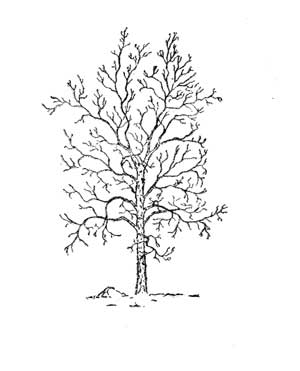
In these days when a condition of food shortage exists in the greater
part of the civilized world, any question which concerns a nation's food
supply is of public interest.
Food conservation is the great question of the hour. Visions of
vanishing steaks and chops alarm the overfed and rising prices of all
foodstuffs pinch the bills of fare of the poor.
It may easily be shown that most of all the hardships which the
civilized world is suffering as regards food supply is due to lack of
understanding and of foresight.
The fundamental error is the popular faith in the high protein ration.
The physiologists are at least partly at fault. Liebig's dictum, which
made protein the essential food factor in supporting work, has misled
the whole civilized world for more than half a century. The dietaries of
institutions, armies, whole nations have been based upon a conception
which modern science has shown to be utterly false, and the result has
been an economic loss which staggers belief, and a destruction of human
life and efficiency which overshadows every other malign influence.
To properly appreciate the place of nuts in the national dietary we must
have in mind a clear conception of the nature of food as revealed to us
in the light of modern laboratory studies of human nutrition and
metabolism.
Food is to an animal what soil is to a plant. It is the soil out of
which we grew. What we eat today is walking around and talking tomorrow.
The most marvelous of miracles is the transmutation of common foodstuffs
into men and women, the transfiguration of bread, potatoes and beefsteak
into human intelligence, grace, beauty and noble action. We read in holy
writ how the wandering Israelites were abundantly fed in the Assyrian
desert with manna from the skies and marvel at the Providence which
saved a million souls from death, forgetting that every harvest is a
repetition of the same miracle, that each morsel of food we eat is a
gift of Heaven conveyed to us by a sunbeam. Food is simply sunshine
captured by the chlorophyll of plants and served up to us in tiny
bundles called molecules, which, when torn apart in our bodies by the
processes of digestion and assimilation release the captured energy
which warms us with heat brought from the sun and shines out in human
thought and action.
It is less than a century since Liebig and Lehmann and their pupils
began to unravel the mystery of food. In recent years no subject has
received more assiduous attention from scientific men, and none has been
made the object of more constant or more profound research than the
questions of food and food supply. The feeding of animals and men is
without question the most pressing and vital of all economic problems.
The labors of Voit and Pettenkofer, Rubner, Zuntz, Atwater, Benedict,
Chittenden, Mendel, Lusk and Hindhede have demonstrated that there is
the closest relation between food supply or food selection and human
efficiency. In fact, it has been clearly shown that the quality of the
food intake is just as directly and as closely related to the question
of human efficiency as is the quality and quantity of gasoline to the
efficiency of an automobile.
In fact it has been established as a fundamental principle in human
physiology that food is fuel. Life is a combustion process.
The human body is a machine which may be likened to a locomotive—it is
a self-controlling, self-supporting, self-repairing mechanism. As the
locomotive rushes along the iron road, pulling after it a thousand-ton
cargo of produce or manufactured wares or human freight sufficient to
start a town or stock a political convention its enormous expenditure of
energy is maintained by the burning of coal from the tender which is
replenished at every stopping place. The snorting-monster at the head of
the rushing procession gets hungry and has to have a lunch every few
miles along the way. After a run of a hundred miles or so the engine
leaves the train and goes into a roundhouse for repairs; an iron belt
has dropped out or a brass nut has been shaken off. Every lost or
damaged part of the metal leviathan is replaced, and then it is ready
for another century run.
The human body is wonderfully like the locomotive. It pulls or carries
loads, it expends energy, it consumes fuel and has to stop at meal
stations to coal up; it has to go off duty periodically for repairs. The
body needs just what the locomotive needs—fuel to furnish energy and
material for repair of the machinery.
Food differs from fuel chiefly in the one particular, that in each
little packet of food done up by Mother Nature there is placed along
with the fuel for burning a tiny bit of material to be used for repair
of the machine. In other words, food represents in its composition both
the coal and the metal repair materials of the locomotive. The starch,
sugar and fat of foods are the coal and the protein or albumin is the
metal repair stuff. Here we see at once the reason why starch and sugar
and fat are so abundant in our foodstuffs, while protein or albumin is
in quantity a minor element.
But there are other differences between food and common fuel which are
worthy of mention. The water and the salts are essential to meet the
body's needs, especially the various mineral elements, lime, soda,
potash and iron. All these we must have—lime for the bones and nerves,
soda and potash to neutralize the harmful acid products of combustion
processes, and iron for the blood.
All these are found in normal foodstuffs, but in greatly varying
proportions, so that a pretty large variety of foods must be eaten to
make sure that each of the different food principles required for
perfect nutrition are supplied in ample quantity.
In recent years science has discovered another and most surprising
property of food in which it transcends all other fuel substances as a
diamond from the Transvaal outshines a lump of coal. Natural food
contains vitamines. It has long been known that an exclusive rice diet
sometimes causes beri-beri, a form of general neuritis, and that a diet
of dry cereals and preserved food in time gives rise to scurvy, but the
reason was a profound mystery. In very recent years it has been learned
that the real cause of beri-beri and scurvy is the lack of vitamines
which are associated with the bran of cereals and so are removed in the
process of polishing rice and in the bolting of wheat and other grains.
Vitamines do not enter into the composition of the body as do other food
principles, but they are somehow necessary to activate or render active
the various subtle elements which are essential to good nutrition.
There are several kinds of vitamines. Some are associated with the bran
of cereals, other with the juices of fruits. Some are easily destroyed
by heat, while others survive a boiling temperature. The discovery of
vitamines must stand as one of the most masterly achievements of modern
science, even outshining in brilliancy the discovery of radium. It was
only by the most persevering efforts and the application of all the
refinements of modern chemical technic that the chemist, Funk, was able
to capture and identify this most subtle but marvelously potent element
of the food. This discovery has cleared up a long category of medical
mysteries. We now know not only the cause of beri-beri and scurvy and
the simple method of cure by supplying vitamine-containing foods, but
within a very short time it has been shown that rickets and pellagra are
likewise deficiency diseases, probably due to lack of vitamines, and in
a recent discussion before the New York Academy of Medicine by Funk,
Holt, Jacobi and others, it was maintained that vast multitudes of
people are suffering from disorders of nutrition due to the same cause.
Osborne a few years ago conducted experiments which demonstrated that
something more than pure food elements and salts is essential for growth
and development. They found that rats fed on starch and fat lived only
four to eight weeks. When protein was added they sometimes lived and
grew and sometimes remained stunted or died. It was thus evident that
proteins differ. Their observations proved very clearly that there are
perfect and imperfect proteins. The protein of corn, zein, for example,
was shown to be incapable of supporting life. With the addition of a
chemical fraction, tryptophan, obtained from another protein, the rats
lived, but did not grow. By adding another fractional protein, lysin,
the rats were made to thrive.
A minute study of the subject by Osborne, Mendel and numerous other
physiologic chemists have shown that a perfect protein is composed of
more than a dozen different bodies called amino-acids, each of which
must be present in the right proportion to enable the body to use the
protein in body building. Each plant produces its one peculiar kind of
protein. The protein of milk, caseine, is a perfect protein. Eggs and
meat, of course, supply complete proteins, but among plants there are
many imperfect proteins.
McCollum has demonstrated that grains, either singly or in combination
will not maintain life and growth. The same is true of a mixture of
grains with peas or navy beans. Another element is lacking which must be
supplied to support life and growth.
With these facts before us we are prepared to inquire what place in the
dietary are nuts prepared to fill? With few exceptions nuts contain
little carbohydrate (starch or sugar). They are, however, rich in fat
and protein. On account of their high fat content they are the most
highly concentrated of all natural foods. A pound of nuts contains on an
average more than 3,000 calories or food units, double the amount
supplied by grains, four times as much as average meats and ten times as
much as average fruits or vegetables.
For example, according to Jaffi's table, ten of our common nuts contain
on an average 20.7 per cent. of protein, 53 per cent. of fat and 18 per
cent. of carbohydrate, as shown in the following table:
| | Protein | Fat | Carbohydrate |
| Almonds | 21.4 | 54.4 | 13.8 |
| Peanuts | 29.8 | 46.5 | 17.1 |
| Filberts | 16.5 | 64.0 | 11.7 |
| Hickory | 15.4 | 67.4 | 11.4 |
| Pine nut | 33.9 | 48.2 | 6.5 |
| Walnut | 18.2 | 60.7 | 13.7 |
| Pecan | 12.0 | 70.7 | 18.5 |
| Butternut | 27.9 | 61.2 | 5.7 |
| Beechnut | 21.8 | 49.9 | 13.8 |
| Chestnut | 10.7 | 7.8 | 70.1 |
| | —— | —— | —— |
| Average | 20.76 | 53.08 | 18.23 |
Meat (round steaks) gives 19.8 per cent. of protein and 15.6 per cent.
of fat, with no carbohydrate. A pound of average nuts contains the
equivalent of a pound of beefsteak, and in addition, nearly half a pound
of butter and a third of a loaf of bread. A nut is, in fact, a sort of
vegetable meat. Its composition is much the same as that of fat meat,
only it is in much more concentrated form.
There can be no doubt that the nut is a highly concentrated food. The
next question naturally is, can the body utilize the energy stored in
nuts as readily as that supplied by meat products, for example.
The notion that nuts are difficult of digestion has really no foundation
in fact. The idea is probably the natural outgrowth of the custom of
eating nuts at the close of a meal when an abundance, more likely a
super-abundance, of highly nutritious foods has already been eaten, and
the equally injurious custom of eating nuts between meals. Neglect of
thorough mastication must also be mentioned as a possible cause of
indigestion following the use of nuts. Nuts are generally eaten dry and
have a firm hard flesh which requires thorough use of the organs of
mastication to prepare them for the action of the several digestive
juices. Experiments made in Germany showed that nuts are not digested at
all, but pass through the alimentary canal like foreign bodies unless
reduced to a smooth paste before swallowing. Particles of nuts the size
of small seeds wholly escaped digestion.
Having been for more than fifty years actively interested in promoting
the use of nuts as a staple food, I have given considerable thought and
study to their dietetic value and have made many experiments. About
twenty-five years ago it occurred to me that one of the above objections
to the extensive dietetic use of nuts might be overcome by mechanical
preparation of the nut before serving so as to reduce it to a smooth
paste and thus insure the preparation for digestion which the average
eater is prone to neglect. My first experiments were with the peanut.
The result was a product which I called peanut butter. I was much
surprised at the readiness with which the product sprang into public
favor. Several years ago I was informed by a wholesale grocer of Chicago
that the firm's sales of peanut butter amounted on an average to a
carload a week. I think it is safe to estimate that not less than one
thousand carloads of this product are annually consumed in this country.
The increased demand for peanuts for making peanut butter led to the
development of "corners" in the peanut market, and more than doubled the
price of the shelled nuts and to a marked degree influenced the annual
production. The nut butter idea also caught on in England.
I am citing my experience with the peanut not for the purpose of
recommending this product, for I am obliged to confess that I was soon
compelled to abandon the use of peanut butter prepared from roasted nuts
for the reason that the process of roasting renders the nut indigestible
to such a degree that it was not adapted to the use of invalids. I only
mention the circumstance as an illustration of the readiness with which
the public accepts a new dietetic idea when it happens to strike the
popular fancy.
Ways may be found to render the use of nuts practical by adapting them
to our culinary and dietetic customs and to overcome the popular
objections to their use by a widespread and efficient campaign of
education. Other nuts, when crushed, made most delicious "butters," as
easily digestible as cream, since they did not require roasting. I later
found ways for preparing the peanut without roasting.
The fats of nuts, their chief food principle, are the most digestible of
all forms of fat. Having a low melting point they are far more
digestible than most animal fats. Hippocrates noted that the stearin of
eels was difficult of digestion. The indigestibility of beef and mutton
fat has long been recognized. The fat of nuts much more closely
resembles human fat than do fats of the sort mentioned. The importance
of this will be appreciated when attention is called to the fact that
fats entering the body do not undergo the transformation changes which
take place in other foodstuffs; for example, protein in the process of
digestion is broken into its ultimate molecular units. Starch is
transformed into sugar which serves as fuel to the body, but fats are so
slightly modified in the process of digestion and absorption that after
reaching the blood and the tissues they are reconstructed into the
original form in which they are eaten, that is, beef fat is deposited in
the tissues as beef fat without undergoing any chemical change whatever;
mutton fat is deposited as mutton fat; lard as pig fat, etc. When the
body makes its own fat from starch or sugar, the natural source of this
tissue element, the product formed is sui generis and must be better
adapted to the body uses than the animal fat which was sui generis to
a pig, a sheep or a goat. It is certainly a pleasant thought that one
who rounds out his figure with the luscious fatness of nuts may
felicitate himself upon the fact that his tissues are participating in
the sweetness of the nut rather than the relic of the sty and the
shambles.
It is also worthy of note that the fat of nuts exists in a finely
divided state, and that in the chewing of nuts a fine emulsion is
produced so that nut fats enter the stomach in a form best adapted for
prompt digestion.
Another question which will naturally arise is this: if nuts are to be
granted the place of a staple in our list of food supplies will it be
safe to accept them as a substitute for flesh foods?
Beef steak has become almost a fetish with many people, but the
experiments of Chittenden and others have demonstrated that the amount
of protein needed by the body daily is so small that it is scarcely
possible to arrange a bill of fare to include flesh foods without making
the protein intake excessive. This is because the ordinary foodstuffs
other than meat contain a sufficient amount of protein to meet the needs
of the body. Nuts present their protein in combination with so large a
proportion of easily digestible fat that there is comparatively little
danger of getting an excess.
It is also worthy of note that the protein of nuts is superior in
quality to that of grains and vegetables. The critically careful
analyses made in recent years have shown that the proteins of nuts, at
least of a number of them, contain all the elements needed for building
up complete body proteins, in other words, nuts furnish perfect
proteins, which are not supplied so abundantly by any other vegetable
product.
This fact places the nut in an exceedingly important position as a
foodstuff. In face of vanishing meat supplies it is most comforting to
know that meats of all sorts may be safely replaced by nuts not only
without loss, but with a decided gain. Nuts have several advantages over
flesh foods which are well worth considering.
1. Nuts are free from waste products, uric acid, urea, carmine and other
tissue wastes.
2. Nuts are aseptic, free from putrefactive bacteria and do not readily
undergo decay either in the body or outside of it. Meats, on the other
hand, are practically always in an advanced stage of putrefaction, as
found in the meat markets. Ordinarily meats contain from three million
to ten times that number of bacteria per ounce, and such meats as
hamburger steak often contain more than a billion putrefactive organisms
to the ounce. Nuts are clean and sweet.
3. Nuts are free from trichinae, tapeworm and other parasites, as well
as the infections due to specific disease. Nuts are in good health when
gathered and remain so until eaten. The contrast between the delectable
product of the beautiful walnut, chestnut or pecan tree and the abattoir
recalls the story of the Tennessee school teacher who was told when she
made inquiry about a certain shoulder of pork which had been promised in
part payment of services, but had not arrived: "Dad didn't kill the
pig." "And why not," said the teacher. "Because," replied the observing
youngster, "he got well." Nearly all the cows slaughtered are
tuberculous. They are killed to be eaten because too sick to longer
serve as community wet nurses.
That nuts are competent to serve as staple foods might be inferred from
a fact to which Professor Matthews, of the New York Museum of Natural
History, calls attention to, to wit, that our remote ancestors, the
first mammals, were all nut and fruit eaters. They may have gobbled an
insect now and then, but their staple food was fruits and nuts, with
tender shoots and succulent roots, which is still true of those old
fashioned forest folks, the primates of which the orang outang, the
chimpanzee and the gorilla are consistent representatives, while their
near relative, also a primate, civilized man, has departed from his
original bill of fare and has exploited the bills of fare of the whole
animal kingdom.
The keeper of the famous big apes of the London Zoo informed me that
they were never given meat. Even the small monkeys generally regarded as
insectivorous, were confined to a rigid vegetarian fare and were
thriving.
Whole races of men, comprising many millions, live their entire lives
without meats of any sort, and when fed a sufficient amount are
wonderfully vigorous, prolific, enduring and intelligent. Witness the
Brahmins of India, the Buddists of China and Japan and the teeming
millions of Central Africa.
Carl Mann, the winner of the great walking match between Berlin and
Dresden, performed his great feat on a diet of nuts with lettuce and
fruits. The Finn Kilmamen, the world's greatest runner, eats no meat.
Weston, the long-distance champion, never eats meat when taking a long
walk. The Faramahara Indians, the fleetest and most enduring runners in
the world are strict vegetarians. The gorilla, the king of the Congo
forests, is a nut feeder. Milo, the mighty Greek, was a flesh
abstainer, as was also Pythagoras, the first of the Greek philosophers,
Seneca, the noble Roman Senator, and Plutarch, the famous biographer.
The writer has excluded meat from his diet for more than fifty years,
and has within the last forty years, supervised the treatment of more
than a hundred thousand sick people at the Battle Creek Sanitarium on a
meatless diet.
Even carnivorous animals nourish on a diet of nuts with other vegetable
foods and cooked cereals. The Turks mix nuts with their pilaff of rice
and the Armenians add nuts to their baalghoor, a dish prepared from
wheat which has been cooked and dried.
That nuts are not only competent to serve as a staple food, but that
they may fill a very important place as accessory foods in supplementing
the imperfect proteins of the grains and vegetables is shown in a very
conclusive way by an extended research by Dr. Hoobler, of Detroit.
Before describing Dr. Hoobler's experiment I may be allowed to explain
that some years ago, in 1899, I was asked by the then United States
Secretary of Agriculture to undertake experiments for the purpose of
providing a vegetable substitute for meat. Dr. Dabney said there was no
doubt that the time would come when such substitutes would be needed on
account of the scarcity of meat. I succeeded in developing several
products which have come to be quite widely known and used more or less
extensively in this country and Europe. Among these were Protose
(resembling potted meat) and malted nuts, a soluble product somewhat
resembling malted milk. It was noted that the malted nuts when used by
nursing mothers greatly increased the flow of milk and promoted the
health of the infant. Recently Dr. Hoobler undertook an extensive
feeding experiment with nursing mothers and wet nurses as subjects. He
made use of these nut preparations as well as of ordinary nuts and
compared the results with various combinations into which meat and milk
entered in various proportions. He found that a diet of fruits, grains
and vegetables alone gave a very poor quality of milk, but when nuts
were added the result was a milk supply superior in quantity and quality
to any other combination of foodstuffs, not excepting those which
included liberal quantities of milk, meat and eggs. From this it appears
that nuts possess such superior qualities as supplementary or accessory
foods that they are able to replace not only meats, but even eggs and
milk in the dietary. The full account of Dr. Hoobler's interesting
observations will be found in the Journal of the American Medical
Association for August 11, 1917.
Extensive feeding experiments are now being conducted at the research
laboratory of the Battle Creek Sanitarium, which it is hoped will
develop still other points of interest respecting the superior nutritive
properties of the choicest and most remarkable of all the food products
which are handed to us from the fertile laboratory of the vegetable
world.
Another and most interesting phase of my subject is the relation of nut
feeding to anaphylaxis. This newly coined word perhaps needs explanation
for the benefit of my lay hearers. For many years it has been known that
some persons were astonishingly sensitive to certain foods which indeed
appeared to act as violent poisons. Oysters, shellfish, mutton, fish and
other animal products, as well as a few vegetable products, especially
honey, strawberries and buckwheat, were most likely to be the cause of
these violent disturbances. More recently it has been found that cow's
milk very often shows the same peculiarity. It is now known that this
remarkable phenomenon is due to the fact that the body sometimes becomes
sensitized to certain proteins which thereafter act as most violent
poisons and may cause death. Sensitization to animal proteins is much
the more frequent. In such cases nut products become a very precious
resource. This is especially true with reference to cow's milk.
Liquid nut preparations have saved the lives of hundreds of infants
within the last twenty years. I have had the pleasure of meeting several
fine looking young people who owed their lives to nut-feeding when other
resources had failed. One case was particularly interesting. A telegram
from a well-known Senator at Washington announced the fact that his
infant daughter and only child was dying from mal-nutrition, as cow's
milk and all the known infant foods had been found to disagree. I
advised nut-feeding, and fortunately the prescription suited the case
and the little one began to improve at once. When the physician in
attendance learned that the child was eating nuts he vigorously
protested, declaring that such a diet was preposterous and would
certainly kill the infant, but the child flourished wonderfully on the
liquid nut diet, eating almost nothing else for the first three years of
her life, and today is a splendidly developed young woman, a brilliant
witness to the food value of nuts.
I have by no means exhausted the physiologic phases of my subject, but
will now turn a moment in concluding my paper, to its economic aspects.
The high price of nuts is constantly urged as an objection to their use
as a staple. It is probable that a largely increased demand would lead
to so great an increase in the supply that the cost of production, and
hence the cost to the consumer, would be decreased. But even at the
present prices the choicest varieties of nuts are cheaper than meats if
equivalent food values are compared. This is clearly shown by the
following table which indicates the amounts of various flesh foods which
are equivalent to one pound of walnut meats.
| Beef loin, lean | 4.00 | pounds |
| Beef ribs, lean | 6.50 | " |
| Beef neck, lean | 9.50 | " |
| Veal | 5.50 | " |
| Mutton leg, lean | 4.20 | " |
| Ham, lean | 3.00 | " |
| Fowls | 4.00 | " |
| Chicken, broilers | 10.00 | " |
| Red bass | 25.00 | " |
| Trout | 4.80 | " |
| Frogs' legs | 15.00 | " |
| Oysters | 13.50 | " |
| Lobsters | 22.00 | " |
| Eggs | 5.00 | " |
| Milk | 9.50 | " |
| Evaporated cream | 4.00 | " |
But the great economic importance of the encouragement of nut culture in
every civilized land is best shown by comparing the amount of food which
may be annually produced by an acre of land planted to nut trees and the
same area devoted to the production of beef. I am credibly informed that
two acres of land and two years are required to produce a steer weighing
600 pounds. The product of one acre for one year would be one-fourth as
much, or 150 pounds of steer. The same land planted to walnut trees
would produce, if I am correctly informed, an average of at least 100
pounds per tree per annum for the first twenty years. Forty trees to the
acre would aggregate 4,000 pounds of nuts, or 1,000 pounds of walnut
meats. The highest food value which could be ascribed to the 150 pounds
of beef would be 150,000 calories or food units. The food value of the
nut meats would be 3,000,000 calories, or twenty times as much food from
the nut trees as from the fattened steer, and food of the same general
character, protein and fat, but of superior quality.
One acre of walnut trees will produce every year food equal to:
| 14,000 lbs. red bass (a ship load). |
| 3,000 lbs. beef (five steers). |
| 7,500 lbs. chicken broilers. |
| 15,000 lbs. lobsters. |
| 10,000 lbs. oysters. |
| 60,000 eggs (5,000 dozen). |
| 4,000 qts. milk. |
| A ton of mutton (13 sheep). |
| 250,000 frogs. |
And when one acre will do so much, think of the product of a million acres.
Ten times the product of all the fisheries of the country.
Half as much as all the poultry of the country.
One seventh as much as all the beef produced.
More than twice the value of all the sheep.
Half as much as all the pork.
And many millions of acres may be thus utilized in nut culture.
And the walnut is not the only promising food tree. The hickory,
the pecan, the butternut, the filbert and the piñon
are all capable of producing equal or greater results.
A single acre of nut trees will produce protein enough to feed four
persons a year and fat enough for twice that number of average persons.
So 25,000,000 acres of nut trees would more than supply the whole people
of the United States with their two most expensive food stuffs. Cereals
and fresh vegetables, our cheapest foods, would be needed for the
carbohydrate portion of the dietary. Just think of it. A little nut
orchard 200 miles square supplying one-third enough food to feed one
hundred million of citizens. The trouble is the frogs and cattle are
eating up our food supplies. We feed a steer 100 pounds of food and get
back only 2.8 pounds. If we plant 10 pounds of corn we get back 500
pounds. If we plant one walnut we get back in twenty harvests a ton of
choicest food. In nut culture there is a treasury of wealth and health
and national prosperity and safety that is at present little
appreciated.
Here is a veritable treasury of wealth, a potential food supply
which may save the world from any suggestion of hunger for
centuries to come if properly utilized. Every man who cuts down a
timber tree should be required to plant a nut tree. A nut tree has
a double value. It produces valuable timber and yields every year
a rich harvest of food while it is growing.
Every highway should be lined with nut trees. Nut trees will grow
on land on which no other crop will grow and which is even
worthless for grazing. The piñon flourishes in the bleak and barren
peaks of the rockies.
The nut should no longer be considered a table luxury. It should
become a staple article of food and may most profitably replace the
pork and meats of various sorts which are inferior foods and are
recognized as prolific sources of disease.
Ten nut trees planted for each inhabitant will insure the country
against any possibility of food shortage. A row of nut trees on each
side of our 5,000,000 miles of country roads will provide for a
population of 160,000,000. With a vanishing animal industry, nut culture
offers the only practical solution of the question of food supply. As
the late Prof. Virchow said, "The future is with the vegetarians."