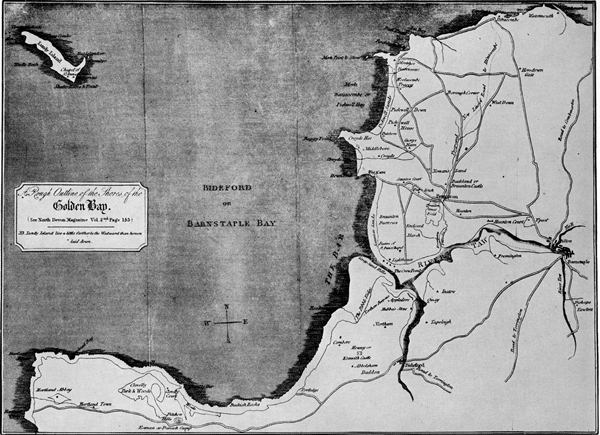
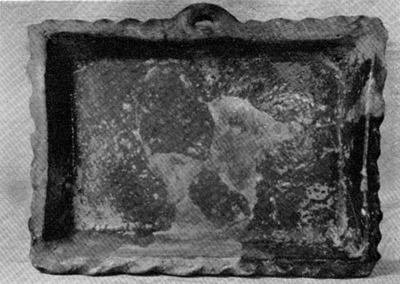
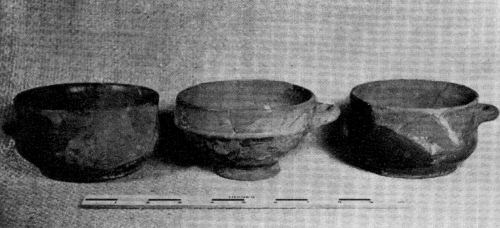
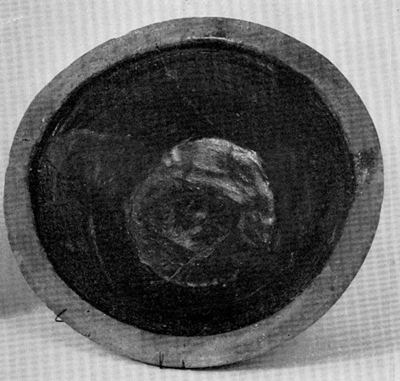
Archeological, documentary, and literary evidences indicate that yellow
sgraffito ware, gravel-tempered earthenware utensils, and gravel-tempered
pottery ovens were made in several potteries in and around Barnstaple and
Bideford in North Devon. Clay from the Fremington clay beds was used.
The North Devon potteries manufactured for export, sending their wares to
Ireland as early as 1600 and to America by 1635. The trade was
particularly heavy in the years following the Stuart Restoration and was
tied to the influential 17th-century West-of-England commerce with
America. New England, Maryland, and Virginia received many shipments of
North Devon pottery, an entire cargo of it having been delivered in Boston
in 1688.
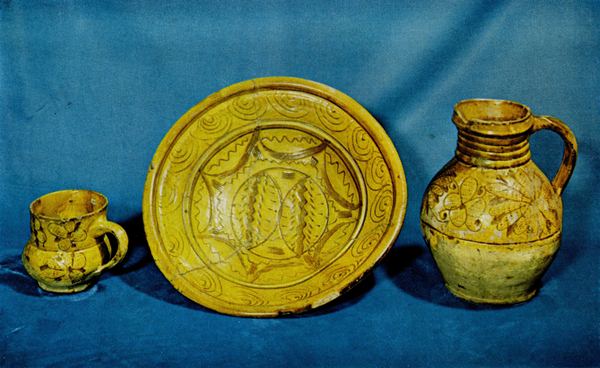
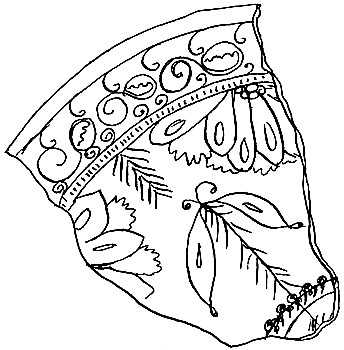
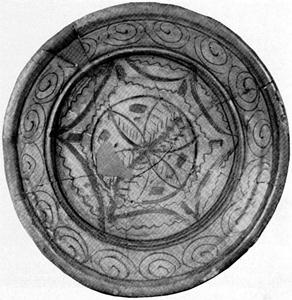
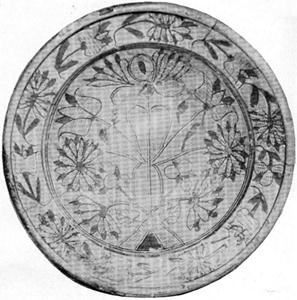
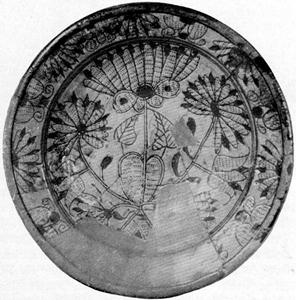
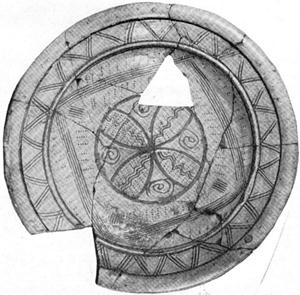
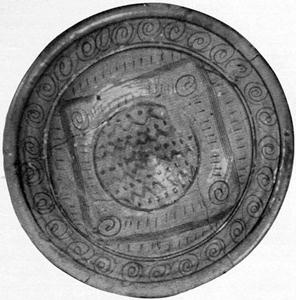
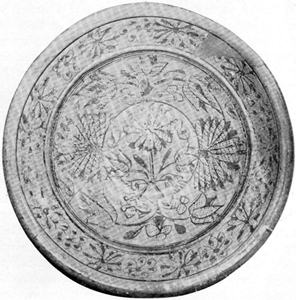
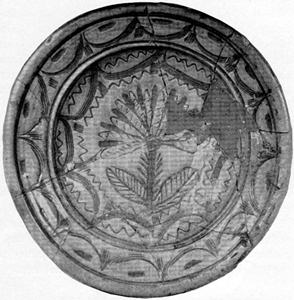
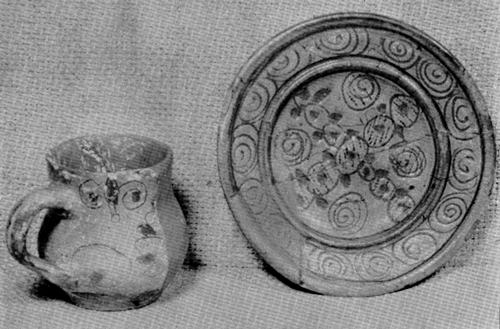
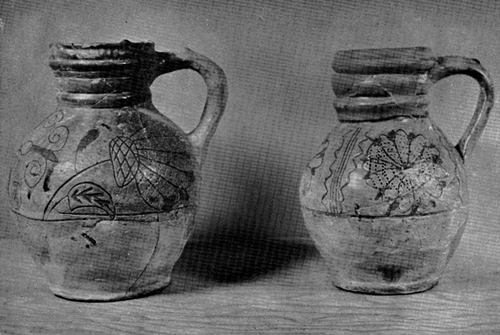
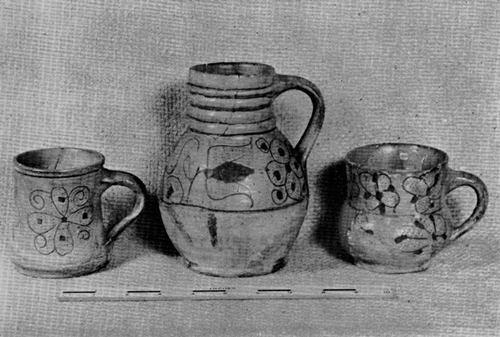
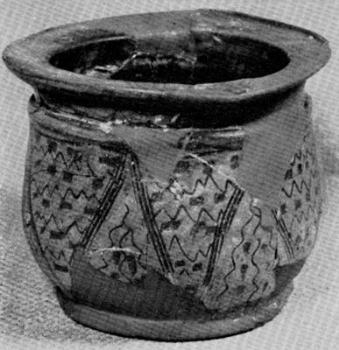
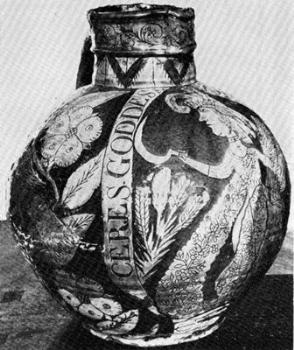
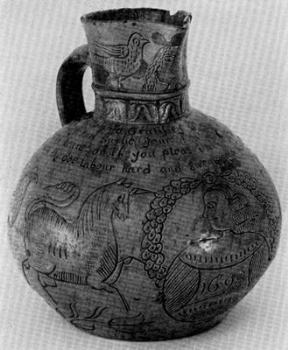
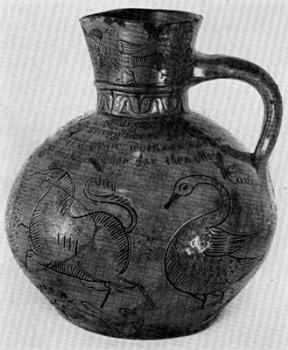
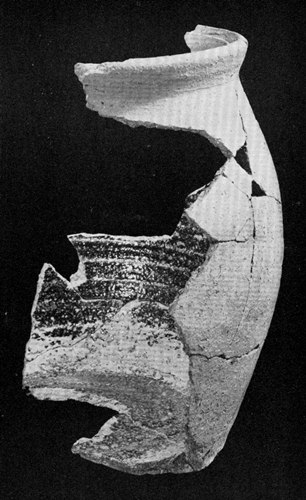
Sgraffito ware found in colonial sites in Virginia and Maryland is from a
common source. The style of decoration is unique to English pottery and
reflects Continental elements of design. It is reminiscent of decoration
found on English and colonial New England furniture and embroideries. The
only counterparts of this ware—matching it in style, paste color, and
technique—are found among 17th-century sherds excavated from the sites of
two potteries in Barnstaple. The 18th-century and 19th-century North Devon
sgraffito ware surviving above ground differs considerably in style and
form but in other respects it is the same as the ware found
archeologically in Virginia and Maryland. The stylistic differences,
noticeable on a piece in the Glaisher collection dated as early as 1704
(in which traces of the earlier style remain), were introduced by the turn
of the century, thus strengthening the conclusion that the sgraffito
tablewares found archeologically in this country must date from before
1700.
 | |  |
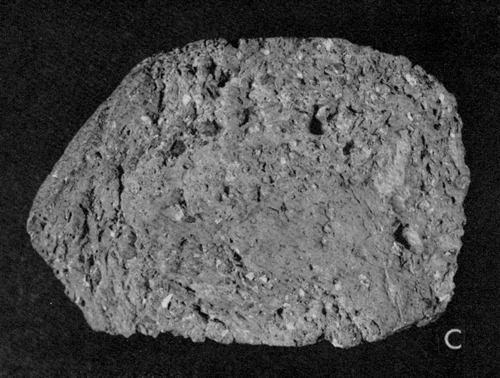 |
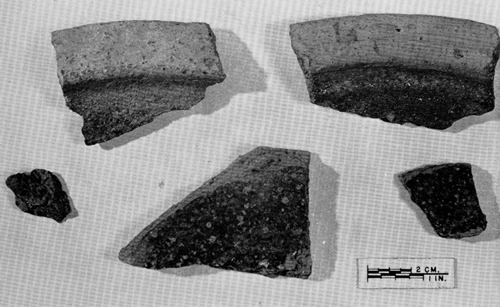
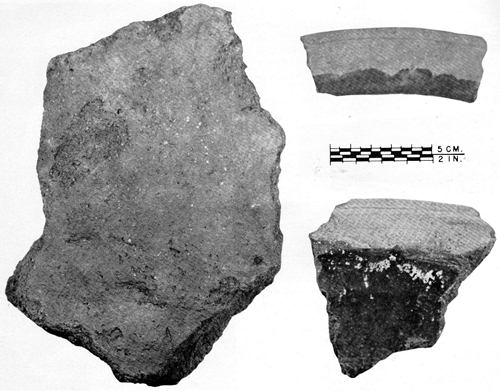
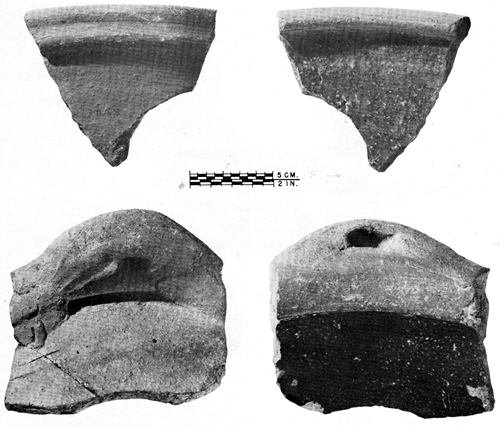
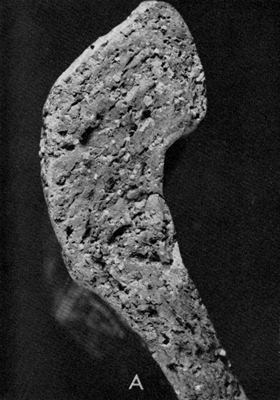
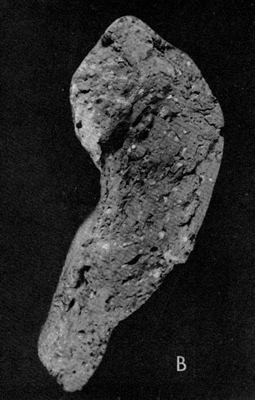
| Figure 32.—Photomicrographs of gravel-tempered sherds
enlarged twice natural size, showing cross-sectional fractures. Top left,
pan sherd from Jamestown (Colonial National Historical Park); top right,
pan sherd from Angelica Knoll site, Calvert County, Maryland (United
States National Museum); and oven sherd from Bideford (United States National Museum). |
 |
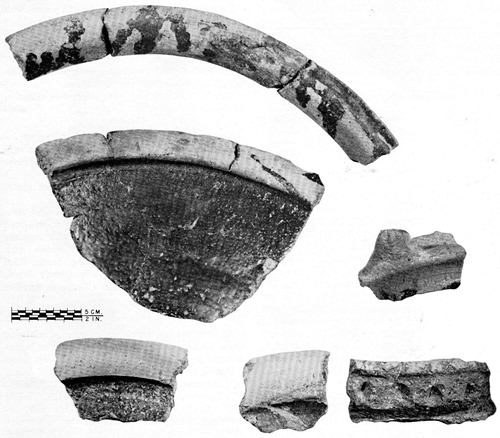
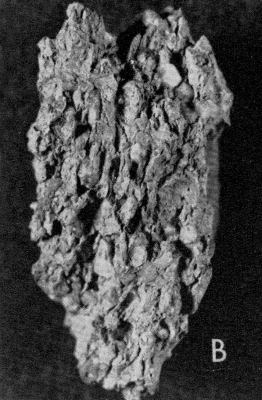 | | 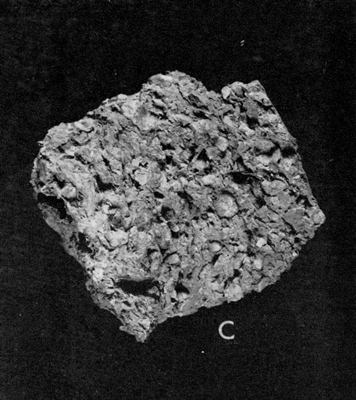 |
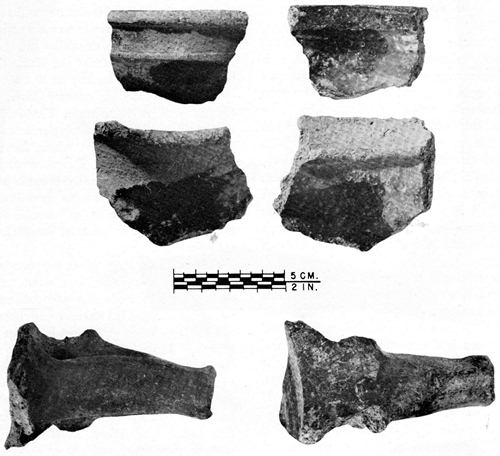
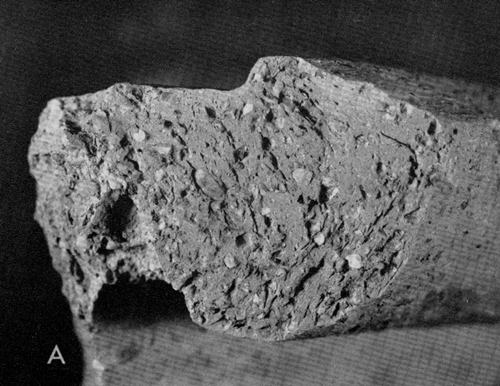
| Figure 33.—Photomicrographs of gravel-tempered sherds
enlarged three times natural size, showing cross-sectional fractures. Top,
pan sherd from “R. M.” site, Plymouth, Massachusetts (Plimoth Plantation,
Inc.); lower left, oven sherd from Jamestown (Colonial National Historical
Park); and oven sherd from John Howland house site, Rocky Nook, Plymouth, Massachusetts (Plimoth Plantation, Inc.). |
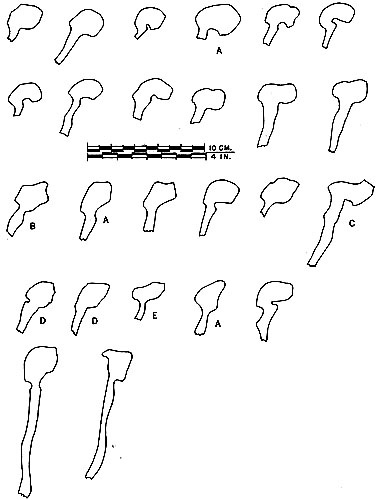
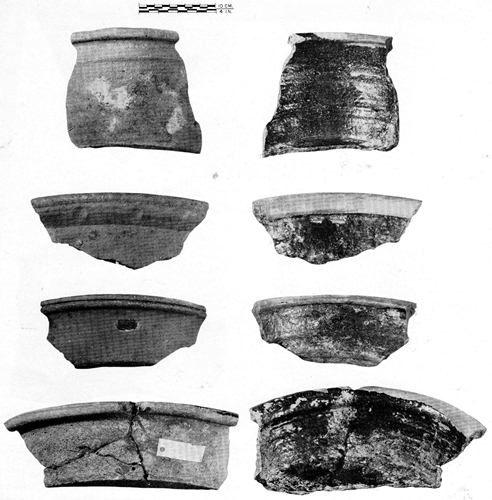
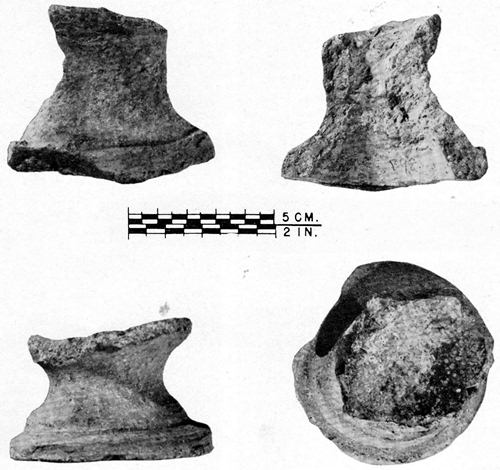
Figure 34.—Rim profiles of North Devon gravel-tempered
earthenware pans. All are from the fill around and beneath the
May-Hartwell site drain at Jamestown (constructed between 1689 and 1695)
except those marked, as follows: A, from Angelica Knoll site, Calvert
County, Maryland, late 17th century to about 1765; B, from John
Washington House site, Westmoreland County, Virginia, the period from
about 1664 to about 1680; C, from “R. M.” site, Plymouth, Massachusetts,
about 1670; D, from site of George Washington’s birthplace, near the
John Washington house site; E, from Winslow site, Marshfield,
Massachusetts, which was occupied from about 1635 to about 1699.
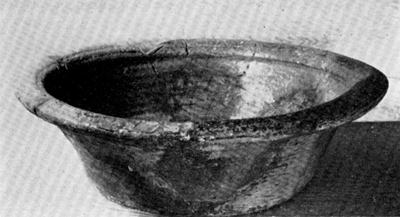
For kitchen utensils, tiles, and other objects subject to heat or
breakage, the same Fremington clay received an admixture of fine pebbles,
or gravel, secured at a special place in the bed of the River Torridge in
Bideford. The use of gravel was described by 18th-century writers as well
as by later historians. As found in America, the gravel-tempered ware
apparently is unique among the products of either English or colonial
American potters.
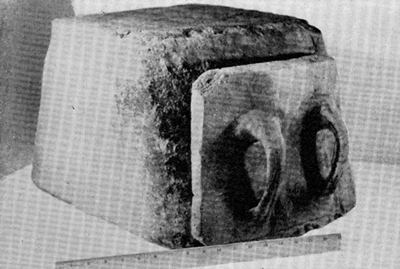
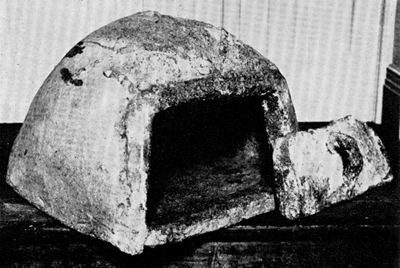
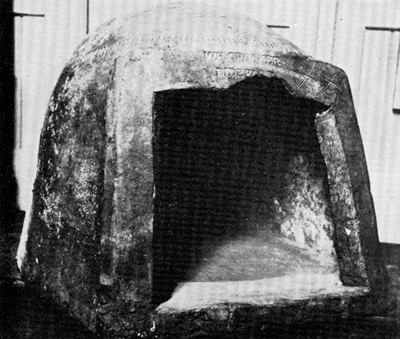
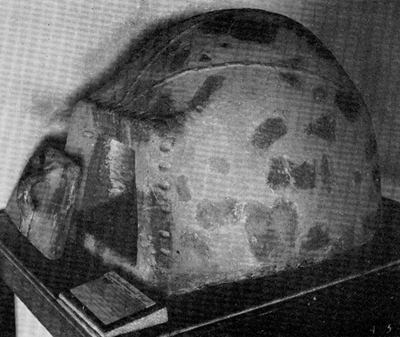
A specialty of the North Devon potteries was the manufacture of ovens made
of the same gravel-tempered clay as the kitchen utensils. The appearance
of these ovens and the method of making them remained virtually the same
from the 17th through the 19th centuries. At Jamestown, a wholly
reconstructed oven reveals typical North Devon traits throughout, while a
fragment of an oven from the John Howland House site near Plymouth
displays, under a microscope, the same qualities of paste and temper as in
a fragment of an oven obtained in Bideford by the Smithsonian Institution.
Sherds of gravel-tempered utensils from several American sites also match
the oven fragments. Paste characteristics, exclusive of the temper, are
the same in the sgraffito ware, the gravel-tempered ware, and the ovens.
Furthermore, the gravel-tempered ware occasionally is found with a plain
coating of slip, which, under the glaze, has the same yellow color as the
sgraffito ware, while an undecorated variant of the sgraffito ware also
occurs with a similar plain slip.
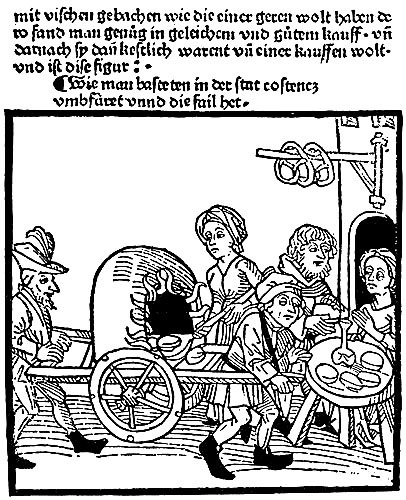
Figure 35.—Baker’s portable oven in a woodcut from Ulrich
von Richenthal’s Concilium zu Constancz, printed at Augsburg, Germany,
in 1483. Lessing J. Rosenwald Collection, Library of Congress.
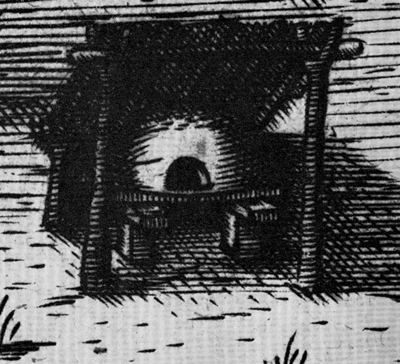
Figure 36.—Detail from De Bry’s engraving of Le Moyne’s
painting of Fort Caroline, depicting an oven on a raised platform under a
crude shed. Fort Caroline was a French Hugenot settlement established in
Florida in 1564. Rare Book Room, Library of Congress.
All these wares, including the ovens, are interrelated—the specimens
found in America having been shipped in a busy North Devon-North American
trade. The North Devon towns, moreover, were an important pottery-making
center for export markets in the West of England, Ireland, and North
America. Thousands of parcels of earthenware were shipped to the American
colonies from Bideford and Barnstaple during the 17th century. Any doubts
that ovens were among these overseas shipments are dispelled by the
knowledge that they continually were being shipped in the English
coastwise trade, and also by intrinsic and comparative evidence that oven
sherds found on American sites are of North Devon origin.
The only known counterparts of the North Devon ovens are Continental. A
15th-century example appears in an Augsburg woodcut, and a 16th-century
specimen is depicted in De Bry’s engraving after Le Moyne’s painting of
Fort Caroline, the Huguenot settlement in Florida. There are many
suggestions of Huguenot and Low Country influences on North Devon pottery.
Bideford and Barnstaple both were Puritan strongholds in the 17th century,
and both became French Huguenot centers, especially after the revocation
of the Edict of Nantes in 1685.
The style of sgraffito decoration changed radically after about 1700.
After that date, decoration was confined mainly to harvest jugs and
presentation pieces. Gravel-tempered utensils and ovens continued to be
made, but the North Devon trade with America ceased by 1760.
Archeological evidence indicates that gravel-tempered ware was used in
America between about 1675 and about 1760. An isolated example of
sgraffito pottery, distinguished by crude design and glaze, dates from
before 1640. The typical sgraffito ware is illustrated by specimens found
in the fill under and around the brick drain in the May-Hartwell site at
Jamestown. This ware dates between 1677 and 1695. No other sites provide a
more certain dating than this. Sgraffito ware found at Bridge’s Creek,
Virginia (John Washington house site), may date as early as 1664, but may
be as late as 1677 or a few years thereafter.
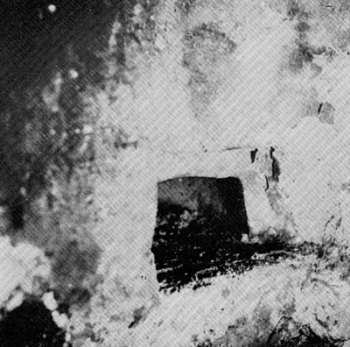
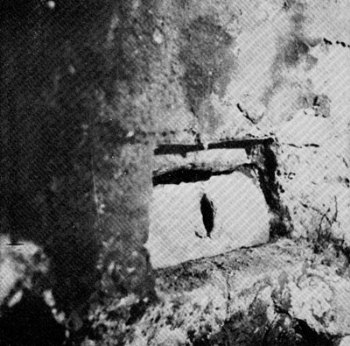
The May-Hartwell oven was also found in the drain fill, so presumably it
also was used before 1695. The oven fragment from the site of the John
Howland house dates between about 1630 and about 1675, the lifetime of the
house. The oven in the Bowne House is no earlier than 1664, the date of
construction.
Typical sgraffito ware, therefore, dates from 1664 to 1695, plus or minus
a few years. Gravel-tempered ware predominates in the same period, but
extends well into the 18th century, probably to about 1760. Ovens date
from between 1664 and 1695. The concentrations of wares within the limits
of the May-Hartwell drain site correspond roughly with records of heavy
shipments of the wares between 1681 and 1690. The earliest shipment
recorded was to New England in 1635.
The sgraffito ware probably served as much for decoration as for practical
use. Each piece was decorated differently, with elaborate designs, and in
such a manner that it could provide a colorful effect on a court cupboard
or a dresser, matching in style the carved woodwork or crewel embroidery
of late 17th-century furnishings. Although sgraffito ware represented a
degree of richness and dramatic color, it did not match the elegance of
contemporary majolica, decorated after the manner of Chinese porcelain.
Heavy and coarse, the sgraffito ware essentially was a variant of English
folk pottery, reflecting the less sophisticated tastes of rural West of
England. It did not occur in the colonies after 1700, by which time it was
supplanted in public taste by the more refined majolica.
Gravel-tempered ware apparently was esteemed as a kitchen ware, much as is
the modern “ovenware” or Pyrex in the contemporary home. Since
gravel-tempered ovens were widely used in the West of England, they were
accepted by settlers in America, especially where built-in brick ovens
were lacking.
Unlike those of Staffordshire or Bristol, the North Devon potteries failed
to develop new techniques or to change with shifts in taste. The delftware
of London and Bristol and the yellow wares of Bristol and Staffordshire
became preferable to the soft and imperfect sgraffito ware. In the same
way, the kitchen ware of Staffordshire and the adequate red-wares of
American potters made obsolete the heavy, ugly, and incomparably crude
gravel-tempered ware, while American bricklayers, having adopted the
custom of building brick ovens into fireplaces, outmoded the portable
ovens from North Devon after 1700. Any chance of a renaissance of North
Devon’s potteries was killed by the blockading of its ports in the
mid-18th century. From then on the potteries continued traditionally,
their markets gradually shrinking at home in the face of modern production
elsewhere. Today, only Brannan’s Litchdon Street Pottery in Barnstaple has
survived.
Other References Consulted
Bemrose, Geoffrey, Nineteenth-Century English Pottery and Porcelain, New
York, n.d. (about 1952).
Blacker, J. F., Nineteenth-Century English Ceramic Art, London, 1911.
Chaffers, William, Marks and Monograms on Pottery and Porcelain, 14th
issue, London, 1932.
Gribble, Joseph B., Memorials of Barnstaple, Barnstaple, 1830.
Haggar, Reginald, English Country Pottery, London, 1950.
Honey, W. B., European Ceramic Art from the end of the Middle Ages to
about 1815, London, n.d. (about 1952).
Mankowitz, Wolf, and Haggar, Reginald G., The Concise Encyclopedia of
English Pottery and Porcelain, London, 1957.
Meteyard, Eliza, The Life of Josiah Wedgwood, London, 1865.
U.S. GOVERNMENT PRINTING OFFICE: 1960
For sale by the Superintendent of Documents, U.S. Government Printing Office, Washington 25, D.C. Price 35 cents.
Footnotes:
[1] Worth Bailey, “Concerning Jamestown Pottery—Its Past and
Present,” Ceramic Age, October 1939, pp. 101-104.
[2] H. C. Forman, Jamestown and Saint Mary’s, Baltimore, 1938,
p. 133.
[3] Worth Bailey, “A Jamestown Baking Oven of the Seventeenth
Century,” William and Mary College Quarterly Historical Magazine, 1937, ser. 2, vol. 17, no. 4, pp. 496-500.
[4] John Watkins, An Essay Towards a History of Bideford in the
County of Devon, Exeter, 1792, p. 56.
[5] Ibid., pp. 65, 67-68.
[6] Ibid., p. 70.
[7] Port Book, Barnstaple, 1620, Public Record Office, London
(hereinafter referred to as Port Book), E 190/947.
[8] Virginia Magazine of History and Biography, 1911, vol. 19,
p. 31.
[9] Ibid., quoting Sainsbury Abstracts, p. 184.
[10] Virginia Magazine of History and Biography, 1901, vol. 9,
pp. 257-258.
[11] Bernard Bailyn, The New England Merchants in the
Seventeenth Century, Cambridge, Massachusetts, 1955, p. 87.
[12] Isle of Wight County (Virginia) records, quoted in William
and Mary College Quarterly Historical Magazine, 1899, ser. 1, vol. 7, p. 228.
[13] P. A. Bruce, Economic History of Virginia in the
Seventeenth Century, New York, 1895, vol. 2, p. 334.
[14] Watkins, op. cit. (footnote 4), p. 65.
[15] Port Book, E 190/959/6.
[16] Ibid., E 190/954/6.
[17] Ibid., E 190/959/6.
[18] Ibid., E 190/960/10.
[19] Richard Corkhill was one of the six Bideford factors
residing in Northampton County. Bruce, op. cit. (see footnote 13).
[20] Port Book, E 190/959/6.
[21] Ibid., E 190/960/8.
[22] Ibid., E 190/960/3.
[23] Ibid., E 190/966/10.
[24] Ibid., E 190/968/10.
[25] Colonial office shipping records relating to Massachusetts
ports, typescript in Essex Institute, Salem, Massachusetts, 1931, vol. 1, p. 78.
[26] Port Book, E 190/939/14; 942/13; 944/8; 951.
[27] Ibid., E 190/959/5.
[28] “Some Account of Biddeford, in Answer to the Queries
Relative to a Natural History of England,” The Gentlemen’s Magazine, 1755, vol. 25, p. 445.
[29] Watkins, op. cit. (footnote 4), pp. 74-75.
[30] T. M. Hall, “On Barum Tobacco-Pipes and North Devon Clays,”
Report and Transactions of the Devonshire Association for the Advancement
of Science, Literature, and Art, Devon, 1890, vol. 22, pp. 317-323.
[31] T. Charbonnier, “Notes on North Devon Pottery of the
Seventeenth, Eighteenth, and Nineteenth Centuries,” Report and
Transactions of the Devonshire Association for the Advancement of Science,
Literature, and Art, Devon, 1906, vol. 38, p. 255.
[32] Ibid., p. 256.
[33] Bernard Rackham, Catalogue of the Glaisher Collection of
Pottery and Porcelain in the Fitzwilliam Museum, Cambridge, 1950, ed. 2, vol. 1, pp. 10-11.
[34] Llewellyn Jewitt, The Ceramic Art of Great Britain,
London, 1883, ed. 2, pp. 206-207.
[35] George Maw, “On a Supposed Deposit of Boulder-Clay in North
Devon,” Quarterly Journal of the Geological Society of London, 1864, vol. 20, pp. 445-451.
[36] Charbonnier, op. cit. (footnote 31), pp. 255, 259.
[37] “Supplement to the Account of Biddeford,” The Gentlemen’s
Magazine, 1755, vol. 25, p. 564.
[38] Watkins, op. cit. (footnote 4), p. 74. However, the
“byelaws” of Barnstaple for 1689 indicate that tempering materials were
also obtained locally: “Every one that fetcheth sand from the sand ridge,
shall pay for each horse yearly 1d, and for every boat of Crock Sand
1d., according to the antient custome.” (Joseph B. Gribble, Memorials
of Barnstaple, Barnstaple, 1830, p. 360.)
[39] Charbonnier, op. cit. (footnote 31), p. 258.
[40] B. W. Oliver, “The Three Tuns, Barnstaple,” Report and
Transactions of the Devonshire Association for the Advancement of Science,
Literature, and Art, Torquay, Devon, 1948, vol. 80, pp. 151-152.
[41] Mildred E. Jenkinson in personal correspondence from Bideford, April 20, 1955.
[42] Hall, op. cit. (footnote 30), p. 319.
[43] H. W. Strong, “The Potteries of North Devon,” Report and
Transactions of the Devonshire Association for the Advancement of Science, Literature, and Art, Devon, 1891, vol. 23, p. 393.
[44] Charbonnier, op. cit. (footnote 31), p. 257.
[45] Jewitt, op. cit. (footnote 34), vol. 1, pp. 205-206.
[46] Great Exhibition 1851. Official, Descriptive, and
Illustrated Catalogue, London, 1851, p. 776, no. 131.
[47] W. J. Pountney, Old Bristol Potteries, Bristol, n.d., pp. 153-154.
[48] Cloume = cloam: “In O. E. Mud, clay. Hence, in mod. dial.
use: Earthenware, clay ... b. attr. or adj.” (J. A. H. Murray, ed., A
New English Dictionary on Historic Principles, Oxford, 1893, vol. 2, p. 509.)
[49] J. J. Cartwright, ed., The Travels through England of Dr.
Richard Pococke, Camden Society Publications, 1888, new ser., no. 42, vol. 1, p. 135.
[50] Ibid., vol. 1, p. 131.
[51] Jenkinson correspondence (see footnote 41).
[52] Jewitt, op. cit. (footnote 34), pp. 206-207.
[53] Charbonnier, op. cit. (footnote 31), p. 258.
[54] Jenkinson correspondence (footnote 41).
[55] Made in Devon. An Exhibition of Beautiful Objects Past and
Present, Dartington Hall, 1950, p. 9.
[56] Charbonnier, op. cit. (footnote 31), p. 258.
[57] John L. Cotter, Archeological Excavations at Jamestown,
Virginia. Archeological Research Series, no. 4, National Park Service, U.S. Department of the Interior, Washington, 1958.
[58] J. C. Harrington, Archeological Report, May-Hartwell Site,
Jamestown: Excavations at the May-Hartwell site in 1935, 1938, and 1939
and Ditch Explorations East of the May-Hartwell Site in 1935 and 1938.
[59] Cotter, op. cit. (footnote 57), p. 158.
[60] Ibid., pp. 112-119.
[61] Ibid., pp. 102-112.
[62] Ibid., pp. 151-152.
[63] Joseph B. Brittingham and Alvin W. Brittingham, Sr., The
First Trading Post at Kicotan (Kecoughtan), Hampton, Virginia, Hampton, 1947.
[64] Louis R. Caywood, Excavations at Green Spring Plantation,
Yorktown, 1955.
[65] J. Paul Hudson, “George Washington Birthplace National
Monument, Virginia,” National Park Service Historical Handbook Series, no. 26, Washington, 1956.
[66] Virginia Cullen, History of Lewes, Delaware, Lewes, 1956;
C. A. Bonine, “Archeological Investigation of the Dutch ‘Swanendael’
Settlement under de Vries, 1631-1632,” The Archeolog. News Letter of the
Sussex Archeological Association, Lewes, December 1956, vol. 8, no. 3.
[67] S. T. Strickland, Excavation of Ancient Pilgrim Home
Discloses Nature of Pottery and Other Details of Everyday Life, typescript, n.d.
[68] James Deetz, Excavations at the Joseph Howland Site (C5),
Rocky Nook, Kingston, Massachusetts, 1959: A Preliminary Report.
Supplement, The Howland Quarterly, 1960, vol. 24, nos. 2, 3. The Pilgrim
John Howland Society, Inc.
[69] Rackham, op. cit. (footnote 33), vol. 2, p. 11, fig. 8 D,
no. 58.
[70] John Eliot Hodgkin and Edith Hodgkin, Examples of Early
English Pottery, Named, Dated, and Inscribed. London, 1891, p. 59.
[71] J. Le Moyne, Brevis Narratio corum quae in Florida ...,
Frankfort, 1591, pl. 10.
[72] Bailey, op. cit. (footnote 3), pp. 497-498.
[73] Strickland, op. cit. (footnote 67).
[74] The probate records of Essex County, Massachusetts, Salem,
Massachusetts, 1916, vol. 1, p. 378; vol. 2, p. 346; vol. 3, p. 328.
[75] Bailey, op. cit. (footnote 3), p. 498.
[76] Bowne House; A Shrine to Religious Freedom, Flushing, New
York. Pamphlet of The Bowne House Historical Society, Flushing, N.Y., n.d.