Nemesis—Ninon’s Theories—Wits and Beaux of the Salons—Found
at Last—“The Smart Set”—A Domestic Ménage—Scarron—The
Fatal Carnival—The Bond of Ninon—Corneille
and The Cid—The Cardinal’s Jealousy—Enlarging
the Borders—Monsieur l’Abbé and the Capon Leg—The
Grey Cardinal—A Faithful Servant.
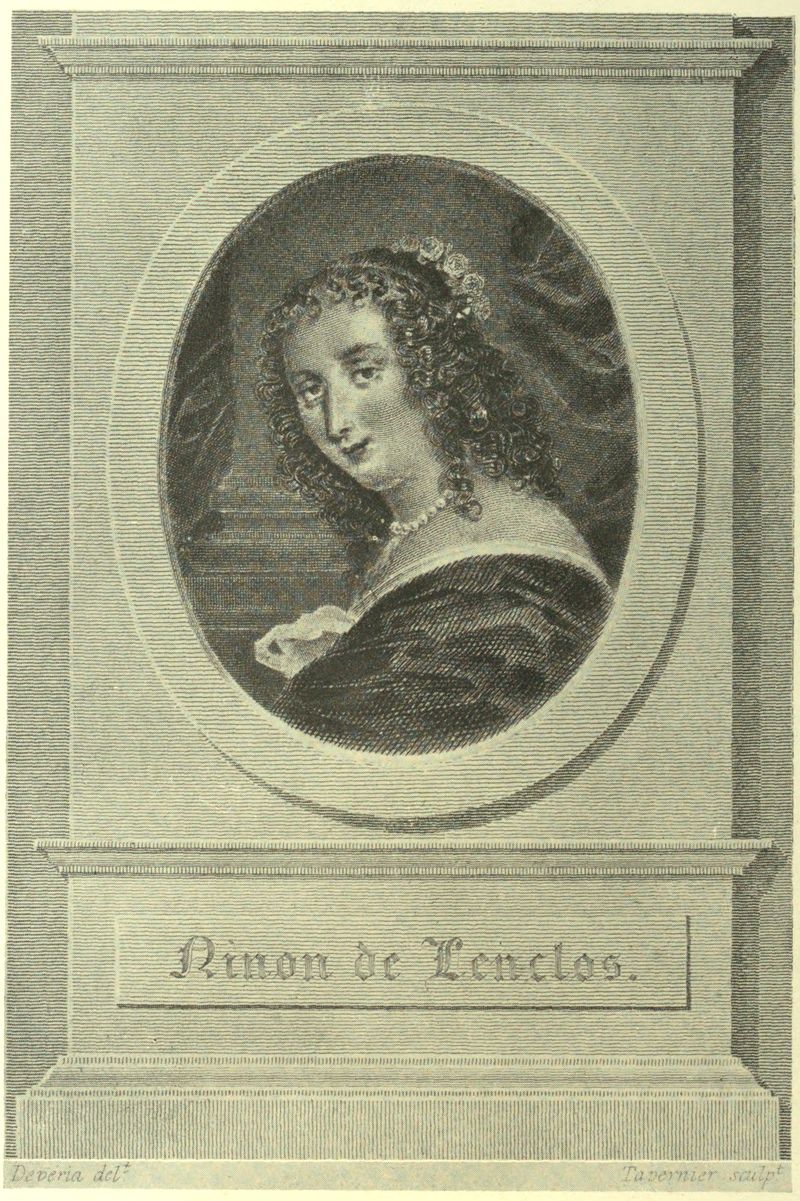
Ninon’s intrigue with the young Marquis de
Rambouillet gave great offence to Madame de
Rambouillet. It sheds a curious light on the
manner of the great world of the time, that the
doors of the marquise’s house remained still open
to her, yet so they did remain. The justly
incensed lady contented herself with soliciting
an order from the Court for the young man to
rejoin his regiment in Auvergne without delay; and
Ninon was left to console herself elsewhere, and to
avenge as she might her annoyance at the epigrams
showered upon her, not to speak of the severe blame
cast upon women of society who were undeterred by
any sense of propriety and the convenable—which
she was well aware was mainly levelled at herself.
All moral considerations aside, the breach of good
taste is inconceivable in one who so prided herself,
and generally with justice, on the observation of
the general laws governing the people of her class.
The hospitality of the famous mansion in the rue
St Thomas du Louvre, however, was still accorded
her, and if it was more chilly than formerly, Ninon
consoled herself by enlisting many who frequented
the brilliant gatherings, on the side of her easy-going
philosophy, and discussing its tenets with
amazing frankness.
The women were not many who upheld her arguments;
but the men vastly applauded and seconded
her sallies against the theory of Platonic love. In
her opinion, it was an impossible doctrine, and on
such themes she was Madame Oracle, and her
beautiful mouth opened to expound, what dog
dare bark? Unless indeed it might be the
cardinal. “Mademoiselle,” he said, one evening
when he was present, as he frequently was, in the
Rambouillet salon, and Ninon ventured an observation
not quite to his taste, “I never accept
lessons, even when they issue from such pretty lips
as yours.”
The stately mansion of Rambouillet, with its
magnificent grand salon, and blue chamber, the
special haunt of the poets, its daintily furnished
smaller chambers, and richly-draped alcoves and cosy
corners, was only one among many houses entertaining
the society of the world which was devoted,
or assumed devotion, to art and literature. There
were the Saturdays of Madame de Sablé, and notably
also the receptions of Mademoiselle Scudéri.
Mademoiselle de L’Enclos’ own apartments were
thronged on her reception nights with the company
of talented and famous men and women, though
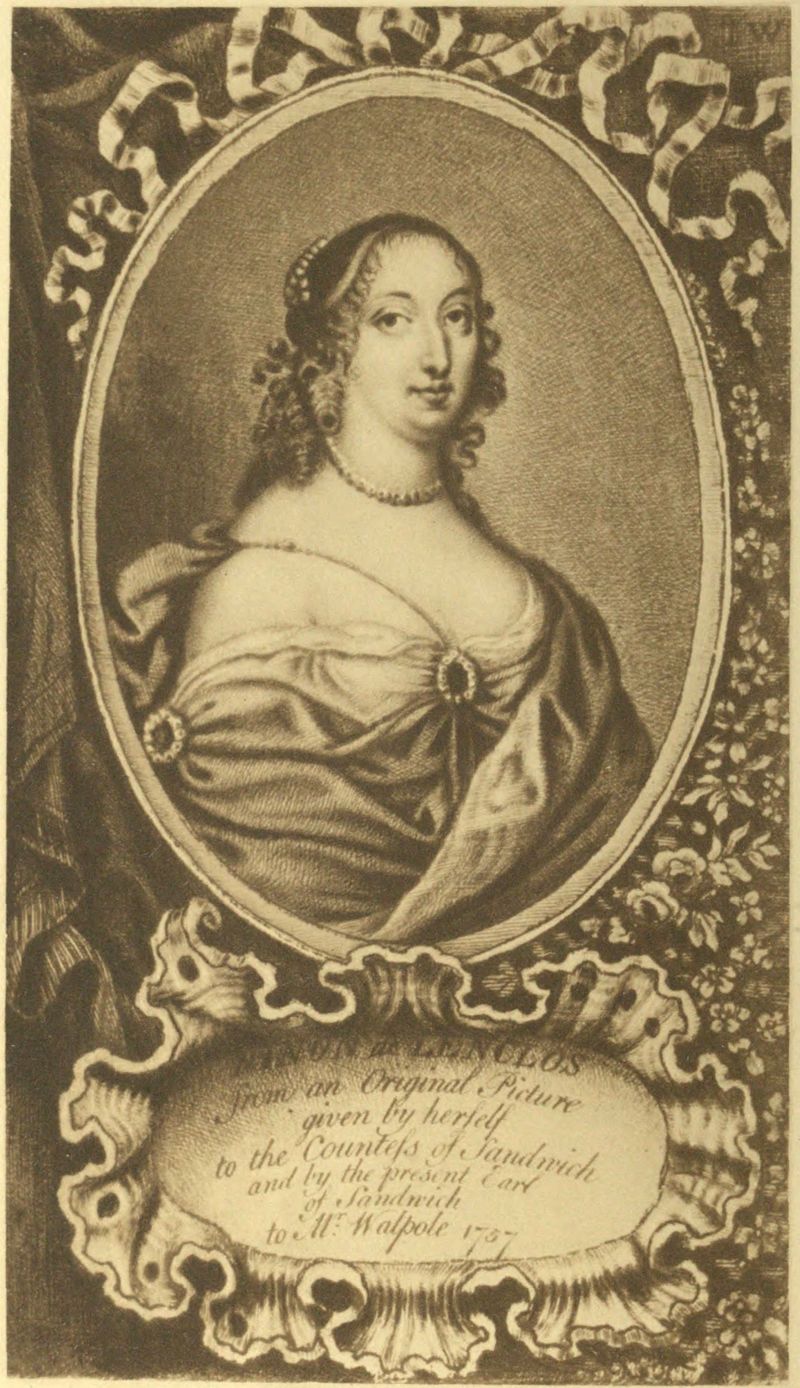
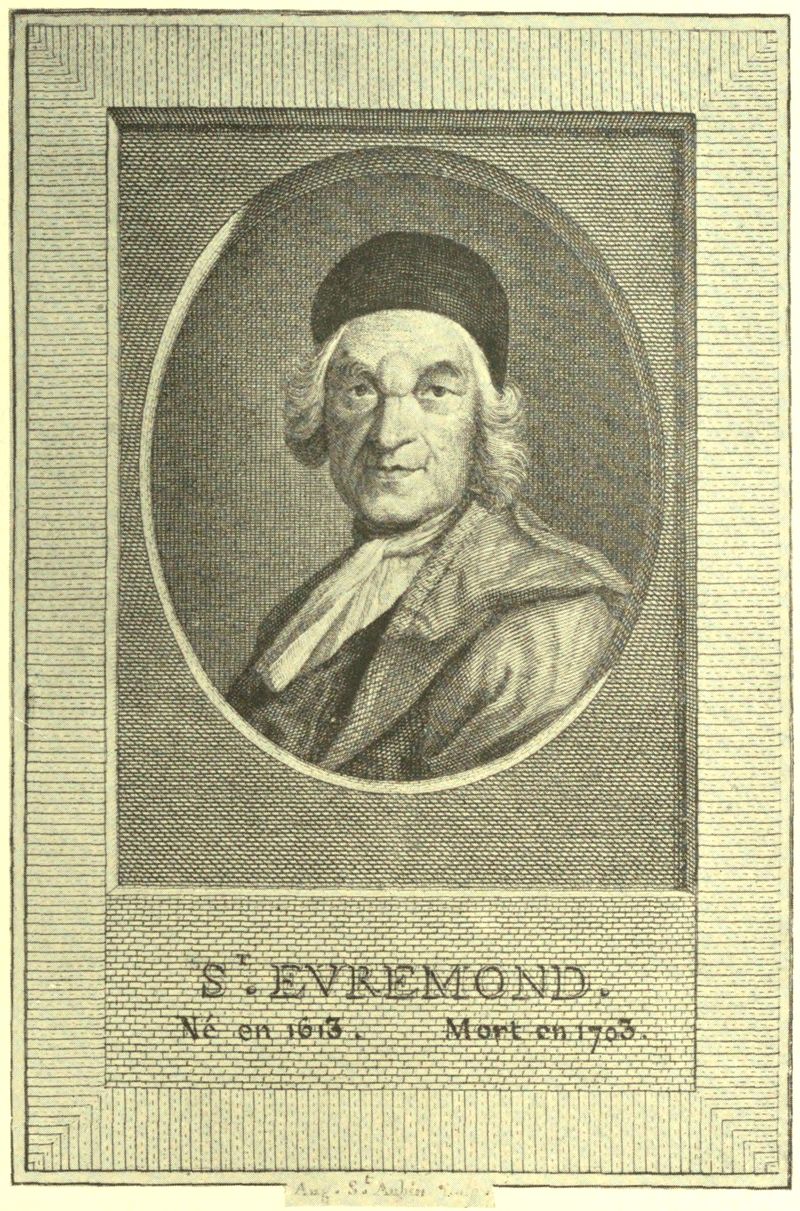
that genial admirer of hers, St Evrémond, once had
the temerity to criticise the beauty, or the lack
of it, in the ladies of the côtérie. It might, of
course, as he said, arise from mere chance; but otherwise
it was a mistake; since it suggested the idea
that Ninon could not sufficiently prize her own
beauty; and on the score of the hidden compliment
the audacity was condoned. After the coolness
that followed upon Ninon’s liaison with the Marquis
de Rambouillet, the society of the salon of the
marquise somewhat thinned for awhile; while the
salon of the rue des Tournelles was more thronged
than ever. The cachet that admitted to all these
various assemblies would appear to have been that
only of fair breeding and connexions, and some
intellectual pretension, though the supply of that
was not necessarily very great, since the leaven
of would-be wits and of absolute stupidity—the
“mostly fools” Carlyle says the world is peopled
with—would seem to have been even curiously
large. One and all, however, were full of ambition
to air the rhymes, and often senseless epigrams and
dreary sonnets and conceits, generated in their
miserable brains.
Perhaps the only one of this crowd of triflers
who is worth recording is the Baron de Miranges.
In addition to the fact that he was never known to
sit still two consecutive minutes, he was supremely
ugly; marked with the smallpox, he squinted, his
chin was awry, his nose twisted to one side. He
was the first to jest at all these defects. One day
he met a man on the Pont Neuf, an entire stranger
to him, and halting before him, Miranges, in a sort
of transport of satisfaction, gave a joyous cry and
threw himself upon the individual’s neck, saying:
“Oh, sir! how charmed I am at this meeting, and
for what a number of years I have been looking for
you!”
“Indeed?” said the other, in a tone of astonishment.
“I do not think I have the honour of knowing
you.”
“No. Unluckily I have met you much too
late; but I look at you, I contemplate you, and I
am happy.”
“But why?”
“Yes, yes, indeed,” replied Monsieur de
Miranges; “let us embrace each other again. I
have always despaired of ever finding a man uglier
than myself, but now—yes, you are that man.”
Not without justice, Ninon, who about this time
had in more ways than one drawn unfavourable
public criticism upon herself, complains that she
was really less culpable, infinitely more decorously
behaved in society, than many of the titled and
fashionable dames, whose behaviour, scandalous as
it was, passed unchallenged. They were constantly
promenading in the Place Royale, chattering at
the top of their voices, ogling, smoking, taking
snuff, adorning their mantles and hats with knots of
ribbon of various colours, each conveying a different
significance, and generally comporting themselves
after the manner of the lowest of their sex. Ninon
de L’Enclos had made a law unto herself, a law of
liberty, and she made no pretence of not abiding by
it; but she rarely sinned in outward decorum, or
forgot the good breeding of her station.
In the matter of de Rambouillet, if she did not
acknowledge the false step, it was probable she was
made to feel conscious of it, and decided soon after
to divert public attention to some other topics of
scandal, by absenting herself from Paris for a
while and rusticating at Loches, the estate which
her aunt had left her. On reaching le Mans, she
was met by the Marquis de la Châtre—an amiable
man for whom Ninon had sufficient attachment and
constancy to allow the good provincials to imagine
they were man and wife, and the two were widely
welcomed and courted.
One evening, at a supper party to which they
were invited, she met Scarron. He arrived in
company with some canons from the cathedral, and
to her great surprise she learned from him that
he now held a canonry in le Mans cathedral,
bestowed upon him for the assistance of his pen,
than which few were more able than his in Lorraine,
in drawing up a history of the duchy of Lorraine.
To Paul Scarron, the brilliant wit, comic poet,
rhymester—so admired of another erratic genius,
Oliver Goldsmith, who translated his Roman Comique—the
sunny-natured, in earlier years scandalously
debauched, and always bon vivant—brimming
with the overflow of humour that wells from the
depths of a sympathetic temperament—generous,
kind-hearted—to:
“Nothing extenuate,
Nor set down aught in malice,”
are words hardly to be more aptly applied. The
sufferings of his childhood, due to the avarice of
his artful stepmother, who contrived to separate
him from his father and get possession of his
fortune, cast him nearly penniless upon the world,
when scarcely more than a child. It was one more
instance of the game, ever new, which relatives
intellectually inferior, incited by envy and greed,
love to play upon the unfortunate talented one, and
render life one long misery and struggle at the best,
provided sufficient bread is somehow come upon to
retain breath. So much the brave heart and exercise
of his gifts enabled the lad to acquire, and he
managed to enter ecclesiastical ranks; but only to
the outermost degree—not, it may be, aspiring to the
priesthood, which hardly could have lost anything
from one whose character and mode of life were
so glaringly ill adapted for the calling. Scarron’s
vocation that way was worse than nil; nevertheless,
in that lax time of ecclesiastical law and order, he
obtained the canonry of le Mans cathedral, and thus
dignified, Monsieur l’Abbé Scarron met Ninon again
at the supper-table of the local receiver-general
of taxes, and was more ready than ever for any
lengths of wild uproariousness the chance brought
him. It came just then with the Carnival, and
Scarron, with one or two companions, conceived
the notion of spreading a big mattress all over with
goose’s feathers and down; then, smearing themselves
from head to foot in honey, they rolled upon
the mattress until they were encased in the feathers
so thickly, that the disguise was impenetrable, and
they looked like some hideous monstrosities of the
bird-tribe, face and all covered in the plumage.
Passing up the street, followed by a huge concourse,
they made their way to Ninon’s château, and forced
entrance, greatly to the anger of Monsieur de la
Châtre, who quickly discovered who they were, and
at once denounced them. The mob, furious at the
thought of a churchman of their own cathedral indulging
in such wild licence, set upon the feathered
monsters, and flinging them down, pommelled and
beat the unprotected bodies of the unfortunate masqueraders,
and plucked off every feather, pursuing
them without mercy, until they were compelled to
jump into the rushes of the river for protection. There
they were forced to remain for hours, and two of
Scarron’s three companions died from the effects of
the cold immersion, and the violence dealt them.
Scarron himself escaped with breath, but little
more. The chill and exposure brought on an
illness from which he never recovered. It crippled
him in every limb, and rendered him, as he himself
says, an abridgment of human suffering—tied to
his chair by the contraction of every muscle, in
never-ending pain for all the years to come; yet
never losing his gaiety, and for all the misery he
had created for himself, winning the pity and the
money gifts from the Court and from wealthy
friends which enabled him to live in fair affluence.
A short time later the domestic felicity being
enjoyed at the Loches château by Ninon and
Monsieur de la Châtre was rudely broken up by a
summons from Monsieur de la Châtre’s family, at
Besançon, to repair to the deathbed of his father.
The two parted with real regret, and so much
devotion on the Marquis de la Châtre’s side, that
nothing would content him short of a written and
signed promise from Ninon of eternal fidelity to
him. She accordingly wrote on a leaf of his
tablets these words—
“I swear to love you always.—Ninon.”
Carefully bestowing this precious bond in black
and white in an innermost pocket of his vest, de la
Châtre conducted Ninon back to Paris. He would
have preferred to leave her in Touraine, to pass
the time of his absence in the rural tranquillity of
her beautiful little domain; but if Ninon desired
to ruralise, was there not her charming country
residence at Picpus?—and Picpus is much nearer
Paris than Loches; and just then the Maréchal de
Sévigné had arrived in Paris, a man of noble
presence, distinguished for his recent successes in
the king’s service, and the young Vicomte de
Turenne, already entered upon the paths of his
renown, by his splendid service in Lorraine and
Italy, and both, eagerly seeking introduction to
Ninon, came, saw, and were conquered by her
charm.
De Sévigné’s rendered homage was, however, on
somewhat unconventional lines, the honeyed words
of his admiration being tempered with just enough
fault-finding as to render it unusually piquant;
but Ninon’s favours, and just now especially, were
in no wise exclusively bestowed on the heroes of the
battlefield. She was no more précieuse than she
was Platonicienne; but she was genuinely gifted
with a love of letters, which had been fostered by
the excellent education her father had given her,
and she entered ardently into the great intellectual
movement of the time, in which the drama
figured so prominently. Richelieu himself was so
warm a devotee, that his ambition to excel as a
dramatist equalled, if it did not surpass, his political
ambition; and while jealous to the mean extent envy
can reach, he did not withhold his patronage from the
great genius of him who has been styled the father
of the French dramatists, Pierre Corneille. Even
had Richelieu not desired as he did, to make use
of the brilliant talent of Corneille for his own ends,
it would not have been possible for him to hold
aloof amid the enthusiasm of the world of letters,
and of society generally, which hailed in 1636 the
production of The Cid.
As every time “doth boast itself above better
gone,” so must Corneille’s name yield place in a
degree to what has since been seen. Still, ever remembering
his fathering of it—for his predecessors
in dramatic work worthy of any name were dull
and lacked artistic knowledge of their craft, and
Godelet, Gamier, and others are but names now
and no more—Corneille’s masterpiece would
challenge criticism in plenty now, placed before the
delicate discrimination of the daily press of this time,
or the judgment of the gallery, alike in his native
country or elsewhere. It is but recently that the
tragedy of a great French poet, not yet two generations
passed away, revived at the Comédie
Française, though reverently and finely acted, was
derided and mocked at without mercy behind the
scenes by those taking part in it. Exactly what
will be the opinions of critics of future generations
on the dramatic productions of the early years of
the twentieth century, fortunately the means will
probably be lacking to know; the fact remains that
the fame of Pierre Corneille is a living force and a
memory for all time.
It was the fashion of that day to model plays
and novels on Spanish and Italian patterns; and
advised to follow this ruling, Corneille selected the
subject of The Cid—Rodriguez—on which to base
a drama, not his first by several; but while the preceding
ones were held in great esteem, The Cid
was regarded as attaining to the highest excellence,
and its fame as his crowning work has ever remained
by it. Some of his dramas of a later date
were unsuccessful; one of his comedies, Le Menteur—the
only one which had popularity—is best
known in this country by Steele’s translation of it,
The Lying Lover.
Richelieu, stirred to dramatic ambition—finding
probably that it was an art less easy than it seemed—sought
the assistance of five dramatists to write up
and give more effect to his tragedies; at least any
other reason for such collaboration is not easy to be
imagined. One of the five chosen was Corneille, who,
naturally somewhat curt and abrupt in speech, did
not spare to find fault with some of the details of the
cardinal’s work, and the concatenation of The Cid’s
success and of Corneille’s frankness over Euterpe and
Mirame, stirred such offence in the cardinal’s jealous
mind, that he endeavoured to drive a spoke in the
wheel of Corneille’s car of triumph; and one of the
earliest achievements of the recently constituted
Académie Française was a critique on The Cid
commanded of its members by its founder. It had
no effect at all in lessening the enthusiasm of the
world of letters, or of the general public for the drama.
The poison did not act, in spite of the endeavours
of several of the poetasters to second the pronouncements.
One defect, that it was not original in
plot and construction, but based on a Spanish
dramatic model, was to be conceded; if defect
that was which at the time was held to be
almost indispensable in a play. There is nothing
new under the sun. Shakespeare’s comedies and
tragedies alike—the English historical plays excepted—are
one and all based on old legends
and classic stories which he drew from Italian, and
Spanish and French, and other sources that had, in
their turn, sprung from tradition no longer traceable,
hidden in origins lost in the lapse of centuries.
Richelieu’s own dramatic effusions were reproductions
of classical themes. It was the grandeur of
the verse of Corneille, its lofty thought, its dignity
and moral conception, its depicting of conflicting
passions—this it was that won the admiration, and
struck home to heartfelt sympathies, in its power of
presenting character, under other names, of living
men and women, the contemporaries of Ninon’s time,
contending, suffering, striving in the stormy political
atmosphere, darkening in now with the shadows
of the Thirty Years’ War.
In the delight of Corneille’s presence in Paris,
Ninon sacrificed all the ordinary routine of her
life. It was in her salon, if the chronicling of the
fact is to be trusted, that Corneille read to the
assembled company his manuscript of The Cid, all
the principal members being present of the Hôtel
Bourgogne, and the few other talented “rogues
and vagabonds” proscribed of the Church, though
ill to be spared by it, if the cardinal’s plays were
to have any sort of success. The Comédie
Française was yet an institution of the future; and
the stage of the Hôtel Bourgogne, with the two
or three other theatres were not much more
than glorified fair platforms, while the theatre
in the rue Guénégaud ordinarily confined itself
to the presentment of Chinese shadows. The
drawing-room of the Louvre and of the Palais
Cardinal were utilised for masques and such plays
as there were, called in request for the Court and
the more exalted circles of society. Richelieu’s own
pieces were thus performed. The drama was in transition.
It was a far cry now from Clement Marot
and the antics of the clerks of the Basoche upon
the huge marble table of the Hall of Lost Footsteps,
to the Académie Française and the Hôtel
de Rambouillet; and the language of the country
was undergoing changes, even as the aspect of the
city itself was no longer that of a few years earlier,
when Ninon first came to Paris. Then Notre-Dame
was nearly surrounded by green spaces of
meadowland and field and hedgerow, stretching
between the streets and the grassy banks of the
Isle de la Cité. Now here, and away to the Palais
de Justice; and northwards of the Louvre, streets
were gathering, and houses began to crowd about
the old towers of the Conciérgerie; while on the
banks of the Seine, right and left, the old walls
of Philip Augustus were laid low or broken up to
afford room for new buildings. Behind the Louvre,
far extending to the gardens and palace of the
Tuileries, Richelieu’s magnificent residence dominated
the rue de Rivoli—the Palais Cardinal, so
soon to pass as a gift to the king and take the
name of the Palais Royal, till the Revolution of
1793 changed it to the Palais Égalité, and the
lordly “pleasure-house” of the great upholder of
kingly power was cut up into gaudy shops and
gaming-houses.
After the performance of The Cid, which took
place before the king and queen, and Court, and
a vast company of illustrious persons, Corneille
returned home to Rouen, to pursue the great career
he was now launched upon. The fulminations of
the cardinal through the Académie Française far
from proving destructive to his fame, had probably
cast a brighter lustre on it. “I never undertake
anything without well first considering, but once I
have resolved, I go straight to my aim; I throw all
down that is in my path; I mow down all, and I
cover all with my red robes,” he once said, and it
was no empty boast. Yet the ruling found its
exception; his rancour and jealousy did its worst,
but it could not crush Corneille. It did not at
all events do so. Even for Richelieu it might have
been dangerous and impolitic. Gaston d’Orléans, the
king’s brother, who belonged to the party of the
queen, threw in his influence to support anything
he dared in opposition to the cardinal—and at this
time Gaston was a frequent visitor at Ninon’s
house. He invited himself one evening to dinner
with her, attended by several gentlemen, and Ninon,
who was kept in countenance by her friend, Marion
Delorme, and another lady, entertained her royal
guest with an elegant repast of fish, flesh and fowl,
although she had ventured to remind “Monseigneur”
that, being the season of Lent, it was a questionable
proceeding to have anything but dishes of the first
served up. Gaston, however, had insisted, especially
in the matter of roast capon, and good wine—cela va
sans dire. Whether the wine was partly answerable,
or it was merely the manners of the time that
prompted one of the guests—Monsieur de Boisrobert,
my lord cardinal’s secretary—who was fingering the
leg-bone of a fowl, to fling it out of window at
the head of Monsieur l’Abbé Dufaure, the venerable
dean of St Sulpice, that was what he did. The
abbé was a Jesuit priest, and the scandal of insult
to him was doubled by the sin of eating meat in
Lent. Monseigneur and his companions finished
the evening by adjourning to the house of Monsieur
la Navarre, a neighbour of Ninon’s, and breaking up
the furniture. Then the prince himself sent for
the magistrate, and the functionary arriving,
demanded to be informed which was the culprit.
The unfortunate neighbour, who did not know who
Gaston was, pointed him out, and forthwith six
archers were sent for, who laid hands on the prince,
and he was threatened with handcuffing if he did
not immediately go quietly to prison. Upon this
the gentlemen in attendance, hearing the uproar,
entered, and with profoundest respect proceeded
to inquire what had happened, addressing Monseigneur
by name. Terrified out of his senses
at what he had done, the magistrate besought
pardon, which the prince gravely granted, not
without commanding him to make amende honorable
by holding a lighted wax taper in his hand,
and, on bended knees, confessing his crime before all
and individually of the women of the household,
who were summoned to attend for the purpose.
So much for Monseigneur’s little amusement: it
was Ninon who was the sufferer. The insulted abbé
complained to his Superior, who complained to the
magistrate of the district, and from mouth to mouth
the story flew. Not one man in black, but constant
contingents of the black-soutaned fraternity haunted
the rue des Tournelles, and invaded Ninon’s
apartments, subjecting her to such severe inquisition
about her affairs generally, that it became unendurable,
and she wrote to the prince in severe reproach
for allowing the blame of his folly to burden and
annoy her. Whereupon Gaston sent two of his
friends to mollify the wrath of the magistrate, who
tore up the Jesuit Superior’s letter of complaint.
But the scandal only aggravated the soreness and
complications of the opposing parties of the Court,
and it made an additional grievance for Richelieu
against Gaston; though, on the other hand, it was
Boisrobert, his own secretary, who was also his own
jester-in-chief, who had been at the bottom of the
offence, so that the affair cut both ways, and the
cardinal may have preferred to see it hushed up.
It was about this time that Richelieu lost by
death the man he called his right hand—Père
Joseph, the Capucin friar—in other words, “The
Grey Cardinal,” as he was nicknamed; but in
fact and deed the poor man never even received
the bishopric long promised, never bestowed.
Richelieu himself was already in failing health,
worn by stress and anxiety for the care of the vast
structure of kingly power he had built up and
sustained, as it were, by his own hand, that was
against so many, and Louis himself was almost as
much a nonentity as any of the rois fainéants of
old days. It is almost impossible to realise that
he and his false-hearted, selfish brother should have
been the sons of the dauntless Henry of Navarre.
Louis was not vicious; it was his valetudinarian
melancholy temperament which appears to have
rendered him indifferent to ordinary human
interests. He made less than no pretence of affection
for his Spanish wife, for whose bright glances
other men would have staked existence. For her,
Buckingham forgot honour and duty to his own
royal master, and did not spare compromising her
repute. That is a page of history that remains sealed.
How far it affected Louis’s feelings towards her
through the rest of his life, remains an open question,
or whether from the beginning, love and
mutual inclination were at fault. “The wind
bloweth where it listeth,” and the beauty and
attractions of Anne of Austria may never have
struck a responsive chord in the king’s heart. He
was not destitute of sentiment. More than once he
strove to fill the dreary void with the sympathy of
other women of repute about the Court, and, in one
instance at all events, not unsuccessfully; but he was
not one to win love and friendship generally; and
the consciousness of this chilled his manner still
more, and threw him back upon himself. Gaston
d’Orléans, with all his grave faults, had at least
quicker outward intelligence and sufficient animation
to win some extensive suffrages of the gentler
sex, notably of Anne herself, who tolerated his
attentions and coquetted with him up to a certain
point; though how far this was policy, or from
real sentiment, Court intrigues veil too entirely to
attempt to determine, and the jealousy of Richelieu,
himself enamoured of the queen, had soon put an end
to all the aspirations of the two dukes. “There is no
such word as fail,” Richelieu was often heard to say,
and he did not fail to put his foot down very decisively
when a league was formed, which the queen
herself was said to favour, whose end and aim was
to depose Louis the Just, crown Gaston, and give
him Anne of Austria to wife.
“I should not have sufficiently gained by the
change,” was, however, Anne’s reply, when the accusation
of her desire for this was made against her
in the course of the rigorous inquiry and treatment
to which she and her friends were subjected. If
on account alone of that time, years back now, when
Gaston, to save himself, permitted one of his noblest
adherents, Chalais, to perish on the scaffold at
Richelieu’s command, Monsieur was not likely
to be very favourably regarded by her. Nearly
half a score of years had passed since the brave
man had died in the flower of his life, tortured and
hacked by countless bungling strokes of a creature
found at last, among the dregs of the prison, to do
the hideous task which the professional headsman
managed to evade by absenting himself and remaining
perdu. In the interval, the queen’s mother had
been effectually, and for ever, banished from France.
“The Day of Dupes” had come and gone, leaving
Richelieu all-triumphant; but still the contest
raged, and the virulence of the minister against the
queen broke furiously on the pretext he found at
last, of discovering that she was keeping up a
private correspondence with the King of Spain,
and the cardinal infant, her two brothers, and also
with persons in Madrid and Brussels, whose friendship
she valued—the more, doubtless, for the isolation
and lack of affection and harshness surrounding
her. It was a boast of Richelieu’s, that with
only two lines of an innocent man’s writing he could
ruin him. Naturally, therefore, however innocent the
correspondence, Anne was anxious to hold her
letters uninspected by the cardinal, and she kept
them in her own private oratory chamber in the
Benedictine convent of the Val de Grâce, in the rue
St Jacques, which she had founded. The letters, on
their arrival, were received by one of the nuns, who
placed them away in a closet to await the queen’s
coming, and her replies to them were forwarded
from thence. But Richelieu’s spies were at work;
they swarmed of course in Paris; and before long
they scented out the secret correspondence, and
Richelieu informed the king of it, holding up before
His Majesty’s dreary imagination all the terrors
of national peril it signified. The alarmed king
hurried the queen out of Paris to the Château of
Chantilly, where she was confined to her own rooms
and compelled to listen to a string of rigid interrogation
from the chancellor. She was in a cruelly
forlorn situation; for, in fear of Richelieu’s anger
and the activity of his spies, the courtiers and
following of the royal pair did not venture so much
as to lift their eyes to her window as they passed.
For her own servants, they had been at once disposed
of in various prisons; while the chancellor
proceeded to ransack the convent of Val de Grâce
for more papers and letters. But it was labour lost,
which possibly was no more than he expected;
since it is believed that the queen had warning
from him of his intended visit, and the documents,
for all they might be worth, were safe in the care
of Madame de Sourdis. The alarm and suspicion
intensified, when there was found upon the person
of la Porte, the queen’s confidential servant, a letter
from her to the Duchess of Chevreuse, long exiled.
La Porte was thereupon, as a man of strict honesty
and fidelity to his royal mistress, locked away in
one of the towers of the Bastille, and all the efforts
to draw from him anything incriminating the
queen, were absolutely abortive; though Richelieu
employed every art to shake him, from promises
and emoluments, to threats of torture, which were
rendered more real to his imagination, by his being
taken to the torture-chamber for a sight of its
equipments.
Fortunately for him, a great event was at hand,
which marvellously changed the aspect of political
affairs. The queen, after twenty-two years of childlessness,
was in a situation of promise to give an
heir to the throne. Then Richelieu relaxed la
Porte’s durance so far as to permit his retiring to
Saumur, where he remained till the queen recalled
him, on the death of the cardinal, now shadowing
in, bringing with it the terrible tragedy which was
the last act and deed of his hand.