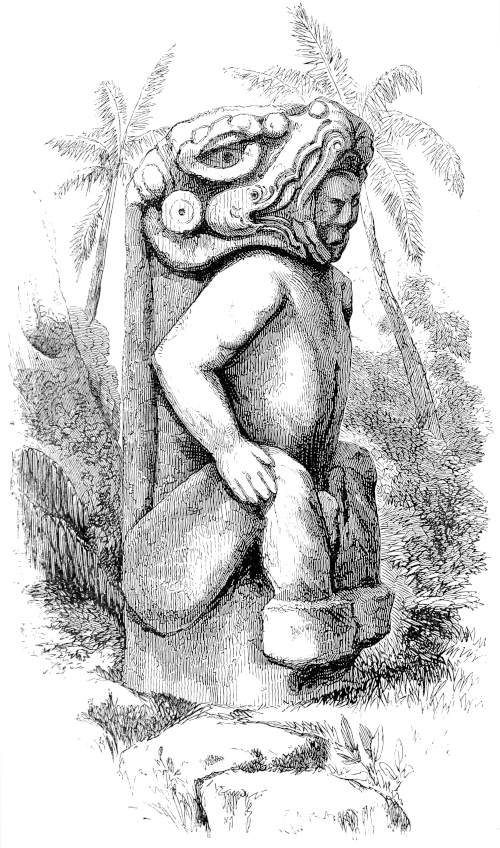
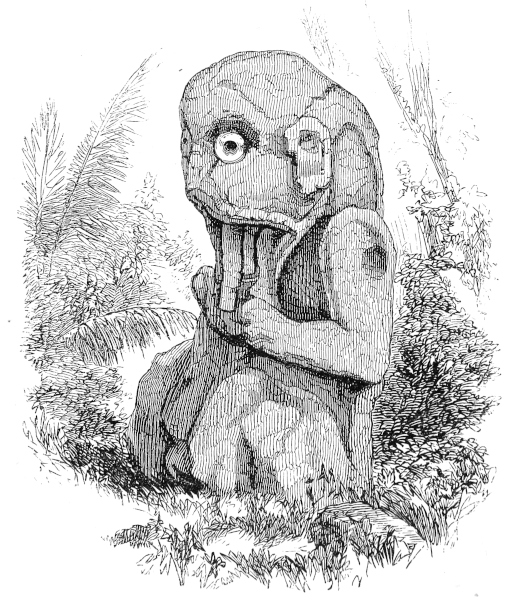
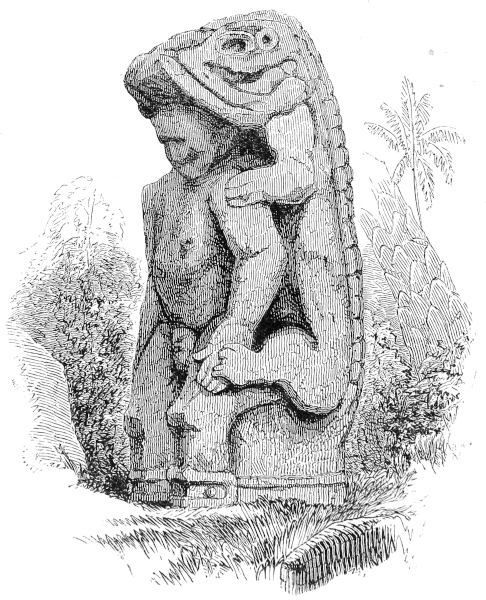
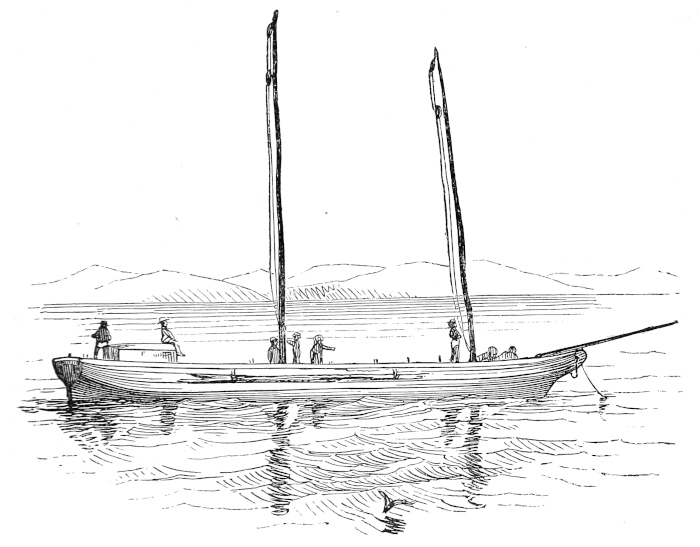
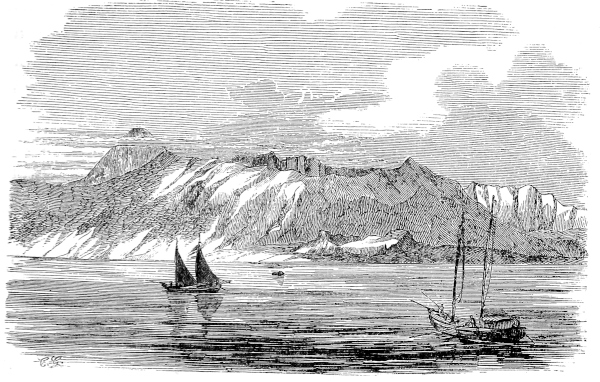
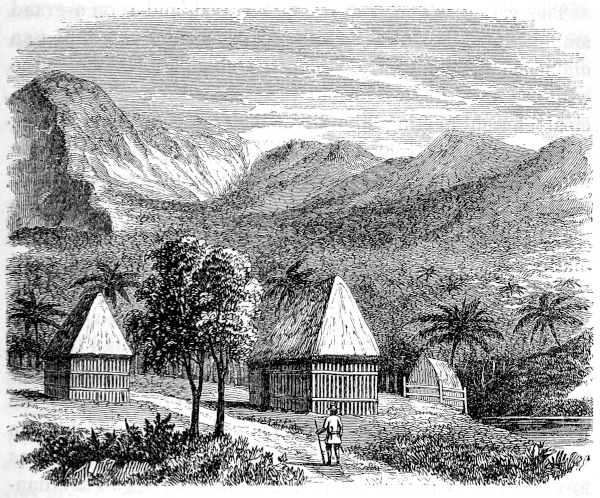
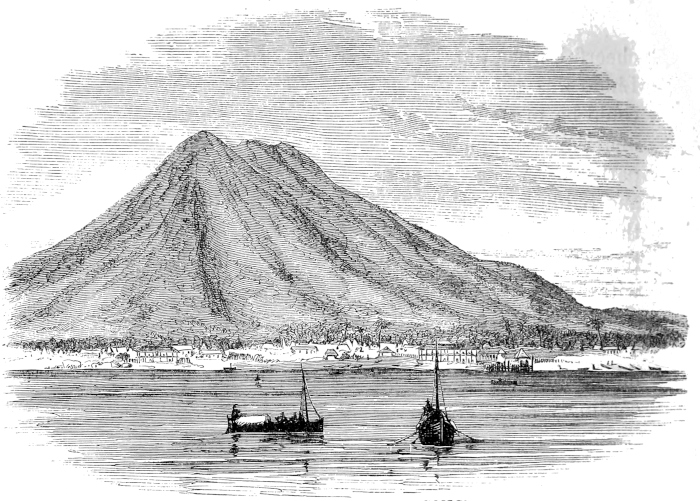
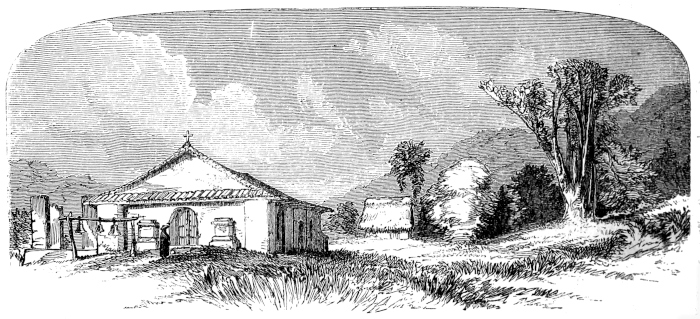
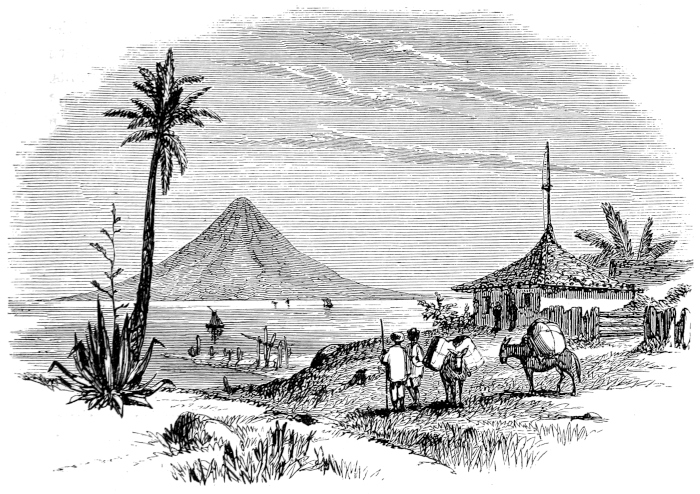
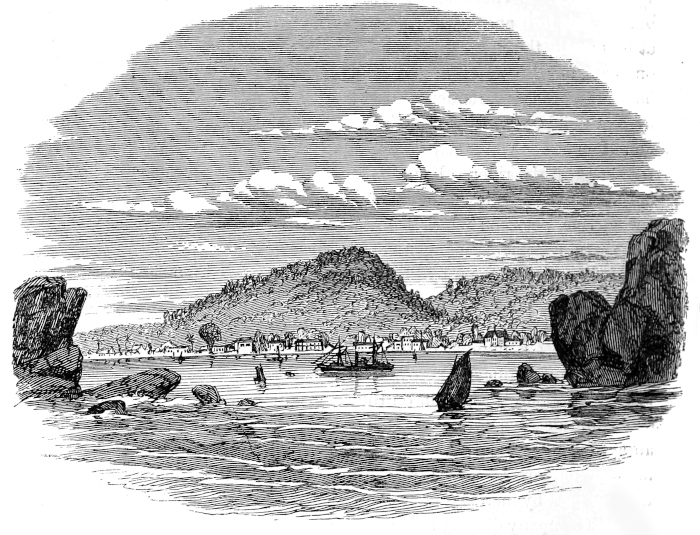
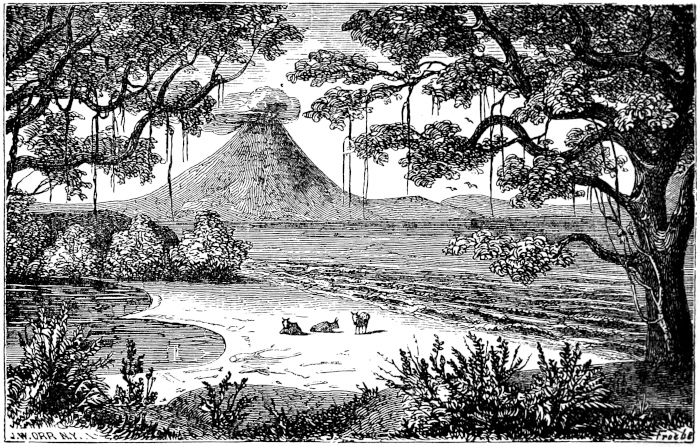
NICARAGUA; ITS PEOPLE, SCENERY, MONUMENTS, RESOURCES, CONDITION, AND PROPOSED CANAL;
Transcriber’s Note:
Footnotes have been collected at the end of the text, and are
linked for ease of reference.
Illustrations have been moved to appear at paragraph breaks. Full page
lithographsa and woodcuts were included in the pagination, including
a verso blank page.
Minor errors, attributable to the printer, have been corrected. Please
see the transcriber’s note at the end of this text
for details regarding the handling of any textual issues encountered
during its preparation.
Any corrections are indicated using an underline
highlight. Placing the cursor over the correction will produce the
original text in a small popup.
Any corrections are indicated as hyperlinks, which will navigate the
reader to the corresponding entry in the corrections table in the
note at the end of the text.
I
II
WITH
ONE HUNDRED ORIGINAL MAPS AND ILLUSTRATIONS.
By E. G. SQUIER,
FORMERLY CHARGE D’AFFAIRES OF THE UNITED STATES
TO THE REPUBLICS OF CENTRAL AMERICA.
“HIC LOCUS EST GEMINI JANUA VASTA MARIS.”—OVID
A REVISED EDITION
NEW YORK:
HARPER & BROTHERS, PUBLISHERS,
FRANKLIN SQUARE.
1860.
IIIEntered, according to Act of Congress, in the year 1860, by
HARPER & BROTHERS,
In the Clerk’s Office of the District Court for the Southern District of New York.
CONTENTS.
v
NARRATIVE.
CHAPTER I.—The Brig Francis—Departure from New York—San Domingo—The Coast of Central America—Monkey Point—Shrewd Speculations—A Naked Pilot—Almost a Shipwreck—San Juan de Nicaragua—Music of the Chain Cable—A Pompous Official—Delivering a Letter of Introduction—Terra Firma again—“Naguas” and “Guipils”—The Town and its Laguna—Snakes and Alligators—Practical Equality—Celt vs. Negro—A Wan Policeman—The British Consul General for Mosquitia—“Our House” in San Juan—An Emeute—Pigs and Policy—A Viscomte on the Stump—A Serenade—Mosquito Indians—A Picture of Primitive Simplicity,
CHAPTER II.—The Port of San Juan de Nicaragua; its Position; Climate; Population; Edifices of its Inhabitants; its Insects; The Nigua; The Scorpion, etc.; its Exports and Imports; Political Condition; Importance, Present and Prospective; Seizure by the English, etc.—Mouth of the River San Juan—The Colorado Mouth—The Tauro—Navigation of the River—Bongos and Piraguas—Los Marineros—Discovery and early History of the Port of San Juan,
CHAPTER III.—The Magnates of San Juan—Captain Samuel Shepherd—Royal Grants—Vexatious Delays—Imposing Departure—Entrance of the River San Juan—“Peeling” of the Marineros—Character of the Stream—The Juanillo—An Immemorial Stopping-place—Bongos and their Equipments and Stores—Meals—Esprit du Corps among the Boatmen—The “Oracion”—Queer Caprices—Medio—Our Accommodation—A Specimen Night on the River—Morning Scenes and Impressions—Bongo Life—The Colorado Mouth—Change of Scenery—The Iguana—A Solitary Establishment—Tropical Ease—The Rio Serapiqui—Fight between the Nicaraguans and the English—“A famous victory”—The Rio San Francisco—Remolino Grande—Picturesque River Views—The Hills and Pass of San Carlos—Thunder Storms—The Machuca Rapids—Melchora Indians—Rapids of Mico and Los Valos—Rapids of the Castillo—Island of Bartola—Capture by Lord Nelson—The “Castillo Viejo,” or Old Castle of San Juan—“A Dios California!”—Ascend to the Ruins—Strong Works—Capture of the Fort by the English in 1780—Failure of the Expedition against Nicaragua; a Scrap of History—Passage of the Rapids—Different Aspect of the River—A Black Eagle—Ninety Miles in Six Days—The Port of San Carlos—Great Lake of Nicaragua—Land at San Carlos—The Commandante—Hearty Welcome—Novel Scenes—Ancient Defences—View from the Fort—The Rio Frio—The Gnatosos Indians—A Paradise for Alligators—Some Happy Institutions of theirs,
viCHAPTER IV.—San Carlos—Dinner at the Commandante’s—Introduction to “Tortillas y Frijoles”—A Siesta—News of the attempted Revolution—Anticipating Events, and what happened to the Commandante after we left—Departure under a Military Salvo—View of San Carlos from the Lake—Lake Navigation—Card Playing—Gorgeous Sunset—A Midnight Storm—San Migueleto, and the “Bath of the Naides”—Primitive Simplicity—A Day on the Lake—“El Pedernal”—A Bath with Alligators—An “Empacho”—A Trial at Medicine, and great Success—Second Night on the Lake—The Volcanoes of Momobacho, Ometepec, and Madeira—Volcanic Scenery—The Coast of Chontales—The Crew on Politics—“Timbucos” and “Calandracas,” or a Glance at Party Divisions—Arrival at “Los Corals”—Some Account of them—Alarming News—A Council of War—Faith in the United States Flag—The Island of Cuba—More News, and a Return of the “Empacho”—Distant View of Granada—Making a Toilet—Bees—Arrival at the Ruined Fort of Granada—How they Land there—Sensation amongst the Spectators—Entrance to the City—The Abandoned Convent of San Francisco—The Houses of the Inhabitants—First Impressions—Soldiers and Barricades—Thronged Streets—Señor Don Frederico Derbyshire—“Our Host”—A Welcome—Official Courtesies—Our Quarters—First Night in Granada,
CHAPTER V.—Reception-Day—General Respect and Admiration for the United States—An Evening Ride—The Plaza—Churches—Hospital—The “Jalteva”—Deserted Municipality—Melancholy Results of Faction—The Arsenal—Natural Defences of the City—“Campo Santo”—An Ex-Director and his “Hacienda”—Shore of the Lake in the Evening—Old Castle—The “Oracion”—An Evening Visit to the Señoritas—Opera amidst Orange Groves—“Alertas” and “Quien Vivas?”—The Granadinas at Home—An Episode on Women and Dress—Mr. Estevens—“Los Malditos Inglesas”—A Female Antiquarian Coadjutor—“Cigaritas”—Indian Girls—Countrymen—An American “Medico”—Native Hospitality to Strangers—The Ways infested by “Facciosos”—An American turned Back—Expected Assault on the City, and Patriotic Resolves “To Die under the American Flag”—A Note on Horses and Saddles—Visit to the Cacao Estates of the Malaccas—The Cacao Tree—Day-Dreams—An Adventure, almost—Grievous Disappointment—Somoza, the Robber Chief—Our Armory—Feverishness of the Public Mind—Life under the Tropics—A Frightened American, who had “seen Somoza,” and his Account of the Interview—Somoza’s Love for the Americans—Good News from Leon—Approach of the General-in-Chief, and an Armed American Escort—Condition of Public Affairs—Proclamation of the Supreme Director—Decrees of the Government—Official Announcements, and Public Addresses—How they Exhibited the Popular Feeling—Nicaraguan Rhetoric—Decisive Measures to put down the Insurgents—General Call to Arms—Martial Law—Publication of a “Banda”—Great Preparations to Receive the General-in-Chief and his “Veteranos”—No further Fear of the “Facciosos”—A Break-neck Ride to the “Laguna de Salinas”—A Volcanic Lake—Descent to the Water—How came Alligators there?—Native “Aguardiente” “not bad to take”—Return to the City—A Religious Procession—The Host—Increasing Tolerance of the People—Preparations for “La Mañana.”
CHAPTER VI.—Discovery of Nicaragua in 1522; Gil Gonzales de Avila, and his march into the Country; Lands at Nicoya; Reaches Nicaragua and has an Interview with its Cazique; Is closely questioned; Marches to Dirianga, where he is at first received, but afterwards attacked and forced to retreat; Peculiarities of the Aborigines; Their wealth; Arrival of Francisco Hernandez de Cordova; He subdues the country, and founds the cities of Granada and Leon; Return of Gonzales; Quarrels between the Conquerors; Pedro Arias de Avila, the first Governor of Nicaragua; His death; Is succeeded by Roderigo de Contreras; His son, Hernandez de Contreras, rebels against Spain; Meditates the entire independence of all Spanish America on the Pacific; Succeeds in carrying Nicaragua; Sails for Panama; Captures it; Marches on Nombre de Dios, but dies on the way; Failure of his daring and gigantic Project; Subsequent Incorporation of Nicaragua in the Vice-Royalty of Guatemala—The City of Granada in 1665, by Thomas Gage, an English Monk; Nicaragua called “Mahomet’s Paradise;” The Importance of Granada at that Period; Subsequent Attack by the Pirates, in 1668; Is Burnt; Their Account of it; The Site of Granada; Eligibility of its Position; Population; Commerce; Foreign Merchants; Prospective Importance—Lake Nicaragua; Its Discovery and Exploration; Interesting Account of it by the Chronicler Oviedo, written in 1541; Its Outlet Discovered by Captain Diego Machuca; The wild beasts on its Shores; The Laguna of Songozona; Sharks in the Lake, their Rapacity; Supposed Tides in the Lake; Explanation of the Phenomenon,
CHAPTER VII.—Narrative Continued—Arrival of the General-in-Chief—The Army—Fireworks by Daylight—Prisoners—Interview with Gen. Muñoz—Arrival of the Californian Escort—“Piedras Antiguas”—The Stone of the Big Mouth—“El Chiflador”—Other Antiquities—Preparations for Departure—Carts and “Carreteros”—Vexatious Delays—Departure—How I got a Good Horse for a Bad Mule on the Road—Distant View of the Lakes—The Freedom of the Forest—Arrival at Masaya—Grand Entree—Deserted Plaza—A Military Execution—A “Posada”—“Hijos de Washington”—Disappointed Municipality—We escape an Ovation—Road to Nindiri—Apostrophe to Nindiri!—Overtake the Carts—“Alguna Fresca”—Approach the Volcano of Masaya—The “Mal Pais”—Lava Fields—View of the Volcano—Its Eruptions—“El Inferno de Masaya,” the Hell of Masaya—Oviedo’s Account of his Visit to it in 1529—Activity at that Period—The Ascent—The Crater—Superstitions of the Indians—The Old Woman of the Mountain—The Descent of the Fray Blas Castillo into the Crater,
viiCHAPTER VIII.—Magnificent Views of Scenery—“Relox del Sol”—John Jones and Antiquities—An “Alarm;” Revolvers and a Rescue—Distant Bells—Don Pedro Blanco—Managua—Another Grand Entree—Our Quarters—Supper Service—Enacting the Lion—Virtues of Aguardiente—An “Obsequio,” or Torch-light Procession in Honor of the United States—A National Anthem—Night with the Fleas—Fourth of July and a Patriotic Breakfast—Saint Jonathan—Leave Managua—Matearas—Privileges of a “Compadre”—Lake of Managua—A magnificent View—The Volcano of Momotombo—A Solitary Ride—Geological Puzzle—Nagarote—The Posada—Mules abandoned—A Sick Californian—Dinner at a Padre’s—The Santa Annita—Virtues of a Piece of Stamped Paper—A Storm in the Forest—Pueblo Nuevo—Five Daughters in Satin Shoes—Unbroken Slumbers—Advance on Leon—Axusco—A Fairy-Glen—The great Plain of Leon—A “touch” of Poetry—Meet the American Consul—A Predicament—Cavalcade of Reception—New Illustration of Republican Simplicity—El Convento—A Metamorphosis—The Bishop of Nicaragua—Forest, Miss Clifton, Mr. Clay—Criticism on Oratory—Nine Volcanoes in a row—Distant View of the Great Cathedral—The City—Imposing Demonstrations—The Grand Plaza—A Pantomimic Speech and Reply—The Ladies, “God bless them!”—House of the American Consul—End of the Ceremonies—Self-congratulations thereon—A Serenade—Martial Aspect of the City—Trouble anticipated—Precautions of the Government,
CHAPTER IX.—The City of Leon—Originally built on the Shores of the Lake Managua—Cause of its Removal—Its present Site—Dwellings of its Inhabitants—Style of Building—Devastation of the Civil Wars—Public Buildings—The Great Cathedral—Its Style of Architecture; Interior; Magnificent View from the Roof—The “Cuarto de los Obispos,” or Gallery of the Bishops—The University—The Bishop’s Palace—“Casa del Gobierno”—“Cuartel General”—The Churches of La Merced; Calvario; Recoleccion—Hospital of San Juan de Dios—Stone Bridge—Indian Municipality of Subtiaba—Population of Leon—Predominance of Indian Population—Destruction of Stocks—Mixed Races—Society of Leon—The Females; their Dress—Social Gatherings: the “Tertulia”—How to “break the Ice” and open a Ball—Native Dances—Personal cleanliness of the People—General Temperance—“Aguardiente” and “Italia”—Food—The Tortilla—Frijoles—Plantains—The Markets—Primitive Currency—Meals—Coffee, Chocolate, and “Tiste”—Dulces—Trade of Leon,
CHAPTER X.—The Vicinity of Leon—The Bishop’s Baths—Fuenta de Axusco—“Cerro de Los Americanos”—A Military Ball and Civic Dinner—General Guerrero—Official Visit from the Indian Municipality of Subtiaba—Simon Roque—A Secret—Address and Reply—Visit Returned—The Cabildo—An Empty Treasury—“Subtiaba, Leal y Fiel”—Royal Cedulas—Forming a Vocabulary—“Una Decima”—The Indians of Nicaragua; Stature; Complexion; Disposition; Bravery; Industry; Skill in the Arts—Manufacture of Cotton—Primitive Mode of Spinning—Tyrian Purple—Petates and Hammocks—Pottery—“Aguacales,” and “Jicoras”—Costume—Ornaments—Aboriginal Institutions—The Conquest of Nicaragua—Enormities practised toward the Indians—Present Condition of the Indians—The Sequel of Somoza’s Insurrection—Battles of the Obraje and San Jorge—Capture and Execution of Somoza—Moderate Policy of the Government—Return of General Muñoz—Medals—Festival of Peace—Novel Procession—A Black Saint,
CHAPTER XI.—Antiquities—Ancient Statue in the Grand Plaza—Monuments on the Island of Momotombita in Lake Managua—Determine to visit them—The Padre Paul—Pueblo Nuevo and our Old Hostess—A Night Ride—“Hacienda de las Vacas”—A Night amongst the “Vaqueros”—The Lake—Our Bongo—Visit the Hot Springs of Momotombo—Attempt to reach one of the “Infernales” of the Volcano—Terrible Heat—Give up the Attempt—Oviedo’s Account of the Volcano—“Punta de los Pajaros”—Momotombita—Dread of Rattlesnakes—The Monuments—Resolve to remove the largest—A Nest of Scorpions—Tribulation of our Crew—Hard Work—How to ship an Idol—Virtues of Aguardiente—“Purchasing an Elephant”—More “Piedras Antiguas”—The Island once Inhabited—Supposed Causeway to the Main-land—A Perilous Night Voyage—Difficult Landing—Alacran, or Scorpion Dance—A Foot-march in the Forest—The “Hacienda de los Vacas” again—Scant Supper—Return to Leon—The Idol sent, via Cape Horn, to Washington—A Satisfied Padre—Idols from Subtiaba—Monstrous Heads—Visit to an Ancient Temple—Fragments—More Idols—Indian Superstitions—“El Toro”—Lightning on Two Legs—A Chase after Horses—Sweet Revenge—“Capilla de la Piedra”—Place of the Idol—The Fray Francisco de Bobadilla—How he Converted the Indians—Probable History of my Idols—The Ancient Church “La Mercedes de Subtiaba”—Its Ruins—“Agarrapatas”—Tropical Insects—Snakes and Scorpions versus Fleas and Wood-ticks—A Choice of Evils,
viiiCHAPTER XII.—Amusements in Leon—Cock Fighting—“Patio de Los Gallos”—Decline of the Cock-pit—Gaming—Bull Baiting—Novel Riding—“Una Sagrada Funcion,” or Mystery—A Poem, and a Drama—“Una Compania de Funambulos,” or Rope Dancers—Great Anticipations—A Novel Theatre—The Performance—“La Jovena Catalina” and the “Eccentric Clown, Simon”—“Tobillos Gruesos,” or “Big Ankles”—“Fiestas,“ and Saints’ Days—The “Fiesta” of St. Andrew—Dance of the Devils—Unearthly Music—All-Saints’ Day—A Carnival in Subtiaba—An Abrupt Conclusion,
CHAPTER XIII.—A Sortie from Leon—Quesalguaque—El Estero de Doña Paula—The “Monte de San Juan”—Summary way of disposing of “Ladrones”—“El Tigre,” Jaguar, or Ounce, Its Habits; How Hunted—The “Lion,” or Puma—The “Coyote”—Posultega—A Specimen Padre—Sobrinas—Chichigalpa—Poised Thunder-storm—The Oracion—Hacienda of San Antonio—Chinandega—A Challenge—El Viejo—Familiar Fixtures—An Enterprizing Citizen and his Tragic Fate—A Decaying Town—Horses vs. Mules—Visit to the Haciendas—An Indigo Estate, and a Mayor Domo—Fine View—The Sugar Estate of San Geronimo—Bachelor Quarters and Hacienda Life—A Fruit Garden—The Bread-Fruit—Sugar-mills, and the Manufacture of Aguardiente—A Sinful Siesta—Visit From the Municipality—“Una Cancion”—Chinandega by Daylight—Realejo—Port and Harbor—The Progress of Enterprize—The Projected New Town of Corinth—Return to Leon,
CHAPTER XIV.—The Priesthood in Nicaragua—Decline in the Influence of the Church—-Banishment of the Archbishop—Suppression of the Convents—Prohibition of Papal Bulls—Legitimization of the Children of Priests—The Three Abandoned Convents of Leon—Padre Cartine, the last of the Franciscans—Reception, or Clock-room—The Padre’s Pets; His Oratory; Private Apartments; Workshop—A Skull and its History—The Eglesia del Recoleccion—The Padre as a Landlord; As a Painter; As an Uncle; And as Negociator in Marriage—An Auspicious Omen—Death of the Vicar of the Diocess of Nicaragua—His Obsequies—A Funeral Oration—Priestly Eloquence—An Epitaph—General Funeral Ceremonies—Death as an Angel of Mercy—Burial Practices—Capellanias; Their Effects, and the Policy of the Government in Respect to them—Popular Bigotry and Superstition—An Ancient Indulgence—The Potency of an Ejaculation—Remission of Sins—Penetencias—Rationale of the Practice—Novel Penances—Turning Sins to Good Account—Good from Evil—System of the Padre Cartine—The Diocess of Nicaragua, and its Bishop—General Education—Public Schools—The Universities of Leon and Granada—A Sad Picture,
CHAPTER XV.—Visits to the capital City, Managua—Legislative Assembly; How to procure a Quorum—Executive Message—Ratification of Treaty with the United States—Antiquities—Lake of Nihapa—Huertas—Dividing Ridge—Traces of Volcanic Action—Hacienda de Ganado—An Extensive Prospect—Extinct Crater—Ancient Paintings on the Cliffs—Symbolical Feathered Serpent—A Natural Temple—Superstitions of the Indians—Salt Lake—Laguna de Las Lavadoras—A Courier—Three Months Later from Home—The Shore of Lake Managua—Aboriginal Fisheries—Ancient Carving—Population of Managua—Resources of surrounding Country—Coffee—Inhabitants—Visit Tipitapa—Sunrise on the Lake—Hot Springs—Outlet of Lake—Mud and Alligators—Dry Channel—Village of Tipitapa—Surly Host—Salto de Tipitapa—Hot Springs again—Stone Bridge—Face of the Country—Nicaragua or Brazil Wood—Estate of Pasquel—Practical Communism—Matapalo or Kill-tree—Landing and Estero of Pasquel or Panaloya—Return—Depth of Lake Managua—Communication between the two Lakes—Popular Errors,
CHAPTER XVI.—Second Antiquarian Expedition—The Shores of Lake Managua once more—Matearas—Don Henrique’s Comadre—I am engaged as Godfather—An Amazon—Santa Maria de Buena Vista—A “Character” in Petticoats—“La Negrita y La Blanquita”—Purchase of Buena Vista—A Yankee Idea in a Nicaraguan Head—Hints for Speculators—Muchacho vs. Burro—Equestrian Intoxication—Another Apostrophe!—Pescadors—“Hay no mas,” and “Esta aqui,” as Measures of Distance—Managua—The “Malpais,” Nindiri and Masaya—Something Cool—A Pompous Alcalde—How to Arrest Conspirators—Flowers of the Palm—Descent to the Lake—Memorials of Catastrophes—Las Aguadoras—New Mode of Sounding Depths—Ill-bred Monkeys—Traditional Practices—Oviedo’s Account of the Lake in 1529—Sardines—The Plaza on Market Night—A Yankee Clock—Something Cooler—A State Bedroom for a Minister—Ancient Church—Filling out a Vocabulary—“Quebrada de las Inscripciones”—Sculptured Rocks—Their Character—Ancient Excavations in the Rock—“El Baño”—Painted Rocks of Santa Catarina—Night Ride to Granada—The Laguna de Salinas by Moonlight—Granada in Peace—A Query Touching Human Happiness—New Quarters and Old Friends—An American Sailor—His Adventures—“Win or Die”—A Happy Sequel,
ixCHAPTER XVII.—Visit to Pensacola—Discovery of Monuments—Search for others—Success—Departure for “El Zapatero”—La Carlota—Los Corales—Isla de La Santa Rosa—A Night Voyage—Arrival at Zapatero—Search for Monuments—False Alarm—Discovery of Statues—Indians from Ometepec—A Strong Force—Further Investigations—Mad Dance—Extinct Crater and Volcanic Lake—Stone of Sacrifice—El Canon—Description of Monuments, and their probable Origin—Life on the Island,
CHAPTER XVIII.—Return to Granada—A Ball in Honor of “El Ministro”—The Funambulos—Departure for Rivas or Nicaragua—Hills of Scoriæ—The Insane Girl and the Brown Samaritan—A Way-side Idol—Mountain Lakes and Strange Birds—A Sudden Storm—Take Refuge among the “Vaqueros”—Inhospitable Reception—Night Ride; Darkness and Storm—Friendly Indians—Indian Pueblo of Nandyme—The Hacienda of Jesus Maria—An Astonished Mayor Domo—How to get a Supper—Jicorales—Ochomogo—Rio Gil Gonzales—The “Obraje”—Rivas and its Dependencies—Señor Hurtado—His Cacao Plantation—The City—Effect of Earthquakes and of Shot—Attack of Somoza—Another American—His attempt to cultivate Cotton on the Island of Ometepec—Murder of his Wife—Failure of his Enterprize—A Word about Cotton Policy—The Antiquities of Ometepec—Aboriginal Burial Places—Funeral Vases—Relics of Metal—Golden Idols—A Copper Mask—Antique Pottery—A Frog in Verd Antique—Sickness of my Companions—The Pueblo of San Jorge—Shore of the Lake—Feats of Horsemanship—Lance Practice—Visit Potosi—Another Remarkable Relic of Aboriginal Superstition—The Valley of Brito—An Indigo Estate—Cultivation of Indigo—Village of Brito—A Decaying Family and a Decayed Estate—An Ancient Vase—Observations on the Proposed Canal—Return alone to Granada—Despatches—A forced March to Leon,
CHAPTER XIX.—Volcanoes of Central America; their Number—Volcano of Jorullo—Isalco—The Volcanic Chain of the Marabios—Infernales—“La Baila de Los Demonios”—Volcanic Outburst on the Plain of Leon—Visit to the New Volcano, and Narrow Escape—Baptizing a Volcano—Eruption of Coseguina—Celebration of its Anniversary—Synchronous Earthquakes—Late Earthquakes in Central America—Volcano of Telica—El Volcan Viejo—Subterranean Lava Beds—Activity of the Volcanoes of the Marabios in the 16th Century—The Phenomena of Earthquakes—Earthquake of Oct. 27, 1849—Volcanic Features of the Country—Extinct Craters—Volcanic Lakes—The Volcano of Nindiri or Masaya—Descent into it by the Fray Blas de Castillo—Extraordinary Description,
CHAPTER XX.—Christmas—Nacimientos—The Cathedral on Christmas Eve—Midnight Ceremonies—An Alarm—Attempt at Revolution—Fight in the Plaza—Triumph of Order—The Dead—Melancholy Scenes—A Scheme of Federation,
CHAPTER XXI.—The “Paseo al Mar”—Preparations for the Annual Visit to the Sea—The Migration—Impromptu Dwellings—Indian Potters—The Salines—The Encampment—First Impressions—Contrabanda—Old Friends—The Camp by Moonlight—Practical Jokes—A Brief Alarm—Dance on the Shore—Un Juego—Lodgings, Cheap and Romantic—An Ocean Lullaby—Morning—Sea Bathing—Routine of the Paseo—Divertisements—Return to Leon,
CHAPTER XXII.—Proposed Visit to San Salvador and Honduras—Departure from
Leon—ChinandegaLeon—Chinandega—Ladrones—The Goitre—Gigantic Forest Trees—Port of Tempisque—The Estero Real and its Scenery—A novel Custom house and its Commandante—Night on the Estero—Bay of Fonseca—Volcano of Conseguina—The Island of Tigre—Port of Amapala—View from the Island—Entrance to the Bay—Sacate Grande—Exciting News from Honduras—English Fortifications—Extent, Resources, and Importance of the Bay—Departure for the Seat of War,
CHAPTER XXIII.—Departure for San Lorenzo—Morning Scenes—Novel Cavalcade—A High Plain—Life amongst Revolutions—Nacaome—Military Reception—General Cabañas—An Alarm—Negotiations—British Interference—A Truce—Prospects of Adjustment—An Evening Review—The Soldiery—A Night Ride—Return to San Lorenzo,
CHAPTER XXIV.—La Union—Oysters—American Books—Chiquirin—French Frigate “La Serieuse”—Admiral Hornby of the Asia, 84—French and English war Vessels—Ascent of the Volcano of Conchagua—A Mountain Village—Peculiarities of the Indians—Las Tortilleras—Volcano of San Miguel—Fir Forests—An Ancient Volcano Vent—The Crater of Conchagua—Peak of Scoriæ—View from the Volcano—Enveloped in Clouds—Perilous Descent—Yololtoca—Pueblo of Conchagua again—An Obsequio—Indian Welcome—Semana Santa—Devils—Surrender of Guardiola—San Salvador—Its Condition and Relations,
CHAPTER XXV.—Departure for the United States—An American Hotel in Granada—Los Cocos—Voyage through the Lake—Descent of the River—San Juan—Chagres—Home—Outline of Nicaraguan Constitution—Conclusion of Narrative,
CHAPTER II.—The Proposed Inter-Oceanic Canal; Early Explorations; Survey of Colonel Childs in 1851; Various Lines proposed from Lake Nicaragua to the Pacific, etc., etc.,
Since the publication of the original edition of this
work, in 1852, the beautiful but hapless Republic of
Nicaragua has been the theatre of a series of startling
events which have concentrated upon it not only the
attention of the American public, but of all civilized
nations. It has been made the arena of aimless, and
not always reputable diplomatic contests, and of an
obstinate and bloody struggle between a handful of
Northern adventurers and an effete and decadent race.
And unless the future shall strangely betray the indications
of the present, it is destined to pass through
a succession of still severer throes, in its advance to
that political status and commercial importance inseparable
from its geographical position and natural
resources. For, in Nicaragua, and there alone, has
xivNature combined those requisites for a water communication
between the seas, which has so long been
the dream of enthusiasts, and which is a desideratum
of this age, as it will be a necessity of the next.
There too has she lavished, with a bountiful hand,
her richest tropical treasures; and the genial earth
waits only for the touch of industry to reward the
husbandman a hundredfold with those products, which,
while they contribute to his wealth, add to the comfort
and give employment to the laborer of distant
and less favored lands.
Public interest, and especially American interest
in Nicaragua must therefore constantly increase; and
the desire to know the characteristics of the country,
its scenery and products, and the habits and
customs of its people, can never diminish. In the
Narrative which follows, these are faithfully presented;
and though, in some cases, there may be a needless
amplitude of incidents, yet even this is probably
not without its use in relieving descriptions and details
which might otherwise prove dry and repulsive
in form. In all essential respects, Nicaragua is little
changed since 1850, and since a later visit of the
author in 1854. It is true, Granada has been added
xvto its list of ruined cities, and Rivas and Masaya
bear the scars of battles on their walls. The people
have perhaps a more thoughtful look, as becomes
men realizing that the fulness of time has finally
brought them within the circle of the world’s movement,
and that they must assume and discharge the
responsibilities of their new position, or give place to
those who are equal to the requirements of this age
and prompt to recognize their duties to their fellow
men.
But in all other respects, as I have said, the country
is unchanged. Its high and regular volcanic
cones, its wooded plains, broad lakes, bright rivers,
and emerald verdure are still the same. The aguadora
still steps along firmly under her heavy water
jar, or climbs, panting, up the cliffs that surround the
Lake of Masaya. The naked children, in average
color possibly a shade lighter than before, still bestride
the hips of nurse or mother. Small and pensive
mules still trudge to market, ears and feet alone
visible beneath their green loads of sacate. The
mozo and his machete, the red-belted cavalier, on scarlet
pillion, pricking his champing horse through the
streets, the languid Señora puffing the smoke of her
xvicigaretta in lazy jets through her nostrils—the sable
priest, with gallo under his arm, hurrying to the nearest
cock pit—the shrill quien vive of the bare-footed
sentinel—the rat-tat-too of the afternoon drum—the
eternal Saints’ days, and banging bombas—all, all are
the same!
New York, September, 1859
MAP OF NICARAGUA Showing its DEPARTMENTAL DIVISIONS and proposed Routes of INTEROCEANIC COMMUNICATIONCOMMUNICATION By E. G. Squier. 1860
17NARRATIVE.
CHAPTER I.
THE BRIG FRANCIS—DEPARTURE FROM NEW YORK—SAN DOMINGO—THE COAST
OF CENTRAL AMERICA—MONKEY POINT—SHREWD SPECULATIONS—A NAKED
PILOT—ALMOST A SHIPWRECK—SAN JUAN DE NICARAGUA—MUSIC OF THE
CHAIN CABLE—A POMPOUS OFFICIAL—DELIVERING A LETTER OF INTRODUCTION—TERRA
FIRMA AGAIN—“NAGUAS” AND “GUIPILS”—THE TOWN AND
ITS LAGUNA—SNAKES AND ALLIGATORS—PRACTICAL EQUALITY—CELT VS.
NEGRO—A WAN POLICEMAN—THE BRITISH CONSUL GENERAL FOR MOSQUITIA—“OUR
HOUSE” IN SAN JUAN—AN EMEUTE—PIGS AND POLICE—A VISCOMTE
ON THE STUMP—A SERENADE—MOSQUITO INDIANS—A PICTURE OF PRIMITIVE
SIMPLICITY.
The following narrative will serve to give a general, and,
on the whole, it is believed, a correct notion of the State or
Republic of Nicaragua, and of the character and peculiarities
of its inhabitants, as they would be apt to impress themselves
on the mind of a traveller without strong prejudices, with
good health and a cheerful temper, and disposed withal to
regard men and things from a sunny point of view. Matters
of a didactic kind, statistics, and information on special subjects,
such as the proposed Interoceanic Canal, are left to
find a place, as they best can, after impressions and incidents—the
round of beef, in this instance, following the sweets
and pastry.
The point in Nicaragua most accessible to the traveller
from the United States, is the now well-known port of San
Juan de Nicaragua, which our respected uncle of England,
in furtherance of some occult designs of his own, has vainly
endeavored to christen anew with the ghastly name of “Greytown.”
The little brig “Francis” was up for this port in the
18early part of May, in the year of grace 1849; and, for satisfactory
reasons, overruling all choice in the premises, berths
were engaged in her for myself and companions. She lay at
the foot of Roosevelt street, in the terra incognita beyond the
Bowery,—a pigmy amongst the larger vessels which surrounded
her. We reported ourselves on board, in compliance
with the special request of the owners, at 9 o’clock on
the morning of the 11th, just as the human tide ebbed from
the high-water mark of Fourth street and Union Square, and
subsided for the day amongst the rugged banks and dangerous
shallows of Wall and Pearl streets.
The Francis had received her freight, and her decks were
encumbered with pigs and poultry, spars and tarpaulins, to
say nothing of water casks and tar barrels, forbidding in
advance any peregrinations, by unsteady landsmen, beyond
the quarter deck. The quarter deck was so called by courtesy
only: it was elevated but a few inches above the waist,
and, deducting the room occupied by hen-coops, water-casks,
and the man at the helm, afforded but about ten square
feet of space, in which the unfortunate passengers might
“recreate” themselves. This might have sufficed for men of
moderate desires, but then it was far from being “contiguous
territory.”
In a word, we found ourselves in the midst of a confusion
which none but the experienced traveller can coolly contemplate.
Our friends, or rather the more daring of them,
scrambled over the intervening decks, or hailed us from the
rigging of the neighboring vessels. We would have invited
them on board, but there was no room to receive them; besides
the descent was perilous. All partings are much alike,
but ours were made with a prodigious affectation of good
spirits. We were to have sailed precisely at ten; but when
eleven was chimed, the number which had come “expressly
to see us off,” was sensibly diminished; and at twelve we
were left to our own contemplations.
19There was a prodigious pulling of ropes; the same boxes
were tumbled from one place to another and back again;
trunks disappeared and came to light, and it seemed as if
everybody was engaged in a grand search for nobody knew
what. At one o’clock the pilot came on board. The delay
had become painful, and now we thought the time for sailing
had arrived. But the pilot was a fat man, and sat down imperturbably
upon a water-cask. “Well, Mr. Pilot, are we
off?” He deigned no audible reply, but glanced upwards significantly
towards the streamer at the masthead. The wind
blew briskly in from the Narrows. So we seated ourselves
upon the water-casks also, and watched the men who were
painting the next ship, and almost nodded ourselves to sleep,
to the monotonous “yo-ho” of the sailors unloading an Indiaman
near by. The roar of Broadway fell subdued and distant
upon our ears; and the ferry-boats and little steamers
in the river seemed to move about in silence, going to and
fro apparently without an object, like ants around an anthill.
By-and-by a little, black bull-dog of a steamer thrust itself
valiantly through the crowd of vessels, made a rope fast to
our bows, and dragged us, with a jerk, triumphantly into the
stream, past Governor’s Island, down to the outer bay, and
then left us to take care of ourselves. That night the sun
went down cold and filmy, and the Francis tumbled roughly
about amidst the dark waves of the Atlantic. * * * A
calm under the high capes of San Domingo,—an infinitude of
thunder squalls, with the pleasant consciousness of a hundred
kegs of gunpowder stowed snugly around the foot of the
mainmast,—a “close shave” on the coral reefs below Jamaica,—for
twenty-six mortal days this was all which we
had of relief from the detestable monotony of shipboard.
Blessed be steam! * * * *
It was a dark and rainy morning, when “Land on the lee-bow,”
was sung out by the man at the helm, and in less time
20than is occupied in writing it, the occupants of the close little
cabin made their way on deck, to look for the first time upon
the coast of Central America. The dim outlines of the land
were just discernible through the murky atmosphere, and
many and profound were the conjectures hazarded as to what
precise point was then in view. The result finally arrived at
was, that we were off “Monkey Point,” about thirty miles
to the northward of our destined port. This conclusion was
soon confirmed by observing, close under the shadow of the
shore, an immense rock, rising with all the regularity of the
Pyramids to the height of three hundred feet; a landmark
too characteristic to be mistaken.
We were sweeping along with a stiff breeze, and were
comforted with the assurance that we should be in port to
breakfast, “if,” as the cautious captain observed, “the wind
held.” But the perverse wind did not hold, and in half an
hour thereafter we were rocking about with a wash-tubby
motion, the most disagreeable that can be imagined, and of
which we had had three days’ experience under the Capes of
San Domingo. The haze cleared a little, and with our
glasses we could make out a long, low line of shore, covered
with the densest verdure, with here and there the feathery
palm, which forms so picturesque a feature in all tropical
scenery, lifting itself proudly above the rest of the forest, and
the whole relieved against a background of high hills, over
which the gray mist still hung like a veil.
Some of the party could even make out the huts on the
shore; but the old man at the helm smiled incredulously,
and said there were no huts there, and that the unbroken and
untenanted forest extended far back to the great ridge of the
Cordilleras. So it was when the adventurous Spaniards
coasted here three centuries ago, and so it had remained ever
since. These observations were interrupted by a heavy
shower, acceptable for the wind it brought, which filled the
idle sails, and moved us towards our haven. And though
21the rain fell in torrents, it did not deter us from getting
soaked, in vain endeavors to harpoon the porpoises that
came tumbling in numbers around our bows.
But the shower passed, and with it our breeze, and again
the brig rocked lazily on the water, which was now filled
with branches of trees, and among the rubbish that drifted
past, a broken spear and a cocoa-nut attracted particular
attention; the one showed the proximity of a people whose
primitive weapons had not yet given place to those more
effective, of civilized ingenuity, and the other was a certain
index of the tropics. The shower passed, but it had carried
us within sight of our port. Those who had previously seen
cabins on the shore could not now perceive any evidences of
human habitation, and stoutly persisted that we had lost our
reckoning, and that we were far from our destined haven.
But a trim schooner which was just then seen moving rapidly
along under a pouring shower, in the same direction with
ourselves, silenced the pretended doubters, and became immediately
a subject of great speculation. It was finally
agreed on all hands that it must be the B——, a vessel which
left New York three days before us, the captain of which had
boasted that he would “beat us in, by at least ten days.” So
everybody was anxious that the little brig should lead him
into the harbor, and many were the objurgations upon the
wind, and desperate the attempts of the sailors to avail themselves
of every “cat’s-paw” that passed.
The excitement was great, and some of the impatient passengers
inquired for sweeps, and recommended putting out
the yawl to tow the vessel in. They even forgot, such was
the excitement, to admire the emerald shores which were now
distinct, not more than half a mile distant, and prayed that a
black-looking thunder-storm, looming gloomily in the east,
might make a diversion in our favor. And then a speck was
discerned in the direction of the port; and by-and-by the
movement of the oars could be seen, and bodies swaying to
22and fro, and in due time a pit-pan, a long, sharp-pointed canoe,
pulled by a motley set of mortals, stripped to the waist, and
displaying a great variety of skins, from light yellow to coal
black, darted under our bows, and a burly fellow in a shirt
pulled off his straw hat to the captain, and inquired in bad
English, “Want-ee ah pilot?” The mate consigned him to
the nether regions for a lubber, and inquired what had become
of his eyes, and if he couldn’t tell the Francis anywhere;
the Francis, which “had made thirty-seven voyages to this
port, and knew the way better than any black son of a gun
who ever put to sea in a bread-trough!” And then the black
fellow in a shirt and straw hat was again instructed to go
below, or if he preferred, to go and “pilot in the lubberly
schooner to windward.” The black fellow looked blacker
than before, and said something in an unintelligible jargon to
the rest, and away they darted for the schooner.
Meantime the flank of the thunder storm swept towards
us, piling up a black line of water, crested with foam, while
it approached with a noise like that of distant thunder. It
came upon us; the sails fluttered a moment and filled, the
yards creaked, the masts bent to the strain, and the little brig
dashed rapidly through the hissing water. In the darkness
we lost sight of the schooner, and the shore was no longer
visible, but we kept on our way; the Francis knew the road,
and seemed full of life, and eager to reach her old anchorage.
“Don’t she scud!” said the mate, who rubbed his hands in
very glee. “If this only holds for ten minutes more, we’re
in, like a spike!”—and, strange to say, it did hold; and when
it was past we found ourselves close to “Point Arenas,” a
long narrow spit, partly covered with water, which shuts in
the harbor, leaving only a narrow opening for the admission
of vessels. The schooner was behind us, but here was a
difficulty. The bar had changed since his last trip; the captain
was uncertain as to the entrance, and the surf broke
heavily under our lee. Excitement of another character prevailed
23as we moved slowly on, where a great swell proclaimed
the existence of shallows. The captain stood in the bow,
and we watched the captain. Suddenly he cried, “Hard
a-port!” with startling emphasis, and “Hard a-port!” was
echoed by the helmsman, as he swept round the tiller. But
it was too late; the little vessel struck heavily as the wave
fell.
“Thirty-seventh, and last!” muttered the mate between
his teeth, as he rushed to the fastenings, and the main-sail
came down on the run. “Round with the boom, my men!”
and the boom swung round, just as the brig struck again,
with greater force than before, unshipping the rudder, and
throwing the helmsman across the deck. “Round again, my
men! lively, or the Francis is lost!” cheered the mate, who
seemed invested with superhuman strength and agility; and
as the boom swung round the wave fell, but the Francis did
not strike. “Clear she is!” shouted the mate, who leaped
upon the companion-way, and waved his hat in triumph;
and turning towards the schooner, “Do that, ye divil, and
call yerself a sailor!” There was no doubt about it; the
Francis was in before the schooner; and notwithstanding
the accident to her rudder, she passed readily to her old anchoring
ground, in the midst of a spacious harbor, smooth as
a mill-pond. There was music in the rattling cable as the
anchor was run out, and the Francis moved slowly round,
with her broadside towards the town. The well was tried,
but she had made no water, which was the occasion for a new
ebullition of joy on the part of the mate.
All danger past, we had an opportunity to look about us.
We were not more than two cable-lengths from a low sandy
shore, upon which was ranged, in a line parallel to the water,
a double row of houses, or rather huts, some built of boards,
but most of reeds, and all thatched with palm-leaves. Some
came down to the water, like sheds, and under one end were
drawn up pit-pans and canoes. Larger contrivances for navigating
24the San Juan river, resembling canal-boats, were also
moored close in shore, and upon each might be seen a number
of very long and very black legs, every pair of which
was surmounted by a very short white shirt. In the centre
of the line of houses, which was no other than the town of
San Juan de Nicaragua, was an open space, and in the middle
of this was a building larger than the others, but of like construction,
surrounded by a high fence of canes, and near one
end rose a stumpy flag-staff, and from its top hung a dingy
piece of bunting, closely resembling the British Union Jack;
and this was the custom-house of San Juan, the residence of
all the British officials; and the flag was that of the “King
of the Mosquitos,” the “ally of Great Britain!”
But of this mighty potentate, and how the British officials
came there, more anon. Just opposite us, on the shore,
was an object resembling some black monster which had
lost its teeth and eyes, and seemed sorry that it had left its
kindred at the Novelty Works. It was the boiler of a
steamer, which some adventurous Yankees had proposed
putting up here, but which, from some defect, had proved useless.
Behind the town rose the dense tropical forest. There
were no clearings, no lines of road stretching back into the
country; nothing but dense, dark solitudes, where the tapir
and the wild boar roamed unmolested; where the painted
macaw and the noisy parrot, flying from one giant cebia to
another, alone disturbed the silence; and where the many-hued
and numerous serpents of the tropics coiled among the
branches of strange trees, loaded with flowers and fragrant
with precious gums. The whole scene was unprecedentedly
novel and picturesque. There was a strange blending of objects
pertaining to the extremes of civilization. The boiler
of the steamer was side by side with the graceful canoe,
identical with that in which the simple natives of Hispaniola
brought fruits to Columbus; and men in stiff European costumes
were seen passing among others, whose dark, naked
27bodies, protected only at the loins, indicated their descent
from the aborigines who had disputed the possession of the
soil with the mailed followers of Cordova, and made vain
propitiations to the symbolical sun to assist them against
their enemies. Here they were, unknowing and careless
alike of Cordova or the sun, and ready to load themselves
like brutes, in order to earn a sixpence with which to get
drunk that night, in concert with the monotonous twanging
of a two-stringed guitar!
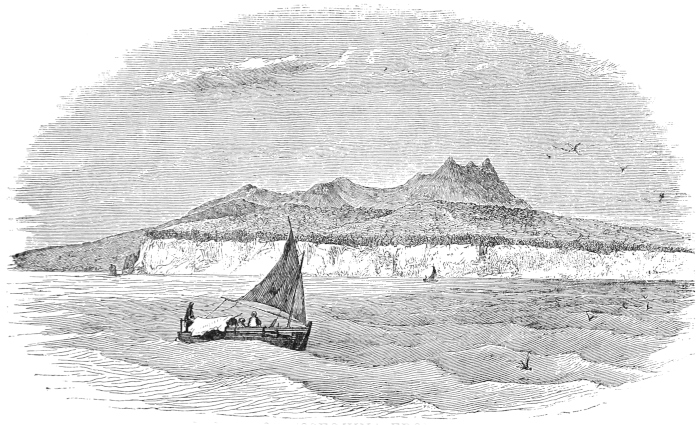
SAN JUAN DE NICARAGUA.—1849.
Our anchor was hardly down before a canoe came alongside,
containing as variegated an assortment of passengers as
can well be conceived. Among them were the officers of the
port, whose importance was made manifest from the numerous
and unnecessary orders they gave to the oarsmen, and
the prodigious bustle they made in getting up the side.
They looked inquiringly at the bright silken flag which one
of the party held in his hands, and which looked brighter
than ever under the rays of the setting sun. The eagles on
the caps of the party were also objects which attracted many
inquiring glances; and directly the captain was withdrawn
into a corner, and asked the significance of all this. The
answer seemed to diminish the importance of the officials
materially, and one approached, holding his sombrero reverently
in his hand, and said that “Her Britannic Majesty’s
Consul-General in Mosquitia, Mr. C——, was now resident
in the town, and that he should do himself the honor to
announce our arrival immediately, and hoped we had had a
pleasant voyage, and that we would avail ourselves of his
humble services;” to all of which gracious responses were
given, together with a drop of brandy, which last did not
seem at all unacceptable. I had warm letters of introduction
to several of the leading inhabitants of San Juan, and accordingly
began to make inquiries as to their whereabouts of a
respectable looking negro, who was amongst the visiting party.
To my first question, as to whether Mr. S—— S—— was
28then in town, the colored gentleman uncovered his head,
bowed low, and said the humble individual named was before
me. I also uncovered myself, bowed equally low, and
assured him I was happy to make his acquaintance, delivering
my letter at the same time with all the grace possible
under the circumstances.
He glanced over its contents, took off his hat again, and
bowed lower than before. Not to be behindhand in politeness,
I went through the same performance, which was responded
to by a genuflection absolutely beyond my power
to undertake, without risk of a dislocation; so I resigned the
contest, and gave in “dead beat,” much to the entertainment
of the Irish mate, who was not deficient in the natural
antipathy of his race towards the negro. Ben, my colored
servant, next received a welcome not less cordial than my
own; and my new acquaintance “was glad to inform me,
that fortunately there was a new house under his charge,
which was then vacant, and that he was happy in putting it
at my disposal.” The happiness was worth exactly eight
dollars, as I discovered by a bill which was presented to me
four days thereafter, as we were on the point of leaving for
the interior; and which, considering that the usual rent of
houses here is from four to five dollars per month, was probably
intended to include pay for the genuflections on shipboard.
We were impatient to land, and could not wait for
the yawl to be hoisted over the side; so we crowded ourselves
into the canoe of the “Harbor Master,” and went on
shore.
The population of the town was all there, many-hued and
fantastically attired. The dress of the urchins from twelve
and fourteen downwards, consisted generally of a straw hat
and a cigar, the latter sometimes unlighted and stuck behind
the ear, but oftener lighted and stuck in the mouth; a costume
sufficiently airy and picturesque, and, as B—— observed,
“excessively cheap.”
29Most of the women had a simple white or flowered skirt
(nagua) fastened above the hips, with a “guipil” or sort of
large vandyke, with holes, through which the arms were
passed, and which hung loosely down over the breast. In
some cases the guipil was rather short, and exposed a dark
strip of skin from one to four inches wide, which the
wanton wind often made much broader. It was very clear
that false hips and other civilized contrivances had not
reached here, and it was equally clear that they were not
needed to give fullness to the female figures which we saw
around us. All the women had their hair braided in two
long locks which hung down behind, and which gave them
a school-girly look quite out of keeping with the cool, deliberate
manner in which they puffed their cigars, occasionally
forcing the smoke in jets from their nostrils. Their feet
were innocent of stockings, but the more fashionable ladies
wore silk or satin slippers, which (it is hoped our scrutiny
was not indelicately close) were quite as likely to be soiled on
the inside as the out. A number had gaudy-colored rebosos
thrown over their heads, and altogether, the entire group,
with an advance-guard of wolfish, sullen-looking curs, was
strikingly novel, and not a little picturesque. We leaped
ashore upon the yielding sand with a delight known only to
the voyager who has been penned up for a month in a small,
uncomfortable vessel, and without further ceremony passed
through the crowd of gazers, and started down the principal
avenue, which, as we learned, had been called “King street”
since the English usurpation. The doors of the various
queer-looking little houses were all open, and in all of them
might be seen hammocks suspended between the front and
back entrances, so as to catch the passing current of air. In
some of these, reclining in attitudes suggestive of most
intense laziness, were swarthy figures of men, whose constitutional
apathy not even the unwonted occurrence of the
arrival, at the same moment, of two ships could disturb. The
30women, it is needless to say, were all on the beach, except a
few decrepit old dames, who gazed at us from the door-ways.
Passing through the town, we entered the forest, followed by
a train of boys and some ill-looking, grown-up vagabonds.
The path led to a beautiful lagoon, fenced in by a bank of
verdure, upon the edges of which were a number of women,
naked to the waist, who had not yet heard the news; they
were washing, an operation quite different from that of our
own country, and which consisted in dipping the clothes in
the water, placing them on the bottom of an old canoe, and
beating them violently with clubs. Visions of buttonless
shirts rose up incontinently in long perspective, as we turned
down a narrow path which led along the shores of the lagoon,
and invited us to the cool, deep shades of the forest. A flock
of noisy paroquets were fluttering above us, and strange fruits
and flowers appeared on all sides. We had not gone far
before there was an odor of musk, and directly a plunge in
the water. We stopped short, but one of the urchins waved
his hand contemptuously, and said “Lagartos!” And sure
enough, glancing through the bushes, we saw two or three
monstrous alligators slowly propelling themselves through
the water. “Devils in an earthly paradise!” muttered
B——, who dropped into the rear. The urchins noticed
our surprise, and by way of comfort, a little naked rascal in
advance observed, looking suspiciously around at the same
time, “Muchas culebras aqui,”—“Many snakes here!” This
interesting piece of intelligence opened conversation, and we
were not long in ascertaining that but a few days previously,
two men had been bitten by snakes, and had died in frightful
torments. It was soon concluded that we had gone far
enough, and that we had better defer our walk in the woods
to another day. It is scarcely necessary to observe, that it
was never resumed.
Returning, we met my colored friend, who informed me
that there was a quantity of hides stored in the house selected
31for my accommodation, but that he would have them removed
that evening, and the house ready for our reception in the
morning. Regarding ourselves as guests, whom it became
to assent to whatever suggestion our host might make, we
answered him that the arrangement was perfectly satisfactory,
that we could sleep that night comfortably on board the
vessel—a terrible fib, by the way, for we knew better—and
that he might take his time in making such provision for us
as he thought proper. We then sauntered through the
town, looking into the door-ways, catching occasional glimpses
of the domestic economy of the inhabitants, and admiring
not a little the perfect equality and general good understanding
which existed between the pigs, babies, dogs, cats, and
chickens. The pigs gravely took pieces of tortillas from the
mouths of the babies, and the babies as gravely took other
pieces away from the pigs. B—— observed that this was
as near an approach to those millennial days when the lion
and the lamb should lie down together as we should probably
live to see, and suggested that a particular “note” should be
made of it for the comfort of Father Miller and the Second-Advent
Saints in general. There was one house in which
we noticed a row of shelves containing sundry articles of
merchandise, among which long-necked bottles of various
pleasant hues were most conspicuous, and in front of which
was a rude counter, behind which again was a short lady of
considerably lighter complexion than the average, to whom
our colored friend tipped his hat gallantly, informing us at
the same time that this was the “Maison de Commerce de
Viscomte A. de B—— B—— et Co.;” the “Et Co.” consisting
of the Viscomte’s wife, two sons, and five daughters,
whose names all appeared in full in the Viscomte’s circulars.
Had we been told that here was the residence of some cazique
with an unpronounceable name, we might have thought the
thing in keeping, and passed on without ceremony; but a
Viscomte was not to be treated so lightly, and we turned
32and bowed profoundly to the short lady behind the counter,
who rose and courtesied with equal profundity.
We reached the beach just as the sun was setting, where
we found our mate with the yawl: “An’ it bates any city
ye’ve seen, I’ll be bound! It’s pier number one, is this
blessed spot of dirt where ye are just now; may be ye don’t
know it! And yonder hen-coop is the custom-house, be sure!
and that dirty clout is the Nagur King’s flag, bad luck to it!
and it’s meself who expects to live to see the stripes and forty
stars to back ’em, (divil a one less!) wavin’ here! Hurrah
for Old Zack!—an’ it’s him that can do it!”
It was clear that our mate, who had not looked at a bottle
during the whole voyage, thought a “d’hrap” necessary to
neutralize the miasma of San Juan.
“Perhaps ye know what ye’r laughing at, my dark boy;
an’ it’s meself that’ll be afther givin’ ye a taste of the way
we Yankees do the thing, savin’ the presence of his honor
here,” said the mate, dashing his hat on the ground, and
advancing a step toward my new acquaintance, who recoiled
in evident alarm. We interposed, and the mate cooled at
once, and shook hands cordially with the colored gentleman,
although he spoiled the amende by immediately going to the
water’s brink and carefully washing his palms.
While this scene was transpiring, a ghostly-looking individual,
wan with numberless fevers, approached us. He
was dressed in white, wore a jacket and a glazed cap, and
upon the latter, in gilded capitals, we read “Police.” He
took off his cap, bowed low, for he was used to it, and said
that Her Britannic Majesty’s Consul General presented his
respects to the gentlemen, regretted that, being confined to
his house by bodily infirmity, he could not wait on them in
person, and hoped that under the circumstances the gentlemen
would do him the favor to call upon him.
We responded by following the lead of the wan policeman
(there was only one other, the rest had run away,) who
33opened a wicket leading within the cane enclosure of the
custom-house, entered that building, and ascending a rough,
narrow, and ricketty flight of stairs, we were ushered into
what at home would be called a shocking bad garret, but
which were the apartments of Her Britannic Majesty’s Consul
General. A long table stood in the centre, and a couple of
candles flared in the breeze that came in at the unglazed
openings at either end of the apartment, giving a dim intermittent
light, by means of which, however, we succeeded in
discovering Mr. C——, the Consul General. He was reclining
on a rude settee, and rose with difficulty to welcome us. He
apologized for his rough quarters, betraying by his pronunciation
that his youth at least had been passed among the
haunted glens of Scotland. He had formerly been a member
of Parliament, and had been nearly a year on this coast, in a
service clearly little congenial to his feelings, and far from
being in accordance with his notions of honor and justice.
We found him intelligent and agreeable, and as free from
prejudices as a Briton could be, without ceasing to be a Briton
and a Scot.
The evening passed pleasantly, (“barring” the mosquitos,)
and though we were told of scorpions, which are often found
when people turn down their blankets, and of numerous
lizards, which insinuate themselves over night in one’s boots,
we were too glad to get on shore to be much alarmed by the
recital. Upon leaving, we were pressed to come every day
to the consulate to dine; for we were assured, and with truth,
that it was impossible to procure a reasonably decent meal
elsewhere in the town. The Nicaraguans at the fort above,
it was asserted, had bought up all the vegetables and edibles
intended for San Juan, having determined to starve the hated
English out, and there was not a foot of cultivated ground
within fifty miles; consequently the market was poorly supplied,
except with ship provisions, and of these we had had
quite enough. This was far from being comfortable, for we
34had expected to find at San Juan a profusion of all the productions
of the tropics, concerning which travellers had
written so enthusiastically; to be put, therefore, on allowances
of ship-biscuit and salt pork, was too much to permit
any consideration of delicacy, so we accepted Mr. C——’s
generous offer, returning on board to be phlebotomized
by a horde of barbarous mosquitos, and to get up next
morning feverish and unrefreshed, and only prevented from
appealing to the medicine-chest by the happy consciousness
that we were near the land.
“OUR HOUSE” AT SAN JUAN.
The cook’s nondescript mess to which we had been treated
every morning since we left New York, and which had been
called by way of courtesy “breakfast,” was soon disposed of,
and we went on shore, where our colored friend received us
with a low bow, informing us at the same time that our house
was ready. He led the way to a building not far distant
from the “Maison de Commerce,” opening upon aristocratic
King street. It was constructed of rough boards, and was
elevated on posts, so that everybody who entered had to take
a short run and flying leap, and was fortunate if he did not
miss his aim and bark his shins in the attempt. It was satisfactory
to know that the structure was comparatively new,
and that the colonies of scorpions, lizards, house-snakes,
cockroaches, and the other numerous, nameless, and nondescript
vermin which flourish here, had not had time to multiply
to any considerable extent. And though there was a
large pile of tobacco in bales in one corner, with no other
object movable or immovable in the room, the novelty of
the thing was enough to compensate for all deficiencies, and
we ordered our baggage to be at once brought to the house.
By way, doubtless, of indicating the capacity of the structure,
our colored friend told us that this had been the headquarters
of a party of Americans bound for California for the space
of six weeks, and that forty of the number had contrived to
quarter here; a new and practical illustration of the indefinite
35compressibility of Yankee matter, which surpassed all
our previous conceptions. Our friend had provided for us
in other ways, and had engaged a place where we might
obtain our breakfasts, and proposed to introduce us to the
family which was to furnish that important meal. The
house was close by, and we were collectively and individually
presented to Monsieur S——, who had been a grenadier
under Napoleon, had served in numerous campaigns, had
been in many bloody battles, and had probably escaped being
shot because he was too thin to be hit. We were also introduced
to the spouse of Monsieur S——, who was the very
reverse of her lord, and who gave us a very good breakfast
and superb chocolate, for which we paid only a dollar each
per day. It was a blessed thing for our exchequer that we
didn’t dine, sup, and lodge there! At the same place breakfasted
a couple of Spanish gentlemen, who had come out in
the schooner, with a valuable cargo of goods for the interior.
Our hostess certainly could not have had the heart to charge
them a dollar for breakfast, for they had heard of revolutions
and a terrible civil war in Nicaragua, and had been frightened
36out of their appetites. A “bad speculation” at the best
was before them, perhaps pecuniary ruin. We pitied them,
but our appetites did not suffer from sympathy.
The day was passed in receiving visits of ceremony,
arranging our new quarters, rigging hammocks, (which we
obtained, at but little more than twice their actual value, at
the “Maison de” Commerce of the Viscomte,) and dragging to
light and air our mildewed wardrobes. We thought of consigning
our soiled linen to the women at the lagoon; but the
sturdy blows of their clubs still sounded in our ears, and we
trusted to the future; but the future brought rough stones in
place of the smooth canoe!
That night we passed comfortably in our new quarters,
interrupted only by various droppings from the roof, which
the active fancies of sundry members of the party converted
into scorpions and other noxious insects. All slept, notwithstanding,
until broad daylight next morning, when every
one was roused by the firing of guns, and a great noise of
voices, apparently in high altercation, combined with the
cackling of hens, the barking of dogs, and the squealing of
pigs; a noise unprecedented for the variety of its constituent
sounds.
“A revolution, by Jove!” exclaimed M——, whose brain
was full of the news from the interior; “it has got here
already!”
The doors were nevertheless thrown open, and every unkempt
head was thrust out to discover the cause of the
tumult. The scene that presented itself passes description.
There was a mingled mass of men, women, and children,
some driving pigs and poultry, others flourishing sticks; here
a woman with a pig under one arm and a pair of chickens in
each hand; there an urchin gravely endeavoring to carry a
long-nosed porker, nearly as large as himself, and twice as
noisy; there a busy party, forming a cordon around a mother
pig with a large family, and the whole excited, swaying,
37screaming mass retreating before the two policemen in white,
each bearing a sword, a pistol, and a formidable looking
blunderbuss.
“They are driving out the poor people,” said M——; “it
is quite too bad!”
But the manner in which two or three old ladies flourished
their sticks in the faces of our wan friend and his companion,
betokened, I thought, anything but bodily fear. Still, the
whole affair was a mystery; and when the crowd stopped
short before our doors, and every dark visage, in which anger
and supplication were strangely mingled, was turned towards
us, each individual vociferating the while, at the top of his
voice, we were puzzled beyond measure. “Death to the
English!” was about all we could gather, until the wan policeman
came up and explained, under a torrent of vituperation,
that he and his companion were merely carrying into
effect a wholesome regulation which Her Majesty’s Consul
General had promulgated, to the effect that the inhabitants of
San Juan (which he called Greytown) should no longer allow
the pigs and poultry to roam at large, but should keep them
securely “cooped and penned,” under penalty of having
them shot by Her Majesty’s servants; and as the aforesaid
pigs and poultry had roamed at their will since the time
“the memory of man runneth not back thereto,” and as
there were neither coops nor pens, it was very clear that the
wholesome regulation could be but partially complied with.
A stout mulatto, behind the policeman, carried a pig and
several fowls, which had evidently met a recent and violent
end; and we had strong misgivings as to the manner in
which the various small porkers and chickens which we had
encountered at the consul’s table had been procured.
The pale policeman grew pathetic, and was almost moved
to tears when he said that, while in the performance of his
duty, he was assailed as we saw, and that all his explanations
were unregarded, and he was disposed to do as his companions
38had done—run away, and leave the town to the dominion
of the pigs and chickens.
The crowd, which had been comparatively quiet during
this recital, now broke out in reply, and gathering countenance
from the presence of the Americans, fairly hustled the
policemen into the middle of the street, and might have
treated them to a cold bath in the harbor, had they not been
recalled by the voice of the Viscomte, who mounted a block
and declaimed furiously, in mingled Spanish and French,
against the “perfidious English,” and talked of natural and
municipal rights in a strain quite edifying, and eminently
French. But as the Viscomte had been instrumental in
bringing the English there, he did not get much of our sympathy.
He had lost a pet pig that morning, which gave pith
to his speech; and we determined to pay our particular respects
to it that evening at the consul’s.
To the appeals made to us directly, we were, as became us,
diplomatically evasive; but the people were easily satisfied,
and late that night we were treated to a serenade, the pauses
of which were filled in with, “Vivan los Americanos del
Norte”Norte”; and next day the news was current that six American
vessels of war were on their way to San Juan to drive out
the English, whose effective force consisted of the wan policeman
and his equally wan companion! And the consul himself
did us the honor to hope that we had said nothing to
encourage the poor people in their perversity, for he almost
despaired of making them respectable citizens! They couldn’t
discern, he was sorry to say, their own best interests. We
might have suggested to him that circumstances here
were quite different from those which surrounded the little
towns of Scotland, and that which might be “good for the
people” in one instance, might be eminently out of place in
another; but then it was none of our business.
During the day we paid a visit to the other side of the
harbor, where some Mosquito Indians, who came down the
39coast to strike turtle, had taken up their temporary residence.
They were the most squalid wretches imaginable, and their
huts consisted of a few poles set in a slanting direction, upon
which was loosely thrown a quantity of palm leaves. The
sides were open, and altogether the structure must have cost
fifteen minutes’ labor. Under this shelter crowded a variety
of half-naked figures, begrimed with dirt, their faces void of
expression, and altogether brutish. They stared at us vacantly,
and then resumed their meal, which consisted of a
portion of the flesh of the alligator and the manitus, chopped
in large pieces and thrown into the fire until the outer portions
were completely charred. These were devoured without
salt, and with a wolfish greediness which was horrible to
behold. At a little distance, away from the stench and filth,
the huts, with the groups beneath and around them, were
really picturesque objects.
HUT OF MOSQUITO INDIANS.
One hut had been vacated for the moment; against it the
fishing-rods and spears of its occupants were resting, and in
front a canoe was drawn up; this attracted our particular
notice, and I had a sketch made of it on the spot. As we
40paddled along the shore, we saw many thatched huts in cool,
leafy arbors, surrounded by spots of bare, hard ground, fleckered
with the sunlight, which danced in mazes as the wind
waved the branches above. Around them were dark, naked
figures, and before them were light canoes, drawn close to
the bank, filling out the foreground of pictures such as
we had imagined in reading the quaint recitals of the early
voyagers, and the effects of which were heightened by the
parrots and macaws, fluttering their bright wings on the
roofs of the huts, and deafening the spectator with their
shrill voices. Occasionally a tame monkey was seen swinging
by his tail from the branches of the trees, and making
grimaces at us as we passed.
The habits of the natives were unchanged in the space of
three hundred years; their dwellings were the same; the
scenes we gazed upon were counterparts of those which the
Discoverers had witnessed. Eternal summer reigned above
them; their wants were few and simple, and profuse nature
supplied them in abundance with all the necessaries of existence.
They little thought that the party of strangers, gliding
silently before them, were there to prepare the way for the
clanging steamer, and that the great world without was meditating
the Titanic enterprise of laying open their primeval
solitudes, grading down their hills, and opening, from one
great ocean to the other, a gigantic canal, upon which the
navies of the world might pass, laden with the treasures of
two hemispheres!
CHAPTER II.
41
THE PORT OF SAN JUAN DE NICARAGUA; ITS POSITION; CLIMATE; POPULATION;
EDIFICES OF ITS INHABITANTS; ITS INSECTS; THE NIGUA; THE SCORPION,
ETC.; ITS EXPORTS AND IMPORTS; POLITICAL CONDITION; IMPORTANCE,
PRESENT AND PROSPECTIVE; SEIZURE BY THE ENGLISH, ETC.—MOUTH OF THE
RIVER SAN JUAN—THE COLORADO MOUTH—THE TAURO—NAVIGATION OF THE
RIVER—BONGOS AND PIRAGUAS—LOS MARINEROS—DISCOVERY AND EARLY
HISTORY OF THE PORT OF SAN JUAN.
The Port of San Juan derives its principal importance
from the fact that it is the only possible eastern terminus for
the proposed grand inter-oceanic canal, through the territories
of Nicaragua, via the river San Juan and Lake Nicaragua;
and from the farther circumstance of being the only
available port of Nicaragua upon the Atlantic. The harbor
is not large, yet it is altogether better and more spacious
than is generally supposed. The entrance is easy, and
vessels of the largest class find little difficulty in passing the
mouth, and obtaining within a safe and commodious anchorage.
It has been represented that, in consequence of the
peculiar make of the land, it is extremely difficult to be
found. This is true to a certain extent; but although the
coast in the immediate vicinity is low, yet a short distance
back the land is high and marked, and cannot be mistaken.
With proper charts, correct sketches of the coasts, and with
a lighthouse on Point Arenas, every difficulty would be obviated.
This is evident even to the unprofessional observer.
The harbor is probably adequate to every purpose connected
with the proposed canal.
42The town of San Juan consists (June, 1850) of fifty or
sixty palm thatched houses, or rather huts, arranged with
some degree of regularity, upon the south-western shore of
the harbor. It is supported entirely by the trade carried on
through it; and its inhabitants are dependent upon the supplies
brought down from the interior, or furnished from
trading vessels, for the means of subsistence. There are no
cultivated lands in the vicinity, and excepting the narrow
space occupied by the town, and a small number of acres
on the island opposite, where a few cattle find pasturage, the
primitive forest is unbroken by clearings of any description.
The ground upon which the town is built is sandy, and
although elevated but a few feet above the water, is, nevertheless,
dry. The country all around it is low, and is a short
distance back from the shore really marshy, interspersed
with numerous lagoons. After penetrating a number of
miles into the interior, however, higher land is found, with a
soil adapted for every purpose of cultivation.
Although the climate of San Juan is warm and damp, it
is exempt from the fevers and epidemics which prevail in
most places similarly situated, upon the shores of the Gulf of
Mexico and Caribbean Sea. I could not learn that any cases
of the yellow fever, or vomito, have ever occurred here; and
when the cholera, in 1837, (five years after the period of its
ravages in the United States,) devastated the interior, and
almost depopulated the ports to the northward and southward,
San Juan entirely escaped its visitations. It may safely
be said that there are few ports, if any, under the tropics of
equal salubrity. The nature of the soil, the fact that the
malaria of the coast is constantly swept back by the north-east
trades, and that good water may be obtained in abundance,
at a depth of a few feet below the surface, no doubt
contribute to this result. It is, however, a singular circumstance,
vouched for by the older residents of San Juan, that
the island or opposite shore of the harbor, not more than half
43a mile distant, and which, from the greater depth of water
immediately fronting it, and other circumstances, seems
to be the best site for a town, is fatal to those who may
attempt to occupy it. A settlement was commenced there a
number of years ago, but the inhabitants were decimated
within the first two months; after which the rest removed to
the other shore. The same cause, it is said, led to the abandonment
of the military works which the Spaniards had
erected there before the revolt of the colonies. The cause of
this difference is not apparent, but no doubt as to the fact
seems to exist among the inhabitants. Foreigners at San
Juan, however, by observing ordinary and proper precautions,
need not, I am convinced, form exceptions to the general
good health of the native inhabitants.
The temperature of San Juan varies a little with the different
seasons of the year, but is generally pleasant, differing
not much from that of New York in the month of July.
The range of the thermometer is not, however, so great as it
is with us during that month. During my stay in June, 1849,
and upon my return in the same month, in 1850, the range
was from 74° of Fahrenheit at sunrise, to 85° at the hottest
hour of the day. In the evening there is usually a pleasant
and invigorating sea-breeze.
The population of the town does not exceed three hundred,
having considerably diminished since the English usurpation.
Besides what may be called the native inhabitants, and who
exhibit the same characteristics in language, habits, and customs
with the lower classes in the interior of the state, there
are a few foreigners, and some creoles of pure stock, who
reside here as agents, or consignees of mercantile houses,
and as commission dealers. There are also the English authorities,
consisting chiefly of negroes from Jamaica. The
inhabitants, therefore, exhibit every variety of race and complexion.
Whites, Indians, negroes, mestizos, and sambos,—black,
brown, yellow, and fair,—all mingle together with the
44utmost freedom, and in total disregard of those conventionalities
which are founded on caste. In what might be called
the best families, if it were possible to institute comparisons
on the wrong side of zero, it is no uncommon thing to find
three and four shades of complexion, from which it may be
inferred that the social relations are very lax. This is unfortunately
the fact; and the examples which have been set
upon this coast in times past, by Jamaica traders, have not
had the effect of improving morals. There is neither church
nor school-house in San Juan, nor indeed in the whole of
what the English facetiously call the “Mosquito Kingdom.”
Before the seizure, San Juan was a curacy, dependent upon
the Diocess of Nicaragua, but subsequently to that event it
was vacated, in consequence of the obstacles thrown in the
way of its continuance by the English officials, whose high
sense of Christian duty would not permit them to tolerate
anything but the English Church, which is, I believe, the
established religion throughout the dominions of “His Mosquito
Majesty!” Occasionally a priest, in his black robes, is
seen flitting about the town; but unless it is desired to find
out the residence of the prettiest of the nut-brown señoritas,
it is not always prudent to inquire too closely into his movements.
The dwellings of the inhabitants, as already intimated, are
of the rudest and most primitive description, and make no
approach to what, in the United States, would be regarded
as respectable out-houses. They are, in fact, mere thatched
sheds, roughly boarded up and floored, or made of a kind of
wicker work of canes, sometimes plastered over with mud.
The furniture, which seldom consists of more than a hammock,
a high table, a few chairs, and a bed, is entirely in
keeping with the edifices. Yet, mean and uninviting as these
structures are, they answer a very good purpose in a climate
where anything beyond a roof to keep off the sun and the
rain may almost be regarded as a superfluity. The heavy thatch
45of palm leaves or long grass is an effectual protection against
these, and though it furnishes excellent quarters for scorpions,
small serpents, and other pleasant colonists, yet these
soon cease to excite apprehension, and, with the mice and
cockroaches, sink into common-places. The sting of the domestic
scorpion, so far as I am able to learn of its effects from
others, never having myself experienced it, is not much
worse than that of a wasp or hornet, and seldom produces
any serious result. The alacran del monte, scorpion of the
forest, or wild scorpion, is more to be dreaded; its sting
sometimes induces fever, causing the tongue to swell so as to
render utterance difficult, or impossible. This latter never
inflicts its sting unless pressed upon, or accidentally disturbed
by some part of the person. It is quite as common
in San Juan as in any part of the country; being brought
there probably with the Brazil wood, the knots and crevices
of which afford it an excellent lodgment. And, while
upon insects, I may mention a kind of a flea, called nigua
or chigoe by the Spaniards, and “jigger” by the West
Indian English, which generally attacks the feet, working its
way, without being felt, beneath the skin, and there depositing
its eggs. A small sack speedily forms around these, which
constantly increases in size, first creating an itching sensation,
and afterwards, unless removed, becoming painful. When
small, it may be extracted without difficulty, but when
larger, the operation is delicate and often painful; for if the
sack is broken, a bad ulcer, extremely liable to inflammation,
and sometimes affecting the entire foot and leg, is a probable
result. The best surgeon in these cases is an Indian boy,
who always performs the operation skillfully, and considers
a medio (sixpence) a capital fee for his services. He
has a sharp eye for “las niguas,” and will frequently detect
them before they are seen or felt by the strangers in whose
feet they are burrowing. It is well to submit one’s pedal
extremities to his criticism as often as once every three days,
46while sojourning in San Juan, where this insect is more common
than anywhere else in Central America. When to this
digression on insects and reptiles, I have added that the harbor
is infested by sharks, and that alligators are far from rare
both there and in the lagunas near the town, the catalogue of
things annoying and disagreeable to be encountered here is
nearly complete. But after all, the inconvenience or danger
from such sources is chiefly imaginary, and exists more in
anticipation than in reality.
From what has been said it will be seen that San Juan has
no resources of its own, and derives its present importance
solely from the trade which is carried on through it with the
interior. A considerable part of the exports and imports of
Nicaragua passes here. The exports are indigo, Brazil wood,
hides, and bullion, and the imports manufactured goods of
every description, suitable for general use. The indigo and
bullion go, in great part, to England, by the British West
Indian line of steamers, which touches here monthly, and
which has already nearly monopolized the carrying of those
articles of high value but small bulk, upon which it is desirable
to realize quick returns. The Brazil wood and hides,
on the other hand, pass chiefly to the United States and
Jamaica. By far the greater proportion of the carrying
trade is in the hands of Americans, conducted through native
houses, and through travelling agents in the interior: and
considerably more than two-thirds of the tonnage entering
the port is American. An Italian vessel comes once or
twice a-year, and a couple of French vessels occasionally, as
also some nondescript coasters, bearing the New Granadian
or Venezuelan flags. A portion of the trade of Costa Rica,
via the rivers San Juan and Serapiqui, is now carried on
through this port. There are no means of ascertaining its
value, nor that of the general commerce of San Juan, inasmuch
as no regular tables have been kept at the Custom
House. Previous to the seizure of the port by the English,
47in 1848, the duties collected here by the Nicaraguan government
amounted to about $100,000 per annum; and as the
rate of imposts was about 20 per cent., the value of the imports
may be approximately calculated at nearly $500,000.
Since the English usurpation, the trade has seriously diminished,
in consequence of the depression and uncertainty
which it has created in the interior, and which have induced
many of the native merchants to contract their business.
The additional duties levied by the usurping authorities have
also contributed to the same results. They have imposed an
import and export duty of 2½ per cent. ad valorem, and made
other onerous restrictions on commerce. Under these, they
have nevertheless lately farmed out the customs at $10,000
per annum, which, as this is apart from the cost of collection,
implies a trade of at least $300,000.[1] The actual trade of
the port may now be roughly estimated at $400,000, not allowing
for the increase which has already followed the general
commercial activity induced by the California movement, nor
for the direct influences of the partial opening of the Nicaragua
route of transit, and the consequent direction of public
attention and individual enterprise to that portion of the
Central American Isthmus. As the trade of Nicaragua, by
way of this port must pass through the river San Juan, the
Nicaraguan Customs Establishment has been fixed at the old
Fort of San Carlos, at the head of the river, on the lake.
The average rate of duty exacted under the Nicaraguan
tariff, is about 21 per cent. ad valorem,[2] which, added to the
48British impositions at San Juan, makes the total duty to be
paid on articles passing into the interior about 24 per cent.
1. Since the above was written, the collection of customs at San Juan,
from motives of policy, has been suspended, but not permanently abandoned,
by the British Government.
2. It should be mentioned, however, that although the Nicaraguan tariff
is nominally 21 per cent. ad valorem, yet as one half of the amount of
duties may be paid in Government vales, or notes, which range from ten
to sixty per cent. in value, according to their class and date, it is practically
not more than 15 per cent.
When the political questions connected with British
aggressions in Nicaragua shall have been satisfactorily and
permanently adjusted, and the projected canal really commenced,
this port will become one of the first importance, if
not the most important, on the continent. Its prospective
value can hardly be estimated; for apart from its position in
respect to the proposed work, it is the only Atlantic port of
one of the finest countries under the tropics, possessing inexhaustible
agricultural and mineral resources, which recent
movements indicate with certainty are destined to a speedy
development.
As already observed, this is the only possible Atlantic
terminus for the (probably) only possible ship-canal route
across the continent. And this is to be regarded as the great
and controlling fact which led to its seizure by the English,
at the moment when it became certain that California would
fall into the hands of the United States, and the question of
an inter-oceanic communication became one of immediate
and practical importance. The seizure, it is well known,
was made under the shallow pretext of supporting the territorial
pretensions of a tribe of savages, or mixed negroes and
Indians, called Moscos, or Mosquitos, and in virtue of some
equivocal relations which the pirates of Jamaica anciently
maintained with them. When, however, it is known that
this was the principal port of entry of Nicaragua under the
Spanish dominion; that for more than three hundred years
it was the avenue through which its trade was conducted;
that the river flowing past it was defended by massive and
costly works, which, although in ruins, are yet imposing;
that no Mosquito Indian ever resided here; that all its
inhabitants were, and with the exception of a few foreign
merchants and the English officials, still are Nicaraguans;
and that England herself recognized it as pertaining to
49Nicaragua by blockading it as a part of her territories; and
when to all this is added the fact, that the Mosquito Indians
never, themselves, pretended to any territorial rights here or
elsewhere, until induced to do so by British agents, the
enormity of the seizure is rendered apparent. But as the
facts connected with these and similar encroachments will
form the subject of a separate chapter, it is unnecessary to
refer further to them here. Since the seizure of the port,
and in ludicrous commentary on the assertion of the British
Government, that its sole design in taking that step was the
“re-establishment of Mosquito rights and authority,” its
municipal and other regulations, not excepting its port
charges and customs’ rates, have been promulgated and fixed
by an officer styling himself “Her Britannic Majesty’s Consul,”
or “Vice Consul;” who has for his executive force a
few Jamaica negroes, called, probably in irony, “police.”
He is, in fact, dictator of the place, and the inhabitants are
subject without appeal to his will, for there are no written
laws or fixed regulations of any kind. He assumes to dispose
of lands, and gives titles under his consular seal; nor does
he, ever so remotely, appear to recognize the so-called
Mosquito King. Indeed, the only evidence that this farcical
character is held in remembrance at all is that a flag, said to
be his, is occasionally hoisted in an open space in the centre
of the town. The English flag, however, floats over what is
called the Custom House, and is the only one for which any
degree of respect is exacted. The new tariff, promulgated
here in April, 1850, was signed “J. M. Daly, Collector,” and
did not purport to have been enacted by any superior
authority. Indeed, the present situation of the town, over-awed
as it constantly is by one or two British vessels, is
anomalous in the extreme. If, as it is pretended, this port
belongs to the supposititious Mosquito King, it is difficult to
understand how a second party can exercise sovereignty
over it; or upon what principles of international law the
50consuls of one nation can assume municipal and general
administrative authority in the ports of another. The simple
fact is, that Great Britain, having secured possession of this
important port, under a pretext which deceives nobody, no
longer cares to stultify herself by affecting to conform to that
pretext. The thing is too absurd to be continued.
The River San Juan reaches the ocean by several mouths.
The divergence takes place about twenty miles from the sea,
forming a low delta, penetrated by numerous canals, or, as
they are called on the Lower Mississippi, bayous, and lagunas.
The principal branch is the Colorado, which carries off at
least two-thirds of the water of the river, and which empties
into the ocean some ten or fifteen miles to the southward of
the port. There is an almost impassable bar at the entrance,
which would preclude the ascent of vessels, even if the depth
of water above permitted of their proceeding after it was
passed. The little steamer “Orus,” nevertheless, after
repeated trials, succeeded in passing it in August last. There
is another small channel called the Taura, which reaches the
sea midway between the port and the mouth of the Colorado.
The branch flowing into the harbor, the one through which
the ascending and descending boats pass, carries off only
about one-third of the water of the river. It has also a bar
at the mouth, that is, at its point of debouchure into the
harbor, upon which, at low tide, there are but three or four
feet of water. This passed, the bed of the river is wide and
studded with low islands; but excepting in the channel,
which is narrow and crooked, the water is very shallow. It
has been suggested that the Colorado branch might be
dammed, and a greater column of water thrown into the
other, or San Juan branch. But this suggestion can only be
made by those who are wholly unacquainted with the subject.
Allowing it to be possible to build a dam, the stream
would find a new channel to the sea; or if it took the direction
of the harbor, fill it up, during the first rainy season, with
51mud, or at once destroy the sandy barriers which now form
and protect it. As will be seen, when I come to speak of
the practicability of a canal, the utmost that can be done
with the river is to dredge out the channel to the Colorado,
and remove some of the obstacles at the various rapids above,
after which it might be navigated by small steamers. It cannot
be made navigable for ships or vessels of any kind, except
of the lightest draught, by any practicable system of improvements.
The boats used upon the river for carrying freight and
passengers are exaggerated canoes, called bongos. Some are
hollowed from a single tree, but the better varieties are built,
with some degree of skill, from the timber of the cedro, a
very light and durable kind of wood, which grows abundantly
about the lakes. The largest of these carry from eight to
ten tons, and draw two or three feet of water when loaded.
They are long, and rather deep and narrow, and have, when
fully manned, from eight to twelve oarsmen, who drive the
boat by means of long sweeps and setting-poles. Sails are
seldom if ever used, except upon the lake. The masts are
unshipped and left at the head of the river in descending,
and resumed again in returning. These boats have a small
space near the stern, called the “chopa,” covered with a board
roof, a thatch of palm leaves, or with hides, which is assigned
to the passengers. The rest of the boat is open, and the
oarsmen, or, as they call themselves, marineros, sailors, are
without protection, and sleep upon their benches at night,
covered only with their blankets, and with the gunwale of
the boat for a common pillow. The captain, or patron, is
the steersman, and occupies a narrow deck at the stern, called
the pineta, upon which he also sleeps, coiling himself up in a
knot, if the boat is small and the pineta narrow. The freight,
if liable to damage from exposure, is covered with raw hides,
which, between sun and rain, soon diffuse an odor very unlike
the perfumes which are said to load the breezes of Arabia
52the Blest. The usual freight from San Juan to Granada,
a distance of one hundred and sixty or one hundred and
seventy miles, is from thirty to fifty cents per cwt.; if the
articles are bulky, it is more. The boatmen are paid from
seven to eight dollars the trip, down from Granada and back,
which usually occupies from twenty to thirty days, although
with proper management it might be made in less time.
Time, however, in these regions is not regarded as of much
importance, and everything is done very leisurely. It is
only in active communities that its value is considered.
Columbus coasted along the entire eastern shore of Central
America, from Cape Honduras to Nombre de Dios, or Chagres,
in 1502, and was probably the first discoverer of the Port of
San Juan. In 1529, Captain Diego Machuca, residing in
the city of Granada, on Lake Nicaragua, undertook the
exploration of that lake, discovered its outlet, passed down
the San Juan to the port at its mouth, and sailed thence to
Nombre de Dios. The principal rapids in the stream still bears
his name. We are informed by the historian Gonzalo Fernandez
de Oviedo y Valdez, who was in Nicaragua in 1529,
and was personally acquainted with Machuca, that the latter
projected a colony at the mouth of the river, but was interrupted
in his design by Robles, commandant at Nombre de
Dios, who contemplated the same enterprise. At how early
a date the Spanish made establishments at San Juan, is not
known; but it is a historical fact, that early in the seventeenth
century a fort existed at San Carlos, which was captured by
the English in 1665, but recovered by De Mencos and De
Caldas, officers of Spain in the then Kingdom of Guatemala.
(Juarros’ History of the Kingdom of Guatemala, Baily’s Trans.,
p. 67.) In consequence of this event, a royal decree was
issued, commanding that the entrance of the river should be
fortified; which order was carried into effect by Don Fernando
de Escobeda, who examined the port and river, and
built a fort in obedience to his instructions. It is also a historical
53fact, that at the period of the rebuilding of the Fort of
San Juan, on the river above, about 1727, a garrison was
maintained here. At that time not less than twelve military
stations existed on the river; the first was at San Carlos, at
the head of the stream; the second at the mouth of the Rio
Savalos; the third, a short distance from the mouth of the Rio
Poco Sol; the fourth, the Castle of San Juan; the fifth, the
Island of Bartola; sixth, a high bank below the Rapids de
los Valos, called “Diamante;” seventh, at the Rapids of
Machuca; eighth, on an island at the mouth of the River
San Carlos; ninth, at the mouth of the Rio San Francisco;
tenth, at the mouth of the Serapiqui; eleventh, at the point
called “Conception,” opposite an island of the same name;
and twelfth, at the Port of San Juan itself, with an intermediate
temporary station called “Rosario.”
The commerce of Nicaragua with Europe and the West
Indies was always carried on through this port; and we
have records of as early a date as 1665, of vessels clearing
for the ports of Spain from the city of Granada. San Juan
was made a port of entry by royal order of the King of
Spain, dated February 26, 1796. By a royal order of the
27th of March following, regulations were made for promoting
the settlement of the country in the neighborhood of that
port, among which was one authorizing the introduction, in
the ports of Spain, of dye and other woods cut there, or of
coffee grown there, free of duty. From this period an augmented
military force was kept up at San Juan, and in 1821
additional defences were erected for their protection, as may
be seen by the order of the Captain-General of Guatemala, of
the date of May 2, 1821. Upon the declaration of independence,
the royal troops were expelled by the patriots of
Nicaragua, by whom the port was indisputably occupied
until the British seizure in January, 1848.
54
SAN JUAN DE NICARAGUA.—1853.
CHAPTER III.
55
THE MAGNATES OF SAN JUAN—CAPTAIN SAMUEL SHEPHERD—ROYAL GRANTS—VEXATIOUS
DELAYS—IMPOSING DEPARTURE—ENTRANCE OF THE RIVER SAN
JUAN—“PEELING” OF THE MARINEROS—CHARACTER OF THE STREAM—THE
JUANILLO—AN IMMEMORIAL STOPPING-PLACE—BONGOS, AND THEIR EQUIPMENTS
AND STORES—MEALS—ESPRIT DE CORPS AMONG THE BOATMEN—THE “ORACION”—-QUEER
CAPRICES—MEDIO—-OUR ACCOMMODATIONS—A SPECIMEN NIGHT
ON THE RIVER—MORNING SCENES AND IMPRESSIONS—BONGO LIFE—THE COLORADO
MOUTH—CHANGE OF SCENERY—THE IGUANA—A SOLITARY ESTABLISHMENT—TROPICAL
EASE—THE RIO SERAPIQUI—FIGHT BETWEEN THE NICARAGUANS
AND THE ENGLISH—“A FAMOUS VICTORY”—THE RIO SAN FRANCISCO—REMOLINO
GRANDE—PICTURESQUE RIVER VIEWS—THE HILLS AND PASS OF SAN
CARLOS—THUNDER STORMS—THE MACHUCA RAPIDS—MELCHORA INDIANS—RAPIDS
OF MICO AND LOS VALOS—RAPIDS OF THE CASTILLO—ISLAND OF BARTOLA—CAPTURE
BY LORD NELSON—THE “CASTILLO VIEJO,” OR OLD CASTLE OF
SAN JUAN—“A DIOS CALIFORNIA!”—ASCEND TO THE RUINS—STRONG
WORKS—CAPTURE OF THE FORT BY THE ENGLISH IN 1780—FAILURE OF THE
EXPEDITION AGAINST NICARAGUA; A SCRAP OF HISTORY—PASSAGE OF THE
RAPIDS—DIFFERENT ASPECT OF THE RIVER—A BLACK EAGLE—NINETY MILES
IN SIX DAYS—THE FORT OF SAN CARLOS—GREAT LAKE OF NICARAGUA—LAND
AT SAN CARLOS—THE COMMANDANTE—HEARTY WELCOME—NOVEL SCENES—ANCIENT
DEFENCES—VIEW FROM THE FORT—THE RIO FRIO—THE GUATOSOS
INDIANS—A PARADISE FOR ALLIGATORS, AND SOME HAPPY INSTITUTIONS OF
THEIRS.
Most small communities have in their midst one or two
resident notabilities, who are regarded something in the light
of oracles, and to whom general deference is acceded. San
Juan is not an exception; and Captain Samuel Shepherd is
at once, per se, a personage so characteristic and so associated
and identified with the place, that no description of San
Juan would be complete in which he failed to be a prominent
56feature. His residence is the most pretentious edifice
in San Juan; it is, in fact, the architectural wonder of the
place, inasmuch as it is not only a framed building, but has
a shingled roof and glazed windows. It was built by Captain
Shepherd, in his more prosperous days, when he was the
principal trader on the coast from Boca del Toro to Yucatan,
and before age had crippled his energies, and reverses dissipated
his fortune. He is now old and nearly blind, but hale,
cheerful, intelligent, and communicative, and capable of
giving more information relative to the coast than any man
living. He seldom leaves his hammock, which is swung in
the principal room of his house, and in which he receives all
his visitors. We called upon him, on the second day after
our arrival, and were received with every demonstration of
respect. The captain was never more eloquent, and although
he had always been classed as an Englishman, yet he said
he was born in the United States, and meant to claim its
protection as a citizen. He had been appointed “Governor
of the Port,” or some such nominal and trumpery office, by
the British Consul, by way of conciliation, but he was not to
be taken in so easily; and as for the orders which had been
promulgated in his name, concerning the pigs and chickens,
he protested it was altogether the consul’s doings; he had
shut up neither the one nor the other, and regarded these
animals quite as good citizens as the rest; the consul might
shoot any of them, (pigs or citizens,) if he dared. And as
for the pretended English protectorate, and the authority
assumed under it, the one was a fraud and the other an imposition;
for whatever title the Mosquito Indians ever
possessed, had been formally transferred and secured to him.
And the captain here produced, from a very closely locked
and substantial case, a variety of parchment grants and conveyances,
bearing the “his + mark” of “Robert Charles
Frederick,” father of the little Sambo boy now wearing the
Mosquitian purple, in which it was duly set forth and attested
57that “upon the 24th of January, 1839, in consideration of
the true and laudable services rendered to us by Samuel
Shepherd, etc., we, Robert Charles Frederick, King of the
Mosquito nation, of our special grace, and of our certain
knowledge and free motion, have given and granted, and by
these presents, sealed with our seal, do give and grant unto
the said Samuel Shepherd, etc., all that tract of land lying
between Blewfields River on the north, and San Juan River
on the south,” etc., etc., in the most approved form, and with
royal prolixity, all of which is duly witnessed, together with
the peaceable transfer and possession of the territory in question,
approved by General Slam, Admiral Rodney, Lord Nelson,
and other equally distinguished personages,[3] comprising
the august council of the breechless but imperial “Robert
Charles Frederick.” Several other similar and equally
formal documents were produced, in which the various
Mosquito potentates had transferred to Mr. Shepherd and his
associates about two-thirds of their pretended kingdom.
When, in 1841, the English government sent its agents here
to secure the country as a dependency on the British Empire,
their first act was to procure the revocation of these grants,
by the young Sambo, “George William Clarence,” which
was accordingly done; the act of revocation setting forth, in
a most unfilial way, that “his late majesty was not in his
right mind when he made them,” that is, was drunk! But
Captain Shepherd protests that the revocation was procured
58through the influence of Jamaica rum, that his titles are in
no degree impaired by it, and that the “his + mark” of one
savage is as good as that of another. He regards the British
occupation, therefore, as a direct invasion of his rights and
sovereignty, and insists that if the port does not belong to
Nicaragua, it certainly does to him; a sequitur which we at
once admitted, much to the captain’s satisfaction, and to his
admiration of American justice, discrimination, and judgment.
3. Like most savages, the Mosquito Indians are exceedingly vain, not
less of names than apparel. It is a common thing to see a black fellow,
without hat, shirt, or breeches, strutting through the little Indian towns
on the coast, in a buttonless military jacket, purchased from a Jew’s cast-off
clothing shop in Kingston, and given to him by some Jamaica trader
in exchange for turtle shells. In nine cases out of ten the wearer proclaims
his name to be Lord Wellington, General Wolfe, or Lord Nelson, or some
other equally distinguished name, which he has heard the traders mention.
The lowest rank thus assumed is that of General.
Once off from his hobby, the old sailor was more interesting,
if less amusing, and talked of matters in general in a
manner highly original. His account of the relations which
existed between the mixed brood of Indians and Negroes on
the coasts, and the Jamaica traders, was given with a directness
somewhat startling to persons not yet emancipated from
the conventional rigors of the United States, but which constituted
the best evidence of its truth. To say that these
relations were exceedingly free and easy, is hardly explicit
enough, as will be admitted when it is known that the visit
of the traders was looked forward to as a kind of festival,
when all ages and sexes abandoned themselves to general
drunkenness and indiscriminate licentiousness. Every old
trader had a number of children at every landing-place or
settlement on the coast; and on the occasion of each visit,
he impiously baptized all those which he conceived might
be his own. This indiscriminate intercourse, it can readily
be imagined, has resulted in a complete demoralization of the
natives, and has been attended by physical consequences
quite as deplorable as those which have followed the intercourse
of Europeans with some of the Pacific Islands. These
relations were established by the pirates, when they thronged
the Spanish main, from Jamaica as a centre, and they are
now referred to, by the British government, as an evidence
of ancient alliance, and in support of an assumed protectorate!
It was not without a feeling of sympathy for the almost
59sightless old captain, that we left him swinging in his hammock,
where he is doubtless yet to be found, clinging hopefully
to his parchment titles.
We remained six days at San Juan, at the end of which
time, having witnessed a promiscuous affair called a fandango,
not at all spiritualized by the West Indian variations on the
none-too-delicate original, and exhausted the limited stock of
amusements which the place affords, besides having become
completely wearied with the low, monotonous scenery, and
not a little disgusted because of the absence of those tropical
luxuries of which we had formed so high anticipations, we
were anxious for a change. But few boats arrived from the
interior, in consequence of an attempted revolution, and these
brought accounts of the state of affairs, which we afterwards
found were much exaggerated, but which made us especially
anxious to proceed on our journey. When, therefore, our
baggage and stores had been fished up from the hold of the
Frances, and piled in dire confusion in the middle of our
partitionless house, no time was lost in preparing for our
departure. Through the assistance of my colored friend, we
had engaged one of the largest bongos then in port for our
exclusive accommodation, paying dearly for the stipulation
that no freight beyond our own should be taken,—an unnecessary
precaution, by the way, of which our colored friend
neglected to inform us, for the troubles in the interior prevented
the merchants from shipping goods in that direction,
and had it not been for our opportune arrival, the boat must
have gone empty. This bongo bore the name of “La Granadina,”
and looked not wholly uncomfortable as she lay at
her moorings, just off the shore. She had a crew of ten
stalwart oarsmen, and was particularly commended on account
of her patron, Pedro, one of the patriarchs of the river, who,
amongst his other accomplishments, spoke a little English, of
which, for a wonder, he was not at all vain. As soon as the
arrangement was completed, our marineros made court to us
60most assiduously, fairly hustling each other for the honor
(worth a medio) of carrying the members of our party backwards
and forth from “La Grenadina.” One of the number,
a slight but well-proportioned Mestizo, was a subject for the
Washingtonians, and won the soubriquet of “Medio,” from
his frequent applications for sixpence. On these occasions
he would gravely take off his hat, and throwing himself in a
theatrical attitude, bring his closed left hand with Forrestian
force on his naked breast, exclaiming, “Soy un hombre bueno!”
I am a good man! It was worth the money to witness the
relapse from dignity to servility when the coin touched his
palm. Medio little thought how strict a parallel he afforded
to men in other countries, and loftier spheres of action.
Medio’s price was sixpence, although he had served as sergeant
in the army, and distinguished himself among the
“veteranos.”
OUR BONGO—“LA GRANADINA.”
The day of our departure had been fixed for the 12th, at
four in the morning, and Pedro had promised faithfully to
have all things in readiness. With the anticipation of an
early start, we bade all our friends good-bye over night, and
retired early, declining any provision for breakfast on shore,
lest we might cause delays in the morning. Morning came,
but not a sailor was to be seen near the “La Granadina,”
except the one who had kept watch over night; the rest, he
said, would be there “muy pronto” very soon; whereupon
he dodged beneath the chopa, and composed himself for
another nap. We waited an hour on the shore; meantime
61the sun came up, door after door was unbarred, and the
people came streaming down to the water to perform their
morning ablutions, evidently greatly puzzled to account for
our presence there. Their salutations seemed to conceal a
vast deal of irony, and I fear were not returned with the
utmost amiability. At eight o’clock, after firmly resolving
to hold Pedro to a strict accountability for his delinquency,
we returned in high indignation to our old quarters, and
despatched orders for breakfast. To our infinite surprise,
Monsieur S. had already prepared it. He received us with a
smile, and when the meal was finished, coolly asked our
preferences for dinner! This was rather too severe an enforcement
of our first lesson in native delays, and led to an
explanation, in the course of which Monsieur told us that he
had long since found out the absurdity of attempting to advise
Americans in such matters; and ended with the assurance
that if we got off by the middle of the afternoon we
might regard ourselves as particularly fortunate. We nevertheless
returned to the shore, and found part of the crew had
assembled, and were collecting wood and arranging their
kettles preparatory to making breakfast. Never was anything
performed more deliberately; and the meal itself was disposed
of with equal deliberation. It was nearly eleven when
the kettles were again placed in the boat, and quite twelve
when Pedro made his appearance. Fortunately for his sable
skin, our impatience had taken the chronic form of dogged
endurance, and we sat amongst boxes, trunks, and guns, silent
and grim, but cherishing the determination to make ourselves
even with the vagabonds before we got through with them.
Monsieur S. proved to be right; and it was late in the afternoon
before the last straggler was got in, and the signal was
given for starting. We severally mounted on the naked
shoulders of the men, and were deposited on the pineta, a
novel mode of embarkation with which we afterwards became
familiar. The sailors took their places, and Pedro, with a
62great conch shell in one hand, gravely stationed himself at
the tiller. The sweeps were raised, and every eye was fixed
on the Patron, who glanced over the crew, as much as to ask
“all ready?” and then, raising the shell to his lips, gave a
long, unearthly blast. The sweeps fell simultaneously into
the water, the men uttered a hoo-pah, the crowd on the beach
shouted, the women waved their rebozos, while Ben unfurled
the American flag at the bow. La Granadina seemed to fly
through the water, and our friend, the Consul General, protruded
his head from his hospitable garret, and waved his
adieus as we swept by. The crew of the little Francis also
hurrahed from her shrouds, and altogether, as Pedro, dropping
his conch, proudly observed, it was a demonstration
worthy of the occasion. He evidently thought it would tell
well in the United States!
We were too glad to get off, to care much for anything
else; nor did we experience many regrets when we took our
last look at the long, low line of huts, and found ourselves
shut in by the green banks of the river. Fairly in the
stream, and out of sight of the town, the oars were drawn
aboard, and every marinero stripped himself of his scanty
clothing, which was carefully wrapped up, and deposited in
a protected place, nor put on again until we reached the head
of the river. This somewhat startling ceremony over, each man
lighted a segar and resumed his oar; but the strokes were
now leisurely made, and the severe realities of the voyage
commenced. For some miles the banks of the river, as also
the numerous islands which studded it, were low, covered with
canes, and with a species of tall grass called gamalote. In
places the stream was compressed between the islands, with
a rapid current; while elsewhere it spread out in broad,
glassy reaches, of great apparent depth, but shallow everywhere
except in the channel; which, as the bed of the river
is sand, is narrow and tortuous, and constantly shifting. A
few miles above the harbor, we came to where the Juanillo,
63“Little John,” rejoins the river, from which it diverges some
twenty-five miles above the mouth. After winding through
the low grounds back of San Juan, spreading out into lagunas,
and at one place into a considerable lake, it returns to
the main stream, purple with vegetable infusions. The
Indians sometimes penetrate this channel in canoes, for the
purpose of shooting the wild fowl which people its marshy,
pestilent borders, and of killing the manitus, which here finds
a congenial solitude.
During the rainy season the whole marshy region through
which the Juanillo flows is covered with water, as is also
nearly the entire delta of the river, which, in the ordinary
stages, is nowhere elevated more than a few feet above the
river. It was now the commencement of the rains in the
interior; the stream was rising, and, as our freight was comparatively
light, we were enabled to proceed without much
difficulty. We nevertheless sometimes ran aground, on
which occasions our men leaped overboard, and putting their
shoulders under the boat, lifted it off. The bongos are sometimes
obliged, both in ascending and descending, to take out
part of their freight, and depositing the remainder beyond the
shallower sections of the river, return again for it. This,
however, occurs only during the dry season, when the river
has probably not more than half the volume which it possesses
during the period of the rains.
In the exhilaration of our departure we had quite forgotten
the disappointment of the morning, and had abandoned ourselves
to the enjoyment of the novelty alike of our circumstances
and the scenery. But our day’s annoyances were not
complete. After paddling for perhaps five miles, we came
to where the banks had more firmness, and were a trifle
higher than below, and where the canes and long grass gave
way to a rank growth of palms; their broad leaves forming a
roof impenetrable to the sun. Here, at a place where the
undergrowth had been removed, and the trees rose like
64gothic columns, with evergreen arches, covering cool, dark
vistas, our boat was quietly thrust in shore, and we were
astonished with preparations for another meal. We remonstrated,
but it was of no use; all the bongos had stopped
here from time immemorial, and Pedro told us, in broken
English, that the demonio could not get the sailors by. And
Pedro himself sat deliberately down on the pineta, and turning
up his toes, began a grand hunt for niguas. Some of the
men followed the example of the Patron, others lifted out the
kettles, and still others built a fire.
Every bongo, on leaving the interior, takes on board a
large number of plantains, not yet fully ripe, and which are
therefore called verdes. These are detached from the stalk,
“corded up” in the bow of the boat, and constitute the principal
reliance of the men. A few, that are nearly or quite
ripe, called maduras, are also taken on board for immediate
use. Besides these, there is a box of jerked beef, or what
the Americans ironically call yard beef,—i. e. beef cut in long
strips and dried in the sun. Some bottles of manteca (lard),
or a quantity of kidney fat and a bag of rice are added, and
then the substantial supplies for the voyage are complete.
The cookery is very simple. Stakes are driven in the ground
to support the kettle, in which is first put a portion of fat,
next a layer of platanos verdes from which the skin has been
stripped, then a layer of beef cut in small pieces, a calabash
of rice, some salt, and so on until the kettle is filled. Water
is poured over all, and the whole is thoroughly boiled.
While this is going on, the men amuse themselves with
roasting bits of meat on the ends of pointed sticks. Nothing
can be wilder or more picturesque than a dozen naked,
swarthy figures crouched around the fire, in the deep shadows
of the forest, protecting their faces from the heat with
their hands, and keeping up the while a most vociferous discussion,
generally about the merits of this or that bongo, or
upon some other subject of equal interest to themselves.
65When the mess in the kettle is cooked, each one fills his
calabash, and with his fingers or a cocoa-nut spoon disposes
of it at his leisure. As the “yard beef” has always a most
suspicious odor, I could bring myself to taste the contents
of the kettle but once. I must do the marineros the
justice to say that it was not an unsavory dish. It is always
arranged to have half a kettle full of the compound over, to
which the men help themselves at their pleasure.
Besides these common stores, every sailor has a private
stock, consisting, generally, of a bag of tiste, (parched corn,
ground with cacao and sugar,) which is mixed with water,
making a nourishing and most delicious beverage. He has
also a few cakes of chancaca, or, as he calls it, dulce, i. e., unrefined
sugar, which he eats in its raw state. A few stalks
of sugar-cane are almost always to be found stowed away
amongst the freight, upon which the men entertain themselves
after the anchor is cast for the night. In fact, when
they are not sleeping or at the oars, they are eating or smoking,
and are as loquacious as a flock of parrots. A stranger
would suppose they were constantly on the verge of a general
quarrel. Yet, like the arrieros of Mexico, these men
are, with few exceptions, good-tempered, honest, and trustworthy,
and have an esprit de corps amongst them which is
carefully kept up. They are governed by certain conventional
rules, which none dare violate; and their quarrels are
generally referred to the decision of the older and more influential
individuals of their own number.
It was nearly sunset when the meal was finished; the boat
was pushed out in the stream, and we were once more on our
way. We had now come to that part of the river where the
long, broad reaches commence, and were moving slowly and
almost noiselessly along in the shadow of the trees, on the
tops of which the sunlight was shining, when suddenly, as if
by a simultaneous impulse, the sweeps were raised, and each
sailor reverently took off his hat,—the hour of the oracion66had come. The bowman commenced the evening chaunt,
the chorus of which was taken up by the entire crew, with a
precision, in respect to cadence and time, which could only
result from long practice. There was certainly something
impressive in the apparent devotion of these rude men, apart
from the effect of the melody itself, caught up as it was by
the echoes, and prolonged in the forest solitudes. Yet the
impression was destroyed by one of those freaks in which the
natives of this country seem to delight, and which constantly
outrage the traveller’s sense of propriety. No sooner was
the chaunt concluded, than all hands gave a shout, and bending
to the sweeps, pulled like madmen for a few minutes, and
then as suddenly stopped again, and broke out in a paroxysm
of laughter.
We afterwards frequently witnessed the same proceeding,
but could never discover the reason for it, probably because
there was no reason in the case. We came, in the end, to
look upon it as a simple ebullition of animal feeling. The
fit of laughter over, the men pulled steadily for a couple of
hours, keeping time to a kind of round which was certainly
not without a degree of melody, but which was chiefly
acceptable because it required a full and rapid swing of the
sweeps, and was therefore favorable to speed. We always
applauded it, and when impatient of our slow progress, exercised
our ingenuity to introduce it as frequently as possible
without creating suspicion of the object. Our friend “Medio,”
however, sharper than the rest, detected us; but he was
adroit enough to turn his wit to account, by exacting extra
allowances of our ardiente as the reward of his silence.
It was long after dark when we came to anchor in the
midst of the stream, at a point above the gamalote islands,
which are always densely populated with mosquitosmosquitos. For
this reason the bongos never stop over night near them, if it
can be avoided. The sailors have also a fancy, whether well-founded
or otherwise I am unprepared to say, that noise will
67attract these annoying visitors. The sweeps are therefore
pulled on board, and the anchor run out as silently as possible,
and all conversation thereafter is carried on in a suppressed
voice.
One night on the river is much like all others, and our
first may be taken as an “average” example of our nocturnal
experiences. The trunks of the party had been packed
beneath the chopa, with principal reference to a level surface.
Upon these were spread ponchos, blankets, and whatever
might contribute to relieve the unyielding sub-stratum, while
the carpet bags, and gutta-percha pouches were reserved for
pillows. A stout cord was fastened close under the roof,
over which were hung a change of linen, and a few necessary
articles of dress. Here too were slung, in easy reach, and
with special regard to convenience in case of necessity, our
guns, pistols, and bowie knives, with the requisite ammunition.
A few books and materials for drawing were bestowed
on a shelf beneath the pineta, where also Ben had
established the commissariat department,—one which, above
all others, is not to be neglected in ascending the San Juan. It
was barely possible to sit erect beneath the chopa; and excepting
the narrow space between it and the first bench,
there was no room to stand, unless we encroached upon the
Patron’s pineta,—which, it may be mentioned, we were not
scrupulous in doing. Here, notwithstanding the heat of the
sun, I passed most of the day, to the thorough embrowning
of every exposed part of the person. The thatched chopa, a
paradise for insects, was covered with raw hides, and two
immense ones were fixed at either end. When it rained,
these were let down, converting the interior into a kind of
oven, intolerably close and hot. After one or two trials, we
preferred to take the risk of getting wet to that of being
suffocated by the heat, and would not allow them to be lowered.
In fact, after repeated wettings, their stench became
unendurable, and we had them removed entirely, much to
68the astonishment of Pedro, who really seemed to relish the
smell of putrescent hides! In the first class bongos, which
have board roofs, with close joints, this annoyance is obviated.
In these the traveller also finds a refuge on the top of
the chopa, from the discomforts of the interior.
We sat up late, watching the men, who gathered in a group
near the bow of the boat, each with a cigar in his mouth, a
handkerchief bound round his head, and a blanket thrown
over his shoulders. There they sat for hours, keeping up
conversation in a low tone, and with every appearance of
great earnestness. Finally, however, they broke off one by
one, and stretched themselves each on his own hard bench.
Ben, too, who had been with Fremont across the continent,
had travelled all over Mexico, and was consequently a philosopher
after his way, took to the only vacant bench, while
Pedro coiled himself in a heap on the pineta. The night
was threatening, no stars were visible, and we could only
discern the dark water sweeping past us, by the light of the
“fire-fly lamps.” An alligator occasionally plunged heavily
in the stream, but excepting the water rippling under the
bow, all else was silent.
It was past midnight when the drops of an approaching
shower warned us to seek the shelter of the chopa. We
found our quarters sufficiently narrow, and the trunks, spite
of ponchos and blankets, portentously hard. Yet, thanks
to former experiences, I was soon asleep, and slumbered
soundly until morning. A few straggling mosquitos, however,
had disturbed my companions, who were up long
before me, unrefreshed and complaining. Although it was
hardly sunrise, we had been moving for two or three hours,
and were past the Tauro mouth of the San Juan, and
approaching the point of divergence of the Colorado. And
although the banks were little if any higher than before, yet
the feathery palms, of which I have spoken, were interspersed
with other varieties of trees, some of which were of large
69size, and draped all over with vines, that hung in rich
festoons over the water. Birds of varied plumage glanced
in and out of the forest, and cranes and other water-fowl
paced soberly along the sand bars, or flew lazily up the
stream as we approached. Occasionally a pair of green
macaws,—the macaw is never seen except in couples,—fluttered
slowly over our heads, almost deafening us with
their discordant notes. The air was cool and fresh, reminding
me of a morning in June at home, and I experienced a
degree of exhilaration in performing my morning ablutions
which completely put to flight all my previously conceived
notions of tropical lassitude. Mists lurked here and there
in the bends of the river, and in shadowy nooks, but they
gradually dispersed, and at eight o’clock, when the boat was
moored under the shadow of a gigantic tree, the sun shone
brilliantly upon a scene as luxuriant as the imagination can
portray. Ben boiled his coffee at the sailors’ fire, and we
made our first breakfast on the river with a degree of satisfaction
which, even at this distance of time, it is pleasant to
recall.
At ten o’clock we were once more in motion, and shortly
after came to the Colorado. At the point of junction,
fourteen miles above the port, there is a broad reach, and
the river at once assumes a more majestic character. As I
have already said, the Colorado carries off fully two-thirds
of the water of the river, so that no adequate idea of its size
and beauty can be formed until the traveller has reached the
main body of the stream. Here the banks become higher;
the low islands disappear; and the river is walled in by a
dense forest. To avoid the strength of the current, the boat
was kept close along the shore, and the long vines, loaded
with gay and fragrant flowers, trailed over the chopa as it
passed beneath them. Brilliantly-colored birds sparkled in
the cool, green coverts, and, for the first time, we saw the
ugly iguanas looking curiously down upon us from the projecting
70limbs of the trees. They fully answered to Ben’s
description of very ugly snakes, which Nature, after forming
the head and tail, had neglected, until it was too late, to
roll into shape, giving them afterwards four legs, by way of
compensation for her oversight. They abound in Central
America, and are to be met with in almost every locality,
but are particularly abundant on the San Juan, where they
attain to great size. They are of a variety of colors, and
the different species (of which there appear to be several,)
are distinguished by other peculiarities. Hundreds of small
size and bright-green color might be seen clinging to every
little branch, or sunning themselves on every old trunk
which projected into the stream. When disturbed, they
would dash for the shore with great swiftness, literally walking
the water. We shot many in our passage, but recovered
few, as they are very tenacious of life, and often cling to the
trees after they are killed. They are esteemed delicious
food, and are eagerly sought by the marineros. I could
never bring myself to taste them, although the flesh, after
being cooked, looked sufficiently delicate and inviting. I
do not know how close an anatomical affinity they sustain
to the alligator, but their jaws and teeth are much the same,
in miniature, and like the alligator they take to the water if
closely pressed, when there is no hole or tree in which to find
refuge. Their general ugliness is unnecessarily heightened
by a kind of crest or integument which runs along the back,
from the root of the neck to the tail, and which is elevated
when the animal is frightened or enraged. I never overcame
my aversion to these reptiles, although I afterwards brought
myself to tolerate a colony of them, which had taken up
their quarters in the adobe walls of my court-yard in Leon.
During the day we passed an island near the place of
divergence of the Juanillo, upon which an adventurous Nicaraguan
from the interior had established a plantain-walk.
His house was nothing more than a shed, and under it was
71strung a couple of hammocks, in which the master and his
spouse swung slowly to and fro, complete impersonations of
idleness and ease. A couple of naked children were rolling
in the sand of the shore, upon which was drawn up a graceful
canoe, the whole constituting a picture of primitive simplicity,
to be found nowhere except under the tropics. Our
men shouted, and were answered by a couple of wolfish-looking
dogs, while the children scampered for the hut in
apparent alarm, but neither father nor mother took the
trouble to rise. Why should they?
That night we came to anchor a few miles below the mouth
of the Serapiqui, and next morning passed the spot where the
Nicaraguan boatmen had made their stand against the English,
after the capture of San Juan. The position was well chosen,
at the head of a long reach, where the river takes a sudden
bend, and where the hills, for the first time, come down to the
water. Here they had cleared off the trees, and with their
trunks had constructed a hasty breastwork, fronting the river.
This rude fortification was manned by about one hundred and
twenty men, some armed with old fowling-pieces, but others
having no weapons except their machetes. They had also
one or two rusty pieces of artillery, which none of them
knew how to use, and with these preparations they awaited
the ascent of the English. The latter, made up of three
hundred picked men, from the vessels-of-war “Alarm” and
“Vixen,” in launches carrying guns at their bows, reached
this place on the 12th of February, 1848. There could, of
course, be but one result. The Nicaraguans were dislodged,
with the loss of some fifteen or twenty killed, and about the
same number wounded. With an equal force and equipments,
the issue might have been different. The English
commander reported his loss at two killed and fourteen
wounded, but the Nicaraguans protest that it was four or
five times that number, and the men were anxious to convince
us of the fact by opening the grave where the English
72had buried their dead. We did not, however, take interest
enough in the matter to stop, and were consequently obliged
to keep our doubts, if we entertained any, to ourselves.
Certain it is, that the British commander did not include in
his statement the loss of Mr. Walker, “British Consul and
General Agent on the Mosquito shore,” who, with a boon
companion, was reported “accidentally drowned.” Walker
was the most effective agent in getting up the attack on San
Juan, and in organizing the British pretensions, being always
at hand to manufacture “historical evidence,” and his death
almost consoled the Nicaraguans for their defeat. Captain
Loch was, I believe, promoted for his gallantry, in what the
Admiralty termed “the brilliant action of Serapiqui.” The
whole affair was a wanton act of aggression, and worthy only
of pirates. No wonder the sailors hissed “death to the English”
through their closed teeth, as we swept past the scene
of their humiliation.
The Serapiqui is a large stream, taking its rise at the base
of the great volcano of Cartago, in Costa Rica. It is navigable
by bongos for the distance of thirty miles, and is one of
the avenues through which the inhabited part of Costa Rica
is reached from the coast. Flowing wholly to the eastward
of the mountains, where the rains fall during the entire year,
the volume of water in this river is very constant. It is
probably the largest tributary of the San Juan. There is a
small spot of ground partially cleared at its mouth, where
some families had established themselves previous to the
English troubles. Upon the seizure of San Juan, they abandoned
their plantations and moved into the interior; and
so rapid is the progress of vegetation and the course of decay,
that their rude dwellings have entirely disappeared, and no
trace of former occupation is left, except a few plantain trees
struggling above the rank grass and undergrowth which have
since sprung up.
We passed the mouth of the Rio San Francisco during the
73afternoon, and spent our third night above “Remolino
Grande,” where rock first appears in the bank of the river.
This name is given to a whirlpool caused by the abrupt turning
of the stream, which is here somewhat confined by its
unyielding banks. Up to this time we had accomplished
only about thirty miles of our voyage, and the easiest portion,
for the current above is stronger, and we were now
approaching the rapids, where progress against the stream is
slow and difficult.
VIEW OF THE SAN JUAN; THE HILLS OF SAN CARLOS.
The next day we came to where the banks of the river
were higher than we had yet seen, and where the scenery
became, if possible, more beautiful than before. I never
wearied in gazing upon the dense masses of foliage that
literally embowered the river, and which, in the slanting
light, produced those magical effects of shadow on water,
74which the painter delights to represent. We this day caught
occasional glimpses of the high hills at the junction of the
San Carlos with the San Juan, where the latter breaks
through the barrier which shuts in the great basin of Nicaragua
on the east. The afternoon was rainy, and heavy
thunder-storms swept over as we approached the highlands.
The marineros, nevertheless, seemed to relish the change, and
pulled at the oars with renewed vigor. Just before sunset,
however, the rains stopped, and as the atmosphere cleared,
we found that we were at the mouth of the San Carlos, a
broad and long stream, which, like the Serapiqui, takes its
rise at the base of the volcano of Cartago, in Costa Rica.
This stream, Pedro informed us, brings down immense
quantities of volcanic sand, ashes, and decomposed scoriaceous
materials, which it deposits at various points, forming what
appear to be smooth sand-bars. The material, however, is
so soft and yielding, that whoever ventures upon it, sinks at
once to his middle. Near the mouth of this stream is one
of the largest and most beautiful islands to be found in the
river; and, as we approached, two manitees, feeding amongst
the grass on its shores, plunged their unwieldy bulks heavily
in the water. Above the island is the pass in the hills to
which I have alluded, and which reminded me of the entrance
of the highlands of the Hudson from the north. The mountains,
upon the left, come boldly down to the water, and their
tops were wrapped in clouds, lending to them the grandeur
which in some degree always pertains to the vague and
unknown. Here the river is much compressed, and the
current deep and strong, requiring the utmost exertions of
the men to carry the boat against it. With darkness came
the rain again, and thunder-storm after thunder-storm rolled
heavily along the heights of San Carlos. At times the mountain
summits were literally wrapped in fire, and they seemed
trembling to their very bases under the reverberating peals
of thunder. None but those who have witnessed a tropical
75storm can fully appreciate Byron’s magnificent description,
or understand the terrible majesty of this elemental warfare.
I slept but little that night, and shall never forget the excitement,
novel and pleasurable, which I experienced under
these new and singular circumstances. Towards morning I
fell asleep, and was only awakened by Ben’s call to breakfast,—broiled
ham, fried plantains, bread, and chocolate.
From the mouth of the San Carlos to the first rapids, those
of Machuca, the river seemed to increase in beauty. The
banks were higher and firmer, and hills appeared, at intervals,
in the background. The country here is evidently
one well adapted for cultivation, and must ultimately become
populated. At present a few Melchora Indians roam through
its forests, deriving their support from the river and its tributaries.
They are generally very shy of the boats, and
retire upon their approach. One or two families, however,
have overcome their fears, and from their communication
with the boatmen, have picked up sufficient Spanish to enable
them to carry on a broken conversation. Two of these
Indians, an old man and a boy, came to us in their canoe,
and offered some dried pieces of a large fish, which abounds
in the rivers, called Savalo, in exchange for bread, plantains,
or any other articles which the sailors might have to spare.
Both were naked, and the old man was wrinkled and drooping,
his gray hair matted on his head and shoulders, while
the boy was lithe, bright, and sleek as a young panther.
They looked curiously at our party, and frequently exclaimed,
blancos, blancos, whites, whites! I gave them some
fish-hooks, in return for which they insisted on my receiving
a portion of their dried fish. Pedro endeavored to make
them understand that we were from “El Norte,”—but they
knew nothing of El Norte, and only shook their heads.
They stand in great dread of firearms, as they have been
wantonly shot at by passengers ascending or descending the
river. And when they glanced under the chopa, and caught
76sight of our armament, they pushed off hastily into the
stream; the boy standing in the bow, and striking with his
paddle alternately on one side and the other, while the old
man guided the boat. I did not succeed in procuring any
words of the vocabulary of these Indians, but they are undoubtedly
of Carib stock.
The rapids of Machuca, which derive their name from
Capt. Diego Machuca, who explored this river in 1529, are
the first and most formidable on the river. The bed of the
stream, for nearly a mile, is full of rocks and stones, between
which the water rushes with great force. The boats, in ascending,
are kept close in the right shore, and are poled up,
slowly and with great difficulty. In descending they are
often kept near the middle of the stream, down which they
come, glancing between the rocks with the rapidity of an
arrow. In descending, in June, 1850, my bongo, which
obeyed the rudder very imperfectly, struck with immense
force, and got jammed between the rocks, with its broadside
to the current, where we remained for thirty hours, until
literally dragged out by the united crews of six boats, after
half a day of incessant labor. The boat was of great strength,
or it must inevitably have gone to pieces. Such accidents
are not of frequent occurrence, as the marineros are extremely
expert in the management of their bongos. We were four
hours in passing the Machuca. From thence to the Rapides
del Mico and los Valos, the current is strong, but the channel
is free. These rapids are short, and less difficult to overcome
than those of Machuca. It is nevertheless a slow and
laborious task to make their ascent; and until they are improved
by art, they must always be great obstacles to the
navigation of the river. At present the steamer “Orus,”
sent out by the “American Atlantic and Pacific Ship Canal
Company,” lies a wreck on the rocks of Machuca.
“CASTILLO VIEJO,” OR OLD FORT OF SAN JUAN.—1849.
On the morning of the 17th of June we made the Rapides
del Castillo, commanded by the ancient fort of San Juan,
79now called the Castillo Viejo, “Old Castle.” We had looked
forward to our arrival here with great interest, not less on
account of the historical associations connected with the
place, than because, from hence to the lake, the passage is
quick and comparatively easy. The morning was wet and
gloomy, and altogether the most forbidding of any we had
yet encountered, hardly excepting that on which we had
made the coast, in the execrable little Francis. I nevertheless
put on my water-proof poncho, and took my seatseat by the
side of Pedro, on the pineta.
A league below the fort we passed the island of Bartola,
on which, beneath the dense verdure, we could discover
traces of the ancient advance works of the fortress. It was
here the English buried their men who were killed, or died
of disease during the memorable but fruitless expedition
against Nicaragua, in 1780, under the command of Colonel
Polson, and Captain, afterwards Lord, Nelson. This island
was carried by Nelson, who here distinguished himself for
the first time.
Passing the island, we came to a broad and beautiful reach
in the river, at the head of which, upon a commanding eminence,
rise the walls of the Castillo. The hill resembles that
of Chapultepec, near Mexico; is equally bold, and has been
scarped to the steepness and regularity of the pyramids. The
sides are now covered with bushes, and matted over with
vines, but the walls still frown gloomily above the mass of
verdure. At the foot, and nearly on the level of the water,
is what is called the “Platforma,” where were the ancient
water-batteries. It is now occupied by a few thatched
houses,—the quarters of a small garrison kept here by the
Nicaraguan government, as an evidence of occupancy, and to
assist boats in passing the rapids of the Castle, which, although
narrow, are very powerful, and better deserving the
name of falls than rapids. Here the boats have to be
“tracked up” by sheer force; and it is usual for all passengers
80to land, and to lighten the boat in every way possible.
It is often necessary to take out a considerable part of
the freight, or to wait for the arrival of another boat, so as
to join forces in making the ascent.
Arrived in the eddy below the “Platforma,” M. and myself
bestrid the shoulders of our men, and were deposited
on shore. We started at once for the castle, by a path
which the garrison, under express orders from the government,
kept clear of bushes. I glanced into one of the huts
as I passed, but saw nothing beyond a very pretty yellow
girl, swinging slowly to and fro in a hammock, with one
naked leg hanging indolently over the side. She threw
aside her long black curls, but, without changing her position,
exclaimed, “Adios, California!” A party of outward-bound
Californians had spent a number of days here, a few
weeks previously, and had evidently been on familiar terms
with the señora.
The ascent to the castle was very steep and slippery from
the rain, which had fallen uninterruptedly all the morning.
A wide and deep fosse ran around the brow of the hill, with
perpendicular escarpments, which we crossed on a narrow
causeway, evidently of comparatively recent construction.
If the work seemed imposing from the river, how much
more impressive was it when we looked down from its walls
into two tiers of chambers sunk in the rock, and in which
tall trees were growing, their topmost branches scarcely
reaching to the level on which we stood. We descended by
a bomb-proof stairway to the bottom, into what had been the
magazine, and into the rocky chambers where the ancient
garrison had been quartered, more than ever impressed with
the daring and energy of those iron men who had subverted
the empires of Montezuma and the Incas; and who, within
fifty years after the Discovery, had traversed every part
of the continent, from California to La Plata. We went
into the chapel; there was the niche in which had stood the
81cross, and an effigy of “Nuestra Madre de Mercedes,” “Our
Mother of Mercy,” and beneath it was the font for holding
the holy water. By a passage, protected from shot, we ascended
to what is called the tower,—a solid mass of masonry,
rising some sixty feet above the lower works, with a parapet
embrasured for twelve guns, and now almost as solid and
substantial as if built but yesterday. In this climate, where
the great corrodent, frost, never reaches, the durability of
good masonry is almost incredible. The floor of the tower,
with the exception of the centre, which had been broken,
probably under the impression that treasure might be concealed
there, was as smooth and firm as ever. Upon the
western side of the work was the main entrance, the massive
buttresses which supported the drawbridge, and a glacis,
subsiding to a terrace, which had been the parade ground,
garden, and cemetery of the garrison. All around the work
on this side was an arched way, and immediately facing the
draw, and firmly imbedded in the masonry of the tower, a
block of stone, bearing a long inscription, but too much defaced
to be perfectly made out. Its purport, however, is,
that the castle was reconstructed, under royal orders, by the
Governor Intendant of Nicaragua and Costa Rica, for the
defence of the river, in 1747. How long previously works
had existed there is now unknown,—probably from the middle
of the sixteenth century. Great but ineffective efforts had
evidently been made to dislodge or remove this stone, which
bears too potential evidence against the pretensions of one
“J. Bull,” to be regarded with favor by any in his interest.
On the north-western bastion of the fort and looking both
up and down the river, stands a sentinel’s box of stone, and
close beside it, firmly fixed in the walls, the stump of the
ancient flag-staff. Within the box were yet to be seen the
grooves which the muskets of the sentinels had worn in the
stone. We thrust our heads through the windows, but saw
nothing except Pedro and his men, some to their shoulders
82in the water, pushing up “La Granadina,” and others tugging
at the rope attached to her bows.
SENTINEL’S BOX AT THE CASTILLO VIEJO.
This fort was captured by the English on the 29th of April,
1780. The plan of the expedition was formed by Gen. Sir
John Dalling,[4] and had for its object to get possession of Lake
Nicaragua, and the cities of Leon and Granada, and thus to cut
off communication between the northern and southern Spanish
possessions in America. The land forces were commanded
by Colonel Polson, under whose orders Captain Nelson, then
in command of the ship “Hinchinbrook,” acted. The Spanish
83garrison consisted of two hundred and twenty-eight men,
under the command of Juan de Ayssa. Notwithstanding
the overwhelmingly superior force of the English, the siege
was a protracted one. The castle was finally brought to
terms by the English obtaining possession of a hill commanding
it in the rear. By the terms of capitulation, “in consideration
of the gallant defence of the fort,” the garrison
was permitted to march out with colors flying, drums beating,
with lighted matches, muskets and sidearms, and to be
furnished with vessels and provisions to convey them to any
port of Spain in America which might be agreed upon.[5] This
triumph was dearly purchased, and was productive of no
good results. The entire expedition was a failure, and is
passed over very lightly in the English annals. Of the two
hundred men comprising the crew of Nelson’s vessel, but ten
survived the expedition, and he himself narrowly escaped
death. In January, 1781, the English abandoned the castle,
and withdrew to Jamaica. Collingwood apologises for the
failure of the expedition, on the ground that “it was formed
without a sufficient knowledge of the country, and presented
difficulties not to be surmounted by human skill and perseverance.
It was dangerous to proceed on the river, from the
rapidity of the current, and the numerous falls over rocks
which intercepted the navigation; the climate, too, was deadly,
and no constitution could resist its effects.”[6]
4. Clark and McArthur’s Life of Nelson, vol. p. 32.
5. Beatson’s “Naval and Military Memoirs of Great Britain,” vol. v. p. 97, and
vol. vi. p. 230.
Some conception of the difficulty of ascending the rapids
of the Castillo may be formed from the fact, that it required
the utmost exertion of our men, for nearly three hours, to
get “La Granadina,” with no freight, past them. The boat
once up, the crew made breakfast; and after glancing over
the list of the Californian party, who had not neglected to
84inscribe their names conspicuously on the walls of the fort,
we descended, thoroughly drenched with the rain. I had
the toothache, and M—— the rheumatism, for a week, “by
way of improvement” on our visit to the Castillo. The
commandant of the garrison, having found out who were his
visitors, was there to receive us; and from him we learned
that we were expected in the interior, and that instructions
had gone out from the government to all its officers to treat
us with every possible respect, and to afford every facility
to our progress. He had accordingly come to put himself
“at our disposition.” Being hungry, the colloquy took
place, on the part of the representative of El Norte, in the
intervals which could be spared from Ben’s broiled ham and
coffee. For an appetite, and a corresponding contempt for
etiquette, I recommend a three hours’ visit to the Castillo
Viejo, before breakfast.
A few miles above the Rapides del Castillo, are the Rapides
del Toro, which, however, are not strong, and are easily
passed. Beyond these the river becomes of very nearly
uniform width, and flows with a deep, regular current. This
part of the stream is, in fact, a kind of estuary, or extension
of Lake Nicaragua. The banks are low, and the feathery
palm again appears lining the shores. The whole country
on both shores, for a long distance back, is swampy, and in
parts covered with water in the rainy season. Quite a number
of sluggish streams, nevertheless, flow through it, whose
names indicate the character of their banks and the surrounding
country. There is the Rio Palo del Arco, “Arched with
Trees;” the Rio Poco Sol, “Little Sun;” Rio Roblito, Mosquito,
etc.
It was on the morning of the sixth day after our departure
from San Juan, that the boat was pushed in to the low bank
for breakfast, at a point but five miles below the Fort of San
Carlos, situated at the head of the river, on the lake. Myriads
of water-fowl lined the shores, and never so much as
85moved from the trees above us while we breakfasted.
Among them Ben discovered a majestic black eagle, which
he shot. The bird fell near us, but as we approached him,
he threw himself on his back, with open beak, fierce eye, and
threatening talons, defiant to the last. I would have given
more than one hard dollar to have undone the wanton act,
and sent the proud bird unharmed once more, free to his
native mountains.
Although the novelty of our ascent, (ninety miles in six
days, think of that, ye voyagers on the Hudson or our western
rivers!) had in some degree compensated for its tediousness,
and we had “put in” the time rather agreeably than
otherwise, yet it was with unqualified satisfaction that we
learned that we had nearly passed the river. We were impatient
to look upon the great lake, of which the world had
heard so much but knew so little, and thought our progress,
over the intervening five miles, unaccountably slow. At
eleven o’clock, however, upon passing a large island, the
river opened in a broad reach, and we saw before us the waters
of the lake. A commanding eminence, cleared of trees, and
surmounted by a few houses and a flag-staff, rose where the
lake terminated and the river commenced. The men seemed
hardly less pleased than ourselves; but after pulling with
great energy for a few minutes, suddenly stopped, and simultaneously
plunged overboard. We had become accustomed
to all sorts of fantastic freaks, and contented ourselves
with looking on without asking questions. After paddling
about for a while, they clambered aboard, and then commenced
a grand hunt for the clothes which had been so
summarily laid aside when we left San Juan. These were
dragged to light from all conceivable out-of-the-way nooks,
and directly the whole crew was dressed in clean attire,
which made us quite ashamed of our soiled garments. The
economy, not to say the convenience, of going naked, for
the purpose of keeping one’s clothes clean, was never more
86manifest. Pedro insisted on having the flag unfurled from
the pineta, and before we had got within a mile from the
fort, produced his conch-shell, and blew an awful blast upon
it. A few figures appeared on the hill near the flag-staff,
and directly the blue and white flag of Nicaragua, with an
oval in the centre, containing three volcanoes and the rising
sun, was run to its top. The roll of a drum, and the glancing
of polished arms in the sun, showed us that we were
recognized, and made us more than ever ashamed of our
shabby exteriors. But what was to be done? Our trunks
were wedged immovably beneath us, and if once dragged
out, to our future eminent discomfort, where and how could
we make our toilet? Besides we had no time for operations,
the men were pulling with all their force, and we were
rapidly nearing the fort. M——, with one foot wrapped in
a napkin, (a nigua had unluckily escaped detection at San
Juan,) proposed that we should throw our gutta percha
ponchos over our garments, and decline going on shore, as the
only feasible means of keeping up appearances. This was
hardly agreed upon and done, before “La Granadina” dashed
round the point, and up to the landing of San Carlos. The
commandante and his subordinates, in full uniform, the officers
of the Aduana or Custom-House, and a large deputation
of the people, were all on the beach to receive us, which they
did with a storm of vivas, and before we had well recovered
from our surprise, a canoe was placed alongside, and the first
Alcalde desired us to land. We were, of course, extremely
obliged, but preferred to remain on board, as we should proceed
at once. Pedro spoiled this by saying that he must
ship his masts here, and that his men must eat, and we knew
this double performance was good for five or six hours. So,
trusting to the impenetrable ponchos, we got into the canoe,
and were guided to the shore. We did not feel particularly
imposing while receiving the congratulations of our new
friends, and at once accepted the proposal of the commandante
87to go to his house, which was airily situated at the top of
the hill, and within what had been part of the ancient defences.
Here about twenty-five men, composing the garrison,
were drawn up, who presented arms as we passed.
The commandante’s house, like all the rest, was composed
of a substantial frame-work of timber; the sides were made
of canes netted together, the roof was thatched, and the floor
the natural earth, excepting that of one room, which was
paved with brick tiles. A number of pigeons were billing
and cooing in a snug place under the eaves; an exceedingly
quiet hen sat brooding beneath a table in one corner of the
principal room, and through an opening in a cloth partition,
we caught sight of a pretty bed, with snow-white curtains,
with a gaudy palm mattress spread in front, on which
a full-sized, voluptuously-shaped young woman was playfully
tossing a naked infant, some six months old, which crowed
in very glee, while a young, clumsy little dog leaped around
the child, and barked asthmatically from sheer sympathy.
The cool wind rustled amidst the palm thatch, while the
sunlight stole in checkered mazes between the woven canes.
Altogether the scene, combining so much of simplicity and
novelty, impressed me more than any I had ever witnessed.
I forgot, for the moment, that I was keeping my host standing,
and that the servant was holding the hammock, which
invariably swings in every dwelling, open for my reception.
I apologized, while the little garrison, bringing their arms to
shoulder with a clang, defiled before the door, the officer
saluting us in a most formal manner. Our host was anxious
to have us remove our ponchos, and seemed puzzled at our
pertinacity in keeping them on. By-and-by, however, they
became insupportably hot, and, as the best way of getting
out of them and a scrape together, I frankly told the whole
story of our dilemma, and dragged off the abominations. I
fear “El Norte” did not cut a very imposing figure, under the
close scrutiny to which he was subjected.
88The commandante insisted on our dining, and we had no
indisposition to do him the favor,—particularly as we had
ocular demonstration, in the flitches of dried meat, the luscious-looking
plantains, and other edibles, which hung from
the rafters, (not less than in the person of our rotund host,
whose uniform was strained to the utmost limit in the buttoning,)
that his larder was well supplied, and the wants of
the inner man properly cared for. Preparatory to taking
a walk through the little village, which the commandante
told us was “muy pobre,” very poor, we all took a drop of
brandy, to his toast complimentary to us, and “to the President
of the United States,” “El Esclarecido General Taylor.”
I have said that the house of the commandante stood within
the ancient outworks of the strong fort of San Carlos.
The rocky summit of the point had been smoothed, and the
slopes scarped, so as to render ascent difficult, if not impracticable.
A battery, which raked the river for a mile, once
existed here; but the few rusty guns which remain are more
formidable in appearance than in fact. The fort itself, which
formerly communicated with this battery by a covered way,
stands some distance back, on the highest point of land in
the vicinity. It was very strong, but is now in complete
decay, and covered with large trees and bushes, so as to be
entirely hidden from view. Within it we observed many
very heavy pieces of ordnance, some of which were cast in
Manilla, and trees were growing up through heaps of rusty
cannon-balls. The position completely commands the entrance
to the lake, and from the nature of the surrounding
country must have been nearly impregnable.
The present town of San Carlos consists only of some
twenty cane or board houses, occupied chiefly by the officers
of the customs, and the soldiers with their families. Since
the seizure of San Juan, the customs on goods entering the
State, via that port, have been collected here. This circumstance,
together with the fact that all the boats passing
89through the river stop here to unship or resume their masts,
and renew their supplies, makes it a place of some importance.
It is delightfully situated, and from the corridor of the commandant’s
house, one of the finest views in the world is presented
to the traveller. The broad lake spreads like a mirror
in front, its opposite shores marked by the regular volcanic
peaks of Orosi, Madeira, and Ometepec, capped with
clouds, which rise dim and blue in the distance. Nearer
lie the fairy-looking islands of La Boqueta, golden under
the tropical sun, while in the foreground the emerald shores
stretch their wide arms on either side, a fit setting for so
gorgeous a picture. Immediately opposite the town, flowing
into the lake, within a few rods of where the San Juan
flows out, is the Rio Frio, Cold River, whence the water for
consumption in the village is brought. The sources of this
river have never been explored, but they are supposed to be
somewhere in the mountains of Costa Rica.
A tribe of Indians, called the Guatusos, who hold no communication
with the whites, inhabit its banks, and resist all
attempts at exploration. The late commandante of the fort,
Don Trinidad Salazar, endeavored to ascend the stream a
few months previously to our arrival; but on the sixth day
he was interrupted by a large body of Indians, and after a
sharp contest, in which he was severely wounded, was compelled
to retreat. He subsequently gave me a glowing account
of the beauty of the stream, and the fertility and luxuriance
of its shores. It has a depth of two fathoms of water, for a
distance of forty miles above its mouth, and from his account,
it could probably be navigated by steamers for twice that
distance. The fact that a stream of this size, and the wide
extent of country around it, are wholly unknown, would
seem to show how much remains to be discovered in Central
America, and how broad a field it holds out for enterprise and
adventure.
Between the mouth of the Rio Frio and the source of the
90San Juan, is a broad sand-bar, which seems to be a grand
sunning-ground for alligators. Hundreds congregate here
during the dry season, when the bar is exposed, and they
appear to have an exceedingly good time of it. We could
distinctly see their ugly, black carcasses from the commandante’s
corridor; and our host showed us a basket of
their teeth, which he had picked up on the bar, and which
were more pleasant to contemplate in that condition, than
when adorning the jaws of the living reptile.
A French officer, in the Nicaraguan service, (who was
foolish enough to take part against the government in an
attempted revolution shortly after, and got shot for his pains,)
gave us some facts relative to alligators, of which we were
previously ignorant. Those most satisfactory were that they
occasionally have terrible fights among themselves, in which
many get killed, and that the males destroy all the eggs of
the females they can find, besides, Saturn-like, eating up all
the young ones they can catch. We only regretted that they
were not more successful in their amiable attentions to their
own progeny.
THE IGUANA.
CHAPTER IV.
91
SAN CARLOS—DINNER AT THE COMMANDANTE’S—INTRODUCTION TO “TORTILLAS
Y FRIJOLES”—A SIESTA—NEWS OF THE ATTEMPTED REVOLUTION—ANTICIPATING
EVENTS, AND WHAT HAPPENED TO THE COMMANDANTE AFTER WE
LEFT—DEPARTURE UNDER A MILITARY SALVO—VIEW OF SAN CARLOS FROM
THE LAKE—LAKE NAVIGATION—CARD PLAYING—GORGEOUS SUNSET—A MIDNIGHT
STORM—SAN MIGUELITO, AND THE “BATH OF THE NAIDES”—PRIMITIVE
SIMPLICITY—A DAY ON THE LAKE—“EL PEDERNAL”—A BATH WITH
ALLIGATORS—AN “EMPACHO”—A TRIAL AT MEDICINE, AND GREAT SUCCESS—SECOND
NIGHT ON THE LAKE—THE VOLCANOES OF MOMOBACHO, OMETEPEC, AND
MADEIRA—VOLCANIC SCENERY—THE COAST OF CHONTALES—THE CREW ON
POLITICS—“TIMBUCOS” AND “CALANDRACAS,” OR A GLANCE AT PARTY DIVISIONS—ARRIVAL
AT “LOS CORALES”—SOME ACCOUNT OF THEM—ALARMING
NEWS—A COUNCIL OF WAR—FAITH IN THE UNITED STATES FLAG—THE ISLAND
OF CUBI—MORE NEWS, AND A RETURN OF THE “EMPACHO”—DISTANT VIEW OF
GRANADA—MAKING A TOILETTE—BEES—ARRIVAL AT THE RUINED FORT OF
GRANADA—HOW THEY LAND THERE—SENSATION AMONGST THE SPECTATORS—ENTRANCE
TO THE CITY—THE ABANDONED CONVENT OF SAN FRANCISCO—THE
HOUSES OF THE INHABITANTS—FIRST IMPRESSIONS—SOLDIERS AND BARRICADES—THRONGED
STREETS—SEÑORSEÑOR DON FREDERICO DERBYSHIRE—“OUR
HOST”—A WELCOME—OFFICIAL COURTESIES—OUR QUARTERS—FIRST NIGHT
IN GRANADA.
Two hours sufficed to exhaust the lions of San Carlos, including
the arsenal, which was a cane hut, with a quantity of
powder in kegs, piled in the middle and covered with hides;
two pieces of artillery, and a hundred stand of arms, over
all of which a single sentinel kept watch, and the public
warehouse or bodega, which was nothing more than a great
shed, with convenient hammocks for its idle guardians,—we
saw all these before two o’clock, at which hour dinner was
92served in the commandante’s house. The table-cloth was
unimpeachably white, and the service altogether neat and
ample. It was clearly the intention of our host to do his
best; even the pigeons seemed impressed with the idea that
something extraordinary was going on, and the hen in the
corner was nervous with excitement in view of the display.
All the juvenile population of the place, if possible still more
airily dressed than the urchins at San Juan, crowded round
the doors, (they had followed us, at a distance, during our
peregrinations), and regarded the whole affair with evident
admiration. A number of their seniors, comprising the more
respectable part of the inhabitants, arrayed for the occasion,
in snow-white shirts and pantaloons, each with white buckskin
shoes, and a red sash, now made their appearance, and
were collectively and individually introduced, to the renewal
of our mortification on the score of dress.
We sat down at the table, which was placed so as to give
me the seat of honor in the hammock, while the commandante
and his lieutenant, took, respectively, the head and foot.
They declined to eat, devoting themselves wholly to supplying
their guests. This, we afterwards learned, was Nicaraguan
etiquette, when special distinction was intended to be conveyed.
We were now, for the first time, introduced to the
eternal tortilla and the omnipresent frijoles, to say nothing of
the endless variety of dulces (sweetmeats), for which all
Spanish America is famous. We commenced with beef, culminated
over chicken, and finished with oranges, bananas,
coffee, and cigars; with a pleasant stomachic conviction that
good dinners were not incompatible with cane-huts, brooding
hens in the corners, and amative pigeons under the
eaves! We were anxious to see the señorita, of whom we had
had a glimpse on our arrival, and whose low, laughing voice
we occasionally heard through the cloth partition; but this
was a delicate point, which we were cautious in touching
upon, since M—— had found out that the commandante was a
93bachelor. Ah, commandante! I may have been mistaken,
but I feel very sure it was a large black eye which I caught
merry glances of through a small rent in that cloth partition!
A siesta was strongly commended to us after dinner, and
hammocks were strung for the whole party. It was indispensable,
our host told us, in this climate, and he wondered
how it could be omitted in El Norte. Life, in his opinion,
without a siesta after dinner, must soon become a wearisome
affair,—and he quoted some verses from a native poet which
were conclusive on the subject; so we yielded, and lay
down; the people left, the doors were closed, and all was
silent—even the pigeons were still. Two hours passed in a
dreamy, pleasurable way, with just enough of consciousness
to enjoy the mingled sensation of novelty and ease, when
Ben came to apprise us that the boat was ready, and the
crew on board. Our host pressed us to stay until the next
morning, but the wind and weather were fair; and, although
the temptation was strong, we adhered to our first intentions,
and were deaf to argument. Before leaving, I inquired
about the revolution of which we had heard so much
at San Juan, but got no very satisfactory information. There
had been an “escaramúza,” a scrimmage, at Granada, and a
lawless, reckless fellow, under proscription for murder, named
Somoza, had collected together a party of adherents, and
sacked the city of Rivas or Nicaragua. The commandante
was certain that peace and order were by this time restored;
but if they were not, our arrival would certainly produce
quiet. The commandante hardly thought that the same
robber chief, of whom he spoke so lightly, would pay him a
visit within a fortnight, and carry him off a prisoner! But
so it proved to be; and although our commandante effected
his escape, at imminent peril, through a wilderness, unarmed
and alone, yet he was suspected of cowardice, imprisoned, and
court-martialed. He came out safely, however, a shade less
rotund perhaps, “a wiser if not a better man;” and before I
94left the country I had the satisfaction of seeing him reinstated
at the fort, fat, happy, and hospitable as ever. The dark-eyed
señorita was there too.
At five o’clock we embarked, for the first time, on Lake
Nicaragua. The people all came to bid us good-bye; and
one old man insisted upon a parting embrace. Like the prophet
of old, he said he was now ready to die, for he knew
that his country was safe beneath the guardianship of the
Republic of the North. We pushed off under a torrent of
vivas, and a feu de joie was fired by the little garrison, which
Ben efficiently returned with his double-barrelled gun, while
Pedro blew another nerve-cracking blast on his conch—that
awful conch! The view of San Carlos, from the lake, was
picturesque in the extreme, and the accompanying sketch of
it will be sufficiently curious twenty years hence, when it
shall have become, as it inevitably will, a large and important
town. Already a steamer plies regularly between
San Carlos and Granada; and the alligators, disturbed in
their slumbers on the sand-bar, by its plashing wheels and
noisy engine, are meditating a grand migration into the country
of the Guatosos.
The faintest of all zephyrs was dying away on the lake
when we started, yet we had not gone half a mile before the
oars were drawn aboard, and a huge triangular sail spread
from the newly-rigged mast. The breeze was hardly strong
enough to fill it; and the boat dawdled, rather than moved,
through the water. We expostulated with Pedro; but it
was useless; the marineros never did row while there was
the least apology for a wind abroad, and the “demonio” himself
couldn’t make them. So Pedro lit his cigar, while the
men produced a pack of cards, and commenced a game,
novel enough to us, in which it was the privilege of the winner
to pinch, beat, and otherwise maltreat the loser, who
was obliged to submit without resistance, until the spectators
pronounced “bastante,” enough. One fellow, who was a
97little rebellious, was incontinently thrust overboard, to the
great damage of a gaudy bandana handkerchief which he
wore about his head, and to the manifest delectation of the
crew, who jibed him unmercifully as a “ladron,” and “picaro,”
“a rascal” and “a loafer.”
SAN CARLOS—OUTLET OF LAKE NICARAGUA.—1849.
The sun went down that night directly behind the purple
peak of Orosi. The body of the volcano appeared to be a
nucleus, whence fan-like rays radiated up to the very zenith,
while the yellow light streamed past the mountain upon thelake, in a dazzling flood, in which the islands of Solentenami
and La Boqueta seemed to float as in liquid gold. As the
sun sank lower, the hues of the heavens changed to crimson,
bringing out the palm-trees on the islands in high relief
against the sky; then to purple, and finally to the cool gray
of evening, through which the stars shone down with a
strange and almost unnatural lustre. The transition was
rapid, for here the lingering twilight of northern latitudes is
unknown. Our boatmen were not insensible to the almost
unearthly beauty of the scene; and when it all was passed,
they began the evening chaunt,
“Ave Maria purisima,” etc.
the echoes of which were repeated from the shores, until
they died away in murmurs in the distance.
The night was wonderfully still. We could distinctly hear
the tinkling of guitars at the fort, at least three miles distant,
interrupted by bursts of gay laughter, until a late hour. Before
I slunk under the chopa, however, clouds began to
gather in the north-east, lighted up momentarily by flashes
of lightning, while fitful gusts of wind, veering in every
quarter, betokened the approach of a thunder-storm. I
nevertheless went to sleep while listening to the distant
mutterings of thunder and the dismal howlings of the “mono
colorado,” or howling monkey. A little past midnight,
98however, we were all roused in a summary manner by a
dash of water full in our faces, followed the next instant by
the lurching of the boat, which tumbled passengers, arms,
books, and whatever was movable, all in a heap together. I
disengaged myself in a moment, and scrambled out upon the
pineta, where Pedro, clinging to the tiller, was calling frantically
to the men, who in a confused, shouting mass were
clustered around the swaying mast, vainly endeavoring to take
in the sail. We were before the wind, which was blowing a
hurricane, and going with immense velocity, the hissing waters
rising under our stern, almost to the level of the pineta.
Broad sheets of blinding lightning fell around us, followed
by deafening peals of thunder, drowning for a moment the
roar of the tempest. I had hardly time to comprehend the
peril of our situation, with the sail entangled in the ropes,
and swaying from side to side, when a flash of lightning
revealed to me Ben’s stalwart form amongst the frightened
marineros. I saw his short Roman sword glance for an
instant above their heads,—he had cut the ropes. The sail
fell, but was at once dragged aboard, while the relieved boat
scudded steadily before the storm, which soon exhausted
itself, leaving us drenched and uncomfortable, tossing roughly
amongst the waves. The men took to the oars without an
order, and in evident relief pulled back towards the course
from which we had been driven. All that night, thunderstorms,
like invading columns, swept over the lake around
us, but we fell in the course of none of them. They all
seemed to linger against the high volcanoes on the opposite
shores of the lake, as if they would level in their wrath the
daring rocks which opposed their progress.
THE NIGHT STORM.
SAN MIGUELITO.
The men slept no more that night, but pulled steadily and
silently at the oars. Towards morning I crept again under
the chopa, and slumbered until roused by the bellowing of
cattle, and by the sun shining brilliantly in my face. It was
after nine o’clock; we had passed the islands of La Boqueta,
101which lay within view, fresh and inviting, exposing under
an archway of trees one or two picturesque huts, with canoes
drawn up in front of them. We were within a snug
little bay, in front of a broad sandy beach, on which the men
were kindling fires preparatory to breakfast, while a herd of
sleek-looking cattle wandered along the shore, here stooping
to drink, and there engaging in mimic fights. Beneath the
trees wound back a broad, well-beaten pathway, and beyond
we could see the golden tops of palm-trees, the thatched
roofs of houses, and hear the crowing of cocks, and the merry
sound of infant voices. We were in the “Bahita de San
Miguel,” the little bay of San Miguel, distant about twenty
miles from San Carlos, on the northern shore of the lake.
The storm of the preceding night seemed almost like a
dream; could it be possible that a few hours had wrought
such a change? But the tattered sails, and the saturated
blankets beneath the chopa, bore testimony to the reality of
the storm. In fact, Pedro was yet full of wrath at what he
called the stupidity of his men—they were “tontos” all,
fools and brutes. I had been as indignant as himself, but
was too glad to get out of the scrape safely, to nurse my
wrath; so I poured out for Pedro a gill of brandy in his
calabash, which he drank to our good health, and smacking
his lips, straightway recovered his temper.
Directly, a little troop of girls, with purple skirts and
white guipils, their long black hair dangling loosely to their
waists, and balancing red water-jars on their heads, came
laughing down the pathway for water. They appeared to
be old friends of our crew, who hailed them gayly with “à
Dios, mi alma!”“buena mañana, mi corazon!”“adieu“adieu my
soul!” “good morning, my heart!” to which they replied
with “como estan, mis negritos?” “how are you, my darkeys?”
and other railleries, very much, to our thinking, of the Bowery
order. They passed along the shore a little distance, to a
clump of bushes, and the next instant we saw them plashing
102like mermaids in the water; while some of our crew, who
were throwing a net “for a fry,” as Pedro said, tried to
frighten them by shouting “lagartos, lagartos!” “alligators,
alligators!” and affecting to make great efforts to escape to
the shore. But the girls were not to be “sold” so easily,
and only laughed the louder, and splashed water in the faces
of the jesters as they ran by. Upon discovering us, instead,
as the reader might suppose, of making for the shore in confusion,
they paddled boldly up to the boat, their long hair
trailing like a veil on the surface of the water. They looked
laughingly up in our faces for a moment, exclaiming, “California,”
then ducked under, and were away. It seemed to
us, while they stood drying their wet locks on the beach,
that no sculptor could desire fairer models for his studio;
nor the painter a more effective group for “the Bath of the
Naides.” We were there in an auspicious period; those
days of primitive simplicity are passing away, if, indeed, they
are not already past.
After drying ourselves in the sun, we took our guns and
went on shore. We followed the inviting path to which I
have referred, for a short distance, when we reached a brisk
little brook which came murmuring among the stones with
a familiar New England accent, here rippling over the bright
sand, and there widening into broad, transparent pools. In
one of them a whole bevy of little naked children were tumbling
about, who took to their heels, like young ducks, upon
our approach. Here we met Ben, coming down from the
rancherias with two foaming calabashes of fresh milk, one of
which was drained on the spot, the other reserved for our
coffee. I shot a few strange water-birds and a parrot amongst
the bushes, and strayed back to the shore just in time for
broiled fish, crisp and hot from the fire.
Every step into this strange country had been full of novelty;
and although our interest never flagged for an instant,
yet we thought San Miguelito more interesting than any place
103we had encountered, and at first entertained some vague
notions of stopping there for the day. But when the freshness
of the morning had passed, which it did before we had
finished breakfast, when the cattle had all gone off in the
woods, and no more amphibious girls came down for
water, we were not only ready but anxious to depart, which
we did a little before noon. I shall never forget our breakfast
at San Miguelito.
The day was still and sultry: Nature seemed wearied of the
elemental war of the preceding night, and anxious for repose;
the branches on the palm trees on the shore appeared to
droop languidly; while the men, under plea of previous extra
labor, paddled along at what Ben piously denominated “a
poor, dying rate.” The north-east trades sweep entirely
across the continent in Nicaragua, and this wind, for boats
bound from San Carlos to Granada, is therefore exceedingly
favorable. They keep close under the northern shore,
following its bendings, until they get nearly opposite
Granada, and then stretch boldly across the lake. This is
done because, with their imperfect sailing gear, venturing
into the mid-lake would almost infallibly end in being blown
over to the leeward shore, whence they could only be relieved
by long and toilsome rowing against a cross sea—for on that
shore the waves roll with almost the strength and majesty of
those of the ocean. The later-built boats have something of
a keel, and are schooner-rigged. These make the passage
from the fort more directly. But our sails were, I suppose,
a perpetuation of those used by the Indians before the Discovery,
and quite indescribable. Pedro said they were “no
good,” except before the wind, and there they would make
the boat fly, to use his own words, “like devil.” The vision
of the night recurred to me, and I yielded a full assent to
the remark.
We spent nearly the whole day in vain trials to catch the
ghosts of breezes, which came drowsily over the water, in our
104sails. I presume they were raised a score of times during
the afternoon, but they only fluttered for a moment, and then
dropped around the masts. This went on until the men felt
hungry, and then we put in again at “El Pedernal,” the
landing-place for the cattle estate of Don Frederico Derbyshire,
a merchant residing in Granada, the owner of “La
Granadina,” and to whom we bore letters of introduction
from his correspondents in the United States. The place
is not inappropriately named “The Flint.” It is the
very reverse of San Miguel; there is no smooth sandy
beach, but instead, the whole shore is piled with rugged
black basaltic or trachytic rocks, blistered with heat, among
which grow some stunted trees. A narrow path winds
amongst the rocks to a little cove, in which our boat was
run. A man was despatched to the estate, which is situated
a mile or two inland, to know of the mayor-domo if any
of the products of the farm were to be sent to the city.
Meanwhile the men went deliberately through the usual
tedious process of dinner-making, and we got over the side
for a bath. Notwithstanding the rocky shore, the bottom is
a soft black mud, in which we sank to the knees. This was
neither expected nor pleasant, and when I discovered an alligator
slowly rise to the surface not two rods distant, I clambered
aboard with more expedition than grace, and gave the
monster the contents of my gun, in return for the courtesy
of his appearance.
It was nearly sunset, dinner had been finished, and the kettles
had been towed on board again, when we heard voices,
and suddenly turning round the point of rocks there came
three horsemen, each carrying, in net-work sacks, four large
square cheeses, of the weight of two arrobas (fifty pounds)
each. The horses were ridden up to the side of the boat,
and the cheeses carefully placed in the centre. This finished,
a breeze having meantime sprung up, we hoisted sail, and
glided away from “El Pedernal,” not at all dissatisfied to
105leave its rocks and alligators to their own pleasant company.
One of my companions, who had been growing silent and
pale for several hours, now gave signs of an approaching
crisis of some sort. Pedro pronounced him laboring under
an “empacho,” and recommended brandy—that was his universal
specific for everything, from a sprained ankle to the
toothache. But the patient protested against the medicine,
as an abomination which made him only the worse to think
of. I thought it a capital opportunity to bring out the
medicine-chest, which had been packed with an extensive
regard to all sorts of contingencies at “Rushton and Clark’s,”
and Ben began a grand rummage for it, to the utter distraction
of everything in the boat. Meantime, as became a
learned practitioner, I propounded the question usually
asked by anxious mammas of complaining children, “what
have you eaten?” It turned out that, besides half a calabash
of fresh milk, fried fish, three eggs, a slice of ham, and
bread and coffee ad libitum, the patient had “put in” the
afternoon with raw plantains, and “dulce”—sugar! I comprehended
that “empacho” meant something like surfeit,
and to disguise the dose, mixed a little tartar emetic with
magnesia, which wrought a wonderful cure—much to my
elevation in the eyes of the crew, who set me down at once
as a great medico. I had immediate applications on behalf
of ailing wives, scalded babies, and feverish boys, for all of
which I prescribed, after deliberate consultation of the
“Pocket Physician.” While this was going on night fell,
and I lost the sunset,—a circumstance for which, as he is
thereby spared the description, the reader is no doubt properly
thankful.
As the evening progressed, the breeze continued to freshen,
and about midnight, Pedro, calculating that we were sufficiently
to the windward, laid the course of the boat direct
for Granada. I went to bed early, and owing to the disturbance
106of the previous night, slept soundly. When I woke,
we were in mid lake, and might have been in mid sea, for
all the difference discoverable in the appearance of the waves
and water. The wind was strong, cool, and damp, and the
men had their handkerchiefs bound round their heads, and
their blankets wrapped over their shoulders. My ailing
companion looked sentimental, and professed not to have
wholly recovered from the “empacho,” but as I felt qualmish
myself, I pronounced it sea-sickness, which, as every traveller
knows, never entitles the sufferer to sympathy.
We were at least thirty miles from land, yet the shores
appeared wonderfully distinct and near. We now, for the
first time, felt the majesty of the giant volcanoes of Ometepec
and Madeira, which had hitherto seemed so dim and distant.
There they rose clear and bold against the sky, regular as
works of art, the moving clouds casting their sides in shadow,
and clasping their summits as they passed, then sweeping
away to the distant islands of the great Pacific. Between us
and the shore was the high, uninhabited island of Zapatero,
its outline changing every moment with our position, while
directly in front, distinguished by the towering edges of its
vast and ragged crater, rose the extinct volcano of Momobacho,
at the foot of which stands the ancient city of Granada.
High above the forests of the shore, are some conical hills, of
light green, bordering on yellow, which seemed to be cleared,
and which puzzled us exceedingly. We became familiar
with them afterwards, and I presume they are common in
all volcanic regions. They are the cones of scoriæ, sand,
and ashes, which are heaped up during eruptions. On these,
trees rarely take root, but in their place a species of long,
coarse grass weaves a net-work of verdure over their smooth
sides. This grass is of a lively green during the rainy season,
but becomes yellow in the dry, when the hills are burned
over, after which they change to deep sable. Thus forever
varying, they constitute remarkable and characteristic features
107in a Nicaraguan landscape. Upon the northern shore
of the lake we saw only the broken volcanic mountains of
Chontales, patched with trees, here black with lava, and there
red and white with scoriæ and sand. It should be observed
that it is only that part of Chontales bordering the upper
portion of the lake, which presents this burned and broken
aspect. Elsewhere the shores are comparatively low and
undulating, with extensive savannas, which furnish abundant
pasturage. The whole district is well adapted for
grazing purposes.
While we were occupied with the novel and beautiful
scenery of the lake, our men, collected around the foot of the
mast, were engaged in a low but earnest discussion, which
we soon discovered related to politics, and especially to the
attempted revolution of which we had heard so much. They
made frequent use of the terms “Timbucos” and “Calandracas,”
which were about as significant to us as “Coons”
and “Locofocos” probably were to strangers on our own
shores, during certain presidential elections. We had abstained
from asking questions about politics, not from want
of interest, but from motives of policy; but took occasion to
hear all that might be said upon the subject. We had thus
contrived to get some imperfect notions of the partisan divisions
of the country; the bases of which, though very trivial
to the impartial traveller, were probably quite as important in
fact as those which we had seen sustained with so much vehemence
and virulence at home. It was easy to discover that our
crew were unanimously “Timbucos,” or of the government
party, while the “Calandracas” were the disaffected portion
of the people. They, however, appeared to have but a sectional
importance, and were far from numerous, except in the
southern departments of the Republic. The robber-chief,
Somoza, had turned this partisan feeling to some account by
professing to be its champion, and having collected a few
hundred reckless and ignorant men around him, made a sudden
108and successful attack on Rivas, or Nicaragua, which was
defended by a small garrison of only forty soldiers. In the
attack he burned a number of houses, and committed some
cruel murders, besides pillaging and robbing on every hand.
According to the accounts which had reached us, however,
the entire city had been burned, and the inhabitants slaughtered
indiscriminately and without mercy. These stories, as
well as those relating to the number of his forces, proved, in
the end, to be gross exaggerations,—as the reader will discover
in due course.
It appeared, from what was said, that there had been a
vague rumor at San Carlos, to the effect that Somoza, at the
head of three thousand men, had set out some days previously
for an attack on the city of Granada; and the probabilities
of its truth, and the course to be pursued in the event
he should have reached there, were now, as we approached the
city, subjects of increasing interest with our men. The circumstance
that we had, on the day preceding, seen a number
of boats, making what appeared to be a forced trip in the
direction of San Carlos, but too far distant to be hailed, was
dwelt upon as exceedingly significant. In short, it was evident
enough that the feeling of excited suspense amongst the
men was every moment increasing. Pedro was silent, and
answered our questions evasively, but listened earnestly to
all that was said. He seemed to be oppressed by a sense of
responsibility of some kind; but whether on account of himself,
his boat, or his distinguished passengers, we could not
make out.
By the veering of the wind, or the “falling off” of our
keel-less boat, instead of making the northern islands of the
group called the “Corales,” rising, hundreds in number, at
the foot of the volcano of Momobacho, we found ourselves, at
about two o’clock in the afternoon, at the almost extreme
southern part of the archipelago. The approach to these
islands was exceedingly beautiful; but when we were
109amongst them, out of the rough waves into the smooth water,
they were really enchanting. They are of volcanic origin,
elevated in the form of cones, to the height of from twenty
to one hundred feet. The sides are steep, and composed of
immense volcanic rocks, black and blistered by fire; but
their summits are covered with verdure, and long vines hang
trailing over the stones, blushing with strange flowers, almost
to the edge of the water. Some of them, upon which there
is a sufficient accumulation of soil, are inhabited by Indians;
and their thatched huts, shaded by tall palms, with a dense
background of plantains, are the most picturesque objects
that can be imagined.
Within these islands the sail was dropped, and the oars
resumed. Everybody was now anxious to hear the news, but
the huts on the islands seemed to be deserted; at least no
one appeared, although the men shouted to the inmates at
top of their voices. Very soon a canoe, containing a boy
and a woman, shot across our course, from between two little
islands, just in advance. For a moment they showed evidences
of alarm, and a disposition to retreat; but recognising
Pedro, they came alongside, under a shower of confused and
eager questions, which completely confounded us, and prevented
anything like an understanding of what was said.
We conjectured that the news was of an exciting kind, from
the earnest faces and violent gestures of the crew. By-and-by
the canoe pushed off, but it was full a quarter of an hour
before the men took up the oars, during which time there
was a warm discussion as to whether the boat should proceed
at once to Granada, or remain concealed amongst the islands
until the issue of affairs at the city could be ascertained. The
opinion, however, seemed to be pretty decided, that we should
go ahead, at whatever hazard. This decision was based, as
we afterwards discovered, on the faith reposed in “la bandera
del Norte America,” the flag of the United States;
which they all believed neither man nor devil dared disregard.
110It appeared that the woman and boy of the canoe had
told an alarming story of the approach of Somoza, the flight
of the inhabitants, and the probable capture of the city.
But Pedro, more cautious than the rest, was of the opinion
that their tale had but little better foundation than their
fears; and expressed great faith in the ability of the little
garrison of “veteranos,” stationed in the city, to prevent its
being carried by Somoza. His faith was somewhat shaken,
however, on learning, a few minutes thereafter, from an
Indian, lurking on one of the islands, that there had been a
great firing in the city the previous night and this morning;
and that all the boats had left the landing and made for the
opposite shore of the lake.
There is pleasure in all kinds of excitement, which is
rather enhanced than diminished by the presence of danger.
And so far from being alarmed by these accounts, I was only
the more anxious to get to Granada. I had been told that
Somoza, notwithstanding his crimes, cruelty, and contempt for
the laws, had much of the cavalier in his composition; gay,
gallant, generous, and withal the finest looking and most
dashing fellow in all Nicaragua. No man rode such fine
horses, or could rival him in wielding the lance. Indeed, the
commandante at San Carlos had intimated that he owed it
to the place which he held in the good graces of the señoritas
of the country, that he had so long baffled justice and
defied pursuit. Altogether I had pictured him something
like the gentlemanly cut-throat of the Apennines and Sierra
Moreno, or the amiable bandits of the Peninsula, and almost
considered myself fortunate in the prospect of an adventure,
at my very first step in the country.
Two hours of steady rowing amongst the fairy “Corales”
brought us to the little island of Cubi, when a broad bay,
with a white beach, and an old castle on the shore, opened
before us; while beyond a belt of woods, on higher ground,
rose the towers of Granada. We could distinguish little of
111the town except the red, tiled roofs of the houses; and
though from this distance it was far from imposing, yet we
had so long looked forward to our arrival here, that had
dome been piled on dome, and palace risen above palace, in
long perspective, we could not have experienced greater
satisfaction than we now did in gazing, for the first time,
upon this ancient city. At the island, we found several huts,
and a number of boats drawn into little nooks between the
rocks, while beneath the trees were clusters of women and
children, and here and there groups of men, absorbed in
playing some noisy game of cards. With a vivid recollection
of the indifferent figure we had cut at the fort, we had
arranged with Pedro to stop here, in order to replace our
stained and tattered garments; an operation which we soon
discovered must be performed in face of the assembled population
of Cubi, unless we preferred to encounter the fleas
which we fancied must infest the dirty, dog-stocked huts on
the shore. We chose the former alternative; but had hardly
commenced the disruption of trunks and boxes, and the
overhauling of carpet bags, before we heard a cannon in the
direction of the city, followed very soon by what appeared to
be a rolling discharge of musketry; and looking in that
direction, we could see a volume of smoke rising from the
centre of the town. Our invalid had a violent recurrence of
his “empacho,” refused tartar emetic, anticipated a fever,
and was altogether too ill to leave the island. So he was led
up to one of the huts, and deposited in a hammock. Meantime
the fusilade ended with one or two more discharges of
cannon, while a white cloud rose slowly over the city. Our
first impression was that Somoza had arrived, and that a
fight was already in progress. The people of the island
were also somewhat startled, and for a time watched the town
with evident anxiety; but in the end quietly resumed their
amusements. Pedro also seemed to be relieved; and after
listening for a while, finally exclaimed that all was right:
112the day, he said, was a fiesta, and what we had supposed
a discharge of firearms, was only the explosion of “bombas”
or rockets,—“in point of fact,” fireworks. I cannot say that
I was particularly gratified with the information, after having
prepared myself for a siege at least, if not an assault.
Myriads of bees, attracted by the sweets in the boat,
swarmed around us while making our toilet. Their first
onset fairly drove us out on the rocks, but Pedro quieted us
with the assurance that they were stingless, when we returned
and completed our arrangements. It was late in the afternoon,
the wind blowing fair, when we again put up sail, and
steered for the landing of Granada. As we approached, we
discovered hundreds of people on the shore and in the water,
some in groups, and others in gay trappings dashing about
on horseback,—a picture of activity and life. On the gray
walls of the old castle we also discerned soldiers, their muskets
glancing in the sun; and, anchored a little distance from
the shore, was an odd-looking craft, in two pieces, resembling
some awkward canal-boat, which we afterwards discovered
had been built to receive the engine and boiler which we
had seen in San Juan. In this rude, unwieldy affair, with
infinite trouble, and after three weeks of toil, a party of some
seventy-five outward-bound Californians had ascended the
river and passed the lake to this place,—the pioneers on this
line of transit.
In an hour after leaving Cubi, we cast anchor under the
walls of the old castle. Our flag attracted immediate attention,
and the people crowded upon the walls of the fort to
look at us. Some called to Pedro, with a multitude of gesticulations;
but the noise of the surf was so great that we
could not make out what was said. The question which
presented itself most strongly to us was, how are we going
to land? for a surf like that of the ocean broke on the shore.
We had a practical answer, however, very shortly. The
cable was let out, so as to bring us as far in shore as was
113safe, and then three or four sailors leaped overboard, their
heads and shoulders just appearing above the water, and invited
us to get on! Get on what—where—how? Pedro
explained that we were to put our feet on the shoulders, and
seat ourselves on the head of one, and hold on with our
hands to the hair of another, just in advance. After a number
of awkward attempts, which excited great merriment,
and at the expense of wetted feet, we finally got into position,
and were duly deposited on shore, amidst a swarm of boys
and women. Some of the former pressed forward, exclaiming
“California,” or “goode by,” and then disappeared
laughing amongst their companions. It was very evident
that our countrymen had created a great sensation in their
progress. Probably no equal number of strangers had
passed through the country for a century.
Pedro slipped off his clothes, and holding them above his
head, also came on shore, in ecstatic spirits to find the town
standing and all safe. He dressed with great expedition,
and with much dignity put himself in advance, to escort us
to the town. Not at all sorry to get out of the crowd of
gazers, we followed along a broad, well-beaten road, with
elevated foot-paths on each side, in the direction of the city.
The ascent seemed to be by terraces; the faces of which were
paved with stone, and guarded by masonry, to protect them
from the wasting action of the rains. Palms, plantains,
orange and other tropical trees lined the road on either hand,
shut in by a hedge composed of a species of cactus, bearing
brilliant red flowers. We met troops of laughing girls, of
every shade of complexion, from pure white to ebon black,
fancifully attired, with water-jars on their heads, on their
way to the lake. They were as straight as arrows, and
seemed to have an infinite fund of animal spirits. Most of
them passed us with a side glance, half of curiosity and half
of mischief, while others more bold, turning full round, exclaimed
114gayly, “Adios, caballeros!” to which, we responded,
“Adios, mi alma!” much to their apparent entertainment.
It was full a third of a mile to a steep terrace, ascending
which we found ourselves amongst the neat cane huts composing
the suburbs of the city, and in which reside the poorer
portion of the population. Most of these, like those at San
Carlos and San Juan, were built of canes and thatched with
palm leaves or grass, while others were plastered with mud,
and whitewashed. A clump of fruit-trees overshadowed
each, and within the doors we could discover women spinning
cotton with a little foot-wheel, or engaged in grinding
corn for tortillas. On almost every house were one or two
parrots screaming at each other, or at some awkward looking
macaw, which waddled clumsily along the crown of the roof.
Around all, dogs, chickens, and children mingled in perfect
equality.
Beyond these huts commenced the city proper. The buildings
were of adobes, on cut stone foundations, and roofed with
tiles. The windows were all balconied, and protected on the
outside by ornamental iron gratings, and within by painted
shutters. They were, with scarcely an exception, of one high
story. The principal entrances were by arched and often
elaborately ornamented gateways, within which swung massive
doors, themselves containing smaller ones, all opening
into the courtyards. Besides these, there were, in some
instances, other entrances, opening directly into the grand
sala of the house. The eaves of all the houses project
several feet beyond the walls, serving the double purpose of
protecting the latter from the rains, and sheltering the foot
passenger from the sun and the elements. The side or foot-walks
were all raised one or two feet above the street, and
flagged, but barely wide enough to admit persons meeting
each other to pass. Towards the centre of the town some of
the streets are paved, like those of our own cities, with this
115difference, that instead of a convex, they present a concave
surface, so that the gutter is in the centre of the street.
As we progressed, we met a number of well-dressed people,
of both sexes, who, seeing that we were strangers, bowed
respectfully to us as we passed. Evidences of comfort, not
to say elegance, now began to appear, and through an
occasional open door we caught glimpses of sofas and easy
chairs, and beds which a Sybarite might envy. Occasionally
there were niches in the walls of the houses, in which were
placed crosses, covered with faded flowers; in some instances
the crosses were simply fastened to the walls, or planted at
the corners of the streets. Advancing further, we found ourselves
in the shadow of a large and massive stone building,
with terraces, domes, and towers, half Moresque, and altogether
an architectural incongruity. It appeared to be
very ancient, and I stopped Pedro, who strode ahead with the
gait of a conquering hero, to inquire what building it might
be. He said it was the ancient and now abandoned convent
of San Francisco, and showed us the gratings through which
its former inmates had intercourse with the world, and
pointed out the wooden cross in front, made of cedar from
Lebanon. I do not know how long Pedro would have run
on, had I not cut his story short, by saying I would hear the
rest to-morrow. Just then a party of soldiers defiled across
the street in front of us. They were bare-footed, and wore
white pantaloons and jackets, with funny little, black caps,
banded with metal, and having little, round, red cockades
stuck saucily in front. A dashing young officer rode at
their head, who lifted his hat gracefully to us. It was a
scouting party just coming in. We followed them with our
eyes down the street, and saw that sentinels were stationed
at the corners, but two squares distant, and that the streets
near the plaza were barricaded with adobes and timbers, with
a single embrasure in the centre, through which a cannon
looked grimly towards us. We now observed that soldiers
116were stationed on the walls of the convent, and in the towers
of the parochial church, which had just come in view. It
was evident that the government and military were on the
alert, and prepared for any emergency. We found the streets
more animated, and the houses better built, as we approached
the centre of the town; women were moving hither and
thither with trays, vegetables, bottles, and a hundred other
commodities on their heads, and babies on their hips, and
men with slouched hats, and breeches turned up to their
knees, bare-footed, or wearing sandals, and carrying a large
machete in their hands, were driving meek-looking horses,
bearing loads, through the streets before them, or else with
a long, iron-pointed pole, pricking on little compact oxen,
fastened by the horns to long, heavy, awkward carts, with
solid wheels cut from the mahogany tree. Amongst these
flitted now and then a priest, with his black robe, preposterous
bell-crowned, fur hat, and gaudy umbrella. There were
quiet señoritas, also, moving slowly along, with a grace and
dignity of motion seldom or never seen in our cities; and
gay fellows on fiery little horses, who dashed at a break-neck
pace through the streets. It was a novel scene, and we had
hardly taken in its more striking features, when Pedro
stopped before a large arched gateway, or portada, as it is
called here, and told us this was the “Casa del Señor Don
Frederico.” He unlatched the small door within the larger,
and entering, we found ourselves in a broad corridor, completely
surrounding a court, in which were growing a number
of orange, marañon, and other fruit trees, fragrant
bushes, and clumps of flowers. On one side was the store,
filled with bales and boxes, and in front of it were huge
scales for weighing commodities; while the sala, dining, and
private rooms occupied the remaining two sides of the court.
In one corner of the corridor were two or three movable
desks, where Don Frederico’s children were engaged in their
afternoon lessons with their tutor, a pale, intellectual looking
117young man; and just beyond, reclining in a hammock,
was the portly form of Don Frederico himself. Pedro approached
him, hat in hand, and with profound reverence,
announced us. Our host immediately rose, and in due
course I delivered my letters, which were honored in a
spirit of the most enlarged and liberal hospitality. A part
of a spacious and commodious house immediately opposite,
which was occupied by the children of Don Frederico and
their governess, was at once ordered to be prepared for our
accommodation, while a couple of carts were despatched to
the shore for our luggage. Our reception was so warm and
cordial, that I felt at once perfectly at home, and was delighted
with the neatness and comfort of everything around
us. Don Frederico was born in Jamaica, but had resided for
thirty years in the country, where he had married, become a
citizen, and accumulated a large fortune. Entertaining the
respect and confidence of all parties, he had passed safely
through all the troubles to which the country had been subjected.
He seemed very little alarmed at the threatened
attack on the city, and felt confident that the insurgents
would ultimately be put down. Still, unless reinforcements
speedily arrived from the government, he anticipated that
trouble might ensue, and perhaps an assault be attempted,
because Somoza was as daring as he was unscrupulous. But
even then it was only necessary to barricade the doors, and
every house became a fortress. He had gone through several
revolutions, securely locked in, eating and sleeping as
usual. When the affair was over, he opened the portada
again, and things went on as before.
As we had eaten scarcely anything during the day, our
host gave us a cup of chocolate, pending the preparation of
dinner. While thus engaged, we were surprised by the appearance
of an officer bearing a note from the commandante of
the Plaza, congratulating us upon our safe arrival, and very
considerately proposing that some time should be named,
118when we were recovered from our fatigues, to enable him to
pay his respects in person. He also placed a guard at our disposition,
which I of course declined. Hardly had this messenger
been despatched, before another, from the Prefect of the Department,
made his appearance. The next day at noon was
named for receptions, and meantime we instructed the portero
or gatekeeper to report us to all visitors as engaged.
The evening passed delightfully with our host. It was a
great relief to stretch one’s legs once more beneath a table
spread like our own at home; a pleasure not slightly enhanced
by the presence of entirely new and curious dishes,
upon the merits of which we successively passed summary,
and generally favorable, judgments. A gentle shower meanwhile
pattered upon the tiled roofs, cooling and purifying the
air; and we experienced, for the first time, the pleasures
attending life in a well-appointed residence beneath the
tropics. After the bell struck eight, we heard every five
minutes the word “Alerte!” caught up in succession by the
guards, in evidence that they were all awake, and keeping
a bright lookout. Occasionally the “Quien vive?” or challenge
of the sentinel stationed at the corner of the street below
us, was given with an emphasis which fell startlingly
upon our unaccustomed ears. Our host was used to it. We
were really in the midst of war and “its alarums,” and felt
all the better for it. We retired early to our new quarters,
which consisted of a large sala, in which were a piano, mahogany
tables and chairs, with sleeping apartments attached.
Here we found that Ben, with an eye to all our wants, had
arranged everything necessary to our comfort. Forty nights
in close, narrow berths, in hammocks, and on the tops of
boxes and trunks, had qualified us to enjoy the delightfully
cool and scrupulously neat camas which that evening invited
us to slumber. I bestowed myself in one without ceremony,
and in less time than I am writing it, went to sleep, to dream
of Somoza, storms on the lake, and a thousand incongruous
119matters. Nor did I wake until Ben, utterly renovated, and
looking wonderfully genteel, came to announce that breakfast
was ready. It was some seconds before I could comprehend
clearly where I was; but once awake, I found myself
thoroughly refreshed, and ready for any turn of events,—breakfast
or revolutions.
THE PLANTAIN TREE.
ANCIENT VASE.—FRONT AND SIDE VIEWS.
NICARAGUA MEAT MARKET.
CHAPTER V.
121
RECEPTION-DAY—GENERAL RESPECT AND ADMIRATION FOR THE UNITED STATES—AN
EVENING RIDE—THE PLAZA—CHURCHES—HOSPITAL—THE “JALTEVA”—DESERTED
MUNICIPALITY—MELANCHOLY RESULTS OF FACTION—THE ARSENAL—NATURAL
DEFENCES OF THE CITY—“CAMPO SANTO”—AN EX-DIRECTOR AND
HIS “HACIENDA”—SHORE OF THE LAKE IN THE EVENING—OLD CASTLE—THE
“ORACION”—AN EVENING VISIT TO THE SEÑORITASSEÑORITAS—OPERA AMIDST
ORANGE GROVES—“ALERTAS” AND “QUIEN VIVAS?”—THE GRANADINAS AT
HOME—AN EPISODE ON WOMEN AND DRESS—MR. ESTEVENS—“LOS MALDITOS
INGLESES”—A FEMALE ANTIQUARIAN COADJUTOR—“CIGARITAS”—INDIAN
GIRLS—COUNTRYMEN—AN AMERICAN “MEDICO”—NATIVE HOSPITALITY
TO STRANGERS—THE WAYS INFESTED BY “FACCIOSOS”—AN AMERICAN
TURNED BACK—EXPECTED ASSAULT ON THE CITY, AND PATRIOTIC RESOLVES
“TO DIE UNDER THE AMERICAN FLAG”—A NOTE ON HORSES AND SADDLES—VISIT
TO THE CACAO ESTATES OF THE MALACCAS—THE CACAO TREE—DAY-DREAMS—AN
ADVENTURE ALMOST—GRIEVOUS DISAPPOINTMENT—SOMOZA,
THE ROBBER CHIEF—OUR ARMORY—FEVERISHNESS OF THE PUBLIC MIND—LIFE
UNDER THE TROPICS—A FRIGHTENED AMERICAN, WHO HAD “SEEN SOMOZA,”
AND HIS ACCOUNT OF THE INTERVIEW—SOMOZA’S LOVE FOR THE
AMERICANS—GOOD NEWS FROM LEON—APPROACH OF THE GENERAL IN CHIEF,
AND AN ARMED AMERICAN ESCORT—CONDITION OF PUBLIC AFFAIRS—PROCLAMATION
OF THE SUPREME DIRECTOR—DECREES OF THE GOVERNMENT—OFFICIAL
ANNOUNCEMENTS, AND PUBLIC ADDRESSES—HOW THEY EXHIBITED
THE POPULAR FEELING—NICARAGUAN RHETORIC—DECISIVE MEASURES TO
PUT DOWN THE INSURGENTS—GENERAL CALL TO ARMS—MARTIAL LAW—PUBLICATION
OF A “BANDA”—GREAT PREPARATIONS TO RECEIVE THE GENERAL
IN CHIEF AND HIS “VETERANOS”—NO FURTHER FEAR OF THE “FACCIOSOS”—A
BREAK-NECK RIDE TO THE “LAGUNA DE SALINAS”—A VOLCANIC
LAKE—DESCENT TO THE WATER—HOW CAME ALLIGATORS THERE?—NATIVE
“AGUARDIENTE” “NOT BAD TO TAKE”—RETURN TO THE CITY—A RELIGIOUS
PROCESSION—THE HOST—INCREASING TOLERANCE OF THE PEOPLE—PREPARATIONS
FOR “LA MANANA.”
At noon, agreeably to appointment, we were waited upon
by the dignitaries of the city, and the commander of the garrison,
122together with a large number of the leading inhabitants.
They all exhibited the same cordiality with the ruder portion
of the population, and a degree of refinement and courtesy
which would have done credit to more pretending capitals.
We were a little startled by the somewhat exaggerated
tone of compliment, both in respect to ourselves and our
country, which ran through their conversation, and which
seems characteristic of the Spanish people wherever found,
in the Old World or the New. All concurred in representing
the present unsettled state of public affairs as in a great
measure due to foreign intervention and intrigue; and referred
to the seizure of San Juan, and the English encroachments
on their territories, in a tone of indignation and reproach,
commensurate with the indignity and outrage to
which they had been subjected. They seemed to entertain
the highest hopes from the opening of more intimate relations
with the United States; but, unacquainted with the nature,
constitutional powers, and the policy of our government,
these hopes were, as a matter of course, somewhat vague; yet
it was not unnatural that, distracted within, and subjected to
unscrupulous aggression from without, the United States
should be looked to as a conciliator of intestine factions, as a
friend, and a protector. I was deeply impressed with the
feeling which they manifested, and was convinced that if
once treated with consideration, and taught to respect themselves
as a nation, there was no reason why the States of the
Isthmus should not take a respectable rank amongst the republics
of the continent. The interview was highly interesting,
and gave me more elevated views of the temper of the
people of the country than I had gathered from what had
been published concerning them; an impression which a
further and more intimate acquaintance only tended to
confirm.
Towards evening, in company with Col. Trinidad Salazar,
the commandant of the Plaza, we took a ride through the
123city and its environs. We found that with the exception of
the Church of La Mercedes, and the Convent of San Francisco,
already mentioned, there were few buildings at all remarkable
or imposing. The Parochial Church, on the plaza,
is very ancient, and distinguished as containing the bones of
several of the first bishops of Nicaragua, which was established
as a diocess as early as 1532. The interior was far
from imposing. It had some paintings, too ancient to be distinguished,
with some indifferent prints of saints, and scenes
in the life of Christ and the apostles. Upon one side of the
plaza is the façade of the unfinished church of San Juan de
Dios, which was designed to be the most beautiful in the city,
but for some reason was never finished. The façade is very
elaborate, and profusely loaded with ornament. It has been
standing in its present condition for more than a hundred
years. A hospital has been erected in the area it was intended
to occupy, which is supported by a small market tax
and voluntary contributions. Buildings of one or two stories,
with spacious corridors in front, extend round two sides of
the square, in which are some of the principal retail “tiendas”
of the city. The wares of the shopkeepers were as conspicuously
displayed as in some of the minor streets at home;
while in front were the market-women, with fruits, cacao,
maize, and all the various edibles of the season. These were
generally placed in baskets, or spread on a white sheet on
the ground, in a style probably very little different from that
practised by the aborigines at the time of the Conquest. All
the streets leading from the plaza were barricaded, and we
found advance posts of troops in every part of the city.
From the grand plaza we rode through the narrow streets,
between long rows of substantial houses, in the direction of
the municipality of Jalteva.[7] Dashing up a broad causeway,
124with heavy flanking walls, surmounted by urns, we came at
once into the second grand plaza. Here we found the buildings
more scattered, and of a poorer character; huts of canes
alternating with adobe houses and open lots of ground. The
plaza was deserted, and as we rode along we observed that
the whole quarter seemed depopulated. We found, upon
inquiry, that this municipality was the stronghold of the
“Calandracas,” and hereditarily jealous of the city proper.
This hostility led to the collision of which we had heard,
in which the disaffected party had suffered a defeat; whereupon,
either from fear, or with a design of organizing for
sharper work, they had chiefly fled “al monte” to the fields.
Those who remained, with scarcely an exception, had moved,
for greater security, within the city. The silence and desolation
which reigned in this deserted quarter was a mournful
commentary on partisan feuds. A few dogs and unclaimed
cattle wandered despondingly amongst the houses, as if in
search of their masters; but beyond these there were no
signs of life.
7. This municipality is mostly made up of Indians. The present name,
“Jalteva” is probably a corruption of the Indian “Salteba,” the name
of the aboriginal town which occupied the site of Granada before that
city was built.
Passing the Jalteva, we came into the broad open road
leading to Leon, and soon reached a square compact building,
which was the arsenal. It was surrounded by a high
wall, and at the corners were erected towers, looped for
musketry, each containing a guard of soldiers. A cannon
looked morosely through the open gateway, around which
was a company of lancers, just returned from some expedition.
Their lances, to each of which was hung a little red
streamer, flashed in the sun as they fell into line on the approach
of the commandante; while the guards, on the tap of
the drum, leaped to their feet, and presented arms. Just
beyond the arsenal is what the commandante called the
natural defence of the city. It is a deep, narrow ravine,
125with absolutely precipitous walls, worn by the rains through
the volcanic or calcareous breccia upon which the city is
built. It extends on three sides of the town, and can be
passed only in one or two places, where lateral inclined
planes have been artificially cut from the top to the bottom
on one side, and from the bottom to the top on the other. It
is a feature of some importance in calculating the means of
defending the city, and probably had something to do in determining
its site.
From the arsenal we turned off to the left, following a
broad, well-beaten path, which wound beneath a complete
archway of trees, vines, and flowers, in the direction of the
“Campo Santo” or burial place of the city. This is an area
of several acres of ground in extent, surrounded by a high
wall of adobes, neatly whitewashed, and entered beneath a
lofty gateway, surmounted by a cross, and bearing a Latin inscription,
which I have forgotten. There was little to see;
and, as the gates were shut, we could not enter; so, turning
in the direction of the lake, we galloped to the hacienda of
Don Jose Leon Sandoval, passing on the way, in a picturesque
glen, shadowed over with trees, the “corral” or cattle
yard of the estate. A brisk ride through the bushes brought
us to the house, built upon a high terrace, overlooking the
lake and city, and embowered in palm, marañon, orange,
and jocote trees. The proprietor was out somewhere on the
estate, and we started to find him, which we soon succeeded
in doing. He was mounted on a splendid mule, and just
returning from inspecting the day’s work of the “mozos” or
what in New England would be called “hired help.” Don
Jose proved to be a plainly dressed, substantial person, bearing
a close likeness to General Taylor. Upon my mentioning
the fact, he bowed low, in acknowledgment, and said that he
knew the General was a farmer-soldier and a citizen-President;
and he only hoped that the resemblance might extend
from person, which was of little, to character, which was of
126greater, consequence. Don Jose had once been Director of
the State, but had resigned the office, preferring, he said, to
be a good farmer rather than a poor director. We followed
him over various parts of the estate to his indigo vats and
drying houses, and to his plantain and cacao walks and corn-fields,
all of which we found to be in capital order, and bearing
the evidences of intelligence, enterprise, industry, and
care.
After a pleasant interview of half an hour, we bade Don
Jose “buena tarde” and descended to the shores of the lake,
just as the sun was setting, throwing the whole beach in the
shade, while the fairy “Corales” were swimming in the
evening light. The shore was ten-fold more animated than
when we landed the previous day; men on horseback,
women on foot, sailors, fishermen, idlers, children, and a
swarm of water-carriers, mingling together, gave life to the
scene; while boats and graceful canoes, drawn up on the
beach, bongos rocking at their anchors outside, the grim old
fort frowning above, and the green border of trees, with
bars of sunlight streaming between them, all contributed to
heighten and give effect to the picture. We rode up the
glacis of the old castle, through its broken archway, into its
elevated area, and looked out beyond the broad and beautiful
lake, upon the distant shores of Chontales, with its earthquake-riven
hills, and ragged, volcanic craters. Their rough
features were brought out sharply and distinctly in the slanting
light which gilded the northern slope of the gigantic
volcano of Momobacho, while its eastern declivity slept in
purple shadow. We were absorbed in contemplating one
by one these varied beauties, when the bells of the city
struck the hour of the “oracion.” In an instant every voice
was hushed, the horseman reined in his steed, the ropes
dropped from the hands of the sailor, the sentinel on the
fort stopped short in his round, even the water-jars were left
half-filled, while every hat was removed, and every lip
127moved in prayer. The very waves seemed to break more
gently on the shore, in harmony with the vibrations of the
distant bells; while the subdued hum of reverential voices
filled the pauses between. There was something almost
magical in this sudden hush of the multitude, and its apparently
entire absorption in devotion, which could not fail
deeply to impress the stranger witnessing it for the first time.
No sooner, however, had the bells ceased to toll, and struck
up the concluding joyful chime, than the crowd on the shore
resumed its life and gayety, while we put spurs to our horses,
and dashed through their midst, on our return to the city.
The commandante and his companions would only leave me
at my door, where we were saluted by our host with “Saved
your distance, gentlemen; dinner is ready!”
An evening visit to the Señorita Teresa finished our first
entire day in Granada. This young lady had been educated
in the United States, spoke English very well, and was
withal a proficient in music,—accomplishments which we
never before learned to estimate at their true value. It was
worth something to hear well executed passages from familiar
operas, amidst tangible and not painted orange trees
and palms, and in an atmosphere really loaded with tropical
perfumes, instead of the odors of oil-pots and gas-lights.
Eight o’clock was the signal for general withdrawal from the
streets, for then commenced the rigors of the military police,
and the city became at once still and quiet. The occasional
barking of a dog, the tinkling of a distant guitar, the soughing
of the evening wind amongst the trees of the courtyard,
the measured tread and graduated “alertas!” of the sentinels,
were the only interruptions to the almost sepulchral silence.
While returning to our quarters, we were startled by the
“Quien vive?” of the sentinel, uttered in a tone absolutely
ferocious, and as these fellows rarely parleyed long, we
answered with all expedition, “La Patria,” which was followed
on the instant by “Que gente?”“Americanos del
128Norte.” This was enough; these, we found, were magic
words, which opened every heart and every door in all Nicaragua.
They never failed us. We felt proud to know that
no such charm attached to “Ingleses,”“Alemanes,” or
“Franceses.”
The day following, in accordance with the “costumbres
del pais,” the customs of the country, we returned the visits
of the preceding day, and began to see more of the domestic
and social life of the citizens of Granada. We found the
residences all comfortable, and many elegant, governed by
mistresses simple, but graceful and confiding in their manners.
They were frank in their conversation, and inquired with
the utmost naïveté whether I was married or intended to be,
and if the ladies of El Norte would probably visit Granada,
when the “Vapores grandes,” the great steamers, came to
run to San Juan, and the “Vaporcitas,” steameretts, to ply
on the lake and river. They had heard of a Mr. Estevens,
(their nearest approach to Stephens,) who had written a book
about their “pobre pais,” their poor country, and were
anxious to know what he had said of them, and whether our
people really regarded them as “esclavos y brutos sin verguenza,”
slaves and brutes without shame, as the abominable
English (los malditos Ingleses) had represented them. They
were also very anxious to know whether the party of Californians
which had passed through were “gente comun,”
common people, or “caballeros,” gentlemen; upon which
point, however, we were diplomatically evasive, for there
was more in the inquiry than we chose to notice. One lady
had heard that I was a great antiquarian, and anticipatory
to my visit, had got together a most incongruous collection
of curiosities, from “vasos antiguos,” fragments of pottery,
and stone hatchets, down to an extraordinary pair of horn
spectacles, and a preposterously distorted hog’s hoof,—all of
which she insisted on sending to my quarters, which she did,
with some rare birds, and a plate of dulces! At every house
129we found a table spread with wines and sweetmeats, and
bearing a little silver brazier filled with burning coals, for
the greater convenience of lighting cigars. I excited much
surprise by declining to smoke, on the ground that I had
never done so; but the ladies insisted on my taking a
“cigarito,” which they said wouldn’t injure a new-born babe,
and paid me the compliment of lighting it with their own
fair lips, after which it would have been rank treason to
etiquette, and would have ruined my reputation for gallantry,
had I refused. I at first endeavored to shirk the responsibility
of smoking by thrusting it into my pocket, but found
that as soon as one disappeared another was presented, so
I was obliged “to face the music” in the end. In every
sala we found a large hammock suspended from the walls,
which was invariably tendered to the visitor, even when
there were easy chairs and sofas in the room. This is the
seat of honor.
The women of pure Spanish stock are very fair, and have
the embonpoint which characterizes the sex under the tropics.
Their dress, except in a few instances where the stiff costume
of our own country had been adopted, was exceedingly
loose and flowing, leaving the neck and arms exposed. The
entire dress was often pure white, but generally the skirt, or
nagua, was of some flowered stuff, in which case the guipil
(anglice, vandyke) was white, heavily trimmed with lace.lace.
Satin slippers, a red or purple sash wound loosely round the
waist, and a rosary sustaining a little golden cross, with a
narrow golden band or a string of pearls extending around
the forehead and binding the hair, which often fell in luxuriant
waves upon their shoulders, completed a costume as
novel as it was graceful and picturesque. To all this, add
the superior attractions of an oval face, regular features, large
and lustrous black eyes, small mouth, pearly white teeth,
and tiny hands and feet, and withal a low but clear voice,
and the reader has a picture of a Central American lady of
130pure stock. Very many of the women have, however, an
infusion of other families and races, from the Saracen to
the Indian and the Negro, in every degree of intermixture.
And as tastes differ, so may opinions as to whether the tinge
of brown, through which the blood glows with a peach-like
bloom, in the complexion of the girl who may trace her
lineage to the caziques upon one side, and the haughty grandees
of Andalusia and Seville on the other, superadded, as
it usually is, to a greater lightness of figure and animation of
face,—whether this is not a more real beauty than that of
the fair and more languid señora, whose white and almost
transparent skin bespeaks a purer ancestry. Nor is the
Indian girl, with her full, lithe figure, long, glossy hair, quick
and mischievous eyes, who walks erect as a grenadier beneath
her heavy water-jar, and salutes you in a musical, impudent
voice as you pass—nor is the Indian girl to be
overlooked in the novel contrasts which the “bello sexo”
affords in this glorious land of the sun.
We called upon several French and Italian families resident
in Granada, but found that a long period of naturalization
had completely assimilated them to the natives of the
country, with whom they had largely intermarried. But
what surprised us most was, that in the best houses it was no
uncommon thing to find a shop occupying the “esquina,” or
corner, or a room on one side of the court, in which few of
the ladies thought it derogatory to their dignity or a violation
of propriety, to preside on any necessary occasion. In fact,
these shops were generally superintended by the wife of the
proprietor, seated with her sewing in her lap, in an easy
chair, behind the low counter. And even in entertaining
her visitors in the grand sala, it was common for the lady to
keep an eye to what was passing in the “tienda,” through a
convenient, open door. In the larger establishments, however,
there exists all the paraphernalia of clerks and attendants
which we find at home.
131When we returned from our visits, we found a party of
three Americans waiting for us. One was Dr. S., who had
resided for many years in the country, where he held the
first place as a “medico,” and was a universal favorite
amongst all classes of the people. By him we were introduced
to the others, both of whom had come out with the
company of Californians to which I have alluded. Mr. P.,
who was to have acted as engineer of the preposterous craft
which was anchored off the Castillo, was reduced by illness,
and being unable to accompany the party, had abandoned
it, and was thus far on his return to the United States;
but sick and destitute, was now anxiously awaiting my arrival,
to procure the means of reaching home. He, however,
was comfortably situated, having been generously and hospitably
received by Señor Lacayo, a prominent native merchant,
who had, in the current phrase of the country, placed
“his house at the disposition” of the stranger. The third
person was a young physician from New Haven, from whom
we learned that the Californians were still detained at Leon
and Chinandega, waiting for a vessel to take them off, in
great impatience and discontent. Wearied of the delays,
this gentleman had returned on a flying visit to Granada,
where he had been staying for a fortnight. Meantime, the
disturbances in the country had come to a crisis, and the day
of our arrival he had attempted to return to Leon, but
was turned back by armed parties on the road, who gave
him the unsolicited pleasure of looking down their presented
musket-barrels, by way of enforcing their wishes. The
doctor, who had met Somoza in times past, and entertained
a good deal of faith in his personal influence and prowess,
informed us that the rebel chief had once been imprisoned
in Granada, and owed it a special spite. He had sworn to
burn the city, and the doctor was of opinion that he would
keep his word. He thought we might, any night, have an
attack; but felt confident that foreigners, keeping out of the
132way, would sustain no injury. At any rate, if the worst
came to the worst, we could all collect together, under the
American flag, and between revolvers, rifles, and what not
new invention, make a respectable fight against the poorly
armed assailants. And by way of encouragement, the doctor
gave us an animated account of a party of foreigners, but five
or six in number, who some years before had sustained a siege
of three days, in this very city, and kept their assailants at
bay, until they were dispersed by the troops of the government.
I had arranged that afternoon to ride to the cacao estates
called the “Malaccas,” distant about five miles from Granada;
and although the city was full of stories about the “facciosos”
who infested the country, I persisted in my determination
to go. My companions thought they could entertain
themselves very well in the city; so I armed Ben, and
with an English creole merchant resident here, who kindly
furnished horses, started for the Malaccas. We had already
discovered that the horses of Nicaragua were of the Arabian
stock; and although like the Arab horses small, they were
compact, fleet, good tempered, spirited, and of excellent bottom.
As all travelling here is performed on horseback
or on mules, great care is used in breaking and training
saddle beasts, while their price depends less upon their
beauty than upon their training. They are all taught
a rapid but exceedingly easy gait, between trotting and
pacing, called the paso-trote. A well-trained horse strikes at
once into this gait, and keeps it steadily from morning to
night. I have ridden them from twenty to forty miles at a
heat, without once breaking the pace, and with less fatigue
than would be occasioned in riding the best saddle-horses in
the United States for a distance of five miles. At this gait
the horse gets over the level roads of Nicaragua, at from
six to eight miles the hour. The same animal is frequently
taught several gaits, and may be forced into one
133or the other by a peculiar pressure on the bit, which is very
different from those used in the United States, and gives the
most perfect control of the animal to the rider. Besides the
paso-trote, which may be called the ordinary gait, the horses
are taught an easy amble, the paso-llano, which is very rapid,
and yet so gentle that, as observed by a recent Peruvian
traveller, the rider may carry a cup of water in his hand
without spilling a drop, while going at the rate of six miles
an hour. There are also other gaits taught to different
horses, which have each their advocates; among them the
paso-portante, in which the horse raises the fore and hind foot
of each side simultaneously, causing a rapid see-saw motion,
not agreeable to riders generally.
The saddles are modifications of the Mexican saddle, with
high peaks, over which are thrown gaudily colored sheepskins,
here called “pillons,” or “pellons.” The equipment is
not complete without a pair of holsters and pistols; and a
Nicaraguan “caballero” is never so much in his element as
when mounted on a spirited, champing horse, with a fanciful
“pillon,” jingling bit, and portentous spurs, his sombrero,
covered with oiled silk, set jauntily on the side of his head,
with a señora or two in a neighboring balcony to whom he
may lift his hat as he passes by. The ordinary saddle, or
“albarda,” is a very cheap affair, and will hardly admit of a
description which shall be comprehensible to the uninitiated
reader. It is sometimes used from preference, but my experience
would never lead me to recommend it to any but an
inveterate enemy.
The road to the Malaccas passed through an unbroken
forest, into which we struck almost as soon as we left the
city. It was level, completely arched over with trees, whose
dense foliage shuts off the sun; while cactuses, and shrubs
whose fragrant flowers almost compensated for the thorns
which pricked one’s legs, and scratched one’s hands in
endeavoring to pluck them, fenced in the path with a wall of
134verdure. Here and there we caught glimpses of the lake
through a vista of trees, while at intervals, narrow, well-beaten
paths branched off to the “hattos” and haciendas
which were scattered over the country, away from the principal
thoroughfares. We met men and boys driving or
riding mules loaded with corn, sacate (grass), fruits, wood,
and all the various articles of common use in the city, and
occasionally a woman going in with a basket of chickens,
sausages, coffee, or cacao, to be offered the next morning in
the market. The entire stock, in some instances, was hardly
worth a medio (sixpence), but this, it should be remembered,
is no insignificant sum, in a country where a rial (twelve
and a half cents) is the daily wages of a working man. All
these people bowed with the grace of courtiers as we rode
by; for all, from the highest to the lowest, from the little
Indian boy who clasps his hands before him and says “buena
dia, señor,” to the lady who inclines her fan to her lips in
token of recognition, have an apparently instinctive sense of
politeness.
After riding some miles, we came to open fields, and passed
by several fine estates surrounded by ditches and cactus
fences in full bloom. The fourth was that which we came
specially to visit. A man opened the gate, and we rode in
and dismounted under the corridor of the house, which was
a large, square structure, built of adobes, and tiled. The
proprietor was not at home, and the family, in the unsettled
state of the country, had retired to the city. We were nevertheless
received with the greatest civility by the mayor-domo,
who insisted that we were hot and thirsty, and wanted
“algo fresco” and incontinently despatched a boy to get
some fresh cocoa-nuts, the milk of which, when the nut is
not too much matured, is transparent as water, and makes a
cool and delightful beverage,—especially when a drop of
brandy is mixed in “to take off the edge,” and prevent
fevers! The mayor-domo complained loudly of the condition
135of public affairs; now was the time for collecting the
cacao, but no men were to be had; a few of those who had
been employed on the estate were implicated in the insurrection,
others had been pressed into the army, and still others
had fled to the seclusion of the fields, to avoid the same fate.
He had only half a dozen boys and some women to assist
him, and they were “sin valor, ninquno,” of no account. He
showed us a large square space where the ground was beaten
hard and swept clean, in which the nuts, after being removed
from the husks, were spread on skins to dry. They required
to be turned often to prevent moulding, and after becoming
thoroughly dry, had to be carefully assorted, one by one, and
packed in skins.
After resting awhile, we mounted again, and riding through
a long gravelled walk, completely fenced in and arched over
by magnificent mango trees, now literally golden with fruit,
and through a vista of orange trees beyond, flanked by marañons,
we entered the cacao plantation. It is difficult to describe
these plantations; they more resemble beautiful parks
of large trees, with broad walks running in every direction,
all kept scrupulously neat and clean, than anything else in
the United States with which they can be compared. The
tree producing the fruit is known to botanists by the generic
name of Theobroma, from the Greek, and signifying food for
a god. It seldom rises higher than twenty feet; its leaves
are large, oblong, and pointed, somewhat resembling those of
the cherry tree, but infinitely larger; flowers small, and of a
pale red color: they are surrounded by oval-pointed pods,
grooved like a musk-melon, although much smaller; the nuts
are very numerous, some pods containing as many as fifty;
it produces two crops a-year, but is never without some pods
on it. The trees are planted about fourteen feet apart, in a
good soil. It is peculiarly necessary to defend this tree from
the scorching rays of the sun, and at the same time sufficient
warmth should be afforded for vegetation; this is done by
136shading it with the plantain tree and the Erythrina. As the
cacao advances in size, the plantain is cut down, the Erythrina,
or coral tree, or as it is sometimes called “cacao
madre,” mother of the cacao, having attained sufficient height
to protect it from the sun. It begins to bear at seven years
old, and comes to perfection in about fifteen years. The
coral tree grows to about the height of sixty feet, and entirely
drops its leaves (in Nicaragua) about the end of March and
beginning of April, and then becomes covered with flowers
of a bright crimson, and shaped like a cimetar. At this season
an extensive plain, covered with cacao plantations, is a
magnificent object, when viewed from a height. The tops of
the far-stretching forests of Erythrina then present the appearance
of being clothed with flames. The cacao, it may
be added, is indigenous to America, and became early an
article of general consumption by the Spanish Americans, as
it had been of the Indians from time immemorial. Subsequently
to the Discovery it was introduced into the Canary
and Phillipine islands by the Spaniards. It was called tlalcacahuatl
by the ancient Mexicans; amongst whom, as also
among the natives of Central America, New Granada, and
Peru, it was used as money, or a medium of exchange. It is
still used as such in the markets of the cities of Granada and
Leon. One hundred and fifty of the nuts were formerly
valued at a dollar, which is, I believe, their present valuation.
The cacao of Nicaragua is regarded as second to none,
unless to that of Soconusco, which, during the Spanish dominion,
was a monopoly of the crown. It is almost entirely
consumed in the country, where it commands double the
price of the Guayaquil, that which usually reaches the United
States.[8] The taste for chocolate grows with its use, and
137hardly any person resides under the tropics for any length of
time, to whom it does not become more an article of necessity
than luxury. “He who has drunk one cup,” says Cortez, in
one of his letters, “can travel a whole day without any other
food, especially in very hot climates; for chocolate is, by its
nature, cold and refreshing.” And the quaint old traveller
in Central America, Gage, devotes a whole chapter to its
praise, the manner of its use, and its effects on the human
system. He asserts that chocolate “is an Indian name, compounded
from atl, which in the Mexican language signifies
water, and choco-choco-choco, the sound which water makes
when stirred in a cup.” He claims for it a most healthful
influence, and bears his testimony as follows: “For myself,
I must say, I used it for twelve years constantly, drinking one
cup in the morning, another yet before dinner, between nine
and ten of the clock; another within an hour or two after
dinner, and another between four and five in the afternoon;
and when I purposed to sit up late to study, I would take
another cup about seven or eight at night, which would keep
138me waking till about midnight. And if by chance I did neglect
any of these accustomed hours, I presently found my
stomach fainty. And with this custom I lived for twelve
years in these parts, healthy, without any obstructions, or
oppilations; not knowing what either Fever or Ague was.”
He, however, warns against the use of the cacao before preparation,
for the reason that the simple nut, when eaten, as
it often is by the Creole and Indian women, “doth notably
obstruct and cause stoppings, and makes them look of a pale
and earthy color, as do those that eat earthenware and pieces
of lime wall.”[9]
8. Great confusion exists in the popular mind in respect to Cocoa, Cacao,
and Coca, which are very generally confounded with each other, although
differing as widely as almost any three products which it is possible to
mention. Cocoa is the name given to a species of palm, producing the
cocoa-nut, which is too well known to need description. Cacao, the fruit
of the cacao-tree, (Theobroma cacao,) described in the text. This fruit is
described in the scientific books “as a large coriaceous capsule, having
nearly the form of a cucumber, from the seeds of which the buttery and
slightly bitter substance called cacao, or chocolate, is prepared.” Coca is
the name given to a shrub, (Erythroxylon coca,) which grows on the eastern
declivities of the Andes of Peru and Bolivia; and is, to the natives of those
countries, what opium and betel are to those of Southern Asia. Its leaves,
which are chewed by the Indians, have such an effect in allaying hunger
and thirst, that those who use them can subsist several days without any
other nourishment. The shrub grows about six feet in height, with bright
green leaves and white blossoms. When the leaves are ripe, that is to
say, when they crack on being bent, they are gathered and dried. They
are chewed or eaten with a little unslacked] lime, to give them a relish.
When constantly used, they produce some of the deleterious effects of
opium.
9. After giving expression to his enthusiasm on the subject of Cacao,
Gage becomes philosophical, and discourses thus lucidly upon what, in
these transcendental days, would be called “the dual nature, harmoniously
blended,” of this wonderful product:
“Cacao, although a Simple, contains the Quality of the four Elements;
yet it is held to be cold and dry, à prædominioprædominio. It is also in the substance
that rules these two Qualities, restringent and obstructive, of the
Nature of the Element of the Earth. And as it is thus a mixed and not a
Simple Element, it hath parts correspondent to the rest of the Elements;
and particularly it partakes of those which correspond with the Element
of Air,—that is, heat and moisture, which are governed by unctuous parts;
there being drawn out of the cacao much Butter, which I have often seen
drawn out of it by the Criolian women to oint their faces. * * And
this is very conformable to reason, if we consider that every Element, be
it never so simple, begets and produceth in the liver four Humors, not
only differing in temper but substance; and begets more or less of that
Humor, according as the Element hath more or fewer parts corresponding
to the substance of that humor which is most ingendered.”—A New Survey
of the West Indies, p. 239.
As I have already said, the cacao tree is so delicate, and so
sensitive to exposure, that great care is required to preserve
it during the early periods of its growth. It commences
to bear in seven or eight years, and continues productive
for from thirty to fifty years. Capital and time are therefore
required to start an estate; but once established, it is
easily enlarged by annual additions. One man, it is calculated,
139is able to take care of a thousand trees, and harvest
their crop. As a consequence, cacao estates are more valuable
than those of sugar, indigo, cotton, or cochineal. A
good plantation, with fair attention, will yield an average
annual product of twenty ounces of cacao to every tree, which
for one thousand trees equals twelve hundred pounds. At
the usual market rate of twenty-five dollars the quintal, this
would give three hundred dollars per annum to each thousand
trees and each laborer. Owing to a variety of causes,—some
of the most important are obvious enough from what I
have already said,—this yield is seldom obtained in Nicaragua;
but may be when order is fully restored, and labor and
its wages properly organized. No means exist for obtaining
even an approximate estimate of this branch of production
in Nicaragua, and I shall not therefore attempt to present
any statistics on the subject, but proceed with my narrative.
I was delighted with the plantation, and after riding for
an hour, until we got bewildered amongst the cross-walks
and avenues, we began to thread our course back again.
This was no easy matter, and we marched and counter-marched
for a long time before we struck the right path.
This will not appear so surprising when I say that the plantation
contained ninety-five thousand trees, which are valued
at one dollar each.
Once in the main road, we paced slowly along on our return
to the city, with that feeling of satisfaction which is always
experienced after visiting an object that more than realizes
the anticipation. I began to indulge the pleasing fancy that
I might yet come to have a cacao plantation, which would
be just the thing for a student or a man who loved his ease.
It would require no expensive machinery, no long practice
in manipulation of any kind; a boy could go through all the
simple processes, and the whole might be left for a year or
two without suffering the deterioration of sugar, rice, or
cotton plantations. The summers in El Norte, and the winters
140here amidst the cacao and orange, with only a few days
of steaming between,—of course the thing was feasible.
While indulging such reveries as these, my horse, which
was the fastest walker, had carried me some distance ahead
of my companion, when turning a sharp corner, I came
abruptly upon a party of armed men, reclining in easy attitudes
under a large cebia tree. I at once drew rein, and
they as suddenly leaped to their feet and formed in line.
My companion at that moment coming up, hurried past me,
in evident anxiety as to the character of the party, and I followed
close at his heels. One who seemed to be in command,
stepped forward as we approached, exclaiming, “Quien
vive?”“Amigos,” friends, replied my companion, cautiously
avoiding the pass-word of the government, until he knew
whether the party was a strolling band of “facciosos,” or
regular troops of the State. Meantime we continued to
approach, as if in perfect confidence, until ordered to stop
by the person in authority, who advanced a few steps and
scrutinized us for some moments, and then, with the air of a
man satisfied, motioned us to go on. As I passed, he lifted
his hat in recognition, exclaiming, “Adios, Señor Ministro!”
It was a disguised scout from the garrison, on the lookout
for a party of insurgents which was reported to be committing
some excesses in this direction. I had been quite excited
with the prospect of an adventure, and even indulged
a vague hope that the one in command might prove to be
Somoza himself; the upshot was, therefore, something of a
disappointment. An interview with the robber chief, whose
name carried terror through the whole country, and a handsome
villain withal,—what a paragraph it would have made
in these “Incidents of Travel!” I was clearly not in luck,
but comforted myself with the possibility of a night assault
upon the city, in anticipation of which Ben daily examined
our armory, re-capped each formidable Colt, and had even
prepared the proper timbers for barricading our house at a
141moment’s notice. I tried to work myself into a state of excitement,
anxiety, and suspense, but it was of no use; we ate
and drank inordinately, slept soundly, and altogether voted
insurrections to be humbugs and bores.
There was great anxiety for the arrival of the commander-in-chief
of the forces of the State, General Muñoz, with reinforcements,
and we were amused for a week with rumors
that he had just started from Leon with a thousand men,—was
within two days’ march,—and then that he had not
started at all, that there was trouble in other departments,—in
short, the city was in a fever, and full of reports; to
which, after a few days, we ceased to listen, or listened only
to laugh at them. We almost concurred with the Señorita
Teresa in the wish that Somoza or General Muñoz would
come,—she didn’t care much which; for in either case this
chronic state of alarm would be terminated. Upon the
whole, she would rather prefer that the General should
arrive, for he was the most polished man in the country, and
withal would bring his military band, and then there would
be no end to the evening music in the plaza, and the “tertúlias”
and balls afterwards!
Between baths in the lake at early dawn, delicious snoozes
in hammocks at noon, rides on the beach in the evening,
dinners, visits, and a general overhauling of books, papers,
and baggage, time passed rapidly and pleasantly enough for
a week. During that period, I had put our sick countryman
in funds, and he had started from Los Cocos, at the head of
the lake, in a bongo owned at San Juan, for that port, there
to wait a vessel for the United States. He came one afternoon
to bid us good-bye, and as I looked in his pale face,
momentarily flushed with the excitement of starting for
home and friends, and heard his low, weak voice, I could not
help thinking that the poor fellow would never reach his
native land, and little supposed then that I should ever see
him or hear from him again. But what was our surprise
142when, some five or six days thereafter, he came trotting into
the court on a sorry mule, and in most woful plight. His
eyes were very large, and his whole appearance that of a
man who bears important news. He did not wait to be
questioned, but started off at once with “I’ve seen him, I’ve
seen Somoza!” His voice had all come back again. We
got the whole of the story directly, told with a naïveté and
earnestness which in themselves, apart from the incidents,
were convulsing. He had embarked in a small bongo, with
a colored gentleman, his wife, and two children, as passengers,—catalogued
in the recital as “an old nigger, a fat
wench, and two naked picaninnies.” The narrow chopa he
had the satisfaction of sharing with these pleasant companions;
but after one night’s trial, he had arranged that he
might occupy it alone in the afternoons, on condition that
his fellow-passengers should have exclusive possession of it
the rest of the time. The second night, therefore, he watched
the stars and kicked his heels in the bow, and had only just
commenced his afternoon’s lease on the succeeding day, and
began dreaming of home, when he was aroused by a great
commotion and loud words. He found the sails all taken in,
a boat full of armed men, with a swivel at the bow, alongside,
and a number of others similarly manned close by.
His colored companion was dumb, and of a dull ashy color,
while the spouse, with a child in each arm, was prone and
sobbing in the bottom of the boat. The crew were in a like
plight, their teeth fairly chattering with alarm. Standing
beside the mast was a tall, graceful man, with a feather in
his hat, a red Spanish cloak hanging over one shoulder, a
brace of naked pistols stuck in his belt, and a drawn sword
in his hand, with its point resting on the rower’s seat beside
him,—who was questioning the trembling patron, with bent
brow and eagle eyes, in a tone which our friend said would
have drawn the truth from a stone. He comprehended at
once that this was Somoza, and at first had a notion of taking
143a shot at him, but thought better of it on the whole, and concluded
to watch the turn of events, and so lay down again.
The questioning was kept up for a very long time, as it
appeared to him, while pretending to be asleep, but nevertheless
keeping a sharp lookout. When he had finished,
Somoza gave some order to his men, and stepped towards
the chopa. Our poor friend thought it all up with him, but
the insurgent chief only stooped down and took his arm, exclaiming,
with a smile, in broken English, “How do, me
amigo Americano?” Greatly relieved, our friend got up,
whereupon Somoza dropped his sword, and throwing his
arms around him, gave him an embrace, la Española, which
made his back ache even now to think of. This was repeated
several times, until the pain, overcoming all alarm, he cried
in very agony, “No mas, señor, no mas!” No more, sir, no
more! But this infliction only terminated to give place to
another; for, taking both of our friend’s hands in his own,
with the gripe of a vice, he shook them until his arms were
on the point of leaving his shoulders; delivering, meantime,
an energetic oration, perfectly unintelligible to his auditor,
who could only ejaculate, in broken syllables, “Si, señor! si,
si, señor!!”“yes,“yes, sir! yes, yes sir!!” This finished, Somoza
took a splendid ring from his finger, and insisted on placing
it on the hand of our friend, who, however, looking upon it
in the double light of stolen property and a bribe, sturdily
refused to accept it. He gathered that Somoza was going to
attack San Carlos, and thus get possession of the arms and
ammunition stored there, and of which he stood in much
need. Somoza parted from him with much kindness, and
after giving some orders in a threatening tone to the patron,
retired to his own boat; whereupon the patron and his crew
picked up their oars and pulled like mad, on the back track
towards Granada. The last glimpse that was had of Somoza,
he was standing in the stern of his boat, conspicuous amongst
144his half-naked men, from his red cloak and dancing plume,
worn after the fashion of the mailed conquistadors.
Somoza, we afterwards learned, affected great attachment
to the Americans, and at an early stage of his operations,
had sent a courier to our Consul, bearing a letter full of
assurances of good feeling, and expressing his determination
after “regulating the Government,” of proceeding to San
Juan to expel the English “ladrones.” He was nevertheless
accused of being in the English interest, and acting
directly or indirectly under British instigation.
I have, in a preceding chapter, anticipated the result of
Somoza’s visit to San Carlos, in its capture and that of our fat
friend the commandante. The capture was made without
firing a gun, nor was it attended with excesses of any kind.
With the information thus obtained of the whereabouts
and destination of Somoza, the long-expected attack on the
city receded in the distant perspective, and I resolved to proceed
at once to Leon, especially as I began to entertain suspicions
that the obstacles in the way had been magnified with
a view of keeping us in Granada as pledges for its safety.
That afternoon, however, a courier, which I had despatched
to Leon, returned, bringing positive intelligence that General
Muñoz was on the road, and at that moment at the large
Indian town of Masaya, half a day’s march distant, where he
had arrested a number of persons implicated in the insurrection,
and, in virtue of extraordinary powers, conceded by
Government, was engaged in trying them by the summary
process of martial law. He brought advices from Mr. Consul
Livingston, that a party of twenty-five volunteers from among
the Californians stopping in Leon had been furnished with
horses by the Government, and would set out in a day or
two for Granada, to escort the Legation to the capital. He
also brought a number of the Governmental decrees and proclamations,
showing that the state authorities were taking the
145most efficient means in their power to put down the insurgents
and restore the peace of the State. Perhaps the mode
of precedure cannot be better shown than by the following
proclamations, decrees, and announcements, from the official
bulletins, which will also serve to give an insight into the
nature of the troubles which afflicted the State, and illustrate
the style of composition, and the character of the appeals
made use of by those in public station. The latter were
of necessity adapted to touch the popular mind, and must
therefore, give us some idea of its bent, the principles which
it regarded as most important to be sustained, and the dangers
most essential to be arrested. I have already intimated that
the existing troubles had their primary origin in the virulence
of the parties which divided the State; but that the
proximate cause of the insurrection was the malefactor, Somoza,
who had gathered a considerable number of reckless
characters around him, and set all law at defiance. At first,
and until overt acts were committed, such was the strength
of party feeling, it is not impossible that the opposition to
the Government was disposed to regard the movements of
Somoza with indulgence, if not positive favor. But when it
became apparent that his blows were aimed at all order, and
that his real objects were revenge and plunder, party distinctions
were forgotten; the opposition no longer looked upon
his acts in the simple light of being embarrassing to the Government,
but as directed against themselves and the body
politic, and, forgetting all their previous predilections, heartily
seconded the measures which were adopted to restore the
public peace.
In one of the public papers of the time it was said:
“In every republic, parties have always existed, and always will exist.
It is right and necessary that they should, in order to act as checks one on
the other, and thus protect the public welfare. Honestly differing in
their views of certain measures of national policy, and in the decision of
which every citizen must feel the deepest interest, we have long had, in
146Nicaragua, two parties, bearing the somewhat extraordinary names of
‘Timbucos’ and ‘Calandracas.’ So far from regarding this circumstance
as a thing to be deplored, the well-wishers of the State have witnessed
it with satisfaction, as showing that the people at large comprehended
the nature of republican institutions, and the necessity of deciding for
themselves, upon whatever, of a public nature, might affect them or their
interests. We have seen one of these parties, after a long struggle, in
which arguments were substituted for bayonets, and ballots for bullets,
succeeding the other, and reforming the fundamental law of the State,
while the other, as in duty bound, yielded peaceably to the will of the
majority. The laborer pursued his avocations undisturbed while this
peaceable revolution was going on; the merchant continued his legitimate
business; no blood was spilled, no women widowed, or children
rendered fatherless.
“The monstrous faction which now threatens the State belongs to no
party; it is a Vandalic horde, aiming, by vile means, at unwarrantable
ends, and directing its efforts against the Government, not because of the
policy of that Government, but because it is charged with the execution
and vindication of the laws which this faction would annul and destroy!
It is made up of enemies of order, of liberty, and of humanity. Let not
former differences of opinion blind men to the real enormity of the insurrection;
let no party favor this attempt to overturn not only the existing,
but all governments, and plant anarchy in the soil of peace. When the
country is threatened, we are neither ‘Timbucos’ nor ‘Calandracas,’ but
Nicaraguans. We cannot believe that this faction, which has no principles,
no policy, no moral incentives to action, and whose constant object
is the destruction of society, can find sympathy or support, except amongst
assassins and robbers.”
The first step taken by the Government, upon ascertaining
the formidable character of the insurrection, is indicated
below.
OFFICIAL BULLETIN.
Leon, June 19, 1849.
“No man shall be molested or persecuted on account of his opinions, of whatever
nature they may be, provided that he does not by any overt act infringe the laws.”—Art.
30 of the Constitution.
“Every one has seen with horror the devastation which has followed
in the steps of the barbarous Bernabe Somoza since his arrival in the
147town of St. George, in the Department Meridional. He burned and
desolated its haciendas, and gave the city of Rivas to the flames, at the
same time that, with the horde that follows him, he attacked the garrison
of the line, and the various patriots assembled there, who, after having
sustained a siege of eleven days, in the most heroic manner, were compelled
to retreat;—therefore, the Supreme Government, in discharge of
the duties imposed upon it by humanity, religion, and the country, has
issued the following extraordinary decrees:
“God, Union, Liberty.”
Department of War;
House of the Government, Leon, June 19, 1849.
“To the General-in-Chief, Commanding the Regular Forces of the State:
“Sir: The Supreme Executive Power has ordered me to communicate
to you the following decrees for execution:
BUITRAGO.”
No. 1.
“It having become necessary to the well-being of the State to put an
end to the anarchical movements which threaten with destruction the
persons and properties of the Departments Oriental and Meridional, and
which now disturb the general peace, therefore, in view of this peremptory
exigency, and in order to save the liberty of the people, and to put the
State in a position to defend its independence and integrity, now placed
in extreme danger by the refusal of the British Government to listen to
our claims of redress against the usurpation of the most precious part of
our territories, in conformity with Art. 48, Sec. 9, of the Constitution, it
has been and is
DECREED:
“Art. 1. All citizens of Nicaragua, from the ages of sixteen to fifty years,
are required by the fundamental law to take up arms in support of the
public order and territorial integrity of the State, excepting only the
clergy, and those who, by some physical defect, are absolutely incapacitated
for military service.
“Art. 2. They are therefore required to present themselves for enrolment,
with their equipments, and all horses and mules which they may possess,
before the chief of the forces of the line in this city, or before the
legionary commanders in the departments.
“Art. 3. The horses and mules as aforesaid of those who do not present
themselves, are liable to be seized by detachments of troops sent out for
148that purpose, and the owners will incur the penalty, in case they are
lost, of being excluded from recovering their value, as provided by Art.
173, Sec. 1, of the Constitution, besides being themselves subject to
the penalties prescribed by Art. 104 of the penal code.
“Art. 4. The forces which may be enrolled shall hold themselves in
readiness to move whenever and wherever required.
“Given in Leon this 19th of June, 1849.
“NORBERTO RAMIREZ.”
No. 2.
“To save the State from anarchy, and to enable it to defend its territorial
integrity, in compliance with duty, and in use of constitutional
power, it is
DECREED:
Art. 1. That the General in Chief, Don Jose Trinidad Muñoz, is
fully authorized to put an end to the existing insurrection, and to restore
complete order, as also to place the State in an attitude to defend its
territorial integrity; his orders are therefore to be punctually executed
by the legionary commanders, and exactly complied with by the commissaries,
not only for ordinary but extraordinary expenses.
Given in Leon, this 19th of June, 1849.
NORBERTO RAMIREZ.
Decrees were also issued for the collection of an extraordinary
tax, and requiring persons entering the various towns
to procure passports. The proclamation of the Supreme Director,
Ramirez, was a well written appeal to the patriotism
of the people, concluding as follows:
“No good object can be attained by disturbing the public peace, and
the misguided men who have joined in these lawless movements forget
that their interests are identical with those of all other citizens; forget
that their conduct must destroy every social and civil privilege, and
plunge society into its savage, chaotic state, when might shall subvert
right; and when life, liberty, nor possessions are secure. Hatred begets
hatred, and vengeance, vengeance; and they who strike against the
wholesome restraints of law, will themselves be stricken down in its fall.
“People of Nicaragua, by your choice I have been placed in a position
where my authority is individually greater than yours; but your blood
149has as much value as mine; my interests are yours, and those of the
nation. Let me then, both as a magistrate and a citizen, conjure you, in
the name of humanity, by our hopes of future prosperity, and on behalf
of our country, to rally to the support of the constitution and the laws,
and thus confound our enemies, and realize the blessings which shall
flow from peace and the maintenance of public order.”
The address of the General in Chief of the State to his
soldiers, furnishes a very favorable example of the style of
such documents in Central America; and its introduction
will, in this respect at least, prove interesting.
“Soldiers!
“The honored standard of order, which you have hitherto so gloriously
sustained, is again attacked. Forty intrepid men of your number covered
themselves with glory, in maintaining the city of Rivas against overwhelming
numbers; yielding only with their lives the trust confided to their care.
Since their lamented fall, over which a bereaved country is still weeping,
there has been no check on the wanton atrocities of the robbers and
Vandals who overcame them. The devastation which moves with the
insurgents will extend all over the State, if not opposed by the honor,
valor, and patriotism you have so conspicuously exhibited in other days.
What will become of our beautiful country, companions in arms, if this
turbulence, which finds its food in blood and ashes, does not encounter,
in its savage progress, the invincible obstacle of your courage?
“You are called upon to guard the supreme powers of the State, as
you have sworn to do at the foot of your flag. Your loyalty and heroism
have been and are still the shield of the country, not less than the terror of
those who compass its destruction and your enslavement. The soul of the
hero of Rivas, the valiant Martinez, will glory in your triumph over the
enemies of the country for which he died!
“Fellow Citizens, Friends of Society!
“Social order is attacked; the lava of sanguinary destruction threatens
to overflow our dearest interests. The assassin of the honored Venerio,
and of the innocent Solorio, the destroyer of the pacific Rivas, and the
hated cause of innumerable other misfortunes, has seduced a portion of
the unreflecting people of the department Meridional from their allegiance,
and is leading them into the direst iniquities, while, like another Nero,
he revels above the ruins of the capitol of that unfortunate department.
But if your valor and patriotism unite to support the cause of order, they
150will interpose an efficient obstacle to the dangers which threaten us, and
turn back in confusion the enemies of the State.
“The supreme government, the centre of order, has invested me with
the largest authority to act for its support; and with your effective aid, I
go with my soldiers to fulfill the duties with which I am charged. The
country asks, if it need be, the lives of her sons; our wives, mothers, and
children look to you in this emergency for the security of their liberty and
lives!
JOSE TRINIDAD MUNOZ.
“Head-quarters, June 21, 1849.”
The subjoined is also a specimen of the announcements
and appeals made by the editors of the official Bulletin, with
the view to rouse the patriotism of the people, and concentrate
their indignation against the insurgents.
“We denounced before the people, in a previous number, the incendiarism,
pillage, and bloodshed, with which that most ferocious barbarian,
(antropofago,) Bernabe Somoza, had desolated the department Meridional;
but those crimes were as nothing in comparison with the most unheard-of
outrages and unparalleled barbarisms which he has more recently committed
in that important section of the State. He has spared neither age
nor sex, not even the unresisting wounded, nor the corpses of the dead;
and with impious hand has seized upon the sacred vessels in the temple
of the God of Justice, who, penetrating at a single glance the hearts of
men, and always as just as inexorable in the end, will as assuredly save
the virtuous, as he will, with his terrible lightnings, strike down the
wicked and the criminal. In evidence of the new and almost incredible
horrors which have filled up the cup of sorrow, for all those who possess
souls and human sympathies, we publish the following account, communicated
by Don Trinidad Salazar, commandant in the department Oriental,
to the General-in-chief:
“‘I have positive news from Rivas, that Somoza is still in that city,
perpetrating every excess. He has shot all the wounded; robbed even
the sacred vessels in the churches, and is on the eve of entirely burning
the city. He has disinterred the body of Lieut. Col. Martinez, and dragged
it naked through the streets. In short, these are but few examples of
the thousand horrible acts committed by this barbarous man. Within
an hour has died in this city, from the effects of his wounds, our friend,
the brave Capt. Santos Ramirez, notwithstanding every means were exhausted
151to save him; and it only remains for me to pay his remains
their last sad honors.’
“How terrible to the imagination, how disgraceful to humanity, are
deeds like these, committed on the spot consecrated by the blood of the
hero and Christian, the honored Don Manuel Antonio de la Cerda, first
chief of Nicaragua, whose sacred corpse was also thus outraged in those
days of barbarism which have been looked back to with horror, but
which bear no parallel to those now passing in that unfortunate department.
“But those noble soldiers, the brave Martinez and Ramirez, shall receive
the rites of sepulchre in our hearts. There we will engrave deep
their memories. Their conduct shall be forever an example to our soldiers,
to the friends of humanity, and the admirers of true honor. Our breasts
shall be the temples where they shall receive the tribute of our gratitude,
and immortal glory. God’s justice and the sword of the violated laws
have gone forth to avenge their blood!”
Having received these documents and the information
accompanying them, I relinquished the idea of an immediate
departure, and determined to wait for the arrival of the Californian
escort. The news of the General’s approach created
great joy; and the bells were rung and guns fired in token
of satisfaction. He was expected to arrive the next day;
and that evening a “banda” was published, requiring the
houses on the principal streets and on the plaza to be decorated,
and everything put in order to receive him. The publication
of the “banda” was a novelty to us. It was done
in this wise: a party of soldiers, preceded by a drum and
fife, and a municipal officer, marched through all the principal
streets, stopping at each corner, when the music ceased,
and the officer took off his hat and read the proclamation
aloud, while the people thrust out their heads and listened.
“We laughed at first at this new mode of publishing the laws,
but in the end came to regard it as not a bad idea.
That evening, there being no longer fear of the “facciosos,”
we had no difficulty in making up a large riding party for the
Laguna de Salinas, distant about four miles from the city,
which was represented to us as being lower than lake Nicaragua,
152salt, and shut in by perpendicular rocks. We followed
the “camino real,” in the direction of Leon, for a
short distance, and then turned off on a narrow mule path,
amongst the trees and bushes. It was very evident that the
“caballeros” who accompanied us were determined to show
us a specimen of their horsemanship, and rode at breakneck
pace, keeping a bright lookout for the trunks and branches
of the trees, now bending to their horses’ necks to escape the
latter, and now throwing their feet dextrously out of the
stirrups, to avoid hitting the former. Thanks to early
habits of life, this was no very severe trial to me, and I kept
even pace with the rest, to their evident surprise, and the
strengthening of their conviction that the Yankees were
“up” to everything. We passed, here and there, a cane
hut, surrounded by plantain trees, corn-fields, and patches of
yucas, over ridges of volcanic scoriæ, covered only with grass,
down into ravines with a scramble, and out again with a
leap, and in half an hour came to the brink of the lake. I
dismounted, and pushed through the trees and bushes to the
edge of the precipice, and saw, far down, hundreds of feet
below me, the glistening waters of the lake, surrounded on
all sides by the same bare, blistered, black walls, with a rim
of verdure skirting the water’s edge. Mounting again, we
rode a little further, to the sole place of descent, in part
natural, but chiefly artificial. A narrow path, half-cut, half-worn,
in the rock, wound down before us, something after
the manner of the winding stairways in monumental columns,
only not so wide. The horses picked their way cautiously,
avoiding the loose stones, while the rider had enough to do
to prevent his legs from being jammed against the wall of
rock on either hand. A man had previously been sent
ahead, to see that the way was clear, for there is no turning
around in this narrow passage, which no doubt owes its origin
to the aborigines, and is hardly wide enough to admit the
passage of a horse. This cut passed, we came to a place
153where the fallen debris and rocks made a kind of shelf or
terrace. Here we left our horses, the declivity below being
very steep, and the rocks slippery withal, and proceeded on
foot,—leaping from one stone to the other, and catching at
bushes and saplings to check our descent. We soon came to
the shore of the lake, where, beyond a line or belt of bushes,
was a narrow beach of fine sand. The water was very clear
and limpid, but had a sulphury or yellowish green color
where it was deeper, a little distance from the shore. It was
slightly salt to the taste, from the minerals held in solution.
We observed some small fishes, and were told that there
were alligators, but how they got here was a mystery; as I
have already said, the lake is surrounded by absolutely precipitous
walls of rock, several hundred feet in height, with
no practicable descent for man or beast, except at this point.
It was evident enough that the lake was of volcanic origin;
but in what way formed, was not so clear. The black and
frowning rocks seemed to imply that it was an ancient crater;
but this conclusion was somewhat shaken by the fact that,
from the plain, upon the western side of the lake, rose a conical
hill, or small mountain, which had been a volcano, and
exhibited a crater. Had the earth sunk suddenly here, during
some terrible convulsion of nature? “Quien sabe?” We
afterwards found numerous other lakes, equally extraordinary,
and some of considerably larger size. This one, called
in the aboriginal language, Lendiri, was, I should think,
about three miles in circumference.[10] The trees grew to the
very edge of the precipice, and vines and creepers hung in
waving festoons down its rugged sides; altogether forming
an impressive picture. Our appreciation of it was not a
154little enhanced by the feeling, half of curiosity and half of
awe, which every one must experience upon witnessing, for
the first time, the terrible effects of volcanic forces, and
which no familiarity ever materially weakens.
10. Oviedo (1529) says of this lake, “In the province of Diria is another
lake, the water of which is salt, like that of the sea; and the flavor of the
fish, which it produces in abundance, is far superior to that of the other
fresh water lakes of which I have spoken. It is about a league and a half,
or two leagues, from Granada, or Salteba.Salteba.”
We were hot, weary, and thirsty, when we had clambered
again to where our horses were fastened, and emptied a flask
of “agua ardiente” and water, with which one of the party
had considerately supplied himself, in much less time than it
takes me to make the confession, and with a satisfaction
which I shall not attempt to describe. We returned leisurely,
for the shades of evening were falling, and the narrow path
was much obscured by the trees. It was late when we
reached the city, which had now recovered from the chilling
influences of impending danger, and was gay and cheerful.
The streets were thronged with noisy children, and the
señoras and señoritas were all seated in the doorways or in
the balconied windows, in quiet enjoyment of the cool evening
breeze, which swung the lamps, suspended in front of
each house, slowly to and fro. There seemed to be a sense
of the luxury of mere existence among the inhabitants, which
the traveller looks for in vain except under the tropics, and
which there appears to be in perfect harmony with nature.
We had scarcely entered the main street, when my companions
suddenly stopped short, and taking off their hats,
turned back again. Without comprehending fully the
reason, I did the same. The next moment, however, I heard
the tinkling of a bell, and looking around the corner,
saw a procession of persons with uncovered heads, each
bearing a light, preceded by a boy ringing a bell, who was
followed by some men playing on violins, and a guard of
soldiers surrounding four persons who supported, with silver
rods, a crimson silken canopy, over a priest dressed in his
robes, and carrying the host. The children fled to the sides
of the street and fell on their knees, as did also all the inhabitants,
upon the approach of the procession, which was proceeding
155to the house of some one dangerously ill, or dying.
We stood in the cross street, with uncovered heads, as it
passed by. It was only a few years before that a party of
foreigners had been torn from their horses and otherwise
maltreated, because they did not dismount and kneel on an
occasion like this. The people, however, had now become
comparatively enlightened and liberal, and exacted nothing
beyond a decent respect for their religious notions and ceremonies.
It looked rather strangely to see a file of soldiers,
with glancing bayonets, surrounding a priest bent on such a
mission; but either to insure proper respect, or to show it,
the guard is never omitted, if men and muskets are, by any
possibility, to be found. Sometimes the priest rides in a
lumbering carriage, or is carried in a litter or chair, on men’s
shoulders.
That night, until eight o’clock there was a firing of “bombas”
in the plaza, and general demonstrations of satisfaction
everywhere, to say nothing of great preparations for the
morrow, the day announced for the arrival of General Muñoz
and his veteranos. Preceding that event, and the recital of
what followed, it will not be uninteresting to turn for a
moment to the early history of Granada, which was a city
grown, long before the Pilgrims landed at Plymouth, and before
Hudson entered the bay of New York.
VIEWS ON THE ROAD TO THE MALACCAS.
CHAPTER VI.
157
DISCOVERY OF NICARAGUA IN 1522; GIL GONZALES DE AVILA, AND HIS MARCH
INTO THE COUNTRY; LANDS AT NICOYA; REACHES NICARAGUA AND HAS AN
INTERVIEW WITH ITS CAZIQUE; IS CLOSELY QUESTIONED; MARCHES TO DIRIANGA,
WHERE HE IS AT FIRST RECEIVED, BUT AFTERWARDS ATTACKED AND
FORCED TO RETREAT; PECULIARITIES OF THE ABORIGINES; THEIR WEALTH;
ARRIVAL OF FRANCISCO HERNANDEZ DE CORDOVA; HE SUBDUES THE COUNTRY,
AND FOUNDS THE CITIES OF GRANADA AND LEON; RETURN OF GONZALES;
QUARRELS BETWEEN THE CONQUERORS; PEDRO ARIAS DE AVILA THE FIRST
GOVERNOR OF NICARAGUA; HIS DEATH; IS SUCCEEDED BY RODERIGO DE CONTRERAS;
HIS SON, HERNANDEZ DE CONTRERAS, REBELS AGAINST SPAIN; MEDITATES
THE ENTIRE INDEPENDENCE OF ALL SPANISH AMERICA ON THE PACIFIC;
SUCCEEDS IN CARRYING NICARAGUA; SAILS FOR PANAMA; CAPTURES IT;
MARCHES ON NOMBRE DE DIOS, BUT DIES ON THE WAY; FAILURE OF HIS DARING
AND GIGANTIC PROJECT; SUBSEQUENTSUBSEQUENT INCORPORATION OF NICARAGUA IN THE
VICE-ROYALTY OF GUATEMALA.—THE CITY OF GRANADA IN 1665, BY THOMAS
GAGE, AN ENGLISH MONK; NICARAGUA CALLED “MAHOMET’S PARADISE;” THE
IMPORTANCE OF GRANADA AT THAT PERIOD; SUBSEQUENT ATTACK BY THE
PIRATES IN 1668; IS BURNT; THEIR ACCOUNT OF IT; THE SITE OF GRANADA;
ELIGIBILITY OF ITS POSITION; POPULATION; COMMERCE; FOREIGN MERCHANTS;
PROSPECTIVE IMPORTANCE.—LAKE NICARAGUA; ITS DISCOVERY AND EXPLORATION;
INTERESTING ACCOUNT OF IT BY THE CHRONICLER OVIEDO, WRITTEN IN
1541; ITS OUTLET DISCOVERED BY CAPTAIN DIEGO MACHUCA; THE WILD
BEASTS ON ITS SHORES; THE LAGUNA OF SONGOZANA; SHARKS IN THE LAKE,
THEIR RAPACITY; SUPPOSED TIDES IN THE LAKE; EXPLANATION OF THE PHENOMENON.
The first Spaniard who penetrated into Nicaragua, was
Gil Gonzales de Avila, in the year 1522. He sailed from
Panama, and landed somewhere upon the shore of the Gulf
of Nicoya, probably in the southern department of Nicaragua,
now bearing the name of Nicoya, or Guanacaste. With four
horses and a hundred followers, he advanced to the northward
158over land, meeting in his progress with several petty
chiefs, and finally came to the territories of a powerful
cazique called Nicoya, who, says Peter Martyr, “courteously
entertained him, and gave him fourteen thousand pieces of
eight in gold thirteen carats fine, and six idols of the same
metal, each a span long,” in return for which, adds Herrara,
Gonzales “gave him some Spanish toys, and baptized him
and all his subjects, being six thousand in number.”
Here Gonzales heard of a powerful chief named Nicaragua,
and proceeding fifty leagues to the northward, arrived in his
territories, which were between the lake of Nicaragua and
the sea, comprising the district of which the city of Nicaragua
or Rivas is now the capital, and which occupies the site
of the aboriginal town. To this chief, Peter Martyr tells us,
De Avila sent the same message which “our men were wont
to deliver to the rest of the Indian kings, before they would
press them, that is to say, that they should become Christians,
and admit their subjection to the King of Spain, if
they did not which, then war and violence would be used
against them.” But Nicaragua, it appears, had heard of the
“sharpness of the Spanish swords,” and received Gonzales
courteously and with great state, presenting him with
“twenty-five thousand pieces of eight in gold, many garments,
and plumes of feathers.” Gonzales prevailed upon
him to be baptized, as he accordingly was, with nine thousand
of his subjects. Their sole objection to the rite was the
prohibition of making war, and “of dancing when they were
drunk,” alleging that “they did nobody harm thereby, and
that they could not quit their colors, weapons, and plumes
of feathers, and let the women go to war, whilst they applied
themselves to spin, weave, and dig, which belonged to the
females and slaves.” Nicaragua asked many shrewd questions
of the Spaniards, one of which was, “why so few men
coveted so much gold?” “Gonzales being a discreet man,”
159observes Herrara, “gave such answers as satisfied him,”
although they have not been preserved.[11]
11. Old Peter Martyr gives quite a minute account of the interview between
Gonzales and Nicaragua, calculated to give a very high opinion of
the shrewdness of the latter. He inquired about a flood, and how the
Spaniards got their information on religious matters from heaven, who
brought it, and whether he came down on a rainbow or otherwise; about
“the sun, and moon, and stars, and of their motion, quality, distance,
and effects!” All these things were noted down on the spot, by Cerezeda,
the king’s treasurer, who also affirms that Nicaragua was curious about
the cause of day and night, and the blowing of the winds, “which Gonzales
answered to the best of his ability, commending the rest to God.”
Gonzales had a long argument with him to prove that his idols were representatives
of devils, and warned him in a style not yet wholly obsolete,
to avoid them, “lest he should be violently carried away by them from
eternal delights to perpetual torments and miserable woes, and be made
the companion of the damned.” To all of these things the Indians did
not offer particular objection, but when they came to talk about temporal
affairs, “they made a wry mouth.”
After much persuasion Nicaragua consented that “the
idols which he worshipped should be cast down, and a cross
set up in the temple, which was hung with fine cotton cloths;
and thus the country was converted!”
From the territories of this chief, Gonzales, being everywhere
kindly received, penetrated the country in various
directions, and saw many towns, which, says Herrara,
“though not large, were good and populous;[12] and multitudes
flocked along the ways to see the Spanish beards, and
habits, and their horses, which were so strange to them.”
While thus engaged, he encountered a warlike cazique, called
Diriangan, a name that is perpetuated in that of the existing
towns of Diriambi, Diriomo, and Nindiri, situated about fifty
miles to the north-westward of Nicaragua. This chief was
attended by five hundred men, with seventeen women, who
wore many gold plates. They were drawn up in order, but
160without arms, “with ten colors, and trumpets after their
fashion.” When Gonzales came near, the colors were spread,
and the cazique touched his hand, as did also each of his followers;
every man presenting him, at the same time, with
one or two turkeys, and each woman with “twenty golden
plates, fourteen carats fine, each weighing eighteen pieces of
eight, and upwards.”
12. Peter Martyr says that he found “six villages, every one of which had
two thousand houses a-piece.”—“De Novo Orbe,”Decade vi. p. 237.
Gonzales endeavored to persuade Diriangan to become a
Christian; but the chief demanded three days to consult upon
the subject “with his women and priests.” The Spaniards
soon suspected that this was a ruse, and that it was his design
to gather forces to attack and destroy them. In this they
were not mistaken, for on the 17th of April, 1522, a body of
several thousand Indians, “armed after their manner with
cotton armor, head pieces, targets, wooden swords, bows,
arrows, and darts, fell upon the Spaniards,” and had it not
been for the timely notice of a confederate Indian, would inevitably
have destroyed them. The strangers returned to
the market place, and received the onset of the Indians there.
Several of the Spaniards were knocked down; for it seems
that here, as in Mexico, it was rather the desire of the natives
to capture than kill their enemies, in order to offer the
prisoners as sacrifices to their gods. The Spanish horse, in
this, as in a thousand other instances, saved them from defeat,
driving back the Indians in great terror.[13] Gonzales, considering
the smallness of his force, resolved, upon this event, to
retire from the country. In passing the town of their former
entertainer, Nicaragua, they were however attacked, but
nevertheless succeeded in making good their retreat. “The
161Spaniards,” adds Herrara, “gave a mighty account of the
country upon their return to Panama; for which reason
Pedro de Arias, resolved to found a colony there.” He
accordingly soon after despatched Francisco Hernández de
Cordova, who, in 1522, founded the city of Granada upon
the Lake of Nicaragua, and subsequently, in the same year,
the city of Leon, upon the Lake of Leon, or Managua. Cordova
erected a fort at Granada for its protection, but it is
hardly to be supposed that the ruined works on the shore of
the lake are the remains of this structure.
13. Peter Martyr tells us that the Indians were not less afraid of men with
beards than of the horses, and that therefore, to produce the greatest possible
effect, Gonzales made artificial beards “from the powlinges of their
heads, for twenty-five beardless youths which he had with him, to the end
that the number of bearded men might appear the more, and be the more
terrible to the barbarians.”—“De Novo Orbe,”Decade vi. p. 240.
Gonzales, who had gone to Spain soon after his discovery,
to procure the means of conquering and settling the country,
finding himself anticipated by Cordova, raised a force and
entering Honduras by the valley of Olancho, from the Bay
of Honduras, marched upon the towns established by the
latter. The consequences were many battles, and much disturbance
and turmoil, exceeding anything which had previously
resulted from the jealousies and rivalries of the
conquerors, in America. Very little regard was paid to the
mother country or its directions; in fact, after the death of
Pedro Arias de Avila, who was the first governor of the
country, Rodrigo de Contreras, his son-in-law, who succeeded
him, openly disregarded the order of the crown, which prohibited
its officers from holding the Indians as property.
For this charges were preferred against him, and he went to
Spain to vindicate himself in the “Audiencia Real.” In his
absence, his son, Hernández de Contreras, resenting his
father’s treatment, openly revolted. Their first victim was
Antonio de Valdivieso, the bishop of Nicaragua, whose portrait
is still preserved in the great cathedral at Leon. The
insurgents were successful in gaining complete possession of
the country; but not satisfied with this, they seized some
vessels in the port of Realejo, and embarked for Panama,
with a view of extending their conquests in that direction,
and ultimately of seizing upon Peru. Hernández, in short,
162conceived the idea of becoming king of the continent, and
ruler of the South Sea. He attacked and captured Panama;
but on his way to reduce Nombre de Dios, encountered misfortunes
which ended in his death. Thus terminated this
bold and magnificent design; the magnitude of which appalled
the King of Spain, and which, at one moment, seemed
on the eve of a successful consummation. The anniversary
of Hernández’s death, on the 23d of April, 1549, was celebrated
with great solemnity in the Cathedral of Panama,
until the period of the independence from Spain.
It is not necessary, nor would it be particularly interesting,
to trace the early history of Nicaragua further. In due
time, it was organized as a province in the Kingdom or Captain
Generalcy of Guatemala, and governed by a Governor
Intendant, appointed by the crown, but subject to the Captain
General of Guatemala, and so remained until its emancipation
in 1823. At that time Granada was among the first
cities to declare in favor of republicanism, and has always, in
the partisan struggles which have followed, been on the liberal
side, as opposed to the servile, oligarchical, or monarchical
faction, whose machinations have kept the country in a
state of constant alarm, and which is still the enemy of its
peace.
Thomas Gage, an English monk, who went through Nicaragua
in 1665, has left us a brief but interesting account of
the country, which he calls “Mahomet’s Paradise, from its
exceeding goodness.” At that time there were in the city
of Granada two cloisters of Mercenarian and Franciscan friars,
and “one parish church, which was a cathedral, for the
Bishop of Leon did almost constantly reside there.” The
houses, he says, were fairer than those of Leon, and the merchants
enjoyed great wealth. They carried on trade directly
with Guatemala, Honduras, and San Salvador, as also with
Panama, Carthagena, and Peru. At the time of sending
away their vessels, (“frigats,” as Gage calls them,) the city
163was one of the richest in all North America. The king’s
treasure from Guatemala and Mexico was often sent this way,
when the Hollanders and other enemies infested the Gulf of
Mexico. Gage tells us that while he was there, “in one day
there entered six Requas, (which were each at least three
hundred mules,) from San Salvador and Honduras alone,
laden with indigo, cochineal, and hides; and two days after
from Guatemala came in three more, one laden with silver,
(which was the king’s tribute,) another with sugar, and the
other with indigo.”[14] Respecting the “frigats” of which
Gage speaks, we shall have more to say elsewhere. They
generally sailed for Carthagena, but sometimes directly for
Spain. They were occasionally intercepted by English and
Dutch vessels cruising around the mouth of “El Desaguadero,”
or the San Juan, and the fear of this, observes the
quaint old traveller, “did make the merchants tremble and
sweat with a cold sweat.”
Granada, in common with all the Spanish cities on the
Pacific declivity of the continent, suffered much, at a later
period, from the pirates. In 1686 it was attacked by a party
from the combined French and English bucaneers then in
the South Sea, and sacked. They landed on the seventh of
April in that year, on the coast of the Pacific, in number
three hundred and forty-five men. They travelled only at
night, with a view of surprising the town. De Lussan, who
was of the party, records the adventure. He says that on
the ninth of the month, two days after their departure from
the coast, the fatigue which they had undergone, and the
sharp hunger which pressed them, obliged them to halt at a
great sugar plantation, about four leagues from Granada, and
on the way thither. It belonged to a Knight of St. James,
who, however, escaped being taken prisoner, for the excellent
reason assigned by the chronicler, viz.: “our leggs at
164that time being much more disposed to rest than run after
him.” Upon coming near to the town, they discovered that
their approach was known, and saw what De Lussan calls
“two ships upon Lake Nicaragua,” laden with the effects of
the retreating inhabitants. They now proceeded with more
caution, and upon capturing a prisoner found out that a portion
of the inhabitants remained, and had entrenched themselves
in the Place of Arms, or Plaza, which was guarded with
fourteen pieces of cannon, and “six petereroes.” This information,
continues the worthy De Lussan, “would doubtless have
terrified any but freebooters, but did not retard our design
one minute, nor hinder us. About two in the afternoon of
the same day, we came up to the town, where at one entrance
into the suburbs we met a strong party lying in ambush for
us, whom, after an hour’s engagement, we fell with that fury
on, that we made our way over all their bellies, with the loss
of but one man on our side, and from thence entered the
town, where we made a halt to wait for the answer of several
of our company, whom we had detached to go round and
take observation of a fort which we saw in a direct line with
the street by which we entered.” The reconnoitering over,
and the plan of attack laid out with all military precision,
the freebooters “exhorted each other to fall on bravely, and
advanced at a good round pace to the attack.” When they
had got within cannon shot of the works, they were fired on,
but at every discharge the pirates “saluted them down to
the ground, by which means the shot went harmlessly over.”
This excellent practical joke the Spaniards met by false
priming, “to the end that the pirates might raise their bodies
after the sham was over,” and then receive the real discharge.
The pirates then broke into the houses and made their approaches
through the walls, from one to the other; and
finally came sufficiently near to use their fire-arms and hand
grenades, and being superior in numbers, and withal well
used to hard fighting, they soon succeeded in making themselves
165masters of the work. Upon the side of the pirates
four men were killed and eight wounded, which, De Lussan
complacently observes, “was in truth very cheap.” They
then went to the great church and piously sang the Te Deum,
fixed their sentinels, and the Court of Guard, (which was
probably some kind of commission to take charge of the
plunder,) in the strong-built houses,houses, and afterwards went
out to gather in the booty. But their victory was a barren
one, for they only found “a few goods and some provisions.”
Much disappointed, they sent out parties to collect the
treasures which they conceived might be hidden on the
estates outside of the city, but with no better success, for
they came back, as De Lussan classically observes, “re infecta.”
They then caught a woman, whom they sent to the
Spaniards with a demand for a ransom for the town, and a
threat of burning the same in case their requisition was not
complied with. The inhabitants were not so easily frightened,
and did not trouble themselves to give an answer,
whereupon the pirates “set fire to the houses out of mere
spite and revenge.”
While here, the pirates, wearied of their laborious and
perilous life, indulged hopes of returning, through Lake Nicaragua,
to Europe. But, in their own words, “the term of
dangers and miseries which their destiny had in store for
them was not yet come, and they could not take advantage
of the favorable opportunity which now offered to get out of
these parts of the world, which, though very charming and
agreeable to those who were settled there, yet did not appear
so to a handful of men, without shipping, the most part of
the time without victuals, and wandering amidst a multitude
of enemies, against whom they were obliged to be continually
on their guard.” So they fell back, with infinite trouble
and danger, to the coast, being obliged to contest every foot
of the ground. They embarked again and sailed for Realejo,
which they captured, and subsequently took Pueblo Viejo
166and Chinendaga, and even made a descent on Leon. These
same men, after further exploits on the coast, made a forced
march across the continent, from the Gulf of Fonseca to Cape
Gracios a Dios, through the northern department of Nicaragua
(Segovia) and Honduras.
De Lussan describes the city of Granada, at the time of his
visit, as a large and spacious town, with “stately churches
and houses, well enough built, besides several religious establishments,
both for men and women.” Around the city
“were a great many fine sugar plantations, which were more
like unto so many villages than single plantations.”
The site of Granada is admirably chosen. It occupies a
gentle slope, descending towards the lake, which here forms a
beautiful and partially protected bay, called the bay of
Granada. Upon one side rises the great volcano of Momobacho,
while behind are the undulating hills and ridges of
land which intervene between the lake and the Pacific. The
position is, in fact, the only eligible one on the western shore
of the lake, near its head, where any considerable town could be
built, due regard being had to space, salubrity, and convenience
for trade. And while Leon, from the circumstances that it was
almost immediately established as the seat of government,
and was built in a more fertile and populous district, has
preserved a larger population and a greater number of imposing
public edifices, Granada has always held a higher
place in respect of trade. Through it, from the earliest
period, has been conducted the principal part of the commerce
of the country, besides a portion of that of the adjacent
provinces and States. It has not suffered so much from violence
as the political capital; and although subject to the
same influences which have depressed the country at large, it
has felt them less. Wealth has, in consequence, concentrated
here to a considerable extent, and its commercial relations
have led to the introduction of many foreign customs, without,
however, materially changing its essential Central
167American type. More foreigners have, from time to time,
established themselves here, than in all the rest of the State.
Some of them, after accumulating large fortunes, have returned
to their native lands, while others, from habit or inclination,
have remained, and almost entirely assimilated themselves
to the native population.
The population of Granada is now estimated at from
twelve to fifteen thousand inhabitants. This estimate may,
however, be considerably wide of the truth. When Juarros
wrote, the population was calculated to be 863 Europeans,
Spaniards and Creoles; 910 Mestizos; 4,765 Ladinos; and
1,695 Indians. Total, 8,233.
No means exist whereby its trade can be accurately estimated.
With the exception of some direct trade with the
city of Rivas or Nicaragua, situated on the lake forty-five
miles below Granada, the entire commerce with San Juan
is conducted through this city. Here are owned nearly all
the boats used in the navigation of the lake and river, and
here also reside the principal part of the “marineros,” or
men employed in managing them. There are several wholesale
mercantile houses, trading directly with New York,
London, Liverpool, some of the French, Spanish, and Italian
ports, and Jamaica. The principal supplies of the merchants
have, for a number of years, been obtained from the island
last named, where their credit is said to be better than that
of the traders from any of the other Spanish States. The
transactions are often, if not generally, cash, or what is equivalent,
remittances in bullion, indigo, or other staples of high
value and little bulk. Advances are often made, however,
on prospective crops, which seldom fail. Iron, copper, and
China wares, silks, calicoes, cottons, etc., are the principal imports;
while, as I have already said, the exports consist of
indigo, bullion, hides, Brazil wood, and coffee. As it is
almost impossible to limit the production of tropical staples
in Nicaragua, such as indigo, coffee, cacao, cotton, rice, sugar,
168and tobacco, not to mention hides, dye-woods, and medicines,
the wealth and importance of Granada must go on increasing,
as the country becomes developed by the introduction of
enterprise and capital, both of which are rapidly taking that
direction. This remark will hold true, even though the prospective
canal, or the projected route of transit between the
oceans, should not pass through or near it; for it is really the
only eligible position for a large town on the south or western
shore of the lake, and is, and must ever remain, nearer
than all others to the great centres of population and production.
Several American hotels and mercantile houses are
already established there, and it is becoming better known
than any other city in all Central America. A small steamer
now plies between it and San Carlos, at the outlet of the
lake. A short wharf or two alone are wanted to facilitate
landing, and secure vessels from the waves of the lake, which
sometimes roll in here with almost the force and majesty of
those of the ocean.
The lake of Nicaragua, called by the aborigines Cocibolca,
which gives to Granada its importance, and which is the
most remarkable natural feature of the country, has already
been described, in general terms, in the second chapter of
this book. It, of course, attracted the first attention of the
Spanish adventurers, who made many wonderful reports
of it, which, reaching Spain, excited much speculation as to
the probability of a water communication between the two
oceans. Indeed it was confidently announced by some that
straits opened from it to the South and to the North Seas;
but it was not until 1529 that it was fully explored. In that
year, we are informed by the historian Oviedo y Valdez,
(who was in the country at the time of which he writes, but
whose chronicle remained in manuscript until 1840, and has
not yet, in any part, been published in English,) in that year,
Pedro de Avila sent a man named Martin Estete, at the head
of a party of soldiers and Indians, to make an exploration
169both of Lake Nicaragua and Managua. They went into a
province called Voto, which must have been to the north-ward
of Lake Managua, but got involved with the natives,
were attacked and driven back. They however saw, from
the top of a mountain, a body of water, which they supposed
to be a third lake. It was probably the great Gulf
of Fonseca, which is nearly surrounded by land, and would,
at a distance, be taken for an inland lake. Nothing of value
resulted from this expedition. Subsequently, however, a
private expedition was undertaken by Captain Diego Machuca,
a friend of the historian Oviedo, which was more successful,
and terminated in the discovery of the outlet of the lakes,
down which the adventurers passed to the ocean. I shall let
the old writer tell his own story. He says:
“Last year, (1540,) I met in the city of Santo Domingo the pilot Pedro
Cora, who was one of those who had accompanied Estete in his trip to
Voto, and had seen both the country and the dubious lake. He told me
that he had come from New Castile, under the government of Francisco
Pizarro, and that he had met at the port of Nombre de Dios some old
friends whom he had known in the province of Nicaragua, and who had
built a felouque and brigantine on the shores of the great lake of Nicaragua,
called Cocibolca in the language of the country. With them was a
man named Diego Machuca, with whom I have been well acquainted, and
who had been commandant of the country of the Cazique Tenderi, and of
the country around the lake of Masaya. After having spent some thousands
of dollars in building and arming these vessels at their own expense,
they embarked with the intention of exploring these lakes thoroughly, or
of perishing in the attempt. Captain Diego Machuca advanced by land,
at the head of two hundred men, taking the same course with the boats,
which were accompanied by some canoes. They, in course of time,
arrived at the spot where the waters of these lakes appeared to flow into
the North Sea. As they knew not where they were, they followed the
sea coast in an eastern direction, and finally arrived at the port of Nombre
de Dios, where this pilot met them. He conversed, ate, and drank often
with those who had thus passed out of these lakes into the sea. He also
told me that Doctor Robles held these men as prisoners, because he himself
wished to found a colony at the outlet of these lakes, and thus profit
170by the labor of another, as is the custom with these men of letters, for the
use that they make of their wisdom is rather to rob than to render justice;
and this was true of this man more than of others, for he was not
only a licenciado, or bachelor, but a doctor, the highest grade of science,
and has therefore shown himself the greatest tyrant! For this reason,
his employment has been taken away from him. Besides, if he had undertaken
to found a colony at this outlet, he would have met there Captain
Machuca, who would not have consented to have thus lost his time,
money, and trouble; the old soldier would have proved himself too sharp
for the wise lawyer. I asked the pilot, at what point on the coast these
lakes emptied into the ocean, but he replied that he was not at liberty to
tell. I believe that he wished to conceal it from me himself, and that it
was on this business he was going to Spain, on behalf of those who made
the discovery. I believe this place to be about one hundred leagues west
of Nombre de Dios,[15] and if I obtain any new information on this matter,
I will put it in the concluding chapters of this book.
15. This estimate was very accurate; the actual distance is but about two
hundred and fifty miles in a right line.
“I do not regard what are called the two lakes of Nicaragua as separate
lakes, because they connect the one with the other. They are separated
from the South Sea by a very narrow strip of land; and I should
say that the distance from their upper extremity to the outlet in the North
Sea, is two hundred and fifty leagues.[16] The measures given by Pedro
Arias and others are not true, since they did not know their extent.
They have made a separate lake on the side where is Leon de Nagrando,
on the lands of a cazique named Tipitapa, which communicates with a
narrow channel with that of Granada (Nicaragua.) In summer there is
but little water in this channel, so little that a man may traverse it; the
water coming up no higher than his breast. This lake is filled with excellent
fish. But what proves that they are both one lake is the fact that
they equally abound in sea-fish and turtles. Another proof is that in 1529,
there was found in the province of Nicaragua, upon the bank of this lake,
a fish never seen except in the sea, and called the sword-fish, (pexe biguela,)
on account of a bone armed on both sides with sharp points, placed in
the extremity of its jaw. I have seen some of these fish of so great size,
that two oxen attached to a cart could hardly draw them. A description
of these may be found in Cap. iii. lib. 13, Part first of this work. The
one found on the shores of this lake was small, being only about twelve
171feet in length, and must have entered at the outlet of the lake. Its sword
only of a hand’s breadth, and of the width of two fingers.
16. Oviedo overshoots the mark here; read miles for leagues, and the distance
is very near the truth.
“The water of the lakes is very good and healthful, and a large number
of small rivers and brooks empty into them. In some places the great
lake is fifteen or twenty fathoms deep: in other places it is scarcely a foot
in depth; so that it is not navigable in all parts, but only in the middle,
and with barks constructed expressly for the purpose.
“It has a large number of islands, of some extent, covered with flocks and
precious woods. The largest is eight leagues in circumference, and is inhabited
by Indians. It is very fertile, filled with deer and rabbits, and named
Ometepec, which signifies two mountains. It formerly contained a population
much more numerous than now, divided into eight or ten villages.
The mountain on this island towards the east is lowest; the other
is so high that its summit is seldom seen. When I passed by this island
the atmosphere was very clear, and I could easily see the summit. I
passed the night at a farm belonging to a gentleman named Diego Mora,
situated on the main land near the island. The keeper told me that
during the two years he had been in that place he had seen the summit
but once, because it was always covered with clouds.
“On the south side of the great lake is a smaller one, called Songozana,
which is separated from it by a flat shore, but one hundred and fifty paces
wide. It is formed by rains, which fill it up in the rainy season; and as
it is higher than the great lake, its waters bear away the sand, and empty
into it. This laguna then becomes filled with alligators and all kinds of
fish. But during the summer it nearly dries up. The Indians then kill
with clubs great numbers of alligators and fish. It is about a league and
a half in length, and three-fourths of a league in breadth. I visited it
in the latter part of July, 1529, and there was but little water in it. The
farmer whom I have mentioned had many hogs, which fed on the fish
which they caught here, and were so large that they looked frightful, the
more so, because they had the smell and taste of fish. For this reason
they are now kept away from the laguna, and only allowed to approach
to drink.
“In this vicinity there are numerous black tigers, which made great
havoc in this farmer’s flocks. He had some excellent dogs, which had
killed many of these tigers; he showed me one in particular, that had
killed two or three. The skin of one of these animals, which he showed
me, was black, like velvet. This kind is more ferocious than the spotted
variety. He said he would not take a thousand dollars for his dogs, for
his pork was worth a thousand, and without the dogs the tigers would
have destroyed them all.”
172A laguna, something like that of Songozana, described by
Oviedo, occurs about six miles above the city of Granada,
near the place called “Los Cocos,” but I am not aware that
it is ever dry. The statement that sword-fish have reached
the lake seems somewhat apochryphal, although it should be
observed that Oviedo is usually very accurate in matters of
this kind. It is, however, a fact that sharks abound in the
lake. They are called “tiburones” from their rapacity.
Instances are known of their having attacked and killed
bathers within a stone’s throw of the beach at Granada; and
I have myself repeatedly seen them from the walls of the old
castle, dashing about, with their fins projecting above the
water. Great varieties of fish are found in Lakes Nicaragua
and Managua, which are extensively caught and used
by the people residing on their shores. The lake of Nicaragua
was supposed, at one time, to have tides like the ocean,
and the fact that it has an ebb and flow led to the early beliefbelief
that it was only an estuary, or bay of the sea. The
phenomenon is, however, of easy explanation. As I have
said, the prevailing wind in Nicaragua is the north-east trade,
which here sweeps entirely across the continent. This is
strongest in the noon and evening, when it drives the water
upon the western shores of the lakes; it subsides towards
morning, when the equilibrium is restored, and an ebb follows.
The regularity with which the winds blow, give a
corresponding regularity to the ebb and flow of the lake.
Sometimes, when the wind blows continuously, and with
greater force than usual, from the direction I have named,
the low lands on the opposite shore of the lakes are flooded
to a great extent. Such occurrences, however,however, are rare.
CHAPTER VII.
173
NARRATIVE CONTINUED—ARRIVAL OF THE GENERAL IN CHIEF—THE ARMY—FIREWORKS
BY DAYLIGHT—PRISONERS—INTERVIEW WITH GEN. MUNOZ—ARRIVAL
OF THE CALIFORNIAN ESCORT—“PIEDRAS ANTIGUAS”—THE STONE OF
THE BIG MOUTH—“EL CHIFLADOR”—OTHER ANTIQUITIES—PREPARATIONS
FOR DEPARTURE—CARTS AND “CARRETEROS”—VEXATIOUS DELAYS—DEPARTURE—HOW
I GOT A GOOD HORSE FOR A BAD MULE, ON THE ROAD—DISTANT
VIEW OF THE LAKES—THE FREEDOM OF THE FOREST—ARRIVAL AT MASAYA—GRAND
ENTREE—DESERTED PLAZA—A MILITARY EXECUTION—A “POSADA”—“HIJOS
DE WASHINGTON”—DISAPPOINTED MUNICIPALITY—WE ESCAPE AN OVATION—ROAD
TO NINDIRI—APOSTROPHE TO NINDIRI!—OVERTAKE THE CARTS—“ALGO
FRESCO”—APPROACH THE VOLCANO OF MASAYA—THE “MAL PAIS”—LAVA
FIELDS—VIEW OF THE VOLCANO—ITS ERUPTIONS—“EL INFIERNO DE MASAYA,”
THE HELL OF MASAYA—OVIEDO’S ACCOUNT OF HIS VISIT TO IT IN
1529—ACTIVITY AT THAT PERIOD—THE ASCENT—THE CRATER—SUPERSTITIONS
OF THE INDIANS—THE OLD WOMAN OF THE MOUNTAIN—THE DESCENT
OF THE FRAY BLAS CASTILLO INTO THE CRATER.
Sunday, the day after the events recited in a previous
chapter, was ushered in by a general ringing of the church
bells, and a miscellaneous firing of bombas, on the part of the
boys. High mass was said in “La Parroquia,” for the safe
arrival of the General and his army. I now discovered the
efficacy of the “banda.” Red and yellow cloth was suspended
in front of all the balconies; gay curtains shaded
every window; festoons of flowers hung above every door,
and little flags and boughs of trees were strung in all convenient
places. The decorations in the plaza were particularly
profuse and fanciful. Altogether the streets looked much
like those of some of our own cities, tricked out on the occasion
of a political festival, or some similar occasion, when
174impunity is conceded to absurdity of every kind. Men,
women, and children were all dressed in their best attire,
and seemed to be in high spirits. There was a general reaction
from the despondency which had so long afflicted the
popular mind; and, as I strolled through the Jalteva, I observed
that already many of the fugitive inhabitants had
returned, and that the municipality began to have some semblance
of life again. At about eleven o’clock messengers
arrived, announcing that the General was at a “hatto,” a
league from the city, waiting for the coming up of the main
body of his troops. Directly I heard the roll of drums in the
plaza, and shortly after saw a large cavalcade, embracing the
municipal and departmental officers, and a body of several
hundred of the leading inhabitants, defile past to meet and
welcome the General. When they had departed, there was
a lull in the city; the quiet of expectation had succeeded the
bustle of preparation; and, there being nothing more to see,
I went back to my quarters, and lying down in my hammock,
suspended beneath the corridor of the house, where
the fresh breeze circulated freely, rustling the orange leaves,
took up Layard’s Nineveh, which had been published a day
or two before I left the States. I read of winged bulls,
priestly processions, and Arab bands, and in a state of half-consciousness
was trying hard to make out something about
the Yezidis, who would, nevertheless mix themselves up
with the marineros of the lake, and the Naides of San Migueleto,
when the discharge of a cannon, and the simultaneous
clang of every bell in the city, startled me to my feet, and
announced the approach of the long-expected, and long-wished-for
General.
I took my place in the outer corridor, to see whatever there
might be to see. The streets were lined with people, mostly
women, their heads protected by gaudy rebosos; while every
door, window, and balcony was occupied by the better portion
of the population, dressed to the limit of their finery.
175The discharge of cannon continued at regular intervals, becoming
more and more distinct as the guns approached,
while the bells kept up an incessant and almost deafening
clangor. The General, I thought, was slow in his movements,
and a long time in coming; for it was full an hour
before the head of the procession appeared, turning sharp
around a corner near my quarters. A mass of horsemen,
filling the entire street, passed along in utter confusion; but
these, I soon saw, were the citizens who had gone out to act
as an escort. Following these was a small detachment of
lancers, who moved in entire order, and made a good appearance.
After them came a party of officers, brilliantly dressed,
preceded by the flag of the republic, around which the people
pressed in a dense body, shouting “Viva el esclarecido
General!”“Viva el Gobierno Supremo!”“Viva la Republica!”“Muerte à los enemigos del orden!” Death to
the enemies of order! I had no difficulty in distinguishing
amongst the fine body of men composing his staff, the erect
and commanding figure of Gen. Muñoz himself. He was
splendidly mounted, and wore a neat undress uniform of
blue, turned up with red, and a Panama hat, covered with
black oiled silk. He bowed in an easy and graceful manner,
in acknowledgment of the “vivas” directed to him, and
of the salutations of the señoras and señoritas in the balconies.
I observed his face closely when he approached; it
was animated but firm,—expressive of his true character,
which is that of a humane, chivalrous, high-minded, and
brave man. I then thought, and still think him the finest
looking officer I ever saw.
Behind the General and his staff, was another detachment
of lancers, followed by a band of music; then came the
soldiers in divisions. First were the “veteranos,” or soldiers
of the line, in a uniform of white pantaloons and jacket, a
little black cap with a red ball perched in front, a species of
network knapsack, a blanket thrown, toga-like, over one
176shoulder, and a musket resting on the other. This is their
whole equipment; they require no tents, baggage, or provision
wagons. If it rains, they throw their blankets over their
shoulders and the locks of their muskets, turn their pantaloons
up to their thighs; and march on. At night they roll
themselves in their blankets, and lie down anywhere. A
plantain and a bit of cheese, or tortilla, or a cup of tiste, constitute
their simple rations, and on such fare they will march
forty and fifty miles a day, through a country where an equal
European or American force would not average ten. This
body of “veteranos,” marched with great precision and in
good order, and was followed by the new recruits, who were
rather a hard looking set, dressed in every variety of costume,
and not particular about keeping in line or marking
step. Some wore only pantaloons and hat, the latter not
always of the most classical model; some had long legs to
their breeches, some short, and some none at all; but they
all seemed to be in good spirits, and ready for almost any
thing which might turn up. They bowed frequently, beckoned,
and sometimes spoke to acquaintances amongst the spectators,—improprieties
of which the “veteranos” were never
guilty. In fact, the latter, who were almost entirely Indians,
seemed as impassible as men of bronze. Amongst the officers
in the General’s staff I observed a full-blooded negro; but
his features were as regular as those of any European. He
afterwards distinguished himself by his bravery and fidelity,
and was promoted in consequence.
Upon the entrance of the procession into the plaza, although
it was broad daylight, a series of fireworks and rockets
were let off, which produced a great noise and smoke, but
none of those brilliant results for which they are got up
amongst us, and of which the people here seem to have no
idea. The primary object appeared to be to make a great
noise, and in this they were perfectly successful.
That afternoon, a division of troops, which had been sent
177out the previous day, to break up a party of insurgents,
who had concentrated at the Indian pueblo of Diriomo, came
in, having effected their object, and bringing a number of
prisoners. Among them was one of Somoza’s lieutenants,
who was pinioned, and marched in at the point of the bayonet.
A litter followed, bearing a wounded soldier, half of
whose face had been shot away in the encounter, presenting
a shocking spectacle.
Before night, it became evident that a decided hand had
now the control of affairs; men were despatched to bring
down the boats sent for safety to “Los Cocos;” scouts detached
to gather information; a new regiment of enrolled
men ordered to report themselves under arms next morning;
and a proclamation issued, guarantying the safety of all those
arrayed against the government who should come in and
surrender their arms. The patrols were doubled, and that
night we were treated to an extra number of “alertas,” from
watchful sentinels. In the evening a council was held, to
which all the leading citizens, whatever their previous differences,
were invited, and where the General himself set the
example of patriotic forbearance and fraternization, by proffering
his hand to men from whom he had been estranged
for years. The result was auspicious, and the council resolved
upon the most prompt and decided action.
Next morning, before sunrise, as I rode to take my daily
bath in the lake, I saw the General in the Plaza, wrapped in
his military cloak, drilling his troops in person. At eleven
o’clock he paid me a formal visit, accompanied by his staff.
My previous favorable impressions were more than confirmed
by the interview. He spoke of the troubles in the country
with the regret of a patriot, but the determination of a general,
and sketched their origin, and the popular demoralization,
boldly and impartially. Upon general topics he was
familiar, and conversed with force and freedom. He had
once been in New Orleans, where he had seen Mr. Clay,
178who appeared to have left a characteristic impression on his
mind. I found him perfectly well acquainted with the origin
and progress of the Mexican war, and with the relative parts
sustained in it by the American officers. Upon the subject
of British aggressions, he spoke with great bitterness, and in
a manner which showed how deep and ineffaceable were the
feelings of hatred which they had engendered. These aggressions,
he said, made at a time when the country had
begun to recover from its distractions, and when its more
patriotic and intelligent citizens, before expatriating themselves
in despair, were making a last effort in its behalf, and
for the restoration of quiet and good government, were
crimes against humanity not less than against the State.
Just as the government had succeeded in reforming the army
and restoring public confidence, when all its resources were
wanted to carry out its new and enlightened policy, it found
itself involved in a foreign controversy, shorn, on the shallowest
pretexts, of half its territories, its revenues cut off, and
all its energies crippled by a nation professing to be the most
enlightened and philanthropic in the world! He had often
felt dispirited, but had struggled on in the vague hope that
the condition of the country might attract the sympathy and
secure the good offices of other nations in its behalf,—as he
now believed it had done those of the United States. The
present disturbances, he added, had been directly charged
upon the English, but however that might be, that people
was directly responsible for its consequences; for the insurgents
would never have dared to commit overt acts, whatever
their disposition, had they not thought that the controversy
with England had weakened the hands of the government,
and rendered it almost powerless; and that in attacking it,
they would receive some kind of countenance and support
from British agents, if not from the British Government.
I am thus particular in giving the exact tenor of this conversation,
as it was afterwards grossly misrepresented, and
179made the subject of not over-polite, but very characteristic
official correspondence, on the part of the British agents.
In the afternoon of this day, the first division of our California
escort, in a uniform of red shirts, and armed like
brigands, made their appearance. They reported that the
remainder had stopped for the night at the town of Masaya,
in order to visit the extraordinary lake at that place, and
would come on in the morning. The march of the General
had cleared the roads, and as our arrival at the capital was
anxiously expected, I determined to leave Granada at the
earliest possible moment, and made my arrangements accordingly.
“PIEDRA DE LA BOCA.”
In the evening I visited a singular relic of antiquity, called
the “piedra de la boca,” the stone of the mouth. It is planted
on the corner of one of the streets leading to the Jalteva, and
consists of a large and singularly carved stone, which had
been brought here by a curious “marinero,” from an island in
the lake. The accompanying engraving will convey a better
idea of it than any description, and will explain why it bears
its present name. It now projects about three feet above the
180ground, and is two feet broad by one and a half in thickness.
I had made diligent inquiry for “piedras antiguas,” ancient
stones, but got very little information concerning any,—no
information, in fact, except from an old priest and some
boatmen, who represented that many were to be found on
the island of Ometepec, and on the large uninhabited island
of Zapatero. I had, however, no time to visit them now,
but made a note of them for a future occasion. At the “esquina,”
or corner of the old Convent of San Francisco, was
another “piedra antigua,” called “El Chiflador,” the whistler.
It had been much broken, and the head and upper part
of the body were entirely destroyed. The fragments which
remained showed that it had been well and elaborately
carved. Tradition says that, when it was perfect, its mouth
was open, into which the blowing of the wind made a mournful,
whistling noise, exciting suspicions that it was the incarnation
of one of the ancient “demonios” of the Indians. The
pious padres demolished it in consequence; but probably
less on that account than because they often found offerings
before it, which the superstitious Indians had deposited
during the night time. Another figure stood, and probably
still remains at the south-eastern corner of the great Plaza,
carved in black basalt. It represents a human figure, with
jaws widely distended, and protruding tongue. Upon the
head is crouched the representation of some kind of wild
animal, of the cat kind. It is comparatively small, but well
carved, and bold and striking in its outlines. This, and “el
chiflador” were brought from the island of Zapatero.
During the day, the remainder of the American division
arrived at Granada. Including my own party, we mustered
twenty-five strong, each man withal a walking arsenal. Two
days were devoted to rest and visiting, and the morning of
the third of July fixed for our departure. The evening previous,
our baggage was packed in carts, and sent ahead,
under the escort of a detachment of lancers.
181
HIDE-COVERED CART IN NICARAGUA.
In the inhabited parts of Nicaragua, where the country is
entirely level, or but slightly undulating, carts are almost
universally used for the transportation of goods and the
natural products of the country. They are exceedingly rude
contrivances, but seemed to meet every requisition. The
body consists of a stout frame-work of wood, and the wheels,
as I have already said, are solid sections, cut from some large
tree of hard wood, usually the mahogany. These are not
sawed, but chopped into shape, and with an eye rather to
use than to symmetry or beauty. The oxen, which are
compact, active, and hardy animals, are not fastened in a
yoke, as with us, but to a bar passing across their foreheads,
and firmly lashed to their horns. Two pairs are the usual
complement of a cart, but sometimes three pairs are used.
When the “carreteros” have far to go with heavy loads, an
extra yoke or two is either led or driven along, to be used
in case of accident, and to relieve the others when tired.
Two men are attached to each carreta; one armed with his
machete, or a gun, goes ahead, to clear away obstacles, and
to indicate the path, for the oxen are trained to follow him;
while another either walks behind or rides in the cart, and
has a long pole pointed with an iron spike, with which he
“touches up” the animals if they are inclined to loiter or be
lazy. This kind of admonition is accompanied by shouts to
them collectively or individually, for each one has a name,
and with epithets more forcible than elegant. So the approach
of a cart is often known while it is half a mile or more
distant; not solely by the shouts and maledictions of the
“carreteros,” but by the awful squeaking and shrieking of the
wheels, which never fail to set the strongest nerves in a
quiver. The roads in Nicaragua are lined with fragments of
broken carts, here a wheel split in pieces, and there an axle
broken in two. The axles are the first to fail, and therefore
every cart carries two or three extra axles, in reserve for
emergencies. If, however, the carretero should be unprovided,
182he selects the first hard wood tree of the proper size
which he can find, makes a new axle, and in half an hour is
on his way again. The loads which are carried in these rude
vehicles are almost incredible. Twenty-five hundred pounds
is the standard freight, and is carried from twenty-five to
forty miles a day, depending somewhat upon the season.
The morning, from three and four o’clock until eight or ten,
and again in the evening from four until nine, are the usual
hours for moving, for then the air is comparatively fresh and
cool. Each cart carries a certain amount of “sacate” and
corn for its animals, and their masters bivouac by the roadside
wherever night overtakes them. The oxen are fastened
to trees, the men light a fire and cook their coffee, and afterwards
wrap up their heads in handkerchiefs, and if it is the
dry season, swing their hammocks between two trees and go
to sleep. It usually happens that two or more carts go in
company, for mutual aid in case of accident, and then their
183encampments, upon which the traveller often comes suddenly
at night, are highly picturesque. On such occasions, some
swing carelessly in hammocks, others recline on the ground,
and others busy themselves around the fire, while all smoke
with unbroken energy. Half the night is sometimes spent
in card playing, by fire light; and bursts of laughter and
snatches of song startle the sleepy traveller jogging through
the forests, and are answered by the growls of the wild
beasts or the howls of the “mono colorado.” They are stalwart,
jolly fellows, these “carreteros,” and like the “arrieros,”
or muleteers of Mexico, invincibly honest. Merchants
never hesitate in entrusting the most valuable goods to their
care, and I believe no instance is known of their proving
faithless to the trust reposed in them. On the contrary, the
poor fellows, when attacked by robbers, as they sometimes
are, will fight to the death in defence of their carts. Like
the “marineros” on the lake, they constitute an almost distinct
class of citizens, and in the city of Leon live in a certain
“barrio,” or ward, that of San Juan. Some of them have a
large number of oxen and carts, which they sub-let to the
poorer members of the fraternity of “carreteros,” among
whom exists an esprit de corps which will permit no underbidding
or other irregular practices.
The morning of our departure came, and agreeably to instructions,
Ben roused us at early dawn. We were individually
ready to move at sunrise; for, although we only proposed
to go to the city of Managua, a distance of fifty miles,
the first day, we wished to take the journey leisurely, as became
travellers in a new and strange country. Don Frederico,
as our old friend, Monsieur Sigaud, at San Juan, had
done before, smiled incredulously when we talked of an early
departure; but, as the horses and mules were positively engaged
to be at our door at sun-rise, and as the man who let
them was a person of mark, and an old Spaniard to boot, we
felt a good deal of faith in our plans. The sun rose, and
184after walking up and down the corridor, in heavy boots, with
clanking spurs, for half an hour, with a growing conviction
that we were somewhat verdant, we were called to breakfast.
Don Frederico looked provokingly good-natured, and when
Ben, who had been despatched to stir up the laggard “emprestador,”
returned, with the news that the men had only
just gone to hunt up the animals in the fields, he laughed
outright, and so did we, notwithstanding our vexation. We
shortly found that our escort was no better off; their horses
had not yet come in. So we all went to the plaza, and sat
until past nine o’clock, witnessing the drilling of the new
recruits. All things must have an end, and so did our suspense.
The horses finally came; and, after a world of tryings
on and takings off, pulling here and padding there, the
beasts were saddled, and we marched to the plaza, where,
according to previous understanding, we were met by the General
and his staff, and a crowd of citizens on horseback, who
had gathered to escort us “with all the honors” out of the
city. My young medical friend from New Haven had won
the privilege of carrying the flag at the head of the cavalcade,
and after him, under the marshalling of a stalwart Buckeye,
who had served amongst the dragoons in the Mexican war,
the “Californian division” was arranged in column with
military precision. The troops were all drawn up, and presented
arms as we defiled by, under a discharge from the
cannon in front of the “Cuartel General.” The people lined
the streets, and shouted as earnestly for “los Estados Unidos
del Norte,” and its representative, as they did for the
“esclarecido General,” upon his arrival a few days before.
I could not help thinking of the figure which our singular
cavalcade must have cut in the eyes of an uninterested spectator,
nor resist smiling at my own part in the affair. It, however,
was a bona fide ceremonial, and so received and valued.
As we approached the arsenal, we found its garrison on the
qui vive; a little wreath of smoke shot up, and boom went the
185cannon there. Altogether this was more imposing than our
departure from San Carlos, and not a whit less entertaining.
I was mounted on a large white mule, which the emprestador
had specially recommended to me as “muy manso y
comodo” very gentle and easy; but which I soon found was
an old broken-winded beast, and a villanously hard traveller.
The General observed that I had been taken in, and
glancing round, fixed his eyes on the dashing horse of a
young fellow, deputed by the government to accompany us
on our march as commissary and provider. Directly he
stopped short, and ordered him to dismount and change animals
with me. The order was promptly obeyed,—for there
was no parleying with the General; and although I thought
the proceeding rather summary, I was too glad to get rid of
the mule to offer the slightest objection to the arrangement.
Besides, the deposed horseman should have provided us with
better animals—of course he should!
Our escort accompanied us about two miles, to a point
where the short cut, or mule path, to Masaya diverged from
the camino real; and here, after a profusion of bows, an
interminable shaking of hands, and “buenas viajes,” and
“Dios guardes,” in every tone and emphasis, we separated
from the crowd, and went on our way alone. The path was
narrow, and led through bush and brier, under gigantic
trees, draped all over with vines, down into dark ravines,
where the sun’s rays never reached, over ridges covered with
grass, with here and there clusters of luxuriant trees, gemmed
all over with fragrant flowers, where we could catch views
of the glittering lake, with its distant shores, and several
islands. Thus we went, in Indian file, the red shirts and
gleaming arms of the men giving life and relief to the scene,
and making the noisy parrots, which fluttered beside the path,
still more noisy; while brightly colored birds glanced in and
out of the thick green coverts, or a startled deer bounded
hurriedly before us! Altogether, the novelty, excitement,
186and beauty filled me with that wild delight which only the
Arab feels, or the free Indian on his prairie ocean, and one
hour’s enjoyment of which were “worth ten years of quiet
life!” My chest expands, and every nerve becomes tense,
even now, while I write, at the recollection of that glorious
morning, and that march to Masaya. Occasionally we came
upon a cane house, nestled in some quiet glen, or upon some
beautiful slope, surrounded by palms and plantains, and
fields of tobacco and maize, in the doors of which stood
women and knots of frightened children, who gazed wonderingly
upon our strange party. They all seemed reassured
when we cried out “adios amigas!” and responded with
“Dios guarde à Ustedes, caballeros!” “God preserve you,
Sirs!” At about six miles from Granada, we reached the
highest point of ground between that city and Masaya; one
of those ridges of land which seem to radiate like the legs of
a lobster from the great volcano of Momobacho, and which
are, for the most part, destitute of trees. From this point
we obtained our finest view of Lake Nicaragua, the river, or
estuary of Tipitapa connecting it with Lake Managua, and of
that lake itself, hemmed in, upon the east, by the high irregular
mountains of Matagalpa and New Segovia. Between us
and the lakes was a magnificent slope, leagues on leagues in
extent, a sea of dense tree-tops, unrelieved, so far as the eye
could discover, by a single acre of cleared or cultivated
ground. Yet there were many haciendas and estates, the positions
of which were indicated by wreaths of smoke rising in
thin curls here and there above the trees. We dismounted,
and sat for half an hour beneath a spreading tree, to enjoy
the prospect, and pay our respects to the canteens of water,
(diluted with brandy,) with which each man was supplied.
The path by which we journeyed had been used, from time
immemorial, for mules and horses, and in many places, particularly
on the declivities of the swells of land, where water
had contributed its aid, it was worn deep in the soft rock
187and compacted earth, and so narrow as utterly to preclude
all turning around after it had once been entered. Upon
approaching such places, if their whole extent cannot be discovered,
it is usual to halloo loudly, in order to ascertain if
any one is approaching; for if horsemen meet in these places,
one or the other must back out,—a process sufficiently
difficult.
At about one o’clock the more frequent occurrence of cultivated
grounds, of little “hattos” and cane cabins, showed
that we were approaching the large Indian pueblo of Masaya.
The path became broader, and showed constant use; and
numerous little paths diverged in every direction. Where
they joined the main road, crosses were in some cases erected,
on which hung wreaths of faded flowers, perishing tokens of
pious zeal. We now met and overtook numbers of Indians,
singly and in groups, carrying netted sacks, filled with ears of
maize, with vegetables, or meats: some had braided mats, hats
of woven palm leaves, hammocks, and other articles for sale
or use. They all silently gave us the road on our approach.
They seldom spoke unless first addressed; but then always
replied politely, sometimes adding, interrogatively, “California?”
They were small, but well-formed, with features
much more regular than our Indians, and of singularly mild,
and expressive features, and docile manners.
The entrance to Masaya was by a long and broad street,
lined on both sides by a forest of fruit-trees, beneath which
were clustered the thatched cane houses of the inhabitants.
We had previously waited until the rear of our party had
come up, and now spurred through the streets in a solid column.
As we went on, the houses became more numerous, and
occasionally one of adobes, with a tiled roof, appeared amongst
the frailer structures which I have described. After going
nearly half a mile, we turned short to the right, and riding
for a number of blocks in streets precisely resembling those
of Granada, passing an abandoned convent or two, we galloped
188into the principal plaza. In the centre of this stood
the great church, a long, heavy building, with a very fair
façade and tower, and much exceeding in size any of the
churches of Granada. On the sides of the plaza were several
rows of fine shops, with their doors and shutters covered with
tin; for more foreign goods are retailed in Masaya than in
any other town in the State. Its people are regarded as the
most industrious, and are celebrated throughout all Central
America for the extent and variety of their manufactures.
Cordage, hammocks, saddles, cotton cloth “petates” or mats,
hats, shoes, in short, all the articles of common use in the
country, are produced here, besides large quantities of dulces
(sweetmeats and jellies,) which were, at one time, extensively
exported to Peru and South America. But the shops, in
consequence of the existing troubles, were shut, and the
plaza was almost entirely deserted. Near the dead wall of
the church a rude chair was standing; it was the fatal
“banqueto,” upon which, a few days before, one of the leading
“facciosos” of the city, after having been tried and condemned
by a court-martial, had been shot. Near by the sod was
turned up, marking the spot where the body of the executed
man was buried. He had been tried at one o’clock, condemned
at two, shot at three, and buried at four. Short
shrift, indeed; but such is the summary process of martial
law in Nicaragua, when, as in this instance, the guilt of the
criminal admits neither of doubt nor extenuation. Some of
our party had witnessed the execution, which they described
as very impressive. It was done in sight of the entire army,
from which a corporal’s guard was detached for the service.
The prisoner was first taken within the church, where he
confessed and received the sacrament. He was conducted
to his seat by two priests, a little cross put in his hands, and
a blessing invoked on his soul. Guns, in half of which only
were balls, were placed in the hands of the guard, who fired
at the distance of ten paces. The man fell dead at the first
189discharge. The example was deemed necessary, and it no
doubt was so in this instance. It should, however, be observed,
that no officer has established a higher character for
humanity than General Muñoz, who has never stained his
reputation by any of those butcheries and wanton cruelties
which have been the rule, rather than the exception, in the
civil wars of Spanish America.
We rode to a posada kept by an exceedingly fat and cheerful
lady, who was so happy that her “pobre casa” should be
honored by the “hijos de Washington,” the sons of Washington!
In a few minutes, several of the alcaldes of the
town came in, out of breath, and in great tribulation because
they had not been apprised of our approach. They proposed
even now to ring all the bells, and were urgent that we
should stop the rest of the day, so as to give them an opportunity
of making a demonstration commensurate to the importance
of the occasion. But we pleaded haste, and promised
to return soon, and thus escaped being lionized in
Masaya. We had proposed to stop here several hours, and
visit the remarkable volcanic lake, from which the town is
supplied with water, but the delay of the morning compelled
us to cut short our stay, if we would reach Managua, twelve
leagues distant, that night. So we only allowed the horses
to breathe awhile, and then mounted again and resumed our
march. We went quite two miles from the plaza before we
got fairly out of the city, which has some fifteen or eighteen
thousand inhabitants, and covers full a square league.
Beyond Masaya is a broad and beautiful avenue, lined on
either hand by luxuriant fields: in this respect far surpassing
the country around Granada. This avenue leads to the
pueblo of Nindiri, and people mounted or on foot passing to
and fro, gave it an appearance of animation beyond what we
had hitherto seen out of the towns. About midway between
Masaya and Nindiri, the road passes over a bubble-shaped
hill, raised by volcanic forces from below, the uplifted strata
190curving with all the regularity of the rainbow. Although it
would have been easy to have passed around it, yet as the
Indians before the conquest had probably gone directly over,
the same path has been continued, for no better reason, ever
since. It however had been much improved, and a deep
notch had been cut or worn in the soft sand rock, to the
depth of forty or fifty feet, resembling very much the deep
cuts on the lines of some of our railroads. Upon one side,
in a little nitch, stood a small cross, covered with wilted
flowers. Beyond this defile, the road resumed its broad and
level course, and we rode rapidly over its gravelled bed into
the town of Nindiri.
Nindiri! How shall I describe thee, beautiful Nindiri,
nestling beneath thy fragrant, evergreen roof of tropical trees,
entwining their branches above thy smooth avenues, and
weaving green domes over the simple dwellings of thy peaceful
inhabitants! Thy musical name, given thee long ages
ago, perhaps when Rome was young, has lost nothing of its
melody; Neenda, water, and Diria, mountain, it still tells us,
in an ancient and almost forgotten tongue, that thou slumberest
now, as of yore, between the lake and the mountain!
Amongst all the fairy scenes of quiet beauty which the eye
of the traveller hath lingered upon, or the fancy has limned
with her rosy-hued pencil, none can compare with thee, beautiful
Nindiri, chosen alike of the mountain Fairies and forest
Dryads, of the Sylphs of the lake, and the Naiads of the fountain!
Nindiri!
This little Indian village far surpassed, in point of picturesque
beauty, anything we had yet seen. Oranges, plantains,
marañons, jocotes, nisperos, mamays, and tall palms, with
their variously-colored fruits blushing brown or golden
among the leaves, and here and there a low calabash tree,
with its green globes strung on every limb, all clustering together,
literally embowered the cane huts of the simple-minded
and industrious inhabitants. Indian women, naked
191to the waist, sat beneath the trees spinning snow-white cotton
or the fibre of the pita, (agave,) while their noisy, naked little
ones tumbled joyously about on the smoothly-beaten ground,
where the sunlight fell in flickering, shifting mazes, as the
wind bent the branches of the trees with its unseen fingers.
Quiet primitive Nindiri! seat of the ancient caziques and
their barbaric courts,—even now, amidst the din of the crowded
city, and the crush and conflict of struggling thousands,
amidst grasping avarice and importunate penury, bold-fronted
hypocrisy and heartless fashion, where virtue is
modest and vice is brazen, where fire and water, and the
very lightnings of heaven, are the slaves of human will, how
turns the memory to thee, as to some sweet vision of the
night, some dreamy Arcadia, fancy-born, and half unreal!
We rode through the arched and hedge-lined streets into
a broad open plaza, in the centre of which stood a quaint old
church. A few sleek cows were lying in its shade, chewing
their cuds in a meditative way, and hardly opening their
sleepy eyes as we trotted by. Beneath some large trees upon
one side of the plaza, we descried our carts and their escort,
taking what at home would be called “a nooning.” The
lances of the men were stacked together, and their horses
fastened with lariats to the carts, forming, with their gay
trappings, a striking group, abundantly set off by the reclining
figures of their riders, who had disposed themselves in attitudes
expressive of the fullest abandonment to individual
ease. We were not long in joining the party. The officer
in command, in anticipation of our arrival, had prepared two
or three jars of “algo fresco,” something fresh, delightfully
compounded of water, the juice of the cocoa-nut, and
of the acidulous marañon,—a delicious and refreshing beverage,
to which we paid our respects in protracted draughts,
not forgetting “mil gracias,” and sundry medios to a plump,
laughing Indian girl who dispensed it, in snowy calabashes,
to the thirsty strangers.
192The only part of the road which was supposed to be frequented
by the ladrones was now passed, and although the
commander of the escort was very willing to proceed with
the carts, I did not think it necessary, and so it was agreed
that he should return. This arranged, we all mounted again,
and the last we saw of our military friend was the gleaming
lances of his men, and the fluttering of their little red streamers,
as they galloped back through the streets of Nindiri.
Beyond the town we struck into the forest, and began to
ascend one of the slopes or spurs of the volcano of Masaya.
Occasional openings among the trees enabled us to catch
glimpses of lake, plain, and mountain, more extended even,
and more beautiful than those which we had witnessed in
the morning, from the heights beyond Masaya. The road
passed over fields of disintegrating pumice and lava-beds
ages old, and now covered with accumulated soil and a thick
forest. At the distance of about a league, however, we came
to what is called the “mal pais” literally, the bad country.
It was an immense field of lava, which at the last eruption
of Masaya had flowed down from the volcano, for a distance
of fifteen or twenty miles, in the direction of the lakes. The
road crossed it on the summit of a ridge running transversely
to the lava current, where the field was narrow, but spreading
out on both sides to a great distance. It looked like a
vast plain of cast iron, newly cooled, black and forbidding.
In places it was rolled up in frowning masses, elsewhere
piled one flake on the other, like the ice in the spring time,
upon the shores and low islands, or in the narrow channels
of our rivers. An ocean of ink, suddenly congealed during a
storm, if the imagination of the reader can picture it, would
better illustrate its appearance than anything else which
occurs to me at this moment. Here and there great, ragged
masses, fifty or a hundred feet square, had been turned completely
over by the current as it flowed beneath, exhibiting
upon the exposed surface a regularly striated appearance,
193like the curling fibre of the oak or maple. I dismounted and
scrambled out amongst the crinkling fragments, but did not
go far, as the sharp edges and points cut through my boots
like knives. At one place I observed where the half-cooled
lava had wrapped itself, layer on layer, around a large tree,
which, subsequently burning out or decaying, had left a perfect
cast of its trunk and principal branches, so accurate that
the very roughness of the bark could still be traced. But
what struck me with most surprise was the circumstance that
the flood of lava had flowed over the narrow ridge where I
was standing, and that a depression existed between me and
the volcano whence the molten matter had come. It was
clear enough that the popular adage and axiom about the
indisposition of water to flow up hill, does not always apply
to lava. The explanation of the phenomenon may perhaps
be found in the fact that the surface of the lava cooling, is
thrown off in fragments, building walls on either side, between
which the lava current continues to flow, until rising
high, and the vertical pressure becoming great, it breaks
through the barrier, and discharges itself laterally. Or, the
intermediate valley being filled by the melted substance with
a rapidity which would not admit of its finding its level at
once, it is easy to understand that it might discharge itself
over the ridge; and the supply subsequently ceasing, the
accumulated matter in the valley, spread out laterally and
subside, in the manner here exhibited.
Not a tree intervened between me and the volcano, only
the broad, black and rugged waste of lava. I could therefore
distinctly see the mountain, and trace the ragged outlines of
its ancient and principal crater. This latest discharge of
lava, however, does not seem to have been made from this
mouth, but from a lower elevation, upon the slope of the
volcano. This elevation had a reddish, scoriaceous appearance,
and its crater, one side of which had been broken down
194by the lava, was comparatively small. In fact there were a
number of orifices, or craters, at other points, which had been
the vents in previous eruptions. It was evident enough that
there had been hot work here in past times, although everything
looked quiet enough now.
The early chroniclers have a great deal to say about this
volcano, which was called “El Infierno de Masaya,” the Hell
of Masaya. Its last eruption, when the lava field which I
have described was formed, occurred within the historical
period, in 1670. No detailed account of it has ever been published,
although there is little doubt that it was duly recorded
by some of the ecclesiastics of the country, whose relations
still exist amongst the archives of the Church in Spain or Italy.
Since this final eruption, the volcano has been in a dormant
state. It was visited in 1840 by Mr. Stephens, who
discovered no signs of activity. Yet, at the time of the Discovery,
it was regarded as one of the greatest wonders of the
New World. The chronicler Oviedo visited it in 1529, and
has left us a very complete account of its appearance and
condition at that period. He says:
“There is another mountain in this province, called Masaya, of which I
can speak as an eye-witness, having visited it in person, after having heard
many fables related by those who pretended to have ascended to the crater.
I once went up Vesuvius, and beheld a crater of twenty-five or
thirty fathoms in diameter, from which smoke rose perpetually, which
smoke people say changes to a very bright flame at night. I remained
there a whole night, with the Queen of Naples, whose chief of the wardrobe
(guarda ropa) I was, whither I accompanied her in 1501. From
thence we went to Palermo, in Sicily, near which is Mount Etna.”
Oviedo here makes a long enumeration of the volcanoes known at the
time he wrote, and continues: “But it seems to me that none of these
volcanoes are to be compared with that of Masaya, which, as I have said,
I have seen and examined myself. Of this the reader shall be the judge,
after he has read the description of that mountain, whose name signifies
‘the burning mountain,’ in the language of the Chorotegans, in whose territory
195it is situated. In the language of Nicaragua it is called ‘Popogatepec,’
which means ‘boiling stream.’[17]
17. This is a mistake of the chronicler. Popo or poco is the Mexican for
smoke, and tepec mountain, i. e. “Smoking Mountain.” Ca or ga is a
word used to impersonate, embody, or individualize. It will shortly be
seen that a Mexican colony existed in Nicaragua.
“I will now relate what I saw. I left the village of Managua, July
25, 1529, and spent the night at the house of Diego Machuca [who, we
have seen, was the first explorer of Lake Nicaragua], being half a league
from the foot of the mountain, on the shores of Lake Nindiri. I descended
the same day to examine the lake; and the next, which was
St. James’ day, I started before the rising of the sun to ascend the
mountain, and behold the flame, and the other extraordinary things
worthy of mention. This mountain is very steep, and is surrounded by
Indians of the Chorotegan nation. Tigers, lions [pumas], and many other
ferocious animals abound here. Beyond this mountain stretches an uncultivated
plain, which the Spaniards have named el mal pais. It is covered
with rocks, resembling scoriæ. In this an isolated mountain rises
up to the height of a league from foot to summit. The mountain may be
three or four leagues in circumference at its base, and is entirely different
from those in its neighborhood. I know that many Spaniards
have sent descriptions of this mountain to the emperor; and that others,
on their return to Spain, have given out what they have seen, whose relations
I do not doubt. On the contrary, I rejoice that I am to speak of a
matter so well known, and that there is no lack of witnesses who can
attest the truth of my recital. Many of those who pretend to have visited
this mountain have only seen it from a distance; and but few have ascended
it. Some assert that the light of the flame is sufficiently strong to
read by, at the distance of three leagues, which I cannot confirm.
“I left the house of Machuca in the middle of the night, as I have before
mentioned, and I had nearly reached the summit at sunrise. It
was not, however, light enough for me to read my prayers (breviary),
which I had brought with me, when I was within a quarter of a league
of the summit. Yet the night was very dark, in consequence of which
the flame appeared more brilliant. I have heard persons worthy of credit
say that when the night is very dark and rainy, the light from the crater
is so vivid that one can see to read at the distance of half a league;
this I will neither affirm nor deny, for at Granada or Salteba, when there
is no moon, the whole country is illuminated by the flame of the volcano;
196and it is a fact that it can be seen at the distance of sixteen or twenty
leagues; for I have seen it at that distance myself. However, we cannot
call that which proceeds from the crater precisely a flame, but rather a
smoke as bright as a flame; it cannot be seen at that distance by day, but
only at night, as I have said.
“But to return to my journey; I was accompanied by a cazique
whose baptismal name was Don Francisco; in the Chorotegan language
he was called Natatime; also by a negro and two faithful Indians. Although
the negro was a safe man, I acknowledge that I was wrong to
put myself in such company; but I made up my mind to do so from the
desire I had to succeed in this enterprise. I had found Machuca sick;
those who were to accompany me had broken their word, and returned
to Granada; yet I was not willing to suspend my journey, so great was
my desire to learn what truth there might be in the relations of those who
pretended to have been there. When it was no longer possible to go on
horseback, I dismounted, and put sandals of wood on my feet, for shoes
would not answer for such a road. I left one of the Indians to take
charge of my horse, and went forward with the cazique, who served us
for a guide, and who, with the negro and the other Indian, I made to go
before me. When the cazique arrived near the crater, he sat down, fifteen
or twenty paces off, and pointed out to me with his finger the frightful
spectacle. The summit of the mountain forms a plateau, covered with red,
yellow, and black rocks, spotted with divers colors. Except on the eastern
side, where I stood, the whole plateau is occupied by a crater, whose
orifice is so large, that in my opinion a musket ball could not traverse it.
There proceeds from it a continual smoke, but not so thick as to prevent
one from examining it both internally and externally; for, as the
east wind blows continually here, it bears the smoke away to the opposite
side from the spectator. This crater is, to the best of my judgment,
and of those whom I have heard speak of it, about one hundred
and thirty fathoms in depth; the width continually diminishing as it
descends. This mountain is not as high on its southern and eastern
sides as on the others, and looks like human workmanship, so regular
are its outlines; excepting, however, the side where I was, which, as I
have before mentioned, is covered with rocks. There were also some
caverns, but one could see little or nothing but their entrances; and the
sides of the crater could scarcely be seen; for no one durst advance sufficiently
near.
“At the bottom of the crater could be seen a place perfectly round,
and large enough to contain a hundred cavaliers, who could play at
197fencing and have more than a thousand spectators; it would hold even
more than that, were it not for another crater in the middle of it, inclining
a little to the south, which can be very distinctly seen. It
appeared to me to be from forty to sixty fathoms in depth and fourteen
or fifteen paces in circumference. It might be much more; for I
viewed the opening from a very high point, and the depth from a still
higher point. On the north side, the crater is three times as far from
the interior wall of the volcano as on the south side.
“Happening to be at Valladolid in 1548, at the court of the prince
N. S. Don Rodrigo de Contreras, who was once governor of this province,
he told me that the depth of the volcano had been measured in his
presence, and found to be one hundred and thirty fathoms; and from
the bottom to the burning fluid, forty fathoms more; but a circumstance,
mentioned to me by the commander, Fr. Francis de Bobadilla, still more
astonished me, viz.: that when he ascended to the crater of Masaya, with
some other persons, the holes were in the middle of the place, and the
burning matter had risen to within four fathoms of the top; and yet
six months had not elapsed since my journey. I am of the opinion,
however, that he told the truth; for besides his being a man worthy of
belief, I have heard Machuca say that he had seen the burning matter
rise even with the top.
“I said that I beheld at the bottom of the second crater a fire, which
was as liquid as water, and of the color of brass. This fire appeared to
me more violent than any I had ever seen before, and entirely covered the
bottom of the crater. From time to time this matter rose into the air with
great force, hurling large masses to a height of many feet, as it appeared
to me. Sometimes these masses were arrested on the sides of the crater,
and remained there, before becoming extinguished, time enough to repeat
the credo six times, and then looked like the scoriæ of a forge. I cannot
believe that a Christian could behold this spectacle unmindful of hell,
and unrepentant of his sins; particularly whilst comparing this vein of
sulphur with the eternal grandeur of everlasting fire which awaits those
who are ungrateful to God!
“Towards the middle of the first crater, a large number of parroquets
might be seen, circling around, of that species having the long tails, and
called jijaves. I could only see their backs, for I was much higher than
they. They make their nests among the rocks, below the spectator. I
threw some stones into the abyss, and made the negro do likewise, but
could never distinguish where they fell; which proves clearly how high
was the place where I stood. Some persons have asserted that when the
198paroquets are fluttering among these places, and one looks fixedly, he
seems not to see fire but sulphur. I am not far removed from this opinion,
but leave the decision to those knowing more of the matter than
myself.
“On the top of the volcano, on the eastern part, an elevation rises up,
in which is an opening like to the crater, but deeper. A smoke ascends
through it, which cannot be seen during the daytime, but which projects
into the darkness a great light, uniting itself to that proceeding
from the larger opening. This opening does not terminate in a broad
bottom, but is a funnel-shaped orifice, apparently filled with coals. The
cazique told me that, in the times of his ancestors, the main crater was here,
but that subsequently it changed its location to the spot it now occupies.
These two craters are separated from each other only by some rocks.
The ground is covered with barren trees, yielding no fruit, except one
alone, which produces yellow berries, about the size of a musket ball,
named nanzi; they are good to eat, and the Indians say that they are
good for bowel complaints. No birds are seen on this mountain, except
crows, and the parroquets I have spoken of.
“A remarkable circumstance, told me by Machuca and Fr. Francis de
Bobadilla is, that the melted matter sometimes mounts to the top of the
crater, whilst I could see it only at a great depth. Having made due
inquiry in regard to this, I have learnt that when much rain falls, the
fire does, in fact, ascend as far as the top; for the cavity becomes filled
with water, which flows in from all parts of the mountain, and remains
full until it has been overcome and destroyed by the heat of the opposing
element. This view of the matter is confirmed by what Olaus Magnus
says of the volcanoes of Iceland, which do not consume the combustibles
around them, but the water which they contain. It must be so at
Masaya; for when the flame is seen at the distance of a league and a half,
it does not look like flame, but burning smoke which covers the whole
mountain. If it were fire, it would leave neither tree, leaf, nor verdure; on
the contrary, the whole mountain is covered with trees and herbage, almost
to the borders of the crater.
“I spent two hours here, gazing and drawing, till ten o’clock; it was
the day of St. Anne; I then resumed my route to Granada, or Salteba,
which is three leagues from Masaya. Not only in this city, but
even at the distance of two leagues beyond it, the volcano gave as much
light as the moon some days before she fulls.
“I have heard the cazique of Tenderi [Nindiri] say that he has often
gone, in company with other caziques, to the edge of the crater; and that
199an old woman, entirely naked, has come forth from it, with whom they
held a monexico, or secret council. They consulted her in order to know
if they should make war, or decline or grant a truce with their enemies.
They did nothing without first consulting her; for she told them whether
they were to conquer or to be conquered: she told them also, if it
were about to rain; if the harvest of maize would be abundant; and, in
fine, all future events. And every thing always came to pass just as
she had predicted it would. On such occasions, a man or two, some
women, and children of both sexes, were sacrificed to her; the victims
offering themselves voluntarily. He added that since the Christians came
into the country, the old woman had appeared only at long intervals;
that she had told them the Christians were wicked; and that she did not
wish to have any communication with the Indians until they had driven
the Christians from their country. I asked him how they got below.
He answered that formerly there was a road; but that the cavity had
been enlarged by the caving in of the land around it, and thus the path
had been destroyed. I asked him what they did after their council with
the old woman, and what was her appearance. He replied that she was
old and wrinkled; that her breasts hung down over her belly; that her hair
was thin and erect; that her teeth were long and sharp as a dog’s;
her skin of a darker color than Indians ordinarily have; eyes fiery and
sunken; in short, he described her as like the devil, which she must have
been. If this cazique told the truth, it cannot be a matter of doubt that
the Indians were in connection with him. When the council was over,
the old woman entered within the crater, and never came out except to
a new council. The Indians often converse about this superstition, and
many others; and in their books they represent the devil with as much
leanness and with as many queues as we are in the habit of painting him
at the feet of the archangel Michael, or the apostle St. Barthelemy. I
am of the opinion, therefore, that they have seen him, and that he has
shown himself to them; since they place his image in their temples,
where they perform their diabolical idolatries. On the side of the crater
of Masaya there is a large heap of cups, plates, and basins, of excellent
crockery, made in the country. Some had been broken, others were entire.
The Indians had brought them there filled with all kinds of meat,
and left them, saying they were for the old woman to eat, in order to
please or appease her when an earthquake or violent tempest takes
place; for they attribute to her all the good or evil that happens to them.
As to the substance, in which, according to the cazique, this old one made
her retreat, it appeared to me to resemble glass, or the metal of bells in
200a state of fusion. The interior walls of the crater are of hard stone in
some places, but brittle almost everywhere. The smoke goes from the
crater on the eastern side, but it is driven towards the west by the breeze.
A small quantity of smoke comes out on the northern side of the crater.
“The mountain of Masaya is six or seven leagues from the South Sea,
and about twelve and a half degrees from the Equator. I have now
completed all I promised to say in this fifth chapter.”
Oviedo also gives us a long and entertaining account, at
second hand, of the descent of the Fray Blas del Castillo
into the crater of Masaya, and what befel him there. This
will be found translated in another place.
MACHETE-CALABOZO. MACANA.
CHAPTER VIII.
201
MAGNIFICENT VIEWS OF SCENERY—“RELOX DEL SOL”—JOHN JONES AND ANTIQUITIES—AN
“ALARM;” REVOLVERS, AND A RESCUE—DISTANT BELLS—DON PEDRO
BLANCO—MANAGUA—ANOTHER GRAND ENTREE—OUR QUARTERS—SUPPER
SERVICE—ENACTING THE LION—VIRTUES OF AGUARDIENTE—AN “OBSEQUIO”
OR TORCH-LIGHT PROCESSION IN HONOR OF THE UNITED STATES—A NATIONAL
ANTHEM—NIGHT WITH THE FLEAS—FOURTH OF JULY AND A PATRIOTIC BREAKFAST—SAINT
JONATHAN—LEAVE MANAGUA—MATEARES—PRIVILEGES OF A
“COMPADRE”—LAKE OF MANAGUA—A MAGNIFICENT VIEW—THE VOLCANO OF
MOMOTOMBO—A SOLITARY RIDE—GEOLOGICAL PUZZLE—NAGAROTE—THE POSADA—MULES
ABANDONED—A SICK CALIFORNIAN—DINNER AT A PADRE’S—THE
SANTA ANITA—VIRTUES OF A PIECE OF STAMPED PAPER—A STORM IN THE
FOREST—PUEBLO NUEVO—FIVE DAUGHTERS IN SATIN SHOES—UNBROKEN
SLUMBERS—ADVANCE ON LEON—AXUSCO—A FAIRY GLEN—THE GREAT
PLAIN OF LEON—A “TOUCH” OF POETRY—MEET THE AMERICAN CONSUL—A PREDICAMENT—CAVALCADE
OF RECEPTION—NEW ILLUSTRATION OF REPUBLICAN
SIMPLICITY—EL CONVENTO—A METAMORPHOSIS—THE BISHOP OF NICARAGUA—FORREST,
MISS CLIFTON, MR. CLAY—CRITICISM ON ORATORY—NINE VOLCANOES
IN A ROW—DISTANT VIEW OF THE GREAT CATHEDRAL—THE CITY—IMPOSING
DEMONSTRATIONS—THE GRAND PLAZA—A PANTOMIMIC SPEECH AND REPLY—THE
LADIES, “GOD BLESS THEM!”—HOUSE OF THE AMERICAN CONSUL—END OF
THE CEREMONIES—SELF-CONGRATULATIONS THEREON—A SERENADE—MARTIAL
ASPECT OF THE CITY—TROUBLE ANTICIPATED—PRECAUTIONS OF THE GOVERNMENT.
Beyond the “mal pais” the road passed over a beautiful
undulating country, with occasional open, grassy spaces, dotted
here and there with little clumps of bushes and trees,
from whence the eye caught glimpses of the distant lakes
and mountains. For many miles, scoria and disentegrating
lava showed the extent of volcanic action in ancient times;
in fact, for the whole distance to Managua, volcanic traces
202and products were to be seen on every hand. Half way between
Masaya and Managua we came suddenly upon a large,
erect stone, which, at first glance, I supposed was one of the
“piedras antiguas” of the country; a veritable monolith, like
those discovered by Mr. Stephens at Copan. It however
proved to be “un relox del sol,” an ancient sun dial, erected
by the early Spaniards for the double purpose of marking
the distance and the hours. There had been an inscription
upon it, but it was obliterated now, and a rude cross had
been deeply graven in its place. I dismounted to examine
it more closely, and found “John Jones” scratched upon one
of its sides. Ubiquitous “John Jones!” He had been convicted
of bigamy, and sent to the State prison but two days
before I left New York! W. inquired if “Jones” was an
Aztec name, and I felt cheap enough about “monuments,”
and was mounting again in great disgust, when we were all
startled by the sudden discharge of a pistol, in a dark ravine
which we had just passed, followed by a confused shout, and
another discharge, and then a volley in quick succession.
An attack, in the present unsettled state of the country, was
by no means an impossibility; and the firing continuing, we
turned our horses’ heads and galloped back, weapons in
hand, to the rescue. A moment brought us within view of
half a dozen of our party, their horses plunging in dire confusion,
while their riders fired their revolvers with the greatest
rapidity into the forest. Glancing amongst the trees, we
discovered the enemy, a troop perhaps thirty or forty strong,
crashing amongst the bushes, in full retreat. It was a squadron
of large, yellow monkeys upon which the party had
fired, in frolicksome mood, with a design rather to alarm
their comrades than injure the monkeys, who escaped with
no farther damage than a prodigious fright, sufficient to last
them for the remainder of their natural lives. The cacchinatory
exercises following upon such a feat over, we all moved
on together. The road was deeply shaded, but broad and
203smooth; and, as the sun went down, conversation gradually
ceased, and the horses, invigorated by the cool atmosphere,
all fell into a rapid pace, the clatter of their hoofs alone disturbing
the silence of the evening.
Hark, a bell! the sound vibrating even into the depths of
the leafy forest! It is the oracion, and we are near Managua.
But it was nearly an hour before we emerged into the open
fields surrounding the city, and then it was so dark that we
could discern nothing except the lights of the houses, and
the occasional gleaming of the lake beyond.
Here we were met by Don Pedro Blanco, to whom I was
specially recommended by Don Frederico. He had come to
put his “pobre casa” at my disposition. Don Pedro was for
doing things in a grand way, and accordingly desired us to
wait for all the stragglers to come up, so as to make an imposing
entrée, which we did, at a round pace, to the great
alarm of the infantile, and the utter indignation of the canine
portion of the population. It was too dark to see much
of the town, and I only remember interminable streets lined
with huts and low houses, a big church with a spectral white
archway in front, and a great plaza flanked by two or three
two-story buildings, with another large church in its centre.
All this was out of our way, for Pedro was determined to
impress us with the magnitude of the town, and I began to
think that it had no end, when suddenly Pedro turned short,
ducked his head, and dashed beneath the “Porteria” into
the patio or court yard of his own house, whilst our escort
filed off, at a tearing rate, for the public posada. Fortunate
escort!
Don Pedro’s house was not the most aristocratic in the
place, nor yet the cleanest, although his wife was amongst
the fattest and fairest. It had but two rooms, and one of
these was a tienda, or store, where our hostess dispensed candles
and candy, dry goods and dulces, toys and tobacco,
vegetables and medicines, in quantities to suit purchasers.
204Here a couple of new hammocks were forthwith swung, into
which we rolled without ceremony, and with all the satisfaction
of tired men. Pedro’s grand entrée had almost finished
us; but he had considerately ordered supper before leaving
home, and I almost forgave him the awful trot he had given
us, when I saw the cloth spread and the savory dishes make
their appearance one by one. M., who had never before ridden
two consecutive miles on horseback, and who, thoroughly
“used up,” had lain like a log in his hammock, began now
to show some signs of life, and even sat up and looked voraciously
at the table. I asked for a basin of water before
sitting down, which Don Pedro produced at once, but protested
against our washing ourselves then, as it was “muy
malo,” and would bring on the calentura, or fever. This
superstition, I afterwards found, was not only general amongst
the natives, but also amongst foreigners resident in the country.
I however never regarded it, and yet escaped the
calentura.
Pedro’s supper was well enough served, only there were
neither knives nor forks. Ben supplied these from his alforjas,
and we got on very well, or rather might have done
so; but before we had fairly taken the edge off our appetites
we heard a great uproar in the direction of the plaza, succeeded
by the firing of guns and the whizzing discharge of
bombas. I glanced round at our host, who so far from exhibiting
any alarm seemed to be mightily exultant. I had
made up my mind to be surprised at nothing, and so asked
no questions. Meantime the tumult increased, and the
squeaking of violins was to be heard in the pauses of the
shouting and firing. By-and-by we distinguished “Vivan los
Estados Unidos!”“Vivan los Americanos del Norte!” and the
appalling consciousness was forced upon us that we were to
be lionized forthwith, and supper but half finished! I appealed
to Pedro to shut the door and say we were ill, and
would see the people in the morning; but he either did not
205understand, or affected not to do so, and before I could explain,
the crowd was at the entrance, and pouring into our
apartment. The alcaldes came first, and a dozen fiddlers followed.
Then came the people in solid column, while the outsiders
kept up a perfect storm of vivas,—their upturned, swarthy
faces looking singularly wild and forbidding under the
light of their torches. Not a tithe was able to enter, yet every
one seemed determined to find a place inside, and crowded
one upon the other to such a degree that we should have
been suffocated outright, had not the alcaldes formed a cordon
around us, and kept off the crowd with their canes.
The principal or first alcalde, made a speech, full of welcome,
and well spiced with patriotism, in which he called us, and
all the people of the United States, collectively and individually,
friends and brothers, and a great many other endearing
names, which I have forgotten; and then everybody
wanted to shake hands, and thrust them forward over the
heads and under the arms of the front rank, a hundred at a
time. But as our visitors generally did not seem to have any
clear conception as to which of the party was the illustrious
object of their homage, I instructed my companions to shake
all the hands within their reach, and pass the owners on. In
this wise, and by causing Pedro to invite the entire crowd to
drink my health, at my expense, at the next pulperia, I
finally succeeded in clearing the house,—but our chocolate
was cold, and some of our worthy visitors had availed themselves
of the “noise and confusion” to pocket all the baked
meats. And as we sat disconsolately waiting for more to be
cooked, we voted the system of lionizing a bore, and M.
quoted Shakspeare:
“Uneasy lies the head that wears a crown,”
with variations suited to our present condition.
The idea of getting the crowd off to the pulperia we all
206thought was a particularly happy one; but the sequel proved
otherwise. In half an hour our admiring friends, greatly
augmented in numbers, all returned; and if they were fervent
and enthusiastic before, what were they now? I appeared
on the steps of the house and bowed low, and retired.
But bows wouldn’t answer. Nothing short of a grand procession
would furnish an adequate vent to the overflowing
feelings of the citizens. Pedro begged for my flag, while
messengers were despatched to the Californians at the posada,
to solicit their participation in the grand “obsequio.”
Pending the completion of the arrangements, the crowd continued
to increase, completely choking up the street for an
entire block. The confusion was dire; the violinists played
as if working for their lives, while bombas were let off as fast
as they could be collected. Finally, the Californians, refreshed
by an ample supper, made their appearance, and at
once fell into the spirit of the affair. The flag was unfurled
at the head of the column, surrounded by an armed guard of
honor; next came the officers and the musicos, and then, as
the programmes at home say, “the citizens generally.” The
procession marched through all the principal streets, hurrahing
at every corner for “El Norte,” the “bello sexo,” “Gen.
Taylor,” the “Supreme Government,” in fact for nearly everything,
but particularly for the “glorious flag of the North.”
The national anthem was sung in the plaza, the multitude
joining in the chorus with almost frantic fervor, and then the
Californians were called upon to sing the national air of the
United States, but being unable to give it to their own satisfaction,
they sang “Dearest May” instead, with great applause,
and as Pedro afterwards told us, “con mucho espiritu,”
with great spirit!
It was full midnight when the “obsequio” was brought
to a close, and our dispositions made for the night. And
such a night! I had now my first introduction to the kind
of bed in common use in the country, and which I verily
207believe was instituted as a punishment for the sins of the
people. It consists of an ox-hide drawn, while green, tightly
over a stout framework of wood, and afterwards elaborately
polished, so as to look like the head of a drum. When dry,
a slab of marble is a soft and downy thing in comparison
with it. It was on such a bed as this, with a smooth and
gaudily colored “petate,” or mat, and a single sheet spread
over the hide, that I was invited to repose. I examined this
new instrument of torture narrowly, and finally turned in,
with heavy misgivings, particularly as I found that Pedro’s
mansion was fall of fleas, which had already set my nerves
on a gallop. I was weary enough, but it was impossible to
sleep—the fleas came in hungry squadrons, and the hide bed
grew momentarily more rigid and obdurate. I felt my own
pulse; it was up to the fever rate, and I began to wish Don
Pedro and Don Frederico to regions unmentionable for getting
me into such a scrape. A bed on the ground, with my
saddle for a pillow and the sky for a roof, would have been
luxury itself, compared with this. I got up, unbarred the
door, and went out on the corridor. The cool evening air
was most welcome, and I vowed audibly not to go inside
again. So I roused Ben, who strung me a hammock between
the columns of the corridor, in which I succeeded in
getting an hour or two of slumber.
When morning came, I told Don Pedro that it was the
anniversary of American Independence, and that it was
meet and becoming to breakfast with the rest of the Americans
at the posada. And leaving Ben to bring round the
animals and baggage, I got away as fast as possible from
Don Pedro’s hospitable but awfully flea-infested dwelling. I
found the posada a very nice place indeed, and had the satisfaction
of learning that each one of the Californians had
had a comfortable cot or camp bed, with only a reasonable
amount of fleas.
We all breakfasted together, and drank patriotic toasts,
208and sang Yankee Doodle, and were altogether appropriately
patriotic, to the great delectation of the quidnuncs of Managua,
who gathered in crowds around the open doors and
windows. They were properly instructed as to the nature of
“the day we celebrated,” that it was the great feast of St.
Jonathan; whereupon they hurrahed for the saint, and even
proposed to ring the church bells in his honor. But fearful
of another “obsequio,” we discouraged this idea, and made
all haste to get off as quietly as possible.
At eight o’clock we were in the saddle. It was a gorgeous
morning, and the lake of Managua flashed brightly in our
eyes as we rode through the grand plaza. The opposite
shore was dim and distant, but high and rough in outline,
while nearer, a volcanic ridge, or succession of volcanic peaks,
projected boldly into the lake, forming a sort of bay, at the
head of which Managua was situated. A broad, well-beaten,
and level avenue led out from the city, lined on both sides by
forests, into which paths diverged in every direction. The
road was filled with men and women going to their day’s
labor in the fields; and from their cheerful, frank air and
manner, it was easy to see that we were beyond “war’s
alarms.” At the distance of two leagues we came to the
foot of the ridge which I have already mentioned, rising
abruptly before us. Here, under a gigantic cebia, girths
were tightened, and preparations made for the ascent, which
is by a broad path, partly cut in the hill and built up with
masonry. This road was constructed by Gen. Muñoz, to
avoid the circuit of the camino real, or cart road, and is creditable
to its originator. The ascent was laborious, but the
toil was repaid by the views which we caught of the lake
and its shores, from places where the precipices allowed no
foothold for trees, and whence the eye roamed freely over
league upon league of forest and undulating hills, terminating
in the blue belt of Chontales and New Segovia. It was a
singular position to be thus perched on the face of a cliff,
211with high, black, and frowning volcanic rocks on one hand,
and a precipice, sheer and yawning, upon the other.
VIEW OF LAKE, FROM BEACH AT MANAGUA.
THE ROAD TO NAGOROTE.
After winding about for half an hour, we reached the
summit, from which, upon the other side, the land fell off in
a gentle slope. This is the only hill or mountain to be encountered
in the whole length of Nicaragua, between the
lakes and the Pacific; and this may be avoided by taking
the circuit of the cart road. From the summit, two hours
and a half of hard riding, over a beautiful country, brought
as to the little village of Mateares, distinguished as being
utterly destitute of a single object of interest. It is a sort of
half-way house in the journey from Granada to Leon, and
has a miserable posada or two, where coffee and tortillas may
be obtained cheaply, and fleas gratis. We divided our party
between the two rival establishments, and ordered water and
sacate for the animals, preliminary to undertaking the hot
and unprotected ride of three leagues upon the sandy shore of
the lake, which came within the next stage of our journey.
Don Enrique Pallais, a Frenchman, domesticated in the
country, a man of large experience and a kind heart, who
was of our party, had his “comadre” in the posada where
we stopped, who embraced him affectionately as we entered.
She was exceedingly pretty, with a mild, sweet face, and as
she was apparently the mistress of the mansion, I felt a little
scandalized to find Don Enrique on such familiar terms
with her; but he explained this extraordinary relation of
“comadre” and “compadre,” to my entire satisfaction. He
had been sponsor at the baptism of her child, a little yellow
chap just tottering about the house, and had thereby assumed
the relation of compadre—a kind of second husband,
without, however, any marital rights beyond the privilege of
an embrace at meeting, after the manner I had witnessed. I
afterwards observed that the fervor of the embrace bore a
pretty exact ratio to the good looks of the señora. The fact
is, I am a “compadre” myself now, and the relation brings
212to mind a girlish little creature, singing softly to her baby,
at this very hour I dare say, somewhere amongst the hills of
San Salvador!
At Mateares the traveller turns suddenly to the right, and
descending a steep bank comes at once upon the shore of the
lake. For two or three miles a belt of trees intervenes
between the water and the cliff, beneath which passes the
broad, gravelly road. I had gone ahead of my companions,
who were deeply engaged in the concoction of lemonades at
the posada, and had this part of the ride alone. I took off
my hat, and throwing the rein upon my horse’s neck, gave
myself up to the silence and the scene. The air was literally
loaded with fragrant odors from a hundred varieties of flowers,
which blushed amongst the green thickets on every
hand, while the waters of the lake flashed here and there between
the trees like silver bars; and brilliant birds, noisy
parrots, and dignified macaws in fiery plumage, looked down
upon me in a familiar way, as if I were an old acquaintance.
Several portly iguanas, who were enjoying themselves
amongst the loose gravel of the road, seemed to be doubtful
whether they should turn out, or force me to do so; and
when they did leave the path, it was in a very leisurely manner,
and with an expression equivalent to “what a gringo, to
be riding at noonday, and disturbing respectable iguanas!”
After riding about a league, the belt of forest terminated
in a a few gigantic cebias, and beyond was a broad beach, the
bare cliff rising abruptly on one side, and the lake spreading
out on the other, without as much as a shrub to break the
fervor of the tropical sun. Here a party of muleteers, returning
from Leon, were taking their noonday siesta, while the
mules straggled about at will, nibbling the green bushes.
Here too, for the first time, came fully in sight the great
volcano of Momotombo, with the conical island of Momotombita
in front, and the broken cones of the volcano of Las
Pilas upon its flank. The foreground of rocks and trees, the
213strolling mules and reclining figures, completed a picture
unsurpassed, in point of novelty and beauty by any which I
had seen before, or have witnessed since. Its predominant
features are very imperfectly conveyed in the accompanying
drawing, subsequently taken from the same point of view.
The muleteers sat up as I rode by, answering my “adios
Señores” with “buen viaje, Caballero,” and then fell back
in the sand again, and drew their sombreros over their faces.
The sand of the beach was fetlock deep, and covered all over
with white and rose-colored pebbles of pumice-stone. I
spurred my horse up to the water, and dismounting led him
along its edge, amusing myself by tossing the light pebbles
out upon the tiny waves, and watching them come tipping
back again, buoyant as corks. Hundreds of wild fowl,
cranes, herons, and water-hens lined the shores, or stood soliloquizing
on the rocks and sand-spits which projected into
the water. They had the courtesy to give me the road
as I walked along, but hardly anything more; and only
ejaculated “cluck!” when I shouted at them, which I suppose
meant “don’t be kicking up a row here, at noonday.”
In fact I began to think that all nature, animate and inanimate,
had entered into a grand compact to take a quiet
snooze at this precise hour every day. The lake itself
seemed dreaming, and the smoke from Momotombo rose in
such a sleepy way, that I almost felt drowsy in watching it, and
should certainly have lain down in the sand and taken a nap,
had there been a tree or bush to protect me from the hot sun.
My only alternative was therefore to jog on, which I did
until I came to a place where the cliff projected forward
almost to the water’s edge. Here I paused, and looked back
for my companions, but they were not to be seen.
Beyond this point the lake formed a little bay, and rocks
worn into fantastic shapes by the water supplanted the sandy
beach. These rocks seemed to be composed of a kind of
volcanic breccia, for fragments of pumice-stone, bits of primitive
214rock, and an occasional large piece of trachyte were visible
in the white and slightly porous masses. Yet, at a little
distance, stratified sand rock appeared, overlying the breccia,
and anon a vein of basaltic or trachytic rock, or a frowning
heap of rough, black, and blistered masses of these materials,
superimposed on the sand rock or conglomerate, would completely
confound my uneducated notions of geological propriety.
I presume all this apparent confusion is of easy
explanation amongst those versed in the natural sciences;
and if (as is more than likely) these can make nothing out of
my description, they had better go there and examine for
themselves. Geologically, as well as geographically and
topographically, there is no more interesting region than that
of Nicaragua, nor one which can better repay the investigations
of the student of nature.
I continued beneath the broiling sun for nearly a league
farther, passing through patches of chapparal, or thorny
bushes, resembling the willow in the shape and color of their
leaves, which found a precarious hold amongst the rocks and
in the barren sands. Beyond these the track divided, one
branch running up a ravine into the woods, and the other
keeping along the lake. I was at a dead loss as to which to
take, and did not much relish the idea of sitting there solus
until the party came up. While in this perplexity I heard
the crowing of cocks in the direction of the ravine, and riding
in, soon found myself in a broad path which led to a cluster
of huts, situated so as to command a full view of the lake,
without being seen from the shore. I despatched one of the
niños, under promise of the magnificent reward of one medio,
to watch for my companions, and tossing the bridle to a mozo,
walked into the best hut and took possession of the best hammock,
which a motherly old lady undertook to swing backward
and forth for me, while I should endeavor to compensate
myself for my broken slumbers of the preceding night.
Sleep came without coaxing, and I had a grand siesta there
215amongst those kind Indians. I was roused by our comisario,
who was hurrying on to order dinner for us at Nagarote,
and I determined to push on with him. He had seduced one
of the party to take his old mule, and had now got the best
horse in the company, my own excepted. It was a sharp
proceeding, as will be seen in the sequel.
The ride to Nagarote was a fine one; in places the road
came down to the lake, and then wound back again amongst
the hills, affording a most agreeable diversity to the traveller.
At one place we reached a small valley, at the bottom of
which flowed a limpid, rippling little stream—the only one we
had encountered since we left Granada. The ground was beaten
hard, and the underbrush removed over a wide space, for this
was a famous resting place with the carreteros and arrieros.
Two or three little groups of travellers were now waiting
there, mixing their cups of tiste from the stream, while
their animals were left to roam at discretion. They invited us
to join them, but with the prospect of a good dinner only
one league ahead, we declined, and galloped on, and on, until
I began to think that our going to Nagarote was a grand
flam, or that the town itself had walked off. That famous
league we ever afterwardsafterwards distinguished as the “five mile
league.” We nevertheless finally came to Nagarote, a little
scurvy looking town, redeemed by but one really good looking
house, which I was glad to learn was the posada. The
landlady was “fat and forty,” and welcomed us right cordially;
she liked the Americans, she said; they had “mucho
dinero,” much money, and paid double what other folks did,
without grumbling. I ordered the best dinner she could
afford for the entire party, and then took to the hammock
again, to catch another installment of sleep. It was full
an hour before the remainder of the party came dropping in,
one by one, for the order of march had been completely
broken up, after leaving Matearas. Dinner was almost ready,
but yet three or four were missing. Finally these arrived,
216two of them on foot, and holding one of their companions in
his saddle. He was the verdant young gentleman who had
exchanged his horse for the mule of the comisario, which
had completely broken down some two or three leagues back,
and had been abandoned in the woods. He had attempted
to walk the rest of the way, but the exercise brought on
chills and fever. He was put to bed, bathed with brandy,
and wrapped in blankets, and having perspired freely, came
on next morning, all the better apparently for the attack.
I dined with Don Enrique, at the cane-built house of a
poor priest, with whom he was acquainted. The padre was
absent, but his housekeeper, a tall, pale woman, with large,
expressive black eyes, welcomed us very cordially. She had
about her some fifteen or twenty little children, collected
from the poorest families, to whom she taught reading and
writing. Her humble dwelling was destitute of a single
article of luxury or embellishment, unless a finely painted
face of the Virgin, suspended over a little altar in an inner
room, can be called such. I asked her if she was paid for
her pains? She shook her head, and her eyes kindled and
her brow expanded, as she slowly raised her face to heaven:
her reward was there. How little do the sectaries and bigots
of our own country know of the devotion, and fervent,
unselfish piety of many of those whom they so unsparingly
denounce as the impure ministers of a debased religion!
When I last passed through Nagarote, I called to see the
gentle teacher, but the hut was deserted, and rank weeds
were growing around it. I inquired for her at the posada;
the old lady did not answer me, but her eyes filled with
moisture. The Santa Anita was dead; she had gone to the
reward for which she had striven; the reward of the meek
and the lowly in spirit! Shall I confess it? The heretic
stranger dropped a tear to the memory of the Santa Anita.
We experienced great tribulation in Nagarote in getting
animals to replace two or three of the scurvy mules which
217had been imposed upon us in Granada, and which were here
unanimously condemned. We told the man whom the emprestador
had sent with them, that he must supply their
places; but he couldn’t. All the horses and mules in the
place had been sent to the fields, to prevent their being
seized for the use of the army. “No hay, Señor!” there are
none, was the invariable response to our inquiries. But we
were bound to get on; so I instructed our comisario to
produce the government order, which he carried in his
pocket, and take it to the first alcalde, with my compliments,
and the intimation that horses must be forthcoming, or his
name should be faithfully reported to the “Gobierno Supremo.”
The effect was magical; horses, and good ones, appeared
incontinently; whereupon I conceived a high respect
for the dingy bit of paper which had wrought the miracle,
and copied it for the benefit of future travellers. Here it is:—
Sebastian Salinas, Ministro de Relaciones del Supmo. Gobno. del Estado de
Nicaragua.
De orden del mismo, hago saber á todas las autoridades de los pueblos
del transito de esta Ciudad á la de Granada, q. el Sr. Oficial Don Jose Dolores
Bermudez, á la cabeza de nueve o diez Norte-Americanos, va á conducir
á esta dicha Ciudad al Exmo. Sr. Jorge Squier Mntro. Pleinpotenciario
del Gobno. Supmo. de los Estados Unidos del Norte cerca del de
Nicaragua residente en Granada. Ordeno y mando á las espresadas autoridades
del transito q. no les pongan embarazo á dichos Sres, y ademas en su
regreso con el Sr. Squier le guarden á este los respetos y consideraciones
q. exije su alto caracter.
Dado en Leon, Sellado con el Sello del Estado, en la Casa de Gobno.
a los 28 dia del mes de Junio, de 1849.
Les prestaran los recursos que necesiten previa indennizacion.} [L.S.] S. SALINAS.
It was late in the afternoon, and dark thunder clouds were
gathering in the east, clustering around the bald, burned peak
of Momotombo, when we started from Nagarote for Pueblo
Nuevo, where we were to pass the night. The winds were fitful,
but cool and refreshing, and I unstrapped my poncho and threw
218it over the saddle bow, preparatory to encountering the storm
that was closing around us. It came, fierce and black, before
we had accomplished a single league of the five which intervened
between the two villages. In an instant we were
enveloped in the thick darkness, and the rain poured down
in torrents. We could distinguish each other only when the
lightnings blazed lividly around us. We left the horses to
their own guidance, only taking care not to be dragged from
our seats by the projecting limbs and overhanging branches,
which constitute the chief source of danger in travelling in
these countries in the night-time. The road became one pool
of water, and the unshod horses slipped constantly, in a way
not at all calculated to quiet one’s nerves. By-and-by the
storm passed, rushing forth upon the expanse of the Pacific,
and the full moon glanced through the rifts of the passing
clouds, in a strange, fitful way, momentarily revealing tall
spectral trunks and skeleton branches, and then leaving us
in utter darkness. It was a weirdweird looking forest through
which we passed, and the entire party seemed to catch its
gloomy influences, and rode on, for more than hour, slowly
and in silence. Suddenly, however, the spell was broken by one
of the number striking up “Hail Columbia;” the others joined
spontaneously in the chorus; and when it was done, a great
shout was given, and every horse was spurred into a gallop,
spite of mud and water, nor was a rein drawn until, emerging
from the forest, we found ourselves saluted by a myriad
dogs in the streets of Pueblo Nuevo. Here we were met by
two or three Americans who had started with the escort, but
had been left here in charge of one of their number who had
been injured by a fall. Anticipating our arrival, they had
secured places for us in the village, quartering one detachment
here and another there, in true military style. The
house assigned to me and my personal companions was the
most imposing and aristocratic mansion in the place, inasmuch
as it was twice as large as any other, plastered with
219mud, and whitewashed withal. It was occupied by a well-dressed
Señora and her five daughters, all attired in their
finest array, with satin slippers, and their dark hair newly
braided, and tipped out with a bunch of variegated ribbons.
Upon one side of the principal apartment was an immense
hollowed log, which was the granary; and upon the other a
wax figure of Christ on the cross, surrounded by weeping
Marys and bearded Romans, superabundantly tinselled; the
whole enclosed in a large glass case, hung round with chaplets
of fresh flowers. The five daughters were evidently putting
their best feet foremost, but seemed to be greatly perplexed
as to which was “El Ministro.” Bespattered with
mud, wayworn and weary, none of the party looked particularly
imposing, and I thought I could discover symptoms of
disappointment amongst the señoritas. They nevertheless
were attentive, and gave us cigaritas all round, and brought
coals in a silver cup for us to light them by; and what was
better, they gave us a capital supper, with knives for three,
and forks and spoons for four of the eight who sat down at
the table, which was rather more than the usual allowance.
Before we had finished, however, the alcalde came, but we
declined talking until supper was over; and meantime the
municipal dignitaries perched themselves on the big log, and
looked at us in silence. We were getting very indifferent to
official attentions; and so dismissed our visitors with all
practicable expedition, but with a great profusion of compliments,
which they seemed to relish mightily.
I got a bed with a canvass bottom, and slept dreamlessly the
entire night, and until eight o’clock the next morning. The
atmosphere was all the clearer for the storm of the preceding
evening, and the village looked particularly bright and cheerful
under the morning sun. Differing from the other towns
which we had passed, each house was here surrounded by a
hedge, or rather fence, of the columnar cactus, which in some
places was low and even, but in others shot up to the height
220of fifteen or twenty feet, resembling palisades, above which
just appeared the thatched roofs of the dwellings. “A
great country, this,” said W——, “where they plant their
fences!”
We were now within eight leagues of Leon, and, with the
whole day before us, were not so expeditious in our movements
as we might have been under other circumstances.
We breakfasted leisurely, and departed with becoming deliberation.
Beyond Pueblo Nuevo, the road, as usual, was
through a forest, with here and there open spaces called
“jicarales,” from the jicara, or calabash trees, that were scattered
over them, and which in size, and the appearance of
the leaves and fruit, resembled the apple trees at home.
The broad and well beaten road, hard and smooth from the
rain of the preceding night, was lined with palms and trees
covered with blossoms, which loaded the air with their rich
perfumes, and from which the white and rose-tinted petals
fell like snow, beneath the touch of the cool morning breeze.
Here a group of monkeys looked down on us with queer
grimaces—there a flock of parroquets, nestling perdu amongst
the leaves, dashed wildly away upon our approach, while
pigeons, and red-legged partridges graciously condescended
to step out of the way and allow us to pass, without, however,
exhibiting the slightest degree of alarm. Hundreds of
lizards, bright green and gold, darted like rays of light before
us; and large ants, each bearing a fragment of a green leaf
above its back, marched across the path in solid columns, like
fairy armies with their tiny banners. Their nests, built in the
forks of the trees, resembled large bee-hives, and their paths,
from which all obstacles were removed, for the width of several
inches, could be traced by the eye in every direction
amongst the bushes.
NATIVE HOUSE IN PUEBLO NUEVO.
We rode briskly along, and in less than two hours came to
a ravine, shut in by high banks, and descended by a series of
steep steps which would have been deemed utterly impracticable
223at home, but which seemed to be quite a matter of course
to the horses here. This place was called Axusco; and the
ravine once entered, it was picturesque beyond description.
The soil seemed moister than on the higher ground, and the
verdure was correspondingly rich and dense. Masses of
vines, leaves, and flowers were piled one on the other in the
utmost luxuriance, and the shadows fell with a breadth and
depth seen nowhere except under the tropics, and rarely
equalled even there. It was a suspicious place nevertheless;
and one or two dilapidated crosses, hardly visible amongst
the undergrowth, showed that it had been the scene of tragic
events, of robbery and murder. I afterwards often passed it
in the night, but never without my hand on my sword-hilt.
We rested awhile at Axusco, then spurring up the opposite
bank, resumed our march. The same forest shut us in,
but paths, diverging here and there to distant estates and
haciendas, gave evidence that we were approaching the city
of Leon. Finally we arrived where the trees became more
scattered, and through occasional openings we caught confused
glimpses of broad fields, green hills, and towering volcanoes.
These glimpses revealed a section of country surpassing
in its capabilities any we had yet seen. I hurried
on impatiently, and in a few moments, emerging from the
forest, the great plain of Leon opened grandly before me!
I had left my companions behind, and stood alone on the
borders of this ocean of verdure. Stretching away, chequered
with hedge-rows and studded with tree clumps and
tall palms, the eye traversed leagues on leagues of green fields,
belted with forests, and bounded on the right by high mountains,
their regular cones rising like spires to heaven, while
low hills of emerald circled round on the left, like the seats of
an amphitheatre. In front the view was uninterrupted, and the
wearied eye sought in vain to discover its limit. A purple
haze rested in the distance, and beneath it the waves of the
224great Pacific rolled in, unbrokenly, from China and the
Indies!
It was the beginning of the rainy season, and vegetation
had shot up in renewed youth and vigor; no dust had yet
dimmed the almost transparent green of the leaves, nor had
the heat withered the delicate blades of grass and spires of
maize which carpeted the level fields, nor the young tendrils
which twined delicately around the branches of the trees, or
hung, blushing with buds and flowers, from the parent stem.
Above all shone down the glorious sun, and the whole broad
expanse seemed pulsating with life beneath its genial rays.
Never before had I gazed upon a scene so grand and
magnificent as this. Well and truly has the ancient chronicler
described it as “a country plain and beautiful, full of
pleasantness, so that he who fared therein deemed that he
journeyed in the ways of Paradise.” The impression produced
upon my companions, who had in the meantime
joined me, was not less striking than on myself. We had
heard much of the great plain of Leon, but the reality far
surpassed the anticipations which we had formed of its
extent and beauty. As we rode on, however, we were surprised
to find that, although a great quantity of land was
cleared, not more than half of it was really under cultivation;
a remark which we had subsequently frequent occasion to
make, for agriculture, since the independence, owing to the
unfortunate condition of the country, has very much declined.
We had anticipated some kind of demonstration upon our
arrival in Leon, and remembering our plight at San Carlos,
had fixed upon “El Convento,” about four miles from the
city, as the place where we should make the necessary
changes in our garb, preparatory to encountering the dignitaries
and citizens of the capital. The convent was yet a
league in advance, and meantime we wore the soiled and
mud-bespattered garments with which we had passed through
225the storm of the preceding night. We had not gone far,
however, into the open plain, before we discovered a party
of horsemen galloping rapidly towards us. As they approached,
we perceived that some wore military uniforms,
while the others were dressed as simple citizens. They came
near, and one of the party, who was evidently an American,
looked hard at us, and for a moment seemed in doubt. We
bowed, and would have passed on, but turning short, our
supposed countryman inquired, in English, if we had passed
a party of Americans, and the American minister, on the
road. The question was an awkward one; I laughed outright,
and matters were taking a very ridiculous turn, when
one of our escort opportunely coming up, introduced us to
Dr. Livingston, American Consul in Leon, by whom we
were duly presented to the accompanying officers. The
scene was sufficiently ludicrous all round, and I thought the
seriousness of our new friends was strongly tried. I might
have enjoyed the affair very much, had I not been at once
informed that a large company of gentlemen from the city,
a hundred or two in number, with the principal officers of
State, and the Bishop of the church, in person, at their head,
were coming out to meet us. But when it was added that they
had already passed the convent, and were not half a mile
distant, I was horrified. I entreated the doctor to ride back,
and say that we would join them beyond the convent, but
before the movement could be made, the whole cavalcade
came in sight, and descrying our group, approached us at a
gallop. There was no retreat, and we moved on in despair.
First came the Bishop in his purple robes, splendidly
mounted, flanked by a group of priests, and followed by a
train of officers, in uniforms absolutely dazzling in the noon-day
sun! ....
Suffice it to say, we met, and there were congratulations, and
welcomes, and many fine things said,—and if we did not
leave a sufficiently distinct idea of republican simplicity on
226the minds of our new friends, it will be useless for any one
to undertake it hereafter. They were, however, all well-bred
caballeros, and with true Spanish politesse, kept their gravity,
which, W. remarked, displayed “extraordinary self-control!”
I nevertheless observed that some of the younger
officers had occasion to wipe their faces with their handkerchiefs
very often, and were long about it. But then it was
a hot day, and they had ridden fast.
I was, however, determined not to enter the city in my
present plight, and when we reached the convent, excused
myself, and left the cavalcade to proceed, promising to rejoin
it in a few minutes. The “convento” was only an Indian
hut, of which I incontinently, and not in the best of humors,
took possession, politely turning the family, old ones, babies,
pigs, and chickens, all out of doors. Ben produced the
diplomatic suit, which I had not seen since it left the tailor’s,
and displayed extraordinary address in adjusting it. Ten
minutes sufficed to complete the transformation, but I discarded
the chapeau, and stuck to the broad-brimmed Panama which
I had purchased in Granada, much to Ben’s dissatisfaction,
who was bent on retrieving the credit of the legation.
We overtook the cavalcade a few hundred yards from
where we had left them. They had halted beneath some
large trees, and our escort, which had meantime come up,
we also found on the spot, marshalled in the same order as
when we left Granada. A dashing young officer rode up to
me, as I approached, and begged to be permitted “to carry
the glorious flag of El Norte,” which request was, of course,
graciously acceded to. Matters now began to take a more
promising turn, and as per programme of arrangements, I
found myself, with Dr. Livingston and the bishop, placed at
the head of the procession, which formed in column, three
deep. The Bishop, Don George de Viteri y Ungo, impressed
me, from the first, as a man far above the ordinary mark,
well informed, courteous, and affable, with manners which
227would have graced the proudest courts of Europe. I soon
found that he had been in the United States, had travelled
extensively in the Old World, and altogether knew more of
men and things than could have been surmised of an ecclesiastic,
however high in station, in this secluded part of the
world. I was nevertheless taken a little aback, I must confess,
when he inquired of me about Forrest and Miss Clifton,
and whether they were yet on the stage. He had seen them
both at the Park Theatre, and had been delighted, he said,
with their acting, although he had not understood a word
which they said. I told him that the Park had been burned,
and that it probably would never be rebuilt, and concurred
with him in regarding it as a “great pity.” Mr. Clay, too,
he had heard speak, and had felt all he said, without
understanding his language. “Ah!” exclaimed the Bishop,
“after all, there is more in the feeling of the speaker himself,
and in his manner, than in his words;—to arouse the sympathy
of the hearer is the true secret of oratory!” Not bad
criticism, I thought, for Nicaragua.
As we advanced over the plain, the cultivated fields became
more numerous, and the evidences of industry more
abundant. It was with something, I thought, of the spirit of
prophecy, that the Bishop swept his hand around the horizon
and said, “We want only an infusion of your people, to
make this broad land an Eden of beauty, and the garden of
the world.” He pointed out to me the nine volcanoes which
skirted the plain; the gigantic Viejo; the regular Telica;
the riven Orota, and lofty Momotombo, which now rose clear
and distinct before our eyes; these, said he, are the works of
the Great Architect, and that, the puny achievement of man!
I looked in the direction which he pointed, and there rose
the towers of the great Cathedral, white and massive above
a wilderness of tiled roofs, foliage, and fruit trees. Notwithstanding
his philosophical depreciation, I thought there
was an expression of pride in the face of the Bishop, as
228his eyes rested upon this architectural wonder of Nicaragua;
nor was his complacency unwarranted, for the Cathedral of
Leon is a structure not unworthy a place beside the most
imposing sacred edifices of either continent.
We now rapidly approached the city, and entered the
suburbs, which corresponded entirely with those of Granada
and Masaya. Here was drawn up the carriage of the Bishop,
in readiness for use, in case I should prefer it. I however,
chose to continue on horseback, and the polite Bishop commended
my choice. Passing the Indian barrio, or suburb of
Guadelupe, the people falling on their knees as the Bishop
approached, we descended abruptly into a deep ravine, at the
bottom of which flowed a clear and beautiful stream, and
ascended upon the other side by a broad, graded way, paved
with stones, into the city proper. I had merely time to
observe that the streets were in gala dress, when the thunder
of cannon, and the sudden pealing of the bells of the churches,
above which those of the cathedral rose full and distinct, proclaimed
our arrival. “Vivan los Estados Unidos del Norte!”
exclaimed the officer who bore my flag, as he dashed at full
speed to the head of the column. The whole party caught the
spirit, and echoed the “viva,” and the Bishop himself waved
his hand and cried “Adelantamos!” On! I remember but little
more, except a confused sound of trampling horses, shouting
people, the ringing of bells, the thunder of cannon, and a
cloud of dust, until we rode into the great plaza. Here the
entire garrison was drawn up, who presented arms and
cheered for the United States as we entered. The band struck
up a martial air, and the ladies of the metropolis waved their
handkerchiefs to us from the balconies of the House of the
Government. We halted for a moment, and the alcalde mayor
made a speech, which was delightfully short, but of which,
amidst the clangor of the bells and the shouts of the multitude,
I heard not a word. I responded in three sentences,
which I presume were equally unintelligible; and then we
229moved our amidst a dense throng, to the house of the American
Consul, above which the stripes and stars floated proudly
to the breeze. It was with unmingled feelings of satisfaction
that, shaking hands with the Bishop, and bowing to the rest
of the cavalcade, I spurred through the archway into the
court of the Dr.’s residence, and away from the noise and the
dust of the crowded streets. But the public curiosity was
not yet satisfied, and the people thronged into the courtyard
to stare at the apparition from El Norte. Nor was it until
the gateway was closed and barred that we succeeded in
escaping from the multitude, and even then the iron gratings
of the windows were festooned with inquisitive boys, who
seemed to hang one to another like swarming bees. Some
considerate alcaldes, however, by a judicious application of
their canes, finally cleared these away, and then we got an
hour for privacy and dinner.
High mass had been said the day before in the church of La
Mercedes for our safe arrival, and now a Te Deum was
chaunted in the cathedral in acknowledgement of the protection
which Heaven had vouchsafed to us. In the evening
fireworks were let off in the plaza, and we were serenaded by
the band attached to the garrison, which, to our surprise, we
found almost as effective as any that we had ever heard.
We found that the city was not free from the alarm which
had existed at Granada; and although no outbreak had
occurred in this part of the state, the government, acting on
the principle that “precaution is the parent of safety,” had
taken the most complete measures to guard against surprise,
and to check promptly the first indications of disorder. The
roof and towers of the cathedral, an impregnable fortress in
itself, were occupied by troops; so too was the church of La
Mercedes; and the evacuated convent attached to it had been
converted into a cuartel of cavalry. It was immediately
opposite the house of Dr. Livingston, and I observed that the
horses of the lancers were kept constantly saddled, in readiness
230for action at a moment’s warning. Advanced posts of
troops were also established in every principal street, and
after the eight o’clock bell had struck, there was no cessation
of the fierce “Quien vivas?” and wakeful “Alertes!” of the
sentinels.
The day subsequent to our arrival was devoted to receiving
visits from the functionaries and leading citizens of Leon.
Amongst them all, none impressed me more favorably than
the Presbitero Dr. Disiderio de la Quadra, then Vicar of the
bishopric, a man of great dignity of manners, and of a character
above the remotest taint of suspicion. He was accompanied
by a number of the dignitaries of the church, and
spoke of his country, its wants, and prospects, with a force
and freedom which I had little expected to hear. Indeed, I
soon discovered that the better portion of the population
fully comprehended the evils under which they suffered, and
only required that exterior influences should be exercised in
their favor, instead of against them, as it had been hitherto, in
order to effect their removal. The revolutionary spirit had
exhausted itself, and the universal desire was now for peace
and quiet, stability in public affairs, and moderation in their
administration. All hoped much from the sympathy and co-operation
of the United States, and took new energy from the
circumstance that they had attracted the attention and awakened
the interest of its government. No better evidence of
the truth of these observations could be desired, than the
feeling exhibited on the occasion of my official presentation,
which took place a few days after my arrival, publicly, in
the hall of the Government House, which was appropriately
fitted up for the occasion. The proceedings were characterized
by the greatest decorum, and a degree of enthusiasm
which it would hardly be proper for me to attempt to describe.
Indeed, in introducing my own address on the occasion, with
the reply of Señor Ramirez, the Supreme Director of the
State, I am conscious that I am incurring the risk of being
231misunderstood and misrepresented; but as I have set out
with the purpose of vindicating the public sentiment of Nicaragua,
not less than of making known the character and condition
of its people, I conceive that I cannot do better than
to introduce occasional documents of this kind, especially
when they contribute to the completeness of my narrative,
and to the understanding of the present posture of affairs in
that country.
ADDRESS.
“SeñorSeñor Director of the Republic of Nicaragua:
“I have to-day the honor of laying before you my credentials as the
Representative of the United States of North America, near the Government
of this Republic. The personal satisfaction which I feel upon this
occasion is greatly enhanced by the many evidences which I have already
had afforded to me, of the friendly sentiments which are entertained by
the Government and people of Nicaragua towards those of the United
States. I can assure you, upon behalf of my Government, that these sentiments
are fully reciprocated, and that it is its earnest desire to cultivate,
in every way, the most cordial relations with this Republic. Of this the
official letters from the city of Washington, which I have now the honor
to deliver to yourself and his Excellency the Minister of Foreign Relations,
will give abundant evidence.
“It shall be my aim, Sir, in my official and personal intercourse with
the Government and people of this State, not only to confirm the present
harmony and good correspondence which exist between the two Republics,
but to create new ties of friendship, and to promote a closer and
more intimate relationship between them. They, Sir, possess common
interests; they both stand before the world the avowed supporters of
liberal principles, and the vindicators of Republican Institutions; the true
policy of both is the preservation of order, and the encouragement of education
and industry at home, and the maintenance of peace abroad. It
is proper, therefore, that they should present an example of that fraternity
which it is the desire of my Government, as I know it is of your Excellency,
should exist between the two Republics.
“To this end, and to secure the permanent welfare of both, it is essential
that they should pursue a system of policy exclusively American. In the
language of an eminent statesman of my own country, (whose memory is
232reverently cherished, and whose words are treasured with care by every
American citizen,) ‘in order that the fabric of international connections
between the Republics of this continent may rise, in the lapse of years,
with a grandeur and harmony of proportions corresponding with the
magnitude of the means placed by Providence in their power, its foundations
must be laid in principles of politics and morals new and distasteful
to the thrones and dominions of the elder world, but coextensive with the
surface of the globe, and lasting as the changes of time.’
“A cardinal principle in this policy is a total exclusion of foreign influence
from the domestic and international affairs of the American Republics;
and while we would cultivate friendly intercourse, and promote trade
and commerce with all the world, and invite to our shores and to the
enjoyment of our institutions the people of all nations, we should proclaim,
in language distinct and firm, that the American continent belongs to
Americans, and is sacred to Republican Freedom. We should also let it
be understood, that if foreign powers encroach upon the territories or
invade the rights of any one of the American States, they inflict an injury
upon all, which it is alike the duty and determination of all to see redressed.
“Señor Director! Providence has peculiarly favored the country of
which you are the worthy Chief Executive. I have passed through your
territories from the Atlantic ocean, through your rivers and magnificent
lakes, along the bases of your lofty mountains, and over your broad and
beautiful plains, until the wide expanse of the Pacific opens before me,
and I can almost hear the sound of its waves as they break upon your
western shores. At every step I have been deeply impressed with the
capabilities of the country, and the vastness of its internal resources. I
have seen, also, with pleasure, the many evidences of industry and civilization
which exist within your borders, and I have been led to indulge
the belief that the time is not far distant, when the commerce of two
hemispheres shall find within your territories an easy passage from sea to
sea. It is one of the objects of my mission to assist in an enterprise so
important to the whole world—an enterprise, the successful prosecution
of which must enable this country to attain a degree of prosperity second
to that of no other on the globe. With your cordial co-operation, (of
which I am well assured,) and of that of the citizens of this Republic, I
hope soon to have it in my power to announce to my Government, that
the initiatives to this grand and glorious enterprise have already been
taken.
“And here, Sir, you will permit me to express the profound regret
which I feel, that I find this Republic afflicted by civil commotions. Both
233the principles and policy of the United States make us desire that this
and the other Republics of Central America should be prosperous and
powerful. We feel a deep interest in their welfare, but this we know
can only be promoted by enlightened and stable Governments. The
enjoyment of liberty, and the maintenance of individual rights, cannot be
secured without permanent order, and this can only spring from a sacred
observance of law. I trust, Sir, that the patriotic citizens of Nicaragua,
whatever their differences of opinion, will all unite in an earnest endeavor
to restore peace to the State. Nothing, Sir, could give me personally
greater satisfaction, and I am certain nothing could be more acceptable to
the Government and people of the United States, and to the friends of
Republican Institutions throughout the world.
“I will not, Sir, detain you further. I can only reiterate the friendly
sentiments of my Government and countrymen, and assure your Excellency,
and the distinguished officers of the State and army around you, as
also the illustrious Bishop and reverend prelates and clergy, of my personal
high consideration and regard. Allow me also, through you, to
return my thanks for the many kind attentions which I have received
from the magistrates and citizens of the Republic, and to express the high
pleasure which I have experienced in learning from my countrymen, who
have lately been detained by unforeseen circumstances in the country,
the uniform kindness and courtesy with which they have been treated.
I am proud to learn that the name of American has been a passport to
every Nicaraguan heart. That the new relations which are this day
opened between this Republic and my own, may result in lasting benefit
to both, is, Sir, my sincere prayer, and to this end I shall direct my most
earnest endeavors.”
To this address the Supreme Director, Señor Don Norberto
Ramirez, replied as follows:
REPLY.
“Sir,—The satisfaction which I experience in having the honor of receiving,
for the first time, a representative of the Republic of North America,
is only equalled by the aspirations and high hopes which that event
inspires. The gratitude with which your words have animated me, the
extraordinary intervention of your Government under the circumstances
with which Nicaragua is surrounded, impose on me the pleasing duty of
returning thanks to Divine Providence for its benefits.
“Nicaragua has long felt the necessity of sheltering itself under the
234bright banner of the North American Confederacy; but the time which
the Arbiter of nations had designated for such high happiness and consequent
prosperity had not arrived. Before we despatched a Legation to
the American Minister at Guatemala, and even before the treaty relative
to a canal was entered into with Dr. Brown, (a citizen of your Republic,)
we had made some advances to the American Government with a view to
this happy consummation; but our hopes were scarcely sustained by
their result. But I now see all the elements of a happy future brought
before us; there is good faith in the Government with which I am connected;
the friendliest feelings towards North America pervades every
Nicaraguan heart; and we have the assurances of the sympathy and support
of the American Government. We have consequently all things
which can be desired to make available the advantages with which Heaven
has surrounded us. Our State, considering its geographical position,
ought to be the most prosperous in Spanish America; but our inexperience
at the time of our separation from Spain—our limited resources, and
the civil commotions that have intervened, have retarded the happy day
which is now dawning upon us. I am certain that the Government
which you represent, can appreciate the difficulties which have surrounded
this Republic. Your Excellency being able properly to estimate these
circumstances, must already have formed a just idea of the condition of
this part of Central America, and of the position of its Government.
Believing therefore that the best intentions exist upon your part towards
us, as I know there is the happiest disposition on ours, I entertain no
doubts that we shall succeed in establishing the most intimate relations
between the two Republics, and in opening the way to the consummation
of that most glorious enterprise which it has been reserved for the successors
of the immortal Washington to undertake and perfect. I shall have
the greatest pleasure in being able to contribute my humble share towards
this result, and to the consequent happiness of Nicaragua. I thank
you, Sir, and through you, your Government, for its proffered coöperation
in so glorious an enterprise.
“Let us begin, Sir, this great work under these bright auspices, and we
shall be sure of obtaining the best results. The people of the two American
Continents are contemplating us; it is possible that for what we shall
do, future generations shall cherish our memory: at least we shall have
the conscious satisfaction of having neglected no means, omitted no sacrifice,
in securing the grand objects so ardently desired by two sister Republics,
determined mutually to sustain their interests, their honor, their
integrity, and the principles of continental freedom.”
235An incident occurred, at the close of this reply, which perhaps
would have startled more rigid sticklers for form and
etiquette than were assembled on that occasion; but which
I mention, for the same reasons that have induced me to
give place to the above quotations. The Director had just
concluded his reply, and the entire assemblage was yet still
and attentive, when a young officer, distinguished not less for
his ardent patriotism than for his bravery in the field, and
his usefulness as a citizen, Col. Francisco Diaz Zapata,
advancing suddenly beyond the line of officers, commenced
an impassioned apostrophe to the flag of the United States,
which, entwined with that of Nicaragua, was suspended
above the chair of the Executive. The effect was electrical,
and the whole of the assemblage seemed to catch the spirit of
the speaker, whose appearance, action, and language were
those of the intensest emotion. They pressed eagerly forward,
as if anxious to treasure every word which fell from
his lips; and when he had concluded, forgetting all other considerations,
their enthusiasm broke forth in loud and protracted
“vivas,” which were caught up and echoed by the
people in the plaza, and the soldiers of the garrison. I subjoin
a literal copy of the address:
THE CITY OF LEON—ORIGINALLY BUILT ON THE SHORES OF LAKE MANAGUA—CAUSE
OF ITS REMOVAL—ITS PRESENT SITE—DWELLINGS OF ITS INHABITANTS—STYLE
OF BUILDING—DEVASTATION OF THE CIVIL WARS—PUBLIC BUILDINGS—THE
GREAT CATHEDRAL—ITS STYLE OF ARCHITECTURE; INTERIOR; MAGNIFICENT
VIEW FROM THE ROOF—THE “CUARTO DE LOS OBISPOS,” OR GALLERY OF
THE BISHOPS—THE UNIVERSITY—THE BISHOP’S PALACE—“CASA DEL GOBIERNO”—“CUARTEL
GENERAL”—THE CHURCHES OF LA MERCED, CALVARIO,
RECOLECCION—HOSPITAL OF SAN JUAN DE DIOS—STONE BRIDGE—INDIAN
MUNICIPALITY OF SUBTIABA—POPULATION OF LEON—PREDOMINANCE OF INDIAN
POPULATION—DISTINCTION OF STOCKS—MIXED RACES—SOCIETY OF LEON—THE
FEMALES; THEIR DRESS—SOCIAL GATHERINGS; THE “TERTULIA”—HOW
TO “BREAK THE ICE” AND OPEN A BALL—NATIVE DANCES—PERSONAL CLEANLINESS
OF THE PEOPLE—GENERAL TEMPERANCE—“AGUARDIENTE”—AND
“ITALIA”—FOOD—THE TORTILLA—FRIJOLES—PLANTAINS—THE MARKETS—PRIMITIVE
CURRENCY—MEALS—COFFEE, CHOCOLATE, AND “TISTE”—DULCES—TRADE
OF LEON.
The city of Leon is situated in latitude 12° 25′ north, and
longitude 86° 57′ west. As I have elsewhere mentioned, it
was founded in 1523, by Hernandez de Cordova, the conqueror
of the country and the founder of Granada. Its
original site was at the head of the western bay of Lake
Managua, near the base of the great volcano of Momotombo,
at a place now called Moabita, or, as it is spelled in the
early chronicles, Ymbita, where its ruins still exist, overgrown
by trees undistinguishable from those of the surrounding
forests. This site was abandoned in the year 1610, for
that now occupied by the city, which was then the seat of a
large Indian town called Subtiaba. There is a tradition that
a curse was pronounced upon the old town by the Pope,
238when he heard of the murder there, in 1549, by Hernando
de Contreras, of Antonio de Valdivieso, third bishop of
Nicaragua, who opposed the cruelty and oppression towards
the Indians practised by Contreras, and who, for this reason,
fell under his anger. In consequence of this curse, it is said,
the city was visited by a succession of calamities, which became
insupportable; and the inhabitants, driven to despair,
finally, on the 2d of January, 1610, after a solemn fast, with
the flag of Spain and the officers of the municipality at their
head, marched to the site now occupied by the city, and
there proceeded to lay out a new town. The cruel and
sacrilegious deed of Contreras is, even yet, mentioned with
horror; and many of the people believe that the stains of the
blood of the bishop, who fled to the church, and died of his
wounds at the foot of the altar, are yet visible upon its ruined
walls, a lasting evidence of God’s displeasure.
In common with Granada, Leon suffered from the attacks
of the pirates, during their predominance in the South Sea.
In 1685, a party of English freebooters, amongst them the
celebrated Dampier, landed in the Estero Doña Paula, and
advancing rapidly upon the city, surprised and captured it,
notwithstanding the brave resistance of the little garrison of
fifty men. They sacked the entire city, and burnt the cathedral,
the convent of La Merced, the hospital, and many of
the principal houses.
Leon is situated in the midst of the great plain of the same
name, which I have described, about midway between the
lake and ocean. The choice of position seems to have been
determined by the same considerations which influenced the
Indians in selecting it for one of their own towns, viz.: the
proximity of water. Upon both sides of the city are deep
ravines, in which are a multitude of springs of pure water,
forming perennial streams of considerable size, which unite at
the distance of half a mile from the city. From these
the supply of water for the town is chiefly obtained. In later
239times many wells have been sunk, but they require to be of
great depth—from one hundred and twenty to two hundred
feet—and the water is not esteemed to be as good as that from
the ravines.
Like all other cities under the tropics, Leon covers a large
area of ground. It is regularly laid out, with squares or
plazas, at intervals, in each ecclesiastical or municipal district.
The houses, like those of Granada, are built of adobes, and
are rarely of more than one story. Each one encloses a spacious
patio or courtyard, filled with fruit or shade trees.
Sometimes the building has an inner or back court for the
domestic animals, while that immediately connected with the
dwelling is ornamented with shrubbery and flowers, and surrounded
on all sides by a broad corridor. This style of
building, which is well adapted to the climate, and rendered
necessary in a country where earthquakes are so frequent,
admits of very little architectural display. The builder has
no opportunity of exhibiting his taste or skill, except in the
“puerta” or “zaguan”—portal, or principal entrance,—and in
the elaboration of the balconied windows. These portals are
often high and imposing, and profusely and tastefully ornamented.
Some are copies of the Moresque arches so common
in Spain, and are loaded with ornaments peculiar to that
style of architecture. Others are of the severer Grecian
styles, and others of orders utterly indescribable, and eminently
original. Above these arches the old aristocracy
often placed their arms; those of a military turn carved
groups of armor, and those piously inclined a prayer or a
passage from the Bible.
Formerly, very few of the buildings had more than two
or three openings on the street, but of late years windows
are becoming more numerous. These windows are broad and
high, projecting two or three feet, and are guarded by iron
balconies. Within the balconies are seats, which in the
evening are occupied by the señoras, who here receive their
240visitors, and return the salutations of their passing friends.
The gallant saunters from one to the other, and pays his
devoirs without entering; an easy custom, which, in the
early evening, gives the streets an air of great gayety and
cheerfulness. He often carries his guitar with him, and
sings a song when conversation flags. Sometimes the
mounted cavalier reins in his steed before the balcony, to
pay his compliments to the fair occupants,—stealthily pricking
the animal with his spurs, to show off his skill in managing
him, and to impress the señoras with admiration for
his spirit. They are quite up to these little tricks in Nicaragua,
as well as in other countries.
The interiors of the dwellings of the better classes convey
an idea of great comfort, in a country where room and ventilation
become necessary conditions of existence. The principal
apartments, with rare exceptions, open upon the corridor,
and are also connected by inner doors. In the main
body of the building is the grand sala, or what we would
call a parlor, used only for receptions, or as a sitting-room
for the ladies. On either side are the private rooms of the
families, while the wings are appropriated for sleeping apartments,
to the servants, and for stores. Very few are ceiled,
but are open to the roof, allowing a free circulation of air
between the tiles. The floors are paved with large square
tiles or bricks, occasionally with marble, and are usually
kept well watered. And as the windows are never glazed,
every passing breeze enters freely, and the ventilation is
made perfect. Meals are taken in the corridor, on the side
most shaded from the sun; and here hammocks are swung
for those who choose to occupy them. The walls, both of
the corridors and inner rooms, are sometimes painted, in
imitation of marble or of hangings; but owing to the lack of
skill on the part of the artists, the effect is not usually good.
The accompanying ground-plan will convey an idea of the
arrangement of the various parts of a Central American
241dwelling, from which the details may be discovered without
further explanation. I need only repeat that, however at
variance with established rules of architecture in other countries,
they are probably better adapted to the climate and
country than edifices of a more pretending character.
PLAN OF A DWELLING-HOUSE IN LEON.
In Leon, as in Granada, the dwellings on the outskirts of the
city are simple cane structures, covered with thatch, but sometimes
plastered with mud and roofed with tiles. And here,
as in all the other towns, they are embowered in trees, and
surrounded with cactus fences. The accompanying engraving
of a hut in the barrio of Saragossa, may be taken as a
type of all the others.
The streets in the central part of the city are paved.
The object principally had in view is the prevention of dust,
which, towards the close of the dry season, is almost unendurable
in the unpaved parts of the town.
Perhaps no city in America has suffered more from war
than Leon. During the contest between the aristocrats and
242liberals which followed the declaration of independence, a
large part, embracing the richest and best built portions, was
destroyed by fire. Over one thousand buildings were burned
in a single night. The great cathedral is surrounded by entire
squares of ruins of what were once palaces. The lofty
and elaborate archways, by which they were entered, still indicate
their original magnificence. Entire streets, now almost
deserted, are lined with the remains of large and beautiful
edifices, destroyed in the civil wars. Within their abandoned
courts stand rude cane huts,—as if in mockery of their
former state. Leon was formerly one of the best built cities
in all Spanish America. “It is,” says the old traveller,
Gage, writing in 1665, “very curiously built; for the chief
delight of the inhabitants consists in their houses, in the
pleasure of the country adjoining, and in the abundance of
all things for the life of man. They are content,” he adds,
“with fine gardens, with the variety of singing birds and
parrots, with plenty of fish and flesh, with gay houses, and
so lead a delicious, lazy, and idle life, not aspiring much to
trade and traffic, although they have the lake and ocean near
them. The gentlemen of Leon are almost as gay and fantastical
as those of Chiapas; and it is especially from the
pleasure of this city that the province of Nicaragua is called
Mahomet’s Paradise.”[18]
18. The pirate, Dampier, in giving an account of the capture and burning
of Leon by himself and his associates, says:
“Our countryman, Mr. Gage, who travelled in these parts, recommends
Leon as the pleasantest place in all America, and calls it the Paradise of
the Indies. Indeed, if we consider the advantages of its situation, we may
find it surpassing most places for health and pleasure in America; for the
country about it is of a sandy soil, which soon drinks up all the rain
which falls. It is encompassed with savannas, so that they have the benefit
of the breezes which come from any quarter; all of which makes it
a very healthy place.”—Dampier’s Voyage round the World, vol. i. p. 218.
CATHEDRAL OF ST. PETER, LEON.
The public buildings of Leon are among the finest in all
245Central America. Indeed, the great cathedral of St. Peter
may perhaps be regarded as second to no similar structure in
any of the Spanish American States. It was finished in 1743,
having occupied thirty-seven years in building. The cost is
said to have been five millions of dollars, but this seems to be
an exaggeration. It covers an entire square, and its front extends
the whole width of the grand plaza. It is constructed
of cut stone, and is one firm mass of masonry. The roof is
composed of massive arches, and has all the solidity of a rock.
Nothing can better illustrate its strength, than the fact that it
has withstood the storms and earthquakes of more than a
century; and, with the exception of one of the towers, which
during my residence in the country was struck by lightning,
and cracked from top to bottom, it is now nearly as perfect as
it came from the hands of its builders. Yet it has often been
converted into a fortress, and has sustained more than one
cannonade and bombardment from besieging forces. In 1823,
it is said, no less than thirty pieces of artillery were planted
on its roof. On its most exposed side, towards the east, there
is hardly a square inch of its walls which is not indented with
shot.
Its ornaments are of stucco, and are simple and chaste.
Viewed from an eminence, the entire structure is very imposing,
but seen from the plaza, it appears low in proportion to its
width. The interior is not unworthy of its exterior; but is
comparatively bare of ornament. At the head of the principal
aisle, beneath a lofty, spacious dome, is the great altar, composed
of silver, elaborately chased. The side chapels are not
remarkable for their richness or beauty. For, in the civil
commotions of the country the churches have not escaped
the rapacity of the soldiery. The cathedral was once possessed
of extraordinary wealth, and the costliness and variety
of its ornaments were a proverb in Spain itself; but now it
has little to boast beyond its massive proportions and architectural
design.
246I visited it shortly after my arrival, under the guidance of
one of the canónigos, who was conscientious in pointing out
to me everything worthy of notice. What most interested
me, however, was a small room, in which were contained all
the portraits of the bishops, commencing with Zuniga.
They were forty-four in number, and displayed every variety
of feature and complexion. The dark skins and black hair of
some of the bishops showed that native or Indian blood had
been no bar to ecclesiastical preferment, and contrasted
strongly with the fair complexions of others of European
birth. Most had an expression of great austerity; types of
rigorous zealots, who looked as if every sentiment and feeling
of humanity had been rudely rooted from their hearts; while
others wore more cheerful faces, and a few, I am sure, had
been right jolly old fellows in their day, not averse to the
grape, nor wholly indifferent to the smiles of beauty.
Both the façade and rear of the cathedral were once ornamented
with the royal arms of Spain, but these were removed
in the first fervor of republican zeal, and their places yet
remain blanks,—emblematic of a country which has got rid
of one government, without having as yet fully succeeded in
establishing another in its place.
One of the finest views in the world is commanded from
the roof of the cathedral; and standing here, I saw for the
first time the waters of the Pacific, a rim of silver on the
edge of the western horizon. In the east bristled the nine
volcanoes of the Marabios, which I have already mentioned,
their outlines sharply defined against the sky, and in their
regularity of outline emulating the symmetry of the pyramids.
From this position alone is a good view to be obtained
of the city, which, seen from one side, or from a distance,
presents only a monotonous succession of tiled roofs, half-buried
amongst the trees, and only relieved by the white
walls of the churches.
CHURCH OF MERCED AND VOLCANO OF EL VIEJO, FROM CATHEDRAL.
VOLCANOS OF AXUSCO AND MOMOTOMBO, FROM CATHEDRAL.
To the left of the cathedral, and separated only by the
249street, is the “Palacio del Obispo,” the Episcopal Palace. It
was described as follows, in 1751, by the then Bishop of
Nicaragua, Señor Don Pedro Augustin Morel de Sta. Cruz,
and has changed but little since.
“The Episcopal Palace is situated at the corner of the principal plaza,
contiguous to the Sagrario; it is built of adobes and tiles, with two balconies,
and is distinguished by a certain air of respectability. It is entered
by a portico of good proportions, and has not less than fourteen
apartments, furnished and ornamented with pictures, canopies, curtains,
tables, silk beds, and many well-carved chairs. The principal sala and
the oratorio are the largest; the others are proportioned to their purposes.
They all open upon a broad piazza, running entirely around the court,
within which is a garden, with many trees and flowers, and a fountain
very beautiful and refreshing to the sight. Back of the building is another
square for the servants, stables, etc. In short, nothing is wanted
to make it a suitable habitation for the prelate, except a revenue sufficient
to enable him to keep up a style commensurate to the edifice.”
Adjoining the palace of the Bishop, is the Tridentine College
of St. Ramon, established in 1675. This institution
was once very flourishing, and had numerous students, with
professorships of law and medicine. It has, however, shared
in the general decadence of the country, and has now but
little more than a nominal existence. Efforts have lately
been made to revive it upon a new foundation; and with an
improvement in the country at large, there is no doubt it
may regain something of its former position.
The government house, which occupies the northern side
of the grand plaza, is distinguished for nothing except that
it is somewhat more lofty than its neighbors, and has a raised
corridor extending along its entire front. Opposite to this
is the Cuartel General, or head-quarters of the regular forces
of the government, with a guard of soldiers constantly on
duty; for, in case of disturbance, this is the first place to be
attacked, inasmuch as it is the general depository of the arms
of the State.
250The churches of La Merced, the Recoleccion, and Calvario,
are remarkable for their size and their fine façades. The
front of the latter is ornamented with panels containing
Scriptural groups, admirably executed in bas-relief, and
with niches containing statues of the saints. It has suffered
much from shot, having been twice occupied by besieging
forces, while the superior position of the cathedral was in
possession of the other party. The Merced has also suffered
from the same cause, but in a less degree. It contains some
fine paintings, and its principal altar is an elaborate and very
beautiful piece of composition. A convent was once attached
to this church, as also to the church of the Recoleccion, and
to that of San Juan de Dios. But these have been abolished;
and the convent buildings of the Merced, at the time of my
arrival, were used as cavalry barracks, while those of San
Juan de Dios had been converted into a hospital. Besides
the churches which I have named, there are ten or twelve
others, but less in size, and of more moderate pretensions.
And as each of these has a chime of bells, and nearly every
day is dedicated to some saint, in whose honor it is essential
to ring them all, a continual clangor is kept up, which, until
the stranger becomes habituated to it, or is deafened outright,
is excessively annoying.
When to this list I have added the stone bridge across
the ravine to the south of the city, connecting with the
barrio de Guadelupe, I have finished the architectural notabilities
of Leon. This bridge was never fully completed,
but was boldly projected, and the arches spanning the stream
are models of symmetry and good workmanship.
The Indian pueblo of Subtiaba is really part of the city
of Leon, although constituting a distinct municipality. It
has also its grand plaza, and separate public buildings. Its
great church is second in size to no other in Nicaragua, except
the cathedral of Leon. The façade is quaint, with
numerous niches filled with figures of grim old saints. It is
251substantially built, and has a very high antiquity. “The
Parroquial of Subtiaba,” said the old Bishop, Augustin Morel,
writing of this church in the year 1751, “is the largest and
most beautiful in the Bishopric. The principal and side
chapels, and baptistery, are arched, and high and ample.
The body of the church consists of three naves; the columns
are of cedar, with gilt capitals. It has eight altars, four
chapels, a neat sacristy, and is admirably decorated. Its
towers are well proportioned, and its façade imposing and
tasteful, and altogether the edifice is fit for a cathedral.”
Subtiaba has suffered no less than Leon from intestine
wars, and is but a shadow of what it once was, when it could
muster two thousand fighting men in its plaza at a moment’s
warning.
It is difficult to form a correct estimate of the population
of Leon. The city is spread over so wide a space, and so
involved amongst trees that, even after a three months’
residence, I found myself constantly discovering new and
secluded portions, of the existence of which I was before
ignorant. And although at first I thought twenty thousand
an over estimate, I ultimately came to regard the number set
down in the census attempted in 1847, viz: thirty thousand,
as probably nearer the truth. In this calculation I include
the Indian municipality of Subtiaba, which is generally, but
erroneously supposed to be a town separate from Leon.
Here, as everywhere else in Nicaragua, the Indian and
mixed population greatly predominates, and the pure whites
constitute scarcely one-tenth of the whole number. The
general complexion is however considerably lighter than at
Granada, but not so clear as at Managua and some of the
smaller towns. An infusion of Indian blood is easily to be
detected in a large proportion of those who claim to be of
pure Spanish descent. It displays itself less in the color of
the skin than in a certain quickness of the eye, which is
a much more expressive feature in those crossed with the
252Indians than in either of the original stocks. In respect of
physique, leaving color out of the question, there are probably
no handsomer men in the world than some of the Sambos,
or offspring of Indian and negro parents. They are of course
darker than the Indian, but taller and better developed. It
should however be observed that the negroes of Nicaragua
differ very widely in appearance from those of the United
States. They must have been derived from an entirely different
portion of the African continent. They have, in general,
aquiline noses, small mouths, and thin lips,—in fact,
with the exception of the crisp hair and dark skin, they have
few of the features which, with us, are regarded as peculiar
and universal in the negro race.
The fusion between all portions of the population of Nicaragua
has been so complete, that notwithstanding the diversity
of races, distinctions of caste are hardly recognized. The
whites, in their social intercourse, maintain a certain degree
of exclusion, but in all other relations the completest equality
prevails. This would not probably be the case if the white
population was proportionably greater, and possessed the
physical power to keep up the distinctions which naturally
separate the superior and inferior families of men. With a
full consciousness of their numerical inferiority, their policy
is plainly that of concession; and however repugnant it may
have been originally to their pride, it has now come to be
regarded as a matter of course, and is submitted to with a
good grace.
A few days in Leon sufficed to show me that, in the tone
of its society, and the manners of its people, it had more of
the metropolitan character than Granada. And although
the proportion of its inhabitants who laid claim to what is
called “position,” was even here comparatively small, and
not at all rigid in its adherence to the conventionalities of
the larger cities of Mexico, South America, and our own
country; yet, in the essential respects of hospitality, kindness,
253and courtesy, I found it entitled to a position second to
no other community. The women are far from being highly
educated, but are simple and unaffected in their manners, and
possessed of great quickness of apprehension, and a readiness
in good-natured repartee, which compensates, to a certain
extent, for their deficiency in general information.
The condition of the country for many years has been
such as to afford few opportunities for the cultivation of those
accomplishments which are indispensable accessories of refined
society; and we are therefore, not justified in subjecting
the people of Leon, or of any other city of Central America,
to the test of our standards. I can conceive of nothing
more painful, or more calculated to awaken the interest of
the visitor from abroad, than the spectacle of a people, with
really high aspirations and capabilities, borne down by the
force of opposing circumstances, conscious of its own condition,
but almost despairing of improving it.
In dress the women of Leon have the same fashions with
those of Granada, but the European styles are less common,
owing to the circumstance that there are fewer foreign residents
to infect the popular taste. They have an equal fondness
for the cigarito; and in the street are not less proud of displaying
a little foot and a satin slipper. As everywhere else in
the world they are very attentive in their devotions, but beyond
their daily visit to the churches, rarely go out of doors,
except it is in the early evening, when visits are paid informally.
If chance brings together a sufficient number, a “tertulia”
or dance, is often improvised. Set parties or balls are
of rare occurrence, and are generally given only on public
occasions, and then with great state and ceremony.
We were witnesses of a tertulia at our own house, the
second evening after our arrival. A dozen señoras casually
found themselves together, a dance was proposed by the gallants
loitering at the balconies, and the proposition meeting
with favor, they at once dispersed to bring in recruits and
254the “musicos.” In an hour the grand sala was filled. The
females as they came in were all ranged on one side of the
room, and the males on the other. This looked rather stiff,
and I began to fear that a tertulia was no great matter after
all. Directly, however, a single couple took the floor; the
music struck up, and as they moved down the room, the
measure brought the lady first on one side, and then on the
other. As she passed she alternately tapped a señor and
señora on the shoulder with her fan, thus arbitrarily determining
the partners, who were obliged at once to join in the
dance. In this manner the whole party was brought to its
feet, nolens volens,—and such I found was a frequent mode of
opening the tertulia. After the first set is over, the ice once
broken, and the excitement up, the gallants are permitted to
exercise a choice. I thought the practice a good one, obviating
a great deal of awkward diplomacy at the outset, and
putting every one very speedily at their ease. As the evening
progressed the party augmented, and before ten o’clock
we had got together the élite of Leon. All joined heartily
in the spirit of the affair, and when the bell of the cathedral
tolled eleven, I think I never saw a more animated assemblage.
The polka and the waltz, as also the bolero, and
other well known Spanish dances, were all danced gracefully
and with spirit; and besides these, after much persuasion,
we had an Indian dance, a singular affair, slow and complicated,
and which left upon my mind a distinct impression
that it was religious in its origin. After the dancing, we had
music, but beyond the national air, which was given with
force and spirit, I cannot say much for the singing.
During the whole evening, the windows were festooned
with urchins, and the doors blockaded by spectators, who
when they were particularly pleased, applauded tumultuously,
as if the whole affair had been got up for their special
entertainment. The police would have driven them off, but
I won an enduring popularity by interceding in their behalf,
255and they were consequently permitted to remain. Upon
the occasions of the more formal balls subsequently given,
soldiers were stationed at every entrance, and the crowd kept
at a distance.
Amongst the lower classes, fandangoes and other characteristic
dances are frequent, and are sufficiently uproarious
and promiscuous. For obvious reasons, I never witnessed
any of these in the city, although I stumbled upon them
occasionally in the villages, during my excursions in the
country.
The people of Nicaragua are generally scrupulously clean
in their persons, except when travelling or ill, and then the
touch of water is prohibited. But beyond the grand sala,
and the apartments appropriated to visitors, their houses are
frequently very far from being patterns of neatness. I have
seen sleeping apartments, occupied by families of the first
respectability, which certainly had not been swept for weeks,
not to say months. Yet the beds in these rooms were clean
and neat—the more so perhaps from the contrast. These
remarks are less applicable to Granada than Leon, for in the
former city the example of the foreign residents has worked
a partial reformation amongst the native housekeepers.
The Spanish people, in all parts of the world, are temperate
in their habits. Those of Nicaragua in this respect do
no discredit to their progenitors. Strong liquors are little
used except amongst the lower orders of the population; and
even here excess is less common than with us. The sale of
brandy and the “aguardiente,” or native rum, is a government
monopoly, and is confined to the “estancos,” or licensed
establishments, where it pays a high duty to the State. I do
not remember to have seen a single respectable citizen drunk
during the whole of my residence in the country. Yet a
bottle of “cogniac” is usually offered to the stranger, whenever
he pays a visit. A considerable quantity of sweet or
Spanish wines, are used in the principal towns, but the
256lighter French wines have the largest consumption. There
is a delicious kind of liqueur made from the Muscatel grape,
called “Italia,” or “Pisco,” which is brought from Peru. It
is, however, produced in small quantities, upon, I believe,
a single estate, and is consequently introduced in Nicaragua
to a very limited extent. Should it ever become generally
known to the people of the United States, it would, no doubt,
create for itself a large demand. But whether it can be produced
in sufficient quantities to supply a considerable market,
is a point upon which I am ignorant.
ANCIENT METLATL, OR GRINDING STONE.
In their food, the Nicaraguans are also exceedingly simple.
Tortillas and frijoles are the standard dishes. The first are
composed of maize, and if well made are really palatable.
Fresh and unblemished maize on the ear is always selected.
It is shelled, soaked in alkali to remove the hull, and then
carefully and repeatedly washed in cold water. It is afterwards
placed on a metlatl, or grinding stone, and reduced to
the extremest fineness. A very little cheese is ground with
it, to give it consistency. A roll is then taken in the hands,
beaten into a flat cake, and placed on an earthen pan, already
heated upon the fire. When sufficiently done upon one side,
257it is adroitly turned on the other, and is finally served hot
and crisp at the table. I “cottoned” to the tortilla from the
start, and always preferred it to the native bread, which
although light and fair to the eye, is invariably spoiled by
sweetening. The tortilla is an aboriginal invention; and
the foregoing engraving represents an ancient metlatl or
grinding stone which was dug up during my residence in
Leon. The form is unchanged to this day, although few are
as elaborately ornamented as that here introduced, which is a
favorable specimen of aboriginal carving.
It will be observed that this stone is curiously ornamented
with grecques, which are shown more distinctly in the subjoined
enlarged sketches of the upper and lower extremities
of the metlatl (a.b.)
ORNAMENTS OF THE METLATL.
Frijoles, in plain English, are baked beans; but the beans
are quite of a different flavor from those in use in more
northern latitudes. They are small, white, black, or brown
in color, and indigenous in the country. They are not usually
relished at first, but a taste for them is gradually acquired,
and a meal without frijoles finally comes to lack an essential
ingredient. The man who cannot “go” the frijoles had better
keep away from Central America. For the weary traveller,
in soliciting the bill of fare at the Indian hut where, four
258times out of five, he is obliged to stop for the night, has generally
this brief catalogue, “hay tortillas, frijoles, frijolitos,
frijolitos fritos, y huevos,”—“tortillas, beans, little beans, little
baked beans, and eggs!”
Excellent beef and pork are to be obtained, at cheap rates,
in all the principal towns, and poultry is abundant. A pair
of chickens costs from a quartillo to a medio,—i. e. from three
to six cents. Next to the tortillas and frijoles, however, the
chief articles of consumption are rice, plantains, and a kind
of cheese, which is supplied in great quantities from the
“haciendas de las vacas,” or cattle estates. The plantains
are cooked in many ways,—boiled, fried, and roasted,—and
are singly capable of sustaining life. And when I add that,
in many parts of the state, they may be had for the asking,
and that everywhere six cents worth will sustain a small
family for a week, it will be understood that the incentives
to labor cannot be very strong, and that the poorest wretch
need not go hungry.
The markets of Leon display the greatest profusion of
fruits and vegetables, of which it would be almost impossible
to give a complete list. Water and musk melons, papayas,
pine apples, oranges, mamays, nisperos, pomegranates, marañons,
jocotes, yucas, plantains, bananas, beans, maize, and
occasionally small potatoes but little larger than bullets,
brought in bales from the highlands of Costa Rica and Honduras,
and sold by the pound. And as the smallest coin in
the country is a quartillo, or three cents, which would purchase
more of almost any of these articles than most families
would require at one time, change is made in the aboriginal
coin of the country, namely cacao nuts, of which four are
about equivalent in value to one cent of our currency.
But two meals a-day are eaten by the inhabitants at large.
A cup of coffee or chocolate is served at the bedside, or immediately
upon rising in the morning. Breakfast follows at
nine or ten o’clock in the forenoon, and dinner at three or
259four in the afternoon. Tea is only drunk by foreigners, and
by them to a very limited extent. It is not to be found
therefore in any of the shops. A cup of chocolate, or more
frequently a cup of tiste (parched corn ground with chocolate
and sugar and mixed with water), passed unceremoniously
in the evening, supplies its place, and is not an unacceptable
substitute. It should be mentioned, however, that large
quantities of “dulces,” literally “sweets” or sweetmeats are
eaten between meals, especially by the women. The Spanish
taste for “dulces” long ago passed into a proverb, but it
rather surpasses itself in Nicaragua. The venders of “dulces,”
generally bright Indian girls, gaily dressed, and bearing
a tray, covered with the purest white napkins, and temptingly
spread, upon their heads, pass daily from house to
house; and it is sometimes difficult, and always ungallant to
refuse purchasing something, however trifling, from their
stock. The “mil gracias Señor!” in the silverest of voices,
is always worth the money, and so one gets the “dulces”
gratis. They sometimes, however, trespassed a little upon
my good nature, and carried off more of my loose change
than was proper, considering that, having a reasonable regard
for my stomach, I never ate any of their dyspeptic compounds.
Leon has little trade beyond the supply of its local wants.
The principal import and export business for this portion of
the state is done in the large and flourishing town of Chinandega,
situated within two leagues of the port of Realejo. Its
shops are nevertheless well supplied, and it has some wealthy
merchants. Its principal inhabitants, however, are “propietarios,”
owners of large estates which are carried on through
agents. Attempts have recently been made to augment the
commercial importance of Leon by opening a shorter and
direct communication with Realejo; but its interior position
will always prove a bar to its progress in this respect. Chinandega
has already a start, which it will doubtless keep,
260unless a town, more favorably situated nearer the port,
should spring up under the requirements of commerce.
Since the above was written, a new town called “Corinth,”
has been laid out on the south shore of the harbor of Realejo,
in the direction of Leon, which will greatly benefit the latter
city.
MACHETE AND TOLEDO.
CHAPTER X.
261
THE VICINITY OF LEON—THE BISHOP’S BATHS—FUENTE DE AXUSCO—“CERRO
DE LOS AMERICANOS”—A MILITARY BALL AND CIVIC DINNER—GEN. GUERRERO—OFFICIAL
VISIT FROM THE INDIAN MUNICIPALITY OF SUBTIABA—SIMON
ROQUE—A SECRET—ADDRESS AND REPLY—VISIT RETURNED—THE
CABILDO—AN EMPTY TREASURY—“SUBTIABA, LEAL Y FIEL”—ROYAL
CEDULAS—FORMING A VOCABULARY—“UNA DECIMA”—THE INDIANS OF
NICARAGUA; STATURE; COMPLEXION; DISPOSITION; BRAVERY; INDUSTRY;
SKILL IN THE ARTS—MANUFACTURE OF COPPER—PRIMITIVE MODE OF SPINNING—TYRIAN
PURPLE—PETATES AND HAMMOCKS—POTTERY—“AGUACALES,”
AND “JICARAS,”—COSTUME—ORNAMENTS—ABORIGINAL INSTITUTIONS—THE
CONQUEST OF NICARAGUA—ENORMITIES PRACTISED TOWARDS THE INDIANS—PRESENT
CONDITION OF THE INDIANS—THE SEQUEL OF SOMOZA’S INSURRECTION—BATTLES
OF THE OBRAJE AND SAN JORGE—CAPTURE AND EXECUTION
OF SOMOZA—MODERATE POLICY OF THE GOVERNMENT—RETURN OF GEN.
MUNOZ—MEDALS—FESTIVAL OF PEACE—NOVEL PROCESSION—A BLACK SAINT.
The country adjacent to Leon is very fine, and the “paseos”
or rides in the vicinity, although lacking an important
element of beauty, the proximity of water, are not without
variety and interest. My first expedition on horseback was
to a place called the Bishop’s Baths. We rode through the
barrio de San Juan, where the carreteros most do congregate
to the edge of the northern ravine. Here we found a path
literally shut in with cactuses and trees covered with vines,
which led to the ruins of an ancient gateway, beyond which
had once been the suburban seat of the Bishops of Nicaragua.
It was a beautiful spot; the ground had been artificially
smoothed, and beneath the large trees which shadowed over
it, were the remains of stone seats, and of pedestals which
had once sustained crosses and the statues of the saints. In
262front of where the house had stood, before its destruction
during the troubles of the revolutionary period, there was
an abrupt slope to the stream at the bottom of the ravine.
This slope had formerly been terraced, and descended by a
winding way. The baths were of stone, and although now
in ruins, still gave evidences of the taste and luxury which
had led to their construction. A couple of women, naked
with the exception of a single cloth around their loins, were
washing in the principal bath, but they vacated it temporarily
at our request, and we took possession. The seclusion
of the place, the limpid purity of the water, and the deep
shade in which everything was shrouded, enchanted me with
the spot, and I could not help thinking that it must have
been selected by one of the rosiest and jolliest of the old
bishops whose portraits had tipped me a friendly wink from
the walls of the heavy room where they were imprisoned in
the cathedral. But I afterwards found that this was but one
only of a thousand equally beautiful spots in the neighborhood
of the city. That, however, to which my memory
reverts most frequently, is the “fuente de Axusco,” distant
about two miles to the southward of the town. It is a broad
pool, at the bottom of a ravine, shut in by steep banks on
every side, and reached by a single narrow path. The water
is tepid, and bursts, pure as crystal, in a large volume from
beneath the rocks. It is literally arched over with trees, and
curtained in with vines. This place was my favorite resort
during the whole of my residence in the country. I rose at
early dawn, despatched a cup of coffee, and mounting my
horse, generally reached the place just as the sun began to
tinge the summit of the distant volcanoes. The path lay
through fields covered with trees and bushes, spangled all
over with flowers, and glittering with dew-drops. The cool,
bracing morning air, the quick action of the horse, and the
grateful plunge into the quiet pool,—I think I never enjoyed
so much the mere pleasure of existence, as during my visits
263to the “fuente de Axusco.” There stood a cross in a nook
near the pool, and I often observed chaplets of fresh flowers
suspended upon it. It puzzled me exceedingly, and one day,
finding a little boy seated beside it, I asked him why it was
there? It commemorated an awful murder, he said, and
that was all he knew, except that the victim was a woman.
Beyond the “fuenta,” is the range of low hills which I have
mentioned as bordering the plain of Leon on the side of the
ocean. I had the trees cut down on the most commanding
peak, and rode there so frequently that the rancheros in the
vicinity christened it “el cerro de los Americanos,” the hill
of the Americans. From this point the eye traversed the
whole vast plain, and took in every object of interest. Upon
one hand the forests alone shut the lake of Managua from
view, while upon the other the broad Pacific lay bright and
beautiful on the edge of the horizon. With a glass the vessels
in the harbor of Realejo, and the outlines of the volcano
of Coseguina, distant more than a hundred miles, could easily
be distinguished. A view from the “cerro de los Americanos”
is an incident in a man’s lifetime not likely to be forgotten.
Its impression upon my own mind is too distinct
ever to be effaced.
Our second week in Leon was signalized by a military
ball and a government dinner, both on a scale far surpassing
anything of the kind which had been witnessed in the
city for many years. The ball was under the special patronage
of Gen. Don Jose Guerrero, who had just finished a term
as Director of the State, but who had accepted the command
of the garrison in the absence of the General-in-chief. It
was during his administration that the seizure of San Juan
by the English had taken place, and it was his eloquent
appeal, in a circular addressed to all civilized nations, which
had arrested the attention and awakened the sympathy of
General Taylor and his cabinet. My arrival in the country,
it can readily be understood, was to him a source of the profoundest
264satisfaction; and during my official residence in
Leon, I had no warmer friend than General Guerrero. May
he live to witness the fruition of the policy which he marked
out for his country, and the realization of those high and
patriotic hopes which he has so long and so devotedly cherished!
Amongst the most pleasing incidents connected with my
arrival was a formal visit from the municipal authorities of
the Indian pueblo of Subtiaba, who, in their way, are amongst
the sturdiest republicans in all Nicaragua. At their head
was Simon Roque, with whom I afterwards established an
intimate friendship. He presented me an address, written
both in the Indian language and in Spanish, and accompanied
it with a speech, which was far above the average, both
in language and sentiment, and altogether a favorable specimen
of Indian eloquence. Simon and his companions were
dressed in spotless white, and each wore a red sash about his
waist, and carried a gold-headed cane, an insignia of office, in
his hands. They were curious to know about the Indian
population of the United States, and I blush to say it, I was
ashamed to tell them the truth. They had heard that I was
a great friend of the Indians, and on the lookout for “piedras
antiguas.” They had something to tell me on that subject,
but it could only be done when we were alone. So the sala
was cleared, and Simon, after some circumlocution, informed
me that they knew of certain ancient stones which their ancestors
had buried a very long time ago, and which, if I
wished, they would present to me, on the peremptory condition,
however, that their locality should be kept a profound
secret. I was too glad to have an opportunity to assent to
any conditions, and it was finally agreed that, as it would be
impossible for me to attend to the business now, some of the
stones should be excavated at once, and sent to my residence.
They were as good as their word; and a couple of mornings
thereafter we were surprised at finding two statues at the
265threshold of the portal; and a few nights later a cart appeared
with two more,—of all which a description will be
given in another place. This little piece of confidence over,
I treated the company to as much claret as they chose to
drink, and we parted with the understanding that I should
return the visit at an early day. The address and reply were
as follows:
ADDRESS.
“Sir:—The municipality of the Pueblo of Subtiaba, of which we are
members, entertain the highest enthusiasm in view of the relations which
your arrival induces us to believe will speedily be established between
Nicaragua and the United States, the greatest and most glorious republic
beneath the sun. We rejoice in the depths of our hearts that a man like
yourself has been chosen to convey to us the assurances of future prosperity,
in the name of the sons of Washington; and we trust in the Almighty,
that the flag of the United States may soon become the shield of
Nicaragua on land and sea. Convey our sincerest thanks for their sympathy
to the great people which you represent, and give to your generous
government the assurances of that deep gratitude which we feel but cannot
express. We beg of you, Sir, to accept this humble evidence of the
cordial sentiments which we entertain both for you, your countrymen, and
your Government, and which are equally shared by the people which we
represent.
Jose de la Cruz Garcias,
(Signed)
Simon Roque,
Francisco Luis Antan.
REPLY.
“My friends of the Municipality of Subtiaba:
“I experience great pleasure in receiving from your hands this brief but
earnest address; and I return you my thanks, both personally and in behalf
of my Government, for the friendly sentiments which it contains. I
sincerely hope that the high anticipations which you have formed from a
more intimate relation between your country and the United States, may
be fully realized.”
LA PARROQUIAL DE SUBTIABA.
The reader may be assured that I did not forget my promise
to the municipality of Subtiaba. A day was shortly afterwards
266fixed for my visit, and I was received with great ceremony
at the cabildo, or council chamber, where I found collected
all the old men who could assist me in forming a
vocabulary of the ancient language, which I had casually
expressed a desire to procure. It was with difficulty that we
could effect an entrance, for a half-holiday had been given to
the boys of all the schools in honor of the occasion, and they
literally swarmed around the building. We were finally
ushered into an inner room, where the archives of the municipality
were preserved. Upon one side was a large chest
of heavy wood, with massive locks, which had anciently been
the strong box or treasury. A shadow fell over Simon’s
face as he pointed it out to me, and said that he could remember
the time when it was filled with “duros,” hard
dollars, and when, at a single stroke of the alarm bell, two
thousand armed men could be gathered in the plaza of Subtiaba.
But those days were passed, and the municipality
now scarcely retained a shadow of its former greatness.
Under the crown it had earned the title “leal y fiel,” loyal
267and true; and in reward of its fidelity it had received a grant
of all the lands intervening between it and the ocean, to hold
in perpetuity for the benefit of its citizens. And Simon
showed me the royal letters, signed “Yo, el Rey” (I, the
King), which the emperors of Spain had thought it not
derogatory to their dignity to address to his predecessors
in office; and notwithstanding his ardent republicanism, I
thought Simon looked at them with something of regret. I
inquired for manuscripts which might throw some light upon
the early history of the country, but found only musty
records, of no interest or value.
My attempts to fill out the blank vocabulary with which I
was provided created a great deal of merriment. I enjoyed
it quite as much as any of them, for nothing could be more
amusing than the discussions between the old men in respect
to certain doubtful words and phrases. They sometimes
quite forgot my presence, and rated each other soundly as
ignoramuses; whereat Simon was greatly scandalized, and
threatened to put them all in the stocks as “hombres sin
verguenza,” men destitute of shame. “Ah!” said he,
“these old sinners give me more trouble than the young
ones”—a remark which created great mirth amongst the outsiders,
and especially amongst the young vagabonds who
clung like monkeys to the window bars. The group of swarthy,
earnest faces gathered round the little table, upon which
was heaped a confused mass of ancient, time-stained papers,
would have furnished a study for a painter. It was quite
dark when I had concluded my inquiries, but I was not permitted
to leave without listening to a little poem, “Una Decima,”
written by one of the schoolmasters, who read it to me
by the light of a huge wax candle, borrowed, I am sure, from
the church for the occasion. My modesty forbids my attempting
a translation, and so I compromise matters by submitting
the original:
268DECIMA.
Nicaragua, ve hasta cuando
Cesara vuestro desvelo,
Ya levantara el vuelo
Hermoso, alegre, y triunfante;
Al mismo tiempo mirando
De este personage el porte,
Y mas sera cuando corte
Todos los agradecimientos:
Diremos todos contentos
Viva el Gobierno del Norte!
D. S.
As I mounted my horse, Don Simon led off with three
cheers for “El Ministro del Norte,” and followed it with
three more for “El Amigo de los Indios” (the friend of the
Indians), all of which was afterwards paraded by a dingy
little Anglo-servile paper published in Costa Rica, as evidence
that I was tampering with the Indians, and exciting
them to undertake the utter destruction of the white population!
The Indians of Nicaragua, who, as I have said, predominate
in the country, are singularly docile and industrious,
and constitute what would, in some countries, be called an
excellent “rural population.” They are a smaller race of
men than the Indians of the United States, but have fine
muscular developments, and a singularly mild and soft expression
of countenance. In color also they are lighter, and
their features less strongly marked. Some of the women are
exceedingly pretty, and when young, have figures beautifully
and classically moulded. They are entirely unobtrusive in
their manners, seldom speaking unless first addressed, and
are always kind and hospitable to strangers. They are not
warlike but brave, and when reduced to the necessity, fight
with the most desperate obstinacy. Leon has more than once
owed its safety to the Indian battalion of Subtiaba, which, in
269the civil wars of 1838-39, marched triumphantly from one
end of Central America to the other.
PRIMITIVE SPINNING APPARATUS.
The agriculture of the State is almost entirely carried on
by them; but they are not deficient in mechanical skill, and
with the rudest tools often produce the most delicate and
elaborate articles of workmanship. The women manufacture
a large quantity of cotton for their own consumption and for
sale. And in riding through Subtiaba in the afternoon, no
spectacle is more common than to see a woman naked to the
waist, sitting in the doorway of almost every hut, or beneath
the shadow of an adjacent tree, busily engaged in spinning
cotton. A little foot-wheel, such as was formerly in use for
spinning flax in our own country, is here commonly used for
this purpose. But the aboriginal contrivance is not yet
wholly displaced. It is exceedingly simple, consisting of a
thin spindle of wood fifteen or sixteen inches in length,
which is passed through a fly, or wheel of hard, heavy wood,
six inches in diameter, resembling the wheel of a pulley, except
that it is convex instead of concave on the edge. The
spindle thus resembles a gigantic top. When used it is
placed in a calabash, or hollowed piece of wood, to prevent
it from toppling over, when not in motion. A thread is
attached to it, just above the fly, and it is then twirled rapidly
270between the thumb and fore-finger. The momentum of
the fly keeps it in motion for half a minute, and meantime
the thread is drawn out by the hands of the operator, from
the pile of prepared cotton which she holds in her lap. It
is then wound on the spindle, and the process repeated, until
the spindle is full of thread.
In the foregoing cut a represents the cotton; b, b, the
spindle; d, the fly; c, the thread already spun and wound;
and e, e, the outlines of the calabash. A precisely similar
mode of spinning was practised by the ancient Mexicans,
who, however, inserted the lower end of the spindle in a
hole made in a block of wood, as shown in the accompanying
engraving. The mode of weaving
amongst the Indians of Nicaragua was
anciently the same as that of the Mexicans,
which is sufficiently well illustrated
in the following engraving,
copied from the Codex Mendoza, a
Mexican manuscript or painting.
SPINNING, FROM A MEXICAN MANUSCRIPT.
Some of the cotton fabrics manufactured
by the Indians are very durable,
and woven in tasteful figures of various
colors. The color most valued is
the Tyrian purple, obtained from the
murex shell-fish, which is found upon the Pacific coast of
Nicaragua. This color is produced of any desirable depth
and tone, and is permanent; unaffected alike by exposure
to the sun and to the action of alkalies. The process of dying
the thread illustrates the patient assiduity of the Indians. It
is taken to the seaside, when a sufficient number of shells are
collected, which being dried from the sea water, the work is
commenced. Each shell is taken up singly, and a slight
pressure upon the valve which closes its mouth forces out a
few drops of the coloring fluid, which is then almost destitute
of color. In this each thread is dipped singly, and after absorbing
271enough of the precious liquid, is carefully drawn out
between the thumb and finger, and laid aside to dry. Whole
days and nights are spent in this tedious process, until the
work is completed. At first the thread is of a dull blue
color, but upon exposure to the atmosphere acquires the desired
tint. The fish is not destroyed by the operation, but
is returned to the sea, when it lays in a new stock of coloring
matter for a future occasion.[19]
19. “The cotton-yarn thus dyed is known in the country by the name of
‘hilo morado,’ and is highly prized by the Indian women of all the States,
who are extremely partial to it for adorning the dresses used on festive
occasions. Formerly, high prices were paid for it; being frequently sold
in Guatemala and other principal towns, for from ten to fourteen dollars
the pound. In recent times purple thread has been imported from Europe,
and sold at a much cheaper rate; but the color is neither as good
nor as durable, and notwithstanding its economy, does not supplant the
native product. The Indians are not easily deceived by offering them the
one for the other, as they can readily distinguish the foreign from the
genuine by some peculiarity of smell in the latter, which, although the
dearest, is always preferred.”—Baily, p. 125.
PRIMITIVE WEAVING; FROM A MEXICAN MANUSCRIPT.
The manufacture of “petates,” or variegated mats, from
the bark of the palm, and hammocks from the “pita,” a
species of agave, is exclusively in Indian hands. They are
also skillful in the manufacture of pottery, which has remained
unchanged from the period before the Conquest. The
272“cantaros,” water-jars, and other vessels in common use,
amongst all classes, are made by them. They are formed
by hand, without the aid of the potter’s wheel, and are variously
and often elaborately colored and ornamented, baked,
and when intended for purposes requiring it, are partially
glazed. The water-jars, however, are porous, so as to admit
of enough water passing through to keep the outer surface
covered with moisture, the evaporation of which rapidly and
effectually cools the contents of the vessel. Oviedo commends
highly the skill which the ancient inhabitants displayed
in the manufacture of their pottery, and which is very
well sustained both by the fragments which are found, and
by the wares which the Indians still manufacture. “They
make basins, plates, jars, and pitchers, of very fine pottery,
black and smooth as velvet, and brilliant as jet. I have
brought some specimens, which are so fine that they might
be offered to a prince.” Thus saith the chronicler.
Mr. W. H. Edwards, in his narrative of “A Voyage up
the Amazon,” p. 114, describes the preparation and painting
of pottery by the Indians on that river. The brushes or
pencils were the small species of palms, and the coloring
matter the simplest kinds. The blue was indigo; black, the
juice of the mandioca; green, the juice of some other plant;
and the red and yellow, clays. The colors were applied in
squares and circles, or if anything imitative was intended, in
the rudest outlines. The glazing was produced by a resinous
gum found in the forests, which was gently rubbed over the
vessels, previously warmed over a bed of coals. This description
applies equally to the modes practised in Nicaragua.
They also make drinking vessels from the calabash; the
largest varieties are called “guacals,” or “aguacals,” and the
smaller ones, made from the long or pear-shaped calabash,
“jicaras.” These last are often tastefully carved upon their
exteriors, and are generally used instead of tumblers. It is
indispensable that “tiste” should be served in “jicaras,” and
273amongst the people at large they are also used for coffee and
chocolate. But as their bottoms are round, little carved
stands are made to receive them. The Indians near the city
of Nicaragua make similar cups from a variety of cocoa-nut
peculiar to that vicinity, which are celebrated throughout
their country for their beauty of shape and ornament. They
are black, and highly polished, and when mounted with silver,
are greatly prized by foreigners. They occasionally find
their way to the principal cities of this country and Europe,
and into the curiosity shops, where they are often classed as
of Chinese or Japanese origin. Sometimes they bear inscriptions,
such as “Soy de Manuela Gomez,” I belong to Manuela
Gomez, or “Orar á Dios!” Pray to God! The carving
is made with instruments of the rudest description, manufactured
by the artist himself from the blade of a razor, or from
a three-cornered file, rubbed down to a cutting point on the
stones which lie around his hut. He uses this improvised
graver with a firm and practised hand.
The dress of the Indians is exceedingly simple. On ordinary
occasions, the women wear only a white or flowered
skirt, fastened around the waist, leaving the upper part of
the person entirely exposed, or but partially covered by a
handkerchief fastened around the neck. In Masaya and
some other places, a square piece of cloth, of native manufacture,
and of precisely the same style and pattern with
that used for the same purpose before the Discovery, supplies
the place of the skirt. It is fastened in some incomprehensible
way, without the aid of strings or pins, and falls from the
hips a little below the knees. The guipil and nagua are
however adopted in nearly all the large towns, and are
everywhere worn on festival days and Sundays. The men
wear a kind of cotton drawers, fastened above the hips, but
frequently reaching no lower than the knees. Sandals supplys
the place of shoes, but for the most part both sexes go
274with their feet bare. The taste for ornament is universal;
and a rosary, to which is attached a little golden, silver, or
ebony cross, is suspended from the necks of male and female,
old and young. They are also fond of flowers, and the girls
are seldom without some of them entwined amongst the luxuriant
locks of their long, black hair, or braided in a chaplet
and encircling their foreheads.
AN INDIAN GIRL OF SUBTIABA IN HOLIDAY COSTUME.
The municipality of Subtiaba, in common with the barrios
of some of the towns, holds lands, as I have said, in virtue
of royal grants, in its corporate capacity. These lands are
inalienable, and are leased to the inhabitants at low and
almost nominal rates. Every citizen is entitled to a sufficient
quantity to enable him to support himself and his family;
for which he pays from four rials (half a dollar,) to two dollars
a year. This practice seems to have been of aboriginal
institution; for under the ancient Indian organization, the
right to live was recognized as a fundamental principle in the
civil and social system. No man was supposed to be
275entitled to more land than was necessary to his support; nor
was he permitted to hold more than that, to the exclusion or
injury of others.
In fact, many of the institutions of the Indians in this
country were recognized, and have been perpetuated by the
Spaniards. Some of the ceremonies of the aboriginal ritual
have also been incorporated amongst the rites of the Catholic
Church. In many respects it is hard to say whether the
conquerors have assimilated most to the Indians, or the Indians
to the Spaniards. For, however rude and subverting
the first shock of Spanish conquest in America, the subsequent
policy of Spain, framed and directed by the famous
Council of the Indies, was that of conciliation. In common
with the church, it conceded much to the habits and feelings
of the aborigines, and to a certain extent conformed to
them.
The conquest of Nicaragua was effected with no less violence
than that of Mexico and Peru; and if we may credit
the account of Las Casas, the pious bishop of Chiapa, who
visited the country in person, it was both attended and followed
by extraordinary cruelties. He charges the enormity
chiefly upon Pedro Arias de Avila, Governor of Darien, who
sent Cordova to subdue the country, and who himself afterwards
became its governor.
“The Indians of this province,” he says, “were naturally
of a mild and peaceable temper; yet notwithstanding this, the
Governor, or rather Tyrant, with the ministers of his cruelty,
treated them in the same manner as they did those of the
other kingdoms. They committed murders and robberies,
more than it is possible for pen to relate. Upon the slightest
pretexts, the soldiers massacred the inhabitants without
regard to age, sex, or condition. They exacted from them
certain measures of corn, and certain numbers of slaves, and
if these were not rendered, hesitated not to kill the delinquents.
And the country being plain, the people were
276unable to escape to the mountains as they did elsewhere, and
were consequently at the mercy of the Spanish horse. They
carried off many thousands as slaves, slaying those who
fainted or wearied on the march.
“The Governor once arbitrarily changed the distribution
of the Indians, conveying most of them to his favorites, to the
exclusion of those with whom he was displeased. The result
of this was a great scarcity of food; and the Spaniards seizing
upon the provisions of the Indians, caused a great distress,
and induced a disorder which destroyed upwards of thirty
thousand of the people.
“All the cities, and fields around them, were like pleasant
gardens, which the Spaniards cultivated according to the
share which each one had assigned him by lot; and to save
their own revenues, supported themselves from the stores of
the Indians, thus consuming, in a short time, what these poor
people had got together with great care and toil. Nobles,
women, and children were all compelled to work day and
and night; many died under the burthens which were imposed
upon them. For they obliged them to carry on their
shoulders to the ports, which were in some cases distant thirty
leagues, the plank and timbers used in building vessels.”
Las Casas, however, regards the practice of exacting slaves
from the caziques, for transportation and sale elsewhere, as
one of the chief causes of the depopulation of the country.
Five or six ship-loads were annually taken to Peru and
Panama, and sold there. He calculates that half a million of
Indians were thus drawn out of Nicaragua alone; but this
number appears incredible. The statement that from fifty to
sixty thousand perished in the wars of the Conquest is perhaps,
nearer the truth; for, as he observes, “this was one of
the best peopled countries in all America.”
When the Council of the Indies began to repress the cruelties
of the conquerors, the governors of Nicaragua proved
themselves refractory; indeed, Rodrigo de Contreras openly
277disobeyed his instructions in this respect, which was the
proximate cause of the insurrection headed by his son, to
which I have elsewhere alluded.
The following incident, related by Oviedo, will illustrate
the severe and repulsive measures which were practised towards
the Indians at this early period. “In 1528, the treasurer,
Alonzo de Peralta, and a man named Zurita, and the
brothers Ballas, left the city of Leon, each to visit the villages
and Indians belonging to him. They never returned,
having been destroyed by their own vassals. Hereupon
Pedro Arias de Avila sent out soldiers to bring in some
of the malefactors. They arrested seventeen or eighteen
caziques whom Pedro Arias caused to be strangled by dogs.
The execution took place in the following manner, on Tuesday,
the 16th of June of the same year, in the public square
of Leon. Each cazique was armed with a stick, and told to
defend himself against the dogs, and to kill them if he could.
Five or six young dogs were first set upon them, which their
masters wished to train, as they were yet without experience.
They ran baying around the Indian, who easily kept them
off with his stick; but the moment he thought himself conqueror,
a couple of mastiffs, or well-trained hounds, were sent
against him, who threw him in a moment. The other dogs
then fell upon him, biting and choking him, tearing out his
entrails, and devouring him, as it were. In this manner the
eighteen were soon disposed of. They were from the valley
of Olocoton, and its vicinity. When the dogs were satiated,
the dead bodies remained in the same place, it being forbidden
to carry them off, under penalty of being served in like
manner; otherwise the Indians would have taken them away.
They were thus left in order to frighten the natives; but on
the second day the stench of the dead bodies became insupportable.
And on the fourth, it was so horrible that, being
compelled to pass there in going to the house of the governor,
I begged him to give permission to have them carried away;
278which he did the more readily, since his house was situated
near the square.”
But whatever their former condition, the Indians of Nicaragua
no longer labor under any disabilities. They enjoy
equal privileges with the whites, and may aspire to any
position, however high, both in the Church and State. The
system of peonage (slavery under a less repugnant name) is
here unknown. Yet the Indian retains his traditionary
deference for the white man, and tacitly admits his superiority.
In some of the States of Central America, a jealousy
of caste has been artfully excited by unscrupulous partisans,
for unworthy purposes, which has led to most deplorable
results; but in Nicaragua, if this feeling exists at all, it is
only in a latent form. At any rate, it has never displayed
itself in any of those frightful demonstrations which have
almost desolated Guatemala and portions of Peru, and which
threaten the entire extinction of the white race in Yucatan.
This quiet, however, may be that of the slumbering volcano;
and its continuance may depend very much upon the judicious
encouragement of white emigration from the United States
and from Europe.
The original inhabitants of Nicaragua, and of Central
America generally, seem to have been of the true Toltecan
stock. So too were the nations of Anahuac, the Aztecs or
Mexicans, but modified and deteriorated by association and
intermixture with the barbarous Chichemecas. From this
source they derived the fiercer and more savage traits in
their characters; and even now, notwithstanding that they
have to a great extent adopted new customs, and been subjected
to the influences of Spanish association for more than
three hundred years, the distinguishing traits of the two
families are easily to be recognized. The mild, brave but
not warlike, industrious, intelligent, and law-abiding Indians
about Leon, of the purer Toltecan blood, furnish in their
smaller and more rounded forms, their regular features, clear
279eyes, and cheerful expression, a decided contrast to the restless,
treacherous, and cruel Indians round the ancient city of
Nicaragua. The latter are taller, more bony, with sharper
and often irregular features, and with an always reserved if
not sullen expression. The contrast is hardly greater than
between the French and the Dutch. Yet none of these Indians
could ever be confounded with the roving tribes of our
latitude. They have certain generic or radical identities, but
in most physical and mental features, are widely different.
Those of Central America are capable of high improvement,
and have a facility of assimilation or adaptation. They constitute,
when favorably situated, the best class of citizens,
and would anywhere make what in Europe is called a good
rural or working population. I have found some really
comprehensive minds amongst them,—men of quick and
acute apprehension, and great decision and energy of character.
In brief, the better I become acquainted with the various
aboriginal families of the continent, the higher position I am
disposed to award them, and the less I am disposed to assent
to the relative rank assigned them by the systematic writers.
I have already mentioned the interview between our American
friend in Granada, and the rebel chief, Somoza. Soon
after our arrival in Leon, positive information was received
that he had been successful in his descent upon San Carlos,
and had got possession of the arms and ammunition which
had been deposited there. He, however, did not attempt to
retain possession of the place, but returned immediately with
his spoils to the city of Nicaragua. Meantime, nevertheless,
as I have already intimated, the support which he had
received from the party opposed to the government, had
been entirely withdrawn, in consequence of the excesses
which he had committed, and he came back to find his adherents
dispirited and rapidly diminishing. The decision and
energy of the government further contributed to weaken his
280power; and when the General-in-chief arrived in his neighborhood,
he was left with less than half his original forces.
His spirit, however, never failed him, and he boldly advanced
to meet the troops of the government. The first battle was
at a place called the “Obraje.” Here he was worsted, and
compelled to fall back upon his original position, at the town
of San George, about a league distant from the city of Rivas,
or Nicaragua. General Muñoz, having effected a junction
with the volunteers from Granada, who had proceeded by
water, attacked him here the next day, (July 14th,) completely
routed his forces, and took him and his principal followers
prisoners. It is hardly necessary to add that they
were tried by court-martial, and shot.
The information of these events was received in Leon with
extravagant demonstrations of joy, and for a whole day we
were stunned by the firing of guns and the ringing of bells.
In the evening the following Bulletin was issued:
“Bernabé Somoza, the author of misfortunes and the cause of evils
which can never be repaired, was captured in San Jorge on the evening
of the 14th inst., after the defeat of his forces by the army of the Government.
Subsequently to the action he was taken to the city of Rivas, tried
according to martial law, sentenced to death, and shot (fué pasado por las
armas), on the morning of the 17th, in the presence of the entire army.
The General in Chief then harangued the troops in the following impressive
terms:
“‘Soldiers! We have, in a very few days, completed a glorious campaign.
This happy result is due to your valor, constancy, subordination,
and endurance. The monster, Somoza, the terror of the innocent inhabitants
of this department, has suffered the just punishment of his crimes.
The robber, the incendiary, the desecrator of temples, the violator of
female innocence, the murderer, has passed from beneath the sword of
human justice to the awful presence of an offended God! Soldiers, you
have saved the honor and preserved the integrity of the State, vindicated
humanity, and avenged the violated laws. For this I thank you; you
have merited and will receive the gratitude of your country. Should the
281occasion arise, (which God forbid!) I shall be proud to lead you again to
victory. Long live the Government! God save the Republic!’
“Thus has triumphed the cause of order, of progress, and of reason!
Thanks to the illustrious General Muñoz and his brave soldiers, the bulwark
and safeguard of the State! Their deeds speak for themselves;
they need no encomiums. They teach us an impressive lesson of patriotism
and virtue.”
These events put an end to the internal disturbances of the
State. The followers of Somoza at once disbanded, and returned
to their homes. A few arrests were made; but with
a moderation which reflected honor upon the government,
and commended it to the people at large, a general amnesty
was conceded to all who had participated in the insurrection,
upon the condition of the surrender of their arms, and the
restitution of the property and valuables which they had
taken, and which commissioners were appointed to receive,
and to restore to their rightful owners.
Upon the 16th of August following, having completely
reëstablished order, and taken proper precautions against
further disturbances, Gen. Muñoz returned with his forces to
Leon. He was met by a deputation from the city at the
“Convento,” where speeches were made, and congratulations
exchanged, and whence the troops marched in triumph to
the city. They were received with great enthusiasm, and
proceeded in a body to the Cathedral, where the “Te Deum”
was sung in acknowledgment of their safe return. The
extraordinary battalion was at once disbanded, and the regulars
only retained in the service. It was some months, however,
before the vigilance of the government was at all
diminished, and not until every revolutionary symptom
seemed to have died out. Subsequently a medal was voted
to the General, “for the excellent services which, under God,”
he had rendered the State. It was ordered to be of gold,
and to contain upon one side a laurel wreath, with the words,
“To the Defender of Liberty and Order in Nicaragua;”
282and upon the reverse a naked sword, with the
inscription, “For his Triumph of July 14, 1849.” Medals
were also voted to the subordinate officers who had particularly
distinguished themselves on the same occasion; and
the “soldiers and patriots” who had fought in the ranks,
were decorated upon the left shoulder with a shield, bordered
with gold, containing a palm tree in the centre, with two
swords crossed below, and the words “Rivas, July 14,
1849.” The State also voted a pension “to the wounded,
and to the fathers, widows, and children of those who had
fallen in the service.” And at the same time decreed “that
in profound recognition of his visible protection, the corporations
and authorities of the State, civil and military, would
unite in a public and solemn manifestation of thanks to God,
in the holy Cathedral, on the 2d of September.”
And while upon this subject, I may anticipate events a
little, and describe the ceremonial, for which great preparations
were made, and which was conducted with great
solemnity. Upon the morning of the day high mass was
said in the Cathedral, in presence of all the officers of State,
and the army. The soldiers occupied the grand aisle, and
the citizens filled the outer ones. After this was concluded,
a procession was formed, preceded by a large silver cross,
beneath which drooped the flag of the State. Then came the
military band, next the host, borne by the Bishop in person,
beneath a heavy crimson canopy of velvet. He was surrounded
by the higher dignitaries of the church, and followed
by the officers of the State and army, bare-headed, and all
moving in a hollow square of soldiers, also with heads uncovered
and guns reversed. Then came the chanters of the
Cathedral, the soldiers, and the citizens. But the most singular
features of the procession were the statues of the saints,
which, borne on men’s shoulders, were distributed at intervals
throughout the line. Many of these were of the size of
life, and in their golden, tinselled, and fantastic robes, produced
283a very singular effect. Amongst them was San Benito,
a little black fellow, canonized, doubtless, by a far-seeing
and politic church to conciliate the colored population. He
is, by the way, the most popular saint in Nicaragua, and has
a grand annual festival at Masaya, to which devotees flock
from all parts of Central America. Men, women, and children
alike joined in the “Procession of Peace,” which moved
slowly through the principal streets, stopping in front of each
of the churches to chant a prayer of thanks. It finally returned
to the Cathedral, where the “Te Deum” was sung,
and the assemblage dismissed under a benediction from the
Bishop. No sooner was this more sober part of the ceremony
over, than the everlasting ringing of bells and the firing of
guns commenced again, and was kept up until dark, when
there was an exhibition of fireworks in the plaza.
Thus ended the insurrection of Somoza, and thenceforward
Leon wore a more cheerful aspect. The conduct of the government,
from its commencement to its close, was marked with
great justice and moderation, and afforded, in these respects,
a striking and most favorable contrast to that which has for
many years distinguished military operations in Central
America.
INNER COURT OF “OUR HOUSE” IN LEON.
CHAPTER XI.
285
ANTIQUITIES—ANCIENT STATUE IN THE GRAND PLAZA—MONUMENTS ON THE
ISLAND OF MOMOTOMBITA IN LAKE MANAGUA—DETERMINE TO VISIT THEM—THE
PADRE PAUL—PUEBLO NUEVO AND OUR OLD HOSTESS—A NIGHT RIDE—“HACIENDA
DE LAS VACAS”—A NIGHT AMONGST THE “VAQUEROS”—THE LAKE—OUR
BONGO—VISIT THE HOT SPRINGS OF MOMOTOMBO—ATTEMPT TO REACH
ONE OF THE “INFERNALES” OF THE VOLCANO—TERRIBLE HEAT—GIVE UP THE
ATTEMPT—OVIEDO’S ACCOUNT OF THE VOLCANO—“PUNTA DE LOS PAJAROS”—MOMOTOMBITA—DREAD
OF RATTLESNAKES—THE MONUMENTS—RESOLVE TO
REMOVE THE LARGEST—A NEST OF SCORPIONS—TRIBULATION OF OUR CREW—HARD
WORK—HOW TO SHIP AN IDOL—VIRTUES OF AGUARDIENTE—“PURCHASING
AN ELEPHANT”—MORE “PIEDRAS ANTIGUAS”—THE ISLAND ONCE INHABITED—SUPPOSED
CAUSEWAY TO THE MAIN LAND—A PERILOUS NIGHT VOYAGE—DIFFICULT
LANDING—ALACRAN OR SCORPION DANCE—A FOOT MARCH IN
THE FOREST—THE “HACIENDA DE LAS VACAS” AGAIN—SCANT SUPPER—RETURN
TO LEON—THE IDOL SENT, VIA CAPE HORN, TO WASHINGTON—A SATISFIED
PADRE—IDOLS FROM SUBTIABA—MONSTROUS HEADS—VISIT TO AN ANCIENT
TEMPLE—FRAGMENTS—MORE IDOLS—INDIAN SUPERSTITIONS—“EL TORO”—LIGHTING
ON TWO LEGS—A CHASE AFTER HORSES—SWEET REVENGE—“CAPILLA
DE LA PIEDRA”—PLACE OF THE IDOL—THE FRAY FRANCISCO DE BOBADILLA—HOW
HE CONVERTED THE INDIANS—PROBABLE HISTORY OF MY IDOLS—THE
ANCIENT CHURCH “LA MERCEDES DE SUBTIABA”—ITS RUINS—GARRAPATAS—TROPICAL
INSECTS—SNAKES AND SCORPIONS versus FLEAS AND WOOD-TICKS—A
CHOICE OF EVILS.
Amongst the objects of interest which early attracted my
attention in Leon, was an ancient figure or statue of stone,
planted at one of the corners of the principal plaza. It was
of basalt, boldly sculptured, and represented a man with his
hands clasped on his breast, and apparently seated upon
some kind of pedestal. The lower part of the figure, however,
had been broken, and the fragment which remained
was little more than one-third of the original length. A
286fillet was represented bound around the brow, and the head
was surmounted by a head-dress somewhat resembling those
which are to be observed in some of the ancient Egyptian
sculptures. The face was perfect, with the exception of a
part of the mouth, which had been broken, and the eyes
were apparently closed. The whole expression was grave
and serene, and yet so characteristic, that I could not resist
the impression that it was copied after a living model. The
accompanying engraving will convey a very correct idea of
the original, which I procured and presented to the Smithsonian
Institution at Washington, where it is now deposited.
IDOL FROM MOMOTOMBITA, NO. 1.
The back of the figure is square, grooved on the edge, and
notched entirely across, so as to resemble overlapping plates.
It will be observed that the shoulders appear to be unnaturally
287elevated; but upon closer examination it will be seen
that the original design seems to have been to represent the
figure in the act of supporting some heavy body; suggesting
the probability that this, in conjunction with others of similar
design, once supported an altar, or another and still
larger statue. The flat top favors this supposition.
I found, upon inquiry, that this figure, together with many
others, had been obtained from the island of Momotombita,
in Lake Managua, where there were still a number of interesting
monuments. I at once proposed an expedition to the
island, and availing myself of the time pending the commencement
of my negotiations with the government, set out
on the 26th of July, in company with Dr. Livingston, and
Padre Paul, editor of “El Correo del Istmo,” the government
paper, who was curious in matters of this kind. The
Padre was a native of Spain, where he had received a liberal
education, but by some mistake had become a priest. I say
mistake, not because the Padre was not a good priest, but
because nature had intended him for a licenciado, or a politician,
if not for a traveller. The government, some days
previous to our departure, had sent orders to Managua for
boats to be in readiness at a point on the lake, nearest the
island, called “Piedras Gordas,” and there to await our arrival.
It was late in the afternoon when we left the city for
Pueblo Nuevo, where we proposed to pass the night. The
road was the same over which we had travelled in our journey
to Leon; but the season was now further advanced, and
the great plain was shrouded with a vegetation three-fold more
luxuriant than before. The maize, which a few weeks previously
hardly covered the ground, was now breast high;
the cactus fences too were relieved by yellow flowers, and
the inner leaves surrounding the stalk, bending outward, displayed
their delicate pink linings to the sun.
The Padre was mounted on a splendid mule, gaily caparisoned,
and with his cassock tucked up, heavy riding boots,
288and massive silver spurs, followed by his servant, with an
“alforjas,” full of edibles, made a dashing figure at the head
of our little cavalcade. He rode like a trooper, and seemed
to enjoy the freedom of the forest quite as much as any sinner.
A stranger might have taken him for a soldier in disguise,
or an eager lover speeding to a distant mistress. It
was a tearing ride, that twenty-four miles to Pueblo Nuevo,
and in less than three hours we dismounted at the door of the
house where I had slept on my previous journey. The old lady
and her five daughters had had no warning of our coming,
and were evidently mortified to be found sans satin slippers,
and with hair dishevelled. But before supper was ready
they all made their appearance in full costume, as before, and
we ventured upon a compliment or two by way of compensating
for the contretemps of our sudden arrival.
We found that it was yet upwards of three leagues to the
“Piedras Gordas” where our boat was waiting, and as we
were anxious to be there by sunrise, we resolved to proceed
to a cattle estate, near the place, that night. The Padre did
not relish the idea of leaving comfortable quarters for the
doubtful accommodations of the “hacienda de las vacas” and
was eloquent in describing the difficulties and dangers of
riding through unfrequented forest paths in the night time;
but the Padre was in a minority, and had to submit. We
accordingly procured a guide, and started. For a couple of
miles we kept the main road, and got along smoothly; we
then turned off at right angles into the forest. The night
was exceedingly dark, and the path narrow, and even in the
daytime obscure. But our guide seemed entirely at home,
and we followed as well as we were able. Occasionally he
shouted “cuidado!” “take care,” which was the signal to fall
flat on our horses, in order to escape the limbs and branches
of the trees. But notwithstanding all our caution, we got
some most ungentle thumps and scratches, and were several
times nearly dragged from our saddles. Once we became
289entangled for a quarter of an hour, in the top of a fallen tree,
and had literally to cut our way through it with our swords
and machetes. The Padre considerately kept in the rear, and
got the benefit of all our experiences. Our progress was
necessarily very slow, and I began to fear that we had lost
our way, and almost to repent that we had not taken the
Padre’s advice, when we heard the lowing of cattle and the
barking of dogs in the distance. Thus encouraged, we pressed
on, and soon came into a broader path. We pursued this for
some distance, the barking of the dogs becoming every
moment more distinct, until finally emerging from the woods,
we galloped towards a little eminence, where a number of
fires proclaimed the existence of the cattle rancho. It was
surrounded by a kind of stockade, or fence of upright posts,
and, as we approached, we were saluted with a ferocious
“Quien vive?” who are you? Night descents by robbers,
on the haciendas, during civil disturbances in the country,
are by no means uncommon occurrences; and as the estates
have usually a considerable number of men attached to them,
they sometimes result in severe fights. Our approach had
therefore alarmed the establishment, and had not our guide
been known, we might have been turned back with a volley,
instead of having the gate opened to us with an invitation to
enter. In the centre of the square was a mud house, surrounded
by a thatched shed, beneath which a dozen hammocks
were suspended. Three or four fires were smouldering
just outside of this shed, and around them were reclining
some calves which had been bitten by bats, or injured by
wild animals. A dozen surly dogs stalked amongst the
swarthy “vaqueros,” or herdsmen, whose half naked figures
were just visible by the faint red light of the fires. A
couple of women, alarmed by the sound of voices, hurried,
scantily dressed, from the house, but were at once reassured
by the Padre. Altogether, with the champing horses, and
290the gleaming of arms, shut in as it was by the darkness as
with a pall, the scene was singularly wild and picturesque.
The animals attended to, the next thing was to dispose
ourselves for the night. The women offered us the house,
in which were two naked hide beds. My bones were agonized
at the sight of them, and I chose a hammock beneath
the shed, and wrapping myself in my blanket, tumbled in.
The men gave up their places without grumbling, and
stretched themselves on the bare earth. Soon all was still,
except the melancholy howl of the “mono colorado,” and
the low, distant murmur of the lake. I slept soundly until
roused by Ben’s morning gun at the earliest dawn. He had
already prepared a cup of chocolate, which, with a cracker
and a jicara of fresh milk, constituted our breakfast. The
horses were saddled, and giving the princely sum of a rial
each to the men whom we had so summarily dislodged, we
started for the lake. The road was through a beautiful
forest of large trees, which the cattle kept comparatively free
from underbrush, and which had occasional open places,
where the ground was covered with long fresh grass. Half
an hour brought us to the shore. The sun had not yet risen,
but a brilliant coronet of rays shot up above the sharply
defined and fantastic outlines of the distant mountains of
Segovia, and was reflected in the tremulous waters of the
lake. Immediately in front, towered the volcano of Momotombo;
its lower half purple in the shade, and its upper of
the richest amber. A thin column of smoke rose almost
perpendicularly from its summit, which first caught the crimson
rays of the sun, and then changed to gold. Upon the
right, a perfect cone, was the island for which we were
bound, and in the foreground our boat, half drawn up on
the shore, and near by, at the root of a great tree, clustering
around their breakfast fire, was its crew. They had been
encamped here for two days, awaiting our arrival; and
291would have waited a month for that matter—for what was
time to them, so long as the lake furnished fish, and plantains
were plenty?
Our horses were fastened to a long rope, one behind the
other, and sent back in charge of our guide to the hacienda,
with express instructions to have them on the shore again at
nightfall, in case we should return. Our boat, like some of
the bongos on Lake Nicaragua, was hollowed from the single
trunk of a cebia tree. It was upwards of forty feet long, and
full six feet broad, permitting a tall man to lie across its bottom.
There was no wind, and the men were obliged to take
to their oars. And as it was not greatly out of our way, we
determined before going to the island to pass to the foot of
the great volcano, and visit the hot springs at its base. The
intervening bay is upwards of ten miles broad, but we crossed
it before nine o’clock. While on the lake, we had an excellent
opportunity to view the volcano. It is about six thousand
feet, or one mile and a fourth, in perpendicular height,
and very steep,—so steep, indeed, that even if there were no
danger in the ascent, it would probably be impossible to
reach its summit. Its lower half is covered with trees, which
in the ravines that seam its sides run up still higher, gradually
narrowing like the points of a ruff. The upper half
seems made up of scoria, which, near the summit, gives place
to ashes of a white color. The crater appears small and regular
in outline; and there are some openings on the sides,
towards its base, which emit steam and smoke, and around
which sulphur is deposited on the rocks. These are called
“infernales,” and we observed one on the side towards us,
at a comparatively small elevation, which greatly excited our
curiosity, and which we resolved to visit.
At the point where we landed, the ground was composed
of a kind of ochery earth, of a dark red color, varied with
yellow, which the boatmen told us was used for paint. A
fourth of a mile to the right, and immediately at the edge of
292the lake, were the “fuentes calientes,” or hot springs. They
are hundreds in number; in fact, for a considerable extent,
the ground was covered with white incrustations, resembling
a field of snow; and as we walked over it, the sound of the
water beneath was like that of a violently boiling cauldron.
There were numerous openings, from which rose columns of
steam, and where the water boiled up to the height of from
six inches to two feet. Around some of these places the deposites
had gradually built up little cones, with openings in
the centre, where the clear water bubbled as in a kettle. I
sent specimens of the deposites to the United States for
analysis, but they unfortunately miscarried, and I am consequently
unable to give the constituents of which they are
made up. They will no doubt be duly announced when the
“Grand Volcano Hotel, and North American Natural Hot
Spring Bath Establishment,” shall be opened for invalids,
on the shores of Lake Managua.
Between the shore and the true base of the volcano is a
gentle slope, ridged with beds of lava, which run down into
the lake, but which have become disintegrated on the surface,
and are now covered with coarse grass, bushes, and clumps
of trees. Here cattle from distant haciendas are allowed to
roam from one year’s end to the other, until they become
almost as wild as the deer themselves. The vaqueros occasionally
visit them, to mark the young ones, or to select the
best ones for sale, but beyond this they receive no care or
attention. We started over this slope, in the direction of
the smoking orifice which we had observed from the lake.
But we were under the lee of the mountains, where not a
breath of wind reached us, and exposed to the full glow of
the sun; and before we had gone a mile, we almost repented
of our undertaking. The doctor, the padre, and myself
alone persisted in proceeding. The surface became rougher
as we advanced, and scrubby trees and thorny bushes impeded
our progress, and shut out from view the place which
293we were struggling to reach. We next came to ridges of
treacherous, scoriaceous sand, which yielded beneath our feet,
and which we only ascended by clinging to the clumps of
grass which grew here and there, and by driving our swords
to their hilts in the ground, as supports. But our progress
was slow and painful, and we were compelled to pause every
second minute to recover our strength. Finally, the sun
was no longer hot, it was withering, and the dry scoriæ became
blistering to the touch. I looked up towards the top
of the volcano, and shall never forget its utterly bald and
desolate appearance. The atmosphere on its sides seemed to
undulate with heat, and the reflected rays burned my eyeballs.
I turned to my companions, and found that they suffered
equally with myself. The padre had wisely bound his
handkerchief over his head and eyes. It was folly, he said,
to attempt to go further, and we concurred with him, and
retraced our steps. The descent was of course comparatively
easy, but when I reached the boat, I was completely exhausted,
and adequately convinced of the folly of attempting to
climb volcanoes under a tropical sun, at midday.
Oviedo speaks of this volcano as one very high, “its summit
pierced by a multitude of separate orifices, whence smoke
is always rising, which can be seen at the distance of twenty
leagues. No flame,” he continues, “is visible by day or
night. An abundance of sulphur may be found here, according
to the report of those who have used it in the manufacture
of powder, and also of those who have used it for other
purposes. On the sides and parts adjacent to this volcano,
for a distance of five or six leagues, there is an abundance of
springs of boiling water like the Sufretarari, (Solfatara,)
that may be seen at Pouzzole, two or three leagues from
Naples. I should think that all these mountains formed but
one mine of sulphur. There are also orifices through which
proceeds a stream of air, so warm as to be unendurable. If
we approach it, we seem to hear the uproar of a vast number
294of forges in full blast, sometimes ceasing, and in a few
moments recommencing again; but the time the noise can be
heard is at least four times as long as the pauses. Near the
village of Totoa is a thermal spring, so warm that the Indians
use it for cooking their meat, fish, and bread. These articles
of food are cooked in less time than it would take to repeat
the Credo twice; and as for eggs, they would be done sooner
than an Ave.”
We found our men quietly smoking their cigars under the
shade of a tree, perfectly careless as to whether they stayed
there all day or proceeded. Such an imperturbable set I
verily believe were never before got together. We told
them to push off for the island, which they did in the most
leisurely manner. The wind had begun to blow, and as it
was against us, they towed the boat along under the lee of
the shore, walking by its side in the water, which, at the
distance of a quarter of a mile out, was hardly breast-deep.
We saw many deer, and a number of lazy alligators on the
shore, but beyond the reach of our rifles. We finally came
to the “Punta del Pajaro,” a high ledge of naked basaltic
rocks projecting out into the lake, and covered with myriads
of water-fowls. Here our men took to their oars, and paddled
direct for the island. The afternoon wind was now blowing
strongly, and the lake was rough. It required two hours’
hard rowing to bring us to the island, where we pulled ashore
in a little cove, protected from the swell of the lake.
IDOL FROM MOMOTOMBITA, NO. 2.
FRONT VIEW OF HEAD OF NO. 2.
This island is volcanic, and rises in a regular cone from the
water’s edge, to the height of two thousand eight hundred
feet. It is about eight miles in circumference, and is covered
with a dense forest. The shore where we landed was stony,
but a short distance back the stones gave place to sand and a
rich loam. Victorino, our patron, knew the locality of the
monuments, and putting on his sandals, took his machete,
and led the way, peering suspiciously to the right and the
left. We inquired the cause of his caution, and received the
295comforting assurance “hay muchos cascabeles,” “there
are many rattlesnakes!” The Dr. whipped out his sword,
stepped high, and constantly startled us by mistaking vines,
coiling on the ground, for “cascabeles.” After proceeding
for about half an hour, we came to a spot where the underbrush
and bushes gave place to high grass. Here was a kind
of natural amphitheatre, within which the ground was smooth,
sloping gently towards the lake, and shadowed over with
high trees. This, Victorino informed us, was the site of the
monuments, but they had all fallen, and the tall grass hid
them from our view. We were compelled to beat it down
with our machetes, and thus discover the figures one by
one. As I have said, many had been carried away, and
most of those which remained were broken, or so defaced as
to be of little value for my purposes. Victorino said that he
could remember when there were as many as fifty statues
here, and when some of them stood erect. According to his
account and that of others, they had been arranged in the
form of a square, their faces looking inwards; and the position
of those which remained, and of the fragments, confirmed
the story. Amongst the few still entire, was one of large
size, and which a party, sent by the English Consul, had a
few years before endeavored to carry away for the British
Museum, but after getting it part of the way to the lake, had
abandoned it in despair. It was ruder than some of the
others, but perfect, and I at once resolved to remove it, with
a view of sending it to the United States. I accordingly sent
Victorino to bring his boat and men to the nearest point
possible, and with Dr. Livingston, the Padre, and Ben, began to
cut down small trees of the proper size for skids or pries, and
to open a path to the lake. When Victorino came with his
lazy crew, we set them to work also, but they did not accomplish
much, and we soon found that we had to bear the
burthen of the labor ourselves. With great difficulty we
cleared a road, and laying down large skids rolled the figure
296upon them. Beneath it a colony of “alacrans del monte,”
or black scorpions, had established themselves; and in an
instant they swarmed around our legs. The half naked
Indians retreated precipitately,
but, protected by our high, thick
boots we stood our ground, and
stamped the little stinging monsters
to death with our heels.
It was not, however, until we
had succeeded in moving the
statue some distance from the
spot, that we could persuade
the Indians to rejoin us. After
two hours of hard work, we
rolled it to the shore; but now
the question was to get it in
the boat. Victorino protested,
in the first place, against trying
to carry it at all, as it would
surely crush the boat and drown
us; and, in the second place,
against putting it in the bottom,
which, he said, it would
inevitably break through. In
fact we were a good deal staggered
ourselves; we had not
thought of this, but nevertheless
determined not to lose our
297labor. If it was put at the bottom, even though it might not
break through, it was clear that we never could muster force
enough to get it out. So we decided that it should be carried
by placing it lengthwise on the rowers’ seats, which, in order to
support the weight, were to be strengthened by crossbars. The
men stood aghast at our proposition, and at first utterly refused
to assist us. They took the padre aside and told him that
“these Americans were certainly crazy.” We however promised
them each a half dollar extra, administered a dose of
brandy and water, and finally got them to take hold again.
An inclined plane of timbers was built up against the boat,
which was half filled with stones, to sink her as low as possible,
and to fix her firmly in the sand. The statue was then
gradually rolled on board. More than once I thought our
fabric would break down; had it done so there would have
been more crushed legs than whole ones in the company.
After it was secured, part of the stones were thrown out, and
we soon had the satisfaction of seeing the bongo afloat, and
perfectly balanced. A profile view of this figure is given in
the foregoing engraving. It is regularly cut in black basalt,
298or trachyte, of intense hardness. The features of the
face are singularly bold and severe in outline; the brow is
broad, the nose aquiline, the cheeks high, the mouth open,
and containing what we may infer (for reasons which will be
given elsewhere) was intended to represent a human heart.
The arms and legs are rudely indicated, but the distinctive
sexual features are broadly marked. And here it may be
observed that, while most of these statues represent males,
some of them represent females; and there are but few in
which the sex is not distinguishable. The reason for these distinctions
may be found in the fact that the doctrine of the Reciprocal
Principles of Nature, or Nature Active and Passive
Male and Female, was recognized in nearly all the primitive
religious systems of the New as well as of the Old World, and
in none more clearly than in those of Central America. Besides
this figure, we carried off the colossal head represented
in the above drawing; but found nothing more which would
299repay the trouble of removal. There may have been other
figures of interest hidden in the long grass and bushes; and
Victorino informed us that upon the opposite side of the
island there was still another place, where there were formerly
many “piedras antiguas;” but that also was overgrown
with grass. It was now late, and unless we spent the night
on the island, it was clear we could make no further examinations.
And as I proposed to return in the dry season, when
the grass might be removed by burning, we concluded to
relinquish our explorations for the present.
COLOSSAL HEAD FROM MOMOTOMBITA.
The island of Momotombita was anciently inhabited, and
called Cocobolo. I observed fragments of pottery, and of
vessels of stone, strewed all over the shore; and in the little
cove where we landed there were evidences that the rocks
had been rolled away to facilitate the approach of boats to
the land. At a point on the shore of the main land, nearly
opposite the island, is a line of large stones, extending for
the distance of one or two hundred yards into the water, and
projecting above it. The Indians have a vague tradition
that this was a causeway built by “los antiguos habitantes,”
extending from the shore to the island; and Capt. Belcher, of
the British navy, who travelled here in 1838, seems to think
the story not improbable. The supposed causeway is nothing
more than a narrow vein of rock injected at some remote
period through a fissure in the superior strata or crust of the
earth; and being harder than the materials surrounding it,
has retained its elevation, while they have been worn away
by the action of the water.
It was quite sunset when we pushed off from the island;
and when we got out from under its lee, we found the wind
blowing a gale, and the sea high. Ours was a ticklish load;
and, as the bongo had no keel, the necessity of keeping her
directly before the wind was obvious; for had she rolled a
foot on either side, the stone would have overset us in a
twinkling. Victorino was anxious but cool, and his men
300were too much alarmed not to obey orders, and we put up
the sail and got under way without accident. Fortunately
the winds here blow with great steadiness, or our voyage
might have been rendered more perilous than it was, and
that would have been quite unnecessary. The night fell,
dark and cloudy; the Padre and M—— soon became seasick,
and the crew, consoling themselves that we had a priest on
board, gathered around the foot of the mast, and silently told
their beads. Ben stationed himself, knife in hand, at the
halyards, and I clung to a stick of light wood which I found
in the boat, and calculated the chances of getting ashore by
its aid, in case our stone god should upset us. Altogether
we had a serious time, and the three hours which we occupied
in passing to the land seemed quite as long as six under
ordinary circumstances. It was so dark that we could
not distinguish the shore, but fortunately the fire, left by the
men in the morning, fanned by the wind, had caught in the
trunk of the tree at the foot of which it was built, and answered
the purpose of a lighthouse in guiding us to our
destination. Here we succeeded in landing under the lee of
some large rocks, against which the surf broke with the
force and noise of the ocean. I now quite comprehended
why Capt. Belcher, old salt as he was, declined venturing
upon this lake, even after having brought a boat for the
purpose all the way from Realejo. I felt no ordinary degree
of satisfaction when I found myself on terra firma once more.
In removing the loose articles of our equipment from the
boat, Ben was twice stung in the hand by a scorpion, and
danced about the shore in an agony of pain. I however
wrapped his hand in a cloth soaked in brandy, and gave him
copious internal doses of the same,—the best, and usually
the most accessible, remedy.
Our horses were not to be found; either our guide had not
brought them down, or else had returned with them to the
rancheria. We held a council as to whether it was best to
301camp on the shore or push through the forest to our quarters
of the preceding night. The uncomfortable wind and a few
heavy drops of rain decided us; and, with Victorino, bearing
some brands of fire at our head, we set out. It was as dark
as Erebus in the woods, and quite impossible to discern the
person next in advance. We however followed the fire, and
after a weary march came to the hacienda. We were tired
and hungry, but there was nothing to eat except tiste and
curds. We made the most of these, but went to our hammocks
unsatisfied, consoling ourselves, however, with the
prospect of an illimitable breakfast at the house of our hostess
of the five slippered daughters, in Pueblo Nuevo.
Before leaving next morning, I distributed the promised
favors amongst our crew, and engaged the entire force of the
estate to assist our guide, who was to return with a cart for
the statue. A few days after, it reached Leon, having broken
down three carts on the road. I subsequently sent it to
Realejo, whence it was shipped, via Cape Horn, for the
United States. It is now deposited in the Museum of the
Smithsonian Institution, at Washington. And thus terminated
my first antiquarian episode in Nicaragua. The Padre
expressed himself satisfied; one such ride, he said, was
enough for a lifetime.
I have elsewhere said that the Indians of Subtiaba brought
me two idols, shortly after my arrival in Leon. A reduced
back view of the first of these is presented in the subjoined
engraving. It had been broken, and a portion, perhaps
comprising one-third of the entire figure, had been lost. The
part which remains is something less than six feet in height
by eighteen inches in diameter, or upwards of four feet in
circumference. The face has been battered with heavy
sledges, and its features obliterated. The ornaments upon
the back and elsewhere are, however, very well preserved,
and are quite elaborate; more resembling those of Copan
than any others discovered in the country. The face seems
302to project through the widely distended jaws of some animal,
the head of which serves as a head dress. The ancient
Mexican soldiers had a common practice of wearing the
heads of animals, or helmets in imitation of them, on their
heads in battle, to render themselves horrible, and frighten
their enemies. Upon its breast the figure sustains a kind of
plate, or some piece of armor, and upon its right arm wears
a shield. The carving seems to have been very good; but the
zeal of the early Christians, and the corroding tooth of time,
have greatly injured the entire statue, which is now in the
Museum of the Smithsonian Institution.
IDOL FROM SUBTIABA, NO. 1.
Idol from Subtiaba, No. 2.—This figure closely resembles
303that just described, and, like that, has suffered greatly
from the same cause. The features of the face are entirely
obliterated; the design of the head dress is, however, more
apparent, and is palpably what I have already indicated, the
jaws of some monstrous animal, between which the face of
the figure projects. It is less elaborately sculptured than
No. 1, but of the same material, and corresponding in size.
One hand rests upon the breast, the other hangs loosely at
the side. This idol also is deposited in the museum of the
Smithsonian Institution.
IDOL FROM SUBTIABA, NO. 2.
IDOL FROM SUBTIABA, NO. 3.
Idols from Subtiaba, No. 3.—Subsequent to the presentation
of the two figures above described, I had a fragment
304brought to me, of which a front view is given in the
annexed engraving. It is of sand-stone, two feet six inches
high, by ten or twelve inches in diameter,
much frayed and worn by
exposure, and greatly injured by
violence. It bears evidences of
having been elaborately ornamented,
and seems to have been designed
to represent a female. Its
most singular feature, however, is
a mask of the human face, which
is held upon the abdomen by both
hands. Perhaps, however, the
Indians were right in suggesting
that it represents an opening
in the abdomen, held apart
by the hands, and exposing some
mythological figure therein concealed.
There are some reasons
in support of this suggestion,
which it would hardly be proper
to submit in a work of this popular
character. The figure has also been broken, and less
than half of it now remains.
The idols above described, as I have already said, were
brought to my house by the Indians; and I know nothing
concerning them, except that they were exhumed near the
base of the Cerro Santiago, to the south-west of Leon, where
they had been buried for several generations. I subsequently
learned of the existence of others in the same direction,
and went, in company with a guide, kindly obtained for
me by General Guerrero, to examine them. Our route lay
through Subtiaba, in the direction of the ocean. We passed
over a beautiful undulating country, full of abandoned plantations,
and watered by several fine streams, skirting the
hills to the south-west of Leon. At the distance of about
305three or four leagues from the city, we came to a series of
“jicarales,” in the midst of which was a cattle estate. Cows
and deer were herding together, the latter appearing quite as
tame as the first. Beyond the hacienda was a high, bare hill,
steep as the pyramids, called Mount St. Michael, the base of
which is studded round with large loose stones, causing
our horses to stumble fearfully, and over which we passed
with great difficulty. We then came to the finest “jicaral”
I had yet seen. It resembled a well-kept New England
orchard; the trees had fewer parasites to rob them
of their vitality, and the ground was covered with a smooth
carpet of grass. Intermixed with these were numbers of the
wild “jocote” or plum-trees, heavily laden with yellow and
red fruit, which was not unpleasant to the taste, but which
poisoned my lips, and made them sore for a week. The
same fruit, when cultivated, is fine, and is used in a great
variety of ways. The forest in which the idols were concealed
commenced abruptly upon one side of the “jicaral,”
and was an almost impenetrable mass of vines, underbrush,
and broad-leaved tropical plants. A thousand monuments
might have been buried here for years without being discovered,
except by the merest accident; and as we had to cut our
path with our swords, I began to have serious misgivings as
to the success of our expedition. Our guide, however, peering
from side to side, seemed confident as to his whereabouts,
as well as to that of the “piedras,” and in half an hour we
came to the spot where they had existed. I say had existed,
for although the ground was strewn with fragments, but a
single figure, “Idol from Subtiaba, No. 4,” remained
entire. It stood as shown in the accompanying plate, partially
buried in the earth. Its height above the ground was
six feet four inches; the material, sand-stone. As in the
other instances, the face had been mutilated, but the remainder
of the figure was nearly perfect. The hair seemed to be
thrown back from the forehead in rolls; or perhaps what I
306have supposed to be the hair is a modified example of that
kind of ornamental featherwork so common in the ancient
monuments of Mexico, Yucatan, and Central America. A
broad collar passes around the neck, and a circular plate, or
shield, with an attempt at a representation of a human face in
the centre, is suspended from it, in front of the figure. A kind
of belt passes around the body, above the hips, from which
depends a flap, like that frequently worn by the Indians of
the frontiers, even to this day. At the lower extremity of
this is a round, cup-shaped hole, capable of containing about
a quart, the purposes of which are not apparent.
In cutting paths around this figure, I came upon an oblong
elevation of stones, which seemed to have been the base of
some edifice, or one of the ancient teocallis or altars of the
aborigines. It was about two hundred feet long, sixty broad,
and ten high. Around the edges the stones still retained
some degree of regularity, but the whole was nevertheless a
ruin, and large trees were growing on its summit. The numerous
fragments of sculpture scattered around this spot
showed conclusively that it had been visited by systematic
violence, not only anciently, at the period of the Conquest,
but subsequently, and within a very few years. My guide
told me that he could remember the time when the Indians
came here secretly by night, and performed strange dances
around these idols, and poured out libations before them.
The ground around the single erect figure above described
was comparatively free from undergrowth, showing that even
now it is secretly visited, by the descendants of the people
who first erected it, for the performance of traditionary,
sacred ceremonies. The priests are vigilant in detecting and
putting down these remnants of idolatry; and only a few
months before my arrival had broken up a remarkable figure
of an animal called “El Toro,” the bull, which existed about
a league distant from this very spot, and to which the Indians,
for a long time, openly resorted, to make offerings of
307tiste, and to perform dances preparatory to putting their crops
in the ground. The destruction of the idol was effected secretly,
and afterwards proclaimed to have been done by the
lightnings of indignant heaven; but one of my Indian friends
told me privately that the Indians understood the trick, and
knew that this lightning went on two legs, and wore a cassock!
I would have gone to the spot, and endeavored to
have restored the fragments for a sketch, but my guide told
me that the natives had carried them off and buried them.
While engaged with the stones, we had carelessly, and as
usual, let our horses go loose. For the first time, they now
took it into their heads to abuse this indulgence, and trotted
off. The more we endeavored to coax them back the more
vicious they were, and finally dashed off at full speed into
the “jicaral,” where they kicked up their heels in great
glee. The prospect of a walk back to Leon, with the loss of
saddles, pistols, swords, and other et ceteras, if not of the
brutes themselves, was little calculated to excite our admiration
of these antics. The chase continued half an hour,
when we succeeded in securing the horse of our guide; but
unfortunately he was the poorest of the whole, and not able
to come near the others in a race. Luckily our guide had
a lasso, and after another half hour of manœuvring, in which
we all got heated and angry, my own horse was secured.
He was duly “lathered” for his pains, and was handed over
to the guide to pursue the others; being the fleetest, the business
was soon done. We took precious good care that they
should not get the upper hand of us again that day, and
rode them home with a malignant pressure on the terrible
Mexican bit, and with no stinted application of the equally
terrible Spanish-American spur.
Upon our return, the guide conducted us out of our way
into a kind of amphitheatre amongst the hills, to what he
called the “Capilla de la Piedra,” the Stone Chapel. It
was a large rock of conical shape, placed high on the slope
308facing the entrance to this natural circus, and upon that side
had a niche, or hollow, capable of containing four or five
persons, and which seemed to have been cut in the rock.
I failed to satisfy myself whether it was natural or artificial;
but finally concluded, from its position and regularity,
that it was a natural opening in the rock, enlarged and
modified by art. There were traces of fire, and fragments of
broken pottery around it, and immediately in front a large
flat stone, which might have been used for an altar. As I
looked at it, surrounded by rough, frowning rocks, and
shrouded with vines, I fancied it an appropriate niche for an
idol, and imagined this natural amphitheatre filled with a
superstitious multitude, in blind adoration before it, while
the blood of human sacrifices flowed perhaps on the very
spot where I now stood.
I have said that I knew not whence the Indians obtained
the idols which they brought to me, beyond that they were
exhumed at the base of the Cerro de Santiago, near Subtiaba.
Now the Fray Francisco de Bobadilla, of the Order of
Mercy, was especially active in the conversion of the Indians
of Nicaragua, which process, according to the chronicler
Oviedo y Valdez, consisted in baptizing them, giving them a
Christian name, and exacting forty grains of cacao! Bobadilla
converted forty thousand in three months in the dominions
of the cazique of Nagrando, whose principal town was
where the city of Leon now stands. He also prevailed upon
the cazique to allow him to throw down the idols which
stood in “the spacious and sumptuous temple which the
Indians, under the special direction of the devil, had erected
there,” and to set up the cross in their stead. After he had
battered the faces of these idols with a mace, Bobadilla threw
them down from their high places, intending to burn them
with fire, in order to show the Indians the impotence of their
teots; but, “during the night some did take them away and
buried them, so that they could not be found.” And it is
309not unlikely that those are the very idols exhumed for me
by the Indians of Subtiaba, two of which, after doubling the
Horn, now frown down upon the “hijos de Washington,”
from the west corridor of the Smithsonian Institution!
Upon the site of this temple was afterwards built the
Christian church “La Mercedes de Subtiaba,” which for
more than two hundred years has been in ruins. Its adobe
walls have subsided into brambly mounds, and all is formless
save the piers on which its wooden pillars stood, and its low,
Moorish archway, flanked by two slender columns, which
rise white and spectral above a tangled mass of verdure. The
town, of which it was once the centre, has shrunk in the
lapse of time, and is now a mile distant; and the aboriginal
city of which Bobadilla speaks, which covered three square
leagues, and had more than one hundred thousand inhabitants,
has dwindled to less than one fourth of that number.
We visited this church on our return. Ben cut away the bushes
with his machete, and we rode over the outline mounds, and
stood where the simple Indians had knelt, centuries ago, in
silent awe before the symbols of a new and imposing religion.
A few rude wooden crosses marked the deep pits within
which were heaped the victims of the cholera, when in 1837,
five years after it had devastated our country, it more than
decimated the population of Leon. Two or three Indians,
returning from their daily toil in the fields, hearing our
voices, pushed their way through the bushes, and reverently
took off their hats, when they entered the sacred area. We
asked them if they knew aught of the ancient church, or who
built it? “Quien sabe?” was the sole reply, and they moved
the forefinger of the right hand slowly back and forth, in
token of ignorance. It was very ancient, they said—“muy,
muy antigua!” Upon the smooth stucco beneath the arch,
rudely scratched in the lime, I read, “Juan Peralta,
Estranjero, 173.”
310This church was built before Hudson floated on the waters
of the magnificent river bearing his name; before the Pilgrims
knelt on the wintry shores of New England, and before
Smith spread the terrors of his arm among the Indians
of Virginia. And unless some sacrilegious hand shall level
the ancient archway, it will yet stand for centuries to mark
the site of aboriginal superstition, and attest the zeal of the
Fray Bobadilla, who baptized forty thousand Indians, receiving
therefor, if they all “paid up,” one million six hundred
thousand grains of cacao. Pious Bobadilla!
There are several other ruined and abandoned Christian
churches now buried in the forests in the suburbs of Subtiaba,
the dwelling-places of the bats and birds, over whose
crumbling walls, and around whose falling columns, creep
the wild vines, blooming with flowers, and shedding their
fragrance above the silent and deserted altars of the Most
High. Ruins upon ruins—Christian church and heathen
shrine, they have all sunk down together.
We returned to Leon to find ourselves covered with
“agarrapatas” or wood ticks, with which the forest fairly
swarms during the dry season, and which are brushed off
upon travellers by the thousand. They penetrate straight to
the skin, and bury their heads in the flesh, causing an irritation
which drives many people to distraction. When once
fastened it is impossible to detach them by force, without
leaving the head in the flesh, where it gets along on its own
account, apparently a great deal better than when encumbered
by the body. The only mode of removing them is
with a ball of soft wax, which is rubbed over the body, and
to which they adhere. Some are small, hardly visible to the
naked eye, others are of the size of flax, and even of melon
seeds; but “the smaller the worser.” Next to the fleas they
rank as the predominant annoyance of the country. Musquitoes
(sancudos), in Leon, the principal towns, and the open
311parts of the country generally, there are none; but compared
with fleas and “agarrapatas,” the snakes, scorpions, “chinches,”“sancudos,” and all the other abominations of tropical
climates are mere bagatelle, and scarcely worth the mentioning.
SIDE VIEW OF IDOL FROM SUBTIABA, NO. 1.
312
IDOL FROM SUBTIABA.—No. 4.
RUINS OF THE ANCIENT CHURCH OF LA MERCED DE SUBTIABA.
CHAPTER XII.
313
AMUSEMENTS IN LEON—COCK FIGHTING—“PATIO DE LOS GALLOS”—DECLINE
OF THE COCK PIT—GAMING—BULL BAITING—NOVEL RIDING—“UNA SAGRADA
FUNCION,” OR MYSTERY—A POEM, AND A DRAMA—“UNA COMPANIA DE FUNAMBULOS,”
OR ROPE DANCERS—GREAT ANTICIPATIONS—A NOVEL THEATRE—THE
PERFORMANCE—“LA JOVENA CATALINA,” AND THE “ECCENTRIC CLOWN,
SIMON,”—“TOBILLOS GRUESOS,” OR “BIG ANKLES.”—“FIESTAS,” AND SAINTS’
DAYS—THE “FIESTA” OF ST. ANDREW—DANCE OF THE DEVILS—UNEARTHLY
MUSIC—ALL-SAINTS’ DAY—A CARNIVAL IN SUBTIABA—AN ABRUPT CONCLUSION.
The novelty of a first visit once worn off, there is little to
interest the stranger in Leon. There are no “stated” amusements,
except at the cock-pit, which is open every Sunday
afternoon. This is always crowded, but not often visited by
the better portion of the population. It is a smooth spot of
ground in the court-yard of the proprietor’s house, fenced in
by canes to the height of about four feet, surrounded by high
benches, and covered with a thatched roof. In the corridors
of the house are little stalls, in which the cocks are kept,
and here the wife and daughters of the proprietor sell chocolate
and dulces to the visitors. No liquors are allowed upon
the premises; and the Government, with a wise prevision,
has always an alcalde and a file of soldiers present to preserve
order. Visitors are admitted at a medio a head, and
each one is at liberty to bring his “bird” with him. If a
match cannot be made otherwise, the proprietor is obliged
to accept the challenge of any of his visitors. A certain sum
is paid to him on each cock entered, one-fourth of which goes
into the city treasury. I visited the place but once, and
suppose that the manner of fighting the cocks can afford but
314little, of what, I believe, is called “sport.” After a match
was made up, the cocks had long, sword-shaped gaffs, double-edged,
sharp as needles, and in some cases three or four
inches long, bound on their legs, with which they almost invariably
crippled themselves in their preliminary manœuvers.
The contests were consequently very brief; one or two
passes generally finished them. The bets were never high,
but the excitement none the less in consequence. In former
times, the proprietor told me, he numbered all the “caballeros”
of the city amongst his visitors, and then golden
ounces were wagered instead of dirty rials,—and he drew a
handful of the latter from his pocket with a contemptuous
sneer, and then violently thrust them back again. He
longed for a change; any change would be acceptable to
him which should bring back the caballeros and the golden
ounces!
But because the more respectable people of Leon do not
frequent the cock-pit, it is not to be inferred that they are
wholly averse to the species of amusement practised there.
On the contrary, in the back corridors of the houses,—and
in none more frequently than in those of the padres,—a
dozen fine cocks may almost always be found, or at all
events heard, if not seen. Quiet little parties are got up of
afternoons, cocks fought, and not unfrequently, on such occasions,
if report speaks true, golden ounces find themselves
suddenly transferred from one “bolsa” to another.
Gaming is a passion amongst the people of all Spanish
America. But in Nicaragua it is conducted with less publicity
and perhaps to a less extent than in most of the Spanish
States. Nevertheless, I heard of instances during my
residence in the country, in which thousands of dollars had
changed hands in a single evening. The game is, I believe,
universally, the well-known “monte.” There are several
billiard-rooms in Leon, which seemed to be always full; but
they were not very elegant nor even clean. And in the
315Calle Real there was a licensed gaming-house, “Casa de
Juego,” the only one, I believe, in the city. It was crowded
every night by the lower classes of the population. The
gambling, as might be inferred from the character of its frequenters,
was of a petty kind,—of the “dirty rial” order of
our friend of the “patio de los gallos.”
Central America commenced its Republican career with
very sweeping reforms, taking the United States for its
model. Amongst the earliest acts of its government was the
prohibition of bull-fighting. The old taste for that amusement
has not, however, died out, but has assumed a somewhat
different form. It was a festival week in the barrio of
the Calvario,—what festival I do not remember, for there
was no end to the fiestas and saint’s days,—and we were told
that it was to end with “uno juego de los toros,” or bull
baiting, (as near as I could understand it,) in the plaza of the
church of that district. In fact the cura waited upon us in
person, and invited us to attend. We went in the afternoon,
and found a high, strong fence built around the square, with
a supplementary enclosure outside, leading into the larger
one by a narrow passage closed with heavy bars. The roof
and towers of the church were covered with people, mostly
women, and amongst them was a band of music. All around
the square, and clinging to the fence was a swarm of naked
muchachos, and outside of these a great number of horsemen,
who, seated on their steeds, could distinctly witness the
whole performance. Amongst these we took up our position,
the crowd giving us the most commanding place, while
an officious alcalde whipped the boys off the fence in front,
so as to allow an uninterrupted view. The music kept up a
great noise, but the crowd had waited a long time, and were
impatient, and assuming the universal prerogatives of crowds,
cried out to the musicos “to stop their noise,” and to the
managers “to bring in the bulls.” Directly the bars of the
smaller enclosure were raised, and a horseman dashed in
316with a lasso attached to his saddle, dragging after him a
large black bull, by the horns. He drove at full gallop
around the square, and then adroitly pulled the bull, which
was now furious, to a stout post in the centre, where by a
few dexterous evolutions he fastened him securely, with his
head motionless against the post. Three or four men now
approached, and cautiously, and with much difficulty, fastened
an “albardo” or common saddle of the country on the
back of the bull, securing it firmly by bands around the body
of the animal. Fireworks were then fastened to its horns
and tail, and an invitation extended to whoever might choose
á manejar el toro. Two or three stalwart fellows, ambitious
of distinction, volunteered, one of whom was chosen. He
mounted very adroitly, and securing himself in his seat, the
fireworks were lighted, and the rope cut. The bull bounded
away amidst the explosion of bombas, the beating of drums,
and the shouts of the multitude, foaming with rage, making
awkward but prodigious leaps, and driving at every object
which came in view. There were three or four horsemen in the
ring with staves having a little red flag at one end, and a
sharp spike at the other. These they alternately dashed before
the eyes of the bull, or drove into his flanks. When the
fireworks commenced to explode, the toro no longer made
at any particular object, but dashed blindly from side to side,
throwing the rider from his seat into the dust, where, for a
moment, I thought he would be trampled to death, but he
scrambled up and made a rapid retreat, evidently more
frightened than hurt, over the barricade, amidst the jeers of
the crowd, who would have been better satisfied if he had
come off with a broken limb or two, or had been killed outright.
The exertion was too much for the bull himself, and
after chasing the horsemen around for awhile, he marched
off, with his tongue hanging from his mouth, and covered
with foam, into a corner of the enclosure. There was no
more sport to be got out of him, and the crowd vociferated
317“take him away! take him away!” So one of the horsemen
threw a lasso over his horns and dragged him out.
Another bull was then introduced, and the same process
repeated. But this time the rider kept his seat to the end,
and for his skill or good luck, got a plentiful supply of vivas
from the boys, and of waving of scarfs from the women. It
is impossible to describe the excitement of the multitude
during the active parts of the exhibition; some stamped and
leaped about, and all shouted at the top of their lungs.
When the bull lacked spirit, they cried “away with the old
cow! take away the heifer!” and stoned him from the enclosure.
I soon got enough of the exhibition, and would have
gone off, but the cura prevailed on me to stay for the final
act, which he said would be “muy glorioso,” very glorious.
Four bulls were then let loose together, but this time the
officer in command of the file of soldiers which was present,
permitted no riders. The precaution was a wise one, for
only a few months before two men had been killed by way
of a “grand finale.” The bulls, maddened by the noise and
fireworks flashing in their eyes and whizzing in their ears,
attacked each other with the greatest fury, and one was
dragged out dead from the encounter. His flesh was claimed
for the poor of the barrio, and according to usage he was
surrendered to them. This kind of amusement I found was
a favorite one throughout the State.
I subsequently witnessed an exhibition of a different kind,
in the same place. It was announced as “Una Sagrada Funcion,”
sometimes called “Sainete,” a solemnity or mystery.
It fell on a clear moonlight night, and was one of the most
singular spectacles which can be imagined. A kind of stage
was erected upon one side of the plaza, raised some six feet
from the ground, with a place behind, concealed by variously
colored cloths, for the participants. In front was
a framework of wood, supporting a great number of flaring
tallow candles. When we reached the plaza it was crowded
318with spectators. Many had brought their chairs with them,
and were seated in a semi-circle, in front of the stage, but
most were standing in groups and engaged in earnest conversation.
All the gallants were out, and nearly all carried
long naked Toledos under their arms,—a common practice on
the occasion of night gatherings. The law, however, forbids
pistols, as well as swords or knives under a certain length.
It was a famous opportunity for all kinds of intrigue, and I
soon began to suspect that there would be more love-making
than anything else during the “funcion.” But what I saw
and heard bearing upon this point, is neither here nor there.
Enough for me to say, I got a comfortable seat in the midst
of a bevy of the fairest señoritas, and enjoyed the “funcion”
as much as the best of them.
In front of the stage was a kind of orchestra, made up of
an infinitude of fiddles and cracked clarionets, which discoursed
most melancholy music, for half an hour after we
came upon the ground. At the end of that time, it was
announced that Señor Z., a young man who wrote poetry
and wore his hair long, after the manner of bardlings the
world over, would recite an appropriate poem. The Señor
came forward, bowed low, and after telling us what he proposed
to say in plain prose, commenced his poem. It related
to Christ, dealt largely in superlatives, and complimented
our Saviour much after the manner a love-sick youth might
be supposed to address his mistress. The only redeeming
point was the manner, and the clear, distinct enunciation
with which it was given. It was listened to with attention,
and vehemently applauded at its close. While the speaker
was in the midst of his heroics, and the entire assemblage
silent, I heard a heavy regular tramp, and turning, saw a detachment
of troops, marching slowly through the crowd,
their arms glancing in the moonlight. They defiled into the
shade, close to the wall of the church, and at the word of
command, their muskets came down with a startling clang
319upon the pavement. There they stood, like bronze statues
during the whole evening. This incident will illustrate the
condition of the country better than an essay.
After the poem, the music struck up again, and we were
treated to a lugubrious song by two men and three women,
but I could not make out what it was about. Vocal music is
certainly at a low ebb in Nicaragua; nasal music, however,
is flourishing. Fortunately the people make no pretensions
to musical accomplishments, and thus criticism is disarmed.
A kind of drama, in two acts, borrowed from the Bible,
followed the vocal entertainments, in which a shallow, rattling
character or clown was introduced, with other comic
accessories. This was by far the best part; the clown was a
rare fellow, and acquitted himself well; but the serious part
was very serious. The characters talked in a kind of monotonous
recitative, like automatons, and without a particle of
action. An hour’s endurance of this was enough for a
Christian, and throwing some silver in the box of a man who
went round for the purpose of making a collection for the
benefit of the church, I left, in company with the señoritas,
who inquired if similar “funcions” were common in the
United States? I told them yes, but that our padres consigned
all those who frequented them to the demonio, whereupon
the señoritas opened their big, black eyes, and ejaculated
“Mira!” do tell!
But all these “funcions” paled before an exhibition by
“Una Compañia Española de Funámbulos,” under the direction
of Sr. D. Pedro Serrate, which came to Leon shortly
after our arrival. It made a great sensation amongst the
people, whose curiosity was raised to the highest degree by
flaming handbills, reciting the wonderful feats to be performed
by “la hermosissima Jovena Catalina,” “by thethe most beautiful young Kitty,” and the equally astonishing
extravagances of the “eccentric clown Simon,” all of which
“the enlightened and dignified public of Leon” (thus ran the
320invitation) were solicited to felicitate themselves by witnessing,—admittance
two rials, niños (little ones) one rial, and
niñitos (very little ones) a medio only. The following Sunday,
at three o’clock, was the time fixed for the performance.
We were all specially invited to attend by Señor Serrate in
person, and of course acceptedaccepted the invitation. Meantime the
excitement became universal; it was as good as a revolution,
and not half as dangerous. As the time approached, men
marched through the streets, beating the rappel at the
corners, which was the signal for gathering. The next
thing to be seen was a swarm of servants, carrying chairs for
their masters and mistresses; and then came the masters and
mistresses themselves, in gala dress. I had not yet seen such
an exhibition of satin slippers! We fell into the movement,
and duly brought up at the house where the “FunámbulosFunámbulos”
or rope-dancers, had established themselves. It belonged to
one of the most respectable citizens of Leon, who had patriotically
permitted it to be used for this interesting occasion.
Soldiers were stationed at the door to keep out the rabble,
which blockaded the street, and devised all sorts of ingenious
methods to get a glimpse of the mysteries within. Here the
wife of Señor Serrate received the rials with a courtesy and
“mil gracias” for each. The building had a large square
court, shaded by high trees, and surrounded by a broad corridor,
raised a foot or two above the ground. Upon one
side of the courtyard was erected a temporary, carpeted stage,
which extended out into the area. Behind this was a gaudily
painted curtain, concealing the penetralia within which the
performers were to retire after their respective efforts. Altogether
it was not a bad substitute for a theatre. The corridor
corresponded to the dress circle, the courtyard to the pit,
and the roof to the gallery. But I am at a loss where to
class the occupants of the trees! The place was already
crowded when we arrived; the Chief of the State, the General,
in fact all the principal inhabitants, comprising the
321beautybeauty and fashion of Leon, and full two-thirds of all the
padres, were present. All seemed at their ease, and, including
thethe ladies, smoked cigaritos. A seat was cleared for
me by the side of the General, and the rest of our party took
up their positions near by. The orchestra played with terrible
energy, and some hens, perched amongst a lot of boys, in
the trees, frightened at this unusual scene, cackled with equal
vigor. The ground within the court was covered with
muchachos, and nurses with children, who were wrought up
to an alarming state of impatience, and only kept within the
bounds of propriety by the canes of the vigilant alcaldes.
After an interval, a messenger approached the Director,
and inquired if it was his pleasure the performance should
begin; to which an affirmative response was given. The
manager of the “FunámbulosFunámbulos” then came forward and announced
the “hermosissima Jovena Catalina,” who would
exhibit her dexterity on the tight rope. The next moment
the Jovena advanced, and was, as the newspapers say, “rapturously
received.” She was dressed quite after the fashion
of similar performers at home, in skirts equally brief, and
seemed to me quite as dexterous. But she had monstrous
ankles, and a foot none of the smallest, and was unmercifully
criticised, particularly by the female spectators. “Mira!”
exclaimed a belle by my side, who lifted her tiny hands in
astonishment, “Valgame Dios! es una pateza Inglesa!”
“See! Good Heavens! it is an English paw!” I glanced
cautiously down at the little slippered feet at my side—they
were really very small. My fair friend saw the movement,
but nothing abashed, thrust them out the further, and rogueishly
inquired, “How do you like them?” I professed to
be looking for a fallen cigarito, but the dodge wouldn’t
answer. The Jovena, in a country where hardly any one
who has his peculiarity escapes a nick-name, went afterwards
by the unpoetical designation of “Tobillos gruesos”—“Big
ankles!”
322The Jovena had a sister, who was beautiful, and while she
remained in the city, the reigning toast of the young officers
and of the gallants generally. She however did not possess
the skill of “Tobillos gruesos,” but danced passably, and was
very well in pantomime. The “eccentric clown, Simon,”
seemed to be the most popular feature of the exhibition;
and although he was not always over-delicate, seldom failed
to “bring down the house” by his hits. I was not long in
discovering that the entire people had a keen appreciation of
drollery, and what would perhaps be called “serious joking;”
and have often witnessed impromptu scenes amongst
the mozos by the roadside, or in the little villages, which were
irresistibly comic, and saving time and place, might have
been the originals from which Cervantes drew his immortal
pictures.
After the performances on the rope, we had tumbling, in
which two smart little boys, sons of the “director” of the
Funambules, the clown, and a woman took part. But the
Leonesas were shocked that one of the “bello sexo” should
descend to that, and expressed their disapprobation in such a
manner, that she never made her appearance again in the
character of a “volteadora.” Then came a pantomime, in
which a fussy, gouty Englishman, travelling in Spain, and
ignorant of the language, was the principal character. His
mishaps created great merriment, and the raggedest boy in
the patio seemed glad to have an opportunity of laughing at
John Bull; who, as I have before said, is nowhere in the
world more cordially hated than in Nicaragua.
It was quite sundown when Señor Serrate came forward
and thanked his auditors for the honor of their attendance;
and then the Jovena Catalina invited them all, in the choicest
Castilian, to come again on the Sunday following. The
“Funambulos,” I may add, had a brilliant and profitable
season of a month; and when they left, received a testimonial
from the citizens, who “thought it worthy of remark, that
323in this exhibition the public had not, as on other occasions,
been driven to the hard necessity of listening to indecent
dialogues, to the prejudice of morals and good taste, or of
abstaining from visiting the exhibition.” The “Correo del
Istmo” also complimented them as having “performed with
skill and excellence,” and with these recommendations they
departed on a tour of the State.
STREET VIEW IN LEON—CALLE DE SAN JUAN.
I have said, at the commencement of this chapter, that
there were no stated amusements in Leon; perhaps, however,
the various fiestas and saints’ days should come under
that denomination. At any rate they were celebrated in
anything but a serious manner; they were general holidays,
324in which everybody dressed in his best, and the more bombas
fired and bells rung, the more “alegre” the occasion, and
the greater the honor to the saints. As a consequence,
being situated in the vicinity of the principal churches, we
were treated to a “Fourth of July” as often as twice a week.
Sometimes lines of bombas were arranged, not only around
the churches, but on their roofs, and over their towers, with
large ones at intervals, which, when they exploded, made a
noise like a cannon. These were set off almost invariably
in the daytime, and produced a deafening sound, like the
rolling discharge of musketry under a cannonade, for nearly
half an hour, creating a dense smoke, and filling the air with
sulphurous odors. The bells were rung the while, and everybody
seemed delighted, and none more so than the muchachos,
who, like the gamins de Paris, swarmed everywhere, and
were the foremost in all public demonstrations.
The fiesta of St. Andrew was celebrated with some novel
features, and particularly commended itself to the muchachos.
It was signalized by “un baile de los demonios,” a dance
of the devils. The devils were dressed in the most fantastic
manner, wore masks, and sported barbed tails. One shrouded
in black displayed a grinning death’s head beneath his half-parted
veil, and kept time to the music with a pair of veritable
thigh bones. The dance, I should think, had been
borrowed from the Indians; the music certainly was.
It was almost unearthly, such as Cortez describes on the
night of his retreat from Mexico, “which carried terror to
the very souls of the Christians.” It is impossible to describe
the strange instruments. One consisted of a large calabash,
over which was stretched the skin of some animal; this,
when pressed in, recoiled with a dull, sullen noise, like the
suppressed bellow of a wild beast, and the wail of some of the
long reeds was like that of a man in the agonies of a violent
death. The devils went whisking through the principal
streets, followed by a gaping crowd, and entered all the principal
325houses, where, after a dance in the courtyard, they
expected either to receive a rial or two, or to be treated to a
dram of agua ardiente. They favored me with an extra display
of their demoniacal abilities,—but were high-spirited
devils, and declined to receive money from a stranger.
Another class of dancers, dressed in a profusion of tinsel,
but not aspiring to the distinction of devils, parade the streets
on certain saints’ days, visiting all the houses where the
heads of the family bear the name of the saint, where they
expect a gratuity or a treat, in return for an exhibition of
their skill. As I soon lost all track of the saints, I do not
remember which were supposed to be propitious to this kind
of diversion.
All-Saints’ day was distinguished by a grand procession of
all the saints, not excepting the little ebony San Benito, who,
after airing themselves through the principal streets, visited
the various churches in succession, including the Cathedral
of Subtiaba, where there were some very curious and
complicated ceremonies. The afternoon of this day was
celebrated as a kind of carnival amongst the Indians of that
municipality. It is their prerogative, on that occasion, to
pelt all visitors with oranges, and to form rings of dancers
around them, from which exit can only be procured by the
payment of a certain sum to the church. Almost every one
in the city went down, including the officers of State, whose
position gave them no immunity,—on the contrary, they got
more than their just share of the pelting. But as the visitors
are usually mounted, a rapid retreat is always made, when
the storm of the golden missiles grows too severe. I made
it a point of duty to see everything, and accordingly rode to
Subtiaba just before sunset, where the first object I saw was
a venerable Doctor of Medicine, bareheaded, spurring at full
speed, and dodging from side to side under a shower of
oranges discharged upon him from an ambuscade. For it
is considered a capital joke with the muchachos, to lie in
326wait under a ruin, or amongst the bushes, and let off a volley
upon the unsuspecting horseman. When I entered the
plaza it was occupied by groups of people, moving from side
to side, shouting and laughing, in a furor of excitement and
frolic, while the air was full of missiles. A few were discharged
at me, but as soon as I was recognized, I was
exempted from the usual ordeal. Suddenly I saw a movement
in the direction of the cabildo, and the next moment
was saluted with “Vivan los Estados Unidos!”“Vivan los
amigos de Nicaragua!” These were given with the greatest
enthusiasm.[20]
20. “On“On the day set apart for the festival of All Saints, the shops are closed
and business suspended. About ten o’clock the procession commences
from the Cathedral. A troop of military, marching to a slow tune, lead
the way, and are followed by six of the finest Indian girls that can be
procured, bearing large wax candles, and dressed in the ancient costumes
of their tribes, accompanied by the great drum, carried on the back of an
Indian, and beaten by two others. These are succeeded by men bearing
on their shoulders wooden platforms, on which are placed images of saints.
Other representations of beatified cardinals and bishops follow, escorted
by angels with spreading wings. Then succeeds an immense statue of St.
Peter, bearing the keys, and supported by angels on each side. Other
images pass forward in succession, and immediately precede the Host,
which is carried under a splendid canopy, and accompanied by the archbishop
and the dignified clergy. The various orders of friars, the priests,
and the collegiate students, in their robes, follow; and fresh images of
saints and angels, with a new troop of military, bring up the rear....
The setting out and return to the Cathedral are notified by frequent discharges
of sky-rockets.”—Dunn’s Guatemala, p. 114.
Posts were planted around the plaza, to which a double
line of bombas was attached. These were to be let off (for
a wonder) after dark, and my friend Simon Roque was
urgent that I should stay to witness the explosion, and
even offered to anticipate the hour fixed for lighting them;
but I had had enough of bombas for a lifetime, and rode
home in the twilight. The streets were full of life, and the
band stationed upon the steps of the grand Cathedral played
327the national anthem, while the soldiers grouped around the
various “cuartels” joined in the chorus. For once, thanks
to the darkness, I escaped the eternal presentation of arms
and beat of drum, with which I was always received in the
plaza, and which induced me to avoid entering it, except in
cases of necessity. I sat on my horse for a quarter of an
hour, listening to the music and the merriment, and speculated
whether, after all, spite of unstable governments, and
destitute of all those accessories which, according to our utilitarian
ideas, are necessary to the popular welfare,—whether
the people of Leon were not on the whole happier and more
contented than those of any city of equal size in our own
country? Here were no crowded workshops, where youth
and age toil on, on, during the long day and by the pale gas
light, amidst foul vapors, or in a corrupted atmosphere, that
trade may thrive, and arrogant commerce strut in the Exchange!
No thundering machines to disturb the calm of
evening, to drown the murmurs of the night winds and the
gentle melody of the falling dews, with their hoarse, unearthly
clangor!
NICARAGUAN PLOUGH.
PROCESSION OF HOLY WEEK.
CHAPTER XIII.
329
A SORTIE FROM LEON—QUESALGUAQUE—EL ESTERO DE DONA PAULA—THE
“MONTE DE SAN JUAN”—SUMMARY WAY OF DISPOSING OF “LADRONES”—“EL
TIGRE,” JAGUAR, OR OUNCE; ITS HABITS; HOW HUNTED—THE “LEON,”
OR PUMA—THE “COYOTE”—POSULTEGA—A SPECIMEN PADRE—SOBRINAS—CHICHIGALPA—POISED
THUNDER-STORM—THE ORACION—HACIENDA OF SAN
ANTONIO—CHINANDEGA—A CHALLENGE—EL VIEJO—FAMILIAR FIXTURES—AN
ENTERPRISING CITIZEN AND HIS TRAGIC FATE—A DECAYING TOWN—MULES
vs. HORSES—VISIT TO THE HACIENDAS—AN INDIGO ESTATE, AND A MAYOR-DOMO—FINE
VIEW—THE SUGAR ESTATE OF SAN GERONIMO—BACHELOR QUARTERS
AND HACIENDA LIFE—A FRUIT GARDEN—THE BREAD FRUIT—SUGAR-MILLS,
AND THE MANUFACTURE OF AGUARDIENTE—A SINFUL SIESTA—VISIT
FROM THE MUNICIPALITY—“UNA CANCION”—CHINANDEGA BY DAYLIGHT—REALEJO—PORT
AND HARBOR—THE PROGRESS OF ENTERPRISE—THE PROJECTED
NEW TOWN OF CORINTH—RETURN TO LEON.
Early after our arrival in Leon, amongst many others
of like character, we had received an invitation from the
wealthy and influential family of Venerio, to spend a week
at their establishment in Viejo Chinandega; which, as it was
coupled with a promise to give us an initiation into the
mysteries of hacienda life, we had at once accepted. Up to
this time, however (Sept. 3, 1849), I had been unable to
leave the capital. But now my official negotiations were
happily terminated, and pending the action of the Legislative
Chambers, which were called to meet on the 22d of the same
month, I had an opportunity of seeing something more of
the magnificent plain, in the centre of which we were residing.
I have already said that, for obvious reasons, most of the
travelling in Central America is done in the morning or
330evening. It was four o’clock in the afternoon, therefore,
when we started for El Viejo, twelve leagues, or thirty-six
miles distant. This, with us, would be considered quite a
day’s journey in itself, but here it is what is called an evening
“paseo,” or ride. Our course led through Subtiaba, crossing
the stream which flows past that pueblo at a place where art
had cut down the steep banks, and nature woven an evergreen
roof above—one of those dark, cool nooks in which
the water birds love to gather, and where the Indian girls
come to bathe—beyond which spread out the luxuriant
maize fields, traversed by hedge rows like the lines on a
chess board. The road, bordered with trees, to protect the
traveller from the sun, wound amongst these fields for five
or six miles, when it entered the forest again, and soon
came to a deep ravine, with abrupt banks, seventy or eighty
feet high, at the bottom of which flows a large clear stream,
called, at this point, Quesalguaque. It rises near the volcano
of Telica, and for some distance from its source it bears the
name of Rio Telica. It flows into the harbor of Realejo,
and for a number of leagues from its mouth, is a tide-water
stream, and called “El Estero de Doña Paula.”
This is the largest stream on the plain of Leon, and is probably
that to which some map-makers have given the name
of Rio Tosta. The cart-road descends the ravine circuitously,
and ascends in like manner; traversing nearly a mile in
passing from one bank to the other. The mule-road, however,
is direct, but the descent and ascent are both abrupt
and difficult. I hardly thought either possible, and was
really amazed to find my horse attempt them without so
much as the touch of the spur, and quite as a matter of
course. Emerging from the ravine, we came to some cleared
fields, (one of which was planted with pine-apples, now
nearly ripe, and looking wonderfully tempting in the sun),
in the midst of which was a small collection of huts, called
the Pueblecita de Quesalguaque. We stopped for a moment
331to fill our pockets with delicious nisperos from a tree overhanging
the road, its treasures free to all who chose “to
come and eat,” and then diverging from the camino real,
struck into the narrow mule-path which leads through the
Monte de San Juan. This portion of the road has a bad
reputation throughout the whole country; and during the
late troubles had been the scene of several tragic occurrences.
The robbers or ladrones who infested it, however,
had been hunted by volunteers from Leon and Chinendaga,
and shot down like wild beasts; a summary, but most effectual
way of preventing further depredations. At one point we
passed a number of newly-erected crosses, marking the place
where murder had been done. But all was still and peaceful
now, and we saw nothing to startle us except a Tigre,
which leaped across the path a few paces in advance, disappearing
instantaneously in the forest.
What is here called the Tigre or Tiger, is the true Jaguar, or
Ounce; and the animal which is called the Lion is the maneless
Mexican Lion, or Puma. Ounces are abundant throughout
the entire country, and often commit serious depredations
upon the cattle of the haciendas. They are of a tawny
color, the body beautifully variegated with irregular oblong
black spots, breast and belly whitish. They grow to the
length of four or five feet, are powerfully built, with massive
jaws, and possess a strength and activity superior to any of
the feline race of equal size. They unhesitatingly attack all
animals, of whatever proportions, which are not fully capable
of defending themselves; and in riding through the woods I
have several times seen fall grown heifers, which they had
not only killed, but dragged to considerable distances,—in
one instance not less than a hundred yards.
The Tigre, however, sometimes meets his match in a
sturdy bull or spirited cow, and is compelled to retreat. The
vaqueros of the haciendas, who are fluent on the subject of
tigers, and often able to show ghastly scars in confirmation
332of their stories of adventures, relate instances in which the
tiger has been killed outright in his encounters with the
toros. A bull of venerable aspect, but exceedingly mild
demeanor, was pointed out to me in Honduras, which was
the hero of many battles, successful in all, and in three instances
killing his adversary. I quite respected this protector
of his herd, and thought he should at least receive the
title of the “Great Defender.” The herdsmen concur in saying
that the tiger is generally too cunning to attack the cattle,
except singly, when separated from each other, as they
all make common cause against him when he ventures
amongst the herd. The ounce seldom attacks man, unless
pressed by hunger, or by the hunters. This is a fortunate
circumstance; for otherwise travelling in Central America,
where, in the secluded parts of the country, hardly a day
passes without seeing one or two of them, would be attended
with the greatest danger. In some localities, however, the
ounce is represented to be more ferocious than in others, and
so bold as to slip into the villages in broad daylight, in search
of his prey. There are many men distinguished for success
in hunting this animal, who arrogate to themselves the title
of tigreros. They use no arms, except a long and stout
spear or lance, and their machetes. Their first object, with
the aid of dogs, is to drive the tiger into a tree, or bring him
to bay. When this is done, the tigrero wraps his poncho
around his left arm, and approaches the fierce and excited
animal, with his lance so fixed as to be able to receive him
on its point when he shall make his spring. This requires
great coolness and firmness, for everything depends upon the
hunter planting his spear full in the animal’s breast. If this
be not done, a terrible fight ensues, from which the strongest
and bravest man is fortunate if he escapes with life. The
genuine tigrero scorns to use firearms,—“no tiene valor,
nada,” they are of no use, none! Some of these men number
their victories by scores, and are considered invincible.
333The tigre negro, or black ounce, is erroneously regarded
by the natives as a distinct species; and, perhaps from his
more forbidding appearance, is supposed to be stronger and
fiercer. They are undoubtedly a little larger in size than
the other variety. In Nicaragua they are rarely seen, but
are quite abundant, it is said, in the mountainous districts
of Honduras.
The Lion, or Puma, notwithstanding his name, has fewer
of the traditional magnanimous traits of the lion proper
than the tigre. He is altogether a sneaking fellow, and attacks
cattle only when he finds them wounded, entangled in
thickets, or embarrassed in swamps, where he has everything
to his own advantage. He flies from man, but will prowl
stealthily after him in the evening, like the wolf. He is
consequently approached with difficulty, and rarely killed.
His color is a pale, brownish red, inclining to black on the
back, but light under the belly. In shape he is slenderer
than the ounce, his legs and tail longer, and his claws and
head slighter. “A full grown tiger,” said an old hunter to
me, “is a match for half a dozen of the cowards.” The
weary traveller, sleeping in the forest, has more to dread
from the puma than any other wild animal. Besides the
ounce and the puma, there are several varieties of tiger, or
mountain cats, which commit depredations on the fowls and
smaller domestic animals of the ranchos, but from whom
man has nothing to fear.
The “coyote,” wild dog, or as he is sometimes called,
wolf, is common in some parts of Central America. I never
saw any of them, but they are said to differ as widely from
the true wolf as from the common dog. Some have conjectured
that they are descended from the bloodhounds which
were used by the early Spaniards in hunting down the natives.
But all attempts to reclaim them, although carried on
during two or three generations, have failed. Like wolves,
they generally hunt in packs, making no noise beyond a low
334howl, and follow their prey with a perseverance which is
almost always successful in the end. It is said that, although
individually arrant cowards, they will collectively
attack the tiger himself, drive him into a tree, and besiege
him for many days, until exhausted, in attempting to escape,
he falls a victim to the number of his assailants. The natives
have a singular notion, however, that the coyotes never
beleaguer the tigre unless he has committed some outrage on
the fraternity, robbed them of their prey, or made a meal of
some straggler.
To return from this digression. Two leagues beyond
Quesalguaque, the intervening country level and magnificently
wooded, and the road broad and smooth, is the
Pueblo of Posultega, an unpretending town of some five or
six hundred inhabitants, and distinguished for nothing except
an ancient church, more remarkable for its dilapidation
than its architecture. The cura, who had called on me in
Leon a few days before, was swinging in his hammock, between
a couple of orange trees in front of his house; he
leaped up as we approached, stopped me in the open street,
and gave me an embrace “as was an embrace,” and from
my elevated position on my horse, quite too near the belt to
be comfortable. He insisted on our stopping for the rest of
the afternoon and for the night at his poor house, (every
house in Central America is called “mi pobre casa” by its
owner), which I declined doing with a prodigious affectation
of regret, that became real a moment after, when I discovered
the padre’s sobrina or niece, a fair, full-breasted girl,
peeping slyly out between the bars of the window. Of
course it is not reputable for padres to have females in their
establishments, except near relatives,—aunts for housekeepers,
and nieces for—companions! The aunts, I observed,
were always old, but the nieces almost invariably young and
pretty, as nieces are bound to be.
The country, from Posultega to Chichigalpa, a considerable
335town, two leagues further on, preserves its flat surface,
the monotony but slightly relieved by the occasional narrow
and shallow channels which carry off the superabundant
water of the rainy season. Chichigalpa, formerly a very
large Indian town, still numbers from three to five thousand
inhabitants; it is regularly laid out, and has a neat and
attractive appearance. It was just sunset when we entered
its streets. A heavy thunder-storm was piling up its black
volumes behind the volcanoes in the east, and the calm and
silence which precede the tempest rested upon the plain;
the winds were still, and the leaves hung motionless on the
trees. The adult inhabitants seemed to sympathize with the
scene, and sat silently in the open doorways; but the children
were as playful and noisy as ever, their voices rendered
doubly distinct, and almost unnatural in the pervading quiet.
Suddenly the bell of the oracion struck; the careless voices
of the children were instantaneously hushed, and we mechanically
stopped our horses, and uncovered our heads. A low
murmur of prayer floated forth on the undulating waves of
sound which seemed to subside in circles around us;—again
the bell struck, again, and then, when the pulses had almost
ceased to beat, that the straining ear might catch the expiring
vibrations, rolled in the muffled sound of the distant thunder.
It came down from the mountains with the majesty of an
ocean poured along their trembling sides!
The oracion, which never fails to impress the most careless
traveller with a feeling of reverential awe, was but one element
in this grand combination of the solemn and the sublime.
We rode through Chichigalpa without stopping, and
pressed rapidly forward, with the design of reaching the estate
of San Antonio, belonging to the family of my companion,
before the storm should overtake us. Darkness,
however, closed speedily around our path, and in ten minutes
we were unable to discover our position, except as it
336was revealed to us by the lightning, which occasionally
poured in lurid, blinding sheets, from the summits of the volcanoes,
where the storm seemed to pause as if to concentrate
its gloomy squadrons, before moving down upon the silent
plain, and forth upon the dark Pacific. Fortunately the
road was wide, and permitted us to ride rapidly, without any
great danger from the projecting branches. We reached San
Antonio, eight miles from Chichigalpa, in an hour.
The resident on the estate was an uncle of my companion,
an amiable and gentlemanly person, who apologized for not
coming to the door to receive us. His apology was a valid
one. He had led the hunt after the ladrones who had infested
the road to Leon, and had received a ball in his hip,
in the final encounter with them. We were at once offered a
cup of chocolate, which we accepted, in deference not less to
our own tastes than to a sensible practice of the country,
which is always to take whatever is tendered to you. Thus
a caballero is offered a cigar; he at once accepts it with a
bow, or “mil gracias,” a thousand thanks, and if he does not
care to smoke, puts it in his pocket. This will occur during
the same sitting as often as the cigars are passed. With
chocolate the case is a little different; it is not easily put in
one’s pocket, and is therefore otherwise disposed of. The
house at San Antonio, I observed as soon as I entered it,
was superior to any of the hacienda residences which had
yet fallen under my notice. It was not only well constructed,
but conveniently arranged, and painted in the interior.
It had been built by a Mr. Bridge, an Englishman, who had
established here one of the finest sugar plantations in the
country. In common with most of the English residents, he
had married a woman of the country, and what with trade,
his hacienda, and an English vessel-of-war, always conveniently
at hand to enforce any claim which he and his English
brethren might find it profitable to set up against the
government, had contrived to amass a considerable fortune.
337Upon his death, however, the estate had been sold to its
present proprietors, and although it had fallen somewhat out
of repair, it still showed what might be accomplished in this
favored land, with a very moderate share of enterprise and
industry.
The wind had sprung up, and carried the impending storm
off to the southward; so, after waiting half an hour at San
Antonio, we again mounted and pursued our course. By
the dim, reviving light, I could make out that we were now
in an open and highly cultivated country, sprinkled over
with houses. Half an hour more brought us to the suburbs
of Chinandega, probably the most flourishing town in the
State, and the only one, I believe, which has increased in
population since the independence. The commerce of Realejo
is conducted through it; here nearly all the merchants
reside; and the inhabitants, some fifteen or sixteen thousand
in number, are conceded to be the most industrious and
thriving of any in the Republic.
It was too dark to distinguish anything beyond long,
broad avenues, bordered with gardens, each one having a
hut in the centre. The streets really seemed endless, and we
passed square on square, for full a mile and a half, before we
reached the paved streets surrounding the plazas, where the
adobe and tile-roofed houses are built, and where the
wealth and trade is concentrated. The people were still sitting
at their doors and windows, in luxurious enjoyment of
the cool breeze which the passing storm had evoked somewhere
beyond the mountains. We would have ridden directly
through the plaza, but were stopped by the sudden
ring of a musket on the pavement, and a fierce order to halt
and give the countersign. We did so, and then supposed we
might go on. But the sentinel demanded that we should
advance singly, and called to the officer of the guard. Finding
that we should probably be detained for an indefinite
period, I whispered to my companion to fall back, and avoid
338the plaza by making a circuit around it. He did so, muttering
something about the stupid military, which might have
cost him dear had it been overheard. A long detour brought
us to the other side of the town, which is bounded by a considerable
stream, flowing through a deep hollow. The path
to the water was broad, and artificially graded, so, notwithstanding
the darkness, we passed without difficulty. We
were now in the plain road to El Viejo, and a brisk ride
through the intermediate fields and the silent suburbs,
brought us to a large house, fronting on the plaza. We
stopped before a high and imposing portal, the massive gates
of which parted in answer to the well known voice of my
companion. In another instant we were beneath the trees
in the courtyard, in the full blaze of hospitable lights, streaming
through the open doors of the grand sala, where our
friends were awaiting our arrival.
Upon entering the house, I was surprised to find myself
surrounded by nearly all the well-known furniture of a parlor
in New York. Here were sofas and rocking-chairs, and
mirrors and clocks, of familiar fashion, holding something
more than their own against hammocks and hide-bottomed
sillas. A portrait of Washington and a fac-simile of the Declaration
of Independence were suspended against the walls,
and a bust of Shakspeare filled a vacant place on a little shelf
in a distant corner. A clear blue eye, a rosy cheek, and the
pleasant sound of our native tongue were alone needed to
complete an illusion, in which the full form, the classic profile,
pale complexion, large and liquid eyes, the stately grace,
and low but cordial welcome of the mistress of the mansion,
did not permit me to indulge.
I have said that the family whose hospitable courtesies I
was now enjoying, was one of the wealthiest, and socially
one of the most influential in the country. Yet its history
for the past fifteen or twenty years is unfortunately too
truthful an illustration of what the condition of the country
339has been during that disastrous period. Don Gregorio Venerio,
the late head of the family, was one of the few men
which Central America has afforded, possessing enterprise,
a liberal and enlightened spirit, and that sound philosophy
which consists in a practical disposition to make the best of
existing circumstances. Overcoming most of the narrow
prejudices which had grown up under the rigorous colonial
system of Spain, and which fettered the mass of the people
for a long time after the independence, he introduced improvements
in agriculture, new machinery in the manufacture
of sugar, and the preparation of cotton and indigo for
foreign markets, and with a true patriotism and public spirit
sought to direct the general attention to useful occupations
and the development of the natural resources of the country,
as the best means of insuring civil order and stability in
government. His labors were, for a time, eminently successful,
and he gave an impulse to industry and trade in the
section of the state in which he resided, which has since
doubled its wealth and influence. But envious and evil disposed
persons were not wanting to misrepresent his motives,
and to awaken distrust of the objects which he aimed to
accomplish. The hostility of the ignorant masses was excited
against him and his family; his machinery, it was said,
would depreciate wages, and his products destroy the market
for the productions of smaller proprietors. The ultimate
result may be anticipated. The robber chieftain, Somoza,
whose violent end I have already recounted, at the head of
a band of assassins and robbers, entered his house at night,
dragged him from his bed, and butchered him in cold blood,
in the presence of his entire family, in the very room where
I was now seated. Yet, up to the time of my arrival, the
murderer had escaped apprehension and defied justice.
El Viejo Chinandega, Old Chinandega, or as it is briefly
called El Viejo, is one of the most ancient towns in Nicaragua.
It is beautifully situated upon a stream which flows
340through its centre, and contains between five and six thousand
inhabitants. Formerly it was the principal town, next to
Leon, in this department, and was the seat of the trade carried
on through the port of Realejo. But the new town is located
more favorably for commerce, and as that has increased in
importance, El Viejo has declined, During the supremacy of
the bucaneers in the South Sea, El Viejo was several times
attacked, and once or twice burned. It has a large church,
of high antiquity, situated upon an artificial terrace in the
midst of a plaza. A fantastic wall runs along the edge of
the terrace, and above each flight of steps, by which it is
ascended, are lofty arches of fine proportions, which lend a
very singular effect to the whole structure. Architecturally,
El Viejo affords no other object of interest.
After breakfast, on the morning following our arrival, we
started on a visit to the haciendas, or plantations, belonging
to the family. I had a strong prejudice against mules, but
my host quietly insisted that I should ride his macho, a sleek-looking,
clean-limbed animal, upon which my saddle had
already been placed. I complied without, at the moment,
fully comprehending the reason of the request. But no
sooner had we struck into the main road, than I found that,
in respect of speed and of ease to the rider, no horse was
comparable to the splendid animal upon which I was mounted.
Without an apparent effort, and quite as a matter of
course, he distanced all the horses of the party, and at what
appeared to be his ordinary pace, kept them at a sharp gallop.
“That macho,” said my host, “cost me three hundred
dollars; and I have ridden him sixty miles in six consecutive
hours!” When I add that ordinary mules here cost only
about twenty dollars, and that this one was valued at three
hundred and fifty, the difference between them is brought to
some standard of calculation. The pace is artificial; and
when what is called “a good education” is joined to good
proportions, soundness of limb, and high spirit, (for they
341differ widely in this respect,) mules are esteemed infinitely
higher than horses. Their endurance is incredible, and they
have the ability to take care of themselves where a horse
would starve.
At the distance of a league from the town, we turned into
a beautiful shaded lane, or avenue, running through the
broad estates which we had come to visit. The fields, with
the exception of one or two which were planted with maize,
were overgrown with weeds. I inquired the cause, and was
told that these were indigo grounds, the cultivation of which
had been suspended from the impossibility of securing permanent
laborers; for the processes in manufacturing the
indigo are so delicate, that any deficiency in attention ruins
the entire crop. When affairs became fully settled, it was
intended to resume the cultivation of this valuable product;
but until then, the ground, dams, vats, and machinery were
valueless property. In the centre of this portion of the estate,
on an eminence near an artificial pond covered with
water plants, and constructed for supplying the indigo works,
was the house of the superintendent,—a large two-story edifice,
with a double corridor on every side, and surrounded
by a little forest of magnificent trees, relieved by towering
palms and the green columns of the cactus. The mayor-domo,
a venerable old man with his head bound in a variegated
handkerchief, white shirt and breeches, and red shoes,
himself one of the fixtures of the estate, received each of us
with a hearty embrace, and then led us up a flight of broad
stone steps, to the upper corridor. Here were the old man’s
daughters, three pretty, blushing girls, who were introduced
individually as Paula, Manuelita, and Concepcion. “Their
mother is a saint,” said he, as he gazed on them with an expression
of pride; “but happier times are coming for our
poor country, and they will live to see them, I am sure!”
and he tottered off, to procure “algo fresco.”
From the corridor we enjoyed a magnificent view of field
342and forest, stretching away in billows of verdure to the base
of the volcano of El Viejo, lifting its purple summit to mid-heaven,
beyond and over all. I ventured to imagine the
intervening plain in the hands of an enterprising and vigorous
people, dotted over with villages, and loaded down with
the richest products of all-bountiful Nature, and queried if
this generation might not witness the change. Let the babbler
about impossibilities, in this first decade of the last half
of the nineteenth century, turn his eyes to the shores of the
Bay of San Francisco, be silent, and mark the reality!
From the indigo estate, bearing the name of some favorite
saint, which I have forgotten, we rode a mile or two further,
to the sugar plantation of San Geronimo. The ground
which it occupies is perfectly level, and by means of ditches,
designed particularly for purposes of irrigation, is laid out
in squares, or manzanas. The cane on some of these squares
had been newly planted, and on others lately cut, while
upon others it was now in perfection, and ready for use.
The mills are here kept running steadily the year round, and
by the time the cutters have gone through all the fields, those
which were first cleared are ready for the knife a second
time. Under favorable circumstances, three crops can be
taken yearly; and the ground does not require to be replanted
oftener than once in ten or fourteen years.
A two-story house, newer and better built than that which
I have already described, stood upon one side of the cane-fields,
on the banks of a stream, and in the vicinity of the
mills. It was approached by a broad avenue, kept scrupulously
clean, and its white walls and red roof stood out
against a dense background of trees, now in the perfection
of their foliage, and loaded with fruit. The lower story was
occupied by the mayor-domo and his family, and the upper
by a bachelor brother of our host, whom we found in his
shirt sleeves, swinging in a hammock suspended in the corridor
on the shaded side of the building, and engaged in
343reading a translation of Sue’s Mysteries of Paris! He rose
hastily, uttered some indistinct apologies, and led us into the
body of the building, where in an instant we were surrounded
by a playful troop of blooded dogs, which our friend, who
was a good deal of a Nimrod, had expressly imported from
England and the United States. In one corner of the room
stood an elegant rifle, with a brace of pistols, a sword, and a
variety of bits and spurs grouped, around it. In another
corner was a guitar and a saddle, and on the table, in that
delightful confusion seen only in bachelor establishments, a
flute, some music, and books, and an infinity of cigars. An
engraved portrait of Lola Montez was the only decoration
on the walls, unless the skin of a monstrous tigre, stretched
at one end of the apartment, might be called a decoration.
From the corridor, the eye traversed broad fields of cane,
framed in by a dense forest, the view opening only towards
the east, where the perspective of fields terminated, in
the distance, with the tiled roof of the house belonging to
the indigo estate, but half seen amidst the surrounding trees.
A creaking cart came up the broad avenue towards us,
loaded with stalks of the caña, which were piled in heaps in
front of the mills situated in the valley of the stream, and
partially concealed by the vapors rising lazily from the boiling
kettles in which the juice was evaporated. The mozos
engaged in the various processes moved about with a slow
and careless air, in perfect harmony with the general quiet
of the scenery, and in unison with the monotonous clatter of
the mill, which seemed to be half asleep, and just about to
stop altogether. I sat down in a vacant hammock, and for
the first time fully comprehended the charms of hacienda
life,—that aimless, dreamy existence, undisturbed by ambition
or envy, and separated from the struggle of conflicting
interests. Our bachelor friend vegetated here month after
month, without a wish ungratified, making the most of the
present, and careless of the future. Occasionally, he said,
344his slumbering energies would be roused for a moment, but
lacking legitimate objects to occupy them, soon subsided
again, and the stream of life flowed on as before. A turn
with his dogs in the morning, a stroll of supervision through
the mills, chocolate, a book, the hammock, and the siesta,—these,
with now and then a ride to the village, or on extraordinary
occasions a rapid descent of a single day on Leon,
made up the sum of life.
Connected with this estate was a “huerta de las fruitas,”
a fruit garden, upon which the late Don Gregorio had expended
a great deal of money and care. It covered several
acres of ground,—a wilderness of oranges and lemons, white
and yellow pine apples, melons, mamays, marañons, jocotes,
limes, citrons, guavas, tamarinds,—in short all the innumerable
varieties of tropical fruits and flowers, traversed by
broad walks, here a vista terminating in a bower, and there
ending with a glimpse of the deep pools of the neighboring
stream; the whole surrounded by an evergreen hedge of
cactuses, in full bloom, and loading the air with fragrance.
Here was the odorous sweet lemon, and in the centre of the
garden a group of bread-fruit trees, remarkable for their
broad, deep green leaves, amongst which might be discerned
the nuts, looking for all the world like the heads of young
darkies. These trees had been introduced by Don Gregorio
from the Sandwich Islands, and flourished quite as luxuriantly
as in their native soil. But the fruit did not “take”
with the Nicaraguenses, who preferred the tortilla and the
plantain; the tree is therefore propagated solely from motives
of curiosity.
From the garden we went to the mills. The machinery in
use had all been imported from England and the United
States, via Cape Horn. There was first the crushing or
grinding mill, from which a copper conductor carried the
juice through a strainer into a vat, communicating by means
of tubes with the coppers or cauldrons. From these, when
345the reduction and clarification were sufficiently far advanced,
the liquid was drawn off into other coppers, whence the scum
was constantly removed, and thrown into a large trough, to
be used in the distillation of aguardiente. When reduced
to a certain strength or thickness, the sugar was transferred
to the coolers and strainers, where the graining took place,
and the molasses was separated. A large portion of the
sugar is not subjected to this process, but while in its crude
state, is laded into moulds of a certain size, forming what is
called chancaca, sold for ordinary consumption amongst the
poorer classes, at a quartillo (three cents) the cake, equivalent
to about one cent and a half the pound. The finer
qualities of sugar produced on this estate are nearly as white
and hard as the refined sugars of commerce. Connected with
these works is a complete apparatus for distilling aguardiente,
capable of an indefinite production of that article of
consumption. But this is a government estanco, or monopoly,
and it cannot be manufactured on private account. The
fact that the late Don Gregorio had obtained the contract for
supplying the government, was one of the causes of hostility
to him amongst the smaller proprietors, whose rude but
costly modes of distillation were entirely supplanted by the
introduction of his improved machinery. This hostility had
not yet died out, and the family meditated throwing up the
contract, and discontinuing the manufacture altogether, as
the easiest mode of relieving themselves from the popular
odium which it excited. We can hardly understand how
such prejudices should exist, but it is nevertheless a fact that,
at the first, every improvement in the useful arts, all social
progress, and every advance in government, philosophy, and
religion, have the world over been met and opposed in precisely
the same spirit, and from precisely the same motives.
Upon our return to the house, we found a table spread
with the rarest collection of tropical fruits and luxuries
which I had yet seen, and which might have excited the
346envy of a king. We had “frescas” compounded from the
marañon, the orange, and the juice of the cocoanut, slightly
dashed with aguardiente, the coolest and most refreshing
imaginable; and melons—such melons! And when we came
to lie down in our respective hammocks, beneath the shaded
corridor, for the afternoon siesta, it was unanimously voted
that, with our present limited information on the subject of
Paradise, we should be quite willing to accept perpetual
youth and hacienda life “down,” rather than incur the risk
of attaining the former! “Opinions may differ about the
propriety of confessing it,” said W., “but really,” and he
took a long and lazy pull at his cigar, “I think this is quite
good enough for a miserable sinner like myself!”
The smoke wreathed slowly up from each hammock, the
mill clattered drowsily, and we slept until the cool evening
wind, gathering strength as the sun declined, began to
rustle amongst the orange trees which grew beside the corridor,
and the creaking carts, which had stood idle during
the heat of the day, again began to move in the direction of
the cane fields. A hacienda dinner, and a cheery ride
townward, in the twilight, completed the day; and we went
to bed that night, with a most satisfactory conception of hacienda
life.
I had flattered myself that my visit to El Viejo was unknown
beyond the family with which we were stopping; I
had, in fact, stipulated with our host, that our incognito
should be rigidly preserved. He was, therefore, a good deal
embarrassed, and I was not a little annoyed, when he announced
the next morning at breakfast, that the municipality
of the town had been there, before I was up, to say that they
should do themselves the honor to pay their respects to “El
Ministro” in form, at the early hour of ten o’clock. There
was now no alternative but to submit to the arrangement,
and make the best of what we would gladly have prevented.
Punctual to the moment, when the clock struck the appointed
347hour, a band of musicos, preceded by half a dozen fellows
firing bombas, emerged from the cabildo, on the opposite
side of the square, in the direction of our house. They were
followed by the municipal and spiritual fathers of the town,
the former with their red sashes and gold-headed canes, and
the latter in their black robes and broad-brimmed hats, after
whom came a mingled mass of men, women, and children.
The musicos played with an energy befitting the occasion,
and the men with the bombas managed to keep up an incessant
discharge. The musicos, the municipality, and the
priests, with a very select few of the prominent citizens,
alone entered the sala. The populace had to content themselves
with gazing in turns through the open windows and
doors. Amongst the ecclesiastics was the Dean Remijo
Salazar, one of the most imposing men in appearance, and
most accomplished in manner and in education, of any in
the country, and withal an orator and a philanthropist, and
the venerable Padre Jose Maria Guerrero, distinguished
throughout the State for his exemplary piety, and noted as a
musician and a composer of music. I experienced a real
satisfaction in taking these men by the hand, and my subsequent
acquaintance with them only served to deepen my
respect and esteem. After the exchange of salutations, and
a very neat welcome from the first alcalde, we were told that
the musicos were prepared with a “Cancion,” composed expressly
for this occasion, which they begged permission to
sing. The permission, accompanied with a glass of ardiente
by way of clearing their respective whistles, was graciously
accorded. It was but seven stanzas in length, but each
stanza was seven times repeated, with a constantly increasing
nasal intonation, until the sweat rolled down the faces of
singers and players,—for each musico both sang and played.
The infliction was severe, and would have been unendurable,
had it not been for the amusing contortions of features, and
strong muscular exercises of the performers, which far surpassed
348the most extravagant pantomime ever brought on the
stage. A copy of the “Cancion” was handed to me at the
conclusion of the performance, of which the title and a couple
of stanzas will suffice to satisfy any curiosity which the
reader may entertain in respect to it. I could not learn who
was the author; for, with the modesty of true genius, he
carefully concealed his name.
“CANCION.
“Con que la Municipalidad de la Villa del Viejo, en union de los
SeñoresSeñores Presbiterios Don Remijio Salazar, Dean de la Santa Yglecia
Cathedral, y Dr. Don Jose Maria Guerrero, y Licenciado D. Evaristo
Rocha, felicitaron al SeñorSeñor Ministro Plenopotencario de los Estados
Unidos del Norte, en su legada a esta Villa, el 5 a Setiembre, de
1849.
“Digno hijo de Washington,
Seais bien venido,
Illustre bien hechor
De nuestro Istmo,
No hay recompensa
Que eguale al beneficio,
De Vuestra Empresa!
“Fue la America libre,
Hoy in su Centro,
Con Vos. se regocije
Hasta el estremo,
Es un deber
Pues que por Vos. adquiere
Un nuevo ser.
“Dichoso aquel momento
Bello, y deseado,
En que Vuestra Excelencia
Fue proclamado,
Para operar
La obra grande que el mundo
Debe admirar.”
VIEW OF CHINANDEGA FROM THE WEST.
We remained but two days at El Viejo, and on the morning
of the third started on our return to Leon. Chinandega,
349by daylight, more than confirmed the favorable opinion
which I had formed of it from descriptions and starlight
glimpses. It covers a very large space of ground, and is
regularly laid out in “cuadras” or squares, which are again
subdivided into what can best be described as gardens, each
one embowering a dwelling of some kind, generally built of
canes and thatched, but often of adobes and neatly roofed
with tiles. The central, or what may be called the business
part of the town in the vicinity of the grand plaza, is compact,
and as well built as any part of Leon or Granada. Yet
it is scarcely twenty years since there was but a single tile-roofed
house in the town. Altogether, Chinandega has an
air of thrift and enterprise which I have seen nowhere else
in Central America; and as the trade now springing up on
350the Pacific coast increases, its importance will continue to
augment. The country around it is flat, yet the soil is dry,
and although the heat during the day is considerable, yet
here, as in El Viejo, the evenings and nights are cool and
pleasant. This is perhaps due to its position in respect both
to the sea and the great volcano of El Viejo, which stands
guard at this extremity of the plain of Leon.
PORT OF REALEJO.
CHURCH AND PLAZA, CHINANDEGA.
Realejo is about two leagues distant from Chinandega. It
is a small town, situated upon a tide-water stream, full five
miles from the harbor proper, and can only be reached by
the ordinary bongos or lighters, at high water. The position
is low, and is reputed unhealthy. The customs’ establishment
is located there, but the merchants who conduct their
trade through the port have their stores in Chinandega and
Leon. It is said that the town was originally built nearer
the harbor, and that the present site was afterwards adopted
in consequence of the frequent attacks of the pirates, who, as
I have already observed, infested this coast. The population
of Realejo is about twelve hundred, who find employment
in loading and unloading vessels, and supplying them
with fruits and provisions. Recently the place has derived
a great impulse from the Californian trade; docks and warehouses
have been built, depôts for coal established, and several
of the American steamers now touch there regularly for
supplies; the station, in this respect, being favorably situated
intermediately between Panama and Acapulco. It seems
likely, however, that the old town will be abandoned and a
new one built up, immediately on the harbor, opposite the
anchorage, where there is a fine position, adapted to all
the wants of commerce. A road has, in fact, lately been
opened to the mouth of the Estero Doña Paula, by a company
of native merchants, and the site of the new town has
already been laid out under direction of the government. It
is to bear the classical name of “Corinth,” and will not be
distant more than eighteen or twenty miles from Leon, to
353which place it is supposed it will sustain the same relation
that Realejo has hitherto done to Chinandega. The official
paper, the “Correo del Istmo,” of the 30th of January last,
advertises four hundred and twenty of the lots in “Corinth,”
varying from 1000 to 1500 square yards, and the minimum
prices at which they are to be sold, i. e. from $25 to $37.
There seems to be little doubt that this enterprise will prove
successful, and that the Port of Realejo will become second
in importance to no other on the entire Pacific coast from
Panama northward.[21]
21. Sir Edward Belcher, R. N., who surveyed this harbor in 1838, says:
“The island of Cardon, at the mouth of the harbor of Realejo, is situated
in 12° 28´ N., and 87° 12´ W. It has two entrances, both of which are
safe, under proper precautions, in all weathers. Good and safe anchorage
extends for several miles. The rise and fall of the tide is eleven feet, full
and change 3h. 6m. Docks or slips, therefore, may easily be constructed,
and timber is readily to be procured of any dimensions; wood, water,
and immediate necessaries are plentiful and cheap.—“Voyage round the
World,” vol. ii. p. 307.
“I may confidently say,” observes Dunlap, “that Realejo is as good a
port as any in the known world. I have seen Portsmouth, Rio Janeiro,
Port Jackson, Talhujano, Callao and Guayaquil, and to all of these I consider
it decidedly superior. It is a salt water creek, into which several
small streams of water empty themselves. The entrance is protected by
an island about two miles long, which leaves at each end a channel where
ships can enter the harbor, but extending opposite the main land, forming
the port in such a manner as to protect it entirely from any wind that can
possibly blow, and also breaking the swell which enters the outer bay ofof
Conchagua from the ocean. The north entrance is about a quarter of
a mile wide, and that at the south of the island rather wider—both being
entirely free from rocks or hidden dangers, and having in no part less than
five fathoms depth of water. At one of these openings vessels can at all
times enter with a leading wind, from whatever quarter it may blow.
The inside consists of a noble basin of water, nowhere less than four
fathoms deep, with a bottom of mud, where two hundred ships of the
line might lie at all times in most perfect security. Merchant vessels generally
lie about a mile from the entrance, in the branch of the creek which
runs up to Realejo, where there are about five fathoms of water over a
mud bottom. Opposite this port there is a fine level beach, possessing
deep water close to the edge, which would form an admirable site for a
town, and where, at very little expense, a wharf might be constructed,
capable of accommodating almost any number of vessels.”—Central
America, p. 26.
354The opening of the port of San Juan del Sur, or San Juan
de Concordia, for purposes of transit across the Continent via
Lake Nicaragua and the Rio San Juan, it has been supposed
will seriously affect the importance of Realejo. The port of
San Juan del Sur, however, can never meet the requirements
of a considerable commerce. As a point of embarkation and
disembarkation for steamers, it is unobjectionable; but it is
small, and it is almost impossible for sail vessels to approach
this part of the Nicaraguan coast. The north-east trade
winds, which blow the entire year, here sweep across the
whole continent, and for a considerable distance, and almost
constantly, off the shore; where, meeting with other currents,
they form those peculiar, revolving, contradictory winds
known as Papagayos, which give their name to the Gulf
within which this port is situated. Realejo, from this circumstance,
and that of position in respect to the back country,
must therefore remain the chief port of Nicaragua. It
is undoubtedly the best for harbor purposes.
CHAPTER XIV.
355
THE PRIESTHOOD IN NICARAGUA—DECLINE IN THE INFLUENCE OF THE CHURCH—BANISHMENT
OF THE ARCHBISHOP—SUPPRESSION OF THE CONVENTS—PROHIBITION
OF PAPAL BULLS—LEGITIMIZATION OF THE CHILDREN OF PRIESTS—THE
THREE ABANDONED CONVENTS OF LEON—PADRE CARTINE, THE LAST OF THE
FRANCISCANS—RECEPTION, OR CLOCK ROOM—THE PADRE’S PETS; HIS ORATORY;
PRIVATE APARTMENTS; WORKSHOP—A SKULL AND ITS HISTORY—THE
EGLESIA DEL RECOLECCION—THE PADRE AS A LANDLORD; AS A PAINTER; AS
AN UNCLE; AND AS NEGOTIATOR IN MARRIAGE—AN AUSPICIOUS OMEN—DEATH
OF THE VICAR OF THE DIOCESS OF NICARAGUA—HIS OBSEQUIES—A FUNERAL
ORATION—PRIESTLY ELOQUENCE—AN EPITAPH—GENERAL FUNERAL CEREMONIES—DEATH
AS AN ANGEL OF MERCY—BURIAL PRACTICES—CAPELLANIAS;
THEIR EFFECTS, AND THE POLICY OF THE GOVERNMENT IN RESPECT TO THEM—POPULAR
BIGOTRY AND SUPERSTITION—AN ANCIENT INDULGENCE—THE POTENCY
OF AN EJACULATION—REMISSION OF SINS—PENETENCIAS—RATIONALE OF
THE PRACTICE—NOVEL PENANCES—TURNING SINS TO GOOD ACCOUNT—GOOD
FROM EVIL—SYSTEM OF THE PADRE CARTINE—THE DIOCESS OF NICARAGUA,
AND ITS BISHOP—GENERAL EDUCATION—PUBLIC SCHOOLS—THE UNIVERSITIES
OF LEON AND GRANADA—A SAD PICTURE.
Although there is probably less religious bigotry in
Nicaragua and San Salvador than in most of the Spanish
American States, yet the priests still exercise considerable
influence amongst the popular masses. To their credit, however,
be it said, that many of them, although not highly educated,
are not only men of liberal sentiments, but amongst
the most active promoters of measures of general improvement.
Previous to the Independence, the Church in Central
America was well endowed, and quite as exacting as in any
other part of the continent, or in Spain itself. For some
356time subsequent to that event, it retained much of its strength,
and was active in the political affairs of the country. Unfortunately,
its influence was seldom felt in behalf of liberal institutions,
general or local.
It is not to be doubted that the men who were the promoters
of the Independence, and most active in the establishment
of the Republic, were very little under priestly influence;
for one of the first acts of the National Constituent
Assembly was to prohibit the sale of Papal indulgences, and
to limit the exactions of the Church. This policy arrayed
the priestly influence against the new order of things, and it
was henceforth exercised in favor of the aristocratical, monarchical,
or Servile faction, against the Liberals and the Republic,—thus
becoming one of the causes of many of the
disasters to which the country has since been subjected.
Yet the zeal of the Priests did not fail to react upon
themselves. They entered into the arena of politics, and
were treated as partisans in the civil contests. They espoused
the cause of an obnoxious faction, and came to share
its odium as well as its misfortunes. The Liberals, emancipated
from the machinery of the Church, soon began to look
with incredulity on its doctrines, and with contempt on its
forms; and although the people of Central America are still
nominally Catholics, yet amongst those capable of reflection,
or possessed of education, there are more who are destitute
of any fixed creed, rationalists, or what are sometimes called
free thinkers, than Catholics, or adherents of any form of
religion. Many of the priests share in the general skepticism.
The first decided encounter between the Church and the
Republic, was in 1825, when the people of San Salvador, the
stronghold of Liberalism, dissatisfied with the political tendencies
of the Bishop of Guatemala, under whose ecclesiastical
jurisdiction they were, elected a Bishop of their own, in
defiance of the Archbishop and the Pope. This example
was soon after followed by Nicaragua. The ignorant priesthood,
357the friars of Quesaltenango, siding with the Archbishop
and the Serviles, infuriated by this and other bold innovations,
contrived to excite the Indians in Los Altos, who in their
fury cruelly slaughtered the vice-president of the Republic;
and for a time the Liberals were overwhelmed by the coalition.
They, however, afterwards rallied under Gen. Morazan.
During his enlightened and vigorous sway, in 1829, it was
discovered that the Archbishop was intriguing against the
government; and it was then the Church received a blow
from which it can never recover. Morazan was not a man
to be trifled with; he boldly seized the Archbishop, and
sent him out of the country under a guard of soldiers, forbidding
his return under penalty of death. The monks and
friars belonging to the various convents and monasteries of
Guatemala, who were deeply concerned with the Archbishop,
were expelled in an equally summary manner. But the
measures thus commenced did not stop here. The Legislature
of Guatemala decreed the suppression of all the male
convents, prohibited females from becoming nuns for the
future, and appropriated the revenues of the suppressed
monasteries. This act was ratified by the General Congress,
which, catching the same spirit, within two months after the
banishment of the Archbishop declared all religious orders
at an end throughout the Republic. This decisive measure
met with the almost unanimous sanction of the people, and
was at once carried into effect in the several States. The
Congress also decreed not only complete Religious Liberty,
but that the appointment to church dignities pertained to the
nation, and should be made by the President of the Republic;
prohibited the promulgation of all papal bulls, unless they
had received the previous sanction of the Federal Government,
as also the sale or use of papal dispensations, of whatever
character. The State of Honduras shortly afterwards
passed a law, which, I believe, was also adopted by all the
other States, legalizing the marriage of the priests, and legitimatizing
358their children, so as to permit of their succeeding
to their fathers’ property.[22]
22. In their zeal to educate the people, and to weaken their religious prejudices,
theatres were established, in which the arts and objects of priestcraft
were exposed to ridicule, contempt, and reprobation. A play called
“La Inquisicion por dentro,” or “A Peep into the Inquisition,” had a great
run, and brought that institution into effectual and lasting odium.
“In Guatemala,” says Mr. Crowe, “Papal bulls of indulgence, which
used to be as much valued as paper currency in other countries, are now
used by the shopkeepers as waste paper for wrapping their goods. In
San Salvador, the Bishop, a few years since, offered first twenty and afterwards
forty days of plenary indulgence, to be deducted from the period of
purgatorial sufferings after death, to all who should aid in removing an
unsightly mound of earth which disgraced one of the squares of the city,
and injured the effect of the Cathedral; but the mound remained, although
the Bishop again doubled the promised remission.”
Subsequently to the dissolution of the confederacy, and
under the direction of the Serviles, the convents of Guatemala
were re-established, but the other States have persisted
in the prohibitory action of 1829, or rather no attempt has
been made to revive the monasteries suppressed under it.
There were formerly, as I have already said, three convents
in Leon; that of San Juan de Dios has been converted into
a hospital; that of La Merced is only used by the government
in case of need as a cuartel, or barracks. The largest,
the Franciscan, although in a state of hopeless decay, is still
watched over faithfully by the Padre Cartine. He has thus
far preserved its precincts sacred from profane intrusion, and
lingers silently amongst its dilapidated corridors, and weed-infested
courts, like the antiquary amongst the tombs, the
last of the powerful fraternity of San Francisco in Leon.
The Padre Cartine is a learned man, in the continental acceptation
of the term of two centuries ago. That is to say,
he reads Latin and the Fathers, and is familiar with the
Natural History of Pliny,—the latest book on the subject
with which he is acquainted, and which is his sole authority.
359The Padre is withal a mathematician, has a Latin edition of
Euclid, and reads it once a year by way of amusement, and
to refresh his memory. He is an architect, and has made
a plan for the restoration of the convent, on a scale of splendor
which would beggar a prince to carry out, and feels as
anxious about its accuracy as if the masons were to commence
to-morrow, and any defect in the plan would ruin the architectural
effect of the structure for ever.
I am not likely to forget my first visit to Padre Cartine.
I found him seated in a broad arm-chair, in the principal
room of his house. He had been a man of fine proportions,
but was now a little corpulent, a defect only to be observed
when he was standing. His head was of fine outline, large,
and massive, and his face had an expression of intelligence,
dignity, and equanimity, at once pleasing and impressive.
He wore a dress of coarse, gray serge, bound at the waist by
a rough pita cord, for he still kept up many of the austere
practices of his order. The furniture of the house was plain
and simple, and I believe all of the Padre’s own manufacture.
Upon a low bench extending around two sides of the room,
was a most incongruous assortment of clocks, of every date,
pattern, and country, from a tall cupboard contrivance of the
last century, dingy with age, in the corner, through every
intermediate variety, to a little German or French concern,
which ticked spitefully from the opposite wall. There were
cases without clocks, and clocks without cases; besides a
wilderness of weights, cords, pulleys, wheels, and springs;
for the Padre was so passionately fond of clocks, that he not
only kept an extensive variety of his own to tinker, but
borrowed all of his neighbors’, and encouraged the distant
villagers to bring him theirs for gratuitous cleansing and
repair. No Jew’s second-hand furniture-shop in Chatham
street could afford more than a very faint counterpart of this
curious collection. The Padre observed that they attracted
my attention, and commenced a philosophical lecture on
360horology, which I hastily brought to a close by suggesting a
walk through the old convent and the church which had
been attached to it. In the first courtyard were half a dozen
deer, tame as kittens, which came bounding up at the sound
of the Padre’s voice; they licked his extended hand, and held
down their heads to have them rubbed, but failing to cajole
the Padre out of a plantain or tortilla, butted him playfully,
and struck at him with well-feigned malice. Upon one side
of this court the Padre had fitted up a private chapel. It
contained a marble altar, a wax figure of Christ, and a great
variety of valuable ornaments saved from the wreck of the
monastery, and with which no earthly consideration could
prevail upon the Padre to part. An expression, half of sorrow,
half of pride, passed over the Padre’s face as he held
the door open that we might see the precious contents of his
oratory. From this he took us to a large room, his own private
apartment, in which was the rough hide bed whereon
he slept, and which contrasted strangely with a rich set of
travelling wine and liqueur bottles, which he complacently
displayed to us, (not badly filled, by the way), in a secure
closet. In another room the Padre had his workshop. In
one corner was a foot-lathe of his own construction, in which
he turned beads from the arm-bones of defunct Señoras, to
be strung on consecrated rosaries, and sold for the benefit of
piety and the church—whose interests have always wonderfully
accorded. Here were kettles containing purified
sulphur from the volcanoes, nitre, and charcoal, to be compounded
for the glorification of the saints, the service of the
Lord, and the utter desperation of heretics, in the form of
bombas. Here, too, was a machine, also of the Padre’s invention
and construction, for grinding and polishing the
glasses of spectacles, for the Padre, amongst his multifarious
accomplishments, was an optician, the only one, probably, in
all Central America. He had, in fact, constructed a telescope
for the University of Leon, and astounded the citizens by
361showing them the rings of Saturn! “You are a most accomplished
man, Padre,” said I, glancing at his mechanical
achievements. “Juguetes,” playthings, mere playthings, responded
the Padre, with a complacent smile, which was
intended to be depreciatory. In the third courtyard, next
the church, grew a magnificent mango tree. At its foot a
mozo had been digging, to extirpate some burrowing animal,
and had thrown up a variety of human bones, and amongst
them a skull. Its delicate proportions attracted my attention,
and I stepped aside and picked it up.
“Ah, Padre, this is a woman’s skull, a girl’s skull, I am
sure! Padre, how came it here?”
The Padre took it quickly from my hand, looked at it,
and then gazed in an abstracted, reflecting manner upon the
spot which it had occupied. After a few moments’ silence,
he spoke, deliberately removing the earth from the eye
sockets with his fore-finger;
“Ah, Señor! she was very beautiful, this girl. She was
the youngest daughter of Señora M——! Heaven rest her
soul! She died of the cholera in the year ’37. Five thousand
of our people died in four short months, Señor! The
Señorita Inez! She was only sixteen years old, Señor; but
yet a woman, and beautiful, very beautiful!”
And the Padre held the delicate skull before him, as if it
was clothed with flesh again, and he gazed upon the smiling
face once more.
“Very beautiful,” he soliloquized. “She was amongst
the first; there are five hundred buried in this very court,
Señor,” said the Padre rapidly, turning towards me, and
crossing himself. “Five thousand in four months! in four
short months!”
The expression of the old man’s face, as the memory of those
four months came back upon him, showed how terrible and
ineffaceable were the scenes which they had witnessed. “She
was very beautiful!” and the Padre placed the skull gently
362in the earth again, laid the delicate bones carefully around it,
and with his naked hand scraped the loose earth above
them.
The interior of the Eglesia del Recoleccion, which has a
most elaborate façade, covered with shields on which are
exhibited all the prominent devices of the church, was dark
and gloomy. The altar was a fine one, and the Padre kept
a lamp burning constantly before an image of the Virgin,
which looked spectral enough beneath its feeble rays. A
number of pictures were suspended upon the walls, among
which were a variety of saints frying complacently upon
gridirons, smiling from stakes of impalement, or sailing
smoothly away amongst a swarm of baby angels and bodiless
cherubs, to a most substantial looking heaven, elevated
only a few yards above the earth. We ascended into the
tower by a series of rickety stairs, with gaps here and there
ranging from one to four steps, up which the prudent Padre
did not essay to go. From this tower we obtained a fine
view, second only to that to be had from the top of the
Cathedral. As we descended, a huge owl, which we had
startled from his roost in some dark corner of the tower,
nearly knocked us over in his flight. We returned through
the Golgotha, to the grand reception or clock room, where
the Padre showed us his plan for restoring the convent, in
red and black ink, which required only a single thing to its
realization, and that was precisely what the Padre did not
know how to obtain, viz., money! We nevertheless made
him happy before leaving, by promising to write to the United
States, on his behalf, to obtain a grand clock for his
church, which should exhibit three dials, and strike the
hours. “Con tres frentes!” repeated the Padre, calling after
us as we passed down the street, “with three dials!”
The Padre ultimately became my landlord. I hired a
house of him, which he had himself designed and built, opposite
the old convento. It had a grand sala and two rooms
363on the street, with quarters for the servants, and a kitchen,
arranged after the usual plan,—altogether one of the most
desirable buildings in Leon. It had before rented for six dollars
per month, but as I was a particular friend of the Padre,
I got it for nine. The Padre was really ashamed to ask that
sum, but then he had written a religious pamphlet, which he
wanted to publish, and I told him that I should be too happy
to contribute to that laudable object, and that the house was
worth twice the money,—which was pretty good, considering
that the best house in Leon rented for but fourteen dollars
per month. The Padre had achieved a great triumph in
painting the interior of this house. It was done in fresco, in
a style as novel as complicated, and with as many colors as
could conveniently be compounded. But the Padre’s chef
d’œuvre was the menagerie, as we called it, upon the wall of
the servants’ corridor. His models had been the figures of
animals and objects represented in the Child’s First Primer,
or illustrated alphabet, a copy of which he must have obtained
from the United States or England, for there was the
entire series commencing “A was an Ape that ran after his
tail,” down to “Z was a Zebra who came from the Cape,” all
depicted of large size, and in flaming colors. This fact will
perhaps sufficiently illustrate the state of decorative art in
Nicaragua.
The Padre had a niece (de facto, oh skeptic!) who, with
her mother, occupied a detached part of his own house, and
over whom, as she was exceedingly pretty, he kept most
rigorous watch. He gave out, for the benefit of gallants,
that he would shoot the first who should be seen around the
premises, and really kept a loaded musket for the purpose.
The Padre was a man of his word, and the threat was effectual
in its object; the gallants kept away. The last time I
heard from Leon, a young American, from Boston, was
diplomatizing with the Padre for the hand of his sobrina; it
went hard to resign her to a heretic, but the Padre’s heart is
364soft, and even rocks yield to time. Boston and Leon; Massachusetts
and Nicaragua; the omen is auspicious and significant!
I have elsewhere mentioned the name of the Vicario of the
Bishopric, Don Desiderio de la Quadra, who was the first of
the clergy to pay his respects to me, upon my arrival in Leon.
He was then ill, and died on the 4th of October following.
His funeral was conducted with great ceremony and solemnity.
On the morning of the 5th, circulars, of which the following
is a copy, were directed to all the principal inhabitants,
and left by a messenger bearing a silver cross shrouded
in crape, from the Cathedral.
“A las seis de la tarde de ayer ha muerto nuestro muy amado tio el Sr.
Vicario Capitular y Apostòlico, Presbitero Beneficiado Dr. Don José Desiderio
Quadra: su cadáver será sepultado en la Santa Catedral Yglesia
de esta Ciudad, saliendo el entierro á las cuatro de la tarde de la casa de
su morada. Si U. se dignase honrarle con su asistencia, le serán muy reconocidos
sus mas atentos servidores Q. B. S. M.
Mateo Mayorga.
“Trinidad Quadra.
Leon, Octubre 5 de 1849.”
At the appointed hour we proceeded to the house which
the Vicar had occupied. It was a large building, furnished
in the simplest manner, for the Vicar was a practical as well
as professed follower of Christ, and was faithful to his vows
of poverty. All of his income, except the small sum necessary
to supply his frugal wants, was devoted to charity.
The courtyard and the corridor were already filled with people;
and the clergy occupied the grand sala in which the
corpse was lying. The ceremonies of the funeral had already
commenced, we could hear the chants and prayers,
and see the wax lights, but the place was overcrowded, and
we did not attempt to enter. After a while a passage was
opened through the assemblage for the bearers of the dead,
365preceded and surrounded by priests, full robed and with uncovered
heads. The people in the courtyard knelt, as the
remains were carried by. In the street was a sort of car,
covered with drapery, upon which the corpse, dressed in the
vicarial robes, was placed. Here another prayer was chanted;
and when it was concluded, the car, surrounded by the
entire body of the clergy, and preceded by the empty ecclesiastical
carriage, moved towards the Cathedral. All the
officers of State, and a large number of the principal citizens,
bearing wax candles, followed; and then came the mass of
the people, without order, but silently and decently. The
cortege stopped at each corner, where a prayer was repeated
in low recitative by the priests, who walked slowly around
the car, and sprinkled the ground with holy water. The
troops were drawn, up with arms reversed, in the plaza,
which the procession entered amidst the tolling of the muffled
bells of the Cathedral. The body was carried up the
main aisle, and placed upon an elevated platform, immediately
in front of the great altar, while the choir filled the
vast building with the solemn tones of the chant for the
dead. The light fell from the dome full upon the rigid face
of the corpse, calm and cold as marble, surrounded by earnest
groups, standing silently in the shadows of the lofty
arches. An extempore funeral oration was pronounced by
the SeñorSeñor Presbitero Dean D. Remijio Salazar, of the
town of El Viejo. It was founded on the passage in the
eleventh chapter of Leviticus, “Sed santos, porque yo soy
santo.” “Be ye holy, for I am holy,” and was given with
good oratorical effect and much feeling, and was altogether
impressive and appropriate. Its tenor was to show that the
deceased, from his observance of the requisitions of God and
the church, was entitled to be regarded as a saint. The
analysis of what constitutes “the Israelite indeed,” was
made with great clearness and eloquence, and in more pretending
366countries than those of Nicaragua, would have
stamped its author as a man of no ordinary abilities.
“The true saint,” said the speaker, “walks apart from the
glittering road trodden by the proud and selfish world. His
is the path in the valley of humility. He pants not for the
glory of the soldier, or the fame of the statesman, the
splendor of wealth, or the dignity of social position. Has
he talents? He consecrates them to our holy religion. Has he
wealth? It is a free offering at the feet of Charity. Has
he a lofty lineage, and illustrious name? He humbly surrenders
them at the shrine of the Church. All this did the
venerated dead! He was a man who feared God, and adhered
steadfastly to his service; irreproachable in conduct, a
faithful son, a true friend, an obedient citizen, a man disinterested
in his views and actions, moderate in his desires,
uncomplaining in adversity, humble, in prosperity; purified
in the fire, weighed in the balance, by the loftiest standard of
the Holy Law, he is proved a saint! And now, amidst the
glorious array of saints and martyrs, beyond the clouded
atmosphere of earth, in the eternal sunshine of Divinity,
dwells that pure and immortal spirit whose rejected tenement,
cold and motionless, we have assembled to consign to
the silent house appointed for all living. Our tears fall on
the earth, but our smiles are reflected in Heaven!”
Amongst the many epitaphs and fragmentary poetical tributes
elicited by the death of this Vicar, the subjoined may
be taken as a very fair example. With what has been presented
elsewhere, it will no doubt satisfy the reader that the
tropical muse seldom rises to lofty flights.
EPITAFIO
A la muerte del muy illustre y venerable Prelado, el Señor Presbitero Dr. Don Desiderio de la Quadra, Vicario Capitular de esta Diócesis.
Despues de tantos años de virtud,
El feudo pagas cual mortal viviente,
367Para acercaros al trono Omnipotente
De aquel Dios de eterna beatitud:
Allí, allí la inmensa multitud
De santos que te adoran reverentes,
Abriendo campo à tu espirítu inocente,
Ponen en tus manos sonoro laúd.
Goza esa vida inmortal que te deseo
Al mismo tiempo que tu muerte llóro;
Y mientras entre los justos yo te veo,
Disfruta cantando en alto coro
Safírica corona por troféo
De Opalo una palma, una Silla de oro.
Leon, Octubre 5 de 1849.
The funeral of the Vicar was far more solemn than any
other which I witnessed in the country. In most instances
the funeral ceremony has few of those gloomy accessories
which our customs prescribe as no more than decorous.
Youth, innocence, and beauty, like ornaments on the brow of
age, or on the withered limbs of deformity, serve only to
heighten the terrors of our grim conception of death, the
gloomy and remorseless tyrant who gloats, fiend-like, over
the victims of his skeleton arm. Theirs is a happier conception.
Death mercifully relieves the infant from the sorrows
and the dangers of life; and withers the rose on the
cheeks of youth, that it may retain its bloom and fragrance
in the more genial atmosphere of Heaven. The tear of
grief falls only for those whose long contact with the world
has effaced the stamp of divinity, whose matured passions
have cankered the heart, and whose misdirected ambitions
have diverted the aspirations of the soul and the energies of
the mind from heaven to earth, from the grandeurs of Eternity
to the frivolities of Time.
The youngest daughter of the Licenciado D. died and was
buried in the latter part of October. She was young, scarce
sixteen, and the idolized child of her parents. Her funeral
might have been her bridal, in its total freedom from outward
368manifestations of grief. The procession formed before
my window. First were musicians playing a cheerful strain,
and next the priests chaunting a song of triumph. After
them, on the shoulders of young men, was borne a litter,
covered with white satin and loaded with orange branches,
amidst which, dressed in white as for a festival, her head
wreathed with pure white flowers, and holding in her hands
a silver cross, was the marble form of the dead girl. The
bereaved parents, the sisters and relations of the deceased
followed; their eyes were tearless, and though the traces of
sorrow were visible on their faces, yet over all there was an
expression of hope, and of faith in the teachings of Him who
has declared “Blessed are the pure in heart, for they shall
see God.”
The funerals of infants are much the same. The body is
invariably dressed in white, and covered with flowers. Men
firing rockets, and musicians playing lively airs, precede the
corpse, and the parents and relatives follow. The rationale
of this apparent want of feeling is to be found in the Romish
doctrine of baptismal regeneration, according to which the
departed spirit being in heaven, there is more cause for happiness
than grief.
When an adult is dangerously ill, or dying, a priest is
called, who goes for the Viaticum. An altar is hastily erected
in the sick chamber; a crucifix is placed upon it, surrounded
with lighted candles and flowers, a place being left for the
Costodia, a vessel generally of gold and richly jewelled, containing
the consecrated wafer. This is brought by a priest
in a litter or carriage, surrounded by soldiers and boys bearing
lighted candles, and preceded by music,—sometimes
consisting only of a single violin. The people kneel as the
procession passes through the streets. Arrived at the sick
chamber, the sacrament and the last rites of the church are
administered to the dying one, whose friends, gathering close
around the bed, whisper “Jesus te ampara,”“Jesus te auxilie,”369“Maria te favoresca,”—Jesus protect thee, Jesus help
thee, Maria favor thee,—and then, when they suppose the
final struggle transpiring, they ejaculate, “Jesus, Jesus,
Jesus!”
“Among the more refined inhabitants,” says Mr. Crowe,
in his interesting book on Guatemala, (and the same practice
is followed throughout the country,) “after the coffin, covered
with black velvet, has been removed from between the
gigantic candles which cast a pale glare upon it in the sombre
apartment, it is followed by a long train of friends on foot,
bearing lighted candles, to the church, and then to the cemetery.
When the corpse has been finally deposited, the friends
return slowly and in groups to the house of mourning, where
the chief mourner has remained, and is now waiting to
receive them in a large room or hall, hung with black cloth,
at one end of which he sits, supported on his left or right by
two near kinsmen or special friends. The visitors sit silently
before him for a few minutes, on seats which are placed for
them on either side of the room, and having thus manifested
their participation in the grief of the family, they rise, one
after another, gently press the hand of the chief mourner,
and, if they are intimate friends, perhaps add a word or two
of condolence. They then retire, and are succeeded by others
in the same manner.”[23]
There is, however, much that is repugnant in the burials,
particularly as practised in Leon. Near most of the towns
is what is called the Campo Santo, an enclosed consecrated
cemetery, in which the dead are buried upon the payment of
a small sum, which is devoted to keeping the grounds in
order. But in Leon the practice of burying in the churches
has always prevailed, and is perpetuated through the influence
of the priests, who derive a considerable fee from each
burial. The consequence is, that the ground within and
370around the churches has become (if the term is admissible)
saturated with the dead. The burials are made according to
the amount paid to the church, for from ten to twenty-five
years, at the end of which time the bones, with the earth
around them, are removed and sold to the manufacturers of
nitre! The government has opposed the entire practice for
many years, and during the period of the cholera prohibited it.
But the instability of affairs in the country has been such,
that the authorities have hesitated to provoke the hostility of
the entire priesthood by putting a peremptory end to the
practice. Coffins are rarely used. The corpse is placed at the
bottom of the grave, the earth rudely thrown in, and beaten
hard with heavy rammers, with a degree of indifference, not
to say brutality, which is really shocking, and which I never
permitted myself to witness a second time.
Amongst the sources of revenue to which the priesthood
has adhered with greatest tenacity, and the gradual abolition
of which is one of the leading measures of the Government
policy of Nicaragua, is what is called the capellania, or lien
on property, conveyed to the priests by proprietors at their
death, to secure certain masses or other priestly interpositions
on behalf of their souls, or conveyed to churches for the
same laudable objects. Thus Don Fulano finding his end
approaching, gives to his priest a lien of twenty dollars a
year on his estate, in consideration of which a certain number
of masses shall be said for him annually. Next year the
Doña Fulano dies, and, not to be outdone in piety, she
secures to her favorite church another annual sum to be
invested in “villainous saltpetre” for the glorification of her
protecting Santa, and the benefit of her own “alma.” It will
readily be seen that the continuance of this process through
a series of years must, in the end, seriously embarrass the
real estate of the country, and prove an effectual check to
the improvement of that species of property. Thus the most
desirable portions of Leon, once covered with squares of
371palaces, are now waste and unoccupied, in consequence of
the accumulation of the capellanias, which exceed in amount
the market value of the ground.
During my stay in Leon, and in spite of the opposition of
those interested in maintaining them, the Legislative Chambers
decreed the abolition of ten per cent. of the capellanias,
excepting those dedicated to educational purposes. Previously,
I believe, fifteen per cent. had been appropriated by
the Government, and offered for commutation at a nominal
sum. The entire extinction of the capellanias, and the
release of the property which they have so long burthened
and rendered valueless, will be the ultimate and happy
result of these advances.
I have said that the masses of the people still cherish
something of their original religious bigotry. It is, nevertheless,
fast giving way to more liberal sentiments, and no
objection is made to foreigners on the score of religion, so
long as they preserve a decent respect for the ceremonies of
the church, and do not outrage the prejudices which education
and custom have created, and which are no more numerous
nor stronger than with us, although they have a somewhat
different direction. That there is much of ignorance
and superstition amongst the people, is unfortunately true;
nor is the fact at all surprising, in consideration of their
antecedents, and the circumstances under which they have
been placed.[24]
24. An English Protestant Missionary, Mr. F. Crowe, who was established
in Guatemala for some years, until driven out by the servile Government,
has recently published a work entitled the “Gospel in Central America,”
in which he observes:
“Of the fact that infidelity has spread extensively in Central America,
and particularly so amongst the very classes upon which Romanism had
formerly the strongest hold, there can be no doubt. It is proved by the
almost total abandonment of the outward observances of Popery by the
better educated amongst the Ladinos, and, in spite of their political tendencies,
by the whites and pure Creoles also. With the exception of the
more weak amongst the women and children, scarcely any of these classes
are now to be seen attending mass or confession, and other requirements
are generally neglected by them. Numbers of infidel books are to be
found in the libraries, and in the hands of all classes and sexes. So
strongly are the minds of these classes imbued with deistical and atheistical
notions, that it becomes apparent, and is unblushingly avowed in
general conversation. Nay, some of the more candid among the priests
openly espouse these notions.”—p. 257.
Some of the priests, this author adds, ridicule the pretended authority
of the Pope, and rejoice at the emancipation of the people from the
Church of Rome. Mr. Crowe rejoices also, at the success of infidelity
over Romanism, as likely to result in good. “The change from Popery,
or any other analogous system,” he writes, “to the entire rejection of revealed
religion, is one which believers in Divine Revelation may hail with
satisfaction, if they be prepared to take advantage of it; for it breaks up
prejudices of education, leads to thought and inquiry, and sometimes
to a sincere and earnest search after truth!”
It is somewhat difficult to ascertain how far the faith of
the better classes in papal infallibility, and other matters to
which an apparent entire deference is accorded, really extends.
We can hardly conceive that the following antiquated
372indulgence should be posted upon every door in the houses
of the most intelligent familiesfamilies, except in politic conformity
to prejudices, not shared by those families themselves, but
which they do not care to oppose. Yet it met my eye
almost everywhere, in the houses alike of the rich and the
poor, of the Indian and the Caballero:—
ALABADO SEA EL
SANTISIMO
SACRAMENTO
DEL ALTAR!
Nuestro Santìsimo Padre Paulo V. de felìz memoria, en su Bula de
17. de Abril despachada en Roma del año del Señor de 1612, concediò
indulgencia plenaria, y remision de la tercera parte de los pecados,
á cualquiera persona que en su casa tuviere escrito donde su
pueda lér LA ANTERIOR JACULATORIA; y la misma indulgencia
plenaria, todas las veces que lo leyéren, y el que no supiere
lér, veneráre el escrito.
Copiado del original de indulgencias.
373
PRAISE BE TO THE
MOST HOLY SACRAMENT OF THE ALTAR!
“Our most holy Father Paul V. of happy memory, in his Bull from
Rome, April 17, in the year of our Lord 1612, conceded plenary indulgence
and remission of the third part of his sins to whoever should
write in his house where it might be read THE PRECEDING EJACULATION; and the same plenary indulgence every time he should read it,
or if he should not be able to read, every time he should venerate the
writing,” i. e., look upon it with veneration.
“Bendito y alabado sea el Santo Sacramento del Altar,”
Blessed and praised be the holy Sacrament of the Altar, is
the common ejaculation of the servant who in the evening,
first brings lighted candles into the occupied rooms of the
various houses. It is uttered mechanically, in a drawling,
nasal tone, and was formerly always responded to by the
members of the family; but like many other customs, the
latter part of the practice has now become obsolete. The
recipient of a favor acknowledges it by “Dios se lo pague,”
God repay you; if an engagement is made, it is with the
qualification, “si Dios quiere,” if God wills; and when a
bond is entered into, it is always with the reservation, “Primero
Dios,” i. e., if my first duty to God will permit. The
“higher law” is always recognized, in form if not in spirit.
374“Dios sobre todos,” God over all, is the commonest of proverbs.
The public Penitencias, or Penances, afford striking
illustrations of the strength of the popular superstitions, and
of the priestly influence. I witnessed one of these, shortly
after my arrival in Leon. It consisted of a long procession
of men and boys, one or two hundred in number, barefooted
and stripped to the waist, their heads and faces covered with
veils so as to prevent recognition, who marched through the
public streets, from one church to another, flagellating
themselves with raw hide thongs. They were preceded by
a life-size figure of Christ on the cross, a score of musicians,
and a crowd of priests and women, (all of the latter barefooted
and some bearing heavy crosses on their shoulders,) who
chanted prayers, while the penitents beat time with the
thongs over their own shoulders. Each one carried a little
cross before him in his hand, with his head bent forward as if
in earnest contemplation of the sacred symbol. It was a singular
spectacle; for there were black bodies, and brown, and
white bodies, and yellow, and the sharp strokes of the thongs
in the pauses of the slow and mournful music, fairly made
the flesh of the spectator creep. There was, however, no special
occasion for sympathy, for each penitent had it in his
power to graduate the force of his own blows to his own
notions of the enormity of his moral offences. Some laid it
on gently,—moderate sinners!—merely as a matter of form;
but there were others who punished themselves lustily, and
drew blood from their quivering flesh at every blow, which
ran down to their very heels, and purpled the ground where
they trod.
It seems almost incredible that these heathenish practices,
only one remove from human sacrifices, should yet be perpetuated
amongst nations claiming to be civilized. Still, when
we reflect that fasts and other mortifications of the body are
prescribed by the rituals of our own churches, and proclaimed
375from the executive chair of our own nation, we
ought not to be surprised at any manifestation of human
folly, or wonder that the popular conception of God is not yet
purified from the horrible and detestable features with which
it was invested in the darkest ages of the world, and in the
most debased stages of the human mind. The belief that
the all-good and omnipotentomnipotent Ruler of the Universe can be
pleased with the self-inflicted punishment of his creatures,
whether it be through fasting or flagellation, differs in no respect
from that which actuates the frantic Hindoo, who prostrates
himself before the crushing wheels of Jaggenath, or
that inflamed the poor Mexican, who offered his willing
breast to the knife of the Aztec priest, that his palpitating
heart might bathe the lips of the idol which was the visible
representation of his sanguinary God!
There were other Penitencias, not public, but which were
perhaps more severe. A hundred or more of the penitents
are sometimes locked within a church, where they remain for
nine days, sleeping but four hours out of the twenty-four,
and eating but once in that period. The rest of the time is
divided between the various ceremonies prescribed by the
rigid rules of the penitencia, upon their knees, or prone on
the rough floor of the dark church in which they are confined.
While I resided near the Eglesia de la Merced, one
of these penitencias took place, and I was several times
awakened in the dead of night by the wailings of the penitents,
mingling harshly with the low and cheerful melodies
of that Nature which harmonizes with its great Author, and
upon whose laws kingcraft and priestcraft, the world over,
and in every age, have waged a constant and most unnatural
and unholy war. The horrible doctrine of original sin, and
the efficacy of austerities, penances, and immolations, parts
of one system, find the best evidence of their truth in the
fact of their existence amongst men! I saw the enthusiasts
when they came out of the church, pale, haggard, and filthy;
376some, in fact, so exhausted that they could not walk without
assistance, and who tottered from the scenes of their debasement
to beds of sickness and death.
Very novel penances are sometimes prescribed by the
priests by way of atonement for individual iniquities. The
Padre Cartine was particularly ingenious and happy in imposing
them. Lazy fellows and bon vivants, to whom he
thought exercise and fasting would prove beneficial, he sent
bare-footed and alone to El Viejo, or some place at a distance,
under the restriction to speak to no human being on the
way, nor to eat, nor yet to sleep, until their return. A
heavy stone, rough and angular, had sometimes to be carried
on the naked shoulders of the penitent, or a cross of heavy
wood, according to the more or less heinous nature of the
poor devil’s offences. Carpenters, masons, and all other
valuable sinners, whose labor could be turned to good account,
the Padre set to work in repairing or improving his
church and the buildings attached to it, and never failed to
put the good workmen “well in for it.” Occasionally he
got hold of a stupid fellow who failed to perform a profitable
day’s labor. In such cases the Padre had a whip, made of
the skin of the dante, or tapir, which he scrupled not to apply
to the delinquent’s back, for the benefit of his soul, and the
acceleration of the particular job in hand. And it is reported
that these applications are sometimes accompanied with
terms more forcible than complimentary; but I don’t vouch
for the truth of that.
For one or two months during my stay in Leon, the Padre
had under his surveillance a priest, suspended for licentious
conduct, with whom he was extremely rigorous. I was an
accidental witness of his severity on one occasion, when the
Host was passing. The suspended Padre, in common with
all the people, came to the door, but instead of bending like
the rest on the hard threshold, he knelt comfortably in a
soft-bottomed chair. The indignant monk saw the dodge,
377and rising hastily, with a vigorous blow of his foot knocked
the chair from underneath the delinquent, who came down
with a force which must have jarred every bone in his sinful
body. The course of fasting and prayer through which that
priest was “put” by the Padre Cartine, if report speaks true,—midnight
vigils, and noonday masses,—would have reformed
Silenus, and made a saint of Bacchus.
Nicaragua and Costa Rica together constitute a Diocess of
a very ancient date. It was organized as early as 1526. For
the period intervening between 1832 and 1849, the Bishop’s
chair was vacant; but in the latter year Don George Viteri
y Ungo, once Secretary of State of Guatemala, and subsequently
Bishop of San Salvador, received the appointment,
and is now in discharge of its functions. I have already
described him as a man of great intelligence, and polished
manners. He has travelled much, and never fails to leave a
favorable impression on the minds of foreigners. Yet in the
country he is accounted an intrigante, and does not seem to
enjoy the full confidence of the leading inhabitants, who
nevertheless treat him with all respect and courtesy. While
Bishop of San Salvador, he is said to have taken an undue
interest in political affairs, and this was the cause of his deposition
from that diocess; for the people of San Salvador
are quite as liberal in religion as politics, and will tolerate no
interference in public affairs by the clergy, as such. They
nevertheless concede to them the utmost latitude as individuals,
and while making no distinctions in their favor, make
none against them.
In respect to Education, both amongst the clergy and the
people of Nicaragua, little need be said, except that the
standard is exceedingly low. I spare myself the painful necessity
of writing upon the subject, by translating the following
impartial passages from a private letter on this point,
addressed to me by one of the best informed and patriotic
citizens of Leon. A knowledge of their own deficiencies and
378wants, by any people, is indispensable to secure a remedy;
and the fact that some of the best men in Nicaragua are
looking the evils of ignorance full in the face, is one of the
best signs in the horoscope of the country.
“Education in Nicaragua,” says my correspondent, “is
generally much neglected; particularly in the departments
of Chontales and Segovia, where there are some towns without
a single teacher of any grade. Here the elements of education
are only taught, if taught at all, by the fathers of
families to their children, in the evening before going to bed;
but this instruction seldom reaches beyond learning them to
repeat their catechism. In these places, as also in some
others where there are teachers, it is a common thing for
parents to send their children to the house of some poor
neighbor, where they are taught the catechism, and to make
certain pot-hooks, called writing. These apologies for teachers
have no recompense beyond an occasional small present.
The mode adopted by them is to repeat the lesson once or
twice viva voce, with the children; and their principal occupation
consists in permittingpermitting the latter to do what they
please, and in assisting them in doing it!
“In the towns where there are teachers, there are seldom
more than one or two public schools; in the larger places
there are, perhaps, a few more, but unfortunately all of pretty
nearly the same character with those above described. In
these schools are taught only the fundamental doctrines of
Christianity, reading and writing; nor is this done in accordance
with any good system, but generally by a process which
is little better than a burlesque. The lesson is repeated after
the master, simultaneously by the whole school, and it is
difficult to say which shouts loudest, the master or the
scholars; but it is always easy to tell the proximity of a
schoolhouse, from the noise. The localities of these schools
are generally bad and filthy, as is also the clothing of the
scholars, which often consists of nothing more than a shirt.
379In some of the towns, as Masaya, Managua, and Chinandega,
the public schools are filled to overflowing, and as each one
has no more than a single teacher, he can only bestow a very
superficial attention upon the individual scholars. In these
towns there are also some higher schools, in which Latin is
taught, after the old method, painful alike to teacher and
student, and generally with no result except the knowledge
that Señor Fulano has studied this language for so many
years! There are also, in these towns, phantom classes in
what is called Philosophy, the extent of whose acquirements
consists in studying badly, and understanding worse, some
paragraphs in Lugdunensis.
“Besides their public schools, both Granada and Leon
have each a University. That of Leon is oldest, having
been founded in the year 1675.
“In these Universities are taught the following branches:
Latin and Spanish Grammar, Philosophy, Civil and Canonical
Law, and Theology. Lately a class in English has been
organized in that of Leon; and a class in both English and
French in that of Granada. Of Mathematics and other cognate
branches nothing is taught, nor scarcely anything
known. The authority in Spanish is Alemany; in Latin,
Nebrisa; in Philosophy, Lugdunensis; in Civil Law, Salas;
in Canonical Law, Devoti; in Theology, Larraga. The time
devoted to these studies is, to Spanish, Grammar, and Latin,
two years and a half; to Philosophy, two years; Civil and
Canonical Law, and Theology, three years. But many have
not the patience to go through the prescribed time, and leaping
over these various branches of study, succeed in securing
their titles. There are priests, in orders, who have never so
much as read the Padre Larraga!
“In order to obtain the degrees and secure the tassel, it is
not necessary to know much; it is enough to have a general
idea or two, to stand well with the professors, be able to
pay the fees punctually, to spread a good table of refreshments,
380and to have a blazing display of fireworks. I have
known instances in which the candidate did not answer well
more than a single question, and yet obtained unanimously
the degree which he sought. There are more Bachelors than
men; Doctors swarm everywhere; and there are families of
wealth and influence in which the tassel goes (practically) by
descent!
“The professors of Languages and Civil Law in 1850, in
Leon, were very good; but the professor in the latter department,
occupied with other matters, has permitted his place
to be very poorly filled by certain Bachelors. In fact, all the
professors do but little; principally because their salaries are
insignificant in amount, seldom exceeding $200 per annum.
Their lectures are got through with very rapidly, rarely
occupying more than an hour each, and are scarcely ever
illustrated, or enforced by examples in point.
“Concerning the University of Granada, I am not well
informed, but it is doubtless on about the same footing with
that of Leon; or, if any comparison may be instituted, something
worse.
“To the defects in the system of Education in Nicaragua
is to be ascribed, in great part, the troubles with which the
State has been afflicted. There is nothing practical in the
lessons which are taught in the schools; the studies are all
abstract, and the fixedness of character and liberality of
views which follow from a knowledge of the present condition
and relations of the world, an understanding of modern
sciences, Geography, Chemistry, Mineralogy, Mathematics,
Engineering, etc., etc., are never attained. The men of
education, so called, are therefore mere creatures of circumstances
and impulses, in common with the most ignorant
portion of the population, and fully as vacillating in their
ideas. Their education is just sufficient to give them power
to do mischief, instead performing the legitimate office of
truly comprehensive acquirements, that of a balance-wheel.
381What may be called the moral effect of an education, that
which contributes to form the character of the man and
mould it upon a just model, is wanting in the system, or
rather no-system, not only of Nicaragua, but of all the other
Spanish American States.
“In Nicaragua, therefore, in the absence of teachers,
methods, books, instruments, and of nearly all the elements
of teaching, there is nothing which can properly be called
education.[25] Not because there are no latent capacities or
dispositions for learning amongst the people; nor do I mean
to say that there is a total absence of really cultivated and
well-educated men. On the contrary, there arethere are a number who
have had opportunities of acquiring education through the
assistance of private teachers, or who have perfected themselves
abroad; but these are lost in the mass of ignorance
and shallow acquirements which surround them.
25. “The books employed,” says Mr. Crowe, “besides the gloomy character
of their contents, are in bulk sufficient to discourage the most enterprising
child. They are four or five in number, consisting of heavy volumes,
which make an antique collection, heavy and dry enough to discourage
adults. First ‘La Cartilla,’ containing the alphabet, the forms of
prayer, and the commandments of the Church, with no attempt at gradation.
The second, ‘El Canon,’ the third, ‘El Catecismo,’ and fourth, ‘El
Ramillete.’ All these, which are much larger than the first, contain theological
definitions, digests of doctrines, creeds, holy legends, and devotional
formulas, addressed to the Virgin and the Saints. Through every one of
these the unhappy scholar is doomed to wade from beginning to end; and
so deep is his aversion to the task, and so great is the triumph when a
child has overcome one of these obstacles to his progress, that the event is
actually celebrated in his family by feasting.”—p. 287.
.
“In Leon, I may add, there are ten or a dozen schools, in
some of which there is an average daily attendance of two
hundred scholars. The highest pay of teachers is ten dollars
per month.”
But notwithstanding the general deficiency in education,
and the means of acquiring it, there exists a most laudable
bn p3820.png
382ambition to secure its benefits. The States of Nicaragua, San
Salvador, and Costa Rica, offer the largest encouragement to
the establishment of schools of every grade. Under the old
Confederation, during the dominance of the Liberals, the
most effective means were adopted to educate the people.
The officers of the army and the subordinates of the Government,
when not occupied with the immediate duties of their
stations, opened free schools in the barracks of the soldiery,
in the offices of customs, and the rooms of the general and
local courts. The house of the National Government, at
the close of office hours, became an academy. But the system
of education, as all the other plans of improvement
originating with the Liberals, were suspended during the
disturbances created by the Serviles, and overthrown whenever
and wherever the latter attained ascendancy. In the
new career now opening before Central America, the subject
of education claims and no doubt will receive the first attention
of the respective States. But nothing beneficial can be
done without a complete abandonment of the old systems of
teaching—old authorities and books, and the substitution of
others adapted to the age, and the state of general knowledge
amongst civilized nations. If creeds and catechisms are still
required, let them be assigned their proper time and place;
they constitute no part of an education, and are chilling and
oppressing in their influences on the youthful mind. The
sooner this fact is not only understood, but acted upon, in
Central America, the better for its people.
CHAPTER XV.
383
VISIT TO THE CAPITAL CITY, MANAGUA—LEGISLATIVE ASSEMBLY; HOW TO
PROCURE A QUORUM—EXECUTIVE MESSAGE—RATIFICATION OF TREATY WITH
THE UNITED STATES—ANTIQUITIES—LAKE OF NIHAPA—HUERTAS—DIVIDING
RIDGE—TRACES OF VOLCANIC ACTION—HACIENDA DE GANADO—AN EXTENSIVE
PROSPECT—EXTINCT CRATER—ANCIENT PAINTINGS ON THE CLIFFS—SYMBOLICAL
FEATHERED SERPENT—A NATURAL TEMPLE—SUPERSTITIONS OF
THE INDIANS—SALT LAKE—LAGUNA DE LAS LAVADORAS—A COURIER—THREE
MONTHS LATER FROM HOME—THE SHORE OF LAKE MANAGUA—ABORIGINAL
FISHERIES—ANCIENT CARVING—POPULATION OF MANAGUA—RESOURCES OF
SURROUNDING COUNTRY—COFFEE—INHABITANTS—VISIT TIPITAPA—SUNRISE
ON THE LAKE—HOT SPRINGS—OUTLET OF LAKE—MUD AND ALLIGATORS—DRY
CHANNEL—VILLAGE OF TIPITAPA—SURLY HOST—SALTO DE TIPITAPA—HOT
SPRINGS AGAIN—STONE BRIDGE—FACE OF THE COUNTRY—NICARAGUA
OR BRAZIL WOOD—ESTATE OF PASQUIEL—PRACTICAL COMMUNISM—MATAPALO
OR KILL-TREE—LANDING AND ESTERO OF PASQUIEL OR PANALOYA—RETURN—DEPTH
OF LAKE MANAGUA—COMMUNICATION BETWEEN THE TWO
LAKES—POPULAR ERRORS.
AlthoughAlthough Leon is de facto the seat of the Nicaraguan
Government, yet the framers of the existing constitution of
the State, in view of the rivalry and jealousy which exist between
the cities of Granada and Leon, and in order to relieve
the Legislative Assembly from the overawing political influence
of the latter, designated the city of Managua as the place
of its meeting. The choice was in many respects a good
one; Managua is not only central as regards position, but
its inhabitants are distinguished for their attachment to “law
and order,” and their deference to constituted government.
The task of getting together the members of the Assembly,
which is comprised of a House of Deputies and a Senate,
384is not an easy one. The attractions of the city of Managua
are not great: the pay is only a dollar and a half per
diem, and such is the precarious condition of the Treasury,
that this small sum is not always secure. Nor are there any
profitable contracts to be obtained for friends, with contingent
reversions to incorruptible members; no mileage to
speak of; in fact, few if any of those inducements to patriotic
zeal which make our citizens so ambitious of seats in the
National Congress. As a consequence, it is usually necessary,
in order to secure a constitutional quorum for the transaction
of business, to announce beforehand that a sufficient
sum for the payment of members is actually in the Treasury,
and will be reserved for that express purpose. But even
this is not always sufficient, and the Government has several
times come to a stand still for want of a quorum. An instance
of this kind occurred during the administration of
Gen. Guerrero, who found himself for a week in Managua,
with his cabinet officers around him, but utterly unable to
act. The Assembly lacked two of a quorum, and precisely
that number of members, elected from the city of Leon,
were absent. They were the Licenciado Z., and the Doctor
of Medicine J., men of mark in the country, but for a variety
of reasons not then desirous of committing themselves on the
measures of public policy which were to be brought before
the Chambers. The Director wrote to them, stating the condition
of the Assembly, and soliciting their immediate attendance.
The lawyer excused himself on the ground of illness,
and the doctor, because he had no horse, nor money for his
expenses. But they mistook their man; in a few minutes
after their replies were received, the General had despatched
two officers of the National Guard to Leon, and before daylight
the next morning the Licenciado was politely waited
upon by one of them, attended by a file of soldiers, and informed
that there was an ox-cart at the door, with a good
bed of straw, wherein the soldiers would carefully lift him,
385and where he would find the army doctor, to administer to
his necessities during his journey to Managua. The Licenciado
expostulated, but the officer looked at his watch and
coolly observed that the cart must start in precisely three
minutes, and dead or alive the Licenciado must go. The
doctor was waited upon in like manner, with the information
that the Director had sent his own horse for his accommodation,
and four rials (half a dollar) for his expenses, and that
he had five minutes wherein to prepare himself for the excursion!
It is needless to add that the lawyer was suddenly
cured, and that both he and the delinquent doctor duly
filled out the quorum at Managua. They each tell the story
now as an exceedingly good joke, but the General avers that
at the time of their appearance in their seats, their manners
and temper were far from angelic.
The Legislative Assembly had been called to meet on the
15th of September, to act on the treaty just negotiated with
the United States, and on the canal contract which had been
conceded to certain American citizens, under the conditional
guaranty of their government. The hopes of the people
were much elevated, from the nature of the subjects to be
brought before the Assembly, and it was thought that the
constitutional quorum would be got together at the time
appointed, without resort to any extraordinary measures for
the purpose of securing it. It was not, however, until the
19th that we received official information of the organization
of the Chambers, and we lost no time in proceeding to
Managua, where Pedro Blanco had long before received
orders to prepare a house for our reception, and to adopt
efficient measures for the extirpation of “las pulgas.” We
left Leon on the afternoon of one day, and reached Managua
during the forenoon of the next. Don Pedro had newly
white-washed a house, occupying the “esquina,” or corner
opposite his own, and installed a couple of servants, in anticipation
386of our arrival. So we were at once comfortably
provided for.
The address, or message, of the Director had been delivered
in joint meeting of the two Houses on the morning of
our arrival, and everything was going on smoothly and harmoniously
in the Assembly. It was, according to custom,
delivered in person, to the two Houses in convention, and
responded to by the President of the Senate. The subjoined
passages from both the address and reply, for reasons already
given, will prove of interest. The Director, Señor Ramirez
said:
“I experience the liveliest emotions of joy in witnessing once more
the union of the representatives of the Nicaraguan people, after the terrible
tempest which has passed over the country, and which at one time
threatened not only to subvert its liberties, but to destroy its very existence
as a civilized nation. Brighter days have succeeded to that period
of confusion and fear, and we are now again enjoying the unspeakable
blessings of peace. In view of this happy result, your satisfaction, Citizen
Representatives, must equal my own; and I am sure that the desires
for the future happiness and prosperity of Nicaragua which swell my
own bosom, and to which words are too weak to give utterance, exist
also in yours.
“We have undoubtedly arrived at a crisis in our national career. After
unparalleled sufferings, heroically endured, our country has risen from the
abasement to which many years of civil war and the ferocious passions of
men had reduced it. But these evils have only passed away to give
place to others scarcely less deplorable, resulting from foreign pretensions
and aggressions. From these it is our obvious duty, not less than our
only safety, to solicit the interposition of some powerful and friendly
arm. Should this be generously extended in our favor, we may smile at
the intrigues and harmless malice of the enemies of society and social
order, which exist in our midst. We may then look forward with well-grounded
anticipations of a glorious future. We may then devote our
energies to the development of our almost limitless resources, to the promotion
of commerce and industry, the revival of education, the improvement
of our roads and our navigable lakes and rivers;—in fact, to all
those grand and useful objects to which no government, unless at peace
387with the world, and free from foreign interference and annoyance, can
successfully devote its energies.
“For this relief we need not despair. We may yet be called upon to
make sacrifices to secure it; but it must come with the successful prosecution
of that grand enterprise of connecting the two great oceans, which
is now occupying the paramount attention of the commercial world:—an
enterprise which is not only fraught with immense results to trade, but
which must work a total change in the political and moral relations of
all the countries of the globe; the greatest work, not of this cycle alone,
but of all ages.
“As a direct and essential step toward the consummation of this grand
enterprise, with its train of consequences so important to our independence
and prosperity, I have the honor to submit a Treaty of Alliance,
Friendship, Commerce, and Protection, negotiated with the Honorable
Plenipotentiary of the great and enlightened Republic of the United
States of North America, and a contract for opening a Ship Canal, concluded
between the agent of an American Company and this Government,—upon
both of which you will be called to act, in conformity with the
constitution.”
The President of the Senate, Don Toribo Teran, responded
to this address at length. The tenor of his remarks
will appear from the following passages:
“Sir, this Assembly is actuated by the earnest desire of coöperating
with the Executive in whatever shall promote the interests or the glory
of the State; and offers its prayers to Heaven for light and guidance in
the discharge of its intricate duties. It desires me to felicitate you upon
the wisdom and firmness with which you discharged the responsible duties
of your position during the late troubles, and which saved the State from
the terrors which at one time impended on the political horizon. It congratulates
you also upon the dignity and skill with which you have conducted
the foreign relations of the country, which have raised it in the
estimation of other and more powerful nations, and secured for it their
sympathy and confidence.
“The efforts and sacrifices of the State in support of civil and social
order have been great, but most happily successful; the hydra of anarchy
is crushed, and, so far as the internal relations of our country are concerned,
we look forward to a peaceful future, and a rapid and constant
progress. To foreign pretensions and the territorial aggressions with which
we have been persecuted, and which are now the only sources of disquiet
388to the State, let us hope for the early interposition of that nation to which
we have always been accustomed to look as a model for ourselves—a
nation powerful, enlightened, and naturally called to defend our territory,
in conformity with the great and glorious principle which it was the first
to proclaim, and which finds a response in every American heart, viz.:
that ‘The American Continent belongs to Americans, and is sacred to
Republican Institutions.’”
It will not be out of place to add here, that both treaty and
contract were unanimously ratified, at the earliest moment,
after passing through the forms prescribed by the constitution,—a
proof of the confidence and friendship of the people
and Government of Nicaragua, which we, as Americans,
should never forget. The news of the event was everywhere
received with extraordinary demonstrations of satisfaction
and joy; and it is most earnestly to be desired that the hopes
which it created may not, from the mistaken policy of Government,
or the bad faith of companies, owing their very
existence to Nicaraguan generosity, give place to despair, and
respect be changed into contempt, and friendship into hate.
I had heard much in Leon of ancient monuments in the
vicinity of Managua, and particularly of an ancient Indian
temple cut in the solid rock, on the shore of a small lake,
amongst the hills at the back of the city. I now learned that
the lake was called Nihapa, and that upon the rocks which
surrounded it were many figures, executed in red paint, concerning
the origin of which nothing was known, but which
were reported to be very ancient, “hechando antes la Conquista,”
made before the Conquest. The next morning,
having meanwhile procured a guide, we started for this lake.
The path, for a league, led through a beautiful level country,
magnificently wooded, and relieved by open cultivated
spaces, which were the hattos and huertas of the inhabitants
of Managua. Nearly every one of these had a small cane
hut, picturesquely situated amidst a group of palms or fruit
trees, in its centre, reached by broad paths beneath archways
389of plantains. Here the owners reside when weary of the
town. We overtook hundreds of Indian laborers, with a tortilla
and a bit of cheese in a little net-work bag thrown over
one shoulder, pantaloons tucked up to the thighs, and carrying
in the right hand, or resting in the hollow of the left
arm, the eternal machete, the constant companion of every
mozo, which he uses as an axe to clear the forest, a spade to
dig the earth, a knife wherewith to divide his meat, and a
weapon in case of attack. Passing the level country adjacent
to the city, we came to the base of the hills which intervene
between the lake and the sea. Here, at every step,
traces of volcanic action met our view, and the path became
rough and crooked, winding amongst disrupted rocks, and
over broad beds of lava. The latter extended down the side
of the ridge, showing that anciently there had existed a
crater somewhere above us, now concealed by the heavy
forest. The eruptions, however, must have taken place
many centuries ago, for the lava was disintegrated at the surface,
and afforded a luxuriant foothold for vines, bushes, and
trees. For this reason, although we knew that we had attained
an elevated position, we found it impossible to see
beyond the evergreen arches which bent above us, and, which
the rays of the sun failed to penetrate. The ascent was
steep, and our progress slow,—so slow that a troop of indignant
monkeys, swinging from branch to branch, grimacing,
and threatening vehemently, was able to keep pace with us.
We fired our pistols at them, and worked up their feelings to
a pitch of excitement and rage, humiliatingly like the ebullitions
of humanity. These amusing denizens of the forest,
I frequently observed, seem annoyed by the presence of
white men, and will fret and chatter at their approach, while
the brown natives of the country may pass and repass, if not
without attracting their notice, at least without provoking
their anger.
At the distance of about two leagues and a half from
390Managua, we reached what appeared to be a broad, broken
table-land, the summit of the dividing range intervening between
the Lake and Ocean. We had not proceeded far,
before we discovered a high conical peak, made up of scoriæ
and ashes, and bare of trees, which had evidently been
formed by the matter thrown out from some neighboring
volcanic vent. Here our guide turned aside at right angles
to our path, and clearing the way with his machete, in a
few minutes led us to the edge of the ancient crater. It
was an immense orifice, fully half a mile across, with precipitous
walls of black and riven rocks. At the bottom,
motionless and yellow, like a plate of burnished brass, was
the lake of Nihapa. The wall of the crater, upon the side
where we stood, was higher than at any other point, and the
brain almost reeled in looking over its ragged edge, down
upon the Acheronian gulf below. Upon the other side, the
guide assured us there was a path to the water, and there
too were the rock temple, and “los piedras pintadas.” So
we fell back into our path again, and skirting along the base
of the cone of scoriæ to which I have referred, after a brisk
ride of twenty minutes, came suddenly, and to our surprise,
upon a collection of huts pertaining to a cattle estate. Here
burst upon our sight an almost boundless view of mountain,
lake, and forest. Behind us towered the cone of
scoriæ, covered with a soft green mantle of grass. Upon
one side yawned the extinct crater with its waveless lake;
upon the other were ridges of lava, and ragged piles of trachytic
rock, like masses of iron; while in front, in the foreground,
stood the picturesque cane huts of the vaqueros,
clustered round with tall palms and the broad translucent
leaves of the plantain. But beyond all,—beyond the mountain
slopes and billowy hills, shrouded with never-fading
forests, among which, like fleecy clouds of white and crimson
reflected in a sea of green, rose the tops of flowering trees,—beyond
these, flashing back the light of the morning sun
391from its bosom, spread out the Lake of Managua, with its
fairy islets and distant, dreamy shores!
We left our horses at the huts, and followed a broad, well-beaten
path which led to the point where the walls of the
extinct crater were lowest. Here we found a narrow path
between the rocks, barely wide enough to admit a horse to
pass. It had in part been formed by man, probably before
the Conquest, when, according to the early chroniclers, even
these hills were thronged by a happy and industrious people.
The descent for a few hundred feet was very steep, between
high walls of rock. It then turned short, and ran along the
face of the cliff, where fallen masses of stone afforded a foothold,
and clinging trees curtained with vines concealed
yawning depths and perilous steeps, which would otherwise
have dizzied the head of the adventurous traveller. Near
the bottom the path widened, and at the water’s brink we
reached a kind of platform, edged with rocks, where the
cattle from the haciendas came down to drink, and whence
the vaqueros of the huts obtained water for their own use.
Here a few trees found root, affording a welcome shelter
from the rays of the sun; for the breezes which fan the hillsides
never reach the surface of this almost buried lake.
The walls of the ancient crater are everywhere precipitous,
and at the lowest point probably not less than five hundred
feet in height. Except at the precise spot where we
stood, the lake washed the cliffs, which went down, sheer
down, to unknown depths. We looked up, and the clouds
as they swept over seemed to touch the trees which crowned
the lofty edges of the precipice, over which the vines hung
in green festoons.
LAKE NIHAPA—AN EXTINCT CRATER.
Upon the vertical face of the cliff were painted, in bright
red, a great variety of figures. These were the “piedras
pintadas” of which we had heard. Unfortunately, however,
long exposure had obliterated nearly all of the paintings;
but most conspicuous amongst those still retaining their outlines
392perfect, or nearly so, was one which, to me, had peculiar
interest and significance. Upon the most prominent
part of the cliff, some thirty or forty feet above our heads,
was painted the figure of a coiled, plumed, or feathered serpent,
called by the Indians “el Sol,” the sun. Amongst
the semi-civilized nations of America, from Mexico south-ward,
as also among many nations of the old world, the
serpent was a prominent religious symbol, beneath which
was concealed the profoundest significance. Under many of
its aspects it coincided with the sun, or was the symbol of
the Supreme Divinity of the heathens, of which the sun was
one of the most obvious emblems. In the instance of the
painting before us, the plumed, sacred serpent of the aborigines
395was artfully depicted so as to combine both symbols
in one. The figure was about three feet in diameter, and is
accurately represented in the accompanying Engraving.
Above it, and amongst some confused lines of partially obliterated
paintings, not represented in the sketch, was the
figure of a human hand,—the red hand which haunted Mr.
Stephens during all of his explorations amongst the monuments
of Yucatan, where it was the symbol of the divinity
Kab-ul, the Author of Life, and God of the Working Hand.[26]
26. Those who feel interested in the subject of symbolism as it existed
amongst the American semi-civilized nations, or as connected with their
religions systems, will find it illustrated to a certain extent, in my work
entitled “The Serpent Symbol and the Worship of the Reciprocal Principles
of Nature in America,” in which particular prominence has been
given to the worship of the serpent, so extensively diffused, and yet so
enigmatical. These are subjects which it is not my design to discuss in a
popular work like the present.
PAINTED ROCKS OF MANAGUA.
Upon some rocks a little to the right of the cliff upon
which is this representation of the serpent, there were formerly
large paintings of the sun and moon, together, as our
guide said, “con muchos geroglificos,” with many hieroglyphics.
But the section upon which they were painted,
was thrown down during the great earthquake of 1838.
Parts of the figures can yet be traced upon some of the fallen
fragments. Besides these figures, there were traces of hundreds
of others, which, however, could not be satisfactorily
made out. Some, we could discover, had been of regular
outline, and from their relative proportions, I came to the
conclusion that a certain degree of dependence had existed
between them. One in particular attracted my attention,
not less from its regularity than from the likeness which it
sustains to certain figures in the painted historical and ritual
MSS. of Mexico. It is designated by Fig. 2, in the same
Plate with the figure of the serpent already described.
Upon various detached rocks, lying next to the water,
396beneath trailing vines, or but half revealed above fallen debris
and vegetable accumulations, we discovered numerous other
outline figures, some exceedingly rude, representing men and
animals, together with many impressions of the human hand.
Some of these are represented in the Plate.
By carefully poising myself on the very edge of the
narrow shelf or shore, I could discover, beyond an advanced
column of rock, the entrance to the so-called excavated
temple of the ancient Indians. I saw at once that it
was nothing more than a natural niche in the cliff; but yet
to settle the matter conclusively, I stripped, and, not without
some repugnance, swam out in the sulphurous looking lake,
and around the intervening rocks, to the front of the opening.
It was, as I had supposed, a natural arch, about thirty
feet high, and ten or fifteen feet deep; and seen from the
opposite cliff, no doubt appeared to the superstitious Indians
like the portal of a temple. The paintings of which they
had spoken, were only discolorations produced by the fires
which had once flamed up from the abyss where now slumbered
the opposing element. Our guide told us that there
were many other paintings on the cliffs, which could only be
reached by means of a raft or boat. The next day M. returned
with a canoe from Managua; it was got down with
great difficulty, and in it we coasted the entire lake, but
without discovering anything new or interesting.
We were told that there were alligators in this lake, but
we saw none, and still remain decidedly skeptical upon
that point, notwithstanding the positive assertions of the
vaqueros. That it abounded in fish, however, we could
not fail to discover, for they swarmed along the edge of the
water, and at the foot of the cliffs. This lake, was no doubt
anciently held in high veneration by the Indians; for it is still
regarded with a degree of superstitious fear by their descendants.
Our guide told us of evil demons who dwelt within its
depths, and vengefully dragged down the swimmers who
397ventured out upon its gloomy waters. It was easy to imagine
that here the aboriginal devotees had made sacrifices
to their mountain gods, the divinities who presided over the
internal fires of the earth, or who ruled the waters. This half
buried lake, with no perceptible opening, situated amidst
melted rocks, on the summit of a mountain, with all of its
accessories of dread and mystery, was well calculated to
rouse the superstitious fears and secure the awe of a people
distinguished above all others for a gloomy fancy, which invested
nearly all of its creations with features of terror and
severity,—creations whose first attribute was vengeance, and
whose most acceptable sacrifices were palpitating hearts, torn
from the breasts of human victims.
It was past noon before we had finished our investigations
at the lake, and we returned to the huts of the vaqueros weary,
hot, and hungry. The women—blessed hearts the
world over!—swung hammocks for us in the shade, and we
lay down in luxurious enjoyment of the magnificent view,
while they ground the parched corn for the always welcome
cup of tiste. And although when we came to leave, they
charged us fully ten times as much for it as they would have
required of their own countrymen, yet they had displayed so
much alacrity in attending to our wants, that we sealed the
payment with as hearty a “mil gracias,” as if it had been a
free offering.
Our guide took us back by a new path, in order to show
us what he called the Salt Lake. It was not an extinct
crater, like that of Nihapa, but one of those singular, funnel-shaped
depressions, so frequent in volcanic countries, and
which seem to have been caused by the sinking of the earth.
It was a gloomy looking place, with a greenish yellow pool
at the bottom, the water of which, our guide said, was salt
and bitter. The sides were steep, and covered with tangled
vines and bushes, and we did not attempt to descend.
There are other lakes, with musical Indian names, in the
398vicinity of Managua, which closely resemble that of Nihapa,
and owe their origin to similar causes. One of these occurs
within a mile of the town, and is a favorite resort for the
“lavanderas,” or wash-women. It is reached by numerous
paths, some broad and bordered with cactus hedges, and
others winding through green coverts, where the stranger
often comes suddenly upon the startled Indian girl, whose
unshod feet have worn the hard earth smooth, and whose
hands have trained the vines into festooned arches above his
head. There is but one descent to this lake; which in the
course of ages has been made broad and comparatively easy.
The shore is lined with large trees of magnificent foliage,
beneath the shadows of which the “lavanderas” carry on their
never ending operations. The water is cool and limpid; and
the lake itself more resembles some immense fountain, where
bright streams might have their birth, rather than a fathomless
volcanic pool, so well has nature concealed beneath a robe
of trees, and vines, and flowers, the evidences of ancient convulsions,
rocks riven by earthquakes, or melted by fires
from the incandescent depths of the earth.
It was late in the afternoon when we returned from Nihapa;
but whatever might have been the pleasure or satisfaction
of our visit, it went for nothing as compared with that
which we experienced in finding a courier from Granada,
bringing us letters and papers from the United States, three
months later than any we had yet received. Dinner was
forgotten in the eager haste to learn what the great world
had been about, all the time we had been vegetating amongst
orange and palm trees in this secluded corner of the world.
The trivial items of news which the dweller in Gotham, sipping
his coffee over the morning papers, would pass by with
an idle glance, were to us momentous matters, and every paragraph
of every column was religiously read, with a gusto
which no one but the traveller similarly situated can appreciate.
The newspaper is a luxury which the poorest day
399laborer in the United States may possess; and the American
would sooner deny himself his tea and coffee, than the satisfaction
of glancing over its columns, however dull, in the
morning, or after the labors of the day are closed, in the
evening. We missed many things, in Central America,
which we had come to regard as essential to our comfort and
happiness, but the newspaper most. Its place was very
poorly supplied by the Padre Paul’s little “Correo del
Istmo,” filled with government decrees, and published twice
a month. It was in vain that we looked there for our daily
home pabulum of “Late and Important by Telegraph”—“Terrible
Catastrophe!” “Horrible Explosion, and Probable
Loss of Life!” served, up in delectable fat type, and
profusely seasoned with exclamation points. For three
months we had not had our souls harrowed by the awful details
of murder, nor our hearts sickened by recitals of treachery,
infamy, and crime; knew nothing of what had followed
the Astor riot, whether the struggling Hungarians were free
or fallen. In fact the great drama of life, with its shifting
scenery, and startling denouements, so far as we were concerned,
had been suspended,—the world had gone on, on,
and it seemed as if we alone had been left behind,—though
living, yet practically dead and forgotten. No romance,
with its plots and highly colored incidents, in which fancy
and invention had exhausted itself, could compare in point
of interest with the columns of these newspapers, redolent
with the damp mustiness of a sea voyage, and the tobacco of
the courier’s maléta, which we now perused in silence, by the
aid of the tropical evening light, slowly swinging in our
hammocks, beneath the corridor of Pedro Blanco’s house,
on the shores of the Lake of Managua!
Towards evening all the women of Managua go down to
the lake shore, under the plausible pretext of filling their
water jars. And when it became too dark to read, we fell into
the movement, and followed by a train of youngsters, mostly
400naked, also went down to the shore, which was enlivened by
hundreds of merry groups—mozos bathing their horses out
in the surf, and girls filling their water jars in the clear water
beyond the breakers. At one point bushes were planted in
the lake, like fish wears, between which women were stationed
with little scoop-nets, wherewith they laded out myriads
of little silvery fishes, from the size of a large needle
to that of a shrimp, which they threw into kettle-shaped
holes, scooped in the sand, where in the evening light, leaping
up in their dying throes, they looked like a simmering
mass of molten silver. These little fishes are called sardinas
by the natives, and are cooked in omelets, constituting a very
excellent dish, and one which I never failed to order whenever
I visited Managua. The first travellers in Nicaragua
mention this novel fishery as then practised by the aborigines,
and it has remained unchanged to the present hour.
ANCIENT CARVING IN WOOD; MANAGUA.
In returning through a bye street to our own house, we
observed, within the open door of a rude cane hut, what we
first took to be a large painting, but which upon examination
proved to be a carving in wood. It was cut in high relief,
and represented, nearly of the size of life, a mounted cavalier,
dressed and armed after the style of the fifteenth century, having
in one hand a cross and in the other a sword. We were
struck with the spirit and execution of the carving, which
filled one entire side of the hut, and were told that it was a
representation of Hernando Cortez, the conqueror of Mexico.
The people in whose possession it then was knew nothing of
its history, beyond that it had been in the hands of their
family for more than seventy years. I subsequently inquired
of the “sabios” or sages of Managua about the figure, but
they could give me no information, except that it was very
ancient, and, according to tradition, represented Cortez.
Don Pedro Blanco and some others suggested that it might
have been intended for Santiago, the patron saint of Managua,
but gave no good reason for their conjecture. That it is very
401ancient appears from a variety of circumstances, and from
none more clearly than the now half-obliterated paintings
which fill the panel around the figure. These, in style of
execution, correspond entirely with the paintings made by
the Indians immediately subsequent to the Conquest, and
402after their first acquaintance with the whites. They represent
disembarkations, and battles between mounted, bearded
white men and naked Indians armed after their primitive
fashion. Dogs too, are represented participating in these
encounters,—mute witnesses to those atrocities which everywhere
attended the Spanish arms in America, and to which
all the brilliancy of the achievements of Cortez, Alvarado,
Cordova, or Pizarro, can never blind the impartial historian.
Notwithstanding the popular tradition, I am disposed to
regard the figure as a representation not of Cortez, but of
Cordova, the conqueror of Nicaragua, or its first Governor,
Pedro Arias de Avila; perhaps of that daring Contreras who
meditated the vast design of separating all America from the
crown of Spain.
IDOL AT MANAGUA.
A number of idols, obtained from Momotombita and other
places, have been brought to
Managua, from time to time,
by the Indians, and planted
at the corners of the streets.
Nearly all of them, however,
are small, and have been so
much defaced as to possess
little interest. But one particularly
arrested
my attention.
It is set at one
of the corners of
a house, fronting
on the little plaza of San
Juan, and is very well represented
in the accompanying engraving.
It projects about four feet above the
ground, and probably
extends
403two or three feet below. In common with all others obtained
from Momotombita, it is black basalt.
The town of Managua now contains about ten or twelve
thousand inhabitants, who live in the simplest manner possible,
manufacturing barely enough to supply their limited
wants, and carrying on but little trade. The region around
is very fertile, and capable of sustaining a large population.
The hill-slopes, between the lake and the sea, are well adapted
for the cultivation of coffee; and the quality of that which is
produced from the few estates existing there, is regarded as
superior to the coffee of Costa Rica, which ranks next only
to the best Mocha. This valuable staple might be produced
here to any extent, and at comparatively little cost; but the
condition of the country, and the general lack of enterprise
amongst the people, have prevented attention to this, as well
as every other branch of industry or source of wealth.
There is no part of Nicaragua which, from its position,
beauty, salubrity, and capacity for production, surpasses the
district around Managua;[27] and here, it seems to me, is the
most favorable point for the commencement of any system
of colonization from the United States or from Europe.
27. Capt. Belcher, who was here in 1838, says of Managua, that “it suffered
severely in the late cholera visitation; losing six hundred out of
the population of twelve thousand. Of this number it is rather remarkable
that females between the ages of fifteen and twenty-five, and principally
newly married, were the predominant victims. Generally this
place is considered as peculiarly healthy, the average deaths seldom exceeding
one per cent.”—Voyage round the World, vol. i. p. 172.
This portion of the country was densely populated in
ancient times. After the expedition of Cordova, it was announced
in Spain, that Managua was a city “nine miles
long;” and this report of its extent and vast population,
amongst other things, induced Oviedo to visit the country.
He seems to have been disappointed in respect to its size,
bn p4040.png
404and denounces the reports which had been made in Spain,
as gross exaggerations. He nevertheless adds:
“It was inhabited by Chorotegans, and, to tell the truth, it was a
beautiful and populous village, but so far from forming a city, was composed
of isolated houses, at considerable distance from each other. Before
it had been destroyed by war, it covered a great space, and resembled
the villages to be seen in the valley of Alva, in Biscay, in Gallicia, among
the mountains and valleys of Ibarra, where all the houses are in view of
each other and occupy considerable room. This village of Managua
extends in a line along the lake; but so far from having three leagues
of extent, it scarcely has one. However, at the time of its prosperity, it
was the finest place of the province, and contained 40,000 inhabitants, of
which 10,000 were archers, or slingers. But when I visited it, six years
after the Conquest, it was the most completely abandoned and desolate
place of the government. It now contains 10,000 souls, of which 600
are archers. On the opposite side of the lake, is the domain of the
Cazique, Tipitapa, which has an extent of six leagues, and 6,000 inhabitants,
of which 800 are archers.
“In conclusion, from what I have heard from those who have visited
this country from the times of Gil Gonzalez Davila to those of Captain
Francisco Hernandez, the country was so populous that the inhabitants
may be said to have fairly swarmed. But this is not the place to speak
of the devastation of the country and the massacre of so many Indians.”
From Managua we proposed to visit the Rio Tipitapa, or
Panaloya, the stream which connects the lake of Managua
with that of Nicaragua, and which, from the constant references
made to it, in all speculations concerning the opening
of a canal, has been invested with peculiar interest. We
accordingly engaged Victorino, our patron in the expedition
to Momotombita, to take us by water to the outlet of the
lake, a distance of twenty or twenty-five miles. In order to
have the entire day, or the greater part of it, to devote to our
investigations at Tipitapa, we directed Victorino to be in
readiness to start as early as two o’clock the next morning,
thinking, from our past experience in native tardiness, that
he would probably arrive at about four or five. But what
405was our horror, when he aroused us in the early stages of our
first doze (for we had gone to bed late), with the information
that all was ready! It was just half-past one; and although
I suspected that this early call was one of Victorino’s practical
jokes, yet we had been too precise in our directions to have
any good cause of complaint against him. So we dressed
ourselves silently, and followed the patron to the shore of
the lake. Here we found everything in readiness, and got
off, for the first time, at the appointed hour.
As I passed through the corridor, I had caught up a
blanket, with a vague idea of getting a nap in the boat, and
after we pushed off, wrapped myself in it with a chuckle, and
lay down to sleep. But the blanket was saturated with
fleas; sleep departed, and I was exercised in a most lively
manner, for the rest of the night. The men rowed in silence,
and the water of the lake looked black and forbidding under
the sable sky. It was with a feeling of relief, therefore, that
I discerned the tintings of morning, in the east. First, a
faint light revealed the outlines of the rugged mountains of
Chontales and Segovia, followed by a yellow, then a rosy
tinge, so faint that it might have been a mere fancy of the
spectator; then it deepened, and the clouds, with their glowing
edges, and purple folds, disclosed their rich, deep masses
above the rim of the horizon, while the lake flung back
tremulously from its quivering bosom the reflected radiance
of the sky. Brighter and brighter, its rays shooting upwards
to the empyrean, and glowing on the summits of the volcanoes,
higher and higher, came up the monarch sun, until rising
above the horizon, he shone forth on the queenly earth, its
emerald robes sparkling with dew-drops, and gemmed with
flowers.
Our men had improved the time, and at sunrise we found
ourselves within six or eight miles of the outlet, moving
along half a mile distant from a low and densely wooded
406shore. I thrust a pole over the side, and found that there
was less than a fathom of water, with a soft muddy bottom.
At various places I observed a slight bubbling on the surface
of the lake, and a strong smell of sulphurous or mephitic
gases; and in others rose little columns of vapor, indicating
the presence of hot springs at the bottom.
We finally reached what appeared to be a narrow estuary
of the lake, extending between two low bars, covered with
reeds, and literally alive with cranes and other water fowls.
The boat was directed into it, but it was so shallow that the
mud rose to the surface with every stroke of the oars. I
found, upon sounding, only two or three feet of water, with
about an equal depth of soft gray mud—the dwelling-place
of numerous alligators. We proceeded up this estuary for
three or four hundred yards, the water every moment becoming
shallower, until finally we stuck fast in the fetid mire.
The crew leaped overboard and sunk at once to their armpits
in the slime. They nevertheless pushed us some distance
nearer the shore, and then, when the boat could be
moved no further, we mounted on their shoulders and were
carried to the land. We found the shore low, but gravelly,
and covered with grass and bushes. A clear little stream of
tepid water flowed at our feet, and at intervals all around us
rose columns of vapor from thermal springs. We advanced
a little further to what appeared to be a bank, covered with
trees, and then discovered for the first time that the estero
extended down a broad and rocky but shallow channel,
which had anciently been the bed of the stream connecting
the two lakes. No water flowed through it now, although
there were pools here and there in the depressions of the
rock, supplied with water from springs, or from the rains.
Clumps of bushes were growing in the dry channel, and
amongst them cattle and mules were grazing. I can readily
believe that anciently, during the wet seasons, a small quantity
407of water found its way through this channel, and over the
falls, a mile below; but nothing is more evident than that no
considerable body of water ever flowed here.
But if we were disappointed in the so-called outlet of the
lake, our disappointment was more than compensated by the
magnificent view which was afforded, from this point, of the
great volcano of Momotombo, with its background of volcanic
peaks, constituting the chain of the Maribios, and terminating
with the tall Viejo, dim and blue in the distance. It seemed
to rise from the bosom of the mirror-like lake, a giant guide
to direct future navies across the continent from sea to sea.
I could not help picturing the black hulls of great steamers
trailing their smoky plumes at its base, and the white, cloud-like
sails of majestic Indiamen, relieved against the purple
of its arid sides.
After following along the bank of the vanished river for a
short distance, we came to a path, by which the Brazil wood
collected on the shores of the lake is carted to Pasquiel, the
first and nearest landing point on lake Nicaragua. A rapid
walk of a mile brought us to the village of Tipitapa, a miserable
little place, of some two or three hundred inhabitants,
with a tumble-down church or two, and a drove of cattle in
quiet possession of the plaza. We found our way, with little
trouble, to the house of the principal officer,—I have forgotten
his rank,—a disagreeable fellow, who made himself unnecessarily
offensive by one or two cross-grained attempts at being
civil. He hadn’t the decency to offer us breakfast; but
that gave us little concern, for Ben had come supplied for contingencies,
and had, moreover, a happy knack of pressing into
his service any utensils and other articles of use which might
come to hand. He despatched Victorino to the cura’s for
some milk, and helped himself to plantains from the garden.
And after half an hour, which we had spent in drumming up
horses, he announced a breakfast, if not fit for a prince, at
any rate far from unacceptable to men who had started on
408an exploring expedition at two o’clock in the morning.
Through the aid of the cura, who was a fine looking man,
with rather a singular expression, nevertheless, for a padre,
we got horses for our ride to Pasquiel; and the cura, accompanied
by a young darkey who was qualifying himself for
the church, volunteered to accompany us. We had brought
no saddles, and were obliged to put up with “albardos” and
wooden stirrups. Albardos were not in existence in Job’s
day; had they been, he would have wished his enemy to ride
on an albardo, rather than write a book. A savage critique
in the Jerusalem Quarterly could not have “used up” Job’s
enemies more effectually than an “albardo” and a hard trotter.
After riding for half a mile through deserted fields, now
overgrown with tall, rank weeds, we came once more to the
channel or river-bed, at a place called the Salto or falls. Here
the rock, which appears to underlie the whole region, is entirely
exposed, worn into basins and fantastic pot-holes by
the water. It seems to be a calcareous or volcanic breccia,
and though not hard, is solid. Through this the hot springs
find their way to the surface. The Salto is a steep ledge
of this rock, from twelve to fifteen feet in height, extending
entirely across the ancient channel, which is here not less
than two hundred yards broad. Although it was now the
middle of the rainy season, not a drop of water flowed over
it. A little distance below the Salto is a stone bridge, the
second one which I had seen in the country, and the only
one in actual use. At the foot of its western buttress, upon
the lower side, I observed a column of vapor, and descending,
found that it proceeded from a copious hot spring, from
which flows a considerable stream of scalding water. It has
formed a thick deposit upon the rocks and stones around it,
the apparent constituents of which were carbonate of lime,
sulphur, and sulphate of copper; the taste of the water is not
unpleasant, and, as observed by Capt. Belcher, is esteemed a
sovereign remedy, “if taken by the advice of the padre!”
409From the bridge we rode along the eastern bank of the
ancient channel, which below the falls becomes deeper and
narrower, filled with detached and water-worn rocks, with
here and there large pools of still water. We found the
country level, with a soil of exceeding fertility, and dotted
over with cattle estates. It is not densely wooded, but has
many open glades, covered with grass, and affording rich
pasturage. Here Nicaragua wood, or Brazil wood, is found
in greatest abundance, and contributes materially to the value
of the land. It is a tree which seems to require a rich,
moist soil, and the absence of overshadowing trees of other
varieties. Quantities of the wood, already cut and prepared
for exportation, were scattered here and there over the
savannahs. A ride of three miles brought us to the cattle
estate of Pasquiel, one of the largest and most valuable in
the country, belonging to our friend Don Frederico Derbyshire,
of Granada. We were well received by his superintendent,
who had seen us in Granada, upon our first arrival. The
buildings on the estate consisted of two immense roofs,
supported on posts, entirely open at the sides, and placed in
the centre of a kind of stockade of posts. In a corner of
one of these sheds, a number of poles set on end and withed
together, fenced off a little space for the beds of the mayor-domo
and his spouse. Ailing calves, independent pigs, and
multitudinous chickens shared the remainder of the accommodations,
on terms of perfect equality and harmony with the
children of the superintendent. Some large troughs, supported
on posts, to receive the milk in manufacturing cheese,
and a couple of rude presses for use in the same manufacture,
also mounted on stilts, completed the furniture of the
establishment. There was enough of novelty in all this, but
nothing particularly attractive; and as I suspected there
might be a “smart chance” of fleas in the sand under the
roofs, I declined dismounting, but rode beneath the shade of
a gigantic tree, called the mata-palo, or kill tree. It has
410great vigor, and preserves a dense green foliage during the
dry season, when most other trees become seared. It starts
as a kind of vine, and clasps itself around the first tree
which it can reach; and as it grows with astonishing rapidity,
in a few years it entirely destroys the tree which
raised it from the ground, and occupies its place. It does
not run up to any considerable height, but extends its
branches laterally to a great distance, and like the banyan
tree, sends down new trunks to the ground, which in their
turn promote its vigor and its growth. These trunks come
down with their roots ready formed, and look like a number
of exceedingly bad brooms suspended from the principal
limbs.
From the houses of the estate to the landing of Pasquiel
there is a broad open road. The distance is little upwards
of a mile. This landing is at the head of an estuary running
up from the north-western extremity of Lake Nicaragua, in
the direction of Lake Managua, and which is about fourteen
miles in length. It is part of what is called the Rio Tipitapa,
but is, in fact, the Estero de Pasquiel, or de Panaloya.
The actual distance between the two lakes is therefore but
little over four miles. The landing of Pasquiel is simply an
open space on the bank of the Estero; there was neither
house nor shed, nor sign of humanity, except several large
piles of Brazil wood, and the ashes left by the sailors’ fires.
The Estero, at this point, is about one hundred yards broad,
and six feet deep. This is, in fact, about its average depth;
although in some places lower down, I was informed by the
boatmen, it is as much as twelve and fourteen feet in depth.
There was very little to see; and so, after sitting on the
shore for an hour, we started on our return, following a path
which led along the bank of the Estero, with a view of determining
how much higher it extended. We found that it
came to an end a short distance above the landing, as did
also our path. But we had started to go through, and persisted
411in our purpose. Between cutting, and stooping, dismounting
and making a multitude of evolutions, we finally
succeeded in clearing the forest, well scratched and smarting
from rough contact with thorny bushes and prickly vines—for
nearly every petty bush and contemptible vine in Central
America is armed with thorns, great or small.
Stopping for a few moments at a cattle hacienda, where we
left the cura making love to the daughter of the mayor domo,
we returned to Tipitapa. Our gloomy host of the morning
had mustered up a little good humor. The secret of his
civility, however, came out before we left; he wanted a
guitar, a guitar with four strings, a guitar withal worth seven
dollars; and expected us to send him one of that description
from the United States, which we, of course, promised to do.
whereupon, in the fullness of his heart, he ordered his servant
to assist Ben in preparing dinner.
At three o’clock, we had reëmbarked, and with a fair
wind, were soon speeding our way to Managua, where we
landed in the edge of the evening, well wearied with our
day’s excursion.
In returning, I had sounded the lake, and found the entire
bay in front of Managua exceedingly shallow. For nearly
a mile out it was only about a fathom in depth; and for full
two miles further it preserved a uniform depth of about two
fathoms. That part nearest the old outlet of Tipitapa was also
shallow, and for a mile and upwards from the shore, nowhere
exceeded a fathom and a half in depth. The middle portions
of the lake, however, are represented to be very deep. The
full statement of these facts and of a variety of others, bearing
upon the question of a canal route, are reserved for another
and more appropriate place, when I come to speak specifically
of the canal project. It is only necessary to add here, that
the grossest ignorance prevails as to the dependence between
the two lakes of Nicaragua and Managua, and the nature of
the communication one with the other. The publications of
412the British Society for the Diffusion of Useful Knowledge
speak of Lake Nicaragua as flowing into Lake Managua;
and nearly all geographical works refer to the river Tipitapa,
or Panaloya, as a considerable stream, navigable were it not
for the Salto or falls, which is almost uniformly represented
to be nearer Lake Nicaragua than to Lake Managua. There
is also an error prevalent amongst the natives of the country,
which has been inconsiderately adopted by some recent
observers, that the lake of Managua has formed a subterranean
outlet, or has subsided, from some unexplained cause,
within the past fifteen or twenty years. There is, however,
little or no reason for supposing that any material or perceptible
change has taken place in the level of the lake, or any
diminution in its volume, since the period of the Conquest.
The early explorers represented the two lakes as entirely
disconnected; and Oviedo, although combatting this idea,
nevertheless describes the communication to be very nearly
what it now is. He says that in summer little water flows
through the channel, and speaks of the “canal,” by which is
undoubtedly meant the Estero of Panaloya, as only breast
deep. That the level of the lake changes somewhat with the
different seasons, I can myself bear witness. The evaporation
on the twelve hundred square miles of surface which this
lake presents, beneath a tropical sun, is nevertheless quite
sufficient to account for the absence of water at Tipitapa,
without entertaining the hypothesis of a subterranean outlet.
A few days after, I was suddenly called to return to Leon,
where I was detained by official business until the close of
November. The events which transpired in the interval do
not fall within the scope of my Narrative, and I shall consequently
pass them by without remark.
CHAPTER XVI.
413
SECOND ANTIQUARIAN EXPEDITION—THE SHORES OF LAKE MANAGUA ONCE
MORE—MATEARAS—DON HENRIQUE’S COMADRE—AM ENGAGED AS GOD
FATHER—AN AMAZON—SANTA MARIA DE BUENA VISTA—A “CHARACTER”
IN PETTICOATS—“LA NEGRITA, Y LA BLANQUITA”—PURCHASE OF BUENA
VISTA—A YANKEE IDEA IN A NICARAGUAN HEAD—HINTS FOR SPECULATORS—MUCHACHO
vs. BURRO—EQUESTRIAN INTOXICATION—ANOTHER APOSTROPHE!—PESCADORS—“HAY
NO MAS,” AND “ESTA AQUI,” AS MEASURES
OF DISTANCE—MANAGUA—THE “MAL PAIS,” NINDIRI, AND MASAYA—SOMETHING
COOL—A POMPOUS ALCALDE—HOW TO ARREST CONSPIRATORS—FLOWERS
OF THE PALM—DESCENT TO THE LAKE—MEMORIALS OF CATASTROPHES—LAS
AGUADORAS—NEW MODE OF SOUNDING DEPTHS—ILL-BRED
MONKEYS—TRADITIONAL PRACTICES—OVIEDO’s ACCOUNT OF THE LAKE IN
1529—SARDINES—THE PLAZA ON MARKET NIGHT—A YANKEE CLOCK—SOMETHING
COOLER—A STATE BEDROOM FOR A MINISTER—ANCIENT CHURCH—FILLING
OUT A VOCABULARY—“QUEBRADA DE INSCRIPCIONES”—SCULPTURED
ROCKS; THEIR CHARACTER—ANCIENT EXCAVATIONS IN THE ROCK—“EL
BANO”—PAINTED ROCKS OF SANTA CATRINA—NIGHT RIDE TO GRANADA—THE
LAGUNA DE SALINAS BY MOONLIGHT—GRANADA IN PEACE—A
QUERY TOUCHING HUMAN HAPPINESS—NEW QUARTERS, AND OLD FRIENDS—AN
AMERICAN SAILOR—HIS ADVENTURES—“WIN OR DIE”—A HAPPY SEQUEL.
The dry season had now fairly commenced; for two
weeks no rain had fallen on the plains of Leon, except an
occasional “aguacéro” which sprinkled out its brief existence
under the lee of the volcanoes. The circumstances
414were now favorable for carrying out my long cherished purpose
of again visiting Granada, and from thence prosecuting
my investigations of the antiquities reported to exist in its
vicinity, and in the islands of Lake Nicaragua. Locking up
the main wing of my house, and handing over my keys to
Padre Cartine for safe keeping, with no other companions
than M. and my servant, I set out on the expedition.
It was just daybreak when we rode through the suburb
of Guadaloupe, but already the Indians were yoking their
oxen and preparing for their day’s work. Here we overtook
Don Felipe Jauregui, Commissioner of Honduras, who had
started for Costa Rica, and who felicitated himself greatly
on having our company during part of his journey. But
Don Felipe had a servant with the mules and a led horse for
emergencies, and valued time at its current rate in Central
America, where it never rules at a premium. He had a
long journey before him, and meant to take it easily. So,
before we had gone a league, after trying in vain to seduce
his horse into a pace, I took advantage of a little bend in
the road to give him the slip, nor did I see anything more
of him until the next day, in the evening, when he overtook
us at the town of Masaya.
I never wearied of the ride to Pueblo Nuevo, and thence
along the shores of Managua to Matearas; nor would the
reader weary of its repeated description, could my pen truly
portray its charms. The afternoon was still, and the beach,
upon which the tiny waves toyed with a low, musical
murmur, was cool in the broad shadows of the cliffs which
bordered it upon the west, and crowned with verdure, shut
off the rays of the evening sun. My old friends, the long-legged
cranes, were there, distant and grave as usual, and
clearly in bad humor at these repeated intrusions. And
when we dismounted and took a bath in the lake, they
audibly expressed their dissatisfaction, and marched off a
few rods, where they held an indignation meeting, in company
415with a rabble of water-hens and disreputable “zopolotes.”
I had great contempt for them ever after that.
We reached Matearas at sunset, and “put up” at the house
of Don Henrique’s pet. She inquired about our friend, and
felt “very desolate,” she said, because he had not sent her
some pills he had promised—for be it known, every foreigner
in Central America is more or less a “medico.” The little
naked fellow for whom Don Henrique had stood sponsor,
was tumbling about the floor, engaged in a pretty even contest
with two pigs and three chickens, about a piece of tortilla.
The pigs appeared most afflicted, and squealed in a
distressful way because of their ill success. Our little hostess
did not take the trouble to interfere, but gave “aid and comfort”
to her boy, by keeping off a matronly porker, evidently
deeply interested, which stood looking in at the door-way.
I could not help laughing at the group, but my merriment
puzzled the poor woman exceedingly. She looked at me
inquiringly, blushed, and drew forward a large reboso, which
was thrown loosely over her shoulders, so as to conceal her
figure. I saw her mistake at once, and hastened to correct it
in the most direct manner, for in these countries it is the
only way of preserving a good understanding. A tear glistened
in her eye, while a smile lit up her face, as she replied
in a touching tone, “A thousand thanks, Señor; we are very
poor people, and cannot afford to be laughed at.” She told
me with the greatest frankness how soon another god-father
would be wanted, and as she had had a Frenchman for the
first, she should “so like” to have an American for the second.
I assured her that I should be happy to serve, if I could
make it convenient to be there at the proper time. A few
minutes afterwards, I overheard her telling the gossiping
female neighbors who had “dropped in,” that the thing was
all settled. “El Ministro del Norte” was to be sponsor for
the prospective immortal, “seguro! seguro!” sure! sure!
How proudly the little woman moved about the rest of the
416evening! She superintended all the details of supper, and
when I went to bed on the table, would have substituted her
pillow, the only one in the house, for my saddle, had I permitted
her. That table! There is but one thing harder
under the sun, and that is Don Pedro Blanco’s bed of hide!
After this intimation, I need not add that I was not exactly
“lapped in Elysium” during the night. It was not so much
the fault of the table, as of some arrieros, stopping at the
hut over the way, who had got together the belles of the
village, and with the aid of aguardiente, a guitar, and two
tallow candles, were making a night of it. I sat up several
times to look at them through the little square window over
the table. Various groups of dancers were whirling around
a man playing the guitar, a gay mestizo with a red sash
around his waist and his hat set jauntily on one side, who
performed with all the vigor of “the bones,” in the Opéras
Ethiopiennes, and from the shouts of laughter which followed
some of the hits, evidently improvising the song with which
he accompanied the music. Some of these hits, I infer, were
personal, for suddenly a strapping yellow girl, in a dashing
flounce, flung herself out of her partner’s arms, and seizing
the performer’s hat, flung it under her feet. The next
instant she had him by the hair;—there was a tustle, a mingled
sound of laughter, supplication, and abuse, in the midst
of which the table was upset, and the lights extinguished. I
flattered myself this was the final “grand tableau.” Delusive
hope! Half an hour of violent discussion ensued, in which
the voice of the Amazon was highest, and then the entente
cordiale seemed restored. Looking out of the window, I saw
the man of the guitar in his former place, and everything
going on as before. I presume, however, that the improvisor
was now more respectful in his allusions.
We left before sunrise the next morning, deferring breakfast
until our arrival at Managua, twenty miles distant. I
rode ahead, and allowed my horse to take his own course.
417Upon reaching the volcanic ridge which I have mentioned
as projecting into the lake, where the mule road diverges from
the round-about camina real, he entered the wrong path, and
we went on for half an hour before discovering the error.
I then determined to push ahead, whatsoever the consequences.
We soon came to a clearing, and a little beyond,
to a number of huts, standing upon the very brow of the
mountain, and looking out upon the lake, and beyond its
shores, to the hills of Chontales. I involuntarily spurred my
horse forward. It was the broadest, most luxuriant view
upon which my eye had ever rested. That from Laurel Hill,
descending the Alleghanies, is alone comparable to it, but
lacks the grand and essential elements of lakes, volcanoes, and
tropical verdure. The morning breeze swept fresh and exhilarating
past us, and our very horses lifted their heads, and
with expanded nostrils and ears thrown forward, seemed to
drink in the cool air, and to enjoy the surprise and the scene
not less than ourselves.
We were several times saluted with “buenas mañanas
caballeros!” by a short, merry-faced old lady, the mistress of
the huts, before we had the gallantry to turn from the scene
to the señora. Two or three naked boys, with bows and
arrows and cerbatanas or blowing-tubes, stood beside her,
and a couple of grown girls peeped slyly at us from behind
the broken door of the principal hut. The old lady was a
sympathetic body, and her face was really brilliant with animation,
as she exclaimed “buena vista, caballeros!” prolonging
the “vees-ta,” as she swept her hand in the direction of
the distant horizon. This “hatto,” she said, was called
“Santa Maria de Buena Vista,” and she was the mistress.
These, she added, are my niños, boys, and these “malditas,”
pointing to the girls who dodged out of sight, are my “hijas
grandes,” my big girls. “Venga!” come here, she ejaculated;
but the girls wouldn’t come, whereupon the old lady went
into the house and dragged them out. One was fair, with
418light hair and blue eyes, while the other, like her mother,
was a brunette, her dark eyes, half shadowed by her long
curling hair, fairly dancing with suppressed mischief. I had
long before ceased to be surprised at wide differences of color
and features in the same family; but the contrast here was so
striking that I could not help exclaiming interrogatively
“ambas?”both?“Si!” she answered, with emphasis; “esta
negrita,” this darkey, is my husband’s, “y esta blanquita es
una Francescita!” and this white one is French! The inference
from this naivé confession was so obvious a reflection on
the old lady’s honor, that I thought it but decent not to
understand it, and modestly suggested, “Ah si, su compadre
fue Frances,” ah yes, her god-father was French! “No, su
padre—padre!” no, her father, father, interrupted the matron,
with energy; “I was young once,” she added, after a pause,
and with a toss of the head, which made me repent my ill-timed
suggestion. Ah! the perfidious Frenchman who had
abused the hospitalities of “Santa Maria de Buena Vista!”
The wretch had evidently a taste for the picturesque.
The old lady inquired how I liked the place; I was, of
course, delighted. “Very well,” said she, “buy“buy it;” and she
went on to enumerate its advantages, making the most of the
view. I suggested that there was no water; but that she
said was of slight importance, it was only a mile to the lake—she
had got water there for fourteen years, and there was
plenty of it, as we could see. Besides, I could have either
one of her girls to bring it for me; both if I liked; and all
for a hundred dollars! But the concluding argument confounded
me; she communicated it in a whisper. The Norte
Americanos were building a canal, and in a few months,
Buena Vista would be worth four times the money! I took
off my hat incontinently, and only regretted that the old
lady had no lithographic press, wherewith to convert Buena
Vista into town lots! I promised to consider the proposition—particularly
so far as it related to the “negrita,” and the
419“blanquita,” both of whom, I wished to have it distinctly
understood, were to be included, because it was more than
one ought to do, to bring all the water from the lake. The
old lady admitted the force of the argument, and gravely
assented. The final arrangement was deferred until my
return. One of the boys pointed out the path, down the face
of the mountain to the lake; we had only to follow the shore,
he said, to reach Managua. I asked how far it was,—“hay
no mas!” “there is no more, it is only a step,” he replied, and
we left him in high spirits, thinking we had really discovered
a short cut, instead of having gone two leagues out of our
way. The path to the edge of the lake was steep, but well-worn,
and we descended without much difficulty. The beach
was broad and smooth, and on a little knoll, covered with
grass, and arched with trees, was the place where the women
of Buena Vista did their washing. The huts, as we looked
up, seemed perched on the edge of a precipice, and with the
palms that surrounded them, stood out in sharp relief against
the sky. Cattle from the pasturage grounds were loitering
in the edge of the water; there was a donkey, grave but
stubborn, which a half-grown boy was trying to drive somewhere,
but which not only wouldn’t go, but kicked viciously
when the muchacho approached. The boy seemed almost
ready to cry with vexation, and begged I would shoot the
obstinate brute, which he denounced, not only as “sin
verguenza,” but as a great many other things, which would
hardly bear translating. We left him stoning the “burro,”
at point blank distance, just out of the range of his heels;
and if neither one has given in, they may be there still.
The shore was hard and smooth, and our horses moved
along, the waves dashing to their fetlocks, with an elastic
and nervous action, in which the merest clod must have
sympathized. Occasionally arching their necks, and lifting
up their heads, their whinny was like the blast of a trumpet!
Ah, my noble gray—with thy clear eye, expanded nostrils,
420taper ears, and the veins swelling full on thy arching neck!—son
of Arabian sires! hast thou forgotten that morning’s ride
on the shores of Managua? Wine may quicken the blood
with an unnatural, evanescent flow; the magic hakshish
stupify the frame, and for the moment make the tense
nerves vibrate to the melodies of the spirit world,—but give
me a free rein, and the willing back of my Arab gray, and
the full, expanding, elevating intoxication of a tropical
morning!
On, on, we seemed to float along the edge of the lake.
By-and-by the hills came down like barriers to the water.
Here we scrambled for awhile amongst rough rocks, cutting
vines and branches right and left with our swords, and emerged
on the shore of a little bay. Two men, up to their arm-pits
in the water, were throwing a cast-net near the rocks, while
a third trailed after him what appeared to be a long branch
of the palm tree, but which was a cord, whereon the fishes
were strung. He towed it ashore, at our request, and showed
us some hundreds of beautiful fish, most of them of a species
resembling our rock-bass, and about the size of a small shad.
I asked the price—ten for a medio, or sixpence! We
declined purchasing, whereupon he offered ten for a quartillo,
equal to three cents. I then told him we did not wish to
buy, but that there was a real to drink the health of los
Americanos.
We had now come more than a league, and I began to
think as it had been “hay no mas” to Managua at Buena
Vista, we must be near the place. We were now told “esta
aqui,” “it is here, you are in it;” which we afterwards found
to mean that it was only six miles further. After much
experience, I came to understand that “hay no mas,” “there
is no more,” or it is no further, is a figurative way of saying
from nine to twelve miles; and “esta aqui,” “it is here,” from
six to nine. “Una legua,” a league, I may add, for the
benefit of uninitiated travellers, may be calculated at pleasure,
421at from a mile and a half, to five miles,—“you pays
your money, and you takes your choice!”
Another league along the lake shore, occasionally turning
a rocky headland, and we came to a large plantain walk,
from which a broad path diverging to the right, assured us
that we were approaching the city. The path was as smooth
and as clear as a race course, and our horses, who had
been in high spirits all the morning, struck at once into a
fast gallop. I bent down on my steed’s neck, to avoid the
branches of the trees, and gave him a loose rein. It was a
very undignified race, no doubt, on the part of the riders,
but both gray and bay enjoyed it, and so did we, by sheer
force of sympathy. We met numbers of people going to
their huertas, who leaped out of the path as we went scurrying
along. Some cried “hoo-pah!” and others ejaculated
something, in which I could only distinguish “borracho”—“drunk!”
But that was a mistake.
We dashed into the plaza of Managua, with steaming
steeds, and rode to the posada. It was not nine o’clock, yet
we had ridden twenty-six miles. We ordered breakfast, and
it was quite ready before Ben came trotting up on his mule.
He was in bad humor, and I couldn’t blame him, for it was
shabby to leave him alone in the chapparal.
At eleven, when we started for Masaya, the sky was clouded
but it did not rain, and we rode at a rapid pace over the
intervening thirty-six miles. Again we paused on the “mal
pais” of the volcano, and looked down upon its broad, desolate
fields—doubly black and desolate under a lowering sky.
Again we lingered in the noiseless streets of sweet, embowered
Nindiri, born of the lake and mountain,—and at four
o’clock entered the suburbs of Masaya.
I had a letter to a gentleman, who, for reasons which will
duly appear, shall be nameless, and inquired for his residence.
In reaching it, we had to go through the plaza; it
afforded a striking contrast to the appearance it had worn
422when we passed it before. The closed shops were now open,
and flaunting with gayly-colored goods—groups of people
with laden mules were scattered in every direction, and women
with dulces stepped across it with the precision of grenadiers!
A procession consisting of a boy ringing a little
bell, and followed by some musicians and a priest, was just
emerging from the great church, on its way to administer
the last rites of religion to the dying. The hum of voices
was stilled on the instant; every head was uncovered and
every knee bent, as the little procession moved by on its
mission of consolation and mercy; another moment, and the
current of life and action flowed on as if nothing had occurred.
The house where we were to stop was a very good one,
and we rode at once into the court-yard. A lady, fat and
fair, and not without pretensions to beauty, was seated in
the corridor. She invited us to dismount, which we did, and
I handed her my letter of introduction. She looked at the
direction, and said it was for her husband, who had gone out;
she would give it to him on his return. I suggested that
she had better read it; but, singular woman, “she never
read her husband’s letters!” She nevertheless showed a distant
relationship to the sex, by depositing it in her bosom—the
bosom of her dress. Perhaps she had the ability, in
common with certain maiden ladies of New-England, of
taking in the contents by a mystical process of magnetic absorption.
It wasn’t pleasant to sit waiting in the corridor;
we had not come to make a call, but to stop for the night,
and all the next day, and after waiting a reasonable time for
an invitation, I told Ben to unsaddle the horses, and place
our baggage in the corridor. The mistress looked a little
puzzled, but said nothing. In fact the whole affair was getting
to be awkward; so I suggested to M., that pending the
return of our proposed host, we should visit the lake.
The first man we met in the street proved to be one of the
423identical alcaldes who were in such a fever to ring the bells,
when we had passed through, six months before. He at
once volunteered to accompany us to the lake, and took the
lead with a magisterial air, as if heralding royalty, bringing
his golden-headed cane down at every step with an emphasis
which struck terror into all the muchachos within a
square of him. Occasionally he would stop to point out to
us, or to explain, some object of interest. That house, he
said, the door and windows of which were riddled with bullets,
had been the rendezvous of the “facciosos” during the
late disturbances. The prefect having got wind of their
meetings, silently surrounded it with soldiers, and the first intimation
the conspirators had of danger, came with a hundred
bullets through their doors and windows, and was followed
by a charge of the bayonet—a mode of proceeding I thought
sufficiently decided for any latitude! That house, falling into
ruins, and surrounded by rank weeds, that was the house
of a man who had murdered a padre; the bishop had cursed
the spot, and it was fenced in with posts, so that stray porkers
might not fall under ban by entering its crumbling portal!
Those extraordinary clumps of flowers, looking like mammoth
golden epaulettes, were flowers of the coyol palm—and
those brown shells, each half shaped like a canoe, and almost
as large, those were the cases in which the flower had matured.
And thus our guide went on, marching us the while
down a broad avenue, thronged with water carriers, in the
direction of the lake. I observed that the jars here were not
carried on the head, but in a kind of net-work sack, suspended
on the back by a broad and gayly woven strap passing
around the foreheads of the bearers, who came up panting
and covered with perspiration.
Half or three-quarters of a mile from the plaza, we came
to the edge of the immense sunken area, at the bottom of
which is the lake. Like the “Laguna de Salinas,” near
Granada, and which I have already described, it is surrounded
424by precipitous cliffs, except upon the side of the
volcano, opposite the city, where the lava has flowed over,
and made a gradual but rough and impassable slope to the
water. The first stage of the descent is by a broad flight of
steps, sunk in the solid rock, terminating in an area, fenced by
a kind of balustrade, or parapet, of the same material. I
looked over this, and below was a sheer precipice, from which
I recoiled with a shudder. Here stands a little cross firmly
fixed in the rock. The path now turns to the right, winding
along the face of the declivity, here cut in the cliff, there
built up with masonry, and beyond secured by timbers, fastened
to the trees, many of which are of gigantic size,
covered with vines, and twining their gnarled roots in every
direction among the rocks. These rocks themselves are
burned and blistered with heat, with vitrified surfaces of
red or black, resembling, the hardest enamel. Were it not
for the verdure, which hides the awful steeps and yawning
depths, the path would prove a fearful road for people of
weak heads and treacherous nerves, whose confidence in
themselves would not be improved by the crosses which,
fastened among the stones, or against the trees, point out the
places of fatal catastrophes. Our guide advised us to
take off our boots before commencing the descent, and the
women whom we met slowly toiling up, in many places
holding on by their hands, panted “quita sus botas!”—“take
off your boots!” But we were more used to boots than they,
and kept them on—not without subjecting ourselves to a
suspicion of fool-hardiness. Down, catching glimpses of the
lake, apparently directly beneath us, and as distant as when
we started,—down, down,—it was full fifteen or twenty
minutes before we reached the bottom. Here were numerous
places among the fallen rocks and the volcanic debris of
the cliff, where the aguadoras filled their jars. Many of
these were bathing in the water, carrying their jars out
several rods from shore, filling them there and then towing
427them in. They did not appear at all disconcerted by our
presence, so we sat down on the rocks and talked with the
brown Naiads. I asked one of them if the lake was deep?
She replied that it was “insondable,” bottomless; and to
give me practical evidence of its great depth, paddled
ashore, and taking a large stone in each hand, went out not
more than thirty feet, and suffered herself to sink. She
was gone so long that I began to grow nervous, lest some
accident had befallen her in those unknown depths, but
directly she popped up to the surface, almost in the very
place where she had disappeared. She gasped a moment for
breath, and then, turning to me, exclaimed, “you see!”
LAKE AND VOLCANO OF MASAYA.—1859.
RUINED GATEWAY, MASAYA.
The water is warm, but limpid, and, it is said, pure. When
cooled, it is sweet and palatable. Considering that the lake
is clearly of volcanic origin, with no outlet, and in close
proximity to the volcano of the same name, this is a little
remarkable. Most lakes of this character are more or less
impregnated with saline materials.
The view of the lake, and the volcano rising on the opposite
shore, from the place where we were seated, was singularly
novel and beautiful. Above us towered a gigantic
cebia, festooned with vines, amongst which a company of
monkeys were scrambling, chattering, and grimacing. Occasionally
one would slip down the long, rope-like tendrils
of the vines, scold vigorously for a moment, and then, as if
suddenly alarmed, scramble up again amongst the branches.
The girls said they were specially indignant at us because
we were “blancos,” and we had afterwards the most conclusive,
if not the most savory, evidence of their dislike,
which it would be indelicate to explain. Suffice it to say,
we registered a vow to return the next day with our guns,
and teach the ill-bred mimics better manners.
The cliffs which wall in the lake resemble the Palisades
on the Hudson river, but are much higher, and destitute of
the corresponding masses of debris at the base. The early
428Spanish chroniclers speak of them as a “thousand fathoms”
high; later travellers have changed the fathoms to yards,
but even that is probably an exaggeration. We had no
means of determining the question, and wouldn’t have gone
down again, after once regaining the upper earth, to have
solved it a thousand times. The descent was mere bagatelle,
but the ascent one of those things which answer for a lifetime,
and leave no desire for repetition. We reached the
upper cross after a most wearisome scramble, only fit for
monkeys to undertake, and sat down on the last flight of
stone steps, wholly exhausted, covered with perspiration,
and our temples throbbing from the exertion, as if they would
burst. The aguadoras, accustomed to it from infancy,
seemed to suffer almost as much as ourselves, and as they
passed the cross, made its sign in the usual manner, in acknowledgment
of their safe return.
All the water for domestic purposes is thus painfully
brought up from the lake. During the “invierno” the rain
is collected in tanks, or ponds, in the courts of the principal
houses, for the use of the horses and cattle; but when this
supply becomes exhausted, as it does towards the close of
the dry season, the water for their use has also to be obtained
here. An attempt had been made to cut a path for mules
down the face of the cliff, but it had failed. About two
leagues from Masaya, however, the people had met with
better success, and there is now a place where animals,
with some difficulty, can reach the lake. There are a number
of towns, besides Masaya, which obtain their water from
the same source. These towns existed, and the same practice
prevailed, before the Conquest, when the country was
tenfold more populous than now. Water-carrying seems to
have always been one of the principal institutions of this
section of country, and as there are no streams, and never
will be, it is likely to remain about the only enduring one,
or until some enterprising Yankee shall introduce a grand
429forcing pump, worked, perhaps, by volcanic power—for,
having made the lightning a “common carrier,” I do not see
why volcanoes shouldn’t be made to earn their living!
Oviedo has described this lake as it was in 1529, and it will
be seen that it has little changed since then. His estimate of
the height of the cliffs surrounding it, about one thousand
feet, is probably not far from the truth.
“Another very remarkable lake is found in this province, although it
cannot be compared, in extent, with Cocibolca (Nicaragua). The water
is much better. It is called the lake of Lendiri (Nindiri or Masaya), and the
principal cazique, who lives on its banks, bears the same name. This
lake is about three leagues from Granada, but they are so long that we
may safely call them four. I arrived there on St. James’ day, July 25,
1529, and stopped with Diego Machuca, the same gentleman of whom I
have spoken heretofore. I was well received and hospitably entertained,
and I went with him to visit this lake, which is a very extraordinary one.
To reach it, we had to take a road, the descent of which is so rapid that
it should be called rather a stairway than a road. Adjoining it we saw a
round, high mountain, on the summit of which is a great cavity, from
which issues a flame as brilliant but stronger and more continuous than
that of Etna, or Mount Gibel, in Sicily. It is called the Volcano of
Masaya. Towards the south an arid and open slope extends to the shores
of the lake; but on the other sides, the lake is shut in by walls, which are
very steep and difficult of descent. I beheld a path, as I was led along,
the steepest and most dangerous that can be imagined; for it is necessary
to descend from rock to rock, which appear to be of massive iron, and in
some places absolutely perpendicular, where ladders of six or seven steps
have to be placed, which is not the least dangerous part of the journey.
The entire descent is covered with trees, and is more than one hundred
and thirty fathoms before reaching the lake, which is very beautiful,
and may be a league and a half both in length and breadth. Machuca,
and his cazique, who is the most powerful one in the country, told me
that there were, around the lake, more than twenty descents worse than
this by which we had passed, and that the inhabitants of the villages
around, numbering more that one hundred thousand Indians, came here
for water. I must confess that, in making the descent, I repented more
than once of my enterprise, but persisted, chiefly from shame of avowing
my fears, and partly from the encouragement of my companions, and
430from beholding Indians loaded with an aroba and a half of water, (nearly
40 lbs.,) who ascended as tranquilly as though travelling on a plain. On
reaching the bottom, I plunged my hand into the water, and found it so
warm that nothing but intense thirst could have induced me to drink
it. But when it is carried away, it soon cools, and becomes the best
water in the world to drink. It seems to me that this lake must be on a
level with the fire that burns in the crater of Masaya, the name of
which, in the Chorotegan language, signifies the burning mountain.
But one species of fish, as small as a needle, is found here; they are
cooked in omelets. The Indians esteem the water very good and healthful,
and when they go down, are sure to bathe in it. I asked the cazique
why they did not bring fish from other places and put in it? He replied
that they had done so several times, but the water rejected them, and
they died, diffusing a fetid odor, and corrupting the water. Among the
descents, there was one formed of a single ladder of ropes from top to
bottom. As there is no water for several leagues around, and the country
is fertile, they put up with the inconvenience, and obtain their supply
from this lake.”
The little fishes found here are the same with those called
sardines at Managua, and which I have described in another
place.
It was dusk when we returned to the plaza, which was
now filled with people, presenting the most animated appearance
that it is possible to conceive. It was market evening,
and every one who had aught to buy or to sell, was on the
ground, exhibiting his wares, or in search of what he wanted.
I have said that Masaya is distinguished for its manufactures,
and we now had the opportunity of learning their
variety and extent. Upon one side of the plaza stood mules
loaded with grass or sacate, wood carefully split and bound
up in bundles like faggots, maize, and the more bulky
articles of consumption. Near by were carts overflowing
with oranges, melons, aguacates, jocotes, onions, yucas,
papayas, and the thousand blushing, luscious fruits and
vegetables of the country, going at prices which we regarded
as absolutely ruinous, while las vendedoras chanted:
Here were women seated on little stools beside snow-white
sheets, or in the centre of a cordon of baskets, heaped with
cacao or coffee, starch, sugar, and the more valuable articles
of common use; here a group with piles of hats of various
patterns, hammocks, cotton yarn, thread of pita, native
blankets, petates, and the other various articles which
Yankees call “dry goods;” here another group, with water
jars, plates, and candlesticks of native pottery; there a
sillero or saddler exposed the products of his art, the zapatero
cried his shoes, the herrero his machetes, bits for horses, and
other articles of iron; girls proclaimed their dulces, boys
shouted parrots and monkeys, and in the midst of all a tall
fellow stalked about bearing a wooden-clock from Connecticut,
in his arms, gaudily painted, with the picture of the
sun on the dial, which seemed to tip us a familiar wink as I
inquired the price. Unfortunate inquiry! “Quarenta pesos;
barato, barato, muy barato!” “Forty dollars; cheap, cheap,
very cheap!” And the wretch followed us everywhere with
that abominable clock. “Sir,” said I at last, “I make
clocks, and will bring one here and sell it for five dollars, if
you do not stop your noise!” Whereupon he marched off,
still crying, “Un relox esplendidisimo, quiera á comprar!”
Wherever we passed, we were stunned with the mercaders,
who fairly hustled us, in their anxiety to thrust their various
wares full in our faces. The hackmen at a steamboat landing
could not be worse. Directly the alcalde, who had gone off
to collect his official associates, rejoined us; and then, amidst
432the bustle of the market, we had ten minutes of laborious
bowing and speechifying, much to the edification of the
people, no doubt, who piled themselves up around us, full
twenty deep. I had been enjoying myself mightily, but all
was done for now, and leaving the busy scene of which I
would gladly have seen more, I moved off to our quarters.
Our proposed host had returned, and received us almost
civilly. He was a dark, saturnine looking man, and evidently
not given to hospitality. We nevertheless got a very good
supper, none the less acceptable because of our visit to the
lake on the top of a horseback ride of sixty miles that day.
We had not finished before Señor Jauregui trotted up to the
door. He had heard where we were, and had come directly
to our quarters. I thought he was better received than we
had been, but the difference was not more than between cool
and cold. I made a kind of apology for my desertion of the
Señor, which was very politely received; but I hope it was
more satisfactory to him than it was to me.
During the evening I hired some mozos to go to the Indian
Pueblos of Jinotepec and Nindiri, to bring me next morning
the oldest Indians who could be found, retaining any knowledge
of the language originally spoken here, with the view of
procuring a brief vocabulary. The rest of the evening was
spent in inquiring about antiquities, and in listening to the
family history of the Señora of the mansion, who, besides
keeping a tienda in one corner of the house, had the honor
of being sister of a late minister of the country in Europe,
once Secretary of the Treasury, but who just now did not
stand in the highest favor with Government or people. How
much the fact of this relationship had to do with my reception,
it is hardly worth the while to conjecture. The family
history was not the most entertaining to weary travellers, and
having a keen remembrance of the table at Matearas, and
catching glimpses of inviting curtained beds in the inner
rooms, I made no efforts to disguise my ennui. Finally, I
433plainly suggested that it was bed time. Our host took a
miserable candle, but instead of leading to the inviting curtained
beds aforesaid, marched us out into the corridor, to a
kind of outbuilding at one extremity, with a rickety door, a
single little window, unpaved floor, and mildewed walls.
Here were two dirty hide beds, upon the headboards of which
some chickens were roosting. There was not an article of
furniture in the room; not a rag of clothing on the beds. He
stuck the candle against the wall, and was about departing,
when I called him by name. He turned round, and I looked
him full in the face for a moment, and then told him “go!”
He really had the decency to blush! Ben made up a kind
of bed with the saddles and blankets, and spite of all discomforts
I slept soundly and well. I was up early to enjoy the
delicious air of the morning, and strolled out into the silent
streets, and for half a mile up one of the avenues, to a small
picturesque church in a little square, surrounded by a high
cactus hedge, and filled with magnificent, ancient palms.
The church was a quaint structure, and on a slab sunk in
the wall of the façade was an inscription, of which I could
only make out the words, “en el año 1684.” It had been
long abandoned, and a flock of silent zopilòtes were perched
on the roof, with wings half expanded to catch the breeze of
the morning. The area around it was now used as a cemetery,
and kept scrupulously neat and free from weeds.
Upon my return to the house, I found the Commissioner and
the breakfast waiting. We had the table all to ourselves in
the corridor, and in the intervals of his masticatory exercises,
Don Felipe favored me with his private opinion of our host,
which coincided wonderfully with my own. He also produced
a letter, in a very confidential way, which he begged
I would forward to Leon, as it contained a full exposure of
the treatment to which we had been subjected; but which, it
afterwards turned out, related to certain political movements
of doubtful propriety. And as he mounted his horse to
434depart, he whispered in my ear, with the air of a man vindicating
the national reputation for hospitality, that he had
paid the bill for the party. I, of course, could only bow my
acknowledgments, and with a “buena viaje,” the Commissioner
rode off. The next time I saw him, three or four
months later, a file of soldiers was marching him through the
streets of Leon, a proscribed man, under arrest for treason!
Up to the departure of the Commissioner, I had been in
doubt as to my position in the house, whether I was a paying
guest or otherwise, and had in consequence put up with
many things little agreeable to my feelings. I now felt
relieved, and made a number of very imperative if not necessary
orders, by way of compensating myself for lost time,
and getting the worth of my money. Ben caught the spirit,
and instead of attending to our animals himself, went through
double the fatigue in making the servants of the house do
the drudgery, treating them at the same time to a variety of
forcible epithets, besides indulging in some reflections on their
maternal ancestry.
Before eight o’clock the Indians whom I had sent for
made their appearance, and squatted down in the corridor.
Amongst them was a female, a little withered creature, with
only a blanket around her middle, who seemed to know more
than all the rest, and who was as prompt as an ambitious
school-boy in replying to my questions. This annoyed her
husband greatly, who, not content with berating her for
what he called her impertinence, would have administered
practical reproof, had he not been kept in check by our
presence. “Ah, señor,” he said, “this woman has been so
all her life! Heaven help me!” and he lifted his eyes and
crossed himself. With great difficulty I filled out my blank
vocabulary, and dismissed my swarthy visitors, giving an
extra real or two to the woman, who gratefully volunteered
to visit Leon, if I required further information.
I had heard of a ravine not far from Masaya, in which
435there were inscribed rocks, “piedraspiedras labradas,” and my official
guide of the preceding evening undertook to lead us
to the place. We went down the same broad avenue towards
the lake, but before reaching it, turned to the left, and
passing through luxuriant fields of yucas and tobacco, along
the edge of the precipice, came at last to a hollow, where
stood the hydraulic wonder of Masaya, called, par excellence,
“La Maquina,” the machine. It was a very simple and
very rude apparatus for elevating water from the lake. The
water jars were placed in sacks attached to an endless rope,
connected with a pulley below, and revolving on a wheel or
drum, turned by horse power above. The cliff here was
lower than at any other point, and for half the distance to
the water absolutely precipitous. Below, the fallen rocks
and the earth washed from the ravine had formed an inclined
plane, up which the jars were brought on men’s
shoulders. The proprietor of the Maquina, who seemed exceedingly
proud of his achievement, told me that the machine
raised the jars as fast as eight active men could bring them to
the foot of the precipice. The water was emptied into a large
trough hollowed from a single tree, and here the proprietors of
the town watered their animals, at a certain rate per week.
The whole affair was an experiment, and he was not yet certain
that it would succeed, because of the opposition of the
aguadoras, who regarded it as a flagrant innovation on their
immemorial privileges. He concluded by inquiring if we had
similar contrivances in “El Norte” and seemed very complacent
when I assured him that there was nothing of the
kind in the whole extent of our country. The Maquina
stood at the mouth of the ravine of which we were in search.
We entered, and proceeded up its narrow bed, shut in by
walls of rock, and completely arched over with trees, for
about a quarter of a mile. Here the face of the rock upon
the left side was comparatively smooth, and literally covered
with figures rudely cut in outline.outline. A few were still distinct,
436but most were so much obliterated that they could not
be made out with any degree of satisfaction. Many were
covered with the fallen debris, and the earth which the rains
had brought down; and still others were carved so high up
on the precipitous rocks, that their character could not be
ascertained. They covered the face of the cliffs for more
than a hundred yards, and consisted chiefly of rude representations
of animals and men, with some ornamented and
perhaps arbitrary figures, the significance of which is now
unknown. Figs. 1, 2 of the “Sculptured Rocks of Masaya,”
exhibit the principal outlines upon the first section to which
we came, and Figs. 3, 4 those upon the second. Upon the
latter there seems to have been an attempt at delineating the
sun in two places, and perhaps also to record some event, for
it is a plausible supposition that the straight marks on the
upper section of Figure 3 were intended for numerals. The
principal right hand figure of this section seems to have been
designed to represent a shield, arrows, or spears, and the
xiuatlatli, or aboriginal instrument for throwing spears, which
are frequently grouped in similar manner in the Mexican
paintings. The principal figure in the inferior section is evidently
intended to represent a monkey. In respect to the
other figures, the reader is at liberty to form his own conjectures.
Rocks inscribed in very much the same manner,
are scattered all over the continent, from the shores of New-England
to Patagonia. Most, if not all of them, are the
work of savage tribes, and seem generally designed to commemorate
events of greater or less importance. They are
however far too rude to be of much archæological value;
and have little interest except as illustrating the first steps
in a system of pictorial representation which it is supposed
subsequently became refined into a hieroglyphical, and
finally into an alphabetical system.
Fig. 1.
Fig. 2.
Fig. 3.
Fig. 4.
SCULPTURED ROCKS AT MASAYA.
There is some reason for believing that this ravine was
regarded as a sacred place; a hypothesis which derives a
439certain degree of support from the seclusion and gloom of the
spot, where the rays of the sun seldom reach, or reach but
for a moment when the wind parts the verdure which
shadows over it like a tent. On the right of Fig. 4 will be
observed a flight of rude steps cut in the rock, indicated by the
letter a. These lead to a shelf in the cliff, about three paces
broad, at the back of which the rock again abruptly rises to the
height of more than a hundred feet. Upon this shelf, and
immediately above the figure which I have supposed to represent
an ape, is what is called “el Baño,” the Bath. It is a
rectangular excavation in the rock, nearly eight feet long, four
440broad, and eighteen inches deep, cut with great smoothness,
the sides sloping regularly to the bottom. A groove about
an inch and a half deep, leading to the edge of the cliff, is
cut entirely around this basin, with the probable design of
preventing the water from running into it. The name given
to this excavation throws no light upon its true character,
for it would be wholly inadequate for bathing purposes, even
if there were a supply of water near, which there is not.
There seems to be but one explanation of its origin, which
has so much as the merit of plausibility, viz., that it was, in
some way, connected with the superstitions of the aborigines,
and devoted to sacred objects.
VIEW IN THE “QUEBRADA DE LAS INSCRIPCIONES.”
To the left, and a little above the figure which I have supposed
to represent the sun, (c,) there is a pentagonal hole or
shaft, penetrating horizontally into the rock. It is about sixteen
or eighteen inches in diameter, and of an indefinite
depth. I thrust a pole into it for upwards of twenty feet.feet.
The sides are perfectly regular and smooth. Our guide
pointed out to me one similar, some distance off, in another
part of the ravine. It was, however, not more than five or six
inches in diameter, and occurred so high up on the cliff that
I could not ascertain its depth. The rock is basaltic or trachytic,
and very hard. I am not aware that such openings are
found in this kind of rock; but nevertheless suppose that
those under notice are natural. Our guide insisted that they
were artificial, and said the Indians have a tradition that
they lead to subterranean chambers. I cannot describe them
better than by saying that they appeared to be the matrices
from which gigantic crystals had been withdrawn.
Besides the figures represented in the plates, there were
441many isolated ones, at various places on the rocks, among
which those engraved above were several times repeated.
Our guide also told us that there were other rocks, having
figures both painted and sculptured upon them, at several
points around the lake, but we could not ascertain the precise
locality of any except those before us. Near a place
called Santa Catrina, I was informed, there is a large rock
covered with figures in red paint, like those at Nihapa, representing
men and women dancing, and playing upon instruments
of music. I had, however, no opportunity of ascertaining
how far the account coincided with the facts, but
have no doubt that it was somewhat exaggerated. The man
at the Maquina also told me about what he called “stone
vases,” which were to be found below the cliffs, at the edge
of the lake, a league distant from where we now were. Upon
questioning him as to their character, I ascertained that they
were kettle-shaped excavations in rocks lying on the shore.
He said they were now used to receive leather for tanning,
and were probably originally devoted to a similar purpose.
It was late when we returned to Masaya, but as the moon
was in its first quarter, I resolved to ride to Granada that
evening. So we despatched a cup of chocolate (for which I
paid the lady, with the distinguished connections, a dollar
and a half) and mounted our horses just as the sun was
sinking behind the volcano of Masaya. I hired a mozo in
the plaza to ride ahead and put us in the right path,—a
precaution, the necessity of which will appear when I say
that foot and mule paths diverge in a thousand directions
from every principal town, all so nearly alike that it is impossible
for the stranger to tell one from another. We met
hundreds of Indians, of both sexes, young and old, coming
in from the fields, each bearing a small load of wood, corn,
plantains, or other articles of consumption. They were all
in excellent humor, and saluted us gayly. By-and-by the
night fell, and except an occasional straggler, we had the
442path to ourselves. Now we wound along in deep dells and
ravines, where it was so dark that we could not see each
other, and anon emerged into the narrow open savannahs, of
which I have elsewhere spoken, smiling under the soft light
of the crescent moon. The paths were so numerous, that,
after puzzling myself into a state of profoundest confusion,
in attempting to keep the broadest and most frequented, I
left the selection entirely to my horse. Where we should
bring up was a matter of uncertainty; our only landmark
was the volcano of Momobacho, and while that was kept to
the right, I knew we could not be greatly out of our way.
Our horses were fresh, the evening was cool, and forest and
savannah, light and shade, seemed to float past us like the
silent scenery of a dream. That ride was a poetical episode
of existence, as perfect in its kind as the morning passage
along the shores of Lake Managua, with which it contrasted
so strongly. Here all was dim and calm and silent, deep
shadows and mellow light; there the great sun ruled in his
strength, the leaping waters, the music of wind and wave,
the songs of birds, man and beast, all was life and action,
and the human soul which swelled to the exuberant harmonies
of the one, subsided to the holy cadences of the other.
Happy is he who truly sympathizes with Nature, and whose
heart beats responsively to her melodies. One hour of such
communion with our great and genial Mother! How all the
struggles of life, the petty aims and ambitions of men,
dwindle before the comprehensive majesty of her teachings!
CHURCH OF SAN FRANCISCO, GRANADA.
As we rode on, I tried in vain to recognize the features of
the country, and the suspicion that we had missed our way
passed into a certainty, when, emerging suddenly from a
long reach of gloomy forest, we found ourselves upon the
precipitous banks of the “Laguna de Salinas.” The declining
moon shone slantingly upon that deep Avernian lake, with
its cliffs casting the shadow of their frown over more than
half its surface. I paused for a moment to look upon the
443gloomy picture, and then turned off into the circuitous
camino real, which we had now reached, for Granada. A
brisk ride of little more than half an hour brought us to the
arsenal, which stands like a sentinel on the outmost limits
of the city. It no longer bristled with armed men, as it had
done when we passed it six months before; and the Jalteva
which was then deserted and silent, was
now all life and animation. Light shone
out from the open doors, and the merry
laughter of children mingled with the
tinkling of guitars, and the not over melodious,
nasal sentimentalities of lovesick
swains. The entire city wore a very
different aspect from that which it had
borne at the time of our
arrival. The gloom, not
to say terror, which then
oppressed all classes, had
passed away; and as I
rode through the streets
and witnessed the apparent absence of want, of care for the
present, or concern for the future, I could not resist the impression
444that probably no equal number of people in the
world enjoyed more real happiness than these. With
the mass of men, those whose higher powers of enjoyment
have never been developed, and whose happiness depends
chiefly upon the absence of physical wants, or upon the ease
with which they may be gratified, the life of the people of
Granada must come very near to their ideal of human existence.
And he will be a bold speculator, who having seen
man under the various aspects, political or otherwise, in which
the world presents him, shall deny the truth of the popular
idea; and a bold innovator who, in vain aspirations for
what he conceives necessary for the popular welfare, shall
disturb this illusion, if illusion it be, which the mass of
mankind so fondly cherish.
I had engaged quarters in advance, and rode to them at
once. A large sala was ready for our reception, and in less
than ten minutes a cup of foaming chocolate was smoking
upon the sideboard. Our first visitor was our old friend,
Dr. S., who brought with him another American, a bluff
sailor from Albany, who, by a singular series of vicissitudes,
had found his way to Granada. He had shipped from New
York for Rio, thence to Callao, where the crew was paid off,
and the vessel sold. The world was all agog for California,
and Jack, with his brother tars, also caught the fever. But
how to get there was a question. Every vessel was overcrowded,
and passages were at a rate far beyond the ability
of any of them to pay. In this dilemma eight of their number
clubbed together and purchased an open whale-boat,
which they victualled and watered to the best of their ability,
and, with a daring eminently American, started on a voyage
of upwards of four thousand miles. They put in once or
twice to procure supplies, and had accomplished one-half of
the distance, when they were overtaken by a storm, dismasted,
and capsized, and with the loss of two of their number,
after drifting for four days, with neither food nor drink,
445at the mercy of the winds and currents, were finally driven
upon an unknown coast. Here a few wild fruits, some birds,
and shell-fish, supplied the immediate wants of nature. Repairing
their disabled boat, so far as they were able, without
clothing, arms, or utensils of any sort, they coasted painfully
along the shore for two days. On the third day they found
a few Indians diving for pearls, who, alarmed at their appearance,
fled into the forest. One was overtaken, and through
the medium of some Spanish, little understood upon one side
and still less upon the other, they ascertained that they were
in the Bay of Culebra, in the department of Guanacaste, the
southern district of Nicaragua. The region along the coast
was uninhabited, but after much difficulty they succeeded in
reaching the little village of Santa Cruz, in the interior.
Here a division of property, consisting of two old silver
watches, and twelve dollars in cash, took place, and the party
separated, each with four dollars wherewith to clothe himself,
and commence the world again. Jack, who was something
of a carpenter, tried to mend his fortunes by mending the
houses of the people, but soon found that houses good or bad
were of little consequence, and so hired himself to a vaquero
who was about starting with a drove of mules for the city of
Nicaragua. The fare was bad, and the labor incredible, and
after three weeks of suffering in the hot sun by day, and in
pestilent damps at night, his feet lacerated by sharp stones,
his body torn by thorns and inflamed from the bites of insects,
with a raging fever which made him delirious for hours
together, and caused his hair to drop in handfuls from his
head,—in this plight, poor Jack reached Nicaragua. And
here, to crown his miseries, his rascally employer not only
refused to pay him, but, while he was lying delirious in an
outhouse, robbed him of his little store of money. When
the fit had passed, he staggered out into the streets and towards
the fields, muttering incoherently. The children were
frightened by his haggard looks and bloodshot eyes, and fled
446as he reeled along. Fortunately, he was seen by one of the
citizens, who not only brought him to his own house, but
sent at once for Dr. S., then accidentally in the city, who
attended the poor fellow with characteristic humanity and
unwearied assiduity, day and night, until he had recovered,
and then took him to his own house in Granada. He was
still weak, but fast regaining his strength, and I listened to
his story, told with the bluff heartiness of the sailor, with an
interest which the art of the novelist could not heighten. I
had the satisfaction, a couple of months later, of securing his
passage on board a French vessel bound to that land of promise
to which he still looked forward with unwavering hope;
and since my return to the United States, I have received a
letter from him, modestly announcing that he has amassed
six thousand dollars,—the sum which “he was bound to win
or die,” and as one-third owner and mate of a little brig, was
on the eve of starting for the Sandwich Islands on a trading
venture!
Such, in this new land, is the course of Fortune. Jack,
my good friend, may God speed thee, and may thy success
be commensurate with thy honest deservings! I need not
wish thee more than that!
CHAPTER XVII.
447
VISIT TO PENSACOLA—DISCOVERY OF MONUMENTS—SEARCH FOR OTHERS—SUCCESS—DEPARTURE
FOR “EL ZAPATERO”—LA CARLOTA—LOS CORALES—ISLA
DE LA SANTA ROSA—A NIGHT VOYAGE—ARRIVAL AT ZAPATERO—SEARCH
FOR MONUMENTS—FALSE ALARM—DISCOVERY OF STATUES—INDIANS
FROM OMETEPEC—A STRONG FORCE—FURTHER INVESTIGATIONS—MAD DANCE—EXTINCT
CRATER AND VOLCANIC LAKE—STONE OF SACRIFICE—EL CANON—DESCRIPTION
OF MONUMENTS, AND THEIR PROBABLE ORIGIN—LIFE ON THE
ISLAND.
Dec. 2, 1849.—This afternoon we prevailed upon Pedro—who,
with his six stout sailors, had been drunk for a week,
but were now sober and anxious to lay in a new supply of
reals for another debauch—to take us over to the little island
of Pensacola, almost within cannon-shot of the old castle of
Granada. A young fellow, whilom a sailor, but now in the
Dr.’s service, on half-pay, as honorary man of all-work,
averred that upon this island were “piedras antiguas” of great
size, but nearly buried in the earth. It seemed strange that
in all our inquiries concerning antiquities, of the padres and
licenciados, indeed of the “best informed” citizens of Granada,
we had not heard of the existence of these monuments.
The Dr. was not a little skeptical, but experience had taught
me that more information, upon these matters, was to be
gathered from the bare-footed mozos than from the black-robed
priests, and I was obstinate in my determination to
visit Pensacola.
It was late when we started, but in less than an hour we
leaped ashore upon the island. It is one of the “out-liers”
of the labyrinth of small islands which internal fires long
448ago thrust up from the depths of the lake, around the base
of the volcano of Momobacho; and its shores are lined with
immense rocks, black and blistered by the heat which accompanied
the ancient disruptions of which they are the evidences.
In some places they are piled up in rough and frowning
heaps, half shrouded by the luxuriant vines which nature
trails over them, as if to disguise her own deformities.
In the island of Pensacola these rocks constitute a semi-circular
ridge, nearly enclosing a level space of rich soil,—a
kind of amphitheatre, looking towards the west, the prospect
extending beyond the beach of Granada to the ragged hills
and volcanic peaks around the lake of Managua. Upon a
little elevation, within this natural temple, stood an abandoned
cane hut, almost hidden by a forest of luxuriant plantains,
which covered the entire area with a dense shadow,
here and there pierced by a ray of sunlight, falling like molten
gold through narrow openings in the leafy roof.
No sooner had we landed, than our men dispersed themselves
in search of the monuments, and we followed. We
were not long kept in suspense; a shout of “aqui, aqui!”
“here, here,” from the Dr.’s man, announced that they were
found. We hurried to his side. He was right; we could
distinctly make out two great blocks of stone, nearly hidden
in the soil. The parts exposed, though frayed by storms,
and having clearly suffered from violence, nevertheless bore
evidences of having been elaborately sculptured. A demand
was made for the machetes of the men; and we were not
long in removing enough of the earth to discover that the
supposed blocks were large and well-proportioned statues, of
superior workmanship and of larger size than any which we
had yet encountered. The discovery was an exciting one,
and the Indian sailors were scarcely less interested than ourselves.
They crouched around the figures, and speculated
earnestly concerning their origin. They finally seemed to
agree that the larger of the two was no other than “Montezuma.”
449It is a singular fact that the name and fame of the
last of the Aztec emperors is cherished by all the Indian
remnants from the banks of the Gila to the shores of Lake
Nicaragua. Like the Pecos of New Mexico, some of the
Indians of Nicaragua still indulge the belief that Montezuma
will some day return, and reëstablish his ancient empire.
I was convinced that there were other monuments here,
but the sun was going down, and having resolved to return
the next day, I gave up the search,—not, however, without
engaging Pedro to be ready, with men and tools, to return
at sunrise the next morning.
Pedro, for a miracle, was true to his word (probably because
he had no money wherewith to get drunk); and the
dew was fresh on the leaves, the parrots chattered vociferously,
and the waves toyed cheerfully with the black basaltic
rocks, as we leaped ashore a second time on Pensacola.
The boat was moored, coffee speedily made and despatched,
and then Pedro’s crew stripped themselves naked, and made
other formidable preparations for disinterring the idols. But
the preparations were more formidable than the execution.
They commenced very well, but long before the figures were
exposed to view, they were all smitten with a desire to hunt
up others,—a plausible pretext for skulking away and
stretching themselves on the ground beneath the plantains.
I was at one time left wholly alone; even Pedro had disappeared;
but the rascals came tumbling together again when
I proclaimed that the “aguardiente” was circulating. By
dint of alternate persuasions and threats, we finally succeeded
in getting the smaller of the two figures completely uncovered.
It had evidently been purposely buried, for one
of the arms had been broken in its fall into the pit which
had been previously dug to receive it, and the face had been
bruised and mutilated. In this way the early Catholic zealots
had endeavored to destroy the superstitious attachment
of the aborigines to their monuments. It was, however, satisfactory
450to reflect that the figures were probably, on the
whole, better preserved by their long interment than if they
had been suffered to remain above ground. The next difficulty
was to raise the prostrate figure; but after much preparation,
propping, lifting, and vociferation, we succeeded in
standing it up against the side of the hole which we had dug,
in such a position that my artist could proceed with his
sketch. It represented a human male figure, of massive proportions,
seated upon a square pedestal, its head slightly
bent forward, and its hands resting on its thighs, as represented
in the accompanying Plate, No. 1. Above the face
rose a heavy and monstrous representation of the head of an
animal, below which could be traced the folds of a serpent,
the fierce head of which was sculptured, open-mouthed and
with life-like accuracy, by the side of the face of the figure.
The whole combination was elaborate and striking.
The stone from which the figure here described was cut, is
a hard sandstone, of a reddish color; but the sculpture is
bold, and the limbs, unlike those of the monoliths of Copan,
are detached so far as could be done with safety, and are cut
with a freedom which I have observed in no other statuary
works of the American aborigines.
IDOL AT PENSACOLA.—No. 1.
To enable M. to make a drawing of the monument just
disclosed, and to relieve him from the annoyance of our men,
I deferred proceeding with the exhumation of the remaining
one until he had finished, and therefore summoned all
hands to search the island for others,—stimulating their activity
by the splendid offer of a reward of four reals (equivalent
to two days’ wages) to any one who should make a discovery.
I also joined in the search, but after wandering all
over the little island, I came to the conclusion that, if there
were others, of which I had little doubt, they had been successfully
buried, and were past finding out, or else had been
broken up and removed. So I seated myself philosophically
upon a rock, and watched an army of black ants, which
453were defiling past, as if making a tour of the island. They
formed a solid column from five to six inches wide, and
marched straight on, turning neither to the right hand nor
to the left, pertinaciously surmounting every obstacle which
interposed. I watched them for more than half an hour,
but their number seemed undiminished; thousands upon
thousands hurried past, until finally, attracted by curiosity,
I rose and followed the line, in order to discover the destination
of the procession,—if it were an invasion, a migration,
or a simple pleasure excursion. At a short distance, and
under the cover of some bushes, the column mounted what
appeared to be simply a large, round stone, passed over it,
and continued its march.
The stone attracted my attention, and on observing it
more closely, I perceived traces of sculpture. I summoned
my men, and after a two hours’ trial of patience and temper,
I succeeded in raising from its bed of centuries another idol
of massive proportions, but differing entirely from the others,
and possessing an extraordinary and forbidding aspect. (See
Fig. No. 2.) The lower half had been broken off, and
could not be found; what remained was simply the bust and
head. The latter was disproportionately great; the eyes
were large, round, and staring; the ears broad and long;
and from the widely-distended mouth, the lower jaw of
which was forced down by the hands of the figure, projected
a tongue which reached to the breast, giving to the
whole an unnatural and horrible expression. As it stood in
the pit, with its monstrous head rising above the ground,
with its fixed stony gaze, it seemed like some gray monster
just emerging from the depths of the earth, at the bidding
of the wizard-priest of an unholy religion. My men stood
back, and more than one crossed himself as he muttered to
his neighbor, “es el diablo!” “it is the devil!” I readily
comprehended the awe with which it might be regarded by
the devotees of the ancient religion, when the bloody priest
454daubed the lapping tongue with the yet palpitating hearts of
his human victims!
IDOL AT PENSACOLA.—No. 2.
IDOL AT PENSACOLA.—No. 3.
It was long past noon before we commenced the task of
raising the largest and by far the most interesting idol to an
erect position. This was no easy undertaking. The stone,
although not more than nine feet high, measured ten feet in
circumference, and was of great weight. We were but
eleven men all told; Pedro said it was useless to try, we
might turn it over, but nothing more. Still I was determined
it should be raised, not only for the purpose of
observing its effect in that position, but because I was convinced
that the under side must exhibit more clearly the
finer details of the sculpture than the upper, which had been
partially exposed above the ground. I gave each man a
prodigious dram of aguardiente, which inspired corresponding
courage, and after procuring an additional number of stout
levers and props, we proceeded to raise the recumbent mass.
Our progress was slow and difficult, the sweat rolled in
streams down the glossy skins of our sailors, who—thanks to
the ardiente—worked with more vigor than I thought them
capable of exerting. The aguardiente was worth more than
gold to me that day. The men shouted and cheered, and cried,
“arriba con la niña!” “up with the baby!” But before we
got it half raised, a thunder-storm, the approach of which
had escaped our notice in the excitement, came upon us, as
only a tropical thunder-storm knows how to come. I beat a
retreat, dripping with perspiration, into the deserted hut:
while the men sat coolly down and took the pelting,—they
were used to it! The storm passed in due time, but the
ground was saturated, and the feet sank deeply in the soft,
sticky mass around the “niña.” Still, in order to save
another visit in force the next day, I determined not to
relinquish the task we had begun. But the difficulties were
now augmented, and it was only after the most extraordinary
exertions, at imminent danger of crushed limbs, that we
457succeeded in our object. With bleeding hands, and completely
bedaubed with mud, I had at last the satisfaction
to lead off in a “Viva por la niña antigua!”—“Hurrah for
the old baby!” I am not quite sure but I took a drop of the
aguardiente myself, while the shower was passing. Pedro
and his crew responded by a “Vivan los Americanos del
Norte!” which, being interpreted, meant that they “wouldn’t
object to another drink.” This was given of course, whereupon
Pedro insinuated that “Los Americanos son diablos!”—“The
Americans are devils;” which remark, however, Pedro
meant as a compliment. The figure, when erect, was truly
grand. It represented a man with massive limbs, and broad,
prominent chest, in a stooping or rather crouching posture,
his hands resting on his thighs, just above the knees. (See Fig.
No. 3.) Above his head rose the monstrous head and jaws
of some animal; its fore paws were placed one upon each
shoulder, and the hind ones upon the hands of the statue, as
if binding them to the thighs. It might be intended, it
probably was intended, to represent an alligator or some
mythological or fabulous animal. Its back was covered with
carved plates, like rough mail. The whole rose from a
broad, square pedestal. The carving, as in the other figure,
was bold and free. I never have seen a statue which conveyed
so forcibly the idea of power and strength; it was a
study for a Samson under the gates of Gaza, or an Atlas
supporting the world. The face was mutilated and disfigured,
but it still seemed to wear an expression of sternness,
if not severity, which added greatly to the effect of the whole.
The finer details of workmanship around the head had
suffered much; and from the more decided marks of violence
which the entire statue exhibits, it seems probable that it
was an especial object of regard to the aborigines, and of
corresponding hate to the early Christian zealots.
The sun came out brightly after the rain, and although
wet and weary, and not insensible to the comforts of dry
458clothes and the seductions of a hammock, I could hardly tear
myself away from these remarkable monuments—overturned
perhaps by the hands of Gil Gonzalez himself, at the time
when, in the language of the chronicler, “the great cazique
Nicaragua consented to be baptized, together with nine thousand
of his subjects, and thus the country became converted.”
“The great idols in his sumptuous temples,” continues the
historian, “were thrown down, and the cross set up in their
stead.” The same authority assures us that “Nicaragua was a
chief of great good wit, and though the Spanish captain was a
discreet man, it puzzled him much to explain to Nicaragua
why it was that so few men as the Spaniards coveted so
much gold.”
M. returned the next day and completed his drawings,
while I busied myself in preparing for a voyage to the great
uninhabited island of Zapatero.
THE BONGO “LA CARLOTA.”
The T.’s had volunteered one of their bongos, one of the
largest and most comfortable on the lake; and as most of
this kind of unique craft are only gigantic canoes, hollowed
from a single trunk of the cebia, and quite as well fitted, and
just as much disposed, to sail upon their sides or bottom up
as any other way, it was a gratification to know that “La
Carlota” had been built with something of a keel, by a foreign
shipwright, and that the prospect of being upset in the first
blow was thereby diminished from three chances in four, to
one in two. The voyager who has sailed on the restless lake
of Nicaragua in gusty weather, with bungling sailors, can
well comprehend the satisfaction with which we contemplated
“La Carlota,” as she rocked gracefully at her moorings,
off the old castle on the shore. She was perhaps
sixty feet long, and her chopa was capable of accommodating
four or five persons with lodgings,—something in the
pickled mackerel order, it is true, but not uncomfortably, in
the moderated views of comfort which the traveller in Central
America soon comes to entertain. In front of the chopa459were ten benches, for as many oarsmen, and places for setting
up the masts, in case the winds should permit of their use.
“La Carlota,” withal, was painted on the outside, and had
a figure head; indeed, take her all in all, she looked a frigate
among the numerous strange pit-pans, piraguas, and other
anomalous and nameless water-craft around her. Thus far
all was well. The next thing was to get a crew together;
but this devolved upon the junior Mr. T. After two days of
exertion, for there was a great conjunction of fiestas at the
time, they were enlisted and duly paid,—everybody expects
pay in advance in Central America! A fixed number of
reals were counted out for the commissary department, and
the patron, Juan, solemnly promised to be ready to set sail
the next morning at sunrise for the island of Zapatero, the
“Shoemaker,” where Manuel, who was to go along as a guide,
460assured us there were many frailes, friars, some kneeling,
others sitting, and still others standing erect, or reclining as
if in death, besides many other wonderful and curious things,
among which was a deep salt lake.
The Dr. and myself completed our arrangements over
night. After breakfast the next morning, which had been
fixed for our departure, I proposed to go down to the lake,
supposing that as Juan had promised to be ready by sunrise,
we might possibly succeed in getting off by nine or ten
o’clock at the furthest. The Dr., however, protested that it
was useless to go down so early,—“he was not going to broil
in the sun, on the open beach, all the forenoon, not he;” and
he comforted us with the assurance that he had lived in the
country ten years, and that if we got off before the middle of
the afternoon, we might perform any surgical operation we
pleased upon either one of his legs! My time was limited,
and these vexatious delays almost worried me into a fever.
At eleven o’clock, however, I prevailed upon the Dr., much
against his will, and amidst his earnest protestations that he
“knew the people, and that it was no kind of use,” to go
down to the shore. There swung our bongo, precisely as we
had left it the day before, and not a soul on board! The
shore was covered with groups of half-naked women, seated
just at the edge of the water, engaged in an operation here
called washing, which consisted in dipping the articles in the
water, and placing them on a rough stone, and beating
them violently with a club, to the utter demolition of everything
in the shape of buttons! Groups of children were
paddling in little pools, or playing in the sand; sailors just
arrived were landing their cargoes, carrying the bales on
their shoulders through the breakers, and depositing them in
creaking carts; here and there a horseman pranced along
under the shadow of the trees on the shore; and amongst all,
imperturbable buzzards in black, and long-legged cranes in
white, walked about with prescriptive freedom! Altogether
461it was a singular mixture of civilized and savage life, and
one not likely to be forgotten by the observant traveller.
I was, however, in no mood to enjoy the scene,—and the
Dr.’s “I told you so!” as he quietly seated himself on a log
in the shade, was cruelly provoking. After diligent search,
we found two of our crew, with only a cloth wrapped around
their loins, lying flat on the sands, their faces covered with
their sombreros, and the hot sun beating down upon their
naked bodies,—perfect pictures of the intensest laziness.
“Where is the patron?” They simply lifted their hats, and
respondedresponded, “Quien sabe?” “Who knows?” The eternal
“Quien sabe,” and uttered without so much as an attempt to
rise! This was unendurable; I gave them each an emphatic
kick in the ribs with my rough travelling boots, which
brought them to their feet in an instant, with a deprecatory
exclamation of “Señor!” One was despatched to hunt up
the others among the pulperias of the town, with emphatic
threats of great bodily harm, if the delinquents were not
produced within a given time. The second one, a strapping
Mestizo, who still rubbed his side with a lugubrious expression
of face, was ordered to deposit himself within short
range of my formidable-looking “Colt,” with an injunction
not to move unless ordered. Directly, another recreant was
discovered, doing the agreeable to a plump coffee-colored
washing-girl,—nothing chary of her charms, as may be
inferred from the fact that excepting a cloth, none of the
largest, thrown over her lap, she was au naturel. He too was
ordered to take up his position beside the other prisoner,
which he did with a bad grace, but greatly to the pretended
satisfaction of the coffee-colored girl, who said that he was
“malo,” bad, and deserved all sorts of ill. “A woman is
naturally a coquette, whether in a white skin or black,”
philosophized the Dr.; “that yellow thing don’t mean what
she says. I’ll wager they have just agreed to get married,
or what is the same thing in these countries.”
462It was high noon long before we got our vagrant crew
under our batteries; and conscious of their delinquencies, and
not a little in awe of our pistol butts, they really exerted
themselves in getting the boat ready. Half a dozen naked
fellows plunged into the surf, their black bodies alternately
appearing and disappearing in the waves, and towed the
“Carlota” close in shore, under the lee of the old castle. The
sails, our provisions, blankets, etc., were placed on board,
and then we mounted on the shoulders of the strongest, and
were duly deposited on the quarter-deck. The bells of the
city chimed two o’clock, as we swept outside of the fort into
the rough water. It was all the men could do to overcome
the swell, and the sweeps bent under their vigorous strokes.
Once in deep water, the waves were less violent, but they
had the long, majestic roll of the ocean. Here every oarsman
pulled off his breeches, his only garment, deposited his sombrero
in the bottom of the boat, and lighted a cigar; they
were now in full uniform, and pulled sturdily at the oars.
Juan, the patron, drew off his breeches also, but, by way
of maintaining the dignity of the quarter-deck, or out of
respect to his passengers, he kept on his shirt, a flaming red
check, and none of the longest, which, as he bestrode the
tiller, fluttered famously in the wind.
One hour’s hard pulling, and we were among the islands.
Here the water was still and glassy, while the waves dashed
and chafed with a sullen roar against the iron shores of the
outer rank, as if anxious to invade the quiet of the inner
recesses,—those narrow, verdure-arched channels, broad, crystal-floored
vistas, and cool, shady nooks in which graceful
canoes were here and there moored.
Perhaps a more singular group of islets cannot be found in
the wide world. As I have before said, they are all of volcanic
origin, generally conical in shape, and seldom exceeding
three or four acres in area. All are covered with a cloak
of verdure, but nature is not always successful in hiding the
463black rocks which start out in places, as if in disdain of all
concealment, and look frowningly down on the clear water,
giving an air of wildness to the otherwise soft and quiet
scenery of the islands. Trailing over these rocks, and dropping
in festoons from the overhanging trees, their long pliant
tendrils floating in the waves, are innumerable vines, with
bright and fragrant flowers of red and yellow, mingled with
the inverted cone of the “gloria de Nicaragua,” with its
overpowering odor, with strange and nameless fruits, forming
an evergreen roof, so close that even a tropical sun cannot
penetrate. Many of these islands have patches of cultivated
ground, and on such, generally crowning their summits,
relieved by a dense green background of plantains, and surrounded
by kingly palms, and the papaya with its golden
fruit, are the picturesque cane huts of the inhabitants.
Groups of naked, swarthy children in front,—a winding path
leading beneath the great trees down to the water’s edge,—an
arbor-like, miniature harbor, with a canoe lashed to the
shore,—a woman naked to the waist, with a purple skirt of
true Tyrian dye, for the famous murex is found on the Pacific
shores of Nicaragua, her long, black, glossy hair falling over
neck and breast, and reaching almost to her knees,—a flock of
noisy parrots in a congressional squabble among the trees,—a
swarm of parroquets scarcely less noisy,—a pair of vociferating
macaws like floating fragments of a rainbow in the air,—inquisitive
monkeys hanging among the vines,—active iguanas
scrambling up the banks,—long-necked and long-legged
cranes in deep soliloquy at the edge of the water, their white
bodies standing out in strong relief against a background of
rock and verdure,—a canoe glancing rapidly and noiselessly
across a vista of water,—all this, with a golden sky above, the
purple sides of the volcano of Momobacho overshadowing us,
and the distant shores of Chontales molten in the slanting
sunlight,—these were some of the elements of the scenery of
the islands,—elements constantly shifting, and forming new
464and pleasing combinations. Seated upon the roof of the
chopa, I forgot in contemplating the changing scenery the
annoyances of the morning, and felt almost disposed to ask
the pardon of the marineros whom I had treated so unceremoniously.
Our men, for we were now in the cool shadow of the
mountain, pulled bravely at the oars, chanting a song which
seems to be eminently popular amongst all classes of the
people. I could not catch the whole of it, but it commenced
“Memorias dolorosas
De mi traidor amante,
Huye de mi un instante
Haced lo por piedad.”
At the end of each stanza they gave a sharp pull at the sweeps,
and shouted “hoo-pah!”—a freak which seemed to entertain
them highly, although we “couldn’t exactly see the point
of it.” It was nearly sunset when we arrived at Manuel’s
islands; for though Manuel went with us as a guide, at the
rate of three reals per day, he had, nevertheless, a house in
town, not to mention a couple of islands, upon one of which
was his country-seat, and upon the other his plantain walk
and fruitery. His country-seat consisted of a cane hut; but
he proudly pointed out to us a heap of new tiles and a pile of
poles, and said he meant one day to have a palacio on Santa
Rosa, for so he called his island. I did not envy him his
prospective palace, but Santa Rosa was a gem. Its outer
shore, fronting the turbulent water, was lined with immense
rocks, within which was a barrier of large trees, draped over
with vines, and completely sheltering Manuel’s hut from the
winds and storms of the lake. Upon the inner side was a
little, crescent-shaped harbor, in which our bongo rocked
lazily to and fro. A couple of tall cocoa trees, a cluster of
sugar-canes, and a few broad-leaved plants at the water’s edge,
gave a tropical aspect to the islet, which looked to me, in the
465subdued half-light of the evening, as a very paradise for a
recluse.
Juan proposed to stay here for the night, as the wind was
now too violent to permit us to venture outside of the islands;
besides, our improvident men had yet to lay in their supply
of plantains—the staff of life to the inhabitants of Central
America. A little boat was accordingly despatched to a
neighboring island, for these indispensable articles, while the
remainderremainder of the crew made supper for themselves. A single
kettle, their machetes and fingers were their only service,
but it was an effective one, and they made themselves as
merry as if there was nothing in the wide world left to wish
for. For ourselves, a cup of coffee and a cut of cold chicken
sufficed.
The moon was nearly at her full, and the transition from
day to night was so gradual as hardly to be perceived. Rosy
clouds hung long in the west, changing slowly to deep purple
and grey; but when the dominion of the moon came on,
they lighted up again with a silver radiance. A mass, like
a half transparent robe, rolled itself around the summit of
the volcano; the verdure of the island looked dense and
heavy upon one side, while the other was light, and relieved
by glancing trunks and branches. Deep shadows fell on
water, with shining strips of silver between, and except the
chafing of the lake upon the outer shores, and the prolonged
moan of the howling monkey, there was not a sound to disturb
the silence. It is true our men talked long, but it was
in a low tone, as if they feared to disturb the general quiet.
They finally stretched themselves on their benches, and my
companions wrapped themselves in their blankets and composed
themselves for the night. I did so also, but I could
not sleep; it was not the holy calm of the scene—the remembrance,
of dear friends, or those dearer than friends—it was
no sentimental revery, no pressure of official cares, that
kept me awake that night,—but it was “las pulgas,”the fleas466from Manuel’s Santa Rosa! They seemed to swarm in my
clothing. I waited in vain for them to get their fill and be
quiet, but they were insatiable, and almost maddened me.
I got out upon the pineta, and there, under the virgin moon,
carefully removed every article of my apparel, and lashed
and beat it angrily over the sides, in the hope of shaking off
the vipers. The irritation which they had caused was unendurable,
and, overcoming all dread of alligators and fever, I
got over the side, and cooled myself in the water. I did not
go beneath the chopa again, but wrapped my blankets
around me, and coiled myself on the pineta.
I had just fallen into a doze, when I was awakened by the
clattering of oars, and found Juan, with his flaming, fluttering
shirt, standing over me at the rudder. It was about two
o’clock, and as the wind had abated a little, our patron
seized upon the opportunity to run down to Zapatero. He
had no notion, in which I agreed with him, of attempting
the trip with a light boat, in the midst of the fierce northers
which prevail at this season of the year. I had been a little
nervous about the business from the start, for I had spent
one night upon this lake which I am not likely to forget,—and
had exacted a promise from the men to load in stones,
at the islands, by way of ballast. They made a show of
compliance, and next morning I succeeded in finding some
twenty-five or thirty small stones deposited near the first
mast, weighing in all, perhaps, two hundred pounds!
A short spell at the oars, and we were outside of the island.
A broad bay stretched dimly inwards towards the city of
Nicaragua; and directly before us, at the distance of twenty
miles, rose the high, irregular island of Zapatero; beyond
which a stationary mass of silvery clouds showed the position
of the majestic volcanic cones of the great island of
Ometepec. The wind was still strong and the waves high,
and the boat tumbled about with an unsteady motion.
Amidst a great deal of confusion the sails were raised—sails
467large enough for an Indiaman, for the marineros of Lake
Nicaragua consider that everything depends on the size of
the canvas. The “Carlota” was schooner-rigged, and no
sooner was she brought to the wind, than her sails filled, and
she literally bounded forward like a race-horse. She heeled
over until her guards touched the water, precipitating the
Dr., who insisted on remaining within the chopa, from one
side to the other, amidst guns, books, blankets, pistols, bottles,
and all the et ceteras of a semi-pleasure excursion. But,
as I have said, he was a philosopher, swore a little, rubbed
his shins, and braced himself crosswise. I remained outside,
and hung tightly to the upper guards. The lull, if it can so
be called, under which we had started, was only temporary.
Before we had accomplished a tenth of the distance to the
island, the wind came on to blow with all its original
violence. The waters fairly boiled around us, and hissed
and foamed beneath our stern. I cried to Juan, who was
struggling at the rudder, to take in sail, for the canvas almost
touched the water, and seemed really bursting with the strain,
but he responded “too late,” and braced himself with his
shoulder against the tiller, holding with both hands to the
guards. I expected every moment that we would go over,—but
on, onward, we seemed actually to fly. The outlines of
Zapatero grew every moment more distinct, and little islands
before undistinguished came into view. As we neared them,
the wind lulled again, and we breathed freer when we dashed
under the lee of the little island of Chancha, and threw out our
anchor close to the shore. “Holy Mary,” said Juan, as he
wiped the sweat from his forehead, “the devils are out in
the lake to-night!” We had made upwards of twenty miles
in less than two hours.
I crept within the chopa, where the Dr. was rubbing his
bruises with brandy, and slept until aroused by the loud
barking of dogs. The sun was up; we were close to a little
patch of cleared land, upon one side of which, half-hidden
468among the trees, was a single hut. The owner, his wife, his
children, and his dogs, were down on the shores, and all
seemed equally curious to know the object of our sudden
visit. Juan frightened them with an account of a terrible
revolution, how he was flying from the dangers of the main,
and advised the islander to keep a sharp look-out for his
safety. The Dr., however, delivered the poor man from
his rising fears, and ordered Juan to put on his shirt and pull
across the channel to Zapatero. An inviting, calm harbor
was before us, but we were separated from it by a channel
five hundred yards broad, through which the compressed
wind forced the waters of the lake with the utmost violence.
It seemed as if a great and angry river was rushing with
irresistible fury past us. A high, rocky, projecting point of
Zapatero in part intercepted the current below us, against
which the water dashed with a force like that of the ocean,
throwing the spray many feet up its rocky sides. The men
hesitated in starting, but finally braced themselves in their
seats, and pushed into the stream. The first shock swept us
resistlessly before it, but the men pulled with all their force,
under a volley of shouts from Juan, who threw up his arms
and stamped on his little quarter-deck like a madman. It
was his way of giving encouragement. The struggle was
long and severe, and we were once so near the rocks that the
recoiling spray fell on our heads; but we finally succeeded
in reaching the little, sheltered bay of which I have spoken,
and, amidst the screams of the thousand waterfowls which we
disturbed, glided into a snug little harbor, beneath a spreading
tree, the bow of our boat resting on the sandy shore.
“Here at last,” cried M., and bounded ashore. I seized
a pistol and sword, and followed, and leaving the Dr. and
the men to prepare coffee and breakfast, started in company
with Manuel to see the “frailes.” Manuel was armed
with a double-barrelled gun, for this island has no inhabitants,
and is proverbial for the number of its wild animals,
469which find a fit home in its lonely fastnesses. I carried a
first-class Colt in one hand, and a short, heavy, two-edged
Roman sword in the other, as well for defence as for cutting
away the limbs, vines, and bushes which impede every step
in a tropical forest. Manuel said it was but a few squares
to the “frailes” but we walked on and on, through patches
of forest and over narrow savannahs, covered with coarse,
high, and tangled grass, until I got tired. Manuel looked
puzzled; he did not seem to recognize the land-marks.
When he had been there before, it was in the midst of the dry
season, and the withered grass and underbrush, stripped of
leaves, afforded no obstruction to the view. Still he kept on,
but my enthusiasm, between an empty stomach and a long
walk, was fast giving place to violent wrath towards Manuel,
when suddenly that worthy dropped his gun, and uttering
a scream, leaped high in the air, and turning, dashed past
me with the speed of an antelope. I cocked my pistol, and
stood on my guard, expecting that nothing less than a tiger
would confront me. But I was spared the excitement of an
adventure, and nothing making its appearance, I turned to
look for Manuel. He was rolling in the grass like one possessed,
and rubbing his feet and bare legs with a most rueful
expression of face. He had trodden on a bees’ nest, and as
he had taken off his breeches, to avoid soiling them, before
starting, I “improved” the occasion to lecture him on the
impropriety of such practices on the part of a Christian, a
householder, and the father of a family. I was astonished, I
said, that he, a gentleman past the middle age of life, the
owner of two islands, should make such a heathen of himself
as to go without his breeches. And as I have heard the
special interposition of Providence urged on no more important
occasions than this, at home, I felt authorized in
assuring him that it was clearly a signal mark of Divine
displeasure. Manuel appeared to be much edified, and as I
was better protected than himself, he prevailed upon me to
470recover his gun, whereupon, taking another path, we pushed
ahead.
After toiling for a long time, we came suddenly upon the
edge of an ancient crater of great depth, at the bottom of
which was a lake of yellowish green, or sulphurous color, the
water of which Manuel assured me was salt. This is probably
the fact, but I question much if any human being ever
ventured down its rocky and precipitous sides. Manuel now
seemed to recognize his position, and turning sharp to the
left, we soon came to a broad, level area, covered with immense
trees, and with a thick undergrowth of grass and
bushes. There were here some large, irregular mounds composed
of stones, which I soon discovered were artificial.
Around these Manuel said the frailes were scattered, and he
commenced cutting right and left with his machete. I followed
his example, and had not proceeded more than five
steps, when I came upon an elaborately sculptured statue,
still standing erect. It was about the size of the smaller one
discovered at Pensacola, but was less injured, and the face
had a mild and benignant aspect. It seemed to smile on me
as I tore aside the bushes which covered it, and appeared
almost ready to speak. (See Monuments of Zapatero, No. 1.)
In clearing further, but a few feet distant, I found another
fallen figure. From Manuel’s shouts I knew that he had
discovered others, and I felt assured that many more would
reward a systematic investigation—and such I meant to
make.
IDOLS AT ZAPATERO.—No. 1.
I was now anxious to return to the boat, so as to bring my
entire force on the ground; and calling to Manuel, I started.
Either Manuel took me a shorter path than we came, or else I
was somewhat excited and didn’t mind distances; at any rate,
we were there before I expected. The sailors listened curiously
to our story, and Juan, like Pedro before him, whispered
that “los Americanos son diablos.” He had lived, man
and boy, for more than forty years within sight of the island,
473and had many times been blockaded by bad weather in the
very harbor where we now were, and yet he had never seen,
nor ever so much as heard that there were “frailes” there!
During our absence, a weather-bound canoe, with Indians
from Ometepec, discovering our boat, had put in beside us.
They were loaded with fruit for Granada, and “walked into”
our good graces by liberal donations of papayas, marañons,
oranges, pomegranates, zapotes, etc. They were small but well-built
men, with more angular features than the Indians of
Leon, and betraying a different stock. It will be seen, as
we proceed, that they are of Mexican origin. All had their
heads closely shaved, with the exception of a narrow fringe
of hair around the forehead, extending from one ear to the
other—a practice which has become very general among the
people. I admired their well-formed limbs, and thought
how serviceable half-a-dozen such stout fellows would be
amongst the monuments, and incontinently invited them to
accompany us, which invitation they accepted, much to my
satisfaction.
Leaving a couple of men to watch the boats, I marshalled
my forces, and set out for the “frailes.” We mustered
twenty-four strong, a force which I assured myself was sufficient
to set up once more the fallen divinities, and possibly
to remove some of them. As we went along, we cleared a
good path, which, before we left, began to have the appearance
of a highway.
While M. commenced drawing the monument which still
stood erect, I proceeded with the men to clear away the
bushes and set up the others. I knew well that the only
way to accomplish anything was to keep up the first excitement,
which I did by liberal dispensations of aguardiente—the
necessities of the case admitted of no alternative. The
first monument which claimed our attention was a well-cut
figure, seated crouching on the top of a high, ornamented
pedestal. The hands were crossed below the knees, the
474head bent forward, and the eyes widely opened, as if gazing
upon some object upon the ground before it. A mass of
stone rose from between the shoulders, having the appearance
of a conical cap when viewed from the front. (See Plate 2,
No. 2.) It was cut with great boldness and freedom, from a
block of basalt, and had suffered very little from the lapse
of time.
A hole was dug to receive the lower end, ropes were fastened
around it, our whole force was disposed to the best advantage,
and at a given signal, I had the satisfaction of seeing
the figure rise slowly and safely to its original position. No
sooner was it secured in place, than our sailors gave a great
shout, and forming a double ring around it, commenced an
outrageous dance, in the pauses of which they made the old
woods ring again with their favorite “hoo-pah!” I did not
like to have my brandy effervesce in this manner, for I knew
the excitement, once cooled, could not be revived; so I broke
into the circle, and dragging out Juan by main force, led him
to the next monument, which Manuel called “El Canon,”
the Cannon.
IDOLS AT ZAPATERO, Nos. 2, 3. LITH. OF ENDICOTT & CO. N.Y.FACE P. 474.
It was a massive, cylindrical block of stone, about as long
and twice as thick as the twin brother of the famous “peace-maker,”
now in the Brooklyn navy-yard. It was encircled
by raised bands, elaborately ornamented; and upon the top
was the lower half of a small and neatly cut figure. In the
front of the pedestal were two niches, deeply sunk, and regular
in form, connected by a groove. They were evidently
symbolical. Notwithstanding the excitement of the men,
they looked dubiously upon this heavy mass of sculpture;
but I opened another bottle of aguardiente, and taking one
of the levers myself, told them to lay hold. A hole was dug,
as in the former case, but we could only raise the stone by
degrees, by means of thick levers. After much labor, by
alternate lifting and blocking, we got it at an angle of forty-five
degrees, and there it appeared determined to stay. We
475passed ropes around the adjacent trees, and placed falls above
it, and when all was ready, and every man at his post, I gave
the signal for a coup de main. The ropes creaked and tightened,
every muscle swelled, but the figure did not move.
It was a critical moment; the men wavered; I leaped to the
ropes, and shouted at the top of my voice, “Arriba! arriba!
viva Centro America!” The men seemed to catch new spirit;
there was another and simultaneous effort,—the mass yielded;
“poco mas, muchachos!” “a little more, boys!” and up
it went, slowly, but up, up, until, tottering dangerously, it
settled into its place and was secured. The men were silent
for a moment, as if astonished at their own success, and then
broke out in another paroxysm of ardiente and excitement.
But this time each man danced on his own account, and
strove to outdo his neighbor in wild gesticulation. I interfered,
but they surrounded me, instead of the figure, and
danced more madly than before, amidst “vivas” for North
America. But the dance ended with my patience,—luckily
not before. By a judicious use of aguardiente, I managed
to keep up their spirits, and by four o’clock in the afternoon,
we had all the monuments we could find, ten in number,
securely raised and ready for the draughtsman. Besides
these, we afterwards succeeded in discovering a number of
others,—amounting in all to fifteen perfect, or nearly perfect
ones, besides some fragments.
The men, exhausted with fatigue, disposed themselves in
groups around the statues, or stretched their bodies at length
amongst the bushes. Wearied myself, but with the complacency
of a father contemplating his children, and without
yet venturing to speculate upon our singular discoveries, I
seated myself upon a broad, flat stone, artificially hollowed
in the centre, and gave rein to fancy. The bushes were
cleared away, and I could easily make out the positions of
the ruined teocalli, and take in the whole plan of the great
aboriginal temple. Over all now towered immense trees,
476shrouded in long robes of grey moss, which hung in masses
from every limb, and swayed solemnly in the wind. I
almost fancied them in mourning for the departed glories of
the place. In fact, a kind of superstitious feeling, little in
consonance with the severity of philosophical investigation,
began to creep over me. Upon one side were steep cliffs,
against which the waters of the lake chafed with a subdued
roar, and upon the other was the deep, extinct crater, with
its black sides and sulphurous lake; it was in truth a weird
place, not unfittingly chosen by the aboriginal priesthood as
the theatre of their strange and gloomy rites. While engaged
in these fanciful reveries, I stretched myself, almost
unconsciously, upon the stone where I was sitting. My
limbs fell into place as if the stone had been made to receive
them,—my head was thrown back, and my breast raised; a
second, and the thought flashed across my mind with startling
force—“the stone of sacrifice!” I know not whether it
was the scene, or the current of my thoughts, perhaps both,
but I leaped up with a feeling half of alarm. I observed the
stone more closely; it was a rude block altered by art, and
had beyond question been used as a stone of sacrifice. I
afterwards found two others, clearly designed for the same
purpose, but they had been broken.
THE STONE OF SACRIFICE.
The relative positions of the mounds or ruined Teocalli,
as also of the monuments, are shown in the subjoined
Plan. These mounds are made up of loose, unhewn stones,
heaped together in apparent confusion. But although they
now show no evidence of the fact, yet it is undoubted that
they were originally regular in their forms; for we have the
477direct assurances of the early chroniclers, that the adoratorios
or altars of the aboriginal inhabitants were conical and pyramidal
in shape, like those of Mexico, and like them, ascended
by steps. It was upon the summits of these that sacrifices
were performed. Their present dilapidation is probably due
no less to the hostile zeal of the conquerors who “broke
down the altars” of the Indians, than to the destroying assaults
of time and the elements. I attempted to penetrate
into one of them, (A, in the Plan,) and removed a great quantity
of stones, to the depth of several feet, at imminent risk
of being stung by scorpions, but discovered nothing to repay
me for my toil. The whole seemed to be a mass of rough
stones, largely intermixed with broken pottery, some of the
fragments of which were not only of fine material, but showed
that the vessels of which they were once parts had been
elaborately painted in brilliant colors, still retaining their
original freshness and beauty. These mounds do not seem
to have been arranged with any regularity in respect to
each other; neither do the monuments themselves display
any apparent design in their relative positions. It may be
478questioned, however, whether the latter have not been removed
from the places where they originally stood.
PLAN OF MONUMENTS AT ZAPATERO.
No. 1.—This was the first stone which I discovered, and
is very faithfully exhibited in the engraving facing page 52.
It is remarkable as being one of the two which were found
standing. I think it more than probable that it has been
placed in that position by the Indians or others who have
lately visited the spot. It projects six feet above the ground,
in which it is probably planted about two feet. It is a flat
slab, thirty-two inches broad by eighteen in thickness. The
back is notched, something like that of the figure which I
have already described as having been obtained from Momotombita,
and planted in the plaza of Leon.
Nos. 2 and 3.—The first of these I have already described
on page 54. Its position is indicated by the corresponding
number of the plan, to the right of mound H. Near it was
found a smaller and very rude figure, (No. 3 of Plan), which
is shown lying at the foot of No. 2 in the plate. It represents
a man much distorted in figure, with the head bent down
upon one side, and resting on the left shoulder, the arms
crossed, and the legs flexed together. The design seems to
have been suggested by the natural shape of the stone, which
is very little modified by art.
IDOLS AT ZAPATERO, Nos.4, 5. LITH. OF ENDICOTT & CO. N.Y.FACE P. 478.
IDOLS AT ZAPATERO, Nos. 6, 7. LITH. OF ENDICOTT & CO. N.Y.FACE P. 479.
Nos. 4 And 5.—AlthoughAlthough not the tallest, No. 4 was the
heaviest figure of the group; and, as I have already said
(p. 474), was raised to an erect position with great difficulty.
It is nine feet in height, and eight in circumference at
the largest part, cylindrical in form, and encircled by raised,
ornamented bands. The singular niches in front I have
already alluded to, but have no conception of their design.
When found, the preposterous figure on the top was imperfect,
but the various fragments were afterwards discovered,
and I was able perfectly to restore it, with the exception of
a portion of the face. It is represented seated upon a low
block, which has a kind of back, like that of a chair. The
479top of the cylinder also shelves in from the circumference.
Neither of these features can be exhibited in the engraving.
It will be observed that the head forms a cross, a feature
which occurs in some of the other monuments at the same
place, and which recalls to mind the repeated declaration of
the early Catholic priests, that the sign of the cross was of frequent
occurrence amongst the sacred symbols of Yucatan
and Central America. It is impossible to resist the conviction,
that this unique little figure, with its monstrously disproportioned
head, was symbolical in its design, and probably
ranked high amongst the objects of the ancient worship.
More labor seems to have been expended upon its cylindrical
pedestal than upon any of the others. The whole is sculptured
from a single, solid block of basalt, of great hardness.
The niches in front are cut with all the clearness and precision
of modern art.
Near the figure just described was found another (No.
5 of Plan), which is shown in the same Plate. It is however
of an entirely different character; and, as I have elsewhere
said, represents a Silenus looking personage, with a large abdomen,
reclining in a seat, which has also a high back, as
will be seen by reference to the engraving. The features of
the face are large, and expressive of great complacency. The
head seems to have been crowned in like manner with No. 1,
but the conical projection has been broken off and lost. The
hands rest upon the thighs; but at the elbows, the arms are
detached from the body. The point of view from which the
sketch was taken does not permit this feature to be shown.
Below the figure, and between the legs and the seat upon
which it principally rests, the stone is artificially perforated.
The whole is cut with great boldness, and has a striking
effect. Our men called it “el Gordo,” “the Fat,” and it
might pass for one of Hogarth’s beer drinkers petrified.
Nos. 6 and 7.]—This first figure (No. 6) is amongst the
most striking of the whole group. It is twelve feet high,
480sculptured from a single block, and also represents a figure
seated, as before describeddescribed, upon a high pedestal. In common
with No. 4, the stone, behind the head, is cut in the form
of a cross. The limbs are heavy, and the face equally characteristic
with that of No. 5, but grave and severe.
Near the mound, or ruined teocalli, B, and amongst the
debris at its base, I found the statue represented in the same
Plate with No. 6. It had been broken, and the lower part,
including its pedestal, if it ever had one, and part of the legs,
could not be found. The face had evidently suffered from
intentional violence, and the monstrous head and jaws which
surmounted the head of the figure had also been much injured.
The carving, in this instance, was comparatively
rough, and the figure produced upon me the impression that
it was of higher antiquity than the others.
A little to the right of this, on the slope of the mound B,
about one-third of the way to its summit, stood another figure,
somewhat smaller than the last, and half buried amongst
the stones of the mound. It was so firmly fixed, as to induce
me to believe that it occupied its original position. Like the
one last mentioned, it had suffered much from violence, and,
the stone being defective, from exposure. I could only
make out that it represented some animal springing upon
the head and back of a human figure, very nearly in the
same manner as represented in No. 10. I did not think it
worth sketching. Its place is shown by the figure 8, in the
plan.
MONUMENTS AT ZAPATERO.—NO. 9.
No. 9.—While cutting a path around the mound indicated
by the letter C, which was covered in part by an immense
fallen tree, and overgrown with a tangled mass of small trees,
vines, and bushes, I came upon a flat slab of stone, resembling
a tomb-stone. It had been broken, probably about in
the middle, and the upper half, which is represented in the
accompanying engraving, alone remained. This fragment is
about five feet in length, by three in greatest breadth. The
481sculpture, differing from anything else found in the island,
is in bas-relief, and represents the upper half of a human
figure with an extraordinary head, which appears to be surmounted
by a kind of skull-cap or casque. The face bears
slight resemblance to humanity; the eyes are represented by
two holes deeply sunk in the stone, and the tongue seems to
project from the mouth, and to rest upon a kind of flap which
hangs upon the breast. It appeared to me that the design
was to represent a mask; and the whole probably had a profound
symbolical significance. Manuel pronounced this to
482be one of the “frailes,” and said that there was formerly another,
in the attitude of prayer, in the vicinity of this. After
much search, we discovered it, beneath the fallen tree of which
I have spoken, but it was impossible to reach it. The tree
was far too large to be cut away with the rude native axes;
I tried to burn it, but without success, and was obliged to
leave the figure to be described by some future traveller.
No. 10.—This figure, which is now in the Museum of the
Smithsonian Institution at Washington, formerly stood at
the base of the mound A. It represents a man, squatted
upon his haunches, after the common manner of the Indians
to this day, with one hand at his side, and the other placed
upon his breast. The head is held erect, and the forehead
is encircled by a kind of ornamented fillet. The features are
unlike those of any other of the figures found here; indeed,
each one had its individual characteristics, which could not
be mistaken. Upon the back of this statue, its fore paws
resting upon the shoulders, and its hind ones upon the hips,
is the representation of some wild animal, grasping in its
mouth the back part of the head of the figure. It seems intended
to represent a tiger.
No. 11.—In the vicinity of the mound D, were several
small and comparatively rude figures. No. 11, shown in
the accompanying engraving, is sculptured upon the convex
side of a slab of stone, about five feet in length by eighteen
inches broad. The figure in this instance also is represented
seated. The outlines of the limbs are alone indicated. The
head, however, is cut in rather high relief. The expression
of the face is serious; the forehead is bound by a band or
fillet; and is surmounted by a rudely represented head-dress.
The hands rest upon the abdomen, and support what appears
to be a human head, or the mask of a human face. I
brought this figure away, and it is also deposited in the Museum
of the Smithsonian Institution.
IDOLS AT ZAPATERO.—No. 10.
No. 12.—This is also a very rude figure. It consists of a
485rough block of stone, slightly modified by art, and seems designed
to represent a human body with the head or mask of
an animal. The mouth is widely opened, exhibiting long
tusks or teeth. The stone projects some distance above this
head, and has upon each side a round, cup-shaped hole,
smoothly cut in the stone. The representation of a human
head surmounts the whole.
IDOLS AT ZAPATERO.—NOS. 11 AND 12.
No. 13.—This is a curious little figure, not more than
three feet and a half high. The original shape of the stone
is retained, and the art expended upon it is but trifling.
The engraving on the next page will sufficiently explain its
486various features. The position of No. 14 is indicated in the
plan, but it is so much defaced that no engraving of it is considered
necessary.
MONUMENT AT ZAPATERO.—NO. 13.
No. 15.—Amongst the heaps of stone surrounding the
mound situated at the extreme left of the group, were found
a couple of statues, very elaborately carved. They were extricated
with great difficulty, but amply repaid the labor.
IDOLS AT ZAPATERO, Nos. 15, 16. LITH. OF ENDICOTT & CO. N. Y.FACE P. 486.
The one first uncovered is a colossal representation of
what is here called a “tiger,” seated upon its haunches. It
is very boldly sculptured. The head is thrown forward, the
mouth open, and the entire attitude and expression that of
great ferocity. Indeed, as it stood erect, beneath the gloomy
487shadows of the great trees which surrounded it, I easily comprehended
the awe with which it probably was regarded by
the people, in whose religious system it entered as the significant
emblem of a power mightier than that of man. The
base or pedestal, it will be observed, is ornamented in the
usual manner. A considerable portion of it, two feet or
more, is buried in the ground. The entire height is eight feet.
No. 16—This statue was discovered not far from No. 15,
and is one of the most remarkable of the entire series. It
is upwards of twelve feet in height, and represents a very
well-proportioned figure, seated upon a kind of square throne,
raised five feet from the ground. Above the head is a
monstrous symbolical head, similar to those which surmount
the statues in the island of Pensacola. The resemblance to
some of the symbolical heads in the ancient Mexican rituals
cannot be overlooked; and I am inclined to the opinion that
I shall be able to identify all these figures, as I believe I
already have some of them, with the divinities of the Aztec
Pantheon. The surmounting head is two feet eight inches
broad, and is smoothly and sharply worked.
The arms of this figure, as in the case of No. 5, are detached
from the body for some distance above and below the elbows.elbows.
The face has suffered from violence, and the statue itself is
broken in the middle.
Nos. 17 and 18 of the plan are oblong stones, modified
by art, and were unquestionably the altars whereon human
sacrifices were made. There is a hollow place sculptured
nearly in the centre of each stone, which it is not unreasonable
to suppose was designed to receive the blood of the victims.
No. 19.—This is a basaltic rock deeply imbedded in the
earth. The part which projects above the surface is somewhat
rounded, and is covered with ornamental figures, sculptured
in the stone. Those which could be distinctly traced
are given in the accompanying engraving. They are cut with
great regularity to the depth of from one-fifth to one-third of
488an inch, by about half an inch in breadth. They do not
appear to form any intelligible figure.
The shape of this rock favors the suggestion that it was
also used as a stone of sacrifice.
MONUMENTS AT ZAPATERO.—NO. 19.
Besides these, I discovered many fragments of other
figures, of which, however, I could not make out the design.
Some of these fragments were found at the very edge of the
extinct crater of which I have spoken, and which, as will be
seen by reference to the supplementary plan, is only about
one hundred yards distant from this group of ruins. It is
not improbable that, in their zeal to destroy every trace of
aboriginal idolatry, the early Spaniards threw many of these
monuments into the lake. None except those which, from
their massiveness, are not easily broken or defaced, were
found to be entire. All the others had been entirely broken
or very much injured. Not a few have been removed at various
times. Those which I have described as still existing in
Granada were obtained here; and it is said that some of the
most elaborate have been taken by the Indians within a
comparatively late period, and either buried or set up in
secluded places in the forest. Manuel said that when he was
there, about ten years ago, he noticed a number which were
not now to be found, and which he was confident had been
removed, or were so covered up with grass and bushes as
489not to be discovered. I myself am satisfied that other figures
exist here, and at other points on the island, which might be
found later in the dry season, when the grass and underbrush
are withered, and may be destroyed by burning. When I speak
of grass and underbrush, it is not to be supposed that I mean
anything like what in the United States would be meant by
these terms. Around the large mound A, there were few
trees, but the whole space was covered with bushes and grass;
the stems of the latter were as thick as the little finger, and
if extended would measure from ten to fifteen feet in length.
When matted together they are like tangled ropes, and are
almost impenetrable. The explorer has literally to cut his
way inch by inch, if he would advance at all.
The dry season had just commenced at the time of my
visit, and the grass was only sufficiently withered to be twice
as tough as when perfectly green, without being dry enough
to burn. I offered rewards for the discovery of “piedras,”
but the men preferred to lounge in the shade to clearing
away the undergrowth; and although the Dr. and myself
worked constantly, we discovered no new ones after the
second day of our stay on the island. Manuel was certain
that there were one or two small, but very elaborate ones, to
the right of the great mound A. I commenced clearing there
on the third day, but had not proceeded far, when I was startled
by the stroke of a rattlesnake, and the next instant discovered
the convolutions of his body amongst the tangled
grass. I only saw that he was a monster, as thick as my
arm; and as he had the advantage in a fight amongst the
grass, I beat a retreat, and resigned the grassy citadel to his
snakeship. I was not particularlyparticularly ambitious to resume my
explorations in that direction, and the Indians, who entertain
a profound dread of “cascabelas,” utterly refused to go near
the spot.
There is a part of the island called “Punta Colorada,”
where the Indians told me there were some remains, and
490where, upon excavation, many ancient vases were to be discovered.
Some of these, from their accounts, contained the
bones and ashes of the dead. This point was on the exposed
part of the island; and with the wind from the north, and a
rough, rocky coast, it was impossible to reach it by water. As
to going over land, the thing was quite out of the question.
High volcanic cliffs, walls of lava, and deep fissures and
extinct craters intervened.
In respect to the monuments discovered here, it will be
observed that, although the style of workmanship is the
same throughout, each figure has a marked individuality,
such as might pertain to divinities of distinct attributes and
different positions in the ancient Pantheon. The material,
in every case, is a black basalt, of great hardness, which, with
the best of modern tools, can only be cut with difficulty.
Like those described by Mr. Stephens, at Copan, these
statues do not seem to have been originally placed upon the
Teocallis, but erected around their bases. They are less in
size than those of Copan, and are destitute of the heavy, and
apparently incongruous mass of ornaments with which those
are loaded. They are plain, simple, and severe; and although
not elaborately finished, are cut with considerable freedom
and skill. There is no attempt at drapery in any of the
figures; they are what the dilettanti call nudities, and afford
strong corroborative proof of the existence of that primitive
worship to which I have elsewhere alluded, as of common
acceptance amongst the semi-civilized nations of America.
There are reasons for believing that these monuments were
erected by the people who occupied the country, at the time
of the Conquest by the Spaniards, in 1522. I am not disposed
to assign to them a much higher antiquity. Entertaining
this opinion, I reserve what further I have to say
concerning them, as also concerning the others which fell
under my notice in this country, for the chapters on the
Aboriginal Inhabitants of Nicaragua.
CHAPTER XVIII.
491
RETURN TO GRANADA—A BALL IN HONOR OF “EL MINISTRO”—THE FUNAMBULOS—DEPARTURE
FOR RIVAS OR NICARAGUA—HILLS OF SCORIÆ—THE INSANE
GIRL AND THE BROWN SAMARITAN—A WAY-SIDE IDOL—MOUNTAIN LAKES AND
STRANGE BIRDS—A SUDDEN STORM—TAKE REFUGE AMONG THE “VAQUEROS”—INHOSPITABLE
RECEPTION—NIGHT RIDE; DARKNESS AND STORM—FRIENDLY
INDIANS—INDIAN PUEBLO OF NANDYME—THE HACIENDA OF JESUS
MARIA—AN ASTONISHED MAYORDOMO—HOW TO GET A SUPPER—JICORALES—OCHOMOGO—RIO
GIL GONZALES—THE “OBRAJE”—RIVAS AND ITS DEPENDENCIES—SEÑORSEÑOR
HURTADO—HIS CACAO PLANTATION—THE CITY—EFFECT OF
EARTHQUAKES AND OF SHOT—ATTACK OF SOMOZA—ANOTHER AMERICAN—HIS
ATTEMPT TO CULTIVATE COTTON ON THE ISLAND OF OMETEPEC—MURDER
OF HIS WIFE—FAILURE OF HIS ENTERPRISE—A WORD ABOUT COTTON
POLICY—THE ANTIQUITIES OF OMETEPEC—ABORIGINAL BURIAL PLACES—FUNERAL
VASES—RELICS OF METAL—GOLDEN IDOLS—A COPPER MASK—ANTIQUE
POTTERY—A FROG IN VERD ANTIQUE—SICKNESS OF MY COMPANIONS—THE
PUEBLO OF SAN JORGE—SHORE OF THE LAKE—FEATS OF HORSEMANSHIP—LANCE
PRACTICE—VISIT POTOSI—ANOTHER REMARKABLE RELIC
OF ABORIGINAL SUPERSTITION—THE VALLEY OF BRITA—AN INDIGO ESTATE—CULTIVATION
OF INDIGO—VILLAGE OF BRITA—A DECAYING FAMILY, AND A
DECAYED ESTATE—AN ANCIENT VASE—OBSERVATIONS ON THE PROPOSED
CANAL—RETURN ALONE TO GRANADA—DESPATCHES—A FORCED MARCH TO
LEON.
We spent three days on the island, going early to the
monuments, and coming late. The weather was delightful;
and each night, when we returned to the boat, it was with an
increased attachment to the place. We had now a broad,
well-marked path from the shore to the ruins, and the idols
were becoming familiar acquaintances. The men had given
492them names; one they called, “Jorobado,” “the Humpback;”
another, “Ojos Grandes,” “Big Eyes.”
At night, the picturesque groups of swarthy, half-naked
men preparing their suppers around fires, beneath the trees,
in the twilight gloom, or gathered together in busy conversation
in the midst of the boat, after we had anchored off for
the night,—the changing effects of the sun and moonlight
upon the water, and the striking scenery around us,—the
silence and primeval wilderness,—all contributed, apart from
the strange monuments buried in the forest, to excite
thoughts and leave impressions not likely to be effaced.
Our stay passed like a dream, and when we departed, it was
with a feeling akin to that which we experience in leaving
old acquaintances and friends.
We left on the morning of the fourth day. It was Saturday,
and I had promised most faithfully to be in Granada to
attend a grand ball which was to be given in my honor on
Sunday evening. The wind, which had been blowing a constant
gale on the lake, during our stay at the island, had
partially subsided, and we succeeded, in consequence, in
reaching Los Corales about the middle of the afternoon.
Here we stopped at a large island, strikingly picturesque
where all were picturesque, covered with lemon, orange, and
mamey trees, broad plantain walks, and fields of maize
and melons, where one of the sailors averred there were
other “piedras antiguas.” The owner of the island was
away, and the boys and women who were left knew nothing
of the idols, except that they had been buried,—where, they
could not tell. I asked the mistress if I might carry off
some of the fine fruit which loaded down the trees. “Como
no?” why not? was the answer—a common reply in
Central America, which signifies the fullest assent. The
marineros did not take the trouble of asking, but helped
themselves ad libitum, as a matter of course. I inquired of
Juan, why he did not ask permission to take the fruit, if he
493desired it; he looked at me in surprise, and made no answer.
He would as soon have thought of asking for permission to
breathebreathe the air, or use the water around the island.
We had another gorgeous sunset amongst the Corales,—those
fairy islets, the memory of which seems to me like that
of a beautiful dream, a vision of the “Isles of the Blest,”—and
at nine o’clock ran under the lee of the old castle, and
landed again on the beach of Granada. Here we found another
American, Dr. Clark of Costa Rica, who, wearied of that
little state, had come to Nicaragua in order that he might see
more of his countrymen, and relieve the monotony of Central
American life. We deposited the spoils which we had
brought from the island in the house of Monsieur T., a polite
and intelligent but very eccentric Frenchman, who lived in
a little house on the shore of the lake, and then hastened to
our old quarters in the city. The town was in a great uproar;
it was the anniversary festival of some pet saint; all
the bells were clattering, and the plaza was spluttering with
bombas, of which every boy in town had a supply, to be let
off on his individual account. They had also “serpientes,”
serpents, which, when fired, started off erratically, darting
from side to side, amongst people’s legs, and in at the doors
and windows, carrying confusion everywhere, particularly
amongst the women, who retreated screaming in every direction,
to the great entertainment of the spectators, and amidst
the shouts of the boys and loafers in the streets.
The ball “came off” in the house of Madame B., a French
lady, whose grand sala was one of the largest in the city,
and therefore selected for the “obsequio.” I went at nine
o’clock, and was received with a flourish of trumpets, by a file
of soldiers stationed at the arched portal. The sala was very
tastefully ornamented and lighted. It was already full; and
not to be behind the Leoneses in their demonstrations of respect
for the United States, the assemblage all rose upon my entrance;
and the Prefect, who introduced me, would have had
494a “viva” or two (à la Hone at the Park Theatre, on a certain
memorable occasion), had I not besought him “por el amor de
Dios” to refrain. The masculine portion of the assemblage was
dressed in what was meant to be full European costume,
but the styles of coats and cravats ran through every mode of
the last ten years. The females made a better appearance,
but none of them displayed more style in respect of dress,
than “Tobillos Gruesos,” and the other female attachés of
Señor Serrate’s Company of Funambulos, who were all
present, including the old lady who swallowed the sword,
the girl who had turned somersets, and the “eccentric clown
Simon.” The elite of Granada had doubtless heard how the
fashionables of our cities are accustomed to receive squalling
women, pirouetting Cyprians, and hirsute monsters of the
masculine gender, remarkable for soiled linen, and redolent
of gin, which swarm from Europe like locusts upon our
shores, and were also anxious to evince their appreciation of
art, in their attentions to “artistes.” I flatter myself that
the “Jovena Catalina” and “El Ministro” were the bright
particular stars of the evening; I did the gravity, and she
the dancing.[29]
29. Since the above was written, I have received the little “Gaceta de
Costa Rica,” announcing the complete breaking up of Señor Serrate’s
Company of Funambulos, in consequence of the death of “Tobillos
Gruesos,” and of the girl who turned somersets. The first died of tetanus,
or lockjaw, from a slight wound received by the unlucky turning of a
knife used in some of her feats of dexterity; and the Volteadora, a martyr
to her profession, broke her neck in an attempt to eclipse the “Eccentric
Clown Simon.” I now feel some compunctions of conscience for my
allusions to the Jovena’s ankles—they were really not so very large—and
I mean to make amends, by thinking of her hereafter, not as “Tobillos
Gruesos,” but as “La hermosissima Jovena Catalina.”
At eleven o’clock supper was announced in the “comedor,”
or dining room, which was spread more after the fashion of
home than anything I had seen since leaving the United
495States. The champagne, however, seemed most popular,
and the applause with which favorite dances were received,
after our return to the ball room, it is barely possible had some
connection with this circumstance. The enthusiasm was at its
height, when “Tobillos Gruesos” and her sister danced “El
Bolero,” and I availed myself of the opportunity to leave,
which I did unobserved. It was three o’clock when the ball
broke up, at which time I was tortured out of my slumbers
by the fearful wailing of half a dozen violins, played by
unsteady hands, and by courtesy called a serenade.
On the afternoon of the day following the ball, in company
with Dr. Clark, I set out for the Department Meridional, the
capital of which is the city of Rivas or Nicaragua. It will
be remembered that this was the seat of Somoza’s insurrection.
I was desirous of visiting it, not less because it was reported
to be one of the richest and most fertile portions of the State,
than because here the attention of the world had been for
centuries directed, as the most feasible point where the lake
could be connected with the Pacific, and the grand project of
water communication between the two great oceans realized.
Here also was the seat of a Mexican colony, in ancient times,
where the great cazique, Niquira, had his court; and upon
the island of Ometepec, near by, the lineal descendants of
these Indians, and many monuments of their labor and skill,
still existed.
We proposed to go but eight leagues that afternoon, to the
estate of a propietario, to whose kindness we were commended.
When we started the sky was clear and serene,
and there was every prospect of a fine evening. We accordingly
jogged along at our ease. Our path lay to the right of
the Volcano of Momobacho, over fields of volcanic breccia,
and amongst the high, conical hills of scoriæ, bare of trees,
but covered with grass, which form so striking features in
the scenery back of Granada. Around these we found large
patches of cleared land, now overgrown with rank weeds,
496which were anciently indigo and maize estates, but had been
abandoned in consequence of the internal commotions of the
country. Beyond these, at about three leagues from Granada,
we came to a steep hill, where the narrow road, shut in
by high banks, was nothing more than a thick bed of mire,
mixed with large, loose stones, amongst which our horses
floundered fearfully. Midway to the summit, where the hill
forms a kind of shelf, is a copious spring, with a musical
Indian name, that has escaped my memory. Here were a
number of the people of the Indian pueblo of Diriomo,
returning with the proceeds of their marketing from Granada.
They were listening with great attention to a white woman,
evidently insane, whose slight form, delicate hands, and pale
face, half covered with her long, beautiful hair, contrasted
strongly with their swarthy lineaments and massive limbs.
She addressed us vehemently but unintelligibly, as we
approached. I turned inquiringly to one of the Indians;
he touched his finger to his forehead and said, “Pobrecita,
es tonta!”—“poor thing, she’s crazy.“ I asked the man if
they would leave her there?” Oh no,” he replied, “we
must take care of her, pobrecita!” And as we slowly toiled
up the hill, I looked back, and saw this rude Indian tenderly
leading the poor girl by the hand, as one would lead a child,
lifting her carefully over the bad places, and carrying her
little bundle on the top of his own heavy load.
Upon one side of the road, just at the summit of the hill, we
came upon a figure, something like those which we had discovered
at the island of Zapatero. It seemed to have been
more delicately carved than any of those, but was now too
much injured to enable us to make out its design. It was
standing erect, and the bushes around it were all cut away.
I afterwards learned that it had been brought to its present
position and set up by the Indians of Diriomo, as a boundary
mark between their lands and those belonging to another
pueblo.
497The ground now became undulating; we came frequently
where plantain and corn fields, and occasionally snug cane
huts, could be discovered at the ends of little vistas, and in
shadowy dells. Broad paths also diverged here and there
from the main road, to the numerous Indian towns which
are situated between the volcano and Masaya. The volcano
upon this side is not covered with trees, as towards Granada,
and amongst the struggling verdure are broad, black
strips of lava, and red ridges of scoriæ and breccia. Upon
this side also the walls of the crater have been broken down,
and expose a fearfully rugged orifice like an inverted cone,
extending more than half way to the base of the mountain.
Within this it is said there is now a small lake, and another
in a smaller vent, upon one side of the great crater, at the
top of the mountain. Around the latter, it is added, there
are certain varieties of strange birds, which are not to be
found elsewhere in the State,—stories which the naturalist
would be more anxious to verify than the antiquarian.
It is a singular fact that, under the lee of this volcano
hardly a day in the year passes, except towards the middle
of the dry season, without rain. This is due to the condensation
of the vapors in the cooler atmosphere at the summit
of the volcano, and which the prevailing winds drive over
to the south-west. As a consequence, vegetation is very rank
here, and the forests are dense and tangled. We got the full
benefit of one of these volcanic showers. It came upon us
with hardly a moment’s warning. At one instant we were
riding in the clear sunlight, and the next were enveloped in
clouds, and drenched with rain, which soon made the roads
so slippery that we could not proceed faster than a walk.
We rode on for half an hour, when the rain relaxed, and the
clouds lifted a little, but only to reveal the cheerless prospect
of a wet and stormy night. The change of temperature
in this short interval was also considerable, and I felt
chilled and uncomfortable. We held a council, and determined
498to take up our quarters at the first house or hut we
might reach. We soon discovered the buildings of a cattle
estate to the left of the “camino real,” and rode up to them.
There were two mud houses, and an immense shed, roofed
with tiles. Here we found a dozen vaqueros, and we made
the usual inquiry, if we could “make their house a posada,”
and, for the second time in the country, were met with incivility.
The women of one of the houses had the calentura,
and there was no room in the other. There was the shed,
they added; we might go there. I rode up to it and glanced
under. The sides were all open, and there were a hundred
or two cows and calves beneath, which had trampled the
entire floor into a sickening mass of black mire. We felt
indignant, and after intimating to the black vagabonds who
stood scowling at us, that they were “hombres sin verguenza,”
men without shame, which in Nicaragua is the most
opprobious thing that can be said, we rode off in great wrath.
Ben, who distrusted the rascals, had employed the time in
recapping his pistols by way of showing them that he should
be prepared to meet their attentions, should they take into
their heads to favor us with any in the woods. I believe he
privately told the spokesman, who seemed surliest of all,
that he should delight to have a crack at him.
It now came on to rain again harder than before, and night
settled around us, black and cheerless. The ground was so
slippery that the horses, even when walking, could hardly
keep their feet. None except the Dr. had ever been over
the road, and in the darkness he was not certain that we
were pursuing the right path. We rode on, nevertheless,
gloomily enough, for an hour or two, when we discovered a
light at a little distance from the road, in what appeared to
be a cleared field. We hastened to it, and found a little collection
of Indian huts, in which the inmates hospitably, invited
us to enter. Their quarters were, however, far from
inviting, and as we were now wet through, and it was only
499two leagues further to the hacienda where we had proposed
to stop, we concluded it was as well to suffer for a “horse as
for a colt,” and, engaging one of the men to guide us, we
pushed on. He took us by the best beaten road, through
the large Indian town of Nandyme, of which we could see
nothing except long rows of lights shining from the open
doorways. We would have stopped with the cura, but he
had gone to Leon, and so we kept to our original purpose.
Beyond Nandyme the ground was clayey, and our horses
seemed every moment on the verge of falling. It was a painful
ride, and M., who had a fever coming on, was comically
nervous, and finally dismounted and swore he wouldn’t ride a
foot further. We however got him on his horse once more,
and proceeded. We were an hour and a half in going a single
league. Finally we saw the light of Jesus Maria’s house;
our poor horses at once took courage, and carried us to his
door at a round pace. A dozen mozos were lounging in the
corridor, whom we told to take care of our horses, and then inquired
for the proprietor. But he did not reside here now;
he had gone off with his family, and the establishment was in
the hands of his mayordomo. We requested the men to call
this person, but they declined, because he was at his prayers,
and not to be disturbed. This was a small consideration
with us; we pushed open the door and entered the sala. At
one end of the room, suspended above an elevated shelf,
was a picture of the Virgin, and on the shelf itself two
miserable tallow candles, just enabling the picture to be seen.
In front, in the middle of the room, was a long bench, and
kneeling at this, with their faces directed to the picture, were
the mayordomo and his family. They did not look round
when we entered, but continued their devotions, which consisted
in the alternate recitation of a prayer in rhyme, uttered
in a rapid, monotonous voice. At the end of each
prayer all joined in a kind of refrain, or chorus, and dropped
a bead on their rosaries. We took off our hats, and stood
500still, waiting for the end. Happily the prayers were short;
they had already been some time at them, and we had not
long to wait. We had anticipated a cordial welcome, and
this had kept up our spirits through our uncomfortable ride.
But the mayordomo did not seem to be at all delighted; on
the contrary, he was positively cool, and his sposa, after
eying us askance for a moment, tossed herself out of the
room, and slammed the door after her. This conduct determined
our course, and resolving to carry things with a high
hand, we took unceremonious possession. I ordered Ben to
bring in our saddles and place them in the sala, and to spread
out the wet saddle-cloths on the best chairs he could find,
while we tumbled into the hammocks, and bade the mayordomo
authoritatively to bring us some chocolate. His eyes
were big with astonishment, and he mechanically gave the
corresponding order. The chocolate was brought and put
on the table. We took our seats, but the Dr. was belligerent,
and bringing his fist down on the “mesa,” turned to the
mayordomo and ejaculated fiercely, “pan! su perro!”—“bread!
you dog!” Bread came in a twinkling. “Bien!
carne!”—“Good! meat!” and the meat came. I laughed
outright; even M., who had been as grave and silent as an
owl, could not resist a smile, and Ben was ecstatic.
After supper was over, we began to look out for beds.
The Dr. and M. concluded to take the two hammocks, Ben the
table, and then the Dr., turning to the mayordomo, told him
he wanted the best bed in the house for me. The surly host
opened a door leading into a little, dirty room, resembling a
dog kennel, in which was a naked, hide bed, and said I might
have that. The Dr., I believe, meditated an assault on the
fellow, but I interfered, and took possession of the den. I
was wet and tired, and cared little for the elegance of my
accommodations. I slept soundly, with the exception of
being once roused by the crowing of a game cock, perched
on the head-board of my bed. I took him by the legs, cut
501the cord by which he was tied, and threw him out of the
window. He squalled terribly, and I was strongly tempted
to give his neck a twist, but thought better of it.
We were up early in the morning, anxious to get away
from this inhospitable place. We made the mayordomo
produce his bill in writing, with all the items, disputed half
of them, quarrelled with him about a sixpence, and finally
went off, assuring him, as we had the vaqueros before, that
he was “a man without shame.”
Beyond this place the country was generally flat, and covered
with calabash trees, overgrown with parasitic plants,
which almost concealed the limbs and verdure of the trees
themselves. The places thus covered, as I have already
said, are called “jicorales;” and as the trees are usually scattered
pretty widely apart, they afford very good pasturage
for cattle. Between the various “jicorales” there were
swells of land covered with the ordinary forest trees. At
the distance of two leagues from our inhospitable quarters of
the night, we came to a singular square structure open at the
sides, and covered with a tile roof. This we found had been
erected by the “arrieros,” or muleteersmuleteers, as a convenient
lodging place, in their journeys between Nicaragua and Granada.
The neighboring “jicoral,” for most of the year, afforded
grass for their animals; and as for themselves, a cup
of tiste sufficed. They had only to swing their hammocks
between the posts of the shed, light their cigars, and they
were “put up,” at a very cheap rate. At ten o’clock we
reached the cattle estate of “Ochomogo,” situated upon a
broad stream of the same name, and the largest which we
had seen in Nicaragua. The place was a wild one, and
surrounded by a dense forest of large trees. It had once
been an indigo estate, and the vats in which the indigo had
been separated still remained, on the slope between the house
and the stream. We were very kindly received, and breakfast
was prepared for us with the greatest promptitude. The
502mistress of the house was an old lady of great good nature,
who, learning we were from El Norte, asked us many curious
questions about our country, and was particularly anxious
to know about a “Capitan Esmith” (Smith), an American
sea-captain whom she had once seen in San Juan, many
year ago, and before its seizure by the English. We told
her we did not know the “Capitan,” which surprised her
greatly, because Captain Smith was a man very enlightened
“muy ilustrado” and a big fellow besides. Poor old lady,
she little imagined the extent of “El Norte,” and had no
conception of the number of “Capitans Esmith” to be found
there. She had two well-dressed and really handsome
daughters, who brought us chocolate in the daintiest manner,
which quite won our hearts by reason of its contrast to that
of the mayordomo near Nandyme. The Dr. having prescribed
for a sick daughter-in-law, the mistress at Ochomogo
declined any payment for our breakfast,—not wholly on account
of the prescription probably, for I have no doubt she
meant it when she said, “God forbid that I should take
money of the Americans! are they not paisanos, countrymen?”
We forded the Rio Ochomogo, but had not proceeded far
on our way before it commenced raining again, speedily
making the roads so slippery that we could not advance
faster thanthan a walk. This was vexatious, but not to be avoided;
so we protected ourselves as we best could under our
blankets and ponchos, and received the peltings without
complaint. Three hours’ ride in a forest where the trees
were larger than any I had yet seen, brought us to an open
space, resembling a back-woods clearing in our own country.
Upon a knoll in the midst stood the house belonging to the
cattle estate of the family of Chomorro of Granada, some of
the younger members of which were there on a visit. They
pressed us to stop until the next day, but the house was
small and already crowded, and we were loth to incommode
503the inmates. Besides, M.’s fever was increasing, and I was
anxious to get him to some comfortable place, where he
could receive proper attentions, while he was yet able to
travel. We had a long and dreary ride, until the middle of
the afternoon, relieved only by the incident of Ben killing
a boa constrictor with his sword, when we reached another
large and fine stream called Gil Gonzalez, after the discoverer
of the country. It is, I believe, the only natural feature
of Nicaragua which commemorates the name of any of its
conquerors. Beyond the Rio Gil Gonzalez, we came to open,
cultivated fields, “huertas” or gardens, separated by hedge
rows, along which were planted papaya trees, now loaded
with golden fruit. As we advanced, the evidences of industry
and thrift became more and more abundant, and passing
for a league through broad and luxuriant fields, we at last
came to the Indian pueblo of Obraje, the place where Somoza
had received his first check by the troops of the government.
It was a large, straggling town, a town of gardens,
and, judging from the accounts of the chroniclers, built very
much after the plan of the aboriginal towns, before the Conquest.
The adobe buildings around the plaza were scarred
by shot; but everything looked so peaceful now that I could
hardly believe war and bloodshed had ever disturbed its
quiet.
The Obraje is one of half a dozen towns, situated within a
radius of two leagues around the central city of Rivas or
Nicaragua, and which are, to all intents and purposes, parts
of it. Within this area, therefore, there is a larger population
than in any equal extent of the State. At a distance
from the centres of political operations, Rivas and its dependencies
have escaped the more obvious evils of the civil
commotions to which the country has been subject. Its
prosperity has nevertheless been retarded, and its wealth
diminished, as the State has declined. Yet, in point of cultivation
and general thrift, it still retains its superiority. Of
504this we had abundant evidences in our ride of a league, from
the Obraje to Rivas. The lands were better cleared and
worked, and the houses larger and more comfortable than
any we had yet seen. To the right was a range of hills, not
rocky, volcanic elevations, but smooth, rolling hills, capable
of culture to their summits; and between them and the lake
intervened a wide plain, two or three leagues broad, with
little swells of ground, upon which the houses of the people
were usually built. This plain is wonderfully fertile, and
suffering less from drought in the dry season, is probably
capable of being made more productive than that of Leon;
but its greater moisture and comparative lowness render its
climate less salubrious. As we rode along, in admiration of
the lavish profusion of nature, we, for the first time since we
left the San Juan river, saw the toucan and one or two other
varieties of new and brilliant birds. They were very tame,
and evidently felt at home amongst the cacao groves.
The rain had ceased, and the contrast which this part of
our ride bore to that of the morning, exhilarated me to
the highest degree, and perhaps caused it to make a deeper
impression than it would have done under other circumstances.
It was late in the afternoon, when, crossing a little
New Englandish stream, the Dr. pointed to a large, fine
house, sweetly seated in the edge of a cacao plantation, as
that of Señor Hurtado, one of the Senators of the State, and
at whose urgent invitation I was now in this part of the
Republic. The building was elevated, and a broad corridor
ran along its entire front, upon which Señor Hurtado and
his family were seated, in luxurious enjoyment of the evening
breeze. We were recognized, notwithstanding we were
disguised by ponchos and stuccoed with mud, long before
we reached the house, and the master came down the road
to welcome us. Need I add that we were received with
unbounded hospitality, and had every want anticipated, and
every wish attended to, during our stay?
505Señor Hurtado is one of the largest proprietors in the
Department, and, with his wife and family, might easily be
taken for Americans. They were now living in what may
be called the suburbs of the town; their city residence
having been destroyed, together with a large amount of
property, by Somoza, during his temporary ascendancy.
Their present dwelling had also been visited, and the marks
of machetas and bullets were visible on the doors and
shutters. It had, however, escaped pillage, in consequence
of the popularity of its owner amongst all classes of the
people of the Department. Connected with the establishment
is a large and exceedingly well-kept cacao plantation.
Through the middle runs the small stream I have mentioned,
crossed by unique little bridges, and here and there forming
miniature lakes. The mazy walks were wide and clean, and
so effectually roofed in by the broad tops of the cacao-madre,
that one might almost imagine himself within the spacious
aisles of some grand natural temple.
The morning following, we were waited upon by Don
Fruto Chamorro, Prefect of the Department, and the officers
of the garrison. Señor Hurtado gave me a fine horse, to
relieve my wearied one, and I accompanied them to the
town. I was much disappointed in its appearance. It looked
dilapidated, having suffered much from earthquakes, to
which it is proverbially subject. The walls of almost every
building were split or thrown from the perpendicular from
this cause, and the façades of two or three little churches,
which we passed, were rent from top to bottom, and seemed
just ready ready to tumble down. As we approached the
grand plaza or centre of the town, we began to see the
results of the recent troubles. The doors and windows of
the buildings were full of bullet-holes, and the walls had
been literally scarified by shot. There must have been a
prodigious amount of random firing, first and last. A number
of buildings in the vicinity of the plaza had been burnt, or partially
506torn down, and amongst them were the ruins of the residence
of our host, which had been distinguished for its size
and superior elegance. Don Fruto, (who, by the way, had in
person captured the robber chieftain,) explained to me how
the latter succeeded in gaining control of the place, and
gave me a little insight into the mode of fighting practised
in Central America. To get possession of the principal
plaza, and to hold it, is esteemed the primary object of every
assault. The garrison always barricades itself there, leaving
the rest of the town unprotected; and in this vicinity the
fighting almost invariably takes place. Accordingly, at the
outbreak of the insurrection, the little garrison, joined by the
principal citizens, fortified themselves in the plaza, and
waited for Somoza to come on. Of course he took his time,
and when quite ready, with his usual daring, attempted to
carry the plaza by a coup de main. He could not, however,
bring his men to charge the barricades in face of the veterans,
whose shot swept the streets like hail. He nevertheless
persisted in the attempt, but with uniform bad success.
Finally he was compelled to make his advances in the usual
manner. He commenced cutting through the houses, upon
two sides at the same time, advancing from one to the other
as fast as the walls could be broken through. The garrison,
detecting the movement, advanced in the same way to meet
him, instead of waiting to be overwhelmed by numbers in
the plaza. The “sappers and miners,” if they can be so
called, encountered each other in the interiors of the abandoned
houses, and in their courtyards; and at the outset, in
the bloody hand-to-hand contests which ensued, the superior
discipline of the little garrison prevailed. Somoza, at this
critical moment, set fire to the buildings with his own hands,
and leaving a portion of his men in the houses, made a simultaneous
assault upon all the barricades. The garrison,
having so many points to defend, enveloped in flame and
smoke, and already much reduced, was overwhelmed by
507numbers. In the excitement of the moment, horrible excesses
were committed, and neither age nor sex was spared. To
these excesses, which shocked and alarmed the whole State,
the speedy downfall of Somoza and his faction is, in great
part, to be ascribed.
Upon one side of the plaza, which was now fitted up for
“un Juego de los Toros,” or a bull-baiting, were the foundation
walls and part of the superstructure of a large stone
church. It had been planned on a grand scale, and was
commenced and carried to its present elevation many years
ago; but a severe earthquake occurring, which cracked and
otherwise injured the unfinished walls, its construction was
suspended, and has never been resumed. The interior is, I
believe, now used as a burial place; and a little, low, but
compact building at its side is the parochial church. But
even this has suffered from the earthquakes. In 1844 a
series of shocks occurred, extending through three days.
The people abandoned their dwellings, and lived in the
open air. The shocks were so severe, that it was almost impossible
to stand erect, or even to stand at all, without clinging
to trees or other fixed objects for support. On the isthmus,
below Nicaragua, and in the direction of the volcano
of Orosi, which on this occasion was unusually active, the
earth opened in various places, and many of the more fearful
results of these convulsions were witnessed by the affrighted
inhabitants.
From the plaza, the view of the volcanoes of Ometepec and
Madeira, standing in the lake, is exceedingly fine. The regularity
of the cone of the former seems more striking than
when it is viewed from the opposite direction. I have no
question that it approaches nearer the perfect cone in shape,
than any other mountain on the continent, not to say in
the world.
Upon returning to Señor Hurtado’s, we found Mr. Woeniger,
a gentlemen of German descent, but a citizen of the
508United States, who had resided for twelve or fourteen years
in the country. He was intelligent and communicative, and
gave me a great deal of information about this section of the
State, but particularly concerning the island of Ometepec, on
which he had resided for a number of years. He had early
cleared an estate there, and commenced the cultivation of
cotton, relying upon Indian labor. Things went on very
well for some time, and he had imported machinery for
cleansing the cotton and manufacturing it, when the Indians,
perhaps excited by envious or evil-minded persons, grew
idle and unmanageable. And one day, during his absence, a
drunken party of them entered his house, violated and murdered
his wife, (daughter of a professor in one of the colleges
of Pennsylvania,) and then set fire to the building.
Some of the miscreants were taken, identified, and shot. Mr.
W., notwithstanding this terrible blow, persevered in his enterprise,
but with bad success, and was himself finally attacked
by a number of his own laborers. He killed one or
two, and escaped, abandoning his property on the island,
and purchasing a cacao estate on the main-land, at a little
place, in the vicinity of Rivas, called Potosí, where he now
resided. He represented a large part of the island as being
fertile, and well adapted to the cultivation of cotton, but not
more so than almost any other portion of the republic.
With a proper organization, and the ability of compelling
the natives to comply with their contracts, he believed
Nicaragua could compete with any portion of the world in
the production of this staple, and supply a better article at
less price in the markets of England, than the United States
itself. This opinion I found was entertained by many other
intelligent foreigners, resident in the country, and fully acquainted
with the subject. It is this fact, amongst other
things, and in connection with the unsuccessful efforts of
England to grow cotton in her colonies, in Jamaica, the Antilles,
in Guiana, and India, that gives especial significance to
509English pretensions on the Mosquito shore, which is probably
the finest cotton growing country of the world. It is a fact also,
which should not be lost sight of by the Southern States of
our Confederacy, when we shall be called upon to take a
national stand, on the questions which have been raised by
the unscrupulous policy of Great Britain in Central and
South America.
BURIAL VASES FROM OMETEPEC.
Mr. Woeniger gave me some information concerning the
monuments of aboriginal art found on the island. In the
parts best known there had formerly been many idols resembling
those found at Zapatero, but they had either been
broken up or buried. A group was said to exist at a secluded
place, near the foot of the volcano of Madeira, but he had
never seen them. The ancient cemeteries are the most
remarkable remains of the aborigines. They generally occur
upon some dry, elevated place, and are distinguished
by an enclosure of flat, rough stones, set in the ground,
and projecting a few inches above the surface. Within the
areas thus indicated are found, upon examination, many
vases containing the bones and ashes of the dead, and a
great variety of ornaments of stone and metal. Little gold
idols, well worked, articles of copper, and terra cotta figures,
are also sometimes found. The vases containing the
human bones and ashes are always of one shape, as represented
510in the foregoing cuts. It will be seen at once,
that the model is that of the human skull. In some of those
in which the unburned bones were placed, after the removal
of the flesh, (a common practice among the American Indians,)
the skull closed the orifice or mouth. Other articles
of pottery, some in the form of animals and of fruits and
shells, are also found buried both in the cemeteries and elsewhere.
These are sometimes elaborately painted, with brilliant
and enduring colors. Various terra cottas, in the form
of men and animals, have
also been found, of which
the one represented in the
accompanying engraving
may be taken as a type.
Amongst the articles of
metal obtained on the island,
and presented to me
by Mr. Woeniger, is a
copper head or mask of
a tiger, which is not unartistic,
and displays no
insignificant degree of
spirit.
TERRA COTTA FROM OMETEPEC—¼ SIZE.
The golden idols, are
no doubt identical with
those which the chronicler describes as “about a span long,”
and of which the great Cazique Niquira gave Gil Gonzales,
upon his solicitation, not less than “one thousand.” One had
been found just previous to our arrival, which weighed twenty-four
ounces, and which had been purchased by a merchant
for an equal number of doubloons, and sent as a remittance
to Jamaica. I left a standing order with Señor Hurtado to
secure the next one which should be found for me, at any
cost. But up to this time, I cannot learn that any additional
ones have been discovered. Amongst the other curious
511relics which I obtained there, was a little figure of a frog,
carved in a grey stone, resembling verd antique. It is presented
of full size in the subjoined engraving. The holes near
the fore feet were doubtless designed to receive the string,
by which it was probably suspended as an amulet from the
neck of its ancient owner. This was found in the Department
of Guanacaste, near the Gulf of Nicoya.
COPPER MASK FROM OMETEPEC.
FROG IN VERD ANTIQUE.
I had intended to visit Ometepec; and as, upon our arrival,
there seemed to be a prospect that M., after a little
repose, would be able to go with us, Señor Hurtado had
ordered one of his boats, with a full complement of men, to
be in readiness, on the second morning, to take us over.
512The Prefect had also sent orders to the subordinate officers
on the island to render us every service in their power.
But in the meantime M. had become much worse, and during
the night was almost delirious with fever, requiring the
constant attendance of the doctor. I was consequently
obliged to relinquish my visit; but, nevertheless, rode down
to the lake with the Prefect and a party of the citizens.
The distance is upwards of a league to San Jorge, which
stands a little back from the lake, upon a dry, sandy swell
of ground. It is finely situated, and the country intervening
between the two towns is of surpassing beauty and fertility,
and covered with cacao plantations, and “huertas,” of the
most luxuriant productiveness. It was at San Jorge that
the final conflict with Somoza took place, and the buildings
around the plaza bore the usual marks of shot; and it was here
that the French officer who had been so polite to us at San
Carlos, but who had foolishly joined Somoza for the sake of
“beauty and booty,” was killed. One of the officers pointed
out a little depression in the surface of the ground; it was
his grave; they had buried him where he fell.
A few minutes’ ride from San Jorge, along one of the
numerous paths worn by the aguadoras, brought us to the
lake. The shore is high and bluff, and there is only a
narrow strip of sandy beach between it and the waters.
Here were numerous bongos and canoes drawn up on the
sand, parties of marineros cooking their breakfasts, men
watering their horses in the surf, half naked women, surrounded
by troops of children, busily engaged in washing,
water-carriers filling and balancing their jars—all the movement
and picturesque life which had so deeply impressed me
upon my first landing on the beach of Granada. The wind
blew strongly, and the waves swept in with a force which
surprised me. The rollers outside were like those of the
ocean, and a canoe just then coming in was swamped the
moment it reached them, and was only prevented from being
513overset and stove on the shore, by the crew, who had previously
thrown themselves overboard, and steadied it by
clinging to its sides. It would have been impossible for us
to have got outside, even if we had been in readiness to go
to the island. I found that our patron and crew were to have
been the same who had taken us to Pensacola, and had
vexed us so prodigiously by their laziness. They saluted
me with the greatest familiarity, and seemed to be much
disappointed when Señor Hurtado told them they would not
be wanted. They had evidently counted on a large supply of
aguardiente, and on being gloriously drunk for at least a
week. I gave them a few reals wherewith to drink my
health, for which they invoked the blessing of all the
saints on my head.
The return ride was a rapid one, and the young officers
who accompanied us amused themselves greatly by racing
their horses. Their mode of doing this is very different from
ours, and a trifle more dangerous. The rivals place themselves
side by side, and join hands, starting off at a given
signal. The one whose greater speed enables him to drag
the other from his horse, wins; and if the race is in earnest,
the least the beaten party can expect to get off with is a
tumble in the sand, with a chance of a broken head. There
are many fine horsemen in Central America; indeed, a good
horse, and the ability to ride him well, are the two things
which the “fast fellows” of that country most do covet, and
in the possession and display of which they take most pride.
For my sole gratification, I presume, one of the officers volunteered
some exhibitions of his skill. He requested me to
drop my whip a little in advance; I did so, and as he dashed
past, at the full speed of his horse, he bent down gracefully
and picked it up,—a feat which those who do not think difficult
had better attempt. He also borrowed a lance from
an Indian whom we met, and showed me the manner in
which it is handled by those who fully understood its use.
514I was amazed at his dexterity, and not less so at the skill
with which one of his companions, using only his sword,
warded off the blows aimed at him with the blunt end. It
occurred to me that any “gringo” like myself might be a
dozen times run through by a lancer of this order, before
fairly aware of the circumstance; and I made a mental
resolve, in case of encountering “ladrones” with lances, to
appeal to my “Colt,” before admitting any too familiar approaches.
The morning of the third day found M. no better, and
requiring, as before, the constant care of the doctor. Señor
Hurtado had, however, planned an excursion across the
country to the Pacific. We were to take coffee at Potosi
with Mr. Woeniger, breakfast at an estate of Señor Hurtado’s,
in the little valley of Brito, ride to the sea, and be back
to dinner. We were off at daylight, and rode a league
through an unbroken garden, to Potosi, a straggling town
like the Obraje, and, like that, a curious compound of city
and country, plazas and plantations. Our friend was expecting
us, and after despatching our coffee, none the less
acceptable because of our brisk ride, he showed us through
his cacao estate. It was small but well kept, and constantly
increasing in value; for in addition to replacing the decaying
trees, he every year put in an additional four or five
hundred, each one of which, when matured, according to the
rate of calculation here, is valued at a dollar. It requires
from five to seven years to make a plantation; or rather, that
time is requisite before the trees commence “paying.”
ABORIGINAL RELICS.
NEW VOLCANO ON THE PLAIN OF LEON.—See page 530.
Amongst the various aboriginal relics which Mr. Woeniger
had collected, on the island of Ometepec, was one of
considerable interest, which is represented in No. 2 of the
accompanying Cut. It is of stone, about fourteen inches
in length, and eight high, and seems intended to be a representation
of some animal, couchant. It was carefully preserved
by the Indians at the summit of a high, secluded
517point of rocks, where they secretly resorted to pour out libations
before it, and to perform rites, the nature of which
none would ever reveal. For more than fifty years the
padres sought to discover this idol, but without success.
Recently, however, its place had been ascertained; it was
seized and would have been thrown into the lake, had not
Mr. Woeniger promised, if placed in his hands, to remove it
from the island for ever. It is now in the Museum of the
Smithsonian Institution at Washington.
At a little distance beyond Potosi, the ridge of land which
intervenes between the lake and the Pacific, commences to
rise. It can hardly be called a ridge; it is a broad plateau,
and what upon either side appear to be hills, are nothing
more than the edges of the table-land. The top of this
plateau is undulating and diversified, and resembles some of
the finer parts of New York and New England. We had a
number of magnificent views of the lake and the intervening
plain, as we rose above the general level; the volcanoes of
Ometepec and Madeira, now as always, constituting the most
striking features in the landscape. Our road was gravelly
and dry, and its windings pleasantly relieved by open fields
and shadowy woodlands. I was a little surprised to find the
valley of Brito, upon the summit of the plateau of which I
have spoken, along which it runs longitudinally, and finally,
by a succession of “saltos,” falls into the Pacific, at the little
harbor of Nacascolo or Brito, not far to the northward of that
of San Juan del Sur, the point spoken of as the western
terminus of the proposed line of transit. It is a sweet little
valley, and at one of its sweetest parts is the indigo estate of
Señor Hurtado. The building was spacious, built of adobes,
with a tiled roof, and surrounded by a high fence of posts,
placed in the ground upright, like stockades. Within this
the ground was beaten smooth, and, spread upon sheets, were
large quantities of indigo, receiving a final drying in the sun,
preparatory to being packed for market. Our host, with
518hospitable prevision, had, the day before, sent word of our
coming, and we found a capital breakfast, and a couple of
well-cooled bottles of claret, awaiting our attentions. This
disposed of, we went to visit the indigo “maquina.” The
first point of interest was the dam across the stream from
which the water is obtained for driving the machinery and
supplying the works. It was well constructed, and a very
creditable piece of workmanship for any country. The next
thing in importance was the “maquina” itself. It consisted
of two immense vats of masonry, situated one above the
other. In the lower one a large wheel was so placed as to
be turned by water. Near these was a drying house, and
other requisite apparatus, the purposes of which will be
explained in the following account of the process of manufacturing
indigo.
I have elsewhere said that the indigo of Central America,
amongst which that of Nicaragua is regarded as of a very
superior quality, is obtained from an indigenous triennial
plant, (Indigofera disperma, Linn.), which attains its highest perfection
in the richest soils. It will grow, however, upon almost
any soil, and is very little affected by drought, or by superabundant
rains. In planting it, the ground is perfectly
cleared, usually burnt over, and divided with an implement
resembling a hoe into little trenches, two or three inches in
depth, and twelve or fourteen apart, at the bottom of which
the seeds are strewn by hand, and lightly covered with earth.
A bushel of seed answers for four or five acres of land. In
Nicaragua it is usually planted towards the close of the dry
season in April or May, and attains its perfection, for the
purpose of manufacture, in from two and a half to three
months. During this time it requires to be carefully weeded,
to prevent any mixture of herbs, which would injure the
quality of the indigo. When green, the plant closely resembles
what in the United States is familiarly known as “sweet
clover,” or the young and tender sprouts of the locust tree.
519When it becomes covered with a kind of greenish farina, it is
in a fit state to be cut. This is done with knives, at a little
distance above the root, so as to leave some of the branches,
called in the West Indies “ratoons,” for a second growth,
which is also in readiness to be cut, in from six to eight
weeks after. The crop of the first year is usually small, that
of the second is esteemed the best, although that of the third
is hardly inferior. It is said that some fields have been
gathered for ten consecutive years without being resown,
the fallen seed obviating the necessity of new plantings.
After the plant is cut, it is bound in little bundles, carried
to the vat, and placed in layers in the upper or larger one,
called the “steeper,” (mojadora). This vat holds from one
thousand to ten thousand gallons, according to the requirements
of the estate. Boards loaded with weights are then
placed upon the plants, and enough water let on to cover the
whole, which is now left to steep or ferment. The rapidity
of this process depends much upon the state of the weather
and the condition of the plant. Sometimes it is accomplished
in six or eight hours, but generally from fifteen to twenty.
The proper length of time is determined by the color of the
saturated water; but the great secret is to check the fermentation
at the proper point, for upon this, in a great degree,
depends the quality of the product. Without disturbing the
plant, the water is now drawn off, by cocks, into the lower
vat or “beater,” (golpeadoro,) where it is strongly and incessantly
beaten, in the smaller estates with paddles by hand,
in the larger by wheels turned by horse or water-power.
This is continued until it changes from the green color,
which it at first displays, to a blue, and until the coloring
matter, or floculæ, shows a disposition to curdle or subside.
This is sometimes hastened by the infusion of certain herbs.
It is then allowed to settle, and the water is carefully drawn
off. The pulp granulates, at which time it resembles a fine,
soft clay; after which it is put into bags to drain, and then
520spread on cloths, in the sun, to dry. When properly dried,
it is carefully selected according to its quality, and packed
in hide cases, 150 lbs. each, called ceroons. The quality has
not less than nine gradations, the best being of the highest
figure. From 6 to 9 are called flores, and are the best; from
3 to 6, cortes; from 1 to 3, inclusive, cobres. The two poorer
qualities do not pay expenses. A mansana of one hundred
yards square, produces, on an average, about one ceroon at
each cutting. After the plant has passed through the vat, it
is required by law that it shall be dried and burnt; because,
in decomposing, it generates, by the million, an annoying
insect called the “indigo fly.”
Thus the indigo plant requires constant attention during
its growth, and must be cut at a particular period, or it is
valueless. The subsequent processes are delicate, and
require the utmost care. It will readily be understood,
therefore, that the production of this staple would suffer
most from revolutions and disturbances of the country, when
it is impossible to obtain labor, or where the laborers are
liable at any moment to be impressed for the army. As a
consequence, it has greatly declined; many fine estates have
been entirely abandoned, and the export of the article
reduced to less than a fifth of what it once was. Its production
is now chiefly confined to San Salvador, where industry
is better organized than in any of the other States.
From Señor Hurtado’s hacienda, we rode along the shaded
banks of the stream, to the little Indian town of Brita. It
has nothing to distinguish it except its picturesque situation,
and its unique little church, painted after the Indian fashion,
with all the colors of the rainbow,—here a row of urns,
there a line of flowers, curiously festooned, and the whole
altogether more resembling the flaming front of a wooden
clock from Yankeeland, than anything else under heaven.
Near this place was a decayed cacao estate, belonging to a
family of some notability in the country, but now only represented
521in the female line. The avenue leading to the
mansion had once been grand; it was still lined with magnificent
trees. The house was now dilapidated, and honey
bees had dug out immense establishments in the adobe walls,
around which they swarmed in a cloud. A dozen stout,
half-naked fellows were lounging on the corridor, surrounded
by an equal number of mangy dogs, which showed their
teeth and snarled around our legs. The wife of the mayor-domo,
himself a swarthy mestizo, was a fair, delicate girl,
who looked wonderfully out of place amongst her rough
companions. I obtained from her—for she was as kind and
gentle as the masculines were morose and ugly—the stone
vase, No. 1, of the Cut facing page 514. It had been
brought to light but a short time before, in digging the posts
for a cattle shed. It is about eighteen inches in height, and
of proportionate diameter, cut from a single block of granite
rock. There were handles, in the shape of a human head,
upon each side, and the intermediate space, on a raised band
around the middle, was tastefully ornamented, as shown in
the engraving.
Reserving for another place the observations which I this
day made, in respect to the proposed route for a ship-canal
to connect the lake and ocean at this point, I have only to
add that the day was delightfully spent, and that our return
to Rivas, in the cool of the evening, was one of the pleasantest
rides that I enjoyed in the country. I found that during
my absence, the Prefect had sent me a very singular
relic of antiquity, which had been exhumed some time previously,
near the city, which is represented by Fig. 3, in the
same Plate with the vase just described. It is of the same
material with the vase, and is ornamented in similar style,
but more elaborately. It will be observed that one of the
projecting arms or ornaments on the side represented in the
sketch, is broken off; it probably was analogous to that
shown in the front. I cannot imagine what was the purpose
522of this singular piece of sculpture, unless designed as a pedestal
for an idol, or a seat for the dignitaries of aboriginal times,
for both of which purposes it is very well adapted. It is
about twenty inches in height; and, in company with the
vase, is deposited in the Museum of the Smithsonian Institution
at Washington.
M., I found, was getting better of his fever; the dangerous
stage was passed, but he would be unable to endure any
violent exercise for a week. I could not, therefore, depend
upon him to accomplish the primary objects I had in view
in visiting this section of the State, and as I expected important
despatches from Government at Granada, I resolved,
notwithstanding the solicitations of my host, to leave M. in
care of the doctor, and return. The next morning was fixed
for my departure. At sunrise, Señor Hurtado had everything
prepared, including a man to act as guide, and persisted in
accompanying me to the Obraje, where, after extending an
earnest invitation to visit him again, he left me and returned.
We had been nearly the whole of one day in riding the
ten leagues from the Ochomogo to Rivas, but I now went
over the same ground before breakfasting. The hostess at
Ochomogo was still puzzling her head how it could be possible
that I did not know “Capitan Esmith, un hombre muy
ilustrado, y gordo!” “Captain Smith, a very enlightened
man, and fat!”
Passing Ochomogo, my guide took me by a new, and as
he said, shorter path, from that by which we came; so I
missed the satisfaction of calling the inhospitable mayordomo
a shameless fellow, and lost the opportunity of seeing
Nandyme by daylight. Although the distance is called
sixty miles, the sun was yet high in the west when I arrived
within sight of Granada. A light shower was just sweeping
over it, spanned by a beautiful rainbow, like the portal of
Paradise. As I came nearer, I heard the eternal banging of
bombas, and rode into the city amidst serpientes, waving
523flags, and the other eye and ear-wearying nonsense of a fiesta.
I would have gone through the principal street, but the people
all at once fell on their knees, and I was saluted by a
hundred voices, “Quita su sombrero!”—“Take off your
hat!” I looked down the street, and saw a procession approaching
at the other end, preceded by a score of squeaking
violins and a squad of soldiers, and followed by a regiment
of saints’ effigies, borne on men’s shoulders. My guide
dismounted and dropped on his marrow bones in the mud,
while Ben and myself turned down a side street, leaving the
guide to follow when he got ready. I was heartily tired of
fiestas and saints, and began to think if the people prayed
less and worked more, they would be doing both God and
man better service.
My despatches had arrived that afternoon, with three
months’ later dates, for we had heard nothing from home
during that period, except through British agents, who took
a malicious satisfaction in showing us how much more efficient,
active, and intelligent is the British Government, in
the conduct of its foreign relations, than our own. It was
seldom that despatches ever reached the American officers in
this country, and then only long after date. I got bushels
of letters, papers, and documents, all directed to my predecessor,
at eight, twelve, and even eighteen months after they
were despatched from Washington. The English agents were
never thirty days behindhand. The first intimation of the
declaration of war with Mexico, received by our naval commander
in the Pacific, was through the British Admiral, and
after that officer had taken such measures as he thought proper
under the circumstances.[30] It was only the superior swiftness
524of American ships which enabled us to anticipate the
seizure of California by Great Britain, under pretext of securing
its Mexican debts. On such a small matter as that,
turned the great question of American predominance in the
Pacific, and American maritime and commercial ascendancy
throughout the world. In appointing even so insignificant
an officer as a despatch agent, our government should not
forget this fact, nor neglect to ask itself the question, “What
if England had got California?”
30. “During the diplomatic employments with which I have been so long
honored by the favor of my country, I have been constantly mortified
by the dependence in which our foreign agents are left upon a foreign and
rival government, for the transmission of their correspondence.”—Hon.
Henry Wheaton, to the Department of State, Dec. 1845.
The matters contained in my letters required my immediate
presence in Leon. Accordingly I left the next morning,
and accomplished the entire distance, one hundred and
twenty miles, in a day and a half,—or, counting from Nicaragua,
one hundred and eighty miles in two days and a half,
being at the rate of seventy-two miles a day. This was
done with the same horse, one which had cost me but thirty
dollars, and which came into Leon at the same pace with
which he had left Nicaragua, and apparently as unwearied
as then. And yet I suffered nothing from fatigue, and, notwithstanding
all that I had heard said about the debilitating
effects of the climate, felt as vigorous as I had ever done,
under the most favorable circumstances, at home.
I found two soldiers pacing the corridor of my house,
which greatly puzzled me. My old friend Padre Cartine, I
afterwards found, had dreamed a dream, to the purport that
robbers were seeking to enter it, and had given the General
no peace until he had stationed a guard there to keep “watch
and ward” day and night. Poor old Padre! It is precious little
the “ladrones” would have got, had the dream proved true.
And thus terminated my second antiquarian expedition.
I have only given an outline of the incidents which befel
me, and shall reserve all speculation upon my discoveries for
another place.
CHAPTER XIX.
525
VOLCANOES OF CENTRAL AMERICA; THEIR NUMBER—VOLCANO OF JORULLO—ISALCO—THE
VOLCANIC CHAIN OF THE MARABIOS—INFERNALES—“LA BAILA
DE LOS DEMONIOS”—VOLCANIC OUTBURST ON THE PLAIN OF LEON—VISIT TO
THE NEW VOLCANO, AND NARROW ESCAPE—BAPTIZING A VOLCANO—ERUPTION
OF COSEGUINA—CELEBRATION OF ITS ANNIVERSARY—SYNCHRONOUS EARTHQUAKES—LATE
EARTHQUAKES IN CENTRAL AMERICA—VOLCANO OF TELICA—EL
VOLCAN VIEJO—SUBTERRANEAN LAVA BEDS—ACTIVITY OF THE VOLCANOES OF
THE MARABIOS IN THE 16th CENTURY—THE PHENOMENA OF EARTHQUAKES—EARTHQUAKE
OF OCT. 27, 1849—VOLCANIC FEATURES OF THE COUNTRY—EXTINCT
CRATERS—VOLCANIC LAKES—THE VOLCANO OF NINDIRI OR
MASAYA—DESCENT INTO IT BY THE FRAY BLAS DE CASTILLO—EXTRAORDINARY
DESCRIPTION.
No equal extent of the American continent, perhaps of
the globe, possesses so many volcanoes, active and extinct, or
exhibits so many traces of volcanic action, as Central America;
that is to say, the region embraced between the Isthmus
of Tehuantepec and that of Panama, or Darien. In the
words of Mr. Stephens, the entire Pacific coast of this remarkable
country “bristles with volcanic cones,” which form
a conspicuous feature in every landscape, rising above the
plains and undulating hills, and often from the edges of the
great lakes, with the regularity and symmetry of the pyramids.
It is a matter of surprise and regret that, affording as
it does, so excellent a field for studying the grand and interesting
phenomena connected with volcanoes and earthquakes,
this country has not more particularly attracted the attention
of scientific men, and especially of those who ascribe to
526igneous and volcanic agency so important a part in the physical
changes which our planet has undergone. Humboldt
did not pass through Central America, although fully impressed
with the importance of its geological and topographical
investigation; a deficiency which he deplores in many
places in his published researches. Nor am I aware that any
but very partial and imperfect accounts have been given to
the world of the volcanoes of this country, and those have
been by persons claiming no consideration as scientific men.
Recognizing fully my own deficiency in this respect, I should
not think of venturing on the subject, except in the hope of
directing anew the attention of competent persons to it, and
thus contributing to supply the desideratum.
The volcanoes of Central America are all situated on the
Pacific coast; the eastern slope of the continent consisting
of broken mountain ranges, which exhibit few traces of volcanic
action. In fact, they occur almost in a right line, running
due N. W. and S. E., commencing with the high volcano
of Cartago in Costa Rica (11,480 feet high), from the
summit of which both oceans are visible, to Citlaltepetl, in
the Department of Vera Cruz, in Mexico. There are several
hundred volcanic peaks and extinct craters on this line, the
most remarkable of which are Cartago, or Irasu, Turrialva,
Barba, and Vatos, (9,840 feet high,) in Costa Rica; Abogado,
Cerro Pelas, Miriballes, Tenerio, Rincon de la Vieja, Orosi,
Madeira, Ometepec, Zapatero, Guanapepe, Guanacaure,
Solentinami, Momobacho, Masaya or Nindiri, Managua,
Momotombo, (6,500 feet high,) Las Pilas, Acosusco, Orota,
Telica, Santa Clara, El Viejo, (6,000 feet high,) Coseguina,
and Joltépec, in Nicaragua; El Tigre, and Nacaome, in
Honduras; Amapala or Conchagua, San Salvador, San
Miguel, San Vicenté, Isalco, Paneon, and Santa Ana, in San
Salvador; Pacaya, Volcan de Agua, Volcan de Fuego, Incontro,
Acatenango, Atitlan, Tesanuelco, Sapotitlan, Amilpas,
Quesaltenango, and Soconusco, in Guatemala. There are
527many others which are nameless, or of which the names are
unknown. Some ten or twelve of those above named are
said to be “vivo,” alive,—that is to say, they throw out
smoke, and exhibit other evidences of vitality. But three
or four, however, can be said to be active at present, of
which, Isalco, in San Salvador, is the most remarkable,
having been formed within the last eighty years, and within
the recollection of persons now living.
This volcano, and that of Jorullo, in Mexico, described
by Humboldt, are, I believe, all that have originated
on the continent since the Discovery. It arose from
the plain in 1770, and covers what was then a fine cattle
hacienda or estate. The occupants on this estate were
alarmed by subterraneous noises, and shocks of earthquakes,
about the end of 1769, which continued to increase in loudness
and strength until the 23d of the February following,
when the earth opened about half-a-mile from the dwellings
on the estate, sending out lava, accompanied by fire and
smoke. The inhabitants fled; but the vaqueros, or herdsmen,
who visited the estate daily, reported a constant
increase in the smoke and flame, and that the ejection of lava
was at times suspended, and vast quantities of ashes, cinders,
and stones sent out instead, forming an increasing cone
around the vent, or crater. This process was repeated for a
long period, but for many years the volcano has thrown out
no lava. It has, however, remained in a state of constant
eruption, the explosions occurring every sixteen minutes and
a quarter, with a noise like the discharge of a park of artillery,
accompanied by a dense smoke and a cloud of ashes
and stones, which fall upon every side, and add to the height
of the cone. It is now about 1,500 or 2,000 feet in height,
and I am informed by an intelligent West Indian gentleman,
Dr. Drivon, who has known it for the past twenty-five years,
that within that period it has increased about one-third. At
some times the explosions are more violent than at others,
528and the ejected matter greater in amount; but it is said the
discharges are always regular. With the wind in a favorable
direction, an annoying and sometimes injurious quantity of
fine ashes or powder is carried to the city of Sonsonate,
twelve miles distant. The volcano of Jorullo rose, I believe,
in a single night; but, as we have seen, Isalco is the result
of long continued deposits, and it seems to me that most of
the volcanoes of Central America, including some of the
largest, have been formed in like manner. In fact, I have
been a personal witness of the origin of a new volcano, which,
if it has not met a premature extinguishment, bids fair to
add another high cone to those which now stud the great
plain of Leon.
This plain is traversed by a succession of volcanic cones,
commencing with the gigantic Momotombo, standing boldly
out into the Lake of Managua, and ending with the memorable
Coseguina, projecting its base not less boldly into the
ocean, constituting the line of the Marabios. Fourteen distinct
volcanoes occur within one hundred miles, on this line,
all of which are visible at the same time. They do not form
a continuous range, but stand singly, the plain between them
generally preserving its original level. They have not been
“thrust up,” as the volcano of Jorullo seemed to have been,
elevating the strata around them; although it is not certain
but the original volcanic force, being general in its action,
raised up the whole plain to its present level. All these are
surrounded by beds of lava, mal pais, extending, in some
cases, for leagues in every direction. The lava current in
places seems to have spread out in sheets, flowing elsewhere,
however, in high and serpentine ridges, resembling Cyclopean
walls, often capriciously enclosing spaces of arable ground,
in which vegetation is luxuriant: these are called by the
natives corrales, yards. Hot springs, and openings in the
ground emitting hot air, smoke, and steam, called infernillos,
are common around the bases of these volcanoes. For large
529spaces the whole ground seems resting upon a boiling
cauldron, and is encrusted with mineral deposits. There are
also many places where the ground is depressed and bare,
resembling a honey-combed, ferruginous clay-pit, from which
sulphurous vapors are constantly rising, destroying vegetation
in the vicinity, but especially to the leeward, where they
are carried by the wind. By daylight nothing is to be seen
at these places, except a kind of tremulous motion of the
heated atmosphere near the surface of the ground. But at
night, the whole is lighted by a flickering, bluish, and etherial
flame, like that of burning spirits, which spreads at one
moment over the whole surface, at the next shoots up into
high spires, and then diffuses itself again, in a strange,
unearthly manner. This is called by the “gente del campo,”
the people of the fields, “la baile de los Demonios,” the
Dance of the Devils.
Around some of these volcanoes, that is to say those having
visible craters, are many smaller cones, of great regularity,
composed of ashes, volcanic sand, and triturated stones,
resembling septaria. They seldom support anything but a few
dwarf trees, and are covered with coarse grass. This grass,
when green, gives them a beautiful emerald appearance. In
the dry season this color is exchanged for yellow, which,
after the annual burning, gives place to black. They constitute
with their changes very singular and striking features
in the Central American landscape.
On the 11th and 12th days of April, 1850, rumbling
sounds, resembling thunder, were heard in the city of Leon.
They seemed to proceed from the direction of the volcanoes,
and were supposed to come from the great volcano of
Momotombo, which often emits noises, and shows other
symptoms of activity, besides sending out smoke. This volcano,
however, on this occasion exhibited no unusual indications.
The sounds increased in loudness and frequency on
the night of the 12th, and occasional tremors of the earth
530were felt as far as Leon; which, near the mountains, were
quite violent, terrifying the inhabitants. Early on the
morning of Sunday, the 13th, an orifice opened near the base
of the long-extinguished volcano of Las Pilas, about twenty
miles distant from Leon. The throes of the earth at the time
of the outburst were very severe in the vicinity, resembling,
from the accounts of the natives, a series of concussions.
The precise point where the opening was made might be
said to be in the plain; it was, however, somewhat elevated
by the lava which had ages before flowed down from the
volcano, and it was through this bed of lava that the eruption
took place. No people reside within some miles of the spot;
consequently I am not well informed concerning the earlier
phenomena exhibited by the new volcano. It seems, however,
that the outburst was attended with much flame, and
that, at first, quantities of melted matter were ejected irregularly
in every direction. Indeed, this was clearly the case,
as was shown upon my visit to the spot some days thereafter.
For a wide distance around were scattered large flakes
resembling freshly cast iron. This irregular discharge continued
only for a few hours, and was followed by a current
of lava, which flowed down the slope of the land toward the
west, in the form of a high ridge, rising above the tops of
the trees, and bearing down everything which opposed its
progress. While this flow continued, which it did for the
remainder of the day, the earth was quiet, excepting only a
very slight tremor, which was not felt beyond a few miles.
Upon the 14th, however, the lava stopped flowing, and an
entirely new mode of action followed. A series of eruptions
commenced, each lasting about three minutes, succeeded by
a pause of equal duration. Each eruption was accompanied
by concussions of the earth, (too slight, however, to be felt at
Leon,) attended also by an outburst of flame, a hundred feet or
more in height. Showers of red-hot stones were also ejected
with each eruption to the height of several hundred feet.
531Most of these fell back into the mouth or crater, the rest falling
outward, and gradually building up a cone around it. By
the attrition of this process, the stones became more or less
rounded, thus explaining a peculiarity in the volcanic stones
already alluded to. These explosions continued uninterruptedly
for seven days, and could be accurately observed
from Leon in the night. Upon the morning of the 22d,
accompanied by Dr. J. W. Livingston, U. S. Consul, I set
out to visit the spot. No one had ventured near it, but we
had no difficulty in persuading some vaqueros, from the
haciendas of Orota, to act as guides. We rode with difficulty
over beds of lava, until within about a mile and a-half of the
place, proceeding thence on foot. In order to obtainobtain a full
view of the new volcano, we ascended a high, naked ridge of
scoriæ, entirely overlooking it. From this point it presented
the appearance of an immense kettle, upturned, with a hole
knocked in the bottom, forming the crater. From this, upon
one side ran off the lava stream, yet fervent with heat, and
sending off its tremulous radiations. The eruptions had
ceased that morning, but a volume of smoke was still emitted,
which the strong north-east wind swept down in a trailing
current along the tree-tops.
The cone was patched over with yellow, the color of the
crystallized sulphur deposited by the hot vapors passing up
amongst the loose stones. The trees all around were stripped
of their limbs, leaves, and bark, and resembled so many
giant skeletons. Tempted by the quietude of the volcano,
and anxious to inspect it more closely, in spite of the warnings
of our guides, we descended from our position, and
going to the windward, scrambled over the intervening lava
beds, through patches of thorny cacti and agaves, toward
the cone. On all sides we found the flakes of melted matter
which had been thrown out on the first day of the eruption,
and which had moulded themselves over whatever they fell
upon. We had no difficulty in reaching the base of the
532cone, the wind driving off the smoke and vapors to the leeward.
It was perhaps a hundred and fifty or two hundred
feet high, by two hundred yards in diameter at the base, and
of great regularity of outline. It was made up entirely of
stones, more or less rounded, and of every size, from one
pound up to five hundred. No sound was heard when we
reached it, except a low, rumbling noise, accompanied by a
very slight tremulous motion. Anxious to examine it more
closely, and to test the truth of the popular assertion that any
marked disturbance near the volcanic vents is sure to bring
on an eruption, we prepared to ascend. Fearing we might
find the stones too much heated near the summit, to save
my hands, I prepared myself with two staffs, as supports.
The Doctor disdained such appliances, and started without
them. The ascent was very laborious, the stones rolling
away beneath our feet, and rattling down the sides. We
however almost succeeded in reaching the summit, when
the Doctor, who was a little in advance, suddenly recoiled
with an exclamation of pain, having all at once reached a
layer of stones so hot as to blister his hands at the first touch.
We paused for a moment, and I was looking to my footing,
when I was startled by an exclamation of terror from my
companion, who gave simultaneously an almost superhuman
leap down the side. At the same instant a strange roar
almost deafened me; there seemed to be a whirl of the
atmosphere, and a sinking of the mass upon which I was
standing. Quick as thought I glanced upward; the heavens
were black with stones, and a thousand lightnings flashed
among them. All this was in an instant, and in the same
instant I too was dashing down the side, reaching the bottom
at the same moment with my companion, and just in time to
escape the stones, which fell in rattling torrents where we
had stood a moment before. I need not say that in spite of
spiny cacti and rugged beds of lava, we were not long in
putting a respectable and safe distance between us and the
533flaming object of our curiosity. The eruption lasted for
nearly an hour, interspersed with lulls, like long breathings.
The noise was that of innumerable blast-furnaces in full
operation, and the air was filled with projected and falling
stones. The subsidence was almost as sudden as the outburst,
and we waited several hours in vain for another
eruption. Our guides assured us that a second attempt to
ascend, or any marked disturbance on the slope, or in the
vicinity, would be followed by an eruption, but we did not
care to try the experiment.
From that period until I left Central America, I am not
aware that there occurred more than one eruption, namely,
on the occasion of the falling of the first considerable shower
of rain, on, I think, the 27th of the month succeeding that
in which the outbreak occurred. Nor have I learned that up
to this time this promising young volcano has exhibited any
additional active phenomena. I fear that its earlier efforts
were too energetic, and that it has gone into a premature
decline.
The discharges from this vent, consisting wholly of stones,
may have been and probably were peculiar; for the volcanoes
themselves, and the cones surrounding them, generally seem
to have been made up of such stones, interspersed through
large quantities of ashes and scoriaceous sand, alternating
with beds of lava.
A few days before our visit, a deputation from the vaqueros
and others living in the vicinity of Las Pilas had visited
Leon, for the purpose of soliciting the Bishop to go to this
place and baptize the prospective volcano, in order to keep
it in moderation, and make it observe the proprieties of life.
I believe a partial assent was obtained, and the city was full
of rumors touching this novel ceremony, which I was exceedingly
curious to witness. But its early relapse into quietude
dispelled the fears of the people, and the proposed rite was
never performed, much to my disappointment, as I intended
534to stand as god-father, compadre, to the Volcano de los Norte
Americanos! This is an old practice, and the ceremony, it
is said, was performed, early after the Conquest, on all the
volcanoes in Nicaragua, with the exception of Momotombo,
which is yet amongst the unsanctified. The old friars who
started for its summit, to set up the cross there, were never
heard of again.
Although believing that most of the volcanic cones have
been formed in the manner above indicated, by gradual accumulations,
yet the volcanoes which have shown the greatest
energy are low and irregular, and devoid of anything remarkable
in their appearance. Such is the Volcano of Coseguina,
in Nicaragua, the eruption of which in 1835 was one of
the most terrible on record.
On the morning of the 20th of January of that year, several
loud explosions were heard for a radius of a hundred
leagues around this volcano, followed by the rising of an inky
black cloud above it, through which darted tongues of flame
resembling lightning. This cloud gradually spread outward,
obscuring the sun, and shedding over everything a yellow,
sickly light, and at the same time depositing a fine sand,
which rendered respiration difficult and painful. This continued
for two days, the obscuration becoming more and
more dense, the sand falling more thickly, and the explosions
becoming louder and more frequent. On the third day the
explosions attained their maximum, and the darkness became
intense. Sand continued to fall, and people deserted their
houses and sheltered themselves under tents of hide in the
courts, fearing the roofs might be crushed beneath the weight.
This sand fell several inches deep at Leon, more than one
hundred miles distant. It fell in Jamaica, Vera Cruz, and
Santa Fe de Bogota, over an area of one thousand five hundred
miles in diameter. The noise of the explosions was
heard nearly as far, and the Superintendent of Belize, eight
hundred miles distant, mustered his troops, under the impression
535that there was a naval action off the harbor. All Nature
seemed overawed; the birds deserted the air, and the
wild beasts their fastnesses, crouching, terror-stricken and
harmless, in the dwellings of men. The people for a hundred
leagues groped, dumb with horror, amidst the thick
darkness, bearing crosses on their shoulders and stones on
their heads, in penitential abasement and dismay. Many
believed the day of doom had come, and crowded with noiseless
footsteps over a bed of ashes to the tottering churches,
where, in the pauses of the explosions, the voices of the
priests were heard in solemn invocation to Heaven. The
strongest lights were invisible at the distance of a few feet;
and, to heighten the terrors of the scene, occasional lightnings
traversed the darkness, shedding a lurid glare over the
earth. This continued for forty-three hours, when the shocks
of earthquakes and the eruptions ceased, and a brisk wind
springing up, the obscuration gradually passed away.
The air was literally filled with an almost impalpable powder,
which entered the eyes, ears, and nostrils, and produced
a sensation of suffocation, a gasping for breath. At first the
doors and windows were closed, but without effect; the exclusion
of air, joined to the intense heat, became intolerable.
The only relief was found in throwing wetted cloths over
their heads. The horses and mules suffered not less than the
people; many died, and others were saved only by adopting
the same precautions.
For some leagues around the volcano, the sand and ashes
had fallen to the depth of several feet. Of course the operations
of the volcano could only be known by the results.
A crater had been opened, several miles in circumference,
from which had flowed vast quantities of lava into the sea
on one hand, and the Gulf of Fonseca on the other. The
verdant sides of the mountain were now rough, burned,
seamed, and covered with disrupted rocks and fields of lava.
The quantity of matter ejected was incredible in amount. I
536am informed by the captain of a vessel which passed along
the coast a few days thereafter, that the sea for fifty leagues
was covered with floating masses of pumice, and that he
sailed for a whole day through it, without being able to distinguish
but here and there an open space of water.
The appearance of this mountain is now desolate beyond
description. Not a trace of life appears upon its parched
sides. Here and there are openings emitting steam, small
jets of smoke and sulphurous vapors, and in some places the
ground is swampy from thermal springs. It is said that the
discharge of ashes, sand, and lava was followed by a flow of
water, and the story seems corroborated by the particular
smoothness of some parts of the slope. The height of this
mountain is not, I think, more than three thousand five hundred
feet.
The anniversary of this eruption is celebrated in the most
solemn manner in Nicaragua. I witnessed the ceremony in
the church of La Merced, where, in common with all the
foreign residents, I was invited by a circular letter as follows:
Leon Enero 20 de 1850.
Por imposicion de las sagradas manos de S. E. Yllma. el dignisímo Sr.
Obispo Dr. D. Jorje de Viteri y Ungo, he recibido hoy el orden sacro del
Presbiterado; y por su disposicion, subiré al augusto Altar del Eterno á
celebrar por la primera vez el tremendo sacrificio, el dia 23 del corriente,
aniversario décimo quinto de la erupcion del volcan de Coseguina, en la
Yglesia de Ntra. Señora de las Mercedes, por cuya poderosa intercesion,
salvamos en aquella vez de los peligros que nos amenazaron. Allí predicará
el mismo Excmo. Sr., mi amado Prelado.
Tengo el honor de participarlo todo á U., suplicandole su interesante
concurrencia, y firmandome con placer, su muy respetuoso seguro servidor
y capellan Q. B. S. M.
Rafael Pablo Jerez.
TRANSLATION.
Leon, January 20, 1850.
By the imposition of the sacred hands of His Excellency the most
illustrious and most dignified Bishop, Dr. Don Jorge de Viteri y Ungo, I
537have this day been invested with the orders of priesthood; and by his
direction, will ascend the august Altar of the Eternal, to celebrate for the
first time the tremendous sacrifice, on the fifteenth anniversary of the
eruption of the volcano of Coseguina, the 23rd inst., in the church of
our Lady of Mercies, by whose powerful intercession we were then saved
from the dangers which threatened us. There also will preach the same
excellent Señor, my beloved prelate.
I have the honor to inform you of this, and to solicit your concurrence.
With pleasure I subscribe myself your very respectful, faithful servant and
chaplain,
Who kisses your hands,
Rafael Pablo Jerez.
The ceremony was very impressive,[31] and the memory of
the terrible event thus commemorated was evidently strong
in the minds of those who had witnessed it, and who might
be distinguished by their greater gravity and devotion.
31. Byam, an English traveller, makes the following statement, which is
copied without any endorsement of its truth:—
“On the morning of the 23d the fall of ashes became more dense, and
the natural grave of man seemed to be rising from the earth instead of
being dug in it. The women, with their heads covered with wet linen, to
obviate the smothering effect of the falling dust, again hurried to the
churches with cries and lamentations, and tried to sing canticles to their
favorite saints. As a last resort, every saint in the churches of Leon,
without exception, lest he should be offended, was taken from his niche
and placed in the open air,—I suppose to enable him to judge from experience
of the state of affairs—but still the ashes fell!
“Towards night, however, a mighty wind sprung up from the north,
and the inhabitants at last gained a view of the sun’s setting rays, gilding
their national volcanoes. Of course the cessation of the shower of ashes
was attributed to the intercession of these saints, who doubtless wished
to get under cover again, which opinion was strongly approved of by the
priests, as they would certainly not be the losers by the many offerings;
but during a general procession for thanks, which took place the next day,
it was discovered that the paint which had been rather clumsily bestowed
upon the Virgin’s face had blistered from the heat of the numerous candles
burned around it, and half Leon proclaimed that she had caught the smallpox
during her residence in the city, and in consequence of her anger
the infliction they had just suffered was imposed upon them. Innumerable
were the candles burnt before the ‘Queen of Heaven,’ and many and
valuable the offerings to her priests, for the sake of propitiation,”—Wanderings,
p. 37.
It has been observed that any great eruption, like that
538above recorded, is often attended by similar phenomena in
other and remote localities. Thus, a few weeks after the
eruption of Coseguina, the whole of New Granada was convulsed;
the subterranean thunder was heard simultaneously
in Nicaragua, Popayan, Bogota, Santa Martha, Caraccas, Hayti,
Curacoa, and Jamaica. These synchronous evidences of activity
in subterranean forces is very well illustrated in the
recent earthquakes in Venezuela, Peru, Chili, the Antilles,
Central America, Mexico, and California. The centres of
greatest violence seem to have been in Costa Rica, Venezuela,
and Chili. In Costa Rica the places nearest the volcanoes of
Orosi and Cartago suffered most; among these were the
cities of San José and Heredia, and the town of Barba.
Many churches and private dwellings were thrown down or
injured. The shocks occurred on the 18th of March last
(1851) at about 8 o’clock in the morning; on the Isthmus of
Panama on the 15th of May; in Chile on the 2d of April.
The amount of property destroyed in Valparaiso was estimated
at a million and a half of dollars. In the island of
Guadaloupe the earthquakes commenced on the 16th of May,
and continued until the 18th; and in San Francisco they
were felt on the 15th of the same month.[32]
32. A number of severe earthquakes have happened within the last few
years. One occurred in Guatemala in 1830[I.]arly if not quite as severe
as that of 1773. In February, 1831, and September, 1839, severe shocks
were felt in San Salvador, and in 1841 in Costa Rica. The last nearly
destroyed the city of Cartago, which had previously suffered a similar
catastrophe. May, 1844, was distinguished throughout Nicaragua by a
series of earthquakes occurring at regular intervals, over a period of several
days. The city of Nicaragua suffered much, and the waters of the
lake were observed to rise and fall with the throes of the earth.
The volcano nearest Leon is that of Telica, which is the
539smallest of the group, being not more than three thousand
feet high, but exceedingly regular in outline. It has recently
been ascended by my friend Prof. Julius Frœbel, whose
interesting account I subjoin:
“From Leon, I made an excursion to the volcanic cone of Telica, which
is more easy of ascent than any other peak in the neighborhood. In
fact, the road to the summit is more fatiguing than dangerous. I rode
one evening to the village of Telica, which is two leagues distant from
Leon. I mounted my horse the next morning at 4 o’clock, in company
with a good guide, and well provided with water and provisions. At
first by moonlight and afterwards in the morning twilight, we rode,
slowly ascending, through a thick forest. The path gradually became
more steep and rough. As the forests disappeared, savannas followed,
which, where they had been recently swept by fire, were clothed with a
fresh and tender green. Manifold trees and shrubs, some without leaves,
but gay with blossoms, formed park-like groups in the broad mountain
meadows. One of these small, elevated valleys was ravishingly beautiful.
It was surrounded by the highest summits, whose sides are covered with
grass, out of which shoot the single stems of the wine-palm, (coyol,) while
a little grove of this and other trees, mixed with shrubbery, stood in the
lake of grass, six feet deep, which filled the bottom. The coyol-palm
furnishes, by tapping, a sweet, cooling, and healthy juice, which is sometimes
drunk when fresh and sometimes when undergoing fermentation,
under the name of chicha-coyol. The nuts which depend from the crown
in immense clusters, are about the size of small apples. They are a favorite
food of cattle, and are sometimes eaten by the natives; they furnish
an oil, which is much finer than the cocoa oil, and is adapted to a variety
of uses.
“At last, high above, the grass grows scattered among sharp blocks of
lava, which make the road toilsome and dangerous. At the limit of
shrubbery we left our horses and all our heavy equipments behind, and
continued our journey on foot. In an hour we had reached the summit,
and stood on the edge of a crater from two to three hundred feet deep.
We lowered ourselves with a rope down a perpendicular wall of rock,
from sixty to seventy feet deep, and then clambered toward the centre.
The hot steam which here and there came from the damp and heated
earth, and a great weakness which I felt in consequence of a violent fit
of vomiting that seized me on the way, prevented me from penetrating
into the lowest depths. There is little of interest to be seen there, however;
540for the crater is filled with fragments which have tumbled down
from the side walls, so that, with the exception of some crystals of sulphur
and sublimated salts, no substance is to be found which I had not
already picked up on the side of the mountain. It is a mass of black,
porous lava, faded to a reddish brown on the outside from the effects of
the weather, and sprinkled with small crystals of glassy feldspar. On the
outside, near the summit, it is frequently raised into oven-shaped curves,
with a laminar division of the strata, but generally occurs in angular
masses or flat cakes. The whole mountain, like all the cones of this
region, has been built up by the masses hurled from its depths. In the
crater I found a few small specimens of crystalline lime, and others of a
remarkably hard variety of augite. Inside and deep down, there was a
small bush, apparently a vaccinium, (whortleberry,) with panicles of
beautiful white, hirsute, bell-shaped flowers, and some bunches of tasteless
blackberries. On the upper edge of the crater I found an orchidæ,
whose crimson spike of blossoms resembled some varieties of our German
orchis. A small fir-tree stood rooted among the rocks near the summit;
the other vegetation was grass and a few insignificant weeds.
“The view from the summit is magnificent. Near at hand is the whole
group of volcanoes, from Momotombo to Viejo. Behind the former of
these flashes the Lake of Managua, a great part of which is visible. Over
and beyond it, the landscape is lost in the haze of distance. On the other
hand, the eye wanders wide over the uncertain horizon of the Pacific,
against which are traced, in sharp outline, the winding bays and headlands
of the coast. You can trace its irregular line from the neighborhood
of Realejo far to the south-east, and overlook the isthmus between the
Ocean and Lake Managua. To the north you have the long mountain
chain which stretches from the San Juan River, along the north-eastern
shores of Lakes Nicaragua and Managua, through the districts of Chontales,
Matagalpa and New Segovia, to the States of Honduras and San
Salvador. At the foot of this chain, which is completely separated from
the volcanic group of Momotombo, Telica, and Viejo, rise a number of
conical hills, some of them in the plain which extends from the north-western
extremity of Lake Managua behind the volcanoes, toward the
Gulf of Fonseca. The whole view is a splendid picture of plain and mountain,
covered with brilliant vegetation as far as the eye can reach, the
rich, cultivated plantations being scarcely discernible in the vast space.
Here and there the shimmer of a sheet of water enlivens the universal
green.
“I reached the village in time to return to Leon the same evening. A
few days previously I had visited two sulphur springs at the foot of this
541mountain—called respectively San Jacinto and Tisate. At the former
place, a hot, insipid, reddish-brown water, whose steam had an acrid, sulphurous
flavor, boils up from the soil in numberless small holes. Through
the agency of various metallic salts and oxides, the hot, soft clay exhibits
all shades of white, yellow, brown, red, green, blue and black, while the
soil is crusted with sublimated sulphur and freed salts of different kinds.
At the latter place, a sort of ashy gray, boiling slime, or rather clay-broth,
is hurled into the air from a small crater. Near it a hill has been formed
of the same variegated earths and salts as are seen at San Jacinto. These
are two genuine chemical laboratories, where a number of processes are
going on. In the clayey slime, penetrated with hot steam, sulphuric acids
and gases, I found thousands of shining sulphur pyrites, which, according
to all appearances, were constantly forming.”
The volcano of El Viejo was ascended in 1838, by Capt.
Belcher, of the British Navy, who made its absolute height
5562 feet; but according to my own admeasurements it is just
6000 feet. As the cone of El Viejo rises sheer from the
plain, it probably appears much higher than the more
elevated peak. of Cartago, which rises from an elevated
mountain range. Capt. Belcher thus describes his ascent:
“At four P. M., having procured guides, we proceeded to the foot of the
mountain, where we designed sleeping. Our journey lay partly through
the woods, where the guides halted for a draught of the fermented juice
of the palm, which they had prepared in their previous visits, and others
were now tapped, in readiness for our return. After scrambling through
much loose lava-rock, which I was surprised to see the animals attempt,
as it was entirely hidden by long grass, we reached our sleeping station
at seven o’clock, when, having picked out the softest stone bed, and tethered
our animals, we made the most of our time in the way of sleeping.
“At dawn on the 10th (of February), we remounted our animals, and
passed still more difficult ground, until half-past six, when we reached
the lower line of the “Pine range,” that tree observing a distinct line
throughout all these mountain ranges. It became, therefore, a matter of
interest to ascertain this elevation, which by barometric data is 3000 feet
above the sea level. Temperature at this time (before sunrise) 66° of
Fahrenheit.
“Having tethered our beasts, we now commenced our ascent à pied.
The first efforts, owing to the long grass, were fatiguing, and the mate was
542hors du combat before we reached half way. As we ascended, the grass disappeared,
the breeze freshened, and spirits rose, and at nine we had turned
the lip of the crater. Here I was surprised by a peak presenting itself
on the opposite side of the crater, and apparently inaccessible. I nevertheless
descended to the edge of the inner cone, from whence I thought
I discovered a narrow pass; but it was only by dint of perseverance and
determination that we could persuade the guides to re-shoulder the instruments
and go ahead. Difficulties vanished as we proceeded, and we
found a path beaten by the wild bullocks, which led to the very peak.
Here I obtained the requisite observations for determining the position and
height. The range of the temperature here during our stay (from half
past ten until half past one) was from 77° to 80° Fahrenheit.
“I was unfortunate in the day; it blew freshly (although calm at the
base), was hazy, and excepting high peaks and headlands, I lost the most
interesting minutiæ. The volcano now consists of three craters. The
outer one is about fifteen hundred feet in diameter, having the peak, or
highest lip, on the western edge. Within, it is precipitous, for the depth
of about one hundred and fifty feet. From the inner base, at that depth,
rises the second inner volcano, to the height of about eighty feet, having
within it still another cone. Around the western base of the first or
inner, the cliffs rise precipitously, with luxuriant pines growing from the
vertical face. Here vapors arise from many points, and doubtless to this
cause they are indebted for their peculiarly healthy and vigorous condition.
No minerals worthy of carriage were discovered. We had been
informed that sulphur was abundant, but those who descended to look
for it found none. Here there was a hot spring, the temperature of which
exceeded the range of my thermometers, doubtless coming up to the boiling
point. The view was very beautiful; the map of the country was at
my feet; even the main features of the Lake of Managua were visible.
Mem. People who ascend high mountains, with weak heads and weaker
stomachs, should reserve spirits for cases of necessity only—as medicine!”[33]
Besides the hot springs mentioned by Capt. Belcher, at
the summit of El Viejo, there are also orifices emitting rills
of smoke, which, under favorable states of the atmosphereatmosphere,
may be seen from Leon. When the pirate Dampier was on
this coast, this volcano exhibited unmistakable signs of life;
543for this old voyager states expressly that it was an “exceedingly
high mountain, smoking all day, and sending out
flames at night.”[34]
The great plain of Leon, at its highest part, is elevated
about two hundred feet above the sea; yet in the vicinity of
the range of volcanoes which traverses it, in digging wells,
beds of lava, fifteen feet thick, have been found, at the depth
of seventy-five Spanish varas, or about two hundred and
ten feet, and this at a point not the highest of the plain, but
according to my calculations only one hundred and thirty feet
above the ocean. Unless there is some great error in these
data, and I can discover of none, they would seem to prove
that there has been a subsidence of the plain since the almost
infinitely remote period when the stream of lava flowed upwards
from the depths of the earth. I may mention that in
the vicinity of the volcanoes, water is scarce, and can only
be obtained by digging to great depths. The particular well
to which I refer is at the cattle estate de las Palmas, eighteen
miles north-east of Leon, and is upward of three hundred
feet in depth, the water pure, with no saline materials in
solution.
Much might be said on the phenomena of earthquakes as
they occur in this country. The shocks seem to be of two
classes; the perpendicular, which are felt only in the vicinity
of volcanoes, and the horizontal, which reach over wide tracts
of country. The latter are very unequal; in some places
being violent, and in others, nearer their assumed source,
comparatively slight. The undulating movement seems to
be only a modification of the horizontal or vibratory. Sometimes
these motions are all combined, or rather succeed each
other with great rapidity. Such was the case with the earthquake
of the 27th of October, 1850, which I experienced,
and of which I can speak authoritatively. It occurred at
544about one o’clock in the morning. I was aroused from sleep
by a strong undulatory motion, which was sufficiently violent
to move my bed several inches backward and forth on the
rough paved floor, and to throw down books and other
articles which had been placed on my table. The tiles of
the roof were also rattled together violently, and the beams
and rafters creaked like the timbers of a deeply-laden vessel
in a heavy sea. The people all rushed from their houses in
the greatest alarm, and commenced praying in loud tones.
The domestic animals seemed to share the general consternation;
the horses struggled as if to loose themselves, and
the dogs commenced a simultaneous barking. This undulatory
motion lasted nearly a minute, steadily increasing in
violence, until suddenly it changed into a rapid vibratory or
horizontal motion, which rendered it difficult to stand
upright. This lasted about thirty seconds, and was followed
as suddenly by a vertical movement, or a series of shocks,
such as one would experience in being rapidly let down a
flight of steps, then declined in violence, but nevertheless
seemed to stop abruptly. The whole lasted about two
minutes, and can be compared to nothing except the rapid
movement of a large and loaded railroad car over a bad
track, in which there are undulations, horizontal irregularities,
and breaks.
No considerable damage was done. Some old walls were
thrown down, but in various places in the country I afterwards
observed that rocks had been detached and portions of cliffs
broken off by the shocks. The thick adobe walls of my
house were cracked in several places from top to bottom.
Many other buildings suffered in like manner. The motion
which seemed most dangerous to me was that which I have
described as horizontal, in which the earth seemed to slide
away from beneath my feet.
The night was clear moonlight, and it was very still; not
a breath of air seemed stirring. The orange trees in my
545courtyard, during the continuance of the undulations, swayed
regularly to and fro; but when the other movements followed,
they had an unsteady or tremulous motion. The water in
my well, which was very deep, seemed also much agitated.
The direction of the undulations was from north to south,
and they were felt throughout the entire State of Nicaragua,
and in Honduras and San Salvador, and even perhaps beyond
these limits.
I learned from old residents, that, as compared with the
others which have occurred within the last quarter of a century,
this earthquake ranked as about seven, the maximum
being ten.
All observers here concur in saying that, while earthquakes
are common at all times of the year, they are much more
numerous and violent at the entrance and close of the two
seasons, the wet and the dry; that is, about the last of
October and the first of November, and the last of April and
the first of May. They are observed as particularly numerous
and strong after the heavy rains, at the close of the wet
season in October. It is also observed that a general quiet
seems to prevail, for a period, both before and after their
occurrence.[35]
35. Oviedo observes respecting the earthquakes of the country, that “they
are frequent at the time of storms,—though to tell the truth, rain rarely
falls. These shocks,” he adds, “are not light, but are real earthquakes,
very severe and very long. During my stay in this city, I have seen some
violent ones, so much so as to compel us to abandon the houses, through
fear of being crushed to death beneath them, and to take refuge in the
streets and squares. I have counted upwards of sixty shocks within
twenty-four hours, and that for several days. During the shocks the
lightning struck and inflamed houses. All this I saw at Leon, but certainly
these earthquakes cannot be compared with those of the city of Pozzuoli,
which I saw completely overthrown by an earthquake, of the same kind
with those at Leon. If this last mentioned city had been built of stone,
like those of Spain, it would soon have been destroyed, with great loss
of lives.”
546It is difficult to discover the connection between these
different phenomena, but there seems to be a concurrence as
to the facts here stated. It is certainly true, that the only
shocks which I have felt were in the periods indicated, and
it is also certain that nearly all occur in the night. Perhaps,
amidst the occupations and distractions of the day, the lesser
ones pass unobserved.
There are many striking features in the topography of
Central America, which seem entirely due to volcanic agency.
Those which have more particularly attracted my attention,
are what are popularly denominated extinct craters, now
partially filled with water, forming lakes without outlets or
apparent sources of supply, save the rains. Some of these
occur on the mountain and hill ranges, and are surrounded
by evidences of having been volcanic vents. But this is not
always the case. The Lake of Masaya, which I have already
described, may be taken as an example. It is not less than
eight or ten miles in circumference, and is not far from one
thousand feet, perhaps more, below the general level of the
country. The sides are sheer precipices of trachytic rocks,
splintered and blistered, and exhibiting every indication of
having been exposed to the intensest heat. Yet, if these
were true craters, where are the lava, ashes, and other
materials which they have ejected? There are certainly
none in their vicinity, which have emanated from them, no
traces of lava streams surrounding them, nor are their edges
elevated above the general level. Upon one side of the
particular one which I have mentioned, rises the extinct
volcano of Masaya or Nindiri, with its proper crater, whence
have flowed vast quantities of lava, part of which, falling
over the precipitous walls of the lake, have quite filled it
upon that side. Some of the lakes are more or less impregnated
with saline materials, but others are perfectly fresh,
and abound in fish. The burned and blistered walls indicate,
547it appears to me, that they have not been caused by the
subsidence, or the falling in of the earth.
Oviedo makes special mention of the range of volcanoes
to which I have so often alluded, which he calls by the aboriginal
name, “Marabios.” At the time of his visit, some of
them were active, or rather sent out large quantities of
smoke. These were probably Santa Clara and Telica, which
appear to have been most recently in a state of eruption.
He says, “About the centre of this chain three peaks can
be distinguished, rising one behind the other. They are
very steep on the north side, and descend gradually to the
plain on the southern. This country is very fertile; and as
the east winds reign here continually, the western portion is
always covered with smoke, proceeding from these three
mountains, the most elevated of the chain, and five or six
leagues in circumference. The volcano the nearest to the city
of Leon (Telica) is four or five leagues off. It sometimes
happens, when the north wind blows strong, that the smoke,
instead of escaping on the western side, as usual, takes a
southern course; then it scorches and withers the maize
fields and other productions of the soil, and causes great
mischief in the villages, which are numerous. The ground
suffers to such a degree from the heat, that it remains arid for
four or five years after.”
I have elsewhere introduced Oviedo’s account of his visit
to the volcano of Masaya. In another part of his MS., the
chronicler gives a summary of the relation of the Fray Blas
de Castillo, who, in 1834, descended into the crater of this
volcano. It seems that in his narrative the Fray referred to
the Historian in such a manner as to excite his anger, and in
consequence he indulges in several pungent little episodes in
the resumé, of which the following is a very fair example:
“It is a hard matter,” observes Oviedo, “to contradict all
the falsehoods diffused through the world; and even if successful
548in so doing, it is a matter of greater difficulty to undeceive
those who have heard them. Now if the Fray Blas
de Castillo had thought that his account would one day fall
into my hands, he would not have said that I, Gonzales
Hernandez de Oviedo y Valdez, Chronicler General of the
Indies, had asked permission of his Majesty to place the
volcano of Masaya on my coat of arms, because I had happened
to visit it. I have never made such a request; I have
no desire to carry such arms; nor do I think any Christian
would approve of it; the Fray has lied!”[36]
36. Although Oviedo denies so indignantly that he received the volcano
of Masaya as a device on his coat of arms, yet, having resided thirty
years under the tropics, the Emperor Charles V. gave him the four beautiful
stars of the Southern Cross as amorial bearings. This method of
rewarding men was common in the active period following the Discovery.
Thus Columbus received, as the chronicler words it “para sublimarlo,” to
honor him, the first map of America,—a range of islands in front of a
Gulf: Sebastian de Elcano, the first circumnavigator of the globe, a globe
with the inscription, “Primus circumdedisti me:” and Diego de Ordaz,
who first ascended the volcano of Orizaba, a drawing of that high and
conical mountain.
The descent of the Fray Blas was conducted with great
secrecy, and under the full belief that the molten matter
seen at the bottom of the crater was gold or silver. “This
matter,” he says, “resembles a red sea, and its commotions
make as much noise as do the waves of the ocean when they
dash against the rocks. This sea looks like the metal of
which bells are made, or sulphur or gold, in a state of fusion,
except that it is covered with a black scum, two or three
fathoms thick. Were it not for this mass of scum, or scoriæ,
the fire would throw out such an ardor and lustre that it
would be impossible to remain near it, or look upon it.
Sometimes it breaks apart in certain places, and then one
can perceive the matter, red and brilliant as the light of
heaven. In the midst constantly rise two large masses of
melted metal, four or five fathoms across, which are constantly
549free from the scum, and from which the liquid metal
leaps forth on every side. The sound of these melted
streams, dashing amongst the rocks, is like that of artillery
battering the walls of a city. The rocks around this sea of
metal are black to the height of seven or eight fathoms,
which proves that the liquid matter sometimes rises to that
distance. Upon the north-eastern side of the crater is the
opening of a cavern, very deep, and as wide as the range of
an arquebus. A stream of burning fluid flows into this
cavern, which seems to be the outlet of the crater. It runs
for a few moments, stops, then commences again, and so on
constantly. There comes forth from this cavern a thick
smoke, greater than rises from the whole lake, which diffuses
on all sides a very strong odor. There comes forth
also, a heat and brilliancy which cannot be described.
During the night the summit of the mountain is perfectly
illuminated, as are also the clouds, which seem to form a
kind of tiara above it, which may be seen eighteen or
twenty leagues on the land, and upwards of thirty at sea.
The darker the night the more brilliant the volcano. It is
worthy of remark, that neither above nor below can the least
flame be seen, except when a stone or arrow is thrown into
the crater, which burns like a candle.
“During rains and tempests, the volcano is most active;
for when the storm reaches its height, it makes so many
movements that one might say it was a living thing. The
heat is so great that the rain is turned into vapor before
reaching the bottom of the crater, and entirely obscures it.
Both Indians and Spaniards affirm, that since the Conquest,
during a very rainy year, the burning metal rose to the top
of the crater, and that the heat was then so great that everything
was burnt for a league around. Such a quantity of
burning vapor came from it, that the trees and plants were
dried up for more than two leagues. Indeed, one cannot
behold the volcano without fear, admiration, and repentance
550of his sins; for it can be surpassed only by the eternal fire.
Some confessors have imposed no other penance than to visit
this volcano.”
Oviedo adds, that, although no animals were to be found
on the volcano or its slopes, paroquets abounded, both on the
summit of the mountain and within the crater, at the time
the volcano was still active. The Fray Blas made two descents
into the crater, and by means of a chain lowered an
iron bucket into the molten mass of lava. He was much
disappointed in procuring only a mass of gray pumice, when
he had expected to find pure silver or gold. The second
descent was performed in the presence of the Governor, who
afterwards forbade any similar enterprises. The fires are
now cold in the crater, and the “Hell of Masaya” is extinguished.
THE PAROQUET.
CHAPTER XX.
551
CHRISTMAS—NACIMIENTOS—THE CATHEDRAL ON CHRISTMAS EVE—MIDNIGHT
CEREMONIES—AN ALARM—ATTEMPT AT REVOLUTION—FIGHT IN THE PLAZA—TRIUMPH
OF ORDER—THE DEAD—MELANCHOLY SCENES—A SCHEME OF
FEDERATION.
Christmas is celebrated with much ceremony in all Catholic
countries; and upon my return to Leon, I found the
Señoras of the city busily engaged in preparing for it. I
was delighted to learn that we were to have something a
little different from the eternal bombas and interminable processions.
In nearly every house, a room was set apart for a
representation of the nacimiento, or birth, in which the taste
of the mistresses was variously exhibited. When these are
arranged, on the evening before Christmas, they are thrown
open to inspection, and for a week the principal business of
the women and children is to go from house to house, to see
the nacimientos, criticise, and institute comparisons. I saw
but two, at the houses respectively of Gen. Muñoz, and my
friend Col. Zapata. In each case the representation filled an
entire half of a large room. Two or three young palms
were set on each side of the apartment, so as to embower a
kind of grotto, covered all over with brilliant shells and
stones, and draped with vines and flowers. Within this
grotto was a miniature figure of the Virgin and the Infant
Jesus, surrounded by the kneeling figures of the Magi, Saint
Joseph, “Nuestra Señor San Joaquin,” and “Nuestra Señora
Santa Ana,” the husband of Mary, and the accredited grandfather
and grandmother of the holy babe.
552The room was darkened, and the effect very beautiful;
for the whole was brilliantly illuminated by concealed candles,
and the figures multiplied, and the perspective rendered
almost interminable by small, but artfully arranged mirrors.
A railing prevented any one from approaching so near as to
weaken the effect, or discover the arrangement. At this
time everybody, whatever his condition, is allowed to enter,
unquestioned, into every house which has its nacimiento;
and it was a singular spectacle to witness brawny Indians,
naked children, and gayly-dressed Señoras grouped together,
and gazing in decorous silence upon a spectacle so closely
interwoven with their traditions, and suggestive of the most
cherished doctrines of their church. Señora Zapata carried
off the palm of honor; her nacimiento was not more tastefully
nor more expensively got up than the others; but she
had put a music-box, with a boy to wind it up, behind the
scenes, which regularly tinkled through its round of tunes,
commencing with the “Marsellaise,” and ending with “A
Life on the Ocean Wave.” This was unanimously voted
to be about “the thing,” and the little Indians of Subtiaba
thronged the Colonel’s doors from early dawn to midnight,
unwearied listeners to the unseen musician, and no doubt believing
that the melodies were produced by the extraordinary
Magi who knelt so stiffly and grim around the Virgin Mother.
The exhibition of the nacimiento continues for nine
days, and the period is therefore sometimes called a Novena.
But the crowning features of Christmas were the ceremonies
on the eve of that day, in the Cathedral. Here, back
of the great altar, was a representation of the adoration
of the Magi on a grand scale. Large trees bent above the
stable occupied by the Holy Family, and the figures introduced
were nearly as large as life. Heavy curtains hung
from the ceiling upon either hand, behind which strong lights
threw a flood of radiance upon the scene, while the rest of the
great temple was shrouded in darkness, or but dimly revealed
553by the reflected light, and by the lamps of the musicians in
the choir, and of the chanting priests in the nave beneath it.
It was hardly dark before the people began to gather from
all parts of the city, including hundreds who had come from
the neighboring villages. When I reached the Cathedral,
the entire central aisle was filled with kneeling women, their
heads shrouded in their rebosos, or covered with mantillas,
gazing in silence upon the holy group, while the music of
the choir and the monotonous chants of the priests seemed
to be almost lost amongst the columns and arches, in low,
wandering echoes. As the night advanced, the devotional
feelings of the silent multitude became roused, a hum of
prayer filled the Cathedral, and as midnight approached,
many of the women seemed lost in wild, religious fervor;
the notes of the musicians, and the voices of the priests, before
subdued, now rose high and exultant; and when the
clock announced midnight, all the bells of the city struck up
a joyful chime, and the vast auditory rising to its feet,
joined in the triumphant refrain, “Jubilate! Christ is born!”
A procession of priests advanced; and the Virgin and Son
were reverently placed upon a crimson cushion, and beneath
a silken canopy, supported by rods of silver, they were carried
out into the plaza, where the military, with arms presented,
heads uncovered, and bending on one knee, paid
their adoration, while the procession moved slowly around
the square, repeating, “Hosannah! hosannah! Christ is
born!” How late the ceremonies continued I know not, for
I went home and to bed, not a little impressed by the scene
which I had witnessed.
But little more than a week after this, I was witness of a
widely different scene in the same plaza. It was a quiet
and exceeding beautiful afternoon. An American friend
from Honduras had dined with me, and we were discussing
a luscious papaya, preparatory to the afternoon siesta in the
hammocks under the corridor, when we heard a sudden firing
554in the direction of the plaza. The sound of the discharges
appeared to me to be singularly distinct and emphatic, but
supposing that some fiesta was in progress, with the usual
bomba accompaniment, I made no remark. The discharges
continued, and became more general, and shortly after Ben
entered the room hurriedly, and touching his hat said, “Sir,
I think there’s a revolution!”
“Oh, no, Ben, it is only some fiesta.”
“But, sir, the spent balls have fallen in the court!”
I had no time to reply, before the alarm, “Un asalto de
las armas!” was raised in the streets, and the next moment
a crowd of women and children, terror depicted in every
face, rushed through the open zaguan, and along the corridors.
These were followed by a confused mass, bare-headed,
and in the greatest disorder, which came pouring over the
walls into my courtyard. They all crowded around me for
protection. Amongst them were a dozen young men, who
should have taken their arms, and rallied to the aid of the
authorities, but who stood here pale and craven. My predominant
feeling towards these was anger and contempt; and
I directed Ben to raise the United States flag, and stationed
my American friend with a drawn sword at the door, with
orders to admit all women, children, and old men, but not
to allow a single able-bodied man to enter. While this was
going on, the firing continued, and women, with trunks,
boxes, and bundles, containing their valuables, thronged into
my house for safety, filling the rooms and corridors, and
huddling in groups in the courtyard. Some prayed, and
others ran wildly here and there in quest of their children,
or husbands, or brothers, wringing their hands, and appealing
to me to save them.
The whole affair was a surprise, and comprehending how
important to the country was interior quiet at this moment,
I instantly determined to encounter all risks, and endeavor to
put a stop to the outbreak before it should proceed to general
555hostilities. Accompanied by Ben, I mounted my horse
and started for the plaza. The streets were filled with the
flying, terrified inhabitants, who, in reply to every question,
only ejaculated, “Un asalto de las armas!” and pointed hopelessly
in the direction of the plaza. At the first corner I met
Dr. Clark returning from visiting a patient in the suburbs,
and tossing him a pistol, he joined us. At that moment, the
President of the State, accompanied by his secretary, dashed
past us towards the seat of the commotion. We followed;
but the firing now slackened, and just as we reached the
plaza, ceased altogether. The smoke rose a little as we
entered, and I was rejoiced to see the erect form of General
Muñoz, at the head of a column of veterans, advancing with
fixed bayonets towards the principal cuartel. The next
moment he commanded a halt, and his men deployed into
line. He strode down the ranks, leading off in the shout,
“Viva el Gobierno Supreme! Mueran á los enemigos del
orden!” in which the men joined in a half frantic tone of
exultation.
The soldiers now caught sight of me, and spontaneously
commenced cheering for the United States; the Bishop,
who had made his appearance on the balcony of his house,
joining in the shouts. The General advanced, and shaking
my hand, said rapidly, all was over and all was well, and
then, with the promptitude of a man equal to every emergency,
detached the various divisions of his men to the more
important points in the city. The soldiers defiled past, and
at the head of a detachment, his eyes flashing with excitement,
and every movement indicating the energy of his
character, was the negro officer to whom I have elsewhere
referred. I observed that his sword was dripping with
blood.
The movement of the soldiers disclosed the front of the
general cuartel, and exposed a spectacle such as I hope
never again to see. Beneath the archway, still clutching
556their weapons, were the bodies of two men, who seemed to
have been killed in endeavoring to force an entrance; while
a little in front, his garments saturated with blood, was the
body of a well-dressed man, over whom a woman was kneeling.
Her hands were clasped upon his shoulders, and she
was gazing with an expression of unutterable anguish into
his fixed, cold eyes. I rode nearer, and recognized in the
person of the dead man my friend Don José Maria Morales,
Magistrate of the Supreme Court of Justice, who, at the first
alarm, had rushed to the support of the Government, and
had fallen a victim to his zeal. The woman was his sister,
who seeing him engaged, regardless of all danger, had penetrated
the array of combatants, to his side. But it was too
late; he could only ejaculate “mi hermana!” my sister, and
died in her arms. The spectacle was most affecting; and the
tears glistened in the eyes of the rude men who stood around
the living and the dead.
I turned from this sad spectacle, and then observed, drawn
up in front of the Cathedral, a body of some two hundred
citizens, who, at the instant the commotion was known, had
repaired, arms in hand, to the plaza. This was the first time
they had done so for years, and it afforded the best evidence
of the spirit which hope had infused into the hitherto despondent
people of the country. It showed that they were now
determined to maintain public order, and instead of flying to
the fields upon the first symptoms of disturbance, to stand
by their families and property, and defend their rights and
their homes.
When I reached my house, I found that the crowd of
refugees had already nearly dispersed. They were used to
these things; revolutions with them were like thunder
storms, here one moment, gone the next. My rooms nevertheless
were still encumbered with valuables, and during the
rest of the afternoon, in anticipation of every contingency,
packages of papers and of money continued to come in. I
557will venture to say, more than a hundred thousand dollars in
gold was brought to my room, within the space of two hours,
and chiefly by persons who were not suspected of having an
extra medio in the world. Experience had taught them the
necessity of keeping a sum of ready money at hand, in event
of revolution; and also of keeping it so completely concealed,
as not to excite a suspicion of their possessing it. I placed
it all within a large chest, where most of it remained for two
or three months, until all symptoms of disorder had passed
away.
The city was full of rumors concerning the escaramuza, and
it was not until late in the evening, when I was called upon
by Señor Buitrago, Secretary of War, that I learned the
facts in the case. It proved that the assault was made by a
party of disaffected men belonging to the Barrio of the
Laberinto, in which is concentrated the worst part of the
population of the city, under the lead of two men of notorious
character, who had both been killed, and whose bodies I had
seen beneath the archway of the cuartel. Their plans had
been matured with the profoundest secrecy, and evidently by
men moving in a different sphere of life, and having the
control of considerable ready money. The time and mode
of the attack had been well chosen. During the festivals of
Christmas and the New Year, a large number of cane booths
had been erected in the plaza; and the conspirators, half a
dozen at a time, had entered the square, and dispersed themselves
amongst these booths, concealing their arms beneath
their clothes. In this manner several hundreds had come in
unsuspected. The point of attack was the Cuartel General,
in which the arms of the State are deposited, and at the
entrance of which only a half dozen men were on guard; the
rest of the little garrison, at this time of the day, being
occupied with their dinner. A few of the leading facciosos
carelessly advanced in front of the building, as if to pass it,
and then made a sudden rush upon the little guard, with the
558view of disarming them, and taking the rest by surprise.
The movement was made, and in an instant the conspirators
in the booths advanced from their concealment, shouting,
“Down with the Government!” The little guard at the
gate was overpowered, and had it not been for the negro
officer Clemente Rodriguez, it is likely the cuartel would
have been captured. He was stationed at the opposite side
of the square, at the cabildo, with a picquet guard of thirty
men. Seeing the commotion, and supposing there was a
revolt among the men of the principal cuartel, he ordered his
guard to fire upon the confused mass which had collected in
front of it. His example was followed by the guard at the
Government House and the Cathedral. Distracted by this
unexpected demonstration in their rear, the facciosos hesitated,
affording time for the garrison to recover their arms.
This was the critical moment, and Clemente, charging with
fixed bayonets, decided the struggle, killing the leader of the
insurgents with his own hands. In a few minutes the
General, at the head of the company stationed at the Church
of the Mercedes, reached the plaza. But the facciosos were
all gone, no one knew where. They had mingled with the
populace, the instant they saw that failure was inevitable,
and no doubt hurrahed as loudly for the Government five
minutes thereafter, as if they had always been its warmest
supporters.
The vigilance of the authorities was again roused; and
the city, for a month, wore something of the aspect which it
bore upon our arrival. A number of arrests were made, but
the details and instigators of the plot were never discovered.
There were some facts disclosed, however, which would hardly
be credited in the United States, where foreign intrigue never
attempts the direct subversion of the government, and which
I therefore pass over in silence.
Two days after this event, the body of Señor Morales was
buried, with striking and unaffected demonstrations of sorrow.sorrow.559The corpse was followed to the grave by all the officers of
the garrison, and minute guns were fired from the plaza
during the burial. Scarcely a week elapsed, before the
broken-hearted sister, prostrated by the catastrophe of her
brother’s death, was laid beside him in the Church of La
Merced. The negro officer, Rodriguez, for his decision and
bravery, was promoted to the rank of Lieutenant Colonel.
During the month of November, the Commissioners of
Honduras, San Salvador, and Nicaragua had been in session,
in the city of Leon, and had agreed upon the basis of a
union of these States, the terms of which were promulgated
about this period, for the first time. The arrangement looked
to an immediate or speedy consolidation, for the purpose of
conducting the foreign relations of the country, and to an
early union on the plan of a federation, leaving it optional
with the States of Guatemala and Costa Rica to accede to the
compact. This policy was opposed by the old aristocratic or
monarchical faction, or rather the remnants of it; and they,
it is believed, were at the bottom of the disturbances to
which I have referred. In Honduras, in the month following,
they attempted a revolution, with the view of preventing
the contemplated union; and although they there met with
better success at the outset than in Nicaragua, they signally
failed in the end, notwithstanding that they had the countenance
and support of the British officials in the country;
who, at this time, both in Costa Rica and in Guatemala, by
publications and otherwise, not only denounced the whole
plan of federation, and what they called the “American
Policy,” but threatened to break it down, whenever its
organization should be attempted.
VIEW ON LAKE MANAGUA.
CHAPTER XXI.
561
THE “PASEO AL MAR”—PREPARATIONS FOR THE ANNUAL VISIT TO THE SEA—THE
MIGRATION—IMPROMPTU DWELLINGS—INDIAN POTTERS—THE SALINES—THE
ENCAMPMENT—FIRST IMPRESSIONS—CONTRABANDA—OLD FRIENDS—THE
CAMP BY MOONLIGHT—PRACTICAL JOKES—A BRIEF ALARM—DANCE ON THE
SHORE—UN JUEGO—LODGINGS, CHEAP AND ROMANTIC—AN OCEAN LULLABY—MORNING—SEA
BATHING—ROUTINE OF THE PASEO—DIVERTISEMENTS—RETURN
TO LEON.
Amongst the amusements of the people of Nicaragua, or
rather of those residing on the Plain of Leon, I ought perhaps
to number “El Paseo al Mar,” or annual visit to the
Pacific. The fashionables of our cities flock, during “the
season,” to Saratoga or Newport, but those of Leon go to the
sea. And although the Paseo is a different thing from a
season at the Springs, yet it requires an equal amount of
preparation, and is talked about, both before and after, in
very much the same strain and quite as abundantly. It is
the period for flirtations, and general and special love-making,—in
short, it is the festival of St. Cupid, whose devotees,
the world over, seem more earnest and constant than those of
any canonized saint in the calendar.
I had heard various allusions to the Paseo al Mar, during
the rainy season, but they were not the most intelligible.
When the dry season set in, however, they became more frequent
and distinct, and by the middle of January the subject
of the Paseo became the absorbing topic of conversation.
The half naked muchachos in the streets seemed inspirited
562with the knowledge of its near approach; and even my
venerable cook began a series of diplomatic advances to ascertain
whether it was my intention “to do in Rome as the
Romans do,” and join in the general migration. The inquiry
was made directly by a number of the Señoras, and
the wife of one of my official friends, whose position enabled
her to trench a little on conventional restrictions, plumply
invited me to join her party. And yet the Paseo was not to
come off until the moon of March, two months in the future.
At that time the dry season begins really to be felt; the
crops are gathered, the rank vegetation is suspended, the
dews are comparatively light, the sky is serene and cloudless,
storms are unknown, and the moon rules at night with unwonted
brightness and beauty. The dust in the cities becomes
annoying, and trade languishes. It is just the season
for mental relaxation and physical enjoyment. At that time
too, the salt marshes near the sea become dry, and the mosquitos
defunct. In short, the conditions for a pleasant Paseo
are then perfected.
The preliminary arrangements are made during the week
preceding the first quarter of the new moon. At that time
a general movement of carts and servants takes place in the
direction of the sea, and the Government despatches an officer
and a guard to superintend the pitching of the annual
camp upon the beach, or rather upon the forest-covered
sand-ridge which fringes the shore. Each family, instead of
securing rooms at the “Ocean House” or a cottage on the
“Drive,” builds a temporary cane hut, lightly thatched with
palm-leaves, and floored with petates or mats. The whole
is wickered together with vines, or woven together basket-wise,
and partitioned in the same way, or by means of colored
curtains of cotton cloth. This constitutes the penetralia,
and is sacred to the “bello sexo” and the babies. The more
luxurious ladies bring down their neatly-curtained beds,
and make no mean show of elegance in the interior arrangement
563of their impromptu dwellings. Outside, and something
after the fashion of their permanent residences, is a
kind of broad and open shed, which bears a very distant relation
to the corridor. Here hammocks are swung, here
the families dine, the ladies receive visitors, and the men
sleep. It is the grand sala, the comedor, and the dormitório
para los hombres.
The establishments here described pertain only to the
wealthier visitors, the representatives of the upper classes.
There is every intermediate variety, down to those of the
mozo and his wife, who spread their blankets at the foot of
a tree, and weave a little bower of branches above them,—an
affair of ten or a dozen minutes. And there are yet
others who disdain even this exertion, and nestle in the
loose, dry sand,—a cheap practice which I should straightway
recommend, were it not for anticipating my story.
“The ides of March,” it was unanimously voted by impatient
Señoritas, were a long time in coming, and great were
the rejoicings on the eventful evening when the crescent
moon—auspicious omen!—revealed its delicate horn when
the sun went down in the west. A day or two after, the
Paseo commenced in earnest; horses, mules, and carts, were
all put in requisition, and when I took my evening ride, I
observed that our favorite balconies were nearly every one
empty. There were a few which yet retained their fair occupants,
but the silvery, half-apologetical “mañana,”—“to-morrow,”
which answered our salutations, explained that
these too would soon flit after their companions.
Business intervened to keep me in the city, which, deserted
by full half of its population, now looked dull and
desolate, and it was not until the fourth day, that I could
arrange to take my share in the “Paseo.” It was five
leagues to the sea, and we waited until nearly sunset before
starting. Through Subtiaba,—also half deserted, for the
Paseo is the perpetuation of a semi-religious, Indian custom,-along
564the pleasant stream which skirts it, winding now between
high hedge-rows, among the tall forest-trees, or spurring
across the open “jicorals,” yellow from the drought, here
passing a creaking cart, enveloped in a cloud of dust, filled
with women and children, or with fruits and vegetables, and
anon overtaking a party of caballeros, each with a gaily-dressed
girl mounted on the saddle before him, with a reboso
thrown loosely over her head and a lighted puro in her
mouth, which, as we gallop past she removes for an instant,
to cheer “al mar! al mar!” to the sea! to the sea!—thus
on, on, until rising a swell of open land, we look over a
league of flat country, shrouded in forest, out upon the expanse
of the Pacific! The sun has gone down, the evening
star trembles on the verge of the horizon, and the young
moon struggles with the twilight, high and clear in the empyrean.
A mile farther, and we reach a hollow, at the bottom
of which is a stream, and from it comes a confused sound
of many voices, wild laughter, and the echo of obstreperous
songs. We involuntarily stop our horses, and look down
upon a crowd of men and animals, drinking at the stream
or struggling to approach it,—the whole swaying and incongruous
mass but half revealed by the ruddy light of large
fires, quivering on rock and tree, and on the shifting groups,
in strong contrast with the broad bars of moonlight which
fall, calm and clear, through the openings of the trees.
This is the grand watering place for the encampment, where
all the horses are twice a day brought to drink, and these
are the mozos, upon whom the task of attending to them
devolves. The fires proceed from rude kilns in which the
Indian potter is baking his wares, and standing beside a
heap of newly-made vessels is his wife, who cries—
“Cantáras, cantáras nuevas,
Queira á comprar?”
We passed through the groups of men and animals with
565difficulty, and after a short ride beneath the shadows of a
dense forest, came upon what are called the Salines,—broad
open spaces, in the rainy season covered with water, but now
dry, and hard, and white with an incrustation of salt. In
the moonlight they resembled fields of snow, across which
wound the black and well-beaten road. Between the Salines
and the sea there is a broad, dry swell or elevation of sand,
which seems to have been formed by the waves of the ocean,
and which is covered with trees. Amongst these we could
distinguish the lights of many fires; and as we approached,
we heard bursts of merry laughter, and in the pauses between
them, the tinkling of musical instruments. We spurred
forward, and were soon in the midst of a scene as novel
as it was inspiriting. There were broad avenues of huts,
festooned with hammocks in front, in which the Señoritas
were reclining, in lively conversation with their red-sashed
beaus, who idly thrummed their guitars, while the elders of
both sexes, seated in the background, puffed their puros and
cigaritos, pictures of indolence and physical ease. Flanking
the huts were covered carts, within and beneath which children
were playing in an ecstacy of glee. Behind, the cattle
were tethered to the trees; and here too were the fires for
culinary purposes, around which the cocineras, chattering
like parrots, were preparing the evening cup of chocolate.
Now we passed an open, brilliantly lighted hut, in which
dulces, wines, and cigars were displayed on shelves twined
round with evergreens. In front a dextrous tumbler exhibited
his feats for the entertainment of the claret-sipping
customers of the establishment, from whom he extracted an
occasional medio for his pains. Near by, an Indian girl,
seated on a mat, exposed a basket of fruits for sale, while
another paraded a little stock of gaudy ribbons, to tempt
the fancy of some young coquette. In the centre of the
encampment, under the shadow of a species of banyan tree,
which spread out its foliage like the roof of a dwelling, and
566sent down half a hundred distinct trunks to the earth,—here
was the station of the guard of police, a detachment of
soldiers from the garrison of Leon, whose duty it was, not
only to preserve order, but to keep a sharp lookout for contraband
aguardiente, the sale of which, except in small
quantities, at the government estanca, is strictly prohibited.
The prohibition did not extend to the fermented chicha, or
palm-juice, which bacchanalian looking Indians, exhibiting in
their own persons the best evidences of its potency, carried
round in open calabashes, at a quartillo the jicara, equal to
about a pint.
The officer of the guard recognized our party, and before
I was aware of the movement, the soldiers had fallen into
line and presented arms. This was the signal for a general
huddle of the idlers. I entered an instant and half-indignant
protest against all demonstrations of the kind, and told
the commandant that I had left the American Minister at
my house in Leon, and had come down to the sea as a simple
paisano, or citizen of the country. The explanation was in
good time; it entertained the quidnuncs, and saved me from
much annoyance afterwards. Before we had finished our
parley, however, we were made prisoners by my old friend
Dr. Juarros, and taken in triumph to his establishment at
the court end of the camp. Here we found most of our fair
friends of the balconies, sipping chocolate, in a hurricane of
spirits. The “gayeties” of the Paseo were clearly at their
height, and the infection was so strong that we at once
caught the prevailing feeling, and fell into the popular current.
We were speedily informed as to what was “up” for
the evening in the fashionable circles. A dance by moonlight
on the beach, with other divertisements when that
wearied, had already been agreed upon. These were to
commence at nine o’clock; it was now only eight, and we
devoted the intervening hour to a ramble through the encampments,
followed by a train of idlers, who seemed greatly
567to relish our interest in its novelties. We found that Chinandega,
Chichigalpa, El Viejo, and Pueblo Nuevo, as also
Telica and the other small towns on the plain of Leon, were
all represented here. The Padres too were in force, and
seemed quite as jolly as the secular revellers; in fact, a
thorough understanding and tacit admission of equality had
put all classes in the best of humors, and they mingled freely,
without jostling, conceding to each other their peculiar
entertainments, and banishing envy and rivalry from the
encampment.
There seemed to be a good deal of practical fun going on,
of which we witnessed a number of examples before we had
half finished our circuit.
We returned to the court end of the encampment in time
to accompany the Señoras along a wide path cleared through
the bushes which grow, hedge-like, at the edge of the forest,
out upon the broad and beautiful beach. The sand was
loose and fine and white near the forest, but towards the
water it was hard and smooth. Groups of revellers were
scattered along the shore, here a set of dancers, and yonder
a crowd of boys engaged in noisy sport, or clustering like
bees around some vender of fruits, or of “frescos.” There
were no doorkeepers or ushers to our moonlit ball-room,
and the dancers commenced their movements to the measured
beat of the waves of the great ocean, which rolled in
grandly at our feet. The dense background of forest, the
long line of level shore, the clear moonlight, the gayly-dressed
dancers and animated groups, the music, the merriment, and
the heaving sea,—I could hardly convince myself of the
reality of a scene so unlike anything which we had yet
witnessed. In the intervals of the dance, cigars and
cigaritas were lighted, and at eleven o’clock, when this
amusement wearied, a proposition for “un juego,” or play,
was carried by acclamation. A large circle was drawn in
the sand, around which the participants were seated, one of
568each sex alternately. Our host, who, although his head was
white, nevertheless retained the spirit and the vivacity of
youth, responded to the call for “a boy” to take the centre
of the circle and set the “juego” in motion, and was received
with uproarious merriment. The play seemed to be very
much after the order of those with which children amuse
themselves in the United States, and was prefaced by a general
collection of handkerchiefs from the entire party, which
were bound up in a bundle, and deposited in the centre of
the ring. The manager then took one at random, and proceeded
to question its owner as to the state of his or her
affections, and, from his knowledge of the parties, often putting
home questions, which were received with shouts of
laughter. Certain standard pains and penalties were attached
to failures or hesitations in answering, and when the interrogatives
were finished, the respondent was assigned a certain
place in the circle, the owner of the second handkerchief
taking the next, and so on. Some point was attached to
these accidental conjunctions, which I was not shrewd enough
to discover, but which was a source of infinite amusement to
the spectators, and sometimes of evident annoyance to the
“juegadoras.” I was pressed into a place in the circle,
where my verdancy created most outrageous merriment, in
which I joined from sheer force of sympathy; for, like the
subjects of jokes in general, I could not for the life of me
see “the point of it.” I was fortunate, however, in having
for my “compañera,” the Doña I., one of the most beautiful
ladies of Leon, blessed with the smallest and whitest possible
feet in the world—for, as the ladies had removed their slippers
after the dance, was it not impossible to keep their feet
concealed? Her husband had fallen to the lot of a great
coquette, to whom the oracle in the centre of the ring declared
he legitimately belonged.
By midnight the entertainments began to flag in spirit, and
the various groups on the shore to move off in the direction
569of the encampment. Our party followed, for as it is a portion
of the religion of the Paseo to take a sea-bath before
sunrise, the keeping of early hours becomes a necessity. As
we passed along the shore, I observed that a number of the
visitors had taken up their lodgings in the sand, and they
seemed to be so comfortable that I quite envied them their
novel repose. Upon reaching what our arch hostess called
her “gloriéta,” or bower, we found that a narrow sleeping
place had been prepared for us within the wicker cage, which,
although neat and snug enough, seemed close and uncomfortable,
as compared, with the open sands. And we quite
shocked our friends by announcing, after a brief conference,
that we proposed to sleep on the shore—that we had, in fact,
come down with the specific, romantic design of passing a
night within reach of the spray of the great ocean. So
throwing our blankets over our shoulders, we bade the
Señoras good night, and started for the beach again. The
encampment was now comparatively still; and the hammocks
in front of the various impromptu dwellings were all
filled with men, each one occupied with his puro, which
brightened with every puff, like the lamp of the fire-fly; for
the poppy-crowned god of the ancients, in Central America,
smokes a cigar. A single full-sized puro does the business
for most men, and none but those afflicted with a troubled
conscience or the colic, can keep awake beyond the third.
The domestics of the various establishments, and the mozos
who had no quarters of their own, were reclining wherever
it was most convenient, some on mats or blankets, and others
on the bare earth, but all, like their betters, puffing silently
at their cigars. There were a few lingering groups; here,
in a secluded corner, a party yet absorbed in a game of
monté, and yonder, in the shadow, a pair of lovers, téte-à-téte,
conversing in whispers lest they should arouse the paternal
dragons. Over all, the soldiers of the patrol kept vigilant
570watch, slowly pacing, their muskets glancing in the moonlight,
from one end of the camp to the other.
The shore was entirely deserted, except by the scattered
slumberers. We selected a place at a distance from them all—for
there was room enough—and each one scooping a little
hollow in the sand, rolled himself in his blanket and deposited
himself for the night. The moon was now low in the
west, and its light streamed in a glimmering column across
the sea, and upon the waves which, crested with silver, broke
in a shower of pearly spray within twenty yards of the spot
where we were reclining. The cool breeze came in freshly
from the water, its low murmur mingling with the briny hiss
of the spent waves chafing on the sand, and the hoarse, deep
bass of the heavy surf beating impotently on the distant cape.
And thus we slept; the naked earth below, the arching
heavens above us, and with the great ocean, rolling its unbroken
waves over half the globe, to chant our lullaby!
We were up with the earliest dawn, just as the morning
began to tint the clouds in the east, and while the retreating
squadrons of night hung heavily in the west. The tide was
at its ebb, and already little parties were strolling along the
beach to catch stray crabs, or fill their pockets with the delicate
shells left by the falling sea. We, too, rambled along
the shore, to a high projecting ledge of rocks, against which
the ocean dashed angrily with an incessant roar. They were
covered with the cones of some species of shell fish, which
half a dozen Indian boys, armed with hammers, were detaching,
to be cooked for their breakfast. There were also
hundreds of lively crabs, which scrambled into the crevices,
as we leaped from one huge fragment of rock to the other.
Beyond this point, and partially shut in by it, was a little
bay, of which we at once took possession, and were soon
struggling with the combing waves that rolled in majestically
on a hard but even floor of white sand, which preserved the
571water as pure as in the open sea. Nor was there the treacherous
under-tow, dreaded even by the expertest swimmer,
and which detracts so much from the pleasure of the ocean
bath. But we had not been long in possession of the charming
little bay, which we supposed was ours by right of
discovery, when we observed small parties of women emerging
from the woods, and gathering on the shore. W.
had the vanity to believe that they were attracted by the
novelty of white skins; but then, if they had simply come
to see, why should they so deliberately unrobe themselves?
Why, in fact, should they paddle out into the little bay?
We modestly retreated into deeper water as they approached;
where we were soon completely blockaded, and began to
suspect that perhaps we had got into the “wrong pew,” and
that this nook of water, from its greater safety, had been
assigned as a bathing place for the women!—a suspicion
which was confirmed by the rapidly increasing numbers
which now thronged between us and the shore, and by
observing that the male bathers were concentrated at a point
some distance to the right. But our embarrassment was
quite superfluous; everybody seemed to act on the principle
“Honi soit, qui mal y pense;” and when, after remaining in
the water for half an hour longer than we would have chosen,
we ran the blockade, the movement caused never so much
as a flutter amongst the Naiads!
The rules of the Paseo prescribed an hour’s bathing in the
morning before breakfast, quite as rigidly as do those of
Saratoga a bottle of Congress water at the same hour; and
when we returned to the camp with our hostess and the set
of which she was the patroness, it was with an appetite which
would make a dyspeptic die of envy. Coffee, a hot tortilla,
and a grilled perdiz or partridge, constituted the matutinal
meal; after which, and while the sands were yet in the
shadow of the forest, a dashing ride on the beach was also
prescribed by the immemorial rules of the Paseo. The gailycaparisoned
572horses were brought up by the not less gaily-caparisoned
gallants, and the Señoras lifted to their seats
in front. Some of them preferred to ride alone; and when
all was ready, away they dashed, now coursing along the
edge of the forest, and anon skirting the water so closely
that the spray, rising beneath the strokes of the rapid hoofs,
fell in glittering showers on horse and rider.
At ten o’clock, the force of the sun begins to be felt; a
cup of tiste or of chocolate is now in order, followed by a
game at cards beneath the arbor-like corridors; and then,
when the sun has gained the meridian, a siesta opportunely
comes in, with “frescos” and cigars ad libitum, to fill up the
hours until dinner, a meal which, in common with breakfast
and supper, is chiefly made up of fish, freshly caught,
and game, filled out with an endless variety of fruits and
dulces. Besides visiting, and other devices to kill time,
there is always in the afternoon some kind of divertisement,
generally impromptu, to occupy the attention until the hour
of the evening bath. The afternoon of our visit, the divertisement
consisted in a grand search by the police for contraband
aguardiente, supposed to be concealed in a marsh, just
back of the encampment, which resulted in their getting
mired and completely bedaubed with mud, before they discovered
that they had been adroitly duped by a wag, who
the evening preceding had set the whole encampment in an
uproar by raising a false alarm of “los facciosos!” But this
time his luck failed him; he was caught by the indignant
soldiers, and, amidst the roars of the entire encampment, was
treated to a most effective mud bath, from which he emerged
dripping with mire. He was next taken to the sea, and unmercifully
ducked, then brought back, tumbled in the marsh
again, and, finally left to extricate himself as he best could.
He took his punishment like a philosopher, and contrived to
get his captors quite as completely in the mud as he was in
the mire. This fellow’s love for practical jokes, and the extravagant
573merriment which this rude sport occasioned, illustrate
what I before said of the keen appreciation of the
ridiculous which pervades all classes in Central America,
and which is perhaps due not less to a primitive condition
of society, than to that innate comic element which is so
inexplicably associated with the gravity of the Spanish
character.
It is often the case that the higher officers of state come
down to the Paseo. The presence of Gen. Muñoz seemed
to be specially desired, as much, I thought, on account of
the military band which accompanies him on such occasions,
as of his own social qualities. But the affairs of the government
were now in an interesting, not to say critical state, in
consequence of the threatened revolution in Honduras, and
the ladies had to content themselves with the hackneyed,
and not over-exhilarating music of the guitar and violin.
But they were not the people to permit what the transcendentalists
call the “unattainable” to destroy an appreciation
and full enjoyment of the “present and actual.” On the
contrary, they seemed only to regret that the idle, careless
life which they now led must terminate with the decline of
the moon; a regret, however, wholesomely tempered by the
prospect of its renewal during the full moon of April, when
it is customary to return again, for a few days, to “wind up
the season.”
My official duties did not permit of more than one day’s
absence from the seat of Government, and on the second
evening, under most solemn promises of a speedy return and
protracted stay, just as the general movement to the beach
for the evening dance was commencing, we bade our host
good-by, and struck into the road for Leon. A rapid ride
of two hours over the open Salines, through forest and
jicoral, and our horses clattered over the pavements of Leon
to our own silent dwelling. Circumstances prevented my
return to the sea; but when the Señoras came back, a week
574later, I had full accounts of all that had transpired in the
way of match-making or adventure.
It not unfrequently happens that eight or ten thousand
persons are collected on the sea-shore, at the height of the
Paseo; but of late years the attendance has not been so full
as formerly. “You should have seen it thirty years ago,”
said an ancient lady, with a long-drawn sigh, “when Leon
was a rich and populous city; it is nothing now!”
THE TOUCAN.
CHAPTER XXII.
575
PROPOSED VISIT TO SAN SALVADOR AND HONDURAS—DEPARTURE FROM LEON—CHINANDEGA—LADRONES—THE
GOITRE—GIGANTIC FOREST TREES—PORT
OF TEMPISQUE—THE ESTERO REAL AND ITS SCENERY—A NOVEL CUSTOM
HOUSE AND ITS COMMANDANTE—NIGHT ON THE ESTERO—BAY OF FONSECA—VOLCANO
OF COSEGUINA—THE ISLAND OF TIGRE—PORT OF AMAPALA—VIEW
FROM THE ISLAND—ENTRANCE TO THE BAY—SACATE GRANDE—EXCITING
NEWS FROM HONDURAS—ENGLISH FORTIFICATIONS—EXTENT, RESOURCES,
AND IMPORTANCE OF THE BAY—DEPARTURE FOR THE SEAT OF
WAR.
I had now been nearly a year in Nicaragua, and although
repeatedly urged to do so, had not yet found an opportunity
of visiting the neighboring States. At this time, however,
the condition of public affairs was such as to permit of a
brief absence from the capital, and I lost no time in preparing
for a journey to Honduras and San Salvador,—States
identified with Nicaragua in their general policy, and struggling,
in concert with her, to revive the national spirit, and
build up again the prostrate fabric of the Republic. This
effort, as I have already said, was opposed by the old serviles
in the city of Guatemala, and their coadjutors in the other
States, who had succeeded in exciting disturbances in Honduras,
which threatened the complete overthrow of its Government.
Gen. Guardiola, an able but impetuous officer, the
head of the army of that State, had been so far deceived
and misled by them, as to put himself in arms against the
constituted authorities. He had, in fact, obtained possession
of the capital, and at the head of a large force was now
576marching against Señor Lindo, the President, who had taken
up his position and fortified himself at the town of Nacaome,
near the Bay of Fonseca. Here he had solicited the intervention
of Nicaragua and San Salvador, which States were
bound by treaty to sustain Honduras and each other whenever
they should be threatened with violence from within or
from abroad. San Salvador had accordingly sent a considerable
force to the support of Lindo, under the command of
Gen. Cabañas, a distinguished officer of the old Republic,
and Nicaragua was making preparations to afford further aid
in case of necessity.
Under these circumstances, and with the hope of being
able to avert a collision, which could only result in evil, I
started on my journey. It was at the beginning of the
“Semana Santa,” or Holy Week, and by the dim, gray light
of the morning, as we rode through the silent city, we could
make out the arches and evergreen arbors with which the
streets were spanned and decorated, preparatory to this principal
festival of the calendar. Early morning on the plain
of Leon, when the purple volcanoes are relieved against the
sun’s coronal of gold, and their ragged summits seem crusted
over with precious stones, while the broad plain rests in
deep shadow, or catches here and there a faint reflection
from the clouds,—early morning on the plain of Leon, always
beautiful, was never more gorgeous than now. Broad
daylight overtook us at the Quebrada of Quesalguaque; and
although the dust was deep, for it was now past the middle
of the dry season, yet we rode into Chinandega, twenty-five
miles, in time for breakfast.
Here I found my old friend Dr. Brown, who had been the
first to welcome me at San Juan, and who had just arrived
from Panama in the “Gold Hunter,” the first American
steamer which had ever entered the ancient harbor of Realejo.
Here we also found a considerable party of Americans
from California, homeward bound, “with pockets full of
577rocks,” who, taken with the luxuriant climate and country,
and oriental habits of the people, had rented a house, purchased
horses, and organized an establishment, half harem
and half caravansary, where feasting and jollity, Venus and
Bacchus, and Mercury and Momus, and half of the rare old
rollicking gods, banished from refined circles, not only found
sanctuary, but held undisputed sway. They were popular
amongst the natives, who thought them “hombres muy vivos,”
and altogether prime fellows, for they never haggled about
prices, but submitted to extortion with a grace worthy of
Caballeros with a mint at their command.
The streets near the plaza were blockaded with carts and
piles of stones, for the troop of captured ladrones had been
put to the useful employment of paving the principal
thoroughfares. They were all chained, but in a manner not
interfering with their ability to labor, although effectually
precluding escape. Yet they were guarded by soldiers, man
for man, who lounged lazily in the doorways of the houses
on the shaded side of the streets. I observed that most of
the criminals were Sambos, mixed Negro and Indian, who
seem to combine the vices of both races, with few if any of
their good qualities. Yet physically they were both larger
and better proportioned than the parent stocks.[37] Their
exists between them and the Ladinos, or mixed whites and
Indians, a deeply seated hostility, greater than between any
of the other castes of the country.
37. Dr. Von Tschudi makes a similar observation concerning this caste in
Peru. He says: “they are the most miserable class of half-castes; with
them every vice seems to have attained its utmost development; and it
may confidently be said that not one in a thousand of them is a useful
member of society, or a good subject of the State. Four-fifths of the
criminals in the city jail of Lima are Sambos. Their figures are athletic,
and their color black, sometimes tinged with olive-brown. Their noses
are not as flat as those of the negroes, but their lips are quite as prominent.”—Travels
in Peru, p. 84.
578In Chinandega, as in fact every other town of the State, I
observed numerous instances of the goitre. It is chiefly, if
not wholly, confined to the women. This circumstance particularly
attracted my attention, as it is popularly supposed
that this is a disease peculiar to elevated or mountainous regions.
The inhabited portions of Nicaragua, excepting the
sparsely populated districts of Segovia and Chontales, are
elevated not exceeding from one to five hundred feet above
the sea. Chinandega is only seventy feet, and Leon, Granada,
and Rivas, not more than a hundred and fifty feet,
above tide water; yet in all these towns the goitre is common.
I also saw several cases of elephantiasis, but they are
rare.
We spent our first night at our old quarters in El Viejo,
and started next morning before daylight for what is called
“El Puerto de Tempisque,” on the Estero Real, where we
had engaged a bongo to take us to the Island of Tigre, in
the Bay of Fonseca. The distance to Tempisque is about
seven leagues; the first three leading through an open, level,
and very well cultivated country. That passed, we came to
a gigantic forest, including many cedro, cebia,[38] and mahogany
trees, amongst which the road wound with labyrinthine intricacy.
This forest is partially under the lee of the volcano
of Viejo, where showers fall for nearly the whole of the
year, and hence the cause of its luxuriance. Here we overtook
our patron and his men, marching Indian file, each with
a little bag of netting, containing some cheese, plantains, and
579tortillas for the voyage, thrown over one shoulder, a blanket
over the other, and carrying the inseparable machete resting
in the hollow of the left arm.
38. The cebia, or wild cotton tree, is one of the most imposing of the
forest’s monarchs. It grows rapidly, and to a great size. I have seen a
single trunk seventy feet long, forty-four feet in circumference at one end,
and thirty-seven at the other. The wood is lighter and less durable than
pine, but it is worked easily. This tree is generally used for bongos
or piraguas. It produces large pods, filled with a downy substance like
floss silk, which is used in a variety of ways, for stuffing cushions, pillows,
etc. It may, no doubt, be put to other economical purposes.
Within a mile or two of Tempisque, the ground began to
rise, and we found ourselves on a high, broad ridge of lava,
which had ages ago descended from the great volcano above
mentioned. It was partially covered with a dry and arid
soil, supporting a few coyol palms, some groups of the Agave
Americana, and a great variety of cacti, which contrive to
flourish where no other plants can grow. The coyol palm
is the raggedest of the whole family of palms, yet it is one
of the most useful. Its flower is the largest and most magnificent
to be found beneath the tropics; it forms a cluster a
yard in length and of equal circumference, of the color of
frosted gold, flanked and relieved by a deep brown shell or
husk, within which it is concealed until it is matured, when
it bursts from its prison and shames the day with its glories.
The fruit is small, not larger than a walnut, but it is produced
in clusters of many hundreds each. The kernels resemble refined
wax, and burn almost as readily; when pressed, they
yield a fine, clear oil, equal to the best sperm, and well adapted
for domestic uses. The shell of the nut is hard, black, and
susceptible of the highest polish, and is laboriously carved by
the natives into rings and other articles of ornament, which,
when set in gold, are very unique and beautiful, and highly
valued by strangers. But the uses of this palm do not end
here. The heart of the tree is soft, and may be cooked and
eaten. And if a hollow or cavity is cut in the trunk, near
its top, it soon fills with juice, of a slightly pungent flavor,
called chiche by the Indians, which is a delicious and healthful,
and when allowed to ferment, an intoxicating beverage.
From the summit of the lava ridge, we obtained a view of
the level alluvions bordering the Bay of Fonseca. They
are covered with an unbroken forest, and the weary eye
580traverses a motionless ocean of verdure, tree-tops on tree-tops,
in apparently unending succession.
We paused for a moment to contemplate the scene; but its
vastness and silence were painful, and I felt relieved, when,
after descending rapidly for ten minutes, we found ourselves
amidst some evidences of life, at the “Puerto de Tempisque.”
These evidences consisted of a single shed, open upon three
sides, and inhabited by an exceedingly ill-looking mestizo,
an old crone, and an Indian girl, naked to the waist, whose
occupation extended to bringing water, and grinding maize
for tortillas. There was a fine spring at the base of the hill
near by, and around it were some groups of sailors, engaged
in cooking their breakfast. The ground back of the hut
was elevated and dry, but immediately in front commenced
the mangrove swamps. Here too, scooped in the mud, was
a small shallow basin, and extending from it into the depths
of the swamp, a narrow canal, four or five feet deep, and six
or eight in breadth, communicating with the Estero Real.
The tide was out, and the slimy bottom of both basin and
canal, in which some ugly bongos were lying, was exposed
and festering in the sun. Altogether it was a forbidding
place, suggestive of agues and musquitos. Ben prepared
breakfast, and meantime I amused myself with a tame coati
or tropical raccoon, which I found beneath the shed, and
which was as frolicksome and malicious as a kitten. Its principal
delight seemed to be to bite the toes of the Indian girl,
who evidently owed it no good will, and was only prevented
from doing it a damage, by the old crone, whose pet it was.
In the course of a couple of hours the tide began to rise;
our bongo was loaded, and by eleven o’clock, we were pushing
slowly through the narrow canal. After penetrating
about three hundred yards, we entered an arm of the Estero.
It was wider than the canal, and permitted the use of oars.
All around us, so dense that not a ray of the sun could penetrate,
was a forest of mangroves. These trees cover the low
581alluvions of the coast, which are overflowed by the tide, to
the entire exclusion of all other vegetation. Their trunks
commence at the height of eight or ten feet from the ground,
and are supported by naked roots shooting downward and
outward, like the legs of a tripod, hundreds in number, and
those of one tree interlocking with those of another, so as to
constitute an impenetrable thicket. Bare, slimy earth, a gray
wilderness of roots surmounted by tall spire-like trunks,
enveloped in a dense robe of opaque, green leaves, with no
signs of life except croaking water-fowls and muddy crabs
clinging to the roots of the trees, an atmosphere saturated
with damps, and loaded with an odor of seething mire—these
are the predominating features of a mangrove swamp! I
never before comprehended fully the aspects of nature,
described to us by geologists, at the period of the coal formations,—“when
rivers swollen with floods, and surcharged
with detritus, heaved mournfully through the silence of
primeval forests; when endless fens existed, where the
children of nature stood in ranks so close and impenetrable,
that no bird could pierce the net-work of their branches, nor
reptile move through the stockade of their trunks; when
neither bird nor quadruped had yet started into being.”
Half an hour carried us through these Stygian solitudes; and
I breathed freer, when our boat pushed into the broad and
magnificent Estero Real. This is an arm of the sea, projecting
from the lower extremity of the Bay of Fonseca, for a
distance of sixty miles, behind the volcanic range of the
Marabios, in the direction of Lake Managua. Where we
entered, about thirty miles above its mouth, it was three
hundred yards wide, and forty-eight feet, or eight fathoms,
deep. The tide, which here rises about ten feet, had just
turned, and we floated down rapidly, with the current. The
banks were now full; the water washed the feet of the mangroves,
and they appeared as if rising from the sea. Being
all of about equal height, and their foliage compact and
582heavy, they shut in the Estero as with walls of emerald.
The great volcano of El Viejo, its dark brown summit traced
boldly against the sky, came into view, sole monarch of the
scene, now on one side, now on the other, as we followed the
windings of the stream. Though the elements of the scenery
were not many, yet the atmospheric effects, the long, dreamy
vistas, and the dark, leafy arches, bending over some narrow
arm of the Estero, left an impression upon my memory, in
many respects as pleasing, and in all as ineffaceable, as the
richer and more varied scenery around the great lakes of the
interior.
As we proceeded, and the tide fell, the steep, slimy banks,
before concealed by the water, began to come in view. Seen
from the middle of the Estero, they appeared of a rich umber
color, contrasting strongly with the light blue of the water
and the dense green of the trees. Life now began to animate
the hitherto silent banks; for thouCsands
of water-fowls, before concealed
in the leafy coverts, emerged
to prey upon laggard snails, and to
snap up presumptuous crabs, induced
by the sunshine and the slime
to linger on the shore, when they
should have been “full fathoms
five” beneath the water. Amongst
these birds I then noticed some
white and rose-colored herons, of
exceeding beauty. Many of the
latter are to be seen on the shores of Lake Nicaragua, in the
vicinity of the Estero of Panaloya.
At five o’clock, during the last hour of the ebb, we observed
that the left bank of the Estero was higher than the
other, and that the stream had now widened to upwards of
half a mile, and had deepened to ten fathoms. It is here called
“Playa Grande,” and here the Government maintains a kind
583of Custom House. When we came in sight of the establishment,
our sailors took to their oars, and pulled towards the
shore. If Tempisque was solitary, this was utterly desolate.
The trees had been cleared away, for a few hundred feet, and
in the midst of the open space stood two thatched sheds,
elevated on posts, so that the floors were eight or ten feet
above the mud, which was now partially dried, cracked, and
covered with leprous spots of salt, left from the water of the
overflows. To reach these structures, a tree had been cut so
as to fall down the bank; this was notched on the upper
surface, and stakes had been driven at the sides, to prevent
whoever should attempt to pass from slipping off into the
mire. As we approached, the Nicaraguan flag was displayed,
and the half-dozen soldiers comprising the guard were drawn
up on the platform of the first hut. They presented arms,
and went through other formalities, in obedience to the Commandante’s
emphatic orders, with a gravity which, considering
the place and the circumstances, was sufficiently comical.
The Commandante assisted me up the slimy log, and upon
the platform of the Custom House, and gave me a seat in a
hammock. Beneath the roof were several coffin-like shelves,
shut in closely by curtains of cotton cloth, and reached by
pegs driven in the posts of the edifice. These were dormitories
or sleeping places, thus fortified against the musquitos.
From the roof depended quantities of plantains, maduras
and verdes, intermixed with festoons of tasajo or hung-beef.
A large box filled with sand, at one end of the platform, was
the fire-place, and around it were a couple of old women
engaged in grinding corn for tortillas. The Commandante
smiled at my evident surprise, and asked if we had anything
quite equal to this, in the way of customs establishments, in
the United States? It was a delightful place, he added, for
meditation; and a good one withal for young officers lavish
of their pay, for here they couldn’t spend a quartillo of it.
584He had held the place for three months; but the Government
was merciful, and never inflicted it upon one man for
more than six, unless he had specially excited its displeasure.
“In fact,” continued the Commandante, “my devotion to the
women is the cause of my banishment; not that I was more
open or immoderate in my amours than others, but because
my superior was my rival!” And the Commandante made
a facetious allusion to King David, and the bad example he
had set to persons in authority. After this I might have
left the Commandante with an impression that, whatever his
past delinquencies, he was now a correct and proper young
man. But just at that moment the curtains of one of the
dormitories, which I had observed was occupied, were pushed
apart, and a pair of satin slippers, and eke a pair of tiny feet
were projected, followed in due course by the whole figure
of a yellow girl, of more than ordinary pretensions to beauty,
dressed in the height of Nicaraguan fashion. I comprehended
at once that she had fled to the dormitory, upon our
approach, to make her toilette; and when the Commandante
introduced me to her as his sobrina, niece, I only ejaculated,
picaro! rascal!
There was little to interest us at this desolate place, and
although the Commandante urged us to stay to dinner, it was
of more consequence to avail ourselves of the ebb tide than to
eat; so the six soldiers were paraded again, and we pushed
off, and fell down the stream. As we rounded the first bend,
we discovered several large boats, fastened to the shore, and
waiting for the turn of the tide, to ascend the stream—for the
current in the channel is so strong as to render it impossible
to row against it. Consequently all navigation is governed
by the rise and fall of the tide. The boats were filled with
men, women, and children, flying from the seat of war in
Honduras. They gave us a confused account of the advance
of Gen. Guardiola to the coast, and said that there had
585been a battle, in which the Government had been beaten,
with a variety of other startling rumors, which turned out to
be unfounded.
At six o’clock it was slack water, and our men pulled for
awhile at the oars. But the moment the flow commenced,
they pushed in at a place where a little cleared spot, and
some grass, showed that there was an elevation of the shore,
and made fast to the roots of the overhanging mangroves.
The banks were very abrupt, and covered with little soldier
crabs, which paraded beneath the trees, and scrambled along
their roots in thousands. Some of the men stripped, dragged
themselves up the slimy banks, and with some wood, which
they had brought, made a fire. For our own part, we essayed
to fish; but did not get even the poor encouragement of a
nibble. Yet there were abundance of fishes, of a peculiar
kind, all around us. They were called “anteojos,” or spy-glasses,
by the sailors, from their goggle eyes, which, placed
at the top of their heads, project above the water, like so
many bubbles. They were from six inches to a foot long,
with bodies of a muddy, yellow color, and went in shoals.
When frightened, they would dart off, fairly leaping out of
the water, making a noise like a discharge of buckshot
skipping past. They were impudent fishes, and gathered
round the boat, with their staring eyes, while we were fishing,
with an expression equivalent to “what gringos!”
Our boat rose with the tide, and when it got within reach
of the overhanging branches, we clambered ashore. We
found that here was an open, sandy space, a hundred feet
square, covered with traces of fires, and with oyster and
muscle shells,—evidences that it was a favorite stopping-place
with the marineros. The sun had so far declined as to
throw the whole Estero in the shade, while the light still
glowed on the opposite leafy shores. Altogether I was taken
with the scene, and sipped my claret amidst the swarthy
sailors with a genuine Robinson Crusoeish feeling. As night
586came on, we pushed out into the Estero, to avoid the musquitos,
and cast our anchor (a big stone) in eleven fathoms
water.
The moon was past her first quarter, and the night was
one of the loveliest. The silence was unbroken, except by
the sound of the distant surf, brought to us by the sea breeze,
and by an occasional, sullen plunge, as of an alligator. I
have said that at this season, when the grass on the hills,
with the ephemeral vegetation generally, is dried up, nearly
the whole country is burnt over. The forests through which
we had ridden that morning had been traversed by fiery
columns. And now, as it grew dark, we could see them
slowly advancing up the sides of the great volcano. At
midnight they had reached its summit, and spreading laterally,
presented the appearance of a flaming triangle, traced against
the sky. So must the volcano have appeared in that remote
period when the molten lava flowed down its steep sides,
and devastated the plain at its base.
VOLCANO OF COSEGUINA FROM THE SEA.
VIEW ON THE ESTERO REAL.
During the night, when the tide turned, the patron lifted
anchor, and floated down with the current. The proceeding
did not disturb my slumbers, and when I woke next morning,
we were in the midst of the Bay of Fonseca, with a fair
wind and all sails set, steering for the island of Tigre, which
lifted its high, dim cone immediately in front. Upon our
right, distant, but distinct beneath the morning light, was the
low, ragged volcano of Coseguina, whose terrible eruption in
1838 I have already described. Other volcanoes and volcanic
peaks defined the outlines of this glorious Bay; and
the porpoises tumbling around us, and gulls poising in the
air, or slowly flapping their crescent wings just above the
deep green waves, all reminded us that we were near the
great ocean. We went through the water with great velocity,
and at eleven o’clock, when the breeze began to decline,
we were within five or six miles of the island, which now
presented a most magnificent appearance. It is about thirty
589miles in circumference, with sloping shores; but immediately
in the centre rises a regular, conical, volcanic mountain, between
four and five thousand feet high, clothed almost to the
summit with a robe of trees. The top, however, is bare, and
apparently covered with burnt earth, of a rich brown color.
VOLCANO OF COSEGUINA.
At noon, the wind having entirely died away, the men
took to their oars, and we coasted for upwards of two hours
along the base of the island, before reaching the Port of
Amapala, which is situated upon its northern side. In places
the shore was projecting and abrupt, piled high with rocks
of lava, black and forbidding, upon which the sea-birds
perched in hundreds; elsewhere it receded, forming quiet
little bays, with broad sandy beaches, and a dense background
of trees. We finally came to what seemed to be the
entrance of a narrow valley, where the forest had been partially
removed. Here we saw the thatched roofs of embowered
huts, with cattle grazing around them; and shortly after,
turning round an abrupt lava promontory, where, upon a
590huge rock, the English had painted the flag of their country,
in evidence of having taken possession of the island “in the
name of Her Majesty, Victoria the First,”—we darted into
the little bay of Amapala.
Two brigs, one Dutch, and the other American under the
Chilian flag, were lying in the harbor, which was still and
smooth as a mirror, bending with a crescent sweep into the
land, with a high promontory on either side, but with a
broad, clear beach in front, upon which were drawn up a
great variety of bongos and canoes, including one or two
trim little schooners. In a row, following the curve of the
shore, were the huts of the inhabitants, built of canes, and
thatched in the usual manner. Back of these the ground
rose gently, forming a broad ridge, and over all towered the
volcano of El Tigre. The most conspicuous features of the
village were two immense warehouses, belonging to Don
Carlos Dardano, an Italian merchant, whose enterprise had
given importance to the place. Through his influence the
State of Honduras, to which the island belongs, had constituted
it a Free Port, and made a concession of a certain
quantity of land to every family which should establish itself
there. As a consequence, within two or three years, from a
temporary stopping-place for fishermen, Amapala had come
to possess a considerable and constantly increasing population
and trade, and now bade fair to rival La Union, the only
port of San Salvador on the Bay of Fonseca.
We landed immediately in front of the principal warehouse,
which was now closed, by a decree of the authorities
against Don Carlos, who had been weak enough to accept
the office of “Superintendent of the Island of Tigre,” during
the temporary English occupation, and who had been obliged
to retire into San Salvador, when it was evacuated. We
found one of his agents, however, a German, who, with his
family, lived in the smaller building, eating and sleeping
amongst great heaps of hides, and piles of indigo and tobacco
591bales, bags of Chilian flour, and boxes of merchandise. He
appeared to be a civil, well educated man, but wore his shirt
outside of his pantaloons, and altogether conformed to the
habits of the people around him.
The Commandante of the port had withdrawn the principal
part of the garrison, and joined the forces of the Government
at Nacaome. His lieutenant, nevertheless, “put himself at my
disposition,” in the most approved style; but I made no demand
upon his courtesies, except for a guide to lead us to the
top of the hill overlooking the port. A scramble of half an
hour brought us to the spot. It was cleared, and commanded
a most extensive view of the Bay and its islands
and distant shores. At our feet, upon one hand, were the
town and harbor, with a broad sweep of tree-tops intervening;
and on the other, a wide savanna, forming a gigantic
amphitheatre, in which were gardens of unbounded luxuriance.
But these only constituted the foreground of the
magnificent panorama which was spread out before us, and
which combined all the elements of the grand and beautiful.
A small portion of the view, the entrance to the Bay from
the ocean, is presented in the frontispiece to the first volume
of this work. Upon one side is the volcano of Coseguina,
rough and angular, and upon the other that of Conchagua,
distinguished for its regular proportions and sweeping outlines.
They are stupendous landmarks, planted by nature to
direct the mariner to the great and secure haven at their
base. Between them are the high islands of Conchaguita
and Mianguera, breaking the swell of the sea, and dividing
the entrance into three broad channels, through each of
which the largest vessels may pass with ease. All of these
entrances, as shown by the map, are commanded by the
Tigre; and it is this circumstance, joined to its capabilities
for easy defence, which gives the island much of its importance.
The view to the north takes in the islands of Martin Perez,
592Posesion, and Punta de Sacate, belonging to San Salvador;
and Sacate Grande, belonging to Honduras. These
had all been seized by the English at the time of their piratical
descent on the Tigre. Sacate Grande is the largest,
and, in common with the rest, is of volcanic origin. It is
rough and fantastic in outline, and almost entirely destitute
of forest trees. The scoriaceous hills support only sacate, or
grass, which, during the dry season, becomes yellow, and
gives the island the appearance of being covered with ripe
and golden grain.
But beyond the islands, which Mr. Stephens has observed
surpass those of the Grecian Archipelago in beauty, is a belt
of mountains on the main-land, relieved by the volcanoes of
San Miguel and Guanacaure, and numerous other tall but
nameless peaks. I spent an hour on the hill in mapping the
Bay and taking the bearings of the principal landmarks, and
at four o’clock returned to the port, hungry, but too much
excited by the scene to feel wearied. Here I found an officer
of the Government of Honduras, who had come down to procure
additional supplies for the army. He gave me the
startling news that Gen. Guardiola, at the head of three
thousand men, was only one day’s march from Nacaome,
and that a battle might now be hourly expected. I had
intended to spend the night on the island; but this news,
joined to the solicitations of the officer himself, determined
me to proceed at once to San Lorenzo, on the main-land, and
thence, next morning, to Nacaome. But our bongo was high
and dry on the beach, and we had to wait for the rising of
the tide in order to get her off. Meantime we dined, and
strolled along the shore to a little headland, which the English,
during their stay, had attempted to fortify. They had
constructed a kind of stockade, surrounded by a ditch, with
embrasures for artillery, and loopholes for musketry. But
in order to save labor, and yet to frighten off assailants, a
considerable part of the enclosure was built of a kind of
593wicker-work of canes, plastered on the outside with mud.
It was pierced for guns also, and looked as formidable as
some of the pasteboard forts of the Chinese, from whom the
suggestion seems to have been derived. The enclosure was
now used as a pen for some sheep, which the agent of Don
Carlos had recently introduced on the island. I hope this
fact will afford some consolation to the builders; it must be
gratifying to them to know that their labors have not been
wholly lost![39]
39. Had I not determined to exclude from my Narrative any extended
allusion to political affairs with which I was in any way connected, this
would be a proper place to present a true statement of the circumstances
of the seizure of this island and Bay by the officers of Great Britain.
These circumstances have been grossly misrepresented; and a British Envoy
has gone to the extent of asserting, not only that the outrage was
“provoked” by circumstances which transpired after the act was committed,
and with which the perpetrators were wholly unacquainted, but also
to admit, in his correspondence with a confederate, that this assertion
was made with a full knowledge of its falsity, and for the purpose of
shielding that confederate from odium, by shifting it to innocent shoulders!
Should self-justification seem to require it, a succinct account of that
seizure may be given in the Appendix to this volume.
The Bay of Fonseca probably constitutes the finest harbor
on the Pacific. In its capacities it is said to surpass its only
rival, the Bay of San Francisco, which it much resembles in
form. Its entire length, within the land, is about eighty
miles, by from thirty to thirty-five in breadth. The three
States of Honduras, San Salvador, and Nicaragua, have
ports upon it. The principal port is that of La Union, situated
on the subordinate bay of the same name, and belonging
to San Salvador. The inner shores are low, but with a
country back of them of unbounded fertility, penetrated by
several considerable streams, some of which may be navigated.
The mountains which separate it from the sea are high,
and effectually protect it from the winds and storms. It has,
in nearly every part, an abundance of water for the largest
594ships, which, in the little bay of Amapala, may lie within a
cable-length of the shore. The entrance may be effected
with any wind, and the exit can always be made with the
tide. Fresh water may be obtained in abundance on the
islands and along the shores; the climate is delicious and
healthy; the surrounding mountains furnish timber of superior
quality, including pine, for ship building and repairs;
in short, nature has here lavished every requisite to make
the Bay of Fonseca the great naval centre of the globe.
But what gives peculiar importance to it, and lends significance
to the attempted seizure by Great Britain, is the fact
that, if a ship canal is ever opened across the Continent, it
seems more than probable that its western terminus must be,
via the Estero Real, in this Bay. The evidence in support
of this opinion will appear in another connection.
The islands in the Bay are of great beauty. Several of
them had anciently a large population of Indians. In Dampier’s
time there were two considerable Indian towns on the
island of Tigre, and one on Mianguera. But the natives
were so much oppressed by the pirates who made this Bay
their principal station on the South Sea, that they fled to the
main-land, and have never returned. Drake had his headquarters
on the island of Tigre, during his operations in the
Pacific, and, under one pretext or another, it has been much
frequented by British national vessels for many years.
Its importance, in a naval point of view, is well understood
by the Admiralty, under whose orders it was carefully surveyed
by Capt. Belcher, R. N., in 1839. No American war
vessel, it is probably unnecessary to add, has ever entered
the waters of this Bay, although it is clear, to the narrowest
comprehension, that it completely commands the whole coast
from Panama to San Diego, and in the hands of any maritime
nation, must control the transit across either isthmus,
and with it the commerce of the world.
CHAPTER XXIII.
595
DEPARTURE FOR SAN LORENZO—MORNING SCENES—NOVEL CAVALCADE—A
HIGH PLAIN—LIFE AMONGST REVOLUTIONS—NACAOME—MILITARY RECEPTION—GEN.
CABANAS—AN ALARM—NEGOTIATIONS—BRITISH INTERFERENCE—A
TRUCE—PROSPECTS OF ADJUSTMENT—AN EVENING REVIEW—THE
SOLDIERY—A NIGHT RIDE—RETURN TO SAN LORENZO.
A little before sunset, the tide had lifted our boat, and
the wind being brisk and fair, we embarked for San Lorenzo.
Our course was along the base of Sacate Grande. The
vaqueros had set fire to the dry grass that afternoon, and
when the night fell, it revealed a broad sheet of flame, extending
entirely across the island, sending up vast billows
of black smoke, and moving onward with a deep and steady
roar, like that of the ocean. Spires of flame, like flashes of
lightning, often darted upward amongst these clouds of
smoke, or swooping downward, set fire to the grass in advance
of the devouring column. The spectacle was grand,
and I watched it until midnight, and then crept beneath the
chopa and went to sleep.
I was awakened by a sense of suffocation, and found that
it had rained during the night, and that the sailors had let
down the flaps of the chopa, thus confining us in a low and
narrow space, not much larger than an ordinary oven. I
hastened to drag myself out upon the pineta. Day was just
breaking, and a hot, gray mist hung around us, half concealing
yet magnifying every object. I could only make out
that the bongo was lying high up on a broad, black beach,
fifty yards from a sullen looking river, whose opposite shore
596was overhung with drooping trees. The sailors were all
gone, and I was perfectly ignorant of our position. I felt
oppressed by a lassitude such as I had never before experienced,
and longed for water, if only to wash my hands and
face. The river was dark and sullen, yet it appeared as if
it might refresh me. So I got over the side of the boat, but
sunk at once to the instep in a black, sickening mire. I
nevertheless advanced towards the water’s edge, and had
nearly reached it, when I discovered a number of large alligators,
trailing their ugly carcasses through the mud, not ten
feet distant. In the deceptive light they looked absolutely
monstrous. I did not stop to take a second view, but retreated
to the bongo with a rapidity which five minutes
before I would have thought impossible. Here I roused
Ben, and then commenced hallooing for our patron. Directly
we heard his voice in the distance, and soon after he came
stalking towards us, appearing through the mist like one of
the genii of Arabian story.
It turned out that we were about three leagues up an
estero formed by the river Nacaome, and within six leagues of
the town of the same name, whither we were bound. A
short distance in advance, and to the right of us, the patron
said there were some cattle ranchos, whither he had gone
with the officer who had accompanied us, to obtain horses for
our expedition. I inquired with what luck, and received
the expected answer, “no hay!” accompanied with the
usual expressive wave of the forefinger. It was certainly a
comfortable prospect, stuck there in the mud, amidst mists,
and deadly damps, and alligators. My previous sense of exhaustion
rapidly gave place to a vague feeling of injury and
general discontent and disgust. Determined to know the
worst, I ordered the patron to lead me to the ranchos. They
were miserable huts, hastily constructed of bushes and palm-leaves,
surrounded by a drove of melancholy cows, which
some fever-and-agueish looking women were engaged in
597milking. A brawny mestizo, with a deep scar across his
face, sat by a little fire, turning some pieces of meat on the
coals; and a pack of mangy dogs, showing their long, white
teeth, sneaked snarling around our legs. I bade the brawny
mestizo good morning; he looked up with a furtive, suspicious
glance, but made no reply. How far all these circumstances
contributed to restore good humor, the reader can
readily imagine. My first impulse was to shoot a dog or
two, and their owner in the bargain, if he made any disturbance
in consequence, but thought better of it, and sat down
gloomily in a damp hammock which I found strung between
the trees.
Shortly after, my companions came up from the bongo, and
the mist lifting, and matters generally assuming a more cheerful
aspect, we took possession of the mestizo’s fire, and began
to prepare breakfast. A few conciliatory reals set the
women to grinding tortillas for us, and really made the mestizo
himself complacent,—at any rate, he exhibited some
grim signs of gratitude by kicking his curs from around our
legs.
We had hardly finished our breakfast, when our friend,
the officer, returned, accompanied by some Indians, one of
whom was an alcalde, each leading a couple of horses. Such
horses! They were “caballos del campo,” rough beasts
from the ranchos, long ago mortgaged to the buzzards. We
had fortunately brought our saddles with us, and were not
long in getting mounted, and on our road—if the bed of the
river can be called a road. It was a cavalcade worthy of
Hogarth’s pencil, and each horseman laughed inordinately, at
the comical figure cut by his companions. At the head of
the party rode our Indian alcalde, with the air of a man discharging
an exalted and responsible duty. He had heard of
“El Norte,” but had no clear notions of its whereabouts; he
couldn’t tell whether it was northward or southward, but
knew that it was “muy poderoso,” very powerful, and had
598vessels of war, and a great many cannons. He led us up
the stream to a ford, crossing which, we struck into a
broad path connecting with the camino real to Nacaome.
The vegetation in the river valley was very luxuriant,
affording food for many droves of cattle, which, at the
height of the dry season, are driven down from the elevated,
parched savannas of the interior to browse here. This practice
accounted for the number of temporary huts which we
passed in our march, and which were only built to last a
month or two, while the cattle remained in the valley.
The alcalde took us out of our way to his own house,
which was a rude but permanent establishment, where he
insisted on our stopping long enough to drink a calabash of
milk; I obliged him by dismounting and entering for a moment.
The women were engaged in their eternal occupation
of grinding tortillas, and, instead of rising to welcome us,
bashfully continued their work. They were apparently pure
Indians, but of a lighter shade than those of Nicaragua.
They belong to a nation denominated Cholutecan, which is
evidently a Mexican name, and probably the same with Cholultecan,
i. e., people of Cholula, the place of the great teocalli
or pyramid. A short distance beyond the alcalde’s house, we
reached a broad plain, covered only with clumps of gum
arabic bushes, interspersed with calabash trees. These did
not particularly obstruct the view, and as the plain was high,
we could overlook the country for a great distance around.
Behind us was a wide expanse of low alluvial land, densely
wooded, with the high islands of the Gulf distinctly visible
beyond; while in front rose a series of ragged, blue mountains,
the outliers of the great central plateau of Honduras.
As we advanced, the plain became more open, but strangely
traversed, at intervals, by narrow strips of lava, projecting
only a few feet above the ground. Finally the bushes disappeared
altogether, and the plain assumed the character of
an undulating savanna. And now, looking like some old
599fortress, we discovered, a long way in advance, the low, straggling
buildings of a hacienda, from which radiated lines of
stone walls, the first we had seen in Central America. It
was a grateful sight, and inspired our Rozinantes to such a
degree, that, by a liberal application of whip and spur, they
were actually seduced into a gallop—which they kept up in
a paroxysmal way, until we reached the hacienda. In the
laughter created by this race, we had not observed the commotion
which our approach had excited. We were at first
mistaken for a party of mounted ladrones; but as soon as
we were distinctly made out, all alarm subsided, and the
proprietor of the estate, a tall, courteous man, advanced to
welcome us. Dismounting, we left our blown horses with
the mozos, under the broad corridor, and entered the house.
One half of the grand sala was filled with tobacco in bales,
from the plains of Santa Rosa, in the interior, on its way to
El Tigre, to be shipped, via Cape Horn, for Holland!
We had not been long seated, before a young lady of
great intelligence of face, grace, and benignity of manner,
and dressed in American style, entered the room. The proprietor
introduced her as his daughter, who, in consequence
of her mother’s death, was now his housekeeper. She conversed
with us readily, and I soon discovered that she had
been well educated, and had travelled with her father both
in the United States and in Europe.
The conversation turned upon the present political disturbances,
and we learned that General Guardiola, the night
previously, had reached the village of Pespire, only two
leagues from Nacaome, and that probably he would attack
the place that very day. In fact, our host told me his valuables
were already packed, and his horses saddled for flight
into San Salvador, the moment the sound of guns should
announce that all negotiations and attempts at compromise
had failed. But I asked, if you leave, what will become of
your property here? “It will be robbed,” was the prompt
600reply, “but not for the first time; the estate has been three
times pillaged within the past six years!”
I shuddered to think what might be the fate of the gentle
girl before us, if, when the worst came to the worst, her
father’s plans of escape should fail him. She said she only
wished that matters would take some decisive turn; the
sternest reality were better than this painful suspense. She
did not care for herself, (and she pointed significantly to the
hilt of a poignard concealed in her belt,) she had little to
choose between life and death, except for the sake of her
father and her motherless sisters.
It was yet two leagues to Nacaome, and knowing the reputation
of General Guardiola for impetuosity, I felt that the
object of my visit could only be accomplished, if at all, by
reaching the scene of action before any collision should take
place. Our host was positive that the day would not pass
without a battle. We accordingly mounted, and advanced
as rapidly as our miserable horses enabled us. A little distance
beyond the hacienda, the road struck again into the
narrow valley of the river; and as we were now beyond the
alluvions, and entering the mountains, it assumed all the appearance
of a mountain stream. In fact, the whole scenery
had changed, and was unlike that of any part of the country
we had yet seen. The stones around us were rich in copper,
and interspersed with quartz, and the granite outcrops here
and there showed that we had reached the region of primitive
rocks. The mountains were no longer isolated peaks,
but took the form of continuous ranges, and made broad
sweeps in the distance. The river too, here murmuring
amongst the stones, there spreading out in broad, dark pools,
reminded us of the upper tributaries of the Hudson.
MOUNTAIN SCENERY IN HONDURAS.
We passed several houses, occupied only by women; the
men had either joined the army, or had fled to the hills to
escape the conscription. About a league from the hacienda,
we met a man, splendidly mounted, with long hair, and a
601wild, bandit contour generally, who was riding express to
the Port of La Union, with despatches from the commander
of the San Salvadorean allies in Nacaome. He was known
to some of our party as “Diablo Negro,” Black Devil, and
had a twin brother who rejoiced under the hardly less objectionable
designation of “Diablo Blanco,” White Devil.
These twin devils were noted in the country as men of unbounded
activity and daring, and their titles were intended
to be complimentary. Diablo Negro told us that an Indian
runner, despatched by our official friend, had reached Nacaome
before he had left,—and that the army was ready to
receive us upon one side, and Guardiola on the other. And
then he laughed outright at his own observation, which he
602evidently thought was witty. The rebels, he said, were
advancing, and if we rode fast we might witness an “escaramuza,”
or scrimmage, such as it would do our souls good to
see; and with a wild laugh, Diablo Negro struck spurs into
his horse, and dashed off for La Union.
The valley widened as we progressed, and soon a grand
amphitheatre, encircled by hills, opened before us. Upon an
eminence in the centre stood the town of Nacaome, the
white walls of its houses and the stuccoed tower of its principal
church looking like silver beneath the noonday sun.
A single glance revealed to us the capabilities of the position
for defence, and explained why it had been chosen as a final
stand point by the Government. We could distinctly see
that the roof of the church was covered with soldiers, and
martial music reached our ears, subdued by distance, but yet
having a wonderfully earnest and ominous sound. Our
official friend, who was in advance, stopped for a moment
and listened with an attentive but troubled air, and then rejoining
us, begged that we would move on slowly, and allow
him to ride ahead and ascertain what was the cause of the
peculiar activity of the garrison. I could see that he
thought Guardiola was about making an attack, and was
anxious not to involve us in the confusion, not to say danger,
of a battle. We agreed to await his return in a little
hollow, a short distance in advance. He thanked us, and
galloped towards the town. Matters now appeared coming
to a crisis, but we had gone too far to think of receding;
besides, our horses were used up, and would make a sorry
show with Guardiola’s lancers at their heels! Our Nicaragua
servants were pale and silent, and I vainly attempted to
rally them into good spirits. It was all very well for us to
be merry, they said; we were in no danger; but Guardiola
would make no ceremony with them, and the spokesman
shuddered as he drew his hand across his throat, by way of
603commentary on his own observations. They seemed somewhat
re-assured when Ben unfolded our flag, but yet kept
religiously in the rear, ready to run at the first appearance
of danger.
We waited in the hot sun for our official friend to return,
until we were tired, and then moved on again towards the
town. No sooner had we emerged from the hollow, however,
than we encountered a large cavalcade of officers, full
uniformed and mounted on splendid horses. Amongst them
was a plainly dressed, unpretending man, to whom we were
introduced as Señor Lindo, President of Honduras. He was
of middle age, but looked care-worn and prematurely old.
With him was Gen. Cabañas, and a large proportion of that
devoted band of officers associated with Gen. Morazan in his
last gallant, but unsuccessful, struggle to preserve the old
Federation. I had heard much of Gen. Cabañas, his generosity,
bravery, and humanity, and observed him with deep
interest. He is a small, pale man, forty-five or fifty years of
age, with a singularly mild face, and gentle, almost womanly,
manners. Yet beneath that unassuming, retiring exterior,
there slumbers a spirit which no disaster can depress, nor
opposition subdue. For fifteen years he has been conspicuous
in the political affairs of the country; yet his deadliest
foes cannot point to a single one of his acts during that long,
anarchical period, tainted with selfishness, or influenced by
hatred or revenge. I could not help thinking that, in more
favored lands, and other fields of action, his noble qualities
might have won for him a name distinguished amongst those
whom the world delights to honor.
Gen. Cabañas was now in command of the San Salvadorean
allies, and had under him, as aid, the sole surviving
son of his benefactor and friend, Morazan. He was a handsome
youth, of noble bearing, and a frank, open expression
of face,—a perfect type, it is said, of his father. He spoke
English fluently, and at once explained to us the posture of
604affairs. Guardiola’s advance was already within sight, and a
detachment had been thrown forward to meet them, under
command of Gen. Barrios. It was this movement which had
attracted our attention, and alarmed our conductor.
A short ride brought us to the suburbs of the town. The
huts were all closed and deserted. Those within musket-shot
of the plaza had their walls for several feet above the
ground knocked away, so as to prevent their use by assailants
for purposes of protection or concealment. The plaza
itself was barricaded, with embrasures for cannon, which
were so stationed as to sweep the streets leading to it. The
sole entrance was by a covered way, so narrow as to admit
the passage of but a single horseman at a time. The troops
were all under arms, and the defences were fully manned,
but by as motley an array of soldiers as it is possible to conceive.
They received us, nevertheless, with prolonged vivas,
and altogether seemed to be in high spirits. There was a
kind of pleasurable excitement in the mere presence of danger,
in which I must own I could not resist sympathizing.
We dismounted, and were ushered into the sala of a large
house, fronting the church, and which had evidently belonged
to a family of some wealth. But it was deserted, and
destitute of furniture, excepting some tables and chairs, and
one or two other articles, too heavy to be removed with
ease.
We had hardly got seated, and the usual formulas of an
official reception were not yet concluded, when a gun was
fired on the opposite side of the plaza, followed by the rapid
beat of a drum, and the cry of “to arms! to arms!” We
started to our feet simultaneously, and the next instant an
officer entered and announced that a party of Guardiola’s
horse had eluded the scouts, and had already entered the
town. Señor Lindo hurriedly bade us be under no alarm,
begged us to excuse him for an instant, and in less time than
I am writing it, we were left wholly alone. A moment afterwards,
605we heard the clear, firm voice of Gen. Cabañas, and
going to the door, I saw him mounted on his horse in the
centre of the plaza, giving his orders coolly and deliberately,
as if engaged in a review. The men stood at the barricades
three deep; the matches of the gunners were lighted; and
an attacking party was sallying rapidly by the only gate, to
cut off the assailants. Having been accustomed to regard a
Central American army of new levies as little better than a
mob, I was surprised to see the order, rapidity, and alacrity
with which every movement was conducted, and was rather
anxious, on the whole, to know how the motley fellows would
fight, if driven to extremity. But it was soon apparent that
we were not to be favored just then with anything beyond
the excitement of preparation. For while we were helping
ourselves to the contents of a box of claret and some bread
and cheese, which the President, notwithstanding the bustle,
had found time to send us, wondering why the performance
did not commence, and speculating on the probable result,
if Guardiola had really eluded the advance, and surprised
the town—a young officer presented himself, bearing Gen.
Cabañas’s compliments, and the information that the alarm
had been occasioned by a petty detachment of lancers, who
had entered the suburbssuburbs in mere bravado; that half of them
had been captured on the spot, and that the rest were in full
retreat, with a troop of the Government cavalry close at their
heels.
Not long after, the President and his Secretary returned,
and I learned that Commissioners had already been sent to
Guardiola, with a view of disabusing him of certain errors
into which he had fallen, and procuring his peaceable submission
to the Government. The intervention of San Salvador,
and if necessary of Nicaragua also, the President thought,
would materially influence the conduct of the refractory
General; but he feared, after all, that evil influences and
counsels might prevail. It was clear that Guardiola had
606been imposed upon by the Serviles of Guatemala, and without
being conscious of it, was in fact made use of by them, and
their foreign coadjutors, to prevent Honduras from entering
into the proposed new confederation. Señor Lindo showed
me a letter from a man named Pavon, Secretary to the
British Charge d’Affaires, Mr. Chatfield, addressed to a confederate,
then under arrest for treason, in which the whole
plot of the Servile faction was unfolded. This letter had
been entrusted to Admiral Hornby, commander of the
British naval force in the Pacific, now on board the Asia,
eighty-four, in the Port of La Union, and by him had been
inadvertently sent to the Government. Mr. Pavon congratulated
his friend that matters were taking a decided turn
against what he was pleased to call “the false American
principles [i. e. of union], so industriously promulgated by
the Representative of the United States;” and after complacently
intimating that the British “Admiral goes to La
Union, well instructed by Mr. Chatfield,” he proceeded to say,
“I think that his arrival there will bring the revolution to a
favorable close!” But whether Mr. Pavon told the truth
when he added, “Mr. Chatfield is at this moment writing to
the Admiral, but charges me to salute you in his behalf, and
to say that all which this contains meets his approbation,” is
a matter between himself and his principal. The President
was naturally very indignant to find that the British Legatine
was the centre of the intrigues and plots which distracted
the State; and spoke with feeling of the attempt,
made at this juncture, by the “well instructed” British Admiral,
to coerce the State into a compliance with demands of
doubtful validity, and the surrender of territorial rights, in
violation alike of justice and the constitution. He very naturally
conceived that this rude and hostile intervention was
designed to favor the insurgents, and procure the substitution
of a more manageable government than now existed.
The demands of the British Admiral were certainly very
607extraordinary. It appeared that Honduras had, some months
before, delegated a commissioner for a specific purpose, to the
State of Costa Rica. While there, this commissioner fell in
with the British Charge d’Affaires and his industrious Secretary,
who, between them, prevailed upon him to sign a treaty,
providing, amongst other things, for the qualified cession of
portions of the territory of Honduras to Great Britain. The
commissioner had no power to treat with the British Representative,
and the latter knew perfectly well that no arrangement
with him could be in any way binding upon Honduras.
In fact, the commissioner never presumed to communicate
the so-called treaty to his Government; and the first
official knowledge the President had of it, was a copy
enclosed to him by the British Admiral, with a demand for
its immediate ratification, under threats of blockades and
territorial seizures in case of refusal!
The reply of the Government was courteous, but decided;
it wholly declined to ratify or in any way acknowledge the acts
of the commissioner, who had not only proceeded without
authority, but had assumed the exercise of powers prohibited
by the constitution, for which he had now been arrested, and
would be tried on a charge of treason! These things may
appear incredible, yet they are not only true, but a fair illustration
of the whole course of British policy in Central
America. It is proper to add, that, at the outset, the Admiral
was probably unaware of the nature of the fraud which was
attempted; for after the explanations of the Government, he
seems to have permitted the whole matter to drop.
While I was occupied in examining the papers connected
with these extraordinary proceedings, Don Victorino Castellano,
an influential citizen of San Salvador, who had been
delegated as a commissioner to Guardiola, for the purpose of
procuring his submission, returned with the gratifying intelligence
that there was every prospect of success; that
Guardiola had called back his advance, and agreed upon a
608total suspension of hostilities for three days, to give time for
a definite adjustment of differences. He, in fact, brought
with him the outline of the terms upon which the General
was willing quietly to lay down his arms, and disband his
men, viz.: a general amnesty, and the immediate convocation
of the State Legislature, to act upon certain alleged grievances
in the internal administration, and particularly upon
the pending plan of Federation. The last stipulation was
made by the General with the evident purpose of relieving
himself from the odium of favoring the predominant, but
most artfully concealed purpose of his late Servile allies.
I was satisfied, from the moderate nature of these demands,
that all danger of a collision was now over, and that my
services “to keep the peace” would be no longer required.
I therefore determined to retrace my steps to the Bay, and
proceed on my proposed trip to San Salvador. This determination
was received by our Nicaraguan attendants with a
satisfaction bordering on ecstacy, and they would have saddled
the horses, and started at once. But the day was
intensely hot, and I preferred to ride to San Lorenzo by
moonlight.
At four o’clock, Gen. Cabañas sent us a very fair dinner,
and after it was despatched, we ascended the tower of the
church, to witness the evening review. This church is a
large, quaint structure, with a fine altar, and some dim, old
paintings on the walls, which looked as if they might have
hung there for centuries. From the tower we obtained a full
view of the surrounding country. As I have said, Nacaome
is a place of some three or four thousand inhabitants, clean,
and very well built, and situated upon an eminence in the
midst of a broad amphitheatre, shut in on every side by
mountains. To this great natural circus there is but one
entrance and exit, by the narrow winding valley of the river,
which almost encloses the town in its embrace. It appears
to constitute two distinct streams, and from this circumstance
609it may derive its name, which, in the Mexican language,
signifies two bodies, i. e., double stream. The town is situated
on the camino real, leading to Tegucigalpa and Comyagua,
the principal cities of the interior, and derives some of its
importance from that circumstance. It is also very well
supported by the adjacent country, which is fertile, and
under what, in Central America, may be called tolerable
cultivation.
From the tower we could discover many hattos, surrounded
by small patches of plantains and yucas; pictures of primitive
simplicity, and suggestive of unbounded rural delights.
But the huts were all deserted; their owners were fugitives
in the mountains; and, excepting a troop of lancers, with
their weapons flashing in the sun, it might have been a
painted scene, in its total absence of life and action.
The review, which took place just outside of the town,
afforded an agreeable relief to the contemplation of this picture,
so lovely and luxuriant, yet so deserted and lonely.
When the men were paraded, I was surprised at their number,
and wondered where they had been kept concealed.
There were between two and three thousand,—as motley a
set as can well be imagined; and, with the exception of
about four hundred “veteranos” from San Salvador, dressed
in accordance with their individual tastes. Some had shirts,
and others jackets, but many had neither; and although I
believe all had breeches, yet the legs of those breeches were
of all lengths, generally reaching but a little below the knee.
There were wags amongst them also, who, probably for the
sake of completing the diversity, had one leg rolled up and
the other let down. There were the tall, sandalled Caribs
from northern Honduras, grim and silent, side by side with
the smaller and more vivacious Indians of San Salvador.
There were Ladinos and Mestizos, whites and negroes, constituting
a living mosaic, as unique as it was unparalleled by
anything which I had ever before seen. To those accustomed
610to the well equipped and uniformed soldiery of other
countries, this display would have been but little better than
a broad caricature. It certainly afforded none of the “pomp
and circumstance” of war, and would have made a very
indifferent figure in Broadway or Hyde Park. But if brought
to encounter the realities of war, weary marches, exposure,
hunger, and privations of every kind, the disparity would not
be so great. For these men will march, under a tropical sun,
forty, fifty, and even sixty miles a-day, with no other food
than a plantain and a bit of cheese; sleep, unprotected, on
the bare ground, and pass, unimpaired, through fatigues
which would destroy an European army in a single week.
Military success depends more upon these qualities than upon
simple bravery in battle. But in this respect the soldiers of
Central America are far from deficient. When well officered,
they fight with obstinacy and desperation. In their encounters
with the Mexican troops sent against them by Iturbide,
they proved themselves the better soldiers, and were almost
universally successful, whatever the odds against them. The
cruelties, barbarous massacres, and wholesale slaughters
which have marked many of their struggles amongst themselves,
have been rather due to the character of their leaders
than to any natural or innate bloody disposition of the people
themselves. Gen. Cabañas told me that he had never any
difficulty in restraining the passions of his men; and to the
credit of that officer be it said, that none of his victories
have been disgraced by those atrocities which have been,
unfortunately, the rule, rather than the exception, in Central
America.
It was evening; the moon was shining brightly on the
façade of the principal church of Nacaome, bringing in relief
the gaunt, old statues of the saints which filled its various
niches; the band was playing the national air on the terrace
in front, and the men, relieved from duty, were reclining in
groups around the plaza, and all appeared peaceful and
611cheerful, when our horses were led to our door. President
Lindo was urgent that I should stay; but convinced that I
could be of no further service, and that our presence would
materially incommode him, I persisted in my purpose of departure.
A party of lancers was deputed to accompany us;
and bidding our friends farewell, and “un buen exito” to
their campaign, we defiled through the silent streets, on our
return. I observed, however, as we rode along, that notwithstanding
the apparent favorable disposition of Guardiola,
Gen. Cabañas had relinquished none of his precautions.
Treachery had been the vice from which he had suffered
most, and beneath which the Republic had fallen. We accordingly
found picquets stationed all about the town, and
were more than once startled by “quien vive?” from parties
concealed in the chaparral which bordered our road.
I halted, for a moment, at the hacienda where we had
stopped in the morning, and experienced a real delight in
relieving the proprietor of a part of the anxiety and suspense
under which he was laboring. His daughter pressed my
hand thankfully when I left; her heart was too full for utterance,
but her face expressed more plainly than words the
strength of that filial feeling which finds its highest pleasure
in the solace of a parent’s cares.
The heat, excitement, and exertion of the day had greatly
fatigued us; and as we trotted slowly over the plain, which I
have already described, I was overcome with an insurmountable
drowsiness, and falling asleep, actually rode, in that state
for nearly its whole length. I was only awakened by a
sharp blow on my head, from an overhanging limb of a tree,
just as we entered the thickly wooded valley of the river.
Half an hour more brought us to our bongo, which, though
far from affording luxurious accommodations, was yet, just
now, a most welcome retreat. I lost no time in creeping
under the chopa, and in five minutes was wrapped in deep
and dreamless slumber.
LA UNION AND VOLCANO OF CONCHAGUA.
CHURCH OF LA UNION.
CHAPTER XXIV.
613
LA UNION—OYSTERS—AMERICAN BOOKS—CHIQUIRIN—FRENCH FRIGATE “LA
SÉRIEUSESÉRIEUSE”—ADMIRAL HORNBY OF THE ASIA 84—FRENCH AND ENGLISH WAR
VESSELS—ASCENT OF THE VOLCANO OF CONCHAGUA—A MOUNTAIN VILLAGE—PECULIARITIES
OF THE INDIANS—LAS TORTILLERAS—VOLCANO OF SAN MIGUEL—FIR
FORESTS—AN ANCIENT VOLCANIC VENT—THE CRATER OF CONCHAGUA—PEAK
OF SCORLÆ—VIEW FROM THE VOLCANO—ENVELOPED IN CLOUDS—PERILOUS
DESCENT—YOLOLTOCA—PUEBLO OF CONCHAGUA AGAIN—AN OBSEQUIO—INDIAN
WELCOME—SEMANA SANTA—DEVILS—SURRENDER OF GUARDIOLA—SAN
SALVADOR—ITS CONDITION AND RELATIONS.
When morning broke, we were entering the inner bay of
La Union, above which towers the great volcano of Amapala,
or Conchagua. Between us and the shore, at the road of
Chiquirin, where a clear mountain stream comes down from
the volcano, and forms a little bay, were the British ship-of-the-line
“Asia,” of 84 guns, and the French frigate “La
Sérieuse.” The first was there on the usual semi-annual
visit, for enforcing trumpery claims, and the second to watch
the “Asia” and the course of events in this quarter. Its
officers and crew, although it was scarcely daylight, were
engaged in making soundings, and other observations on the
depth, capacity, etc., of the Bay.
The Bay was still, and two hours of steady pulling brought
us in front of La Union, which is a small place, deriving its
entire importance from being the port of the city of San
Miguel, twelve leagues in the interior, and the most important
614commercial point in all Central America. Excepting
three or four large bodegas or ware-houses, close to the water,
belonging to the Government, and devoted to the reception
of goods in bond, there was not a single object worthy of
remark in the place. It nevertheless had an air of thrift;
and a long dock or pier, then under construction, and designed
to facilitate the landing and shipping of cargoes, showed that
there was here rather more enterprise than we had yet
discovered in the country.
Col. Caceres, the Commandante, had made us out with his
glass, and was on the dock, together with my old friends, Dr.
Drivon and Mons. Mercher, to receive and welcome us.
He was a fine appearing officer, accomplished in manner, and
in his tasteful undress uniform of dark green, might have
been taken for an American. He had the good sense to omit
parading his little garrison, and led us at once to his house,
the best in the place, where we were introduced to his wife,
Doña Maria, a tall, intellectual, well educated woman, whose
cordial welcome made us quite at home. This lady, during
my stay, was unremitting in her kindnesses, and, with her two
sweet little daughters, has left an impression upon my mind
as pleasing as it is ineffaceable.
The apartments which were assigned to me bore the best
evidences that our host and hostess were far above the common
mark, in point of education and accomplishments. A piano
and a variety of music books occupied a part of the sala,
and in my private chamber was a library well stocked with
standard works; amongst them I observed Prescott’s Mexico,
Irving’s Columbus, Cooper’s Spy, a translation of Livingston’s
Code, and Spanish Lives of Washington and Dr. Franklin.
The “Espy,” of the lamented Cooper, I may mention, seems
to be better known in Spanish America than any other work
in the English language. I found it everywhere; and when
I subsequently visited the Indian pueblo of Conchagua, the
first alcalde produced it from an obscure corner of the cabildo,
615as a very great treasure. He regarded it as veritable
history, and thought “Señor Birch” a most extraordinary
personage, and a model guerillero.
Dr. Drivon, who had recently returned from California, in
high disgust, was established at the Doña Antonia’s, but a
square distant; and as he had often praised the oysters
found in the Bay of Fonseca, I hinted to him, before we had
fairly got ashore, that I was ready to pass judgment on
them. Fortunately, the Indians had brought in a fresh supply
that morning, and he sent round a sack-full, which were
served for breakfast. They were small, compact, and salt,
and we ate them with the utmost relish. All hands concurred
in saying that they were quite equal to the best
“New-Haveners,” and the value of the Gulf of Fonseca became
straightway doubled in our eyes. And then they were
so cheap! As many as a man could carry for a medio, or six
cents! We had them three times a day while we stayed in
La Union, and before we left, I instructed the Doña Maria
in the mysteries of pickling them, and she kindly sent
me a little jar, by the Government courier, every week during
the whole of the time I remained in the country. The
oysters at all other places on the coast are large, soft, and
insipid. Why they should differ so widely here, is a question
for naturalists; I vouch only for the fact.
During the afternoon we were waited upon by the Lieutenant
of “La Sérieuse,” with an invitation from the commander
to visit his frigate, which we agreed to do on the
following day, and accordingly, next morning we set out,
accompanied by a guide and Mons. Mercher. This gentleman
had been an officer under the Empire, and had resided in
this country for thirty years, without becoming a whit less a
Frenchman, and was just as ready to hurrah for a President
as an Emperor, so that thereby he went against England and
British aggrandisement, and for the glorification of “la
belle France!” I had the Commandante’s own horse, a
616noble animal, full of spirit, but so gentle that a child could
manage him. M., as usual, set the town in a roar, by tumbling
from his mule in the principal street; a feat which, by
constant practice, he had come to perform without suffering
any damage. It was twelve miles by water to Chiquirin,
where the vessels were anchored, but only six overland.
Our road was nothing more than a mule path, skirting the
bluff shores, and winding over the broken spurs of the volcano,
amongst stones and rocks, and fallen trees, which it
at first seemed impossible to surmount. After a wild scramble,
we reached some ranchos in the woods, which were
called the Pueblecita de Chiquirin, where we could hear
the thunder of the surf below us. We now descended rapidly,
and soon came upon a broad, sandy beach, skirting a
small harbor, within which the “Asia” and “La Sérieuse”
were anchored. A bright mountain stream, leaping amongst
the black rocks, here plunged into the harbor, and on its
banks, beneath the tall trees, the crew of the Asia had
erected a temporary forge. One party of sailors was filling
water-casks, and another was engaged in towing off some
cows to the ships; altogether it was a busy and exhilarating
scene. We were descried from “La Sérieuse,” and in a few
minutes the Captain came in his gig to conduct us on board.
We embarked with some difficulty; for, although the little
bay is well sheltered from winds, it is so near one of the
entrances of the Gulf, that the lateral swell is hardly less
than the direct. We spent some hours on board the frigate,
which was a model of neatness and order. The armament
comprised all the latest improvements, and the crew was
composed entirely of young and vigorous men. After a
lunch, which was despatched with patriotic and fraternal
accompaniments on both sides, I concluded an arrangement
with the Captain touching an ascent, the following day, to
the bare summit of the volcano, which pierced the clouds
above our heads.
617I thought it but civil to pay the Admiral a visit, and so
waving all etiquette, and the captain favoring me with his
boat, I started, under the prescribed salute, for the Asia.
The Admiral received us cordially; and conducted us into
his cabin, where we found his wife and her sister, and two
of the admiral’s own daughters—all refined and accomplished
ladies, with whom we spent a most agreeable hour. It was
a real luxury to hear our mother tongue again, from a
woman’s lips—and I regretted that a previous engagement
at La Union prevented me from accepting the Admiral’s
kind invitation to spend the night on board. The ladies
were bitten with ornithologyornithology, and had a most brilliant collection
of stuffed, tropical birds, which they were anxious to
augment. So it was agreed that they should come up some
day of the week to La Union, where I engaged to provide
prog and poultry for the party.
The Asia was a great, cumbersome vessel, overstocked
with men and cows and chickens, and looked like a store
ship. Its guns were of the ancient fashion, of light calibre,
and as compared with the heavy 64’s and 32’s of “La Sérieuse,”
quite childish and behind the age. As I glanced
through its decks, and contrasted its old, heavy, stupid-looking
sailors with the young, quick, and intelligent crew of
the Frenchman, I could not resist the impression that England’s
grasp on the trident was growing feebler every day,
and that another war would wrest it from her hands for ever.
The commercial marine of the United States now exceeds
hers; her vessels are beaten in every sea in the peaceful
rivalry of trade; and France is preparing, if indeed she is
not prepared, to more than regain the glory lost at Trafalgar.
Admiral Hornby was, however, the model of the frank and
hearty sailor; and although I thought it was very small
business for one of Nelson’s men, and a Knight of Bath, to be
engaged in bullying the poor devil Governments of Central
618America, threatening them with blockades and the Lord
knows what else, if they did not prevent their editors from
“reflecting generally and particularly on the British government,”[40]
still, I was glad to meet him, and would have gone far
out of my way to have done him a service. He was confounded
by the politics of Central America, and well he might
be. What little information he possessed, it was evident
enough, had been derived from English agents in the country,
who had resided here for many years, and had become as essentially
partisans as any of the natives—sharing in local and
personal hates and jealousies, and altogether burlesquing the
offices which they filled. He had been instructed that it was
his duty to be particularly severe upon Honduras, San Salvador,
and Nicaragua, the only liberal States of the old
Republic, and unfortunately the only ones which had good
harbors and valuable islands to be seized in “behalf of Her
Britannic Majesty.” But thus far he had had but poor success
in the objects of his visit. Nicaragua had replied to
his notes by enclosing a copy of that article of its constitution
619guarantying the liberty of the press; Honduras had flatly
refused to have an unconstitutional treaty crammed down its
throat; and San Salvador had with equal decision declined
to recognize an obnoxious citizen, who claimed to be British
Vice Consul, under a commission from Mr. Chatfield. And in
the end, the Admiral had to take his departure, without having
achieved anything beyond deepening the hatred towards
the British government—a hatred, unfortunately too well
founded, and the necessary result of a long series of insults
and aggressions.
40. “A series of articles have appeared from time to time in the papers of
Nicaragua, which reflect generally and particularly upon the British government,
and its respectable representative, Mr. Chatfield, as also holding
up the English nation, collectively and individually, to public indignation.
Such language is improper and unjust, and I bring it thus officially before
your government, believing that it will make use of its influence over the
public press to restrain, in future, all offences of this nature. * * It is
my intention to return to this port in a few days, when I expect to find
a satisfactory answer to this communication.”—Rear Admiral Hornby, to
the Sect. of State of Nicaragua, March 19, 1850.
“The press of Nicaragua has not held up the British nation collectively
or individually to public indignation, unless by the simple announcement
of such acts as have been committed in the port of San Juan, in the
island of Tigre, and elsewhere. Nothing can be cited in proof of your
charge; and the Supreme Director regrets, Sir, that you should counsel
him to commit an unlawful act, by attacking the liberty of the press, which
is guarantied in the most solemn manner by the constitution of the
State.”—Reply of Señor Salinas, Sect. of State, March 31, 1850.
Our return to La Union was unmarked by a single incident
worthy of record, except the unsolicited presence of a
couple of pumas, for a moment, in our path; and the evening
was devoted to preparations for ascending the volcano.
At about nine o’clock the Captain of “La Sérieuse” arrived,
and next morning, long before daylight, accompanied by a
soldier of the garrison carrying an immense alforgas, prepared
by the Doña Maria, we set out. We were not long in
passing through the town, and the chaparral which surrounds
it; and then, striking into a dark and ragged ravine,
we commenced the ascent. As day dawned, I observed with
surprise that the path was broad and smooth; and we now began
to meet numbers of Indians, men and women, laden with
fruit, corn, and other commodities, coming down from the
volcano. I was greatly puzzled to account for any population
in these rocky fastnesses, when the path turned suddenly
up the almost precipitous banks of the ravine, and we found
ourselves, a league and a half from the port, in the Indian Pueblo
of Conchagua. Its site is most remarkable. Here is a broad,
irregular shelf on the volcano’s side, the top, if I may so speak,
of a vast field of lava, which, many ages ago, flowed downward
to the sea. This shelf is covered with rocks thrown together
in rough and frowning heaps, to make room for the
dwellings of the inhabitants, which are half hidden by these
rude pyramids. We wound some minutes through the crooked
620streets, and then reached the plaza, a large area, in the centre
of which stands a low, picturesque church, built some time
in the seventeenth century. We could scarcely comprehend
that in a land of broad, fertile, and well-watered plains, a
spot like this, rugged, sterile, and without a single fountain,
should have been selected as the residence of any human
being, much less of an entire community of two or three
thousand souls. Nothing but purposes of protection and
defence could account for the circumstance; and although a
village may have existed here before the Conquest, yet I am
disposed to credit the vague tradition which I afterwards
heard, that a great portion of these Indians formerly lived
where La Union now stands, and on the islands of the Gulf,
and subsequently fled to this secluded spot to avoid the
cruelty of the bucaneers, who, from 1650, for more than
half a century, infested these shores. Here they seem resolved
to remain, although every drop of water for their
use, except that caught from the clouds during the rainy season,
has to be brought for more than a league. The Government
of San Salvador has offered every inducement to them—lands,
exemption from taxation, and other privileges—to
settle at the port, but they have steadily refused.
Although it was not yet sunrise, the town was active;
and the whole female population was busy with its task of
grinding and preparing tortillas for breakfast. Through the
open doorways we caught glimpses of the inmates at their
work, as cheerful and contented there, on the barren mountain
side, as when the whole broad land was their own, and
from these rugged heights they offered their adorations to
the monarch Sun, the glorious emblem of their God.
Little patches of plantains, and some palm and fruit trees
occupied the narrow spaces between the heaps of rocks and
the huts, and completed a picture of primitive life, not
less striking and beautiful, though less luxuriant, than that
of Nindiri. Our presence created quite a sensation; and,
621fearful of an obsequio, I hurried our guide, and passed rapidly
through the village. Beyond, the road was more broken,
and hundreds of paths diverged from it in every direction.
We soon came to clearings for purposes of cultivation.
Wherever there were a few square yards of soil, the trees
and bushes had been removed, and maize had been planted.
There were also some considerable openings, covered with
stumps and fallen trees, resembling those which the traveller
constantly encounters on our frontiers. They recalled to
mind my border rambles, thousands of miles to the northward;
but I listened in vain for the solitudes to echo back
the clear, ringing blows of the settler’s axe.[41]
41. The picturesque little town of Conchagua has suffered several disasters since
the time of my visit. In 1857-8, more than half of its population was carried off
by the cholera; lately (August, 1859), it has been fearfully shaken by earthquakes.
Its primitive church has been prostrated, and huge rocks which impended over
the village have been thrown down, filling the little cleared fields, and crushing
the fragile structures of the people in their fall. The earthquakes which caused
this damage, and which also destroyed some buildings in the port of La Union,
are reported to have been more violent than those which attended the eruption
of Coseguina, in 1835. Serious apprehensions were entertained that this volcano
was again on the eve of an eruption. Advices to the 2d of September (1859),
report a continuation of the shocks, and ominous symptoms of renewed activity
on the part of the volcano, which were observed as far as the city of San Salvador,
one hundred and fifty miles distant.
I may here mention, that Captain Sir Edward Belcher has fallen into a singular
mistake regarding the mountain of Conchagua. Notwithstanding that it
is one mass of scoriæ and igneous rocks, he seems indisposed to accept it as a
volcano!
All around us were huge volcanic rocks, and we wound
for two hours through the labyrinthine ravines, dark with
trees, constantly ascending, but yet unable to see beyond the
tangled verdure of the forest. Finally, however, the trees
became fewer, and at eight o’clock we had emerged beyond
the forests, and stood upon the grassy, scoriaceous slope of
the volcano. And although the summit seemed more distant
622than ever, yet our position overlooked an almost interminable
expanse of country. The Bay of La Union was
mapped at our feet, and we could trace its esteros, gleaming
like silver threads, amidst the level, green alluvions. To our
left was the broad valley of San Miguel, but it was concealed
from view by a mist, like an ocean of milk, above which,
island-like, to mid-heaven, towered the great volcano of San
Miguel—with the exception of Ometepec, the most regular in
its outlines of any in Central America. From its summit
rose a plume of white smoke, opalescent in the sun.[42]
42. The port of La Union is forty-five miles distant, in a right line, from
the volcano of Coseguina, and on the occasion of its eruption, was deserted
by the entire population, who fled in dismay to San Miguel. The darkness
was so great that they were obliged to carry torches, which, however,
gave no light, except for two or three yards around them. The
terrified inhabitants, some on foot and others mounted, were followed by
their equally terrified cattle, and even wild beasts, tame with fear, joined
in the unearthly procession, while birds lit upon the travellers in affright,
and would not be driven away.
We halted for a quarter of an hour in silent admiration,
and then resumed our course. We were on one of the bare
ribs of the volcano, with deep ravines on either side, up
which the forests, reduced to a narrow line of trees, extended
for some distance farther. These spurs or ribs of the
mountain are covered with long, coarse grass, which gives
them an appearance of great smoothness; but it only conceals
sharp, angular rocks, and a treacherous scoriaceous soil.
Our path here, therefore, was more toilsome than in the
forest; and as we advanced, the mules suffered greatly. I
had given the Captain his choice of animals at the start, and
he had selected a large, sleek, gentle mule, leaving me a
little, black macho, a villanous hard trotter, vicious, but
tough as iron. The Captain had kept ahead while we had a
path, and seemed to have it very comfortable; but now,
when the ascent commenced in earnest, the black macho left
623him far behind. The Captain spurred, and whipped, and
“sacre’d” in vain; his mule finally came to a dead halt. We
were now at the head of the ravines, whence the cone of the
volcano rose sheer and regular as the pyramids. Upon one
side of our path, and five or six hundred feet below us, was
a belt of tall and beautiful fir trees, amongst which we discovered,
with our glasses, a party of Indians collecting
branches, wherewith to decorate the streets and churches,
during the Semana Santa. As we ascendedascended, we had startled
many deer, and numbers of them now stood, with heads
elevated and ears thrown forward, contemplating us from a
distance. There were also hundreds of wild turkeys, and
while the Captain was resting his mule, I pursued a flock of
them, and killed two, with as many discharges of my pistol;
no great feat, by the way, for they were so tame that I came
within fifty feet of them.
Again we started, and now the narrow path wound zigzag
up the face of the mountain, so that in riding along we could
almost lay our hands on the turn next above us. I let my
macho take his course, and he picked his way as unconcernedly
as if traversing a plain. I only feared that the
indurated scoriæ might give way beneath his feet, and I
shuddered, as I glanced down the steeps, to think what would
be the inevitable result. And thus we toiled on, slowly and
painfully, winding up slopes which no human being could
have ascended directly. Finally we reached a spot where,
some time or other, there had been a slide of the earth, forming
a narrow shelf; and here the Captain’s mule again came to a
dead halt. Whip nor spur could move him. Finally, however,
I took hold of his halter, and succeeded in leading him
into the narrow path, when he went on as before. At nine
o’clock, we had reached the summit of the first peak, and
stood upon the edge of a great funnel-shaped hollow, lined
with grass, which had been an ancient vent. Its walls upon
one side had been broken down, and we could see, far below,
624the rough outlines of the lava current which had flowed from
it into the ocean. There were a number of these vents at
various points, but the crater was still above us. In half an
hour we reached its edge, and wound down its ragged side
to a broad plain at its bottom. It was an immense amphitheatre,
walled with precipitous cliffs. The eastern side was
elevated, and covered with a forest of beautiful pines; its
western depressed, with a spring of water at its lowest part,
surrounded with a variety of trees and vines, constituting a
sort of jungle, much frequented, our guide told us, by wild
beasts. The rest of the area was covered with grass, now
sere and yellow from the long drought. It was a singular
spot, with no horizon but the rocky rim of the crater, and no
view except above, where the sun shone down blindingly
from a cloudless sky. We stood still, and like the pulsations
of the earth’s great heart, we could hear the waters of the
Pacific beating at the base of the mountain. I thought of a
Milton prisoned here, face to face with heaven, listening to
the deep utterances of the ocean, and striking the strings of
his awful lyre, to the majestic measure of the sea!
“Let us go,” said the Captain with a shudder; “this is
terrible.” We scrambled out of the crater on the side opposite
from where we entered, towards a yet higher peak of
scoriæ, connected by a narrow ridge with the body of the
mountain. Upon that peak, whose feet were planted in the
sea, the warder at the entrance of the Bay, there was a
kind of look-out established by the Government, with a flag-staff,
and a series of telegraphic signals, to convey intelligence
to the port. This was the point which we were most
anxious to reach, and from whence I anticipated being able
to map out the entire Gulf. It may seem hardly possible,
but the narrow ridge connecting the two peaks was barely
wide enough for a mule path; it was like walking on the
ridge of a house. The Captain refused to ride along it, and
in order to keep him company, I also dismounted, and we proceeded
625on foot. It was past ten o’clock when we reached
the summit of the peak; but although almost exhausted by
our perhaps unnecessary exertions, we lost all sense of
fatigue in the magnificence and extent of the prospect, which
was bounded only by the great dividing ridge of the Cordilleras,
looking like a faint cloud in the distance, upon one hand,
and by the ocean horizon upon the other. The Gulf with
its islands was revealed for its whole extent at a single glance,
and it seemed as if we could almost look into the great Lake
of Nicaragua, whose mountain-framed basin stretched away
in illimitable perspective.
At the foot of the flag-staff was a little hut, half excavated
in the earth, its roof heavily loaded with stones, to prevent
it from being swept away by the winds. Here we found a
man, a broad-shouldered, merry Indian, who was the watcher
or sentinel, and who was greatly rejoiced to receive us. He
had been “observador” here for six years, and we were the
first blancos who had ascended during that period. And he
produced his glass and made himself almost annoying in his
zeal to point out to us the features of interest surrounding
the Gulf.
Meantime our guide reached us, with the mules and the
alforgas. Amongst our equipments was the flag of the
United States, which was at once run up to the top of the
signal post and answered from the port and the French frigate.
“I accept the omen,” said the Captain gravely, and as
I then thought and still believe prophetically; “that flag
will soon be planted here en permanence, the symbol of
dominion over two seas, and of a power the greatest the
world has ever seen.”
The peak on which we stood seemed to have been formed
in great part of scoriæ and other materials thrown out from
the principal crater. It was a sharp cone, and the rounded
summit was not more than sixty feet across. In fact, there
was barely room for ourselves, the flag-staff, the hut, and
626the mules. It was now midday, and the thermometer marked
only 68° of Fahrenheit, while at the same hour it stood
at 86° at the port, a difference of sixteen degrees.
We had been nearly six hours in ascending, and after
the novelty of the scene was a little over, we got beneath
the hut, and helped ourselves to the plentiful contents of our
guide’s alforgas, and then, without intending it, both fell
asleep. I was awakened by the Captain, who looked pinched,
and chilly, and rising, found myself uncomfortably cold. We
crept outside; but in little more than an hour, everything
had undergone a total change. Above and around us the
sun was shining clearly, except when a thin rift of drizzling
cloud, rapidly sweeping by, half-hid us from each other’s
view. But below and around us, there was only a heaving
ocean of milky white clouds—now swelling upwards to our
very feet, and then sinking down so as to reveal long reaches
of the bare mountain side. A current of sea air, saturated
with moisture, sweeping past, had encountered the volcano,
and become partially condensed in its cooler atmosphere. I
asked the observador if it was common, and he said it happened
almost daily; but that sometimes the wind was not
strong enough to sweep the mist away, and then he had sat
here for hours, muy triste, very melancholy, in the gloom.
It was then an excellent time to pray, he added, with a
laugh.
In an hour the mists had dissipated, and the view was
again unobstructed. And, having taken the bearings of the
principal landmarks, the Captain and myself, with the aid of
the observador and our guide, amused ourselves by loosening
rocks, and starting them down the side of the cone. They
went leaping down, dashing the scoriæ on all sides, like spray,
in their bounds; and, when they reached the belt of forest,
we could see the trees bow down before them like grass before
the mower’s scythe. One of these rocks, which we
started with difficulty, must have weighed upwards of a ton;
627and we afterwards learned that it had been dashed to pieces
within only a quarter of a mile of the Bay of Chiquirin.
At three o’clock, the observador having volunteered
to show us a better route, we started on our return. He
took us by a path running laterally down the side of the
ridge connecting the two peaks to which I have referred, so
steep that we repented having undertaken it, but so narrow,
at the same time, as to render turning about impossible. In
places my macho braced his feet and slid down a hundred
feet at a time. It was “neck or nothing.” The Captain
was behind, but how he got along I did not stop to inquire.
It was one of those occasions when every man looks out for
himself. After fifteen or twenty minutes of this kind of
progress, my hair was less disposed to the perpendicular,
and I began to have great faith in my macho. I was only
nervous about my saddle girths.
In three-quarters of an hour, during which time we had
descended more than two thousand feet, we reached the
head of one of the principal ravines which furrow the mountain.
Here was a narrow shelf, where was built the hatto of
Juan, the observador, and where his family resided. Here,
too, completely embowered amongst the trees, with a large
reservoir, fifty feet long, cut by the ancients in the rock, was
a copious spring, called Yololtoca; the ground all around it
was paved with flat stones, and the approaches were protected
by masonry. I was surprised to learn that it was
from this spring that the inhabitants of Conchagua obtained
now, as they had from time immemorial, their principal supply
of water. It is fully two-thirds of the distance up the
volcano, and more than a league from the town. While we
stood beside the reservoir, to allow our mules to drink, a
troop of girls came toiling up a flight of steps near by. They
were from the village, and, like the aguadoras of Masaya, had
little sacks strapped over their shoulders, wherein to carry
628their water jars, when weary of supporting them on their
heads.
After resting a few minutes, we continued our descent.
The path was now wider and better, but in some places,
where the feet of the aguadoras had worn narrow steps in
the rock, which the mules were obliged scrupulously to follow,
exceedingly difficult. An occasional fallen tree obstructed
our course, over which we had great trouble in
forcing our mules. But after a deal of excitement, and
whipping and hallooing, half an hour before sunset, we once
more reached the village of Conchagua. As we approached,
we had observed a man, stationed on a high rock, with an
immense rattle, like those anciently used by watchmen in
our cities. The moment he saw us, he sprung it, and leaping
down, from rock to rock, disappeared in the direction
of the town. Nearing the plaza, we saw the result; men
and women, all gayly dressed, were hurrying in that direction,
and there was evidently great excitement. At first,
as this was holy week, I thought some of its ceremonies
were in progress; but when I saw a couple of alcaldes, with
heads uncovered, and holding aloft their wands of office,
advance to meet us, the awful truth that we had unwittingly
fallen into the jaws of an obsequio, was forced upon
me. The Captain rode up, in evident surprise, and inquired
what I supposed the Indians wanted. I professed ignorance.
Meantime the alcaldes had planted themselves in front of
my macho, and one of them, without so much as “by your
leave,” had taken the bridle in his hands, while the other
commenced reading an order of the municipality, felicitating
the representative of the Great and Powerful Republic of
El Norte on his arrival in the loyal Pueblo of Conchagua,
and inviting him to a convite, which, he added in parenthesis,
was then ready in the cabildo; and concluding with
“Dios, Union, Libertad!” and “Viva la Republica del
Norte!” In the latter the people all joined. I thanked
629them in corresponding hyperbolical phrase, and then introduced
to them my friend, the Captain, as an officer of another
great Republic; whereupon they uttered another round of
vivas,—not for the Republic of France, but “El Amigo del
Ministro del Norte!” This over, we were marched, with an
alcalde on each side, to the cabildo. It was a large building,
with a mud floor, and a double row of benches extending
around it, close to the wall. At one end was an elevated
platform, upon which were three or four elaborately carved
and antiquated chairs and a desk, where the alcaldes held
their courts, and administered justice; and at the other end
a pair of stocks, wherein refractory criminals were confined,
when occasion required. Against the wall, above the seats
of the alcaldes, hung the fragments of an ancient flag; but
no one could tell me its history; it was “muy, muy antiguo!”
very, very old.
In the centre of the apartment was a table for six; the
Captain, the two principal alcaldes, the bastonero or marshal,
the cura, and myself. This part of the obsequio was unobjectionable,
and the distinguished guests performed their
parts with spirit, and to the great admiration of the spectators.
Commend me to an ascent of the volcano of Conchagua
for an appetite! Before we had half finished, it grew dark,
and a dozen boys holding torches were introduced and stationed
on the alcalde’s platform. There they stood like
bronze statues, without moving, until we had finished. It
was the most extraordinary meal of my life; and I experienced
a singular sensation when I glanced around upon the
swarthy, earnest faces of the Indians, rank on rank, only half
revealed by the light of the torches, and reflected that here,
in the volcanic fastnesses of San Salvador, amongst a people
in whose veins not a drop of white blood flowed, the descendants
of those who had fought against Cortez and Alvarado,
the name of an American was not only a shield of
security, but a passport to the rudest heart. It sounded
630strangely to hear them talk of Washington as the political
regenerator, not of his own country alone, but of the continent
and the world.
We returned to La Union by moonlight. During the day
my companions, according to arrangement, had started on
their return to Nicaragua, and I was now left alone with
Ben. I had determined to await here the result of affairs at
Nacaome, from whence we had not as yet received any intelligence.
That very night a reinforcement from San
Miguel marched silently through the streets of La Union,
and in less than half an hour were embarked on their way
to San Lorenzo. It was a forced march, and the practical
reply to the despatches borne by “Diablo Negro.”
The day following was the holiest day of the Holy Week,
and was ushered in with the firing of guns in the little plaza.
The streets all wore their liveliest garb, and business of every
kind was suspended. At nine o’clock the inhabitants all
flocked to the church, whither I followed. But it was
crowded to suffocation, and I was neither Christian nor curious
enough to remain; accordingly I joined Dr. Drivon,
at his rooms at the Doña Antonia’s, from whence the whole
out-door performances could be witnessed. At eleven
o’clock the crowd emerged into the plaza, where a procession,
preceded by some musicians, was formed. In advance went
twenty or thirty men and boys, half naked, and painted in a
frightful manner, each bearing a wooden spear; these were
supposed to represent Jews, Moors, and Devils, who are
all classed in the same pleasant category. They engaged in
mimic fights, and dashed through the streets, clearing every
living thing before the procession, and by their fantastic
actions creating great merriment. Then followed twelve
boys, some white and others dark, to represent the apostles,
and two sweet little girls, dressed in gauze, personifying the
Marys. Joseph of Arimathea, a meztizo, staggered beneath
a heavy cross, and on a bier, borne by six young men, was
631a wax figure representing Christ. Priests and chanters surrounded
it, and a crowd of women and children, with palm
branches, followed. The procession halted at every corner,
while rockets were let off in the plaza. It was an incongruous,
typical ceremony, allusive apparently to the crucifixion
and burial of Christ. I asked Doña Antonia’s son, who had
been one of the apostles, on his return to the house, what it
meant. “Oh, nothing,” he replied briskly, “only Christ is
dead, and we shall have no God for three days!” From this
reply I inferred that it had produced no very lasting impression
upon the minds of the apostles, whatever its effect upon
the other participants.
Next morning I was roused at daylight by the firing of guns,
but supposing that it only part of the fiesta, I went to sleep
again. When I rose for breakfast, however, the Commandante
placed in my hands an open letter from Gen. Cabañas,
announcing the surrender of Gen. Guardiola, on substantially
the basis before proposed, and the immediate dispersal of his
troops. In less than one year after, Guardiola was in the
field, as the aid of the President of San Salvador, against the
very Serviles who had decoyed him into overt acts against
his own government! Thus ended the disturbances in Honduras,
which had, at one time, threatened to break up the
proposed Union of the States, and, for the time, British and
Servile policy were again crushed to earth.
The Admiral had already prepared to sail, and “La
Sérieuse,” was every way ready to follow, at a moment’s
warning. And although a deputation had arrived from San
Miguel, to conduct me to that city, yet the principal object
of my visit having been accomplished, I was anxious to
return to Leon, which I did a day or two subsequently,
having in the meantime made another trip to the island of
Tigre, and completed the observations necessary to the
construction of the Map of the Gulf of Fonseca, elsewhere
presented.
632I regretted much my inability to spend more time in San
Salvador, which is, in many respects, the most interesting
and important State of the five which composed the old
federation. In territorial extent, it is the smallest, but it has
a greater relative population than either of the others, and
its people are better educated and more industrious. It has,
from the first, been the stronghold of the Liberal party, and
has constantly adhered, with heroic devotion, to the idea of
Nationality. The restoration of the Republic of Central
America is the grand object of its policy, and to this all other
questions are regarded as subordinate. It has had frequent
collisions with the agents of Great Britain, (who, without
exception, are active Servile partisans,) but has always maintained
itself with firmness and dignity. As a consequence, it
has been grossly maligned, and its people held up as impersonations
of perfidy and disorder. But there is no part of
Central, nor of Spanish America, where individual rights are
better respected, or the duties of republicanism better understood.
Whatever the future history of Central America, its
most important part, in all that requires activity, concentration,
and force, will be performed by San Salvador.
CHAPTER XXV.
633
DEPARTURE FOR THE UNITED STATES—AN AMERICAN HOTEL IN GRANADA—LOS
COCOS—VOYAGE THROUGH THE LAKE—DESCENT OF THE RIVER—SAN JUAN—CHAGRES—HOME—OUTLINE
OF NICARAGUAN CONSTITUTION—CONCLUSION OF
NARRATIVE.
In the month of June succeeding the events detailed above,
having received leave of absence from my Government, I
started from Leon on my return to the United States. It
was the commencement of the rainy season, and already the
vegetable world was putting on new robes of green. I found,
as I rode from one town to another, that a year had wrought
a wonderful change in the aspect of the country. The intervention
of the United States, and the probable speedy opening
of Californian transit, had contributed to restore public
confidence, and had given a new impulse to industry. I
observed that fully one-third more ground had been put
under cultivation than the year previously, and that in other
respects considerable improvements had been made.
In Granada an American hotel had been established, and
I found that my old and excellent friend Dr. S. was no
longer the sole representative of the United States in that
hospitable city. I need not add that I took up my quarters
at the “Fonda Americana.” But my stay was brief. The
novelty of a residence amongst orange and palm trees had
quite worn off; life had become tame and monotonous; and
I longed for the action and bustle of home. The playa of
Granada was not less cheerful than when I landed; the
634tropical winds were as bland, and the sun as brilliant. The
Indians girls were not less arch, nor the languid Señoras less
beautiful; the Señorita Terisa sang operas quite as well as
before; but still there was a vacancy to be supplied. The
essential element of vitality was wanting; and however
much I had been taken at the outset with the primitive
aspect of society, and the quiet, dreamy habits of the people,
I was now more than ever convinced that life, to be relished,
must be earnest, and that its highest and keenest enjoyments
are involved in what is often called its “warfare.”
Three days after my arrival in Granada, I embarked at
“Los Cocos,” in a bongo loaded with Brazil wood, for San
Juan. We dawdled, day after day, along the northern shore
of the lake, after the immemorial fashion amongst the marineros,
stopped again at “El Pedernal,”“El Pedernal,” and the Bahita de San
Miguel, and on the morning of the sixth day reached San
Carlos. My rotund friend, the Commandante, arrayed in a
new uniform, and reinstated in his old quarters, welcomed me
with all the warmth of his genial temper; and again I was
installed, amongst the pigeons and chickens, in his house on
the promontory.
I was impatient to proceed, but we did not get away until
the sun was setting behind Solentenami, throwing a flood
of radiance over the lake, while the river flowed dark and
silent beneath the shadows of the dense forests on its banks.
The descent of the San Juan is an easy matter compared
with the ascent. It is usually accomplished in two days;
but on the morning of our second day, our patron Antonio,
in an attempt to “shoot” the central channel of the Rapids
of Machuca, ran us upon the rocks, where we remained for
thirty hours, until relieved by the united crews of six bongos,
which, in ascending and descending, had, in the meantime,
reached the rapids. Our situation during this time was
perilous in the extreme, and had not our boat been new and
staunch, it must inevitably have gone to pieces. After the
635first excitement was over, I amused myself by shooting alligators,
in their attempts to ascend the rapids. A dozen of
their ugly heads might be seen above the water at the same
moment. By keeping in the eddies, they contrive to get up,
but it is a long process for them, and requires an entire day.
San Juan had undergone very little change since my
previous visit. My friend, the Consul General, had gone
home, and the supreme authority was vested in a little man
named Green, one of those who, in conjunction with McDonald,
Walker & Co., had invented the Mosquito Kingdom!
The two wan policemen were also gone; one had absconded
with a quantity of the Consul’s papers, and the other, I believe,
had died. Their place was now filled by a dozen
negroes from Jamaica, not particularly prepossessing in their
exteriors, or agreeable in their manners. Captain Shepherd
still swung in his hammock, clinging tenaciously to his
parchment grants; and Monsieur Sigaud, upright, honest-hearted
Frenchman, was my host. His titled countryman,
the Viscomte, oblivious of slaughtered pigs, had made his
peace with the English authorities, and in conjunction with
a German Jew, of doubtful antecedents, had now the control
of the Custom House.
There was a large party of Americans in San Juan. They
had brought the news of the ratification of the Clayton and
Bulwer treaty, and the people were ecstatic under the belief
that they were thereby to be relieved from British rule.
But Dr. Green cooled their ardor by producing a letter from
the Foreign office, in which the treaty was interpreted to be
an implied if not an express recognition of the British establishments
on the coast, by the American Government.
The British steamer Dee arrived in port the morning after
my arrival. She stayed but a single day, and on the 26th of
June, 1850, I bade farewell to the shores of Nicaragua.[43]636Twenty-four hours brought us in sight of Chagres, where,
beneath the old Castle of San Felipe, the “Georgia” and
“Philadelphia,” with steam already up, were taking on
board their last passengers, for the United States. I had
barely time to get my baggage on board the former, before
the anchor was lifted, and we were under way, “homeward
bound.” A brief and pleasant passage of eight days to New
York, offered a striking contrast to our month’s imprisonment
in the little “Frances,” outward bound. The captain was
right; that voyage to San Juan was really her “thirty-seventh
and last,” she was condemned on her return, and
has probably gone “where all good vessels go.” Peace to
her venerable timbers!
43. I found in San Juan the crew of an American vessel, wrecked a short
time previously, in the vicinity of that port. They had barely escaped
with their lives. As there was no American Consul to provide for their
return home, I proposed some arrangement to the commander of the
“Dee” for conveying them to Chagres. But he cut the matter short by
offering them all a free passage. I have had but few opportunities, in this
narrative, of saying good things of our English cousins in Central America;
and I have therefore the more pleasure in mentioning this incident,
illustrating the honorable reputation for generosity enjoyed by the British
sailor.
The preceding rapid narrative of incidents connected with
my residence in Nicaragua might be greatly extended; but
so far as my principal purpose of conveying some idea of the
geography, scenery, resources, and antiquities of the country,
and of the character, habits, and actual situation of its people,
is concerned, it is probably unnecessary to add anything
to what I have already said. A few words in respect to the
Government and present constitution of the country may
not be unacceptable, and with these I shall close this portion
of my work, and pass to the consideration of other, but collateral,
subjects.
The dissolution of the Federal Republic of Central America,
in 1838, left the various States which had composed it in a
637singular and anomalous position. Some of them still adhered
to the idea of nationality, but could not disguise the fact
that the Federation no longer existed. Under those circumstances,
they severally assumed the powers and responsibilities
of independent sovereignties. Their respective constitutions,
framed to conform to the federal system, now required
to be altered to suit their new conditions. The Government
of Nicaragua convened a Constituent Assembly for
that specific purpose, which, on the 12th of November 1838,
proclaimed a new constitution. It was accepted in due form
by the people, and has since constituted the fundamental law
of the State.
This instrument is thoroughly republican in its provisions.
It provides that the Executive Power shall be vested in an
officer styled the “Supreme Director,” who is elected directly
by popular vote, for the term of two years, but is ineligible
for two consecutive terms. He must be a native of Central
America, a resident for five years in the State, and have attained
the age of thirty years. The legislative power is
vested in an Assembly, composed of a Senate and House of
Representatives. The Senate consists of two members from
each of the six districts into which the State is divided; they
must possess all the qualifications of the Supreme Director,
besides actual property to the value of $1000. They hold
their offices for four years, and are so classified that the term
of office of one-fourth of the number expires annually.
They are not eligible beyond two consecutive terms, nor can
any ecclesiastic be elected to their body. The Representatives
are apportioned on the basis of every twenty thousand
inhabitants. They must have attained twenty-five years of
age, have resided one year in the State, and may be either
secular or ecclesiastic. They are eligible for only two consecutive
terms. No officer in the employ of the Government
can be elected to either branch of the Assembly; nor can
any member accept a public appointment. The acts of this
638Assembly require a vote of two-thirds of each branch, and
the approval of the Supreme Director, in order to have the
force of law. All males of the age of twenty years, born
in the country, are electors. Exceptions are made in favor
of married males and persons who have obtained a scientific
degree or acquired a liberal profession. These secure the
privileges of electors at the age of eighteen years. All persons
convicted of criminal offences, who traffic in slaves or
are privy to such traffic, or who accept employment, or
titles, or pensions, from other Governments, forfeit their
citizenship. This right is also suspended in certain cases,
one of which is rather extraordinary. An individual who
accepts the position of personal servant to another, is incapable,
for the time being, of exercising his political privileges.
The rights of the citizen are defined to be “Liberty,
Equality, Security of Life and Property, all of which are inseparable
and inalienable, and inherent in the nature of
man.” Their preservation is declared to be the primary
object of all society and government. “Every man is free,
and can neither sell himself nor be sold by others.” And
although the Catholic religion is recognized by the State,
and protected by the Government, yet all other religions are
tolerated, and their free and public exercise guarantied.
Entire liberty of speech and the freedom of the press are
also guarantied, but individuals are subject to arraignment
for their abuse. The right of petition, the principle of the
inviolability of domicil, the security of seal, etc., etc., are
recognized in their full extent, and are placed beyond the
reach of the legislative or administrative powers.
END OF NARRATIVE.
APPENDIX. — CHAPTER I. NICARAGUA: BOUNDARIES, TOPOGRAPHY, LAKES, RIVERS, PORTS, CLIMATE, POPULATION, PRODUCTIONS, MINES, ETC., ETC. — CHAPTER II. — CHAPTER III. OUTLINE OF NEGOTIATIONS IN RESPECT TO THE PROPOSED CANAL.
639
Nicaragua, while it remained under the Spanish crown, constituted
one of the provinces of the ancient Audiencia or Captain-Generalcy, sometimes
called the kingdom of Guatemala, in which were also included the
provinces of Costa Rica, Honduras, San Salvador, and Guatemala.[44] These
threw off their allegiance to Spain in 1821, and in 1823 united in a confederation
called the “Republic of Central America,” which, however, in
consequence of internal dissensions, was dissolved in 1839. Since that
time, the several States have asserted and exercised their original sovereign
powers as distinct republics. Several attempts have been made, at
brief intervals, to revive the confederation, in whole or part, but without
success, owing to the irreconcilable jealousies of the different States. A
kind of understanding, almost amounting to a union, has nevertheless continued
to exist between the three central States, Nicaragua, San Salvador,
and Honduras, which are distinguished as Liberal and Republican,
while Costa Rica and Guatemala, in the political classifications of these
countries, are denominated Servile or Monarchical.
44. The large province, now State of Chiapas, included in the Republic of Mexico, also
belonged to the old kingdom of Guatemala. After the independence, it was appropriated
by Mexico, which, under the rule of Iturbide, endeavored to annex to itself the whole of
Central America.
The boundaries of Nicaragua are those which pertained to it as a province,
except in so far as they have been modified by subsequent treaties
and concessions. As now defined, they are as follows: on the east, the
Caribbean Sea, from Cape Gracias à Dios at the mouth of the Rio Wanks
or Segovia, in lat. 15° N., and lon. 83° 12′ W., southward to the port of
San Juan, at the mouth of the river of the same name.
On the south, the line of separation from Costa Rica, as fixed by a convention
640dated April 15th, 1858, starts from Punta de Castilla, or Punta
Arenas, on the south shore of the harbor of San Juan, and thence follows
the right bank of the river San Juan to within three miles of the old fort
known as Castillo Viejo. At this point the line falls back two miles from
the river, preserving that distance from the stream to the point whence it
issues from Lake Nicaragua, following along the southern shore of that
lake, at an equal distance inland, until it strikes the river Sapoa, flowing
into the lake, and thence due west to the Bay of Salinas, on the Pacific.
On the west, the Pacific ocean, from the centre of the Bay of Salinas
to the mouth of the Rio Negro, in the Bay of Fonseca, embracing about
one-third of the coast-line of the Bay.
On the north, separating it from Honduras, a line following the Rio
Negro from its mouth on the Bay of Fonseca, to its source in the mountains
of Nueva Segovia, following the crest of the dividing ridge of the
same to the head of the Rio de la Puerta; thence, due east, to the Rio
Coco, Wanks, or Segovia, and down that river to its mouth at Cape
Gracias à Dios.
The State is therefore embraced entirely between 83° 20′ and 87° 30′,
(6° 20′ and 10° 30′ from Washington,) west longitude, and between 10°
45′ and 15° of north latitude; and has an area of about 50,000 square
miles, or about an equal extent of territory with the New England States,
exclusive of Vermont and New Hampshire.
A claim to a considerable part of this territory, embracing the entire
Atlantic coast, and extending indefinitely inland, was set up, some years
ago, by Great Britain, on behalf of the suppositious “King of the Mosquitos;”
but there is now (1859) good reason for believing that the fiction
of a Mosquito sovereignty will soon be abandoned, and the Mosquito Indians
placed, by common consent, under the government of Nicaragua, with the
sole reservation of their proprietary rights, or rights of occupation.[45]
45. For an exposition of the nature and extent of British pretensions, as also the political
condition of the Mosquito Shore, and an account of the country and its people, see Chapter
“Mosquito Shore,” in “States of Central America,” etc., pp. 628-663, and “Adventures on
the Mosquito Shore,” Note A.
Placed on a narrow isthmus between the two oceans, its ports opening
to Europe on one hand, and to Asia on the other, midway between the
northern and southern continents of America, Nicaragua seems to realize
the ancient idea of the geographical centre of the world. These geographical
advantages are however, much heightened, and rendered especially
interesting and important, from the interior and topographical features of
the country, which are supposed to afford facilities for water communication
between the seas, superior to those of any other part of the continent.
641These features are principally determined by two ranges of mountains
which traverse the State in a direction nearly due north-west and south-east.
One of these, which may be called the volcanic or Pacific coast
range, starts in the high lands of Quesaltenango in Guatemala, and extending
through San Salvador and Nicaragua, terminates in the great
mountain group or nucleus of Costa Rica. It follows the general direction
of the coast, sometimes rising in lofty volcanic cones, but generally
sustaining the character of a high ridge, subsiding in places into low hills and
plains of slight elevation. It preserves a nearly uniform distance from the
sea of from ten to twenty miles; and, consequently, there are no considerable
streams falling from it into the Pacific. It seems to have been the
principal line of volcanic action, and in Nicaragua is marked by the volcanoes
of Coseguina, El Viejo, Santa Clara, Telica, Axusco, Las Pilas, Orota,
Momotombo, Masaya, Mombacho, Ometepec, and Madeira, and by numerous
extinct craters, surrounded by vast beds of lava and deposits of scoriæ.
The second, or principal mountain range, the great back-bone of the continent
and the true Cordilleras, enters the State from Honduras, in the
department of Nueva Segovia, and extends due south-east, until it strikes
the San Juan river at a point about fifty miles above its mouth. It sends
out numerous spurs or dependent ranges towards the Atlantic, between
which flow down the many considerable streams that intersect what is
called the Mosquito Shore.
Between these two ranges of mountains is formed a great interior
basin, not far from three hundred miles long by one hundred wide, in the
centre of which are the broad and beautiful lakes of Nicaragua and Managua—the
characteristic and most important physical features of the country.
These lakes receive the waters which flow down from the mountains
on either hand, and discharge them through a single outlet, the river
San Juan, flowing through a narrow break in the Cordilleras, into the
Atlantic. Some of the streams falling into these lakes from the north are
of considerable size, and furnish a supply of water, in excess of evaporation,
which could not be sensibly affected by drains for artificial purposes.
Lake Managua is a beautiful sheet of water, not far from fifty miles
long, by from thirty to thirty-five wide, and with a depth of water over
the greater part of its area, varying from two to ten and fifteen, and even
forty fathoms in depth. It approaches at one point to within fifteen miles
of the Pacific, from which it is separated, on the south, by the volcanic
coast-range already described, which here takes the form of detached
hills, rising on a ridge of moderate elevation. But between its northern
extremity and the sea, there are only the magnificent plains of Leon and
El Conejo, separating which is a line of volcanoes, rising from the plain
642with all the regularity of the pyramids. The scenery which borders the
lake is unsurpassed in beauty and grandeur. Upon its northern and eastern
shores, lifting their blue, rugged peaks one above the other, are the
mountains of Matagalpa, merging into those of Segovia, rich in metallic
veins. Upon the south and west are broad and fertile slopes and level
plains, covered with luxuriant verdure, and of almost unlimited productiveness.
The volcano of Momotombo, like a giant warder, stands out
boldly into the lake, its bare and blackened summit, which no man has
ever reached, covered with a light wreath of smoke, attesting the continued
existence of those internal fires which have seamed its steep sides
with burning floods, and which still send forth hot and sulphurous springs
at its base. Within the lake itself rises the regular cone of Momotombita,
so regular that it seems a work of art, covered with a dense forest, under
the shadows and within the deep recesses of which, frayed by the storms
of ages, stand the rude and frowning statues of the gods of aboriginal
superstition, raised there long before European feet trod the soil of America,
and to which the mind of the Christianized Indian still reverts with a
mysterious reverence.
The town or city of Santiago de Managua, which gives its name to the
lake, and which is the place of meeting of the Legislative Chambers
of the State, is situated on the south-western shore of the lake. The city
of Leon was first built on the shore of the north-western extremity of the
lake, at a place now called Moabita, but it was subsequently abandoned
for the present site, in the midst of the great plain of Marabios, or Leon.
From this circumstance, the lake in question is sometimes called Lake
Leon. It was called by the aboriginal inhabitants of the country, Ayagualo.
Lake Managua has an outlet at its south-eastern extremity, called Rio
Tipitapa, connecting it with Lake Nicaragua, through the Estero de Panaloya.
This outlet, during rainy seasons of severity, passes a considerable
body of water; but it is often completely dry, the evaporation from
the surface of the lake exceeding the supply of water from its tributaries.
The difference in level between the two lakes, at average stages of water,
is twenty-eight feet six inches.
Lake Nicaragua, the ancient Cocibolca, is nevertheless the great feature
of the country, and is unquestionably, in all respects, one of the finest
bodies of water in the world, and second to none in the variety and beauty
of its scenery. It is about one hundred and twenty miles in greatest
length, by sixty in greatest, and forty in average breadth. On its southern
shore, near the head of the lake, stands the ancient city of Granada,
lately the rival of Leon, and once the most important commercial town in
643the republic. A few miles below Granada, and projecting boldly into the
lake, is the extinct volcano of Mombacho, 5,000 feet in height. Studding
the lake, at its base, is a cluster of innumerable small islands, called Los
Corales, of volcanic origin, rising in the form of cones to the height of
from twenty to one hundred feet, and covered with verdure. On the
same shore with Granada, but forty miles distant, is the town of Rivas or
Nicaragua, the capital of a large, fertile, and comparatively well-cultivated
district. Flowing into the lake, at its extreme southern extremity,
nearly at the same point where the Rio San Juan (the ancient El Desasuadero)
commences its course, is the considerable Rio Frio, which has its
origin near the base of the great volcano of Cartago, in Costa Rica. It
flows through an unexplored region, inhabited by an unconquered and
savage tribe of Indians, called Guatusos, of whose ferocity the most extraordinary
stories are related.
VOLCANO OF OMETEPEC, FROM VIRGIN BAY.
The northern shore of the lake, called Chontales, for the most part is
undulating, abounding in broad savannahs, well adapted for grazing and
supporting large herds of cattle. There are a number of considerable
islands in the lake, the largest of which are El Zapatero, Solentenami, and
Ometepec. The former two are deserted, but the latter has a considerable
population of Indians, of the pure Mexican or Aztec stock. This
644island is distinguished by two high, conical mountains or volcanic peaks,
called respectively Ometepec and Madeira, which are visible from every
part of the lake, and from a distance of many leagues on the Pacific. The
name of the island, in the Nahuatl or Mexican language, signifies “two
mountains,” from ome, two, and tepec, mountain. The water of the lake,
in most places, shoals very gradually, and it is only at a few points that
vessels of considerable size may approach the shore. Still, its general
depth, for all purposes of navigation, is ample, except near its outlet,
where, for some miles, it does not exceed from five to ten feet. There
are points, however, where the depth of water is not less than forty fathoms.
The prevailing winds on the lake, as indeed of the whole State, are
from the north-east; they are, in fact, the Atlantic trades, which here
sweep entirely across the continent and encountering the conflicting currents
of air on the Pacific, form those baffling, revolving winds, detested
by navigators, under the name of Papogayos. When the winds are strong,
the waves of the lake become high, and roll in with all the majesty of the
ocean. At such times, the water is piled up, as it were, on the southern
shore of the lake, occasionally producing overflows of the low grounds.
As the trade winds are intermittent, blowing freshly in the evening, and
subsiding towards morning, the waters of the lake seem to rise and fall
accordingly; and this circumstance gave birth to the notion, entertained
and promulgated by the ancient chroniclers, that the lake had a regular
tide, like that of the sea. Some of them imagined, in consequence, that
it communicated with the ocean by a subterranean channel. As already
observed, the sole outlet of the great Nicaragua basin, and of the lakes
just described, is the river San Juan, debouching into the Caribbean Sea,
at the now well-known port of San Juan, or Greytown. This river is a
magnificent stream, but its capacities have been greatly exaggerated, as
will be seen in the paragraphs referring to the proposed ship-canal. It
flows from the south-eastern extremity of Lake Nicaragua, nearly due
east to the ocean. With its windings, it is one hundred and nineteen
miles long. The body of water which passes through it varies greatly at
different seasons of the year. It is, of course, greatest during what is
called the “rainy season,”—that is to say, from May to October. To this
variation, in some degree, may be ascribed the wide difference in the
statements of the depth and capacity of the river, made by different observers.
Several considerable streams enter the San Juan, the largest of
which are the San Carlos and Serapiqui, both rising in the high lands of
Costa Rica. The streams flowing in from the north are comparatively
small, indicating that the mountains are not far distant in that direction,
and that upon that side the valley is narrow. The Serapiqui is ascended
645by canoes to a point about twenty miles above its mouth, where commences
the road, or rather mule-path, to San José, the capital of Costa
Rica. About one-third of the way from the lake to the ocean, on the
south bank of the river, are the ruins of the old fort or castle of San Juan,
captured by the English in 1780. The expedition against it was commanded
by Colonel Polson, with Captain, afterward Lord Nelson, as second
in command. Of two hundred men under Nelson, drawn from his
vessel, the Hinchenbrook, but ten returned to the coast. At one time,
besides this fort, another at the head of the river (San Carlos), and a third
at its mouth, the Spaniards kept up not less than twelve military stations
on its banks. The width of the river varies from one hundred to four
hundred yards, and its depth from two to twenty feet. It is interrupted
by five rapids, viz., Rapides del Toro, del Castillo, de los Valos, del Mico,
and Machuca. The Machuca rapids are the largest, and, in many respects,
the worst in the river. For the distance of nearly half a mile, the stream
is spread over a wide and crooked bed, full of large rocks projecting above
the surface, between which the water rushes with the greatest violence.
They are considered dangerous by the native boatmen, who are only
enabled to ascend them by keeping close to the northern shore, where the
current is weakest, and the bed of the river least obstructed. Here the
bongos, or native boats, are pushed up by main force. The late Transit
Company lost a number of their small steamers on these rapids, which,
without great artificial improvement, must remain an insuperable obstacle
to regular steam navigation on the river. The rapids of El Castillo are
short, and deserve rather the name of falls. Here the water pours over
an abrupt ledge of rocks, falling eight feet in but little more than the same
number of yards. Bongos are unloaded here, and the empty boats
trucked past by men stationed here for the purpose. The steamers of the
Transit Company did not attempt to pass these rapids; the passengers and
merchandize being transferred by means of a tram-road to vessels above.
The remaining rapids, although formidable obstacles to navigation, do not
require a special description. The banks of the San Juan for twenty miles
from the lake, and for about the same distance above its mouth, are low
and swampy, lined with palms, canes, and a variety of long coarse grass
called gamalote. Elsewhere the banks are generally firm, in some places
rocky, from six to twenty feet high, and above the reach of overflows. They
are everywhere covered with a thick forest of large trees, draped all over
with lianes or woodbines, which, with the thousand varieties of tropical
plants, form dense walls of verdure on both sides of the stream. The soil
of the river-valley seems uniformly fertile, and capable of producing abundantly
all tropical staples. Like the Atrato, the San Juan river has formed
646a delta at its mouth, through which it flows for eighteen miles, reaching
the sea through several channels. The largest of these is the Colorado
channel, which opens directly into the ocean; the next in size is that
which bears the name of the river, and flows into the harbor of San Juan.
Between the two is a smaller one called Tauro. This delta is a maze of
low grounds, swamps, creeks, and lagoons, the haunt of the manatus and
alligator, and the home of innumerable varieties of water-fowl. The port
of San Juan (Greytown) derives its principal importance from the fact that
it is the only possible eastern terminus for the proposed inter-oceanic
canal, by way of the river San Juan and the Nicaraguan lakes. It is small
but well protected, easy of entrance and exit, and has a depth of water
varying from three to five fathoms.[46] Upon the Pacific, the best port of
647the republic is that of Ralejo, anciently Possession, which is capacious and
secure, but difficult of entrance. The little bay of San Juan del Sur,
which was used as the Pacific port of the late Transit Company, is small
and insecure, and scarcely deserves the name of harbor. The same may
be said of the so-called ports of Brito and Tamaranda. A good port is
said to exist on Salinas Bay.
46. Late accounts represent that the sea has broken through the sand bank or spit called
“Punta Arenas,” which forms the outer protection of the harbor, and that the entrance of
the port is rapidly closing up. So rapidly has this process gone on, that the United States
war vessel “Susquehanna,” lying in the harbor, was got out with difficulty, and only after
relieving herself of her guns. The British mail steamers, it is also stated, now find it impossible
to enter, and apprehensions are entertained that the harbor is entirely ruined.
PORT OF SAN JUAN DEL SUR—1854.
The climate of Nicaragua, except among the mountains of Chontales
and Segovia, is essentially tropical, but nevertheless considerably modified
by a variety of circumstances. The absence of high mountains toward
the Atlantic, and the broad expanse of its lakes, permit the trade-winds
here to sweep entirely across the continent, and to give to the country a
degree of ventilation agreeable to the senses and favorable to health.
The region toward the Atlantic is unquestionably warmer, more humid,
and less salubrious than that of the interior, and of the country bordering
on the Pacific. The Nicaragua basin proper, and within which the bulk
of its population is concentrated, has two distinctly marked seasons, the
wet and the dry, the first of which is called summer, the latter winter.
The wet season commences in May, and lasts until November, during
which time, but usually near its commencement and its close, rains of
some days’ duration are of occasional occurrence, and showers are common.
The latter do not often happen except late in the afternoon, or
during the night. They are seldom of long continuance, and often days
and weeks elapse, during what is called the rainy season, without a cloud
obscuring the sky. Throughout this season, the verdure and the crops,
which, during the dry season, become sere and withered, appear in full
luxuriance. The temperature is very equable, differing a little according to
locality, but preserving a very nearly uniform range of from 78° to 88° of
Fahrenheit, occasionally sinking to 70° in the night and rising to 90° in
the afternoon. During the dry season, from November to May, the temperature
is less, the nights positively cool, and the winds occasionally
chilling. The sky is cloudless, and trifling showers fall at rare intervals.
The fields become parched and dry, and the cattle are driven to the
borders of the streams for pasturage, while in the towns the dust becomes
almost insufferable. It penetrates everywhere, sifting through the crevices
of the tiled roofs in showers, and sweeping in clouds through the unglazed
windows. This season is esteemed the healthiest of the year. Its
effect is practically that of a northern winter, checking and destroying
that rank and ephemeral vegetation which, constantly renewed where the
rains are constant as at Panama, forms dense, dank jungles, the birth-places
and homes of malaria and death. For the year commencing September,
1850, and ending September, 1851, the thermometer, at the town
648of Rivas gave the following results:—Mean highest, 86° 45 of Fahrenheit;
mean lowest, 71° 15; mean average for the year, 77° 42; mean range,
15° 3. The amount of rain which fell from May to November inclusive,
was 90.3 inches; from December to April inclusive, 7.41 inches; total for
the year, 97.7 inches. None fell in February, but 26.64 inches fell in July,
and 17.86 inches in October.
Politically, Nicaragua is divided into five Departments, each of which
has one or more Judicial Districts, as follows:
DEPARTMENTS.
CAPITALS.
POPULATION.
1. Meridional or Rivas
Rivas
20,000
2. Oriental or Granada
Granada
95,000
3. Occidental or Leon
Leon
90,000
4. Septentrional or Segovia
Segovia
12,000
5. Matagalpa
Matagalpa
40,000
Total
257,000.
The population here given is the result arrived at, in round numbers,
of a census attempted in 1846. It was only partially successful, as a
large part of the people supposed that it was preliminary to some military
conscription or tax levy. Making due allowances for deficiencies in the
census of that year, and for increase since, we may estimate the actual
population of the State, in round numbers, at 300,000, divided, approximately,
as follows:
In the census above referred to, the following were given as the approximate
populations of the principal towns of the State:
Leon, including Subtiaba
30,000
Chinandega
11,000
Chinandega Viejo
3,000
Realejo
1,000
Chichigalpa
2,800
Posultega
900
Telica
1,000
Somotillo
2,000
Villa Nueva
1,000
Pueblo Nuevo
2,900
Nagarote
1,800
Souci
2,500
Managua
12,000
Masaya
15,000
Granada
10,000
Nicaragua
8,000
Segovia
8,000
Matagalpa
2,000
Acoyapa
500
47. General Miguel Gonzalez Sarabia, governor of Nicaragua in 1823, wrote a brief account
of the province, which was published in Guatemala in 1824. He estimated the population
of the province at that time, at 174,200, and gave it as his judgment that 70,000 were Indians,
70,000 Ladinos or mixed, and the remainder, or 34,200, whites. The latter he considered
to be diminishing in numbers, and such, he adds, “is their general tendency.”—Bosquejo
Politico Estadistico de Nicaragua, p. 8.
649It is a singular fact that the females greatly exceed the males in number.
In the Department Occidental, according to the census, the proportions
were as three to two. It is difficult to account for this disparity,
except by supposing it to have been the result of the civil wars which, for
some years previously, had afflicted that portion of the State. It should
nevertheless be observed, that throughout all parts of Central America
there is a considerable predominance of females over males.
Most of the people of Nicaragua live in towns or villages, many of them
going two, four and six miles daily to labor in their fields, starting before
day and returning at night. Their plantations, haciends, hattos, huertas,
ranchos, and chacras are scattered pretty equally over the country, and
are often reached by paths so obscure as almost wholly to escape the notice
of travelers, who, passing through what appears to be a continuous
forest from one town to another, are liable to fall into the error of supposing
the country to be almost wholly without inhabitants. The dwellings
of the greater part of the people are simple huts of canes, thatched
with grass or palm leaves; many of them open at the sides, and with no
floors except the bare earth. These fragile structures, so equable and
mild is the climate, are adequate to afford such protection as the natives
are accustomed to regard as necessary. The dwellings of the middle
classes are more pretending; the canes are plastered over and white-washed,
and they have tiled roofs and other improvements, while those
of the large proprietors are often spacious and comfortable, not to say elegant,
approaching nearer to our ideas of habitations for human beings. A
considerable proportion of the dwellings in the towns and cities are of the
ruder character above described; the residences of the wealthier inhabitants,
however, are built of adobes, sometimes of two stories, inclosing large
courts, and entered under archways often imposing and beautiful. The
court yards are generally filled with shade trees, usually the orange, making
the corridors on which all the rooms open exceedingly pleasant lounging
places for the occupants and their visitors.
The natural resources of Nicaragua are immense, but they have been
very imperfectly developed. The portion of land brought under cultivation
is relatively small, but ample for the support of its population. There
is no difficulty in increasing the amount to an indefinite extent, for the
forests are easily removed, and genial nature yields rich harvests to the
husbandman. There are many cattle estates, particularly in Chontales,
650Matagalpa, and Segovia, which cover wide tracts of country; some of
these have not less than 10,000 or 15,000 head of cattle each. The cattle
are generally fine, quite equal to those of the United States.
Among the staples of the State, and which are produced in great perfection,
are cacao, sugar, cotton, coffee, indigo, tobacco, rice, and maize
or Indian corn.
Sugar. The sugar-cane grown in Nicaragua is indigenous, and very
different from the Asiatic cane cultivated in the West Indies and the
United States. It is said to be equally productive with the foreign species;
the canes are softer and more slender, and contain more and stronger
juice, in proportion to their size, than the Asiatic variety. Two crops
(under favorable circumstances three crops) are taken annually, and the
cane requires replanting but once in twelve or fourteen years. The best
kind of sugar produced from the sugar estates is nearly as white as the
refined sugar of commerce, the crystals being large and hard. The greater
part of the supply for ordinary consumption is what is called chancaca,
and is the juice of the cane merely boiled till it crystallizes, without being
cleared of the molasses. A considerable quantity of this was formerly exported
to Peru and elsewhere in South America. It is stated that the
chancaca may be produced, ready for sale, at $1 25 per quintal (101½ lbs.
English). The most profitable part of the sugar establishment is the
manufacture of “aguardiente,” a species of rum. It is impossible to say,
in the absence of data, what amount of sugar is manufactured in Nicaragua;
it is perhaps enough to know that it may be produced indefinitely.
The export has been estimated at 200,000 lbs.
Cotton. Cotton of a superior quality to that of Brazil may be produced
in any quantity in Nicaragua. “As many as 50,000 bales, of 300 pounds
each,” says Dunlop, “of clean pressed cotton have been exported from
this State in a single year; the cultivation is, however, at present (1846)
at a very low ebb.” Considerable quantities are nevertheless raised,
which are manufactured by the natives, but chiefly by the Indians, into
hammocks, sail-cloth, and ordinary clothing. The domestic cloth is coarse,
but compact, neat, and durable.
Mr. Baily observes of the cotton of Nicaragua, “that it has already a
high standard in the Manchester market, and offers a splendid speculation
to agriculturists, if a good port of export on the Atlantic shall be established.”
Coffee. Coffee of an excellent quality, and probably equal to any in the
world, may also be produced indefinitely in this republic; but for the
reason that hitherto it has been exceedingly difficult to get it to a market,
it is not very extensively cultivated. The few plantations which exist are
651very flourishing, and the proprietors find them profitable. The limited
cultivation is perhaps due to the circumstance that chocolate is the common
beverage of the people; and coffee, never having become an article
of trade or export, has consequently been neglected. There is no reason
why as good coffee may not be produced here as in Costa Rica; and the
Costa Rican coffee, when offered in good condition in England, commands
as high a price as any other. As, however, it is usually shipped by way
of Cape Horn, it often suffers from the protracted voyage. It has, nevertheless,
been the almost exclusive source of wealth in Costa Rica. The
crop of 1857 amounted to 10,000,000 pounds, which, at $9 per cwt., (the
average price delivered on the coast) gives $900,000 as the return—a
considerable sum for a State of 100,000 inhabitants, and where the culture
has been introduced but twenty years. The cost of production, per
quintal (101½ pounds,) at the present rate of wages, (twenty-five cents
per day) is about $2 50. If the attention of the people of Nicaragua
should be seriously directed to the production of coffee, it would prove a
source of great profit.
Cacao. Cacao, only equalled by that of Soconosco, on the coast of
Guatemala, (which was once monopolized for the use of the royal establishment
of Spain,) is cultivated in considerable quantities. It is, however,
an article of general consumption among the inhabitants; and consequently,
commands so high a price that it will not bear exportation, even
though it could be obtained in requisite quantities. About all that finds
its way abroad goes in the form of presents from one friend to another.
There is no reason why cacao should not become an article of large export,
and a source of great wealth. The obvious cause why its production is
not greater is, the length of time and great outlay required in getting a
cacao plantation into paying operation. Few have now the requisite capital;
and these few are in too feverish a state, in consequence of the distracted
condition of public affairs, to venture upon any investment. Under
a stable condition of things, and by the opening of a steady and adequate
channel to market, the cultivation of cacao will rise to be of the first importance.
The trees give two principal crops in the year. It is sold from
$15 to $20 the quintal, while the Guayaquil is worth but $5 or $6.
Indigo. Indigo was formerly cultivated to a considerable extent, but
has of late years much fallen off; and there are a number of fine indigo
estates in various parts of the republic which have been quite given up,
with all their appurtenances, by their respective proprietors. The plant
cultivated for the manufacture of indigo is the jiquilite (indigofera disperma)
an indigenous plant which produces indigo of a very excellent quality.
The indigo of Nicaragua is of very superior quality, and its export once
652came up to 5,000 bales of 150 lbs. each. It is impossible to say what the
export is at present; probably not more than 1,000 or 2,000 bales. Under
the government of Spain, the State of San Salvador produced from
8,000 to 10,000 bales annually. A piece of ground equal to two acres
generally produces about 100 to 120 pounds, at a cost of not far from $30
to $40, including the cost of clearing the field and all other expenses.
Tobacco. A large amount of tobacco is used in Nicaragua, all of which
is produced in the country. A considerable quantity is shipped to California.
It may be cultivated to any desirable extent, and is of a very
good quality, but is not equal to that of San Salvador and Honduras.
Maize flourishes luxuriantly, and three crops may be raised on the same
ground annually. It is essentially the “staff of life” in all Central America,
being the material of which the eternal tortilla is composed. The
green stalks, sacate, constitute about the only fodder for horses and cattle
in the country, and is supplied daily in all the principal towns. The
abundance of this grain may be inferred from the fact that a fanega of
Leon (equivalent to about five bushels English) of shelled corn, in 1849,
commanded in the capital but one dollar.
Wheat, and all other cereal grains, as well as the fruits of temperate climates,
flourish in the elevated districts of Segovia, in the northern part of
the republic, bordering on Honduras, where, it is said, except in the absence
of snow, little difference is to be observed, in respect to climate,
from the southern parts of the United States.
Rice is abundant in Nicaragua, and is extensively used, and, like maize,
may be easily cultivated to any extent desirable. It is sold at from $1 50
to $2 per cwt.
In short, nearly all the edibles and fruits of the tropics are produced
naturally, or may be cultivated in great perfection. Plantains, bananas,
beans, chile, tomatoes, bread-fruit, arrow-root, ocra, citrons, oranges, limes,
lemons, pine-apples (the delicious white Guayaquil, as well as the yellow
variety), mamays, anonas or chirimoyas, guavas, cocoa-nuts, and a hundred
other varieties of plants and fruits. Among the vegetable productions
of commerce may be mentioned sarsaparilla, anoto, aloes, ipecacuanha,
ginger, vanilla, cowhage, copal, gum arabic, copaiva, caoutchouc,
dragon’s blood, and vanglo, or oil-plant. Among the valuable trees:
mahogany, log-wood, Brazil-wood, lignum-vitæ, fustic, yellow sanders,
pine (on the heights), dragon’s blood tree, silk-cotton tree, oak, copal
tree, cedar, button-wood, iron-wood, rose-wood, Nicaragua wood, calabash,
etc., etc. Of these, Brazil-wood, cedar, and mahogany are found in
the forests, in what may be termed inexhaustible quantities. The cedar
is a large tree, like the red cedar of the North in nothing except color and
653durability; in solidity, and other respects, it closely resembles the black
walnut. Five or six cargoes of Brazil-wood were exported from Realejo
yearly, and a larger quantity from San Juan. A quantity of cedar plank
is also exported to South America.
The raising of cattle and the production of cheese is a most important
item in the actual resources of Nicaragua. The cheese is for common
consumption, and great quantities are used. Large droves of cattle are
annually sent to the other States, where they command fair prices.
About 35,000 or 40,000 hides are exported annually.
The northern districts of Nicaragua, Segovia, Matagalpa, and Chontales,
adjoin the great metalliferous mountain region of Honduras, with which
they correspond in climate, and with which they are geologically connected.
They are rich in gold, silver, copper, iron, and lead, the ores of
which are abundant and readily worked. Under the crown, the mines of
these districts yielded large returns, but they have now greatly diminished;
and, unless taken up by foreign enterprise, capital, and intelligence,
are likely to fall into insignificance. No data exist for estimating the
present value of their produce, but it probably does not exceed $250,000
annually.
The mines most celebrated are those in the vicinity of the towns of
Depilto and Maqueliso, in Segovia. There are here more than a hundred
vetas or veins, bearing different names. Most of them yield their ores in
the form of sulphurets, bromides, and chlorides. One, “El Coquimbo,”
gives argentiferous sulphuret of antimony—a rare occurrence. The yield
varies greatly, ranging from 40 to 1300 ounces to the ton. This mineral
district is very well watered, abounds in pine and oak timber, produces
readily wheat, potatoes, and many other of the fruits and grains of higher
latitudes, and is moreover cool and salubrious. Nearly all of the streams
to the eastward of the town of Nueva Segovia, falling from the mountains
of Honduras into the Rio Coco, or Wanks, carry gold in their sands, in
greater or less quantities. The Indians, and a few adventurers from
other parts of the State, carry on washings in a small and rude way, and
consequently, without any great aggregate result. In the neighborhood
of Matagalpa, on the head waters of the Rio Escondido, there are also
gold washings, worked in like manner by the Indians. Here, too, are
mines of silver, and several rich veins of copper ore, yielding, it is said, 35
per cent. of the metal, with a fair percentage of silver in combination.[48]
48. An English traveller, named Byam, who seems to have visited Nicaragua for mining purposes,
states that the silver mines which he observed “were fine, broad, but rather irregular
veins, the ore combined with sulphur and lead. The ore is hard, but clean.” The
copper ores, he informs us, “are almost all uncombined with sulphur, or any other combination
which requires calcining to be got rid of. They may all be smelted in a common
blast furnace, with the aid of equal quantities of iron-stone, which lies in large quantities
on the surface of all the hilly country. They are what the Spanish miners call ‘metal de
color,’ red and blue oxides and green carbonates, with now and then the brown or pigeon-breasted.
They cut easily and smoothly with the knife, and yield from twenty-five to sixty
per cent. The copper veins are generally vertical, and the larger ones run east and west.”
This writer has the following references to the gold washings of the country:
“Some adventurers, generally of the very lowest class, both in manners and morals, proceed
to the auriferous streams, that run through the south part of the Honduras nearest to
Segovia, for two or three months during the driest part of the year, and when the rains have
entirely subsided. Their baggage is very light, and easily carried on a donkey or half-starved
mule, for they only provide each for himself and his female helpmate a small load
of Indian corn, barely enough for the pair, some tobacco, a small stone for grinding the corn,
an earthen pan or two, a hatchet, and a small leathern bag to put the gold in when found.
They also take a few half gourds dried, to wash the earth in, and a grass hammock to sleep
in, and away they start, driving their animals before them, each man carrying his machete
or short heavy broad-sword, and some, bows and arrows. The part of the country is almost
uninhabited, and on their arrival at the different streams, they generally separate, and each
pair chooses a spot often miles apart, where they commence operations. The first thing is
to build a ‘Ramada,’ or hut of branches, as the name signifies; but they always select a
place where two good-sized trees are near enough together, to enable them to swing their
hammocks between them. With a few poles and branches with the leaf on, a hut is made in
two or three hours; the man then makes a pile of dry wood near at hand, and leaves the
entire care of the household to the woman, who grinds the corn, and every day makes a few
cakes, looking like thin pancakes, which are toasted on a flat earthen pan over the wood
ashes. Their drink is a little maize meal and cacao nut ground together, mixed with water
and stirred up in a gourd; and thus the pair vegetate for two or three months, supported by
the hopes of living well for the remainder of the year. The man is always within sight of
the hut, in case assistance be wanted in such a wild spot; and he digs holes into the ground
near the stream, and after having piled up a heap of earth close to the water, washes it in
the half gourds, when, after repeated changes of water, and the spot chosen having proved
a good one, a little fine gold dust is often visible in the gourd. It requires a great deal of
nicety to balance the gourd backwards and forwards, up and down, and round about, so as
to get rid of the earth; and it is still more difficult, at the last washing, to manage to leave
the gold altogether, at the very end of the remaining deposit, which is generally of a black
or dark grey color. The grains of gold are often large enough to be picked out after one or
two washings, and often of a size to be discerned whilst digging, and a man in good luck
may find enough gold in a week to keep him comfortably the whole year; but money easily
got generally soon goes; and on the return of the lucky pair to their town, it is too often
quickly spent in gambling and low debauchery.”
654In the district of Chontales, among the mountains separating the waters
flowing into Lake Nicaragua from those falling into the Rio Escondido,
the ores of gold are found in abundance. There are numerous evidences
that the mines were largely worked by the aborigines. The metal occurs
chiefly in quartz veins. Attempts were made in 1856-’57 to introduce
proper machinery for crushing the rock and extracting the metal, but the
political condition of the country has been such as to break up and discourage
all enterprises of this kind. Whenever order shall be permanently
established, Chontales will no doubt command increasing attention.
655Its accessibility from the shores of Lake Nicaragua, and through the navigable
waters of the Rio Escondido, point it out as the region most favorable
for mining establishments in Nicaragua. That portion bordering on
the lake is chiefly undulating prairie ground, now only occupied by scattered
cattle estates, but capable of supporting a large population, and furnishing
unbounded supplies. It is stated that deposits of coal resembling
anthracite have been found in Chontales, but the evidence upon that point
is not conclusive.[49]
49. “The mines of Chontales lie about fifty miles from the sea-coast, one hundred and fourteen
north-east of the town of Granada, and thirty-six from Lake Nicaragua, and extend
over an area of about eighty miles. The district is fifteen hundred feet above the Atlantic,
and surrounded by mountains one or two thousand feet higher. The metal is found in
quartz, red sandstone and slate. In 1854 there were about three hundred men at work
here, who had come from the mines of Honduras in the hope of higher wages. Here was
also a motley crowd of American, Irish, French, and German vagabonds, who went digging
one day here, and next day there, consuming in the evening what they had earned during the
day. Altogether not above six hundred persons were attracted to this lonely region; while
the province of Chontales has an Indian population of ten thousand, supporting themselves by
hunting and fishing. Up to 1854 no gold from Chontales had found its way into commerce,
nor had any proper analysis been made of the ores. Specimens of the latter were nevertheless
brought to Granada of extraordinary richness. It was calculated that every 100 lbs. of
the ore would yield three and a half ounces of pure gold. Subsequent results, however, did
not bear out these anticipations. The great hindrance to the profitable working of the
mines of Chontales, is the want of instructed miners, good roads, and sufficient capital.”—Scherzer.
Some explorations of “Indian River,” flowing into the Caribbean Sea
on the Mosquito Shore, a short distance above the port of San Juan, disclosed
the fact that gold exists in that stream, as it does unquestionably in
all the rivers falling from the mountains of Honduras into the Atlantic.
It may be questioned, however, if the gold, except in peculiar localities,
can be obtained in sufficient quantities to repay the cost and labor of obtaining
it.[50]
50. “In Central America, lignite, including amber, occasionally occurs from Costa Rica to
San Salvador, and in all probability further south as well as north. Pieces of amber, some
with insects in them, derived from the tertiary coal formations of the Bay of Tamarinda, I
saw at Leon, where I saw also some samples of coal from the neighborhood of that city.
They were of a greyish black color, rather hard, with the texture of wood clearly visible.
On being burnt, a considerable quantity of ashes were left, in some cases of a white, in others
of a red color.”—Frœbel’s Seven Years in Central America, p. 68.
The methods of mining in Nicaragua, as in every other part of Central
America, are exceedingly rude, and it is not surprising that the results are
so often unsatisfactory. The silver and gold ores are crushed in a basin
of masonry, in which rises a vertical shaft, driven generally by a horizontal
water-wheel. This shaft has two arms, to each of which is suspended a
large stone or boulder. These are the crushers. After the ore is reduced
to sufficient fineness, the metal is separated by amalgam; a long
656and expensive process, which is now beginning to be facilitated and
cheapened by the introduction of the German or “barrel process.” The
machines for crushing the ores have, however, as yet, undergone but
slight improvement. Some of the mines in San Salvador, Honduras, and
Costa Rica have European machinery, and are worked to good advantage.
The trade and commerce of Nicaragua is at an extremely low ebb.
The advance which the country made in these respects, from the opening
of the California transit in 1850-51, has been followed by more than a
corresponding retrogression—the consequence of domestic dissensions,
and foreign invasion. The merchants of the country are impoverished
and bankrupt, the revenues of the government merely nominal, and the
little foreign commerce that remains, hardly worth the trouble of estimating,
is in the hands of two or three English and French traders, whose
governments are able and willing to protect them in their lives and property.
American enterprise and influence in the country may be considered
as extinct, and likely to remain so until a different class of men shall
identify themselves with the country.
657
THE PROPOSED INTER-OCEANIC CANAL: EARLY EXPLORATIONS; SURVEY OF
COLONEL CHILDS IN 1851; VARIOUS LINES FROM LAKE NICARAGUA TO THE
PACIFIC; ETC., ETC.
From what has been said in the preceding chapters, it sufficiently appears
that Nicaragua is a country of great beauty of scenery, fertility of
soil, and variety and richness of products. But she has attracted the
attention of the worldworld less on these accounts than because she is believed
to possess within her borders the best and most feasible route for a canal
between the two great oceans. The project of opening such a communication
through her territories began to be entertained as soon as it was
found that there existed no natural water communication between the
seas. As early as 1551, the historian Gomara had indicated the four lines
which have since been regarded as offering the greatest facilities for the
purpose, viz.: at Darien, Panama, Nicaragua, and Tehuantepec. There
were difficulties, he said, “and even mountains in the way, but,” he
added, “there are likewise hands; let only the resolve be formed to make
the passage, and it can be made. If inclination be not wanting, there will
be no want of means; the Indies, to which the passage is to be made,
will supply them. To a king of Spain, with the wealth of the Indies at
his command, when the object is the spice trade, that which is possible is
also easy.”
But, although occupying so large a share of the attention of all maritime
nations, and furnishing a subject for innumerable essays in every
language of Europe, yet it was not until after the discovery of gold in California,
and the organization of an Anglo-American State on the shores of
the Pacific, that the question of a canal assumed a practical form, or that
of its feasibility was accurately determined.
In 1851, a complete survey was made of the river San Juan, Lake
Nicaragua, and the isthmus intervening between the lake and the Pacific,
by Colonel Childs, under the direction of the late “Atlantic and Pacific
Ship-Canal Company.” Until then, it had always been assumed that the
river San Juan, as well as Lake Nicaragua, could easily be made navigable
658for ships, and that the only obstacle to be overcome was the narrow
strip of land between the lake and the ocean. Hence, all of the so-called
surveys were confined to that point. One of these was made under
orders of the Spanish government, in 1781, by Don Manuel Galisteo.
Another, and that best known, by Mr. John Baily, under the direction
of the government of Central America, in 1838. An intermediate examination
seems to have been made early in the present century, the results
of which are given in Thompson’s Guatemala. The following table shows
the distances, elevations, etc., on the various lines followed by these explorers:
Authorities
Distance from Lake to Ocean.
Greatest Elevation above Ocean.
Greatest Elevation above Lake.
Miles.
Feet.
Feet.
Feet.
Galisteo, 1781
17
200
272
134.
Quoted by
Thompson
17
330
296
154.
Baily, 1838
16
730
615
487.
Childs, 1851
18
588
159
47½
As the survey of Colonel Childs is the only one which can be accepted
as conforming to modern engineering requirements, it will be enough to
present the detailed results at which he arrived. The line proposed by
him, and on which all his calculations and estimates were based, commences
at the little port of Brito on the Pacific, and passes across the
isthmus between the ocean and the lake, to the mouth of a small stream
called the Rio Lajas, flowing into the latter; thence across Lake Nicaragua
to its outlet, and down the valley of the Rio San Juan to the port
of the same name, on the Atlantic. The length of this line was found to
be 194⅓ miles, as follows:—
MILES.
Western Division:—Canal from the port of Brito on the Pacific, through the valleys of the Rio Grande and Rio Lajas, flowing into Lake Nicaragua
18.588
Middle Division:—Through Lake Nicaragua, from the mouth of Rio Lajas to San Carlos, at the head of the San Juan river
56.500
Eastern Division—First Section:—Slack water navigation on San Juan River, from San Carlos to a point on the river nearly opposite the mouth of the Rio Serapiqui
90.800
Second Section:—Canal from point last named to port of San Juan del Norte
28.505
Total, as above
194.393
The dimensions of the canal were designed to be—depth, 17 feet; excavations
in earth, 50 feet wide at bottom, 86 feet wide at nine feet above
bottom, and 118 feet wide at surface of water; excavations in rock, 50
feet wide at bottom, 77 feet wide at nine feet above bottom, and 78-1/3 feet
wide at surface of water.
659The construction of the canal on this plan contemplates supplying the
western division, from the lake to the sea, with water from the lake. It
would, therefore, be necessary to commence the work on the lake at a
point where the water is seventeen feet deep, at mean level. This point
is opposite the mouth of a little stream called Rio Lajas, and twenty-five
chains from the shore. From this point, for one and a half miles, partly
along the Rio Lajas, the excavation will be principally in earth, but beyond
this, for a distance of five and a half miles, which carries the line
beyond the summit, three-fourths of the excavations would be in trap-rock;
that is to say, the deepest excavation or open cut would be 64½
feet (summit, 47½ feet + depth of canal, 17 feet = 64½ feet), and involve
the removal of 1,800,000 cubic yards of earth, and 3,378,000 cubic yards
of rock. The excavation and construction on this five and a half miles
alone was estimated to cost upwards of $6,250,000. After passing the
summit, and reaching the valley of a little stream called Rio Grande, the
excavation, as a general rule, would be only the depth of the canal. Col.
Childs found that the lake, at ordinary high water, is 102 feet 10 inches
above the Pacific at high, and 111 feet 5 inches at low tide, instead of
128 feet, as calculated by Mr. Baily. He proposed to accomplish the descent
to Brito by means of fourteen locks, each of eight feet lift. The
harbor of Brito, as it is called, at the point where the Rio Grande enters
the sea, is, in fact, only a small angular indentation of the land, partially
protected by a low ledge of rocks, entirely inadequate for the terminus of
a great work like the proposed canal, and incapable of answering the commonest
requirements of a port. To remedy this deficiency, it was proposed
to construct an artificial harbor of thirty-four acres area, by means
of moles and jetties in the sea, and extensive excavations in the land. If,
as supposed, the excavations here would be in sand, it would be obviously
almost impossible to secure proper foundations for the immense sea-walls
and piers which the work would require. If in rock, as seems most
likely, the cost and labor would almost surpass computation. Assuming
the excavations to be in earth and sand, Col. Childs estimated the cost of
these improvements at upwards of $2,700,000.
Returning now to the lake, and proceeding from seventeen feet depth
of water, opposite the mouth of the Rio Lajas,[51] in the direction of the outlet
660of the lake at San Carlos, there is ample depth of water for vessels of
all sizes for a distance of about fifty-one miles, to a point half a mile south
of the Boacas Islands, where the water shoals rapidly to fourteen feet;
for the remaining five and a half miles to San Carlos, the depth averages
only nine feet at low, and fourteen feet at high water. For this distance,
therefore, an average under-water excavation of eight feet in depth would
be required, to carry out the plan of a canal of seventeen feet deep. But
if the lake were kept at high level, the under-water excavation would
have an average of only about three feet. Colonel Childs proposed to
protect this portion of the canal by rows of piles driven on each side, and
supposed that when the excavation should be completed, there would be
a sufficient current between them to keep the channel clear.
51. No one should be deceived by the use of the term Rio as applied in Spanish America.
It may mean anything from a mere rill upwards to the largest river. Thus, the Rio Lajas
is a running stream for only part of the year. During the dry season it is simply a long,
narrow lagoon, of sluggish Lethean water, without current, and the bar at its mouth is dry,
cutting off all connection with the lake. The lake along this part of the coast is very shallow,
the bottom rock. The engraving shows its appearance in the month of December.
MOUTH OF THE RIO LAJAS. VOLCANO OF OMETEPEC.
We come now to the division between Lake Nicaragua and the Atlantic,
through or along the Rio San Juan. Colonel Childs carried a line of
levels from the lake at San Carlos to the port of San Juan, and found the
distance between those points to be a hundred nineteen and a third miles,
and the total fall from the level of high-water in the lake to that of high-tide
in the harbor, one hundred seven and a half feet. From San Carlos
to a point half a mile below the Serapiqui river, a distance of 91 miles,
Col. Childs proposed to make the river navigable by excavating its bed,
and by constructing dams, to be passed by means of locks and short canals;
the remaining twenty-eight miles to be constructed through the
alluvial delta of the San Juan, inland, and independently of the river. Of
661the whole fall, sixty-two and a half feet occur on that portion of the river
which he proposed to improve by dams, and on which there were to be
eight locks, and the remaining forty-five feet on the inland portion of the
works, by means of six locks—fourteen locks in all, each with an average
lift of nearly eight feet. It was proposed to place the first dam, descending
the river, at the Castillo rapids, thirty-seven miles from the lake, and
to pass the rapids by means of a short lateral canal. By means of this
dam the river was to be raised, at that point, twenty-one and a half feet,
and the level of Lake Nicaragua five feet above its lowest stage; or, in
other words, kept at high-water mark, to avoid the extensive submarine
excavations which would be necessary to enable vessels to enter the river.
The fall, at this dam, would be sixteen feet. The other dams were to be
four of eight feet fall, and one of thirteen and a half feet, and another of
fourteen and a half feet. Between all these it was found there would be
required more or less excavation in the bed of the stream, often in rock.
Col. Childs also proposed to improve the harbor of San Juan by means of
moles, etc., and also to construct an artificial harbor or basin, in connection
with it, of thirteen acres area. As regards the amount of water passing
through the San Juan, it was found that at its lowest level, June 4,
1851, the discharge from the lake was 11,930 cubic feet per second. The
greatest rise in the lake is five feet. When it stood 3.43 feet above its
lowest level, the flow of water in the river, at San Carlos, was 18,059
cubic feet per second, being an increase of upwards of fifty per cent.
Supposing the same ratio of increase, the discharge from the lake, at extreme
high-water, would be upwards of 23,000 cubic feet per second.
The river receives large accessions from its tributaries, which, at the point
of divergence of the Colorado channel, swell the flow of water to 54,380
cubic feet per second, of which, 42,056 cubic feet pass through the Colorado
channel, and 12,324 cubic feet into the harbor of San Juan.
The cost of the work was estimated by Col. Childs as follows:
Eastern Division (from Port of San Juan to lake)
$13,023,275
Central Division (through lake)
1,068,410
Western Division from lake to Pacific
14,475,630
$28,567,315
Add for contingencies 15 per cent.
4,285,095
Total estimated cost
$32,852,410
The charter of the Company, under the auspices of which Col. Childs
was sent to Nicaragua, stipulated that the canal should be of dimensions
sufficient “to admit vessels of all sizes.” A canal therefore, such as that
proposed, but seventeen feet deep, and one hundred and eighteen feet wide
662at the surface of the water, could not meet the requirements of the charter,
nor be adequate to the wants of commerce. To pass freely large merchantmen
and vessels of war, a canal would require to be at least thirty
feet deep, with locks and other works in proportion, which would involve
at least three times the amount of excavation, etc., of the work proposed
above, and a corresponding augmentation of cost. A canal so small as to
render necessary the transhipment of merchandise and passengers is manifestly
inferior to a railway, both as involving, in the first instance, greater
cost of construction, and, in the second place, greater expense in working,
with less speed.
The surveys and estimates of Col. Childs were submitted to the British
government, and by it referred for report to Mr. James Walker, civil engineer,
and Captain Edward Aldrich, Royal Engineers. The report of
this commission, proceeding on the assumption that the plans, measurements,
etc., of Col. Childs were correct, was, on the whole, favorable. It
however suggested that the item of “contingencies” in the estimate should
be increased from fifteen to twenty-five per cent. Of all the works of the
proposed navigation it pronounces the Brito or Pacific harbor as least satisfactory.
“Presuming the statements and conclusions of Col. Childs to
be correct, the Brito harbor is, in shape and size, unworthy of this great
ship navigation, even supposing the Pacific, to which it is quite open, to
be a much quieter ocean than any we have seen or have information of.”
Subsequently, the plans and reports were laid before a committee of English
capitalists, with a view to procure the means for the actual construction
of the work. This committee, after a patient investigation, declined
to embark in the work, or to recommend it to public support, on the
ground;—1st. That the dimensions of the proposed work were not such
as, in their opinion, would meet the requirements of commerce; 2d. That
these dimensions were not conformable to the provisions of the Company’s
charter; 3d. That supposing the work not to exceed the estimated cost
of $32,800,000, the returns, to meet the simple interest on the investment,
at six per cent,, would require to be at least $1,950,000 over and above its
current expenses; or, to meet this interest, and the percentage to be
paid to Nicaragua, not less than $2,365,000 over and above expenses; or
allowing $1,000,000 per annum for repairs, superintendence, cost of transportation,
etc., then the gross earnings would require to be $3,400,000;
4th. Putting the toll at $3 per ton, the collection of this revenue would
involve the passage of upwards of 1,000,000 tons of shipping per annum;
5th. That not more than one-third of the vessels engaged in the oriental
trade could pass through a canal of the proposed dimensions, even if the
route which it would open were shorter than that by way of Cape of
663Good Hope, instead of being more than 1000 miles longer to Calcutta,
Singapore, and other leading ports of British India; 6th. That the
heavy toll of $3 per ton on ships would generally prevent such vessels as
could do so from passing the canal, inasmuch as on a vessel of 1000 tons
the aggregate toll would be $3000, or more than the average earnings of
such vessels per voyage; 7th. That a work of the dimensions proposed,
under the present condition of commerce, would not attract sufficient support
to defray the cost of repairs and working, and could not therefore be
safely undertaken by capitalists. Upon the publication of this report the
canal company obtained the privilege of opening a transit by steamers
and carriages through Nicaragua, and the project of a canal seems to
have been definitely abandoned—unless we regard the fantastic proceedings
of certain adventurers from Europe, as directed seriously toward the
execution of the enterprise.
The construction of a ship-canal between the oceans through Nicaragua
is unquestionably within the range of engineering feasibilities, but it can
be as safely affirmed that, with the present requirements of commerce,
and under the laws which govern the use of capital, it is not likely to be
seriously undertaken. The assumption upon which most of the speculations
regarding the utility of such a work are founded, viz., that it would
shorten the distance between the ports of Europe, and those of Asia in
general, is erroneous as will appear from the following table:
Via Cape of Good Hope.
Via proposed Canal.
Net Loss.
Net Gain.
From England
MILES.
MILES.
MILES.
MILES.
To Canton
12,900
13,800
900
..
” Calcutta
11,440
15,480
4040
..
” Singapore
11,880
15,120
4240
..
“ Sidney via Torres Straits
14,980
12,550
2430
From New York
To Canton
14,100
11,820
3280
” Calcutta
12,360
13,680
1320
..
” Singapore
12,700
11,420
1280
” Sidney
15,720
9,480
6240
It will be observed that the sole advantage which the canal would
afford to Great Britain, as regards the East, would be a saving in distance
(equally attainable by a railway across the isthmus) of 2430 miles in communicating
with Australia. As regards the Sandwich Islands, and the
western coast of America, the gain in distance, both to England and the
United States, would be considerable, as shown in the subjoined table:
664
Via Cape Horn.
Via proposed Canal.
Gain.
From England
MILES.
MILES.
MILES.
To Valparaiso
8,700
7,500
1,200
” Callao
10,020
6,800
3,220
” Sandwich Islands
13,500
8,640
4,860
From New York
To Valparaiso
8,580
4,860
3,720
” Callao
9,900
3,540
6,360
” Sandwich Islands
13,200
6,300
6,900
It must not be supposed that the investigations of Col. Childs were confined
to the single line described in the foregoing paragraphs. He examined
that also by way of the Rio Sapoa to the bay of Salinas, but found
that to pass the summit, a cut of 119 feet in depth would be requisite, an
up-lockage from the lake of 350 feet, and a down-lockage to the Pacific
of 432 feet. Water to supply the upper locks, it was ascertained, could
only be got with difficulty, and at great cost; and, furthermore, a rock-cut
of three-fourths of a mile long would be necessary, from low-tide mark
in the bay of Salinas to deep water. In short, the physical difficulties of
this line, if not of a nature to make the construction of a canal impossible,
were nevertheless such as to make it impracticable.
It seems that Col. Childs was limited by his instructions to an examination
of the direct line between Lake Nicaragua and the Pacific, provided
that any of the routes proposed should prove feasible. As a consequence,
finding a route which, in his opinion, was practicable, he made
no surveys of the various lines which had been indicated by myself
and others, from the superior lake of Managua to the ports of Tamarinda,
Realejo, and the Bay of Fonseca. This is a source of regret, especially in
view of the deficiency on the surveyed line of a reasonably good harbor
on the Pacific—Brito, as already said, being utterly inadequate for a work
of the kind proposed, while Realejo and the Bay of Fonseca are all that
can be desired as ports.
A line, however, extending to any of the ports here named, would require
not only to pass through the entire length of Lake Nicaragua, but
also to overcome the obstacles which intervene between that body of
water and Lake Managua. Much of the confusion and misapprehension,
as to the connection between these lakes, has been set right in Chapter
XV. of the preceding narrative. The distance between the two is about
sixteen miles, of which twelve miles is overcome by a broad, shallow arm
of Lake Nicaragua, called the Estero de Panaloya. It varies from six to
fifteen feet in depth, with low banks, and generally a muddy bottom.
665Strictly speaking, this Estero is part of Lake Nicaragua, and the actual
distance between the lakes does not, therefore, exceed four miles.
The estate of Pasquiel, at the head of this estuary, is the limit of navigation.
Above, for a mile and a half, to Paso Chico, the bed of the river
is full of large and isolated rocks, resting upon a bed of volcanic breccia.
Beyond Paso Chico, the bed, or rather the former bed of the river, (for
except in rainy seasons there is no water here beyond what flows from
springs,) is the same solid breccia, worn into basins and fantastic “pot-holes”
by the water. Within one mile of the lake of Managua is the fall
of Tipitapa, opposite the little village of that name. It is a ledge of the
rock above described, and is from twelve to fifteen feet in height. The
bed of the stream is here not less than 400 feet in width. From the falls
to the lake, the bed is wide but shallow, covered with grass and bushes,
resembling a neglected pasture. At the time of my visit (1849), no water
flowed through it, nor, so far as I could learn, had any flowed there for
years. I can, however, readily believe that in an extremely wet season
a small quantity may find its way through this channel, and over the falls.
It is, nevertheless, very evident that no considerable body of water ever
passed here.[52] There is an arm of Lake Managua which projects down the
channel for three or four hundred yards, but the water is only two or
three feet deep, with an equal depth of soft, gray mud, the dwelling-place
of numerous alligators, with reedy shores, thronged with every variety of
water-birds. The water of Lake Managua, near the so-called outlet, is
not deep, and the channel, in order to admit of the passage of large vessels,
would probably require to be well dredged, if not protected by parallel
piers. At the distance of about three-fourths of a mile from the
shore, I found, by actual measurement, that the water did not exceed two
fathoms in depth. No great obstruction to building the proposed canal
666exists in the section between the two lakes. The rock is so soft and friable
that a channel can easily be opened from Lake Managua to the falls.
Beyond this the banks are high for three miles, forming a natural canal
which only needs to be properly dammed, at its lower extremity, to furnish
a body of water adequate to every purpose of navigation. Locks
would then be required to reach the estuary of Panaloya. From this
point to the lake, I conceive, may prove the most difficult part of this section,
although apparently the easiest. Where the bottom is earth or
mud, the desirable depth of water may be secured by dredging; but
where it is rock, as it certainly is near its upper extremity, some difficult
excavation will be required. The banks downward to Lake Nicaragua are
so low as to prohibit assistance from dams, except by diking the shores.
52. It is said that the river Tipitapa was a considerable stream up to 1844, but that, in consequence
of an earthquake in that year, it ceased to flow. Hence, it has been inferred that
some subterranean channel was then opened, sufficiently large to pass the water which had
previously flowed through the Tipitapa channel. This statement lacks confirmation. Oviedo
tells us that in his time (1527) the amount of water in the river underwent great variations
with the change of seasons. That the level of water in the lake is subject to great
changes, I can personally bear witness. In 1849, the road from Matearas to Nagarote ran,
for a long distance, along the shores of the lake, over a beach varying from one hundred to
three hundred yards in width. In 1853, I found the water entirely covering this beach, as
well as the old mule-path along the shore, to the depth of from five to ten feet. The low
stage of water in the lake in 1849, and its absence in the channel of Tipitapa, were doubtless
due to a succession of comparatively light rainy seasons, or of dry years. I have no doubt
that in 1853, there was a considerable flow of water through the channel of Tipitapa. At
any rate, I am not inclined to ascribe any marked change in the hydrographic system of the
country, to the earthquake of 1844.
Lake Managua may thus be said virtually to have no outlet. The
streams which come in from the Pacific side are insignificant; and though,
as already stated, the Rio Grande and other streams of considerable size
flow into it from the direction of Segovia, yet they vary much with the
season of the year, and seldom furnish a greater quantity of water than is
requisite to supply the evaporation from so large a surface, in a tropical
climate. Nevertheless, a reservoir like that of Managua, with 1,200
square miles of surface, would be adequate to supply all the water required
for a ship canal at this point, without any sensible diminution of
its volume.
The country between Lake Managua and the Pacific is much more
favorable for the construction of a canal than that between Lake Nicaragua
and the same ocean. The dividing ridge, to which I have alluded
in a previous chapter, as separating the waters of the latter lake from the
sea, also extends along the intervening isthmus, very nearly to the head
of Lake Managua. Here it is wholly interrupted, or rather subsides into
broad plains, rising but a few feet above the lake, and thence descending
in a gentle slope to the ocean. Three lines across these plains have been
suggested; 1st, by the left shore of the lake to the small port of Tamarinda;
2d, by the same shore to the well-known port of Realejo; and
3d, by the upper shore of the lake to the Gulf of Fonseca, or Conchagua.
It is probable that all of these lines are feasible, but a minute survey can
only determine which is best.
1.—The first line suggested, to the port of Tamarinda, is considerably
shorter than either of the others, not exceeding fifteen or eighteen miles
in length. But the water of the lake upon its north-western shore, in the
bay of Moabita, is shallow. I sounded it in July, 1849. It deepened
regularly from the shore to the distance of one mile, when it attained five
fathoms. After that it deepened rapidly to ten and fifteen fathoms. The
667country between the lake and Tamarinda, so far as can be ascertained,
(it being covered with forests) is nearly level, and offers no insuperable
obstacle to a canal. There is no town or village near the port, and it
seems to have escaped general notice. Nor is it known that it has ever
been entered by vessels, except in one or two instances for the purpose
of loading Brazil wood. It is small, and tolerably well protected; but is
not a proper termination for a work like the proposed canal.
2.—The second line is that to the well known and excellent port of
Realejo, formed by the junction of the Telica or Doña Paula and Realejo
rivers, and protected on the side of the sea by the islands of Cardon and
Asserradores, and a bluff of the main-land. It is safe and commodious,
and the water is good, ranging from three and four to eight and nine
fathoms. The volcano of El Viejo, lifting its cone upwards of 6,000 feet
above the sea, to the north-eastward of the port, forms an unmistakable
landmark for the mariner, long before any other part of the coast is visible.
This line, starting from the nearest practicable point of Lake Managua,
cannot fall short of forty-five miles in length. It is said that the Estero
of Doña Paula, which is only that part of the Telica river up which the
tide flows, might be made use of for a considerable distance; but that can
only be determined by actual survey. I can discover no reason why this
route could not be advantageously pursued. It has the present advantage
of passing through the most populous and best cultivated part of the
country, and terminating at a point already well known. There is no
stream upon this line which, as has been supposed by Louis Napoleon and
some other writers on this subject, can be made available for supplying
this section of the proposed canal with water. The “Rio Tosta,” of which
they speak, (by which, from its described position, it is supposed the Rio
Telica is meant, for no stream known as the Rio Tosta exists), is a stream
of some size, but never furnished a quantity of water sufficient to supply
an ordinary canal. The local geography of the plain of Leon is little
known to its inhabitants; and, as the roads are hemmed in by impenetrable
forests, it is impossible for the traveller to inform himself of the minor
topographical features of the country. The Rio Telica empties into the
Estero Doña Paula, and it may possibly be made to answer a useful purpose.
I have crossed it at many points where it has (as it has for nearly
its entire length) the character of a huge natural canal, from sixty to eighty
feet deep by perhaps one hundred and fifty or two hundred yards wide at
the top, with steep banks, for the most part of a friable substratum of
rock or compact earth. And as, at its source, it is not more than fifteen
miles distant from Lake Managua, it is not improbable that, by proper
cuttings, the waters of the lake might be brought into it, and, after the
668requisite level is attained, the bed of the stream might be used from that
point to the sea, securing the necessary depth of water by locks or dams.
If this suggestion is well founded, the principal part of the estimated excavation
of this section of the canal may be avoided. In any event, the
cutting would not, with the aids furnished by this mechanical age, be an
object to deter the engineer.
Every traveller who has passed over the plain of Leon, concurs in representing
that the range of hills separating Lake Nicaragua from the Pacific
are here wholly interrupted; and I can add my unqualified testimony
in support of the fact. The city of Leon is situated in the midst of this
plain, midway between the lake and sea; and, from the flat roof of its
cathedral, the traveller may see the Pacific; and, were it not for the intervening
forests, probably the lake. “A. G.,” quoted by Louis Napoleon,
and whose observations are uniformly very accurate, states that the
ground, between lake and ocean, at a distance of 2,725 yards from the
former, attains its maximum height of 55 feet 6 inches, and from thence
slopes to the sea. Other observers vary in their estimates of this maximum
elevation, from 49 feet 6 inches to 51 feet. Of course, the precise
elevation can only be determined by actual survey. The city of Leon is
distant, in a direct line, about fifteen or eighteen miles from the lake.
Captain Belcher determined its height, above the Pacific, to be 140 feet;
which, deducted from the height of the lake, 156 feet, shows that the
plain, where it is built, is sixteen feet below the level of the lake.
It is probable that the deepest cutting on this line, allowing thirty feet
for the depth of the proposed canal, would not exceed eighty feet, and
this only for a short distance. We have examples of much more serious
undertakings of this character. In the canal from Arles to Bouc the
table-land Lèque has been cut through to the extent of 2,289 yards, the
extreme depth being from 130 to 162 feet. I need hardly add that the
Lake of Managua must supply the water requisite for the use of the canal,
from its shores to the sea, as there are no reservoirs or streams of magnitude
upon this line.
3.—There is still another route, to which public attention has never been
generally directed, but which, if feasible, offers greater advantages than
either of the others just named, viz., from the northern point of Lake Managua
via the Estero Real to the Gulf of Fonseca or Conchagua. The
upper part of Lake Managua is divided into two large bays by a vast
promontory or peninsula, at the extreme point of which stands the giant
volcano of Momotombo. Between this volcano and that of the Viejo, to
the north-east of Realejo, running nearly east and west, is a chain of volcanoes,
presenting, probably, in a short distance, a greater number of extinct
669craters, and more evidences of volcanic action, than any other equal
extent of the continent. This chain is isolated. Upon the south is the
magnificent plain of Leon, bounded only by the sea; and upon the north
is also another great plain, the “Llano del Conejo,” bounded by the auriferous
hills of Segovia. This plain extends from the northern bay of Lake
Managua to the Gulf of Conchagua, which is equalled only by that of San
Francisco, and may be described as a grand harbor, in which all the vessels
of the world might ride in entire security. It much resembles that
of San Francisco in position and form; the entrance from the sea is, however,
broader. Its entire length within the land is not far from sixty
miles, and its breadth thirty miles. The three States of San Salvador,
Nicaragua, and Honduras, have ports upon it. All the adjacent coasts are
of unbounded fertility, and possess an unlimited supply of timber. The
bay embraces several islands of considerable size and beauty, surrounded
by water of such depth as to enable vessels of the largest class to approach
close in-shore. The most important of these, from the circumstance
of its size, and the fact that it commands and is the key to the entire
bay, is the island of Tigre, belonging to Honduras. This island was
the head-quarters and dépôt of Drake, and other piratical adventurers,
during their operations in the South Sea. On it is situated the free port
of Amapala. Its possession, and the consequent control of the Gulf of
Fonseca, by any great maritime power, would enable that power to exercise
a command over the commerce of the western part of the continent,
such as the possession of Gibraltar by the English gives them over that
of Europe.
From the southern extremity of the Gulf of Fonseca extends a large
estuary, or arm, called the Estero Real. Its course is precisely in the direction
of the Lake of Managua; which it approaches to within fifteen or
twenty miles, and between it and the lake is the Plain of Conejo, which
is, in fact, a part of the plain of Leon. This Estero is as broad as the
East River at New York, and has, for most of its extent, an ample depth
of water. At thirty miles above the bay it has fifty feet. There is a narrow
bar at its mouth, on which, at low tide, there are but about three
fathoms. The tide rises, however, nearly ten feet; and with artificial aid
the bar could, doubtless, be passed at all times. This Estero is one of the
most beautiful natural channels that can be imagined; preserving, for a
long distance, a very nearly uniform width of from three hundred to four
hundred yards. Its banks are lined with mangroves, with a dense background
of other trees.
Captain Belcher, who was here in 1838, went thirty miles up the Estero,
in a vessel drawing ten feet of water. He says: “To-day we
670started with the Starling, and other boats, to explore the Estero Real,
which, I had been given to understand, was navigable for sixty miles; in
which case, from what I saw of its course in my visit to the Viejo, it must
nearly communicate with the Lake of Managua. After considerable labor,
we succeeded in carrying the Starling thirty miles from its mouth, and
might easily have gone farther, had the wind permitted, but the prevailing
strong winds rendered the toil of towing too heavy. We ascended a
small hill, about a mile below our extreme position, from which angles
were taken to all the commanding peaks. From that survey, added to
what I remarked from the summit of the Viejo, I am satisfied that the
stream could be followed many miles farther; and, I have not the slightest
doubt it is fed very near the Lake Managua. I saw the mountains
beyond the lake on its eastern side, and no land higher than the intervening
trees occurred. This, therefore, would be the most advantageous line for
a canal, which, by entire lake navigation, might be connected with the
interior of the States of San Salvador, Honduras, Nicaragua, and extend
to the Atlantic. Thirty navigable miles for vessels drawing ten feet we
can vouch for, and the natives and residents assert sixty [thirty?] more!”
From the course of the Estero, and the distance it is known to extend,
it probably would not require a canal of more than twenty miles in length
to connect its navigable waters with those of Lake Managua; in which
case there would be a saving over the Realejo line, besides having the
western terminus of the great work in the magnificent bay which I have
just described. It may, therefore, be safely asserted that a passage from
the Lake of Managua to the sea is entirely feasible, and it only remains to
determine which of the routes here indicated offers the greatest advantages.
Routes from the Port of San Juan to the Pacific.
Length of the Rio San Juan.
Distance on Lake Nica- ragua.
From Lake Nica- ragua to Pacific.
Between Lakes Nica- ragua and Managua.
Distance on Lake Managua.
Between Lake Managua and Pacific.
Actual Canal-ization.
Total Length.
To Brito
119
57
18
..
..
..
137
194
” Tamarinda
119
120
..
4
50
16
139
309
” Realejo
119
120
..
4
50
45
168
338
” Estero Real
119
120
..
4
50
20
143
313
The above table exhibits the estimated distances from sea to sea, on
the various lines already described, as also the probable extent of actual
canalization. It is assumed, throughout, that the river San Juan cannot
671be made navigable for ships, and that a lateral canal must be made, for its
entire length. The length of the river, including its windings, is nearly
one hundred and twenty miles; but it is probable that the distance, in a
right line, between the lake and the Atlantic does not exceed ninety
miles.
The length of the proposed line of communication from San Juan to
Realejo is estimated by Louis Napoleon at 278 miles, as follows: Length
of the San Juan, 104 miles; of Lake Nicaragua, 90 miles; River Tipitapa,
20 miles; Lake Leon, or Managua, 35 miles; and distance from the lake
to Realejo, 29 miles. This is positively erroneous in some particulars; as,
for instance, the distance from Lake Managua to Realejo, which, so far
from being only 29 miles, is actually from 40 to 45 miles.
672
In the preceding chapter I have considered solely the question of the
practicability of the projected inter-oceanic canal. It will be interesting
next to notice, briefly, some of the measures which have been taken
towards the construction of the work.
Although its feasibility was asserted early in the sixteenth century,
nothing was practically attempted until late in the eighteenth century,
when the attention of the Spanish government was called to the subject
once more by Godoy, “the Prince of Peace,” and a survey of the route
made, under his direction, by Galisteo. After the independence of Central
America, another attempt toward the accomplishment of the same
object was made by Señor Manual Antonio de la Cerda, afterwards Governor
of the State of Nicaragua, who, in 1823, urged the matter upon the
Federal Congress, but failed in securing its attention.
During the year 1824, however, various propositions were made from
abroad, in respect to the enterprise. Amongst these was one from Messrs.
Barclay & Co., of London, bearing date Sept. 18, 1824. They proposed
to open a navigable communication between the two oceans, via the
River San Juan and Lake Nicaragua, without cost to the government,
provided the latter would extend the requisite assistance in other modes.
On the 2d of February, 1825, other propositions were made, by some
merchants of the United States, signed by Col. Charles Bourke and Matthew
Llanos, in which they observe that they had, in the month of December
preceding, (1824), sent an armed brig to San Juan, having on
board engineers and other persons charged to make a survey of the proposed
route. They prayed, in consideration of the advances already
made, and the evidences of good faith thus exhibited, that the government
would grant them, 1st, an exclusive proprietorship and control of
the canal; 2d, an exclusive right of navigating the lakes and dependent
waters by steam; 3d, free permission to use all natural products of the
country, necessary for the work; 4th, exemption of duty on goods introduced
by the Company, until the completion of the work. In return for
673this, they proposed that the government should receive twenty per cent.
on the tolls, and that at the end of the term of —— years, the entire
work should revert to the government. Whether the armed brig, and
the party of engineers referred to, ever reached their destination, is unknown;
nor is it known that the government of Central America ever
took any specific notice of their propositions.
The subject was nevertheless regarded as of primary interest throughout
all Central America, and the minister of that republic in the United
States, Don Antonio José Cañas, was specially instructed to bring the
matter prominently before the American government. This he did in an
official letter, bearing date Feb. 8, 1825, addressed to Henry Clay, then
Secretary of State. In this letter, Sr. Cañas solicited the coöperation of
the United States, on the ground “that its noble conduct had been a
model and a protection to all the Americas,” and entitled it to a preference
over any other nation, both in the “merits and advantages of the
proposed great undertaking.” He proposed also, by means of a treaty,
“effectually to secure its advantages to the two nations.” The Chargé
d’Affaires of the United States in Central America, Col. John Williams,
was accordingly specially instructed to assure the government of that
country of the deep interest taken by the United States in an undertaking
“so highly calculated to diffuse a favorable influence on the affairs
of mankind,” to investigate with the greatest care the facilities offered by
the route, and to remit the information to the United States. But it appears
no information of the character required ever reached the American
government.
During this year, however, (1825,) various proposals were made to the
government of Central America, from abroad, upon the subject; and in
June of that year, the National Congress, with a view of determining the
principles upon which it desired the work undertaken, passed a decree to
the following purport:
“Article 1. Authorizes the opening of a canal, fitted for the passage of the largest vessels,
in the State of Nicaragua.
“Art. 2. The works to be of the most solid construction.
“Art. 3. The Government shall offer to the undertakers an indemnification equivalent to
the cost and labor of the work.
“Art. 4. The Government shall use all means of facilitating the object; permitting the
cutting of wood—assisting the surveyors—forwarding the plans, and generally, in every
manner not injurious to public or private interests.
“Art. 5. No duty shall be charged on instruments and machinery imported for the works
of the canal.
“Art. 6. The expense of the work shall be acknowledged as a national debt, and the tolls
of the canal shall be applied to its extinguishment, after deducting the necessary costs of
maintenance and repairs, and the support of a garrison for its defence.
674“Art. 7. Any dispute regarding its liquidation or proofs of outlay, shall be determined
according to the laws of the republic.
“Art. 8. The Congress shall be entitled to establish, and at all times alter, the rates of
toll, as it may think proper.
“Art. 9. The navigation shall be open to all nations, friends or neutrals, without privilege
or exclusion.
“Art. 10. The government shall maintain on the lake the necessary vessels for its defence.
“Art. 11. If invincible impediments, discovered in the course of the work, prevent its
execution, the republic shall not be liable to make any remuneration whatever.
“Art. 12. In case only a boat canal can be opened, the indemnification shall be proportioned
to the smaller benefit which will then result to the republic.”
This decree was published jointly with another fixing six months for
receiving proposals; but the term designated was too short for any measures
to be taken on the part of companies or individuals, and the Congress
only received a repetition of a part of the proposals before made.
The principal of these were made by Mr. Baily and Mr. Charles Beniski—the
first as agent of the English house of Messrs. Barclay, Herring,
Richardson & Co., and the second of Mr. Aaron H. Palmer, of New York.
Mr. Baily’s offer was conditional, while Mr. Beniski’s was positive, and
was therefore accepted by the republic. The contractors, under the name
and style of the “Central American and United States Atlantic and Pacific
Canal Company,” were bound to open through Nicaragua a canal
navigable for vessels of all sizes, and to deposit in the city of Granada the
sum of $200,000 for the preliminary expenses within six months; to erect
fortresses for the protection of the canal, and to have the works in progress
within a period of twelve months. In compensation they were to
have two-thirds of the profits of the tolls upon the canal until all the capital
expended in the work was repaid, with interest at the rate of ten per
cent., beside afterwards receiving one-half of the proceeds of the canal for
seven years, with certain privileges for introducing steam vessels. The
government was to put at their disposal all the documents relating to the
subject existing in its archives, to permit the cutting of wood, and to furnish
laborers at certain rates of wages. In case of non-completion, the
works were to revert unconditionally to the republic. This contract bore
date June 14, 1826, and the contractors at once endeavored to secure the
coöperation of the government of the United States. A memorial was
presented to Congress, and referred to a committee, which reported in
due time; but here the matter stopped, although it appears to have received
the sanction of De Witt Clinton and other distinguished men.
In fact, Mr. Palmer executed a deed of trust to Mr. Clinton, by which
that gentleman, Stephen Van Renssalaer, C. D. Colden, Philip Hone, and
Lynde Catlin, were constituted directors of the work. Mr. Clinton’s part
675was undertaken in entire good faith, and, as he himself expressed it, “for
the promotion of a great and good object, which should be kept free from
the taint of speculation.” Mr. Palmer went to England in 1827, to secure
the coöperation of British capitalists in his enterprise; but, owing to various
untoward circumstances, his mission proved abortive, and in the
autumn of that year he appears to have abandoned the undertaking.
Although the administration of Mr. Adams did not at once fall in with
the proposition of the Central American minister, it was not from a want
of interest in the subject, but because it did not desire to commit the country
to any specific course of conduct, until the feasibility of the enterprise
and the leading facts connected with it should be better known and established.
In the mean time, the principles upon which it conceived the
work should be undertaken and executed, were well exhibited in Mr. Clay’s
letter of instructions to the ministers of the United States, commissioned
to the famous Congress of Panama. Mr. Clay said:
“A canal for navigation between the Atlantic and Pacific oceans will form a proper subject
of consideration at the Congress. That vast object, if it should ever be accomplished,
will be interesting, in a greater or less degree, to all parts of the world; but especially to
this continent will accrue its greatest benefits; and to Colombia, Mexico, Central America,
Peru, and the United States, more than to any other of the American nations. What is to
redound to the advantage of all America, should be effected by common means and united
exertions, and not left to the separate and unassisted efforts of any one power. * * * If
the work should ever be executed, so as to admit of the passage of sea vessels from one
ocean to the other, the benefits of it ought not to be exclusively appropriated by any one
nation, but should be extended to all parts of the globe, upon the payment of just compensation
or reasonable tolls. * * You will receive and transmit to this government any proposals
that may be made, or plans that may be suggested, for its joint execution, with assurances
that they will be attentively examined, with an earnest desire to reconcile the interests
and views of all the American nations.”
It will be seen that Mr. Clay, who was at that time a true exponent of
the American system of policy, regarded the construction of this work as
an enterprise peculiarly American, to be executed by the parties most
deeply interested in it, to be under their control, but not therefore exclusive.
After the failure of Mr. Palmer’s project, the whole matter seems to
have been allowed to slumber until some time in October, 1828, when the
work was proposed to be undertaken by an Association of the Netherlands,
under the special patronage of the King of Holland. In March,
1829, General Verveer arrived in Guatemala, as plenipotentiary of the
king, with instructions regarding the undertaking of the canal. In consequence
of civil distractions, the subject was not taken up until the succeeding
October, when commissioners were appointed to treat with Verveer,
and on the 24th of July, 1830, the plan agreed upon between them was
676laid before the National Congress. It was ratified on the 21st of September
following. The principal features of the agreement were as follows:
1st. The proposed canal to be open on the same terms to all nations at peace with Central
America; but vessels engaged in the slave trade, and all privateers, not to be allowed either
to pass the canal or hover in the vicinity of its mouths.
2d. Armed ships not allowed to pass without the express consent of the government of the
republic, and this permission never to be granted to a flag at war with any other nation.
3d. The government to use all its endeavors to have the neutrality of the canal recognized
by all maritime powers, as also that of the ocean for a certain extent around its mouths.
4th. The republic to make no charge for the land used by the canal, or the raw materials
used for its construction; nor to impose taxes on persons employed in the work, who were
to be under the protection of the agents of the country to which they might belong.
5th. The work to be of sufficient dimensions to admit the largest ships; and the execution
to be left entirely to the parties undertaking it, and to be made wholly at their expense.
6th. The interest on the capital expended to be ten per cent., and as security for both capital
and interest, a mortgage to be granted upon the lands for a league on both sides of the
canal.
7th. The canal to remain in the hands of the contractors until it had paid cost of construction
and repairs, with ten per cent. annual interest thereon, and also until it had paid three
millions of dollars, to be advanced as a loan to the government, and then to revert unconditionally
to the republic.
8th. The rate of tolls to be regulated by the government and contractors jointly, but
always in such a manner as to give it a decided advantage over Cape Horn.
9th. A free commercial city to be founded on the banks, or at one of the entrances of the
canal, which, while enjoying entire freedom of trade, religious tolerance, a municipal government,
trial by jury, and exemption from military service, to constitute nevertheless a
part of the republic, and to be under the special protection thereof.
10th. In respect to navigation and commerce generally, the Netherlands to be put upon a
footing of equality with the United States.
Arrangements were accordingly made to send envoys to the Netherlands,
with full powers to perfect the plan; and, for a time, the work
seemed in a fair way to a commencement; but the revolution in Belgium
and its separation from Holland, put an end to these hopes. The news of
these events was received with profound regret. Mr. Henry Savage,
U. S. Consul, in a letter to Mr. Van Buren, dated Guatemala, December
3, 1830, said: “All concur, and every one now seems tacitly to look forward
to the United States for the completion of this grand project.
They say that the United States, identified in her institutions with this
government, ought to have the preference.”
In 1832, endeavors were made to renew the negotiations with Holland,
and the State of Nicaragua passed resolutions agreeing to the propositions
of the Dutch envoy, but nothing was accomplished.
Upon the 3d of March, 1835, public attention having again been directed
to the subject, a resolution passed the Senate of the United States, “that
the President be requested to consider the expediency of opening negotiations
with the governments of other nations, and particularly with the
677governments of Central America and New Granada, for the purpose of
effectually protecting, by suitable treaty stipulations with them, such individuals
or companies as may undertake to open a communication from
the Atlantic to the Pacific ocean, by means of a ship canal across the
isthmus which connects North and South America, and of securing for
ever, by means of such stipulations, the free and equal right of navigating
such canal to all nations, on the payment of such reasonable tolls
as may be established to compensate the capitalists who may engage in
such undertaking and complete the work.”
Under this resolution, a special agent (Mr. Charles Biddle) was appointed
by General Jackson, to proceed without delay, by the most direct
route, to the port of San Juan de Nicaragua, ascend the river San Juan
to the Lake of Nicaragua, and thence proceed across the continent, by
the contemplated route of the proposed canal or railroad, to the Pacific
ocean; after which examination, he was directed to repair to Guatemala,
the capital of the republic, and, with the aid of Mr. De Witt, the Chargé
d’Affaires of the United States, procure all such public documents connected
with the subject as might be in existence, and especially copies of
all such laws as had been passed, and contracts and conventions as had
been made, to carry into effect the undertaking, and also all plans, surveys,
or estimates in relation to it. From Guatemala he was directed to
proceed to Panama, and make observations and inquiries relative to the
proposed connection of the two oceans at that point. Unfortunately,
from the difficulties of procuring conveyances to San Juan, the agent went
to Panama first. From adverse circumstances, he never reached Nicaragua,
and died soon after his return to the United States. He nevertheless
made a partial report concerning the isthmus of Panama, to the
effect that it was not practicable for a canal.
In 1837, the subject was again taken up in Central America, by General
Morazan, who resolved to have the proposed line of the canal properly
surveyed, intending to raise a loan in Europe for the execution of the
work. Mr. John Baily was employed for the former purpose, but his
work was brought to a sudden close by the dissolution of the government
of the republic. He nevertheless made a survey of the narrow isthmus
intervening between Lake Nicaragua and the Pacific, and also some observations
on the river San Juan.
In 1838 a convention was made between the States of Nicaragua and
Honduras, under which Mr. Peter Rouchaud was authorized to conclude
an agreement in France, for the formation of a company to make a canal,
and for other objects; but he effected nothing. The same result attended
678the efforts of Señor Don George Viteri, subsequently Bishop of San Salvador,
and afterwards of Nicaragua, who was sent ambassador to Rome.
In the same year, Mr. George Holdship, representing a company composed
chiefly of citizens of the United States, residing in New Orleans
and New York, arrived in Central America, with a view of contracting
for the opening of the canal with the general government. Finding that
Nicaragua had “pronounced” against Morazan, and assumed an independent
position, he proceeded to that State, where he at once entered into a
contract, which provided for opening the canal, for the establishment of a
bank to assist the enterprise, and for colonization on an extensive scale.
He returned to the United States—and the matter ended.
This year was also signalized by some further movements on the subject
in the United States. A petition was presented to Congress, signed
by several citizens of New York and Philadelphia, viz., Aaron Clark, Wm.
A. Duer, Herman Leroy, Matthew Carey, and Wm. Radcliff, setting forth
that the wants of trade required the opening of a ship communication between
the Atlantic and Pacific; that the accumulation of wealth among
nations, and the prevalence of peace seemed to indicate a favorable opportunity
for the undertaking; and recommending “that an extensive and
powerful combination should be formed, and the most judicious and liberal
measures adopted, for the purpose of carrying the plan into effect,
and securing its benefits permanently to the world at large.” This memorial
was referred to a committee, of which Chas. F. Mercer was chairman,
who, March 2, 1839, made a report upon it, concluding with the
following resolution, which was adopted:
“Resolved, That the President of the United States be requested to consider the expediency
of opening or continuing negotiations with the governments of other nations, and
particularly with those the territorial jurisdiction of which comprehends the Isthmus of
Panama, and to which the United States have accredited ministers or agents, for the purpose
of ascertaining or effecting a communication between the Atlantic and Pacific oceans,
by the construction of a ship canal; and of securing forever, by suitable treaty stipulations,
the free and equal right of navigating such canal to all nations, on the payment of
reasonable tolls.”
The subsequent action, both of the Executive and Congress, was
directed to the opening of a route across the Isthmus of Panama, and resulted
in the negotiation of a treaty between the United States and New
Granada, by which the neutrality of the Isthmus was guarantied by the
former, in consideration of a free transit conceded by the latter. Under
this treaty, the existing Panama Railroad Company was organized, and
that route of communication between the two oceans placed in American
hands.
679The disturbances incident on the dissolution of the republic of Central
America precluded any serious attention to the project of a canal from
1838 until 1844, when Señor Don Francisco Castellon, having been appointed
minister from Nicaragua to France, and failing to interest that
government, entered into a contract with a Belgian company, under the
auspices of the Belgian king, for the construction of the work. The grant
was for sixty years, at the end of which time it was to revert to the State
without indemnity, the State receiving meantime an interest of ten per
cent. in the profits.
Still later, in April, 1846, a contract was made by Mr. Marcoleta, Nicaraguan
Chargé d’Affairs to Belgium, with Louis Napoleon Bonaparte,
then a prisoner at Ham, which differed but little from the preceding one,
except that the canal was to be called “Canal Napoleon de Nicaragua.”
Beyond the publication of a pamphlet upon the subject, under the initials
of L. N. Bonaparte, this attempt also proved abortive.[53]
53. The following paragraph from the pamphlet in question furnishes a remarkable commentary
on the “enlightened views and liberal policy” attributed to the emperor by his partisans:
“France, England, Holland, Russia, and the United States have a great commercial interest
in the establishment of communication between the two oceans; but England has, more
than the other powers, a political interest in the execution of the project. England will see
with pleasure Central America become a flourishing and powerful State, which will establish
a balance of power, by creating in Spanish America a new centre of active enterprise powerful
enough to give rise to a great feeling of nationality, and to prevent, by backing Mexico,
any further encroachment from the north.”
So the matter rested until 1849, when the acquisition of California by
the United States, and the discovery there of vast mineral wealth, again
directed public attention to the project in a more serious manner than at
any previous period. It now began to assume a practical form, and, as a
consequence, there was a renewal of propositions to the government of
Nicaragua. The first of these, in the form of bases subject to future adjustment,
came, under date of 16th of February, from Mr. Wm. Wheelwright,
the projector of the British line of steamers on the western coast
of South America, on behalf of an English company. It embodied, substantially,
the provisions of the contract of 1844 with the Belgian company,
but was never acted upon by the Nicaraguan government.
The second was in the form of a detailed contract, and was entered into
between Mr. D. T. Brown, representing certain citizens of New York,
and General Muñoz, Commissioner of the Nicaraguan government, on the
14th of March, 1849. Although it was very promptly ratified by the
executive, it was not ratified by the company within the time stipulated
by its terms.
In the meantime, however, namely, as early as January, 1848, when it
680became evident that the Mexican war could only terminate in large territorial
acquisitions to the United States, the port of San Juan de Nicaragua,
the only possible eastern terminus of the proposed canal, was
seized by Great Britain, under the pretext of supporting the territorial
rights of a savage, facetiously styled “King of the Mosquitos.” This act
could not be viewed with indifference by the government of our own
country; for it not only violated the principle constantly recognized and
asserted by the United States, that the routes of transit between the two
oceans should be free to the whole world, uncontrolled by any great maritime
power, but it violated also a principle early and well established
among the American nations, namely, the exclusion of all foreign, and
especially monarchical, interference from the domestic and international
affairs of this continent. The real purpose of the seizure of San Juan was
too apparent to escape detection; and the government of the United
States, upon these principles, would have been bound to interpose against
the consummation of the felony. But it was specially bound to interpose,
after it had been earnestly and repeatedly solicited to do so by the injured
republic in question. These solicitations were forcibly made, in letters
addressed to the President of the United States by the Supreme Director
of Nicaragua, dated Dec. 15, 1847, as also in letters from the Secretary of
State of that Republic of the dates respectively of Nov. 12, 1847, and
March 17, 1848. “The obvious design of Great Britain,” said the
Director of Nicaragua, “in seizing upon the port of San Juan, and setting
up pretensions to sovereignty, in behalf of savage tribes, within the territories
of Nicaragua, is to found colonies, and to make herself master of
the prospective interoceanic canal, for the construction of which this
isthmus alone has the requisites of feasibility and facility.”
Although the matter was thus brought before the American government,
it does not seem to have elicited any action beyond certain vague
instructions from Mr. Buchanan, then Secretary of State, to Mr. Hise,
appointed Chargé d’Affairs to Central America. “The object of Great
Britain in this seizure,” said Mr. Buchanan, “is evident from the policy
which she has uniformly pursued throughout her history, of seizing upon
every valuable commercial point in the world, whenever circumstances
have placed it in her power. Her purpose probably is to obtain the
control of the route for a railroad and canal between the Atlantic and
Pacific oceans, by way of Lake Nicaragua.” But while insisting upon
the policy of “excluding all interference on the part of European governments
in the domestic affairs of the American republics,” Mr. Buchanan
gave no specific instructions as to the line of conduct to be pursued by
Mr. Hise in respect to the proposed canal or the British usurpation. He
681confined himself to a denial of the British pretensions, and concluded by
observing that “the government of the United States has not yet determined
what course it will pursue in regard to the encroachments of the
British government.”
About this time, viz., under date of April 4, 1849, Mr. Manning, British
Vice Consul in Nicaragua, wrote to Lord Palmerston as follows:
“My opinion, if your lordship will allow me to express it, as regards this country for the
present, is, that it will be overrun by American adventurers, and consequently bring on Her
Majesty’s government disagreeable communications with that of the United States, which
possibly might be avoided by an immediate negotiation with Mr. Castillon for a protectorate
and transit favorable to British interests. * * The welfare of my country, and the desire
of its obtaining the control of so desirable a spot in the commercial world, and free it from
the competition of so adventurous a race as the North Americans, induces me to address
your lordship with such freedom.”
On his arrival in Central America, Mr. Hise became speedily convinced
that the whole scope of British policy in that country was directed to acquiring
permanent control of the Nicaraguan isthmus. Deeply impressed
with the importance to the United States of a free transit across it,
although not empowered to treat with Nicaragua, he nevertheless conceived
himself authorized, under the circumstances, in opening negotiations
with the government of that republic. He therefore requested the
appointment of a commissioner for that purpose to meet him in Guatemala,
where, upon the 21st of June, 1849, a special convention relating to
this subject was agreed upon. The provisions of this convention, it is not
to be denied, were, in some respects, extraordinary, and not in entire harmony
with the established exterior policy of the United States. It provided,
1st. That the United States should enjoy the perpetual right of way through the territories
of Nicaragua by any means of conveyance then existing or which might thereafter be devised.
2d. That the United States, or a company chartered by it, might construct a railroad or
canal from one ocean to the other, and occupy such lands and use such natural materials
and products of the country as might be necessary for the purpose.
3d. That the United States should have the right to erect such forts on the line, or at the
extremities of the proposed work, as might be deemed necessary or proper for its protection.
4th. That the vessels and citizens of all nations at peace with both contracting powers
might pass freely through the canal.
5th. That a section of land two leagues square at either termination should be set apart to
serve as the sites of two free cities, under the protection of both governments, the inhabitants
of which should enjoy complete municipal and religious freedom, trial by jury, exemption
from all military duty, and from taxation, etc., etc.
6th. That in return for these and other concessions, which it is unnecessary to enumerate,
the United States should defend and protect Nicaragua, her territorial rights, her sovereignty,
preserve the peace and neutrality of her coasts, etc., etc., which guarantees were
to extend to any community of States of which Nicaragua might voluntarily become a
member.
682But while Mr. Hise was thus occupied in Central America, the administration
of General Taylor had been inaugurated. The affairs of that
country attracted his immediate attention. The letters addressed by the
government of Nicaragua to Mr. Polk and Mr. Buchanan, and which had
remained unanswered, were replied to in the friendliest spirit; and before
the expiration of the first month of General Taylor’s term of office, Mr.
Hise was recalled, and the writer of these pages appointed in his stead, as
Chargé d’Affaires of the United States to Guatemala, besides receiving
special commissions to the other States of Central America, with full
powers to treat with them separately, on all matters affecting their relations
with this republic. It will be seen, therefore, that Mr. Hise was not
only not empowered to treat with Nicaragua, but also that his negotiations
were undertaken after the date of his letter of recall, which, however,
failed to reach him until after the signing of the special convention,
and after my arrival in the country. Under these circumstances, and having
meantime determined on a specific line of policy, this convention was
neither approved by the American government, nor accepted by that of
Nicaragua.
The spirit in which the matter was taken up by the administration of
General Taylor, and the principles upon which its action was predicated,
are fully and clearly exhibited in the following passages from the instructions
addressed to me by Mr. Clayton, Secretary of State. After disproving,
in an unanswerable manner, the pretensions of Great Britain on the
Mosquito Shore, Mr. Clayton submits the following significant question,
and equally significant reply:
“Will other nations interested in a free passage to and from the Pacific, by the river San
Juan and Lake Nicaragua, tamely allow that interest to be thwarted by the pretensions of
Great Britain? As regards the United States, the question may confidently be answered in
the negative.
“Having now,” continues the Secretary of State, “sufficiently apprised you of the views
of the Department in regard to the title to the Mosquito Coast, I desire you to understand
how important it is deemed by the President so to conduct all our negotiations on the subject
of the Nicaraguan passage as not to involve this country in any entangling alliances on
the one hand, or any unnecessary controversy on the other. We desire no monopoly of the
right of way for our commerce, and we cannot submit to it if claimed for that of any other
nation. We only ask an equal right of passage for all nations on the same terms—a passage
unincumbered by oppressive restrictions, either from the local government within whose
sovereign limits it may be effected, or from the proprietors of the canal when accomplished.
To this end we are willing to enter into treaty stipulations with the government of Nicaragua,
that both governments shall protect and defend the proprietors who may succeed in cutting
the canal and opening water communication between the two oceans for our commerce.
Nicaragua will be at liberty to enter into the same treaty stipulations with any other nation
that may claim to enjoy the same benefits and will agree to be bound by the same conditions.
We should naturally be proud of such an achievement as an American work; but
if European aid be necessary to accomplish it, why should we repudiate it, seeing that our
683object is as honest as it is openly avowed, to claim no peculiar privileges, no exclusive right,
no monopoly of commercial intercourse, but to see that the work is dedicated to the benefit
of mankind, to be used by all on the same terms with us, and consecrated to the enjoyment
and diffusion of the unnumbered and inestimable blessings which must flow from it to all
the civilized world?”
On arriving in Nicaragua, I found there a gentleman representing certain
citizens of New York, the object of whose mission was to procure a
charter or grant for the construction of a canal through the territories of
that republic. Having previously entertained so many projects for the
accomplishment of this object, all of which had failed, the government of
Nicaragua was indisposed to listen to any further propositions until it was
assured, as I was authorized to assure it, that the American government
was willing to extend its guarantees to any charter, of a proper character,
which might now be granted. Under the confidence inspired by this
assurance, it proceeded with alacrity to arrange the terms of a charter,
more liberal than any ever before conceded, which was signed on the
27th of August, 1849, and ratified on the 23d of the month following.
The terms of this grant are very well known; yet the following synopsis
of its provisions will not prove out of place in this connection. It provides,
1st. That the American Atlantic and Pacific Ship-Canal Company may construct a ship
canal, at its own expense, from the port of San Juan, or any more feasible point on the Atlantic,
to the port of Realejo, or any other point within the territories of the republic, on the
Pacific, and make use of all lands, waters, or natural materials of the country, for the enterprise.
2d. The dimensions of the canal shall be sufficiently great to admit vessels of all sizes.
3d. The grant is for the period of eighty-five years from the completion of the work; the
preliminary surveys to be commenced within twelve months; the work to be completed in
twelve years, unless unforeseen events, such as earthquakes or wars, shall intervene to prevent
it; if not completed within that time, the charter to be forfeit, and whatever work may
have been done to revert to the State; at the end of eighty-five years the work to revert to
the State, free from all indemnity for the capital invested; the company, nevertheless, to
receive fifteen per cent. annually of the net profits, for ten years thereafter, if the entire cost
shall not exceed $20,000,000; but if it does exceed that sum, then it shall receive the same
percentage for twenty years thereafter.
4th. The company to pay to the State ten thousand dollars upon the ratification of the
contract, and ten thousand dollars annually, until the completion of the work; also, to give
to the State two hundred thousand dollars of stock in the canal, upon the issue of stock; the
State to have the privilege of taking five hundred thousand dollars of stock in the enterprise;-of
receive, for the first twenty years, twenty per cent. annually out of the net profits
the canal, after deducting the interest on the capital actually invested, at the rate of seven
per cent.; and also to receive twenty-five per cent. thereafter, until the expiration of the
grant.
5th. The company to have the exclusive right of navigating the interior waters of the
State by steam, and the privilege, within the twelve years allowed for constructing the
canal, of opening any land or other route or means of transit or conveyance across the
State; in consideration of which, the company shall pay, irrespective of interest, ten per
684cent. of the net profits of such transit to the State, and transport, both on each route, and on
the canal, when finished, the officers of the government and its employees, when required to
do so, free of charge.
6th. The canal to be open to the vessels of all nations, subject only to certain fixed and
uniform rates of toll, to be established by the company, with the sanction of the State, graduated
to induce the largest and most extended business by this route; these rates not to be
altered without six months’ previous notice, both in Nicaragua and the United States.
7th. All disputes to be settled by referees or commissioners, to be appointed in a specified
manner.
8th. All machinery and other articles introduced into the State for the use of the company,
to enter free of duty; and all persons in its employ to enjoy all the privileges of citizens,
without being subjected to taxation or military service.
9th. The State concedes to the company, for purposes of colonization, eight sections of
land on the line of the canal, in the valley of the river San Juan, each six miles square, and
at least three miles apart, with the right of alienating the same, under certain reservations;
all settlers on these lands to be subject to the laws of the country, being, however, exempt
for ten years from all taxes, and also from all public service, as soon as each colony shall
contain fifty settlers.
10th. “Art. XXXVI. It is expressly stipulated that the citizens, vessels, products, and
manufactures of all nations shall be permitted to pass upon the proposed canal through the
territories of Nicaragua, subject to no other nor higher duties, charges, or taxes than shall
be imposed upon those of the United States; provided always, that such nations shall first
enter into the same treaty stipulations and guarantees, respecting said canal, as may be entered
into between the State of Nicaragua and the United States.”
Article xxxvi., which is quoted in full, was drawn up by myself, and
its insertion insisted on, in conformity with my instructions. Its simple
object was, to put upon the same footing with the United States every
nation which should undertake the same obligations with ourselves, in
respect to the proposed work. These obligations were distinctly set forth
in the treaty of commerce and friendship which was negotiated, simultaneously,
with the Nicaraguan government, and which, in Article xxxv.,
provided as follows:
“ARTICLE XXXV.
“It is stipulated by and between the high contracting parties—
“1st. That the citizens, vessels, and merchandise of the United States shall enjoy in all
the ports and harbors of Nicaragua, upon both oceans, a total exemption from all port-charges,
tonnage or anchorage duties, or any other similar charges now existing, or which
may hereafter be established, in manner the same as if said ports had been declared free
ports. And it is further stipulated, that the right of way or transit across the territories of
Nicaragua, by any route or upon any mode of communication at present existing, or which
may hereafter be constructed, shall at all times be open and free to the government and citizens
of the United States, for all lawful purposes whatever; and no tolls, duties, or charges
of any kind shall be imposed upon the transit, in whole or part, by such modes of communication,
of vessels of war, or other property belonging to the government of the United States,
or on public mails sent under the authority of the same, or upon persons in its employ, nor
upon citizens of the United States, nor upon vessels belonging to them. And it is also stipulated
that all lawful produce, manufactures, merchandise, or other property belonging to
citizens of the United States, passing from one ocean to the other, in either direction, for the
685purpose of exportation to foreign countries, shall not be subject to any import or export
duties whatever; or if citizens of the United States, having introduced such produce, manufactures,
or merchandise into the State of Nicaragua, for sale or exchange, shall, within
three years thereafter, determine to export the same, they shall be entitled to drawback
equal to four fifths of the amount of duties paid upon their importation.
“2d. And inasmuch as a contract was entered into on the twenty-seventh day of August,
1849, between the republic of Nicaragua and a company of citizens of the United States,
styled the ‘American Atlantic and Pacific Ship Canal Company,’ and in order to secure the
construction and permanence of the great work thereby contemplated, both high contracting
parties do severally and jointly agree to protect and defend the above-named company in
the full and perfect enjoyment of said work, from its inception to its completion, and after
its completion, from any acts of invasion, forfeiture, or violence, from whatever quarter the
same may proceed; and to give full effect to the stipulations here made, and to secure for
the benefit of mankind the uninterrupted advantages of such communication from sea to sea,
the United States distinctly recognizes the rights of sovereignty and property which the
State of Nicaragua possesses in and over the line of said canal, and for the same reason
guarantees, positively and efficaciously, the entire neutrality of the same, so long as it shall
remain under the control of citizens of the United States, and so long as the United States
shall enjoy the privileges secured to them in the preceding section of this article.
“3d. But if, by any contingency, the above-named ‘American Atlantic and Pacific Ship
Canal Company’ shall fail to comply with the terms of their contract with the State of Nicaragua,
all the rights and privileges which said contract confers shall accrue to any company
of citizens of the United States which shall, within one year after the official declaration of
failure, undertake to comply with its provisions, so far as the same may at that time be applicable,
provided the company thus assuming said contract shall first present to the President
and Secretary of State of the United States satisfactory assurances of their intention
and ability to comply with the same; of which satisfactory assurances the signature of the
Secretary of State and the seal of his Department shall be complete evidence.
“4th. And it is also agreed, on the part of the republic of Nicaragua, that none of the
rights, privileges, and immunities guarantied, and by the preceding articles, but especially
by the first section of this article, conceded to the United States and its citizens, shall accrue
to any other nation, or to its citizens, except such nation shall first enter into the same
treaty stipulations, for the defence and protection of the proposed great interoceanic canal,
which have been entered into by the United States, in terms the same with those embraced
in section 2d of this article.”
The provisions of this article were not only in conformity with my instructions,
but their design and inevitable tendency were to make it to the
interest of every nation in the world to maintain the neutrality of the
canal, and the independence and territorial integrity of Nicaragua. They
secured to the United States every desirable privilege in her intercourse,
commercial or otherwise, with Nicaragua; yet those privileges were in
no wise exclusive; they would accrue to every other nation, upon the
same conditions; conditions to which no nation except England could
possibly object, and she only in the event of insisting on her pretensions
over the Mosquito Shore.
And this is precisely the reason why the treaty containing this article
was met by the unqualified hostility of the British government; it placed
England in a position of antagonism to the whole world, and made it to
686the interest of every maritime country that she should relinquish her hold
on San Juan. To avoid the alternative which the consummation of this
treaty would impose, the utmost efforts of her diplomacy were put forth
to defeat its acceptance by the contracting parties. In Nicaragua these
efforts signally failed; the treaty was unanimously ratified by the Legislative
Chambers, simultaneously with the canal contract, on the 23d of
September, 1849. It was at once dispatched to the United States, approved
by General Taylor and his cabinet, and submitted, in conformity
with the requirements of the Constitution, to the Senate for its ratification.
This step caused the greatest alarm in the British legation, and Sir
Edward Bulwer put forth every influence at his command to postpone,
if he could not defeat, the approval of the Senate, which would have
brought the whole question of British pretensions to an open issue and a
definite conclusion. His exertions to this end were active and unremittingunremitting.
In the Senate chamber and out of it, publicly and privately, over the
council board and over the festive board, everywhere and at all times, this
restless and unscrupulous agent wrought out his policy of opposition. His
plans were greatly assisted by the distractions of Congress, which was at
that moment engaged in the exciting decennial task of “saving the
Union,” to the utter neglect of all other business. The blunt honesty and
singleness of purpose of General Taylor, it is true, were unassailable; but
the weakness and credulity of his Secretary of State proved more than a
compensating advantage to Sir Henry in his diplomatic campaign. He
prevailed upon this officer to enter into a convention, signed April 19, and
proclaimed July 5, 1850, which has since obtained notoriety as the “Clayton
and Bulwer treaty,” and has created infinitely greater trouble than it
professed to cure. It provided in general terms for the joint protection of
the proposed canal by Great Britain and the United States, as follows:
1st. That neither party “will ever obtain or maintain for itself any exclusive control
over” the proposed canal, or erect fortifications commanding the same or in its vicinity,
“or occupy, colonize, or assume or exercise dominion over Nicaragua, Costa Rica, the Mosquito
Shore, or any part of Central America, nor make use of any protection which either
affords, or any alliance which either has or may have, for the purpose of erecting, or fortifying,
or colonizing the region above named, or any part of it, or for the purpose of assuming
or exercising dominion over the same,” nor will either party make use of its relations
with those countries to procure exclusive privileges for itself or its subjects in the proposed
canal.
2d. Neither party will capture or detain the vessels of the other while passing through the
canal, or while within —— distance of either of its extremities.
3d. To protect the parties undertaking the construction of the canal, from “unjust detention,
seizure, or violence.”
4th. To use their influence respectively to facilitate the work, and their good offices to
procure the establishment of a free port at either end.
6875th. To guarantee the neutrality of the canal, so long as the proprietors shall not make
unfair discriminations on vessels in transit, or impose unreasonable tolls; to enter into
treaties with the Central American States to promote the work; to interpose their good offices
to settle all disputes concerning it, etc., etc.
6th. Both governments to lend their support to such company as shall first present evidences
of its intention and ability to undertake the work, with the consent of the local governments;
one year to be allowed from the date of the ratification of the convention, for the
company now in existence to “present evidence of sufficient capital subscribed to accomplish
the undertaking,” it being understood that if, in that time, no such evidence shall be presented,
then both governments shall be at liberty to afford their protection to any person or
company which shall then be prepared to commence and proceed with the work in question.
7th. The same general protection to extend to every practicable route of communication
across the continent, on the same principles.[54]
54. This treaty was ratified by the United States, less on the merits of the guarantee which
it extended to the projected canal, than because it was understood to put an end to the obnoxious
protectorate, amounting to absolute dominion, of Great Britain on the Mosquito
Shore. Such was the understanding of the treaty by Mr. Clayton, the negotiator on the part
of the United States, who, in a despatch under date of May 7, 1850, said, in reference to it:
“Department of State “Washington, May 7, 1850.}
“E. G. Squier, etc., etc.:
“Sir:—* * * It is proper that I should now inform you that I have negotiated a
treaty with Sir Henry Bulwer, the object of which is to secure the protection of the British
government to the Nicaraguan canal, and to liberate Central America from the dominion of
any foreign power.
* * * * * * * * * *
“I hope and believe that this treaty will prove equally honorable both to Great Britain
and the United States, the more especially as it secures the weak sister republics of Central
America from foreign aggression. All other nations that shall navigate the canal will have
to become guarantors of the neutrality of Central America and the Mosquito Coast. The
agreement is, ‘not to erect or maintain any fortifications commanding the canal, or in the
vicinity thereof; nor to occupy, fortify, colonize, or assume or exercise any dominion whatever
over any part of Nicaragua, Costa Rica, the Mosquito Coast, or Central America; nor
to make use of any protection or alliance, for any of these purposes.’
“Great Britain having thus far made an agreement with us for the great and philanthropic
purpose of opening the ship communication through the isthmus, it will now be most
desirable immediately after the ratification of the treaty, on both sides, that you should cultivate
the most friendly relations with the British agents in that country, who will hereafter
have to devote their energies and coöperation with ours, to the accomplishment of the great
work designed by the treaty. Kindness and conciliation are most earnestly recommended
by me to you. I trust that means will speedily be adopted by Great Britain to extinguish
the Indian title, with the help of the Nicaraguans, or the company, within what we consider
to be the limits of Nicaragua. We have never acknowledged, and never can acknowledge,
the existence of any claim of sovereignty in the Mosquito king, or any other Indian in America.
To do so, would be to deny the title of the United States to our own territories. Having
always regarded an Indian title as a mere right of occupancy, we can never agree that
such a title should be treated otherwise than as a thing to be extinguished at the will of the
discoverer of the country. Upon the ratification of the treaty, Great Britain will no longer
have any interest to deny this principle, which she has recognized in every other case in
common with us. Her protectorate will be reduced to a shadow—‘Stat nominis umbra’;
for she can neither occupy, fortify, nor colonize, or exercise dominion or control in any part
of the Mosquito Coast or Central America. To attempt to do either of these things, after the
exchange of ratifications, would inevitably produce a rupture with the United States. By
the terms neither party can occupy to protect, nor protect to occupy.
* * * * * * * * * * * * * * * * * * *
(Signed) |“John M. Clayton.”|
688Within a week after the promulgation of this convention, Gen. Taylor
died. This event was followed by an entire change in the foreign policy
of the government, which during the whole of Mr. Fillmore’s administration
vibrated between the extremes of gross subserviency and indecent
bravado. The British envoy deemed the opportunity favorable for his
purpose, and redoubled his exertions to procure the rejection of the treaty
with Nicaragua, or its essential modification, so as to do away with the
alternative, so fatal to British designs, which its terms imposed. Communication
after communication reached the State Department from this
zealous officer, in which the circumstance that General Taylor’s administration
had condescended to enter into treaty relations with Nicaragua
was abundantly ridiculed, and the feeble government of that State not
only characterized as ignorant, weak, and poor, but unsparingly denounced
as faithless and corrupt. A special point of objection to the treaty, and
that on which the envoy placed the greatest stress, was its incompatibility
(as he alleged) with his convention with Mr. Clayton. That gentleman,
in fact, was accused of duplicity and bad faith in permitting the Nicaragua
treaty to rest in the hands of the Senate, which might at any time take it
up for ratification, and thus topple down the cunning diplomatic fabric
that he had raised.[55] These appeals and representations were addressed
to a willing ear, and on the 29th of September, 1850, Sir Henry exultingly
wrote to Lord Palmerston that “Mr. Webster furthermore said, that
he should recommend the Senate to do nothing further, for the present, in
respect to Mr. Squier’s treaty.” In what form that recommendation was
made is not known; it is perhaps well for the memory of the dead, it certainly
is for the credit of American statesmanship, that the details of this
surrender of American dignity, honor, and interests lie under “the seal of
secrecy.” It is enough to know that soon after the date of Sir Henry’s
triumphant announcement to Lord Palmerston, Congress adjourned without
action on the treaty. The next session passed with the same result,
leaving on the minds of the Nicaraguan people a profound impression of
broken faith and impaired national honor.
55. See Letters of Sir Henry Bulwer to Lord Palmerston and Mr. Webster, pp. 70, 71 of
“Correspondence with the United States respecting Central America,” printed by order of
Parliament, 1856.
Returning now to the special subject of the proposed interoceanic canal,
689we find the “American Atlantic and Pacific Canal Company” so far complying
with its charter as to send out a corps of engineers, under Colonel
Childs, to survey the line of the work, with the results set forth in a preceding
chapter. The expedition had not been long in the field, however,
before it became obvious that the undertaking would prove of a much
more formidable character than had been supposed, and that the whole
idea of constructing a canal conformably to the charter must be abandoned.
The survey was nevertheless continued, and an apparent compliance
with the letter of the charter kept up, while the grantees dispatched
one of their own number to Nicaragua with the view of procuring a separation
of the privilege of exclusive steam-navigation, in the interior waters
of the State, from the more serious obligations of the canal contract, and
to secure other additional privileges necessary to establish a monopoly of
transit. This exclusive privilege having been principally conceded for the
purpose of facilitating the construction of the canal, and regarding the
attempt to procure the separation as covering a design to abandon the
proposed canal, by securing independently all that could, for many years
at least, prove of value, the government of Nicaragua at first refused its
assent to the application. Political disturbances subsequently occurring,
the constituted authorities of the State were overthrown, and two distinct
governments installed, one at Leon, another at Granada. Availing
himself of the necessities of the latter, in respect of arms and money, the
agent of the company succeeded in obtaining from it the concessions desired,
although under protest from the government established in Leon.
With this contested if not invalid concession he returned to New York,
and the California emigration being then at its height, a company was
readily formed under it, with the denomination of the “Nicaragua Accessory
Transit Company,” which, after an infamous career of deception and
fraud, the history whereof is written in the proceedings of our courts of
law, finally broke up, disastrously, from internal dissensions. With the
organization of this company, the anterior canal company was practically
dissolved, nor has it since been heard of, except in connection with some
abortive attempts to give currency to certain documents called “canal
rights,” issued by the grantees of the canal, before the supplementary concession
was made, and before the original charter became forfeited for
non user. By the provisions of that charter the canal was to be completed
within twelve years, ten of which have elapsed without action, and consequently
any effort to represent the “American Atlantic and Pacific
Ship Canal Company” as having a legal or even constructive existence can
only be characterized as an impudent attempt at imposture.
As already said, the results of Col. Childs’ survey in Nicaragua were
690such as to discourage any idea of opening a canal through that country,
at a cost within the range of legitimate enterprise. Subsequent efforts to
find other and more practicable canal routes, at Darien and Atrato, were
unsuccessful, and the surveys of Maj. Barnard at Tehuantepec proved
that a canal at that point was simply impossible. The public mind, furthermore,
having now for the first time taken up the question of a canal,
from a practical point of view, soon settled down into the conviction that
however desirable a canal might be for certain purposes, railways would
far better subserve the more important and essential requirements of
travel and of trade. This conviction gathered strength from the experience
of the Panama railway, which, notwithstanding its deficiencies in
position and ports, and the deadliness of its climate, was found adequate
to the general requirements of commerce. These considerations, still
more than the distracted political condition of Nicaragua, were effectual
to divert the public mind from the subject of the proposed canal, and it
was allowed to rest in abeyance, and probably would have gone entirely
out of sight for the remainder of this century, had not attention been
called to it again by the fantastic proceedings of a certain Monsieur Felix
Belly, of Paris, “publicist, and knight of the orders of San Maurice and
Lazarus, and of the Medjidie.” Taking advantage of the reaction against
Americans which followed the expulsion of Gen. Walker from Nicaragua,
and by adroit implications of being the confidential representative of the
Emperor Louis Napoleon, (who, as we have seen, had himself been principal
to a contract respecting the canal,) he received from the acting president,
or rather dictator, of Nicaragua, a new concession for opening the
proposed canal. The instrument bears date, “May 1, 1858, the anniversary
of Walker’s capitulation!” Its provisions are such as might be expected
from the character of the contracting parties, and do not merit
recital. They may, however, be inferred generally from the stipulation of
Art. 26, “that the French government shall have the right to keep two
ships-of-war stationed in the canal, or in Lake Nicaragua, for the entire
duration of the works.” The contract, furthermore, by an eminently Gallic
appreciation of congruity and propriety, is accompanied by a grand
political manifesto, setting forth that “hitherto all the official agents of the
United States in Nicaragua have been accomplices and auxiliaries of fillibusters,”
and that, for this and other reasons, Nicaragua was then, and by
virtue of that manifesto, “placed under the guarantee of the three powers
which have guaranteed the Ottoman Empire—England, France, and Sardinia”—these
powers being adjured “no longer to leave the rich countries
of Central America to the mercy of barbarians!” Late advices from Nicaragua
affirm that the contract with the “Knight of San Maurice and
691Lazarus” was ratified, with various modifications, on the 8th of April,
1859, by the Legislative Chambers of the State.[56] It will thus be seen
that the somewhat dreary history of earnest but unsuccessful attempts to
connect the seas by means of a canal, is finally to be relieved by a comic
episode; and we may indulge the pleasing hope, that the all too sad reminiscences
connected with the undertaking, like the too serious impressions
left by a tragedy, are to be happily dissipated by the opportune introduction
of a farce! To Punch and Charivari remains the congenial task of
recording and illustrating the future career and the prospective triumphs
of Monsieur Belly, “Publicist, Knight, etc.,” in Nicaragua!
56. It is stated also that this ratification is coupled with certain arrangements to open a
transit route, by means of small boats on the river San Juan and Lake Nicaragua, and by
carriages from the lake to the Pacific, as was done by the extinguished “Accessory Transit
Company.” So far as M. Belly has any practical object, it is probably this—to obtain the
exclusive right for such a transit, or the concession of such privileges as will give a practical
monopoly. This may easily be done, notwithstanding that Nicaragua has declared the
transit “open and free.”
END.
LA PLATA:
THE ARGENTINE CONFEDERATION
AND
PARAGUAY.
Being a Narrative of the Exploration of the Tributaries of the River La
Plata and Adjacent Countries, during the Years 1853, ’54, ’55, and ’56,
under the Orders of the United States Government. By Thomas J.
Page, U.S.N., Commander of the Expedition. One Volume Large
Octavo, with Map and numerous Illustrations. Muslin, $3 00.
This Volume contains the Official Narrative of one of the most important Expeditions
ever sent out by our Government. The vast region drained by the River La Plata and its
tributaries was closed to commerce and navigation by the rigid Colonial Laws of Spain,
the civil wars which followed the Independence, and the subsequent selfish policy of
Rosas, the tyrant of Buenos Ayres. After the defeat and flight of Rosas, one of the first
acts of Urquiza, the able and enlightened Director of the Argentine Confederation, was
the decree of August 28, 1852, declaring the waters of the Confederation free to the flags
of all nations.
Our Government was the first to avail itself of this decree. Early in 1853 the steamer
Water Witch was placed under the command of Lieutenant Page, with instructions to explore
the Rivers of La Plata, and report upon their navigability and adaptation to commerce.
Lieutenant Page executed his commission with rare fidelity and intelligence, and
has embodied the results in this volume. The explorations described in the Narrative
embrace an extent of 3600 miles of river navigation, and 4400 miles of journey by land in
Paraguay and the Argentine Confederation. The River Paraguay alone was found to be
navigable, at low water, by a steamer drawing nine feet, for more than 2000 miles from
the ocean. The basin of La Plata is almost equal in extent to the Mississippi, and not inferior
in salubrity of climate and fertility of soil, while the head waters of its rivers penetrate
the richest mineral provinces of Brazil and Bolivia. The products of this region
must find their outlet through the River La Plata. The population numbers scarcely one
person to a square mile, but great inducements to emigration are now offered by the Argentine
Confederation. The commerce of the country, already considerable, is capable of
immediate and indefinite increase.
Lieutenant Page’s Narrative contains ample information respecting the soil, climate,
and productions of the country, and the manners, habits, and customs of the people. A
full account is given of the unfortunate rupture with Paraguay, showing conclusively that
the attack upon the Water Witch was altogether unwarranted, and the allegations by which
President Lopez attempted to justify it entirely destitute of truth. An interesting and
valuable account of the Jesuit Mission in La Plata is appended to the Narrative.
The Illustrations comprise the accurate Map of the Country prepared by the orders of
our Government, Portraits of Urquiza, Lopez, Francia, and Loyola, and numerous Engravings
of Scenery, Character, and Incident.
Published by HARPER & BROTHERS,
Franklin Square, New York.
☞Harper & Brothers will send the above Work by Mail, postage paid (for any distance in the United States under 3000 miles), on receipt of $3 00.
692A Great Work Completed.
“The most magnificent contribution of the present century to the cause of geographical literature.”
DR. BARTH’S
NORTH AND CENTRAL AFRICA.
Travels and Discoveries in North and Central Africa. Being a Journal of
an Expedition undertaken under the Auspices of H.B.M’s Government,
in the Years 1849-1855. By Henry Barth, Ph.D., D.C.L., Fellow
of the Royal Geographical and Asiatic Societies, &c., &c. With a Map
and numerous elegant Illustrations. Complete in 3 vols. 8vo, Muslin,
$7 50; Half Calf, $10 50.
The researches of Dr. Barth are of the highest interest. Few men have existed so qualified,
both by intellectual ability and a vigorous bodily constitution, for the perilous part
of an African discoverer as Dr. Barth.—London Times.
It richly merits all the commendation bestowed upon it by “the leading journal” of Europe.—Corr.
National Intelligencer.
Every chapter presents matter of more original interest than an ordinary volume of
travels. This is high praise, but it is due to the intelligence and zeal of Dr. Barth, who
pursued his adventures with unflinching courage, and neglected no opportunities. His
discoveries, in fact, are parallel with those of Dr. Livingstone in the South. We confess
that such a relation has for us an intense interest; we are sure that no serious reader will
be disappointed in the narrative of Dr. Barth, which, sprinkled with anecdotes, varied by
glittering descriptions of landscapes and manners, written with vigor and simplicity, and
disclosing amid the gloom of Africa the secrets of centuries, is a rich repertory of knowledge,
and deserves to take its place among the classics of travel.—London Leader.
For extent and variety of subjects, the volumes before us greatly surpass every other
work on African travel with which it has been our fortune to meet. As an indefatigable
traveler, Dr. Barth’s merits are undoubted.—London Athenæum.
Dr. Barth’s volumes contain the best account of the interior of Negroland we have yet
had north of nine degrees of latitude, and he himself is the model of an explorer—patient,
persevering, and resolute.—London Spectator.
A traveler of wide and varied experience, a close observer of people and things, a conscientious
historian, and withal a savan occupying a position of distinguished merit, Dr.
Barth’s records will be a standard work in the library of every scholar.—N. Y. Herald.
Dr. Barth has written with marvelous clearness, and from a mind at once full and critical.
No one who wishes to know Africa can afford to dispense with his work.—Boston
Traveller.
It is the most magnificent contribution of the present century to the cause of geographical
knowledge. To have accomplished his task as he has done, in the face of innumerable
obstacles and dangers, indicates the possession of those qualities—that enthusiasm
of discovery, that shrewdness of observation, and that practical tact—which lend the
charm of heroic and romantic interest to his personal narrative. The discoveries made
are of the highest importance as bearing upon the future destiny of the African continent.—N. Y.
Evangelist.
The most important contribution to geographical science that has been made in our
time. Thousands of readers in our country will be anxious to get possession of this treasure
of knowledge.—N. Y. Observer.
One of the most important works of the kind which has appeared for an age.—Lutheran
Observer.
It can not fail to find its way into the libraries of most scholars.—Lynchburg Virginian.
The personal details give the work great interest.—Philadelphia Press.
The heart of Africa is at last laid open to our view. It is no longer a land of darkness
and of the shadow of death. It is no longer a desert waste, a pestilential marsh, or the
hiding-place of wild beasts and bloody men. The physical features, the natural products,
the races, the governments, the religions of the vast interior of Africa are spread out before
us with a minuteness of detail that leaves hardly any thing to be added to our knowledge
upon these several points. Dr. Barth’s work is a magnificent contribution to geographical
and ethnological science.—N. Y. Independent.
Published by HARPER & BROTHERS, Franklin Square, New York.
☞Harper & Brothers will send the above Work by Mail, postage paid, to any part of the United States, on receipt of the Money.
Harper’s Catalogue.
A New Descriptive Catalogue of Harper & Brothers’
Publications, with an Index and Classified Table of Contents, is
now ready for Distribution, and may be obtained gratuitously on
application to the Publishers personally, or by letter inclosing Six
Cents in Postage Stamps.
The attention of gentlemen, in town or country, designing to form
Libraries or enrich their Literary Collections, is respectfully invited
to this Catalogue, which will be found to comprise a large proportion
of the standard and most esteemed works in English Literature—COMPREHENDING
MORE THAN TWO THOUSAND VOLUMES—which
are offered, in most instances, at less than one half the cost of similar
productions in England.
To Librarians and others connected with Colleges, Schools, &c.,
who may not have access to a reliable guide in forming the true
estimate of literary productions, it is believed this Catalogue will
prove especially valuable as a manual of reference.
To prevent disappointment, it is suggested that, whenever books
can not be obtained through any bookseller or local agent, applications
with remittance should be addressed direct to the Publishers,
which will be promptly attended to.
Transcriber’s Note
Where variant spellings were encountered (e.g., parroquets/paroquets,
court yard/court-yard, mayor domo/mayor-domo), corrections were made only when one variant
was obviously predominant elsewhere.
There are a number of errors in the chapter and illustration lists,
likely caused by a late addition to the illustrations. These have
been corrected. Two woodcuts are referenced (#36 and #92) but do
not appear in the text.
Printed
Corrected
Woodcut
15
109
119
”
16
110
120
”
16
110
120
”
36
273
[Missing]
”
37
275
274
”
69
474
476
”
80
515
517
”
81
515
517
”
92
621
[Missing]
Chapter
V.
120
121
”
VI.
156
157
”
VII.
176
177
”
VIII.
199
201
”
IX.
236
237
”
X.
260
261
”
XI.
283
284
”
XII.
302
313
”
XIII.
328
329
”
XIV.
354
355
”
XV.
412
413
”
XVII.
444
447
”
XVIII.
490
491
”
XIX.
523
524
”
XX.
550
551
”
XXI.
560
561
”
XXII.
574
575
”
XXIII.
594
595
”
XXIV.
612
613
”
XXV.
632
633
Other errors deemed most likely to be the printer’s also have been corrected, and
are noted here. The references are to the page and line in the original.
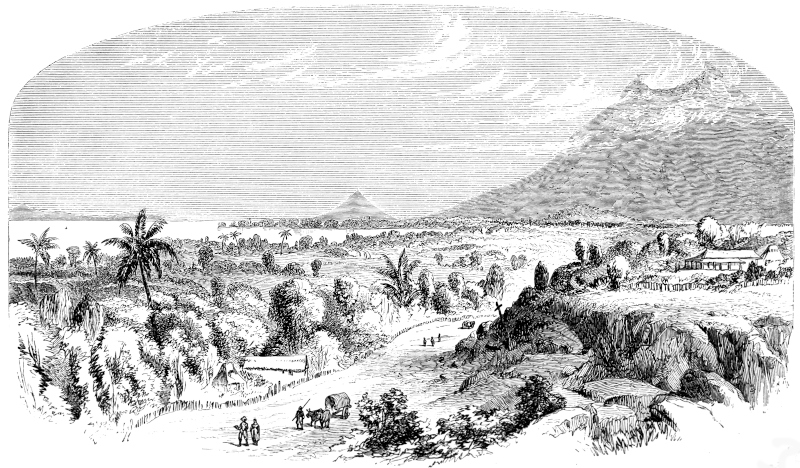

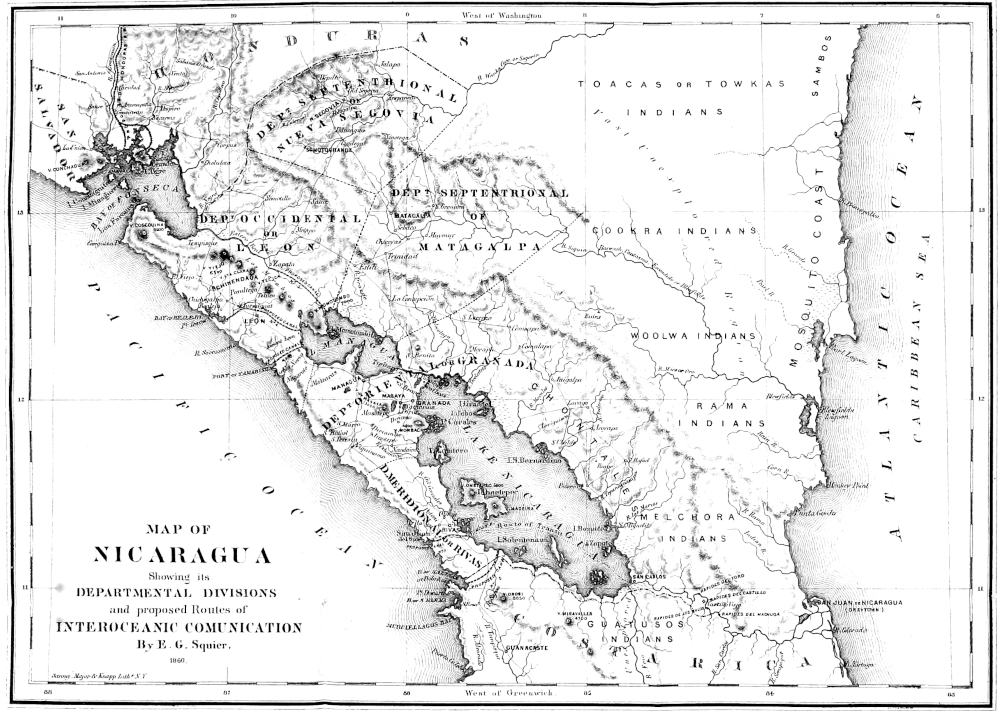
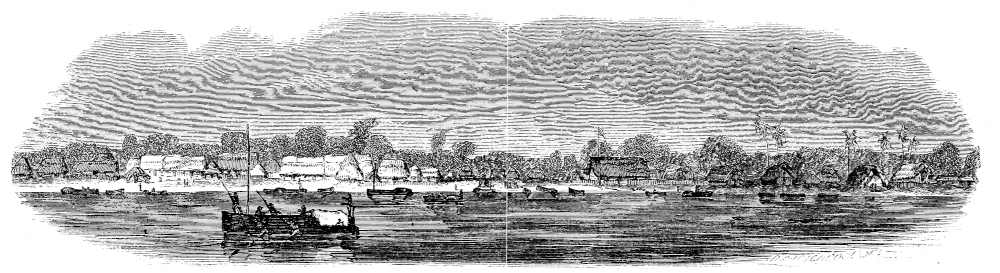
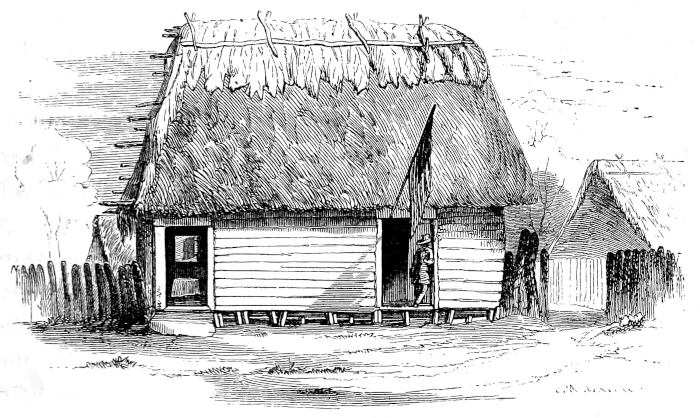
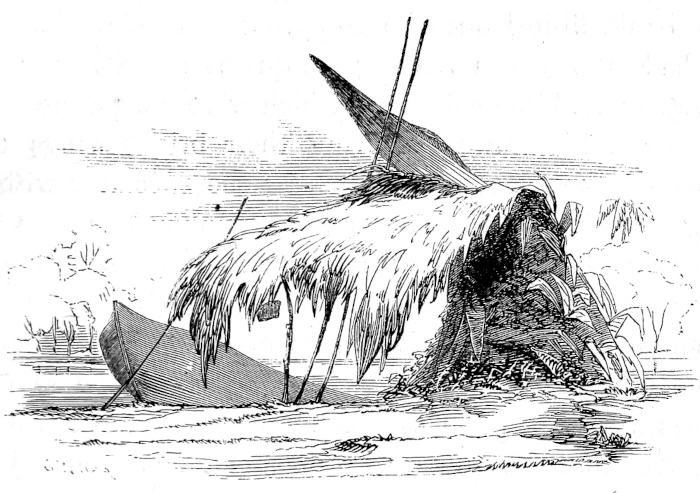
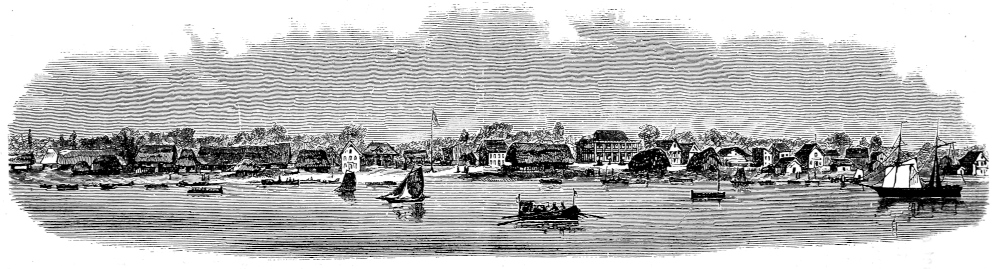
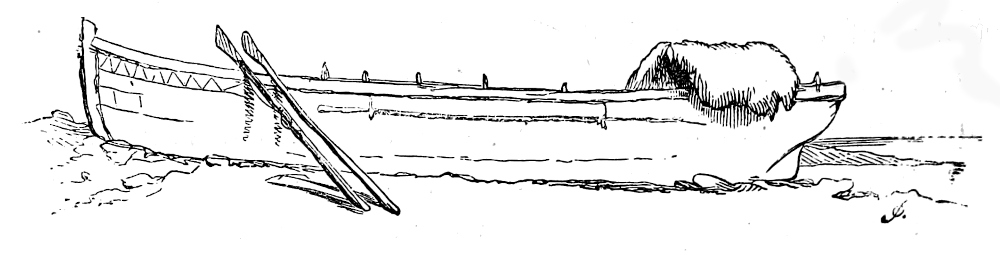
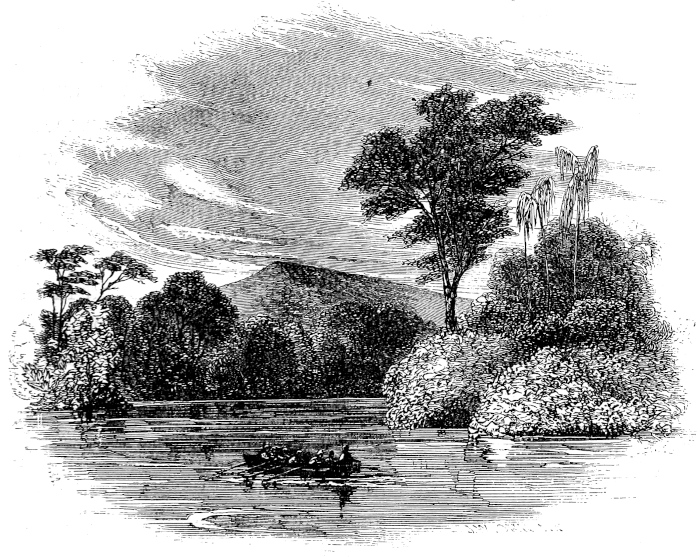
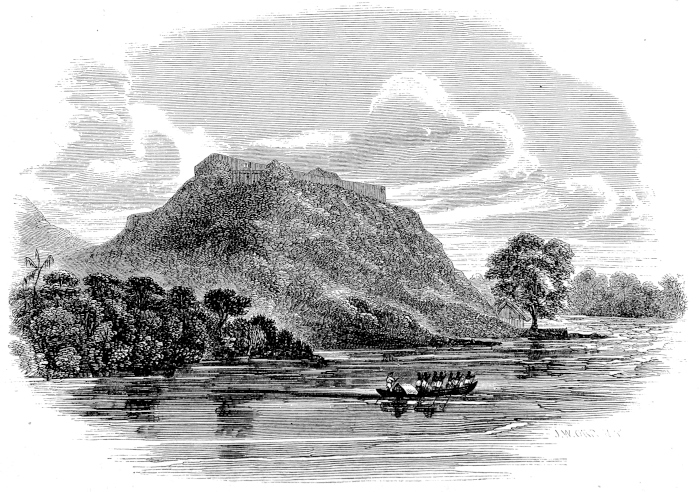
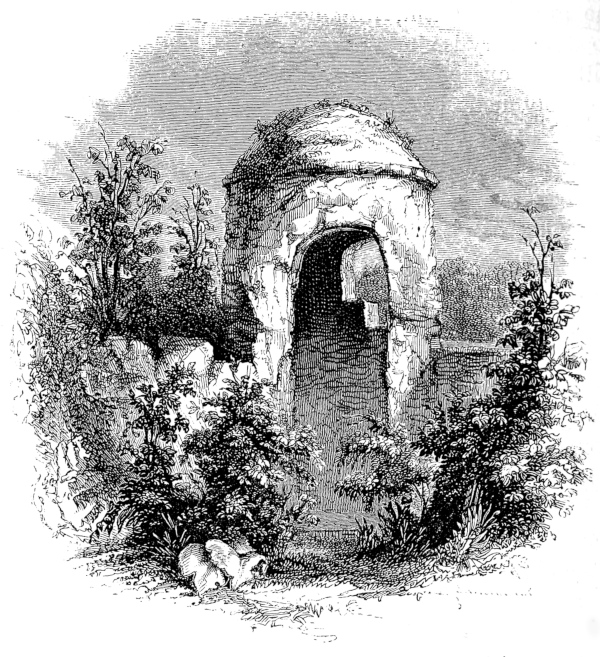
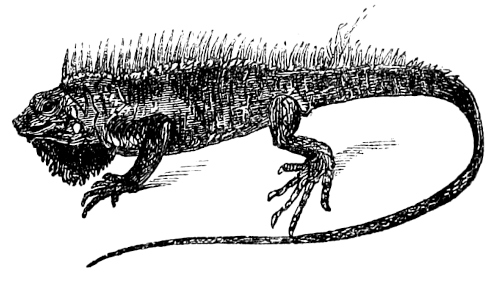
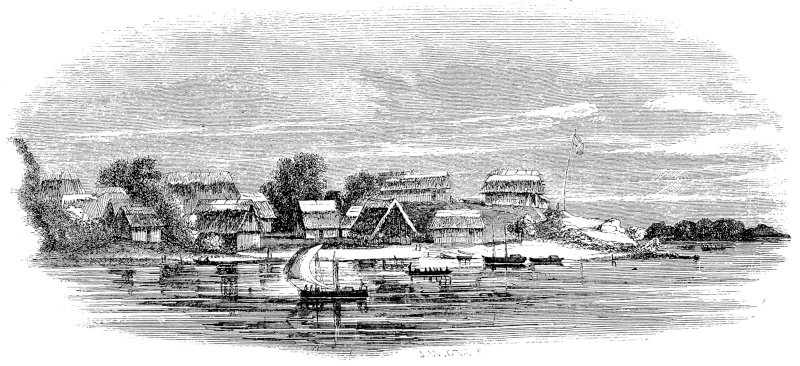
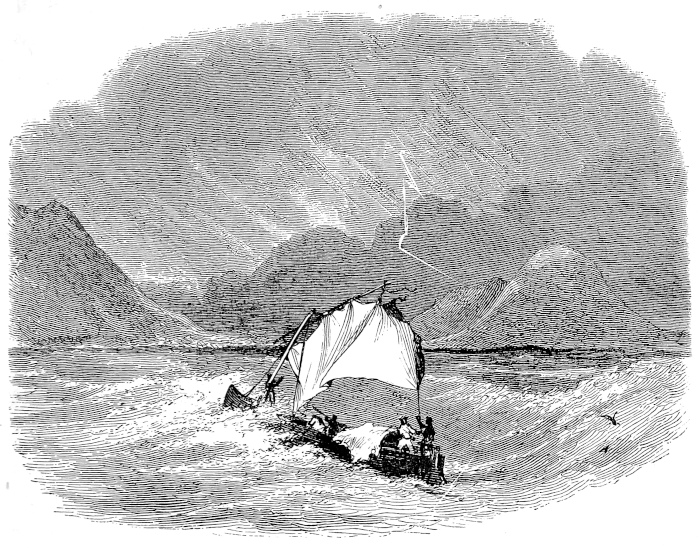
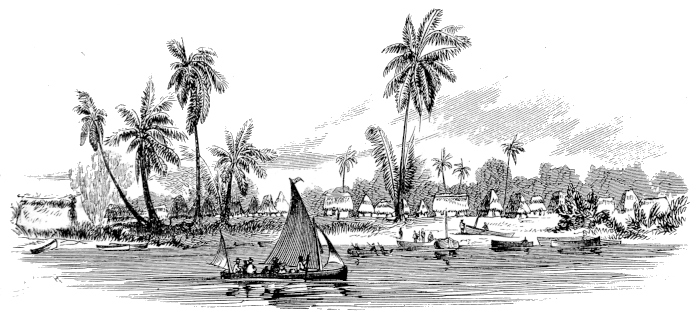
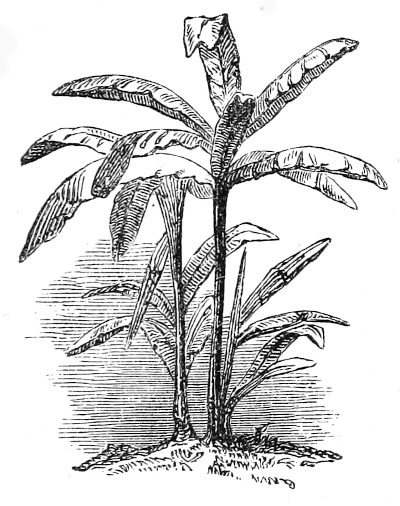
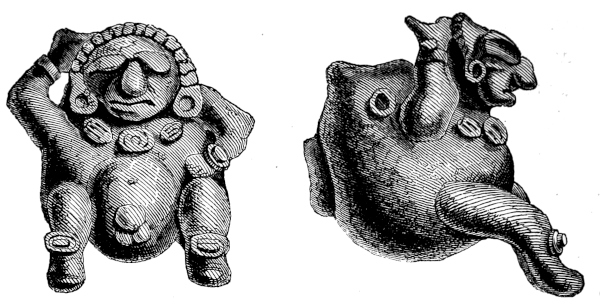
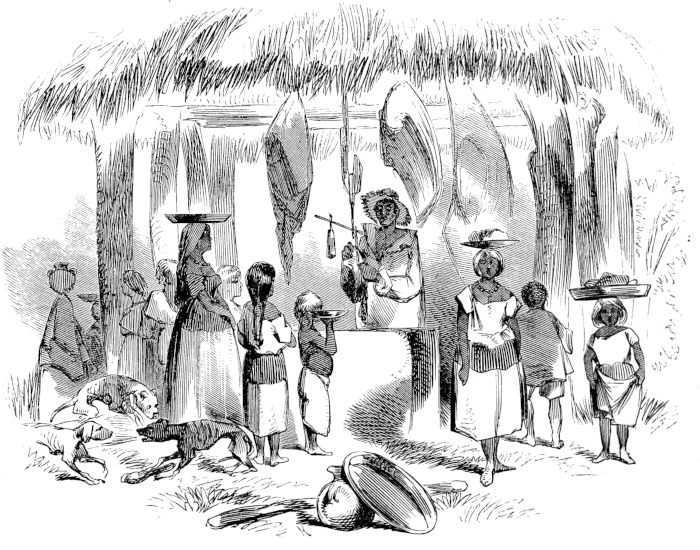
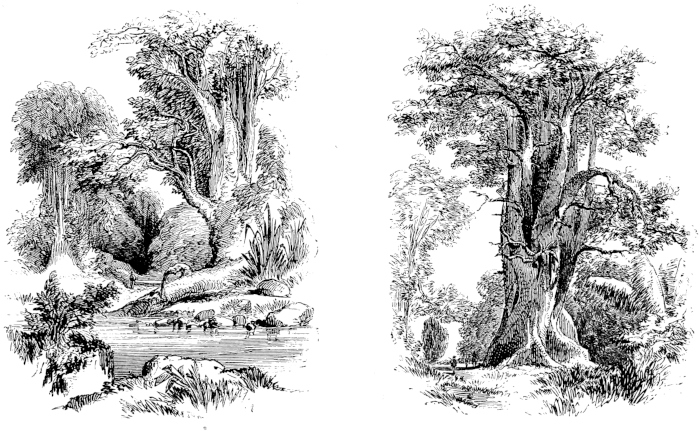
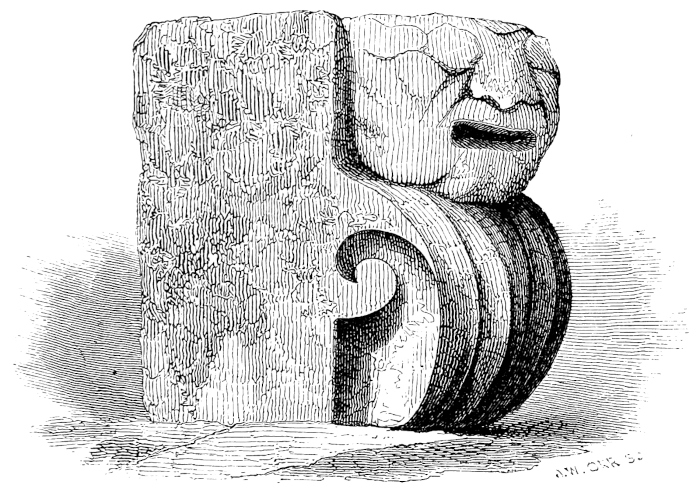
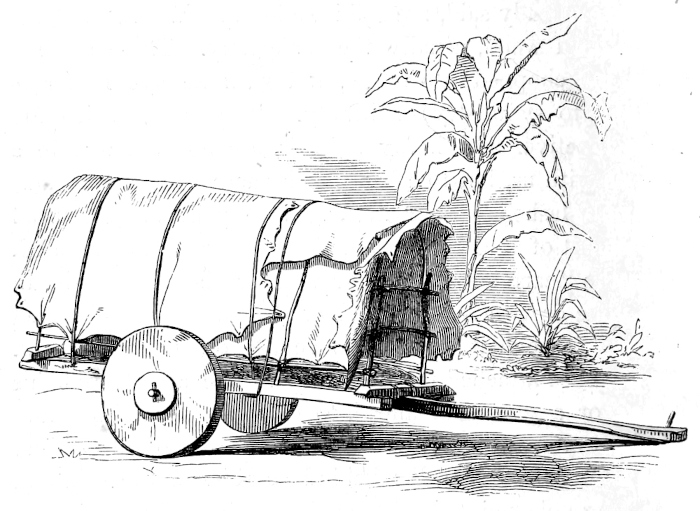
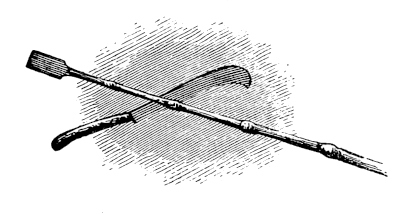
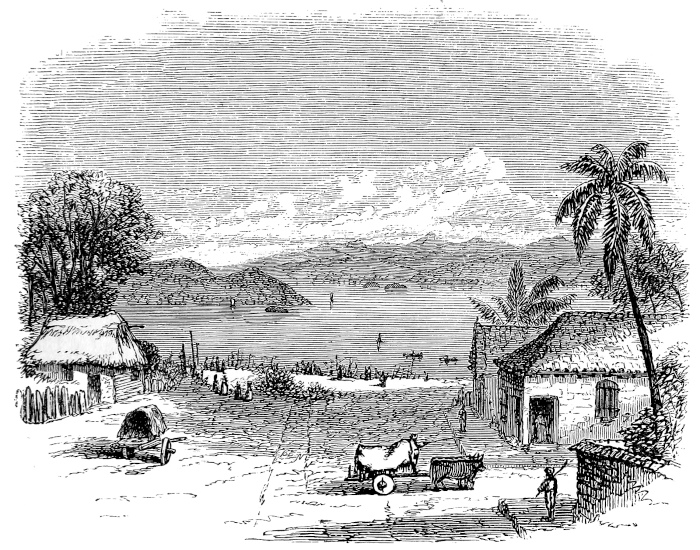
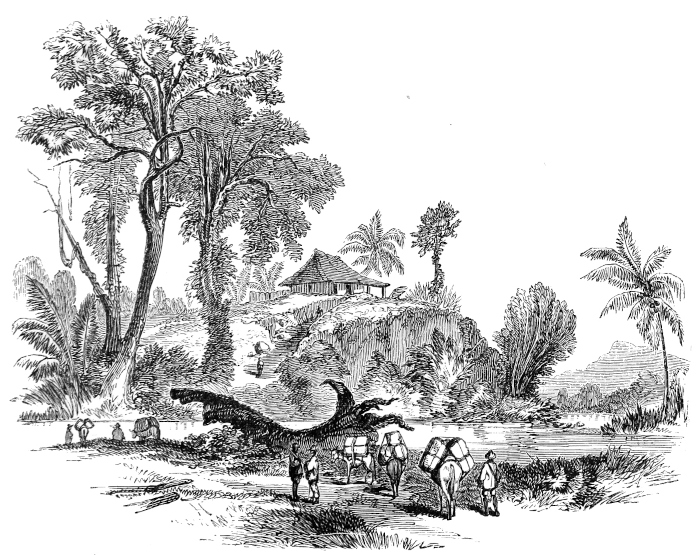
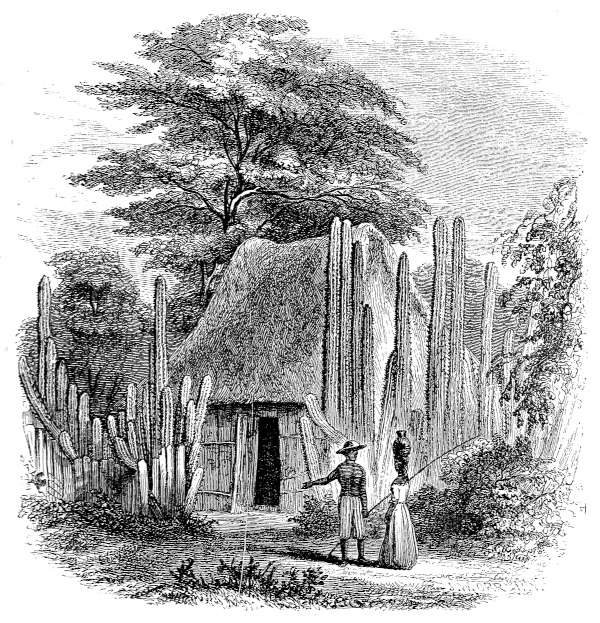
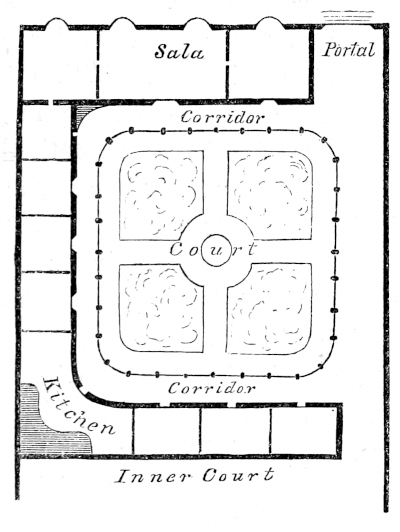
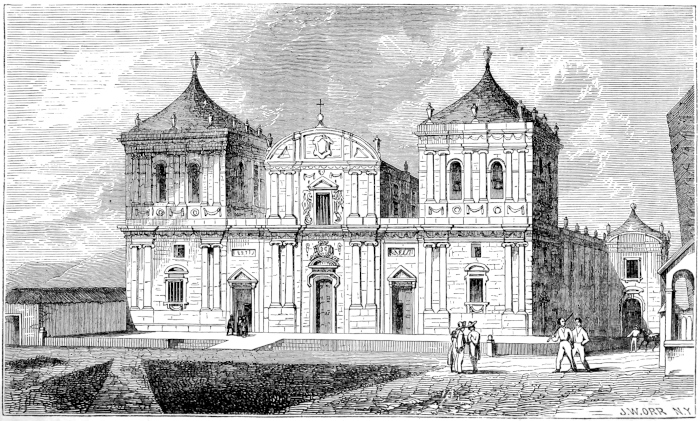
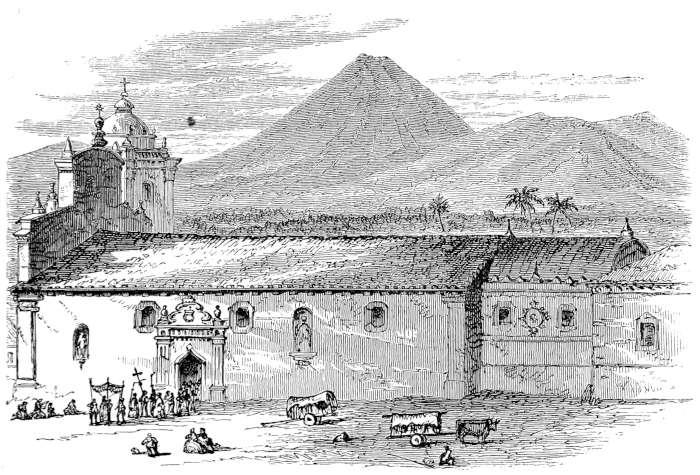
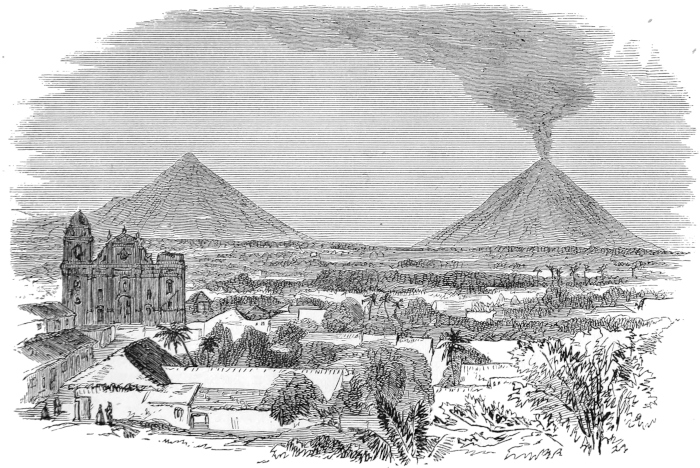
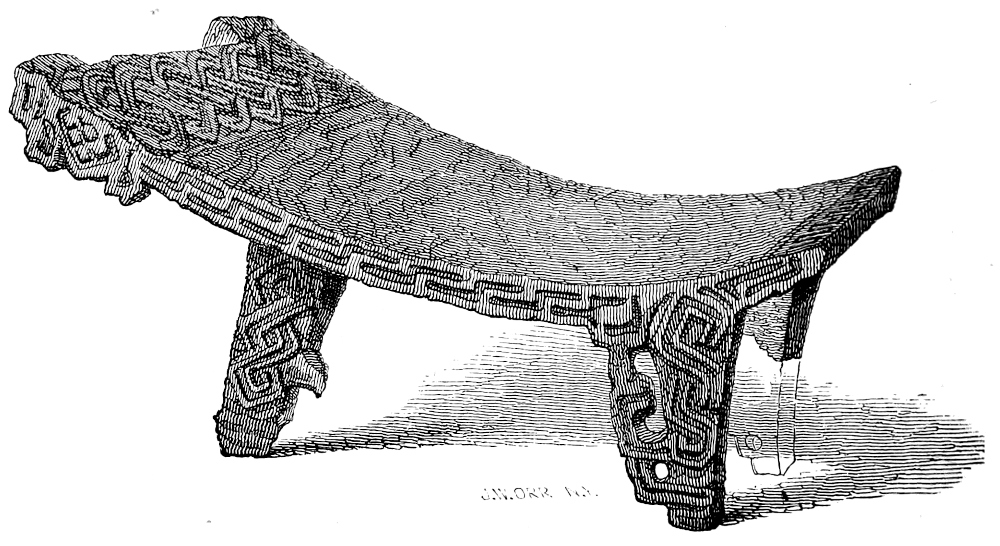
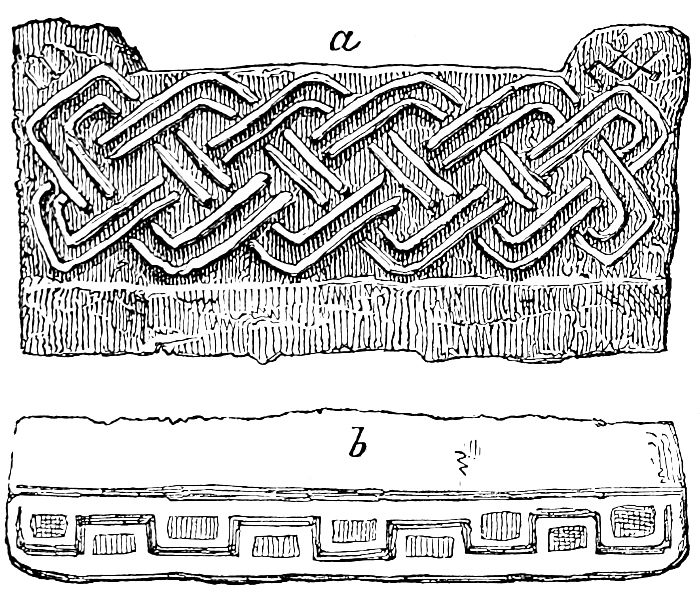
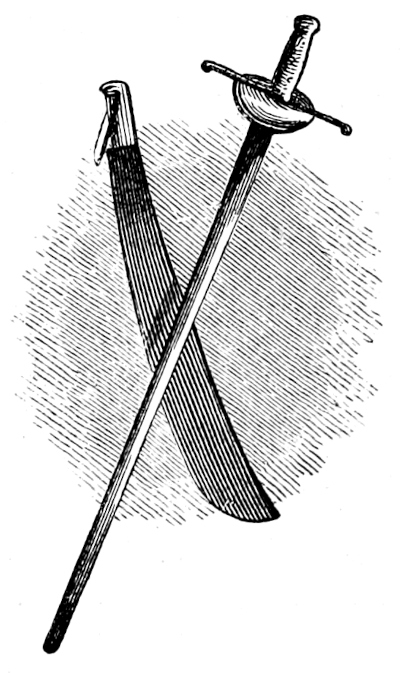
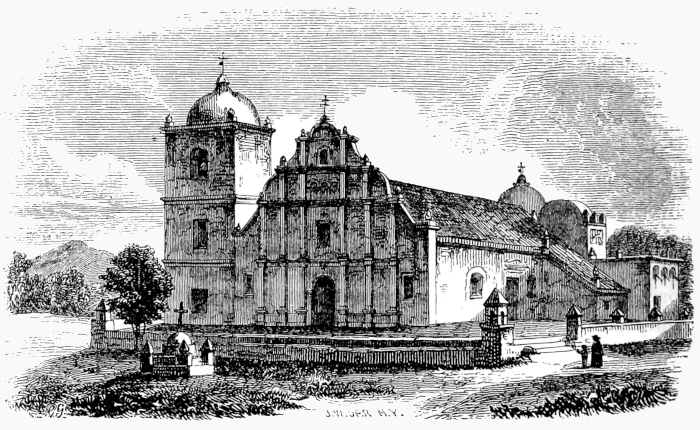
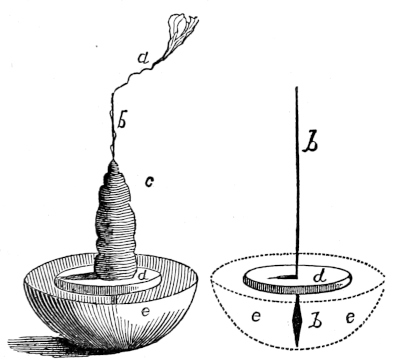
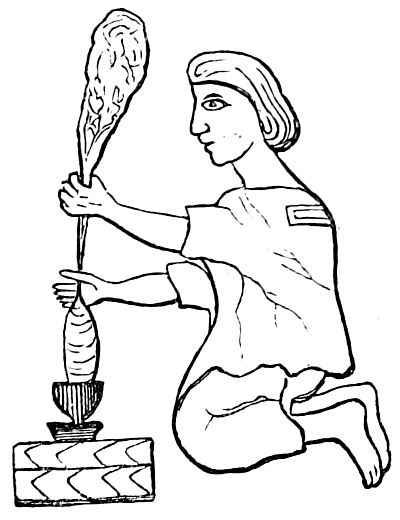
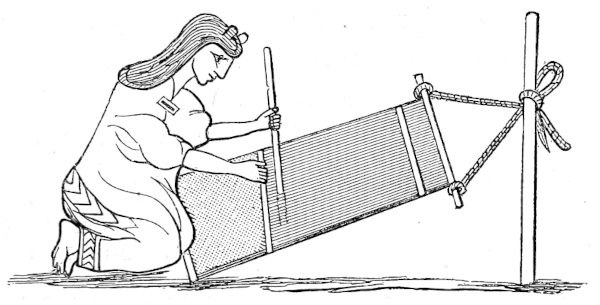
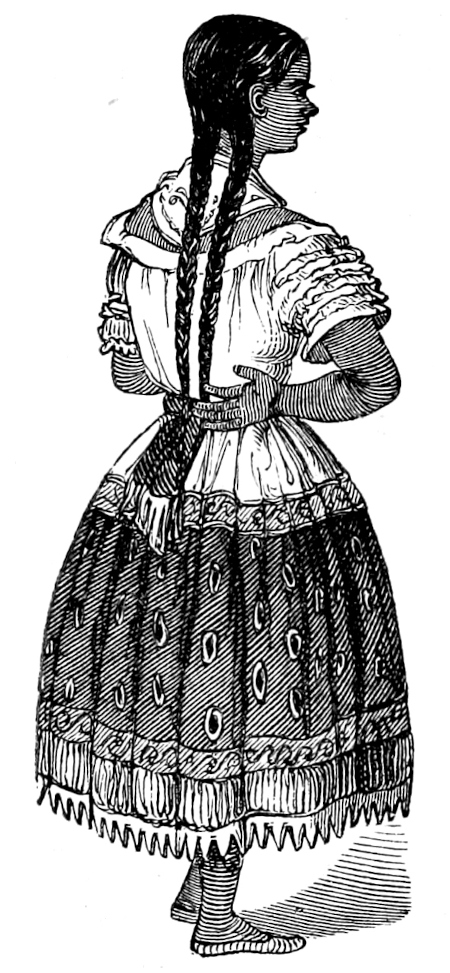
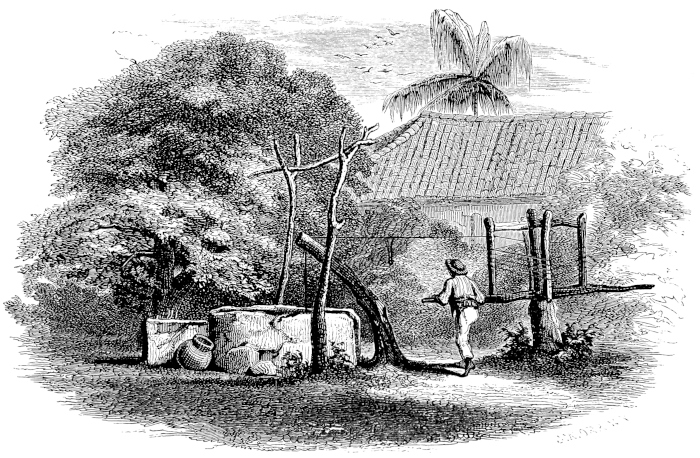
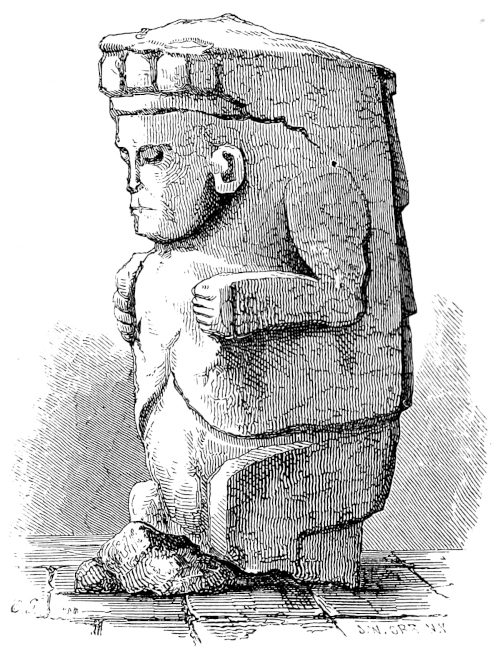
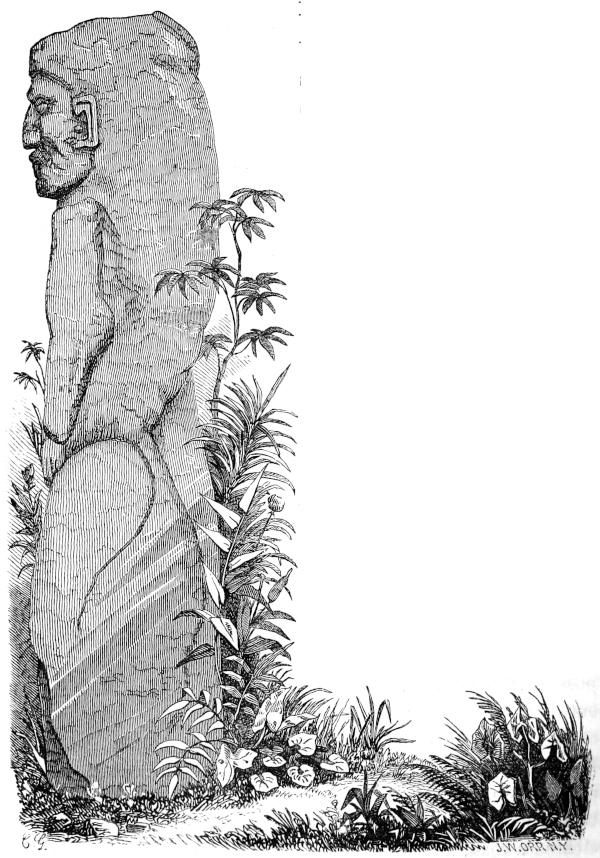
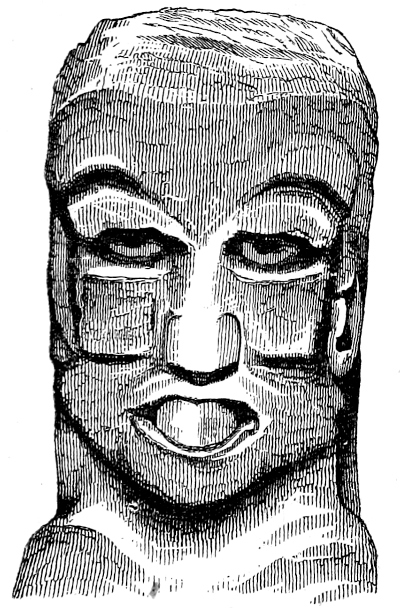
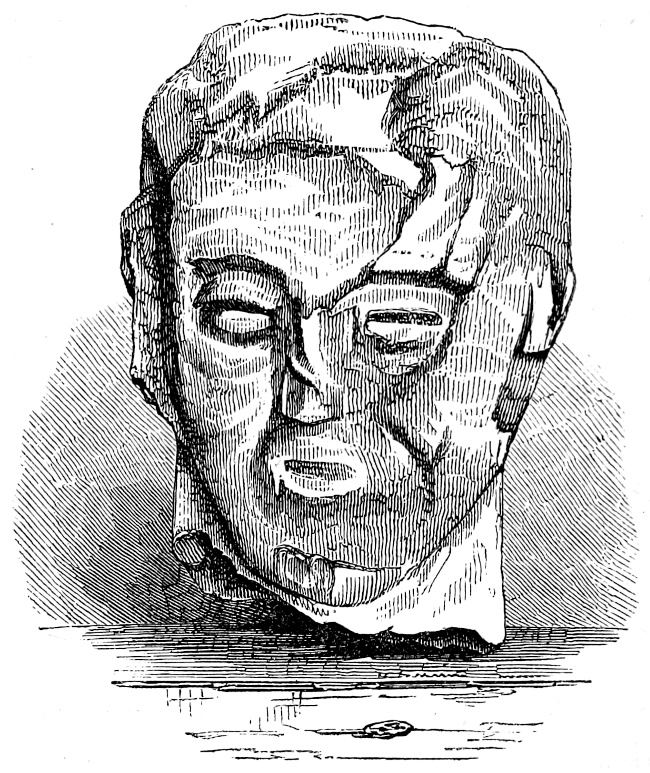
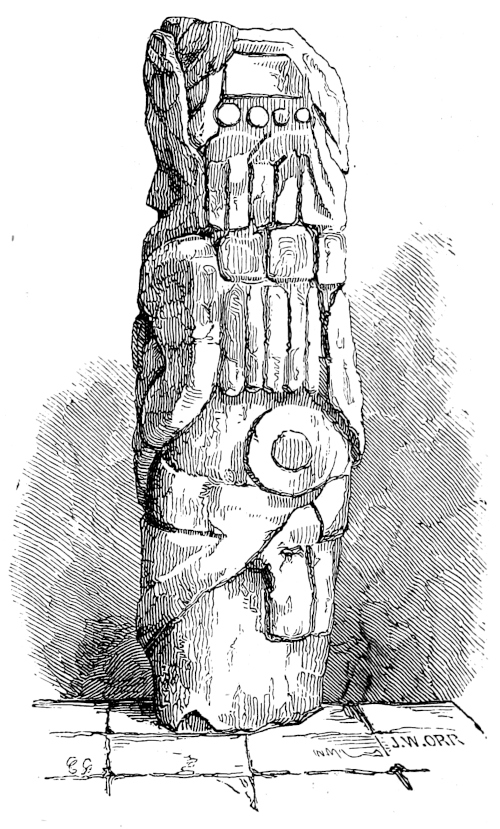
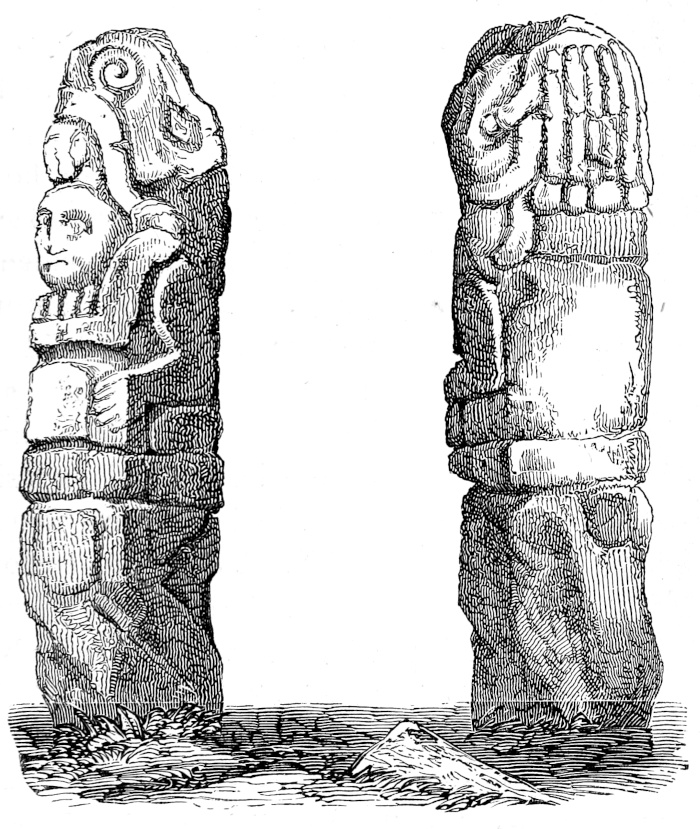
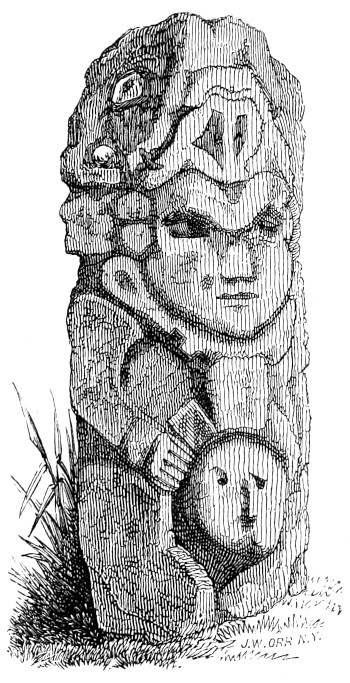
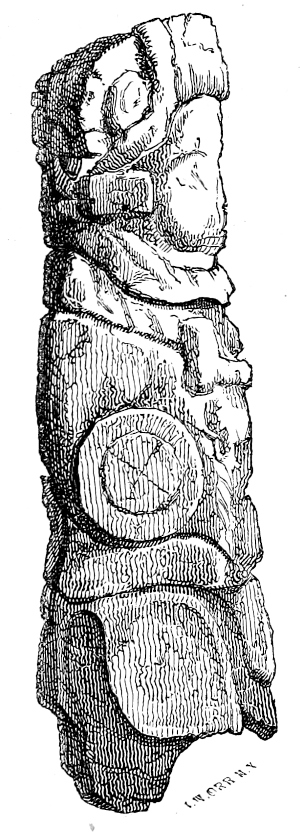
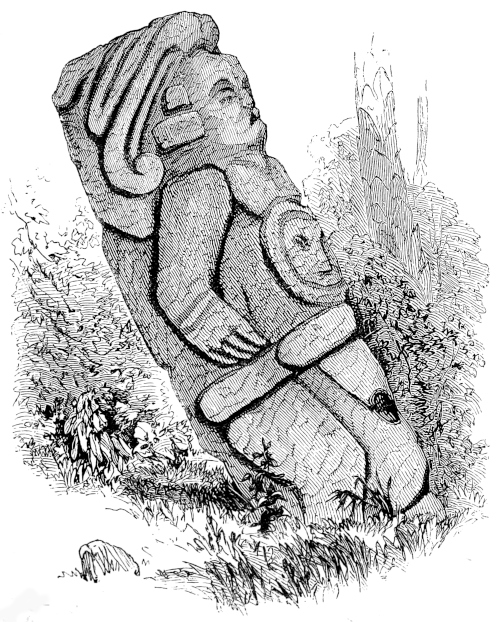
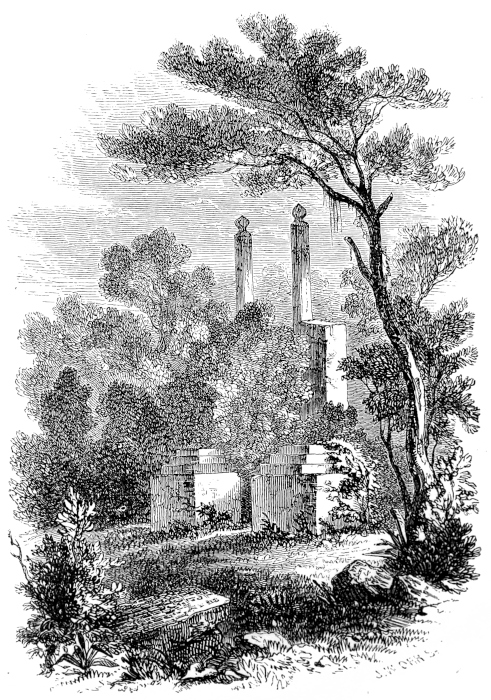
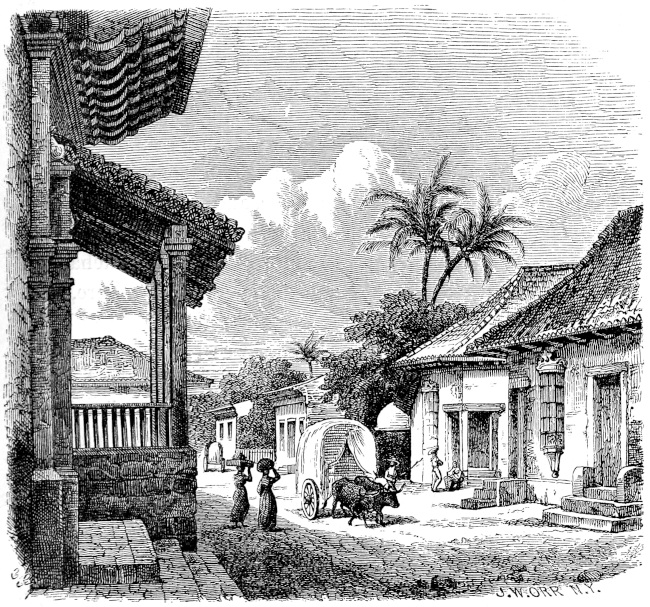
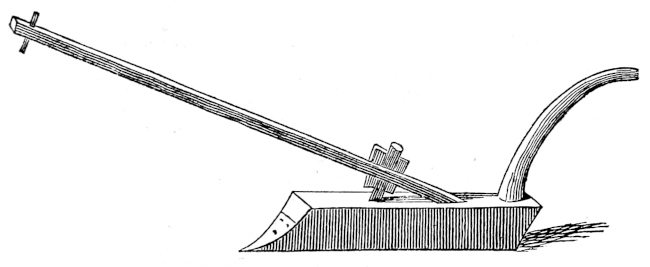
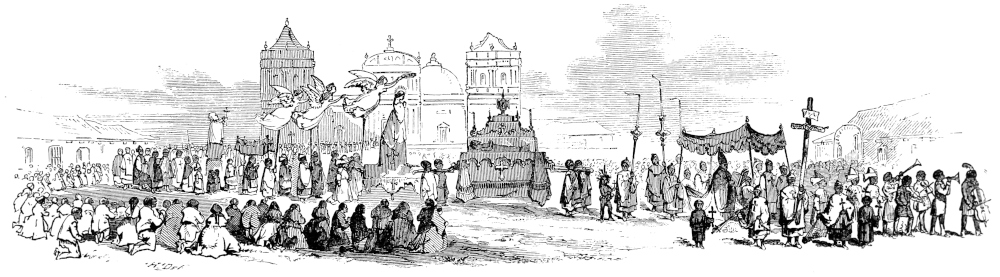
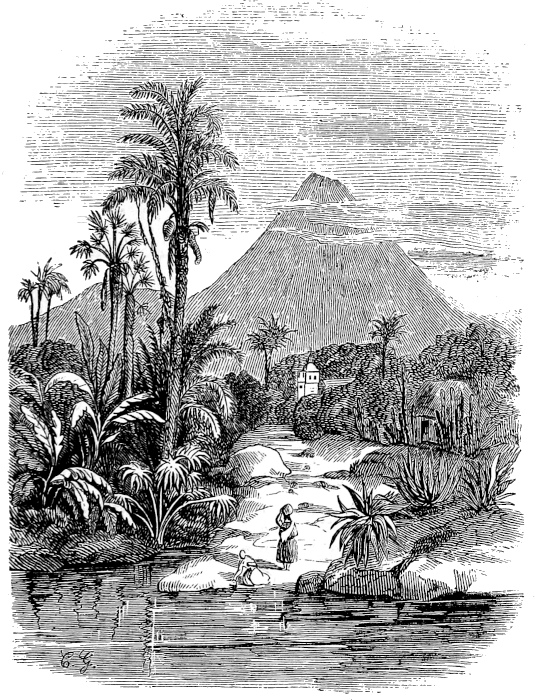
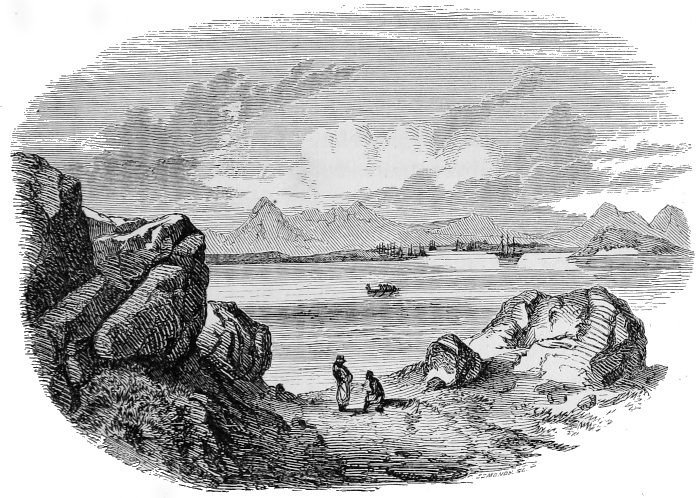
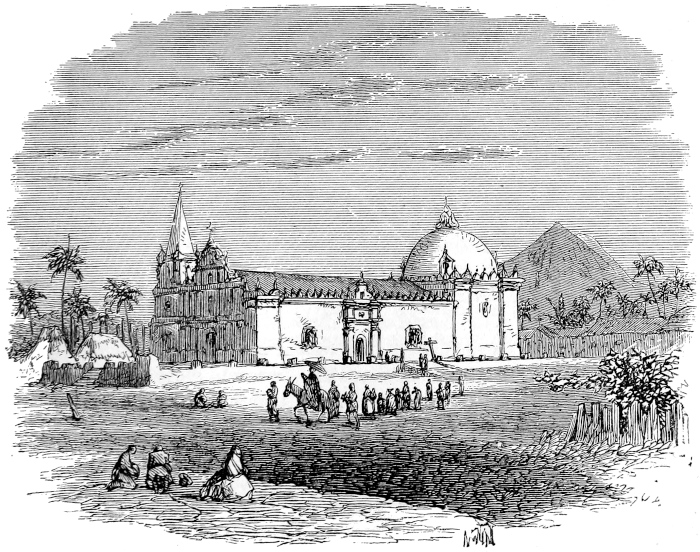

 y la misma indulgencia
plenaria, todas las veces que lo leyéren, y el que no supiere
lér, veneráre el escrito.