May 1—Germans advance in their invasion of the Russian Baltic
provinces, a Russian force retreating toward Mitau; fighting is being
renewed along the East Prussian frontier and in Central Poland;
Russians gain ground in their campaign for the Uzsok Pass; Germans
defeat Russians near Szawle, in Kovno; Austrians repulse Russian
attacks against the heights of the Orawa and Opor Valleys.
May 2—A great battle is developing in the plain of Rawa, Central
Poland; Russians are taking the offensive; Austrians have opened an
offensive in the region of Ciezkowice.
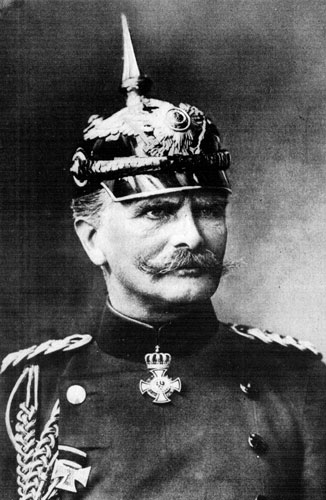
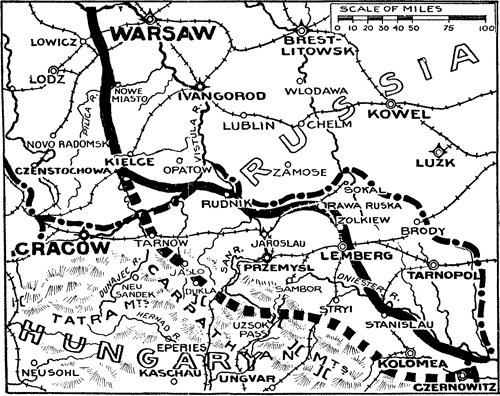
May 3—German and Austrian armies, under General von Mackensen, win a
victory in West Galicia, breaking the Russian centre for miles, and
gaining ground across practically the whole western tip of Galicia,
from near the Hungarian border to the junction of the River Dunajec
with the Vistula; the Teutonic allies take 30,000 prisoners, 22
cannon, and 64 machine guns; the Austrians gain ground in the Beskid
region, and repulse Russians north of Osmaloda; the German advance in
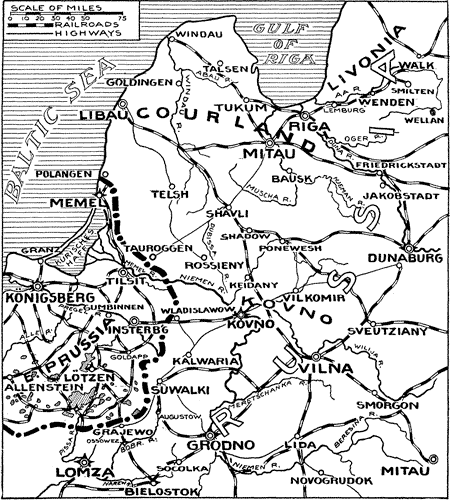
the Russian Baltic provinces continues unchecked along a 100-mile
front, extending from the Baltic Sea, near Libau, southeast to the
northern tributaries of the River Niemen.
May 4—Russians claim that the Austro-German drive in West Galicia is
being checked; Germans hold positions on the right bank of the
Dunajec; a fierce battle is raging in the direction of Stry; Germans
make further progress in the Russian Baltic provinces.
May 5—Russians are retreating at points along the Galician line from
the Vistula to the Carpathians, and are in retreat from positions they
occupied on the Hungarian slopes of the Carpathians; the third line of
Russian fortifications has been pierced; Austro-German Army captures
the town of Gorlice.
May 6—Austro-German armies continue to advance in West Galicia; the
northern wing has captured Tarnow; southern wing has crossed the
Wisloka River and Russians are retreating east of the Lupkow Pass;
Austro-Germans take the last Russian positions on the heights east of
the Dunajec and Biala Rivers; Jaslo and Dukla have been taken from the
Russians; Russians admit partial retreat in West Galicia.
May 7—Austro-German army is pursuing retreating Russians in West
Galicia; Austrians take more prisoners, stores, and guns; in the
eastern sector of the Carpathian front Russian attacks are repulsed by
Austrians; Russian attacks in Southeast Galicia are repulsed; in
Poland there is severe fighting.
May 8—Germans capture Libau, taking 1,600 prisoners, 18 cannon, and
much war material; severe fighting continues in West Galicia, where
General von Mackensen's army is pursuing the Russians; a Russian
division surrounded near Dukla cuts its way through the surrounding
troops and gets to the main Russian lines; all the passes in the
Beskid Mountains, except Lupkow, are in the hands of Austro-German
forces; Russians take the offensive southwest of Mitau.
May 9—Russians are retreating in Galicia along a front of 124 miles,
from the Uzsok Pass to the Vistula; Austro-German forces have passed
the line of the Uzsok Pass, Komanoza, Krosno, Debica, and Szezucin; in
Southeast Galicia violent battles are developing; Austrians are
pursuing Russians across the Dniester; Vienna reports that Hungary is
now clear of Russians; German advance northeast of Kovno; Russian
attacks on German positions on the Pilica are repulsed; Russians make
progress southwest of Mitau.
May 10—Russian Embassy at Washington says that the Russians have
retreated thirty miles in Galicia, but that only one division has
withdrawn from Hungary; the first stage of the battle in West Galicia
has been practically concluded; General von Mackensen's army is
reforming for a new offensive; Germans have met a severe check west of
Mitau.
May 11—Austro-German troops are still advancing in West Galicia;
Russians are attacking in East Galicia and along the eastern section
of the Carpathians; Russians have success in Bukowina, taking
prisoners and guns; Austrians force Russian south wing in Russian
Poland to retreat; Austrians repulse Russian attacks near Baligrod;
advance Austrian troops have crossed the San near Dvornik.
May 12—Russians state that their counter-offensive has checked the
Austro-Germans in West Galicia, while the Germans and Austrians state
that their drive continues successfully; Austro-German troops have
occupied Brozozow, Dynow, Sanok, and Lisko; there is severe fighting
in the central Carpathians and Southeast Galicia, where the Russians
are advancing on a forty-mile front; Austrians are repulsed in the
direction of the Uzsok Pass and the Stry River.
May 13—Heavy fighting is in progress east of Tarnow; north of the
Vistula the Austrians have forced the Nida line; Russians make
progress on the right bank of the Dniester; Russians repulse Germans
in the region of Shavli.
May 14—Russians break the Austrian line at various places on a
ninety-four-mile front, driving the Austrians from Bukowina positions
and forcing them over the Pruth River; Russians check the
Austro-German advance in Galicia, and are concentrating on the line of
the River San, with the object of occupying a shorter front; the
advance guards of General Mackensen's armies are before Przemysl; the
Teutonic allies are advancing in Russian Poland.
May 15—The Austro-German troops have now driven the Russians
completely from Jaroslau, which they hold firmly, as well as all the
towns on the west bank of the San River; the Austrian Tenth Army is
now before Przemysl, its native stronghold; the rapid advance of the
Teutonic allies is endangering the position of the Russians in the
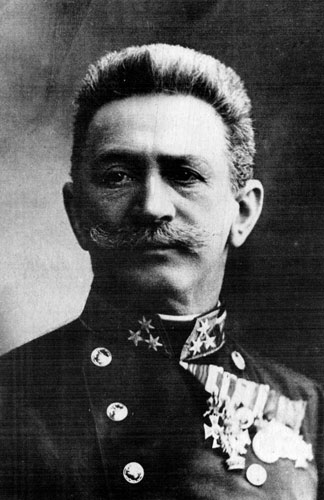
Carpathians; credit for the stiff and ceaseless pursuit of the
Russians in the great West Galicia drive is being given by the
Austrians to Field Marshal Baron Conrad von Hötzendorf, Chief of the
Austrian General Staff; the Russian counter-drive to the east
continues, and the Czar's armies in Bukowina force back the
Austro-German lines for twenty miles.
May 16—Russians continue to withdraw in West Galicia; they are
massing at the San River for a stand; in Bukowina and East Galicia the
Russian cavalry is pursuing retreating Austrians; the Austrians are
retiring behind the Pruth, evacuating strongly fortified positions;
Hungarian cavalry has made sacrifices of large bodies to enable the
infantry to retreat in good order; in Russian Poland the Teutonic
allies continue to push back the Russians; Russians win success
against the Germans in the Baltic provinces.
May 17—Austro-German armies continue their advance in West Galicia;
Austrians have captured Drohobycz, in Central Galicia, forty miles
southwest of Lemberg; fighting is in progress around Przemysl;
Russians repulse Germans at Shavli; Russians have made advances on the
West Niemen; Russian official statement says that the West Galician
defeat has been offset by successes in Bukowina against the
Austrians.
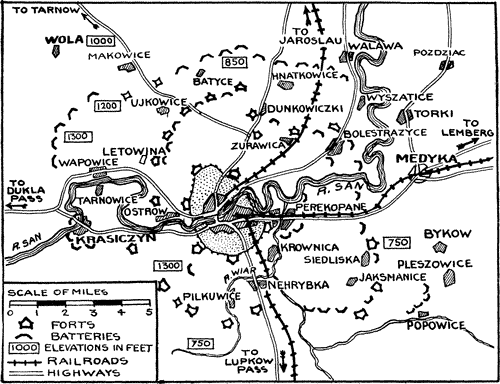
May 18—Austro-German troops are bombarding the western forts of
Przemysl; the Teutonic allies have a firm foothold on the eastern bank
of the San River; Russians are making vigorous attacks on the Germans
in South Poland; Russians have driven the Austro-German forces back
from the Dniester to the Pruth in East Galicia, and are making strong
attacks in Bukowina; heavy fighting is in progress in the Russian
Baltic Provinces and along the East Prussian frontier; Austrian
official statement declares that 174,000 Russian prisoners, 128 guns,
and 308 machine guns have been taken since the beginning of May as a
result of the West Galicia drive; unofficial dispatch from Petrograd
says Russians have been beaten back on a 200-mile front in West
Galicia.
May 19—The Russian lines along the San River are in danger, the
Austro-Germans having crossed the river on a wide front; the Russians
are attempting to reform their lines north and south of Przemysl;
Teutonic Allies occupy Sieniawa; in Bukowina the Russians have broken
the extreme Austrian right; it is stated from Petrograd that the
Germans and Austrians are using between thirty and forty army corps on
a 200-mile front from Opatow, in Poland, to Kolomea, Eastern Galicia.
May 20—Russians are fighting desperately to save the remains of their
West Galicia army, now in new positions along the San River;
Austro-German forces are attacking with tremendous artillery fire, the
shells being followed by a close phalanx of 150,000 men; the Russians
hold both banks of the San south of Jaroslau.
May 21—Russians are rallying along the San River; a desperate battle
is in progress below Przemysl; Russians are taking a strong offensive
in Poland; official Austrian announcements state that Russian
prisoners now in Austrian hands, as a result of the recent fighting,
are 194,000; the German official announcement says that General
Mackensen's army, since May 1, has taken 104,000 prisoners, 72 cannon,
and 253 machine guns; official Russian statement says that on four
recent days the losses of the Austro-Germans were 10,000 a day, and on
seventeen other recent days were much heavier, and adds that the
Austro-Germans have used between 2,000,000 and 3,000,000 shells during
the recent fighting; Russian reports state that 3,000,000 men,
including both sides, are now daily attacking and counter-attacking
along the whole front, from Opatow to Kolomea; the Kaiser is stated to
be personally directing operations at Jaroslau.
May 22—Stubborn fighting continues along the San, while severe
fighting is in progress in the Russian Baltic Provinces and near the
East Prussian frontier; on the left bank of the lower San the Russians
have taken the offensive and captured the villages of Krawce, Biercza,
Przyszow, and Kamerale; Russians repulse counter attacks in the
direction of Nisko; Germans repulse Russians at Shavli; in Central
Galicia the Austrians have gained some ground; east of Czernowitz
Austrians repulse Russians; the right wing of the Austrian Army in
Bukowina is falling back toward the Carpathians.
May 23—Russians, with strong reinforcements, have crossed the San at
the junction of that river with the Vistula, and are advancing
southward in an effort to outflank the Germany Army, which crossed the
San in the vicinity of Jaroslau; Russians continue their offensive in
Bukowina, and in the Opatow region; Germans defeat Russian northern
wing near Shavli, and repulse Russian attacks from the Dubysa and
Niemen Rivers; Russians are massing strong forces in the vicinity of
Warsaw, Ivangrod, and Lublin.
May 24—Russians claim that they have definitely checked the German
drive on the upper San River; a Russian movement upon Nisko, and the
occupation of Ulanoff, Rudnik, Kraftza, Bourgny, and Shushav to the
westward of the upper San, threatens the German position east of the
river; General von Mackensen is drawing in his wings to protect his
centre from attack; furious German assaults to the south of Przemysl
continue without definite result; in the region of Shavli, the Russian
troops now occupy a very extended front on the line of the Rivers
Visdala, Venta, Dubysa, and Siup.
May 25—General von Mackensen renews his offensive against the
Russians north of Przemysl, and takes six fortified villages, 21,000
prisoners, 39 cannon, and 40 machine guns; Austrians are advancing
southeast of Przemysl; on the left bank of the upper Vistula, in the
Opatow region, Russians repulse attacks and make counter-attacks.
May 26—Between Przemysl and Jaroslau, east of Radymno, Germans force
a passage of the San River; Mackensen's army is making progress on
both banks of the San in a southeasterly direction; southeast of
Przemysl the Austro-German forces are progressing toward strong
Russian positions; Russians repulse German attack near Ossowitz.
May 27—Austro-German forces continue to batter at the Russian lines
northeast and southeast of Przemysl, and it is reported that they have
severed communications between Przemysl and Lemberg; the Germans have
forced another crossing of the San, eleven miles north of Przemysl,
and are extending by several miles the zone held by them east of the
San; Austro-German troops break through the Russian front line
southeast of Drohobycz and near Stry, and force the Russians to fall
back; Russians repulse attacks on the Upper Vistula; Russians have
success in the region of the Dniester marshes.
May 28—Russians throw back the German force which crossed the San
River and established itself at Sieniawa, fifty miles north of
Przemysl; the Germans have retreated to the west bank of the San, with
the loss of twelve guns; further south, between Jarislau and Przemysl,
the Austro-German forces gain more ground on both banks of the San;
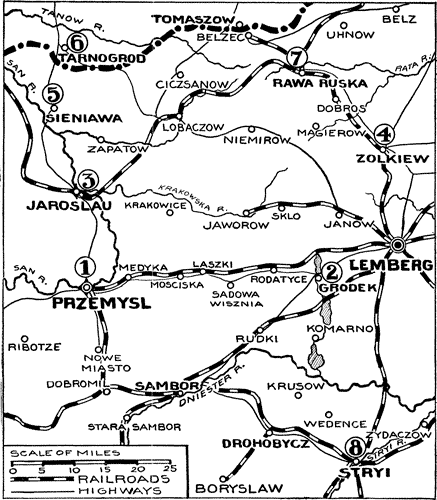
Austrians reach Medyka, eight miles due east of Przemysl, leaving a
gap of but twelve miles between the northern and eastern forces which
are trying to encircle the fortress.
May 29—Germans and Austrians continue to fight fiercely to encircle
Przemysl; in the Russian Baltic provinces heavy fighting is in
progress; Russians are sending larger forces to meet the Germans in
these provinces.
May 30—Fierce fighting is raging around Przemysl, the Austro-German
forces striving to cut off the fortress; the Russians are bringing up
huge reinforcements; north of Przemysl the Russians are making some
progress, but to the southeast the Austro-German forces are making
further headway, now commanding with their artillery the railway
between Przemysl and Grodek; Russian attempts to cross the San near
Sieniawa fail; in the Russian Baltic provinces German cavalry drives
back Russian cavalry southeast of Libau.
May 31—Russians are beginning to assume the offensive at certain
points along the San River, where severe fighting continues; near Stry
the Austrians take several Russian positions.
June 1—The Serbians are resuming military activity against Austria;
Austro-German forces are storming three of the outer forts of
Przemysl; north and southeast of Przemysl the Austro-German forces are
advancing; they have taken Stry.
June 2—Furious fighting continues around Przemysl; Austro-German
troops take two fortifications on the north front of Przemysl; German
official report states that during May the Teutonic allies took 863
Russian officers prisoners and 268,869 men, as well as capturing 251
cannon and 576 machine guns.
June 3—Austro-German troops, after a siege of twenty days, capture
Przemysl, which has been in Russian possession since March 22, the
present conquerors entering after storming the northern forts;
Austro-Germans are driving back Russians north of Stry.
June 4—Severe fighting is in progress along the whole Galician front,
Austro-Germans seeking to end the Russian campaign in Galicia;
Russians are in position at Medyka Heights, ten miles east of
Przemysl; they saved their batteries in evacuating Przemysl and claim
to have removed all war material captured from the Austrians.
June 5—Austro-Germans are attempting an encircling movement against
Lemberg; they are making progress from the southwest, but their left
wing is checked by the Russians on the lower reaches of the San River;
Austro-German extreme right in East Galicia and Bukowina is pounded by
the Russians.
June 6—Battles over a wide area are in progress in Galicia; Russians
are making considerable advances on the lower reaches of the San;
southwest of Lemberg the Austro-Germans are advancing.
June 7—Austro-German armies are making progress in attempt to
encircle Lemberg; Russians are being pressed back from their line on
the San; Teutonic allies cross the Dniester; Germans advance in their
invasion of the Baltic provinces of Russia.
June 8—Austro-Germans, having crossed the Dniester south of Lemberg,
are assuming the offensive further to the south and are pushing back
the Russians between Kolomea and Kalusz in East Galicia.
June 9—Austro-Germans take Stanislau, throwing the Russian left back
to the Dniester River; in East Galicia, along the rest of the line,
the Russians are holding their own and are counter-attacking.
June 10—Russians take offensive in their Baltic provinces, where they
force the Germans to retreat to avoid being cut off; Russians advance
again in Galicia; they attack Mackensen's forces, menacing Lemberg and
Linsingen's forces on the Dniester; the Austro-German army of Bukowina
crosses the Pruth and effects junction with Galician troops.
June 11—Russians win a series of successes against Germans and
Austrians in East Galicia; they repulse Mackensen's troops with heavy
loss and hurl Linsingen's army back across the Dniester; Russians take
17 guns and 49 machine guns; Germans are developing an offensive north
of the Pilitza in Poland; Serbians are marching across Northern
Albania toward the port of Durazzo, while Montenegrins are making for
the port of Alessio.
June 12—A battle is raging along the Dniester, Austrians making gains
on the lower reaches, while the Russians have success further up
stream; Russians leave Bukowina, giving up their last positions on the
Pruth and retreating across the frontier.
June 13—Austro-Germans commence an attack on the Russians on the
River San north of Przemysl, and along the Dniester in Southeast
Galicia; Germans are attacking Russian centre on the River Rawka, west
of Warsaw; severe fighting continues in the Russian Baltic provinces.
June 14—Mackensen's army attacks Russian positions in Middle Galicia
along a forty-three-mile front, and breaks the line, taking 16,000
prisoners; Austrians have successes on the Dniester.
June 15—Austro-Germans are renewing the drive in Galicia and
advancing on a wide front; they capture Mosciska, thirty-seven miles
from Lemberg, after a week's fight; Russian counter-attacks to protect
Lemberg from the south are repulsed.
May 1—Germans continue the bombardment of Dunkirk with a huge gun or
guns, doing considerable damage and killing several persons; Germans
make further gains on the west bank of the Ypres Canal; French repulse
Germans in the Argonne, near Bagatelle; French take trenches in the
Forest of Le Prêtre; French artillery bombards fortifications of
Altkirch, in Upper Alsace.
May 2—French have been bombarding for two days the southern
fortifications of Metz; British and French attack the new German
positions northeast of Ypres, but are beaten back; Germans make
progress in the Argonne; German General Staff in Belgium admits a loss
of 12,000 dead in the battle of Ypres.
May 3—Germans renew assaults near Ypres, the British lines being
pounded north and south of that place, and Germans gain ground
southeast of St. Julien; Germans damage French positions in Champagne
at Ourchen, Sopain, and Perthes; French repulse an attack in the
Forest of Le Prêtre.
May 4—Germans gain more ground northeast of Ypres, and take the
villages of Zonnebeke, Zevecote, and Westhoek, and the Forest of
Polygonous and Nonnebosschen; French gain in the region of
Steenstraete.
May 5—Germans gain ground northeast of Ypres, British losing four
positions and being forced to retire; Hill 60 is again menaced by the
Germans, who, the British state, have obtained a footing there through
the use of gases; French check one German attack near Perthes, and
another at Four de Paris; French take two lines of German trenches in
the Mortmare Wood; French gain ground on the north bank of the Fecht
River, in Alsace.
May 6—Germans make further gains near Ypres, taking two positions
from the Allies; British recapture some of the trenches at Hill 60,
recently lost; French repulse a German night attack near Steenstraete;
Germans repulse French near Flirey; Germans advance west of Combres;
Germans take French positions in the Ailly Wood, capturing 2,000 men.
May 7—Germans make more gains near Ypres; there is severe fighting
for Hill 60; German artillery checks a French attack near Steinbrück,
in the valley of the Fecht; French repulse German attacks at Frise,
west of Peronne, and in Champagne, around the Fort of Beauséjour.
May 8—French capture a German position west of Lens; French check
three attacks in the Forest of Le Prêtre; French advance two-thirds of
a mile along a mile front on the right bank of the Fecht River;
British repulse a daybreak attack near St. Julien; British recapture a
further section of recently lost trenches at Hill 60.
May 9—British repulse German attack east of Ypres; British gain
ground toward Fromelles, after a vigorous attack on the German line;
Germans capture the villages of Fresenburg and Terleranhoek; French
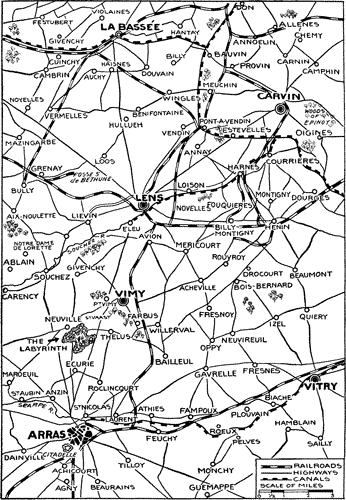
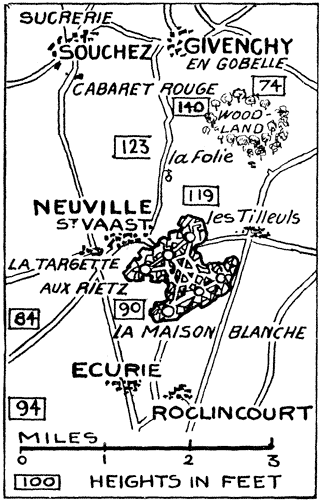
make gains north of Arras; south of Carency the French make an advance
by which they capture two lines of trenches over a front of 4-1/3
miles; French take the village of La Targette and half of the village
of Neuville-St. Vaast.
May 10—The Allies are attacking along a front of twenty-six miles in
the direction of Carency and Souchez; Allies repulse German attacks
near Ypres; Germans make gains near Nieuport, and renew the
bombardment of Dunkirk; French repulse Germans at the Forest of Le
Prêtre and at Berry-au-Bac.
May 11—A strong French offensive against the German lines north of
Arras is being pushed; the French carry the German trenches guarding
the road from Loos to Vermelles; French take a strongly fortified
position on Lorette Heights; French make gains at Souchez and Carency;
Germans shell the town of Bergues, near Dunkirk; Germans heavily
bombard British trenches east of Ypres.
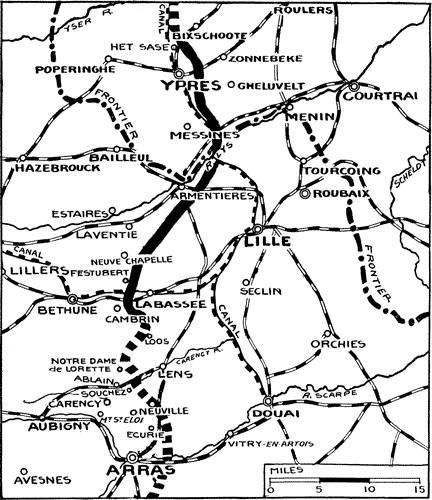
May 12—Severe fighting is now raging over the whole front from Ypres
to Arras, the Allies taking the offensive; to the north the British
centre has Lille for its objective, while to the south the French
centre is aiming at Lens; French repulse counter attacks at
Neuville-St. Vaast, and between Carency and Ablain; French make gains
in the wood east of Carency, and take three successive lines of
trenches bordering the wood to the north of Carency; French take
another portion of the village of Carency; French lose some of the
ground they captured near Loos; Germans take a hill east of Ypres;
Germans bombard Dunkirk.
May 13—The French are in complete possession of Carency, having
captured the last German position there; French take large stores of
German ammunition, twenty big guns and many machine guns; French also
make progress north of Carency, where they have established themselves
at Ablain-St. Nazaire; French have also taken all of the Forest of Le
Prêtre, although Germans retain positions on the north and south
slopes adjacent; Germans are making fierce assaults on the British
positions east of Ypres, piercing the line at one point; Belgians
repulse an attack on the right bank of the Yser; French now hold the
forest at Notre Dame de Lorette.
May 14—French offensive is continued by the capture of German
positions southeast of Angres, while they also make progress on the
southern and eastern slopes of the Lorette hills, and at Neuville-St.
Vaast; British attacks near Ypres are unsuccessful; Germans gain in
the direction of Hooge; French artillery levels German trenches in the
Valley of the Aisne.
May 15—French continue to advance near Carency; French also gain
north of Ypres; they take several trenches in front of Het Sase, and
occupy part of Steenstraete; French extend their attack southeast of
Notre Dame de Lorette; Germans make progress on the St. Julien-Ypres
road against the British; Germans state that they have taken since
April 22 in the Ypres region 5,560 unwounded officers and men;
artillery fighting is in progress southwest of Lille.
May 16—The first British army breaks the German line over most of a
two-mile front northwest of La Bassée, and wins nearly a mile of
territory; French repulse a counter-attack at Steenstraete; French
make gains north of Arras; lively fighting in Champagne; Germans
repulse French at Het Sase; British attack Germans south of Lille.
May 17—British make further advances northwest of La Bassée and carry
additional German trenches, all trenches on a two-mile front now being
in hands of the British; French and Belgians force Germans to evacuate
positions they held west of the Yser Canal; French maintain gains on
the east bank; French repulse German counter-attacks on the slopes of
Lorette.
May 18—Heavy rains and mists hamper operations in Northern France;
the French have consolidated the positions recently occupied by them
to the east of the Yser Canal; French make gains near Ablain; an
almost constant artillery duel is in progress north of Arras; Germans
repulse British south of Neuve Chapelle.
May 19—Germans capture trenches from the French on the heights of
Lorette; Germans repulse British attacks near Neuve Chapelle.
May 20—Recent heavy rains have made the ground in Flanders unsuited
to infantry attacks and there is a lull, but artillery engagements are
in progress; French make advances in Champagne by mining; French take
trenches near Bagatelle, in the Argonne; fierce artillery duels
between the Meuse and Moselle.
May 21—French drive Germans from the last of their positions on the
heights of Lorette; The French now hold the entire Lorette Hill and
the lesser ridges, which the Germans had defended for six months;
French repulse German attack to the east of the Yser Canal; Canadians
capture a German position to the north of Ypres after the British
Guards fail twice.
May 22—British repulse attacks north of La Bassée; French make gains
north of Arras; Germans repulse British and French attacks southwest
of Neuve Chapelle; German official report states that the Allies,
southwest of Lille and in the Argonne, are using mines charged with
poisonous gases.
May 23—British advance east of Festubert; French gain ground
northeast of Notre Dame de Lorette and near Neuville-St. Vaast;
Germans are repulsed east of the Yser Canal.
May 24—Before attacking the British northeast of Ypres, the Germans
roll a huge cloud of asphyxiating gas toward them, the volume of fumes
being forty feet high along a six-mile front; because of the use of
respirators, few British succumb; fighting in progress north of Arras.
May 26—British make further gains in their offensive against La
Bassée, and it is officially announced that the net result of their
operations in the territory to the west of that town since May 1 is
the capture of a total front of more than three miles, along a
considerable part of which two lines of German trenches have been
taken; in the district north of Arras there is desperate fighting near
Angres, the Germans attempting to regain ground lost yesterday.
May 27—French make further gains north of Arras; artillery
engagements along the Yser Canal; Belgians repulse two German infantry
attacks near Dixmude; artillery duels in the Vosges; French fail in
attempt to break German lines between Vermelles and Lorette Hills.
May 28—British make further gains toward La Bassée; fierce fighting
occurs north of Arras; French advance in Alsace on the mountain of
Schepfenrieth; Germans repulse French attacks southeast of Lorette
Ridge.
May 29—The village of Ablain-St. Nazaire, for which fighting has been
in progress for three weeks, is now in the hands of the French, the
Germans evacuating their last position this morning.
May 30—French gain ground at four points—near Neuville-St. Vaast, on
the Yser, at Le Prêtre Forest, and in Alsace at Schnepfenriethkopf;
British make small gains at Festubert; Belgian and German artillery
are fighting a duel north and south of Dixmude.
May 31—Severe fighting continues in the region north of Arras,
Germans acting, for the most part, on the defensive; French gain
ground on the road from Souchez to Carency; artillery fighting at the
Forest of La Prêtre.
June 1—French gain more ground at Souchez, where violent fighting is
in progress, and also gain southeast of Neuville; French lose trenches
on the outskirts of Le Prêtre Forest.
June 2—Germans recapture from the French the sugar refinery at
Souchez, which has changed hands four times in twenty-four hours;
British, by a bayonet charge, take Château Hooge, in the Ypres region;
French make further progress north of Arras, taking trenches in "the
labyrinth," as the system of intrenchments in that region is termed;
Rheims is again bombarded.
June 3—Fierce fighting continues north of Arras; French and Germans
still battle for possession of the sugar refinery at Souchez.
June 4—In consequence of the successes in the Galician campaign, the
Germans are sending reinforcements to the Western line; Germans retake
some of trenches northeast of Givenchy captured by the British;
Germans take the village and Château of Hooge; French bombard the
southern front of the intrenched camp of Metz.
June 5—French make important gains in the area north of Arras where
desperate fighting has so long been in progress; they have taken
two-thirds of the village of Neuville-St. Vaast; they advance a
quarter of a mile in the northern part of the labyrinth; they hold the
sugar refinery at Souchez, where 3,000 Germans have been killed.
June 6—French capture two-thirds of a mile of trenches in a new zone
of activity, near Tracy-le-Mont, north of the Aisne; they take more of
Neuville-St. Vaast; they capture more trenches in the labyrinth, of
which they now hold two-thirds; they gain ground at Souchez; Germans
repulse French attacks on the eastern slopes of Lorette.
June 7—French make further gains at Neuville-St. Vaast, and in the
labyrinth; near Hebuterne, east of Doullers, two lines of German
trenches are carried by the French; French repulse a fierce attack at
Tracy-le-Mont, retaining their recent gain; at Vauquois, in Champagne,
the French spray flaming liquid on the German trenches, "by way of
reprisal," their statement says.
June 8—French advance on a three-quarters of a mile front south of
Arras, near Hebuterne, taking two lines of trenches; French make
slight gains at Lorette, Neuville-St. Vaast, and in the labyrinth.
June 9—French make gains at Neuville-St. Vaast, in the labyrinth, at
Hebuterne, and in the Forest of Le Prêtre.
June 10—French hold substantially all their recent gains; artillery
fighting is in progress north of Arras and on the heights of the
Meuse; Germans take French trenches near Souvain and Les Mesnil, west
of the Argonne.
June 11—French are organizing the positions recently won from the
Germans north and south of Arras; in the Neuville-St. Vaast positions
the French find 800,000 cartridges, three field and fifteen machine
guns.
June 12—Germans regain some of the ground they lost at Ecurie, north
of Arras; Germans repulse attacks northeast of Ypres, east of Lorette
Heights, and in the Souchez district.
June 13—French take a strongly fortified ridge near Souchez and three
trenches near Hebuterne; Germans bombard Soissons and the military
works around Lunéville.
June 14—Germans regain some of the trenches at Souchez recently lost;
Germans repulse heavy French attacks on both sides of the Lorette
Hills and on the Neuville-Rochincourt line.
June 15—Severe fighting continues north and south of Arras, both
sides claiming successes.
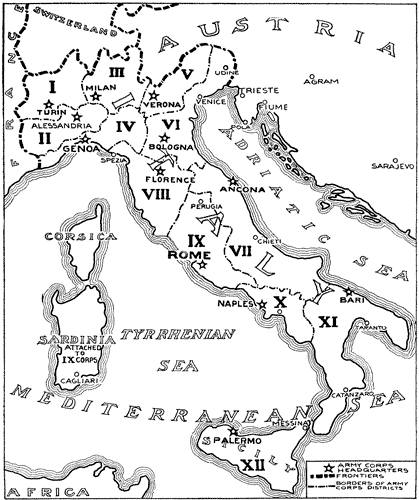
May 23—A clash, regarded in Rome as being the first skirmish of the
war, occurs between Italian and Austrian troops at Forcellini di
Montozzo, in the pass between Pont di Legno and Pejo; an Austrian
patrol crosses the frontier, but is driven back over the border by
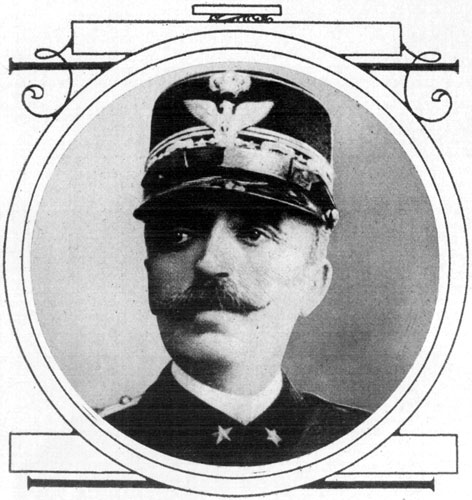
Italian Alpine Chasseurs; Lieut. Gen. Cadorna, Chief of the Italian
General Staff, starts for the front.
May 24—Austrian artillery shells Italian outposts on the Adige in
front of Rivoli; there are clashes at other points, including a
skirmish of border forces in the Isonzo Valley on the eastern
frontier; a general forward movement by the Italians begins; Austrians
are massing for defense.
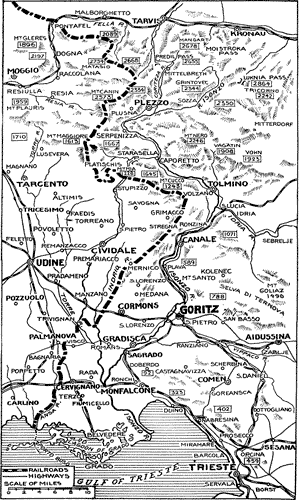
May 25—Italians are advancing on a 67-mile front, their line having
as extreme points Caporetto on the north and the Gulf of Trieste on
the south; in three lines they sweep across the frontier for four
miles; Italians occupy Caporetto, the heights between the Idria and
Isonzo Rivers, Cormons, Corvignano, and Terzo; Austrians withdraw,
destroying bridges and burning houses.
May 26.—Italians occupy Austrian territory all along the frontier
from Switzerland to the Adriatic; Italians have seized various towns
in the Trentino and forced their way through mountain passes; King
Victor Emmanuel has assumed supreme command of the Italian army and
navy, and has gone to the front.
May 27—Italian armies make rapid progress in the invasion of Austria,
part of the forces having crossed the Isonzo River; another force,
which penetrated further north in the Crownland of Goritz and
Gradisca, has repaired the railroad beyond Cormons and is marching on
Goritz, the capital; sharp fighting has occurred on the Tyrol-Trentino
border, where the Austrians are being driven back in advance guard
engagements; a battle is raging around Ploken and also west of the
Praedil Pass in Austria.
[Transcriber's Note: Text missing from original]tinues in Austrian
territory, the Austrians not making any determined resistance; they
are laying waste large areas as they retreat; in the Provinces of
Trentino and Friuli the Italians are pushing forward fast; the
Austrians fall back in the direction of Trent; Italians are occupying
the heights of Monte Baldo, overlooking the Valley of the Adige and
commanding the railway from Verona to Trent; Italians have crossed the
Venetian Alps, and among the lower spurs of the Dolomites are in touch
with the left wing of the Austrian force thrown forward for the
defense of Trent; in Carinthia the Italians have taken three passes
and fourteen villages.
May 29—A large Italian army is trying to cross the Isonzo River;
bayonet fighting is in progress south of Goritz, the Austrians slowly
falling back; Italian forces are at Gradisca, eighteen miles from
Trieste; Austrians repulse Italians at Caporetto and near Plava;
Italians are penetrating from Tonale Pass into the Virmiglio Valley,
with an objective north of Trent, in an attempt to place that city
between two Italian armies; Italians capture the town of Storo and are
bombarding Riva; the headquarters of the Austrian commander, Field
Marshal Baron von Hötzendorf, are established at Trent.
May 30—Italian advance in Friuli encounters strong opposition at the
Isonzo defenses, where progress is also being impeded because the
river is swollen; Italian artillery destroys the fort of Luserna, on
the Asiago plateau; in Cadore the Italians take several positions; a
battle along the Adige River has been in progress, the Italians taking
the village of Pilcante; artillery duels are in progress on the
frontier in Tyrol and Trentino; Austrians repulse Italians at Cortina.
May 31—The Italian invasion of the Province of Trent is progressing
from the south along the Adige and Chiese Rivers, from the west across
the Tonale Pass, and from the east by way of the Lavaronne Plateau;
the Italian attack is continuing all along the zigzag frontier, up to
the highest point north, where they have occupied the Ampezzo Valley,
together with the town of Cortina; Italians now are in possession of
Monte Baldo, which dominates Lake Garda; to the east of Caporetto the
Italians make a vain attempt to climb the slopes of the Kern; a great
Austrian army is being massed in Tyrol.
June 1—Thirty-seven villages surrounding Cortina in the Ampazzo
Valley are in Italian hands; the whole high plateau of Lavarone is in
the hands of the Italian force advancing into the Trentino from the
east.
June 2—In Friule the Italians are now established firmly on the Monte
Nero ridge across the Isonzo River; on the Carnia front an artillery
duel is in progress; to check Italians who are advancing from the
border northeast of Trent, Austrians are massing troops behind Monte
Croce Pass.
June 3—Italians repulse Austrian attempts to dislodge them from the
Monte Nero ridge; Austrians repulse Italians at several points on the
Tyrolian and Carinthian frontiers.
June 4—It is officially announced that Italian mobilization is
complete: in the operations against Rovereto, the Italians occupy
Mattassone and Val Morbia in the Val Arsa; Italian artillery silences
the forts of Luserna and Spitzverle; on the middle Isonzo fierce
fighting is in progress; Italians hold the summit and slopes of
Monterno.
June 5—A battle is raging on the western bank of the Isonzo River, in
front of Tolmino, the key to the railway and main highway to Trieste;
Italians are making steady though slow progress in Southern Tyrol.
June 6—Austrians are making a desperate defense at Tolmino; Italians
fail in an attempt to cross the Isonzo River near Sagrado; viewing the
situation as a whole, the Italians are making progress along a
150-mile front, smashing Austrian defenses at many points with
artillery fire.
June 7—Desperate fighting continues for Tolmino; Italians are making
a general advance across the Isonzo River from Caporetto to the sea, a
distance of forty miles; Austrians recapture Freikofel.
June 8—Fierce fighting is in progress at the Isonzo River; severe
fighting also is going on in the Friulian sector.
June 9—Italians take Monfalcone, sixteen miles northwest of Trieste;
a fierce artillery duel is in progress at Tolmino; fighting continues
at the Isonzo River.
June 10—Italians are in full possession of Monfalcone; Italians
occupy Podestagno, north of Cortina; fighting continues along the
Isonzo.
June 11—Italians take Ploeken, imperiling communications to Laibach;
fierce fighting is in progress for Goritz, Austrians still holding the
city; fighting continues along the Isonzo.
June 12—Italians push their advance almost to Rovereto thirteen miles
southwest of Trent, and to Mori, eighteen miles southwest of Trent;
Italians are advancing from Monfalcone toward Trieste; at points on
the Carinthian frontier Austrians repulse Italians.
June 13—Italian artillery is bombarding the fortifications defending
Goritz, capital of the crownland of Goritz and Gradisca, twenty-two
miles northwest of Trieste; severe fighting is in progress on Monte
Paralba; in the last few days Austrians have brought up 45,000 troops
and 64 batteries along the Isonzo River.
June 14—Italians in Carnia occupy Valentina; all the positions
captured by Italians in Trentino are held against repeated assaults by
Austrians; the Italian Eastern Army is pushing forward along the Gulf
of Trieste toward the City of Trieste.
June 15—Italians repulse Austrian attack at Monfalcone.
May 1—French Senegalese troops occupy Yeni Shehr on the Asiatic side
of the Dardanelles.
May 2—French troops lose ground on the Asiatic side of the
Dardanelles; Allies make further advances on the Gallipoli Peninsula;
Allies now hold Gaba Tepe; the Australian contingent has lost heavily.
May 4—Allies repulse Turks and are on the active offensive on
Gallipoli; Turks win success near Avi Burnu.
May 5—Turks check attempt of Allies to advance at Sedd-el-Bahr; Turks
check Allies near Avi Burnu.
May 6—Russians have defeated a Turkish army corps in the Caucasus,
routing it and taking many prisoners; desperate fighting is in
progress on the Gallipoli Peninsula, the advance of the Allies being
met by stubborn resistance; Allies have captured the heights facing
Souain Dere Fort, four miles west of Kilid Bahr.
May 7—Severe fighting at Avi Burnu and at Sedd-el-Bahr, at the latter
place the Turks capturing ten British machine guns.
May 10—Russians drive Turks from their positions in the direction of
Olti; Russians drive Turks from the South Pass near Tabriz and occupy
villages; 8,000 Turkish wounded have arrived at Constantinople from
the Dardanelles.
May 13—The Gallipoli coast line is now in Allies' possession.
May 15—Turks repulse Allies near Avi Burnu.
May 16—Allies make progress in hills behind Kilid Bahr and Maidos;
Turks have been attacking for three days British positions on the
Gallipoli Peninsula, but have been repulsed with heavy loss.
May 18—Counter-attack by Allies near Sedd-el-Bahr is repulsed.
May 19—Turks drive back Allies from their advanced positions near
Kara Burun; Allies are being reinforced daily.
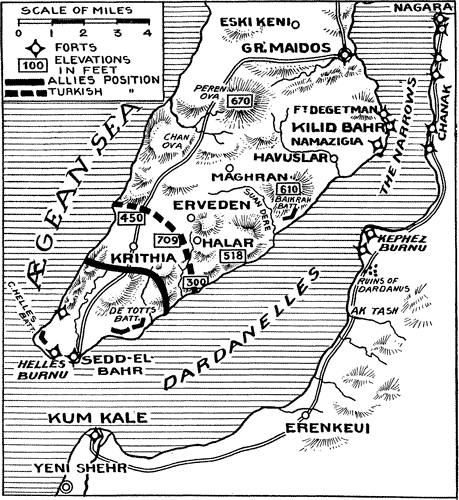
May 20—Allies are reported to have occupied Maidos after fierce
fighting; French troops have been landed at Sedd-el-Bahr, and are
fighting around the Turkish positions at Krithia; British forces which
debarked at Gaba Tepe are also directing their action toward Krithia,
with the object of surrounding the Turks; the Allies are attacking the
fortified position at Atchi Baba.
May 22—Official announcement is made in London that the Allies have
gained further ground on the southern end of the Gallipoli Peninsula.
May 23—Turks repulse Allies near Sedd-el-Bahr; it is estimated that
the British and French now have 90,000 troops along the Dardanelles.
May 24—Turkish troops attack allied camp near Goritza and capture
five sailing vessels with provisions; Italian troops have landed on
the Turkish Island of Rhodes in the Aegean Sea; Turks capture two
British positions near Kurna, Mesopotamia.
May 25—Allies are advancing steadily on the Gallipoli Peninsula;
thousands of Turkish wounded are arriving at Constantinople.
May 27—Allies carry five lines of Turkish trenches by the bayonet;
German estimates show that the Allies have lost 30,000 men in killed,
wounded, and missing during land operations at the Dardanelles; it is
admitted by the British that the Australians have lost heavily.
May 28—The Russian Army in the Caucasus reports further gains in the
Van region, including the occupation of Baslan, and announces that in
the capture of Van the Russians took twenty-six guns, large stores of
war material and provisions, and the Government treasury.
May 29—Turkish forces defending the Gallipoli Peninsula against
Allies now number 80,000 men; reinforcements are being sent from
Syria; in the Caucasus the Turks are remaining on the defensive.
May 30—An official French statement, reviewing recent operations on
the Gallipoli Peninsula, pays tribute to the bravery and coolness of
the Turkish troops; Turks take allied trenches at Avi Burnu with the
bayonet; Turks make gains at Sedd-el-Bahr.
May 31—Heavy fighting is in progress on the Gallipoli Peninsula, the
Turks being driven back at several points; Turks still hold trenches
captured from the Allies near Avi Burnu; it is reported from
Constantinople that the Turkish casualties thus far are 40,000.
June 1—British repulse a severe attack at Gaba Tepe.
June 2—Heavy fighting continues on Gallipoli Peninsula; all the Turks
who recently broke the allied line between Gaba Tepe and Krithia have
been either killed or captured.
June 4—A combined general assault on Turkish Gallipoli positions is
in progress.
June 6—Official British announcement states that during the last week
the Allies have made considerable gains in the southern area of
Gallipoli Peninsula; British win a 500-yard strip three miles long;
French take trenches; Turks offer spirited resistance, and lose
heavily; it is officially announced in London that on the Tigris,
Asiatic Turkey, the British have made important gains, and have
received the surrender of the Governor of Amara, with 700 soldiers.
June 7—Turks repulse the Allies near Sedd-el-Bahr.
June 9—Allies are landing more troops at Sedd-el-Bahr under cover of
the fleet's guns.
June 11—The advance guard of the Allies is fighting near the town of
Gallipoli; severe fighting is in progress near Maidos.
June 13—In the Caucasus the Russians are pushing back the Turks in
the direction of Olti, on the frontier, and are occupying Turkish
positions; a counter-attack by Turks at Zinatcher has been repulsed.
June 14—Reports from Athens declare that the position of the Allies
on the Gallipoli Peninsula continues to improve steadily; the Turks
still occupy Krithia, and the British are engaging them.
May 1—Official statement issued at Cape Town announces that the
British have inflicted a defeat on the Germans near Gibeon, German
Southwest Africa; British captured a railroad train, transport wagons,
two field guns, Maxims, and 200 prisoners.
May 5—British Secretary for the Colonies issues a statement saying
that when General Botha, commander of the forces of the Union of South
Africa, occupied Swakopmund he discovered that six wells had been
poisoned by the Germans with arsenical cattle wash; Botha says the
German commander told him he was acting under orders.
May 11—A French column captures the post of Esoka, in the German
colony of Kamerun.
May 13—On official statement made public at Cape Town states that
Windhoek, capital of German Southwest Africa, was captured yesterday
without resistance by Union of South Africa forces under General
Botha; German Southwest Africa is declared now to be practically in
the hands of the British.
June 11—Garua, an important station on the Benue River, Kamerun,
German West Africa, surrenders unconditionally to an Anglo-French
force.
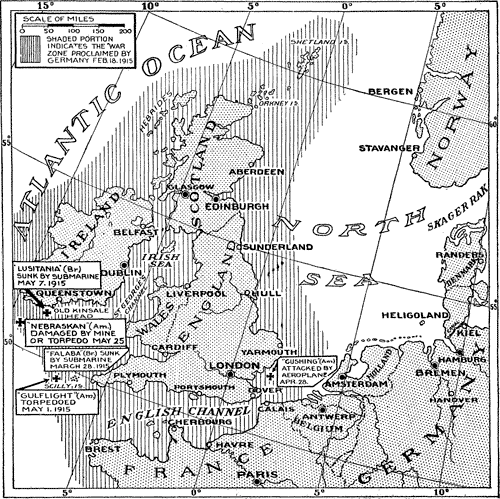
May 1—Cunarder Lusitania sails from New York for Liverpool; no
passenger bookings are canceled, although discussion is aroused by a
newspaper advertisement inserted by the German Embassy at Washington
stating that "travelers sailing in the war zone on ships of Great
Britain or her allies do so at their own risk."
May 7—Lusitania is sunk ten miles off the Old Head of Kinsale,
Ireland, by either one or two torpedoes discharged without warning by
a German submarine, stated to be the U-39; the Cunarder is hit about
2:05 P.M., and sinks in about eighteen minutes; 1,154 persons,
including many women and children, are drowned, or are killed by
explosions, while among the saved are 47 injured passengers; among the
dead are 102 Americans; the saved total 764, among whom are 86
Americans; of the saved 462 are passengers and 302 belong to the crew;
Captain William T. Turner of the Lusitania is saved by clinging to a
bit of wreckage for two hours after remaining on the bridge until his
ship sank; the ship was valued at $10,000,000, and the 1,500 tons of
cargo, among which were munitions of war, at $735,000; official
Washington and the nation generally, as well as other neutral and
allied nations, are profoundly stirred by the news; President Wilson
receives bulletins at the White House; London is astounded, and there
are criticisms of the Admiralty for not having convoyed the Lusitania;
panic conditions prevail on the New York Stock Exchange for thirty
minutes after the first news is received, but the market closes with a
rally.
May 8—Secretary Tumulty, after a conference with President Wilson,
states that the Chief Executive "is considering very earnestly, but
very calmly, the right course of action to pursue"; Secretary Bryan
directs Ambassadors Gerard and Page to make full reports; an official
communication issued in Berlin states that the Lusitania "was
naturally armed with guns," that "she had large quantities of war
material in her cargo," that her owners are responsible for the
sinking, and that Germany gave full warning of the danger; the British
Government announces that the statement that the Lusitania was armed
"is wholly false"; American newspapers strongly condemn the sinking,
many referring to it as murder; there is talk of war by many private
citizens of the United States; there is rejoicing in Germany, where
towns are hung with flags and children in Southern Germany are given a
half-holiday, so reports state; Berlin newspapers acclaim the sinking,
while hundreds of telegrams of congratulation are received by Admiral
von Tirpitz, Minister of Marine; Dr. Bernhard Dernburg, former German
Colonial Secretary, in a statement in Cleveland, argues that the
sinking was justified.
May 9—Dudley Field Malone, Collector of the Port of New York, makes
an official denial that the Lusitania was armed when she sailed;
President Wilson has not yet consulted his Cabinet on the situation,
but is studying the problem alone; Theodore Roosevelt terms the
sinking "an act of simple piracy," and declares we should act at once;
survivors criticise the British Admiralty for not supplying a convoy,
and also criticise the handling of the Lusitania; newspapers in Vienna
rejoice over the torpedoing.
May 10—In a speech at Philadelphia, President Wilson declares that
"there is such a thing as a man being too proud to fight; there is
such a thing as a nation being so right that it does not need to
convince others by force that it is right"; Coroner's jury at Kinsale,
which investigated five deaths resulting from the torpedoing of the
Lusitania, in returning its verdict charges the Emperor and Government
of Germany, and the officers of the submarine, "with the crime of
wholesale murder before the tribunal of the civilized world"; a spirit
of vengeance is springing up in England; the German Foreign Office
sends to the German Embassy at Washington, which communicates it to
the State Department, a message of sympathy at the loss of lives, but
says the blame rests with England for her "starvation plan" and for
her having armed merchantmen; telegrams are pouring in by the hundred
to the White House and the Department of State, but the majority
advise against the use of force; there is a fifteen-minute panic on
the New York Stock Exchange on the rumor of the assassination of
President Wilson, prices falling from 4 to 15 points; British
exchanges bar German members; the National Security League issues an
open letter in New York, declaring that the army, navy, and coast
defenses are inadequate, and urging support for a military efficiency
program; various State Legislatures pledge their support to President
Wilson.
May 11—Secretary Bryan receives an official circular issued by the
German Government which declares that there is no intention of
attacking, either by submarine or aircraft, neutral ships in the war
zone, and that if such attacks occur through mistake damages will be
paid; President Wilson is at work on his communication to Berlin;
American Line announces it will not hereafter carry contraband of war;
Navy League of the United States passes a resolution asking President
Wilson to call an extra session of Congress to authorize a bond issue
of $500,000,000 for a bigger navy; riots occur all over England,
demonstrations being made against Germans and German shops; former
President Roosevelt states that the United States should act promptly
and should forbid all commerce with Germany, while former President
Taft states that delay can do no harm and that the United States
should not hurry into war; President Wilson's Philadelphia speech
results in a rise in prices on the New York Stock Exchange; the
Committee of Mercy issues a country-wide appeal for help for destitute
survivors of the Lusitania; customs guard on German ships at Boston is
doubled; Cunard Line cancels intended sailing of the Mauretania from
Liverpool; extra police guards are placed over the German ships at
Hoboken.
May 12—Postponement is made until tomorrow of the sending of the
American note to Germany; German Embassy discontinues its
advertisement warning the public not to sail on British or allied
ships: anti-alien rioting continues in England; seventy customs men,
on orders from Washington, search German ships at Hoboken for
explosives, none being found.
May 13—The text of the American note to Germany is made public at
Washington; besides the Lusitania, it mentions the Falaba, Cushing,
and Gulflight cases; it states that the United States Government
expects a disavowal of the acts of the German commanders, reparation
for the injuries, and a prevention of such acts in the future; it
indicates that submarine warfare should be given up; it refers to the
"surprising irregularity" of the German Embassy's advertisement
warning Americans to keep off British ships, and states that notice of
an unlawful act cannot be an excuse for its commission; it states that
Germany will not expect the United States "to omit any word or any
act" necessary to maintain American rights.
May 14—The American note to Germany has been delayed in transmission,
and is not presented yet; President Wilson and the Cabinet are pleased
with the response of the country to the note, which is praised
generally by newspapers and public men: damage in anti-German rioting
in South Africa is reported from Cape Town to exceed $5,000,000.
May 15—Ambassador Gerard hands the American note to the German
Foreign Office; newspapers in England and France praise the note; Dr.
Dernburg, who has for months been in the United States as unofficial
spokesman for Germany, expresses a desire to go home, this being due,
it is understood in Washington, to the criticisms resulting from his
defense of the sinking of the Lusitania; German-American newspapers
and prominent German-American individuals are going on record as being
for the United States as against Germany in event of war.
May 16—New York clergymen from their pulpits praise President
Wilson's note to Germany as a powerful instrument for the
preservation of peace in this country; the loss of the Lusitania is
proving a stimulus to recruiting in Great Britain.
May 17—The American note has not yet been published in Berlin, and
most of the newspapers, under confidential orders from the Government,
have refrained from comment.
May 18—Statements made by the officers of the British tank steamer
Narragansett and of the British steamship Etonian, on arriving at New
York and Boston, respectively, show that these ships and a third were
prevented from going to the rescue of the Lusitania's passengers by
German submarines; a torpedo was fired at the Narragansett.
May 19—Several leading German newspapers join in an attack on the
United States, demanding that Germany refuse to yield to the American
protest, the text of the note having been made known.
May 30—Full text of the German reply to the American note arrives in
Washington and is made public; as to the Cushing and the Gulflight it
is declared that the German Government has no intention of attacking
neutral vessels by submarine or aircraft, and where it is proved that
the attacked ship is not to blame is willing to offer regrets and pay
indemnity, it being added that both the cases mentioned are now under
investigation, which inquiry can be supplemented by reference to The
Hague: as to the Falaba, it is declared that the persons on board were
given twenty-three minutes to get off, and it is indicated that the
passengers and crew would have had fuller opportunity to leave had the
ship not tried to escape and had she not signaled for help by rockets:
as to the Lusitania, it is declared she was built as an auxiliary
cruiser and so carried on the British navy list, that Germany
understands she was armed with cannon, that she carried war material
and Canadian troops, while, in addition, the British Admiralty has
instructed merchantmen to ram submarines; thus the sinking of the
Lusitania was a measure of "justified self-defense"; it is also
declared that the Cunard Company is "wantonly guilty" of the deaths,
in allowing passengers to embark under the conditions cited;
unofficial expressions of opinion from public men at Washington show
there is disappointment and dissatisfaction over the note, which is
held to be evasive; German Foreign Secretary von Jagow, in an
interview given to The Associated Press correspondent in Berlin,
declares that the note is not a final one because the German
Government considers it essential "to establish a common basis of fact
before entering into a discussion of the issues involved."
May 31—American press as a whole finds the German reply
unsatisfactory, declaring that it is evasive and fails to meet the
issue; London newspapers find the reply to be a "weak evasion";
German-American press as a whole supports the reply; Governors of
States and other public men generally agree in condemning the note,
but many of them suggest the need for caution; Berlin newspapers hold
that the reply is complete.
June 1—President Wilson brings the German note before the Cabinet,
which has a long conference.
June 2—A conference is held at the White House between President
Wilson and Ambassador von Bernstorff, at the latter's request;
Ambassador von Bernstorff arranges to send through the State
Department a report to his Government of his talk with the President
and of the condition of public opinion in this country; von Bernstorff
tells the President that he has been given affidavits that the
Lusitania was armed; these affidavits are given to the American
Department of State for investigation.
June 3—Ambassador von Bernstorff is arranging to send an emissary,
Dr. Anton Meyer-Gerhard, to Berlin to explain the position of the
American Government and the state of public opinion; the affidavits
that the Lusitania was armed are under official investigation;
newspaper investigations throw doubt on their authenticity.
June 5—British Ambassador transmits a note from his Government to the
United States Government assuring this country that the Lusitania was
unarmed.
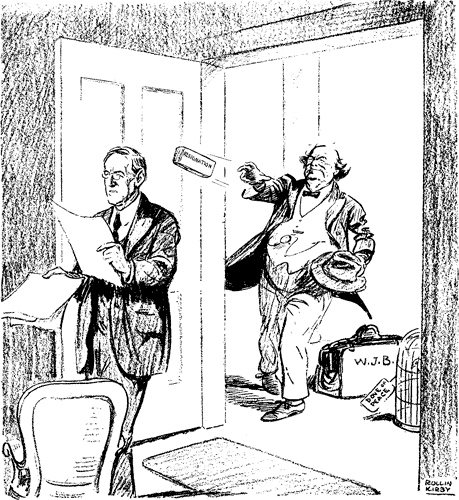
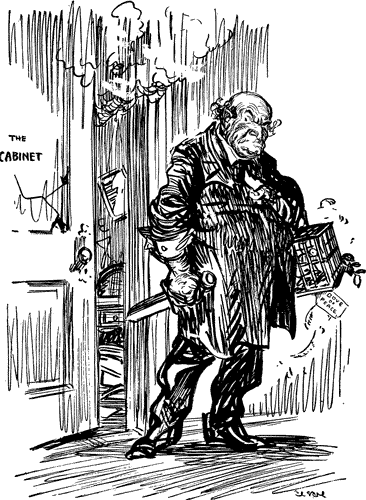
June 8—Secretary of State Bryan resigns because he cannot join in the
new note to Germany, so he states in a letter to President Wilson,
without violating what he deems his duty to the country and without
being unfair "to the cause which is nearest my heart, namely, the
prevention of war"; President Wilson's letter accepting the
resignation expresses "deep regret" and "personal sorrow"; Counselor
Robert Lansing is Acting Secretary of State; newspapers generally
welcome Mr. Bryan's resignation; the note to Germany is read at a
Cabinet meeting and finally decided upon.
June 9—Acting Secretary of State Lansing signs the note to Germany
and sends it to Ambassador Gerard; Mr. Bryan's resignation causes
interest in England and Germany; Mr. Bryan says that he favors inquiry
by an international commission into the points at issue between the
United States and Germany, and that Americans should be warned not to
travel on belligerent ships; German-American press praises Mr. Bryan.
June 10—President Wilson's answer to the German note is made public
at Washington; it "asks for assurances" that Germany will safeguard
American lives and American ships; the German Government is assured
that it has been misinformed as to the alleged arming of the
Lusitania; it is stated that the United States is contending for the
rights of humanity, on which principle "the United States must stand";
Mr. Bryan issues a statement to the public, explaining his views;
Gustav Stahl, said to be a former German soldier, who made an
affidavit that he saw four guns on the Lusitania, is arrested by
Federal officers on a charge of perjury.
June 11—The pacific nature of the American note causes satisfaction
in Germany; Mr. Bryan issues a statement to German-Americans; Colonel
Roosevelt, in a statement, upholds President Wilson.
June 12—Mr. Bryan issues a third statement; some German-American
newspapers criticise his statement addressed to German-Americans.
June 13—Newspapers of Germany today contain columns of comment on the
last American note, the general tone being milder, the friendly tenor
of the note being welcomed.
June 15—Court of inquiry opens in London; Captain Turner swears on
the stand that his ship was not armed.
May 1—Four British torpedo boat destroyers sink two German torpedo
boats in the North Sea, after a fifth British destroyer is sunk by a
German submarine; Russian Black Sea fleet bombards Bosporus forts;
allied fleet bombards Nagara, on the Dardanelles.
May 3—The ships of the allied fleet are now working in shifts at the
bombardment of the Dardanelles, which is maintained twenty-four hours
a day; French battleship Henri IV. and British battleship Vengeance
are damaged by fire of the forts.
May 4—Bombardment of Turkish forts on the Gulf of Smyrna is resumed
by an allied squadron; British warship Agamemnon is damaged by forts
at the Dardanelles.
May 6—Heavy bombardment of the Dardanelles is continued by the
allied fleet; during the last three days a number of villages and
forts have been set on fire by shells; British superdreadnought Queen
Elizabeth is taking a prominent part in the bombardment.
May 8—British torpedo boat destroyer Crusader is sunk by a mine off
Zeebrugge and the crew taken prisoners by the Germans.
May 9—Russians sink six Turkish transports off the Bosporus and two
in the Sea of Marmora.
May 12—Turkish destroyers in the Dardanelles torpedo and sink the
British pre-dreadnought Goliath, 500 men being lost; allied fleet
bombards the forts at Kilid Bahr, Chanak Kalessi, and Nagara; Italian
steamer Astrea sinks near Taranto, it being believed that she hit a
mine.
May 15—Russian Black Sea fleet destroys four Turkish steamers and
twenty sailing vessels; the fleet bombards Keffen, Eregli, and
Kilimali.
May 16—For three days the allied fleet has been bombarding Turkish
troop positions on the Dardanelles; shell fire is stated to have
smashed whole trenches filled with Turkish soldiers.
May 17—Parliamentary Secretary of the British Admiralty announces in
House of Commons that 460,628 tons of British shipping, other than
warships, have been sunk or captured by the German Navy since the
beginning of the war; that the number of persons killed in connection
with the sinkings is 1,556; that the tonnage of German shipping, not
warships, sunk or captured by the British Navy is 314,465, no lives
being lost, so far as is known.
May 20—Bombardment of Nagara by the allied fleet continues night and
day; British battleship Queen Elizabeth is supporting the allied
troops on the Gallipoli Peninsula with the fire of her big guns from
the Gulf of Saros; a new bombardment of the Turkish encampments on the
Gulf of Smyrna is under way by ships of Allies.
May 24—Small naval units of Austria, especially destroyers and
torpedo boats, bombard the Italian portions of the Adriatic coast;
they are attacked by Italian torpedo boats and withdraw after a brief
cannonade; the value of German and Austrian ships now in Italian
ports, which have become prizes of war, is estimated at $20,000,000.
May 25—American steamer Nebraskan, en route from Liverpool to
Delaware Breakwater, without cargo, is struck by either a torpedo or a
mine forty miles off the south coast of Ireland; the ship is not
seriously damaged and starts for Liverpool at reduced speed; Italy
declares a blockade of the Austrian and Albanian coasts; allied
warships bombard Adalia, Makri, Kakava, and other places along the
coast of Asia Minor, destroying Government buildings and public works;
Austrian ships sink an Italian destroyer near Barletta.
May 27—Captain Greene of the Nebraskan, which arrives at Liverpool,
states that he thinks his ship was hit by a torpedo; the American flag
had been hauled down shortly before she was struck, but the ship's
name and nationality were plainly painted on her sides; British
auxiliary ship Princess Irene is blown to pieces off Sheerness, 321
men being killed; it is presumed that careless handling of explosives
caused the disaster.
May 28—Austrians sink an Italian torpedo boat destroyer, while the
Italians sink an Austrian submarine. Danish steamer Ely is sunk by a
mine off Stockholm, crew being saved.
May 29—Statement from the German Foreign Office is transmitted to
Washington through Ambassador Gerard, urging that American shipping
circles be again warned against traversing the waters around the
British Isles incautiously, and especially that they make their
neutral markings on the vessels very plain, and that they light them
promptly and sufficiently at night: American naval experts find the
facts to indicate that the Nebraskan was torpedoed and not struck by a
mine, so Ambassador Page reports to Washington; British Admiralty puts
stricter rules in force for navigation in the war zone.
May 30—British Legation at Athens issues a notice that, beginning on
June 2, a blockade will be established off the coast of Asia Minor
between the Dardanelles and the Strait of Samos.
May 31—An Admiralty statement shows that since the beginning of the
war 130 British merchant ships and fishing vessels, with a tonnage of
471,000, have been sunk.
June 2—Two Italian torpedo boats sink two Austrian merchant vessels
in the Gulf of Trieste and damage an auxiliary cruiser.
June 4—German transports, torpedo boats, and submarines seek to enter
the Gulf of Riga, but sheer off on perceiving the Russian fleet; three
German transports are sunk by mines.
June 5—A strong German fleet has appeared in the middle Baltic and
has exchanged shots with the Russian fleet near the Gulf of Riga;
Winston Churchill, in a speech at Dundee, declares that the British
Navy is growing at an amazing rate, and is much stronger, both
actually and relatively, than at the beginning of the war; Greek
steamer Virginia is blown up by a floating mine while heading for the
Gulf of Trieste, her crew being killed.
June 6—Italian warships are destroying cables and lighthouses on the
Adriatic; Italian warships bombard the railway between Cattaro and
Ragusa, and shell Monfalcone.
June 11—Turkish cruiser Midullu sinks a Russian torpedo boat
destroyer in the Black Sea.
June 14—British steamship Arndale sinks from striking a mine in the
White Sea.
June 15—Official announcement states that the total loss from all
causes in the British Navy up to May 31 was 13,547 officers and men.
May 1—The Gulflight, an American oil steamer owned by the Gulf
Refining Company, is torpedoed off the Scilly Islands, but does not
sink, and is towed to an anchorage in Crow Sound, Scilly Islands; the
Captain dies of heart failure, and two men jump overboard and are
drowned; she was flying the American flag; French steamer Europe is
torpedoed by a German submarine, crew being rescued; British steamer
Fulgent is torpedoed by a German submarine; some of the crew are
missing; British steamer Edale is sunk by a German submarine off the
Scilly Islands, crew being saved; Russian steamer Svorono is sunk by a
German submarine off the Blasket Islands, crew being saved; British
trawler Colombia is sunk by a German submarine, seventeen of the crew
being lost.
May 3—In the last forty-eight hours one Swedish steamer and three
Norwegian steamers have been sunk by German submarines; British
steamer Minterne is sunk by a German submarine off the Scilly Islands,
two of crew being killed.
May 4—Ten British trawlers have been sunk by German submarines in the
last forty-eight hours; the submarine which caused the most damage has
an iron cross painted on her conning tower.
May 5—Danish steamer Cathay is sunk by a German submarine in the
North Sea; passengers and crew saved.
May 6—British steamers Candidate and Centurion are sunk off the Irish
coast by German submarines, crews being saved; British schooner Earl
of Latham is sunk by a German submarine; two British trawlers are sunk
by German submarines.
May 8—British steamer Queen Wilhelmina is sunk by a German submarine
in the North Sea, crew being given time to take to the boats.
May 12—British submarine E-14 has penetrated to the Sea of Marmora
and has sunk two Turkish gunboats and five Turkish transports.
May 15—German submarine sinks without warning the Danish steamer
Martha in Aberdeen Bay, Scotland; crew escapes.
May 19—German submarines sink British steamers Drumcree and Dumfries
and British trawler Lucerne; no lives lost.
May 20—French steam trawler is blown to pieces by German submarine
near Dartmouth; thirteen of crew killed; British trawlers Chrysolite
and Crimond are sunk by German submarines; crews saved.
May 21—German submarine, with thirty-nine shots from her gun, sinks
British sailing ship Glenholm off Irish coast; crew saved.
May 22—German submarine sinks Norwegian steamer Minerva; crew saved.
May 23—Repeated reports keep coming from Copenhagen that the German
naval authorities admit the loss of seventeen submarines since the
opening of the war.
May 24—An allied submarine sinks Turkish gunboat Pelenk-i-Deria.
May 25—British battleship Triumph is sunk in the Dardanelles by a
German submarine, going down in seven minutes; 56 men are lost; the
Triumph was built in 1904 and cost $4,750,000.
May 26—A British submarine has sunk a Turkish gunboat in the Sea of
Marmora within sight of Constantinople.
May 27—German submarine torpedoes and sinks British battleship
Majestic off Sedd-el-Bahr; 49 men are lost; Majestic was completed in
1895 and belonged to the oldest type of battleship in commission in
British Navy; British Admiralty announces that submarine E-11 has sunk
a large Turkish munition ship, while she caused a small storeship to
run ashore; also that E-11 entered Constantinople harbor and
discharged a torpedo at a transport alongside the arsenal; British
steamer Cadeby is sunk off the Scilly Islands by gunfire from a German
submarine; crew saved.
May 28—The torpedoing of the American tanker Gulflight is now
established in Germany as having been due to a German submarine, the
report of the submarine's Captain having been received by the German
Admiralty; he reports that when he saw the Gulflight she was being
convoyed by two patrol boats, and he concluded she must be British or
was carrying contraband; British steamer Spennymoor is sunk by a
German submarine off the Orkney Islands, six men being drowned;
British steamer Tullochmoor is shelled and sunk by a German submarine,
crew being saved; British steamer Glenlee is sunk by a German
submarine, crew being saved; Portuguese steamer Cysne is sunk by a
German submarine off Cape Finisterre, crew being saved; German
submarine U-24 sinks British steamer Ethiope in the English Channel;
fifteen of crew are missing.
May 29—British steamer Dixiana is sunk by a German submarine, which
is disguised with sails; crew saved.
May 31—Danish steamer Soborg is sunk by a German submarine in the
English Channel; crew saved.
June 1—British steamer Saidieh, carrying passengers, is torpedoed
without warning in the North Sea by a German submarine and sinks in
fifteen minutes; seven of the crew, including a stewardess, are lost;
Welsh trawler Victoria is sunk by a German submarine, several of the
crew being killed by shell fire.
June 2—British submarine torpedoes a large German transport in the
Sea of Marmora; German submarines sink the Norwegian steamer Cubano
and the Welsh trawler Hiorld, the crews being saved; Danish schooner
Salvador is sunk by a German submarine, crew saved.
June 3—Swedish steamer Lapland is sunk by a German submarine off
Scotland, crew being saved; Danish steamer Cyrus is sunk by a German
submarine off Scotland, crew being saved; British steamer Iona is sunk
by a German submarine, crew being shelled while taking to the boats
and four men being wounded; British fishing steamer Chrysophrasus is
sunk by a German submarine, crew being shelled while taking to the
boats; Portugal is aroused over recent sinking of two Portuguese ships
by German submarines; French steamer Penfeld is sunk by a German
submarine, crew saved.
June 4—British trawler Ebenezer is sunk by shell fire from a German
submarine, crew escaping; British steamer Inkum is sunk by a German
submarine, crew escaping; steam drifter Edna May, trawler Strathbran,
sailing ship George and Mary, steam fishing vessels Cortes, Kathleen,
and Evening Star, steamer Sunnet Head, trawlers Horace and Economy,
all British, have been sunk by German submarines; Russian mine layer
is sunk by a submarine near the Gulf of Riga.
June 5—German submarine U-51 arrives at Constantinople from
Wilhelmshaven, after a voyage of forty-two days, during which she sunk
the British battleships Triumph and Majestic.
June 6—Five more British trawlers have been sunk by German
submarines, all the crews being saved.
June 7—The trawler Arctic, bark Sunlight, steamer Star of the West,
and the trawler Dromio, all British, have been sunk by German
submarines; four of the Arctic's crew were killed by shell fire from
the submarine; Russian schooner Afold has been sunk by a German
submarine.
June 8—German submarines sink Belgian steamer Menapier, Norwegian
steamer Trudvang, Norwegian bark Superb, Norwegian steamer
Glittertind, British trawlers Pentland and Saturn; sixteen die on the
Menapier.
June 9—British sink a German submarine and capture her crew; First
Lord of the Admiralty Balfour states that hereafter submarine crews
will be treated like other prisoners of war; German submarine sinks
British steamer Lady Salisbury; one of the crew is killed and two are
missing; official Austrian statement declares that submarine No. 4
torpedoed and sank a small British cruiser off the Albanian coast;
British statement says the ship is now safe in harbor, not seriously
damaged.
June 10—British torpedo boats Nos. 10 and 12 are sunk off the east
coast of England by a German submarine; twenty-nine seamen are
missing; German submarines sink steamers Strathcarron and Erna Boldt,
and the trawlers Letty, Tunisian, Castor, Nottingham, Velocity,
Cardiff, Qui Vive, and Edward, all British; German submarines sink
Russian bark Thomasina, Russian steamer Dania, and Swedish steamer
Otago, crews being saved.
June 12—German submarines sink British steamer Leuctra and trawlers
James Leyman, Britannia, and Waago, crews being saved.
June 13—German submarine U-35 sinks British bark Crown of India and
Norwegian bark Bellglade off Milford Haven, crews escaping; German
submarine sinks British trawler Plymouth, crew escaping.
June 14—German submarines sink British steamer Hopemount and French
schooner Diamant, crews being saved; German submarine burns the Danish
schooner Cocos Merstal, crew being saved.
June 15—German submarine sinks British trawler Argyll, seven of crew
being drowned; German submarine sinks Norwegian steamer Duranger; crew
saved.
May 1—Germans bring down three aeroplanes of the Allies on the
western line.
May 2—German aeroplanes bombard towns in Eastern France; twenty
incendiary bombs are dropped on Epinal.
May 3—Germans state that they have sunk a British submarine in the
North Sea by dropping a bomb on it from an airship; this is denied by
the British Admiralty; a German aeroplane is driven off from Dover by
gunfire.
May 4—Two Austrian aeroplanes throw incendiary bombs near Mamaligia,
in Bessarabia.
May 5—An official French note states that on March 22 French aviators
damaged Briey, Conflans, and Metz; that on April 15 French aviators
destroyed 150 railroad cars at St. Quentin, twenty-four soldiers being
killed; that on April 28 French aviators destroyed a Zeppelin at
Friedrichshaven; two Turkish aeroplanes are brought down by shells
from the allied fleet at the Dardanelles.
May 7—Three Russian aviators drop bombs on Constantinople.
May 9—British airmen bombard the St. André railway junction near
Lille, the canal bridge at Dok, and also Furnes, Herlies, Illies,
Marquelles, and La Bassée.
May 10—Zeppelins drop bombs on Westcliffe-on-Sea and Southend,
seaside resorts in Essex; slight damage.
May 11—French aviator bombards airship hangar at Maubeuge; German
aviator bombards railroad station at Doullens; Germans bring down a
British aviator, and British bring down two German aviators.
May 13—A Zeppelin falls in the Gierlesche woods in Belgium, is badly
damaged, and is dismantled by the crew, being taken away in sections.
May 17—Two Zeppelins drop bombs on Ramsgate, damaging buildings and
wounding three persons; it is reported from Rotterdam that a fight
recently occurred in the region of the Yser between a Zeppelin and
twenty-seven allied aeroplanes, the Zeppelin being sent crashing to
earth with sixty men, while two aeroplanes were wrecked and their
pilots killed by machine gun fire from the Zeppelin; British
aeroplanes drop proclamations on the town of Gallipoli announcing an
approaching bombardment and advising the population to leave.
May 18—London reports that two Zeppelins have been destroyed, one
falling within the allied lines at Dunkirk, and the other falling into
the sea as the result of shell fire from a French torpedo boat
destroyer.
May 20—Squadrons of Austro-German aeroplanes are bombarding Przemysl.
May 21—Turkish aeroplanes are aiding their troops on the Gallipoli
Peninsula; British bring down a German aeroplane near Ypres; Germans
bring down an allied aeroplane at Fresnoy.
May 22—German aviators, in an aeroplane disguised as a French
machine, drop eight bombs on Paris, two persons being slightly
injured; because of the disguise the French air patrol allowed the
German machine to pass.
May 23—German aviator bombards the town of Château Thiery.
May 24—Austrian aeroplanes drop bombs on Venice, Porto Corsini,
Ancona, Gesi, Potenza Picena, the Tremiti Islands, and Barletta; a
German Taube drops bombs in the northern suburbs of Paris; no one
injured.
May 25—Six French aeroplanes drive off two German machines which seek
to raid Paris; French aeroplanes are active along the entire front and
drop 205 projectiles upon German positions.
May 26—A Zeppelin drops fifty bombs on Southend; one woman is killed
and several persons injured; the property damage is slight; this
Zeppelin later is reported as having fallen into the sea near
Heligoland, having been struck by a shell while over England; French
airmen bring down a German aeroplane which attacked the suburbs of
Paris yesterday, the two German aviators being killed; allied airmen
drop nineteen bombs on the aerodrome at Gontrode, southeast of Ghent,
destroying the greater part of the aerodrome, killing forty-four
soldiers, and wounding thirty; Italian aviators bombard railroad
station at Monfalcone.
May 27—Eighteen French aeroplanes, each carrying 110 pounds of
projectiles, bombard an important German manufactory of explosives at
Ludwigshafen, on the Rhine, starting fires in several of the factory
buildings, and killing eleven civilians; fifty German soldiers are
killed at Ostend by a bomb dropped by allied aeroplane; Italian and
Austrian aeroplane squadrons are active in the operations of the
armies, doing much scouting and some bombarding; squadron of Italian
hydro-aeroplanes throws bombs on the Trieste-Nabresina Railroad;
allied aeroplane squadron flies over the Dardanelles and subjects
Turkish position to heavy bombardment.
May 28—Experts estimate that orders amounting to $16,000,000 have
been placed in the United States for aeroplanes for the Allies.
May 29—Austrian aeroplane squadron drops bombs on Venice, causing
several fires; a French and a German aeroplane fight a duel at 9,000
feet near Fismes, the French machine, by its gunfire, shooting down
the German from a height of 6,000 feet.
May 30—A Zeppelin drops bombs on Helsingfors, destroying cotton sheds
and setting fire to a passenger ship; British bring down a German
aeroplane near Courtrai; Turkish aviators drop bombs on the allied
trenches at Sedd-el-Bahr.
May 31—Zeppelins drop ninety incendiary bombs on London in a night
raid; four civilians are killed and several others wounded; numerous
fires are started, but none prove serious; Berlin announces that the
attack is a reprisal for the aerial attack on Ludwigshafen; Italian
dirigible makes a raid on the Austrian naval base of Pola, damaging
the railroad station and arsenal.
June 2—Germans shoot down a British aeroplane at Bixschoote.
June 3—Twenty-nine French aeroplanes aim 178 shells and several
thousand darts at the headquarters of the German Crown Prince, killing
several soldiers.
June 4—Zeppelins drop bombs on the east and southeast coasts of
England; little damage is done and casualties are few.
June 5—A Taube drops bombs on Calais, killing one person and doing
slight property damage.
June 6—Ten Zeppelins of a new type are reported from Copenhagen to
have been completed, these machines having greater speed than the old
ships; they are stated to be fitted with appliances for dropping
poisonous gas bombs; German aeroplanes drop bombs on Calais and on the
aviation grounds at Lunéville; a Zeppelin drops bombs on the east
coast of England, five persons being killed and forty injured.
June 7—Sub-Lieutenant Warneford of the British Flying Corps fights a
duel with a Zeppelin at a height of 6,000 feet; with incendiary bombs
he explodes the airship, which falls near Ghent, the twenty-eight men
on board being killed; Warneford returns safely to the British lines;
Italian dirigible bombards Pola.
June 8—King George sends a warmly congratulatory telegram to
Sub-Lieutenant Warneford and confers upon him the Victoria Cross;
Austrian aeroplane bombards Venice; Austrian aeroplane destroys an
Italian airship.
June 12—Austrian aeroplanes drop bombs on the breakwater of Bari, on
Polignano, where a woman is killed, and on Monopoli.
June 13—Italian airship seriously damages the arsenal at the naval
station of Pola.
June 15—Twenty-three allied aeroplanes bombard the town of Karlsruhe,
killing eleven and injuring six civilians.
May 23—Emperor Francis Joseph, in a manifesto to his troops,
denounces Italy, and declares that his former ally's perfidy has no
parallel in history.
May 25—The Foreign Ministry publishes documents presenting Austria's
side of the controversy with Italy; it is contended that Italy, from
the beginning, sought to evade her obligations by artificial
interpretation of the Triple Alliance treaty.
May 24—The German Government has published a "White Book" charging
Belgian civilians with many forms of attacks on German troops; German
measures at Louvain and elsewhere are declared to have been only for
the purpose of stopping these attacks.
June 6—Belgian Legation at Washington gives out a statement answering
the German White Book recently issued at Berlin making accusations
against the Belgian civilian population; reply denounces allegations
of franc-tireur warfare as false and unsupported; Belgian Government,
instead of encouraging civilian resistance, warned the population
against it.
May 3—Official statement places Canadian casualties in the battle of
Langemarck, as the recent fighting near Ypres is now officially
termed, at 6,000 killed, wounded, and missing; total Canadian
casualties in the entire war to date are 6,584.
May 17—Canadian losses since the battle of Langemarck total 4,792,
made up of 680 killed, 3,208 wounded, and 904 missing.
June 10—Nine camps have been opened, at intervals from Nova Scotia to
British Columbia, for training troops; plans provide for training
100,000 recruits this Summer.
June 11—Every battalion of the second Canadian division is now in
France.
May 10—General Gouraud, it is announced, will relieve General d'Amade
in command of the expeditionary force to the Orient; General d'Amade
has been summoned back to France for a Governmental mission.
May 19—The Minister of Finance introduces a bill in the Chamber of
Deputies providing for a $220,000,000 appropriation for the first six
months of 1915 in addition to the $1,700,000,000 which has been
already voted.
May 22—Captain Thery, a prominent economist, estimates that the cost
of the first year of the war, including the expenses of all
combatants, will be about $2,000,000 an hour.
May 29—A great demonstration is held in the Sorbonne amphitheatre,
attended by the President, and the notables of political and artistic
France, to express the appreciation of the French people for the
sympathy and help of Americans during the war.
May 2—The last of the Landsturm is called to the colors.
May 4—Lübeck, on the Baltic Sea, formerly a port of relatively small
importance, has become a great port, and dozens of ships are there
discharging vast quantities of foodstuffs and other supplies;
twenty-three Socialist members of the Reichstag opposed the voting of
the full war credit last asked by the Government, according to a
report from Berlin.
May 7—The Germans state that they and the Austrians now hold 46,000
square miles of Russian territory, containing a population of more
than 5,000,000.
May 12—Typhus has appeared in some of the German prison camps.
May 14—Lieutenant von Muecke and fifty men of the Emden's crew, who
escaped when that cruiser was sunk in November, have arrived at
Damascus, after six months of adventurous wanderings.
May 18—The London Chronicle, on the basis of statistics which it has
received, estimates the total German losses in the war to be
2,050,000.
May 24—Germany asks Switzerland to take over German diplomatic
affairs in Rome; this action is regarded in Washington as a slap at
the United States.
May 26—Prince von Bülow, recently Ambassador to Italy, arrives in
Berlin; Germany and Italy are still theoretically allies, war not
having been declared between them.
May 28—Chancellor von Bethmann-Hollweg, speaking in the Reichstag,
declares that the Teutonic allies are waging war in "holy anger" and
will fight until they have made it certain that no enemy "will dare
again a trial of arms"; he makes a scathing attack on Italy, and says
that "her violation of good faith" is written in "letters of blood."
May 30—Americans are leaving Germany by the score, declaring the hate
for Americans is so intense as to make life unbearable.
June 2—Officers and men on furlough in Berlin are forbidden to visit
cafés and restaurants.
June 4—Prussian losses alone have reached a total of 1,388,000.
June 5—There are now 900,000 prisoners of war held in Germany, in 247
prison camps.
June 7—An extensive exodus of Americans from Germany is in progress,
many going to Italy; refugees declare the Germans now hate Americans
as bitterly as they do the British.
June 14—Germany discontinues her exceptional treatment of 39 British
officers, put into effect as reprisal for England's exceptional
treatment of German submarine crews, now ended.
May 2—Lord Kitchener is becoming the storm centre of the Cabinet
upheaval; attacks on him by the Northcliffe newspapers are resented by
other newspapers and by many of the public; a "White Paper,"
containing reports from firms and officers throughout the country,
shows that drink is having a serious effect on repairs to warships and
transports and on the output of munitions.
May 4—Since the beginning of the war the British Army has had 2,246
officers killed, 4,177 wounded and 762 missing; Chancellor Lloyd
George, in a budget speech in Parliament, places the expenditure for
the next six months at $10,500,000 a day.
May 7—Government abandons the plan to place extra taxes on spirits
and instead substitutes a complete prohibition of the sale of spirits
less than three years old.
May 12—The Committee on Alleged German Atrocities, headed by Viscount
Bryce, appointed by Premier Asquith, makes public its report, which
contains an account of hundreds of cases investigated; the report
finds that there were in many parts of Belgium "systematically
organized massacres of the civil population"; that in the general
conduct of the war innocent civilians, men and women "were murdered in
large number, women violated, and children murdered"; that "looting,
house burning, and the wanton destruction of property were ordered" by
German officers; that "the rules and usages of war were frequently
broken," civilians, including women and children, being used as a
shield for troops, and that the Red Cross and white flag were
frequently abused.
May 13—Premier Asquith announces in the house of Commons the new
policy of the Government with reference to alien enemies now resident
in Great Britain; those of military age will be interned, while those
not of military age, and women and children will be deported; King
George orders the names of the German and Austrian Emperors, and of
five German Kings and Princes stricken from the rolls of the Order of
the Garter.
May 18—Premier Asquith is forming a "National Cabinet," or coalition
government, in which some of the Cabinet posts at present occupied by
Liberals will go to Unionist and Labor Party leaders; the crisis is
the result of the resignation of Lord Fisher as First Sea Lord of the
Admiralty, due to differences between him and Winston Churchill, First
Lord of the Admiralty; Churchill has been much criticised,
particularly for the fiasco at Antwerp and the policy pursued in the
Dardanelles, while the loss of the Lusitania has further stirred his
opponents.
May 19—The Northcliffe newspapers state that there has been
difficulty over high explosives for the army, those in charge at the
War Office not having awakened in time to the need for such explosives
in large quantities; these papers criticise Lord Kitchener's conduct
of the War Office; racing will be stopped after this week for the
duration of the war, except at Newmarket.
May 25—The make-up of the new coalition Cabinet is announced; it is
headed by Mr. Asquith and contains twelve Liberals, eight Unionists,
one Laborite, and one non-partisan, Lord Kitchener; Arthur J. Balfour
becomes First Lord of the Admiralty; John Redmond refuses a place in
the Cabinet; Liberal newspapers criticise the entry into the Cabinet
of Sir Edward Carson, who becomes Attorney General.
May 27—Admiral Sir Henry Jackson is appointed First Sea Lord of the
Admiralty in the place of Admiral Lord Fisher.
June 3—Premier Asquith ends a visit of four days at the British
front, during which he consulted with Field Marshal French and General
Joffre; Minister of Munitions Lloyd George, in a speech at Manchester,
declares that England must have more munitions and that the fate of
the nation rests on the workshops.
June 8—House of Commons passes the Munitions bill on third reading;
the measure establishes a new department to handle munitions.
June 9—Premier Asquith announces in the House of Commons that the
total British casualties up to May 31 were 50,342 killed, 153,980
wounded, and 53,747 missing.
June 15—House of Commons votes a war credit of $1,250,000,000, making
a total of $4,310,000,000 thus far voted; Asquith says expenditure
will be not less than $15,000,000 a day.
June 15—Returns of the general election show that the party of former
Premier Venizelos, who has been in favor of entering the war on the
side of the Allies, has a considerable majority in Parliament.
May 19—A bill is being prepared providing for universal compulsory
military service; the measure will increase the army approximately to
1,000,000 men.
May 10—Italy calls to the colors all classes of reserves back to the
class of 1876; an Italian army of 600,000 is concentrated at Verona.
May 12—Government receives what is believed to be the final proposal
of Austria for territorial concessions; ex-Premier Giolitti, one of
the most influential men in Italy, is against war; war demonstrations
are being held all over Italy.
May 14—The Cabinet tenders its resignation to the King because of the
strength of the anti-war party, led by former Premier Giolitti; the
entire country is in a turmoil, there being much indignation over the
fall of the Cabinet.
May 15—Signor Marcora having refused to form a Cabinet, and a similar
refusal having been made by Paolo Carcano, the King asks Salandra to
resume the Premiership; Salandra consents; the people and press are
furious with Giolitti; the country is on the verge of revolt; troops
save the Austrian Embassy from attack.
May 16—There is general rejoicing throughout the country over the
retention of office by Salandra; it is reported that Italy now has
1,700,000 men mobilized and equipped.
May 19—Italy issues a Green Book, tracing the course of events
between Italy and Austria, from the Italian standpoint, during recent
months; Italy holds that Austria has violated Article VII. of the
Triple Alliance, which bound Austria to refrain from occupation of
Balkan territory without agreement with Italy and due compensation; in
the invasion of Serbia and occupation of her cities, Italy claims that
Austria has broken faith, and the negotiations between the two
countries have been concerned chiefly with compensation, Austria not
meeting Italian demands.
May 20—Chamber of Deputies, amid wild enthusiasm, adopts, by a vote
of 407 to 74, a bill conferring full power upon the Government to make
war; Premier Salandra denounces Austria in a speech which is
tremendously acclaimed; he says she broke her alliance, and was false
to the treaty in its substance, form and spirit; he declares that
Italy has long been for peace and strove to find a compromise which
would restore agreement's reason for being.
May 21—By a vote of 262 to 2 the Senate passes the bill granting
plenary powers to the Government; there is great enthusiasm in the
Chamber; Italian and Austrian troops continue to mass at the border;
all Italy is aflame with enthusiasm.
May 22—General mobilization of the army and navy is ordered; martial
law is proclaimed, beginning May 23, in Northeastern Italy; the King
signs the bill giving full power to the Salandra Ministry in the
present emergency and for "the duration of the war."
May 23—Duke of Avarna, Italian Ambassador at Austria, presents to
Baron von Burian, Austro-Hungarian Foreign Minister, a declaration of
war by Italy, dated May 23, but not to take effect until tomorrow; the
declaration states that the treaty of alliance between Italy and
Austria has been violated by Austria; estimates put the total Italian
war strength at 3,300,000 when all reservists are called.
May 24—Italy has given her adhesion to the agreement, already signed
by the allied powers, not to conclude a separate peace.
May 25—Italy sends a note to the United States Government explaining
her break with Austria; Italy states that she was forced into
hostilities, cites a long list of grievances, and declares that,
despite warnings, the ultimatum was sent to Serbia without
notification to Rome; this ultimatum, so sent, declares Italy,
violated Article I. of the Triple Alliance treaty, which provided that
none of the contracting parties had the right to undertake, without a
previous agreement, any step whose consequences might impose a duty
upon the other signatories arising out of the alliance, or which would
in any way encroach upon their vital interests; Italy further states
that the Triple Alliance was essentially defensive; similar notes are
sent by Italy to all important neutral countries.
May 28—The Pope declines an invitation from Spain to make his
headquarters at the Palace of the Escurial.
June 13—Official journal publishes decree for seizing merchant ships
of Italy's enemies in the ports of the kingdom and colonies.
June 1—Rumania has 1,000,000 fully equipped men ready for battle
against Austria on a 600-mile front; a note to Austria containing
Rumania's demands is now before the Austrian Government.
June 6—A great demonstration is held in Bucharest in favor of
Rumania's joining the war with the Allies; speakers eulogize Italy for
entering the war.
May 10—Figures made public in Petrograd show that the total number of
prisoners taken by Russian armies and interned in Russia up to April 1
was 10,734 officers and 605,378 men; in addition, the statement says
that large numbers of Galician prisoners have been given their liberty
and sent home.
June 3—The Republic of San Marino officially approves of the Italian
attitude toward Austria and declares war.
May 24—The Serbian Army has been reorganized; Great Britain and
France have supplied it abundantly with artillery and ammunition.
June 6—Stockholm reports that a treaty has been ratified between
Sweden and Russia, mutually acknowledging the financial, commercial,
and industrial interests of the respective countries.
May 23—A joint official statement issued by Great Britain, France,
and Russia states that for the past month Kurds and the Turkish
population of Armenia have been massacring Armenians, with "the
connivance and help of the Ottoman authorities"; that the inhabitants
of 100 villages near Van were all assassinated; that massacres have
taken place at Erzerum, Dertshau, Moush, Zeitun, and in all Cilicia;
that the allied Governments announce publicly to the Sublime Porte
that "they will hold all members of the Government, as well as such of
their agents as are implicated, personally responsible for such
massacres."
June 6—The Krupps have established a large ammunition factory near
Constantinople.
May 3—Government is obtaining official reports on the sinking of the
Gulflight from Ambassadors Page and Gerard.
May 5—State Department makes public the text of its reply to the
German note in the William P. Frye case, which was forwarded on April
28; the reply declines the suggestion that a German prize court pass
on the legality of the destruction and amount of indemnity; it
suggests that the German Embassy at Washington be authorized to deal
with the matter; it states that unquestionably the destruction of the
vessel was a violation of old treaties between the United States and
Prussia.
May 6—The State Department has replied to the German complaint that
the German steamer Odenwald was "attacked" when she attempted to leave
San Juan, Porto Rico, without clearance papers; text not made public.
May 19—American tank steamer Cushing arrives in Philadelphia, and
Captain Herland tells the details of the attack made by a German
aeroplane on April 28, while the ship was in the North Sea; he states
that the aviator manoeuvred to drop a bomb into the funnel, from a
height of 300 feet, but the three bombs thrown missed the ship; he
says the attack took place at 7 P.M., but there was ample light for
the aviator to see the ship's name in eight-foot letters, and the
American flags at the masthead and the taffrail; Secretary Bryan has
cabled to Ambassador Gerard, asking whether the action of the German
Government in placing the William P. Frye case in a prize court is the
reply to the American note stating that the United States did not
regard prize court proceedings with favor.
May 21—Recent orders from the British Government bring up to
$100,000,000 the total contracts for munitions of war given to the
Bethlehem Steel Company since hostilities began.
May 22—The French Line has chartered thirty-seven freight steamships
to aid in transporting the huge quantities of munitions of war waiting
shipment from the United States to the allied countries.
May 24—Italy asks the United States to take over Italian diplomatic
affairs at Vienna, and the United States consents; Germany, through
Ambassador Gerard, explains that her action of sending the William P.
Frye case to a prize court is not intended as an answer to the
American note on the matter, but is a necessary procedure under German
law.
May 25—United States issues a proclamation of neutrality, under date
of May 24, covering the entry of Italy into the war.
May 29—Federal Court at Milwaukee dismisses the action brought by
General Samuel Pearson, former Boer commander, in which he sought to
restrain the Allis-Chalmers Company and others from manufacturing
shrapnel shells, which, it was alleged, were being shipped to the
Allies; the court holds that the relief sought by the plaintiff is
political rather than legal.
June 2—The Allies have assured the State Department that Dr. Dernburg
will be given safe conduct if he wishes to return to Germany.
June 4—Germany in a note expresses regret for the torpedoing of the
Gulflight, which is stated to have been due to a mistake, and offers
to pay for the damage.
June 5—German war bonds are being sold in this country, and
German-Americans are buying them readily.
June 8—There are persistent rumors that German interests are trying
to buy American ammunition factories so as to stop shipments to the
Allies.
June 10—In a new note on the William P. Frye case Germany insists
that the case go before a prize court, and puts forth the contention
that she has the right to destroy any American ship carrying
contraband, the contention being based on the American-Prussian Treaty
of 1799.
June 12—Dr. Dernburg sails for Bergen on the Norwegian America liner
Bergensfjord.
May 15—A national Polish relief association is being organized in the
United States; Paderewski, now in New York in the interests of
relief, estimates the losses of his compatriots by the war at
$2,500,000,000; he says that an area has been laid waste equal in size
to New York and Pennsylvania; that 7,500 villages have been completely
ruined; that thousands of persons are hiding in the woods and feeding
on roots.
May 16—The American Commission for Relief in Belgium has now got a
financial system working in Belgium by which the great bulk of food
needed is being supplied indirectly by the Belgians themselves through
their own energies and resources; 75 per cent. of the Belgian people
are being supplied with food through the arrangements made by the
commission, without recourse to charity.
May 20—England has asked American surgeons to man her newest and
largest field hospital; as a result, the medical schools of Harvard,
Columbia, and Johns Hopkins will send thirty-two surgeons and
physicians and seventy-five nurses; the universities will bear the
expenses of the corps.
May 21—Carleton Gibson of the Commission for relief of Poland sends a
report to New York stating that in that part of Russian Poland within
the Austro-German lines conditions are much worse than in the worst
parts of Belgium and France, and that the population is now actually
starving.
May 22—The Commission for Relief in Belgium states that about
1,500,000 persons are now destitute in Belgium through unemployment;
the monthly food requirements of the Belgians involve an expenditure
of between $7,000,000 and $8,000,000.