THE SEA-SERPENT.
On the dark bottom of the great salt lake
Imprisoned lay the giant snake,
With naught his sullen sleep to break.
Poets of the North, “Oelenschlæger.”
Translated by Longfellow. |
That frank writer, Montaigne, says[252]:—
“Yet on the other side it is a sottish presumption to disdaine and
condemne that for false, which unto us seemeth to beare no show of
likelihood or truth: which is an ordinarie fault in those who perswade
themselves to be of more sufficiencie than the vulgar sort.
“But reason hath taught me, that so resolutely to condemne a thing for
false, and impossible, is to assume unto himself the advantage, to have
the bounds and limits of God’s will, and of the power of our common mother
Nature tied to his sleeve: and that there is no greater folly in the
world, than to reduce them to the measure of our capacitie, and bounds of
our sufficiencie.
“If we term those things monsters or miracles to which our reason cannot
attain, how many such doe daily present themselves unto our sight? let us
consider through what cloudes, and how blinde-folde we are led to the
knowledge of most things, that passe our hands: verily we shall finde, it
is rather custome, than Science that removeth the strangenesse of them
from us: and that those things, were they newly presented unto us, wee
should doubtless deeme them, as much, or more unlikely, and incredible,
than any other.”
Montaigne’s remarks seem to me to apply as aptly to the much-vexed
question of the existence or non-existence of the sea-serpent as though
they had been specially written in reference to it.
The sea-serpent, at once the belief and the denied of scientific men; the
accepted and ignored, according to their estimation of the evidence, of
reasoners, not scientific perhaps, but intelligent and educated; the
valued basis for items to the journalist, and the quintain for every
self-sufficient gobemouche to tilt against; appearing mysteriously at long
intervals and in distant places; the sea-serpent has as yet avoided
capture and the honourable distinction of being catalogued and labelled in
our museums.
Yet I do believe this weird creature to be a real solid fact, and not a
fanciful hallucination. This assertion, however, has to be sustained under
many difficulties. The dread of ridicule closes the mouths of many men who
could speak upon the subject, while their dependent position forces them
to submit to the half-bantering, half-warning expostulations of their
employers. When, for example, an unimaginative shipowner breaks jests over
his unfortunate shipmaster’s head, and significantly hints his hope (as I
know to have been the case) that on his next voyage he will see no more
sea-serpents, or, in other words, that the great monster belongs to the
same genus as the snakes seen in the boots of a western dram-drinker, we
may be sure that an important barrier is put to any further communication
on the subject from that source, at least;[253] or when, again, some knot
of idle youngsters enliven the monotony of a long voyage by preparing a
deliberate hoax for publication on their arrival, a certain amount of
discredit necessarily attaches to the monster on the ultimate exposure of
the jest.
Men also occasionally deceive themselves, and while honestly believing
that they have seen his oceanic majesty, produce a story which, on
analysis, crumbles into atoms and crowns him with disgrace as an impostor.
The hard logic of science, in the hand of one of our master minds, has
also been arrayed against him, but fortunately weighs rather against
special avatars than against his existence absolutely.
Finally, the narratives of different observers disagree so much in detail
that we have a difficulty in reconciling them, except upon the supposition
that they relate to several distinct creatures, a supposition which I
shall hope to show is not improbable, as well as that the term sea-serpent
is an unwarranted specific differentiation of that of sea-monster, the
various creatures collectively so designated being neither serpents nor,
indeed, always mutually related. In commencing my record, I must bear in
mind Mrs. Glasse’s proverbially excellent advice, and admit that it is
simply a history of the various appearances of a creature or creatures too
fugitive to admit of specific examination, and that until, by some
remarkable stroke of fortune, specimens are secured, their zoological
status must remain an unsolved, although closely guessed at, problem.
I have elsewhere stated my conviction that the serpent Midgard is only a
corruption of accounts of the sea-serpent handed down from times when a
supernatural existence was attributed to it; and we have in the Sagas
probably the earliest references to it, unless, perhaps, the serpents
mentioned by Aristotle, which attacked and overset the galleys off the
Libyan coast, may have been of this species.
The coast of Norway, deeply indented by fjords, the channels of which, for
a certain breadth, have a depth equal to that of the sea outside, seldom
less than four hundred fathoms, and corresponding in some degree with the
height of the precipitous cliffs which enclose them, abounding in all
kinds of fish, and in the season with whales, which at one time used to
number thousands in a shoal, appears, until within the last thirty years,
to have been peculiarly the favourite haunt of the serpent. Paddle and
screw are probably answerable for his non-appearance on the surface
lately.
The west coast of the Isle of Skye is another locality from which several
reports of it have been received during this century; less frequently it
has been observed upon the eastern American coast-line, upon the sea-board
of China, and in various portions of the broad ocean. It generally follows
the track of whales, and in two instances observers affirm that it has
been seen in combat with them.
I have no doubt but that the literature of Norway contains frequent
references to it of olden date, but the earliest notice of it in that
country which I have been able to procure is one contained in A Narrative
of the North-East Frosty Seas, declared by the Duke of Mosconia his
ambassadors to a learned gentlemen of Italy, named Galeatius Butrigarius,
as follows[254]:—
“The lake called Mos, and the Island of Hoffusen in myddest thereof is in
the degree 45.30 and 61. In this lake appeareth a strange monster, which
is a serpent of huge bigness; and as, to all other places of the world,
blazing stars do portend alteration, so doth this to Norway. It was seen
of late in the year of Christ 1522, appearing far above the water, rowling
like a great pillar, and was by conjecture far off esteemed to be of fifty
cubits in length.”
Pontoppidan, the Bishop of Bergen, who published his celebrated Natural
History of Norway in 1755, and who had at one time discredited its
existence “till that suspicion was removed by full and sufficient evidence
from creditable and experienced fishermen and sailors in Norway, of which
there are hundreds, who can testify that they have annually seen them,”
states that the North traders, who came to Bergen every year with their
merchandise, thought it a very strange question, when they were seriously
asked whether there were any such creatures, as ridiculous, in fact, as if
the question had been put to them whether there be such fish as eel or
cod.
According to Pontoppidan, these creatures continually keep at the bottom
of the sea, excepting in the months of July and August, which is their
spawning time, and then they come to the surface in calm weather, but
plunge into the water again so soon as the wind raises the least wave.
It was supposed by the Norway fishermen to have a great objection to
castor, with which they provided themselves when going out to sea,
shutting it up in a hole in the stern, and throwing a little overboard
when apprehensive of meeting the sea-snake. The Faroe fisherman had the
same idea with reference to the Tvold whale, which was supposed to have a
great aversion to castor and to shavings of juniper wood.
Olaus Magnus, in his Histor. Septentrion, chap. xxvii., writing not from
personal observation but from the relations of others, speaks of it as
being two hundred feet in length and twenty feet round, having a mane two
feet long, being covered with scales, having fiery eyes, disturbing ships,
and raising itself up like a mast, and sometimes snapping some of the men
from the deck.
Aldrovandus, quoting Olaus Magnus, says that about Norway there
occasionally appears a serpent reaching to one hundred or two hundred feet
in length, dangerous to ships in calm weather, as it sometimes snatches a
man from the ship. It is said that merchant ships are involved by it and
sunk.
Olaus Magnus also figures another serpent, which is said to inhabit the
Baltic or Swedish Sea; it is from thirty to forty feet in length, and will
not hurt anyone unless provoked.
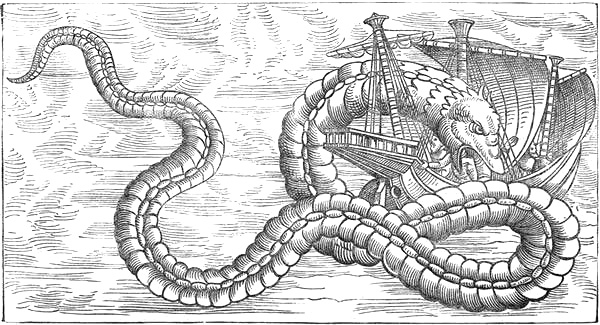
Fig. 67.—Sea-Serpent attacking a Vessel. (From Olaus Magnus.)
Arndt. Bernsen, in his account of the fertility of Denmark and Norway,
says that the sea-snake, as well as the Tvold whale, often sinks both men
and boats; and Pontoppidan was informed by the North traders that the
sea-snake has frequently raised itself up and thrown itself across a boat,
and even across a vessel of some hundred tons burthen, and by its weight
sunk it to the bottom; and that they would sometimes raise their frightful
heads and snap a man out of a boat; but this Pontoppidan does not vouch
for, and, indeed, says that if anything, however light, be thrown at and
touch them they generally plunge into the water or take another course.
Hans (afterwards Bishop) Egede, in his Full and Particular Relation of my
Voyage to Greenland, as a Missionary, in the year 1734, figures and
describes a sea-monster which showed itself on his passage. He says: “On
the 6th of July 1734, when off the south coast of Greenland, a sea-monster
appeared to us, whose head, when raised, was on a level with our main-top.
Its snout was long and sharp, and it blew water almost like a whale; it
had large broad paws; its body was covered with scales; its skin was rough
and uneven; in other respects it was as a serpent; and when it dived, its
tail, which was raised in the air, appeared to be a whole ship’s length
from its body.”
In another work, The New Survey of Old Greenland, Egede speaks of the
same monster, with the addition that the body was full as thick and as big
in circumference as the ship that he sailed in. The drawing (which I
reproduce, Fig. 68) appears to have been taken by another missionary, Mr.
Bing, who stated that the creature’s eyes seemed red, and like burning
fire. The paws mentioned by Egede were probably paddles like those of the
Liassic Saurians.
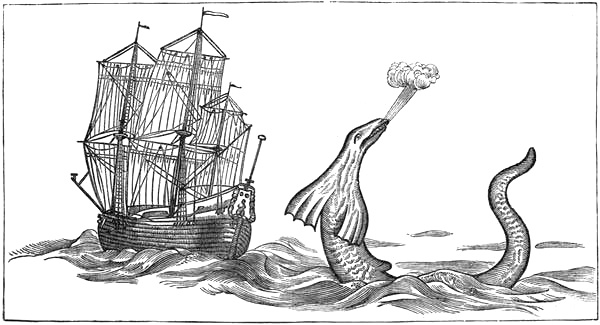
Fig. 68.—Sea-Serpent seen by Hans Egede, in 1734, off the South Coast of Greenland.
Pontoppidan considers this to be a different monster from the Norway
sea-serpent, of which he gives a figure furnished him by the Rev. Hans
Strom, made from descriptions of two of his neighbours at Herroe, who had
been eye-witnesses of its appearance.
Lawrance de Ferry, a captain in the Norwegian Navy, and commander in
Bergen in Pontoppidan’s time, actually wounded one of the Norwegian
serpents, and made two of his men, who were with him in the boat at the
time, testify upon oath in court to the truth of the statement which he
himself made, as follows:—
“The latter end of August, in the year 1746, as I was on a voyage, in my
return from Trundheim, in a very calm and hot day, having a mind to put in
at Molde, it happened that when we were arrived with my vessel within six
English miles of the aforesaid Molde, being at a place called Jule-Næfs,
as I was reading in a book, I heard a kind of murmuring voice from amongst
the men at the oars, who were eight in number, and observed that the man
at the helm kept off from the land. Upon this I inquired what was the
matter; and was informed that there was a sea-snake before us. I then
ordered the man at the helm to keep to the land again, and to come up with
this creature, of which I had heard so many stories. Though the fellows
were under some apprehensions, they were obliged to obey my orders. In the
meantime this sea-snake passed by us, and we were obliged to tack the
vessel about, in order to get nearer to it. As the snake swam faster than
we could row, I took my gun, that was ready charged, and fired at it; on
this he immediately plunged under the water. We rowed to the place where
it sank down (which in the calm might be easily observed) and lay upon our
oars, thinking it would come up again to the surface; however, it did not.
When the snake plunged down, the water appeared thick and red; perhaps
some of the shot might wound it, the distance being very little. The head
of this snake, which it held more than two feet above the surface of the
water, resembled that of a horse. It was of a greyish colour, and the
mouth was quite black and very large. It had black eyes and a long white
mane,[255] that hung down from the neck to the surface of the water.
Besides the head and neck, we saw seven or eight folds or coils of this
snake, which were very thick, and, as far as we could guess, there was
about a fathom distance between each fold.—Bergen, 1751.”
Pontoppidan remarks on the peculiarity of spouting water from the nostrils
exhibited by the creature seen by Hans Egede, and states that he had not
known it spoken of in any other instance.

Fig. 69.—The Norwegian Sea-Serpent. (According to Pontoppidan.)
He also remarks that the Norway sea-snakes differ from the Greenland ones
with regard to the skin, which in the former is as smooth as glass, and
has not the least wrinkle, except about the neck, where there is a kind of
mane, which looks like a parcel of sea-weeds hanging down to the water.
Summarising the accounts which had reached him, he estimates the length at
about one hundred fathoms or six hundred English feet. He states that it
lies on the surface of the water (when it is very calm) in many folds, and
that these are in a line with the head; some small parts of the back are
to be seen above the surface of the water when it moves or bends, which at
a distance appear like so many casks or hogsheads floating in a line,
with a considerable distance between each of them.
“The creature does not, like the eel or land-snake, taper gradually to a
point, but the body, which looks to be as big as two hogsheads, grows
remarkably small at once just where the tail begins. The head in all the
kinds has a high and broad forehead, but in some a pointed snout, though
in others that is flat, like that of a cow or horse, with large nostrils,
and several stiff hairs standing out on each side like whiskers.”
“They add that the eyes of this creature are very large, and of a blue
colour, and look like a couple of bright pewter plates. The whole animal
is of a dark brown colour, but it is speckled and variegated with light
streaks or spots that shine like tortoise-shell. It is of a darker hue
about the eyes and mouth than elsewhere, and appears in that part a good
deal like those horses which we call Moors-heads.”
He mentions two places, one at Amunds Vaagen in Nordfiord, the other at
the island of Karmen, where carcases of it had been left at high water. He
supposes it to be viviparous.
In an account of the Laplanders of Finmark, by Knud Leems, with the notes
of Gunner, Bishop of Drontheim, (Copenhagen, 1767, 4to., in Danish and
Latin),[256] I find, “The Sea of Finmark also generates the snake or
marine serpent, forty paces long, equalling in the size of the head the
whale, in form the serpent. This monster has a maned neck, resembling a
horse, a back of a grey colour, the belly inclining to white.
“On the canicular days, when the sea is calm, the marine serpent usually
comes up, winding into various spirals, of which some are above, the
others below, the water. The seamen very much dread this monster. Nor
while he is coming up do they easily entrust themselves to the dangers of
the deep.”
Mr. J. Ramus records a large sea-snake which was seen in 1687 by many
people in Dramsfiorden. It was in very calm weather, and so soon as the
sun appeared, and the wind blew a little, it shot away just like a coiled
cable that is suddenly thrown out by the sailors; and they observed that
it was some time in stretching out its many folds.
Captain (afterwards Sir Arthur) de Capell Brooke[257] collected all
accounts he could, during his journey to the North Cape, respecting the
sea-serpent, with the following results:—
“As I had determined on arriving at the coast to make every inquiry
respecting the truth of the accounts which had reached England the
preceding year, of the sea-serpent having recently been seen off this part
of Norway, I shall simply give the different reports I received during my
voyage to the North Cape, leaving others to their own conclusions, and
without expressing, at least for the present, my opinion respecting them.
“The fisherman at Pêjerstad said a serpent was seen two years ago in the
Folden-Fjord, the length of which, as far as it was visible, was sixty
feet.”
At Otersoen, the Postmaster, Captain Schielderup, who had formerly been in
the Norwegian sea service, and seemed a quick intelligent man, stated that
the serpent had actually been off the island for a considerable length of
time during the preceding summer, in the narrow parts of the sound,
between this island and the continent, and the description he gave was as
follows:—
“It made its appearance for the first time in the month of July 1849 off
Otersoen. Previous to this he had often heard of the existence of these
creatures, but never before believed it. During the whole of that month
the weather was excessively sultry and calm; and the serpent was seen
every day nearly in the same part of the Sound.
“It continued there while the warm weather lasted, lying motionless, and
as if dozing, in the sunbeams.
“The number of persons living on the island, he said, was about thirty;
the whole of whom, from motives of curiosity, went to look at it while it
remained. This was confirmed to me by subsequent inquiries among the
inhabitants, who gave a similar account of it. The first time that he saw
it he was in a boat, at the distance of two hundred yards. The length of
it he supposes to have been about three hundred ells or six hundred feet.
Of this he could not speak accurately; but it was of considerable length,
and longer than it appeared, as it lay in large coils above the water to
the height of many feet. Its colour was greyish. At the distance at which
he was, he could not ascertain whether it were covered with scales; but
when it moved it made a loud crackling noise, which he distinctly heard.
Its head was shaped like that of a serpent; but he could not tell whether
it had teeth or not. He said it emitted a very strong odour; and that the
boatmen were afraid to approach near it, and looked on its coming as a bad
sign, as the fish left the coast in consequence! Such were the particulars
he related to me.
“The merchant at Krogoën confirmed in every particular the account of
Captain Schielderup, and that many of the people of Krogoën had witnessed
it.
“On the island of Lekö I obtained from the son of Peter Greger, the
merchant, a young man who employed himself in the fishery, still further
information respecting the sea-serpent. It was in August of the preceding
year, while fishing with others in the Viig or Veg-Fjord, that he saw it.
At that time they were on shore hauling in their nets, and it appeared
about sixty yards distant from them, at which they were not a little
alarmed, and immediately retreated. What was seen of it above water, he
said, appeared six times the length of their boat, of a grey colour, and
lying in coils a great height above the surface. Their fright prevented
them from attending more accurately to other particulars. In fact, they
all fairly took to their heels when they found the monster so near to
them.
“At Alstahoug I found the Bishop of the Nordlands. The worthy prelate was
a sensible and well-informed man, between fifty and sixty years of age. To
the testimony of others respecting the existence of the sea-serpent, I
shall now add that of the Bishop himself, who was an eye-witness to the
appearance of two in the Bay of Shuresund or Sörsund, on the Drontheim
Fjord, about eight Norway miles from Drontheim. He was but a short
distance from them, and saw them plainly. They were swimming in large
folds, part of which were seen above the water, and the length of what
appeared of the largest he judged to be about one hundred feet. They were
of a darkish grey colour; the heads hardly discernible, from their being
almost under water, and they were visible for only a short time. Before
that period he had treated the account of them as fabulous; but it was now
impossible, he said, to doubt their existence, as such numbers of
respectable people since that time had likewise seen them on several
occasions. He had never met with any person who had seen the kraken, and
was inclined to think it a fable.
“During the time that I remained at Hundholm, a curious circumstance
occurred. One day, when at dinner at Mr. Blackhall’s house, and thinking
little of the sea-serpent, concerning which I had heard nothing for some
time, a young man, the master of a small fishing-yacht, which had just
come in from Drontheim, joined our party. In the course of conversation he
mentioned that a few hours before, whilst close to Hundholm, and previous
to his entering the harbour, two sea-snakes passed immediately under his
yacht. When he saw them he was on the deck, and, seizing a handspike, he
struck at them as they came up close to the vessel on the other side, upon
which they disappeared. Their length was very great, and their colour
greyish, but for the very short time they were visible he could not notice
any further particulars.
“He had no doubt of their being snakes, as he called them, and the
circumstance was related entirely of his own accord.”
Captain Brooke sums up the reports he received with the following general
observations:—
“Taking upon the whole a fair view of the different accounts related in
the foregoing pages respecting the sea-serpent, no reasonable person can
doubt the fact of some marine animal of extraordinary dimensions, and in
all probability of the serpent tribe, having been repeatedly seen by
various persons along the Norway and Finmark coasts. These accounts, for
the most part, have been given verbally from the mouths of the fishermen,
a honest and artless class of men, who, having no motive for
misrepresentation, cannot be suspected of a wish to deceive; could this
idea, however, be entertained, the circumstance of their assertions having
been so fully confirmed by others, in more distant parts, would be
sufficient to free them from any imputation of this kind.
“The simple facts are these: In traversing a space of full seven hundred
miles of coast, extending to the most northern point, accounts have been
received from numerous persons respecting the appearance of an animal
called by them a sea-serpent. This of itself would induce some degree of
credit to be given to it; but when these several relations as to the
general appearance of the animal, its dimensions, the state of the weather
when it was seen, and other particulars, are so fully confirmed, one by
the other, at such considerable intervening distances, every reasonable
man will feel satisfied of the truth of the main fact. Many of the
informants, besides, were of superior rank and education; and the opinions
of such men as the Amtmand (Governor) of Finmark, Mr. Steen, the clergyman
of Carlsö, Prosten (Dean) Deinboll of Vadsö, and the Bishop of Nordland
and Finmark, who was even an eye-witness, ought not to be disregarded.
“The Bishop of Nordland has seen two of them about eight miles from
Drontheim, the largest being apparently one hundred feet, and, in 1822,
one as bulky as an ox, and a quarter of a mile in length, appeared off the
island of Sorö, near Finmark, and was seen by many people.”
Not having the Zoologist at hand, I now quote a resumé of short
notices extracted from it, contained in the Illustrated London News for
October 28, 1848, as follows:—
“Our attention has been drawn to the Zoologist for the past year,
wherein are several communications tending to authenticate the existence
of the great sea-serpent. Thus, in the number for February 1847, we find
paragraphs quoted from the Norse newspapers stating that in the
neighbourhood of Christiansund and Molde, in the province of Romsdal, in
Norway, several highly respectable and credible witnesses have attested
the seeing of the serpent. In general, they state that it has been seen in
the larger Norwegian fjords, seldom in the open sea. In the large bight of
the sea at Christiansund it has been seen every year, though only in the
warmest season, in the dog days, and then only in perfectly calm weather
and unruffled water.
“Its length is stated at about forty-four feet, and twice as thick as a
common snake, in proportion to the length. The front of the head was
rather pointed, the eyes sharp, and from the back of the head commenced a
mane like that of a horse. The colour of the animal was a blackish brown.
It swam swiftly, with serpentine movements like a leech. One of the
witnesses describes the body to be two feet in diameter, the head as long
as a brandy anker (ten-gallon cask) and about the same thickness, not
pointed, but round. It had no scales, but the body quite smooth. The
witness acknowledged Pontoppidan’s representation to be like the serpent
he saw.”
“The writer of this article received letters from Mr. Soren Knudtzon,
stating that a sea-serpent had been seen in the neighbourhood of
Christiansund by several people; and from Dr. Hoffmann, a respectable
surgeon in Molde, stating that, lying on a considerable fjord to the south
of Christiansund, Rector Hammer, Mr. Krabt, curate, and several persons,
very clearly saw, while on a journey, a sea-serpent of very considerable
size.
“Four other persons saw a similar animal, July 28th, 1845.
“The next communication, dated Sund’s Parsonage, August 31st, 1846,
records the appearance of a supposed sea-serpent, on the 8th, in the
course between the islands of Sartor Leer and Tös. Early on this day, just
as the steamer Biörgvin passed through Rogne Fjord, towing a vessel to
Bergen, Daniel Solomonson, a cotter, saw a sea-monster swimming from Rogne
Fjord in a westerly direction towards his dwelling at Grönnevigskiæset, in
the northern part of the parish of Sund. The head appeared like a Færing
boat (about twenty feet long) keel uppermost; and from behind it raised
itself forward in three, and sometimes four and five undulations, each
apparently about twelve feet long. On the same morning a lad, out fishing
in the Rogne Fjord, saw a serpent, which he describes to have been sixty
feet long.”
For further information on the Norwegian sea-serpent, I am indebted to the
excellent chapter, devoted to the question generally, contained in Mr.
Gosse’s Romance of Natural History, First Series, from which I transfer,
without abbreviation, a statement made by the Rev. W. Deinboll,
Archdeacon of Molde:—
“On the 28th of July 1845, J. C. Lund, bookseller and printer; G. S.
Krogh, merchant; Christian Flang, Lund’s apprentice; and John Elgensen,
labourer, were out on Romsdalfjord, fishing. The sea was, after a warm
sunshiny day, quite calm. About seven o’clock in the afternoon, a little
distance from shore, near the ballast place and Molde Hove, they saw a
large marine animal which slowly moved itself forward, as it appeared to
them, with the help of two fins on the fore-part of the body nearest the
head, which they judged from the boiling of the water on both sides of it.
The visible part of the body appeared to be between forty and fifty feet
in length, and moved in undulations like a snake. The body was round and
of a dark colour, and seemed to be several ells[258] in thickness. As they
discerned a waving motion in the water behind the animal, they concluded
that part of the body was concealed under water. That it was one connected
animal they saw plainly from its movement. When the animal was about one
hundred yards from the boat, they noticed tolerably correctly its
fore-part, which ended in a sharp snout; its colossal head raised itself
above the water in the form of a semi-circle; the lower part was not
visible. The colour of the head was dark brown, and the skin smooth. They
did not notice the eyes, or any mane or bristles on the throat. When the
serpent came about a musket-shot near, Lund fired at it, and was certain
the shots hit it in the head. After the shot he dived but came up
immediately; he raised his head like a snake preparing to dart on its
prey. After he had turned and got his body in a straight line, which he
appeared to do with great difficulty, he darted like an arrow against the
boat. They reached the shore, and the animal, perceiving it had come into
shallow water, dived immediately, and disappeared in the deep.”
Mr. Gosse further quotes a statement made by an Englishman, writing under
the signature of “Oxoniensis” in the Times of November 4th, 1848, to the
effect that—
“A parish priest, residing on Romsdalfjord, about two days’ journey south
of Drontheim, an intelligent person, whose veracity I have no reason to
doubt, gave me a circumstantial account of one which he had himself seen.
It rose within thirty yards of the boat in which he was, and swam parallel
with it for a considerable time. Its head he described as equalling a
small cask in size, and its mouth, which it repeatedly opened and shut,
was furnished with formidable teeth; its neck was smaller, but its body,
of which he supposed that he saw about half on the surface of the water,
was not less in girth than that of a moderate-sized horse. Another
gentleman, in whose house I stayed, had also seen one, and gave a similar
account of it; it also came near his boat upon the fjord, when it was
fired at, upon which it turned and pursued them to the shore, which was
luckily near, when it disappeared. They expressed great surprise at the
general disbelief attached to the existence of these animals amongst
naturalists, and assured me that there was scarcely a sailor accustomed to
those inland lakes who had not seen them at one time or other.”
The Rev. Alfred C. Smith, M.A., a naturalist, who visited Norway in 1850,
summarises the result of his investigations in the words: “and I cannot
withhold my belief in the existence of some huge inhabitant of those
northern seas, when, to my mind, the fact of his existence has been so
clearly proved by numerous eye-witnesses, many of whom were too
intelligent to be deceived, and too honest to be doubted.”
Passing from these numerous narratives, which are distinguished for a
remarkable agreement in the main characteristic described, I will proceed
to some of those whose scene lies on our own coast.
In 1809, Mr. McLean, the parish minister of Eigg, communicated to Dr.
Neil, the Secretary of the Wernerian Society, the following
statement:—[259]
“I saw the animal of which you inquire, in June 1808, on the coast of
Coll. Rowing along that coast, I observed, at about the distance of half a
mile, an object to windward, which gradually excited astonishment. At
first view it appeared like a small rock; but knowing that there was no
rock in that situation, I fixed my eyes closely upon it. Then I saw it
elevated considerably above the level of the sea, and, after a slow
movement, distinctly perceived one of its eyes. Alarmed at the unusual
appearance and magnitude of the animal, I steered so as to be at no great
distance from the shore. When nearly in a line between it and the shore,
the monster, directing its head, which still continued above water,
towards us, plunged violently under water. Certain that he was in chase of
us, we plied hard to get ashore. Just as we leapt out on a rock, and had
taken a station as high as we conveniently could, we saw it coming rapidly
under water towards the stern of our boat. When within a few yards of it,
finding the water shallow, it raised its monstrous head above water, and,
by a winding course, got, with apparent difficulty, clear of the creek
where our boat lay, and where the monster seemed in danger of being
embayed. It continued to move off, with its head above water and with the
wind, for about half a mile before we lost sight of it. Its head was
somewhat broad, and of form somewhat oval; its neck somewhat smaller; its
shoulders, if I can so term them, considerably broader, and thence it
tapered towards the tail, which last it kept pretty low in the water, so
that a view of it could not be taken so distinctly as I wished. It had no
fins that I could perceive, and seemed to me to move progressively by
undulation up and down. Its length I believed to be between seventy and
eighty feet. When nearest to me it did not raise its head wholly above
water, so that, the neck being under water, I could perceive no shining
filaments thereon, if it had any. Its progressive motion under water I
took to be very rapid. About the time I saw it, it was seen near the Isle
of Canna. The crews of thirteen fishing-boats, I am told, were so much
terrified at its appearance, that they, in a body, fled from it to the
nearest creek for safety. On the passage from Rum to Canna, the crew of
one boat saw it coming towards them, with the wind, and its head high
above water. One of the crew pronounced the head as large as a little
boat, and its eye as large as a plate. The men were much terrified, but
the monster offered them no molestation.”
I next extract, from the pages of the Inverness Courier, some very
pertinent remarks upon a description of the sea-monster seen by the Rev.
Messrs. McRae and Twopeny, contained in the Zoologist, and I add the
article there referred to. I had the advantage of hearing from a gentleman
related to Mr. McRae that he could substantiate his statement, having
himself about the same time, and in that locality, observed the same
appearance, though at a greater distance off.
The following is the article in the Inverness Courier:—
“We are glad to see that the two gentlemen who favoured us last autumn
with an account of what they believed to be a strange animal seen off the
west coast, Inverness-shire, have published in the Zoologist, a monthly
journal of natural history, a careful description of the creature which
they saw, and which seems to resemble the engravings of what is called the
Norwegian sea-serpent. We subjoin the magazine article entire. There is
such a dread of ridicule in appearing publicly in company with this
mysterious and disreputable monster, that we must commend the boldness of
the two clergymen in putting their names to the narrative; especially as
we observe that other observers have not been so courageous, and that
they have been obliged to give some of their information anonymously.
“The huge serpent, if serpent it may be called, invariably appears in
still warm weather, and in no other. There are certain Norwegian fjords
and narrow seas which it frequents, and it is scarcely ever seen in the
open sea. In the present case, the limit in which the animal has been seen
on our coast, is Lochduich to the north and the Sound of Mull to the
south, only about a fifth of the space between Cape Wrath and the Mull of
Kintyre; and it is in that part it should be most looked for. We beg to
draw the attention of our readers on the West Coast to the fact, now
established on indubitable evidence, of the supposed animal having been
seen there last year, and to the possibility of its appearing again in
similar weather this year. If it chances to turn up once more, some full
and accurate account of the phenomenon would certainly be most desirable.”
The following is the article in the Zoologist[260]:—
Appearance of an animal, believed to be that which is called the
Norwegian Sea-serpent, on the Western Coast of Scotland, in August
1872, by the Rev. John McRae, Minister of Glenelg, Inverness-shire,
and the Rev. David Twopeny, Vicar of Stockbury, Kent.
On the 20th of August 1872 we started from Glenelg in a small cutter,
the Leda, for an excursion to Lochourn. Our party consisted, besides
ourselves, of two ladies, F. and K., a gentleman, G. B., and a
Highland lad. Our course lay down the Sound of Sleat, which on that
side divides the Isle of Skye from the mainland, the average breadth
of the channel in that part being two miles.
It was calm and sunshiny, not a breath of air, and the sea perfectly
smooth. As we were getting the cutter along with oars we perceived a
dark mass about two hundred yards astern of us, to the north. While we
were looking at it with our glasses (we had three on board) another
similar black lump rose to the left of the first, leaving an interval
between; then another and another followed, all in regular order. We
did not doubt its being one living creature: it moved slowly across
our wake, and disappeared. Presently the first mass, which was
evidently the head, reappeared, and was followed by the rising of the
other black lumps, as before. Sometimes three appeared, sometimes
four, five, or six, and then sank again. When they rose, the head
appeared first, if it had been down, and the lumps rose after it in
regular order, beginning always with that next the head, and rising
gently; but when they sank, they sank altogether rather abruptly,
sometimes leaving the head visible.
It gave the impression of a creature crooking up its back to sun
itself. There was no appearance of undulation; when the lumps sank,
other lumps did not rise in the intervals between them. The greatest
number we counted was seven, making eight with head, as shown in
sketch No. 1 [two engravings are given]. The parts were separated from
each other by intervals of about their own length, the head being
rather smaller and flatter than the rest, and the nose being very
slightly visible above the water; but we did not see the head raised
above the surface either this or the next day, nor could we see the
eye. We had no means of measuring the length with any accuracy; but
taking the distance from the centre of one lump to the centre of the
next to be six feet, and it could scarcely be less, the whole length
of the portion visible, including the intervals submerged, would be
forty-five feet.
Presently, as we were watching the creature, it began to approach us
rapidly, causing a great agitation in the sea. Nearly the whole of the
body, if not all of it, had now disappeared, and the head advanced at
a great rate in the midst of a shower of fine spray, which was
evidently raised in some way by the quick movement of the animal—it
did not appear how—and not by spouting. F. was alarmed and retreated
to the cabin, crying out that the creature was coming down upon us.
When within about a hundred yards of us it sank and moved away in the
direction of Syke, just under the surface of the water, for we could
trace its course by the waves it raised on the still sea to the
distance of a mile or more. After this it continued at intervals to
show itself, careering about at a distance, as long as we were in that
part of the Sound; the head and a small part only of the body being
visible on the surface; but we did not again, on that day, see it so
near nor so well as at first.
At one time F. and K. and G. B. saw a fin sticking up at a little
distance back from the head, but neither of us were then observing. On
our return the next day we were again becalmed on the north side of
the opening of Lochourn, where it is about three miles wide, the day
warm and sunshiny as before. As we were dragging slowly along in the
afternoon the creature again appeared over towards the south side, at
a greater distance than we saw it the first day. It now showed itself
in three or four rather long lines, as in the sketch No. 2, and looked
considerably longer than it did the day before; as nearly as we could
compute, it looked at least sixty feet in length. Soon it began
careering about, showing but a small part of itself, as on the day
before, and appeared to be going up Lochourn. Later in the afternoon,
when we were still becalmed in the mouth of Lochourn, and by using the
oars had nearly reached the island of Sandaig, it came rushing past us
about a hundred and fifty yards to the south, on its return from
Lochourn. It went with great rapidity, its black head only being
visible through the clear sea, followed by a long trail of agitated
water. As it shot along, the noise of its rush through the water could
be distinctly heard on board. There were no organs of motion to be
seen, nor was there any shower of spray as on the day before, but
merely such a commotion in the sea as its quick passage might be
expected to make. Its progress was equable and smooth, like that of a
log towed rapidly. For the rest of the day, as we worked our way home
northwards through the Sound of Sleat, it was occasionally within
sight of us until nightfall, rushing about at a distance, as before,
and showing only its head, and a small part of its body on the
surface. It seemed on each day to keep about us, and as we were always
then rowing, we were inclined to think it perhaps might be attracted
by the measured sound of the oars. Its only exit in this direction to
the north was by the narrow Strait of Kylerhea, dividing Skye from the
mainland, and only a third of a mile wide, and we left our boat,
wondering whether this strange creature had gone that way or turned
back again to the south. We have only to add to this narrative of what
we saw ourselves, the following instances of its being seen by other
people, of the correctness of which we have no doubt. The ferrymen on
each side of Kylerhea saw it pass rapidly through on the evening of
the 21st, and heard the rush of the water; they were surprised, and
thought it might be a shoal of porpoises, but could not comprehend
their going so quickly.
Finlay McRae, of Bundaloch, in the parish of Kintail, was within the
mouth of Lochourn on the 21st, with other men in his boat, and saw the
creature at about the distance of one hundred and fifty yards. Two
days after we saw it, Alexander Macmillan, boat-builder at Dornie, was
fishing in a boat in the entrance of Lochduich, half-way between
Druidag and Castledonan, when he saw the animal, near enough to hear
the noise, and see the ripple it made in rushing along in the sea. He
says that what seemed its head was followed by four or more lumps, or
“half-rounds,” as he calls them, and that they sometimes rose and
sometimes sank altogether. He estimated its length at not less than
between sixty and eighty feet. He saw it also on two subsequent days
in Lochduich. On all these occasions his brother, Farquhar, was with
him in the boat, and they were both much alarmed, and pulled to the
shore in great haste.
A lady at Duisdale, in Skye, a place overlooking the part of the Sound
which is opposite the opening of Lochourn, said that she was looking
out with a glass when she saw a strange object on the sea, which
appeared like eight seals in a row. This was just about the time that
we saw it. We were also informed that about the same time it was seen
from the island of Eigg, between Eigg and the mainland, about twenty
miles to the south-west of the opening of Lochourn. We have not
permission to mention the names in these two last instances.
John McRae.
David Twopeny.
P.S.—The writers of the above account scarcely expect the public to
believe in the existence of the creature which they saw. Rather than
that, they look for the disbelief and ridicule to which the subject
always gives rise, partly on account of the animal having been
pronounced to be a snake, without any sufficient evidence, but
principally because of the exaggerations and fables with which the
whole subject is beset. Nevertheless, they consider themselves bound
to leave a record of what they saw, in order that naturalists may
receive it as a piece of evidence, or not, according to what they
think it is worth. The animal will very likely turn up on those coasts
again, and it will be always in that “dead season,” so convenient to
editors of newspapers, for it is never seen but in the still warm days
of summer or early autumn. There is a considerable probability that it
has visited the same coasts before.
In the summer of 1871, some large creature was seen for some time
rushing about in Lochduich, but it did not show itself sufficiently
for anyone to ascertain what it was. Also, some years back, a
well-known gentleman of the West Coast, now living, was crossing the
Sound of Mull, from Mull to the mainland, “on a very calm afternoon,
when,” as he writes, “our attention was attracted to a monster which
had come to the surface, not more than fifty yards from our boat. It
rose without causing the slightest disturbance of the sea, or making
the slightest noise, and floated for some time on the surface, but
without exhibiting its head or tail, showing only the ridge of the
back, which was not that of a whale or any other sea animal that I had
ever seen. The back appeared sharp and ridge-like, and in colour very
dark, indeed black, or almost so. It rested quietly for a few minutes,
and then dropped quietly down into the deep, without causing the
slightest agitation. I should say that about forty feet of it,
certainly not less, appeared on the surface.”
It should be noticed that the inhabitants of that Western Coast are
quite familiar with the appearance of whales, seals, and porpoises,
and when they see them they recognise them at once. Whether the
creature which pursued Mr. McLean’s boat off the island of Coll in
1808, and of which there is an account in the Transactions of the
Wernerian Society (vol. i. p. 442), was one of these Norwegian
animals, it is not easy to say. Survivors who knew Mr. McLean, say
that he could quite be relied upon for truth.
The public are not likely to believe in the creature till it is
caught, and that does not seem likely to happen just yet, for a
variety of reasons, one reason being that it has, from all the
accounts given of it, the power of moving very rapidly. On the 20th,
while we were becalmed in the mouth of Lochourn, a steam-launch slowly
passed us, and, as we watched it, we reckoned its rate at five or six
miles an hour. When the animal rushed past us on the next day at about
the same distance, and when we were again becalmed nearly in the same
place, we agreed that it went twice as fast as the steamer, and we
thought that its rate could not be less than ten or twelve miles an
hour. It might be shot, but would probably sink. There are three
accounts of its being shot at in Norway; in one instance it sank, and
in the other two it pursued the boats, which were near the shore, but
disappeared when it found itself getting into shallow water.
It should be mentioned that when we saw this creature, and made our
sketches of it, we had never seen either Pontoppidan’s Natural
History or his print of the Norwegian sea-serpent, which has a most
striking resemblance to the first of our own sketches. Considering the
great body of reasonable Norwegian evidence, extending through a
number of years, which remains after setting aside fables and
exaggerations, it seems surprising that no naturalist of that country
has ever applied himself to make out something about the animal. In
the meantime, as the public will most probably be dubious about
quickly giving credit to our account, the following explanations are
open to them, all of which have been proposed to me, viz.:—porpoises,
lumps of sea-weed, empty herring-barrels, bladders, logs of wood,
waves of the sea, and inflated pig-skins! but as all these theories
present to our mind greater difficulties than the existence of the
animal itself, we feel obliged to decline them.
The editor of the Zoologist adds:—
I have long since expressed my firm conviction that there exists a
large marine animal unknown to us naturalists; I maintain this belief
as firmly as ever.
I totally reject the evidence of published representations; but I do
not allow these imaginary figures to interfere with a firm conviction.
Here, again, we have the same general resemblances, observed under the
same conditions of weather, as in the case of the Norwegian serpent. As to
the pursuit, which may either have been urged from motives of curiosity or
of anger, it is curious to find a remarkable account of a similar
incident in Kotzebue’s Vogages, where it is stated that M. Kriukoff,
while in a boat at Beering’s Island, was pursued by an animal like a red
serpent, and immensely long, with a head like that of a sea-lion, but the
eyes disproportionately large. “It was fortunate,” observed M. Kriukoff,
“we were so near land, or the monster would have swallowed us; he raised
his head far above the surface, and the sea-lions were so terrified, that
some rushed into the water, and others concealed themselves on the shore!”
The last notice of its appearance in British waters is extracted from
Nature, as follows:—
Believing it to be desirable that every well-authenticated observation
indicating the existence of large sea-serpents should be permanently
registered, I send you the following particulars:—
About three P.M. on Sunday, September 3, 1882, a party of gentlemen
and ladies were standing at the northern extremity of Llandudno pier,
looking towards the open sea, when an unusual object was observed in
the water near to the Little Orme’s Head, travelling rapidly westwards
towards the Great Orme. It appeared to be just outside the mouth of
the bay, and would therefore be about a mile distant from the
observers. It was watched for about two minutes, and in that interval
it traversed about half the width of the bay, and then suddenly
disappeared. The bay is two miles wide, and therefore the object,
whatever it was, must have travelled at the rate of thirty miles an
hour. It is estimated to have been fully as long as a large steamer,
say two hundred feet; the rapidity of its motion was particularly
remarked as being greater than that of any ordinary vessel. The colour
appeared to be black, and the motion either corkscrew-like or
snake-like, with vertical undulations. Three of the observers have
since made sketches from memory, quite independently, of the
impression left on their minds, and on comparing these sketches, which
slightly varied, they have agreed to sanction the accompanying outline
as representing as nearly as possible the object which they saw. The
party consisted of W. Barfoot, J.P., of Leicester, F. J. Marlow,
solicitor, of Manchester, Mrs. Marlow, and several others. They
discard the theories of birds or porpoises as not accounting for this
particular phenomenon.
F. T. Mott.
Birstall Hill, Leicester,
January 16th, 1883.
It must also be mentioned that Dr. Hibbert[261] states that the
sea-serpent has been seen in the Shetland seas, and instances one seen off
the Isle Stonness, Valley Island, and Dunvossness.
The first that we hear of the appearance of the sea-serpent in American
waters is of one which appeared on the coast of Maine, in Penobscot Bay,
at intervals, during the thirty years preceding 1809. The Rev. Abraham
Cummings, who reports this, saw it himself at a distance of about eighty
yards, and considered it to be seventy feet long; it was seen by the
British in their expedition to Bagaduse, during the first American war,
and supposed to be three hundred feet long. The next record relates to one
appearing in August 1817, which was frequently seen in the harbour of
Gloucester, Cape Aure, about thirty miles from Boston. It is the subject
of a report, published by a committee appointed by the Linnæan Society of
New England. Dr. Hamilton summarises the results as follows:—
“The affidavits of a great many individuals of unblemished character are
collected, which leaves no room to apprehend anything like deceit. They do
not agree in every minute particular, but in regard to its great length
and snake-like form, they are harmonious.”
Eleven depositions were taken, in which the length was variously estimated
at from fifty to one hundred feet. It was either seen lying perfectly
still, extended upon the surface of the water, or progressing rapidly at
the rate of a mile in two, or at the most three, minutes; the mode of
progression is generally spoken of as vertical undulation. The tenth
deposition states: “On the 20th of June 1815, my boy informed me of an
unusual appearance on the surface of the sea in the Cove. When I viewed it
through the glass, I was in a moment satisfied that it was some aquatic
animal, with the form, motions, and appearance of which I was not
previously acquainted. It was about a quarter of a mile from the shore,
and was moving with great rapidity to the southward; it appeared about
thirty feet in length. Presently it turned about, and then displayed a
greater length, I suppose at least one hundred feet. It then came towards
me very rapidly, and lay entirely still on the surface of the water. His
appearance then was like a string of buoys. I saw thirty or forty of these
protuberances, or bunches, which were about the size of a barrel. The head
appeared six or eight feet long, and tapered off to the size of a horse’s
head. He then appeared about one hundred and twenty feet long; the body
appeared of a uniform size; the colour deep brown. I could not discover
any eye, mane, gills, or breathing holes. I did not see any fins or lips.”
One of the Committee of the Linnæan Society was himself an eye-witness,
and Colonel Perkins, of Boston, published in 1848 a communication which
was a copy of a letter he had written in 1820, detailing his personal
experience in confirmation of the Society’s Report, as follows:—“In a few
moments after my exclamation, I saw, on the opposite side of the harbour,
at about two miles from where I had first seen, or thought I saw, the
snake, the same object, moving with a rapid motion up the harbour, on the
western shore. As he approached us, it was easy to see that his motion was
not that of the common snake, either on the land or in the water, but
evidently the vertical movement of the caterpillar. As nearly as I could
judge, there was visible at a time about forty feet of his body. It was
not, to be sure, a continuity of body, as the form from head to tail
(except as the apparent bunches appeared as he moved through the water)
was seen only at three or four feet asunder. It was very evident, however,
that his length must be much greater than what appeared, as in his
movement he left a considerable wake in his rear. I had a fine glass, and
was within from one-third to half a mile of him. The head was flat in the
water, and the animal was, as far as I could distinguish, of a chocolate
colour. I was struck with an appearance in front of the head like a single
horn, about nine inches to a foot in length, and of the form of a
marline-spike. There were a great many people collected by this time, many
of whom had before seen the same object, and the same appearance. From the
time I first saw him until he passed by the place where I stood, and soon
after disappeared, was not more than fifteen or twenty minutes.
“Subsequent to the period of which I have been speaking, the snake was
seen by several of the crews of our coasting vessels, and in some
instances within a few yards. Captain Tappan, a person well known to me,
saw him with his head above the water two or three feet, at times moving
with great rapidity, and at others slowly. He also saw what explained the
appearance, which I have described, of a horn on the front of the head.
This was doubtless what was observed by Captain Tappan to be the tongue,
thrown in an upright position from the mouth, and having the appearance
which I have given to it.
“One of the revenue cutters, whilst in the neighbourhood of Cape Ann, had
an excellent view of him at a few yards’ distance. He moved slowly; and
upon the approach of the vessel, sank and was seen no more.”
Dr. Hamilton[262] states that an animal of similar appearance was again
seen, in August 1819, off Nahant, Boston, and remained in the
neighbourhood for some weeks. Two hundred persons witnessed it, thirteen
folds were counted, and the head, which was serpent-shaped, was elevated
two feet above the surface. Its eye was remarkably brilliant and
glistening. The water was smooth, and the weather calm and serene. When it
disappeared, its motion was undulatory, making curves perpendicular to
the surface of the water, and giving the appearance of a long moving
string of corks. It appeared again off Nahant in July 1833. “It was first
seen on Saturday afternoon, passing between Egg Rock and the Promontory,
winding his way into Lynn Harbour; and again on Sunday morning, heading
for South Shores. It was seen by forty or fifty ladies and gentlemen, who
insist that they could not have been deceived.”
The Zoologist for May 1847 contains an account of a sea-serpent seen in
Mahone Bay, about forty miles east of Halifax, by five officers of the
garrison, when on a fishing excursion:—“We were surprised by the sight of
an immense shoal of grampuses, which appeared in an unusual state of
excitement, and which in their gambols approached so close to our little
craft that some of the party amused themselves by firing at them with
rifles. At this time we were jogging at about five miles an hour, and must
have been crossing Margaret’s Bay, ‘when suddenly,’ at a distance of from
a hundred and fifty to two hundred yards on our starboard bow, we saw the
head and neck of some denizen of the deep, precisely like those of a
common snake, in the act of swimming, the head so far elevated and thrown
forward by the curve of the neck, as to enable us to see the water under
and beyond it. The creature rapidly passed, leaving a regular wake, from
the commencement of which to the fore part, which was out of water, we
judged in length to be about eighty feet, and this within rather than
beyond the mark. It is most difficult to give correctly the dimensions of
any object in the water. The head of the creature we set down at about six
feet in length, and that portion of the neck which we saw the same; the
extreme length, as before stated, at between eighty and one hundred feet.
The neck in thickness equalled the bole of a moderate-sized tree. The head
and neck of a dark brown or nearly black colour, streaked with white in
irregular streaks. I do not recollect seeing any part of the body.”
Considerable interest was excited in 1848 by the account of a sea-serpent
seen by the captain and officers of Her Majesty’s ship Dædalus while on
her passage from the Cape of Good Hope to St. Helena, in lat. 24° 44′ S.
and long. 9° 22′ E. In this case the usual concomitants of calm weather
and absence of swell are wanting. The official report to the Admiralty is
as follows:—
H.M.S. Dædalus,
Hamoaze, Oct. 11.
Sir,—In reply to your letter of this day’s date, requiring
information as to the truth of a statement published in the Times
newspaper, of a sea-serpent of extraordinary dimensions having been
seen from Her Majesty’s ship Dædalus, under my command, on her
passage from the East Indies, I have the honour to acquaint you, for
the information of my Lords Commissioners of the Admiralty, that at 5
o’clock P.M. on the 6th of August last, in latitude 24° 44′ S. and
longitude 9° 22′ E., the weather dark and cloudy, wind fresh from the
N.W., with a long ocean swell from the S.W., the ship on the port
tack, heading N.E. by N., something very unusual was seen by Mr.
Sartoris, midshipman, rapidly approaching the ship from before the
beam. The circumstance was immediately reported by him to the officer
of the watch, Lieutenant Edgar Drummond, with whom and Mr. William
Barrett, the master, I was at the time walking the quarter-deck. The
ship’s company were at supper.
On our attention being called to the object, it was discovered to be
an enormous serpent, with head and shoulders kept about four feet
constantly above the surface of the sea; and as nearly as we could
approximate by comparing it with the length of what our main
topsail-yard would show in the water, there was at the very least
sixty feet of the animal à fleur d’eau, no portion of which was, in
our perception, used in propelling it through the water, either by
vertical or horizontal undulation. It passed rapidly, but so close
under our lee quarter that had it been a man of my acquaintance I
should have easily recognized his features with the naked eye; and it
did not, either in approaching the ship or after it had passed our
wake, deviate in the slightest degree from its course to the S.W.,
which it held on at the pace of from twelve to fifteen miles per hour,
apparently on some determined purpose. The diameter of the serpent was
about fifteen or sixteen inches behind the head, which was, without
any doubt, that of a snake; and it was never, during the twenty
minutes that it continued in sight of our glasses, once below the
surface of the water; its colour, a dark brown with yellowish white
about the throat. It had no fins, but something like the mane of a
horse, or rather a bunch of sea-weed, washed about its back. It was
seen by the quarter-master, the boatswain’s mate, and the man at the
wheel, in addition to myself and officers above mentioned.
I am having a drawing of the serpent made from a sketch taken
immediately after it was seen, which I hope to have ready for
transmission to my Lords Commissioners of the Admiralty by to-morrow’s
post.
I have, &c.,
Peter M’Quhœ, Capt.
To Admiral Sir W. H. Gage, G.C.B.,
Devonport.
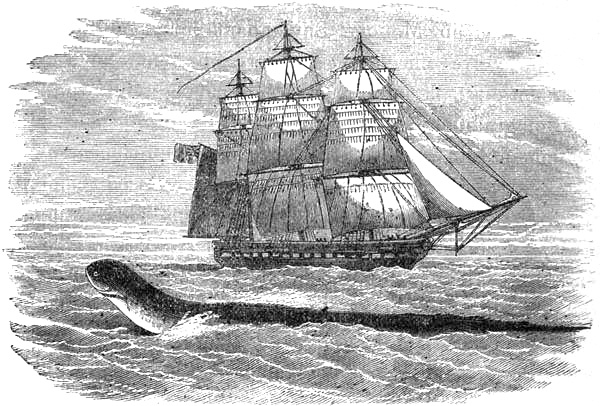
Fig. 70.—Sea-Serpent seen by the Crew of H.M.S. “Dædalus,” in 1848.
This drawing was figured in the Illustrated London News in illustration
of a short but very valuable memoir, and is reproduced upon a smaller
scale here.
A similar, perhaps the same, monster was fallen in with at a slightly
later date, 20° further south, as described in a letter addressed to the
editor of the Globe.
Mary Ann of Glasgow.
Glasgow, Oct. 19, 1848.
Sir,—I have just reached this port, on a voyage from Malta to Lisbon,
and my attention having been called to a report relative to an animal
seen by the master and crew of Her Majesty’s ship Dædalus, I take
the liberty of communicating the following circumstance:—
“When clearing out of the port of Lisbon, upon the 30th of September
last, we spoke the American brig Daphne, of Boston, Mark Trelawny
master; she signalled for us to heave to, which we did, and standing
close round her counter lay to while the mate boarded us with the
jolly boat, and handed a packet of letters, to be despatched per first
steamer for Boston on our arrival in England. The mate told me that
when in lat. 4° 11′ S., long. 10° 15′ E., wind dead north, upon the
20th of September, a most extraordinary animal had been seen. From his
description, it had the appearance of a huge serpent or snake, with a
dragon’s head.
“Immediately upon its being seen, one of the deck guns was brought to
bear upon it, which, having been charged with spike-nails and whatever
other pieces of iron could be got at the moment, was discharged at the
animal, then only distant about forty yards from the ship. It
immediately reared its head in the air, and plunged violently with its
body, showing evidently that the charge had taken effect. The Daphne
was to leeward at the time, but was put about on the starboard tack,
and stood towards the brute, which was seen foaming and lashing the
water at a fearful rate. Upon the brig nearing, however, it
disappeared, and, though evidently wounded, made rapidly off at the
rate of fifteen or sixteen knots an hour, as was judged from its
appearing several times upon the surface. The Daphne pursued for
some time; but the night coming on, the master was obliged to put
about and continue his voyage.
From the description given by the mate, the brute must have been
nearly a hundred feet long, and his account of it agrees in every
respect with that lately forwarded to the Admiralty by the master of
the Dædalus.
James Henderson, Master.
The account of the creature seen by the officers and crew of the Dædalus
excited more than the usual attention given to these stories; for the
professional status of the observers guaranteed at once the veracity of
their statement, and the probability of their judgment being accurate.
Considerable correspondence ensued, including a very masterly attack upon
the identification of the creature by Professor Owen, which will be again
referred to further on. It also elicited another sea-serpent story which
appeared in the Bombay Bi-monthly Times for January 1849.
I see, in your paper of the 30th of December, a paragraph in which a
doubt is expressed of the authenticity of the account given by
Captain M’Quhœ of the great “sea-serpent.” When returning to
India, in the year 1829, I was standing on the poop of the Royal
Saxon, in conversation with Captain Petrie, the commander of that
ship. We were at a considerable distance south-west of the Cape of
Good Hope, in the usual track of vessels to this country, going
rapidly along (seven or eight knots) in fine smooth water. It was in
the middle of the day, and the other passengers were at luncheon, the
man at the wheel, a steerage passenger, and ourselves being the only
persons on the poop. Captain Petrie and myself, at the same instant,
were literally fixed in astonishment by the appearance, a short
distance ahead, of an animal of which no more generally correct
description could be given than that by Captain M’Quhœ. It passed
within thirty-five yards of the ship without altering its course in
the least; but as it came right abreast of us, it slowly turned its
head towards us. Apparently about one-third of the upper part of its
body was above water, in nearly its whole length; and we could see the
water curling up on its breast as it moved along, but by what means it
moved we could not perceive.... We saw this apparently similar
creature in its whole length, with the exception of a small portion of
the tail, which was under water; and by comparing its length with that
of the Royal Saxon (about six hundred feet) when exactly alongside
in passing, we calculated it to be in that, as well as its other
dimensions, greater than the animal described by Captain M’Quhœ. I
am not quite sure of our latitude and longitude at the time, nor do I
exactly remember the date, but it was about the end of July.
R. Davidson,
Superintending Surgeon,
Nagpore Subsidiary Force.
Kamptu,
3rd January 1849.
Again, Lieutenant-Colonel Thomas Steele, of the Coldstream Guards, wrote
to the Zoologist: “I have lately received the following account from my
brother, Captain Steele, 9th Lancers, who, on his way out to India in the
Barham, saw the sea-serpent. Thinking it might be interesting to you, as
corroborating the account of the Dædalus, I have taken the liberty of
sending you the extract from my brother’s letter:—‘On the 28th of August,
in long. 40° E., lat. 37° 16′ S., about half-past two, we had all gone
down below to get ready for dinner, when the first mate called us on deck
to see a most extraordinary sight. About five hundred yards from the ship
there was the head and neck of an enormous snake; we saw about sixteen or
twenty feet out of the water, and he spouted a long way from his head;
down his back he had a crest like a cock’s comb,[263] and was going very
slowly through the water, but left a wake of about fifty or sixty feet, as
if dragging a long body after him. The captain put the ship off her course
to run down to him, but as we approached him he went down. His colour was
green, with light spots. He was seen by everyone on board.’ My brother
is no naturalist; and I think this is the first time the monster has ever
been seen to spout.”
One of the officers of the ship wrote: “On looking over the side of the
vessel I saw a most wonderful sight, which I shall recollect as long as I
live. His head appeared to be about sixteen feet above the water, and he
kept moving it up and down, sometimes showing his enormous neck, which was
surmounted with a huge crest in the shape of a saw. It was surrounded by
hundreds of birds, and we at first thought it was a dead whale. He left a
track in the water like the wake of a boat, and from what we could see of
his head and part of his body, we were led to think he must be about sixty
feet in length, but he might be more. The captain kept the vessel away to
get nearer to him; and when we were within a hundred yards he slowly sank
into the depths of the sea. While we were at dinner he was seen again.”
The Times, of Feb. 5, 1858, contains a statement made by Captain
Harrington, of the ship Castilian, and certified to by his chief and
second officers, as follows:—
“Ship Castilian, Dec. 12, 1857; N.E. end of St. Helena, distant ten
miles. At 6.30 P.M., strong breezes and cloudy, ship sailing about twelve
miles per hour. While myself and officers were standing on the leeside of
the poop, looking towards the island, we were startled by the sight of a
huge marine animal, which reared its head out of the water within twenty
yards of the ship, when it suddenly disappeared for about half a minute,
and then made its appearance in the same manner again, showing us
distinctly its neck and head about ten or twelve feet out of the water.
Its head was shaped like a long nun-buoy, and I suppose the diameter to
have been seven or eight feet in the largest part, with a kind of scroll,
or tuft of loose skin, encircling it about two feet from the top; the
water was discoloured for several hundred feet from its head, so much so
that, on its first appearance, my impression was that the ship was in
broken water, produced, as I supposed, by some volcanic agency since the
last time I had passed the island; but the second appearance completely
dispelled those fears, and assured us that it was a monster of
extraordinary length, which appeared to be moving slowly towards the land.
The ship was going too fast to enable us to reach the masthead in time to
form a correct estimate of its extreme length; but from what we saw from
the deck, we conclude that it must have been over two hundred feet long.
The boatswain and several of the crew who observed it from the topgallant
forecastle, state that it was more than double the length of the ship, in
which case it must have been five hundred feet. Be that as it may, I am
convinced that it belonged to the serpent tribe; it was of a dark colour
about the head, and was covered with several white spots.”
A writer in the New York Sun (I have the clipping, but, unfortunately,
not the date), discussing the best authenticated stories, says: “The Lynn
sea-serpent appears to be the most authentic, the writer having seen
several persons who saw it from the beach, and knowing others personally
or by reputation. The first animal of this kind seen about Lynn was in
1638, and was seen by Dr. John Josselyn; and again another was observed,
in 1819, by Mr. Cabot. Amos Lawrance, one of the pillars of old Boston,
said: ‘I have never had any doubt of the existence of the sea-serpent
since the morning he was seen off Nahant by old Marshal Prince through his
famous masthead spy-glass. For within the next two hours I conversed with
Samuel Cabot and Daniel P. Parker, I think, and one or more persons
besides, who had spent a part of that morning in witnessing its movements.
In addition, Colonel Harris, the commander at Fort Independence, told me
that the creature had been seen by a number of his soldiers while standing
sentry at early dawn, some time before this show at Nahant; and Colonel
Harris believed it as firmly as though the creature were drawn up before
us in State Street, where we then were.’ Such is the history of the Lynn
sea-serpent; and the following is an extract from the report of the
Linnæan Society of Boston, made by Dr. Bigelow and F. C. Gray: ‘The
monster was from eighty to ninety feet long; his head usually carried
about two feet above the water; the body of a dark brown colour, with
thirty or forty more protuberances, compared by some to four-gallon kegs,
by others to a string of buoys, and called, by some, bunches on the back.
Motions very rapid—faster than those of a whale; swimming a mile in three
minutes, and sometimes more, leaving a wake behind him; chasing mackerel,
herrings, and other fish, which were seen jumping out of the water fifty
at a time as he approached. He only came to the surface of the sea in calm
and bright weather. A skilful gunner fired at him from our boat, and,
having taken good aim, felt sure he must have hit him on the head. The
creature turned towards him, then dived under the boat, and reappeared a
hundred yards on the other side.’ In February of 1846 a letter was printed
in the various newspapers, signed by Captain Lawson, giving a description
of a monstrous snake seen by him from his vessel off Capes Charles and
Henry. The length was stated at one hundred feet, and on the back were
seen sharp projections. The head was small in proportion to the length.”
I next append a few short statements which have appeared at various dates
in the public prints.
The News of the World, Sept. 28, 1879, states that Captain J. F. Cox,
master of the British ship Privateer, which arrived at Delaware
breakwater on Sept. 9, from London, says: “On August 5, one hundred miles
west of Brest (France), weather fine and clear, at 5 P.M., as I was
walking the quarter-deck, I saw something black rise out of the water,
about twenty feet, in shape like an immense snake of three feet diameter.
It was about three hundred yards from the ship, coming towards us. It
turned its head partly from us, and went down with a great splash, after
staying up about five seconds, but rose again three times at intervals of
ten seconds, until it had turned completely from us, and was going from us
at a great speed, and making the water boil all round it. I could see its
eyes and shape perfectly. It was like a great eel or snake, but as black
as coal tar, and appeared to be making great exertions to get away from
the ship. I have seen many kinds of fish, in five different oceans, but
was never favoured with a sight of the great sea-snake before.”
The Singapore Daily News, April 6, 1878, in its Australian news quotes
from Wellington (New Zealand), Feb. 26 (this month corresponds with August
north of the Line): “The captain of the steamship Durham reports having
seen a monster serpent off Nerowas Island. Thirty feet of the monster was
visible out of the water. The crew and passengers corroborate the report.”
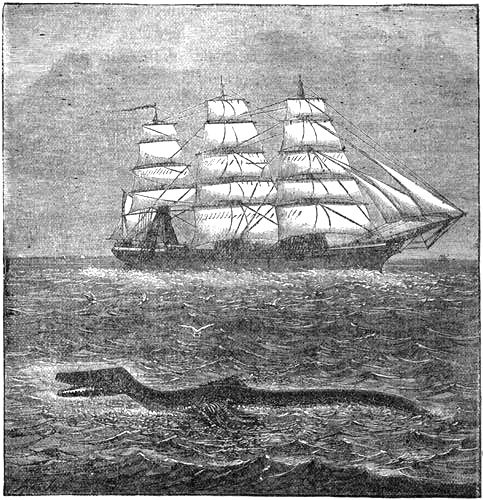
Fig. 71.—Sea-Serpent seen from the Ship “Sacramento,” July
30, 1877.
(From the “Australian Sketcher.”)
The Australian Sketcher for November 24, 1877, states: “Captain W. H.
Nelson, of the American ship Sacramento, which arrived in this port from
New York on October 20, reported that he saw the sea-serpent on his
voyage. The Argus paragraph on the subject stated: ‘The date on which
the creature was seen was on July 30, the ship then being in lat. 31° 59′
N. and long. 37° W. The man at the wheel was the first to observe the
monster, and he at once called Captain Nelson, telling him what he saw;
but the latter, having the same feeling of incredulity with regard to the
sea-serpent as most other people, did not hurry from below. On coming on
deck, however, he was rewarded with a distant glimpse of the supposed
sea-serpent, which the helmsman, for his part, declared he saw quite
plainly. Some forty feet of the monster was alleged to be observable. It
appeared to be about the size of a flour-barrel in girth, and its colour
was yellowish; the head is described as being flat. The eyes were plainly
visible. Captain Nelson is convinced that what he saw was some
extraordinary marine monster.’ We have obtained from John Hart, the man at
the wheel, a pencil sketch of the creature, of which we give an engraving.
The sketch is accompanied with a further description, in which the writer
says: ‘This is a correct sketch of the sea-serpent seen by me while on
board the ship Sacramento, on her passage from New York to Melbourne, I
being at the wheel at the time. It had the body of a very large snake; its
length appeared to me to be about fifty feet or sixty feet. Its head was
like an alligator’s, with a pair of flippers about ten feet from its head.
The colour was of a reddish brown. At the time seen it was lying perfectly
still, with its head raised about three feet above the surface of the sea,
and as it got thirty or forty feet astern, it dropped its head.’”
I confess that I do not attach much weight to this last example, from the
suspicious resemblance which the illustration given in the Sketcher
bears to an alligator, suggesting that possibly such a creature may have
been blown by winds or carried by currents to the position where it was
seen. It is true that Mr. Gosse quotes the size of the largest alligator
on record as only seventeen feet and a half, whereas the estimated length
of the supposed sea-serpent in this instance was from forty to sixty. But
against that may be argued the difficulty of estimating lengths or heights
when you have but a short inspection, and no object immediately near with
which to institute a comparison[264]; while I am by no means certain that
Mr. Gosse’s maximum is correct. Dr. Dennys, of Singapore, has assured me
that some years back an alligator, approaching thirty feet in length,
haunted for some days the small tidal creek which runs through, and for
some miles above, that town; while I very well remember Mr. Gregory, the
Surveyor-General of Queensland, informing me that in the rivers in the
north of that colony there were alligators equalling in length a
whale-boat, say twenty-eight feet.
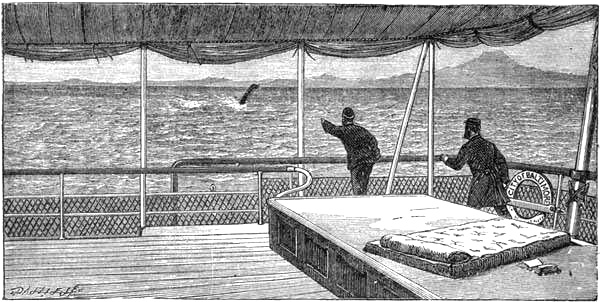
Fig. 72.—Sea-Serpent seen from the S.S. “City of
Baltimore,” in the Gulf of Aden,
Jan. 28, 1879. (From the “Graphic” of April 19, 1879.)
The Graphic of April 19th, 1879, contains a drawing of “a marine monster
seen from S.S. City of Baltimore, in the Gulf of Aden, January 28th.”
The descriptive letter-press is as follows:—
“The following is an abstract of the account given by our correspondent,
Major H. W. I. Senior, of the Bengal Staff Corps, to whom we are indebted
for the sketch from which our engraving is taken: ‘On the 28th January
1879, at about 10 A.M., I was on the poop deck of the steamship City of
Baltimore, in latitude 12° 28′ N., longitude 43° 52′ E. I observed a long
black object a-beam of the ship’s stern on the starboard side, at a
distance of about three-quarters of a mile, darting rapidly out of the
water and splashing in again with a noise distinctly audible, and
advancing nearer and nearer at a rapid pace. In a minute it had advanced
to within half-a-mile, and was distinctly recognisable as the “veritable
sea-serpent.” I shouted out “Sea-serpent! sea-serpent! Call the captain!”
Dr. C. Hall, the ship’s surgeon, who was reading on deck, jumped up in
time to see the monster, as did also Miss Greenfield, one of the
passengers on board. By this time it was only about five hundred yards
off, and a little in the rear, owing to the vessel then steaming at the
rate of about ten knots an hour in a westerly direction. On approaching
the wake of the ship, the serpent turned its course a little way, and was
soon lost to view in the blaze of sunlight reflected on the waves of the
sea. So rapid were its movements, that when it approached the ship’s wake,
I seized a telescope, but could not catch a view, as it darted rapidly out
of the field of the glass before I could see it. I was thus prevented from
ascertaining whether it had scales or not; but the best view of the
monster obtainable, when it was about three cables’ length, that is, about
five hundred yards, distant, seemed to show that it was without scales. I
cannot, however, speak with certainty. The head and neck, about two feet
in diameter, rose out of the water to a height of about twenty or thirty
feet, and the monster opened its jaws wide as it rose, and closed them
again as it lowered its head and darted forward for a dive, reappearing
almost immediately some hundred yards ahead. The body was not visible at
all, and must have been some depth under water, as the disturbance on the
surface was too slight to attract notice, although occasionally a splash
was seen at some distance behind the head. The shape of the head was not
unlike pictures of the dragon I have often seen, with a bull-dog
appearance of the forehead and eye-brow. When the monster had drawn its
head sufficiently out of the water, it let itself drop, as it were, like a
huge log of wood, prior to darting forward under the water.’”
Major Senior’s statement is countersigned by the two persons whom he
mentions as co-witnesses.
When in Singapore, in 1880, I received the personal testimony of Captain
Anderson, at that time chief officer of the Pluto (property of the
Straits Government) and formerly a commander in the P. and O. Company’s
service.
Captain Anderson assured me that he had twice seen large sea-serpents.
Once off Ushant, when he was chief officer of the Delta in 1861. No
account was entered in the log nor any notice sent to the newspapers, for
fear of ridicule. On that occasion the whole ship’s company saw it; it was
five (?) miles distant, and showed fifteen feet of its body out of the
water. It resembled a snake with a large fringe round the neck. It
appeared to be travelling, and moved its head to and fro like a snake. It
never spouted, and was observed for a quarter of an hour.
The second occasion was in the Red Sea, when he was in command of the
Sumatra, on the outward trip in October or November 1877. Off Mocha he
saw an animal, five miles distant, that lifted the body high out of the
water like a snake. All exclaimed, “There is the sea-serpent!” but no
entry was made in the log, or report made of it. The same creature was,
however, seen shortly after by a man-of-war close to Suez and reported.
In 1881 I once more had the personal testimony of an eye-witness.
Mr. J. H. Hoar, of the pilot station, Shanghai, China, informed me that he
saw a sea-serpent some years previously, when he was stationed at Ningpo,
on the China coast-line, a little south of the embouchure of the
Yangtse-kiang. He was at the time on the look-out for a vessel, from the
top of the bank of Lowchew Island, Chinsang, on the southern side of the
island fronting the six-mile passage. This island lies east of Worth
Point. The hill he was on was about one hundred and fifty feet high, the
snake distant about two hundred and fifty yards, the depth of water seven
fathoms. His attention was directed to it by a group of Chinamen calling
out “Shê,” which means “snake.” He saw it lying on the surface of the
water, resembling two masts of a junk end to end, but with a slight
interval. Presently it rose slightly, and then appeared all in one,
extended flat upon the surface of the water. He examined it with his
glass, and noticed the eye, which appeared to be as big as a coffee
saucer, and slate-coloured. The head was flat on the top. He estimated the
length at from one hundred and twenty to one hundred and forty feet.
He learned that it was the third occasion of its being seen in that place
within eight years. An account was published in one of the local journals,
by Mr. Sloman, from the statements of the Chinese observers. Mr. Hoar was
prevented from doing the same by the fear of being ridiculed. I may note
that there is a bay, not far from this spot, among the Chusan islands,
which has long been credited with being the abode of a great sea-dragon,
and in passing over which junks take certain superstitious precautions.
I have little doubt of the identity of the sea-serpent with the sea-dragon
of the Chinese. Dr. Dennys[265] says: “Of course our old friend, the
sea-serpent, turns up on the coasts of China, and the description of him
does not greatly differ from that recorded elsewhere. According to a
popular legend, the Chien Tang river was at one time infested by a great
kiau or sea-serpent, and in 1129 A.D., a district graduate is said to have
heroically thrown himself into the flood to encounter and destroy the
monster. It has been already noted that most of the river gods are
supposed to appear in the form of water-snakes, and that the sea-serpents
noticed in Chinese records have always infested the mouths of rivers.”
The Rev. Mr. Butler, of the Presbyterian Mission in Ningpo, informed me
that a dragon which threatened boats was supposed by the Chinese to infest
a narrow passage called Quo Mung, outside of Chinaye. Formerly there were
two of them in the neighbourhood, which were very furious, and frequently
upset boats. They had to be appeased by a yearly offering of a girl of
fair appearance and perfect body. At last, one of the literati
determined to stop this. He armed himself, and jumped into the water;
blood rose to the surface. He had killed one of the dragons. The other
retired to the narrow place. A temple was erected to the hero at Peach
Blossom ferry.
It may be noted that both the Malays and the Chinese attribute the origin
of ambergris to either a sea-dragon or a sea-serpent. Thus, in the
description of Ambergris Island or Dragon Spittle Island, contained in the
History of the Ming Dynasty, Book 325, from which an extract is given
(in translation) by Mr. W. P. Groeneveldt, in his Notes on the Malay
Archipelago and Malacca, compiled from Chinese sources,[266] we find it
stated that “this island has the appearance of a single mountain, and is
situated in the Sea of Lambri, at a distance of one day and one night from
Sumatra. It rises abruptly out of the sea, which breaks on it with high
waves.”
“Every spring numerous dragons come together to play on this island, and
they leave behind their spittle. The natives afterwards go in canoes to
the spot and collect this spittle, which they take with them.
“The dragon-spittle is at first like fat, of a black and yellow colour,
and with a fishy smell; by length of time it contracts into large lumps;
and these are also found in the belly of a large fish, of the size of the
Chinese peck, and also with a fishy smell. When burnt it has a pure and
delicious fragrance.
“It is sold in the market of Sumatra, one tael, official weight, costing
twelve golden coins of that country, and one cati,[267] one hundred and
ninety-two of such pieces, equal to about nine thousand Chinese copper
cash; and so it is not very cheap.”
Dr. F. Porter Smith[268] states that there can be no doubt that the
costly, odorous, light yellow, gummy substance, found floating on the sea,
or procured from the belly of some large fish in the Indian Ocean, and
known by the Chinese of the present day as lung sin, or dragon’s
spittle, is actually ambergris. The dragon is said to cough it up.
“A similar substance, called kih-tiau-chi, brought from Canton and
Foochow in former days, is said to be the egg of the dragon or a kind of
sea-serpent named kih tiau. The name kih tiau is singularly like the
Greek name for a sea-monster.”
One of the most remarkable accounts of sea-monsters, which I believe to be
thoroughly trustworthy, is of an animal seen in the Malacca Straits in
1876.
The first notice of it appeared in the Straits Times Overland Journal
for September 18th, 1876, in the form of a short editorial.
“Our friend Mr. Henry Lee, of Land and Water, who in his late work has
taken so much trouble to enter into and describe the habits and
peculiarities of the sea-serpent,[269] will be glad to hear that the
passengers and officers of the S.S. Nestor, which arrived here this
morning, are unanimous in the conclusion, and vouch for the fact, that an
extraordinary sea-monster was seen by them between Malacca and Penang on
their voyage to this port, on Monday, about noon. It was about two hundred
and fifty feet long, about fifty feet broad, square-headed, with black and
yellow stripes, closely resembling a salamander.”
This was followed, on the succeeding day, by a letter from the captain.
Sir,—In reference to your paragraph in your yesterday’s issue,
relating to our having seen a sea-monster answering to the popular
notion of a sea-serpent, I am prepared to vouch for the correctness of
the statement already made to you by the doctor and a passenger by my
ship.
Being on the bridge at the time (about 10 A.M.) with the first and
third officers, we were surprised by the appearance of an
extraordinary monster going in our course, and at an equal speed with
the vessel, at a distance from us of about six hundred feet. It had a
square head and a dragon black and white striped tail, and an immense
body, which was quite fifty feet broad when the monster raised it. The
head was about twelve feet broad, and appeared to be occasionally, at
the extreme, about six feet above the water. When the head was placed
on a level with the water, the body was extended to its utmost limit
to all appearance, and then the body rose out of the water about two
feet, and seemed quite fifty feet broad at those times. The long
dragon tail with black and white scales afterwards rose in an
undulating motion, in which at one time the head, at another the body,
and eventually the tail, formed each in its turn a prominent object
above the water.
The animal, or whatever it may be called, appeared careless of our
proximity, and went our course for about six minutes on our starboard
side, and then finally worked round to our port side, and remained in
view, to the delight of all on board, for about half an hour. His
length was reckoned to be over two hundred feet.
John W. Webster,
Commander, S.S. Nestor.
Singapore,
18th September 1876.
Mr. Cameron, proprietor of the journal, subsequently informed me that he
had specially warned Captain Webster of the certain doubt that would be
cast upon his statement, but he still insisted on its publication. It was
confirmed by Mr. H. R. Beaver, a merchant of Singapore, and other persons
who were passengers by the boat.
The same newspaper (Straits Times Overland Journal), on November 2,
1876, had the following extract from the China Mail:—
“It is more than probable that Captain Webster, of the steamer Nestor,
will be ‘interviewed’ very extensively when he reaches a berth in London
Docks. A genuine sea-serpent is not met with every day, and as the
observations made by the officers of the ship have, we understand, been
set down in some formal way before Consul Medhurst at Shanghai, to be
forwarded to the Field, the naturalists will be in a position to pursue
their researches when the captain arrives. Competent authorities are now
of opinion that the part of the monster formerly supposed to have been its
head, must have been a hump; and that its head’s being under water would
account for the supreme contempt with which it treated the passage of the
steamer. The undulating motion of the huge animal would explain the
statement that this knob or hump rose occasionally about six feet out of
the water. The alternate yellow and black stripes which covered all that
could be seen of the body, appear to have conveyed the impression that the
tail was like that of a dragon covered with scales, although that
conclusion need not necessarily be looked upon as certain. If the head of
this unknown ‘shape’ was actually under water, then the length becomes
proportionately greater. It was over two hundred feet long before, it must
now be regarded as measuring, say, two hundred and fifty feet, which, with
forty-five or fifty feet beam, gives a leviathan of something like the
dimensions of an old-fashioned frigate.”
A correspondent of the Celestial Empire, of Shanghai, wrote thus to the
journal:—
Sir,—If it is true that one of those who observed the marine monster
from the Nestor is still here, it is very desirable that he should
give some fuller account of what he saw. Only a sciolist will deny
the possibility of such a beast, and Professor Owen himself has
remarked that the only absolutely incredible part of the accounts of
those who have seen it, is the statement of its vertical sinuosity,
which is impossible to any of the serpent tribe.
The monster seen by the Nestor, however, was probably one of the
Chelonidæ, “the father of all the turtles,” as he is fitly called by
the natives of Sumatra, who fully believe in his existence, and to
whom he occasionally appears. Indeed, Baumgarten, in his Malaysien,
published at Amsterdam in 1829, describes the monster, and estimates
its length and breadth at one hundred and twenty and thirty cubits
respectively, measurements which agree very nearly with those given by
Captain Webster. Baumgarten[270] adds that it is a general belief in
Sumatra (vol. ii. p. 321, Ed. 1820), that whosoever sees him will die
within the year. “This,” he says naively enough, “I have not been able
to prove.”
Mr. David Aitken, of Singapore, wrote to the Daily Times as follows:—
Dear Sir,—Like many others, I have been astonished at the dimensions
given by you of the sea-serpent. They are certainly enormous, and they
far surpass anything I have ever seen or heard of. The largest snake
ever I authentically heard about was one which passed between the
surveying brigs Krishna and Menx when under the command of
Lieutenant Ward, of the Indian Navy, when surveying off the coast of
Sumatra, about the years 1858 and 1859. This monster passed by the
brigs one Sunday morning when they were moored somewhere opposite
Malacca. Its length was variously estimated at from the length of the
Krishna to one hundred feet. Sixty feet was the moderate length set
down for its frame.
In or near the same place, another monster had been seen by a previous
surveying party.
Mr. Stephen Cave, M.P. for Shoreham, in 1861, communicated to Mr. Gosse a
short statement, which throws some light upon the food of the monster. It
is in the form of an extract from his journal written during a voyage to
the West Indies, in 1846, as follows:—
“Thursday, December 10, off Madeira, on board R.M.S. Thomas, made
acquaintance with a Captain Christmas, of the Danish Navy, a proprietor in
Santa Cruz, and holding some office about the Danish court. He told me he
once saw a sea-serpent between Iceland and the Faroe islands. He was
lying-to in a gale of wind, in a frigate of which he had the command, when
an immense shoal of porpoises rushed by the ship as if pursued; and, lo
and behold, a creature with a neck moving like that of a swan, about the
thickness of a man’s waist, with a head like a horse, raised itself slowly
and gracefully from the deep, and, seeing the ship, it immediately
disappeared again, head foremost, like a duck diving. He only saw it for a
few seconds. The part above the water seemed about eighteen feet in
length. He is a singularly intelligent man, and by no means one to allow
his imagination to run away with him.”
Witty journalists had a good time over the publication of the story of the
serpent seen by Captain Drevar, with which I shall wind up my list of
apparitions. As will be seen, however, the captain stuck manfully to his
guns, and I, for one, am of the belief that he really saw the incident
which he narrates. I have not met the captain himself, but I did, in
Singapore, meet with many who had heard the whole story from his own lips,
and whose impression was that he was a truthful man.
The Barque “Pauline” Sea-serpent.
To the Editor of the Calcutta Englishman.
Sir,—As I am not sure that my statement respecting the sea-serpent
reached the Shipping Gazette in London, I enclose a copy that may be
interesting to your numerous readers. I have been sent plenty of
extracts from English papers, nearly all of them ridiculing my
statement. I can laugh and joke on the subject as well as anyone, but
I can’t see why, if people can’t fairly refute my statement, they
should use falsehood to do so. The Daily Telegraph says, “The ribs
of the ill-fated fish were distinctly heard cracking one after the
other, with a report like that of a small cannon; its bellowings
ceased, &c. To use the eloquent words of the principal spectator, it
‘struck us all aghast with terror.’” If the writer knew anything of
sailors, he would not write such bosh. Fear and terror are not in
Jack’s composition; and such eloquent words he leaves to such
correspondents as described the ever-doubtful “man-and-dog-fight.” I
am just as certain of seeing what I described, as that I met the
advertisement that the Telegraph has the largest circulation in the
world staring me at every street corner in London. It is easy for such
a paper to make any man, good, great, or interesting, look ridiculous.
Little wonder is it that my relatives write saying that they would
have seen a hundred sea-serpents and never reported it; and a lady
also wrote that she pitied anyone that was related to anyone that had
seen the sea-serpent. It is quite true that it is a sad thing for any
man to see more, to feel more, and to know more, than his fellows; but
I have some of the philosophy that made O’Connell rejoice in being the
most abused man in the United Kingdom, for he also had the power of
giving a person a lick with the rough side of his tongue. If I had any
such power I would not use it, for contempt is the sharpest reproof;
and this letter is the only notice I have taken of the many absurd
statements, &c. &c. &c.
George Drevar,
Master of the Pauline.
Barque Pauline,
Chittagong, January 15, 1876.
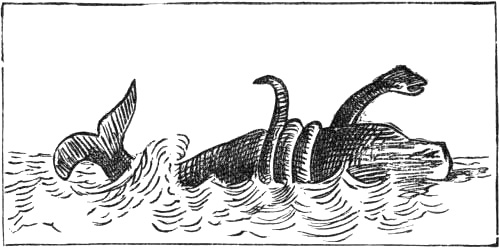
Fig. 73.—Sea-Serpent attacking Whale, as seen by
Capt. Drevar, of the Barque “Pauline,” in 1876.
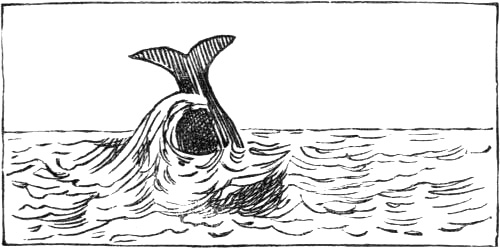
Fig. 74.—Sea-Serpent attacking Whale.—The End of the Struggle.
Barque Pauline, January 8th, 1875, lat. 5° 13′ S., long. 35° W.,
Cape Roque, north-east corner of Brazil distant twenty miles, at 11 A.M.
The weather fine and clear, the wind and sea moderate. Observed some
black spots on the water, and a whitish pillar, about thirty-five feet
high, above them. At the first glance I took all to be breakers, as
the sea was splashing up fountain-like about them, and the pillar, a
pinnacle rock bleached with the sun; but the pillar fell with a
splash, and a similar one rose. They rose and fell alternately in
quick succession, and good glasses showed me it was a monster
sea-serpent coiled twice round a large sperm whale. The head and tail
parts, each about thirty feet long, were acting as levers, twisting
itself and victim around with great velocity. They sank out of sight
about every two minutes, coming to the surface still revolving, and
the struggles of the whale and two other whales that were near,
frantic with excitement, made the sea in this vicinity like a boiling
cauldron; and a loud and confused noise was distinctly heard. This
strange occurrence lasted some fifteen minutes, and finished with the
tail portion of the whale being elevated straight in the air, then
waving backwards and forwards, and laving [lashing?] the water
furiously in the last death-struggle, when the whole body disappeared
from our view, going down head-foremost towards the bottom, where, no
doubt, it was gorged at the serpent’s leisure; and that monster of
monsters may have been many months in a state of coma, digesting the
huge mouthful. Then two of the largest sperm whales that I have ever
seen moved slowly thence towards the vessel, their bodies more than
usually elevated out of the water, and not spouting or making the
least noise, but seeming quite paralysed with fear; indeed, a cold
shiver went through my own frame on beholding the last agonising
struggle of the poor whale that had seemed as helpless in the coils of
the vicious monster as a small bird in the talons of a hawk. Allowing
for two coils round the whale, I think the serpent was about one
hundred and sixty or one hundred and seventy feet long, and seven or
eight in girth. It was in colour much like a conger eel, and the head,
from the mouth being always open, appeared the largest part of the
body.... I think Cape San Roque is a landmark for whales leaving the
south for the North Atlantic.... I wrote thus far, little thinking I
would ever see the serpent again; but at 7 A.M., July 13th, in the
same latitude, and some eighty miles east of San Roque, I was
astonished to see the same or a similar monster. It was throwing its
head and about forty feet of its body in a horizontal position out of
the water as it passed onwards by the stern of our vessel. I began
musing why we were so much favoured with such a strange visitor, and
concluded that the band of white paint, two feet wide above the
copper, might have looked like a fellow-serpent to it, and, no doubt,
attracted its attention.... While thus thinking, I was startled by the
cry of “There it is again,” and a short distance to leeward, elevated
some sixty feet in the air, was the great leviathan, grimly looking
towards the vessel. As I was not sure it was only our free board it
was viewing, we had all our axes ready, and were fully determined,
should the brute embrace the Pauline, to chop away for its backbone
with all our might, and the wretch might have found for once in its
life that it had caught a Tartar. This statement is strictly true, and
the occurrence was witnessed by my officers, half the crew, and
myself; and we are ready, at any time, to testify on oath that it is
so, and that we are not in the least mistaken.... A vessel, about
three years ago, was dragged over by some sea-monster in the Indian
Ocean.
George Drevar,
Master of the Pauline.
Chittagong, January 15, 1876.
Captain George Drevar, of the barque Pauline, appeared on Wednesday
morning at the Police-court, Dale-street, before Mr. Raffles,
stipendiary magistrate, accompanied by some of his officers and part
of the crew of the barque, when they made the following declaration:—
“We, the undersigned, captain, officers, and crew of the barque
Pauline, of London, do solemnly and sincerely declare that on July
8th, 1875, in latitude 5° 13′, longitude 35° W., we observed three
large sperm whales, and one of them was gripped round the body with
two turns of what appeared to be a large serpent. The head and tail
appeared to have a length beyond the coils of about thirty feet, and
its girth eight or nine feet. The serpent whirled its victim round and
round for about fifteen minutes, and then suddenly dragged the whale
to the bottom, head first.
“George Drevar, Master,
“Horatio Thompson,
“Henderson Landello,
“Owen Baker,
“William Lewan.
“Again, on July 13th, a similar serpent was seen about two hundred
yards off, shooting itself along the surface, head and neck being out
of the water several feet. This was seen only by the captain and one
ordinary seaman.
“George Drevar, Master.
“A few moments after, it was seen elevated some sixty feet
perpendicularly in the air by the chief officer and the following able
seamen, Horatio Thompson, Owen Baker, William Lewan. And we make this
solemn declaration, conscientiously believing the same to be true.
“George Drevar, Master,
“William Lewan, Steward,
“Horatio Thompson, Chief Officer,
“John Henderson Landello, 2nd Officer,
“Owen Baker.”
Some confirmation of Captain Drevar’s story is afforded by one quoted by
the Rev. Henry T. Cheeves, in The Whale and his Captors. The author
says:—
“From a statement made by a Kinebeck shipmaster in 1818, and sworn to
before a justice of the peace in Kinebeck county, Maine, it would seem
that the notable sea-serpent and whale are sometimes found in conflict. At
six o’clock in the afternoon of June 21st, in the packet Delia, plying
between Boston and Hallowell, when Cape Ann bore west-south-west about two
miles, steering north-north-east, Captain Shuback West and fifteen others
on board with him saw an object directly ahead, which he had no doubt was
the sea-serpent, or the creature so often described under that name,
engaged in fight with a large whale....
“The serpent threw up its tail from twenty-five to thirty feet in a
perpendicular direction, striking the whale by it with tremendous blows,
rapidly repeated, which were distinctly heard, and very loud, for two or
three minutes; they then both disappeared, moving in a south-west
direction; but after a few minutes reappeared in-shore of the packet, and
about under the sun, the reflection of which was so strong as to prevent
their seeing so distinctly as at first, when the serpent’s fearful blows
with his tail were repeated and clearly heard as before. They again went
down for a short time, and then came up to the surface under the packet’s
larboard quarter, the whale appearing first, and the serpent in pursuit,
who was again seen to shoot up his tail as before, which he held out of
water for some time, waving it in the air before striking, and at the same
time his head fifteen or twenty feet, as if taking a view of the surface
of the sea. After being seen in this position a few minutes, the serpent
and whale again disappeared, and neither was seen after by any on board.
It was Captain West’s opinion that the whale was trying to escape, as he
spouted but once at a time on coming to the surface, and the last time he
appeared he went down before the serpent came up.”
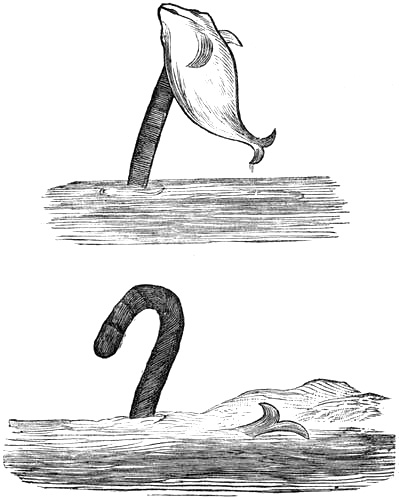
Fig. 75.—Sea-Serpent attacking Whale.
(From Sketches by Capt. Davidson, S.S. “Kiushiu-maru.”)
A remarkable and independent corroboration of modern date comes from the
Japan seas. It was reported both in local papers and in the San
Francisco Californian Mail-Bag for 1879, from which I extract the notice
and the illustrative cuts (Fig. 75).
“The accompanying engravings are fac-similes of a sketch sent to us by
Captain Davidson, of the steamship Kiushiu-maru,[271] and is inserted as
a specimen of the curious drawings which are frequently forwarded to us
for insertion. Captain Davidson’s statement, which is countersigned by his
chief officer, Mr. McKechnie, is as follows:—
“‘Saturday, April 5th, at 11.15 A.M., Cape Satano distant about nine
miles, the chief officer and myself observed a whale jump clear out of the
sea, about a quarter of a mile away.
“‘Shortly after it leaped out again, when I saw there was something
attached to it. Got glasses, and on the next leap distinctly saw something
holding on to the belly of the whale. The latter gave one more spring
clear of the water, and myself and chief officer then observed what
appeared to be a creature of the snake species rear itself about thirty
feet out of the water. It appeared to be about the thickness of a junk’s
mast, and after standing about ten seconds in an erect position, it
descended into the water, the upper end going first. With my glasses I
made out the colour of the beast to resemble that of a pilot fish.’”
There is an interesting story[272] of a fight between a water-snake and a
trout, by Mr. A. W. Chase, Assistant United States Coast Survey, which,
magnis componere parva, may be accepted as an illustration of how a
creature of serpentine form would have to deal with a whale; only, as on
the surface or in mid-water it would be prevented from grasping any rocks
by which to anchor itself, we may readily conceive it holding on with a
tenacious grip of its extended jaws, and drawing itself up to the enemy
until it could either embrace it in its coils or stun it with violent
blows of the tail.[273]
“The trout, at first sight, was lying in mid-water, heading up stream. It
was, as afterwards appeared, fully nine inches in length.... This new
enemy of the trout was a large water-snake of the common variety, striped
black and yellow. He swam up the pool on the surface until over the trout,
when he made a dive, and by a dexterous movement seized the trout in such
a fashion that the jaws of the snake closed its mouth. The fight then
commenced. The trout had the use of its tail and fins, and could drag the
snake from the surface; when near the bottom, however, the snake made use
of its tail by winding it round every stone or root that it could reach.
After securing this tail-hold, it could drag the trout towards the bank,
but on letting go the trout would have a new advantage. This battle was
continued for full twenty minutes, when the snake managed to get its tail
out of the water and clasped around the root of one of the willows
mentioned as overhanging the pool. The battle was then up, for the snake
gradually put coil after coil around the root, with each one dragging the
fish toward the land. When half its body was coiled it unloosed the first
hold, and stretched the end of its tail out in every direction, and
finding another root, made fast; and now, using both, dragged the trout on
the gravel bank. It now had it under control, and, uncoiling, the snake
dragged the fish fully ten feet up on the bank, and, I suppose would have
gorged him,” &c. &c.
Captain Drevar follows Pontoppidan (probably unwittingly) in identifying
the sea-serpent with the leviathan of Scripture, quoting Isaiah xxvii. 1,
“In that day the Lord with his sore and great and strong sword shall
punish leviathan, the piercing serpent, even leviathan that crooked
serpent; and he shall slay the dragon that is in the sea.” As I read the
above passage, it is the dragon that is in the sea, and not the leviathan,
which should be identified with the sea-serpent, unless the two, dragon
and leviathan, are in apposition, which does not seem to be the case.
These various narratives which I have collected are, for the most part,
well attested by the signature, or declaration on oath, of well-known and
responsible people. Captain Drevar, in the small pamphlet which he had
printed for private circulation, says: “Does any thinking person imagine I
could keep command over men with a deliberate lie in our mouths?” and a
similar question may be asked, with, I think, the possibility of only one
reply, in the case of the narratives of Captain M’Quhœ and other
officers and commanders in various navies and merchant vessels, and of the
numerous other reputable witnesses who have affirmed, either as a simple
statement or on oath, that they have seen sundry remarkable sea-monsters.
I used the expression, “I think,” because, of course, there is the
possibility of scepticism.
“Authority, in matters of opinion, divides itself (say) into three
principal classes: there is the authority of witnesses; they testify to
matters of fact. The judgment upon these is commonly, though not always,
easy; but this testimony is always the substitution of the faculties of
others for our own, which, taken largely, constitutes the essence of
authority.
“This is the kind which we justly admit with the smallest jealousy. Yet
not always; one man admits, another refuses, the authority of a
sea-captain and a sailor or two on the existence of a sea-serpent.”[274]
I, for my part, belong to the former of these two categories. I believe in
the statements that I have recorded, and in the following reasoning
address only those who do likewise.
That mistakes have occasionally occurred is undoubted. Mr. Gosse records
two instances in which long patches of sea-weed so far excited the
imagination of captains of vessels as to cause them to lower boats and
proceed to the attack.
The credibility of ghost stories generally is much affected when supposed
apparitions are investigated and traced to some simple cause; and the
hypersceptical may argue on parallel grounds that the transformation, in
some few instances, of a supposed sea-serpent into sea-weed, or the
admission of the plausible suggestion that it has been simulated by a
seal, a string of porpoises, or some other very ordinary animals, largely
affects the whole question.
And this would undoubtedly be the case if the conditions of the several
examples were at all similar. But the hesitation or temporary
misapprehension of captains or crews, in a thousand instances, as to the
nature of a string of weed, supine on the surface, and lashed into
fantastic motion by the surge of the ocean waves, has absolutely no
bearing on the positive stories of a creature which is seen in calm fjords
and bays to roll itself coil after coil, uplift its head high above the
water, exhibit capacious jaws armed with teeth, conspicuous eyes, and paws
or paddles, which pursues and menaces boats, presents a tangible object to
a marksman, and when struck disappears with a mighty splash.
The probability of a gigantic seal, or of a string of porpoises, being
mistaken for a sea-serpent by post-captains and their officers in the Navy
is small, but becomes almost, if not quite, impossible when the observers
are fishermen on coasts like those of Norway, who have been in the habit
of seeing seals and porpoises almost every day of their lives. We may,
therefore, freely grant that occasional mistakes have arisen, just as we
have admitted that undoubtedly many hoaxes have been indulged in.
A rational and commonplace explanation is quite possible in some cases,
as, for example, in that of a creature of abnormal appearance seen by the
crew of Her Majesty’s yacht, the Osborne, in the Mediterranean, which
was suggested, with great probability, to have been, if I remember
correctly, some species of shark; while the supposed sea-serpent, washed
up on the Isle of Stronsa, in 1808, proved, on scientific examination, to
be a shark of the genus Selache, probably belonging to the species known
as “the barking shark.”
The great oceanic bone shark, known to few except whalers, which has been
stated to reach as much as sixty feet in length, may also occasionally
have originated a misconception; and there must be still remaining in the
depths of the ocean undescribed species of fish, of bizarre form, and
probably gigantic size, the occasional appearance of which would puzzle an
observer.
For example, in November 1879, an illustration was given in the Graphic
of “another marine monster,” professing to be a sketch in the Gulf of Suez
from H.M.S. Philomel, accompanied by the following descriptive
letter-press:—
“This strange monster,” says Mr. W. J. Andrews, Assistant Paymaster,
H.M.S. Philomel, “was seen by the officers and ship’s company of this
ship at about 5.30 P.M. on October 14, when in the gulf of Suez, Cape
Zafarana bearing at the time N.W. seventeen miles, lat. 28° 56′ N., long.
32° 54′ E.
“When first observed it was rather more than a mile distant on the port
bow, its snout projecting from the surface of the water, and strongly
marked ripples showing the position of the body. It then opened its jaws,
as shown in the sketch, and shut them again several times, forcing the
water from between them as it did so in all directions in large jets. From
time to time a portion of the back and dorsal fin appeared at some
distance from the head. After remaining some little time in the
above-described position, it disappeared, and on coming to the surface
again it repeated the action of elevating the head and opening the jaws
several times, turning slowly from side to side as it did so.
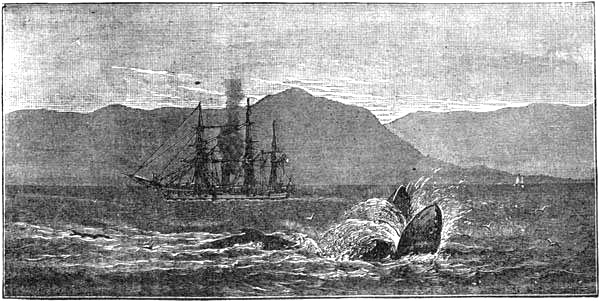
Fig. 76.—Another Marine Monster. A Sketch in the Gulf of
Suez, from
H.M.S. “Philomel,” Oct. 14, 1879. (From the “Graphic,” Nov. 1879.)
“On the approach of the ship the monster swam swiftly away, leaving a
broad track like the wake of a ship, and disappeared beneath the waves.
“The colour of that portion of the body that was seen was black, as was
also the upper jaw. The lower jaw was grey round the mouth, but of a
bright salmon colour underneath, like the belly of some kinds of lizard,
becoming redder as it approached the throat. The inside of the mouth
appeared to be grey with white stripes, parallel to the edges of the jaw,
very distinctly marked. These might have been rows of teeth or of some
substance resembling whalebone. The height the snout was elevated above
the surface of the water was at least fifteen feet, and the spread of the
jaws quite twenty-five feet.”
Strangely enough, a proximate counterpart of this fish, but of mimic size,
was made known to science in 1882. My attention was called by Mr. Streich,
of the German Consulate in Shanghai, to a description of this in the
Daheim, an illustrated family paper, published in Leipzig, with an
illustrative figure, from which I inferred that the monster seen by the
crew of the Philomel was only a gigantic and adult specimen of a species
belonging to the same order, perhaps to the same genus, as the
Eurypharynx, adapted to live in the depths of the ocean, and only
appearing upon the surface rarely and as the result of some abnormal
conditions. I give fac-similes of both engravings, in order that my
readers may draw their own comparison. The letter-press of the Daheim is
as follows:—
“A New Fish.[275]
“The deep-sea explorations of last year, which extended over eight
thousand metres in depth, brought to light some very extraordinary
animals, of which, up to the present date, we have no idea. The most
curious one was found by the French steamer Le Travailleur, on which
there was a staff of naturalists, and of the number was M. Milne Edwards.
They were entirely devoted to deep-sea dredging.
“Between Morocco and the Canary Islands, at two thousand three hundred
metres depth, the dredge caught a most wonderful animal, which at the
first glance nobody thought to be a fish. This fish, of which we give
here a picture, dwells on the bottom of the sea where the water is +5°
Celsius,[276] in a kind of red slime composed of the shells of small
Globigerinæ. On account of its curious mouth it has been called
Eurypharynx Pelicanoides, i.e. the Pelican-like Broad-jaws. This
creature is distinguished from all its class by the peculiar construction
of its mouth, its under jaw being of a structure different from that of
any other fish, possessing only two small teeth and a big pouch of most
expansible skin, similar to the sac which a pelican has on its under jaw.
In this sac it (the Broad-jaw) collects its food, and as its stomach is of
very small dimensions, we may, from analogy with other fishes, conclude
that it digests partly in this sac.
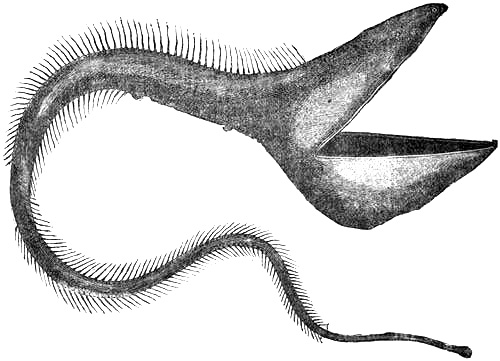
Fig. 77.—Eurypharynx Pelicanoides. (From the Daheim.)
“The swimming apparatus of this fish is not much developed, and reduced to
a number of spines erect from the back and the belly.
“The pectoral fins, which are immediately behind the eye, are also very
small, so that we may conclude from this that this fish does not move
much, and is not a good swimmer.
“It only inhabits the bottom of the sea. Its body decreases gradually
backwards till it finishes in a string-like tail. The organs for breathing
are not much developed. Six slits (gill apertures?) allow the water to
enter.
“The colour of the fish (the size of which we do not find in our
authority) is velvet black.”
Before proceeding further I must point out that we may dismiss from our
minds the possibility of the so-called sea-serpent being merely a large
example of those marine serpents of which several species and numerous
individuals are known to exist on the coast of many tropical countries,
for these are rarely more than from four to six feet in length, although
Dampier[277] mentions one which he saw on the northern coast of Australia,
which was long (but the length is not specified) and as big as a man’s
leg. He gives a curious instance of these biters being bit, which he
observed not far from Scoutens Island, off New Guinea:—
“On the 23rd we saw two snakes, and the next morning another passing by
us, which was furiously assaulted by two fishes that had kept in company
five or six days. They were shaped like mackerel, and were about that
bigness and length, and of a yellow-greenish colour. The snake swam away
from them very fast, keeping his head above water. The fish snapped at his
tail; but when he turned himself that fish would withdraw and another
would snap; so that by turns they kept him employed. Yet he still defended
himself, and swam away at a great pace, till they were out of sight.”
Leguat[278] speaks of a marine serpent, over sixty pounds in weight, which
he and his comrades in misfortune captured and tasted, when marooned by
order of the Governor of the Mauritius on some small island off the
harbour, about six miles from the shore. He says:—
“It was a frightful sea-serpent, which we in our great simplicity took for
a large lamprey or eel. This animal seemed to us very extraordinary, for
it had fins, and we knew not that there were any such creatures as
sea-serpents. Moreover, we had been so accustomed to discover creatures
that were new to us, both at land and at sea, that we did not think this
to be any other than an odd sort of eel that we never had seen before, yet
which we could not but think more resembled a snake than an eel. In a
word, the monster had a serpent or crocodile’s head, and a mouth full of
hooked, long and sharp teeth.... When our purveyors came we related to
them what had happened to us, and showed them the eel’s head, but they
only said they had never seen the like.”
In spite of Leguat’s impression, I think it was only some species of
conger eel.
Marine serpents are abundant on the Malay coast, and particularly so in
the Indian Ocean. Niebuhr says:—
“In the Indian Ocean, at a certain distance from land, a great many
water-serpents, from twelve to fifteen inches in length, are to be seen
rising above the surface of the water. When these serpents are seen they
are an indication that the coast is exactly two degrees distant. We saw
some of these serpents, for the first time, on the evening of the 9th of
September; on the 11th we landed in the harbour of Bombay.”[279]
These sea-snakes are reputed to be mostly, if not entirely, venomous.
Their motion in the water is by undulation in a horizontal, not in a
vertical, direction; they breathe with lungs; their home is on the
surface, and they would perish if confined for any considerable period
beneath it.

Fig. 78.—Scoliophis Atlanticus. Killed on the Sea-shore
near Boston, in 1817,
and at that time supposed to be the young of the Sea-Serpent.
It is an open question whether conger eels may not exist, in the ocean
depths, of far greater dimensions than those of the largest individuals
with which we are acquainted. Major Wolf, who was stationed at Singapore
while I was there in 1880, gave me information which seems to corroborate
this idea. He stated that when dining some years before with a retired
captain of the 39th Regiment, then resident at Wicklow, the latter
informed him that, having upon one occasion gone to the coast with his
servant in attendance on him, the latter asked permission to cease
continuing on with the captain in order that he might bathe. Having
received permission, he proceeded to do so, and swam out beyond the edge
of the shallow water into the deep. A coastguardsman, who was watching him
from the cliff above, was horrified to see something like a huge fish
pursuing the man after he had turned round towards the shore. He was
afraid to call out lest the man should be perplexed. The man, however,
heard some splash or noise behind him, and looked round and saw a large
head, like a bull-dog’s head, projecting out of the water as if to seize
him. He made a frantic rush shoreways, and striking the shallow ground,
clambered out as quickly as possible, but broke one of his toes from the
violence with which he struck the ground. This story was confirmed by a
Mr. Burbidge, a farmer, who stated that on one occasion when he himself
was bathing within a mile or so of the same spot, the water commenced
swirling around him, and that, being alarmed, he swam rapidly in, and was
pursued by something perfectly corresponding with that described by the
other narrator, and which he supposed to be a large conger eel. In each
case the length was estimated at twenty feet. Mr. Gosse gives the greatest
length recorded at ten feet.
Were we only acquainted with a small and certain proportion of the
sea-serpent stories, we might readily imagine that they had been
originated by a sight of some monstrous conger, but there are details
exhibited by them, taken as a whole, which forbid that idea. We must
therefore search elsewhere for the affinities of the sea-serpent.
And first as to those authorities who believe and who disbelieve in its
existence.
Professor Owen, in 1848, attacked the Dædalus story in a very masterly
manner, and extended his arguments so as to embrace the general
non-probability of other stories which had previously affirmed it. He was,
in fact, its main scientific opponent.
Sir Charles Lyell, upon the other hand, was, I believe, persuaded of its
existence from the numerous accounts which he accumulated on the occasion
of his second visit to America, especially evidence procured for him by
Mr. J. W. Dawson, of Pictou, as to one seen, in 1844, at Arisaig, near the
north-east end of Nova Scotia, and as to another, in August 1845, at
Merigomish, in the Gulf of St. Lawrence.
Agassiz also gave in his adhesion to it. “I have asked myself, in
connection with this subject, whether there is not such an animal as the
sea-serpent. There are many who will doubt the existence of such a
creature until it can be brought under the dissecting knife; but it has
been seen by so many on whom we may rely, that it is wrong to doubt any
longer. The truth is, however, that if a naturalist had to sketch the
outlines of an icthyosaurus or plesiosaurus from the remains we have of
them, he would make a drawing very similar to the sea-serpent as it has
been described. There is reason to think that the parts are soft and
perishable, but I still consider it probable that it will be the good
fortune of some person on the coast of Norway or North America to find a
living representative of this type of reptile, which is thought to have
died out.”
Mr. Z. Newman was the first scientific man to absolutely affirm his belief
in its existence, and to indicate its probable zoological affinities; and
he was ably followed by Mr. Gosse, who, in the charming work[280] already
frequently quoted, exhaustively discusses the whole question.
Mr. Gosse, however, to my mind, forgoes a great portion of the advantage
of his argument by a too limited acceptance of authorities, and leaves
untouched, as have all who preceded him, the question of the breathing
apparatus of the creature, and also omits insisting, as he might well have
done, on the remarkable coincidence of the seasons and climatic conditions
at and under which the creature ordinarily exhibits itself, which may be
quoted first as an argument in favour of the reality of the different
stories, and, secondly, as affording indications of the nature and habits
of the creature to which they relate.
Both Mr. Newman and Mr. Gosse, moreover, laboured under the disadvantage
of being unacquainted with some of the later stories, such as that of the
Nestor sea-serpent seen in the Straits of Malacca, which appears to
amply substantiate the general conclusion at which they had already,
happily, as I conceive, arrived.
In nearly all the cases quoted, and in all of those where the creature has
appeared in the deep fjords of Norway or in the bays of other coasts, the
date of its appearance has been some time during the months of July and
August, and the weather calm and hot. These last summer conditions, in
high latitudes, do not obtain for long together, so that the auspices
favourable to the appearance of the creature would probably not exist for
more than a few weeks in each season, and during the remainder of the year
it would rest secluded in the depths of the fjords, presuming those to be
its permanent habitation, or in some oceanic home, if, as would seem more
likely to be the case, its appearance in the bays and fjords was simply
due to a temporary visit, made possibly in connection with its
reproduction; for, were its habitation in the fjords constant, we should
expect it to make its appearance annually, instead of at irregular and
distant intervals.
We must also infer that it is a non-air-breathing creature.
Professor Owen, in his very able discussion of the Dædalus story, bases
his main argument against the serpentine character of the creature seen in
this and other instances on there being either no undulation at all of the
body, or a vertical one, which is not a characteristic of serpents, and on
the fact of no remains having ever been discovered washed up on the Norway
coasts. He says:—
“Now, a serpent, being an air-breathing animal, with long vesicular and
receptacular lungs, dives with an effort, and commonly floats when dead,
and so would the sea-serpent, until decomposition or accident had opened
the tough integument and let out the imprisoned gases.... During life the
exigencies of the respiration of the great sea-serpent would always compel
him frequently to the surface; and, when dead and swollen, it would
Prone on the flood, extended long and large,
Lie floating many a rood.
Such a spectacle, demonstrative of the species if it existed, has not
hitherto met the gaze of any of the countless voyagers who have traversed
the seas in so many directions.”
But, assuming it to be neither a serpent nor an air-breathing creature,
the very cogent arguments which he applied so powerfully fall to the
ground, and I may at once state that a review of the whole of the reported
cases of its appearance entirely favours the first assumption, while a
little reflection will show the necessity of the latter. No air-breathing
creature, or rather a creature furnished with lungs, could possibly exist,
even for a season only, in the inland bays of populous countries like
Norway and Scotland without continually exposing itself to observation;
but this is not the case. Whereas there is no difficulty in conceiving
that a creature adapted to live in the depths of the ocean could breathe
readily enough at the surface, even for considerable periods; for we know
that fish of many kinds, and notably carp, can retain life for days, and
even weeks, when removed from the water, provided they happen to be in a
moist situation.
Again, a power of constriction, a characteristic of boas and pythons, and
therefore implying an alliance with them, is not necessarily indicated, as
might be supposed, even by the action affirmed in Captain Drevar’s story;
for a creature of serpentine form, attacking another, might coil itself
round for the mere purpose of maintaining a hold while it tore its victim
open with its powerful jaws and teeth. This action is simply that of an
eel which, on being hooked, grasps weeds at the bottom to resist capture.
Nor are we bound to accept in any way the captain’s suggestion that the
monster gorged its victim after the fashion of a land-serpent. It may as
readily have torn it open and fed on it as an eel might; and it is,
indeed, not unreasonable to suppose that so powerful a monster would find
its prey among large creatures, such as seals, porpoises, and the smaller
cetaceæ.
That the sea-serpent was formerly more frequently seen on the Norwegian
coasts than now I consider probable, as also that its visits were
connected with its breeding season, and discontinued in consequence of the
greater number and larger size of vessels, and especially of the
introduction of steam. As a parallel instance, I may mention that, in the
early days of the settlement of Australia, sperm whales resorted to the
harbours along its coasts for calving purposes, and were sufficiently
numerous to cause the maintenance of what were called “bay whaling
stations” at Hobart Town, Spring Bay, and many other harbours of Tasmania
and South Australia. At the present time, the sperm whale rarely
approaches within ten miles of the coast, and the small whaling fleet
finds scanty occupation in the ocean extending south from the great
Australian bight to the south cape of Tasmania. Mr. Gosse eliminates from
his concluding analysis of sea-serpent stories all those recorded by
Norwegian and American observers, and argues only upon a selected number
resting on British evidence.
By this contraction he loses as a basis of argument a number of accounts
which I consider as credible as those he quotes, and from which positive
deductions might be drawn, more weighty than those of similar, but merely
inferential, character which he employs.
The account of the monster seen by Hans Egede, for example, where the
creature exhibited itself more completely than it did in any of the
instances selected by Mr. Gosse, specifically indicated the possession of
paws, flippers, fins or paddles, while this can only be surmised at, in
the latter cases to which I refer, from the progressive steady motion of
the creature, with the head and neck elevated above the surface, and
apparently unaffected by any undulatory motion of the body. This at once
removes it from the serpent class, without any necessity for the
additional confirmation which the enlarged proportions of the body in
comparison with those of the neck, as given in Egede’s amended version,
afford us.
The creature seen in the Straits of Malacca, and one quoted by Mr. Newman,
in the Zoologist, exhibit characters which confirm Egede’s story. In the
latter instance, “Captain the Hon. George Hope states that, when in H.M.S.
Fly, in the Gulf of California, the sea being perfectly calm and
transparent, he saw at the moment a large marine animal, with the head and
general figure of an alligator, except that the neck was much longer, and
that instead of legs the creature had four large flappers, somewhat like
those of turtles, the anterior pair being larger than those of the
posterior. The creature was distinctly visible, and all its movements
could be observed with ease. It appeared to be pursuing its prey at the
bottom of the sea. Its movements were somewhat serpentine, and an
appearance of annulations or ring-like divisions of the body were
distinctly perceptible.” Mr. Gosse, commenting on this story, says: “Now,
unless this officer was egregiously deceived, he saw an animal which could
have been no other than an Enaliosaur, a marine reptile of large size, of
sauroid figure, with turtle-like paddles.”
In the former case the creature was far more gigantic and robust, in
contradistinction to the slender and serpentine form more usually
observed, and we must consequently infer that there is not merely one but
several distinct species of marine monster, unknown and rarely exhibiting
themselves, belonging to different genera, and perhaps orders, but all
popularly included under the title of “sea-serpent.”
The attempt to classify these presents difficulties. Mr. Gosse, however,
has very ably reviewed the somewhat scanty materials at his command, and,
agreeing with the suggestion made originally by Mr. Newman, has elaborated
the argument that one of the old Enaliosaurs exists to the present day.
This form, Palæontology tells us, commenced in the Carboniferous, attained
its maximum specific development in the Jurassic, and continued to the
close of the Cretaceous periods. This rational suggestion is supported by
the collateral argument that some few Ganoid fishes and species of
Terebratula, have continuously existed to the present time; that certain
Placoid fishes, of which we have no trace, and which consequently must
have been very scarce during Tertiary periods, reappear abundantly as
recent species; that the Iguanodon is represented by the Iguana of the
American tropics, and that the Trionychidæ, or river tortoises, which
commenced during the Wealden, and disappeared from thence until the
present period, are now abundantly represented in the rivers of the Old
and the New World.
The points of resemblance between the northern and most often seen form of
the sea-serpent and certain genera of the Enaliosaurs, such as
Plesiosaurus, are a long swan-like neck, a flattened lizard-like head and
progress by means of paddles. A difficulty in this connection arises,
however, in respect to the breathing apparatus. Palæontologists favour the
idea that the Plesiosaurus and its allies were air-breathing creatures
with long necks, adapted to habitual projection above the surface. Such a
construction and habit is, as I have before said, to my mind, impossible
in the case of an animal of so scarce an appearance as the sea-serpent;
and I am incapable of estimating how far the theory is inflexible in
regard to the old forms that I have mentioned. May there not be some
large marine form combining some of the characters of the salamander and
the saurians; may not the pigmy newt of Europe, the large salamander
tenanting the depths of Lake Biwa in Japan, and the famous fossil form,
the Homo Diluvii Testis of Sheuzberg, have a marine cousin linking them
with the gigantic forms which battled in the Oolitic seas? May not the
tuft of loose skin or scroll encircling its head have some connection with
a branchial apparatus analagous to that of the Amphibia; and was not the
large fringe round the neck, like a beard, noticed on the one seen by
Captain Anderson when in the Delta in 1861, of a similar nature?
In conclusion, I must strongly express my own conviction, which I hope,
after the perusal of the evidence contained in the foregoing pages, will
be shared by my readers, that, let the relations of the sea-serpent be
what they may; let it be serpent, saurian, or fish, or some form
intermediate to them; and even granting that those relations may never be
determined, or only at some very distant date; yet, nevertheless, the
creature must now be removed from the regions of myth, and credited with
having a real existence, and that its name includes not one only, but
probably several very distinct gigantic species, allied more or less
closely, and constructed to dwell in the depths of the ocean, and which
only occasionally exhibit themselves to a fortune-favoured wonder-gazing
crew.
NOTE.
It is with great pleasure that I add the following testimony of a belief
in the existence of the sea-serpent, from a country which has not hitherto
been supposed to have any traditions relating to it. My inquiries in
Burmah, as to a belief among its inhabitants in sundry so-called mythical
beings, led me unexpectedly on the track of the following information, for
which I am indebted to the scholarship and courtesy of F. Ripley, Esq.,
Government Translator in the Secretariat Department, Rangoon.
Extract from the Kavilakhana dépané, pp. 132-133.
[Author—Mingyi Thiri Mahazeyathu, the Myaunghla Myoza, Nanig-ngan-gya
Wundauk, or Sub-Minister for Foreign Affairs to His Majesty the late
King of Burmah.]
“The creature Nyan is called in the Mágadha language Tanti-gáha, in the
Bengáli Gara; in the Sakkata, Gráha or Avagráh; and in the Burmese,
Nyan.
“Hence are to be found the following passages, viz.:—
“‘Tanti-gáha—The creature Nyan, of the immense length of one or two
hundred fathoms,’ in the Shri Sariputtara Apadan.
“‘Graho or Avagraho—a predatory monster, in shape like an
earthworm,’ in the Amarakosha Abhidhan;
and
“‘Dvagar samudda maha nady sanga mela táká yazantu vigera itichate,’
in the commentary of the Amarakosha Abhidhan.
“From these works, which contain definitions of two words designative of
the creature Nyan, it will be gathered that there does exist a predatory
monster in the form of an earthworm, which inhabits estuaries and the
mouths of great rivers.
“Regarding the predatory instincts of this creature, it should be
understood that it attacks even such animals as elephants. Hence the
Dhammathats, in dealing with the decision of cases of hire of
live-stock, wishing to point out that no fault lies through losses owing
to natural accidents, make the following remarks:—
“‘There shall be no fault held if oxen die by reason of a snake
gliding under them.’
“‘There shall be no fault held, if buffaloes die by reason of a dove
resting on their horns.’
“‘There shall be no fault held if oxen and buffaloes die of their
having eaten a grasshopper.’
“‘There shall be no fault held if elephants die by reason of their
having been encoiled in the folds of a Nyan.’
“‘There shall be no fault held if horses die by reason of their having
been sucked by bilas.’
“The Poetical Version of the Pokinnaka Dhammathat, which is a
compilation of several Dhammathats, in the same strain, says:—
[Here follows a verse, the same in effect as the above.]
“From such passages it will be seen that there is a frightful monster of
extraordinary strength, which is capable of capturing even such animals as
elephants.”
“In the form of oath of fealty administered by successive kings to their
feudatories and vassals, the following imprecation is to be found:—
“‘May I die through being seized by alligators and Nyans.’”
[Here follows an explanatory note respecting the four species of
danger to be found in the ocean.]
“In the reign of King Alaung-mindara-gyé, the founder of the city of
Ratana Singha—when he went on an expedition against Ayudhara or Yodhaya
(Siam) and was crossing the Martaban river, he lost some two or three
elephants, which were destroyed as soon as they had entered the water. The
King ascertained from the lower country inhabitants that they had been
captured and bitten by the creature Nyan. Two or three elephants were
similarly lost in Ava, when it was also ascertained that they had been
captured by the Nyan. There goes a saying that the Nyan is some one to two
hundred fathoms long. The form of oath of fealty contains an imprecation
in which the Nyan is to fulfil a part. And there are writings which make
mention of its existence.”