Reproductions of any of the Half-Tones
of dogs published in “My
Dog and I,” printed on finest woodcut
paper (9½ × 12½) ESPECIALLY
FOR FRAMING, will be sent to any
address on receipt of price, 25c. each.
H. W. Huntington,
5 West Thirty-Ninth Street,
New York City.
MY DOG AND I
BEING A CONCISE TREATISE OF THE VARIOUS BREEDS OF DOGS
THEIR ORIGINS AND USES. WRITTEN EXPRESSLY
FOR THE NOVICE
CONTAINING A COMPREHENSIVE MODE OF TREATMENT BOTH IN HEALTH AND SICKNESS TOGETHER WITH THE
NAMES OF SOME PROMINENT BREEDERS
BY
H. W. HUNTINGTON PRESIDENT OF THE NATIONAL GREYHOUND CLUB OF AMERICA
ILLUSTRATED WITH HALF-TONES OF TYPICAL DOGS
ORIGINAL MARGINAL ILLUSTRATIONS BY
MR. NEVILLE CAIN, CLARENCEVILLE, L.I.
Stonehenge, Shaw, and others have at various times written
exhaustive treatises on the dog, its care in health and sickness;
and while there is no question but that they are invaluable to the
owners of large kennels, I consider that they are too complex for
the novice who owns but one or two dogs. They use very largely
technical terms not thoroughly understood by the layman, while
certain treatments prescribed are quite impracticable except where
one has a kennel-man. Besides, I think not one of the above-named
writers has ever told the novice what to avoid in selecting
a puppy or a grown dog, or what good points to insist upon. Recognizing
all these facts, and recalling how I strove twenty years
ago to find some work that would aid me in my search for knowledge
of the dog, I have concluded to write a short treatise concerning
its origin, uses, and all things pertaining to it, that will aid
the reader in learning its good points, and bad ones too, the proper
scale of “points” that go to make up the perfect specimen, the
treatment in health and sickness, and such other data as may be
of value to him. Experience as a successful breeder and owner,
and having won many prizes largely through “condition,” confirms
me in the belief that I may perhaps be able to help a fancier in
purchasing the proper kind of dog, or, if he already has one, to
aid him in keeping it in health, to know its value, and how to
properly show it (if he is so inclined), so that its faults may be hidden
to the greatest degree, while its good points may become more
pronounced.
Perfection does not exist in either man or beast, so we will strive
to select that specimen which has the fewest and least noticeable
faults, remembering always that in the large breeds there are ten
good little ones where there is one good large one.
If this work shall have aided any lover of the dog in any direction
desired, it shall have done its work. If it shall have failed,
the public will surely be lenient in its criticism of
The Author.
THE BULLDOG (ENGLISH).
Beaver Brook Kennels, Danvers, Mass.
Beaver Brook Sultan (formerly Rustic
Sultan).
Origin.—As bull-baiting existed as far back as 1209, the bulldog
must have then existed, but its origin is unknown.
Uses.—Formerly for baiting bulls, but of late years, since this
“sport” has ceased to be indulged in, it is simply kept as a watchdog
and for exhibition.
Note.—An asterisk denotes that the “scale of points, etc.,” given are those
adopted by the Specialty Club of that particular breed; the other “scale of
points, etc.,” are from “Dogs of the British Isles” and Mr. Rawdon B. Lee.
General Appearance.—The general appearance of the bulldog
is that of a smooth-coated, thick-set, broad, powerful, and
compact dog. Head massive, large in proportion to its size; face
extremely short; muzzle broad, blunt, and inclined upward. Body
short and well knit; limbs stout and muscular; hind quarters very
high and strong, but lightly made in comparison with its heavy
fore parts. The dog should convey the impression of determination,
strength, and activity.
Head.—Very large, the larger the better; forehead flat, and
skin about the head very loose, hanging in large wrinkles; frontal
bones very prominent, broad, square, and high, causing a deep,
wide groove between the eyes, called the stop, which should be
broad and deep and extend up the middle of the forehead. Eyes
set low in skull, as far from the ears as possible, round, very dark,
almost black, and showing no white when looking forward. Ears
set high, small and thin, “rose-ear” preferred. Face short as possible,
with skin deeply wrinkled; muzzle short, broad, turned
upward, and very deep from corner of eye to corner of mouth.
Nose very large, broad, and black, deeply set back, almost between
the eyes; nostrils large, wide, and black, with well-defined straight
line between them. Flews thick, broad, pendent, and very deep,
hanging over lower jaw at sides (not in front). Teeth should show
when mouth is closed; jaw broad, massive, square, and tusks wide
apart; lower jaw projects in front of upper, and turns up, with six
small front teeth between tusks in an even row. Teeth strong and
large.
Neck.—Very deep, thick, and strong, well arched, with much
loose skin at throat.
Shoulders.—Deep, broad, slanting, and muscular; chest wide
and deep.
Back.—Short and strong, very broad at shoulders, comparatively
narrow at loins, and forming the “roach” or “wheel” back.
Body.—Well ribbed, round, deep, with belly well tucked up.
Tail.—Set on low, jutting out, and then turned downward, free
from fringe or coarse hair, rather short than long, thick at root, but
tapering to a fine point carried downward, and the dog should not
be able to raise it above the back.
Fore Legs.—Wide apart, very stout, strong, and straight;
pasterns short, straight, and strong; fore feet straight; toes compact
and thick; knuckles prominent and high.
Hind Legs.—Large, muscular, longer in proportion than fore
legs; hocks slightly bent; lower part of legs short.
Coat.—Fine, short, close, and smooth.
Stifles.—Round, turned outward. On account of formation
the dog walks with quick, short step, apparently skimming the
ground.
Colors (in order of merit).—If bright and pure of its sort, 1st,
brindles, reds, white, with their varieties, as whole fawns, fallows,
etc.; 2d, pied and mixed colors.
Weight.—Fifty pounds.
THE BULLDOG (FRENCH).
G. N. Phelps’s, 20 Tremont Street, Boston, Mass.
Monsieur Boulot.
Origin.—Nothing definite can be learned of this breed of
dogs. Many exhibitors claim that it is little else than a diminutive
English bulldog, bred originally in Brussels and later (about
1860) in France, with the exception that it has prick-ears and generally
carries them erect, as that term indicates. Its weight should
not be over 24 pounds, the lighter the better. In France the
breed is fast becoming very popular among the haut ton, and
promises to be well received here. As yet there is neither a scale
of points for judging nor a club to foster the breed, so the reader
will be obliged to consult the picture of Mr. G. N. Phelps’s winning
dog, Monsieur Boulot, in order to form a correct idea as to its
outline, etc. Its exceeding intelligence is greatly in favor of its
becoming a popular breed of pet dogs. The extreme difficulty
attending its breeding and rearing precludes the possibility of it
ever becoming common. At present even ordinary specimens are
held at long prices.
THE CHESAPEAKE BAY DOG.
Robt. Millbank’s, 154 West Forty-eighth Street, New York.
Pride.
Origin.—Not known positively, but probably a cross between
the two Labrador dogs that swam ashore from a sinking ship in
Chesapeake Bay and the English water-spaniel.
Uses.—Retrieving wild fowl from the water. There are three
classes of these dogs: the otter, tawny, sedge-colored, with very
short hair; the curly-haired and the straight-haired, each red brown;
a white spot is not unusual.
Height.—About 25 inches in dogs; 23 inches in bitches.
Measurements are as follows: from fore toe to top of back, 25
inches; tip of nose to base of head, 10 inches; girth of body, 33
inches; breast, 9 inches; around fore foot, 6 inches; around forearm
below shoulder, 7 inches; between eyes, 2¼ inches; length
of ears, 5 inches; from occiput to root of tail, 35 inches; tail, 16
inches long; around muzzle below eyes, 10 inches.
The Standard says nothing as to the dog’s conformation. The
illustration, therefore, must be the guide.
THE COLLIE (ROUGH-COATED).
J. Pierpont Morgan’s, New York.
Rufford Ormonde.
Origin.—It is among the oldest of known breeds of dogs, and
probably came from India. Buffon, the great writer, considers it
the parent of all dogs.
Uses.—Attending flocks of sheep and herds of cattle.
General Appearance.—A lithe, active dog, presenting an elegant,
pleasing outline, and exhibiting strength, speed, and intelligence.
Head.—Moderately long, covered with short, soft hair; skull
flat, moderately wide between the ears and tapering to the eyes;
very little stop; skin on head very tightly drawn; muzzle of fair
length, tapering to the nose, which should always be black; mouth
a bit overshot. Eyes of fair size, not prominent, placed rather wide
apart, almond-shaped, and set obliquely; they may be any shade
of brown, the darker the better. Ears small, covered with short,
soft hair, and carried semi-erect when at attention, at other times
thrown back.
Neck.—Long, arched, and muscular; chest deep and narrow
in front, but wide behind the shoulders.
Back.—Short and level; shoulders oblique; loins rather long,
slightly arched, and powerful.
Legs.—Fore legs straight and muscular, with a fair amount of
flat bone; hind legs sinewy; hind quarters drooping slightly, very
long from hips to hocks; stifles well bent; hip bones rather wide
and ragged, and hocks well bent; pasterns long, springy, and
lighter in bone than rest of leg; feet with soles well padded, and
the toes arched and compact.
Tail.—Moderately long, carried low when quiet, gaily when
excited, and almost straight when running.
Coat.—An important point. It should be abundant except
on head and legs; the outer coat straight, hard, and rather stiff,
the inner coat soft and furry and very dense, so as to make it
difficult to find the skin; the frill very abundant; hair on tail very
profuse, and on hips long and bushy; fore legs slightly feathered;
hind legs below hocks smooth.
Color.—Immaterial.
Height.—Dogs, 21 to 24 inches; bitches, 2 inches less.
Weight.—Dogs, 45 to 60 pounds; bitches, 40 to 50 pounds.
Origin, Uses, Scale of Points, etc., same as the rough collie,
except in matter of coat, which should be hard, dense, and quite
smooth.
THE DALMATIAN (COACH-DOG).
J. Dickman Brown’s.
Perry.
Origin.—Probably indigenous to Dalmatia, a province of
Austria, but records of the sixteenth century describe such a dog
as belonging to Spain. The latest authentic trace is to Denmark,
where it was used for drawing carts. Resembles the pointer in
form.
General Appearance.—Strong, muscular, active; free from
coarseness; capable of speed and great endurance.
Head.—Fair length; skull flat, broad between ears; moderate
stop, and not in straight line from occiput to nose; no wrinkles;
muzzle long and powerful; lips clean cut, fitting jaws closely. Eyes
moderately wide apart, medium size, round, bright. In black-spotted
dogs eyes are dark; in livers, light or light brown (yellow).
Rims around eyes black in black-spotted varieties, and brown in
the liver-spotted ones, never flesh-colored. Ears set on high, rather
wide at base, tapering, carried close, thin, fine, always spotted.
Nose black in blacks, brown in livers.
Neck and Shoulders.—Neck fairly long, arched, light, tapering,
not throaty; shoulders sloping and muscular.
Body, Back, Chest, and Loins.—Chest very deep, not too
wide; ribs well sprung, never rounded; powerful back; loins strong
and arched.
Legs and Feet.—Fore legs perfectly straight, strong in bone;
elbows close to body; cat-footed, tough pads; hocks well let down.
Nails in black-spotted ones are black and white; in liver-spotted,
brown and white.
Tail.—Not too long, tapering well to end, carried with slight
curl upward, never curled; the more profusely spotted, the better.
Coat.—Short, dense, hard, fine, sleek, and glossy, never woolly
nor silky.
Color and Markings.—Ground color is pure unmixed white.
The spots of the black-spotted variety are black, in liver-spotted
variety are brown; should not intermingle, but be distinct, and
about size of ten-cent silver piece on body; on head, face, ears,
legs, and tail, much smaller.
Weight.—Dogs, 55 pounds; bitches, 50 pounds.
THE GREAT DANE.
G. A. Burt’s, Parkersburg, W. Va.
Major McKinley II.
Origin.—Probably indigenous to Germany, where it was
formerly known under the various names of Ulmer, German mastiff,
and boarhound.
Uses.—Companion and guard for foresters and gamekeepers,
also for attacking the wild boar and other beasts.
General Appearance.—Large and muscular, strongly but elegantly
built; movements easy and graceful; not so heavy as the
mastiff, nor too much of the greyhound type.
Head.—Long, very little indentation between eyes; skull not
too broad; muzzle broad, strong, and blunt; cheek muscles well
developed; nose large, bridge arched; lips blunt, not hanging too
much over the sides; lower jaw slightly projecting. Eyes small,
round, deeply set, sharp expression. Ears small, greyhound-like,
usually cropped.
Neck.—Rather long, strong and muscular, well arched, no
dewlap.
Chest.—Not too broad, very deep in brisket.
Back.—Not too long; loins arched.
Stern.—Reaching to hocks, strong at root, ending fine with a
slight curve; should never curve over the back.
Belly.—Well drawn up.
Fore Quarters.—Shoulders sloping; elbows well under,
straight; legs heavy-boned, strong, and quite straight.
Hind Quarters.—Thighs muscular; hocks well let down, as in
the greyhound.
Feet.—Large and round; toes well arched and close; nails
very strong and curved.
Head.—Closely resembling the bloodhound’s; long, narrow,
heavy flews; occiput prominent; forehead wrinkled to the eyes,
which should be kind and show the haw. Teeth small, and the
protruding of the upper jaw is not a fault. Ears so long that in
hunting the dog treads on them, set low, hang loose in folds, ends
curl inward, thin and velvety.
Neck.—Powerful, with heavy dewlaps; elbows must not turn
out; chest deep and full; body long and low.
Legs and Feet.—Fore legs short (about 4 inches), close-fitting
to chest; massive paw, each toe standing out distinctly.
Stifles.—Well bent; quarters muscular, giving the dog a barrel-like
shape and a peculiar waddling gait.
Stern.—Coarse underneath, and carried hound fashion, i.e.,
carried gaily.
Coat.—Short, smooth, fine, and glossy; skin loose and elastic.
Color.—Black, white and tan, with black patches on back;
also sometimes hare-pied.
Weight.—Thirty to forty-five pounds.
THE HOUND (BEAGLE).
H. L. Kreuder’s, Nanuet, N. Y.
Frank Forest.
Origin.—This breed seems to be little else than a diminutive
foxhound; has long been in existence; probably one of the oldest
of British dogs.
Uses.—Hunting rabbits, and generally run in packs of five
to ten couples; they are merry little fellows, sturdy and gamy,
with a most musical tongue and a very keen nose.
Head.—Skull moderately domed. Ears set on low, long and
fine in leather, rather broad and rounded at tips, absence of all
erectile power. Eyes full, prominent, rather wide apart, soft and
lustrous. Muzzle medium length, squarely cut; stop well defined;
jaws level; lips either free from or with moderate flews; nostrils
large.
Neck and Throat.—Neck free in action, strong, yet not
loaded; throat clean, free from folds of skin.
Shoulders and Chest.—Shoulders somewhat sloping, muscular,
but not loaded; chest moderately broad and full.
Back, Loins, and Ribs.—Back short and strong; loins broad
and slightly arched; ribs well sprung.
Fore Legs and Feet.—Fore legs straight, plenty of bone; feet
close, firm, either round or hare-like.
Hips, Thighs, and Hind Legs.—Hips muscular; stifles strong
and well let down; hocks firm.
Tail.—Carried gaily, well up, medium curve, and clothed with
a decided brush.
Height.—Fifteen inches.
Color.—All hound colors admissible. (See Foxhound.)
Defects.—Flat skull; short ears, set on too high, pointed at tips; eyes
yellow or light color; muzzle snipy; thick, short neck; elbows
out; knees knuckled over; long tail with “tea-pot” curve.
Disqualifications.—Eyes close together and terrier-like; thin rat-tail, with absence
of brush; short, nappy coat.
THE HOUND (BLOODHOUND).
J. L. Winchell’s, Fair Haven, Vt.
Champion Victor.
Origin.—In Barbour’s “Bruce” (1489) we find the earliest
mention of the bloodhound, where it is called the “sleuthhund.”
However, little can be learned definitely of its origin.
Uses.—Having scenting powers to a marvelous degree, it is
used in trailing wounded deer, slaves, sheep-stealers, escaped convicts,
etc.
Disposition.—Contrary to general impressions, the modern
bloodhound is of a most equable disposition, kind and gentle, and
quite apt to be timid, excepting when on the trail; then it is extremely
dangerous.
Scale of Points, Etc.
Value.
Head
15
Ears and eyes
10
Flews
5
Neck
5
Shoulders and chest
10
Back and ribs
10
Legs and feet
20
Color and coat
10
Stern
5
Symmetry
10
Total
100
Head.—This is the most distinguishable feature of the dog; it
is domed, blunt at occiput; jaws very long and wide at nostrils,
hollow and very lean at cheek; brows very prominent, and the
general expression is grand and majestic; skin covering cheeks
and forehead wrinkled to a wonderful degree.
Eyes and Ears.—Eyes hazel, rather small, deeply sunk, showing
haw, which is deep red. This redness, some claim, is indicative
of cross with mastiff, Gordon setter, or St. Bernard. Ears
long, and will overlap when drawn over front of nose, hang close
to cheek, never inclined to be pricked; leather thin, covered with soft
hair.
Flews.—Very long and pendent, falling below mouth.
Neck.—Long, so as to enable the dog to easily drop his nose
to the ground; considerable dewlap.
Chest and Shoulders.—Chest wider than deep; shoulders
sloping and muscular.
Back and Back Ribs.—Wide and deep, the hips being wide or
almost ragged.
Legs and Feet.—Legs must be straight and muscular; feet as
cat-like as possible.
Coat.—Short and hard on body, silky on ears and top of head.
Color.—Black and tan or tan only; the black extends to the
back, sides, top of neck, and top of head; the tan should be of
deep, rich red; there should be little or no white.
Stern.—Carried gaily in gentle curve, but not raised above
back; lower side is fringed with hair.
Defect.—Absence of black.
THE HOUND (DACHSHUND).
J. H. Snow’s, Philadelphia, Pa.
Fritz.
Origin.—The origin of this dog is lost in antiquity. A dog
resembling it very closely is to be found on the monument of
Thothmes III., 2000 B.C. The modern dog is essentially German.
Uses.—Hunting rabbits and hares, tracking wounded animals
and badgers.
Head and Skull.—Long, level, narrow; peak well developed;
no stop. Eyes intelligent and rather small; follow body in color.
Ears long, broad, soft, set on low and well back, carried close to
head. Jaws strong, level, square to the muzzle; canines recurvant.
Chest.—Deep, narrow; breast-bone prominent.
Legs and Feet.—Fore legs very short, strong in bone, well
crooked, not standing over; elbows well muscled, neither in nor
out; feet large, round, strong, with thick pads and strong nails.
Hind legs smaller in bone and higher; feet smaller. The dog
must stand equally on all parts of the foot.
Skin and Coat.—Skin thick, loose, supple, and in great quantity;
coat dense, short, and strong.
Loins.—Well arched, long, and muscular.
Stern.—Long and strong, flat at root, tapering to tip; hair on
under side coarse; carried low except when excited.
Body.—Length from back of head to root of tail two and a
half times height at shoulder; fore ribs well sprung; back ribs very
short.
Color.—Any color; nose to follow body color; much white
objectionable.
Symmetry and Quality.—The dachshund should be long, low,
and graceful, not cloddy.
Weight.—Dogs, 21 pounds; bitches, 18 pounds.
THE HOUND (DEERHOUND).
Albion L. Page’s, 69 Wall Street, New York.
Lochiel.
Origin.—Undoubtedly descended from the Irish wolfhound,
though some claim it to be either a cross of foxhound and greyhound,
or greyhound and bloodhound. It is first mentioned in
1528 as a distinct breed.
Uses.—Hunting deer.
Scale of Points, Etc.
Value.
Head and skull
15
Eyes and ears
10
Neck and chest
10
Body
10
Thighs and hocks
12
Legs and feet
10
Coat
8
Stern
5
Color
5
Symmetry
15
Total
100
Head.—Skull resembles that of a coarse, large greyhound, long
and wide between ears; stop very slight. Jaws long; teeth level
and strong; nostrils open, but not very wide; cheeks muscular;
bone under eye neither prominent nor hollow. Ears small, thin,
carried a trifle higher than those of the greyhound, but should turn
over at tips; pricked ears very objectionable; they should be thinly
fringed with hair at edges only. Eyes full, and dark hazel, sometimes
blue.
Neck.—Long enough to allow the dog to stoop to the scent at
a fast pace.
Chest and Shoulders.—Chest deep rather than wide, resembling
that of greyhound; girth of a full-size dog deerhound should
be at least 2 inches greater than its height; shoulders long, oblique,
and muscular.
Back and Back Ribs.—Back should be powerful; a good loin
should measure 25 or 26 inches; back ribs are often rather shallow,
but they should be well sprung; loins arched, drooping to
root of tail.
Elbows and Stifles.—Elbows well let down to give length to
true arm, and quite straight; stifles wide apart, well bent.
Symmetry is essential to its position as a companionable dog.
Quality is also to be regarded as of great importance.
Legs and Quarters.—Great bone and muscle are essential;
the bones must be well put together at knees and hocks, which
should be long and well developed; quarters deep, but seldom
wide, with considerable slope to tail.
Feet.—Well arched and cat-like.
Color and Coat.—The colors are dark blue, fawn, grizzle,
and brindle, the latter with more or less tint of blue; the fawn
should have tips of ears dark; the grizzle generally has a decided
tint of blue; white on breast or toes should not disqualify a dog.
Coat is coarser on back than elsewhere, and many claim it should
be intermediate between silk and wool, and not the coarse hair
often met with. The whole body is clothed with a rough coat,
sometimes amounting to shagginess; that of muzzle is longer in
proportion than elsewhere, but the mustache should not be wiry,
and should stand out in irregular tufts; there should be no approach
to feather on legs, but their inside should be hairy.
Tail.—Long and gently curved, without any twist, thinly
clothed with hair only.
THE HOUND (AMERICAN FOXHOUND).
F. J. Hagan’s, Louisville, Ky.
Big Strive.
Origin.—A breed of dogs descended from the English species,
but bred on lighter and finer lines. For uses and scale of points,
see English Foxhound.
THE HOUND (ENGLISH FOXHOUND).
McGregor & Bragdon’s, Portsmouth, N. H.
Songster.
Origin.—A breed probably indigenous to Great Britain, and
quite ancient too. Its absolute origin is unknown.
Uses.—Hunting foxes and deer (giving tongue when in full
chase); also in America for hounding deer, moose, and other large
game.
Head.—Full size, but not heavy; brow pronounced, but not
high; of good length, so girth will be 16 inches. Nose long and
wide. Ears low set on and lying close to cheeks.
Neck.—Long and clean, without throatiness.
Shoulders.—Long, well muscled, sloping, and the true arm
long and muscular.
Chest and Back Ribs.—Girth of chest over 30 inches in 24-inch-tall
hound; back ribs very deep.
Back and Loins.—Very muscular; couplings wide even to
raggedness, with slight arch of loins.
Hind Quarters.—Very strong, as great endurance is required;
elbows set straight, neither in nor out.
Legs and Feet.—Legs as straight as gun-barrels and as strong;
large size of bone at ankle all-important; feet round, cat-like, and
strong.
Color and Coat.—Color black tan and white, black and white,
and various pies of white and the color of the hare and badger;
coat dense, short, hard, and glossy.
Stern.—Generally arched, carried gaily over back, fringed with
hair, and tapering to a point.
Symmetry considerable, and quality should be evident.
THE HOUND (ENGLISH GREYHOUND).
Woodhaven Kennels, Woodhaven, L. I.
Champion Spinaway.
Origin.—Beyond question the oldest breed of dogs known, as
on the pyramids of Egypt, obelisks, and ancient carved columns
it is found in bold relief, with the same outlines as shown in the
above illustration. In its native state it is quite devoid of courage,
so the bitches are bred to bulldogs, and that product, showing
most greyhound form and bulldog character, is then bred to a
greyhound dog, continuing this same last breeding until in the fifth
generation we produce the dog of the present day, which has indomitable
courage, wonderful speed and endurance, and is possessed
of a desire to kill. The name “greyhound” is a corruption
of “gazehound,” signifying that the dog hunts its quarry by sight
and not by scent. In England and Italy none but the nobility
were formerly allowed to own a greyhound, and the killing of one
was then considered a felony.
Uses.—Coursing hares and rabbits, and in addition, in our
Western States, for killing foxes, coyotes, and wolves, though it
is rarely able single-handed to kill the latter, on account of their size
and ferocity.
Scale of Points, Etc.
Value.
Head and eyes
10
Neck
10
Chest and fore quarters
20
Loins and back ribs
15
Hind quarters
20
Feet
15
Coat
5
Tail
5
Total
100
Head.—Long and narrow, fairly large between the ears, well
filled out before the eyes, little or no stop, jaws lean, and eyes bright
and tolerably full. Ears small and folding down when at rest, but
raised when animated. Teeth must be strong, and mouth level.
Neck.—A trifle arched, and sufficiently long to enable the dog
to easily pick up a hare when in full stride.
Shoulders.—Placed as obliquely as possible.
Chest.—Fairly deep, and sufficiently wide to give free action
to the heart and lungs.
Fore Legs.—Straight, of good bone, and length from elbow to
knee twice that from knee to ground.
Feet.—The cat-foot is considered best.
Loins.—Strong, but not too broad; back powerful and somewhat
arched.
Hind Quarters.—Very muscular; stifles strong and well bent;
hocks well let down.
Tail.—Rat-like, fine, long, and somewhat curved, and with
little hair on it.
Color.—Greyhounds are of any color, parti or solid.
Disposition.—Kind and amiable, rarely otherwise.
Weight.—Dogs, 60 pounds; bitches, 50 pounds.
Objectionable Features.—Yellow or white eyes; prick-ears; dish-face; long, separated
toes; lightness of bone; weak back; straight stifles; undershot or
overshot.
THE HOUND (HARRIER).
(From Modern Dogs.)
Origin.—Is little else than a small-sized English foxhound.
By some considered to be cross of “Southern hound” and beagle.
Uses.—Hunting the hare, sometimes foxes and deer.
Scale of Points, Etc.
Value.
Head
10
Neck
5
Shoulders
10
Chest and back ribs
10
Back and loins
10
Hind quarters
15
Elbows
5
Legs and feet
20
Color and coat
5
Stern
5
Symmetry
5
Total
100
The points are same as those of the English foxhound, except
that the head is wider and heavier, nose longer and broader, ears
set farther backward, not rounded.
Height.—Sixteen to twenty inches.
THE HOUND (ITALIAN GREYHOUND).
Frank H. Hoyt, Sharon, Pa.
Trixie.
Origin.—Little is known of the origin of this breed beyond the
fact that Italy and the south of France are supposed to be where
it originated.
Uses.—A purely pet dog, exceedingly delicate and fragile.
Scale of Points, Etc.
Value.
Head
15
Neck, ears, and eyes
15
Legs, feet, and fore quarters
10
Hind quarters
10
Tail and coat
10
Color
10
Symmetry
20
Size
10
Total
100
Head.—If possible should be like the English greyhound’s, but
such formation is now rarely met with. In all recent exhibits the
skull is more or less round, and face, though still pointed, is too
short, with tendency to turn up.
Neck.—Long and elegant, resembling closely its larger congener.
Ears and Eyes.—Ears an exact counterpart of the English
greyhound’s, though always somewhat enlarged in comparison
with body. Eyes much larger proportionately, soft and languishing,
but should never weep; color of iris is usually a dark brown.
Legs, Feet, and Fore Quarters.—Same as the greyhound’s.
Hind Quarters.—As with the last two paragraphs, the only
difference lies in comparative value, the English dog’s points being
estimated from the workmanlike view, while the Italian is regarded
from an artistic standpoint.
Tail.—Somewhat shorter than the English dog’s, but it must
be gently curved in same tobacco-pipe way, fine in bone, except
at root, as well as free from hair.
Coat.—Short, soft, and silky.
Color.—Largely to be taken into consideration, and is consequently
estimated at a high figure. Fawns are now far in the ascendant,
and to no other color should the full value be accorded. A
small star on breast or white toe takes off a point or two, according
to extent of white, but in all cases toe-nails should be dark.
Symmetry.—Must be carefully estimated, as a want of elegance
in detail or of combination in due proportion alike lowers the value
of these points separately to a very low ebb. It is a high-stepping
little aristocrat.
Size.—Bitch for modern successful exhibition should be little
over 5 pounds, nor should the dog exceed 7 or 7½ pounds.
THE HOUND (OTTERHOUND).
(From Modern Dogs.)
Origin.—Nothing positive is known about it, but probably a
cross of Welsh harrier, “Southern hound,” and a terrier, though
some say it is of bloodhound extraction. The breed is very old.
Uses.—For hunting the otter and other water-animals.
Scale of Points, Etc.
Value.
Skull
10
Jaws
10
Eyes
5
Ears
10
Chest and shoulders
15
Body and loins
15
Legs and feet
10
Coat
10
Stern
5
Symmetry and strength
10
Total
100
General Appearance.—Always excepting coat, it much resembles
the bloodhound; it should be perfect in symmetry, strongly
built, hard and enduring, with unfailing powers of scent and a
natural antipathy to the game it is bred to pursue.
Head.—Large, broader in proportion than the bloodhound’s;
forehead high; muzzle a fair length, and nostrils wide. Ears long,
thin, and pendulous, fringed with hair.
Neck.—Not naturally long, and looks shorter than it really is
from the abundance of hair on it.
Shoulders.—Slope well.
Legs and Feet.—Legs straight, and feet a good size; compact.
Back.—Strong and wide; ribs, and particularly the back ribs,
well let down.
Thighs.—Big and firm, and hocks well let down.
Stern.—Well and thickly covered with hair, and carried well
up, but not curled.
Colors are generally grizzle or sandy, with black and tan more
or less clearly defined.
THE HOUND (IRISH WOLFHOUND).
(From Modern Dogs.)
Origin.—Lost in antiquity; considered by some to be the parent
of the deerhound. Good specimens are rarely to be met with these
days.
Uses.—Hunting wolves, and frequently deer.
Description from Mr. Rawdon B. Lee’s “Modern Dogs” (Sporting).
General Appearance.—Not so heavy or massive as the Great
Dane, but more so than the deerhound, which in general type it
should otherwise resemble. Of great size and commanding appearance;
very muscular; strongly, though gracefully, built; movements
easy and active; head and neck carried high; tail carried
with upward sweep, with a slight curve toward the extremity.
Head.—Long; frontal bones of forehead very slightly raised,
and very little indentation between eyes; skull not too broad;
muzzle long and moderately pointed. Ears small and greyhound-like
in carriage.
Neck.—Rather long, very strong and muscular, well arched,
without dewlap or loose skin about throat.
Chest.—Very deep; breast wide.
Back.—Rather long than short; loins arched.
Tail.—Long, slightly curved, moderate thickness, well covered
with hair.
Belly.—Well drawn up.
Fore Quarters.—Shoulders muscular, giving breadth of chest,
set sloping; elbows well under, neither turned inward nor outward;
forearm muscular; the whole leg strong and quite straight.
Hind Quarters.—Muscular thighs, and second thigh long and
strong, as in greyhound; hocks well let down, turned neither in nor
out.
Feet.—Moderately large and round, neither turned inward nor
outward; toes well arched and closed; nails very strong, and curved.
Hair.—Rough and hard on body, legs, and head; especially
wiry and long over eyes and under jaw.
Color and Markings.—The colors are gray, brindle, red, black,
pure white, fawn, or any color that appears in the deerhound.
Height and Weight.—Minimum height and weight of dogs is
31 inches and 120 pounds; of bitches, 28 inches and 90 pounds.
Anything below this should be debarred from competition. Great
size is the desideratum to be aimed at.
Defects.—Too light or heavy a head; too highly arched frontal bone;
large ears, and hanging flat to face; short neck; full dewlap; too
narrow or too broad a chest; sunken, or hollow, or quite straight
back; bent fore legs, overbent fetlocks, twisted feet, spreading toes;
too curly a tail; weak hind quarters and a general want of muscle;
too short in body.
THE HOUND (RUSSIAN WOLFHOUND).
George M. Keasbey’s, Newark, N. J.
Optimist.
Origin.—The Russians do not seem to have an exact or even
a clear idea as to the origin of this breed. It in all probability
came from Persia, as it is more like the dog of that nation than it
is like the deerhound. It is of the greyhound family, however.
Uses.—Attacking wolves and foxes, though it can rarely single-handed
kill the former.
Head.—Generally very long, and lean throughout; flat, narrow
skull; stop hardly perceptible; long snout. Nose black, and frequently
Roman. Eyes dark, expressive, oblong. Ears small; thin
leather; set on high; tips almost touching when thrown back.
Neck.—Not too short, nor rising straight.
Shoulders.—Clean and sloping.
Chest.—Somewhat narrow, but not hollow.
Back.—Rather bony, and free from any hollow; well arched in
male, but level and broad in female; loins broad and drooping;
ribs deep, not so well sprung as in the greyhound, reaching to
elbow.
Fore Legs.—Lean and straight.
Hind Legs.—Somewhat under body when standing still; not
straight; stifles only slightly bent; legs not too far apart; pasterns
short.
Feet.—Long toes, closely joined; nails short and strong; feet
covered with fur like a hare.
Coat.—Long, soft, silky.
Tail.—Long and sickle-shaped.
Color.—Any color.
Height and Weight.—Height for a dog, from 28 to 31 inches
at shoulder; bitch, about 2 inches less. The male should be shorter
in body than the female. Weight: dog, 75 to 100 pounds; bitch,
60 to 75 pounds.
THE MASTIFF.
Champion Beaufort’s
Black Prince.
Origin.—Its origin is purely conjectural. It certainly is a dog
of the British Isles, as at the time of Cæsar it was in existence
there.
Uses.—A grand, awe-inspiring dog; an excellent guardian, courageous
and most companionable.
Muzzle—bluntness, breadth, depth, lips, color (each 3 points)
15
Neck
4
Breadth of breast
4
Loins and back
4
Girth of chest
4
Shoulders
4
Length
4
Thighs
3
Stern
3
Legs
3
Feet
2
Size, height, and general appearance of bulk
15
Coat
5
Fawns, dark ears and muzzle, or brindle with dark ears and muzzle
5
Total
100
General Character.—Large, massive, powerful, symmetrical,
and well knit; a combination of grandeur and good nature, courage
and docility.
Head.—Square when viewed from any point; breadth greatly
to be desired, and should be in ratio to length of the whole head
and face as 2 to 3.
Body.—Massive, broad, deep, long, powerfully built; legs wide
apart, squarely set; muscles sharply defined; size a great desideratum
if combined with quality; height of less importance than
substance.
Skull.—Broad between ears; forehead flat, wrinkled; muscles
of temples and cheeks well developed; arch across skull a rounded,
flattened curve, and a depression up center of forehead.
Face or Muzzle.—Short, broad under eyes, keeping nearly
parallel in width to end of nose; blunt, cut off square, thus forming
a right angle with upper line of face, of great depth from point
of nose to under jaw; under jaw broad to end. Teeth powerful,
wide apart; incisors level, or the lower projecting beyond the
upper, but never sufficiently so as to become visible when mouth
is closed. Length of muzzle to whole head and face as 1 to 3;
circumference of muzzle (between eyes and nose) to that of head
(before the ears) as 3 to 5. Ears small, thin, wide apart, set on
high, flat, and close to cheeks when in repose. Eyes small, wide
apart, divided by at least the space of two eyes; stop well marked,
but not too abrupt; color hazel brown, the darker the better,
showing no haw. Nose broad, with widely spreading nostrils; flat
(not pointed nor turned up). Lips slightly pendulous.
Neck.—Slightly arched, moderately long, very muscular.
Chest.—Wide, deep, well let down; ribs arched and well
rounded; false ribs deep and well set back to hips.
Shoulder and Arm.—Slightly sloping, heavy and muscular.
Fore Legs and Feet.—Straight, strong, set wide apart; bones
very large; elbows square; pasterns upright. Feet large and round;
toes well arched up; nails black.
Back, Loins, and Flanks.—Wide and muscular; flat and very
wide in a bitch, slightly arched in a dog.
Hind Quarters and Thighs.—Broad, wide, muscular; well-developed
second thighs; stifles straight; hocks bent, wide apart,
and squarely set when standing or walking; feet round and without
dew-claws.
Tail.—Put on high up, reaching to hocks, or a little below;
wide at root, tapering; hanging straight in repose, but forming a
curve with end pointing upward, but not over the back, when the
dog is excited.
Coat.—Short and close-lying, not too fine over shoulders, neck,
and back.
Color.—Apricot or silver fawn, or dark fawn-brindle; muzzle,
ears, and nose should be black, with black round the orbits and
extending upward between them. Fawns and brindles without
dark points, reds without black muzzle, and pies, award no points
for color.
Weight.—Dogs 27 inches should weigh 120 pounds.
THE MEXICAN HAIRLESS.
Mrs. H. T. Foote’s, New Rochelle, N. Y.
Me Too.
Origin.—One of the oldest of known breeds, being found nearly
all over the world, but best known as coming from Mexico, where
its origin is unknown.
Uses.—A pet dog.
Description.—A smart-looking sort of terrier of some kind,
with perhaps a bit of greyhound blood in it. There is no scale of
points, nor is there any club organized to foster the breed. It is
entirely devoid of hair, except sometimes a tuft or crest on its
head and a few straggling hairs on various parts of the body.
It is a lively little fellow, mostly of a brown color, and, though
devoid of hair, can stand the cold very well. It has a rounded
body, a bit cobby in appearance, with somewhat of a terrier head.
Weight is about 15 pounds.
THE NEWFOUNDLAND.
Boodles, Esq.
Origin.—Indigenous to Newfoundland, from which it takes its
name. This dog is probably a cross of some of the European
dogs, some writers claiming that it shows the blood of both the St.
Bernard and the water-spaniel.
Head.—Broad, massive, flat on skull; occipital bone well developed;
no decided stop. Muzzle short, clean cut, and rather
square in shape.
Coat.—Flat, dense, of coarsish texture, oily.
Body.—Well ribbed up; broad back; neck strong, and muscular
loins.
Fore Legs.—Straight, muscular; elbows well let down, and
feather all over.
Hind Quarters and Legs.—Hind quarters very strong; free
action of legs, which should have little feather. Dew-claws should
be removed.
Chest.—Deep, fairly broad, well covered with hair, but no frill.
Bone.—Massive, but not giving a heavy appearance.
Feet.—Large; splayed or turned-out feet objectionable.
Tail.—Moderate length (to hocks); well covered with long
hair, but no flag; in repose it should hang downward with a curve
at end. Tails with kinks in them or carried over the back are
objectionable.
Ears.—Small, set well back, square with the skull, close to head,
and covered with short hair; no fringe.
Eyes.—Small, dark brown, deeply set, but showing no haw;
wide apart.
Color.—Jet black; a tinge of bronze or splash of white on
chest and toes not objectionable.
Height and Weight.—Average height is 27 inches for dog,
and 25 inches for bitch; weight, 100 and 85 pounds respectively.
Defects.—Slack loins and cow-hocked.
THE POINTER.
Westminster Kennel Club, Babylon, L. I.
King of Kent.
Origin.—The dog originally came from Spain, was imported
into Great Britain, and undergoing many changes, no doubt by
crossing with the foxhound, is to-day a vast improvement on the
parent stock.
Uses.—Hunting all kinds of game-birds.
Scale of Points, Etc.
Value.
Skull
10
Nose
10
Ears, eyes, and lips
4
Neck
6
Shoulders and chest
15
Hind quarters and stifles
15
Legs, elbows, and hocks
12
Feet
8
Tail
5
Coat
3
Color
5
Symmetry and quality
7
Total
100
Brains, nose, and speed make the pointer. The countenance
should be lively and intelligent.
Head.—Large, flat; stop well defined, and with a depression
running from stop to occiput. The head should not be heavy, as
this indicates coarseness and an unreliable disposition. A full
development of occipital bone is indispensable. Nose large, long,
broad (black in all except lemons and whites, when it should be
deep flesh color), deep enough to make it “square”-muzzled;
nostrils large and open. Ears moderately long, filbert-shaped,
and lying flat; set low; leather thin and flexible; coverings silky.
Eyes medium size, not set wide apart, and of the various shades of
brown, varying with color of coat. Lips full; not thick nor pendulous.
Neck.—Arched, round, firm, and not too short; no tendency to
throatiness; no dewlap.
Shoulders.—Long, sloping, and powerful.
Chest.—Deep, with narrow sternum, sloping backward to a
well-tucked-up abdomen; ribs moderately sprung, not flat.
Hind Quarters.—Loins should be broad and slightly arched;
hips thick, strong, and muscular; stifles are generally straight, but
should be well bent.
Legs.—Good legs are most essential; front legs should be
straight and strong, hind legs well crooked, and both should be
covered with strong, compact muscles, well developed; the elbow-
and hock-joints should be hinged long and set straight with sides
of body.
Feet.—With surface enough to sustain the weight, but not too
large; round and cat-like; pads full and tough; nails short and
thick, with plenty of hair between toes.
Tail.—Set on well up, and should taper to a decided point;
the straighter it is, the better. It should be carried low, and the
action should be free.
Coat.—Fairly dense, and not too soft.
Color.—Liver and white, black and white, orange and white,
whole black, or whole liver, this being the order of preference.
THE POMERANIAN.
Norman.Nellie.
Origin.—Pomerania, on the Baltic Sea, is probably its home; it
may, however, have come from the arctic regions, as it closely
resembles the Samoyeds and Eskimo dogs.
Head.—Resembles greatly that of collie, being even more tapering
and fox-like; a slight furrow down middle of forehead, and
more brow than in that dog; very prominent occiput; muzzle
collie-like; nose black at tip, even in perfectly white specimens;
also a slight tendency in upper teeth to be overshot.
Ears and Eyes.—Ears perfectly pricked, small, and neat in
shape. Eyes large, dark brown, and set obliquely, close together.
Shoulders.—Oblique.
Chest.—Generally round, with back ribs shallow.
Loins.—Frequently defective from shallow back ribs.
Legs.—Straight, muscular, with elbows well let down; good,
strong stifles; clean hocks.
Feet.—Small, round, cat-like; thin, and unfit for road-work.
Coat.—Like very coarse fur, with under coat furry also; face
is bare of hair.
Color.—Jet black without white; pure white is allowable, also
red.
Tail.—Carried over back on one side (left); heavily feathered.
Symmetry.—Of the spitz style.
Weight.—Limit, 20 pounds; 7 pounds preferred.
THE POODLE (BLACK, CURLY-COATED).
H. G. Trevor’s, Southampton, L. I.
Champion Milo.
Origin.—There is little doubt but that the poodle of to-day
finds its origin in the old “water-dog” of France, where it was
not only used for retrieving wounded water-fowl, but for swimming-contests,
when the hind parts were clipped or shaven in order to
give freer action to the legs.
Uses.—A very bright, intelligent companion, and a good retriever.
General Appearance.—Strong, active, intelligent, cobby in
build, and perfectly coated with close curls or long “cords.”
Head.—Long; skull large, wide between the eyes, slight peak;
parts over eyes well arched; the whole covered with curls or cords.
Muzzle long (not snipy), slightly tapering, not too deep; stop well
defined. Teeth level and strong; black roof of mouth preferable.
Eyes medium size, dark, bright, and set at right angles with the line
of face. Nose large, perfectly black; wide-open nostrils. Ears very
long, close to cheek, low set, and well covered with ringlets or curls.
Neck.—Very strong, admitting head to be carried high.
Chest.—Fairly deep, but not too wide, well covered with
muscles.
Legs.—Fore legs perfectly straight, and not so long as to be
leggy; hind legs muscular, well bent, with hocks low down.
Feet.—Strong, slightly spread, standing well on toes; nails
black; pads large and hard.
Back.—Fair length; well-ribbed-up body; loins strong and
muscular.
Tail.—Carried at angle of 45 degrees, with long ringlets or
cords. Preferable length, 3 to 5 inches.
Coat.—If corded, cords should be thick and strong, hanging in
long, ropy cords. If curly, the curls close, thick, and of silky texture.
Weight.—From 40 to 60 pounds.
Only three colors are admitted, black, white, and red, and they
should be without mixture.
THE POODLE (BLACK, CORDED).
W. Grebe’s, 1398 Second Avenue, New York.
Tell.
For origin, uses, scale of points, etc., see The Poodle (Black,
Curly-coated).
Eyes.—Yellow or light blue, free from black rims around eyelids.
Nose.—Red or liver color.
Nails.—Red or pink.
Back.—Spots on back should be red or liver, and the entire body
free from black ticks.
THE PUG (FAWN).
Rookery Kennels, Painesville, O.
Haughty Madge.
Origin.—It is generally conceded that this breed is a cross
between the fawn-colored, smooth English terrier and the jet-black
Chinese terrier. Vero Shaw et al. concede this point.
Uses.—Purely a pet dog, with a fair amount of intelligence.
Size and Condition.—The weight is from 12 to 15 pounds,
and the dog should be shown with bones well covered and muscles
well developed.
Body.—Short and cobby; chest wide; ribs well sprung.
Legs.—Strong, straight, of moderate length, and well under
body.
Feet.—Between style of cat- and harefoot, well-split-up toes,
and black nails.
Muzzle.—Short, square, blunt, but not upturned.
Head.—Large, round, not apple-headed, with no indentation of
the skull. Eyes dark, very large, bold and prominent, soft and
solicitous in expression, lustrous, and when excited full of fire.
Ears thin, small, and soft. The button-ear is preferred to the rose-ear.
Markings.—Clearly defined: the muzzle or mask, ears, moles
on cheeks, thumb-marks or diamond on forehead, and back trace
should be as black as possible.
Mask.—Black; the more defined, the better.
Wrinkles.—Deep and large.
Tail.—Curled lightly as possible over hip. The double curl
is perfection.
Coat.—Fine, smooth, soft, short, glossy, neither hard nor woolly.
Color.—Silver or apricot fawn. Each should be very decided,
so as to make a contrast between color and trace.
Defects.—Long-legged or short-legged.
THE PUG (BLACK).
Origin.—Beyond question a dog of Chinese origin, as Lady
Brassey brought several specimens from there to London, and other
travelers have seen them there.
General Appearance.—A strong, smart dog, moderately low
on leg, active, lively, and intelligent.
Head.—Long and narrow for length. Ears rather small, set
low, carried close to head, covered with short curls. Jaws long,
strong, free from lippiness. Nose black, with wide-open nostrils.
Eyes dark, rather large, showing good temper. Pug eye objectionable.
Coat.—A mass of short, crisp curls from occiput to point of
tail; a saddleback or patch of uncurled hair behind shoulders.
Color.—Black or liver; a white patch on chest penalizing.
Neck.—Long, graceful, muscular, free from throatiness.
Shoulders.—Very deep, muscular, obliquely placed; chest not
too wide, but deep; body rather short, well ribbed, and muscular.
Legs and Feet.—Fore legs straight, bone plenty; not too long,
well set under body. Feet round, compact; toes well arched.
Loins.—Powerful and deep.
Tail.—Carried pretty straight, and covered with short curls.
Weight.—Dogs, 55 to 68 pounds; bitches, 5 pounds less.
THE RETRIEVER (BLACK, FLAT- OR WAVY-COATED).
(From Modern Dogs.)
Origin and Uses same as the black, curly-coated variety.
Scale of Points, Etc.
Value.
Skull
10
Nose and jaws
10
Ears and eyes
5
Neck
5
Loins and back
10
Quarters and stifles
10
Shoulders
6
Chest
4
Legs, knees, and hocks
10
Feet
5
Tail
5
Coat
5
Color
5
Symmetry and temperament
10
Total
100
Head.—Bone at top wide and flat, with furrow down middle;
brows not pronounced. Ears small, set low, carried close to head
(not hound-like), covered with short hair. Eyes medium size, dark,
mild, and intelligent. Nose wide; nostrils open. Jaws strong and
long. Teeth level.
Neck.—Long enough to allow dog to stoop when trailing; loins
and back wide, deep, and strong.
Quarters and Stifles.—Muscular quarters, with nicely turned
stifles.
Shoulders and Chest.—Shoulders long, sloping; chest deep
and broad; ribs well sprung.
Legs and Feet.—Legs strong, long, and muscular, clean, and
free from lumber; knees broad; hocks well developed and clean.
Feet rather large, compact, with well-arched toes; soles thick and
strong.
Tail.—Bushy (not feathery); carried gaily, but not over back.
Coat.—Not so short as the pointer’s, close, thick, and straight
as possible.
Color.—Rich black, free from rustiness and white.
Symmetry.—Highly valued, likewise evidence of good temper.
Weight.—Dogs, 50 to 70 pounds; bitches smaller.
THE ST. BERNARD (ROUGH-COATED).
Leeds Barry.
Origin.—This is a point of great uncertainty, as the monks of
St. Bernard are utterly unable to throw any light on the subject.
According to tradition, however, the race sprang from a cross of
a bitch of Denmark of the bulldog species, and the mastiff (shepherd-dog)
of the Pyrenees. The size comes from the Denmark
dog, and the sense of smell from the mastiff. The St. Bernard was
first imported into England in 1815.
Uses.—An invaluable house-dog, guardian, and companion.
Used on the Swiss mountains by the monks to find and succor lost
travelers.
Head.—Large, massive, the circumference twice the length;
short from stop to tip of nose; full below eye; square muzzle;
great depth from eye to lower jaw. Lips deep, not too pendulous.
Stop abrupt, well defined, and straight to end of nose. Skull broad,
rounded at top, not domed; prominent brow. Ears medium size,
close to cheek, strong at base, heavily feathered. Eyes rather
small, deep set, dark, not too close together; lower eyelid drooping,
showing haw. Nose large, black; well-developed nostrils.
Teeth level.
Expression.—Denoting benevolence, dignity, and intelligence.
Shoulders and Chest.—Shoulders broad, sloping; chest wide
and deep.
Body.—Level back, slightly arched over loins; ribs well
rounded; loins wide and muscular.
Tail.—Set on rather high; long, bushy; carried low in repose,
slightly above line of back when in motion.
Legs and Feet.—Fore legs perfectly straight, strong. Hind
legs heavy in bone, well bent at hocks; thighs muscular. Feet compact
and large; well-arched toes.
Size.—Dogs, 30 inches at shoulder; bitches, 27 inches (the
taller, the better, if proportioned well). General outline suggests
great power and endurance.
Coat.—Dense, flat, rather full around neck; thighs not too
heavily feathered.
Color and Markings.—Red, orange, various shades of brindle,
or white with patches of above colors. Markings should be: white
muzzle and blaze on face, collar around neck; white on chest, fore
legs, feet, and end of tail; black shadings on face and ears. If
blaze be wide, running through collar, a spot of body-color should
be on top of head.
Disqualifying Points.—Dudley, liver-colored nose; fawn if whole-colored or with black
shadings only; black, black and tan, black and white, black, tan,
and white, and all white, though an all white has taken high honors
under one of our best judges.
THE ST. BERNARD (SMOOTH-COATED).
Champion Scottish
Leader.
Origin, Uses, and * Scale of Points are the same as the rough-coated
variety, with the exception of the coat, which should be
very dense, broken-haired, lying smooth, tough without being
rough to the touch, with thighs slightly bushy.
The tail at root is covered with longer and denser hair than on
body, the hair gradually growing shorter at the tip; the tail is
bushy, but has no feather.
THE SCHIPPERKE.
W. J. Comstock’s, Providence, R. I.
Midnight.Darkness.
Origin.—Wholly Dutch, but how far back it dates is unknown.
Uses.—The canal-boatmen in Holland use this “little beggar”
as a guard against intruders, as well as to advise the captain of an
approaching boat. It will kill rats, swims like a duck, and as a
companion is not surpassed.
General Appearance.—A small, cobby dog, with sharp expression,
lively, always on the alert.
Head.—Foxy in type; skull broad, not round; little stop.
Muzzle fine, not weak, well filled out below eyes. Nose black and
small. Eyes small, dark brown, not full, more round than oval,
bright, and full of expression. Ears moderate length, tapering,
carried stiffly erect and at right angles with skull. Teeth strong
and level.
Neck.—Short, strong, full, and stiffly arched.
Shoulders and Chest.—Shoulders muscular, sloping; chest
deep and broad.
Back.—Short, straight, strong; loins powerful and well drawn
up.
Legs and Feet.—Fore legs perfectly straight, well under body,
good bone. Hind legs strong; hocks well let down. Feet small, cat-like;
nails black.
Hind Quarters.—Fine compared to fore parts, muscular, well
developed; rump well rounded; tailless.
Coat.—Black, abundant, dense, harsh; smooth on head, ears,
and legs; lying close on back and sides; erect and thick around
neck, forming a mane and frill; well feathered on thighs.
Weight.—About 12 pounds.
Defects.—White hairs are objected to.
Disqualifying Points.—Drop or semi-erect ears.
THE SETTER (ENGLISH).
J. T. Kent’s, 2009 Walnut Street, Philadelphia, Pa.
Kent Roderigo.
Origin.—Best authorities claim it to be descended from the old
Spanish setting-spaniel.
Head.—Considerable prominence of occipital bone, moderately
narrow between ears, with decided brow over eyes. Nose long,
wide, without fullness under eye; nostrils large and wide apart.
Dark specimens should have black nose; for orange and whites,
or lemon and whites, a colored nose is desirable. Jaws level, and
of equal length. Ears small, shorter than a pointer’s, and carried
close to cheeks, partly clothed with silky hair; leather thin and soft.
Lips not full nor pendulous. Eyes medium size, animated, best
colors being brown.
Neck.—Not throaty; skin rather loose; slightly arched.
Shoulders and Chest.—Shoulders sloping; elbows well let
down; chest deep; ribs well sprung, with great depth of back ribs.
Back.—Arched over loins, but not wheel-back; stifles well bent,
set wide apart.
Legs, Elbows, and Toes.—Legs straight; arms muscular;
knees broad and strong; pasterns short; hind legs muscular, plenty
of bone; hocks clean and strong.
Feet.—Either cat- or harefoot; but either must be well clothed
with hair and between toes.
Flag.—Sweeps gently downward; feather plenty, straight and
silky.
Coat.—Soft, silky, without curl.
Color.—Black and white, ticked with large splashes and more
or less marked with black; orange and white, liver and white,
ticked as above; black and white, ticked with tan markings;
orange or lemon and white; black and white; liver and white.
THE SETTER (GORDON).
J. R. Oughton’s, Dwight, Ill.
Heather Lad.
Origin.—The Duke of Gordon claims to be the originator of
this breed (1820), being the outcome of a cross with a breed
of setters he then owned, and one of his very keen-nosed collies.
Head.—Heavier than the English setter’s, broad at top between
ears; skull slightly rounded; occiput well developed. Nose moderately
long and broad across top; nostrils well distended. Some
good ones show slight dewlap and haw.
Body.—Heavier than the English setter’s, but may be judged
on same lines.
Color.—This is of great importance. The colors are black and
tan. The black should be jet black (not brown nor rusty); the
tan, a rich dark mahogany, grown on inside of thighs, down front
of stifles, and on front legs to knees; muzzle also tan; spots over
eyes well defined, also those on the points of shoulders.
THE SETTER (IRISH).
G. Shippen’s, 160 East Thirty-eighth Street, New York.
Shamrock O’More.
Origin.—Probably the same as that of the English setter, the
color now making it a distinct breed. It was originally red and
white.
Head.—Long and lean; skull oval (from ear to ear), with well-defined
occipital protuberance; brows raised, showing stop; muzzle
moderately deep, fairly square at end; from stop to point of
nose should be long; nostrils wide, and jaws of nearly equal length;
flews not pendulous. Color of nose dark mahogany or dark
chocolate, that of eyes (which ought not to be too large) rich hazel
or brown. Ears of moderate size, fine in texture, set on low, well
back, and hanging in a neat fold close to head.
Neck.—Moderately long, very muscular, but not too thick,
slightly arched, free from throatiness.
Body.—Proportionately long; shoulders fine at the points, deep,
and sloping well back; chest deep, rather narrow in front; ribs
well sprung; loins muscular and slightly arched; hind quarters wide
and powerful.
Legs and Feet.—Hind legs from hip to hock long and muscular,
from hock to heel short and strong; stifles and hock-joints
well bent, and not inclined either in or out. Fore legs strong, sinewy,
having plenty of bone, with elbows free, well let down, and not
inclined either out or in. Feet rather small, very firm; toes strong,
close together, and arched.
Tail.—Moderate length, set on rather low, strong at root, and
tapering to a fine point; carried in a slight, simitar-like curve, or
straight, nearly level with back.
Coat.—On head, front of legs, and tips of ears short and fine,
but on all other parts of body of moderate length, flat, and as free
as possible from curl or wave.
Feathering.—The feather on upper portion of ears long and
silky, on back of fore and hind legs long and fine; a fair amount
of hair on belly, forming a nice fringe, which may extend on chest
and throat; feet well feathered between toes; tail to have a nice
fringe of moderately long hair, decreasing in length as it approaches
the point. All feathering as straight and flat as possible.
Color and Markings.—Color a rich golden chestnut or mahogany
red, with no trace whatever of black; white on chest,
throat, or toes, or a small star on forehead, or a narrow streak or
blaze on nose or face, not to disqualify.
THE SHEEP-DOG (OLD ENGLISH OR BOBTAIL).
Wilford Kennels, Cohoes, N. Y.
Boxer III.
Origin.—It is claimed by the Welsh that this is purely a breed
belonging to their own country.
Uses.—Same as the rough and smooth varieties of collie.
General Appearance.—Strong, compact, cobby dog, profusely
coated all over; moves bear-like.
Head.—Skull capacious, rather square; parts over eyes well
arched; the whole well covered with hair. Jaw fairly long and
square. Stop slightly defined. Eyes in dark blue should be dark
brown; in lighter colors they will follow them, and where white
predominates a wall eye is typical. Nose black and fairly large.
Teeth strong, firm, and even. Ears medium, heavy, and carried
close.
Neck and Shoulders.—Neck long, arched, graceful, well
coated; shoulders sloping, so that the dog is lower here than at
hind quarters.
Fore Legs.—Straight, plenty of bone, not “leggy,” well coated.
Feet.—Round, large, toes arched, pads hard.
Tail.—All other points being equal, the tailless specimen wins
over the one with a tail; the less he has of it, the better.
Body.—Rather short, very compact; ribs well sprung; brisket
deep; loins very stout, arched; hind quarters bulky.
Coat.—Profuse, fairly hard and strong; double-coated, as in the
rough collie.
Color.—Dark, light, or pigeon blue, and steel gray, generally
mixed with white; white collars, legs, chest, and face greatly
desired.
Height.—Twenty inches and upward.
Stonehenge says: “Usually these ‘bobs’ are strongly made and
symmetrical dogs, but without any definite type; they have frequently
a tendency to the brindle in color.” In awarding prizes,
the premier honors seem generally to go to the homeliest specimens.
THE SPANIEL (CLUMBER).
Newcastle Kennels, Brookline, Mass.
Friar Boss.
Origin.—It is claimed that this breed originated at Clumber,
the seat of the Duke of Newcastle, though records say it was imported
by the duke from the kennels of the Duc de Noailles, and
possesses a strain of Basset blood. It certainly has some resemblance
to that breed of French dogs.
Uses.—Hunting game-birds, and generally runs mute.
General Appearance and Size.—A long, low, heavy-looking
dog, of a very thoughtful expression, betokening great intelligence;
should have the appearance of great power, but not clumsiness.
Weight of dogs, 55 to 65 pounds; bitches, 35 to 50 pounds.
Head.—Large, massive, round above eyes, flat on top, a furrow
running up from between the eyes; a marked stop, and large occipital
protuberance. Jaw long, broad, and deep; lips of upper
jaw overhung. Muzzle not square, but powerful-looking. Nostrils
large, open, and flesh-colored, sometimes cherry-colored. Eyes
large, soft, deep set, showing haw; hazel in color, not too pale.
Ears long, broad at the top, turned over on front edge, vine-shaped,
close to head, set on low; feathered only on front edge, and but
slightly. Hair short, silky, without slightest approach to wave or
curl.
Neck and Shoulders.—Neck long, thick, powerful, free from
dewlap, with a large ruff; shoulders immensely strong, muscular,
giving a heavy appearance in front.
Body and Quarters.—Body very long and low, well ribbed
up, and long in the coupling; chest of great depth and volume;
loins powerful, and not too much arched; back long, broad, and
straight, free from droop or bow. Length an important characteristic;
the nearer the dog is in length to being two and a half
times its height at shoulder, the better. Quarters shapely and
very muscular, neither drooping nor stilty.
Legs and Feet.—Fore legs short, straight, immensely heavy in
bone, well in at elbow. Hind legs heavy in bone, but not as heavy
as fore legs; no feather below hocks, but thick hair on back of leg
just above foot. Feet large, compact, and plentifully filled with
hair between toes.
Coat and Feather.—Coat silky and straight, not too long,
extremely dense; feather long and abundant.
Color and Markings.—Color lemon and white, and orange
and white; the fewer markings, the better. Perfection is solid
lemon or orange ears, evenly marked head, muzzle and leg ticked.
Stern.—Set on level, and carried low.
THE SPANIEL (COCKER).
A. C. Wilmerding’s, 165 Broadway, New York.
Watnong I.
Origin.—Presumably an offshoot of the field-spaniel.
Uses.—Hunting, principally woodcock and partridge.
General Appearance, Symmetry, Etc.—A well-built, graceful,
and active dog, showing strength without heaviness. Any of
the spaniel colors is allowable. (See Field-spaniel.) Weight not
over 28 nor less than 18 pounds.
Head.—Fair length; muzzle cut off square, tapering gradually
from the eye, not snipy; skull rising in a graceful curve from stop,
and with same outline at occiput, the curve line being flatter, but
still curving at middle of skull. Head should be narrowest at the
eyes, and broadest at set-on of ears, and, viewed from the front,
outline between ears should be a nearly perfect segment of a circle.
Stop is marked, and a groove runs up the skull, gradually becoming
less apparent, till lost about half-way to occiput. This prevents
the domed King Charles skull, and produces a light, graceful,
well-balanced head. Jaws level. Teeth strong, regular. Eyes
round and moderately full, corresponding in color with coat.
Ears lobular, set on low; leather fine, and not extending beyond
nose; well clothed with long, silky hair, which must be straight
or wavy—no positive curls or ringlets.
Neck and Shoulders.—Neck sufficiently long to allow the
nose to reach the ground easily; muscular, and running into well-shaped,
sloping shoulders.
Body.—Ribs well sprung; chest of fair width and depth; body
well ribbed back, short in the coupling; flank free from any tucked-up
appearance; loins strong; length from tip of nose to root of
tail about twice the height at shoulder.
Legs and Feet.—Fore legs short, strong in bone and muscle,
straight, neither bent in nor out at elbows; pasterns straight, short,
and strong; elbows well let down. Hind legs strong; well-bent
stifles; hocks straight, and near the ground. Feet of good size,
round, turning neither in nor out; toes not too spreading; soles
furnished with hard, horny pads, with plenty of hair between the
toes.
Coat.—Abundant, soft, and silky, straight or wavy, without
curl; chest, legs, and tail well feathered; no topknot nor curly
hair on top of head.
Tail.—Usually docked; carried nearly level with back. At
work it is carried lower, with a quick, nervous action which is
characteristic of the breed.
THE SPANIEL (FIELD).
Rowland P. Keasbey’s, 874 Broadway, New York.
Black Night.
Origin.—Probably one of the oldest of the known breeds,
coming originally from Spain; in fact, it is claimed as the parent
of the setter.
Uses.—Hunting game-birds, principally woodcock and partridge.
General Appearance.—Considerably larger, heavier, stronger
in build than the cocker. Conformation should be long and low,
more so than the cocker. Colors most preferred are solid black
or liver; but liver and white, black and white, black and tan,
orange, and orange and white are all legitimate spaniel colors.
Head.—Long, and not too wide, carried gracefully; skull
showing clearly cut brows, but without a very pronounced stop;
occiput distinct, and rising considerably above set-on of ears.
Muzzle long, with well-developed nose, not too thick immediately
in front of eye, and maintaining nearly same breadth to the point;
sufficient flew to give a certain squareness to muzzle and avoid
snipiness. Teeth sound and regular. Eyes intelligent and dark,
not showing haw, nor so large as to be prominent or goggle-eyed.
Ears long, and hung low on skull, lobe-shaped, and covered with
straight or slightly wavy silky feather.
Neck.—Long, graceful, and free from throatiness; not too
thick, but strongly set into shoulders and brisket.
Shoulders and Arms.—Shoulder-blades should lie obliquely,
with sufficient looseness of attachment to give freedom to forearms,
which should be well let down.
Legs and Feet.—Fore legs straight, very strong and short.
Hind legs well bent at stifle-joint, with plenty of muscular power.
Feet of good size, with thick, well-developed pads; not flat nor
spreading.
Body and Quarters.—Long, with well-sprung ribs; strong,
slightly arching loins, well coupled to the quarters, which may
droop slightly toward stern.
Coat and Feather.—Coat as straight and flat as possible,
silky in texture, of sufficient denseness to afford good protection
to the skin in thorny coverts, and moderately long; feather long
and ample, straight or very slightly wavy, heavily fringing ears,
back of fore legs, between toes, and on back of quarters.
Tail.—Strong, and not carried higher than level of back.
THE SPANIEL (IRISH WATER).
T. A. Carson’s, Kingston, Ontario.
Musha.
Origin.—This cannot be traced, yet it is supposed to have a
decided cross of the poodle.
Head.—Skull medium length, rather broad; very little stop
Muzzle long, and broad to end. Eyes dark brown, and very intelligent.
Ears long, and covered with curls.
Neck.—Long, slightly arched, and muscular.
Body.—Fair-sized; barrel well rounded and ribbed up.
Nose.—Liver-colored, large, and well developed.
Shoulders and Chest.—Shoulders long and oblique; chest
deep, but not very wide.
Back and Loins.—Back strong and flat; loins strong, fair length,
and a trifle arched.
Hind Quarters.—Long; hocks well let down, and stifles
straighter than in other varieties of spaniels.
Stern.—Strong at root, and tapering to a fine point; the hair
on it must be quite short, straight, and close-lying.
Legs and Feet.—Legs well boned and quite straight, somewhat
long. Feet rather large.
Coat.—All over little curls, hard, but not woolly. The topknot
of long hair should fall over the eyes in a peak, and legs should
have as little feather on them as possible.
Color.—A rich, dark liver. White on toes or breast a defect,
but not a disqualification.
Negative Points.
Value.
Feather on stern
10
White on chest
5
THE SPANIEL (JAPANESE).
W. J. Burkhardt’s, 1301 Broadway, Brooklyn, N. Y.
Jingo.
Origin.—A native of Japan, where it is also called the “sleeve-dog,”
on account of being carried there by the “swells” of that
country.
Uses.—Simply a pet dog, and extremely intelligent.
Head and Neck.—Head large, broad; slightly rounded skull;
neck short, and moderately thick. Eyes large, dark, lustrous,
rather prominent, wide apart. Muzzle strong, wide, very short
from stop to nose; jaws upturned; teeth not to be shown;
nose very short, the end wide with open nostrils, and same color
as markings. Ears small, V-shaped; well feathered, set high, and
wide apart; carried forward.
Body.—Compact, squarely built, cobby, the body and legs forming
a square.
Legs and Feet.—Bones of legs small, slender, well feathered.
Feet small, cat-like; the feather increasing the length, never the
width.
Tail.—Carried over back in tight curl; profusely feathered.
Coat.—Profuse, long, straight, rather silky, free from wave, not
too flat.
Color.—Black, red, or white; parti-colors with white ground
preferred. Blenheim markings are most showy. In variation of
markings the colors must remain distinct.
Weight.—Four to nine pounds; the smaller, the better.
THE SPANIEL (SUSSEX).
Rowland P. Keasbey’s, 874 Broadway, New York.
Coleshill Rufus.
Origin.—It is impossible to trace this origin.
Uses.—Hunting pheasants, and sometimes for its fur.
Scale of Points, Etc.
Value.
Head and jaw
15
Eyes
5
Ears
5
Neck
5
Body
15
Fore legs
10
Hind legs
10
Feet
5
Stern
5
Coat and feather
10
General appearance
15
Total
100
General Appearance.—Rather massive and muscular, but
with free movements and nice tail action.
Head.—Moderately long, massive, with depth in proportion;
skull broad, and forehead prominent. Eyes hazel, fairly large,
and languishing, not showing haw overmuch. Ears thick, fairly
large, lobe-shaped; set moderately low, but relatively not so low
as in black or other spaniels; carried close to head, and furnished
with wavy hair.
Neck.—Muscular, and slightly arched.
Body.—Long, with well-sprung ribs; fair depth behind shoulders.
Nose.—Liver color; muzzle large and square; lips somewhat
pendulous; nostrils well developed.
Shoulders and Chest.—Shoulders oblique; chest deep and
wide.
Back and Loins.—Back level and long; loins broad.
Hind Quarters.—Strong; thighs muscular, and hocks low
down.
Stern.—Docked from 5 to 8 inches; set low; not carried above
level of back.
Legs and Feet.—Legs short and strong; immense bone, and
a slight bend in forearm. Feet large, round, and moderately well
feathered, with short hair between toes.
Coat.—Body-coat abundant; flat or slightly waved, with no
tendency to curl; moderately well feathered on legs and stern,
but clean below hocks.
Color.—Dark golden liver; not a light ginger or snuff color,
but of a rich bronze tinge, not puce.
Weight.—From 35 to 45 pounds.
SPANIELS (TOY)—BLENHEIM, KING CHARLES, PRINCE CHARLES, AND RUBY.
(From Modern Dogs.)
Ruby Spaniel.Prince Charles Spaniel.
Origin.—Shrouded in mystery. The King Charles spaniel
derives its name from the second monarch of that name, and the
Blenheim from the family seat of the Duke of Marlborough. The
colors were originally black, tan, and white for the first breed, and
orange or red and white for the second.
Uses.—Essentially pet dogs, though at one time the Blenheim
was used for hunting birds.
Head.—Well domed, and in good specimens absolutely semi-globular,
sometimes even extending beyond the half-circle, and
absolutely projecting over eyes, so as nearly to meet upturned
nose.
Eyes.—Set wide apart, with eyelids square to line of face, not
oblique or fox-like; large, lustrous, very dark in color, so as to be
generally considered black; their enormous pupils, which are absolutely
of that color, increasing the description.
KING OF THE BLENHEIMS
Mrs. F. Senn’s, 278 West Eleventh Street, New York.
Stop.—Well marked as in bulldog, or even more so, some
good specimens exhibiting a hollow deep enough to bury a small
marble.
Nose.—Short, well turned up, without any indication of artificial
displacement; color of end black, and both deep and wide, with
open nostrils.
Jaw.—Lower jaw wide, leaving plenty of space for tongue and
for attachment of lower lips, which should completely conceal
teeth; also turned up or “finished,” so as to allow of its meeting
end of upper jaw, turned up in a similar way.
Ears.—Long, so as to approach the ground; in an average-sized
dog they measure 20 inches from tip to tip, and some reach
22 inches; set low on head; heavily feathered. In this respect
the King Charles is expected to exceed the Blenheim, and his ears
occasionally extend to 24 inches.
Size.—The most desirable size is about 10 pounds.
Shape.—In compactness of shape these spaniels almost rival the
pug, being decidedly cobby, with strong, stout legs, broad back,
and wide chest.
Coat.—Long, silky, soft, and wavy, but not curly. In the
Blenheim there should be a profuse mane, extending well down in
front of chest. Feather well displayed on ears and feet, where it
is so long as to give appearance of their being webbed; also carried
well up the backs of the legs. In the King Charles, feather on ears
is very long and profuse, exceeding that of Blenheim by an inch
or more. The feather on tail (which is about 3½ or 4 inches)
should be silky, and from 5 to 6 inches in length, constituting a
marked flag of a square shape, and not carried above level of back.
DUKE OF CHESTER
Mrs. F. Senn’s, 278 West Eleventh Street, New York.
King Charles Spaniel.
Color.—Varies with the breed. The King Charles is a rich,
glossy black and deep tan, without white; tan spots over eyes and
on cheeks, and the usual markings on legs, are also required. The
Blenheim must on no account be whole-colored, but have a ground
of pure, pearly white, with bright, rich chestnut or ruby-red markings
evenly distributed in large patches; ears and cheeks red;
a blaze of white extending from nose up to forehead, and ending
between ears in a crescentic curve; in center of this blaze there
should be a clear spot of red, size of a sixpence. The tricolor, or
Charles the First spaniel, should have the tan of the King Charles,
with markings like Blenheim, in black instead of red, on a pearly
white ground; ears and under the tail should also be lined with
tan. The tricolor has no spot, that beauty being peculiarly the
property of the Blenheim.
The only name by which the tricolor, or black, white, and tan,
in future shall be recognized, is Prince Charles.
That in future the all-red toy spaniel be known by name of
Ruby spaniel; the color of nose to be black. The points of the
Ruby to be same as those of King Charles, differing only in color.
Black-and-tan spaniels with markings of white shall be entered
in Prince Charles class, and red spaniels with white markings must
go into Blenheim class.
THE TERRIER (AIREDALE).
F. H. F. Mercer’s, Ottawa, Canada.
Weaver.
Origin.—Probably a cross of otter-hound and some of the
large breed of terriers. Most numerously found in the valley of
the Aire and about Bradford, England.
Head.—Skull flat, moderately narrow, tapering slightly to eyes,
free from wrinkle. No perceptible stop or indentation between
skull and muzzle, except in profile. Jaw long and powerful, free
from flews, rather deep, and moderately square at end. Nose
black; nostrils large. Mouth level; teeth large and sound. Eyes
small, bright, dark in color, with terrier expression. Ears V-shaped,
moderate in size and thickness; carried forward as in a fox-terrier;
free from long, silky hair.
Neck.—Fair length, gradually widening to shoulders; well
carried; free from throatiness.
Shoulders and Chest.—Shoulders fine, long, and sloping;
chest deep, muscular, but neither full nor wide.
Back and Loins.—Back short, straight, and strong; ribs well
sprung and rounded; loins broad and powerful, and well ribbed up.
Hind Quarters.—Strong, powerful, thick through hams; good
muscular second thighs, and stifles fairly bent; no tendency to
cow-hocks.
Stern.—Stout and docked; set on rather high, but not raised
to a right angle with back.
Legs and Feet.—Legs straight and well furnished with bone.
Feet round and close, with a good thick sole.
Coat.—Rough or broken; dense and wiry in texture; free
from lock or curl.
Color.—Dark grizzle back from occiput to end of tail, extending
also down sides of body, with dark markings on side of skull;
rest of body a good tan, darker on ears than elsewhere.
Weight.—Dogs, 40 to 45 pounds; bitches, 35 to 40 pounds.
Disqualifications.—A Dudley nose; white on throat, face, or feet; white on any
other part of body objectionable; a thoroughly bad mouth, i.e.,
minus a number of teeth, and others cankered; undershot; partial
blindness objectionable.
THE TERRIER (BEDLINGTON).
(From Modern Dogs.)
Origin.—Supposed both by conformation and color to have
sprung from the Dandie Dinmont and otter-hound. The breed
is not an old one, by any means.
Head.—Skull narrow, deep, and rounded, high at occiput;
covered with silky tuft or topknot. Jaw long, tapering, sharp,
and muscular; little or no stop; lips close-fitting, and no flew.
Eyes small and deep set. The blues should have dark eyes;
blue and tans, dark, with amber shade; livers, sandies, etc., light
brown. Nose small. Blues, and blue and tans, have black noses;
livers and sandies, flesh-colored. Teeth level. Ears moderately
large, filbert-shaped; carried well forward; flat to cheek; thinly
covered, and tipped with fine, silky hair.
Legs.—Of moderate length, not wide apart, straight, with good-sized,
rather long foot.
Tail.—Thick at root, tapering; slightly feathered; 9 to 11
inches long, and scimitar-shaped.
Neck and Shoulders.—Neck long, deep at base, and rising
well from shoulders, which should be flat.
Body.—Long, flat-ribbed, deep, not wide in chest; slightly
arched back, well ribbed; light quarters.
Coat.—Hard, with close bottom, and not lying flat to sides.
Color.—Dark blue, blue and tan, liver, liver and tan, sandy,
and sandy and tan.
Height.—Fifteen to sixteen inches.
Weight.—Fifteen to twenty-five pounds.
THE TERRIER (BLACK-AND-TAN).
Rochelle Kennels, New Rochelle, N. Y.
Broomfield Sultan.
Origin.—This breed was until very recently known as the
Manchester (England) terrier, and was probably brought into existence
by the operatives of that city.
Head.—Long, almost flat, narrow, level, and wedge-shaped,
without showing cheek muscles; well filled up under eyes; tapering,
tightly lipped jaws; level teeth. Ears, if cropped, must stand
perfectly erect; if uncropped, small, thin, and V-shaped, hanging
close to head above eyes. Eyes very small, sparkling, and dark,
set fairly close together, and oblong in shape. Nose perfectly
black.
Neck and Shoulders.—Neck fairly long, tapering from shoulders
to head, free from throatiness, slightly arched; shoulders
sloping.
Chest.—Narrow but deep.
Body.—Moderately short; powerful loins; ribs well sprung; back
slightly arched at loins, falling again at joining of tail to same height
as the shoulders.
Legs.—Perfectly straight, set well under body, fair length.
Feet.—More inclined to be cat- than hare-footed; black toe-nails.
Tail.—Moderately short, thick where it joins body, tapering to
a point, not carried higher than the back.
Coat.—Close, smooth, short, and glossy, not soft.
Color.—Black and mahogany tan, distributed distinctly over
body. On head, tan to the nose; nasal bone jet black; bright
spot on each cheek and above each eye. Under jaw and throat
are tan; hair inside ear of same color. Fore legs tan to knee, with
black lines up each toe and black mark above the foot. Inside
hind legs tan, divided with black at hock-joint. Under tail tan, and
each side of chest is tanned slightly.
THE TERRIER (BOSTON).
Squantum Kennels, Atlantic, Mass.
His Nibs.
Origin.—The parents of this breed were Hooper’s Judge (a
cross from an English bulldog and an English terrier) and Burnett’s
Gyp, “a white bitch.” The American Kennel Club has now recognized
this as a distinct breed. The origin as given dates back
to about 1870.
Uses.—Purely a toy dog, of very affectionate disposition and
equable temper.
General Appearance.—The general appearance is that of a
smooth, short-coated, compactly built dog of moderately low stature.
The head should indicate a high degree of intelligence and
be in proportion to the dog’s size; body rather short and well knit;
limbs strong and finely turned; no feature being so prominent that
the dog appears badly proportioned; all conveying an impression
of determination, strength, and activity. Style of a high order, and
carriage easy and graceful.
Head.—Skull large, broad, and flat, without prominent cheeks,
and forehead free from wrinkles. Stop well defined, but indenture
not too deep. Eyes wide apart, large and round, neither sunken
nor too prominent; color dark and soft. The outside corner
should be on a line with cheeks as viewed from the front. Ears
small and thin, situated as near corners of skull as possible; rose-ear
preferable. Muzzle moderately short, wide, and deep (without
wrinkles). Nose black and wide, with a well-defined straight
line between nostrils. Jaws broad, square, and even, with short,
strong teeth; chops wide and deep, not pendulous, completely
covering teeth when mouth is closed.
Neck.—Rather short and thick (without loose skin), and quite
well arched.
Body.—Set moderately low, deep and quite broad at chest,
well ribbed up; back quite short, not roached; loins and quarters
strong.
Elbows.—Set quite low, standing neither in nor out.
Fore Legs.—Rather wide apart, straight, and well muscled.
Hind Legs.—Rather straight; quite long from stifle to hock
(which should turn neither in nor out); short and straight from
hock to pastern. Thighs well muscled. Hocks not too prominent.
Feet.—Small, nearly round, and turned a trifle outward; toes
compact and arched.
Tail.—Moderate in length, set on low, with a moderate downward
carriage, fine and tapering, devoid of fringe or coarse hair.
Color.—Any color except black, mouse, or liver; brindle and
white evenly marked, and whole brindle, are colors most preferred.
Coat.—Fine in texture, short, bright, and not too hard.
Weight.—Light-weight class, 15 to 25 pounds; heavy-weight
class, 25 to 35 pounds.
Disqualification.—Docked tail.
THE TERRIER (BULL).
F. F. Dole’s, New Haven, Conn.
Gully the Great.
Origin.—This is admittedly a cross between the bulldog and
the English terrier.
Uses.—Formerly as a fighting dog. Present uses are for vermin,
and as a companion it has no superior, being kind, gentle,
and exceedingly honest and loyal.
Head, including skull, muzzle, lips, jaws, and teeth
25
Eyes
10
Ears (badly cropped or otherwise)
5
Neck and shoulders
15
Back
10
Legs and feet
15
Coat
10
Stern
10
Total
100
General Appearance.—The general appearance of the bull-terrier
is that of a symmetrical animal, an embodiment of agility,
grace, elegance, determination, and good nature.
Head.—Long, flat, and wide between ears, tapering to the nose,
without cheek muscles; slight indentation down face, without a
stop. Jaws long and very powerful; large black nose, and open
nostrils. Eyes small and very black. Lips should meet as tightly
as possible, without a fold. Teeth regular in shape, and meet exactly,
any deviation being a great fault. Ears always cropped for
the show-bench, and should be done scientifically and according
to fashion.
Neck.—Long, slightly arched, nicely set into shoulders, tapering
to head, without any loose skin.
Body.—Shoulders strong, muscular, slanting; chest wide and
deep; ribs well rounded.
Back.—Short, muscular, but not out of proportion.
Legs.—Fore legs perfectly straight, well-developed muscles; not
“out at shoulder,” but set on racing lines; very strong at pasterns.
Hind legs long, muscular, with good, strong, straight hocks, well
let down.
Feet.—Resembling those of the hare.
Color.—White.
Coat.—Short, close, stiff to the touch, with fine gloss.
Tail.—From 10 to 12 inches long, set on very low; thick where
it joins the body, tapering to a fine point; carried at an angle of
about 45 degrees, without curl, and never over the back.
Weight.—About 30 pounds.
THE TERRIER (CLYDESDALE OR PAISLEY).
Clydesdale Loris.
Origin.—Both are often considered as one breed, and supposed
to be of Skye extraction.
General Appearance and Style.—The general appearance
is that of a long, low dog with plenty of style, having a rather large
head in proportion to its size, and with a coat that looks like silk
or spun glass.
Head.—Skull slightly domed, very narrow between ears, gradually
widening toward eyes, and tapering very slightly to nose;
covered with long, silky hair, perfectly straight, without curl or
waviness, and extending well beyond nose, plentiful on sides of
head, joined by that from the ears, giving head a very large and
rather heavy appearance. Muzzle very deep and powerful, tapering
very slightly to nose, which should be large and well spread
over the muzzle, always black. Jaws strong; teeth perfectly level.
Eyes rather wide apart, large, round, moderately full, but not
prominent; brown, and expressive of great intelligence.
Ears.—This is a most important point. They should be as
small as possible, set on high, carried perfectly erect, covered with
long, silky hair, which should hang in a beautiful fringe down side
of head, joining that on jaws. (Well-carried, finely fringed ears
are one of the greatest points of beauty.)
Neck.—Rather long, very muscular, well set into the shoulders,
covered with same class of hair as the body.
Body.—Very long, deep in chest, well ribbed up; back perfectly
level.
Coat.—Very long, perfectly straight, free from curl or waviness;
very glossy and silky in texture (not linty), and without any pily
under coat.
Color.—Dark blue to light fawn, the various shades of blue—dark
blue for preference, but without any approach to blackness
or sootiness. Color of head, beautiful silvery blue, which gets
darker on ears; the back, various shades of dark blue, inclining to
silver on lower parts of body and legs. Tail is generally the same
shade or a little darker than the back.
Tail.—Perfectly straight, not too long, carried almost level with
back; nicely fringed or feathered.
Legs and Feet.—Legs short and straight, well set under body,
both legs and feet well covered with silky hair. (In a good specimen
the legs are scarcely seen.)
THE TERRIER (DANDIE DINMONT).
William Wanton Dunnell’s.
Kelso Count.
Origin.—Mentioned in 1800 by Davidson as springing from
Tarr, reddish and wire-haired (a bitch), and Pepper (shaggy and
light), which shows true terrier blood.
Uses.—An essentially vermin-dog, “dead game;” and when a
fox, otter, etc., is to be bolted it is unsurpassed. It is a curious
fact that when unearthing its game it generally does its fighting on
its back, tearing and scratching its opponent’s throat with tooth and
nail.
Head.—Strongly made and large, with muscles well developed;
skull broad between ears, growing less toward eyes; forehead well
domed. Head covered with soft, silky hair, not confined to a
mere topknot. Cheeks have a gradual taper toward muzzle, which
is deep and strong and about 3 inches in length. Muzzle covered
with darker hair than topknot, the top part being generally bare
for about 1 inch from back of nose, where it is about 1 inch
broad. Nose and inside of mouth black or dark-colored. Teeth
strong and very large, level in front, the upper ones overlapping
the under ones. “Swine mouth” is objectionable, but not so
much so as the bulldog mouth. Eyes wide apart, full, large,
round, bright, full of determination, set low and prominent, and of
a rich, dark hazel. Ears large, pendulous, set well back, wide
apart, and low on skull, hanging close to cheek, tapering to a point,
the tapering being mostly on the back part. They are covered
with soft, straight brown hair (sometimes almost black), with a
feather of light hair about 2 inches from tip. The feather does
not show, sometimes, till the dog is 2 years old. Leather rather
thin. Length of ear 3 to 4 inches.
Neck.—Very muscular and strong, and well set into shoulders.
Body.—Long, strong, and flexible; ribs well sprung; chest deep;
back rather low at shoulder; a slight, gradual droop from loins to
root of tail.
Tail.—Rather short (8 to 10 inches), covered on upper side
with wiry hair, darker than on body; a feather of about 2 inches,
getting shorter as it nears the tip; simitar-like, not curled nor twisted
and when excited carried gaily above the level of the body.
Legs and Feet.—Fore legs short, immense muscular development
and bones set wide apart; feet well formed, not flat.
“Bandy legs” objectionable. Hair on fore legs and feet of blue
dog should be tan; on a mustard dog a darker shade than on head,
which is creamy white. Hind legs are rather longer than front
ones, rather wide apart, with feet smaller than front ones, without
feather and dew-claws; claws should be dark.
Coat.—Very important. Hair should be 2 inches long, and
that from skull to root of tail a mixture of hard and soft hair. The
hard hair should be wiry, the coat being pily, that under body
being softer and lighter in color than on top.
Color.—Pepper or mustard. The pepper ranges from dark
blue black to a light silver gray; the mustards from a red brown
to pale fawn, the head being creamy white, with legs and feet
darker than head. Claws are dark as in other colors. Nearly all
Dandies have some white on chest and white claws.
Size.—Eight to eleven inches at shoulder. Limit weight, 24
pounds.
Length.—From top of shoulder to root of tail should be twice
the dog’s height.
THE TERRIER (FOX, SMOOTH-COATED).
August Belmont’s.
Champion Blemton Victor II.
Origin.—Evidently a very judicious cross between a beagle
and a bull-terrier.
Uses.—Essentially a vermin-dog of the highest order, and capable
of worrying a fox when it has taken to earth. It is used by
the operatives in some parts of England for coursing rabbits.
Head.—Skull flat, moderately narrow, gradually decreasing in
width to eyes. Not much stop, but there should be more dip
in profile between forehead and top jaw than in the greyhound.
Cheeks must not be full. Ears V-shaped, small, of moderate thickness,
drooping forward close to cheek, not hanging by side of head.
Jaws strong and muscular, of fair punishing strength. There should
not be much falling away below eyes. This part of head should
be moderately chiseled out, but not like a wedge. Nose tapering
and black. Eyes dark, small, rather deep set, full of fire and intelligence;
nearly circular in shape. Teeth nearly level.
Neck.—Clean, muscular, without throatiness, of fair length, and
gradually widening to shoulders.
Shoulders and Chest.—Shoulders long and sloping, well laid
back, clearly cut at withers; chest deep and not broad.
Back.—Short, straight, and strong, with no appearance of slackness.
Loins.—Powerful and very slightly arched. Fore ribs moderately
arched; back ribs deep. The dog should be well ribbed
up.
Hind Quarters.—Strong, muscular, quite free from droop or
crouch; thighs long and powerful; hocks near the ground.
Stern.—Set on rather high, carried gaily, but not over back or
curled; of good strength, anything approaching a “pipe-stopper”
tail being especially objectionable.
Legs.—Straight, showing little or no appearance of ankle in
front; strong in bone, short and straight in pastern. Both fore and
hind legs carried straight forward in traveling; stifles not turning
outward; elbows perpendicular to the body.
Feet.—Round, compact, not large; soles hard and tough; toes
moderately arched, and turned neither in nor out.
Coat.—Smooth, flat, hard, dense, and abundant. Belly and
under side of thighs should not be bare.
Color.—White should predominate; brindle, red, or liver markings
are objectionable.
Symmetry, Size, and Character.—The dog must present a
generally gay, lively, and active appearance. Bone and strength in
a small compass, but this does not mean that a fox-terrier should
be cloggy or in any way coarse. Speed and endurance must be
looked to as well as power, and the symmetry of the foxhound
taken as a model. The terrier must on no account be leggy, nor
must it be too short in leg. It should stand like a cleverly made
hunter, covering a lot of ground, yet with a short back.
Weight is not a certain criterion of a terrier’s fitness for its
work; general shape, size, and contour are the main points; it
should not scale over 20 pounds in show condition.
THE TERRIER (FOX, WIRE-HAIRED).
G. M. Carnochan’s, 46 Exchange Place, New York.
Thornfield Knockout.
With the exception of the coat, which should be broken, the
origin, uses, and scale of points of this breed are identical with the
smooth-coated variety.
The harder and more wiry the texture of the coat is, the better.
The dog should not look nor feel woolly, and there should be no
silky hair. The coat should not be too long, but it should show a
marked difference from the smooth species.
THE TERRIER (IRISH).
W. J. Comstock’s, Providence, R. I.
Dunmurry.
Origin.—Mr. George R. Krehl, editor of the London (England)
“Stockkeeper” and English vice-president of the Irish Terrier
Club, says this is a true and distinct breed, indigenous to Ireland,
and that no man can trace its origin, which is lost in antiquity.
Head.—Long; skull flat, rather narrow between ears, free from
wrinkle; stop hardly visible. Jaws strong, muscular, but not too
full in cheek, and of good punishing length. There should be a
slight falling away below the eye, so as not to have a greyhound
appearance. Hair on face same description as on body: short
(about ¼ inch long), almost smooth and straight; a slight beard
is permissible, and that is characteristic. Teeth strong and level.
Lips not so tight as a bull-terrier’s, but well fitting. Nose black.
Eyes dark hazel, small, not prominent, full of life, fire, and intelligence.
Ears, when uncut, small and V-shaped, of moderate thickness,
set well up, dropping forward close to cheek, free from fringe,
and hair thereon shorter and generally darker in color than the body.
Neck.—Fair length, gradually widening toward shoulders, free
from throatiness, with a slight sort of frill at each side of neck,
running nearly to corner of ear, which is characteristic.
Shoulders and Chest.—Shoulders must be fine, long, sloping;
chest deep, muscular, but neither full nor wide.
Back and Loins.—Body moderately long; back strong, straight,
with no appearance of slackness; loins broad, powerful, slightly
arched; ribs fairly sprung, rather deep than round.
Hind Quarters.—Well under the dog, strong, muscular; thighs
powerful; hocks near the ground; stifles not much bent.
Stern.—Generally docked, free from fringe or feather; set on
pretty high; carried gaily, but not over back, nor curled.
Feet and Legs.—Feet strong, tolerably round, moderately
small; toes arched, neither turned out nor in; black toe-nails.
Legs moderately long, well set on, perfectly straight, plenty of bone
and muscle; pasterns short and straight; fore and hind legs moving
straight forward when traveling; stifles not turned outward;
legs free of feather, and covered with hair as on head.
Coat.—Hard, wiry, not soft nor silky, not so long as to hide
outlines of body; straight, flat, no shagginess, no lock nor curl.
Color.—“Whole-colored,” the most preferable being bright red,
wheaten, yellow, and gray; brindle disqualifying. White sometimes
appears on chest and feet; more objectionable on the latter.
Symmetry.—The dog must present an active, lively, lithe, and
wiry appearance; lots of substance, free of clumsiness, and framed
on the “lines of speed.”
Temperament.—The Irish terrier, as a breed, is remarkably
good-tempered, notably so with mankind, it being admitted, however,
that it is perhaps a little too ready to resent interference on
part of other dogs, hence called “daredevils.”
Weight.—Sixteen to twenty-four pounds.
Disqualifications.—Nose cherry or red; brindle color.
THE TERRIER (MALTESE).
Mrs. J. P. Wade’s, Corona, L. I.
Flossie.
Origin.—Indigenous to the island of Malta, and spoken of by
Aristotle, B.C. 370, as the lap-dog of the fashionable Greeks and
Romans.
Uses.—A pet dog essentially.
Scale of Points, Etc.
Value.
Size
15
Coat
15
Color
15
Color of eyes
10
Color of nose
10
Tail
10
Ears
5
Legs and body
10
Symmetry
10
Total
100
As no standard is adopted, the following is the description of
the dog.
Weight.—Five pounds; limit, seven pounds.
Color.—All white, with long, silky hair, looking like spun glass,
straight, not curly, length not less than 7 inches.
Head and Body.—Nose and eyes black. Tail turned or
doubled into coat on back. Ears small, drooping, well clad with
hair. Mouth level; teeth white. Black-coated specimens are very
rare and desirable.
Defect.—Ears with fawn markings.
THE TERRIER (SCOTTISH).
Newcastle Kennels, Brookline, Mass.
Bellingham Bailiff.Bonny C.
Origin.—Nothing definite of this breed can be traced, though
it was for years known in Scotland as the Skye terrier.
General Appearance.—The face should bear a very sharp,
bright, and active expression, and head carried up. The dog should
look compact and be possessed of great muscle in his hind quarters.
A Scottish terrier cannot be too powerfully put together.
Head.—Skull long, slightly domed, covered with short, hard
hair about ¾ inch long or less; skull not quite flat. Muzzle very
powerful, tapering toward nose, which should be black and of good
size; jaws level; teeth square, though the nose projects somewhat
over the mouth. Eyes wide apart, dark brown or hazel, small and
piercing. Ears very small, prick or half prick, sharp-pointed, the
hair not long, and free from any fringe on top.
Neck.—Short, thick, muscular; strongly set on sloping shoulders.
Chest.—Broad and proportionately deep.
Body.—Moderate length, rather flat-sided, well ribbed up, and
exceedingly strong in hind quarters.
Legs and Feet.—Legs short, and very heavy in bone, the front
ones being straight or slightly bent, and well set on under body;
hocks bent; thighs very muscular; feet strong, small, and thickly
covered with short hair.
Tail.—About 7 inches long, carried with a slight bend, and never
cut.
Coat.—Rather short (about 2 inches), intensely hard, wiry, and
very dense.
Size.—About 16 pounds for a dog; 14 pounds for a bitch.
Colors.—Steel or iron gray, brindle, black, red, wheaten, yellow,
or mustard color. White markings are most objectionable.
Height.—Nine to twelve inches.
Faults.—Large or light eyes; silky or curly coat.
THE TERRIER (SKYE).
(From Ladies’ Kennel Journal.)
Laird Duncan.
Origin.—Entirely lost. Indigenous, no doubt, to Scotland.
Head.—Long; powerful jaws, incisors closing level, or upper
jaws just fitting under. Skull wide at front of brow, narrowing
between ears, tapering to muzzle, with little falling in between or
behind eyes. Eyes hazel, medium size, close set. Muzzle black.
Ears, when pricked, not large; erect at outer edges, slanting toward
each other inward. When pendent, larger, hanging straight,
and flat and close at front.
Body.—Preëminently long and low; shoulders broad; chest
deep; ribs well sprung, oval-shaped, giving flat appearance to sides.
Hind quarters full and well developed. Back level, and declining
from top of hip to shoulders. Neck long and well crested.
Tail.—When hanging, upper half perpendicular, under half
thrown backward in a curve. When raised, a prolongation of outline
of back, not rising higher nor curling up.
Legs and Feet.—Legs short, straight, muscular, no dew-claws.
Feet large, pointing forward.
Coat (Double).—Under coat short, close, soft, and woolly; and
over coat long (5½ inches), hard, straight, flat, free from crisp or
curl. Hair on head shorter, softer, veiling forehead and eyes; on
ears, overhanging inside, falling down, not heavily, but surrounding
ear like fringe; tail also feathered.
Color.—Dark or light blue, or gray or fawn with black points.
Height and Length.—Height at shoulder 9 inches; length,
occiput to root of tail, 22½ inches.
Weight.—Dogs, 18 pounds; bitches, 16 pounds.
Disqualifications.—Doctored ears or tail; weight over 20 pounds; over- or under-shot
jaws.
TERRIERS (TOY).
Toy terriers are judged by the same points as the large specimens
of the same breed.
THE TERRIER (WELSH).
John Brett’s, Closter, N. J.
Tory II.
Origin.—Claimed by some to be of Welsh origin, by others of
English origin. However that may be, the breed was only recognized
by the English Kennel Club in 1886, and catalogued under
title of “Welsh or English wire-haired black-and-tan terriers.”
Head.—Skull flat, rather wider between ears than the wire-haired
fox-terrier. Jaws powerful, clean cut, rather deeper and more
punishing—giving head a more masculine appearance than that
usually seen on a fox-terrier. Stop not too defined; fair length
from stop to end of nose. Nose black. Ears V-shaped, small,
not too thin, set on fairly high, carried forward and close to cheek.
Eyes small, not too deeply set in nor protruding, dark hazel, expressive,
and indicating abundant pluck.
Neck.—Moderate length and thickness, slightly arched and
sloping.
Body.—Back short, well ribbed up; loins strong; good depth
and moderate width of chest; shoulders long, sloping, well set
back; hind quarters strong; thighs muscular; hocks moderately
straight, and well let down. Stern set on moderately high, and
not too gaily carried.
Legs and Feet.—Legs straight, muscular, good bone, strong
pasterns. Feet cat-like.
Coat.—Wiry, hard, very close, and abundant.
Color.—Black or grizzle and tan, free from pencilings on toes.
Size and Weight.—Fifteen inches in dogs; average weight, 20
pounds.
THE TERRIER (WHITE ENGLISH).
L. A. Van Zandt’s, New City, N. Y.
Tommy Atkins II.
Origin.—Wholly unknown, but the greatest number come from
Manchester (England).
Head.—Narrow, long, level, almost flat; skull wedge-shaped,
well filled below eyes, not lippy. Eyes small, black, oblong, and
set fairly close. Nose black. Ears cropped and standing perfectly
erect.
Neck and Shoulders.—Neck fairly long, tapering; shoulders
sloping, no throatiness, slightly arched at occiput.
Body.—Chest narrow, deep; body short, curving upward at
loins; ribs well sprung.
Legs and Feet.—Legs perfectly straight, well under body,
moderate bone; feet cat-like.
Tail.—Moderate length, and set on where arch of back ends;
thick where it joins body, tapering, and not carried higher than
the back.
Coat.—Close, hard, short, glossy.
Color.—Pure white; colored markings disqualify.
Weight.—Limit, 20 pounds; 14 pounds preferable.
THE TERRIER (YORKSHIRE).
Mrs. F. Senn’s, 278 West Eleventh Street, New York.
Duke of Gainsboro.
Origin.—This dog’s home is Manchester (England), where it is
said to have been originated, the black-and-tan, Skye, and Maltese
terriers all being credited with its paternity. Except in color, it
resembles greatest the latter dog.
Uses.—Essentially a toy dog, beautiful and aristocratic.
General Appearance.—A long-coated, well-proportioned pet
dog; coat straight and hanging evenly down each side, parted from
nose to end of tail; very compact in form, neat, sprightly, and
bearing an important air.
Head.—Rather small, flat, not too round in skull, broad at
muzzle; black nose. Hair on muzzle very long, of bright golden
tan, unmixed with dark or sooty hair. Hair on sides of head very
long, and of deeper tan than on center of head. Eyes medium in
size, not prominent, dark, with intelligent expression; edges of
eyelids dark. Ears cut or uncut, quite erect; if not cut, V-shaped,
small, and erect, covered with short hair; color deep tan. Mouth
even; teeth sound; a loose tooth or two not objectionable.
Body.—Very compact, good loins, and level on top of back.
Coat.—Hair as long and straight as possible, not wavy; glossy,
like silk, not woolly; extending from back of head to root of tail.
Color bright steel blue, not intermingled with fawn, light or dark
hairs.
Legs and Feet.—Legs quite straight; hair on same a bright
golden tan, a shade lighter at ends than at roots. Feet round as
possible; toe-nails black.
Weight.—Divided, viz., under 5 pounds, over 5 pounds; limit,
12 pounds.
THE WHIPPET.
W. J. Comstock’s, Providence, R. I.
Mary.
Origin.—On account of it being little else than a small English
greyhound, its origin is traced to that breed, by which standard it
is judged.
Uses.—Occasionally for coursing rabbits, but chiefly for trials
of speed of about 200 yards. The dogs are run in couples, the
waving of a handkerchief or other cloth being the incentive to run.
Height.—At shoulders about 18 inches.
TREATMENT OF THE DOG IN HEALTH. — First Principles. — Breaking to Chain. — Feeding. — Value of Exercise. — Washing and Grooming. — Fleas. — Kenneling. — Preparing a Dog for Exhibition.
Teach your dog to obey you through kindness if possible, but
teach it. Remember always that it has as much feeling as the
average human being, and wonders can be worked through kindness.
Rather than strike it with a whip, strike at it, the swish of
the whip generally having about as much effect as a well-delivered
“strike.”
The next duty is to teach the dog to be clean about the house.
Should it forget itself, make its nose well acquainted with the “offense,”
rubbing it as hard as you please, “warm its jacket” well,
and then turn it out of doors with a well-delivered slap on the body.
A repetition of the “moral suasion” act is rarely necessary. In the
morning let it out of the house into the yard the first thing you
do, and repeat it the last thing before retiring; it will soon learn
to understand the meaning of all this and cease to cause trouble.
Patience—and sometimes a great deal of it, too—is required to
make the dog “well mannered,” but perseverance will achieve the
desired result. Never strike a dog on the head; the body presents
sufficient surface.
Some dogs take kindly to instruction in this regard, others rebel
against it. Put a collar on the dog several days before you intend
breaking it to chain. Try conscientiously the coaxing process
first; if it fails, then nothing remains but to drag the dog along
till from fear of choking it is forced to follow. Once having
undertaken it, don’t stop till you have accomplished your object. This
treatment should not in stubborn cases last over half an hour, though
sometimes heavy and headstrong dogs may require two hours.
In the majority of cases after half an hour’s teaching the dog will
lead “steady by jerks,” and in a couple of days will become used
to the chain. If, however, after a week’s experience it tugs and
pulls on the lead, use a slip-noose collar, which tightens as the
strain grows greater. Choking off its wind when it pulls hard, it
will soon grow weary and act rationally. Should this treatment
still prove inefficient, some people resort to the spike collar, which,
however, should be used only with the greatest judgment. No one
ever treated his dogs more kindly than I, yet, though I never had
a dog upon which it became necessary to use a spike collar, still,
perhaps I would have used one rather than have my shoulder pulled
out of its socket by a dog which I took out for companionship. I
would use it only as a last resort, and then with the utmost caution.
The dog in its wild state is nearly, if not wholly, carnivorous,
but when domesticated becomes omnivorous and therefore thrives
best on a mixed diet of bread, meat, and vegetables. Excepting
when training or hunting your dogs, a purely meat diet is not
desirable any more than it would be for a human being. While
its stomach has the power to digest bones, gristle, etc., through the
excessive secretions of gastric juices, still it is very easily deranged,
and when so affected it may take days for it to resume its normal
state; hence expel the thought that any kind of food is “good
enough for a dog.”
Avoid giving very much corn-meal, as it is too heating and is
not possessed of much strength-giving qualities. Let the diet,
whether it is for a St. Bernard or a fox-terrier, be a mixture of
meat (boiled tripe and mutton are excellent) cooked till it is in
shreds, oatmeal, barley, rice, carrots, bread, potatoes, cabbage, or
any other vegetable added so as to make the whole thick, and
rendered palatable by a goodly supply of salt. Avoid giving chop,
steak, or fowl bones, as they are apt to splinter, and, lodging in
the intestines, very frequently cause death. Give plentifully of
large, soft bones (such as knuckles), which are easily chewed, as
they act as a sort of tooth-brush, and aid digestion greatly. Scraps
of all sorts from the table tend best to preserve the dog’s health.
For toy dogs well-cooked rice, finely chopped boiled tripe, warm
milk, and lean meat scraps from the table, mixed with vegetables,
should form the common diet. As these dogs are very light eaters,
they may be fed three times a day, care being exercised that they
do not overload their stomachs at any time.
Sweets of all kinds are objectionable. Unlike the human stomach,
the dog’s needs much rest; so in the morning feed “just a crumb”
and at night let it eat all it desires. A little flour of sulphur or
powdered magnesia (a quarter-teaspoonful) now and again will
do no harm. Constant and free access to fresh, clean water must
not be neglected. As soon as the dog has eaten all it desires, take
the uneaten food away, and do not let it remain to be nibbled at
during the day or night.
Boiled liver is an admirable alterative, and one good meal of it
should be fed at least once a week. If you find your dog has no
appetite, don’t try to coax or force it, but cease to offer it any
food whatever for at least twenty-four hours. A fast of forty-eight
hours will do it no harm in such cases, and total abstinence often
wards off sickness. Should it be disposed to eat grass or horse-droppings,
don’t try to prevent it, as both are nature’s mild remedy
for a disordered stomach. In short, feed your dog as you would
a human being, and the result will be satisfactory. The feeding
of meat does not in any way affect the scenting powers of a dog,
nor does it produce worms, distemper, or kindred diseases, as so
often stated. Having used the foregoing diet both at home, with
my favorite dog, and at my kennels, where I have had as many
as ninety at one time, my experience with it for twenty years convinces
me that it cannot be improved upon, whether used for a
single dog or an entire pack.
Puppies from time of weaning up to six months of age should
be fed four times daily, from six to nine months three times, and
after that age feed same as grown dogs; they too thrive best on
diet as already described. Fresh raw minced meat is good, especially
for puppies; it strengthens them and tones the stomach. Give
freely of fresh milk and buttermilk, especially the latter, as it keeps
the stomach sweet.
When puppies are about three weeks old they should be taught
to lap scalded milk (sweetened a little) by gently putting their noses
into it. They will instinctively lick it off, and after a few lessons
will soon lap eagerly. This is always a great relief to a nursing
mother, especially where the pups are vigorous or the litter large.
A little bread or rice added when they are about four weeks old
will do them a vast deal of good. Remember always, if you want
strong, healthy dogs, that as puppies they should be fed nutritious
food.
Bitches in whelp and while nursing pups should be fed on a soft
or mushy diet, such as soups, porridge, etc., as it produces more
and better milk, and often prevents fevers.
If you accompany your dogs to a show, and they are not accustomed
to the usual food given there, it is always best to give
them scraps from a neighboring restaurant, as some dog-biscuits
cause excessive purging. There, too, they frequently become very
nervous, lose their appetites, and often take cold, resulting in
fevers; so it is not a bad scheme during a show to give your setters,
for instance, one grain powdered quinine twice a day (smaller
or larger dogs in proportion) during the entire show and for some
days after it is over. It has been tried with most beneficial results.
All dogs, whether large or small, should have exercise, and plenty
of it, in order to aid digestion, keep the heart and lungs in good
action, and thereby insure a good appetite. Puppies, as is natural
to them, take plenty of exercise; but it is when they are grown up
that care should be taken that they do not become sluggish and so
pave the way to obesity, which tends to affect the coat, digestion,
and general appearance. The small varieties will generally of
themselves keep “on the go,” but mastiffs, setters, and such other
large dogs are not always disposed to move about much of their
own free will; hence make them the companions of your walks.
It is twofold in its good results: it makes you understand each
other better, and does the dog no end of good. Bitches in whelp
should have plenty of gentle exercise.
Do not wash your dogs too often, as it removes the natural oil
and consequently the gloss, which is so much desired. Careful
and daily brushing with a dandy-brush, followed by a rubbing
down with mittens made of chamois leather, will keep a dog’s coat
in wonderfully fine condition and for a long while. The hound
gloves are found to be of great value with smooth-coated dogs,
such as Great Danes, pointers, bull-terriers, etc. In the long-haired
classes use a brush with one-and-a-half-inch bristles, and a
comb with teeth very short and wide apart, not unlike a barber’s
comb. When washing, best results are attained with pure Castile
soap, and after rinsing off the dog then using the imported German
green soft soap. The latter seems to restore the gloss, is better
than using eggs, and does not leave the hair so dry. Don’t wash
your dog within two hours after feeding, and when you do it, do it
as quickly as possible, using lukewarm water. Exercise the dog
freely after it has been well dried. Towels made of salt-sacks are
the best for drying purposes.
Great care should be taken in washing Yorkshires and toy
spaniels, as, their coats being soft, they hold the dampness even
after they appear to be thoroughly dry. The best and safest mode
is as follows: Place the dog in a little foot-tub of lukewarm water
deep enough to reach to its elbows, and cover the body with soap-suds,
never putting the soap on the coat. With a soft hair-brush
of long bristles brush the hair with the suds, always brushing from
the center downward, thus reaching all parts of the body, including
the head. When the dog is cleaned gently force all the suds and
water out by smoothing the hair as instructed in brushing, then lift
it into another tub of clean lukewarm water and with a soft sponge
rinse well. Stand the dog on a table, envelop the body in a soft
towel or cloth, and gently press the hands over it until the water
and moisture are all absorbed by the cloth. Never ruffle or rub the
hair; simply smooth it.
Now with a comb of short and widely separated teeth comb
out the hair, and with about three brushes, always kept dry by
being laid before the fire, brush the hair till it is perfectly dry.
Then lay the dog before the fire, where it will be very warm, thus
insuring it from catching cold. Such prominent breeders as Senn,
Burkhardt, et al., dry their dogs in an oven made especially for the
purpose.
After the dog is thoroughly dried, brush it, let it run about the
house for an hour or so, and then let it rest on a linen-covered
cushion, which is far better than velvet or plush, as the coat does
not adhere to it. A very little fine oil in the palm of the hand
rubbed over the coat will generally restore the gloss after washing.
The bane of a dog’s existence is fleas. They are especially
troublesome to puppies, worrying them till they become fretful,
causing them to irritate the skin and tear their coats through
scratching, seeking relief from itching. In addition, where fleas
are particularly numerous on a dog they will often so affect it that
its appetite is impaired and its digestive organs affected by worriment.
Carbolic soaps will kill these pests, also destroy the hair if constantly
used; therefore the greatest permanent relief is found in
using a powder. The best results can be attained by taking the
dog into the yard or street, dusting it thoroughly with P. D. Q.
Compound Powder, rubbing it well into the skin, when both fleas
and nits will cease to exist. It is not injurious either to the dog or
its hair, and if used on furniture or carpets will prove equally
efficacious.
If you desire to kennel your dog out of doors, remember always
that it can stand almost any amount of cold, provided its kennel is
clean and dry and elevated about six inches above the ground.
The elevation allows a free circulation of air and prevents the
bottom of the kennel from getting damp and remaining so. The
boards should be tongued and grooved so as to shut out all drafts.
Provided always with clean, dry straw, the dog will thrive. Foul
and damp bedding produces mange, rickets, distemper, rheumatism,
etc. If possible avoid keeping the dog on chain, as it frets
and irritates it and is very apt to sour its disposition.
To show a dog “for all there is in him,” its coat should be in
perfect condition, free from all dead hair, and in the form as called
for in the standard pertaining to its special breed. The body
should be round, the ribs well covered; and in sporting and large
specimens the muscles should be well developed and hard. Where
two exhibits about equal in points of conformation come together
in the judging ring, the one shown in the best “condition” will
receive the blue ribbon. Grooming in the smaller breeds is generally
“nine points” toward conditioning.
TREATMENT OF THE DOG IN SICKNESS. — Bruises, Sprains, Etc. — Burns. — Canker of the Ear. — Colds. — Colic and Inflammation of the Bowels. — Coughs. — Cough Remedy No. 1. — Cough Remedy No. 2. — Cuts, Wounds, Etc. — Diarrhea Mixture. — Distemper. — Fever Mixture. — Inflammation of the Bowels. — Inflammation of the Bladder. — Lotion for Eyes. — Lotion for Sore Feet. — Mange. — Purgative Mixture No. 1 (Mild). — Purgative Mixture No. 2 (Strong). — Tonic Pills No. 1. — Tonic No. 2. — Worms.
In sickness the patient should always receive the very kindest
treatment and be spoken to very gently. Rough or harsh handling
is peculiarly hurtful where affections are of a nervous character.
When exhaustion is very great, and the patient absolutely refuses
to eat, soft, nutritious food should be forced down the throat by
first placing it in the mouth, then closing the jaws gently yet
firmly, and softly rubbing the windpipe with the hand, thus causing
the patient to swallow. Strange to relate, almost any sick dog
will eagerly eat meat which has been masticated by its attendant.
Warmth and perfect quiet are great factors of a complete and early
recovery.
When convalescent the patient should have soft, nourishing food
(beef-tea and rice, etc.), and whenever meat is given it should be
hashed or cut as fine as possible.
A little port-wine can always be given in this description of food
with beneficial results. Food should be administered in small
quantities and at short intervals.
Spirits of turpentine
” hartshorn
Laudanum
Rape-oil
Mix equal parts of above, forming a liniment, and anoint parts affected.
Where an abrasion exists, touch it with friars’ balsam, and rub liniment around
the broken skin, not on it.
Use equal parts of linseed-oil and lime-water, applying it freely
and as soon after the accident as possible.
Internal canker is an inflammation of the lining membrane of
the passage to the ear, accompanied sometimes with suppuration,
and when of long standing has a most offensive-smelling discharge.
A mangy affection of the ear is often confounded with, or supposed
to be, an external canker.
Symptoms.—The ear is very red, inflamed, and heated. The
dog continually scratches it, shaking the head as if to remove something
from it. After syringing the ear well with warm water and
Castile soap, use the following remedy twice daily, holding the
dog’s head sidewise on the lap and gently pouring a little into the
ear.
Goulard’s extract of lead
½
oz.
Glycerin and carbolic acid
⅛
”
Olive-oil
2¼
”
Shake the bottle well before using. Relief should follow almost immediately.
Symptoms.—Chilliness, shivering, languor, dry, hot nose, accompanied
by a thin discharge from the nose.
If the patient is not attended to at once the complaint may lead
to distemper and fevers.
Use Fever Mixture, and keep patient warm.
To discover the difference between colic and inflammation of
the bowels, press the hand along the belly, and if the movement
gives relief, the probable trouble is colic. If pain attends the pressure,
it is probably inflammation. In these two cases, my advice
is to consult a veterinarian at once. The symptoms of both affections
are evidenced by the dog standing with arched back and feet
drawn toward one another, or crouching with belly on the ground.
Inflammation is generally of slower development than colic.
When a dog is affected with colic it is often shown when it is
apparently in the best of health and eating well; it is seized with
spasms, causing it to moan and howl. The causes are about identical
with inflammation of the bowels.
As soon as convinced that colic is the cause of the trouble, give
at once, to a dog of, say, 25 pounds, not quite a teaspoonful of the
following in three tablespoonfuls of milk or gruel: compound
spirits of sulphuric ether (Hoffman’s anodyne) and tincture of
opium, equal parts. If relief does not immediately ensue, repeat
the dose in half an hour.
After permanent relief, give Purgative Mixture, once a day for
three days. (See Inflammation of the Bowels.)
Cough is a symptom of disease rather than a disease in itself,
and arises from different causes, differing in character as do the
diseases which it precedes, viz.: in the common cold the cough
is slight and humid; in bronchitis, hard, dry, and frequent; in
inflammation of the lungs and pleurisy, short and suppressed, accompanied
with great pain; in asthma, hard and wheezy, followed
by vomiting; in distemper, husky and hollow.
For the common cold or cough use either Cough Remedy
No. 1 or No. 2. The first is especially good for affections of the
respiratory organs.
Powdered ipecacuanha
6
grains
” opium
6
”
Compound squill pill
24
”
Powdered gum ammoniacum
24
”
” licorice
24
”
” rhubarb
12
”
Make into 24 pills. Dose for 25-pound dog, one pill night and morning.
Elixir paregoric
½
oz.
Syrup of squills
1½
”
Give 1 teaspoonful for dog of 25 pounds every six hours.
As soon as the cut stops bleeding, which is accomplished either
by holding the parts together with the fingers or by use of a lint
bandage, wash the wound thoroughly with warm water so as to
remove all foreign substances. Then apply with a soft brush a
dressing of friars’ balsam, which will form a sort of crust over the
wound, keeping out dust, dirt, etc., and allowing the wound to heal
quickly.
The sewing up of a wound is a very easy affair. Pass the needle
through the skin on one side of the wound from the outside inward,
and through the corresponding part on the opposite side from the
inside outward. Draw the lips of the wound together gently, and
tying the silk thread in a strong knot, cut off ends close, so that
the dog cannot bite them. Each stitch must be tied separately,
and should be about half an inch apart. If possible the dog
should be muzzled, not only during the operation, but for several
days afterward. The wound should be constantly washed with the
following:
Carbolic acid
½
oz.
Glycerin
2
”
Water
32
”
In bandaging a wound, saturate the cloth with a mixture of
equal parts of camphorated oil and friars’ balsam.
Powdered chalk
3
drams
Aromatic confection (powder)
2
”
Powdered gum acacia
1
dram
Tinct. opium
1
oz.
Oil cassia
8
drops
Tinct. catechu
3
drams
Sp. sal volatile
2
”
Water sufficient to make 8 oz.
Dose for a young puppy of the small breeds, ½ teaspoonful; 1 teaspoonful
for puppies of the large breeds, and 1 to 2 tablespoonfuls for grown dogs, according
to size of the breed. Repeat every three or four hours till relief is
obtained or till purging ceases.
There are three kinds of distemper, viz., of the head, of the lungs,
and of the bowels. Good nursing is nine points out of ten for conquering
this fell disease.
Symptoms.—Mucous discharge from eyes or nose, or both,
dry, hacking cough, general lassitude, diarrhea of very offensive
odor.
Do not try to treat the patient, for, unless you are an M.D. or
have had a long experience with the disease, you will probably
make a sorry mess of it. Until a veterinarian arrives, keep the
patient quiet, warm, out of all draft, feeding only beef-tea with
brandy added. Do not give solid food under any circumstances.
Bear always in mind that this disease is most contagious, and, to
prevent it from spreading, the patient should be quarantined from
all other dogs, the farther off the better.
Dr. T. G. Sherwood, a member of the Royal College of Veterinary
Surgery, 127 West Thirty-seventh Street, New York, inoculated
four of the author’s dogs, and the result was satisfactory beyond
all expectation, as other dogs not so treated quickly succumbed to
the disease.
As distemper is about equivalent to pneumonia or inflammation
of the lungs in human beings, the reader will readily understand
how useless it would be for a layman to try to treat these diseases.
Powdered nitre
1
dram
Sweet sp. nitre
½
oz.
Mindererus spirits
1½
”
Wine antimony
1
dram
Water (distilled)
4
oz.
Dose for 25-pound dog, 1 tablespoonful every four hours in a little gruel.
The main causes of this affection are irregular, improper, or
stale diet, irritation caused by some hard, indigestible substance
in the stomach, exposure to cold or wet, and a blow, such as a
kick.
Symptoms.—Feverishness, nose hot and dry, shivering, distended
belly, and scanty or highly colored urine. As this sickness needs
scientific treatment, call in a veterinarian at once. If, however, you
desire to try to relieve the dog awaiting his advent, proceed at
once to give injections of thin oatmeal gruel or soap and lukewarm
water, each containing about one ounce of castor-oil. Continue
these injections every fifteen minutes till relief is given. The utmost
gentleness must be used in this procedure, the patient being
coaxed to rest on its side while the injections are being administered.
In order to prevent a recurrence of the trouble, give the Mild
Purgative No. 1, and after the danger is past, then Tonic Pills
No. 1. (See Colic.)
Use Fever Mixture, preceded by Mild Purgative No. 1.
Extract belladonna
½
dram
Rose-water
4
oz.
Wine opium
2
drams
℞ and use as a lotion.
In affections of long standing use:
Sulphite of zinc
12
grains
Tinct. belladonna
1
dram
Wine opium
2
drams
Rose-water
4
oz.
℞ and use as a lotion.
Tinct. arnica
½
oz.
” matico
½
”
” opium
1
”
Acetic acid
½
”
Mix with 1 quart distilled water and apply freely.
Where inflammation is very great and the feet are swollen, first
apply a poultice of bran and boiled turnips, equal parts.
Mange as applied to animals is the same as itch in human beings,
being beyond question caused by a parasite burrowing into the
skin, resulting in the falling out of the hair, and sometimes in an
exudation of an offensive-smelling pus, itching to such a degree
that the patient scratches continuously.
There are two varieties of mange, viz., sarcoptic and follicular,
both of which are contagious to animals, though very rarely to
human beings. The first variety shows itself in little red spots,
which exude a sort of pus, and these will spread over the entire
body unless checked. Follicular mange is less irritating than the
sarcoptic, but gives off a very offensive pus. This variety is generally
very stubborn before yielding to treatment.
Provided the affected parts are not raw, rub well into the skin
(twice daily) for three days a lotion of equal parts of benzine and
sweet-oil. This will destroy the parasites. Then for a week apply
daily the following, rubbing it well into the skin:
Milk sulphur
½
oz.
Antimony
½
”
Whale-oil
½
pint
Purgative Mixture (Mild) should be given twice a week for at
least three weeks.
A surfeit often shows itself on a dog, which is sometimes called
red mange. This is not due to a parasite, but to overheated blood,
resulting either from improper food, want of exercise, fleas, or inoperative
digestive organs. Treat this affection as prescribed for mange.
Syrup buckthorn (pure)
1½
oz.
” white poppies
½
”
Castor-oil
1
”
Dose, 1 tablespoonful every other day for three days for a dog of 20 pounds.
(The bottle should be well shaken before measuring out the medicine.)
Podophyllin
6
grains
Comp. ext. colocynth
30
”
Powd. rhubarb
48
”
Ext. henbane
36
”
Mix and make into 24 pills. For a puppy (setter six months old) a half-pill,
assisted with a little broth. Repeat about every twelve hours until proper
relief is had.
Quinine
12
grains
Sulp. of iron
18
”
Ext. gentian
24
”
Powd. ginger
18
”
Make this into 12 pills, giving one night and morning. These are particularly
good for debility arising from distemper and kindred diseases.
Disulphate of quinine
12
grains
Tinct. gentian
6
drams
Syrup orange
6
”
Diluted sulphuric acid
10
drops
Mix and give a teaspoonful daily to a pup (setter). Graduate dose in proportion
to size of dog.
There are three principal worms infesting dogs.
First, the common roundworm, from two to six inches in length,
of a pale pink color, very thin like vermicelli, and greatly resembling
the common earth- or angleworm. This is the worm most
common in puppies, and inhabits the stomach and lower intestines.
Second, the tænia, or tapeworm, made up of white, flat joints
(about half an inch long), often of great length, and also inhabiting
the small intestines. It is about as thick as very coarse thread.
Both extremities of this worm must be removed, else it will grow
again.
Third, the pin- or threadworm, inhabiting the lower bowels,
about half an inch in length and of pinkish color. It is apt to
cause partial paralysis in puppies, which disappears after the worms
are expelled.
More puppies and grown dogs die each year from worms than
from all diseases combined. Their presence is generally manifested
by the coat being dry and staring, dull and devoid of gloss, disturbed
sleep very often resulting in fits, appetite capricious, distention
of the stomach, breath generally offensive, nose hot and
dry, loss of flesh, diarrhea accompanied by mucous discharge, and
general irritableness. From an experience of ten years with Glover’s
Vermifuge for all kinds of worms, I have never found anything to
equal it, especially for puppies, however delicate. Having made it
always a point to give my puppies a couple of doses of vermifuge
at two and six months of age, whether they show evidences of
having worms or not, I have rarely had any further trouble with
these pests.
TECHNICAL TERMS.
Apple-head. A rounded head.
Blaze. White mark up the face.
Brisket. The part of the body in front of the chest.
Butterfly-nose. A spotted nose.
Button-ear. An ear whose tip falls over and covers the orifice.
Cat-foot. A round, short foot, like a cat’s.
Cheeky. When the dog’s cheek-bumps are strongly defined.
Chops. The pendulous lip of the bulldog.
Coat. The hair.
Cobby. Well ribbed up; short and compact body.
Condition. That state of body which shows the coat to be in a
healthy state, the bones well covered, the body well rounded,
the muscles hard, and the dog in the best of spirits.
Cow-hocked. Hocks which turn in.
Dew-claws. The superfluous claws that often appear above the
feet on the inside of the legs.
Dewlap. Pendulous skin under the throat.
Dish-faced. When the dog’s nose is higher than his muzzle at the
stop.
Dudley Nose. Flesh-colored.
Elbow. The top joint of the front leg.
Feather. The hair at the back of the legs and under the tail.
Flag. The tail of a setter.
Flews. Pendulous lips, as seen in a bloodhound.
Frill. A mass of hair on the breast.
Harefoot. A long foot, like a hare’s.
Haw. The red inside of the eyelid, as shown in bloodhounds, etc.
Height. Measurement taken from top of shoulder to the ground.
Knee. Joint attaching fore pastern and forearm.
Leather. The skin of the ear.
Occiput. The projecting bone or bump at the back of the head.
Overshot. The upper teeth projecting beyond the under.
Pastern. Lowest section of leg, below knee or hock.
Pig-jaw. Same as overshot.
Pily. A term applied to a soft, woolly coat next the skin, out of
which springs a longer coat.
Prick-ear. One that stands upright.
Quality. Quality is that evidence of breeding which we see in
champion dogs, namely, beauty of outline coupled with a fineness
of individual points that characterizes the dog at once as
being well bred. A horse, for instance, may be very strong
and serviceable, yet, being rough and ungainly, is said to be
lacking in quality.
Rose-ear. An ear the tip of which turns back and shows the interior
of the organ.
Smudge Nose. A nose which is not wholly black, but not spotted,
giving the appearance of some of the black having been rubbed
off.
Stern. The tail.
Stifles. The top joints of the hind legs.
Stop. The indentation below the eyes, which is most perceptible
in the bulldog, but noticeable to a less extent in other breeds.
Trace. Black line extending from occiput to tail.
Tulip-ear. An erect ear.
Type. Every breed of dogs is possessed of certain characteristics
of form and feature that stamp it so indelibly that a typical
specimen once being seen it is never forgotten. In the human
race, for instance, we say a man has a face of Malay type,
Chinese type, etc. The same applies to a dog.
Undershot. The lower teeth projecting in front of the upper ones.
C. H. Mantler, Hudson Kennels, 446 Hudson Boulevard, Jersey City Heights, N. J.
Woodhaven Kennels, Woodhaven, L. I.
H. M. Nelson, 79 Ninth Street, Long Island City, L. I.
C. M. Higgins, 499 Fourth Street, Brooklyn, N. Y.
J. R. Oughton, Dwight, Ill.
Mrs. J. M. Rhodes, Ardmore, Pa.
S. C. Hodge, 11 Broadway, New York.
Rookery Kennels, 613 Mentor Avenue, Painesville, O.
L. C. Whiton, 114 West Seventy-sixth Street, New York.
Chalkstone Avenue Kennels, 21 Grosvenor Avenue, Providence, R. I.
Belleplain Kennels, Belleplain, N. J.
Middlesex Kennel, Perth Amboy, N. J.
Edwin W. Fiske, Mount Vernon, N. Y.
Scott Bros., New Cumberland, W. Va.
E. H. Ingroersen, 4144 Prairie Avenue, Chicago, Ill.
William Le Monnier, 833 Union Street, New Orleans, La.
A. L. Laukota, Thornelo Kennels, Rochelle Park, New Rochelle, N. Y.
Irish Terrier Kennels, 352 West Forty-fifth Street, New York.
Huguenot Kennels, New Rochelle, N. Y.
GLOVER’S
Imperial
DOG REMEDIES.
Distemper Cure
price
per
bottle
$1.00
Mange Cure
”
”
”
.50
cts.
Vermifuge
”
”
”
.50
”
Tonic
”
”
”
.50
”
Canker Wash
”
”
”
.50
”
Blood Purifier
”
”
”
.50
”
Cough Mixture
”
”
”
.50
”
Eye Lotion
”
”
”
.50
”
Fit Cure
”
”
”
.50
”
Diarrhœa Cure
”
”
”
.50
”
Liniment
”
”
”
.50
”
Worm Capsules
”
”
box
.50
”
Digestive Pills
”
”
”
.50
”
Condition Pills
”
”
”
.50
”
Liver Pills
”
”
”
.50
”
Kennel and Stable Soap
”
”
cake
.25
”
THESE REMEDIES ARE SOLD BY DRUGGISTS
AND DEALERS IN SPORTSMEN’S GOODS.
Book on Dog Diseases and How to Feed
Mailed FREE on application to
H. CLAY GLOVER, VETERINARY SURGEON, 1293 Broadway, New-York.
BOOKS
The following is a list of the
MOST DESIRABLE books pertaining
to dogs and their treatment. They will be forwarded
to any address on receipt of the price named.
American Book of the Dog, Shields
$3.50
Bob, The Autobiography of a Fox Terrier
1.50
Book of the Dog, Vero Shaw, with portraits
8.00
Breeders’ Kennel Record and Account Book, large 4to
3.00
Diseases of the Dog, Dalziel
8.00
Dog in Health and Disease, Mills
2.25
Dog, The, Dinks, Mayhew and Hutchinson
3.00
Dog Training vs. Breaking, Hammond
1.00
Dogs for Ladies as Companions, Stables
2.00
Dogs of Great Britain and America
2.00
Dogs, Management of, Mayhew, 16mo
75
Dogs, Their Treatment in Disease, “Ashmont”
2.00
Fetch and Carry, Waters
1.00
Glover’s Album, Treatise on Canine Diseases
50
Greyhound, Coursing, Breeding and Training, Dalziel
1.00
House and Pet Dogs, illustrated
50
Kennel Secrets, “Ashmont”
3.00
Modern Dogs, Sporting Division, Lee
6.00
Modern Dogs, Non-Sporting Division, Lee
5.00
Modern Dogs, Terriers’ Division, Lee
5.00
Modern Training, Waters
2.00
My Dog and I, Huntington
1.00
Our Prize Dogs, Mason
3.00
Pocket Kennel Record, full leather
50
Practical Kennel Guide, Stables, cloth
1.50
Spaniel and its Training, Mercer
1.00
Stonehenge on the Dog, with portraits
2.50
Training Trick Dogs, illustrated, paper
25
Whippet and Race Dog, How to Breed and Race
1.50
In addition, there will be sent free on application a complete
Catalogue of all books treating upon the following subjects:
Adventures (of sportsmen).
Angling.
Boating (building canoes, rowboats, etc.).
Camping (how to build camps, etc.).
Cats (how to judge, etc.).
Dogs.
Ferrets (how to breed, use, etc.).
Fishing (making flies, rods, etc.).
Game Laws (all States).
Games (rules of golf, etc.).
Guide-books (for hunters and fishermen).
Guns (how to select, etc.).
Horses.
Hunting (large and small game).
Maps (of lakes and mountains).
Natural History (birds, butterflies, animals, etc.).
Shooting (trap, field, etc.).
Sports (boxing, fencing, etc.).
Taxidermy (how to stuff game, etc.).
Trapping (game and birds).
Yachting (how to build, sail yachts, etc.).
Yacht Pictures.
Address
H. W. HUNTINGTON, New York City.
Can we add just a word to this valuable book, by saying that the
very latest modern discovery relating to the Comfort, Health,
and good care of Dogs, Cats, other animals, Poultry and Plants is the
Powder, which kills instantly all Fleas, Lice, other Vermin, and their
nits; heals sores; cures Mange and slicks up the coat, and overcomes
the “dog odor”; saves all washing with strong carbolic soaps or other
substances which are Dangerous and ruin the hair, and is also the best
Disinfectant to use in Kennels, Stables, Hen-houses, etc. The P. D. Q. is
guaranteed Non-Explosive and not Poisonous, even if taken internally
by mistake. Has been thoroughly tested and indorsed by the leading
dog breeders and papers of the country, among whom are the following:
H. W. Huntington, N. Y., President of National Greyhound Club of
America; H. W. Lacy, Editor of the American Stockkeeper, Boston;
J. F. Johnson, K. E., of the Turf, Field and Farm, N. Y.; Jas. L. Little,
Boston, Secretary of N. E. Kennel Club; Al. G. Eberhart, and many
others. The P. D. Q. is for sale by nearly all the Dog and Poultry Supply
Stores and Druggists, or can be had from us direct. The retail prices
are 1-pound box, 25 cents; 5-pound bags, $1.00, F. O. B., Worcester.
The express charges average about 1 cent per ounce additional. Liberal
terms to the trade. Write for prices, testimonials, etc.
WORCESTER COMPOUND CO., Worcester, Mass.
P. O. Box 749.
READ RECREATION
IT IS A MONTHLY MAGAZINE DEVOTED TO EVERYTHING THE NAME IMPLIES.
$1.00 a Year. 10c. a Copy.
G. O. SHIELDS (COQUINA).
EDITOR AND MANAGER. 19 W. 24th STREET, NEW YORK.
TELEPHONE 1427—18th ST.
Recreation prints
charming stories of the
Fields, the Forests, the
Mountains, the Waters.
It prints reminiscences
of adventures in
many lands.
It tells delightful
Camp Fire stories.
It deals with cycling;
with natural history;
with travel; with yachting, etc.
IDA SIMMONS.
It prints short stories, serials, and scientific articles of general
interest.
It gives, each month, one or more full-page pictures of hunting
or fishing scenes, any one of which is worth many times the price
of a year’s subscription. It gives also many smaller views that are
beautiful and instructive.
STRIDEAWAY.
A bound volume of
Recreation is a rare
panorama of the Chase,
and of Out-door Life,
in general. No man
who loves the rifle, the
gun, the rod, the wheel,
the woods, the mountains,
the waters, the
prairies, should try to live
without Recreation.
Send 10 cents for a sample copy.
AT STUD
First Prize Corded Poodle Dog
BLACK PRINCE
A. K. C. S. B. 39424.
Mr. Hodge begs to announce that he has recently
imported a magnificent Corded Poodle Bitch, registered
in England and America, and descended from
both the world-famous dogs, Champions Lyris and
Achilles. He expects to soon offer the finest bred
Corded Poodle puppies in America.
Address S. C. HODGE,
No. 11 Broadway, New York.
At Stud.
THE TYPICAL BULL DOG
“Beaver Brook Sultan” (formerly “Rustic Sultan”), winner of sixty
first and special prizes in England, and winner of first prizes
at Montreal, Providence, Mineola and Danbury, 1896.
Fee $30
Address
TYLER MORSE,
Beaver Brook Kennels,
North Danvers, Mass.
FOR SALE: Dogs and Bitches of Pedigree Stock.
TRIANON KENNELS
AT STUD.
THE CELEBRATED
Smooth Fox Terrier “Prisoner,”
winner of numerous first and special prizes
in England, Canada, and the United States.
For Catalog, Stud Cards, etc., address
Address Owner,
GEORGE M. KEASBEY,
26 Stratford Place, Newark, N. J.
ENGLISH SETTERS
Gentlemen’s Shooting Dogs
a Specialty.
Broken, Unbroken Dogs, and
Puppies, also Brood Bitches.
Any one about to purchase a gentleman’s shooting
dog is requested to visit Belleplain and shoot over
these dogs until suited.
KENT RODERIGO at Stud. A. K. C. 42253. Vol. 13.
BELLEPLAIN KENNELS, Belleplain, N. J.
Dr. J. T. KENT, Proprietor. JOSEPH MASON, Superintendent.
The American Pet Dog Kennel.
IMPORTER AND BREEDER OF
SMALL PET DOGS,
No. 278 West Eleventh Street, New-York, N. Y.
The Oldest and Most Successful Breeder and Exhibitor in America.
A Specialty in all kinds of
LADIES’ PET DOGS.
King Charles Spaniels,
Blenheim Spaniels,
Prince Charles
Spaniels, Ruby Spaniels.
The Celebrated Champion Romeo Shortest faced King Charles Spaniel living
Constantly on hand the largest stock of
Japanese Spaniels,
Yorkshire Terriers,
with the longest of
coats, from 3 to 6
pounds in weight.
Maltese Terriers,
Black and Tan,
of the smallest breed.
Pugs,
Minotaur Bred
Pomeranians,
Black, White,
Chocolate.
DOGS IN THE STUD.
KING CHARLES SPANIEL.
CHAMPION ROMEO (9230),
Beat “King of the Charlies,” who was never before beaten.
OLD GOLD (27,116).
(The Ruby Spaniel, one of the best dogs
in the Stud.)
JAPANESE SPANIEL—MARU.
Beautifully Coated.
Weight, five pounds.
YORKSHIRE TERRIERS.
Harboro Swell II.
HARBORO SWELL.
Weight, five pounds; twenty-six
inches of coat.
TED.
Weight, five pounds; fifteen
inches of coat.
Mrs. F. Senn, Prop.
EXCELSIOR Meat Cakes, Fish Cakes, Hound Meal,
Bulldog Meal.
Since the Belfast Dog Show in 1891, when I got the first consignment of your
“EXCELSIOR HOUND MEAL,” I have used no other kind; before that
time my dogs were much troubled with a skin disease brought to my Kennels
by a dog from Newcastle-on-Tyne, but in less than three months they were
completely free from the disease, and it has not since returned.
My dogs all like the “MEAL,” and I find that Puppies fed on it thrive better
than on some of the much puffed Puppy Foods.
A careful “chemical analysis,” made before using it exclusively, proved that
the essential and accessory food constituents were present in proper proportions.
I always recommend it to anyone who consults me on the subject.
Very truly yours,
The Irish “Collie King.”
(Signed) ROBERT BARKLIE, F.C.S., M.R.I.A., etc. Consulting and Analytical Chemist.
Swiss Mountain Kennels, Germantown, Pa.
Gentlemen: I have
used EXCELSIOR
Biscuits now for about
five years, and find
them perfectly satisfactory
in all respects.
The dogs are not only
fond of them, but even
when used exclusively
have always agreed
splendidly with them,
keeping them generally
in a good healthy
trim. (Signed)
Mrs. F. Smyth.
“Real English” Boarding Kennels, Closter, N. J.
I have used EXCELSIOR
Dog Cakes
for twenty years, and
five times that number
of tons of them, but I
must say that the Fish
Cakes you are now
selling me are the
grandest thing for a
change of feed that I
have ever used.
Yours truly
(Signed), John Brett.
Rodney Kennels, Rahway, N. J.
I have used about a ton of your EXCELSIOR BULLDOG MEAL with
such gratifying results that I take pleasure in sending you this testimony.
Its equal cannot be found for giving coat and condition to all smooth-coated
dogs. It is a wonderful bone and muscle producer for puppies, and their diet
need never be changed from this meal.
(Signed) CHAS. G. HOPTON, Secretary, Bulldog Club.
FRANKLIN HALLET & CO.
2 and 4 Stone Street, New York.
Russian Wolfhounds
AT STUD.
IWAN,
By Patrach. Sascza.
PRINCE GALITZIN,
A. K. C. S. B., 41,978,
By Sorvanets-Raskeda.
MY DOGS,
during 1896, have won first and special prizes at
Boston, New York, Brooklyn, Providence, Danbury,
and Mineola.
Grown dogs and puppies for sale.
WM. L. ANDRUS,
Hudson Terrace,
Yonkers, N. Y.
YOU ARE INVITED
To send for a FREE copy of “GAMELAND,” a monthly magazine devoted to
outdoor sports. It has been aptly termed “a monthly echo from the woods,
the waters, the mountains, and the fields.” To the younger generation of
sportsmen, it is both instructive and entertaining; to the veteran, it serves as a
means for passing pleasantly many an idle hour.
Subscription price, $1.00 per year. Three trial numbers, 25 cents.
GAMELAND PUBLISHING COMPANY, incorporated.
63 Rutgers Slip. New York, N. Y.
USED IN THE KENNEL, IT ABSOLUTELY DESTROYS FLEAS, LICE, AND
ALL VERMIN, AND CURES MANGE AND ECZEMA.
MANUFACTURED BY
F. W. CHAPMAN, Soap Maker and Perfumer, ELLSWORTH, MAINE.
Sample cake by mail, 25 cents.
USED IN THE STABLE IT CURES SCRATCHES, CUTS, GALLS, AND WOUNDS.
CONTAINS NO CARBOLIC ACID OR OTHER POISON.
“SQUANTO”
SQUANTUM KENNELS Atlantic, Mass
AT STUD.
“Squanto,” winner of 1st Prize, Boston; 1st Prize, Mineola.
“His Nibs,” winner of 1st Prize, Providence; 1st Prize, B’klyn.
Fee $15.00.
A FEW FIRST-CLASS YOUNGSTERS FOR SALE.
Elite Kennels,
W. J. BURKART, 1301 Broadway, Brooklyn, N. Y.
JAPANESE
SPANIELS.
AT STUD, JINGO.
FIRST PRIZE WINNER, New York, 1896. Longest
Coated Japanese Spaniel in America; weight 4 pounds.
Fee, $25. Superior Dogs and Puppies for sale at all
times.
The Beaumaris Kennels.
“LORD YARMOUTH.”
BOSTON TERRIER “RUTH.”
“HEATHEN II.” “HEATHEN I.”
The Beaumaris Kennels,
Manchester, Mass. Bulkeley Wells, Prop.
Highly Pedigreed
Boston Terriers and
English Bull Dogs.
Photographs of Puppies and Full
Grown Stock for sale sent to any address on
receipt of stamp to cover postage.
STUD CARDS ON APPLICATION.
Winter Address, Jamaica Plain, Mass.
Founded 1814.
DUMINY & CO. CHAMPAGNES.
Ship Only One Quality, but two styles of Dryness.
EXTRA QUALITY BRUT (a strictly natural wine).
1892.
EXTRA QUALITY DRY (an extremely dry wine).
1892.
THESE WINES HAVE HELD FOR MANY YEARS
THE HIGHEST REPUTATION IN ENGLAND.
BREEDING. Lord Neverstill was whelped April 28th, 1889;
breeder, H. C. Lowe of Kansas by his imported
Lord Neversettle out of his imported Partera, and
is descended from both Contango and Coomassie.
His brothers and sisters have also made for themselves remarkable
names in the West on account of their running qualities, among
which we find LIBERTY, winner of the National Coursing
Derby, 1890. LITTLE CLIMBER, dividing
the Hutchinson Coursing Sweepstakes. PRINCE
CHARLEY, winning the International Stakes, the
Columbus Cup, 1893, his sister NANCY being second,
and another sister, PRINCESS MAY, winning the Plate.
“Lord Neverstill won easily in open dogs and is a cracker; he is well made
all over: he has what so few of our greyhounds have—substance and size—his
quarters and back are grand and he should run well and get runners.”—Forest and Stream.
Address WOODHAVEN KENNELS,
Times Building, New York City.
AT STUD—FEE, $50.
The English Bloodhound
Simon de Sudbury (39095)
Bears an unbeaten record, and acknowledged
by the press to be the best Bloodhound
in the States.
Simon de Sudbury is 1st prize winner at
shows held under A. K. C. Rules, and this
offers a grand opportunity for breeders to introduce
the best blood at a reasonable price,
and should be taken advantage of by all who
are interested in the improvement of the breed.
Special terms to owners breeding two or more
bitches. Mastiffs, St. Bernards, and English
Bloodhounds always on sale. For particulars,
apply
DR. C. A. LOUGEST, 313 Columbus Avenue, Boston, Mass.
ENGLISH MASTIFFS
At Stud—Fee $50.00.
BLACK PRINCE BRAMPTON (35,054). Whelped May, 1894, by Ch. Beaufort’s Black Prince
ex Ch. Brampton Beauty.
At Stud—Fee $25.00.
RAB L. (28,598). Whelped Nov., 1893, by Ch. Beaufort’s Black Prince
ex Winchell’s Bess.
EMPEROR WILLIAM (27,271). A Great Prize Winner.
ST. BERNARDS
At Stud—Fee $25.00. Rough-Coated.
SCOTTISH CHIEF (31,979).
Whelped June, 1893, by Scottish Leader (23,958) ex
Jess Bedivere, by Ch. Sir Bedivere. He stands
33½ inches high at shoulder, has a grand head,
perfectly marked, with even white nose band and
blaze, and a dense black shading on face and
ears, good neck and body, with immense bone.
At Stud—Fee $15.00. Smooth-Coated.
NICODE (33,234).
Whelped Aug., 1893, by Ch. Altoneer ex Ch. Judith.
Exhibitors should avail themselves of the opportunity to secure
puppies of the above stock, and no better blood is obtainable in
Europe or America. Proof: My winnings at the leading shows
1895, New-York, Boston, Toronto, Can., Providence, R. I., and
Danbury, Conn., were 34 first prizes, 22 second prizes and 7 third
prizes, including special and kennel prizes at all of the above shows.
For particulars and stud cards apply to
DR. C. A. LOUGEST,
313 Columbus Ave., Boston, Mass.
Dr. T. G. Sherwood
has a well-equipped
Hospital
for the reception of
Sick Dogs,
At 107 W. 37th St., New York.
Telephone, 1363, 38th Street.
Mr. H. W. Huntington
the author of “My Dog and I,” being in
touch with all the prominent breeders of
dogs in the United States, and having
officiated as judge at the
Westminster Kennel Club
Metropolitan Kennel Club
and other dog shows, is prepared to accept
commissions for the purchase of all
breeds of dogs. The benefit of his experience
of over twenty years as a successful
breeder and exhibitor will be cheerfully
given to the prospective buyer.
Address
5 West 39th St.,
New York City.
PEDIGREE.
The above is a miniature of the most artistic pedigree
blank ever offered to a dog-loving public.
The original is complete to the fifth generation, and
the whole measures 20 × 21½ inches, being printed
on the finest paper, with the illustrations in toned
colors. Properly framed, it is handsome enough
to adorn any wall. Price by mail, $1.00.
EDW. KNIERIEM,
Room No. 7, 112 W. 40th Street, New York City.

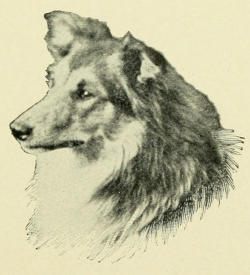
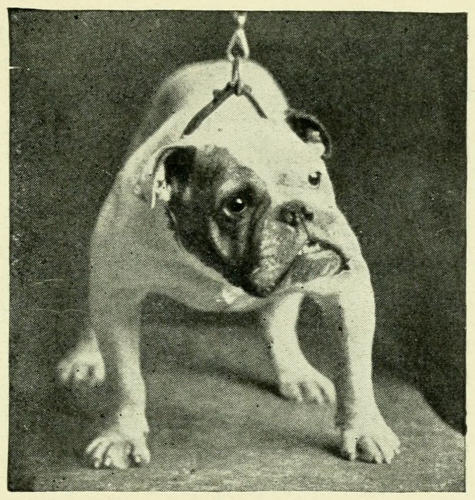
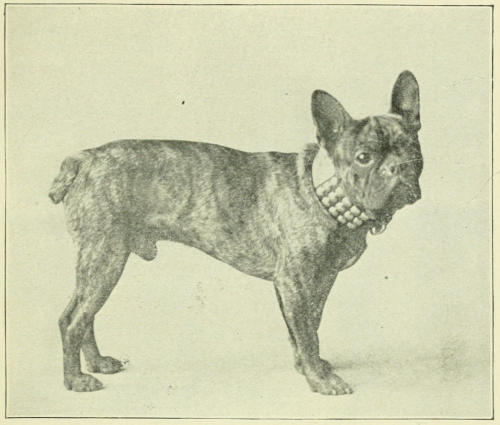
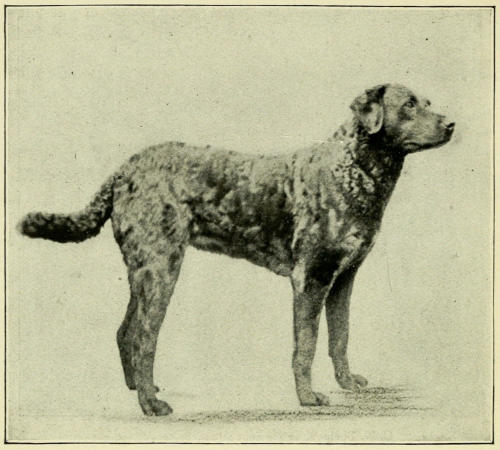
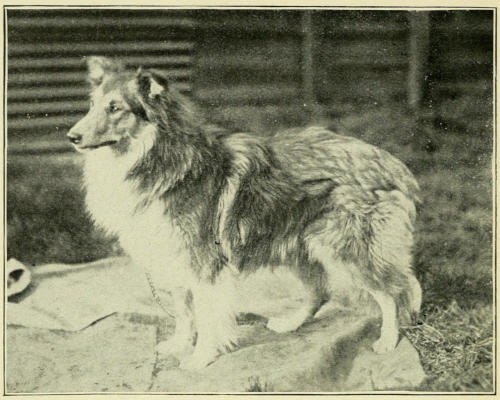
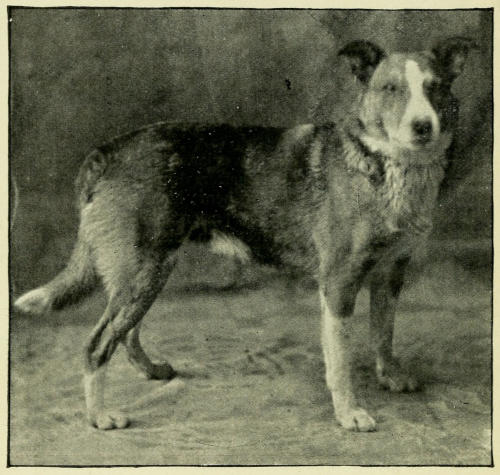
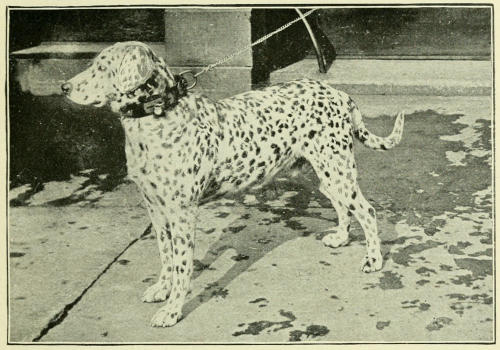
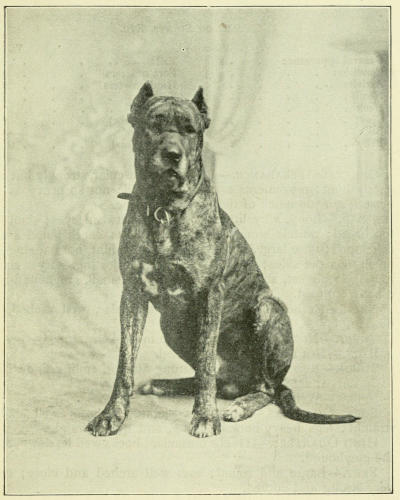
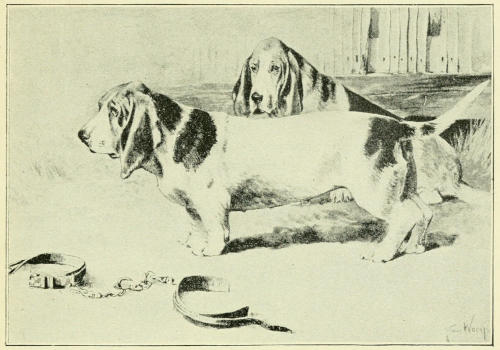
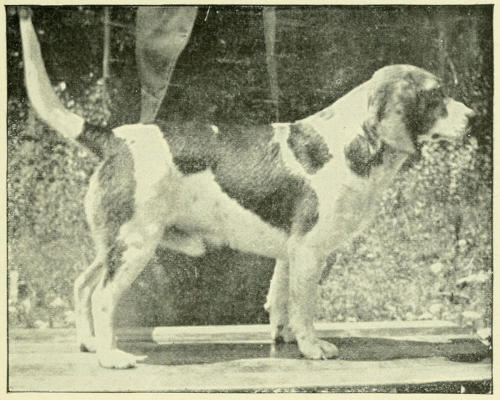
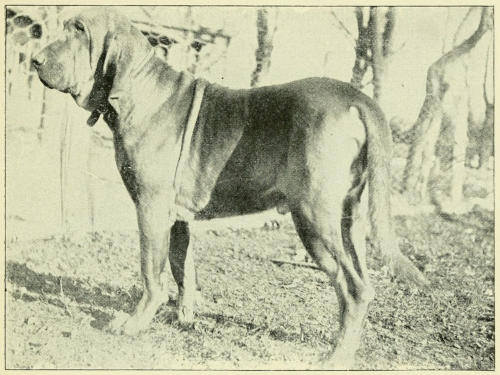
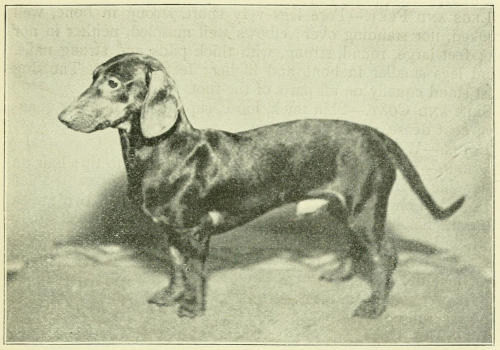
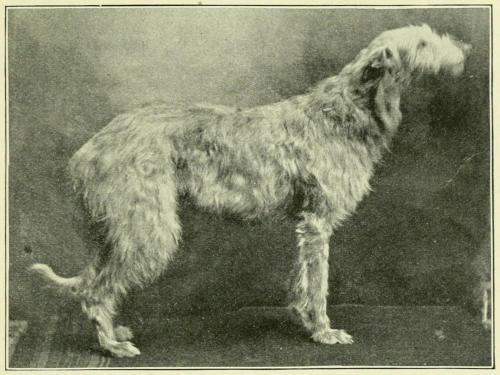
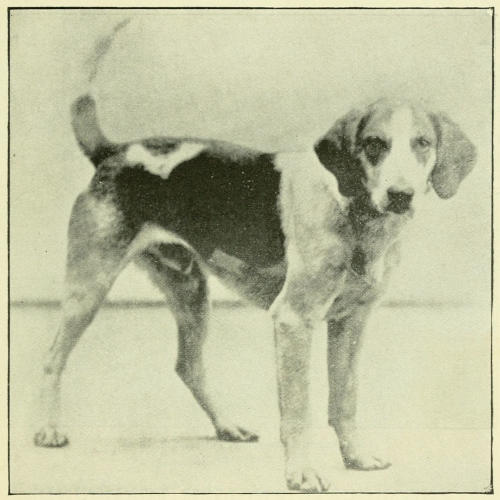
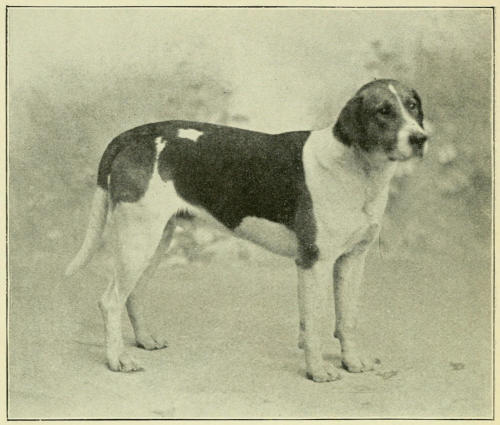
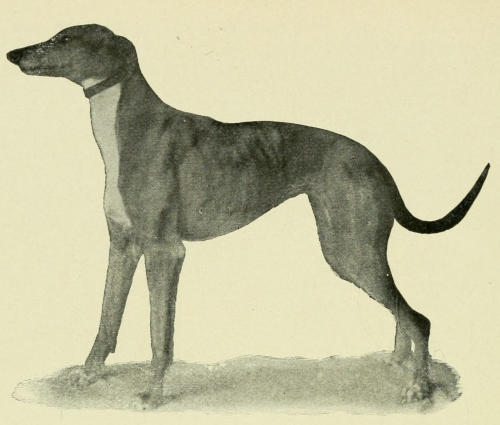
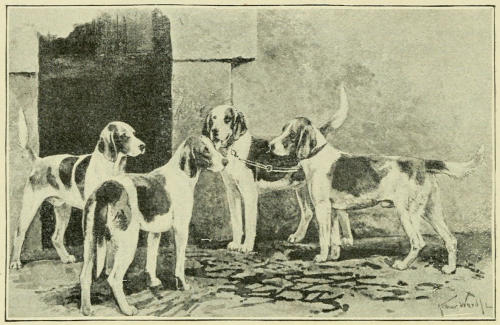
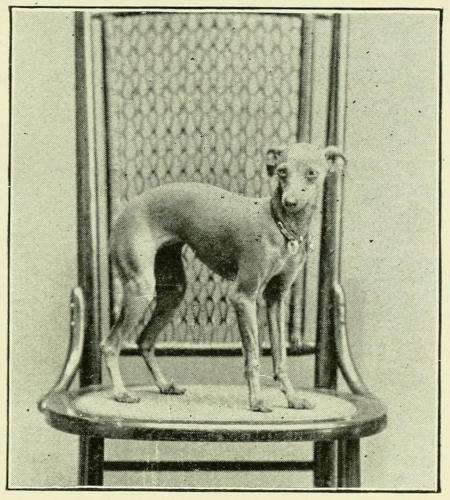
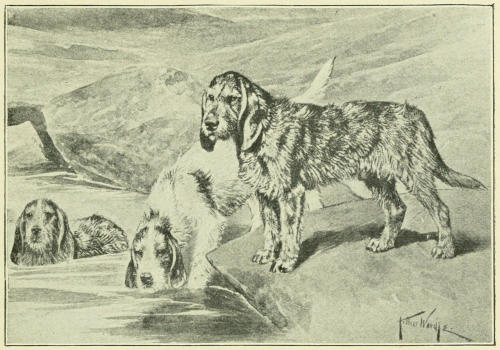

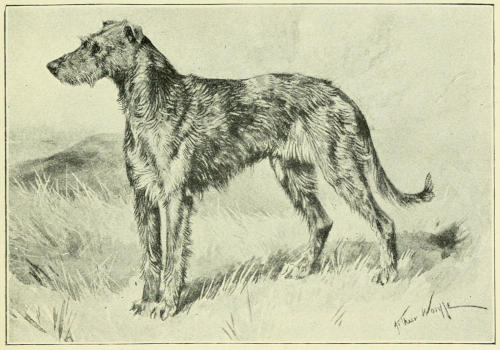
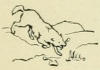
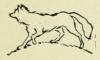
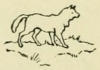
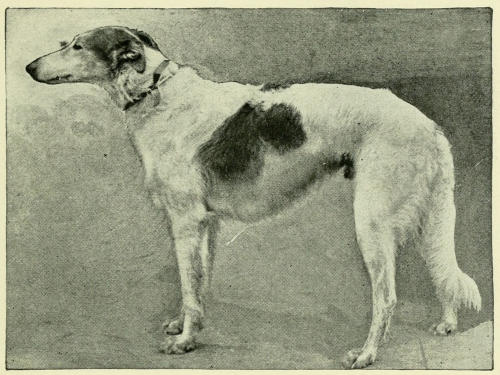
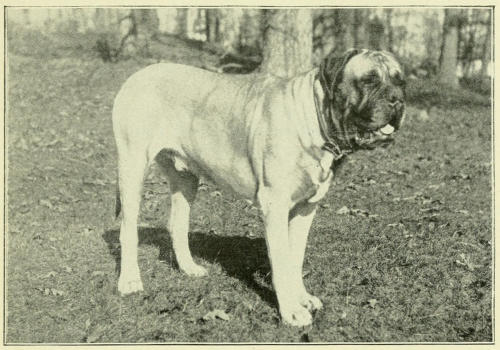
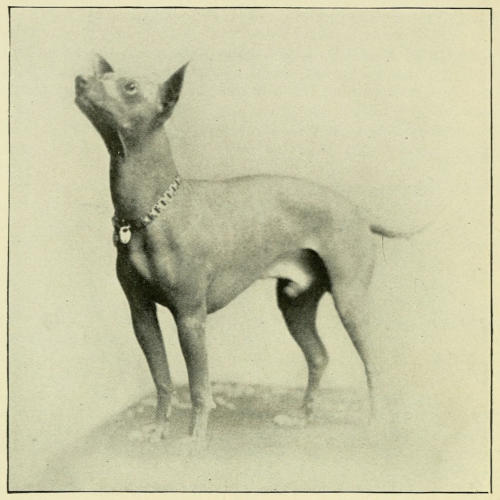
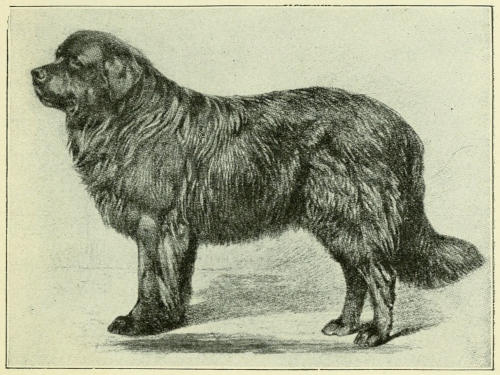
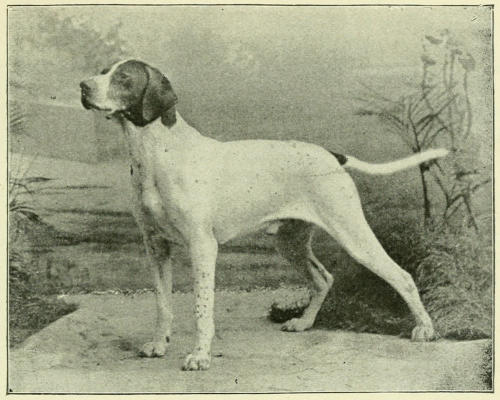
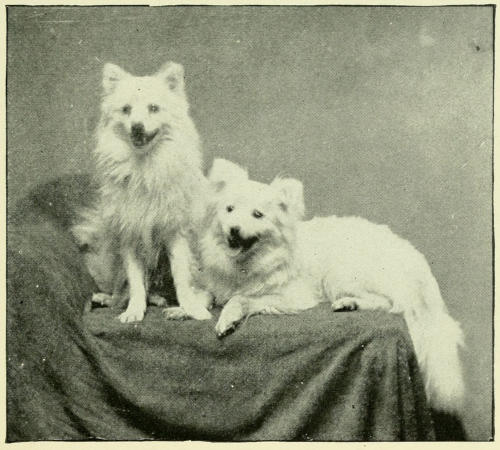
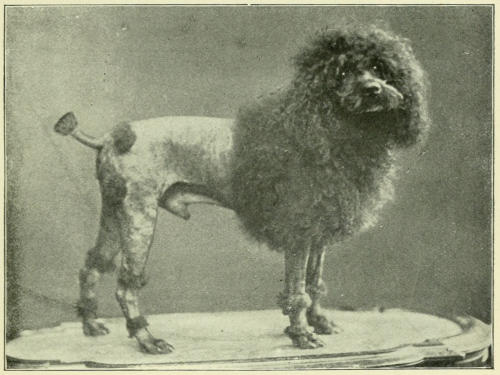
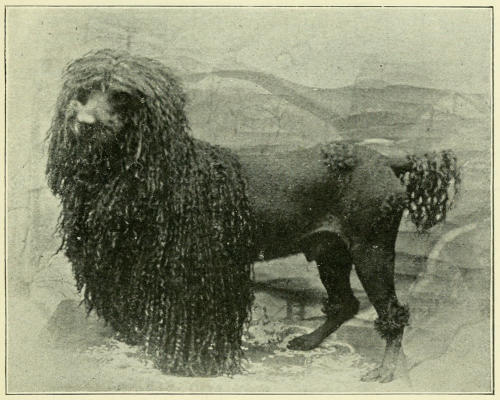
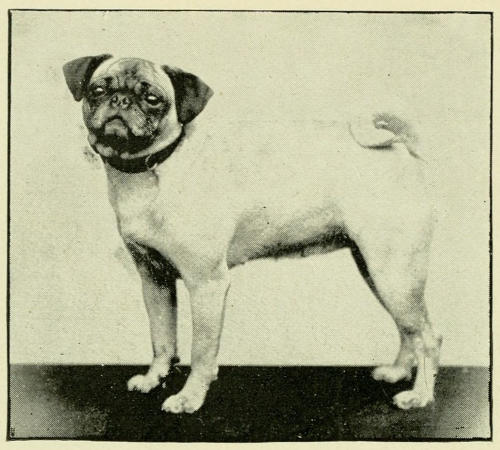
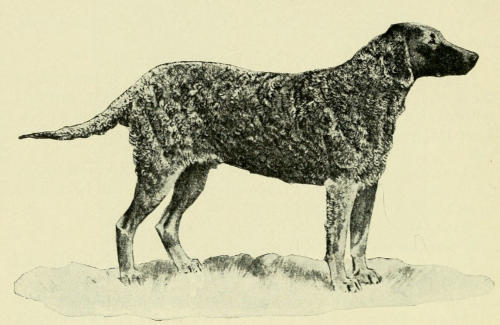
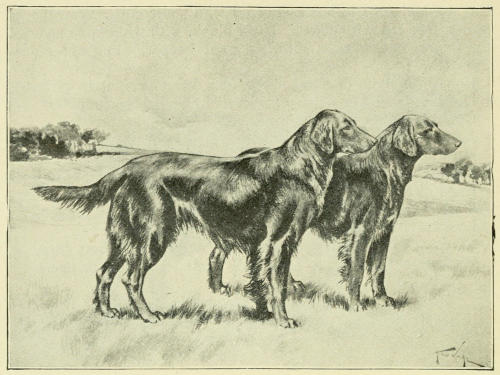
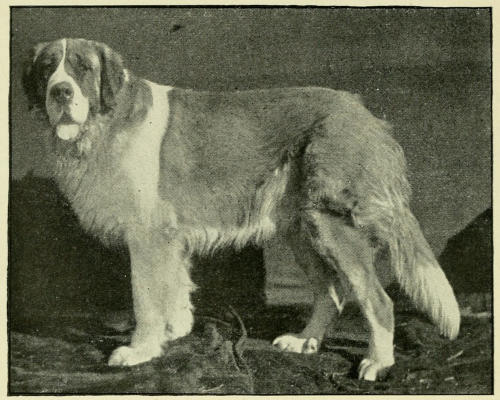
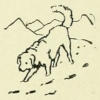
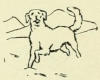
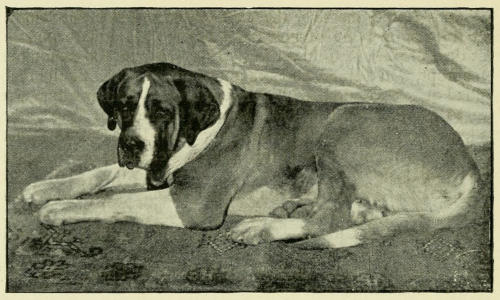
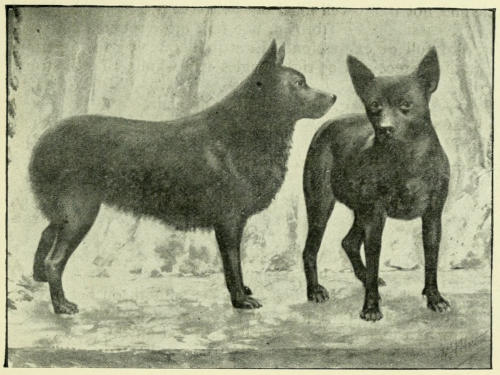
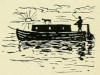
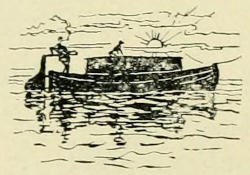
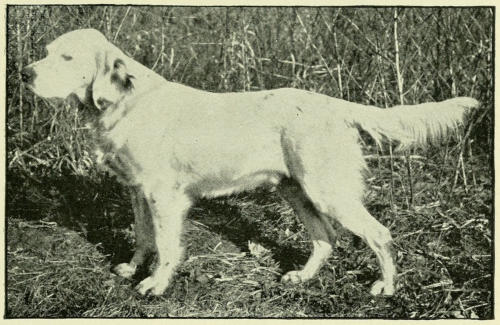
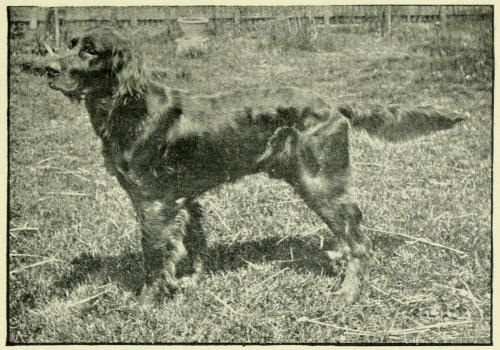
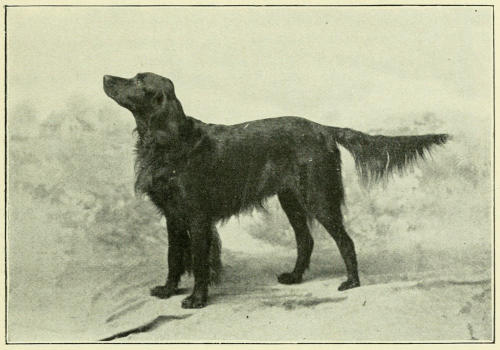
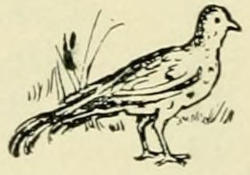
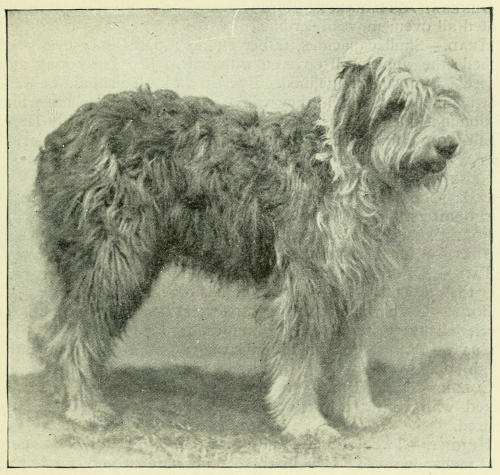
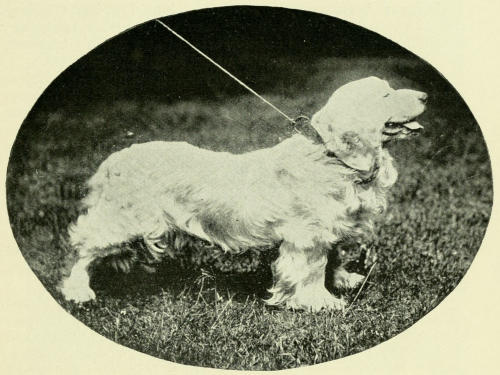
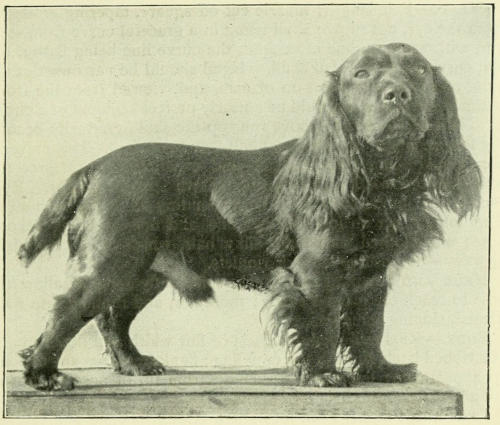
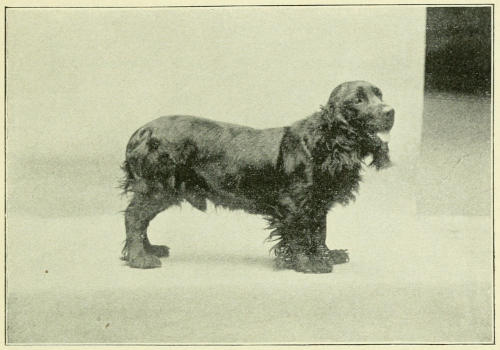
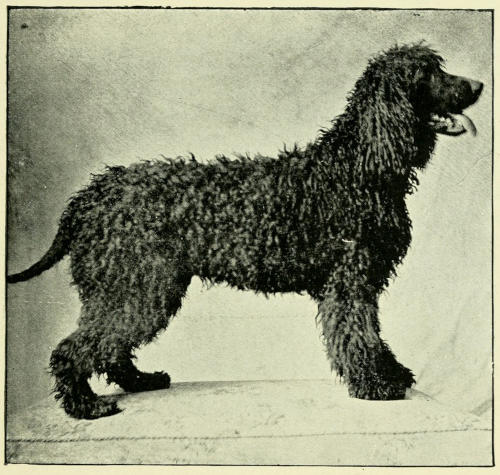
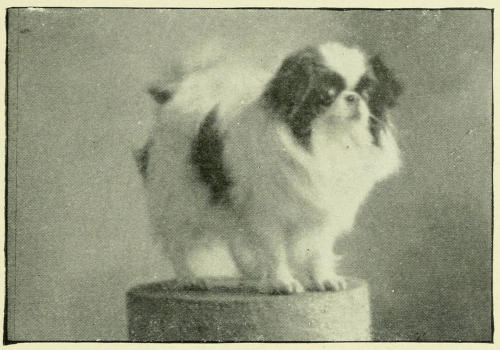
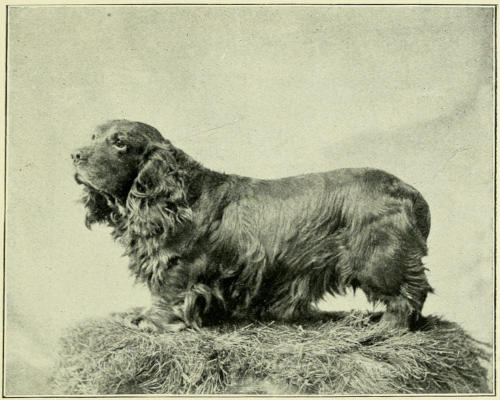
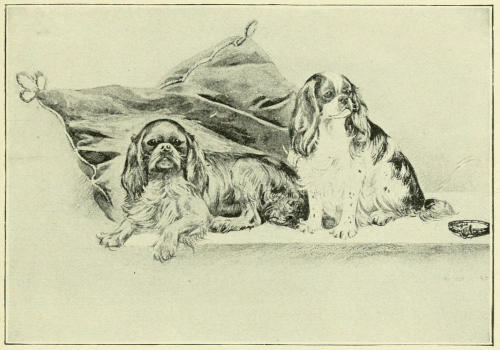
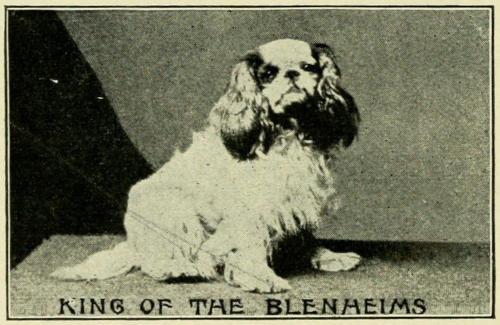
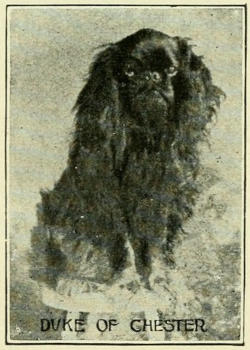
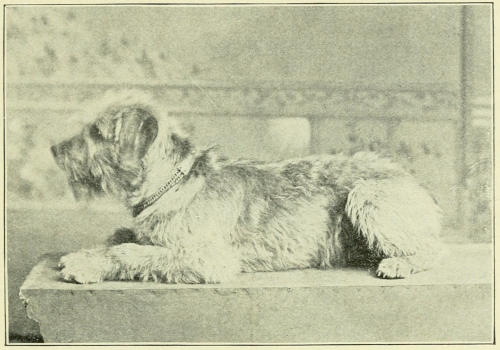

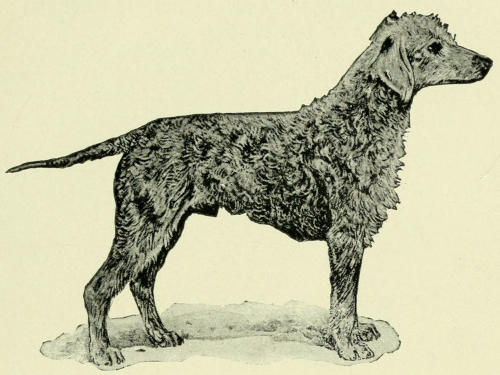
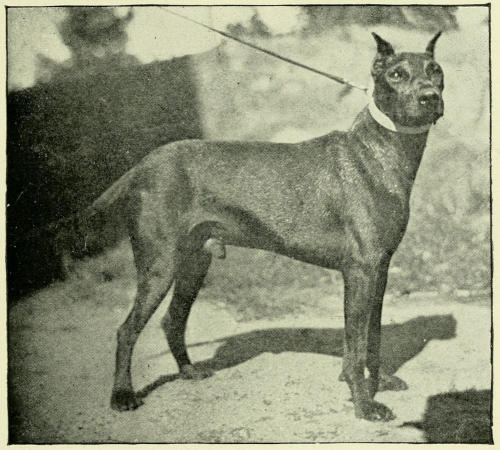
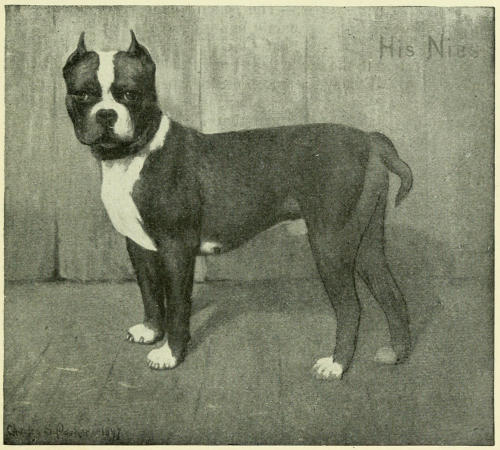
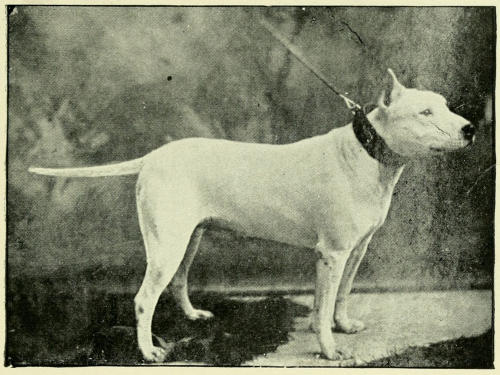
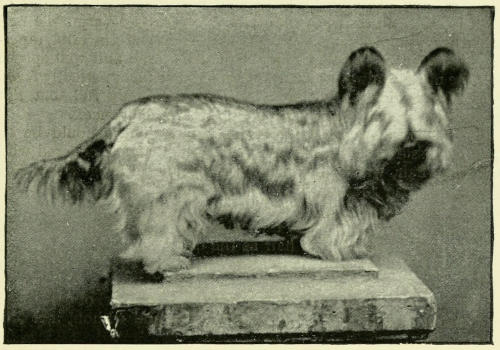
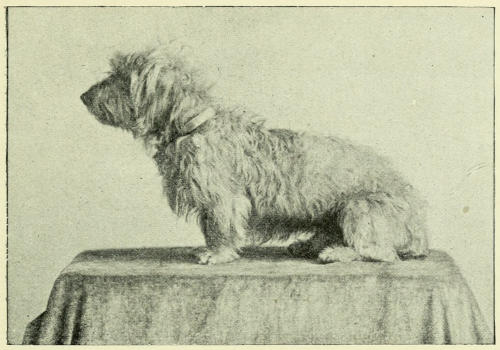
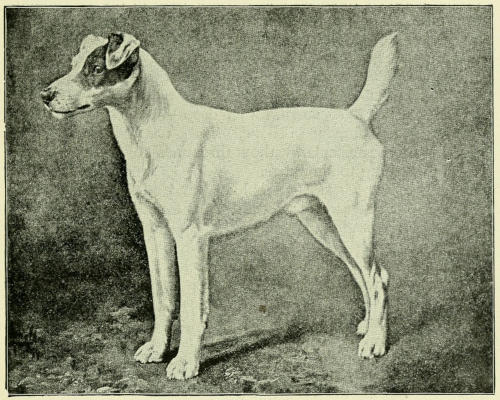
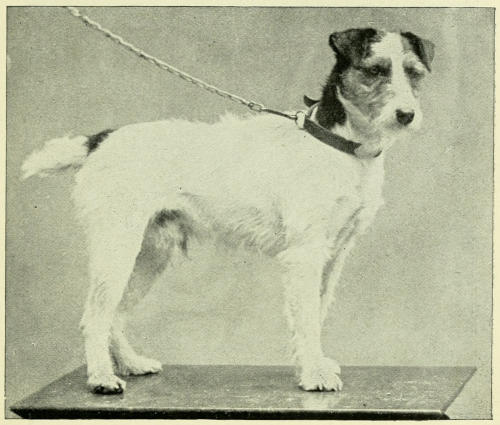
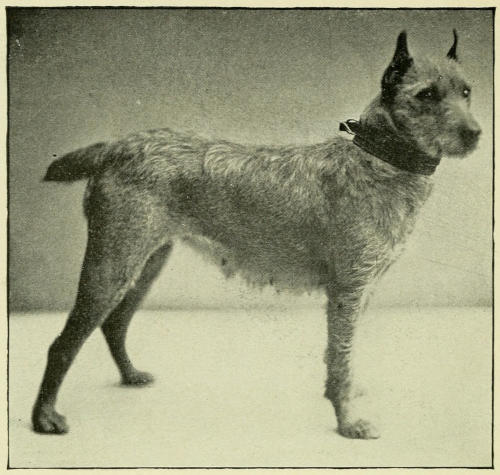
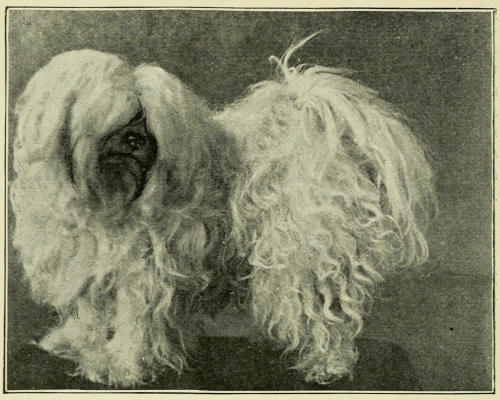
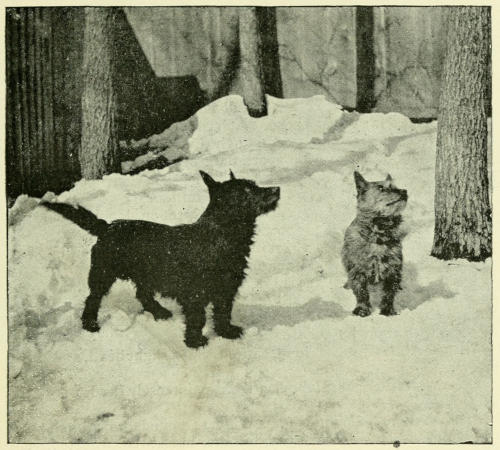

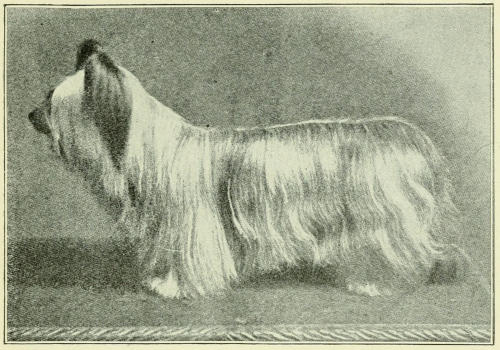
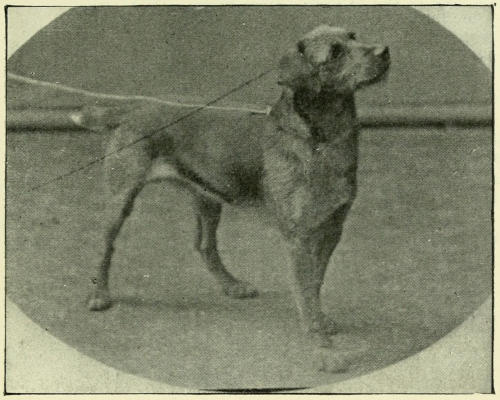
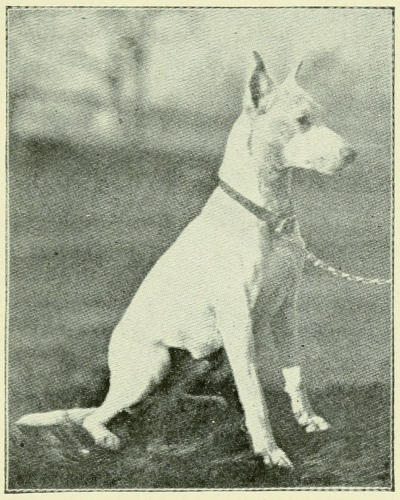
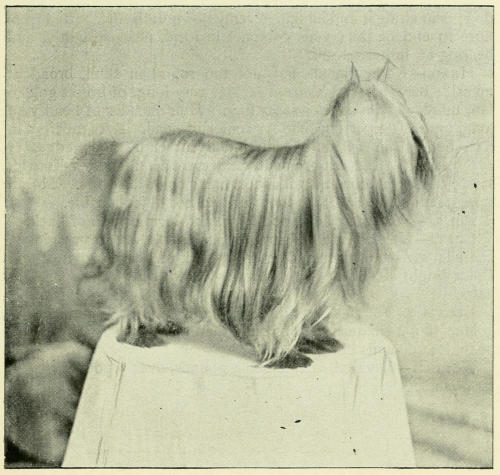
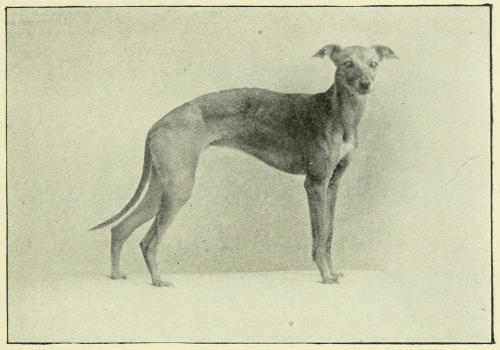
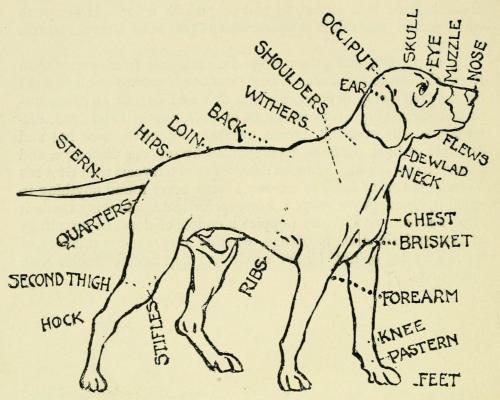
 BOOKS

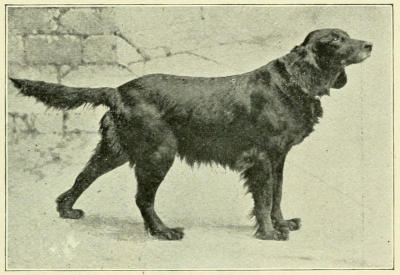
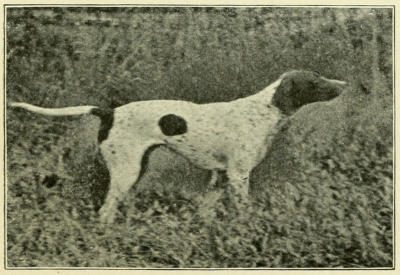
 AT STUD

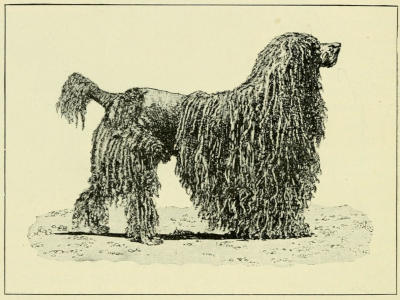
 THE TYPICAL BULL DOG



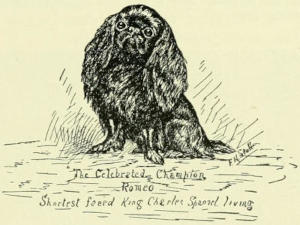
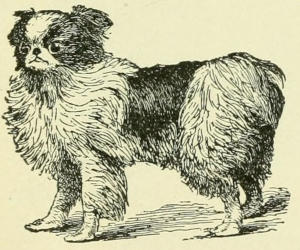
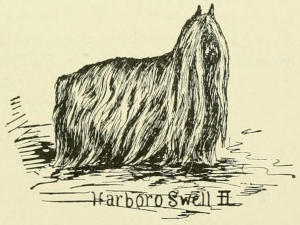
 AT STUD.
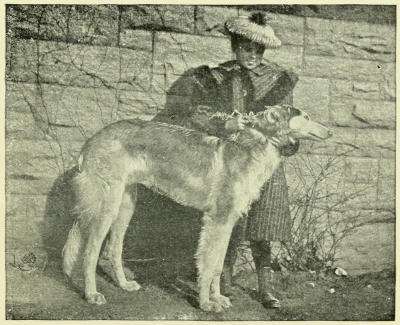
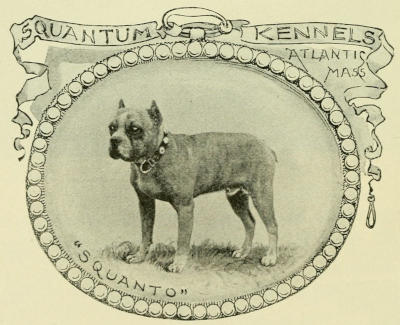

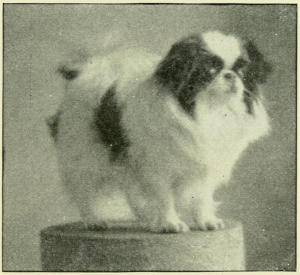
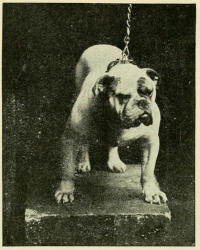
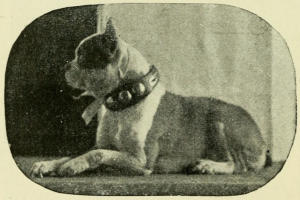
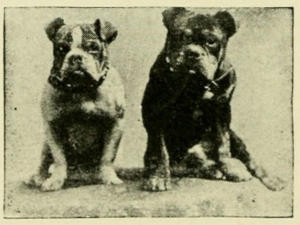

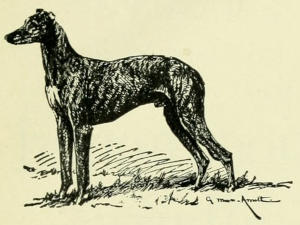

 PEDIGREE.