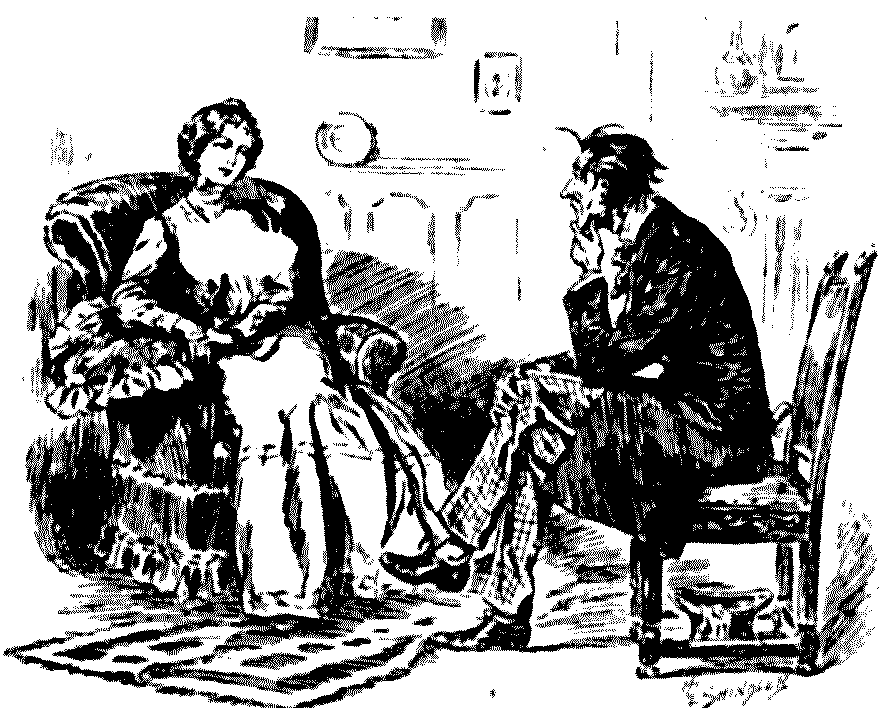
Chloroform. Invaluable to writers of sensational
stories. Every high-class fictionary criminal
carries a bottle in his pocket. A few drops, spread
on a handkerchief and waved within a yard of the
hero's nose, will produce a state of complete
unconsciousness lasting for several hours, within
which time his pockets may be searched at leisure.
This property of chloroform, familiar to every
expert novelist, seems to have escaped the notice
of the medical profession.
Consumption. The regulation illness for use
in tales of mawkish pathos. Very popular some
years ago, when the heroine made farewell speeches
in blank verse, and died to slow music. Fortunately,
however, the public has lost its fondness for work
of this sort. Consumption at its last stage is easily
curable (in novels) by the reappearance of a hero
supposed to be dead. Two pages later the heroine
will gain strength in a way which her doctors—not
unnaturally—will describe as "perfectly
marvellous." And in the
next chapter the marriage-bells
will ring.
Doctor. Always include
a doctor among your characters.
He is quite easy to
manage, and invariably will
belong to one of these three
types: (a) The eminent
specialist. Tall, imperturbable,
urbane. Only comes
incidentally into the story. (b) Young, bustling,
energetic. Not much practice, and plenty of time
to look after other people's affairs. Hard-headed
and practical. Often the hero's college friend.
Should be given a pretty girl to marry in the last
chapter. (c) The old family doctor. Benevolent,
genial, wise. Wears gold-rimmed spectacles,
which he has to take off and wipe at the pathetic
parts of the book.
Fever. A nice, useful term for fictionary
illnesses. It is best to avoid mention of specific
symptoms, beyond that of "a burning brow,"
though, if there are any family secrets which need
to be revealed, delirium is sure to supervene at a
later stage. Arthur Pendennis, for instance, had
fictional "fever," and baffled doctors have
endeavoured ever since to find out what really
was the matter with him. "Brain-fever," again,
is unknown to the
medical faculty, but
you may safely afflict
your intellectual hero
with it. The treatment
of fictionary
fever is quite simple,
consisting solely of
frequent doses of
grapes and cooling
drinks. These will
be brought to the
sufferer by the
heroine, and these simple remedies administered in
this way have never been known to fail.
Fracture. After one of your characters has
come a cropper in the hunting-field he will be
taken on a hurdle to the nearest house: usually, by
a strange coincidence, the heroine's home. And
he will be said to have
sustained "a compound
fracture"—a
vague description
which will quite
satisfy your readers.
Gout. An invaluable
disease to the
humorist. Remember
that heroes and
heroines are entirely
immune from it, but
every rich old uncle
is bound to suffer from it. The engagement of his
niece to an impecunious young gentleman invariably
coincides with a sharp attack of gout. The
humour of it all is, perhaps, a little difficult to see,
but it never fails to tickle the public.
Heart Disease. An excellent complaint for
killing off a villain. If you wish to pave the way
for it artistically, this is the recognised method:
On page 100 he will falter in the middle of a
sentence, grow pale, and press his hand sharply to
his side. In a moment he will have recovered,
and will assure his anxious friends that it is
nothing. But the reader knows better. He has
met the same premonitory symptoms in scores of
novels, and he will not be in the least surprised
when, on the middle of page 250, the villain
suddenly drops dead.
Unpopular Game at
the Royal Academy.—"High-sky-high!"
A Rough Wine.—Rude-sheimer.
Nervous.—Mrs. Malaprop
was induced to go to a music hall the other evening. She never means to
set foot in one again. The extortions some of the performers threw
themselves into quite upset her.
Motto for a model Music-hall Entertainment.—"Everything
in its 'turn' and nothing long."
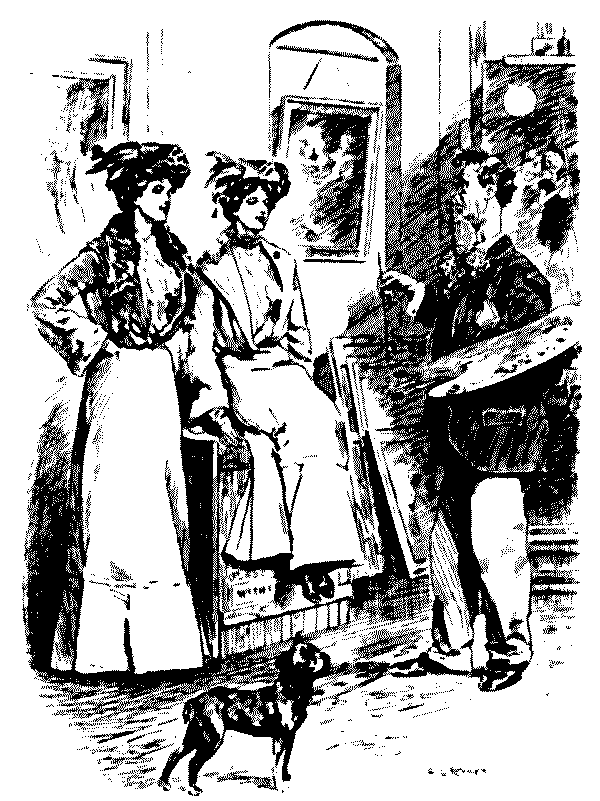
His Cousins. "We sent off the wire to
stop your model coming. But you had put one word too many—so
we struck it out."
Real Artist. "Oh, indeed. What word did
you strike out?"
His Cousins. "You had written 'he wasn't
to come, as you had only just discovered you couldn't paint to-day.'
So we crossed out 'to-day.'"
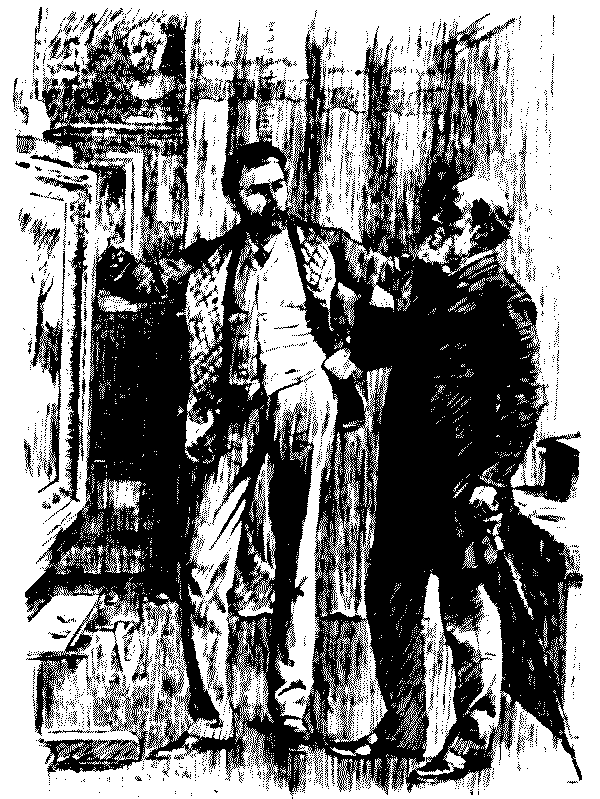
Artist (to customer, who has come
to buy on behalf of a large furnishing firm in Tottenham Court Road):
"How would this suit you? 'Summer'!"
Customer: "H'm—'Summer.'
Well, sir, the fact is we find there's very little demand
for green goods just now. If you had a line of autumn tints now—that's
the article we find most sale for among our customers!"
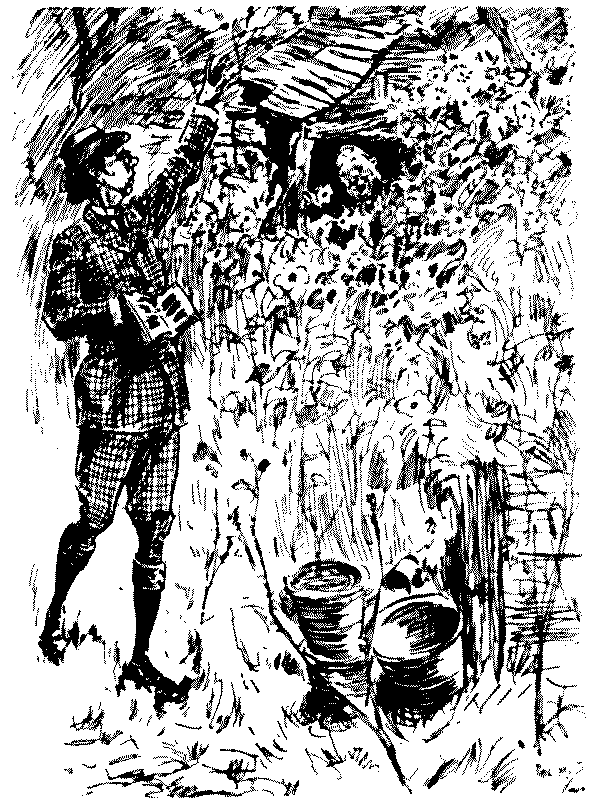
Our Amateur Romeo (who has taken a cottage in the country, so as
to be able to study without interruption). "Arise, fair sun, and kill
the envious moon——"
Owner of rubicund countenance (popping
head over the hedge), "Beg pardon, zur! Be you a talkin' to Oi,
zur?"
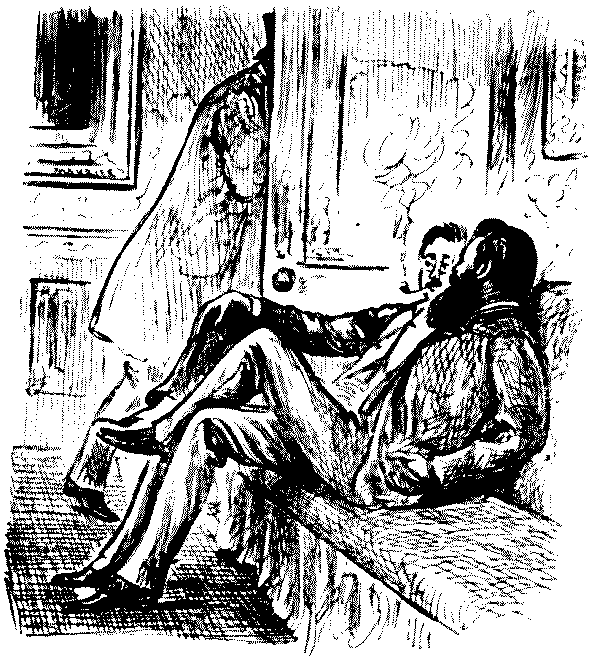
MacStodge (Pictor ignotus). "Who's that going out?"
O'Duffer (Pictor ignotissimus). "One Ernest Raphael
Sopely, who painted Lady Midas!"
MacStodge. "Oh, the artist!"
O'Duffer. "No. The Royal Academician!"
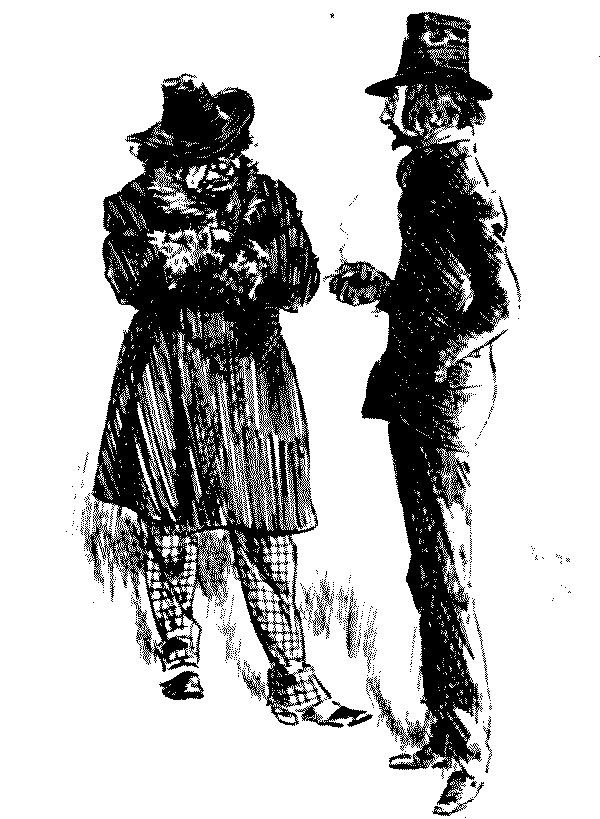
First Bohemian (to second ditto). "I can't
for the life of me think why you wasted all that time haggling with
that tailor chap, and beating him down, when you know, old chap,
you won't be able to pay him at all."
Second Bohemian. "Ah,
that's it! I have a conscience. I want the poor chap to lose as
little as possible!"
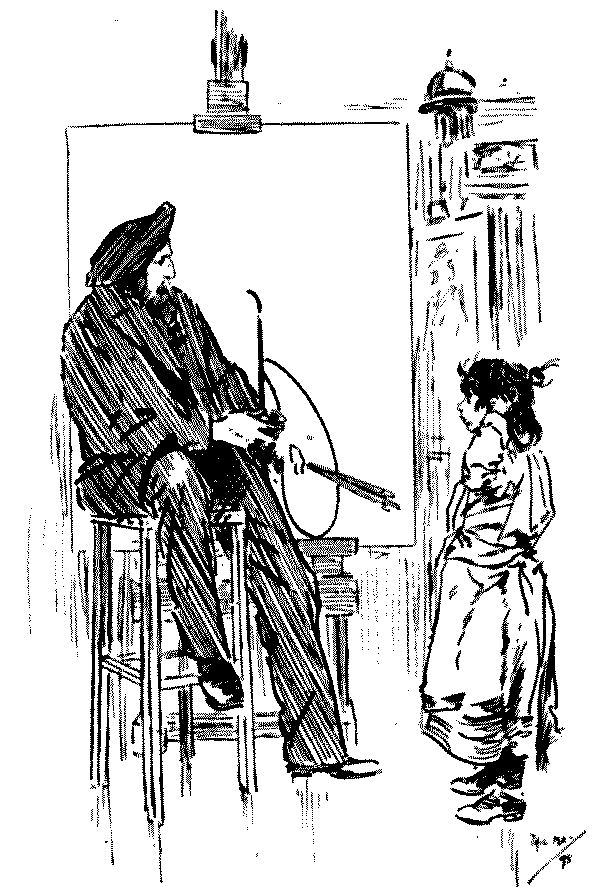
Little Guttersnipe (who is getting quite used to posing). "Will
yer want me ter tike my bun down?"
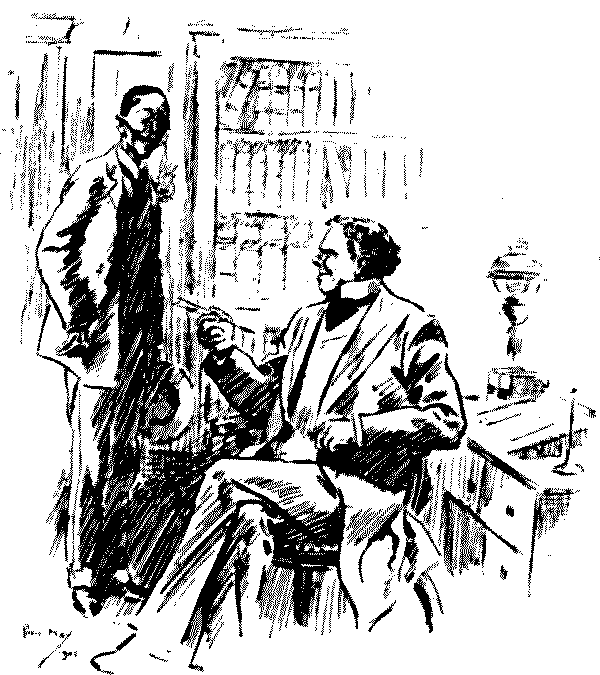
Genial Doctor (after laughing heartily at a joke of his
patient's). "Ha! ha! ha! There's not much the matter
with you! Though I do believe that if you were on your
death-bed you'd make a joke!"
Irrepressible Patient. "Why, of course I should. It
would be my last chance!"
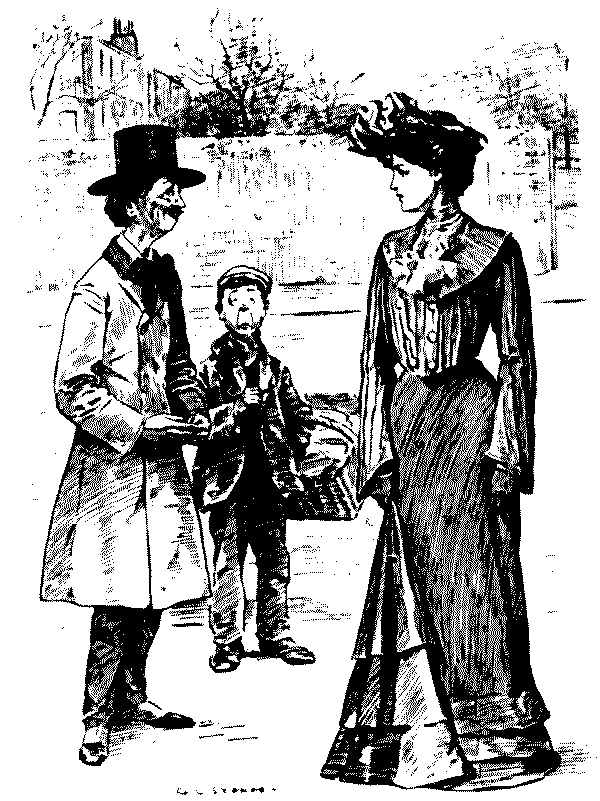
She (to Raphael Greene, who paints gems for the R.A. that are
never accepted). "I do hope you'll be hung this year. I'm sure you
deserve to be!"
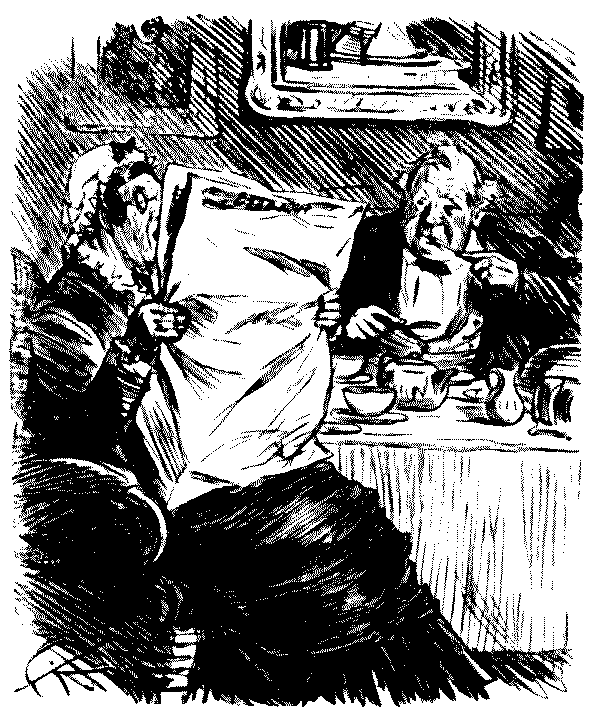
She (reads). "There are upwards of fifty English
painters and sculptors now in Rome——"
He (British Philistine—served on a late celebrated jury!).
"Ah! no wonder we couldn't get that scullery white-washed!"
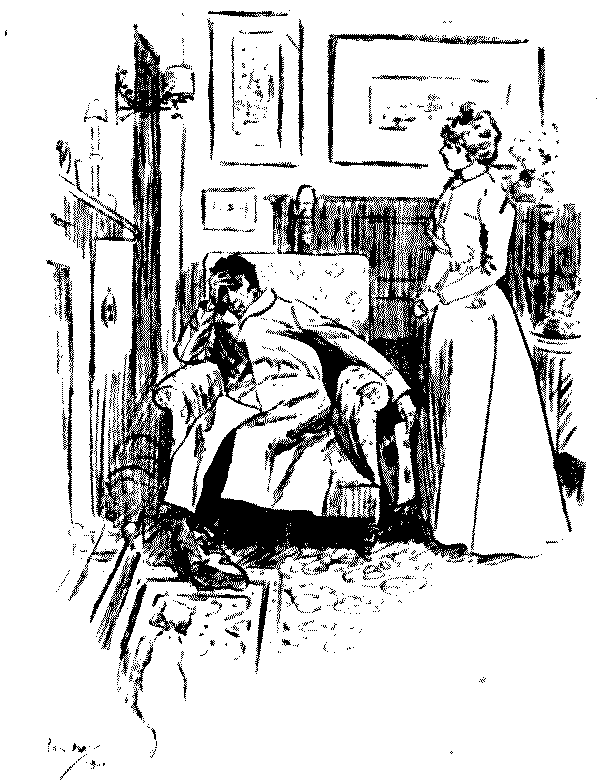
Devoted little wife (to hubbie, who has been late at the club). "Now,
dear, see, your breakfast is quite ready. A nice kipper, grilled
chicken and mushrooms with bacon, poached eggs on toast—tea and
coffee. Anything else you'd like, dearie?"
Victim of last night
(groans). "Yes—an appetite!" [Collapses.
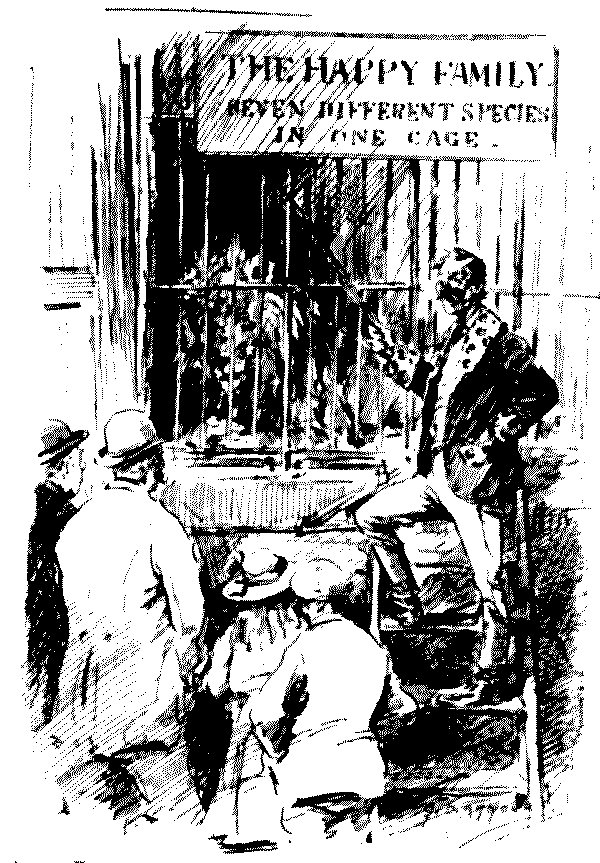
Showman of Travelling Menagerie. "Now,
ladies and gentlemen, we come to the most interesting part of the
'ole exhibition! Seven different species of hanimals, in the same
cage, dwellin' in 'armony. You could see them with the naked heye,
only you have come too late. They are all now inside the lion!"
To Billiard Players.—If you would obey
the rules of billiards, always attend to the cannons
of the game.
The Suspensory Act.—Hanging the Academy
exhibition.
In the Billiard Room.—Major Carambole.
I never give any bribes to the club servants on
principle.
Captain Hazard. Then I suppose the marker
looks on the tip of your cue without interest.
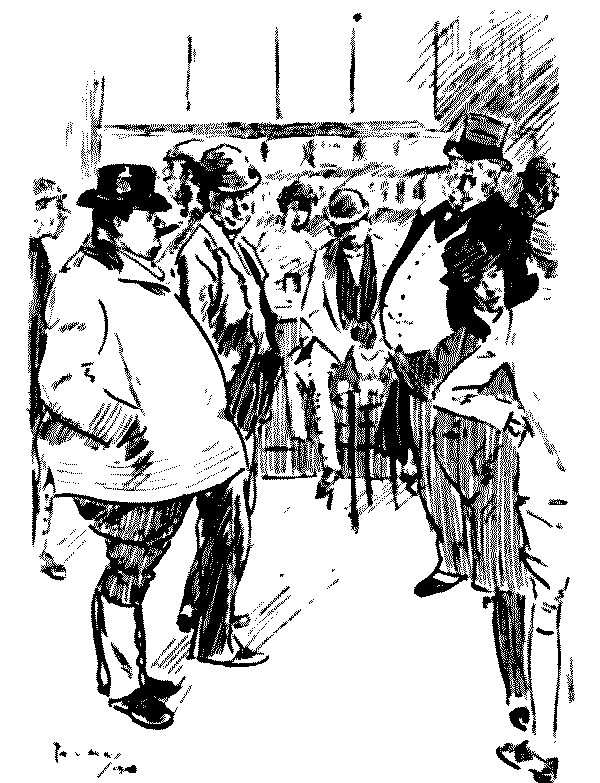
Seedy Individual (to Knowing
One). "D'yer want to buy a diamond pin cheap?"
Knowing One. "'Ere, get out of this! What d'you take
me for? A juggins?"
S. I. "Give yer my word it's
worth sixty quid if it's worth a penny. And you can 'ave
it for a tenner."
K. O. "Let's 'ave a look at it. Where
is it?"
S. I. "In that old gent's tie. Will yer 'ave it?"
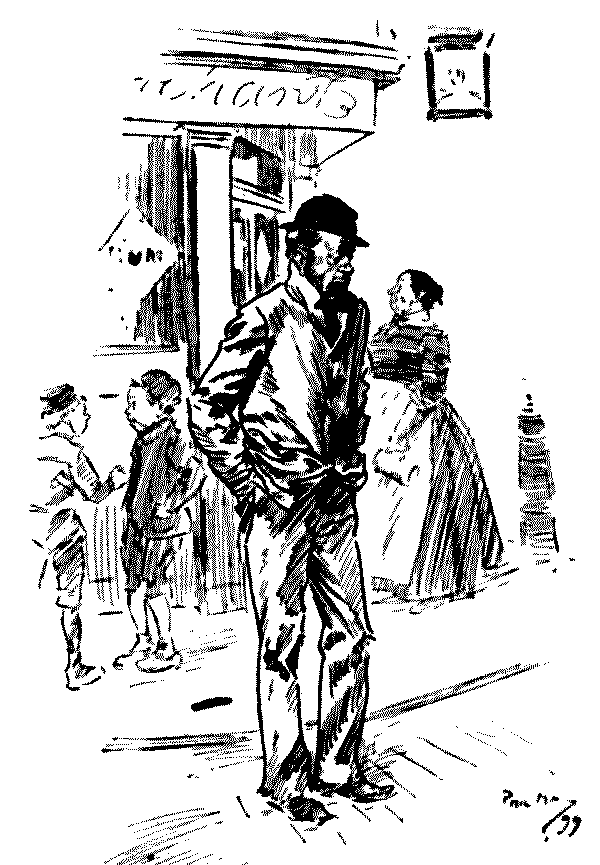
"Yew harxed me woy hoi larved when larve should be
A thing hun-der-eamed hof larve twixt yew han me.
Yew moight hin-tereat the sun tew cease tew she-oine
Has seek tew sty saw deep a larve has moine."
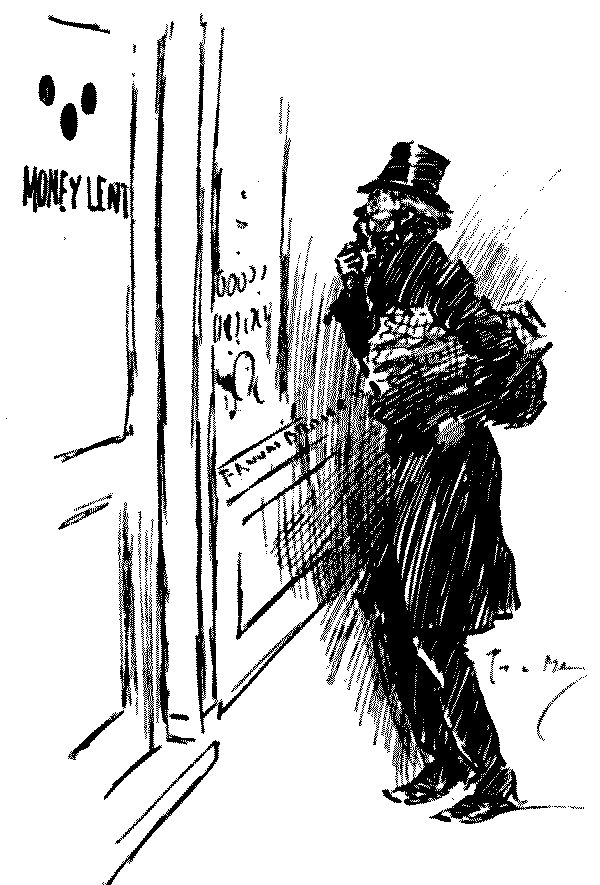
"Oh, my prophetic soul! My uncle!"
Hamlet, Act I., Sc. 5.


 "Tedious as a twice-told tale,