Close under the Parade wall a large circle has been formed,
consisting chiefly of Women on chairs and camp-stools, with an
inner ring of small Children, who are all patiently awaiting the
arrival of a troupe of Niggers. At the head of one of the flights
of steps leading up to the Parade, a small and shrewish Child-nurse
is endeavouring to detect and recapture a pair of prodigal younger
Brothers, who have given her the slip.
Sarah (to herself). Wherever can them two plegs have got to?
(Aloud; drawing a bow at a venture.) Albert! 'Enery! Come up 'ere this
minnit. I see yer!
'Enery (under the steps—to Albert). I say—d'ye think she
do?—'cos if——
Albert. Not she! Set tight.
[They sit tight.
Sarah (as before). 'Enery! Albert! You've bin and 'alf killed little
Georgie between yer!
'Enery (moved, to Albert). Did you 'ear that, Bert? It wasn't me
upset him—was it now?
Albert (impenitent). 'Oo cares? The Niggers'll be back direckly.
Sarah. Al-bert! 'Enery! Your father's bin down 'ere once after you.
You'll ketch it!
Albert (sotto voce). Not till father ketches us, we shan't. Keep
still, 'Enery—we're all right under 'ere!
Sarah (more diplomatically). 'Enery! Albert! Father's bin and left a
'ap'ny apiece for yer. Ain't yer comin' up for it? If yer don't want it,
why, stay where you are, that's all!
Albert (to 'Enery). I knoo we 'adn't done nothin'. An' I'm goin'
up to git that 'ap'ny, I am.
'Enery. So 'm I.
[They emerge, and ascend the steps—to be pounced upon immediately by
the ingenious Sarah.
Sarah. 'Ap'ny, indeed! You won't git no 'apence 'ere, I can tell
yer—so jest you come along 'ome with me!
[Exeunt Albert and 'Enery, in captivity, as the Niggers enter the
circle.
Bones. We shall commence this afternoon by 'olding our Grand Annual
Weekly Singing Competition, for the Discouragement of Youthful Talent.
Now then, which is the little gal to step out first and git a medal?
(The Children giggle, but remain seated.) Not one? Now I arsk
you—What is the use o' me comin' 'ere throwin' away thousands and
thousands of pounds on golden medals, if you won't take the trouble to
stand up and sing for them? Oh, you'll make me so wild, I shall begin
spittin' 'alf-sovereigns directly—I know I shall! (A little Girl in
a sun-bonnet comes forward.) Ah, 'ere's a young lady who's bustin' with
melody, I can see. Your name, my dear? Ladies and Gentlemen, I have
the pleasure to announce that Miss Connie Cockle will now appear. Don't
curtsey till the Orchestra gives the chord. (Chord from the
harmonium—the Child advances, and curtsies with much aplomb.) Oh, lor!
call that a curtsey—that's a cramp, that is! Do it all over again!
(The Child obeys, disconcerted.) That's worse! I can see the s'rimps
blushin' for yer inside their paper bags! Now see Me do it. (Bones
executes a caricature of a curtsey, which the little Girl copies with
terrible fidelity.) That's ladylike—that's genteel. Now sing out!
(The Child sings the first verse of a popular music-hall song, in a
squeaky little voice.) Talk about nightingales! Come 'ere, and receive
the reward for extinguished incapacity. On your knees! (The little Girl
kneels before him while a tin medal is fastened upon her frock.) Rise,
Sir Connie Cockle! Oh, you lucky girl!
[The Child returns, swelling with triumph, to her companions,
several of whom come out, and go through the same performance, with
more or less squeakiness and self-possession.
First Admiring Matron (in audience). I do like to see the children
kep' out o' mischief like this, instead o' goin' paddling and messing
about the sands!
Second Ad. Mat. Just what I say, my dear—they're amused and
edjucated 'ow to beyave at the same time!
First Politician (with the "Standard"). No, but look here—when
Gladstone was asked in the House whether he proposed to give the Dublin
Parliament the control of the police, what was his answer. Why....
The Niggers (striking up chorus). "'Rum-tumty diddly-umty
doodah-dey! Rum-tumty-diddly-um was all that he could say. And the
Members and the Speaker joined together in the lay. Of
'Rum-tumty-diddly-umty doodah-dey!'"
Second Pol. (with the "Star"). Well, and what more would you have
'ad him say? Come, now!
Alf (who has had quite enough ale at dinner—to his fiancée). These
Niggers ain't up to much Loo. Can't sing for nuts!
Chorley (his friend, perfidiously). You'd better go in and show 'em
how, old man. Me and Miss Serge'll stay and see you take the shine out
of 'em!
Alf. P'raps you think I can't. But, if I was to go upon the 'Alls now,
I should make my fortune in no time! Loo's 'eard me when I've been in
form, and she'll tell you——
Miss Serge. Well, I will say there's
many a professional might learn a lesson from Alf—whether Mr. Perkins
believes it or not.
[Cuttingly, to "Chorley."
Chorley. Now reelly, Miss Loo, don't come down on a feller like that.
I want to see him do you credit, that's all, and he couldn't 'ave a
better opportunity to distinguish himself—now could he?
Miss Serge. I'm not preventing him. But I don't know—these Niggers
keep themselves very select, and they might object to it.
Alf. I'll soon square them. You keep your eye on me, and I'll make
things a bit livelier!
[He enters the circle.
Miss Serge (admiringly). He has got a cheek, I must say! Look at
him, dancing there along with those two Niggers—they don't hardly know
what to make of him yet!
Chorley. Do you notice how they keep kicking him beyind on the sly
like? I wonder he puts up with it!
Miss S. He'll be even with them presently—you see if he isn't.
[Alf attempts to twirl a tambourine on his finger, and lets it
fall; derision from audience; Bones pats him on the head and takes
the tambourine away—at which Alf only smiles feebly.
Chorley. It's a pity he gets so 'ot dancing, and he don't seem to keep
in step with the others.
Miss S. (secretly disappointed). He isn't used to doing the
double-shuffle on sand, that's all.
The Conductor. Bones, I observe we have a recent addition to our
company. Perhaps he'll favour us with a solo. (Aside to Bones.) 'Oo
is he? 'Oo let him in 'ere—you?
Bones. I dunno. I thought you did. Ain't he stood nothing?
Conductor. Not a brass farden!
Bones (outraged). All right, you leave him to me. (To Alf.) Kin it
be? That necktie! them familiar coat-buttons! that paper-dicky! You
are—you are my long-lost convick son, 'ome from Portland! Come to
these legs! (He embraces Alf, and smothers him with kisses.) Oh,
you've been and rubbed off some of your cheek on my complexion—you
dirty boy! (He playfully "bashes" Alf's hat in.) Now show the
comp'ny how pretty you can sing. (Alf attempts a music-hall ditty, in
which he, not unnaturally, breaks down.) It ain't my son's fault,
Ladies and Gentlemen, it's all this little gal in front here, lookin' at
him and makin' him shy! (To a small Child, severely.) You oughter know
worse, you ought! (Clumps of seaweed and paper-balls are thrown at
Alf who by this time is looking deplorably warm and foolish.) Oh, what
a popilar fav'rite he is, to be sure!
Chorley (to Miss S.). Poor fellow, he ain't no match for those
Niggers—not like he is now! Hadn't I better go to the rescue, Miss Loo?
Miss S. (pettishly). I'm sure I don't care what you do.
["Chorley" succeeds, after some persuasion, in removing the unfortunate
Alf.
Alf (rejoining his fiancée with a grimy face, a smashed hat, and a
pathetic attempt at a grin). Well? I done it, you see!
Miss S. (crushingly). Yes, you have done it! And the best thing
you can do now, is to go home and wash your face. I don't care to be
seen about with a laughing-stock, I can assure you! I've had my
dignity lowered quite enough as it is!
Alf. But look 'ere, my dear girl, I can't leave you here all by
yourself you know!
Miss S. I dare say Mr. Perkins will take care of me.
[Mr. P. assents, with effusion.
Alf (watching them move away—with bitterness). I wish all Niggers
were put down by Act of Parliament, I do! Downright noosances—that's
what they are!
Delays Are Dangerous.—Young Housekeeper. "I'm afraid those soles I
bought of you yesterday were not fresh. My husband said they were not
nice at all!"
Brighton Fisherman. "Well, marm, that be your fault—it bean't mine.
I've offered 'em yer every day this week, and you might a' 'ad 'em o'
Monday if you'd a loiked!"
At Margate.—Angelina (very poetical, surveying the rolling ocean).
"Water, water everywhere, and not a drop to drink."
Edwin (very practical). No drink! Now, hang it all, Angy, if I've
asked you once I've asked you three times within the last five minutes
to come and do a split soda and whiskey! And I can do with it!
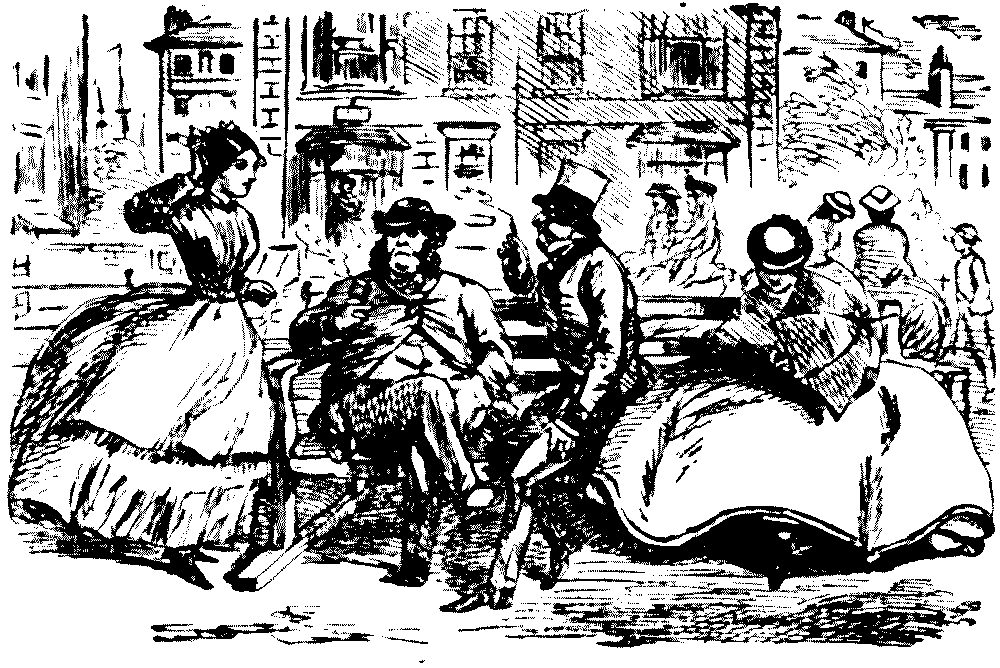
Maid (to Paterfamilias). "Please, sir, missus say you're to come in,
and sit on the boxes; because we can't get 'em to, and they wants to be
corded."
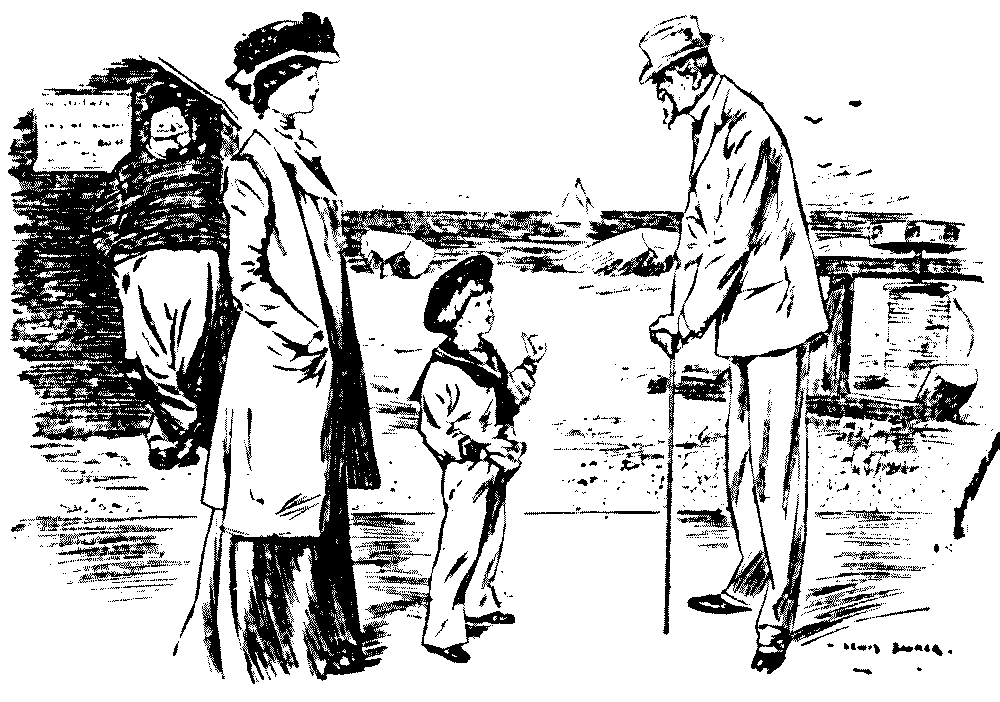
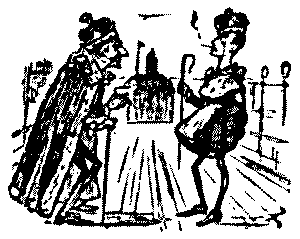
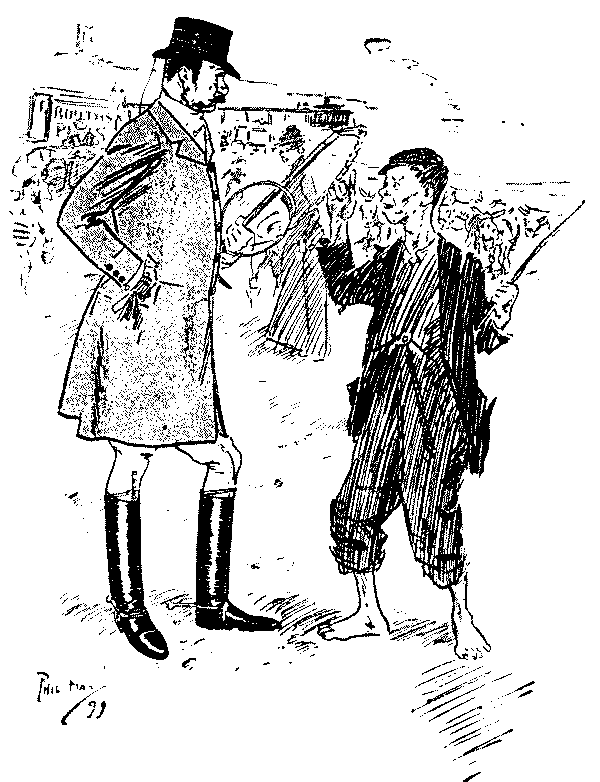
The General. "And what are you going to be when you
grow up, young man?"
Bobbie. "Well, I can't quite make up my mind. I don't know which would
be nicest—a soldier, like you, or a sailor, like Mr. Smithers."
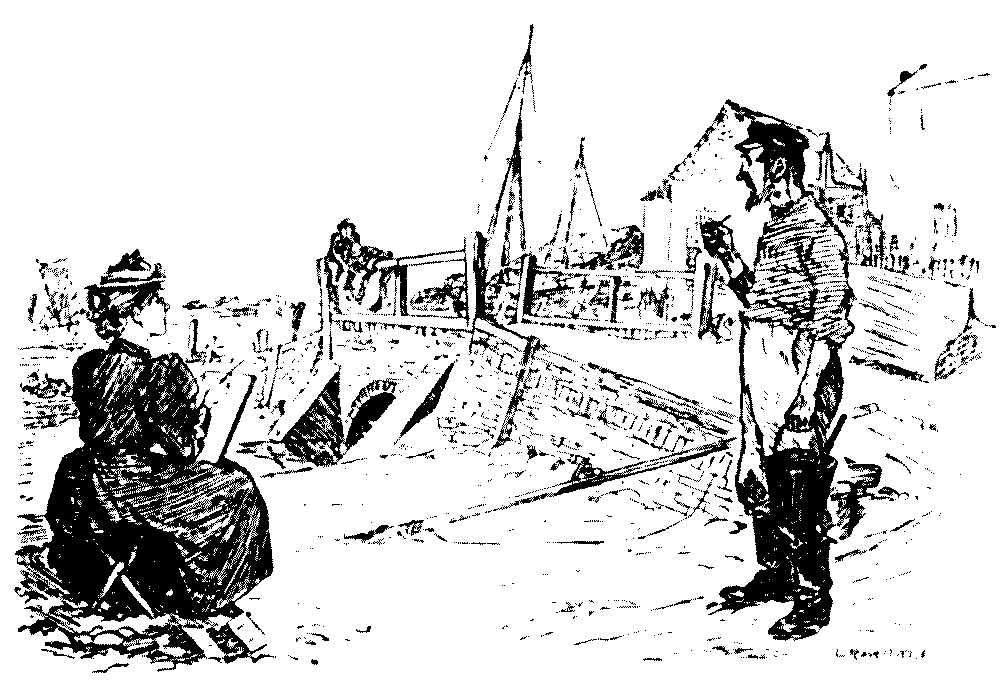
Lady Artist. "Do you belong to that ship over there?"
Sailor. "Yes, miss."
Lady Artist. "Then would you mind loosening all those ropes? They are
much too tight, and, besides, I can't draw straight lines!"
How Belinda Brown appeared
with "waves all over
her hair" before taking
a bath in the sea— |
and |
How she looked after
having some more "waves
all over it"
|
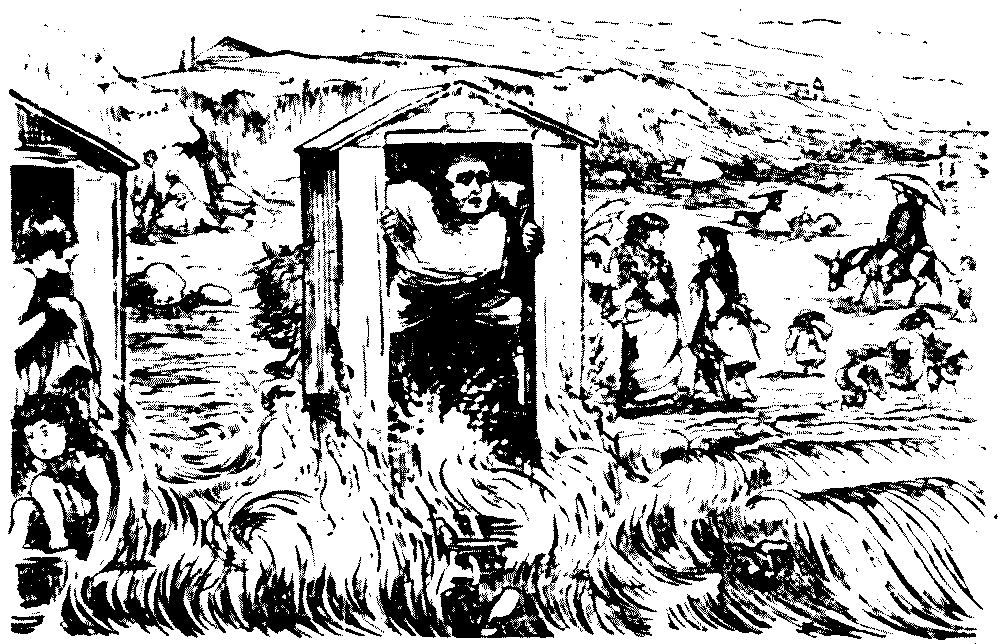
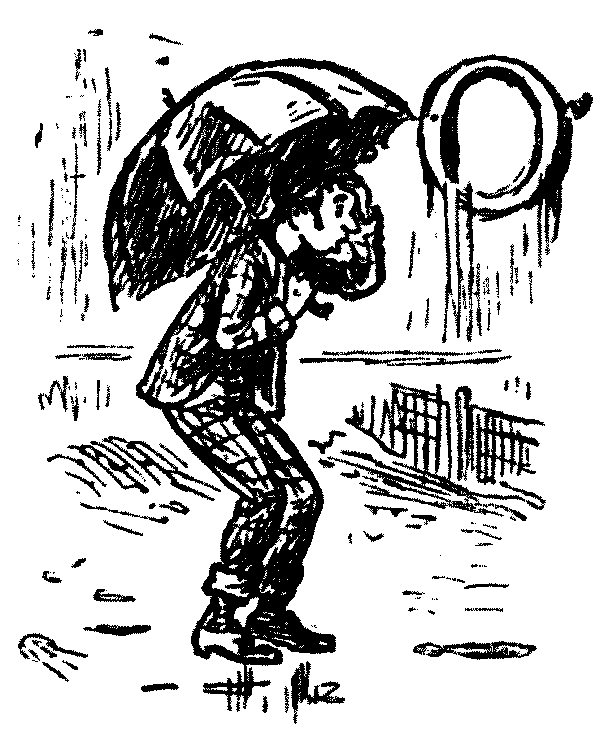
Don't let them jolt you up the beach till you are dressed.
Jones (obliged to hold fast). "Hullo! Hi! Somebody stop my boots!"
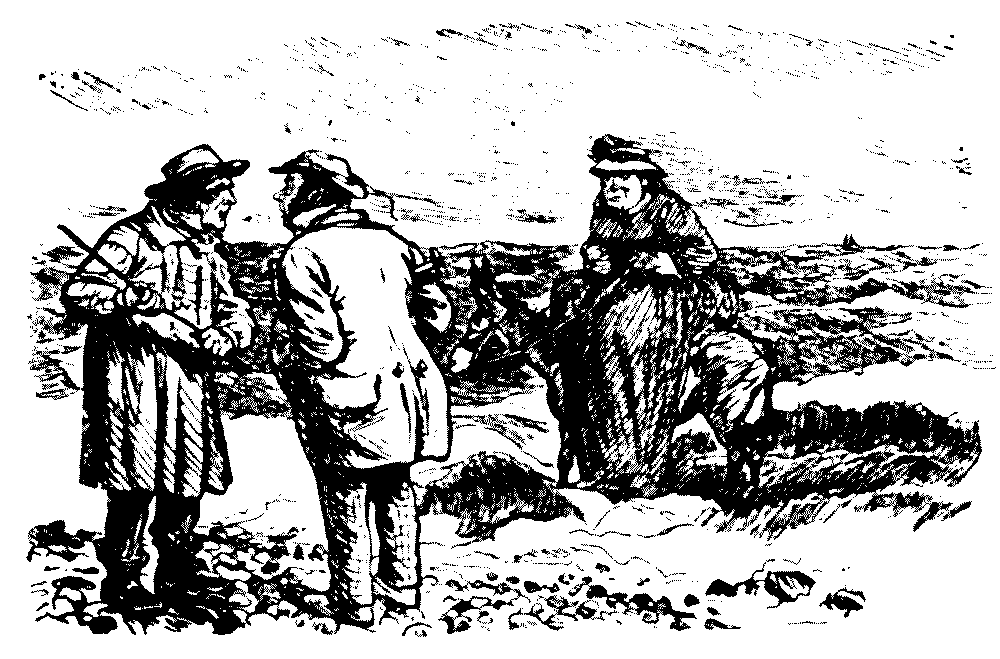
Separated husband. "Fetch him out, sir!"
Proprietor of moke. "Why, if I went near her, she'd lie down; she
always goes in just before high water; nothing'll fetch her out till the
tide turns!"