The question of the kind of road for hauling logs with the
motor truck is a very important one. It is impossible to move a
fifteen-ton load day in and day out unless there are good roads,
and no motor truck operation of reasonably large proportions can
be successfully maintained without a road that is well constructed
and which will not give way during any kind of weather, under
the loads that are carried. One cannot successfully and continuously
operate on dirt or even gravel roads as they are good
only when dry. Good roads are as important to the motor truck
operator as the railroad is to the transportation of logs by rail.
The big handicap in motor truck logging in the past has been
poor roads. The same man who will survey, grade, carefully lay
and ballast the steel for a logging railroad will many times put a
truck and trailer on a poor dirt road and expect the truck to haul
economically and satisfactorily. A motor truck will haul over
some mighty poor apologies for roads but it does not pay. A good
road is an excellent investment. It makes larger loads and more
trips a day possible, will save on tires and repairs, and will require
less gasoline to the mile; the efficiency and output will be increased
and the time and operating costs will be decreased.
[25]
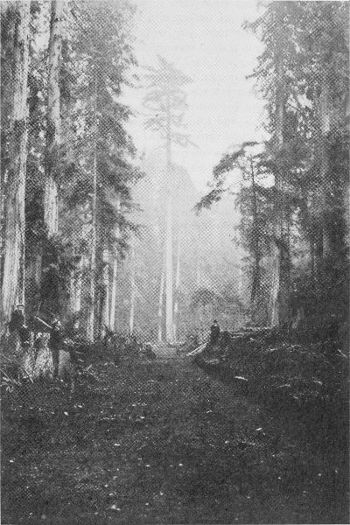
Sub-grade for motor truck logging road.
There have been some very successful operators who have
secured a small body of timber at a low price on a public road
who made the motor truck pay without building a road. This
method of logging in a small way will continue to be carried on by
small operators who will haul only during three seasons of the
year or even less. However, the big future for the motor truck for
logging is in the larger tracts of timber where it would not pay
to put in a railroad but where a good type of motor truck road
can be built cheaply and loads as large as the truck can handle
be carried with no road restrictions as to the weight.
In general four types of roads are used by loggers: (1) the
cross-plank road, (2) the fore and aft pole road, (3) the fore and
aft plank road, and (4) the cement road. The puncheon road
is a modification of the fore and aft plank road and will be taken
up with the latter. The methods and cost of construction, the
advantages and the disadvantages of these various types of roads
follow in detail.
Sub-Grade: The sub-grade is put in the same way for each
type of road. The average width of the truck is seven feet and
six inches, calling for a road about eight and a half feet wide, so
that the sub-grade should be twelve feet in width. An illustration
of the amount of grading necessary is shown on page 25. Too
much care cannot be taken in the matter of ditches for draining.
In a rainy climate, the water should be carried away from the
hill side of the grade every fifty feet.
Cross-Plank Road: The cross-plank road is constructed by
laying cull ties on hewn poles lengthwise of the road. Three rows,
four feet apart are used and second grade ten foot plank, six
inches thick and of random widths, are securely nailed to the
ties. Great care must be taken to have the ties laid fairly smooth
if the road is to be even. Plank less than six inches in thickness
should not be used as the thinner ones very soon crack and go to
piece under the excessive jar and vibration.
This is a very expensive road to build as it wastes material.
Six thousand feet of lumber is necessary for every hundred foot
station, at a cost of $222 a station for the material alone, without
considering the cost of laying it. The maintenance cost also is
very heavy because the nails pull out as a result of the vibration
caused by the truck. This type of road is used only over short
stretches, such as swampy ground in connection with the dirt road,
and on steep grades and sharp turns in connection with the pole
or plank road.
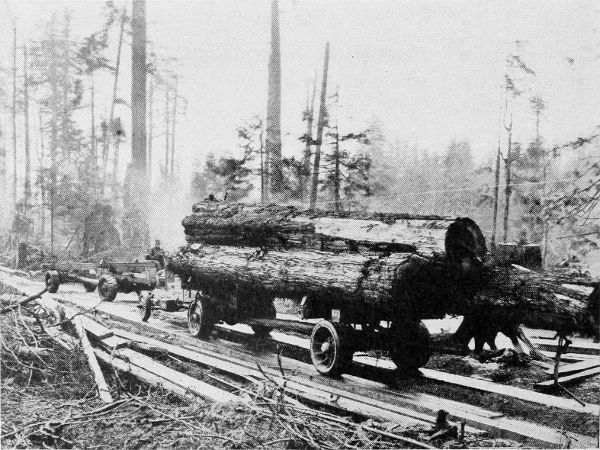
The Esary Logging Company at Camano Island, Washington,
put in a cross-plank road for a short distance on a sharp curve
and a steep grade, to see how it would affect the traction. It was
found that cross planking was not necessary on curves where the
grade is ten per cent or less when coming down with a load, providing
trailer brakes are used. In the future the company will not
use this type of road unless grades above this maximum are encountered.
It is impossible to lay a cross-plank road smoothly
because the stringers settle and make the road bumpy. The resulting
jar on the equipment and the fact that these stretches have to be
taken at a much reduced speed, furnish ample reason to condemn
its use.
The only real use for a cross-plank road is to secure better
traction on grades exceeding ten or twelve per cent, and then it
should be laid with a space of about one inch between the planks.
Even in such cases it would be better to use some other method
for securing traction, such as sanding the track or winding the
drive wheels with a light cable. The waste of material and the
excessive vibration limit the use of this type of road.
Fore and Aft Pole Road. In the fore and aft pole road, poles
from twelve to fourteen inches in diameter are hewn on one or
more faces and laid longitudinally with the road, with one or
more logs for each wheel track. This type of road is commonly
used by motor truck loggers and is one that lends itself readily to
their use. It is the most practical road that can be built unless
there is a small saw-mill handy to saw planks for the fore and aft
plank road. The smaller material growing along the right of way
is used at an expense of only what it costs to fell it, hew it and
put the poles in place. Hemlock poles may be used to advantage.
Some operators use the single large pole placed on cross-ties
eight or ten feet apart and use lighter eight-inch poles placed on
the outside for a guard rail to keep the truck from leaving the
track. The main pole is laid in a ditch about eight inches deep,
leaving it half buried. This helps to keep the poles from spreading
and increases their firmness and strength. The pole is notched
into the cross-ties, which are made of logs not less than eight
inches in diameter, and is securely nailed or bolted to prevent it
from rolling. The outside guard rail is laid on the surface of the
ground close to the main track and is securely braced from the
outside by means of posts sunk into the ground or it may be
spiked to the main pole or to the ties. When running with the
trailer on this narrow type of road, the guard rail is very necessary.
After the poles have been laid, the sub-grade should be ditched
in the center deep enough to carry away the water that falls in
the middle of the road. The success of the road depends to a large
extent upon good drainage.
The Meicklejohn and Brown Logging Company near Monroe,
Washington, operate over a pole road with three poles for each
wheel. The poles are from ten to twelve inches in diameter at
the small end and are hewn to a six inch face, giving an eighteen
inch bearing surface for each wheel. (See illustration on page 29.)
The minimum sized pole that should be used for roads of this
character is one eight inches in diameter at the small end. The
road is constructed the same way as the single pole road and the
poles are laid on cross ties twelve inches in diameter placed from
eight to ten feet apart. Where the road is off the ground as when
crossing over a small depression, these sleepers must not be over
five feet apart. The guard rails at this operation are held in place
by means of a wooden brace nailed from each end of the rail to
a near-by stump. The ends of the poles used for the track are
adzed so that they match evenly. By breaking the joints and
hewing them the road presents a level surface with no bumps.
In planning the curves, it is necessary to make the tracks
somewhat wider than on straight stretches in order to keep the
trailer from running off. The track should be three feet wide on
sharp curves and provided with a stout guard rail if there is any
danger of the truck leaving the track. The curves are banked
on the opposite side from that used on railroad curves. That is,
the inner rail is raised about three inches. This is to throw the
load to the outside away from the inner guard rail, making it
easier to make the turn without the rear wheels binding. In this
way a 35 degree curve may be negotiated with forty or fifty foot
logs. As the curves have to be passed at a much reduced speed,
there is little danger of the logs rolling off due to the raised inner
rail.
The grading for a road of this construction is usually light.
The grades should, if possible, be kept below five per cent. A
truck will operate better on a ten per cent grade in dry weather
than on a five per cent one in wet weather. On a road of this
type, grades up to ten per cent can be operated over unless there
is snow. When the grades are above this and the weather is wet,
traction still may be secured by sanding the road or by tacking an
old half inch steel cable to the road in the form of a figure “s”.
If this is sanded in addition, the truck may safely be taken up a
steeper grade than it would be safe to bring it down without
sanding.
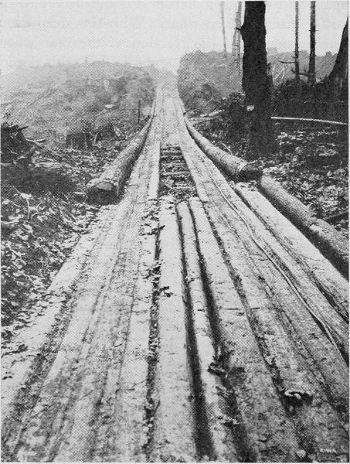
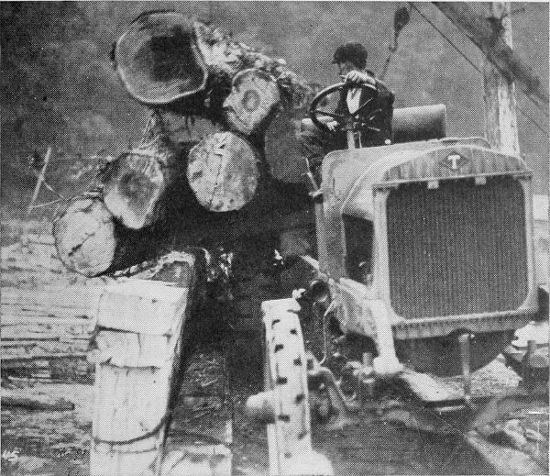
The most common type of motor truck logging road—
a fore-and-aft
pole road.
The pole road could be greatly improved by hewing the faces
of the poles where they come together side by side so that an even
fit is made. The details of this improved form of construction are
shown in figure 1, page 30.
[30]
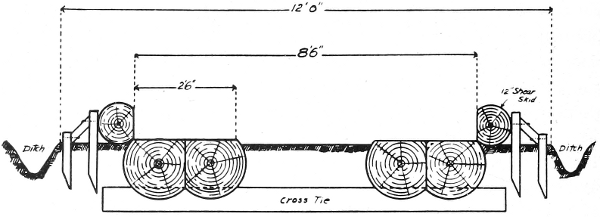
Figure 1. Cross section of pole road. Scale—1 inch equals 2 feet.
At the present time this is not done and there are one or more
ruts in the surface of the road due to the rounding off of the poles
where they are placed side by side. The front wheels of the
truck are constantly dropping into these ruts, tending to spread
the track apart and making it harder for the driver to steer. The
tires also suffer from uneven wear. With this deep groove in the
track, a certain amount of the traction of the rear wheels is also
lost. Hence a much better road would be one with the inner faces
of the poles hewn so that a tight fit is secured.
This road can be built of two large poles or three smaller ones
to give a flat track two and a half feet wide for each wheel. Laid
nearly flush with the ground the guard rail can be eliminated with
this width of track, except on sharp curves and other locations
where there would be danger if the truck left the track. On such
a road the traction will also be increased, better time can be made,
the truck will be easier to steer and hence safer to operate, and
there will be less wear on the tires. Such a road can be very
easily and cheaply built by bringing in a portable sawmill and slabbing
the material on two sides to the desired face.
The life of a good pole road is from three to four years if
kept in good repair. The maintenance cost is very light if the road
is properly constructed in the first place, consisting chiefly in
removing a pole here and there that shows signs of too much wear,
and in bracing guard rails where they weaken. The use of two
or three hewn poles laid lengthwise for each wheel without cross-ties
does not pay as the poles soon get out of place even when
trenched, and the loss of traction due to the irregularities and of
time and money in the upkeep of such a road more than justifies
putting in a good road in the first place.
The cost of a fore and aft pole road varies with the accessibility
of the material and the cost of the labor. In the past they
have been built for as low as $2000 a mile, but with the present
prices costs will range from $5000 to $7000 a mile. One company
within the year contracted the grading and construction of the
road for $70 a hundred foot station, not including the cost of
clearing and chunking out the right of way. The total cost was
about $125 a station or $6600 a mile.
Some of the advantages of the pole road are that it is tough
and strong and does not crack, split or break easily so that if it
is properly put in it lasts and requires but little maintenance. The
material for its construction is found along the right of way and
being small in diameter is less expensive than other road materials.
Fore and Aft Plank Roads. This type of road is constructed
by placing cross-ties from eight to ten feet apart, center to center,
upon which are placed lengthwise for each wheel, two or three
sawed timbers not less than six inches in thickness and from twelve
to fifteen inches in width. A good road of this type will deliver
150 million feet of logs at a conservative estimate.
The grading is usually light and in many places entirely unnecessary.
Second-grade six by eight ties with the eight inch face
placed down, or hewn poles are laid about eight feet apart. Where
the road bed is soft, the ties are placed closer and in some places
as near as two and a half feet apart. Over very swampy ground,
the road known as the fore and aft puncheon road is used. It
consists simply of cedar puncheon placed crosswise of the road
with the usual planking nailed securely to it. The plank used
should never be less than six inches in thickness in the main road
as it has been proved that four inch plank very soon give way
under the heavy loads. On the spur lines it is practicable to use
four inch plank because the road is used only a short time.
The total width of the road is eight feet and the plank are
laid on top of the ground, but if they are sunk nearly to the level
of the ground the road is made considerably more firm and
enduring, and of course is safer. The ends are adzed smooth to
present an even surface, drift-bolted to the ties, and all joints
broken.
The plank in the track are kept together by means of a three
by four inch timber driven tightly between the tracks on top of
the cross-ties at each joint, and a block nailed to the outside of
the tie at each joint with a wedge-shaped piece of wood driven
between it and the plank. (See illustration on page 33.) This
wedge is driven in from time to time as occasion may demand.
If, in addition to this construction, dirt or gravel is filled in the
center to the level of the track, the road is made very solid.
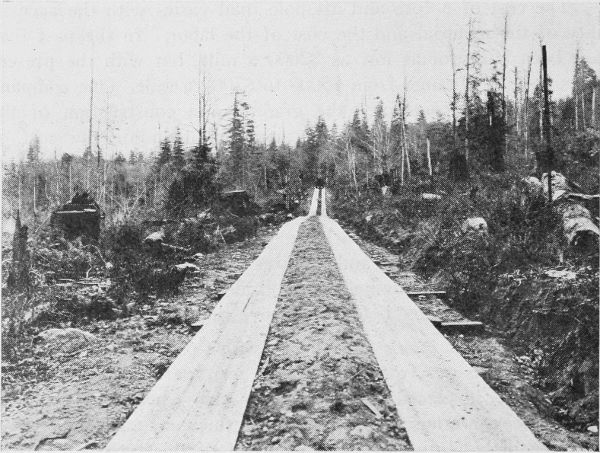
Fore-and-aft plank road with wedges on cross ties to facilitate the
re-aligning of the planks.
With a good road of this type and a bearing surface of thirty
inches, the trouble and expense of a guard rail may be eliminated.
When a light truck is used for a small body of timber such a wide
and heavily constructed road is not practical. In this case, a four
inch plank with a fifteen inch surface and an eight inch pole for
a guard rail would be used. Here again the track must be made
wider on the sharp curves, often as wide as three and a half feet.
Usually, the inner rail is made wider than the outer one. On very
sharp curves the track may have to be planked solid to keep the
trailer from running off. By sawing out chips from one-half to
one inch wide two-thirds of the way through the plank, and about
six feet apart on the inner side, a long plank may be bent around
quite a sharp curve. The ties, of course, should be placed so as
to allow the cut sections of the plank to rest squarely on them.
This does away with the short pieces and so strengthens the track.
The company logging at Camano Island, Washington, operates
over a road of this type, an illustration of which is shown on page
38. The difficulties encountered in the construction of this particular
road were very considerable as a cut through very hard
shale, in some places as much as seven feet, was necessary. The
maintenance on this road is heavier than is usual. Two men are
employed to work on it continually. The work consists of blocking
up the loose ties and plank, making any necessary repairs and keeping
sand and gravel on the steep grades. The cost of this work is
good insurance as it keeps the road in the best of condition at all
times and saves on other operating expenses.
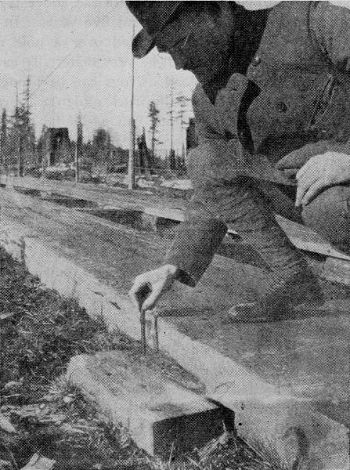
Detailed view of fore-and-aft plank road,
showing method of wedging.
Cost. The first cost of a road of this type is high but it more
than pays in the long run if a large body of timber is to be hauled
over it. The timber used in its construction amounts to about 160
thousand feet per mile. Second grade material can be used at a
cost of approximately $5,500 a mile for the plank. The total cost
per mile varies from $6,000 to $8,000. The plank road at Camano
Island cost $20,000 for two and three-quarter miles, which includes
the cost of the plank, the grading and labor of putting the plank in
place. This is at the rate of about $7,275 a mile, or approximately
$138 a hundred foot station. The overhead charge for the road at
this operation is $.75 a thousand feet of timber hauled over it. Plank
roads of lighter construction have been built for $4,000 a mile.
The length of life is about the same as that of a pole road, three
to four years.
The fore and aft plank road is one of the best roads that can
be put in where the timber is of sufficient quantity to justify the
expense. The big advantage is the speed that can be made and
the saving in the equipment. Such a road is very free from bumps
and the jar and vibration on the truck is no greater than on a
city pavement. The depreciation on a truck depends to a great
extent upon the road operated over. With the above type, depreciation
on the truck will not be less than five years. In addition,
tire mileage will be double that obtained over a pole road, and
the gasoline and repair expense will be very materially cut. Owing
to the very small vibration, a load of logs can be brought to the
landing as fast as it is safe to let the truck glide on a down grade.
Speeds as high as 20 miles an hour can easily be taken without
excessive vibration. The traction is greater on this type of road
than it is on the pole road, due to the greater bearing surface.
Traction on grades up to 12% is easily secured by sanding the
plank.
Concrete Roads. Concrete has been suggested as an ideal
road material. However, up to the present time, loggers have
not been very enthusiastic about this type of road on account of
the cost of construction, which is somewhat more expensive than
the other types of roads, and on account of the permanence of
the finished road which is beyond that needed. To the writer’s
knowledge, there is no company operating in the Northwest over
a concrete road of their own building. In the future such roads
may be used to a limited extent on the main haul by companies
which have operations extending over at least a five year period.
The spur roads will probably always be of some other material.
In building such roads two tracks of concrete, one for each
wheel are provided. The sub-grade should be well ditched in the
center with cross ditches every fifty feet, as is done with the pole
road. It has been suggested that the ditches holding the track be
six inches deep and twenty-six inches wide. They are filled to
the top with concrete and built with a lip four inches high and
four inches wide along the outside on top of the main surface to
serve as a guard rail. No forms are necessary except for the
guard lip.
A word of caution here may not be amiss. Concrete roads of
this nature must be regarded as only experimental, for no specific
data are available for determining the proper section of concrete
to be used for carrying heavy loads on so narrow a bearing surface.
It is evident that the carrying capacity of such strips of concrete
would be greatly affected by the character of the sub-base. It will
therefore be impossible to specify a standard that can be used
under all conditions.
The use of the concrete guard rail is one of the disadvantages
of this road. The edges of the rail cannot be made rounding
except by special forms and the rubbing of the tires against this
rough surface would greatly reduce the tire mileage. In addition,
the rail is so exposed to weather and hard wear that it cannot be
relied upon to serve effectively for any great length of time. The
placing of forms is also a considerable item of expense in building
such a road. A method which would eliminate such an expense
and at the same time provide a more practical rail would be an
advantage.
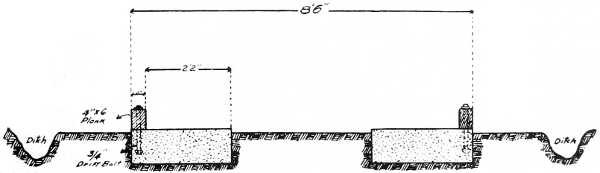
Figure 2. Cross section of concrete road. Scale—1 inch equals 2 feet.
It has already been said that guard rails are unnecessary with
a thirty inch track except on sharp curves and otherwise dangerous
places. However, where rails are necessary the wooden rail fastened
by bolts embedded in the concrete as illustrated above, is quite
effective and readily installed. This consists of a four by six inch
plank placed on edge and drift-bolted to the concrete every three
to five feet by a three-quarter inch bolt. These bolts are placed
in the concrete when it is poured and should be embedded six
inches. This will provide a rail less expensive to build than a
concrete rail and one which will last longer and save on tires.
Replacements are easily made by removing the nuts and placing
a new plank in place of the old. With a guard rail of this type,
there is left a twenty-six inch track for the wheels to run in.
Experiments by W. D. Pence (Journ. West. Soc. Eng. Vol.
VI, 1901, Page 549) on 1 : 2 : 4 concrete give an average value of
0.0000055 inches per degree Fahrenheit for the coefficient of expansion.
The richer the concrete, the greater the change in dimension.
Due to the expansion, in laying the concrete the track must
be broken every twenty-five or thirty feet by placing a half-inch
board in the ditch when the concrete is being filled in. Later this
board is removed and the joint filled with asphalt so that the
concrete may expand without danger of cracking the road.
Cost. The best mix to use in building this road is what is
known as the 1 : 21⁄2 : 5.
For one cubic yard of concrete, the following
amounts of materials will be used for the above mix: 1.21
barrels of cement, 0.46 cubic yards of sand, and 0.92 cubic yards
of stone. At the present prices, the cost for the materials for this
road is about twenty cents a cubic foot or about $4,400 a mile.
The total cost of the road including the necessary grading, ditching
and labor, will be from $7,000 to $9,000 per mile.
One of the big advantages of the concrete road is the large
gain in traction secured when operating on steep grades. A motor
truck will haul up a twelve per cent and down a fifteen per cent
grade in wet weather on concrete due to the roughened surface
on which the tires do not easily slip. This, of course, would be
dangerous to attempt on the other types of roads. Another advantage
is the small item of upkeep necessary. A road well laid in
the first place should need no repair except to replace worn guard
rails as they show signs of weakening. The concrete road, however,
will not be generally used except on the mainline by the
larger concerns, or for short distances on steep grades where
greater traction is desired.