FREEDOM AND HAPPINESS.
It will be remembered that I had obtained
another squirrel as a mate for Laurence when
he should leave London and come to Hook
Heath and freedom. This little creature had
arrived on the thirteenth of January; had
been kept in the conservatory while the bitter
weather lasted; and had been put into the
garden squirrel-house on the twenty-eighth of
the month. I called her Sulky at first, for she
remained so implacably invisible; and, though
food disappeared, I never caught a glimpse of
her for a fortnight. She was, as I have said,
intended to be a mate for Laurence; but after
Ruby’s death I felt she must be given to
Fritz, and I must get another little lady for
Laurence. So, the day after my little pets
died, I opened the door of the squirrel-house,
and let the captive free to go where she would.
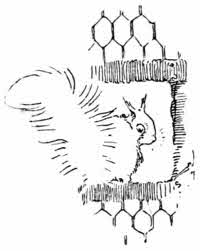
I had reason to believe, however, that for a
week she sneaked back to the squirrel-house
every night to sleep; for nuts put in overnight
were gone before 7 a.m., and one
morning I saw her slipping down from the
sleeping-box to make her breakfast.
I watched her afterwards get out and run
along the fence, and then think better of it,
and come back and climb up to have another
nap.
By midday, however, she was gone, nor
did I see her again for more than a fortnight.
We had some very stormy weather, with high
gales and snow squalls, and I began to fear
that she had got a chill and would die of
pneumonia, like poor little Rufina.
How should we ever know? She would
creep into one of the deserted nests in the
wood, and there gasp out her little life as the
two others had done.
The only thing that gave me hope that she
was alive and well, though unseen, was Fritz’s
cheerful behaviour, and the fact of his still
remaining in the wood and garden. For it
was springtime, and surely, if there had not
been some attraction here, he would have
been off to the plantations across the heath,
where there were plenty of little ladies to be
courted. His demeanour when he paid visits
to my room—which he did every day—was
suggestive of happiness and of amorous
thoughts. He would cock his tail roguishly,
and skip about and run up the curtains—plainly
“showing off.”
I therefore hoped that, though I could not
see her, he was aware of Sulky’s presence, and
was hugging to himself hopes of domestic bliss.
And, sure enough, one bright morning I
peeped out at 6 a.m., to see Fritz tearing
across the lawn, as fast as his little legs could
carry him, towards the stump, where Sulky
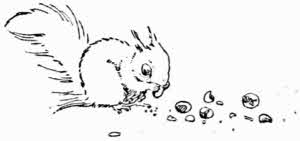
was boldly cracking nuts, looking exceedingly
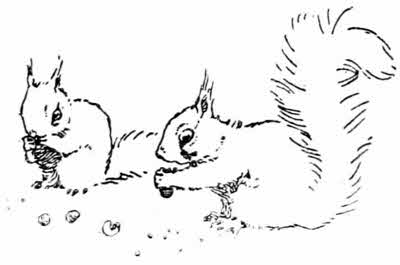
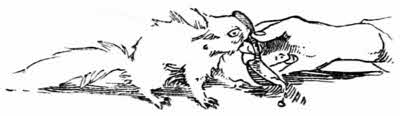
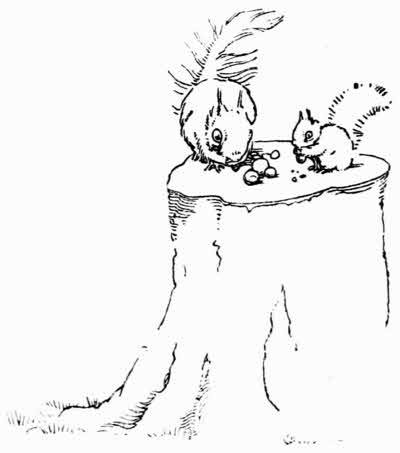
well and pretty. I saw her lift the cocoanut
shell with her little fore paws from off the cob
nuts, and she tucked in an excellent breakfast.
Fritz, being the gentleman he always
was, would not disturb her, but came up the
ivy to me, where his antics betokened great
happiness.
From that day the name of Sulky was
dropped, and became “Mrs. Fritz.”
By the 17th March Miss Appleton required
Laurence Housman no longer as a model, so
she brought him down to me at Hook Heath.
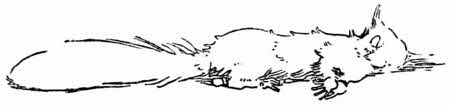
She had secured his sleeping-box (while he
was curled up in it for a nap), wrapped it in
thick brown paper, wired it across the holes,
and held it in her lap all the time in tubes
and train.
“I suppose he is here, and I suppose he is
alive,” she said when she arrived; “but I have
not heard the ghost of a sound, nor felt the
faintest wriggle in the box. I hope he has
not died of fright!”
We put the package down for a moment
upon the sofa, when, to our amusement and
relief, there immediately came forth squeaks
and grunts of expostulation.
“Poor little fellow! how cramped he must
be,” we exclaimed; and proceeded forthwith
to place him, box and all, within the spacious
squirrel-house in the garden. This was safely
accomplished by Smithers, good man—as kind
and interested in my pets as ever.
In this abode Laurence remained till the
2nd May, when I set him free altogether.
But before giving him his liberty I had to
get a mate for him, so that there should be
no excuse for fights with the masterful Fritz.
As Messrs. Devon and Co. took some time
before they found what I wanted (for she
had to be a German, young, and healthy),
Laurence had to remain solitary for a month.
March 1914 was a dreadful month of gales,
rain, and snow squalls; but with the first days
of April came spring-like warmth and brilliant
sunshine, and the wild squirrels visited the
garden again.
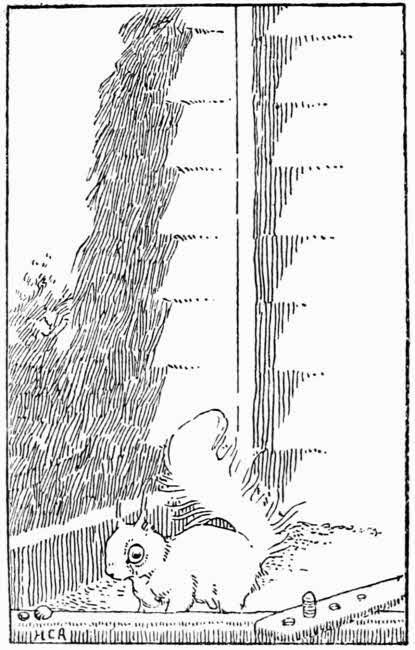
One morning the dear little thing, whom I
used to call Miss Fritz in the summer of
1913, came dancing and skipping along the
fence rails, and I watched her at 6 a.m. from
my bedroom window. She climbed the big
lime tree to have a look at the little shelf
outside my casement, where, as she well remembered,
nuts were spread galore in the
days of her childhood last year. Yes! there
they were, and down she ran and made a dash
for the wall and the sheltering ivy. Up she
scrambled, and in another moment was perched
on the extreme corner of the ledge, with her
beautiful tail cocked over her back, and an
almond clutched in her little claws. She let
me stand quite close, not a foot away, with
the window wide open; and oh! how pretty
and small and dainty she looked to my eyes,
accustomed for so many months to the coarser
build and shaggier fur of the Germans. Her
little face was so appealing and baby-like, her
nut-coloured fur so soft, and her tail so fluffy!
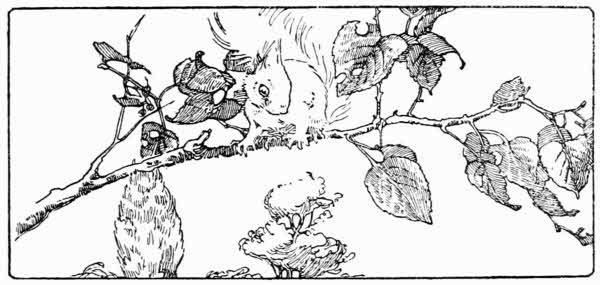
She knew me again quite well; looked at
me with recognition in her brilliant black
eyes; and presently, dropping the empty shell
of her almond, she came hesitatingly to the
inside ledge of the window, stretching out
her nose to sniff at me—to make quite sure
that I was in very truth her old friend; and,
having satisfied her little mind, she picked up
a walnut and concentrated her attention upon
it. I stood beside her there for ten minutes,
till she had finished all the provender except
one cob nut, which she carefully hid in the
ivy. Then she raced down to coquette with
poor Laurence, who in his garden-cage was
doing his wild best to excite her attention.
Round and round the wire she darted, sniffing
nose to nose with him and “twizzling” her
plumy tail. Every now and then I heard
squeaks and exclamations. Then they started
a sort of hide-and-seek, she outside, he inside.
I felt very sorry for him, and longed to let
him out; but his peace, let alone his life,
would not have been worth a moment’s purchase
with Fritz in the wood.
Two days before this, Laurence had got out.
The little door of his house, though shut, had
not been bolted, and with a sudden burst of
summer-like sunshine and high wind the rain-swollen
wood had shrunk, and was easily burst
open when pressed by his eager paws. I did
not see him go. He must have skipped off
very early indeed; but about 10 a.m. I happened
to be looking out of the window, and
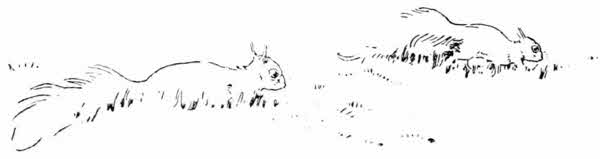
was suddenly aware of two hurrying furry
forms across the ground. Poor Laurence was
tearing for all he was worth towards the
shelter of his lately forsaken house, and Fritz
was after him, with murder in his eyes.
I clapped my hands and shouted, startling
them both and diverting Fritz’s attention.
He sprang up a tree, and Laurence hid himself
in the twinkling of an eye. I saw Master
Fritz watching intently for a few moments,
and wrathfully “twisting his tail” (as a young
friend of mine puts it). His rival remaining
invisible, however, I soon saw him skipping
leisurely back along his tree footpath to Mrs.
Fritz in the wood.
Half an hour later I perceived Laurence
stealthily making his way along the fence
towards his house, where nuts were plentifully
spread. (I suspect he had not had much of a
breakfast.) I fled downstairs and out in time
to see his tail drawn neatly through the open
door, as he seized a cob nut and sat up to
enjoy it. He scarcely noticed me as I bolted
him in—only too thankful, I fancy, to find
himself once more where were plenty of nuts
and no Fritz.
Towards the end of March—to be accurate,
on the 22nd—I see in a note in my squirrel
diary that Laurence wakened and was busy
over his breakfast at 6 a.m., and that Fritz
came along, and, perching on the heather
thatch of his house, swore fiercely at him,
twisting his tail with rage. He heeded not
my call, nor the rattle of nuts on my window
sill; but burrowed his nose into the heather,
in vain attempts to come to close quarters
with his enemy. Laurence swished his tail
too, and returned his compliments with interest;
but, finding it impossible to fight,
he presently turned his back on Fritz and
resumed his nut cracking—with a lofty
contempt for the other—and Fritz had to
come up to me to be fed and consoled.
At last Laurence’s bride arrived, and as had
happened before with the various pairs under
observation, she soon took the best of everything.
Laurence was turned out of his sleeping-box;
she stole all his best nuts; and invariably
made him wait till she had finished
her meals, leaving only the refuse for him.
She arrived on the seventeenth of April, and
I opened the cage door to set them both free
after she had had a fortnight to get used to
the sight of the house and the human beings
in the garden, and to understand that food and
water were always to be found in that particular
place.
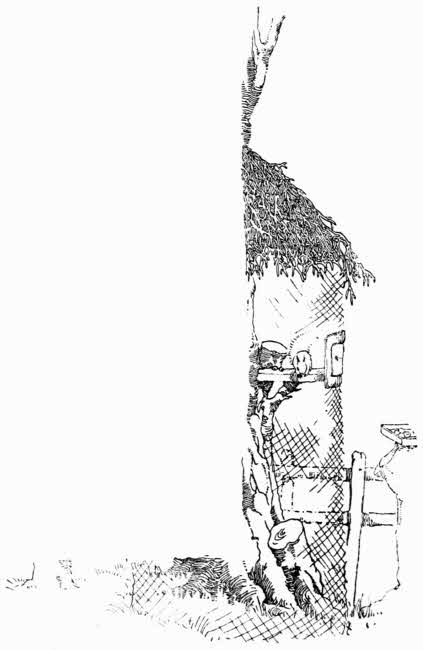
I also made a little hole in the thatched
roof—as squirrels like to have two entrances
to their abodes—and Laurence immediately
set out to enjoy his liberty. I soon saw his
little head emerging from the hole at the top,
and I watched his furtive joy as he capered
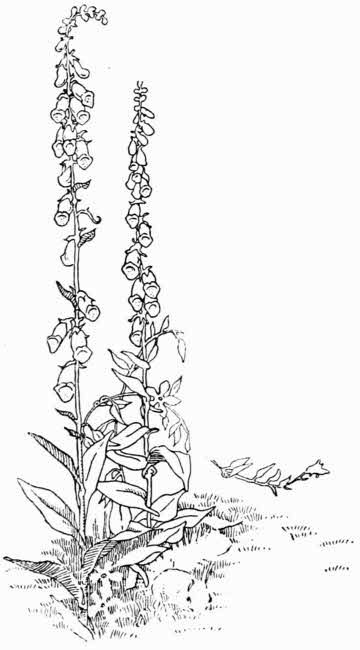
about among the foxgloves and periwinkles
below, and finally was lost to my sight clambering
up a cherry tree. Mrs. Laurence, on the
contrary, was quite a week before she quitted
the cage. She preferred to remain where food
was abundant, and where her comfortable
sleeping-box kept her snug at night.
When at length she did venture forth with
her husband into the unknown, she still stole
back for several nights to her safe shelter.
But at last, I suppose, they built between them
a nest in the wood, for I constantly saw
Laurence very busily tearing strips of fibre
from the trees just then, and the cage was
finally deserted.
Squirrels are very busy in the spring stripping
bark for making new nests, and in the
summer this is sometimes carried on for remaking
and mending the old.
They generally choose damp rainy days for
doing this, when the material they gather is
full of moisture. Once, however, in a spell of
prolonged hot dry weather, I was much struck
with a clever device on the part of one of
them, probably Fritz.
I found one morning two little bundles of
stripped fibre thrust into the jar of drinking
water inside the garden squirrel-house. (The
entrance to this was always left open, and
the squirrels ran in and out for food and
water.)
There was no mistaking these neat little
bundles. I had too often watched Bunty,
Fritz, Rufina, and Co. not to know the look
of them, with the ends tucked in, in the form
of a little bolster. I left the packages there,
grasping at once that the weather being so
dry the fibre had become too stiff and hard to
be easily woven, hence the bringing of these
bundles to the water and leaving them to soak.
They remained there for two or three days,
then one was carried off, and a day or two
later the second disappeared.
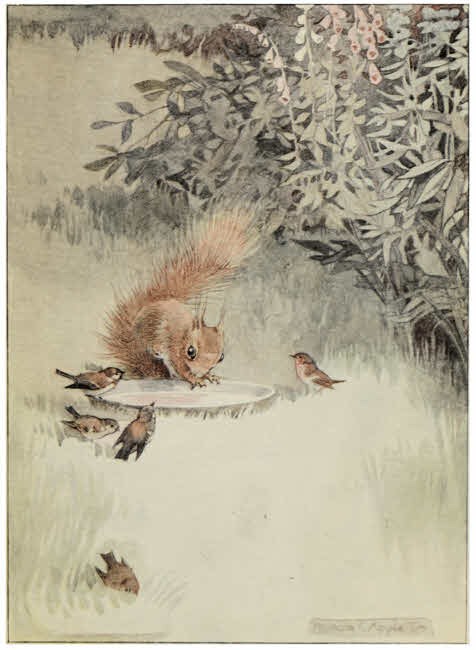
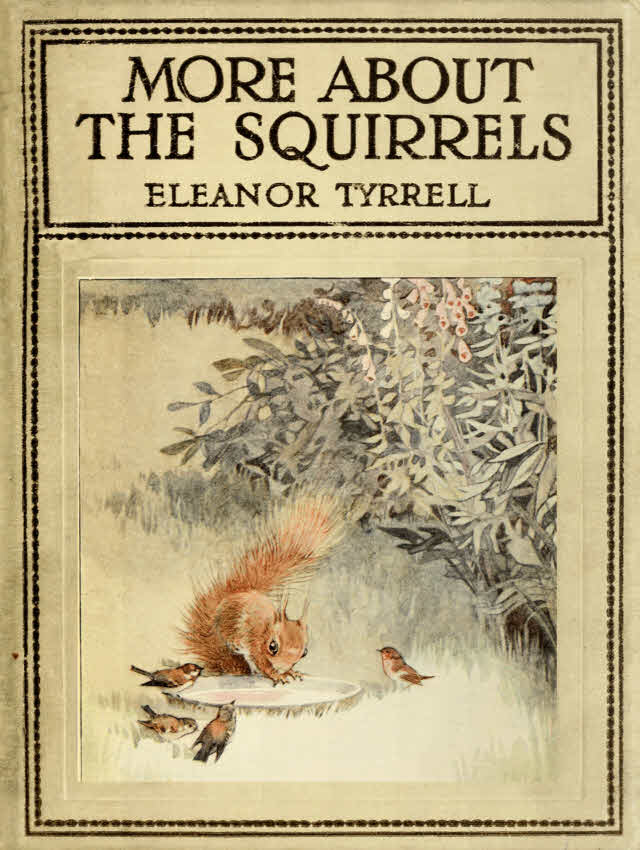
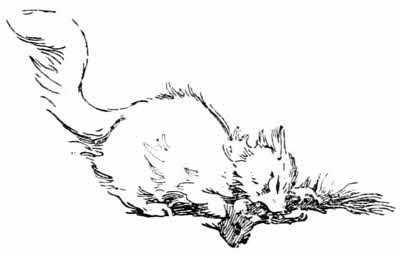
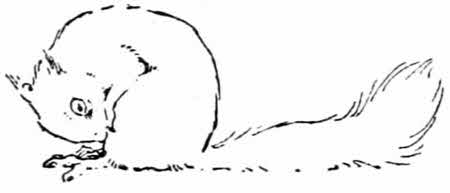
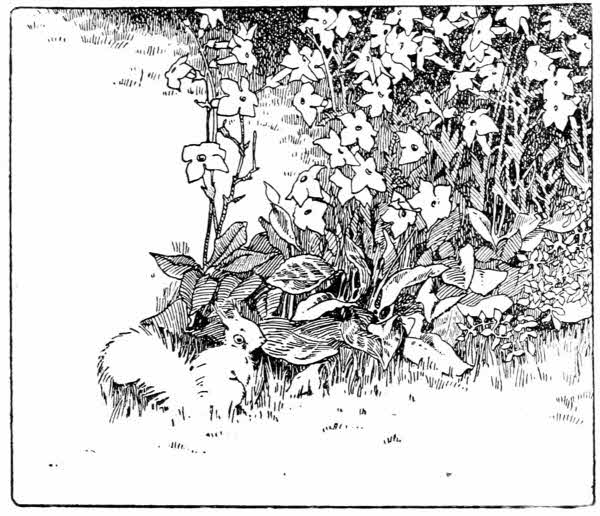
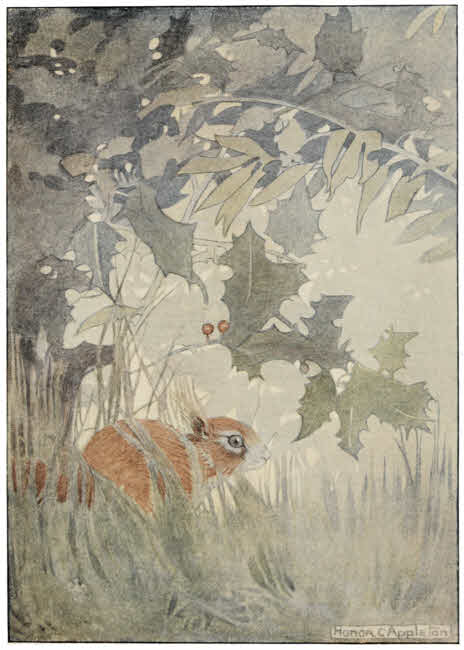
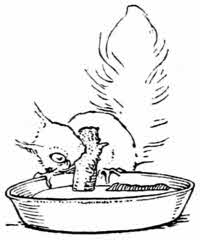
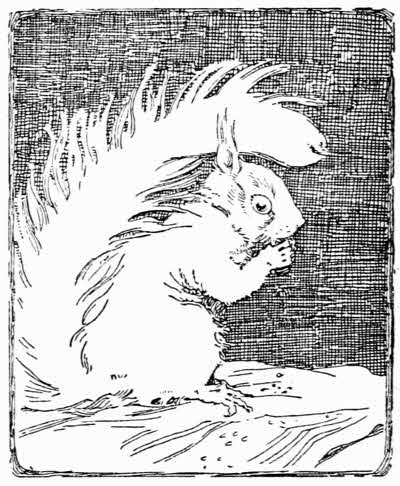
She coquetted with the birds round the drinking pan. See page 83.
What made the performance more interesting
was that this special fibre was only
obtained from one particular tree, a certain
conifer which grew on the other side of the
garden. Fritz had been frequently seen in
the spring stripping the fibre from this half-dead
tree, the only one of its kind we had.
In carrying his little bundles from it to where
he placed them to soak, he would pass two
birds’ drinking pans full of water; but they
were in public places on the lawn, and constantly
bathed in by all sorts of birds. Fritz—if
it was he, and I very much suspect it was—preferred
the comparative secrecy and seclusion
of the small water-jar in the squirrel-house in
the back garden. His sagacity was justified,
for no one meddled with them till he considered
them to be sufficiently moistened for
weaving purposes.
One hot afternoon under the weeping tree
there was coolness and shade. Half drowsily
I was reading the Saturday Westminster, when I
was aware—I can’t say I heard it, for it was so
slight—but I was aware of a minute noise. It
was not the fitful summer breeze swaying the
hanging branches of my sanctuary, nor the
scratches of birds under the rhododendrons in
a vain quest for worms. I lifted my head
very cautiously, and twisted it slowly towards
the rough stem of the white-blossomed acacia,
twenty feet away. Yes, up in a fork of the
branches was a bit of brown fur. Part of it
seemed to be quivering incessantly. The tiny
noise I heard was the dropping of a nutshell
on the grass. The quivering I saw was a
little jaw nibbling very fast. Presently there
was a flashing movement, and out into the
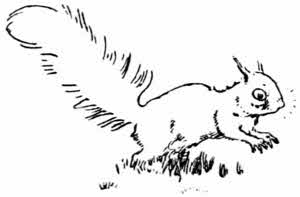
sunshine she came, a beautiful, brilliant foxy
red, with a tail which put her husband’s to
shame, for this was Mrs. Fritz.

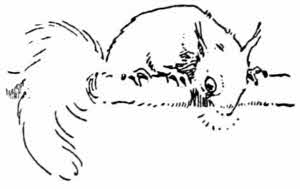
With electric jerky motions she came down
the tree stem and clawed out another nut from
the crevices, and swung head downward easily
and securely, her hind feet firmly clenching
the deeply-grooved bark. Nut after nut she
searched out from where I had hidden them,
and then, catching sight of me, she swiftly and
noiselessly put herself out of sight.
Presently, as I remained very still, she
plucked up more courage and skipped down
to the grass. Here for some minutes she
coquetted—there is no other word for it—she
coquetted with the birds round the drinking
pan. After many feints, advancing and
retreating, she buried her nose in the cool,
sparkling water, and took a long, long drink.
Eyeing me through the veil of green which
dropped round me, she suddenly made up her
frisky mind to dare all and come to the nut
tray close to my seat.
She rushed towards me in a tremendous
hurry as if afraid of changing her mind again,
her tail straight out behind her, and in two
seconds was within touching distance of my
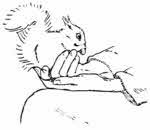
hand. I kept rigid, and watched out of half-closed
eyes. She stood up on her flexible hind
feet and reached out a quivering, sniffling little
nose in my direction, trembling all over with
fear and curiosity. But as the dreaded human
smell reached her moist nostrils, she turned
and darted like an arrow under the shelter of
a thick rhododendron. Here she hid, and I
saw her bright eyes peeping out at me behind
the leaves. I still remained motionless, and
presently was aware of a noiseless furry form
vanishing up the holly tree which leans against
some of the outer branches of the beech.
The long hanging green around me shook
a moment, and by that I knew that she had
jumped from the holly to the beech, and was
somewhere above my head. I moved imperceptibly
so as to look upwards, and close above
me was a little white stomach with a fiery tail
cocked over a chestnut back.
And now she began to scold and stamp her
feet and lash her tail; but seeing that I kept
calm and moved not an eyelash, she made for
the nuts, and sat up within a yard of my chair
cracking and devouring them one by one.
I was immensely pleased, as this was the
first time since I let her go three months ago
that I had seen Mrs. Fritz so near.
There came a day at the end of June when
Fritz brought a son and heir to the nuts on
the stump. The stump, I must explain, was
near the squirrel-house in the back garden,
and was in full view of my window. The
youngster was a lovely colour, almost orange,
with a smart bushy tail. Fritz at this time
was changing his tail, and was a lamentable
object in that respect—his spiny little appendix
had hardly a hair on it. I was amused at his
elderly paterfamilias ways—“twizzling” his
bald tail in mock anger, and carefully hiding
away several nuts for future occasions. And
this reminds me that I never saw him bury
his nuts as the Surrey squirrels did. He preferred
to hide them in the forks of the trees,
or in the ivy, or in deserted birds’ nests.
I have forgotten to say that when Laurence’s
mate arrived in the middle of April it was
Smithers who received her, and put her into
the squirrel-house in the garden, for I was
spending Easter amid the deep green lanes of
Devonshire.
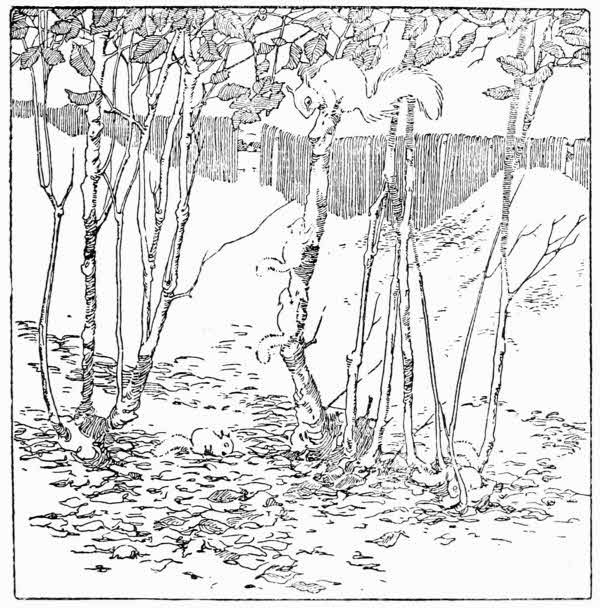
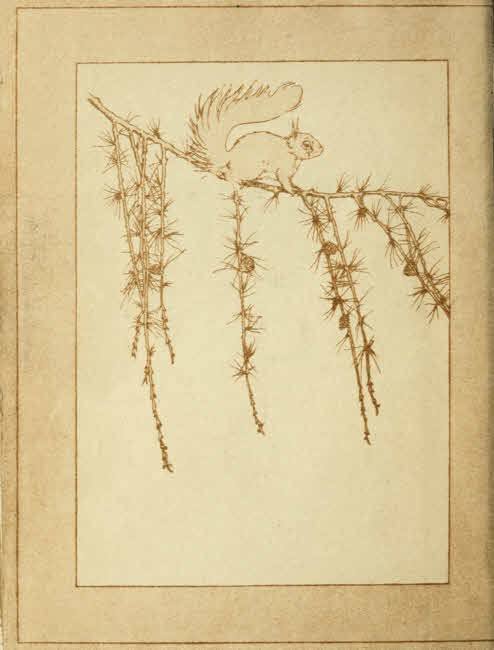
There, one hot spring morning, as I was
lying on moss and whortleberry, under the
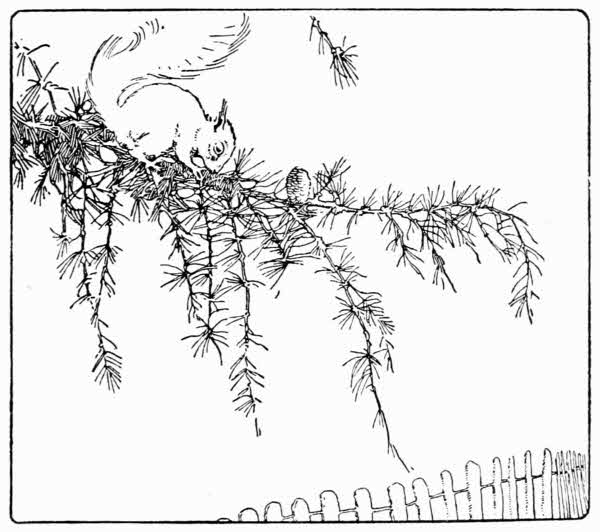
shoulder of Mutter’s Moor, I watched a wild
squirrel running up a larch. It was soon
hidden from view in the tree’s delicate green
branches—and what is more exquisite than
the earliest green of the larch? I heard the
delicious scrabble of little claws on the bark,
while about me droned the big bumble-bees
and their quick-working cousins of the hive,
all intent on honey-getting. I was puzzled
to know where the honey was to be found,
till I saw that the whortleberry was full of
innumerable tiny crimson bell-flowers.
It was a wonderful Easter. After “the
wettest March on record” April came in hot
and brilliant, with a steady east wind that
dried up the saturated ground.
In every sheltered valley and “goyle” the
trees rushed into leaf. The birch shook out
her fairy tassels, and larches lit up the hillsides
with their vivid green lace. Everywhere
the busy birds flew in and out of the hedges,
intent on nest-making. The rooks cawed from
morning to night, the jackdaws “chucked,”
and sea-gulls sailed aloft exchanging their wild
free calls in the blue. It was a joy to live.
Back in Surrey again after a cold spell—“the
tail of winter in the middle of May”—the
icy wind dropped, and a still, hot day soothed
our ruffled nerves, and warmed our shivering
bodies once more. Early one morning wild
Miss Tito paid me a second visit. She came
to the bedroom window, and allowed me to
stand close beside her, while she cracked her
favourite Barcelona nuts.
When her back was turned, and her eyes
shielded by her lovely tail, I gently unfastened
the casement and very slowly pushed it out,
holding my breath and body very still, when
she quickly jerked round to see what was
happening. I then backed quietly into the
shadow of the room, having placed more nuts
on a chair. Presently, her nut finished, and
no more to be found under the inverted cocoanut
in spite of her vigorous nose-pushings, her
wee intelligent face peeped inside the casement,
two little fore paws appeared, and then
she jumped upon the chair to seize a nut—skipping
outside again to crack it. I crept
back into bed, and lay still. Then she came
again, jumped down upon the blue carpet, and
executed a sort of pas seul—pitter-patter—and
back. She had not been inside my room since
last September—eight months ago!
Through the autumn and winter I had
scarcely seen her, even in the garden. With
Tito and Tara I suppose she had been driven
away by the masterful Fritz. As mentioned
already, in April she had once reappeared, and
had even clambered up the ivy to breakfast
at the old place. But this running about in
my room to-day showed that she had not
forgotten the spring of 1913, when she was
such a fearless little visitor that I once
caught her, and put her for ten days in the
squirrel-house, in a vain attempt to tame her
altogether—an attempt which, as I have explained
in a former book, completely failed.
To return, however, to this particular morning,
she came in and out several times till the
nuts were finished, and then took a bit of
brown bread in her mouth, and hid it in the
curtains before she finally departed. Afterwards
I saw her in the lime tree licking her little
paws, and cleaning her whiskers assiduously.
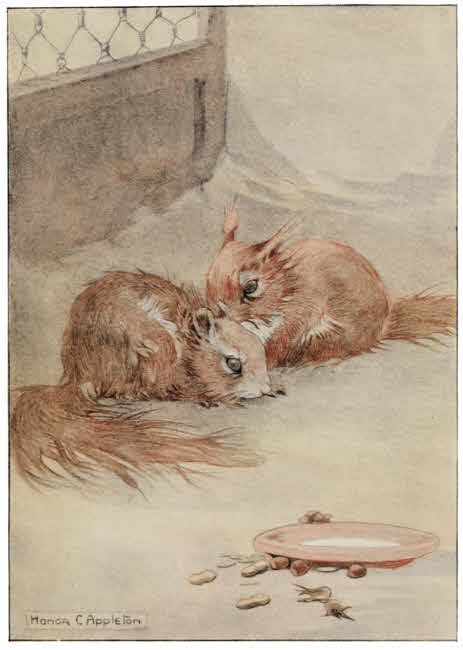
“There’s a boy downstairs with some baby
squirrels in his pocket, and he says will you
buy one, and he has sold the others already,
and will you tell him how to feed them?”
This from an excited child who came bounding
to my door, the morning holidays began,
and we were all going away from home.
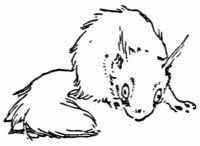
I went downstairs and found a bright-eyed,
sturdy little chap of nine, who held in his
hand a tiny bit of fur, with a fuzzy turned-up
tail, and a pair of sharp tufted ears. Putting
it on the kitchen table—where it darted about
in electric fashion, saved from falling off the
edge every minute by eager hands—the boy
pulled another, and another, and yet another
out of his pockets, and then diving into a
basket on the floor, he produced three more.
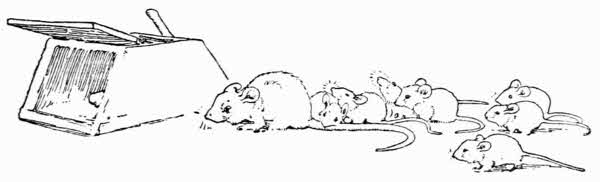
Seven furry infants! I gasped. The heartlessness
of it! What were the bereaved and
distracted parents doing?
I questioned him wrathfully, as I dashed
round the table, with others, to prevent imminent
catastrophes. The electric movements
spread all over the broad surface of the kitchen
table.
“Where did you get them?”
“Out in the fir plantations on the heath,
Miss. Oi cloimed up a tree and put me ’and
in the nestises. Oi let one fall, and ’e doid.”
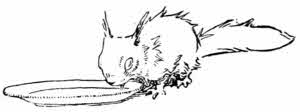
Some one brought warmed milk in a soup
plate, and we placed the seven wee things
round it, dipping their noses in, as one does
with kittens, to make them lap. Three tackled
the food at once; tiny pink tongues shot out,
tiny tails curled comfortably over backs. The
others were too feeble, and too young to understand;
they were palpitating, and fell over
as fast as they were put upon their four legs.
Poor little innocents, taken away far too young
from their mothers and their dark, warm nests!
I saw they would not live; already two were
in convulsions.
I was furious with the boy. But what was
to be done? He had already sold most of
them for a shilling apiece, on condition he
reared them for the first week himself. He
had heard that I knew all about squirrels, and
came to me for instructions about food.
I warned him as emphatically as I knew
how against overfeeding, and pointed out the
absolute necessity of plenty of sleep, warmth,
and no handling. But what was the use? He
had seven little brothers and sisters at home.
They all wanted to cuddle the squirrels; they
all wanted to feed them. Two died that
evening, three followed their example next
day, and by the day after not one was left
alive.
It was impossible for me to have taken
them myself. I was going a long journey to
friends—whom I love, but whose prime aversion
is pet animals! Our house was being
shut up, and Smithers, with all his kindness
and patience, firmly declined a responsibility
in my absence that entailed getting up at
4 a.m. to give food, and that in any case was
by no means an easy task. Baby squirrels are
notoriously difficult to rear.
Later in the month found me once more
established with books and work in my old
summer quarters under the weeping beech on
the lawn.
The beech had been, as usual, the last to
come out; while larches, limes, and chestnuts
had flung open their treasures and burst into
spring loveliness almost before the middle of
that wonderful April, the beech, still shrinking
and coy, had kept her little brown sheaths
wrapped tightly round her buds. But by the
second week in May, after “Winter’s tail” had
fled, she hung out all her delicate green; and
her swaying tresses swept the turf around me,
as I sat alone in the sweetness and promise of
yet another spring.
Sparrows, thrushes, and robins were busy
feeding young broods; chaffinches and blue
tits were still sitting on their eggs; the spotted
flycatchers had not yet arrived. Forget-me-nots,
violas, and irises made a sea of blue and
purple, seen through the pendent branches
of my sanctuary. White broom leant over
with its fairy flowerets, and back amongst
the evergreens glowed the crimson of early
rhododendrons.
Presently there was a scolding and chattering
above my head, and I looked up to see
Fritz, who had, I suppose, come by his usual
overland route along the tree tops, and was
minded to come down to the tray at my
elbow for nuts. He did not like the look
of my rug and cushions, and was apparently
trying to stamp at and scold them out of his
way. Finding them immovable and harmless,
however, he came leaping down for almonds
and walnuts, and as I talked to him his
nervousness ceased, and we were both happy.
After he had gone came the conscientious
robin, who just now was hard at it feeding
her newly-fledged young. I helped her,
at intervals, all day in the performance of
this duty, with currants, oatmeal, and cheese.
Scarcely did she allow herself a morsel, so
intent was she upon the needs of her brood.
As she waited expectantly for my dole another
robin flew down. They did not fight, so I
presumed this was a cock, and I watched
his antics to attract her with considerable
amusement.
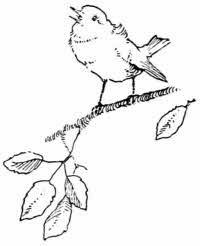
First, he sang to her, a little low whispering
song, swaying his head and neck to and
fro, in an extraordinary manner bowing and
sidling.
As, perfectly unconcerned, she continued
assiduously picking up invisible insects for
her children, he changed his tactics, and, flying
to a branch above, he cocked up his tail,
and trilled a loud jubilant strain. Nothing
moved by this exhibition, she simply ignored
him, and he flew away in disgust.
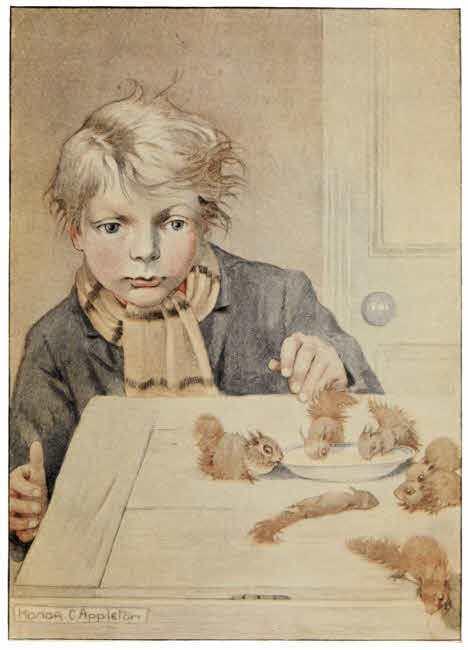
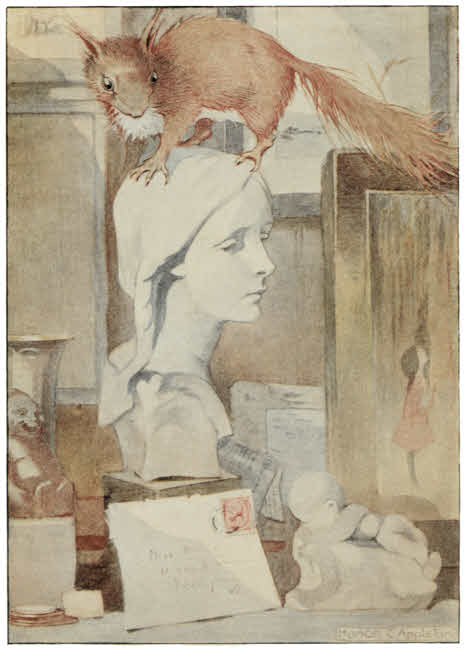
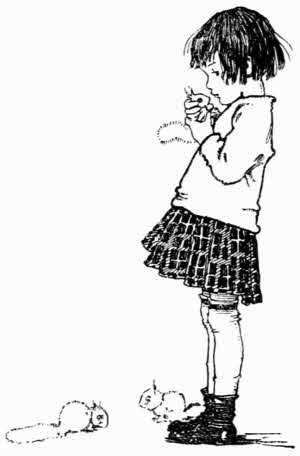
Seven furry infants!... The heartlessness of it! See page 90.
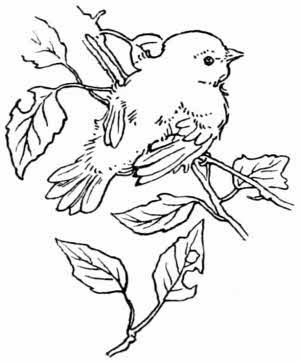
I named him Robin Adair, because the
garden was so dull when he was not there, and
he became eventually the most persistent little
visitor. He caused me to waste no end of
time, for just as I had settled down in the
garden with writing or work, there he would
be in an instant, silently arriving out of nowhere.
Perched upon the open lid of my dispatch
case, he would eye me with a determined expression
there was no mistaking. It said
plainly, “Where are my worms? Here I
sit till you produce them. Be quick, please;
my family is waiting.” And I would have to
get up, and go inside and bring out the tin
which contained his meal-worms. This I
would place on my knee, and take up my
pen again, meaning really to write. But his
dainty little flutterings, his wee spindly legs,
his beautiful plumage, and his dew-bright eye
were invariably too fascinating and too distracting.
I would leave off my writing a
hundred times, to admire him and talk to him.
He was a most devoted father. He plied to
and from the nest where his little ones were
all day long, and when one remembers that a
bird’s day at this time of year begins at 4 a.m.,
and lasts till 5 or 6 p.m., it will be admitted
that this involves a tremendous amount of
energy. Very occasionally did Robin Adair
give himself the treat of swallowing one of
the meal-worms which he was given. Sometimes
the delicious taste of the worm quite
demoralized him, and he would gulp down
three or even four in succession. But to do
him justice, this happened but rarely. I found
out where his nest was, and once I commissioned
some one else to dole out the worms,
while I went behind the shrubbery to watch
the little hole, almost indistinguishable, on the
ground beneath the furze bushes in the field.
He arrived with a fat worm in his beak; but
the expression in his black eyes the moment
he saw me so near his home was extremely
angry. In a second he flew off and hid. I
waited and waited. Then I hid, and peered
through the furze; but though he had hopped
upon a twig nearer the nest, he spotted me
again instantly, and nothing would induce him
to go in. He must have warned his children,
too, somehow, for though at other times I
had seen four little gaping mouths, all was
silence and darkness now.
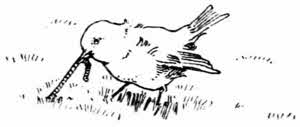
His cleverness in carrying several worms at
once was remarkable, as each had to be killed
before it was given to his babies. This entailed
a good deal of manipulation with his
beak, biting and striking the ground. I have
constantly seen him doing this, and finally
carrying four worms in a row, to save the
trouble of four journeys.
He became absolutely fearless while the
very dry weather of June lasted, as all ordinary
worms refused to come to the surface of the
earth; and he would have got none at all but
for my tin box. Not only would he perch
on my shoe, or on the box in my lap, but I
trained him to peck them out of my hand.
Currants dipped in oatmeal, cheese, and
gingerbread made pleasant changes of diet, and
helped to save the worms, or he would have
carried off hundreds in the course of the day.
He was always with me, appearing, as I
have said, suddenly and swiftly out of nowhere;
in whatever part of the garden I placed my
chair, there close to me in half a second
would be the dapper little creature, trim, neat,
and alert. He was never dishevelled like the
sparrows, and when in the late afternoon it
would seem as if he must be exhausted, he
would go and take an energetic bath, and
come and sit beside me to dry his feathers.
Sometimes for days together the garden was
forsaken by the squirrels; but to make up for
their absence, many little episodes of bird life
amused me as I sat out of doors in the sun
and the wind.
The tits were shameless thieves, and their
ingenuity was surprising. I have watched
one of these tiny birds manipulating—if one
can use such a word in connection with a
beak—a cocoanut shell, which had been
turned over upon some nuts on purpose to
keep them from him. Cob nuts or walnuts
he could not tackle, but almonds were not
safe from him, and monkey nuts he was determined
to have. I saw him mount the cocoanut
shell, and with his head on one side peer into
the hole at the top. Satisfied that the coveted
food was beneath it, he began to try to lift
the heavy shell. With his little beak he
pecked and pulled manfully at the outside
fibre. He could just raise the shell, but not
high enough to get what he wanted.
After a good deal of exertion, which only
shuffled it about on the stump, he flew off
for a minute’s rest and reflection. Then he
tackled it again, leaning down and pushing
his beak sideways under the edge, pecking
valiantly, and every now and then mounting
the nut to peer through the hole to make sure
that what he wanted was still there.
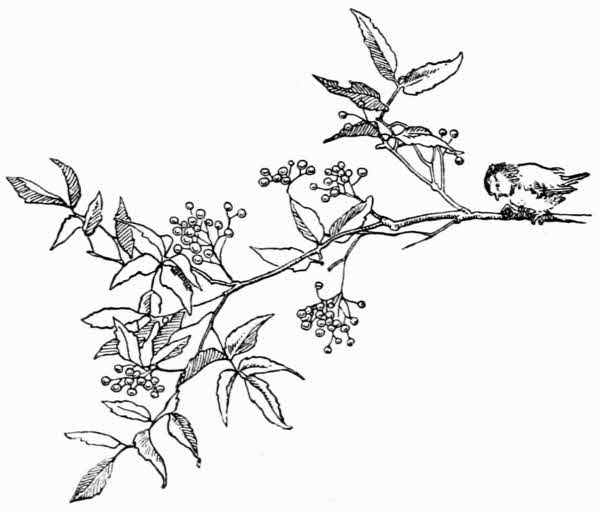
The stump on which the shell was placed
had a sloping surface, and to prevent the
squirrels’ food from rolling off, a ledge had
been put on two sides and across the bottom.
Presently I was amazed to see that the small
bird had succeeded in wriggling and shuffling
the cocoanut till he had tilted it up upon
this ledge. Out rolled the monkey nut from
beneath, and he flew away with it in triumph.
I then heard a vigorous knocking going on, a
little way off, and saw him in a shrub banging
the nut against
the trunk to
break the pod.
Having made
an opening, he
held it firmly
on a branch with one little claw, and feasted
royally. This exploit, from the time he first
tackled the cocoanut till he got the monkey
nut out, took him just a quarter of an hour.
It was during this summer of 1914 that I
saw, for the first time in my life, a young
cuckoo in a nest.
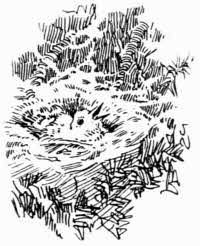
Parting the furze bushes one day I came
upon a linnet’s nest, moss-built and tiny.
There seemed to be a weird sort of an eye
looking over the top of it, and I touched
the rim. To my amazement half a foot of
ruffled black and white shot up like a Jack-in-the-box,
and an orange-coloured maw and
throat opened wide and hissed angrily. It
was quite formidable, and looked enormous compared
with its wee foster-parents, but I have
no doubt they were immensely proud of it.
We had a tennis tournament that day, and I
think about fifty young people must have
visited the furze bush. The excitement could
not have been very good for the poor creature.
For the next two days he remained dull and
sleepy, and entirely declined to shoot himself
up, or even to open his lovely orange mouth.
The third day found him flown. The little
mossy cup was empty-and time too, I should
say; with such a swelling bulk, I wonder the
walls had not burst.
I think we may disabuse our minds of the
traditional belief in the wickedness of the
cuckoo mère, and of the supposed grief and
distress of the youngster’s foster-parents. It
seems to me much more likely that, instead of
considering it a misfortune to find a cuckoo’s
egg in their nests, our British birds only hope
for such luck, and swell with pride as they
rear a magnificent chick, under the delusion
that it is their own.
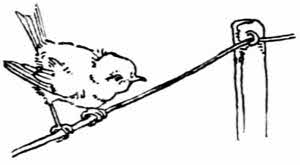
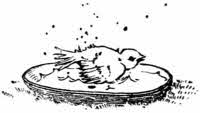
One very hot morning in June I was the
interested spectator of a mother tit showing
her offspring how to bathe. The family
party were unaware of my presence. There
were five young hopefuls—all sons, I should
imagine, for they were bigger than their active
little mother. All had been born and reared
in a “Brent Valley Bird Sanctuary” nesting-box,
on a holly tree close by. The mother’s
darker, more pronounced colouring, longer
tail, and determined expression of countenance
betrayed her matronhood. The children were
delicious balls of pale green and gray, with
tiny black markings, and their innocent and
timid little faces were fascinating as they
clustered round the large earthenware saucer,
full of water, in which the mother was
splashing.
Her energy was astounding. She flapped
and ducked and soused herself till she had not
a dry feather, then flew out and told them to
go in. Not a bit of it! The little cowards
hopped upon the saucer’s edge, stooped till
their beaks touched the water, then turned
right about face, and looked gravely at their
claws. They flew or hopped across the saucer
many times, but had not courage to plunge
in. Back flew the mother, hustled them away,
and launched herself once more. They watched
her, and then began to imitate her movements—in
the grass! The lawn just there was
thickly covered with fallen blossoms from a
white acacia, as also was the water in the
saucer. The babies ducked and quivered their
wings, and bent up and down, and quirked
imaginary drops of water over their little
backs. Out flew the mother, and perched on
a foxglove stalk, and into the water went a
siskin, and thoroughly enjoyed himself—but
not for long; back came the mother tit,
routed him, and called to her little ones not
to be outdone by a siskin. She ducked and
splashed, and twinkled and sprinkled all over
again, till she was a drenched little object;
but beyond crouching near her, so as to catch
some of her splashings on themselves, not one
of her children had nerve enough to take a
bath that morning. The last that I saw of
them, they were all five crouching and busily
imitating her movements amongst the grass
and acacia blossoms; their shrill little voices,
could I have understood them, were probably
calling out:
“We are trying, mother! we are indeed!
Look at us! We’re doing just what you
do!”
On the tenth of June, to my joy, my pretty
turtle-doves appeared again. I called them
my Bible doves—
“As the wings of a dove covered with silver,
And her pinions with yellow gold.”
For there is a silvery sheen about them, and a
glint of gold in their plumage.
This was the third summer that they had
come to the garden and nested in the wood.
Such delicate lovely creatures! They came to
drink, and to pick up the small corn which I
scattered for them every day on the lawn.
The lovely fawn colour of their breasts,
melting into lavender on their heads, the blue
and black bars on their necks, their ruby eyes,
and dainty rose-coloured feet were a joy to
behold—a feast of exquisite colouring.
They were very shy, and, on their first
arrival, the sight or sound of a human being
made them instantly take fright; but as time
went on they became accustomed to me, and
would, as long as I kept still, approach quite
close to my chair.
Though I searched the wood many times
I never could find their nest. It was well
hidden.
And now autumn is approaching, with its
splendour of amber and gold, of crimson and
brown. There is great activity in the squirrel
world. Young and old are busy storing and
burying nuts.
Early in the dewy mornings they hie themselves
to the hazel coppices, to the lordly
beeches, and later they will strip the walnuts.
Active little creatures, intent upon this their
supreme instinct, I have known a pair entirely
clear away the beech-mast under the
weeping tree on our lawn on a September
morning before breakfast—beech-mast which
thickly covered the ground the night before.
Fritz and Laurence Housman, too, are now
disporting the full glory of their autumn tails.
Mrs. Fritz and Mrs. Laurence are teaching
the little Fritzes and the little Laurences
where and how to hide the winter food. Soon
they will be stripping the fibre from the old
conifer in the shrubbery, and mending up
their snug little homes in the wood, ready for
the short days and the long cold nights.
Good-bye, gay and care-free little friends!
Good-bye! My way lies south, by the sea,
where no squirrels come.
FINIS.
PRINTED IN GREAT BRITAIN.