THE
DOMESTIC RECEIPT BOOK.
A work has recently been republished in this country,
entitled, “A Treatise on Food and Diet; by Dr. J.
Pereira. Edited by Dr. Charles A. Lee.” “The
author of this work,” says Dr. Lee, “is well known
throughout Europe and America, as one of the most
learned, scientific, and practical men of the age;—a
physician of great experience and accurate observation,
and a highly successful writer. To the medical profession
he is most favorably known as the author of the
best work on the Materia Medica which has appeared
in our language.”
This work contains the principles discovered by Leibig,
Dûmas, and Brossingault, and applies them practically
to the subject of the proper selection of food. All
the opinions, expressed in what follows, are sanctioned
by the above work, by Dr. Combe, and by most of the
distinguished practitioners of our age and country.
In selecting food, with reference to health, the following
principles must be borne in mind.
First, that there are general rules in regard to healthful
food and drink, which have been established, not by
a few, but by thousands and thousands of experiments,
through many ages, and in an immense variety of circumstances.
It is these great principles, which must
be the main dependance of every mother and housekeeper,
to guide her in selecting healthful food and drinks
for her children and family. These rules are furnished
by medical writers and practitioners.
Secondly, there are occasional exceptions to these general
rules, and when such occur, two errors should be
avoided. One is, giving up all confidence in the deductions
of a wide experience, established by extensive experiments,
and assuming that we have no rules at all,
and that every person must follow the guidance of mere
appetite, or his own limited experience. The other is,
making the exception into a general rule, and maintaining
that every person must conform to it.
For example, it is found by general experience, that
milk is a very safe and healthful article of food, and that
alcoholic drinks are very unhealthful. But there are
cases which seem to be exceptions to this rule; for some
children never can eat milk without being made sick,
and there are cases known where men have lived to a
very advanced age and in perfect health, who have daily
used alcoholic drinks, even to the point of intoxication.
Still, it is very unwise to throw away the general rule
and say, that it is just as well for children to drink alcoholic
drinks as to use milk,—and as unwise to claim
that every person must give up the use of milk because
a few are injured by it.
The true method is, to take the general rules obtained
by abundant experience for our guide, and when any
exceptions are found, to regard them as exceptions,
which do not vacate the general rule, nor make it needful
to conform all other cases to this exception.
It will be the object of what follows, to point out the
general rules, which are to regulate in the selection of
drinks and diet, leaving it to each individual to ascertain,
by experiments, what are, and what are not the exceptions.
In the first place, then, it is a general rule that man
needs a variety of aliment, so that it is unfavorable to
health to be confined to only one kind of food.
The various textures of the human body are composed
of chemical compounds, which differ from each
other, both as to ingredients, and as to modes of combination.
It is true, that every portion of the body may
be resolved to a few simple elements, of which oxygen,
hydrogen, carbon, and nitrogen are the chief. But the
bodily organs have not the power of forming all the various
animal tissues from these simple elements. Instead
of this, they must be introduced into the body in
various complex and different combinations, as they exist
in the forms of gluten, fibrine, albumen, caseine, and
other animal and vegetable compounds.
Thus the sugar, starch, and oils, found in certain
kinds of food, supply the carbon which sustain the combustion
ever carried on in the lungs by the process of
breathing, and which is the grand source of animal heat.
On the contrary, the blood, muscles, skin, cartilages,
and other parts of the body, are daily nourished and renewed,
some by the gluten contained in wheat, others
by the albumen of eggs, others by the caseine of milk,
and others by the fibrine of animals. All these are
found in a great variety of articles used as food. When
received into the stomach, the organs of digestion and
assimilation prepare, and then carry them, each to its
own appropriate organ, and then the excreting organs
throw off the surplus.
In order, then, to have every portion of the body properly
developed, it is necessary to take such a variety of
food, that from one source or another, every organ of the
body shall be sustained by its appropriate nourishment.
The experiments which prove this, have been conducted
on a great scale, and the method and results are detailed
in the work of Dr. Pereira.
This fact exhibits one cause of the craving, sometimes
felt for certain kinds of food, which usually is the call
of nature for some ingredient, that the daily round of
aliment does not supply. The statistics furnished in the
work of Dr. Pereira, from various armies, prisons, almshouses,
and asylums, show, that, where many hundreds
are fed on the same diet, the general health of the multitude
is better sustained by a considerable variety and
occasional changes, than by a more restricted selection.
Experiments on dogs and other animals, also, have been
tried on a large scale, which prove that there is no kind
of food, which, alone, will preserve full and perfect health;
while every kind (except the food containing gluten,
which is the chief ingredient of wheat and other bread-stuffs),
when given exclusively, eventually destroys life.
The exclusive use of wheat bread and potatoes, as found
by experiment, will sustain life and health more perfectly,
for a great length of time, than any other kinds
of food.
The above fact is a striking exhibition of the beneficence
of Providence, in providing such an immense variety
of articles of food. And no less so is the instinct
of appetite, which demands not only a variety, but is
wearied with one unchanging round.
Having ascertained that it is needful to health, that a
due variety of food should be secured, we next proceed
to examine the principles that are to guide us in the selection.
It is found that the articles used for food and drink
may be arranged in the following classes:—
First, articles that furnish no other stimulation to the
animal functions than is secured by the fresh supply of
nutrition. All food that nourishes the body, in one
sense, may be called stimulating, inasmuch as it imparts
renewed energies to the various bodily functions. In
this sense even bread is a stimulant. But the more common
idea attached to the word stimulant is, that it is a
principle which imparts a speed and energy to the organs
of the system above the ordinary point secured by perfect
and appropriate nourishment. The first class, then,
are those articles that serve to nourish and develop perfectly
every animal function, but do not increase the
strength and speed of organic action above the point of
full nourishment. The bread-stuffs, vegetables, fruits,
sugar, salt, acid drinks, and water are of this class.
Secondly, those articles, which serve to nourish perfectly
all the animal system, and at the same time increase
the strength and speed of all functional action.
All animal food is of this class. All physiologists and
medical men agree in the fact, that the pulse and all
the organs of the body, are not only nourished, but are
quickened in action by animal food, while speed and
force are reduced by confining the diet to farinaceous,
vegetable, and fruit diet.
Thirdly, those articles which impart no nourishment
at all to the body, but act solely to stimulate all the organs
to preternatural action. Alcoholic drinks, condiments,
and aromatic oils are of this description.
Fourthly, articles that are neither nourishing nor stimulating,
but pass out of the system entirely undigested
and unassimilated. The bran of coarse bread is an example.
Fifthly, articles that, either from their nature or modes
of combination and cooking, are difficult of digestion,
unhealthful, and, of course, tend to weaken the organic
powers by excessive or unnatural action. Animal oils,
either cooked or rancid, and many articles badly cooked,
are of this kind.
The following presents a list of the articles which are
found to be healthful and nourishing, and not stimulating,
except as they supply the nourishment needed by
the various bodily functions.
The first and most important of these are called the
farinaceous substances. Of these, wheat stands at the
head, as the most nutritive, safe, and acceptable diet to
all classes and in all circumstances. This can be used
in the form of bread, every day, through a whole life,
without cloying the appetite, and to an extent which
can be said of no other food.
Wheat is prepared in several forms, the principal of
which are the common Fine Wheat Flour, the Unbolted,
or Graham Flour, and Macaroni, Vermicelli, and Cagliari
Pastes. The last are flour paste prepared, or cut
into various shapes and dried.
Wheat flour is made into bread of two kinds, the fermented,
or spongy breads, and the unfermented, or hard
breads.
The spongy breads are made by using either yeast,
or the combination of an acid and alkali. In yeast
bread, the fermentation of the particles of diffused yeast
evolve carbonic acid. This expands the flour in a spongy
form, in which it is retained by the tenacity of the gluten
of the flour, until baking hardens it. Corn meal
and some other bread-stuffs cannot be raised thus, because
they do not contain gluten sufficient to hold the
carbonic acid as it evolves.
When an alkali and acid are used to raise bread,
their combination evolves carbonic acid by a more sudden
process than the yeast fermentation. The lightness
produced by eggs is owing to their adhesive porosity
when beaten and mixed with flour and baked.
Bread is also made of rice, rye, Indian meal, and barley.
These varieties of bread-stuffs are useful in various
ways. In cases when persons are troubled with looseness
of bowels, rice bread, rice gruel, and rice water for
drink, prevent the necessity of resorting to medicine.
In cases where the opposite difficulty exists, a diet of
unbolted wheat, or rye mush with salt and molasses
will remedy the evil. These articles also can, all of
them, be formed into a great variety of combinations
that are at once healthful, and acceptable to the palate.
The next class of healthful and unstimulating articles
are the amylaceous, or starchy articles of diet. Of these
Sago, Tapioca, Arrow Root, and the Lichens, are those
in most frequent use. These are nourishing and remarkably
easy of digestion. They are very much used
for invalids, and for young children when first weaned.
The next most valuable articles of food are the vegetables.
Of these the Potato is at once the most healthful,
and most universally relished. In the form of
Starch, it makes, when cooked, a light and agreeable
article for the sick, and is convenient to housekeepers as
forming a fine minute pudding to meet an emergency.
Of the great variety of vegetables that are furnished
at market, or from our gardens, almost all are palatable
and healthful to a stomach that is strong. Peas, Beans,
Onions, and cooked Cabbage and Turnips, usually are
not good for persons whose powers of digestion have been
weakened.
The next most valuable articles of food are the Fruits.
Almost all kinds of fruit, when fully ripe, are healthful
to those who are not suffering from weakness of digestion.
Grapes, Apples, Peaches, Strawberries, Raspberries,
and Currants, are least likely to prove injurious.
The skins and seeds of all fruits consist of woody matter,
that is perfectly undigestible, and should never be taken
in large quantities. It is the skins and seeds of the
grape that make raisins so often injurious to young children.
If the skins and stones can be removed, nothing
can be found that is more safe and healthful, in moderate
quantities, than raisins and grapes.
The next articles of healthful unstimulating food are
the Saccharine substances, Sugar, Molasses, and Honey.
On this point, Dr. Pereira remarks, “The injurious effects
which have been ascribed to sugar are more imaginary
than real. The fondness of children for saccharine
substances may be regarded as a natural instinct; since
nature, by placing it in the mother’s milk, evidently intended
it to form a part of their nourishment. Instead,
therefore, of repressing this appetite for sugar, it ought
rather to be gratified in moderation. The popular notion,
of its having a tendency to injure the teeth, is totally
unfounded. During the sugar season of the West
Indies, every negro on the plantations, every animal, and
even the dogs, grow fat. And no people on earth have
finer teeth than the negroes of Jamaica. It is probable
that this erroneous notion has been propagated by frugal
housewives, in order to deter children from indulging
in an expensive luxury. Sugar is readily digested by a
healthy stomach. In dyspeptics, it is apt to give rise to
flatulence and acidity of stomach.”
These remarks, without other considerations, may lead
to erroneous conclusions. There is no doubt that both
children and adults are often injured by the use of sugar,
but it is not because it is unhealthful in its nature, but
because it is used in excess or in an improper manner.
In the “Domestic Economy,” pg. 105, it is shown that
highly concentrated food is not favorable to digestion,
because it cannot be properly acted on by the muscular
contractions of the stomach, and is not so minutely divided
as to enable the gastric juice to act properly. Now
Sugar, Candy, and the like, are highly concentrated
nourishment, and should not be used except when mixed
with other food. The reason, then, why children are
injured by sugar is, that they eat it too frequently, in too
large quantities, and unmixed with other food. A stick
or two of pure candy, eaten with crackers or bread, never
would injure any healthy child. It is too often the case,
that candies are mixed with unhealthful coloring matter,
or with nuts and other oily substances, that make
them injurious.
The next article of healthful, unstimulating food, is
jellies and preserved fruits. As it has been shown
that uncooked fruits and sugar are both healthful, it may
not seem surprising that jellies and fruits cooked in sugar,
when eaten moderately, with bread or crackers, are
regarded as among the most nourishing and healthful
of all aliments. When they prove injurious, it is owing
either to the fact that they are taken alone, or with rich
cream, or else are taken in too great quantities. Eaten
moderately, as a part of a meal, they are safe and nourishing
to all, except persons of poor digestion. Healthful
stomachs need not be governed by rules demanded by
the invalid, which has too often been attempted.
The preceding presents a vast variety of articles suitable
for food, containing in abundance all the principles
demanded for the perfect development of all the animal
functions, and which physiologists and medical men unitedly
allow to be healthful. These can be combined by
the cook in an endless variety of agreeable dishes, involving
no risk to a healthful stomach, when taken in
proper quantities and in a proper time and manner.
The second general division of food, embraces articles
which serve perfectly to nourish and develop every animal
organ, but, at the same time, increase the speed and
strength of all functional action beyond the point which
is attained by the system, when fully and perfectly nourished
by vegetables, fruits, and bread-stuffs. There is
no dispute among physiologists and physicians as to the
fact, that animal food produces chyle which is more
stimulating to the various organs, than that which is
formed from an exclusive vegetable diet. The only
question debated is, whether this increase of stimulus
is favorable, or unfavorable to health and long life.
Those who maintain that it is unfavorable, say, that
all other things being equal, that machine must wear
out the soonest which works the fastest; that, it is
proved, both by analysis and by facts, that a vegetable
diet contains every principle needed for the perfect
development of the whole bodily system, as much so as
animal food; and that the only difference is the stimulation
in the animal food, which makes the system work
faster, and of course, wear out sooner.
To this it is replied, that the exact point of stimulation,
which is most safe and healthful, cannot be determined,
and that it is as correct to assume, that to be the
proper medium, which is secured by a mixed diet, as to
assume that the proper point is that, which is secured by
an exclusive vegetable diet. Moreover, the fact that the
teeth and digestive organs of man, which seem to be
fitted both for vegetable and animal food, and the fact
that the supplies of food on the earth make it needful
to adopt sometimes animal, and sometimes vegetable diet,
and sometimes a mixture of both, furnish an à priori
argument in favor of a mixed diet.
In deciding which kinds of animal food are most
healthful, several particulars are to be regarded. The
flesh of young animals is more tender than that of the
old ones, but yet they usually are not so easily digested.
Beef, and Mutton, and Venison, when tender, are considered
the meats which are most easily digested, and
best for weak stomachs. Venison is more stimulating
than Beef and Mutton. These meats, when tough, are
not so easily digested as when tender.
All meats are made more tender and digestible by
hanging.
Solid meats, properly cooked, are more easily digested
than soups and broths. For it is found that these liquids
are never digested till the water is absorbed, leaving a
solid mass more undigestible than was the solid meat.
When useful to invalids, it is because they supply the
loss of the withdrawn fluids of the body, but not because
more easily digested. The white meats, such as Chicken
and Veal, are best for invalids, because less stimulating
than dark meats.
Liver contains so much oil that it is not good for invalids
or dyspeptics.
The digestibility and healthfulness of meat depends
very much upon the mode of cooking. Boiled meats are
most easily digested, when properly boiled. Roasting,
broiling, and baking, are healthful modes of cooking, but
frying is a very pernicious mode of preparing meats,
the reason of which will be explained hereafter.
Though there is a disagreement of opinion among
practitioners and physiologists, as to the propriety of
using any animal food, they are all agreed in regard to
certain general principles that should regulate its use.
They are as follows:—Less animal food should be used
in warm climates than in cold, and less, also, in summer
than in winter. The reason of this is, that heat is stimulating
to the system, and as meat diet is also stimulating,
when heat increases, meat, as a diet, should decrease,
or fevers may ensue.
Another principle is, that the proportions of meat diet
should depend somewhat on the constitution and circumstances.
When a person is of full habit, or inclined to
inflammatory attacks of any kind, the proportion of animal
food should be much less than in other cases.
On the contrary, when there is a state of the system
that demands gentle stimulus, an increase of meat diet
is sometimes useful.
Persons subject to cutaneous eruptions are sometimes
entirely cured by long abstinence from animal food, and
all kinds of oily substances.
The articles which come under this head, are usually
called the condiments. In regard to these, Dr. Pereira
remarks,—
“The relish for flavoring, or seasoning ingredients,
manifested by almost every person, would lead us to suppose
that these substances serve some useful purpose
beyond that of merely gratifying the palate. At present,
however, we have no evidence that they do. They
stimulate, but do not seem to nourish. The volatile
oil they contain is absorbed, and then thrown out of the
system, still possessing its characteristic odor.”
The articles used for food of this kind, are the sweet
herbs employed for seasoning, such as Thyme, Summer
Savory, and the like, and the spices, such as Cloves, Cinnamon,
Nutmeg, Pepper, and Ginger. Mustard, Horseradish,
Water Cresses, Garlic, and Onions, contain these
stimulating oils, combined with some nourishing food.
“Condiments,” says Dr. Beaumont, “particularly
those of a spicy kind, are non-essential to the process of
digestion in a healthy state of the system. They afford
no nutrition. Though they may assist the action of a
debilitate stomach for a time, their continual use never
fails to produce an indirect debility of that organ. They
affect it as alcohol and other stimulants do—the present
relief afforded is at the expense of future suffering.
Salt and Vinegar are exceptions when used in moderation.
They both assist in digestion, Vinegar by rendering
muscular fibre more tender, and both together, by producing
a fluid having some analogy to the gastric juice.”
There is no kind of food used which consists exclusively
of indigestible matter. But it often is the case,
that a certain amount of indigestible matter is mixed
with nourishing food, and serves, by its mechanical aid,
to promote the healthful action of the stomach and
bowels. This is the reason why unbolted flour is deemed
more healthful than fine flour, and is consequently preferred
for dyspeptics. But where there is too great a
quantity of such indigestible matter, or where it is not
properly combined with digestible food, it proves injurious
and often dangerous. This is the case when the
skins and seeds of fruits are swallowed, which always
pass off entirely undigested.
The most injurious food, of any in common use, is the
animal oils, and articles cooked with them. On this
subject, Dr. Pereira remarks:—“Fixed oil, or fat, is
more difficult of digestion, and more obnoxious to the
stomach, than any other alimentary principle. Indeed,
in concealed forms, I believe it will be found to be the
offending ingredient in nine-tenths of the dishes which
disturb weak stomachs. Many dyspeptics who avoid
fat meat, butter, and oil, unwittingly eat it in some concealed
form. Liver, the yolk of eggs, and brains, such
individuals should eschew, as they abound in oily matter.”
“The influence of heat on fatty substances effects
chemical changes, whereby they are rendered more difficult
of digestion, and more obnoxious to the stomach.
Hence those culinary operations in which fat or oil is
subjected to high temperatures, are objectionable.”
“Fixed oils give off, while boiling, carbonic acid, an
inflammable vapor, and an acrid oil, called Acroleon, while
the fatty acids of the oil are, in part, set free. It has
always appeared to me that cooked butter proves more
obnoxious to the stomach than cooked Olive oil. This
I ascribe to the facility with which, under the influence
of heat, the acrid, volatile acids of butter are set free.
The fat of salt pork and bacon is less injurious to some
dyspeptics than fresh animal fats. This must depend
on some change effected by curing.”
“In many dyspeptics, fat does not become properly
chymified. It floats on the stomach in the form of an
oily pellicle, becoming odorous, and sometimes highly
rancid, and in this state excites heartburn, disagreeable
nausea, eructations, and sometimes vomiting. It appears
to me, that the greater tendency which some oily
substances have than others to disturb the stomach, depends
on the greater facility with which they evolve
volatile, fatty acids, which are for the most part exceedingly
acrid and irritating. The distressing feelings excited
in many dyspeptics by mutton fat, butter, and fish
oils, are, in this way, readily accounted for. Butter contains
no less than three volatile, fatty acids, namely—the
butyric, capric, and capröic. Fats, by exposure to
the air, become rancid, and in this state are exceedingly
obnoxious to the digestive organs. Their injurious
qualities depend on the presence of volatile acids, and in
part also on non-acid substances.”
These statements show the reasons why the fried
food of all kinds is injurious. Fat is an unhealthful aliment,
and when heated becomes still more so. This
mode of cooking, then, should be given up by every
housekeeper, who intends to take all reasonable means
of preserving the health of her family. There are an
abundance of other modes of preparing food, without resorting
to one which involves danger, especially to children
and invalids, whose powers of digestion are feeble.
The most common modes of preparing unhealthful
food, is by frying food, and by furnishing bread that is
heavy, or sour, or so newly baked, as to become clammy
and indigestible when chewed. Though there are many
stomachs that can for a long time take such food without
trouble, it always is injurious to weak stomachs, and
often renders a healthful stomach a weak one. A
housekeeper that will always keep a supply of sweet,
light bread on her table, and avoid oily dishes, oily cooking,
and condiments, will double the chances of good
health for her family.
Minuteness of division is a great aid to easy digestion.
For this reason food should be well chewed before swallowing,
not only to divide it minutely, but to mix it with
the saliva, which aids in digestion.
The cooking of food, in most cases, does not alter its
nature; it only renders it more tender, and thus more
easily divided and digested.
When a person is feverish and loathes food, it should
never be given, as the stomach has not sufficient gastric
juice to secure its digestion. The practice of tempting
the sick by favorite articles, should therefore be avoided.
“Water” says Dr. Pereira, “is probably the natural
drink of all adults. It serves several important purposes
in the animal economy:—firstly, it repairs the loss of the
aqueous part of the blood, caused by evaporation, and
the action of the secreting and exhaling organs; secondly,
it is a solvent of various alimentary substances, and,
therefore, assists the stomach in digestion, though, if
taken in very large quantities, it may have an opposite
effect, by diluting the gastric juice; thirdly, it is a nutritive
agent, that is, it assists in the formation of the solid
parts of the body.”
The health of communities and of individuals is often
affected by the nature of the water used for drink, and
it is therefore important to know how to secure pure and
good water.
Rain water is the purest of all water, purer than the
best spring water. Of course every person who fears
that the water used is the cause of any evil, can obtain
that which is known to be pure and good. The cheapest
mode of obtaining good rain water, is to have a large
cistern dug in the vicinity of some large building, with
conducting spouts. This can be lined with water lime,
and the water thus obtained, when cooled with ice, is as
pure as any that can be found.
A distinguished medical writer, Dr. Cheyne, remarking
on the effects of foreign substances in water, states
these facts:—
“At the Nottingham Assizes, July, 1836, it was
proved on trial, at which I was a witness, that dysentery,
in an aggravated form, was caused in cattle by the
use of water contaminated with putrescent vegetable
matter, produced by the refuse of a starch manufactory.
The fish were destroyed, and all the animals that drank
of this water became seriously ill, and many died. It
was shown, also, that the mortality was in proportion to
the quantity of starch made at different times, and that
when the putrescent matter (of the manufactory) was
not allowed to pass to the brook, the fish and frogs returned,
and the mortality ceased among the cattle.”
Dr. Barry, an English physician, states, that when
the troops at Cork were supplied with water from the
river Lee, which, in passing through the city, is rendered
unfit for drinking by the influx from sewers, Mr. Bell
suspected that a dysentery, prevailing at the time, arose
from this cause. Upon assuming the care of the troops,
he had a number of water carts to bring water from a
spring, and did not allow the use of river water, and very
shortly the dysentery disappeared.
Sir James McGregor states, that, at one time in the
Spanish war, when during three months 20,000 dead
bodies were interred at Ciudad Rodrigo, all those exposed
to emanations from the soil, and who were obliged to
use water from sunken wells, were affected by low malignant
fevers, or dysenteries.
This shows that burying in large towns affects the
health of the inhabitants, first by emanations from the
soil, and secondly by poisoning the water percolating
through that soil.
Many such facts as these, show the importance of
keeping wells and cisterns from the drainings of sinks,
barn-yards, and from decayed dead animals. And it is
probable that much sickness in families and communities
has been caused by neglecting to preserve the water
pure, that is used for drink and cooking.
Water is sometimes rendered unhealthful by being
conducted through lead pipes, or kept in lead reservoirs,
or vessels. It is found that the purer the water, the
more easily it is affected by the lead through which it
passes. When the water has certain neutral salts in it,
they are deposited on the surface of the lead, and thus
protect from its poisonous influence. Immersing a very
bright piece of lead for some hours in water, will show
whether it is safe to use lead in conducting the water.
If the lead is tarnished, it proves that the water exerts a
solvent power, and that it is unsafe to employ lead in
carrying the water.
The continued use of water containing lead, gives
rise to the lead cholic, or painter’s cholic, and if the
water is still drank, palsy succeeds. One indication of
this disease is a narrow leaden blue line on the edge of
the gums of the front teeth.
The following are methods to be employed in purifying
water:—
The most thorough and effectual way of obtaining
perfectly pure water, from that which is noxious, is, to
distill it, collecting only the steam.
In cases where water is injured by the presence of
animal or vegetable matter, boiling sometimes removes
much of the evil.
Two grains of powdered alum to every quart of
water, will often serve to remove many impurities.
Filtering through fine sand and powdered charcoal,
removes all animal and vegetable substances which are
not held in chemical solution.
Sea water serves both as a cathartic and emetic, and
the only mode of obtaining pure water from it is by distillation.
The impure water used often at sea, is owing wholly
to the casks in which it is carried. When new, the
water imbibes vegetable ingredients from the cask, which
become putrid. Water, if carried to sea in iron casks, if
good and pure, always continues so. Cistern water is
often impure, when held in new wooden cisterns, owing
to vegetable matter absorbed by the water.
Dr. Lee remarks, “We are satisfied that impure
water is more frequently the cause of disease than is
generally supposed. It has been thought that decaying
vegetable matter, received into the stomach, was innoxious,
owing to the antiseptic properties of the gastric
juice. But this opinion is evidently erroneous. An
immense number of facts could be adduced, to show that
this is the frequent cause of disease. The British army
‘Medical Reports,’ and our own Medical Journals, contain
many facts of a similar kind. The fever which
carried off so many of the United States Dragoons, on a
visit to the Pawnees, was occasioned chiefly by drinking
stagnant water, filled with animal and vegetable
matter. We know that calculus diseases are most
frequent in countries that abound in lime water.”
The other drinks in most common use are arranged
thus,—
1. The Mucilaginous, Farinaceous, or Saccharine
drinks.
These are water chiefly, with substances slightly nutritive,
softening, and soothing. Toast water, Sugar
water, Rice water, Barley water, and the various
Gruels, are of this kind.
2. The Aromatic and Astringent drinks.
These include Tea, Coffee, Chicory, Chocolate, and
Cocoa.
The following remarks on these drinks are taken
from the work of Dr. Pereira.
“The peculiar flavor of tea depends upon the volatile
oil, which has the taste and smell of tea. Alone, it
acts as a narcotic, but when combined (as in tea) with
tannin, it acts as a diuretic and diaphoretic (i. e. to
promote the flow of urine and perspiration). Its astringency,
proved by its chemical properties, depends upon
the presence of tannin. Of this quality we may beneficially
avail ourselves in some cases of poisoning, as by
poisonous mushrooms, by opium, or laudanum.”
“The peculiar influence of tea, especially the green
variety, over the nervous system, depends upon the vegetable
oil referred to. The influence is analogous to
that of foxglove; for both green tea and foxglove occasion
watchfulness, and act as sedatives on the heart
and bloodvessels. Strong green tea produces, on some
constitutions, usually those popularly known as nervous,
very severe effects. It gives rise to tremor, anxiety,
sleeplessness, and most distressing feelings.”
“As a diluent and sedative, tea is well adapted to febrile
and inflammatory disorders. To its sedative influence
should be ascribed the relief of headache sometimes
experienced.”
On this subject, Dr. Lee remarks, “Green tea undoubtedly
possesses very active medicinal properties; for
a very strong decoction of it, or the extract, speedily destroys
life in the inferior animals, even when given in
very small doses. The strongly marked effects of tea
upon persons of a highly nervous temperament, in causing
wakefulness, tremors, palpitations, and other distressing
feelings, prove, also, that it is an agent of considerable
power. It not unfrequently occasions vertigo, and
sick headache, together with a sinking sensation at the
pit of the stomach, shortly after eating. It is also opposed
to active nutrition, and should, therefore, be used
with great moderation by those who are thin in flesh.
From its astringent properties it often is useful in a relaxed
state of bowels.”
“We are satisfied that green tea does not, in any
case, form a salubrious beverage to people in health, and
should give place to milk, milk and water, black tea,
milk and sugar, which, when taken tepid, form very
agreeable and healthy drinks.”
Coffee. “The infusion, or decoction of coffee, forms
a well known favorite beverage. Like tea, it diminishes
the disposition to sleep, and hence it is often resorted
to by those who desire nocturnal study. It may
also be used to counteract the stupor induced by opium,
alcoholic drinks, and other narcotics. In some constitutions
it acts as a mild laxative, yet it is usually described
as producing constipation. The immoderate use of
coffee produces various nervous diseases, such as anxiety,
tremor, disordered vision, palpitation, and feverishness.”
Chicory, or Succory. This is the roasted root of the
Wild Endive, or Wild Succory. It is prepared like coffee,
and some prefer its flavor to that of coffee.
Chocolate. This is prepared by roasting the seeds
of the Cacoa, or Cocoa, then grinding them and forming
them into cakes. “Chocolate, though devoid of the
disagreeable qualities of tea and coffee, which disturb
the nervous functions, yet is difficult of digestion, on
account of the large quantity of oil which it contains,
and is, therefore, very apt to disturb the stomach of
dyspeptics.”
Cocoa. This is made of the nuts and husks of the
cocoa, roasted and ground, and is somewhat less oily
than chocolate, and being rather astringent, is adapted
to looseness of the bowels. The shells alone are often
used to make a drink, which is less rich than the Cocoa,
and especially adapted to weak digestive powers.
The seeds of the vegetable called Ochra, roasted and
prepared like coffee, are said to equal it in flavor.
3. Acidulous Drinks.
“The employment of vegetable acid, as an aliment,
is necessary to health. It seems pretty clearly established,
that complete and prolonged abstinence from
succulent vegetables, or fruits, or their preserved juices,
as articles of food, is a cause of scurvy.”
“Water, sharpened with vegetable acids, oftentimes
proves a most refreshing beverage, allaying thirst, and
moderating excessive heat. Various acids form cooling,
refreshing, and antiscorbutic drinks, and are well adapted
for hot seasons, and for febrile and inflammatory cases.”
These drinks are prepared by dissolving vegetable
acids or acidulous salts in water, sweetening and flavoring
it. Also, by decoctions of acid fruits, which promote
secretions in the alimentary canal, and act as laxatives.
The carbonated or effervescing drinks belong to this
class. They owe their sparkling briskness to carbonic
acid gas confined in the liquid.
4. Drinks containing Gelatine and Osmazome.
Gelatine is that part of animal and vegetable matter
that forms jelly.
Osmazome is that principle in meats which impart
their flavor.
Beef Tea, Mutton, Veal, and Chicken Broths are the
principal drinks of this description, and usually are prepared
for invalids.
5. Emulsive, or Milky Drinks.
Animal milk is the principal drink of this class, and
as this is the aliment of a large portion of young children,
the necessity of guarding against abuses connected
with the supplies furnished should be generally known.
A great portion of the milk furnished in New York
and other large cities, is obtained from cows fed on distillery
slops, and crowded in filthy pens, without regard
to ventilation or cleanliness. Thus deprived of pure air
and exercise, and fed with unhealthy food, their milk
becomes diseased, and is the cause of extensive mortality
among young children. Many cows, also, are fed on
decayed vegetables, and the sour and putrid offals of
kitchens, and these, also, become thus diseased.
A work on this subject, by R. M. Hartly, Esq., of New
York, has been published, which contains these facts.
Of five hundred dairies near New York and Brooklyn,
all, except five or six, feed their cows on distillery slops.
And the reason is, that it yields more milk at a cheaper
rate than any other food. But it soon destroys the health
of the animals, and after most of their fluids are, by this
process, changed to unhealthy milk, and the cows become
diseased, they are sent to a cattle market and a
new supply obtained.
The physicians in New York, in a body, have testified
to the unhealthiness of this practice, but as yet no
inspectors have been secured to preserve the public from
this danger, while the great mass of the people are ignorant
or negligent on the subject. Chemists have analyzed
this unhealthful milk, and find that, while pure
milk is alkaline, slop milk is acid, and also contains less
than half the nourishment contained in pure milk.
Scarcely any cream rises on slop milk, and what does
collect can never be turned into butter; but, by churning,
only changes to froth. We have inspectors of flour,
meat, fish, and most other food, and every town and
city supplied by milk carts ought to have inspectors of
milk; and where this is not done, every mistress of a
family should narrowly watch her supplies of milk, and
ascertain the mode in which the cows are fed.
In cases where children, or adults, find that milk
troubles the stomach, it is often owing to its richness,
and water should then be mixed with it. Infants generally
require diluted milk, a little sweetened, as cow’s
milk is, when good, considerably richer than mother’s
milk. The fact that oil is placed among the articles
most difficult to digest, shows the mistake of many, who
give diluted cream instead of milk, supposing it to be
better for infants. In all ordinary cases, where an infant
is deprived of the mother’s nourishment, the milk
of a new milch cow, diluted with one-third, or one-fourth
water, and sweetened a little with white sugar, is the
safest substitute. Sometimes oat-meal gruel, or arrowroot,
are found to agree better with the child’s peculiar
constitution.
6. Alcoholic Drinks.
Beer, Wine, Cider, and Distilled Liquors, are the chief
of the alcoholic drinks.
“To persons in health,” says Dr. Pereira, in his
“Elements of Materia Medica,” “the dietical employment
of wine is either useless or pernicious.“ Dr. Beaumont,
in his celebrated experiments on St. Martin,1
found that wines, as well as distilled spirits, invariably
interfered with the regularity and completeness of digestion,
and always produced morbid changes in the mucous
membrane of the stomach. And this, too, was the
case when neither unpleasant feelings nor diminished
appetite indicated such an effect.
Dr. Bell, of Philadelphia, remarks thus: “The recorded
experience of men in all situations and climates,
under all kinds of labor and exposure, prove that abstinence
from alcoholic drinks gives increased ability to go
through the labors of the farm and the workshop, to resist
heat and cold, to encounter hardships on sea and
land, beyond what has ever been done under the unnatural
excitement of alcohol, followed, as it is, by depression
and debility, if not by fever and disease. The observation
and testimony of naval and military surgeons and
commanders are adverse to the issue of alcoholic drinks
to men in the army and navy.”
The reports from all our chief state prisons also prove
that intemperate men can be instantly deprived of all
alcoholic drinks, not only without danger, but with an
immediate improvement of the health.
Wine is often useful as a medicine, under the direction
of a physician, but its stimulating, alcoholic principle,
makes it an improper agent to be drank in health.
The same is true of cider and strong beer. Some wine,
beer, and cider drinkers do, by the force of a good constitution,
live to a good old age, and so do some persons,
also, who live in districts infected by a malaria, which
destroys the health and life of thousands. But these
exceptions do not prove that either wine, or malaria are
favorable to health, or long life. They are only exceptions
to a general rule.
Meantime, the general rule is established by an incredible
amount of experience and testimony, that alcoholic
drinks, in no cases, are needed by those in health,
and that the indulgence in drinking them awakens a
gnawing thirst and longing for them, that leads the vast
majority of those who use them, to disease, debility, poverty,
folly, crime, and death.
In this detail of the various drinks that may be used
by man, we find that pure water is always satisfying,
safe, and sufficient. We find that acid and effervescing
drinks, so acceptable in hot weather, are also demanded
by the system, and are safe and healthful. We find
that milk and broths are also healthful and nourishing.
Black tea, also, when taken weak and not above
blood heat, is a perfectly safe and agreeable warm drink.
Chocolate and cocoa are nourishing and safe to persons
who can bear the oil they contain; and shells are
perfectly healthful and safe to all.
In the vast variety of drinks provided for man, we
find very few that are not safe and healthful. Green
tea and coffee, as ordinarily used, are very injurious to
very many constitutions. They contain but very little
nourishment, except what is added by the milk and sugar,
and training a family of children to love them (for
no child loves them till trained to do it) is making it
probable that all of them will be less healthful and comfortable,
and certain that some will be great sufferers.
Training children to drink tea and coffee is as unreasonable
and unchristian, as training them to drink foxglove
and opium would be—the only difference is, that in one
case it is customary, and the other it is not; and custom
makes a practice appear less foolish and sinful.
There is no need, at this period of the world, to point
out the wickedness and folly of training children to love
alcoholic drinks.
In regard to the use of green tea and coffee, one suggestion
will be offered. These are drinks which contain
very little nourishment, and their effect is to stimulate
the nervous system without nourishing it. They are,
also, usually drank hot, and heat also is a stimulant to
the nerves of the mouth, teeth, throat, and stomach, inducing
consequent reacting debility. For it is the unvarying
law of the nervous system, that the reacting
debility is always in exact proportion to the degree of
stimulation.
It is in vain to expect that the great multitudes, who
have been accustomed, from childhood, to drink hot tea
and coffee, once, twice, and sometimes thrice a day, will
give up such a favorite practice. But it is hoped that
some may be induced to modify their course, by reducing
the strength and the heat of their daily potations.
It will be found by housekeepers that, if once a month
the daily quantity of tea, or coffee is slightly reduced,
the taste will imperceptibly accommodate; and that, in
the course of six or eight months, the habits of a family,
by these slight monthly variations, may be changed so
as that, eventually, they will love weak tea and coffee as
much as they once loved the strong.
Young housekeepers, who are just beginning to rear
a family of children, will perhaps permit one plea for the
young beings, whose fate in life so much depends on
their physical training. It is the weak and delicate children
who are the sufferers, where the habits of a family
lead them to love stimulating drinks. The strong and
healthy children may escape unharmed, the whole evil
falls on those, who are least able to bear it. Oh mother,
save the weak lambs of your fold! Save them from
those untold agonies that result from rasped and debilitated
nerves, worn out by unhealthful stimulus! And
set before your household the Divine injunction—“We,
then, that are strong ought to bear the infirmities of the
weak, and not to please ourselves.”
In regard to the selection of food, a housekeeper can
have small excuse for ever risking the health of her family
by providing unhealthy food, or cooking it in an unhealthful
manner. Innumerable dishes, and enough to
furnish a new variety for every day of the year, can be
made of food that is safe and healthful, and cooked in a
healthful manner.
Avoid condiments, fats, and food cooked in fats,
and always provide light and sweet yeast bread,
is the rule which shuts out almost everything that is
pernicious to health, and leaves an immense variety from
which to select what is both healthful and grateful to
the palate.
There are some directions in regard to times and manner
of taking food, that are given more at large, with the
reasons for them, in the “Domestic Economy,” but
which will briefly be referred to, because so important.
Eating too fast is unhealthful, because the food is not
properly masticated, or mixed with the saliva, nor has
the stomach sufficient time to perform its office on the
last portion swallowed before another enters.
Eating too often is unhealthful, because it is weakening
and injurious to mix fresh food with that which is
partly digested, and because the stomach needs rest after
the labor of digesting a meal. In grown persons
four or five hours should intervene between each meal.
Children, who are growing fast, need a luncheon of simple
bread between meals.
Eating too much is unhealthful, because the stomach
can properly digest only that amount which is needed
to nourish the system. The rest is thrown off undigested,
or crowded into parts of the system where it is
injurious.
Eating food when too hot is injurious, as weakening the
nerves of the teeth and stomach by the stimulus of heat.
Eating highly seasoned food is unhealthful, because
it stimulates too much, provokes the appetite too much,
and often is indigestible.
Badly cooked food is unhealthful, because it is indigestible,
and in other ways injurious.
Excessive fatigue weakens the power of digestion,
and in such cases, a meal should be delayed till a little
rest is gained.
Bathing should never follow a meal, as it withdraws
the blood and nervous vigor demanded for digestion,
from the stomach to the skin.
Violent exercise should not follow a full meal, as
that also withdraws the blood and nervous energies from
the stomach to the muscles.
Water, and other drinks, should never be taken in
large quantities, either with, or immediately after a meal,
as they dilute the gastric juice, and tend to prevent perfect
digestion. But it is proper to drink a moderate
quantity of liquid while eating.
Where there is a strong constitution and much exercise
in the open air, children and adults may sometimes
violate these and all other laws of health, and yet remain
strong and well.
But all, and especially those, who have delicate constitutions,
and are deprived of fresh air and exercise,
will have health and strength increased and prolonged
by attending to these rules.
Fig. 1.
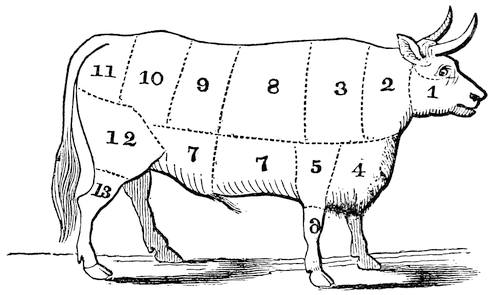
1. Cheek. 2. Neck. 3. Chuck Rib, or Shoulder having four Ribs.
4. Front of the Shoulder, or Shoulder Clod, sometimes called Brisket.
5. Back of the Shoulder. 6. Fore Shin, or Leg. 7,7. Plate pieces; the
front one is the Brisket, and the back one is the Flank, and is divided
again into the Thick Flank, or Upper Sirloin, and the Lower Flank.
8. Standing Ribs, divided into First, Second, and Third Cuts. The First
Cut is next to the Sirloin, and is the best. 9. Sirloin. 10. Sirloin Steak.
11. Rump, or Etch Bone. 12. Round, or Buttock. 13. Leg, or Hind
Shank.
Fig. 2.
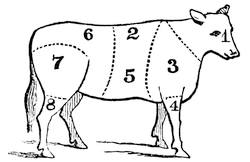
1. Head and Pluck. 2. Rack and Neck. 3. Shoulder. 4. Fore
Shank, or Knuckle. 5. Breast. 6. Loin. 7. Fillet, or Leg. 8. Hind
Shank, or Knuckle.
Fig. 3.
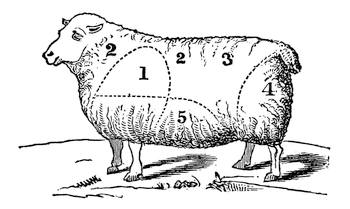
1. Shoulder. 2, 2. Neck, or Rack. 3. Loin. 4. Leg. 5. Breast.
A Chine is two Loins.
A Saddle of Mutton is two Legs and two Loins.
Fig. 4.
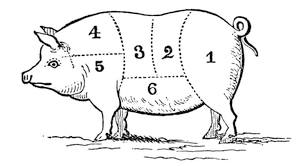
1. Leg. 2. Hind Loin. 3. Fore Loin. 4. Spare Rib. 5. Hand.
6. Spring.
A Lamb is divided into two fore quarters and two hind quarters.
Venison. In this country nothing is used but the hind quarter. Two
legs and two loins are called a Saddle.
In selecting beef, the best parts are cut from the thick
portion, from the shoulder to the rump, and these are
the most expensive parts, including sirloin, sirloin steaks,
and first, second, and third cuts of the fore quarter.
The best steaks are made by sawing up these pieces.
Steaks from the round or buttock are tougher and not
so sweet as steaks from rib pieces. The best steaks are
from the sirloin and sirloin steak. Steaks that have
large bits of bone should be cheaper, as the bone is so
much loss. A roasting piece cut close to the fore shoulder
is always tough and poor. Tough steaks must be
pounded with a steak hammer.
The Sirloin is to be roasted, and it is considered the
best piece for steaks. The piece next forward of the Sirloin
is about as good as any for roasting.
The Rump is to be corned, or cooked à la mode.
The Round is used for corning, or à la mode.
The Edge or Etch Bone is corned, or for soup.
The Hock or Shin is used for soups.
The Rib pieces of the fore quarter are used as roasting
pieces. The first cut, which is next the Sirloin, is
the best, and the others are better for corning.
The Head is used for mince pies, and the Tongue
for smoking. The Legs are used for soups.
The remaining pieces are used for salting down, stews,
soups, and mince pies, according to various tastes.
The Tallow is to be tried up for candles.
The Loin is used for roasting.
The Fillet (which is the leg and hind flank) is used
for cutlets, or to stuff and boil, or to stuff and roast.
The Chump end of the loin is used for roasting.
The Knuckles are used for broths.
The Neck is used for stews, pot pies, and broths, as
are most of the remaining pieces.
Many persons roast the fore quarter, which is divided
into two pieces, called the brisket, or breast, and the rack.
The Leg is boiled, or stuffed and roasted.
The Loin is roasted.
The rest are for boiling, or corning.
The Loin is chopped into pieces for broiling, called
Mutton Chops.
The Leg is often cut into slices and broiled.
Many cure and smoke the leg, and call it smoked
venison.
The Shoulder and Ham are used for smoking.
The Spare Rib is used for roasting, and often is used
as including all the ribs.
The Shoulder sometimes is corned and boiled.
That which is to be salted down must have all the
lean taken out, which is to be used for sausages, or
broiling.
The Feet use for jelly, head cheese, and souse.
In selecting Fish, take those that are firm and thick,
having stiff fins and bright scales, the gills bright red,
and the eyes full and prominent. When Fish are long
out of water they grow soft, the fins bend easily, the
scales are dim, the gills grow dark, and the eyes sink
and shrink away. Be sure and have them dressed immediately,
sprinkle them with salt, and use them, if possible,
the same day. In warm weather put them in ice,
or corning, for the next day. Shell Fish can be decided
upon only by the smell. Lobsters are not good unless
alive, or else boiled before offered for sale. They are
black when alive, and red when boiled. When to be
boiled, they are to be put alive into boiling water, which
is the quickest and least cruel way to end life.
In selecting Beef, take that which has a coarse, loose
grain, which easily yields to the pressure of finger,
or knife; which is a purplish red, and has whitish fat.
Ox Beef is best. If the lean is purplish and the fat very
yellow, it is bad Beef. If it is coarse-grained and hard
to break or cut, it is tough. Stall-fed has lighter fat
than grass-fed Beef.
If meat is frozen, lay it in cold water to thaw. A
piece of ten pounds, or more, will require all night to
thaw. Beef and Mutton improve by keeping. Meat is
better for not being frozen, except fresh Pork.
In selecting Veal, take that which is firm and dry,
and the joints stiff, having the lean a delicate red, the
kidney covered with fat, and the fat very white. If you
buy the head, see that the eyes are plump and lively,
and not dull and sunk in the head. If you buy the
legs, get those which are not skinned, as the skin is
good for jelly, or soup.
In choosing Mutton, take that which is bright red
and close grain, with firm and white fat. The meat
should feel tender and springy on pressure. Notice the
vein in the neck of the fore quarter, which should be a
fine blue.
In selecting Pork, if young, the lean can easily be
broken when pinched, and the skin can be indented by
nipping with the fingers. The fat also will be white
and soft. Thin rind is best.
In selecting Hams, run a knife along the bone, and
if it comes out clean, the ham is good, but if it comes
out smeared, it is spoilt. Good Bacon has white fat and
the lean adheres closely to the bone. If the Bacon has
yellow streaks, it is rusty, and not fit to use.
In selecting Poultry, choose those that are full grown,
but not old. When young and fresh killed, the skin is
thin and tender, the joints not very stiff, and the eyes
full and bright. The breast bone shows the age, as it
easily yields to pressure if young, and is tough when
old. If young, you can with a pin easily tear the skin.
A goose, when old, has red and hairy legs, but when
young, they are yellow and have few hairs. The pinfeathers
are the roots of feathers, which break off and
remain in the skin, and always indicate a young bird.
When very neatly dressed they are all pulled out.
Poultry and birds ought to be killed by having the
neck cut off, and then hung up by the legs to bleed
freely. This makes the flesh white and more healthful.
Beef and Mutton are improved by keeping as long as
they remain sweet. If meat begins to taint, wash it
and rub it with powdered charcoal and it removes the
taint. Sometimes rubbing with salt will cure it.
Corn-fed Pork is best. Pork made by still-house slops
is almost poisonous, and hogs that live on offal never
furnish healthful food.
Measely Pork has kernels in it, and is unhealthful.
A thick skin shows that the Pork is old, and that it
requires more time to boil.
If your Pork is very salt, soak it some hours.
Take all the kernels out, that you will find in the
round, and thick end of the flank of Beef, and in the fat,
and fill the holes with salt. This will preserve it longer.
Salt your meat, in summer, as soon as you receive it.
A pound and a half of salt rubbed into twenty-five
pounds of Beef, will corn it so as to last several days, in
ordinary warm weather.
Do not let Pork freeze, if you intend to salt it.
Too much saltpetre spoils Beef.
In winter, meat is kept finely, if well packed in snow,
without salting.
Split the Hog through the spine, take off each half of
the head behind the ear, then take off a piece front of
the shoulder and next the head, say four or five pounds,
for sausages.
Then take out the leaf which lies around the kidneys,
for lard.
Then, with a knife, cut out the whole mass of the
lean meat, except what belongs to the shoulder and the
ham.
Then take off the ham and the shoulder. Then take
out all the fat to be used for lard, which is the loose
piece, directly in front of the ham.
Next cut off a narrow strip from the spring, or belly,
for sausage meat. Cut up the remainder, which is clear
Pork, for salting, in four or five strips of nearly equal
width. Take off the cheek, or jowl, of the head for
smoking with the ham; and use the upper part for boiling,
baking, or head cheese.
The feet are boiled and then fried, or used for jelly.
It is most economical to try up the thin flabby pieces for
lard to cook with.
The leaf fat try by itself, for the nicest cooking.
Clean all the intestines of the fat for lard. That
which does not readily separate from the larger intestines
use for soap grease.
Of the insides, the liver, heart, sweet-breads, and kidneys,
are sometimes used for broiling or frying. The
smaller intestines are used for sausage cases.
In salting down, leave out the bloody and lean portions,
and use them for sausages.
Take what is called the leaves and take off all the
skin, cut it into pieces an inch square, put it into a clean
pot over a slow fire, and try it till the scraps look a reddish
brown, taking great care not to let it burn, which
would spoil the whole. Then strain it through a strong
cloth, into a stone pot, and set it away for use.
Take the fat to which the smaller intestines are attached
(not the large ones), and the flabby pieces of pork
not fit for salting, try these in the same way, and set
the fat thus obtained where it will freeze, and by spring
the strong taste will be gone, and then it can be used
for frying.
Cover the bottom of the barrel with salt an inch deep.
Put down one layer of Pork and cover that with salt,
half an inch thick. Continue thus till the barrel is full.
Then pour in as much strong pickle as the barrel will
receive. Always see that the Pork does not rise above
the brine. When a white scum, or bloody-looking matter
rises on the top, scald the brine and add more salt.
Leave out bloody and lean pieces for sausages.
The Pork ought to be packed as tight as possible, and
always kept under the brine. Some use a stone for
this purpose. In salting down a new supply, take the
old brine, boil it down and remove all the scum, and then
use it to pour over the Pork.
Take an ounce of saltpetre for each ham, and one
pint of molasses to every pound of saltpetre.
Then take a quarter of a pound of common salt for
every pint of molasses used.
Heat the mixture till it nearly boils, and smear the
meat side with it, keeping the mixture hot and rubbing
it in well, especially around the bones and recesses.
Let the hams lie after this from four to seven days,
according to the size of the hams.
Then place them in a salt pickle, strong enough to
bear an egg, for three weeks. Then soak eight hours
in fresh water.
Then hang in the kitchen, or other more convenient
place, to dry for a fortnight. Then smoke from three
to five days, or till well smoked.
Then wrap them up in strong tar paper, tying it close.
Then tie them tight in bags of coarse unbleached cotton,
stuffing in shavings, so that no part of the paper
touches the cotton. Hang them near the roof in a garret,
and they will never give you any trouble.
Empty the cases, taking care not to tear them. Wash
them thoroughly, and cut into lengths of two yards each.
Then take a candle rod, and fastening one end of a case
to the top of it, turn the case inside outward. When
all are turned, wash very thoroughly and scrape them
with a scraper made for the purpose, keeping them in
warm water till ready to scrape. Throw them into salt
and water to soak till used. It is a very difficult job to
scrape them clean without tearing them. When finished
they look transparent and very thin.
Take one-third fat and two-thirds lean pork and chop
them, and then to every twelve pounds of meat, add
twelve large even spoonfuls of pounded salt, nine of
sifted sage, and six of sifted black pepper. Some like a
little summer savory. Keep them in a cool and dry
place.
Take equal portions of veal, pork, and ham, chop
them fine, season with sweet herbs and pepper, put them
in cases, boil them till tender, and then dry them.
To twenty-five pounds of chopped meat, which should
be one-third fat and two-thirds lean, put twenty spoonfuls
of sage, twenty-five of salt, ten of pepper, and four of
summer savory.
Mix, in four gallons of water, a pound and a half of
sugar or molasses, and of saltpetre two ounces. If it is
to last a month or two, put in six pounds of salt; if you
wish to keep it over the summer, use nine pounds of salt.
Boil all together gently, and skim, and then let it cool.
Put the meat in the vessel in which it is to stand,
pour the pickle on the meat till it is covered, and keep
it for family use.
Once in two months boil and skim the pickle, and
throw in two ounces of sugar and half a pound of salt.
When tongues and hung beef are taken out, wash
and dry the pieces, put them in paper bags and hang in
a dry, warm place. In very hot weather, rub the meat
well with salt before it is put in the pickle, and let it lie
three hours for the bloody portion to run out. Too much
saltpetre is injurious.
For every gallon of cold water, use a quart of rock
salt, a tablespoon heaping full of saltpetre, six heaping tablespoonfuls
of brown sugar, and two quarts of blown salt.
No boiling is needed; keep it as long as there is salt undissolved
at the bottom. When scum rises scald it, and
add more sugar, salt, and saltpetre. Keep weights on
the meat to keep it under.
In very hot weather fresh meat will often spoil if it is
put in cold pickle. At such times put the meat into hot
pickle and boil it for twenty minutes, and the meat will
keep a month or more. If you save the pickle, add a
little more salt to it.
To one hundred pounds of beef, take four quarts of
rock salt pounded very fine, four ounces of saltpetre
made very fine, four pounds of brown sugar, all well
mixed.
Scatter some over the bottom of the barrel, lay down
one layer, and over that scatter the proportion of salt belonging
to such a portion of the meat, allowing rather
the most to the top layers. Pack all down very close,
and if any scum should rise, sprinkle a pint or more of
salt over the top.
Wash clean, and sprinkle pounded rosin over the hair,
dip in boiling water and take out immediately, and then
scrape them clean. Then soak them in water four days,
changing the water every day.
Take the stomach of a new-killed calf, and do not
wash it, as it weakens the gastric juice. Hang it in a
cool and dry place five days or so, then turn the inside
out and slip off the curds with the hand. Then fill it
with salt, with a little saltpetre mixed in, and lay it in a
stone pot, pouring on a teaspoonful of vinegar, and sprinkling
on a handful of salt. Cover it closely and keep
for use.
After six weeks, take a piece four inches square and
put it in a bottle with five gills of cold water and two
gills of rose brandy, stop it close, and shake it when you
use it. A tablespoonful is enough for a quart of milk.
In boiling meats it is important to keep the water
constantly boiling, otherwise the meat will soak up the
water.
If it is necessary to add more water, be careful that it
be boiling water.
Be careful to remove the scum, especially when it
first begins to boil, and a little salt thrown in aids in
raising the scum.
Put the meat into cold water, let it heat very gradually
forty minutes or so, and reckon the time of boiling
from the time it commences boiling. Allow about
twenty minutes for boiling for each pound of fresh
meat, and twenty-four for salt meats.
Do not let the meat remain long, after it is done, as it injures
it. Put a plate in the bottom to prevent the part
that touches from cooking too much.
Be sure not to let the fire get hot, so as to make a
hard boiling, especially at first. The more gently meat
boils the more tender it is, and the more perfectly the
savory portion is developed and retained. If the meat
is fat, skim it and save the fat for other purposes.
Put salt into the water about in the proportion of a
great spoonful to a gallon.
Boil a common-sized ham four or five hours, then skin the whole and fit
it for the table; then set it in an oven for half an hour, then cover
it thickly with pounded rusk or bread crumbs, and set it back for half
an hour.
Boiled ham is always improved by setting it into an oven for near an
hour, till much of the fat fries out, and this also makes it more
tender. Save the fat for frying meat.
Soak them in cold water all night, then wash them
and boil for four or five hours, according to the size.
When cooked, take off the skin and garnish with parsley.
Take a round of beef, cut it full of holes entirely
through it, roll strips of raw salt pork in a seasoning
made of thyme, cloves, and pepper and salt, half a teaspoonful
of each; then draw these strips through the
holes in the beef.
Put some small onions, say half a dozen, with a quarter
of a pound of butter into a sauce-pan with two great
spoonfuls of milk and stew them till soft, put your beef
and these onions in a pot, (you can stew the onions in
the pot instead of the sauce-pan if you prefer it,) pour on
hot water just enough to cover it, and let it cook slowly
four or five hours. Just before taking it up, add a pint
of wine, either Port or Claret. The onions can be cooked
separately if preferred.
If you have about five pounds of beef, take one pound
of bread, soak it in water, pour off the water and mash
it fine, adding a bit of butter the size of half a hen’s egg,
salt, mace, pepper, cloves, half a teaspoonful each,
pounded fine.
Mix all with a tablespoonful of flour and two eggs.
Then cut holes through the beef and put in half of
this seasoning, and put it in a bake-pan with boiling
water enough to cover it.
Put the pan lid, heated, over it, and a few coals on it,
and let it stew two hours, then take it up and spread the
other half of the dressing on the top, and add butter the
size of a hen’s egg, heat the pan lid again hot enough
to brown the dressing, and let it stew again an hour and
a half.
When taken up, if the gravy is not thick enough, add
a teaspoonful of flour wet up in cold water, then add a
couple of glasses of white wine to the gravy, and a bit
of butter as large as a walnut.
Make a stuffing of bread, and a quarter as much of
salt pork, chopped fine and seasoned with sweet herbs,
pepper and salt. Make deep gashes, or what is better,
take out the bone with a carving knife, and fill up with
stuffing, and sew up the opening with strong thread.
When there is a flap of flesh, lap it over the opening
and sew it down.
Put it into a large pot and fill it with water, putting
in a tablespoonful of salt, and let it simmer slowly three
hours. If it is needful to add water, pour in boiling
water. When it is done take it up, and save the broth
for next day’s dinner.
The best way to make the crust is as follows. Peel,
boil, and mash a dozen potatoes, add a teaspoonful of
salt, two great spoonfuls of butter, and half a cup of
milk, or cream. Then stiffen it with flour, till you can
roll it. Be sure to get all the lumps out of the potatoes.
Some persons leave out the butter.
Some roll butter into the dough of bread, others make
a raised biscuit with but little shortening, others make a
plain pie crust. But none are so good and healthful as
the potato crust.
To prepare the meat, first fry half a dozen slices of
salt pork, and then cut up the meat and pork, and boil
them in just water enough to cover them, till the meat
is nearly cooked. Then peel a dozen potatoes, and slice
them thin. Then roll the crust half an inch thick, and
cut it into oblong pieces. Then put alternate layers of
crust, potatoes, and meat, till all is used. The meat
must have salt and pepper sprinkled over each layer.
The top and bottom layer must be crust. Lastly, pour
on the liquor in which the meat was boiled, until it just
covers the whole, and let it simmer till the top crust is
well cooked, say half or three quarters of an hour. If
you have occasion to add more liquor, or water, it must
be boiling hot, or the crust will be spoilt. The excellence
of this pie depends on having light crust, and therefore
the meat must first be nearly cooked before putting
it in the pie, and the crust must be in only just long
enough to cook, or it will be clammy and hard. When
nearly done, the crust can be browned, with hot coals
on a bake-lid. Great care is needed not to burn the
crust, which should not be put where the fire reached
the pot on the bottom.
Take out the brains and boil the head, feet, and lights,
in salted water, just enough to cover them, about two
hours. When they have boiled nearly an hour and a
half, tie the brains in a cloth and put them in to boil
with the rest. They should previously be soaked half an
hour in cold water. When the two hours have expired,
take up the whole, and mash the brains fine, and season
them with bread crumbs, pepper, salt, and a glass of Port
or Claret, and use them for sauce. Let the liquor remain
for a soup the next day. It serves more handsomely
to remove all the bones.
Chickens and veal are most suitable for curries. Boil
the meat till tender, and separate the joints. Put a little
butter in a stew-pan with the chickens, pour on a
part of the liquor in which the meat was boiled, enough
nearly to cover it, and let it stew twenty minutes more.
Prepare the curry thus: for four pounds of meat, take
a tablespoonful of curry powder, a tea-cup of boiled rice,
a tablespoonful of flour, and another of melted butter, a
tea-cup of the liquor, and half a teaspoonful of salt, mix
them, and pour them over the meat and let it stew ten
minutes more.
Rice should be boiled for an accompaniment.
One ounce of ginger, one ounce of mustard, one of
pepper, three of coriander seed, three of tumeric, half an
ounce of cardamums, quarter of an ounce of Cayenne pepper,
quarter of an ounce of cinnamon, and quarter of an
ounce of cummin seed. Pound them fine, sift them,
and cork them tight in a bottle.
Cut four pounds of veal into pieces three inches long
and an inch thick, put it into the pot with water enough
to cover it, and rise an inch over. Add a teaspoonful
of salt, and put in four or five good slices of salt pork,
and half a tea-cup of rice, butter the size of a hens egg,
and season with pepper, salt, and sweet herbs, and let it
simmer slowly till the rice is quite soft, allowing half an
hour to heat and an hour to simmer. If there is too little
water, pour in boiling water.
Adding a little curry turns it into a dish of curried
veal, of which many are very fond. Be sure and skim
it well, just before it begins to simmer.
Cut four pounds of veal into strips three inches long and an inch
thick, peel twelve large potatoes and cut them into slices an inch
thick, then spread a layer of veal on the bottom of the pot, and
sprinkle a little salt and a very little pepper over it, then put a
layer of potatoes, then a layer of veal seasoned as before. Use up the
veal thus, and over the last layer of veal put a layer of slices of
salt pork, and over the whole a layer of potatoes. Pour in water till
it rises an inch over the whole, and cover it as close as possible,
heat it fifteen minutes and simmer it an hour.
Ten minutes before taking up, put in butter the size of a hen’s egg,
stir in a thin batter made of two tablespoonfuls of flour. Many add
sweet herbs to the salt and pepper.
Wash and stuff them with bread crumbs, seasoned
with pepper, salt, butter, or chopped salt pork, and fasten
them tight. Line a stew-pan with slices of bacon, add
a quart of water and a bit of butter the size of a goose
egg, or else four slices of salt pork.
Add, if you like, sliced onions and sweet herbs, and
mace. Stew till tender, then take them up and strain
the gravy over them. Add boiling water if the liquor
is too much reduced.
Take three quarts of peeled and sliced potatoes, three
large onions, peeled and sliced, and mutton and ham
cut into slices. Make layers first of potatoes, salted, and
then with the mutton, sprinkled with salt, pepper, gravy,
or butter, and mushroom or tomato catsup, two tea-cups
of water, and the ham in small quantities. Cover tight
and stew for an hour and a half. Watch, and add boiling
water if needed, as there must be a good supply of
gravy at the bottom.
Make a thick layer of slices of peeled potatoes, put on
a little salt, and then cut up sausages over the potatoes.
Continue alternate layers of potatoes and sausages, the
top layer being potatoes, pour in a little water and some
gravy, or butter, and if you have bits of ham mix them
with the sausages.
Take ten pounds of the buttock, rub it with salt and
let it lie a day or two, then wash it, and make openings
in the beef and insert bits of salt pork dipped in a mixture
of powdered pepper, cloves, and fine minced onions,
cover it, and let it bake four or five hours. Put a pint
of water and teaspoonful of salt in the baking pan and
baste occasionally. Make a gravy of the drippings.
Take a deep dish, butter it, and put in it a layer of
mashed potatoes, seasoned with butter, pepper, salt and
minced onions. Take slices of beef, or mutton, and season
them with pepper and salt, lay them with small bits
of salt pork over the potatoes. Then fill the dish with
alternate layers, as above described, having the upper
one potatoes. Bake an hour, or an hour and a half.
Pigeons are good stuffed and roasted, or baked. They
are better stewed thus:—Stuff them like turkeys, put
them in a pot, breast downwards, and cover them with
salted water an inch above the top, and simmer them
two hours if tender, and three if tough. When nearly
done, stir in a bit of butter the size of a goose egg, for
every dozen pigeons. Take them up and add a little
flour paste to the gravy, with salt and pepper, and pour
some of it over them, and put the rest in a gravy dish.
Rub a stew-pan with butter, cut the meat in thin
slices, and put in, with pepper, salt, and apple sliced fine;
some would add a little onion. Cover it tight, and stew
till tender.
Make a stuffing for the craw, of chopped bread and
butter, cream, oysters, and the yolks of eggs. Sew it in,
and dredge flour over the turkey, and put it to boil in
cold water, with a spoonful of salt in it, and enough water
to cover it well. Let it simmer for two hours and a half,
or if small, less time. Skim it while boiling. It looks
nicer if wrapped in a cloth dredged with flour.
Serve it with drawn butter, in which are put some
oysters.
Put the beef in water enough to cover it, and let it
heat slowly, and boil slowly, and be careful to take off
the grease. Many think it much improved by boiling
potatoes, turnips, and cabbage with it. In this case the
vegetables must be peeled, and all the grease carefully
skimmed as fast as it rises. Allow about twenty minutes
of boiling for each pound of meat.
Be sure you have your spit and tin oven very clean
and bright, and for this end wash them, if possible, before
they get cold. If they stand, pour boiling water on
to them.
Have a fire so large as to extend half a foot beyond
the roaster each side.
When meat is thin and tender, have a small, brisk
fire. When your meat is large, and requires long roasting,
have large solid wood, kindled with charcoal and
small sticks. Set the meat, at first, some distance from
the place where it is to roast, so as to have it heat
through gradually, and then move it up to roast.
Slow roasting, especially at first, and still more for
large pieces, is very important.
Allow about fifteen minutes for each pound of most
kinds of meat, and if it is cold weather, or the meat
fresh killed, more time is required, probably twenty minutes
for each pound.
When the meat is nearly done, stir up the fire to
brown it. The meat should be basted a good deal, especially
the first part of the time.
Let meat be spitted so as to be equally balanced.
When the meat is nearly done, the steam from it will
be drawn toward the fire.
A pale brown is the proper color for a roast.
Some dredge on flour and baste, a short time before
roasted meats are done.
Whenever fresh lard is used instead of butter, in the
dripping-pan, or to rub on meats, more salt must be used.
Flour thickening in gravies must be wet up with very
little water till the lumps are out, and then made thin.
Never dredge flour into gravies, as it makes lumps.
Strain all gravies.
The sirloin, and the first and second cuts of the rack,
are the best roasting pieces.
Rub it with salt; set the bony side to the fire to heat
awhile, then turn it, and have a strong fire; and if thick,
allow fifteen minutes to the pound; if thin, allow a little less.
If fresh killed, or if it is very cold, allow a little more
time. Half an hour before it is done, pour off the gravy,
thicken it with brown flour, and season it with salt and
pepper. It is the fashion to serve roast beef with no
other gravy than the juice of the meat.
The fore and hind quarter of lamb are used for roasting.
Rub on a little softened butter, and then some
salt and pepper, heat the bony side first, then turn
and roast by a brisk fire, allowing about fifteen minutes
to a pound, and rather more if fresh killed, or the
weather cold. Put a pint of water and a teaspoonful of
salt in the dripping-pan, and a little lard, or butter.
Lamb is to be cooked thoroughly.
The following is a very excellent sauce for roast lamb.
Pick, wash, and shred fine, some fresh mint, put on it a
tablespoonful of sugar, and four tablespoonfuls of vinegar;
or, chop some hard pickles to the size of capers, and put
them to half a pint of melted butter, and a teaspoonful
of vinegar.
The saddle, shoulder, and leg are used for roasting.
Rub the mutton with butter, and then with salt and
pepper, and some add pounded allspice, or cloves. Put
butter, or lard, in the dripping-pan, with a quart of
water, or a pint for a small piece, and baste it often.
Set the bony side toward the fire, at some distance, that
it may heat through before roasting. Allow about a
quarter of an hour for every pound. Mutton should be
cooked rare.
Make a brown gravy, and serve it with currant jelly.
The loin is the best for roasting, the breast and rack
the next best. Wash the piece to be roasted in cold
water, rub a little butter softened over it, and then some
pepper and salt, put a pint or more water in the dripping-pan,
and unless there is a good deal of fat, a bit of lard,
or butter, and baste often. Set the bony side first to the
fire to heat. Allow twenty minutes for every pound,
and if cold, or fresh killed, a little more. Veal should
be cooked very thoroughly. In roasting any part except
the loin, cut slits in the veal and draw through the bits
of salt pork, which, while roasting, impart a flavor to
the veal.
Cut off the shank bone of a leg of veal, and cut gashes
in what remains. Make a dressing of chopped raw salt
pork, salt, pepper, sweet herbs and bread crumbs, or use
butter instead of pork. Stuff the openings in the meat
with the dressing, put it in a bake-pan with water, just
enough to cover it, and let it bake, say two hours for
six pounds. Or put it in a tin oven, and roast it two or
three hours, according to the size.
Take a pig that weighs from seven to twelve pounds,
and as much as five weeks old. Wash it thoroughly
outside and inside. Take any fresh cold meat, say one
pound, and a quarter of a pound of salt pork, and twice
as much bread as you have meat.
Chop the bread by itself, and chop the meat and pork
fine and mix all together, adding sweet herbs, pepper and
salt, half a tea-cup of butter, and one egg. Stuff the pig
with it, and sew it up tight. Take off the legs at the
middle joint. Put it into a dripping-pan with cross-bars
or a grate to hold it up, and with the legs tied, and pour
into the pan a pint of water and set it in the oven. As
soon as it begins to cook, swab it with salt and water,
and then in fifteen minutes do it again. If it blisters it
is cooking too fast; swab it, and diminish the heat. It
must bake, if weighing twelve pounds, three hours.
When nearly done, rub it with butter. When taken
out set it for three minutes in the cold, to make it crisp.
Rub with salt, pepper, and powdered sage. Put the
bone side to warm slowly. Dredge on a little flour, and
put a little salted water and butter into the dripping-pan,
and baste with it. If large, it requires three hours;
if small, only one to cook it. Pork must be cooked slowly
and very thoroughly.
Wash the outside and inside very clean. Take bread
crumbs, grated or chopped, about enough to fill the turkey,
chop a bit of salt pork, the size of a good egg,
and mix it in, with butter, the size of an egg, pepper,
salt, and sweet herbs to your taste. Then beat up an
egg and work in. Fill the crop and the body, sew
them up, and tie the legs and wings, and spit them.
Set it where it will gradually heat, and turn it once or
twice, while heating, for fifteen minutes. Then put it
up to the fire, and allow about twenty-five minutes for
each pound. Turkey must be cooked very thoroughly.
It must roast slowly at first, and be often basted
with butter on a fork. Dredge it with flour just before
taking it up, and let it brown.
Put the inwards in a skillet to boil for two hours, chop
them up, season them, use the liquor they are boiled in
for gravy, and thicken it with brown flour, and a bit of
butter, the size of a hen’s egg. This is the giblet sauce.
Take the drippings, say half a pint, thickened with a
paste, made of a tablespoonful of brown, or white flour,
and let it simmer five minutes, and then use it for thin
gravy.
A goose should be roasted in the same manner as a
turkey. It is better to make the stuffing of mashed potatoes,
seasoned with salt, pepper, sage, and onions, to the
taste. Apple sauce is good to serve with it. Allow fifteen
minutes to a pound, for a gosling, and twenty or
more for an older one. Goose should be cooked rare.
Wash them clean outside and inside, stuff them as
directed for turkeys, baste them with butter, lard, or
drippings, and roast them about an hour. Chickens
should be cooked thoroughly. Stew the inwards till tender,
and till there is but little water, chop them and
mix in gravy from the dripping-pan, thicken with brown
flour, and season with salt, pepper, and butter. Cranberry,
or new-made apple sauce, is good with them.
Wash the ducks, and stuff them with a dressing made
with mashed potatoes, wet with milk, and chopped
onions, sage, pepper, salt, and a little butter, to suit your
taste. Reserve the inwards to make the gravy, as is
directed for turkeys, except it should be seasoned with
sage and chopped onions. They will cook in about an
hour. Ducks are to be cooked rare. Baste them with
salt water, and before taking up, dredge on a little flour
and let it brown.
Green peas and stewed cranberries are good accompaniments.
Canvass-back ducks are cooked without stuffing.
Wild ducks must be soaked in salt and water the night
previous, to remove the fishy taste, and then in the morning
put in fresh water, which should be changed once
or twice.
Line a dish with a crust made of potatoes, as directed
in the Chicken Pot Pie. Broil the meat ten minutes,
after pounding it till the fibres are broken. Cut the
meat thin, and put it in layers, with thin slices of broiled
salt pork, season with butter, the size of a hen’s egg,
salt, pepper, (and either wine or catsup, if liked); put in
water till it nearly covers the meat, and dredge in considerable
flour, cover it with the paste, and bake it an
hour and a half if quite thick. Cold meats are good
cooked over in this way. Cut a slit in the centre of the
cover.
Joint and boil two chickens in salted water, just enough
to cover them, and simmer slowly for half an hour. Line
a dish with raised or potato crust, or pie crust, then put
the chicken in layers, with thin slices of broiled pork,
butter, the size of a goose egg, cut in small pieces.
Put in enough of liquor, in which the meat was boiled,
to reach the surface, salt and pepper each layer,
dredge in a little flour, and cover all with a light, thick
crust. Ornament the top with the crust, and bake
about one hour in a hot oven. Make a small slit in the
centre of the crust. If it begins to scorch, lay a paper
over a short time.
Make a rich gravy by boiling the coarser parts for the
liquor, and seasoning with pepper, spice, and catsup.
Cut into the gravy, carrots, parsnips, onions, and celery,
boiled tender; then broil the mutton, first seasoning it
with salt and pepper, put them into the gravy, and stew
all about ten minutes. Garnish with small pickles.
Check the shoulder with cuts an inch deep, rub on
first butter, then salt, pepper, and sweet herbs, over these
put the yolk of an egg and bread crumbs, and then bake
or roast it a light brown. Make a gravy of the drippings,
seasoning with pepper, salt, and tomato catsup,
and also the grated rind and juice of a lemon; thicken
with a very little flour.
Line a pudding dish with slices of broiled ham, cut up a
boiled chicken, and nearly fill the dish, filling in with
gravy or melted butter; add minced onions if you like,
or a little curry powder, which is better. Then pile
boiled rice to fill all interstices, and cover the top quite
thick. Bake it for half or three quarters of an hour.
Take mashed potatoes, seasoned with salt, butter, and
milk, and line a baking dish. Lay upon it slices of
cold meats of any kind with salt, pepper, catsup, and
butter, or gravy. Put on another layer of potatoes, and
then another of cold meat as before. Lastly, on the top
put a cover of potatoes.
Bake it till it is thoroughly warmed through, and
serve it in the dish in which it is baked, setting it in, or
upon another.
It is best to fry in lard not salted, and this is better
than butter. Mutton and beef suet are good for frying.
When the lard seems hot, try it by throwing in a bit of
bread. When taking up fried articles, drain off the fat
on a wire sieve.
Cut it in slices half an inch thick, pour on boiling water
and then pour it off entirely, then let the liver brown
in its own juices, turning it till it looks brown on both
sides. Take it up and pour into the frying-pan enough
cold water to make as much gravy as you wish; then
sliver in onion, cut fine, add a little salt and nutmeg, and
a bit of butter to season it, let it boil up once, then put
back the liver for a minute, and then set it on the table.
Take half a pint of milk, add a well-beaten egg, and
flour enough to make a batter. Fry the veal brown in
some sweet lard, then dip it in the batter and fry again
till brown. Drop in some spoonfuls of batter, to fry after
the veal is taken up, and put them on the top of the veal.
Then put a little thin flour paste into the gravy, adding salt
and pepper, and after one boil, pour it over the whole.
The veal must be cut quite thin, and it should cook
nearly an hour in the whole.
Wash the chickens and divide them into pieces, put
them in a pot, or stew-pan, with several slices of salt
ham, or pork, and sprinkle each layer with salt and pepper;
cover them with water, and let them simmer till
tender, keeping them covered. Then take them up,
and mix with the gravy a piece of butter the size of a
hen’s egg, and a paste made of two teaspoonfuls of flour
wet up with the gravy. Put back the chickens and let
them stew five minutes. Then spread crackers, or toasted
bread, on the platter, put the chickens on it, and pour the
gravy over.
In case it is wished to have them browned, take them out
when nearly cooked and fry them in butter till brown,
or pour off all the liquid and fry them in the pot.
Cold beef is best made into pies as in a foregoing receipt.
Veal is best made into hashes, or force meat, as in
following receipts. If it is liked more simply cooked, chop
it fine, put in water just enough to moisten it, butter, salt,
pepper, and a little juice of a lemon. Some like a little
lemon rind grated in. Heat it through, but do not let it
fry. Put it on buttered toast, and garnish it with slices
of lemon.
Cold salted, or fresh beef are good chopped fine with pepper,
salt, and catsup, and water enough to moisten a little.
Add some butter just before taking it up, and do not let it
fry, only heat it hot. It injures cooked meat to cook it
again. Cold fowls make a nice dish to have them cut
up in mouthfuls, add some of the gravy and giblet sauce,
a little butter and pepper, and then heat them through.
Chop the meat fine, add salt, pepper, a little onion, or
else tomato catsup, fill a tin bread pan one-third full, cover
it over with boiled potatoes salted and mashed with
cream or milk, lay bits of butter on the top and set it
into a Dutch, or stove oven, for fifteen or twenty minutes.
Peel six large tomatoes and one onion, and slice them.
Add a spoonful of sugar, salt and pepper, and a bit of
butter the size of a hen’s egg, and half a pint of cold
water. Shave up the meat into small bits, as thin as
thick pasteboard. Dredge flour over it, say two teaspoonfuls,
or a little less. Simmer the meat with all
the rest for one hour, and then serve it, and it is very fine.
Dried tomatoes can be used. When you have no tomatoes,
make a gravy with water, pepper, salt, and butter,
or cold gravy: slice an onion in it, add tomato catsup
(two or three spoonfuls), and then prepare the meat
as above, and simmer it in this gravy one hour.
Roll out wheat dough very thin, and put in it, like a
turnover, cold meat chopped fine, and seasoned with pepper,
salt, catsup, and sweet herbs. Make small ones, and
fry them in lard till the dough is well cooked.
Boil in salted water the ears, skin, and feet of pigs till
the meat drops from the bones; chop it like sausage meat.
Season the liquor with pepper, salt, cloves, nutmeg, and
cinnamon, or with pepper, salt, and sweet herbs, mix the
meat with it, and while hot tie it in a strong bag and
keep a heavy stone upon it until quite cold.
Cleanse pigs’ ears and feet and soak them a week in
salt and water, changing the water every other day.
Boil eight or ten hours till tender. When cold put on
salt, and pour on hot spiced vinegar. Fry them in lard.
Scrape and scour it thoroughly, soak it in salt and water
a week, changing it every other day. Boil it eight
or ten hours, till tender; then pour on spiced hot vinegar,
or fry or broil it.
Chop cold veal fine with one-fourth as much salt
pork. Season with salt, pepper, and sweet herbs. Make
them into balls and fry them brown.
Put a fine minced onion into a stew-pan, and add half
a dozen cloves and as many pepper corns, pour on a coffee
cup of boiling water, and add three large spoonfuls of
butter, or some gravy. Let it simmer ten minutes. Then
cut up the beef in mouthfuls and put into this gravy to
simmer four or five minutes, till heated through, but do
not let it cook any more, as it is not healthful.
Three large tomatoes stewed with the onion improves
this.
Make quite a thin batter of flour, water, and eggs, with
a little salt. Pour the batter over the bottom of a Dutch
oven, or frying-pan, which has a very little hot butter, or
lard in it; say three great spoonfuls. Let the batter be
no thicker on the bottom than a straw; let it fry a couple
of minutes and then cover the batter with very thin
slices of ham, and pour a thin cover of batter over them.
Let it fry till the bottom looks a yellowish brown (have
a hot fire), then cut it into squares, or into triangular
quarters, or eighths, and turn it with a knife, and let it
fry till the other side is browned.
Cut up all the bits and ends, put them in a frying, or
sauce pan, with a very little water and some butter.
When warmed through, break in some eggs and stir
them up with the ham until the egg is hardened.
Cut up cooked veal into strips, flour them and fry them
to a light brown, in butter. Then take them up and
mix as much hot water as there is gravy, add a little flour
paste, season with salt, pepper, catsup, and lemon-juice,
then add the meat and heat it hot.
Chop the cold veal fine, removing hard portions, add
as much bread crumbs as there is of meat, and half as much
broiled salt pork chopped fine. Moisten all with a glass
of white wine if you like it, put in two eggs, and season
with salt, pepper, sweet herbs, and a little nutmeg. Form
them into balls and fry in butter.
It is best to oil the bars of the gridiron with suet and
also warm them before putting the meat on. Chalk is
sometimes rubbed on to the gridiron, when fish is to be
broiled. It is desirable to keep a gridiron expressly for
fish, otherwise meat is often made to taste fishy.
Cut the ham into thin slices, and broil it very quickly
over a hot fire, then put on butter and a little pepper.
Cut the veal into slices a quarter of an inch thick, lay
them on the gridiron with an equal number of slices of salt
pork beside them. When cooked, put the veal on to the
dish, butter, salt, and pepper it well, and lay the salt pork
on the top of it. Veal needs to broil a good while, till it
looks done when cut open.
These must be broiled over a quick fire and not cooked
so much as veal.
These must be cut rather thin, broiled quick, and
very thoroughly.
Those from the sirloin are best, those from the shoulder
clod and round are not so good, but cheaper. Meat, if
tough, is made more tender by pounding, if it is done
very thoroughly, so as to break the fibres. Cut the
steaks from half an inch to an inch thick. Broil on hot
coals, and the quicker it is done the better. Ten or
twelve minutes is enough time. Turn it four or five
times, and when done put on butter, salt, and if you like
pepper, and on both sides. Do not let your butter be
turned to oil before putting it on. It is best to have beef
tongs to turn beef, as pricking it lets out the juices.
Often turning prevents the surface from hardening and
cooks it more equally.
Cut it in slices half an inch thick, pour boiling water on
it, broil it with some thin slices of salt pork dipped in
flour; then cut the liver and pork up into mouthfuls,
put them in a frying-pan with a little butter, pepper, and
salt, and stew them three or four minutes.
Beat the eggs to a froth, pour them into a buttered
tin, set it on coals, add salt and butter, stir till cooked,
and then put it on to buttered toast.
Put them into boiling water and allow three minutes
if you wish only the white hardened, and five minutes
if you wish them hard. Another and more delicate way
is to break them into boiling water and let them boil
three or four minutes. Then take them up with a
skimmer, draining them well, and lay them on buttered
toast, and spread a little butter on them.
Another, and the best way to boil them when in the
shell, is to pour on boiling water and let them stand five
minutes. Then pour it off and pour on more boiling
water, and let them stand five minutes longer.
This is the way in which they are cooked in egg boilers,
which are set upon the table.
Cut salt pork into thin slices, fry them till crisp, take
them out and pour a little water to the fat, dredge in a
little flour, and put in a little pepper. Then cut up the
pork in mouthfuls and put to this gravy.
Pour boiling water on to salt, smoked beef slivered.
Pour off the water and then frizzle it in the frying-pan
with butter. When done, break in two or three eggs,
and stir it till the egg is hardened.
Sliver smoked beef, pour on boiling water to freshen
it, then pour off the water and frizzle the beef in butter.
Prepare equal quantities of sliced boiled veal and
smoked tongue, boiled, skinned, and sliced.
Pound each separately in a mortar, moistening with
butter as you proceed.
Then take a stone jar, or tin can, and mix them in it,
so that it will, when cut, look mottled and variegated.
Press it hard and pour on melted butter. Keep it covered
in a dry place. To be used at tea in slices.
Take thin slivers of codfish, lay them on hot coals,
and when a yellowish brown, set them on the table.
Sliver the codfish fine, pour on boiling water, drain it
off, and add butter, and a very little pepper, and heat
them three or four minutes, but do not let them fry.
Heat them on a gridiron, remove the skin, and then
set them on the table.
The delicate and proper blending of savors is the
chief art of good soup-making.
Be sure and skim the grease off the soup when it first
boils, or it will not become clear. Throw in a little salt
to bring up the scum. Remove all the grease.
Be sure and simmer softly, and never let a soup boil
hard.
Put the meat into cold water, and let it grow warm
slowly. This dissolves the gelatine, allows the albumen
to disengage, and the scum to rise, and diffuses the savory
part of the meat. But if the soup is over a hot fire
the albumen coagulates and hardens the meat, prevents
the water from penetrating, and the savory part from
disengaging itself. Thus the broth will be without flavor,
and the meat tough. Allow about two tablespoonfuls
of salt to four quarts of soup, where there are many
vegetables, and one and a half where there are few.
Be sure not to leave any fat floating on the surface.
A quart of water, or a little less, to a pound of meat
is a good rule.
Soup made of uncooked meat is as good the second
day, if heated to the boiling point.
If more water is needed, use boiling hot water, as cold
or lukewarm spoils the soup.
It is thought that potato water is unhealthy; and
therefore do not boil potatoes in soup, but boil elsewhere,
and add them when nearly cooked.
The water in which poultry, or fresh meat is boiled
should be saved for gravies, or soup, the next day. If
you do not need it, give it to the poor.
Keep the vessel covered tight in which you boil soup,
that the flavor be not lost.
Never leave soup in metal pots, as sometimes a family
is thus poisoned.
Thickened soups require more seasoning; nearly double
the quantity used for thin soups.
Take a leg of lamb, of moderate size, and four quarts
water. Of potatoes, carrots, cabbage, onions, tomatoes,
and turnips take a tea-cup full of each, chopped fine.
Salt and black pepper to your taste.
Wash the lamb, and put it into the four quarts of cold
water. When the scum rises take it off carefully with
a skimmer. After having pared and chopped the vegetables,
put them into the soup. Carrots require the most
boiling, and should be put in first; onions require the
least boiling, and are to be put in the last.
This soup requires about three hours to boil.
Boil the head and feet in just water enough to cover
them; when tender take out the bones, cut in small
pieces, and season with marjoram, thyme, cloves, salt,
and pepper.
Put all into a pot, with the liquor, and four spoonfuls
of thin batter, stew gently an hour, then, just as you take it
up, add two or three glasses of Port wine, and the yolks
of eggs boiled hard.
Put a piece of the fore quarter of mutton into salted
water, enough to more than cover it, and simmer it slowly
two hours. Then peel a dozen turnips, and six tomatoes,
and quarter them, and boil them with the mutton
till just tender enough to eat. Thicken the soup
with pearl barley. Some add sliced tomatoes, or the
juice and rind of a lemon. Use half a tea-cup of rice if
you have no pearl barley.
Soak dry peas over night, putting a quart of water to
each quart of peas. Next morning boil them an hour
in this water, and ten minutes before the hour expires
put in a teaspoonful of saleratus. Change them to fresh
water, put in a pound of salt pork, and boil three or four
hours, till the peas are soft. Green peas need no soaking,
and must boil not more than an hour. When taken
up, add butter.
Boil down the meat to a thick jelly, season it highly
with salt, spices, and wine, or brandy; when cold, cut it
in square inches, and dry them in the sun. Keep them
in a tight tin vessel, and when you use them put a quart
of boiling water to one, or two of the cakes, which should
be one inch square, and the fourth of an inch thick.
Vegetables can be added.
Divide the lower from the upper part of the head, and
put the head in a gallon of water, and boil till tender.
Strain the liquor, and let it stand till the next day,
and then take off the fat. Three quarters of an hour
before serving it, hang it over the fire and season it with
pepper, salt, mace, cloves, and sweet herbs, tied up in a
small bag; add half a pint of rich gravy. Darken it
with fried sugar, or browned flour; add the juice of two
lemons, the yolks of eight eggs, boiled hard, and force
meat balls. Just before taking up, pour in half a pint
of wine.
Soak the peas over night. Put a pound and a half
of split peas into four quarts of water, with roast beef, or
mutton bones, and a ham bone, or slices of ham. Add
two heads of celery and two onions, and stew slowly till
the peas are soft. Then strain the peas through a coarse
sieve, and put them back and season to your taste with
pepper and salt. Let it boil one hour longer. When
you have no celery use a teaspoonful of essence of celery,
or a spoonful of celery vinegar.
Wash a peck of clams and boil them in a pint of water,
till those on the top open and they come out easily. Strain
the liquor, and add a quart of milk. When it just boils
thicken with two and a half spoonfuls of flour, worked
into three of butter, with pepper, mace, and other spices
to your taste. It is better without spice.
Put a gallon of water to a knuckle of veal, boil it to
two quarts, strain and add the juice of the oysters you
are to use. Add pepper and salt to your taste. Fifteen
minutes before taking it up, put in the oysters. Ten
minutes before taking up, put in eight rolled crackers,
and after it stops boiling, add half a pint of milk.
Take the knuckle and put it into salted water, enough
to cover it, and also put in a pound of ham. When it
is boiled very tender take up the meat, and strain the
soup, and add a head of celery, cut small, one onion, a
turnip and carrot sliced, four sliced tomatoes, a dozen
corns of pepper, and salt to your taste. Thicken with
three great spoonfuls of rice, or vermicelli, or a thin flour
paste. Simmer it gently till all the vegetables are done.
Almost any kind of meat can be made into soup, by
taking the broth, and adding various kinds of seasoning
and thickening; such as tomatoes, ochra, vermicelli,
sweet herbs, and vegetables, and in such proportions as
each one likes best. The preceding kinds of soup will
be a guide as to proportions.
Take six pounds of beef, and put it into four quarts of
water, with two onions, one carrot, one turnip, and a
head of celery. Boil it down three or four hours slowly,
till there is about two quarts of water, and let it cool.
Next day take off the grease, without shaking the sediment,
and pour it off into the kettle, half an hour before
dinner (leaving the sediment out), and add salt to suit
the taste, a pint of macaroni, broken into inch pieces,
and a tablespoonful and a half of tomato catsup.
This is a favorite dish at the South and West, and is
made in a variety of ways. The following is a very fine
receipt, furnished by a lady, who has had an extensive
opportunity for selection.
Fry one chicken, when cut up, to a light brown, and
also two slices of bacon. Pour on to them three quarts
of boiling water. Add one onion and some sweet herbs,
tied in a rag. Simmer them gently three hours and a
half. Strain off the liquor, take off the fat, and then put
the ham and chicken, cut into small pieces, into the liquor.
Add half a tea-cup of ochre, cut up; if dry, the
same quantity; also half a tea-cup of rice. Boil all half
an hour, and just before serving add a glass of wine and
a dozen oysters, with their juice. Ochre is a fine vegetable,
especially for soups, and is easily cultivated. It is
sliced and dried for soups in winter.
Take the feet, neck, pinions, and giblets of two fowls,
and add a pound and a half of veal, and a slice of lean
ham. Pour on three quarts of cold water, and boil gently
till the meat is very soft. Strain off the liquor, and,
when cold, take off the fat. Cut the giblets and meat
into half-inch pieces; add a tablespoonful of flour with
one of butter, and some of the soup to thin it. Then
put into the soup the butter and meat, with some sweet
herbs tied in a bag, with salt to your taste. Boil it half
an hour and it is done.
Put fish into cold water to boil.
Remove any mud taste by soaking in strong salt and
water.
It is cooked enough when it easily cleaves from the
bone, and is injured by cooking longer.
Put a napkin under, to absorb dampness, when boiled
fish is laid on the dish.
To fry, dip in egg and bread crumbs, and use lard,
not butter. Garnish with parsley.
Halibut is best cut in slices, and fried, or broiled. Bass
are good every way. Black fish are best broiled or fried.
Shad are best broiled, and sprinkle them with salt some
hours before broiling. Salt shad and mackerel must be
soaked over night for broiling. Sturgeons are best fried;
the part near the tail is best for this.
The best fish for chowder are haddock and striped
bass. Cut the fish in pieces of an inch thick, and two
inches square. Take six or eight good-sized slices of
salt pork, and put in the bottom of an iron pot, and
fry them in the pot till crisped. Take out the pork,
leaving the fat. Chop the pork fine. Put in the pot a
layer of fish, a layer of split crackers, some of the chopped
pork, black and red pepper, and chopped onion, then
another layer of fish, split crackers, and seasoning. This
do till you have used your fish. Then just cover the
fish with water, and stew slowly till the fish is perfectly
tender. Take out the fish, and put it in the dish in which
you mean to serve it; set it to keep warm. Thicken
the gravy with pounded cracker; add, if you like, mushroom
catsup and Port wine. Boil the gravy up once,
and pour over the fish; squeeze in the juice of a lemon,
and garnish with slices of lemon.
If not salt enough from the pork, more must be added.
Fry some slices of salt pork, say a slice for each pound,
and when brown take them up, and add lard enough to
cover the fish. Skim it well, and have it hot, then dip
the fish in flour, without salting it, and fry a light brown.
Then take the fish up, and add to the gravy a little
flour paste, pepper, salt; also wine, catsup, and spices, if
you like. Put the fish and pork on a dish, and, after
one boil, pour this gravy over the whole.
Fish are good dipped first in egg and then in Indian
meal, or cracker crumbs and egg, previous to frying.
Fill the fish with a stuffing of chopped salt pork, and
bread, or bread and butter, seasoned with salt and pepper,
and sew it up. Then sew it into a cloth, or you
cannot take it up well. Put it in cold water, with water
enough to cover it, salted at the rate of a teaspoonful
of salt to each pound of fish, and about three tablespoonfuls
of vinegar. Boil it slowly for twenty or thirty minutes,
or till the fin is easily drawn out. Serve with drawn
butter and eggs, with capers or nasturtions in it.
Fish can be baked in the same way, except sewing it
up in a cloth. Instead of this, cover it with egg and
cracker, or bread crumbs.
Salt fish must be soaked several hours before broiling.
Rub suet on the bars of your gridiron, then put the fish
flesh side down (some say skin side down, as it saves
the juices better), and broil till nearly cooked through.
Then lay a dish on it, and turn the fish by inverting the
gridiron over the dish. Broil slowly, and never pile broiled
fish one above another on the dish.
Cod, bass, and shad are good for baking. Stuff them
with a seasoning made of bread crumbs or crackers, butter,
salt, pepper, and, if you like, spices. Put the fish in
a bake-pan, with a tea-cup of water, and a bit of butter,
and bake from forty-five to sixty minutes.
Soak them four hours in blood-warm water, then
scrape off the skin, cut them up, and stew them in a little
milk till tender. Just before taking up stir in butter,
and a little flour paste, and scatter cold boiled eggs cut
up over them.
Soak the fish in a pailful of water all night. Then
hang it in a good deal of water where it will be kept
warm. Put one even great spoonful of saleratus in the
water. (This last softens it as nothing else will do.)
Change the water an hour before dinner, and hang it
where it will get scalding hot. It must not boil, but
only simmer. Take it up into a napkin, so as to keep
it dry and hot.
Mash boiled potatoes, mash the fish and mix with
them, adding some cream or milk, and a little pepper,
make them into round cakes an inch thick, and fry
them in fresh lard.
Oysters are best roasted in the shell, convex side
downward, to hold the juices, and cooked till they will
open well. They are good also cooked in a batter
made by adding wheat flour to the juice till it is a batter,
and adding two eggs and a salt spoonful of salt.
Fry in hot lard to a light brown.
These must never be cooked after they are dead.
Put them alive into boiling water, and boil them till the
small joints come off easily.
Take the oysters from the liquor, and place some at
the bottom of the dish, then grate some bread over them,
a little nutmeg, pepper, salt, and cloves. Add another
laying of oysters, and the seasoning, a little butter, and
a glass of wine. Cover the whole with grated bread,
and bake half an hour, or perhaps a little more. There
will be liquor enough without adding any water or
oyster broth.
After taking out the oysters, to each quart of liquor
put a teaspoonful of pepper, two blades of mace, three
tablespoonfuls of white wine, and four of vinegar, also
a tablespoonful of salt. Simmer the oysters in this five
minutes, then take them out and put in jars, then boil
the pickle, skim it, and pour it over them.
Cut in slices and lay them for three hours in salt and
water, and a glass of vinegar, then fry or broil them.
Dress them, lay them open flat, rub them with salt
and pepper, cut them in short pieces, and broil them.
Small ones are best skinned and fried.
Boil them, take out the hearts (which is the only part
used), dip them in flour and fry brown in lard, or stew
with butter, pepper, salt, and a little water.
Take cold cooked fish, chop it with bread crumbs,
pepper, salt, and boiled salt pork, or ham; season with
salt, pepper, catsup, or wine. Mould into balls with egg
and bread crumbs, and fry in lard.
Thin-edged clams are the best ones. Roast them in
a pan over a hot fire, or in a hot oven, placing them so
as to save the juice. When they open, empty the juice
into a sauce-pan, and add the clams with butter, pepper,
and very little salt.
To boil them, put them in a pot with a very little
water, and so as to save their juices. Proceed as above,
and lay buttered toast in the dish when you take them
up. Clams are good put into a batter and fried.
There is nothing worse for the health, or for the palate,
than a poor hash, while a good hash is not only a
favorite dish in most families, but an essential article of
economy and convenience. For this reason, a separate
article is devoted to this subject.
The following are the ways in which hashes are
spoilt.
The first is by cooking them. Meat, when once
cooked, should only be heated. If it is again stewed or
fried, it tends to make it hard and tough, and diminishes
its flavor.
The second is by frying the butter or gravy in
which they are prepared. It has been shown that this
is very injurious to the healthfulness of food. Butter
and oils may be melted without changing their nature,
but when cooked, they become much more indigestible
and injurious to weak stomachs.
The third mode of injuring hashes is by putting in
flour in such ways that it is not properly cooked. Flour
dredged on to hashes while they are cooking generally
imparts the raw taste of dough.
The fourth mode is by putting in so much water as
to make them vapid, or else so much grease as to make
them gross.
The fifth is by seasoning them with so little care, that
they either have very little savory taste, or else are so
hot with pepper and spice as to be unhealthy.
If a housekeeper will follow these directions, or give
them to a cook who will follow them exactly, she will
always have good and healthful hashes.
To prepare Gravy for a Cold Beef Hash, or Steak
Hash.
For a small dish for six persons, put a tea-cup and a
half of boiling water into a small sauce-pan, and make a
thin paste with a heaping teaspoonful of flour, wet with
a great spoonful of cold water. Stir it in, and boil it three
minutes. Then put in half a teaspoonful of black pepper
and rather more salt, and let it stand where it will be
kept hot, but not boiling, till fifteen minutes before it is
to be used.
Then cut the beef into half-inch mouthfuls and take
as many mouthfuls of cold boiled potato, and half as
many of cold turnip. Put these all together into a tin
pan the size of a dining plate. Then stir in two great
spoonfuls of butter into the gravy till melted, and, if you
like tomato catsup, add a great spoonful, and pour it
over the hash, and cover it with a plate and let it heat
on the stove, or trivet, ten minutes, and then serve it.
If the hash is made without vegetables, take only a
tea-cup full of water, and a teaspoonful of flour, and
a little less pepper and salt.
If you have the beef gravy of yesterday, use it instead
of butter, and put in less pepper, salt, butter, and water,
and only one spoonful of butter.
If tomatoes are liked, peel and slice two large ones,
and add with the potatoes and turnips.
Let a housekeeper try this, and then vary it to her
own taste, or the taste of her family, and then write
the exact proportions for the use of all the future cooks
of her family.
For a dish for six persons, take a tea-cup and a half
of boiling water, and slice fine one small onion (say one
an inch in diameter) into it, to give a slight flavor of
onion, and thus hide the strong mutton taste. Mix a
thin paste made with a heaping teaspoonful of flour, wet
with a great spoonful of water, stir it in, and let it boil
three minutes, adding a half a teaspoonful of black pepper,
and rather more salt. Then set it where it will keep
hot, but not boil, till wanted.
Cut the mutton into half-inch mouthfuls, leaving out
most of the fat. Cut up the same number of mouthfuls
of cold boiled potatoes, and half as much cold boiled turnips,
and slice in two large peeled tomatoes, or cold boiled
parsnip, or both. Mix them in a tin pan the size of a
dining plate, stir two great spoonfuls of butter into the
gravy, and, if you like, a great spoonful of tomato catsup,
and pour it on to the hash. Cover it with a plate,
and set it to heat ten minutes on the stove, or on a trivet
over coals.
If you do not put in vegetables, take less water, salt,
and pepper. If you do not put in onion, put in a wine-glass
of currant, plum, or grape jelly, or squeeze in some
lemon juice when you add the butter, and leave out the
catsup, or not, as you like. Modify to suit your taste,
and then write the proportions exactly, for all future
cooks of your family.
Take a tea-cup of boiling water in a sauce-pan, and
mix in an even teaspoonful of flour wet with a spoonful
of cold water, and let it boil five minutes. Then add,
not quite half a teaspoonful of black pepper, as much
salt, and two great spoonfuls of butter, and set it where
it will keep hot, but not boil.
Chop the veal very fine, and mix with it, while chopping,
half as much stale bread crumbs. Put it in a tin
pan and pour the gravy on to it, and let it heat on a
stove or trivet ten minutes.
Toast some bread and cut it into triangular pieces, and
lay it on the bottom of a dish. Spread the hash over,
and pour on the gravy. Cut slices of lemon to lay on
the top and around the edge of the platter.
If you like a seasoning of sweet herbs with this hash,
the nicest way is to tie some in a rag and boil it in the
water of the gravy when you first mix it.
Pour out the drippings of the tin roaster through a
gravy strainer, into a pan, and set it away till cold.
Next day, scrape the sediment from the bottom and then
use it to make gravy in place of butter, for hashes.
Mutton drippings must never be used for cooking.
It is not fashionable to have gravy made for roast beef
or mutton, as the juice of the meat is preferred, which,
on the plate, is mixed with catsup or whatever is preferred.
Gravies for poultry are made as directed in the article
on roasting meats.
Drawn butter is the foundation of most common
gravies, and is to be prepared in either of the two ways
described below.
Rub in two teaspoonfuls of flour into a quarter of a
pound of butter. Add five tablespoonfuls of cold water.
Set it into boiling water and let it melt, and heat until
it begins to simmer, and it is done. Never simmer it on
coals, as it fries the oil and spoils it. Be careful not to
have the flour in lumps. If it is to be used with fish,
put in chopped eggs and nasturtions, or capers.
If used with boiled fowl, put in oysters while it is simmering,
and let them heat through.
Make three teaspoonfuls of flour into a thin batter,
and stir it into a tea-cup of boiling water in a sauce-pan,
and let it boil five minutes. Then take it off, and cut
up a quarter of a pound of butter into pieces, and put in
and keep it hot till it is melted. This is the easiest way,
and if it is for very rich cooking more butter may be added.
Put into a sauce-pan fresh meat cut in small pieces,
seasoned with salt and pepper and a bit of butter, and
heat it half an hour, till brown, stirring so that it shall
not stick.
Pour on boiling water, a pint for each pound—simmer
three hours and skim it well. Settle and strain it,
and set it aside to use. Thicken, when you need it,
with brown flour, a teaspoonful to a half pint.
Take butter the size of an egg, add a tablespoonful
of sugar, put it in a skillet, and stir it till a dark brown,
then dredge in flour, and use it to darken gravy or soup.
Heat two ounces of butter in a frying-pan, till a dark
brown, then add a tablespoonful of vinegar, half a teaspoonful
of salt, and half a dozen shakes from the pepper
box.
Take the yolk of two eggs boiled hard, mash them
with a mustard spoonful of mustard, a little black pepper,
a little salt, three tablespoonfuls of salad oil, and
three of vinegar. A tablespoonful of catsup would improve
it for many.
Take half a pint of the liquor in which the meat was
cooked, and when boiling, put in pepper, salt, currant
jelly, and wine to your taste; add about a teaspoonful
of scorched flour, mixed with a little water.
Take a pint of oyster juice, add a little salt and pepper,
and a stick of mace, boil it five minutes, and then
add two teaspoonfuls of flour, wet up in half a tea-cup
of milk. Let this boil two minutes, then put in the
oysters and a bit of butter the size of an egg; in two
minutes take them up.
Mix in six tablespoonfuls of vinegar, the yolks of two
boiled eggs, some of the lobster spawn, a mustard spoonful
of mustard, two tablespoonfuls of salad oil or melted
butter, and a little salt and pepper.
Boil peeled and quartered tart apples, and put in butter
and sugar to your taste. If boiled in cider with quinces,
it will keep a long time. The fresh-made is best.
Take four or five celery heads, and cut up all but the
green tops into small pieces, and boil it in half a pint of
water till tender. Mix two teaspoonfuls of flour with a
little milk and put in, with a salt spoonful of salt, and
butter the size of an egg. When it boils, take it up.
This is fine to keep in the castor stand. Pound two
gills of celery seed, and add sharp vinegar. Shake every
day for a week or two. The flavor of sweet herbs and
sage can be obtained by pouring vinegar on to them, and
for three successive days taking them out, and putting
in a fresh supply of herbs. It must be kept corked and
sealed.
Bruise celery seed, and steep it in brandy for a fortnight.
An ounce to half a pint of brandy is enough.
Half a teaspoonful will flavor soup.
It is convenient sometimes to use herb spirit instead
of the herbs. It is made thus. Take all the sweet
herbs, as thyme, marjoram, sweet basil, and summer
savory, dry, pound, sift, and steep in brandy for a fortnight;
an ounce to half a pint.
The following is a very convenient article for soups.
Dry, pound, and sift the following ingredients together.
Take one ounce each, of lemon, thyme, basil, sweet
marjoram, summer savory, and dried lemon peel, with
two ounces of dried parsley, and a few dried celery seeds.
Bottle it tight. Horseradish can be sliced thin, dried
and pounded, and kept in a bottle for use. Mushrooms
can be dried in a moderately warm oven, then powdered
with a little mace and pepper, and kept to season soup
or sauces.
One pound of salt, two pounds of sugar, fried half an
hour over a slow fire, then add three pints of boiling
water, half a pint of essence of anchovies, a dozen cloves,
and some sweet herbs. Boil till the salt dissolves, then
strain and bottle it.
Pour boiling water on the tomatoes, let them stand until
you can rub off the skin, then cover them with salt,
and let them stand twenty-four hours. Then strain
them, and to two quarts put three ounces of cloves, two
ounces of pepper, two nutmegs. Boil half an hour, then
add a pint of wine.
Put the mushrooms in layers, with salt sprinkled over
each layer, and let them stand four days. Then mash
them fine, and to every quart add two-thirds of a teaspoonful
of black pepper, and boil it in a stone jar set in
boiling water two hours. Strain it without squeezing,
boil the liquor, let it stand to cool and settle, then bottle,
cork, and seal it, and set it in a cool place.
Bruise ten dozen young walnuts, add a quart of vinegar,
and three-fourths of a pound of fine salt. Let them stand
two weeks, stirring every day. Strain off the liquor,
and add half an ounce of black pepper whole, thirty
cloves, half an ounce of bruised nutmeg, half an ounce
of ginger, and four sticks of mace. Boil the whole an
hour, then strain and bottle tight.
The great art of cooking potatoes is, to take them
up as soon as they are done. Of course it is important
to begin to cook them at the proper time.
When boiled, baked, fried, or steamed, they are rendered
watery by continuing to cook them after they reach
the proper point. For this reason, potatoes, to bake or
boil, should be selected so as to have them nearly the
same size. Begin with the largest first, and continue to
select the largest till all are gone. Be careful that the
water does not stop boiling, as thus the potatoes will be
watery. Never boil them very hard, as it breaks them.
Wash, but do not cut them. Put them in boiling
water, having only a small quantity more than enough
to cover them. Put salt in, say a great spoonful to half
a pailful of potatoes. Boil them moderately; when nearly
done, let them simmer slowly, and when cooked (as is
discovered, not by their cracking, but by a fork) pour off
the water, and let them stand till dry. Medium-sized
potatoes, when young, will cook in from twenty to thirty
minutes; when old, it requires double the time. When
peeled they boil fifteen minutes quicker. Old potatoes,
in the spring, are improved by soaking in water all
night.
After boiling and peeling them, divide them and lay
them on a gridiron to brown. Or when cold, the day
after boiling, cut them in slices, and cook them on a
griddle, with just enough lard to make them brown, or
you can brown them on a gridiron.
Another pretty mode for a fancy dish is, to peel large
potatoes and then cut them round and round in shavings,
as you pare an apple. Fry them with clean sweet lard
in a frying-pan, till brown, stirring them to brown alike,
drain them on a sieve, and after sprinkling a little fine
salt over them, place them on the table.
Another tasteful mode is, after boiling and peeling
them, to flour them, then dip them in the yolk of an egg,
and roll them in fine bread crumbs. Then fry them till
brown and they look very handsomely, and are excellent
to the taste. Fry them without this preparation
and they are very nice.
When potatoes become old, mash them fine, season
with salt and butter, and a little cream or milk, place
them in a dish, smoothing and shaping the top handsomely,
and making checks with a knife; then brown
them in a stove, or range-oven, and they are excellent.
These can also be made into balls, dipped in egg and
crumbs, and fried as directed above, and they look very
handsomely.
Potatoes, when roasted, should be very carefully
washed and rinsed, and then roasted in a Dutch oven,
or stove oven. Notice, lest they be put in too soon, and
thus be made watery by cooking too long.
The following is a very nice way of preparing potatoes
for breakfast. Peel them, and cut them in very
thin slices into a very little boiling water, so little that it
will be evaporated when they are cooked. At this point,
add salt to your taste, some cream, or if you have not
cream put in a very little milk and a bit of butter. A
little practice will make this a very favorite dish in any
family. The art is, to cook the potatoes with very little
water, so that it will be evaporated at the time the potatoes
are done. They must be stirred while cooking occasionally.
Another mode is, to mash the potatoes and add salt,
butter, and a little cream, and set them away. Then
cut them in slices, and fry for breakfast.
Many think the following the best way of boiling potatoes.
Peel them, and soak in cold water two hours.
Boil in just enough water to cover them. When about
done, pour off the water, and let them steam five minutes
uncovered.
Boil turnips in a vessel by themselves. Try them
with a fork, and if sweet and good, send them to the table
when taken up. If watery, mash them, wring them
in a cloth, and add salt and butter, and if the sweetness
is gone, add a little white sugar, and they will be as
good as new. Boil them in a good deal of water, with
salt in it. If they boil too long, they lose their sweetness
and become bitter. An hour is the medium time required.
Keep it cool and moist on the cellar bottom till wanted.
Throw it into cold water, cut off all that is tough, tie
it in small bundles, salt the water when boiling, and
then put them in and let them boil from fifteen to twenty-five
minutes. When done, take it up with a skimmer,
lay it on buttered toast, and put butter on to it.
Drain it well on the skimmer before putting it on the
toast, or it will spoil the dish.
Beets must not be cut, as this makes them lose their
sweetness. Salt the water, and boil them in summer
an hour, and in winter three hours.
Parsnips and carrots must be split, or else the outside
is done too much before the inside is cooked sufficiently.
Salt the water, and boil them when young half an hour,
and two hours when old. Boil enough to have some to
slice and fry for the next day’s dinner or breakfast, as
they are much the best cooked in this way.
Select the white kind, peel them and put them in
boiling milk, a little salted, and boil them from half to
three quarters of an hour. When taken up, drain in a
colander, pour a little melted butter over them, or put
on cold butter.
Scrape them, and put them in boiling salted water.
Boil large ones about two hours, then take them up and
butter them.
Summer squashes boil whole, when very young.
When older, quarter them, and take out the seeds. Put
them into boiling salted water; when done, squeeze out
the water by wringing in a cloth, and add butter and
salt to your taste.
The neck part of the winter squash is the best; cut
it into slices, peel it, boil it in salted water till tender, then
drain off the water, and serve it without mashing, or, if
preferred, wring it and season with butter and salt.
What is left over is excellent fried for next day’s breakfast
or dinner. It must be in slices, and not mashed.
Save the water in which they are boiled, to make yeast
or brown bread, for which it is excellent.
Take off the outer leaves of a cabbage, cut the stalky
part in quarters, down to the centre, put it in boiling
salted water, and boil them from half an hour to an hour.
Cabbages, like turnips, must have a good deal of water,
or they will taste strong.
For cauliflowers, cut off all the leaves but the small
ones mixed with the head, and boil in salted water till
it is tender. Some wrap some of the large leaves around
the head, and tie them on, and when cooked throw aside
the leaves. Drain the cauliflower with a skimmer and
eat it with drawn butter.
Most vegetables must be put in water only sufficient
to cover them, allowing a little more for evaporation.
Strong vegetables like turnips, cabbage, and some of the
greens, require a good deal of water.
Peas, to be good, must be fresh from the vines.
Throw them into boiling salted water, and cook them
from fifteen to thirty minutes, according to their age.
When old, they are improved by putting a very little
saleratus into the water, say a quarter of a teaspoonful
to half a peck of shelled peas.
If it is to be boiled on the cob, put it in salted boiling water,
and let it cook from twenty minutes to three quarters of
an hour after it begins to boil, according to the age of
the corn.
If you wish to make succatosh, boil the beans from
half to three quarters of an hour, in water a little salt,
meantime cutting off the corn and throwing the cobs to
boil with the beans. Take care not to cut too close to
the cob, as it imparts a bad taste. When the beans have
boiled the time above mentioned, take out the cobs, and
add the corn, and let the whole boil from fifteen to twenty
minutes, for young corn, and longer for older corn.
Make the proportions two-thirds corn and one-third beans.
Where you have a mess amounting to two quarts of
corn and one quart of beans, take two tablespoonfuls of
flour, wet it into a thin paste, and stir it into the succatosh,
and let it boil up for five minutes. Then lay some butter
in a dish, take it up into it, and add more salt if
need be.
Throw them into salted boiling water, and cook them
from an hour to an hour and a half, according to the
age. A little saleratus improves them when old; a piece
as big as a pea will do. If you put in too much, the
skins will slip off.
Boil them in a good deal of water a few minutes, to
get out the bitter taste, then cut them in slices, and
sprinkle a little salt on them. Then fry them brown in
lard or butter. If they are fried on a griddle, with only
butter enough to keep them from sticking, they are better
than when more butter is used.
Pick over the beans the night before, and put them
in warm water to soak, where they will be kept warm
all night. Next morning pour off the water, and pour
on boiling water, and let them stand and simmer till the
beans are soft, and putting in with them a nice piece of
pork, the skin gashed. Put them into the deep dish in
which they are to bake, having water just enough to
cover them. Bury the pork in the middle, so that the
top will be even with the surface. All the garden beans
are better for baking than the common field bean. They
must bake in a moderately hot oven from two to three
hours.
Pour on scalding water, and let them remain in it five
minutes, to loosen the skins. Peel them, and put them
in a stew-pan with a little salt and butter, and let them
stew half an hour, and then pour them on to buttered
toast.
Another Way.—Peel them, put them in a deep dish,
put salt and pepper, and a little butter over them, then
make a layer of bread crumbs, or pounded crackers, then
make another layer of tomatoes, and over these another
layer of crumbs, till the dish is filled. The top layer
must be crumbs. Some persons put nutmeg and sugar
with the other seasoning. Bake three quarters of an
hour, or more, according to the size.
Another Way.—Peel them, put them in a stew-pan
with some salt, boil them nearly half an hour, then put
into them three or four beaten eggs, and more salt if
needed, and very little pepper. Many would add a few
small slices of onion. Most who have tried this last are
very fond of it.
Beet tops, turnip tops, spinach, cabbage sprouts, dandelions,
cowslips, all these boil in salted water till they
are tender, then drain in a colander, pressing hard.
Chop them a little, and warm them in a sauce-pan, with
a little butter.
Lay them on buttered toast, and if you like, garnish
them with hard-boiled egg, cut in slices. If not fresh,
soak them half an hour in salt and water.
The chief art of preparing cucumbers consists in making
them cool and crisp. This is done by putting them
in cold water for half an hour, and then cut them in thin
slices into cold water. Then drain them in a colander,
and season them with pepper, salt, and vinegar.
Cucumbers are very nice cooked in this way. Peel
and cut them into quarters, take out the seeds, and boil
them like asparagus. Put them on to buttered toast, and
put a little butter over them.
Mix a pint of milk, and a pint of water, and a teaspoonful
of salt; put in two ounces of macaroni, and
boil till the liquor is wasted and the macaroni tender.
Put on butter, or pour over some gravy. Cut the macaroni
in pieces of three or four inches, in order to help
it out more conveniently.
Simmer it in thin gravy; when tender lay it in a dish,
and grate on it old cheese, and over that grated bread.
Pour over it melted butter, and set in a Dutch oven till
of a brown color.
Wash in several waters, and boil it five hours, allowing
two quarts of water, and half a teaspoonful of salt,
to every quart of hominy. Drain it through a colander,
and add butter and salt, if needed. The small-grained
requires less water and time.
Simmer a quarter of a pound of macaroni in plenty
of water, until it is tender. Strain off the water, and
add a pint of milk or cream, an ounce of grated cheese,
and a teaspoonful of salt. Mix well together, and strew
over the top two ounces of grated cheese and crumbs of
bread. Brown it well, in baking, on the top. It will
bake in a quick oven in half an hour. It is appropriate
to be eaten with boiled ham, or forms a course by itself,
after meat.
Salad, to be in perfection, should be fresh gathered,
and put into salted cold water, which will remove all insects.
Let them stand half an hour, and then drain
them thoroughly.
Take the yolks of one or two eggs boiled hard, mash
them fine, mix with them pepper, salt, mustard, oil, and
vinegar to your taste. Then cut up the salad, and mix
it with this preparation. This is usually done at table.
Cut off the lower part of the stem, peel them, and put
them in a sauce-pan, with just water enough to prevent
their burning at the bottom, put in a little salt, and shake
them occasionally while cooking, to prevent burning.
When tender, add butter, salt, and pepper to your taste,
and wine and spice, if you like them. Serve them on
buttered toast.
This is very good, and but little known. It resembles
celery in flavor, and is much more easily cultivated.
Scrape and cut the roots in slices. Boil them very tender,
drain off the water, add a little salt, and turn in just
milk enough to cover them. Then take them up and
add a little butter.
Boil it till tender, then pour off the water, and add a
little milk, and a little salt and butter.
Another Way.—Parboil it, scraping off the outside, cut
it in slices, dip it into beaten egg and fine bread crumbs,
and fry it in lard.
Another Way.—Make a batter of wheat flour, milk
and eggs, and a little salt. Cut the salsify in slices; after
it is boiled tender, put it in the batter, and drop this
mixture into hot fat by the spoonful. Cook them a light
brown.
Pick over the rice, and wash it in cold water. To
a pint of rice, put three quarts of boiling water, and
half a teaspoonful of salt. Boil it just seventeen minutes
from the time it fairly begins to boil. Then turn
off all the water, and set it over a moderate fire, with
the lid off, to steam fifteen minutes. Great care must
be taken to be accurate. The rice water poured off is
good to stiffen muslins.
To a pint of clean rice, put three quarts of cold water,
and a teaspoonful of salt. Boil it fifteen or twenty minutes,
then pour off the water, add milk and some cream,
and let it boil a few minutes longer. It should not be
so soft as to lose its form.
In case you wish to fry it next morning, boil it longer
in the water, and omit the milk, or not, as you please.
It is always a good plan to boil a good deal, so as to
have it next day for griddle cakes, or to cut in slices
and fry.
This vegetable is much improved by cooking a long
time.
Immediately after breakfast, begin by boiling two
onions. If they are not liked, omit this part; but it is
best to make the trial, as some can eat this, who cannot
take onions any other way comfortably.
Pour boiling water over a dozen large tomatoes, and
peel them. Cut them into a stew-pan; add a tea-cup
and a half of bread crumbs, a teaspoonful of black pepper,
a tablespoonful of salt, four tablespoonfuls of butter,
and also the cooked onion. Set them where they will
stew very slowly all the forenoon, the longer the better.
Fifteen minutes before serving them, beat up six eggs,
and add, and give them a good boil, stirring all the time.
(Indiana Receipt.)
The best way to cook sweet potatoes is to bake them
with their skins on. When boiled, the largest should
be put in first, so as to have all cook alike. Drain them
and dry them, then peel them. They are excellent
sliced and fried for breakfast next day; much better than
at first.
Boil them till tender, drain them, and serve them
with melted butter.
Take the purple kind, stew till soft, take off the skin,
mash it with butter and sweet herbs, grate bread over
the top, and bake it till brown.
The best ovens are usually made thus. After the
arch is formed, four or five bushels of ashes are spread
over it, and then a covering of charcoal over that, then
another layer of bricks over all. The use of this is, that
the ashes become heated, and the charcoal being a non-conductor,
the heat is retained much longer. In such
an oven, cake and pies can be baked after the bread is
taken out, and then custards after them. Sometimes
four bakings are done in succession.
The first time an oven is used, it should be heated
the day previous for half a day, and the oven lid kept
up after the fire is out, till heated for baking.
As there is so little discretion to be found in those who
heat ovens, the housekeeper will save much trouble and
mortification by this arrangement. Have oven wood
prepared of sticks of equal size and length. Find, by
trial, how many are required to heat the oven, and then
require that just that number be used, and no more.
The fire must be made the back side of the oven, and
the oven must be heated so hot as to allow it to be closed
fifteen minutes after clearing, before the heat is reduced
enough to use it. This is called soaking. If it is
burnt down entirely to ashes, the oven may be used as
soon as cleared.
An experienced cook will know without rules. For a
novice, the following rules are of some use in determining.
If the black spots in the oven are not burnt off, it
is not hot, as the bricks must all look red. If you sprinkle
flour on the bottom, and it burns quickly, it is too hot.
If you cannot hold your hand in longer than to count
twenty moderately, it is hot enough.
If you can count thirty moderately, it is not hot enough
for bread.
These last are not very accurate tests, as the power to
bear heat is so diverse in different persons; but they are
as good rules as can be given, where there has been no
experience.
If the bread is sour, on opening it quick and deeply
with your fingers, and applying the nose to the opening,
a tingling and sour odor escapes. This is remedied by
taking a teaspoonful of saleratus, for every four quarts
of flour, very thoroughly dissolved in hot water, which is
to be put in a hole made in the middle, and very thoroughly
kneaded in, or there will be yellow streaks.
If the bread is light and not sour, it will, on opening
it deep and suddenly, send forth a pungent and brisk,
but not a sour odor, and it will look full of holes, like
sponge. Some may mistake the smell of light bread for
that of sour bread, but a little practice will show the difference
very plainly.
If the bread is light before the oven is ready, knead it
a little without adding flour, and set it in a cool place.
If it rises too much, it loses all sweetness, and nothing
but care and experience will prevent this. The best
of flour will not make sweet bread, if it is allowed to rise
too much, even when no sourness is induced.
Never set it flat on a table, as it sweats the bottom,
and acquires a bad taste from the table.
Always take it out of the tins, and set it up end way,
leaning against something.
If it has a thick, hard crust, wrap it in a cloth wrung
out of cold water.
Keep it in a tin box, in a cool place, where it will not
freeze.
The article in which yeast is kept must, when new
yeast is made, or fresh yeast bought, be scalded and
emptied, and then have a salt spoonful of saleratus put
in, and be rinsed out again with warm water. If it is glass,
rinsing twice with warm water will answer. Junk bottles
are best for holding yeast, because they can be corked
tight, and easily cleansed.
By those who use potato yeast, it is regarded as much
the best, as it raises bread quicker than common home-brewed
yeast, and, best of all, never imparts the sharp,
disagreeable yeast taste to bread or cake, often given by
hop yeast.
Mash half a dozen peeled boiled potatoes, and mix in
a handful of wheat flour, and two teaspoonfuls of salt,
and after putting it through a colander, add hot water
till it is a batter. When blood warm, put in half a tea-cup
of distillery yeast, or twice as much potato, or other
home-brewed. When raised, keep it corked tight, and
make it new very often in hot weather. It can easily
be made when potatoes are boiled for dinner.
Four quarts of water, two handfuls of hops, eight
peeled potatoes, sliced, all boiled soft, mixed and strained
through a sieve. To this, add a batter, made one-third
of Indian, and two-thirds of rye, in a pint of cold
water, and then boil the whole ten minutes. When
cool as new milk, add a tea-cup of molasses, a tablespoonful
of ginger, and a tea-cup of distillery yeast, or
twice as much home-brewed.
Boil a handful of hops half an hour in three pints of
water. Pour half of it, boiling hot, through a sieve, on
to nine spoonfuls of flour, mix, and then add the rest
of the hop water. Add a spoonful of salt, half a cup of
molasses, and when blood warm, a cup of yeast.
This often is very convenient, especially for hot weather,
when it is difficult to keep yeast.
Take some of the best yeast you can make, and thicken
it with Indian meal, and if you have rye, add a little
to make it adhere better. Make it into cakes an inch
thick, and three inches by two in size, and dry it in a
drying wind, but not it the sun. Keep it tied in a bag,
in a dry, cool place, where it will not freeze.
One of these cakes is enough for four quarts of flour.
When you wish to use it, put it to soak in milk or water
for several hours, and then use it like other yeast.
This is better than hard yeast made with Indian.
Take two quarts of best home-brewed yeast, and a
tablespoonful of salt, and mix in wheat flour, so that it
will be in hard lumps. Set it in a dry, warm place (but
not in the sun) till quite dry. Then leave out the fine
parts to use the next baking, and put up the lumps in
a bag, and hang it in a dry place.
In using this yeast, take a pint of the rubs for six
quarts of flour, and let it soak from noon till night.
Then wet up the bread to bake next day.
Brewer’s and distillery yeast cannot be trusted to make
hard yeast. Home-brewed is the best, and some housekeepers
say, the only yeast for this purpose.
One pint of new milk, and one teaspoonful of fine salt.
One large spoonful of flour. Mix, and keep it blood
warm an hour. Use twice as much as the common
yeast. Bread soon spoils made of this.
Take eight quarts of flour, and two of milk, a tablespoonful
of salt, a gill and a half of distillery yeast, and
sometimes rather more, if not first rate. Take double
the quantity of home-brewed yeast.
Sift the flour, then make an opening in the middle,
pour in a part of the wetting, and put in the salt. Then
mix in a good part of the flour. Then pour in the yeast,
and mix it well, then add the rest of the wetting, using
up the flour so as to make a stiff dough. Knead it half
an hour, till it cleaves clean from the hand.
This cannot be wet over night, as, if the yeast is good,
it will rise in one or two hours.
Some persons like bread best wet with water, but most
very much prefer bread wet with milk. If you have
skimmed milk, warm it with a small bit of butter, and
it is nearly as good as new milk.
You need about a quart of wetting to four quarts of
flour. Each quart of flour makes a common-sized
loaf.
Sift eight quarts of flour into the kneading tray, make
a deep hole in the middle, pour into it a pint of yeast,
mixed with a pint of lukewarm water, and then work
up this with the surrounding flour, till it makes a thick
batter. Then scatter a handful of flour over this batter,
lay a warm cloth over the whole, and set it in a
warm place. This is called sponge.
When the sponge is risen so as to make cracks in the
flour over it (which will be in from three to five hours),
then scatter over it two tablespoonfuls of salt, and put in
about two quarts of wetting, warm, but not hot enough to
scald the yeast, and sufficient to wet it. Be careful not
to put in too much of the wetting at once.
Knead the whole thoroughly for as much as half an
hour, then form it into a round mass, scatter a little flour
over it, cover it, and set it to rise in a warm place. It
usually will take about one quart of wetting to four
quarts of flour.
In winter, it is best to put the bread in sponge over
night, when it must be kept warm all night. In summer
it can be put in sponge early in the morning, for if
made over night, it would become sour.
Take a gill of distillery yeast, or twice as much fresh
home-brewed yeast, add a quart of warm (not hot) water,
and flour enough to make a thin batter, and let it
rise in a warm place all night. This is the sponge.
Next day, put seven quarts of sifted flour into the
kneading tray, make a hole in the centre, and pour in
the sponge. Then dissolve a bit of volatile salts, and a
bit of alum, each the size of a hickory-nut, and finely
powdered, in a little cold water, and add it, with a heaping
tablespoonful of salt, to the sponge, and also a quart
more of blood-warm water.
Work up the flour and wetting to a dough, knead it
well, divide it into three or four loaves, prick it with a
fork, put it in buttered pans, and let it rise one hour, and
then bake it about an hour. Add more flour, or more
water, as you find the dough too stiff, or too soft.
A teaspoonful of saleratus can be used instead of the
volatile salts and alum, but it is not so good.
This is made like bread made with home-brewed
yeast, except that you may put in almost any quantity
of the potato yeast without injury. Those who use potato
yeast like it much better than any other. The
only objection to it is, that in summer it must be made
often, as it will not keep sweet long. But it is very
easily renewed. The chief advantage is, that it rises
quick, and never gives the sharp and peculiar taste so
often imparted to bread and cake by all yeast made with
hops.
Rub a dozen peeled and boiled potatoes through a very
coarse sieve, and mix with them twice the quantity of
flour, mixing very thoroughly. Put in a coffee-cup full
of home-brewed, or of potato yeast, or half as much of distillery
yeast, also a teaspoonful of salt. Add whatever
water may be needed to make a dough as stiff as for
common flour bread.
An ounce or two of butter rubbed into the flour, and
an egg beat and put into the yeast, and you can have
fine rolls, or warm cakes for breakfast.
This kind of bread is very moist, and keeps well.
Three pints of dried flour, measured after sifting.
Two cups of milk.
Half a teaspoonful of salt.
One teaspoonful of soda (Super Carbonate).
Two teaspoonfuls of cream tartar.
Dissolve the soda in half a tea-cup of hot water, and
put it with the salt into the milk. Mix the cream tartar
very thoroughly in the flour: the whole success depends
on this. Just as you are ready to bake, pour in
the milk, knead it up sufficiently to mix it well, and
then put it in the oven as quick as possible. Add either
more flour or more wetting, if needed, to make dough to
mould. Work in half a cup of butter after it is wet, and
it makes good short biscuit.
One quart of rye.
Two quarts of Indian meal: if fresh and sweet, do not
scald it; if not, scald it.
Half a tea-cup of molasses.
Two teaspoonfuls of salt.
One teaspoonful of saleratus.
A tea-cup of home-brewed yeast, or half as much distillery
yeast.
Make it as stiff as can be stirred with a spoon with
warm water. Let it rise from night till morning. Then
put it in a large deep pan, and smooth the top with the
hand dipped in cold water, and let it stand a while. Bake
five or six hours. If put in late in the day, let it remain
all night in the oven.
A quart of water, and as much milk.
Two teaspoonfuls of salt, and a tea-cup of Indian
meal.
A tea-cup full of home-brewed yeast, or half as much
distillery yeast.
Make it as stiff as wheat bread, with rye flour.
One pint of rice, boiled till soft.
Two quarts of rice flour, or wheat flour.
A teaspoonful of salt.
A tea-cup of home-brewed, or half as much distillery
yeast.
Milk to make it so as to mould like wheat bread.
Three half pints of ground rice.
Two teaspoonfuls (not heaping) of salt.
Two gills of home-brewed yeast.
Three quarts of milk, or milk and water. Mix the
rice with cold milk and water to a thin gruel, and boil
it three minutes. Then stir in wheat flour till as
stiff as can be stirred with a spoon. When blood warm,
add the yeast. This keeps moist longer than No. 1.
Three pints of warm water.
One tea-cup of Indian meal, and one of wheat flour.
Three great spoonfuls of molasses, or a tea-cup of
brown sugar.
One teaspoonful of salt, and one teaspoonful of saleratus,
dissolved in a little hot water.
One tea-cup of yeast.
Mix the above, and stir in enough unbolted wheat
flour to make it as stiff as you can work with a spoon.
Some put in enough to mould it to loaves. Try both.
If made with home-brewed yeast, put it to rise over
night. If with distillery yeast, make it in the morning,
and bake when light.
In loaves the ordinary size, bake one hour and a half.
Mix stewed and strained apple, or grated apple uncooked,
with an equal quantity of wheat flour; add
yeast enough to raise it, and mix sugar with the apple,
enough to make it quite sweet. Make it in loaves, and
bake it an hour and a half, like other bread.
Stew and strain some pumpkin, stiffen it with Indian
meal, add salt and yeast, and it makes a most excellent
kind of bread.
One quart of sour milk, and one teaspoonful of salt.
One teaspoonful of pulverized saleratus, and one tea-cup
of molasses put into the milk.
Thicken with unbolted wheat, and bake immediately,
and you have first-rate bread, with very little trouble.
One quart of lukewarm milk.
One teaspoonful of salt.
A large tea-cup of home-brewed yeast, or half as much
distillery yeast.
Flour enough to make a stiff batter.
Set it to rise, and when very light, work in one egg and
two spoonfuls of butter, and knead in flour till stiff
enough to roll.
Let it rise again, and when very light, roll out, cut in
strips, and braid it. Bake thirty minutes on buttered
tins.
Rub half a pound of butter into a pound of flour.
One beaten egg.
A teaspoonful of salt.
Two great spoonfuls of distillery yeast, or twice as
much home-brewed.
Wet it up with enough warm milk to make a soft
dough, and then work in half a pound of butter. When
light, mould it into round cakes, or roll it out and cut it
with a tumbler.
One pint of milk.
One coffee-cup of yeast. (Potato is best.)
Four eggs.
Flour enough to make it as thick as you can stir with
a spoon.
Let it rise till very light, but be sure it is not sour;
if it is, work in half a teaspoonful of saleratus, dissolved
in a wine-glass of warm water.
When thus light, work together three quarters of a
pound of sugar and nine ounces of butter; add more
flour, if needed, to make it stiff enough to mould. Let
it rise again, and when very light, mould it into small
cakes. Bake fifteen minutes in a quick oven, and after
taking it out, mix a little milk and sugar, and brush
over the rusk, while hot, with a small swab of linen tied
to a stick, and dry it in the oven. When you have
weighed these proportions once, then measure the quantity,
so as to save the trouble of weighing afterward.
Write the measures in your receipt-book, lest you forget.
Twelve pared potatoes, boiled soft and mashed fine,
and two teaspoonfuls of salt.
Mix the potatoes and milk, add half a tea-cup of yeast,
and flour enough to mould them well. Then work
in a cup of butter. When risen, mould them into small
cakes, then let them stand in buttered pans fifteen minutes
before baking.
One quart of flour, with two ounces of butter rubbed in.
One teaspoonful of saleratus in a wine-glass of warm
water.
Half a teaspoonful of salt, and milk enough to roll it
out.
Beat it half an hour with a pestle, cut it in thin round
cakes, prick them, and set them in the oven when other
things are taken out. Let them bake till crisp.
One quart of flour, and half a teaspoonful of salt.
Four great spoonfuls of butter, rubbed into two-thirds
of the flour.
Wet it up with milk till a dough; roll it out again
and again, sprinkling on the reserved flour, till all is
used. Cut into round cakes, and bake in a quick oven
on buttered tins.
A pint and a half of sour milk, or buttermilk.
Two teaspoonfuls of salt.
Two teaspoonfuls of saleratus, dissolved in four great
spoonfuls of hot water.
Mix the milk in flour till nearly stiff enough to roll,
then put in the saleratus, and add more flour. Mould
up quickly, and bake immediately.
Shortening for raised biscuit or cake should always be
worked in after it is wet up.
When a batch of bread is sour, let it stand till very
light, and use it to make biscuit for tea or breakfast,
thus:
Work into a portion of it, saleratus dissolved in warm
water, enough to sweeten it, and a little shortening, and
mould it into small biscuits, bake it, and it is uncommonly
good. It is so much liked that some persons allow
bread to turn sour for the purpose. Bread can be kept
on hand for this use any length of time.
General Directions for Griddle and other Breakfast
Cakes.
The best method of greasing a griddle is, to take a
bit of salt pork, and rub over with a fork. This prevents
adhesion, and yet does not allow the fat to soak
into what is to be cooked.
In putting cakes on to griddles, be careful to form
them a regular round shape, and put on only one at
each dip, and so as not to spill between the cakes.
In frying mush, cold rice slices, and hominy cakes,
cut them half an inch thick, and fry in fresh lard, with
enough to brown them handsomely. Make the slices
smooth and regular.
Take a quart of buckwheat flour, and nearly an even
tablespoonful of salt. Stir in warm water, till it is the
consistency of thin batter. Beat it thoroughly. Add
two tablespoonfuls of yeast, if distillery, or twice as much
if home-brewed.
Set the batter where it will be a little warm through
the night. Some persons never stir them after they have
risen, but take them out carefully with a large spoon.
Add a teaspoonful of pearlash in the morning, if they
are sour. Sift it over the surface, and stir it well.
Some persons like to add one or two tablespoonfuls of
molasses, to give them a brown color, and more sweetness
of taste.
Three pints of buckwheat.
One teaspoonful carbonate of soda, dissolved in water
enough to make a batter, and when mixed, add a teaspoonful
of tartaric acid, dissolved in a few spoonfuls of
hot water. Mix it in, and bake immediately.
Use salt pork to grease the griddle.
One quart of flour, and in winter stir in lukewarm
milk, till it is a thin batter, and beat it thoroughly, adding
nearly an even tablespoonful of salt.
Add a small tea-cup of Indian meal, two tablespoonfuls
of distillery yeast, or a good deal more if home-brewed;
say half a tea-cup full. Set it where it will keep
warm all night, and in the morning add a teaspoonful
of saleratus, sifted over the top, and well stirred in. If
sour, add more saleratus. This is the best kind of buckwheat
cakes.
A quart of unbolted wheat, and a teaspoonful of salt.
Wet it up with water, or sweet milk, in which is dissolved
a teaspoonful of saleratus. Add three spoonfuls
of molasses. Some raise this with yeast, and leave out
the saleratus. Sour milk and saleratus are not as good
for unbolted as for fine flour.
These are better and more healthful cakes than
buckwheat.
A pint and a half of solid cold boiled rice, put the
night before in a pint of water or milk to soak.
One quart of milk, added the next morning.
One quart of flour stirred into the rice and milk.
Two eggs, well beaten.
Half a teaspoonful of saleratus, dissolved in a little hot
water.
One teaspoonful of salt. Bake on a griddle.
Stale, or rusked bread in fine crumbs, are very nice
made into griddle cakes by the above rule; or they can
be mixed with the rice. The rice must be well salted
when boiled.
Six eggs, the whites beaten to a stiff froth, and the
yolks well beaten.
A tea-cup full of warm milk, with a tablespoonful of
butter melted in it.
A tablespoonful of flour, wet to a paste with a little
of the milk and poured to the milk.
A teaspoonful of salt, and a little pepper.
Mix all except the whites; add those last; bake immediately,
in a flat pan, or spider, on coals, and when
the bottom is done, raise it up towards the fire, and bake
the top, or cover with an iron sheet, and put coals on it.
The remnants of ham, cut fine and added, improve
this. Some like sweet herbs added, and some fine-cut
onion.
One quart of flour, and a teaspoonful of salt.
One quart of milk, with a tablespoonful of melted butter
in it, and mixed with the flour gradually, so as not
to have lumps.
Three tablespoonfuls of distillery yeast. When raised,
two well-beaten eggs.
Bake in waffle irons well oiled with lard each time
they are used. Lay one side on coals, and in about two
minutes turn the other side to the coals.
One quart of flour, and a teaspoonful of salt.
One quart of sour milk, with two tablespoonfuls of butter melted in it.
Five well-beaten eggs. A teaspoonful or more of saleratus, enough to
sweeten the milk. Baked in waffle irons.
Some like one tea-cup full of sugar added.
A quart of milk.
A tea-cup of solid boiled rice, soaked three hours in
half the milk.
A pint and a half of wheat flour, or rice flour.
Three well-beaten eggs. Bake in waffle irons.
The rice must be salted enough when boiled.
One pint of milk, and a salt spoonful of salt.
One teaspoonful of molasses, and a great spoonful of
butter.
One egg well beaten, and two tablespoonfuls of distillery
yeast, or twice as much home-brewed.
Stir the ingredients into flour enough to make a stiff
batter.
Let it rise all night, or if for tea, about five hours.
Add a salt spoonful of saleratus just before baking it, dissolved
in warm water.
Bake in shallow pans, in a quick oven, half an hour.
Boil the rice quite soft the day before, so that it will
adhere well. For breakfast, cut it in slices an inch thick,
cook it on a griddle, with enough sweet lard to fry it
brown. Cold mush is good in the same way.
It must be salted properly when boiling.
When cold hominy is left of the previous day, it is very
good wet up with an egg and a little flour, and fried.
One pint of milk, and three eggs.
A tablespoonful of sugar, and a salt spoonful of salt.
Stir in rye flour, till about the consistency of pancakes.
Bake in buttered cups, or saucers, half an hour.
One pint of milk, and a little cream.
Three eggs, and a salt spoonful of salt.
With these materials make a thick batter of wheat
flour, or unbolted flour. Drop on tins, and bake about
twenty minutes. If unbolted flour is used, add a great
spoonful of molasses.
Three coffee-cups of Indian meal, sifted.
One coffee-cup of either rye meal, Graham flour, or
fine flour.
Two tablespoonfuls of yeast, and a salt spoonful of
salt.
Wet at night with sour milk or water, as thick as pancakes,
and in the morning add one teaspoonful of pearlash.
Bake on a griddle. If Graham flour is used, add a
very little molasses.
Rub two spoonfuls of butter into a quart of flour, and
wet it to dough with cold water. Rake open a place
in the hottest part of the hearth, roll out the dough into
a cake an inch thick, flour it well both sides, and lay
it on hot ashes. Cover it with hot ashes, and then
with coals. When cooked, wipe off the ashes, and it
will be very sweet and good.
The Kentucky corn cake, and common dough, can
be baked the same way. This method was used by
our pilgrim and pioneer forefathers.
One quart of sour milk, or buttermilk.
A large teaspoonful of pearlash.
A teaspoonful of salt.
Stir the milk into the meal enough to make a stiff batter,
over night. In the morning dissolve the pearlash in
warm water. Stir it up quickly, and bake it in shallow
pans.
If the milk is sweet, it should be made sour by adding
to it a tablespoonful of vinegar.
One pint of sifted meal, and half a teaspoonful of salt.
Two tablespoonfuls of melted lard.
A teaspoonful of saleratus, in two great spoonfuls of hot water.
Wet the above with sour milk, as thick as for mush or hasty pudding,
and bake in buttered rings on a buttered tin.
Turn one quart of boiling milk, or water, on to a pint
of Indian meal.
When lukewarm, add three tablespoonfuls of flour,
three eggs well beaten, and a teaspoonful of salt. Bake
on a griddle.
One quart sifted Indian meal, and a teaspoonful of
salt.
Three pints of scalded milk cooled, and a teaspoonful
of saleratus, dissolved in two spoonfuls of hot water, and
put into it.
Beat eight eggs, and mix all together. Bake one
hour in pans, like sponge cake.
It looks, when broken, like sponge cake, and is very
fine. If the whites are cut to a froth, and put in, just as it
goes to bake, it improves it very much. Some think
this improved by adding a tea-cup of sugar. Much depends
on the baking, and if you fail, it is probably
owing to the baking.
Three tea-cups of raised dough.
Four great spoonfuls of melted butter, worked into the
dough.
Three well-beaten eggs.
One tea-cup of rolled sugar, beaten into the eggs.
Turn it into buttered pans, and bake twenty minutes.
Some like them better without the sugar.
A pint of sifted corn meal, and a teaspoonful of salt.
Two spoonfuls of butter, and a quarter of a cup of
cream.
Two eggs well beaten.
Add milk, till it is a thin fritter batter, and bake in
deep tin pans. Beat it well, and bake with a quick
heat, and it rises like pound cake.
One pint of milk, and one pint of cream.
Two eggs, well beaten, and a teaspoonful of salt.
A teaspoonful of saleratus, dissolved in a little hot
water.
Indian meal, enough to make a thick batter.
Throw the salt into the meal. Then stir in the milk
and cream slowly. Beat the eggs, and add them. Add
the saleratus last. Bake it one hour in shallow pans,
well buttered.
One quart of Indian meal, sifted.
A heaping spoonful of butter.
One quart of milk, and a salt spoonful of salt.
Two tablespoonfuls of distillery yeast, and one of molasses.
Let it rise four or five hours. Bake in muffin rings.
The same will answer to bake in shallow pans, like
corn cake. Bake one hour.
Graham, or unbolted flour, is good made by this receipt.
Beat six eggs into one pound of sugar, until white.
Grate the outside of a lemon into it, mix in three quarters
of a pound of flour, and drop them on buttered paper,
a spoonful at a time.
One quart of cream.
One quart of sifted flour.
One salt spoon of salt.
A wine-glass of distillery yeast, or twice as much
home-brewed.
When quite light, bake in cups, or muffin rings.
One pint of milk, and two eggs.
One tablespoonful of yeast, and a salt spoonful of salt.
Mix these ingredients with sufficient flour to make a
thick batter. Let it rise four or five hours, and bake in
muffin rings. This can be made of unbolted flour, adding
two great spoonfuls of molasses, and it is very fine.
Ten well-beaten eggs.
Three pints of milk, blood warm.
A quarter of a pound of melted butter, and two teaspoonfuls
of salt.
A teaspoonful of saleratus, dissolved in a spoonful
of hot water.
Make a thick batter with white Indian meal, and
bake in buttered tins, an inch thick when put in. Bake
thirty or forty minutes, in a quick oven.
Seven cups of sifted flour.
Half a tea-cup of butter, warmed in a pint of milk.
One salt spoonful of salt, and three well-beaten eggs.
Two tablespoonfuls brewer’s yeast. If the yeast is
home-made, use twice as much.
Pour this into square pans, to rise, and then bake it
before it sours.
With brewer’s, or distillery yeast, it will rise in two or
three hours, and must not be made over night. With
home-brewed yeast, it rises in four or five hours.
One quart of flour, and a teaspoonful of salt.
One pint of sour cream, and half a tea-cup of melted
butter.
Half a teaspoonful of saleratus, in a spoonful of hot
water.
Mix lightly in dough, to mould in small cakes and
bake in buttered tins.
Two quarts of flour, and a teaspoonful of salt.
Rub in two tea-cups full of soft butter, or lard, or beef
drippings.
Work it up into a paste, with sour milk or buttermilk,
and add a heaping teaspoonful of saleratus, dissolved
in a spoonful of hot water.
Make a soft dough, and mould it into cakes, and bake
it in buttered tins. If the shortening is fresh, add another
teaspoonful of salt.
Two tablespoonfuls of rolled white sugar.
Two tablespoonfuls of butter.
One coffee-cup of flour, and essence of lemon, or rose
water to flavor.
Add milk enough for a thick batter, bake in wafer
irons, buttered, and then strew on white sugar.
One quart of milk, and half a teaspoonful of salt.
Three eggs, the whites beaten separately to a stiff
froth.
Mix the milk, salt, and yolks, stir in flour till a batter
is made, suitable for griddle cakes. Then, when
ready to bake, stir in the whites.
Rye flour is very fine, used in this way, instead of
wheat, but the cakes adhere so much that it is difficult
to bake them. Many love them much better than the
wheat.
Three pints of unsifted yellow corn meal.
One tablespoonful (heaped) of lard.
One pint of milk.
Work it well, and bake in cakes the size of the hand,
and an inch thick.
One pint of thick sour cream, and one quart of milk,
or buttermilk. If cream cannot be got, add a tablespoonful
of melted lard, or butter.
Dissolve enough saleratus in the above to sweeten it,
and thicken with yellow corn meal to the consistency of
pound cake. Put it in buttered pans, an inch thick, and
bake in a quick oven.
Take one pint of new milk, and boil it. Take out
one cup full, and stir into it flour enough to make a thick
batter. Pour this into the boiling milk. Stir and boil
until the whole is thick enough to hold a silver spoon
standing upright. Then take it from the fire, and stir
in six eggs, one by one. Add a teaspoonful of salt, and
less than a tablespoonful of butter. Drop them by the
spoonful into boiling lard, and fry like doughnuts.
Grate on the outside sugar and spice.—(Maine Receipt.)
One pint of thick cream, and a pint of milk.
Three eggs, and a teaspoonful of salt.
Make a batter of fine flour, and bake on a griddle.
A quart of warm milk, and a teaspoonful of salt.
Half a gill of distillery yeast, and flour enough for a
batter, not very stiff.
When light, add half a cup of melted butter, or a cup
of rich cream, let it stand twenty minutes, and then bake
it as muffins, or in cups.
Let the milk be turned by rennet, or by setting it in
a warm place. It must not be heated, as the oily parts
will then pass off, and the richness is lost. When fully
turned, put it in a coarse linen bag, and hang it to
drain several hours, till all the whey is out. Then mash
it fine, salt it to the taste, and thin it with good cream,
or add but little cream and roll it into balls. When thin,
it is very fine with preserves or sugared fruit.
It also makes a fine pudding, by thinning it with
milk, and adding eggs and sugar, and spice to the taste,
and baking it. Many persons use milk when turned
for a dessert, putting on sugar and spice. Children are
fond of it.
General Directions in regard to Puddings and
Custards.
Make pudding-bags of thick close sheeting, to shut
out the water. Before putting in the pudding, put the
bag in water, and wring it out, then flour the inside
thoroughly. In tying it, leave room to swell; flour and
Indian need a good deal, and are hard and heavy if
cramped.
Put an old plate in the bottom of the pot, to keep the
bag from burning to the pot. Turn the pudding after it
has been in five minutes, to keep the heavy parts from
settling. Keep the pudding covered with water, and do
not let it stop boiling, as this will tend to make it water
soaked. Fill up with boiling water, as cold would spoil
the pudding. Dip the bag a moment in cold water, just
before turning out the pudding.
Avoid stale eggs. When eggs are used, the whites
should be beat separately, and put in the last thing. In
many cases, success depends upon this. Never put eggs
into very hot milk, as it will poach them. Wash the
salt out of butter used to butter pans, as otherwise it imparts
a bad taste to the outside.
Put almonds in hot water till you are ready to blanch,
or skin them, and put orange, or rose water with them
when you pound them, to prevent adhesion. Boil custards
in a vessel set in boiling water.
Take a deep dish, the size of a soup plate, fill it, heaping,
with peeled tart apples, cored and quartered; pour
over it one tea-cup of molasses, and three great spoonfuls
of sugar, dredge over this a considerable quantity of
flour, enough to thicken the syrup a good deal. Cover
it with a crust made of cream, if you have it, if not, common
dough, with butter worked in, or plain pie crust,
and lap the edge over the dish, and pinch it down tight,
to keep the syrup from running out. Bake about an
hour and a half. Make several at once, as they keep
well.
One tea-cup of rice.
One tea-cup of sugar.
One half tea-cup of butter.
One quart of milk.
Nutmeg, cinnamon, and salt to the taste.
Put the butter in melted, and mix all in a pudding
dish, and bake it two hours, stirring it frequently, until
the rice is swollen.
This is good made without butter.
Invert a plate in a preserve kettle, or an iron or brass
kettle. Put in a quart or more of sliced apples or pears.
Put in no water or sugar, but simply roll out some common
dough an inch thick, and just large enough to cover
them, and hang it over the fire fifteen or twenty minutes.
When the fruit is cooked the dough will have
risen to a fine puff, and also be cooked. There must
not be any thing laid on the top of the dough to prevent
it from rising, but the kettle may be covered. When it is
done, take off the dough cover, with a fork and skimmer,
put it on to a plate, pour the fruit into a round dish, put
the cover on, and eat it with a sweet sauce. It is more
healthful, and much better than dumplings boiled the
common way.
Butter a deep dish, and lay in slices of bread and butter,
wet with milk, and upon these sliced tart apples,
sweetened and spiced. Then lay on another layer of
bread and butter and apples, and continue thus till the
dish is filled. Let the top layer be bread and butter,
and dip it in milk, turning the buttered side down. Any
other kind of fruit will answer as well. Put a plate on
the top, and bake two hours, then take it off and bake
another hour.
Take light dough and work in a little butter, roll it out
into a very thin large layer, not a quarter of an inch
thick. Cover it thick with strawberries, and put on
sugar, roll it up tight, double it once or twice and fasten
up the ends. Tie it up in a bag, giving it room to
swell. Eat it with butter, or sauce not very sweet.
Blackberries, whortleberries, raspberries, apples, and
peaches, all make excellent puddings in the same way.
One quart of milk.
A bit of rennet to curdle it.
Press out the whey, and put into the curds three eggs,
a nutmeg, and a tablespoonful of brandy. Bake it in
paste, like custard.
A pint of milk.
A pint and a half of flour.
Two teaspoonfuls of salt.
Six eggs, and a pint of cream if you have it; if not,
a pint of milk with a little butter melted in it.
Mix with this, either blackberries, raspberries, currants,
gooseberries, or sliced apples or peaches, and fry it in
small cakes in sweet lard. Eat with a sauce of butter
beat with sugar, and flavored with wine or nutmeg, or
grated lemon peel.
Pare your apples, and cut them from the core. Line
your dishes with paste, and put in the apple; cover and
bake until the fruit is tender. Then take them from the
oven, remove the upper crust, and put in sugar and nutmeg,
cinnamon or rose water to your taste; a bit of
sweet butter improves them. Also, to put in a little orange
peel before they are baked, makes a pleasant variety.
Common apple pies are very good to stew, sweeten, and
flavor the apple before they are put into the oven. Many
prefer the seasoning baked in. All apple pies are much
nicer if the apple is grated and then seasoned.
Boil half a dozen peach leaves, or the rind of a lemon,
or a vanilla bean in a quart of milk; when it is flavored,
pour into it a paste made by a tablespoonful of rice
flour, or common flour, wet up with two spoonfuls of
cold milk, and stir it till it boils again. Then beat up
four eggs and put in, and sweeten it to your taste, and
pour it out for pies or pudding.
Beat to a froth six eggs and three spoonfuls sifted
sugar, add it to a quart of milk, flavor it to your taste,
and pour it out into cups, or pie plates.
Boil six peach leaves, or a lemon peel, in a quart of
milk, till it is flavored; cool it, add three spoonfuls of
sugar, and five eggs beaten to a froth. Put the custard
into a tin pail, set it in boiling water, and stir it till cooked
enough. Then turn it into cups, or, if preferred, it
can be baked.
Wet up the Indian meal in cold water, till there are
no lumps, stir it gradually into boiling water which has
been salted, till so thick that the stick will stand in it.
Boil slowly, and so as not to burn, stirring often. Two
or three hours’ boiling is needed. Pour it into a broad,
deep dish, let it grow cold, cut it into slices half an inch
thick, flour them, and fry them on a griddle with a little
lard, or bake them in a stove oven.
Cut stale bread in thick slices, and put it to soak for several hours
in cold milk.
Then fry it in sweet lard, and eat it with sugar, or molasses, or a
sweet sauce. To make it more delicate, take off the crusts.
Put three inches square of calf’s rennet to a pint of
wine, and set it away for use. Three tablespoonfuls
will serve to curdle a quart of milk.
Put three tablespoonfuls of rennet wine to a quart of
milk, and add four or five great spoonfuls of white sugar,
flavor it with wine, or lemon, or rose water. It must be
eaten in an hour or it will turn to curds.
Pare tart, well-flavored apples, scoop out the cores
without dividing the apple, put them in a deep dish with
a small bit of mace, and a spoonful of sugar in the opening
of each apple. Pour in water enough to cook them;
when soft, pour over them an unbaked custard, so as
just to cover them, and bake till the custard is done.
Four heaped tablespoonfuls of potato flour.
Three eggs, and half a teaspoonful of salt.
One quart of milk.
Boil the milk, reserving a little to moisten the flour.
Stir the flour to a paste, perfectly smooth, with the reserved
milk, and put it into the boiling milk. Add the
eggs well beaten, let it boil till very thick, which will be
in two or three minutes, then pour into a dish and serve
with liquid sauce. After the milk boils, the pudding
must be stirred every moment till done.
Soak eight tablespoonfuls of tapioca in a quart of warm
milk till soft, then add two tablespoonfuls of melted butter,
five eggs well beaten, spice, sugar, and wine to your
taste. Bake in a buttered dish, without any lining.
Cleanse the sago in hot water, and boil half a pound
in a quart of milk with a stick of mace or cinnamon,
stirring very often, lest it burn. When soft, take out
the spice and add half a cup of melted butter, four heaping
spoonfuls of sugar, six eggs, and, if you like, some
Zante currants, strewed on just as it is going into the
oven.
One quart of milk.
Five eggs.
One cocoanut, grated.
The eggs and sugar are beaten together, and stirred into the milk when
hot. Strain the milk and eggs, and add the cocoanut, with nutmeg to the
taste. Bake about twenty minutes like puddings.
Take a pumpkin, or winter squash, cut in pieces, take
off the rind and remove the seeds, and boil it until tender,
then rub it through a sieve. When cold, add to it milk
to thin it, and to each quart of milk three well-beaten
eggs. Sugar, cinnamon, and ginger to your taste. The
quantity of milk must depend upon the size and quality
of the squash.
These pies require a moderate heat, and must be
baked until the centre is firm.
Peach, Cherry, Plum, Currant, and Strawberry.—Line
your dish with paste. After picking over and
washing the fruit carefully (peaches must be pared, and
the rest picked from the stem), place a layer of fruit and
a layer of sugar in your dish, until it is well filled, then
cover it with paste, and trim the edge neatly, and prick
the cover. Fruit pies require about an hour to bake in
a thoroughly heated oven.
One quart of milk.
Twelve tablespoonfuls of flour.
Nine eggs.
A teaspoonful of salt.
Beat the yolks thoroughly, stir in the flour, and add
the milk slowly. Beat the whites of the eggs to a froth
and add the last thing. Tie in a floured bag, and put
it in boiling water, and boil two hours. Allow room to
swell.
Beat three eggs well, and add three heaping teaspoonfuls
of sifted flour. Stir it into a pint and a half of boiling
milk, add a salt spoon of salt, and sugar to your
taste. Flavor with rose water, or essence of lemon.
This can be used for cream cakes, or pastry.
Three pints of boiled milk.
Eleven ounces of grated bread.
Half a pound of sugar.
A quarter of a pound of butter.
Five eggs.
Pour the boiling milk over the bread, stir the butter
and sugar well together, and put them into the bread
and milk. When cool enough, add the eggs, well beaten.
Three quarters of an hour will bake it.
A richer pudding may be made from the above recipe
by using twice as much butter and eggs.
Six eggs.
Three spoonfuls of flour.
One pint of milk. A pinch of salt.
Beat the yolks well, and mix them smoothly with the
flour, then add the milk. Lastly, whip the whites to a
stiff froth, work them in, and bake immediately.
To be eaten with a liquid sauce.
Take fair apples; pare, core, and quarter them.
Take four tablespoonfuls of powdered sugar to a pie.
Put into a preserving pan, with the sugar, water
enough to make a thin syrup; throw in a few blades of
mace, boil the apple in the syrup until tender, a little at
a time, so as not to break the pieces. Take them out
with care, and lay them in soup dishes.
When you have preserved apple enough for your number
of pies, add to the remainder of the syrup, cinnamon
and rose water, or any other spice, enough to flavor it
well, and divide it among the pies. Make a good paste,
and line the rim of the dishes, and then cover them, leaving
the pies without an under crust. Bake them a light
brown.
One quarter of a pound of butter.
One pound of flour.
Two dozen apples.
Make a plain paste of the flour and butter. Sprinkle
your pudding-bag with flour, roll the paste thin, and lay
inside of the bag, and fill the crust with apples nicely
pared and cored. Draw the crust together, and cut off
any extra paste about the folds; tie the bag tight, and
put it into boiling water. Boil it two hours. A layer
of rice, nicely picked and washed, sprinkled inside the
bag, instead of crust, makes a very good pudding, called
an Avalanche.
Common dough rolled out makes a fine crust for the
above, especially with a little butter worked in it. It is
more healthful than the unleavened crust.
Rub stewed or baked apples through a sieve, sweeten
them, and add powdered mace and cinnamon enough to
flavor them. If the apples are not very tart, squeeze in
the juice of a lemon. Some persons like the peel of the
lemon grated into it. Line soup dishes with a light crust,
double on the rim, and fill them and bake them until the
crust is done. Little bars of crust, a quarter of an inch
in width, crossed on the top of the tart before it is baked,
is ornamental.
Three pints of milk.
Ten heaping tablespoonfuls of sifted Indian meal.
Half a pint of molasses.
Two eggs.
Scald the meal with the milk, add the molasses, and
a teaspoonful of salt. Put in the eggs when it is cool
enough not to scald them. Put in a tablespoonful of
ginger. Tie the bag so that it will be about two-thirds
full of the pudding, in order to give room to swell. The
longer it is boiled the better. Some like a little chopped
suet with the above.
Three pints of milk.
Ten heaping tablespoonfuls of Indian meal.
Three gills of molasses.
A piece of butter, as large as a hen’s egg.
Scald the meal with the milk, and stir in the butter
and molasses, and bake four or five hours. Some add a
little chopped suet in place of the butter.
Two tea-cups of rice.
One quart of milk.
Four ounces of sugar.
One wine-glass of wine.
Spice to the taste.
Wash the rice carefully, and throw it in a pan of boiling
salted water. Let it boil very fast seventeen minutes,
then pour off the water, and in its place put one-third
of the milk, and a stick of cinnamon. Let it boil
till it is as thick as very stiff hasty pudding, then put in
half the sugar; fill small tea-cups with this rice, and set
them to cool. When cool, turn out the rice on to a
large dish, pour over it a syllabub (not whipped), made of
the remaining milk and sugar, with the wine. It is
still better made with a syllabub of rich cream, and
whipped.
Take half a dozen very tart apples, and take off the
skin and cores. Cook them till they begin to be soft, in
half a tea-cup of water. Then put them in a pudding
dish, and sugar them. Then beat eight eggs with four
spoonfuls of sugar, mix it with three pints of milk; pour
it over the apples, and bake for about half an hour.
Cut the stalks of the rhubarb into small pieces, and
stew them with some lemon peel till tender. Strain
them, sweeten to your taste, and add as many eggs as
you can afford. Line pie plates with paste, and bake it
like tarts, without upper crust.
Put two ounces of macaroni, or vermacelli, into a pint
of milk, and simmer until tender. Flavor it by putting
in two or three sticks of cinnamon while boiling, or some
other spice when done. Then beat up three eggs, mix
in an ounce of sugar, half a pint of milk, and a glass
of wine. Add these to the macaroni or vermacelli, and
bake in a slow oven.
Twelve ears of corn, grated. Sweet corn is best.
One pint and a half of milk.
Four well-beaten eggs.
One tea-cup and a half of sugar.
Mix the above, and bake it three hours in a buttered
dish. More sugar is needed if common corn is used.
Grate half a pound of stale bread, add a pinch of salt,
and pour on a pint of hot milk, and let it soak half
an hour. Add two well-beaten eggs, put it in a covered
basin just large enough to hold it, tie it in a pudding
cloth, and boil it half an hour; or put it in a buttered pan
in an oven, and bake it that time. Make a sauce of
thin sweet cream, sweetened with sugar, and flavored
with rose water or nutmeg.
Mix half a pint of rice into a quart of rich milk, or
cream and milk. Add half a pint of sugar and nutmeg,
and powdered cinnamon. Bake it two hours or more,
till the rice is quite soft. It is good cold.
Six tablespoonfuls of sago, soaked two hours in cold
water, and then boiled soft in a quart of milk. Add four
spoonfuls of butter, and twenty spoonfuls of sugar beaten
into the yolks of six or eight eggs. Add currants or
chopped raisins dredged with flour, and nutmeg, and cinnamon,
or a grated lemon peel and juice. Bake it in a
buttered dish three quarters of an hour. It is good
cold.
Note.—All custards are much improved by a little
salt, say a small half teaspoonful to a quart of milk.
In all the preceding receipts, where no butter is used, a
little salt must be put in, say a small half teaspoonful
to each quart. Many puddings are greatly injured by
neglecting it.
This is made just like Indian mush, and is called
Bourgoo.
Pippins are the best apples for cooking.
1. Put them in a tin pan, and bake them in a reflector
or stove, or range oven, or a Dutch oven. Try them
with a fork, and when done, put them on a dish, and
if sour fruit, grate white sugar over them. Sweet ones
need to bake much longer than sour. Serve them in a
saucer with cream, or a thin custard.
2. Take tart and large apples, and peel them; take
the cores out with an apple corer, put them in a tin, and
fill the openings with sugar, and a small bit of orange or
lemon peel, or a bit of cinnamon. Scatter sugar over
the top, and bake till done, but not till they lose their
shape. Try with a fork.
3. Peel large tart apples, and take out the cores with the
apple corer. Put them in a Dutch oven, or preserving
kettle, and simmer them till cooked through. Then
take them out and put into the kettle a pint of the water
in which they were boiled, and beat the white of an
egg and stir in. Then throw in three or four cups of nice
brown sugar, and let it boil up, and skim it till clear.
Then put in the apples, and let them boil up for five
minutes or more. Then put them in a dish for tea, and
serve with cream if you have it; if not, take a pint or
pint and a half of rich milk in a sauce-pan, and beat up
two eggs, and stir in and cook it in a tin pail in boiling
water, and serve it like cream to eat with the apple.
4. Peel large tart apples, put them in a tin pan with
sugar in the openings, and bits of lemon or orange peel,
or cinnamon, to flavor and scatter sugar over. Bake till
soft, then put them in a dish, and pour over them a custard
made of four eggs and a quart of milk.
5. Peel tart apples, and grate them in a dish, and
grate in as much stale bread. Beat up two eggs in a
pint or pint and a half of milk, and make it quite sweet,
and flavor with rose water, or grated lemon, or orange
peel, and pour it in and mix it well. Then bake it, and
eat it either as a pudding for dinner, or as an article for
the tea-table, to be eaten cold and with cream. If you
have quinces, grate in one-third quince, and add more
sugar, and it is a great improvement. Various berries
can be stewed and mixed with bread crumbs, and cooked
in this way.
6. Peel apples (or prepare any other fruit), and put them
in layers in a stone or earthen jar with a small mouth.
Intermix quinces if you have them. Scatter sugar between
each layer in abundance. Cover the mouth with
wheat dough, and set the jar in with the bread, and let
it remain all night, and it makes a most healthful and
delicious dish. Some place raw rice in alternate layers
with the fruit. Children are very fond of this dish thus
prepared with rice, and it is very little trouble, and nothing
can be more healthful.
7. Peel and core apples (or take peaches, or pears, or
damsons), and allow half a pound of sugar to a pound of
fruit. Clarify the sugar, by adding water and the beaten
white of an egg, and stirring and skimming it. Boil the
fruit in the syrup all day very slowly, mashing and stirring
often, till it is a thick, smooth paste. If it has skins
in it, it must be strained through a colander. Put it in
buttered pans to cool. Then lay it in a dry, cool place.
It can be cut in slices for the tea-table. Quinces make
the best. Apples, with the juice and some of the peel of
lemons or oranges, are fine. This is called Fruit Cheese.
8. Boil down new sweet cider to one half the original
quantity. Stew peeled and cored apples, with one quarter
as many quinces, in this cider, till it is a very dark
color. If well boiled, it will keep a year in jars, and
is called Apple Butter.
9. The following mode of cooking dried fruits is the
best. Take dried peaches, quinces, or apples, and put
them to swell in cold water for several hours. Peaches
must be very thoroughly washed. Then put them into
a stewing kettle, with a great deal of water, and a pint
of brown sugar to each pound of fruit. Cover them, and
let them simmer very slowly for several hours, till the
water is boiled down to as much liquid as you wish.
Peaches have a finer flavor when dried with the skin
on, as fully ripe peaches cannot be pared and dried.
When finely flavored, peaches have a solid pulp; when
ripe they should be pared and then dried, and such are
much the best for cooking in the above way.
They will, when cooked thus, be preferred by every
body to the finest and most expensive sweetmeats.
10. The following is the best and cheapest method of
making the finest Apple Jelly. Grapes and damsons
can be made the same way.
Take the best pippins, and wipe them, taking out
stem and eye. Cut them in thin slices, without paring
or quartering, as the chief flavor is in the peel, and the
jelly part is in the cores.
Put them in a preserving kettle, and put in just water
enough to cover them, and boil them very soft. Then
mash and strain through a jelly-bag made of coarse flannel.
Put the liquid into the kettle, with a pint of brown
sugar to each pint of the liquid, and add the juice and
rind of a lemon cut in slices. Beat up the white of one
egg, and stir in very thoroughly. Boil up three times,
throwing in some cold water to stop it from running over.
Then let it stand quiet on the hearth half an hour.
Try it, and if not hard enough, let it boil till it will turn
to jelly on cooling. Then skim off the scum, and pour
off the clear jelly, and strain the sediment through the
jelly-bag. Then put it in glasses. It can be boiled
down, and make elegant apple candy.
Grapes and damsons should have water put in when
first boiled, as the flavor is thus more perfectly extracted.
Frost grapes make an elegant jelly, as do the wild
plum, by this method. In summer these jellies are fine
for effervescing drinks, with some good wine vinegar
mixed with them.
A pint and a half of fruit stewed and strained, cooled
and sweetened.
Six eggs well beaten, and stirred into a quart of milk.
Mix the above and flavor with spice, and bake in cups
or a deep dish twenty minutes, or half an hour, according
to the size. It is good cold.
It may be boiled in a tin pail in boiling water.
Modes of preparing Rice for the Dinner or Tea
Table.
Pick over and wash the rice, and boil it fifteen minutes
in water with salt in it. Rice is very poor unless
the salt is cooked into it. Then pour off the water, and
pour in good rich milk, and let it simmer slowly till the
rice is soft. There should be milk just sufficient to make
the rice of a pudding consistency, so that it can be put in
cups and turned out without losing its form.
1. Fill a tea-cup with this rice, and invert it in a platter
or shallow large pudding dish, and fill the dish with cups
of rice inverted. On the summit of each mound thus
made, make an opening with a teaspoon, and lay a pile
of jelly or sweetmeats. Then pour into the dish a custard
made of two eggs and a pint of milk, boiled in a tin
pail in boiling water. This looks very pretty, and is excellent.
If you have cream, take half milk and half cream,
and pour into the dish, instead of the custard.
2. Put the rice into a large bowl, and press it down
hard. Then invert the bowl in a pudding dish, and
empty the rice, so as to leave it in the shape of the bowl.
Make, at regular distances, openings in the rice, and lay
in them jelly, or sweetmeats. Help some of the rice and
sweetmeats to each person in a saucer, and have a small
pitcher of sweetened cream, flavored with wine and nutmeg,
and pour some into each saucer. Or prepare a
thin custard of two eggs to a pint of milk, boiling it in a
tin pail in boiling water.
3. Set the rice away till cold. Then cut it into slices
half an inch thick. Put a layer of rice in the bottom of
a soup plate, and cover it with stewed apple, or jelly, or
sweetmeats half an inch thick. Continue thus, with alternate
layers of rice and jelly (or other cooked fruit) till
it is as high as you wish. Then cut the edges around
smooth and even, so as to show the stripes of fruit and
rice, smooth it on the top, and grate on white sugar, or
nutmeg.
Help it in saucers, and have cream, or a thin boiled
custard, to pour on to it. If you wish to ornament it a
good deal, get colored sugar plums of various sizes, and
put them in fanciful arrangements on the top.
4. Set away boiled rice till it is cold, and so solid as to
cut in slices. Then lay in a buttered deep pudding dish
alternate layers of this rice, half an inch thick, and stewed
or grated apple. Add sugar enough to sweeten it, and
spice grated or sifted on each layer of fruit. When piled
up as high as you wish, cover with rice, smooth it with
a spoon dipped in milk, and bake it from half to three
quarters of an hour. If the apples are grated raw, you
must bake three quarters of an hour. When it is done,
grate white sugar over the top, and eat it for a pudding.
Pears, plums, peaches, quinces, and all the small berries
can be stewed and used with rice in this way.
Rice can be made into rice avalanches and snow-balls,
by taking a pudding cloth and flouring it, and laying raw
rice over it an inch thick, and then put pared and cored fruit
on it and draw it up and tie it so that the rice will cook
around the fruit. Tie it tight, allowing a little room
for the rice to swell. Make several small ones in this
way, and they are called snow-balls. These are eaten
with cream sweetened and spiced, or with hard or soft
pudding sauces.
Take any kind of cold meat, and chop it fine, with
cold ham, or cold salt pork. Season it to your taste with
salt, pepper, and sweet herbs, a little butter, and stir in
two eggs. Then make alternate layers of cold boiled
rice and this mixture, and bake half an hour. Or make
it into cakes with the rice and fry it.
Modes of preparing Dishes with Dry Bread, or
Bread so old as to be not good for the table.
Put all dry bits of crust and crumbs, and leavings
of the table, in a tin pan. When the bread is drawn, set
it in the oven, and let it stand all night. It is, when
pounded, called rusk crumbs, and is good to eat in milk,
and also in these ways.
1. Take apple sauce or stewed pears, or peaches, or
any kind of small berries, and mix them with equal
quantities of rusk crumbs. Make a custard of four eggs
to a quart of milk, sweetening it very sweet. Mix it
with the bread crumbs and fruit, and bake it twenty
minutes, as a pudding.
2. Make a custard with four eggs to a quart of milk,
thicken it with rusk crumbs, and bake it twenty minutes,
and eat it with pudding sauce, flavored with wine
and nutmeg.
3. Take any kind of cold meats, chop them fine with
cold ham, or cold salt pork. Season with salt and pepper,
and mix in two eggs and a little butter. Mix this
up with bread crumbs or rusk crumbs, and bake it like
a pudding. Or put it in a skillet, and warm it like hash.
Or put it into balls, and flatten it and fry it like forced
meat balls.
4. Soak dry bread crumbs in milk till quite soft.
Then beat up three eggs and stir in, and put in sliced
and peeled apples, or any kind of berries. Flour a pudding
cloth, and tie it up and boil it half or three quarters
of an hour, according to the size.
This pudding does not swell in boiling. Eat with
sauce.
5. Take stale bread and crumble it fine, and mix it
with egg and a little milk, and boil it in a large pudding
cloth, or put it around small peeled apples, and boil it for
dumplings in several smaller cloths.
6. Take bread crumbs, or rusk crumbs, and mix them
with eggs and milk, and bake them for griddle cakes. If
you have raspberries, blackberries, whortleberries, strawberries,
or ripe currants, put them in and then thicken with
a little flour, so as to make drop cakes, and bake them (a
large spoonful at a time), on a griddle, as drop cakes.
Or put them in muffin rings, and bake them. Eat with
butter and sugar, or with pudding sauces.
One pint of stewed pie plant.
Four ounces of sugar.
One half pint of cream.
Two ounces of pounded cracker.
Three eggs.
Stew the pie plant, and rub it through a sieve. Beat
the eggs well, and mix with the sugar and cream. Stir
the cracker crumbs into the fruit, and add the other ingredients.
Line your plate with a moderately rich paste,
and bake half an hour.
One pint of sifted flour.
Three gills of milk.
One gill of rich cream.
Six apples.
Four eggs.
A salt spoonful of salt.
Pare the apples, and take out the core without cutting
the apple. Mix the batter very smooth, and pour over
the apples. Eat with liquid sauce. This pudding requires
an hour to bake.
Three gills of rice.
One quarter of a pound of butter.
One quarter of a pound of sugar.
One quart of milk.
A teaspoonful of salt.
Six eggs.
A pound and a half of stoned raisins or currants.
Half a tablespoonful of cinnamon.
A little rose water, and one nutmeg.
Boil the rice with lemon peel in the milk, till soft.
Mix the butter, sugar, and eggs. Dredge the fruit with
flour, and put in with the spice the last thing. Bake an
hour and a half.
Half a pound of beef suet, and half a teaspoonful of salt.
Half a pound of pared and chopped apples.
Half a pound of sugar.
Half a pound of flour.
Half a pound of stoned raisins, dredged with flour.
Five eggs. A grated nutmeg. A glass of brandy.
Chop and mix the suet and apples. Beat the sugar into the yolks of the
eggs. Mix all, putting in the whites cut to a stiff froth just before
going into the oven. Bake two hours.
A quarter of a pound of suet, chopped first, and half a
teaspoonful of salt.
Half of a pound of bread crumbs.
Half of a pound of stoned raisins, wet and dredged
with flour.
Half of a pound of currants.
Half of a pound of sugar.
Three ounces of citron.
Milk, and six eggs.
Pour enough scalded milk on to the bread crumbs to
swell them; when cold, add the other ingredients. If it
is too stiff, thin it with milk; if it is too thin, add more
bread crumbs. Then add two grated nutmegs, a tablespoonful
of mace and cinnamon, and half a gill of brandy.
Bake two hours.
One pound of currants.
One pound of stoned raisins, dredged with flour.
Half a pound of beef suet, chopped fine, and a teaspoonful
of salt.
One pound of bread crumbs.
One-fourth of a pound of citron.
Eight eggs.
Half a pint of milk, and one gill of wine, or brandy.
A heaping coffee cup of sugar, and mace and nutmeg
to your taste.
Eaten with a sauce of butter, sugar, and wine.
It requires six or seven hours to boil, and must be turned
several times.
In both these puddings, cut the whites of the eggs to
a stiff froth, and put in the last thing.
Beat eight eggs, and stir them into a quart of boiling
milk, and boil to curds. Press the curds dry, and add
two cups of cream, six heaping spoonfuls of sugar, and
a teaspoonful of powdered mace and cinnamon.
Then stir in three ounces of blanched almonds, beat
to a thin paste with rose water, and a few bitter almonds,
or peachnuts, beat with them. Lastly, put in half a
pound of stoned raisins, cut up, and dredged with flour,
and bake immediately, half an hour.
Some persons make the curd with rennet, and then
add the eggs and other articles.
Three quarters of a pound of grated cocoanut.
One quarter of a pound of butter.
One pound of sugar.
One half pint of cream.
Nine eggs.
One gill of rose water.
Stir the butter and sugar as for cake, add the eggs
well beaten. Grate the cocoanuts, and stir it in with
the butter and eggs. Put in the other ingredients, and
bake with or without a crust.
It requires three quarters of an hour for baking.
Some persons grate in stale rusk, or sponge cake.
Take four tea-cups of arrowroot, and mix it with a
pint of cold milk. Boil another pint of milk, flavoring
it with cinnamon, or peach leaves, or lemon peel. Stir
the arrowroot into this boiling milk. When cold, add
the yolks of six eggs beaten into four ounces of sugar.
Last of all, add the whites cut to a stiff froth, and bake
in a buttered dish an hour. Ornament the top with
sweetmeats, or citron cut up.
Make a batter of a quarter of a pound of ground rice,
stirred into a pint of cold milk. Pour it into three pints
of boiling milk, and let it boil three minutes. Mix three
spoonfuls of butter with four ounces of sugar, and the
yolks of eight eggs, and put to the rice. When cool,
strain through a sieve. Flavor with nutmeg and essence
of lemon, or boil lemon peel in the milk. Add the whites
of the eggs last, cut to a stiff froth, and also the juice of
a lemon. Ornament with jelly.
One quart of strained pumpkin, or squash.
Two quarts of milk, and a pint of cream.
One teaspoonful of salt, and four of ginger.
Two teaspoonfuls of pounded cinnamon.
Two teaspoonfuls of nutmeg, and two of mace.
Ten well-beaten eggs, and sugar to your taste.
Bake with a bottom crust and rim, till it is solid in the
centre.
Take eight Boston soda crackers, five pints of milk, and one dozen eggs.
Make a very sweet custard, and put into it a teaspoonful of salt.
Split the crackers, and butter them very thick.
Put a layer of raisins on the bottom of a large pudding dish, and then
a layer of crackers, and pour on a little of the custard when warm, and
after soaking a little put on a thick layer of raisins, pressing them
into the crackers with a knife. Then put on another layer of crackers,
custard, and fruit, and proceed thus till you have four layers. Then
pour over the whole enough custard to rise even with the crackers. It
is best made over night, so that the crackers may soak. Bake from an
hour and a half to two hours. During the first half hour, pour on, at
three different times, a little of the custard, thinned with milk, to
prevent the top from being hard and dry. If it browns fast, cover with
paper.
Bread and butter pudding is made in a similar manner, except the
custard need not be cooked when poured in, and the fruit may be left
out.
Two pounds and a half of tongue, or lean beef.
A pound and a half of suet.
Eight good-sized apples.
Two pounds of raisins.
Two pounds of sugar.
Two gills of rose water.
One quart of wine.
Salt, mace, cloves, and cinnamon, to the taste.
Boil the meat, and chop very fine. Chop the suet and
apples very fine. Stone the raisins, cutting each into
four pieces. Dissolve the sugar in the wine and rose
water, and mix all well together with the spices. Twice
this quantity of apple improves the pies, making them
less rich. Line your plates with a rich paste, fill, cover,
and bake. Measure the spices used, to save tasting next
time, and to prevent mistakes.
Six tart apples.
Six ounces of sifted sugar.
Six ounces of butter, or a pint of thick cream.
Six eggs.
The grated peel of one lemon, and half the juice.
Grate the apples after paring and coring them. Stir
together the butter and sugar as for cake. Then add the
other ingredients, and bake in a rich paste. Some persons
grate in crackers, and add rose water and nutmeg.
It is much better to grate than to stew the apples, for
this and all pies.
Two large lemons, or oranges.
One pound of loaf sugar.
Four ounces of butter.
One pint of cream.
Nine eggs.
A little rose water.
Grate the yellow part of the peel of the fruit, squeeze
the juice, mix the butter and sugar thoroughly together,
beat the eggs well. Mix all the ingredients except the
juice, which must not be added until ready to bake.
Line your dishes with a rich paste, and fill and bake three
quarters of an hour in a moderate oven.
Grate half a pound of parboiled sweet potatoes, and
stir to a cream six ounces of sugar and six of butter, and
then add the beaten yolks of eight eggs.
Mix the above, and add the grated peel and juice of
a lemon, a glass of wine, and a grated nutmeg.
The last thing, put in the whites of the eggs beat to a
stiff froth.
Common potatoes and carrots may be made as above,
only they are to be boiled soft, and put through a colander,
and more sugar used.
Peel and grate six large quinces. Add half a pint of
cream, half a pound of sugar, and six well-beaten eggs.
Flavor with rose water, and bake in a buttered dish three
quarters of an hour.
This is an article which, if the laws of health were
obeyed, would be banished from every table, for it unites
the three evils of animal fat, cooked animal fat, and
heavy bread. Nothing in the whole range of cooking is
more indigestible than rich pie crust, especially when, as
bottom crust, it is made still worse, by being soaked, or
slack baked. Still, as this work does not profess to leave
out unhealthy dishes, but only to set forth an abundance
of healthful ones, and the reasons for preferring them,
the best directions will be given for making the best
kinds of paste.
Good crusts for plain pies are made by wetting up the
crust with rich milk turned sour, and sweetened with
saleratus. Still better crusts are made of sour cream
sweetened with saleratus.
Mealy potatoes boiled in salted water, and mixed with
the same quantity of flour, and wet with sour milk
sweetened with saleratus, make a good crust.
Good light bread rolled thin, makes a good crust for
pandowdy, or pan pie, and also for the upper crust of
fruit pies, to be made without bottom crusts.
Very plain paste is made by taking a quarter of a
pound of butter for every pound of flour. Still richer
allows three quarters of a pound of butter to a pound
of flour. Very rich paste has a pound of butter to a
pound of flour.
Take a quarter of the butter to be used, rub it
thoroughly into the flour, and wet it with cold water
to a stiff paste.
Next dredge the board thick with flour, and cut up
the remainder of the butter into thin slices, and lay them
upon the flour, and dredge flour over thick, and then roll
out the butter into thin sheets and lay it aside.
Then roll out the paste thin, cover it with a sheet of
this rolled butter, dredge on more flour, fold it up, and
roll it out, and then repeat the process till all the butter
is used up.
Paste should be made as quick and as cold as possible.
Some use a marble table in order to keep it cold. Roll
from you every time.
Dissolve a bit of sal volatile, the size of a hickory-nut,
in cold water. Take three quarters of a pound
of butter for every quart of flour, and rub in one quarter
of the butter, and wet it up with cold water, adding
the salts when cool. Roll all the rest of the butter
into sheets as directed above. Roll the paste three times,
each time laying over it one-third of the butter sheets, and
dredging on flour, as directed above. In rolling it, always
roll from you, and not towards you.
Liquid Sauce.
Six tablespoonfuls of sugar.
Ten tablespoonfuls of water.
Four tablespoonfuls of butter.
Two tablespoonfuls of wine.
Nutmeg, or lemon, or orange peel, or rose water, to
flavor.
Heat the water and sugar very hot. Stir in the butter
till it is melted, but be careful not to let it boil. Add
the wine and nutmeg just before it is used.
Two tablespoonfuls of butter.
Ten tablespoonfuls of sugar.
Work this till white, then add wine and spice to your
taste.
Boil in half a pint of water, some orange or lemon
peel, or peach leaves. Take them out and pour in a
thin paste, made with two spoonfuls of flour, and boil
five minutes. Then put in a pint of brown sugar, and
let it boil. Then put in two spoonfuls of butter, and a
glass of wine, and take it up before it boils.
Beat the yolks of three eggs into sugar enough to
make it quite sweet. Add a tea-cup of cream, and the
grated peel and juice of two lemons. When lemons cannot
be had, use dried lemon peel, and a little tartaric
acid. This is a good sauce for other puddings, especially
for the starch minute pudding.
The first receipt for whip syllabub furnishes a very
delicate sauce for a delicate pudding, such as the one
made of potato starch.
Sweetened cream flavored with grated lemon peel or
nutmeg is a fine pudding sauce.
Tie up your hair so that none can fall, put on a long-sleeved
apron, have the kitchen put in order, and then
arrange all the articles and utensils you will have occasion
to use.
If you are a systematic and thrifty housekeeper, you
will have your sugar pounded, all your spices ready
prepared in boxes, or bottles, your saleratus sifted,
your currants washed and dried, your ginger sifted, and
your weights, measures, and utensils all in their place
and in order.
Butter your tins before beginning to make the cake,
so as not to stop for the purpose. It saves much trouble
to have your receipt book so arranged that you can
measure instead of weighing. This can be done by
weighing the first time, and then have a small measure
cup, and fill it with each ingredient you have weighed.
Then note it down in your receipt book, and ever after
use the same measure cup.
Always sift your flour, for neither bread nor cake
should be made with unsifted flour, not merely because
there may be dirt in it, but because packing injures its
lightness, and sifting restores it, and makes bread and
cake lighter.
The day before you wish to make cake, stone your
raisins, and blanch your almonds, by pouring hot water
on them, to take off the skins, and then throwing them
into cold water to whiten them. When ready to make
your cake, grate your lemon or orange peel. Next weigh
your butter and cut it in pieces, and put it where it will
soften, but not melt. Then butter your tins. Next,
stir the butter to a cream, and then add the sugar, and
work till white. Next, beat the yolks of the eggs, strain
them, and put them to the sugar and butter. Meantime
another person should beat the whites to a stiff
froth, and put them in. Then add the spices and flour,
and last of all the fruit, as directed below.
Do not use the hand to make cake, but a wood spoon
or spad. Earthen is best to make cake in.
In receipts where milk is used, never mix sweet and
sour milk, as it makes cake heavy, even when either
alone would not do it.
Butter in the least degree strong, spoils cake.
Try whether cake is done by piercing it with a broom
splinter, and if nothing adheres it is done.
An oven, to bake cake well, must have a good heat at
bottom, and not be too hot on the top, or the cake will be
heavy. As these receipts have all been proved, if they
fail to make good cake, the fault is probably in the
baking.
Cake that is to be frosted, should be baked in pans
with perpendicular instead of slanting sides. Line them
with buttered paper, the salt soaked out of the butter.
If the oven proves too hot, cover the top with paper before
it hardens, or the cake will be heavy.
The best way to put in fruit is to sprinkle flour over
it, then put in a layer of cake at the bottom, half an inch
thick, then a layer of fruit, taking care that it does not
touch the sides of the pan, and thus dry up; then a little
more cake, then another layer of fruit, and thus till
the cake is three inches thick (not more), and let the top
layer be cake.
Always dissolve saleratus, or sal volatile, in hot water,
as milk does not perfectly dissolve it, and thus there will
be yellow specks made.
Make your eggs cold, and whisk till they will stand
in a heap.
Volatile alkali the size of a hickory-nut, and a bit of
alum of equal size, powdered and dissolved in cold water,
will ensure light bread or cake.
A quick oven is so hot that you can count moderately
only twenty; and a slow one allows you to count thirty,
while you hold your hand in it.
All cake without yeast should have the flour put in
quickly, just as it goes into the oven.
Keep cake in a tin box, or in a stone jar wrapped in
clean linen.
Take a glass jar, put on the bottom a layer of butter,
and each day put in rose leaves, adding layers of butter,
and when full, cover tight, and use the butter for articles
to be flavored with rose water.
Put them in warm, not hot water, and rub them
thoroughly. Take out all but the bottom part into another
pail of water. Then rinse those remaining in the
bottom of the first water, through two or three waters,
as this part contains most of the impure parts. Then
put them into the other pail with the first portion, and
rinse all very thoroughly. Take them out with the
hands, drain them on a sieve, and spread them on
a clean large cloth on a table. Rub them dry with the
ends of the cloth, and then sit down and pull off the good
ones into a dish in your lap, and push the poor ones
aside, being careful to look for the little stones. Spread
them to dry on a board, or large dishes, and set them in
the sun, or any warm place, to dry. Then tie them up
in a jar for future use.
For the whites of every two eggs, take a quarter of a
pound of sifted loaf sugar. Some use only one egg for
this quantity of sugar.
Make the eggs cold in cold water, and free them from
all of the yolk. Beat the whites in a cool place, till a
very stiff froth. Sift the sugar, and beat it in until you
can pile it in a heap. Flavor with lemon or rose water.
Allow two whites for each common-sized loaf.
Spread on with a knife, after the cake is cool, and then
smooth with another knife dipped in water. Set it in
a warm place to dry. The ornamental filagree work on
frosting is easily done by using a small syringe. Draw
it full of the above frosting, and as you press it out
make figures to your taste. It must not be put on till
the frosting of the cake is hardened.
To the white of each egg, put one heaping teaspoonful of starch, and
nine heaping teaspoonfuls of sifted white sugar.
Cut the whites to a stiff froth, mix the sugar and starch, and stir
in gradually; continue to stir ten minutes after it is mixed, add two
teaspoonfuls of lemon juice, and flavor it with rose water. Put it on
with a knife when the cake has stood out of the oven twenty minutes,
and then set it in a cool place to harden. Allow the whites of three
eggs for two cakes of common size.
Three cups raised dough.
One cup of molasses.
The juice and grated rind of a lemon, or one nutmeg.
Half a cup of melted butter, put with the molasses.
Two well-beaten eggs.
A teaspoonful of saleratus in two spoonfuls of hot
water.
Work all together, put into buttered pans, and set into
the oven immediately.
Put in the lemon juice just before you put it in the
pans.
If you do not have lemon juice, add a great spoonful
of sharp vinegar, after working the ingredients together,
and just before putting it into pans. The lemon juice
must be added the last minute. Some think this is improved
by standing to rise fifteen minutes. Try and
see.
One cup of molasses.
Half a cup of sugar.
Half a cup of butter.
Half a cup of warm water, the butter melted with it.
A small teaspoonful of pearlash, dissolved in the water.
Two tablespoonfuls of ginger.
The dough should be stiff; knead it well, and roll
into sheets, cut into round cakes, and bake in a moderate
oven.
Three cups of light dough.
Two cups rolled sugar.
Three well-beaten eggs, mixed with the sugar and
butter.
Half a cup of warm milk, or a little less.
One teaspoonful of saleratus in two great spoonfuls of
water, and put in the milk.
One cup of melted butter, worked into the sugar.
The grated rind and juice of one lemon.
Work all together, adding the lemon juice just before
putting it in buttered pans. If you have no lemons, use
one nutmeg, and a tablespoonful of sharp vinegar, added
just before putting it in pans. One and a half, if
the vinegar is weak. Some think this improved by
standing to rise fifteen minutes. Try it.
One even tablespoonful of strong ginger, and two if
weak.
A gill and a half of milk.
One heaping teaspoonful saleratus, very fine, dissolved
in a tablespoonful of hot water, and put into the
milk.
Half a pint of molasses, and a small tea-cup full of
butter.
Take three pints of flour, and rub the butter and ginger
into it thoroughly. Then make a hole in the middle,
and pour in the molasses and milk, and begin mixing
in the flour, and while doing this, put in a great
spoonful of strong vinegar, and if it is weak, a little more.
If not stiff enough to roll out, add a little more flour.
Roll it into cards an inch thick, and put it into two buttered
square pans. Bake it in a flat tin pan, and put it,
if the oven is quite hot, on a muffin ring, to keep it from
burning at the bottom, and allow from twenty-five to
thirty minutes for baking. When done, set it on its
edge, or on a sieve, to cool.
One pint of molasses.
Two great spoonfuls of melted butter.
One even tablespoonful of ginger.
One quart of sifted flour.
A heaping tablespoonful of saleratus dissolved in as
much hot water.
Half a pint of milk, the saleratus first dissolved in hot
water, and put into it.
Make a hole in the flour, and put in all the other ingredients,
and while working them together, add a great
spoonful of good vinegar, or if weak, one and a half.
One tea-cup of butter.
Three tea-cups of sugar.
Two tea-cups of sifted flour.
A teaspoonful of saleratus in two great spoonfuls of
water.
A grated nutmeg, and half a tea-cup of milk, with
the saleratus in it. Make a hole in the flour, and put in
all the ingredients, and while mixing them, add a tea-cup
of cider and four more cups of flour.
One cup of butter.
Two cups of sugar.
One cup of sour cream, or sour milk.
Sal volatile, the size of a small nutmeg, or a teaspoonful
of saleratus, dissolved in cold water.
A gill of brandy or wine, half a grated nutmeg, and a
teaspoonful of essence of lemon.
Flour enough for a stiff batter.
Put in buttered pans an inch thick, and bake in a
quick oven.
Four cups of flour.
Three cups of sugar.
One cup of butter.
Two cups of sour cream.
Two teaspoonfuls of sal volatile, or three of saleratus,
dissolved in a little cold water.
A teaspoonful of essence of lemon, and half a grated
nutmeg.
Work the butter and sugar together, add the cream
and spice, and put all into a hole in the middle of the
flour. Then add the sal volatile, or saleratus. Mix
quick and thoroughly, and set in the oven immediately.
Three pints of sifted flour, measured after sifting.
One teaspoonful super carbonate of soda.
A salt spoonful of salt.
Two teaspoonfuls of cream tartar.
A cup and a half of milk.
A pint of rolled sugar.
Mix the cream tartar thoroughly with the flour, and
add grated lemon peel, or nutmeg; then dissolve the
soda in two great spoonfuls of hot water, and put it with
the sugar to the milk. When dissolved, wet it up as
quick as possible, but so as to mix very thoroughly.
Roll it out, cut into round cakes, and bake immediately.
It must be as soft as can be rolled. Add a little
more flour, if needful; bake in a quick oven fifteen or
twenty minutes. Try more than once, as you may fail
at first. When you get the knack it is easy, sure, and
very good.
Two pounds of flour.
One and three quarter pounds of sugar.
One pint of milk.
Half a pound of butter.
Half a teaspoonful of salt.
One and a half teaspoonfuls of soda, or saleratus, or
two of sal volatile, dissolved in a little hot water.
One nutmeg, one pound of raisins, and one wine-glass
of brandy. This makes three loaves.
Warm the milk, and add the butter and salt to it.
Work the butter and sugar to a cream, and then add
the milk, then the flour, then the saleratus, and lastly
the spice and fruit.
Four and a half tea-cups of flour.
Two and a half tea-cups of sugar.
Half a cup of butter, and five eggs.
Work the butter and sugar to a cream; beat the yolks
and whites separately; add the yolks, then the whites,
then the flour. Drop them on a buttered tin, and sprinkle
caraway sugar plums on the top.
One pound of sugar.
One pound of sifted flour.
Half a pound of butter.
Six eggs.
Two even tablespoonfuls of ginger.
Rub the butter and sugar together, add the eggs well beaten, the flour
and ginger, and bake in two square tin sheets.
Two cups of sugar.
One cup of butter, rubbed with the sugar.
One cup of milk.
Two eggs.
One teaspoonful of pearlash in hot water.
Three tablespoonfuls of ginger.
Five cups of flour.
Make it a soft dough, and add more flour if needed.
Twelve eggs.
The weight of ten in powdered loaf sugar.
The weight of six in sifted flour.
The grated peel, and half the juice of one lemon.
Stir the yolks of the eggs with the sugar, until very
light, then add the whites of the eggs, after they are
beaten to a stiff froth, stir lightly together, flavor with
the lemon, sprinkle in the flour just before it is to be put
into the oven, stirring it in as quickly as possible.
Bake in two square tin pans, the bottom and sides of
which should be covered with white paper, well buttered.
Weigh it once, then get the measure of the proportions,
to save the trouble of weighing afterward.
The secret of making good sponge cake lies in putting
the flour in the last minute before it goes into the oven,
and having a good bake.
Three cups of dough, very light.
Three cups of sugar.
One cup of butter.
Three eggs. A nutmeg. Raisins.
One teaspoonful of pearlash, dissolved in a little hot water.
Rub the butter and sugar together, add the eggs and spice, and mix
all thoroughly with the dough. Beat it well, and pour into the pans.
It will do to bake it immediately, but the cake will be lighter if it
stands a short time to rise, before putting it into the oven. It is an
excellent cake for common use.
It is very important that the ingredients should be thoroughly mixed
with the dough.
One pound of butter.
One pound and three quarters of sugar, worked with
the butter.
Three pints of milk.
Four eggs.
One pint of yeast, if home-made, or half a pint of distillery
yeast.
Mace and cinnamon to the taste.
Flour enough to make the dough stiff as biscuit.
Rub the butter and sugar together, add the other ingredients,
and set the dough in a warm place to rise.
When thoroughly light, roll into sheets, cut with a sharp
knife into diamond-shaped pieces, and boil them in fresh
lard. Use a good deal of lard, and have it sufficiently
hot, or the cake will absorb the fat.
Two cups of sugar.
One cup of butter, worked into the sugar.
One cup of milk.
Two eggs.
Caraway seeds.
A small teaspoonful of pearlash, dissolved in a little hot water.
Flour sufficient to roll.
The dough should be well kneaded before it is rolled into sheets.
Five cups of flour.
Two cups of powdered sugar.
Half a cup of butter.
One cup of milk.
One wine-glass of wine.
Three eggs. Spice to the taste.
A teaspoonful of pearlash.
Rub the butter and sugar together, then add the milk,
part of the flour, and the pearlash dissolved in wine;
afterward the remainder of the flour and the eggs. The
yolks are to be beaten separately, and the whites beaten
and put in the last thing. Bake in two square tin pans.
One tea-cup of sour cream, or milk.
Two tea-cups of sugar.
One tea-cup of butter.
Four eggs, and one nutmeg.
Two teaspoonfuls of saleratus.
Flour enough to roll.
Cut into diamond cakes, and boil in hot lard.
Two cups of rolled white sugar, and one and a half of
butter.
One cup of milk, and a teaspoonful of saleratus dissolved
in hot water.
Four eggs well beaten, and a nutmeg. Or flavor
with rose water.
The white part of one cocoanut, grated.
Flour enough to make a stiff batter.
Beat it well, put it in buttered tins, an inch thick, in
a quick oven, and when done, frost it, and cut it in
square pieces.
One grated cocoanut, the outer part peeled off.
A teaspoonful of salt, and half a grated nutmeg.
A pint of sifted white sugar.
Six eggs, the yolks beat and strained, the whites cut
to a stiff froth.
One teaspoonful of essence of lemon.
A half a pint of sifted flour.
Mix the yolks and the sugar, and then the other ingredients,
except the whites and the flour. Just as you
are ready to put the cake in the oven, put in the whites,
then add the flour by degrees, and stir only just enough
to mix it; then put it on buttered paper in cake pans,
and set it in. Have a quick oven, but take care not to
have the top harden quick. Cover with paper if there
is any danger.
Four tumblers of flour.
Two and a half of powdered white sugar.
Three quarters of a tumbler of butter.
One tumbler of milk, two lemons, three eggs, and one
heaping teaspoonful of soda. Saleratus will do, but is
not so good as soda.
This serves for two square loaves. Dissolve the soda
in the milk, heat the yolks, and strain them. Cut the
whites to a stiff froth, work the butter and sugar till they
look like cream, then add the yolks, then the milk, then the
whites of eggs, and then the flour. When thoroughly
mixed, grate in the peel of one lemon, and squeeze in
the juice of two, and this must not be done till it is ready
to set immediately into the oven.
A tumbler and a half of currants improves this cake.
Put them in with the lemon juice.
This is delicious when first baked, but will not keep
so well as No. 2, which is richer.
Six pounds of flour.
One pound and a quarter of butter, rubbed into the
sugar.
One pound and three quarters of sugar.
One quart of molasses.
Four ounces of ginger, one nutmeg, and some cinnamon.
The dough should be stiff, and then kneaded hard for
a long time. Cut into small cakes. They will keep
good, closely covered in a stone jar, for many months.
One quart of strained honey.
Half a pint of sugar.
Half a pint of melted butter.
A teaspoonful of saleratus, dissolved in half a tea-cup
of warm water.
Half a nutmeg, and a teaspoonful of ginger.
Mix the above, and then work in sifted flour till you
can roll it. Cut it into thin cakes, and bake it on buttered
tins, in a quick oven.
One pound of butter.
A pound and three quarters of sugar.
Two teaspoonfuls of saleratus, in a pint of milk (buttermilk
is better).
Mix the butter and sugar to a cream, and add the
milk and saleratus. Then beat three eggs, and add,
and grate in one nutmeg. Rub in a heaping tablespoon
of caraway seed. Add flour enough to roll. Make it
one quarter of an inch in thickness, and bake immediately
in a quick oven.
One pint of butter rubbed into one quart of flour.
One quart of hot water, with the butter and flour stirred
in.
When cool, break in from six to twelve eggs, as you
can afford.
If needed, add flour till thick enough to drop on buttered
tins in round cakes, the size of a tea-cup.
When baked, open and fill with soft custard, or mock
cream.
Half a pound of flour. Half a teaspoonful of salt.
A quarter of a pound of butter.
One pound of sugar.
One tea-cup of sour cream, or sour milk, or buttermilk.
Four eggs, and lemon, or any other flavor to your
taste.
A teaspoonful of saleratus, or better, a bit of sal volatile,
the size of a nutmeg, dissolved in two spoonfuls of
hot water.
Mix the above thoroughly, then grate in the white
part of a cocoanut, or stir in half a pint of chopped hickory-nuts,
chopped fine, or put in a pound of blanched almonds,
pounded, but not to a paste. Put it in buttered
pans, an inch and a half thick, and bake in a quick
oven.
Two quarts of flour.
One cup of butter.
One quart of rolled sugar.
Half a pint of caraway seeds.
A teaspoonful of essence of lemon.
Mix the sugar and butter to a cream, add the other
materials, roll out, and cut into square cakes, and crimp
the edges.
Sal volatile the size of a nutmeg, dissolved in a little
hot water, improves this.
Two pounds of flour.
One pound of butter.
One pound of currants.
One pound of sugar. Three eggs.
A teaspoonful each, of rose water, and essence of lemon,
and a gill of brandy.
Rub the butter and sugar to a cream. Beat the eggs,
and add them. Then put in the other articles. Strew
tin sheets with flour and powdered sugar, and then drop
on in small cakes. Bake in a quick oven.
Two pounds of dried and sifted flour.
A pint of new milk, blood warm.
A quarter of a pound of butter.
Three quarters of a pound of sugar.
A pint of home-brewed yeast, or half as much distillery
yeast.
Three eggs, and one pound of stoned raisins.
A glass of wine and a nutmeg.
Work the butter and sugar to a cream, and then rub
them well into the flour. Then add the other things,
and let it rise over night. Bake an hour and a half, in
a slack oven. Put the fruit in as directed in the receipt
for raised loaf cake.
Beat the yolks of four eggs into half a pound of powdered
sugar. Add a little less than a half a pound of
flour. Beat fifteen minutes, and then put in some essence
of lemon, and the whites of the eggs cut to a stiff
froth. Bake in small patties, and put sugar plums on
the top.
Stir four well-beaten eggs into a quart of boiling milk.
Make it very sweet, and cool it. Then stir in two even
tea-cups full of sifted flour, a teaspoonful of essence of lemon,
and two more well-beaten eggs. Fry these in sweet
butter as drop cakes.
Put six ounces of sugar into a pint of wine, and make
it boiling hot. When blood warm, pour it on to six
well-beaten eggs, and stir in a quarter of a pound of sifted
flour. Beat it well, and bake immediately in a quick
oven.
Melt three ounces of butter into a pint of milk. Beat
six eggs into a quarter of a pound of sugar. Mix these
with flour enough for a batter, and add a gill of
distillery yeast, and half a teaspoonful of salt. When
light, add flour enough to make a dough stiff enough to
mould. Make them into small cakes, and let them rise
in a warm place while the oven is heating.
One tea-cup of sugar.
Two-thirds of a cup of butter.
Two cups of flour.
A bit of volatile salts, the size of a nutmeg, dissolved
in hot water (the same quantity of alum dissolved with
it, improves it), and put to half a cup of milk.
Beat till light, then add a teaspoonful of essence of
lemon, and small thin strips of citron, or candied lemon
peel.
Bake in shallow pans, or small patties.
Six pounds of flour.
One pint and a half of new milk.
Six ounces of butter.
A cup and a half of sugar.
A teaspoonful of salt.
Six eggs, and half a pint of distillery yeast, or twice
as much home-brewed.
Melt the butter in the milk, and beat the eggs. Then
add all the ingredients, set it to rise, and when very
light, mould it into small biscuits, and bake in a quick
oven.
Five pounds of dried and sifted flour.
Two pounds of butter.
Two pounds of sugar.
Three gills of distillery yeast, or twice the quantity of
home-brewed.
Four eggs.
A gill of wine and a gill of brandy.
Half an ounce of nutmegs, and two pounds of fruit.
A quart of milk.
Rub the butter very fine into the flour, add half
the sugar, then the yeast, then half the milk, hot in
winter, and blood warm in summer, then the eggs well
beaten, the wine, and the remainder of the milk. Beat
it well, and let it stand to rise all night. Beat it well in
the morning, adding the brandy, the sugar, and the
spice. Let it rise three or four hours, till very light.
When you put the wood into the oven, put the cake in
buttered pans, and put in the fruit as directed previously.
If you wish it richer, add a pound of citron.
Six pounds of dried and sifted flour.
Three pounds of sugar.
Two pounds and a half of butter.
Four eggs, and two pounds of raisins.
Four nutmegs.
Two gills of wine, and two gills of brandy.
In the afternoon, mix the butter and sugar, take half
of it and rub into the flour; take about a quart of milk,
blood warm, put the yeast into the flour, then wet it up.
When fully light, add the rest of the butter and sugar,
beat the eggs, and put them in, and set the whole to
rise till morning. Add the brandy, wine, and spice, in
the morning, and put it in the pans. The fruit is to be
added in this way:—First dredge it with flour, then
put in enough cake to cover the bottom of the pans,
then sprinkle some fruit, and do not let any of it
rest against the pan, as it burns, and is thus wasted.
Then continue to add a layer of fruit and a layer of
cake, having no fruit on the top. This saves those
that usually burn on the pan, and secures a more equal
distribution.
Nine pounds of dried and sifted flour.
Four and a half pounds of white sugar.
Four and a half pounds of butter.
Two quarts of scalded milk.
One quart of the yeast, fresh made as below.
Six eggs.
Six pounds of raisins.
Two pounds of citron.
One ounce of mace.
One gill of brandy.
One gill of wine.
Put the ingredients together as directed in the Raised
Loaf Cake.
Nine large potatoes, peeled, boiled, and mashed fine.
One quart of water, a very small pinch of hops.
Boil all together, strain through a sieve, add a small
tea-cup of flour, and, when blood warm, half a pint of
distillery yeast, or twice as much home-brewed. Strain
again, and let it work till very light and foaming.
One pound of powdered white sugar.
Three quarters of a pound of butter.
One pound of flour, sifted.
Twelve eggs.
Two pounds of raisins, stoned, and part of them chopped.
Two pounds of currants, carefully cleaned.
Half a pound of citron, cut into strips.
A quarter of an ounce each, of cinnamon, nutmegs, and
cloves, mixed.
One wine-glass of wine, and one wine-glass of brandy.
Rub the butter and sugar together, then add the yolks
of the eggs, part of the flour, the spice, and the whites
of the eggs well beaten, then add the remainder of the
flour, and the wine and brandy. Mix all thoroughly
together. Cover the bottom and sides of two square
tin pans with white paper, well buttered, pour the mixture
in, adding the fruit as formerly directed, first dredging
it with flour, and bake four hours. After it is taken
from the oven, and a little cooled, ice it thickly.
One pound of powdered loaf sugar.
One pound of sifted flour.
Three quarters of a pound of fresh butter.
Eight eggs, and one nutmeg.
Rub the butter and sugar together until very light,
then add the yolks of the eggs, the spice, and part of the
flour. Beat the whites of the eggs to a stiff froth, and
stir in with the remainder of the flour. Mix all well together,
and bake in small tins, icing the cakes when
they are a little warm.
Five cups of powdered sugar.
Three cups of fresh butter.
Two cups of milk.
Six eggs.
Ten cups of dried and sifted flour.
One wine-glass of wine, one wine-glass of brandy.
Three nutmegs, a small teaspoonful of pearlash.
One pound of raisins, a quarter of a pound of citron.
Stir the sugar and butter to a cream, then add part of
the flour, with the milk a little warm, and the beaten yolks
of the eggs. Then add, with the remainder of the flour,
the whites of the eggs well beaten, the spice, wine, brandy,
and pearlash. Mix all thoroughly together, add the
fruit, as you put it into the pans. This will make four
loaves. Bake about an hour, and then ice them.
One pound powdered loaf sugar.
One pound of dried and sifted flour.
Half a pound of butter.
Eight eggs.
Two tablespoonfuls of lemon juice, or white wine.
One pound of fruit.
One nutmeg.
One and a half pounds of almonds, weighed before
shelling.
Stir the butter and sugar to a cream. Beat the whites
and yolks of the eggs separately. Then, by degrees, put
in the flour, and add the lemon juice last, stirring all
lightly together. If almonds are to be used, they should
be blanched. Pound the almonds, or cut into shreds.
This and the following cake are named from gold and
silver, on account of their color as well as their excellence.
They should be made together, so as to use both portions
of the eggs.
To make golden cake, take
One pound of flour, dried and sifted.
One pound of sugar.
Three quarters of a pound of butter.
The yolks of fourteen eggs.
The yellow part of two lemons grated, and the juice
also.
Beat the sugar and butter to a cream, and add the
yolks, well beaten and strained. Then add the lemon
peel and flour, and a teaspoonful of sal volatile, dissolved
in a little hot water. Beat it well, and just before putting
it into the oven add the lemon juice, beating it in
very thoroughly.
Bake in square flat pans, ice it thickly, and cut it in
square pieces. It looks finely on a dish with the silver cake.
One pound of sugar.
Three quarters of a pound of dried and sifted flour.
Six ounces of butter.
Mace and citron.
The whites of fourteen eggs.
Beat the sugar and butter to a cream, add the whites
cut to a stiff froth, and then the flour. It is a beautiful-looking
cake.
One pound of dried and sifted flour.
Three quarters of a pound of powdered sugar.
Half a pound of butter.
Five eggs.
Rose water, or grated lemon peel.
Stir the butter and sugar to a cream. Then add the
eggs, the whites and yolks beaten separately, and add
the flour.
One pound of dried and sifted flour.
One pound of sugar.
Half a pound of butter.
Four eggs. One nutmeg.
One gill of wine.
One gill of brandy.
One gill of thin cream.
One pound of fruit.
Rub the butter and sugar together. Beat separately
the yolks and whites of the eggs. Mix all the ingredients,
except the flour and fruit, which must be put in
just before putting in the oven. This makes two three-pint
pans full. It requires one hour and a half to bake.
Five cups of flour.
One cup of butter.
Two cups of sugar.
Four eggs.
One spoonful of rose water. Nutmeg.
Rub the butter and sugar together, add the eggs, the
whites and yolks beaten separately, then the flour. Roll
into a sheet about half an inch thick, cut this with a
jagging-iron into long narrow strips. Twist them into
various shapes, and fry them in hot lard, of a light
brown. The fat must be abundant in quantity, and
very hot, to prevent the lard from soaking into the cake.
One pound of dried and sifted flour.
One pound of sugar.
Three quarters of a pound of butter.
Seven eggs.
The juice of one lemon, and the peel of two.
This makes two loaves.
Beat and strain the yolks, cut the whites hard, work
the butter and sugar to a cream. Fruit if wished. A
tumbler and a half of currants is enough.
This is richer than No. 1, and keeps well.
One pound of sifted sugar.
The yolks of twelve eggs, beat and mixed with the
sugar.
The whites of nine eggs, added to the above in a stiff
froth.
A pound of dried and sifted flour, mixed after the above
has been stirred ten minutes.
Half a pound of sweet almonds, and half a dozen bitter
ones, blanched and pounded with rose water to a
cream.
Six tablespoonfuls of thick cream.
Use the reserved whites of eggs for frosting.
This makes one large, or two small loaves.
Three heaping tablespoonfuls of sifted white sugar.
A tablespoonful of sifted flour.
The grated rinds of three lemons.
The white of one egg well beaten; all mixed.
Drop on buttered paper, and bake in a moderate
oven.
Half a pound of sifted white sugar.
Six ounces of butter.
Eight eggs, whites beat to a stiff froth. Yolks beat
and strained.
Juice and grated rind of one lemon.
One pound of dried and sifted flour.
Work the butter and sugar to a cream. Add the
eggs, then the flour, and then the lemon juice. Butter
tin scolloped pans, and put in this a quarter of an inch
thick. Bake a light brown, and pile them in layers,
with jelly or marmelade between.
One pound grated cocoanut, only the white part.
One pound sifted white sugar.
The whites of six eggs, cut to a stiff froth.
You must have enough whites of eggs to wet the
whole stiff.
Drop on buttered plates the size of a cent, and bake
immediately.
Twelve spoonfuls of butter.
Twenty-four spoonfuls of sifted white sugar.
A pint of sifted flour.
Half a nutmeg, and three eggs, the whites beaten
separately.
Mix the butter and sugar to a cream, add the eggs,
then the flour, drop on buttered tins, and put sugar plums
on the top. Bake ten or fifteen minutes.
Gather fruit when it is dry.
Long boiling hardens the fruit.
Pour boiling water over the sieves used, and wring
out jelly-bags in hot water the moment you are to use
them.
Do not squeeze while straining through jelly-bags.
Let the pots and jars containing sweetmeats just made
remain uncovered three days.
Lay brandy papers over the top, cover them tight, and
seal them, or, what is best of all, soak a split bladder
and tie it tight over them. In drying, it will shrink so
as to be perfectly air-tight.
Keep them in a dry, but not warm place.
A thick leathery mould helps to preserve fruit, but
when mould appears in specks, the preserves must be
scalded in a warm oven, or be set into hot water, which
then must boil till the preserves are scalded.
Always keep watch of preserves which are not sealed,
especially in warm and damp weather. The only sure
way to keep them without risk or care, is to make them
with enough sugar and seal them, or tie bladder covers
over.
For each pound of sugar, allow half a pint of water.
For every three pounds of sugar, allow the white of
one egg.
Mix when cold, boil a few minutes, and skim it. Let
it stand ten minutes, and skim it, then strain it.
Prick the peaches with a needle, put them into a kettle
with cold water, scald them until sufficiently soft to
be penetrated with a straw. Take half a pound of sugar
to every pound of peach; make the syrup with the
sugar, and while it is a little warm, mix two-thirds as
much of white brandy with it, put the fruit into jars,
and pour the syrup over it. The late white clingstones
are the best to use.
To six pounds of fruit, put five of sugar. Make the
syrup. Boil the fruit in the syrup till it is clear. If the
fruit is ripe, half an hour will cook it sufficiently.
First take out the stones, then pare them. To every
pound of peaches, allow one-third of a pound of sugar.
Make a thin syrup, boil the peaches in the syrup till tender,
but not till they break. Put them into a bowl, and
pour the syrup over them. Put them in a dry, cool
place, and let them stand two days. Then make a new
rich syrup, allowing three quarters of a pound of sugar
to one of fruit. Drain the peaches from the first syrup,
and boil them until they are clear, in the last syrup.
The first syrup must not be added, but may be used for
any other purpose you please, as it is somewhat bitter.
The large white clingstones are the best.
Select the largest and fairest quinces (as the poorer
ones will answer for jelly). Take out the cores and
pare them. Boil the quinces in water till tender. Take
them out separately on a platter. To each pound of
quince, allow a pound of sugar. Make the syrup, then
boil the quinces in the syrup until clear.
Rub the quinces with a cloth, until perfectly smooth.
Remove the cores, cut them into small pieces, pack them
tight in your kettle, pour cold water on them until it is
on a level with the fruit, but not to cover it; boil till
very soft, but not till they break.
Then dip off all the liquor you can, then put the
fruit into a sieve, and press it, and drain off all the remaining
liquor.
Then to a pint of the liquor add a pound of sugar, and
boil it fifteen minutes. Pour it, as soon as cool, into
small jars, or tumblers. Let it stand in the sun a few
days, till it begins to dry on the top. It will continue to
harden after it is put up.
To four nicely-cleaned calf’s feet, put four quarts of
water; let it simmer gently till reduced to two quarts,
then strain it, and let it stand all night. Then take off
all the fat and sediment, melt it, add the juice, and put
in the peel of three lemons, and a pint of wine, the whites
of four eggs, three sticks of cinnamon, and sugar to your
taste. Boil ten minutes, then skim out the spice and
lemon peel, and strain it.
The American gelatine, now very common, makes as
good jelly, with far less trouble, and in using it you only
need to dissolve it in hot water, and then sweeten and
flavor it.
Take only tart and well-flavored apples, peel, and
take out the cores without dividing them, and then
parboil them. Make the syrup with the apple water,
allowing three quarters of a pound of white sugar to
every pound of apples, and boil some lemon peel and
juice in the syrup. Pour the syrup, while boiling, on
to the apples, turn them gently while cooking, and
only let the syrup simmer, as hard boiling breaks the
fruit. Take it out when the apple is tender through.
At the end of a week boil them once more in the syrup.
Take out the cores, cut off the stems, and pare them.
Boil the pears in water, till they are tender. Watch
them, that they do not break. Lay them separately on
a platter as you take them out. To each pound of fruit,
take a pound of sugar. Make the syrup, and boil the
fruit in the syrup till clear.
Pare and grate the pineapple. Take an equal quantity
of fruit and sugar. Boil them slowly in a sauce-pan
for half an hour.
Make a rich syrup. Boil the plums in the syrup very
gently till they begin to crack open. Then take them
from the syrup into a jar, and pour the syrup over them.
Let them stand a few days, and then boil them a second
time, very gently.
Boil the oranges in soft water till you can run a straw
through the skin.
Clarify three quarters of a pound of sugar for each
pound of fruit, take the oranges from the water, and
pour over them the hot syrup, and let them stand in it
one night. Next day, boil them in the syrup till it is
thick and clear. Then take them up, and strain the
syrup on to them.
Take an equal weight of fruit, and nice brown sugar.
Take a clean stone jar, put in a layer of fruit and
a layer of sugar, till all is in. Cover them tightly with
dough, or other tight cover, and put them in a brick
oven after you have baked in it. If you bake in the
morning, put the plums in the oven at evening, and
let them remain till the next morning. When you
bake again, set them in the oven as before. Uncover
them, and stir them carefully with a spoon, and do as
not to break them. Set them in the oven thus the
third time, and they will be sufficiently cooked.
Put each one into boiling water, and rub off the skin.
Allow a pound of fruit to a pound of sugar. Make a
syrup of sugar and water. Boil the fruit in the syrup
until clear, about twenty minutes. Let the syrup be
cold before you pour it over the fruit. They can be
preserved without taking off the skins, by pricking
them. Some of the kernels of the stones boiled in give
a pleasant flavor.
Two fresh lemons to a pound of melon. Let the sugar
be equal in weight to the lemon and melon. Take
out the pulp of the melon, and cut it in thin slices, and
boil it in fair water till tender. Take it out and boil
the lemon in the same water about twenty minutes.
Take out the lemon, add the sugar, and, if necessary, a
little more water. Let it boil. When clear, add the melon,
and let it boil a few minutes.
Look them over with care. Weigh a pound of sugar
to each pound of fruit. Put a layer of fruit on the bottom
of the preserving kettle, then a layer of sugar, and so
on till all is in the pan. Boil them about fifteen minutes.
Put them in bottles, hot, and seal them. Then put
them in a box, and fill it in with dry sand. The flavor of
the fruit is preserved more perfectly, by simply packing
the fruit and sugar in alternate layers, and sealing the
jar, without cooking. But the preserves do not look so
well.
Allow three quarters of a pound of brown sugar to a
pound of fruit. Boil the fruit half an hour, then add
the sugar, and boil all together ten minutes.
Strip them from the stem. Boil them an hour, and then
to a pound of the fruit, add a pound of brown sugar. Boil
all together fifteen or twenty minutes.
Take out the stones. To a pound of fruit, allow a
pound of sugar. Put a layer of fruit on the bottom of
the preserving kettle, then a layer of sugar, and continue
thus till all are put in. Boil till clear. Put them in bottles,
hot, and seal them. Keep them in dry sand.
Strip them from the stems. Allow a pound of sugar
to a pound of currants. Boil them together ten minutes.
Take them from the syrup, and let the syrup boil twenty
minutes, and pour it on the fruit. Put them in small
jars, or tumblers, and let them stand in the sun a few
days.
Allow a pound of sugar to a pound of fruit. Press
them with a spoon, in an earthen dish. Add the sugar,
and boil all together fifteen minutes.
Allow a pound of sugar to a pound of fruit. Boil
the fruit half an hour, or till the seeds are soft. Strain
one quarter of the fruit, and throw away the seeds.
Add the sugar, and boil the whole ten minutes. A little
currant juice gives it a pleasant flavor, and when
that is used, an equal quantity of sugar must be added.
Pick over the currants with care. Put them in a
stone jar, and set it into a kettle of boiling water. Let
it boil till the fruit is very soft. Strain it through a
sieve. Then run the juice through a jelly-bag. Put a
pound of sugar to a pint of juice, and boil it together
five minutes. Set it in the sun a few days.
Rub the quinces with a cloth, cut them in quarters.
Put them on the fire with a little water, and stew them
till they are sufficiently tender to rub them through a
sieve. When strained, put a pound of brown sugar to
a pound of the pulp. Set it on the fire, and let it cook
slowly. To ascertain when it is done, take out a little
and let it get cold, and if it cuts smoothly it is done.
Crab-apple marmalade is made in the same way.
Crab-apple jelly is made like quince jelly.
Most other fruits are preserved so much like the preceding,
that it is needless to give any more particular
directions, than to say that a pound of sugar to a pound
of fruit is the general rule for all preserves that are to be
kept through warm weather, and a long time.
This is a fine article to keep well without trouble for a
long time. Peel the melon, and boil it in just enough
water to cover it till it is soft, trying with a fork. (If you
wish it green, put green vine leaves above and below
each layer, and scatter powdered alum, less than half a
teaspoonful to each pound.)
Allow a pound and a half of sugar to each pound of
rind, and clarify it as directed previously.
Simmer the rinds two hours in this syrup, and flavor
it with lemon peel grated and tied in a bag. Then put
the melon in a tureen, and boil the syrup till it looks
thick, and pour it over. Next day, give the syrup another
boiling, and put the juice of one lemon to each
quart of syrup. Take care not to make it bitter by too
much of the peel.
Citrons are preserved in the same manner. Both
these keep through hot weather with very little care in
sealing and keeping.
Cut a thick yellow pumpkin, peeled, into strips two
inches wide, and five or six long.
Take a pound of white sugar for each pound of fruit,
and scatter it over the fruit, and pour on two wine-glasses
of lemon juice for each pound of pumpkin.
Next day, put the parings of one or two lemons with
the fruit and sugar, and boil the whole three quarters of
an hour, or long enough to make it tender and clear
without breaking. Lay the pumpkin to cool, strain the
syrup, and then pour it on to the pumpkin.
If there is too much lemon peel, it will be bitter.
Do not keep pickles in common earthen ware, as the
glazing contains lead, and combines with the vinegar.
Vinegar for pickling should be sharp, but not the
sharpest kind, as it injures the pickles. If you use copper,
bell metal, or brass vessels for pickling, never allow
the vinegar to cool in them, as it then is poisonous. Add
a tablespoonful of alum and a tea-cup of salt to each
three gallons of vinegar, and tie up a bag with pepper,
ginger-root, and spices of all sorts in it, and you have
vinegar prepared for any kind of common pickling.
Keep pickles only in wood, or stone ware.
Anything that has held grease will spoil pickles.
Stir pickles occasionally, and if there are soft ones,
take them out and scald the vinegar, and pour it hot
over the pickles. Keep enough vinegar to cover them
well. If it is weak, take fresh vinegar, and pour on hot.
Do not boil vinegar or spice over five minutes.
As you gather them, throw them into cold vinegar.
When you have enough, take them out, and scald some
spices tied in a bag, in good vinegar, and pour it hot
over them.
Take ripe but hard peaches, wipe off the down, stick
a few cloves into them, and lay them in cold spiced vinegar.
In three months they will be sufficiently pickled,
and also retain much of their natural flavor.
Take green peppers, take the seeds out carefully, so
as not to mangle them, soak them nine days in salt and
water, changing it every day, and keep them in a warm
place. Stuff them with chopped cabbage, seasoned with
cloves, cinnamon, and mace; put them in cold spiced
vinegar.
Soak them three days in salt and water as you collect
them, changing it once in three days, and when
you have enough, pour off the brine, and pour on scalding
hot vinegar.
Peel, and boil in milk and water ten minutes, drain
off the milk and water, and pour scalding spiced vinegar
on to them.
Keep them in strong brine till they are yellow, then
take them out and turn on hot spiced vinegar, and keep
them in it in a warm place, till they turn green. Then
turn off the vinegar, and add a fresh supply of hot, spiced
vinegar.
Stew them in salted water, just enough to keep them
from sticking. When tender, pour off the water, and
pour on hot spiced vinegar. Then cork them tight if
you wish to keep them long. Poison ones will turn
black if an onion is stewed with them, and then all
must be thrown away.
Wash the cucumbers in cold water, being careful not
to bruise, or break them. Make a brine of rock, or
blown salt (rock is the best), strong enough to bear up
an egg, or potato, and of sufficient quantity to cover the
cucumbers.
Put them into an oaken tub, or stone-ware jar, and
pour the brine over them. In twenty-four hours, they
should be stirred up from the bottom with the hand.
The third day pour off the brine, scald it, and pour it
over the cucumbers. Let them stand in the brine nine
days, scalding it every third day, as described above.
Then take the cucumbers into a tub, rinse them in cold
water, and if they are too salt, let them stand in it a
few hours. Drain them from the water, put them back
into the tub or jar, which must be washed clean from
the brine. Scald vinegar sufficient to cover them, and
pour it upon them. Cover them tight, and in a week they
will be ready for use. If spice is wanted, it may be tied
in a linen cloth, and put into the jar with the pickles, or
scalded with the vinegar, and the bag thrown into the
pickle jar. If a white scum rises, take it off and scald
the vinegar, and pour it back. A small lump of alum
added to the vinegar, improves the hardness of the cucumbers.
Take a hundred nuts, an ounce of cloves, an ounce
of allspice, an ounce of nutmeg, an ounce of whole pepper,
an ounce of race ginger, an ounce of horseradish, half
pint of mustard seed, tied in a bag, and four cloves of
garlic.
Wipe the nuts, prick with a pin, and put them in a
pot, sprinkling the spice as you lay them in; then add
two tablespoonfuls of salt; boil sufficient vinegar to fill
the pot, and pour it over the nuts and spice. Cover the
jar close, and keep it for a year, when the pickles
will be ready for use.
Butternuts may be made in the same manner, if they
are taken when green, and soft enough to be stuck
through with the head of a pin. Put them for a week
or two in weak brine, changing it occasionally. Before
putting in the brine, rub them about with a broom in
brine to cleanse the skins. Then proceed as for the
walnuts.
The vinegar makes an excellent catsup.
Take the latest growth of young muskmelons, take
out a small bit from one side, and empty them. Scrape
the outside smooth, and soak them four days in strong
salt and water. If you wish to green them, put vine
leaves over and under, with bits of alum, and steam
them a while. Then powder cloves, pepper, and nutmeg
in equal portions, and sprinkle on the inside, and
fill them with strips of horseradish, small bits of calamus,
bits of cinnamon and mace, a clove or two, a very
small onion, nasturtions, and then American mustard-seed
to fill the crevices. Put back the piece cut out, and
sew it on, and then sew the mango in cotton cloth.
Lay all in a stone jar, the cut side upward.
Boil sharp vinegar a few minutes, with half a tea-cup
of salt, and a tablespoonful of alum to three gallons of
vinegar, and turn it on to the melons. Keep dried barberries
for garnishes, and when you use them turn a little
of the above vinegar of the mangoes heated boiling
hot on to them, and let them swell a few hours. Sliced
and salted cabbage with this vinegar poured on hot is
very good.
Shred red and white cabbage, spread it in layers in a
stone jar, with salt over each layer. Put two spoonfuls
of whole black pepper, and the same quantity of allspice,
cloves, and cinnamon, in a bag, and scald them in two
quarts of vinegar, and pour the vinegar over the cabbage,
and cover it tight. Use it in two days after.
Peel and slice ripe tomatoes, sprinkling on a little salt
as you proceed. Drain off the juice, and pour on hot
spiced vinegar.
Gather them when you can run a pin head into
them, and after wiping them, keep them ten days in
weak brine, changing it every other day. Then wipe
them, and pour over boiling spiced vinegar. In four
weeks they will be ready for use. It is a fine pickle.
Put some spiced vinegar in a jar, with a little salt in it.
Every time you gather a mess, pour boiling vinegar
on them, with a little alum in it. Then put them in
the spiced vinegar. Keep the same vinegar for scalding
all. When you have enough, take all from the
spiced vinegar, and scald in the alum vinegar two or
three minutes, till green, and then put them back in
the spiced vinegar.
Take green tomatoes, and slice them. Put them in
a basket to drain in layers, with salt scattered over them,
say a tea-cup full to each gallon. Next day, slice one
quarter the quantity of onions, and lay the onions and
tomatoes in alternate layers in a jar, with spices intervening.
Then fill the jar with cold vinegar. Tomatoes
picked as they ripen, and just thrown into cold
spiced vinegar, are a fine pickle, and made with very
little trouble.
Keep them twenty-four hours in strong brine, and
then take them out and heat the brine, and pour it on
scalding hot, and let them stand till next day. Drain
them, and throw them into spiced vinegar.
One quart of milk.
One and a half tablespoonfuls of arrowroot.
The grated peel of two lemons.
One quart of thick cream.
Wet the arrowroot with a little cold milk, and add it to
the quart of milk when boiling hot; sweeten it very
sweet with white sugar, put in the grated lemon peel,
boil the whole, and strain it into the quart of cream.
When partly frozen, add the juice of the two lemons.
Twice this quantity is enough for thirty-five persons.
Find the quantity of sugar that suits you by measure,
and then you can use this every time, without tasting.
Some add whites of eggs, others think it just as good
without. It must be made very sweet, as it loses much
by freezing.
If you have no apparatus for the purpose (which is
almost indispensable), put the cream into a tin pail with
a very tight cover, mix equal quantities of snow and
blown salt (not the coarse salt), or of pounded ice and salt,
in a tub, and put it as high as the pail, or freezer;
turn the pail or freezer half round and back again with
one hand, for half an hour, or longer, if you want it very
nice. Three quarters of an hour steadily, will make it
good enough. While doing this, stop four or five times,
and mix the frozen part with the rest, the last time very
thoroughly, and then the lemon juice must be put in.
Then cover the freezer tight with snow and salt till it is
wanted. The mixture must be perfectly cool before being
put in the freezer. Renew the snow and salt while
shaking, so as to have it kept tight to the sides of the
freezer. A hole in the tub holding the freezing mixture
to let off the water, is a great advantage. In a tin pail
it would take much longer to freeze than in the freezer,
probably nearly twice as long, or one hour and a half.
A long stick, like a coffee stick, should be used in scraping
the ice from the sides. Iron spoons will be affected
by the lemon juice, and give a bad taste.
In taking it out for use, first wipe off every particle of
the freezing mixture dry, then with a knife loosen the
sides, then invert the freezer upon the dish in which the ice
is to be served, and apply two towels rung out of hot
water to the bottom part, and the whole will slide out in
the shape of a cylinder.
If you wish to put it into moulds, pour it into them
when the cream is frozen sufficiently, and then cover
the moulds in the snow and salt till they are wanted.
Dip the moulds in warm water to make the ice slip out
easily.
If you wish to have a freezer made, send the following
directions to a tinner.
Make a tin cylinder box, eighteen inches high and
eight inches in diameter at the bottom, and a trifle larger
at the top, so that the frozen cream will slip out easier.
Have a cover made with a rim to lap over three inches,
and fitted tight. Let there be a round handle fastened to
the lid, an inch in diameter, and reaching nearly across,
to take hold of, to stir the cream. This will cost from
fifty to seventy-five cents.
The tub holding the ice and freezer should have a
hole in the bottom, to let the water run off, and through the
whole process the ice must be close packed the whole
depth of the freezer.
Two quarts of milk (cream when you have it).
Three tablespoonfuls of arrowroot.
The whites of eight eggs well beaten.
One pound of powdered sugar.
Boil the milk, thicken it with the arrowroot, add the
sugar, and pour the whole upon the eggs. If you wish
it flavored with vanilla, split half a bean, and boil it in
the milk.
Three quarts of milk.
Two pounds and a half of powdered sugar.
Twelve eggs, well beaten.
Mix all together in a tin pail, add one vanilla bean
(split), then put the pail into a kettle of boiling water, and
stir the custard all the time, until it is quite thick. After it
is cooled, add two quarts of rich cream, and then freeze it.
Rub a pint of ripe strawberries through a sieve, add
a pint of cream, and four ounces of powdered sugar, and
freeze it.
A vanilla bean, or a lemon rind, is first boiled in a
quart of milk. Take out the bean or peel, and add the
yolks of four eggs, beaten well. Heat it scalding hot,
but do not boil it, stirring in white sugar till very sweet.
When cold, freeze it.
Make rich boiled custard, and mash into it the soft ripe
fruit, or the grated or cooked hard fruit, or grated pineapples.
Rub all through a sieve, sweeten it very sweet, and
freeze it. Quince, apple, pear, peach, strawberry, and
raspberry, are all good for this purpose.
One quart of cream.
The yolks of six eggs.
Six ounces of powdered white sugar.
A small pinch of salt.
Two tablespoonfuls of brandy.
One spoonful of peach water.
Half a tablespoonful of lemon brandy.
An ounce of blanched almonds, pounded to a paste.
Mix the cream with the sugar, and the yolks of the
eggs well beaten, scald them together in a tin pail in
boiling water, stirring all the time, until sufficiently
thick. When cool, add the other ingredients, and pour
into custard cups.
Sweeten a pint of cream with sifted sugar, heat it, stir
in white wine till it curdles, add rose water, or grated
lemon peel in a bag, heated in the milk. Turn it into
cups.
Or, mix a pint of milk with the pint of cream, add
five beaten eggs, a spoonful of flour wet with milk, and
sugar to your taste. Bake this in cups, or pie plates.
Blanch and pound four ounces of sweet almonds, and
a few of the bitter. Boil them five minutes in a quart
of milk, sweeten to your taste, and when blood warm,
stir in the beaten yolks of eight eggs, and the whites of
four. Heat it, and stir till it thickens, then pour into
cups. Cut the reserved whites to a stiff froth, and put
on the top.
Boil two or three peach leaves, or a vanilla bean, in a
quart of cream, or milk, till flavored. Strain and sweeten
it, mix it with the yolks of four eggs, well beaten;
then, while heating it, add the whites cut to a froth.
When it thickens, take it up. When cool, pour it over
the fruit, or preserves.
Put three gills of the juice of the fruit to ten ounces
of crushed sugar, add the juice of a lemon, and a pint
and a half of cream. Whisk it till quite thick, and serve
it in jelly glasses, or a glass dish.
To a quart of lemonade, add the whites of six eggs,
cut to a froth, and freeze it. The juices of any fruit,
sweetened and watered, may be prepared in the same
way, and are very fine.
Grate the outer part of the rind of eight oranges, or
lemons, into a pint of cold water, and let it stand from
night till morning. Add the juice of two dozen of the
fruit, and another pint of cold water. Beat the yolks of
six eggs, and add the whites of sixteen eggs, cut to a
stiff froth. Strain the juice into the egg. Set it over
the fire, and stir in fine white sugar, till quite sweet.
When it begins to thicken, take it off, and stir till it
is cold. Serve it in glasses, or freeze it.
Boil a vanilla bean in a quart of rich milk, till flavored
to your taste. Beat the yolks of eight eggs, and stir
in, then sweeten well, and lastly, add the whites of the
eggs, cut to a stiff froth. Boil till it begins to thicken,
then stir till cold, and serve in glasses, or freeze it.
Half a pint of milk, and half a vanilla bean boiled in
it, and then cooled and strained.
Four beaten yolks of eggs, and a quarter of a pound
of powdered loaf sugar stirred into the milk. Simmer
five minutes, and cool it.
An ounce of Russia isinglass boiled in a pint of water
till reduced one half, and strained into the above custard.
Whip a rich cream to a froth, and stir into the custard.
The preceding is for the custard that is to fill the
form.
Prepare the form thus:—Take a large round, or oval
sponge cake, three or four inches thick, with perpendicular
sides. Cut off the bottom about an inch thick, or
a little less, and then turn it bottom upwards into a form
of the same size and shape. Then dig out the cake till
it is a shell, an inch thick, or less. Fill the opening
with the custard, and cover it with the slice cut from
the bottom. Then set it into a tub of pounded ice and
salt, for forty minutes, being careful not to get any on
to the cake. When ready to use it, turn it out of the
form on to a flat oval dish, and ornament the top with
frosting, or syringe on it candy sugar, in fanciful forms.
This can be made by fitting slices of sponge cake nicely
into a form, instead of using a whole cake.
Half an ounce of Russia isinglass, or a little more.
Half a pint of milk, and a pint of thick cream.
Four eggs. Three ounces sifted white sugar.
A gill and a half of white wine.
Boil the isinglass in the milk, flavoring with vanilla
or lemon. Stir the sugar into the yolks of the eggs.
Put the wine to the cream, and beat them to a froth.
Then strain the isinglass into the yolks, then add the
cream and wine, and last of all the whites of the eggs
cut to a stiff froth. Then line a dish with sponge cake,
making the pieces adhere with whites of eggs, and pour
in the above.
Take eight eggs. Put the whites on one plate, and
the yolks on another (two persons do it better than one);
beat up the whites to a perfect froth, and at the same
time stir the yolks with finely-powdered sugar, flavored
with a little lemon peel, grated. Then, while stirring
the whites, pour the yolks into the whites, stir them a
little (but not beat them). Then pour all on a round
tin plate, and put it in the oven; when it begins to rise
a little, draw it to the mouth of the oven, and with a
spoon pile it up in a pyramidal shape, and leave it a few
minutes longer in the oven. The whole baking requires
but three or four minutes, and should be done just as
wanted for the table.
Three well-beaten eggs.
A pint of new milk, boiling while the eggs are mixed
in.
Half a glass of wine, poured in while boiling.
On adding the wine, take it from the fire, strain off
the whey, and put to the curds sifted white sugar,
to your taste, three eggs, well beaten, a teaspoonful
of rose water, half a pound of sweet almonds, and a dozen
of bitter ones, all blanched and pounded, and sixteen
even spoonfuls of melted butter. Pour this into patties
lined with thin pastry. Ornament the top with Zante
currants, and almonds cut in thin slips. Bake as soon as
done.
Cut sponge cake into thin slices, and line a deep dish.
Make it moist with white wine; make a rich custard,
using only the yolks of the eggs. When cool, turn it
into the dish, and cut the whites to a stiff froth, and put
on the top.
Cut the white meat of chickens into small bits, the
size of peas.
Chop the white parts of celery nearly as small.
Prepare a dressing thus:—
Rub the yolks of hard-boiled eggs smooth, to each
yolk put half a teaspoonful of mustard, the same quantity
of salt, a tablespoonful of oil, and a wine-glass of
vinegar. Mix the chicken and celery in a large bowl,
and pour over this dressing.
The dressing must not be put on till just before it is
used. Bread and butter and crackers are served with it.
Two ounces of American isinglass, or gelatine.
One quart of boiling water.
A pint and a half of white wine.
The whites of three eggs.
Soak the gum in cold water half an hour. Then
take it from the water, and pour on the quart of boiling
water. When cooled, add the grated rind of one lemon,
and the juice of two, and a pound and a half of loaf sugar.
Then beat the whites of the eggs to a stiff froth,
and stir them in, and let the whole boil till the egg is
well mixed, but do not stir while it boils. Strain through
a jelly-bag, and then add the wine.
Wine jelly is made thus, except that half a pint more
of wine is added.
In cold weather, a pint more of water may be added.
This jelly can be colored by beet juice, saffron, or indigo,
for fancy dishes.
Peel and divide into halves several small-size oranges;
boil them in water till a straw will pierce them, then put
them into a syrup made of half a pound of sugar for each
pound of fruit, and boil the oranges in it till clear. Then
stir in an ounce, or more, of clarified isinglass, and let it
boil a little while. Take the oranges into a dish, and
strain the jelly over. Lemons may be done the same
way.
One pound of sifted flour.
Three quarters of a pound of butter, rubbed in well.
Wet it up with about a pint of cold water, in which a
bit of sal volatile, the size of a large pea dissolved in
a little cold water, has been put. Beat the whole with a
rolling-pin, cut it into round cakes, wet the tops with
beaten egg, and strew on fine white sugar. Bake in a
quick oven, and when done put a spoonful of jelly in the
centre of each.
A pint of dried and sifted flour.
A pint of sifted sugar.
Two-thirds of a pint of sweet butter.
A bit of sal volatile, the size of two large peas, dissolved
in a tablespoonful of cold water.
Mix the butter and sugar to a cream, work in the
flour, add the sal volatile, and cold water, if needed, for
making a paste to roll. Beat the whole with a rolling-pin,
roll it half an inch thick, cut it with a tumbler, wet
the tops with milk, put them on buttered tins into a
quick oven, and when done, heap a spoonful of jelly on
the centre of each.
They are excellent for a dessert, or for evening parties.
Six spoonfuls of grated, or of cooked and strained apple.
Three lemons, pulp, rind, and juice, all grated.
Half a pound of melted butter. Sugar to the taste.
Seven eggs, well beaten.
Mix, and bake with or without paste. It can be made
still plainer by using nine spoonfuls of apple, one lemon,
two-thirds of a cup full of butter, and three eggs.
Rub an ounce of butter into a tea-cup of flour, wet it
up to a thin paste with cold buttermilk, and pour it into
two quarts of boiling fresh buttermilk. Salt to the
taste.
Wet up six tablespoonfuls of flour to a thin paste,
with cold milk, and stir it into a pint of boiling milk.
Flavor with lemon peel, or peach leaves boiled in the
milk. Add a pinch of salt, cool it in a mould, and eat
with sweetened cream and sweetmeats.
Take two lemons, and a dozen oranges; grate the
yellow part of all the oranges but five, and set it aside.
Make a clear syrup of an equal weight of sugar. Clear
the oranges of rind and seeds, and put them with the
grated rinds into the syrup, and boil about twenty minutes,
till it is a transparent mass.
One ounce of cooper’s isinglass. A pound and a half of loaf sugar.
Three lemons, pulp, skin, and juice, grated.
Pour a quart of boiling water on to the isinglass, add the rest, mix
and strain it, then add a glass of wine, and pour it to cool in some
regular form. If the lemons are not fresh, add a little cream of
tartar, or tartaric acid. _American gelatine_ is used for this.
Pour boiling water on them, and then you can easily
separate the good and the bad. Boil them in a very
little water till soft, then sweeten to your taste. If you
wish a jelly, take a portion and strain through a fine
sieve.
Pineapples peeled and cut in thin slices, with layers
of sugar under and over each slice, will keep without
cooking, and the flavor is fully preserved. Use a pound
and a half of sugar for each pound of fruit.
Quinces peeled and boiled soft, and then laid in sugar,
pound to a pound, in the same way, are very beautiful.
Take finely-flavored apples, grate them fine, and then make them _very_
sweet, and freeze them. It is very delicious.
Pears, peaches, or quinces, also are fine either grated fine or stewed
and run through a sieve, then sweetened _very_ sweet and frozen. The
flavor is much better preserved when grated than when cooked.
Squeeze a dozen lemons, and make the juice thick
with sugar; then stir in slowly three quarts of cream,
and freeze it. Oranges require less sugar.
One pound of sifted flour, and a salt spoon of salt.
A quarter of a pound of rolled sugar.
A quarter of a pound of butter, and one beaten egg.
Sal volatile the size of a nutmeg, dissolved in a spoonful
of cold water. Mix the above, and wet up with cold
water, and line some small patties, or tartlet pans. Bake
in a quick oven, then fill with mock cream, sprinkle
on powdered sugar, put them back into the oven a few
minutes till a little browned.
One pint of cream.
Sifted white sugar to your taste.
Half a tumbler of white wine.
The grated rind and juice of one lemon.
Beat all to a stiff froth.
One well-beaten egg, and one tablespoonful of sugar.
A salt spoonful of salt, and flour enough for a stiff
dough.
Cut it in thin round cakes, and fry in lard; when they
rise to the surface and are turned over, they are done.
Drain on a sieve, and put jam or jelly on the centre of
each.
Three well-beaten eggs, a salt spoonful of salt, and
flour enough for a very stiff paste. Roll and cut into
very thin cakes, fry them like trifles, and put two together
with jam, or jelly between.
Put twelve very tart apples in cold water over a slow
fire. When soft, take away the skins and cores, and
mix in a pint of sifted white sugar; beat the whites of
twelve eggs to a stiff froth, and then add them to the
apples and sugar. Put it in a dessert dish, and ornament
with myrtle and box.
Take fine bunches of currants on the stalk, dip them
in well-beaten whites of eggs, lay them on a sieve and sift
white sugar over them, and set them in a warm place to
dry.
The whites of four eggs in a stiff froth, put into the
syrup of preserved raspberries, or strawberries, beaten
well together, and turned over ice cream, or blanc mange.
Make white froth to combine with the colored in fanciful
ways. It can be put on the top of boiling milk, and
hardened to keep its form.
Dissolve an ounce of isinglass in a cup of boiling water,
take off the scum, and drain through a coarse cloth.
Jellies, candies, and blanc mange should be done in brass,
and stirred with silver.
A pint of cream, and a quart of boiled milk.
An ounce and a half of clarified isinglass, stirred into
the milk. Sugar to your taste.
A teaspoonful of fine salt.
Flavor with lemon, or orange, or rose water.
Let it boil, stirring it well, then strain into moulds.
Three ounces of almonds pounded to a paste and added
while boiling, is an improvement. Or filberts, or
hickory-nuts, can be skinned and used thus.
It can be flavored by boiling in it a vanilla bean, or a
stick of cinnamon. Save the bean to use again.
Take a pint of calf’s foot jelly, or American isinglass
jelly, and put it in a sauce-pan, with the beaten yolks of
six eggs, and stir till it begins to boil. Then sweeten
and flavor to your taste; set it in a pan of cold water,
and stir it till nearly cold, to prevent curdling, and when
it begins to thicken, put it into moulds.
For evening parties a pretty ornamental variety can
be made thus.
Color the blanc mange in separate parcels, red, with
juice of boiled beets, or cochineal; yellow, with saffron;
and blue, with indigo.
Put in a layer of white, and when cool, a layer of
another color, and thus as many as you like. You can
arrange it in moulds thus, or in a dish, and when cold
cut it in fanciful shapes.
Boil an ounce of isinglass in a little more than half a
pint of water, till dissolved; strain it, add the juice and
a little of the grated rind of two oranges, a gill of white
wine, the yolks of four eggs, beaten and strained, and
sugar to your taste. Stir over a gentle fire till it just
boils, and then strain into a mould.
Boil a pound of the dust in five pints of water, till reduced
to one quart, strain it, add a quart more of water,
boil till a stiff jelly, then add lemon, or orange juice and
rind, and sugar to your taste, and strain into moulds.
Boil tart, peeled apples in a little water, till glutinous,
strain out the juice, and put a pound of white sugar to
a pint of the juice. Flavor to your taste, boil till a good
jelly, and then put it into moulds.
Take the clear juice of twelve lemons, and a pound of
fine loaf sugar, and a quart of water. For each quart
of the above mixture, put in an ounce of clarified isinglass,
let it boil up once, and strain into moulds. If not
stiff enough, add more isinglass, and boil again.
The juice of nine oranges and three lemons.
The grated rind of one lemon, and one orange, pared
thin.
Two quarts of water, and four ounces of isinglass,
broken up and boiled in it to a jelly.
Add the above, and sweeten to your taste. Then add
the whites of eight eggs, well beaten to a stiff froth, and
boil ten minutes, strain and put into moulds, first dipped
in cold water. When perfectly cold, dip the mould
in warm water, and turn on to a glass dish.
Beat the yolks of six eggs with the juice of four
lemons, sweeten it to your taste, and stir it into a quart
of boiling milk till it thickens, then pour it into a dish.
Whip the whites of the eggs to a stiff froth, and put it
on the top of the cream.
The juice and grated outer skin of a large lemon.
Four glasses of white wine.
A quarter of a pound of sifted white sugar.
Mix the above, and let them stand some hours.
Then whip it, adding a pint of thick cream, and the
whites of two eggs cut to a froth.
Pare and core, without splitting, some small-sized tart
apples, and boil them very gently with one lemon for
every six apples, till a straw will pass through them.
Make a syrup of half a pound of white sugar for each
pound of apples, put the apples unbroken, and the lemons
sliced, into the syrup, and boil gently till the apples look
clear. Then take them up carefully, so as not to break
them, and add an ounce, or more, of clarified isinglass to
the syrup, and let it boil up. Then lay a slice of lemon
on each apple, and strain the syrup over them.
Take one tea-cup full of Carrageen, or Irish moss, after it has been
carefully picked over. Wash it thoroughly in pearlash water, to take
out the saline taste; then rinse it in several waters, put it in a tin
pail, and pour to it a quart of milk. Set the pail, closely covered,
into a kettle of boiling water. Let it stand until the moss thickens
the milk, then strain through a fine sieve, sweeten with powdered loaf
sugar, and flavor with rose or lemon. Wet the moulds in cold water,
then pour in the blanc mange, and set it in a cool place. In two, or
three hours, or when quite firm, it may be used. Loosen the edges from
the moulds, and then turn it out upon china or glass plates. It may be
served with powdered sugar and cream.
Grate the white part of cocoanut, put it in a glass
dish and serve with currant or cranberry jellies.
Take four pounds of sugar, and break it up.
Whisk the white of an egg, and put it with a tumblerful
of water into a preserving pan, and add water
gradually, till you have two quarts, stirring well. When
there is a good frothing, throw in the sugar, boil moderately,
and skim it. If the sugar rises to run over, throw
in a little cold water, and then skim it, as it is then still.
Repeat this, and when no more scum rises, strain the
sugar for use.
Put a coffee cup of water for each pound of sugar,
into a brass, or copper kettle, over a slow fire. Put in,
for each pound, say half a sheet of isinglass, and half a
teaspoonful of gum-arabic, dissolved together. Skim off
all impurities, and flavor to your taste.
All sugar for candy is prepared thus, and then boiled
till, when drawn into strings and cooled, it snaps like
glass.
A little hot rum, or vinegar, must be put to loaf sugar
candy, to prevent its being too brittle.
Candies made thus, can be colored with boiled beet
juice, saffron, and indigo, and it can be twisted, rolled,
and cut into any forms.
It can have cocoanut, almonds, hickory-nuts, Brazil, or
peanuts, sliced, or chopped and put in.
It can be flavored with vanilla, rose, lemon, orange,
cloves, cinnamon, or anything you please.
Whisk four whites of eggs to a stiff froth, and stir in
half a pound of sifted white sugar, and flavor it as you
like.
Lay it, when stiff, in heaps, on white paper, each the
shape and size of half an egg, and an inch apart. Place
them on a board which is half an inch thick, and put
them into a hot oven. When they turn a little yellowish,
slip off the paper on to a table, and let them cool five
minutes. Then slip off two of the kisses with a knife,
and join the bottom parts together which touched the
paper, and they, if pressed gently, will adhere. Then
lay them on a plate, and continue till all are thus prepared.
These look handsomely, and are very delicate
and good.
Half a pound of almonds blanched, and pounded with
a teaspoonful of essence of lemon till a smooth paste.
Add an equal quantity of sifted white sugar, and the
beaten whites of two eggs. Work well together with a
spoon.
Dip your hand in water, and work them into balls
the size of a nutmeg, lay them on white paper, an inch
apart; then dip your hand in water, and smooth them.
Put them in a cool oven for three quarters of an hour.
Cocoanut can be grated and used in place of the almonds,
and thus make cocoanut macaroons.
Heat a quarter of a pound of filbert meats till the skin
will rub off, and when cold pound them, and make a
paste with a little white of an egg, add a quarter of a
pound of white sifted sugar, and the white of an egg;
when well mixed, bake them like almond macaroons.
Flour macaroons look as well, and are nearly as good.
To make them, work a pint of sifted white sugar into
one beaten egg, till a smooth paste, and add a little sifted
flour, so as to mould it in your hands. Flavor with essence
of lemon, or rose water, and proceed as with almond
macaroons.
The white part of a cocoanut, grated.
The whites of four eggs, well beaten.
Half a pound of sifted white sugar.
Flavor with rose water, or essence of lemon.
Mix all as thick as can be stirred, lay in heaps an inch
apart, on paper, and on a baking tin; put them in a
quick oven, and take them out when they begin to look
yellowish.
Preserve the fruit, then dip it in sugar boiled to candy
thickness, and then dry it. Grapes and some other fruits
may be dipped in uncooked, and then dried, and they
are fine.
Take it from the syrup, when preserved, dip it in powdered
sugar, and set it on a sieve in an oven to dry.
Boil loaf sugar as for candy, and rub it over a stiff
form, made for the purpose, of stiff paper, which must be
well buttered. Set it on a table, and begin at the bottom,
and stick on to this frame, with the sugar, a row of
macaroons, kisses, or other ornamental articles, and continue
till the whole is covered. When cold, draw out
the pasteboard form, and set the pyramid in the centre
of the table with a small bit of wax candle burning with
it, and it looks very beautifully.
The advocates of entire abstinence from intoxicating
drinks seem to be divided into three classes. One
class consider it to be a sin in itself, to take anything
that contains the intoxicating principle.
Another class adopt the temperance pledge on the
principle urged by St. Paul in 1 Cor. 8: 13, and engage
not to use intoxicating drinks as a beverage, nor to offer
them to others, and maintain that though neither
their pledge nor divine command requires more than this,
yet that, to avoid the appearance of evil, they will not
use any kind of alcoholic liquors for any purpose. Such
will not employ it in cooking, nor keep it in their houses.
The third class believe that the wisest course is to
adopt the pledge “not to use, or offer to others intoxicating
drinks as a beverage,” and strictly to adhere, both to
the spirit and letter of this pledge, but not to go beyond
it. Such think it proper to use wine and brandy in
cooking, and occasionally for medicinal purposes, and
suppose that the cause of temperance will be best promoted
by going no farther. The writer belongs to this
last class, and therefore has not deemed it desirable to
omit or alter receipts in which wine and brandy are employed
for cooking.
It has now become almost universal, in the medical
profession, to maintain the principle, that alcoholic drinks,
except as medicine, are never needful, but as the general
rule, are always injurious. And they consider that
those cases where the use of them seems to involve no
evil, should be regarded as owing to the fact that a strong
constitution, or some peculiarity of temperament, can occasionally
resist the evil influence for a certain length of
time, just as some persons, by similar causes, are sustained
in health in a malaria district.
But none can tell how long a good constitution will resist
the baleful operation of alcohol or malaria, nor are
these exceptions any argument in favor either of intoxicating
drinks or a pestilential atmosphere.
The great abundance of delicious and healthful drinks
that are within reach, leaves no excuse for resorting to
such as are pernicious. The following receipts furnish
a great variety, and many of them are very easily and
cheaply obtained.
In regard to effervescing drinks, Dr. Pereira remarks:
“Water charged with carbonic acid forms a cool and
refreshing beverage. It acts as a diaphoretic and diuretic
(i. e., to promote perspiration and the healthful action
of the kidneys), and is a most valuable agent for checking
nausea and vomiting. When it contains bicarbonate
of soda in solution, it proves antacid, and is a most
valuable beverage for persons afflicted with calculi in the
bladder.”
The following receipts may be tried in succession, and
some among them will suit the taste of every one. Some
of the receipts for drinks for the sick are also very fine
for common use.
Put into blue papers, thirty grains to each paper, of
bicarbonate of soda, five grains of powdered ginger, and a
drachm of white powdered sugar. Put into white papers,
twenty-five grains to each, of powdered tartaric acid.
Put one paper of each kind to half a pint of water.
The common soda powders of the shops are like the
above, when the sugar and ginger are omitted.
Soda powders can be kept on hand, and the water in
which they are used can be flavored with any kind of
syrup or tincture, and thus make a fine drink for hot
weather.
Press the juice from ripe currants, strain it, and put a
pound of sugar to each pint of juice. Put it into bottles,
cork and seal it, and keep it in a cool, dry place. When
wanted, mix it with ice water for a drink. Or put water
with it, make it very sweet, and freeze it. Freezing
always takes away much of the sweetness.
The juices of other acid fruits can be used in the same
way.
One pound of Spanish sarsaparilla. Boil it in four
gallons of water five hours, and add enough water to
have two gallons. Add sixteen pounds of sugar, and
ten ounces of tartaric acid.
To make a tumbler of it, take half a wine-glass of the
above, and then fill with water, and put in half a teaspoonful
of soda.
Very fine drinks for summer are prepared by putting
strawberries, raspberries, or blackberries into good vinegar
and then straining it off, and adding a new supply of
fruit till enough flavor is secured, as directed in Strawberry
Vinegar. Keep the vinegar bottled, and in hot
weather use it thus. Dissolve half a teaspoonful or less
of saleratus, or soda in a tumbler, very little water till
the lumps are all out. Then fill the tumbler two-thirds
full of water, and then add the fruit vinegar. If several
are to drink, put the soda, or saleratus into the pitcher,
and then put the fruit vinegar into each tumbler, and
pour the alkali water from the pitcher into each tumbler,
as each person is all ready to drink, as delay
spoils it.
When jams or jellies are too old to be good for table
use, mix them with good vinegar, and then use them
with soda, or saleratus, as directed above.
Ten drops of oil of sassafras. Ten drops of oil of
spruce. Ten drops of oil of wintergreen. Two quarts
of boiling water poured on to two great spoonfuls of
cream tartar. Then add eight quarts of cold water,
the oils, three gills of distillery yeast (or twice as much
home-brewed), and sweeten it to the taste. In twenty-four
hours, bottle it, and it is a delicious beverage.
One great spoonful of ginger and one of cream tartar.
One pint of home-brewed yeast and one pint of molasses.
Six quarts of water. When it begins to ferment
bottle it, and it will be ready for use in eight hours.
Put a pound and a half of white sugar to each pint
of juice, add some of the peel, boil ten minutes, then
strain and cork it. It makes a fine beverage, and is
useful to flavor pies and puddings.
The juice of any acid fruit can be made into a syrup
by the above receipt, using only a pound of sugar for
each pint of juice, and kept on hand for summer drink.
Four ounces tartaric acid, powdered. Two drachms
oil of lemon. This can be kept in a vial for a month,
and then must be renewed. A tablespoonful put to
water sweetened with loaf sugar, makes six glasses of
lemonade.
Ten pounds of sugar.
Nine ounces of lemon juice.
Half a pound of honey.
Eleven ounces bruised ginger root.
Nine gallons of water. Three pints of yeast.
Boil the ginger half an hour in a gallon and a half of
water, then add the rest of the water and the other ingredients,
and strain it when cold, add the white of
one egg beaten, and half an ounce of essence of lemon.
Let it stand four days then bottle it, and it will keep
good many months.
Dissolve a pound and a half of loaf sugar in one
quart of water, add the juice of ten lemons, press the
lemons so as to extract not only the juice, but the oil of
the rind, and let the skins remain a while in the water
and sugar. Strain through a sieve, and then freeze it
like ice cream.
Take the juice of a dozen oranges, and pour a pint
of boiling water on the peel, and let it stand, covered,
half an hour. Boil a pound of loaf sugar in a pint of
water, skim, and then add the juice and the water in
the peel to the sugar. Strain it and cool it with ice,
or freeze it. The juice of two lemons and a little more
sugar improves it.
One lemon sliced.
A tablespoonful of tartaric acid.
One ounce of race ginger.
One pound and a half of sugar.
Two gallons and a half of boiling water poured on to
the above. When blood warm, add a gill of distillery
yeast, or twice as much of home-brewed. Let it stand
in the sun through the day. When cold in the evening,
cork and wire it. In two days it is ready for use.
Mocha and Old Java are the best, and time improves
all kinds. Dry it a long time before roasting. Roast it
quick, stirring constantly, or it will taste raw and bitter.
When roasted, put in a bit of butter the size of a
chestnut. Keep it shut up close, or it loses its strength
and flavor. Never grind it till you want to use it, as
it loses flavor by standing.
To prepare it, put two great spoonfuls to each pint
of water, mix it with the white, yolk, and shell of an
egg, pour on hot, but not boiling water, and boil it not
over ten minutes. Take it off, pour in half a tea-cup
of cold water, and in five minutes pour it off without
shaking. When eggs are scarce, clear with fish skin,
as below. Boiled milk improves both tea and coffee,
but must be boiled separately. Much coffee is spoiled
by being burned black instead of brown, and by being
burned unequally, some too much and some too little.
Constant care and stirring are indispensable.
Take the skin of a mild codfish which has not been
soaked, rinse and then dry it in a warm oven, after
bread is drawn. Cut it in inch squares. One of these
serves for two quarts of coffee, and is put in the first
thing.
Allow three large spoonfuls of scraped chocolate to
each pint of water, or take off an inch of the cake for
each quart of water, boil it half an hour, and do not boil
the milk in it, but add it when wanted.
Dry the nut in a warm oven after bread is drawn,
pound it, and put an ounce to each pint of water. Boil
an hour, and do not add milk till it is used. If shells
are used, soak them over night, then boil them an hour
in the same water. Put in as much as you like. Boil
cocoa and chocolate the day before, cool and take off
the oil, and then heat for use, and it is as good, and
more healthful.
The old-fashioned rule to put one teaspoonful for
each person, is not proper, as thus fifty persons would
require fifty teaspoonfuls, which is enormous. Every
person must be guided by taste in this matter. Tea is
spoilt unless the water is boiling when it is made. Black
tea improves by boiling, but green is injured by it.
It is said that the seeds of ochra burnt like coffee,
make a beverage almost exactly like it.
There are drinks easily prepared for children, which
they love much better than tea and coffee, for no child
at first loves these drinks till trained to it. As their
older friends are served with green and black tea, there
is a white tea to offer them, which they will always
prefer, if properly trained, and it is always healthful.
Put two teaspoonfuls of sugar into half a cup of good
milk, and fill it with boiling water.
Crumb bread, or dry toast, into a bowl.
Put on a plenty of sugar, or molasses.
Put in one half milk and one half boiling water.
To be eaten with a spoon, or drank if preferred.
Molasses for sweetening is preferred by most children.
Put four pounds very ripe strawberries, nicely dressed,
to three quarts of the best vinegar, and let them stand
three, or four days. Then drain the vinegar through a
jelly-bag, and pour it on to the same quantity of fruit.
Repeat the process in three days a third time.
Finally, to each pound of the liquor thus obtained,
add one pound of fine sugar. Bottle it and let it stand
covered, but not tight corked, a week; then cork it
tight, and set it in a dry and cool place, where it will
not freeze. Raspberry vinegar can be made in the
same way.
Take three pounds of ripe strawberries, two ounces
of citric acid, and one quart of spring water. Dissolve
the acid in the water and pour it on to the strawberries,
and let them stand in a cool place twenty-four hours.
Then drain the liquid off and pour it on to three pounds
more of strawberries, and let it stand twenty-four hours.
Then add to the liquid its own weight of sugar, boil it
three or four minutes (in a porcelain lined preserve kettle,
lest metal may affect the taste), and when cool, cork it
in bottles lightly for three days, and then tight, and seal
them. Keep it in a dry and cool place, where it will
not freeze. It is very delicious for the sick, or the well.
Pour a pint of boiling water on to six ounces of loaf
sugar, add a quarter of a pint of lemon juice, and half
the quantity of good sherry wine. Then add three
quarters of a pint of cold milk, and strain the whole, to
make it nice and clear.
Mix strained lemon juice with loaf sugar, in the proportion
of four large lemons to a pound, or as much as
it will hold in solution; grate the rind of the lemons
into this, and preserve this in a jar. If this is too sweet,
add a little citric acid. Use a tablespoonful to a tumbler
of water.
General Remarks on the Preparation of Articles for
the Sick.
Always have everything you use very sweet and
clean, as the sense of taste and smell are very sensitive
in sickness. Never cook articles for the sick over a
smoke or blaze, as you will thus impart a smoky taste.
When the mixture is thick, stir often to prevent burning.
Be very careful, in putting in seasoning, not to
put in too much, as it is easy to add, but not to subtract.
The nicest way to flavor with orange or lemon peel,
is to rub loaf sugar on the peel till the oil is absorbed
into it, and then use the sugar to flavor and sweeten.
Herbs and spice, when boiled to flavor, should be tied in
a rag, as they will not then burn on to the vessel at the
edges.
Always have a shawl at hand, also a clean towel, a
clean handkerchief, and a small waiter when you present
food or drink. Many of the articles for desserts and
evening parties are good for the sick.
Cut some codfish to bits the size of a pea, and boil it
a minute in water to freshen it. Pour off all the water,
and add some cream and a little pepper.
Split and toast a Boston cracker, and put the above
upon it. Milk with a little butter may be used instead
of cream.
Ham or smoked beef may be prepared in the same
way. For a variety, beat up an egg and stir it in, instead
of cream, or with the cream.
These preparations are also good for a relish for a
family at breakfast or tea.
Chicken tea is made by boiling any part of the chicken,
and using the broth weak with only a little salt.
Chicken broth is made by boiling a chicken a good
deal, and skimming very thoroughly and seasoning
with salt. A little rice, or pearl barley improves it, or
a little parsley may be used to flavor it.
Chicken panada is made by pounding some of the
meat of boiled chicken in a mortar, with a little broth,
and also a little salt and nutmeg. Then pour in a little
broth and boil it five minutes. It should be a thick
broth.
Make a thin batter with Indian meal and wheat
flour, a spoonful of each, and pour it into a quart of
boiling milk and water, equal portions of each. Salt
it to the taste. Boil ten minutes.
Make a thin paste of ground rice or Indian meal, and
pour into boiling water, or boiling milk and water. Let
the rice boil up once, but the corn meal must boil half
an hour. Season with salt, sugar, and nutmeg. A
little cream is a great improvement.
Jamaica arrowroot is the best. Make a thin paste,
and pour into boiling water, and flavor with sugar, salt,
and nutmeg. A little lemon juice improves it.
Tapioca must be soaked in twice the quantity of water
over night, then add milk and water, and boil till it
is soft. Flavor as above.
Salt some boiling water, and drop in it a raw egg out
of the shell, taking care not to break the yolk; take it
up as soon as the white is hardened. Dip some toast in
hot water, and put salt or butter on to it, and lay the
egg on the top.
Wheat Gruel for Young Children with weak stomachs,
or for Invalids.
Tie half a pint of wheat flour in thick cotton, and
boil it three or four hours; then dry the lump and grate
it when you use it. Prepare a gruel of it by making a
thin paste, and pouring it into boiling milk and water,
and flavor with salt. This is good for teething children.
Boil a mixture of one-fourth wine, and three-fourths
water, and flavor it with nutmeg or lemon. Stir in
grated bread or crackers, and let it boil up once.
Balm tea is often much relished by the sick. Sage
tea also is good. Balm, sage, and sorrel, mixed with
sliced lemon and boiling water poured on, and then
sweetened, is a fine drink. Pennyroyal makes a good
drink to promote perspiration.
Herb drinks must often be renewed, as they grow insipid
by standing.
Pour boiling water on to tamarinds, or mashed cranberries,
or mashed whortleberries, then pour off the water
and sweeten it. Add a little wine if allowed.
Toast bread very brown, and put it in cold water, and
it is often relished. Pour boiling water on to bread
toasted very brown, and boil it a minute, then strain it,
and add a little cream and sugar. Make a tea of parched
corn pounded, and add sugar and cream.
Warm a pint of fresh milk, when scalding hot, stir in
a teaspoonful of cream tartar, and if this does not turn
it, add more, till it does. Strain it, and sweeten with
loaf sugar. Those who cannot eat wine whey can eat
this without trouble, and it is good in fevers.
Mix equal quantities of water, milk, and white wine.
Warm the milk and water, and then add the wine.
Sweeten it to the taste.
Take one third brisk cider and two thirds water,
sweeten it, and crumb in toasted bread, or toasted
crackers, and grate on nutmeg. Acid jellies will answer
for this, when cider cannot be obtained.
Put two tablespoonfuls of pearl barley into a quart
jug, two great spoonfuls of white sugar, a small pinch
of salt, a small bit of orange, or lemon peel, and a glass
of calve’s foot jelly, and then fill the jug with boiling
water. Shake it, and then let it stand till quite cold.
It is best made over night, to use next day. When the
liquor is all poured off, it may be filled again with boiling
water, and it is again very good.
Take two crackers, pour on boiling water, and let it
simmer five minutes; beat up an egg, sweeten and flavor
it to your taste, and then put the cracker to it.
Take two tablespoonfuls of arrowroot to one quart
of milk, and a pinch of salt. Scald the milk, sweeten
it, and then stir in the arrowroot, which must first be
wet up with some of the milk. Let it boil up once.
Orange water, rose water, or lemon peel, can be used to
flavor it. Pour it into moulds to cool.
Four tablespoonfuls of ground rice and a pinch of
salt wet up with a little milk and stirred into a quart
of boiling milk. Rub the rind of a lemon with hard, refined
sugar, till all the oil is absorbed, and use the sugar
to sweeten to your taste. Boil, stirring well, for
eight minutes; then cool it, and add the whites of three
eggs cut to a froth. Put it on to the fire, and stir constantly
till boiling hot, then turn it into moulds, or cups,
and let it stand till cold.
One ounce of gelatine, or American isinglass.
Three pints of boiling water.
A pound and a half of loaf sugar.
Three lemons, cut in slices, leaving out the peel of
one.
The whites of four eggs, cut to a stiff froth.
Soak the isinglass half an hour in cold water, then
take it out and pour on the boiling water. When cool,
add the sugar, lemon, and whites of eggs; boil all three
or four minutes, then strain through a jelly-bag, and
add wine to your taste.
One cup full of tapioca.
Wash it two or three times, soak it in water, for five
or six hours. Then simmer it in the same water in
which it has been soaked, with a pinch of salt and bits of
fresh lemon peel, until it becomes transparent. Then
add lemon juice, wine, and loaf sugar to flavor it. Let
all simmer well together, then pour into glasses to cool.
To rice, or water gruel, add a wine-glass of wine, or
ale, and season with nutmeg and sugar.
Soak a tea-cup full of sago in cold water, half an hour,
then pour off the water, and add fresh, and soak it
another half hour; and then boil it slowly with a pinch
of salt, a stick of cinnamon, or a bit of orange, or lemon
peel, stirring constantly. When thickened, add wine
and white sugar to suit the taste, and let it boil a
minute; then turn it into cups.
One quart of milk.
Two squares of chocolate.
One stick of cinnamon.
A little nutmeg.
Grate the chocolate. Boil the milk, reserving a little
cold to moisten the chocolate, which must be mixed
perfectly smooth to a thin paste. When the milk boils
(in which the cinnamon must be put when cold, and
boil in it), stir in the chocolate, and let it boil up quickly,
then pour into a pitcher, and grate on the nutmeg.
Rich cream added to the milk, will improve it.
Put two ounces of pearl barley to half a pint of boiling
water, and let it simmer five minutes; pour off the
water, and add two quarts of boiling water, add two
ounces sliced figs, two of stoned raisins, and boil till it is
reduced to a quart. Strain it for drink.
To two quarts of boiling water, add one gill of Indian
meal and a heaped tablespoonful of flour, made
into a paste and stirred in the water. Let it boil slowly
twenty minutes. Salt, sugar, and nutmeg to the
taste.
Oatmeal makes a fine gruel in the same way.
Broil a pound of tender, juicy beef ten minutes, salt
and pepper it, cut it in small pieces, pour on a pint of
boiling water, steep it half an hour, and then pour it off
to drink. Another way is slower, but better. Cut the
beef in small pieces, fill a junk bottle with them, and
keep it five hours in boiling water. Then pour out, and
season the juice thus obtained.
Express the juice of ripe tomatoes, and put a pound
of sugar to each quart of the juice, put it in bottles, and
set it aside. In a few weeks it will have the appearance
and flavor of pure wine of the best kind, and mixed
with water is a delightful beverage for the sick.
No alcohol is needed to preserve it.
The medical properties of the tomato are in high repute,
and it is supposed that this syrup retains all that
is contained in the fruit.
One tablespoonful of arrowroot.
One pint of milk. One egg.
One tablespoonful of sugar.
Mix the arrowroot with a little of the cold milk,
put the milk into a sauce-pan over the fire, and when it
boils, stir in the arrowroot and the egg and sugar, well
beaten together. Let it scald, and pour into cups to
cool. A little cinnamon boiled in the milk flavors it
pleasantly.
Wash one large spoonful of sago, boil it in a little
water, with a pinch of salt and one or two sticks of cinnamon,
until it looks clear; then add a pint of milk,
boil all well together, and sweeten with loaf sugar.
Make a thin paste of two ounces of rice flour, and
three ounces of loaf sugar, and boil them in a quart of
water till transparent. Flavor with rose, orange, or
cinnamon water. It can be made also by boiling whole
rice long and slowly. A pinch of salt improves it.
Take the pith of sassafras boughs, break it in small
pieces, and let it soak in cold water till the water becomes
glutinous. It has the flavor of sassafras, and is
much relished by the sick, and is also good nourishment.
One quart of good buttermilk. When boiling, beat
up the yolk of an egg, and stir in, and, if it can be allowed,
some thick cream, or a little butter. Then beat
the white to a stiff froth and stir in. Sugar and spice
if liked.
Mix half an ounce of pounded alum with one pint of
milk. Strain it, and add sugar and nutmeg to the
whey. It is good in cases of hemorrhages, and sometimes
for colic.
One pint of boiling milk.
Two wine-glasses of wine.
Boil them one moment, stirring.
Take out the curd, and sweeten and flavor the whey.
One pint of wine and one pint of water.
Beat eight eggs and add to the above, while boiling,
stirring rapidly. As soon as it begins to boil it is done.
Mix an ounce of tamarind pulp with a pint of milk,
strain it, and add a little white sugar to the whey.
Beat the yolk of an egg with a great spoonful of sugar, and put it to a
tea-cup of cold tea or cold coffee. Add a half a tea-cup of water, cold
in summer and boiling in winter, and as much cream. Then whip the white
of the egg to a stiff froth and stir it in. It is very much relished by
invalids.
Wash ripe cranberries, mash them, pour boiling
water on them, and then strain off the water and
sweeten it, and grate on nutmeg.
Take good pippins, slice them thin, pour on boiling
water, and let it stand some time. Pour off the water,
and sweeten and flavor it.
Beat the yolk of an egg into a great spoonful of
white sugar, or more. Add a coffee cup of good milk,
then beat the white of the egg to a stiff froth, and stir
it in. A little wine, or nutmeg to flavor it.
Soak one ounce of sago in a pint of cold water an
hour. Pour off the water, and add a pint and a half of
new milk. Simmer it slowly till the sago and milk are
well mixed. Flavor with sugar, nutmeg, and wine.
Made like sago milk, only not boiled so long.
Take a slice of good bread and soak it in milk, and
then put on a little butter, and it is often very acceptable
to the sick. In some cases sprinkle a little salt on
instead of butter.
Beat the yolk of an egg with a spoonful of white sugar,
and then beat the white separately, to a stiff froth. Pour
water when boiling to the yolk, then stir in the white
and add spice, or any seasoning, to suit the taste.
When a person has taken a violent cold, after being
warm in bed give this as hot as it can be taken, and it
is often a perfect cure.
Take two tablespoonfuls of ground rice, and a pinch
of salt, and mix it with milk enough for a thin batter.
Stir it with a pint of boiling water, or boiling milk, and
flavor with sugar and spice.
Four tablespoonfuls of grits (coarse oatmeal) and a
pinch of salt, into a pint of boiling water. Strain and
flavor it while warm.
Or, take fine oatmeal and make a thin batter with a
little cold water, and pour it into a sauce-pan of boiling
water.
Take two ounces and a half of pearl barley, cleanse
it, and boil it ten minutes in half a pint of water. Strain
out this water and add two quarts of boiling water, and
boil it down to one quart. Then strain it, and flavor it
with slices of lemon and sugar, or sugar and nutmeg.
This is very acceptable to the sick in fevers.
Take two pints of simple barley water, a pint of hot
water, two and a half ounces of sliced figs, half an
ounce of liquorice root sliced and bruised, and two
ounces and a half of raisins. Boil all down to two pints,
and strain it. This is slightly aperient.
Take two even teaspoonfuls of cream tartar, and pour
on a pint of boiling water, and flavor it with white sugar
and lemon peel to suit the taste. If this is too acid, add
more boiling water, as cold, or lukewarm water, is not
so good.
Two drachms of Rochelle salts, and two scruples of
bicarbonate of soda, in a white paper; thirty-five grains
of tartaric acid in a blue one.
Dissolve that in the white paper in nearly half a
tumbler of water, then add the other powder, dissolved
in another half tumbler of water.
Syrup mixed with the water makes it more agreeable.
It is a gentle laxative.
Two quarts of blackberry juice.
One pound of loaf sugar.
Half an ounce of nutmegs.
A quarter of an ounce of cloves.
Half an ounce of cinnamon.
Half an ounce of allspice.
Pulverize the spice, and boil all for fifteen or twenty
minutes. When cold, add a pint of brandy.
The preceding receipts have been tested by the best
housekeepers. In reviewing them, it will be seen that
there are several ways of combining the various articles,
all of which have, in the hands of good housekeepers,
proved successful. Still it will be found that some methods
are more successful than others.
In most cases, the receipts have been written as given
by the ladies, who endorse them as the best. But it is
believed that the following general rules will enable a
housekeeper to modify some of them to advantage.
In using the whites of eggs, it is found, as shown by
several receipts, that various combinations are much
lighter when they are cut to a froth, and put in the last
thing. This is so in batter puddings, and several other
receipts. It seems, therefore, probable that in all cases,
cake and pies, and puddings that will allow it, will be
lighter by adding the cut whites of the eggs the last minute
before cooking. Sponge cake especially would most
probably be most easily made light by this method.
In using alkalies with acids to raise mixtures, the
poorest is pearlash, the next best is saleratus; bicarbonate
of soda is still better, and sal volatile is best of all.
But one thing must be remembered in reference to
sal volatile, and that is, that the lightness made by it is
owing to the disengagement of the gas by heat. It is
mixed with the flour, and when set in the oven, the heat
volatilizes and expels the gas, and thus the lightness is induced.
Of course hot water must not be used to dissolve
it, as it would expel much of the gas. Sal volatile must
be kept powdered, and closely confined in glass bottles
with ground glass stoppers. It is certain to make any
mixture light that can be raised by anything.
Cream tartar is best bought in lumps, and then pulverized
and kept corked.
When saleratus is used with sour milk or buttermilk,
the flour should be wet up with the sour milk, and then
the alkali dissolved, and worked in. This makes the
effervescence take place in the mixture; whereas, if the
alkali is put into the sour liquid, much of the carbonic
acid generated is lost before it reaches the flour.
In all cases, then, where saleratus is used with acid
wetting, it would seem best to wet up the flour with at
least a part of the sour liquid, before putting in the alkali.
When the alkali is a light powder, it may sometimes
be mixed thoroughly with the flour, and then the sour
liquid be mixed in. The experiment can be made by
any who like to learn the result. A lady who understands
chemistry may often improve her receipts by applying
chemical principles. All the lightness made by
an acid and an alkali is owing to the disengagement of
carbonic acid, which is retained by the gluten of the
flour. Of course, then, that mode is best which secures
most effectually all the carbonic acid generated by the
combination.
Cooking is often much improved by a judicious use
of sugar or molasses. Thus, in soups, a very little sugar,
say half a teaspoonful to the quart, gives body to the
soup, and just about as much sweetness as is found in the
juices of the best and sweetest kinds of meat. It is
very good when the meats used are of inferior kind,
and destitute of sweetness. So in preparing vegetables
that are destitute of sweetness, a little sugar is a great
improvement. Mashed turnips, squash, and pumpkin,
are all of them much improved by extracting all the water,
and adding a little sugar, especially so when they
are poor.
A little molasses always improves all bread or cakes
made of unbolted wheat or rye.
A little lard or butter always improves cakes made of
Indian meal, as it makes them light and tender.
The careful use of salt is very important in cooking.
Everything is better to have the salt cooked in it, but
there should always be a little less salt than most would
like, as it is easy for those who wish more to add it, but
none can subtract it.
When the shortening is butter, no salt is needed in
cakes and puddings, but in all combinations that have no
salt in shortening, it must be added. A little salt in
sponge cake, custards, and the articles used for desserts,
made of gelatine, rice, sago, and tapioca, is a great improvement,
giving both body and flavor.
The directions in this article were given by a practical
amateur cheese-maker of Goshen, Conn., a place
distinguished all over the nation for the finest butter
and cheese.
The articles used in making cheese are, a large tub,
painted inside and outside, to hold the milk, a large
brass kettle to heat it, a cheese basket, cheese hooks,
cheese ladders, strainers of loose linen cloth, and a
cheese press.
It is indispensable that all the articles used be first
washed thoroughly, then scalded, and then dried thoroughly,
before putting away.
Do not remove any part of the curd that may be
found in the rennet (which is the stomach of a calf), as
it is the best part. Take out everything mixed with
the curd in the stomach. Soak the rennet in a quart
of water, then hang it to dry, where flies will not reach
it, and keep the water bottled for use. Rennet differs in
strength, so that no precise rule can be given for quantity,
but say about half a tea-cup full to two pails of milk.
Strain the milk into the tub, keeping in all the cream.
Heat a portion, and then add it to the cold, till the whole is
raised to 98° or 100° Fahrenheit; no more and no less.
Then put in the rennet, stirring well, and take enough
to have the curd form well in an hour. If it does not
form well, more must be stirred in.
When the curd is formed, cut it in small checks to the
bottom, and then break it gently with a skimmer, to make
the whey separate. If this is not done gently, the milk
runs off, the whey turns white, and the cheese is injured.
The greener the whey, the better the cheese.
When the whey is separated, set the basket over the tub,
spread the strainer over, and dip the curd into it, occasionally
lifting the corners to hasten the draining.
Then draw up the corners, twist them, and set a stone
on, to press out the whey for ten minutes. Then again
cut up the curd, and press it again as before. Continue
thus till it is thoroughly drained. Then press it
all into some regular form, and in cool weather it may
stand till next morning for more cheese to be added.
But if the weather is hot, it must be scalded the first
day.
Cut, or chop the curd into cakes the fourth of an
inch in size, put it in the strainer, and immerse it
in the brass kettle of warm water, enough to cover it.
Then raise the temperature to 105°. Stir it well till
warmed through, say half an hour. Then gradually
add cold water, till reduced to 88° or 90°. Then
drain the curd thoroughly as before, and salt it, allowing
four ounces of salt to every ten pounds of curd,
and mixing very thoroughly. Then put it into the
small strainers, and then into the cheese hoops, laying
the strainer over smoothly, and placing the follower on
it. Put it to press, and let it remain two days. When
taken from the press, grease it with common butter or
butter made of whey cream, and set it on a shelf in a
dark, cool room. Grease and turn it every day till firm,
and for six months grease and turn it often.
If the cheese is to be colored, boil anatto with ley,
and put to the milk with the rennet. To make sage
cheese, put in sage juice (some add to the sage spinach
juice) when you put in the rennet. Sew strips of
strong cotton around large cheeses, when taken from
the press, to preserve their form. In fly time, put cayenne
pepper in the butter you rub on.
Stilton cheese is made of milk enriched by cream,
and of a small size.
Cottage cheese is made by pressing the curds of milk,
and when free from whey, adding cream or butter and
salt.
Welsh rabbit is made by melting cheese and adding
wine and other seasoning.
Old and dry cheese is very good grated and mixed
with a little brandy, just enough to wet it up.
Two particulars are indispensable to success in making
good butter; the first is, that the churning be frequent,
so that the cream will not grow bitter, or sour;
and the second is cleanliness in all the implements and
processes connected with it.
In hot weather it is important to keep the milk, cream,
and butter as cool as possible. For this purpose, those
who have no ice-house, or very cool milk-room, hang
their cream down a well. In winter it is needful to raise
the temperature of the cream a little, while churning,
but care must be taken to do it very slightly, or the butter
is injured. The best way is to warm the churn, and
churn in a warm room.
After the weather gets cold, the cream rises more perfectly
after allowing the milk to stand say ten or eleven
hours, to set it over a furnace a while till it is warmed
through, but not heated hot enough to boil. Then take
it back, let it stand eleven hours longer, and skim it.
This secures more, and better cream.
In hot weather, set the churn into a tub of cold water,
and churn steadily, as stopping puts back the process,
and injures the butter. In hot weather, do not
churn very fast, as it makes soft butter. When the butter
has come, collect it in a wooden bowl, which is the
best article to work it in, having first scalded it, and then
put it in cold water till cold. Do not use the hand in
working over butter, as it injures it so much that a higher
price is often paid for butter made without using the
hand.
A wooden spad made for the purpose is the proper article
for working over butter.
As soon as the butter is put in the bowl, pour in as
much of the coldest water as will allow you to work the
butter, and keep adding and pouring off cold water, as
you work it, until the water will run off clear. It is continuing
this process until all the buttermilk is extracted,
which alone will secure butter that will keep good and
sweet. Water hastens the process, but butter keeps
longer not to have it used.
No precise direction can be given for salting, as tastes
vary so much in regard to this. It is a good way to notice
the proportions which are most agreeable, and note
the measure, and then measure ever after.
In salting down in firkins, use the nicest rock salt, as
much depends on the nature of the salt. The firkins
must be very thoroughly seasoned, and the bottom covered
with salt, and the sides rubbed with it. Pack the
butter in layers, with salt between. After a few days,
the butter will shrink from the sides, and then the space
must be filled with new and nice brine. Muslin spread
under and over the layer of salt, between the layers of
butter is a good plan, as it saves the butter.
It is said that butter will be preserved sweet a long
time for journeys, or voyages, by working into it very
thoroughly a mixture composed of one-fourth salt, one-fourth
saltpetre, and two-fourths white sugar.
In large dairies, the milk is churned soon after it is
taken from the cow.
The quality of butter depends very much upon the
kind of cows. Those who give a great deal of milk, are
usually small and thin. Every cow should have a tea-cup
full of salt each week, and must be well fed. Green
cornstalks and carrots, are excellent for cows. Turnips,
cabbage, and parsnips spoil the milk. The waste of
the kitchen, with a quart of corn meal, and as much
hay as she will eat daily, is good fare. Skimmed milk
for drink is good, and if it is refused, withhold water, and
the cow will learn to love it. Milk three times a day,
and you get much more cream; stripping must be done
thoroughly, or you lose cream, and dry up the cow.
Never make a cow run, as it injures the milk. Use tin
vessels for milk.
A stoneware churn is best, and a tin one is better
than wood. Keep milk in a cool place, where air circulates
freely; close air spoils milk and cream. Never
stir milk after it is set, as it stops the rising of the cream.
Skim milk as soon as it becomes loppard. Put a little
ice in each pan in hot weather, and you get more cream.
In skimming milk, do not scrape off the hardest portion
that adheres to the pan, as it injures the butter. Put
a spoonful of salt to each pailful of milk (except what is
for family use), and it makes the butter sweeter, and
come easier. Salt your cream as you gather it, and it
keeps better, and makes sweeter butter. In hot weather
churn in the coolest part of the day, and in a cool
place, and do not shut the air out of the churn, as it is
necessary to make the butter come. Butter is best, to
work it enough the first time. Never work it three
times. It will keep better to work out the buttermilk
without putting in water. The more entirely it is freed
from buttermilk, the longer it will keep sweet.
A good brine is made for butter by dissolving a quart
of fine salt, a pound of loaf sugar, and a teaspoonful of
saltpetre in two quarts of water, and then strain it on
to the butter. Packed butter is most perfectly preserved
sweet by setting the firkin into a larger firkin, and filling
in with good brine, and covering it. Butter will
keep sweet a year thus.
Buttermilk kept in potter’s ware dissolves the glazing,
and becomes poisonous.
Never scald strainers or milky vessels till thoroughly
washed, as the milk or cream put in them will be injured
by it. The best way to scald such vessels is to
plunge them all over into scalding water, and then every
spot is scalded.
Butter will sometimes not come because the air is too
much excluded from the churn.
“In some maladies,” says Dr. Pereira, “as fevers
and acute inflammatory diseases, an almost unlimited
use of fluids is admitted, under the names of slops, thin
diet, fever diet, broth diet, &c. They quench thirst,
lessen the stimulating quality of the blood, increase its
fluidity, and promote the actions of the secreting organs.
They are sometimes useful, also, in lessening the irritating
contents of the alimentary canal.”
“But in some maladies it is necessary to restrict the
quantity of fluids taken, or, in other words, to employ a
dry diet.”
As it is so customary for invalids to throng to watering
places, the following remarks contain very important
cautions.
“The Congress Water at Saratoga,” says Dr. Lee,
“though it possesses active medical qualities, yet, except
in diseases attended with inflammatory action, seldom
occasions unpleasant consequences, unless drank in very
large quantities, when it often causes serious, if not dangerous
effects.” Dr. Steel, a physician who has devoted
much attention to this subject, remarks, “About three
pints should be taken, an hour or two before breakfast,
and be followed by exercise, to produce a cathartic effect.
Where more is needed for this effect, add a teaspoonful
or two of Epsom salts to the first tumbler. It should
not be drank at all during the remainder of the day by
those who wish to experience the full benefit of its use.
It would be better for those whose complaints render them
fit subjects for its administration, if the fountain should
be locked up, and no one suffered to approach it after the
hour of nine or ten in the morning.”
It is probable that multitudes who frequent mineral
springs, not only lose all benefit, but suffer injury by the
excessive use of the water. Such waters should, by invalids,
be taken under the direction of a physician well
acquainted with their nature and uses.
Alcoholic drinks should never be given to the sick, except
by direction of a physician, as they are powerful
medical agents, and in some cases would increase disease.
The acid drinks are ordinarily those most relished by
the sick, and they are, usually, very serviceable, especially
in febrile and other inflammatory attacks. Ice
cream and drinks are good for the sick, especially in
fevers.
When a person is debilitated by sickness, the stomach
should never be loaded with rich food. Nor should the
palate be tempted by favorite articles, when no appetite
for food exists, as this is the indication of nature that the
stomach is in no order to digest food.
Dr. Lee remarks, “We regard rice as the most valuable
of all the articles of food, in cases of the derangement
of the digestive organs. It nourishes, while it soothes
the irritable mucous membrane, and while it supports
strength, never seems to aggravate the existing disease.
For acute, or chronic affections of the alimentary canal,
rice water for drink, and rice jelly for food, seem peculiarly
well adapted, and appear to exert a specific influence
in bringing about a recovery. These preparations are
invaluable also in convalescence from acute fevers and
other maladies, and in the summer complaints of young
children.”
“Isinglass is a very pure form of gelatine, and dissolved
in milk, sweetened and flavored, is taken with
advantage by convalescents when recovering from debility.”
Cod sounds, and the American gelatine, are equally
good. Calve’s foot jelly, blanc mange, and other gelatinous
food, are among the best kinds of nourishment,
especially in cases of cholera infantum. The slight
quantity of spice or wine used to flavor such articles, except
in peculiar cases, cannot do any injury.
Buttered toast, either dry or dipped, rarely is a suitable
article for the sick, as melted oils are very difficult of digestion.
Where there are strong powers of digestion, it
may be proper.
Many cases of illness, among both adults and children,
are readily cured by abstinence from all food. Headaches,
disordered stomachs, and many other attacks, are
caused, often, by violating the rules of health laid down in
the preceding chapter, and in consequence, some part of the
system is overloaded, or some of the organs are clogged.
Omitting one, two, or three meals, as the case may be,
gives the system a chance to rest, and thus to gain
strength, and allows the clogged organs to dispose of
their burdens. The practice of giving drugs to “clear
out the stomach,” though it may afford the needed relief,
always weakens the system, while abstinence secures
the good result, and yet does no injury.
Said a young gentleman to a distinguished medical
practitioner of Philadelphia,—“Doctor, what do you do
for yourself, when you have a turn of headache, or other
slight attack?” “Go without my dinner,” was the reply.
“Well, if that will not do, what do you do then?”
“Go without my supper,” was the answer. “But if that
does not cure you, what then?” “Go without my
breakfast. We physicians seldom take medicines ourselves,
or use them in our families, for we know that
starving is better, but we cannot make our patients believe
it.”
Many cases of slight indisposition are cured by a
change of diet. Thus, if a person suffers from constipation,
and, as the consequence, has headaches, slight attacks
of fever, or dyspepsia, the cause often may be removed
by eating rye mush and molasses for breakfast,
brown bread, baked apples, and other fruits.
In cases of diarrhœa, rice water for drink, and rice
pudding or jelly, will often remove the evil.
In cases of long-continued confinement from sickness,
it is very desirable to have a good variety of articles for
the sick, as the invalid is wearied with the same round,
and perhaps may be suffering for some ingredient of
food, which is not found in the articles provided.
For this reason, a large number of receipts of articles
for the sick have been provided in this work. In preparing
them, great care should be used to have every
article employed clean and pure, and to prevent any
burning in cooking, as the sensibilities of the sick to bad
tastes and smells are very acute.
It is often the case in dyspepsia and cholera infantum,
that jellies of American gelatine are very much better
than any preparations of farinaceous food, being much
more easily digested.
It would be a happy thing for the sick, and a most
benevolent custom, if the young ladies of a place should
practise cooking the various articles for the sick, and carrying
them to invalids as an offering of kindness and
sympathy. It would be twice a blessing, first to the
invalid, and quite as much to the young benefactress.
There are many little comforts and alleviations for
the sick, which should be carefully attended to, which
are particularly pointed out in the chapter on the Care of
the Sick, in the Domestic Economy. Such, for example,
as keeping a room neat, clean, and in perfect order,
having every article in use sweet and clean, keeping
a good supply of cool water, providing pleasant perfumes,
lemons, flowers, and other objects agreeable to the
senses, speaking softly, kindly, and cheerfully, and reading
the Bible and other cheering books of the kind, whenever
it will be acceptable. Be careful to change the linen
next the skin, and the bed linen, often. Be sure to
ventilate the room thoroughly, two or three times a day,
as pure air is a great restorative of health and strength.
Wash the skin often, as it has a great tendency to restore
health, and never, except in very peculiar cases,
can do any harm.
Always request a physician to write all his directions,
that no mistake may be made, and nothing be forgotten.
Always inquire of him as to the exact mode of preparing
every article ordered, and never venture to alter,
or omit, what he directs, unless you are sure that you
are better qualified to practise than he, in which case
he should be dismissed, and you should assume his
duties.
Always keep all medicines in papers and vials, labelled,
that poisons be not given by mistake, or other injurious
articles used.
The drawing at Fig. 5 represents a contrivance for
the sick, which ought to be prepared in every village, to
rent out to those who need it.
Fig. 5.
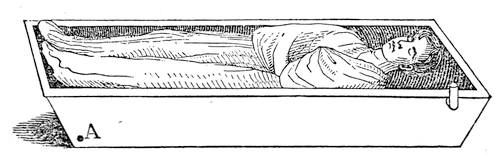
It is called the Water Bed, or Hydrostatic Couch,
and is made at an expense of from twelve to fifteen dollars.
The object of it is to relieve the sufferings of those
who, from extreme emaciation, or from ulcers, or bed
sores, are great sufferers from the pressure of the bed on
these sore places. This kind of bed proves a great relief
from this kind of suffering.
It consists of a wooden box, six feet long, and two feet
and a half wide at the top, and the sides gradually sloping
inward, making it fourteen inches deep. This is lined
with sheet zinc, to make it water tight. Over this is
thrown, and fastened to the edge of the box, a sheet of
thick India rubber, water-proof cloth, large enough for
an entire lining to the inside of the box. The edges
of it are first made to adhere to the upper edge of the
box with spirit varnish, and then a thin strip of board is
nailed on, to fasten it firmly, and make it water tight.
Near the bottom, at A, is a hole and plug, to let off
water; and at B, a tin tube, soldered in the upper part
of the outside, to pour water in. When used, the box
is to be filled half full of water, about blood warmth.
Then a woollen blanket and pillow are laid upon the India
rubber cloth, and the patient laid on them, and he
will float as he would in water, and there will be no
pressure on any part of the body greater than is felt
when the body is in water.
This is important for all who suffer from bed sores, or
sloughing in protracted fevers, from diseases in the hip-joint,
from diseases of the spine, lingering consumption,
and all diseases that compel to a protracted recumbent
position. None but those who have seen, or experienced
the relief and comfort secured to sufferers by this bed,
can conceive of its value. The writer saw the case of a
young man, who was enduring indescribable tortures
with the most dreadful ulcers all over his body, and who
had for several days and nights been unable to sleep,
from extreme suffering. This bed was made for him,
as an experiment, after trying every other mode of relief
in vain. It was placed by his bedside, and the water
poured in, and then his friends raised him with the
greatest care in a blanket, and laid him on it. Instantly
his groans ceased, an expression of relief and delight
stole over his countenance, and exhausted nature sunk
instantly into the most peaceful and protracted slumbers.
And ever after, he was relieved from his former sufferings.
Every hospital, every alms-house, and every village
should have the means of obtaining such a bed for
the many classes of sufferers who would thus find relief,
and it is woman who should interest herself to secure
such a comfort for the sick, who especially are commended
to her benevolent ministries.
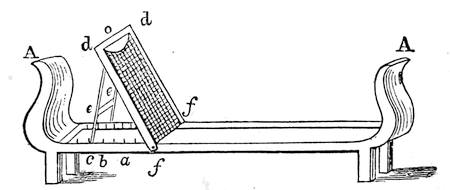
The drawing, AA, is the outline of a sick couch, such
as would prove a great comfort in every family, and at
a small expense. The following are the dimensions:—Length
of seat inside, six feet three inches; breadth,
twenty-eight inches; height of the seat from the floor,
thirteen inches. The swing frame, dd, is three feet long,
and is fastened three feet from the head-board by a very
large pin or screw. The seat should be of sacking, and a
thick hair mattrass, or cushion for a bed or cushion and
be divided into two parts, where the swing frame is
fastened. The frame is fastened by large screws at ff.
The supporter, ee, is fastened by large and strong hinges
to the upper part of the frame, and is moved into the notches
made in the frame of the seat. When in the notch
a, the frame is very low; when in notch b, it is higher;
and when at c, it is as high as is needful to raise the
sick. A piece of sacking is to be fastened over the frame,
leaving it loose, especially at the top, and leaving a space
at o, so as to give room for a pillow, and so that the head
can be thrown a little back. The frame and supporter
must be thick and strong. When not in use for the
sick, the frame can be laid down, and the cushion laid
over it, and then with a frill fastened in front, it makes
a good-looking and most comfortable chamber couch, or
a lolling sofa for a sitting-room.
Such a couch saves much labor to friends and nurses,
because it is so low, so easily moved, and the nurse can
go around it and work on both sides so easily, while the
frame raises the patient with great ease and comfort. It
would be a good plan to engage some carpenter or cabinet-maker,
in every village, to provide such an article to
rent out, and probably it would be in constant demand.
The frame, supporter, hinges, and screws, must be
very strong, or they will break.
Fig. 6 represents a contrivance for securing exercise
in the open air for invalids, which would often prove convenient
and agreeable.
Such an article can be easily made of the broken toy
of a child, called a velocipede, or the back wheels of a
child’s wagon. Nothing but shafts are needed, and a
common rocking-chair, with a foot-board nailed across
the front rocker, on which to rest the feet. The chair
is then slipped along back to the axle of the wheels, so that
the shafts, when raised, are under the seat, and lift it up.
In this way an invalid can be rolled through yards and
gardens with very little effort, and with great comfort
and relief to the imprisoned sufferer, who perhaps can
ride in no other way.
Fig. 6.
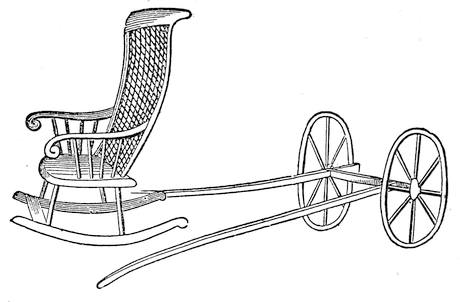
There is no way of relieving the weariness and nervousness
of an invalid more effectually than by rubbing
the limbs and arms with the bare hand of a healthful
person.
Those who believe in animal magnetism would say,
that by this method, the well person imparts a portion
of the magnetism of a healthful body to aid in restoring
the sick. Those who do not believe in it, will say that
it soothes and strengthens the nerves. Either way,
it is a great comfort to a suffering invalid.
It is unhealthful to sleep with a sick person, especially
one who has lung complaints, as the breath and effluvia
from the skin sometimes communicate disease, even
in complaints not contagious. Young children should
not sleep with the aged, because their healthful fluids
will be absorbed.
The art of keeping a good table, consists, not in loading
on a variety at each meal, but rather in securing a
successive variety, a table neatly and tastefully set, and
everything that is on it, cooked in the best manner.
There are some families who provide an abundance
of the most expensive and choice articles, and spare no
expenses in any respect, who yet have everything cooked
in such a miserable way, and a table set in so slovenly
a manner, that a person accustomed to a really
good table, can scarcely taste a morsel with any enjoyment.
On the contrary, there are many tables where the
closest economy is practised, and yet the table-cloth is so
white and smooth, the dishes, silver, glass, and other table
articles so bright, and arranged with such propriety,
the bread so white, light, and sweet, the butter so beautiful,
and every other article of food so well cooked, and
so neatly and tastefully served, that everything seems
good, and pleases both the eye and the palate.
A habit of doing everything in the best manner, is
of unspeakable importance to a housekeeper, and every
woman ought to aim at it, however great the difficulties
she may have to meet. If a young housekeeper commences
with a determination to try to do everything in
the best manner, and perseveres in the effort, meeting
all obstacles with patient cheerfulness, not only the moral,
but the intellectual tone of her mind is elevated by
the attempt. Although she may meet many insuperable
difficulties, and may never reach the standard at
which she aims, the simple effort, persevered in, will
have an elevating influence on her character, while at
the same time she actually will reach a point of excellence
far ahead of those who, discouraged by many obstacles,
give up in despair, and resolve to make no more
efforts, and let things go as they will. The grand distinction
between a noble and an ignoble mind is, that
one will control circumstances; the other yields, and allows
circumstances to control her.
It should be borne in mind, that the constitution of
man demands a variety of food, and that it is just as
cheap to keep on hand a good variety of materials in the
store-closet, so as to make a frequent change, as it is to
buy one or two articles at once, and live on them exclusively,
till every person is tired of them, and then buy
two or three more of another kind.
It is too frequently the case, that families fall into
a very limited round of articles, and continue the same
course from one year to another, when there is a much
greater variety within reach, of articles which are just
as cheap and easily obtained, and yet remain unthought
of and untouched.
A thrifty and generous provider, will see that her
store-closet is furnished with such a variety of articles,
that successive changes can be made, and for a good length
of time. To aid in this, a slight sketch of a well-provided
store-closet will be given, with a description of the
manner in which each article should be stored and kept,
in order to avoid waste and injury. To this will be added,
modes of securing a successive variety, within the
reach of all in moderate circumstances.
It is best to have a store-closet open from a kitchen,
because the kitchen fire keeps the atmosphere dry, and
this prevents the articles stored from moulding, and other
injury from dampness. Yet it must not be kept warm,
as there are many articles which are injured by warmth.
A cool and dry place is indispensable for a store-room,
and a small window over the door, and another opening
out-doors, is a great advantage, by securing coolness,
and a circulation of fresh air.
Flour should be kept in a barrel, with a flour scoop
to dip it, a sieve to sift it, and a pan to hold the sifted
flour, either in the barrel, or close at hand. The barrel
should have a tight cover to keep out mice and vermin.
It is best, when it can be conveniently done,
to find, by trial, a lot of first-rate flour, and then buy a
year’s supply. But this should not be done, unless there
are accommodations for keeping it dry and cool, and
protecting it from vermin.
Unbolted flour should be stored in barrels, and always
be kept on hand, as regularly as fine flour.
Indian meal should be purchased in small quantities,
say fifteen or twenty pounds at a time, and be kept
in a covered tub or keg. When new and sweet, it
should not be scalded, but when not perfectly fresh and
good when used, it is improved by scalding. It must be
kept very cool and dry, and if occasionally stirred, is preserved
more surely from growing sour or musty.
Rye should be bought in small quantities, say forty
or fifty pounds at a time, and be kept in a keg, or half
barrel with a cover.
Buckwheat, Rice, Hominy, and Ground Rice,
must be purchased in small quantities, and kept in covered
kegs, or tubs. Several of these articles are infested
with small black insects, and examination must occasionally
be made for them.
Arrowroot, Tapioca, Sago, Pearl Barley, American
Isinglass, Macaroni, Vermacelli, and Oatmeal,
are all articles which help to make an agreeable variety,
and it is just as cheap to buy a small quantity of each, as
it is to buy a larger quantity of two or three articles.
Eight or ten pounds of each of these articles of food can
be stored in covered jars, or covered wood boxes, and
then they are always at hand to help make a variety.
All of them are very healthful food, and help to form
many delightful dishes for desserts. Some of the most
healthful puddings are those made of rice, tapioca,
sago, and macaroni, while isinglass, or American gelatine,
form elegant articles for desserts, and is also excellent
for the sick.
Sugars should not be bought by the barrel, as the
brown is apt to turn to molasses, and run out on to the
floor. It is best to keep four qualities of sugar on hand.
Refined loaf for tea, crushed sugar for the nicest preserves
and to use with fruit, nice brown sugar for coffee,
and common brown for cooking and more common use.
The loaf can be stored in the papers, on a shelf. The
others should be kept in close covered kegs, or covered
wooden articles made for the purpose.
Butter must be kept in the dryest and coldest place
you can find, in vessels of either stone, earthen, or wood,
and never in tin.
Lard and Drippings must be kept in a dry, cold
place, and should not be salted. Usually the cellar is
the best place for them. Earthen, or stone jars are the
best to store them in.
Salt must be kept in the dryest place that can be
found. Rock salt is the best for table salt. It should
be washed, dried, pounded, sifted, and stored in a glass
jar, and covered close. It is common to find it growing
damp in the salt stands for the table. It should then
be set by the fire to dry, and afterwards be reduced to
fine powder again. Nothing is more disagreeable than
coarse or damp salt on a table.
Vinegar is best made of wine, or cider. Buy a keg,
or half barrel of it, and set it in the cellar, and then keep
a supply for the castors in a junk bottle in the kitchen.
If too strong, it eats the pickles.
Pickles never must be kept in glazed ware, as the
vinegar forms a poisonous compound with the glazing.
Oil must be kept in the cellar. Winter strained
must be got in cold weather, as the summer strained
will not burn except in warm weather. The best of
lard oil is preferred to every other by those who use it.
Some lard oil is very poor.
Molasses, if bought by the barrel, or half barrel,
should be kept in the cellar. Sugar bakers’ is best
for the table, and Porto Rico for cooking. If bought in
small quantities, it should be kept in a demijohn. No
vessel should be corked or bunged, if filled with molasses,
as it will swell, and burst the vessel, or run over.
Hard Soap should be bought by large quantity, and
laid to harden on a shelf, in a very dry place. It is
much more economical to buy hard, than soft soap, as
those who use soft soap are very apt to waste it in using
it, as they cannot do with hard soap.
Starch it is best to buy by a large quantity. It comes
very nicely put up in papers, a pound or two in each
paper, and packed in a box. Starch, which by the single
pound is five cents a pound, if bought by the box, is only
three cents a pound, and this makes a good deal of difference,
in a large family, by the year. The high-priced
starch is cheapest in the end.
Indigo is not always good. When a good lot is
found by trial, it is best to get enough for a year or two,
and store it in a tight tin box.
Coffee it is best to buy by the bag, as it improves by
keeping. Let it hang in the bag, in a dry place, and it
loses its rank smell and taste.
Tea, if bought by the box, is about five cents a pound
cheaper than by small quantities. If well put up in boxes
lined with lead, it keeps perfectly. But put up in
paper, it soon loses its flavor. It therefore should, if in
small quantities, be put in glass, or tin, and shut tight.
Saleratus should be bought in small quantities, then
powdered, sifted, and kept tight corked in a large mouth
glass bottle.
It grows damp if exposed to the air, and then cannot
be used properly.
Raisins should not be bought in large quantities, as
they are injured by time. It is best to buy the small
boxes.
Currants for cake should be prepared as directed for
cake, and set by for use in a jar.
Lemon and Orange Peel should be dried, pounded,
and set up in corked glass jars.
Nutmeg, Cinnamon, Cloves, Mace, and Allspice,
should be pounded fine, and corked tight in small glass
bottles with mouths large enough for a junk bottle cork,
and then put in a tight tin box, made for the purpose.
Or they can be put in small tin boxes with tight covers.
Essences are as good as spices.
Sweet Herbs should be dried, and the stalks thrown
away, and the rest be kept in corked large mouth bottles,
or small tin boxes.
Cream Tartar, Citric and Tartaric Acids, Bicarbonate
of Soda, and Essences, should be kept in corked
glass jars. Sal volatile must be kept in a large-mouth
bottle, with a ground glass stopper to make it air-tight.
Use cold water in dissolving it. It must be powdered.
Preserves and Jellies should be kept in glass or stone,
in a cool, dry place, well sealed, or tied with bladder covers.
If properly made, and thus put up, they never will
ferment. If it is difficult to find a cool, dry place, pack
the jars in a box, and fill the interstices with sand, very
thoroughly dried. It is best to put jellies in tumblers,
or small glass jars, so as to open only a small quantity
at a time.
The most easy way of keeping Hams perfectly is to
wrap and tie them in paper, and pack them in boxes or
barrels with ashes. The ashes must fill all interstices,
but must not touch the hams, as it absorbs the fat. It
is much less labor, and quite as certain a mode as the
one previously mentioned. It keeps them sweet, and
protects from all kinds of insects.
After smoked beef, or ham, are cut, hang them in a
coarse linen bag in the cellar, and tie it up to keep out
flies.
Keep Cheese in a cool, dry place, and after it is cut,
wrap it in a linen cloth, and keep it in a tight tin box.
Keep Bread in a tin covered box, and it will keep
fresh and good longer than if left exposed to the air.
Cake also should be kept in a tight tin box. Tin
boxes made with covers like trunks, with handles at the
ends, are best for bread and cake.
Smoked herring keep in the cellar.
Codfish is improved by changing it, once in a while,
back and forth from garret to cellar. Some dislike to
have it in the house anywhere.
All salted provision must be watched, and kept under
the brine. When the brine looks bloody, or smells
badly, it must be scalded, and more salt put to it, and
poured over the meat.
Salt fish barrels must not be kept near other food, as
they impart a fishy smell and taste to it.
Cabbages and Turnips in the cellar often impart
a bad smell to a house. All decayed vegetable matter
should be kept out of a cellar, as it creates a miasma,
that sometimes causes the most fatal diseases. Therefore,
always take care of the vegetable bins, and have all
that are decaying removed.
A cellar should be whitewashed often, to keep it sweet
and clean.
By a little skill and calculation, a housekeeper may
contrive to keep a constant change of agreeable varieties
on her table, and that, too, without violating the
rules either of health or economy. Some suggestions
will be offered to aid in this object.
In the first place, much can be effected by keeping
on hand a good supply of the various bread-stuffs.
Good raised bread, of fine flour, must be the grand
staple, but this may, every day, be accompanied with
varieties of bread made of unbolted flour, or rye and Indian,
or Indian alone, or potato and apple bread, or
rice bread, or the various biscuits and rusk. It will be
found that these are all more acceptable, if there are occasional
changes, than if any one of them is continued
a long time.
All the dough of these different kinds of bread, when
light, can, with very little trouble, be made into drop
cakes, or griddle cakes for breakfast, or tea, by adding
some milk and eggs, and in some cases a little melted
lard.
Very fine common cake is also easily made, at every
baking, by taking some of the dough of bread and
working in sugar, butter, and eggs, by the receipt given
for Bread Cake and Child’s Feather Cake. These can
be made more or less sweet and rich at pleasure.
In the next place, a good supply of fruit in the garden,
and stored in the cellar, enables a housekeeper to
keep up a constant variety. The directions given under
the head of Modes of Preparing Apples for the Tea
Table, will be found very useful for this purpose, while
those for preparing Rice and Dry Bread are equally
serviceable in helping out a cheap and convenient
variety. There are some cheap dishes at the end also,
which are very good, and easily made.
The directions for preparing Hashes, also, are recommended
as a mode of economizing, that is very acceptable
when properly done. The little relishes obtained
in summer from the garden, are very serviceable
in securing varieties. Among these may be mentioned
cucumbers, radishes, cabbage sprouts, Jerusalem
artichokes, and tomatoes, all of which are very fine
eaten with salt and vinegar.
Mush, hominy, tapioca, and rice cooked, and then,
when cold, fried on a griddle, are great favorites. If
salt pork rinds are used to grease the griddle, there will
be so little fat used, that no injury to the most delicate
stomachs can result from this mode of cooking.
In winter, the breakfast-table and tea-table can be
supplied by a most inviting variety of muffins, griddle
cakes, drop cakes, and waffles made of rice, corn meal,
and unbolted flour, all of which are very healthful and
very agreeable to the palate.
One mode of securing a good variety, in those months
in spring when fruits and vegetables fail, is by a
wise providence in drying and preserving fruits and
vegetables. The following directions will aid in this
particular.
Blackberries, whortleberries, currants, raspberries,
peaches, plums, apples, pears, and quinces, can all be
preserved by drying them in the sun, and then storing
them in bags in a cool, dry place.
Green currants, and green gooseberries, can be preserved
thus. Gather them when perfectly dry, put
them into very dry junk bottles, free from stems and
eyes, set the bottles uncorked into a kettle of cold water,
and then make the water boil. Then cork the bottles (the
fruit should come up to the cork), and seal them with
bee’s wax and rosin. Store them in a dry, cool place,
where they will not freeze. Everything depends on
success in excluding air and water. Putting them in
boxes, and filling the interstices with dry sand, is the
surest mode of storing the bottles.
There is a receipt for Preserving Fruit in Water,
that has found its way into many receipt books, which
seems to the writer to be a dangerous and useless one,
and never should be tried.
It directs that fruit be put in bottles, then water poured
in, and then the bottles corked tight, and the cork
tied. Then the bottles are to be set in a kettle of water,
which is to be heated till it boils. Of course this
must burst the bottles, or throw out the corks.
It is probable that the design of some plan of this sort
was to exclude all air from the fruit. This could be
done by setting the bottles filled with fruit and water,
uncorked, in a kettle of water, and making the water
boil. Then cork the bottles and seal them, and the water
will remain, but all air will be excluded. The writer
never has seen a person who has tried this method,
and perhaps it may be one in which fruit can be preserved.
Peach Leather is much relished by invalids, and is
prepared thus. Squeeze out the pulp of very ripe
peaches, and spread it half an inch thick on plates or
shingles, and let it dry till quite hard and tough. Then
roll it up in layers, with clean paper between.
Tomato Leather can be made in the same way.
But the following is the best mode of preserving tomatoes.
Pour boiling water on to the ripe tomatoes, and peel
them. Boil them till reduced to half the original quantity,
throwing in, at first, a tea-cup of sugar and a large
spoonful of salt for every gallon. When reduced to one
half the quantity, spread it on flat dishes half an inch
thick, and dry it eight or ten days in the sun, and air.
Then put it in layers, with paper between. In preparing
it for table, stew it slowly in a good deal of
water, adding bread crumbs and seasoning.
Some persons dry them in a brick oven instead of the
sun. A quicker, but not so nice a way, is simply to cut
them in two without peeling, and dry them in the oven.
Tomato Figs are prepared thus:—Scald and peel
them, and then boil them in one-third the weight of sugar,
till they are penetrated by it. Then flatten and
dry them in the sun, occasionally turning them and
sprinkling with sugar. When dry, pack them in layers,
with sugar sprinkled between.
Green Corn can be preserved by simply turning
back the husk, all but the last thin layer, and then
hanging it in the sun, or a very warm room. When it
is to be used, boil it till soft, and then cut it off the cob
and mix it with butter, and add, if you like, dried Lima
beans cooked soft, in another vessel. The summer sweet
corn is the proper kind to dry. Lima beans can be
dried in the sun when young and tender. They are
good to bake, when dried after they are ripe.
Another mode is to parboil sweet corn, cut it from the
cobs, and dry it in the sun. Then store it in a dry, cool
place, in a bag.
Another way is to take off all the husks but the thin
one next the corn; tie this over the corn tight, and pack
it in salt.
Try each of these ways, and make succotash with
dried Lima beans, adding a little cream to the broth. If
done right, it is excellent in winter. In cutting corn
from cobs, in all cases take care not to cut off any cob,
as it gives a bad taste.
Peas, also, are good to dry, and make a fine dish
thus. Take six or eight pounds of corned beef, put it
in a large pot and fill it with water, and put in two quarts
of dried peas. Let them boil till soft, and then add the
sweet herb seasoning, or take it up without any other
seasoning than a little pepper and the salt of the meat.
Beef, cooked thus, is excellent when cold, and the
pea soup, thus made, is highly relished. No dish is
cheaper, or more easily prepared.
Pumpkins and squashes can be peeled and cut in
strips and dried in the sun.
The stalks of rhubarb or the pie plant can be slivered
fine and dried in the sun for winter use.
A housekeeper who will take pains to have these
things done in the proper season, and well stored, will
always keep an inviting table, in those months when
others so much complain that they can find no variety.
It is a good plan for a housekeeper the first day, or
week of every month, to make a calculation of her bill
of fare for that month, going over such a receipt-book
as this, and ascertaining how many of the varieties offered
she can secure. At the same time she can be
laying in stores of articles for future use. System in
this matter is of essential service.
Few housekeepers are aware of their responsibility
in reference to the bread furnished for their family. As
this is the principal article of food, there is no one thing
on which the health of a family, especially of young
children, is more dependant.
Baker’s bread is often made of musty, sour, or other
bad flour, which is made to look light, and the bad
taste removed by unhealthy drugs. Of course, to the
evil of unhealthy flour, is added unhealthy drugs, and
there is no mode of discovering the imposition.
The only safe mode is, to have all bread made in the
family, and to take all needful care that it shall uniformly
be good.
Bread made of salt, or milk risings, is good only the
first day, and to those accustomed to good yeast bread,
it is offensive to the smell, and not acceptable to the
palate.
Bread made of sour milk, or buttermilk and an alkali,
or made by mixing cream tartar in the flour, and an
alkali in the wetting, is good as an occasional resort, in
emergencies, when good yeast cannot be preserved, or
when there is not time to wait for yeast rising.
But, as the ordinary bread for continued daily use,
it is expensive, and not healthful or good like yeast
bread. Some persons suffer from sore mouths and disordered
stomachs, in consequence of eating it. Sometimes
this is owing to the imperfect mixture of the materials.
When the cream tartar is not very thoroughly
mixed with the flour, or when the alkali is not properly
dissolved and thoroughly mixed, or when there is
too much of either, the skin of the mouth and stomach
are affected by the bread.
The only kind of bread which is always good for the
health, and always acceptable to every palate, is sweet,
well-raised, home-made yeast bread. The best kind
of home-made yeast bread is an article of luxury to be
found upon very few tables, and those who enjoy this
comfort, know that there is no food upon earth, which
is so good, or the loss of which is so much regretted.
In order to secure such bread, these three things are
indispensable, viz.: good flour, good yeast, and good
care.
In order to secure good flour, it is best to try it by
tasting it, and you ordinarily can detect sourness or
must. Buy a small quantity, and then, if it is found to
be very superior, and it can be done conveniently, it is
well to provide enough of it to last till the next crop of
wheat affords new flour, when another supply for a
year can be secured. Flour stored in barrels needs no
other care than putting it in a cool, dry place, where it
is well protected from rats and cockroaches. A tight
covered box made of thick plank, large enough to hold
several barrels, with shelves to hold smaller supplies of
other bread-stuffs, with a door in one side shutting very
tight, is a perfect protection from rats, mice, and
cockroaches.
Good flour has a yellowish tinge, and when pressed
tight in the hand, retains the creases of the skin impressed
on it. Poor flour is not thus adhesive; it can
be blown about readily, and sometimes has a dingy
look, as if ashes were mixed with it.
When good flour is found, notice the brand, and
seek the same next time. It is sometimes the case,
however, that bad flour is passed off, by putting on the
brands of persons who have gained a name as makers
of superior flour. The only sure way is to try a small
sample, and then get a larger supply, if it is good, from
the same stock.
Grown wheat makes dough that is runny, and cannot
be well moulded, or make good bread. This can
be discovered only by trial. Smutty wheat makes
flour that is very unhealthful.
Flour always should be sifted before using it, to restore
the lightness destroyed by packing, as well as to
remove impurities. Bread is also more sure to be light,
if the flour is heated before wetting. This can be done,
by setting the kneading trough aslant before the fire,
stirring it a little as it is warming. When bread proves to
be bad, examine the yeast, and see also whether the oven
bakes properly. If both are as they should be, and the
bread is still poor, then the fault is in the flour, and it
should be sent back and another supply obtained.
And in buying flour, this liberty should always be secured,
even if a higher price is the condition. No economy
is so false as to try to save by means of bad bread.
Medicine and doctors’ bills soon show the folly of it.
Good yeast is as indispensable to good bread as
good flour. Of the receipts given in this book, the one
which will keep a month is the best. The one which
is made with fewer materials will not keep so well, but
is more easily made.
In hot weather, when it is difficult to keep yeast, the
hard yeast will be a great convenience. Some housekeepers
who have tried both, prefer the flour hard yeast
to that which is made with Indian meal, as it does not
turn sour, as Indian does. Home-brewed yeast must
be used for hard yeast, and not distillery or brewer’s.
Yeast, when it is good, is all in a foam, or else has large
beads on the surface, and its smell is brisk and pungent,
but not sour. When poor, it sometimes smells sour,
sometimes looks watery, and the sediment sinks to the
bottom, and it has no froth or beads. Sometimes,
when yeast does not look very good, it is improved by
adding a tea-cup, or so, of flour, and two or three great
spoonfuls of molasses, and setting it in a warm place to
rise. Yeast must be kept in stone, or glass, with a
tight cork, and the thing in which it is kept should
often be scalded, and then warm water with a half teaspoonful
of saleratus be put in it, to stand a while.
Then rinse it with cold water. Sour yeast cannot be
made good by saleratus.
The last grand essential to good bread is good care.
Unless the cook can be fully trusted, the mistress of a
family must take this care upon herself. She must,
if needful, stand by and see that the bread is wet right,
that the yeast is good, that the bread is put where it is
warm enough, that it does not rise too long, so as to
lose its sweetness (which is often the case before it begins
to turn sour), that it is moulded aright, that the
oven is at the right heat, and that it is taken out at the
right time, and then that it is put in the right place,
and not set flat on to a greasy table, or painted shelf,
to imbibe a bad taste.
Perhaps it may be thought that all this is a great
drudgery, but it is worse drudgery to have sickly children,
and a peevish husband, made so by having all the
nerves of their stomachs rasped with sour, or heavy bread.
A woman should be ashamed to have poor bread, far
more so, than to speak bad grammar, or to have a dress
out of the fashion. It is true, that, by accident, the
best of housekeepers will now and then have poor bread,
but then it is an accident, and one that rarely happens.
When it is very frequently the case that a housekeeper
has poor bread, she may set herself down as a slack
baked and negligent housekeeper.
It is very desirable that every family should have a
constant supply of bread made of unbolted flour, or of
rye and Indian. Most persons like to eat of it occasionally,
and it tends to promote health. Warm cakes also,
made of unbolted flour, are very excellent, and serviceable
to health. The receipts for these articles
in this work are first-rate. Warm raised bread cakes,
of fine wheat, are not so healthy for breakfast, as
those made of unbolted flour, Indian meal, rice, or
tapioca. Griddle cakes, muffins, and waffles, made
of these last articles, are more healthful than those made
of fine wheat. If eaten at the right temperature (not
above blood heat), and with but little butter, they are
safe and harmless. Unbolted flour is good in almost
any receipt in which fine flour is to be used, and many
very much prefer it for all kinds of warm cakes. Brown
bread, when light, makes good drop cakes, or good griddle
cakes, by adding a little water or milk, and some
eggs, and in some cases, a spoonful or two of molasses.
Many cases are on record, of great changes for the better,
in the health of individuals and communities, by
the habitual use of food made of unbolted flour.
The style in which bread is prepared for the table, is
a matter to be carefully attended to. In moulding up
loaves and small cakes, do not leave lumps and loose
flour adhering to the outside, but work them in thoroughly,
so as to have the cake look fair and smooth. Wipe
off flour from the outside before carrying to the table.
Buttered pans are better than floured ones, because the
cakes cleave off cleaner. When soda and saleratus are
used, work it in thoroughly, or you will have those yellow
spots and streaks, which look so disgusting, and show
a slovenly negligence.
In the receipts for making bread, no particular direction
is given in regard to the time bread should stand
after it is moulded and put in pans, because here is the
point where observation and discretion are so indispensable,
and rules are unavailing without. In hot weather,
when the yeast is very good, and the bread very light, it
must not stand over fifteen minutes after it is moulded,
before setting in. If it is cold weather, and the yeast is
less active, or the bread not perfectly raised, it may sometimes
stand an hour in the pans without injury.
When it is risen in the pans so as to crack, it is ready
for the oven, and if it stands after this it loses sweetness,
and then turns sour. A great deal of bread is spoiled by
standing too long after it is put in the pans. The only
way to prevent this is for the housekeeper to ascertain,
by experiment, how soon her yeast ordinarily raises
bread to the right point, so as to make that full lightness
which does not destroy the sweetness of the flour, and
yet is complete. When this is secured, the bread should
not stand more than fifteen minutes after moulding, unless
it is very cold weather. Those who trust entirely
to raising the bread after it is put into the pans, are much
less likely to have the best kind of bread, and far more
risk is run than in the way here given.
In summer, if the milk is not new, it should be scalded,
or the bread will turn sour by keeping. Bread is
never as good which has turned sour, and been sweetened
with saleratus, as if it had risen only just enough. In
using saleratus, take a teaspoonful to each quart of wetting
used; or, which is the same thing, a teaspoonful to
four quarts of flour.
The proportion of yeast is about a tablespoonful of
brewer’s or distiller’s yeast for every quart of wetting, or
twice as much home-brewed yeast. In warm weather,
pour the wetting boiling hot into the flour, and the bread
keeps better. But be careful not to kill the yeast by putting
it in before the mixture is sufficiently cooled. About
blood warmth is the right temperature.
The eastern brown bread rises faster than the wheat
bread, and in hot weather cannot be made over night;
and if made with other bread, must be set to rise in a
cool place.
It is always best to keep bread several hours before
eating, until it can be cut without making it clammy.
Biscuits, and small cakes of bread, are best baked in the
morning to use for tea, and in the evening for breakfast.
When cake is to be made of bread dough, it ought to be
wet up with milk.
Most of the rules which have been given in other
books for making cream tartar bread and cakes allow
too much of the acid and alkali, and this affects the
health.
Three pints of flour to one teaspoonful of soda and
two of cream tartar is about right. Domestics are often
careless in getting right proportions, and thus health is
injured. It is probable that this can be remedied by getting
an apothecary to combine the two powders in the
right proportions when very dry, and keeping them in
a glass bottle, with a ground glass stopper, so as to be
air-tight. The dampness of the air would make them
combine, and neutralize them. There are yeast powders
for sale of this kind. The way to use them is
first to mix them thoroughly in the flour, and then put
in the wetting.
In regard to yeast, the distillery rises fastest, the brewer’s
nearly as fast, and the home-brewed slowest of all.
Sometimes distillery yeast will raise bread in an hour.
Every housekeeper must learn by trial the time necessary
to raise bread, and by this calculate the time to put
her oven heating.
For large loaves of bread or cake, the oven must be
heated with hard wood, so as to soak thoroughly. For
smaller things lighter wood is as good, and more economical.
After a housekeeper has tried her oven, her
yeast, and her oven wood, she can make out very minute
directions for her domestics. But with poor domestics
she ordinarily will need to persevere in superintending
this matter herself, if she would always have good
bread.
The following directions for a dinner-party are designed
for a young and inexperienced housekeeper, in
moderate circumstances, who receives visiters at her table
from the most wealthy circles.
They are not intended for what would be called a
stylish dinner-party, but what in New York, Philadelphia,
and Boston, in the most respectable society, would
be called a plain, substantial dinner, and as complete
and extensive as any young housekeeper, with the
ordinary supply of domestics, ought to attempt anywhere.
Anything much more elaborate than this,
usually demands the services of a professed cook. The
details will be given with great minuteness, that a novice
may know exactly what to do in every particular.
It is generally the case, that, at dinner-parties for gentlemen,
no ladies are present but those who are members
of the family. The gentleman of the house invites
his friends the day previous, and then gives notice
to his wife who are to come, and consults with her as to
the articles to be provided, which of course he aids in
purchasing.
The housekeeper then makes a list of all the articles
to be used, either for table furniture or cooking, and then
examines her cupboard, store-closet, and cellar, to see if
everything is at hand and in order. All the glass and
silver to be used is put in readiness, and the castors, salts,
and every thing of the kind arranged properly. In order
to be more definite, the exact dishes to be provided will
be supposed to be these:
Soup. Fish. A boiled ham. A boiled turkey, with
oyster sauce. Three roasted ducks, and a dish of scolloped
oysters. Potatoes, Parsnips, Turnips, and Celery.
For dessert, Pudding, Pastry, Fruit, and Coffee.
This will make a dinner for about ten or twelve persons.
The pastry should be baked the day before, and
the soup boiled down.
In the morning of the day for the dinner-party, every
article should be on hand from market, and the cook
have extra help, so as to get breakfast and the dishes
out of the way early.
Then, the first thing, let her stuff and truss the turkey
and ducks, and set them away to use when the
time comes. Be sure that they are trussed so that the
legs and wings will be tight to the body, and not come
sprawling on to the table.
Suppose the dinner hour be three o’clock, as this is
the earliest hour at which such a dinner could be comfortably
prepared.
At nine o’clock, let the ham be washed, and put to
boil. Then let the vegetables be prepared, ready for
cooking. Next prepare the pudding. The pastry ought
to be baked the day before. If not, it should be done
very early in the morning, and be out of the way.
The pudding should be one of those put in the list of
rich puddings, which does not require long baking or
boiling. The receipt will be the guide as to time
for cooking it. Next, prepare the oysters. One large
cannister (or three pints) will be needed for the dish of
scolloped oysters, and a small cannister (or a pint) will
be needed for the sauce for the turkey. This last is
simply drawn butter, with the oysters put in it, and simmered
a few minutes. Be sure and follow the receipt
for drawn butter exactly, as cooks are very apt to spoil
this kind of sauce.
Put the turkey to boil at one, if it is tender, as it
ought to be, and sooner, if it is not. Put the ducks to
roast at two. Ducks are best cooked rare, but the turkey
must be boiled through entirely, so that all parts
look the same color when carved.
The gravy for the ducks, and the drawn butter, must
be prepared half an hour before taking up dinner. The
fish must be put to boil in a fish kettle. The time
depends on the size.
The soup should be boiled down the day before. Let
it be, for example, the receipt named Macaroni Soup.
In this case, any convenient time before dinner-time,
put the macaroni to boil in a sauce-pan by itself, and
when cooked enough, set it aside. Then, just before
dinner is to be served, pour the cold soup into the kettle,
add the seasoning and macaroni, and give it such a heat
as just boils it for a minute or two, and then it is ready
to serve.
The vegetables should be put to boil at such times as
will have them cooked just right at the dinner hour,
and this the housekeeper must calculate, according to
their size and age.
Unless there is an experienced cook, who can be
trusted with everything, the lady of the house must
superintend herself in the kitchen, until it is time for
her to dress; and as the company will not arrive till the
hour appointed, she can, by arranging her dress, all but
the finish, remain until it is nearly time to send up the
dinner.
The table should be set early in the forenoon, by the
waiter, under the direction of the lady of the house, and
in the manner exhibited in Fig. 7.
The table rug must first be laid exactly square with
the room, and the tables also set exactly parallel with
the sides of the room. If the tables are handsome ones,
put on two white table-cloths, one above the other. If
the tables are not handsome, cover them with a colored
table-cloth, and put two white ones over.
Then set the castors in the exact centre of the table.
Some prefer to have them on a side-table, and the waiter
carry them around, but the table looks better to have
them put in the centre. If they are put on the side-table,
the celery stand may be placed in the centre of
the table.
Next place the plates and knives as in Fig. 7, with a
napkin and tumbler at the right of each plate, as in the
drawing. If it is cold weather, set the plates to warm,
and leave them till wanted. Set the salt stands at the
four corners, with two large spoons crossed by each, as
in the drawing.
Then place table-mats in the places where the dishes
are to be set. The host is to be seated at one end,
and the hostess at the other, and at their plates put two
knives and two forks. Put a carving knife and fork,
and carver stand, at each place where a dish is to be
carved. Put the jelly and pickles at diagonal corners,
as marked on the drawing. If wine is to be used, put
two wine-glasses by each tumbler. Just before dinner
is to be served, a bit of bread, cut thick, is to be laid with
a fork on each napkin.
Then prepare the side-table thus:
As the party, including host and hostess, will be
twelve, there must be one dozen soup plates, and one dozen
silver spoons. Then there must be two dozen large
knives, and three dozen large plates, besides those on
the table. This is to allow one plate for fish, and two
for two changes of meat for each guest. Some would
provide more. Then, there must be three dozen dessert
plates, and two dozen dessert knives and forks. One
dozen saucers, and one dozen dessert spoons. One or
two extra of each kind, and three or four extra napkins,
should be added for emergencies. (At a side stand,
or closet, should be placed, at dinner-time, a wash dish
of hot water, and two or three wiping towels.)
On the side-table, also, is to be placed all articles to
be used in helping the dessert; and unless there is
a convenient closet for the purpose, the dessert itself
must be set there, and covered with napkins.
All the dishes and plates to be used, except those for
desserts and soups, must, in cold weather, be set to
warm by the waiter. If coffee is to be served at the
dinner-table, the furniture for this must be put on the
side-table, or in an adjacent room, or closet.
Such a dinner as this cannot usually be prepared and
served easily, without two to cook and serve in the
kitchen, and two waiters in the dining-room. One
waiter will answer, if he is experienced and expert in
such matters.
When the hour for dinner arrives, let the cook first
take up the soup and fish. The soup and soup plates
are to be set by the hostess, and the spoons laid near.
Potatoes and drawn butter, or fish sauce, are to be sent
up with fish.
The fish is to be set before the host, and the fish
knife and sauce placed by it, and then the waiter is to
inform the lady of the house that dinner is ready. She
rises, and informs her husband, or the guests, that dinner
is ready, and then the gentleman for whom the
party is made, or some other one of the invited guests,
conducts the lady to the table, and takes his seat at the
first plate at her right hand. She then helps the soup,
beginning at the right, and passing it around in order,
without inquiring whether each one wishes it. If any
one prefers fish, he passes the soup to the next. Meantime
the host either helps the fish to all who wish it, or
leaves it covered till the soup is removed, and the plates
changed. The plates for fish are set on, around the
table, and the soup plates are set on to them, while soup
is served.
While soup and fish are served above, the cook below
proceeds thus:—The ham can be taken up some
time before dinner, prepared for the table, and set aside,
covered, as it is not injured by standing. Of course this
is done at any convenient time. The turkey and ducks
may first be taken up, prepared for table, and then covered,
and set where they will be kept warm. Then the
gravies and drawn butter are to be put in the gravy
boats. The vegetables must be taken up the last thing,
and the potatoes last of all, as the excellence of all depends
on their being served hot, especially potatoes.
Some would prepare a dish of mashed potatoes, but this
increases the complexity of the business, which should,
as much as possible, be avoided.
After soup and fish, and the plates are removed by
the waiters above, and clean plates put around, wine or
conversation will fill up the time, while the meats are
brought on, which are to be placed on the table, covered,
and in the order marked in the drawing, Fig. 7.
When all are prepared, the host gives a sign to the
waiters, and the covers are all to be removed, and so
adroitly that no steam be spilt on the table-cloth or
guests. To do this, the covers must be first inverted,
holding them directly over the dishes they cover, and
this the hostess must teach the waiter to do beforehand,
if need be. He is to be taught, also, to offer each article
to guests on their left side, to observe when guests have
done eating, and then to change their plate, knife, and
fork, and never to speak except to answer questions, or
to offer the articles he serves.
The host carves the dish before him. The hostess
helps the dish opposite to her, and the gentlemen guests
carve the dishes opposite to them. As soon as ready to
help, the lady asks the gentleman at her right to what
he will be helped, and never makes excuses for, or
praises any particular dish. The host commences at
his right hand, and does the same, till all are helped.
Every person begins to eat as soon as helped. The
waiters are to observe if bread, water, or anything is
wanting to any guest, and offer a supply. The hostess
should, if possible, be at ease, so as to converse, and if
she has occasion to direct the waiters (which, by previous
instructions, should be avoided), she should do it
as quietly and easily as possible. After all the guests
are helped, the host helps the hostess, and then himself.
If wine is used, it is served by the host immediately
after soup and fish, and any other times during the
dinner he chooses. If the lady of the house is asked to
drink wine, it is deemed uncourteous to refuse. She is
expected to have a little poured into her glass, and raise
it to her lips, looking at and slightly bowing to the
guest who makes the request, and as soon as he has filled
his glass. Whenever any other makes the same
request, a very little wine is to be poured into her glass,
as the ceremony is incomplete without this.
After any guest has finished eating, the waiter is
to change his plate, knife, and fork, and the host or
hostess asks to what he will be helped.
Soon after all the guests are done eating meats, the
hostess directs the waiter, and every article is removed
from the table, and the upper table-cloth taken off.
Then the dessert knives, forks, and plates are set around,
and the dessert is placed on the table. The pudding is
to be set on a mat, before the hostess, and the dish of
cheese before the host, and the pastry arranged in some
regular order on the table, with knives and forks to
help. These are divided and distributed by the host
and hostess, assisted by the guests.
When these are finished, everything is removed again,
and the other table-cloth taken off, leaving the bare table,
or the colored cloth. Then the fruit is set on.
After fruit, the coffee is brought to the table, or the
company retire to the drawing-room, and take their
coffee there.
Such a dinner-party as the above, may be got up
and carried through comfortably by a housekeeper, if
she is provided with an experienced cook and well-trained
waiter. But without these, it is absolute
cruelty for a husband to urge, or even to allow his wife
to go through all the toil, anxiety, and effort needful for
such an affair.
In all cases, it would be more consistent with the
laws of health, and thus with the laws of God, to have
a dinner including far less variety, and it is hoped that
as true Christianity and true refinement advance, that
the reform in regard to eating will advance, like the
temperance reform in regard to drinking.
When men become so refined and cultivated, that
they can supply wit and good sense, instead of the
overflows induced by the excitement of wine, diluted by
the stupidity resulting from excess in eating, a housekeeper
will find the giving of a dinner-party a very different
matter from what it ordinarily is found to be.
As dining parties are often conducted, the number, and
variety, and character of the dishes offered, tempt to an
excess, which overloads the stomach, and thus stupifies
the brain; so that all the wit and brilliancy that is obtained,
is the simple product of vinous fermentation.
In one respect, fashion has aided to relieve a housekeeper
of much care in providing evening entertainments.
It is now fashionable to spread a table for
evening parties, and not to serve tea and coffee, as was
formerly done. As this is the easiest, and most rational
way of entertaining evening company, no other
method will be so minutely described.
If a lady designs to invite from forty to sixty friends
to pass the evening, or even to have a much larger company
invited, the following would be called a plain but
genteel arrangement, for company in New York, Philadelphia,
or any of our large cities.
Set a long table in the dining-room, and cover it with
a handsome damask cloth. Set some high article containing
flowers, or some ornamental article, in the centre.
Set Champagne glasses with flowers at each corner.
Set loaves of cake at regular distances, and dispose
in some regular order about the table, preserves,
jellies, lemonade, and any other articles that may be
selected from the abundant variety offered in the collection
of Receipts for Evening Parties in this book.
Where a very large company is to be collected, and a
larger treat is thought to be required, then a long table
is set in the centre of the room, as above, and on it are
placed cakes, pastry, jellies, and confectionary. Then
smaller tables are set each side of a mantle, or in corners,
one of which is furnished with sandwiches, oysters,
salad, celery, and wine, and the other with coffee, chocolate,
and lemonade. Sometimes all are placed on one
long table, and in this case, cakes, jellies, and confectionary
are put in the centre, coffee and lemonade at
one end, and oysters, sandwiches, celery, and wines at
the other. A great deal of taste may be displayed in
preparing and arranging such a table.
As it is often the case, that the old mode of serving
tea and coffee will be resorted to, one modification is
proposed, which decreases the labour and anxiety to the
housekeeper, and increases the enjoyment of the company.
It is this. Set a table in one of the parlors, and
cover it with a damask cloth. Let the tea and coffee
be served at this table, the lady of the house presiding.
Then let the gentlemen wait upon the ladies around
the room, and then help themselves. This is particularly
convenient when it is difficult to get good waiters.
Most of the articles used for evening parties (with
the exception of rich cakes, wine, and high-seasoned
chicken salad) are not unhealthful, if taken moderately.
When these parties break up at seasonable hours,
they may prove one of the most rational and harmless
modes of securing social enjoyment; but when connected
with highly exciting amusements, and late hours,
they are sure to wear upon the constitution and health,
and rational and conscientious persons, for these and
other reasons, will avoid them.
To a person accustomed to a good table, the manner
in which the table is set, and the mode in which
food is prepared and set on, has a great influence, not
only on the eye, but the appetite. A housekeeper ought,
therefore, to attend carefully to these particulars.
The table-cloth should always be white, and well
washed and ironed. When taken from the table, it
should be folded in the ironed creases, and some heavy
article laid on it. A heavy bit of plank, smoothed and
kept for the purpose, is useful. By this method, the
table-cloth looks tidy much longer than when it is less
carefully laid aside.
Where table napkins are used, care should be taken
to keep the same one to each person, and in laying
them aside, they should be folded so as to hide the soiled
places, and laid under pressure.
The table-cloth should always be put on square, and
right side upward. The articles of furniture should be
placed as exhibited in figures 7 and 8.
The bread for breakfast and tea should be cut in
even, regular slices, not over a fourth of an inch thick,
and all crumbs removed from the bread plate. They
should be piled in a regular form, and if the slices are
large, they should be divided.
The butter should be cooled in cold water, if not already
hard, and then cut into a smooth and regular
form, and a butter knife be laid by the plate, to be used
for no other purpose but to help the butter.
Small mats, or cup plates, should be placed at each
plate, to receive the tea-cup, when it would otherwise be
set upon the table-cloth and stain it.
Fig. 7.
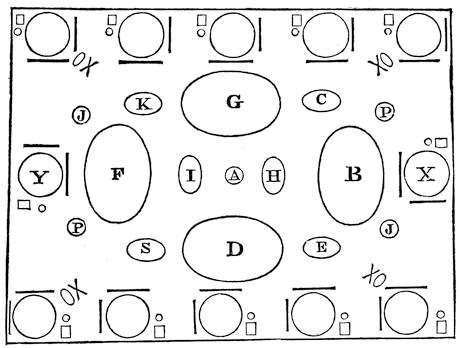
| A, Castors. |
F, Scolloped Oysters. |
K, Parsnips. |
| B, Boiled Turkey. |
G, Boiled Ham. |
PP, Pickles. |
| C, Oyster Sauce. |
H, Potatoes. |
JJ, Jelly. |
| D, Roasted Ducks. |
I, Turnips. |
X, Host. |
| E, Gravy for Ducks. |
S, Celery. |
Y, Hostess. |
Fig. 8.
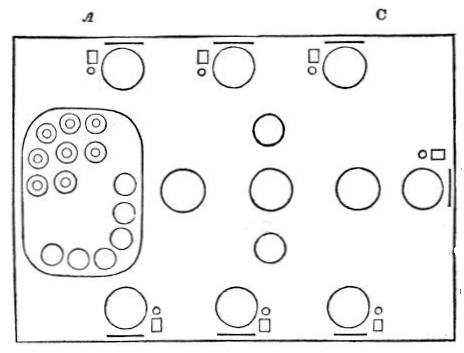
All the flour should be wiped from small cakes, and
the crumbs be kept from the bread plate.
In preparing dishes for the dinner-table, all water
should be carefully drained from vegetables, and the
edges of the platters and dishes should be made perfectly
clean and neat.
All soiled spots should be removed from the outside of
pitchers, gravy boats, and every article used on the table;
the handles of the knives and forks must be clean,
and the knives bright and sharp.
In winter, the plates, and all the dishes used, both for
meat and vegetables, should be set to the fire to warm,
when the table is being set, as cold plates and dishes
cool the vegetables, gravy, and meats, which by many
is deemed a great injury.
Cucumbers, when prepared for table, should be laid
in cold water for an hour or two to cool, and then be
peeled and cut into fresh cold water. Then they should
be drained, and brought to the table, and seasoned the
last thing.
The water should be drained thoroughly from all
greens and salads.
There are certain articles which are usually set on
together, because it is the fashion, or because they are
suited to each other.
Thus with strong-flavored meats, like mutton, goose,
and duck, it is customary to serve the strong-flavored
vegetables, such as onions and turnips. Thus, turnips
are put in mutton broth, and served with mutton, and
onions are used to stuff geese and ducks. But onions
are usually banished from the table and from cooking,
on account of the disagreeable flavor they impart to the
atmosphere and breath.
Boiled Poultry should be accompanied with boiled
ham, or tongue.
Boiled Rice is served with poultry as a vegetable.
Jelly is served with mutton, venison, and roasted
meats, and is used in the gravies for hashes.
Fresh Pork requires some acid sauce, such as cranberry,
or tart apple sauce.
Drawn Butter, prepared as in the receipt, with eggs
in it, is used with boiled fowls and boiled fish.
Pickles are served especially with fish, and Soy is a
fashionable sauce for fish, which is mixed on the plate
with drawn butter.
There are modes of garnishing dishes, and preparing
them for table, which give an air of taste and refinement,
that pleases the eye.
Thus, in preparing a dish of fricasseed fowls, or stewed
fowls, or cold fowls warmed over, small cups of boiled
rice can be laid inverted around the edge of the platter,
to eat with the meat.
Sweetbreads fried brown in lard, and laid around such
a dish, give it a tasteful look.
On Broiled Ham, or Veal, eggs boiled, or fried and
laid, one on each piece, look well.
Greens and Asparagus should be well drained, and
laid on buttered toast, and then slices of boiled eggs be
laid on the top, and around.
Hashes, and preparations of pig’s and calve’s head
and feet, should be laid on toast, and garnished with
round slices of lemon.
Curled Parsley, or Common Parsley, is a pretty
garnish, to be fastened to the shank of a ham, to conceal
the bone, and laid around the dish holding it. It
looks well laid around any dish of cold slices of tongue,
ham, or meat of any kind.
The proper mode of setting a dinner-table is shown
at Fig. 7, and the proper way of setting a tea-table is
shown at Fig. 8. In this drawing of a tea-table, small-sized
plates are set around, with a knife, napkin, and
cup plate laid by each, in a regular manner, while the
articles of food are to be set, also, in regular order. On
the waiter are placed the tea-cups and saucers, sugar
bowl, slop bowl, cream cup, and two or three articles for
tea, coffee, and water, as the case may be. This drawing
may aid some housekeepers in teaching a domestic
how to set a tea-table, as the picture will assist the memory
in some cases. On the dinner table, by each plate,
is a knife, fork, napkin, and tumbler: on the tea-table,
by each plate is a knife, napkin, and small cup-plate.
Nothing secures ease and success in housekeeping so
efficiently as system in arranging work. In order to aid
those who are novices in these matters, the following outlines
are furnished by an accomplished housekeeper.
They are the details of family work, in a family of ten
persons, where a cook, chambermaid, and boy, are all the
domestics employed, and where the style of living is plain,
but every way comfortable. The mistress of this family
arranges the work for each domestic, and writes it on
a large card, which is suspended in the kitchen for guidance
and reference. On hiring a new cook, or chambermaid,
these details are read to her, and the agreement
made, with a full understanding, on both sides, of
what is expected. The following is copied, verbatim,
from these cards prepared for the cook and chambermaid.
Sunday.—Rise as early as on other days. No work is
to be done that can be properly avoided.
Monday.—Rise early in hot weather, to have the
cool of the day for work. Try to have everything done
in the best manner. See that the clothes line is brought
in at night, and the clothes pins counted and put in the
bag. Put the tubs, barrel, and pails used, on the cellar
bottom.
Inquire every night, before going to bed, respecting
breakfast, so as to make preparation beforehand.
Tuesday.—Clean the kitchen and sink-room. Bake,
and fold the clothes to iron the next day.
Wednesday.—Rise early in warm weather, so as to
iron in the cool of the day.
Thursday.—Fold off the clothes. No other special
work.
Friday.—Clean all the closets, the kitchen windows,
the cellar stairs, and the privies. Try up all the grease,
and put it away for use.
Saturday.—Bake, and prepare a dinner for Sunday.
Every day but Monday, wipe the shelves in the pantry
and kitchen closet.
Be careful to have clean dish towels, and never use
them for other purposes.
Keep a good supply of holders, both for cooking and
ironing, and keep them hung up when not in use.
Keep your boiler for dish water covered.
Sweep and dust the kitchen every day.
Never throw dirt, bones, or paper around the doors or
yard.
Never give or lend what belongs to the family without
leave.
Try to keep everything neat, clean, and in order.
Have a time for everything, a place for everything,
and everything in its place.
The hour for going to bed is ten o’clock. Those
who work hard should go to bed early, or else health
and eyesight will fail.
Sweep the sitting-room before breakfast on Tuesdays
and Saturdays.
Wednesday, give all the chambers a thorough sweeping,
and wash down the stairs.
Thursday, sweep the bedroom and nursery, and wipe
the paint. Put up the clean clothes, after the cook folds
them.
Friday, wash the windows and the piazzas.
Saturday, sweep the chambers, wash the bowls and
pitchers in hot suds, and scald the other vessels, unless
they are washed in hot suds daily, when they will not
need it.
After doing the daily chamber-work, collect the lamps,
and fix them in this manner:
First pick up the wicks, and cut them off square
(and for this purpose keep sharp scissors), then clean all
the black sediment from the tubes. Wash them in suds
as hot as you can bear your hand in, and wipe them
dry with a cloth kept clean for the purpose, and used
for nothing else. Be careful not to fill them full, lest
the oil swell and run over. Screw them very tight, and
see that the little air-hole is kept open, or the lamp will
not burn.
Wash the outside of the oil filler, and wipe the scissors
clean. Wash the cloths used in fresh, clean suds,
dry them, and then put them in their place. Wipe the
basin used, and put it in its place.
After cleaning the lamps, wash and scour the knives,
thus:
Wash them first, and be careful not to put the handles
in the water. Wipe them dry, and then scour them
with Bath brick, and a cork dipped in soft soap. Never
rub a knife on a board in scouring it, as it wears it
out very fast.
After scouring, do not wash them, but wipe them
with a dry cloth, and be careful to get the brick out
from between the fork tines. Use a small stick prepared
for the purpose. If the handles are soiled by scouring,
wipe them with a damp cloth.
Lay the large knives in one side of the knife basket,
and the small ones the other side, and put the handles of
the knives one way, and the handles of the forks the
opposite way.
Always fill the boiler after you take out dish water,
lest the cook be disturbed by your neglecting it.
Arrange the china-closet in order, after putting up
the breakfast dishes. Dishes not often used must be
wiped when used.
In doing chamber-work, turn up the vallance of the
beds, set the windows open, brush down cobwebs, move
every moveable article, to sweep under it, and sweep
with short strokes.
Always hang the cloths kept for wiping bowls and
pitchers on the towel frames, and use them for nothing
else.
Have a dust cloth with a loop for every room, and
put it in the wash once a fortnight.
Wash the breakfast dishes thus:—Rinse the cups,
scrape the plates very clean, put the bits of butter on
the butter plate, and empty all the slops into the slop
bowl, and then empty it.
First wash the glass things with a swab in suds, as
hot as possible, wiping each one as soon as taken out
of the water. When glass is very cold, put a little warm
water in it before putting it into the hot suds, or you
will crack it.
Next wash the silver and Britannia, wiping each as
soon as taken out. Then wash the other articles.
Keep the castors bright and clean, and well filled.
Wipe the salt spoons dry, and do not lay them so as to
touch the salt. If the salt is damp, take it out and
dry it, mashing it to powder.
Wipe off the china-closet shelves every day, and Saturdays
wash them.
Rub the silver and Britannia every Saturday, after
washing them.
In the Domestic Economy, at p. 318, will be found directions
for washing dishes in the kitchen, which are to
be hung over the sink.
Every family must vary somewhat from all others in
its routine of family work, and it often is the case, that
such written directions will be of little or no use to domestics.
But the fact of having them written, and the
reading of them over to all new-comers, as what is expected
of them, and occasional reference to them, as
what was agreed on when making the bargain, often
will be of much service. And it is an aid to the housekeeper
herself, who is liable to forget many things in
teaching new-comers their duties.
There are certain odds and ends, where every housekeeper
will gain much by having a regular time to
attend to them. Let this time be the last Saturday
forenoon in every month, or any other time more agreeable,
but let there be a regular fixed time once a
month, in which the housekeeper will attend to the following
things:
First, go around to every room, drawer, and closet in
the house, and see what is out of order, and what needs
to be done, and make arrangements as to time and
manner of doing it.
Second, examine the store-closet, and see if there is
a proper supply of all articles needed there.
Third, go to the cellar, and see if the salted provision,
vegetables, pickles, vinegar, and all other articles
stored in the cellar are in proper order, and examine all
the preserves and jellies.
Fourth, examine the trunk, or closet of family linen,
and see what needs to be repaired and renewed.
Fifth, see if there is a supply of dish towels, dish
cloths, bags, holders, floor cloths, dust cloths, wrapping
paper, twine, lamp-wicks, and all other articles needed
in kitchen work.
Sixth, count over the spoons, knives, and forks, and
examine all the various household utensils, to see what
need replacing, and what should be repaired.
A housekeeper who will have a regular time for attending
to these particulars, will find her whole family
machinery moving easily and well; but one who does
not, will constantly be finding something out of joint,
and an unquiet, secret apprehension of duties left undone,
or forgotten, which no other method will so effectually
remove.
A housekeeper will often be much annoyed by the
accumulation of articles not immediately needed, that
must be saved for future use. The following method,
adopted by a thrifty housekeeper, may be imitated with
advantage. She bought some cheap calico, and made
bags of various sizes, and wrote the following labels
with indelible ink on a bit of broad tape, and sewed
them on one side of the bags:—Old Linens; Old
Cottons; Old Black Silks; Old Colored Silks;
Old Stockings; Old Colored Woollens; Old Flannels;
New Linen; New Cotton; New Woollens;
New Silks; Pieces of Dresses; Pieces of Boys’
Clothes, &c. These bags were hung around a closet,
and filled with the above articles, and then it was
known where to look for each, and where to put each
when not in use.
Another excellent plan is for a housekeeper once a
month to make out a bill of fare for the four weeks to
come. To do this, let her look over this book, and find
out what kind of dishes the season of the year and her
own stores will enable her to provide, and then make
out a list of the dishes she will provide through the
month, so as to have an agreeable variety for breakfasts,
dinners, and suppers. Some systematic arrangement
of this kind at regular periods will secure great comfort
and enjoyment to a family.
What is the proper supply of kitchen utensils, depends
very much on the style of living adopted, and on
the character of the domestics employed. Where a person’s
means are small, there must be a sacrifice of time
and convenience to save expense; and where domestics
are in such habits that no proper care will be taken of
utensils, the supply must be more limited.
But where a housekeeper has abundant means, and
where she can, by a reasonable effort, secure proper
attention to the care of utensils, it greatly contributes
to the ease and success of housekeeping to have a full
supply of them. And there is much economy, both of
time and comfort, in securing such a supply. Where
there are a few utensils, and these are to be used for a
great variety of purposes, there is a loss of time in stopping
to clean articles used for one thing, when wanted
for another; there is a loss of time in running about to
look for them; and there is a loss of patience in finding
them out of the way at just the wrong time, so that
good success is often thus entirely prevented.
Moreover, many processes of cooking and housekeeping
are performed with much more success, when the
cook is well provided with suitable utensils; while the
use of the same article for various kinds of dishes, or
for different modes of cooking, often destroys the delicate
flavor of food, and makes all dishes taste very much
alike. This is the case often, in steam and canal boats,
where every article on the table seems to have imbibed
one and the same flavor.
In pointing out the various conveniences to be used
in housekeeping, reference will be had to those chiefly
who have means to purchase everything they deem
useful, and also who can obtain such domestics, that
proper care will be taken of whatever is provided.
In the Domestic Economy at p. 319, is a list embracing
a full supply of all those articles which
some of the best housekeepers in our country deem
useful and desirable, for the various processes of housekeeping,
in a family of medium size, and of abundant
means; where everything is done for comfort, and nothing
for show.
The kitchen floor should be covered with an oil cloth.
Carpets, or bits of carpet, are not so good, because of the
grease and filth that must accumulate in them, and the
labor of sweeping, shaking, and cleansing them. Nothing
is cleansed so easily as an oil cloth, and it is much
better than a painted floor, because it can be removed to
be painted.
If the cook is troubled with cold feet in winter, small
bits of carpeting can be laid where she sits and stands
the most. Otherwise they had better be kept out of the
kitchen.
Directions for preparing a kitchen oil cloth will be
found page 317 of the Domestic Economy.
There should always be a clock in the kitchen, as indispensable
to success in cooking, and regularity of
meals.
Two tables, a large one for cooking, and a small one
for meals, should be provided.
Besides this, a settee ironing-table is a very great comfort
and convenience, which is represented at Fig. 9, and
is a better pattern than the one described in the Domestic
Economy.
Fig. 9.
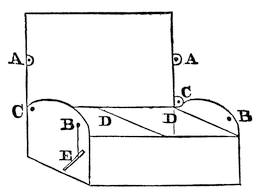
The back is made to turn on pivots at CC, and rests
when turned on the sides. At AA, are projections, with a
hole that meets the holes in the sides at BB, and then
the peg at E is put in to hold it firmly. The box, or
seat, is divided into two parts, with lids at DD, and in these
boxes are kept, on one side the ironing sheet, wipers and
holders, and on the other side, the irons, rings, &c., used
in ironing. When the back is not used for ironing, it is
put down, and the article is a good settee, and if provided
with cushions, is as comfortable as most parlor sofas.
It can be put on castors, and have handles at the sides,
and then it can be moved up to the fire winter evenings
for use; the back serving both to reflect the warmth of
the fire, and to keep off draughts of air.
The following are the dimensions. Length, six feet.
Width of seat, twenty inches. Height of seat, fourteen
inches. Height of back, from the bottom, four
feet. This makes the width of the table when it is
turned down. Height of the ends where the table rests
when turned over, two feet six inches.
In some families, it is sometimes necessary to have a
domestic sleep in the kitchen. In this case, a bunk settee,
like the one which is represented as open at Fig. 10,
is very convenient.
Fig. 10.
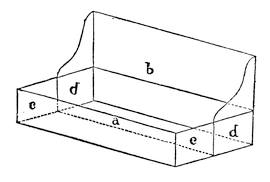
The following are the dimensions. Six feet long.
Seat two feet wide, and sixteen inches high. The
parts c c pass within the ends d d. The seat a, when
it is shut up, rests on the ledge that runs along the back
at b. The bed and bed-clothing are at the bottom of
the box, and are shut up in it by day.
At Fig. 11 is represented a kitchen table, with shelves
and drawers fastened over it, which, if made and furnished
in the manner described, every housekeeper
would find an invaluable aid to system, and it would
save many steps, and much inconvenience. The shelves
are to be nailed or screwed on the wall at a convenient
height over the table.
Fig. 11.
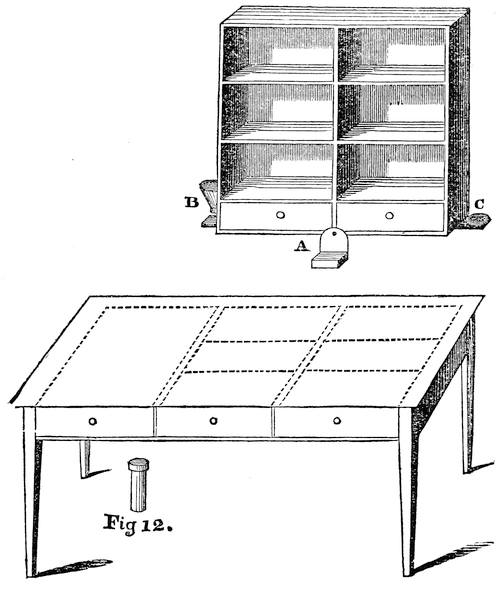
The following are the dimensions of the two articles.
Table.—Six feet long. Three feet two inches broad.
Thirty inches high. The top to project only two inches
over the frame. The box divided by three drawers.
Two of the drawers divided by partitions into three
equal parts, as seen by the dotted lines in the drawing.
The shelves over the table are three feet in height,
three feet six inches wide, and a foot deep. The drawers
are four inches deep, and the part above the drawers
is divided by the shelves into three equal portions. It
is better to have two doors in front of the shelves to shut
the dust out. Some would prefer a curtain to slide on
an iron wire. At A is hung the salt box, made with a
lid, and at B is the coffee mill, and the other side the
soap dish is at C.
To furnish this complete, there should be tin boxes
made with tight lapping covers, like that at Fig. 12,
and of three sizes. The largest should be eight inches
in height, and three and a half in diameter. The next
size should be six inches high and three inches in diameter.
The next should be four inches high and two
inches in diameter. These can all be made at a tinner’s
for a small sum. In the largest size put two kinds of
sugar, and the starch. In the medium size keep tea and
coffee, table salt and ginger. In the smallest size keep
cream tartar, indigo, mustard, sweet herbs, and spices.
In junk bottles, keep a supply of vinegar, molasses, and
catsup. In a wide-mouth glass jar, with tight glass
stopper, keep soda, or saleratus. Write labels and paste
on to each, and arrange them on these shelves in one
division. On the shelves of the other division, put the
following articles:—those that can be suspended, hang
on nails at the side, over the shelves. A dredging box,
kitchen pepper box, two-sized graters, two small sieves,
a bottle brush, a vial funnel, a larger funnel, a quart,
pint, and gill measure, a gravy strainer, a corkscrew,
half a dozen bowls, as many cups, saucers, and two
small pitchers. On the top of the shelves put the spice
mill, and the balance and weights. Fig. 16 shows the
best kind. In one of the drawers of the shelves, put
needles, thread, twine, wax, and bits of cotton and linen.
In the other drawer put the Receipt Book, bits of paper
and pencil for writing notes and memoranda, an account
book, and a pen and ink.
In the table drawer which is not subdivided, put these
articles:—Rolling-pin, griddle spad, iron meat fork, coffee
stick, mush stick, gridiron scraper, skewers, saw knife,
chopping knife, egg and cake beaters, apple corer, potato
beetle, meat hammer, butter spad, whetstone.
In the middle drawer, put, in the front part, the kitchen
knives and forks, and carver, the iron spoons, and
other spoons used in the kitchen. In the centre part of
this drawer put the kitchen table-cloths, and in the back
part, the bags for all kinds of family uses, the pudding
cloths, jelly strainer, and starch strainers.
In the other drawer, keep in one division, the clean
dish cloths and towels; in another, the roller and tumbler
towels, and in another the clean lamp towels, and
a good supply of holders and dust cloths. Let the cleaver
and board be kept on the top of the shelves.
By this arrangement the cook will find every article
she has occasion to use close at hand, and when she
washes dishes, her towels and soap, and the place where
to lay up all utensils as she washes them, are in immediate
reach. No one knows, without trial, how many
steps are saved, and how much confusion and waste
avoided, by such an arrangement. And the expense
for securing it is a trifle, far less than is often spent for
some showy but useless article for the parlor.
Fig. 13.
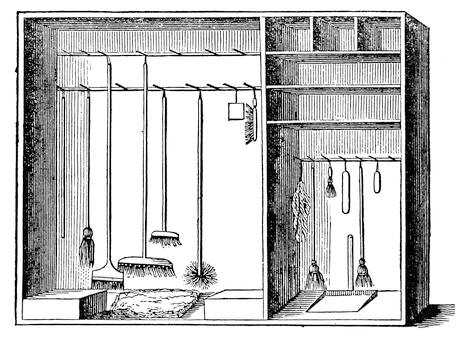
Another arrangement is a great aid to system and
order. Have a closet made as represented at Fig. 13.
In these partitions place these articles, the largest in the
largest part, and hanging all that can be suspended, on
pegs. A large and small clothes frame. A skirt board.
A bosom board. A press board. A yard stick. Three
or four brooms. A floor brush for sweeping oil cloths and
painted floors. A cobweb brush. A long brush to wash
windows outside. A carpet stretcher. A whitewash
brush. A long-handle upright dust pan, and a common
dust pan. A rag bag. Scrubbing brushes.
In the part with shelves, place, in the upper partitions,
in one, the shoes, brushes, and blacking. In another,
articles for cleaning brass and silver. In another, sponges,
rags, and stain mixtures. In the next division, below,
put the lamps and candlesticks, and the waiter
containing all the articles used in cleaning lamps.
At the bottom of this closet, keep a box containing the
following articles:—A hammer, a small saw, three sizes
of gimlets, papers of tacks, nails, screws, two chisels, a
bedscrew, a carpet claw.
In another box, keep old newspaper, wrapping paper,
and a large ball of twine.
Have a clothes broom and clothes brush hung here,
and keep the table-rug here.
All other articles in common use are to be kept in the
pantry, or china closet, or in the pot closet.
By thus arranging articles together in one place, and
with so complete an assortment, much time and many
steps are saved, while they are preserved in good order.
A housekeeper who chooses to do without some of these
conveniences, and spend the money saved in parlor
adornments, has a right to do so, and others have a right
to think she in this shows herself deficient in good sense.
The accompanying drawings are designed to show
some of the most convenient kitchen and other utensils.
Fig. 14.
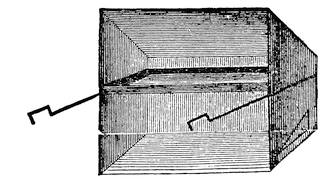
Fig. 14 represents a Tin Baker, or Reflector. The
iron hooks running out in front, fit it to use with grates.
It can be made without them, or made so that they can
be drawn out and put in. This bakes bread, cakes,
apples, &c., as well as an oven.
Fig. 15.
Fig. 15, called a Footman, is made of brass, or sheet
iron, and is used with a grate, to heat irons, and for
other purposes.
Fig. 16.
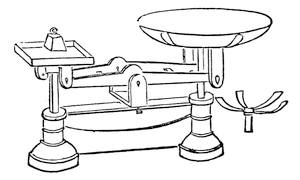
Fig. 16 is the best kind of Balances to use in weighing
cake, and for other purposes.
Fig. 17.
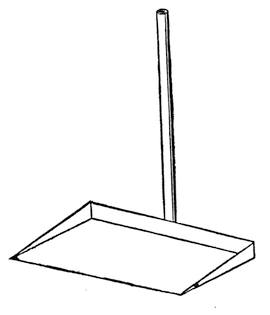
Fig. 17 is a tall-handle Dust Pan. The pan is half
a yard in length, ten inches in width, and the handle
two feet high, and set up perpendicularly. It is a very
economical arrangement to save carpets and labor, as it
is set down in spots, and the common broom used to
throw the dust and rubbing from the carpet on to it, instead
of brushing them all across the carpet.
Fig. 18.

Fig. 18 is a Saw Knife, being a saw on one side,
and a knife on the other. It is very useful in preparing
meats.
Fig. 19.
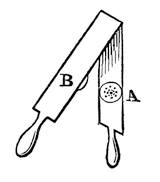
Fig. 19 is a Lemon Squeezer. At A is a concave
place with holes bored through. At B is a convex projection
to fit into the concave portion, and here the half
lemon is put to be squeezed.
Fig. 21. Fig. 20.
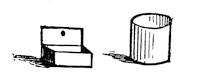
Fig. 20, a Case for lamplighters. It is made of tin,
like a tumbler, with a lid fastened at the top by a hinge.
It stands in the parlor, to receive the remnants of extinguished
lamplighters and matches, to prevent smoke
and rubbish, and is a great convenience. It can be
made for a trifle at a tinner’s.
Fig. 21 is a tin Match Safe, which should be hung
in the kitchen, and the matches be kept in it. It is
not only convenient, but important for safety.
Fig. 22.
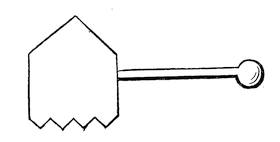
Fig. 22 is a Meat Mallet, or beef steak hammer.
It is a block of wood six inches square, cut in checks,
so as to make sharp points on the face, and is used to
make tough steaks more tender.
Fig. 23.
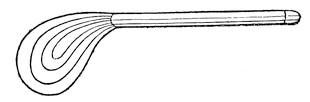
Fig. 23 is an Egg Beater. It is made of iron wire,
fastened to a tin handle. It is fine for beating eggs and
cake, and saves labor. The tin should be six inches
long and an inch wide.
Fig. 24.
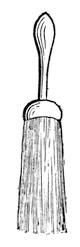
Fig. 24 is a small brush, useful to dust ledges in parlors,
and the frames of windows.
Fig. 25.
Fig. 25 is an Apple Corer. It is a scroll of tin soldered
together, about seven inches long, an inch in diameter
at the largest end, and tapering to half an inch
at the smaller end, where it is cut off obliquely. It costs
but a dime, and every housekeeper can have one made
at a tinner’s, and needs one.
Fig. 26.
Fig. 26 is a Gridiron Scraper. It is fitted to the
bars of gridirons that have scooped bars. It has a convex
scraper on one end of the transverse piece of iron,
and a concave one at the other, so as to fit both sides of
the gridiron bars.
Fig. 27.

Fig. 27 shows the best shape for a Rolling Pin.
Fig. 28.
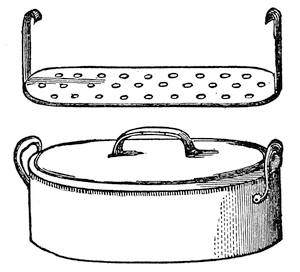
Fig. 28 shows a Fish Kettle, with the strainer drawn
out above it. It should be large enough to use sometimes
for boiling a ham. This and the sauce pans following
can be used on a cooking stove, or be set on a
trivet when an open fire is used.
Fig. 29.
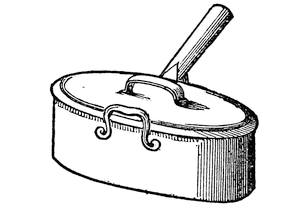
Fig. 29 is a Preserving Kettle with a cover.
Fig. 30.
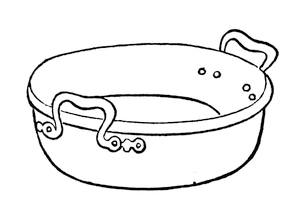
Fig. 30 is another Preserving Kettle, without a cover.
The advantage of these is, that they are shallow,
so that the fruit will not need to be piled. The cover
preserves the flavor more perfectly. The best are of
copper or bell metal. Porcelain ones are apt to crack.
Fig. 31.
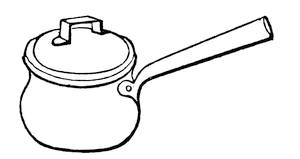
Fig. 31 is a Cast Iron Sauce-pan, lined with tin.
Fig. 32.
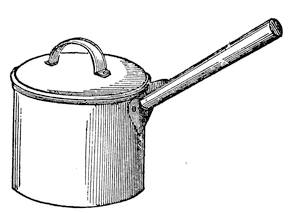
Fig. 32 is a Tin Sauce-pan.
Fig. 33.
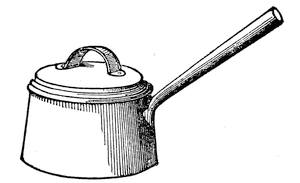
Fig. 33 is a Copper Sauce-pan.
Every housekeeper needs at least four different sizes
of sauce-pans. The copper ones are the best, and most
durable. The iron lined with tin the next best. The
tin are the poorest.
Fig. 34.
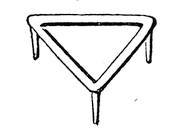
Fig. 34 is a Trivet, and is very useful in heating
articles over coals to prevent burning. Three or four
of different sizes are needed with an open fire. Food
cooked for the sick demands them.
Fig. 35.

Fig. 35 is a Tin Bonnet, and is very useful to keep
articles warm, to roast apples, to warm plates, &c.
Two or three will be kept in constant use when it is
found how useful they are.
Fig. 36.
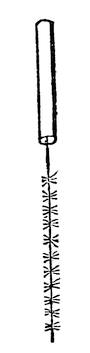
Fig. 36 is a brush to clean bottles, made of bristles
twisted into wire.
Fig. 37.
Fig. 37 is a Tin Safe. It is to be made five feet
high, five feet wide, a division in the middle, and three
shelves each side. Two doors in front, with a lock and
key, and all the panels of perforated tin. It is very useful
to preserve food in hot weather, and to protect it also
from mice.
Refrigerators are very excellent to keep meat, butter,
milk, and cream, during hot weather. They are
made in a superior manner, and kept for sale, but the
following is a mode of securing a cheap one.
Take a barrel and bore holes in the bottom. Lay
some small sticks crossing, and set a half barrel within,
with holes bored in the bottom. Nail list along the
edge of each, and make a cover to lay on each, so that
the cover resting on the list will make it very close.
Then put ice into the inner one, and the water will filter
through the holes in the bottom, and while the ice is
preserved, it will make the inner half barrel a perfect refrigerator.
Those who buy ice every day will find this
a great convenience if they have no other refrigerator.
Fig. 38.
Fig. 38 represents an excellent pattern for a Sofa
Bedstead, such as a common carpenter can make. Its
dimensions are as follows:—Length, six feet. Width,
two feet two inches. Height of the seat from the floor,
fifteen inches. Height of the back and sides from the
seat, eighteen inches. The seat is a frame with slats to
be laid across lengthwise, as this gives more ease than
crosswise slats. The back is a frame, with slats crosswise,
with two frame legs, as at A and B, swinging on
hinges, and when pulled out they serve to support the
back. The back is hooked up to the sides, and when
laid down rests on the frame legs A B. These legs turn
with pintles, or wood hinges. The ends of the sofa
have grooved slides for the head and foot boards to slide
in, as at C C, and have brown linen nailed on both inside
and outside, on which to fasten the sofa cover. Two
thick cushions of hair, or of moss and cotton, are made,
one to serve for the seat, one to set up against the back.
These serve for the bed when the back is laid down. A
frill is fastened around the frame of the seat, and the
box D, underneath, is to hold the bedclothes, and runs
on castors, as also does the sofa.
Fig. 39.
Fig. 39 is a very convenient and cheap article for a
light seat to use in a chamber, or in gardening. It is
made just like a cross bedstead or cot, with a bit of stair
carpeting used as the seat. Handles fastened to it make
it more convenient to carry about, as it can be doubled
up, and taken in one hand. These are the dimensions:
Sticks for the seat, one foot long. Sticks for the legs, one
foot six inches long.
Fig. 40.
Fig. 40 is an article for a bedchamber, and remarkably
convenient for dressing the feet. In one drawer
are kept stockings of all sorts, and in the other shoes;
it has a cushion and handles, and is set on castors. It
is to stand by the bedside, and a person can change the
dress of the feet with the greatest comfort and convenience.
These are the dimensions:—Twenty inches
square and twelve inches high from castors to cushion.
Housekeepers are much troubled to keep dippers in
order. The only sure mode is to have two made of
copper, with iron handles fastened on very tight, one to
hold a pint, and another two or three quarts. These
will never rust or leak, and may be kept for years. Let
them be hung by the fire. Keep trivets on which to
set kettles over coals, so as not to burn the articles while
cooking.
The most successful mode of securing the proper care
of utensils, is to make a definite agreement with the
cook, on hiring her, that after dinner, she shall examine
kitchen, cellar, and pantry, and wash every article that
needs cleansing; and that once a month she shall scour
all that need scouring. Then, at least once a week,
and once a month, the housekeeper should examine herself
whether this agreement is fulfilled.
There is no subject on which young housekeepers
need wisdom and instruction more, than in regard to the
management of domestics, and therefore some farther
suggestions will be offered, in addition to those presented
in the Domestic Economy.
Success in the management of domestics very much
depends upon the manners of a housekeeper towards
them. And here, two extremes are to be avoided. One
is a severe and imperious mode of giving orders and finding
fault, which is inconsistent both with lady-like good
breeding, and with a truly amiable character. Few domestics,
especially American domestics, will long submit
to it, and many a good one has been lost, simply by the
influence of this unfortunate manner.
The other extreme is apt to result from the great difficulty
of retaining good domestics. In cases where this
is experienced, there is a liability of becoming so fearful
of displeasing one who is found to be good, that, imperceptibly,
the relation is changed, and the domestic becomes
the mistress. A housekeeper thus described this
change in one whom she hired: “The first year she
was an excellent servant; the second year, she was a
kind mistress; the third year, she was an intolerable tyrant!”
There is no domestic so good that she will not be injured
by perceiving that, through dependance upon her,
and a fear of losing her services, the mistress of the family
gives up her proper authority and control.
The happy medium is secured, by a course of real
kindness in manner and treatment, attended with the
manifestation of a calm determination, that the plans
and will of the housekeeper, and not of the domestic,
shall control the family arrangements.
When a good domestic first begins to insist that her
views and notions shall be regarded, rather than those
of the housekeeper, a kind but firm stand must be taken.
A frank conversation should be sought, at a time when
nothing has occurred to ruffle the temper on either side.
Then the housekeeper can inquire what would be the
view taken of this matter in case the domestic herself
should become a housekeeper, and hire a person to help
her; and when the matter is set before her mind in this
light, let the “golden rule” be applied, and ask her
whether she is not disposed to render to her present employer
what she herself would ask from a domestic in
similar circumstances.
Much trouble of this kind is saved by hiring persons
on trial, in order to ascertain whether they are willing
and able to do the work of the family in the manner
which the housekeeper wishes; and in this case, such
written cards as have been exhibited in previous pages
can be read, or some member of the family can go around
for a day or two, and show how everything is to be done.
There is no department of domestic life where a woman’s
temper and patience are so sorely tried, as in the
incompetence and constant changes of domestics. And
therefore, there is no place where a reasonable and Christian
woman will be more watchful, careful, and conscientious.
The cultivation of patience will be much promoted,
by keeping in mind these considerations in reference to
the incompetence and other failings of those who are
hired.
In the first place, consider that the great object of life
to us is not enjoyment, but the formation of a right
character; that such a character cannot be formed, except
by discipline, and that the trials and difficulties of
domestic life, if met in a proper spirit and manner, will,
in the end, prove blessings rather than evils, by securing
a measure of elevation, dignity, patience, self-control,
and benevolence, that could be gained by no other
methods. The comfort gained by these virtues, and the
rewards they bring, both in this and in a future life, are
a thousand-fold richer than the easy, indolent life of indulgence,
which we should choose for ourselves.
In the next place, instead of allowing the mind to
dwell on the faults of those who minister to our comfort
and convenience, cultivate a habit of making every
possible benevolent allowance and palliation. Say to
yourself—“Poor girl! she has never been instructed,
either by parents or employers. Nobody has felt any interest
in the formation of her habits, or kindly sought to
rectify her faults. Why should I expect her to do those
things well which no one has taken any care to teach
her? She has no parent or friend now to aid her but
myself. Let me bear her faults patiently, and kindly
try to cure them.”
If a woman will cultivate the spirit expressed in such
language, if she will benevolently seek the best good of
those she employs, if she will interest herself in giving
them instruction, if they need it, and good books to read
if they are already qualified to understand them, if she
will manifest a desire to have them made comfortable in
the kitchen, and in their chambers, she certainly will
receive her reward, and that in many ways. She will
be improving her own character, she will set a good example
to her family, and in the end, she will do something,
and in some cases much, to improve the character
and services of those whom she hires. And the good
done in this way goes down from generation to generation,
and goes also into the eternal world, to be known
and rejoiced in, when every earthly good has come to
an end.
It is sometimes the case, that the constant change of
domestics, and the liability thus to have dishonest ones,
makes it needful to keep stores under lock and key.
This measure is often very offensive to those who are
hired, as it is regarded by them as an evidence both of
closeness and of suspicion of their honesty.
In such cases, it is a good plan, when first making an
agreement with a domestic, to state the case in this way.
That you have had dishonest persons in the family, and
that when theft is committed, it is always a cause of disquiet
to honest persons, because it exposes them to suspicion.
You can then state your reasons as two-fold:
one to protect yourself from pilfering when you take entire
strangers, and the other is to protect honest persons
from being suspected. When the matter is thus presented,
at first hiring a person, no offence will be taken
afterwards.
In some portions of our country, the great influx of
foreigners of another language and another faith, and
the ready entrance they find as domestics into American
families, impose peculiar trials and peculiar duties on
American housekeepers. In reference to such, it is no
less our interest than our duty to cultivate a spirit of
kindness, patience, and sympathy.
Especially should this be manifested in reference to
their religion. However wrong, or however pernicious
we may regard their system of faith, we should remember,
that they have been trained to believe that it is
what God commands them to obey, and so long as they
do believe this, we should respect them for their conscientious
scruples, and not try to tempt them to do what
they suppose to be wrong. If we lead an ignorant and
feeble mind to do what it believes to be wrong, in regard
to the most sacred of all duties, those owed to God, how
can we expect them to be faithful to us?
The only lawful way to benefit those whom we regard
as in an error, is, not to tempt them to do what
they believe to be wrong, but to give them the light of
knowledge, so that they may be qualified to judge for
themselves. And the way to make them willing to receive
this light, is to be kind to them. We should take
care that their feelings and prejudices should in no way
be abused, and that they be treated as we should wish
to be, if thrown as strangers into a strange land, among
a people of different customs and faith, and away from
parents, home, and friends.
Remember that our Master, who is in heaven, especially
claims to be the God of the widow, the fatherless,
and the stranger, and has commanded, “If a stranger
sojourn with you in your land, ye shall not vex him, but
the stranger that dwelleth among you shall be unto you
as one born among you, and thou shalt love him as thyself.”
There is one rule, which every housekeeper will find
of incalculable value, not only in the case of domestics,
but in the management of children, and that is, never to
find fault at the time that a wrong thing is done.
Wait until you are unexcited yourself, and until the vexation
of the offender is also past, and then, when there is
danger of a similar offence, forewarn, and point out the
evils already done for want of proper care in this respect.
This work is designed primarily for young and inexperienced
housekeepers, and the following suggestions
are presented as the advice of many judicious and experienced
matrons in our country, to their young countrywomen,
who are to follow them in the trying duties
of housekeeping.
Nothing in this country is a greater source of suffering
to housekeepers, than bad taste in their style of living
and expenditure. Good taste is that nice perception
of fitness and propriety which leads a person to say
and do whatever is suitable and appropriate in all possible
circumstances. Such good taste is ordinarily the
result of good feelings and well-cultivated mind, and an
acquaintance with the world. Yet this correct taste is
sometimes found in minds that have enjoyed but few
advantages, but by nature are endowed with refined
feelings and good common sense.
Where this good taste exists, it leads a woman to wish
to have her house, furniture, and style of living, in all its
parts, exactly conformed to her means, and her situation.
If she is not rich, she will not wish to have a
house, or furniture, or dress like those who are rich, and
will find a pride and pleasure in making a small house,
plain furniture, simple dress, and an economical table,
so neat, and orderly, and comfortable, and tasteful, as to
ensure comfort and satisfaction to all around her. If
she cannot command good domestics, nor live comfortably
in a house, and with furniture which requires them,
she will aim to alter the style of her establishment, and
adopt one which can be thoroughly and successfully
carried out by such domestics as she can obtain.
Where good domestics are scarce, it is a very great
mistake to attempt to live in a large house. The labor
of house cleaning, and window cleaning, the sweeping,
the care of furniture, and many other items of labor,
are much increased by enlarging the size of the
house. In the country, where good help is scarce, a
house on the plan of one of the cottages drawn in the
Domestic Economy, with bed presses instead of chambers,
will be found to be a great saving of labor, and the
expense that might be incurred in building, furnishing,
and taking care of chambers, can be laid out in making
conveniences for carrying water, and furnishing the
kitchen properly. The drawings for this purpose in the
Domestic Economy will be found useful in this respect.
In cities, nothing is more pernicious to a housekeeper’s
health, than going up and down stairs, and a woman
who has good taste and good sense, will not, for the sake
of show, keep two parlors on the ground floor and her
nursery above and kitchen below. One of these parlors
will be taken for her nursery and bedroom, even should
all her acquaintance wonder how it can be, that a
wife and mother should think her health and duties of
more importance than two dark parlors shut up for
company.
When a woman has good sense and good taste, these
are some of the things she will not do.
She will not be so anxious to obtain admission into
any circle as to seek it by a conformity to its fashions,
which will involve her in labor, or expenses that lessen
domestic comfort, or are inappropriate to her income.
She will not be particularly anxious to know what the
fashion is, in dress and furniture, nor give up any important
duty or pursuit to conform to it. Nor will she
be disturbed if found deficient in these particulars, nor
disturb others by making apologies, or giving reasons.
She will not, while all that is in sight to visiters, or
to out-door observers, is in complete order, and in expensive
style, have her underclothing, her bedroom, her
kitchen, and her nursery ill furnished, and all in disorder.
She will not attempt to show that she is genteel,
and belongs to the aristocracy, by a display of profusion,
by talking as if she was indifferent to the cost of things,
or by seeming ashamed to economize. These things
are marks of a vulgar, unrefined person, that fancies
that it is money, and not character, that makes the
lady. And by persons of education and refinement,
such things are always regarded as indicating a vulgar,
uncultivated mind.
Let a young housekeeper, then, adopt these maxims
as her guide in regulating the style of her dress, furniture,
table, and the size of her house.
Do not begin housekeeping in the style in which you
should end it, but begin on a plain and small scale, and
increase your expenditures as your experience and means
are increased.
Be determined to live within your income, and in
such a style that you can secure time to improve your
own mind, and impart some of your own advantages to
others.
Try to secure symmetry in your dress, furniture, style
of living, and charities. That is, do not be profuse in
one direction, and close and pinching in another.
Cultivate a taste for intellectual pleasures, home
pleasures, and the pleasures of benevolence.
Have some regular plan for the employment of your
time, and in this plan have chief reference to making
home pleasant to your husband and children. It will
save them from a thousand snares, and you from many
sorrows.
There is no doubt of the fact, that American housekeepers
have far greater trials and difficulties to meet
than those of any other nation. And it is probable that
many of those who may read over the methods of thrift
and economy adopted by some of the best housekeepers
in our land, and detailed in this work, will with a
sigh exclaim, that it is impossible for them even to attempt
any such plans.
Others may be stimulated by the advice and examples
presented, and may start off with much hope and
courage, to carry out a plan of great excellence and appropriateness,
and after trying a while, will become discouraged
by the thousand obstacles in their way, and
give up in despair.
A still greater number will like their own way best,
and think it is folly to attempt to change.
For those who wish they could become systematic, neat,
and thorough housekeepers, and would like to follow out
successfully the suggestions found in this work, and for
those who have tried, or will try, and find themselves
baffled and discouraged, these words of comfort are offered.
Perhaps you find yourself encompassed by such sort
of trials as these. Your house is inconvenient, or destitute
of those facilities for doing work well which you
need, and you cannot command the means to supply
these deficiencies. Your domestics are so imperfectly
qualified that they never can do anything just right,
unless you stand by and attend to everything yourself,
and you cannot be present in parlor, nursery, and kitchen
all at once. Perhaps you are frequently left without
any cook, or without a chambermaid, and sometimes
without any hands but your own to do the work, and
there is constant jostling and change from this cause.
And perhaps you cannot get supplies, either from garden
or market, such as you need, and all your calculations
fail in that direction.
And perhaps your children are sickly, and rob you
of rest by night, or your health is so poor that you feel
no energy, or spirits to make exertions. And perhaps
you never have had any training in domestic affairs, and
cannot understand how to work yourself, nor how to direct
others. And when you go for aid to experienced
housekeepers, or cookery books, you are met by such
sort of directions as these: “Take a pinch of this, and a
little of that, and considerable of the other, and cook
them till they are done about right.” And when you cannot
succeed in following such indefinite instructions, you
find your neighbors and husband wondering how it is,
that when you have one, two, or three domestics, there
should be so much difficulty about housekeeping, and
such constant trouble, and miscalculation, and mistake.
And then, perhaps, you lose your patience and your temper,
and blame others, and others blame you, and so
everything seems to be in a snarl.
Now the first thing to be said for your comfort is, that
you really have great trials to meet; trials that entitle
you to pity and sympathy, while it is the fault of others
more than your own, that you are in this very painful
and difficult situation. You have been as cruelly treated
as the Israelites were by Pharaoh, when he demanded
bricks without furnishing the means to make them.
You are like a young, inexperienced lad, who is required
to superintend all the complicated machinery of
a manufactory, which he never was trained to understand,
and on penalty of losing reputation, health, and
all he values most.
Neither your parents, teachers, or husband have trained
you for the place you fill, nor furnished you with the
knowledge or assistance needed to enable you to meet
all the complicated and untried duties of your lot. A
young woman who has never had the care of a child,
never done housework, never learned the numberless
processes that are indispensable to keep domestic affairs
in regular order, never done anything but attend to books,
drawing, and music, at school, and visiting and company
after she left school, such an one is as unprepared
to take charge of a nursery, kitchen, and family establishment,
as she is to take charge of a man-of-war.
And the chief blame rests with those who placed her so
unprepared in such trying circumstances. Therefore,
you have a right to feel that a large part of these evils
are more your misfortune than your fault, and that they
entitle you to sympathy rather than blame.
The next word of comfort is, the assurance that you
can do every one of your duties, and do them well, and
the following is the method by which you can do it.
In the first place, make up your mind that it never is
your duty to do anything more than you can, or in any
better manner than the best you can. And whenever
you have done the best you can, you have done well,
and it is all that man should require, and certainly all
that your Heavenly Father does require.
The next thing is, for you to make out an inventory
of all the things that need to be done, in your whole establishment.
Then calculate what things you find you
cannot do, and strike them off the list, as what are not
among your duties. Of those that remain, select a certain
number that you think you can do exactly as they
need to be done, and among these be sure that you put
the making of good bread. This every housekeeper
can do, if she will only determine to do it.
Make a selection of certain things that you will persevere
in having done as well as they can be done, and
let these be only so many as you feel sure you can succeed
in attempting. Then make up your mind that all
the rest must go along as they do, until you get more
time, strength, and experience, to increase the list of
things that you determine shall always be well done.
By this course, you will have the comfort of feeling
that in some respects you are as good a housekeeper as
you can be, while there will be a cheering progress in
gaining on all that portion of your affairs, that are left
at loose ends. You will be able to measure a gradual
advance, and be encouraged by success. Many housekeepers
fail entirely, by expecting to do everything well
at first, when neither their knowledge or strength is
adequate, and so they fail everywhere, and finally give up
in despair.
Are you not only a housekeeper, but a mother? Oh,
sacred and beautiful name! how many cares and responsibilities
are associated with it! And how many elevating
and sublime anticipations and hopes are given
to inspire, and to cheer! You are training young minds
whose plastic texture will receive and retain every impression
you make, who will imitate your feelings, tastes,
habits, and opinions, and who will transmit what they
receive from you to their children, to pass again to the
next generation, and then to the next, until a whole nation
will have received its character and destiny from
your hands! No imperial queen ever stood in a more
sublime and responsible position than you now occupy,
in the eye of Him who reads the end from the beginning,
and who is appointing all the trials and discipline
of your lot, not for purposes which are visible to your
limited ken, but in view of all the consequences that are
to result from the character which you form, and are to
transmit to your posterity!
Remember, then, that you have a Father in heaven,
who sympathizes in all your cares, pities your griefs,
makes allowances for your defects, and is endeavoring
by trials, as well as by blessings, to fit you for the right
fulfilment of your high and holy calling.
My friends, you fill a very important and respectable
station. The duties committed to you by God are very
apt to be considered of small account, but they are indeed
most solemn and important.
On your faithfulness and kindness depends the comfort
of a whole family, and on you often depends the
character and happiness of a whole flock of children.
If you do your part faithfully in assisting the mother to
carry forward her plans, she will be able to train them
aright. If you fail to perform your part, she will be perplexed,
discouraged, and disabled, and everything will
go wrong.
Every person finds troubles and trials in their lot, and
so you must find them in yours. But trials are sent by
God, not for evil, but for good, so that we, by patiently
bearing them, and by striving to improve under them,
may grow wiser and better, and thus more happy than
we could be without them.
Whenever, therefore, anything vexes, or troubles you,
comfort yourselves by thinking that it is designed for
your good, and reap at least one benefit, by bearing it
with patience and cheerfulness.
In all your dealings with those who employ you, try
to follow “the golden rule,” and do by them as you
will wish to have others do by you, when you are the
mistress of a family, and hire others to help you.
Do you find that many things are uncomfortable and
unpleasant in your present lot? Remember that you
never can find a place in this world where everything
will be just as you want it, and that it is a bad thing
for you, as well as for your employers, to keep roving
about from one place to another. Stay where you are,
and try to make those things that trouble you more tolerable,
by enduring them with patience. Do not fret
and be angry at your employers when they oppose your
wishes, but wait until you feel in better humor, and
then tell them what troubles you, and what you wish
they would alter, and in a kind and respectful way, and
you will be ten times more likely to gain what you desire.
Do you think that you are found fault with too much,
and that your employer is so hard to please that you
wish to change for another? Perhaps you do not know
how often you do things different from what she wishes,
when she does not complain. Perhaps she tells you
only just what she thinks she ought to do, for your good.
Perhaps she does not know that she does find fault a
great deal, or that her manner is an unpleasant one.
Perhaps she has a great many cares and troubles that
you know not of, which try her nerves, and make her
feel very irritable, and thus speak hastily when she does
not intend it.
Be patient with her failings, if you think you see any,
just as you wish to have her bear with your faults, when
they trouble her. If you find your patience failing, it
may be well in some cases, to say to your employer, that
you should do better, if she would find fault less, and
praise you more when you do well. But never say anything
of this kind when you are angry yourself, or when
you see that she is displeased.
Be careful, in all your dealings with children, always
to speak the truth, and never let them hear from you
any filthy or wicked language. Never promise to do a
thing and then break your word, for this teaches them
to break promises. Never tell them frightful stories, or
try to make them mind you by saying what is not true.
Never help them conceal what they have done that is
wrong, but try to persuade them to confess their faults.
Never take the least thing that does not belong to you,
and never tempt children to give you what does not belong
to them.
Never tell tales out of the family, nor tell to your employers
the bad things you have seen, or heard in other
families, for this is mean and ungenerous.
Do not spend your money for useless and expensive
things, but learn to be economical and prudent, that you
may be preparing to be a good housekeeper, wife, and
mother, if ever you have a family of your own.
Do not form a habit of roaming about to see company,
but be industrious in hours not employed for those who
hire you, in mending and making your own clothes.
Take care and keep your person clean, and your hair
and clothes in order, and have your chamber always
neat and tidy.
Do not be rude and boisterous in manners, but always
speak politely to all, especially to those who employ you.
Do not waste any of the provisions, or property of
your employers, nor let it spoil by neglect, and never
lend or give away anything belonging to the family
without leave.
Remember the Sabbath day, to keep it holy.
Read your Bible daily, and try to obey its teachings.
Pray to God to forgive your past sins, and to help you
keep all his commands, and live every day so that you
will not be afraid to die.
It is a good plan to have a particular measure cup
kept for the purpose, and after once weighing all those
receipts that are given by weight, to measure the quantity
by this cup, and then write the measures in your
receipt book, and keep the cup only for this purpose.
The following is some guide in judging of the relative
proportion between measures and weights.
A quart of flour, or of sifted loaf sugar, or of softened
butter, each weigh about a pound. The flour, if sifted,
must be heaped.
A pint equals eight ounces.
A half a pint equals four ounces.
One gill equals two ounces.
Half a gill equals one ounce.
A quart of brown sugar, or of Indian meal, equals a
pound and two ounces of the same.
One great spoonful of flour, loaf sugar, or of melted
butter, equals a quarter of an ounce of the same. It
should be a little heaped.
Four spoonfuls equal an ounce, or half a gill.
Eight spoonfuls equal one gill.
Sixteen spoonfuls equal half a pint.
Spoons differ so much in size that this is an uncertain
guide.
A medium-sized teaspoon holds sixty drops of water.
Ten eggs usually weigh a pound.
Four gills make a pint.
Two pints make a quart.
Four quarts make a gallon.
Eight quarts make a peck.
Four pecks make a bushel.
Sixteen drachms make an ounce.
Sixteen ounces make a pound.
Twenty-eight pounds make a quarter.
Four quarters make a hundred.
Twenty hundred make a ton.
Twenty grains make a scruple.
Three scruples make a drachm.
Eight drachms make an ounce.
Twelve ounces make a pound.
Wood that is straight and solid makes more in a load,
and is the most profitable.
A cord of small crooked sticks does not contain half
the wood there is in a load of solid logs.
The best wood for fires is the hickory, hard maple,
white ash, black birch, yellow birch, beech, yellow oak,
and locust. The best are placed first.
The following are inferior in quality. Elm, soft maple,
white birch, pepperage, and pine.
The following are not fit to burn, either because they
snap, or will not burn. Chestnut, butternut, cedar, sassafras,
red oak, and buckeye.
Any person can learn to distinguish each kind by a little
attention and instruction.
Wood is bought by measurement. A cord of wood is
8 feet long, 4 feet wide, and 4 feet high.
To know the amount of a load, multiply the length
by the breadth, and the product by the height, and you
have the number of square feet. If it is 128 feet, it is
a cord.
If you keep an account of your stores, and the dates
when they are bought, you can know exactly how fast
they are used, and when they are wasted, or stolen.
Stale bread is improved by steaming it half an hour
or more.
Grate up dry cheese, and cheese crusts, moisten it with
wine or brandy, and keep it in a jar for use. It is better
than at first.
Boil old earthenware soaked with grease in hot lye, and it
will cleanse it.
Wheat should always be washed before grinding.
When you clean house, begin with the highest rooms
first, so that clean rooms be not soiled when done.
Repair house linen, turn sheets, and wash bedclothes
in summer.
Clean house in the fall instead of spring, and you get
rid of all the filth made by flies. But when you burn
bituminous coal, spring is the proper time for house
cleaning.
Keep coarse mats on the kitchen table for keeping it
clean.
Use a coarse apron and gloves for cleaning grates.
Have coal cinders sifted, and save the coarse part to burn
again.
Buy your wood in August and September, when it
usually is cheapest and plenty.
Have the backs of your chimneys kept clean by sweeping.
Never try a new dish for company.
To purify water, put common charcoal pounded in a
common flower-pot, and fine sand over it, and let the
water trickle through. Or, take an old sieve, and fill it
with sand and pounded charcoal, and strain the water,
and then cool it with ice.
Keep a receipt book for yourself, and write in it the
improvements of your own experience.
Keep bits of potter’s clay in the house, to use for a
paste to extract grease from carpets, floors, and broadcloths.
Dry bran around grapes and other fruit preserves it.
All fat should be tried up once a week, for cooking,
or soap grease. Good fat saves butter.
When a stove-pipe or other iron is cracked, make a
cement with ashes, salt, and water, and it will stop the
opening.
Faded colors often are improved by strong salt and
water.
Sal volatile, or spirits of hartshorn, will restore colors
taken out by acids.
Eggs are preserved longer by packing them close,
standing on their small ends. Another way is to pack
them in fine salt, small end down. Another way is to
pack them, small end down, and then pour on them a
mixture of four quarts of cold water, four quarts of unslacked
lime, two ounces of salt, and two ounces of
cream-tartar. This will serve for nine dozen eggs.
Try all these ways.
Rancid butter is said, by good judges, to be restored
thus:—Put fifteen drops of chloride of lime to a pint of
water, and work the butter in it till every particle has
come in contact with the water. Then work it over in
fair cold water.
Indelible Ink is thus prepared:—Buy three drachms
of nitrate of silver, and put it in a vial with two spoonfuls
of water. Let it stand a few days, then color it with
a little ink, and add a tablespoonful of brandy. The
preparation is made of strong pearlash water, stiffened
with gum-arabic, and colored with red wafers.
Buy cheap red wafers, and scatter them about, and
cockroaches will eat them and be destroyed. The roots
of black hellebore scattered in their haunts is an infallible
remedy.
Cold cream for sore lips, is made by mixing two
ounces of oil of almonds, one ounce of spermaceti, one
drachm of white wax, and melting them together, adding
rose water to perfume them.
Jelly-bags should be made of flannel, and pudding
cloths of thick linen, with strings sewed on to them.
Rose leaves should be gathered and preserved by
crowding them into a jar with brandy, to use for cooking.
Potato starch is made by grating peeled potatoes,
and rubbing them in water. Then pour off the water,
after stirring it, and dry what sinks to the bottom.
Orange and lemon peel can be saved thus:—Dry it
in an oven, pound it, and then bottle it close.
Orange or lemon water is prepared thus:—Pound
the fresh skins in a mortar, pour in boiling water, cover
close, and when cold bottle close. Or use wine or
brandy.
Cologne water is made thus:—Buy at the apothecary’s
one drachm each of oil of lavender, oil of lemon, oil
of rosemary, and oil of cinnamon. Add two drachms of
oil of bergamot. Mix in a vial, and add a pint of alcohol.
When Pearlash or Saleratus becomes damp, dissolve
it in as much water as will just entirely dissolve it,
and no more. A tablespoonful of this equals a teaspoonful
of the solid. Keep it corked in a junk bottle.
The following is a very useful receipt for children who
go to school where blackboards are used.
These directions are given by Prof. Turner, of the
American Asylum for the Deaf and Dumb, as follows:
“Take 5 pounds of Paris white, 1 pound of Wheat
flour, wet with water, and knead it well; make it so
stiff that it will not stick to the table, but not so stiff as
to crumble and fall to pieces when it is rolled under the
hand.
“To roll out the crayons to the proper size, two boards
are needed, one to roll them on; the other to roll them
with. The first should be a smooth pine board three
feet long and nine inches wide. The other should also
be pine, a foot long and nine inches wide, having nailed
on the under side near each edge a slip of wood one-third
of an inch thick, in order to raise it so much above
the under board as that the crayon, when brought to its
proper size, may lie between them without being flattened.
“The mass is rolled into a ball, and slices are cut from
one side of it about one-third of an inch thick: these
slices are again cut into strips about four inches long and
one-third of an inch wide, and rolled separately between
these boards until smooth and round.
“Near at hand should be another board 3 feet long and
4 inches wide, across which each crayon, as it is made,
should be laid, so that the ends may project on each
side—the crayons should be laid in close contact, and
straight. When the board is filled, the ends should all
be trimmed off so as to make the crayons as long as the
width of the board. It is then laid in the sun, if in hot
weather, or if in winter, near a stove or fireplace, where
the crayons may dry gradually, which will require
twelve hours. When thoroughly dry they are fit for
use.
“An experienced hand will make 150 in an hour.”
Young boys can make them and sell to their companions.
Stewed Beef.
Take a shank or hock of beef, with all the meat
belonging to it, and put it into a pot full of water early
in the morning and throw in a tablespoonful of salt. Let
it simmer very slowly, till the beef is soft, and cleaves
from the bone, and the water is reduced to about two
quarts. Then peel some potatoes, and cut them in
quarters, and throw in with two teaspoonfuls of black
pepper, two of sweet marjoram, and two of thyme, or
summer savory. Add some celery flavor or sauce, and
more salt if it requires it. Stew until the potatoes are
cooked enough, but not till they are mashed. Then take
dry bread, and throw in, breaking it into small pieces,
and when soaked, take up the whole and serve it, and
everybody will say it is about the best dish they ever
tasted.
Those who love onions slice in three or four with the
potatoes. Rice can be put in instead of bread.
Stew a shank or hock of beef as above, except you
put in nine or ten peeled tomatoes instead of potatoes
and sweet herbs, and also leave out the bread. Some
would add a little chopped onion. This is excellent
and a very healthful mode of preparing beef, especially
if it is tough.
Heat the rice in milk, add a well-beaten egg or two,
a little salt, butter, and sugar, let it boil up once, and
then grate on nutmeg.
Toast the bread very quick, dip each slice in boiling
water as soon as you have toasted it, and then lay thin
bits of butter over. Cover and keep hot as you proceed.
A tin bonnet is very useful for this. Make milk toast
in the same way, keeping the milk at nearly boiling
heat. It is better to spread the butter thin on to the
toast after it is dipped in hot milk, than to melt it in it.
Line a buttered dish with slices of wheat bread, first
dipped in milk. Fill the dish with sliced apple, and add
sugar and spice. Cover with slices of bread soaked in
milk, cover close with a plate, and bake three hours.
When bread is too stale, put a loaf in a pudding-bag
and boil it in salted water an hour and a half, and eat
it with hard pudding sauce.
Nine spoonfuls of grated apple, one grated lemon,
(peel and pulp,) half a cup of butter, and three eggs.
Mix and bake, with or without a crust, about an hour.
Cream improves it.
Take seven heaping spoonfuls of Indian meal, half a
teaspoonful of salt, two spoonfuls of butter or sweet
lard, a teacup of molasses, and two teaspoonfuls of ginger
or cinnamon, to the taste. Pour into these a quart
of milk while boiling hot. Mix well, and put it in a
buttered dish. Just as you set it in the oven stir in a
teacup of cold water, which will produce the same effect
as eggs. Bake three quarters of an hour, in a dish that
will not spread it out thin.
Take one-third chopped salt pork or ham, either raw
or cooked, and two-thirds of cold cooked potatoes chopped
fine. Mix them up with egg, a little salt and pepper,
and then make into balls and fry, or merely cook
in a skillet.
Chop cold potatoes fine, and then add some pork fat
and a little pepper, salt, and water, and warm slowly,
and it is very good.
Make a crust by working flour into mashed boiled
potatoes with a little salt. Line a deep dish with it, invert
a small teacup in the middle to hold the juice in and
to hold up the upper crust. Put in the oysters with a
little pepper and butter, and dredge in some flour.
Cover with crust, make a large slit on the top, and bake
an hour.
Twelve ears of sweet corn grated. (Yellow corn will
do, but not so well.)
One teaspoonful of salt and one of pepper.
One egg beaten into two tablespoonfuls of flour.
Mix, make into small cakes, and fry brown in butter
or sweet lard.
Two pounds of flour.
One pound of butter.
One pound of sugar—brown is best.
Two pounds of currants or one of raisins.
Ten eggs.
Two teacups of molasses.
One gill of wine, and one of brandy.
One gill of cream, spice and citron to the taste.
Mix the butter and sugar, add the molasses, then the
beaten yolks of eggs, then the flour, then the spice,
wine, and cream, then the whites of the eggs in a stiff
froth. Put in the fruit in the manner previously directed,
and the citron with it at the same time. This
is a very fine cake.
There is often a sharp and strong taste to corn meal,
which is remedied by wetting it up the day before it is
used. The best kind of corn cakes are made by wetting
up a large quantity of Indian meal with milk,
and letting it stand for several days. Take a quantity
of it, and first make it as thin as you want, either
for griddle cakes, or drop cakes, or thicker cakes. Add
salt and a spoonful of melted butter or lard for every
quart, also sugar to your taste. A little always improves
all corn cakes. Then dissolve soda or salaratus,
a teaspoonful for each quart. If it is very sour it will
want more, and tasting is the surest guide. Just as
you are ready to bake, stir in enough salaratus to
sweeten it, and stir quickly and only long enough to
mix it well, and then bake immediately in buttered
tins.
Domestics often use too much salaratus, which is bad
for the stomach, and the housekeeper should ascertain
by trial the right quantity, and then direct to have it
carefully measured every time. Corn cakes, made as
above, just thick enough to form into round cakes half
an inch thick and baked on a griddle, are excellent.
As all children are fond of this article, the following
directions may be acceptable. Boil the molasses (maple
is the best) till it will, if dropped in cold water, become
crisp. Then, for each quart, put into it an even
teaspoonful of salaratus dissolved in a little warm water,
and stir it till well mixed. This makes it tender
and crisp. Take a part and cool it in a buttered pan, to
work white and draw into sticks. Into the remainder
stir roasted corn, either pounded or whole, or peanuts or
almonds, or walnuts or hazelnuts.
Whole Popped corn made into cakes with candy
is excellent. Roasted corn pounded and mixed with
half the quantity of maple sugar is good, and some eat
it thus in milk.
Melt together equal quantities of white wax and spermaceti,
and then add an equal quantity of sweet oil, or
a little more.
Never use rancid oil.
Pound and sift wood soot, and mix it with sweet lard,
and apply it, spread on linen rags. It will ease a burn
quicker than anything. If the skin is off, the great
thing is to keep it covered close from the air. If the
burns are large and bad, give salts or cream tartar as a
cathartic.
Pour half a pint of boiling water on to a teaspoonful
of ginger; add sugar and milk to the taste.
Take one pint of Indian meal, and stir into it a pint
of sour milk, half a teaspoonful of salt, a spoonful of
molasses, and a spoonful of melted butter. Beat two eggs
and add, and then stir in a pint of wheat flour. Then
thin it with milk to the consistency of drop cakes, and
when ready to bake, stir in a heaping teaspoonful of
salaratus dissolved in hot water. Pour into square buttered
tins an inch thick, and bake fifteen minutes.
Put bread crumbs into a sauce pan, with cream, salt,
and pepper, and a little grated nutmeg. When the
bread has absorbed the cream, break in eight eggs and
fry it like an omelet, or bake it in buttered tins, or muffin
rings.
Beat the whites of eggs till very stiff, then put in one
tablespoonful of some acid jelly for each white, and beat
it a good while. Boil rich sweetened milk, and put it
in a glass dish, and when cold, put the jelly and eggs
on the top.
Pare them, cut them in quarters lengthwise, dip them
in corn meal or wheat flour, pepper and salt them, and
then fry them brown, and they are very fine.
Obvious typographical errors have been silently corrected. Variations
in hyphenation, spelling and punctuation remain unchanged.
The following changes have been made.
In the section on Kitchen Furniture
a vial tunnel, a larger tunnel
has been changed to
a vial funnel, a larger funnel
In the section Items of Advice
Boil old earthen soaked with grease in hot ley, and it will cleanse it.
has been changed to
Boil old earthenware soaked with grease in hot lye, and it will
cleanse it
.