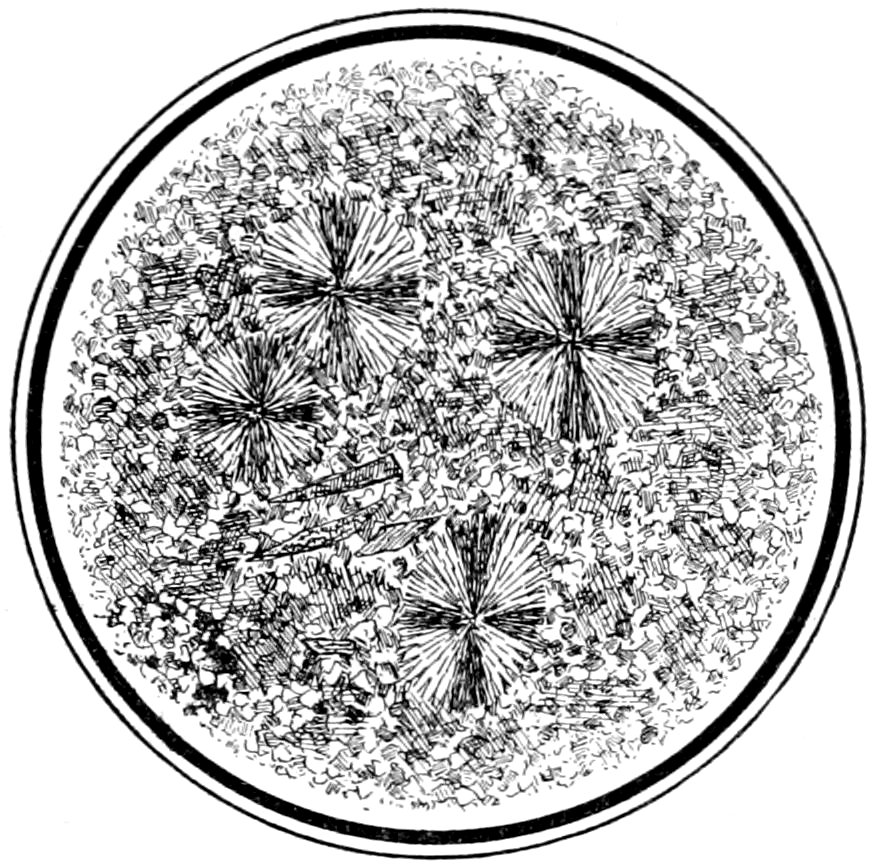
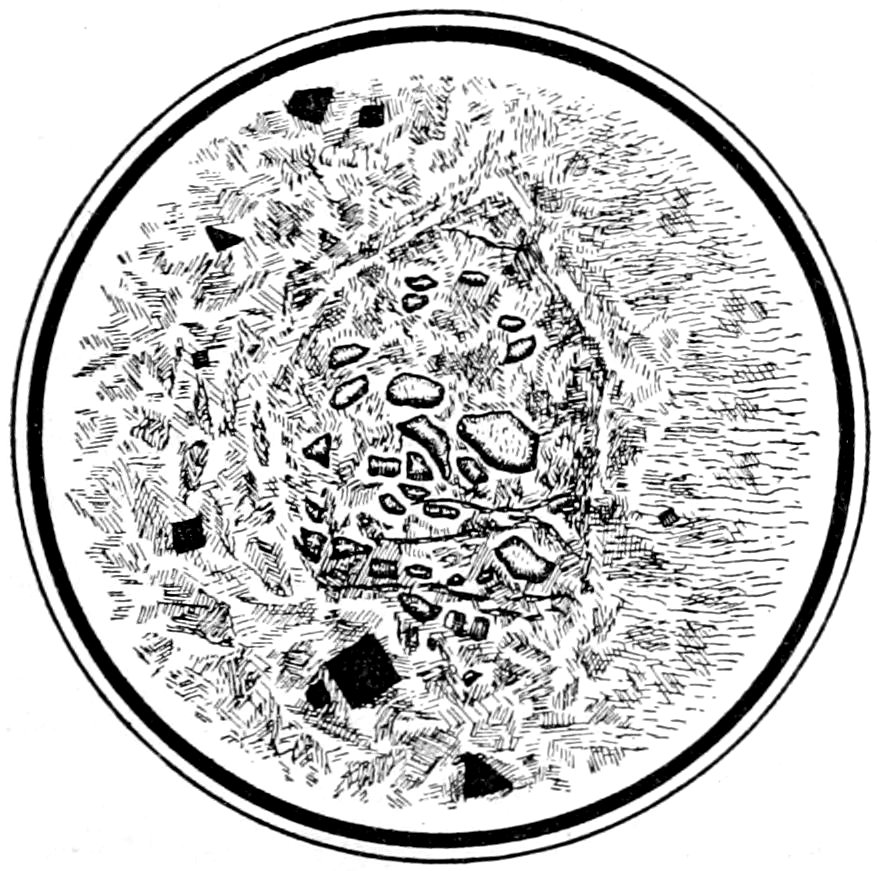
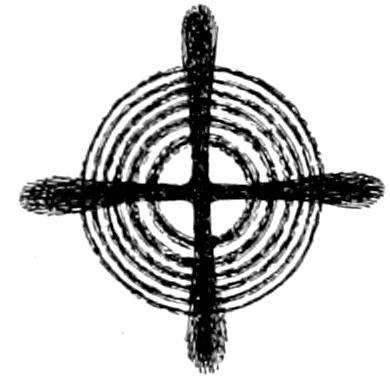
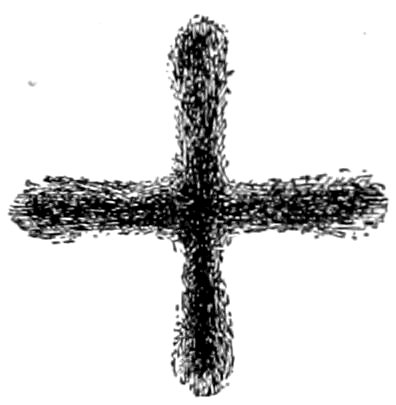
CHAPTER IV. The Microscopic and Optical Characters of Minerals. — OPAL. — LIMONITE. — PYRITE, Pyrites. — PYRRHOTITE, Magnetic Pyrites. — MAGNETITE, Magnetic Iron Ore. — CHROMITE. — SPINEL. — GARNET. — LEUCITE. — ANALCITE. — SODALITE GROUP. Sodalite, Haüynite (Haüyne) and Noselite (Nosean). — PEROVSKITE, Perofskite. — RUTILE. — ZIRCON. — SCAPOLITE GROUP, Wernerite, etc. — VESUVIANITE, Idocrase. — MELILITE. — GRAPHITE. — HEMATITE. — ILMENITE, Menaccanite. — CORUNDUM. — QUARTZ. — TRIDYMITE. — CALCITE. — DOLOMITE. — APATITE. — NEPHELITE, [88] Nepheline, Elæolite. — TOURMALINE, Schorl. — ANDALUSITE — SILLIMANITE, Fibrolite. — TOPAZ. — STAUROLITE. — THE ORTHORHOMBIC PYROXENES. Enstatite and Hypersthene. — CHRYSOLITE, Olivine. — IOLITE, Cordierite, Dichroite. — NATROLITE. — OTHER ZEOLITES. — GYPSUM. — MONOCLINIC PYROXENES, Augite, etc. — AMPHIBOLE, Hornblende, etc. — MICA GROUP. — CHLORITE GROUP. — TALC. — EPIDOTE. — ZOISITE. — ALLANITE, Orthite. — TITANITE, Sphene. — FELDSPAR GROUP. Orthoclase, Microcline and the Plagioclases. — ORTHOCLASE. — MICROCLINE. — THE PLAGIOCLASES. Albite, Oligoclase, Labradorite, Anorthite. — CYANITE, Disthene. — SERPENTINE. — CLAY, Kaolin.
51
Composition: SiO2.nH2O, generally soluble in caustic alkalies.
Usual Appearance in Sections: Colorless patches, incrustations or veins, also
at times with sphærulitic structure (hyalite), showing interference cross, of negative
character, between crossed nicols. Often shows anomalous double refraction
due to strains. The refractive index is very low (1.46) so that the surface of the
opal appears rough.
Remarks: Found as a secondary mineral in many acid volcanic rocks, rhyolite,
trachyte, andesite, etc., and also in basic basalts. H., 5.5 to 6.5. Sp. gr., 2.2.
Composition: Fe2(OH)6, Fe2O3, frequently quite impure.
Usual Appearance in Sections: Brownish and opaque, in very thin sections
may be translucent.
Remarks: Limonite is essentially a decomposition product, often forming
pseudomorphs after ferruginous silicates or halos about the iron ores.
| Isometric. |
| Composition: FeS2. |
|
|
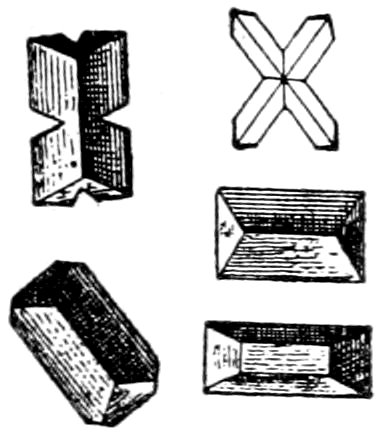
Usual Appearance in Sections: Cubes, pyritohedrons, combinations
of these forms; or in irregular grains. Outline of
cross-sections generally square.
Opaque, and by reflected light, bright yellow, with strong
metallic lustre.
Alters very easily to the oxides of iron (rust).
Remarks: May be present in all kinds of rocks, igneous, metamorphic and
sedimentary. Not noticeably acted on by hydrochloric acid. H., 6 to 6.5. Sp.
gr., 4.9 to 5.2.
Composition: FeS. Distinguished from pyrite by being practically always in
irregular masses and not in crystals, and by bronze yellow color with reflected
light. Found in basic eruptive rocks, more rarely in schists.
52
Composition: Fe3O4, often contains Ti.
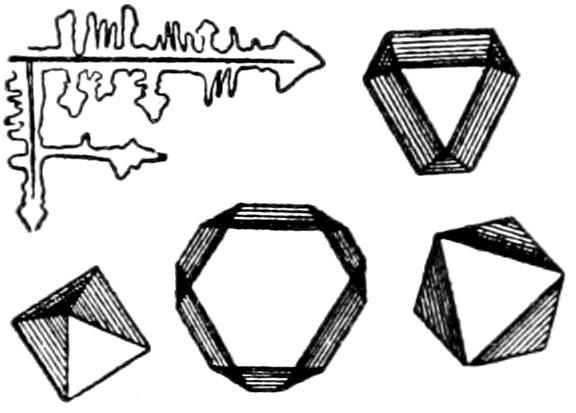
Usual Appearance in Sections: Grains and crystals (generally
octahedra), Fig. 33 B. Skeleton crystals frequent in highly ferruginous
eruptive rocks.
Twinning.—Common, according to Spinel law.
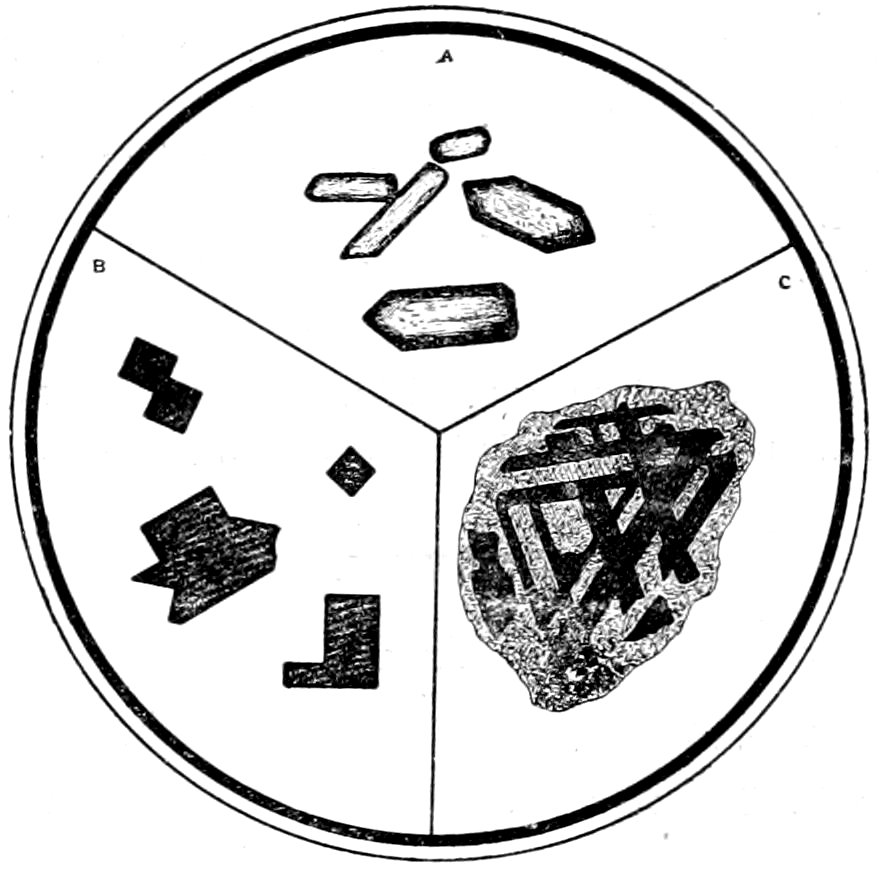
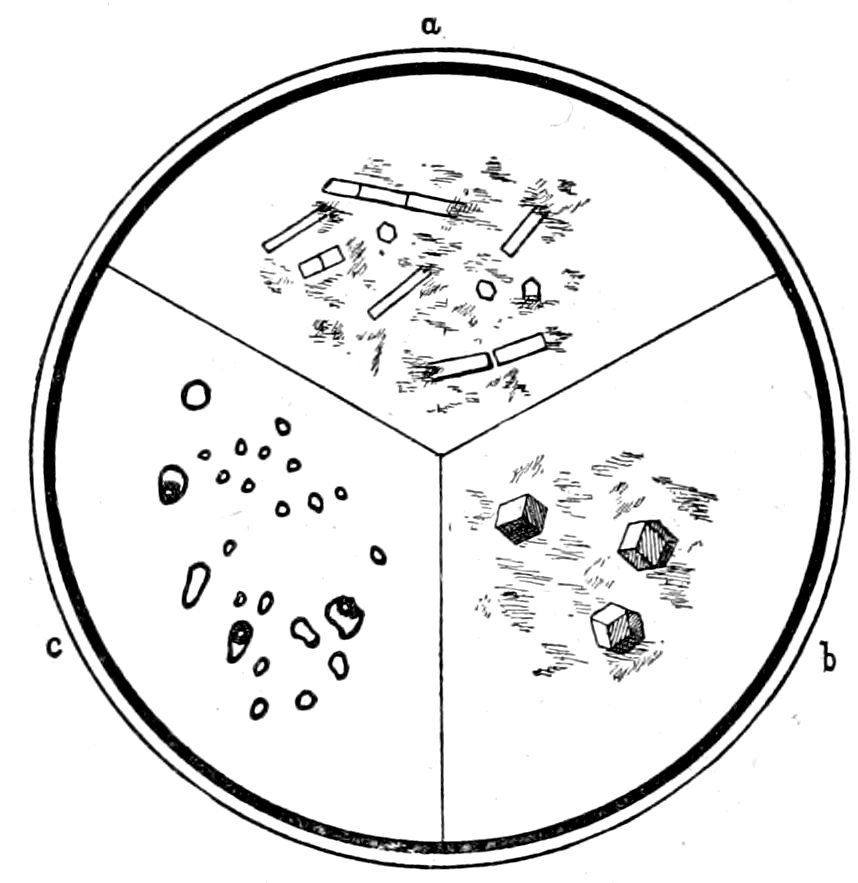
Fig. 33.—A, Zircon crystals (isolated from granite) in balsam, showing high relief. B, Magnetite crystals. C, Ilmenite, showing partial decomposition to leucoxene along crystallographic directions.
Opaque, and by reflected light, bluish-black, with strong metallic
lustre.
Distinguished from: Hematite, Chromite, Ilmenite and
Graphite, by being easily separated from powdered rock by weak
magnet.
Remarks: Very widely distributed in eruptive rocks and crystalline schists. In
the eruptive rocks magnetite belongs to the oldest secretions from the magma, immediately
followed by chrysolite, biotite, hornblende, augite, etc.; hence often
appears as inclusions in these and other minerals. Magnetite grains may form
with other substances pseudomorphs after hornblende, biotite, hypersthene, etc.
Such pseudomorphs appear to be caused by “resorption.” Magnetite is strongly
magnetic and soluble in hydrochloric acid. H., 5.5 to 6.5. Sp. gr., 4.9 to 5.2.
Composition: FeCr2O4.
Usual Appearance in Sections: Octahedral crystals, grains and in the olivine
53rocks sometimes in dense aggregates. May be surrounded by green, pleochroic
halo of chrome ochre.
Opaque, and by reflected light, brownish-black to black, with general absence
of metallic lustre. Usually translucent and brownish on the edges (by transmitted
light), with a very rough surface due to high index of refraction (n = 2.1).
Distinguished from:
(a) Magnetite by brownish-black to black color and general absence of metallic
lustre (by reflected light) and by grains being usually translucent and brownish
on the edges (by transmitted light).
(b) Spinel (Picotite), see under Spinel.
Remarks: Common in crystalline rocks, rich in magnesia, and in serpentine.
Chromite is not acted on by acids, is non-magnetic and gives chromium bead test.
H., 5.5. Sp. gr., 4.3 to 5.6.
Composition: Mg(AlO2)2. Pleonaste (Fe, Mg spinel), Picotite (Cr spinel).
Usual Appearance in Sections: Octahedral crystals and twins (after spinel
law), less often in grains. Fracture cracks. Always optically normal and never
decomposed in rocks. Usually colorless or dark green (pleonaste) to brown (picotite).
The refractive index is high (n = 1.72, spinel proper, to 2.00, chrome spinel), hence
the relief is marked and the surface rough.
Distinguished from:
(a) Garnet when colorless by octahedral shape of crystals (garnet forms being
110 and 211), when brown (picotite) from melanite garnet by common zonal
coloration of the latter, but may require chemical tests. Furthermore spinel may
have green color and is never decomposed.
(b) Perovskite by the lower index of refraction and the absence of reaction
for Ti.
(c) Chromite chemically or by density or hardness.
Remarks: Found in gneiss, granulite, lherzolite and in regions of contact
metamorphism and secondary bedding formations (picotite), olivine-basalt and
serpentine. Spinels are insoluble in hydrochloric acid. H., 8. Sp. gr., 3.5 to 4.1.
Composition: R″3R‴2(SiO4)3. R″ is Ca, Mg, Fe or Mn; R‴
is Al, Fe‴, or Cr, rarely Ti.
Usual Appearance in Sections: Irregular grains, Fig. 13, or
simple crystals, showing forms (110) and (211), alone or in combination,
Fig. 14 b. Zonal structure not infrequent, especially in
the titanium varieties, Fig. 34.
Color.—Colorless, or nearly so, to yellowish, reddish or brownish.
Index of Refraction.—n = 1.750–1.856, hence relief high and
surface very rough.
Fracture.—Irregular cracks occur, but no cleavage noticed.
54Crossed Nicols: As garnets are isotropic, sections remain dark
during complete rotation. Optical anomalies may however occur,
but are generally confined to, titanium free, lime garnets and manganese
garnets. The effect being to divide the crystal symmetrically
into different areas, “dodecahedral structure.”
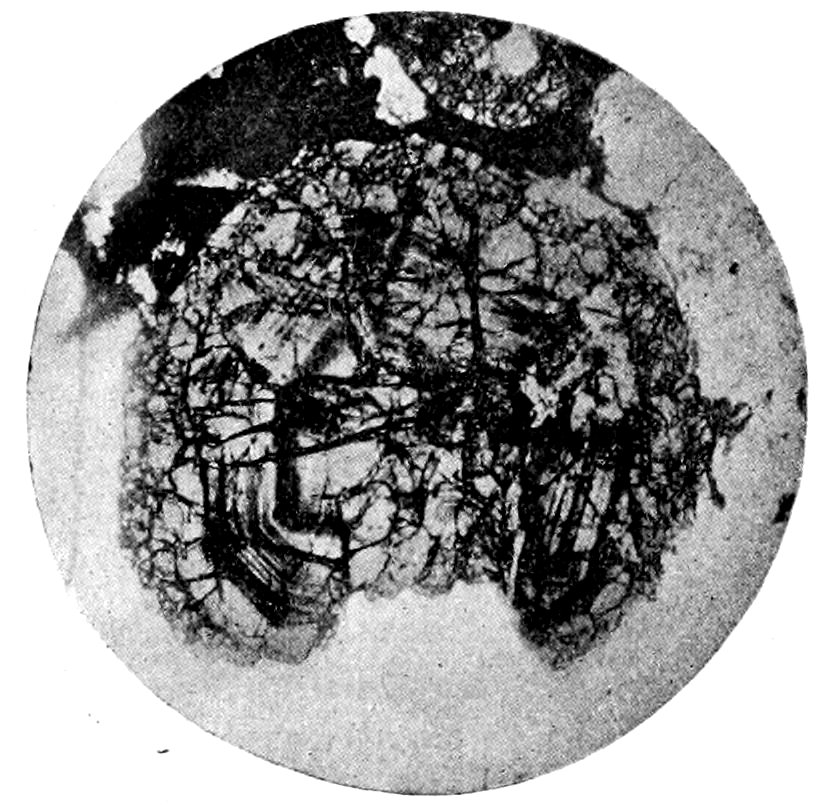
Fig. 34.—Garnet, with zonal structure, in gneiss. (From Cohen.)
Alteration: Garnets are usually fresh, but may be found altered
to chlorite or hornblende.
Distinguished from: Spinel and Perovskite.—See under the
latter.
Remarks: Found principally in granulites, metamorphic rocks, contact rocks,
crystalline schists, etc. Certain varieties may be found in eruptive rocks or olivine
rocks. May form pegmatitic borders with pyroxene, spinel, etc. Garnets are practically
insoluble in hydrochloric acid. H., 6.5 to 7.5. Sp. gr., 3.4 to 4.3. The insolubility
in acids and the high sp. gr. help in separating garnet from a powdered
rock.
| Isotropic. |
|
Isometric.[80] |
Composition: KAl(SiO3)2.
Usual Appearance in Sections: Crystals or grains, which vary
greatly in size. Cross-sections often nearly round. When very
55small and free from inclusions may be easily overlooked. Sometimes
the grains are surrounded by tangentially arranged needles
of different minerals.
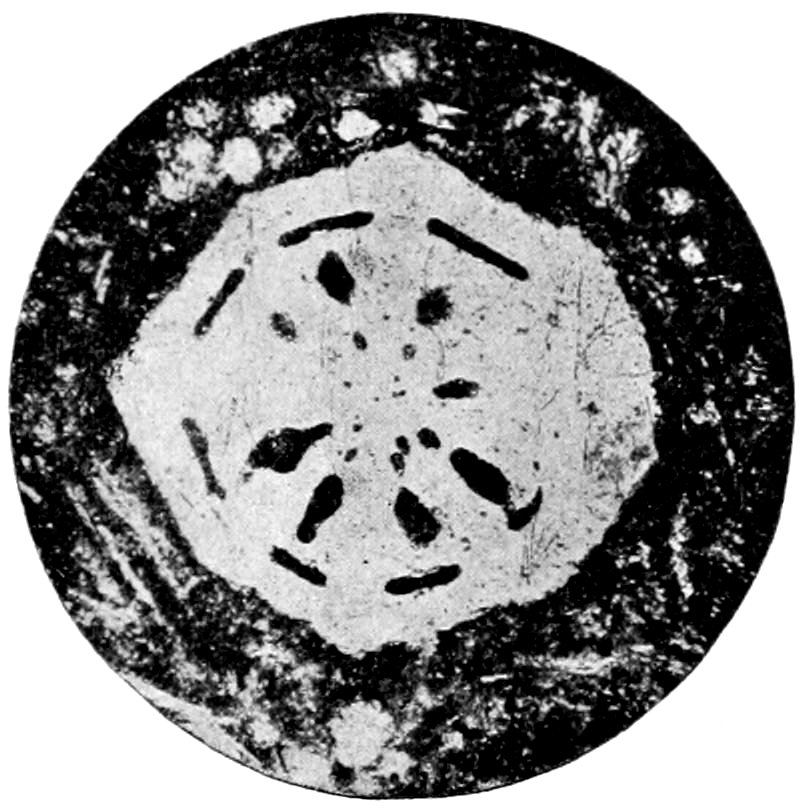
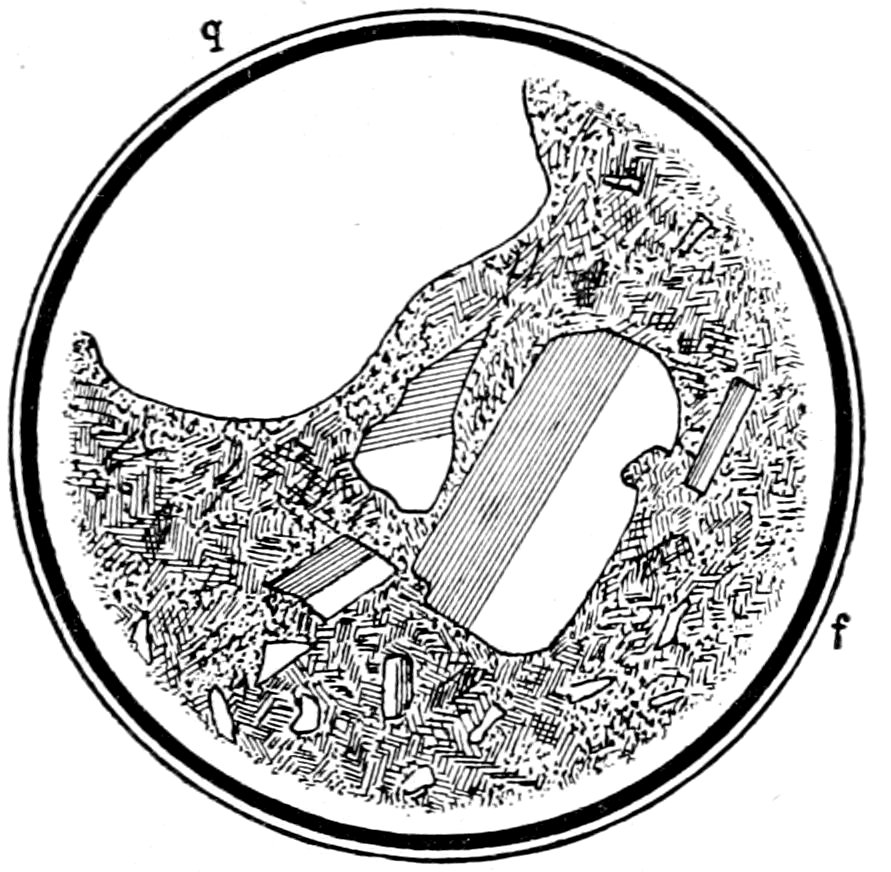
Fig. 35.—Leucite, with radial and tangential inclusions, Vesuvius Lava. (From Cohen.)
Color.—Colorless.
Index of Refraction.—n = 1.509, hence no relief and generally
smooth surface.
Fracture.—May be noticed, but no cleavage observed.
Inclusions.—Common, radially or zonally arranged, consisting
of minerals or glass, Fig. 35.
Crossed Nicols: The smaller crystals appear isotropic; the larger
crystals show characteristic intersecting systems of twin lamellæ,
Fig. 36.
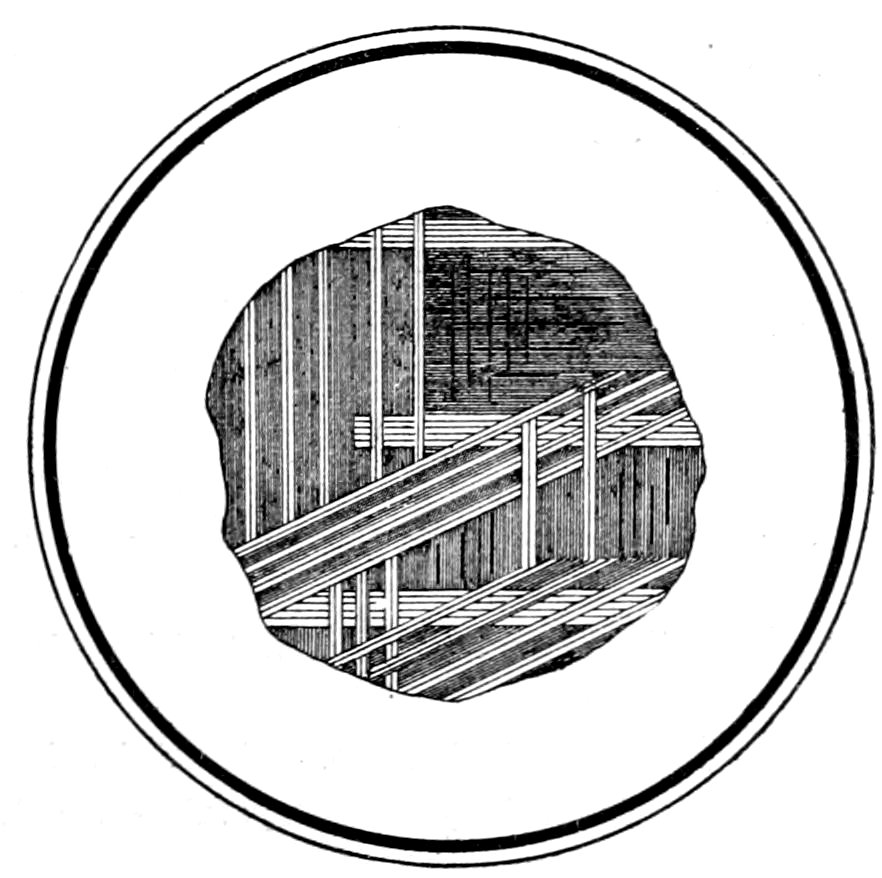
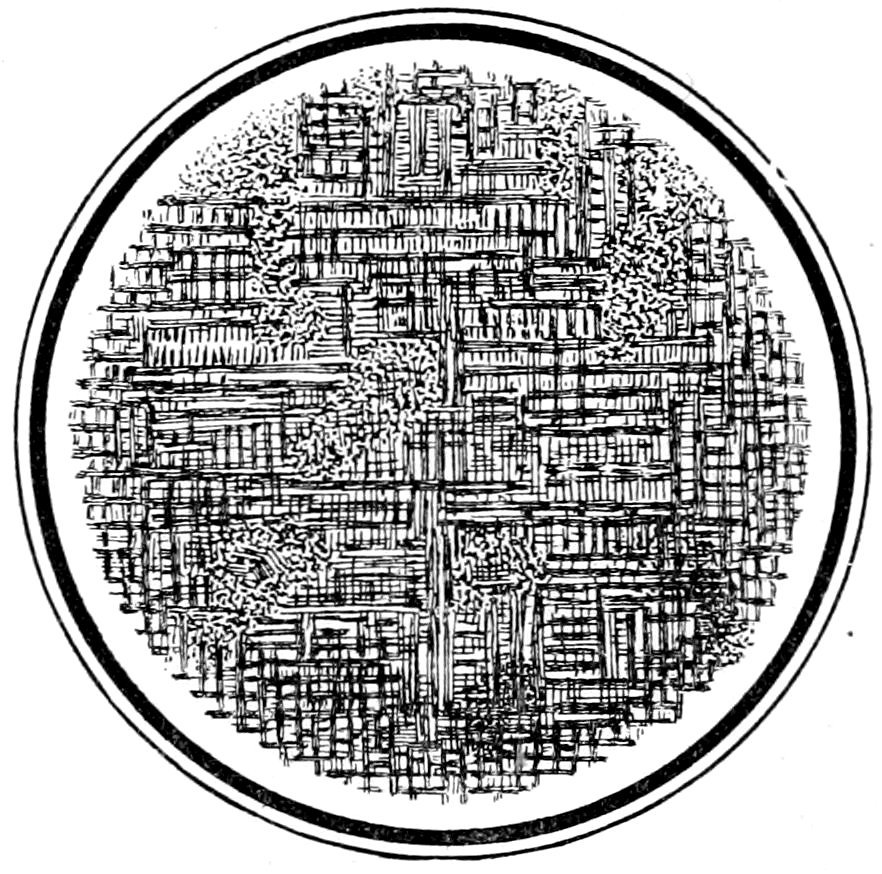
Fig. 36.—Leucite, showing complicated, interpenetration twinning between crossed nicols.
56Double Refraction.—Very weak (γ − α = 0.001). In thin sections
it may be necessary to use a sensitive color plate to prove
double refraction.
Interference Colors.—Very low 1st order, dark gray, etc.
Alteration: Quite frequent to fibrous or granular zeolites.
Distinguished from: Analcite—see under analcite.
Remarks: Almost entirely confined to younger eruptive rocks, phonolite,
tephrite and other leucite rocks and their tuffs. Often found with plagioclase,
nephelite, augite, etc. It is more or less attacked by hot hydrochloric acid. H.,
5.5 to 6. Sp. gr., 2.4 to 2.5. The isolation of leucite from rock powder can be
better accomplished by specific gravity than by chemical methods.
Composition: NaAlSi2O6 + H2O.
Usual Appearance in Sections: Secondary colorless grains, with no very characteristic
microstructure or properties. Cleavage parallel to cube (100) usually
seen. Index of refraction low (n = 1.488), hence rather rough surface. Between
crossed nicols may show optical anomalies, but not so marked as in garnet.
Distinguished from: Leucite, Sodalite and Nephelite. These minerals are
most easily confused with analcite and recourse must be had to chemical tests,
detection of optical anomalies, gelatinization test or turbidity by heating.
Remarks: Occurs as a secondary product (commonly from nephelite or leucite)
in alkali-rich eruptive rocks. Considered also as a primary mineral in igneous
rocks.[81] Gelatinizes with hydrochloric acid, and becomes turbid by heating. H.,
5.5. Sp. gr., 2.25.
Composition:
Sodalite, 3NaAlSiO4 + NaCl.
Haüynite, 2(Na2Ca)Al2(SiO4)2 + (Na2Ca)SO4.
Noselite, 2Na2Al2Si2O8 + Na2SO4.
Usual Appearance in Sections: Dodecahedral rounded crystals or (S) irregular
grains. Colorless, yellowish, brownish, greenish to deep blue. Refractive
index low [n = 1.483(S) to 1.503(H)], hence the surface appears rather rough in
sodalite and slightly rough in haüynite. Inclusions, abundant and characteristic,
often rod-like and arranged regularly, making section translucent and especially
dark at border, Fig. 37. Dodecahedral cleavage sometimes seen. Optical anomalies
may occur.
Alteration: Takes place easily to aggregates of natrolite, other zeolites, mica, etc.
Distinguished from:
(a) One another only by chemical tests. Gelatinization test with hydrochloric
acid will show in addition to jelly, salt crystals for (S), abundant gypsum
57crystals (CaSO2 + 2H2O) for (H) and few if any gypsum crystals (absence of Ca)
for (N). (H) and (N) turn blue when heated, but test will not work if minerals
are decomposed. When treated with hydrochloric acid and nitrate of silver the
black sulphide of silver will show on (H) and (N), but the white chloride on (S).
(b) Nephelite (Elæolite) by being isotropic.
(c) Analcite by no turbidity when heated.
Remarks: These minerals are found in the basic, soda-rich rocks. (S) in elæolite-syenite
also in trachyte and phonolite, (H) and (N) common in phonolite and
leucite-porphyry. H., 5.5 to 6. Sp. gr., 2.3.
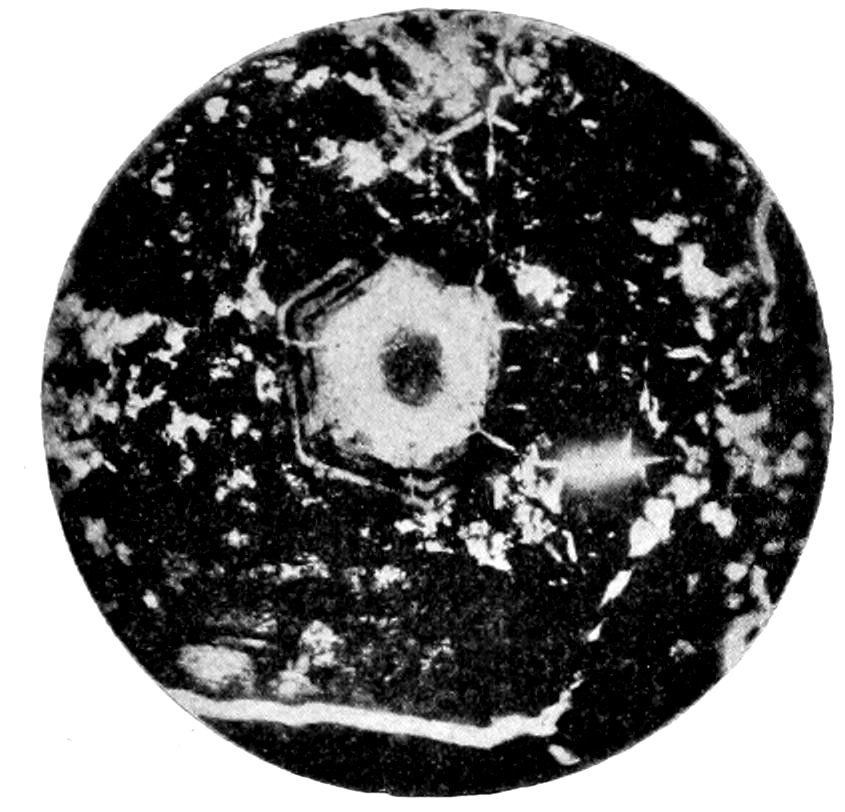
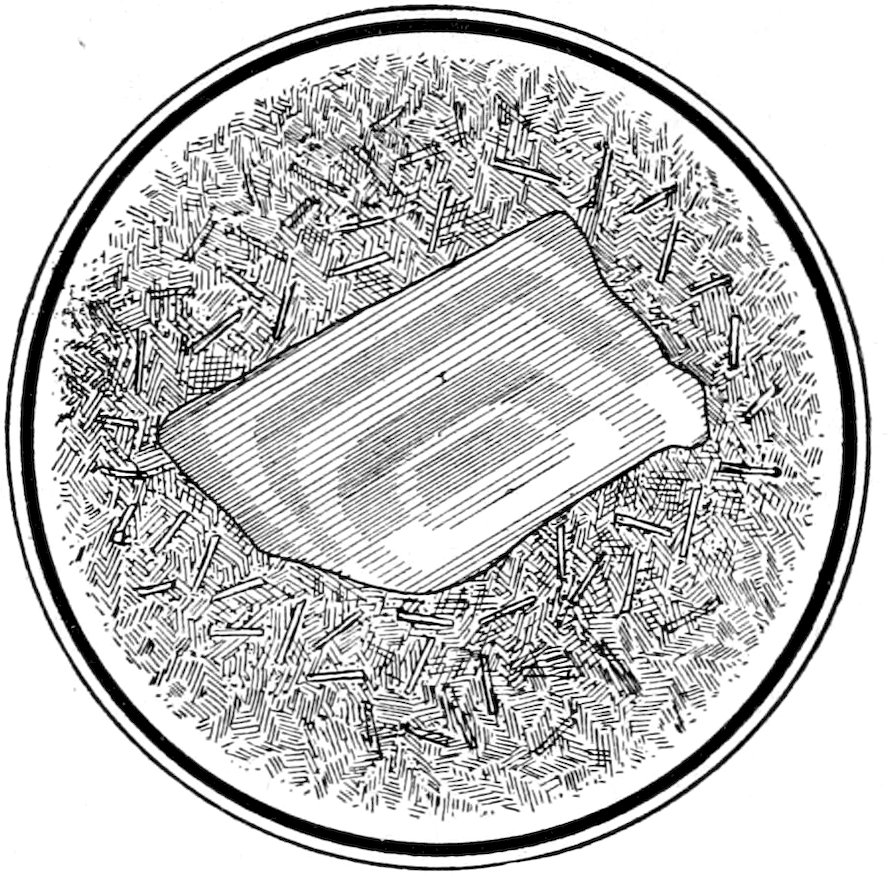
Fig. 37.—Haüynite, showing dark centre and border, in nepelinite. (From Cohen.)
| Isotropic. |
|
Isometric. |
| Composition: CaTiO3. |
|
|
Usual Appearance in Sections: Microscopic, octahedral crystals or larger
grains, pale brownish in color and not very transparent, darker colored in the
larger grains. In reflected light grains appear yellowish with adamantine lustre.
Refractive index very high (n = 2.38), hence relief very strong.
Between crossed nicols, the little crystals generally appear optically normal and
remain dark; but the larger crystals may show a complicated penetration twinning.
Distinguished from: Garnet (melanite) and Spinel (picotite) by much higher
refractive index and reaction for titanium and by zonal coloration of melanite. When
opaque it might be mistaken for the iron ores, but has no metallic lustre.
Remarks: Found in the younger basic eruptive rocks, especially melilite-basalt.
Commonly associated with the iron ores nephelite, augite and chrysolite. Insoluble
in hydrochloric acid. H., 5.5. Sp. gr., 4.1.
| Anisotropic. |
Uniaxial. |
Tetragonal. |
| Composition: TiO2. |
ć = c |
Elongation ∥ ć. |
Usual Appearance in Sections: Sharp, elongated, prismatic crystals when
microscopic, but granular when the individuals are large. Grains may be almost
opaque, with adamantine lustre by reflected light. Knee- or heart-shaped twins,
58Figs. 38 and 39, common in the smaller crystals, the larger individuals may also
show geniculated twinning. Small crystals sometimes form net-shaped groups
(sagenite), by crossing one another at angles of 60°. Pleochroic halos may surround
crystals. Color, yellowish to reddish-brown. Index of refraction very high
(n′ = 2.712, α = 2.616, γ = 2.903), hence relief marked and surface very rough.
Prismatic cleavage present in larger individuals, not observed in microscopic crystals.
Pleochroism and strong absorption may be noticed, especially in the larger grains,
but may fail entirely.
Crossed Nicols: Double refraction very strong (γ − α = 0.287). Interference
colors[82] very high order, only seen in the microlitic crystals which do not appear
dark due to total reflection; in other cases may not show at all. Extinction parallel
to prisms. In convergent light optical character (+).
Alteration: May take place to a white or yellowish, fibrous or granular substance,
strongly refracting, and similar to the alteration product of ilmenite. May
be surrounded by grains of titanite.
Distinguished from: The Opaque Ores by adamantine lustre with reflected
light; Zircon and Cassiterite in concentrates by chemical tests. May not be
possible to distinguish from cassiterite in sections.
Remarks: Found in the metamorphic schists, amphibolites, slates, contact and
fragmentary rocks, etc.; also as inclusions in quartz and mica. Especially common
as a secondary product of titaniferous hornblende and biotite. The “sagenite”
webs of the decomposed micas are probably secondary. Rutile is insoluble
in hydrochloric acid. H., 6 to 6.5. Sp. gr., 4.2. It is easily separated from rock
powder by its insolubility in acid and its high sp. gr.
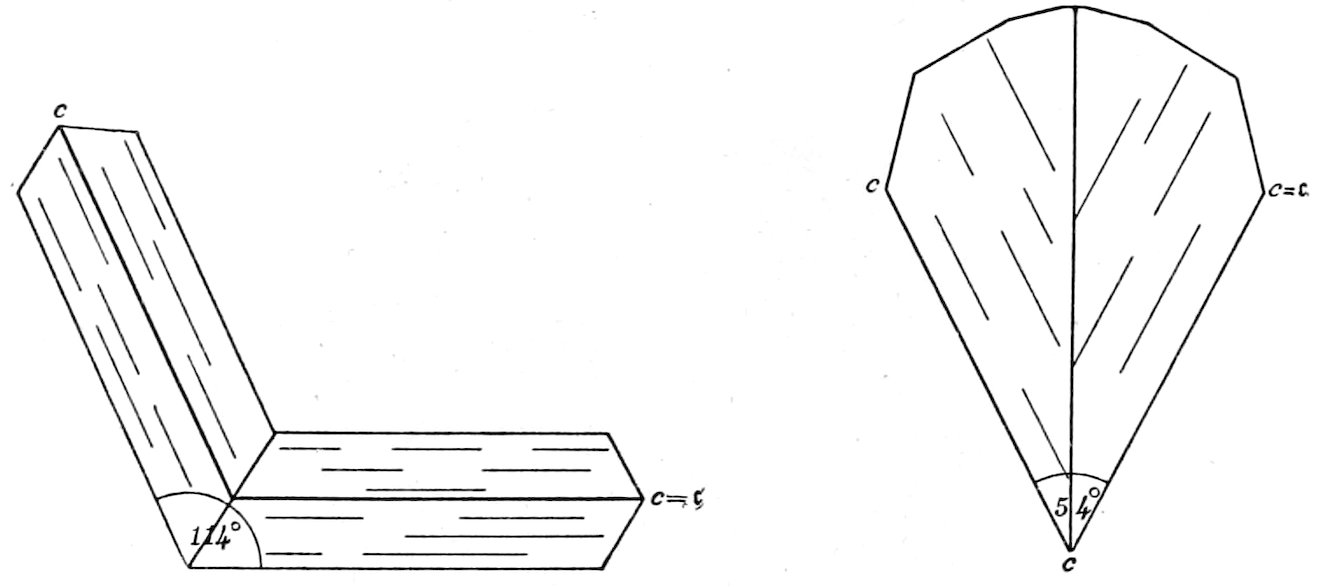
Rutile twins.
Fig. 38.—Twin plane (101). Fig. 39.—Twin plane (301).
| Anisotropic. |
Uniaxial. |
Tetragonal. |
| Composition: ZrSiO4. |
c = ć. |
Elongation ∥ c′. |
Usual Appearance in Sections: Small, short prismatic crystals,
Fig. 33A, and grains. Shell-like (zonal) structure may be noticed.
59When enclosed in black-mica, hornblende, cordierite, etc., often
surrounded by characteristic pleochroic halos.[83]
Color.—Colorless, rarely pale brownish.
Index of Refraction.—n′ = 1.95, (α = 1.931, γ = 1.993) hence
relief very high and surface rough.
Polarized Light:
Pleochroism.—Not usually noticeable.
Crossed Nicols:
Double Refraction.—Very strong (γ − α = 0.062).
Interference Colors.—Very high (4th) order, minute crystals
show brilliant colors.
Extinction.—As zircon is uniaxial, basal sections remain dark
during rotation of stage. In all other sections extinction is parallel
to ć.
Convergent Light: Basal sections, which are large enough to
give interference figures, show several rings in addition to dark
cross. Optical character (+).
Alteration: Very rarely takes place.
Distinguished from:
(a) Apatite.—By much higher relief and stronger double
refraction.
(b) Titanite.—By uniaxial character.
(c) Rutile.—See under the latter.
Easily confused with xenotime, which, however, has higher
interference colors and more distinct pleochroism; but chemical
tests may be necessary.
Remarks: Found widely distributed but not in quantity in eruptive and metamorphic
rocks. Occurs in granite, syenite, diorite, gabbro, gneiss, etc. It is one
of the oldest constituents of the rocks in which it occurs, and may often be found
as inclusions in the ferro-magnesium minerals. Zircon is insoluble in hydrochloric
acid. H., 7.5. Sp. gr., 4.5 to 4.7. It can easily be separated from rock powder
on account of its high sp. gr., insolubility in acid and non-magnetic properties. The
crystals can then be examined separately, or chemical tests made to prove the
presence of Zr.
| Anisotropic. |
Uniaxial. |
Tetragonal. |
| Composition: Silicates of Ca, Al and Na. |
ć = a. |
Elongation ∥ a′. |
Usual Appearance in Sections: Colorless grains, lath-like individuals or
prisms (dipyre, in contact metamorphic limestone). Index of refraction
60(n′ = 1.551 to 1.584;, α = 1.542 to 1.558, γ = 1.555 to 1.597) about the same as
quartz, hence usually no relief and surface smooth. Cleavage distinct parallel to
square prism. Inclusions (carbonaceous) may be abundant in contact rocks.
Crossed Nicols: Double refraction usually strong, but varies (γ − α = 0.013
to 0.039), increases with the Ca percentage. Interference colors upper 1st or 2d
order, more brilliant than those of most of the colorless minerals. Basal sections
(showing cleavages intersecting at 90°) isotropic. Extinction parallel in
longitudinal sections. In convergent light basal sections show distinct uniaxial
interference figure; optical character (−).
Alteration: Takes place easily to a fibrous substance or to kaolin, muscovite, etc.
Distinguished from:
(a) Feldspars (not showing twinning) and Iolite (Cordierite) by uniaxial
character, cleavage and higher order interference colors.
(b) Quartz by cleavage, higher order interference colors and optical character;
quartz is (+)
(c) Apatite (in grains) by lower index of refraction, cleavage and higher order
interference colors.
Remarks: Found especially in metamorphosed diabases and gabbros (Norwegian);
also in gneisses, crystalline schists, metamorphosed limestones, etc.
Dipyre occurs in contact zones of limestones and schists, where it might be confused
with andalusite, but cross-sections show uniaxial character. The minerals
of this group are more or less soluble in hydrochloric acid. When the scapolite
contains Cl, the following test can be made on fresh material. Treat with a solution
of silver nitrate in hydrofluoric acid and the jelly will be impregnated with
chloride of silver which will turn brown. H., 5.5. Sp. gr., 2.68.
| Anisotropic. |
Uniaxial. |
Tetragonal. |
| Composition: Ca6Al3(OH.F)(SiO4)6. |
ć = a. |
Elongation ∥ a′. |
Usual Appearance in Sections: Grains or prismatic crystals. Almost colorless
to reddish (when containing Mn). Index of refraction high (n′ = 1.715,
α = 1.701 to 1.726, γ = 1.705 to 1.732), hence relief marked and surface rough.
Cleavage imperfect, parallel to prism. Pleochroism generally very faint.
Crossed Nicols: Double refraction very weak (γ − α = 0.001 to 0.006), may vary
in different portions of the same crystal (optical anomalies due to the mineral being
at times a mixture of isomorphous individuals). Interference colors very low
1st order, dark gray, etc., may often appear zonal. Basal sections isotropic when
normal, but may show division into biaxial portions. Extinction parallel in sections
elongated ∥ ć axis. In convergent light basal sections show a faint cross
when normal; optical character generally (−).
Alteration: Not known in rock-making vesuvianite.
Distinguished from: Epidote (Pistacite) by the very low order interference
colors. Corundum by weaker double refraction. Garnet (Grossularite), Zoisite,
and Apatite may be easily confused with this mineral and hard to distinguish
from it.
Remarks: Found in limestones, that have undergone alteration by contact with
igneous rocks, and in metamorphic schists. Also may occur in dense (nephrite-like)
aggregates in serpentine. It is insoluble in hydrochloric acid. H., 6.5. Sp.
gr., 3.3 to 3.8.
61
| Anisotropic. |
Uniaxial. |
Tetragonal. |
| Composition: Na2(Ca,Mg)11(Al,Fe)4Si9O36?. |
| ć = a. |
|
Elongation ∥ c′. |
Usual Appearance in Sections: Almost colorless, tabular (∥ base) crystals or
irregular grains or shreds. Sections very commonly lath-shaped, and often characterized
by the peculiar “peg-structure,”[84] the lines or markings being ∥ ć (⟂
elongation of the section). Index of refraction (n′ = 1.630, α = 1.629, γ = 1.631)
higher than that of the other associated colorless materials, hence relief rather marked.
Cleavage, parallel to base, very imperfect.
Crossed Nicols: Double refraction very weak (γ − α = 0.003), and diminishes
with a decrease of Al. Interference colors the lower 1st order, grays, etc.; anomalous
interference colors may show. Extinction parallel to cleavage or the peculiar
markings or lines. Optical character usually (−), but when poor in Al (+).
Alteration: Takes place frequently to a fibrous aggregate.
Distinguished from: Nephelite and Feldspar by higher relief, shape, “peg-structure”
and usual dull appearance with reflected light.
Remarks: Abundant in the leucite and nephelite rocks (associated with these
minerals and with augite, perovskite and chrysolite), and takes the place of a feldspar
in the melilite-basalt. It gelatinizes easily with hydrochloric acid. H., 5.
Sp. gr., 2.9.
Composition: C.
Usual Appearance in Sections: Minute particles, or flakes and grains of irregular
shape, seldom crystallized.
Opaque, and by reflected light, black with metallic lustre.
Distinguished from: The similarly appearing ores by its insolubility in acids
and the possibility of making it disappear by heating.
Remarks: Graphite is widely distributed in the oldest rock formations, especially
in the schists. It is often associated with rutile and the iron oxides.
Graphite is not acted on by acids. H., 1 to 2. Sp. gr., 2.09 to 2.25. It is burnt
with great difficulty in thin sections on platinum foil; but this test may vary, in
many cases the graphite (when in bladed flakes) not being consumed even after
long heating. When heated it may expand into worm-like forms.
Carbonaceous Matter.—Occurs in opaque, grayish-black particles having no
lustre; and is found finely disseminated, sometimes in larger aggregations, in
clay slates, limestones, etc.
Composition: Fe2O3.
Usual Appearance in Sections: Irregular scales, minute grains or earthy.
Distinct crystalline forms not often observed in rocks.
Opaque, and by reflected light, black with metallic lustre, or red without lustre.
May also be transparent in red tints. No marked pleochroism observed.
Remarks: Found widely distributed in acid eruptive rocks, crystalline schists,
etc. Also as inclusions in minerals, and as a red pigment in many rocks. It is
insoluble in hydrochloric acid, and non-magnetic, unless attached to grains of
magnetite. H., 5.5 to 6.5. Sp. gr., 4.9 to 5.3.
62
Composition: (FeTi)2O3.
Usual Appearance in Sections: Irregular masses, without crystallographic
outline, rhombohedral crystals, or skeleton-like
growths. Also in brownish, translucent mica-like forms.
Opaque, and by reflected light, iron-black with metallic lustre.
When translucent: pleochroism brown to yellow; double refraction
not very strong; optically (−).
Alteration: Often takes place to a whitish, strongly refracting,
substance only slightly transparent, called leucoxene. This alteration
product frequently develops along definite rhombohedral directions,
Fig. 33 C. Also a change to titanite or rutile may occur,
or the ilmenite may be surrounded by these minerals.
Distinguished from: Magnetite and Hematite.—By whitish,
strongly refracting decomposition product. At times the distinction
may be very difficult.
Remarks: Ilmenite occurs principally in the soda-rich and basic eruptive rocks.
The mica-like form is limited to the porphyritic eruptives. The brown pigment in
the plagioclase of certain gabbros may be ilmenite. It is attacked slowly by hot
hydrochloric acid, and the solution when heated with tin becomes violet. Pure
ilmenite is indifferent towards the magnet, hence strong magnetic properties would
indicate a mixture with magnetite. H., 5 to 6. Sp. gr., 4.5 to 5.
| Anisotropic. |
Uniaxial. |
Hexagonal. |
| Composition: Al2O3. |
|
c = a. |
Usual Appearance in Sections: Pyramidal or prismatic crystals, grains or basal
plates. Zonal structure or twinning may be noticed. Colorless or with patches
of blue. Index of refraction high (n′ = 1.766, α = 1.760, γ = 1.769), hence relief
well marked and surface very rough. Rhombohedral cleavage may show in larger
individuals. Pleochroism only marked when color is deep.
Crossed Nicols: Double refraction weak (γ − α = 0.009), like quartz. Interference
colors middle 1st order, white to yellow. Extinction parallel in elongated
sections. Optical anomalies very rarely noticed in microscopic individuals. In
convergent light basal sections show a rather indistinct cross; optical character
(−).
Distinguished from:
(a) Apatite and Vesuvianite by brighter interference colors.
(b) Tourmaline (light colored) by not having such strong absorption.
(c) Cyanite by uniaxial character.
Corundum may need to be isolated from the rock in order to be determined
with certainty.
63Remarks: found in contact metamorphic rocks, eruptive rocks, granular limestones,
etc. It is insoluble in hydrochloric acid. When rock sections are ground
with emery, care must be taken not to confuse grains of emery with corundum in
the rock. H., 9. Sp. gr., 3.9 to 4.
| Anisotropic. |
Uniaxial. |
Hexagonal. |
| Composition: SiO2. |
|
ć = c. |
Usual Appearance in Sections: Allotriomorphic in the granitoid
rocks, when apparently the last mineral to form, Fig. 5.
More or less chemically corroded pyramidal crystals (with cross-sections
six-sided or rhombic with an angle of about 100°) in the
porphyritic rocks. Rounded or angular grains in the “clastic”
rocks; granular mosaic in crystalline schists and contact rocks,
very rarely in distinct crystals in any rocks. May at times be
mutually interpenetrated with an acid feldspar (the areas of quartz
and feldspar extinguishing as entire crystals), producing “micro-pegmatitic”
structure, Fig. 67. Finally may appear as pseudomorphs
after other minerals, but may then consist of some of the
other forms of silica.
Color.—Colorless, although by reflected light it may appear
colored or cloudy if it contain many inclusions.
Index of Refraction.—n′ = 1.547 (α = 1.544, γ = 1.553) hence no
relief and surface smooth.
Cleavage..—Rarely noticed, an important fact in determining
quartz. Quartz breaks irregularly.
Inclusions.—Minute fluid, gas and mineral inclusions, often
in irregular trains, are very characteristic of quartz in granite rocks
and crystalline schists. The inclusions are not so abundant in
porphyritic rocks, but a few glass inclusions may occur, filling up
“negative” crystals in the quartz. Rutile, amphibole, etc., may
occur as needle-like inclusions in quartz.
Polarized Light:
Pleochroism.—None.
Crossed Nicols:
Double Refraction.—Weak (γ − α = 0.009).
Interference Colors.—The middle 1st order, white, yellow, etc.
Extinction.—As quartz is uniaxial, basal sections remain dark
during a complete rotation of stage. In the other sections extinction
64is not characteristic, due to the absence of cleavage and crystallographic
outlines. Thin sections do not show circular polarization.
Convergent Light: Basal sections show a dark cross, without
any rings. Optical character (+).
Alteration: Does not take place, so quartz always appears fresh
and unweathered in sections.
Distinguished from:
(a) Sanidine (in fresh grains).—By use of convergent light.
Feldspar is biaxial, or sections which appear uniaxial are (−).
(b) Nephelite.—By almost entire absence of hexagonal outline,
stronger double refraction, fresh, unweathered appearance
and (+) optical character.
(c) Iolite (Cordierite), Scapolite and Topaz.—See under the
latter minerals.
Quartz may be distinguished from all silicates by being dissolved
without residue in hydrofluoric acid.
Remarks: Quartz occurs widely distributed, as in the great sandstone formations.
It is also a characteristic mineral of all acidic rocks, being common in
granite, aplite, rhyolite, quartz-porphyry, quartz-diorite, dacite, etc. Quartz is very
brittle and hence is a good indicator of the dynamic forces which have affected
the rocks. It may show traces of mechanical deformation by peripheral shattering
of the larger grains or by “wavy extinction”;[85] and also evidences of chemical
corrosion by curved and looped contours. In some diabases the quartz may be
surrounded by a rim of hornblende or augite needles (“quartz augen”). “Cataclastic”
quartz may be biaxial. The “secondary enlargement” of quartz in clastic
rocks may be noticed by the deposition of silica in crystallographic orientation
around the clastic grains,[86] the new portion extinguishing at the same time as the
core. Quartz is not attacked by ordinary acids. H., 7. Sp. gr., 2.6 to 2.7.
Chalcedony.—This variety of SiO2 has a radially fibrous structure
and shelly parting. It may form sphærulites, central sections
through which show a dark cross between crossed nicols, or line
cavities in rocks.
The index of refraction is a little lower than for ordinary quartz.
The optical character is (−), which must be determined by a mica
or gypsum plate, ć = a. Elongation ∥ a′.
Chalcedony occurs in the ground mass of very silicious porphyritic rocks,
which have microfelsitic development; and is found as a secondary mineral in
all kinds of silicate rocks.
65
Usual Appearance in Sections: This form of SiO2, which is soluble in boiling
caustic soda, appears in “tile-like” aggregates of minute colorless plates (pseudo-hexagonal)
and is always secondary. The refractive index is extremely low
(n′ = 1.477), hence the surface appears rough.
Between crossed nicols the interference colors are very low in order (γ-α =
0.002), and the tablets may show a division into different areas (optical anomalies).
In convergent light an indistinct biaxial figure is generally seen.
Remarks: Chiefly a volcanic mineral, found in rhyolite, trachyte and andesite.
Commonly associated with opal and chalcedony.
| Anisotropic. |
Uniaxial. |
Hexagonal. |
Composition: CaCO3. Ca may be replaced by small quantities
of Mg, Fe, Mn, etc. ć = a.
Usual Appearance in Sections: Grains and aggregates. May
be fibrous or oölitic. Only in crystals in certain rocks.[87]
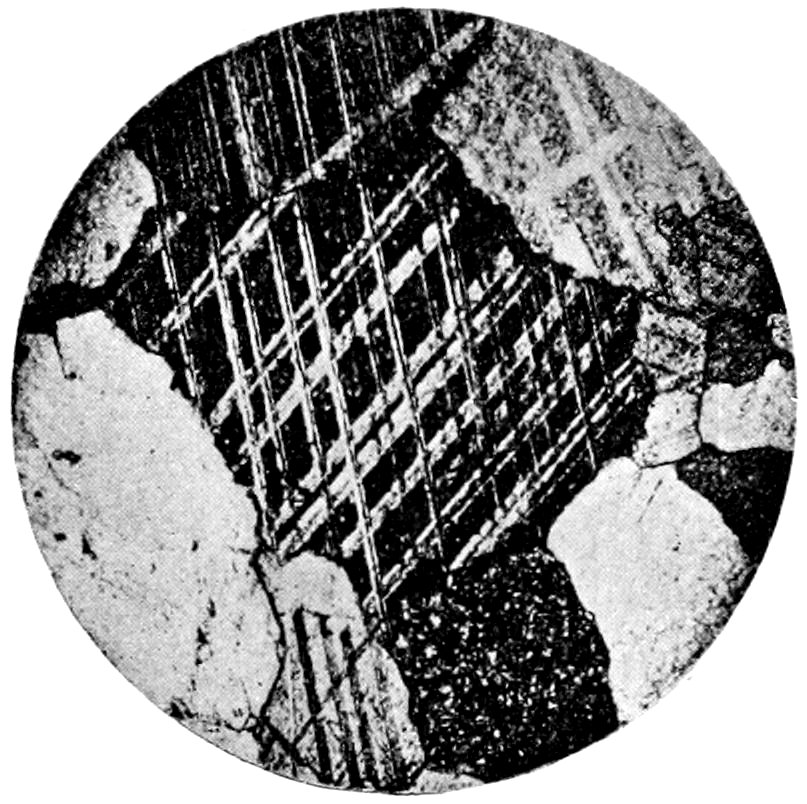
Fig. 40.—Calcite, crossed twin lamellæ, in granular limestone. (From Cohen.)
Twinning.—Polysynthetic, parallel to one or more faces of
−½ R. (10̄12). Very common in crystalline limestones, and may
have been produced by pressure or by the grinding of the section.
Shows itself between crossed nicols as a series of light and dark
bands, parallel or intersecting, Fig. 40, about parallel to longer
diagonal of cleavage rhombs. When the composition face of the
twins is oblique to the face of the section, interference colors can
be seen without the analyzer.
66Color.—Colorless when pure, but may appear colored by transmitted
light, due to organic pigments.
Index of Refraction.—n′ = 1.601 (α = 1.487, γ = 1.659) hence with
ordinary light relief not marked. Due to the great variation
in refractive indices of the two rays, with polarized light, the
surface will appear either quite smooth or rather rough, depending
upon which vibration direction lies over the plane of the polarizer.
This marked variation in appearance (sometimes called “twinkling”) serves as a good test for
calcite.
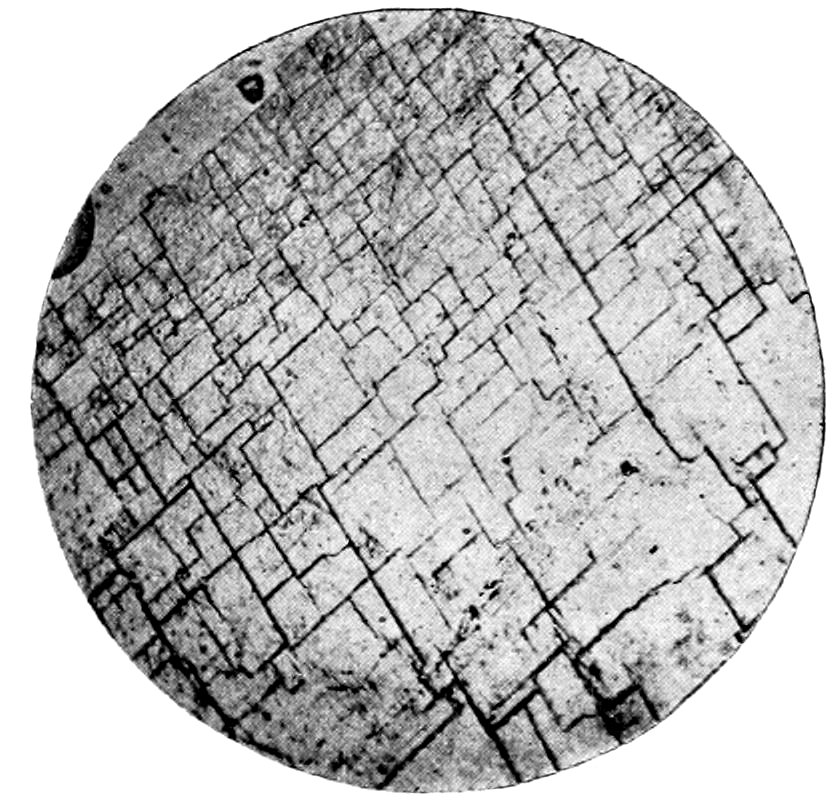
Fig. 41.—Calcite, section parallel to face of rhombohedron, showing rhombohedral cleavage. (From Cohen.)
Cleavage.—Parallel to unit rhombohedron (10̄11), appearing in
thin sections as many sharp cracks, whose angles of intersection
depend on the position of the section, Fig. 41. Newton’s colors
may be seen along cleavage cracks.
Polarized Light:
Pleochroism.—None.
Crossed Nicols:
Double Refraction.—Very strong (γ − α = 0.172).
Interference Colors.—Pale, iridescent colors of very high order.
Extinction.—As calcite is uniaxial, basal sections remain dark
during rotation. Extinction angles with respect to the cleavage
cracks vary with the position of the section.
Convergent Light: Basal sections, even when very thin, show
distinct interference figure, with cross and rings. Optical character
(−).
67Distinguished from:
(a) Other Carbonates.—By ease with which it is attacked by
cold dilute acids, test can be made on slide after removing cover.
(b) Magnesium-bearing Calcite.—By micro-chemical tests.
(c) Titanite (Sphene).—See under the latter.
Remarks: Calcite is very widely distributed, in addition to the extensive sedimentary
limestone deposits. Common limestone consists of dense aggregates of
crystalline grains. Calcite is often a secondary product of the lime-bearing silicates
in the more basic eruptive rocks. Pseudomorphs of calcite after olivine
are noteworthy. Coarse aggregates of calcite occur in the crystalline schists
and contact rocks. Calcite is exceedingly plastic to pressure and mechanical
deformation may be recognized by curving of the cleavage cracks, crumpling of
the twin lamellæ and “wavy” extinction. Calcite is easily attacked and completely
dissolved with effervescence by cold dilute acids. H., 3. Sp. gr., 2.72.
| Anisotropic. |
Uniaxial. |
Hexagonal. |
Composition: CaMg(CO3)2, when pure CaO = 30.4, MgO = 21.7,
CO2 = 47.8. Proportions of Mg and Ca vary, and Fe and Mn also
occur. ć = α.
Usual Appearance in Sections: In rocks chiefly as crystals, even
dense homogeneous aggregates showing tendency towards crystalline
boundaries (saccharoidal structure). Crystals almost always
unit rhombohedron (10̄11) with tendency to curved surfaces.
Index of Refraction.—n′ = 1.622 (α = 1.503, γ = 1.682,
γ − α = 0.179), a little higher than that of calcite. For variation
in appearance of surface with polarized light, see under calcite.
The microscopic characters are similar to those of calcite, from
which it may be distinguished by not being so easily attacked by
cold dilute acid (test can be made on slide with cover off), by tendency
towards crystalline boundaries, by absence of twin lamellæ
(or when present parallel to −2R. (20̄21), hence about parallel to
shorter diagonals of cleavage rhombs), and by micro-chemical
tests. The distinction at times may be very difficult.
Remarks: Occurs in sedimentary formations and as crystals in limestone and
other rocks. In certain rocks the dolomite crystals may not have a very good
“bond,” and a “drusy” structure may also be characteristic of the cavities
between dolomite crystals in rocks. Only slightly attacked by cold dilute acids,
but if acid is heated it dissolves easily with effervescence.
68
| Anisotropic. |
Uniaxial. |
Hexagonal. |
| Composition: Ca5(Cl.F)(PO4)3. |
ć = a. |
Elongation ∥ a′. |
Usual Appearance in Sections: Minute, slender hexagonal
prisms, cross-sections having regular hexagonal boundaries,
needles, and grains. Figs. 14 a and 42.
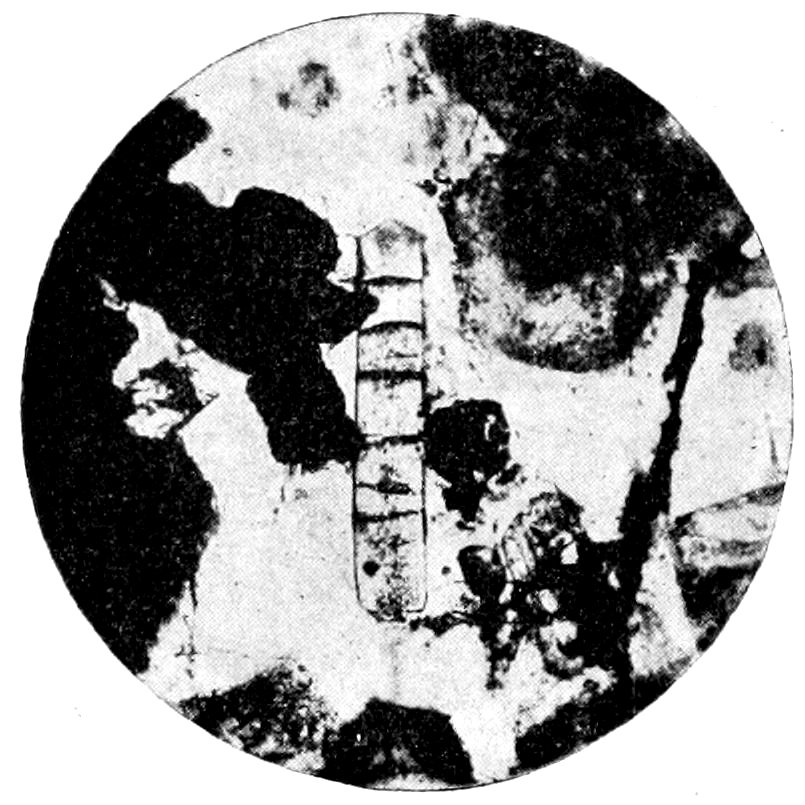
Fig. 42.—Apatite, showing cross fracture, in nepheline-basalt. (From Cohen.)
Color.—Generally colorless, seldom bluish or brownish (only
in eruptive rocks).
Index of Refraction.—n′ = 1.635 (α = 1.634, γ = 1.637), hence
relief more marked than that of the colorless associated minerals.
Cleavage.—Seldom observed microscopically.
Parting.—Long columnar crystals generally show a transverse
jointing, so that the pieces may be more or less separated.
Inclusions.—Gas and fluid may be present.
Polarized Light:
Pleochroism.—None shown by the colorless crystals, the colored
crystals show stronger absorption parallel to ć.
Crossed Nicols:
Double Refraction.—Weak (γ − α = 0.003).
Interference Colors.—The lower first order, generally grayish-blue
or white.
Extinction.—As apatite is uniaxial, basal sections remain dark
during rotation of stage. In all other sections extinction is parallel
to ć axis.
69Convergent light: Basal sections show a cross, without rings.
Optical character (−).
Alteration: Does not usually take place, apatite being found
perfectly fresh in decomposed rocks, which is quite remarkable
considering its easy solubility in acids.
Distinguished from:
(a) Sillimanite and Tremolite.—By weak double refraction
and elongation ∥ a′.
(b) Nephelite.—By being relatively much smaller and longer
than the nephelite crystals, which are often decomposed. Also by
higher relief and negative results with gelatinization test.
(c) Zircon.—By lower relief and much weaker double refraction.
(d) Feldspars (when granular and undecomposed).—By higher
relief and uniaxial interference figure.
(e) Vesuvianite and Zoisite.—May be only possible by chemical
tests.
(f) Corundum.—See under the latter.
Remarks: Found in most igneous rocks and crystalline schists. In the eruptive
rocks it appears as one of the oldest secretions from the magma, and hence is
often found as inclusions in other minerals, especially biotite, hornblende, etc.
Apatite is easily soluble in hydrochloric and nitric acids. H., 4.5 to 5. Sp. gr.,
3.19. On account of its high sp. gr., apatite, in rock powder, comes down in
heavy solutions with the metallic minerals, and can be separated from them by
the use of a magnet. This residue can also be tested for phosphorus in the wet
way with ammonium molybdate.
| Anisotropic. |
Uniaxial. |
Hexagonal. |
| Composition: 7NaAlSiO4 + NaAl(SiO3)2, with partial replacement of Na by K. |
|
ć = α. |
Usual Appearance in Sections: Nephelite in short hexagonal
prisms and grains in the younger volcanic rocks, hence sections
rectangular or hexagonal, Fig. 43; elæolite allotriomorphic in the
older plutonic rocks.
Color.—Colorless.
Index of Refraction.—n′ = 1.539 (α = 1.538, γ = 1.542), hence no
relief and surface smooth.
Cleavage.—Imperfect, parallel to prism (10̄10) and base (0001).
70More marked in elæolite than in nephelite, especially when decomposition
has commenced.
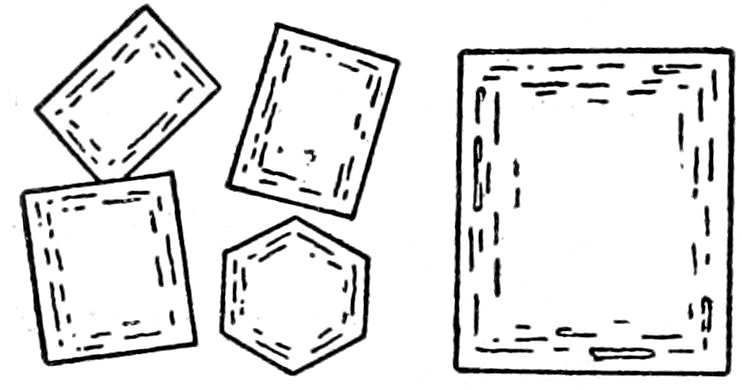
Fig. 43.—Nephelite sections, showing zonal inclusions. (From Reinisch.)
Inclusions.—Microscopic needles of augite, etc., also fluid and
gas. Mostly in zones. Elæolite may be much clouded by inclusions
and alteration products.
Polarized Light:
Pleochroism.—None.
Crossed Nicols:
Double Refraction.—Very weak
(γ − α = 0.004), may only be detected
by using a test-plate.
Interference Colors.—The
lower first order, grayish-white,
etc., a little lower than the feldspar
colors.
Extinction.—As the mineral is uniaxial, basal sections remain
dark during rotation of stage. In all other sections extinction
takes place and is parallel to cleavage lines when these appear.
Convergent Light: Basal sections show a broad cross, without
rings. Optical character (−).
Alteration: Takes place easily to fibrous zeolites (natrolite), or
in certain rocks to mica.
Distinguished from: Other Minerals by gelatinization test
and staining with fuchsine. When present in small interstitial
individuals (as is often the case in basalts) it is very difficult to distinguish
without this test; but it must be remembered that other
minerals, zeolites, etc., will also gelatinize. Quartz has stronger
double refraction, rarely shows hexagonal outline, is always fresh
and optically (+). Feldspar is biaxial and often shows twinning.
Analcite.—See under the latter.
Remarks: Nephelite bears the same relation to elæolite as sanidine does to
orthoclase. It occurs only in the younger volcanic rocks; with sanidine in phonolite,
with plagioclase in tephrite, without feldspar in nepheline-basalt, and with
leucite in leucite-basalt. It is not found with primary quartz. Elæolite occurs
with orthoclase in elæolite-syenite, etc. nephelite and elæolite frequently occur
with the sodalite group. Nephelite gelatinizes with acids. H., 5.5 to 6. Sp. gr.,
2.5 to 2.6.
| Anisotropic. |
Uniaxial. |
Hexagonal. |
| Composition: Uncertain, R18B2(SiO5)4. R chiefly Al, K, Mn, Ca, Mg, Li. |
ć = a. |
Elongation ∥ a′. |
71Usual Appearance in Sections: Staff-like individuals, bunched
or in radiating aggregates, Fig. 44 B, or prismatic crystals, Fig.
44 A. Basal sections may be nine-sided.
Color.—Varies greatly, grayish-blue, brown and green most common.
Li-tourmaline (rare in rocks) is colorless. Zonal structure
may be indicated by differences in color.
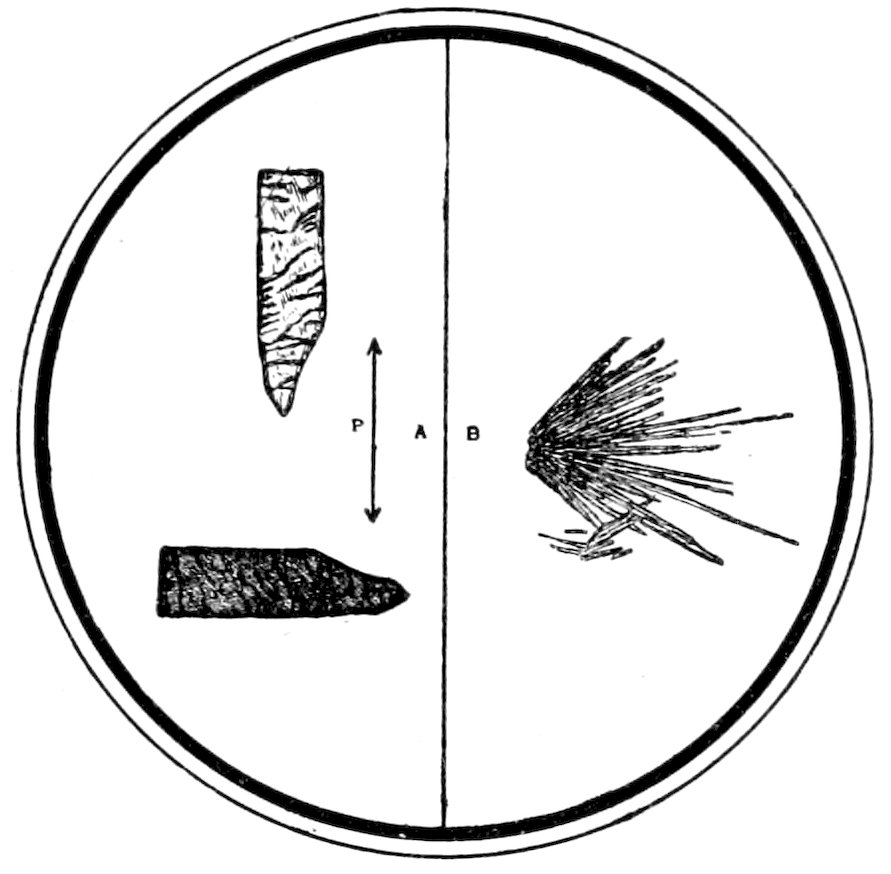
Fig. 44.—A, Tourmaline, showing strong absorption at right angles to direction of elongation (P = plane of vibration of polarizer). Quartzite, Black Hills, D. B, Tourmaline in radiate aggregate. Granite, Cornwall.
Index of Refraction.—n′ = 1.633 (precious) to 1.674 (α = 1.620 to
1.651, γ = 1.640 to 1.685), hence relief is marked and surface rough.
Cleavage.—Not seen in thin sections, but irregular, transverse
and longitudinal cracks may appear.
Polarized Light:
Pleochroism.—Distinct, even in light colored varieties, increasing
with the depth of color. The greatest absorption takes place at
right angles to the direction of elongation of the crystal, Fig. 44 A.
The other minerals having this very strong absorption are hornblende,
dark colored mica (distinguished by cleavage and lamellar
form) and allanite. Pleochroic halos may be noticed surrounding
inclusions.
Crossed Nicols:
Double Refraction.—Quite strong (γ − α = 0.017 (precious) to
0.034).
Interference Colors.—Bright upper first or second order, but
may not be noticeable, due to absorption of parts of the light.
72Extinction.—As tourmaline is uniaxial, basal sections remain
dark during rotation of stage. In all other sections extinction is
parallel to ć axis.
Convergent Light: Cross-sections show a sharp cross. Optical
character (−).
Alteration: Does not take place.
Distinguished from:
(a) Hornblende.—By absence of cleavage, and by the fact
that the greatest absorption takes place at right angles to the
longitudinal axis, while in hornblende it takes place approximately
parallel to the longitudinal axis, or to the cleavage lines which are
parallel to this axis.
(b) Apatite (when colored).—By strong absorption at right
angles to longitudinal axis.
(c) Corundum.—See under the latter.
In some cases where recognition is difficult, chemical tests, to
prove presence of boracic acid, must be made.
Remarks: The black schorl is the only primary tourmaline and is found in
granitoid rocks. Tourmaline in other rocks results from “fumarole” action;
hence occurs in pegmatite, tin and copper veins, clay deposits, also (light colored)
in contact rocks and crystalline schists. The hemimorphic terminations may
sometimes be noticed. Tourmaline is not acted on by acids. H., 7 to 7.5. Sp.
gr., 3 to 3.2. It can be separated from powdered rock by sp. gr. solutions combined
with magnetic methods.
| Anisotropic. |
Biaxial. |
Orthorhombic. |
| Composition: Al2SiO5. |
ć = a. |
Elongation ∥ a′. |
Usual Appearance in Sections: In short, rounded, prismatic crystals, with
almost square cross-section. Colorless or at times pale reddish and spotted. Index
of refraction medium (n′ = 1.637, α = 1.632, γ = 1.643), hence relief well marked
and surface rough. Cleavage, parallel to almost square prism, may show. Pleochroism
only marked in colored varieties, being reddish ∥ ć (the direction of elongation
or cleavage). Carbonaceous inclusions are characteristic, arranged as in macroscopic
specimens (Chiastolite), Fig. 45. Pleochroic halos may surround inclusions.
Crossed Nicols: Double refraction weak (γ − α = 0.001). Interference colors
middle 1st order, white to yellow. Extinction in general parallel to ć axis in
longitudinal sections, symmetrical in cross-sections. In convergent light Ax. pl. ∥
(010), Bxa0. ∥ ć; axial angle very large (2E > 180°); optical character (−).
Alteration: Often takes place to dense aggregate of mica, when the pseudomorph
may be hard to recognize.
73Distinguished from:
(a) Sillimanite by much weaker double refraction, less elongated crystals
and by elongation ∥ a′ (Sillimanite elong. ∥ c′).
(b) Diopside by weaker double refraction, rhombic cross-section and parallel
extinction in longitudinal sections.
Remarks: Very characteristic of metamorphic schists and of contact zones of
clay slates with granite, etc., but not found in rocks which have been formed at
great pressure. The andalusite grains may often be arranged in divergent or
finger-like manner. May also form parallel growths with sillimanite. It is
insoluble in hydrochloric acid. H., 7 to 7.5. Sp. gr., 3.18.
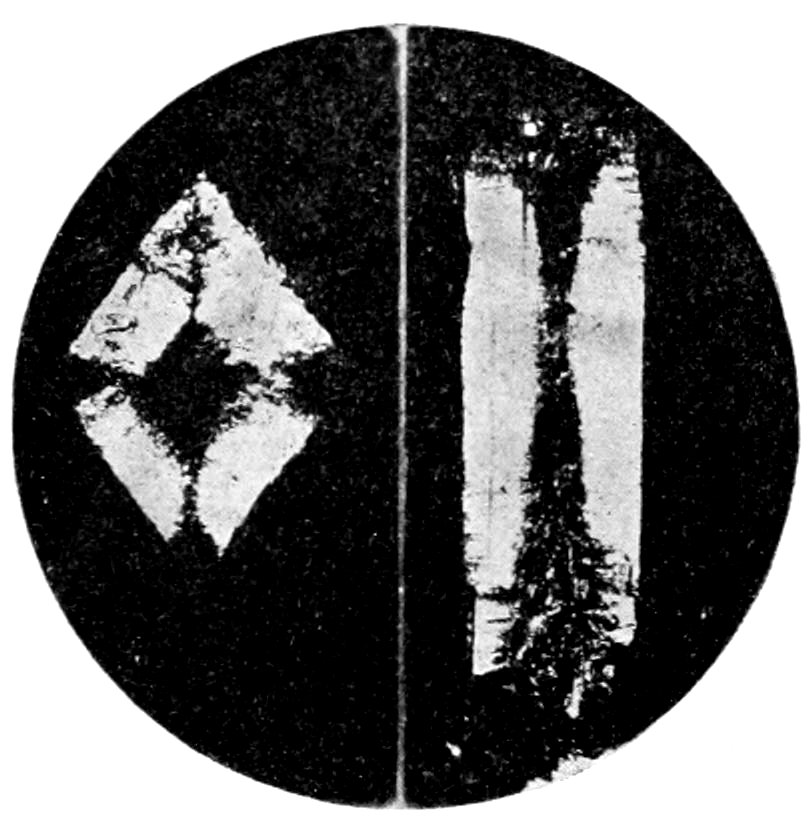
Fig. 45.—Chiastolite, showing characteristic carbonaceous inclusions. (From Cohen.)
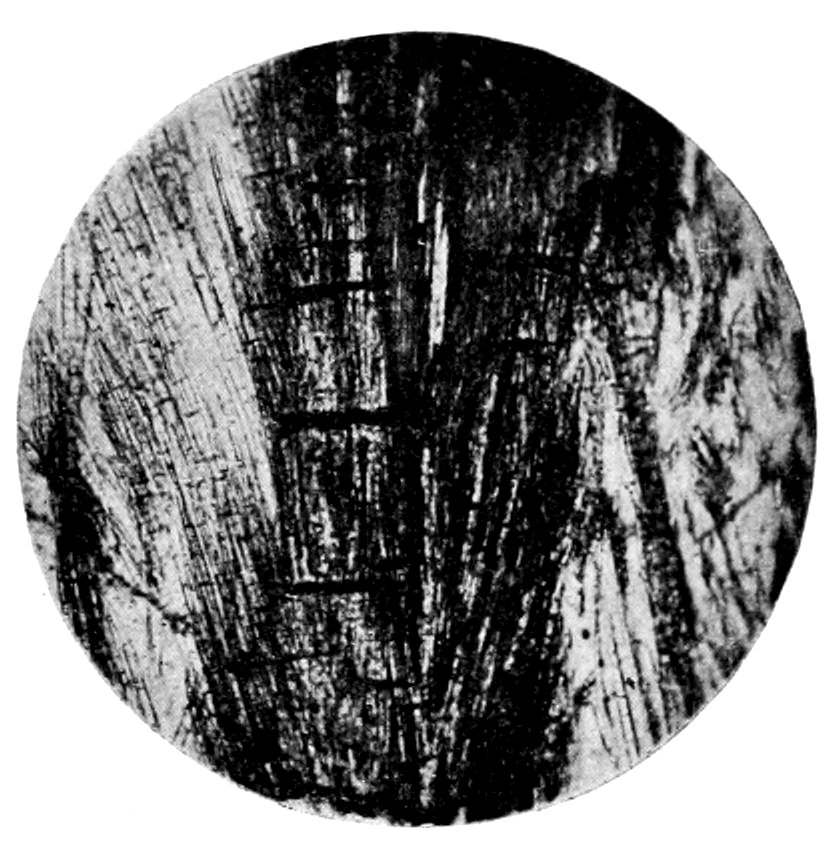
Fig. 46.—Sillimanite aggregate, showing cross fracture, in mica schist. (From Cohen.)
| Anisotropic. |
Biaxial. |
Orthorhombic. |
| Composition: Al2SiO5. |
c = c′. |
Elongation ∥ c′. |
Usual Appearance in Sections: Long, slender, colorless prisms or needles;
often in felt-like aggregates. Crystals often bent. Index of refraction rather
high (n′ = 1.664, α = 1.656, γ = 1.677), hence relief marked. Transverse fractures
common, Fig. 46.
Crossed Nicols: Double refraction rather strong (γ − α = 0.021). Interference
colors upper first or lower second order, red, purple, blue, etc. Extinction
parallel to prisms. Ax. pl. ∥ (100), Bxa. ∥ ć, 2E = 35° to 55°. Optical character
(+).
Distinguished from:
(a) Apatite by higher order interference colors and by elongation ∥ c′ (apatite
has elongation ∥ a′).
(b) Tremolite by always parallel extinction and small size of axial angle.
(c) Andalusite, see under the latter mineral.
74Remarks: Found especially in clay-rich contact rocks, gneisses and schists,
often occurring with iolite (cordierite). Crystals may appear in bands. It is
insoluble in hydrochloric acid. H., 6 to 7. Sp. gr., 3.24.
| Anisotropic. |
Biaxial. |
Orthorhombic. |
| Composition: Al(Al(O.F2))SiO4. |
|
ć = c. |
Usual Appearance in Sections: Colorless crystals of short prismatic habit,
grains or rod-like radiating aggregates. Index of refraction about the same as
that of calcite (n′= 1.608 to 1.632, α = 1.607 to 1.629, γ = 1.618 to 1.637), hence
relief medium. Cleavage perfect, parallel to base, but does not show as many
cracks. Fluid inclusions abundant.
Crossed Nicols: Double refraction weak (γ − α = 0.008 to 0.011), about the
same as that of quartz. Interference colors middle first order, white, yellow, etc.
Extinction parallel to cleavage. In convergent light, Ax. pl. ∥ (010), Bxa. ∥ ć,
axial angle large (2E = 86° to 126°); interference figure obtained from basal
sections (i. e., from sections showing no cleavage); optical character (+).
Alteration: May take place to kaolin or muscovite, by loss of F and taking
up of H2O and alkalies.
Distinguished from:
(a) Quartz by higher relief, cleavage and biaxial character.
(b) Sillimanite (when topaz is in radiating aggregates) by lower refraction and
double refraction.
Remarks: Common in greisen and all granite rocks containing tin ore. When
formed by “fumarole” action (tin veins) the mineral shows rod-like radiating forms.
It is insoluble in hydrochloric acid. H., 8. Sp. gr., 3.5.
| Anisotropic. |
Biaxial. |
Orthorhombic. |
| Composition: Fe(AlO)4(AlOH)(SiO4)2, but varying, may contain Mg or Mn. ć = c. |
|
Elongation ∥ ć. |
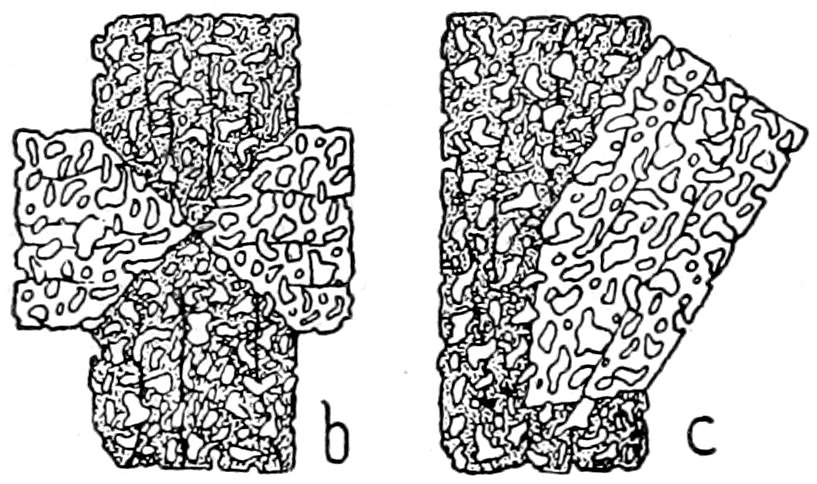
Fig. 47.—Staurolite, showing twinning at 90° b and 60° c, also granular quartz inclusions. (From Reinisch.)
Usual Appearance in Sections: Short, flat prisms, which may be twinned at
90° or 60°, Fig. 47, or grains. Color yellowish to reddish-brown. Index of refraction
rather high (n′ = 1.741, α =
1.736, γ = 1.746), hence relief marked
and surface rough. Cleavage, both
prismatic and pinacoidal, variable.
Inclusions of minute quartz grains and
carbonaceous matter found in larger
crystals, but not in microscopic crystals.
Pleochroism distinct but not
strong, showing red ∥ c (direction of
elongation). Pleochroic halos may
surround inclusions.
Crossed Nicols: Double refraction
weak (γ − α = 0.010). Interference
colors middle first order,
75white to yellow, etc. (about like quartz). Extinction in general parallel or symmetrical
(in cross-sections) to cleavages
or crystal outline. In convergent light,
Ax. pl. ∥ (100), Fig. 48. Bxa. ∥ć, axial
angle large (2E > 180°); optical character
(+).
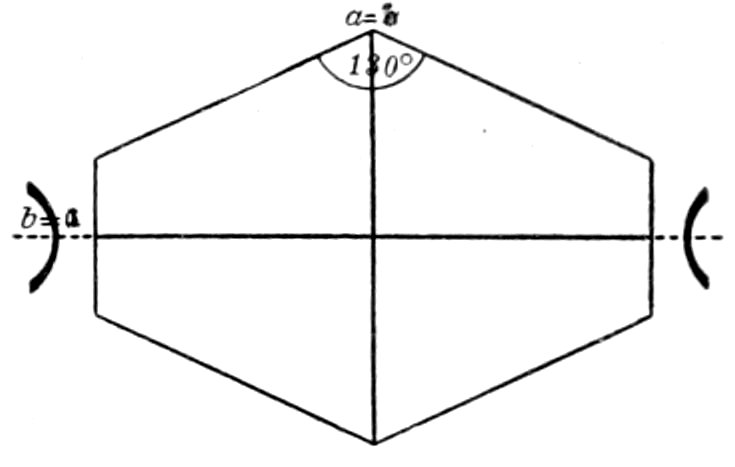
Fig. 48.—Staurolite, cross-section.
Alteration: Rarely takes place.
Distinguished from: Titanite, see
under the latter mineral.
Remarks: Found in metamorphic
schists, associated with cyanite (disthene),
iolite (cordierite), andalusite,
etc. It is one of the minerals produced by thermal metamorphism, hence found
in rocks of granite contact zones. It does not occur in the eruptive rocks or in
schists rich in amphibole. Staurolite is not acted on by hydrochloric acid. H.,
7 to 7.5. Sp. gr., 3.4 to 3.8.
| Anisotropic. |
Biaxial. |
Orthorhombic. |
| Composition: (Mg.Fe)SiO3. |
ć = c. |
Elongation ∥ c′. |
Enstatite contains little, if any, Fe. Hypersthene contains more
Fe, its optical characters beginning to show with about 10 per cent.
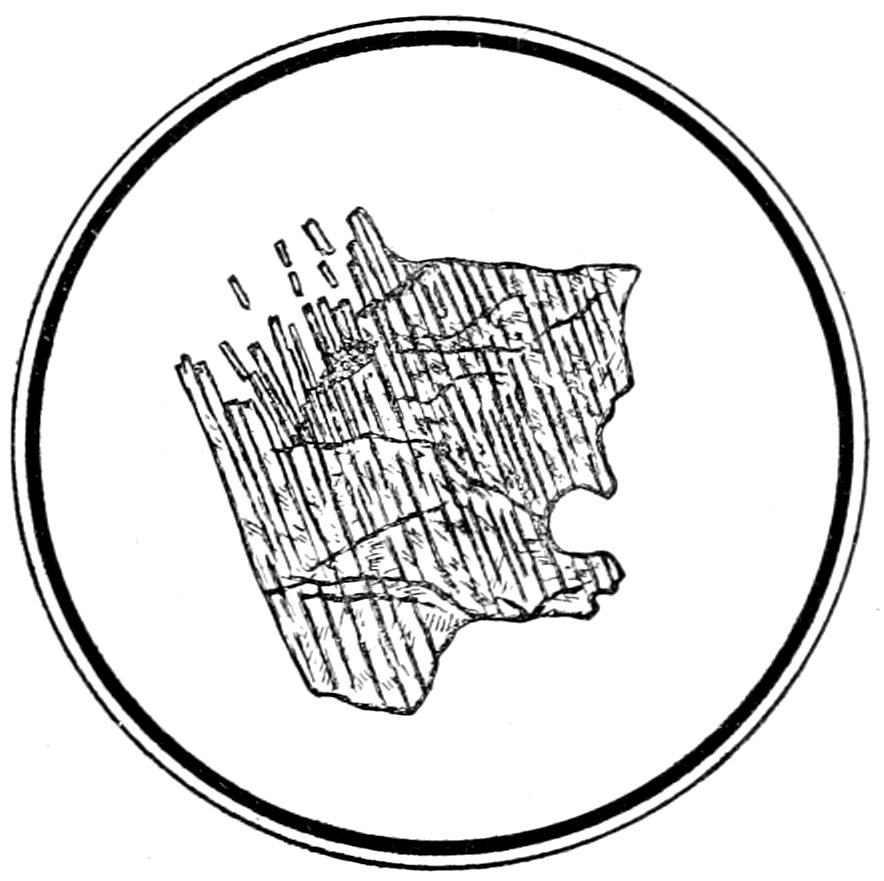
Fig. 49.—Enstatite, showing columnar or fibrous structure ∥ ć axis. Norite, Harzburg.
Usual Appearance in Sections: Irregularly bounded individuals
(E) or rounded prismatic-pyramidal crystals (H). Columnar or
fibrous structure ∥ ć often shows in (E), Fig. 49. Prism angle
about 92°. Outline of crystal sections very similar to that of
monoclinic pyroxenes.
76Twinning.—Not so common as in monoclinic pyroxenes. Parallel
growths with monoclinic pyroxene (diallage) occur.[89]
Color.—Varies with Fe per cent., (E) colorless, (H) brownish.
Index of refraction.—n′ = 1.665 (E) to 1.723 (H) (α = 1.660 to
1.716, γ = 1.670 to 1.729) (about the same as in monoclinic pyroxene),
hence relief marked and surface rough.
Cleavage.—Variable, parallel to prism (angle 92°) common to
all pyroxenes. Also cleavage or parting parallel to brachy pinacoid
(010) (prominent) and macro pinacoid (100).[89]
Inclusions.—Parallel oriented, brownish plates and rods, producing
“schiller” structure on the principal cleavage faces, Fig.
15. Glass inclusions abundant in (H).
Polarized Light:
Pleochroism.—Almost absent in (E), but distinct in (H), increasing
with Fe per cent. The change in color may be very
marked, from brownish-red to greenish ∥ ć.
Crossed Nicols:
Double Refraction.—Weak, much weaker than in the monoclinic
pyroxenes, increasing with Fe per cent. (γ − α = 0.010 (E) to
0.013 (H).)
Interference Colors.—Higher first order, about the same or a
little higher than quartz.
Extinction.—Parallel to cleavages in longitudinal sections, which
are parallel to a or b, and bisecting angles of intersecting prismatic
cleavages in basal sections.
Convergent Light: Axial plane parallel to brachy pinacoid
(010),[89] i. e., parallel to best pinacoidal cleavage. Bxa. ∥ ć (E),
∥ a(H). Axial angles large (2E = 95° to > 180°). Optical character
for (E)(+), for (H)(−). On account of weak double
refraction the interference figures are not very marked.
Alteration: Takes place to bastite, serpentine, etc.
Distinguished from: The Monoclinic Pyroxenes and Amphiboles.—See
under these species.
Remarks: Found in the granular rocks of the gabbro-peridotite series, also in
the olivine basalts (E); and in crystals in porphyritic andesite (H). These minerals
are in general not attacked by acids. H., 5 to 6. Sp. gr., 3.1 to 3.5.
Bronzite is the name give to the variety containing about 5% Fe and having
the characteristic bronzy lustre due to inclusions.
77Bastite (an alteration product of the orthorhombic pyroxenes
poor in Fe).—Composed of fibers, often traversed by irregular
cracks. Color light yellowish or greenish and index of refraction
about the same as Canada balsam. Pleochroism faint (only seen
in thick sections), the greatest absorption taking place parallel to
the fibers. Double refraction weak and extinction parallel to the
fibers. Axial angle large and axial plane at right angles to principal
cleavage face (010). The position of the axial plane is the surest
distinction between bastite and the orthorhombic pyroxenes.
| Anisotropic. |
Biaxial. |
Orthorhombic. |
| Composition: (Mg.Fe)2SiO4. |
Elongation ∥ a′ or c′. |
Usual Appearance in Sections: Prismatic crystals or in large
angular fragments or grains. Longitudinal sections more or less
lath-shaped, with pointed ends, Figs. 50 and 51, cross-sections six or
eight-sided. Outlines of crystals often rounded or corroded. Skeleton
forms may occur, and sometimes twinning may be observed.
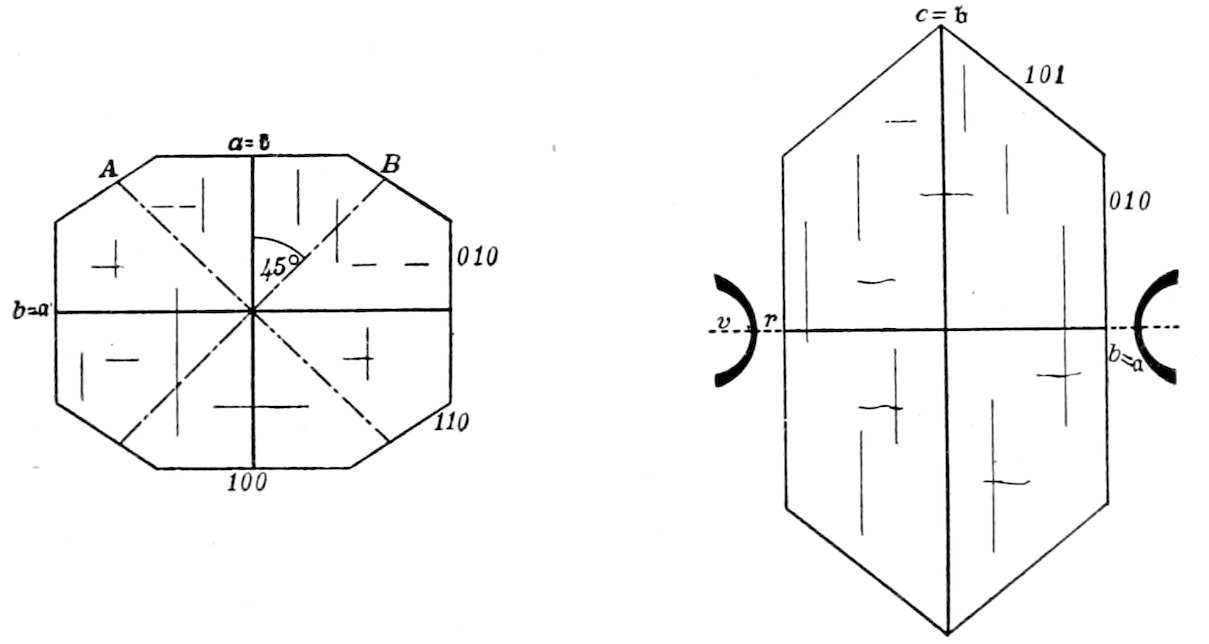
Chrysolite.
Fig. 50. Fig. 51.
Basal section. Macro pinacoid section.
Color.—Nearly colorless, may be reddish (with high Fe per cent.).
Index of Refraction.—n′ = 1.675 (α = 1.661, γ = 1.697), hence
relief marked and surface rough.
Cleavage.—Parallel to brachy pinacoid (010), less distinct parallel
to macro pinacoid (100), Fig. 50. Often only made visible by
decomposition. An irregular fracturing occurs, which increases
with alteration into serpentine.
78Inclusions.—Chromite, opaque earths, apatite and the brown
plates so common in hypersthene; also glass and slag (in basaltic
rocks) and fluid (in peridotites and olivinfels).
Polarized Light:
Pleochroism.—In general none, but noticed in the reddish varieties,
when the absorption is a little stronger parallel to ć.
Crossed Nicols:
Double Refraction.—Very strong (γ − α = 0.036).
Interference Colors.—Rather high in order (second or third),
higher than the colors of augite.
Extinction.—In general parallel to cleavage lines.
Convergent Light: Axial plane parallel to base (001) and
always at right angles to cleavage cracks, Fig. 51. Bxa. ∥ a.
Axial angle very large (2E > 180°). Optical character (+).
Alteration: Into serpentine very common,[90] producing “mesh-”
or “lattice-” structure (see under serpentine, p. 114); also into
amphibole, etc. In certain basaltic rocks the rims of grains may be
changed into gœthite?, and in certain gabbros the crystals may be
surrounded by a radial rim of amphibole.
Distinguished from:
Light colored Monoclinic Pyroxenes.— By the absence of extinction
angles, cleavage (the intersecting prismatic cleavages of
augite being of equal distinctness), stronger double refraction and
by axial plane being parallel to base, hence always at right angles
to best cleavage (in augite axial plane lies in clino pinacoid,
bisecting angles of intersecting prismatic cleavages). Also by
gelatinization with acids.
Remarks: Found only in basic rocks, as peridotite, diabase, gabbro, norite,
basalts, etc. Chrysolite (olivine) is a very brittle mineral and shows under mountain
making pressure “cataclastic” structure. Chromite is a characteristic associated
mineral. When not too poor in Fe, chrysolite becomes permanently red and
pleochroic when strongly heated. Chrysolite is decomposed by hydrochloric and
sulphuric acids, with separation of gelatinous silica. H., 6.5 to 7. Sp. gr., 3.3 to 3.4.
Hyalosiderite (a more ferruginous chrysolite) and Fayalite (Fe2SiO4)
may be reddish in sections, and common in the basic porphyritic
eruptive rocks.
| Anisotropic. |
Biaxial. |
Orthorhombic. |
| Composition: Mg3(Al.Fe)6Si8O28. |
ć = a. |
Elongation ∥ a′. |
79Usual Appearance in Sections: Grains, more rarely crystals of short prismatic
habit, which often form pseudo-hexagonal interpenetration twins. Crystals may
have edges rounded or corroded. Colorless, but may be bluish. Index of refraction
a little lower than quartz (n′ = 1.539, α = 1.535, γ = 1.544), hence relief low
and surface smooth. Cleavage very variable, parallel to brachy pinacoid (010),
especially noticeable when decomposition has taken place. Inclusions of sillimanite,
zircon, rutile, etc., may be seen. Pleochroism usually not observed, but noticed in
blue sections (yellowish white ∥ ć to blue). Pleochroic halos (yellow) surrounding
inclusions common, see p. 59.
Crossed Nicols: Double refraction weak (γ − α =0.009), like quartz. Interference
colors middle first order, white to yellow. Extinction in general parallel
to cleavage cracks. In convergent light, Ax. pl. ∥ (100), Bxa. ∥ ć; axial angle
large (hyperbolas only seen without ellipses) (2E = 64° to 150°); optical character
(−).
Alteration: Takes place readily, forming greenish mica-like decomposition
products, the decomposition commencing along the crevices or about the inclusions.
Distinguished from: Quartz by observation in convergent light (quartz is
uniaxial), decomposition and pleochroism or pleochroic halos. The section can
also be treated with hydrofluosilicic acid, when the evaporated solution yields
characteristic prismatic crystals of magnesium fluosilicate.
Remarks: Found in gneiss, hornstone, granite, granulite, etc., and in some
volcanic rocks. It is often associated with garnet, biotite, sillimanite, etc. In
a thick section heating to redness makes the pleochroism more distinct. Iolite
is only slightly acted on by acids. H., 7 to 7.5. Sp. gr., 2.6. It is hard to make
a mechanical separation from quartz, on account of similarity in sp. gr.
| Anisotropic. |
Biaxial. |
Orthorhombic. |
| Composition: Na2Al2Si2O10 + 2H2O. |
ć = c. |
Elongation ∥ c′. |
Usual Appearance in Sections: Aggregates of colorless, fibrous crystals, which
may have sphærulitic structure, showing a dark cross between crossed nicols.
Index of refraction lower than balsam (n′ = 1.483, α = 1.478, γ = 1.490), hence (in
large crystals) the surface would appear rather rough.
Crossed Nicols: Double refraction weak (γ − α = 0.012). Interference
colors the middle first order (yellow, etc.), a little higher than those of quartz.
Extinction parallel to fibres. Optical character (+).
Remarks: Never a primary mineral in rocks, but found in igneous rocks filling
amygdaloidal cavities, and also as a very common alteration product of sodalite,
noselite, nephelite and acid plagioclases. It gelatinizes easily with hydrochloric
acid. H., 5 to 5.5. Sp. gr., 2.2.
Composition: Hydrous silicates; Al, Ca and Na being the chief bases.
Usual Appearance in Sections: The form depends on the individual mineral
species, but the majority appear in elongated crystals or fibers. They are all colorless
and most of them have a small index of refraction, hence no relief (prehnite
has distinct relief).
80Crossed Nicols: The double refraction is generally very weak (between that of
nephelite and quartz), giving very low order interference colors (prehnite and
thomsonite have strong double refraction).
Remarks: The zeolites are always secondary minerals in rocks. They gelatinize
with hydrochloric acid.
| Anisotropic. |
Biaxial. |
Monoclinic. |
| Composition: CaSO4 + 2H2O. |
|
|
Usual Appearance in Sections: Colorless grains or fibers. May be colored,
however, by inclusions of carbonaceous matter, iron oxides, etc. Index of refraction
about the same as orthoclase (n′ = 1.525, α = 1.521, γ = 1.531), hence no relief
and surface smooth. Twinning lamellæ abundant. Cleavage parallel to (010) gives
abundant cracks, other cleavages may also be noticed.
Crossed Nicols: Double refraction weak (γ − α = 0.010), the same as quartz.
Interference colors middle first order, white to yellow. Extinction parallel to
most perfect cleavage cracks in sections parallel to b axis; large extinction angles
noticed with reference to less perfect cleavages. In convergent light, Ax. pl. ∥ (010),
i.e., ∥ to most distinct cleavages; Bxa. (c) Λ = 54° front; 2E = 104°; optical character
(+). As the characters of gypsum are not always very marked it may be necessary
to employ micro-chemical tests.
Remarks: Forms a rock by itself, often associated with rock salt. It also
occurs as an alteration product of anhydrite. Gypsum is soluble in hydrochloric
acid. H., 1.5 to 2. Sp. gr., 2.2 to 2.4.
Including the monoclinic minerals of the Pyroxene Group, which show distinctly
the characteristic cleavage parallel to an almost right-angled prism.
| Anisotropic. |
Biaxial. |
Monoclinic. |
| |
Elongation ∥ c′.[91] |
|
Composition: RSiO3, R = Ca, Mg, Mn, Fe, Al chiefly, with the
Ca predominating over the Mg.
Usual Appearance in Sections: Both in crystals and more or less
irregular grains, Figs. 4 and 12, the habit varying with the chemical
composition as follows:
Diopside (Ca, Mg varieties), long columnar crystals and grains.
Augite (ditto, but containing also Al and Fe), short prismatic
crystals and grains.
Diallage, granular or lamellar (|| (100)), may show fibrous
structure ∥ ć.
Prism angle = 87° 06′ (important in cross-sections). Sections of
crystals nearly at right angles to the vertical axis ć are octagonal
81or square with truncated corners, Figs. 4 and 53, while those parallel
to the ć axis are lath-shaped. Pyroxene also occurs in skeleton
crystals and acicular microlites in eruptive rocks.
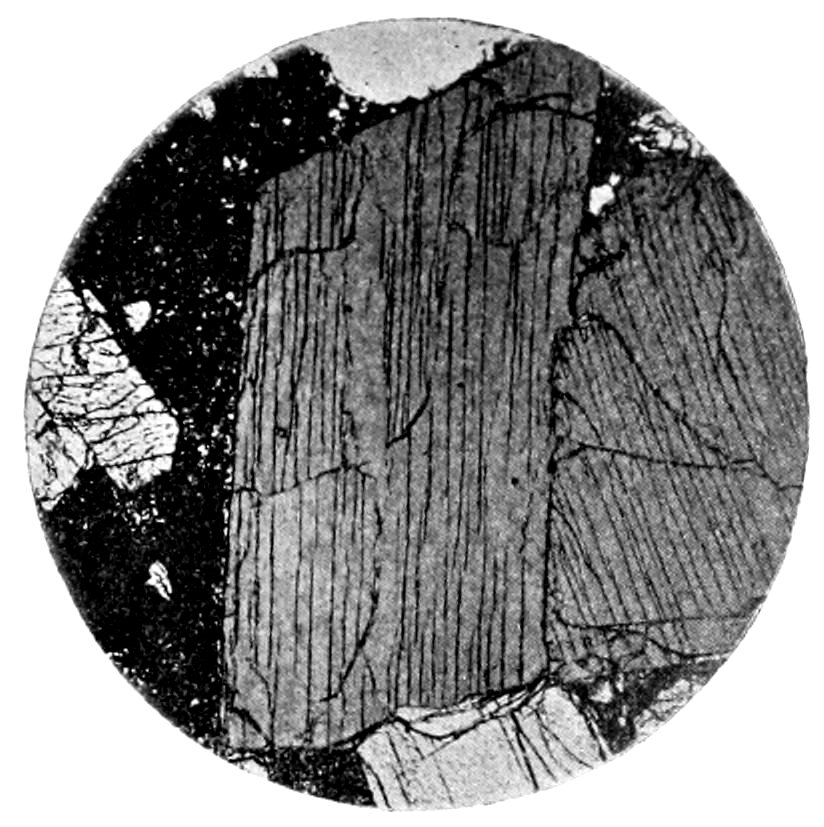
Fig. 52.—Augite, section parallel to ć axis showing prismatic cleavage, in leucite-basal. (From Cohen.)
Zonal structure (especially in augites) may be marked by differences
in color or extinction, and in some basalts the crystals have
the “hour-glass” structure.
Twinning.—Common, usually the twinning plane being the ortho
pinacoid (100). Twin lamellæ may be noticed. Intergrowths
occur with orthorhombic pyroxene and amphibole.
Color.—From almost colorless through green (diopsides, Na
pyroxenes, etc.) to brown (augites); the red to brownish-red color
of certain augites has been considered due to manganese. Yellow
color very rare.
Index of Refraction.—n′ = 1.68 to 1.72 (α = 1.671 to 1.706,
γ = 1.700 to 1.728), hence relief high and surface rough.
Cleavage.—More or less perfect parallel to prism of 87° 06′.
Cleavage cracks distinct and numerous, but not generally running
uninterruptedly through crystal, Figs. 12 and 52. Cleavage not so
perfect as that of amphibole.
Parting.—Diallage and diopside have distinct parting parallel to
ortho pinacoid (100), Fig. 53. Some crystals may show parting
parallel to base (001).
Inclusions.—Tabular microscopic interpositions, similar to those
82in bronzite, may occur in diallage. The iron ores, apatite, etc.,
may occur in augite.
Polarized Light:
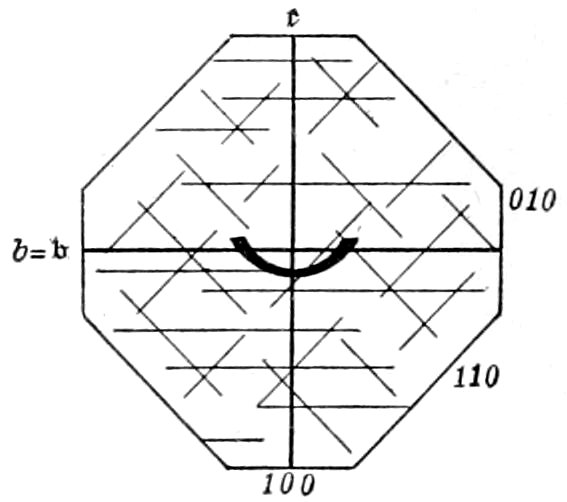
Fig. 53.—Diallage, cross-section.
Pleochroism.—Usually not noticed, and in general only appearing
as different shades of the same color. In some cases (diallage,
fassaite and Na rich augite) well marked, a and c green to
yellowish green and b brownish to
reddish-brown; hence pleochroism not
intense in sections showing extinction
angles. When Ti is present, violet parallel
to b.
Crossed Nicols:
Double Refraction.—Strong (γ − α = 0.022
to 0.029), being stronger in the
pale or colorless pyroxenes.
Interference Colors.—Second order,
hence always bright tints.
Extinction.—Symmetrical in sections (through b axis) showing
intersecting cleavage lines, in such cases bisecting the angles of the
cleavage. In sections showing parallel cleavage lines, only parallel
in ortho pinacoid (100) sections, in all other sections an extinction
angle being observed. The maximum extinction angle is large,
lies in the obtuse angle, varies with the chemical composition from
36° 30′ to 54°, and is only obtained when the section of the
crystal is parallel to the clino pinacoid (010), Fig. 54, varying
from this angle to 0°, when the section is parallel to the ortho
pinacoid (100). In Ti and Na pyroxenes the inclined dispersion
is so great that extinctions are not sharp, but instead a change takes
place in the interference color from bluish to brownish.
Convergent Light: Axial plane parallel to clino pinacoid
(010). Fig. 54. A cleavage flake parallel to ortho pinacoid
(100) shows the emergence of an optic axis (orthorhombic pyroxene
parallel to best pinacoidal cleavage would not show figure).
Bxa.(c) Λ ć = 36° to 54° front. Axial angles large (2E = 70° to
112°). Optical character (+). The interference figures are
distinct on account of the strong double refraction.
Alteration: May take place to chlorite, serpentine or amphibole
83(uralitization[92]), depending on the chemical composition and the
conditions producing the change.
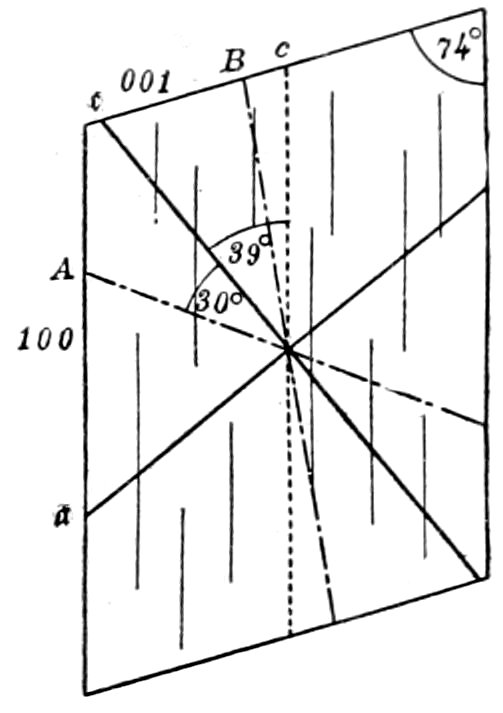
Fig. 54.—Diopside, clino pinacoid section.
Distinguished from:
(a) Orthorhombic Pyroxenes.—By extinction angle, the
orthorhombic pyroxenes having always parallel or symmetrical
extinction in sections parallel to a, b, or c, and by higher order
interference colors. Also from hypersthene
by absence of, or much fainter, pleochroism.
Diallage and bronzite might be confused on
account of pronounced pinacoidal parting,
fibrous structure and inclusions; but may be
distinguished by the presence or absence of
extinction angles and also by the position
of the optic axes relative to the best cleavage
plates.
(b) Amphibole.—See under amphibole.
(c) Epidote and Chrysolite (Olivine).
When light colored and granular, by examination
in convergent light. The plane of
the optic axes is parallel to the clino pinacoid (010), hence to
the longitudinal axis and prismatic cleavage cracks, while in epidote
it is at right angles to these directions and in chrysolite parallel to the
base. Also yellow color is common in epidote but rare in pyroxene.
Remarks: Next to the feldspars pryoxene is the most common constituent of
the igneous rocks. Diopside and fassaite (green) are found in contact rocks;
also, what appear to be the same pyroxenes, in many eruptive rocks, as andesites,
monzonites, etc. Malacolite (light green) is found in amphibolites and eclogites,
where it may be associated with a greenish amphibole (smaragdite). Diallage
(bladed and twinned) occurs in gabbros and pyroxenites. Common augite (brown)
is found in the remaining basic eruptive rocks. In the schists the pyroxene is
colorless.
Finally augite occurs as a secondary product resulting from the “magmatic
resorption” of hornblende and biotite.
Chemical corrosion and mechanical deformation may occur. The green and
brown augites when heated to redness on platinum foil may become red in color.
In general the pyroxenes are not attacked by acids. H., 5 to 6. Sp. gr., 3.3 to
3.5. The sp. gr. of the pyroxenes is considerably higher than that of the amphiboles
of similar composition, hence mechanical separations are possible.
Acmite (Ægirine) (Na pyroxenes).—Occur in green or brown,
elongated prismatic crystals, often not very transparent and with
84marked pleochroism (like amphibole). Zonal coloring is common.
When zonally intergrown with pyroxene the outer zone is ægirine.
The elongation is ∥ a′ (distinction from amphibole whose elongation
is ∥ c′). The index of refraction is higher than in the other
pyroxenes (n′ = 1.792, α = 1.763, γ = 1.813) and the double refraction
stronger (γ − α = 0.050). The extinction angle is small (5°)
and the optical character (—).
The term Ægirine-augite may be used to describe a soda, pleochroic
augite with a large extinction angle.
These pyroxenes are only found in the eruptive rocks rich in alkalies, as
elæolite-syenite, phonolite, certain trachytes, etc.; hence are associated with
elæolite, sodalite, leucite, etc. The small, second generation, crystals, in the
ground mass of a rock, are always the richest in Na of the pyroxenes in that rock.
| Anisotropic. |
Biaxial. |
Monoclinic. |
| |
Elongation ∥ c′. |
|
Composition: RSiO3. R = Mg, Ca, Fe chiefly also may contain
Al, Na, Mn. The Mg predominates over the Ca.
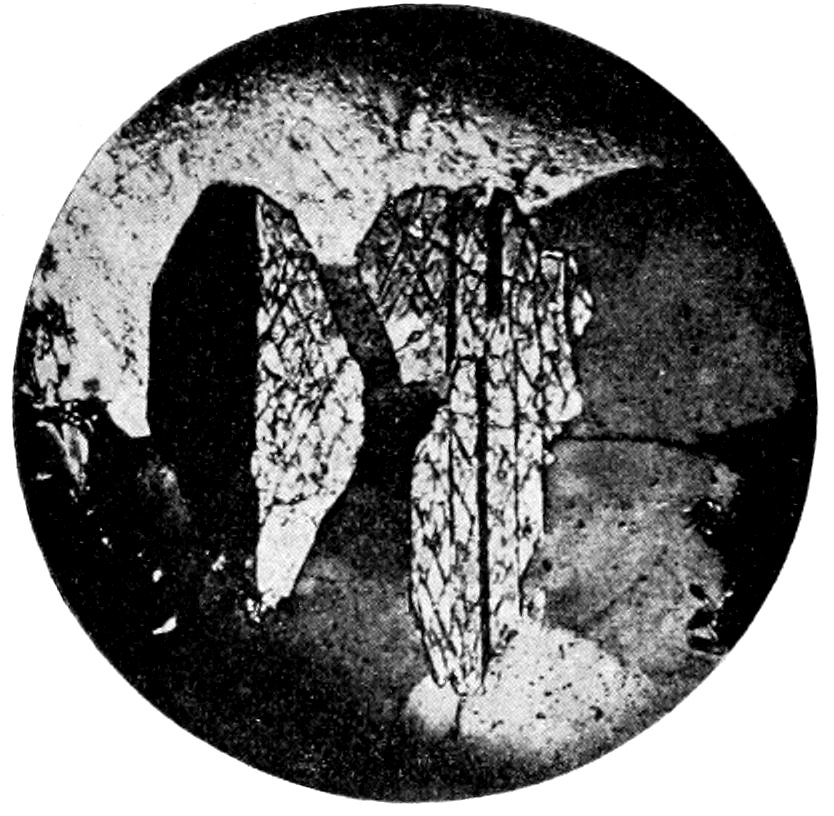
Fig. 55.—Hornblende, showing twinning between crossed nicols, in amphibole-biotite-granite. (From Cohen.)
Usual Appearance in Sections: Both in crystals and more or
less irregular grains, often fibrous, Figs. 55 and 56, the habit varying
with the chemical composition as follows:
Tremolite (Mg3Ca) and Actinolite ((MgFe)3Ca varieties), in
long columnar to needle-like individuals, with no terminal planes or
with frayed out ends. May be in dense aggregates.
85Pargasite in well developed crystals.
Common green Hornblende (aluminous varieties) in crystals,
compact grains or shreds.
Basaltic Hornblende (iron rich, aluminous varieties) in prismatic
crystals of varying length, which may often show “magmatic
resorption” (to augite and magnetite) around outer zone or
throughout whole crystal.
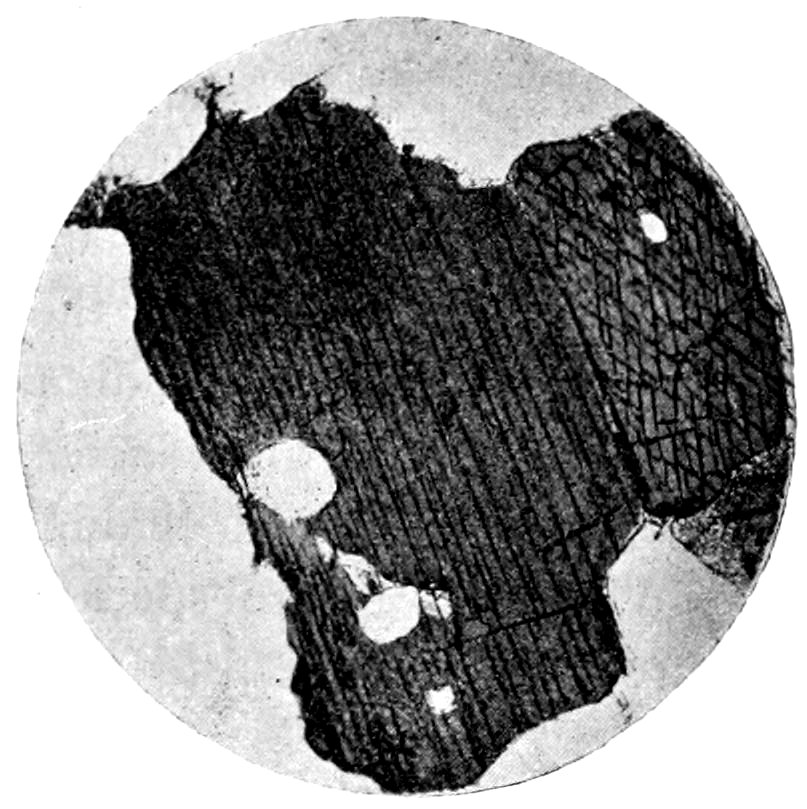
Fig. 56.—Hornblende, section parallel to ć axis, showing prismatic cleavage, in hornblende-diorite. (From Cohen.)
Crystals are simple in form of prismatic habit, with prism angle
124° 30′. Cross-sections are acutely rhombic, generally with acute
angles truncated, hence six-sided (pyroxene being eight-sided).
Longitudinal sections are lath-shaped and fibrous structure may be
noticed. Skeleton crystals may also occur, being very fine in certain
pitchstones.
Zonal structure and parallel growth may be noticed in the
amphiboles.
Twinning.—Frequent, parallel to ortho pinacoid (100). Twins
dual, less often multiple, Fig. 55. Intergrowths with pyroxene and
biotite occur.
Color.—From colorless (tremolite), through green (actinolite,
pargasite and hornblende) to brown (basaltic hornblende). Yellow
in some varieties and bluish in the soda varieties.
Index of Refraction.—n′ = 1.621 to 1.641 (α = 1.607 to 1.629,
γ = 1.634 to 1.653) (1.719, in the basaltic hornblende), hence relief
distinct and surface rough.
Cleavage.—Perfect, parallel to prism of 124° 30′. Generally
86appears in thin sections as sharp cracks crowded close together,
Figs. 56 and 57. More perfect than in pyroxene.
Some of the long prisms (actinolite and tremolite) may show
transverse parting.
Inclusions.—The iron ores, apatite, etc., may be found in hornblende.
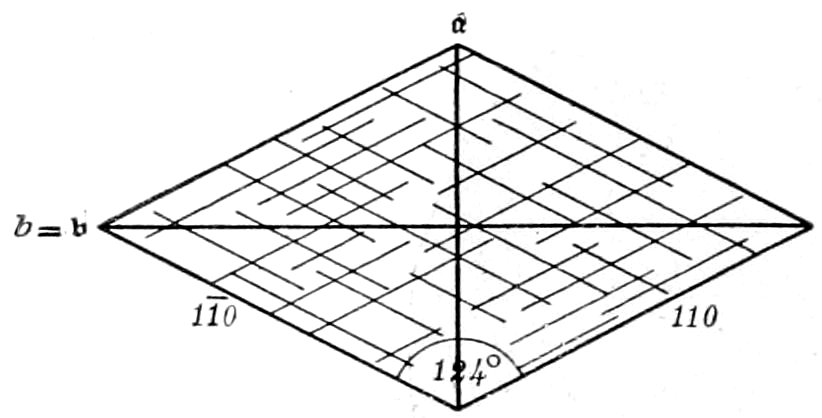
Fig. 57.—Hornblende, cross-section.
Polarized Light:
Pleochroism.—All colored amphiboles show pleochroism, which
in general is stronger the darker the color of the variety (actinolite
and pargasite show but little).
The absorption is very marked
in the hornblendes, being
greatest in the general direction
of the cleavage lines in
longitudinal sections. Marked
differences in absorption are
also characteristic of the mineral
species biotite, tourmaline
and allanite. Pleochroic halos (brownish) surrounding inclusions
may be noticed.
Crossed Nicols:
Double Refraction.—Quite strong, but a little weaker than in
pyroxene (γ-α = 0.019 to 0.027). Ferruginous basaltic hornblende
has strong double refraction (γ-α = 0.072).
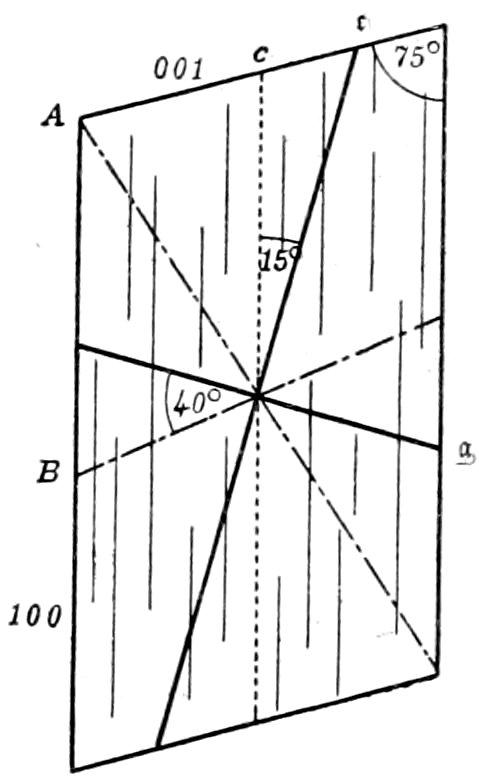
Fig. 58.—Actinolite, clino pinacoid section.
Interference Colors.—Second order, hence
bright tints, but in darker colored varieties
not so noticeable as in pyroxenes, due to
the stronger absorption of parts of the
light. The colors of basaltic hornblende
are so high that they show no bright tints.
Extinction.—Always symmetrical in sections
(through b axis) showing intersecting
cleavage lines, in such cases bisecting the
angles of the cleavage. In sections
showing parallel cleavage lines, only
parallel in ortho pinacoid (100) sections,
in all other sections an extinction angle
being observed. The maximum extinction
angle lies in the acute angle and is much smaller than in
87pyroxene, varying with the chemical composition from 0°–20°.
In hornblende, actinolite and tremolite 12°–20°, Fig. 58; in the
basaltic hornblende 0°–10°. The maximum extinction angle is
only obtained when the section of the crystal is parallel to the clino
pinacoid (010), varying from this angle to 0°, when the section is
parallel to the ortho pinacoid (100).
Convergent Light: Axial plane parallel to clino pinacoid (110),
Fig. 58. Bxo·(c) Λ ć = 0°–20° behind. Axial angles large
(2E = 77° to >180°). Optical character (−). Pargasite is (+).
Alteration: May take place to chlorite, talc, serpentine, asbestus,
etc., depending on the chemical composition. Amphibole
frays out and becomes fibrous during alteration, and may also lose
color.
Distinguished from:
(a) Pyroxene.—By usually much stronger pleochroism in the
colored varieties, and by cleavage and extinction angle. In pyroxene
the cleavage (parallel to prism of 87° 06′) is less perfect; and
the extinction angle is much larger, varying from 36° to 54°.
(b) Biotite.—By the extinction in the mica being always about
parallel to the cleavage. Both have strong absorption, but biotite
shows very slight pleochroism in sections parallel to the cleavage,
and has only the one cleavage parallel to the base. Also the biotite
has lower index of refraction and generally shows uniaxial interference
figure.
Colorless tremolite may be distinguished from muscovite and
talc by extinction angles, relief and lower order interference colors.
(c) Tourmaline.—By presence of cleavage, and by the fact
that absorption is most marked about parallel to the elongation
(also parallel to cleavage lines), while in tourmaline the absorption
is strongest at right angles to the elongation.
(d) The Orthorhombic Pyroxenes.—By extinction angles, the
latter having parallel extinction in all sections parallel to a, b and c,
and by prismatic cleavage of 124° 30′. Pleochroism is strong in
the colored varieties of both species, but in amphibole it appears
more generally as a variation of the same color; while in hypersthene
a change in color is often noticed, from brownish-red to
greenish parallel to ć axis.
(e) Sillimanite and Cyanite.—See under the latter.
88Remarks: Amphibole comes next to pyroxene in importance and distribution
of the dark colored ferruginous rock-forming minerals. As a rule it occurs in
rocks with a large percentage of SiO2, associated with quartz and orthoclase; while
augite generally occurs in rocks of a basic nature, associated with plagioclase and
little or no free SiO2. Furthermore amphibole contains hydroxyl and is therefore
naturally found in the deep eruptive rocks; its place being taken by augite in the
effusives. By application of heat hornblende changes to augite, while hydrochemical
processes bring about the opposite result “uralitization.”
Tremolite and actinolite are found in contact rocks and crystalline schists, also
as a result of the alteration of olivine into serpentine. Pargasite occurs in contact
rocks. Common green hornblende is found in the plutonic rocks (Na poor
and SiO2 rich), also in contact rocks and crystalline schists (amphibolites).
Brown hornblende replaces the green variety in the basic plutonic rocks. Basaltic
hornblende is found in many effusive rocks.
The hornblende crystals in eruptive rocks, being among the first formed constituents,
have often suffered subsequent corrosion by the magma, giving rise to
the dark border already mentioned. The brown primary hornblende in some
rocks may be changed by a process analogous to “uralitization” into a green,
reed-like hornblende. Mechanical deformations are found in massive and schistose
rocks. Light green amphiboles, with weak pleochroism, may often be colored
intensely reddish-brown and made strongly pleochroic by heating to redness on
platinum foil. In general the amphiboles are not affected by acids. H., 5 to 6.
Sp. gr., 2.9 to 3.3.
Glaucophane, Arfvedsonite, etc. (Na rich amphiboles).—Occur
blue to bluish-green in color, with pleochroism and weaker double
refraction than the other amphiboles. Extinction angles vary from
4°–6° (glaucophane) to 14° (arfvedsonite). They are found in
contact rocks, crystalline schists, eclogite, etc.
For the rarer and less known members of the amphibole group,
resource should be had to more elaborate works.
Uralite.—Pyroxene altered to amphibole, having the outward
crystal form of pyroxene and the physical characters and cleavage
of amphibole. The change usually commences on the surface and
the uralite does not form a single compact crystal, but consists of
numerous slender columns parallel to one another. These little
columns or fibers have their c and [=b] axes parallel to the positions
of these axes in the parent mineral. The color is green and the
pleochroism weak to strong.
This change is called “uralitization” and results from hydrochemical
processes. When the alteration is not complete, portions
of the original pyroxene may be left, having all the characteristic
optical properties of this latter mineral.
Anthophyllite, the orthorhombic amphibole, with always parallel
extinction, is sometimes found in colorless to brownish, blade- to
rod-like aggregates in crystalline schists and serpentine.
89
| Anisotropic. |
Biaxial. |
Monoclinic. |
| May appear hexagonal or orthorhombic. |
| Composition: |
Elongation (∥ cleavage) ∥ c′. |
Biotite (black or ferro-magnesium mica) = (H.K)2(Mg.Fe)2Al2(SiO4)3,
approx.
Phlogopite = a magnesium mica, near biotite, but containing
little Fe.
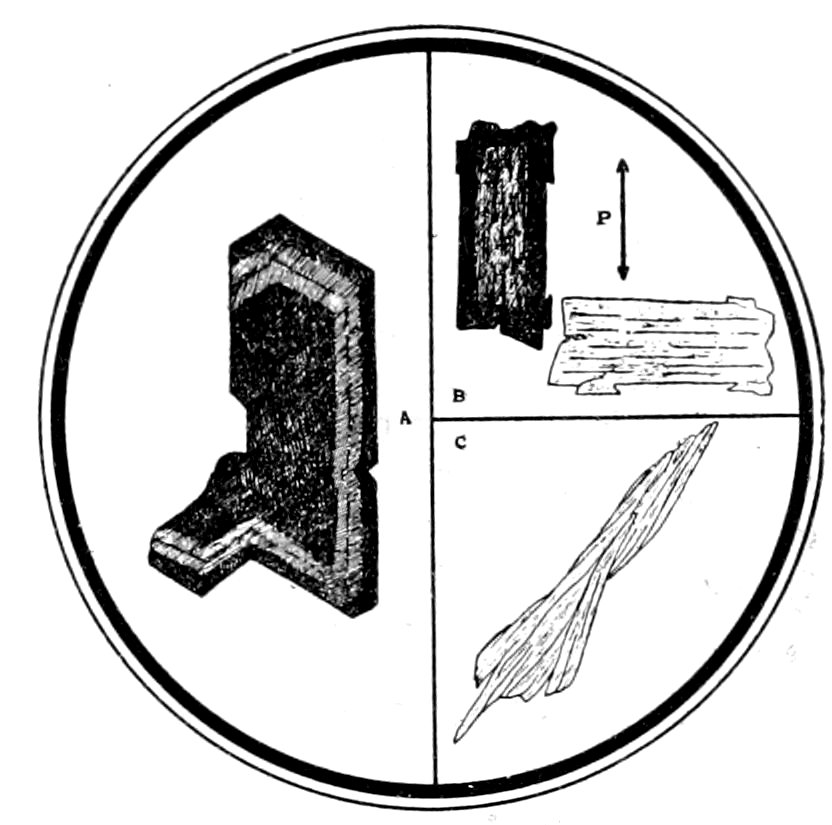
Fig. 59.—Mica. A, biotite, showing hexagonal cross-section and zonal markings. Minette, Freiburg. B, Biotite, showing strong absorption parallel to cleavage and also zonal marking (P = plane of vibration of polarizer). Minette, Cumberland. C, Muscovite in bent shreds in gneiss.
Muscovite (white or potash mica) = H2(K.Na)Al3(SiO4)3, with
some replacement by Mg or Fe.
Usual Appearance in Sections: Scales, which may be notched
or jagged, with lateral sections lath-shaped; or shreds, Fig. 59 C.
When distinctly crystallized (magnesium micas) the thin hexagonal
plates have plane angles of 120°, Fig. 59 A. Phlogopite crystals
may be extended in direction of ć axis.
Zonal structure not uncommon in the magnesium micas, Fig.
59 A, which may also have dark iron ore border like hornblende.
Twinning.—Common, generally parallel to base; seen in sections
showing cleavage by variations in extinction, in basal sections by
distorted interference figures.
Micas of different kinds often associated together in parallel position,
also intergrown with hornblende, pyroxene, chlorite and
quartz.
90Color.—Depends on chemical composition. Biotites, brown,
green or red to almost opaque. Phlogopites, colorless or yellowish.
Muscovites colorless.
Index of Refraction.—n′ = 1.564 to 1.619 (α = 1.541 to 1.580,
γ = 1.575 to 1.638), hence somewhat marked relief and surface
varies in appearance from slightly rough to fairly rough. In
polarized light the surface appears roughest when the cleavage
cracks are parallel to the plane of the polarizer.
Biotite has more marked relief.
Cleavage.—Very perfect, parallel to base (001), Fig. 60. Basal
sections show no cleavage, but all other sections show many sharp,
parallel cleavage cracks.
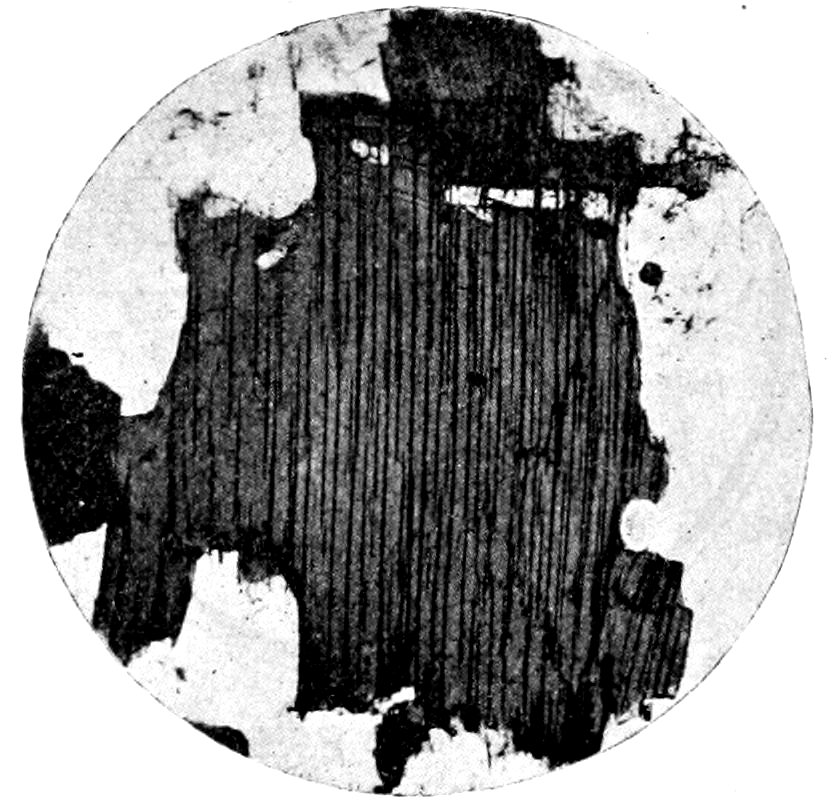
Fig. 60.—Biotite, showing basal cleavage, in biotite-granite. (From Cohen).
For percussion and pressure figures, see reference given below.[93]
Inclusions.—May be arranged parallel to lines of pressure figure.
Rutile needles, tourmaline, apatite, etc., common in magnesium
mica. Zircon inclusions often surrounded by pleochroic halos.
Polarized Light:
Pleochroism.—Varies with the color, being very marked in the
colored varieties (from pale yellow to chestnut-brown or black).
The strong absorption, about parallel to the cleavage lines, is very
characteristic of the colored mica, Fig. 59 B. Strong absorption
is also noticed in hornblende, tourmaline and allanite. Absorption
may even be noticed around inclusions (pleochroic halos) in colorless,
non-pleochroic micas. Cleavage plates of biotite are not pleochroic
unless the axial angle is large.
91Crossed Nicols:
Double Refraction.—Very strong (γ − α = 0.034 to 0.058).
Interference Colors.—High order (third). May be very bright
in thin sections of the colorless micas, and at times be so high in
order as not to show any marked color tints. May not be noticeable
in sections of the colored varieties, due to absorption of parts
of the light.
Extinction.—About parallel to cleavage lines. Very small extinction
angles may be noticed in biotites. Basal sections of biotite
(the approximately hexagonal mica) usually appear isotropic.
Mottled appearance (like “Birds-eye” maple) characteristic,
caused by distortion of the flexible laminæ during grinding. Most
noticeable in sections inclined to cleavage and near position of
extinction.
Convergent Light: Axial plane[94] and Bxa, practically at right
angles to basal cleavage; therefore cleavage plates always show
well defined interference figures, generally biaxial in character.
The axial angles vary greatly, being usually small for biotite and
phlogopite (may appear uniaxial) and large for muscovite (2E = 55°
to 90°). Optical character for all micas (−).
Alteration: Biotites decompose quite easily, lose color and may
become completely bleached, which appears to be due to a leaching
out of the iron. May also alter to green chlorite, with a fraying
out of the mica and a change to chloritic structure.
Phlogopites may alter to fibrous, scaly masses, apparently chiefly
talc. “Sagenite” webs of rutile may accompany the alteration.
Muscovites are characterized by their freshness, and do not seem
to suffer from weathering.
Distinguished from:
(a) Hornblende.—Magnesium mica has extinction about parallel
to the cleavage, while hornblende may have extinction angles
of from 0° to 20°. Both have strong absorption, but biotite shows
very slight pleochroism in basal sections, which also give approximately
uniaxial interference figures in convergent light.
(b) Tourmaline.—Magnesium mica shreds show absorption
parallel to elongation, while in tourmaline the absorption is at right
92angles to elongation. There is also an absence of cleavage in
tourmaline.
(c) Chlorite.—By strong double refraction, the very high
order colors, however, being often not noticed. Chlorite also
shows aggregate structure and is almost always greenish in color.
(d) Talc.—White mica by large axial angle of scales in convergent
light and by micro-chemical tests. The distinction may
be very difficult.
Remarks: Muscovite is a rare primary mineral in eruptive rocks, except in two-mica
granite, etc. As a secondary mineral it occurs in dense scaly aggregates or
as pseudomorphs after feldspar, nephelite, etc. It is frequent in crystalline
schists and is probably also the mica in amphibolite and eclogite. Phlogopite is
found chiefly in contact metamorphic limestone; and may be distinguished from
muscovite by nearly uniaxial character and less sharp cleavage. Biotite is much
more widely distributed, occurring especially in eruptive rocks, crystalline schists
and contact rocks.
Chemical corrosion occurs in original biotite of porphyritic rocks, producing a
“resorption border” of augite and magnetite. Mechanical deformations, producing
bending and slipping along “gliding” planes (oblique to cleavage), are
common to all varieties of mica and may produce change to chlorite. The muscovites,
together with the feldspars, are the most characteristic minerals of
dynamo metamorphic origin. Biotites and phlogopites are attacked by sulphuric
acid at high temperatures. Muscovite is but slightly attacked by acids. H., 2
to 3. Sp. gr., 2.7 to 3.2. The specific gravity separation between the micas is
difficult on account of the scaly nature of the minerals.
Other micas occur, some being alteration products of those
already described. Among these may be mentioned:
Lithia Mica.—Both light and dark colored, occurring in granitic
rocks and often only distinguished chemically from muscovite and
biotite.
Damourite (Sericite) (hydrous K mica).—A secondary product
usually in colorless, fine scaly aggregates in phillites, sericite-schists,
etc.
Embracing the members of the Chlorite Group, commonly occurring in rocks.
| Anisotropic. |
Biaxial. |
Monoclinic. |
The minerals of this group usually appear uniaxial, and crystallize in part with
hexagonal symmetry.
Composition: May be considered as isomorphous mixtures of
H4(MgFe)3Si2O9 and H4(MgFe)2(AlFe)2SiO9 (Rosenbusch).
Usual Appearance in Sections: Minute, scaly aggregates, which
may incline to radial grouping; or in minute grains as a pigment
(veridite) in other minerals.
Twinning.—May be seen as in mica.
93Color.—Generally green, varying from greenish white to dark
green, rarely colorless or red.
Index of Refraction.—n′ = 1.567 to 1.589 (α = 1.560 to 1.585,
γ = 1.571 to 1.596), hence no marked relief and only slightly rough
surface.
Cleavage.—Like mica, very perfect; parallel to flat face, which
is considered to be the basal plane. This cleavage may not be
noticed, especially in secondary chlorite in rocks.
Polarized Light:
Pleochroism.—In green and yellow tints (green ∥ cleavage),
being more marked in dark colored varieties. Basal sections are
non-pleochroic, the mineral being practically uniaxial. Pleochroic
halos may be seen.
Crossed Nicols:
Double Refraction.—Generally very weak (γ − α = 0.001 to
0.011).
Interference Colors.—Very low first order, gray or white, at
times scarcely noticed. Anomalous colors, however, often seen
(deep blue or brown.)
Extinction.—Plates parallel to cleavage generally appear isotropic
or only show faint color. In other sections extinction is
apparently parallel to the cleavage in the uniaxial type, but extinction
angles may be noticed when type is biaxial. Complete extinction
may not be noticed, due to aggregate structure.
Convergent Light: Plates parallel to cleavage show, at times,
an indistinct interference cross, which may open into two hyperbolas,
indicating biaxial nature of crystallization. Ax. pl. ∥ (010);
Bxa. Λ ć = 0° to 15°; 2E variable. Optical character (±).
Distinguished from: Serpentine.—By general green color (serpentine,
with exception of Fe rich variety, is colorless), pleochroism
and frequent anomalous interference colors; but the distinction
between these two minerals may be very difficult. Chlorite may
resemble decomposed or green mica (mica has, however, strong
double refraction). The different species in the chlorite group
cannot usually be distinguished in rocks.
Remarks: The chlorites are essentially secondary minerals, derived from the
aluminous silicates, biotite, augite, garnet, feldspar, etc. They are found abundantly
in chlorite-schists, contact rocks, etc., and as pigment (veridite) in altered
eruptive rocks. May occur as a primary constituent of eruptive rocks, often
94in parallel growth with biotite. Chlorides are acted on by hot hydrochloric acid,
and decomposed easily by sulphuric acid. H., 2 to 3. Sp. gr., 2.6 to 2.96. A
thin section heated to redness on platinum foil loses water and becomes opaque.
Ferruginous varieties are turned reddish-brown to black by heating (serpentine,
as it contains less iron, may give negative results with this test).
Delessite.—Found in sphærulites, filling cavities in amygdaloidal
basic rocks, and in pseudomorphs. It appears to be much altered
to other minerals.
| Anisotropic. |
|
Monoclinic (Pseudo-Hexagonal). |
| Composition: H2Mg3(SiO3)4. |
|
Elongation ∥ c′. |
Usual Appearance in Sections: In fine scaly, colorless aggregates. Sections,
cutting across the scales, would show rod-like forms. Index of refraction only
a little higher than balsam (n′ = 1.572, α = 1.539, γ = 1.589), hence no marked
relief and only slightly rough surface. Cleavage perfect parallel to base, like mica.
Crossed Nicols: Double refraction very strong (γ − α = 0.050). Interference
colors third order, like muscovite. Extinction parallel to basal cleavage lines. In
convergent light, Ax. pl. ∥ (100), Bxa. ∥ ć; axial angle small (2E = small); optical
character (−).
Distinguished from: Muscovite (with which it is easily confused) by micro-chemical
tests, proving absence of alkalies and Al; and often by the more aggregate
structure of the talc. Also by smaller axial angle of scales in convergent
light.
Remarks: Found mainly in metamorphic schists, etc., always as a secondary
product. It is insoluble in hydrochloric acid. H., 1 to 1.5. Sp. gr., 2.6 to 2.8.
| Anisotropic. |
Biaxial. |
Monoclinic. |
| |
Elongation ∥ a′ or c′. |
|
Composition: Ca2Al2(AlOH)(SiO4)3, with some Fe replacing
Al.
Usual Appearance in Sections: Columnar to thick tabular crystals,
more or less elongated parallel to ortho axis [=b], Fig. 61, or
in granular aggregates.
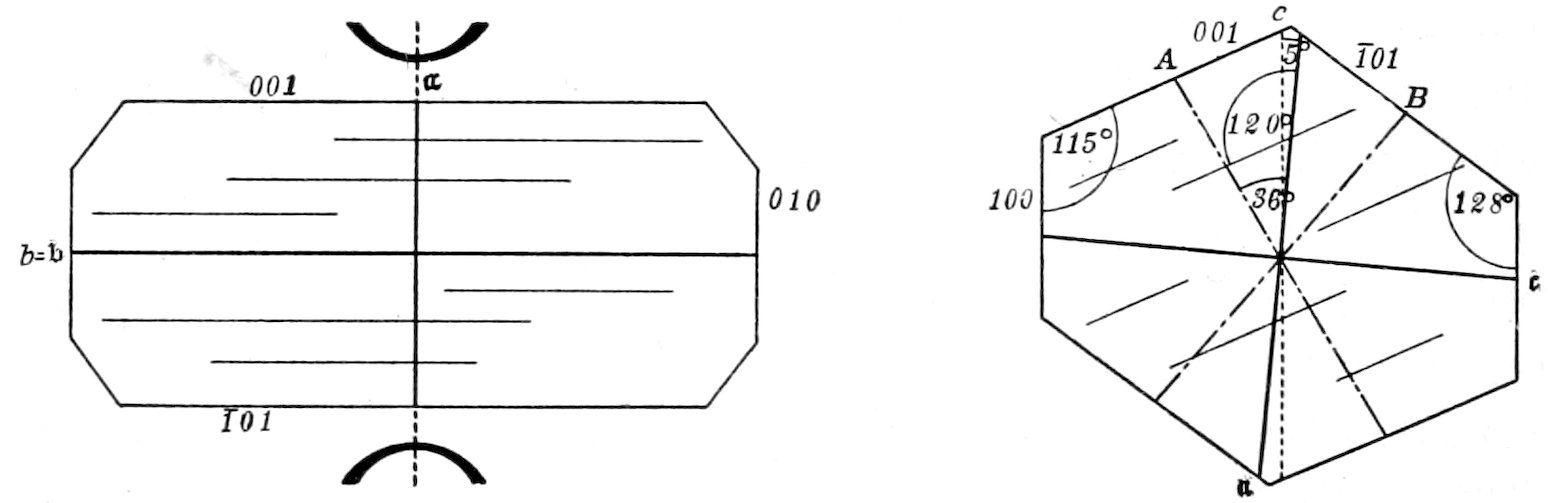
Epidote.
Fig. 61. Fig. 62.
Ortho pinacoid section. Clino pinacoid section.
95Twinning.—May occur but rarely noticed. Irregular interpenetrations
common with other members of the group; also parallel
growths.
Color.—Colorless to yellowish (Fe poor) or yellow to greenish
to yellow-brown (Fe rich).
Index of Refraction.—n′ = 1.751 but may be lower (α = 1.731,
γ = 1.768), hence relief high and surface rough.
Cleavage.—Parallel to base (001), Figs. 61 and 62, imperfect
parallel to ortho pinacoid (100). Basal cleavage cracks not very
numerous and appear parallel to general direction of elongation.
Polarized light:
Pleochroism.—Varies with the color, being faint in the light colored
varieties, but strong when the color is marked (Fe rich).
Crossed Nicols:
Double Refraction.—Variable, often very strong (γ − α = 0.037).
Interference Colors.—Variable, often high (third) orders. Intergrowths
with other members of the group are clearly shown by the
“flecked” interference colors.
Extinction.—Parallel to cleavage in sections parallel to [=b] axis.
In other sections extinction angles vary, see Fig. 62.
Convergent Light: Axial plane ∥ (010), i. e., at right angles
to the elongation of crystal and cleavage cracks, Fig. 61. Bxa.-(a)
Λ ć= 3° behind. Basal cleavage flakes show the almost ⟂
emergence of an optic axis. Axial angles very large (2E > 180°).
Optical character (−).
Alteration: Does not take place readily.
Distinguished from: Light colored Monoclinic Pyroxene.—By
having plane of optic axes at right angles to cleavage cracks
and direction of elongation; while in pyroxene plane of optic axes
is parallel to parallel prismatic cleavage cracks or bisects the angle
between intersecting cracks. Furthermore the yellow color is rare
in pyroxene.
Remarks: Epidote is essentially a secondary mineral, resulting from the alteration
of the feldspars and the ferro-magnesium silicates. It is found in crystalline
schists (especially those containing hornblende), gneiss, gabbro, diorite, diabase,
lime-silicate hornstones, contact rocks, etc. Epidote is partially decomposed by
hydrochloric acid. The Fe rich epidote can be changed to an intense color by
“glowing” in the air. H., 6 to 7. Sp. gr., 3.32 to 3.45.
Piedmontite (containing Mn).—Red in color. Very pleochroic,
red to yellow. Found in crystalline schists, the porphyrite of
96Scotland, the famous “Porfido rosso antico” of Egypt and in
certain Japanese mica schists.
Essentially orthorhombic? members of Epidote group.
[95]
Composition: Like epidote but without any Fe.
Usual Appearance in Sections: Similar to epidote or in columnar aggregates.
Often intergrown with epidote.
Distinguished from epidote by general absence of color (colorless to yellowish)
and pleochroism; by slightly lower refractive index (n′ = 1.699 to 1.720) and by
much weaker double refraction (γ − α = 0.005 and less). The interference colors
are very low order, gray to white, but anomalous colors are often seen (yellow or
prussian blue). Extinction is in general parallel to pinacoidal cleavage cracks
(except in clinozoisite).
The plane of the optic axes may be parallel or at right angles to cleavage cracks,
and the optical character is (+).
Remarks: Generally a secondary mineral. Found in crystalline schists, amphibolites,
contact rocks, eclogite, etc., and in “saussurite.” May be hard to
distinguish from vesuvianite and apatite.
Monoclinic member of Epidote group.
Composition: Like epidote but containing cerium.
Usual Appearance in Sections: Similar to epidote in form; but distinguished
by brown color (may be also almost colorless), strong pleochroism and absorption,
and medium to weak double refraction (γ − α = 0.002 to 0.030). Lamellar twinning
clearly seen on account of oblique extinction. When included in hornblende and
mica it is surrounded by pleochroic halos. n′ = 1.78 about. Optical character (±).
Usually perfectly fresh.
Remarks: Found as an accessory mineral in SiO2 rich eruptive rocks and connected
crystalline schists, and (light colored) in amphibolite and eclogite.
| Anisotropic. |
Biaxial. |
Monoclinic. |
| Composition: CaTiSiO5. |
|
Elongation ∥ a′.[96] |
Usual Appearance in Sections: Wedge-shaped crystals (in Na
rich rocks, more prismatically developed); grains, which may be
elongated; and aggregates of small rounded particles, which appear
nearly opaque. Sections of crystals commonly acute rhombs, Fig.
63.
97Twinning.—Occurs, the twinning boundary bisecting the acute
angles of the rhomb (only noticed between crossed nicols), Fig. 64.
Color.—Reddish-brown to yellowish to colorless.
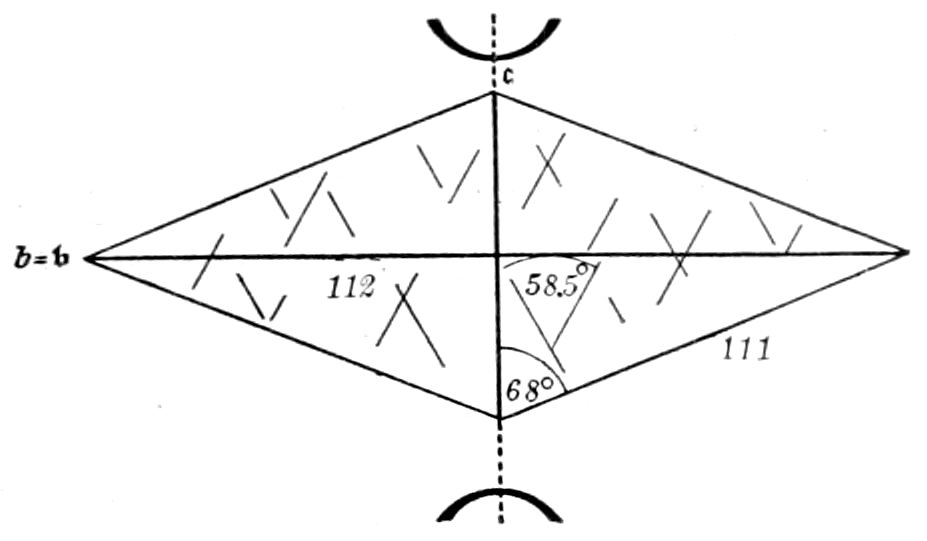
Fig. 63.—Titanite, showing acute rhombic cross-section.
Index of Refraction.—n′
= 1.920 to 1.963 (α
= 1.888 to 1.913, γ =
1.978 to 2.054), hence relief
very marked and surface
very rough.
Cleavage.—Imperfect
and not parallel to predominant
form, hence
only appears as a few
rough cracks, which are
not parallel to any crystallographic boundary, Fig. 63. Cleavage
rarely observed in secondary grains.
Polarized Light:
Pleochroism.—Varies with the color, being more distinct in colored
crystals, yellowish (the lighter color) ∥ a′ and reddish-brown
∥ c′. Scarcely noticed when the color is light.
Crossed Nicols:
Double Refraction.—Very strong (γ − α = 0.090 to 0.141).
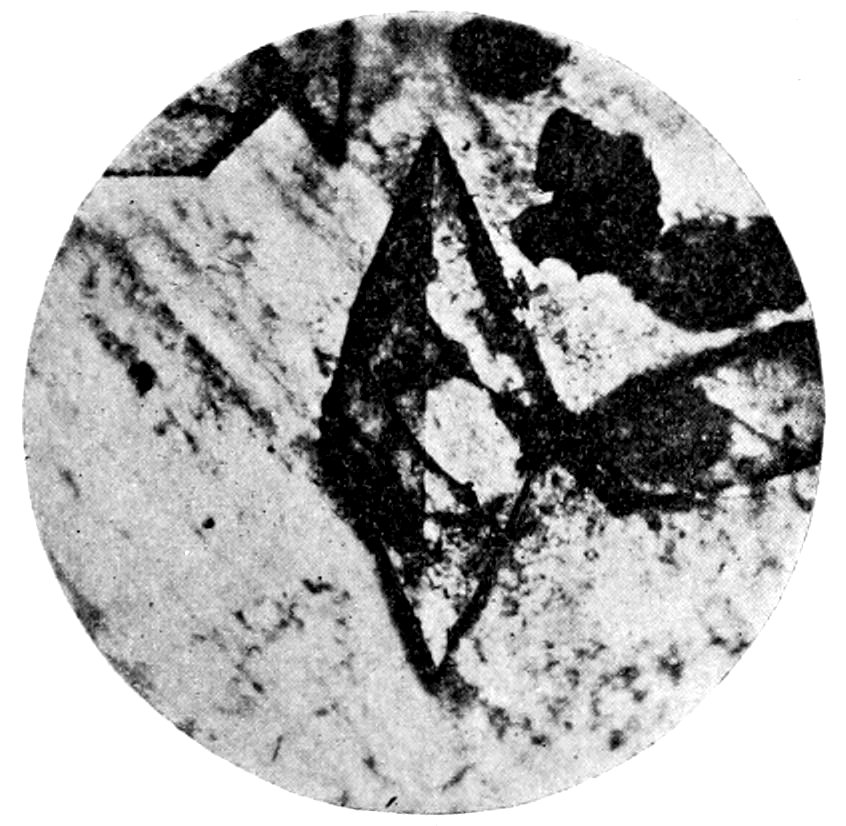
Fig. 64.—Titanite, showing twinning in nepheline-syenite. (From Cohen.)
Interference Colors.—Very high order, like those of calcite. Due
to the fact that the refractive indices of two of the rays are very
nearly alike, some sections may show very low order colors.
98Extinction.—Extinction angles not characteristic. There may
be no complete extinction in white light, owing to dispersion.
Convergent Light: On account of the very strong characteristic
dispersion of the optic axes (ρ > ν), the axial angle varies a
good deal with the color of the light used, (St. Gotthard) 2EIA = 57°,
2ETl = 47°. By using colored glasses this variation in the axial
angle can be seen. The axial plane lies in the clino pinacoid (010),
hence bisects the obtuse angle in the rhombic cross-section, Fig. 63.
Bxa.(c) Λ ć = 51° front. The optical character is (+).
Alteration: May take place.
Distinguished from:
(a) Staurolite.—In convergent light the axial plane is shown
to be in the shorter diagonal of the rhombic cross-section, while in
staurolite it is in the longer diagonal.
(b) Rutile.—By biaxial character.
(c) Calcite.—The light colored titanite (sphene), in absence
of twinning, by higher index of refraction.
Titanite may easily be confused with some of the rarer minerals.
Remarks: Titanite is always an accessory mineral and is found distributed in
all rocks, except SiO2 rich eruptive and magnesia silicate rocks. As a secondary
mineral it forms rims around other titanium minerals or pseudomorphs after them
and also the principal part of leucoxene. It is partly soluble in hot hydrochloric
acid and completely decomposed by sulphuric acid. H., 5 to 5.5. Sp. gr., 3.3 to
3.7. In a specific gravity separation it falls with the ferruginous minerals (on
account of its density) and from these can generally be separated by electromagnetic
methods.
| Anisotropic. |
Biaxial. |
Monoclinic. |
| |
Elongation (∥ cleavage) ∥ a′. |
|
Composition: KAlSi3O8, with some replacement by Na.
Usual Appearance in Sections: In crystals and grains. In porphyritic
rocks habit of crystals more or less tabular parallel to
clino pinacoid (010), or rectangular much extended parallel to
clino axis à, with cross-sections six-sided, or rectangular to long
lath shape, Figs. 65 and 66. Crystals may be changed into rounded
or looped grains by chemical corrosion, Fig. 6. Adularia crystals
99more prismatically developed, giving rhombic sections. Dimensions
of crystals vary extremely; microlites occur, at times forming
sphærulitic structure. The very fine grained ground-mass “microfelsite”
(not resolved by the microscope) consists largely of
feldspar.
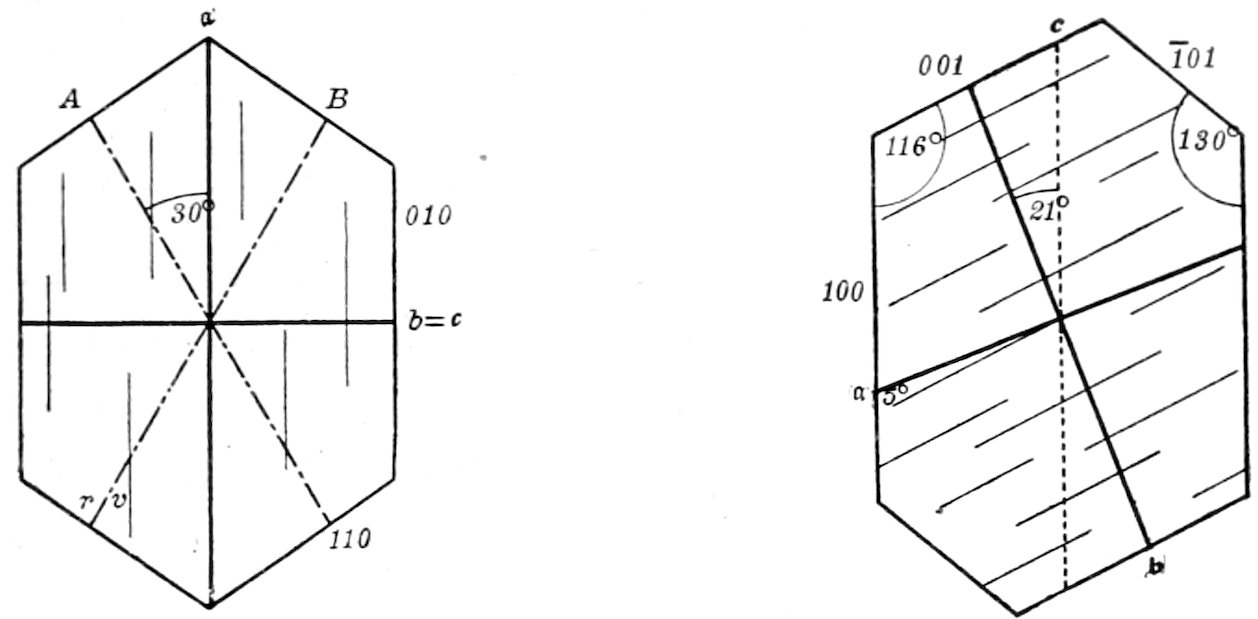
Orthoclase cleavage plates.
Fig. 65.—Basal. Fig. 66.—Clino pinacoid.
Intergrowths with microcline and plagioclase common, forming
“microperthite” when lamellæ are microscopic. May be in zonal
formation with plagioclase (the orthoclase on the periphery).
Also intergrown with quartz[97] forming “pegmatite” and “micro-pegmatite,”
Fig. 67.
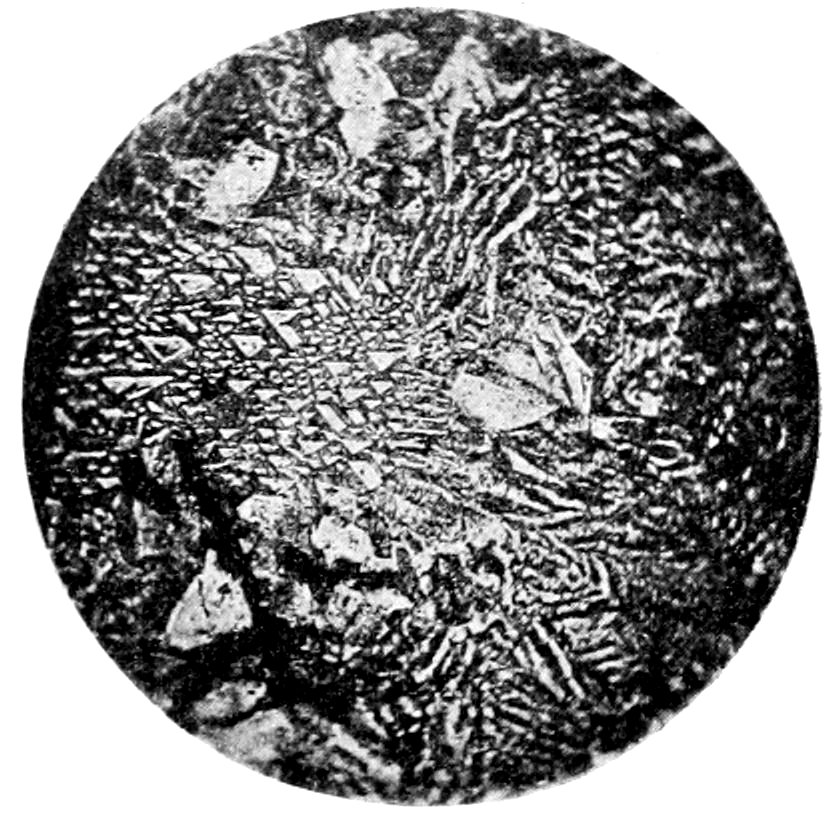
Fig. 67.—Micro-pegmatitic structure, in granophyric quartz-porphyry. (From Cohen.)
100Zonal structure often seen, Fig. 20, especially when decomposition
has commenced; and in fresh crystals may be indicated by
zonal arrangement of inclusions.
Twinning.—Very common, generally after Carlsbad law, Figs. 18
and 69; the twinning boundary, dividing the section longitudinally,
either being parallel to edges of crystal or bent or jagged. Twinning
after Baveno (twinning boundary diagonal, with the two parts
extinguishing at the same time, but having a and c directions
crossed in the two portions) and Manebach laws less common.[98]
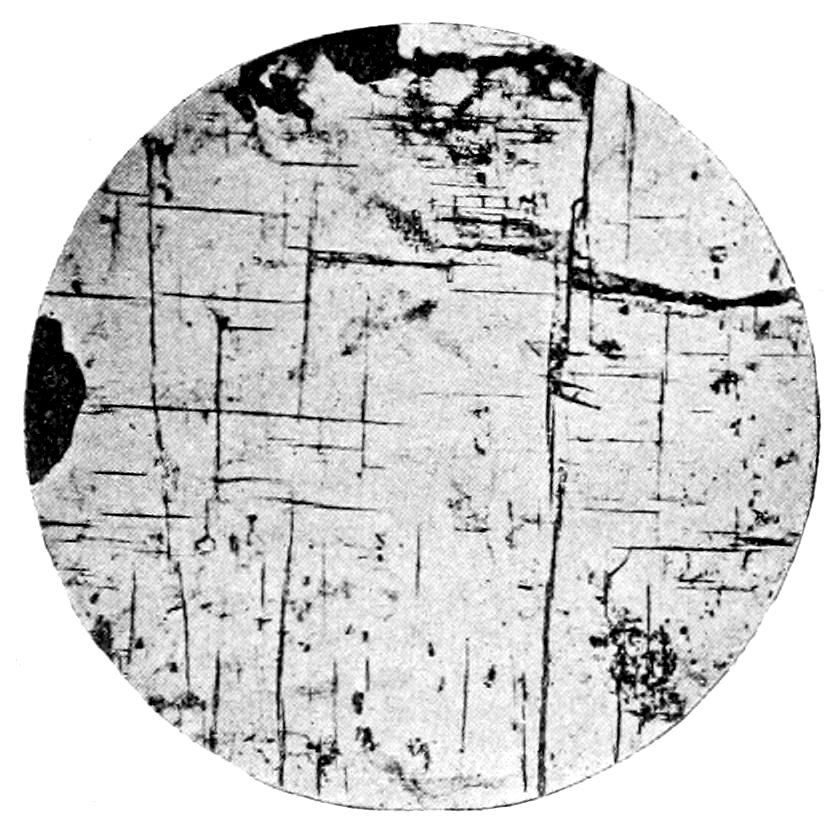
Fig. 68.—Orthoclase, ortho pinacoid section showing cleavages intersecting at 90°, in augite-syenite.
Color.—Colorless or tinged by oxide of iron. Cloudy if decomposed.
Index of Refraction.—n′ = 1.523 (α = 1.519, γ = 1.526), hence no
relief and surface smooth.
Cleavage.—Varies and sometimes only seen in very thin sections,
but is an important character and should always be searched
for. It occurs perfect, parallel to base (001), and almost as perfect
parallel to clino pinacoid (010). The two cleavages intersect
at 90° in section parallel to the [=b] axis, Fig. 68.
Inclusions.—May be present and arranged in regular or zonal
order, but not important. Do not occur in individuals of a second
generation.
Polarized Light:
Pleochroism.—None.
101Crossed Nicols:
Double Refraction.—Very weak (γ − α = 0.007).
Interference Colors.—Lower first order, gray, white, etc., not
quite so bright as colors of quartz and plagioclase.
Extinction.—Being monoclinic the extinction angle on base
(001), with reference to clino pinacoid (010) cleavage cracks, is
0°. On clino pinacoid with reference to basal cleavage cracks, it
is 5°. Some sections (notably in glassy sanidine grains) may
appear dark during complete rotation. This is due to the fact that
the axial angle is very small and the sections act approximately
like those of a uniaxial mineral at right angles to the optic axis.
Convergent Light:[99] Plane of optic axes in general at right
angles to clino pinacoid (010) (plane of symmetry), Fig. 65, hence
parallel to trace of basal cleavage; but in some sanidines parallel
to plane of symmetry. Bxa (a) Λ a = 5° above. Axial angles
vary, 2E = 125° (orthoclase), 0°–50° (sanidine).[100] May appear
uniaxial when axial angle is very small. Optical character (−).
Alteration: Very common to clay,[101] muscovite, hydrargillite,
etc. Generally commences along the cleavage cracks, and when
it has progressed very far the whole feldspar appears opaque or
cloudy, and no perceptible change may take place between crossed
nicols. As decomposition is very prevalent in many rocks, the
orthoclase is rarely clear or pellucid. Epidote is often formed when
accessory solutions are present.
Distinguished from:
(a) The other Feldspars and Melilite.—See under the latter
minerals.
(b) Quartz.—Feldspar is biaxial but when occurring in clear
glassy grains (notably sanidine), which appear uniaxial in convergent
102light, may resemble quartz. When tested the optical character
is (−), while that of quartz is (+).
Remarks: The members of the feldspar group are the widest distributed of
the rock-forming minerals and their recognition is of the utmost importance on
account of their bearing on the systematic classification of rocks. Orthoclase is
found as an essential constituent in the more acid plutonic and older volcanic
rocks, as granite, syenite, trachyte, porphyry, and also in gneiss, crystalline schists,
more seldom in contact rocks and subordinate in clastic rocks.
Chemical corrosion (producing rounded or looped grains), Fig. 6, and mechanical
deformation (producing angular, sharp-edged, broken grains, bending and
undulatory extinction[102]), Fig. 7, occur in orthoclase. When a rock containing
feldspar crystals is shattered, the orthoclase breaks parallel to basal cleavage and
plagioclase parallel to twinning plane. Orthoclase is practically insoluble in acids.
H., 6 to 6.5. Sp. gr., 2.56.
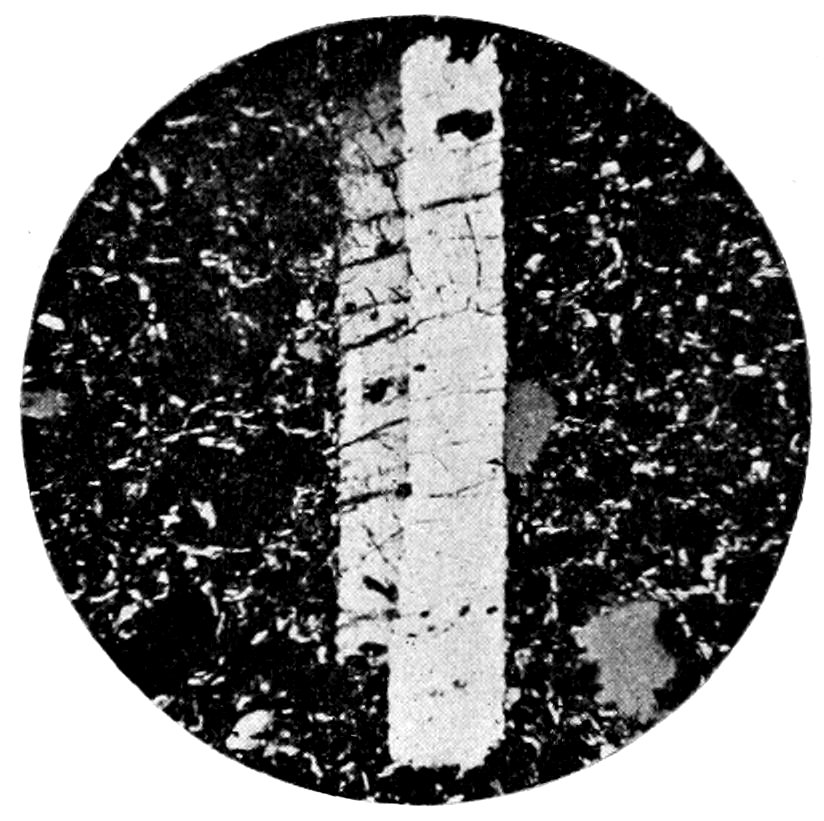
Fig. 69. —Sanidine, showing Carlsbad twin and cross-parting, in nepheline-phonolite. (From Cohen.)
Sanidine.—This clear, glassy variety of orthoclase occurs in the
later eruptive rocks, rhyolite, trachyte, obsidian, etc. Sanidine
often has a parting parallel to ortho pinacoid (100), which may be
noticed in sections so thick that the cleavage is not seen, Fig. 69.
In general it shows no sign of decomposition, and has a smaller
axial angle than orthoclase. Inclusions of glass are more abundant
than in orthoclase.
| Anisotropic. |
Biaxial. |
Triclinic. |
| Composition: KAlSi3O8. |
|
|
Usual Appearance in Sections: As a rock constituent in irregular
grains.
103In general characters like orthoclase and distinguished from it
and the plagioclases by characteristic “gridiron” structure between
crossed nicols, resulting from the polysynthetic twinning after both
Albite and Pericline laws, Fig. 19. This crossed twinning will
show in all sections except those parallel to the brachy pinacoid
(010). The lamellæ are generally thinner than in the plagioclases
and more “spindle-shaped.”[103]
Furthermore the rather obscure triclinic crystallization is shown
by an extinction angle of + 15° on basal cleavage plates with reference
to brachy pinacoid (010) cleavage lines (distinction from
orthoclase, which has O° extinction angle).
Remarks: Found with orthoclase, often almost replacing it, in granite, syenite,
gneiss, etc., and is one of the last minerals to form. It is notably resistant to
decomposition. A structure like the microcline twin structure may be produced
in orthoclase by dynamic action.[104]
| Anisotropic. |
Biaxial. |
Triclinic. |
Elongation (∥ Albite twin lamellæ) ∥ a′ (except in anorthite
when it may be ∥ a′ or c′).
Composition:[105]
Albite, NaAlSi3O8.
Oligoclase, n(NaAlSi3O8) + CaAl2Si2O8, or n Ab + An, n = 2
to 6.
Labradorite, NaAlSi3O8 + n(CaAl2Si2O8), or Ab + n An, n = 1,
2 or 3.
Anorthite, CaAl2Si2O8.
Usual Appearance in Sections: Much the same as orthoclase.
Lath-shaped[106] forms and microlites very common, especially in
the acid series.
104
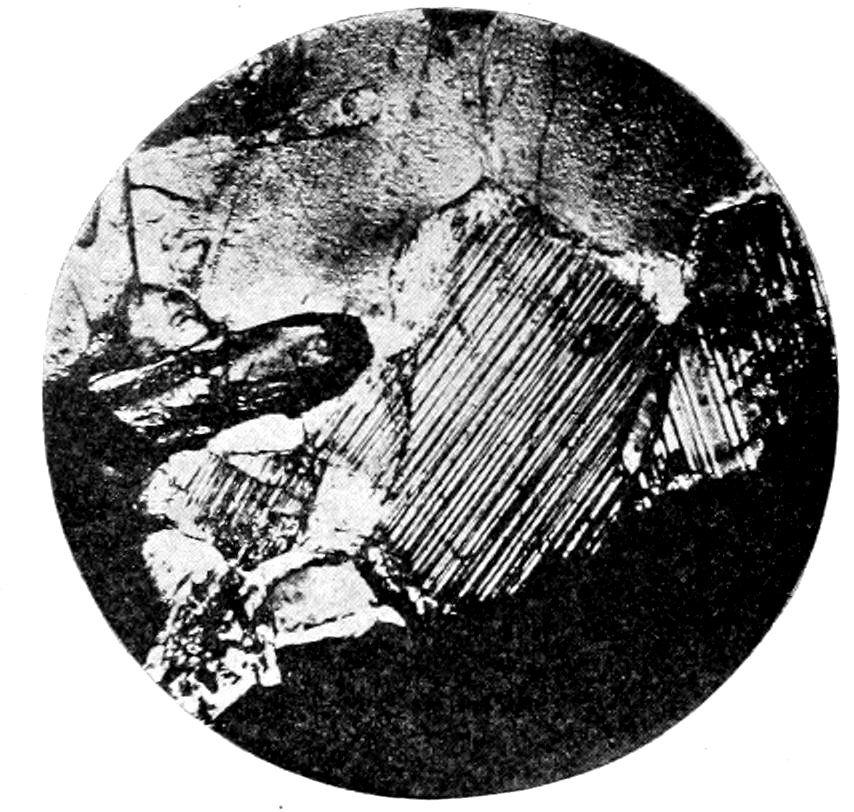
Fig. 70.—Plagioclase, showing narrow lamellæ, in diabase. (From Cohen.)
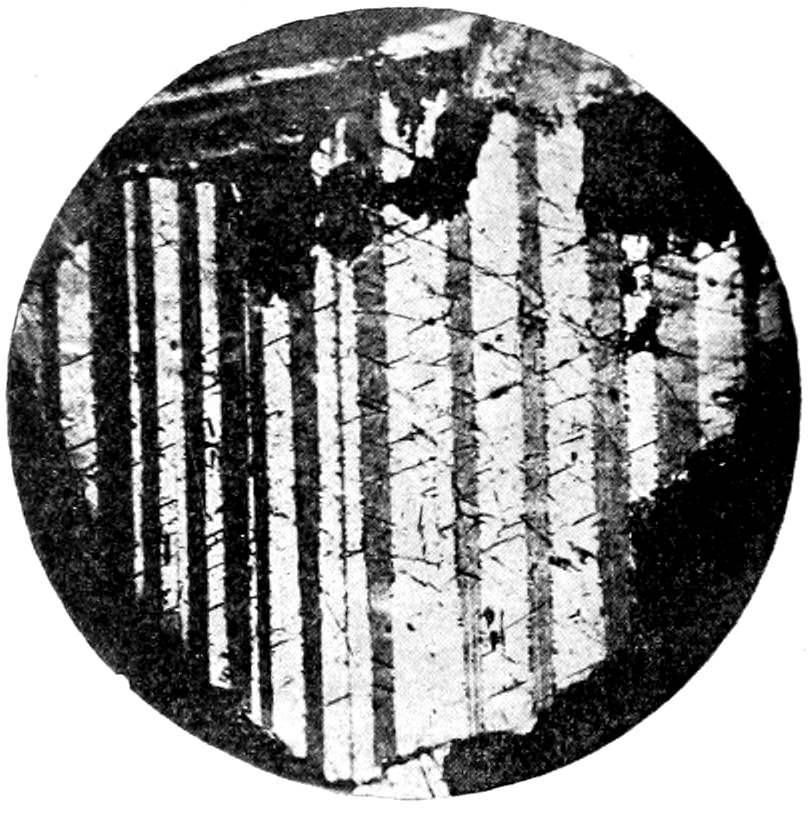
Fig. 71.—Plagioclase, showing broad lamellæ, in gabbro. (From Cohen.)
Twinning.—Polysynthetic, after Albite law, almost universal;
the twinning appearing between crossed nicols as a series of dark
and light bands, bounded by parallel edges, Figs. 70 and 71. The
twin lamellæ are parallel to brachy pinacoid (010), hence not
observed in sections parallel to this pinacoid. The lamellæ may
appear irregular and interrupted, and seem to be broader in
the basic than in the acid series. When this twinning fails, however,
as in the basic plagioclases in certain metamorphic rocks,
the determination becomes very difficult. In some cases polysynthetic
twinning, after both Albite and Pericline laws, may
take place at the same time, giving rise to a structure somewhat
similar to that of microcline, Fig. 72. In addition the polysynthetic
105crystals may be twinned like orthoclase after Carlsbad
and Baveno laws.
The general characters are the same as in orthoclase with the following differences:
| Indices of Refraction: |
n′ = 1.535 (α = 1.532, γ = 1.540) Albite. |
| |
n′ = 1.541 (α = 1.537, γ = 1.545) Oligoclase, Ab4An1. |
| |
n′ = 1.559 (α = 1.555. γ = 1.563) Labradorite, Ab1An1. |
| |
n′ = 1.582 (α = 1.575, γ = 1.588) Anorthite. |
The surface of anorthite appears slightly rougher than that of
orthoclase.
Cleavages, parallel to base (001) and brachy pinacoid (010),
never intersect at right angles, as is the case in sections of orthoclase
parallel to [=b] axis. This is due to the triclinic system of
crystallization, but the divergence from a right angle is small (93°
36′ to 94° 10′).
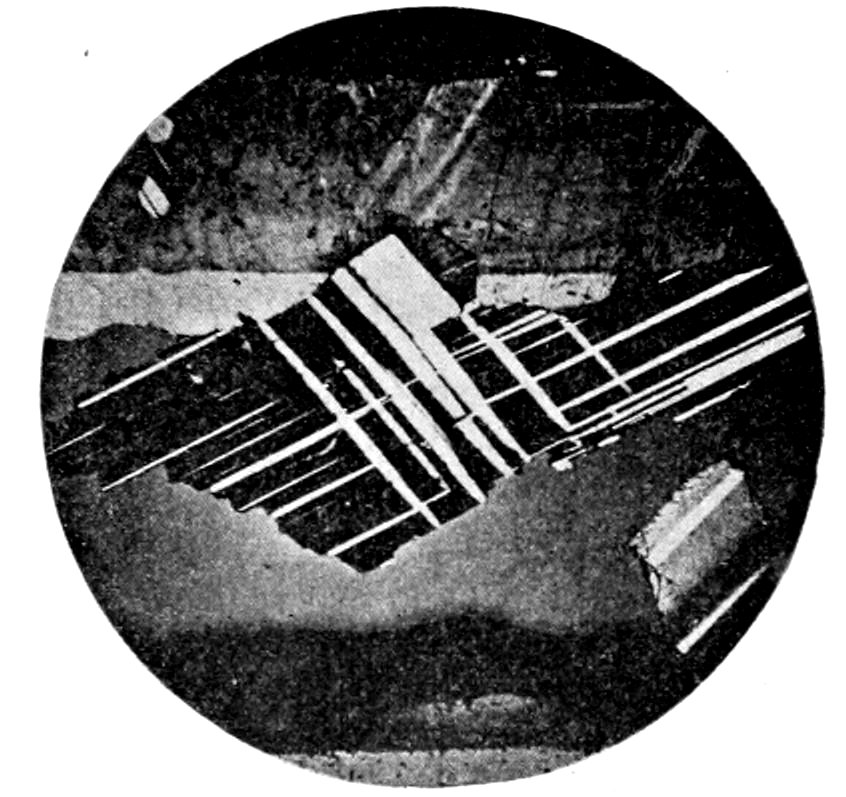
Fig. 72.—Plagioclase, showing crossed lamellæ, in olivine-gabbro. (From Cohen.)
Inclusions at times may be quite important, as the vitreous inclusions
of oligoclase in andesites, etc., and the iron ore inclusions
and other microlites in labradorite. The arrangement of these
inclusions may be zonal or in parallel orientation.
Double refraction is a little stronger than for orthoclase (γ − α
= 0.008 to 0.013 (anorthite)), hence producing slightly brighter
interference colors in sections of the same thickness.
106Extinction takes place in all sections unsymmetrically with respect
to crystallographic, twinning or cleavage lines (as these
minerals are triclinic); hence extinction angles are always observed.
Convergent Light: All plagioclases show the emergence of a
bisectrix,[107] more or less oblique, on brachy pinacoid (010) cleavage
faces. These cleavage faces show no twin lamellæ, unless twinning
after Pericline law occurs, in which case the determination is much
more complicated. The axial angle is large, 2E = 155° (Albite).
Optical character, depending on variety, (+) or (−).
Alteration: Partly the same as in orthoclase, forming clay,
muscovite, etc. Calcite and epidote are more common as side-products,
and zeolitization also occurs in some rocks. The plagioclases
decompose more easily than orthoclase.
Distinguished from:
(a) Orthoclase.—By repeated twinning after Albite law, giving
between crossed nicols a series of alternate dark and light bands.
When Albite twinning is absent the distinction is very difficult.
(b) Microcline.—By common absence of the microcline “gridiron”
structure between crossed nicols.
Methods for Optical Determination of the Plagioclases.[108]
The correct determination of the particular plagioclase is of the
greatest importance in the classification of rocks, and it is no longer
sufficient to simply determine the feldspar as either orthoclase or
plagioclase.
A quantitative analysis of isolated material would lead most
surely to the desired result, but has many objections.
Modern optical methods now permit of a very accurate and convenient
determination under ordinary circumstances. But of
course these methods involve a knowledge of the approximate
orientation of the section tested. When this section is not a definite
cleavage fragment, its orientation can best be determined by
convergent light tests.
Only an outline of these methods can be here given, and reference
107should be made to more complete works for an elaborate
discussion of the subject.
It is very convenient to have at hand a set of glass models of
the plagioclases, showing location of plane of optic axes, vibration
directions and crystal axes.[109]
(1) Schuster’s method of recognizing the different feldspars by
extinction angles measured on the cleavage plates[110] is very precise,
but not always applicable for crystals in rock sections.
Extinction Angles:
| Extinction Angles: |
|---|
| ON BASE, MEASURED FROM TRACE OF PINACOIDAL CLEAVAGE. |
ON BRACHY PINACOID, MEASURED FROM TRACE OF BASAL CLEAVAGE. |
| Albite |
+ 4° |
Albite |
+19½° |
| Oligoclase, Ab4An1 |
+ 2° |
Oligoclase, Ab4An1 |
+ 8° |
| Labradorite, Ab1An1 |
− 5½° |
Labradorite, Ab1An1 |
−20° |
| Anorthite |
−36½° |
Anorthite |
−41½° |
Confusion may here arise between albite and labradorite if disregard
be had to signs, but the more acid oligoclase is readily
distinguished from the basic anorthite.
By convention the angles on base and pinacoids are (+) when
the direction of extinction has apparently moved as the hands of a
watch, with reference to the upper right hand edge (between base
and pinacoid) of the crystal. When the reverse is true the angles
are (−), see Fig. 73.
(2) The statistical method of Michel Lévy and others is often
applicable, especially in the following case:
Sections at right angles to the brachy pinacoid (010) and hence
showing Albite twinning.—These sections, as nearly perpendicular
108to the lamellæ as possible, are known by
the sharp dividing lines, by the extinction
angles on each side of the trace of the twinning
plane being approximately equal and
by the fact that the two adjacent lamellæ
are of the same color when the trace of
the twinning plane is parallel to the plane
of vibration of either nicol. Also in
the 45° position the lamellæ are exactly
the same color and the dividing lines disappear.
Measure the extinction angles in
as many sections thus selected as possible
and take the maximum value.[111] This should
be very close to the maximum extinction
angle, which is a constant for each kind of
feldspar.
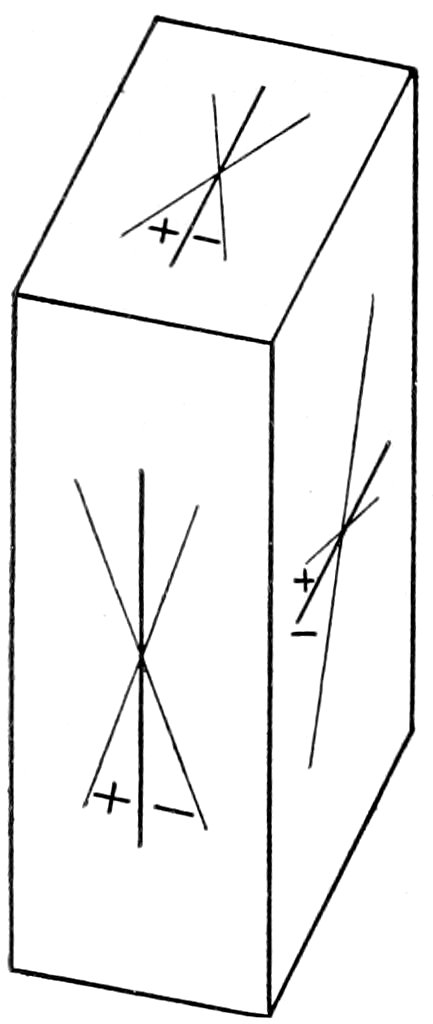
Fig. 73.—Showing conventional signs of extinction angles.
| Maximum Extinction Angles in Sections Perpendicular to Albite Twins. |
|---|
| Albite |
16° |
| Oligoclase, Ab4An1 |
5° |
| Labradorite, Ab1An1 |
27° |
| Anorthite |
53° |
In the determination of rod-like microlites,[112] oligoclase extinguishes
almost parallel to its length, while anorthite may show
extinction angles of over 27°. When these microlites show Albite
twinning use the method just described.
(3) Fouqué’s method[113] can be used when the optical orientation
109of the section is known (as the result of a test with convergent
light). The extinction angles of these known sections are of great
diagnostic importance.
The best sections are those at right angles to the two bisectrices,
and these may be obtained by rapidly testing those sections,
in the rock, which show an interference color about half as high as
the maximum color in the rock section, in this way avoiding the
sections parallel to the optic axes.
Having found such a section, test it with a gypsum or ¼ undulation
mica plate to prove whether the bisectrix is ⟂ a or c. If
⟂ a (these sections show sharp twinning striations) measure extinction
angle between trace of axial plane and albite twinning; if
⟂ c measure extinction angle between trace of axial plane and
basal cleavage cracks.
| Extinction Angles in Sections:[114] |
|---|
| ⟂ a, Measured from Albite striations. |
⟂ c, Measured from cleavage cracks. |
| Albite |
74° |
19½° |
| Oligoclase, Ab4An1 |
88° |
5° |
| Labradorite, Ab1An1 |
60° |
22° |
| Anorthite |
55½° |
48° |
When both extinction angles can be obtained, the determination
of the plagioclase is very certain, but the result cannot be regarded
as definite when only one is found; and the method becomes
more difficult as the crystals become smaller.
The position of the axial plane should be determined by convergent
light test and not simply by the direction of extinction in
parallel polarized light.
(4) Michel Lévy’s method[115] can be employed when twinning is
present after both Carlsbad and Albite laws.
110
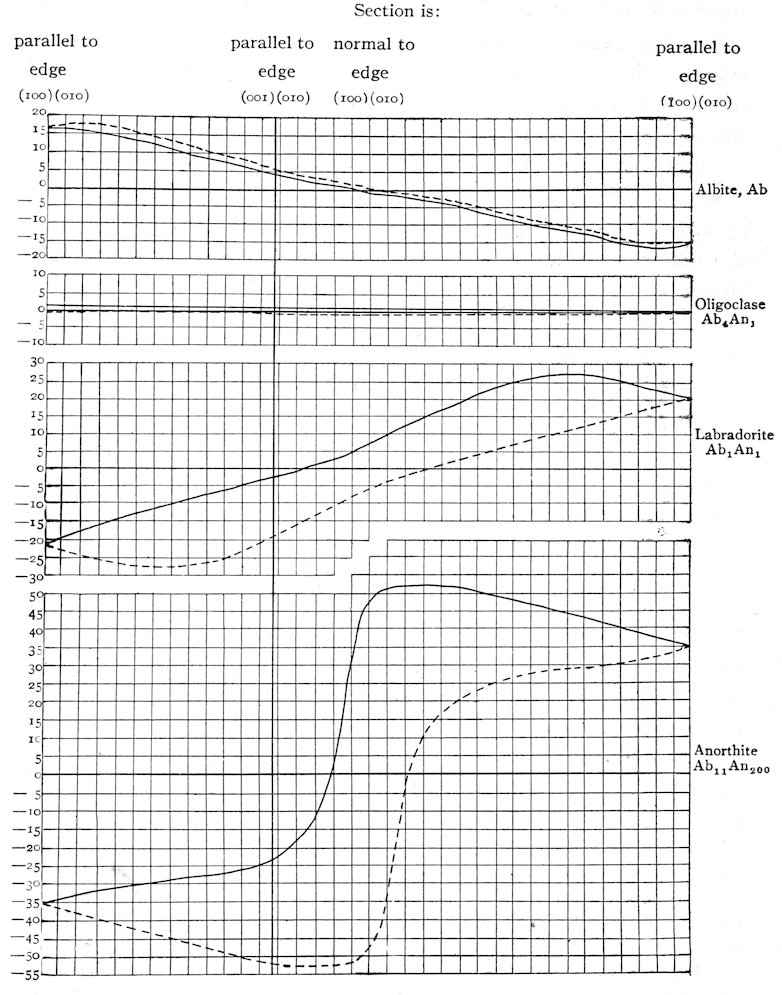
Fig. 74.—Extinction Angles in the Zone normal to (010) in Carlsbad Twins of the Plagioclases.
111The section to be tested should be in the zone perpendicular to
(010). Such sections show sharp boundary lines between the
twin lamellæ and, between crossed nicols, the Albite lamellæ show
the same interference color when the trace of (010) is parallel to
the cross-wires of the ocular, and also in the 45° position the
lamellæ are the same color and no dividing lines show. The two
parts of the Carlsbad twin exhibit different interference colors in
the 45° position, this difference being more marked as the composition
approaches that of Anorthite. The extinction angles are
measured from the trace of the Albite twinning plane (010), paying
regard to the + and − signs, and the concurrent series of angles
are to be obtained from the two parts of the Carlsbad twin. The
range of these angles (for four type compositions, Ab, Ab4An1,
Ab1An1 and An) is given in the accompanying diagram for all
positions of the section in the zone normal to (010).
In the curves of this diagram (Fig. 74) the vertical distances
are the extinction angles for every ten degrees measured from the
trace of the Albite twinning plane, and the horizontal distances
represent varying positions of the section in the zone normal to
(010) for every ten degrees of rotation from the position ∥ to the
edge (100)(010) (that is ∥ ć axis), through a revolution of 180°
to again ∥ to the same position. The concurrent angles in one
part of a Carlsbad twin are represented by a heavy line and in the
other part by a broken line. It will be observed that the difference
between these concurrent angles is very small in Albite (3°) and
increases markedly towards Anorthite (60°).
| Table for Becke Method.[116] |
|---|
| Orthoclase |
α |
< ω Quartz |
| Microcline |
β |
| Albite |
γ |
| Oligoclase, Ab4An1 |
α |
< ω; γ > ω Quartz. |
| Labradorite, Ab1An1 |
α |
>ε Quartz |
| Anorthite |
β |
| γ |
112(5) Becke’s method may be employed to identify the feldspar,
by determining the relative values of the indices of refraction of the
feldspar grain when it lies in contact with a quartz grain (best results)
or with the balsam (not such good results.) The grains
should have vibration directions in parallel position.
Other methods that may be employed are here simply referred
to: Determination (in convergent light) of the emergence of an
optic axis with reference to a known plane, the basic plagioclases
show an optic axis about parallel to ć of the crystal; determination
of total reflection by Wallerant’s total reflectometer; determination
of the value of the mean index of refraction of crushed
isolated grains by Schrœder van der Kolk’s method;[117] determinations
by specific gravity separations with use of heavy solutions, and
by chemical and micro-chemical tests (for the relative amounts of
K, Na and Ca).[118]
Remarks: The plagioclases may have the same two general habits as orthoclase,
being glassy and colorless in the younger eruptive rocks, and dull and
cloudy in the granular and porphyritic, older, massive and schistose rocks.
They occur in rocks of intermediate and basic composition.
Albite is found in granite (commonly intergrown with orthoclase), gneiss, etc.,
and frequently as a secondary constituent (secondary feldspar[119]) in the feldspar-quartz
mosaic of mechanically metamorphosed rocks. It may also be present in
acid eruptive rocks.
Oligoclase is very frequent in granite, syenite, gneiss, diorite, trachyte, andesite,
diabase, etc.; and particularly accompanies orthoclase.
Labradorite is confined more to the gabbros,[120] basic eruptive rocks and crystalline
schists, rich in amphibole and pyroxene.
Anorthite occurs in gabbros, the most basic porphyrites, basalts, etc.
Chemical corrosion and mechanical deformation[121] may take place as in
orthoclase.
Anorthite and labradorite are more or less decomposed by hydrochloric acid,
while albite and oligoclase are not acted on by the acid.
Especially interesting is the alteration of the plagioclase that takes place in
113gabbros, accompanied by “uralitization” of the pyroxene, forming “saussurite.”
This consists of a white to greenish confused aggregate, chiefly of zoisite, grossularite,
vesuvianite, chlorite, secondary feldspar (albite), etc.
Anorthoclase (a Na K, triclinic, feldspar).—Shows between
crossed nicols intersecting areas of exceedingly fine composite
twin structure and others of homogeneous structure, producing a
watery or “moiré” appearance. The twin structure may be only
seen in very thin sections. All possible kinds of perthitic intergrowth
occur. Further distinguished from orthoclase by small
extinction angle (4°) on base and by smaller axial angle (2E
= 72° to 88°).
Replaces orthoclase in the Na rich eruptives. Found in augite-syenite and
“Rhombenporphyr” of Norway (with rhombic cross-section), acid augite-andesite
of Pantelleria and in the porphyries of the Hartz.
| Anisotropic. |
Biaxial. |
Triclinic. |
| Composition: Al2SiO5. |
|
Elongation ∥ c′. |
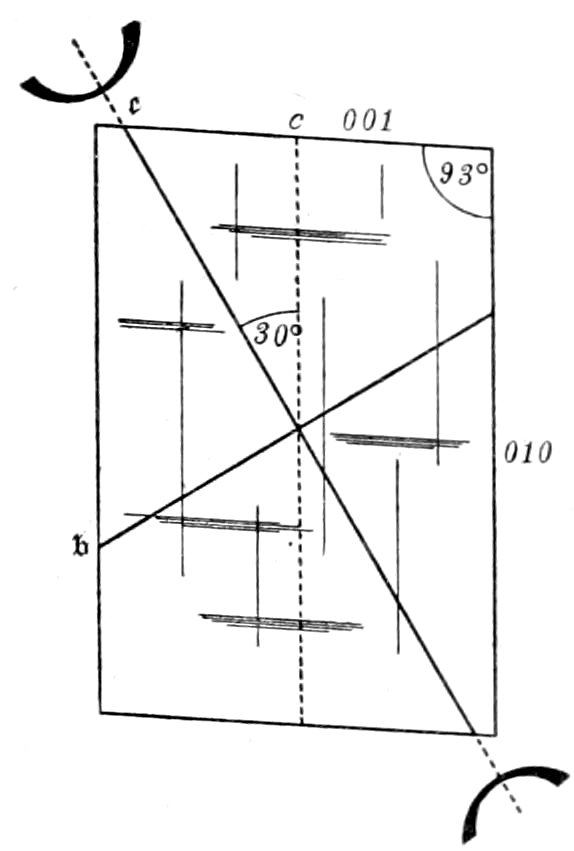
Fig. 75.—Cyanite, macro pinacoid cleavage section.
Usual Appearance in Sections: Blade-like crystals without terminal planes,
but with cross-section (six-sided) showing two long parallel edges and four
shorter edges; also in columnar aggregates. Twinning common, with generally
twinning plane parallel to macro pinacoid (100). Colorless or bluish and spotted.
The index of refraction is high (n′ = 1.720, α =
1.712, γ = 1.728), hence relief marked and surface
rough. Cleavage perfect, parallel to macro pinacoid
(100), appearing as sharp cracks, parallel to longest
edges in cross-sections; less distinct, parallel to
brachy pinacoid (010). Fibrous parting parallel to
base (001), Fig. 75. Pleochroism (colorless to blue
∥ c′) not noticed except in colored crystals.
Crossed Nicols: Double refraction quite strong
(γ − α = 0.016). Interference colors upper first
order, yellow, red, violet, etc. Extinction angles
observed in all sections (being triclinic), reaching
a maximum of 30° on macro pinacoid (100), Fig.
75. Extinction on base, about parallel to most
perfect cleavage. In convergent light axial angle
large; axial plane and Bxa. about perpendicular
to best cleavage (100); optical character (−).
Alteration: Seldom observed, but may take
place to mica.
Distinguished from:
(a) Amphibole by cleavage (intersecting cleavages at 124° in amphibole and
90° in cyanite) and by (100) cleavage plates of cyanite showing emergence of
acute bisectrix.
(b) Corundum by being biaxial.
114Distinction from similar appearing minerals may be difficult.
Remarks: Found in gneiss, granulite, metamorphic schists, ecolgite, etc., commonly
associated with garnet. It is not attacked by acids. H., 5 to 7. Sp. gr.,
3.6.
| |
Aggregate. |
|
| Elongation (of fibers) ∥ c′. |
Composition: H4Mg3Si2O9, with replacement by Fe.
Usual Appearance in Sections: Dense, fibrous (chrysotile) or
scaly (antigorite) aggregates.
Color.—Colorless to light greenish, except the Fe rich variety
which is green.
Index of Refraction.—n′ = 1.55 to 1.56 (α = 1.56, γ = 1.571 for
antigorite), hence no relief and surface smooth.
Polarized Light:
Pleochroism.—Not seen or very feeble, except in the Fe rich
variety.
Crossed Nicols:
Double Refraction.—Rather weak (γ − α = 0.009 to 0.011).
Interference Colors.—Middle first order, gray, white, yellow,
etc. Anomalous colors do not appear. The aggregate structure
is distinctly seen between crossed nicols. Due to compensation
aggregates may appear isotropic.
Distinguished from: Chlorite.—By more usual absence of
color, pleochroism and anomalous interference colors; but this
distinction may be very difficult.
Remarks: Serpentine (both antigorite and chrysotile) is essentially a secondary
mineral, resulting in most cases from the alteration of chrysolite (olivine), Fig.
22, more rarely of pyroxene or amphibole.[122] The alteration of olivine to antigorite
leads to the characteristic “lattice structure,” the alteration to chrysotile to “mesh
structure.” In the case of the “mesh” formation the alteration starts from the
surface and cracks, producing fibres of chrysotile, which stand at right angles to
these edges and cracks. As serpentinization proceeds new cracks form, due to
increase in volume, and the process may continue until complete pseudomorphism
takes place. When this subsequent serpentinization of the meshes takes place
the resulting serpentine may appear almost isotropic[123] and is certainly different
from the chrysotile of the first formed veins (Weinschenk). Pieces of the parent
mineral are often present.
115Serpentine is found in ophiolites, the altered basic igneous rocks, pyroxenites,
peridotites, etc., and as a primary mineral in the Central Alps peridotite, intergrown
with fresh olivine (Weinschenk). It may also form a rock by itself. Serpentine
is attacked quite strongly by hydrochloric acid, still more so by sulphuric
acid. Common serpentine is not altered by heating (distinction from chlorite),
but the Fe rich variety becomes brown and opaque. H., 2.5 to 4. Sp. gr., 2.5 to 2.7.
| Composition: H4Al2Si2O9 (kaolinite). |
|
Aggregate. |
Usual Appearance in Sections: Fine, scaly, colorless aggregates, which appear
opaque (due to porous structure). The scales show basal cleavage. Index
of refraction is about the same as balsam (n′ = 1.55), hence no relief. The
double refraction is weak (γ − α = 0.008).
Distinguished from: Colorless Mica and Hydrargillite [(Al(OH)3), which
as an alteration product of the feldspars is often confused with clay] by weak
double refraction.
Remarks: Clay results from the alteration of the feldspars (especially the
plagioclases), elæolite, scapolite and other silicates. Kaolinite is insoluble in
hydrochloric but decomposed by sulphuric acid. H., 2.5. Sp. gr., 2.6.