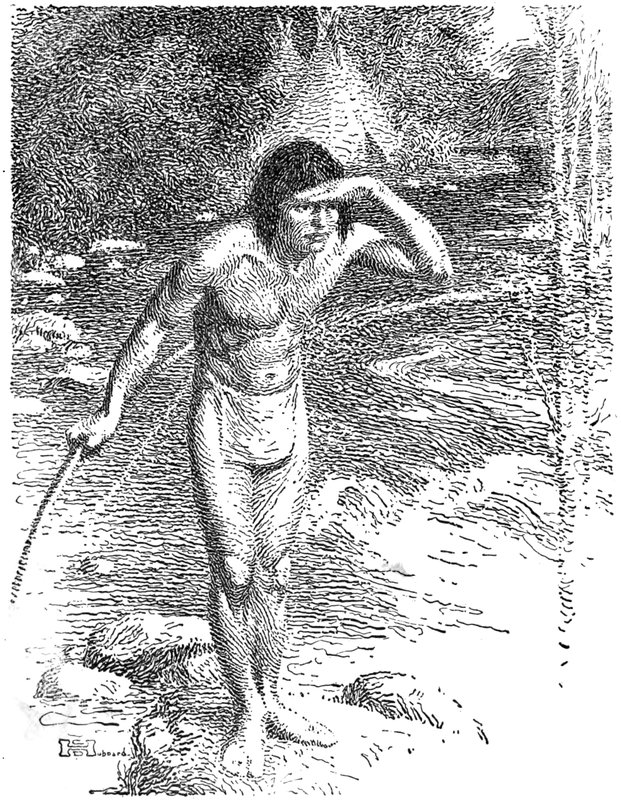
He lived in a forest
of North America with
his father and mother
and his baby brother.
There were many other Indian people
who lived in the same forest, and Mewanee’s
father was chief of them all.
Mewanee was very proud to be the
chief’s son, for the chief was always the
bravest of all the Indians of his tribe.
6One day mother left Mewanee and
baby brother in the forest at play, while
she went to work in the cornfield.
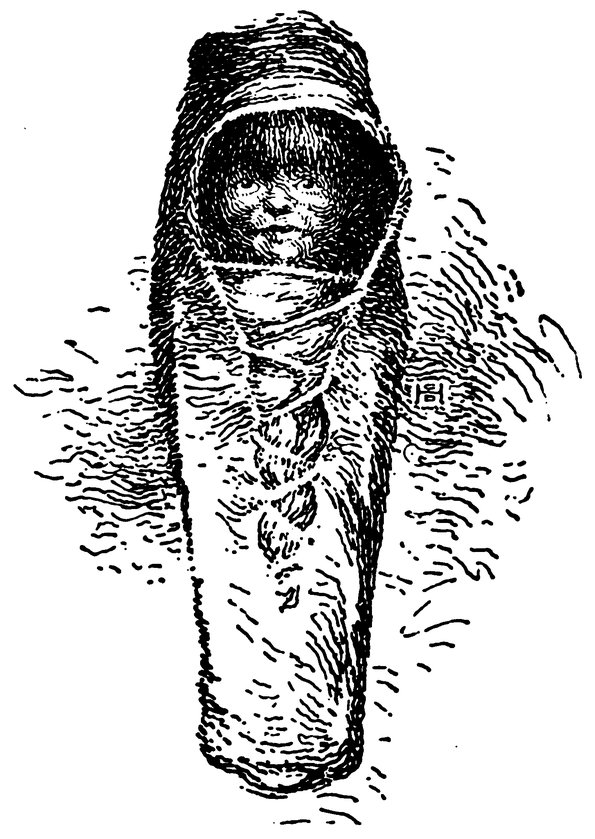
Baby brother was swinging in his
cradle from the branches of the tall
cedar tree.
Mother had made this cradle from
the bark of the linden tree. It was lined
with soft rushes so that baby might be
quite comfortable as he lay in it.
The little boy could not fall out of
his queer cradle because he was tied in
by means of strong deer sinews.
At first baby brother seemed quite
contented as the gentle wind rocked
the cradle to and fro.
7He was interested in watching Mewanee
as he ran about near by.
How tall and slender and straight
Mewanee’s body was!
Mewanee had only a small piece of
deer skin thrown about his copper-colored
body.
The wind tossed his coarse black hair
about his face and shoulders as he
played.
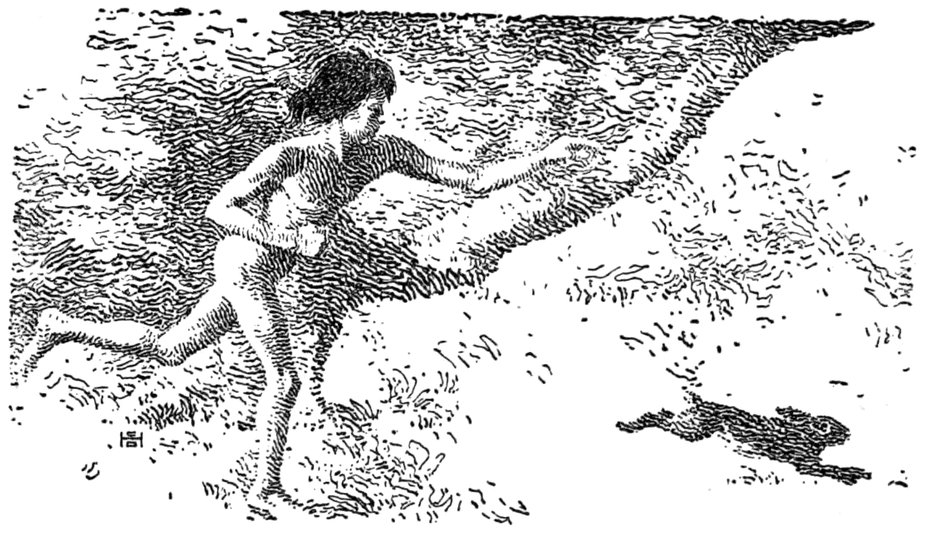
Suddenly Mewanee stopped running
and stood very still.
He looked intently at a little hare
as it scampered about the trees.
Now the hare saw Mewanee. Playfully
it approached him, then slyly
8turned around and ran away as fast as
its little legs could carry it.
Mewanee dashed after it, forgetting
all about baby brother, who was swinging
in his linden cradle.
How lightly he ran and how swiftly!
His legs went as fast as the wind.
On and on scampered the hare, in and
out among the trees, seeming to enjoy
the race.
Now it stopped, and Mewanee almost
caught up to it.
Away it ran again, faster and faster.
Mewanee called to it by making
sounds that hares understand, but the
little hare did not stop.
9
MEWANEE DASHED AFTER IT
Again and again he called, but the
hare ran on and on.
Mewanee sat down on the ground for
a moment to rest.
The little hare ran deep into the forest
and was soon lost from sight.
Suddenly Mewanee put his ear to the
ground and listened.
10Then he jumped up and ran toward
his little brother.
Baby brother was crying because he
had been left alone. He wished Mewanee
to play with him.
Mewanee shouted to his brother as
he ran along.
He shouted again and again, for he
wished baby brother to know that he
was coming.
Baby brother heard Mewanee’s call
and stopped crying. He could not answer
Mewanee because he was only
a baby and could not talk.
Mewanee soon reached the tree
where baby brother’s cradle hung.
11How nimbly he climbed the tall tree
so that he might be very near his
brother!
Mewanee
peeped into
the cradle and
spoke to the little
boy. Baby
brother smiled
at Mewanee.
His tiny face
wrinkled all up
and Mewanee
could hardly see his little black eyes.
Baby brother looked very much like
Mewanee, but of course he was only
12a baby, and Mewanee was a big boy
nearly twelve years old.
What fun the two brothers had as
they watched the little grey squirrels
frisk in and out among the branches
of the very tree from which baby brother’s
cradle hung!
Mewanee gathered some nuts, and
the little squirrels hopped about him
saying, “Chip, chip, chip! Please give
us the nuts!”
How eagerly they took the nuts from
Mewanee’s hand!
Then they sat up on their hind
legs and nibbled the nuts with great
glee.
13Baby brother laughed very merrily
as he watched the dear little frisky
creatures.
The birds, too, sang happily from
their nests in the tree-tops. They
seemed to be singing to Mewanee and
baby brother.
Mewanee answered the song.
Indian people could talk to all the
animals of the forest.
These two Indian boys were having
a happy time together when their
mother came from the field.
She swung her tiny papoose on her
back, and away they went, Mewanee,
mother and baby brother.
14Mewanee’s mother was very strong.
Indian women must be strong because
they have to do all of the hard work
in the fields.
Mewanee’s mother looked like all of
the other Indian women. She had long
black hair and copper-colored skin.
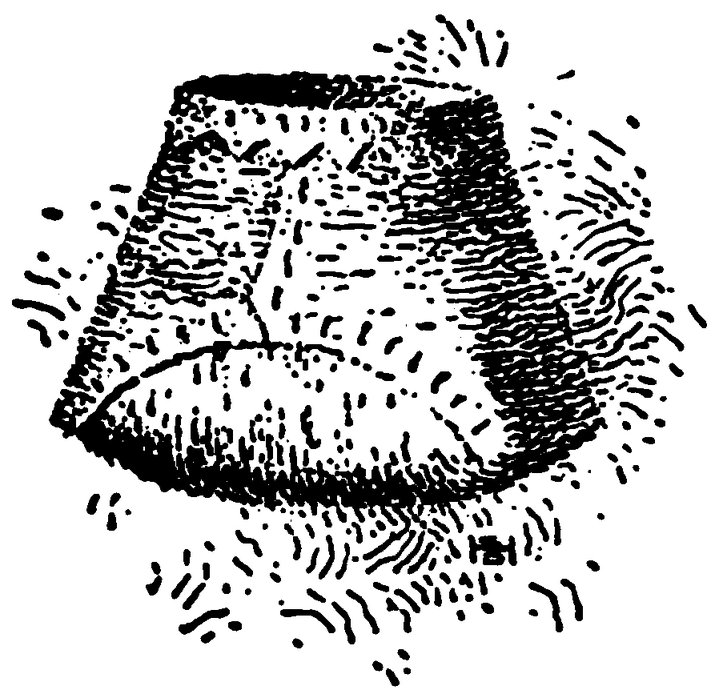
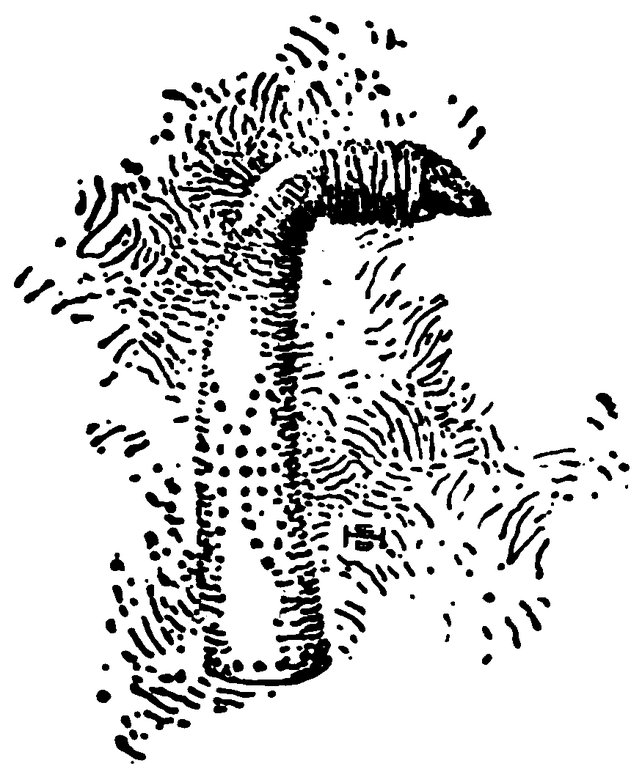
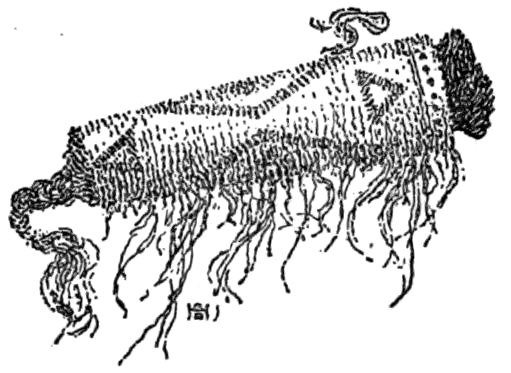
A MOCCASIN
She had a light weight
skin wound about her
waist, for it was summer
time and she did not need
the heavier fur skin which
she wore in winter.
There were moccasins on her feet,
and long chains of beads and shells
about her neck.
15On and on they went, in and out
among the trees, through the forest.
Mewanee wished to go more quickly,
so he ran on ahead of his mother and
baby brother. He was very happy and
gay as he ran onward.
Finally he reached the opening in
the forest where were the many wigwams
which made the Indian village.
Mother and baby brother soon
reached the village.
Father Sun was bidding them welcome
as he shone so brightly from
above.
Mother was very tired from her hard
work in the field and her long walk,
16so with her tiny papoose on her back
she entered the wigwam.
Mewanee stayed outside to watch
some of the Indian women at work
near by.
He asked if he might help them, but
they laughed as they said, “You are too
young, Mewanee; you could not lift
these heavy poles.”
II THE HOME
17
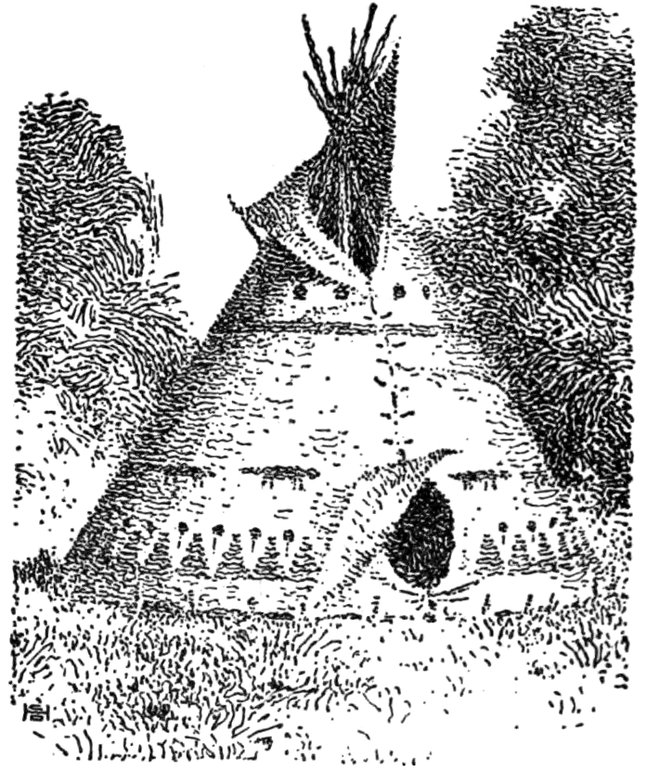
Mewanee was interested
in watching these two Indian
women build a wigwam.
They had already
set the poles in a circle in the earth
and tied them together at the top with
strong deer sinews.
When Mewanee came up they were
wrapping the skins about the poles.
There were twelve buffalo skins
which had been dried in the sun and
sewed together very firmly.
18How quickly they stretched the skins
about the poles and fastened them to
the earth with strong pegs!
One woman drove the pegs into the
earth with her stone axe while the
other woman held the skin.
Mewanee watched them lace up the
front of the wigwam.
Of course they left an opening for
the doorway.
They must have an opening at the
top also.
Mewanee knew that they must put
a flap over the opening in the top, for
the hole must be covered in case of
rain and wind.
19Smoke was coming from the opening
in the chief’s wigwam.
MEWANEE’S WIGWAM
Mewanee’s mother had built a fire
in the hole, which was in the center of
the earth floor
of their wigwam.
Mewanee saw
the smoke and
knew that his
mother was
cooking supper.
He rushed toward
his own
wigwam and quickly entered the
doorway.
20The chief’s wigwam had queer looking
pictures painted all over the outside.
Every picture meant something
to these Indian people.
They used the juice of wild berries
and roots for paint.
When Mewanee entered the wigwam
it was filled with smoke.
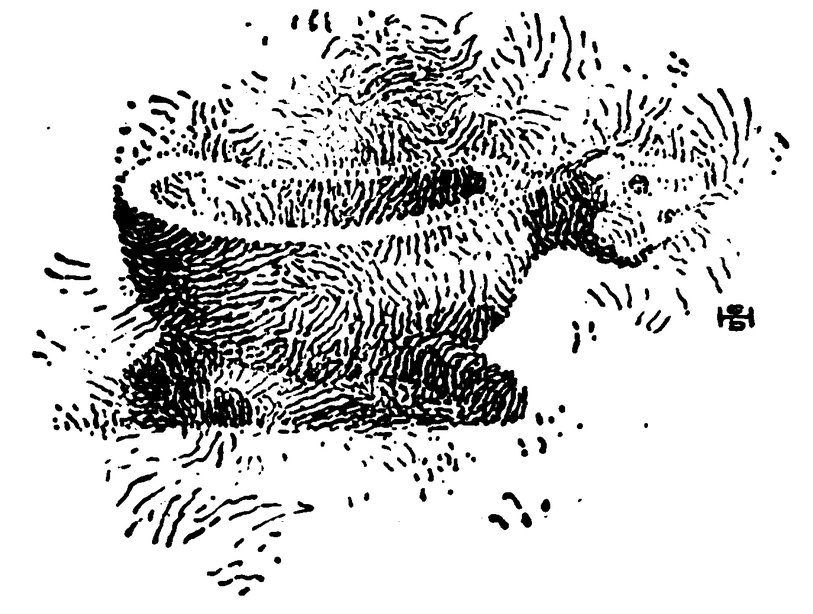
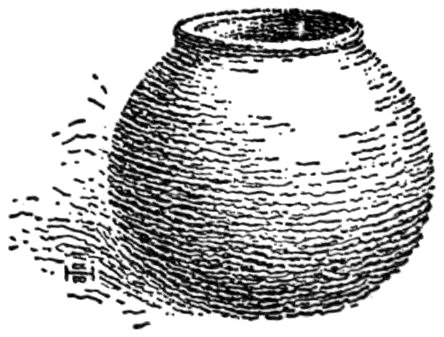
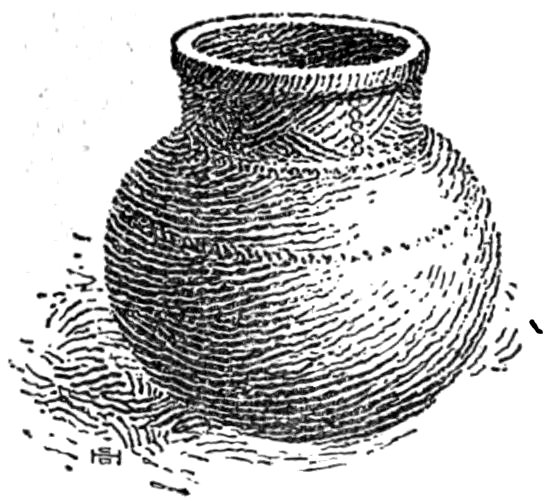
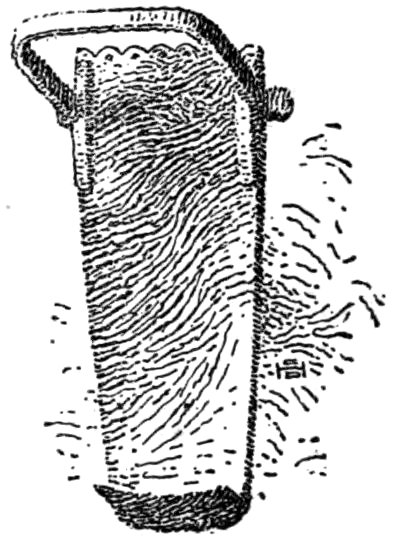
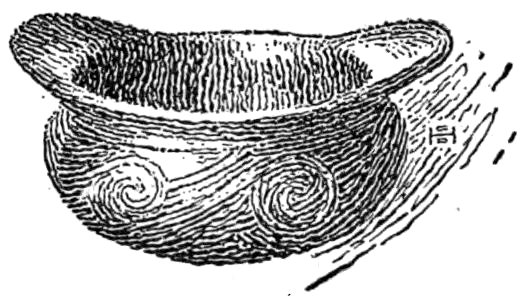
A STONE JAR
Mewanee’s mother
was cooking
some deer meat in
a large stone jar,
which she had
placed on the fire.
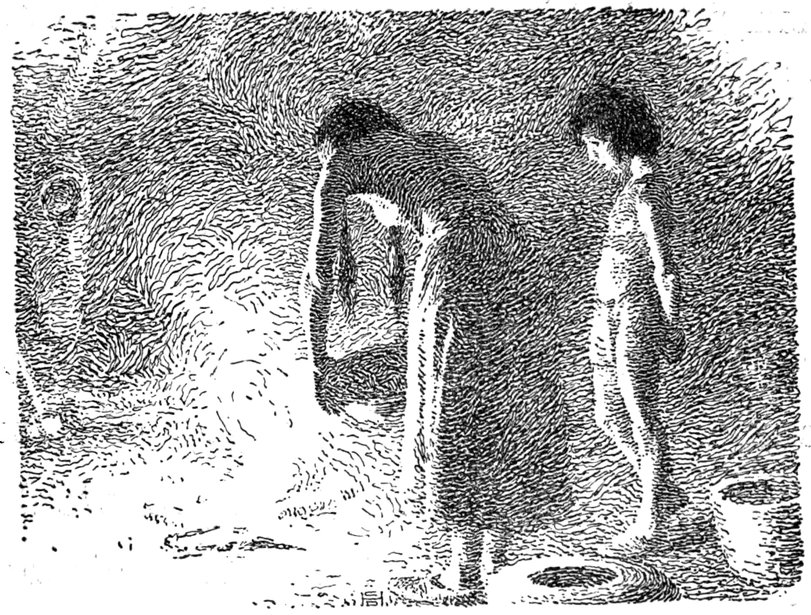
Mewanee watched his mother stir
the meat with a carved bone spoon.
21
MEWANEE WATCHED HIS MOTHER
Then he wandered about the room
looking at the axes, knives, spears, warclubs,
and bows and arrows which hung
about the walls.
He picked up a tomahawk and
showed it to baby brother who was
22hanging in his cradle from a peg in one
of the poles of the wigwam.
Baby brother smiled as Mewanee
brandished the tomahawk about, just
as he had seen his father do.
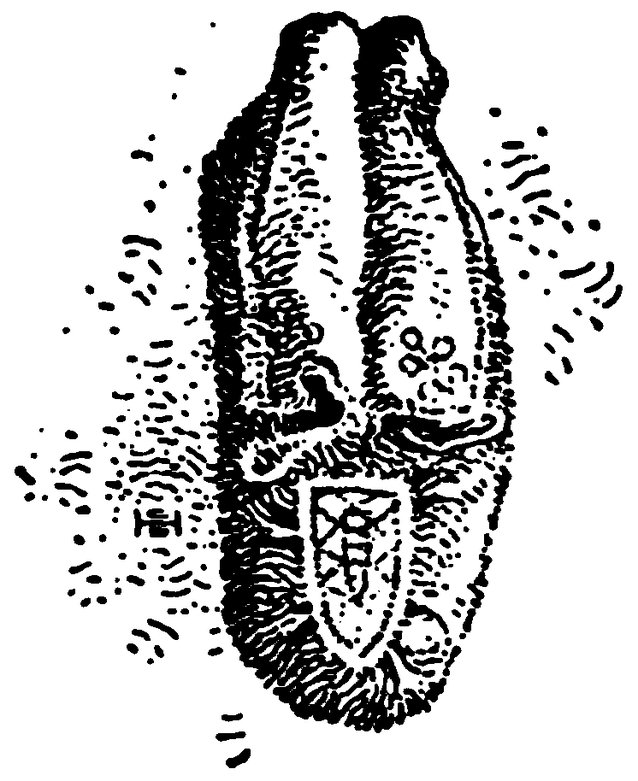
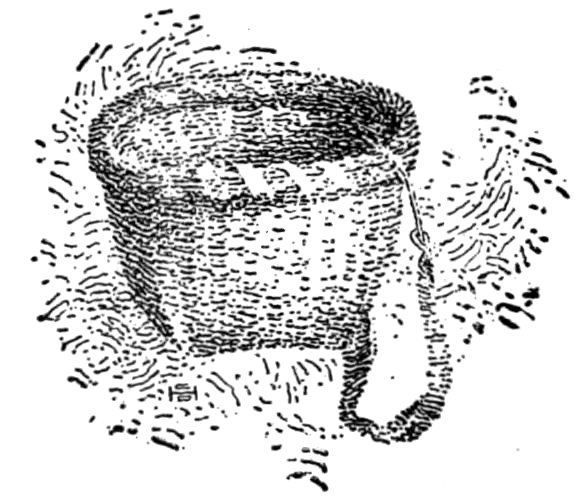
A BASKET
Mewanee loved to handle these weapons
and he longed for the day to
come when he would
be big and strong
enough to use them.
He had his own bow
and arrows now, but
they were not so large
as his father’s.
Mewanee peeped into the stone jars
and rush baskets standing about.
23Some of the jars were filled with
corn, others with powdered deer and
buffalo meat. Mewanee was happy to
see so much food.
Mewanee soon threw himself on one
of the mats and stretched himself before
the fire.
He listened for his father’s footsteps
which he could hear when a long distance
off.
Now Mewanee quickly jumped up
and ran out of the wigwam.
He stood quite still and listened.
The beautiful blue river which ran
along in front of the wigwam seemed
to call Mewanee to its banks.
24Mewanee loved that great, blue,
peaceful river and listened to its silvery
tones.
Often he would say, “O river, river,
when shall I be big and strong and
brave like my father?”
And the river would answer, “Have
patience, Mewanee. The day will come
when you will be chief of this whole
tribe.”
Then Mewanee would raise up his
arms and ask the Great Spirit for help,
that he might be strong and brave
enough some day to take his father’s
place as chief of his tribe.
III THE HUNT
25
While Mewanee listened
and waited, his father,
the chief, approached.
The chief was big and
brave and strong.
His copper-colored body had many
strange pictures painted upon it.
His black hair hung about his neck
and shoulders and was decorated with
many feathers.
A short skin skirt hung about his
waist. His deer-skin moccasins made
his step very light and soft.
26Mewanee also wore moccasins. His
mother made them from buckskin and
sewed them together with a queer bone
needle threaded with deer sinews.
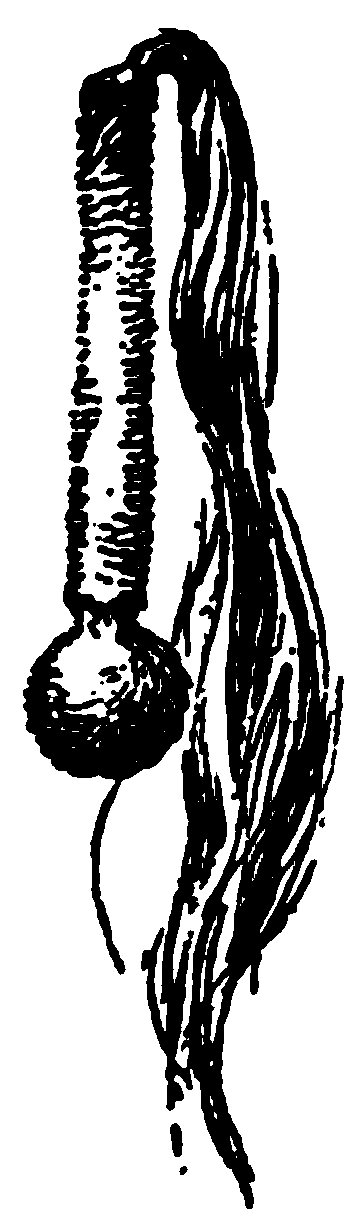
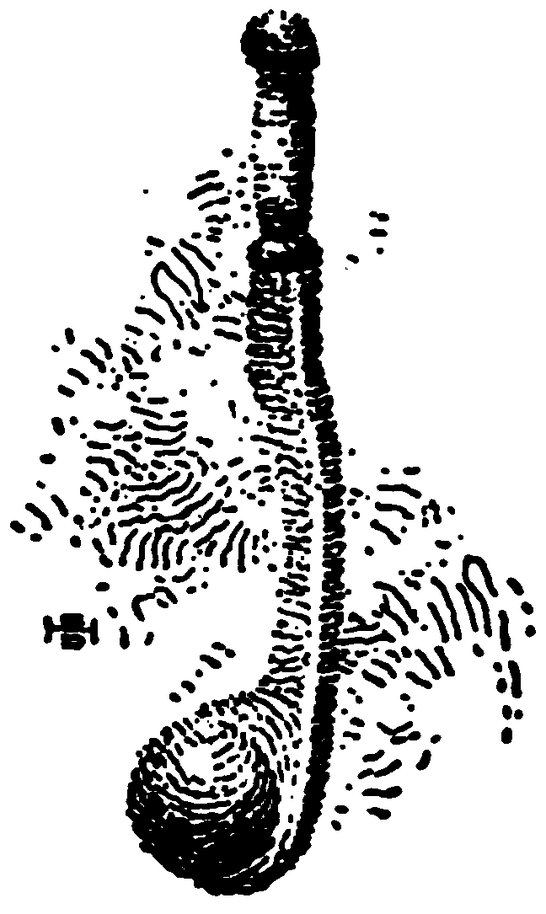
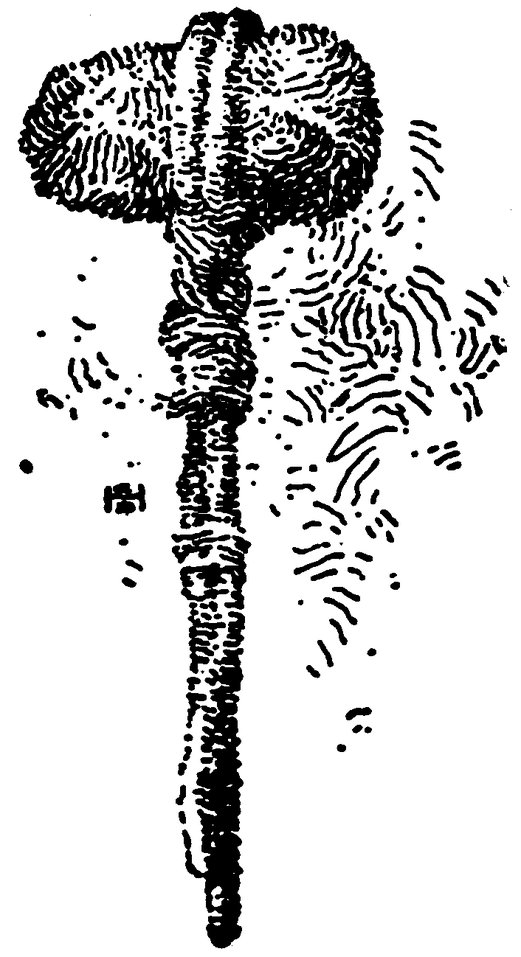
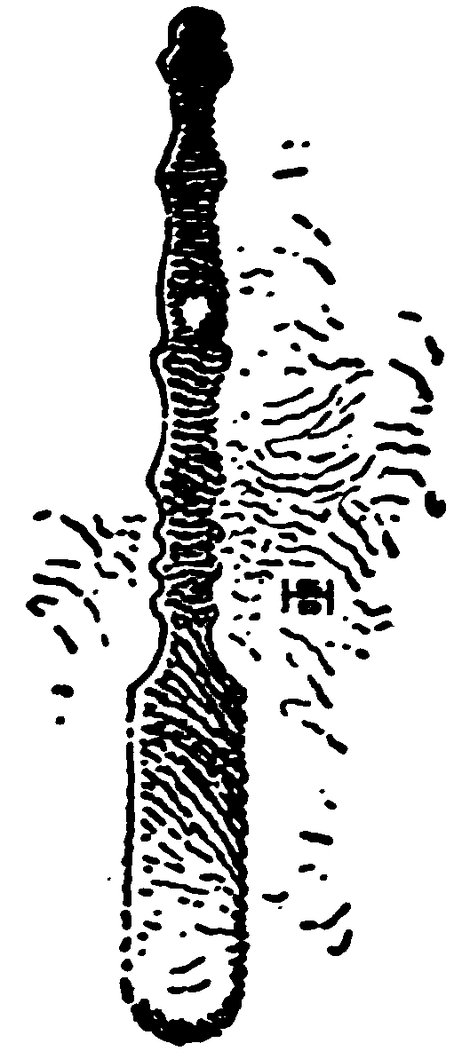
A WAR CLUB
In the winter the Indian people wore
snowshoes and heavy fur skins over
their bodies.
Mewanee jumped up and
down for joy when he saw
his father. He was very
proud of being a chief’s son.
The chief carried his war
club in his belt, and his bow
and arrow in his hand.
He had many scalp locks dangling
from his belt.
27These scalp locks showed that Mewanee’s
father was a brave chief. Indians
took scalp locks from the heads
of the people they killed, because they
thought that these showed their bravery.
Mewanee was very glad to see his
father, who, he knew, had just come
home from the hunt.
He gave a loud shout when he saw
the buffalo which some of the Indians
were bringing to the chief’s wigwam.
He looked at his father with great
pride for he felt sure that the chief had
killed this splendid animal.
“How fine!” said Mewanee, as he
and his father entered the wigwam.
28Supper was ready and was quickly
placed before the chief as he threw
himself upon a mat in one corner of
the wigwam.
How fast the stewed meat, corn
cakes and sassafras tea disappeared!
The chief used a gourd for a cup, and
hollow pieces of tree trunk for dishes.
It did not take him long to eat his
supper because he ate very quickly.
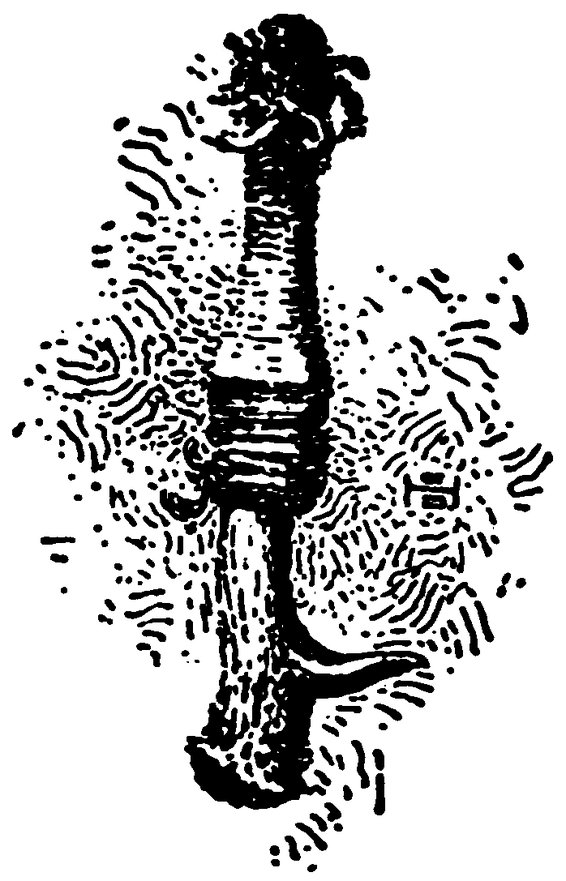
Now the chief took out his long-stemmed
pipe from his belt.
The tobacco he took from a skin
bag which he also carried in his belt.
How quickly he filled the stone bowl
of his pipe with the powdered tobacco!
29Then he rubbed together two pieces
of flint. Oh! he lost the first spark,
but the second he caught with the
thin piece of reed which he had ready.
How contented he looked as he
stretched himself lengthwise on the
rug and smoked his long pipe!
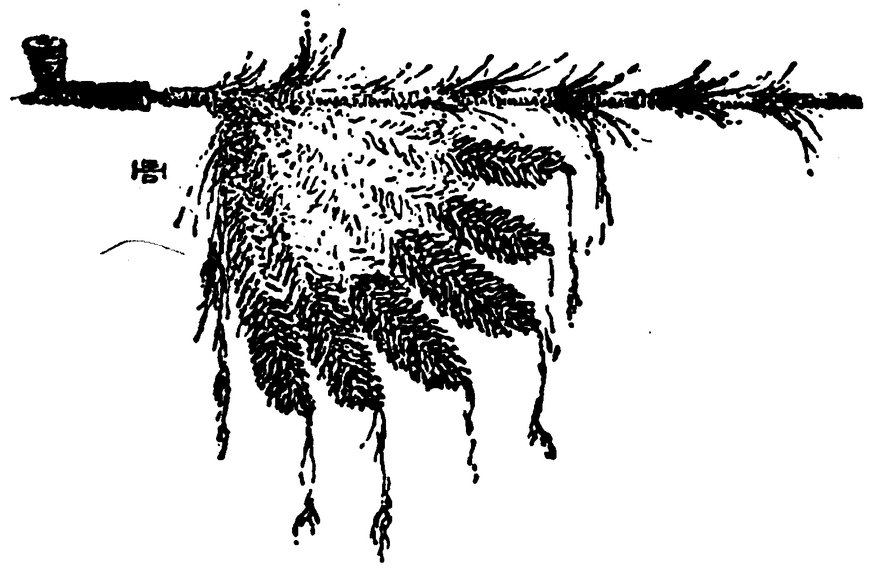
THE CHIEF’S PIPE
The chief’s
pipe was very
beautiful.
The stem
was wonderfully
carved
and was beautifully ornamented with
braids of porcupine quills and with beaks
and tufts from woodpeckers’ heads.
30Mewanee jumped up and looked eagerly
at the fine buffalo which his father
had shot.
A SKIN SCRAPER
He knew that the skin would make
a fine warm covering for him next
winter. Mewanee’s mother would skin
the buffalo with a sharp
knife and stretch the
skin in the sun to dry.
Now that the chief
had finished his supper,
Mewanee, mother and
baby brother would eat.
Mewanee’s mother called to him
and he hurried to the place his father
had just left.
31
BABY BROTHER’S CRADLE
Mewanee was hungry and quickly
ate the food which his mother put before
him. Baby brother
awakened and wanted
supper too. Mother took
the cradle from the peg
and fed her little boy
some of the corn cake
which had been left.
Suddenly the chief got up from
his skin mat and rushed out of the
wigwam.
Mewanee rushed out also. He wondered
why his father stood so silent
and looked anxiously toward a hill in
the distance.
32He stood by his father’s side and
said nothing.
Now the chief put his ear to the
ground and listened.
Indians could hear sounds miles
away and they had very keen sight.
The evening was very still and
peaceful. The gentle moon was just
about to peep from behind the clouds.
The chief jumped up very quickly.
He was silent and serious.
Yet he looked and looked into the
distance.
Mewanee too was very thoughtful;
he was anxious to know why his father
seemed so worried.
33
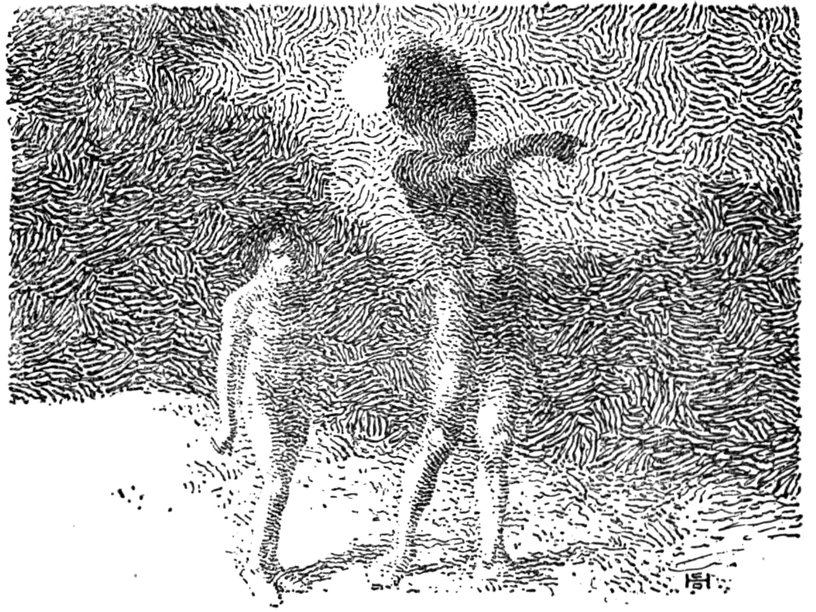
“MY SON,” SAID THE CHIEF, “I FEAR OUR ENEMY.”
At last he said, “What is the trouble,
father? Why are you so silent and
grave?”
“My son,” said the chief, “I fear our
enemy, the Indians who live beyond
that distant hill.
34“May the Great Spirit protect and
guard us from their wrath.”
Then he sent Mewanee into the
wigwam, while the stars said, “Good
night, Mewanee, good night.”
IV THE ENEMY
35
The chief gave a loud call.
This call was heard by
all of the Indian people in
the village, but only the
men responded to it because the women
did not take part in warfare.
They came from all directions, running
toward their chief.
How quickly they gathered the cedar
logs and branches and lighted the fire!
Then they sat around the fire and
36listened to the chief who spoke to them.
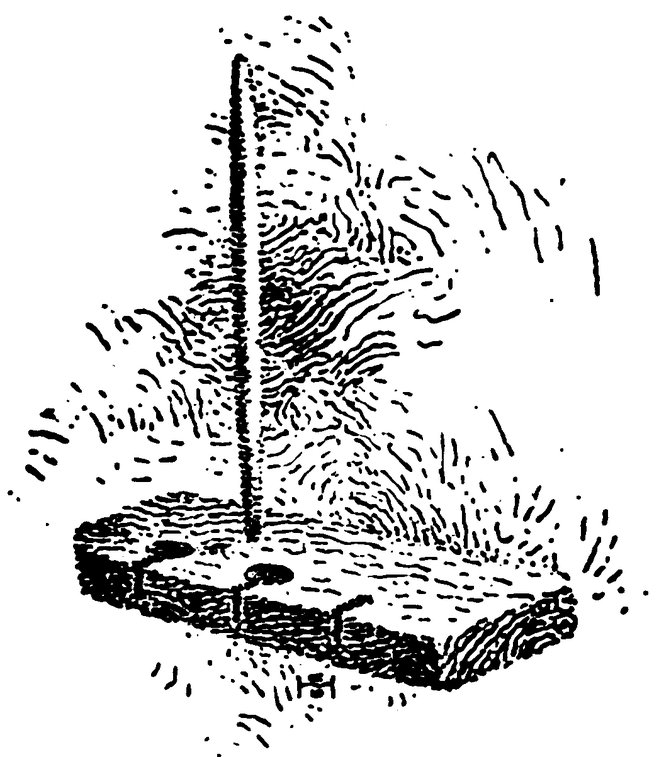
A FIRE DRILL
They were very silent and grave
because they knew
that trouble was upon
them.
Suddenly they
stretched their bodies
face downward
on the ground and
asked for help and strength from the
Great Spirit.
Their chief had told them that
he feared that the enemy might be
upon them at any moment. He had
heard strange sounds in the distance
which told him that the enemy were
37astir. He thought it wise to send men
to the distant hill, which had an outlook
over the surrounding country.
These watchers were to signal him
by means of a fire on the top of the hill.
If the signal should be a bright light
it would tell them that the enemy was
approaching, but if they saw smoke
they would know that they were safe
from the attack for the night.
The Indians knew that if they were
attacked that night, and if they were
not prepared for the attack, their whole
village would be destroyed.
Others of the Indians stationed themselves
here and there to keep watch.
38
AN ANTLER WAR CLUB
Some of them in their birch-bark
canoes watched from the river. How
gracefully they glided to
and fro on the peaceful
river!
The chief approached
the camp fire and threw
a cedar mat upon it.
He did this so that he
might more easily see the signal fire
from yonder hill.
All was very quiet while the Indians
waited patiently through the long
night.
The kindly moon and the tiny stars
looked down upon them seeming to
39say, “Be of good cheer. The Great
Spirit will protect you.”
A WAR CLUB
Through the long night
they watched and waited.
Silently they smoked their
long pipes while they looked
anxiously toward the distant
hill.
The river looked beautiful
in the still night. What a terrible
thing it would be if the enemy should
attack this peaceful village!
Suddenly in the early morning the
chief gave a loud shout, as he raised
his arms to the Great Spirit. The signal
from yonder hill had told him
40that all danger from the enemy was
passed.
The enemy was not approaching
their village, but had gone in the opposite
direction.
Wearily the Indians wandered toward
their wigwams.
The men from the river had been
watching also. When they saw the
smoke they paddled toward the shore.
How lightly and easily they pulled
their canoes up on the river bank!
These bark canoes were very light
and strong. The Indians made their
canoes by stretching the bark from the
birch tree over a frame of pine wood.
41Then they fastened the bark to the
frames with the roots of the spruce
tree.
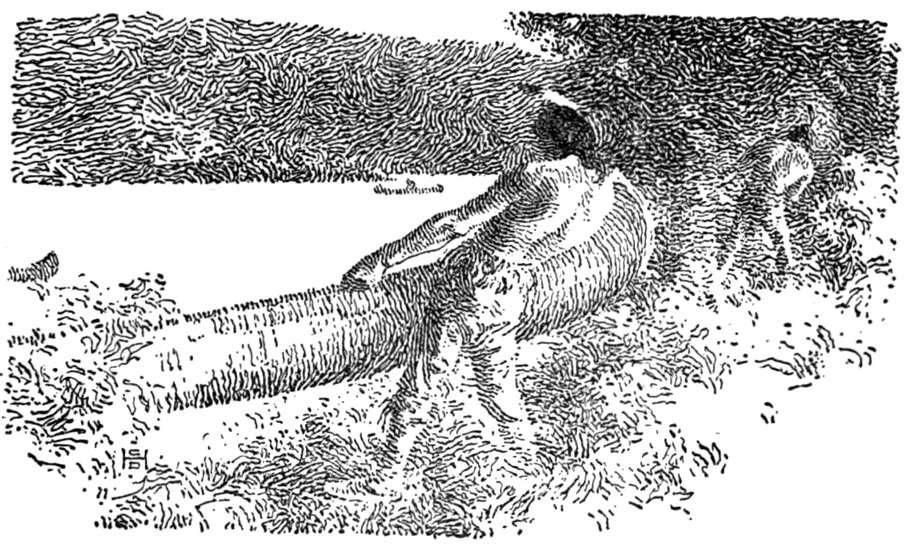
HOW EASILY THEY PULLED THEIR CANOES UP ON THE BANK!
Mewanee had a canoe of his own
and loved to paddle along this beautiful,
bright, blue river.
One by one the Indian men entered
their wigwams.
42The chief was the last to leave.
He still had fear of the enemy. Yet
he knew that for that night there was
no danger. He wondered where the
enemy had gone, and if they had attacked
another village.
At last all was quiet and this Indian
village was at rest.
A WAR CLUB
V THE FRIENDLY TRIBE
43
In the silence of the early
morning came the distant
sound of hoof beats.
Louder and louder, nearer
and nearer grew the sound.
Many Indians rushed from their
wigwams, put their ears to the ground
and listened.
Nearer and nearer it came, while the
Indians listened and waited.
Suddenly from the nearby forest
dashed a beautiful black pony.
44On the pony’s back sat an Indian
youth about fifteen years old.
He sat tall and straight. His eyes
were bright and shining.
He had only a small skin wound about
his body, though the night was cool and
chilly.
Quickly he rode and at last reached
the wigwam of the chief.
Then he leaped lightly to the ground
and began talking in great excitement.
He had been riding hard for many
hours and was tired and worn.
But he carried an important message,
and must lose no time in giving it.
He said, “Chief, the enemy is upon my
45people. My father, the chief of his
tribe, sent me to ask for your aid.
“Our tribe is not strong enough to
ward off the attack of the enemy.
“I fear that the enemy has already
burned our village and destroyed our
crops.”
The Indians at a signal from their
chief collected about him.
They decided to go at once to the
aid of this friendly tribe.
It did not take them long to get
their war clubs and tomahawks. They
were always ready for battle.
Some rushed off in canoes. Others,
headed by their chief and the youth,
46jumped upon their horses and went
galloping away as fast as the wind.
Still others remained at home to
protect their village, fearing that the
enemy might come that way.
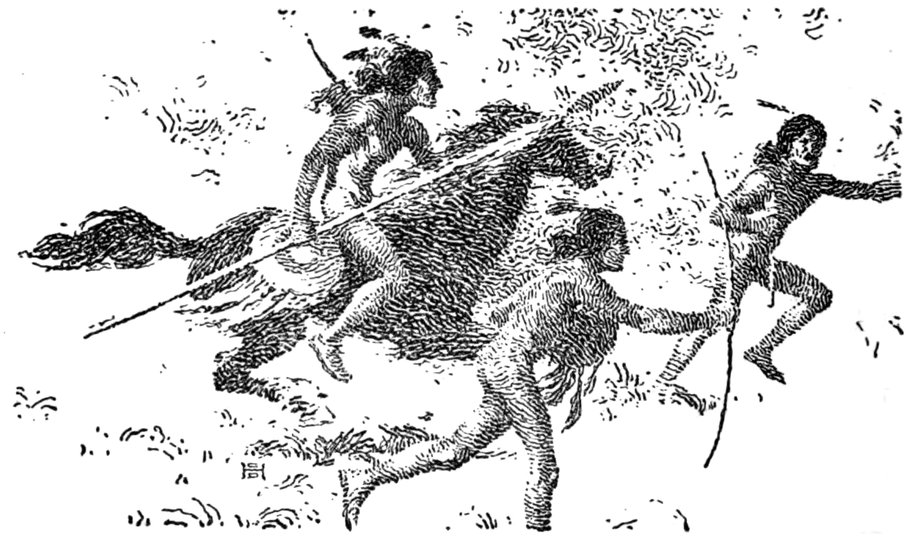
THEY GALLOPED AWAY AS FAST AS THE WIND
On and on the Indians rushed through
the forest, along the river edge.
47The canoes skimmed along the surface
of the water like birds in the air.
But alas! they were too late.
When the Indians reached the village
of the friendly tribe they saw a
mass of flames. The enemy had gone
after setting fire to all the wigwams.
The Indian women were running
about, their long black hair flowing in
the wind.
They were wringing their hands and
calling on the Great Spirit for mercy.
They carried their babies strapped
to their backs while the older children
clung to their mothers, badly frightened.
48The men simply stood and looked
at their burning village.
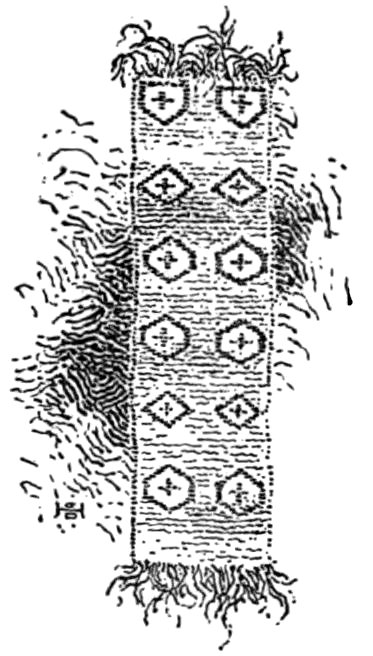
A WAMPUM BELT
They were grateful to the other Indian
tribe even though it could do
nothing to help them.
These two tribes had
sealed their friendship by
means of a belt of wampum.
Wampum, which was
the only kind of money
these Indian people knew,
was made from various colored shells
shaped into beads and strung on deer
sinews. Some Indian tribes wore the
strings of wampum wound about their
49necks, while others wove them into
strong belts of many colors.
When two tribes wished to seal their
friendship they did so by giving a
wampum belt.
Mewanee’s father felt very sorry for
these Indian people. Indeed they were
a very unhappy tribe of Indians. All
of their wigwams were burned, and all
of their food gone.
As they collected about their chief,
he told them that Mewanee’s father
had invited them to share his village
until they could rebuild their own.
So they set out toward the neighboring
village. Most of them had to walk
50because all of the horses and canoes
had been destroyed by the fire.
Father Sun sent upon them his friendly
light as they trudged along.
The birds chirped from the tree-tops.
They seemed to understand that these
people were very sad.
At last, tired and footsore, they
reached the village in which Mewanee
lived.
They were glad for a place to rest.
They threw themselves face downward
upon the ground and gave thanks
to the Great Spirit for sending this
friendly tribe to their aid.
VI THE COUNCIL
51
There was very little time
for rest, for they must be
ready to go into the forest
to kill the deer and
bear.
They would need many skins and
much food because they were such a
large party.
The women must go into the forest
to cut poles for their wigwams.
Before starting on the hunt the
chief called a council.
52The council was opened by a prayer
to the Great Spirit thanking him for
the safety of this friendly Indian tribe
and asking that, with the help of the
Great Spirit, they might have a fine
hunt. The Indian men smoked their
pipes in silence.
When the chief had finished speaking,
the men arose and clasping hands,
they danced in a circle, chanting a
song as they danced.
It was a song of sadness, to which
their feet kept perfect time.
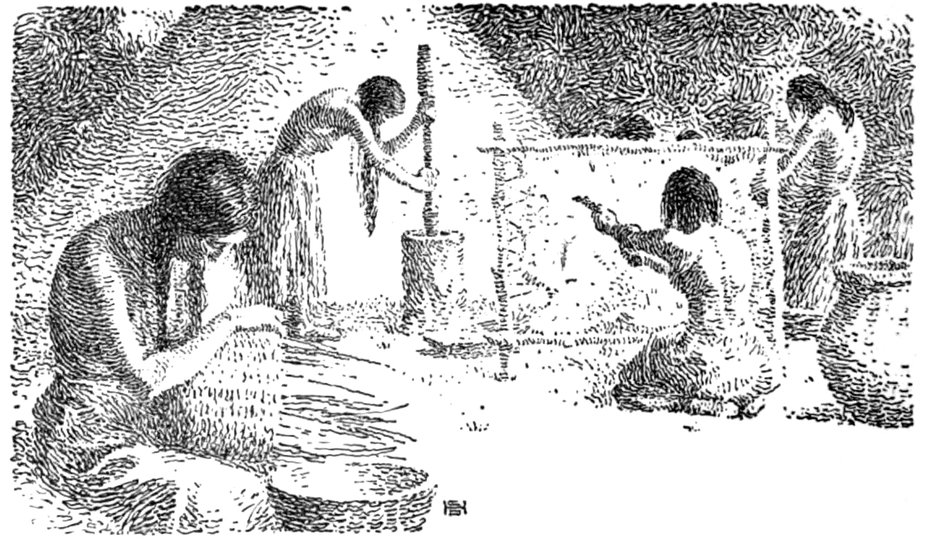
While the Indian men were in
council the squaws were getting the
food ready for the hunt.
53Many corn cakes must be made so
that the men need not start out
hungry.
How quickly they made the corn
flour into a thick paste and pressed it
into cakes! Then they threw the cakes
into boiling water.
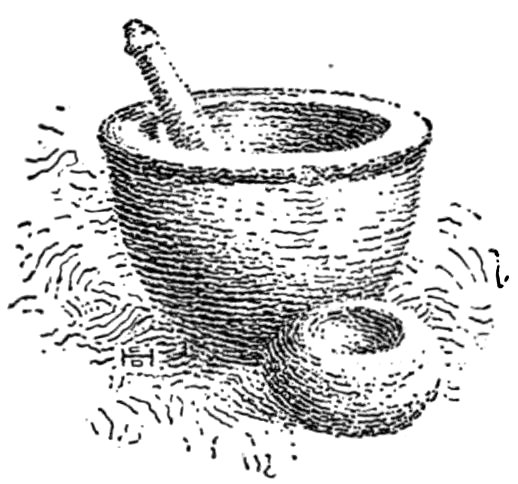
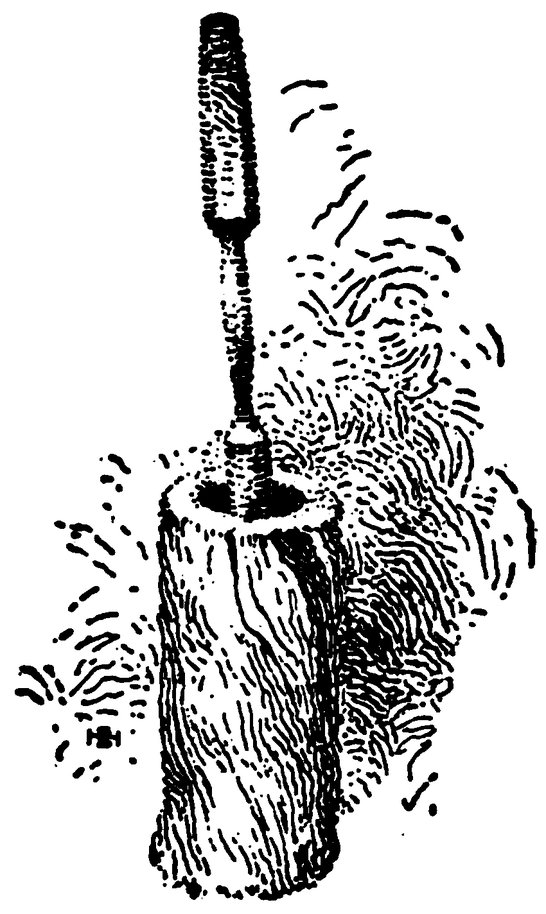
A MORTAR FOR POUNDING CORN
Mewanee was watching some of the
women get the corn
ready for flour. They
threw the ears of corn
into the jar of boiling
water. Then they
took out the ears of
corn and easily pulled off the skin.
Mewanee was interested when they
54cut the kernels from the ear and put
them in the sun to dry.
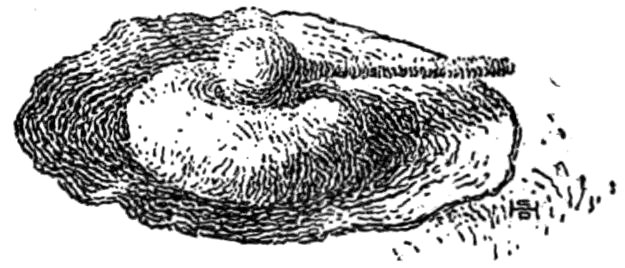
A MORTAR
In a few days these
kernels would be ready
to be pounded into flour.
Mewanee had seen his
mother make corn flour.
He loved to watch her
put the dry kernels in a
hollow stone and pound
them with another stone
until they were ground into a fine
powder.
The men were ready for the hunt.
They had their stone axes, bows and
skin quivers filled with arrows.
55
A STONE AXE
Some of the Indians carried skin
bags filled with roasted corn and
powdered buffalo meat,
for they might be gone
for several days.
Others carried bags
filled with water, for they
might not reach a spring
where they could get fresh
water.
Mewanee watched the Indians set
forth. He wished to join them in the
hunt, but he was too young.
Then he quietly stole toward the
river. He carried his bow and quiver
bag with him.
56His mother saw him go, but did not
call him back. She wished her boy to
become brave and strong.
Mewanee loved to do the things his
father did. He could take straight
aim, for he had used a bow and arrow
ever since he was a little fellow.
When he was a little boy he used a
tiny bow and short arrows, but as he
grew taller and stronger his father
made him longer arrows.
Mewanee’s bow and arrows were
made just like the chief’s.
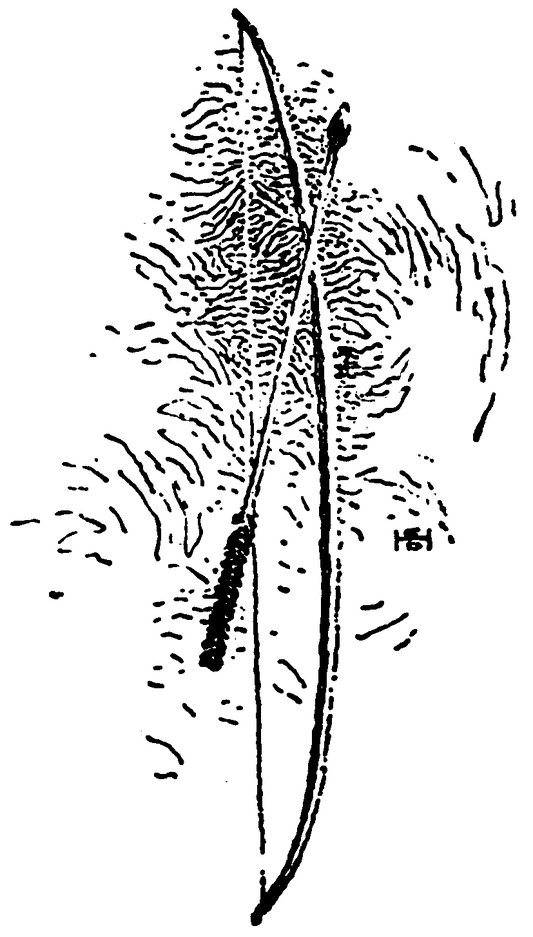
The bow was made of hickory wood,
with twisted buffalo sinews stretched
from end to end.
57
MEWANEE’S BOW
The bow string was stretched so
tightly that it caused the wood to
bend in a slight curve.
The arrows which Mewanee
carried in his skin
quiver bag were about
two feet long with a
pointed piece of flint
fastened securely at one
end.
Mewanee reached the
river and quickly pulled his canoe to
the edge. It was very light and Mewanee
pulled it along quite easily.
How lightly he jumped into it and
how swiftly he paddled down the river!
58He knew where the beavers built
their lodges not far down the stream.
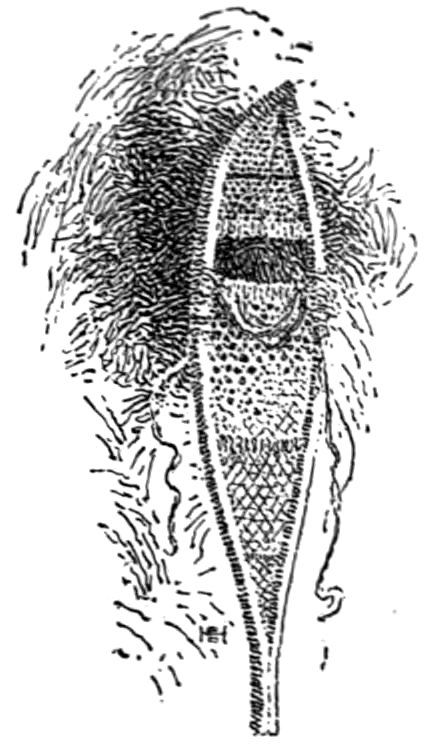
A SNOWSHOE
He should love to trap a beaver,
but he knew that he must wait
until winter for that.
He felt sure that his
father would let him
go beaver hunting with
him when the snow
came.
Then he would wear
his snowshoes and glide
swiftly over the surface
of the snow.
For several hours Mewanee paddled
on the beautiful, peaceful river. He
59didn’t stop for rest, and he had no food
with him.
Indian boys were taught that they
must endure hunger and fatigue, so
Mewanee was not unhappy.
How quiet he was and how eagerly
he looked first this way, then that!
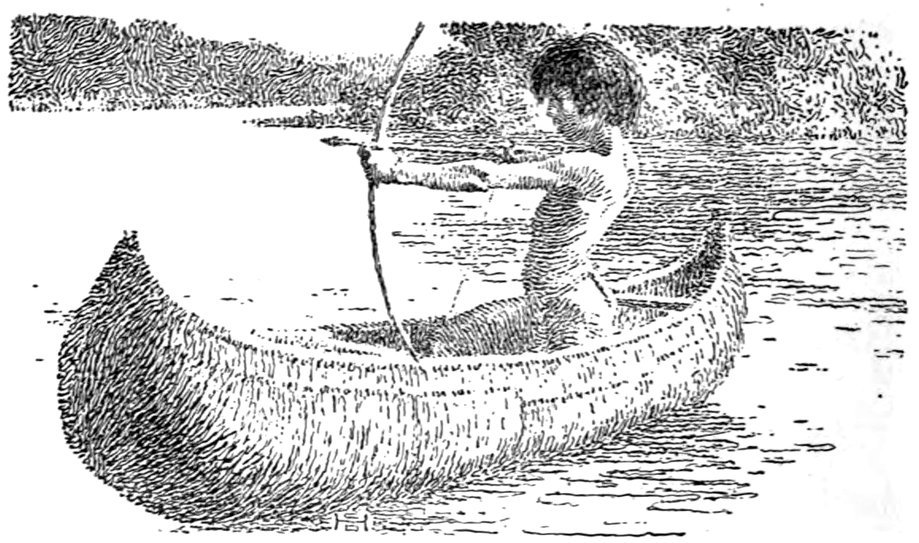
Suddenly he crouched down in the
bottom of the canoe. His eyes were
just on a level with the top edge of
the side. His arms were extended to
shoot.
He was very quiet, for the flock of
wild geese which he saw in the distance
would scatter if he made the least
noise.
60
MEWANEE TOOK CAREFUL AIM
How gracefully they glided over the
surface of the water! Soon they would
be very near Mewanee.
He awaited their coming. He did
not stir for he did not wish to disturb
them.
Now up he sprang, rested on one
knee, and took careful aim.
61First one arrow, then another and
another skimmed through the air.
Each arrow had been carefully aimed,
and Mewanee had three fine geese to
take home.
He felt that he had been able to help
in providing food for the friendly Indian
tribe.
On his way home Mewanee stopped
to call to the squirrels as they ran to
and fro on the river’s edge.
He talked to them as he threw them
acorns which he found in his quiver
bag. He stopped to listen to the birds
as they sang to him from their nests
in the trees.
62Homeward he paddled. It was getting
late, but Mewanee was not afraid.
It was twilight when Mewanee
pulled his canoe up on the river bank
and walked toward his wigwam.
He was very happy indeed, that he
had the three fine geese which he carried
over his shoulder.
Mewanee’s mother was waiting for
him, and baby brother smiled a welcome.
Little brother was still in his linden
cradle.
I am sure an American child would
feel quite unhappy if he were bound
in a cradle so much of the time, but
63Indian babies became quite accustomed
to it. They must learn to endure pain
and suffering. That was their first
lesson.
As soon as baby brother was old
enough he would be allowed to run
about and care for himself.
Mewanee did not say that he was
hungry but he was glad to eat the cakes
and maple syrup which his mother
gave him.
She was pleased when she saw the
wild geese which Mewanee had shot.
While Mewanee was eating his supper
the men came home from the hunt.
They had decided to return to the
64village for the night and set out again
early the next morning.
Mewanee rushed out of the wigwam
to see what they had brought as a result
of the hunt.
He wished also to show the geese
which he had shot. He was most
anxious that his father, the chief, should
see them.
Mewanee smiled when his father said,
“My brave son!”
After supper the Indians sat about
smoking.
They were silent and thoughtful.
VII IN THE FOREST
65
This Indian village was a
very crowded one that
night.
The squaws and children
slept in the wigwams,
while the Indian men stretched
themselves on the ground outside.
A few kept watch, for fear the
enemy might return and destroy their
village.
The tiny stars twinkled brightly
from the heavens.
66The good moon sent her protecting
light upon the village.
All was very peaceful, except for
the hoots of the owls which sounded
through the forest.
The enemy did not return that night.
Early in the morning the Indians
awoke after a good rest. They felt
that they must go out again in search
of more food.
Some carried long spears with them,
so that they might spear the fish.
Others went into the forest carrying
their bows and quiver bags with them.
The women, with their babies on
their backs, started out to gather poles
67for new wigwams. They must lose no
time for winter was at hand, and wigwams
must be built before snow came.
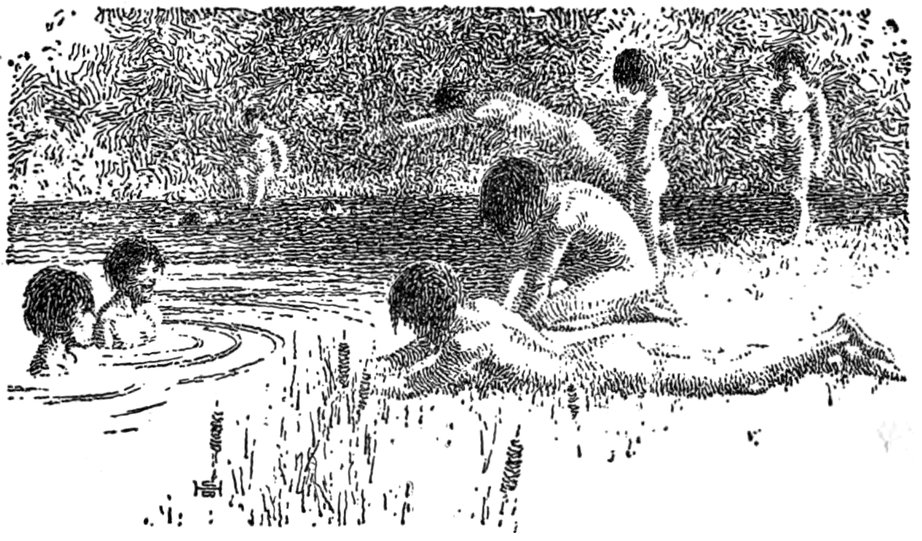
WHAT SPORT THEY HAD, DIVING AND SWIMMING!
While the women were busy and
the men hunting and fishing, the
children gathered for games. Some of
the boys ran to the river. What sport
they had diving and swimming!
68Others jumped on their ponies and
had a fine time racing.
How they did dash along, so fearless
and brave!
Now one was ahead, now another!
How they laughed and shouted as
they rode!
The ponies seemed to enjoy the race
as much as the boys.
Some of the older boys were enjoying
a game of javelins which they
were playing.
They had lined up on either side of
the field.
One side had bone rings, and the
other side long javelins.
69Now one player threw a ring, and
the opposite player tried to catch it on
his javelin.
Oh! the first player caught the
other’s ring.
Now the next two players tried and
one caught the other’s ring.
The third player didn’t take good
aim and lost his partner’s ring. He
must give his javelin to the opposite
side.
After all on one side have had a
chance to catch the rings, the opposite
side will have a chance.
When both sides have tried, the side
having more javelins will win the game.
70The boys had great fun as they
played. They laughed and shouted
and danced for joy.
Mewanee grew tired of watching
and wandered off into the forest. No
one noticed his going.
He had his bow and arrow with him.
He started off in the direction the
hunters had taken earlier in the day.
On and on he ran through the forest.
He stopped to talk with the chipmunks
or to feed the squirrels as they leaped
about the ground.
The birds flitted about him in great
glee. They twittered and chirped and
flew about his shoulders.
71Mewanee was very happy. He had
no thought of fear. He loved the birds
and the wild animals of the forest and
enjoyed being with them.
On and on he walked, into the dense
forest.
As evening drew near he grew tired.
He lay down under a tall pine tree and
was soon fast asleep.
He had been sleeping very soundly,
when suddenly he was awakened by a
fierce howl.
He jumped up and looked about
him!
Already he could see the flaming
eyes of a wolf not far off.
72Quickly he sprang to the pine tree
and with one bound, started to climb
it.
Before even the swiftest wolf could
reach him he was way up on the topmost
bough.
Poor Mewanee was badly frightened
now. As he looked below he saw the
eyes of the hungry wolf glaring at
him through the darkness.
How bright and terrible his eyes
looked! Mewanee had never before
been so near a wolf.
The silvery moon looked down upon
the little fellow, seeming to say, “Do
not fear. I will care for you.”
73The soft wind whispered to Mewanee
and told him to have no fear.
Still Mewanee was not comforted.
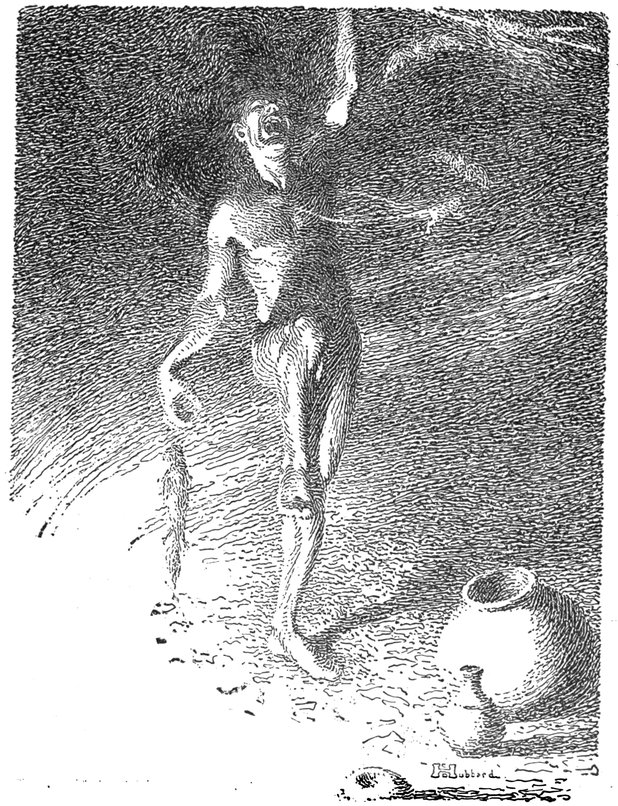
“O Great Spirit,” cried Mewanee,
“protect me from this terrible wolf.”
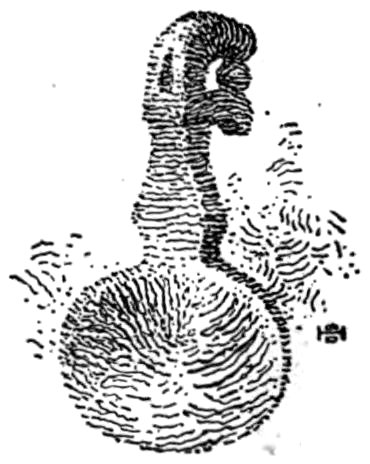
MEWANEE’S QUIVER BAG
Mewanee felt for his quiver bag.
He had forgotten that he had laid his
bow and arrows under
the tree.
He had no way of
helping himself. He
thought of his father
and mother and his dear little baby
brother.
He knew that while he remained in
the tree, the wolf could not reach him.
74He wondered if his father and the
other Indians would return this way.
He did not know what to do. He
did not dare to sleep for the wolf still
kept watch. Now and then the wolf
gave a hungry howl and looked fiercely
at the little Indian boy sitting in the
tree-top.
Hour after hour passed.
It was morning, and Father Sun was
smiling at him with his kindly light.
Mewanee loved the great bright sun
and talked to him as if he were his
father.
The Indian people believed that
the wind, sun, moon, stars and thunder
75were good spirits which helped them
care for themselves and their lands.
Mewanee felt sure that if he were
patient, help would come, but he was
so very tired that he did not know how
much longer he could stay crouched in
the tree-top.
A wild blackbird sang to him from
a branch near by. He said, “Fear not,
Mewanee; help is near at hand.”
Mewanee tried to be brave.
Suddenly all grew very dark within
the forest.
Thunder rumbled in the distance.
Flash upon flash of lightning shot
through the sky.
76Mewanee crouched lower and lower.
He felt sure that the Great Spirit
had answered his prayer by sending
the Thunder God to him.
As peal after peal resounded through
the forest and flash upon flash burst
upon him, the wolf gave a deep, angry
howl. Then he turned and fled into
the dense forest.
Mewanee heard him go and raised
his arms in prayer.
Soon the sky became clear and the
sun shone once more.
Mewanee slowly and cautiously
climbed down the tree. He was stiff
and cold and hungry.
77He threw himself face downward
upon the ground and gave thanks to
the Great Spirit for his care.
He picked up his bow and quiver
bag and ran, as fast as he could, toward
the opening. On and on he ran until
he came to the edge of the forest, when
he could see his village.
His father and the other Indians had
returned from the hunt. He saw them
going to and fro seeming troubled and
anxious. The chief, his father, sat
watching and waiting.
Mewanee ran as fast as his tired legs
would let him.
“Father, father!” he shouted.
78The chief jumped up and clasped
his son in his arms.
All of the Indians rushed toward
them asking many questions.
When they heard the story they
sang words of praise.
The chief led his son to the wigwam
and bade the mother give him food and
drink.
“Rest well, my son,” he said, “for
you have indeed been a brave boy. I
feel sure that you will be a fit warrior
to take my place.
“We have had a fine hunt; you have
returned unharmed; we can be at peace
once more.”
VIII THE SACRIFICE
79
It was evening, a beautiful
starlight evening.
The tiny stars watched
over these Indian people
as they slept.
They were tired with the long chase,
though they were happy with the
thought of the fine deer and buffalo
which they had killed.
The Indians slept soundly all of the
night. When they awoke the sun was
80saying a bright “Good morning.”
SOME OF THE WOMEN STRETCHED SKINS WHILE OTHERS MADE BASKETS
They arose, stretched themselves and
ran to the river for a swim.
The women were already busy getting
the skins from the animals.
Some of the women stretched the
skins in the sun to dry, while others
made baskets.
81The Indian people dried meat in the
sun and then powdered it. They stored
the powdered meat in baskets and jars
for the winter.
The men spent nearly every day in
hunting and fishing.
A MEAT POUNDER
Mewanee came from his wigwam
looking very unhappy
and sad.
Baby brother
was very ill.
His mother tried to soothe her baby
boy with a low, sweet lullaby, and
Mewanee tried to quiet him by a soft
chant. But baby brother would not be
quieted.
82Mother gave him a drink made from
wild roots, but this did not seem to
help the little fellow.
As the day passed, his fever grew
stronger and fiercer.
When the chief came home and saw
how sick baby brother was he said,
“The medicine man must be sent for.
He will cure my son.”
The medicine man was thought to
be very wise. The Indian people believed
that he could cure all sickness.
They thought that the power to cure
was given to the medicine man by the
Great Spirit.
So the medicine man was sent for.
83While they were waiting, the Indians
built a fire and gathered about it.
They sang a mournful song to the
Great Spirit. As they sang they made
strange gestures with their arms.
They thought that the chief’s son
was ill because they had in some way
offended the Great Spirit.
They hoped in this way to appease
the wrath of the Great Spirit.
Suddenly a queer looking old man
rushed into the circle. He made all
sorts of strange noises and jumped up
and down as he shouted.
This was the medicine man for
whom the chief had sent.
84He motioned the chief to bring his
little son to him.
A CARVED BONE
Then he ordered a jar filled with
water to be placed on the fire. Now the
medicine man threw some herbs into
the jar of water.
He danced and sang as he
stirred the mixture with a
carved bone which he carried
in a skin bag.
This bone was supposed to
have a certain charm.
The chief came from the wigwam,
carrying baby brother in his linden
cradle. As he came near, the medicine
man raised his arms above the baby,
muttering low noises. Baby brother
stopped crying and lay very quiet.
85
THE MEDICINE MAN
86
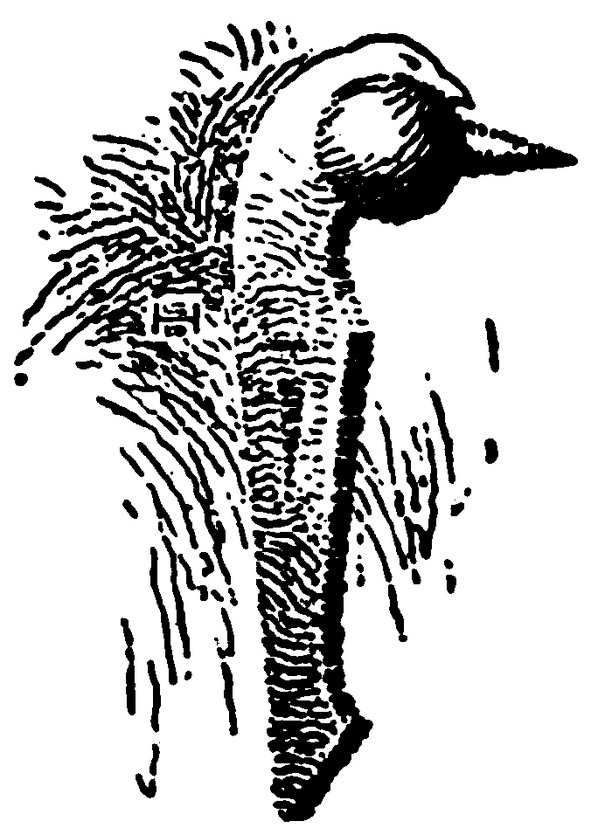
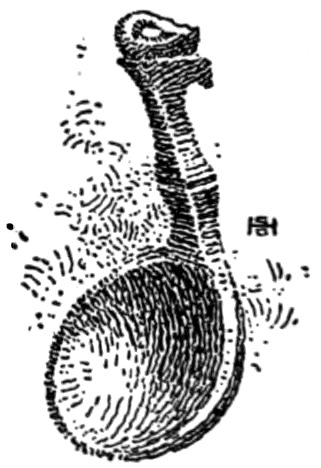
A WOODEN SPOON
All the other Indians stretched themselves
face downward on the ground,
praying to the Great Spirit that the
chief’s baby might soon
be well.
The medicine man gave
baby brother a drink of
the warm herbs. He used
a queerly shaped wooden
spoon which was carved with figures of
wild animals.
Then bending low over the baby he
whispered a soft song. His low tones
soon quieted the little boy. The baby’s
87eyelids drooped. In a moment he had
fallen fast asleep.
Mother came out and carried her
little boy into the wigwam.
Then the medicine man spoke to the
chief. He said that his son would not
be well until a sacrifice of a red deer
should be made.
This sacrifice would ward off the
anger of the Great Spirit.
Fortunately the Indian people had
killed a red deer in their last hunt.
So the deer was brought toward the
medicine man.
First the medicine man said a
prayer over the body of the deer.
88All joined in with low chants.
Finally the deer was carefully placed
upon the fire amid the low murmuring
of all present.
Then the medicine man walked
slowly away.
Mewanee had been waiting in the
wigwam. He was very, very sad.
When his father told him that the
medicine man had promised that baby
brother would soon be well, he smiled
and looked glad again.
Before another sunrise the little
fellow was much better, and his mother
sang a song of praise to the Great
Spirit.
IX THE FAST
89
There was a new moon
now and Mewanee was
twelve years old. He
would soon go hunting and
fishing with his father.
Some day he would be chief of his
tribe, but not before he had proved his
power of endurance. He must prove
this power by a long fast.
On this night when the new moon
was looking down upon them, the Indians
had collected about the fire.
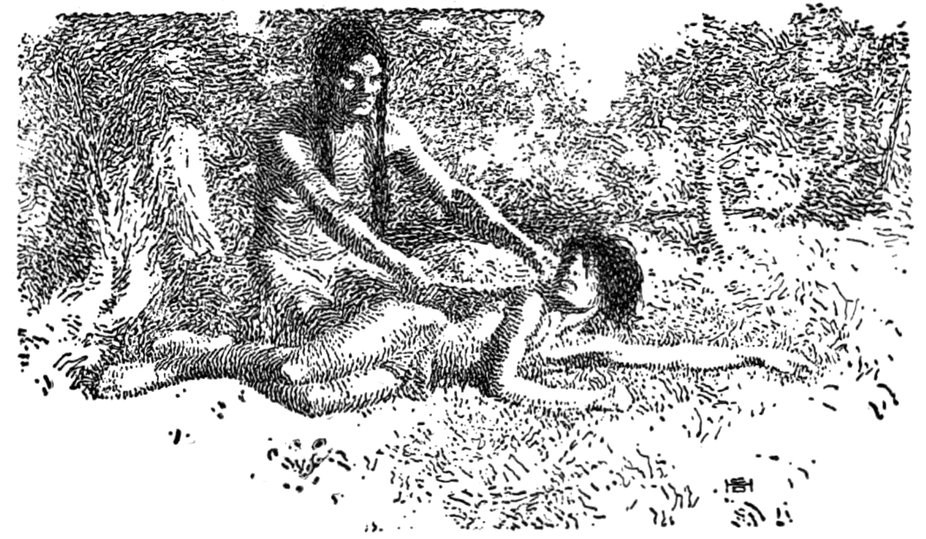
90Mewanee was lying face downward
upon the ground very near the fire.
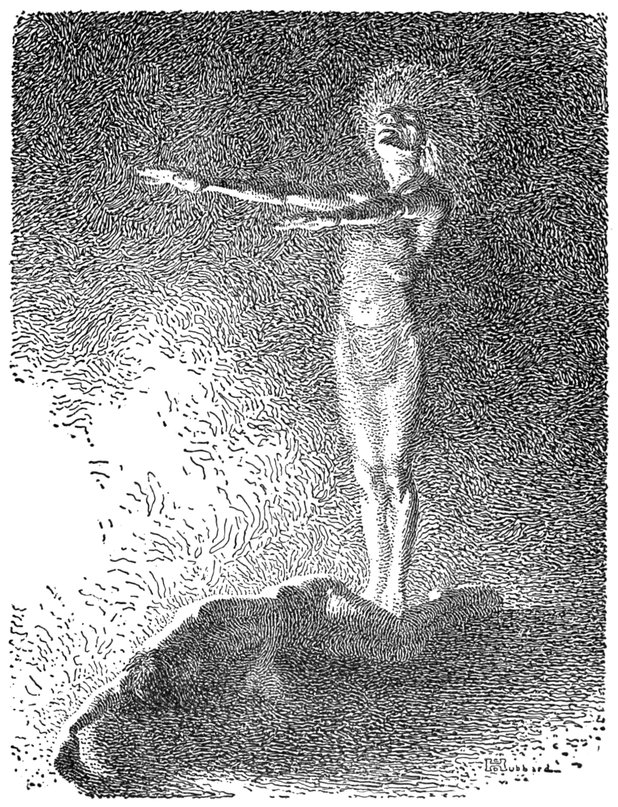
The chief, his father, was standing
above him with arms outstretched as
he said these words:
“My son, the time is at hand when
you must go into the forest for your
long fast. You must prove to your
people that you are brave and strong
and ready to try the test of fasting.
“My son must show that he is strong
and courageous. You need have no
fear, for the Great Spirit will protect
you.”
Then the Indians danced around
Mewanee singing in a solemn chant.
91
THE CHIEF WAS STANDING WITH ARMS OUTSTRETCHED
92This was their way of saying, “Be
brave. O chief’s son, be brave!”
Then the chief led his son into the
dense forest and left him lying upon the
ground.
Mewanee had no fear, for was he
not the chief’s son?
Each day his father went to him
with words of cheer.
Though Mewanee’s heart was filled
with courage, each morning found him
paler and weaker. Yet not once did
he complain nor did he ask for food
or drink.
The great chief’s heart was filled
with pity when on the tenth morning
93he saw his son stretched pale and still
at his feet.
“FAIL NOT, MY SON,” SAID THE CHIEF
“Fail not, my son,” said the chief.
“Only two days more, and you will go
home in the honor and glory of the
brave.
“The Great Spirit will continue to
protect you, and you will go home to
94your people, the victor of a great
battle.”
On the twelfth day the chief went
into the forest having food and drink
for Mewanee.
Not a word was said. The chief
looked at his son with the light of
gladness in his eyes. The fast was
ended and his son was the victor.
With food and drink, strength returned
and Mewanee was able to walk
with his father to his people.
As he walked through the forest the
birds seemed to sing a song of praise.
The trees seemed to nod to him and
to wish him well.
95His people were awaiting his return
and had prepared a feast of welcome
for him.
As Mewanee entered the village, by
the side of his father, all were singing
and dancing. Some of the men rushed
toward Mewanee and led him into the
center of the merrymaking.
Then there was singing, dancing,
and feasting. These Indian people
were glad to honor the youth who
would some day be their chief.
X THE NEW HOME
96
It was fall before the
homes of the friendly
tribe were done. All
had been busy getting
ready for the winter. Now
the wigwams were finished.
Mewanee’s father had divided his
dried meat and corn with this friendly
tribe. He had also given them powdered
tobacco. The Indian men would
be unhappy without tobacco for their
long pipes.
97The friendly tribe was very thankful
to Mewanee’s father for his kindness
to them.
They were collected around the
camp fire that night. The children
and women were in the wigwams.
Only the men could take part in
council.
All was hushed and silent, when
suddenly the chief of the friendly
tribe arose and all of the other Indians
of this tribe followed their chief.
They danced in and out, and up and
down, making queer sounds. This was
their way of saying, “Thank you, O
Indian Chief.”
98Then they prayed words of thankfulness.
Getting up slowly, they took their
places in the circle and pulled their
long pipes from their belts.
They lighted their pipes by catching
sparks from the pipes of the other
Indian men, who had been smoking
during the dance.
They were very silent, and sat
smoking their pipes until the fire died
out.
Then slowly they arose and wandered
toward their wigwams. The
night was very cold now so all must
take shelter within the wigwams.
99Early next morning the village was
astir for it was the day of parting.
A CARRYING BASKET
Children were running hither and
thither. The Indian
women were
busy collecting the
things which they
were to take with
them.
Baby brother
was toddling along, his hand in Mewanee’s.
He was able to walk now,
and so need not be carried about in
his cradle. He smiled at Mewanee and
looked very wise, as if he knew what
it was all about.
100Just as they were about to start,
Mewanee’s father came out leading a
beautiful gray horse.
He approached the chief of the
friendly tribe and motioned him to
mount the horse.
This the chief did.
Then with the chief riding at the
head, the friendly tribe started toward
their home.
Father Sun sent his kindly light
upon these people as they wandered
homeward.
Mewanee watched until he could see
the friendly tribe no longer. He knew
they would be glad to be home again.
101
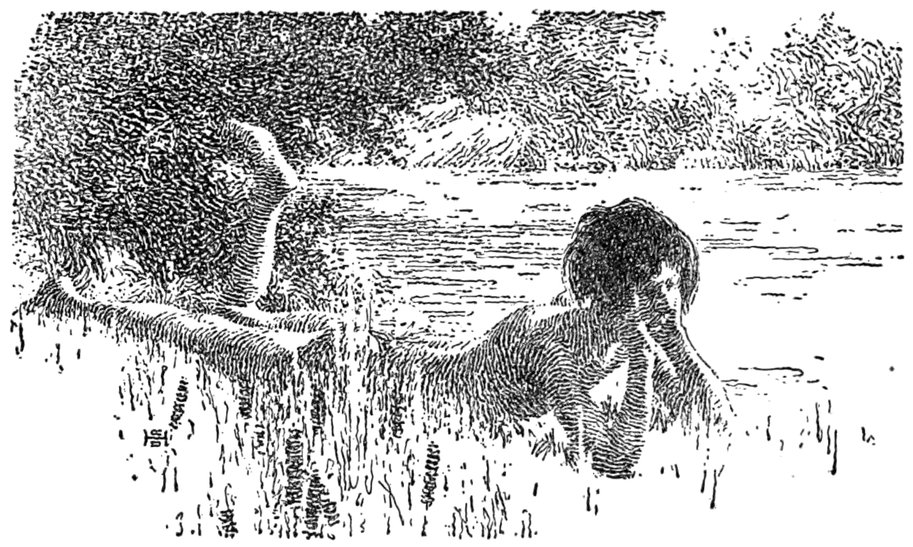
HE STRETCHED HIMSELF UPON THE RIVER’S BANK
Then he wandered slowly toward the
beautiful river, happy in the thought
that he was the chief’s son.
He stretched himself upon the river’s
bank thinking of the time when he
should become chief of his tribe.
TRANSCRIBER’S NOTES
Silently corrected typographical errors and variations in spelling.
Archaic, non-standard, and uncertain spellings retained as printed.