This book is actually three volumes in one, each complete in itself.
The page numbering starts at the beginning for each new volume.
The rest of the Transcriber's Note is at the end of the book.
Merry’s BOOK OF PUZZLES.
EDITED BY ROBERT MERRY.
NEW YORK:
THOMAS O’KANE, PUBLISHER,
130 NASSAU STREET.
PREFACE.
The innumerable readers of Merry’s Museum will here meet
with many familiar faces, lighted up by pleasant smiles, and
hear the same old jovial laughter that greeted them in the olden
time.
Our motto is that of our noble State—“Excelsior!” Our readers
will see that we have not buried the talents of our contributors in
napkins—but seek to bring them out into the bright day: For Genius—like
the lamp of Aladdin—needs constant polishing to bring out its
lustre and full effect.
Our object has been to instruct by smiles—not frowns; to cheer
the dear hearts of the young girlhood and boyhood; to strew flowers
among the necessary thorns of existence. In a word, we try in these
pages to make the sad happy—the happy still happier.
Hence, pure fun will be found as beautiful in these pages, as honey
amid the flowers of Hybla.
Robert Merry.
Robert Merry to his friends
A kindly greeting sends,
With a general assortment of questions,
Conundrums, Charades,
Puzzles, Riddles of all shades,
And Rebuses, as aids
To intellectual and social digestion.
If the young Merry host
Acquaintance should boast,
Or kindred, or authorship pat,
With some of our jokes,
We confess—(’tis no hoax)—
To amuse other folks,
We have riddled the Museum “Chat.”
Now we beg you will show,
If you happen to know,
Why the Editor, painstaking soul?
Is like the cold storm
Which, in climates bright and warm,
Where gallinippers swarm,
Come shivering down from the pole?
Merry’s BOOK OF PUZZLES.
1.
2.
3. Who prolongs his work to as great a length as possible,
and still completes it in time?
4. Why are young ladies like arrows?
5. Why is a philanthropist like an old horse?
6. How can five persons divide five eggs, so that each
man shall receive one, and still one remain in the dish?
7. How many soft-boiled eggs could the giant Goliah
eat upon an empty stomach?
8. What fishes have their eyes nearest together?
9. Two fathers have each a square of land. One father
divides his so as to reserve to himself one-fourth in the
form of a square; thus—
The other father divides his so as to reserve to himself
one-fourth in the form of a triangle; thus—
They each have four sons, and each divides the remainder
among his sons in such a way that each son will share
equally with his brother, and in similar shape. How
were the two farms divided?
10.
11.
12. What is that which is often brought to table, often
cut, but never eaten?
13.
My first is four-sixths of a step that is long,
My second is a person of state;
My whole is a thing that is known to be wrong,
And is a strong symptom of hate.
14. Why are your nose and chin always at variance?
15.
Without my first you can not stand,
My second beauteous fair command;
Together I attend your will,
And am your humble servant still.
16. Why ought a fisherman to be very wealthy?
17. Why is a man in debt like a misty morning?
18. Who was the first that bore arms?
19. There is a word of seven letters; the first two refers
to man, the first three refers to woman, the first four
signifies a great man, the seven a great woman.
20. I am a word of five letters. Take away my first
and I am the name of what adorns the estate of many of
the nobility of England. Take away my first and second,
and I am the name of a place where all the world was
once congregated. Take away my last, and I am the
name of a beautiful mineral. Take away my two last,
and I am the name of a fashionable place of resort. I
am small in stature, but capable of doing a great deal of
mischief, as I once did in London in the year 1666.
21. Spell eye-water four letters.
22. Why is swearing like an old coat?
23. Why is a thump like a hat?
24. Why is an inn like a burial-ground?
25.
26.
27. If a fender cost six dollars, what will a ton of coal
come to?
28. What word is that to which if you add a syllable,
it will make it shorter?
29.
My first is a very uncomfortable state,
In cold weather it mostly abounds.
My second’s an instrument formed of hard steel,
That will cause the stout foe to stagger and reel,
And when used, is a symptom of hate.
My whole is an author of greatest renown,
Whose fame to the last day of time will go down.
30. What is the longest and yet the shortest thing in
the world; the swiftest and yet the slowest; the most
divisible and the most extended; the least valued and
the most regretted; without which nothing can be done;
which devours every thing, however small, and yet gives
life and spirits to every object, however great?
31.
My first is found in every house,
From wintry winds it guards.
My second is the highest found—
In every pack of cards.
My whole, a Scottish chief, is praised
By ballad, bard, and story,
Who for his country gave his life,
And, dying, fell with glory.
32. Why are handsome women like bread?
33. Why is an avaricious man like one with a short
memory?
34. What river in Bavaria answers the question, Who
is there?
35. Why is a man with wooden legs like one who has
an even bargain?
36.
37.
38. Why is a parish bell like a good story?
39. What belongs to yourself, yet is used by others
more than yourself?
40.
In camps about the centre I appear;
In smiling meadows seen throughout the year;
The silent angler views me in the streams,
And all must trace me in their morning dreams,
First in the mob conspicuous I stand,
Proud of the lead, and ever in command.
41. The head of a whale is six feet long; his tail is as
long as his head and half his body, and his body is half
of his whole length. How long is the whale?
42. A hundred stones are placed, in a straight line, a
yard distant from each other. How many yards must a
person walk, who undertakes to pick them up, and place
them in a basket stationed one yard from the first stone?
43.
My first is a part of the day,
My last a conductor of light,
My whole to take measure of time,
Is useful by day and by night.
44. I am a word of three syllables, each of which is a
word; my first is an article in common use; my second,
an animal of uncommon intelligence; my third, though
not an animal, is used in carrying burdens. My whole
is a useful art.
45.
There was a man who was not born,
His father was not born before him,
He, did not live, he did not die,
And his epitaph is not o’er him.
46. Why is a nail, fast in the wall, like an old man?
47. Why does a miller wear a white hat?
48.
49.
50.
My first is a letter commanding to wed,
Or to lift your sole till it reaches your head;
Nothing worth as a whole, it is plain to all men
That divided in halves, it is equal to ten;
My second, though nothing, compared to the other,
Is worth more as a partner than its double-faced brother;
It moans and it sighs, and when joined to my first,
Pronounces the doom of the sinner accursed.
My third, you will find his whole value depends
On the worth and position of neighbors and friends,
And, when both the other two following fair,
Changes doom to desire, and a curse to a prayer.
My fourth, though it formeth no part of a hundred,
Shows where it can justly and evenly be sundered;
’Tis found in the elements everywhere present,
’Tis found in all seasons, unpleasant or pleasant,
’Tis the chief of all lands, and yet can not wait
On continent, hemisphere, empire, or state.
Though ne’er in Great Britain suspected to lower,
’Tis the heart of each quarter of that mighty power;
It always belonged to the animal race,
In the mineral kingdom they gave it a place,
And, being impartial, they could not deny,
The vegetable order its virtue to try;
And yet, since creation, it never was known
In beast, bird, or fish, root, branch, stem, or stone.
My whole you’ll find growing in pasture and barns,
Or grown in coats, carpets, warm blankets, and yarns,
In England, in Saxony, France, and old Wales,
And in sundry more places it always prevails.
Of quadrupedal origin—still it is known
In bipedal families oft to be shown;
But the strangest of all its strange forms, and conditions
Is seen in the covering of sage politicians.
51.
52.
53. What is that which is invisible, but never out of
sight?
54. When is a boat like a knife?
55. What part of London is in France?
56. How many black beans will make five white ones?
57. Why is a dandy like a haunch of venison?
58. What kin is that child to its father who is not its
father’s own son?
59. Why is a rose-bud like a promissory note?
60. What biblical name is there which expresses a
father calling his son by name, and his son replying?
61. Why is an orange not like a church bell?
62. Why is the largest city in Ireland likely to be the
largest city in the world?
63.
Three-fourths of a cross, and a circle complete,
An upright where two semicircles meet,
A rectangle triangle standing on feet,
Two semicircles, and a circle complete.
64. What smells most in a drug shop?
65. Why should doctors attend to window-sashes?
66. G. a.
p
A.
67. What is that which every one can divide, but no
one can see where it has been divided?
68. Spell hard water with three letters.
69. What letters of the alphabet come too late for
supper?
70.
71.
72.
Pronounced as one letter, and written with three,
Two letters there are, and two only in me;
I’m double, I’m single, I’m black, blue, and gray,
I am read from both ends, and the same either way,
I am restless and wandering, steady and fixed,
And you know not one hour what I may be the next.
I melt, and I kindle—beseech, and defy,
I am watery and moist, I am fiery and dry.
I am scornful and scowling, compassionate, meek;
I am light, I am dark, I am strong, I am weak.
I’m piercing and clean, I am heavy and dull;
Expressive and languid, contracted and full.
I’m a globe and a mirror, a window, a door,
An index, an organ, and fifty things more.
I belong to all animals under the sun,
And to those who were long understood to have none.
My language is plain, though it can not be heard,
And I speak without even pronouncing a word.
Some call me a diamond—some say I am jet;
Others talk of my water, or how I am set.
I’m a borough in England, in Scotland a stream,
And an isle of the sea in the Irishman’s dream.
The earth without me would no loveliness wear,
And sun, moon, and stars at my wish disappear.
Yet so frail is my tenure, so brittle my joy,
That a speck gives me pain, and a drop can destroy.
73. What vessel is that which is always asking leave
to move?
74. Translate the following into Latin—
42, 8 rocks, e e e e e e e e e e, 46. 2. 14. 8. 0.
75. How is it that you can work with an awl, but not
with a forceps; while I can work with a forceps, and not
with an awl?
76.
77.
Add, was the word the master gave to Dick,
Dick scratched his head, and looking rather thick,
Replied, “Hereafter it would make it stick.”
“Dick,” cried the master, “rudeness is a sin;
Behold the stocks, I’ll surely put you in.”
“That,” answered Dick, “won’t alter it a feather,
Hereafter it would make it hold together.”
“Dick,” said the man, “if you insult me so,
Your shoulders and my rod I’ll put in Co.”
“ ’Tis all the same,” said Dick, “my worthy master,
Hereafter it would make it stick the faster.”
78. Why is France like a skeleton?
79. Why is a woodman like a stage actor?
80. Why is the hour of noon on the dial-plate like a
pair of spectacles?
81. Why is the best baker most in want of bread?
82.
Whether old Homer tippled wine or beer,
Julep or cider, history is not clear;
But plain it is—the bard, though wont to roam,
But for one liquid, never had left home.
83. Why is a coward like a mouse-trap?
84. Why is green grass like a mouse?
85. What two reasons why whispering in company is
not proper?
86.
My first is found on the ocean wave,
In the spring, the pit, and the mine;
My second below earth’s surface you have,
Where seldom the sun can shine.
My whole your dinner-table must grace,
And seldom fails to obtain a place.
87. Why is a gooseberry pie like counterfeit money?
88.
89. Why does a fisherman blow his horn?
90. Why is there no danger of starving in a desert?
91.
Take half of the needle
By which sailors steer
Their ship through the water,
Be it cloudy or clear;
Do not really break it—
This of all things were worst—
But in your mind take it,
And this makes my first.
At thanksgiving or Christmas,
My second you see;
With care well compounded,
From grain, shrub, and tree.
My whole like some people
Who make great pretense,
Of words have a plenty,
But no great stock of sense.
92. How is it that Methuselah was the oldest man,
when he died before his father?
93.
My first is a negative greatly in use,
By which people begin when they mean to refuse;
My second is Fashion, or so called in France,
But, like other whims, is the servant of chance.
An article always in use is my whole,
With texture and form under fashion’s control;
But, alas! not a thing can it see which goes by,
Although many have four sights, and all have one eye.
94. What is that which, supposing its greatest breadth
to be four inches, length nine inches, and depth three
inches, contains a solid foot?
95.
96.
My tongue is long, my breath is strong,
And yet I breed no strife;
My voice you hear both far and near,
And yet I have no life.
97. A waterman rows a given distance, a, and back
again in b hours, and finds that he can row c miles with
the current, for d miles against it. Required, the time of
rowing down, the time of rowing up, the rate of current,
and the rate of rowing.
98.
As I was beating on the far east grounds,
Up starts a hare before my two greyhounds;
The dogs, being light of foot, did fairly run,
To her fifteen rods, just twenty-one;
And the distance that she started up before,
Was six-and-ninety rods, just and no more;
Now, I would have you Merry boys declare
How far they ran, before they caught the hare.
99. Is it possible to put twelve pieces of money in six
rows, and have four in a row?
100. A gentleman sent a servant with a present of nine
ducks, with this direction—
“To Alderman Gobble, with ix. ducks.”
The servant took out three, and contrived it so that the
direction corresponded with the number of the ducks. He
neither erased nor altered a letter. How did he do it?
101.
Four letters form me quite complete,
As all who breathe do show;
Reversed, you’ll find I am the seat
Of infamy and woe.
Transposed, you’ll see I’m base and mean,
Again of Jewish race;
Transposed once more, I oft am seen
To hide a lovely face.
102.
103.
My first is the name to an article given
For ladies and dandies to put on their linen;
It comes from the forest, I’ve heard people say,
And is made from the skin of an animal gay.
My second is a fruit that comes from the South,
The juice of it is sour, and ’twill pucker your mouth;
’Tis found in candy shops all over the town,
And, stranger to say, it is almost round.
My whole is an article that is often seen
In the gardens and fields almost covered with green;
It is very sweet, and also pleasant to eat,
And in hot summer days affords a rich treat.
104. My first is half of what implies good-humor; my
second makes sense of my first; my third sounds like the
cry of a kitten; my fourth is a consonant and vowel combined;
my fifth, with the addition of the initial of my
third, would imply silence; and my whole is what many
boys and girls prize highly.
105.
I am composed of twelve letters.
My 2, 8, 9, is a substance dug out of the earth.
“ 6, 11, 12, 8, is a numeral.
“ 4, 2, 3, is an ancient instrument of war.
“ 12, 8, 1, is a vessel used in former times.
“ 5, is a vowel.
“ 4, 7, 1, 9, is a hard substance.
“ 10, 9, is a pronoun.
My whole is now before you.
106. My first is appropriate, my second ’tis nine to one
if you guess it. My whole elevates the sole above the
earth.
107. Why is a conundrum like a monkey?
108. What do we all do when we first get into bed?
109.
110.
111. There is one word in the English language which
is universally considered a preventive of harm; change a
certain letter in it, and you make it an act of cruelty.
112.
My first may be fashioned of iron or wood,
And at window or door for safety is placed;
In village or town it does more harm than good,
Leading people their health, time, and money to waste.
My second’s a lady, bewitching and fair,
And for love of her people will labor and strive;
Will rise before dawn, and be wearied with care,
And pursue her with ardor as long as they live.
My whole is what ladies admire and approve,
The shopkeeper’s boast—the purchaser’s prize;
’Tis a ninepenny chintz—’tis a one-shilling glove—
It is something which makes people open their eyes.
113. At what distance must a body have fallen to acquire
the velocity of 1,600 feet per second?
114. Of what trade is the sun in May?
115. Why is a small horse like a young musk-melon?
116.
My first must grace a legal deed,
With its companion, firm and red;
Its help in marriage, too, they need,
Before the blessing can be said.
My second half a hundred is,
If in the shortest way you spell;
You soon must guess me after this,
I may as well the secret tell.
My whole, by his celestial strains
Bears the rapt soul to worlds above;
The Great Creator’s power proclaims,
And tells of the Redeemer’s love.
117.
118.
119. My first is a boy’s nickname; my second is meant
for defense; my third is a preposition; my fourth is one of
the articles; my fifth is one of the United States. My
whole is a large city in Europe.
120.
My first is stationed near your heart,
And serves to brace the mortal frame;
Of young and old it forms a part,
And to fair woman gives a name.
Who builds a ship must it employ,
To give it strength to stem the flood,
And Adam felt no real joy
Till in new form by him it stood.
My second may be long or short,
Or tight or loose, or wet or dry,
Of cotton, silk, or woolen wrought,
Of any texture, strength, or dye—
Be made of iron, gold, or steel,
Of love or hate, of good or ill,
May gently bind, or heavy feel,
May give support, or rudely kill.
My whole is formed by fashion, skill, and care,
And what few ladies from their dress can spare.
121. How long would a ball be falling, from the top of
a tower that was 400 feet high, to the earth?
122. Why are chairs like men?
123. The foot of a ladder 60 feet long remaining in the
same place, the top will just reach a window 40 feet high
on one side of the street, and another 30 feet high on the
other side. How wide is the street?
124. There is a pile of cannon-balls, the ground tier of
which contains 289 balls, and the top tier one ball. Require
the whole number of balls in a pile.
125.
126.
127.
What skillful housewife does not know
When, where to place my first?
When nicely done, it will not show;
Conspicuous, it is worst.
My second all the world must do,
Either with head or hand,
In different ways the same pursue,
On water, or on land.
My whole a picture is of life,
Varied with good or ill,
With bright or dull, with light or dark,
Arranged with art and skill.
128. What is that which will make you catch cold—cure
the cold—and pay the doctor’s bill?
129. Why is a joke like a cocoa-nut?
130. When did Esau, the hairy man, lose his whiskers?
131. Why do postmasters deserve the execration of all
true Americans?
132.
Just equal are my head and tail,
My middle slender as can be,
Whether I stand on head or heel,
’Tis all the same to you or me.
But if my head should be cut off,
The matter’s true, although ’tis strange,
My head and body, severed thus,
Immediately to nothing change.
133. If a loafer, smoking a cigar, sets fire to the brush
on his upper lip, is it a case of spontaneous combustion?
134.
liv sin transgre procur damn
A ing er s ssion ed ation.
dy Redeem pa purchas salv
135.
136.
137.
What sailors dread.
138.
I.
Go wide o’er the world,
And everywhere seek me—
In earth, sea, or air,
Thou never shalt meet me!
Go wide o’er the world—
I always am there—
Wherever thou roamest,
In earth, sea, or air!
II.
Go speak to the woodland,
And question of me—
Oh ne’er shall thou find me,
With forest or tree!
Go, speak to the woodland,
I ever am there,
And live in its whispers,
Though lighter than air!
III.
Go, winnow the wave,
And seek for my breath—
Ah, ocean and river,
Reveal but my death!
Go, winnow the wave,
Tho’ with winter it shiver—
There—there shalt thou find me,
’Mid ocean and river!
IV.
In whirlwinds I revel,
Yet in zephyrs expire—
I flourish in warmth,
And I perish in fire!
The winter I cherish,
Yet each season I shun;
Half living in harvest,
In summer, undone!
V.
I come with the warlock—
I go with the ghoul—
I shriek with the wizard—
I hoot with the owl!
I ride on the hazel
Which witches have rent—
I fly on the wing
Which the eagle hath bent.
VI.
I come and I go—
Oft unseen and unsought;
I live but in words—
I perish in thought.
So to all and to each,
I bid you adieu;
Yet to all and to each,
I stay double with you!
139. Why is the boy that disturbs a hive like a true
Christian?
140. What is that which has eyes and sees not, ears
and hears not, nose and smells not, yet is often regarded
as the beau-ideal of a human being?
141. Why is the elephant his own servant?
142. Which of the forest trees bears gain?
143. Who was the heaviest of mechanics?
144.
I’m a heavy drag—few things more slow.
Cut off my head, and give me a bow,
And swiftly through the air I go.
145. Why are two heads better than one?
146. Why is a cart-horse always in the wrong place?
147.
I follow the plough, and yet I never walk,
Have plenty of teeth, yet neither eat nor talk,
Am strongly barred, and yet I never close,
I scratch and break, but never deal in blows.
148. What is that which has many leaves, but no
stem?
149. Why is the letter F like an incendiary?
150. Arithmetical Puzzle.—This consists of six slips of
paper or card, on which are written numbers as expressed
in the following columns—
A
B
C
D
E
F
1
2
4
8
16
32
3
3
5
9
17
33
5
6
6
10
18
34
7
7
7
11
19
35
9
10
12
12
20
36
11
11
13
13
21
37
13
14
14
14
22
38
15
15
15
15
23
39
17
18
20
24
24
40
19
19
21
25
25
41
21
22
22
26
26
42
23
23
23
27
27
43
25
26
28
28
28
44
27
27
29
29
29
45
29
30
30
30
30
46
31
31
31
31
31
47
33
34
36
40
48
48
35
35
37
41
49
49
37
38
38
42
50
50
39
39
39
43
51
51
41
42
44
44
52
52
43
43
45
45
53
53
45
46
46
46
54
54
47
47
47
47
55
55
49
50
52
56
56
56
51
51
53
57
57
57
53
54
54
58
58
58
55
55
55
59
59
59
57
58
60
60
60
60
59
59
61
61
61
61
61
62
62
62
62
62
63
63
63
63
63
63
The slips being thus prepared, a person is to think of
any one of the numbers which they contain, and to give
to the expounder of the question those slips in which the
number thought of occurs. To discover this number, the
expounder has nothing to do but to add together the numbers
at the top of the columns put into his hand. Their
sum will express the number thought of.
Example.—Thus, suppose we think of the number 14.
We find that this number is in three of the slips, viz.,
those marked B, C, and D, which are therefore given to
the expounder, who, on adding together 2, 4, and 8, obtains
14, the number thought of.
The trick may be varied in the following manner: Instead
of giving to the expounder the slips containing the
number thought of, these may be kept back, and those in
which the number does not occur be given. In this case,
the expounder must add together, as before, the numbers
at the top of the columns, and subtract their sum from
63. The remainder will be the number thought of.
The slips containing the columns of numbers are usually
marked with letters on the back, and not above the
columns, as we have expressed them. This renders the
deception more complete, as the expounder, knowing beforehand
the number at the top of each column, has only
to examine the letters at the back of the slips given him,
when he performs the problem without looking at the
numbers, and thus renders the trick more extraordinary.
151.
A pair of little quadrupeds,
Transpose them, and you’ll find
The lords of ocean, or the aids
For disciplining mind;
Or that which cheers the midnight hour,
Or gilds the flagstaff high;
Now test your transposition power,
And for the answer try.
152. When is a chair like a rich lady’s dress?
153. One p, one i, four a’s, two r’s, two
s’s, two l’s—what
do they make, and who has made a fortune by them?
154. What odd number will give, on being divided, a half clear of a fraction?
155.
I’m in the book, but not on any leaf;
I’m in the mouth, but not in lip or teeth;
I’m in the atmosphere, but never in the air;
I wait on every one, but never on a pair;
I am with you wherever you may go;
And every thing you do I’m sure to know;
Though when you did it I should not be there,
Yet when ’twas done, you’d find me in the chair.
156. What is the difference between Joan of Arc and
Noah’s ark?
157.
I am composed of seventeen letters.
My 4, 6, 10, is what we all do.
“ 5, 8, 14, 11, is a great part of the body.
“ 1, 13, 9, 15, is the name of a fish.
“ 7, 16, 2, 10, is a part of speech.
“ 13, 8, 3, is the name of a fowl.
“ 6, 15, 14, is a girl’s name.
“ 17, 6, 10, 15, is very useful to vessels.
“ 13, 6, 12, is a personal pronoun.
My whole is what we may all expect if we live.
158. My first is an instrument, which, though small,
has more power than any monarch on earth. It is the
lover’s friend and the poet’s pride; yet has overthrown
kingdoms, ruined reputations, set folks together by the
ears, and caused more destruction than plagues, pestilence,
or famine. My second, though not quite so mischievous,
is very destructive when in improper hands, and
my whole, though employed against my first, is deemed
its friend and improver.
LEAP FROG.
159. This is a most excellent pastime. It should be played in a
spacious place, out of doors, if possible, and the more there are engaged
in it, provided they be of the same height and agility, the
better is the sport. We will suppose a dozen at play:—Let eleven
of them stand in a row, about six yards apart, with all their
faces in one direction, arms folded, or their hands resting
on their thighs, their elbows in, and their heads bent forward,
so that the chin of each rests on his breast, the
right foot advanced, the back a little bent, the shoulders
rounded, and the body firm. The last begins the sport
by taking a short run, placing his hands on the shoulders
of the nearest player, and leaping with their assistance—of
course, springing with his feet at the same time—over
his head, as represented in the cut. Having cleared the
first, he goes on to the second, third, fourth, fifth, etc., in
succession, and as speedily as possible. When he has
gone over the last, he goes to the proper distance, and
places himself in position for all the players to leap over
him in their turn. The first over whom he passed, follows
him over the second, third, fourth, etc.; and when he
has gone over, the one who begun the game places himself
in like manner for the others to jump over him. The
third follows the second, and so on until the parties are
tired.
160.
His heart was sad, and his foot was sore,
When a stranger knocked at the cottager’s door;
With travel faint, as the night fell down,
He had missed his way to the nearest town,
And he prayed for water to quench his thirst,
And he showed his purse as he asked for my first.
The cotter was moved by the stranger’s tale,
He spread the board, and he poured the ale:
“The river,” he said, “flows darkly down
Betwixt your path and the lighted town,
And far from hence its stream is crossed
By the bridge on the road that you have lost;
Gold may not buy, till your weary feet
Have traversed the river and reached the street,
The thing you ask; but the wandering moon
Will be out in the sky with her lantern soon;
Then cross o’er the meadow, and look to the right,
And you’ll find my second by her light.”
My second shone like a silver floor,
When the traveler passed from the cotter’s door;
He saw the town on its distant ridge,
Yet he sighed no more for the far-off bridge;
And his wish of the night soon gained its goal,
For he found my first when he reached my whole.
161. What two letters of the alphabet make a prophet?
162. I 8 0
M
day.
163. Plant an orchard of twenty-one trees, so that there
shall be nine straight rows, with five trees in each row,
the outline a regular geometrical figure, and the trees all
at unequal distances from each other.
164. B 0 yy
nor
for U c what a fool u b.
nice
165. What part of the horse resembles you?
166. Why is a horse like the prophet Elijah?
167. Why is a new married man like a horse?
168. Why is it profitable to keep fowl?
169. My first is a collection of water; my second is
used when speaking of myself; my third is a fruit; my
whole is a town in Hindostan.
170. “Thomas,” said Charles, “you are good at figures,
please give me a figurative answer to this question:—What
ought one to do who arrives at a friend’s house
too late for dinner?”
Thomas, after thinking a little, wrote the following—1028,40.
What was his meaning?
171. A teacher, having fifteen young ladies under her
care, wished them to take a walk each day of the week.
They were to walk in five divisions of three ladies each
but no two ladies were to be allowed to walk together
twice during the week. How could they be arranged to
suit the above conditions?
172.
My first is a letter, an insect, a word,
That means to exist; it moves like a bird.
My next is a letter, a small part of man,
’Tis found in all climes; search where you can.
My third is a something seen in all brawls.
My next you will find in elegant halls.
My last is the first of the last part of day,
Is ever in earnest, yet never in play.
My whole gives a light, by some men abhorred,
The blessings from which no pen can record.
173. What number is that, which, added separately to
100 and 164, shall make them perfect squares?
174. Why is the letter F like death?
175. Why are mortgages like burglars?
176.
I’m composed of letters four,
A turkey, cock, or hen;
Behead me, and I upward soar.
Put on my head again,
Transpose me, then a beast I am,
Both bloodthirsty and wild,
That preys on many a helpless lamb,
And oft devours a child.
177. I am a word of three letters, signifying to spoil
or injure. Transposed, I am an animal. Transposed
again, I am a part of the human frame.
178. Why is a grist-mill like the court-martial which
cashiered Fremont?
179.
I have wings, yet never fly—
I have sails, yet never go—
I can’t keep still, if I try,
Yet forever stand just so.
180. Why is a grist-mill like an orange-tree?
181. What Scripture character was a stupid sheep?
182. What animal that always has a cold chin is used
to keep the ladies’ chins warm?
183. What two reasons why a young lady going to the
altar is certainly going wrong?
184. Why is it dangerous for a teetotaler to have
more than two reasons for the faith that is in him?
185. What is the most cheerful part of an arsenal?
186. When does the tongue assume the functions of
the teeth?
187. My first is company, my second is without company,
and my third calls company.
188.
An emblem of stupidity,
My first in forests found;
Up in air oft rises high,
Though fastened to the ground,
But by sharp means it is removed,
And managed various ways;
By art or skill may be improved,
Or, perhaps, it makes a blaze.
My second is of every kind,
Is good, or bad, or gay;
Is dull or bright, to suit all minds,
By night as well as day.
The patient seaman keeps with care my whole,
And well it knows his secrets night and day;
And though it has no tongue, nor heart, nor soul,
It tells the story of the ship’s long way.
189. There is a word of six letters. Take off three
letters at either end, and add another letter, and it will
make one of the most useful members of the body.
190.
Tell me why is it, if you lend
But forty dollars to a friend,
It does your kindness more commend
Than if five hundred you should send?
191. What is that which is less tired the longer it runs?
192. Why is a tailor finishing your pants like a polite
host serving his guests with water-fowl?
193. What was a month old at Cain’s birth, that is not
five weeks old now?
194. What looks worse on a lady’s foot than a darned
stocking?
195. Which of the girls can answer questions best?
196. What is the shape of a kiss?
197.
My first is a busy industrious thing,
Without which no bundle your porter can bring;
My second is nothing to speak of, yet stands
For thousands and millions, in money or lands;
My third is a question we meet every day,
Relating to things we do, think, or say;
My whole is the questioner—once it was you,
If not, ’twas your brother, or cousin, or—whew!
It was somebody else whom your grandmother knew.
198. I am composed of four letters. We do not 4 2 3,
1 4 2 3, 2 3, 3 4 2.
199.
My first is a preposition.
“ second implies more than one.
“ third is a pronoun.
“ fourth some people do not pay.
“ whole is not consistent.
200.
I am a word of four letters often used in prayer.
Transposed, I become what every one professes.
Transposed again, I become an adjective, the qualities of which every one despises.
Transposed again, I am part of a horse.
201.
My first is poison, slow yet sure,
That preys on many frames;
Compounded oft of things impure,
And called by many names.
My first and second form my whole,
That’s one of Satan’s dens;
Many a man has lost his soul,
Through meeting there with friends.
202.
I am a word of four letters—the name of a Cape.
Transposed, I am a portion of the earth’s surface.
Transposed again, I am a kind of meat.
Transposed again, I become a verb signifying to wash.
203.
I prove 2 = 1, thus:—
x = a; then x2 = ax
x2 - a2 = ax - a2
(x + a)(x - a) = a(x - a)
x + a = a
2a = a
2 = 1
Who will detect the fallacy?
204. In what ship, and in what capacity, do young
ladies like to engage?
205.
Ethereal thing, on unseen wing,
Through space my first is wandering;
It nothing sees, it nothing knows,
Yet all that’s known and seen it shows.
Brick, iron, mud, stone, reed, or wood,
My second in all climes has stood—
A lodge, a nest, where love may rest,
Or a prison, gloomy, dark, unblest.
Away on the bleak and desolate peak
Where the rude tempests howl and shriek,
Like a friendly eye, looking out from the sky.
My whole to the wanderer gleams on high.
206. What kind of a ship did Solomon object to?
207. There are two numbers whose product added to
the sum of their squares is 109, and the difference of
whose squares is 24.
208.
In every hedge my second is,
As well as every tree,
And when poor school-boys act amiss,
It often is their fee.
My first likewise is always wicked,
Yet ne’er committed sin,
My total for my first is fitted,
Composed of brass or tin.
209. My first is a pronoun; my second is not high;
my third we must all do; my fourth is a pronoun of multitude;
my whole is musical.
210. What is the difference between a grandmother
and her infant grandchild?
211. Add one to nine and make it twenty.
212. What is that which the dead and living do at the
same time?
213.
When winter months have passed away,
And summer suns shine bright,
You ope the coffer where I lay,
And bring my first to light.
My second is a valiant knight,
Who wears his crest and spur,
And when he’s challenged to a fight,
He does not long demur.
My whole, as ancient fables say,
Was once a friend of Juno,
In dress he makes a great display—
His name by this time you know.
214. Why is a bullet like a tender glance?
215.
When innocence first had its dwelling on earth,
In my first’s lovely form it alighted;
And still to this time, from the hour of its birth,
In my first it has greatly delighted.
My second’s a part of a smart lady’s dress,
Yet on age it may also be found;
Again, ’tis a garb when the heart feels distress—
And my whole does with pleasure abound.
216. Why are children at play like a bird in her nest?
217.
My first is male or female, young or old,
’Tis very sad if you are forced to doubt one;
Much must we pity the false heart or cold,
Who is so selfish as to live without one.
My second is a noble work of art,
Which brings together distant shores and lands;
Though neither feet it has, nor head, nor heart,
’Tis often furnished with a hundred hands.
My whole in youth or age, sickness or health,
In joy or sorrow, charms to life can give;
Without it, all in vain are hoards of wealth,
By it unblest in solitude we live.
218. What spice are the Hindoos fond of?
219. Why is a dog like a tanner?
220. Why are A B’s successors seedy?
221. What is nothing good for?
222. I am composed of four letters—the initials of four
of the principal personages in Europe—the name of a
river in Russia; transposed, I am a part of the Crystal
Palace; transposed again, I am not proud, although elevated
above the heads of most people.
223.
My first is when the summer wind
Sweeps rustlingly through the trees,
When the jasmine spray and the eglantine
Are swayed by the whispering breeze;
My second, a weapon of bloody strife,
Of steel, so cruel and cold,
Which ruthlessly takes the soldier’s life,
The cowardly, and the bold;
My whole is a Poet, by every one known,
So wide is his renown.
224. Why is the letter y like a young spendthrift?
225. Why is memory like the peacock?
226.
My first in the garden luxuriantly grows,
Delicious and sweet, as every one knows;
My second a noisy, vain, garrulous thing,
The lord of a harem, as proud as a king;
My whole is still prouder, and seems to rejoice
As much in his tail as he does in his voice.
227. One man said to another, “Give me one of your
sheep, and I shall have twice as many as you.” The
other replied, “No, give me one of yours, and I shall
have as many as you.” How many had each?
228. Where were potatoes first found?
229. Where did cherries come from?
230. Why is a ship under full sail like Niagara?
231.
O’er a mighty pasture go
Sheep in thousands, silver white;
As to-day we see them, so
In the oldest grandsire’s sight.
They drink—never waning old—
Life from an unfailing brook;
There’s a shepherd to their fold,
With a silver-horned crook.
From a gate of gold let out,
Night by night he counts them over;
Wide the field they rove about,
Never hath he lost a rover:
True the dog that helps to lead them,
One gay ram in front we see;
What the flock, and who doth lead them,
Sheep and shepherd, tell to me?
232. I am a word of four letters. Take off my hat, and
you have something which you do every day. Take
off my head, and you have a preposition. Leave off my
head and put on my hat, and you have something used
before a door. Entire, and taken backward, with my
two middle letters transposed, I am a very convenient
thing. I, myself, am often eaten.
233. What part of a ship was Cain?
234. What animal resembles the sea, and why?
235. What animal is the most windy, and why?
236. What animal is like an apothecary?
237. What animal is like a stone-breaker?
238. A man had a bar of lead that weighed 40 lbs., and
he divided it into four pieces in such a way as to allow
him to weigh any number of pounds from one to forty.
How did he manage the matter?
239. What is the best key to a good dinner?
240. Why is a farm-yard like a hotel?
241. If a woman stands behind a tree, how does the
tree stand?
242. Wherein does a turkey-cock differ from a lady?
243. Three men buy a grindstone, 40 inches in diameter,
on equal shares. Each one is to use it until he has
worn away his share. How many inches in diameter
must each one use?
244. What two letters of the alphabet do children like
best?
245. Why are Cashmere shawls like deaf persons?
246.
Ye mortals—wonder! I’m an elf,
A strange, mysterious thing;
More powerful than all the sprites
Within a magic ring.
I speak—although I have no tongue—
I speak, and thrill the soul;
I sing—and many a song I’ve sung
Resounds, while ages roll.
I am a weapon, strong and keen,
All made of glittering steel;
But human souls—not senseless flesh—
My sharp two-edges feel.
The greatest writer e’er was born—
But, ah!—a thievish elf;
For what I write is not, alas!
Original with myself.
I often take a cooling bath;
But, like the Ethiop’s skin,
When I have bathed, I’m blacker still
Than when I did begin!
Most kind am I; I glad the heart
Of many a wretched wight,
And many a sufferer is by me
Transported with delight.
Most cruel I; I’ve pierced the soul
With cutting, burning darts;
I’ve dashed the fondest hopes to earth,
I’ve crushed the lightest hearts.
Yet wise and powerful as I am,
A very slave am I;
I’m forced the mandates to obey
Of both the low and high.
Now, witty brains, tell who this is,
Who blesses and who curses;
Who has no hands, yet still who is
The writer of these verses.
247. Why is an Indian like a flirt?
248. Why is an Indian like a scholar?
249. How much silk is required to make a spherical
balloon, 16 inches in diameter, without allowing for
seams?
250. All children love to go to sea, and why?
251.
That gentle picture dost thou know,
Itself, its hues, and splendor gaining?
Some change each moment can bestow,
Itself as perfect still remaining;
It lies within the smallest space,
The smallest framework forms its girth,
And yet that picture can embrace
The mightiest objects known on earth:
Canst thou to me that crystal name
(No gem can with its worth compare)
Which gives all light, and knows no flame?
Absorbed is all creation there!
That ring can in itself inclose
The loveliest hues that light the heaven,
Yet from its light more lovely goes
Than all which to it can be given!
252.
From 6 take nine, from 9 take 10;
From 40 take 50, and 6 remain.
253. Why is marriage like truth?
254. Required to divide 45 in four parts, so that the
first part with two added, the second with two subtracted,
the third divided by two, the fourth multiplied by two,
shall equal each other.
255. Where was Major Andre going when he was
captured?
256.
There is a mansion, vast and fair,
That doth on unseen pillars rest;
No wanderer leaves the portals there,
Yet each how brief a guest!
The craft by which that mansion rose,
No thought can picture to the soul;
’Tis lighted by a lamp which throws
Its stately shimmer through the whole.
As crystal clear, it rears aloof
The single gem which forms its roof,
And never hath the eye surveyed
The master who that mansion made.
257. Why is a sculptor like a man who “splits his
sides with laughter?”
258. Why were the Scribes and Pharisees like a great
conflagration?
259. My first is a collection of water, my second is
used when speaking of myself, my third is a fruit, my
whole is a town in Hindostan.
260.
X U R, X U B,
X, 2 X U R 2 me.
261. Why was Daniel like Nebuchadnezzar’s image?
SEE-SAW.
262. Several things are necessary to make this sport
safe and pleasant. First, a strong bar on which to
balance your board or plank. Secondly, a strong,
straight-grained board or plank, which will not crack
nor twist. Thirdly, an equal weight at each end, or
nearly so. Fourthly, a clear head, and a steady hand,
or foot, to keep up an even motion. With these all right,
you will go up and down as easily and smoothly as men
of business do, or political parties;—but, hallo there, boys,
John has tumbled off, and you will have a smash at the
other end, which will leave John’s partner in doubt
whether he is up or down.
263. What island in the Pacific is always at this sport?
264. What is there at the same time philosophical and
ungrammatical in this sport?
265. Why is an elephant like a lady’s veil?
266.
I was before the world begun,
Before the earth, before the sun;
Before the moon was made, to light
With brighter beams the starry night;
I’m at the bottom of the sea,
And I am in immensity;
The daily motion of the earth
Dispels me, and to me gives birth;
You can not see me if you try,
Although I’m oft before your eye;
Such is my whole. But, for one part,
You’ll find in taste I’m rather tart;
Now I become the abode of men—
And now, for groveling beasts, a pen;
I am a man who lives by drinking;
Anon I keep a weight from sinking;
To take me, folks go far and near;
I am what children like to hear;
I am a shining star on high;
And now, its pathway through the sky;
My strength o’erpowers both iron and steel;
Yet oft I’m left behind the wheel;
I’m made to represent a head;
Am found in every loaf of bread;
Such are the many forms I take,
You can not count all I can make;
Yet, after all, so strange am I,
Soon as you know me, then I die.
267. Henry is four feet high and William is five. The
sum of their heights multiplied by five is equal to their
father’s age, plus fifteen. How old was their father?
268. My first is the name of a river, my second is a
pleasant beverage, my third is what we are too apt to do,
and my whole is the name of an ancient city.
DEAF AND DUMB ALPHABET. — SINGLE HANDED ALPHABET.
269. The deaf and dumb converse with each other, and
with their teachers, by signs made with their hands.
There are two ways of making the letters with the
fingers; in one, both hands are used; in the other,
only one. Above, you see how the letters are made with
one hand.
270. When are the letters like the keys of a piano?
271.
Up and down two buckets ply
A single well within;
While the one comes full on high,
One the deeps must win.
Full or empty, never ending,
Rising now, and now descending,
Always while you quaff from this,
That one lost in the abyss,
From that well the waters living
Never both together giving.
272.
Come from my first—ay, come! the battle dawn is nigh,
And the screaming trump and thundering drum are calling thee to die!
Fight as thy father fought, fall as thy father fell;
Thy task is taught, thy shroud is wrought, so forward, and farewell!
Toll ye, my second, toll! Fill high the flambeau’s light,
And sing the hymn of a parted soul beneath the silent night,
The wreath upon his head, the cross upon his breast,
Let the prayer be said, and the tear be shed—so take him to his rest.
Call ye my whole—ay, call the lord of lute and lay,
And let him greet the sable pall with a noble song to-day;
Go, call him by his name! no fitter hand may crave
To light the flame of a soldier’s fame on the turf of a soldier’s grave.
273. Once in a minute, twice in a moment, once in a
man’s life?
274. A man said “I lie.” Did he lie, or did he tell
the truth?
275. Why is the butcher’s dog in the parlor like your
mother receiving strange company?
276. Why should a hound never be admitted into
the house?
277. Why is your favorite puppy like a doll?
278. How can a person live eighty years, and see only
twenty birthdays?
279. What is the difference between twenty four quart
bottles, and four and twenty quart bottles?
280. How will you arrange four 9’s so as to make one
hundred?
281.
Amid the serpent race is one
That earth did never bear;
In speed and fury there be none
That can with it compare.
With fearful hiss—its prey to grasp—
It darts its dazzling course,
And locks in one destroying clasp
The horseman and the horse.
It loves the loftiest heights to haunt—
No bolt its prey secures;
In vain its mail may valor vaunt,
For steel its fury lures!
As slightest straw whirled by the wind,
It snaps the starkest tree;
It can the might of metal grind,
How hard soe’er it be!
Yet ne’er but once the monster tries
The prey it threats to gain:
In its own wrath consumed it dies,
And while it slays is slain.
282. A went to a shoemaker, B, and ordered a pair of
boots. At the time appointed for their completion, A
called for his boots. The price was $5. A gave B a 20
dollar note, which, not being able to change, he went to
C, who gave him four $5 notes. B gave A three of the
notes, and kept one. The next day C came to B and told
him his $20 note was a counterfeit. B gave C four $5
notes, three of which he borrowed from D. How much
did B lose by the operation?
A RIDDLE WITHIN A RIDDLE.
283. When a boy falls, what does he fall against?
284. When he is caught stealing, what does he catch?
285. How many feet ought a thief to have?
286. Why is Tom Tumbledown like Adam when he saw
the apple?
287. A friend asserted to me a day or two since, that
forty horses only had eighty-four legs. How did it
come?
288.
Moce ye inugeison nose hist dilerd suesg
Ti si ton cufidlift ouy liwl socfens,
Thaw si hatt burmen—hiwhc fi ouy ivdedi,
Ouy hent liwl hington veale no theire dies?
289. Our family is large, but not much more than one
third as large as that of Jacob when he went to live in
Egypt. But, like the family of that ancient patriarch, we
often migrate to other countries. We do not keep
together, whether at home or abroad; we are scattered
about in every direction,—at once masters, servants, and
slaves to forty-four millions of people. Not a book is
printed without our aid; and, what is stranger still, we are
all found at the same time in every book in every library
and country where the English language is spoken; and
on almost every page. Sometimes, though rarely, two
of us stand side by side. It is still more rare for us all
to appear together arranged in the same order. Nothing
is more common with people than to place us in rows or
platoons; but whether in militia, army, or navy—for some
of us are employed in all these—we are seldom arranged
twice alike. Sometimes one of us stands first; sometimes
another. Sometimes a row or platoon consists of
only two or three of us; at others of many more; and
occasionally of twelve, fifteen, or twenty; and, strangest
to relate of all, we can be so placed as to make out about
50,000 rows, no two of which will be exactly alike. Must
we not, then, be a useful family? And what, think you,
is our family name?
290. | | | | | | . Add five more marks to these
six, so as to make nine.
291. What tree is that, which has twelve branches,
thirty leaves on each branch, and each leaf white
on one side, and black on the other?
292.
1. What is the sociable tree?
2. And the dancing tree?
3. And the tree which is nearest the sea?
4. And the busiest tree?
5. The most yielding tree?
6. And the tree where ships may be?
7. The languishing tree?
8. The least selfish tree?
9. And the tree that bears a curse?
10. The chronologist tree?
11. The fisherman’s tree?
12. And the tree like an Irish nurse?
13. What’s the traitor’s tree?
14. And the tell-tale tree?
15. And the tree that is warmest clad?
16. The layman’s tree?
17. The housewife’s tree?
18. And the tree that makes one sad?
19. What the tree that in death will benight you?
20. And the tree that your wants will supply?
21. And the tree that to travel invites you?
22. And the tree that forbids you to die?
23. What tree do the hunters resound to the skies?
24. What brightens your house, and your mansion sustains?
25. What tree urged the Grecians in vengeance to rise
And fight for the victims by tyranny slain?
26. The tree that will fight?
27. And the tree that obeys you?
28. And the tree that never stands still?
29. And the tree that got up?
30. And the tree that was lazy?
31. And the tree neither up nor down hill?
32. The tree to be kissed?
33. And the dandiest tree?
34. And what guides the ships to go forth?
35. The unhealthiest tree?
36. And the tree of the people?
37. And the tree whose wood faces the north?
38. The emulous tree?
39. The industrious tree?
40. And the tree that warms mutton when cold?
41. The reddish-brown tree?
42. The reddish-blue tree?
43. And what each must become ere he’s old?
44. The tree in a bottle?
45. And the tree in a fog?
46. And the tree that gives the bones pain?
47. The terrible tree when schoolmasters flog?
48. And what mother and child have the name?
49. The treacherous tree?
50. The contemptible tree?
51. And that to which wives are inclined?
52. The tree that causes each townsman to flee?
53. And what round fair ankles they bind?
54. The tree that’s entire?
55. And the tree that is split?
56. The tree half given to doctors when ill?
57. The tree we offer to friends when we meet?
58. And the tree we may use as a quill?
59. The tree that’s immortal?
60. The trees that are not?
61. And the trees that must pass through the fire?
62. The tree that in Latin can ne’er be forgot,
And in England we all must admire?
63. The Egyptian plague tree?
64. And the tree that is dear?
65. And what round itself doth intwine?
66. The tree that in billiards must ever be near?
67. And the tree that by cockneys is turned into wine?
293. Which of the planets would the tortoise like best
to live in?
294. Why is a picture surrounded by books like a
happy man?
295. Mother sent Mary for an evergreen. The gardener
brought a holly. Mary pointed to the sky, and the
gardener brought what she wanted. What did Mary
mean?
296. When the day breaks, what becomes of the fragments?
297. Novus vir bonus vir ivit ad caudam vel habere
suam vestem homines mortuos.
298. EE Marriage ee.
299. What bird is that which has no wings?
300. Add something to 9 to make it less.
301. Why is Satan on a shed like a bankrupt?
302. How is it that trees put on their summer dresses,
without opening their trunks?
303. Of three words make one, by the insertion of a
single letter.
304. Of a word of one syllable, make a word of three
syllables, by the addition of a single letter.
305.
Ages ago, when Greece was young,
And Homer, blind and wandering, sung;
Where’er he roamed, through street or field,
My first the noble bard upheld;
Look to the new moon for my next,
You’ll see it there, but if perplexed,
Go ask the huntsman, he can show
My name—he gives it many a blow;
My whole, as you will quickly see,
Is a large town in Tuscany,
Which ladies soon will recognize—
A favorite head-dress it supplies.
306. Why is an elephant like a chair?
307. Mr. —wood being at the . of king of terrors, 10
mills for his quakers, and who, which and what. They
odor for Dr. Juvenile Humanity, who to Dr. Hay
preservers, and little devil behold scarlet his assistance;
but, B 4 he arrived, the not legally good
changed color, and
taker
was ct for.
the
308. Given the street and the hour, to find at once the
number of children in the street.
309. Given the section of the city, to find at once the
number of loafers and vagabonds that infest it.
CHRISTMAS TREE.
310. This is a very curious and interesting kind of a
tree. It is found, loaded with every variety of strange
fruit, on tables, bare floors, or carpets. It has no roots,
but is most wonderful for its yielding powers, though it
bears only once a year, and that always on Christmas
Eve. The last one that I saw was at Uncle Hiram Hatchet’s.
Cousin Hannah thus describes it:
“At last, when none of us expected it, he (Uncle H.)
threw open the folding doors, and let us into the little
parlor. There was displayed the Christmas tree, in all
its glory. Every little twig bore some present; dolls
and doll furniture, pins, ear-rings, bracelets, slippers,
watch-guards and purses, ships, windmills, and beautiful
books, besides all sorts of fruits and bon-bons, and all
blazing with light from the numberless candles that
seemed to grow out of the branches.”
A tree that, without life or root,
Without a blossom, bud, or flower,
Bears various and most precious fruit,
That comes and goes in one short hour.
311.
My first is an adjective, short and dry,
Which an absence of moisture seems to imply,
Or, in reference to mind, that kind of wit,
Which is slack on the rein, and sharp on the bit
My second is a sort of hole, or den,
Unfit for the resort of timid men,
Whence once the righteous came safely out,
While the wicked were wholly put to rout.
My whole is an author of classic fame,
If you know the man, please tell me his name.
312. What poet do miners value most?
313. What poet is least distinguished for brevity?
314. Which of the English poets would be most likely
to make a lion feel at home?
315. Why were the Amalekites never allowed to
speak?
316. Which of the reptiles is a mathematician?
317. What Scripture character would have made a
suitable husband for a tall laundress?
318. What two syllables of the marriage ceremony are
most interesting to the priest?
319. What part of a house measures about two quarts?
320. When is a door not a door?
321. Why are ladies sitting on the stoop, like an unfinished house?
322. What stone opens and shuts at your convenience?
323.
Read see how me
Down will I love
And you love you
Up and you if
324. Why is a thing purchased like a shoe?
325. Why is a man who makes a wager of a cent, like
a person recovering from illness?
326. Why is an unpaid bill like the moisture in the
morning?
327. Why is a sanguinary epistle like a surgeon?
328.
Ere from the east arose the lamp of day,
Or Cynthia gilt the night with paler ray—
Ere earth was form’d, or ocean knew its place,
Long, long anterior to the human race
I did exist. In chaos I was found,
When awful darkness shed its gloom around.
In heaven I dwell, in those bright realms above,
And in the radiant ranks of angels move.
But when th’ Almighty, by his powerful call,
Made out of nothing this stupendous ball,
I did appear, and still upon this earth
Am daily seen, and every day have birth.
With Adam I in Paradise was seen,
When the vile serpent tempted Eve to sin;
And, since the fall, I with the human race
Partake their shame and manifest disgrace.
In the dark caverns of old ocean drear
I ever was, and ever shall appear.
In every battle firmly I have stood,
When plains seem lav’d, whole oceans dy’d with blood.
But, hold—no more! It now remains with you
To find me out and bring me forth to view.
329. Why is a lost child like you?
330. Why is Fremont equal to eight honest politicians?
331. How did Jonah feel when the whale swallowed him?
332. Why were the Hebrews called sheep?
333. Why is it dangerous to flirt in a hay-field?
334. Under what tree is it most proper to make love?
335. Under what shade can you dance best?
336. Why is a dashing young buck a favorite with the
ladies?
337. 1. I am constantly in the midst of money. 2. I
am continually putting people in possession of property.
3. I increase the number of most things that come in my
way. 4. I am no friend to the distressed needlewomen,
for I render needles unnecessary. 5. Yet whenever I
undertake a dress, I infallibly make it sit. 6. I am quarrelsome,
for a word and a blow is my maxim. 7. In fact,
with me a word becomes a weapon. 8. And merriment
becomes slaughter. 9. It is commonly remarked that
drink converts men into swine, but I transform wine
itself into the same animals. 10. Deprived of me, certain
railway speculations come out in their true character.
11. A team can draw a wagon well without me, still,
when I am in front, the speed is wonderfully increased.
12. Marvelous products may be obtained from peat, but
when I am extracted from earth, pure oil alone remains.
13. Let me go before, and a story is sure to be stale.
14. And if I am left out, it will be political. 15. I am
strongly attached to pluralities. 16. With respect to
free trade, I turn corn itself into contempt. 17. I am in
the midst of Russia and Prussia, and abundant among
the Swiss. 18. Were I withdrawn from that unhappy
country, Spain, nothing would be left but grief. 19. After
sport, when I take my departure, the evening is often
finished with what remains. 20. At a soiree I am always
in good time. 21. In person I am much bent, though I
was formerly more upright. 22. As to my education, I
was always head of the school. 23. Though invariably
at the bottom of my class. 24. With me age looks wise.
25. But a gentleman is better without me, as accompanied
by me he appears feminine. 26. On the contrary,
a lady ought not to part with me, for if she loses me she
seems masculine. 27. I am an unwelcome visitor, for
with me sorrow begins and happiness ends. 28. Sadness
commences, and, 29. Bliss terminates. 30. Yet it is in
my power to transform cares into what is delightful.
338. Nebuchadnezzar’s lions were very undevout when
Daniel was with them, and very poetical with his enemies.
Please explain.
339. Why is a hunter like an omnibus pickpocket?
BLACK-EYED MARY’S ALGEBRAICAL PROBLEM.
340.
Figures, they say, won’t lie; but here
Is something either false or queer.
I find that, in my family,
One taken from two still leaves me three,
And two from two, by the same score,
Leaves a remainder of just four.
341.
My first is a measure much used in the East,
Or a close-covered vehicle drawn by one beast;
My second is a prefix—a small preposition—
Two thirds of a tavern—a paid politician;
My whole, though part of a vessel, has stood
Alone on the prairie, or ’neath the great wood,
And often is found, poor, wretched, and mean,
The city’s proud palaces squatting between.
342. Take two numbers, such that the square of the
first, plus the square of the second, shall equal 8; while
the first, plus the product of the first and second,
shall equal 6.
N. B.—If any choose to work this out algebraically, it will be found to
be no trifling puzzle. See Merry’s Museum for 1856.
343.
What’s that the poor’s most precious friend,
Nor less by kings respected—
Contrived to pierce, contrived to rend,
And to the sword connected.
It draws no blood, and yet doth wound;
Makes rich, but ne’er with spoil;
It prints, as earth it wanders round,
A blessing on the soil.
The eldest cities it hath built,
Bade mightiest kingdom rise; it
Ne’er fired to war, nor roused to guilt:
Weal to the states that prize it!
344. When is a political candidate like Samson’s
guests?
345. What is the most suitable dance to wind off a
frolic?
346.
Revolving round a disk I go
One restless journey o’er and over;
The smallest field my wanderings know,
Thy hand the space could cover:
Yet many a thousand miles are passed
In circling round that field so narrow:
My speed outstrips the swiftest blast,
The strongest bowman’s arrow.
347. Why are buckwheat cakes like the caterpillar?
348. What relation does the soap-bubble bear to the
boy who makes it?
349. Why do girls blow bubbles better than boys?
350. What is the difference between a boy and his
shadow?
351. Why is a soap-bubble like Adam?
352.
I have no life, yet, as I fly,
A thing of beauty to the eye,
I bear, my glittering shape beneath,
A part of my Creator’s breath;
With ever-changing shade and hue
I rise and vanish from the view,
And, though a phantom deemed, I share,
In portions, water, earth, and air.
353.
I go, but never stir,
I count, but never write,
I measure and divide, and, sir,
You’ll find my measures right.
I run, but never walk,
I strike, but never wound,
I tell you much, but never talk,
In my diurnal round.
354. When a boy falls into the water, what is the first
thing he does?
355. How would the proposed removal of the Pope to
Jerusalem be a false move for the Papacy, and a true
one for the Papal States?
356. Why is a coachman a generous man?
357. Why is a dog like a clock-maker’s safe?
358. Why is the cook more noisy than a gong?
359. Describe a partisan, and answer a question in the
same words.
360.
A word of one syllable call to your mind,
The letters of which will, if rightly combined,
Provide you with two kinds of fuel—ay, more,
A warm piece of clothing—and fasten your door.
361.
Let two Roman fives at extremities meet.
At the right hand of these, add two circles complete;
Then five times one hundred place at the right hand,
And a nice winter’s comfort they make as they stand.
362. What number is that which can be divided by
2, 3, 4, 5, and 6, leaving, in each case, a remainder of 1,
and by 7, without a remainder?
363. How long ago were trunks first used?
364.
I’m black or white, I’m brown or gray,
I’m tall or flat, I’m grave or gay,
As soft as wool, or stiff as tin,
A nest for wits to nestle in.
I hold great intellects, yet oft
Am bothered with the weak and soft,
And sometimes crusty, hard, and thick
They fill me with well burned brick.
Fashion controls me, yet I wear
Some aspects to make fashion stare.
Though always for one place designed,
I change as often as the wind.
I’m dumb, and yet, in spite of that,
Make more than half of every “Chat,”
I’m mild—yet none can hate—(don’t doubt me)
Nor raise a fighting-cock without me.
365.
In every home I stand confessed,
A friend of quiet, peace, and rest;
Take off my head, and on your head
My streamers rise, black, brown, or red;
Cut now again, and take my neck off,
You leave my substance not a speck of,
But, with ethereal lightness gay,
I pass in idle breath away.
366. What relation is the door-mat to the scraper?
367. In what do grave and gay people differ at church?
368. What sea would make the best sleeping-room?
369.
’Tis said of lawyers Grab and Clinch,
They take an ell when you offer an inch;
But I can do a smarter thing—
Give me an ell, I will make it ring;
If for advice you come to me
When you are ill, I call for the fee;
If any road you chance to wend,
You think you’ve reached the very end,
I come and give it such a turn,
You find there’s something yet to learn;
If to the inn you seek for rest,
I chuck you in a box or chest;
The beggar’s rags I make so proud,
He of his garments boasts aloud;
The aged and infirm with me
Lose caution and timidity;
For, young or old, to every one
I furnish, if not muscle, bone.
370. Why is a spotted dog most reliable?
371. In what does a dog differ from a groom in his
treatment of a horse?
372.
One of a gallant vagrant band,
My name is known in every land;
In all earth’s changes I am there;
Without me none may war declare,
Or treat of peace, or try their parts
On manufacture, tillage, arts;
By me a patient saint of old
Was changed into a warrior bold;
I made old Abner’s father near;
His wife was deaf, I made her hear;
His house I put upon his back;
His jaw an iron bond I make;
Bad spirit by my presence claims
To be the end of human aims;
And a young bear is seen to be
A coveted jewel of the sea.
373. Problem.—To make a restless child quiet and contented.
374. Problem.—To teach a child to be honest, industrious,
and useful.
375. Why is Merry’s Museum like a note falling due?
376.
I consist of eleven letters.
My 9th, 7th, and 1st, is where infants often repose;
“ 3d, 10th, and 7th, is a foreign plant much used by us;
“ 1st, 7th, 5th, 9th, 4th, and 11th, is to treat by word of mouth;
“ 6th, 4th, 7th, and 8th, is a delicious fruit;
“ 2d, 7th, and 3d, to do which affords great satisfaction;
“ 4th, 7th, and 5th, is an essential part of the head;
“ 3d, 10, 7th, and 8th, is often used for joy or sorrow;
“ whole is the name of a distinguished writer for Merry’s Museum.
377. Why is Merry’s Museum like a good wife?
378. I am composed of twelve letters.
W. 2, all 6, 2, 10, with 10, 5, 2, 9, which a 12, 8, 1, 7, 5,
i, 6, 6, 11, 4, 10, not to have, and which a 3, 8, 1, 12, 5,
9, 11, 4, 2, l. 5, 12, i. 6, 11, 9, 2, 6.
379. Why is Merry’s Museum like a good mother?
380.
What was the difference—can you show—
Between the Prodigal in his woe,
And Lazarus, in his low estate,
Feeding on crumbs at Dives’ gate?
381. What fish does a bride wear on her finger?
382. Why is Merry’s Museum like a printing-office?
MERRY’s MUSEUM
ANSWERS TO PUZZLES.
1.
The rose shall cease to blow,
The eagle turn a dove,
The stream shall cease to flow,
Ere I will cease to love.
The sun shall cease to shine,
The world shall cease to move,
The stars their light resign,
Ere I will cease to love.
2. Short shoes and long corns to
the enemies of freedom.
3. The rope-maker.
4. Because they can not be got off
without a bow (beau).
5. Because he stops at the sound
of wo.
6. One takes the dish with the
egg.
7. One, after which his stomach is
not empty.
8. The smallest.
9. The first geometrical puzzle is
solved in this way—
The second puzzle is solved in this
way—
The different colors represent the
several sons’ portions.
10.
The tiger couches in the wood,
And waits to shed the traveler’s blood;—
So couch we.
We spring upon him to supply
What men unto our wants deny;
And so springs he.
11.
Work, work, work!
My labor never flags;
And what are its wages? A bed of straw,
A crust of bread—and rags,
That shattered roof—this naked floor,
A table—a broken chair,
And a wall so blank, my shadow I thank
For sometimes falling there!
With fingers weary and worn,
With eyelids heavy and red,
A woman sat in unwomanly rags,
Plying her needle and thread.
Stitch! stitch! stitch!
In poverty, hunger, and dirt,
And still with a voice of dolorous pitch.
She sang the “Song of the Shirt.”
12. A pack of cards.
13. Striking.
14. Because words are passing
between them.
15. Footman.
16. Because his is all net profit.
17. Because he is surrounded with
dues (dews).
18. Adam.
19. Heroine.
20. Spark.
21. Tear.
22. Because it is a bad habit.
23. Because it is felt.
24. Because it is a resting-place
for the traveler.
25.
There’s a grim hearse horse,
In a jolly round trot,
To the churchyard a poor man is going, I wot.
The road it is rough,
And the hearse has no springs,
And hark to the dirge the sad driver sings—
“Rattle his bones over the stones,
He’s only a pauper, whom nobody owns.”
26.
Of all the birds that e’er I did see,
The owl is the strangest in every degree,
For all the long day she sits in a tree,
And when the night comes, away flies she,
To whit-to-whoo.
To whom drinkest thou? Sir Noodles, to you.
This song is well sung, I make you a vow,
And he is a knave that aileth now.
Nose, nose, and who gave thee that jolly red nose?
Cinnamon and ginger, nutmeg and cloves,
And they gave me my jolly red nose.
27. To ashes.
28. Short.
29. Shakespeare.
30. Time.
31. Wallace.
32. Because they are often toasted.
33. Because he is always for getting.
34. I, ser.
35. Because he has nothing to
boot.
36.
Full five hundred years I’ve hung,
In my old grey turret high,
And many a different theme I’ve sung,
As the hours went winging by.
I’ve pealed the chimes of a wedding morn;
Ere night I’ve sadly tolled to say
That the maid was coming love lorn,
And here I end my lay.
37.
The joyful can sing on spirit wings
Each morn his lofty height,
In rapt’rous notes he sweetly sings,
And hails th’ approaching light;
But I from grief no solace know,
No portal from the night,
All joys to me insipid grow,
Afford me no delight.
38. Because it is often tolled (told).
39. Your name.
40. The letter M.
41. Forty-eight feet.
42. In solving this question it is
clear that to pick up the first stone
and put it into the basket, the person
must walk two yards, one in going
for the stone and another in returning
with it; that for the second stone
he must walk four yards, and so on
increasing by two as far as the hundredth,
when he must walk two hundred
yards, so that the sum total will
be the product of 202 multiplied by
50, or 10,100 yards. If any one does
not see why we multiply 202 by 50
in getting the answer, we refer him
to his arithmetic.
43. Hour-glass.
44. Pen-man-ship.
45.
There was a man who was Nott born,
His father was Nott born before him;
He did Nott live, he did Nott die,
And his epitaph is Nott o’er him.
46. Because it is in firm (infirm).
47. To keep his head warm.
48.
Hark! the muffled drum sounds the last march of the brave,
The soldier retreats to his quarters, the grave,
Under Death, whom he owns his Commander-in-chief,
No more he’ll turn out with the ready relief;
But in spite of Death’s terrors or cannon’s alarms,
When he hears the last trump he’ll stand to his arms!
Farewell! brother soldiers, in peace may you rest,
And light lie the turf on each veteran breast,
Until that review when the souls of the brave
Shall behold the chief ensign, fair mercy’s flag, wave;
Then, freed from Death’s terrors and hostile alarms,
When we hear the last trump, we’ll stand to our arms.
49. Doctor Long expects Dr. Short
to explain the misunderstanding between
them.
50.
To you who live single, if this at all trouble you,
My first comes in kindness, commanding to double you.
And again, it will double you, if, like a clown,
You lift high your sole, and bend your head down;
Or, cut it in twain, two V’s will appear,
And V counting five, both make ten it is clear.
My second, alas! comes shrouded in gloom,
It is O, which makes wo, the sinner’s sad doom.
Now see what a change comes over the scene,
If my third, which is O, be added again.
Now ’tis woo—and what bachelor’s heart does not beat,
To woo a sweet damsel, to keep warm his feet;
To cheer by her smiles his lone hours—and thus
Escape, by good fortune, the bachelor’s curse!
My fourth and my last, as I’ll go on to tell,
Is nought more or less than a capital L.
Now L being fifty, will even divide
One Hundred, or teachers and books have all lied.
Now examine with care, and plain you will see
That to unlock a secret, an L is the key;
For woo, with L added, is changed into wool,
Whether worn on a sheep, or an African’s skull.
Whether made into clothing, for bed or for body,
For “sage politician” or some other noddy.
It is used, the world over, in commerce and trade;
But its last use, I trow, was to make a charade.
51.SONG OF THE SUN.
Not a rose that blooms,
Not a ring that assumes
The rainbow’s beautiful front,
But’s indebted to me,
As ye plainly see,
For the scent or splendor on’t.
The moon and the stars
That around ye roll,
The systems ye can not discern,
Are warmed by my rays,
And partake of the soul
And the spirit that in me burn.
And nothing throws back with such splendor my rays,
As the sea’s mighty mirror in midsummer days.
52. And like the temple of this
body, the cloud-capped towers, the
gorgeous palaces, the solemn temples,
the great globe itself shall fall, and,
like this insubstantial vision faded,
leave not a rack behind.
53. Letter I.
54. When it is a cutter.
55. Letter N.
56. Five when peeled.
57. He is a bit of a buck.
58. His daughter.
59. It matures by falling dew.
60. Ben-ha-dad.
61. Because it is never peeled (pealed)
but once.
62. Because it is every year doubling
(Dublin).
63. Tobacco.
64. The nose.
65. Because they have so many
panes (pains).
66. J’ai grand appétit. Allons souper.
67. Water.
68. Ice.
69. Those that come after T.
70.
’Twas at night, when the bell had tolled twelve,
And poor Susan was laid on her pillow,
In her ear whispered some fleeting elf—
“Your love is now tossed on the billow”
Far, far at sea.
All was dark as she woke out of breath—
Not an object her fears could discover;
All was still as the portals of death,
Save fancy, which painted her lover
Far, far at sea.
So she whispered a prayer, closed her eyes,
But the phantom still haunted her pillow,
While in terror she echoed his cries,
As struggling he sunk on the billow
Far, far at sea.
71.
Lightly tread—’tis holy ground:
Countless dead hark, hark around;
Angel guards their watches keep,
While frail mortals sink to sleep:
And the moon, with feeble rays,
Gilds the stream that bubbling plays,
And murmurs, as soft it flows,
Music meet for lovers’ woes.
72. Eye.
73. Canister.
74. Forte tu, atrox tenes, forti
Sexto Fortinato.
75. The forceps pinches, the awl
punches.
76.
At the peaceful midnight hour,
Every sense and every power
Chainéd lies in downy sleep;
Then our careful watch we keep,
While the wolf, in nightly prowl,
Bays the moon with hideous howl;
Closed are bars, a vain resistance;
Shrieks are raised, but no assistance;
Silence! or you’ll meet your fate;
Your keys, jewels, money, plate.
Locks, bolts, and bars soon fly asunder,
Then to rifle, rob, and plunder.
77. Ad-here.—In-here.—Co-here.
78. Because only the bony part is
left.
79. He is known by his axe (acts).
80. XII., that is, a cross two i’s
(across two eyes).
81. Because he kneads (needs) it
most.
82. The letter R.
83.
The coward skulking round a house,
Is like a mouse-trap as you see,
For that will puzzle any mouse,
And pusillanimous is he.
84. Green grass is like a mouse, because
the cattle eat it (cat’ll eat it).
85.
It is not aloud (allowed).
Private earing (privateering) is unlawful.
86. Salt-cellar.
87. Because it is not currant (current).
88.
Glorious Apollo from on high beheld us
Wand’ring to find a temple for his praise;
Sent Polyhymnia hither to shield us
While we ourselves such a temple might raise.
Thus then, Guards, hands and hearts joining,
Sing we in harmony Apollo’s praise.
Here every generous sentiment awaking,
Music inspiring our mutual joy,
Each social bumper giving and partaking,
Song and good cheer our time employ.
89. To let you know he is coming.
90. Because of the sand which is
(sandwiches) under your feet.
91. Mag-pie.
92. His father was translated.
93. But-ton.
94. A shoe.
95.
On! by the spur of valor goaded,
Pistols primed and rifles loaded,
Courage strikes on hearts of steel.
While each star through the dark gloom of night,
Lends a clear and cheering light,
Who a doubt or fear can feel?
Now through woods like serpents creeping,
Then on our prey like lions leaping,
Calvert to the onset leads us.
Let the weary traveler dread us.
Struck with terror and amaze;
While our swords in lightning pouring,
Thunder to our rifles roaring.
96. A bell.
97.
cbd
hours to go down.
dc+c
2a
average rate of rowing.
b
c+b
hours to go up.
dc+c
cb
time up.
c+d
db
time down.
c+d
2a
miles per hour.
b
98. The hounds gain 6 rods in every
21. They must therefore run as
many times 21 rods as 6 will go into 96.
Therefore 96 ÷ 6 = 16. 21 = 336 rods.
99.
100. He wrote s before it, making it six.
101. Live, evil, vile, Levi, veil.
102.
When the rosy dawn awaking
Paints with gold the verdant lawn;
Flies, on the wings of time disporting,
Sip the sweets and taste the dawn.
Warbling birds the day proclaiming,
Singing sweet the lively strain;
They forsake their leafy dwelling,
To secure the golden grain.
See; content the humble gleaner
Picks the scattered ears that fall.
Nature, all her children viewing,
Kindly bounteous cares for all.
103. Musk-melon, if your second
is turned inside out; thus, lem-on.
104. Merry’s Museum.
105. “Now before you.”
106. Pat-ten.
107 Because it is far fetched and
full of nonsense.
108. Make an impression.
109.
Sweet are the roses that bloom by yon fountain,
And sweet are the cowslips that spangle the grove,
And sweet is the breeze that blows o’er the mountains;
But sweeter by far is the lad that I love.
I’ll weave a gay and fresh blooming garland,
With lilies and roses,
And sweet, blooming posies,
To give to the lad my heart tells me I love.
May the brow of the brave never want a wreath of laurel.
110. May the trees of liberty flourish
round the globe, and every man
partake of its fruit. May the wings
of love never lose a feather.
111. Prescription—proscription.
112. Bar-gain.
113. 1,600 ÷ 32 = 50. 502 × 16 = 40,000.
114. Tanner.
115. Because it makes a man go.
116. Hand-el.
117.
Wave, thou royal purple stream,
Gilded by the solar beam
In my goblet sparkling rise,
Cheer my heart, and glad mine eyes.
My spirit mounts on fancy’s wing,
Anointing me a merry king.
While I live, I’ll lave my pipe.
When I’m dead and gone away
Let my drinking partner say
A month he reigned, but that was ripe.
118.
No gems which pluméd fortune wears,
No drop that hangs from beauty’s ears,
Nor the bright stars which night’s blue vault adorn,
Nor rising suns that gild the vernal morn,
Shine with such lustre as the tear that breaks
For other’s woe down virtue’s manly cheeks.
119. Frankfort-on-the-Maine.
120. Rib-band.
121. 400 ÷ 16 = 25. √25 = 5—five
seconds.
122. Because they have arms and
legs.
123.
{
√(602 - 302) = 51.96152
√(602 - 402) = 44.72136
}
96.68288. Ans.
124. 1,785.
125.
’Tis good to tread the churchyard’s walks,
And mark the graves on either side;
Or where the rough old sexton talks
With sheer contempt of human pride;
To contemplate the scattered bones
That meet the eye so often there;
To read the inscription on the stones,
And think what fleeting things we are.
’Tis good at twilight’s sober hour,
To sit on some neglected tomb,
And dwell on death’s all-startling power,
And muse upon our certain doom.
Because these thoughts are sure to win
The spirit more or less from sin.
126. Aching teeth are bad tenants.
127. Patch-work.
128. A draft.
129. It is good for nothing till it is
cracked.
130. When his brother Jacob
shaved him.
131. Because they blacken the face
of Washington.
132. The figure 8.
133. Certainly;—Webster says:
“spontaneous is applicable to animals
destitute of reason.”
134.
A living sinner’s transgression procured damnation.
A dying Redeemer’s passion purchased salvation.
135.
Early to bed, and early to rise,
Makes a man healthy,
Wealthy, and wise.
136.
Music awakes
The native voice of undissembledjoy,
And thick around the woodland hymns arise.
Roused by the cock, the soon-clad shepherd
Leaves his mossy cottage, where with peace
He dwells, and from the crowded folds in
Order drives his flock, to taste the verdure of
The morn.
137. Friday.
138. W.
139. He is an earnest bee-leaver.
140. A portrait.
141. He carries his own trunk.
142. The oak—(a-corn).
143. Ful-ton.
144. Harrow.
145. They are four-sighted (fore-sighted).
146. Because the cart is before the
horse.
147. Harrow.
148. A book.
149. Because it makes ire fire.
150. (Arithmetical Puzzle.)
151. Rats—tars—arts—stars.
152. When it is sat-in.
153. Sarsaparilla. Dr. Townsend.
154. XI divided
VI
gives six.
ɅI
IX divided in the same way, gives four.
155. The letter O.
156. The one was Maid of Orleans,
the other was made of chittim wood.
157. Sunshine and shadow.
158. Pen-knife.
159. (Leap Frog.)
160. Bed-ford.
161. C—R (Seer).
162. I ate nothing Monday.
163.
164. Be not too wise, nor over nice,
for you see what a fool you be.
165. The shoe—U.
166. He is fed from a loft.
167. He is bride-led.
168. For every grain they give a
peck.
169. Pondicherry.
170. One ought to wait for tea.
171.
SUN.
MON.
TUES.
WED.
THUR.
FRI.
SAT.
a b c
a d g
a k n
a e l
a h o
a f p
a i m
d e f
b e h
b l o
b f m
b i p
b d n
b g k
g h i
c m p
c f i
c g n
c d k
c h l
c e o
k l m
f k o
d h m
d i o
e m n
e i k
d l p
n o p
i l n
e g p
h k p
f g l
g m o
h f n
172. Bible.
173. 125.
174. Because without it life is a
lie, or it makes life a lie.
175. They secure (seek your) money.
176. Fowl, owl, wolf.
177. Mar, ram, arm.
178. It breaks the kernel (colonel)
179. Windmill.
180. Always in flour.
181. Adullam (a dull lamb).
182. The chin-chilla (chilly).
183. She is miss-taken and miss-led.
184. Because three scruples make
a dram.
185. The ball-room.
186. When it back-bites.
187. Co-nun-drum
188. Log-book.
189. Hannah-hand
190.
It is but D sent, as you see,
If you 500 send,
But truly XL lent ’twill be,
When you the 40 lend.
191. A wheel.
192. He presses them with a goose.
193. The moon.
194. One that needs darning.
195. Ann, sir.
196. Elliptical—a-lip-tickle.
197. B-o-y.
198. Mate—(eat-meat-at-tea)
199. In-co-he-rent.
200. Amen, name, mean, mane.
201. Grog-shop.
202. Vela, vale, veal, lave.
203. Not I.
204. In court-ship, as marry-ners.
205. Light-house.
206. Sureti-ship.
207. 5 and 7.
208. Candle-stick.
209. Me-lo-di-ous.
210. The one is careless and happy,
the other is hairless and cappy.
211. IX—cross the I, it makes XX.
212. Lie.
213. Pea-cock.
214. Because it pierces hearts.
215. Child-hood.
216. In earnest (in her nest).
217. Friend-ship.
218. Cayenne (K. N.).
219. He is known by his bark.
220. They are C D.
221. Good for nothing.
222. Neva, nave, vane.
223. Shake-speare.
224. Because it makes Pa-pay.
225. It has eyes behind.
226. Pea-cock.
227. 7 and 5.
228. In the ground.
229. From the tree.
230. Because she shows her flowing
sheets.
231. Moon and stars.
232. Meat (eat-at-mat-team).
233. The tiller.
234. The lion, because he roars, and has a flowing mane (main).
Leviathan, because he swallows up the rivers.
235. The bull, because he bellows.
The whale, because he blows.
236. The ass, because he brays.
Dr. Pott’s horse, because a
Pott he carries.
237. The rooster, because he picks
and crows.
238. 1, 3, 9, 27, are the weights
of the several pieces.
239. A tur-key.
240. It is generally patronized by
gobblers.
241. In the ground.
242. He flourishes his fan behind
him.
243. 1st, 7.36. 2d, 9.56. 3d, 23.08.
244. C-and-y—candy.
245. Because we can not make
them here (hear).
246. A steel pen.
The weapon’s a steel pen, I think,
Unless I’ve made a blunder;
When Hatchet dips it in the ink,
I’d like to stand from under.
“Old lady”—quotha! think of that.
My goodness—heart-alive!
I tell you, Mr. Hatchet—flat!
I’m scarcely sixty-five.
247. He has many cast-off bows
(beaux).
248. He is a well re(a)d man.
249. 804,247,552 square inches.
250. Because c-and-y spell candy.
251. The eye.
252.
SIX IXXL
IXXL
———————
S IX
253. Because it is a certain tie
(certainty).
254. 8, 12, 20, 5.
255. To the gallows.
256. The earth and firmament.
257. Because he makes faces and
busts (bursts).
258. Because they “devoured widows’
houses.”
259. Pond-i-cherry.
260.
Cross you are, cross you be,
Cross, too cross, you are for me.
261. Because the lions could not
eat him.
262. (See-saw.)
263. Hi-lo.
264. It places the present (see)
before the past (saw).
265. Because there is a b in both.
266. Obscurity, in which may be
found sour, city, sty, sot, buoy, tour,
story, orb, orbit, rust, rut, bust,
crust.
267. He was 30 years old.
268. Exe-te-r.
269. (Deaf and dumb alphabet.)
270. When they are fingered.
271. Day and night.
272. Camp-bell.
273. The letter M.
274. If he told the truth, he lied;
if he lied, he told the truth.
He lied. If he did lie, he
would not say so.
275. He is a ma’ stiff.
276. He chases the deer (dear) and
is never chased (chaste).
277. Because he is a pup-pet.
278. He must be born on the 29th
of February.
279. 56 quarts difference.
280. 99 9⁄ 9
281. Lightning.
282. $15, and boots.
283. Against his will.
284. A whipping.
285. 16½ = a rod.
286. He is about to fall.
287. Forty horses have 80 fore
legs.
288.
Come, ye ingenious ones, this riddle guess,
It is not difficult, you will confess.
What is that number which, if you divide,
You then will nothing leave on either side?
The number -8-.
289. The alphabet.
290.
N I N E.
291. The year, 12 months, 30 days,
night and morning, black and
white.
292.
1. The Tea tree.
2. Hop vine.
3. Beech.
4. Bee.
5. India-rubber.
6. Bay.
7. Pine.
8. Yew (You, not I).
9. Fig.
10. Date.
11. Bass.
12. Honeysuckle.
13. Judas.
14. Peach.
15. Fir.
16. Bon Chretien.
17. Broom.
18. Cypress.
19. Nightshade.
20. Breadfruit.
21. O r a n g e (O-range).
22. Olive (O-live).
23. Hound.
24. Lime.
25. Linden.
26. Box.
27. Dogwood.
28. Aspen.
29. Rose.
30. Sloe.
31. Plane.
32. Tulip.
33. Spruce.
34. Tiller-tree or elm (helm).
35. Sycamore.
36. Poplar.
37. Southernwood.
38. Ivy.
39. Scrub oak.
40. Burning bush.
41. Hazel.
42. Lilac.
43. Elder.
44. Cork.
45. Smoke tree, or maid o’ the mist.
46. Boneset.
47. Birch.
48. Damson.
49. Slippery elm.
50. Medlar.
51. Will-o!
52. Man-go.
53. Sandal.
54. Holly.
55. Clove.
56. Coffee (cof-fee).
57. Palm.
58. A s p e n (as pen).
59. Arbor Vitæ (tree of life).
60. Tallow, snowball.
61. The ashes.
62. Laurel.
63. Locust.
64. Silver.
65. Woodbine.
66. Mace.
67. Vine.
293. Herschell (her shell).
294. It is in a good frame of mind.
295. ’Twas the fir ma’ meant.
296. They are dissolved in light.
297. Newman Goodman went to
the tailor to have his coat mended.
298. Too (2) great ease before marriage,
too little ease after it.
299. A jail bird.
300. IX—SIX.
301. He is an imp over a shed. (Impoverished.)
302. They leave them out.
303.
I—O—A
Insert W, it makes Iowa.
“ T, “ Iota.
304. Are—A-re-a.
305. Leg-horn.
306. Because it can’t climb a tree.
307. Mr. Dashwood, being at the
point of death, sent for his friends
and relatives. They sent for Dr.
Childs who inclosed a few lines to
Dr. Barnes and imp-lo-red his assistance.
But before he arrived, the
invalid died, and the undertaker was
sent for.
308. Beat a base drum, or grind a
hand-organ.
309. Get up a brawl, or an alarm
of fire.
310. (Christmas tree.)
311. Dry-den.
312. A Cole-ridge.
313. Long-fellow.
314. A Dry-den.
315. Their king was A-gag.
316. The adder.
317. A-hi-tub.
318. The last two (money).
319. The stoop.
320. When it is a-jar.
321. They are without doors.
322. A-gate.
323.
Read down and up,
And you will see
How I love you,
If you love me.
324. It is sold.
325. He is a little better.
326. It is due.
327. It is a letter of blood.
328. The letter A.
329. He gives it up.
330. They are the candid 8 (candidate)
of their party.
331. Down in the mouth.
332. Descended from A-ram.
333. There are more rakes than
beaux there.
334. Under a pear (pair) tree.
335. Under a hop-vine.
336. Because he is a deer.
337. The letter S.
338. First, they were not inclined
to prey, and afterwards they were
raven-ous.
339. He rifles the deer (dear).
340. One child from two parents
makes 3.
Two children from two parents
make 4.
341. Cab-in.
342. 2 and 2
343. The ploughshare.
344. When he “gives it up.”
345. A reel.
346. The shade on the dial.
347. They are the grub that makes
the butter fly.
348. It is his heir (air).
349. They are more airy.
350.
The boy can see his shadow,
The shadow can’t see him.
351. It has breathed into it the
breath of life.
352. A soap-bubble.
353. A clock.
354. He gets wet.
355.
It would make it a lie.
It would make Italy.
356. He carries his reins (heart) in
his hand.
357. He may keep a watch, but he
can’t tell the time of day.
358.
The gong makes a din,
The cook makes a dinner.
359.
One-sided, sir.
Once I did, sir.
360. Cloak—oak—coal—lock.
361. Wood.
362. 301.
363. In the Eastern wars, when
elephants were employed.
364. Hat—hate—hatch.
365. Chair.
366. A step farther.
367.
The one close their eyes,
The other eye their clothes.
368. A-dri-atic.
369.
The letter B.
Of ell, it makes bell.
“ ill, “ bill.
“ end “ bend.
“ in “ bin.
“ rags “ brags.
“ old “ bold.
“ one “ bone.
370. He is always on the spot.
371.
The dog worries him.
The groom curries him;
The dog bites him,
The groom bits him.
372.
The letter A.
It changed Job to Joab.
made Ner – near.
“ her – hear.
“ cot – coat.
“ gin – gain.
“ cub – Cuba.
373. Give him Merry’s Museum.
374. Let him subscribe for Merry’s
Museum, and always pay in advance.
375. It is always expected with
interest.
376.
The “lap” is the place where infants repose,
And “tea” is a plant that we use;
To “Parley” ’s to treat by word, I suppose,
And “pear” is a fruit we all choose.
Many youth like “to eat,” I’m afraid, beyond measure,
And part of the head is the “ear,”
And what is more common than, when we feel pleasure,
Or grief, to give vent to a “tear.”
“Peter Parley” ’s distinguished I’m sure as a writer,
And welcom’d by all with a smile;
And surely no book is a greater exciter
Than this, which goes many a mile.
377. It is cheap at any price.
378. Merry’s Museum.
379. It instructs and amuses children.
380.
The one suffered wantonly;
The other from want only.
381. Her-ring.
382. Because it contains valuable
articles, wood-cuts, etc.
ROBERT MERRY’S SECOND BOOK OF PUZZLES.
EDITED BY ROBERT MERRY.
NEW YORK:
THOMAS O’KANE, PUBLISHER,
130 NASSAU STREET.
PREFACE.
In presenting to the public this New Book of Puzzles,
I must present my thanks for the many kind expressions
received in regard to those already published. It has
been compiled during my leisure moments of the past
season, for the benefit of the numerous readers of Merry’s
Museum, and contains, in a compact form, many of the
Puzzles, Enigmas, Hieroglyphics, etc., which have appeared
in the Museum, together with many new ones;
and is presented with the hope that it may be the means
of interesting the young folks around their own fireside
homes, rather than seek amusement elsewhere.
ROBERT MERRY.
ROBERT MERRY’S SECOND BOOK OF PUZZLES.
1.
2.
3. My first is (in sound) what my second often does;
my whole is a turning-point.
4. My first is found in every country of the globe; my
second is what we all should be; my whole is the same
as my first.
5. The XLNt FX of a 100150500 − H X500er
104i5lty R 1?ab50.
6. Entire, I am a period of time; behead me, I am an
article of food; again behead me, and I am used for food.
7. Entire, I am an emblem of beauty; behead me, and
I am a powerful liquid; curtail me, and I am a preposition;
replace my head, and I am a useful article.
8.
9. Why was Noah saved without a Pope?
10. What is the only word in the English language that
can be written without pen, pencil, chalk, or any other
pigment?
11. I am composed of 9 letters. In me may be found:
1, a title; 2, a metal; 3, a weight; 4, a coin; 5, one of
the Merry cousins; 6, part of a wheel; 7, neat; 8, an adverb;
9 and 10, two prepositions. My whole is a place
in New York State.
12. Entire, I am a country; curtail me, and I am an inhabitant
of the same; behead and transpose, and I am to
prevent.
13.
My first is seen in pillared halls,
Where kings and princes dwell;
’Tis found in every woodland vale,
In every sunny dell.
Upon the yellow sandy beach,
The ocean billows roar,
My next—you’ll find it in the foam,
Rippling upon the shore.
Within the dark and gloomy cave,
Hid from the sun’s bright glare,
Precious jewels line the walls,
And my third is always there.
My fourth and last is found in France,
But never seen in Spain;
It has always been in England’s clime,
In every monarch’s reign.
My whole from Jupiter’s court on high,
Descends to cheer the earth;
Without his presence there would be
Of happiness a dearth.
14.
I am composed of 14 letters:
My 1, 4, 3, 1, 9, 6 is a handsome kind of cloth.
My 2, 5, 11 is a conjunction.
My 8, 7, 5, 9 is a number.
My 10, 3, 12, 13 is to kill.
My whole is a celebrated day.
15. 1 YY 1 OWN
c
it.
c
16. Entire, I am a sentence; behead me, and I am a
fortress; curtailed, I am to strive violently; now transpose,
and I am inexperienced.
17. Behead a slipping, and leave the slip.
18.
19. A fox, 90 rods due south of a greyhound, is pursued
by the hound at the rate of 5 rods to 4 of the fox,
the fox running a due east course. How far will the
hound run to overtake the fox?
20. What kind of morals are most easily put on and off?
21.
My first is a female,
My second the same,
My whole is much dreaded—
Pray what is its name?
22. I am composed of four syllables, and am very popular
just now; my first and second form a Latin verb; my
third is a species of animal; my first, second, and third
form a kind of rule; my fourth, reversed, is thin and narrow;
and my third and fourth, without my final, is intellectual.
23. Why are unprotected hearth-fires like insolent beggars?
24.
I am composed of 14 letters.
My 13, 11, 7, 3, 1, 12 is a dream.
My 8, 14, 10, 9 is a net.
My 1, 6, 8, 4, 13, 14, 2, 5 is a balance.
My whole is a celebrated man.
25. Entire, I am a noun; behead and transpose, and I
am lean; replace my head, curtail me, and I am necessary
to the accomplishment of any great object; curtail me
again, transpose, and I am sometimes used as a seat.
26.
27. Why are most of the heroes and heroines in novels
like the letter O?
28. What poet is like a sly piece of bacon?
29.
I cheer the pilgrim’s lonely way,
As toils he on from day to day;
Curtail me, and I then am found
What students do on college ground;
Curtail once more, and by inspection
You’ll find I am an interjection.
30. What kind of a diary is productive of mischief?
31. Entire, I am a murmur; curtail me, and I signify
to produce; omit my first and last, and I am a disturbance;
and without my first two I am a bird.
32.
My first speeds proudly through our land;
My next is what my first doth do;
My whole is one of that noble band
Who signed the freedom of our land,
And struggled bravely through.
33. Transpose a wrong way of treating another’s regard
into the most foolish manner of doing it.
34. My second, which, by the way, I hope you have
took my first after using my whole at dinner.
35. Behead an animal, transpose, and find a flower.
36.
37. I am a word of five letters; in my normal condition
I have a tendency to heal. Transposed, I still have a tendency
to heel, and have been known to take to them when
opportunity offered. Less one fifth, I bathe; again transposed,
I am good to eat. Four fifths transposed, form an
article much used as an ornament; the same again transposed,
is to preserve. Three fifths, properly arranged,
will intoxicate. Three fifths, in right order, make a prayer.
38.
39. When did Job call nicknames?
40. Did Jonah cry when the whale swallowed him?
41. Curtail a ruler; transpose, and leave a fastening.
42. Curtail a coin, and transpose it into a country.
43. When is roast beef most valuable?
44.
Fair Bessy promised to bestow
My first upon her lover,
And much I hope that no dark clouds
Around the pair may hover.
Sweet Bessy’s age is just eighteen,
Of gold she has my second;
On bearing off the lovely prize
How many beaus had reckon’d!
And now my riddle I’ll conclude,
And hope you’ll not me quiz,
For what I say is very true—
My whole fair Bessy is.
45. What is that which every one likes to have, and to
get rid of as soon as possible after he gets it?
46. My first is found on a ship; my second is a vowel;
my third is a title; my whole is the name of an animal.
47. Entire, I’m a man’s name; behead me, and I’m a
Turkish coin; behead me again, and I’m too close; again,
and I’m a prefix.
TOWNS IN NEW YORK.
48.
49. My second is a useful appendage to my first, and
my whole is to abridge.
50.
I am composed of 21 letters.
My 4, 9, 12 is a Greek preposition.
My 7, 5, 8, 14 a vessel used in the Scotch sea.
My 17, 13, 21 is entity.
My 18, 19, 3, 10 is a bed formed by birds.
My 1, 11, 15 is to dip.
My 20, 6, 2, 16 is to tarnish.
My whole is want of symmetry.
51. A squirrel, finding nine ears of corn in a box, took
from it, daily, three ears; how many days was he in removing
the corn from the box?
52. My first is found in an oyster; my second is possessed
by the nobility; every house contains my third; my
whole no one applies to himself.
53. What word is that, of three letters, which, read backward,
indicates the quality of many who participate in it?
54.
In my first, relations most generally find
An interest of a peculiar kind;
My second, an adverb of humble degree,
Combined with my first names a beautiful tree.
55. A color and a mineral.
56. An element and a game.
57. Part of a gun and a liquor.
58. An animal.
59. A color and part of a house.
60. A hole and a heap.
SHRUBS, FLOWERS, ETC.
61. A vehicle, and where it takes you.
62. A traitor, and the place where he died.
63. To hurt, a nickname, and an engine of war.
64. Take a (1) life preserver; (2) decapitate it and show
a mode of using it; (3) again transpose and show how it
has been used; (4) transpose and show what is used with
it; (5) transpose and give a Greek letter; (6) transpose
the original word and make a famous rock; (7) transpose
and make a locomotive power; (8) transpose and make it
dull; (9) transpose and it will utter a war-cry to dogs;
(10) transpose it now into a girl’s name; (11) curtail it
and express a concurrence; (12) again curtail, and see
what you may call yourself.
65.
66.
’Twas night—a stormy, tempestuous night,
All wakeful and anxious the crew,
As they watched my first in its wild, mad flight,
While over the waves it flew.
And now, in the midst of these wild alarms,
My second is dashed on the shore,
Till Ocean opens her treacherous arms,
And gathers it home once more.
Let us turn from these dreary scenes away,
So solemn and filled with gloom,
And in meadows or pleasant gardens stray,
Where in beauty my whole doth bloom.
67.
I am composed of 12 letters:
My 1, 9, 11 is an animal.
My 3, 9, 10, 11 is a grain.
My 4, 5, 7 is part of a barn.
My 12, 2, 6, 8 is a stone.
My whole is a body politic.
68. Behead an article of apparel, and leave one who
sometimes wears it.
69.
70. Not theory glides not towards rule of action twice
too a Roman coin indefinite article original sinner revolves
ideas use of the needle pronoun boy’s nickname theatrical
performance.
71. If you should lose your nose, what kind of one
would you get?
72. Find a word of six letters, something that many
people laugh at; subtract one letter, and leave what many
worship.
CHARADE. — DUTCH PUZZLE.
73.
A preposition my first;
My second’s a number;
My third a brisk motion
That drives away slumber;
My whole is a service
For which dearly we pay;
At least, ’tis charged so
In hotel bills they say.
74. Add 2 strokes to | | | | and make nothing.
75. What bird most resembles a peddler?
76.
77.
My 1st is in pie, but not in cake.
My 2d is in hoe, but not in rake.
My 3d is in house, but not in barn.
My 4th is in wool, but not in yarn.
My 5th is in take, but not in give.
My 6th is in strainer, but not in sieve.
My 7th is in rye, but not in wheat.
And my whole is sometimes good to eat.
78. Why is a weathercock like ambition?
79. Why is a Turk like a violin belonging to an inn?
80. Why is a used up horse like a bad play?
81. Why is a sick Jew like a diamond ring?
82. Why is a printer like a postman?
83. Entire I am a bird; cut off my tail, and I shall be
a surname; now transpose, and I shall be something singular.
84. Why are fowls the most economical things farmers
keep?
85. Why is a cricket on the hearth like a soldier in
battle?
86.
Entire, I am of bloody mien,
And spread destruction all around;
Beheaded—cheerfully I’m seen
Where pleasure’s votaries are found.
87. Why should a brigadier-general, with his troops, be
able to cross any river?
88. Join a verb and conjunction, and make a noun.
89. Join a conjunction and a noun, and form an adverb.
90. Join a noun and adjective, and make a verb.
91. I am a word of three syllables; my first member is
one of the family of fruits; my second component part is
an article in very common use, at once a receptacle for
the most valuable and the most useless things; my last
member is an interjection. Entire, I am a substance employed
in writing and drawing.
SCRIPTURAL ENIGMA.
92.
93. Who cowardly a prince did kill?
94. Who built a city on a hill?
95. Whose son profane his life did lose?
96. What Persian queen preserved the Jews?
97. What Jewish king a leper died?
98. Whose wicked mother “Treason” cried?
99.
The initial letters, joined aright,
A famous Jew will bring to light.
HOW TO MAKE ANAGRAMS.
“Now that’s too bad!” exclaimed little Bess, striking
her pencil down quickly on the slate, which had for five
minutes been shaded by her brown curls, as she bent earnestly
over it. “I do say it’s too bad.”
“What is too bad, Bess?” asked her oldest sister, Mary,
who, apparently occupied with her history, had been
stealing occasional glances at the animated face over the
slate, and watching with pleasing interest the busy fingers
putting down letters, and tripping back and forth among
them with her pencil-point. “What is too bad, Bess?
I thought something was pleasing you very much.”
“Oh! did you? Well, I was just ready to have such a
good one—these anagrams, you know. I surely thought I
had extra axes, and just because of an r, it’s all spoiled!”
“What were you going to make your extra axes out
of?” asked Mary, with a curious smile.
“Now, don’t make fun of me, please. Artaxerxes was
my word.”
“Well, I should think that would just make it,” said
Mary, thoughtfully. “Are you sure it will not?”
“Don’t you see that r?” asked Bess, holding up her
slate and giving a bayonet thrust to the offending letter.
“Yes; but what has that r, all alone by itself, to do
with it?”
“Why, it’s my proof. You see I write down my word,
and rub out each letter of it as I use it in picking out my
new words, so if none are left, my anagram is complete.”
“So you found an extra r, instead of an extra axe, in
your way? Well, that is rather trying; but then there
are plenty of more words, and it isn’t much work to get
them out. You have a capital way. Besides, that
wouldn’t have been so very good a one. You know
‘Aunt Sue' says the word and the sentence should bear
some relation to each other. Now, if Artaxerxes had
been a famous wood-cutter instead of a Persian king, it
might have been too bad.”
“But wasn’t he a warrior, too and mightn’t they be
battle-axes?”
Mary admitted the force of this, with a smile, as she
went on to say:
“When we see such anagrams as ‘astronomers—no
more stars,’ and ‘parishioners—I hire parsons,’ there is a
certain sense of fitness that produces all the pleasure I
can find in an anagram.”
“I know they’re better; but, then, not half of them do
mean anything. I never could make such ones.”
“I should try, if I made them out at all, to have them
just right. You must remember it takes some patience
to get them, as well as to make them. You want the
satisfaction of feeling paid when you’re through.”
“Patience! I should think it did!” said Bess, laughing
and repeating, “Oh, Sam, cut my pen!” in a very
comical manner. “If that didn’t take the patience of
Job! And what did it mean, after all? I’m sure Webster
don’t know! I think they ought to be fair, at
least!”
“So do I,” said Mary, laughing at Bessie’s earnestness.
“Now try the word homestead, Bess, and see what you
can make of that.”
“Why, is it one?”
“I’m not quite sure; I was running it over in my mind
to-day; but I had no slate to prove my canceling correct.”
“What did you think it made?”
“Do-eat-hams.”
“Oh, so it will,” said Bess, hastily putting down the
letters; “and you know they do eat hams at homesteads!”
Then Bess began drawing the tip of her forefinger slowly
through each letter, repeating slowly, “do e-a-t-h- —There,
now, that’s worse than Artaxerxes! If that e was
only an a!”
Mary looked on the slate a moment, and then said,
pleasantly, “But you see it isn’t!”
“How easy you do take things, Mary! Now, that
would be so good, and it comes so near!”
“That’s the best way to take things, isn’t it, Bess?” said
Mary, gently lifting Bessie’s face by the little fat chin,
and looking into her large blue eyes lovingly. “Anagrams,
you see, may teach us a lesson.”
“Almost anagrams, you should say,” said Bess. “Well,
let’s try something else. Shall we try ‘Aunt Sue?’”
“Yes, put it down.”
“I can get—let me see—yes, ‘use-a-nut;’ but that don’t
mean anything like ‘Aunt Sue.’”
“Oh, yes, that will do as well as your ‘battle-axes.’
You know, she keeps ‘nuts’ for the 20,000 to crack in her
‘drawer.’”
“Oh, that’s it!—let me send it.”
“Very well; and if I get time, we will try and have
two or three more ready by the next number, and every
one with a meaning.”
When Bess gave Mary her good-night kiss, she said to
herself, “I like to get out puzzles; but I’d rather have
Mary’s patience than all the anagrams in the world. I
wonder if I should try very hard, if I ever could be like
her!”
ANAGRAMS.
100. Tom can pet lions.
101. Main race.
102. Amy’s purple net.
103. Lo! a slop.
104. O! hark!
105. I harm the Chat.
106. Hen, I am he.
107. Mid nice rains.
108. I sent one part.
109. Tore a limb.
110. Test Mars.
111. Ira, run, go get it.
112. Cid is a common toad.
113. Care on lip.
114. Sal I run.
115. A lion; capture it.
116. Bind sure.
117. Priest tied guitar.
118. Accord I try not.
119. Mend it in a tree.
120. O! if I can sit so.
121. Is it anger? no.
122.
Fi rwods locdu fiatsys het rhtea,
Eht threa gimth nidf sles earc;
Utb oswrd eilk rumsem isbdr padret,
Dan veale tub typem rai.
A itleti dsai—nad yrtul isda—
Nac peeder yoj tarpim,
Naht shots fo dowrs chwih chear teh dahe
Tbu venre chout het ahetr.
the puzzle is, to get from the entrance, A,
to the centre, B,
without crossing any of the white lines.
123.
124. Transpose a Persian monarch into a part of the
human frame.
125. Transpose an article of food into a verb signifying
to abate.
126. To what port was Henry VIII. bound when he
sought a divorce from his wife?
127. He was —— who came to ——. Express a
truth taught in Scripture by the above, filling the two
blanks with the same word taken first forward, and in the
second blank backward.
128. Why would it be sure to be better?
129.
My whole, I lightly swim
The smooth lake’s sparkling brim,
Or down the river skim.
Transpose me, all around
The wide world’s endless bound,
In every clime I’m found.
130.
My first, you hear its sullen roar
When wandering by the ocean’s shore;
My second in the gambler’s art
Hath played no mean or paltry part,
But, fired with sordid thirst to win,
It often aids him in his sin.
My whole is something that is found
Upon the face of all around,
Yet if you take from me my face,
I am a title commonplace.
131. If the earth were annihilated, why would it be a
pleasant pastime to make it again?
132. My first describes a person, add an adjective and
show that person’s condition.
133. What is it you must keep after giving it to
another?
134. How would you express in one word having met
a doctor of medicine?
135. What is that which makes every person sick except
the one who swallows it?
136. Why is a person who never lays a wager as bad
as a regular gambler?
137. What is the difference between a sun-bonnet and
a Sunday bonnet?
138. If I shoot at three pigeons on a tree, and kill one,
how many will remain?
139. My first means more than one? my second means
a solitary one; my third is highly popular now (with boys
more than with their parents.—A. S.), and my whole you
are to guess.
140.
A
TgEooNdT
,
5a50ue500
&
stoo500
.
I
but
1000is
141. Transpose an animal into a bird.
142. Transpose part of our flag into spirits.
143. In a word of eight letters, the first three and the
last three (transposed) name the same animal. The remaining
two (transposed), with the last letter, name another
animal. What is the word?
FLOWERS.
144.
I am composed of 12 letters:
My 11, 7, 2, 6, 1 is a place of trade.
My 9, 12, 3 is a locality where a certain individual passed the night.
My 5, 4, 10, 8 is a useful animal.
My whole is a well-known personage.
145. What town in Asia is a fit residence for a wild
beast?
146. When does the weather show a good disposition?
147. Behead a crime and leave common sense.
148. A raised floor and a letter of the alphabet.
149. An article made by farmers, and an article made
by mechanics.
150. An animal, and what he possesses, unless he has
been very unfortunate.
151.
152. My second will be better as my first, if careful and
energetic as my whole.
153. Why is a drummer the greatest person of the times?
154. When is a sewing-machine a very great comfort?
155. My first is a preposition; my second an animal;
my third, in Saxon, means a meadow; my whole we all
should be.
156. Three men—A, B, and C—traveling with their
wives, come to a river which they must cross. The only
boat they can have will carry but two persons at once.
How can they all get to the opposite side, no lady being
left without her husband in company with the other gentlemen?
157. Straight as an arrow, swift as the lightning, and
bright as a sunbeam, I take my flight to the uttermost
parts of the earth.
158. My first is a color; my second an agreeable exercise;
my third an article of clothing; and my whole a celebrated
character.
159. What two female names express a chemist?
160.
I’m pretty, I’m useful in various ways,
But if often you kiss me, ’twill shorten your days;
I part with one letter, and then I appear
What young men are fond of all days in the year;
I part with two letters, and then without doubt,
I’m just what you are if you can’t find me out.
(Fill the blanks in each with the same word, differently
accented.)
161. The — to Fingal’s cave would — a stranger.
162. Men sometimes — travelers fainting in a —.
163. To select — often — a writer to annoyance.
164. As an excuse for illiberality, persons sometimes —
to the —.
165.
COMETS, CONSTELLATIONS, AND FIXED STARS ENIGMATICALLY EXPRESSED.
166. Obstinacy and deceit.
167. A nickname, an epistle, and a laborer.
168. Swifter, a forest, and an affix.
169. A precious stone.
170. Past tense of a regular verb, and a security.
171. A prophetess and a color.
172. Find five letters capable of being transposed into
five different words: two nouns, two adjectives, and a
verb.
173. Three circles have their centers upon the same
right line. The first has twice the area of the second, and
is externally tangent to it. The third, of which the diameter
is one foot, circumscribes the first and second. Required
the radius of the greatest circle which can be inscribed
within one of the two equal curvilinear triangles
thus formed.
174. When does the weather resemble a lawyer?
175. My first, in sound, is a bird’s nickname; my second
and third are pronouns; my fourth is three-quarters of
what fashionable ladies like to do; my whole is an adjective
that has been sadly perverted.
176. My first is a verb, my second a nickname or verb,
and my whole is to circulate.
PLANTS, FLOWERS, ETC.
177.
178. Why is a passenger by the 12.50 train very likely
to be too late?
179.
Nine less ten,
With fifty twice told,
Is what many feel
When they’are growing old.
180. What two letters give a word meaning to debate?
181. Behead an animal, transpose, and leave another
animal.
182. What does the boy, in his first surprise, say to his
water-wheel?
183. What is the political character of a water-wheel?
184. In what coin is its financial value estimated?
185. What is the water-wheel paradox?
186. I am a word of four letters: in me may be found,
1 a verb, 2 an animal, 3 a viscid liquid, 4 a science, 5 a
conjunction, 6 a preposition.
187. Part of every animal and part of every vegetable.
188. A beast of burden and a poison.
189. A sweet substance and a cluster.
190. A weapon and part of the body.
191. A household article and what often forms part of it.
192.
193.
Dear friends, your notice now I crave,
For I’m a king, a queen, a slave;
Each human being claims my name,
And rightly, too, so where’s the blame?
Although I’m never more than one,
Just cross me once, you’ll find I’m some!
Whate’er my state of toil or rest,
I always love myself the best.
I may be greater, never less,
So now, young Merrys, please to guess.
194. My first is a kind of tippet, my second a Latin
preposition, my third is exact, my fourth is a conjunction,
and my whole is what my first was named after.
195. a My first (in sound), second, and whole are birds. b My first, second, and whole are plants.
196. Both my first and second (in sound) are found in
the scale. Entire, I am a term of praise.
197. Transpose a coin into some bonds of union.
198. Transpose a bird into an animal.
199. Transpose another animal into a bird.
200. Transpose what we often see on a creek into what
we often see (on warm summer days) in a creek.
201. Transpose part of our flag into spirits.
202. Transpose an animal into a vegetable.
203. Transpose the inhabitants of a country into a
covered vehicle.
204. Transpose a part of day into a stick.
205.
206. My second is the same as my first, and my whole
is a shrub.
207. My first is a bird; my second an insect; my whole
is "daddy-long-legs."
208. I am a beautiful tree; curtail and transpose me
into another tree; transpose the latter into a useful article;
replace the last letter, behead and transpose, and you have
a boundary line. Curtail the entire word twice, and you
have a picture; take the second and third letters away
from the entire word, transpose the remainder, and you
have another tree.
209. Behead a hod, and leave a kind of cloth.
210. Entire, I am something funny; beheaded, an entrance;
beheaded again, I am a fragment.
211. E10100010001000UN1100ATXN.
212.
Deep in the wood of spreading oaks,
Beneath the tangled boughs,
Where Nature dwells untouched by man,
My first in luxury grows.
My next in gorgeous robes arrayed,
Is queen of all her kind,
Where Nature’s touch is most displayed
In beauty undefined:
My whole a lovely garden treasure,
Emblem of love, of joy, and pleasure.
213. Why is the hottest country the best?
With the letters of the words in italics form the original
words to fill the blanks:
214. I met a gunner —— his game.
215. Rob, I came not to apply the ——.
216. He was so —— that he did me an evil turn.
217. I mob seven cats owing to my ——.
218. A —— has often to mind his map.
219. My first is a body of water, my second a relative,
my whole a time.
220. Which are the most entertaining of bats?
221.
222. Change my head several times, and make (1) a
color, (2) a regard, (3) a nickname, (4) to harden, (5) to
excite, (6) a mate, (7) an implement, (8) a fish, (9) to form
in mass, (10) a part of a coil, (11) to catch.
223.
I am composed of 8 letters:
My 7, 4, 6 is a tumor.
My 5, 3, 1, 8 is a fluid.
My 2, 6 is a pronoun.
My whole is sometimes worn by a lady or gentleman.
SIGNS OF THE ZODIAC ILLUSTRATED SO AS TO BE EASILY LEARNED.
Aries the Ram, is a man
ramming down
a gun.
Taurus the Bull, is a fat
John Bull, reading
a paper.
Gemini the Twins, are the
famous Siamese
twins.
Cancer the Crab, is a boy
with a crab biting
his toe.
Leo, is a Pope who lived
in Italy, by that
name.
Virgo the Virgin, is a single
woman feeding a
parrot.
Libra the Scales, is an old
woman weighing
fish.
Scorpio the Scorpion, is a
fierce woman beating
her husband.
Sagittarius the Archer, is
a fat Miss shooting
at a target.
Capricornus the Goat, is a
merry boy mounted
on a goat.
Aquarius the Water-bearer,
is a boatman on a
river.
Pisces the Fish, is two fish
dealers blowing their
horns.
224.
The red-lipped morn rose fresh; and everywhere
The sunbeams welcome found, save one,
Which fluttered through the close-barred windows where
The gambling wretches, who the daylight shun,
With red wine flushed, and eyes bloodshot and red,
Wearied my first. Again, and yet again,
They the uncertain tide of fortune fed
With gold ill-gotten, other gold to gain.
Oh, what a ruin here! of God’s most noble work,
Of life’s great end, and of the deathless soul!
My second here we see! Ah, dangers lurk
Where passions rule—not principles control!
In vain my third is raised; a warning voice!
Their hearts are hardened, and they will not hear.
Useless to give my whole, or point to joys
Which but provoke the ribald jest or sneer!
Let us be thankful that the sunlight glad
Brings to our hearts but gladsomeness and praise!
Ne’er be the daylight in our haunts forbade!
Ne’er let us fear the noontide’s searching gaze!
225. My first is to strive violently; my second is to
fasten; my whole is a wizard.
226. Why is it that miserly people have never quarreled?
227. Behead a beautiful product of nature and leave
what it often falls into.
228.
a. A European sea.
b. A seaport of Russia.
c. A celebrated mountain.
d. A town in Tipperary, Ireland.
The initials form an object of interest, and the finals
its receptacle.
229. My first is a fluid, my second a solid, my whole a
plant.
230. Change my head several times, and make (1) an
amateur; (2) to hide; (3) to hang about; (4) a leader;
(5) a pirate.
231. Curtail a man’s name and leave a girl’s name;
behead, and transpose, and leave another man’s name.
232.
233.
When eyes and limbs are wrapt in sleep,
Within one’s comfortable bed,
My first o’er both will nightly creep,
With thirsty fangs and noiseless tread.
My second prowls in every clime,
Where echoes not the human tread,
And thick the mountain forests twine
Their sunless branches overhead.
And when through groves of oak and birch,
The backwoods men and maids pursue
For blackberries their jovial search,
How often have the startled crew
Fled with my whole from sounds they reckoned
Were like the hoarse voice of my second!
234. My first is a boy’s name, my second is a girl’s
nickname, my whole is a science.
235. Transpose the inhabitants of a country into an
animal.
236. O 0. (Good advice.)
237. My whole has two of my first, and is my second.
238. Express with five letters a sentence containing
four words and twelve letters.
239.
1CE a horrid X took 2 bt his wife stoo500
a time bearing 1000an de provocation ed but she
THEINSTE5IIOLN for he JUcouldRE her came
she 500E1000O50ISHE500 t H i I m M e with a
100U500GE50.
240. X A 100.
241. Enigmatical List of Animals.—a. A weight. b.
A whip. c. An ore. d. A machine used by housekeepers.
e. A stamp. f. To intimidate.
A RIVER ENIGMATICALLY EXPRESSED.
242.
The troop arranged for battle
Without my first would fly;
And whether good or bad,
Without it you would die.
Go seek the earth and ocean,
For smallest things you guess;
Yes, bring the atom from the air,
And still my second’s less.
The traitor, when condemn’d to die,
May calm his cares and pray;
Yet when the axe sounds "dust to dust,"
My whole he’s borne away.
243. Change my head eight different times, and make
(1) a plant, (2) a necessity, (3) a reward, (4) to nourish, (5)
an exploit, (6) to notice, (7) a pipe, (8) a produce.
244. Father plugs an abbreviation.
245.
I am composed of letters five,
The part of speech is adjective,
From either way I spell the same;
Pray tell me then what is my name.
246. Entire, I am capital; curtail me, I am still capital;
behead and transpose, I am anything but capital.
247. A liquor, a word signifying father; another word
for father, a coin, and a liquid measure. The initial and
final letters are the same, and spell a title.
248. Take a syllable of two letters from a girl’s name
and leave a musical instrument.
249.
250. When are politicians particularly sweet?
251. Why is my inkstand like the leaning tower of
Pisa?
252. When does a temperance lecturer say a grammar
lesson?
(Fill the blanks with the same word reversed.)
253. By a machine many —— can be made from one ——.
254. Marks of an —— are often found in ——.
255. My first is an abbreviated name for a young lady;
my second comes from the large end of a dog, runs up a
tree, and floats on the sea; my whole is required of all
persons in time of war, before they leave for a foreign
land.
256. When is a fish a rod?
257.
I am as black as black can be,
Yet by a curious fantasy,
See my tracings, when time has fled,
You’ll find them black, though often red.
258. What is that which strikes itself frequently, and
yet does itself no injury?
259. Why are different trees like different dogs?
260. What is the difference between a chemist and an
alchemist?
261. Why is a tree like a French dancing-master?
262. Why is a mouse like grass?
263. Why are some kinds of pigeons like drinking-glasses?
264. If a bushel of potatoes comes to $1, what will a
horse come to?
265. What is that which burns to keep a secret?
266. Why is a tallow-chandler one of the most sinful
and unfortunate of men?
267. Why does a man in paving the streets correct the
public morals?
268. Why is an obstinate man like a mastiff?
269. How does the wood-cutter invite the tree to fall?
270.
“Up! Stir the rough logs to a ruddier glow!
And spread forth the gladsome cheer!
For the night hangs dark on the plain below,
And the swift-winged storm is near!”
(Full oft my first,
When loud storms burst,
Shelters some wanderer from their worst!)
“Let the white sail flutter free and wide!
How our smooth prow cuts the laughing foam!
Faster, yet faster, oh, may we glide!
For we’re going home, boys!—going home!”
(May the good God’s hand
Keep that gallant band
From my second’s wrath, and guide to land!)
“Let the song be heard, the dance, and mirth!
Glad be each heart, each step be light!
Away with care and the woes of earth!
Gay be the festal hall to-night!”
(So the revelers sang,
And the goblets rang,
While my third kept chime with a glimmering clang!)
“To the strife! to the strife!—’tis the trumpet calls!
The foeman comes! To arms, ye brave!
On, soldiers, on! He wins, who falls,
A lasting fame and a patriot’s grave!”
(May God’s own might,
In the hour of fight,
Help those who strive for my whole and the right!)
271. Why do trees often change their places?
272. Can a leopard change his spots?
CHARADE.
273.
White as driven snow are we—
Black as ink or ebony;
Red and yellow, gray and blue,
Golden, pink, and purple, too.
Glittering like a spangled dress,
Every color we possess;
Few and many, large and small,
Sometimes not beheld at all.
Thick and thin, and high and low,
Moving fast and moving slow;
Fell destruction send we forth,
East and west, and south and north.
Fire and flame we fling around
With a fearful mighty sound;
Vegetation soon would fade
Did we but withdraw our aid;
Dearth and famine would prevail;
Death would reign o’er hill and dale;
Never two alike you’ll see—
Puzzled reader, what are we?
274. Add a letter to an animal, and make a building.
275. Transpose a tree into a boy’s nickname.
276. Transpose an animal into a famous battle.
277. Transpose a tree into a verb.
278. Transpose an insect into part of a book.
279. Transpose a game of cards into a dress.
280.
I am composed of 11 letters:
My 1, 4, 5, 2, 8, 9 is a Scripture name with which we are all familiar.
My 3, 7, 5, 6 is an article of food.
My 8, 10, 11 is a nickname.
My whole is a Scripture name.
281. Why is a man in snow shoes like a man barefooted?
282. How is it that a man with long legs can not travel
faster than one with short legs?
283.
I’m worn by many a lady fair,
In ironing I need much care;
Behead, and I’m a purling stream,
Where many a poet loves to dream!
Behead again, oh! mortal frail,
And I will cause thy cheek to pale.
284. If you a journey ever take,
No matter when or where,
My first you’ll always have to pay,
Before you can get there.
My second you will seldom see,
If London through you go;
But still ’tis what I hope you are;
Few better things I know.
I say my whole till next we meet,
When well-known names I hope to greet.
285.
I am composed of 9 letters:
My 1, 2, 3, 4, 5 has done more damage than my 6, 7, 8, 9.
My whole is, at present, deplorable.
286.
To remove the shears from the ring—the end of the
string being firmly fastened to a nail in the wall, or some
other object, which can not be put through the handles
of the shears. (Easily performed, when you know how.)
287. Entire, I am an insect; behead, and I am a reptile;
curtail, and I am a conjunction; curtail again, and
I am an article.
288.
In northern regions cold and wild,
My first you see, a mountain child,
In grandeur rise from its bed of snow,
And smile on the iron-bound coast below.
My second is loved by the school-boy bright,
With his rosy cheek and eye of light,
And to gain it oft he will truant play,
And leave master and lessons far away.
In sunny lands, where the fire-flies glow,
And fragrant breezes softly blow,
My whole you may find so fresh and fair,
And who would not wish in that treat to share?
289. Express with four letters a sentence containing
four words and fourteen letters.
290. Transpose a dependent into a large party.
291.
I’m found in every mountain,
In every running vale,
Though never in the breezes found,
I’m found in every gale.
You’ll find me in the dark,
But never in the light;
You’ll always find me in the day,
But never in the night.
About your form, dear little one,
You’ll vainly look for me,
And yet in head, and hand, and arm
I’m always sure to be.
I’m not in nose, or eye, or lips,
Yet I’m in every feature,
In boys and girls I’m never found,
Yet I’m in every creature.
I’m found in Merry’s Magazine—
In Uncle Merry’s face;
And everywhere Aunt Sue appears,
I claim an honest place.
292. Behead a noun and leave a piece of furniture;
behead again and transpose, and you will find a character
spoken of in the Bible; curtail me and leave the nickname
of a distinguished person.
293. Transpose some animals into part of an implement.
294. Transpose something bright into bulky.
295. Transpose a measure into a carriage.
296. Transpose a prop into a source of amusement.
297. Transpose a sudden roll into a clown.
298. Transpose what a bear might give a cat into what
the cat would consider it.
CHARADE.
299.
My first gave us early support;
My next a virtuous lass;
To the fields, if at eve you resort,
My whole you will probably pass.
300. Entire, I belong to the United States; remove one
eye, and I belong to a horse; curtail me, and I belong to the
human race; curtail again, and I am the child’s best friend;
curtail again, and I am best known to the printer; curtail
again, and I become invisible.
ENIGMA.
301.
Though for years I had lived, I was unknown to fame,
Till I rescued a slave, and I gave him my name.
Though then Abolitionist—still I enthrall,
And unless I imprison—of no use at all.
’Tis strange I should be both a boon and a blow,
But when you discern me, this fact you will know.
Doctors’ stuff I convey and small matters unfold,
Yet rare gems I preserve and great nuggets of gold.
In form I am round or three-cornered or square,
And at once I am known as both common and rare.
If you wish to be safe when you look at a show,
You must pay for, and take me, and sit in a row.
Clothed in crimson, and purple, and black I am seen,
Yet in gardens in winter I’m constantly green.
I am valued and dear, though ’tis equally clear,
I am scorned and am hated when placed on the ear.
Both of light goods and heavy I carry the trade,
Yet in gold I’m oft clothed and in jewels arrayed.
If bad passion disturb, or should ill-will excite,
I become the forerunner of many a fight.
Yet stranger than all these remarkable things,
I’m a gift oft bestowed by princes and kings.
N.B.—As I find it impossible to display all my qualities and peculiarities
in verse, I will endeavor to describe myself more minutely in plain prose.
I am either animal, vegetable, or mineral, and though sometimes no bigger
than a bright copper penny or a silver sixpence, yet I am at times as
large as a room—indeed, I am a room, and can contain several people; and
then, too, I am made narrow, and can only contain one horse! In summer
and winter I flourish as a vegetable, and am often cut, but never
served at table. I am most valued at the end of the year, when I am
often given and often taken. Though unlearned, I have given name to a
science—a very striking quality you will acknowledge, when you know me.
If you discover me, you deserve me as a reward. If you are dull of comprehension,
you deserve me as a punishment! May you have your deserts!
CHARADE.
302.
My first you are when over the ground
You lightly trip to the river’s bank,
Where my second may always be found;
Beware my whole, ’tis cold and dank.
And fatal, too, to many a one
Who will not its danger carefully shun.
303.
I am composed of 13 letters:
My 9, 10, 7, 1 was a good man.
My 4, 5, 13, 2, 8 is an unhappy wretch.
My 11, 12, 3, 6 is an adjective.
My whole is an extraordinary tale.
304.
My first in cities is well known
And by me many live,
Obtain their freedom in the town,
And then a vote can give;
My second we can never see,
Whether on the land or sea;
My whole the sailor often braves,
When he plows the briny waves.
305. Why may muslin and flour be considered safe
articles in market?
306. Of what trade are we when we walk in the
snow?
307. Take away the bees from something we frequently
eat, and make it read and speak.
308. An animal before a mountain, with the right kind
of article, makes a tree.
309. Transpose some animals into a salutation.
310.
Why strains my first his wearied sight,
Across the silent main,
And loiters on the lonely beach?
He looks, alas! in vain.
For the chilly hand of Death has passed
My second’s stately side,
And its gallant crew are sunk beneath
The ocean’s briny tide.
Though time may pass with silent step,
And years go quickly by,
Yet My whole shall feed the vital flame
And its power shall never die.
311. Entire, I am a companion; beheaded, a verb; replace
my head, curtail me, and I am found in nearly
every house; curtail again, I am a nickname; reversed,
a verb.
312. My first is “for;” my second and fourth are pronouns;
my third is an article; my whole is a god.
ENIGMA. — FRUITS, FLOWERS, AND PLANTS.
313.
I am composed of 15 letters:
My 9, 7, 8 is what wicked children often do.
My 14, 7, 3, 8 affords amusement to boys.
My 7, 13 is a preposition.
My 11, 2, 3, 4 is often pleasant in summer.
My 5, 1, 6, 12 is a girl’s name.
My 15, 12, 10 is often taken from trees.
My whole is the name of one of our generals.
314.
I am not found on any ground,
But always in the air;
Though charged each cloud with thunder loud,
You can not find me there.
Now, if from France you choose to dance
Your way just into Spain,
I there am seen, and near the queen,
In hail, in mist, and rain.
315. A boy’s nickname and a fruit.
316. A bird and a branch.
317. Add what we all love to what we all have.
318. The nicknames of two popular persons.
319. To deplore.
320. Curtail one of the fair sex, and leave one of the
unfair sex.
NAMES OF PLACES.
321.
My first, in distant lands
Full many a temple stands,
Once builded by his hands;
The marble from the mine,
His hand hath caused to shine
In beauty half divine;
My next in tropic lands
Grows where the roving bands
Roam o’er the desert sands;
My whole went forth—the world,
From chaos rudely hurled,
Along its orbit whirled.
322. Take a letter from a piece of kitchen furniture,
and make something furious.
323. Divide a sensibility, and leave a reward and a fish.
324. Divide a measure, and leave something much worn
and to desire.
325. Divide something enormous, and leave a plant and
to rave.
326. Curtail an unenviable state of mind to be in, and
leave a path.
327. Why is a hog just purchased like 120 pounds
of steel?
328. The name of a race of men, a vowel, and a Greek
word signifying a city.
329. A state of equality and a verb.
330. A letter on a title.
331. Behead part of a vessel, and leave a fish; curtail,
and leave tranquility.
332.
My first is a domestic animal.
My second is a very useful article.
My third in sound is a Hebrew measure of liquids.
My whole is a list of names or things.
333. Resolve what made Jackson a President into a
household article.
334. My first is a nickname; my second, in sound,
asks a question; my third is an article; my fourth is an
adverb, and my whole is a flower.
335. My first is a verb; my second is seen in a hat;
my third is often used for a signal; my fourth is the same
as my second, and my whole is the given name of the
writer.
336.
I am composed of 10 letters:
My 7, 5, 10 is a medicine.
My 6, 9, 1 is an adverb.
My 4, 2, 8, 3 may always be seen on Broadway.
My whole is a city.
337. Transpose a tree into a hollow vessel.
338. D written off for air, hinge learn a channel.
339. XA100T.
Explain the sentences in italics in the following puzzle:
340.
I knew a man, not many years gone by,
Who had a block of timber in each eye,
Without impairing, in the least, his sight,
Or filling those who saw him with affright.
And what was more amazing, free to roam,
Fur-covered thousands made his head their home;
Two heavy buildings also rested there,
By them unnoticed, and no less his care.
A curse upon his meals he often had,
And saw with joy it made another glad.
Strangest of all, for every house he let,
A half a score of insects did beset.
At length he did become a seasoned dish,
To grace a throne, which suited well his wish;
And all this while an arrow, mind, was in him,
Which to the things he loved did firmly pin him.
341.
My first’s a maiden’s Scripture name,
My second’s less than me,
My whole—ah! so unmerciful
I hope I ne’er shall be.
342. Change my head several times, and make (1) the
cause for some things, (2) to debate, (3) a foundation, (4)
that which often covers it, (5 and 6) two different noises,
and (7) part of the soil of America.
343.
My first is half of what you do
When you are wildly dreaming;
My second our two horses drew
One day when Jack was teaming.
My whole the wolves eat when they can,
’Tis said they love me dearly;
And when I’m stripped to cover man,
I run about quite barely.
344. What beverage will surely change our pain?
ANAGRAMS.
Fill the blanks with the words in italics, transposed.
345. Pray, Simon, that I may be cured of ——.
346. A certain —— used green soap.
347. Cleon paints not in ——.
348. Dire loss is often sustained by ——.
349. —— can stand carbon pretty well.
350. Prejudice runs even through ——.
351. Transpose a taker into a keeper.
352. Curtail a coin and leave a bird.
353. Entire, I am a mixture; transposed, I am false;
behead me, I am a tree; replace my head, curtail and reverse
me, I am a nickname; take out my third letter and
reverse me, I am part of the body; replace the third letter,
behead and transpose, I am a verb.
354. Why is a very large man always sober?
355. Transpose an army into what they use.
356. What flowers are always under a person’s nose?
357. Entire I am a dog; behead and transpose, and I am
used in almost every house.
358. A planet and a plant.
359. Two girls’ names.
360. A certain man’s instrument of torture.
361. If you pull a rabbit’s ears, what will he say?
362. How does it appear that rabbit’s ears are just long
enough.
363. Why is a rabbit like a tailor?
364. Why is a rabbit not required to take the temperance
pledge?
A LATIN INJUNCTION.
365. Me! men? Tom or I?
366.
I am composed of 12 letters:
My 3, 6, 11, 2 is a puss-animalous noise.
My 8, 1, 9, 5 can make one very comfortable at some seasons of the year.
My 4, 10, 12, 7 is a pronoun.
My whole is the name of a humorous writer.
367.
I am composed of 19 letters:
My 6, 7, 5 is an animal.
My 8, 19, 2 is a boy’s nickname.
My 13, 14, 5 is an eatable.
My 18, 1, 4, 9 is government.
My 15, 17, 11, 12 are very painful.
My 16, 10, 1, 3, 17, 4, 9, 2, 11 is ferocious.
My whole is what we all wish for.
368.
I am composed of 14 letters:
My 1, 5, 7, 14 is a companion.
My 4, 8 is an interjection.
My 10, 11, 13, 12, 2, 11, 3 is a scoundrel.
My 6, 11, 9 is in very common use in the kitchen.
My whole is a village on the Hudson.
369. My first is an article of clothing; my first and
second combined form a trade; my third is a conjunction;
my whole is the name of a cape.
370. What species of cat has more than one tail?
371. What species of cat is most to be avoided?
372. What kind of cat is most valued in Sunday-school?
373. Which of the cats does a young man show the
most affection for?
374. With a hairy animal and an instrument for the
hair, construct a burial-place.
375. I am composed of 19 letters: my 3, 7, 5—13, 8,
18, 12—15, 14, 10, 2—17, 11, 19, 5—1, 7, 17, 16, 7, 2—6,
2, 7, 18—4, 15, 11, 9, 18—and 4, 7, 8, 17, 18, 13 are
birds; my whole is the name of a bird.
CHARADE.
376. Entire, I am useful to the student; deprived of
my first letter, I am behind time; transposed, a bird in
the West; deprived of my first two letters, I am what you
all have done; transposed, what you all do; again transposed,
a beverage; my whole, deprived of the first three
letters, is a Latin pronoun in the accusative case. This
last reversed is a Latin conjunction. My whole, deprived
of the first four letters, is a Latin preposition; my whole
transposed is a crime; again transposed, I am very little;
without my last letter, I am used in building houses; transposed,
I am used in cooking; again transposed, I am used by
shoemakers.
As an enigma, I am composed of five letters:
My 1, 5, 3 is a body of water.
My 3, 2, 5 is a liquor.
My 5, 3, 1, 4 is a point of the compass.
My 1, 5, 3, 4 is a place to rest.
My 3, 4 is a preposition.
My 1, 3, 2, 5 occurs every day.
377. What stream of water contains, (1) a chart, (2) an
animal, (3) a toy, (4) two kitchen utensils, (5) three nicknames,
(6) an article of clothing, (7) two articles of furniture,
(8) a river, (9) a bird, (10) a ditch, (11) a preposition,
(12) to strike, (13) quick, (14) a resting-place for
troops.
378. How near does a boy straddling a rail come to the
President of the United States?
379. When is an Indian like a railroad engine?
380. When are children in danger of forming bad habits?
381. Why is a boy crying to be helped over a rail fence
like a lawyer?
382.
I am in the men, but not in the boys.
I am in the playthings, but not in the toys.
I am in the north, but not in the south.
I am in the nose, but not in the mouth.
I am in the minister, but not in his hat.
I am in the kitten, but not in the cat.
I am in the barn, but not in the floor.
I am in the window, but not in the door.
I am in the county, but not in the state.
I am in the pencil, but not in the slate.
383. How far is the President of the United States
from the first man that ever died?
384. If a tough beef-steak could speak, what poet’s
name would it pronounce?
385. Why is a side-saddle like a four-quart measure?
386. What is that without which a wagon can not be
made, and can not go, and yet is of no use to it?
387. What does a frigate weigh when ready for sea?
388. Why do pioneers march at the head of the regiment?
389. Why is "i" the happiest of the vowels?
390. Supposing two ships of war, the San Jacinto and
Ironsides, to be 2,417 yards apart, at an unknown distance
from a fort having a base of 666⅔ yards. The angle from
the San Jacinto to the nearest corner of the fort is 71½°,
to the center of the fort 62½°; the angle from the Ironsides
to the nearest corner of the fort is 56½°, to the center
of the fort 49¼°. Required the distance from each ship
to the corner and center of the fort—also the distance
from a point equidistant between the ships and the center
of the fort.
391. With what three letters can you express a sentence
comprising ten letters?
392. My first, though originally an animal, now-a-days
often goes by steam; though commonly used for eating,
is now much used to punch holes with; though hitherto
considered rather sheepish than otherwise, in these times
goes to war. My second lies before you; waits to do
your bidding; is both black and white at the same time;
can draw tears or provoke laughter; carry messages and
convey instruction. Entire, I imply a disturbed state of
mind, which has extended itself to the body, leading a
looker-on to indulge great expectations that something is
going to happen.
393.
On this green grassy ball of a structure called earth,
I have dwelt unregarded for innumerable years,
And none more attached to the land of their birth,
More deep in its pleasures, its grief and its fears;
I sport ’mid the waves of the ocean and sea,
Or rest on the bank of some flowery glade.
Or join the fairies who dance on the lea,
Or play in the checkers of sunshine and shade,
But still I’m intent in my welfare I trust,
And not to vain empty frivolity given.
When I come to the end of all time, as I must,
I’m safe in the hope of dwelling in heaven.
394. Add a letter to a pronoun, and make a preposition;
another, and make a noun; add another at either end, and
make a verb; another, and make another noun.
395. Add a letter to a man, and make a pearl.
396. Add a letter to a Scripture character, and make
a flower.
397. A and B set out from the same place, in the same
direction; A travels uniformly 18 miles per day, and,
after 9 days, turns and goes as far as B has traveled during
those 9 days; he then turns again, and, pursuing his journey,
overtakes B 22½ days after the time they first set
out. Required the rate at which B uniformly traveled.
398.
To a word of consent join the first half of fright,
Next subjoin what you never beheld in the night;
Now, these rightly connected, we quickly obtain
What numbers have seen, but will ne’er see again.
399.
My first it is a curious thing,
Of Nature’s own produce,
And many who have lost a limb
Have found it of great use.
By my second’s wondrous power
Ships are made with ease,
To stem against both wind and tide
Across the boundless seas.
My whole is very often found
Together with my first,
And comes in very handy
When you would quench your thirst.
400. Add a letter to a crime, and make meditation.
401. How is it that a hen knows no night?
402. Which class of democrats does a hen show most,
regard for?
403. Why is a large fresh egg like a virtuous deed?
404. Add a letter to a heart, and make a number.
405. What is flatter than a flat?
406. I802500A.
407. Entire, I am a kind of rock; beheaded, I am considered
very healthy; again beheaded, I am a beverage;
then transposed, I am a meadow.
ENIGMA.
408.
’Tis found in our troubles, ’tis mixed with our pleasures,
’Tis laid up above with our heavenly treasures;
“’Tis whispered in heaven, and ’tis muttered in hell,”
And it findeth a place in each sybilline spell;
In Paradise nestled, ’mid Eden’s fair flowers,
It has sported with Eve in rose-perfumed bowers;
’Tis muttered in curses, yet breathed in our prayers;
From the path of our duty it tempts us in snares.
Deep, deep in our hearts you will find it engraved;
Though in misery sunk, yet from sin it is saved.
’Tis found in the stream that flows on to the ocean;
Though in bustle forever, ’tis ne’er in commotion.
’Tis wafted afar o’er the land in each breath;
In the grave ’tis decaying—you’ll find it in death.
It is floating away on the broad stream of time,
Yet it findeth a place in eternity’s clime.
In the legends of nations it holdeth a place;
There’s no charm without it to the beautiful face.
In thunder you’ll hear it, if closely you listen;
In moonbeam and sunbeam forever ’twill glisten.
In the dew-drop it sparkles; ’tis found in the forest;
It whispers in peace when our need is the sorest.
409. My first is a drink; my second is feminine; my
third is the cry of an animal; and my whole is a city in
Scripture.
410. Behead something irritating, and leave something
soothing.
411.
My first is not so often doled
To beggar sad and urchin bold,
As when the full amount in gold
Was paid for paper one might hold,
My second is a rank extolled
As beings of superior mold,
With virtues rare and manifold,
When they by toadies are cajoled—
A rank not made through ballots polled
By freemen legally enrolled.
My whole, a fragrant plant, is sold
In parcels small to grannies old,
Who in their early life were told
“’Twill check a fever—cure a cold.”
412. Take the first syllable (which is sometimes used
as an interjection to express contempt) from a warlike instrument,
then transpose the remainder, and leave some
ends.
413. Entire, I am found in Brooklyn; with my first
two letters changed, I am a very strong and pretty kind
of crockery-ware; when entire, my first is a kind of
mountain; my second is found all over the world.
414. My first is annoying, my second (under certain circumstances),
alarming; my whole is something frightful.
415. My first is a nickname; my second, a pronoun;
my third, a conjunction; and my whole, a fish.
416. Transpose a ruler into a river.
417. Why is silver currency like Cæsar’s army by the
Rubicon?
418. What boat is found in every ocean?
419. 10050055N.
420. Behead an animal, transpose, and leave a coin.
The puzzle is, to get from the Entrance to the Center Bower, by
following the space between the lines without crossing the lines.
ANSWERS TO PUZZLES.
1. W hair over each eye (i) n
gander or a bound will p over t and
v ice beef hound. (Where overreaching
and error abound, will poverty
and vice be found.)
2. A little patients over a parent
wr on g spree vents great miss under
stand in-g-s between men. (A little
patience over apparent wrongs, prevents
great misunderstandings between
men.)
3. Crisis.
4. Mankind.
5. The excellent effects of a mild
and (hand less h) tender civility are
unquestionable.
6. Trice, rice, ice.
7. Pink, ink, in, pin.
8. Think twice before you speak
once.
9. He had no need of a Hierarch
(higher ark).
10. “Written.”
11. Princeton, Prince, tin, ton,
cent, Nip, tire, nice, not, in, to.
12. Araby.
13. Love.
14. Valentine’s Day.
15. Wise in one’s own conceit.
16. Award, ward, war, raw.
17. Elapse, lapse.
18. A chin well rounded is a
charming feature.
19. 250 rods.
20. Bal-morals.
21. Malady.
22. Regimentals.
23. Because they are destitute
of-fenders.
24. “A celebrated man.”
25. Plane, lean, plan, lap.
26. Fin e words r no t all wais t he
m ark s of a k in d heart. (Fine
words are not always the marks of a
kind heart.)
27. They are always in love.
28. Cunningham.
29. Hope, hop, ho!
30. Incendiary.
31. Scowl, grow, row, owl.
32. Carroll.
33. Trifling, flirting.
34. Napkin.
35. Horse, rose.
36. T hay W hoe ark wick limb
maid 2 DO ill S hood beak on T in
ULE watch ED. (They who are
quickly made to do ill, should be
continually watched.)
65. Hew hop lace S C on F I dents
in awl purse on swill short L y C on
F I D E in no body. (He who
places confidence in all persons will
shortly confide in nobody.)
66. Snow-drop.
67. Commonwealth.
68. Brogue, rogue.
69. A people intent on being overruled
by a king, need not complain
if monarchs arrogate their ability to
over-rule opinions.
70. Practice flows from principle,
for as a man thinks, so he will act.
71. The first that turned up.
72. Monkey, money.
73. At-ten-dance.
74. N I X.
75. A hawk.
76. My son, hear the instruction
of thy father.
77. P-o-u-l-t-r-y.
78. Because it is often vain (vane)
to aspire (a spire).
79. He is an infidel (inn fiddle).
80. He is not likely to have a
good run.
81. He is a Jew ill (Jewel).
82. He distributes letters.
83. Dodo.
84. They are sure to bring him
full crops.
85. He faces the fire.
86. Slaughter, laughter.
87. Because there is a bridge in
every brigade.
88. Donor.
89. Astray.
90. Impeach.
91. Plumbago.
92. Peace to be sure requires
justice.
93. Joab—2 Samuel xviii. 14.
94. Omri—1 Kings xvi. 24.
95. Shelomith—Levit. xxiv. 11.
96. Hadaosoh—Esther viii. 7.
97. Uzziah—2 Chron. xxvi. 21.
98. Ahaziah’s mother—2 Chron.
xxiii. 13.
99. Joshua.
100. Contemplation.
101. American.
102. Supplementary.
103. Apollos.
104. Korah.
105. Hiram Hatchet.
106. Nehemiah.
107. Incendiarism.
108. Presentation.
109. Baltimore.
110. Smartest.
111. Regurgitation.
112. Disaccommodation.
113. Porcelain.
114. Insular.
115. Recapitulation.
116. Burnside.
117. Prestidigitateur.
118. Contradictory.
119. Indeterminate.
120. Ossification.
121. Resignation.
122.
If words could satisfy the heart,
The heart might feel less care;
But words, like summer birds, depart,
And leave but empty air.
A little said, and truly said,
Can deeper joy impart,
Than hosts of words which reach the head,
But never touch the heart.
123. Watch over your heart to
keep out all vice.
124. Darius, radius.
125. Sausage, assuage.
126. He was bound to Havanna
(Have Anna).
127. He was reviled who came to
deliver.
128. It would be reformed.
129. Canoe, ocean.
130. Surface.
131. It would be recreation.
132. Miserable.
133. Your word.
134. Met-a-physician.
135. Flattery.
136. He is no better.
137. A day’s difference.
138. Only the dead one; the
others would fly away.
139. Conundrum.
140. A good intention, but undervalued
and misunderstood.
141. Wolf, fowl.
142. Stripes, sprites.
143. Cataract.
144. “Honest Old Abe.”
145. Aden.
146. When It’s mild (it smiled.)
147. Treason, reason.
148. Daisy.
149. Buttercup.
150. Hound-tongue.
151. Mode sty i s one oft he
chief or name nt sof youth.
(Modesty is one of the chief ornaments
of youth.)
152. Husbandman.
153. Because Time beats all
men, and a drummer beats time.
154. When it is used to sow
lace (solace).
155. Forbearing.
156.
(1) Mr. and Mrs. A. cross
the river together, Mr.
A brings the boat back.
(2) Mrs. B. and Mrs. C.
cross, Mrs. A. returns.
(3) Mr. B. and Mr. C. cross,
Mr. and Mrs. B. return.
(4) Mr. A. and Mr. B. cross,
Mrs. C. returns.
(5) Mrs. C. and Mr. B. go
over, and Mr. A. returns
for his wife.
157. Light.
158. Red-riding-hood.
159. Ann Eliza (analyzer).
160. Glass.
161. Entrance.
162. Desert.
163. Subjects.
164. Object.
165. Piece of mind being secured
we maze mile at miss fortunes.
(Peace of mind being secured, we
may smile at misfortunes.)
166. Wilful lie (Wilforley).
167. Willie H. Coleman.
168. Fleta Forrester.
169. Jasper.
170. Had anchor (H. A. Danker).
171. Sibyl Grey.
172. Slate, tales, least, stale, steal.
173. The required radius, 0 feet
1.922257 inches.
174. When it is a raining (arraigning).
175. Political.
176. Issue.
177.
Be not too wise nor over nice
For if you be, you little see,
How like an idiot you be.
178. It will be ten to one if he
catches it.
179. Ill.
180. B and Y (bandy.)
181. Zebra, bear.
182. What a wheel!
183. Revolutionary.
184. In mills.
185. While it can not move without
a head of water, it never gets
ahead of the water, and yet is always
moving.
186. Star, sat, rat, tar, art, as, at.
187. Blood-root.
188. Ox-bane.
189. Candy-tuft.
190. Arrow-head.
191. Bed-straw.
192. Patience and perseverance
will perform wonders.
239. Once upon a time a horrid,
cross, overbearing man undertook
to beat his wife upon a very small
provocation indeed; but she understood
and overcame his evil intention,
for before he could injure her,
she demolished him in a little time
with a cudgel.
240. Tennessee (10 A C).
241. Ounce, cat, pig, horse, seal,
cow.
242. Head-less.
243. Weed, need, meed, feed, deed,
heed, reed, seed.
244. Patapsco.
245. Level.
246. Fund.
247. Mum, Abba, Dad, Anna,
Minim—Madam.
248. Rebecca, rebec.
249. C low shoe r heart against
awl vice, butt open the door to wall
t root h. (Close your heart against
all vice, but open the door to all
truth.)
250. When they are candidates
(candied dates).
251. Because it is ink-lined (inclined).
252. When he declines a drink.
253. Loops, spool.
254. Animal, lamina.
255. Em-bark.
256. When it is a perch.
257. (Often read) ink.
258. A clock.
259. Each has his own bark.
260. One is an analyzer (Ann Eliza),
the other a charlatan (Charlotte
Ann).
261. It has many boughs (bows).
262. Because the cat ’ill eat it.
263. They are tumblers.
264. A bushel of corn.
265. Sealing-wax.
266. Because his works are wicked,
and all his wicked works come
to light.
267. He is a-mending the public
ways.
268. Because he is dog-matical.
269. He axes it.
270. Independence. (Inn, deep,
pendants.)
271. Because they leave every
spring.
272. Yes, when he is tired of one
place he can go to another.
273. Clouds.
274. Sable, stable.
275. Elm, Lem.
276. Lama, Alma.
277. Ash, has.
278. Flea, leaf.
279. Brag, garb.
280. Jehoshaphat.
281. Because he has no shoes on.
282. Long or short, he only gets
ahead one foot at a time.
283. Frill, rill, ill.
284. Fare-well.
285. Rebellion.
286.
To remove the shears.—Take the
loop end of the string; put it
through the right handle, and
carry the loop around to a, as
shown by the dotted line here
given. Let the loop be carried
still further toward b, until it has
passed entirely around the whole
shoars, and you can then remove
them, as they will slip out through
the handles.
287. Wasp.
288. Pine apple.
289. I O U 0 (I owe you nothing).
290. Eleve, levee.
291. The letter A.
292. Stable, table, Able, Abe.
293. Hares, share.
294. Glare, large.
295. Yard, dray.
296. Stake, skate.
297. Lurch, churl.
298. One hug enough.
299. Milk-maid.
300. Maine.
301. Box.
302. Quicksand.
303. Les Miserables.
304. Trade Winds.
305. One may be barred and the
other bolted.
306. Printers.
307. Bread and butter—read
and utter.
308. Catalpa.
309. Lamas, salam.
310. Friend-ship.
311. Mate, ate, mat, ma, am.
312. Prometheus.
313. Nathaniel P. Banks.
314. The letter I.
315. Bilberry.
316. Larkspur.
317. Heartsease.
318. Sumac.
319. Rue.
320. Lady, lad.
321. Mandate.
322. Range, rage.
323. Feeling.
324. Furlong.
325. Flagrant.
326. Apathy.
327. It is a pig-got.
328. Indianapolis.
329. Paris.
330. London.
331. Keel, eel, E E (ease).
332. Cat-a-logue.
333. Votes, stoves.
334. Polyanthus.
335. Isabella.
336. Washington.
337. Gum, mug.
338. Depend not on fortune, but
conduct.
339. Tenacity.
340. Beam, hairs (hares), temples
a cur sup on his meals, tenants, eggs
salted (exalted), a narrow mind.
341. Ruthless.
342. Root, moot, foot, boot, hoot,
toot, soot.
343. Mutton.
344. A little (t) will change pain
into paint.
345. Parsimony.
346. Personage.
347. Constantinople.
348. Soldiers.
349. Contrabands.
350. Jurisprudence.
351. Drawer, warder.
352. Crown, crow.
353. March, sham, ash, Sam, has.
354. He is a man of great gravity.
355. Host, shot.
356. Tulips (two lips.)
357. Tyke, key.
358. Sun-flower.
359. Rosemary.
360. Aaron’s rod.
361. Nothing.
362. Ho does not want them made
shorter.
363. He is fond of cabbage.
364. He never drinks.
365. Memento mori.
366. Orpheus C. Kerr.
367. Uncle Robert’s Picture.
368. Manhattanville.
369. Hatteras.
370. Cat-o-nine-tails.
371. Catastrophe.
372. Catechism.
373. Catechist, (cat he kissed).
374. Cat-a-comb.
375. Blackburnian Warbler.
376. Slate.
377. Potomac.
378. One is a rail-sitter, the
other a rail-splitter.
379. When he travels on a trail
(T rail).
380. When they linger round
the bars.
381. He pleads at the bar.
382. The letter N.
383. A yard and a quarter. Abe—Abe-L.
384. Chaucer.
385. It holds a gal on.
386. Noise.
387. It weighs anchor.
388. To axe the way.
389. Because “i” is in the midst
of bliss, “e” is in hell, and all the
others in purgatory.
390. From San Jacinto to corner
of the fort, 1,843 66-100 yards.
From San Jacinto to center of the
fort, 1,971 10-100 yards.
From Ironsides to corner of the
fort, 2,096 53-100 yards.
From Ironsides to center of the
fort, 2,304 75-100 yards.
From point equidistant to center
of the fort, 1,763 47-100 yards.
Genesis 6, 14 in the King James Bible and the Revised Standard Version state that the ark was made of gopher wood, covered with pitch, inside and out.
The New English Bible gives cypress ribs, covered with reeds, and then pitched, inside and out. Concise Oxford English Dictionary agrees with the King James version (and RSV).
Some other versions of the Bible may have given chittim wood - an American shrub:
Chittimwood - definition of chittimwood by The Free Dictionary
Noun, 1. chittimwood - shrubby tree of the Pacific coast of the United States; yields cascara sagrada. bearberry, bearwood, cascara buckthorn, chittamwood, ...
... and Merry's Book of Puzzles was published in New York.
Pp. various: 'rod' is a pre-decimal measure of length. A rod, pole, or perch - 5½ yards, or 16½ feet. = 5.03 metres
Page 18: 'wh' correctred to 'who'.
68. Behead an article of apparel, and leave one who sometimes wears it.
Page 35: 'diamter' corrected to 'diameter'.
"The third, of which the diameter is one foot, circumscribes the first and second."
Page 62: 'know' corrected to 'known'.
"My first in cities is well known"
Page 89: Second '102.' corrected to '103.'.
"103. Apollos."
Page 90: 'I'ts' corrected to 'It's'.
"146. When It's mild (it smiled.)"
Page 92:
242. 'Heah-less.' corrected to 'head-less.'
Page 93:
317. 'Heartseaso.' corrected to 'Heartsease.'
Page 94:
383. A yard and a quarter. Abe—Abe-L.
Ell (from Wikipedia)
... In England, the ell was usually 45 in (1.143 m), or a yard and a quarter. It was mainly used in the tailoring business but is now obsolete....
Pages 21-22: Illustration moved to front of poem to avoid breaking the stanza.
Page 51: 'Know-Kothing' corrected to 'Know-Nothing'
"Set me down for a Know-Nothing;"
Page 84: 'wo' is probably an old form of 'woe'.
"Ransomed from the depths of wo."
Page 90: The following extraneous entries have been removed from the list of Contents, and the (correct) page numbers below reinstated with the correct Poem titles.




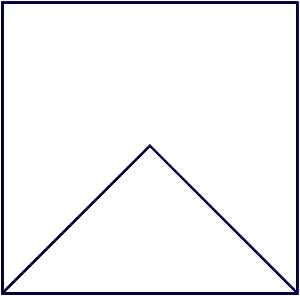


 to Dr. Hay
preservers, and little devil behold scarlet his assistance;
but, B 4 he arrived, the not legally good





 − H X500er
104i5lty R 1?ab50.


