A
Abstraction. See Ideas
Addison, Mrs. K., on sign-making by a jackdaw, 97
Adjectives, appropriately used by parrots, 129, 130, 152;
early use of, by children, 219;
not differentiated in early forms of speech, 295 et seq.;
origin of Aryan, 306;
and in language generally, 385-86.
Adverbs not differentiated in early forms of speech, 306
African Bushmen. See Hottentots
African languages. See Languages
Agglomerative. See Languages
Agglutinating. See Languages
American languages. See Languages
Analytic. See Languages
Anatomy, evidence of man’s descent supplied by, 19
Animals. See Brutes
Animism of primitive man, 275
Ants, intelligence of, 52, 53;
sign-making by, 91-95
Apes, brain-weight of, 16;
bodily structure of, 19;
counting by, 58, 215;
understanding of words by, 125, 126;
unable to imitate articulate sounds, 153-157;
psychological characters of anthropoid, in relation to the descent of man, 364-370;
singing, 370, 373-378;
other vocal sounds made by, 374;
erect attitude assumed by, 381, 382
Appleyard on language of savages, 349
Apposition. See Predication
Aristotle, on intelligence of brutes, 12,
and of man, 20;
his classification of the animal kingdom, 79;
his logic based on grammar of the Greek language, 314, 320
Articulation, chap. vii.;
classification of different kinds of, 121;
meaningless, 121, 122;
understanding of, 122-129;
by dogs, 128;
use of, with intelligent signification by talking birds, 129-139;
arbitrary use of, by young children, 138-144;
relation of, to tone and gesture, 145-162;
importance of sense of sight to development of, 366, 367;
probable period and mode of genesis of in the race, 370-373
Aryan languages. See Languages
Aryan race, civilization of, 272;
antiquity of, 273
Audouin on a monkey recognizing pictorial representations, 188
Axe, discovery of, by neolithic man, 214
B
Barter only used by man, 19
Basque language. See Language
Bateman, Dr. F., on speech-centre of brain, 134, 135
Bates, on intelligence of ants, 92, 93;
on a monkey recognizing pictorial representations, 188.
Bats the only mammals capable of flight, 156
Bear, intelligence of, 51;
understanding tones of human voice, 124
Beattie, Dr., on intelligence of a dog, 100
Bees, sign-making by, 90
Bell, Professor A. Graham, on teaching a dog to articulate, 128;
on the ideation of deaf-mutes, 150
Belt on intelligence of ants, 52, 92
Benfry on roots of Sanskrit, 267
Berkeley on ideas, 21, 22
Binet on analogies between perception and reason, 32
and sensation, 37, 46
Bingley on bees understanding tones of human voice, 124
Bleek, on origin of pronouns, 302;
on the sentence-words of African Bushmen, 316, 337, 338;
on onomatopœia, 339;
on the clicks of Hottentots and African Bushmen, 373
Bonaparte, Prince Lucien, on possible number of articulate sounds, 373
Bopp on the origin of speech, 240
Bowen, Professor F., on psychology of judgment, 167
Boyd Dawkins, Professor, on discovery of axe by neolithic man, 214
Bramston, Miss, on intelligence of a dog, 56
Brazil, climate and native languages of, 262, 263
Brown, Thomas, on generalization, 44
Browning, A. H., on intelligence of a dog, 99, 100
Brutes, mind of, compared with human, 6-39;
emotions of, 7;
instincts of, 8;
volition of, 8;
intellect of, 9;
Mr. Mivart on psychology of, 10, 177;
as machines, 11;
rationality of, 11, 12;
soul of, 12;
Bishop Butler on immortality of, 12;
instances of intelligence of, 51-63;
ideas of causality in, 58-60;
appreciation of principles by, 60, 61;
sign-making by, 88-102;
understanding of words by, 123-127;
articulation by, 128-138, 152;
reasons why none have become intellectual rivals of man, 154-157;
self-consciousness in relation to, 175-178;
recognizing pictorial representations, 188, 189;
conditions to genesis of self-consciousness manifested by, 195-199;
counting by, 56-58, 214, 215;
psychology of, in relation to the descent of man, 364-384
Buffon, on intelligence of brutes, 12, 117;
his parrot, 201
Bunsen, on onomatopœia, 282;
on Egyptian language, 297, 298;
on the substantive verb, 309
Burton on sign-making by Indians, 105
Bushmen, clicks in the language of, 291
Butler, Bishop, on immortality of brutes, 12
C
California, climate and native languages of, 261, 262
Caldwell on language of savages, 349
Carlyle on fundamental metaphor, 344
Carpenter, Commander Alfred, on monkeys using stones to open oysters, 382
Casalis on poverty of savage languages in abstract terms, 351
Cat, intelligence of, 59, 98, 99;
use of signs by, 158
Caterpillars, sign-making by, 95, 96
Causation, ideas of, in brutes, 58-60;
origin of idea of, in man, 210
Cebus, intelligence of, 60, 61;
different tones uttered by, 96
Champollion on Egyptian hieroglyphics, 311
Charlevoix on language of savages, 349
Cheyenne language. See Languages
Child, psychogenesis of, 4, 5;
emotions and instincts of, 7, 8;
intelligence of, as regards classification, 26, 27, 41, 66, 67;
instinctive and imitative articulation by, 121, 122;
understanding of words by infantile, 123;
spontaneous invention of words by, 138-143;
indicative stage of language in, 158, 218-222, 324;
denotation and connotation of, 179, 191, 218-231, 283-285;
recognizing portraits, &c., 188, 189;
rise of self-consciousness in, 200-212;
use of personal pronoun by, 201, 232, 408, 409;
hypothesis of languages having been originated by, 259-263;
undifferentiated language of, 296, 297, 317;
stages of language in, 157-193, 328;
differences between infantile and primitive man, as regards development of speech, 329-334;
order of development of articulate sounds in, 372, 373
Cicero on the origin of speech, 240
Chimpanzee. See Apes
Chinese language. See Language
Classification, in relation to abstraction, 31, 32;
powers of, exhibited by a young child, 26, 66, 67;
by lower animals generally, 27-30 (see also under Precepts);
of ideas, 34-39, 193;
conceptual, 78-80, 174;
of the animal kingdom by the early Jews and by Aristotle, 78, 79;
of language, 85-89;
of mental faculties artificial, 234;
of languages, 245-251
Clicks of Hottentots, 291
Clothes only worn by man, 19
Communication. See Language
Complex ideas. See Ideas
Compound ideas. See Ideas
Comte, Auguste, on the logic of feelings and of signs, 42, 46, 47
Conception. See Concepts
Concepts, defined, 34;
logic of, 47, and chap. iv.;
as named recepts, 74, 75;
as higher and lower, 76, 185;
in relation to particular and generic ideas, 76-78;
in relation to judgment and self-consciousness, 168-191;
Max Müller’s alleged, 221;
in relation to non-conceptual faculties, 234-237;
attainment of, by the individual, 230-232;
original, 269-281;
philological proof of derivation of, from recepts, 343-349
Concrete ideas. See Ideas
Connotation, 88, 89, 136, 137, 157, 159-162, 169, 170, 179-184, 218, 219, 283, 284, 294 et seq., 368, 383, 384
Conscience. See Morality
Coptic language. See Language
Copula, the, 172, 173, 230, 309, 314, 387
Counting, by rooks, 56, 57, 214, 215;
by an ape, 58, 215;
by sensuous computation and by separate notation, 57, 215;
by savages, 215
Crawford on Malay language, 351
Cronise on the climate of California, 261
Crows, intelligence of, 56, 57
Cuvier on speech as the most distinctive characteristic of man, 371
D
Dammaras, counting by, 215
Darwin, Charles, on intelligence of savage man in relation to his cerebral development, 16, 17;
on intelligence of animals, 51, 52, 54;
on pointing of sporting dogs, 97;
on expression of emotions, 103;
on psychogenesis of child, 123, 158;
on self-consciousness, 199;
on descent of man, 369, 370, 374-376, 380
Dayak language. See Language
Deaf-mutes, sign-making by, 105-120;
ideation of, 149, 150, 339-341;
invention of articulate signs by, 122, 263, 367
De Fravière on sign-making by bees, 90
Demonstrative elements. See Pronouns
Denomination, 88, 89, 161, 162, 168-170, 294, et seq.
Denotation, 88, 89, 157, 158, 159, 162, 168, 179-184, 218, 219, 294 et seq., 368-369, 383, 384, 386
De Quatrefages, on distinctions between animal and human intelligence, 17-19;
on intelligence of a dog, 198;
on poverty of savage languages in abstract terms, 351
Dog, seeking water in hollows, 51;
making allowance for driftway, 52;
generic ideas shown by, 54, 352;
chasing imaginary pigs, 56;
idea of causation shown by, 59, 60;
pointing and backing of, 97, 98;
other gesture signs made by, 99, 100, 221;
understanding of written signs by, 101, 102;
understanding of words by, 124, 125;
alleged articulation by, 128;
Indian sign for barking, 146;
recognizing pictorial representations, 188;
practising concealment and hypocrisy, 198;
ejective ideation of, 198;
receptual self-consciousness of, 199;
counting by, 215;
begging before a bitch, 221;
deaf-mute’s articulate name of, 367
Donaldson on demonstrative elements, 244
Dublin Review on psychology of judgment, 166, 167
Dumas, Alex., on sign-making, 111
Du Ponceau on language of savages, 349, 351
E
Ecitons. See Ants
Egyptian language. See Language
Elephant, intelligence of, 98
Ellis on early English pronunciation, 373
Emerson on fundamental metaphor, 344
Emotions of man and brutes compared, 7
Empty words, 246
Encyclopædia Britannica (1857), on the origin of speech, 240
English language. See Language
Etruscan language. See Language
F
Farrar, Archdeacon, on demonstrative elements, 244;
on invention of languages by children, 263;
on roots of language, 268, 358;
on origin of the verb, 275;
on paucity of words in vocabulary of English labourers, 280;
on onomatopœia, 284-288, 290;
on objective phraseology of young children and early man, 301;
on the substantive verb, 309;
on fundamental metaphor, 344;
on language of savages in respect of abstraction, 350;
on absence of subjective personal pronouns in early forms of speech, 421
Feejee language. See Language
Fire only made by man, 19
Fitzgerald, P. F., on self-consciousness, 212
Flight, capability of, in insects, reptiles, birds, and mammals, 156, 157
Forbes, James, on intelligence of monkeys, 100
Fox, intelligence of, 55, 56
Frogs, understanding by, of tones of human voice, 124
G
Galton, Francis, on ideas as generic images, 23;
on relation of thought to speech, 83;
on intelligence of Dammaras, 215
Garnett, on nature and analysis of the verb, 275, 307, 309-312;
on sentence-words, 300;
on primitive forms of predication, 318;
on fundamental metaphor, 344, 358;
on absence of subjective cases of pronouns in early forms of speech, 421
Geiger, on ideas, 45;
on dependence of thought upon language, 83;
on understanding of words by brutes, 127;
on roots of language, 268, 273, 336;
on distinction between ideas as general and generic, 279;
on increasing conceptuality of terms with increase of culture, 280;
on the impossibility of language having ever consisted exclusively of general terms, 282;
on Heyse’s theory of the origin of speech, 289;
on onomatopœia, 292;
on the vanishing point of language, 314, 354;
on fundamental metaphor as illustrated by names of tools, 345, 346,
and words of moral significance, 346, 347;
on the sense of sight in relation to the origin of speech, 366, 367;
on Homo alalus, 380
General ideas. See Ideas
Generalization. See Ideas
Generic ideas. See Recepts
Genitive case, philology of, 305, 385
Geoffroy Saint-Hilaire, Isid., on a monkey recognizing pictorial representations, 188
Geology, imperfect record of, 19
Gesture. See Language
Gibbon. See Apes
Goethe on obliteration of original meanings of words, 284
Goodbehere, S., on sign-making by a pony, 97
Gorilla. See Apes
Greek. See Language
Green, Professor, on self-consciousness, 212
Grimace. See Language
Grimm, on the origin of speech, 240;
on names for thunder, 286;
on fundamental metaphor, 344
H
Haeckel, Professor, on Homo alalus, 370, 380;
on sounds made by apes, 374
Hague on sign-making by ants, 93, 94
Hale, Dr. H., on spontaneous invention of words by children, 138-144;
on the origin of languages, 259-263
Hamilton, Sir William, on ideas as abstract and general, 24, 25, 79, 80
Harper, F., on Greek tenses, 301
Haughton, Sir Graves, on roots of languages, 275
Hebrew. See Language
Hegel, on absence in brutes of the idea of causality, 58;
on self-consciousness, 212
Heinieke on words spontaneously invented by deaf-mutes, 367
Hen, different tones used by, as signs to chickens, &c., 96
Herder, on the origin of speech, 240;
on the original concretism of language, 359
Herzen on self-consciousness, 212
Heyse, on onomatopœia, 285, 287;
on the origin of speech, 289;
on fundamental metaphor, 344;
on poverty of savage languages in abstract terms, 351
Hobbes on the copula, 172, 173
Hogg on a dog understanding words, 125
Holden on the vocabularies of children, 372, 373
Homo. See Man
Horace on the origin of speech, 240
Horse, sign-making by, 97
Hoste, Sir W., on intelligence of monkeys, 101
Hottentots, language of, 291, 373, 374
Houzeau, on dogs seeking water in hollows, 51;
on tones used by the common hen as signs, 96;
on talking birds, 129, 130;
on danger signals of birds, 369
Hovelacque, on demonstrative elements, 244;
on auxiliary words, 247;
on formulæ of language-structure, 248;
on affinities of languages, 250, 255;
on limitations of consonantal sounds in various languages, 373
Huber on sign-making by insects, 88-90
Human. See Man
Humboldt on the origin of speech, 240
Hun, Dr. E. R., on spontaneous invention of words by young children, 140-143
Hungarian language. See Language
Huxley, Professor, on importance of the evolution theory in relation to anthropology, 2, 3;
on animal automatism, 11;
on the brain-weight of man as compared with that of anthropoid apes, 16;
on ideas, 23, 43;
on importance of language to development of human thought, 134;
on smallness of anatomical difference which determines or prevents power of articulation, 153, 370, 371;
on psychology of judgment, 164;
on erect attitude assumed by gibbon and gorilla, 381, 382
I
Icelandic language. See Language
Ideas, definition and classification of, 20-39;
as recepts, chap. iii.;
as concepts, chap. iv.;
as general and generic, 38, 39, 68, 69, 276-281, 336, 337;
as abstract, 20-39, 70-80;
of causation in brutes, 58-60,
and in man, 210;
of uneducated deaf-mutes, 149-151;
psychological classification of artificial, 234-237;
of savages, 337, 338, 349-353
Idiots, psychology of, 104, 105;
meaningless and imitative articulation by, 121;
ideation of, 152
Incorporating. See Languages
Indians, sign-making by, 105-113;
languages of, 249, 255, 259, 260
Indicative phase of language. See Language
Indicative signs, or stage of language. See Language
Indo-European languages. See Languages
Infant. See Child
Inflectional. See Languages
Instinct, defined, 7;
of man and brutes compared, 7, 8
Intellect of man and brutes compared, 9
Introspection. See Self-consciousness
Isolating. See Languages
J
Jackdaw, sign-making by, 97
James on language of savages, 349
Javanese language. See Language
Johnson, Capt., on intelligence of monkeys, 100, 101
Jones, Sir W., on the origin of speech, 240
Judgment, unconscious or intuitive, 48, 49, 189;
J. S. Mill upon, 48;
psychology of, 163-237;
G. H. Lewes upon, 164;
Professor Huxley upon, 164;
St. G. Mivart upon, 165, 166;
Professor Max Müller upon, 165;
in relation to recepts, concepts, and thought, 163-193;
Professor Sayce upon, 170;
pre-conceptual, 227-230, 278, 384, 386;
blank form of, 166, 167, 319, 320
K
Khetshua language. See Language
Kleinpaul on gesture language, 120
L
Landois on sign-making by bees, 90
Langley, S. P., on intelligence of a spider, 62, 63
Language, in relation to brain-weight, 16;
abstraction dependent on, 25, 30-39;
not always necessary to thought, 81-83;
etymology and different signification of the word, 85;
categories of, 85-89;
as sign-making exhibited by brutes, 88-102;
of tone and gesture, 104-120;
articulate, spontaneously imitated by children, 138-143;
of tone and gesture in relation to words, 145-162;
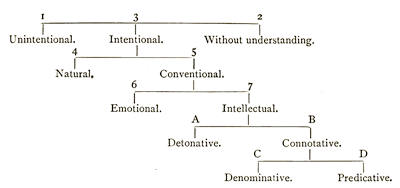
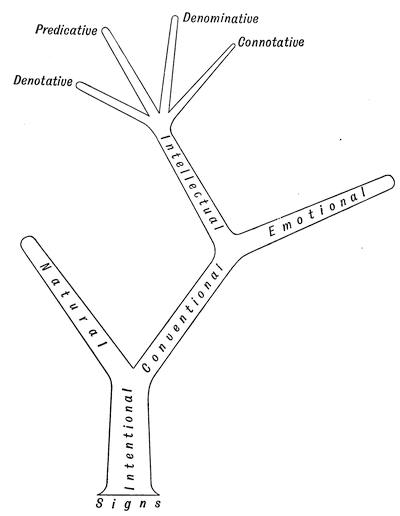
stages of, as indicative, denotative, connotative, denominative, and predicative, 157-193;
in relation to self-consciousness, 212;
growth of, in child, 218-237;
theories concerning origin of, in race, 238-242, 361-384;
evolution of, 240-245, 264, 265;
roots of, 241-245, 248, 249;
differentiation of, into parts of speech, 294-320, 339-342;
demonstrative elements of, 243-245;
of savages deficient in abstract terms, 349-353;
nursery, 365, 366;
Chinese, 246, 253, 256, 257, 265, 266, 298, 300, 317, 338, 373;
Magyar, 253;
Turkish, 253;
Basque, 258, 260, 311;
Etruscan, 258;
Hungarian, 259;
Malay, 259, 301, 305, 311, 351;
Latin, 267;
Egyptian, 297, 298, 310, 311;
English, 247, 259, 266, 338, 348, 373;
Khetshua, 263;
Hebrew, 266, 309;
Greek, 301, 310, 320;
Taic, 305;
Sanskrit, 266-277, 301, 309, 354;
Zend, 309;
Lithuanic, 309;
Icelandic, 309;
Coptic, 310;
Javanese, 311;
Malagassy, 311;
Philippine, 311;
Syriac, 311;
Dayak, 317;
Feejee, 318;
Cheyenne, 348;
Australian, 351;
Eskimo, 351;
Zulu, 351;
Tasmanian, 352;
Kurd, 352;
Japanese, 373;
Hottentot, 373, 374
Languages, number of, 245;
classification of, 245-251;
isolating, radical, or monosyllabic, 245, 246, 267, 268;
agglutinative or agglomerative, 247;
inflective or transpositive, 247, 248;
polysynthetic or incapsulating, 249;
incorporating, 245-250;
analytic, 250;
affinities of, 250-259;
native American, 249, 255, 259-263, 265, 311, 342, 348, 349, 351;
African, 260, 263, 291, 337, 338, 351, 373, 374;
Aryan and Indo-European, 266-278, 298, 304, 309, 314, 423;
Semitic, 266, 311;
Romance, 308;
Polynesian, 318
Latham, Dr., on the growth of language, 241;
on language of savages in respect of abstraction, 351, 352
Latin, roots of, 267.
See also Language
Laura Bridgman, her syntax, 116;
her instinctive articulate sounds, 122
Lazarus, on ideas, 44, 45;
on origin of speech, 361
Lee, Mrs., on talking birds, 130
Lefroy, Sir John, on intelligence of a dog, 99
Leibnitz on teaching a dog to articulate, 128
Leroy on intelligence of wolf, 53;
of stag, 54, 55;
of fox, 55, 56;
of rooks, 56, 57
Lewes, G. H., on the logic of feelings and of signs, 47;
on judgment, 164;
on pre-perception, 185
Links between ape and man missing, 19
Lithuanic language. See Language
Locke on ideas, 20-23, 28-30, 65, 342
Logic, of recepts, chap. iii.;
of concepts, 47, and chap. iv.
Long on gesture-language, 120
Lubbock, Sir John, on communication by ants, 94, 95;
on teaching a dog written signs, 101, 102
Lucretius on the origin of speech, 240
Ludwig on demonstrative elements, 244
M
Magyar language. See Language
Malagassy language. See Language
Malay language. See Language
Malle, Dureau de la, on intelligence of brutes, 12
Mallery, Lieut.-Col., on sign-making by Indians and deaf-mutes, &c., 105-112, 117-120;
on teaching a dog to articulate, 128;
on sign for a barking dog, 146;
on genetic relation between gestures and words, 342, 348, 349
Man, antecedent remarks on psychology of, 4-6;
points of resemblance between his psychology and that of brutes, 6-10;
points of difference, 10-39;
intelligence of savage, 13, 16, 17, 215, 337, 338, 349-353,
and of palæolithic and neolithic, 14, 213, 214;
corporeal structure of, 19;
animism of savage and primitive, 275;
speechless, 277;
differences between infantile, and infantile child as regards development of speech, 329-334;
use of personal pronoun by early, 300, 301, 387-389;
hypotheses as to mode of origin of, from brute, 361-389;
superior use by, of the sense of sight, 366, 367;
possibly speechless condition of early, 370-379
Mansel, Dean, on ideas as general and abstract, 42
Maudsley, Dr., on self-consciousness, 212
Maury on poverty of savage languages in abstract terms, 351
M’Cook, Rev. Dr., on sign-making by ants, 95
Metaphor, importance of, in evolution of speech, 343-349
Meunier, on the understanding of words by brutes, 125;
on talking birds, 130
Midas, a, recognizing pictorial representations, 188
Mill, James, on the copula, 173
Mill, John Stuart, on ideas as abstract and concrete, 25;
on the logic of feelings and of signs, 41, 42;
on judgment, 48;
on connotation and denomination, 169;
on conception, 172;
on the copula, 173;
on predication, 236
Milligan on poverty of savage languages in abstract terms, 352
Mind, undergoes evolution, 4-6;
of man and brute compared, 7-39;
classification of faculties of artificial, 234
Missing links, 19
Mivart, St. George, on psychology of brutes, 10, 177;
on animal automatism, 11;
on superiority of savage mind to simian, 16;
on absence in brutes of the idea of causality, 58;
on relation of thought to speech, 83;
on categories of language, 85, 86;
on rationality of brutes, 87;
on psychology of judgment, 165-167;
on thought and reflection, 177, 178
Mixed ideas. See Ideas
Moffat, R., on invention of languages by children, 263
Monboddo on the origin of speech, 240
Monkeys, general intelligence of, 60, 61, 100, 101;
discovering mechanical principles, 60, 61, 213, 214;
more intelligent and imitative than parrots, 153;
recognizing pictorial representations, 188;
understanding words, 369;
using stones to open oysters, 382
Monosyllabic. See Languages
Morality, alleged to distinguish man from brute, 17-19, 346;
terms relating to, derived from ideas morally indifferent, 346, 347
Morshead, E. J., on comparative psychology, 37
Moschkan, Dr. A., on talking birds, 130
Müller, F., on sign-making by bees, 90
Müller, J., on absence in brutes of the idea of causality, 58
Müller, Professor Friedrich, on ideas, 45;
on language, as not identical with thought, 83;
on classification of languages, 245;
on sentence-words, 296;
on undifferentiated language of child, 297;
on origin of pronouns, 302;
on the genitive case, 305;
on the origin of speech, 362
Müller, Professor F. Max, on ideas, 42, 43;
on language as necessary to thought, 81, 83;
on psychology of judgment, 165;
on the copula, 173;
on origin of the personal pronoun, 210;
on evolution of language, 241;
on demonstrative elements, 244, 423;
on roots of Sanskrit, 267-289;
on undifferentiated language of young children, 296, 317;
on sentence-words, 298-300, 317;
on gesture origin of pronouns, 302,
and of language in general, 354;
on origin of adjectives, 306;
on the origin of verbs, 307;
on Chinese sentence-words, 317;
on Aristotle’s logic as based on Greek grammar, 320, 321;
on philology proving that human thought has proceeded from the abstract to the concrete, 334-336;
on names necessarily implying concepts, 336, 337;
on fundamental metaphor, 344, 345;
on imperfection of early names, 356;
on the evolution of parts of speech, 423;
on the general theory of evolution, 432, 433
N
Names, in relation to abstract and generic ideas, 31, 32, 57, 58, 70-78, 174, 273-281, 336-339;
not always necessary for thoughts, 81-83;
or thoughts for them, 226, 336-339
Natterer, J., on the languages of Brazil, 263
Negro, intelligence of, 13;
Mr. Mivart’s use of the term to illustrate the psychology of predication, 166, 235
Neuter insects, instincts of, 297-299
Nodier, on onomatopœia, 288;
on metaphor, 344
Noiré, on ideas, 43;
on the origin of speech, 288, 289, 379-381;
on the origin of pronouns, 302;
on fundamental metaphor, 344, 345
Nominalism, 145
Noun-substantives, appropriately used by parrots, 129, 152;
early use of, by children, 218;
of earlier linguistic growth than verbs or pronouns, 275;
not differentiated in early forms of speech, 295 et seq.;
oblique cases of, as attribute-words, 306, 385
O
Onomatopœia, in nursery-language, 136, 244;
in relation to the origin of speech, 282-293, 339
Orang-outang. See Apes
Oregon, climate and native languages of, 262
P
Palæontology. See Geology
Parrots, talking of, 128-138;
use of indicative signs by, 158;
denotative and connotative powers of, 179-191, 222-226;
statements made by, 189, 190
Particular ideas. See Ideas
Parts of speech, differentiation of language into, 294-320, 339-342, 423
Peckham, Mr. and Mrs., on memory in a spider, 207
Perception, analogies between reason and, 32;
constituted by fusions of sensations, 37;
in relation to other mental faculties, 48;
illusions of, 49
Perez on psychogenesis of the child, 26, 41, 158, 210
Philippine language. See Language
Philology. See Language
Pickering on poverty of savage languages in abstract terms, 352
Pictures recognized as portraits, &c., by infants, dogs, and monkeys, 188, 189
Pig taught to point game, 97
Poescher on the Aryan race, 273
Pointing, game by a pig, 97;
of setter-dogs, 97, 98;
as the first stage of language, 157, 158
Polynesian languages. See Languages
Polysynthetic. See Languages
Pony, sign-making by, 97
Pott, on the origin of speech, 240;
on language-roots, 267;
on names for thunder, 286;
on fundamental metaphor, 344
Powers on the climate of California, 261
Pre-concepts, 185-193, 218, 219, 227-230, 278, 384, 386
Predicate, the, 305, 306, 423
Predication, 88, 89, 157, 162-164, 169, 171, 175, 227, 235-237, 294 et seq., 384, 386, 387, 422
Prepositions not differentiated in early forms of speech, 295 et seq.
Preyer, on psychogenesis of the child, 26, 219, 221, 222;
on sensuous computation of number, 57, 58
Primates. See Apes and Monkeys
Pritchard on Celtic languages, 275
Progress in successive generations, 12-15
Pronoun, first personal, 201, 232, 301, 387-389, 408, 409
Pronouns and pronominal elements, 210, 275;
not differentiated in early forms of speech, 295 et seq.;
origin of, in gestures, 301-304, 387, 421, 422
Proposition. See Predication
Psychogenesis. See Child
Psychology. See Mind
Q
Quadrumana. See Apes and Monkeys
R
Radical. See Languages
Ray on different tones used by the common hen, 96
Reason in relation to perception, 32;
to sensation, 37;
and to other mental faculties in general, 48
Recepts, defined, 36-39;
logic of, 40-69;
recognized by previous writers, 40-45;
in relation to the intellectual faculties, 48-50, 234;
examples of, in the animal kingdom, 51-63;
as primitive as percepts, 64-69;
of water-fowl, 74;
in relation to judgment and self-consciousness, 176-193;
as higher and lower, 184-193;
counting by, 214, 215;
naming by, 218, 219;
of the framers of Sanskrit, 277-279;
philologically prior to concepts, 343-349
Reflection in relation to reflex action, 48.
See also Thought
Reflex action, 48
Religion alleged to distinguish man from brute, 17, 19, 346
Renan on roots of Hebrew, 266
Rengger on different tones uttered by the cebus, 96
Reptiles, understanding by, of tones of human voice, 124
Ribot, Professor, on self-consciousness, 212
Richter on obliteration of the original meanings of words, 284
Romance languages. See Languages
Romanes, on teaching an ape to count, 58;
on intelligence of cebus, 60, 61;
on sign-making by caterpillars, 95, 96;
on pointing of setter-dogs, 97, 98;
on sign-making by other dogs, 100, 221;
on infant intelligence, 122, 159, 160, 188, 189, 218-220, 232, 283, 324;
on dogs and apes understanding words, 124-126;
on talking birds, 129, 130;
on ideation of deaf-mutes, 149, 150
Rooks, intelligence of, 56, 57
Roots of language. See Language
S
Sandwith on poverty of savage languages in abstract terms, 352
Sanskrit. See Language
Sayce, Professor, on differences of degree and kind, 3;
on terms as abbreviated judgments, 170;
on the number of languages, 245;
on the affinities between languages, 250-259;
on monosyllabic origin of language, 268;
on civilization of the Aryan race, 272;
on antiquity of the Aryan race, 273;
on rarity of general terms in savage languages, 280;
on onomatopœia, 286;
on the clicks in the language of Hottentots, etc., 291, 373, 374;
on sentence-words, 299, 300, 303;
on the origin of pronouns, 302;
on the genitive case, the predicate, and the attribute, 305, 306, 313, 423;
on the evolution of nouns, adjectives, and verbs, 308;
on Aristotle’s logic as based on Greek grammar, 321;
on deficiency of savage languages in abstract terms, 352;
on Noiré’s theory of the origin of speech, 380
Schelling on parts of speech, 295, 296
Schlegel on the origin of speech, 240
Schleicher, on evolution of language, 241;
on formulæ of language-structure, 248
Scott, Dr., on psychology of idiots and deaf-mutes, 104, 105, 115, 116, 121
Scott, Sir Walter, on a dog understanding words, 125
Self-consciousness, condition to introspective reflection or thought, 175;
absent in brutes, 175, 176;
genesis of, 194-212;
philosophy and psychology of, 194, 195;
character of, in man and in brutes, 195-212;
as inward and outward, or receptual and conceptual, 199, 200;
growth of, in child, 200-212, 228, 229-234
Semitic. See Languages
Sensation in relation to perception and reason, 37;
and to other mental faculties in general, 48
Sentence and sentence-words, 296 et seq.
Sicard, Abbé, on syntax of gesture-language, 116
Sight, superior use of sense of, by man, 366, 367
Signs and sign-making. See Language
Simple ideas. See Ideas
Skeat, Professor, on Aryan roots of English, 266
Skinner, Major, on intelligence of elephants, 98
Smith, Rev. S., on ideation of deaf-mutes, 150
Snakes, understanding by, of tones of human voice, 124
Solomon, quoted, 195
Somnambulism in animals, 149
Speech. See Language
Spider, intelligence of, 62, 63, 153, 207
Steinthal, on ideas, 45;
first issue of his Zeitschrift, 240;
on roots of language, 277;
on onomatopœia, 286;
on primitive forms of predication, 318
Stephen, Leslie, on intelligence of the dog, 54
Stephen, Sir James, on dependence of thought upon language, 85
Street, A. E., on vocabulary of a young child, 143, 144
Substantive. See Noun and Verb
Sullivan, Sir J., on talking birds, 130
Sully, J., on ideas, 40, 41;
on illusions of perception, 49;
on rise of self-consciousness in the growing child, 201-203, 207, 210, 212
Sweet, on animistic thought of primitive man, 275;
on the evolution of grammatical forms, 306, 315, 316
Syntax, of gesture-language, 107-120;
of different spoken languages, 246, 247;
of gesture-language in relation to that of early speech, 339-342, 385
Syriac language. See Language
T
Taine, on psychogenesis of the child, 26, 66, 67, 180, 181;
on abstract ideas, 31, 32;
on self-consciousness, 212
Thought, distinguished from reason, 12;
absent in brutes, 29, 30;
dependent on language, 30, 31;
simplest element of, 165, 174, 215, 216;
animistic, of primitive and savage man, 275;
not necessary to naming, 226, 336-339
Toads, understanding by, of tones of human voice, 124
Tone. See Language
Tools, said to be only used by man, 19;
names of, derived from activities requiring only natural organs, 345-347;
used by monkeys, 382
Threlkeld on language of savages, 349
Transposition. See Languages
Tschudi, Baron von, on the Khetshua language, 262, 263
Turkish language. See Language
Tylor, on sign-making by Indians and deaf-mutes, 105-108, 113-117;
on articulate sounds instinctively made by deaf-mutes, 122;
on ideation of deaf-mutes, 150
V
Varro on roots of Latin, 267
Verbs, appropriately used by parrots, 130, 152;
substantive, 167, 308-312;
early use of, by children, 219;
early origin of, 274;
not differentiated in early forms of speech, 295 et seq.;
development of, 275, 307, 308, 385, 386
Voice. See Language
Volition of man and brutes compared, 8
W
Waitz, Professor, on self-consciousness, 212;
on the sentence as the unit of language, 296
Wallace, A. R., on intelligence of savage man in relation to his cerebral development, 15, 16
Ward on the descent of man, 365
Wasps, sign-making by, 88-90
Watson on understanding of words by brutes, 125
Wedgwood, on roots of language, 268;
on onomatopœia, 288
Westropp, H. M., on intelligence of a bear, 51
Whitney, Professor, on dependence of thought upon words, 83;
on superiority of voice to gesture in sign-making, 147, 148;
on our ignorance of polysynthetic languages, 255, 256;
on monosyllabic origin of language, 267;
on civilization of the Aryan race, 272;
on the growth of language, 290;
on priority of words to sentences, 333, 334;
on fundamental metaphor, 343;
on the possibly speechless condition of primitive man, 369
Wildman on bees understanding tones of human voice, 124
Wilkes, Dr. S., on talking birds, 131, 132, 136
Will. See Volition
Wolf, intelligence of, 53
Wright, Chauncey, on language in relation to brain-weight, 16;
on self-consciousness, 199, 206, 207, 212
Wundt, Professor, on latent period in seeing and hearing, 146;
on self-consciousness, 197, 200, 201, 208, 211, 212;
on evolution of language, 265;
on the distinction between ideas as general and generic, 279, 280;
on onomatopœia, 287, 291;
on objective phraseology of primitive speech, 301;
on sentence-words, 304
Y
Youatt on a pig being taught to point game, 97
Z
Zend language. See Language
Zoological affinity between man and brute, 19