1501.
How comes it about that the knowledge of other
sciences, which depend upon this [mathematics], is painfully
sought, and that no one puts himself to the trouble of studying
this science itself? I should certainly be surprised, if I did
not know that everybody regarded it as being very easy, and if
I had not long ago observed that the human mind, neglecting
what it believes to be easy, is always in haste to run after
what is novel and advanced.—Descartes.
Rules for the Direction of the Mind; Philosophy of
Descartes [Torrey], (New York, 1892), p. 72.
1502.
All quantitative determinations are in the hands
of mathematics, and it at once follows from this that all
speculation which is heedless of mathematics, which does not
enter into partnership with it, which does not seek its aid in
distinguishing between the manifold modifications that must of
necessity arise by a change of quantitative determinations, is
either an empty play of thoughts, or at most a fruitless
effort. In the field of speculation many things grow which do
not start from mathematics nor give it any care, and I am far
from asserting that all that thus grow are useless weeds, among
them may be many noble plants, but without mathematics none
will develop to complete
maturity.—Herbart, J. F.
Werke (Kehrbach), (Langensalza, 1890), Bd. 5, p. 106.
1503.
There are few things which we know, which are not capable of
being reduc’d to a Mathematical Reasoning, and when they
cannot, it’s a sign our knowledge of them is very small and
confus’d; and where a mathematical reasoning can be had, it’s
as great folly to make use of any other, as to grope for a
thing in the dark, when you have a candle standing by
you.—Arbuthnot.
Quoted in
Todhunter’s
History of the Theory of Probability
(Cambridge and London, 1865), p. 51.
1504.
Mathematical Analysis is ... the true rational
basis of the whole system of our positive
knowledge.—Comte, A.
Positive Philosophy [Martineau], Bk. 1, chap. 1.
1505.
It is only through Mathematics that we can
thoroughly understand what true science is. Here alone we can
find in the highest degree simplicity and severity of
scientific law, and such abstraction as the human mind can
attain. Any scientific education setting forth from any other
point, is faulty in its basis.—Comte, A.
Positive Philosophy [Martineau], Bk. 1, chap. 1.
1506.
In the present state of our knowledge we must
regard Mathematics less as a constituent part of natural
philosophy than as having been, since the time of Descartes and
Newton, the true basis of the whole of natural philosophy;
though it is, exactly speaking, both the one and the other. To
us it is of less use for the knowledge of which it consists,
substantial and valuable as that knowledge is, than as being
the most powerful instrument that the human mind can employ in
the investigation of the laws of natural
phenomena.—Comte, A.
Positive Philosophy [Martineau], Introduction, chap. 2.
1507.
The concept of mathematics is the concept of science in
general.—Novalis.
Schriften (Berlin, 1901), Teil 2, p. 222.
1508.
I contend, that each natural science is real
science only in so far as it is mathematical.... It may be that
a pure philosophy of nature in general (that is, a philosophy
which concerns itself only with the general concepts of nature)
is possible without mathematics, but a pure science of nature
dealing with definite objects (physics or psychology), is
possible only by means of mathematics, and since each natural
science contains only as much real science as it contains a
priori knowledge, each natural science becomes real science
only to the extent that it permits the application of
mathematics.—Kant, E.
Metaphysische Anfangsgründe der Naturwissenschaft, Vorrede.
1509.
The theory most prevalent among teachers is that
mathematics affords the best training for the reasoning
powers;... The modern, and to my mind true, theory is that
mathematics is the abstract form of the natural sciences; and
that it is valuable as a training of the reasoning powers, not
because it is abstract, but because it is a representation of
actual things.—Safford, T. H.
Mathematical Teaching etc. (Boston, 1886), p. 9.
1510.
It seems to me that no one science can so well
serve to co-ordinate and, as it were, bind together all of the
sciences as the queen of them all,
mathematics.—Davis, E. W.
Proceedings Nebraska Academy of Sciences for 1896
(Lincoln, 1897), p. 282.
1511.
And as for Mixed Mathematics, I may only make this
prediction, that there cannot fail to be more kinds of them, as
nature grows further disclosed.—Bacon, Francis.
Advancement of Learning, Bk. 2; De Augmentis, Bk. 3.
1512.
Besides the exercise in keen comprehension and the
certain discovery of truth, mathematics has another formative
function, that of equipping the mind for the survey of a
scientific system.—Grassmann, H.
Stücke aus dem Lehrbuche der Arithmetik; Werke (Leipzig, 1904),
Bd. 2, p. 298.
1513.
Mathematicks may help the naturalists, both to
frame hypotheses, and to judge of those that are proposed to
them, especially such as relate to mathematical subjects in
conjunction with others.—Boyle, Robert.
Works (London, 1772), Vol. 3, p. 429.
1514.
The more progress physical sciences make, the more
they tend to enter the domain of mathematics, which is a kind
of centre to which they all converge. We may even judge of the
degree of perfection to which a science has arrived by the
facility with which it may be submitted to
calculation.—Quetelet.
Quoted in E. Mailly’s Eulogy on Quetelet; Smithsonian Report,
1874, p. 173.
1515.
The mathematical formula is the point through
which all the light gained by science passes in order to be of
use to practice; it is also the point in which all knowledge
gained by practice, experiment, and observation must be
concentrated before it can be scientifically grasped. The more
distant and marked the point, the more concentrated will be the
light coming from it, the more unmistakable the insight
conveyed. All scientific thought, from the simple gravitation
formula of Newton, through the more complicated formulae of
physics and chemistry, the vaguer so called laws of organic and
animated nature, down to the uncertain statements of psychology
and the data of our social and historical knowledge, alike
partakes of this characteristic, that it is an attempt to
gather up the scattered rays of light, the different parts of
knowledge, in a focus, from whence it can be again spread out
and analyzed, according to the abstract processes of the
thinking mind. But only when this can be done with a
mathematical precision and accuracy is the image sharp and
well-defined, and the deductions clear and unmistakable. As we
descend from the mechanical, through the physical, chemical,
and biological, to the mental, moral, and social sciences, the
process of focalization becomes less and less
perfect,—the sharp point, the focus, is
replaced by a larger or smaller circle, the contours of the
image become less and less distinct, and with the possible
light which we gain there is mingled much darkness, the sources
of many mistakes and errors. But the tendency of all scientific
thought is toward clearer and clearer definition; it lies in
the direction of a more and more extended use of mathematical
measurements, of mathematical
formulae.—Merz, J. T.
History of European Thought in the 19th Century (Edinburgh
and London, 1904), Vol. 1, p. 333.
1516.
From the very outset of his investigations the
physicist has to rely constantly on the aid of the
mathematician, for even in the simplest cases, the direct
results of his measuring operations are entirely without
meaning until they have been submitted to more or less of
mathematical discussion. And when in this way some
interpretation of the experimental results has been arrived at,
and it has been proved that two or
more physical quantities stand in a definite relation to each
other, the mathematician is very often able to infer, from the
existence of this relation, that the quantities in question
also fulfill some other relation, that was previously
unsuspected. Thus when Coulomb, combining the functions of
experimentalist and mathematician, had discovered the law of
the force exerted between two particles of electricity, it
became a purely mathematical problem, not requiring any further
experiment, to ascertain how electricity is distributed upon a
charged conductor and this problem has been solved by
mathematicians in several
cases.—Foster, G. C.
Presidential Address British Association for the Advancement
of Science, Section A (1877); Nature, Vol. 16, p. 312-313.
1517.
Without consummate mathematical skill, on the part
of some investigators at any rate, all the higher physical
problems would be sealed to us; and without competent skill on
the part of the ordinary student no idea can be formed of the
nature and cogency of the evidence on which the solutions rest.
Mathematics are not merely a gate through which we may approach
if we please, but they are the only mode of approach to large
and important districts of
thought.—Venn, John.
Symbolic Logic (London and New York, 1894), Introduction,
p. xix.
1518.
Much of the skill of the true mathematical
physicist and of the mathematical astronomer consists in the
power of adapting methods and results carried out on an exact
mathematical basis to obtain approximations sufficient for the
purposes of physical measurements. It might perhaps be thought
that a scheme of Mathematics on a frankly approximative basis
would be sufficient for all the practical purposes of
application in Physics, Engineering Science, and Astronomy, and
no doubt it would be possible to develop, to some extent at
least, a species of Mathematics on these lines. Such a system
would, however, involve an intolerable awkwardness and
prolixity in the statements of results, especially in view of
the fact that the degree of approximation necessary for various
purposes is very different, and thus that unassigned grades of
approximation
would have to be provided for.
Moreover, the mathematician working on these lines would be cut
off from the chief sources of inspiration, the ideals of
exactitude and logical rigour, as well as from one of his most
indispensable guides to discovery, symmetry, and permanence of
mathematical form. The history of the actual movements of
mathematical thought through the centuries shows that these
ideals are the very life-blood of the science, and warrants the
conclusion that a constant striving toward their attainment is
an absolutely essential condition of vigorous growth. These
ideals have their roots in irresistible impulses and
deep-seated needs of the human mind, manifested in its efforts
to introduce intelligibility in certain great domains of the
world of thought.—Hobson, E. W.
Presidential Address British Association for the Advancement
of Science, Section A (1910); Nature, Vol. 84, pp. 285-286.
1519.
The immense part which those laws [laws of number
and extension] take in giving a deductive character to the
other departments of physical science, is well known; and is
not surprising, when we consider that all causes operate
according to mathematical laws. The effect is always dependent
upon, or in mathematical language, is a function of, the
quantity of the agent; and generally of its position also. We
cannot, therefore, reason respecting causation, without
introducing considerations of quantity and extension at every
step; and if the nature of the phenomena admits of our
obtaining numerical data of sufficient accuracy, the laws of
quantity become the grand instruments for calculating forward
to an effect, or backward to a
cause.—Mill, J. S.
System of Logic, Bk. 3, chap. 24, sect. 9.
1520.
The ordinary mathematical treatment of any applied
science substitutes exact axioms for the approximate results of
experience, and deduces from these axioms the rigid
mathematical conclusions. In applying this method it must not
be forgotten that the mathematical developments transcending
the limits of exactness of the science are of no practical
value. It follows that a large portion of abstract mathematics
remains without finding any practical
application, the amount of mathematics
that can be usefully
employed in any science being in proportion to the degree of
accuracy attained in the science. Thus, while the astronomer
can put to use a wide range of mathematical theory, the chemist
is only just beginning to apply the first derivative, i.e. the
rate of change at which certain processes are going on; for
second derivatives he does not seem to have found any use as
yet.—Klein, F.
Lectures on Mathematics (New York, 1911), p. 47.
1521.
The bond of union among the physical sciences is
the mathematical spirit and the mathematical method which
pervades them.... Our knowledge of nature, as it advances,
continuously resolves differences of quality into differences
of quantity. All exact reasoning—indeed all
reasoning—about quantity is mathematical
reasoning; and thus as our knowledge increases, that portion of
it which becomes mathematical increases at a still more rapid
rate.—Smith, H. J. S.
Presidential Address British Association for the Advancement
of Science, Section A (1873); Nature, Vol. 8, p. 449.
1522.
Another way of convincing ourselves how largely
this process [of assimilation of mathematics by physics] has
gone on would be to try to conceive the effect of some
intellectual catastrophe, supposing such a thing possible,
whereby all knowledge of mathematics should be swept away from
men’s minds. Would it not be that the
departure of mathematics would be the destruction of physics?
Objective physical phenomena would, indeed, remain as they are
now, but physical science would cease to exist. We should no
doubt see the same colours on looking into a spectroscope or
polariscope, vibrating strings would produce the same sounds,
electrical machines would give sparks, and galvanometer needles
would be deflected; but all these things would have lost their
meaning; they would be but as the dry bones—the disjecta
membra—of what is now a living and growing science. To
follow this conception further, and to try to image to ourselves
in some detail what would be the kind of knowledge of physics
which would remain possible, supposing all mathematical ideas
to be blotted out,
would be extremely interesting, but it would lead us directly
into a dim and entangled region where the subjective seems to be
always passing itself off for the objective, and where I at
least could not attempt to lead the way, gladly as I would
follow any one who could show where a firm footing is to be
found. But without venturing to do more than to look from a
safe distance over this puzzling ground, we may see clearly
enough that mathematics is the connective tissue of physics,
binding what would else be merely a list of detached
observations into an organized body of
science.—Foster, G. C.
Presidential Address British Association for the Advancement
of Science, Section A (1877); Nature, Vol. 16, p. 313.
1523.
In Plato’s time
mathematics was purely a play of the free intellect; the
mathematic-mystical reveries of a Pythagoras foreshadowed a
far-reaching significance, but such a significance (except in
the case of music) was as yet entirely a matter of fancy; yet
even in that time mathematics was the prerequisite to all other
studies! But today, when mathematics furnishes the only
language by means of which we may formulate the most
comprehensive laws of nature, laws which the ancients scarcely
dreamed of, when moreover mathematics is the only means
by which these laws may be understood,—how
few learn today anything of the real essence of our
mathematics!... In the schools of today mathematics serves only
as a disciplinary study, a mental gymnastic; that it includes
the highest ideal value for the comprehension of the universe,
one dares scarcely to think of in view of our present day
instruction.—Lindeman, F.
Lehren und Lernen in der Mathematik (München, 1904), p. 14.
1524.
All applications of mathematics consist in
extending the empirical knowledge which we possess of a limited
number or region of accessible phenomena into the region of the
unknown and inaccessible; and much of the progress of pure
analysis consists in inventing definite conceptions, marked by
symbols, of complicated operations; in ascertaining their
properties as independent objects of research; and in extending
their meaning
beyond the limits they were originally invented for,—thus
opening out new and larger regions of
thought.—Merz, J. T.
History of European Thought in the 19th Century (Edinburgh
and London, 1903), Vol. 1, p. 698.
1525.
All the effects of nature are only mathematical
results of a small number of immutable
laws.—Laplace.
A Philosophical Essay on Probabilities [Truscott and
Emory] (New York, 1902), p. 177; Oeuvres, t. 7, p. 139.
1526.
What logarithms are to mathematics that
mathematics are to the other
sciences.—Novalis.
Schriften (Berlin, 1901), Teil 2, p. 222.
1527.
Any intelligent man may now, by resolutely
applying himself for a few years to mathematics, learn more
than the great Newton knew after half a century of study and
meditation.—Macaulay.
Milton; Critical and Miscellaneous Essays (New York,
1879), Vol. 1, p. 13.
1528.
In questions of science the authority of a
thousand is not worth the humble reasoning of a single
individual.—Galileo.
Quoted in Arago’s Eulogy on Laplace;
Smithsonian Report, 1874, p. 164.
1529.
Behind the artisan is the chemist, behind the
chemist a physicist, behind the physicist a
mathematician.—White, W. F.
Scrap-book of Elementary Mathematics (Chicago, 1908), p. 217.
1530.
The advance in our knowledge of physics is largely
due to the application to it of mathematics, and every year it
becomes more difficult for an experimenter to make any mark in
the subject unless he is also a
mathematician.—Ball, W. W. R.
History of Mathematics (London, 1901), p. 503.
1531.
In very many cases the most obvious and direct
experimental method of investigating a given problem is
extremely difficult, or for some reason or other
untrustworthy.
In such cases the mathematician can
often point out some other problem more accessible to
experimental treatment, the solution of which involves the
solution of the former one. For example, if we try to deduce
from direct experiments the law according to which one pole of
a magnet attracts or repels a pole of another magnet, the
observed action is so much complicated with the effects of the
mutual induction of the magnets and of the forces due to the
second pole of each magnet, that it is next to impossible to
obtain results of any great accuracy. Gauss, however, showed
how the law which applied in the case mentioned can be deduced
from the deflections undergone by a small suspended magnetic
needle when it is acted upon by a small fixed magnet placed
successively in two determinate positions relatively to the
needle; and being an experimentalist as well as a
mathematician, he showed likewise how these deflections can be
measured very easily and with great
precision.—Foster, G. C.
Presidential Address British Association for the Advancement
of Science, Section A (1877); Nature, Vol. 16, p. 313.
1532.
Give me to learn each secret cause;
Let Number’s, Figure’s, Motion’s laws
Reveal’d before me stand;
These to great Nature’s scenes apply,
And round the globe, and through the sky,
Disclose her working hand.
—Akenside, M.
Hymn to Science.
1533.
Now there are several scores, upon which skill in
mathematicks may be useful to the experimental philosopher. For
there are some general advantages, which mathematicks may bring
to the minds of men, to whatever study they apply themselves,
and consequently to the student of natural philosophy; namely,
that these disciplines are wont to make men accurate, and very
attentive to the employment that they are about, keeping their
thoughts from wandering, and inuring them to patience in going
through with tedious and intricate demonstrations; besides,
that they much improve reason, by accustoming the mind to
deduce successive consequences,
and judge of them without easily acquiescing in anything but
demonstration.—Boyle, Robert.
Works (London, 1772), Vol. 3, p. 426.
1534.
It is not easy to anatomize the constitution and
the operations of a mind [like Newton’s]
which makes such an advance in knowledge. Yet we may observe
that there must exist in it, in an eminent degree, the elements
which compose the mathematical talent. It must possess
distinctness of intuition, tenacity and facility in tracing
logical connection, fertility of invention, and a strong
tendency to generalization.—Whewell, W.
History of the Inductive Sciences (New York, 1894), Vol.
1, p. 416.
1535.
The domain of physics is no proper field for
mathematical pastimes. The best security would be in giving a
geometrical training to physicists, who need not then have
recourse to mathematicians, whose tendency is to despise
experimental science. By this method will that union between
the abstract and the concrete be effected which will perfect
the uses of mathematical, while extending the positive value of
physical science. Meantime, the
use
of analysis in physics is
clear enough. Without it we should have no precision, and no
co-ordination; and what account could we give of our study of
heat, weight, light, etc.? We should have merely series of
unconnected facts, in which we could foresee nothing but by
constant recourse to experiment; whereas, they now have a
character of rationality which fits them for purposes of
prevision.—Comte, A.
Positive Philosophy [Martineau], Bk. 3, chap. 1.
1536.
It must ever be remembered that the true positive
spirit first came forth from the pure sources of mathematical
science; and it is only the mind that has imbibed it there, and
which has been face to face with the lucid truths of geometry
and mechanics, that can bring into full action its natural
positivity, and apply it in bringing the most complex studies
into the reality of demonstration. No other discipline can
fitly prepare the intellectual
organ.—Comte, A.
Positive Philosophy [Martineau], Bk. 3, chap. 1.
1537.
During the last two centuries and a half, physical
knowledge has been gradually made to rest upon a basis which it
had not before. It has become mathematical. The question
now is, not whether this or that hypothesis is better or worse
to the pure thought, but whether it accords with observed
phenomena in those consequences which can be shown necessarily
to follow from it, if it be true. Even in those sciences which
are not yet under the dominion of mathematics, and perhaps
never will be, a working copy of the mathematical process has
been made. This is not known to the followers of those sciences
who are not themselves mathematicians, and who very often exalt
their horns against the mathematics in consequence. They might
as well be squaring the circle, for any sense they show in this
particular.—De Morgan, A.
A Budget of Paradoxes (London, 1872), p. 2.
1538.
Among the mere talkers so far as mathematics are
concerned, are to be ranked three out of four of those who
apply mathematics to physics, who, wanting a tool only, are
very impatient of everything which is not of direct aid to the
actual methods which are in their
hands.—De Morgan, A.
Graves’ Life of Sir William Rowan
Hamilton (New York, 1882-1889), Vol. 3, p. 348.
1539.
Something has been said about the use of
mathematics in physical science, the mathematics being regarded
as a weapon forged by others, and the study of the weapon being
completely set aside. I can only say that there is danger of
obtaining untrustworthy results in physical science, if only
the results of mathematics are used; for the person so using
the weapon can remain unacquainted with the conditions under
which it can be rightly applied.... The results are often
correct, sometimes are incorrect; the consequence of the latter
class of cases is to throw doubt upon all the applications of
such a worker until a result has been otherwise tested.
Moreover, such a practice in the use of mathematics leads a
worker to a mere repetition in the use of familiar weapons; he
is unable to adapt them with any confidence when some new set
of conditions arise with a demand for a new method: for want of
adequate instruction in the
forging of the weapon, he may find himself, sooner or later
in the progress of his subject, without any weapon worth
having.—Forsyth, A. R.
Perry’s Teaching of Mathematics (London, 1902), p. 36.
1540.
If in the range of human endeavor after sound
knowledge there is one subject that needs to be practical, it
surely is Medicine. Yet in the field of Medicine it has been
found that branches such as biology and pathology must be
studied for themselves and be developed by themselves with the
single aim of increasing knowledge; and it is then that they
can be best applied to the conduct of living processes. So also
in the pursuit of mathematics, the path of practical utility is
too narrow and irregular, not always leading far. The witness
of history shows that, in the field of natural philosophy,
mathematics will furnish the more effective assistance if, in
its systematic development, its course can freely pass beyond
the ever-shifting domain of use and
application.—Forsyth, A. R.
Presidential Address British Association for the Advancement
of Science, Section A; Nature, Vol. 56 (1897), p. 377.
1541.
If the Greeks had not cultivated Conic Sections,
Kepler could not have superseded Ptolemy; if the Greeks had
cultivated Dynamics, Kepler might have anticipated
Newton.—Whewell, W.
History of the Inductive Science (New York, 1894), Vol. 1,
p. 311.
1542.
If we may use the great names of Kepler and Newton
to signify stages in the progress of human discovery, it is not
too much to say that without the treatises of the Greek
geometers on the conic sections there could have been no
Kepler, without Kepler no Newton, and without Newton no science
in the modern sense of the term, or at least no such conception
of nature as now lies at the basis of all our science, of
nature as subject in the smallest as well as in its greatest
phenomena, to exact quantitative relations, and to definite
numerical laws.—Smith, H. J. S.
Presidential Address British Association for the Advancement
of Science, Section A; Nature, Vol. 8 (1873), p. 450.
1543.
The silent work of the great Regiomontanus in his
chamber at Nuremberg computed the Ephemerides which made
possible the discovery of America by
Columbus.—Rudio, F.
Quoted in Max Simon’s Geschichte der
Mathematik im Altertum (Berlin, 1909), Einleitung, p. xi.
1544.
The calculation of the eclipses of
Jupiter’s satellites, many a man might have
been disposed, originally, to regard as a most unprofitable
study. But the utility of it to navigation (in the
determination of longitudes) is now well
known.—Whately, R.
Annotations to Bacon’s Essays (Boston, 1783), p. 492.
1545.
Who could have imagined, when Galvani observed the
twitching of the frog muscles as he brought various metals in
contact with them, that eighty years later Europe would be
overspun with wires which transmit messages from Madrid to St.
Petersburg with the rapidity of lightning, by means of the same
principle whose first manifestations this anatomist then
observed!...
He who seeks for immediate practical use in the pursuit of
science, may be reasonably sure, that he will seek in vain.
Complete knowledge and complete understanding of the action of
forces of nature and of the mind, is the only thing that
science can aim at. The individual investigator must find his
reward in the joy of new discoveries, as new victories of
thought over resisting matter, in the esthetic beauty which a
well-ordered domain of knowledge affords, where all parts are
intellectually related, where one thing evolves from another,
and all show the marks of the mind’s
supremacy; he must find his reward in the consciousness of
having contributed to the growing capital of knowledge on which
depends the supremacy of man over the forces hostile to the
spirit.—Helmholtz, H.
Vorträge und Reden (Braunschweig, 1884), Bd. 1, p. 142.
1546.
When the time comes that knowledge will not be sought for its
own sake, and men will not press forward simply
in a desire of achievement, without
hope of gain, to extend the limits of human knowledge and
information, then, indeed, will the race enter upon its
decadence.—Hughes, C. E.
Quoted in D. E. Smith’s Teaching of Geometry
(Boston, 1911), p. 9.
1547.
[In the Opus Majus of Roger Bacon] there is a
chapter, in which it is proved by reason, that all sciences
require mathematics. And the arguments which are used to
establish this doctrine, show a most just appreciation of the
office of mathematics in science. They are such as follows:
That other sciences use examples taken from mathematics as the
most evident:—That mathematical knowledge is, as it were,
innate to us, on which point he refers to the well-known
dialogue of Plato, as quoted by Cicero:—That this science,
being the easiest, offers the best introduction to the more
difficult:—That in mathematics, things as known to us are
identical with things as known to nature:—That we can here
entirely avoid doubt and error, and obtain certainty and
truth:—That mathematics is prior to other sciences in nature,
because it takes cognizance of quantity, which is apprehended
by intuition (intuitu
intellectus). “Moreover,” he adds,
“there have been found famous men, as
Robert, bishop of Lincoln, and Brother Adam Marshman (de
Marisco), and many others, who by the power of mathematics have
been able to explain the causes of things; as may be seen in
the writings of these men, for instance, concerning the Rainbow
and Comets, and the generation of heat, and climates, and the
celestial bodies”—Whewell, W.
History of the Inductive Sciences (New York, 1894), Vol.
1, p. 519. Bacon, Roger: Opus Majus, Part 4, Distinctia
Prima, cap. 3.
1548.
The analysis which is based upon the conception of
function discloses to the astronomer and physicist not merely
the formulae for the computation of whatever desired distances,
times, velocities, physical constants; it moreover gives him
insight into the laws of the processes of motion, teaches him
to predict future occurrences from past experiences and
supplies him with means to a scientific knowledge of nature,
i.e. it enables him to trace back whole groups of various,
sometimes
extremely heterogeneous, phenomena to a minimum of simple
fundamental laws.—Pringsheim, A.
Jahresbericht der Deutschen Mathematiker Vereinigung, Bd.
13, p. 366.
1549.
“As is known, scientific
physics dates its existence from the discovery of the
differential calculus. Only when it was learned how to follow
continuously the course of natural events, attempts, to
construct by means of abstract conceptions the connection
between phenomena, met with success. To do this two things are
necessary: First, simple fundamental concepts with which to
construct; second, some method by which to deduce, from the
simple fundamental laws of the construction which relate to
instants of time and points in space, laws for finite intervals
and distances, which alone are accessible to observation (can
be compared with experience).” [Riemann.]
The first of the two problems here indicated by Riemann
consists in setting up the differential equation, based upon
physical facts and hypotheses. The second is the integration of
this differential equation and its application to each separate
concrete case, this is the task of
mathematics.—Weber, Heinrich.
Die partiellen Differentialgleichungen der mathematischen
Physik (Braunschweig, 1882), Bd. 1, Vorrede.
1550.
Mathematics is the most powerful instrument which
we possess for this purpose [to trace into their farthest
results those general laws which an inductive philosophy has
supplied]: in many sciences a profound knowledge of mathematics
is indispensable for a successful investigation. In the most
delicate researches into the theories of light, heat, and sound
it is the only instrument; they have properties which no other
language can express; and their argumentative processes are
beyond the reach of other
symbols.—Price, B.
Treatise on Infinitesimal Calculus (Oxford, 1858), Vol. 3,
p. 5.
1551.
Notwithstanding the eminent difficulties of the
mathematical theory of sonorous vibrations, we owe to it such
progress as has yet been made in acoustics. The formation of the
differential equations proper to the
phenomena is, independent of their integration, a very
important acquisition, on account of the approximations which
mathematical analysis allows between questions, otherwise
heterogeneous, which lead to similar equations. This
fundamental property, whose value we have so often to
recognize, applies remarkably in the present case; and
especially since the creation of mathematical thermology, whose
principal equations are strongly analogous to those of
vibratory motion.—This means of
investigation is all the more valuable on account of the
difficulties in the way of direct inquiry into the phenomena of
sound. We may decide the necessity of the atmospheric medium
for the transmission of sonorous vibrations; and we may
conceive of the possibility of determining by experiment the
duration of the propagation, in the air, and then through other
media; but the general laws of the vibrations of sonorous
bodies escape immediate observation. We should know almost
nothing of the whole case if the mathematical theory did not
come in to connect the different phenomena of sound, enabling
us to substitute for direct observation an equivalent
examination of more favorable cases subjected to the same law.
For instance, when the analysis of the problem of vibrating
chords has shown us that, other things being equal, the number
of oscillations is in inverse proportion to the length of the
chord, we see that the most rapid vibrations of a very short
chord may be counted, since the law enables us to direct our
attention to very slow vibrations. The same substitution is at
our command in many cases in which it is less
direct.—Comte, A.
Positive Philosophy [Martineau], Bk. 3, chap. 4.
1552.
Problems relative to the uniform propagation, or
to the varied movements of heat in the interior of solids, are
reduced ... to problems of pure analysis, and the progress of
this part of physics will depend in consequence upon the
advance which may be made in the art of analysis. The
differential equations ... contain the chief results of the
theory; they express, in the most general and concise manner,
the necessary relations of numerical analysis to a very
extensive class of
phenomena; and they connect forever with mathematical science
one of the most important branches of natural
philosophy.—Fourier, J.
Theory of Heat [Freeman], (Cambridge, 1878), Chap. 3, p. 131.
1553.
The effects of heat are subject to constant laws
which cannot be discovered without the aid of mathematical
analysis. The object of the theory is to demonstrate these
laws; it reduces all physical researches on the propagation of
heat, to problems of the integral calculus, whose elements are
given by experiment. No subject has more extensive relations
with the progress of industry and the natural sciences; for the
action of heat is always present, it influences the processes
of the arts, and occurs in all the phenomena of the
universe.—Fourier, J.
Theory of Heat [Freeman], (Cambridge, 1878), Chap. 1, p. 12.
1554.
Dealing with any and every amount of static
electricity, the mathematical mind has balanced and adjusted
them with wonderful advantage, and has foretold results which
the experimentalist can do no more than verify.... So in
respect of the force of gravitation, it has calculated the
results of the power in such a wonderful manner as to trace the
known planets through their courses and perturbations, and in
so doing has discovered a planet before
unknown.—Faraday.
Some Thoughts on the Conservation of Force.
1555.
Certain branches of natural philosophy (such as
physical astronomy and optics), ... are, in a great measure,
inaccessible to those who have not received a regular
mathematical education....—Stewart, Dugald.
Philosophy of the Human Mind, Part 3, chap. 1, sect. 3.
1556.
So intimate is the union between mathematics and
physics that probably by far the larger part of the accessions
to our mathematical knowledge have been obtained by the efforts
of mathematicians to solve the problems set to them by
experiment, and to create “for each successive class of
phenomena, a new calculus or a new geometry, as the case
might be, which
might prove not wholly inadequate to the subtlety of
nature.” Sometimes, indeed, the mathematician has
been before the physicist, and it has happened that when some
great and new question has occurred to the experimentalist or
the observer, he has found in the armoury of the mathematician
the weapons which he has needed ready made to his hand. But,
much oftener, the questions proposed by the physicist have
transcended the utmost powers of the mathematics of the time,
and a fresh mathematical creation has been needed to supply the
logical instrument requisite to interpret the new
enigma.—Smith, H. J. S.
Presidential Address British Association for the Advancement
of Science, Section A; Nature, Vol. 8 (1873), p. 450.
1557.
Of all the great subjects which belong to the
province of his section, take that which at first sight is the
least within the domain of mathematics—I
mean meteorology. Yet the part which mathematics plays in
meteorology increases every year, and seems destined to
increase. Not only is the theory of the simplest instruments
essentially mathematical, but the discussions of the
observations—upon which, be it remembered,
depend the hopes which are already entertained with increasing
confidence, of reducing the most variable and complex of all
known phenomena to exact laws—is a problem
which not only belongs wholly to mathematics, but which taxes
to the utmost the resources of the mathematics which we now
possess.—Smith, H. J. S.
Presidential Address British Association for the Advancement
of Science, Section A; Nature, Vol. 8 (1873), p. 449.
1558.
You know that if you make a dot on a piece of
paper, and then hold a piece of Iceland spar over it, you will
see not one dot but two. A mineralogist, by measuring the
angles of a crystal, can tell you whether or no it possesses
this property without looking through it. He requires no
scientific thought to do that. But Sir William Roman Hamilton
... knowing these facts and also the explanation of them which
Fresnel had
given, thought about the subject, and
he predicted that by looking through certain crystals in a
particular direction we should see not two dots but a
continuous circle. Mr. Lloyd made the experiment, and saw the
circle, a result which had never been even suspected. This has
always been considered one of the most signal instances of
scientific thought in the domain of
physics.—Clifford, W. K.
Lectures and Essays (New York, 1901), Vol. 1, p. 144.
1559.
The discovery of this planet [Neptune] is justly
reckoned as the greatest triumph of mathematical astronomy.
Uranus failed to move precisely in the path which the computers
predicted for it, and was misguided by some unknown influence
to an extent which a keen eye might almost see without
telescopic aid.... These minute discrepancies constituted the
data which were found sufficient for calculating the position
of a hitherto unknown planet, and bringing it to light.
Leverrier wrote to Galle, in substance:
“Direct your telescope to a point on the
ecliptic in the constellation of Aquarius, in longitude
326°, and you will find within a degree of that
place a new planet, looking like a star of about the ninth
magnitude, and having a perceptible disc.” The
planet was found at Berlin on the night of Sept. 26, 1846, in
exact accordance with this prediction, within half an hour
after the astronomers began looking for it, and only about
52′ distant from the precise point that
Leverrier had indicated.—Young, C. A.
General Astronomy (Boston, 1891), Art. 653.
1560.
I am convinced that the future progress of chemistry as an
exact science depends very much indeed upon the alliance with
mathematics.—Frankland, A.
American Journal of Mathematics, Vol. 1, p. 349.
1561.
It is almost impossible to follow the later
developments of physical or general chemistry without a working
knowledge of higher
mathematics.—Mellor, J. W.
Higher Mathematics (New York, 1902), Preface.
1562.
... Mount where science guides;
Go measure earth, weigh air, and state the tides;
Instruct the planets in what orb to run,
Correct old time, and regulate the sun.
—Thomson, W.
On the Figure of the Earth, Title page.
1563.
Admission to its sanctuary [referring to
astronomy] and to the privileges and feelings of a votary, is
only to be gained by one means,—sound and
sufficient knowledge of mathematics, the great instrument of
all exact inquiry, without which no man can ever make such
advances in this or any other of the higher departments of
science as can entitle him to form an independent opinion on
any subject of discussion within their
range.—Herschel, J.
Outlines of Astronomy, Introduction, sect. 7.
1564.
The long series of connected truths which compose
the science of astronomy, have been evolved from the
appearances and observations by calculation, and a process of
reasoning entirely geometrical. It was not without reason that
Plato called geometry and arithmetic the wings of astronomy;
for it is only by means of these two sciences that we can give
a rational account of any of the appearances, or connect any
fact with theory, or even render a single observation available
to the most common astronomical purpose. It is by geometry that
we are enabled to reason our way up through the apparent
motions to the real orbits of the planets, and to assign their
positions, magnitudes and eccentricities. And it is by
application of geometry—a sublime geometry,
indeed, invented for the purpose—to the
general laws of mechanics, that we demonstrate the law of
gravitation, trace it through its remotest effects on the
different planets, and, comparing these effects with what we
observe, determine the densities and weights of the minutest
bodies belonging to the system. The whole science of astronomy
is in fact a tissue of geometrical reasoning, applied to the
data of observation; and it is from this circumstance that it
derives its peculiar character of precision and certainty. To
disconnect it from geometry, therefore, and to substitute
familiar illustrations and vague description for close and
logical reasoning, is to deprive it of its principal
advantages,
and to reduce it to the condition of
an ordinary province of natural history.
Edinburgh Review, Vol. 58 (1833-1834), p. 168.
1565.
But geometry is not only the instrument of
astronomical investigation, and the bond by which the truths
are enchained together,—it is also the
instrument of explanation, affording, by the peculiar brevity
and perspicuity of its technical processes, not only aid to the
learner, but also such facilities to the teacher as he will
find it very difficult to supply, if he voluntarily undertakes
to forego its assistance. Few undertakings, indeed, are
attended with greater difficulty than that of attempting to
exhibit the connecting links of a chain of mathematical
reasoning, when we lay aside the technical symbols and notation
which relieve the memory, and speak at once to the eyes and the
understanding:....
Edinburgh Review, Vol. 58 (1833-1834), p. 169.
1566.
With an ordinary acquaintance of trigonometry, and
the simplest elements of algebra, one may take up any
well-written treatise on plane astronomy, and work his way
through it, from beginning to end, with perfect ease; and he
will acquire, in the course of his progress, from the mere
examples put before him, an infinitely more correct and precise
idea of astronomical methods and theories, than he could obtain
in a lifetime from the most eloquent general descriptions that
ever were written. At the same time he will be strengthening
himself for farther advances, and accustoming his mind to
habits of close comparison and rigid demonstration, which are
of infinitely more importance than the acquisition of stores of
undigested facts.
Edinburgh Review, Vol. 58 (1833-1834), p. 170.
1567.
While the telescope serves as a means of
penetrating space, and of bringing its remotest regions nearer
us, mathematics, by inductive reasoning, have led us onwards to
the remotest regions of heaven, and brought a portion of them
within the range of our possibilities; nay, in our own
times—so propitious to the extension of
knowledge—the application of
all the elements yielded by the present conditions of astronomy
has even revealed to the intellectual eyes a heavenly body, and
assigned to it its place, orbit, mass, before a single
telescope has been directed towards
it.—Humboldt, A.
Cosmos [Otte], Vol. 2, part 2, sect. 3.
1568.
Mighty are numbers, joined with art
resistless.—Euripides.
Hecuba, Line 884.
1569.
No single instrument of youthful education has
such mighty power, both as regards domestic economy and
politics, and in the arts, as the study of arithmetic. Above
all, arithmetic stirs up him who is by nature sleepy and dull,
and makes him quick to learn, retentive, shrewd, and aided by
art divine he makes progress quite beyond his natural
powers.—Plato.
Laws [Jowett,] Bk. 5, p. 747.
1570.
For all the higher arts of construction some
acquaintance with mathematics is indispensable. The village
carpenter, who, lacking rational instruction, lays out his work
by empirical rules learned in his apprenticeship, equally with
the builder of a Britannia Bridge, makes hourly reference to
the laws of quantitative relations. The surveyor on whose
survey the land is purchased; the architect in designing a
mansion to be built on it; the builder in preparing his
estimates; his foreman in laying out the foundations; the
masons in cutting the stones; and the various artisans who put
up the fittings; are all guided by geometrical truths.
Railway-making is regulated from beginning to end by
mathematics: alike in the preparation of plans and sections; in
staking out the lines; in the mensuration of cuttings and
embankments; in the designing, estimating, and building of
bridges, culverts, viaducts, tunnels, stations. And similarly
with the harbors, docks, piers, and various engineering and
architectural works that fringe the coasts and overspread the
face of the country, as well as the mines that run underneath
it. Out of geometry, too, as applied to astronomy, the art of
navigation has grown; and so, by this science, has been made
possible that enormous foreign commerce which supports a large
part of our population, and supplies us with many
necessaries and most of our luxuries. And nowadays even the
farmer, for the correct laying out of his drains, has recourse
to the level—that is, to geometrical
principles.—Spencer, Herbert.
Education, chap. 1.
1571.
[Arithmetic] is another of the great master-keys
of life. With it the astronomer opens the depths of the
heavens; the engineer, the gates of the mountains; the
navigator, the pathways of the deep. The skillful arrangement,
the rapid handling of figures, is a perfect
magician’s wand. The mighty commerce of the
United States, foreign and domestic, passes through the books
kept by some thousands of diligent and faithful clerks. Eight
hundred bookkeepers, in the Bank of England, strike the
monetary balance of half the civilized world. Their skill and
accuracy in applying the common rules of arithmetic are as
important as the enterprise and capital of the merchant, or the
industry and courage of the navigator. I look upon a well-kept
ledger with something of the pleasure with which I gaze on a
picture or a statue. It is a beautiful work of
art.—Everett, Edward.
Orations and Speeches (Boston, 1870), Vol. 3, p. 47.
1572.
[Mathematics] is the fruitful Parent of, I had
almost said all, Arts, the unshaken Foundation of Sciences, and
the plentiful Fountain of Advantage to Human Affairs. In which
last Respect, we may be said to receive from the
Mathematics, the principal Delights of Life, Securities
of Health, Increase of Fortune, and Conveniences of Labour:
That we dwell elegantly and commodiously, build decent Houses
for ourselves, erect stately Temples to God, and leave
wonderful Monuments to Posterity: That we are protected by
those Rampires from the Incursions of the Enemy; rightly use
Arms, skillfully range an Army, and manage War by Art, and not
by the Madness of wild Beasts: That we have safe Traffick
through the deceitful Billows, pass in a direct Road through
the tractless Ways of the Sea, and come to the designed Ports
by the uncertain Impulse of the Winds: That we rightly cast up
our Accounts, do Business expeditiously, dispose,
tabulate, and calculate scattered
Ranks of Numbers, and easily
compute them, though expressive of huge Heaps of Sand, nay
immense Hills of Atoms: That we make pacifick Separations of
the Bounds of Lands, examine the Moments of Weights in an equal
Balance, and distribute every one his own by a just Measure:
That with a light Touch we thrust forward vast Bodies which way
we will, and stop a huge Resistance with a very small Force:
That we accurately delineate the Face of this Earthly Orb, and
subject the Oeconomy of the Universe to our Sight: That we
aptly digest the flowing Series of Time, distinguish what is
acted by due Intervals, rightly account and discern the various
Returns of the Seasons, the stated Periods of Years and Months,
the alternate Increments of Days and Nights, the doubtful
Limits of Light and Shadow, and the exact Differences of Hours
and Minutes: That we derive the subtle Virtue of the Solar Rays
to our Uses, infinitely extend the Sphere of Sight, enlarge the
near Appearances of Things, bring to Hand Things remote,
discover Things hidden, search Nature out of her Concealments,
and unfold her dark Mysteries: That we delight our Eyes with
beautiful Images, cunningly imitate the Devices and portray the
Works of Nature; imitate did I say? nay excel, while we form to
ourselves Things not in being, exhibit Things absent, and
represent Things past: That we recreate our Minds and delight
our Ears with melodious Sounds, attemperate the inconstant
Undulations of the Air to musical Tunes, add a pleasant Voice
to a sapless Log and draw a sweet Eloquence from a rigid Metal;
celebrate our Maker with an harmonious Praise, and not unaptly
imitate the blessed Choirs of Heaven: That we approach and
examine the inaccessible Seats of the Clouds, the distant
Tracts of Land, unfrequented Paths of the Sea; lofty Tops of
the Mountains, low Bottoms of the Valleys, and deep Gulphs of
the Ocean: That in Heart we advance to the Saints themselves
above, yea draw them to us, scale the etherial Towers, freely
range through the celestial Fields, measure the Magnitudes, and
determine the Interstices of the Stars, prescribe inviolable
Laws to the Heavens themselves, and confine the wandering
Circuits of the Stars within fixed Bounds: Lastly, that we
comprehend the vast Fabrick of the Universe, admire and
contemplate the wonderful Beauty of the Divine
Workmanship, and to learn the incredible Force and Sagacity of
our own Minds, by certain Experiments, and to acknowledge the
Blessings of Heaven with pious
Affection.—Barrow, Isaac.
Mathematical Lectures (London, 1734), pp. 27-30.
1573.
Analytical and graphical treatment of statistics
is employed by the economist, the philanthropist, the business
expert, the actuary, and even the physician, with the most
surprisingly valuable results; while symbolic language
involving mathematical methods has become a part of wellnigh
every large business. The handling of pig-iron does not seem to
offer any opportunity for mathematical application. Yet
graphical and analytical treatment of the data from
long-continued experiments with this material at Bethlehem,
Pennsylvania, resulted in the discovery of the law that fatigue
varied in proportion to a certain relation between the load and
the periods of rest. Practical application of this law
increased the amount handled by each man from twelve and a half
to forty-seven tons per day. Such study would have been
impossible without preliminary acquaintance with the simple
invariable elements of
mathematics.—Karpinsky, L.
High School Education (New York, 1912), chap. 6, p. 134.
1574.
They [computation and arithmetic] belong then, it
seems, to the branches of learning which we are now
investigating;—for a military man must
necessarily learn them with a view to the marshalling of his
troops, and so must a philosopher with the view of
understanding real being, after having emerged from the
unstable condition of becoming, or else he can never become an
apt reasoner.
That is the fact he replied.
But the guardian of ours happens to be both a military man and
a philosopher.
Unquestionably so.
It would be proper then, Glaucon, to lay down laws for this
branch of science and persuade those about to engage in the
most important state-matters to apply themselves to
computation,
and study it, not in the common
vulgar fashion, but with the view of arriving at the
contemplation of the nature of numbers by the intellect
itself,—not for the sake of buying and
selling as anxious merchants and retailers, but for war also,
and that the soul may acquire a facility in turning itself from
what is in the course of generation to truth and real
being.—Plato.
Republic [Davis], Bk. 7, p. 525.
1575.
The scientific part of Arithmetic and Geometry
would be of more use for regulating the thoughts and opinions
of men than all the great advantage which Society receives from
the general application of them: and this use cannot be spread
through the Society by the practice; for the Practitioners,
however dextrous, have no more knowledge of the Science than
the very instruments with which they work. They have taken up
the Rules as they found them delivered down to them by
scientific men, without the least inquiry after the Principles
from which they are derived: and the more accurate the Rules,
the less occasion there is for inquiring after the Principles,
and consequently, the more difficult it is to make them turn
their attention to the First Principles; and, therefore, a
Nation ought to have both Scientific and Practical
Mathematicians.—Williamson, James.
Elements of Euclid with Dissertations (Oxford, 1781).
1576.
Where there is nothing to measure there is
nothing to calculate, hence it is impossible to employ
mathematics in psychological investigations. Thus runs the
syllogism compounded of an adherence to usage and an apparent
truth. As to the latter, it is wholly untrue that we may
calculate only where we have measured. Exactly the opposite is
true. Every hypothetically assumed law of quantitative
combination, even such as is recognized as invalid, is subject
to calculation; and in case of deeply hidden but important
matters it is imperative to try on hypotheses and to subject
the consequences which flow from them to precise computation
until it is found which one of the various hypotheses coincides
with experience. Thus the ancient astronomers tried
eccentric circles, and Kepler
tried the
ellipse to account for the motion of the planets, the latter
also compared the squares of the times of revolution with the
cubes of the mean distances before he discovered their
agreement. In like manner Newton tried whether a
gravitation, varying inversely as the square of the distance,
sufficed to keep the moon in its orbit about the earth; if this
supposition had failed him, he would have tried some other
power of the distance, as the fourth or fifth, and deduced the
corresponding consequences to compare them with the
observations. Just this is the greatest benefit of mathematics,
that it enables us to survey the possibilities whose range
includes the actual, long before we have adequate definite
experience; this makes it possible to employ very incomplete
indications of experience to avoid at least the crudest errors.
Long before the transit of Venus was employed in the
determination of the sun’s parallax, it was
attempted to determine the instant at which the sun illumines
exactly one-half of the moon’s disk, in
order to compute the sun’s distance from the
known distance of the moon from the earth. This was not
possible, for, owing to psychological reasons, our method of
measuring time is too crude to give us the desired instant with
sufficient accuracy; yet the attempt gave us the knowledge that
the sun’s distance from us is at least
several hundred times as great as that of the moon. This
illustration shows clearly that even a very imperfect estimate
of a magnitude in a case where no precise observation is
possible, may become very instructive, if we know how to
exploit it. Was it necessary to know the scale of our solar
system in order to learn of its order in general? Or, taking an
illustration from another field, was it impossible to
investigate the laws of motion until it was known exactly how
far a body falls in a second at some definite place? Not at
all. Such determinations of fundamental measures are in
themselves exceedingly difficult, but fortunately, such
investigations form a class of their own; our knowledge of
fundamental laws does not need to wait on these. To be
sure, computation invites measurement, and every easily
observed regularity of certain magnitudes is an incentive to
mathematical investigation.—Herbart, J. F.
Werke [Kehrbach], (Langensalza, 1890), Bd. 5, p. 97.
1577.
Those who pass for naturalists, have, for the most
part, been very little, or not at all, versed in mathematicks,
if not also jealous of them.—Boyle, Robert.
Works (London, 1772), Vol. 3, p. 426.
1578.
However hurtful may have been the incursions of
the geometers, direct and indirect, into a domain which it is
not for them to cultivate, the physiologists are not the less
wrong in turning away from mathematics altogether. It is not
only that without mathematics they could not receive their due
preliminary training in the intervening sciences: it is further
necessary for them to have geometrical and mechanical
knowledge, to understand the structure and the play of the
complex apparatus of the living, and especially the animal
organism. Animal mechanics, statical and dynamical, must be
unintelligible to those who are ignorant of the general laws of
rational mechanics. The laws of equilibrium and motion are ...
absolutely universal in their action, depending wholly on the
energy, and not at all on the nature of the forces considered:
and the only difficulty is in their numerical application in
cases of complexity. Thus, discarding all idea of a numerical
application in biology, we perceive that the general theorems
of statics and dynamics must be steadily verified in the
mechanism of living bodies, on the rational study of which they
cast an indispensable light. The highest orders of animals act
in repose and motion, like any other mechanical apparatus of a
similar complexity, with the one difference of the mover, which
has no power to alter the laws of motion and equilibrium. The
participation of rational mechanics in positive biology is thus
evident. Mechanics cannot dispense with geometry; and beside,
we see how anatomical and physiological speculations involve
considerations of form and position, and require a familiar
knowledge of the principal geometrical laws which may cast
light upon these complex
relations.—Comte,A.
Positive Philosophy [Martineau], Bk. 5, chap. 1.
1579.
In mathematics we find the primitive source of
rationality; and to mathematics must the biologists resort for
means to carry on their
researches.—Comte, A.
Positive Philosophy [Martineau], Bk. 5, chap. 1.
1580.
In this school [of mathematics] must they
[biologists] learn familiarly the real characters and
conditions of scientific evidence, in order to transfer it
afterwards to the province of their own theories. The study of
it here, in the most simple and perfect cases, is the only
sound preparation for its recognition in the most complex.
The study is equally necessary for the formation of
intellectual habits; for obtaining an aptitude in forming and
sustaining positive abstractions, without which the comparative
method cannot be used in either anatomy or physiology. The
abstraction which is to be the standard of comparison must be
first clearly formed, and then steadily maintained in its
integrity, or the analysis becomes abortive: and this is so
completely in the spirit of mathematical combinations, that
practice in them is the best preparation for it. A student who
cannot accomplish the process in the more simple case may be
assured that he is not qualified for the higher order of
biological researches, and must be satisfied with the humbler
office of collecting materials for the use of minds of another
order. Hence arises another use of mathematical
training;—that of testing and classifying
minds, as well as preparing and guiding them. Probably as much
good would be done by excluding the students who only encumber
the science by aimless and desultory inquiries, as by fitly
instituting those who can better fulfill its
conditions.—Comte, A.
Positive Philosophy [Martineau], Bk. 5, chap. 1.
1581.
There seems no sufficient reason why the use of
scientific fictions, so common in the hands of geometers,
should not be introduced into biology, if systematically
employed, and adopted with sufficient sobriety. In mathematical
studies, great advantages have arisen from imagining a series
of hypothetical cases, the consideration of which, though
artificial, may aid the clearing up of the real subject, or its
fundamental elaboration. This art is usually confounded with
that of hypotheses; but it is entirely different; inasmuch as
in the latter case the solution alone is imaginary; whereas in
the former, the problem itself is radically ideal. Its use can
never be in biology comparable to what it is in mathematics:
but it seems to me that
the abstract character of the
higher conceptions of comparative biology renders them
susceptible of such treatment. The process will be to
intercalate, among different known organisms, certain purely
fictitious organisms, so imagined as to facilitate their
comparison, by rendering the biological series more homogeneous
and continuous: and it might be that several might hereafter
meet with more or less of a realization among organisms
hitherto unexplored. It may be possible, in the present state
of our knowledge of living bodies, to conceive of a new
organism capable of fulfilling certain given conditions of
existence. However that may be, the collocation of real cases
with well-imagined ones, after the manner of geometers, will
doubtless be practised hereafter, to complete the general laws
of comparative anatomy and physiology, and possibly to
anticipate occasionally the direct exploration. Even now, the
rational use of such an artifice might greatly simplify and
clear up the ordinary system of biological instruction. But it
is only the highest order of investigators who can be trusted
with it. Whenever it is adopted, it will constitute another
ground of relation between biology and
mathematics.—Comte, A.
Positive Philosophy [Martineau], Bk. 5, chap. 1.
1582.
I think it may safely enough be affirmed, that he,
that is not so much as indifferently skilled in mathematicks,
can hardly be more than indifferently skilled in the
fundamental principles of
physiology.—Boyle, Robert.
Works (London, 1772), Vol. 3, p. 430.
1583.
It is not only possible but necessary that
mathematics be applied to psychology; the reason for this
necessity lies briefly in this: that by no other means can be
reached that which is the ultimate aim of all speculation,
namely conviction.—Herbart, J. F.
Werke [Kehrbach], (Langensalza, 1890), Bd. 5, p. 104.
1584.
All more definite knowledge must start with
computation; and this is of most important consequences not
only for
the theory of memory, of imagination,
of understanding, but as well for the doctrine of sensations,
of desires, and affections.—Herbart, J. F.
Werke [Kehrbach], (Langensalza, 1890), Bd. 5, p. 103.
1585.
In the near future mathematics will play an
important part in medicine: already there are increasing
indications that physiology, descriptive anatomy, pathology and
therapeutics cannot escape mathematical
legitimation.—Dessoir, Max.
Westermann’s Monatsberichte, Bd. 77, p. 380; Ahrens: Scherz
und Ernst in der Mathematik (Leipzig, 1904), p. 395.
1586.
The social sciences mathematically developed are
to be the controlling factors in
civilization.—White, W. F.
A Scrap-book of Elementary Mathematics (Chicago, 1908), p.
208.
1587.
It is clear that this education [referring to
education preparatory to the science of sociology] must rest on
a basis of mathematical philosophy, even apart from the
necessity of mathematics to the study of inorganic philosophy.
It is only in the region of mathematics that sociologists, or
anybody else, can obtain a true sense of scientific evidence,
and form the habit of rational and decisive argumentation; can,
in short, learn to fulfill the logical conditions of all
positive speculation, by studying universal positivism at its
source. This training, obtained and employed with the more care
on account of the eminent difficulty of social science, is what
sociologists have to seek in
mathematics.—Comte, A.
Positive Philosophy [Martineau], Bk. 6, chap. 4.
1588.
It is clear that the individual as a social unit
and the state as a social aggregate require a certain modicum
of mathematics, some arithmetic and algebra, to conduct their
affairs. Under this head would fall the theory of interest,
simple and compound, matters of discount and amortization, and,
if lotteries hold a prominent place in raising moneys, as in
some states, questions of probability must be added. As the
state
becomes more highly organized and
more interested in the scientific analysis of its life, there
appears an urgent necessity for various statistical
information, and this can be properly obtained, reduced,
correlated, and interpreted only when the guiding spirit in the
work have the necessary mathematical training in the theory of
statistics. (Figures may not lie, but statistics compiled
unscientifically and analyzed incompetently are almost sure to
be misleading, and when this condition is unnecessarily chronic
the so-called statisticians may well be called liars.) The
dependence of insurance of various kinds on statistical
information and the very great place which insurance occupies
in the modern state, albeit often controlled by private
corporations instead of by the government, makes the theories
of paramount importance to our social
life.—Wilson, E. B.
Bulletin American Mathematical Society, Vol. 18 (1912), p.
463.
1589.
The theory of probabilities and the theory of
errors now constitute a formidable body of knowledge of great
mathematical interest and of great practical importance. Though
developed largely through the applications to the more precise
sciences of astronomy, geodesy, and physics, their range of
applicability extends to all the sciences; and they are plainly
destined to play an increasingly important rôle in the
development and in the applications of the sciences of the
future. Hence their study is not only a commendable element
in a liberal education, but some knowledge of them is essential
to a correct understanding of daily
events.—Woodward, R. S.
Probability and Theory of Errors (New York, 1906),
Preface.
1590.
It was not to be anticipated that a new science
[the science of probabilities] which took its rise in games of
chance, and which had long to encounter an obloquy, hardly yet
extinct, due to the prevailing idea that its only end was to
facilitate and encourage the calculations of gamblers, could
ever have attained its present status—that
its aid should be called for in every department of natural
science, both to assist in discovery, which it has repeatedly
done (even in pure mathematics), to minimize the unavoidable
errors of observation, and to detect the presence
of causes as revealed by observed events. Nor are commercial and
other practical interests of life less indebted to it: wherever
the future has to be forecasted, risk to be provided against,
or the true lessons to be deduced from statistics, it corrects
for us the rough conjectures of common sense, and decides which
course is really, according to the lights of which we are in
possession, the wisest for us to
pursue.—Crofton, M.W.
Encyclopedia Britannica, 9th Edition; Article “Probability”
1591.
The calculus of probabilities, when confined
within just limits, ought to interest, in an equal degree, the
mathematician, the experimentalist, and the statesman. From the
time when Pascal and Fermat established its first principles,
it has rendered, and continues daily to render, services of the
most eminent kind. It is the calculus of probabilities, which,
after having suggested the best arrangements of the tables of
population and mortality, teaches us to deduce from those
numbers, in general so erroneously interpreted, conclusions of
a precise and useful character; it is the calculus of
probabilities which alone can regulate justly the premiums to
be paid for assurances; the reserve funds for the disbursements
of pensions, annuities, discounts, etc. It is under its
influence that lotteries and other shameful snares cunningly
laid for avarice and ignorance have definitely
disappeared.—Arago.
Eulogy on Laplace [Baden-Powell], Smithsonian Report,
1874, p. 164.
1592.
Men were surprised to hear that not only births,
deaths, and marriages, but the decisions of tribunals, the
results of popular elections, the influence of punishments in
checking crime, the comparative values of medical remedies, the
probable limits of error in numerical results in every
department of physical inquiry, the detection of causes,
physical, social, and moral, nay, even the weight of evidence
and the validity of logical argument, might come to be surveyed
with the lynx-eyed scrutiny of a dispassionate
analysis.—Herschel, J.
Quoted in Encyclopedia Britannica, 9th Edition; Article
“Probability”
1593.
If economists expect of the application of the
mathematical method any extensive concrete numerical results,
and it is to be feared that like other non-mathematicians all
too many of them think of mathematics as merely an arithmetical
science, they are bound to be disappointed and to find a
paucity of results in the works of the few of their colleagues
who use that method. But they should rather learn, as the
mathematicians among them know full well, that mathematics is
much broader, that it has an abstract quantitative (or even
qualitative) side, that it deals with relations as well as
numbers,....—Wilson, E. B.
Bulletin American Mathematical Society, Vol. 18 (1912),
p. 464.
1594.
The effort of the economist is to see, to
picture the inter-play of economic elements. The more clearly
cut these elements appear in his vision, the better; the more
elements he can grasp and hold in his mind at once, the better.
The economic world is a misty region. The first explorers used
unaided vision. Mathematics is the lantern by which what before
was dimly visible now looms up in firm, bold outlines. The old
phantasmagoria disappear. We see better. We also see
further.—Fisher, Irving.
Transactions of Connecticut Academy, Vol. 9 (1892), p. 119.
1595.
In the great inquiries of the moral and social
sciences ... mathematics (I always mean Applied Mathematics)
affords the only sufficient type of deductive art. Up to this
time, I may venture to say that no one ever knew what deduction
is, as a means of investigating the laws of nature, who had not
learned it from mathematics, nor can any one hope to understand
it thoroughly, who has not, at some time in his life, known
enough of mathematics to be familiar with the instrument at
work.—Mill, J. S.
An Examination of Sir William Hamilton’s Philosophy
(London, 1878), p. 622.
1596.
Let me pass on to say a word or two about the
teaching of mathematics as an academic training for general
professional
life. It has immense capabilities in
that respect. If you consider how much of the effectiveness of
an administrator depends upon the capacity for co-ordinating
appropriately a number of different ideas, precise accuracy of
definition, rigidity of proof, and sustained reasoning, strict
in every step, and when you consider what substitutes for these
things nine men out of every ten without special training have
to put up with, it is clear that a man with a mathematical
training has incalculable
advantages.—Shaw, W. H.
Perry’s Teaching of Mathematics (London, 1902), p. 73.
1597.
Before you enter on the study of law a sufficient
ground work must be laid.... Mathematics and natural philosophy
are so useful in the most familiar occurrences of life and are
so peculiarly engaging and delightful as would induce everyone
to wish an acquaintance with them. Besides this, the faculties
of the mind, like the members of a body, are strengthened and
improved by exercise. Mathematical reasoning and deductions
are, therefore, a fine preparation for investigating the
abstruse speculations of the
law.—Jefferson, Thomas.
Quoted in Cajori’s Teaching and History
of Mathematics in the U. S. (Washington, 1890), p. 35.
1598.
It has been observed in England of the study of
law,—though the acquisition of the most
difficult parts of its learning, the interpretation of laws,
the comparison of authorities, and the construction of
instruments, would seem to require philological and critical
training; though the weighing of evidence and the investigation
of probable truth belong to the province of the moral sciences,
and the peculiar duties of the advocate require rhetorical
skill,—yet that a large proportion of the
most distinguished members of the profession has proceeded from
the university (that of Cambridge) most celebrated for the
cultivation of mathematical
studies.—Everett, Edward.
Orations and Speeches (Boston, 1870), Vol. 2, p. 511.
1599.
All historic science tends to become mathematical.
Mathematical power is classifying
power.—Novalis.
Schriften (Berlin, 1901), Teil 2, p. 192.
1599a.
History has never regarded itself as a science of
statistics. It was the Science of Vital Energy in relation with
time; and of late this radiating centre of its life has been
steadily tending,—together with every form of physical and
mechanical energy,—toward mathematical
expression.—Adam, Henry.
A Letter to American Teachers of History (Washington,
1910), p. 115.
1599b.
Mathematics can be shown to sustain a certain
relation to rhetoric and may aid in determining its
laws.—Sherman L. A.
University [of Nebraska] Studies, Vol. 1, p. 130.
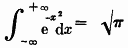

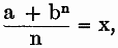 donc Dieu existe; repondez!