WITH A PREFACE BY GEORGE BRANDES AND A PREFACE
TO THIS EDITION BY P. KROPOTKIN DEALING WITH
EVENTS IN RUSSIA UP TO 1906
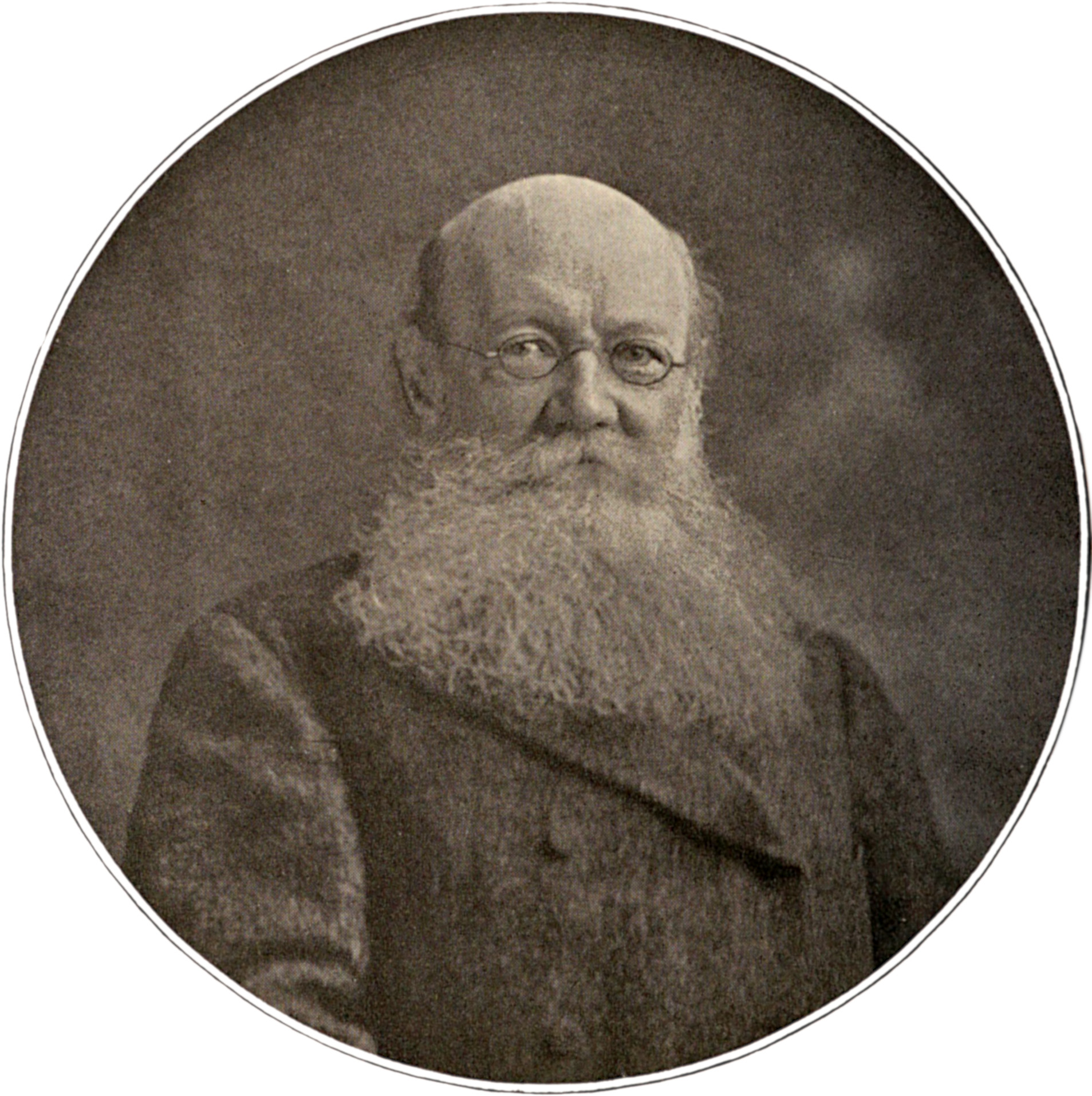
WITH PORTRAIT
LONDON
SWAN SONNENSCHEIN & CO., Ltd. 25 HIGH STREET, BLOOMSBURY
1906
This book would not probably have been written
for some time to come, were it not for the kind
invitation and the most friendly encouragement of
the editor and the publisher of the ‘Atlantic
Monthly’ to write it for a serial publication in their
Review. I feel it a pleasant duty to acknowledge
here my very best thanks both for the hospitality
that was offered to me, and for the friendly
pressure that was exercised in order to induce me
to undertake this work. It was published in the
‘Atlantic Monthly’ (September 1898 to September
1899) under the title of ‘Autobiography of a Revolutionist.’
Preparing it now for publication in
book form, I have considerably added to the
original text in the portions relating to my youth
and my stay in Siberia, and especially in the Sixth
Part, in which I have narrated my life in Western
Europe.
The Autobiographies which we owe to great minds have
in former times generally been of one of three types: ‘So
far I went astray, thus I found the true path’ (St. Augustine);
or, ‘So bad was I, but who dares to consider himself
better!’ (Rousseau); or, ‘This is the way a genius
has slowly been evolved from within and by favourable
surroundings’ (Goethe). In these forms of self-representation
the author is thus mainly pre-occupied with himself.
In the nineteenth century the autobiographies of men
of mark are more often shaped on lines such as these:
‘So full of talent and attractive was I; such appreciation
and admiration I won!’ (Johanne Louise Heiberg, ‘A
Life lived once more in Reminiscence’); or, ‘I was full of
talent and worthy of being loved, but yet I was unappreciated,
and these were the hard struggles I went through
before I won the crown of fame’ (Hans Christian Andersen,
‘The Tale of a Life’). The main pre-occupation of
the writer, in these two classes of life-records, is consequently
with what his fellow-men have thought of him
and said about him.
The author of the autobiography before us is not pre-occupied
with his own capacities, and consequently describes
no struggle to gain recognition, Still less does he
care for the opinions of his fellow-men about himself; what
others have thought of him, he dismisses with a single word.
There is in this work no gazing upon one’s own image.
The author is not one of those who willingly speak of
themselves; when he does so, it is reluctantly and with
a certain shyness. There is here no confession that
divulges the inner self, no sentimentality, and no cynicism.
The author speaks neither of his sins nor of his virtues;
he enters into no vulgar intimacy with his reader. He
does not say when he fell in love, and he touches so little
upon his relations with the other sex, that he even omits
to mention his marriage, and it is only incidentally we
learn that he is married at all. That he is a father, and
a very loving one, he finds time to mention just once in
the rapid review of the last sixteen years of his life.
He is more anxious to give the psychology of his contemporaries
than of himself; and one finds in his book
the psychology of Russia: the official Russia and the
masses underneath—Russia struggling forward and Russia
stagnant. He strives to tell the story of his contemporaries
rather than his own; and consequently, the record
of his life contains the history of Russia during his lifetime,
as well as that of the labour movement in Europe
during the last half-century. When he plunges into his
own inner world, we see the outer world reflected in it.
There is, nevertheless, in this book an effect such as
Goethe aimed at in ‘Dichtung und Wahrheit,’ the representation
of how a remarkable mind has been shaped; and
in analogy with the ‘Confessions’ of St. Augustine, we
have the story of an inner crisis which corresponds with
what in olden times was called ‘conversion.’ In fact, this
inner crisis is the turning point and the core of the book.
There are at this moment only two great Russians
who think for the Russian people, and whose thoughts
belong to mankind, Leo Tolstoy and Peter Kropotkin.
Tolstoy has often told us, in poetical shape, parts of his
life. Kropotkin gives us here, for the first time, without
any poetical recasting, a rapid survey of his whole career.
However radically different these two men are, there
is one parallel which can be drawn between the lives and
the views on life of both. Tolstoy is an artist, Kropotkin
is a man of science; but there came a period in the career
of each of them, when neither could find peace in continuing
the work to which he had brought great inborn
capacities. Religious considerations led Tolstoy, social
considerations led Kropotkin, to abandon the paths they
had first taken.
Both are filled with love for mankind; and they are at
one in the severe condemnation of the indifference, the
thoughtlessness, the crudeness and brutality of the upper
classes, as well as in the attraction they both feel towards
the life of the downtrodden and ill-used man of the people.
Both see more cowardice than stupidity in the world.
Both are idealists and both have the reformer’s temperament.
Both are peace-loving natures, and Kropotkin is
the more peaceful of the two—although Tolstoy always
preaches peace and condemns those who take right into
their own hands and resort to force, while Kropotkin
justifies such action, and was on friendly terms with the
Terrorists. The point upon which they differ most is in
their attitudes towards the intelligent educated man and
towards science altogether; Tolstoy, in his religious passion,
disdains and disparages the man equally with the thing,
while Kropotkin holds both in high esteem, although at
the same time he condemns men of science for forgetting
the people and the misery of the masses.
Many a man and many a woman have accomplished
a great life-work without having led a great life. Many
people are interesting, although their lives may have been
quite insignificant and commonplace. Kropotkin’s life is
both great and interesting.
In this volume will be found a combination of all
the elements out of which an intensely eventful life is composed—idyll
and tragedy, drama and romance.
The childhood in Moscow and in the country, the
portraits of his mother, sister, and teachers, of the old
and trusty servants, together with the many pictures of
patriarchal life, are done in such a masterly way that
every heart will be touched by them. The landscapes,
the story of the unusually intense love between the two
brothers—all this is pure idyll.
Side by side there is, unhappily, plenty of sorrow and
suffering: the harshness in the family life, the cruel treatment
of the serfs, and the narrow-mindedness and heartlessness
which are the ruling stars of men’s destinies.
There is variety and there are dramatic catastrophes:
life at Court and life in prison; life in the highest Russian
society, by the side of emperors and grand dukes, and
life in poverty, with the working proletariat, in London
and in Switzerland. There are changes of costume as in
a drama; the chief actor having to appear during the day
in fine dress in the Winter Palace, and in the evening in
peasant’s clothes in the suburbs, as a preacher of revolution.
And there is, too, the sensational element that
belongs to the novel. Although nobody could be simpler
in tone and style than Kropotkin, nevertheless parts of
his narrative, from the very nature of the events he has
to tell, are more intensely exciting than anything in those
novels which aim only at being sensational. One reads
with breathless interest the preparations for the escape
from the hospital of the fortress of St. Paul and St. Peter,
and the bold execution of the plan.
Few men have moved, as Kropotkin did, in all layers
of society; few know all these layers as he does. What
a picture! Kropotkin as a little boy with curled hair, in
a fancy-dress costume, standing by the Emperor Nicholas,
or running after the Emperor Alexander as his page, with
the idea of protecting him. And then again—Kropotkin
in a terrible prison, sending away the Grand Duke
Nicholas, or listening to the growing insanity of a peasant
who is confined in a cell under his very feet.
He has lived the life of the aristocrat and of the
worker; he has been one of the Emperor’s pages and a
poverty-stricken writer; he has lived the life of the student,
the officer, the man of science, the explorer of unknown
lands, the administrator, and the hunted revolutionist.
In exile he has had at times to live upon bread and tea
as a Russian peasant; and he has been exposed to espionage
and assassination plots like a Russian emperor.
Few men have had an equally wide field of experience.
Just as Kropotkin is able, as a geologist, to survey prehistoric
evolution for hundreds of thousands of years past,
so too he has assimilated the whole historical evolution
of his own times. To the literary and scientific education
which is won in the study and in the university (such as
the knowledge of languages, belles-lettres, philosophy,
and higher mathematics), he added at an early stage of
his life that education which is gained in the workshop,
in the laboratory, and in the open field—natural science,
military science, fortification, knowledge of mechanical
and industrial processes. His intellectual equipment is
universal.
What must this active mind have suffered when he was
reduced to the inactivity of prison life! What a test of
endurance and what an exercise in stoicism! Kropotkin
says somewhere that a morally developed personality
must be at the foundation of every organization. That
applies to him. Life has made of him one of the cornerstones
for the building of the future.
The crisis in Kropotkin’s life has two turning points
which must be mentioned.
He approaches his thirtieth year—the decisive year in
a man’s life. With heart and soul he is a man of science;
he has made a valuable scientific discovery. He has found
out that the maps of Northern Asia are incorrect; that
not only the old conceptions of the geography of Asia are
wrong, but that the theories of Humboldt are also in contradiction
with the facts. For more than two years he
has plunged into laborious research. Then, suddenly, on
a certain day, the true relations of the facts flash upon
him; he understands that the main lines of structure in
Asia are not from north to south or from west to east,
but from the south-west to the north-east. He submits
his discovery to test, he applies it to numerous separated
facts, and—it holds its ground. Thus he knew the joy of
scientific revelation in its highest and purest form; he has
felt how elevating is its action on the mind.
Then comes the crisis. The thought that these joys
are the lot of so few, fills him now with sorrow. He asks
himself whether he has the right to enjoy this knowledge
alone—for himself. He feels that there is a higher duty
before him—to do his part in bringing to the mass of the
people the information already gained, rather than to work
at making new discoveries.
For my part I do not think that he was right. With
such conceptions Pasteur would not have been the benefactor
of mankind that he has been. After all, everything,
in the long run, is to the benefit of the mass of the people.
I think that a man does the utmost for the well-being of
all when he has given to the world the most intense production
of which he is capable. But this fundamental
notion is characteristic of Kropotkin; it contains his very
essence.
And this attitude of mind carries him farther. In
Finland, where he is going to make a new scientific discovery,
as he comes to the idea—which was heresy at that
time—that in prehistoric ages all Northern Europe was
buried under ice, he is so much impressed with compassion
for the poor, the suffering, who often know hunger in their
struggle for bread, that he considers it his highest, absolute
duty to become a teacher and helper of the great working
and destitute masses.
Soon after that a new world opens before him—-the life
of the working classes—and he learns from those whom
he intends to teach.
Five or six years later this crisis appears in its second
phase. It happens in Switzerland. Already during his
first stay there Kropotkin had abandoned the group of
state-socialists, from fear of an economical despotism, from
hatred of centralization, from love for the freedom of the
individual and the commune. Now, however, after his
long imprisonment in Russia, during his second stay
amidst the intelligent workers of West Switzerland, the
conception which floated before his eyes of a new structure
of society, more distinctly dawns upon him in the shape
of a society of federated associations, co-operating in the
same way as the railway companies, or the postal departments
of separate countries co-operate. He knows that he
cannot dictate to the future the lines which it will have
to follow; he is convinced that all must grow out of the
constructive activity of the masses, but he compares, for
the sake of illustration, the coming structure with the
guilds and the mutual relations which existed in mediæval
times, and were worked out from below. He does not
believe in the distinction between leaders and led; but I
must confess that I am old-fashioned enough to feel pleased
when Kropotkin, by a slight inconsistency, says once in
praise of a friend that he was ‘a born leader of men.’
The author describes himself as a Revolutionist, and
he is surely quite right in so doing. But seldom have
there been revolutionists so humane and mild. One feels
astounded when, in alluding on one occasion to the possibility
of an armed conflict with the Swiss police, there
appears in his character the fighting instinct which exists
in all of us. He cannot say precisely in this passage
whether he and his friends felt a relief at being spared a
fight, or a regret that the fight did not take place. This
expression of feeling stands alone. He has never been
an avenger, but always a martyr.
He does not impose sacrifices upon others; he makes
them himself. All his life he has done it, but in such a
way that the sacrifice seems to have cost him nothing.
So little does he make of it. And with all his energy he
is so far from being vindictive, that of a disgusting prison
doctor he only remarks: ‘The less said of him the better.’
He is a revolutionist without emphasis and without
emblem. He laughs at the oaths and ceremonies with
which conspirators bind themselves in dramas and operas.
This man is simplicity personified. In character he will
bear comparison with any of the fighters for freedom in all
lands. None have been more disinterested than he, none
have loved mankind more than he does.
But he would not permit me to say in the forefront of
his book all the good that I think of him, and should I
say it, my words would outrun the limits of a reasonable
Preface.
GEORGE BRANDES.
PREFACE TO THE SECOND EDITION
When the first edition of this book was brought out at
the end of 1899, it was evident to those who had followed
the development of affairs in Russia that, owing to the
obstinacy of its rulers in refusing to make the necessary
concessions in the way of political freedom, the country was
rapidly drifting towards a violent revolution. But everything
seemed to be so calm on the surface, that when a
few of us expressed this idea, we were generally told that
we merely took our desires for realities. At the present
moment Russia is in full revolution. The old system is
falling to pieces, and amidst its ruins the new one is painfully
making its way. Meanwhile the defenders of the past
are waging a war of extermination against the country—a
war which may prolong their rule for a few additional
months, but which raises at the same time the passions of
the people to a pitch that is full of menaces and danger.
Looked upon in the light of present events, the early
movements for freedom which are related in this book
acquire a new meaning. They appear as the preparatory
phases of the great breakdown of a whole obsolete
world—a breakdown which is sure to give a new life to
nearly one hundred and fifty million people, and to
exercise at the same time a deep and favourable influence
upon the march of progress in all Europe and Asia. It
seems necessary, therefore, to complete the record of
events given in this book by a rapid review of those which
have taken place during the last seven years, and were
the immediate cause of the present revolution.
The thirteen years of the reign of Alexander III.,
1881-1894, were perhaps the gloomiest portion in the
nineteenth century history of Russia. Reaction had been
growing worse and worse during the last few years of the
reign of his father—with the result that a terrible war
had been waged against autocracy by the Executive
Committee, which had inscribed on its banner political
freedom. After the tragic death of Alexander II., his
son considered it his duty to make no concessions whatever
to the general demand of representative government,
and a few weeks after his advent to the throne he
solemnly declared his intention of remaining an autocratic
ruler of his Empire. And then began a heavy, silent,
crushing reaction against all the great, inspiring ideas
of Liberty which our generation had lived through at
the time of the liberation of the serfs—a reaction, perhaps
the more terrible on account of its not being accompanied
by striking and revolting acts of violence, but
slowly crushing down all the progressive reforms of
Alexander II., and the very spirit that bred these reforms,
and turning everything, including education, into
tools of a general reaction.
Sheer despair got hold of the generation of the
Russian ‘intellectuals’ who had to live through that
period. The few survivors of the Executive Committee
laid down their arms, and there spread in Russian intellectual
society that helpless despair, that loss of faith in
the forces of ‘the intellectual,’ that general invasion of
common-place vulgarity which Tchékhoff has pictured
with such a depressing sadness in his novels.
True, that Alexander III., since his advent to the
throne, had vaguely understood the importance of several
economic questions concerning the welfare of the peasants,
and had included them in his programme. But
with the set of reactionary advisers whom he had summoned
to his aid, and whom he retained throughout his
reign, he could accomplish nothing serious; the reactionaries
whom he trusted did not at all want to make those
serious improvements in the conditions of the peasants
which he considered it the mission of autocracy to accomplish;
and he would not call in other men, because he
knew that they would require a limitation of the powers
of autocracy, which he would not admit. When he died,
a general feeling of relief went through Russia and the
civilized world at large.
Never had a Tsar ascended the throne under more
favourable circumstances than Nicholas II. After these
thirteen years of reaction, the state of mind in Russia was
such, that if Nicholas II. had only mentioned, in his advent
manifesto, the intention of taking the advice of his country
upon the great questions of inner policy which required
an immediate solution, he would have been received with
open arms.
The smallest concession would have been gladly accepted
as an asset. In fact, the delegates of the Zemstvos,
assembled to greet him, asked him only—and this in the
most submissive manner—‘to establish a closer intercourse
between the Emperor and the provincial representation of
the land.’ But instead of accepting this modest invitation,
Nicholas II. read before the Zemstvo representatives the
insolent speech of reprimand, which had been written for
him by Pobiedonostseff, and which expressed his intention
of remaining an autocratic ruler of his subjects.
A golden opportunity was thus lost. Distrust became
now the dominating note in the relations between the
nation and the Tsar, and it was striking to see how this
distrust—in one of those indescribable ways in which
popular feelings develop—rapidly spread from the Winter
Palace to the remotest corners of Russia.
The results of that distrust soon became apparent.
The great strikes which broke out at St. Petersburg in
1895, at the time of the coronation of Nicholas II.,
gave a measure of the depth of discontent which was
growing in the masses of the people. The seriousness of
the discontent and the unity of action which this revealed
were quite unsuspected. What an immense distance was
covered since those times, of which I speak in this book,
when we used to meet small groups of weavers in the
Viborg suburb of St. Petersburg, and asked them with
despair if it really was impossible to induce their comrades
to join in a strike, so as to obtain a reduction of the hours
of labour, which were fourteen and sixteen at that time!
Now, the same working-men combined all over St. Petersburg,
and brought out of their ranks such speakers and
such organisers, as if they had been trade-union hands for
ages.
Two years later, in 1897, there were serious disturbances
in all the Russian universities; but when a second series of
student disturbances began in 1901, they suddenly assumed
a quite unexpected political significance. The students
protested this time against a law, passed by Nicholas II.,
who had ordered—again on the advice of Pobiedonostseff—that
students implicated in academical disorders should
be sent to Port Arthur as soldiers. Hundreds of them
were treated accordingly. Formerly, such a movement
would have remained a university matter; now it
assumed a serious political character and stirred various
classes of society. At Moscow the working-men supported
the students in their street demonstrations, and fought at
their side against the police. At St. Petersburg all sorts
of people, including the workmen’s organizations, joined in
the street demonstrations, and serious fighting took place
in the streets. When the manifestations were dispersed
by the lead-weighted horsewhips of the Cossacks, who
cut open the faces of men and women assembled in
the streets, there was a strikingly unanimous outburst of
public indignation.
I have mentioned in this book how tragical was the
position of our youth in the seventies and eighties, on
account of ‘the fathers’ having abandoned entirely to
their sons the terrible task of struggling against a powerful
government. Now, ‘the fathers’ joined hands with ‘the
sons.’ The ‘respectable’ Society of Authors issued a
strongly worded protest. A venerated old member of
the Council of the State, Prince Vyazemsky, did the same.
Even the officers of the Cossacks of the Bodyguard notified
their unwillingness to carry on such police duties.
In short, discontent was so general and so openly expressed,
that the Committee of Ministers, assuming for
the first time since its foundation the rôle of a ‘Ministry,’
discussed the Imperial order concerning the students, and
insisted upon, and obtained, its withdrawal.
Something quite unexpected had thus happened. A
rash and ill-tempered measure of the young autocrat had
thus set all the country on fire. It resulted in two
ministers being killed; in bloodshed in the streets of
Kharkoff, Moscow and St. Petersburg; and it would have
become the cause of further disasters if Nicholas II. had
not been prevented from declaring the state of siege in
his capital, which surely would have led to still more
bloodshed.
All this was pointing to such a deep change in the mind
of the nation, that already in the early spring of 1901—long
before the declaration of war with Japan—it became
evident that the days of autocracy were already counted:
‘Speaking plainly,’ I wrote in the ‘North American Review,’
‘the fact is that Russia has outgrown the autocratic form
of government; and it may be said confidently that if
external complications do not disturb the peaceful development
of Russia, Nicholas II. will soon be brought to
realize that he is bound to take steps for meeting the
wishes of the country. Let us hope that he will understand
the proper sense of the lesson which he has received
during the past two months’ (May 1901, p. 723).
Unfortunately, Nicholas II. understood nothing. He
did, on the contrary, everything to bring about the revolution.
He contributed to spread discontent everywhere:
in Finland, in Poland, in Armenia (by confiscating the
property of the Armenian Church), and in Russia itself
amongst the peasants, the students, the working-men, the
dissenters, and so on. More than that. Efforts were made,
on different sides, to induce Nicholas II. to adopt a better
policy; but always he himself—so weak for good—found
the force to resist these influences. At a decisive moment
he always would find enough energy to turn the scales in
favour of reaction, by his personal interference. It has
been said of him that obstinacy was a distinctive feature
of his character, and this seems to be true enough; but
he displays it exclusively to oppose those progressive
measures which the necessities of the moment render
imperative. Even if he occasionally yields to progressive
influences, he always manages very soon to counteract
them in secrecy. He displays, in fact, precisely those
features which necessarily lead to a revolution.
In 1901 it was evident that the old order of things
would soon have to be abandoned. The then Minister of
Finances, Witte, must have realized it, and he took a step
which certainly meant that he was preparing a transition
from autocracy to some sort of a half-constitutional
régime. The ‘Commissions on the Impoverishment of
Agriculture in Central Russia,’ which he convoked in
thirty-four provinces, undoubtedly meant to supply that
intermediary step, and the country answered to his call
in the proper way. Landlords and peasants alike said
and maintained quite openly in these Commissions that
Russia could not remain any longer under the system of
police rule established by Alexander III. Equal rights
for all subjects, political liberties, and constitutional guarantees
were declared to be an urgent necessity.
Again a splendid opportunity was offered to Nicholas
II. for taking a step towards constitutional rule. The
Agricultural Commissions had indicated how to do it.
Similar committees had to be convoked in all provinces
of the Empire, and they would name their representatives
who would meet at Moscow and work out the basis of a
national representation. And once more Nicholas II.
refused to accept that opening. He preferred to follow
the counsels of his more intimate advisers, who better
expressed his own will. He disowned Witte and called
at the head of the Ministry of Interior Von Plehwe—the
worst produce of reaction that had been bred by
police rule during the reign of Alexander III.!
Even that man did not undertake to maintain autocracy
indefinitely; but he undertook to maintain it for
ten years more—provided full powers be granted to him,
and plenty of money be given—which money he, a pupil
of the school of Ignatieff, freely used, it is now known,
for organizing the ‘pogroms’—the massacres of the Jews.
More than that. Prince Meschersky, the well-known
editor of the Grazhdanin—an old man, a Conservative of
old standing, and a devotee of the Imperial family—wrote
lately in his paper that Plehwe, in order to give a further
lease to autocracy, had decided to do his utmost to push
Nicholas II. into that terrible war with Japan. Like the
Franco-German conflict, the Japanese war was thus the
last trump of a decaying Imperial power.
I certainly do not mean that Plehwe’s will was
the cause of that war. Its causes lie deeper than that.
It became unavoidable the day that Russia got hold of
Port Arthur—and even much earlier than that. But this
move of Plehwe, and the support he found in his master,
are deeply significant for the comprehension of the
present events in Russia.
Plehwe was the trump card of autocracy. He was
invested with unlimited powers, and used them for placing
all Russia under police rule. The State police became
the most demoralized and dangerous body in the State.
More than 30,000 persons were deported by the police
to remote corners of the Empire. Fabulous sums of
money were spent for his own protection—but that did
not help; he was killed in July 1904, amidst the disasters
of the war that he had been so eager to call upon his
country. And since that date the events took a new and
rapid development. The system of police rule was defeated,
and nobody in the Tsar’s surroundings would
attempt to continue it.
For six weeks in succession nobody would agree to
become the Tsar’s Minister of Interior; and when the
Prince Svyatopolk-Mirsky was induced at last to accept
it, he did so under the condition that representatives of
all the Zemstvos would be convoked at once, to work out
a scheme of national representation.
A great agitation spread thereupon in all Russia, when
a Congress of the Zemstvos was allowed to come together
‘unofficially’ at Moscow in December 1904. The Zemstvos
were quite outspoken in their demands for constitutional
guarantees, and their ‘Memorandum’ to the Tsar,
signed by 102 representatives out of 104, was soon signed
also by numbers of representative persons of different
classes in Russia. By-and-by similarly worded ‘Memoranda’
were addressed to the Tsar by the barristers and
magistrates, the Assemblies of the Nobility in certain
provinces, some municipalities, and so on. The Zemstvo
memorandum became thus a sort of ultimatum of the
educated portion of the nation, which rapidly organized
itself into a number of professional unions. The year
1904 thus ended in a state of great excitement.
Then a new element—the working-men—came to throw
the weight of their intervention in favour of the liberating
movement. The working-men of St. Petersburg—whom
that original personality, Father Gapon, had been most
energetically organizing for the preceding twelve months—came
to the idea of an immense manifestation which
would claim from the Tsar political rights for the workers.
On January 22, 1905, they went out—a dense and unarmed
crowd of more than 100,000 persons, marching
from all the suburbs towards the Winter Palace. Up to
that date they had retained an unbroken faith in the
good intentions of Nicholas II., and they wanted to tell
him themselves of their needs. They trusted him as if he
really was their father. But a massacre of these faithful
crowds had been prepared beforehand by the military
commander of the capital, with all the precautions of
modern warfare—local staffs, ambulances, and so on. For
a full week the manifestation was openly prepared by
Gapon and his aids, and nothing was done by the Government
to dissuade the workers from their venture. They
marched towards the Palace and crowded round it—sure
that the Tsar would appear before them and receive their
petition—when the firing began. The troops fired into
the dense, absolutely pacific and unarmed crowds, at a
range of a few dozen yards, and more than a thousand—perhaps
two thousand—men, women and children fell that
day, the victims of the Tsar’s fears and obstinacy.
This was how the Russian revolution began, by the
extermination of peaceful, trustworthy crowds, and this
double character of passive endurance from beneath, and
of bloodthirsty extermination from above, it retains up
till now. A deep chasm is thus being dug, deeper and
deeper every day, between the people and the present
rulers, a chasm which—I am inclined to think—never
will be filled.
If these massacres were meant to terrorize the masses,
they utterly failed in their purpose. Five days after the
‘bloody Vladimir Sunday’ a mass-strike began at Warsaw
and similar strikes soon spread all over Poland. All
classes of Polish society joined more or less actively in
these strikes, which took a formidable extension in the
following May. In fact, all the fabric of the State was
shattered by these strikes, and the series of massacres
which the Russian Government inaugurated in Poland
in January and in May 1905, only led to an uninterrupted
series of retaliations in which all Polish society evidently
stands on the side of the terrorists. The result is, that at
the present time Poland is virtually lost to the Russian
autocratic Empire. Unless it obtains as complete an
autonomy as Finland obtained in 1905, it will not resume
its normal life.
Gradually, the revolts began to spread all over Russia.
The peasant uprising now assumed serious proportions in
different parts of the Empire, everywhere the peasants
showing moderation in their demands, together with a
great capacity for organized action, but everywhere also
insisting upon the necessity of a move in the sense of
land nationalization. In the western portion of Georgia
(in Transcaucasia) they even organized independent communities,
similar to those of the old cantons of Switzerland.
At the same time a race-war began in the Caucasus; then
came a great uprising at Odessa; the mutiny of the iron-clads
of the Black Sea; and a second series of general strikes
in Poland, again followed by massacres. And only
then, when all Russia was set into open revolt, Nicholas II.
finally yielded to the general demands, and announced, in
a manifesto issued on the 19th of August, that some sort
of national representation would be given to Russia in the
shape of a State’s Duma. This was the famous ‘Bulyghin
Constitution,’ which granted the right of voting to an
infinitesimal fraction only of the population (one man in
each 200, even in such wealthy cities as St. Petersburg and
Moscow), and entirely excluded 4,000,000 working-men
from any participation in the political life of the country.
This tardy concession evidently satisfied nobody; it was
met with disdain. Mignet, the author of a well-known
history of the French Revolution, was right when he wrote
that in such times the concessions must come from the
Government before any serious bloodshed has taken place.
If they come after it, they are useless; the Revolution will
take no heed of them and pursue its unavoidable, natural
development. So it happened in Russia.
A simple incident—a strike of the bakers at Moscow—was
the beginning of a general strike, which soon spread
over all Moscow, including all its trades, and from Moscow
extended all over Russia. The sufferings of the working-men
during that general strike were terrible, but they held
out. All traffic on the railways was stopped, and no
provisions, no fuel reached Moscow. No newspapers appeared,
except the proclamations of the strike committees.
Thousands of passengers, tons of letters, mountains
of goods accumulated at the stations. St. Petersburg
soon joined the strike, and there, too, the workers
displayed wonderful powers of organization. No gas, no
electric light, no tramways, no water, no cabs, no post, no
telegraphs! The factories were silent, the city was
plunged in darkness. Then, gradually, the enthusiasm of
the poorer classes won the others as well. The shop
assistants, the clerks in the banks, the teachers, the actors,
the lawyers, the chemists—even the judges joined the
strike. A whole country struck against its government,
and the strikers kept so strict an order, that they offered
no opportunity for military intervention and massacres.
Committees of Labour Representatives came into existence,
and they were obeyed explicitly by the crowds,
300,000 strong, which filled the streets of St. Petersburg
and Moscow.
The panic in the Tsar’s entourage was at a climax.
His usual Conservative advisers proved to be as unreliable
as the talons rouges were in the surroundings of Louis XVI.
Then—only then—Nicholas II. called in Count Witte and
agreed on the 30th of October to sign a constitutional
manifesto. He declared in it that it was his ‘inflexible
will’ ‘to grant to the population the immutable foundations
of civic liberty, based on real inviolability of the person,
conscience, speech, union, and association.’ For that
purpose he ordered to elect a State’s Duma, and promised
‘to establish it as an immutable rule that no law can
come into force without the approval of the State Duma,’
and that the people’s representatives ‘should have a real
participation in the supervision of the legality of the acts
of the authorities appointed by the Crown.’
Two days later, as the crowds which filled the streets
of St. Petersburg were going to storm the two chief
prisons, Count Witte obtained from him also the granting
of an almost general amnesty for political offenders.
These promises produced a tremendous enthusiasm,
but, alas, they were soon broken in many important points.
It appears now from an official document, just published—the
report of the Head of the Police Department,
Lopukhin, to the Premier Minister Stolypin—that at the
very moment when the crowds were jubilating in the streets,
the Monarchist party organized hired bands for the
slaughter of the jubilating crowds. The gendarme officers
hurriedly printed with their own hands appeals calling for
the massacre ‘of the intellectuals and the Jews,’ and saying
that they were the hirelings of the Japanese and the
English. Two bishops, Nikon and Nikander, in their
pastoral letters, called upon all the ‘true Russians’ ‘to put
down the intellectuals by force’; while from the footsteps
of the Chapel of the Virgin of Iberia, at Moscow, improvised
orators tried to induce the crowds to kill all the
students.
More than that. The same Prince Meschersky confessed
in his paper—‘with horror’ as he said—that it was
a settled plan, hatched among some of the rulers of St.
Petersburg, to provoke a serious insurrection, to drown it
in blood, and thus ‘to let the Duma die before it was
born, so as to return to the old régime.’ ‘Several high
functionaries have confessed this to me,’ he adds in his
paper.
I have endeavoured in this book to be fair towards
Alexander II., and I certainly should like to be equally
fair towards Nicholas II., the more as he, besides his own
faults, pays for those of his father and grandfather. But I
must say that the cordial reception which he gave at that
time in his palace to the representatives of the above party,
and his protection which they have enjoyed since, were
certainly an encouragement to continue on these lines of
breeding massacres of innocent people—even if the encouragement
be unconscious.
But then came the insurrection at Moscow, in January
1906, provoked to a great extent by the Governor-General,
Admiral Dubassoff; the uprising of the peasants in the
Baltic provinces against the tyranny of their German
landlords; the general strike along the Siberian railway;
and a great number (over 1,600) of peasant uprisings in
Russia itself; and in all these cases the military repression
was accomplished in such terrible forms, including flogging
to death, and with such a cruelty, that one could really
come to totally despair of civilization, if there were not
by the side of these cruelties acts of sublime heroism on
behalf of the lovers of freedom.
It was under such conditions that the Duma met in May
1905, to be dissolved after an existence of only seventy
days. Its fate evidently had been settled at Peterhof,
before it met. A powerful league of all the reactionary
elements, lead by Trépoff, who found strong support with
Nicholas II. himself, was formed with the firm intention
of not allowing the Duma, under any pretext, to exercise
a real control upon the actions of the Ministers nominated
by the Tsar. And as the Duma strove to obtain this
right above all others, it was dissolved.
And now, the condition of Russia is simply beyond
description. The items which we have for the first year
of ‘Constitutional rule,’ since October 30, 1905, till
the same date in 1906, are as follows: Killed in the
massacres, shot in the riots, etc., 22,721; condemned to
penal servitude, 851 (to an aggregate of 7,138 years);
executed, mostly without any semblance of judgment,
men, women and youths, 1,518; deported without judgment,
mostly to Siberia, 30,000. And the list increases
still at the rate of from ten to eighteen every day.
These facts speak for themselves. They talk at Peterhof
of maintaining ‘autocracy,’ but there is none left, except
that of the eighty governors of the provinces, each of
whom is, like an African king, an autocrat in his own
domain, so long as his orders please his subordinates.
Bloodshed, drumhead military courts, and rapine are
flourishing everywhere. Famine is menacing thirty
different provinces. And Russia has to go through all
that, merely to maintain for a few additional months
the irresponsible rule of a camarilla standing round the
throne of the Tsar.
How long this state of affairs will last, nobody can
foretell. During both the English and the French Revolutions
reaction also took for a time the upper hand; in
France this lasted nearly two years. But the experience of
the last few months has also shown that Russia possesses
such a reserve of sound, solid forces in those classes of
society upon whom depends the wealth of the country,
that the present orgy of White Terror certainly will not
last long. The army, which has hitherto been a support
of reaction, shows already signs of a better comprehension
of its duties towards its mother country; and the crimes
of the joined reactionists become too evident not to be
understood by the soldiers. As to the revolutionists,
after having first minimized the forces of the old régime,
they realize them now and prepare for a struggle on a
more solid and a broader basis; while the devotion of
thousands upon thousands of young men and women is
such, that virtually it seems to be inexhaustible. In such
conditions, the ultimate victory of those elements which
work for the birth of a regenerated, free Russia, is not
to be doubted for a moment, especially if they find, as I
hope they will, the sympathy and the support of the lovers
of Freedom all over the world. Regenerated Russia means
a body of some 150,000,000 persons—one-eighth part of
the population of the globe, occupying one-sixth part of its
continental parts—permitted at last to develop peacefully—a
population which, owing to its very composition,
is bound to become, not an Empire in the Roman sense
of the word, but a Federation of nations combined for the
peaceful purposes of civilization and progress.
Bromley, Kent, November, 1906.
PART FIRST CHILDHOOD — I — II — III — IV — V — VI — VII — VIII — IX — X
Moscow is a city of slow historical growth, and down
to the present time its different parts have wonderfully
well retained the features which have been stamped upon
them in the slow course of history. The Trans-Moskva
River district, with its broad, sleepy streets and its
monotonous gray painted, low-roofed houses, of which
the entrance-gates remain securely bolted day and night,
has always been the secluded abode of the merchant
class, and the stronghold of the outwardly austere,
formalistic, and despotic Nonconformists of the ‘Old
Faith.’ The citadel, or Kreml is still the stronghold of
Church and State; and the immense space in front of it,
covered with thousands of shops and warehouses, has
been for centuries a crowded beehive of commerce, and
still remains the heart of a great internal trade which
spreads over the whole surface of the vast empire. The
Tverskáya and the Smiths’ Bridge have been for hundreds
of years the chief centres for the fashionable shops;
while the artisans’ quarters, the Pluschíkha and the
Dorogomílovka, retain the very same features which
characterized their uproarious populations in the times
of the Moscow Tsars. Each quarter is a little world in
itself; each has its own physiognomy, and lives its own
separate life. Even the railways, when they made an
irruption into the old capital, grouped apart in special
centres on the outskirts of the old town their stores and
machine-works and their heavily loaded carts and engines.
However, of all parts of Moscow, none, perhaps, is
more typical than that labyrinth of clean, quiet, winding
streets and lanes which lies at the back of the Kreml,
between two great radial streets, the Arbát and the Prechístenka,
and is still called the Old Equerries’ Quarter—the
Stáraya Konyúshennaya.
Some fifty years ago, there lived in this quarter, and
slowly died out, the old Moscow nobility, whose names
were so frequently mentioned in the pages of Russian
history before the time of Peter I., but who subsequently
disappeared to make room for the new-comers, ‘the men
of all ranks’—called into service by the founder of the
Russian state. Feeling themselves supplanted at the
St. Petersburg court, these nobles of the old stock retired
either to the Old Equerries’ Quarter in Moscow,
or to their picturesque estates in the country round about
the capital, and they looked with a sort of contempt
and secret jealousy upon the motley crowd of families
which came ‘from no one knew where’ to take possession
of the highest functions of the government, in the
new capital on the banks of the Nevá.
In their younger days most of them had tried their
fortunes in the service of the state, chiefly in the army;
but for one reason or another they had soon abandoned
it, without having risen to high rank. The more successful
ones obtained some quiet, almost honorary position
in their mother city—my father was one of these—while
most of the others simply retired from active service.
But wheresoever they might have been shifted, in the
course of their careers, over the wide surface of Russia,
they always somehow managed to spend their old age
in a house of their own in the Old Equerries’ Quarter,
under the shadow of the church where they had been
baptized, and where the last prayers had been pronounced
at the burial of their parents.
New branches budded from the old stocks. Some
of them achieved more or less distinction in different
parts of Russia; some owned more luxurious houses in
the new style in other quarters of Moscow or at St.
Petersburg; but the branch which continued to reside in
the Old Equerries’ Quarter, somewhere near to the green,
the yellow, the pink, or the brown church which was
endeared through family associations, was considered as
the true representative of the family, irrespective of the
position it occupied in the family tree. Its old-fashioned
head was treated with great respect, not devoid, I must
say, of a slight tinge of irony, even by those younger
representatives of the same stock who had left their
mother city for a more brilliant career in the St. Petersburg
Guards or in the court circles. He personified, for
them, the antiquity of the family and its traditions.
In these quiet streets, far away from the noise and
bustle of the commercial Moscow, all the houses had
much the same appearance. They were mostly built of
wood, with bright green sheet-iron roofs, the exteriors
stuccoed and decorated with columns and porticoes; all
were painted in gay colours. Nearly every house had
but one story, with seven or nine big, gay-looking
windows facing the street. A second story was admitted
only in the back part of the house, which looked
upon a spacious yard, surrounded by numbers of small
buildings, used as kitchens, stables, cellars, coach-houses,
and as dwellings for the retainers and servants. A wide
gate opened upon this yard, and a brass plate on it usually
bore the inscription, ‘House of So-and-So, Lieutenant or
Colonel, and Commander’—very seldom ‘Major-General’
or any similarly elevated civil rank. But if a more
luxurious house, embellished by a gilded iron railing and
an iron gate, stood in one of those streets, the brass plate
on the gate was sure to bear the name of ‘Commerce
Counsel’ or ‘Honourable Citizen’ So-and-So. These
were the intruders, those who came unasked to settle in
this quarter, and were therefore ignored by their neighbours.
No shops were allowed in these select streets, except
that in some small wooden house, belonging to the parish
church, a tiny grocer’s or greengrocer’s shop might have
been found; but then, the policeman’s lodge stood on
the opposite corner, and in the daytime the policeman
himself, armed with a halberd, would appear at the door
to salute with his inoffensive weapon the officers passing
by, and would retire inside when dusk came, to employ
himself either as a cobbler or in the manufacture of some
special stuff patronized by the elder servants of the neighbourhood.
Life went on quietly and peacefully—at least for the
outsider—in this Moscow Faubourg Saint-Germain. In
the morning nobody was seen in the streets. About
midday the children made their appearance under the
guidance of French tutors and German nurses, who took
them out for a walk on the snow-covered boulevards.
Later on in the day the ladies might be seen in their
two-horse sledges, with a valet standing behind on a
small plank fastened at the end of the runners, or ensconced
in an old-fashioned carriage, immense and high,
suspended on big curved springs and dragged by four
horses, with a postillion in front and two valets standing
behind. In the evening most of the houses were brightly
illuminated, and, the blinds not being drawn down, the
passer-by could admire the card-players or the waltzers
in the saloons. ‘Opinions’ were not in vogue in those
days, and we were yet far from the years when in each
one of these houses a struggle began between ‘fathers and
sons’—a struggle that usually ended either in a family
tragedy or in a nocturnal visit of the state police. Fifty
years ago nothing of the sort was thought of; all was
quiet and smooth—at least on the surface.
In this Old Equerries’ Quarter I was born in 1842,
and here I passed the first fifteen years of my life. Even
after our father had sold the house in which our mother
died, and bought another, and when again he had sold
that house, and we spent several winters in hired houses,
until he had found a third one to his taste within a stone’s-throw
of the church where he had been baptized, we still
remained in the Old Equerries’ Quarter, leaving it only
during the summer to go to our country-seat.
A high, spacious bedroom, the corner room of our house,
with a wide bed upon which our mother is lying, our baby
chairs and tables standing close by, and the neatly served
tables covered with sweets and jellies in pretty glass jars—a
room into which we children are ushered at a strange
hour—-this is the first half-distinct reminiscence of my
life.
Our mother was dying of consumption; she was only
thirty-five years old. Before parting with us for ever,
she had wished to have us by her side, to caress us, to
feel happy for a moment in our joys, and she had arranged
this little treat by the side of her bed which she
could leave no more, I remember her pale thin face, her
large, dark brown eyes. She looked at us with love, and
invited us to eat, to climb upon her bed; then suddenly
she burst into tears and began to cough, and we were told
to go.
Some time after, we children—that is, my brother
Alexander and myself—were removed from the big house
to a small side house in the courtyard. The April sun
filled the little rooms with its rays, but our German nurse
Madame Búrman and Uliána, our Russian nurse, told us
to go to bed. Their faces wet with tears, they were sewing
for us black shirts fringed with broad white tassels.
We could not sleep: the unknown frightened us, and we
listened to their subdued talk. They said something
about our mother which we could not understand. We
jumped out of our beds, asking, ‘Where is mamma?
Where is mamma?’
Both of them burst into sobs, and began to pat our
curly heads, calling us ‘poor orphans,’ until Uliána could
hold out no longer, and said, ‘Your mother is gone there—to
the sky, to the angels.’
‘How to the sky? Why?’ our infantile imagination
in vain demanded.
This was in April 1846. I was only three and a half
years old, and my brother Sásha not yet five. Where
our elder brother and sister, Nicholas and Hélène, had
gone I do not know: perhaps they were already at
school. Nicholas was twelve years old, Hélène was
eleven; they kept together, and we knew them but little.
So we remained, Alexander and I, in this little house, in
the hands of Madame Búrman and Uliána. The good
old German lady, homeless and absolutely alone in the
wide world, took toward us the place of our mother.
She brought us up as well as she could, buying us from
time to time some simple toys, and overfeeding us with
ginger cakes whenever another old German, who used to
sell such cakes—probably as homeless and solitary as
herself—paid an occasional visit to our house. We
seldom saw our father, and the next two years passed
without leaving any impression on my memory.
Our father was very proud of the origin of his family,
and would point with solemnity to a piece of parchment
which hung on the wall of his study. It was decorated
with our arms—the arms of the principality of Smolénsk
covered with the ermine mantle and the crown of the
Monomáchs—and there was written on it, and certified
by the Heraldry Department, that our family originated
with a grandson of Rostisláv Mstislávich the Bold (a
name familiar in Russian history as that of a Grand
Prince of Kíeff), and that our ancestors had been Grand
Princes of Smolénsk.
‘It cost me three hundred roubles to obtain that
parchment,’ our father used to say. Like most people
of his generation, he was not much versed in Russian
history, and valued the parchment more for its cost than
for its historical associations.
As a matter of fact, our family is of very ancient
origin indeed; but, like most descendants of Rurik who
may be regarded as representative of the feudal period of
Russian history, it was driven into the background when
that period ended, and the Románoffs, enthroned at
Moscow, began the work of consolidating the Russian
state. In recent times, none of the Kropótkins seem to
have had any special liking for state functions. Our
great-grandfather and grandfather both retired from the
military service when quite young men, and hastened to
return to their family estates. It must also be said that
of these estates the main one, Urúsovo, situated in the
government of Ryazán, on a high hill at the border of
fertile prairies, might tempt any one by the beauty of
its shadowy forests, its winding rivers, and its endless
meadows. Our grandfather was only a lieutenant when
he left the service, and retired to Urúsovo, devoting himself
to his estate, and to the purchase of other estates in
the neighbouring provinces.
Probably our generation would have done the same;
but our grandfather married a Princess Gagárin, who
belonged to a quite different family. Her brother was
well known as a passionate lover of the stage. He kept
a private theatre of his own, and went so far in his passion
as to marry, to the scandal of all his relations, a
serf—the genial actress Semyónova, who was one of the
creators of dramatic art in Russia, and undoubtedly one
of its most sympathetic figures. To the horror of ‘all
Moscow,’ she continued to appear on the stage.
I do not know if our grandmother had the same
artistic and literary tastes as her brother—I remember
her when she was already paralyzed and could speak
only in whispers; but it is certain that in the next
generation a leaning toward literature became a characteristic
of our family. One of the sons of the Princess
Gagárin was a minor Russian poet, and issued a book of
poems—a fact which my father was ashamed of and
always avoided mentioning; and in our own generation
several of our cousins, as well as my brother and myself,
have contributed more or less to the literature of our
period.
Our father was a typical officer of the time of
Nicholas I. Not that he was imbued with a warlike
spirit or much in love with camp life; I doubt whether
he spent a single night of his life at a bivouac fire, or
took part in one battle. But under Nicholas I. that was
of quite secondary importance. The true military man
of those times was the officer who was enamoured of the
military uniform and utterly despised all other sorts of
attire; whose soldiers were trained to perform almost
superhuman tricks with their legs and rifles (to break the
wood of the rifle into pieces while ‘presenting arms’ was
one of those famous tricks); and who could show on
parade a row of soldiers as perfectly aligned and as
motionless as a row of toy-soldiers, ‘Very good,’ the
Grand Duke Mikhael said once of a regiment, after having
kept it for one hour presenting arms—‘only they
breathe!’ To respond to the then current conception of
a military man was certainly our father’s ideal.
True, he took part in the Turkish campaign of 1828;
but he managed to remain all the time on the staff of
the chief commander; and if we children, taking advantage
of a moment when he was in a particularly good
temper, asked him to tell us something about the war,
he had nothing to tell but of a fierce attack of hundreds
of Turkish dogs which one night assailed him and his
faithful servant, Frol, as they were riding with despatches
through an abandoned Turkish village. They had to
use swords to extricate themselves from the hungry
beasts. Bands of Turks would assuredly have better
satisfied our imagination, but we accepted the dogs as a
substitute. When, however, pressed by our questions,
our father told us how he had won the cross of Saint
Anne ‘for gallantry,’ and the golden sword which he
wore, I must confess we felt really disappointed. His
story was decidedly too prosaic. The officers of the
general staff were lodged in a Turkish village, when it
took fire. In a moment the houses were enveloped in
flames, and in one of them a child had been left behind.
Its mother uttered despairing cries. Thereupon, Frol,
who always accompanied his master, rushed into the
flames and saved the child. The chief commander, who
saw the act, at once gave father the cross for gallantry.
‘But, father,’ we exclaimed, ‘it was Frol who saved the
child!’
‘What of that?’ replied he, in the most naïve way.
‘Was he not my man? It is all the same.’
He also took some part in the campaign of 1831, during
the Polish Revolution, and in Warsaw he made the acquaintance
of, and fell in love with, the youngest daughter
of the commander of an army corps, General Sulíma.
The marriage was celebrated with great pomp, in the
Lazienki palace; the lieutenant-governor, Count Paskiéwich,
acting as nuptial godfather on the bridegroom’s
side. ‘But your mother,’ our father used to add, ‘brought
me no fortune whatever.’
Which was true. Her father, Nikolái Semyónovich
Sulíma, was not versed in the art of making a career or a
fortune. He must have had in him too much of the blood
of those Cossacks of the Dnyéper, who knew how to fight
the well-equipped, warlike Poles or armies of the Turks,
three times more than themselves, but knew not how to
avoid the snares of the Moscow diplomacy, and, after
having fought against the Poles in the terrible insurrection
of 1648, which was the beginning of the end for the Polish
republic, lost all their liberties in falling under the dominion
of the Russian Tsars. One Sulíma was captured by
the Poles and tortured to death at Warsaw, but the other
‘colonels’ of the same stock only fought the more fiercely
on that account, and Poland lost Little Russia. As to
our grandfather, he knew how, with his regiment of cuirassiers
during Napoleon I.’s invasion, to cut his way into a
French infantry square bristling with bayonets, and to
recover, after having been left for dead on the battlefield,
with a deep cut in his head; but he could not become a
valet to the favourite of Alexander I., the omnipotent
Arakchéeff, and was consequently sent into a sort of
honorary exile, first as a governor-general of West Siberia,
and later of East Siberia. In those times such a
position was considered more lucrative than a gold-mine,
but our grandfather returned from Siberia as poor as he
went, and left only modest fortunes to his three sons and
three daughters. When I went to Siberia, in 1862, I
often heard his name mentioned with respect. He was
almost driven to despair by the wholesale stealing which
went on in those provinces, and which he had no means to
repress.
Our mother was undoubtedly a remarkable woman for
the times she lived in. Many years after her death I
discovered, in a corner of a storeroom of our country
house, a mass of papers covered with her firm but pretty
handwriting: diaries in which she wrote with delight of
the scenery of Germany, and spoke of her sorrows and
her thirst for happiness; books which she had filled with
Russian verses prohibited by censorship—among them
the beautiful historical ballads of Ryléeff, the poet, whom
Nicholas I. hanged in 1826; other books containing music,
French dramas, verses of Lamartine, and Byron’s poems
that she had copied; and a great number of water-colour
paintings.
Tall, slim, adorned with a mass of dark chestnut hair,
with dark brown eyes and a tiny mouth, she looks quite
lifelike in a portrait in oils that was painted con amore by
a good artist. Always lively and often careless, she was
fond of dancing, and the peasant women in our village
would tell us how she would admire from a balcony their
ring-dances—slow and full of grace—and how finally she
would herself join in them. She had the nature of an
artist. It was at a ball that she caught the cold that
produced the inflammation of the lungs which brought her
to the grave.
All who knew her loved her. The servants worshipped
her memory. It was in her name that Madame Búrman
took care of us, and in her name the Russian nurse bestowed
upon us her love. While combing our hair, or
signing us with the cross in our beds, Uliána would often
say, ‘And your mamma must now look upon you from the
skies, and shed tears on seeing you, poor orphans.’ Our
whole childhood is irradiated by her memory. How often
in some dark passage, the hand of a servant would touch
Alexander or me with a caress; or a peasant woman, on
meeting us in the fields, would ask, ‘Will you be as good
as your mother was? She took compassion on us. You
will, surely.’ ‘Us’ meant, of course, the serfs. I do not
know what would have become of us if we had not found
in our house, amidst the serf servants, that atmosphere of
love which children must have around them. We were
her children, we bore likeness to her, and they lavished
their care upon us, sometimes in a touching form, as will
be seen later on.
Men passionately desire to live after death, but they
often pass away without noticing the fact that the memory
of a really good person always lives. It is impressed
upon the next generation, and is transmitted again to the
children. Is not that an immortality worth striving for?
Two years after the death of our mother our father
married again. He had already cast his eyes upon a
nice-looking young person, this time belonging to a wealthy
family, when the fates decided another way. One morning,
while he was still in his dressing-gown, the servants
rushed madly into his room, announcing the arrival of
General Timoféeff, the commander of the sixth army corps,
to which our father belonged. This favourite of Nicholas
I. was a terrible man. He would order a soldier to be
flogged almost to death for a mistake made during a
parade, or he would degrade an officer and send him as a
private to Siberia because he had met him in the street
with the hooks on his high, stiff collar unfastened. With
Nicholas General Timoféeff’s word was all-powerful.
The general, who had never before been in our house,
came to propose to our father to marry his wife’s niece, Mademoiselle
Elisabeth Karandinó, one of several daughters
of an admiral of the Black Sea fleet—a young lady with
a classical Greek profile, said to have been very beautiful.
Father accepted, and his second wedding, like the first,
was solemnized with great pomp.
‘You young people understand nothing of this kind of
thing,’ he said in conclusion, after having told me the story
more than once, with a very fine humour which I will not
attempt to reproduce. ‘But do you know what it meant
at that time, the commander of an army corps—above all
that one-eyed devil, as we used to call him—coming himself
to propose? Of course she had no dowry; only a big
trunk filled with ladies’ finery, and that Martha, her one
serf, dark as a gypsy, sitting upon it.’
I have no recollection whatever of this event. I only
remember a big drawing-room in a richly furnished house,
and in that room a young lady, attractive but with a rather
too sharp southern look, gambolling with us, and saying,
‘You see what a jolly mamma you will have;’ to which
Sásha and I, sulkily looking at her, replied, ‘Our mamma
has flown away to the sky.’ We regarded so much liveliness
with suspicion.
Winter came, and a new life began for us. Our house
was sold and another was bought and furnished completely
anew. All that could convey a reminiscence of our
mother disappeared—her portraits, her paintings, her embroideries.
In vain Madame Búrman implored to be retained
in our house, and promised to devote herself to the
baby our stepmother was expecting as to her own child:
she was sent away. ‘Nothing of the Sulímas in my house,’
she was told. All connection with our uncles and aunts
and our grandmother was broken. Uliána was married
to Frol, who became a major-domo, while she was made
housekeeper; and for our education a richly paid French
tutor, M. Poulain, and a miserably paid Russian student,
N. P. Smirnóff, were engaged.
Many of the sons of the Moscow nobles were educated
at that time by Frenchmen, who represented the débris of
Napoleon’s Grande Armée. M. Poulain was one of them.
He had just finished the education of the youngest son of
the novelist Zagóskin; and his pupil, Serge, enjoyed in
the Old Equerries’ Quarter the reputation of being so well
brought up that our father did not hesitate to engage M.
Poulain for the considerable sum of six hundred roubles a
year.
M. Poulain brought with him his setter, Trésor, his
coffee-pot Napoléon, and his French text-books, and he
began to rule over us and the serf Matvéi who was attached
to our service.
His plan of education was very simple. After having
woke us up he attended to his coffee, which he used to
take in his room. While we were preparing the morning
lessons he made his toilet with minute care: he shampooed
his grey hair so as to conceal his growing baldness, put on
his tail-coat, sprinkled and washed himself with eau-de-cologne,
and then escorted us downstairs to say good-morning
to our parents. We used to find our father and
stepmother at breakfast, and on approaching them we recited
in the most ceremonious manner, ‘Bonjour, mon cher
papa,’ and ‘Bonjour, ma chère maman,’ and kissed their
hands. M. Poulain made a very complicated and elegant
obeisance in pronouncing the words, ‘Bonjour, monsieur
le prince,’ and ‘Bonjour, madame la princesse,’ after which
the procession immediately withdrew and retired upstairs.
This ceremony was repeated every morning.
Then our work began. M. Poulain changed his tail-coat
for a dressing-gown, covered his head with a leather
cap, and dropping into an easy-chair said ‘Recite the
lesson.’
We recited it ‘by heart’ from one mark which was
made in the book with the nail to the next mark. M.
Poulain had brought with him the grammar of Noël and
Chapsal, memorable to more than one generation of Russian
boys and girls; a book of French dialogues; a history of
the world, in one volume; and a universal geography, also
in one volume. We had to commit to memory the grammar,
the dialogues, the history, and the geography.
The grammar, with its well-known sentences, ‘What is
grammar?’ ‘The art of speaking and writing correctly,’
went all right. But the history book, unfortunately, had
a preface, which contained an enumeration of all the advantages
which can be derived from a knowledge of history.
Things went on smoothly enough with the first
sentences. We recited: ‘The prince finds in it magnanimous
examples for governing his subjects; the military
commander learns from it the noble art of warfare.’ But
the moment we came to law all went wrong. ‘The jurisconsult
meets in it’—but what the learned lawyer meets in
history we never came to know. That terrible word ‘jurisconsult’
spoiled all the game. As soon as we reached it
we stopped.
‘On your knees, gros pouff!’ exclaimed Poulain. (That
was for me.) ‘On your knees, grand dada!’ (That was
for my brother.) And there we knelt, shedding tears
and vainly endeavouring to learn all about the jurisconsult.
It cost us many pains, that preface! We were already
learning all about the Romans, and used to put our sticks
in Uliána’s scales when she was weighing rice, ‘just like
Brennus;’ we jumped from our table and other precipices
for the salvation of our country, in imitation of Curtius;
but M. Poulain would still from time to time return to the
preface, and again put us on our knees for that very same
jurisconsult. Was it strange that later on both my brother
and I should entertain an undisguised contempt for jurisprudence?
I do not know what would have happened with geography
if M. Poulain’s book had had a preface. But happily
the first twenty pages of the book had been torn away
(Serge Zagóskin, I suppose, rendered us that notable service),
and so our lessons commenced with the twenty-first
page, which began, ‘of the rivers which water France.’
It must be confessed that things did not always end
with kneeling. There was in the class-room a birch rod,
and Poulain resorted to it when there was no hope of progress
with the preface or with some dialogue on virtue
and propriety; but one day sister Hélène, who by this
time had left the Catherine Institut des Demoiselles, and
now occupied a room underneath ours, hearing our cries,
rushed, all in tears, into our father’s study, and bitterly reproached
him with having handed us over to our stepmother,
who had abandoned us to ‘a retired French
drummer.’ ‘Of course,’ she cried, ‘there is no one to
take their part, but I cannot see my brothers being treated
in this way by a drummer!’
Taken thus unprepared, our father could not make a
stand. He began to scold Hélène, but ended by approving
her devotion to her brothers. Thereafter the birch
rod was reserved for teaching the rules of propriety to
the setter, Trésor.
No sooner had M. Poulain discharged himself of his
heavy educational duties than he became quite another
man—a lively comrade instead of a gruesome teacher.
After lunch he took us out for a walk, and there was no
end to his tales: we chattered like birds. Though we
never went with him beyond the first pages of syntax, we
soon learned, nevertheless, ‘to speak correctly;’ we used
to think in French; and when he had dictated to us half
through a book of mythology, correcting our faults by
the book, without ever trying to explain to us why a
word must be written in a particular way, we had learned
‘to write correctly.’
After dinner we had our lesson with the Russian
teacher, a student of the faculty of law in the Moscow
University. He taught us all ‘Russian’ subjects—grammar,
arithmetic, history, and so on. But in those years
serious teaching had not yet begun. In the meantime
he dictated to us every day a page of history, and in that
practical way we quickly learned to write Russian quite
correctly.
Our best time was on Sundays, when all the family,
with the exception of us children, went to dine with
Madame la Générale Timoféeff. It would also happen
occasionally that both M. Poulain and N. P. Smirnóff
would be allowed to leave the house, and when this occurred
we were placed under the care of Uliána. After
a hurriedly eaten dinner we hastened to the great hall, to
which the younger housemaids soon repaired. All sorts
of games were started—blind man, vulture and chickens,
and so on; and then, all of a sudden, Tíkhon, the Jack-of-all-trades,
would appear with a violin. Dancing began;
not that measured and tiresome dancing, under the
direction of a French dancing-master ‘on india-rubber
legs,’ which made part of our education, but free dancing
which was not a lesson, and in which a score of couples
turned round any way; and this was only preparatory to
the still more animated and rather wild Cossack dance.
Tíkhon would then hand the violin to one of the older
men, and would begin to perform with his legs such
wonderful feats that the doors leading to the hall would
soon be filled by the cooks and even the coachmen, who
came to see the dance so dear to the Russian heart.
About nine o’clock the big carriage was sent to fetch
the family home. Tíkhon, brush in hand, crawled on
the floor, to make it shine with its virgin glance, and
perfect order was restored in the house. And if, next
morning, we two had been submitted to the most severe
cross-examination, not a word would have been dropped
concerning the previous evening’s amusements. We
never would have betrayed any one of the servants, nor
would they have betrayed us. One Sunday, my brother
and I, playing alone in the wide hall, ran against a
bracket which supported a costly lamp. The lamp was
broken to pieces. Immediately a council was held by
the servants. No one scolded us; but it was decided
that early next morning Tíkhon should at his risk and
peril slip out of the house and run to the Smiths’ Bridge
in order to buy another lamp of the same pattern. It
cost fifteen roubles—an enormous sum for the servants;
but it was done, and we never heard a word of reproach
about it.
When I think of it now, and all these scenes come
back to my memory, I notice that we never heard coarse
language in any of the games, nor saw in the dances anything
like the kind of dancing which children are now
taken to admire in the theatres. In the servants’ house,
among themselves, they assuredly used coarse expressions;
but we were children—her children—and that
protected us from anything of the sort.
In those days children were not bewildered by a profusion
of toys, as they are now. We had almost none,
and were thus compelled to rely upon our own inventiveness.
Besides, we both had early acquired a taste for
the theatre. The inferior carnival theatres, with the
thieving and fighting shows, produced no lasting impression
upon us: we ourselves played enough at robbers
and soldiers. But the great star of the ballet, Fanny
Elssler, came to Moscow, and we saw her. When father
took a box in the theatre, he always secured one of the
best, and paid for it well; but then he insisted that all
the members of the family should enjoy it to its full
value. Small though I was at that time, Fanny Elssler
left upon me the impression of a being so full of grace,
so light, and so artistic in all her movements, that ever
since I have been unable to feel the slightest interest in a
dance which belongs more to the domain of gymnastics
than to the domain of art.
Of course the ballet that we saw—‘Gitana,’ the
Spanish Gypsy—had to be repeated at home; its substance,
not the dances. We had a ready-made stage,
as the doorway which led from our bedroom into the
class-room had a curtain instead of a door. A few chairs
put in a half-circle in front of the curtain, with an easy-chair
for M. Poulain, became the hall and the imperial
box, and an audience could easily be mustered with the
Russian teacher, Uliána, and a couple of maids from the
servants’ rooms.
Two scenes of the ballet had to be represented by
some means or other: the one where the little Gitana is
brought by the gypsies into their camp in a wheelbarrow,
and that in which Gitana makes her first appearance on
the stage, descending from a hill and crossing a bridge
over a brook which reflects her image. The audience
burst into frantic applause at this point, and the cheers
were evidently called forth—so we thought, at least—by
the reflection in the brook.
We found our Gitana in one of the youngest girls in
the maid-servants’ room. Her rather shabby blue cotton
dress was no obstacle to personifying Fanny Elssler.
An overturned chair, pushed along by its legs, head
downwards, was an acceptable substitute for the wheelbarrow.
But the brook! Two chairs and the long
ironing-board of Andréi, the tailor, made the bridge, and
a piece of blue cotton made the brook. The image in
the brook, however, would not appear full size, do what
we might with M. Poulain’s little shaving-glass. After
many unsuccessful endeavours we had to give it up, but
we bribed Uliána to behave as if she saw the image, and
to applaud loudly at this passage, so that finally we began
to believe that perhaps something of it could be seen.
Racine’s ‘Phèdre,’ or at least the last act of it, also
went off nicely; that is, Sásha recited the melodious
verses beautifully—
A peine nous sortions des portes de Trézène;
and I sat absolutely motionless and unconcerned during
the whole length of the tragic monologue intended to
apprise me of the death of my son, down to the place
where, according to the book, I had to exclaim, ‘O
dieux!’
But whatsoever we might impersonate, all our performances
invariably ended with hell. All candles save
one were put out, and this one was placed behind a
transparent paper to imitate flames, while my brother
and I, concealed from view, howled in the most appalling
way as the condemned. Uliána, who did not like
to have any allusion to the evil one made at bedtime,
looked horrified; but I ask myself now whether this
extremely concrete representation of hell, with a candle
and a sheet of paper, did not contribute to free us both
at an early age from the fear of eternal fire. Our conception
of it was too realistic to resist scepticism.
I must have been very much of a child when I saw
the great Moscow actors: Schépkin, Sadóvskiy, and
Shúmski, in Gógol’sRevisór and another comedy;
still, I remember not only the salient scenes of the two
plays, but even the attitudes and expressions of these
great actors of the realistic school which is now so
admirably represented by Duse. I remembered them
so well that when I saw the same plays given at St.
Petersburg by actors belonging to the French declamatory
school, I found no pleasure in their acting, always
comparing them with Schépkin and Sadóvskiy, by whom
my taste in dramatic art was settled.
This makes me think that parents who wish to develop
artistic taste in their children ought to take them
occasionally to really well-acted, good plays, instead of
feeding them on a profusion of so-called ‘children’s
pantomimes.’
When I was in my eighth year, the next step in my
career was taken, in a quite unforeseen way. I do not
know exactly on what occasion it happened, but probably
it was on the twenty-fifth anniversary of Nicholas I.’s
reign, when great festivities were arranged at Moscow.
The imperial family were coming to the old capital, and
the Moscow nobility intended to celebrate this event by
a fancy-dress ball in which children were to play an important
part. It was agreed that the whole motley
crowd of nationalities of which the population of the
Russian Empire is composed should be represented at
this ball to greet the monarch. Great preparations went
on in our house, as well as in all the houses of our neighbourhood.
Some sort of remarkable Russian costume
was made for our stepmother. Our father, being a
military man, had to appear, of course, in his uniform;
but those of our relatives who were not in the military
service were as busy with their Russian, Greek, Caucasian,
and Mongolian costumes, as the ladies themselves.
When the Moscow nobility gives a ball to the imperial
family, it must be something extraordinary. As for my
brother Alexander and myself, we were considered too
young to take part in so important a ceremonial.
And yet, after all, I did take part in it. Our mother
was an intimate friend of Madame Nazímoff, the wife of
the general who was Governor of Wilno when the emancipation
of the serfs began to be spoken of. Madame
Nazímoff, who was a very beautiful woman, was expected
to be present at the ball with her child, about ten years
old, and to wear some wonderful costume of a Persian
princess in harmony with which the costume of a young
Persian prince, exceedingly rich, with a belt covered with
jewels, was made ready for her son. But the boy fell ill
just before the ball, and Madame Nazímoff thought that
one of the children of her best friend would be a good
substitute for her own child. Alexander and I were
taken to her house to try on the costume. It proved to
be too short for Alexander, who was much taller than I,
but it fitted me exactly, and therefore it was decided
that I should impersonate the Persian prince.
The immense hall of the House of the Moscow
nobility was crowded with guests. Each of the children
received a standard bearing at its top the arms of one of
the sixty provinces of the Russian Empire. I had an
eagle floating over a blue sea, which represented, as I
learned later on, the arms of the government of Astrakhan,
on the Caspian Sea. We were then ranged at the
back of the great hall, and slowly marched in two rows
toward the raised platform upon which the Emperor
and his family stood. As we reached it we went right
and left, and thus stood aligned in one row before the
platform. At a given signal all standards were lowered
before the Emperor. The apotheosis of autocracy was
made most impressive: Nicholas was enchanted. All
provinces of the Empire worshipped the supreme ruler.
Then we children slowly retired to the rear of the hall.
But here some confusion occurred. Chamberlains in
their gold-embroidered uniforms were running about, and
I was taken out of the ranks; my uncle, Prince Gagárin,
dressed as a Tungus (I was dizzy with admiration of his
fine leather coat, his bow, and his quiver full of arrows),
lifted me up in his arms, and planted me on the imperial
platform.
Whether it was because I was the tiniest in the row
of boys, or that my round face, framed in curls, looked
funny under the high Astrakhan fur bonnet I wore, I
know not, but Nicholas wanted to have me on the platform;
and there I stood amidst generals and ladies looking
down upon me with curiosity. I was told later on
that Nicholas I., who was always fond of barrack jokes,
took me by the arm, and, leading me to Marie Alexándrovna
(the wife of the heir to the throne), who was then
expecting her third child, said in his military way, ‘That
is the sort of boy you must bring me’—a joke which
made her blush deeply. I well remember, at any rate,
Nicholas asking me whether I would have sweets; but I
replied that I should like to have some of those tiny
biscuits which were served with tea (we were never overfed
at home), and he called a waiter and emptied a full
tray into my tall bonnet. ‘I will take them to Sásha,’ I
said to him.
However, the soldier-like brother of Nicholas, Mikhael,
who had the reputation of being a wit, managed to make
me cry. ‘When you are a good boy,’ he said, ‘they
treat you so,’ and he passed his big hand over my face
downwards; ‘but when you are naughty, they treat you
so,’ and he passed the hand upwards, rubbing my nose,
which already had a marked tendency toward growing
in that direction. Tears, which I vainly tried to stop,
came into my eyes. The ladies at once took my part,
and the good-hearted Marie Alexándrovna took me under
her protection. She set me by her side, in a high velvet
chair with a gilded back, and our people told me afterward
that I very soon put my head in her lap and went
to sleep. She did not leave her chair during the whole
time the ball was going on.
I remember also that, as we were waiting in the
entrance-hall for our carriage, our relatives petted and
kissed me, saying, ‘Pétya, you have been made a page;’
but I answered, ‘I am not a page; I will go home,’ and
was very anxious about my bonnet which contained the
pretty little biscuits that I was taking home for Sásha.
I do not know whether Sásha got many of those
biscuits, but I recollect what a hug he gave me when he
was told about my anxiety concerning the bonnet.
To be inscribed as a candidate for the corps of pages
was then a great favour, which Nicholas seldom bestowed
on the Moscow nobility. My father was delighted, and
already dreamed of a brilliant court career for his son.
Our stepmother, every time she told the story, never
failed to add, ‘It is all because I gave him my blessing
before he went to the ball.’
Madame Nazímoff was delighted too, and insisted
upon having her portrait painted in the costume in which
she looked so beautiful, with me standing at her side.
My brother Alexander’s fate, also, was decided next
year. The jubilee of the Izmáylovsk regiment, to which
my father had belonged in his youth, was celebrated
about this time at St. Petersburg. One night, while all
the household was plunged in deep sleep, a three-horse
carriage, ringing with the bells attached to the harnesses,
stopped at our gate. A man jumped out of it, loudly
shouting, ‘Open! An ordinance from his Majesty the
Emperor.’
One can easily imagine the terror which this nocturnal
visit spread in our house. My father, trembling,
went down to his study. ‘Court-martial, degradation
as a soldier,’ were words which rang then in the ears
of every military man; it was a terrible epoch. But
Nicholas simply wanted to have the names of the sons
of all the officers who had once belonged to the regiment,
in order to send the boys to military schools, if that had
not yet been done. A special messenger had been dispatched
for that purpose from St. Petersburg to Moscow,
and now he called day and night at the houses of the
ex-Izmáylovsk officers.
With a shaking hand my father wrote that his eldest
son, Nicholas, was already in the first corps of cadets
at Moscow; that his youngest son, Peter, was a candidate
for the corps of pages; and that there remained only
his second son, Alexander, who had not yet entered the
military career. A few weeks later came a paper informing
father of the ‘monarch’s favour.’ Alexander was
ordered to enter a corps of cadets in Orel, a small provincial
town. It cost my father a deal of trouble and a
large sum of money to get Alexander sent to a corps
of cadets at Moscow. This new ‘favour’ was obtained
only in consideration of the fact that our elder brother
was in that corps.
And thus, owing to the will of Nicholas I., we had
both to receive a military education, though, before we
were many years older, we simply hated the military
career for its absurdity. But Nicholas I. was watchful
that none of the sons of the nobility should embrace
any other profession than the military one, unless they
were of infirm health; and so we had all three to be
officers, to the great satisfaction of my father.
Wealth was measured in those times by the number
of ‘souls’ which a landed proprietor owned. So many
‘souls’ meant so many male serfs: women did not count.
My father, who owned nearly twelve hundred souls,
in three different provinces, and who had, in addition
to his peasants’ holdings, large tracts of land which were
cultivated by these peasants, was accounted a rich man.
He lived up to his reputation, which meant that his
house was open to any number of visitors, and that he
kept a very large household.
We were a family of eight, occasionally of ten or
twelve; but fifty servants at Moscow, and half as many
more in the country, were considered not one too many.
Four coachmen to attend a dozen horses, three cooks
for the masters and two more for the servants, a dozen
men to wait upon us at dinner-time (one man, plate in
hand, standing behind each person seated at the table),
and girls innumerable in the maid-servants’ room,—how
could anyone do with less than this?
Besides, the ambition of every landed proprietor was
that everything required for his household should be
made at home by his own men.
‘How nicely your piano is always tuned! I suppose
Herr Schimmel must be your tuner?’ perhaps a visitor
would remark.
To be able to answer, ‘I have my own piano-tuner,’
was in those times the correct thing.
‘What beautiful pastry!’ the guests would exclaim,
when a work of art, composed of ices and pastry, appeared
toward the end of the dinner. ‘Confess, prince,
that it comes from Tremblé’ (the fashionable pastry-cook).
‘It is made by my own confectioner, a pupil of
Tremblé, whom I have allowed to show what he can
do,’ was a reply which elicited general admiration.
To have embroideries, harnesses, furniture—in fact,
everything—made by one’s own men was the ideal of the
rich and respected landed proprietor. As soon as the
children of the servants attained the age of ten, they were
sent as apprentices to the fashionable shops, where they
were obliged to spend five or seven years chiefly in
sweeping, in receiving an incredible number of thrashings,
and in running about town on errands of all sort. I must
own that few of them became masters of their respective
arts. The tailors and the shoemakers were found only
skilful enough to make clothes or shoes for the servants,
and when a really good pastry was required for a dinner-party
it was ordered at Tremblé’s, while our own confectioner
was beating the drum in the music band.
That band was another of my father’s ambitions, and
almost every one of his male servants, in addition to other
accomplishments, was a bass-viol or a clarinet in the band.
Makár, the piano-tuner, alias under-butler, was also a
flutist; Andréi, the tailor, played the French horn; the
confectioner was first put to beat the drum, but he
misused his instrument to such a deafening degree that a
tremendous trumpet was bought for him, in the hope that
his lungs would not have the power to make the same
noise as his hands; when, however, this last hope had to
be abandoned, he was sent to be a soldier. As to ‘spotted
Tíkhon,’ in addition to his numerous functions in the
household as lamp-cleaner, floor-polisher, and footman,
he made himself useful in the band—to-day as a trombone,
to-morrow as a bassoon, and occasionally as second
violin.
The two first violins were the only exceptions to the
rule: they were ‘violins,’ and nothing else. My father
had bought them, with their large families, for a handsome
sum of money, from his sisters (he never bought serfs
from nor sold them to strangers). In the evenings when
he was not at his club, or when there was a dinner or an
evening party at our house, the band of twelve to fifteen
musicians was summoned. They played very nicely,
and were in great demand for dancing-parties in the
neighbourhood; still more when we were in the country.
This was, of course, a constant source of gratification to
my father, whose permission had to be asked to get the
assistance of his band.
Nothing, indeed, gave him more pleasure than to be
asked for help, either in the way mentioned or in any
other: for instance, to obtain free education for a boy, or
to save somebody from a punishment inflicted upon him
by a law court. Although he was liable to fall into fits
of rage, he was undoubtedly possessed of a natural instinct
toward leniency, and when his patronage was requested
he would write scores of letters in all possible directions,
to all sorts of persons of high standing, in favour of his
protégé. At such times, his mail, which was always
heavy, would be swollen by half a dozen special letters,
written in a most original, semi-official, and semi-humorous
style; each of them sealed, of course, with his arms, in a
big square envelope, which rattled like a baby rattle on
account of the quantity of sand it contained—the use of
blotting-paper being then unknown. The more difficult
the case, the more energy he would display, until he
secured the favour he asked for his protégé, whom in
many cases he never saw.
My father liked to have plenty of guests in his house.
Our dinner-hour was four, and at seven the family gathered
round the samovár (tea-urn) for tea. Everyone belonging
to our circle could drop in at that hour, and from the
time my sister Hélène was again with us there was no
lack of visitors, old and young, who took advantage of
the privilege. When the windows facing the street showed
bright light inside that was enough to let people know
that the family was at home and friends would be
welcome.
Nearly every night we had visitors. The green tables
were opened in the hall for the card-players, while the
ladies and the young people stayed in the reception-room
or around Hélène’s piano. When the ladies had gone,
card-playing continued sometimes till the small hours of
the morning, and considerable sums of money changed
hands among the players. Father invariably lost. But
the real danger for him was not at home: it was at the
English Club, where the stakes were much higher than in
private houses, and especially when he was induced to
join a party of ‘very respectable’ gentlemen, in one of
the aristocratic houses of the Old Equerries’ Quarter,
where gambling went on all night. On an occasion of
this kind his losses were sure to be heavy.
Dancing-parties were not infrequent, to say nothing
of a couple of obligatory balls every winter. Father’s
way, in such cases, was to have everything done in a good
style, whatever the expense. But at the same time such
niggardliness was practised in our house in daily life that
if I were to recount it, I should be accused of exaggeration.
It is said of a family of pretenders to the throne
of France, renowned for their truly regal hunting-parties,
that in their everyday life even the tallow candles are
minutely counted. The same sort of miserly economy
ruled in our house with regard to everything; so much
so that when we, the children of the house, grew up, we
detested all saving and counting. However, in the Old
Equerries’ Quarter such a mode of life only raised my
father in public esteem. ‘The old prince,’ it was said,
‘seems to be sharp over money at home; but he knows
how a nobleman ought to live.’
In our quiet and clean lanes that was the kind of life
which was most in respect. One of our neighbours,
General D——, kept his house up in very grand style;
and yet the most comical scenes took place every morning
between him and his cook. Breakfast over, the old
general, smoking his pipe, would himself order the
dinner.
‘Well, my boy,’ he would say to the cook, who appeared
in snow-white attire, ‘to-day we shall not be many:
only a couple of guests. You will make us a soup, you
know, with some spring delicacies—green peas, French
beans, and so on. You have not given us any yet, and
madam, you know, likes a good French spring soup.’
‘Yes, sir.’
‘Then, anything you like as an entrée.’
‘Yes, sir.’
‘Of course, asparagus is not yet in season, but I saw
yesterday such nice bundles of it in the shops.’
‘Yes, sir; eight shillings the bundle.’
‘Quite right! Then, we are sick of your roasted
chickens and turkeys; you ought to get something for a
change.’
‘Some venison, sir?’
‘Yes, yes, anything for a change.’
And when the six courses of dinner had been decided
on, the old general would ask, ‘Now how much shall I
give you for to-day’s expenses? Six shillings will do, I
suppose?’
‘One pound, sir.’
‘What nonsense, my boy! Here is six shillings; I
assure you that’s quite enough.’
‘Eight shillings for asparagus, five for the vegetables.’
‘Now, look here, my dear boy, be reasonable. I’ll
go as high as seven-and-six, and you must be economical.’
And the bargaining would go on thus for half an
hour, until the two would agree upon fourteen shillings
and sixpence, with the understanding that the morrow’s
dinner should not cost more than three shillings. Whereupon
the general, quite happy at having made such a good
bargain, would take his sledge, make a round of the
fashionable shops, and return quite radiant, bringing for
his wife a bottle of exquisite perfume, for which he had
paid a fancy price in a French shop, and announcing to
his only daughter that a new velvet mantle—‘something
very simple’ and very costly—would be sent for her to
try on that afternoon.
All our relatives, who were numerous on my father’s
side, lived exactly in the same way: and if a new spirit
occasionally made its appearance, it usually took the form
of some religious passion. Thus a Prince Gagárin joined
the Jesuit order, again to the scandal of ‘all Moscow,’
another young prince entered a monastery, while several
older ladies became fanatic devotees.
There was a single exception. One of our nearest
relatives, Prince—let me call him Mírski—had spent his
youth at St. Petersburg as an officer of the Guards. He
took no interest in keeping his own tailors and cabinet-makers,
for his house was furnished in a grand modern
style, and his wearing apparel was all made in the best
St. Petersburg shops. Gambling was not his propensity—he
played cards only when in company with ladies;
but his weak point was his dinner-table, upon which he
spent incredible sums of money.
Lent and Easter were his chief epochs of extravagance.
When the Great Lent came, and it would not
have been proper to eat meat, cream, or butter, he seized
the opportunity to invent all sorts of delicacies in the
way of fish. The best shops of the two capitals were
ransacked for that purpose; special emissaries were dispatched
from his estate to the mouth of the Vólga, to
bring back on post-horses (there was no railway at that
time) a sturgeon of great size or some extraordinarily cured
fish. And when Easter came, there was no end to his
inventions.
Easter, in Russia, is the most venerated and also the
gayest of the yearly festivals. It is the festival of spring.
The immense heaps of snow which have been lying
during the winter along the streets rapidly thaw, and
roaring streams run down the streets; not like a thief
who creeps in by insensible degrees, but frankly and
openly spring comes—every day bringing with it a
change in the state of the snow and the progress of the
buds on the trees; the night frosts only keep the thaw
within reasonable bounds. The last week of the Great
Lent, Passion Week, was kept in Moscow, in my childhood,
with extreme solemnity; it was a time of general
mourning, and crowds of people went to the churches to
listen to the impressive reading of those passages of the
Gospels which relate the sufferings of the Christ. Not
only were meat, eggs, and butter not eaten, but even fish
was refused; some of the most rigorous taking no food at
all on Good Friday. The more striking was the contrast
when Easter came.
On Saturday everyone attended the night service
which began in a mournful way. Then, suddenly, at
midnight, the resurrection news was announced. All
the churches were at once illuminated, and gay peals of
bells resounded from hundreds of bell towers. General
rejoicing began. All the people kissed one another thrice
on the cheeks, repeating the resurrection words, and the
churches, now flooded with light, shone with the gay
toilettes of the ladies. The poorest woman had a new
dress; if she had only one new dress a year, she would
get it for that night.
At the same time, Easter was, and is still, the signal
for a real debauch in eating. Special Easter cream
cheeses (páskha) and Easter bread (koolích) are prepared;
and everyone, no matter how poor he or she may
be, must have a small páskha and a small koolích, with
at least one egg painted red, to be consecrated in the
church, and to be used afterward to break the Lent.
With most old Russians, eating began at night, after a
short Easter mass, immediately after the consecrated
food had been brought from church; but in the houses
of the nobility the ceremony was postponed till Sunday
morning, when a table was covered with all sorts of
viands, cheeses, and pastry, and all the servants came to
exchange with their masters three kisses and a red-painted
egg. Throughout Easter week a table spread with Easter
food stood in the great hall, and every visitor was invited
to partake.
On this occasion Prince Mírski surpassed himself.
Whether he was at St. Petersburg or at Moscow, messengers
brought to his house, from his estate, a specially
prepared cream cheese for the páskha, and his cook
managed to make out of it a piece of artistic confectionery.
Other messengers were dispatched to the province
of Nóvgorod to get a bear’s ham, which was cured for the
prince’s Easter table. And while the princess, with her
two daughters, visited the most austere monasteries, in
which the night service would last three or four hours in
succession, and spent all Passion Week in the most
mournful condition of mind, eating only a piece of dry
bread between the visits she paid to Russian, Roman, and
Protestant preachers, her husband made every morning
the tour of the well-known Milútin shops at St. Petersburg,
where all possible delicacies are brought from the
ends of the earth. There he used to select the most
extravagant dainties for his Easter table. Hundreds of
visitors came to his house, and were asked ‘just to taste’
this or that extraordinary thing.
The end of it was that the prince managed literally
to eat up a considerable fortune. His richly furnished
house and beautiful estate were sold, and when he and
his wife were old they had nothing left, not even a home,
and were compelled to live with their children.
No wonder that when the emancipation of the serfs
came, nearly all these families of the Old Equerries’
Quarter were ruined. But I must not anticipate events.
To maintain such numbers of servants as were kept in our
house would have been ruinous if all provisions had to be
bought at Moscow; but in those times of serfdom things
were managed very simply. When winter came, father
sat at his table and wrote the following:—
‘To the manager of my estate, Nikólskoye, situated in
the government of Kalúga, district of Meschóvsk, on the
river Siréna, from the Prince Alexéi Petróvich Kropótkin,
Colonel and Commander of various orders.
‘On receipt of this, and as soon as winter communication
is established, thou art ordered to send to my house,
situated in the city of Moscow, twenty-five peasant-sledges,
drawn by two horses each, one horse from each house, and
one sledge and one man from each second house, and to
load them with [so many] quarters of oats, [so many] of
wheat, and [so many] of rye, as also with all the poultry
and geese and ducks, well frozen, which have to be killed
this winter, well packed and accompanied by a complete
list, under the supervision of a well-chosen man;’ and so
it went on for a couple of pages, till the next full-stop was
reached. After this there followed an enumeration of the
penalties which would be inflicted in case the provisions
should not reach the house situated in such a street,
number so-and-so, in due time and in good condition.
Some time before Christmas the twenty-five peasant-sledges
really entered our gates, and covered the surface
of the wide yard.
‘Frol!’ shouted my father, as soon as the report of this
great event reached him. ‘Kiryúshka! Yegórka! Where
are they? Everything will be stolen! Frol, go and
receive the oats! Uliána, go and receive the poultry!
Kiryúshka, call the princess!’
All the household was in commotion, the servants running
wildly in every direction, from the hall to the yard,
and from the yard to the hall, but chiefly to the maid-servants’
room, to communicate there the Nikólskoye news:
‘Pásha is going to marry after Christmas. Aunt Anna
has surrendered her soul to God,’ and so on. Letters had
also come from the country, and very soon one of the
maids would steal upstairs into my room.
‘Are you alone? The teacher is not in?’
‘No, he is at the university.’
‘Well, then, be kind and read me this letter from
mother.’
And I would read to her the naïve letter, which always
began with the words, ‘Father and mother send you their
blessing for ages not to be broken.’ After this came the
news: ‘Aunt Eupraxie lies ill, all her bones aching; and
your cousin is not yet married, but hopes to be after
Easter; and aunt Stepanída’s cow died on All Saints’
day.’ Following the news came the greetings, two pages
of them: ‘Brother Paul sends you his greetings, and the
sisters Mary and Dária send their greetings, and then
uncle Dmítri sends his many greetings,’ and so on. However,
notwithstanding the monotony of the enumeration,
each name awakened some remarks: ‘Then she is still
alive, poor soul, if she sends her greetings; it is nine years
since she has lain motionless.’ Or, ‘Oh, he has not
forgotten me; he must be back, then, for Christmas; such
a nice boy. You will write me a letter, won’t you? and I
must not forget him then.’ I promised, of course, and
when the time came I wrote a letter in exactly the same
style.
When the sledges had been unloaded, the hall filled
with peasants. They had put on their best coats over
their sheepskins, and waited until father should call them
into his room to have a talk about the snow and the
prospects of the next crops. They hardly dared to walk
in their heavy boots on the polished floor. A few ventured
to sit down on the edge of an oak bench; they emphatically
refused to make use of chairs. So they waited for
hours, looking with alarm upon everyone who entered
father’s room or issued from it.
Some time later on, usually next morning, one of the
servants would run slyly upstairs to the class-room.
‘Are you alone?’
‘Yes.’
‘Then go quickly to the hall. The peasants want to
see you; something from your nurse.’
When I went down to the hall, one of the peasants
would give me a little bundle containing perhaps a few rye
cakes, half a dozen hard-boiled eggs, and some apples, tied
in a motley coloured cotton kerchief. ‘Take that: it is
your nurse, Vasilísa, who sends it to you. Look if the
apples are not frozen. I hope not: I kept them all the
journey on my breast. Such a fearful frost we had.’
And the broad, bearded face, covered with frost-bites,
would smile radiantly, showing two rows of beautiful
white teeth from beneath quite a forest of hair.
‘And this is for your brother, from his nurse Anna,’
another peasant would say, handing me a similar bundle.
‘“Poor boy,” she says, “he can never have enough at
school.”’
Blushing and not knowing what to say, I would
murmur at last, ‘Tell Vasilísa that I kiss her, and Anna
too, for my brother.’ At which all faces would become
still more radiant.
‘Yes, I will, to be sure.’
Then Kiríla, who kept watch at father’s door, would
whisper suddenly, ‘Run quickly upstairs; your father
may come out in a moment. Don’t forget the kerchief;
they want to take it back.’
As I carefully folded the worn kerchief, I most
passionately desired to send Vasilísa something. But I
had nothing to send, not even a toy, and we never had
pocket-money.
Our best time, of course, was in the country. As
soon as Easter and Whitsuntide had passed, all our
thoughts were directed towards Nikólskoye. However,
time went on—the lilacs must be past blooming at
Nikólskoye—and father had still thousands of affairs to
keep him in town. At last, five or six peasant-carts
entered our yard: they came to take all sorts of things
which had to be sent to the country house. The great
old coach and the other coaches in which we were going
to make the journey were taken out and inspected once
more. The boxes began to be packed. Our lessons
made slow progress; at every moment we interrupted
our teachers, asking whether this or that book should
be taken with us, and long before all others we began
packing our books, our slates, and our toys, which were
of our own making.
Everything was ready: the peasant-carts stood heavily
loaded with furniture for the country house, boxes containing
the kitchen utensils, and almost countless empty glass
jars which were to be brought back in the autumn filled
with all kinds of preserves. The peasants waited every
morning for hours in the hall; but the order for leaving
did not come. Father continued to write all the morning
in his room, and disappeared at night. Finally, our
stepmother interfered, her maid having ventured to report
that the peasants were very anxious to return, as haymaking
was near.
Next afternoon, Frol, the major-domo, and Mikhael
Aléeff, the first violin, were called into father’s room. A
sack containing the ‘food money’—that is, a few coppers
a day—for each of the forty or fifty souls who were to
accompany the household to Nikólskoye, was handed to
Frol, with a list. All were enumerated in that list: the
band in full; then the cooks and the under-cooks, the
laundresses, the under-laundress, who was blessed with
a family of six mites, ‘Polka Squinting,’ ‘Domna the
Big One,’ ‘Domna the Small One,’ and the rest of them.
The first violin received an ‘order of march.’ I knew
it well, because father, seeing that he never would be ready,
had called me to copy it into the book, in which he used
to copy all ‘outgoing papers’:—
‘To my house servant, Mikhael Aléeff, from Prince
Alexéi Petróvich Kropótkin, Colonel and Commander.
‘Thou art ordered, on May 29, at six A.M., to march
out with my loads, from the city of Moscow, for my
estate, situated in the government of Kalúga, district of
Meschóvsk, on the river Siréna, representing a distance
of one hundred and sixty miles from this house; to
look after the good conduct of the men entrusted to
thee, and if any one of them proves to be guilty of
misconduct, or of drunkenness, or of insubordination,
to bring the said man before the commander of the
garrison detachment of the separate corps of the interior
garrisons, with the inclosed circular letter, and to ask
that he may be punished by flogging [the first violin
knew who was meant], as an example to the others.
‘Thou art ordered, moreover, to look especially after
the integrity of the goods entrusted to thy care, and to
march according to the following order: First day,
stay at village So-and-So, to feed the horses; second
day, spend the night at the town of Podólsk;’ and so
on for all the seven or eight days that the journey would
last.
Next day, at ten instead of at six—punctuality is
not a Russian virtue (‘Thank God, we are not Germans,’
true Russians used to say), the carts left the house. The
servants had to make the journey on foot; only the
children were accommodated with a seat in a bath-tub
or basket, on the top of a loaded cart, and some of the
women might find an occasional resting-place on the
ledge of a cart. The others had to walk all the hundred
and sixty miles. As long as they were marching
through Moscow, discipline was maintained: it was
peremptorily forbidden to wear top-boots or to pass a
belt over the coat. But when they were on the road,
and we overtook them a couple of days later, and
especially when it was known that father would stay a
few days longer at Moscow, the men and the women—dressed
in all sorts of impossible coats, belted with
cotton handkerchiefs, burned by the sun or dripping
under the rain, and helping themselves along with sticks
cut in the woods—certainly looked more like a wandering
band of gypsies than the household of a wealthy
landowner. Similar peregrinations were made by every
household in those times, and when we saw a file of
servants marching along one of our streets, we at once
knew that the Apúkhtins or the Pryánishnikoffs were
migrating.
The carts were gone, yet the family did not move.
All of us were sick of waiting; but father still continued to
write interminable orders to the managers of his estates,
and I copied them diligently into the big ‘outgoing
book.’ At last the order to start was given. We were
called downstairs. My father read aloud the order of
march, addressed to ‘the Princess Kropótkin, wife of
Prince Alexéi Petróvich Kropótkin, Colonel and Commander,’
in which the halting-places during the five days’
journey were duly enumerated. True, the order was
written for May 30, and the departure was fixed for nine
A.M., though May was gone, and the departure took
place in the afternoon: this upset all calculations. But,
as is usual in military marching-orders, this circumstance
had been foreseen, and was provided for in the following
paragraph:—
‘If, however, contrary to expectation, the departure of
your highness does not take place at the said day and
hour, you are requested to act according to the best of
your understanding, in order to bring the said journey to
its best issue.’
Then, all present, the family and the servants, sat
down for a moment, signed themselves with the cross,
and bade my father good-bye. ‘I entreat you, Alexis,
don’t go to the club,’ our stepmother whispered to him.
The great coach, drawn by four horses, with a postillion,
stood at the door, with its little folding ladder to
facilitate climbing in; the other coaches also were there.
Our seats were enumerated in the marching-orders, but
our stepmother had to exercise ‘the best of her understanding’
even at that early stage of the proceedings,
and we started to the great satisfaction of all.
The journey was an inexhaustible source of enjoyment
for us children. The stages were short, and we
stopped twice a day to feed the horses. As the ladies
screamed at the slightest declivity of the road, it was
found more convenient to alight each time the road
went up or down hill, which it did continually, and we
took advantage of this to have a peep into the woods
by the roadside, or a run along some crystal brook.
The beautifully kept high road from Moscow to Warsaw,
which we followed for some distance, was covered, moreover,
with a variety of interesting objects: files of loaded
carts, groups of pilgrims, and all sorts of people. Twice
a day we stopped in large, animated villages, and after
a good deal of bargaining about the prices to be charged
for hay and oats, as well as for the samovárs, we dismounted
at the gates of an inn. Cook Andréi bought a
chicken and made the soup, while we ran in the meantime
to the next wood, or examined the farmyard, the
gardens, the inner life of the inn.
At Máloyaroslávetz, where a battle was fought in
1812, when the Russian army vainly attempted to stop
Napoleon in his retreat from Moscow, we usually spent
the night. M. Poulain, who had been wounded in the
Spanish campaign, knew, or pretended to know, everything
about the battle at Máloyaroslávetz. He took us
to the battlefield, and explained how the Russians tried
to check Napoleon’s advance, and how the Grande
Armée crushed them and made its way through the
Russian lines. He explained it as well as if he himself
had taken part in the battle. Here the Cossacks attempted
un mouvement tournant, but Davout, or some
other marshal, routed them and pursued them just beyond
these hills on the right. There the left wing of
Napoleon crushed the Russian infantry, and here
Napoleon himself, at the head of the Old Guard, charged
Kutúzoff’s centre, and covered himself and his Guard
with undying glory.
We once took the old Kalúga route, and stopped at
Tarútino; but here M. Poulain was much less eloquent.
For it was at this place that Napoleon, who intended to
retreat by a southern route, was compelled, after a bloody
battle, to abandon his plan, and was forced to take the
Smolénsk route, which his army had laid waste during
its march on Moscow. However, in M. Poulain’s narrative,
Napoleon did not lose the battle: he was only
deceived by his marshals; otherwise he would have
marched straight upon Kíeff and Odéssa, and his eagles
would have floated over the Black Sea.
Beyond Kalúga we had to cross for a stretch of five
miles a beautiful pine forest, which remains connected
in my memory with some of the happiest reminiscences
of my childhood. The sand in that forest was as deep
as in an African desert, and we went all the way on
foot, while the horses, stopping every moment, slowly
dragged the carriages in the sand. When I was in my
teens, it was my delight to leave the family behind, and
to walk the whole distance by myself. Immense red
pines, centuries old, rose on every side, and not a sound
reached the ear except the voices of the lofty trees. In
a small ravine a fresh crystal spring murmured, and a
passer-by had left in it, for the use of those who should
come after him, a small funnel-shaped ladle, made of
birch bark, with a split stick for a handle. Noiselessly a
squirrel ran up a tree, and the underwood was as full of
mysteries as were the trees. In that forest my first love
of Nature and my first dim perception of its incessant
life were born.
Beyond the forest, and past the ferry which took us
over the Ugrá, we left the high road and entered narrow
country lanes, where green ears of rye bent toward the
coach, and the horses managed to bite mouthfuls of grass
on either side of the way, as they ran, closely pressed to
one another in the narrow, trenchlike road. At last we
saw the willows which marked the approach to our
village, and suddenly we caught sight of the elegant,
pale-yellow bell tower of the Nikólskoye church.
For the quiet life of the landlords of those times
Nikólskoye was admirably suited. There was nothing
in it of the luxury which is seen in richer estates; but
an artistic hand was visible in the planning of the buildings
and gardens, and in the general arrangement of
things. Besides the main house, which father had recently
built, there were, round a spacious and well-kept
yard, several smaller houses, which gave a greater degree
of independence to their inhabitants, without destroying
the close intercourse of the family life. An immense
‘upper garden’ was devoted to fruit-trees, and through
it the church was reached. The southern slope of the
land, which led to the river, was entirely given up to
a pleasure garden, where flower-beds were intermingled
with alleys of lime-trees, lilacs, and acacias. From the
balcony of the main house there was a beautiful view of
the Siréna, with the ruins of an old earthen fortress
where the Russians had offered a stubborn resistance
during the Mongol invasion, and farther on, the boundless
yellow grain-fields, with copses of woods on the
horizon.
In the early years of my childhood we occupied with
M. Poulain one of the separate houses entirely by ourselves;
and after his method of education was softened
by the intervention of our sister Hélène, we were on the
best possible terms with him. Father was invariably
absent from home in the summer, which he spent in
military inspections, and our stepmother did not pay
much attention to us, especially after her own child,
Pauline, was born. We were thus always with M.
Poulain, who thoroughly enjoyed the stay in the country,
and let us enjoy it. The woods; the walks along the
river; the climbing over the hills to the old fortress,
which M. Poulain made alive for us as he told how it
was defended by the Russians, and how it was captured
by the Tartars; the little adventures, in one of
which he became our hero by saving Alexander from
drowning; an occasional encounter with wolves—there
was no end of new and delightful impressions. Large
parties were also organized in which all the family took
part, sometimes picking mushrooms in the woods, and
afterward having tea in the midst of the forest, where a
man a hundred years old lived alone with his little grandson,
taking care of the bees. At other times we went to
one of father’s villages where a big pond had been dug,
in which golden carp were caught by the thousand—part
of them being taken for the landlord and the remainder
being distributed among all the peasants. My former
nurse, Vasilísa, lived in that village. Her family was
one of the poorest; besides her husband, she had only a
small boy to help her, and a girl, my foster-sister, who
became later on a preacher and a ‘Virgin’ in the Nonconformist
sect to which they belonged. There was no
bound to her joy when I came to see her. Cream, eggs,
apples, and honey were all that she could offer; but the
way in which she offered them, in bright wooden plates,
after having covered the table with a fine snow-white
linen tablecloth of her own making (with the Russian
Nonconformists absolute cleanliness is a matter of religion),
and the fond words with which she addressed me,
treating me as her own son, left the warmest feelings in
my heart. I must say the same of the nurses of my
elder brothers, Nicholas and Alexander, who belonged
to prominent families of two other Nonconformist sects
in Nikólskoye. Few know what treasuries of goodness
can be found in the hearts of Russian peasants, even
after centuries of the most cruel oppression, which might
well have embittered them.
On stormy days M. Poulain had an abundance of
tales to tell us, especially about the campaign in Spain.
Over and over again we induced him to tell us how he
was wounded in a battle, and every time he came to the
point when he felt warm blood streaming into his boot,
we jumped to kiss him and gave him all sorts of pet
names.
Everything seemed to prepare us for the military
career: the predilection of our father (the only toys
that I remember his having bought for us were a rifle
and a real sentry-box); the war tales of M. Poulain;
nay, even the library which we had at our disposal. This
library, which had once belonged to General Repnínsky,
our mother’s grandfather, a learned military man of the
eighteenth century, consisted exclusively of books on
military warfare, adorned with rich plates and beautifully
bound in leather. It was our chief recreation, on wet
days, to look over the plates of these books, representing
the weapons of warfare since the times of the Hebrews,
and giving plans of all the battles that had been fought
since Alexander of Macedonia. These heavy books also
offered excellent materials for building out of them strong
fortresses which would stand for some time the blows of
a battering-ram and the projectiles of an Archimedean
catapult (which, however, persisted in sending stones into
the windows, and was soon prohibited). Yet neither
Alexander nor I became military men. The literature
of the sixties wiped out the teachings of our childhood.
M. Poulain’s opinions about revolutions were those of
the Orleanist ‘Illustration Française,’ of which he received
back numbers, and of which we knew all the
woodcuts. For a long time I could not imagine a revolution
otherwise than in the shape of Death riding on
a horse, the red flag on one hand and a scythe in the
other, mowing down men right and left. So it was
pictured in the ‘Illustration.’ But I now think that M.
Poulain’s dislike was limited to the uprising of 1848, for
one of his tales about the Revolution of 1789 deeply impressed
my mind.
The title of prince was used in our house with and
without occasion. M. Poulain must have been shocked
by it, for he began once to tell us what he knew of the
great Revolution, I cannot now recall what he said, but
one thing I remember, namely, that ‘Count Mirabeau’
and other nobles one day renounced their titles, and that
Count Mirabeau, to show his contempt for aristocratic
pretensions, opened a shop decorated with a signboard
which bore the inscription, ‘Mirabeau, tailor.’ (I tell the
story as I had it from M. Poulain.) For a long time
after that I worried myself thinking what trade I should
take up, so as to write, ‘Kropótkin, such and such a
handicraft man.’ Later on, my Russian teacher, Nikolái
Pávlovich Smirnóff, and the general Republican tone of
Russian literature influenced me in the same way; and
when I began to write novels—that is, in my twelfth
year—I adopted the signature P. Kropótkin, which I
never have departed from, notwithstanding the remonstrances
of my chiefs when I was in the military service.
In the autumn of 1852 my brother Alexander was sent
to the corps of cadets, and from that time we saw
each other only during the holidays and occasionally on
Sundays. The corps of cadets was six miles from our
house, and although we had a dozen horses, it always
happened that when the time came to send the sledge to
the corps there was no horse free for that purpose. My
eldest brother, Nicholas, came home very seldom. The
relative freedom which Alexander found at school, and
especially the influence of two of his teachers in literature,
developed his intellect rapidly, and later on I shall have
ample occasion to speak of the beneficial influence that
he exercised upon my own development. It is a great
privilege to have had a loving, intelligent elder brother.
In the meantime I remained at home. I had to wait
till my turn to enter the corps of pages should come, and
that did not happen until I was nearly fifteen years of
age. M. Poulain was dismissed, and a German tutor was
engaged instead. He was one of those idealistic men
who are not uncommon among Germans, but I remember
him chiefly on account of the enthusiastic way in which
he used to recite Schiller’s poetry, accompanying it by a
most naïve kind of acting that delighted me. He stayed
with us only one winter.
The next winter I was sent to attend the classes at
a Moscow gymnasium; and finally I remained with our
Russian teacher, Smirnóff. We soon became friends,
especially after my father took both of us for a journey
to his Ryazán estate. During this journey we indulged
in all sorts of fun, and we used to invent humorous stories
in connection with the men and the things that we saw;
while the impression produced upon me by the hilly
tracts we crossed added some new and fine touches to
my growing love of nature. Under the impulse given
me by Smirnóff, my literary tastes also began to grow,
and during the years from 1854 to 1857 I had full opportunity
to develop them. My teacher, who had by this
time finished his studies at the university, obtained
a small clerkship in a law court, and spent his mornings
there. I was thus left to myself till dinner-time, and
after having prepared my lessons and taken a walk, I
had plenty of leisure for reading and writing. In the
autumn, when my teacher returned to his office at
Moscow, while we remained in the country, I was left
again to myself, and though in continual intercourse with
the family, and spending part of the day in playing with
my little sister Pauline, I could in fact dispose of my
time as I liked.
Serfdom was then in the last years of its existence.
It is recent history—it seems to be only of yesterday;
and yet, even in Russia, few realize what serfdom was in
reality. There is a dim conception that the conditions
which it created were very bad; but how these conditions
affected human beings bodily and mentally is only
vaguely understood. It is amazing, indeed, to see how
quickly an institution and its social consequences are
forgotten when the institution has ceased to exist, and
with what rapidity men and things change after that.
I will try to recall the conditions of serfdom by telling,
not what I heard, but what I saw.
Uliána, the housekeeper, stands in the passage leading
to father’s room, and crosses herself; she dares neither
to advance nor to retreat. At last, after having recited
a prayer, she enters the room, and reports, in a hardly
audible voice, that the store of tea is nearly at an end,
that there are only twenty pounds of sugar left, and that
the other provisions will soon be exhausted.
‘Thieves, robbers!’ shouts my father. ‘And you, you
are in league with them!’ His voice thunders throughout
the house. Our stepmother leaves Uliána to face
the storm. But father cries, ‘Frol, call the princess!
Where is she?’ And when she enters, he receives her
with the same reproaches.
‘You also are in league with this progeny of Ham;
you are standing up for them;’ and so on, for half an
hour or more.
Then he commences to verify the accounts. At the
same time, he thinks about the hay. Frol is sent to
weigh what is left of that, and our stepmother is sent
to be present during the weighing, while father calculates
how much of it ought to be in the barn. A considerable
quantity of hay appears to be missing, and Uliána cannot
account for several pounds of such and such provisions.
Father’s voice becomes more and more menacing; Uliána
is trembling; but it is the coachman who now enters the
room, and is stormed at by his master. Father springs
at him, strikes him, but he keeps repeating, ‘Your highness
must have made a mistake.’
Father repeats his calculations, and this time it appears
that there is more hay in the barn than there ought
to be. The shouting continues; he now reproaches the
coachman with not having given the horses their daily
rations in full; but the coachman calls on all the saints
to witness that he gave the animals their due, and Frol
invokes the Virgin to confirm the coachman’s appeal.
But father will not be appeased. He calls in Makár,
the piano-tuner and sub-butler, and reminds him of all
his recent sins. He was drunk last week, and must have
been drunk yesterday, for he broke half a dozen plates.
In fact, the breaking of these plates was the real cause
of all the disturbance: our stepmother had reported the
fact to father in the morning, and that was why Uliána
was received with more scolding than was usually the
case, why the verification of the hay was undertaken, and
why father now continues to shout that ‘this progeny of
Ham’ deserve all the punishments on earth.
Of a sudden there is a lull in the storm. My father
takes his seat at the table and writes a note. ‘Take
Makár with this note to the police station, and let a
hundred lashes with the birch rod be given to him.’
Terror and absolute muteness reign in the house.
The clock strikes four, and we all go down to dinner;
but no one has any appetite, and the soup remains in the
plates untouched. We are ten at table, and behind each
of us a violinist or a trombone-player stands, with a clean
plate in his left hand; but Makár is not among them.
‘Where is Makár?’ our stepmother asks. ‘Call him
in.’
Makár does not appear, and the order is repeated.
He enters at last, pale, with a distorted face, ashamed,
his eyes cast down. Father looks into his plate, while
our stepmother, seeing that no one has touched the soup,
tries to encourage us.
‘Don’t you find, children,’ she says, ‘that the soup is
delicious?’
Tears suffocate me, and immediately after dinner is
over I run out, catch Makár in a dark passage and try to
kiss his hand; but he tears it away, and says, either as a
reproach or as a question, ‘Let me alone; you, too, when
you are grown up, will you not be just the same?’
‘No, no, never!’
Yet father was not among the worst of landowners.
On the contrary, the servants and the peasants considered
him one of the best. What we saw in our house
was going on everywhere, often in much more cruel forms.
The flogging of the serfs was a regular part of the duties
of the police and of the fire brigade.
A landowner once made the remark to another, ‘Why
is it, general, that the number of the souls on your estate
increases so slowly? You probably do not look after
their marriages.’
A few days later the general ordered that a list of all
the inhabitants of his village should be brought him. He
picked out from it the names of the boys who had attained
the age of eighteen, and of the girls just past
sixteen—these are the legal ages for marriage in Russia.
Then he wrote, ‘John to marry Anna, Paul to marry
Paráshka,’ and so on with five couples. The five weddings,
he added, must take place in ten days, the next Sunday
but one.
A general cry of despair rose from the village.
Women, young and old, wept in every house. Anna
had hoped to marry Gregory; Paul’s parents had already
had a talk with the Fedótoffs about their girl, who would
soon be of age. Moreover, it was the season for ploughing,
not for weddings; and what wedding can be prepared
in ten days? Dozens of peasants came to see the landowner;
peasant women stood in groups at the back
entrance of the mansion, with pieces of fine linen for the
landowner’s spouse, to secure her intervention. All in
vain. The master had said that the wedding should take
place at such a date, and so it must be.
At the appointed time, the nuptial processions, in this
case more like burial processions, went to the church.
The women cried with loud voices, as they are wont to
cry during burials. One of the house valets was sent to
the church, to report to the master as soon as the wedding
ceremonies were over; but soon he came running back,
cap in hand, pale and distressed.
‘Paráshka,’ he said, ‘makes a stand; she refuses to
be married to Paul. Father’ (that is, the priest) ‘asked
her, “Do you agree?” but she replied in a loud voice,
“No, I don’t.”’
The landowner grew furious. ‘Go and tell that long-maned
drunkard’ (meaning the priest; the Russian clergy
wear their hair long) ‘that if Paráshka is not married at
once, I will report him as a drunkard to the archbishop.
How dares he, clerical dirt, disobey me? Tell him he
shall be sent to rot in a monastery, and I shall exile Paráshka’s
family to the steppes.’
The valet transmitted the message. Paráshka’s relatives
and the priest surrounded the girl; her mother
weeping, fell on her knees before her, entreating her not
to ruin the whole family. The girl continued to say ‘I
won’t,’ but in a weaker and weaker voice, then in a whisper,
until at last she stood silent. The nuptial crown was put
on her head; she made no resistance, and the valet ran
full speed to the mansion to announce, ‘They are married.’
Half an hour later, the small bells of the nuptial processions
resounded at the gate of the mansion. The five
couples alighted from the cars, crossed the yard and
entered the hall. The landlord received them, offering
them glasses of wine, while the parents, standing behind
the crying daughters, ordered them to bow to the earth
before their lord.
Marriages by order were so common that amongst our
servants, each time a young couple foresaw that they might
be ordered to marry, although they had no mutual inclination
for each other, they took the precaution of standing
together as godfather and godmother at the christening
of a child in one of the peasant families. This rendered
marriage impossible, according to Russian Church law.
The stratagem was usually successful, but once it ended in
a tragedy. Andréi, the tailor, fell in love with a girl belonging
to one of our neighbours. He hoped that my
father would permit him to go free, as a tailor, in exchange
for a certain yearly payment, and that by working hard at
his trade he could manage to lay aside some money and to
buy freedom for the girl. Otherwise, in marrying one of my
father’s serfs she would have become the serf of her husband’s
master. However, as Andréi and one of the maids
of our household foresaw that they might be ordered to
marry, they agreed to unite as god-parents in the christening
of a child. What they had feared happened: one day
they were called to the master, and the dreaded order was
given.
‘We are always obedient to your will,’ they replied,
‘but a few weeks ago we acted as godfather and godmother
at a christening.’ Andréi also explained his wishes and
intentions. The result was that he was sent to the recruiting
board to become a soldier.
Under Nicholas I. there was no obligatory military
service for all, such as now exists. Nobles and merchants
were exempt, and when a new levy of recruits was ordered,
the landowners had to supply a certain number of men from
their serfs. As a rule, the peasants, within their village
communities, kept a roll amongst themselves; but the
house servants were entirely at the mercy of their lord,
and if he was dissatisfied with one of them, he sent him to
the recruiting board and took recruit acquittance, which
had a considerable money value, as it could be sold to
any one whose turn it was to become a soldier.
Military service in those times was terrible. A man
was required to serve twenty-five years under the colours,
and the life of a soldier was hard in the extreme. To become
a soldier meant to be torn away for ever from one’s
native village and surroundings, and to be at the mercy
of officers like Timoféeff, whom I have already mentioned.
Blows from the officers, flogging with birch rods and with
sticks, for the slightest fault, were normal affairs. The
cruelty that was displayed surpasses all imagination.
Even in the corps of cadets, where only noblemen’s
sons were educated, a thousand blows with birch rods
were sometimes administered, in the presence of all the
corps, for a cigarette—the doctor standing by the tortured
boy, and ordering the punishment to end only when he
ascertained that the pulse was about to stop beating.
The bleeding victim was carried away unconscious to the
hospital. The Grand Duke Mikhael, commander of the
military schools, would quickly have removed the director
of a corps in which one or two such cases did not occur
every year. ‘No discipline,’ he would have said.
With common soldiers it was far worse. When one
of them appeared before a court-martial, the sentence was
that a thousand men should be placed in two ranks facing
each other, every soldier armed with a stick of the thickness
of the little finger (these sticks were known under their
German name of Spitzruthen), and that the condemned
man should be dragged three, four, five, and seven times
between these two rows, each soldier administering a blow.
Sergeants followed to see that full force was used. After
one or two thousand blows had been given, the victim,
spitting blood, was taken to the hospital and attended to,
in order that the punishment might be finished as soon
as he had more or less recovered from the effects of the
first part of it. If he died under the torture, the execution
of the sentence was completed upon the corpse. Nicholas
I. and his brother Mikhael were pitiless; no remittance of
the punishment was ever possible. ‘I will send you
through the ranks; you shall be skinned under the sticks,’
were threats which made part of the current language.
A gloomy terror used to spread through our house
when it became known that one of the servants was to be
sent to the recruiting board. The man was chained and
placed under guard in the office to prevent suicide. A
peasant cart was brought to the office door, and the
doomed man was taken out between two watchmen. All
the servants surrounded him. He made a deep bow asking
everyone to pardon him his willing or unwilling
offences. If his father and mother lived in our village,
they came to see him off. He bowed to the ground
before them, and his mother and his other female relatives
began loudly to sing out their lamentations—a sort
of half-song and half-recitative: ‘To whom do you
abandon us? Who will take care of you in the strange
lands? Who will protect me from cruel men?’—exactly
in the same way in which they sang their lamentations
at a burial, and with the same words.
Thus Andréi had now to face for twenty-five years
the terrible fate of a soldier: all his schemes of happiness
had come to a violent end.
The fate of one of the maids, Pauline, or Pólya, as she
used to be called, was even more tragical. She had been
apprenticed to make fine embroidery, and was an artist
at the work. At Nikólskoye her embroidery frame stood
in sister Hélène’s room, and she often took part in the
conversations that went on between our sister and a sister
of our stepmother who stayed with Hélène. Altogether,
by her behaviour and talk Pólya was more like an educated
young person than a housemaid.
A misfortune befell her: she realized that she would
soon be a mother. She told all to our stepmother, who
burst into reproaches: ‘I will not have that creature in
my house any longer! I will not permit such a shame
in my house! oh, the shameless creature!’ and so on.
The tears of Hélène made no difference. Pólya had her
hair cut short, and was exiled to the dairy; but as she
was just embroidering an extraordinary skirt, she had to
finish it at the dairy, in a dirty cottage, at a microscopical
window. She finished it, and made many more fine embroideries,
all in the hope of obtaining her pardon. But
pardon did not come.
The father of her child, a servant of one of our
neighbours, implored permission to marry her; but as
he had no money to offer, his request was refused.
Pólya’s ‘too gentlewoman-like manners’ were taken as
an offence, and a most bitter fate was kept in reserve for
her. There was in our household a man employed as a
postillion, on account of his small size; he went under
the name of ‘bandy-legged Fílka.’ In his boyhood a
horse had kicked him terribly, and he did not grow.
His legs were crooked, his feet were turned inward, his
nose was broken and turned to one side, his jaw was
deformed. To this monster it was decided to marry
Pólya—and she was married by force. The couple were
sent to become peasants at my father’s estate in Ryazán.
Human feelings were not recognized, not even suspected,
in serfs, and when Turguéneff published his
little story ‘Mumú,’ and Grigoróvich began to issue his
thrilling novels, in which he made his readers weep over
the misfortunes of the serfs, it was to a great number of
persons a startling revelation. ‘They love just as we do;
is it possible?’ exclaimed the sentimental ladies who
could not read a French novel without shedding tears
over the troubles of the noble heroes and heroines.
The education which the owners occasionally gave to
some of their serfs was only another source of misfortune
for the latter. My father once picked out in a peasant
house a clever boy, and sent him to be educated as a
doctor’s assistant. The boy was diligent, and after a few
years’ apprenticeship made a decided success. When he
returned home, my father bought all that was required
for a well-equipped dispensary, which was arranged very
nicely in one of the side houses of Nikólskoye. In
summer time Sásha the Doctor—that was the familiar
name under which this young man went in the household—was
busy gathering and preparing all sorts of medical
herbs, and in a short time he became most popular in
the region round Nikólskoye. The sick people among
the peasants came from the neighbouring villages, and
my father was proud of the success of his dispensary.
But this condition of things did not last. One winter,
my father came to Nikólskoye, stayed there for a few
days, and left. That night Sásha the Doctor shot himself—by
accident, it was reported; but there was a love
story at the bottom of it. He was in love with a girl whom
he could not marry, as she belonged to another landowner.
The case of another young man, Gherásim Kruglóff,
whom my father educated at the Moscow Agricultural
Institute, was almost equally sad. He passed his examinations
most brilliantly, getting a gold medal, and
the director of the Institute made all possible endeavours
to induce my father to give him freedom and to let him
go to the university—serfs not being allowed to enter
there. ‘He is sure to become a remarkable man,’ the
director said, ‘perhaps one of the glories of Russia, and
it will be an honour for you to have recognized his capacities
and to have given such a man to Russian science.’
‘I need him for my own estate,’ my father replied to
the many applications made on the young man’s behalf.
In reality, with the primitive methods of agriculture
which were then in use, and from which my father
would never have departed, Gherásim Kruglóff was absolutely
useless. He made a survey of the estate, but
when that was done he was ordered to sit in the servants’
room and to stand with a plate at dinner-time. Of course
Gherásim resented it very much; his dreams carried
him to the university, to scientific work. His looks betrayed
his discontent, and our stepmother seemed to find
an especial pleasure in offending him at every opportunity.
One day in the autumn, a rush of wind having opened
the entrance gate, she called out to him, ‘Garáska, go
and shut the gate.’
That was the last drop. He answered, ‘You have a
porter for that,’ and went his way.
My stepmother ran into father’s room, crying, ‘Your
servants insult me in your house!’
Immediately Gherásim was put under arrest, and
chained, to be sent away as a soldier. The parting of
his old father and mother with him was one of the most
heartrending scenes I ever saw.
This time, however, fate took its revenge. Nicholas
I. died, and military service became more tolerable.
Gherásim’s great ability was soon remarked, and in a few
years he was one of the chief clerks, and the real working
force in one of the departments of the Ministry of
War. Meanwhile, my father, who was absolutely honest,
and, at a time when almost every one was receiving
bribes and making fortunes, had never let himself be
bribed, departed once from the strict rules of the service
in order to oblige the commander of the corps to which
he belonged, and consented to allow an irregularity of
some kind. It nearly cost him his promotion to the
rank of general; the only object of his thirty-five years’
service in the army seemed on the point of being
lost. My stepmother went to St. Petersburg to remove
the difficulty, and one day, after many applications, she
was told that the only way to obtain what she wanted
was to address herself to a particular clerk in a certain
department of the ministry. Although he was a mere
clerk, he was the real head of his superiors, and could do
everything. This man’s name was Gherásim Ivánovich
Kruglóff.
‘Imagine, our Garáska!’ she said to me afterward.
‘I always knew that he had great capacity. I went to
see him, and spoke to him about this affair, and he said,
“I have nothing against the old prince, and I will do all
I can for him.”’
Gherásim kept his word: he made a favourable report,
and my father got his promotion. At last he could
put on the long-coveted red trousers and the red-lined
overcoat, and could wear the plumage on his helmet.
These were things which I myself saw in my childhood.
If, however, I were to relate what I heard of in
those years it would be a much more gruesome narrative:
stories of men and women torn from their families
and their villages, and sold, or lost in gambling, or exchanged
for a couple of hunting dogs, and then transported
to some remote part of Russia for the sake of
creating a new estate; of children taken from their
parents and sold to cruel or dissolute masters; of flogging
‘in the stables,’ which occurred every day with unheard-of
cruelty; of a girl who found her only salvation
in drowning herself; of an old man who had grown grey-haired
in his master’s service, and at last hanged himself
under his master’s window; and of revolts of serfs, which
were suppressed by Nicholas I.’s generals by flogging to
death each tenth or fifth man taken out of the ranks,
and by laying waste the village, whose inhabitants, after
a military execution, went begging for bread in the
neighbouring provinces, as if they had been the victims
of a conflagration. As to the poverty which I saw during
our journeys in certain villages, especially in those which
belonged to the imperial family, no words would be adequate
to describe the misery to readers who have not
seen it.
To become free was the constant dream of the serfs—a
dream not easily realized, for a heavy sum of money
was required to induce a landowner to part with a serf.
‘Do you know,’ my father said to me once, ‘that your
mother appeared to me after her death? You young
people do not believe in these things, but it was so. I
sat one night very late in this chair, at my writing-table,
and slumbered, when I saw her enter from behind, all in
white, quite pale, and with her eyes gleaming. When
she was dying she begged me to promise that I would
give liberty to her maid, Másha, and I did promise; but
then what with one thing and another, nearly a whole
year passed without my having fulfilled my intention.
Then she appeared, and said to me in a low voice,
“Alexis, you promised me to give liberty to Másha:
have you forgotten it?” I was quite terrified: I jumped
out of my chair, but she had vanished. I called the
servants, but no one had seen anything. Next morning
I went to her grave and had a litany sung, and immediately
gave liberty to Másha.’
When my father died, Másha came to his burial, and I
spoke to her. She was married, and quite happy in her
family life. My brother Alexander, in his jocose way,
told her what my father had said, and we asked her what
she knew of it.
‘These things,’ she replied, ‘happened a long time ago,
so I may tell you the truth. I saw that your father had
quite forgotten his promise, so I dressed up in white and
spoke like your mother. I recalled the promise he had
made to her—you won’t bear a grudge against me, will
you?’
‘Of course not!’
Ten or twelve years after the scenes described in the
early part of this chapter, I sat one night in my father’s
room, and we talked of things past. Serfdom had been
abolished, and my father complained of the new conditions,
though not very severely; he had accepted them without
much grumbling.
‘You must agree, father,’ I said, ‘that you often punished
your servants cruelly, and without any reason.’
‘With the people,’ he replied, ‘it was impossible to do
otherwise;’ and, leaning back in his easy-chair, he remained
plunged in thought. ‘But what I did was nothing
worth speaking of,’ he said after a long pause. ‘Take
that same Sábleff: he looks so soft, and talks in such a
meek voice; but he was really terrible with his serfs.
How many times they plotted to kill him! I, at least,
never took advantage of my maids, whereas that old devil
Tónkoff went on in such a way that the peasant women
were going to inflict a terrible punishment upon him....
Good-bye; bonne nuit!’
I well remember the Crimean war. At Moscow it affected
people but little. Of course, in every house lint and
bandages for the wounded were made at evening parties;
not much of it, however, reached the Russian armies, immense
quantities being stolen and sold to the armies of
the enemy. My sister Hélène and other young ladies
sang patriotic songs, but the general tone of life in society
was hardly influenced by the great struggle that was going
on. In the country, on the contrary, the war caused
much gloominess. The levies of recruits followed one
another rapidly, and we continually heard the peasant
women singing their funereal songs. The Russian people
look upon war as a calamity which is being sent upon
them by Providence, and they accepted this war with a
solemnity that contrasted strangely with the levity I saw
elsewhere under similar circumstances. Young though I
was, I realized that feeling of solemn resignation which
pervaded our villages.
My brother Nicholas was smitten like many others by
the war fever, and before he had ended his course at the
corps he joined the army in the Caucasus. I never saw
him again.
In the autumn of 1854 our family was increased by the
arrival of two sisters of our stepmother. They had had
their own house and some vineyards at Sebastopol, but
now they were homeless, and came to stay with us.
When the allies landed in the Crimea, the inhabitants
of Sebastopol were told that they need not be afraid, and
had only to stay where they were; but after the defeat
at the Alma, they were ordered to leave with all haste, as
the city would be invested within a few days. There
were few conveyances, and there was no way of moving
along the roads in face of the troops which were marching
southward. To hire a cart was almost impossible, and
the ladies, having abandoned all they had on the road,
had a very hard time of it before they reached Moscow.
I soon made friends with the younger of the two
sisters, a lady of about thirty, who used to smoke one
cigarette after another, and to tell me of all the horrors
of their journey. She spoke with tears in her eyes of the
beautiful battle-ships which had to be sunk at the entrance
of the harbour of Sebastopol, and she could not understand
how the Russians would be able to defend Sebastopol
from the land; there was no wall even worth speaking
of.
I was in my thirteenth year when Nicholas I. died.
It was late in the afternoon of February 18 (March 2),
that the policemen distributed in all the houses of
Moscow a bulletin announcing the illness of the Tsar,
and inviting the inhabitants to pray in the churches for
his recovery. At that time he was already dead, and
the authorities knew it, as there was telegraphic communication
between Moscow and St. Petersburg; but
not a word having been previously uttered about his
illness, they thought that the people must be gradually
prepared for the announcement of his death. We all
went to church and prayed most piously.
Next day, Saturday, the same thing was done, and
even on Sunday morning bulletins about the Tsar’s health
were distributed. The news of the death of Nicholas
reached us only about midday, through some servants
who had been to the market. A real terror reigned in
our house and in the houses of our relatives, as the information
spread. It was said that the people in the market
behaved in a strange way, showing no regret, but indulging
in dangerous talk. Full-grown people spoke in
whispers, and our stepmother kept repeating, ‘Don’t talk
before the men;’ while the servants whispered among
themselves, probably about the coming ‘freedom.’ The
nobles expected at every moment a revolt of the serfs—a
new uprising of Pugachóff.
At St. Petersburg, in the meantime, men of the
educated classes, as they communicated to one another
the news, embraced in the streets. Everyone felt that
the end of the war and the end of the terrible conditions
which prevailed under the ‘iron despot’ were near at
hand. Poisoning was talked about, the more so as the
Tsar’s body decomposed very rapidly, but the true
reason only gradually leaked out: a too strong dose of
an invigorating medicine that Nicholas had taken.
In the country, during the summer of 1855, the heroic
struggle which was going on in Sebastopol for every yard
of ground and every bit of its dismantled bastions was
followed with a solemn interest. A messenger was sent
regularly twice a week from our house to the district
town to get the papers; and on his return, even before
he had dismounted, the papers were taken from his hands
and opened. Hélène or I read them aloud to the family,
and the news was at once transmitted to the servants’ room,
and thence to the kitchen, the office, the priest’s house,
and the houses of the peasants. The reports which came
of the last days of Sebastopol, of the awful bombardment,
and finally of the evacuation of the town by our troops
were received with tears. In every country house round
about, the loss of Sebastopol was mourned over with as
much grief as the loss of a near relative would have been,
although everyone understood that now the terrible war
would soon come to an end.
It was in August 1857, when I was nearly fifteen, that
my turn came to enter the corps of pages and I was
taken to St. Petersburg. When I left home I was still
a child; but human character is usually settled in a
definite way at an earlier age than is generally supposed,
and it is evident to me that under my childish appearance
I was then very much what I was to be later
on. My tastes, my inclinations, were already determined.
The first impulse to my intellectual development was
given, as I have said, by my Russian teacher. It is an
excellent habit in Russian families—a habit now, unhappily,
on the decline—to have in the house a student
who aids the boys and the girls with their lessons, even
when they are at a gymnasium. For a better assimilation
of what they learn at school, and for a widening of
their conceptions about what they learn, his aid is invaluable.
Moreover, he introduces an intellectual element
into the family and becomes an elder brother to the
young people—often something better than an elder
brother, because the student has a certain responsibility
for the progress of his pupils; and as the methods of
teaching change rapidly, from one generation to another,
he can assist his pupils much better than the best
educated parents could.
Nikolái Pávlovich Smirnóff had literary tastes. At
that time, under the wild censorship of Nicholas I., many
quite inoffensive works by our best writers could not be
published; others were so mutilated as to deprive
many passages in them of any meaning. In the genial
comedy by Griboyédoff, ‘Misfortune from Intelligence,’
which ranks with the best comedies of Molière, Colonel
Skalozúb had to be named ‘Mr. Skalozúb,’ to the detriment
of the sense and even of the verses; for the representation
of a colonel in a comical light would have been
considered an insult to the army. Of so innocent a book
as Gógol’s ‘Dead Souls’ the second part was not allowed
to appear, nor the first part to be reprinted, although it
had long been out of print. Numerous verses of Púshkin,
Lérmontoff, A. K. Tolstóy, Ryléeff, and other poets were
not permitted to see the light; to say nothing of such
verses as had any political meaning or contained a
criticism of the prevailing conditions. All these circulated
in manuscript, and my teacher used to copy whole
books of Gógol and Púshkin for himself and his friends,
a task in which I occasionally helped him. As a true
child of Moscow he was also imbued with the deepest
veneration for those of our writers who lived in Moscow—some
of them in the Old Equerries’ Quarter. He
pointed out to me with respect the house of the Countess
Saliás (Eugénie Tour), who was our near neighbour, while
the house of the noted exile Alexander Hérzen always
was associated with a certain mysterious feeling of respect
and awe. The house where Gógol lived was for us
an object of deep respect, and though I was not nine
when he died (in 1851), and had read none of his works,
I remember well the sadness his death produced at
Moscow. Turguéneff well expressed that feeling in a
note, for which Nicholas I. ordered him to be put under
arrest and sent into exile to his estate.
Pushkin’s great poem, ‘Evghéniy Onyéghin,’ made
but little impression upon me, and I still admire the
marvellous simplicity and beauty of his style in that
poem more than its contents. But Gógol’s works, which
I read when I was eleven or twelve, had a powerful effect
on my mind, and my first literary essays were in imitation
of his humorous manner. An historical novel
by Zagóskin, ‘Yúriy Miloslávskiy,’ about the times of
the great uprising of 1612, Púshkin’s ‘The Captain’s
Daughter,’ dealing with the Pugachóff uprising, and
Dumas’ ‘Queen Marguerite’ awakened in me a lasting
interest in history. As to other French novels, I have
only begun to read them since Daudet and Zola came to
the front. Nekrásoff’s poetry was my favourite from
early years: I knew many of his verses by heart.
Nikolái Pávlovich Smirnóff early began to make me
write, and with his aid I wrote a long ‘History of a Sixpence,’
for which we invented all sorts of characters, into
whose possession the sixpence fell.
My brother Alexander had at that time a much more
poetical turn of mind. He wrote most romantic stories,
and began early to make verses, which he did with wonderful
facility and in a most musical and easy style. If his
mind had not subsequently been taken up by natural
history and philosophical studies, he undoubtedly would
have become a poet of mark. In those years his favourite
resort for finding poetical inspiration was the gently sloping
roof underneath our window. This aroused in me a
constant desire to tease him. ‘There is the poet sitting
under the chimney-pot, trying to write his verses,’ I used
to say; and the teasing ended in a fierce scrimmage,
which brought our sister Hélène to a state of despair.
But Alexander was so devoid of revengefulness that
peace was soon concluded, and we loved each other immensely.
Among boys, scrimmage and love seem to go
hand in hand.
I had even then taken to journalism. In my twelfth
year I began to edit a daily journal. Paper was not to
be had at will in our house, and my journal was of a
Lilliputian size. As the Crimean war had not yet broken
out, and the only newspaper which my father used to
receive was the Gazette of the Moscow Police, I had
not a great choice of models. As a result my own
Gazette consisted merely of short paragraphs announcing
the news of the day: as, ‘Went out to the woods. N. P.
Smirnóff shot two thrushes,’ and the like.
This soon ceased to satisfy me, and in 1855 I started
a monthly review which contained Alexander’s verses,
my novelettes, and some sort of ‘varieties.’ The material
existence of this review was fully guaranteed, for it had
plenty of subscribers; that is, the editor himself and
Smirnóff, who regularly paid his subscription, of so many
sheets of paper, even after he had left our house. In
return, I accurately wrote out for my faithful subscriber
a second copy.
When Smirnóff left us, and a student of medicine,
N. M. Pávloff, took his place, the latter helped me in my
editorial duties. He obtained for the review a poem by
one of his friends, and—still more important—the introductory
lecture on physical geography by one of the
Moscow professors. Of course this had not been printed
before: a reproduction would never have found its way
into so serious a publication.
Alexander, I need not say, took a lively interest in
the review, and its renown soon reached the corps of
cadets. Some young writers on the way to fame undertook
the publication of a rival. The matter was serious:
in poems and novels we could hold our own; but they
had a ‘critic,’ and a ‘critic’ who writes, in connection
with the characters of some new novel, all sorts of things
about the conditions of life, and touches upon a thousand
questions which could not be touched upon anywhere
else, makes the soul of a Russian review. They had a
critic, and we had none! Happily enough, the article
he wrote for the first number was shown to my brother.
It was rather pretentious and weak, and Alexander at
once wrote an anti-criticism, ridiculing and demolishing
the critic in a violent manner. There was great consternation
in the rival camp when they learned that this
anti-criticism would appear in our next issue; they gave
up publishing their review and their best writers joined
our staff. We triumphantly announced the future ‘exclusive
collaboration’ of so many distinguished writers.
In August 1857 the review had to be suspended,
after nearly two years’ existence. New surroundings
and a quite new life were before me. I went away
from home with regret, the more so because the whole
distance between Moscow and St. Petersburg would be
between me and Alexander, and I already considered it
a misfortune that I had to enter a military school.
PART SECOND THE CORPS OF PAGES — I — II — III — IV — V — VI — VII — VIII — IX
The long-cherished ambition of my father was thus
realized. There was a vacancy in the corps of pages
which I could fill before I had got beyond the age to
which admission was limited, and I was taken to St.
Petersburg and entered the school. Only a hundred
and fifty boys—mostly children of the nobility belonging
to the court—received education in this privileged corps,
which combined the character of a military school endowed
with special rights and of a court institution
attached to the imperial household. After a stay of
four or five years in the corps of pages, those who had
passed the final examinations were received as officers
in any regiment of the Guard or of the army they chose,
irrespective of the number of vacancies in that regiment;
and each year the first sixteen pupils of the highest form
were nominated pages de chambre: that is, they were
personally attached to the several members of the imperial
family—the emperor, the empress, the grand
duchesses, and the grand dukes. That was considered,
of course, a great honour; and, moreover, the young
men upon whom this honour was bestowed became
known at the court, and had afterward every chance of
being nominated aides-de-camp of the emperor or of
one of the grand dukes, and consequently had every
facility for making a brilliant career in the service of the
State. Fathers and mothers took due care, therefore,
that their boys should not miss entering the corps of
pages, even though entrance had to be secured at the
expense of other candidates who never saw a vacancy
opening for them. Now that I was in the select corps
my father could give free play to his ambitious dreams.
The corps was divided into five forms, of which the
highest was the first, and the lowest the fifth, and the
intention was that I should enter the fourth form. However,
as it appeared at the examinations that I was not
sufficiently familiar with decimal fractions, and as the
fourth form contained that year over forty pupils, while
only twenty had been mustered for the fifth form, I was
enrolled in the latter.
I felt extremely vexed at this decision. It was with
reluctance that I entered a military school, and now I
should have to stay in it five years instead of four.
What should I do in the fifth form, when I knew already
all that would be taught in it? With tears in my eyes
I spoke of it to the inspector (the head of the educational
department), but he answered me with a joke. ‘You
know,’ he told me, ‘what Cæsar said—better to be the
first in a village than the second in Rome.’ To which
I warmly replied that I should prefer to be the very
last if only I could leave the military school as soon as
possible. ‘Perhaps, after some time, you will like the
school,’ he remarked, and from that day he became
friendly to me.
To the teacher of arithmetic, who also tried to console
me, I gave my word of honour that I would never
cast a glance into his text-book; ‘and nevertheless you
will have to give me the highest marks.’ I kept my
word; but thinking now of this scene, I fancy that the
pupil was not of a very docile disposition.
And yet, as I look back upon that remote past, I
cannot but feel grateful for having been put in the lower
form. Having only to repeat during the first year what
I already knew, I got into the habit of learning my lessons
by merely listening to what the teachers said in the class-room;
and, the lessons over, I had plenty of time to read
and to write to my heart’s content. I never prepared for
the examinations, and used to spend the time which was
allowed for that in reading aloud to a few friends the
dramas of Shakespeare or of Ostróvskiy. When I reached
the higher ‘special’ forms, I was also better prepared to
master the variety of subjects we had to study. Besides,
I spent more than half of the first winter in the hospital.
Like all children who are not born at St. Petersburg, I
had to pay a heavy tribute to ‘the capital on the swamps
of Finland,’ in the shape of several attacks of local cholera,
and finally one of typhoid fever.
When I entered the corps of pages, its inner life was
undergoing a profound change. All Russia awakened
at that time from the heavy slumber and the terrible
nightmare of Nicholas I.’s reign. Our school also felt
the effects of that revival. I do not know, in fact, what
would have become of me, had I entered the corps of
pages one or two years sooner. Either my will would
have been totally broken, or I should have been excluded
from the school with no one knows what consequences.
Happily, the transition period was already in full sway
in the year 1857.
The director of the corps was an excellent old man,
General Zheltúkhin. But he was the nominal head only.
The real master of the school was ‘the Colonel,’—Colonel
Girardot, a Frenchman in the Russian service. People
said he was a Jesuit, and so he was, I believe. His ways,
at any rate, were thoroughly imbued with the teachings
of Loyola, and his educational methods were those of the
French Jesuit colleges.
Imagine a short, extremely thin man, with dark,
piercing, and furtive eyes, wearing short-clipped moustaches,
which gave him the expression of a cat; very
quiet and firm; not remarkably intelligent, but exceedingly
cunning; a despot at the bottom of his heart, who
was capable of hating—intensely hating—the boy who
would not fall under his fascination, and of expressing
that hatred, not by silly persecutions, but unceasingly by
his general behaviour—by an occasionally dropped word,
a gesture, a smile, an interjection. His walk was more
like gliding along, and the exploring glances he used to
cast round without turning his head completed the illusion.
A stamp of cold dryness was impressed on his lips,
even when he tried to look well disposed, and that expression
became still more harsh when his mouth was
contorted by a smile of discontent or of contempt. With
all this there was nothing of a commander in him; you
would rather think, at first sight, of a benevolent father
who talks to his children as if they were full-grown people.
And yet, you soon felt that everyone and everything had
to bend before his will. Woe to the boy who would not
feel happy or unhappy according to the degree of good
disposition shown towards him by the Colonel.
The words ‘the Colonel’ were continually on all lips.
Other officers went by their nicknames, but no one dared
to give a nickname to Girardot. A sort of mystery hung
about him, as if he were omniscient and everywhere
present. True, he spent all the day and part of the
night in the school. Even when we were in the classes
he prowled about, visiting our drawers, which he opened
with his own keys. As to the night, he gave a good
portion of it to the task of inscribing in small books—of
which he had quite a library—in separate columns,
by special signs and in inks of different colours, all the
faults and virtues of each boy.
Play, jokes, and conversations stopped when we saw
him slowly moving along through our spacious rooms,
hand in hand with one of his favourites, balancing his
body forward and backward; smiling at one boy, keenly
looking into the eyes of another, casting an indifferent
glance upon a third, and giving a slight contortion to his
lip as he passed a fourth: and from these looks everyone
knew that he liked the first boy, that to the second
he was indifferent, that he intentionally did not notice
the third, and that he disliked the fourth. This dislike
was enough to terrify most of his victims—the more so
as no reason could be given for it. Impressionable boys
had been brought to despair by that mute, unceasingly
displayed aversion and those suspicious looks; in others
the result had been a total annihilation of will, as one of the
Tolstóys—Theodor, also a pupil of Girardot—has shown
in an autobiographic novel, the ‘Diseases of the Will.’
The inner life of the corps was miserable under the
rule of the Colonel. In all boarding-schools the newly
entered boys are subjected to petty persecutions. The
‘greenhorns’ are put in this way to a test. What are
they worth? Are they not going to turn ‘sneaks?’
And then the ‘old hands’ like to show to new-comers
the superiority of an established brotherhood. So it is
in all schools and in prisons. But under Girardot’s rule
these persecutions took on a harsher aspect, and they
came, not from the comrades of the same form, but from
the first form—the pages de chambre, who were non-commissioned
officers, and whom Girardot had placed in
a quite exceptional, superior position. His system was
to give them carte blanche; to pretend that he did
not know even the horrors they were enacting; and to
maintain through them a severe discipline. To answer
a blow received from a page de chambre would have
meant, in the times of Nicholas I., to be sent to a battalion
of soldiers’ sons, if the fact became public; and to revolt
in any way against the mere caprice of a page de chambre
meant that the twenty youths of the first form, armed
with their heavy oak rulers, would assemble in a room,
and, with Girardot’s tacit approval, administer a severe
beating to the boy who had shown such a spirit of insubordination.
Accordingly, the first form did what they liked; and
not farther back than the preceding winter one of their
favourite games had been to assemble the ‘greenhorns’
at night in a room, in their night-shirts, and to make
them run round, like horses in a circus, while the pages
de chambre, armed with thick india-rubber whips, standing
some in the centre and the others on the outside,
pitilessly whipped the boys. As a rule the ‘circus’
ended in an Oriental fashion, in an abominable way.
The moral conceptions which prevailed at that time, and
the foul talk which went on in the school concerning
what occurred at night after a circus, were such that the
least said about them the better.
The Colonel knew all this. He had a perfectly
organized system of espionage, and nothing escaped his
knowledge. But so long as he was not known to know
it, all was right. To shut his eyes to what was done by
the first form was the foundation of his system of maintaining
discipline.
However, a new spirit was awakened in the school,
and only a few months before I entered it a revolution
had taken place. That year the third form was different
from what it had hitherto been. It contained a
number of young men who really studied, and read a
good deal; some of them became, later, men of mark.
My first acquaintance with one of them—let me call him
von Schauff—was when he was reading Kant’s ‘Critique
of Pure Reason.’ Besides, they had amongst them some
of the strongest youths of the school. The tallest member
of the corps was in that form, as also a very strong
young man, Kóshtoff, a great friend of von Schauff.
This third form did not bear the yoke of the pages
de chambre with the same docility as their predecessors;
they were disgusted with what was going on, and in consequence
of an incident, which I prefer not to describe,
a fight took place between the third and the first form,
with the result that the pages de chambre got a severe
thrashing from their subordinates. Girardot hushed up
the affair, but the authority of the first form was broken
down. The india-rubber whips remained, but were
never again brought into use. The circuses and the like
became things of the past.
That much was won; but the lowest form, the fifth,
composed almost entirely of very young boys who had
just entered the school, had still to obey the petty
caprices of the pages de chambre. We had a beautiful
garden, filled with old trees, but the boys of the fifth
form could enjoy it little; they were forced to run a
roundabout, while the first form boys sat in it and
chattered, or to send back the balls when these gentlemen
played nine-pins. A couple of days after I had entered
the school, seeing how things stood in the garden, I did
not go there, but remained upstairs. I was reading,
when a page de chambre, with carroty hair and a face
covered with freckles, came upon me, and ordered me
to go at once to the garden to run the roundabout.
‘I sha’n’t; don’t you see I am reading,’ was my
reply.
Anger disfigured his never too pleasant face. He
was ready to jump upon me. I took the defensive.
He tried to give me blows on the face with his cap. I
fenced as best I could. Then he flung his cap on the
floor.
‘Pick it up.’
‘Pick it up yourself.’
Such an act of disobedience was unheard of in the
school. Why he did not beat me unmercifully on the
spot I do not know. He was much older and stronger
than I was.
Next day and the following days I received similar
commands, but obstinately remained upstairs. Then
began the most exasperating petty persecutions at every
step—enough to drive a boy to desperation. Happily,
I was always of a jovial disposition, and answered them
with jokes, or took little heed of them.
Moreover, it all soon came to an end. The weather
turned rainy, and we spent most of our time indoors.
In the garden the first form smoked freely enough, but
when we were indoors the smoking club was ‘the tower.’
It was kept beautifully clean, and a fire was always
burning there. The pages de chambre severely punished
any of the other boys whom they caught smoking, but
they themselves sat continually at the fireside chattering
and enjoying cigarettes. Their favourite smoking time
was after ten o’clock at night, when all were supposed to
have gone to bed; they kept up their club till half-past
eleven, and, to protect themselves from an unexpected
interruption by Girardot, they ordered us to be on the
watch. The small boys of the fifth form were taken out
of their beds in turn, two at a time, and they had to
loiter about the staircase till half-past eleven, to give
notice of the approach of the Colonel.
We decided to put an end to these night watches.
Long were the discussions, and the higher forms were
consulted as to what was to be done. At last the
decision came: ‘Refuse, all of you, to keep the watch;
and when they begin to beat you, which they are sure to
do, go, as many of you as you can, in a block, and call in
Girardot. He knows it all, but then he will be bound to
stop it.’ The question whether that would not be ‘reporting’
was settled in the negative by experts in matters
of honour: the pages de chambre did not behave towards
the others like comrades.
The turn to watch fell that night to a Prince Shahovskóy,
an old hand, and to Selánoff, a new-comer, an extremely
timid boy, who even spoke in a girlish voice.
The old hand was called upon first, but refused to go,
and was left alone. Then two pages de chambre went
to the timid new-comer, who was in bed; and as he refused
to obey, they began to flog him brutally with
heavy leather braces. Shahovskóy woke up several
comrades who were near at hand, and they all ran to
find Girardot.
I was also in bed when the two came upon me, ordering
me to take the watch. I refused. Thereupon, seizing
two pairs of braces—we always used to put our
clothes in perfect order on a bench by the bedside,
braces uppermost, and the necktie across them—they
began to flog me. Sitting up in bed, I fenced with my
hands, and had already received several heavy blows,
when a command resounded, ‘The first form to the
Colonel!’ The fierce fighters became tame at once, and
hurriedly put my things in order.
‘Don’t say a word,’ they whispered.
‘The necktie across, in good order,’ I said to them,
while my shoulders and arms burned from the blows.
What Girardot’s talk with the first form was we did
not know; but next day, as we stood in the ranks before
marching downstairs to the dining-room, he addressed us
in a minor key, saying how sad it was that pages de
chambre should have fallen upon a boy who was right in
his refusal. And upon whom? A new-comer, and so
timid a boy as Selánoff was! The whole school was disgusted
at this Jesuitic speech.
It surely was also a blow to Girardot’s authority, and
he resented it very much. He regarded our form, and me
especially, with great dislike (the roundabout affair had
been reported to him), and he manifested it at every opportunity.
During the first winter I was a frequent inmate of the
hospital. After suffering from typhoid fever, during
which the director and the doctor bestowed on me a really
parental care, I had very bad and persistently recurring
gastric attacks. Girardot, as he made his daily rounds of
the hospital, seeing me so often there, began to say to me
every morning, half-jokingly, in French, ‘Here is a young
man who is as healthy as the New Bridge, and loiters in
the hospital.’ Once or twice I replied jestingly, but at
last, seeing malice in this constant repetition, I lost
patience and grew very angry.
‘How dare you say that?’ I exclaimed. ‘I shall ask
the doctor to forbid your entering this room,’ and so on.
Girardot recoiled two steps; his dark eyes glittered,
his thin lip became still thinner. At last he said, ‘I have
offended you, have I? Well, we have in the hall two
artillery guns: shall we have a duel?’
‘I don’t make jokes, and I tell you that I shall bear
no more of your insinuations’, I continued.
He did not repeat his joke, but regarded me with even
more dislike than before.
Happily enough, there was little opportunity for punishing
me. I did not smoke; my clothes were always
hooked and buttoned, and properly folded at night. I
liked all sorts of games, but, plunged as I was in reading
and in a correspondence with my brother, I could hardly
find time to play a laptá match (a sort of cricket) in the
garden, and always hurried back to my books. But when
I was caught in fault, it was not I that Girardot punished,
but the page de chambre who was my superior. Once,
for instance, at dinner, I made a physical discovery: I
noticed that the sound given out by a tumbler depends on
the amount of water it contains, and at once tried to obtain
a chord with four glasses. But there stood Girardot
behind me, and without saying a word to me he ordered
my page de chambre under arrest. It so happened that
this young man was an excellent fellow, a third cousin of
mine, who refused even to listen to my excuses, saying,
‘All right. I know he dislikes you.’ His comrades,
though, gave me a warning. ‘Take care, naughty boy; we
are not going to be punished for you,’ they said; and if
reading had not been my all-absorbing occupation, they
probably would have made me pay dearly for my physical
experiment.
Everyone spoke of Girardot’s dislike for me; but I
paid no attention to it, and probably increased it by my
indifference. For full eighteen months he refused to give
me the epaulettes, which were usually given to newly
entered boys after one or two months’ stay at the school,
when they had learned some of the rudiments of military
drill; but I felt quite happy without that military decoration.
At last, an officer—the best teacher of drill in the
school, a man simply enamoured of drill—volunteered to
teach me; and when he saw me performing all the tricks
to his entire satisfaction, he undertook to introduce me to
Girardot. The Colonel refused again, twice in succession,
so that the officer took it as a personal offence; and when
the director of the corps once asked him why I had no
epaulettes yet, he bluntly answered, ‘The boy is all right;
it is the Colonel who does not want him;’ whereupon,
probably after the remark of the director, Girardot himself
asked to examine me again, and gave me the epaulettes
that very day.
But the Colonel’s influence was rapidly vanishing. The
whole character of the school was changing. For twenty
years Girardot had realized his ideal, which was to have
the boys nicely combed, curled, and girlish looking, and
to send to the court pages as refined as courtiers of Louis
XIV. Whether they learned or not, he cared little; his
favourites were those whose clothes-basket was best filled
with all sorts of nail-brushes and scent-bottles, whose
‘private’ uniform (which could be put on when we went
home on Sundays) was of the best make, and who knew
how to make the most elegant salut oblique. Formerly,
when Girardot had held rehearsals of court ceremonies,
wrapping up a page in a striped red cotton cover taken
from one of our beds, in order that he might represent
the Empress at a baisemain, the boys almost religiously
approached the imaginary Empress, seriously performed
the ceremony of kissing the hand, and retired with a most
elegant oblique bow; but now, though they were very elegant
at court, they would perform at the rehearsals such
bearlike bows that all roared with laughter, while Girardot
was simply raging. Formerly, the younger boys who had
been taken to a court levee, and had been curled for that
purpose, used to keep their curls as long as they would
last; now, on returning from the palace, they hurried to
put their heads under the cold water tap, to get rid of the
curls. An effeminate appearance was laughed at. To be
sent to a levee, to stand there as a decoration, was now
considered a drudgery rather than a favour. And when
the small boys who were occasionally taken to the palace
to play with the little grand dukes remarked that one of
the latter used, in some game, to make a hard whip out of
his handkerchief, and use it freely, one of our boys did
the same, and so whipped the grand duke that he cried.
Girardot was terrified, while the old Sebastopol admiral
who was tutor of the grand duke only praised our boy.
A new spirit, studious and serious, developed in the
corps, as in all other schools. In former years, the pages,
being sure in one way or another that they would get the
necessary marks for being promoted officers of the Guard,
spent the first years in the school hardly learning at all,
and only began to study more or less in the last two
forms; now the lower forms learned very well. The
moral tone also became quite different from what it was
a few years before. Oriental amusements were looked
upon with disgust, and an attempt or two to revert to old
manners resulted in scandals which reached the St. Petersburg
drawing-rooms. Girardot was dismissed. He was
only allowed to retain his bachelor apartment in the
building of the corps, and we often saw him afterward,
wrapped in his long military cloak, pacing along, plunged
in reflections—sad, I suppose, because he could not but
condemn the new spirit which rapidly developed in the
corps of pages.
All over Russia people were talking of education. As
soon as peace had been concluded at Paris, and the
severity of censorship had been slightly relaxed, educational
matters began to be eagerly discussed. The ignorance
of the masses of the people, the obstacles that had
hitherto been put in the way of those who wanted to
learn, the absence of schools in the country, the obsolete
methods of teaching, and the remedies for these evils became
favourite themes of discussion in educated circles,
in the press, and even in the drawing-rooms of the aristocracy.
The first high schools for girls had been opened
in 1857, on an excellent plan and with a splendid teaching
staff. As by magic a number of men and women
came to the front who have not only devoted their lives
to education, but have proved to be remarkable practical
pedagogists: their writings would occupy a place of
honour in every civilized literature, if they were known
abroad.
The corps of pages also felt the effect of that revival.
Apart from a few exceptions, the general tendency of
the three younger forms was to study. The head of
the educational department, the inspector, Winkler, who
was a well-educated colonel of artillery, a good mathematician,
and a man of progressive opinions, hit upon
an excellent plan for stimulating that spirit. Instead
of the indifferent teachers who formerly used to teach
in the lower forms, he endeavoured to secure the best
ones. In his opinion, no professor was too good to teach
the very beginnings of a subject to the youngest boys.
Thus, to teach the elements of algebra in the fourth form
he invited a first-rate mathematician and a born teacher,
Captain Sukhónin, and the form took at once to mathematics.
By the way, it so happened that this captain
was a tutor of the heir of the throne (Nikolái Alexándrovich,
who died at the age of twenty-two), and the
heir-apparent was brought once a week to the corps of
pages to be present at the algebra lessons of Captain
Sukhónin. The Empress Marie Alexándrovna, who was
an educated woman, thought that perhaps the contact
with studious boys would stimulate her son to learning.
He sat among us, and had to answer questions like all
the others. But he managed mostly, while the teacher
spoke, to make drawings, very nicely, or to whisper all
sorts of droll things to his neighbours. He was good-natured
and very gentle in his behaviour, but superficial
in learning and still more so in his affections.
For the fifth form the inspector secured two remarkable
men. He entered our class-room, one day, quite
radiant, and told us that we should have a rare chance.
Professor Klasóvsky, a great classical scholar and expert
in Russian literature, had consented to teach us Russian
grammar, and would take us through all the five forms
in succession, shifting with us every year to the next
form. Another university professor, Herr Becker, librarian
of the imperial (national) library, would do the
same in German. Professor Klasóvsky, he added, was
in weak health that winter, but the inspector was sure
that we would be very quiet in his class. The chance
of having such a teacher was too good to be lost.
He had thought aright. We became very proud of
having university professors for teachers, and although
there came voices from the Kamchátka (in Russia, the
back benches of each class bear the name of that remote
and uncivilized peninsula) to the effect that ‘the sausage-maker’—that
is, the German—must be kept by all means
in obedience, public opinion in our form was decidedly
in favour of the professors.
‘The sausage-maker’ won our respect at once. A
tall man, with an immense forehead and very kind, intelligent
eyes, slightly veiled by his spectacles, came into
our class, and told us in quite good Russian that he
intended to divide our form into three sections. The
first section would be composed of Germans, who already
knew the language, and from whom he would require
more serious work; to the second section he would teach
grammar, and later on German literature, in accordance
with the established programmes; and the third section,
he concluded with a charming smile, would be the
Kamchátka, ‘From you,’ he said, ‘I shall only require
that at each lesson you copy four lines which I will
choose for you from a book. The four lines copied, you
can do what you like; only do not hinder the rest. And
I promise you that in five years you will learn something
of German and German literature. Now, who joins the
Germans? You, Stackelberg? You, Lamsdorf? Perhaps
some one of the Russians? And who joins the
Kamchátka?’ Five or six boys, who knew not a word of
German, took residence in the peninsula. They most
conscientiously copied their four lines—a dozen or a score
of lines in the higher forms—and Becker chose the lines
so well, and bestowed so much attention upon the boys
that by the end of the five years they really knew something
of the language and its literature.
I joined the Germans. My brother Alexander insisted
so much in his letters upon my acquiring German,
which possesses so rich a literature and into which every
book of value is translated, that I set myself assiduously
to learn it. I translated and studied most thoroughly
one page of a rather difficult poetical description of a
thunderstorm; I learned by heart, as the professor had
advised me, the conjugations, the adverbs, and the prepositions—and
began to read. A splendid method it
is for learning languages. Becker advised me, moreover,
to subscribe to a cheap illustrated weekly, and its illustrations
and short stories were a continual inducement to
read a few lines or a column. I soon mastered the
language.
Toward the end of the winter I asked Herr Becker
to lend me a copy of Goethe’s ‘Faust.’ I had read it
in a Russian translation; I had also read Turguéneff’s
beautiful novel, ‘Faust’; and I now longed to read the
great work in the original. ‘You will understand nothing
in it; it is too philosophical,’ Becker said, with his gentle
smile; but he brought me, nevertheless, a little square
book, with the pages yellowed by age, containing the
immortal drama. He little knew the unfathomable joy
that that small square book gave me. I drank in the
sense and the music of every line of it, beginning with
the very first verses of the ideally beautiful dedication,
and soon knew full pages by heart. Faust’s monologue
in the forest, and especially the lines in which he speaks
of his understanding of nature,
Thou
Not only cold, amazed acquaintance yield’st,
But grantest that in her profoundest breast
I gaze, as in the bosom of a friend,
simply put me in ecstasy, and till now it has retained its
power over me. Every verse gradually became a dear
friend. And then, is there a higher æsthetic delight than
to read poetry in a language which one does not quite
thoroughly understand? The whole is veiled with a sort
of slight haze, which admirably suits poetry. Words, the
trivial meanings of which, when one knows the language
colloquially, sometimes interfere with the poetical image
they are intended to convey, retain but their subtle,
elevated sense; while the music of the poetry is only the
more strongly impressed upon the ear.
Professor Klasóvsky’s first lesson was a revelation to
us. He was a small man, about fifty years of age, very
rapid in his movements, with bright, intelligent eyes, a
slightly sarcastic expression, and the high forehead of a
poet. When he came in for his first lesson, he said in a
low voice that, suffering from a protracted illness, he
could not speak loud enough, and asked us, therefore, to
sit closer to him. He placed his chair near the first row
of tables, and we clustered round him like a swarm of
bees.
He was to teach us Russian grammar; but, instead of
the dull grammar lesson, we heard something quite different
from what we expected. It was grammar: but
here came in a comparison of an old Russian folklore
expression with a line from Homer or from the Sanskrit
Mahabharata, the beauty of which was rendered in
Russian words; there, a verse from Schiller was introduced,
and was followed by a sarcastic remark about
some modern society prejudice; then solid grammar
again, and then some wide poetical or philosophical
generalization.
Of course, there was much in it that we did not understand,
or of which we missed the deeper sense. But do
not the bewitching powers of all studies lie in that they
continually open up to us new and unsuspected horizons,
not yet understood, which entice us to proceed farther
and farther in the penetration of what appears at first
sight only in vague outline? Some with their hands
placed on one another’s shoulders, some leaning across
the tables of the first row, others standing close behind
Klasóvsky, we all hung on his lips. As toward the end
of the hour his voice fell, the more breathlessly we
listened. The inspector opened the door of the class-room,
to see how we behaved with our new teacher; but
on seeing that motionless swarm he retired on tiptoe.
Even Daúroff, a restless spirit, stared at Klasóvsky as if
to say, ‘That is the sort of man you are?’ Even von
Kleinau, a hopelessly obtuse Circassian with a German
name, sat motionless. In most of the others something
good and elevated simmered at the bottom of their
hearts, as if a vision of an unsuspected world was opening
before them. Upon me Klasóvsky had an immense influence,
which only grew with years. Winkler’s prophecy,
that, after all, I might like the school, was fulfilled.
In western Europe, and probably in America, this
type of teacher seems not to be widely spread; but in
Russia there is not a man or woman of mark, in literature
or in political life, who does not owe the first impulse
toward a higher development to his or her teacher of
literature. Every school in the world ought to have such
a teacher. Each teacher in a school has his own subject,
and there is no link between the different subjects. Only
the teacher of literature, guided by the general outlines
of the programme, but left free to treat it as he likes, can
bind together the separate historical and humanitarian
sciences, unify them by a broad philosophical and humane
conception, and awaken higher ideas and inspirations in
the brains and hearts of young people. In Russia, that
necessary task falls quite naturally upon the teacher of
Russian literature. As he speaks of the development
of the language, of the contents of the early epic poetry,
of popular songs and music, and, later on, of modern
fiction, of the scientific, political, and philosophical literature
of his own country, and the divers æsthetical, political,
and philosophical currents it has reflected, he is
bound to introduce that generalized conception of the
development of the human mind which lies beyond the
scope of each of the subjects that are taught separately.
The same thing ought to be done for the natural
sciences as well. It is not enough to teach physics and
chemistry, astronomy and meteorology, zoology and
botany. The philosophy of all the natural sciences—a
general view of nature as a whole, something on the lines
of the first volume of Humboldt’s ‘Cosmos’—must be
conveyed to the pupils and the students, whatsoever may
be the extension given to the study of the natural sciences
in the school. The philosophy and the poetry of nature,
the methods of all the exact sciences, and an inspired
conception of the life of nature must make part of education.
Perhaps the teacher of geography might provisionally
assume this function; but then we should
require quite a different set of teachers of this subject,
and a different set of professors of geography in the universities
would be needed. What is now taught under
this name is anything you like, but it is not geography.
Another teacher conquered our rather uproarious form
in a quite different manner. It was the teacher of writing,
the last one of the teaching staff. If the ‘heathen’—that
is, the German and the French teachers—were regarded
with little respect, the teacher of writing, Ebert, who was
a German Jew, was a real martyr. To be insolent with
him was a sort of chic amongst the pages. His poverty
alone must have been the reason why he kept to his
lesson in our corps. The old hands, who had stayed for
two or three years in the fifth form without moving higher
up, treated him very badly; but by some means or other
he had made an agreement with them: ‘One frolic during
each lesson, but no more’—an agreement which, I am
afraid, was not always honestly kept on our side.
One day, one of the residents of the remote peninsula
soaked the blackboard sponge with ink and chalk and
flung it at the caligraphy martyr. ‘Get it, Ebert!’ he
shouted, with a stupid smile. The sponge touched
Ebert’s shoulder, the grimy ink spirted into his face and
down on to his white shirt.
We were sure that this time Ebert would leave the
room and report the fact to the inspector. But he only
exclaimed, as he took out his cotton handkerchief and
wiped his face, ‘Gentlemen, one frolic—no more to-day!
The shirt is spoiled,’ he added in a subdued voice, and
continued to correct someone’s book.
We looked stupefied and ashamed. Why, instead of
reporting, he had thought at once of the agreement!
The feelings of the whole class turned in his favour.
‘What you have done is stupid,’ we reproached our
comrade. ‘He is a poor man, and you have spoiled his
shirt! Shame!’ somebody cried.
The culprit went at once to make excuses. ‘One must
learn, sir,’ was all that Ebert said in reply, with sadness
in his voice.
All became silent after that, and at the next lesson, as
if we had settled it beforehand, most of us wrote in our
best possible handwriting, and took our books to Ebert,
asking him to correct them. He was radiant, he felt
happy that day.
This fact deeply impressed me, and was never wiped
out from my memory. To this day I feel grateful to that
remarkable man for his lesson.
With our teacher of drawing, who was named Ganz,
we never arrived at living on good terms. He continually
reported those who played in his class. This, in our
opinion, he had no right to do, because he was only a
teacher of drawing, but especially because he was not an
honest man. In the class he paid little attention to most
of us, and spent his time in improving the drawings of
those who took private lessons from him, or paid him in
order to show at the examinations a good drawing and
to get a good mark for it. Against the comrades who
did so we had no grudge. On the contrary, we thought
it quite right that those who had no capacity for mathematics
or no memory for geography, should improve their
total of marks by ordering from a draughtsman a drawing
or a topographical map for which they would get ‘a
full twelve.’ Only for the first two pupils of the form it
would not have been fair to resort to such means, while
the remainder could do it with untroubled consciences.
But the teacher had no business to make drawings to
order; and if he chose to act in this way, he ought to
bear with resignation the noise and the tricks of his
pupils. These were our ethics. Instead of this, no lesson
passed without his lodging complaints, and each time he
grew more arrogant.
As soon as we were moved to the fourth form, and
felt ourselves naturalized citizens of the corps, we decided
to tighten the bridle upon him. ‘It is your own fault,’
our elder comrades told us, ‘that he takes such airs with
you; we used to keep him in obedience.’ So we decided
to bring him into subjection.
One day, two excellent comrades of our form approached
Ganz with cigarettes in their mouths, and
asked him to oblige them with a light. Of course, that
was only meant for a joke—no one ever thought of
smoking in the class-rooms—and, according to our rules
of propriety, Ganz had merely to send the two boys
away; but he inscribed them in the journal, and they
were severely punished. That was the last drop. We
decided to give him a ‘benefit night.’ That meant that
one day all the form, provided with rulers borrowed from
the upper forms, would start an outrageous noise by striking
the rulers against the tables, and send the teacher
out of the class. However, the plot offered many difficulties.
We had in our form a lot of ‘goody’ boys who
would promise to join in the demonstration, but at the
last moment would grow nervous and draw back, and
then the teacher would name the others. In such enterprises
unanimity is the first requisite, because the punishment,
whatsoever it may be, is always lighter when it
falls on the whole class instead of on a few.
The difficulties were overcome with a truly Machiavellian
craft. At a given signal all were to turn their
backs to Ganz, and then, with the rulers laid in readiness
on the desks of the next row, they would produce the
required noise. In this way the goody boys would not
feel terrified at Ganz staring at them. But the signal?
Whistling, as in robbers’ tales, shouting, or even sneezing
would not do: Ganz would be capable of naming anyone
of us as having whistled or sneezed. The signal must
be a silent one. One of us who drew nicely, would take
his drawing to show it to Ganz, and the moment he
returned and took his seat—that was to be the time!
All went on admirably. Nesádoff took up his drawing,
and Ganz corrected it in a few minutes, which seemed
to us an eternity. He returned at last to his seat; he
stopped for a moment, looking at us, he sat down....
All the form turned suddenly on their seats, and the
rulers rattled merrily within the desks, while some of us
shouted amidst the noise, ‘Ganz out! Down with him!’
The noise was deafening; all the forms knew that Ganz
had got his benefit night. He stood there, murmuring
something, and finally went out. An officer ran in—the
noise continued; then the sub-inspector dashed in,
and after him the inspector. The noise stopped. Scolding
began.
‘The elder under arrest, at once!’ the inspector commanded;
and I, who was the first in the form, and consequently
the elder, was marched to the black cell. That
spared me seeing what followed. The director came;
Ganz was asked to name the ringleaders, but he could
name nobody. ‘They all turned their backs to me, and
began the noise,’ was his reply. Thereupon the form
was taken downstairs, and although flogging had been
completely abandoned in our school, this time the two
who had been reported because they asked for a light
were flogged with the birch rod, under the pretext that
the benefit night was a revenge for their punishment.
I learned this ten days later, when I was allowed to
return to the class. My name, which had been inscribed
on the red board in the class, was wiped off. To this I
was indifferent; but I must confess that the ten days in
the cell, without books, seemed to me rather long, so that
I composed (in horrible verses) a poem, in which the
deeds of the fourth form were duly glorified.
Of course our form became now the heroes of the
school. For a month or so we had to tell and retell all
about the affair to the other forms, and received congratulations
for having managed it with such unanimity that
nobody was caught separately. And then came the Sundays—all
the Sundays down to Christmas—that the form
had to remain at the school, not being allowed to go
home. Being all kept together, we managed to make
those Sundays very gay. The mammas of the goody
boys brought them heaps of sweets; those who had
some money spent it in buying mountains of pastry—substantial
before dinner, and sweet after it—while in the
evenings the friends from the other forms smuggled in
quantities of fruit for the brave fourth form.
Ganz gave up inscribing anyone; but drawing was
totally lost for us. No one wanted to learn drawing from
that mercenary man.
My brother Alexander was at that time at Moscow, in a
corps of cadets, and we maintained a lively correspondence.
As long as I stayed at home this was impossible,
because our father considered it his prerogative to read
all letters addressed to our house, and he would soon
have put an end to any but a commonplace correspondence.
Now we were free to discuss in our letters whatever
we liked. The only difficulty was to get money for
stamps; but we soon learned to write in so small a hand
that we could convey an incredible amount of matter
in each letter. Alexander, whose handwriting was beautiful,
contrived to get four printed pages on one single page
of notepaper, and his microscopic lines were as legible as
the best small type print. It is a pity that these letters,
which he kept as precious relics, have disappeared. The
State police, during one of their raids, robbed him even of
these treasures.
Our first letters were mostly about the little details of
my new surroundings, but our correspondence soon took
a more serious character. My brother could not write
about trifles. Even in society he became animated only
when some serious discussion was engaged in, and complained
of feeling ‘a dull pain in the brain’—a physical
pain, as he used to say—when he was with people who
cared only for small talk. He was very much in advance
of me in his intellectual development and he urged me
forward, raising new scientific and philosophical questions
one after another, and advising me what to read or to
study. What a happiness it was for me to have such a
brother!—a brother who, moreover, loved me passionately.
To him I owe the best part of my development.
Sometimes he would advise me to read poetry, and
would send me in his letters quantities of verses and
whole poems, which he wrote from memory. ‘Read
poetry,’ he wrote: ‘poetry makes men better.’ How
often, in my after life, I realized the truth of this remark
of his! Read poetry: it makes men better! He himself
was a poet, and had a wonderful facility for writing
most musical verses; indeed, I think it a great pity that
he abandoned poetry. But the reaction against art, which
arose among the Russian youth in the early sixties, and
which Turguéneff has depicted in ‘Bazároff’ (Fathers and
Sons), induced him to look upon his verses with contempt,
and to plunge headlong into the natural sciences. I must
say, however, that my favourite poet was none of those
whom his poetical gift, his musical ear, and his philosophical
turn of mind made him like best. His favourite
Russian poet was Venevítinoff, while mine was Nekrásoff,
whose verses were very often unmusical, but appealed
most to my heart by their sympathy for ‘the down-trodden
and ill-treated.’
‘One must have a set purpose in his life,’ he wrote
me once. ‘Without an aim, without a purpose, life is
not life.’ And he advised me to get a purpose in my
life worth living for. I was too young then to find one;
but something undetermined, vague, ‘good’ altogether,
already rose under that appeal, even though I could not
say what that ‘good’ would be.
Our father gave us very little spending money, and
I never had any to buy a single book; but if Alexander
got a few roubles from some aunt, he never spent a penny
of it for pleasure, but bought a book and sent it to me.
He objected, though, to indiscriminate reading. ‘One
must have some question,’ he wrote, ‘addressed to the
book one is going to read.’ However, I did not then
appreciate this remark, and cannot think now without
amazement of the number of books, often of a quite
special character, which I read, in all branches, but
particularly in the domain of history. I did not waste
my time upon French novels, since Alexander, years
before, had characterized them in one blunt sentence:
‘They are stupid and full of bad language.’
The great questions concerning the conception we
should form of the universe—our Weltanschauung, as
the Germans say—were, of course, the dominant subjects
in our correspondence. In our childhood we had never
been religious. We were taken to church; but in a
Russian church, in a small parish or in a village, the
solemn attitude of the people is far more impressive than
the Mass itself. Of all that I ever had heard in church
only two things had impressed me: the twelve passages
from the Gospels, relative to the sufferings of the Christ,
which are read in Russia at the night service on the eve of
Good Friday, and the short prayer condemning the spirit of
domination, which is recited during the Great Lent, and is
really beautiful by reason of its simple, unpretentious words
and feeling, Púshkin has rendered it into Russian verse.
Later on, at St. Petersburg, I went several times to a
Roman Catholic church, but the theatrical character of
the service and the absence of real feeling in it shocked
me, the more so when I saw there with what simple
faith some retired Polish soldier or a peasant woman
would pray in a remote corner. I also went to a Protestant
church; but coming out of it I caught myself
murmuring Goethe’s words:—-
But you will never link hearts together
Unless the linking springs from your own heart.
Alexander, in the meantime, had embraced with his
usual passion the Lutheran faith. He had read Michelet’s
book on Servetus, and had worked out for himself a
religion on the lines of that great fighter. He studied
with enthusiasm the Augsburg declaration, which he
copied out and sent me, and our letters now became full
of discussions about grace, and of texts from the apostles
Paul and James. I followed my brother, but theological
discussions did not deeply interest me. Since I had recovered
from the typhoid fever I had taken to quite
different reading.
Our sister Hélène, who was now married, was at St.
Petersburg, and every Saturday night I went to visit her.
Her husband had a good library, in which the French
philosophers of the last century and the modern French
historians were well represented, and I plunged into them.
Such books were prohibited in Russia, and evidently
could not be taken to school; so I spent most of the
night, every Saturday, in reading the works of the encyclopædists,
the ‘Philosophical Dictionary’ of Voltaire,
the writings of the Stoics, especially Marcus Aurelius,
and so on. The infinite immensity of the universe, the
greatness of nature, its poetry, its ever throbbing life,
impressed me more and more; and that never-ceasing
life and its harmonies gave me the ecstasy of admiration
which the young soul thirsts for, while my favourite poets
supplied me with an expression in words of that awakening
love of mankind and faith in its progress which make
the best part of youth and impress man for a life.
Alexander, by this time, had gradually come to a
Kantian agnosticism, and the ‘relativity of perceptions,’
‘perceptions in time and space, and time only,’ and so
on, filled pages and pages in our letters, the writing of
which became more and more microscopical as the subjects
under discussion grew in importance. But neither
then nor later on, when we used to spend hours and
hours in discussing Kant’s philosophy, could my brother
convert me to become a disciple of the Königsberg
philosopher.
Natural sciences—that is, mathematics, physics, and
astronomy—were my chief studies. In the year 1858,
before Darwin had brought out his immortal work, a
professor of zoology at the Moscow University, Roulier,
published three lectures on transformism, and my brother
took up at once his ideas concerning the variability of
species. He was not satisfied, however, with approximate
proofs only, and began to study a number of special books
on heredity and the like, communicating to me in his
letters the main facts, as well as his ideas and his doubts.
The appearance of the ‘Origin of Species’ did not settle
his doubts on several special points, but only raised new
questions and gave him the impulse for further studies.
We afterward discussed—and that discussion lasted for
many years—various questions relative to the origin of
variations, their chances of being transmitted and being
accentuated; in short, those questions which have been
raised quite lately in the Weismann-Spencer controversy,
in Galton’s researches, and in the works of the modern
Neo-Lamarckians. Owing to his philosophical and critical
mind, Alexander had noticed at once the fundamental
importance of these questions for the theory of variability
of species, even though they were so often overlooked
then by many naturalists.
I must also mention a temporary excursion into the
domain of political economy. In the years 1858 and
1859 everyone in Russia spoke of political economy;
lectures on free trade and protective duties attracted
crowds of people, and my brother, who was not yet absorbed
by the variability of species, took a lively though
temporary interest in economical matters, sending me for
reading the ‘Political Economy’ of Jean Baptiste Say.
I read a few chapters only: tariffs and banking operations
did not interest me in the least; but Alexander
took up these matters so passionately that he even wrote
letters to our stepmother, trying to interest her in the
intricacies of the customs duties. Later on, in Siberia,
as we were re-reading some of the letters of that period,
we laughed like children when we fell upon one of his
epistles in which he complained of our stepmother’s incapacity
to be moved even by such burning questions, and
raged against a greengrocer whom he had caught in the
street, and who, ‘would you believe it,’ he wrote with
signs of exclamation, ‘although he was a tradesman,
affected a pig-headed indifference to tariff questions!’
Every summer about one-half of the pages were taken
to a camp at Peterhof. The lower forms, however, were
dispensed from joining the camp, and I spent the first
two summers at Nikólskoye. To leave the school, to
take the train to Moscow, and there to meet Alexander
was such a happy prospect that I used to count the days
that had to pass till that glorious one should arrive.
But on one occasion a great disappointment awaited me
at Moscow. Alexander had not passed his examinations,
and was left for another year in the same form. He was,
in fact, too young to enter the special classes; but our
father was very angry with him, nevertheless, and would
not permit us to see each other. I felt very sad. We
were not children any more, and had so much to say to
each other. I tried to obtain permission to go to our
aunt Sulíma, at whose house I might meet Alexander,
but it was absolutely refused. After our father remarried
we were never allowed to see our mother’s relations.
That spring our Moscow house was full of guests.
Every night the reception-rooms were flooded with lights,
the band played, the confectioner was busy making ices
and pastry, and card-playing went on in the great hall
till a late hour. I strolled aimlessly about in the brilliantly
illuminated rooms, and felt unhappy.
One night, after ten, a servant beckoned me, telling
me to come out to the entrance hall. I went. ‘Come
to the coachmen’s house,’ the old major-domo Frol whispered
to me. ‘Alexander Alexéievich is here.’
I dashed across the yard, up the flight of steps leading
to the coachmen’s house, and into a wide, half-dark room,
where, at the immense dining-table of the servants, I saw
Alexander.
‘Sásha, dear, how did you come?’ and in a moment
we rushed into each other’s arms, hugging each other
and unable to speak from emotion.
‘Hush, hush! they may overhear you,’ said the
servants’ cook, Praskóvia, wiping away her tears with
her apron. ‘Poor orphans! If your mother were only
alive——’
Old Frol stood, his head deeply bent, his eyes also
twinkling.
‘Look here, Pétya, not a word to anyone; to no one,’
he said, while Praskóvia placed on the table an earthenware
jar full of porridge for Alexander.
He, glowing with health, in his cadet uniform, already
had begun to talk about all sorts of matters, while he rapidly
emptied the porridge pot. I could hardly make him tell
me how he came there at such a late hour. We lived
then near the Smolénsky boulevard, within a stone’s
throw of the house where our mother died, and the corps
of cadets was at the opposite outskirts of Moscow, full
five miles away.
He had made a doll out of bedclothes, and had put it
in his bed, under the blankets; then he went to the tower,
descended from a window, came out unnoticed, and
walked the whole distance.
‘Were you not afraid at night in the deserted fields
round your corps?’ I asked.
‘What had I to fear? Only lots of dogs were upon
me; I had teased them myself. To-morrow I shall take
my sword with me.’
The coachmen and other servants came in and out;
they sighed as they looked at us, and took seats at a distance,
along the walls, exchanging words in a subdued
tone so as not to disturb us; while we two, in each other’s
arms, sat there till midnight, talking about nebulæ and
Laplace’s hypothesis, the structure of matter, the struggles
of the papacy under Boniface VIII. with the imperial
power, and so on.
From time to time one of the servants would hurriedly
run in, saying, ‘Pétinka, go and show thyself in the hall;
they may ask for thee.’
I implored Sásha not to come next night; but he
came, nevertheless—not without having had a scrimmage
with the dogs, against whom he had taken his sword. I
responded with feverish haste, when, earlier than the day
before, I was called once more to the coachmen’s house.
Alexander had made part of the journey in a cab. The
previous night, one of the servants had brought him what
he had got from the card-players and asked him to take
it. He took some small coin to hire a cab, and so he
came earlier than on his first visit.
He intended to come next night, too, but for some
reason it would have been dangerous for the servants,
and we decided to part till the autumn. A short ‘official’
note made me understand next day that his nocturnal escapades
had passed unnoticed. How terrible would have
been the punishment, if they had been discovered. It is
awful to think of it: flogging before the corps till he was
carried away unconscious on a sheet, and then degradation
to a soldiers’ sons’ battalion—anything was possible,
in those times.
What our servants would have suffered for hiding us,
if information of the affair had reached our father’s ears,
would have been equally terrible; but they knew how to
keep secrets and not to betray one another. They all
knew of the visits of Alexander, but none of them
whispered a word to anyone of the family. They and I
were the only ones in the house who ever knew anything
about it.
That same year I made my first start as an explorer of
popular life, and this little work brought me one step
nearer to our peasants, making me see them under a new
light; it also helped me later on a great deal in Siberia.
Every year in July, on the day of ‘the Holy Virgin
of Kazán’ which was the fête of our church, a pretty
large fair was held in Nikólskoye. Tradesmen came
from the neighbouring towns, and many thousands of
peasants flocked from thirty miles round to our village,
which for a couple of days had a most animated aspect.
A remarkable description of the village fairs of South
Russia had just been published that year by the Slavophile
Aksákoff, and my brother, who was then at the
height of his politico-economical enthusiasm, advised me
to make a statistical description of our fair, and to determine
the return of goods brought in and sold. I followed
his advice, and to my great amazement I really
succeeded: my estimate of returns, so far as I can judge
now, was not more unreliable than many similar estimates
in books of statistics.
Our fair lasted only a little more than twenty-four
hours. On the eve of the fête, the great open space given
to it was full of life and animation. Long rows of stalls, to
be used for the sale of cottons, ribbons, and all sorts of
peasant women’s attire, were hurriedly built. The restaurant,
a substantial stone building, was furnished with tables,
chairs and benches, and its floor was strewn over with
bright yellow sand. Three wine-shops were erected in
three different places, and freshly cut brooms, planted on
high poles, rose high in the air to attract the peasants
from a distance. Rows and rows of light shops for the
sale of crockery, boots, stoneware, ginger-bread, and all
sorts of small things, rose as if by a magic wand; while
in a special corner holes were dug in the ground to receive
immense cauldrons in which bushels of millet and sarrasin
and whole sheep were boiled, for supplying the thousands
of visitors with hot schi and kásha (soup and porridge).
In the afternoon, the four roads leading to the fair were
blocked by hundreds of peasant carts, and cattle, corn,
casks filled with tar, and heaps of pottery were exhibited
along the roadsides.
The night service on the eve of the fête was performed
in our church with great solemnity. Half a dozen priests
and deacons from the neighbouring villages took part in
it, and their chanters, reinforced by young tradespeople,
sang in the choir with such ritornellos as could only be
heard at the bishop’s in Kalúga. The church was
crowded; all prayed fervently. The tradespeople vied
with each other in the number and sizes of the wax
candles which they lighted before the ikons, as offerings
to the local saints for the success of their trade; and the
crowd being so thick as not to allow the last comers to
reach the altar, candles of all sizes—thick and thin, white
and yellow, according to the offerer’s wealth—were transmitted
from the back of the church through the crowd,
with whispers: ‘To the Holy Virgin of Kazán, our Protector,’
‘To Nicholas the Favourite,’ ‘To Frol and Laur’
(the horse saints—that was from those who had horses to
sell), or simply ‘the Saints’ without a further specification.
Immediately after the night service was over, the
‘fore-fair’ began, and I had now to plunge headlong into
my work of asking hundreds of people what was the
value of the goods they had brought in. To my great
astonishment my task went on admirably. Of course, I
was myself asked questions: ‘Why do you do this?’
‘Is it not for the old prince, who intends increasing the
market dues?’ But the assurance that the ‘old prince’
knew and would know nothing of it (he would have
found it a disgraceful occupation) settled all doubts at
once. I soon caught the proper way of asking questions,
and after I had taken half a dozen cups of tea in the
restaurant with some tradespeople (oh, horror, if my
father had learned that!), all went on very well. Vasíly
Ivánoff, the elder of Nikólskoye, a beautiful young peasant
with a fine intelligent face and a silky fair beard, took an
interest in my work. ‘Well, if thou wantest it for thy
learning, get at it; thou wilt tell us later on what thou
hast found out’—was his conclusion, and he told some of
the people that it was ‘all right.’ Everyone knew him for
miles round, and the word passed round the fair that no
harm would ensue to the peasants by giving me the information.
In short, the ‘imports’ were determined very nicely.
But next day, the ‘sales’ offered certain difficulties, chiefly
with the dry goods’ merchants, who did not themselves
yet know how much they had sold. On the day of the
fête the young peasant women simply stormed the shops,
each of them having sold some linen of her own making
and now buying some cotton print for a dress and a
bright kerchief for herself, a coloured handkerchief for
her husband, perhaps some neck lace, a ribbon or two,
and a number of small gifts to grandmother, grandfather,
and the children who had remained at home. As to the
peasants who sold crockery, or ginger-cakes, or cattle and
hemp, they at once determined their sales, especially the
old women. ‘Good sale, grandmother?’ I would ask.
‘No need to complain, my son. Why should I anger
God? Nearly all is sold.’ And out of their small items
the tens of thousand roubles grew in my note-book.
One point only remained unsettled. A wide space was
given up to many hundreds of peasant women who stood
in the burning sun, each with her piece of handwoven
linen, sometimes exquisitely fine, which she had brought
for sale—scores of buyers, with gypsy faces and shark-like
looks, moving about in the crowd and buying. Only
rough estimates of these sales could evidently be made.
I made no reflections at that time about this new experience
of mine; I was simply happy to see that it was
not a failure. But the serious good sense and sound
judgment of the Russian peasants which I witnessed during
this couple of days, left upon me a lasting impression.
Later on, when we were making socialist propaganda
among the peasants, I could not but wonder why some
of my friends, who had received a seemingly far more
democratic education than myself, did not know how to
talk to the peasants or to the factory workers from the
country. They tried to imitate the ‘peasants’ talk,’ by
introducing into it lots of so-called ‘popular phrases,’ and
only rendered it the more incomprehensible.
Nothing of this sort is needed, either in talking to
peasants or in writing for them. The Great Russian
peasant perfectly well understands the educated man’s
talk, provided that it is not stuffed with words taken
from foreign languages. What the peasant does not
understand is abstract notions when they are not illustrated
by concrete examples. But when you speak to
the Russian peasant plainly, and start from concrete facts—and
the same is true with regard to village-folk of all
nationalities—my experience is that there is no generalization
from the whole world of science, social or natural,
which could not be conveyed to the averagely intelligent
man if you yourself understand it concretely. The chief
difference between the educated and the uneducated man
is, I should say, in the latter not being able to follow a
chain of conclusions. He grasps the first of them, and
maybe the second, but he gets tired at the third, if he
does not see what you are driving at. But, how often do
we meet with the same difficulty in educated people!
One more impression I gathered from that work of
my boyhood—an impression which I formulated but
later on, and which will probably astonish many a reader.
It is the spirit of equality which is highly developed in
the Russian peasant and, in fact, in the rural population
everywhere. The Russian peasant is capable of much
servile obedience to the landlord or to the police officer;
he will bend before their will in a servile manner; but he
does not consider them superior men, and if the next
moment that same landlord or officer talks to the same
peasant about hay or ducks, the latter will converse with
them as an equal to an equal. I never saw in a Russian
peasant that servility, grown to be a second nature, with
which a small functionary talks to a highly placed one, or
a valet to his master. The peasant much too easily submits
to force, but he does not worship it.
I returned that summer from Nikólskoye to Moscow
in a new fashion. There being then no railway between
Kalúga and Moscow, a man, Buck by name, kept some
sort of carriages running between the two towns. Our
people never thought of travelling in such a way: they
had their own horses and conveyances; but when my
father, in order to save my stepmother a double journey,
offered me, half in joke, to travel alone in that way, I accepted
his offer with delight.
An old and very stout tradesman’s wife and myself on
the back seats, and a small tradesman or artisan on the
front seat, were the only occupants of the carriage. I
found the journey very pleasant—first of all because I
travelled by myself (I was not yet sixteen), and next
because the old lady, who had brought with her for a
three days’ journey a colossal hamper full of provisions,
treated me to all sorts of home-made delicacies. All the
surroundings during that journey were delightful. One
evening especially is still vivid in my memory. We came
at night to one of the great villages and stopped at some
inn. The old lady ordered a samovár for herself, while I
went out in the street, walking about anywhere. A
small ‘white inn’ at which only food is served, but no
drinks, attracted my attention and I went in. Numbers
of peasants sat round the small tables, covered with
white napkins, and enjoyed their tea. I did the same.
All was so new for me in these surroundings. It was
a village of ‘Crown peasants’—that is, peasants who had
not been serfs and enjoyed a relative well-being, probably
owing to the weaving of linen which they carried on as
a home industry. Slow, serious conversations, with occasional
laughter, were going on at those tables, and
after the usual introductory questions, I soon found myself
engaged in a conversation with a dozen peasants
about the crops in our neighbourhood, and answering
all sorts of questions. They wanted to know all about
St. Petersburg, and most of all about the rumours concerning
the coming abolition of serfdom. And a feeling
of simplicity and of the natural relations of equality,
as well as of hearty good-will, which I always felt afterwards
when among peasants or in their houses, took
possession of me at that inn. Nothing extraordinary
happened that night, so that I even ask myself if the
incident is worth mentioning at all; and yet that warm,
dark night in the village, that small inn, that talk with
the peasants, and the keen interest they took in hundreds
of things lying far beyond their habitual surroundings,
have made ever since a poor ‘white inn’ more attractive
to me than the best restaurant in the world.
Stormy times came now in the life of our corps. When
Girardot was dismissed, his place was taken by one of
our officers, Captain B——. He was rather good-natured
than otherwise, but he had got into his head that he was
not treated by us with due reverence, corresponding to
the high position which he now occupied, and he tried to
enforce upon us more respect and awe toward himself.
He began by quarrelling about all sorts of petty things
with the upper form, and—what was still worse—he
attempted to destroy our ‘liberties,’ the origin of which
was lost in the darkness of time, and which, insignificant
in themselves, were perhaps on that same account only
the dearer to us.
The result of it was that the school broke for several
days into an open revolt, which ended in wholesale
punishment, and the exclusion from the corps of two
of our favourite pages de chambre.
Then, the same captain began to intrude in the class-rooms,
where we used to spend one hour in the morning
in preparing our lessons before the classes began. We
were considered to be there under our teaching staff, and
were happy to have nothing to do with our military
chiefs. We resented that intrusion very much, and one
day I loudly expressed our discontent, saying to the
captain that this was the place of the inspector of the
classes, not his. I spent weeks under arrest for that
frankness, and perhaps should have been excluded from
the school, were it not that the inspector of the classes,
his assistant, and even our old director, judged that after
all I had only expressed aloud what they all used to say
to themselves.
No sooner all these troubles were over, than the
death of the Dowager-Empress—the widow of Nicholas
I.—brought a new interruption in our work.
The burial of crowned heads is always so arranged
as to produce a deep impression on the crowds, and it
must be owned that this object is attained. The body
of the empress was brought from Tsárkoye Seló, where
she died, to St. Petersburg, and here, followed by the
imperial family, all the high dignitaries of the state, and
scores of thousands of functionaries and corporations,
and preceded by hundreds of clergy and choirs, it was
taken from the railway station through the main thoroughfares
to the fortress, where it had to lie in state for several
weeks. A hundred thousand men of the Guard were
placed along the streets, and thousands of people, dressed
in the most gorgeous uniforms, preceded, accompanied,
and followed the hearse in a solemn procession. Litanies
were sung at every important crossing of the streets,
and here the ringing of the bells on the church towers,
the voices of vast choirs, and the sounds of the military
bands united in the most impressive way, so as to make
people believe that the immense crowds really mourned
the loss of the empress.
As long as the body lay in state in the cathedral of
the fortress, the pages, among others, had to keep the
watch round it, night and day. Three pages de chambre
and three maids of honour always stood close by the
coffin, placed on a high pedestal, while some twenty pages
were stationed on the platform upon which litanies were
sung twice every day, in the presence of the emperor and
all his family. Consequently, every week nearly one-half
of the corps was taken in turns to the fortress, to
lodge there. We were relieved every two hours, and in
the daytime our service was not difficult; but when we
had to rise in the night, to dress in our court uniforms,
and then to walk through the dark and gloomy inner
courts of the fortress to the cathedral, to the sound of
the gloomy chime of the fortress bells, a cold shiver seized
me at the thought of the prisoners who were immured
somewhere in this Russian Bastille. ‘Who knows,’
thought I, ‘whether in my turn I shall not also have
to join them one day or other?’
The burial did not pass without an accident which
might have had serious consequences. An immense
canopy had been erected under the dome of the cathedral
over the coffin. A huge gilded crown rose above
it, and from this crown an immense purple mantle lined
with ermine hung towards the four thick pilasters which
support the dome of the cathedral. It was impressive,
but we boys soon made out that the crown was made of
gilded cardboard and wood, the mantle was of velvet only
in its lower part, while higher up it was red cotton, and
that the ermine lining was simply cotton flannelette or
swansdown to which black tails of squirrels had been
sewn, while the escutcheons which represented the arms
of Russia, veiled with black crêpe, were simple cardboard.
But the crowds which were allowed at certain hours of
the night to pass by the coffin, and to kiss in a hurry the
gold brocade which covered it, surely had no time to
closely examine the flannelette ermine or the cardboard
escutcheons, and the desired theatrical effect was obtained
even by such cheap means.
When a litany is sung in Russia all the people present
hold lighted wax candles, which have to be put out after
certain prayers have been read. The Imperial family
also held such candles, and one day the young son of the
grand duke Constantine, seeing that the others put out
their candles by turning them upside down, did the same.
The black gauze which hung behind him from an escutcheon
took fire, and in a second the escutcheon and the
cotton stuff were ablaze. An immense tongue of fire ran
up the heavy folds of the supposed ermine mantle.
The service was stopped. All looks were directed
with terror towards the tongue of fire, which went higher
and higher towards the cardboard crown and the woodwork
which supported the whole structure. Bits of burning
stuff began to fall down, threatening to set fire to the
black gauze veils of the ladies present.
Alexander II. lost his presence of mind for a couple
of seconds only, but he recovered immediately and said
in a composed voice: ‘The coffin must be taken!’ The
pages de chambre at once covered it with the thick gold
brocade, and we all advanced to lift the heavy coffin; but
in the meantime the big tongue of flame had broken into
a number of smaller ones, which now slowly devoured
only the fluffy outside of the cotton stuff and, meeting
more and more dust and soot in the upper part of the
structure, gradually died out in the folds.
I cannot say what I looked most at: the creeping
fire or the stately slender figures of the three ladies who
stood by the coffin, the long trains of their black dresses
spreading over the steps which led to the upper platform,
and their black lace veils hanging down their shoulders.
None of them had made the slightest movement: they
stood like three beautiful carved images. Only in the
dark eyes of one of them, Mdlle. Gamaléya, tears glittered
like pearls. She was a daughter of South Russia, and
was the only really handsome lady amongst the maids of
honour at the Court.
At the corps, in the meantime, everything was upside
down. The classes were interrupted; those of us who
returned from the fortress were lodged in temporary
quarters, and, having nothing to do, spent the whole day
in all sorts of frolics. In one of them we managed to
open a cupboard which stood in the room and contained
a splendid collection of models of all kinds of animals
for the teaching of natural history. That was its official
purpose; but it was never even so much as shown to us,
and now that we got hold of it we utilized it in our own
way. With the human skull which made part of the
collection we made a ghostly figure wherewith to frighten
at night other comrades and the officers. As to the
animals, we placed them in the most unappropriate positions
and groups: monkeys were seen riding on lions,
sheep were playing with leopards, the giraffe danced with
the elephant, and so on. The worst was that a few days
later one of the Prussian princes who had come to assist
at the burial ceremony (it was the one, I think, who became
later on the Emperor Frederick) visited our school,
and was shown all that concerned our education. Our
director did not fail to boast of the excellent educational
appliances which we had at the school, and brought him
to that same unfortunate cupboard.... When the German
prince caught a glimpse of our zoological classification,
he drew a long face and quickly turned away. Our
old director looked horrified; he had lost the power of
speech, and only pointed repeatedly with his hand at
some star-fishes which were placed in glass boxes on the
walls by the sides of the cupboard. The suite of the
prince tried to look as if they had noticed nothing, and
only threw rapid glimpses at the cause of so much disturbance,
while we wicked boys made all sorts of faces in
order not to burst with laughter.
The school years of a Russian youth are so very different
from what they are in West European schools that I
must dwell upon my school life. Russian youths, as a
rule, while they are yet at a lyceum or in a military
school, already take an interest in a wide circle of social,
political, and philosophical matters. It is true that the
corps of pages was, of all schools, the least congenial
medium for such a development; but in those years of
general revival, broader ideas penetrated even into our
midst and carried some of us away, without, however,
preventing us from taking a very lively part in ‘benefit
nights’ and all sorts of frolics.
While I was in the fourth form I took an interest in
history, and with the aid of notes made during the lessons—I
knew that university students do it that way—and
helping myself with reading, I wrote quite a course of
early mediæval history for my own use. Next year the
struggle between Pope Boniface VIII. and the Imperial
power attracted my special attention, and now it became
my ambition to gain admission to the Imperial library as
a reader, in order thoroughly to study that great struggle.
This was contrary to the rules of the library, pupils of
secondary schools not being admitted; our good Herr
Becker, however, smoothed the way out of the difficulty,
and I was allowed one day to enter the sanctuary and to
take a seat at one of the readers’ small tables, on one of
the red velvet sofas with which the reading-room was then
furnished.
From various text-books and some books from our
own library, I soon got to the sources. Knowing no
Latin, I discovered nevertheless a rich supply of original
sources in Old Teutonic and Old French, and found an
immense æsthetic enjoyment in the quaint structure and
expressiveness of the latter in the Chronicles. Quite a
new structure of society and quite a world of complicated
relations opened before me; and from that time I learned
to value far more the original sources of history than
works in which it is generalized in accordance with modern
views—the prejudices of modern politics, or even mere
current formulæ being substituted for the real life of the
period. Nothing gives more impetus to one’s intellectual
development than some sort of independent research,
and these studies of mine immensely helped me afterwards.
Unhappily, I had to abandon them when we reached
the second form (the last but one). The pages had to
study during the last two years nearly all that was
taught in other military schools in three ‘special’ forms,
and we had an immense amount of work to do for the
school. Natural sciences, mathematics, and military
sciences necessarily relegated history to the background.
In the second form we began seriously to study
physics. We had an excellent teacher—a very intelligent
man with a sarcastic turn of mind, who hated
learning from memory, and managed to make us think
instead of merely learning facts. He was a good mathematician,
and taught us physics on a mathematical
basis, admirably explaining at the same time the leading
ideas of physical research and physical apparatus. Some
of his questions were so original and his explanations so
good that they have engraved themselves for ever on my
memory.
Our text-book of physics was pretty good (most text-books
for the military schools had been written by the
best men at the time), but it was rather old, and our
teacher, who followed his own system in teaching, began
to prepare a short summary of his lessons—a sort of
aide-mémoire—for the use of our form. However, after
a few weeks it so happened that the task of writing this
summary fell upon me, and our teacher, acting as a true
pedagogist, trusted it entirely to me, only reading the
proofs. When we came to the chapters of heat, electricity,
and magnetism, they had to be written entirely
anew, and this I did, thus preparing a nearly complete
text-book of physics, which was printed for the use of
the school.
In the second form we also began to study chemistry,
and we also had a first-rate teacher—a passionate lover
of the subject who had himself made valuable original
researches. The years 1859-61 were years of a universal
revival of taste in the exact sciences: Grove, Clausius,
Joule, and Séguin showed that heat and all physical
forces are but divers modes of motion; Helmholtz began
about that time his epoch-making researches in sound;
and Tyndall, in his popular lectures, made one touch,
so to say, the very atoms and molecules. Gerhardt and
Avogadro introduced the theory of substitutions, and
Mendeléoff, Lothar Meyer, and Newlands discovered
the periodical law of elements; Darwin, with his ‘Origin
of Species,’ revolutionized all biological sciences; while
Karl Vogt and Moleschott, following Claude Bernard,
laid the foundations of true psychology in physiology.
It was a great time of scientific revival, and the current
which directed men’s minds towards natural science was
irresistible. Numbers of excellent books were published
at that time in Russian translations, and I soon understood
that whatever one’s subsequent studies might be,
a thorough knowledge of the natural sciences and familiarity
with their methods must lie at the foundation.
Five or six of us joined together to get some sort of
laboratory for ourselves. With the elementary apparatus
recommended for beginners in Stöckhardt’s excellent
text-book we started our laboratory in a small bedroom
of two of our comrades, the brothers Zasétsky. Their
father, an old retired admiral, was delighted to see his
sons engaged in so useful a pursuit, and did not object
to our coming together on Sundays and during the holidays
in that room by the side of his own study. With
Stöckhardt’s book as a guide, we systematically made all
experiments. I must say that once we nearly set the
house on fire, and that more than once we poisoned all
the rooms with chlorine and similar stuffs. But the
old admiral, when we related the adventure at dinner
time, took it very nicely, and told us how he and his
comrades also nearly set a house on fire in the far less
useful pursuit of punch making; while the mother only
said, amidst her paroxysms of coughing: ‘Of course, if
it is necessary for your learning to handle such nasty
smelling things, then there’s nothing to be done!’
After dinner she usually took her seat at the piano,
and till late at night we would go on singing duos,
trios, and choruses from the operas. Or else we would
take the score of some Italian or Russian opera and go
through it from the beginning to the end, recitatives
and all—the mother and her daughter taking the parts
of the prime donne, while we managed more or rather
less successfully to maintain all other parts. Chemistry
and music thus went hand in hand.
Higher mathematics also absorbed a great deal of
my time. Four or five of us had already decided that
we should not enter a regiment of the Guards, where
all our time would be given to military drill and parades,
and we intended to enter, after promotion, one of the
military academies—artillery or engineering. In order
to do so we had to prepare in higher geometry, the
differential and the beginnings of the integral calculus,
and we took private lessons for that purpose. At the
same time, elementary astronomy being taught to us
under the name of mathematical geography, I plunged
into astronomical reading, especially during the last year
of my stay at school. The never-ceasing life of the universe,
which I conceived as life and evolution, became for
me an inexhaustible source of higher poetical thought,
and gradually the sense of man’s oneness with Nature,
both animate and inanimate—the poetry of Nature—became
the philosophy of my life.
If the teaching in our school were only limited to the
subjects I have mentioned, our time would already be
pretty well occupied. But we also had to study in the
domain of humanitarian science, history, law (that is,
the main outlines of the Russian Code), and political
economy in its essential leading principles, including a
course of comparative statistics; and we had to master
formidable courses of military sciences: tactics, military
history (the campaigns of 1812 and 1815 in all their details),
artillery, and field fortification. Looking now back
upon this education I think that apart from the subjects
relative to military warfare, which might have been advantageously
substituted by more detailed studies in the
exact sciences, the variety of subjects which we were
taught was not beyond the capacities of the average
youth. Owing to a pretty good knowledge of elementary
mathematics and physics, which we gained in the lower
forms, nearly all of us managed to master all these
subjects. Some subjects were neglected by most of us,
especially law, as also modern history, for which we had
unfortunately an old wreck of a master who was only kept
at his post in order to give him his full old age pension.
Moreover, some latitude was given to us in the choice of
the subjects we liked best, and, while we underwent
severe examinations in these chosen subjects, we were
treated rather leniently in the remainder. But the chief
cause of the relative success which was obtained in the
school was that the teaching was rendered as concrete
as possible. As soon as we had learned elementary
geometry on paper, we re-learned it in the field with
poles and the surveyor’s chain, and next with the
astrolabe, the compass, and the surveyor’s table. After
such a concrete training, elementary astronomy offered
no difficulties, while the surveys themselves were an
endless source of enjoyment.
The same system of concrete teaching was applied
to fortification. In the winter we solved such problems
as, for instance, the following: ‘Having a thousand men
and a fortnight at your disposal, build the strongest
fortification you can build to protect that bridge for a
retreating army;’ and we hotly discussed our schemes
with the teacher when he criticized them. In the
summer we applied that knowledge in the field. To
these practical and concrete exercises I entirely attribute
the easiness with which most of us mastered such a
variety of subjects at the age of seventeen and eighteen.
With all that, we had plenty of time for amusement.
Our best time was when the examinations were over,
and we had three or four weeks quite free before going
to camp; or when we returned from the camp, and had
another three weeks free before the beginning of the
lessons. The few of us who remained then in the school
were allowed, during the vacations, to go out just as we
liked, always finding bed and food at the school. I
worked then in the library, or visited the picture galleries
of the Hermitage, studying one by one all the best
pictures of each school separately; or I went to the
different Crown factories and works of playing cards,
cottons, iron, china and glass, which are open to the
public. Or we went out rowing on the Nevá, spending
the whole night on the river, sometimes in the Gulf of
Finland with fishermen—a melancholy northern night,
during which the morning dawn meets the afterglow of
the setting sun, and a book can be read in the open air
at midnight. For all this we found plenty of time.
Since those visits to the factories I took a liking to
strong and perfect machinery. Seeing how a gigantic
paw, coming out of a shanty, grasps a log floating in the
Nevá, pulls it inside, and puts it under the saws which
cut it into boards; or how a huge red-hot iron bar is
transformed into a rail after it has passed between two
cylinders, I understood the poetry of machinery. In
our present factories, machinery work is killing for the
worker, because he becomes a lifelong servant to a given
machine and never is anything else. But this is a matter
of bad organization, and has nothing to do with the
machine itself. Over-work and lifelong monotony are
equally bad whether the work is done with the hand,
with plain tools, or with a machine. But, apart from
these, I fully understand the pleasure that man can derive
from the consciousness of the might of his machine,
the intelligent character of its work, the gracefulness of
its movements, and the correctness of what it is doing,
and I think that William Morris’s hatred of machines
only proved that the conception of the machine’s power
and gracefulness was missing in his great poetical genius.
Music also played a very great part in my development.
From it I borrowed even greater joys and
enthusiasm than from poetry. The Russian opera
hardly existed in those times; but the Italian opera,
which had a number of first-rate stars in it, was the most
popular institution at St. Petersburg. When the prima
donna Bósio fell ill, thousands of people, chiefly of the
youth, stood till late at night at the door of her hotel to
get news of her. She was not beautiful, but was so much
so when she sang that young men madly in love with
her could be counted by the hundred; and when she
died she had a burial which no one before had ever had
at St. Petersburg. ‘All Petersburg’ was then divided
into two camps: the admirers of the Italian opera and
those of the French stage, which already then was showing
in germ the putrid Offenbachian current which a few
years later infected all Europe. Our form was also
divided, half and half, between these two currents, and I
belonged to the former. We were not permitted to go
to the pit or to the balcony, while all the boxes in the
Italian opera were always taken months in advance by
subscription, and even transmitted in certain families as
an hereditary possession. But we gained admission, on
Saturday nights, to the passages in the uppermost gallery,
and had to stand there on our legs in a Turkish bath
atmosphere; while to conceal our showy uniforms we
used to wear, in that Turkish bath, our black overcoats,
lined with wadding and with a fur collar, tightly
buttoned. It is a wonder that none of us got pneumonia
in this way, especially as we came out overheated with
the ovations which we used to make to our favourite
singers, and stood afterwards at the stage door to catch
once more a glimpse of our favourites, and to cheer them.
The Italian opera in those years was in some strange
way intimately connected with the Radical movement,
and the revolutionary recitatives in ‘Wilhelm Tell’ and
‘The Puritans’ were always met with stormy applause
and vociferations which went straight to the heart of
Alexander II.; while in the sixth story galleries, in the
smoking-room of the opera, and at the stage door the
best part of the St. Petersburg youth came together in
a common idealist worship of a noble art. All this may
seem childish; but many higher ideas and pure inspirations
were kindled in us by this worship of our favourite
artists.
Every summer we went out camping at Peterhóf, with
the other military schools of the St. Petersburg district.
All things considered, our life there was very pleasant,
and certainly was excellent for our health: we slept in
spacious tents, we bathed in the sea, and spent all the six
weeks in open-air exercise.
In military schools the main purpose of camp life was
evidently military drill, which we all disliked very much,
but the dulness of which was occasionally relieved by
making us take part in manœuvres. One night, as we
were already going to bed, Alexander II. aroused the
camp by having the alert sounded. In a few minutes all
the camp was alive—several thousand boys gathering
round their colours, and the guns of the artillery school
booming in the stillness of the night. All military Peterhóf
was galloping to our camp, but, owing to some misunderstanding,
the emperor remained on foot. Orderlies
were sent in all directions to get a horse for him, but there
was none, and he, not being a good rider, would not ride
any horse but one of his own. Alexander II. was very
angry, and freely ventilated his anger. ‘Imbecile (durák),
have I only one horse?’ I heard him shout to an orderly
who reported that his horse was in another camp.
What with the increasing darkness, the booming of
the guns, and the rattling of the cavalry, we boys grew
very much excited, and when Alexander ordered charging,
our column charged straight upon him. Tightly
packed in the ranks, with lowered bayonets, we must have
had a menacing aspect, for I saw Alexander II. who was
still on foot, clearing the way for the column in three formidable
jumps. I understood then the meaning of a
column which is marching in serried ranks under the excitement
of the music and the march itself. There stood
before us the emperor—our commander, whom we all
venerated very much; but I felt that in this moving mass
not one page or cadet would have moved an inch aside,
or stopped awhile, to make room for him. We were
the marching column—he was but an obstacle—and the
column would have marched over him. ‘Why should he
be in our way?’ the pages said afterwards. Boys, rifle
in hand, are even more terrible in such cases than old
soldiers.
Next year, when we took part in the great manœuvres
of the St. Petersburg garrison, I got an insight into the
sidelights of warfare. For two days in succession we did
nothing but march up and down on a space of some
twenty miles, without having the slightest idea of what
was going on round us or for what purpose we were
marched. Cannon boomed now in our neighbourhood
and now far away: sharp musketry fire was heard somewhere
in the hills and the woods; orderlies galloped up
and down bringing the order to advance and next the
order to retreat—and we marched, marched, and marched,
seeing no sense in all these movements and counter-movements.
Masses of cavalry had passed along the same
road, making out of it a deep mass of movable sand;
and we had to advance and retreat several times along
the same road, till at last our column broke all discipline
and represented an incoherent mass of pilgrims rather
than a military unit. The colours alone remained in the
road; the remainder slowly paced along the sides of the
road, in the wood. The orders and supplications of the
officers were of no avail.
Suddenly a shout came from behind: ‘The emperor
is coming! The emperor!’ The officers ran about supplicating
us to gather in the ranks: no one listened to
them.
The emperor came and ordered to retreat once more—‘Turn
round!’ the words of command resounded.
‘The emperor is behind us, please turn round,’ the officers
whispered; but the battalion hardly took any notice
of the command, and none whatever of the presence of
the emperor. Happily, Alexander II. was no fanatic of
militarism, and, after having said a few words to cheer us
with a promise of rest, he galloped off.
I understood then how much depends in warfare upon
the state of mind of the troops, and how little can be
done by mere discipline when more than an average effort
is required from the soldiers. What can discipline do
when tired troops have to make a supreme effort to reach
the field of battle at a given hour? It is absolutely
powerless. Only enthusiasm and confidence can at such
moments induce the soldiers to do ‘the impossible’—and
it is the impossible that continually must be accomplished
to secure success. How often, later on in Siberia,
I recalled to memory that object lesson when we also had
to do the impossible during our scientific expeditions!
Comparatively little of our time was, however, given
during our stay in the camp to military drill and manœuvres.
A good deal of it was given to practical exercises
in surveys and fortification. After a few preliminary exercises
we were given a reflecting compass and told: ‘Go
and make a plan of, say, this lake or those roads, or that
park, measuring the angles with the compass and the distances
with your pace.’ And early in the morning, after a
hurriedly swallowed breakfast, the boy would fill his spacious
military pockets with slices of rye bread, and would go
out for four or five hours every day in the parks, miles
away, mapping with his compass and paces the beautiful
shady roads, the rivulets, and the lakes. His work was
later on compared with accurate maps, and prizes in optical
and drawing instruments at the boy’s choice were awarded.
For me these surveys were a deep source of enjoyment.
That independent work, that isolation under the centuries-old
trees, that life of the forest which I could enjoy undisturbed,
while there was at the same time the interest
in the work—all these left deep traces in my mind; and
if I later on became an explorer of Siberia and several
of my comrades became explorers in Central Asia, the
ground for it was prepared in these surveys.
And finally, in the last form, parties of four boys were
taken every second day to some villages at a considerable
distance from the camp, and there they had to make a
detailed survey of several square miles with the aid of the
surveyor’s table and a telescopic ruler. Officers of the
General Staff came from time to time to verify their work
and to advise them. This life amidst the peasants in
the villages had the best effect upon the intellectual and
moral development of many boys.
At the same time, exercises were made in the construction
of natural-sized cross-sections of fortifications.
We were taken out by an officer in the open field, and
there we had to make the cross-sections of a bastion, or
of a bridge head, nailing poles and battens together in
exactly the same way as railway engineers do in tracing
a railway. When it came to embrasures and barbettes,
we had to calculate a great deal to obtain the inclinations
of the different planes, and after that geometry in the
space ceased to be difficult to understand.
We delighted in such work, and once, in town, finding
in our garden a heap of clay and gravel, we at once began
to build a real fortification on a reduced scale, with
well-calculated straight and oblique embrasures and
barbettes. All was done very neatly, and our ambition
now was to obtain some planks for making the platforms
for the guns, and to place upon them the model guns
which we had in our class-rooms.
But, alas, our trousers wore an alarming aspect.
‘What are you doing there?’ our captain exclaimed.
‘Look at yourselves! You look like navvies’ (that was
exactly what we were proud of). ‘What if the Grand
Duke comes and finds you in such a state!’
‘We will show him our fortifications and ask him to
get us tools and boards for the platforms.’
All protests were vain. A dozen workers were sent
next day to cart away our beautiful work, as if it were a
mere heap of mud!
I mention this to show how children and youths long
for real applications of what they learn at school in
abstract, and how stupid are the educators who are
unable to see what a powerful aid they could find in
concrete applications for helping their pupils to grasp
the real sense of the things they learn.
In our school all was directed towards training us
for warfare. But we should have worked with the same
enthusiasm at tracing a railway, at building a log-house,
or at cultivating a garden or a field. But all this longing
of the children and youths for real work is wasted simply
because our idea of the school is still the mediæval scholasticism,
the mediæval monastery!
The years 1857-61 were years of rich growth in the
intellectual forces of Russia. All that had been whispered
for the last decade, in the secrecy of friendly meetings,
by the generation represented in Russian literature by
Turguéneff, Tolstóy, Hérzen, Bakúnin, Ogaryóff, Kavélin,
Dostoévsky, Grigoróvich, Ostróvsky, and Nekrásoff, began
now to leak out in the press. Censorship was still very
rigorous; but what could not be said openly in political
articles was smuggled in under the form of novels,
humorous sketches, or veiled comments on West European
events, and everyone read between the lines and
understood.
Having no acquaintances at St. Petersburg apart from
the school and a narrow circle of relatives, I stood outside
the radical movement of those years—miles, in fact,
away from it. And yet this was, perhaps, the main
feature of the movement—that it had the power to
penetrate into so ‘well meaning’ a school as our corps
was, and to find an echo in such a circle as that of my
Moscow relatives.
I used at that time to spend my Sundays and holidays
at the house of my aunt, mentioned in a previous chapter
under the name of Princess Mírski. Prince Mírski
thought only of extraordinary lunches and dinners, while
his wife and their young daughter led a very gay life.
My cousin was a beautiful girl of nineteen, of a most
amiable disposition, and nearly all her male cousins were
madly in love with her. She, in turn, fell in love with
one of them, and wanted to marry him. But to marry a
cousin is considered a great sin by the Russian Church,
and the old princess tried in vain to obtain a special
permission from the high ecclesiastical dignitaries. Now
she brought her daughter to St. Petersburg, hoping that she
might choose among her many admirers a more suitable
husband than her own cousin. It was labour lost, I must
add; but their fashionable apartment was full of brilliant
young men from the Guards and from the diplomatic
service.
Such a house would be the last to be thought of in
connection with revolutionary ideas; and yet it was in
that house that I made my first acquaintance with the
revolutionary literature of the times. The great refugee,
Hérzen, had just begun to issue at London his review,
‘The Polar Star, which made a commotion in Russia, even
in the palace circles, and was widely circulated secretly
at St. Petersburg. My cousin got it in some way, and
we used to read it together. Her heart revolted against
the obstacles which were put in the way of her happiness,
and her mind was the more open to the powerful criticisms
which the great writer launched against the Russian
autocracy and all the rotten system of misgovernment.
With a feeling near to worship I used to look on the
medallion which was printed on the paper cover of ‘The
Polar Star,’ and which represented the noble heads of the
five ‘Decembrists’ whom Nicholas I. had hanged after the
rebellion of December 14, 1825—Bestúzheff, Kahóvskiy,
Péstel, Ryléeff, and Muravióv-Apóstol.
The beauty of the style of Hérzen—of whom Turguéneff
has truly said that he wrote in tears and blood,
and that no other Russian had ever so written—the
breadth of his ideas, and his deep love of Russia took
possession of me, and I used to read and re-read those
pages, even more full of heart than of brain.
In 1859, or early in 1860, I began to edit my first
revolutionary paper. At that age, what could I be
but a constitutionalist?—and my paper advocated the
necessity of a constitution for Russia. I wrote about
the foolish expenses of the Court, the sums of money
which were spent at Nice to keep quite a squadron of the
navy in attendance on the dowager Empress, who died
in 1860; I mentioned the misdeeds of the functionaries
which I continually heard spoken of, and I urged the
necessity of constitutional rule. I wrote three copies of
my paper, and slipped them into the desks of three
comrades of the higher forms, who, I thought, might be
interested in public affairs. I asked my readers to put
their remarks behind the Scotch grandfather clock in our
library.
With a throbbing heart, I went next day to see if
there was something for me behind the clock. Two notes
were there, indeed. Two comrades wrote that they fully
sympathized with my paper, and only advised me not to
risk too much. I wrote my second number, still more
vigorously insisting upon the necessity of uniting all forces
in the name of liberty. But this time there was no reply
behind the clock. Instead the two comrades came to me.
‘We are sure,’ they said, ‘that it is you who edit the
paper, and we want to talk about it. We are quite agreed
with you, and we are here to say, “Let us be friends.”
Your paper has done its work—it has brought us together;
but there is no need to continue it. In all the
school there are only two more who would take any
interest in such matters, while if it becomes known that
there is a paper of this kind the consequences will be
terrible for all of us. Let us constitute a circle and talk
about everything; perhaps we shall put something into
the heads of a few others.’
This was so sensible that I could only agree, and we
sealed our union by a hearty shaking of hands. From
that time we three became firm friends, and used to read
a great deal together and discuss all sorts of things.
The abolition of serfdom was the question which then
engrossed the attention of all thinking men.
The Revolution of 1848 had had its distinct echo in
the hearts of the Russian peasant folk, and from the year
1850 the insurrections of revolted serfs began to take
serious proportions. When the Crimean war broke out,
and militia was levied all over Russia, these revolts spread
with a violence never before heard of. Several serf-owners
were killed by their serfs, and the peasant uprisings
became so serious that whole regiments, with artillery,
were sent to quell them, whereas in former times small
detachments of soldiers would have been sufficient to
terrorize the peasants into obedience.
These outbreaks on the one side, and the profound
aversion to serfdom which had grown up in the generation
which came to the front with the advent of Alexander II.
to the throne, rendered the emancipation of the peasants
more and more imperative. The emperor, himself averse
to serfdom, and supported, or rather influenced, in his
own family by his wife, his brother Constantine, and the
grand duchess Hélène Pávlovna, took the first steps in that
direction. His intention was that the initiative of the
reform should come from the nobility, the serf-owners
themselves. But in no province of Russia could the
nobility be induced to send a petition to the Tsar to that
effect. In March 1856 he himself addressed the Moscow
nobility on the necessity of such a step; but a stubborn
silence was all their reply to his speech, so that Alexander
II., growing quite angry, concluded with those memorable
words of Hérzen: ‘It is better, gentlemen, that it should
come from above than to wait till it comes from beneath.’
Even these words had no effect, and it was to the provinces
of Old Poland—Gródno, Wílno, and Kóvno—where
Napoleon I. had abolished serfdom (on paper) in
1812, that recourse was had. The Governor-General of
those provinces, Nazímoff, managed to obtain the desired
address from the Polish nobility. In November 1857 the
famous ‘rescript’ to the Governor-General of the Lithuanian
provinces, announcing the intention of the emperor
to abolish serfdom, was launched, and we read, with tears
in our eyes, the beautiful article of Hérzen, ‘Thou hast
conquered, Galilean,’ in which the refugees in London
declared that they would no more look upon Alexander
II. as an enemy, but would support him in the great work
of emancipation.
The attitude of the peasants was very remarkable.
No sooner had the news spread that the liberation long
sighed for was coming than the insurrections nearly stopped.
The peasants waited now, and during a journey which
Alexander made in Middle Russia they flocked around
him as he passed, beseeching him to grant them liberty—a
petition, however, which Alexander received with great
repugnance. It is most remarkable—so strong is the
force of tradition—that the rumour went among the
peasants that it was Napoleon III. who had required of
the Tsar, in the treaty of peace, that the peasants should
be freed. I frequently heard this rumour; and on the
very eve of the emancipation they seemed to doubt that
it would be done without pressure from abroad. ‘Nothing
will be done unless Garibaldi comes,’ was the reply which
a peasant made at St. Petersburg to a comrade of mine
who talked to him about ‘freedom coming.’
But after these moments of general rejoicing years of
incertitude and disquiet followed. Specially appointed
committees in the provinces and at St. Petersburg discussed
the proposed liberation of the serfs, but the intentions
of Alexander II. seemed unsettled. A check was
continually put upon the press, in order to prevent it from
discussing details. Sinister rumours circulated at St.
Petersburg and reached our corps.
There was no lack of young men amongst the nobility
who earnestly worked for a frank abolition of the old
servitude; but the serfdom party drew closer and closer
round the emperor, and got power over his mind. They
whispered into his ears that the day serfdom was abolished
the peasants would begin to kill the landlords wholesale,
and Russia would witness a new Pugachóff uprising, far
more terrible than that of 1773. Alexander, who was a
man of weak character, only too readily lent his ear to
such predictions. But the huge machine for working out
the emancipation law had been set to work. The committees
had their sittings; scores of schemes of emancipation,
addressed to the emperor, circulated in manuscript
or were printed in London. Hérzen, seconded by Turguéneff,
who kept him well informed about all that was going
on in government circles, discussed in his ‘Bell’ and his
‘Polar Star’ the details of the various schemes, and
Chernyshévsky in the ‘Contemporary’ (Sovreménnik).
The Slavophiles, especially Aksákoff and Bélyáeff, had
taken advantage of the first moments of relative freedom
allowed the press, to give the matter a wide publicity in
Russia, and to discuss the features of the emancipation
with a thorough understanding of its technical aspects.
All intellectual St. Petersburg was with Hérzen, and
particularly with Chernyshévsky, and I remember how
the officers of the Horse Guards, whom I saw on Sundays,
after the church parade, at the home of my cousin (Dmítri
Nikoláevich Kropótkin, who was aide-de-camp of that
regiment and aide-de-camp of the emperor), used to side
with Chernyshévsky, the leader of the advanced party in
the emancipation struggle. The whole disposition of St.
Petersburg, in the drawing-rooms and in the street, was
such that it was impossible to go back. The liberation of
the serfs had to be accomplished; and another important
point was won—the liberated serfs would receive, besides
their homesteads, the land that they had hitherto cultivated
for themselves.
However, the party of the old nobility were not discouraged.
They centred their efforts on obtaining a
postponement of the reform, on reducing the size of the
allotments, and on imposing upon the emancipated serfs
so high a redemption tax for the land that it would
render their economical freedom illusory; and in this
they fully succeeded. Alexander II. dismissed the real
soul of the whole business, Nikolái Milútin (brother of
the minister of war), saying to him, ‘I am so sorry to
part with you, but I must: the nobility describe you as
one of the Reds.’ The first committees, which had
worked out the scheme of emancipation, were dismissed
too, and new committees revised the whole work in the
interest of the serf-owners; the press was muzzled once
more.
Things assumed a very gloomy aspect. The question
whether the liberation would take place at all was
now asked. I feverishly followed the struggle, and
every Sunday, when my comrades returned from their
homes, I asked them what their parents said. By the
end of 1860 the news became worse and worse. ‘The
Valúeff party has got the upper hand.’ ‘They intend
to revise the whole work.’ ‘The relatives of the Princess
X. [a friend of the Tsar] work hard upon him,’
‘The liberation will be postponed: they fear a revolution.’
In January 1861 slightly better rumours began to
circulate, and it was generally hoped that something
would be heard of the emancipation on the day of the
emperor’s accession to the throne, February 19.
The 19th came, but it brought nothing with it. I
was on that day at the palace. There was no grand
levée, only a small one; and pages of the second form
were sent to such levées in order to get accustomed to
the palace ways. It was my turn that day; and as I
was seeing off one of the grand duchesses who came to
the palace to assist at the Mass, her husband did not
appear and I went to fetch him. He was called out of
the emperor’s study, and I told him, in a half jocose way,
of the perplexity of his wife, without having the slightest
suspicion of the important matters that may have been
talked of in the study at that time. Apart from a few
of the initiated, no one in the palace suspected that the
manifesto had been signed on February 19, and was
kept back for a fortnight only because the next Sunday,
the 26th, was the beginning of the carnival week, and it
was feared that, owing to the drinking which goes on in
the villages during the carnival, peasant insurrections
might break out. Even the carnival fair, which used to
be held at St. Petersburg on the square near the winter
palace, was removed that year to another square, from
fear of a popular insurrection in the capital. Most
sanguinary instructions had been issued to the army as
to the ways of repressing peasant uprisings.
A fortnight later, on the last Sunday of the carnival
(March 5, or rather March 17, new style), I was at the
corps, having to take part in the military parade at the
riding-school. I was still in bed, when my soldier servant,
Ivánoff, dashed in with the tea-tray, exclaiming,
‘Prince, freedom! The manifesto is posted on the
Gostínoi Dvor’ (the shops opposite the corps).
‘Did you see it yourself?’
‘Yes. People stand round; one reads, the others
listen. It is freedom!’
In a couple of minutes I was dressed and out. A
comrade was coming in.
‘Kropótkin, freedom!’ he shouted. ‘Here is the
manifesto. My uncle learned last night that it would
be read at the early Mass at the Isaac Cathedral; so
we went. There were not many people there; peasants
only. The manifesto was read and distributed after the
Mass. They well understood what it meant: when I
came out of the church, two peasants, who stood in the
gateway, said to me in such a droll way, “Well, sir?
now—all gone?”’ And he mimicked how they had
shown him the way out. Years of expectation were in
that gesture of sending away the master.
I read and re-read the manifesto. It was written in
an elevated style by the old metropolitan of Moscow,
Philarète, but with a useless mixture of Russian and old
Slavonian which obscured the sense. It was liberty;
but it was not liberty yet, the peasants having to remain
serfs for two years more, till February 19, 1863. Notwithstanding
all this, one thing was evident: serfdom
was abolished, and the liberated serfs would get the
land and their homesteads. They would have to pay
for it, but the old stain of slavery was removed. They
would be slaves no more; the reaction had not got the
upper hand.
We went to the parade; and when all the military
performances were over, Alexander II., remaining on
horseback, loudly called out, ‘The officers to me!’ They
gathered round him, and he began, in a loud voice, a
speech about the great event of the day.
‘The officers ... the representatives of the nobility
in the army’—these scraps of sentences reached our ears—‘an
end has been put to centuries of injustice.... I
expect sacrifices from the nobility ... the loyal nobility
will gather round the throne’ ... and so on. Enthusiastic
hurrahs resounded amongst the officers as he
ended.
We ran rather than marched back on our way to the
corps—hurrying to be in time for the Italian opera, of
which the last performance in the season was to be given
that afternoon; some manifestation was sure to take
place then. Our military attire was flung off with great
haste, and several of us dashed, lightfooted, to the sixth-story
gallery. The house was crowded.
During the first entr’acte the smoking-room of the
opera filled with excited young men, who all talked to
one another, whether acquainted or not. We planned
at once to return to the hall, and to sing, with the whole
public in a mass choir, the hymn ‘God save the Tsar.’
However, sounds of music reached our ears, and we
all hurried back to the hall. The band of the opera was
already playing the hymn, which was drowned immediately
in enthusiastic hurrahs coming from the galleries,
the boxes, the pit. I saw Bavéri, the conductor, waving
his stick, but not a sound could be heard from the powerful
band. Then Bavéri stopped, but the hurrahs continued.
I saw the stick waved again in the air; I saw the fiddle
bows moving and musicians blowing the brass instruments,
but again the sound of voices overwhelmed the
band. Bavéri began conducting the hymn once more,
and it was only by the end of that third repetition that
isolated sounds of the brass instruments pierced through
the clamour of human voices.
The same enthusiasm was in the streets. Crowds of
peasants and educated men stood in front of the palace,
shouting hurrahs, and the Tsar could not appear without
being followed by demonstrative crowds running after
his carriage. Hérzen was right when, two years later, as
Alexander was drowning the Polish insurrection in blood,
and ‘Muravióff the Hanger’ was strangling it on the
scaffold, he wrote, ‘Alexander Nikoláevich, why did you
not die on that day? Your name would have been
transmitted in history as that of a hero.’
Where were the uprisings which had been predicted
by the champions of slavery? Conditions more indefinite
than those which had been created by the Polozhénie
(the emancipation law) could not have been invented.
If anything could have provoked revolts, it was precisely
the perplexing vagueness of the conditions created by
the new law. And yet—except in two places where
there were insurrections, and a very few other spots where
small disturbances, entirely due to misunderstandings and
immediately appeased, took place—Russia remained
quiet, more quiet than ever. With their usual good sense,
the peasants had understood that serfdom was done away
with, that ‘freedom had come,’ and they accepted the
conditions imposed upon them, although these conditions
were very heavy.
I was in Nikólskoye in August 1861, and again in the
summer of 1862, and I was struck with the quiet intelligent
way in which the peasants had accepted the new
conditions. They knew perfectly well how difficult it
would be to pay the redemption tax for the land, which
was in reality an indemnity to the nobles in lieu of the
obligations of serfdom. But they so much valued the
abolition of their personal enslavement that they accepted
the ruinous charges—not without murmuring, but as a
hard necessity—the moment that personal freedom was
obtained. For the first months they kept two holidays
a week, saying that it was a sin to work on Friday; but
when the summer came they resumed work with even
more energy than before.
When I saw our Nikólskoye peasants, fifteen months
after the liberation, I could not but admire them. Their
inborn good nature and softness remained with them, but
all traces of servility had disappeared. They talked to
their masters as equals talk to equals, as if they never
had stood in different relations. Besides, such men came
out from among them as could make a stand for their rights.
The Polozhénie was a large and difficult book, which it
took me a good deal of time to understand; but when
Vasíli Ivánoff, the elder of Nikólskoye, came one day to
ask me to explain to him some obscurity in it, I saw that
he, who was not even a fluent reader, had admirably
found his way amongst the intricacies of the chapters
and paragraphs of the law.
The ‘household people’—that is, the servants—came
out the worst of all. They got no land, and would hardly
have known what to do with it if they had. They got
freedom, and nothing besides. In our neighbourhood
nearly all of them left their masters; none, for example,
remained in the household of my father. They went in
search of positions elsewhere, and a number of them found
employment at once with the merchant class, who were
proud of having the coachman of Prince So-and-So, or
the cook of General So-and-So. Those who knew a
trade found work in the towns: for instance, my father’s
band remained a band, and made a good living at Kalúga,
retaining amiable relations with us. But those who had
no trade had hard times before them, and yet the majority
preferred to live anyhow rather than remain with their
old masters.
As to the landlords, while the larger ones made all
possible efforts at St. Petersburg to re-introduce the old
conditions under one name or another (they succeeded in
doing so to some extent under Alexander III.), by far
the greater number submitted to the abolition of serfdom
as to a sort of necessary calamity. The young generation
gave to Russia that remarkable staff of ‘peace
mediators’ and justices of the peace who contributed so
much to the peaceful issue of the emancipation. As to
the old generation, most of them had already discounted
the considerable sums of money they were to receive
from the peasants for the land which was granted to the
liberated serfs, and which was valued much above its
market price; they schemed as to how they would
squander that money in the restaurants of the capitals,
or at the green tables in gambling. And they did
squander it, almost all of them, as soon as they got it.
For many landlords the liberation of the serfs was
an excellent money transaction. Thus, land which my
father, in anticipation of the emancipation, sold in parcels
at the rate of eleven roubles the Russian acre, was now
estimated at forty roubles in the peasants’ allotments—that
is, three and a half times above its market value—and
this was the rule in all our neighbourhood; while in
my father’s Tambóv estate, on the prairies, the mir—that is,
the village community—rented all his land for twelve years
at a price which represented twice as much as he used to
get from that land by cultivating it with servile labour.
Eleven years after that memorable time I went to
the Tambóv estate, which I had inherited from my
father. I stayed there for a few weeks, and on the evening
of my departure our village priest—an intelligent man
of independent opinions, such as one meets occasionally
in our southern provinces—went out for a walk round the
village. The sunset was glorious; a balmy air came from
the prairies. He found a middle-aged peasant—Antón
Savélieff—sitting on a small eminence outside the village
and reading a book of psalms. The peasant hardly knew
how to spell in Old Slavonic, and often he would read a
book from the last page, turning the pages backward; it
was the process of reading which he liked most, and then
a word would strike him, and its repetition pleased him.
He was reading now a psalm of which each verse began
with the word ‘rejoice.’
‘What are you reading?’ he was asked.
‘Well, father, I will tell you,’ was his reply. ‘Fourteen
years ago the old prince came here. It was in the
winter. I had just returned home, quite frozen. A
snowstorm was raging. I had scarcely begun undressing
when we heard a knock at the window: it was the
elder, who was shouting, “Go to the prince! He wants
you!” We all—my wife and our children—were thunderstricken.
“What can he want of you?” my wife cried
in alarm. I signed myself with the cross and went; the
snowstorm almost blinded me as I crossed the bridge.
Well, it ended all right. The old prince was taking his
afternoon sleep, and when he woke up he asked me if
I knew plastering work, and only told me, “Come to-morrow
to repair the plaster in that room.” So I went
home quite happy, and when I came to the bridge I
found my wife standing there. She had stood there all
the time in the snowstorm, with the baby in her arms,
waiting for me. “What has happened, Savélich?” she
cried. “Well,” I said, “no harm; he only asked me to
make some repairs.” That, father, was under the old
prince. And now, the young prince came here the other
day. I went to see him, and found him in the garden,
at the tea table, in the shadow of the house; you, father,
sat with him, and the elder of the canton, with his
mayor’s chain upon his breast. “Will you have tea,
Savélich?” he asks me. “Take a chair. Petr Grigórieff”—he
says that to the old one—“give us one more chair.”
And Petr Grigórieff—you know what a terror for us he
was when he was the manager of the old prince—brought
the chair, and we all sat round the tea table, talking, and
he poured out tea for all of us. Well, now, father, the
evening is so beautiful, the balm comes from the prairies,
and I sit and read, “Rejoice! Rejoice!”’
This is what the abolition of serfdom meant for the
peasants.
In June 1861 I was nominated sergeant of the Corps
of Pages. Some of our officers, I must say, did not like
the idea of it, saying that there would be no discipline
with me acting as a sergeant, but it could not be helped;
it was usually the first pupil of the upper form who was
nominated sergeant, and I had been at the top of our
form for several years in succession. This appointment
was considered very enviable, not only because the
sergeant occupied a privileged position in the school and
was treated like an officer, but especially because he was
also the page de chambre of the emperor for the time
being; and to be personally known to the emperor was
of course considered as a stepping-stone to further distinctions.
The most important point to me was, however,
that it freed me from all the drudgery of the inner
service of the school, which fell on the pages de chambre,
and that I should have for my studies a separate room
where I could isolate myself from the bustle of the school.
True, there was also an important drawback to it: I had
always found it tedious to pace up and down, many times
a day, the whole length of our rooms, and used therefore
to run the distance full speed, which was severely prohibited;
and now I should have to walk very solemnly,
with the service book under my arm, instead of running!
A consultation was even held among a few friends of
mine upon this serious matter, and it was decided that
from time to time I could still find opportunities to take
my favourite runs; as to my relations with all the others,
it depended upon myself to put them on a new comradelike
footing, and this I did.
The pages de chambre had to be at the palace
frequently, in attendance at the great and small levées,
the balls, the receptions, the gala dinners, and so on.
During Christmas, New Year, and Easter weeks we were
summoned to the palace almost every day, and sometimes
twice a day. Moreover, in my military capacity
of sergeant I had to report to the emperor every Sunday,
at the parade in the riding-school, that ‘all was well at
the company of the Corps of Pages,’ even when one-third
of the school was ill of some contagious disease.
‘Shall I not report to-day that all is not quite well?’ I
asked the colonel on this occasion. ‘God bless you,’ was
his reply, ‘you ought only to say so if there were an
insurrection!’
Court life has undoubtedly much that is picturesque
about it. With its elegant refinement of manners—superficial
though it may be—its strict etiquette, and
its brilliant surroundings, it is certainly meant to be
impressive. A great levée is a fine pageant, and even
the simple reception of a few ladies by the empress
becomes quite different from a common call when it
takes place in a richly decorated drawing-room of the
palace—the guests ushered by chamberlains in gold-embroidered
uniforms, the hostess followed by brilliantly
dressed pages and a suite of ladies, and everything conducted
with striking solemnity. To be an actor in the
Court ceremonies, in attendance upon the chief personages,
offered something more than the mere interest of
curiosity for a boy of my age. Besides, I then looked
upon Alexander II. as a sort of hero; a man who
attached no importance to the Court ceremonies, but
who, at this period of his reign, began his working day
at six in the morning, and was engaged in a hard struggle
with a powerful reactionary party in order to carry
through a series of reforms in which the abolition of
serfdom was only the first step.
But gradually, as I saw more of the spectacular side
of Court life, and caught now and then a glimpse of what
was going on behind the scenes, I realized not only the
futility of these shows and the things they were intended
to conceal, but also that these small things so much absorbed
the Court as to prevent consideration of matters
of far greater importance. The realities were often lost
in the acting. And then from Alexander II. himself
slowly faded the aureole with which my imagination had
surrounded him; so that by the end of the year, even
if at the outset I had cherished some illusions as to useful
activity in the spheres nearest to the palace, I should have
retained none.
On every important holiday, as also on the birthdays
and name days of the emperor and empress, on the
coronation day, and on other similar occasions, a great
levée was held at the palace. Thousands of generals and
officers of all ranks, down to that of captain, as well as
the high functionaries of the civil service, were arranged
in lines in the immense halls of the palace, to bow at the
passage of the emperor and his family, as they solemnly
proceeded to the church. All the members of the imperial
family came on those days to the palace, meeting together
in a drawing-room and merrily chatting till the moment
arrived for putting on the mask of solemnity. Then the
column was formed. The emperor, giving his hand to the
empress, opened the march. He was followed by his
page de chambre, and he in turn by the general aide-de-camp,
the aide-de-camp on duty that day, and the
minister of the imperial household; while the empress,
or rather the immense train of her dress, was attended
by her two pages de chambre, who had to support the
train at the turnings and to spread it out again in all
its beauty. The heir-apparent, who was a young man
of eighteen, and all the other grand dukes and duchesses,
came next, in the order of their right of succession to
the throne—each of the grand duchesses followed by
her page de chambre; then there was a long procession
of the ladies in attendance, old and young, all wearing
the so-called Russian costume—that is, an evening dress
which was supposed to resemble the costume worn by
the women of Old Russia.
As the procession passed I could see how each of the
eldest military and civil functionaries, before making his
bow, would try to catch the eye of the emperor, and if he
had his bow acknowledged by a smiling look of the Tsar,
or by a hardly perceptible nod of the head, or perchance
by a word or two, he would look round upon his neighbours,
full of pride, in the expectation of their congratulations.
From the church the procession returned in the same
way, and then everyone hurried back to his own affairs.
Apart from a few devotees and some young ladies, not
one in ten present at these levées regarded them otherwise
than as a tedious duty.
Twice or thrice during the winter great balls were
given at the palace, and thousands of people were invited
to them. After the emperor had opened the dances with
a polonaise, full liberty was left to every one to enjoy the
time as he liked. There was plenty of room in the immense
brightly illuminated halls, where young girls were
easily lost to the watchful eyes of their parents and aunts,
and many thoroughly enjoyed the dances and the supper,
during which the young people managed to be left to
themselves.
My duties at these balls were rather difficult. Alexander
II. did not dance, nor did he sit down, but he
moved all the time amongst his guests, his page de chambre
having to follow him at a distance, so as to be within
easy call, and yet not inconveniently near. This combination
of presence with absence was not easy to attain,
nor did the emperor require it: he would have preferred
to be left entirely to himself; but such was the tradition,
and he had to submit to it. The worst was when he
entered a dense crowd of ladies who stood round the
circle in which the grand dukes danced, and slowly
circulated among them. It was not at all easy to make
a way through this living garden, which opened to give
passage to the emperor, but closed in immediately behind
him. Instead of dancing themselves, hundreds of ladies
and girls stood there, closely packed, each in the expectation
that one of the grand dukes would perhaps
notice her and invite her to dance a waltz or a polka.
Such was the influence of the Court upon St. Petersburg
society that if one of the grand dukes cast his eye upon
a girl, her parents would do all in their power to make
their child fall madly in love with the great personage,
even though they knew well that no marriage could
result from it—the Russian grand dukes not being
allowed to marry ‘subjects’ of the Tsar. The conversations
which I once heard in a ‘respectable’ family, connected
with the Court, after the heir-apparent had danced
twice or thrice with a girl of seventeen, and the hopes
which were expressed by her parents, surpassed all that
I could possibly have imagined.
Every time that we were at the palace we had lunch
or dinner there, and the footmen would whisper to us bits
of news from the scandalous chronicle of the place,
whether we cared for it or not. They knew everything
that was going on in the different palaces—that was their
domain. For truth’s sake, I must say that during the
year which I speak of that sort of chronicle was not
as rich in events as it became in the seventies. The
brothers of the Tsar were only recently married, and his
sons were all very young. But the relations of the
emperor himself with the Princess X., whom Turguéneff
has so admirably depicted in ‘Smoke’ under the name
of Irène, were even more freely spoken of by the servants
than by St. Petersburg society. One day, however,
when we entered the room where we used to dress, we
were told, ‘The X. has to-day got her dismissal—a complete
one this time.’ Half an hour later we saw the lady
in question coming to assist at Mass, with her eyes
swollen from weeping, and swallowing her tears during
the Mass, while the other ladies managed so to stand at
a distance from her as to put her in evidence. The
footmen were already informed about the incident, and
commented upon it in their own way. There was something
truly repulsive in the talk of these men, who the
day before would have crouched down before the same
lady.
The system of espionage which is exercised in the
palace, especially around the emperor himself, would
seem almost incredible to the uninitiated. The following
incident will give some idea of it. A few years later, one
of the grand dukes received a severe lesson from a St.
Petersburg gentleman. The latter had forbidden the grand
duke his house, but, returning home unexpectedly, he found
him in his drawing-room and rushed upon him with his
lifted stick. The young man dashed down the staircase,
and was already jumping into his carriage when the pursuer
caught him, and dealt him a blow with his stick. The
policeman who stood at the door saw the adventure and
ran to report it to the chief of the police, General Trépoff,
who, in his turn, jumped into his carriage and hastened
to the emperor, to be the first to report the ‘sad incident.’
Alexander II. summoned the grand duke and had a talk
with him. A couple of days later, an old functionary who
belonged to the Third Section of the emperor’s chancery—that
is, to the state police—and who was a friend at
the house of one of my comrades, related the whole conversation.
‘The emperor,’ he informed us, ‘was very
angry, and said to the grand duke in conclusion, “You
should know better how to manage your little affairs.”’
He was asked, of course, how he could know anything
about a private conversation, but the reply was very
characteristic: ‘The words and the opinions of his Majesty
must be known to our department. How otherwise could
such a delicate institution as the state police be managed?
Be sure that the emperor is the most closely watched
person in all St. Petersburg.’
There was no boasting in these words. Every minister,
every governor-general, before entering the emperor’s
study with his reports, had a talk with the private valet
of the emperor, to know what was the mood of the master
that day; and according to that mood he either laid before
him some knotty affair, or let it lie at the bottom of his
portfolio in hope of a more lucky day. The governor-general
of East Siberia, when he came to St. Petersburg,
always sent his private aide-de-camp with a handsome gift
to the private valet of the emperor. ‘There are days,’ he
used to say, ‘when the emperor would get into a rage, and
order a searching inquest upon everyone and myself, if I
should lay before him on such a day certain reports;
whereas there are other days when all will go off quite
smoothly. A precious man that valet is.’ To know
from day to day the frame of mind of the emperor was a
substantial part of the art of retaining a high position—an
art which later on Count Shuváloff and General Trépoff
understood to perfection; also Count Ignátieff, who, I suppose
from what I saw of him, possessed that art even
without the help of the valet.
At the beginning of my service I felt a great admiration
for Alexander II., the liberator of the serfs. Imagination
often carries a boy beyond the realities of the
moment, and my frame of mind at that time was such
that if an attempt had been made in my presence upon
the Tsar I should have covered him with my body. One
day, at the beginning of January 1862, I saw him leave
the procession and rapidly walk alone toward the halls
where parts of all the regiments of the St. Petersburg
garrison were aligned for a parade. This parade usually
took place outdoors, but this year, on account of the frost,
it was held indoors, and Alexander II., who generally
galloped at full speed in front of the troops at the reviews,
had now to march in front of the regiments. I knew that
my Court duties ended as soon as the emperor appeared
in his capacity of military commander of the troops, and
that I had to follow him to this spot, but no further.
However, on looking round, I saw that he was quite alone.
The two aides-de-camp had disappeared, and there was
with him not a single man of his suite. ‘I will not leave
him alone!’ I said to myself, and followed him.
Whether Alexander II. was in a great hurry that day,
or had other reasons to wish that the review should be
over as soon as possible, I cannot say, but he dashed in
front of the troops, and marched along their rows at such
a speed, making such big and rapid steps—he was very
tall—that I had the greatest difficulty in following him at
my most rapid pace, and in places had almost to run in
order to keep close behind him. He hurried as if he ran
away from a danger. His excitement communicated itself
to me, and every moment I was ready to jump in
front of him, regretting only that I had on my ordnance
sword and not my own sword, with a Toledo blade, which
pierced coppers and was a far better weapon. It was
only after he had passed in front of the last battalion that
he slackened his pace, and, on entering another hall, looked
round, to meet my eyes glittering with the excitement of
that mad march. The younger aide-de-camp was running
at full speed, two halls behind. I was prepared to get a
severe scolding, instead of which Alexander II. said to
me, perhaps betraying his own inner thoughts: ‘You
here? Brave boy!’ and as he slowly walked away he
turned into space that problematic, absent-minded gaze
which I had begun often to notice.
Such was then the attitude of my mind. However,
various small incidents, as well as the reactionary character
which the policy of Alexander II. was decidedly
taking, instilled more and more doubts into my heart.
Every year, on January 6, a half Christian and half pagan
ceremony of sanctifying the waters is performed in
Russia. It is also performed at the palace. A pavilion
is built on the Nevá River, opposite the palace, and the
imperial family, headed by the clergy, proceed from the
palace, across the superb quay, to the pavilion, where a
Te Deum is sung, and the cross is plunged into the water
of the river. Thousands of people stand on the quay and
on the ice of the Nevá to witness the ceremony from a
distance. All have to stand bareheaded during the
service. This year, as the frost was rather sharp, an old
general had put on a wig, and in the hurry of drawing on
his cape, his wig had been dislodged and now lay across
his head, without his noticing it. The grand duke Constantine,
having caught sight of it, laughed the whole
time the Te Deum was being sung, with the younger
grand dukes, looking in the direction of the unhappy
general, who smiled stupidly without knowing why he
was the cause of so much hilarity. Constantine finally
whispered to the emperor, who also looked at the general
and laughed.
A few minutes later, as the procession once more
crossed the quay, on its way back to the palace, an old
peasant, bareheaded too, pushed himself through the
double hedge of soldiers who lined the path of the procession,
and fell on his knees just at the feet of the
emperor, holding out a petition, and crying with tears in
his eyes, ‘Father, defend us!’ Ages of oppression of
the Russian peasantry was in this exclamation; but
Alexander II., who a few minutes before laughed during
the church service at a wig lying the wrong way, now
passed by the peasant without taking the slightest notice
of him. I was close behind him, and only saw in him a
shudder of fear at the sudden appearance of the peasant,
after which he went on without deigning even to cast a
glance on the human figure at his feet. I looked round.
The aides-de-camp were not there; the grand duke Constantine,
who followed, took no more notice of the peasant
than his brother did; there was nobody even to take the
petition, so that I took it, although I knew that I should
get a scolding for doing so. It was not my business to
receive petitions, but I remembered what it must have
cost the peasant before he could make his way to the
capital, and then through the lines of police and soldiers
who surrounded the procession. Like all peasants who
hand petitions to the Tsar, he was going to be put under
arrest, for no one knows how long.
On the day of the emancipation of the serfs Alexander
II. was worshipped at St. Petersburg; but it is most remarkable
that, apart from that moment of general enthusiasm,
he had not the love of the city. His brother
Nicholas—no one could say why—was at least very
popular among the small tradespeople and the cabmen;
but neither Alexander II., nor his brother Constantine,
the leader of the reform party, nor his third brother,
Michael, had won the hearts of any class of people in St.
Petersburg. Alexander II. had retained too much of the
despotic character of his father, which pierced now and
then through his usually good-natured manners. He
easily lost his temper, and often treated his courtiers in
the most contemptuous way. He was not what one
would describe as a reliable man, either in his policy or
in his personal sympathies, and he was vindictive. I
doubt whether he was sincerely attached to anyone.
Some of the men in his nearest surroundings were of the
worst description—Count Adlerberg, for instance, who
made him pay over and over again his enormous debts,
and others renowned for their colossal thefts. From the
beginning of 1862 he commenced to show himself capable
of reviving the worst practices of his father’s reign. It
was known that he still wanted to carry through a series
of important reforms in the judicial organization and in
the army; that the terrible corporal punishments were
about to be abolished, and that a sort of local self-government,
and perhaps a constitution of some sort, would be
granted. But the slightest disturbance was repressed
under his orders with a stern severity; he took each
movement as a personal offence, so that at any moment
one might expect from him the most reactionary
measures.
The disorders which broke out at the universities of
St. Petersburg, Moscow, and Kazán in October 1861
were repressed with an ever-increasing strictness. The
university of St. Petersburg was closed, and although
free courses were opened by most of the professors at the
Town Hall, they also were soon closed, and the best
professors left the university. Immediately after the
abolition of serfdom, a great movement began for the
opening of Sunday schools; they were opened everywhere
by private persons and corporations—all the
teachers being volunteers—and the peasants and workers,
old and young, flocked to these schools. Officers,
students, even a few pages, became teachers; and such
excellent methods were worked out that (Russian having
a phonetic spelling) we succeeded in teaching a peasant
to read in nine or ten lessons. But suddenly all Sunday
schools, in which the mass of the peasantry would have
learned to read in a few years, without any expenditure
by the State, were closed. In Poland, where a series of
patriotic manifestations had begun, the Cossacks were
sent out to disperse the crowds with their whips, and to
arrest hundreds of people in the churches with their usual
brutality. Men were shot in the streets of Warsaw by the
end of 1861, and for the suppression of the few peasant
insurrections which broke out the horrible flogging through
the double line of soldiers—that favourite punishment of
Nicholas I.—was applied. The despot that Alexander II.
became in the years 1870-81 was foreshadowed in 1862.
Of all the imperial family, undoubtedly the most sympathetic
was the empress Marie Alexándrovna. She was
sincere, and when she said something pleasant she meant
it. The way in which she once thanked me for a little
courtesy (it was after her reception of the ambassador of
the United States, who had just come to St. Petersburg)
deeply impressed me: it was not the way of a lady spoiled
by courtesies, as an empress is supposed to be. She
certainly was not happy in her home life; nor was she
liked by the ladies of the court, who found her too severe,
and could not understand why she should take so much
to heart the étourderies of her husband. It is now known
that she played a by no means unimportant part in bringing
about the abolition of serfdom. But at that time her
influence in this direction seems to have been little known,
the grand duke Constantine and the grand duchess Hélène
Pávlovna, who was the main support of Nicholas Milútin
at the Court, being considered the two leaders of the
reform party in the palace spheres. The empress was
better known for the decisive part she had taken in the
creation of girls’ gymnasia (high schools), which received
from the outset a high standard of organization and a
truly democratic character. Her friendly relations with
Ushínsky, a great pedagogist, saved him from sharing the
fate of all men of mark of that time—that is, exile.
Being very well educated herself, Marie Alexándrovna
did her best to give a good education to her eldest son.
The best men in all branches of knowledge were sought
as teachers, and she even invited for that purpose Kavélin,
although she knew well his friendly relations with Hérzen.
When he mentioned to her that friendship, she replied
that she had no grudge against Hérzen, except for his
violent language about the empress dowager.
The heir-apparent was extremely handsome—perhaps,
even too femininely handsome. He was not proud in the
least, and during the levées he used to chatter in the most
comradelike way with the pages de chambre. (I even
remember, at the reception of the diplomatic corps on
New Year’s Day, trying to make him appreciate the
simplicity of the uniform of the ambassador of the United
States as compared with the parrot-coloured uniforms of
the other ambassadors.) However, those who knew him
well described him as profoundly egoistic, a man absolutely
incapable of contracting an attachment to anyone. This
feature was prominent in him, even more than it was in
his father. As to his education, all the pains taken by
his mother were of no avail. In August 1861 his examinations,
which were made in the presence of his father,
proved to be a dead failure, and I remember Alexander
II., at a parade of which the heir-apparent was the commander,
and during which he made some mistake, loudly
shouting out, so that everyone would hear it, ‘Even that
you could not learn!’ He died, as is known, at the age
of twenty-two, from some disease of the spinal cord.
His brother, Alexander, who became the heir-apparent
in 1865, and later on was Alexander III., was a decided
contrast to Nikolái Alexándrovich. He reminded me so
much of Paul I. by his face, his figure, and his contemplation
of his own grandeur, that I used to say, ‘If he ever
reigns, he will be another Paul I. in the Gátchina palace,
and will have the same end as his great-grandfather had
at the hands of his own courtiers.’ He obstinately refused
to learn. It was rumoured that Alexander II.,
having had so many difficulties with his brother Constantine,
who was better educated than himself, adopted
the policy of concentrating all his attention on the heir-apparent
and neglecting the education of his other sons;
however, I doubt if such was the case: Alexander Alexándrovich
must have been averse to any education from
childhood; in fact, his spelling, which I saw in the
telegrams he addressed to his bride at Copenhagen, was
unimaginably bad. I cannot render here his Russian
spelling, but in French he wrote, ‘Ecri à oncle à propos
parade ... les nouvelles sont mauvaisent,’ and so on.
He is said to have improved in his manners toward
the end of his life, but in 1870, and also much later, he
was a true descendant of Paul I. I knew at St. Petersburg
an officer, of Swedish origin (from Finland), who
had been sent to the United States to order rifles for the
Russian army. On his return he had to report about
his mission to Alexander Alexándrovich, who had been
appointed to superintend the re-arming of the army.
During this interview, the Tsarevich, giving full vent to
his violent temper, began to scold the officer, who probably
replied with dignity, whereupon the prince fell into
a real fit of rage, insulting the officer in bad language.
The officer, who belonged to that type of very loyal but
self-respecting men who are frequently met with amongst
the Swedish nobility in Russia, left at once, and wrote a
letter in which he asked the heir-apparent to apologize
within twenty-four hours, adding that if the apology did
not come he would shoot himself. It was a sort of
Japanese duel. Alexander Alexándrovich sent no excuses,
and the officer kept his word. I saw him at the
house of a warm friend of mine, his intimate friend, when
he was expecting every minute to receive the apology.
Next morning he was dead. The Tsar was very angry
with his son, and ordered him to follow the hearse of the
officer to the grave. But even this terrible lesson did
not cure the young man of his Románoff haughtiness and
impetuosity.
PART THIRD SIBERIA — I — II — III — IV — V — VI — VII — VIII
In the middle of May 1862, a few weeks before our promotion,
I was told one day by the Captain to make up
the final list of the regiments which each of us intended
to join. We had the choice of all the regiments of the
Guards, which we could enter with the first officer’s grade,
and of the Army with the third grade of lieutenant. I
took a list of our form, and went the round of my comrades.
Everyone knew well the regiment he was going
to join, most of them already wearing in the garden the
officer’s cap of that regiment.
‘Her Majesty’s Cuirassiers,’ ‘The Body Guard Preobrazhénsky,’
‘The Horse Guards,’ were the replies which
I inscribed in my list.
‘But you, Kropótkin? The artillery? The Cossacks?’
I was asked on all sides. I could not stand these questions,
and at last, asking a comrade to complete the list, I went
to my room to think once more over my final decision.
That I should not enter a regiment of the Guard, and
give my life to parades and court balls, I had settled long
before. My dream was to enter the university—to study,
to live the student’s life. That meant, of course, to break
entirely with my father, whose ambitions were quite
different, and to rely for my living upon what I might
earn by means of lessons. Thousands of Russian students
live in that way, and such a life did not frighten me in
the least. But—how should I get over the first steps in
that life? In a few weeks I should have to leave the
school, to don my own clothes, to have my own lodging,
and I saw no possibility of providing even the little money
which would be required for the most modest start.
Then, failing the university, I had been often thinking
of late that I could enter the Artillery Academy. That
would free me for two years from the drudgery of military
service, and by the side of the military sciences I could
study mathematics and physics. But the wind of reaction
was blowing, and the officers of the academies had been
treated during the previous winter as if they were schoolboys;
in two academies they had revolted, and in one
of them they had left in a body.
My thoughts turned more and more toward Siberia.
The Amúr region had recently been annexed by Russia;
I had read all about that Mississippi of the East, the
mountains it pierces, the sub-tropical vegetation of its
tributary, the Usurí, and my thoughts went further—to
the tropical regions which Humboldt had described, and
to the great generalizations of Ritter, which I delighted
to read. Besides, I reasoned, there is in Siberia an immense
field for the application of the great reforms which
have been made or are coming: the workers must be
few there, and I shall find a field of action to my tastes.
The worst would be that I should have to separate from
my brother Alexander; but he had been compelled to
leave the university of Moscow after the last disorders,
and in a year or two, I guessed (and guessed rightly), in
one way or another we should be together. There remained
only the choice of the regiment in the Amúr
region. The Usurí attracted me most; but, alas, there
was on the Usurí only one regiment of infantry Cossacks.
A Cossack not on horseback—that was too bad for the
boy that I still was, and I settled upon ‘the mounted
Cossacks of the Amúr.’
This I wrote on the list, to the great consternation of
all my comrades. ‘It is so far,’ they said, while my
friend Daúroff, seizing the Officers’ Handbook, read out
of it, to the horror of all present: ‘Uniform, black, with
a plain red collar without braids; fur bonnet made of
dog’s fur or any other fur; trousers, gray.’
‘Only look at that uniform!’ he exclaimed. ‘Bother
the cap!—you can wear one of wolf or bear fur; but think
only of the trousers! Gray, like a soldier of the Train!’
The consternation reached its climax after that reading.
I joked as best I could, and took the list to the
captain.
‘Kropótkin must always have his joke!’ he cried.
‘Did I not tell you that the list must be sent to the grand
duke to-day?’
I had some difficulty in making him believe that the
list really stated my intention.
However, next day my resolution almost gave way
when I saw how Klasóvsky took my decision. He had
hoped to see me in the university, and had given me
lessons in Latin and Greek for that purpose; and I did
not dare to tell him what really prevented me from
entering the university: I knew that if I told him the
truth he would offer to share with me the little that he
had.
Then my father telegraphed to the director that he
forbade my going to Siberia, and the matter was reported
to the grand duke, who was the chief of the military
schools. I was called before his assistant, and talked
about the vegetation of the Amúr and like things, because
I had strong reasons for believing that if I said I wanted
to go to the university and could not afford it, a bursary
would be offered to me by some one of the imperial family—an
offer which by all means I wished to avoid.
It is impossible to say how all this would have ended,
but an event of much importance—the great fire at St.
Petersburg—brought about in an indirect way a solution
to my difficulties.
On the Monday after Trinity—the day of the Holy
Ghost, which was that year on May 26, O.S.—a terrible
fire broke out in the so-called Apráxin Dvor. The
Apráxin Dvor was an immense space, nearly half a mile
square, which was entirely covered with small shops—mere
shanties of wood—where all sorts of second- and
third-hand goods were sold. Old furniture and bedding,
second-hand dresses and books, poured in from every
quarter of the city, and were stored in the small shanties,
in the passages between them, and even on their roofs.
This accumulation of inflammable materials had at its
back the Ministry of the Interior and its archives, where
all the documents concerning the liberation of the serfs
were kept; and in the front of it, which was lined by a
row of shops built of stone, was the State Bank. A
narrow lane, also bordered with stone shops, separated the
Apráxin Dvor from a wing of the Corps of Pages, which
was occupied by grocery and oil shops in its lower story
and with the apartments of the officers in its upper story.
Almost opposite the Ministry of the Interior, on the other
side of a canal, there were extensive timber yards. This
labyrinth of small shanties and the timber yards opposite
took fire almost at the same moment, at four o’clock in
the afternoon.
If there had been wind on that day, half the city
would have perished in the flames, including the Bank,
several Ministries, the Gostínoi Dvor (another great block
of shops on the Nevsky Perspective), the Corps of Pages,
and the National Library.
I was that afternoon at the Corps, dining at the house
of one of our officers, and we dashed to the spot as soon
as we noticed from the windows the first clouds of smoke
rising in our close neighbourhood. The sight was terrific.
Like an immense snake, rattling and whistling, the fire
threw itself in all directions, right and left, enveloped the
shanties, and suddenly rose in a huge column, darting out
its whistling tongues to lick up more shanties with their
contents. Whirlwinds of smoke and fire were formed;
and when the whirls of burning feathers from the bedding
shops began to sweep about the space, it became impossible
to remain any longer inside the burning market.
The whole had to be abandoned.
The authorities had entirely lost their heads. There
was not, at that time, a single steam fire-engine in St.
Petersburg, and it was workmen who suggested bringing
one from the iron works of Kólpino, situated twenty miles
by rail from the capital. When the engine reached the
railway station, it was the people who dragged it to the
conflagration. Of its four lines of hose, one was damaged
by an unknown hand, and the other three were directed
upon the Ministry of the Interior.
The grand dukes came to the spot and went away
again. Late in the evening, when the Bank was out of
danger, the emperor also made his appearance, and said,
what everyone knew already, that the Corps of Pages
was now the key of the battle, and must be saved by all
means. It was evident that if the Corps had taken fire,
the National Library and half of the Nevsky Perspective
would have perished in the flames.
It was the crowd, the people, who did everything to
prevent the fire from spreading further and further.
There was a moment when the Bank was seriously
menaced. The goods cleared from the shops opposite
were thrown into the Sadóvaya street, and lay in great
heaps upon the walls of the left wing of the Bank. The
articles which covered the street itself continually took
fire, but the people, roasting there in an almost unbearable
heat, prevented the flames from being communicated
to the piles of goods on the other side. They swore at
all the authorities, seeing that there was not a pump on
the spot. ‘What are they all doing at the Ministry of
the Interior, when the Bank and the Foundlings’ House
are going to take fire? They have all lost their heads!
Where is the chief of police that he cannot send a fire
brigade to the Bank?’ they said. I knew the chief,
General Annenkoff, personally, as I had met him once or
twice at our sub-inspector’s house, whereto he came with
his brother the well-known literary critic, and I volunteered
to find him. I found him, indeed, walking aimlessly
in a street; and when I reported to him the state
of affairs, incredible though it may seem, it was to me, a
boy, that he gave the order to move one of the fire
brigades from the Ministry to the Bank. I exclaimed,
of course, that the men would never listen to me, and I
asked for a written order; but General Annenkoff had
not, or pretended not to have, a scrap of paper, so that
I asked one of our officers, L. L. Gosse, to come with me
to transmit the order. We at last prevailed upon the
captain of one fire brigade—who swore at all the world
and at his chiefs—to move his men and engines to the
Bank.
The Ministry itself was not on fire; it was the
archives which were burning, and many boys, chiefly
cadets and pages, together with a number of clerks,
carried bundles of papers out of the burning building
and loaded them into cabs. Often a bundle would fall
out, and the wind, taking possession of its leaves, would
strew them about the square. Through the smoke a
sinister fire could be seen raging in the timber yards on
the other side of the canal.
The narrow lane which separated the Corps of Pages
from the Apráxin Dvor was in a deplorable state. The
shops which lined it were full of brimstone, oil, turpentine,
and the like, and immense tongues of fire of many
hues, thrown out by explosions, licked the roofs of the
wing of the Corps, which bordered the lane on its other
side. The windows and the pilasters under the roof
began already to smoulder, while the pages and some
cadets, after having cleared the lodgings, pumped water
through a small fire engine, which received at long intervals
scanty supplies from old-fashioned barrels, which had
to be filled with ladles. A couple of firemen who stood
on the hot roof continually shouted out, ‘Water! Water!’
in tones which were heartrending. I could not stand
these cries, and rushed into the Sadóvaya street, where,
by sheer force, I compelled the driver of one of the
barrels belonging to a police fire brigade to enter our
yard and to supply our pump with water. But when I
attempted to do the same once more, I met with an
absolute refusal from the driver, ‘I shall be court-martialled,’
he said, ‘if I obey you.’ On all sides my
comrades urged me, ‘Go and find somebody—the chief
of the police, the grand duke, anyone—and tell them
that without water we shall have to abandon the Corps
to the fire.’ ‘Ought we not to report to our director?’
somebody would remark. ‘Bother the whole lot! you
won’t find them with a lantern. Go and do it yourself.’
I went once more in search of General Annenkoff,
and was at last told that he must be in the yard of the
Bank. Several officers stood there, indeed, around a
general in whom I recognized the Governor-General of
St. Petersburg, Prince Suvóroff. The gate, however, was
locked, and a Bank official who stood at it refused to
let me in. I insisted, menaced, and finally was admitted.
Then I went straight up to Prince Suvóroff,
who was writing a note on the shoulder of his aide-de-camp.
When I reported to him the state of affairs, his
first question was, ‘Who has sent you?’ ‘Nobody—the
comrades,’ was my reply. ‘So you say the Corps will
soon be on fire?’ ‘Yes.’ He started at once, and
seizing in the street an empty hatbox, covered his head
with it, in order to protect himself from the scorching
heat that came from the burning shops of the Apráxin
Dvor and ran full speed to the lane. Empty barrels,
straw, wooden boxes, and the like covered the lane,
between the flames of the oil shops on the one side and
the buildings of our Corps, of which the window frames
and the pilasters were smouldering, on the other side.
Prince Suvóroff acted resolutely. ‘There is a company
of soldiers in your garden,’ he said to me: ‘take a detachment
and clear that lane—at once. A hose from
the steam engine will be brought here immediately.
Keep it playing. I trust it to you personally.’
It was not easy to move the soldiers out of our garden.
They had cleared the barrels and boxes of their contents,
and with their pockets full of coffee, and with conical
lumps of sugar concealed in their képis, they were enjoying
the warm night under the trees, cracking nuts. No
one cared to move till an officer interfered. The lane
was cleared, and the pump kept going. The comrades
were delighted, and every twenty minutes we relieved
the men who directed the jet of water, standing by their
side in an almost unbearable heat.
About three or four in the morning it was evident
that bounds had been put to the fire; the danger of its
spreading to the Corps was over, and after having
quenched my thirst with half a dozen glasses of tea, in
a small ‘white inn’ which happened to be open, I fell,
half dead from fatigue, on the first bed that I found unoccupied
in the hospital of the corps.
Next morning I woke up early and went to see the
site of the conflagration, when on my return to the corps
I met the Grand Duke Michael, whom I accompanied,
as was my duty, on his round. The pages, with their
faces quite black from the smoke, with swollen eyes and
inflamed lids, some of them with their hair burned,
raised their heads from the pillows. It was hard to
recognize them. They were proud, though, of feeling
that they had not been merely ‘white hands,’ and had
worked as hard as anyone else.
This visit of the grand duke settled my difficulties.
He asked me why did I conceive that fancy of going to
the Amúr—whether I had friends there? whether the
Governor-General knew me? and, learning that I had
no relatives in Siberia and knew nobody there, he exclaimed,
‘But how are you going, then? They may
send you to a lonely Cossack village. What will you
be doing there? I had better write about you to the
Governor-General, to recommend you.’
After such an offer I was sure that my father’s objection
would be removed; and so it was. I was free to
go to Siberia.
This great conflagration became a turning-point not
only in the policy of Alexander II., but also in the history
of Russia in that part of the century. That it was not a
mere accident was self-evident. Trinity and the day of
the Holy Ghost are great holidays in Russia, and there
was nobody inside the market except a few watchmen;
besides, the Apráxin market and the timber yards took
fire at the same time, and the conflagration at St. Petersburg
was followed by similar disasters in several provincial
towns. The fire was lit by somebody, but by
whom? This question remains unanswered to the
present time.
Katkóff, the ex-Whig, who was inspired with personal
hatred of Hérzen, and especially of Bakúnin, with whom
he had once to fight a duel, on the very day after the fire
accused the Poles and the Russian revolutionists of being
the cause of it; and that opinion prevailed at St. Petersburg
and Moscow.
Poland was preparing then for the revolution which
broke out in the following January, and the secret revolutionary
government had concluded an alliance with the
London refugees, and had its men in the very heart of the
St. Petersburg administration. Only a short time after
the conflagration occurred, the Lord Lieutenant of Poland,
Count Lüders, was shot at by a Russian officer; and
when the grand duke Constantine was nominated in his
place (with intention, it was said, of making Poland a
separate kingdom for Constantine) he also was immediately
shot at, on June 26. Similar attempts were made in
August against the Marquis Wielepólsky, the Polish leader
of the pro-Russian Union party. Napoleon III. maintained
among the Poles the hope of an armed intervention
in favour of their independence. In such conditions,
judging from the ordinary narrow military standpoint, to
destroy the Bank of Russia and several Ministries, and to
spread a panic in the capital might have been considered
a good plan of warfare; but there never was the slightest
scrap of evidence forthcoming to support this hypothesis.
On the other side, the advanced parties in Russia saw
that no hope could any longer be placed in Alexander’s
reformatory initiative: he was clearly drifting into the
reactionary camp. To men of forethought it was evident
that the liberation of the serfs, under the conditions of
redemption which were imposed upon them, meant their
certain ruin, and revolutionary proclamations were issued
in May at St. Petersburg calling the people and the army
to a general revolt, while the educated classes were asked
to insist upon the necessity of a National Convention.
Under such circumstances, to disorganize the machine of
the government might have entered into the plans of
some revolutionists.
Finally, the indefinite character of the emancipation
had produced a great deal of fermentation among the
peasants, who constitute a considerable part of the population
in all Russian cities; and through all the history of
Russia, every time such a fermentation has begun it has
resulted in anonymous letters foretelling fires, and eventually
in incendiarism.
It was possible that the idea of setting the Apráxin
market on fire might occur to isolated men in the revolutionary
camp, but neither the most searching inquiries nor
the wholesale arrests which began all over Russia and
Poland immediately after the fire revealed the slightest
indication showing that such was really the case. If
anything of the sort had been found, the reactionary party
would have made capital out of it. Many reminiscences and
volumes of correspondence from those times have since
been published, but they contain no hint whatever in
support of this suspicion.
On the contrary, when similar conflagrations broke
out in several towns on the Vólga, and especially at
Sarátoff, and when Zhdánoff, a member of the Senate,
was sent by the Tsar to make a searching inquiry, he
returned with the firm conviction that the conflagration at
Sarátoff was the work of the reactionary party. There
was among that party a general belief that it would be
possible to induce Alexander II. to postpone the final
abolition of serfdom, which was to take place on February
19, 1863. They knew the weakness of his character, and
immediately after the great fire at St. Petersburg they
began a violent campaign for postponement, and for the
revision of the emancipation law in its practical applications.
It was rumoured in well-informed legal circles
that Senator Zhdánoff was in fact returning with positive
proofs of the culpability of the reactionaries at Sarátoff;
but he died on his way back, his portfolio disappeared,
and it has never been found.
Be it as it may, the Apráxin fire had the most deplorable
consequences. After it Alexander II. surrendered to
the reactionaries, and—what was still worse—the public
opinion of that part of society at St. Petersburg, and
especially at Moscow, which carried most weight with the
government suddenly threw off its liberal garb, and turned
against not only the more advanced section of the reform
party, but even against its moderate wing. A few days
after the conflagration I went on Sunday to see my cousin,
the aide-de-camp of the emperor, in whose apartment I
had often heard the Horse Guard officers expressing sympathy
with Chernyshévsky; my cousin himself had been
up till then an assiduous reader of ‘The Contemporary’
(the organ of the advanced reform party). Now he brought
several numbers of ‘The Contemporary,’ and, putting them
on the table I was sitting at, said to me: ‘Well, now,
after this I will have no more of that incendiary stuff;
enough of it’—and these words expressed the opinion of
‘all St. Petersburg.’ It became improper to talk of reforms.
The whole atmosphere was laden with a reactionary
spirit. ‘The Contemporary’ and other similar reviews
were suppressed; the Sunday schools were prohibited
under any form; wholesale arrests began. The capital
was placed under a state of siege.
A fortnight later, on June 13 (25), the time which we
pages and cadets had so long looked for came at last.
The emperor gave us a sort of military examination in all
kinds of evolutions—during which we commanded the
companies and I paraded on a horse before the battalion—and
we were promoted to be officers.
When the parade was over, Alexander II. loudly called
out, ‘The promoted officers to me!’ and we gathered
round him. He remained on horseback.
Here I saw him in a quite new light. The man who
the next year appeared in the rôle of a bloodthirsty and
vindictive suppressor of the insurrection in Poland rose now,
full size, before my eyes, in the speech he addressed to us.
He began in a quiet tone. ‘I congratulate you: you
are officers.’ He spoke about military duty and loyalty
as they are usually spoken of on such occasions. ‘But if
any one of you,’ he went on, distinctly shouting out every
word, his face suddenly contorted with anger, ‘but if any
one of you—which God preserve you from—should under
any circumstances prove disloyal to the Tsar, the throne,
and the fatherland—take heed of what I say—he will be
treated with all the se-ve-ri-ty of the laws, without the
slightest com-mi-se-ra-tion!’
His voice failed; his face was peevish, full of that
expression of blind rage which I saw in my childhood
on the faces of landlords when they threatened their
serfs ‘to skin them under the rods.’ He violently spurred
his horse, and rode out of our circle. Next morning,
June 14, by his orders three officers were shot at Módlin
in Poland, and one soldier, Szur by name, was killed
under the rods.
‘Reaction, full speed backwards,’ I said to myself as
we made our way back to the corps.
I saw Alexander II. once more before leaving St.
Petersburg. Some days after our promotion, all the
newly appointed officers were at the palace, to be presented
to him. My more than modest uniform, with its
prominent gray trousers, attracted universal attention, and
every moment I had to satisfy the curiosity of officers of
all ranks, who came to ask me what was the uniform that
I wore. The Amúr Cossacks being then the youngest
regiment of the Russian army, I stood somewhere near
the end of the hundreds of officers who were present.
Alexander II. found me and asked, ‘So you go to
Siberia? Did your father consent to it, after all?’ I
answered in the affirmative. ‘Are you not afraid to go
so far?’ I warmly replied: ‘No, I want to work.
There must be so much to do in Siberia to apply the
great reforms which are going to be made.’ He looked
straight at me; he became pensive; at last he said,
‘Well, go; one can be useful everywhere;’ and his face
took on such an expression of fatigue, such a character
of complete surrender, that I thought at once, ‘He is
a used-up man; he is going to give it all up.’
St. Petersburg had assumed a gloomy aspect. Soldiers
marched in the streets. Cossack patrols rode
round the palace, the fortress was filled with prisoners.
Wherever I went I saw the same thing—the triumph of
the reaction. I left St. Petersburg without regret.
I went every day to the Cossack administration to
ask them to make haste and deliver me my papers, and
as soon as they were ready I hurried to Moscow to join
my brother Alexander.
The five years that I spent in Siberia were for me a
genuine education in life and human character. I was
brought into contact with men of all descriptions: the
best and the worst; those who stood at the top of society
and those who vegetated at the very bottom—the tramps
and the so-called incorrigible criminals. I had ample
opportunities to watch the ways and habits of the peasants
in their daily life, and still more opportunities to appreciate
how little the State administration could give to
them, even if it were animated by the very best intentions.
Finally, my extensive journeys, during which I
travelled over fifty thousand miles in carts, on board
steamers, in boats, but chiefly on horseback, had a
wonderful effect in strengthening my health. They
also taught me how little man really needs as soon as
he comes out of the enchanted circle of conventional
civilization. With a few pounds of bread and a few
ounces of tea in a leather bag, a kettle and a hatchet
hanging at the side of the saddle, and under the saddle
a blanket, to be spread at the camp fire upon a bed of
freshly cut spruce twigs, a man feels wonderfully independent,
even amidst unknown mountains thickly clothed
with woods or capped with snow. A book might be
written about this part of my life, but I must rapidly
glide over it here, there being so much more to say about
the later periods.
Siberia is not the frozen land buried in snow and
peopled with exiles only that it is imagined to be, even
by many Russians. In its southern parts it is as rich
in natural productions as are the southern parts of Canada,
which it resembles very much in its physical aspects;
and beside half a million of natives, it has a population
of more than four millions of Russians. The southern
parts of West Siberia are as thoroughly Russian as the
provinces to the north of Moscow.
In 1862 the upper administration of Siberia was far
more enlightened and far better all round than that of
any province of Russia proper. For several years the
post of Governor-General of East Siberia had been
occupied by a remarkable personage, Count N. N.
Muravióff, who annexed the Amúr region to Russia.
He was very intelligent, very active, extremely amiable,
and desirous to work for the good of the country.
Like all men of action of the governmental school, he
was a despot at the bottom of his heart; but he held
advanced opinions, and a democratic republic would not
have quite satisfied him. He had succeeded to a great
extent in getting rid of the old staff of civil service
officials, who considered Siberia a camp to be plundered,
and he had gathered around him a number of young
officials, quite honest, and many of them animated by
the same excellent intentions as himself. In his own
study, the young officers, with the exile Bakúnin among
them (he escaped from Siberia in the autumn of 1861),
discussed the chances of creating the United States of
Siberia, federated across the Pacific Ocean with the
United States of America.
When I came to Irkútsk, the capital of East Siberia,
the wave of reaction which I saw rising at St. Petersburg
had not yet reached these distant dominions. I was
very well received by the young Governor-General, Korsákoff,
who had just succeeded Muravióff, and he told me
that he was delighted to have about him men of liberal
opinions. As to the commander of the General Staff,
Kúkel—a young general not yet thirty-five years old,
whose personal aide-de-camp I became—he at once took
me to a room in his house, where I found, together
with the best Russian reviews, complete collections of
the London revolutionary editions of Hérzen. We were
soon warm friends.
General Kúkel temporarily occupied at that time the
post of Governor of Transbaikália, and a few weeks
later we crossed the beautiful Lake Baikál and went
further east, to the little town of Chitá, the capital of
the province. There I had to give myself, heart and
soul, without loss of time, to the great reforms which
were then under discussion. The St. Petersburg Ministries
had applied to the local authorities, asking them
to work out schemes of complete reform in the administration
of the provinces, the organization of the police,
the tribunals, the prisons, the system of exile, the self-government
of the townships—all on broadly liberal
bases laid down by the emperor in his manifestoes.
Kúkel, supported by an intelligent and practical man,
Colonel Pedashénko, and by a couple of well-meaning
civil service officials, worked all day long, and often a
good deal of the night. I became the secretary of two
committees—for the reform of the prisons and the whole
system of exile, and for preparing a scheme of municipal
self-government—and I set to work with all the enthusiasm
of a youth of nineteen years. I read much
about the historical development of these institutions in
Russia and their present condition abroad, excellent
works and papers dealing with these subjects having been
published by the Ministries of the Interior and of Justice;
but what we did in Transbaikália was by no means merely
theoretical. I discussed first the general outlines, and
subsequently every point of detail, with practical men,
well acquainted with the real needs and the local possibilities;
and for that purpose I met a considerable
number of men both in town and in the province. Then
the conclusions we arrived at were re-discussed with
Kúkel and Pedashénko; and when I had put the results
into a preliminary shape, every point was again very
thoroughly thrashed out in the committees. One of
these committees, for preparing the municipal government
scheme, was composed of citizens of Chitá, elected
by all the population, as freely as they might have been
elected in the United States. In short, our work was very
serious; and even now, looking back at it through the
perspective of so many years, I can say in full confidence
that if municipal self-government had been granted then,
in the modest shape which we gave to it, the towns of
Siberia would be very different from what they are. But
nothing came of it all, as will presently be seen.
There was no lack of other incidental occupations.
Money had to be found for the support of charitable institutions;
an economic description of the province had
to be written in connection with a local agricultural exhibition;
or some serious inquiry had to be made. ‘It
is a great epoch we live in; work, my dear friend;
remember that you are the secretary of all existing and
future committees’, Kúkel would sometimes say to me,—and
I worked with doubled energy.
One example or two will show with what results.
There was in our province a ‘district chief’—that is, a
police officer invested with very wide and indeterminate
rights—who was simply a disgrace. He robbed the
peasants and flogged them right and left—even women,
which was against the law; and when a criminal affair
fell into his hands, it might lie there for months, men
being kept in the meantime in prison till they gave him
a bribe. Kúkel would have dismissed this man long
before, but the Governor-General did not like the idea of
it, because he had strong protectors at St. Petersburg.
After much hesitation, it was decided at last that I should
go to make an investigation on the spot, and collect evidence
against the man. This was not by any means easy,
because the peasants, terrorized by him, and well knowing
an old Russian saying, ‘God is far away, while your chief
is your next-door neighbour,’ did not dare to testify.
Even the woman he had flogged was afraid at first to
make a written statement. It was only after I had stayed
a fortnight with the peasants, and had won their confidence,
that the misdeeds of their chief could be brought to
light. I collected crushing evidence, and the district chief
was dismissed. We congratulated ourselves on having
got rid of such a pest. What was, however, our astonishment
when, a few months later, we learned that this same
man had been nominated to a higher post in Kamchátka!
There he could plunder the natives free of any control,
and so he did. A few years later he returned to St.
Petersburg a rich man. The articles he occasionally
contributes now to the reactionary press are, as one might
expect, full of high ‘patriotic’ spirit.
The wave of reaction, as I have already said, had not
then reached Siberia, and the political exiles continued
to be treated with all possible leniency, as in Muravióff’s
time. When, in 1861, the poet Mikháiloff was condemned
to hard labour for a revolutionary proclamation which he
had issued, and was sent to Siberia, the Governor of the
first Siberian town on his way, Tobólsk, gave a dinner in
his honour, in which all the officials took part. In
Transbaikália he was not kept at hard labour, but was
allowed officially to stay in the hospital prison of a small
mining village. His health being very poor—he was
dying from consumption, and did actually die a few
months later—General Kúkel gave him permission to
stay in the house of his brother, a mining engineer, who
had rented a gold mine from the Crown on his own
account. Unofficially that was well known in East
Siberia. But one day we learned from Irkútsk that, in
consequence of a secret denunciation, a General of the
gendarmes (state police) was on his way to Chitá to
make a strict inquiry into the affair. An aide-de-camp
of the Governor-General brought us the news. I was
despatched in great haste to warn Mikháiloff, and to tell
him that he must return at once to the hospital prison,
while the General of the gendarmes was kept at Chitá.
As that gentleman found himself every night the winner
of considerable sums of money at the green table in
Kúkel’s house, he soon decided not to exchange this
pleasant pastime for a long journey to the mines in a
temperature which was then a dozen degrees below the
freezing-point of mercury, and eventually went back to
Irkútsk quite satisfied with his lucrative mission.
The storm, however, was coming nearer and nearer,
and it swept everything before it soon after the insurrection
broke out in Poland.
In January 1863 Poland rose against Russian rule.
Insurrectionary bands were formed, and a war began
which lasted for full eighteen months. The London
refugees had implored the Polish revolutionary committees
to postpone the movement. They foresaw that
it would be crushed, and would put an end to the reform
period in Russia. But it could not be helped. The
repression of the nationalist manifestations which took
place at Warsaw in 1861, and the cruel, quite unprovoked
executions which followed, exasperated the Poles. The
die was cast.
Never before had the Polish cause so many sympathizers
in Russia as at that time. I do not speak of
the revolutionists; but even among the more moderate
elements of Russian society it was thought, and was
openly said, that it would be a benefit for Russia to have
in Poland a friendly neighbour instead of a hostile subject.
Poland will never lose her national character, it is
too strongly developed; she has, and will have, her own
literature, her own art and industry. Russia can keep
her in servitude only by means of sheer force and
oppression—a condition of things which has hitherto
favoured, and necessarily will favour, oppression in Russia
herself. Even the peaceful Slavophiles were of that
opinion; and while I was at school St. Petersburg
society greeted with full approval the ‘dream’ which the
Slavophile Iván Aksákoff had the courage to print in
his paper, ‘The Day.’ His dream was that the Russian
troops had evacuated Poland, and he discussed the excellent
results which would follow.
When the revolution of 1863 broke out, several Russian
officers refused to march against the Poles, while
others openly took their part, and died either on the
scaffold or on the battlefield. Funds for the insurrection
were collected all over Russia—quite openly in Siberia—and
in the Russian universities the students equipped
those of their comrades who were going to join the
revolutionists.
Then, amidst this effervescence, the news spread
over Russia that during the night of January 10 bands
of insurgents had fallen upon the soldiers who were
cantoned in the villages, and had murdered them in
their beds, although on the very eve of that day the
relations of the troops with the Poles seemed to be quite
friendly. There was some exaggeration in the report,
but unfortunately there was also truth in it, and the impression
it produced in Russia was most disastrous. The
old antipathies between the two nations, so akin in their
origins but so different in their national characters, woke
up once more.
Gradually the bad feeling faded away to some extent.
The gallant fight of the always brave sons of Poland,
and the indomitable energy with which they resisted a
formidable army, won sympathy for that heroic nation.
But it became known that the Polish revolutionary committee,
in its demand for the re-establishment of Poland
with its old frontiers, included the Little Russian or
Ukraínian provinces, the Greek Orthodox population of
which hated their Polish rulers, and more than once in
the course of the last three centuries slaughtered them
wholesale. Moreover, Napoleon III. began to menace
Russia with a new war—a vain menace, which did more
harm to the Poles than all other things put together.
And finally, the radical elements of Russia saw with
regret that now the purely nationalist elements of Poland
had got the upper hand, the revolutionary government
did not care in the least to grant the land to the serfs—a
blunder of which the Russian government did not
fail to take advantage, in order to appear in the position
of protector of the peasants against their Polish
landlords.
When the revolution broke out in Poland it was
generally believed in Russia that it would take a democratic,
republican turn; and that the liberation of the
serfs on a broad democratic basis would be the first thing
which a revolutionary government, fighting for the independence
of the country, would accomplish.
The Emancipation Law, as it had been enacted at
St. Petersburg in 1861, provided ample opportunity for
such a course of action. The personal obligations of the
serfs towards their owners only came to an end on
February 19, 1863. Then a very slow process had to be
gone through in order to obtain a sort of agreement
between the landlords and the serfs as to the size and
the locality of the land allotments which were to be given
to the liberated serfs. The yearly payments for these
allotments (disproportionately high) were fixed by law
at so much per acre; but the peasants had also to pay
an additional sum for their homesteads, and of this sum
the maximum only had been fixed by the statute—it
having been thought that the landlords might be induced
to forgo that additional payment, or to be satisfied with
only a part of it. As to the so-called ‘redemption’ of
the land—in which case the Government undertook to
pay the landlord its full value in State bonds and the
peasants receiving the land had to pay in return, for forty-nine
years, six per cent. on that sum as interest and
annuities—not only were these payments extravagant
and ruinous for the peasants, but no term was even fixed
for the redemption: it was left to the will of the landlord;
and in an immense number of cases the redemption arrangements
had not been entered upon twenty years after
the emancipation.
Under such conditions a revolutionary government
had ample opportunity for immensely improving upon
the Russian law. It was bound to accomplish an act
of justice towards the serfs—whose condition in Poland
was as bad as, and often worse than, in Russia itself—by
granting them better and more definite conditions of
emancipation. But nothing of the sort was done. The
purely nationalist party and the aristocratic one having
obtained the upper hand in the movement, this all-absorbing
matter was left out of sight. It was thus easy
for the Russian Government to win the peasants to its
side.
Full advantage was taken of this fault when Nicholas
Milútin was sent to Poland by Alexander II. with the
mission to liberate the peasants in the way he intended
doing it in Russia. ‘Go to Poland; apply there your
Red programme against the Polish landlords,’ said Alexander
II. to him; and Milútin, together with Prince
Cherkássky and many others, really did their best to
take the land from the landlords and give full-sized
allotments to the peasants.
I once met one of the Russian functionaries who went
to Poland under Milútin and Prince Cherkássky. ‘We
had full liberty,’ he said to me, ‘to hold out the hand to
the peasants. My usual plan was to go to a village and
convoke the peasants’ assembly. “Tell me first,” I would
say, “what land do you hold at this moment?” They
would point it out to me. “Is this all the land you ever
held?” I would then ask. “Surely not,” they would
reply with one voice; “years ago these meadows were
ours; this wood was once in our possession; and these
fields belonged to us.” I would let them go on talking
it all over, and then would ask: “Now, which of you can
certify under oath that this land or that land has ever
been held by you?” Of course there would be nobody
forthcoming—it was all too long ago. At last, some old
man would be thrust out from the crowd, the rest saying:
“He knows all about it, he can swear to it.” The old
man would begin a long story about what he knew in his
youth, or had heard from his father, but I would cut the
story short.... “State on oath what you know to have
been held by the gmina (the village community)—and
the land is yours.” And as soon as he took the oath—one
could trust that oath implicitly—I wrote out the
papers and declared to the assembly: “Now, this land
is yours. You stand no longer under any obligations
whatever to your late masters: you are simply their
neighbours; all you will have to do is to pay the redemption
tax, so much every year, to the Government.
Your homesteads go with the land: you get them free.”’
One can imagine the effect which such a policy produced
upon the peasants. A cousin of mine, Petr Nikoláevich,
a brother of the aide-de-camp whom I have
mentioned, was in Poland or in Lithuania with his regiment
of uhlans of the Guard. The revolution was so
serious that even the regiments of the Guard had been
sent against it from St. Petersburg; and it is now known
that when Mikhael Muravióff was ordered to Lithuania,
and came to take leave of the Empress Marie, she said to
him: ‘Save at least Lithuania for Russia.’ Poland was
regarded as lost.
‘The armed bands of the revolutionists held the country,’
my cousin said to me, ‘and we were powerless to defeat
them, or even to find them. Small bands over and over
again attacked our small detachments, and as they fought
admirably, and knew the country and found support in
the population, they often had the best of the skirmishes.
We were thus compelled to march in large columns only.
We would cross a region, marching through the woods
without finding any trace of the bands; but when we
marched back again we learned that bands had appeared
in our rear, that they had levied the patriotic tax in
the country, and if some peasant had rendered himself
useful in any way to our troops we found him hanged
on a tree by the revolutionary bands. So it went on
for months, with no chance of improvement, until Milútin
came and freed the peasants, giving them the land.
Then—all was over. The peasants sided with us; they
helped us to lay hold of the bands, and the insurrection
came to an end.’
I often spoke with the Polish exiles in Siberia upon
this subject, and some of them understood the fault that
had been committed. A revolution, from its very outset,
must be an act of justice towards the ‘down-trodden and
the oppressed’—not a promise of making such reparation
later on—otherwise it is sure to fail. Unfortunately, it
often happens that the leaders are so much absorbed with
mere questions of military tactics that they forget the
main thing. To be revolutionists, and fail to prove to
the masses that a new era has really begun for them, is
to ensure the certain ruin of the attempt.
The disastrous consequences for Poland of this revolution
are known; they belong to the domain of history.
How many thousand men perished in battle, how many
hundreds were hanged, and how many scores of thousands
were transported to various provinces of Russia and Siberia,
is not yet fully known. But even the official figures
which were printed in Russia a few years ago show that in
the Lithuanian provinces alone—not to speak of Poland
proper—that terrible man Mikhael Muravióff, to whom
the Russian Government has just erected a monument at
Wílno, hanged by his own authority 128 Poles, and transported
to Russia and Siberia 9,423 men and women.
Officials lists, also published in Russia, give 18,672 men
and women exiled to Siberia from Poland, of whom 10,407
were sent to East Siberia. I remember that the Governor-General
of East Siberia mentioned to me the same number,
about 11,000 persons, sent to hard labour or exile in his
domains. I saw them there, and witnessed their sufferings.
Altogether, something like 60,000 or 70,000 persons, if
not more, were torn out of Poland and transported to
different provinces of Russia, to the Urals, to Caucasus,
and to Siberia.
For Russia the consequences were equally disastrous.
The Polish insurrection was the definitive close of the reform
period. True, the law of provincial self-government
(Zémstvos) and the reform of the law courts were promulgated
in 1864 and 1866; but both were ready in 1862,
and, moreover, at the last moment Alexander II. gave
preference to the scheme of self-government which had
been prepared by the reactionary party of Valúeff, as
against the scheme which had been prepared by Nicholas
Milútin; and immediately after the promulgation of both
reforms their importance was reduced, and in some cases
destroyed, by the enactment of a number of by-laws.
Worst of all, public opinion itself took a further step
backward. The hero of the hour was Katkóff, the leader
of the serfdom party, who appeared now as a Russian
‘patriot,’ and carried with him most of the St. Petersburg
and Moscow society. After that time, those who dared
to speak of reforms were at once classed by Katkóff as
‘traitors to Russia.’
The wave of reaction soon reached our remote province.
One day in March a paper was brought by a
special messenger from Irkútsk. It intimated to General
Kúkel that he was at once to leave the post of Governor
of Transbaikália and go to Irkútsk, waiting there for
further orders, but without reassuming there the post of
commander of the general staff.
Why? What did that mean? There was not a word
of explanation. Even the Governor-General, a personal
friend of Kúkel, had not run the risk of adding a single
word to the mysterious order. Did it mean that Kúkel
was going to be taken between two gendarmes to St.
Petersburg, and immured in that huge stone coffin, the
fortress of St. Peter and St. Paul? All was possible.
Later on we learned that such was indeed the intention;
and so it would and have been done but for the energetic
intervention of Count Nicholas Muravióff, ‘the conqueror
of the Amúr,’ who personally implored the Tsar that
Kúkel should be spared that fate.
Our parting with Kúkel and his charming family was
like a funeral. My heart was very heavy. I not only
lost in him a dear personal friend, but I felt also that this
parting was the burial of a whole epoch, full of long-cherished
hopes—‘full of illusions,’ as it became the
fashion to say.
So it was. A new Governor came—a good-natured,
‘leave-me-in-peace’ man. With renewed energy, seeing
that there was no time to lose, I completed our plans of
reform of the system of exile and municipal self-government.
The Governor made a few objections here and
there for formality’s sake, but finally signed the schemes,
and they were sent to headquarters. But at St. Petersburg
reforms were no longer wanted. There our projects
lie buried still, with hundreds of similar ones from all
parts of Russia. A few ‘improved’ prisons, even more
terrible than the old unimproved ones, have been built in
the capitals, to be shown during prison congresses to distinguished
foreigners; but the remainder, and the whole
system of exile, were found by George Kennan in 1886
in exactly the same state in which I left them in 1862.
Only now, after thirty-six years have passed away, the
authorities are introducing the reformed tribunals and a
parody of self-government in Siberia, and committees
have been nominated again to inquire into the system of
exile.
When Kennan came back to London from his journey
to Siberia he managed, on the very next day after his
arrival in London, to hunt up Stepniák, Tchaykóvsky,
myself, and another Russian refugee. In the evening we
all met at Kennan’s room in a small hotel near Charing
Cross. We saw him for the first time, and having no
excess of confidence in enterprising Englishmen who had
previously undertaken to learn all about the Siberian
prisons without even learning a word of Russian, we
began to cross-examine Kennan. To our astonishment,
he not only spoke excellent Russian, but he knew everything
worth knowing about Siberia. One or another of
us had been acquainted with the greater proportion of all
political exiles in Siberia, and we besieged Kennan with
questions: ‘Where is So-and-So? Is he married? Is
he happy in his marriage? Does he still keep fresh in
spirit?’ We were soon satisfied that Kennan knew all
about every one of them.
When this questioning was over, and we were preparing
to leave, I asked, ‘Do you know, Mr. Kennan, if they
have built a watchtower for the fire brigade at Chitá?’
Stepniák looked at me, as if to reproach me for abusing
Kennan’s good-will. Kennan, however, began to laugh,
and I soon joined him. And with much laughter we
tossed each other questions and answers: ‘Why, do you
know about that?’ ‘And you too?’ ‘Built?’ ‘Yes,
double estimates!’ and so on, till at last Stepniák interfered,
and in his most severely good-natured way objected:
‘Tell us at least what you are laughing about.’ Whereupon
Kennan told the story of that watchtower which his
readers must remember. In 1859 the Chitá people wanted
to build a watchtower, and collected the money for it;
but their estimates had to be sent to the Ministry of the
Interior. So they went to St. Petersburg; but when they
came back, two years later, duly approved, all the prices
for timber and work had gone up in that rising young
town. This was in 1862, while I was at Chitá. New
estimates were made and sent to St. Petersburg, and the
story was repeated for full twenty-five years, till at last
the Chitá people, losing patience, put in their estimates
prices nearly double the real ones. These fantastic
estimates were solemnly considered at St. Petersburg,
and approved. This is how Chitá got its watchtower.
It has often been said that Alexander II. committed
a great fault, and brought about his own ruin, by raising
so many hopes which later on he did not satisfy. It is
seen from what I have just said—and the story of little
Chitá was the story of all Russia—that he did worse than
that. It was not merely that he raised hopes. Yielding
for a moment to the current of public opinion around him,
he induced men all over Russia to set to work, to issue
from the domain of mere hopes and dreams, and to touch
with the finger the reforms that were required. He made
them realize what could be done immediately, and how
easy it was to do it; he induced them to sacrifice whatever
of their ideals could not be immediately realized,
and to demand only what was practically possible at the
time. And when they had framed their ideas, and had
shaped them into laws which merely required his signature
to become realities, then he refused that signature.
No reactionist could raise, or ever has raised, his voice to
assert that what was left—the unreformed tribunals, the
absence of municipal government, or the system of exile—was
good and was worth maintaining: no one has dared
to say that. And yet, owing to the fear of doing anything,
all was left as it was; for thirty-five years those
who ventured to mention the necessity of a change were
treated as ‘suspects;’ and institutions unanimously recognized
as bad were permitted to continue in existence
only that nothing more might be heard of that abhorred
word ‘reform.’
Seeing that there was nothing more to be done at Chitá
in the way of reforms, I gladly accepted the offer to visit
the Amúr that same summer of 1863.
The immense domain on the left (northern) bank of
the Amúr, and along the Pacific Coast as far south as
the Bay of Peter the Great (Vladivostók), had been
annexed to Russia by Count Muravióff, almost against
the will of the St. Petersburg authorities and certainly
without much help from them. When he conceived the
bold plan of taking possession of the great river whose
southern position and fertile lands had for the last two
hundred years always attracted the Siberians; and when,
on the eve of the opening of Japan to Europe, he decided
to take for Russia a strong position on the Pacific coast
and to join hands with the United States, he had almost
everybody against him at St. Petersburg: the Ministry
of War, which had no men to dispose of, the Ministry of
Finance, which had no money for annexations, and
especially the Ministry of Foreign Affairs, always guided
by its pre-occupation of avoiding ‘diplomatic complications.’
Muravióff had thus to act on his own responsibility,
and to rely upon the scanty means which thinly
populated Eastern Siberia could afford for this grand
enterprise. Moreover, everything had to be done in a
hurry, in order to oppose the ‘accomplished fact’ to the
protests of the West European diplomatists, which would
certainly be raised.
A nominal occupation would have been of no avail, and
the idea was to have on the whole length of the great
river and of its southern tributary, the Usurí—full 2,500
miles—a chain of self-supporting settlements, and thus to
establish a regular communication between Siberia and
the Pacific Coast. Men were wanted for these settlements,
and as the scanty population of East Siberia
could not supply them, Muravióff did not recoil before
any kind of means of getting men. Released convicts
who, after having served their time, had become serfs to
the Imperial mines, were freed and organized as Transbaikálian
Cossacks, part of whom were settled along the
Amúr and the Usurí, forming two new Cossack communities.
Then Muravióff obtained the release of a
thousand hard-labour convicts (mostly robbers and murderers),
who had to be settled as free men on the lower
Amúr. He came himself to see them off, and, as they
were going to leave, addressed them on the beach: ‘Go,
my children, be free there, cultivate the land, make it
Russian soil, start a new life,’ and so on. The Russian
peasant women nearly always follow, of their own free
will, their husbands if the latter happen to be sent to
hard labour to Siberia, and many of the would-be colonists
had their families with them. But those who had none
ventured to remark to Muravióff: ‘What is agriculture
without a wife? We ought to be married.’ Whereupon
Muravióff ordered to release all the hard-labour convict
women of the place—about a hundred—and offered them
the choice of the man each of them would like to marry
and to follow. However, there was little time to lose;
the high water in the river was rapidly going down, the
rafts had to start, and Muravióff, asking the people to
stand in pairs on the beach, blessed them, saying: ‘I
marry you, children. Be kind to each other; you men,
don’t ill-treat your wives—and be happy!’
I saw these settlers some six years after that scene.
Their villages were poor, the land they had been settled
on having had to be cleared from under virgin forests; but,
all taken, their settlements were not a failure, and ‘the
Muravióff marriages’ were not less happy than marriages
are on the average. That excellent, intelligent man,
Innocentus, bishop of the Amúr, recognized, later on,
these marriages, as well as the children which were born,
as quite legal, and had them inscribed on the Church
registers.
Muravióff was less successful, though, with another
batch of men that he added to the population of East
Siberia. In his penury of men he had accepted a couple of
thousand soldiers from the punishment battalions. They
were incorporated as ‘adopted sons’ in the families of
the Cossacks, or were settled in joint households in the
villages. But ten or twenty years of barrack life under
the horrid discipline of Nicholas I.’s time surely was not
a preparation for an agricultural life. The ‘sons’ deserted
their adopted fathers and constituted the floating population
of the towns, living from hand to mouth on occasional
jobs, spending chiefly in drink what they earned, and
then again living as birds in the sky in the expectation
of another job turning up.
The motley crowd of Transbaikálian Cossacks, of ex-convicts,
and ‘sons,’ who were settled in a hurry and
often in a haphazard way along the banks of the Amúr,
certainly did not attain prosperity, especially in the
lower parts of the river and on the Usurí, where every
square yard had often to be won upon a virgin sub-tropical
forest, and deluges of rain brought by the monsoons
in July, inundations on a gigantic scale, millions of
migrating birds, and the like continually destroyed the
crops, finally bringing whole populations to sheer despair
and apathy.
Considerable supplies of salt, flour, cured meat, and so
on had thus to be shipped every year to support both
the regular troops and the settlements on the lower Amúr,
and for that purpose some hundred and fifty barges used
to be built and loaded at Chitá, and floated with the
early spring floods down the Ingodá, the Shílka, and the
Amúr. The whole flotilla was divided into detachments
of from twenty to thirty barges, which were placed under
the orders of a number of Cossack and civil-service
officers. Most of them did not know much about navigation,
but they could be trusted, at least, not to steal the
provisions and then report them as lost. I was nominated
assistant to the chief of all that flotilla—let me
name him, Major Maróvsky.
My first experiences in my new capacity of navigator
were all but successful. It so happened that I had to
proceed with a few barges as rapidly as possible to a
certain point on the Amúr, and there to hand over my
vessels. For that purpose I had to hire men exactly
from among those ‘sons’ whom I have already mentioned.
None of them had ever had any experience in river navigation,
nor had I. On the morning of our start my crew
had to be collected from the public-houses of the place,
most of them being so drunk at that early hour that they
had to be bathed in the river to bring them back to their
senses. When we were afloat, I had to teach them everything
that had to be done. Still, things went pretty well
during the day; the barges, carried along by a swift
current, floated down the river, and my crew, inexperienced
though they were, had no interest in throwing
their vessels upon the shore—that would have required
special exertion. But when dusk came, and our huge
heavily laden fifty-ton barges had to be brought to the
shore and fastened to it for the night, one of the barges,
which was far ahead of the one upon which I was, was
stopped only when it was fast upon a rock, at the foot of
a tremendously high inaccessible cliff. There it stood immovable,
while the level of the river, temporarily swollen
by rains, was rapidly going down. My ten men evidently
could not move it. So I rowed down to the next village
to ask assistance from the Cossacks, and at the same
time despatched a messenger to a friend—a Cossack
officer who stayed some twenty miles away and who had
experience in such things.
The morning came; a hundred Cossacks—men and
women—had come to my aid, but there was no means
whatever to connect the barge with the shore, in order to
unload it—so deep was the water under the cliff. And,
as soon as we attempted to push it off the rock, its bottom
was broken in and water freely entered it, sweeping away
the flour and the salt of the cargo. To my great horror,
I perceived lots of small fish entering through the hole
and freely swimming about in the barge—and I stood
there helpless, not knowing what to do next. There is a
very simple and effective remedy for such emergencies.
A sack of flour is thrust into the hole, and it soon takes
its shape, while the outer crust of paste which is formed
in the sack prevents water from penetrating through the
flour; but none of us knew anything about it. Happily
enough, a few minutes later a barge was signalled coming
down the river towards us. The appearance of the swan
who carried Lohengrin was not greeted with more enthusiasm
by the despairing Elsa than that clumsy vessel
was greeted by me. The haze which covered the beautiful
Shílka at that early hour in the morning added even more
to the poetry of the vision. It was my friend the Cossack
officer, who had realized by my description that no
human force could drag my barge off the rock—that it
was lost—and taking an empty barge which by chance
was at hand, came with it to place upon it the cargo of
my doomed craft. Now the hole was filled up, the
water was pumped out, and the cargo was transferred to
the new barge, which was fastened alongside mine; and
next morning I could continue my journey. This little
experience was of great profit to me, and I soon reached
my destination on the Amúr without further adventures
worth mentioning. Every night we found out some
stretch of steep but relatively low shore where to stop
with the barges for the night, and our fires were soon
lighted on the bank of the swift and clear river, amidst
most beautiful mountain scenery. In daytime, one could
hardly imagine a more pleasant journey than on board
a barge which leisurely floats down, without any of the
noises of a steamer—one or two strokes being occasionally
given with its immense stern rudder to keep it in the
main current. For the lover of nature, the lower part of
the Shílka and the upper part of the Amúr, where one
sees a most beautiful, wide, and swift river flowing amidst
mountains rising in steep wooded cliffs a couple of thousand
feet above the water, offers one of the most delightful
scenes in the world. But on that very account communication
along the shore, on horseback, along a narrow trail,
is extremely difficult. I learned this that same autumn
at my own expense. In East Siberia the seven last
stations along the Shílka (about 120 miles) were known
as the Seven Mortal Sins. This stretch of the Trans-Siberian
railway—if it is ever built—will cost unimaginable
sums of money: much more than the stretch of the
Canadian Pacific line in the Rocky Mountains, in the
Canyon of the Fraser River, has cost.
After I had delivered my barges, I made about a
thousand miles down the Amúr in one of the post boats
which are used on the river. The boat is covered with a
light shed in its back part, and has on its stem a box
filled with earth upon which a fire is kept to cook the
food. My crew consisted of three men. We had to
make haste, and therefore used to row in turns all day
long, while at night the boat was left to float with the
current, and I kept the watch for three or four hours to
maintain the boat in the midst of the river and to prevent
it from being dragged into some side branch.
These watches—the full moon shining above, and the
dark hills reflected in the river—were beautiful beyond
description. My rowers were taken from the same
‘sons;’ they were three tramps who had the reputation
of being incorrigible thieves and robbers—and I carried
with me a heavy sack full of bank-notes, silver, and
copper. In Western Europe such a journey on a lonely
river would have been considered risky—not so in East
Siberia; I made it without even having so much as an
old pistol, and I found my three tramps excellent company.
Only as we approached Blagovéschensk they
became restless. ‘Khánshina’ (the Chinese brandy) ‘is
cheap there,’ they reasoned with deep sighs. ‘We are
sure to get into trouble! It’s cheap, and it knocks you
over in no time from want of being used to it!’ ... I
offered to leave the money which was due to them with a
friend, who would see them off with the first steamer.
‘That would not help us,’ they replied mournfully;
‘somebody will offer a glass ... it’s cheap, ... and a
glass knocks you over!’ they persisted in saying. They
were really perplexed, and when, a few months later, I
returned through the town I learned that one of ‘my
sons’—as people called them in town—had really got
into trouble. When he had sold the last pair of boots to
get the poisonous drink, he had made some theft and
was locked up. My friend finally obtained his release
and shipped him back.
Only those who have seen the Amúr, or know the
Mississippi or the Yang-tse-kiang, can imagine what an
immense river the Amúr becomes after it has joined the
Sungarí and can realize what tremendous waves roll up
its bed if the weather is stormy. When the rainy season,
due to the monsoons, comes in July, the Sungarí, the
Usurí, and the Amúr are swollen by unimaginable
quantities of water; thousands of low islands, usually
covered with willow thickets, are inundated or torn away,
and the width of the river attains in places two, three,
and even five miles; water rushes into hundreds of
branches and lakes which spread in the lowlands along
the main channel; and when a fresh wind blows from an
eastern quarter, against the current, tremendous waves,
higher than those which one sees in the estuary of the
St. Lawrence, roll up the main channel as well as up its
branches. Still worse is it when a typhoon blows from
the Chinese Sea and spreads over the Amúr region.
We experienced such a typhoon. I was then on
board a large decked boat, with Major Maróvsky, whom
I had joined at Blagovéschensk. He had well provided
his boat with sails, which permitted us to sail close to the
wind, and when the storm began we managed, nevertheless,
to bring our boat on the sheltered side of the river
and to find refuge in some small tributary. There we
stayed for two days while the storm raged with such
fury that when I ventured for a few hundred yards into
the surrounding forest, I had to retreat on account of the
number of immense trees which the wind was blowing
down round me. We began to feel very uneasy for our
barges. It was evident that if they had been afloat this
morning, they never would have been able to reach the
sheltered side of the river, but must have been driven by
the storm to the bank exposed to the full rage of the
wind, and there they must have been destroyed. A
disaster was almost certain.
We sailed out as soon as the main fury of the storm
had abated. We knew that we must soon overtake
two detachments of barges; but we sailed one day,
two days, and there was no trace of them. My friend
Maróvsky lost both sleep and appetite, and looked as if
he had just had a serious illness. He sat whole days
on the deck, motionless, murmuring: ‘All is lost, all
is lost!’ The villages are few and rare in this part
of the Amúr, and nobody could give us any information.
A new storm came on, and when we reached at last a
village, we learned that no barges had passed by it, and
that quantities of wreck had been seen floating down
the river during the previous day. It was evident that
at least forty barges, which carried a cargo of about
2,000 tons, must have perished. It meant a certain
famine next spring on the lower Amúr if no supplies
were brought in time. We were late in the season,
navigation would soon be closed, and there was no
telegraph yet along the river.
We held a council and decided that Maróvsky should
sail as quickly as possible to the mouth of the Amúr.
Some purchases of grain might perhaps be made in Japan
before the close of the navigation. Meanwhile I was to
go with all possible speed up the river, to determine the
losses, and do my best to cover the two thousand miles
of the Amúr and the Shílka—in boats, on horseback, or
on board steamer if I met one. The sooner I could warn
the Chitá authorities, and despatch any amount of provisions
available, the better it would be. Perhaps part of
them would reach this same autumn the upper Amúr,
whence it would be easier to ship them in the early spring
to the lowlands. Even if a few weeks or only days could
be won, it might make an immense difference in case of
a famine.
I began my two thousand miles’ journey in a rowing
boat, changing rowers each twenty miles or so, at each
village. It was very slow progress, but there might be
no steamer coming up the river for a fortnight, and in
the meantime I could reach the spots where the barges
were wrecked, and see if any of the provisions had been
saved. Then, at the mouth of the Usurí (Khabaróvsk)
I might find a steamer. The boats which I took in the
villages were miserable, and the weather very stormy.
We kept evidently along the shore, but we had to cross
some branches of the Amúr of great width, and the waves,
driven by the high wind, threatened continually to swamp
our little craft. One day we had to cross a branch of the
Amúr nearly half a mile wide. Chopped waves rose like
mountains as they rolled up that branch. My rowers,
two peasants, were seized with terror; their faces were
white as paper; their blue lips trembled, they murmured
prayers. Only a boy of fifteen, who held the
rudder, calmly kept a watchful eye upon the waves. He
glided between them as they seemed to sink around us
for a moment; but when he saw them rising to a menacing
height in front of us he gave a slight turn to the boat
and steadied it across the waves. The boat shipped
water from each wave, and I threw it out with an old
ladle, noting at times that it accumulated more rapidly
than I could get rid of it. There was a moment when
the boat shipped two such big waves that, on a sign
given to me by one of the trembling rowers, I unfastened
the heavy sackful of copper and silver that I carried
across my shoulder.... For several days in succession
we had such crossings. I never forced the men to cross,
but they themselves, knowing why I had to hurry, would
decide at a given moment that an attempt must be made.
‘There are not seven deaths in one’s life, and one cannot
be avoided,’ they would say, and, signing themselves
with the cross, would seize the oars and pull over.
I soon reached the places where the main destruction
of our barges took place. Forty-four barges had
been destroyed by the storm. Unloading had been impossible,
and very little of the cargo had been saved.
Two thousand tons of flour had perished in the waves.
With this message I continued my journey.
A few days later a steamer slowly creeping up the
river overtook me, and when I boarded her the passengers
told me that the captain had drunk so much that he was
seized with delirium and jumped overboard. He was
saved, though, and was now lying ill in his cabin. They
asked me to take the command of the steamer, and I had
to accept it; but soon I realized, to my great astonishment,
that everything went on by itself in such an excellent
routine way that, though I paraded all day on
the bridge, I had almost nothing to do. Apart from a
few minutes of real responsibility when the steamer had
to be brought to the landing-places, where we took wood
for fuel, and saying a few words now and then for encouraging
the stokers to start as soon as dawn permitted
us faintly to distinguish the outlines of the shores, everything
went on by itself, requiring but little interference
of mine. A pilot who would have been able to interpret
the map would have managed as well.
Travelling by steamer and a great deal on horseback
I reached at last Transbaikália. The idea of a famine
that might break out next spring on the lower Amúr
oppressed me all the time. I found that the small
steamer on board of which I was did not progress
up the swift Shílka rapidly enough, and in order to
gain some twenty hours, or even less, I abandoned it
and rode with a Cossack a couple of hundred miles up
the Argúñ, along one of the wildest mountain tracks in
Siberia, stopping to light our camp fire only after midnight
would have overtaken us in the woods. Even the
ten or twenty hours that I might gain by this exertion
had not to be despised, because every day brought us
nearer to the close of navigation: at nights, ice was
already forming on the river. At last I met the Governor
of Transbaikdália, and my friend, Colonel Pedashénko,
on the Shílka, at the convict settlement of Kará, and the
latter took in hand the care of shipping immediately all
available provisions. As to me, I left immediately to
report all about the matter at Irkútsk.
People at Irkútsk wondered that I had managed to
make this long journey so rapidly, but I was quite worn
out. However, youth quickly recovers its strength, and
I recovered mine by sleeping for some time such a
number of hours every day that I should be ashamed
to say how many.
‘Have you taken some rest?’ the Governor-General
asked me a week or so after my arrival. ‘Could you
start to-morrow for St. Petersburg, as a courier, to report
there yourself upon the loss of the barges?’
It meant to cover in twenty days—not one day more—another
distance of 3,200 miles between Irkútsk and
Níjni-Nóvgorod, where I could take the railway to St.
Petersburg; to gallop day and night in post-carts which
had to be changed at every station, because no carriage
would stand such a journey full speed over the ruts of the
roads frozen at the end of the autumn. But to see my
brother Alexander was too great an attraction for me not
to accept the offer, and I started the next night. When
I reached the lowlands of West Siberia and the Urals the
journey really became a torture. There were days when
the wheels of the carts would be broken over the frozen
ruts at every successive station. The rivers were freezing,
and I had to cross the Ob in a boat amidst the floating ice,
which menaced at every moment to crush our small craft.
When I reached the Tom river, on which the ice had
only stopped floating during the preceding night, the
peasants refused for some time to take me over, asking
me to give them ‘a receipt.’
‘What sort of receipt do you want?’
‘Well, you write on a paper: “I, undersigned, hereby
testify that I was drowned by the will of God and by no
fault of the peasants,” and you give us that paper.’
‘With pleasure, on the other shore.’
At last they took me over. A boy—a brave, bright
boy whom I had selected in the crowd—opened the procession,
testing the strength of the ice with a pole; I followed
him, carrying my despatch-box on my shoulders,
and we two were attached to long reins which five
peasants held, following us at a distance—one of them
carrying a bundle of straw, to be thrown on the ice if it
should not seem strong enough.
At last I reached Moscow, where my brother met me at
the station, and we proceeded at once to St. Petersburg.
Youth is a grand thing. After such a journey, which
lasted twenty-four days and nights, when I came, early in
the morning, to St. Petersburg, I went the same day to
deliver my despatches, and did not fail also to call upon an
aunt—or, rather, upon a cousin—who resided at St. Petersburg.
She was radiant. ‘We have a dancing party to-night.
Will you come?’ she said. Of course I would!
And not only come, but dance until an early hour of the
morning.
When I came to St. Petersburg and saw the authorities,
I understood why I had been sent to make the report.
Nobody would believe the possibility of such a destruction
of the barges. ‘Have you been on the spot? Did you see
the destruction with your own eyes? Are you perfectly
sure that “they” have not simply stolen the provisions
and shown you the wreck of some barges?’ Such were
the questions I had to answer.
The high functionaries who stood at the head of Siberian
affairs at St. Petersburg were simply charming in their
innocent ignorance of Siberia. ‘Mais, mon cher,’ one of
them said to me—he always spoke French—-‘how is it
possible that forty barges should be destroyed on the
Nevá without anyone rushing to help save them?’ ‘The
Nevá,’ I exclaimed; ‘put three, four Nevás side by side,
and you will have the lower Amúr!’
‘Is it really as big as that?’ And two minutes later
he was chatting, in excellent French, about all sorts of
things. ‘When did you last see Schwartz, the painter?
Is not his “John the Terrible” a wonderful picture?
Do you know for what reason Kúkel was going to be
arrested? Do you know that Chernyshévsky is arrested?
He is now in the fortress.’
‘What for? What has he done?’ I asked.
‘Nothing particular; nothing! But, mon cher, you
know, State considerations! Such a clever man, awfully
clever! And such an influence he has upon the youth.
You understand that a Government cannot tolerate that:
that’s impossible! intolérable, mon cher, dans un État bien
ordonné!’
Count Ignátieff made no such questions; he knew the
Amúr very well, and he knew St. Petersburg too. Amidst
all sorts of jokes, and witty remarks about Siberia which
he made with an astounding vivacity, he dropped to me:
‘It is a very lucky thing that you were there on the spot,
and saw the wrecks. And “they” were clever to send
you with the report! Well done! At first, nobody
wanted to believe about the barges. Some new swindling,
it was thought. But now people say that you were well
known as a page, and you have only been a few months
in Siberia; so you would not shelter the people there if
it were swindling. They trust in you.’
The Minister of War, Dmítri Milútin, was the only
man in the high administration of St. Petersburg who
took the matter seriously. He asked me many questions:
all to the point. He mastered the subject at once,
and all our conversation was in short sentences, without
hurry, but without any waste of words. ‘The coast
settlements to be supplied from the sea, you mean?
The remainder only from Chitá? Quite right. But if
a storm happens next year, will there be the same destruction
once more?’ ‘No, if there are two small tugs
to convoy the barges.’ ‘Will it do?’ ‘Yes, with one
tug the loss would not have been half so heavy.’ ‘Very
probably. Write to me, please; state all you have said,
quite plainly; no formalities.’
I did not stay long at St. Petersburg, and returned to
Irkútsk the same winter. My brother was going to join
me there in a few months; he was accepted as an officer
of the Irkútsk Cossacks.
Travelling across Siberia in the winter is supposed to
be a terrible experience; but, all things considered, it is
on the whole more comfortable than at any other season
of the year. The snow-covered roads are excellent, and,
although the cold is fearful, one can stand it well enough.
Lying full length in the sledge—as everyone does in
Siberia—wrapped in fur blankets, fur inside and fur outside,
one does not suffer much from the cold, even when
the temperature is forty or sixty Fahrenheit degrees
below zero. Travelling in courier fashion—that is, rapidly
changing horses at each station and stopping only once
a day for one hour to take a meal—I reached Irkútsk
nineteen days after I had left St. Petersburg. Two
hundred miles a day is the normal speed in such cases,
and I remember having covered the last 660 miles before
Irkútsk in seventy hours. The frost was not severe then,
the roads were in an excellent condition, the drivers were
kept in good spirits by a free allowance of silver coins,
and the team of three small and light horses seemed to
enjoy running swiftly across hill and vale, and across
rivers frozen as hard as steel, amidst forests glistening in
their silver attire in the rays of the sun.
I was now nominated attaché to the Governor-General
of East Siberia for Cossack affairs, and had to
reside at Irkútsk; but there was nothing particular to do.
To let everything go on, according to the established
routine, with no more reference to changes, such was the
watchword that came now from St. Petersburg. I therefore
gladly accepted the proposal to undertake geographical
exploration in Manchuria.
If one casts a glance on a map of Asia one sees that
the Russian frontier, which runs in Siberia, broadly
speaking, along the fiftieth degree of latitude, suddenly
bends in Transbaikália to the north. It follows for three
hundred miles the Argúñ river; then, on reaching the
Amúr, it turns south-eastwards—the town of Blagovéschensk,
which was the capital of the Amúr land, being
situated again in about the same latitude of fifty degrees.
Between the south-eastern corner of Transbaikália
(New Tsurukháitu) and Blagovéschensk on the Amúr,
the distance west to east is only five hundred miles; but
along the Argúñ and the Amúr it is over a thousand
miles, and moreover communication along the Argúñ,
which is not navigable, is extremely difficult. In its
lower parts there is nothing but a most wild mountain
track.
Transbaikália is very rich in cattle, and the Cossacks
who occupy its south-eastern corner, and are wealthy
cattle-breeders, wanted to establish a direct communication
with the middle Amúr, which would be a good
market for their cattle. They used to trade with the
Mongols, and they had heard from them that it would
not be difficult to reach the Amúr, travelling eastwards
across the Great Khingán. Going straight towards the
east, they were told, one would fall in with an old
Chinese route which crosses the Khingán and leads to
the Manchurian town of Merghén (on the Nónni river,
a tributary to the Sungarí), whence an excellent road
leads to the middle Amúr.
I was offered the leadership of a trading caravan
which the Cossacks intended to organize in order to find
that route, and I accepted it with enthusiasm. No
European had ever visited that region, and a Russian
topographer who went that way a few years before was
killed. Only two Jesuits, in the time of the emperor
Kan-si, had penetrated from the south as far as Merghén,
and had determined its latitude. All the immense region
to the north of it, five hundred miles wide and five
hundred miles deep, was totally, absolutely unknown. I
consulted all the available sources about this region.
Nobody, not even the Chinese geographers, knew anything
about it. Besides, the very fact of connecting the
middle Amúr with Transbaikália had its importance;
Tsurukháitu is now going to be the head of the Trans-Manchuria
railway. We were thus the pioneers of that
great enterprise.
There was, however, one difficulty. The treaty with
China granted to the Russians free trade with the ‘Empire
of China and Mongolia.’ Manchuria was not mentioned
in it, and could as well be excluded as included in the
treaty. The Chinese frontier authorities interpreted it
one way, and the Russians the other way. Moreover,
only trade being mentioned, an officer would not be
allowed to enter Manchuria. I had thus to go as a
trader, and accordingly I bought at Irkútsk various goods,
and went disguised as a merchant. The Governor-General
delivered me a passport, ‘To the Irkútsk second
guild merchant Petr Alexéiev and his companions,’ and
he warned me that if the Chinese authorities arrested
me and took me to Pekin, and thence across the Góbi
to the Russian frontier—in a cage on a camel’s back was
their way of conveying prisoners across Mongolia—I
must not betray him by naming myself. I accepted,
of course, all the conditions, the temptation to visit a
country which no European had ever seen being too
great for an explorer.
It would not have been easy to conceal my identity
while I was in Transbaikália. The Cossacks are an
extremely inquisitive sort of people—real Mongols—and
as soon as a stranger comes to one of their villages, while
treating him with the greatest hospitality, the master of
the house submits the new-comer to a formal interrogatory.
‘A tedious journey, I suppose,’ he begins; ‘a long
way from Chitá, is it not? And then, perhaps, longer
still for one who comes from some place beyond Chitá?
Maybe from Irkútsk? Trading there, I believe? Many
tradesmen come this way. You are going also to
Nerchínsk, I should say?—Yes, people are often married
at your age; and you, too, must have left a family, I
suppose? Many children? Not all boys, I should
say?’ And so on for quite half an hour.
The local commander of the Cossacks, Captain
Buxhövden, knew his people, and consequently we
had taken our precautions. At Chitá and at Irkútsk
we often had had amateur theatricals, playing in preference
dramas of Ostróvsky, in which the scene of
action is nearly always amongst the merchant classes.
I played several times in different dramas, and found
such great pleasure in acting that I even wrote on one
occasion to my brother an enthusiastic letter confessing
to him my passionate desire to abandon my military
career and to go on the stage. I played mostly young
merchants, and had so well got hold of their ways of
talking and gesticulating, and tea drinking from the
saucer—I knew these ways since my Nikólskoye experiences—that
now I had a good opportunity to act it
all out in reality for useful purposes.
‘Take your seat, Petr Alexéievich,’ Captain Buxhövden
would say to me, when the boiling tea-urn,
throwing out clouds of steam, was placed on the table.
‘Thank you; we may stay here’, I would reply,
sitting on the edge of a chair at a distance, and beginning
to drink my tea in true Moscow-merchant fashion.
Buxhövden meanwhile nearly exploded with laughter
as I blew upon my saucer with staring eyes, and bit
off in a special way microscopic particles from a small
lump of sugar which was to serve for half a dozen cups.
We knew that the Cossacks would soon make out
the truth about me, but the important thing was to win
a few days only, and to cross the frontier while my
identity was not yet discovered. I must have played
my part pretty well, as the Cossacks treated me as a
small merchant. In one village an old woman beckoned
me in the passage and asked me: ‘Are there more
people coming behind you on the road, my dear?’
‘None, grandmother, that we heard of.’ ‘They said
a prince, Rapótsky, was going to come. Is he coming?’
‘Oh, I see. You are right, grandmother. His
Highness intended to go, too, from Irkútsk. But how
can he? Such a journey! Not suitable for them. So
they remained where they were.’
‘Of course, how can he?’
In short, we crossed the frontier unmolested. We
were eleven Cossacks, one Tungus, and myself, all on
horseback. We had with us about forty horses for sale
and two carts, one of which, two-wheeled, belonged to
me, and contained the cloth, the velveteen, the gold
braid, and so on, which I had taken in my capacity of
merchant. I attended to it and to my horses entirely
myself, while we chose one of the Cossacks to be the
‘elder’ of our caravan. He had to manage all the
diplomatic talk with the Chinese authorities. All Cossacks
spoke Mongolian, and the Tungus understood
Manchurian. The Cossacks of the caravan knew, of
course, who I was—one of them knew me at Irkútsk—but
they never betrayed that knowledge, understanding
that the success of the expedition depended upon
it. I wore a long blue cotton dress, like the others,
and the Chinese paid no attention to me, so that I
could make, unnoticed by them, the compass survey
of the route. The first day only, when all sorts of
Chinese soldiers hung about us in the hope of getting
a glass of whisky, I had often to cast only a furtive
glance at my compass and to inscribe the bearings and
the distances in my pocket, without taking my paper
out. We had with us no arms whatever. Only our
Tungus, who was going to marry, had taken his matchlock
gun and used it to hunt for fallow deer, bringing
us meat for supper, and making a provision of furs with
which to pay for his future wife.
When there was no more whisky to be obtained from
us the Chinese soldiers left us alone. So we went
straight eastwards, finding our way as best we could
across hill and dale, and after a four or five days’ march
we really fell in with the Chinese track which had to
take us across the Khingán to Merghén.
To our astonishment we discovered that the crossing
of the great ridge, which looked so black and terrible
on the maps, was most easy. We overtook on the road
an old Chinese functionary, miserably wretched, who
travelled in the same direction in a two-wheeled cart.
For the last two days the road was going up hill, and
the country bore testimony to its high altitude. The
ground became marshy, and the road was muddy; the
grass was very poor, and the trees grew thin, undeveloped,
often crippled and covered with lichens. Mountains devoid
of forests rose right and left, and we thought already
of the difficulties we should experience in crossing the
ridge, when we saw the old Chinese functionary alighting
from his cart before an obó—that is, before a heap
made of stones and branches of trees to which bundles of
horsehair and small rags had been attached. He drew
several hairs out of the mane of his horse, and attached
them to the branches.
‘What is that?’ we asked.
‘The obó—the waters before us flow now to the Amúr.’
‘Is that all of the Khingán?’
‘Yes! No mountains more to cross as far as the
Amúr: only hills!’
Quite a commotion spread in our caravan. ‘The
rivers flow to the Amúr, the Amúr!’ shouted the Cossacks
to each other. All their lives they had heard the
old Cossacks talking about the great river where the vine
grows wild, where the prairies extend for hundreds of
miles and could give wealth to millions of men; then,
after the Amúr was annexed to Russia, they heard of the
long journey to it, the difficulties of the first settlers, and
the prosperity of their relatives settled on the upper Amúr;
and now we had found the short way to it! We had before
us a steep slope upon which the road went downwards in
zig-zags leading to a small river, which pierced its way
through a chopped sea of mountains, and led to the Amúr.
No more obstacles lay between us and the great river.
A traveller will imagine my delight at this unexpected
geographical discovery. As to the Cossacks, they hastened
to dismount and to attach in their turn bundles of hair
taken from their horses to the branches thrown on the
obó. The Siberians altogether have a sort of awe for the
gods of the heathen. They don’t think much of them,
but these gods, they say, are wicked creatures, bent on
mischief, and it is never good to be on bad terms with
them. It is far better to bribe them with small tokens
of respect.
‘Look, here is a strange tree: it must be an oak,’ they
exclaimed, as we went down the steep slope. The oak
does not grow, indeed, in Siberia. None is found until
the eastern slope of the high plateau has been reached.
‘Look, nut trees!’ they exclaimed next. ‘And what
tree is that?’ they said, seeing a lime tree, or some other
tree which does not grow in Russia either, but which I
knew as part of the Manchurian flora. The northerners,
who for centuries had dreamed of warmer lands, and now
saw them, were in delight. Lying on the ground covered
with rich grass, they caressed it with their eyes—they
would have kissed it. Now they burned with the desire
to reach the Amúr as soon as possible. When, a fortnight
later, we stopped at our last camp fire within twenty
miles from the river, they grew impatient like children.
They began to saddle their horses shortly after midnight,
and hurried me to start long before daybreak; and when
at last we caught from an eminence a sight of the mighty
stream, the eyes of these unimpressionable Siberians,
generally devoid of poetical feeling, gleamed with poetical
ardour as they looked upon the blue waters of the majestic
Amúr. It was evident that, sooner or later—with or without
the support, or even against the wish, of the Russian
Government—both banks of this river, a desert now but
rich in possibilities, as well as the immense unpopulated
stretches of North Manchuria, would be invaded by Russian
settlers, just as the shores of the Mississippi were
colonized by the Canadian voyageurs.
In the meantime the old half-blind Chinese functionary
with whom we had crossed the Khingán, having
donned his blue coat and official hat with a glass button
on its top, declared to us next morning that he would not
let us go further. Our ‘elder’ had received him and his
clerk in our tent, and the old man, repeating what the
clerk whispered to him, raised all sorts of objections to
our further progress. He wanted us to camp on the spot
while he would send our pass to Pekin to get orders,
which we absolutely refused to do. Then he sought to
quarrel with our passport.
‘What sort of a passport is that?’ he said, looking
with disdain into our pass, which was written in a few
lines on a plain sheet of foolscap paper, in Russian and
Mongolian, and had a simple sealing-wax seal. ‘You
may have written it yourselves and sealed it with a copper,’
he remarked, ‘Look at my pass: this is worth something,’
and he unrolled before us a sheet of paper, two feet long,
covered with Chinese characters.
I sat quietly aside during this conference, packing something
in my box, when a sheet of the ‘Moscow Gazette’
fell under my hand. The Gazette, being the property of
the Moscow University, had an eagle printed on its title-heading.
‘Show him this,’ I said to our elder. He unfolded
the large sheet of print and pointed out the eagle.
‘That pass was to show to you,’ our elder said, ‘but this
is what we have for ourselves.’
‘Why, is it all written about you?’ the old man asked
with terror.
‘All about us,’ our elder replied, without even a twinkle
in his eyes.
The old man—a true functionary—looked quite dumbfounded
at seeing such a profusion of writing. He examined
every one of us, nodding with his head. But the
clerk was still whispering something to his chief, who
finally declared that he would not let us continue the
journey.
‘Enough of talking,’ I said to the elder; ‘give the
order to saddle the horses.’ The Cossacks were of the
same opinion, and in no time our caravan started, bidding
good-bye to the old functionary and promising him to report
that short of resorting to violence—which he was not
able to do—he had done all in his power to prevent us
from entering Manchuria, and that it was our fault if we
went nevertheless.
A few days later we were at Merghén, where we
traded a little, and soon reached the Chinese town of
Aigún, on the right bank of the Amúr, and the Russian
town of Blagovéschensk, on the left bank. We had discovered
the direct route and many interesting things besides:
the border-ridge character of the Great Khinghán,
the ease with which it can be crossed, the tertiary volcanoes
of the Uyún Kholdontsí region, which had so long
been a puzzle in geographical literature, and so on. I
cannot say that I was a sharp tradesman, for at Merghén
I persisted (in broken Chinese) in asking thirty-five roubles
for a watch when the Chinese buyer had already offered
me forty-five; but the Cossacks traded all right. They
sold very well all their horses, and when my horses, my
goods, and the rest were sold by the Cossacks it appeared
that the expedition had cost the government the modest
sum of twenty-two roubles—a little over two pounds.
All this summer I travelled on the Amúr. I went as
far as its mouth, or rather its estuary—Nikoláevsk—to
join the Governor-General, whom I accompanied in a
steamer up the Usurí; and after that, in the autumn, I
made a still more interesting journey up the Sungarí,
to the very heart of Manchuria, as far as Ghirín (or
Kirín, according to the southern pronunciation).
Many rivers in Asia are formed by the junction of
two equally important streams, so that it is difficult for
the geographer to say which of the two is the main one
and which is a tributary. The Ingodá and the Onón
join to make the Shílka; the Shílka and the Argúñ join
to make the Amúr; and the Amúr joins the Sungarí to
form that mighty stream which flows north-eastwards
and enters the Pacific in the inhospitable latitudes of the
Tartar Strait.
Up to the year 1864 the great river of Manchuria
remained very little known. All information about it
dated from the times of the Jesuits, and that was scanty.
Now that a revival in the exploration of Mongolia and
Manchuria was going to take place, and the fear of
China which had hitherto been entertained in Russia
appeared to be exaggerated, all of us younger people
pressed upon the Governor-General the necessity of exploring
the Sungarí. To have next door to the Amúr
an immense region almost as little known as an African
desert seemed to us provoking. Quite unexpectedly,
General Korsákoff decided that same autumn to send a
steamer up the Sungarí, under the pretext of carrying
some message of friendship to the Governor-General of
the Ghirín province. A Russian consul from Urgá had
to take the message. A doctor, an astronomer, two
topographers, and myself, all placed under the command
of a Colonel Chernyáeff, had to take part in the expedition
on board a tiny steamer, Usuri, which had in tow
a barge with coal. Twenty-five soldiers, whose rifles
were carefully concealed in the coal, went with us on the
barge.
All was organized very hurriedly, and there was no
accommodation on the small steamer to receive such a
numerous company; but we were all full of enthusiasm,
and huddled as best we could in the tiny cabins. One
of us had to sleep on a table, and when we started we
found that there were even no knives and forks for all
of us—not to speak of other necessaries. One of us resorted
to his penknife at dinner time, and my Chinese
knife with two ivory sticks was a welcome addition to
our equipment.
It was not an easy task to go up the Sungarí. The
great river, in its lower parts, where it flows through
the same lowlands as the Amúr, is very shallow, and,
although our steamer had only three feet draught, we
often could not find a channel deep enough to pass
through. There were days when we advanced but some
forty miles, and scraped many times the sandy bottom
of the river with our keel; over and over again a rowing
boat was sent out to find the necessary depth. But our
young captain had made up his mind that he would
reach Ghirín this autumn, and we progressed every day.
As we advanced higher and higher up we found the river
more and more beautiful, and more and more easy for
navigation; and when we had passed the sandy deserts
at its junction with its sister-river, the Nónni, navigation
became easy and pleasant. In a few weeks we reached
the capital of this province of Manchuria. An excellent
map of the river was made by the topographers.
There was no time, unfortunately, to spare, and so
we very seldom landed in any village or town. The
villages are few and rare along the banks of the river,
and in its lower parts we found only lowlands, which
are inundated every year. Higher up we sailed for a
hundred miles amidst sand dunes. It was only when
we reached the upper Sungarí and began to approach
Ghirín that we found a dense population.
If our aim had been to establish friendly relations
with Manchuria—and not simply to learn what the
Sungarí is—our expedition ought to have been considered
a dead failure. The Manchurian authorities had it fresh
in their memories how, eight years before, the ‘visit’
of Muravióff ended in the annexation of the Amúr
and the Usurí, and they could not but look with suspicion
on these new and uncalled-for visitors. The twenty-five
rifles concealed in the coal, which had been duly
reported to the Chinese authorities before we left, still
more provoked their suspicions; and when our steamer
cast her anchor in front of the populous city of Ghirín
we found all its merchants armed with rusty swords,
unearthed from some old arsenal. We were not prevented,
however, from walking in the streets, but all
shops were closed as soon as we landed and the
merchants were not allowed to sell anything. Some
provisions were sent on board the steamer—as a gift,
but no money was taken in return.
The autumn was rapidly coming to its end, the frosts
began already, and we had to hurry back, as we could
not winter on the Sungarí. In short, we saw Ghirín, but
spoke to none but the couple of interpreters who came
every morning on board our steamer. Our aim, however,
was fulfilled. We had ascertained that the river is
navigable, and a detailed map of it was made, from its
mouth to Ghirín, with the aid of which we were able
to steam on our return journey at full speed without
any accident. Our steamer only once touched the
ground. But the Ghirín authorities, desirous above all
that we should not be compelled to winter on the river,
sent us two hundred Chinese, who aided us in getting
off the sands. When I jumped into the water and, also
taking a stick, began to sing our river song, ‘Dubínushka,’
which helps all present to give a sudden push at the same
moment, the Chinese enjoyed immensely the fun of it,
and after several such pushes the steamer was soon
afloat. The most cordial relations were established after
this little adventure between ourselves and the Chinese—I
mean, of course, the people, who seemed to dislike
very much their arrogant Manchurian officials.
We called at several Chinese villages peopled with
exiles from the celestial empire, and we were received in
the most cordial way. One evening especially impressed
itself on my memory. We came to a small, picturesque
village as night was already falling. Some of us landed,
and I went alone through the village. A thick crowd of
a hundred Chinese soon surrounded me, and although I
knew not a word of their tongue, and they knew no more
of mine, we chatted in the most amicable way by mimicry
and we understood each other. To pat one on the
shoulders in sign of friendship is decidedly international
language. To offer each other tobacco and to be offered
a light is again an international expression of friendship.
One thing interested them—why had I, though young, a
beard? They wear none before they are sixty. And
when I told them by signs that in case I should have
nothing to eat I might eat it—the joke was transmitted
from one to the other through the whole crowd. They
roared with laughter, and began to pat me even more
caressingly on the shoulders; they took me about, showing
me their houses, everyone offered me his pipe, and the
whole crowd accompanied me as a friend to the steamer.
I must say that there was not one single boshkó (policeman)
in that village. In other villages our soldiers and
the young officers always made friends with the Chinese,
but as soon as a boshkó appeared all was spoiled. In return,
one must have seen what ‘faces’ they used to make at
the boshkó behind his back! They evidently hated these
representatives of authority.
Our expedition has since been forgotten. The astronomer,
Th. Usóltzeff, and I published reports about it
in the ‘Memoirs’ of the Siberian Geographical Society;
but a few years later a great conflagration at Irkútsk
destroyed all the copies left of the Memoirs as well as the
original map of the Sungarí, and it was only last year,
when the Trans-Manchurian railway began to be built,
that Russian geographers unearthed our reports, and
found that the great river had been explored five-and-thirty
years ago.
As there was nothing more to be done in the direction
of reform, I tried to do what seemed to be possible under
the existing circumstances—only to become convinced of
the absolute uselessness of such efforts. In my new
capacity of attaché to the Governor-General for Cossack
affairs, I made, for instance, a most thorough investigation
of the economical condition of the Usurí Cossacks,
whose crops used to be lost every year, so that the
government had every winter to feed them in order to
save them from famine. When I returned from the
Usurí with my report, I received congratulations on all
sides, I was promoted, I got special rewards. All the
measures I recommended were accepted, and special
grants of money were given for aiding the emigration of
some and for supplying cattle to others, as I had suggested.
But the practical realization of the measures
went into the hands of some old drunkard, who would
squander the money and pitilessly flog the unfortunate
Cossacks for the purpose of converting them into good
agriculturists. And thus it went on in all directions, beginning
with the winter palace at St. Petersburg and ending
with the Usurí and Kamchátka.
The higher administration of Siberia was influenced
by excellent intentions, and I can only repeat that, everything
considered, it was far better, far more enlightened,
and far more interested in the welfare of the people than
the administration of any other province of Russia.
But it was an administration—a branch of the tree
which had its roots at St. Petersburg—and that was
enough to paralyze all its excellent intentions, enough to
make it interfere with and kill all the beginnings of
local life and progress. Whatever was started for the
good of the country by local men was looked at with
distrust, and was immediately paralyzed by hosts of
difficulties which came, not so much from the bad intentions
of the administrators, but simply from the fact that
these officials belonged to a pyramidal, centralized administration.
The very fact of their belonging to a
government which radiated from a distant capital caused
them to look upon everything from the point of view of
functionaries of the government, who think first of all
about what their superiors will say, and how this or that
will appear in the administrative machinery. The interests
of the country are a secondary matter.
Gradually I turned my energy more and more toward
scientific exploration. In 1865 I explored the
western Sayáns, where I caught a new glimpse of the
structure of the Siberian highlands and came upon
another important volcanic region on the Chinese frontier;
and finally, the year following, I undertook a long
journey to discover a direct communication between the
gold mines of the Yakútsk province (on the Vitím and
the Olókma) and Transbaikália. For many years the
members of the Siberian expedition (1860-1864) had
tried to find such a passage, and had endeavoured to
cross the series of very wild, stony parallel ridges which
separate these mines from the plains of Transbaikália;
but when, coming from the south, they reached that
gloomy mountain region, and saw before them the dreary
mountains spreading for hundreds of miles northward,
all of these explorers, save one who was killed by natives,
returned southward. It was evident that in order to be
successful the expedition had to move from the north to
the south—from the dreary unknown wilderness to the
warmer and populated regions. It so happened, also,
that while I was preparing for the expedition I was
shown a map which a Tungus had traced with his knife
on a piece of bark. This little map—a splendid specimen,
by the way, of the usefulness of the geometrical sense in
the lowest stages of civilization, and one which would
consequently interest A. R. Wallace—so struck me by
its seeming truth to nature that I fully trusted to it, and
began my journey from the north, following the indications
of the map.
In company with a young and promising naturalist,
Polakóff, and a topographer, we went first down the
Léna to the northern gold mines. There we equipped
the expedition, taking provisions for three months, and
started southward. An old Yakút hunter, who twenty
years before had once followed the passage indicated in
the Tungus map, undertook to act for us as a guide and
to cross the mountain region—250 miles wide—following
the river-valleys and gorges indicated by the Tungus
with his knife on the birch-bark map. He really accomplished
that astounding feat, although there was
no track of any sort to follow, and all the valleys that
one saw from the top of a mountain pass, all equally
covered with wood, seemed to be absolutely alike to the
unpractised eye. This time the passage was found.
For three months we wandered in the almost totally
uninhabited mountain deserts and over the marshy
plateau, till at last we reached our destination, Chitá.
I am told that this passage is now of value for bringing
cattle from the south to the gold mines; as for me, the
journey helped me immensely afterwards in finding the
key to the structure of the mountains and plateaus of
Siberia—but I am not writing a book of travel, and
must stop.
The years that I spent in Siberia taught me many
lessons which I could hardly have learned elsewhere.
I soon realized the absolute impossibility of doing anything
really useful for the masses of the people by
means of the administrative machinery. With this
illusion I parted for ever. Then I began to understand
not only men and human character, but also the inner
springs of the life of human society. The constructive
work of the unknown masses, which so seldom finds
any mention in books, and the importance of that
constructive work in the growth of forms of society,
appeared before my eyes in a clear light. To witness,
for instance, the ways in which the communities of
Dukhobórtsy (brothers of those who are now settling
in Canada, and who found such a hearty support in
England and the United States) migrated to the Amúr
region; to see the immense advantages which they got
from their semi-communistic brotherly organization;
and to realize what a success their colonization was,
amidst all the failures of State colonization, was learning
something which cannot be learned from books.
Again, to live with natives, to see at work the complex
forms of social organization which they have elaborated
far away from the influence of any civilization, was, as
it were, to store up floods of light which illuminated
my subsequent reading. The part which the unknown
masses play in the accomplishment of all important
historical events, and even in war, became evident to
me from direct observation, and I came to hold ideas
similar to those which Tolstóy expresses concerning the
leaders and the masses in his monumental work, ‘War
and Peace.’
Having been brought up in a serf-owner’s family, I
entered active life, like all young men of my time, with
a great deal of confidence in the necessity of commanding,
ordering, scolding, punishing, and the like. But
when, at an early stage, I had to manage serious enterprises
and to deal with men, and when each mistake
would lead at once to heavy consequences, I began
to appreciate the difference between acting on the principle
of command and discipline, and acting on the principle
of common understanding. The former works
admirably in a military parade, but it is worth nothing
where real life is concerned and the aim can be achieved
only through the severe effort of many converging wills.
Although I did not then formulate my observations in
terms borrowed from party struggles, I may say now that
I lost in Siberia whatever faith in State discipline I had
cherished before. I was prepared to become an anarchist.
From the age of nineteen to twenty-five I had to
work out important schemes of reform, to deal with
hundreds of men on the Amúr, to prepare and to make
risky expeditions with ridiculously small means, and so
on; and if all these things ended more or less successfully,
I account for it only by the fact that I soon understood
that in serious work commanding and discipline
are of little avail. Men of initiative are required everywhere;
but once the impulse has been given, the enterprise
must be conducted, especially in Russia, not
in military fashion, but in a sort of communal way, by
means of common understanding. I wish that all
framers of plans of State discipline could pass through
the school of real life before they begin to frame their
State Utopias: we should then hear far less than at
present of schemes of military and pyramidal organization
of society.
With all that, life in Siberia became less and less
attractive for me, although my brother Alexander had
joined me in 1864 at Irkútsk, where he commanded a
squadron of Cossacks. We were happy to be together;
we read a great deal and discussed all the philosophical,
scientific, and sociological questions of the day; but we
both longed after intellectual life, and there was none
in Siberia. The occasional passage through Irkútsk of
Raphael Pumpelly or of Adolph Bastian—the only two
men of science who visited our capital during my stay
there—was quite an event for both of us. The scientific
and especially the political life of Western Europe,
of which we heard through the papers, attracted us, and
the return to Russia was the subject to which we continually
came back in our conversations. Finally, the
insurrection of the Polish exiles in 1866 opened our
eyes to the false position we both occupied as officers of
the Russian army.
I was far away in the Vitím mountains when some
Polish exiles, who were employed in piercing a new road
in the cliffs round Lake Baikál, made a desperate attempt
to break their chains and to force their way to China
across Mongolia. Troops were sent out against them,
and a Russian officer was killed by the insurgents. I
heard of it on my return to Irkútsk, where some fifty
Poles were to be tried by a court-martial. The sittings
of courts-martial being open in Russia, I followed this,
taking detailed notes of the proceedings, which I sent
to a St. Petersburg paper, and which were published
in full, to the great dissatisfaction of the Governor-General.
Eleven thousand Poles, men and women, had been
transported to East Siberia in consequence of the insurrection
of 1863. They were chiefly students, artists,
ex-officers, nobles, and especially skilled artisans from
the intelligent and highly developed working-men’s
population of Warsaw and other towns. A great
number of them were kept in hard labour, while the
remainder were settled all over the country in villages
where they could find no work whatever and lived in a
state of semi-starvation. Those who were condemned to
hard labour worked either at Chitá, building the barges
for the Amúr—these were the happiest—or in iron works
of the Crown, or in salt works. I saw some of the latter,
on the Léna, standing half-naked in a shanty, round an
immense cauldron filled with salt-brine, and mixing the
thick, boiling brine with long shovels, in an infernal
temperature, while the gates of the shanty were wide
open to make a strong current of glacial air. After two
years of such work these martyrs were sure to die from
consumption.
Lately, a considerable number of Polish exiles were
employed as navvies building a road along the southern
coast of Lake Baikál. This narrow Alpine lake, four
hundred miles long, surrounded by beautiful mountains
rising three to five thousand feet above its level, cuts off
Transbaikália and the Amúr from Irkútsk. In winter it
may be crossed over the ice and in summer there are
steamers, but for six weeks in the spring and another
six weeks in the autumn the only means to reach Chitá
and Kyákhta (for Pekin) from Irkútsk was to travel on
horseback a long circuitous route, across mountains 7,000
to 8,000 feet in altitude. I once travelled along this
track, greatly enjoying the scenery of the mountains,
which were snow-clad in May, but otherwise the journey
was really awful. To climb eight miles only, to the top
of the main pass, Khamár-dabán, it took me the whole
day from three in the morning till eight at night. Our
horses continually fell through the thawing snow, plunging
with the rider many times a day into icy water which
flowed underneath the snow-crust. It was decided accordingly
to build a permanent road along the southern
coast of the lake, blowing up a passage in the steep,
almost vertical cliffs which rise along the shore, and
spanning with bridges a hundred wild torrents which
furiously rush from the mountains into the lake. Polish
exiles were employed at this hard work.
Several batches of Russian political exiles had been
sent during the last century to Siberia, but, with the
submissiveness to fate which is characteristic of the
Russians, they never revolted; they allowed themselves
to be killed inch by inch, without ever attempting to
free themselves. The Poles, on the contrary—this must
be said to their honour—were never so submissive as
that, and this time they broke into open revolt. They
evidently had no chance of success—they revolted nevertheless.
They had before them the great lake, and behind
them a girdle of absolutely impracticable mountains,
beyond which begin the wildernesses of North Mongolia;
but they nevertheless conceived the idea of disarming
the soldiers who guarded them, forging those terrible
weapons of the Polish insurrections—scythes planted as
pikes on long poles—and making their way across the
mountains and across Mongolia, towards China, where
they would find English ships to take them. One day
the news came to Irkútsk that part of those Poles who
were at work on the Baikál road had disarmed a dozen
soldiers and broken out into revolt. Eighty soldiers were
all that could be despatched against them from Irkútsk.
Crossing the lake in a steamer, they went to meet the
insurgents on the other side of the lake.
The winter of 1866 had been unusually dull at Irkútsk.
In the Siberian capital there is no such distinction between
the different classes as one sees in Russian provincial
towns; and the Irkútsk ‘society,’ composed of
numerous officers and officials, together with the wives
and daughters of local traders and even clergymen, met
during the winter, every Thursday, at the Assembly
Rooms. This winter, however, there was no ‘go’ in the
evening parties. Amateur theatricals, too, were not
successful; and gambling, which was usually pursued on
a grand scale at Irkútsk, only dragged just along: a
want of money was felt this winter among the officials,
and even the arrival of several mining officers did not
bring with it the heaps of bank-notes with which these
privileged gentlemen usually enlivened the knights of the
green tables. The season was decidedly dull—just the
season for starting spiritualistic experiences with talking
tables and talkative spirits. A gentleman who had
been during the previous winter the pet of Irkútsk
society on account of the tales which he recited with
great talent, seeing that interest in himself and his tales
was failing, now took to spiritualism as a new amusement.
He was clever, and in a week’s time the Irkútsk
ladies were mad over talking spirits. A new life was infused
amongst those who did not know how to kill time.
Talking tables appeared in every drawing-room, and
love-making went hand in hand with spirit rapping. An
officer, whom I will call Pótaloff, took it all in deadly
earnest—talking tables and love. Perhaps he was less
fortunate with the latter than with the tables; at any
rate, when the news of the Polish insurrection came he
asked to be sent to the spot with the eighty soldiers.
He hoped to return with a halo of military glory. ‘I go
against the Poles,’ he wrote in his diary; ‘it would be so
interesting to be slightly wounded!’
He was killed. He rode on horseback by the side of
the Colonel who commanded the soldiers, when ‘the
battle with the insurgents’—the glowing description of
which may be found in the annals of the General Staff—began.
The soldiers slowly advanced along the road,
when they met some fifty Poles, five or six of whom
were armed with rifles and the remainder with sticks and
scythes; they occupied the forest, and from time to
time fired their guns. The chain of soldiers did the
same. Lieutenant Pótaloff twice asked permission of the
Colonel to dismount and to dash into the forest. The
Colonel very angrily ordered him to stay where he was.
Notwithstanding this, the next moment the Lieutenant
had disappeared. Several shots resounded in the wood,
followed by wild cries; the soldiers rushed that way, and
found the Lieutenant bleeding on the grass. The Poles
fired their last shots and surrendered; the battle was
over, Pótaloff was dead. He had rushed, revolver in
hand, into the thicket, where he found several Poles
armed with pikes. He fired all his shots at them in a
haphazard way, wounding one of them, whereupon the
others rushed upon him with their pikes.
At the other end of the road, on this side of the
lake, two Russian officers behaved in the most abominable
way towards those Poles who were building the
same road but took no part in the insurrection. One of
the two officers rushed into their tent, swearing and
shooting at the peaceful convicts with his revolver, badly
wounding two of them.
Now, the logic of the Siberian military authorities
was that as a Russian officer had been killed several
Poles had to be executed. The court-martial condemned
five of them to death: Szaramówicz, a pianist,
a handsome man of thirty who was the leader of the insurrection;
Celínski, an ex-officer of the Russian army,
a man of sixty, because he had once been an officer;
and three others whose names I do not remember.
The Governor-General telegraphed to St. Petersburg
asking permission to reprieve the condemned insurgents,
but no answer came. He had promised us not to execute
them, but after having waited several days for the
reply, he ordered the sentence to be carried out secretly
early in the morning. The reply from St. Petersburg
came four weeks later, by post: the Governor was left
to act ‘according to the best of his understanding.’ In
the meantime five brave men had been shot.
The insurrection, people said, was foolish. And yet
this handful of insurgents obtained something. The
news of it reached Europe. The executions, the brutalities
of the two officers, which became known through
the proceedings of the court, produced a commotion in
Austria, and Austria interfered in favour of the Galicians
who had taken part in the revolution of 1863 and had
been sent to Siberia. Soon after the Baikál insurrection
the fate of the Polish exiles in Siberia was substantially
bettered, and they owed it to their insurgents—to those
five brave men who were shot at Irkútsk, and those who
had taken arms by their side.
For my brother and myself this insurrection was a
great lesson. We realized what it meant to belong in
any way to the army. I was away; but my brother
was at Irkútsk, and his squadron was dispatched against
the insurgents. Happily, the commander of the regiment
to which my brother belonged knew him well, and,
under some pretext, he ordered another officer to take
command of the mobilized part of the squadron.
Otherwise Alexander, of course, would have refused to
march. If I had been at Irkútsk, I should have done
the same.
We decided, then, to leave the military service and to
return to Russia. This was not an easy matter, especially
as Alexander had married in Siberia; but at last all
was arranged, and early in 1867 we were on our way to
St. Petersburg.
PART FOURTH ST. PETERSBURG—FIRST JOURNEY TO WESTERN EUROPE — I — II — III — IV — V — VI — VII — VIII — IX — X — XI — XII — XIII — XIV — XV — XVI
Early in the autumn of 1867 my brother and I, with
his family, were settled at St. Petersburg. I entered the
university, and sat on the benches among young men,
almost boys, much younger than myself. What I had
so longed for five years before was accomplished: I
could study; and, acting upon the idea that a thorough
training in mathematics is the only solid basis for all
subsequent scientific work and thought, I joined the physico-mathematical
faculty in its mathematical section.
My brother entered the Military Academy for Jurisprudence,
whilst I entirely gave up military service, to the
great dissatisfaction of my father, who hated the very
sight of a civilian dress. We both had now to rely entirely
upon ourselves.
Study at the university and scientific work absorbed
all my time for the next five years. A student of the
mathematical faculty has, of course, very much to do, but
my previous studies in higher mathematics permitted me
to devote part of my time to geography; and, moreover,
I had not lost in Siberia the habit of hard work.
The report of my last expedition was in print; but in
the meantime a vast problem rose before me. The
journeys that I had made in Siberia had convinced me
that the mountains which at that time were drawn on the
maps of Northern Asia were mostly fantastic, and gave no
idea whatever of the structure of the country. The great
plateaux which are so prominent a feature of Asia were not
even suspected by those who drew the maps. Instead of
them several great ridges, such as, for instance, the eastern
portion of the Stanovói, which used to be drawn on the
maps as a black worm creeping eastward, had grown up
in the topographic bureaux, contrary to the indications
and even to the sketches of such explorers as L. Schwartz.
These ridges have no existence in nature. The heads of
the rivers which flow toward the Arctic Ocean on the one
side, and toward the Pacific on the other, lie intermingled
on the surface of a vast plateau; they rise in the same
marshes. But, in the European topographer’s imagination,
the highest mountain ridges must run along the chief
water-partings, and the topographers had drawn there the
highest Alps, of which there is no trace in reality. Many
such imaginary mountains were made to intersect the maps
of Northern Asia in all directions.
To discover the true leading principles in the disposition
of the mountains of Asia—the harmony of mountain
formation—now became a question which for years
absorbed my attention. For a considerable time the
old maps, and still more the generalizations of Alexander
von Humboldt, who, after a long study of Chinese
sources, had covered Asia with a network of mountains
running along the meridians and parallels, hampered me
in my researches, until at last I saw that even Humboldt’s
generalizations, stimulating though they had been, did
not agree with the facts.
Beginning, then, with the beginning, in a purely inductive
way, I collected all the barometrical observations
of previous travellers, and from them calculated hundreds
of altitudes; I marked on a large-scale map all geological
and physical observations that had been made by different
travellers—the facts, not the hypotheses—and I tried to
find out what structural lines would answer best to the
observed realities. This preparatory work took me more
than two years; and then followed months of intense
thought, in order to find out what the bewildering chaos
of scattered observations meant, until one day, all of a
sudden, the whole became clear and comprehensible, as if
it were illuminated with a flash of light. The main structural
lines of Asia are not north and south, or west and
east; they are from the south-west to the north-east—just
as, in the Rocky Mountains and the plateaux of
America, the lines are north-west to south-east; only
secondary ridges shoot out north-west. Moreover the
mountains of Asia are not bundles of independent ridges,
like the Alps, but are subordinated to an immense
plateau—an old continent which once pointed towards
Behring Strait. High border ridges have towered up
along its fringes, and in the course of ages terraces,
formed by later sediments, have emerged from the sea,
thus adding on both sides to the width of that primitive
backbone of Asia.
There are not many joys in human life equal to the
joy of the sudden birth of a generalization, illuminating the
mind after a long period of patient research. What has
seemed for years so chaotic, so contradictory, and so problematic
takes at once its proper position within an harmonious
whole. Out of the wild confusion of facts and
from behind the fog of guesses—contradicted almost as
soon as they are born—a stately picture makes its appearance,
like an Alpine chain suddenly emerging in all
its grandeur from the mists which concealed it the moment
before, glittering under the rays of the sun in all its simplicity
and variety, in all its mightiness and beauty. And
when the generalization is put to a test, by applying it to
hundreds of separate facts which seemed to be hopelessly
contradictory the moment before, each of them assumes
its due position, increasing the impressiveness of the
picture, accentuating some characteristic outline, or adding
an unsuspected detail full of meaning. The generalization
gains in strength and extent; its foundations grow
in width and solidity; while in the distance, through the
far-off mist on the horizon, the eye detects the outlines
of new and still wider generalizations.
He who has once in his life experienced this joy of
scientific creation will never forget it; he will be longing
to renew it; and he cannot but feel with pain that this
sort of happiness is the lot of so few of us, while so many
could also live through it—on a small or on a grand scale—if
scientific methods and leisure were not limited to a
handful of men.
This work I consider my chief contribution to science.
My first intention was to produce a bulky volume, in
which the new ideas about the mountains and plateaux
of Northern Asia should be supported by a detailed examination
of each separate region; but in 1873, when I
saw that I should soon be arrested, I only prepared a
map which embodied my views and wrote an explanatory
paper. Both were published by the Geographical Society,
under the supervision of my brother, while I was already
in the fortress of St. Peter and St. Paul. Petermann,
who was then preparing a map of Asia, and knew my
preliminary work, adopted my scheme for his map, and
it has been accepted since by most cartographers. The
map of Asia, as it is now understood, explains, I believe,
the main physical features of the great continent, as well
as the distribution of its climates, faunas, and floras, and
even its history. It reveals, also, as I was able to see
during my last journey to America, striking analogies
between the structure and the geological growth of the
two continents of the northern hemisphere. Very few
cartographers could say now whence all these changes in
the map of Asia have come; but in science it is better
that new ideas should make their way independently of
any name attached to them. The errors which are unavoidable
in a first generalization are easier to rectify.
At the same time I worked a great deal for the Russian
Geographical Society in my capacity of secretary to its
section of physical geography.
Great interest was taken then in the exploration of
Turkestan and the Pamírs. Syévertsoff had just returned
after several years of travel. A great zoologist,
a gifted geographer, and one of the most intelligent
men I ever came across, he, like so many Russians,
disliked writing. When he had made an oral communication
at a meeting of the Society he could not be
induced to write anything beyond revising the reports
of his communication, so that all that has been published
under his signature is very far from doing full justice
to the real value of the observations and the generalizations
he had made. This reluctance to put down in
writing the results of thought and observation is unfortunately
not uncommon in Russia. His remarks on
the orography of Turkestan, on the geographical distribution
of plants and animals, and especially on the
part played by hybrids in the production of new species
of birds, which I have heard him make, or on the importance
of mutual support in the progressive development
of species which I have found just mentioned in
a couple of lines in some report of a meeting, bore the
stamp of more than an ordinary talent and originality;
but he did not possess the exuberant force of exposition
in an appropriately beautiful form, which might have
made of him one of the most prominent men of science
of our time.
Miklúkho Makláy, well known in Australia, which
towards the end of his life became the country of his
adoption, belonged to the same order of men—the men
who have had so much more to say than they have
said in print. He was a tiny, nervous man, always
suffering from malaria, who had just returned from the
coasts of the Red Sea, when I made his acquaintance.
A follower of Hæckel, he had worked a great deal upon
the marine invertebrates in their life surroundings.
The Geographical Society managed next to get him
taken on board a Russian man-of-war to some unknown
part of the coast of New Guinea, where he
wanted to study the most primitive savages. Accompanied
by one sailor only, he was left on this inhospitable
shore, the inhabitants of which had the reputation
of being cannibals. A hut was built for the two
Robinsons, and they lived eighteen months or more
by the side of a native village on excellent terms with
the natives. Always to be straightforward towards
them, and never to deceive them—not even in the most
trifling matters—not even for scientific purposes—was
his ethics. On this point he was most scrupulous.
When he was travelling some time later on in the
Malayan peninsula he had with him a native who had
entered into his service on the express condition of
never being photographed. The natives, as everyone
knows, consider that something is taken out of them
when their likeness is taken by photography. Makláy,
who was collecting anthropological materials, confessed
that one day, when the man was fast asleep, he was
awfully tempted to photograph him, the more so as he
was a typical representative of his tribe and he would
have never known that he had been photographed. But
Makláy remembered his promise and never did it. When
he left New Guinea the natives made him promise to
return; and a few years later, although he was severely
ill, he kept his word and did return. This remarkable
man has, however, published only an infinitesimal part
of the truly invaluable observations he had made.
Fédchenko, who had made extensive travels and
zoological observations in Turkestan—in company with
his wife, Olga Fédchenko, also a naturalist—was, as
we used to say, a ‘West European.’ He worked hard
to bring out in an elaborated form the results of his
observations; but he was, unfortunately, killed in climbing
a mountain in Switzerland. Glowing with youthful
ardour after his journeys in the Turkestan mountains,
and full of confidence in his own powers, he undertook
an ascent without proper guides, and perished in a snowstorm.
His wife, happily, completed the publication of
his ‘Travels’ after his death, and I believe she has now
a son who continues the work of his father and mother.
I also saw a great deal of Prjeválsky, or rather
Przewalski, as his Polish name ought to be spelt, although
he himself preferred to appear as a ‘Russian
patriot.’ He was a passionate hunter, and the enthusiasm
with which he made his explorations of
Central Asia was almost as much the result of his
desire to hunt all sorts of difficult game—bucks, wild
camels, wild horses, and so on—as of his desire to
discover lands new and difficult to approach. When
he was induced to speak of his discoveries he would
soon interrupt his modest descriptions with an enthusiastic
exclamation: ‘But what game there! What
hunting! ...’ and he would describe passionately
how he crept such and such a distance to approach
a wild horse within shooting range. No sooner was
he back at St. Petersburg than he schemed a new expedition,
and parsimoniously laid aside all his money,
trying to increase it by Stock Exchange operations,
for a new expedition. He was the type of a traveller
by his strong physique and his capacity for enduring
the life of a mountain hunter, full of privations. He
delighted in leading such a life. He made his first
journey with only three comrades, and always kept on
excellent terms with the natives. However, as his subsequent
expeditions took a more military character, he
began unfortunately to rely upon the force of his armed
escort in preference to a peaceful intercourse with the
natives, and I heard it said in well-informed quarters
that if he had not died at the very start of his Tibet expedition—so
admirably and peacefully conducted after
his death by his companions, Pyevtsóff, Roboróvsky,
and Kozlóff—he very probably would not have returned
alive.
There was considerable activity at that time in the
Geographical Society, and numerous were the geographical
questions in which our section, and consequently its
secretary, took a lively interest. Most of them were too
technical to be mentioned in this place, but I must allude
to the awakening of interest in navigation, in the fisheries
and trade in the Russian portion of the Arctic Ocean,
which took place in these years. A Siberian merchant
and goldminer, Sídoroff, made the most persevering efforts
to awaken that interest. He foresaw that with a little
aid in the shape of naval schools, the exploration of the
Norman Coast and the White Sea, and so on, the Russian
fisheries and Russian navigation could be largely developed.
But unfortunately that little had to be done all
through St. Petersburg, and the ruling portion of that
courtly, bureaucratic, red-tapist, literary, artistic, and cosmopolitan
city could not be moved to take an interest in
anything ‘provincial.’ Poor Sídoroff was simply ridiculed
for his efforts. Interest in our far North had to be enforced
upon the Russian Geographical Society from
abroad.
In the years 1869-71 the bold Norwegian seal-hunters
had quite unexpectedly opened the Kara Sea to navigation.
To our extreme astonishment we learned one day
at the Society that the sea which lies between the island
of Nóvaya Zemlyá and the Siberian coast, and which we
used confidently to describe in our writings as ‘an ice
cellar permanently stocked with ice’, had been entered by
a number of small Norwegian schooners and crossed by
them in all directions. Even the wintering place of the
famous Dutchman Barentz, which we believed to be concealed
for ever from the eyes of man by ice-fields hundreds
of years old, had been visited by these adventurous Norsemen.
‘Exceptional seasons and an exceptional state of the
ice’ was what our elder navigators said. But to a few of
us it was quite evident that, with their small schooners
and their small crews, the bold Norwegian hunters, who
feel at home amid the ice, had ventured to pierce the
floating ice which usually bars the way to the Kara Sea,
while the commanders of Government ships, hampered
by the responsibilities of the naval service, had never
risked doing so.
A general interest in Arctic exploration was awakened
by these discoveries. In fact, it was the seal-hunters who
opened the new era of Arctic enthusiasm which culminated
in Nordenskjöld’s circumnavigation of Asia, in the
permanent establishment of the north-eastern passage to
Siberia, in Peary’s discovery of North Greenland, and in
Nansen’s ‘Fram’ expedition. Our Russian Geographical
Society also began to move, and a committee was appointed
to prepare the scheme of a Russian Arctic expedition,
and to indicate the scientific work that could be
done by it. Specialists undertook to write each of the
special scientific chapters of this report; but, as often
happens, a few chapters only—botany, geology, and meteorology—were
ready in time, and I, as secretary of the
committee, had to write the remainder. Several subjects,
such as marine zoology, the tides, pendulum observations,
and terrestrial magnetism, were quite new to me; but
the amount of work which a healthy man can accomplish
in a short time, if he strains all his forces and goes straight
to the root of the subject, no one would suppose beforehand—and
so my report was ready.
It concluded by advocating a great Arctic expedition,
which would awaken in Russia a permanent interest in
Arctic questions and Arctic navigation, and in the meantime
a reconnoitring expedition on board a schooner
chartered in Norway with its captain, pushing north or
north-east of Nóvaya Zemlyá. This expedition, we suggested,
might also try to reach, or at least to sight, an
unknown land which must be situated at no great distance
from Nóvaya Zemlyá. The probable existence of such a
land had been indicated by an officer of the Russian navy,
Baron Schilling, in an excellent but little known paper
on the currents in the Arctic Ocean. When I read this
paper, as also Lütke’s ‘Journey to Nóvaya Zemlyá,’ and
made myself acquainted with the general conditions of
this part of the Arctic Ocean, I saw at once that the
supposition must be correct. There must be a land to
the north-west of Nóvaya Zemlyá, and it must reach a
higher latitude than Spitzbergen. The steady position of
the ice at the west of Nóvaya Zemlyá, the mud and stones
on it, and various other smaller indications confirmed the
hypothesis. Besides, if such a land were not located
there, the ice current which flows westward from the
meridian of Behring Strait to Greenland (the current of
the ‘Fram’s’ drift) would, as Baron Schilling had truly
remarked, reach the North Cape and cover the coasts of
Laponia with masses of ice, just as it covers the northern
extremity of Greenland. The warm current alone—a
feeble continuation of the Gulf Stream—could not have
prevented the accumulation of ice on the coasts of
Northern Europe. This land, as is known, was discovered
a couple of years later by the Austrian expedition,
and named Franz Josef Land.
The Arctic report had a quite unexpected result for
me. I was offered the leadership of the reconnoitring
expedition, on board a Norwegian schooner chartered for
the purpose. I replied, of course, that I had never been
to sea; but I was told that by combining the experience
of a Carlsen or a Johansen with the initiative of a man of
science something valuable could be done; and I should
have accepted had not the Ministry of Finance at this
juncture interposed with its veto. It replied that the
Exchequer could not grant the three or four thousand
pounds which would be required for the expedition.
Since that time Russia has taken no part in the exploration
of the Arctic seas. The land which we distinguished
through the subpolar mists was discovered by
Payer and Weyprecht, and the archipelagoes which must
exist to the north-east of Nóvaya Zemlyá—I am even
more firmly persuaded of it now than I was then—remain
undiscovered.
Instead of joining an Arctic expedition I was sent
out by the Geographical Society on a modest tour in
Finland and Sweden, to explore the glacial deposits; and
that journey drifted me in a quite different direction.
The Russian Academy of Sciences sent out this
summer two of its members—the old geologist General
Helmersen and Friedrich Schmidt, the indefatigable
explorer of Siberia—to study the structure of those
long ridges of drift which are known as åsar in Sweden
and Finland, and as esker, kames, and so on, in the
British Isles. The Geographical Society sent me to
Finland for the same purpose. We visited, all three,
the beautiful ridge of Pungaharju and then separated.
I worked hard during this summer. I travelled a great
deal in Finland, and crossed over to Sweden, where I
spent many happy hours in the company of A. Nordenskjöld.
Already then (in 1871) he mentioned to me
his schemes of reaching the mouths of the Siberian
rivers, and even the Behring Strait, by the northern
route. Returning to Finland I continued my researches
till late in the autumn, and collected a mass of most
interesting observations relative to the glaciation of the
country. But I also thought a great deal during this
journey about social matters, and these thoughts had a
decisive influence upon my subsequent development.
All sorts of valuable materials relative to the geography
of Russia passed through my hands in the
Geographical Society, and the idea gradually came to
me of writing an exhaustive physical geography of that
immense part of the world. My intention was to give a
thorough geographical description of the country, basing
it upon the main lines of the surface structure which I
began to disentangle for European Russia; and to sketch
in that description the different forms of economic life
which ought to prevail in different physical regions.
Take, for instance, the wide prairies of Southern Russia,
so often visited by droughts and failures of crops. These
droughts and failures must not be treated as accidental
calamities: they are as much a natural feature of that
region as its position on a southern slope, its fertility, and
the rest; and the whole of the economic life of the
southern prairies ought to be organized in prevision of
the unavoidable recurrence of periodical droughts. Each
region of the Russian Empire ought to be treated in the
same scientific way, as Karl Ritter treated parts of Asia
in his beautiful monographs.
But such a work would have required plenty of time
and full freedom for the writer, and I often thought how
helpful to this end it would be were I to occupy some
day the position of secretary to the Geographical Society.
Now, in the autumn of 1871, as I was working in Finland,
slowly moving on foot toward the sea coast along
the newly built railway, and closely watching the spot
where the first unmistakable traces of the former extension
of the post-glacial sea would appear, I received a
telegram from the Geographical Society: ‘The council
begs you to accept the position of secretary to the
Society.’ At the same time the outgoing secretary
strongly urged me to accept the proposal.
My hopes were realized. But in the meantime other
thoughts and other longings had pervaded my mind. I
seriously thought over the reply, and wired, ‘Most
cordial thanks, but cannot accept.’
It often happens that men pull in a certain political,
social, or familiar harness simply because they never
have time to ask themselves whether the position they
stand in and the work they accomplish are right;
whether their occupations really suit their inner desires
and capacities, and give them the satisfaction which
everyone has the right to expect from his work. Active
men are especially liable to find themselves in such a
position. Every day brings with it a fresh batch of
work, and a man throws himself into his bed late at
night without having completed what he expected to
have done; then in the morning he hurries to the unfinished
task of the previous day. Life goes, and there
is no time left to think, no time to consider the direction
that one’s life is taking. So it was with me.
But now, during my journey in Finland, I had
leisure. When I was crossing in a Finnish two-wheeled
karria some plain which offered no interest to the
geologist, or when I was walking, hammer on shoulder,
from one gravel pit to another, I could think; and,
amidst the undoubtedly interesting geological work I
was carrying on, one idea, which appealed far more
strongly to my inner self than geology, persistently
worked in my mind.
I saw what an immense amount of labour the Finnish
peasant spends in clearing the land and in breaking up
the hard boulder clay, and I said to myself, ‘I will
write, let me say, the physical geography of this part of
Russia, and tell the peasant the best means of cultivating
this soil. Here an American stump-extractor would be
invaluable; there certain methods of manuring would be
indicated by science.... But what is the use of talking
to this peasant about American machines, when he has
barely enough bread to live upon from one crop to the
next; when the rent which he has to pay for that
boulder clay grows heavier and heavier in proportion to
his success in improving the soil? He gnaws at his
hard-as-a-stone rye-flour cake, which he bakes twice a
year; he has with it a morsel of fearfully salted cod and
a drink of skimmed milk. How dare I talk to him of
American machines, when all that he can raise must be
sold to pay rent and taxes? He needs me to live with
him, to help him to become the owner or the free
occupier of that land. Then he will read books with
profit, but not now.’
And my thoughts wandered from Finland to our
Nikólskoye peasants, whom I had lately seen. Now
they are free, and they value freedom very much. But
they have no meadows. In one way or another the
landlords have got nearly all the meadows for themselves.
When I was a child the Savókhins used to send
out six horses for night pasture; the Tolkachóffs had
seven. Now these families have only three horses each;
other families, which formerly had three horses, have
only one or none. What can be done with one miserable
horse? No meadows, no horses, no manure! How
can I talk to them of grass-sowing? They are already
ruined—poor as Lazarus—and in a few years they will
be made still poorer by a foolish taxation. How happy
they were when I told them that my father gave them
permission to mow the grass in the small open spaces in
his Kóstino forest! ‘Your Nikólskoye peasants are
ferocious for work,’ that is the common saying about
them in our neighbourhood; but the arable land, which
our stepmother has taken out of their allotments in
virtue of the ‘law of minimum’—that diabolic clause introduced
by the serf-owners when they were allowed to
revise the emancipation law—is now a forest of thistles,
and the ‘ferocious’ workers are not allowed to till it.
And the same sort of thing goes on throughout Russia.
Even at that time it was evident, and official commissioners
gave warning of it, that the first serious failure
of crops in Middle Russia would result in a terrible
famine—and famine came, in 1876, in 1884, in 1891, in
1895, and again in 1898.
Science is an excellent thing. I knew its joys and
valued them, perhaps more than many of my colleagues
did. Even now, as I was looking on the lakes and
the hillocks of Finland, new and beautiful generalizations
arose before my eyes. I saw in a remote past,
at the very dawn of mankind, the ice accumulating from
year to year in the northern archipelagoes, over Scandinavia
and Finland. An immense growth of ice invaded
the north of Europe and slowly spread as far as its
middle portions. Life dwindled in that part of the
northern hemisphere, and, wretchedly poor, uncertain,
it fled further and further south before the icy breath
which came from that immense frozen mass. Man—miserable,
weak, ignorant—had every difficulty in maintaining
a precarious existence. Ages passed away, till
the melting of the ice began, and with it came the lake
period, when countless lakes were formed in the cavities,
and a wretched subpolar vegetation began timidly to
invade the unfathomable marshes with which every lake
was surrounded. Another series of ages passed before
an extremely slow process of drying up set in, and vegetation
began its slow invasion from the south. And now
we are fully in the period of a rapid desiccation, accompanied
by the formation of dry prairies and steppes, and
man has to find out the means to put a check to that
desiccation to which Central Asia already has fallen a
victim, and which menaces South-Eastern Europe.
Belief in an ice cap reaching Middle Europe was at
that time rank heresy; but before my eyes a grand
picture was rising, and I wanted to draw it, with the
thousands of details I saw in it; to use it as a key to
the present distribution of floras and faunas; to open up
new horizons to geology and physical geography.
But what right had I to these higher joys, when
all round me was nothing but misery and struggle for
a mouldy bit of bread; when whatsoever I should spend
to enable me to live in that world of higher emotions must
needs be taken from the very mouths of those who grew
the wheat and had not bread enough for their children?
From somebody’s mouth it must be taken, because the
aggregate production of mankind remains still so low.
Knowledge is an immense power. Man must know.
But we already know much! What if that knowledge—and
only that—should become the possession of all?
Would not science itself progress in leaps and cause mankind
to make strides in production, invention, and social
creation, of which we are hardly in a condition now to
measure the speed?
The masses want to know: they are willing to learn;
they can learn. There, on the crest of that immense
moraine which runs between the lakes, as if giants had
heaped it up in a hurry to connect the two shores, there
stands a Finnish peasant plunged in contemplation of
the beautiful lakes, studded with islands, which lie before
him. Not one of these peasants, poor and downtrodden
though they may be, will pass this spot without stopping
to admire the scene. Or there, on the shore of a lake,
stands another peasant, and sings something so beautiful
that the best musician would envy him his melody for
its feeling and its meditative power. Both deeply feel,
both meditate, both think; they are ready to widen
their knowledge: only give it to them; only give them
the means of getting leisure. This is the direction in
which, and these are the kind of people for whom, I must
work. All those sonorous phrases about making mankind
progress, while at the same time the progress-makers
stand aloof from those whom they pretend to
push onwards, are mere sophisms made up by minds
anxious to shake off a fretting contradiction.
So I sent my negative reply to the Geographical
Society.
St. Petersburg had changed greatly from what it
was when I left it in 1862. ‘Oh yes, you knew the
St. Petersburg of Chernyshévsky,’ the poet Máikoff
remarked to me once. True, I knew the St. Petersburg
of which Chernyshévsky was the favourite. But how
shall I describe the city which I found on my return?
Perhaps as the St. Petersburg of the cafés chantants,
of the music halls, if the words ‘all St. Petersburg’
ought really to mean the upper circles of society, which
took their keynote from the Court.
At the Court, and in its circles, liberal ideas were
in sorely bad repute. All prominent men of the sixties,
even such moderates as Count Nicholas Muravióff and
Nicholas Milútin, were treated as suspects. Only Dmítri
Milútin, the Minister of War, was kept by Alexander II.
at his post, because the reform which he had to accomplish
in the army required many years for its realization.
All other active men of the reform period had
been brushed aside.
I spoke once with a high dignitary of the Ministry
for foreign affairs. He sharply criticized another high
functionary, and I remarked in the latter’s defence,
‘Still there is this to be said for him, that he never
accepted service under Nicholas I.’ ‘And now he is
in service under the reign of Shuváloff and Trépoff!’
was the reply, which so correctly described the situation
that I could say nothing more.
General Shuváloff, the chief of the State police, and
General Trépoff, the chief of the St. Petersburg police,
were indeed the real rulers of Russia. Alexander II.
was their executive, their tool. And they ruled by fear.
Trépoff had so frightened Alexander by the spectre of
a revolution which was going to break out at St. Petersburg,
that if the omnipotent chief of the police was a few
minutes late in appearing with his daily report at the
palace, the Emperor would ask, ‘Is everything quiet at
St. Petersburg?’
Shortly after Alexander II, had given an ‘entire dismissal’
to Princess X. he conceived a warm friendship
for General Fleury, the aide-de-camp of Napoleon III.,
that sinister man who was the soul of the coup d’état of
December 2, 1852. They were continually seen together,
and Fleury once informed the Parisians of the
great honour which was bestowed upon him by the
Russian Tsar. As the latter was riding along the
Nevsky Perspective he saw Fleury, and asked him to
mount into his carriage, an égoïste which had a seat only
twelve inches wide, for a single person; and the French
general recounted at length how the Tsar and he,
holding fast to each other, had to leave half of their
bodies hanging in the air on account of the narrowness
of the seat. It is enough to name this friend, fresh
from Compiègne, to suggest what the friendship meant.
Shuváloff took every advantage of the present state
of mind of his master. He prepared one reactionary
measure after another, and when Alexander showed reluctance
to sign any of them Shuváloff would speak of
the coming revolution and the fate of Louis XVI., and,
‘for the salvation of the dynasty,’ would implore him to
sign the new additions to the laws of repression. For
all that sadness and remorse would from time to time
besiege Alexander. He would fall into a gloomy melancholy,
and speak in a sad tone of the brilliant beginning
of his reign, and of the reactionary character which it
was taking. Then Shuváloff would organize an especially
lively bear hunt. Hunters, merry courtiers, and
carriages full of ballet girls would go to the forests of
Nóvgorod. A couple of bears would be killed by
Alexander II., who was a good shot and used to let the
animal approach to within a few yards of his rifle; and
there, in the excitement of the hunting festivities, Shuváloff
would obtain his master’s consent to any scheme of
repression which he had concocted.
Alexander II. certainly was not a rank and file man,
but two different men lived in him, both strongly developed,
struggling with each other; and this inner
struggle became more and more violent as he advanced
in age. He could be charming in his behaviour, and
the next moment display sheer brutality. He was
possessed of a calm, reasoned courage in the face of a
real danger, but he lived in constant fear of dangers
which existed in his brain only. He assuredly was not
a coward; he would meet a bear face to face; on one
occasion, when the animal was not killed outright by his
first bullet, and the man who stood behind him with a
lance, rushing forward, was knocked down by the bear,
the Tsar came to his rescue, and killed the bear close to
the muzzle of his gun (I know this from the man himself);
yet he was haunted all his life by the fears of his own
imagination and of an uneasy conscience. He was very
kind in his manner toward his friends, but that kindness
existed side by side with the terrible cold-blooded cruelty—a
seventeenth-century cruelty—which he displayed in
crushing the Polish insurrection, and later on in 1880,
when similar measures were taken to crush the revolt of
the Russian youth—a cruelty of which no one would
have thought him capable. He thus lived a double life,
and at the period of which I am speaking he merrily
signed the most reactionary decrees, and afterward became
despondent about them. Towards the end of his
life this inner struggle, as will be seen later on, became
still stronger, and assumed an almost tragical character.
In 1872 Shuváloff was nominated ambassador in
England, but his friend General Potápoff continued the
same policy till the beginning of the Turkish war in
1877. During all this time the most scandalous plundering
of the State exchequer, and also of the Crown lands,
of the estates confiscated in Lithuania after the insurrection,
of the Bashkir lands in Orenbúrg, and so on, was
proceeding on a grand scale. Several such scandals
were subsequently brought to light and some of them
were judged by the Senate, acting as high court of
justice, after Potápoff, who became insane, and Trépoff
had been dismissed, and their rivals at the palace wanted
to show them to Alexander II. in their true light. In
one of these judicial inquiries it came out that a friend of
Potápoff had most shamelessly robbed the peasants of a
Lithuanian estate of their lands, and afterward, empowered
by his friends at the Ministry of the Interior,
he had caused the peasants, who sought redress, to be
imprisoned, subjected to wholesale flogging, and shot
down by the troops. This was one of the most revolting
stories of the kind even in the annals of Russia, which
teem with similar robberies up to the present time. It
was only after Véra Zasúlich had shot at Trépoff and
wounded him (to avenge his having ordered one of the
political prisoners to be flogged in prison) that the
thefts of this party became widely known and Trépoff
was dismissed. Thinking he was going to die, he wrote
his will, from which it became known that this man, who
had made the Tsar believe he was poor, even though he
had occupied for years the lucrative post of chief of the
St. Petersburg police, left in reality to his heirs a considerable
fortune. Some courtiers carried the report to
Alexander II. Trépoff lost his credit, and it was then
that a few of the robberies of the Shuváloff-Potápoff-Trépoff
party were brought before the Senate.
The pillage which went on in all the ministries, especially
in connection with the railways and all sorts of
industrial enterprises, was really enormous. Immense fortunes
were made at that time. The navy, as Alexander
II. himself said to one of his sons, was ‘in the pockets
of So-and-so.’ The cost of the railways, guaranteed by
the State, was simply fabulous. As to commercial enterprises,
it was openly known that none could be
launched unless a specified percentage of the dividends
was promised to different functionaries in the several
ministries. A friend of mine, who intended to start
some enterprise at St. Petersburg, was frankly told at
the Ministry of the Interior that he would have to pay
twenty-five per cent. of the net profits to a certain person,
fifteen per cent. to one man at the Ministry of Finances,
ten per cent. to another man in the same ministry, and
five per cent. to a fourth person. The bargains were
made without concealment, and Alexander II. knew it.
His own remarks, written on the reports of the Comptroller-General,
bear testimony to this. But he saw in
the thieves his protectors from the revolution, and kept
them until their robberies became an open scandal.
The young grand dukes, with the exception of the
heir-apparent, afterwards Alexander III., who always
was a good and thrifty paterfamilias, followed the example
of the head of the family. The orgies which one
of them used to arrange in a small restaurant on the
Nevsky Perspective were so degradingly notorious that
one night the chief of the police had to interfere and
warned the owner of the restaurant that he would be
marched to Siberia if he ever again let his ‘grand duke’s
room’ to the grand duke. ‘Imagine my perplexity,’
this man said to me on one occasion, when he was
showing me that room, the walls and ceiling of which
were upholstered with thick satin cushions, ‘On the
one side I had to offend a member of the Imperial
Family, who could do with me what he liked, and on
the other side General Trépoff menaced me with
Siberia! Of course I obeyed the General; he is, as you
know, omnipotent now.’ Another grand duke became
conspicuous for ways belonging to the domain of
psychopathy; and a third was exiled to Turkestan,
after he had stolen the diamonds of his mother.
The Empress Marie Alexándrovna, abandoned by
her husband, and probably horrified at the turn which
Court life was taking, became more and more a devotee,
and soon she was entirely in the hands of the palace
priests, a representative of a quite new type in the
Russian Church—the Jesuitic. This new genus of
well-combed, depraved, and Jesuitic clergy made rapid
Progress at that time; already they were working hard
and with success to become a power in the State and to
lay hands on the schools.
It has been proved over and over again that the
village clergy in Russia are so much taken up by their
functions—performing baptisms and marriages, administering
Communion to the dying, and so on—that
they cannot pay due attention to the schools; even
when the priest is paid for giving the Scripture lesson
at a village school he usually passes that lesson to
some one else, as he has no time to attend to it
himself. Nevertheless the higher clergy, exploiting
the hatred of Alexander II. toward the so-called revolutionary
spirit, began their campaign for laying their
hands upon the schools. ‘No schools unless clerical
ones’ became their motto. All Russia wanted education,
but even the ridiculously small sum of two million
roubles included every year in the State budget for
primary schools used not to be spent by the Ministry of
Public Instruction, while nearly as much was given to
the Synod as an aid for establishing schools under the
village clergy—schools most of which existed, and now
exist, on paper only.
All Russia wanted technical education, but the
Ministry opened only classical gymnasia, because formidable
courses of Latin and Greek were considered
the best means of preventing the pupils from reading
and thinking. In these gymnasia only two or three
per cent. of the pupils succeeded in completing an eight
years’ course, all boys promising to become something
and to show some independence of thought being
carefully sifted out before they could reach the last form,
and all sorts of measures were taken to reduce the
numbers of pupils. Education was considered as a sort
of luxury, for the few only. At the same time the
Ministry of Education was engaged in a continuous,
passionate struggle against all private persons and
institutions—district and county councils, municipalities,
and the like—which endeavoured to open teachers’
seminaries or technical schools, or even simple primary
schools. Technical education—in a country which was
so much in want of engineers, educated agriculturists,
and geologists—was treated as equivalent to revolutionism.
It was prohibited, prosecuted; so that up to
the present time, every autumn, something like two or
three thousand young men are refused admission to the
higher technical schools from mere lack of vacancies.
A feeling of despair took possession of all those who
wished to do anything useful in public life; while the
peasantry were ruined at an appalling rate by over-taxation,
and by ‘beating out’ of them the arrears of
the taxes by means of semi-military executions, which
ruined them for ever. Only those governors of the
provinces were in favour at the capital who managed
to beat out the taxes in the most severe ways.
Such was the official St. Petersburg. Such was the
influence it exercised upon Russia.
When we were leaving Siberia we often talked, my
brother and I, of the intellectual life which we should
find at St. Petersburg, and of the interesting acquaintances
we should make in the literary circles. We
made such acquaintances, indeed, both among the
radicals and among the moderate Slavophiles; but I
must confess that they were rather disappointing. We
found plenty of excellent men—Russia is full of excellent
men—but they did not quite correspond to our
ideal of political writers. The best writers—Chernyshévsky,
Mikháiloff, Lavróff—were in exile, or were
kept in the fortress of St. Peter and St. Paul, like
Písareff. Others, taking a gloomy view of the situation,
had changed their ideas, and were leaning toward
a sort of paternal absolutism; while the greater number,
though holding still to their beliefs, had become so
cautious in expressing them that their prudence was
almost equal to desertion.
At the height of the reform period nearly everyone
in the advanced literary circles had had some relations
either with Hérzen or with Turguéneff and his friends,
or with the ‘Great Russian’ or the ‘Land and Freedom’
secret societies, which had at that period an ephemeral
existence. Now, these same men were only the more
anxious to bury their former sympathies as deep as
possible, so as to appear above political suspicion.
One or two of the liberal reviews which were tolerated
at that time, owing chiefly to the superior diplomatic
talents of their editors, contained excellent material,
showing the ever-growing misery and the desperate conditions
of the great mass of the peasants, and making
clear enough the obstacles that were put in the way of
every progressive worker. The amount of such facts
was enough to drive one to despair. But no one dared
to suggest any remedy, or to hint at any field of action,
at any outcome from a position which was represented
as hopeless. Some writers still cherished the hope that
Alexander II. would once more assume the character
of reformer; but with the majority the fear of seeing
their reviews suppressed, and both editors and contributors
marched ‘to some more or less remote part of the
empire,’ dominated all other feelings. Fear and hope
equally paralyzed them.
The more radical they had been ten years before, the
greater were their fears. My brother and I were very
well received in one or two literary circles, and we went
occasionally to their friendly gatherings; but the moment
the conversation began to lose its frivolous character, or
my brother, who had a great talent for raising serious
questions, directed it toward home affairs, or toward the
state of France, where Napoleon III. was hastening to
his fall in 1870, some sort of interruption was sure to
occur. ‘What do you think, gentlemen, of the latest
performance of “La Belle Hélène”?’ or, ‘What is your
opinion of that cured fish?’ was loudly asked by one of
the elder guests, and the conversation was brought to an
end.
Outside the literary circles things were even worse. In
the sixties Russia, especially in St. Petersburg, was full of
men of advanced opinions, who seemed ready at that time
to make any sacrifices for their ideas. ‘What has become
of them?’ I asked myself. I looked up some of them;
but, ‘Prudence, young man!’ was all they had to say.
‘Iron is stronger than straw,’ or ‘One cannot break a
stone wall with his forehead,’ and similar proverbs, unfortunately
too numerous in the Russian language, constituted
now their code of practical philosophy. ‘We
have done something in our life: ask no more from us;’
or, ‘Have patience: this sort of thing will not last,’ they
told us, while we, the youth, were ready to resume the
struggle, to act, to risk, to sacrifice everything, if necessary,
and only asked them to give us advice, some guidance and
some intellectual support.
Turguéneff has depicted in ‘Smoke’ some of the ex-reformers
from the upper layers of society, and his picture
is disheartening. But it is especially in the heartrending
novels and sketches of Madame Kohanóvskaya, who wrote
under the pseudonym of ‘V. Krestóvsky’ (she must not
be confounded with another novel-writer, Vsévolod Krestóvsky),
that one can follow the many aspects which the
degradation of the ‘liberals of the sixties’ took at that
time. ‘The joy of living’—perhaps the joy of having
survived—became their goddess, as soon as the nameless
crowd which ten years before made the force of the reform
movement refused to hear any more of ‘all that
sentimentalism.’ They hastened to enjoy the riches
which poured into the hands of ‘practical’ men.
Many new ways to fortune had been opened since
serfdom had been abolished, and the crowd rushed with
eagerness into these channels. Railways were feverishly
made in Russia; to the lately opened private banks the
landlords went in numbers to mortgage their estates; the
newly established private notaries and lawyers at the
courts were in the possession of large incomes; the shareholders’
companies multiplied with an appalling rapidity
and the promoters flourished. A class of men who formerly
would have lived in the country on the modest income
of a small estate cultivated by a hundred serfs, or
on a still more modest salary of a functionary in a law
court, now made fortunes, or had such yearly incomes as
in the times of serfdom were possible only for the land
magnates.
The very taste of ‘society’ sank lower and lower.
The Italian Opera, formerly a forum for radical demonstrations,
was now deserted; the Russian Opera, timidly
asserting the rights of its great composers, was frequented
by a few enthusiasts only. Both were found ‘tedious,’
and the cream of St. Petersburg society crowded to a
vulgar theatre where the second-rate stars of the Paris
small theatres won easy laurels from their jeunesse dorée
admirers, or went to see ‘La Belle Hélène,’ which was
played on the Russian stage, while our great dramatists
were forgotten. Offenbach’s music reigned supreme.
It must be said that the political atmosphere was
such that the best men had reasons, or had at least
weighty excuses, for keeping quiet. After Karakózoff
had shot at Alexander II. in April 1866 the State police
had become omnipotent. Everyone suspected of ‘radicalism,’
no matter what he had done or what he had not
done, had to live under the fear of being arrested any
night for the sympathy he might have shown to some one
involved in this or that political affair, or for an innocent
letter intercepted in a midnight search, or simply for his
‘dangerous’ opinions; and arrest for political reasons
might mean anything—years of seclusion in the fortress
of St. Peter and St. Paul, transportation to Siberia, or
even torture in the casemates of the fortress.
This movement of the circles of Karakózoff remains
up to this date very imperfectly known, even in Russia.
I was at that time in Siberia, and know of it only by
hearsay. It appears, however, that two different currents
combined in it. One of them was the beginning of that
great movement ‘towards the people’ which later on
took such a formidable extension, while the other current
was mainly political. Groups of young men, some of
whom were on the road to become brilliant university
professors, or men of mark as historians and ethnographers,
had come together about 1864, with the intention
of carrying to the people education and knowledge in
spite of the opposition of the Government. They went
as mere artisans to great industrial towns, and started
there co-operative associations, as well as informal schools,
hoping that by the exercise of much tact and patience they
might be able to educate the people, and thus to create
the first centres from which better and higher conceptions
would gradually radiate amongst the masses. Their zeal
was great; considerable fortunes were brought into the
service of the cause; and I am inclined to think that,
compared with all similar movements which took place
later on, this one stood perhaps on the most practical
basis. Its initiators certainly were very near to the working
people.
On the other side, with some of the members of these
circles—Karakózoff, Ishútin, and their nearest friends—the
movement took a political direction. During the
years from 1862 to 1866 the policy of Alexander II. had
assumed a decidedly reactionary character; he had surrounded
himself with men of the most reactionary type,
taking them as his nearest advisers; the very reforms
which made the glory of the beginning of his reign
were now wrecked wholesale by means of by-laws and
ministerial circulars: a return to manorial justice and
serfdom in a disguised form was openly expected in the
old camp; while no one could hope at that time that the
main reform—the abolition of serfdom—could withstand
the assaults directed against it from the Winter Palace
itself. All this must have brought Karakózoff and his
friends to the idea that a further continuance of Alexander
II.’s reign would be a menace even to the little that had
been won; that Russia would have to return to the
horrors of Nicholas I. if Alexander continued to rule.
Great hopes were felt at the same time—this is ‘an often
repeated story, but always new’—as to the liberal inclinations
of the heir to the throne and his uncle Constantine.
I must also say that before 1866 such fears and such considerations
were not unfrequently expressed in much
higher circles than those with which Karakózoff seems
to have been in contact. At any rate Karakózoff shot
at Alexander II. one day, as he was coming out of the
Summer Garden to take his carriage. The shot missed,
and Karakózoff was arrested on the spot.
Katkóff, the leader of the Moscow reactionary party,
and a great master in extracting pecuniary profits from
every political disturbance, at once accused all radicals
and liberals of complicity with Karakózoff—which was
certainly false—and insinuated in his paper—making all
Moscow believe it—that Karakózoff was a mere instrument
in the hands of the Grand Duke Constantine, the
leader of the reform party in the highest spheres. One
can imagine how the two rulers, Shuváloff and Trépoff,
exploited these accusations and the fears of Alexander
II.
Mikhael Muravióff, who had won during the Polish
insurrection his nickname of ‘the Hangman,’ received
orders to make a most searching inquiry, and to discover
by every possible means the plot which was supposed to
exist. He made arrests in all classes of society, ordered
hundreds of searches, and boasted that he ‘would find
the means to render the prisoners more talkative.’ He
certainly was not the man to recoil even before torture;
and public opinion in St. Petersburg was almost unanimous
in saying that Karakózoff was tortured to obtain
avowals, but made none.
State secrets are well kept in fortresses, especially in
that huge mass of stone opposite the Winter Palace, which
has seen so many horrors, only in recent times disclosed
by historians. It still keeps Muravióff’s secrets. However
the following may perhaps throw some light on this
matter.
In 1866 I was in Siberia. One of our Siberian officers,
who travelled from Russia to Irkútsk toward the
end of that year, met at a post station two gendarmes.
They had accompanied to Siberia a functionary exiled
for theft, and were now returning home. Our Irkútsk
officer, who was a very amiable man, finding the gendarmes
at the tea table on a cold winter night, joined
them and chatted with them while the horses were being
changed. One of the men knew Karakózoff.
‘He was cunning, he was,’ he said. ‘When he was
in the fortress we were ordered, two of us—we were
relieved every two hours—not to let him sleep. So we
kept him sitting on a small stool, and as soon as he
began to doze we shook him to keep him awake....
What will you? we were ordered to do so!... Well,
see how cunning he was: he would sit with crossed legs,
swinging one of his legs to make us believe that he was
awake, and himself, in the meantime, would get a nap,
continuing to swing his leg. But we soon made it out
and told those who relieved us, so that he was shaken
and waked up every few minutes, whether he swung his
legs or not.’ ‘And how long did that last?’ my friend
asked. ‘Oh, many days—more than one week.’
The naïve character of this description is in itself a
proof of veracity: it could not have been invented; and
that Karakózoff was tortured to this degree may be taken
for granted.
When Karakózoff was hanged one of my comrades
from the corps of pages was present at the execution
with his regiment of cuirassiers. ‘When he was taken
out of the fortress,’ my comrade told me, ‘sitting on the
high platform of the cart which was jolting on the rough
glacis of the fortress, my first impression was that they
were bringing out an india-rubber doll to be hanged, that
Karakózoff was already dead. Imagine that the head,
the hands, the whole body were absolutely loose, as if
there were no bones in the body, or as if the bones had
all been broken. It was a terrible thing to see, and to
think what it meant. However, when two soldiers took
him down from the cart I saw that he moved his legs
and made strenuous endeavours to walk by himself and
to ascend the steps of the scaffold. So it was not a doll,
nor could he have been in a swoon. All the officers
were very much puzzled at the circumstance and could
not explain it.’ When, however, I suggested to my
comrade that perhaps Karakózoff had been tortured the
colour came into his face, and he replied, ‘So we all
thought.’
Absence of sleep for weeks would alone be sufficient
to explain the state in which that morally very strong
man was during the execution. I may add that I have
the absolute certitude that—at least in one case—drugs
were administered to a prisoner in the fortress—namely,
‘Sabúroff,’ in 1879. Did Muravióff limit the torture to
this only? Was he prevented from going any further,
or not? I do not know. But this much I know: that I
often heard from high officials at St. Petersburg that
torture had been resorted to in this case.
Muravióff had promised to root out all radical elements
in St. Petersburg, and all those who had had in
any degree a radical past now lived under the fear of
falling into the despot’s clutches. Above all they kept
aloof from the younger people, from fear of being involved
with them in some perilous political associations.
In this way a chasm was opened not only between the
‘fathers’ and the ‘sons,’ as Turguéneff described it in his
novel, not only between the two generations, but also between
all men who had passed the age of thirty and those
who were in their early twenties. Russian youth stood
consequently in the position not only of having to fight
in their fathers the defenders of serfdom, but of being
left entirely to themselves by their elder brothers, who
were unwilling to join them in their leanings toward
socialism, and were afraid to give them support even in
their struggle for more political freedom. Was there
ever before in history, I ask myself, a youthful band
engaging in a fight against so formidable a foe, so deserted
by fathers and even by elder brothers, although
those young men had merely taken to heart, and had
tried to realize in life, the intellectual inheritance of these
same fathers and brothers? Was there ever a struggle
undertaken in more tragical conditions than these?
The only bright point which I saw in the life of St.
Petersburg was the movement which was going on
amongst the youth of both sexes. Various currents
joined to produce the mighty agitation which soon took
an underground and revolutionary character, and engrossed
the attention of Russia for the next fifteen years.
I shall speak of it in a subsequent chapter; but I must
mention in this place the movement which was carried
on, quite openly, by our women for obtaining access to
higher education. St. Petersburg was at that time its
main centre.
Every afternoon the young wife of my brother, on
her return from the women’s pedagogical courses which
she followed, had something new to tell us about the
animation which prevailed there. Schemes were laid
for opening a medical academy and universities for
women; debates upon schools or upon different methods
of education were organized in connection with the
courses, and hundreds of women took a passionate interest
in these questions, discussing them over and over
again in private. Societies of translators, publishers,
printers, and bookbinders were started, in order that
work might be provided for the poorest members of the
sisterhood who flocked to St. Petersburg, ready to do
any sort of work, only to live in the hope that they,
too, would some day have their share of higher education.
A vigorous, exuberant life reigned in those feminine
centres, in striking contrast to what I met with elsewhere.
Since the Government had shown its determined intention
not to admit women to the existing universities
they had directed all their efforts toward opening universities
of their own. They were told at the Ministry
of Education that the girls who had passed through the
girls’ gymnasia (the high schools) were not prepared to
follow university lectures. ‘Very well,’ they replied,
‘permit us to open intermediate courses, preparatory
to the university, and impose upon us any programme
you like. We ask no grants from the State. Only give
us the permission, and it will be done.’ Of course the
permission was not given.
Then they started private courses and drawing-room
lectures in all parts of St. Petersburg. Many university
professors, in sympathy with the new movement, volunteered
to give lectures. Poor men themselves, they
warned the organizers that any mention of remuneration
would be taken as a personal offence. Natural science
excursions used to be made every summer in the neighbourhood
of St. Petersburg, under the guidance of university
professors, and women constituted the bulk of
the excursionists. In the courses for midwives they
forced the professors to treat each subject in a far more
exhaustive way than was required by the programme,
or to open additional courses. They took advantage of
every possibility, of every breach in the fortress, to storm
it. They gained admission to the anatomical laboratory
of old Dr. Gruber, and by their admirable work they
won this enthusiast of anatomy entirely to their side.
If they learned that a professor had no objection to
letting them work in his laboratory on Sundays and at
night on week days, they took advantage of the opening,
working late on week days and all day on Sunday.
At last, notwithstanding all the opposition of the
Ministry, they opened the intermediate courses, only
giving them the name of pedagogical courses. Was it
possible, indeed, to forbid future mothers studying the
methods of education? But as the methods of teaching
botany or mathematics could not be taught in the abstract,
botany, mathematics, and the rest were soon introduced
into the curriculum of the pedagogical courses,
which became preparatory for the university.
Step by step the women thus widened their rights.
As soon as it became known that at some German university
a certain professor might open his lecture-room
to a few women, they knocked at his door and were
admitted. They studied law and history at Heidelberg,
and mathematics at Berlin; at Zürich more than a
hundred girls and women worked at the University and
the Polytechnicum. There they won something more
valuable than the degree of Doctor of Medicine; they
won the esteem of the most learned professors, who
expressed it publicly several times. When I came to
Zürich in 1872, and became acquainted with some of the
students, I was astonished to see quite young girls, who
were studying at the Polytechnicum, solving intricate
problems of the theory of heat, with the aid of the differential
calculus, as easily as if they had had years of
mathematical training. One of the Russian girls who
studied mathematics under Weierstrass at Berlin, Sophie
Kovalévsky, became a mathematician of high repute,
and was invited to a professorship at Stockholm; she
was, I believe, the first woman in our century to hold a
professorship in a university for men. She was so
young that in Sweden no one wanted to call her anything
but by her diminutive name of Sónya.
In spite of the open hatred of Alexander II. for
educated women—when he met in his walks a girl wearing
spectacles and a round Garibaldian cap he began to
tremble, thinking that she must be a Nihilist bent on
shooting him—in spite of the bitter opposition of the
State police, who represented every woman student as a
revolutionist; in spite of the thunders and the vile accusations
which Katkóff directed against the whole of
the movement in almost every number of his venomous
gazette, the women succeeded, in the teeth of the
Government, in opening a series of educational institutions.
When several of them had obtained medical
degrees abroad they forced the Government, in 1872, to
let them open a medical academy with their own private
means. And when the Russian women were recalled by
their Government from Zürich, to prevent their intercourse
with the revolutionist refugees, they forced the
Government to let them open in Russia four universities
of their own, which soon had nearly a thousand pupils.
It seems almost incredible, but it is a fact that notwithstanding
all the prosecutions which the Women’s Medical
Academy had to live through, and its temporary closure,
there are now in Russia more than six hundred and
seventy women practising as doctors.
It was certainly a grand movement, astounding in
its success and instructive in a high degree. Above all
it was through the unlimited devotion of a mass of
women in all possible capacities that they gained their
successes. They had already worked as sisters of charity
during the Crimean war, as organizers of schools later
on, as the most devoted schoolmistresses in the villages,
as educated midwives and doctors’ assistants amongst
the peasants. They went afterward as nurses and doctors
in the fever-stricken hospitals during the Turkish war of
1878, and won the admiration of the military commanders
and of Alexander II. himself. I know two ladies, both
very eagerly ‘wanted’ by the State police, who served
as nurses during the war, under assumed names which
were guaranteed by false passports; one of them, the
greater ‘criminal’ of the two, who had taken a prominent
part in my escape, was even appointed head nurse of
a large hospital for wounded soldiers, while her friend
nearly died from typhoid fever. In short, women took
any position, no matter how low in the social scale, and
no matter what privations it involved, if only they could
be in any way useful to the people; not a few of them,
but hundreds and thousands. They have conquered their
rights in the true sense of the word.
Another feature of this movement was that in it the
chasm between the two generations—the older and the
younger sisters—did not exist; or, at least, it was
bridged over to a great extent. Those who were the
leaders of the movement from its origin never broke
the link which connected them with their younger sisters,
even though the latter were far more advanced in their
ideals than the older women were.
They pursued their aims in the higher spheres; they
kept strictly aloof from any political agitation; but they
never committed the fault of forgetting that their true
force was in the masses of younger women, of whom a
great number finally joined the radical or revolutionary
circles. These leaders were correctness itself—I considered
them too correct—but they did not break with
those younger students who went about as typical Nihilists,
with short-cropped hair, disdaining crinoline, and betraying
their democratic spirit in all their behaviour. The
leaders did not mix with them, and occasionally there
was friction, but they never repudiated them—a great
thing, I believe, in those times of madly raging prosecutions.
They seemed to say to the younger and more democratic
people, ‘We shall wear our velvet dresses and
chignons, because we have to deal with fools who see
in a velvet dress and a chignon the tokens of “political
reliability;” but you, girls, remain free in your tastes
and inclinations.’ When the women who studied at
Zürich were ordered by the Russian Government to
return, these correct ladies did not turn against the
rebels. They simply said to the Government, ‘You
don’t like it? Well, then, open women’s universities
at home; otherwise our girls will go abroad in still
greater numbers, and of course will enter into relations
with the political refugees.’ When they were
reproached with breeding revolutionists, and were
menaced with the closing of their academy and universities,
they retorted, ‘Yes, many students become
revolutionists; but is that a reason for closing all universities?’
How few political leaders have the moral
courage not to turn against the more advanced wing
of their own party!
The real secret of their wise and fully successful
attitude was that none of the women who were the soul
of that movement were mere ‘feminists,’ desirous to get
their share of the privileged positions in society and
the State. Far from that. The sympathies of most of
them went with the masses. I remember the lively
part which Miss Stásova, the veteran leader of the agitation,
took in the Sunday schools in 1861, the friendships
she and her friends made among the factory girls,
the interest they manifested in the hard life of those
girls outside the school, the fights they fought against
their greedy employers. I recall the keen interest which
the women showed, at their pedagogical courses, in the
village schools and in the work of those few who, like
Baron Korff, were permitted for some time to do something
in that direction, and the social spirit which permeated
their courses. The rights they strove for—both
the leaders and the great bulk of the women—were not
only the individual right to higher instruction, but much
more, far more, the right to be useful workers among the
people, the masses. This was why they succeeded to
such an extent.
For the last few years the health of my father had
been going from bad to worse, and when my brother
Alexander and I came to see him, in the spring of 1871,
we were told by the doctors that with the first frosts
of autumn he would be gone. He had continued to
live in the old style, in the Stáraya Konúshennaya,
but around him everything in this aristocratic quarter
had changed. The rich serf-owners, who once were so
prominent there, had gone. After having spent in a
reckless way the redemption money which they had
received at the emancipation of the serfs, and after
having mortgaged and re-mortgaged their estates in the
new land banks which preyed upon their helplessness,
they had withdrawn at last to the country or to provincial
towns, there to sink into oblivion. Their houses had
been taken by ‘the intruders’—rich merchants, railway
contractors, and the like—while in nearly every one of
the old families which remained in the Old Equerries’
Quarters a young life struggled to assert its rights upon
the ruins of the old one. A couple of retired generals,
who cursed the new ways, and relieved their griefs by
predicting for Russia a certain and speedy ruin under
the new order, or some relative occasionally dropping
in, were all the company my father had now. Out of
our many relatives, numbering nearly a score of families
at Moscow alone in my childhood, two families only had
remained in the capital, and these had joined the current
of the new life, the mothers discussing with their girls
and boys such matters as schools for the people and
women’s universities. My father looked upon them with
contempt. My stepmother and my younger stepsister,
Pauline, who had not changed, did their best to comfort
him; but they themselves felt strange in their unwonted
surroundings.
My father had always been unkind and most unjust
toward my brother Alexander, but Alexander was utterly
incapable of holding a grudge against anyone. When
he entered our father’s sick-room, with the deep, kind
look of his dark blue eyes and with a smile revealing his
infinite kindness, and when he immediately found out
what could be done to render the sufferer more comfortable
in his sick-chair, and did it as naturally as if he had
left the sick-room only an hour before, my father was
simply bewildered; he stared at him without being able
to understand. Our visit brought life into the dull,
gloomy house; nursing became more bright; my stepmother,
Pauline, the servants themselves, grew more
animated, and my father felt the change.
One thing worried him, however. He had expected
to see us come as repentant sons, imploring his support.
But when he tried to direct conversation into that channel
we stopped him with such a cheerful ‘Don’t bother about
that; we get on very nicely,’ that he was still more
bewildered. He looked for a scene in the old style—his
sons begging pardon, and money—perhaps he even
regretted for a moment that this did not happen; but he
regarded us with a greater esteem. We were all three
affected at parting. He seemed almost to dread returning
to his gloomy loneliness amidst the wreckage of a
system he had lived to maintain. But Alexander had
to go back to his service, and I was leaving for Finland.
When I was called home again, from Finland, I
hurried to Moscow, to find the burial ceremony just
beginning, in that same old red church where my father
had been baptized, and where the last prayers had been
said over his mother. As the funeral procession passed
along the streets, of which every house was familiar to me
in my childhood, I noticed that the houses had changed
little, but I knew that in all of them a new life had begun.
In the house which had formerly belonged to our
father’s mother and then to Princess Mírski, and which
now was bought by General N——, an old inhabitant of
the Quarter, the only daughter of the family maintained
for a couple of years a painful struggle against her good-natured
but obstinate parents, who worshipped her but
would not allow her to study at the university courses
which had been opened for ladies at Moscow. At last
she was allowed to join these courses, but was taken to
them in an elegant carriage, under the close supervision
of her mother, who courageously sat for hours on the
benches amongst the students, by the side of her beloved
daughter; and yet, notwithstanding all this care and
watchfulness, a couple of years later the daughter joined
the revolutionary party, was arrested, and spent one year
in the fortress of St. Peter and St. Paul.
In the house opposite, the despotic heads of the
family, Count and Countess Z——, were in a bitter
struggle against their two daughters, who were sick of
the idle and useless existence their parents forced them
to lead, and who wanted to join those other girls who,
free and happy, flocked to the university courses. The
struggle lasted for years; the parents did not yield in
this case, and the result of it was that the elder girl
ended her life by poisoning herself, when her younger
sister was allowed to follow her own inclinations.
In the house next door, which had been our family
residence for a year, when I entered it with Tchaykóvsky
to hold in it the first secret meeting of a circle which
we founded at Moscow, I at once recognized the rooms
which had been so familiar to me, in such a different
atmosphere, in my childhood. It now belonged to the
family of Nathalie Armfeld, that highly sympathetic
Kará ‘convict’ whom George Kennan has so touchingly
described in his book on Siberia.
And in a house within a stone’s throw of that where
my father had died, and within a few months after his
death, I received Stepniák, clothed as a peasant, he
having escaped from a country village where he had been
arrested for socialist propaganda amongst the peasants.
Such was the change which had been accomplished
in the Old Equerries’ Quarter within the last fifteen years.
The last stronghold of the old nobility was now invaded
by the new spirit.
The next year, early in the spring, I made my first
journey to Western Europe. In crossing the Russian
frontier I experienced, even more intensely than I was
prepared to do, what every Russian feels on leaving his
mother country. So long as the train runs on Russian
ground, through the thinly populated north-western
provinces, one has the feeling of crossing a desert.
Hundreds of miles are covered with low growths which
hardly deserve the name of forests. Here and there the
eye discovers a small, miserably poor village buried in
the snow, or an impracticable, muddy, narrow, and winding
village road. But everything—scenery and surroundings—changes
all of a sudden as soon as the train enters
Prussia, with its clean-looking villages and farms, its
gardens, and its paved roads; and the sense of contrast
grows stronger and stronger as one penetrates further
into Germany. Even dull Berlin seemed animated after
our Russian towns.
And the contrast of climate! Two days before I
had left St. Petersburg thickly covered with snow, and
now, in Middle Germany, I walked without an overcoat
along the railway platform, in warm sunshine, admiring
the budding flowers. Then came the Rhine, and further
on Switzerland, bathed in the rays of a bright sun, with
its small, clean hotels, where breakfast was served out of
doors, in view of the snow-clad mountains. I never before
had realized so vividly what Russia’s northern position
meant, and how the history of the Russian nation had
been influenced by the fact that the main centres of its
life had to develop in high latitudes, as far north as the
shores of the Gulf of Finland. Only then I fully understood
the uncontrollable attraction which southern lands
have exercised on the Russians, the colossal efforts which
they have made to reach the Black Sea, and the steady
pressure of the Siberian colonists southward, further into
Manchuria.
At that time Zürich was full of Russian students,
both women and men. The famous Oberstrass, near
the Polytechnicum, was a corner of Russia, where the
Russian language prevailed over all others. The students
lived as most Russian students do, especially the women—that
is, upon very little. Tea and bread, some milk,
and a thin slice of meat cooked over a spirit lamp, amidst
animated discussions about the latest news of the socialistic
world or the last book read, that was their regular
fare. Those who had more money than was needed for
such a mode of living gave it for the ‘common cause’—the
library, the Russian review which was going to be
published, the support of the Swiss labour papers. As to
their dress, the most parsimonious economy reigned in
that direction. Pushkin has written in a well-known
verse, ‘What hat may not suit a girl of sixteen?’ Our
girls at Zürich seemed defiantly to throw this question at
the population of the old Zwinglian city: ‘Can there be
a simplicity in dress which does not become a girl, when
she is young, intelligent, and full of energy?’
With all this the busy little community worked harder
than any other students have ever worked since there
were universities in existence, and the Zürich professors
were never tired of showing the progress accomplished by
the women at the university as an example to the male
students.
For many years I had longed to learn all about the
International Workingmen’s Association. Russian papers
mentioned it pretty frequently in their columns, but they
were not allowed to speak of its principles or what it was
doing, I felt that it must be a great movement, full of
consequences, but I could not grasp its aims and tendencies.
Now that I was in Switzerland I determined to
satisfy my longings.
The Association was then at the height of its development.
Great hopes had been awakened in the years
1840-48 in the hearts of European workers. Only now
we begin to realize what a formidable amount of socialist
literature was circulated in those years by socialists of all
denominations, Christian socialists, State socialists, Fourierists,
Saint-Simonists, Owenites, and so on; and only
now we begin to understand the depth of that movement,
and to discover how much of what our generation has
considered the product of contemporary thought was
already developed and said—often with great penetration—during
those years. The republicans understood then
under the name of ‘republic’ a quite different thing from
the democratic organization of capitalist rule which now
goes under that name. When they spoke of the United
States of Europe they understood the brotherhood of
workers, the weapons of war transformed into tools, and
these tools used by all members of society for the benefit
of all—‘the iron returned to the labourer,’ as Pierre
Dupont said in one of his songs. They meant not only
the reign of equality as regards criminal law and political
rights, but particularly economic equality. The nationalists
themselves saw in their dreams Young Italy, Young
Germany, and Young Hungary taking the lead in far-reaching
agrarian and economic reforms.
The defeat of the June insurrection at Paris, of Hungary
by the armies of Nicholas I., and of Italy by the
French and the Austrians, and the fearful reaction, political
and intellectual, which followed everywhere in
Europe, totally destroyed that movement. Its literature,
its achievements, its very principles of economic revolution
and universal brotherhood were simply forgotten,
lost, during the next twenty years.
However, one idea had survived—the idea of an international
brotherhood of all the workers, which a few
French emigrants continued to preach in the United
States, and the followers of Robert Owen in England.
The understanding which was reached by some English
workers and a few French workers’ delegates to the
London International Exhibition of 1862 became then
the starting point for a formidable movement, which soon
spread all over Europe, and included several million
workers. The hopes which had been dormant for twenty
years were awakened once more, when the workers were
called upon to unite, ‘without distinction of creed, sex,
nationality, race, or colour,’ to proclaim that ‘the emancipation
of the workers must be their own work,’ and to
throw the weight of a strong, united, international organization
into the evolution of mankind—not in the name of
love and charity, but in the name of justice, of the force
that belongs to a body of men moved by a reasoned consciousness
of their own aims and aspirations.
Two strikes at Paris, in 1868 and 1869, more or less
helped by small contributions sent from abroad, especially
from England, insignificant though they were in themselves,
and the prosecutions which the Imperial Government
directed against the International, became the origin
of an immense movement, in which the solidarity of the
workers of all nations was proclaimed in the face of the
rivalries of the States. The idea of an international
union of all trades, and of a struggle against capital with
the aid of international support, carried away the most
indifferent of the workers. The movement spread like
wildfire in France, Belgium, Italy, and Spain, bringing to
the front a great number of intelligent, active, and devoted
workers, and attracting to it some decidedly superior
men and women from the wealthier educated classes. A
force, never before suspected to exist, grew stronger every
day in Europe; and if the movement had not been
arrested in its growth by the Franco-German war, great
things would probably have happened in Europe, deeply
modifying the aspects of our civilization, and undoubtedly
accelerating human progress. Unfortunately, the crushing
victory of the Germans brought about abnormal conditions
in Europe; it stopped for a quarter of a century
the normal development of France, and threw all Europe
into a period of militarism, which we are still living in at
the present moment.
All sorts of partial solutions of the great social question
had currency at that time among the workers—co-operation,
productive associations supported by the State,
people’s banks, gratuitous credit, and so on. Each of
these solutions was brought before the ‘sections’ of
the Association, and then before the local, regional, national,
and international congresses, and eagerly discussed.
Every annual congress of the Association marked
a new step in advance, in the development of ideas about
the great social problem which stands before our generation
and calls for a solution. The amount of intelligent
things which were said at these congresses, and of scientifically
correct, deeply thought over ideas which were circulated—all
being the results of the collective thought of
the workers—has never yet been sufficiently appreciated;
but there is no exaggeration in saying that all schemes of
social reconstruction which are now in vogue under the
name of ‘scientific socialism’ or ‘anarchism’ had their
origin in the discussions and reports of the different congresses
of the International Association. The few educated
men who joined the movement have only put into a
theoretical shape the criticisms and the aspirations which
were expressed in the sections, and subsequently in the
congresses, by the workers themselves.
The war of 1870-71 had hampered the development
of the Association, but had not stopped it. In all the industrial
centres of Switzerland numerous and animated
sections of the International existed, and thousands of
workers flocked to their meetings, at which war was declared
upon the existing system of private ownership of
land and factories, and the near end of the capitalist
system was proclaimed. Local congresses were held in
various parts of the country, and at each of these gatherings
most arduous and difficult problems of the present
social organization were discussed, with a knowledge of
the matter and a depth of conception which alarmed the
middle classes even more than did the numbers of adherents
who joined the sections, or groups, of the International.
The jealousies and prejudices which had hitherto existed
in Switzerland between the privileged trades (the watchmakers
and jewellers) and the rougher trades (weavers,
building trades, and so on), and which had prevented joint
action in labour disputes, were disappearing. The workers
asserted with increasing emphasis that of all the divisions
which exist in modern society by far the most important
is that between the owners of capital and those who not
only come into the world penniless, but are doomed to
remain producers of wealth for the favoured few.
Italy, especially middle and northern Italy, was honeycombed
with groups and sections of the International; and
in these the Italian unity so long struggled for was declared
a mere illusion. The workers were called upon to make
their own revolution—to take the land for the peasants
and the factories for the workers themselves, and to abolish
the oppressive centralized organization of the State,
whose historical mission always was to protect and to
maintain the exploitation of man by man.
In Spain similar organizations covered Catalonia,
Valencia, and Andalusia; they were supported by, and
united with, the powerful labour unions of Barcelona,
which already then had introduced the eight hours’ day
in the building trades. The International had no less
than eighty thousand regularly paying Spanish members;
it embodied all the active and thinking elements of the
population; and by its distinct refusal to meddle with the
political intrigues during 1871-72 it had drawn to itself in
an immense degree the sympathies of the masses. The
proceedings of its provincial and national congresses,
and the manifestoes which they issued, were models of
a severe logical criticism of the existing conditions, as well
as admirably lucid statements of the workers’ ideals.
In Belgium, Holland, and even in Portugal the same
movement was spreading, and it had already brought into
the Association the great mass and the best elements of
the Belgian coal miners and weavers. In England the
trades unions had also joined the movement, at least in
principle, and, without committing themselves to Socialism,
were ready to support their Continental brethren in direct
struggles against capital, especially in strikes. In Germany
the socialists had concluded a union with the rather
numerous followers of Lassalle, and the first foundations
of a social democratic party had been laid. Austria and
Hungary followed in the same track; and although no
international organization was possible at that time in
France, after the defeat of the Commune and the reaction
which followed (Draconic laws having been enacted
against the adherents of the Association), everyone was
persuaded, nevertheless, that this period of reaction would
not last, and that France would soon join the Association
again and take the lead in it.
When I came to Zürich I joined one of the local sections
of the International Workingmen’s Association. I also
asked my Russian friends where I could learn more about
the great movement which was going on in other countries.
‘Read,’ was their reply, and my sister-in-law, who was
then studying at Zürich, brought me large numbers of
books and collections of newspapers for the last two years.
I spent days and nights in reading, and received a deep
impression which nothing will efface; the flood of new
thoughts awakened is associated in my mind with a tiny
clean room in the Oberstrass, commanding from a window
a view of the blue lake, with the mountains beyond it,
where the Swiss fought for their independence, and the
high spires of the old town—that scene of so many religious
struggles.
Socialistic literature has never been rich in books.
It is written for workers, for whom one penny is money,
and its main force lies in its small pamphlets and its
newspapers. Moreover he who seeks for information
about socialism finds in books little of what he requires
most. They contain the theories or the scientific arguments
in favour of socialist aspirations, but they give no
idea how the workers accept socialist ideals, and how
they could put them into practice. There remains
nothing but to take collections of papers and read them
all through—the news as well as the leading articles—the
former, perhaps, even more than the latter. Quite
a new world of social relations and methods of thought
and action is revealed by this reading, which gives an
insight into what cannot be found anywhere else—namely,
the depth and the moral force of the movement,
the degree to which men are imbued with the new
theories, their readiness to carry them out in their daily
life and to suffer for them. All discussions about the
impracticability of socialism and the necessary slowness
of evolution are of little value, because the speed of evolution
can only be judged from a close knowledge of the
human beings of whose evolution we are speaking.
What estimate of a sum can be made without knowing
its components?
The more I read the more I saw that there was
before me a new world, unknown to me, and totally unknown
to the learned makers of sociological theories—a
world that I could know only by living in the Workingmen’s
Association and by meeting the workers in
their everyday life. I decided, accordingly, to spend a
couple of months in such a life. My Russian friends
encouraged me, and after a few days’ stay at Zürich I
left for Geneva, which was then a great centre of the
international movement.
The place where the Geneva sections used to meet
was the spacious Masonic Temple Unique. More than
two thousand men could come together in its large hall
at the general meetings, while every evening all sorts of
committee and section meetings took place in the side-rooms,
or classes in history, physics, engineering, and so
on, were held. Free instruction was given there to the
workers by the few, very few, middle-class men who had
joined the movement, mainly French refugees of the
Paris Commune. It was a people’s university as well as
a people’s forum.
One of the chief leaders of the movement at the
Temple Unique was a Russian, Nicholas Ootin, a bright,
clever, and active man; and the real soul of it was a
most sympathetic Russian lady, who was known far and
wide amongst the workers as Madame Olga. She was
the working force in all the committees. Both Ootin
and Madame Olga received me cordially, made me acquainted
with all the men of mark in the sections of the
different trades, and invited me to be present at the
committee meetings. So I went, but I preferred being
with the workers themselves. Taking a glass of sour
wine at one of the tables in the hall, I used to sit there
every evening amid the workers, and soon became
friendly with several of them, especially with a stonemason
from Alsace, who had left France after the insurrection
of the Commune. He had children, just
about the age of the two whom my brother had so
suddenly lost a few months before, and through the
children I was soon on good terms with the family and
their friends. I could thus follow the movement from
the inside, and know the workers’ view of it.
The workers had built all their hopes on the international
movement. Young and old flocked to the
Temple Unique after their long day’s work, to get hold
of the scraps of instruction which they could obtain
there, or to listen to the speakers who promised them a
grand future, based upon the common possession of all
that man requires for the production of wealth, and upon
a brotherhood of men, without distinction of caste, race,
or nationality. All hoped that a great social revolution,
peaceful or not, would soon come and totally change the
economic conditions. No one desired class war, but all
said that if the ruling classes rendered it unavoidable,
through their blind obstinacy, the war must be fought
over, provided it would bring with it well-being and
liberty to the down-trodden masses.
One must have lived among the workers at that time
to realize the effect which the sudden growth of the
Association had upon their minds—the trust they put in
it, the love with which they spoke of it, the sacrifices
they made for it. Every day, week after week and year
after year, thousands of workers gave their time and
their coppers, taken upon their very food, in order to
support the life of each group, to secure the appearance
of the papers, to defray the expenses of the congresses,
to support the comrades who had suffered for the Association.
Another thing that impressed me deeply
was the elevating influence which the International exercised.
Most of the Paris Internationalists were almost
total abstainers from drink, and all had abandoned
smoking. ‘Why should I nurture in myself that weakness?’
they said. The mean, the trivial disappeared to
leave room for the grand, the elevating inspirations.
Outsiders never realize the sacrifices which are made
by the workers in order to keep their labour movements
alive. No small amount of moral courage was required
to join openly a section of the International Association,
and to face the discontent of the master and a probable
dismissal at the first opportunity, with the long months
out of work which usually followed. But, even under
the best circumstances, belonging to a trade union, or to
any advanced party, requires a series of uninterrupted
sacrifices. Even a few pence given for the common
cause represent a burden on the meagre budget of the
European worker, and many pence have to be disbursed
every week. Frequent attendance at the meetings means
a sacrifice too. For us it may be a pleasure to spend a
couple of hours at a meeting, but for men whose working
day begins at five or six in the morning those hours
have to be stolen from necessary rest.
I felt this devotion as a standing reproach. I saw
how eager the workers were to gain instruction, and
how despairingly few were those who volunteered to aid
them. I saw how much the toiling masses needed to be
helped by men possessed of education and leisure in
their endeavours to spread and to develop the organization;
but few and rare were those who came to assist
without the intention of making political capital out of
this very helplessness of the people! More and more I
began to feel that I was bound to cast in my lot with
them. Stepniák says, in his ‘Career of a Nihilist,’ that
every revolutionist has had a moment in his life when
some circumstance, maybe unimportant in itself, has
brought him to pronounce his oath of giving himself to
the cause of revolution. I know that moment; I lived
through it after one of the meetings at the Temple
Unique, when I felt more acutely than ever before how
cowardly are the educated men who hesitate to put their
education, their knowledge, their energy at the service of
those who are so much in need of that education and that
energy. ‘Here are men,’ I said to myself, ‘who are conscious
of their servitude, who work to get rid of it; but
where are the helpers? Where are those who will come
to serve the masses—not to utilize them for their own
ambitions?’
Gradually some doubts began, however, to creep into
my mind as to the soundness of the agitation which was
carried on at the Temple Unique. One night a well-known
Geneva lawyer, Monsieur A., came to the meeting,
and stated that if he had not hitherto joined the Association
it was because he had first to settle his own business
affairs; having now succeeded in that direction, he came
to join the labour movement. I felt shocked at this
cynical avowal, and when I communicated my reflections
to my stone-mason friend he explained to me that this
gentleman, having been defeated at the previous election,
when he sought the support of the radical party, now
hoped to be elected by the support of the labour vote.
‘We accept their services for the present,’ my friend concluded,
‘but when the revolution comes our first move
will be to throw all of them overboard.’
Then came a great meeting, hastily convoked, to
protest, as it was said, against the calumnies of the
‘Journal de Genève.’ This organ of the moneyed classes
of Geneva had ventured to suggest that mischief was
brewing at the Temple Unique, and that the building
trades were going once more to make a general strike,
such as they had made in 1869. The leaders at the
Temple Unique called the meeting. Thousands of
workers filled the hall, and Ootin asked them to pass
a resolution, the wording of which seemed to me very
strange: an indignant protest was expressed in it against
the inoffensive suggestion that the workers were going to
strike. ‘Why should this suggestion be described as a
calumny?’ I asked myself. ‘Is it, then, a crime to
strike?’ Ootin concluded in the meantime a hurried
speech in support of his resolution with the words, ‘If
you agree, citizens, with it I will send it at once to the
press.’ He was going to leave the platform, when somebody
in the hall suggested that discussion would not be
out of place; and then the representatives of all branches
of the building trades stood up in succession, saying that
the wages had lately been so low that they could hardly
live upon them; that with the opening of the spring there
was plenty of work in view, of which they intended to
take advantage to increase their wages; and that if an
increase were refused they intended to begin a general
strike.
I was furious, and next day hotly reproached Ootin
for his behaviour. ‘As a leader,’ I told him, ‘you were
bound to know that a strike had really been spoken of.’
In my innocence I did not suspect the real motives of
the leaders, and it was Ootin himself who made me
understand that a strike at that time would be disastrous
for the election of the lawyer, Monsieur A.
I could not reconcile this wire-pulling by the leaders
with the burning speeches I had heard them pronounce
from the platform. I felt disheartened, and spoke to
Ootin of my intention to make myself acquainted with
the other section of the International Association at
Geneva, which was known as the Bakunísts. The name
‘anarchist’ was not much in use then. Ootin gave me at
once a word of introduction to another Russian, Nicholas
Joukóvsky, who belonged to that section, and, looking
straight into my face, he added with a sigh, ‘Well, you
won’t return to us; you will remain with them.’ He had
guessed right.
I went first to Neuchâtel, and then spent a week or so
among the watchmakers in the Jura Mountains. I thus
made my first acquaintance with that famous Jura Federation
which played for the next few years an important
part in the development of socialism, introducing into it
the no-government, or anarchist, tendency.
In 1872, the Jura Federation was becoming a rebel
against the authority of the general council of the International
Workingmen’s Association. The Association
was essentially a working-men’s organization, the workers
understanding it as a labour movement and not as a
political party. In East Belgium, for instance, they had
introduced into the statutes a clause in virtue of which
no one could be a member of a section unless employed
in a manual trade; even foremen were excluded.
The workers were moreover federalist in principle.
Each nation, each separate region, and even each local
section had to be left free to develop on its own lines.
But the middle-class revolutionists of the old school who
had entered the International, imbued as they were with
the notions of the centralized, pyramidal secret organizations
of earlier times, had introduced the same notions
into the Workingmen’s Association. Beside the federal
and national councils, a general council was nominated
at London, to act as a sort of intermediary between the
councils of the different nations. Marx and Engels were
its leading spirits. It soon appeared, however, that the
mere fact of having such a central body became a source
of substantial inconvenience. The general council was
not satisfied with playing the part of a correspondence
bureau; it strove to govern the movement, to approve or
to censure the action of the local federations and sections,
and even of individual members. When the Commune
insurrection began in Paris—and ‘the leaders had only
to follow,’ without being able to say whereto they would
be led within the next twenty-four hours—the general
council insisted upon directing the insurrection from
London. It required daily reports about the events,
gave orders, favoured this and hampered that, and thus
put in evidence the disadvantage of having a governing
body, even within the Association. The disadvantage
became still more apparent when, at a secret conference
held in 1871, the general council, supported by a few
delegates, decided to direct the forces of the Association
towards electoral agitation. It set people thinking about
the evils of any government, however democratic its
origin. This was the first spark of anarchism. The
Jura Federation became the centre of opposition against
the general council.
The separation between leaders and workers which
I had noticed at Geneva in the Temple Unique did not
exist in the Jura Mountains. There were a number of
men who were more intelligent, and especially more active,
than the others; but that was all. James Guillaume,
one of the most intelligent and broadly educated men
I ever met, was a proof-reader and the manager of a
small printing office. His earnings in this capacity were
so small that he had to give his nights to translating
novels from German into French, for which he was paid
eight francs for sixteen pages.
When I came to Neuchâtel, he told me that unfortunately
he could not spare even as much as a couple
of hours for a friendly chat. The printing office was
just issuing that afternoon the first number of a local
paper, and in addition to his usual duties of proof-reader
and co-editor, he had to write on the wrappers a thousand
addresses of persons to whom the first three numbers
would be sent, and to fasten himself the wrappers.
I offered to aid him in writing the addresses, but
that was not practicable, because they were either kept
in memory or written on scraps of paper in an unreadable
hand.... ‘Well, then,’ said I, ‘I will come in the
afternoon to the office and fasten the wrappers, and you
will give me the time which you may thus save.’
We understood each other. Guillaume warmly shook
my hand, and that was the beginning of our friendship.
We spent all the afternoon in the office, he writing the
addresses, I fastening the wrappers, and a French Communard,
who was a compositor, chatting with us all the
while as he rapidly composed a novel, intermingling his
conversation with the sentences which he had to put in
type and which he read aloud.
‘The fight in the streets,’ he would say, ‘became very
sharp.’... ‘Dear Mary, I love you.’... ‘The workers
were furious and fought like lions at Montmartre,’ ...
‘and he fell on his knees before her,’ ... ‘and that
lasted for four days. We knew that Galliffet was shooting
all prisoners—the more terrible still was the fight,’
and so on he went, rapidly lifting the type from the case.
It was late in the evening that Guillaume took off
his working blouse, and we went out for a friendly
chat for a couple of hours, when he had to resume his
work as editor of the ‘Bulletin’ of the Jura Federation.
At Neuchâtel I also made the acquaintance of Malon.
He was born in a village, and in his childhood he was
a shepherd. Later on he came to Paris, learned there
a trade—basket-making—and, like the book-binder
Varlin and the carpenter Pindy, with whom he was
associated in the International, had come to be widely
known as one of the leading spirits of the Association
when it was prosecuted in 1869 by Napoleon III. All
three had entirely won the hearts of the Paris workers,
and when the Commune insurrection broke out they
were elected members of the Council of the Commune,
all three receiving formidable numbers of votes. Malon
was also mayor of one of the Paris arrondissements.
Now, in Switzerland, he was earning his living as a
basket-maker. He had rented for a few coppers a month
a small open shed out of the town, on the slope of a hill,
from which he enjoyed while at work an extensive view
of the Lake of Neuchâtel. At night he wrote letters,
a book on the Commune, short articles for the labour
papers—and thus he became a writer. Every day I went
to see him and to hear what this broad-faced, laborious,
slightly poetical, quiet, and most good-hearted Communard
had to tell me about the insurrection in which he
took a prominent part, and which he had just described
in a book, ‘The Third Defeat of the French Proletariate.’
One morning when I had climbed the hill and reached
his shed, he met me quite radiant with the words: ‘You
know, Pindy is alive! Here is a letter from him; he is
in Switzerland.’ Nothing had been heard of Pindy since
he was seen last on May 25 or May 26 at the Tuileries,
and he was supposed to be dead, while in reality he remained
in concealment at Paris. And while Malon’s
fingers continued to ply the wickers and to shape them
into an elegant basket, he told me in his quiet voice, which
only slightly trembled at times, how many men had been
shot by the Versailles troops on the supposition that they
were Pindy, Varlin, himself, or some other leader. He
told me what he knew of the death of Varlin, the book-binder
whom the Paris workers worshipped, or old Delécluze,
who did not want to survive the defeat, and many
others; and he related the horrors which he had witnessed
during that carnival of blood with which the wealthy
classes of Paris celebrated their return to the capital, and
then—the spirit of retaliation which took hold of a crowd,
led by Raoul Rigault, which executed the hostages of the
Commune.
His lips quivered when he spoke of the heroism of
the children; and he quite broke down when he told
me the story of that boy whom the Versailles troops
were going to shoot, and who asked the officer’s permission
to hand first a silver watch, which he had on,
to his mother, who lived close by. The officer, yielding
to a moment of pity, let the boy go, probably hoping that
he would never return. But a quarter of an hour later
the boy was back and, taking his place amidst the corpses
at the wall, said: ‘I am ready.’ Twelve bullets put an
end to his young life.
I think I never suffered so much as when I read that
terrible book, ‘Le Livre Rouge de la Justice Rurale,’
which contained nothing but extracts from the letters
of the Standard, Daily Telegraph, and Times correspondents,
written from Paris during the last days of May 1871,
relating the horrors committed by the Versailles army
under Galliffet, together with a few quotations from the
Paris Figaro, imbued with a bloodthirsty spirit towards
the insurgents. In reading these pages I was filled with
despair concerning mankind, and should have continued
to despair, had I not afterwards seen in those of the
defeated party who had lived through all these horrors,
that absence of hatred, that confidence in the final triumph
of their ideas, that calm though sad gaze of their eyes
directed towards the future, that readiness to forget the
nightmare of the past, which struck me in Malon; in fact,
in nearly all the refugees of the Commune whom I met
at Geneva, and which I still see in Louise Michel, Lefrançais,
Elisée Reclus, and other friends.
From Neuchâtel I went to Sonvilliers. In a little
valley in the Jura hills there is a succession of small
towns and villages of which the French-speaking population
was at that time entirely employed in the various
branches of watchmaking; whole families used to work
in small workshops. In one of them I found another
leader, Adhémar Schwitzguébel, with whom, also, I afterward
became very closely connected. He sat among
a dozen young men who were engraving lids of gold
and silver watches. I was asked to take a seat on a
bench or table, and soon we were all engaged in a lively
conversation upon socialism, government or no government,
and the coming congresses.
In the evening a heavy snowstorm raged; it blinded
us, and froze the blood in our veins, as we struggled to
the next village. But, notwithstanding the storm, about
fifty watchmakers, chiefly old people, came from the
neighbouring towns and villages—some of them as far
as seven miles distant—to join in a small informal
meeting that was called for that evening.
The very organization of the watch trade, which
permits men to know one another thoroughly and to
work in their own houses, where they are free to talk,
explains why the level of intellectual development in
this population is higher than that of workers who spend
all their life from early childhood in the factories. There
is more independence and more originality among petty
trades’ workers. But the absence of a division between
the leaders and the masses in the Jura Federation was
also the reason why there was not a question upon
which every member of the federation would not strive
to form his own independent opinion. Here I saw that
the workers were not a mass that was being led and
made subservient to the political ends of a few men;
their leaders were simply their more active comrades—initiators
rather than leaders. The clearness of insight,
the soundness of judgment, the capacity for disentangling
complex social questions, which I noticed amongst these
workers, especially the middle-aged ones, deeply impressed
me; and I am firmly persuaded that if the Jura
Federation has played a prominent part in the development
of socialism, it is not only on account of the importance
of the no-government and federalist ideas of which it
was the champion, but also on account of the expression
which was given to these ideas by the good sense of the
Jura watchmakers. Without their aid, these conceptions
might have remained mere abstractions for a long time.
The theoretical aspects of anarchism, as they were
then beginning to be expressed in the Jura Federation,
especially by Bakúnin; the criticisms of state socialism—the
fear of an economic despotism, far more dangerous
than the merely political despotism—which I heard
formulated there; and the revolutionary character of
the agitation, appealed strongly to my mind. But the
equalitarian relations which I found in the Jura Mountains,
the independence of thought and expression which I
saw developing in the workers, and their unlimited devotion
to the cause appealed even more strongly to my
feelings; and when I came away from the mountains,
after a week’s stay with the watchmakers, my views upon
socialism were settled. I was an anarchist.
A subsequent journey to Belgium, where I could compare
once more the centralized political agitation at
Brussels with the economic and independent agitation
that was going on amongst the clothiers at Verviers,
only strengthened my views. These clothiers were one
of the most sympathetic populations that I have ever
met with in Western Europe.
Bakúnin was at that time at Locarno. I did not see
him, and now regret it very much, because he was dead
when I returned four years later to Switzerland. It was
he who had helped the Jura friends to clear up their
ideas and to formulate their aspirations; he who had
inspired them with his powerful, burning, irresistible
revolutionary enthusiasm. As soon as he saw that a
small newspaper, which Guillaume began to edit in the
Jura hills (at Locle), was sounding a new note of independent
thought in the socialist movement, he came to
Locle, talked for whole days and whole nights long to
his new friends about the historical necessity of a new
move in the anarchist direction; he wrote for that paper
a series of profound and brilliant articles on the historical
progress of mankind towards freedom; he infused enthusiasm
into his new friends, and he created that centre
of propaganda from which anarchism spread later on
to other parts of Europe.
After he had moved to Locarno—from whence he
started a similar movement in Italy and, through his
sympathetic and gifted emissary, Fanelli, also in Spain—the
work that he had begun in the Jura hills was continued
independently by the Jurassians themselves. The
name of ‘Michel’ often recurred in their conversations—not,
however, as that of an absent chief whose opinions
would make law, but as that of a personal friend of
whom everyone spoke with love, in a spirit of comradeship.
What struck me most was that Bakúnin’s influence
was felt much less as the influence of an intellectual
authority than as the influence of a moral personality.
In conversations about anarchism, or about the attitude
of the federation, I never heard it said, ‘Bakúnin has
said so’ or ‘Bakúnin thinks so,’ as if it clenched the
discussion. His writings and his sayings were not a
text that one had to obey—as is often unfortunately the
case in political parties. In all such matters, in which
intellect is the supreme judge, everyone in discussion
used his own arguments. Their general drift and tenor
might have been suggested by Bakúnin, or Bakúnin
might have borrowed them from his Jura friends—at
any rate, in each individual the arguments retained their
own individual character. I only once heard Bakúnin’s
name invoked as an authority in itself, and that struck
me so much that I even now remember the spot where
the conversation took place and its surroundings. The
young men began once in the presence of women some
young men’s talk, not very respectful towards the other
sex, when one of the women present put a sudden stop
to it by exclaiming: ‘Pity that Michel is not here: he
would have put you in your place!’ The colossal figure
of the revolutionist who had given up everything for the
sake of the revolution, and lived for it alone, borrowing
from his conception of it the highest and purest conceptions
of life, continued to inspire them.
I returned from this journey with distinct sociological
conceptions which I have retained since, doing my best
to develop them in more and more definite, concrete
forms.
There was, however, one point which I did not accept
without having given to it a great deal of thinking and
many hours of my nights. I clearly saw that the immense
change which would hand over everything that is
necessary for life and production into the hands of society—be
it the Folk State of the social democrats, or the
free unions of freely associated groups, as the anarchists
say—would imply a revolution far more profound than
any of those which history has on record. Moreover,
in such a revolution the workers would have against them,
not the rotten generation of aristocrats against whom the
French peasants and republicans had to fight in the last
century—and even that fight was a desperate one—but
the far more powerful, intellectually and physically, middle
classes, which have at their service all the potent machinery
of the modern State. However, I soon noticed that no
revolution, whether peaceful or violent, has ever taken
place without the new ideals having deeply penetrated
into the very class itself whose economical and political
privileges had to be assailed. I had witnessed the abolition
of serfdom in Russia, and I knew that if a conviction
of the injustice of their rights had not widely spread
within the serf-owners’ class itself (as a consequence of
the previous evolution and revolutions accomplished in
Western Europe), the emancipation of the serfs would
never have been accomplished as easily as it was in 1861.
And I saw that the idea of emancipation of the workers
from the present wage-system was making headway
amongst the middle classes themselves. The most ardent
defenders of the present economical conditions had already
abandoned the plea of right in defending the present
privileges—questions as to the opportuneness of such a
change having already taken its place. They did not
deny the desirability of some such change, and only asked
whether the new economical organization advocated by
the socialists would really be better than the present one;
whether a society in which the workers would have a
dominant voice would be able to manage production
better than the individual capitalists, actuated by mere
considerations of self-interest, manage it at the present
time.
Besides, I began gradually to understand that revolutions,
i.e. periods of accelerated rapid evolution and rapid
changes, are as much in the nature of human society as
the slow evolution which incessantly goes on now among
the civilized races of mankind. And each time that such
a period of accelerated evolution and thorough reconstruction
begins, civil war may break out on a small or on
a grand scale. The question is, then, not so much how
to avoid revolutions as how to attain the greatest results
with the most limited amount of civil war, the least
number of victims, and a minimum of mutual embitterment.
For that end there is only one means; namely,
that the oppressed part of society should obtain the
clearest possible conception of what they intend to achieve
and how, and that they should be imbued with the
enthusiasm which is necessary for that achievement—in
which case they will be sure to attract to their cause the
best and the freshest intellectual forces of the class which
is possessed of historically grown-up privileges.
The Commune of Paris was a terrible example of
an outbreak with yet undetermined ideals. When the
workers became, in March 1871, the masters of the great
city, they did not attack the property rights vested in the
middle classes. On the contrary, they took these rights
under their protection. The leaders of the Commune
covered the National Bank with their bodies, and notwithstanding
the crisis which had paralysed industry, and the
consequent absence of earning for a mass of workers, they
protected the rights of the owners of the factories, the
trade establishments, and the dwelling-houses at Paris
with their decrees. However, when the movement was
crushed, no account was taken by the middle classes of
the modesty of the Communalist claims of the insurgents.
Having lived for two months in fear that the workers
would make an assault upon their property rights, the
rich men of France took upon the workers just the same
revenge as if they had made the assault in reality.
Nearly thirty thousand workers were slaughtered, as is
known, not in battle but after they had lost the battle.
If the workers had taken steps towards the socialization
of property, the revenge could not have been more
terrible.
If, then, my conclusion was that there are periods in
human development when a conflict is unavoidable, and
civil war breaks out quite independently of the will of
particular individuals, let, at least, these conflicts take
place, not on the ground of vague aspirations, but upon
definite issues; not upon secondary points, the insignificance
of which does not diminish the violence of the
conflict, but upon broad ideas which inspire men by the
grandness of the horizon which they bring into view. In
this last case the conflict itself will depend much less upon
the efficacy of firearms and guns than upon the force of
the creative genius which will be brought into action in
the work of reconstruction of society. It will depend
chiefly upon the constructive forces of society taking for
the moment a free course; upon the inspirations being of
a higher standard, and so winning more sympathy even
from those who, as a class, are opposed to the change.
The conflict, being thus engaged in on larger issues, will
purify the social atmosphere itself; and the numbers of
victims on both sides will certainly be much smaller than
they would have been in case the fight had been fought
upon matters of secondary importance in which the lower
instincts of men find a free play.
With these ideas I returned to Russia.
During my journey I had bought a number of books
and collections of socialist newspapers. In Russia such
books were ‘unconditionally prohibited’ by censorship;
and some of the collections of newspapers and reports of
international congresses could not be bought for any
amount of money even in Belgium. ‘Shall I part with
them, while my brother and my friends would be so
glad to have them at St. Petersburg?’ I asked myself;
and I decided that by all means I must get them into
Russia.
I returned to St. Petersburg viâ Vienna and Warsaw.
Thousands of Jews live by smuggling on the Polish
frontier, and I thought that if I could succeed in discovering
only one of them my books would be carried in safety
across the border. However, to alight at a small railway
station near the frontier while every other passenger went
on, and to hunt there for smugglers, would hardly have
been reasonable; so I took a side branch of the railway
and went to Cracow. ‘The capital of Old Poland is near
to the frontier,’ I thought, ‘and I shall find there some
Jew who will lead me to the men I seek.’
I reached the once renowned and brilliant city in the
evening, and early next morning went out from my hotel
on my search. To my bewilderment I saw, however, at
every street corner and wherever I turned my eyes in
the otherwise deserted market place a Jew, wearing the
traditional long dress and locks of his forefathers, and
watching there for some Polish nobleman or tradesman
who might send him on an errand and pay him a few
coppers for the service. I wanted to find one Jew; and
now there were too many of them. Whom should I
approach? I made the round of the town, and then, in
my despair, I decided to accost the Jew who stood at the
entrance gate of my hotel—an immense old palace, of
which in former days every hall was filled with elegant
crowds of gaily dressed dancers, but which now fulfilled
the more prosaic function of giving food and shelter to a
few occasional travellers. I explained to the man my
desire of smuggling into Russia a rather heavy bundle of
books and newspapers.
‘Very easily done, sir,’ he replied. ‘I will just bring
to you the representative of the Universal Company for
the International Exchange of (let me say) Rags and
Bones. They carry on the largest smuggling business
in the world, and he is sure to oblige you.’ Half an hour
later he really returned with the representative of the
company—a most elegant young man, who spoke in
perfection Russian, German, and Polish.
He looked at my bundle, weighed it with his hands,
and asked what sort of books were in it.
‘All severely prohibited by Russian censorship; that
is why they must be smuggled in.’
‘Books,’ he said, ‘are not exactly in our line of trade;
our business lies in costly silks. If I were going to pay
my men by weight, according to our silk tariff, I should
have to ask you a quite extravagant price. And then,
to tell the truth, I don’t much like meddling with books.
The slightest mishap, and “they” would make of it a
political affair, and then it would cost the Universal Rags
and Bones Company a tremendous sum of money to get
clear of it.’
I probably looked very sad, for the elegant young
man who represented the Universal Rags and Bones
Company immediately added: ‘Don’t be troubled. He
[the hotel commissionnaire] will arrange it for you in
some other way.’
‘Oh yes. There are scores of ways to arrange such
a trifle, to oblige the gentleman,’ jovially remarked the
commissionnaire, as he left me.
In an hour’s time he came back with another young
man. This one took the bundle, put it by the side of
the door, and said: ‘It’s all right. If you leave to-morrow,
you shall have your books at such a station
in Russia,’ and he explained to me how it would be
managed.
‘How much will it cost?’ I asked.
‘How much are you disposed to pay?’ was the
reply.
I emptied my purse on the table, and said: ‘That
much for my journey. The remainder is yours, I will
travel third class!’
‘Wai! wai! wai!’ exclaimed both men at once,
‘What are you saying, sir? Such a gentleman travel
third class! Never! No, no, no, that won’t do....
Eight roubles will do for us, and then one rouble or so
for the commissionnaire, if you are agreeable to it—just
as much as you like. We are not highway robbers, but
honest tradesmen.’ And they bluntly refused to take
more money.
I had often heard of the honesty of the Jewish smugglers
on the frontier; but I had never expected to have
such a proof of it. Later on, when our circle imported
many books from abroad, or still later, when so many
revolutionists and refugees crossed the frontier in entering
or leaving Russia, there was not a case in which the
smugglers betrayed anyone, or took advantage of the
circumstances to exact an exorbitant price for their
services.
Next day I left Cracow; and at the designated
Russian station a porter approached my compartment,
and, speaking loudly, so as to be heard by the gendarme
who was walking along the platform, said to me, ‘Here
is the bag your highness left the other day,’ and handed
me my precious parcel.
I was so pleased to have it that I did not even stop
at Warsaw, but continued my journey directly to St.
Petersburg, to show my trophies to my brother.
A formidable movement was developing in the meantime
amongst the educated youth of Russia. Serfdom
was abolished. But quite a network of habits and customs
of domestic slavery, of utter disregard of human individuality,
of despotism on the part of the fathers, and
of hypocritical submission on that of the wives, the sons,
and the daughters, had developed during the two hundred
and fifty years that serfdom had existed. Everywhere
in Europe, at the beginning of this century, there was
a great deal of domestic despotism—the writings of
Thackeray and Dickens bear ample testimony to it—but
nowhere else had that tyranny attained such a
luxurious development as in Russia. All Russian life,
in the family, in the relations between commander and
subordinate, military chief and soldier, employer and
employee, bore the stamp of it. Quite a world of
customs and manners of thinking, of prejudices and
moral cowardice, of habits bred by a lazy existence, had
grown up; and even the best men of the time paid a
large tribute to these products of the serfdom period.
Law could have no grip upon these things. Only a
vigorous social movement, which would attack the very
roots of the evil, could reform the habits and customs of
everyday life; and in Russia this movement—this revolt
of the individual—took a far more powerful character,
and became far more sweeping in its criticisms, than anywhere
in Western Europe or America. ‘Nihilism’ was
the name that Turguéneff gave it in his epoch-making
novel, ‘Fathers and Sons.’
The movement is often misunderstood in western
Europe. In the press, for example, Nihilism is confused
with terrorism. The revolutionary disturbance which
broke out in Russia toward the close of the reign of
Alexander II., and ended in the tragical death of the
Tsar, is constantly described as Nihilism. This is, however,
a mistake. To confuse Nihilism with terrorism is
as wrong as to confuse a philosophical movement like
Stoicism or Positivism with a political movement, such
as, for example, republicanism. Terrorism was called
into existence by certain special conditions of the political
struggle at a given historical moment. It has lived, and
has died. It may revive and die out again. But Nihilism
has impressed its stamp upon the whole of the life
of the educated classes of Russia, and that stamp will be
retained for many years to come. It is Nihilism, divested
of some of its rougher aspects—which were unavoidable
in a young movement of that sort—which gives now to
the life of a great portion of the educated classes of
Russia a certain peculiar character which we Russians
regret not to find in the life of Western Europe. It is
Nihilism, again, in its various manifestations which gives
to many of our writers that remarkable sincerity, that
habit of ‘thinking aloud,’ which astounds western European
readers.
First of all, the Nihilist declared war upon what may
be described as the ‘conventional lies of civilized mankind.’
Absolute sincerity was his distinctive feature, and in the
name of that sincerity he gave up, and asked others to
give up, those superstitions, prejudices, habits, and customs
which their own reason could not justify. He refused to
bend before any authority except that of reason, and in
the analysis of every social institution or habit he revolted
against any sort of more or less masked sophism.
He broke, of course, with the superstitions of his
fathers, and in his philosophical conceptions he was a
positivist, an agnostic, a Spencerian evolutionist, or a
scientific materialist; and while he never attacked the
simple, sincere religious belief which is a psychological
necessity of feeling, he bitterly fought against the hypocrisy
that leads people to assume the outward mask of a
religion which they continually throw aside as useless
ballast.
The life of civilized people is full of little conventional
lies. Persons who dislike each other, meeting in the
street, make their faces radiant with a happy smile; the
Nihilist remained unmoved, and smiled only for those
whom he was really glad to meet. All those forms of
outward politeness which are mere hypocrisy were equally
repugnant to him, and he assumed a certain external
roughness as a protest against the smooth amiability of
his fathers. He saw them wildly talking as idealist
sentimentalists, and at the same time acting as real
barbarians toward their wives, their children, and their
serfs; and he rose in revolt against that sort of sentimentalism,
which, after all, so nicely accommodated itself
to the anything but ideal conditions of Russian life. Art
was involved in the same sweeping negation. Continual
talk about beauty, the ideal, art for art’s sake, æsthetics,
and the like, so willingly indulged in—while every object
of art was bought with money exacted from starving
peasants or from underpaid workers, and the so-called
‘worship of the beautiful’ was but a mask to cover the
most commonplace dissoluteness—inspired him with disgust;
and the criticisms of art which one of the greatest
artists of the century, Tolstóy, has now powerfully formulated,
the Nihilist expressed in the sweeping assertion,
‘A pair of boots is more important than all your Madonnas
and all your refined talk about Shakespeare.’
Marriage without love and familiarity without friendship
were repudiated. The Nihilist girl, compelled by
her parents to be a doll in a doll’s house, and to marry
for property’s sake, preferred to abandon her house and
her silk dresses; she put on a black woollen dress of the
plainest description, cut off her hair, and went to a high
school, in order to win there her personal independence.
The woman who saw that her marriage was no longer a
marriage—that neither love nor friendship connected any
more those who were legally considered husband and
wife—preferred to break a bond which retained none
of its essential features; and she often went with her
children to face poverty, preferring loneliness and misery
to a life which, under conventional conditions, would
have given a perpetual lie to her best self.
The Nihilist carried his love of sincerity even into the
minutest details of everyday life. He discarded the conventional
forms of society talk, and expressed his opinions
in a blunt and terse way, even with a certain affectation
of outward roughness.
We used in Irkútsk to meet once a week in a club,
and to have some dancing, I was for a time a regular
visitor at these soirées, but gradually, having to work, I
abandoned them. One night, as I had not made my
appearance for several weeks in succession, a young friend
of mine was asked by one of the ladies why I did not come
any more to their gatherings. ‘He takes a ride now
when he wants exercise,’ was the rather rough reply of
my friend. ‘But he might come to spend a couple of
hours with us, without dancing,’ one of the ladies ventured
to say. ‘What would he do here?’ retorted my Nihilist
friend, ‘talk with you about fashions and furbelows? He
has had enough of that nonsense.’ ‘But he sees occasionally
Miss So-and-So,’ timidly remarked one of the young
ladies present. ‘Yes, but she is a studious girl,’ bluntly
replied my friend, ‘he helps her with her German.’ I
must add that this undoubtedly rough rebuke had the
effect that most of the Irkútsk girls began next to besiege
my brother, my friend, and myself with questions as to
what we should advise them to read or to study. With
the same frankness the Nihilist spoke to his acquaintances,
telling them that all their talk about ‘this poor people’
was sheer hypocrisy so long as they lived upon the underpaid
work of these people whom they commiserated at
their ease as they chatted together in richly decorated
rooms; and with the same frankness a Nihilist would
inform a high functionary that he (the said functionary)
cared not a straw for the welfare of those whom he ruled,
but was simply a thief!
With a certain austerity the Nihilist would rebuke
the woman who indulged in small talk, and prided herself
on her ‘womanly’ manners and elaborate toilette. He
would bluntly say to a pretty young person: ‘How is it
that you are not ashamed to talk this nonsense and to
wear that chignon of false hair?’ In a woman he wanted
to find a comrade, a human personality—not a doll or a
‘muslin girl’—and he absolutely refused to join in those
petty tokens of politeness with which men surround those
whom they like so much to consider as ‘the weaker sex.’
When a lady entered a room a Nihilist did not jump off
his seat to offer it to her—unless he saw that she looked
tired and there was no other seat in the room. He behaved
towards her as he would have behaved towards a
comrade of his own sex; but if a lady—who might have
been a total stranger to him—-manifested the desire to
learn something which he knew and she knew not, he
would walk every night to the far end of a great city to
help her with his lessons. The young man who would
not move his hand to serve a lady with a cup of tea,
would transfer to the girl who came to study at Moscow
or St. Petersburg the only lesson which he had got and
which gave him daily bread, simply saying to her: ‘It is
easier for a man to find work than it is for a woman.
There is no attempt at knighthood in my offer, it is simply
a matter of equality.’
Two great Russian novelists, Turguéneff and Goncharóff,
have tried to represent this new type in their
novels. Goncharóff, in Precipice, taking a real but unrepresentative
individual of this class, made a caricature
of Nihilism. Turguéneff was too good an artist, and had
himself conceived too much admiration for the new type,
to let himself be drawn into caricature painting; but even
his Nihilist, Bazároff, did not satisfy us. We found him
too harsh, especially in his relations with his old parents,
and, above all, we reproached him with his seeming neglect
of his duties as a citizen. Russian youth could not
be satisfied with the merely negative attitude of Turguéneff’s
hero. Nihilism, with its affirmation of the rights
of the individual and its negation of all hypocrisy, was
but a first step toward a higher type of men and women,
who are equally free, but live for a great cause. In the
Nihilists of Chernyshévsky, as they are depicted in his
far less artistic novel, ‘What is to be Done?’ they saw
better portraits of themselves.
‘It is bitter, the bread that has been made by slaves,’
our poet Nekrásoff wrote. The young generation actually
refused to eat that bread, and to enjoy the riches that had
been accumulated in their fathers’ houses by means of
servile labour, whether the labourers were actual serfs or
slaves of the present industrial system.
All Russia read with astonishment, in the indictment
which was produced at the court against Karakózoff and
his friends, that these young men, owners of considerable
fortunes, used to live three or four in the same room, never
spending more than ten roubles (one pound) apiece a
month for all their needs, and giving at the same time
their fortunes for co-operative associations, co-operative
workshops (where they themselves worked), and the like.
Five years later, thousands and thousands of the Russian
youth—the best part of it—were doing the same. Their
watchword was, ‘V naród!’ (To the people; be the
people.) During the years 1860-65 in nearly every wealthy
family a bitter struggle was going on between the fathers,
who wanted to maintain the old traditions, and the sons
and daughters, who defended their right to dispose of their
life according to their own ideals. Young men left the
military service, the counter, the shop, and flocked to the
university towns. Girls, bred in the most aristocratic
families, rushed penniless to St. Petersburg, Moscow, and
Kíeff, eager to learn a profession which would free them
from the domestic yoke, and some day, perhaps, also
from the possible yoke of a husband. After hard and
bitter struggles, many of them won that personal freedom.
Now they wanted to utilize it, not for their own personal
enjoyment, but for carrying to the people the knowledge
that had emancipated them.
In every town of Russia, in every quarter of St.
Petersburg, small groups were formed for self-improvement
and self-education; the works of the philosophers,
the writings of the economists, the researches of the
young Russian historical school, were carefully read in
these circles, and the reading was followed by endless
discussions. The aim of all that reading and discussion
was to solve the great question which rose before them:
In what way could they be useful to the masses?
Gradually, they came to the idea that the only way was
to settle amongst the people and to live the people’s
life. Young men went into the villages as doctors,
doctors’ assistants, teachers, village scribes, even as
agricultural labourers, blacksmiths, woodcutters, and
so on, and tried to live there in close contact with the
peasants. Girls passed teachers’ examinations, learned
midwifery or nursing, and went by the hundred into the
villages, devoting themselves entirely to the poorest part
of the population.
They went without even having any ideals of social
reconstruction or any thought of revolution; merely and
simply they wanted to teach the mass of the peasants to
read, to instruct them, to give them medical help, or in
any way to aid to raise them from their darkness and
misery, and to learn at the same time from them what
were their popular ideals of a better social life.
When I returned from Switzerland I found this movement
in full swing.
I hastened, of course, to share with my friends my
impressions of the International Workingmen’s Association
and my books. At the university I had no friends,
properly speaking; I was older than most of my companions,
and among young people a difference of a few
years is always an obstacle to complete comradeship. It
must also be said that since the new rules of admission to
the university had been introduced in 1861, the best of
the young men, the most developed and the most independent
in thought, were sifted out of the gymnasia, and
did not gain admittance to the university. Consequently,
the majority of my comrades were good boys, laborious,
but taking no interest in anything besides the examinations.
I was friendly with only one of them: let me call him
Dmítri Kelnitz. He was born in South Russia, and,
although his name was German, he hardly spoke German,
and his face was South Russian rather than Teutonic.
He was very intelligent, had read a great deal, and had
seriously thought over what he had read. He loved
science and deeply respected it, but, like many of us, he
soon came to the conclusion that to follow the career of
a scientific man meant to join the camp of the Philistines,
and that there was plenty of other and more urgent work
that he could do. He attended the university lectures
for two years, and then abandoned them, giving himself
entirely to social work. He lived anyhow; I even doubt
if he had a permanent lodging. Sometimes he would
come to me and ask, ‘Have you some paper?’ and,
having taken a supply of it, he would sit at the corner of
a table for an hour or two, diligently making a translation.
The little that he earned in this way was more than
sufficient to satisfy all his limited wants. Then he would
hurry to a distant part of the town to see a comrade or to
help a needy friend; or he would cross St. Petersburg on
foot, to a remote suburb, in order to obtain free admission
to a college for some boy in whom the comrades were
interested. He was undoubtedly a gifted man. In
Western Europe a man far less gifted would have worked
his way to a position of political or socialist leadership.
No such thought ever entered the brain of Kelnitz. To
lead men was by no means his ambition, and there was
no work too insignificant for him to do. This trait, however,
was not distinctive of him alone; all those who had
lived some years in the students’ circles of those times
were possessed of it to a high degree.
Soon after my return Kelnitz invited me to join a
circle which was known among the youth as ‘the Circle
of Tchaykóvsky.’ Under this name it played an important
part in the history of the social movement in Russia,
and under this name it will go down to history. ‘Its
members,’ Kelnitz said to me, ‘have hitherto been mostly
constitutionalists; but they are excellent men, with minds
open to any honest idea; they have plenty of friends all
over Russia, and you will see later on what you can do.’
I already knew Tchaykóvsky and a few other members
of this circle. Tchaykóvsky had won my heart at our
first meeting, and our friendship has remained unshaken
for twenty-seven years.
The beginning of this circle was a very small group
of young men and women—one of whom was Sophie
Peróvskaya—who had united for purposes of self-education
and self-improvement. Tchaykóvsky was of their
number. In 1869 Necháieff had tried to start, amidst
the youth imbued with the above-mentioned desire of
working amongst the people, a secret revolutionary organization,
and to secure this end he resorted to the ways of
old conspirators, without recoiling even before deceit when
he wanted to force his associates to follow his lead. Such
methods could have no success in Russia, and very soon
his society broke down. All the members were arrested,
and some of the best and purest of the Russian youth
went to Siberia before they had done anything. The
circle of self-education of which I am speaking was constituted
in opposition to the methods of Necháieff. The
few friends had judged, quite correctly, that a morally
developed individuality must be the foundation of every
organization, whatever political character it may take
afterward and whatever programme of action it may
adopt in the course of future events. This was why the
circle of Tchaykóvsky, gradually widening its programme,
spread so extensively in Russia, achieved such important
results, and later on, when the ferocious prosecutions of
the government created a revolutionary struggle, produced
that remarkable set of men and women who fell
in the terrible contest they waged against autocracy.
At that time, however—that is, in 1872—the circle had
nothing revolutionary in it. If it had remained a mere
circle of self-improvement, it would soon have petrified
like a monastery. But the members found a suitable work.
They began to spread good books. They bought the works
of Lassalle, Bervi (on the condition of the labouring classes
in Russia), Marx, Russian historical works, and so on—whole
editions—and distributed them among students in
the provinces. In a few years there was not a town of
importance in ‘thirty-eight provinces of the Russian
Empire,’ to use official language, where this circle did
not have a group of comrades engaged in the spreading
of that sort of literature. Gradually, following the
general drift of the times, and stimulated by the news
which came from Western Europe about the rapid
growth of the labour movement, the circle became more
and more a centre of socialistic propaganda among the
educated youth, and a natural intermediary between
numbers of provincial circles; and then, one day, the
ice between students and workers was broken, and direct
relations were established with working people at St.
Petersburg and in some of the provinces. It was at that
juncture that I joined the circle, in the spring of 1872.
All secret societies are fiercely prosecuted in Russia,
and the western reader will perhaps expect from me
a description of my initiation and of the oath of allegiance
which I took. I must disappoint him, because
there was nothing of the sort, and could not be; we
should have been the first to laugh at such ceremonies,
and Kelnitz would not have missed the opportunity of
putting in one of his sarcastic remarks, which would have
killed any ritual. There was not even a statute. The
circle accepted as members only persons who were well
known and had been tested in various circumstances, and
of whom it was felt that they could be trusted absolutely.
Before a new member was received, his character was
discussed with the frankness and seriousness which were
characteristic of the Nihilist. The slightest token of
insincerity or conceit would have barred the way to
admission. The circle did not care either to make a
show of numbers, and had no tendency to concentrate in
its hands all the activity that was going on among the
youth, or to include in one organization the scores of
different circles which existed in the capitals and the
provinces. With most of them friendly relations were
maintained; they were helped, and they helped us, when
necessity arose, but no assault was made on their autonomy.
The circle preferred to remain a closely united group
of friends; and never did I meet elsewhere such a collection
of morally superior men and women as the score of
persons whose acquaintance I made at the first meeting
of the circle of Tchaykóvsky. I still feel proud of having
been received into that family.
When I joined the circle of Tchaykóvsky, I found its
members hotly discussing the direction to be given to
their activity. Some were in favour of continuing to
carry on radical and socialistic propaganda among the
educated youth; but others thought that the sole aim of
this work should be to prepare men who would be
capable of arousing the great inert labouring masses, and
that their chief activity ought to be among the peasants
and workmen in the towns. In all the circles and
groups which were formed at that time by the hundred
at St. Petersburg and in the provinces the same discussions
went on, and everywhere the second programme
prevailed over the first.
If our youth had merely taken to socialism in the
abstract, it might have felt satisfied with a mere declaration
of socialist principles, including as a distant aim
‘the communistic possession of the instruments of production,’
and in the meantime it might have carried on
some sort of political agitation. Many middle-class
socialist politicians in Western Europe and America
really take this course. But our youth had been drawn
to socialism in quite another way. They were not
theorisers about socialism, but had become socialists by
living no richer than the workers live, by making no distinction
between ‘mine and thine’ in their circles, and by
refusing to enjoy for their own satisfaction the riches
they had inherited from their fathers. They had done
with regard to capitalism what Tolstóy advises should
now be done with regard to war—that is, that people,
instead of criticizing war and continuing to wear the
military uniform, should refuse, each one for himself, to
be a soldier and to use arms. In the same way our
Russian youth, each one for himself or herself, refused
to take personal advantage of the revenues of their
fathers, Such a youth had to go to the people—and
they went. Thousands and thousands of young men
and women had already left their homes, and tried now
to live in the villages and the industrial towns in all
possible capacities. This was not an organized movement:
it was one of those mass movements which occur
at certain periods of sudden awakening of human conscience.
Now that small organized groups were formed,
ready to try a systematic effort for spreading ideas of
freedom and revolt in Russia, they were forcibly brought
to carry on that propaganda amidst the dark masses of
peasants and workers in the towns. Various writers
have tried to explain this movement ‘to the people’ by
influences from abroad—‘foreign agitators’ is everywhere
a favourite explanation. It is certainly true that
our youth listened to the mighty voice of Bakúnin, and
that the agitation of the International Workingmen’s
Association had a fascinating effect upon us. But the
movement ‘V naród’—To the people—had a far deeper
origin: it began before ‘foreign agitators’ had spoken to
the Russian youth, and even before the International
Association had been founded. It began already in the
groups of Karakózoff in 1866; Turguéneff saw it coming,
and already in 1859 faintly indicated it. I did my best
to promote that movement in the circle of Tchaykóvsky;
but I was only working with the tide, which was infinitely
more powerful than any individual efforts.
We often spoke, of course, of the necessity of a
political agitation against our absolute government. We
saw already that the mass of the peasants were being
driven to unavoidable and irremediable ruin by foolish
taxation, and by the still more foolish selling off of their
cattle to cover the arrears of taxes. We, ‘visionaries,’
saw coming that complete ruin of a whole population
which by this time, alas, has been accomplished to an
appalling extent in Central Russia, and is confessed by
the government itself. We knew how, in every direction,
Russia was being plundered in a most scandalous manner.
We knew, and we learned more every day, of the lawlessness
of the functionaries, and the almost incredible bestiality
of many among them. We heard continually of
friends whose houses were raided at night by the police,
who disappeared in prisons, and who—we ascertained
later on—had been transported without judgment to
hamlets in some remote province of Russia. We felt,
therefore, the necessity of a political struggle against
this terrible power, which was crushing the best intellectual
forces of the nation. But we saw no possible
ground, legal or semi-legal, for such a struggle.
Our elder brothers did not want our socialistic aspirations,
and we could not part with them. Nay, even
if some of us had done so, it would have been of no
avail. The young generation, as a whole, were treated
as ‘suspects,’ and the elder generation feared to have
anything to do with them. Every young man of democratic
tastes, every young woman following a course
of higher education, was a suspect in the eyes of the
state police, and was denounced by Katkóff as an enemy
of the state. Cropped hair and blue spectacles worn
by a girl, a Scotch plaid worn in winter by a student,
instead of an overcoat, which were evidences of Nihilist
simplicity and democracy, were denounced as tokens
of ‘political unreliability.’ If any student’s lodging came
to be frequently visited by other students, it was periodically
invaded by the state police and searched. So
common were the night raids in certain students’ lodgings
that Kelnitz once said, in his mildly humorous
way, to the police officer who was searching the rooms:
‘Why should you go through all our books, each time
you come to make a search? You might as well have
a list of them, and then come once a month to see if
they are all on the shelves; and you might, from time
to time, add the titles of the new ones.’ The slightest
suspicion of political unreliability was sufficient ground
upon which to take a young man from a high school,
to imprison him for several months, and finally to send
him to some remote province of the Urals—‘for an undetermined
term,’ as they used to say in their bureaucratic
slang. Even at the time when the circle of
Tchaykóvsky did nothing but distribute books, all of
which had been printed with the censor’s approval,
Tchaykóvsky was twice arrested and kept some four
or six months in prison—on the second occasion at a
critical time of his career as a chemist. His researches
had recently been published in the Bulletin of the
Academy of Sciences, and he had come up for his
final university examinations. He was released at last,
because the police could not discover sufficient evidence
against him to warrant his transportation to the
Urals! ‘But if we arrest you once more,’ he was told,
‘we shall send you to Siberia.’ In fact, it was a favourite
dream of Alexander II. to have, somewhere in the
steppes, a special town, guarded night and day by
patrols of Cossacks, where all suspected young people
could be sent, so as to make of them a city of ten or
twenty thousand inhabitants. Only the menace which
such a city might some day offer prevented him from
carrying out this truly Asiatic scheme.
One of our members, an officer, had belonged to a
group of young men whose ambition was to serve in
the provincial Zémstvos (district and county councils).
They regarded work in this direction as a high mission,
and prepared themselves for it by serious studies of the
economical conditions of Central Russia. Many young
people cherished for a time the same hopes; but all
these hopes vanished at the first contact with the actual
government machinery.
Having granted institutions of a very limited form
of self-government to certain provinces of Russia, the
government, immediately after having passed that law,
directed all its efforts to reduce that reform to nothing
and to deprive it of all its meaning and vitality. The
provincial ‘self-government’ had to content itself with
the mere function of state officials who would collect
additional local taxes and spend them for the local needs
of the state. Every attempt of the county councils
to take the initiative in any improvement—schools,
teachers’ colleges, sanitary measures, agricultural improvements,
etc.—was met by the central government
with suspicion—nay with hatred—and denounced by
the ‘Moscow Gazette’ as ‘separatism,’ as the creation
of ‘a state within the state,’ as rebellion against autocracy.
If anyone were to tell the true history, for example,
of the teachers’ college of Tver, or of any similar undertaking
of a Zémstvo in those years, with all the petty
persecutions, the prohibitions, the suspensions, and what
not with which the institution was harassed, no West
European, and especially no American reader, would
believe it. He would throw the book aside, saying, ‘It
cannot be true; it is too stupid to be true.’ And yet
it was so. Whole groups of the elected representatives
of several Zémstvos were deprived of their functions,
ordered to leave their province and their estates, or
were simply exiled, for having dared to petition the
emperor in the most loyal manner concerning such
rights as belonged to the Zémstvos by law. ‘The elected
members of the provincial councils must be simple ministerial
functionaries, and obey the Minister of the Interior:’
such was the theory of the St. Petersburg government.
As to the less prominent people—teachers,
doctors, and the like, in the service of the local councils—they
were removed and exiled by the state police in
twenty-four hours, without further ceremony than an
order of the omnipotent Third Section of the imperial
chancelry. No longer ago than last year, a lady whose
husband is a rich landowner and occupies a prominent
position in one of the Zémstvos, and who is herself
interested in education, invited eight schoolmasters to
her birthday party. ‘Poor men,’ she said to herself,
‘they never have the opportunity of seeing anyone but
the peasants.’ The day after the party the village policeman
called at the mansion and insisted upon having the
names of the eight teachers, in order to report them to
the police authorities. The lady refused to give the
names. ‘Very well,’ he replied, ‘I will find them out,
nevertheless, and make my report. Teachers must not
come together, and I am bound to report if they do.’
The high position of the lady sheltered the teachers in
this case; but if they had met in the lodgings of one
of their own number they would have received a visit
from the state police, and half of them would have been
dismissed by the Ministry of Education; and if, moreover,
an angry word had escaped from one of them
during the police raid, he or she would have been sent
to some province of the Urals. This is what happens
to-day, thirty-three years after the opening of the county
and district councils; but it was far worse in the seventies.
What sort of basis for a political struggle could
such institutions offer?
When I inherited from my father his Tambóv estate,
I thought very seriously for a time of settling on that
estate, and devoting my energy to work in the local
Zémstvo. Some peasants and the poorer priests of the
neighbourhood asked me to do so. As for myself, I
should have been content with anything I could do, no
matter how small it might be, if only it would help to
raise the intellectual level and the well-being of the
peasants. But one day, when several of my advisers were
together, I asked them: ‘Supposing I were to try to
start a school, an experimental farm, a co-operative enterprise,
and, at the same time, also took upon myself the
defence of that peasant from our village who has lately
been wronged—would the authorities let me do it?’
‘Never!’ was the unanimous reply.
An old grey-haired priest, a man who was held in
great esteem in our neighbourhood, came to me a few
days later, with two influential dissenting leaders, and
said: ‘Talk with these two men. If you can manage it,
go with them and, Bible in hand, preach to the peasants....
Well, you know what to preach.... No police in
the world will find you, if they conceal you.... There’s
nothing to be done besides; that’s what I, an old man,
advise you.’
I told them frankly why I could not assume the part
of Wiclif. But the old man was right. A movement
similar to that of the Lollards is rapidly growing now
amongst the Russian peasants. Such tortures as have
been inflicted on the peace-loving Dukhobórs, and such
raids upon the peasant dissenters in South Russia as were
made in 1897, when children were kidnapped so that they
might be educated in orthodox monasteries, will only give
to that movement a force that it could not have attained
five-and-twenty years ago.
As the question of agitation for a constitution was
continually being raised in our discussions, I once proposed
to our circle to take it up seriously and to choose
an appropriate plan of action. I was always of the opinion
that when the circle decided anything unanimously, each
member ought to put aside his personal feeling and give
all his strength to the task. ‘If you decide to agitate for
a constitution,’ I said, ‘this is my plan: I will separate
myself from you, for appearance sake, and maintain
relations with only one member of the circle—for instance,
Tchaykóvsky—through whom I shall be kept informed
how you succeed in your work, and can communicate to
you in a general way what I am doing. My work will be
among the courtiers and the higher functionaries. I have
among them many acquaintances, and know a number of
persons who are disgusted with the present conditions.
I will bring them together and unite them, if possible,
into a sort of organization; and then, some day, there is
sure to be an opportunity to direct all these forces toward
compelling Alexander II. to give Russia a constitution.
There certainly will come a time when all these people,
feeling that they are compromised, will in their own interest
take a decisive step. If it is necessary, some of us,
who have been officers, might be very helpful in extending
the propaganda amongst the officers in the army; but
this action must be quite separate from yours, though
parallel with it. I have seriously thought of it. I know
what connections I have and who can be trusted, and I
believe some of the discontented already look upon me as
a possible centre for some action of this sort. This course
is not the one I should take of my own choice; but if you
think that it is best, I will give myself to it with might
and main.’
The circle did not accept that proposal. Knowing
one another as well as they did, my comrades probably
thought that if I went in this direction I should cease to
be true to myself. For my own personal happiness, for
my own personal life, I cannot feel too grateful now that
my proposal was not accepted. I should have gone in a
direction which was not the one dictated by my own
nature, and I should not have found in it the personal
happiness which I have found in other paths. But when,
six or seven years later, the terrorists were engaged in
their terrible struggle against Alexander II., I regretted
that there had not been somebody else to do the sort of
work I had proposed to do in the higher circles at St.
Petersburg. With some understanding there beforehand,
and with the ramifications which such an understanding
probably would have taken all over the empire, the holocausts
of victims would not have been made in vain. At
any rate, the underground work of the executive committee
ought by all means to have been supported by a
parallel agitation at the Winter Palace.
Over and over again the necessity of a political effort
thus came under discussion in our little group, with no
result. The apathy and the indifference of the wealthier
classes were hopeless, and the irritation among the persecuted
youth had not yet been brought to that high
pitch which ended, six years later, in the struggle of the
terrorists under the Executive Committee. Nay—and
this is one of the most tragical ironies of history—it was
the same youth whom Alexander II., in his blind fear and
fury, ordered to be sent by the hundred to hard labour
and condemned to slow death in exile; it was the same
youth who protected him in 1871-78. The very teachings
of the socialist circles were such as to prevent the
repetition of a Karakózoff attempt on the Tsar’s life.
‘Prepare in Russia a great socialist mass movement
amongst the workers and the peasants,’ was the watchword
in those times. ‘Don’t trouble about the Tsar and
his counsellors. If such a movement begins, if the peasants
join in the mass movement to claim the land and to
abolish the serfdom redemption taxes, the imperial power
will be the first to seek support in the moneyed classes
and the landlords and to convoke a Parliament—just as
the peasant insurrection in France in 1789 compelled the
royal power to convoke the National Assembly; so it
will be in Russia.’
But there was more than that. Separate men and
groups, seeing that the reign of Alexander II. was hopelessly
doomed to sink deeper and deeper in reaction, and
entertaining at the same time vague hopes as to the
supposed ‘liberalism’ of the heir-apparent—all young
heirs to thrones are supposed to be liberal—persistently
reverted to the idea that the example of Karakózoff ought
to be followed. The organized circles, however, strenuously
opposed such an idea, and urged their comrades
not to resort to that course of action. I may now divulge
the following fact, which has hitherto remained unknown.
When a young man came to St. Petersburg from one of
the southern provinces with the firm intention of killing
Alexander II., and some members of the Tchaykóvsky
circle learned of his plan, they not only applied all the
weight of their arguments to dissuade the young man,
but, when he would not be dissuaded, they informed him
that they would keep a watch over him and prevent him
by force from making any such attempt. Knowing well
how loosely guarded the Winter Palace was at that time,
I can positively say that they saved the life of Alexander
II. So firmly were the youth opposed at that time to
the war in which later, when the cup of their sufferings
was filled to overflowing, they took part.
The two years that I worked with the circle of Tchaykóvsky,
before I was arrested, left a deep impression upon
all my subsequent life and thought. During those two
years it was life under high pressure—that exuberance of
life when one feels at every moment the full throbbing of
all the fibres of the inner self, and when life is really worth
living. I was in a family of men and women so closely
united by their common object, and so broadly and delicately
humane in their mutual relations, that I cannot
now recall a single moment of even temporary friction
marring the life of our circle. Those who have had any
experience of political agitation will appreciate the value
of this statement.
Before abandoning entirely my scientific career, I considered
myself bound to finish the report of my journey
to Finland for the Geographical Society, as well as some
other work that I had in hand for the same society; and
my new friends were the first to confirm me in that decision.
It would not be fair, they said, to do otherwise.
Consequently, I worked hard to finish my geological and
geographical books.
Meetings of our circle were frequent, and I never
missed them. We used to meet then in a suburban part
of St. Petersburg, in a small house of which Sophie Peróvskaya,
under the assumed name and the fabricated passport
of an artisan’s wife, was the supposed tenant. She
was born of a very aristocratic family, and her father had
been for some time the military governor of St. Petersburg;
but, with the approval of her mother, who adored
her, she had left her home to join a high school, and with
the three sisters Korníloff—daughters of a rich manufacturer—she
had founded that little circle of self-education
which later on became our circle. Now, in the capacity
of an artisan’s wife, in her cotton dress and men’s boots,
her head covered with a cotton kerchief, as she carried
on her shoulders her two pails of water from the Nevá,
no one would have recognized in her the girl who a few
years before shone in one of the most fashionable drawing-rooms
of the capital. She was a general favourite, and
every one of us, on entering the house, had a specially
friendly smile for her—even when she, making a point of
honour of keeping the house relatively clean, quarrelled
with us about the dirt which we, dressed in peasant top-boots
and sheepskins, brought in after walking the muddy
streets of the suburbs. She tried then to give to her
girlish, innocent, and very intelligent little face the most
severe expression possible to it. In her moral conceptions
she was a ‘rigorist,’ but not in the least of the sermon-preaching
type. When she was dissatisfied with some
one’s conduct, she would cast a severe glance at him from
beneath her brows; but in that glance one saw her open-minded,
generous nature, which understood all that is
human. On one point only she was inexorable. ‘A
women’s man,’ she once said, speaking of some one, and
the expression and the manner in which she said it, without
interrupting her work, is engraved for ever in my
memory.
Peróvskaya was a ‘popularist’ to the very bottom of
her heart, and at the same time a revolutionist, a fighter
of the truest steel. She had no need to embellish the
workers and the peasants with imaginary virtues in order
to love them and to work for them. She took them as
they were, and said to me once: ‘We have begun a
great thing. Two generations, perhaps, will succumb in
the task, and yet it must be done.’ None of the women
of our circle would have given way before the certainty
of death on the scaffold. Each would have looked death
straight in the face. But none of them, at that stage of
our propaganda, thought of such a fate. Peróvskaya’s well-known
portrait is exceptionally good; it records so well
her earnest courage, her bright intelligence, and her loving
nature. The letter she wrote to her mother a few hours
before she went to the scaffold is one of the best expressions
of a loving soul that a woman’s heart ever dictated.
The following incident will show what the other
women of our circle were. One night, Kupreyánoff and
I went to Varvara B., to whom we had to make an urgent
communication. It was past midnight, but, seeing a light
in her window, we went upstairs. She sat in her tiny
room at a table copying a programme of our circle. We
knew how resolute she was, and the idea came to us to
make one of those stupid jokes men sometimes think
funny. ‘B.,’ I said, ‘we come to fetch you: we are going
to try a rather mad attempt to liberate our friends from
the fortress.’ She asked not one question. She quietly
laid down her pen, rose from her chair, and said only,
‘Let us go.’ She spoke in so simple, so unaffected a
voice that I felt at once how foolishly I had acted, and
told her the truth. She dropped back into her chair,
with tears in her eyes, and in a despairing voice asked:
‘It was only a joke? Why do you make such jokes?’
I fully realized then the cruelty of what I had done.
Another general favourite in our circle was Serghéi
Kravchínsky, who became so well known, both in England
and in the United States, under the name of Stepniák.
He was often called ‘the Baby,’ so unconcerned was he
about his own security: but his carelessness about himself
was merely the result of a complete absence of fear, which,
after all, is often the best policy for one who is hunted by
the police. He soon became well known for his propaganda
in the circles of workers, under his real Christian
name of Serghéi, and consequently was very much wanted
by the police; notwithstanding that, he took no precautions
whatever to conceal himself, and I remember that one
day he was severely scolded at one of our meetings for
what was described as a gross imprudence. Being late for
the meeting, as he often was, and having a long distance
to cover in order to reach our house, he, dressed as a peasant
in his sheepskin, ran the whole length of a great main
thoroughfare at full speed in the middle of the street.
‘How could you do it?’ he was reproachfully asked.
‘You might have aroused suspicion, and have been arrested
as a common thief.’ But I wish that everyone had
been as cautious as he was in affairs where other people
could be compromised.
We made our first intimate acquaintance over
Stanley’s book, ‘How I Discovered Livingstone.’ One
night our meeting had lasted till twelve, and as we
were about to leave, one of the Korníloffs entered with
a book in her hand, and asked who among us could
undertake to translate by the next morning at eight
o’clock sixteen printed pages of Stanley’s book. I looked
at the size of the pages, and said that if somebody would
help me the work could be done during the night.
Serghéi volunteered, and by four o’clock the sixteen
pages were done. We read to each other our translations,
one of us following the English text; then we
emptied a jar of Russian porridge which had been left
on the table for us, and went out together to return
home. We became close friends from that night.
I have always liked people capable of working, and
doing their work properly. So Serghéi’s translation and
his capacity of working rapidly had already influenced
me in his favour. But when I came to know more of
him, I felt real love for his honest, frank nature, for his
youthful energy and good sense, for his superior intelligence,
simplicity, and truthfulness, and for his courage
and tenacity. He had read and thought a great deal,
and upon the revolutionary character of the struggle
which we had undertaken it appeared we had similar
views. He was ten years younger than I was, and
perhaps did not quite realize what a hard contest the
coming revolution would be. He told us later on, with
much humour, how he once worked among the peasants
in the country. ‘One day,’ he said, ‘I was walking
along the road with a comrade when we were overtaken
by a peasant in a sleigh. I began to tell the peasant
that he must not pay taxes, that the functionaries
plunder the people, and I tried to convince him by
quotations from the Bible that they must revolt. The
peasant whipped up his horse, but we followed rapidly;
he made his horse trot, and we began to run behind
him; all the time I continued to talk to him about
taxes and revolt. Finally he made his horse gallop;
but the animal was not worth much—an underfed
peasant pony—so my comrade and I did not fall behind,
but kept up our propaganda till we were quite out of
breath.’
For some time Serghéi stayed in Kazán, and I had
to correspond with him. He always hated writing letters
in cipher, so I proposed a means of correspondence
which had often been used before in conspiracies. You
write an ordinary letter about all sorts of things, but in
this letter it is only certain words—let us say, every
fifth word—which has a meaning. You write, for
instance: ‘Excuse my hurried letter. Come to-night
to see me; to-morrow I shall go away to my sister.
My brother Nicholas feels worse; it was late to make
an operation.’ Reading each fifth word, you find:
‘Come to-morrow to Nicholas, late.’ We had to write
letters of six or seven pages to transmit one page of
information, and we had to cultivate our imagination in
order to fill the letters with all sorts of things by way
of introducing the words that were required. Serghéi,
from whom it was impossible to obtain a cipher letter,
took to this kind of correspondence, and used to send
me letters containing stories with thrilling incidents and
dramatic endings. He said to me afterward that this
correspondence helped to develop his literary talent.
When one has talent, everything contributes to its development.
In January or February 1874 I was at Moscow, in
one of the houses in which I had spent my childhood.
Early in the morning I was told that a peasant desired
to see me. I went out and found it was Serghéi, who
had just escaped from Tver. He was strongly built, and
he, with another ex-officer, Rogachóff, endowed with
equal physical strength, went travelling about the country
as lumber sawyers. The work was very hard, especially
for inexperienced hands, but both of them liked it; and
no one would have thought to look for disguised officers
in these two strong sawyers. They wandered in this
capacity for about a fortnight without arousing suspicion,
and made revolutionary propaganda right and left without
fear. Sometimes Serghéi, who knew the New
Testament almost by heart, spoke to the peasants as
a religious preacher, proving to them by quotations from
the Bible that they ought to start a revolution. Sometimes
he formed his arguments of quotations from
the economists. The peasants listened to the two men
as to real apostles, took them from one house to another,
and refused to be paid for food. In a fortnight they
had produced quite a stir in a number of villages. Their
fame was spreading far and wide. The peasants, young
and old, began to whisper to one another in the barns
about the ‘delegates;’ they began to speak out more
loudly than they usually did that the land would soon
be taken from the landlords, who would receive pensions
from the Tsar. The younger people became more aggressive
toward the police officers, saying: ‘Wait a little;
our turn will come soon: you Herods will not rule long
now.’ But the fame of the sawyers reached the ears
of one of the police authorities, and they were arrested.
An order was given to take them to the next police
official, ten miles away.
They were taken under the guard of several peasants,
and on their way had to pass through a village which
was holding its festival. ‘Prisoners? All right! Come
on here, my uncle,’ said the peasants, who were all
drinking in honour of the occasion. They were kept
nearly the whole day in that village, the peasants taking
them from one house to another, and treating them to
home-made beer. The guards did not have to be asked
twice. They drank, and insisted that the prisoners
should drink too. ‘Happily,’ Serghéi said, ‘they gave
us the beer in such large wooden bowls, which were
passed round, that I could put my mouth to the rim
of the bowl as if I were drinking, but no one could see
how much beer I had imbibed.’ The guards were all
drunk toward night, and preferred not to appear in this
state before the police officer, so they decided to stay
in the village till morning. Serghéi kept talking to
them, and all listened to him, regretting that such a
good man had been caught. As they were going to
sleep, a young peasant whispered to Serghéi, ‘When I
go to shut the gate I will leave it unbolted.’ Serghéi
and his comrade understood the hint, and as soon as
all fell asleep they went out into the street. They
started at a fast pace, and at five o’clock in the morning
were twenty miles away from the village, at a small
railway station, where they took the first train, and
went to Moscow. Serghéi remained there, and later,
when all of us at St. Petersburg had been arrested, the
Moscow circle, under his inspiration, became the main
centre of the agitation.
Here and there, small groups of propagandists had
settled in towns and villages in various capacities.
Blacksmiths’ shops and small farms had been started,
and young men of the wealthier classes worked in the
shops or on the farms, to be in daily contact with the
toiling masses. At Moscow, a number of young girls,
of rich families, who had studied at the Zürich university
and had started a separate organization, went
even so far as to enter cotton factories, where they
worked from fourteen to sixteen hours a day, and lived
in the factory barracks the miserable life of the Russian
factory girls. It was a grand movement, in which, at
the lowest estimate, from two to three thousand persons
took an active part, while twice or thrice as many sympathizers
and supporters helped the active vanguard in
various ways. With a good half of that army our St.
Petersburg circle was in regular correspondence—always,
of course, in cipher.
The literature which could be published in Russia
under a rigorous censorship—the faintest hint of socialism
being prohibited—was soon found insufficient, and
we started a printing office of our own abroad. Pamphlets
for the workers and the peasants had to be written,
and our small ‘literary committee,’ of which I was a
member, had its hands full of work. Serghéi wrote a
couple of such pamphlets—one in the Lamennais style,
and another containing an exposition of socialism in a
fairy tale—and both had a wide circulation. The books
and pamphlets which were printed abroad were smuggled
into Russia by thousands, stored at certain spots, and
sent out to the local circles, which distributed them
amongst the peasants and the workers. All this required
a vast organization as well as much travelling about,
and a colossal correspondence, particularly for protecting
our helpers and our bookstores from the police. We
had special ciphers for different provincial circles, and
often, after six or seven hours had been passed in discussing
all details, the women, who did not trust to our
accuracy in the cipher correspondence, spent all the night
in covering sheets of paper with cabalistic figures and
fractions.
The utmost cordiality always prevailed at our meetings.
Chairmen and all sorts of formalism are so utterly
repugnant to the Russian mind that we had none; and
although our debates were sometimes extremely hot,
especially when ‘programme questions’ were under discussion,
we always managed very well without resorting
to Western formalities. An absolute sincerity, a general
desire to settle the difficulties for the best, and a frankly
expressed contempt for all that in the least degree approached
theatrical affectation were quite sufficient. If
anyone of us had ventured to attempt oratorical effects
by a speech, friendly jokes would have shown him at
once that speech-making was out of place. Often we
had to take our meals during these meetings, and they
invariably consisted of rye bread, with cucumbers, a bit
of cheese, and plenty of weak tea to quench the thirst.
Not that money was lacking; there was always enough,
and yet there was never too much to cover the steadily
growing expenses for printing, transportation of books,
concealing friends wanted by the police, and starting new
enterprises.
At St. Petersburg it was not long before we had
wide acquaintance amongst the workers. Serdukóff,
a young man of splendid education, had made a number
of friends amongst the engineers, most of them employed
in a state factory of the artillery department,
and he had organized a circle of about thirty members,
who used to meet for reading and discussion. The
engineers are pretty well paid at St. Petersburg, and
those who were not married were fairly well off. They
soon became quite familiar with the current radical and
socialist literature—Buckle, Lassalle, Mill, Draper, Spielhagen,
were familiar names to them; and in their aspect
these engineers differed little from students. When
Kelnitz, Serghéi, and I joined the circle, we frequently
visited their group, and gave them informal lectures upon
all sorts of things. Our hopes, however, that these young
men would grow into ardent propagandists amidst less
privileged classes of workers were not fully realised. In
a free country they would have been the habitual
speakers at public meetings; but, like the privileged
workers of the watch trade in Geneva, they treated the
mass of the factory hands with a sort of contempt, and
were in no haste to become martyrs to the socialist cause.
It was only after they had been arrested and kept three
or four years in prison for having dared to think as
socialists, and had sounded the full depth of Russian
absolutism, that several of them developed into ardent
propagandists, chiefly of a political revolution.
My sympathies went especially toward the weavers
and the workers in the cotton factories. There are
many thousands of them at St. Petersburg, who work
there during the winter, and return for the three summer
months to their native villages to cultivate the land.
Half peasants and half town workers, they had generally
retained the social spirit of the Russian villager. The
movement spread like wildfire among them. We had
to restrain the zeal of our new friends; otherwise they
would have brought to our lodgings hundreds at a time,
young and old. Most of them lived in small associations,
or artéls, ten or twelve persons hiring a common apartment
and taking their meals together, each one paying
every month his share of the general expenses. It was
to these lodgings that we used to go, and the weavers
soon brought us in contact with other artéls of stonemasons,
carpenters, and the like. In some of these artéls
Serghéi, Kelnitz, and a couple more of our friends were
quite at home, and spent whole nights talking about
socialism. Besides, we had in different parts of St.
Petersburg special apartments, kept by some of our
people, to which ten or twelve workers would come every
night to learn reading and writing, and after that to have
a talk. From time to time one of us went to the native
villages of our town friends, and spent a couple of weeks
in almost open propaganda amongst the peasants.
Of course, all of us who had to deal with this class of
workers had to dress like the workers themselves—that
is, to wear the peasant garb. The gap between the
peasants and the educated people is so great in Russia,
and contact between them is so rare, that not only does
the appearance in a village of a man who wears the town
dress awaken general attention, but even in town, if one
whose talk and dress reveal that he is not a worker is
seen to go about with workers, the suspicion of the police
is aroused at once. ‘Why should he go about with “low
people,” if he has not a bad intention?’ Often, after a
dinner in a rich mansion, or even in the Winter Palace,
where I went frequently to see a friend, I took a cab,
hurried to a poor student’s lodging in a remote suburb,
exchanged my fine clothes for a cotton shirt, peasant’s
top-boots, and a sheepskin, and, joking with peasants on
the way, went to meet my worker friends in some slum.
I told them what I had seen of the labour movement
abroad. They listened with an eager attention; they lost
not a word of what was said; and then came the question,
‘What can we do in Russia?’ ‘Agitate, organize,’ was
our reply; ‘there is no royal road;’ and we read them
a popular story of the French Revolution, an adaptation
of Erckmann-Chatrian’s admirable ‘Histoire d’un Paysan.’
Every one admired M. Chovel, who went as a propagandist
through the villages colporting prohibited books,
and burned to follow in his footsteps. ‘Speak to others,’
we said; ‘bring men together; and when we become
more numerous, we shall see what we can attain.’ They
fully understood, and we had only to moderate their
zeal.
Amongst them I passed my happiest hours. New
Year’s day of 1874, the last I spent in Russia at liberty,
is especially memorable to me. The previous evening I
had been in a choice company. Inspiring, noble words
were spoken that night about the citizen’s duties, the well-being
of the country, and the like. But underneath all
the thrilling speeches, one note resounded: How could
each of the speakers preserve his own personal well-being?
Yet no one had the courage to say, frankly and openly,
that he was ready to do only that which would not endanger
his own dovecote. Sophisms—no end of sophisms—about
the slowness of evolution, the inertia of the lower
classes, the uselessness of sacrifice, were uttered to justify
the unspoken words, all intermingled with assurances of
each one’s willingness to make sacrifices. I returned
home, seized suddenly with profound sadness amid all
this talk.
Next morning I went to one of our weavers’ meetings.
It took place in an underground dark room. I was
dressed as a peasant, and was lost in the crowd of other
sheepskins. My comrade, who was known to the workers,
simply introduced me: ‘Borodín, a friend.’ ‘Tell us,
Borodín,’ he said, ‘what you have seen abroad.’ And I
spoke of the labour movement in Western Europe, its
struggles, its difficulties, and its hopes.
The audience consisted mostly of middle-aged people.
They were intensely interested. They asked me questions,
all to the point, about the minute details of the working-men’s
unions, the aims of the International Association
and its chances of success, and then came questions about
what could be done in Russia, and the prospects of our
propaganda. I never minimized the dangers of our
agitation, and frankly said what I thought. ‘We shall
probably be sent to Siberia, one of these days; and you—part
of you—will be kept long months in prison for
having listened to us.’ This gloomy prospect did not
frighten them. ‘After all, there are men in Siberia, too—not
bears only.’ ‘Where men are living others can
live.’ ‘The devil is not so terrible as they paint him.’
‘If you are afraid of wolves, never go into the wood,’ they
said as we parted. And when, afterward, several of them
were arrested, they nearly all behaved bravely, sheltering
us and betraying no one.
During the two years of which I am now speaking
many arrests were made, both at St. Petersburg and in
the provinces. Not a month passed without our losing
someone, or learning that members of this or that provincial
group had disappeared. Toward the end of 1873
the arrests became more and more frequent. In November
one of our main settlements in a suburb of St. Petersburg
was raided by the police. We lost Peróvskaya and
three other friends, and all our relations with the workers
in this suburb had to be suspended. We founded a new
settlement, further away from the town, but it had soon
to be abandoned. The police became very vigilant, and
the appearance of a student in the workmen’s quarters
was noticed at once; spies circulated among the workers,
who were watched closely. Dmítri Kelnitz, Serghéi, and
myself, in our sheepskins and with our pleasant looks,
passed unnoticed, and continued to visit the haunted
ground. But Dmítri and Serghéi, whose names had
acquired a wide notoriety in the workmen’s quarters, were
eagerly wanted by the police; and if they had been
found accidentally during a nocturnal raid at a friend’s
lodgings they would have been arrested at once. There
were periods when Dmítri had every day to hunt for a
place where he could spend the night in relative safety.
‘Can I stay the night with you?’ he would ask, entering
some comrade’s room at ten o’clock. ‘Impossible! my
lodgings have been closely watched lately. Better go to
N——.’ ‘I have just come from him, and he says spies
swarm in his neighbourhood.’ ‘Then, go to M——; he
is a great friend of mine, and above suspicion. But it is
far from here, and you must take a cab. Here is money.’
But, on principle, Dmítri would not take a cab, and would
walk to the other end of the town to find a refuge, or at
last go to a friend whose rooms might be searched at any
given moment.
Early in January 1874, another settlement, our main
stronghold for propaganda amongst the weavers, was
lost. Some of our best propagandists disappeared behind
the gates of the mysterious Third Section. Our
circle became narrower, general meetings were increasingly
difficult, and we made strenuous efforts to form
new circles of young men who might continue our work
when we should all be arrested. Tchaykóvsky was in
the south, and we forced Dmítri and Serghéi to leave
St. Petersburg—actually forced them, imperiously ordering
them to leave. Only five or six of us remained to
transact all the business of our circle. I intended, as
soon as I should have delivered my report to the
Geographical Society, to go to the south-west of Russia,
and there to start a sort of land league, similar to the
league which became so powerful in Ireland at the end
of the seventies.
After two months of relative quiet, we learned in the
middle of March that nearly all the circle of the engineers
had been arrested, and with them a young man named
Nízovkin, an ex-student, who unfortunately had their
confidence, and, we were sure, would soon try to clear
himself by telling all he knew about us. Besides Dmítri
and Serghéi he knew Serdukóff, the founder of the circle,
and myself, and he would certainly name us as soon as
he was pressed with questions. A few days later, two
weavers—most unreliable fellows, who had even embezzled
some money from their comrades, and who
knew me under the name of Borodín—were arrested.
These two would surely set the police at once upon the
track of Borodín, the man, dressed as a peasant, who
spoke at the weavers’ meetings. Within a week’s time
all the members of our circle, excepting Serdukóff and
myself, were arrested.
There was nothing left to us but to fly from St.
Petersburg: this was exactly what we did not want to
do. All our immense organization for printing pamphlets
abroad and for smuggling them into Russia; all the
network of circles, farms, and country settlements with
which we were in correspondence in nearly forty (out of
fifty) provinces of European Russia and which had been
slowly built up during the last two years; finally, our
workers’ groups at St. Petersburg and our four different
centres for propaganda amongst workers of the capital—how
could we abandon all these without having found
men to maintain our relations and correspondence?
Serdukóff and I decided to admit to our circle two new
members, and to transfer the business to them. We
met every evening in different parts of the town, and as
we never kept any addresses or names in writing—the
smuggling addresses alone had been deposited in a secure
place, in cipher—we had to teach our new members
hundreds of names and addresses and a dozen ciphers,
repeating them over and over, until our friends had
learned them by heart. Every evening we went over
the whole map of Russia in this way, dwelling especially
on its western frontier, which was studded with men and
women engaged in receiving books from the smugglers,
and the eastern provinces, where we had our main settlements.
Then, always in disguise, we had to take the
new members to our sympathizers in the town, and
introduce them to those who had not yet been arrested.
The thing to be done in such a case was to disappear
from one’s apartments, and to re-appear somewhere else
under an assumed name. Serdukóff had abandoned his
lodging, but, having no passport, he concealed himself
in the houses of friends. I ought to have done the same,
but a strange circumstance prevented me. I had just
finished my report upon the glacial formations in Finland
and Russia, and this report had to be read at a meeting
of the Geographical Society. The invitations were already
issued, but it happened that on the appointed day
the two geological societies of St. Petersburg had a joint
meeting, and they asked the Geographical Society to
postpone the reading of my report for a week. It was
known that I was going to present certain ideas about
the extension of the ice cap as far as Middle Russia, and
our geologists, with the exception of my friend and
teacher, Friedrich Schmidt, considered this speculation
of far too reaching a character, and wanted to have it
thoroughly discussed. For one week more, consequently,
I could not go away.
Strangers prowled about my house and called upon
me under all sorts of fantastical pretexts: one of them
wanted to buy a forest on my Tambóv estate, which was
situated in absolutely treeless prairies. I noticed in my
street—the fashionable Morskáya—one of the two arrested
weavers whom I have mentioned, and thus learned
that my house was watched. Yet I had to act as if
nothing extraordinary had happened, because I was to
appear at the meeting of the Geographical Society the
following Friday night.
The meeting came. The discussions were very animated,
and one point, at least, was won. It was recognized
that all old theories concerning the diluvial period
in Russia were totally baseless, and that a new departure
must be made in the investigation of the whole question.
I had the satisfaction of hearing our leading geologist,
Barbot-de-Marny, say, ‘Ice cap or not, we must acknowledge,
gentlemen, that all we have hitherto said about the
action of floating ice had no foundation whatever in
actual exploration.’ And I was proposed at that meeting
to be nominated president of the Physical Geography
section, while I was asking myself whether I should
not spend that very night in the prison of the Third
Section.
It would have been best not to return at all to my
apartment, but I was broken down with fatigue after the
exertions of the last few days, and went home. There
was no police raid during that night. I looked through
the heaps of my papers, destroyed everything that might
be compromising for anyone, packed all my things, and
prepared to leave. I knew that my apartment was
watched, but I hoped that the police would not pay me
a visit before late in the night, and that at dusk I could
slip out of the house without being noticed. Dusk came,
and, as I was starting, one of the servant girls said to me,
‘You had better go by the service staircase.’ I understood
what she meant, and went quickly down the staircase
and out of the house. One cab only stood at the
gate; I jumped into it. The driver took me to the great
Perspective of Névsky. There was no pursuit at first,
and I thought myself safe; but presently I noticed
another cab running full speed after us; our horse was
delayed somehow, and the other cab passed ours.
To my astonishment, I saw in it one of the two arrested
weavers, accompanied by someone else. He
waved his hand as if he had something to tell me. I
told my cabman to stop. ‘Perhaps,’ I thought, ‘he has
been released from arrest, and has an important communication
to make to me.’ But as soon as we stopped, the
man who was with the weaver—he was a detective—shouted
loudly, ‘Mr. Borodín, Prince Kropótkin, I arrest
you!’ He made a signal to the policeman, of whom there
are hosts along the main thoroughfare of St. Petersburg,
and at the same time jumped into my cab and showed
me a paper which bore the stamp of the St. Petersburg
police. ‘I have an order to take you before the Governor-General
for an explanation,’ he said. Resistance was impossible—a
couple of policemen were already close by—and
I told my cabman to turn round and drive to the
Governor-General’s house. The weaver remained in his
cab and followed us.
It was now evident that the police had hesitated for
ten days to arrest me, because they were not sure that
Borodín and I were the same person. My response to
the weaver’s call had settled their doubts.
It so happened that just as I was leaving my house a
young man came from Moscow, bringing me a letter from
a friend, Voinarálsky, and another from Dmítri, addressed
to our friend Polakóff. The former announced the establishment
of a secret printing office at Moscow, and was
full of cheerful news concerning the activity in that city.
I read it and destroyed it. As the second letter contained
nothing but innocent friendly chat, I took it with me.
Now that I was arrested I thought it would be better to
destroy it, and, asking the detective to show me his paper
again, I took advantage of the time that he was fumbling
in his pocket to drop the letter on the pavement without
his noticing it. However, as we reached the Governor-General’s
house the weaver handed it to the detective,
saying, ‘I saw the gentleman drop this letter on the pavement,
so I picked it up.’
Now came tedious hours of waiting for the representative
of the judicial authorities, the procureur or public
prosecutor. This functionary plays the part of a straw
man, who is paraded by the State police during their
searches: he gives an aspect of legality to their proceedings.
It was many hours before that gentleman was
found and brought to perform his functions as a sham
representative of justice. I was taken back to my
house, and a most thorough search of all my papers
was made: this lasted till three in the morning, but did
not reveal a scrap of paper that could tell against me or
anyone else.
From my house I was taken to the Third Section,
that omnipotent institution which has ruled in Russia
from the beginning of the reign of Nicholas I. down to
the present time—a true ‘state in the state.’ It began
under Peter I. in the Secret Department, where the adversaries
of the founder of the Russian military empire
were subjected to the most abominable tortures, under
which they expired; it was continued in the Secret
Chancelry during the reigns of the Empresses, when the
Torture Chamber of the powerful Minich inspired all
Russia with terror; and it received its present organization
from the iron despot, Nicholas I., who attached to
it the corps of gendarmes—the chief of the gendarmes
becoming a person far more dreaded in the Russian
Empire than the Emperor himself.
In every province of Russia, in every populous town,
nay, at every railway station, there are gendarmes who
report directly to their own generals or colonels, who in
turn correspond with the chief of the gendarmes; and
the latter, seeing the Emperor every day, reports to him
what he finds necessary to report. All functionaries of
the empire are under gendarme supervision; it is the
duty of the generals and colonels to keep an eye upon
the public and private life of every subject of the Tsar—even
upon the governors of the provinces, the ministers,
and the grand dukes. The Emperor himself is under
their close watch, and as they are well informed of the
petty chronicle of the palace, and know every step that
the Emperor takes outside his palace, the chief of the
gendarmes becomes, so to speak, a confidant of the most
intimate affairs of the rulers of Russia.
At this period of the reign of Alexander II. the Third
Section was absolutely all-powerful. The gendarme colonels
made searches by the thousand without troubling
themselves in the least about the existence of laws and
law courts in Russia. They arrested whom they liked,
kept people imprisoned as long as they pleased, and
transported hundreds to North-east Russia or Siberia
according to the fancy of general or colonel; the signature
of the Minister of the Interior was a mere formality,
because he had no control over them and no knowledge
of their doings.
It was four o’clock in the morning when my examination
began. ‘You are accused,’ I was solemnly told, ‘of
having belonged to a secret society which has for its
object the overthrow of the existing form of government,
and of conspiracy against the sacred person of his Imperial
Majesty. Are you guilty of this crime?’
‘Till I am brought before a court where I can speak
publicly, I will give you no replies whatever.’
‘Write,’ the procureur dictated to a scribe: ‘“Does
not acknowledge himself guilty.” Still’ he continued,
after a pause, ‘I must ask you certain questions. Do
you know a person of the name of Nikolái Tchaykóvsky?’
‘If you persist in your questions, then write “No” to
any question whatsoever that you are pleased to ask me.’
‘But if we ask you whether you know, for instance,
Mr. Polakóff, whom you spoke about a while ago?’
‘The moment you ask me such a question, don’t
hesitate: write “No.” And if you ask me whether I
know my brother, or my sister, or my stepmother, write
“No.” You will not receive from me another reply: because
if I answered “Yes” with regard to any person, you
would at once plan some evil against him, making a raid
or something worse, and saying next that I named him.’
A long list of questions was read, to which I patiently
replied each time, ‘Write “No.”’ That lasted for an
hour, during which I learned that all who had been
arrested, with the exception of the two weavers, had
behaved very well. The weavers knew only that I had
twice met a dozen workers, and the gendarmes knew
nothing about our circle.
‘What are you doing, prince?’ a gendarme officer
said, as he took me to my cell. ‘Your refusal to answer
questions will be made a terrible weapon against you.’
‘It is my right, is it not?’
‘Yes, but—you know.... I hope you will find this
room comfortable. It has been kept warm since your
arrest.’
I found it quite comfortable, and fell sound asleep.
I was waked the next morning by a gendarme, who
brought me the morning tea. He was soon followed by
somebody else, who whispered to me in the most unconcerned
way, ‘Here’s a scrap of paper and a pencil: write
your letter.’ It was a sympathizer, whom I knew by
name; he used to transmit our correspondence with the
prisoners of the Third Section.
From all sides I heard knocks on the walls, following
in rapid succession. It was the prisoners communicating
with one another by means of light taps; but, being a
new-comer, I could make nothing out of the noise, which
seemed to come from all parts of the building at once.
One thing worried me. During the search in my
house, I overheard the procureur whispering to the
gendarme officer about going to make a search at the
apartment of my friend Polakóff, to whom the letter of
Dmítri was addressed. Polakóff was a young student, a
very gifted zoologist and botanist, with whom I had
made my Vitím expedition in Siberia. He was born of
a poor Cossack family on the frontier of Mongolia, and,
after having surmounted all sorts of difficulties, he had
come to St. Petersburg, entered the university, where he
had won the reputation of a most promising zoologist,
and was then passing his final examinations. We had
been great friends since our long journey, and had even
lived together for a time at St. Petersburg, but he took
no interest in my political activity.
I spoke of him to the procureur. ‘I give you my
word of honour,’ I said, ‘that Polakóff has never taken
part in any political affair. To-morrow he has to pass
an examination, and you will spoil forever the scientific
career of a young man who has gone through great
hardships, and has struggled for years against all sorts of
obstacles, to attain his present position. I know that
you do not much care for it, but he is looked upon at
the university as one of the future glories of Russian
science.’
The search was made, nevertheless, but a respite of
three days was given for the examinations. A little
later I was called before the procureur, who triumphantly
showed me an envelope addressed in my handwriting,
and in it a note, also in my handwriting, which said,
‘Please take this packet to V. E., and ask that it be
kept until demand in due form is made.’ The person to
whom the note was addressed was not mentioned in the
note. ‘This letter,’ the procureur said, ‘was found at
Mr. Polakóff’s; and now, prince, his fate is in your hands.
If you tell me who V. E. is, Mr. Polakóff will be released;
but if you refuse to do so, he will be kept as long as he
does not make up his mind to give us the name of that
person.’
Looking at the envelope, which was addressed in
black chalk, and the letter, which was written in common
lead pencil, I immediately remembered the circumstances
under which the two had been written. ‘I am positive,’
I exclaimed at once, ‘that the note and the envelope
were not found together! It is you who have put the
letter in the envelope.’
The procureur blushed. ‘Would you have me believe,’
I continued, ‘that you, a practical man, did not
notice that the two are written in quite different pencils?
And now you are trying to make people think that the
two belong to each other! Well, sir, then I tell you that
the letter was not to Polakóff.’
He hesitated for some time, but then, regaining his
audacity, he said, ‘Polakóff has admitted that this letter
of yours was written to him.’
Now I knew he was lying. Polakóff would have
admitted everything concerning himself; but he would
have preferred to be marched to Siberia rather than to
involve another person. So, looking straight in the face
of the procureur, I replied, ‘No, sir, he has never said
that, and you know perfectly well that your words are
not true.’
He became furious, or pretended to be so. ‘Well,
then,’ he said, ‘if you wait here a moment, I will bring
you Polakóff’s written statement to that effect. He is in
the next room under examination.’
‘Ready to wait as long as you like.’
I sat on a sofa, smoking countless cigarettes. The
statement did not come, and never came.
Of course there was no such statement. I met
Polakóff in 1878 at Geneva, whence we made a delightful
excursion to the Aletsch glacier. I need not say that
his answers were what I expected them to be: he denied
having any knowledge of the letter, or of the person the
letters V. E. represented. Scores of books used to be
taken from me to him, and back to me, and the letter
was found in a book, while the envelope was discovered
in the pocket of an old coat. He was kept several weeks
under arrest, and then released, owing to the intervention
of his scientific friends. V. E. was not molested,
and delivered my papers in due time.
Later on, each time I saw the procureur, I teased him
with the question: ‘And what about Polakóff’s statement?’
I was not taken back to my cell, but an hour later
the procureur came in, accompanied by a gendarme
officer. ‘Our examination,’ he announced to me, ‘is
now terminated; you will be removed to another
place.’
A four-wheeled cab stood at the gate. I was asked
to enter it, and a stout gendarme officer, of Caucasian
origin, sat by my side. I spoke to him, but he only
snored. The cab crossed the Chain Bridge, then passed
the parade grounds and ran along the canals, as if avoiding
the more frequented thoroughfares. ‘Are we going
to the Litóvsky prison?’ I asked the officer, as I knew
that many of my comrades were already there. He
made no reply. The system of absolute silence which
was maintained toward me for the next two years began
in this four-wheeled cab; but when we went rolling over
the Palace Bridge I understood that I was taken to the
fortress of St. Peter and St. Paul.
I admired the beautiful river, knowing that I should
not soon see it again. The sun was going down. Thick
grey clouds were hanging in the west above the Gulf of
Finland, while light clouds floated over my head, showing
here and there patches of blue sky. Then the carriage
turned to the left and entered a dark arched passage, the
gate of the fortress.
‘Now I shall have to remain here for a couple of
years,’ I remarked to the officer.
‘No, why so long?’ replied the Circassian who, now
that we were within the fortress, had regained the power
of speech. ‘Your affair is almost terminated, and may
be brought into court in a fortnight.’
‘My affair,’ I replied, ‘is very simple; but before
bringing me to a court you will try to arrest all the
socialists in Russia, and they are many, very many; in
two years you will not have done.’ I did not then
realize how prophetic my remark was.
The carriage stopped at the door of the military
commander of the fortress, and we entered his reception
hall. General Korsákoff, a thin old man, came in, with
a peevish expression on his face. The officer spoke to
him in a subdued voice, and the old man answered,
‘All right,’ looking at him with a sort of scorn, and then
turned his eyes toward me. It was evident that he was
not at all pleased to receive a new inmate, and that he
felt slightly ashamed of his rôle; but he seemed to add,
‘I am a soldier, and only do my duty.’ Presently we
got into the carriage again, but soon stopped before another
gate, where we were kept a long time until a detachment
of soldiers opened it from the inside. Proceeding on
foot through narrow passages, we came to a third iron
gate, opening into a dark arched passage, from which we
entered a small room where darkness and dampness
prevailed.
Several non-commissioned officers of the fortress
troops moved noiselessly about in their soft felt boots,
without speaking a word, while the governor signed the
Circassian’s book acknowledging the reception of a new
prisoner. I was required to take off all my clothes, and
to put on the prison dress—a green flannel dressing-gown,
immense woollen stockings of an incredible thickness,
and boat-shaped yellow slippers, so big that I could
hardly keep them on my feet when I tried to walk. I
always hated dressing-gowns and slippers, and the thick
stockings inspired me with disgust. I had to take off
even a silk undergarment, which in the damp fortress it
would have been especially desirable to retain, but that
could not be allowed. I naturally began to protest and
to make a noise about this, and after an hour or so it
was restored to me by order of General Korsákoff.
Then I was taken through a dark passage, where I
saw armed sentries walking about, and was put into a
cell. A heavy oak door was shut behind me, a key
turned in the lock, and I was alone in a half-dark room.
PART FIFTH THE FORTRESS—THE ESCAPE — I — II — III — IV — V
This was, then, the terrible fortress where so much of
the true strength of Russia had perished during the last
two centuries, and the very name of which is uttered in
St. Petersburg in a hushed voice.
Here Peter I. tortured his son Alexis and killed him
with his own hand; here the Princess Tarakánova was
kept in a cell which filled with water during an inundation—the
rats climbing upon her to save themselves from
drowning; here the terrible Minich tortured his enemies,
and Catherine II. buried alive those who objected to her
having murdered her husband. And from the times of
Peter I., for a hundred and seventy years, the annals of
this mass of stone which rises from the Nevá in front of
the Winter Palace were annals of murder and torture, of
men buried alive, condemned to a slow death, or driven to
insanity in the loneliness of the dark and damp dungeons.
Here the Decembrists, who were the first to unfurl
in Russia the banner of republican rule and the abolition
of serfdom, underwent their first experiences of
martyrdom, and traces of them may still be found in
the Russian Bastille. Here were imprisoned the poets
Ryléeff and Shevchénko, Dostoévsky, Bakúnin, Chernyshévsky,
Písareff, and so many others of our best contemporary
writers. Here Karakózoff was tortured and
hanged.
Here, somewhere in the Alexis ravelin, was still
kept Necháieff, who was given up to Russia by Switzerland
as a common-law criminal, but was treated as a
dangerous political prisoner, and would never again see
the light. In the same ravelin were also two or three
men whom, rumour said, Alexander II., because of what
they knew, and what others must not know, about some
palace mystery, ordered to be imprisoned for life. One
of them, adorned with a long grey beard, was lately seen
by an acquaintance of mine in the mysterious fortress.
All these shadows rose before my imagination. But
my thoughts fixed especially on Bakúnin, who, though
he had been shut up in an Austrian fortress, after 1848,
for two years chained to the wall, and then was handed
over to Nicholas I. who kept him in this fortress for six
years longer, came out, when the Iron Tsar’s death released
him after an eight years’ imprisonment, fresher and
fuller of vigour than his comrades who had remained at
liberty. ‘He has lived it through,’ I said to myself, ‘and
I must, too; I will not succumb here!’
My first movement was to approach the window,
which was placed so high that I could hardly reach it
with my lifted hand. It was a long, low opening, cut
in a wall five feet thick, and protected by an iron grating
and a double iron window-frame. At a distance of a
dozen yards from this window I saw the outer wall of
the fortress, of immense thickness, on the top of which I
could make out a grey sentry-box. Only by looking
upward could I perceive a bit of the sky.
I made a minute inspection of the room where I had
now to spend no one could say how many years. From
the position of the high chimney of the Mint I guessed
that I was in the south-western corner of the fortress, in
a bastion overlooking the Nevá. The building in which
I was incarcerated, however, was not the bastion itself,
but what is called in a fortification a reduit; that is, an
inner two-storied pentagonal piece of masonry which
rises a little higher than the walls of the bastion, and is
meant to contain two tiers of guns. This room of mine
was a casemate destined for a big gun, and the window
was an embrasure. The rays of the sun could never penetrate
it; even in summer they are lost in the thickness of
the wall. The room held an iron bed, a small oak table,
and an oak stool. The floor was covered with painted
felt, and the walls with yellow paper. However, in order
to deaden sounds, the paper was not put on the wall itself;
it was pasted upon canvas, and behind the canvas I discovered
a wire grating, back of which was a layer of felt;
only beyond the felt could I reach the stone wall. At the
inner side of the room there was a washstand, and a thick
oak door in which I made out a locked opening, for passing
food through, and a little slit protected by glass and by
a shutter from the outside: this was the ‘Judas,’ through
which the prisoner could be spied upon at every moment.
The sentry who stood in the passage frequently lifted
the shutter and looked inside—his boots squeaking as he
crept toward the door. I tried to speak to him; then
the eye which I could see through the slit assumed an
expression of terror, and the shutter was immediately let
down, only to be furtively opened a minute or two later;
but I could not get a word of response from the sentry.
Absolute silence reigned all round. I dragged my
stool to the window and looked upon the little bit of sky
that I could see; I tried to catch some sound from the
Nevá, or from the town on the opposite side of the river;
but I could not. This dead silence began to oppress me,
and I tried to sing, slowly at first, and louder and louder
afterwards.
‘Have I then to say farewell to love for ever’—I
caught myself singing from my favourite opera of
Glinka, ‘Ruslán and Ludmíla.’
‘Sir, do not sing, please,’ a bass voice resounded
through the food-window in my door.
‘I will sing, and I shall.’
‘You may not.’
‘I will sing nevertheless.’
Then came the governor, who tried to persuade me
that I must not sing, as it would have to be reported to
the commander of the fortress, and so on.
‘But my throat will become blocked and my lungs
become useless if I do not speak and cannot sing,’ I tried
to argue.
‘You had better try to sing in a lower tone, more or
less to yourself,’ said the old governor in a supplicatory
manner.
But all this was useless. A few days later I had lost
all desire to sing. I tried to do it on principle, but it was
of no avail.
‘The main thing,’ I said to myself, ‘is to preserve my
physical vigour. I will not fall ill. Let me imagine myself
compelled to spend a couple of years in a hut in the
far north, during an arctic expedition. I will take plenty
of exercise, practise gymnastics, and not let myself be
broken down by my surroundings. Ten steps from one
corner to the other is already something. If I repeat
them one hundred and fifty times, I shall have walked
one verst’ (two-thirds of a mile). I determined to walk
every day seven versts—about five miles: two versts in
the morning, two before dinner, two after dinner, and one
before going to sleep. ‘If I put on the table ten cigarettes,
and move one of them each time that I pass the
table, I shall easily count the three hundred times that I
must walk up and down. I must walk rapidly, but turn
slowly in the corner to avoid becoming giddy, and turn
each time a different way. Then twice a day I shall
practise gymnastics with my heavy stool.’ I lifted it by
one leg, holding it at arm’s length. I turned it like a
wheel, and soon learned to throw it from one hand to the
other, over my head, behind my back, and across my legs.
A few hours after I had been brought into the prison
the governor came to offer me some books, and among
them was an old acquaintance and friend of mine, the first
volume of George Lewes’s ‘Physiology,’ in a Russian
translation; but the second volume, which I especially
wanted to read again, was missing. I asked, of course,
to have paper, pen, and ink, but was absolutely refused.
Pen and ink are never allowed in the fortress, unless
special permission is obtained from the Emperor himself.
I suffered very much from this forced inactivity, and
began to compose in my imagination a series of novels
for popular reading, taken from Russian history—something
like Eugène Sue’s ‘Mystères du Peuple.’ I made
up the plot, the descriptions, the dialogues, and tried to
commit the whole to memory from the beginning to the
end. One can easily imagine how exhausting such a
work would have been if I had had to continue it for more
than two or three months.
But my brother Alexander obtained pen and ink for
me. One day I was asked to enter a four-wheeled cab,
in company with the same speechless Georgian gendarme
officer of whom I have spoken before. I was taken to
the Third Section, where I was allowed an interview with
my brother, in the presence of two gendarme officers.
Alexander was at Zürich when I was arrested. From
early youth he had longed to go abroad, where men think
as they like, read what they like, and openly express their
thoughts. Russian life was hateful to him. Veracity—absolute
veracity—and the most open-hearted frankness
were the dominating features of his character; he could not
bear deceit or even conceit in any form. The absence of
free speech in Russia, the Russian readiness to submit to
oppression, the veiled words to which our writers resort,
were utterly repulsive to his frank and open nature. Soon
after my return from Western Europe he removed to
Switzerland, and decided to settle there. After he had
lost his two children—one from cholera in a few hours,
and another from consumption—St. Petersburg became
doubly repugnant to him.
My brother did not take part in our work of agitation.
He did not believe in the possibility of a popular uprising,
and he conceived a revolution only as the action of a representative
body, like the National Assembly of France
in 1789. As for the socialist agitation, he understood it
when it is conducted by means of public meetings—not
as the secret, minute work of personal propaganda which
we were carrying on. In England he would have sided
with John Bright or with the Chartists. If he had been
in Paris during the uprising of June 1848, he would surely
have fought with the last handful of workers behind the
last barricade; but in the preparatory period he would
have followed Louis Blanc or Ledru Rollin.
In Switzerland he settled at Zürich, and his sympathies
went with the moderate wing of the International.
Socialist on principle, he carried out his principles in
his most frugal and laborious mode of living, toiling on
passionately at his great scientific work—the main purpose
of his life—a work which was to be a nineteenth-century
counter-part to the famous Tableau de la Nature
of the Encyclopædists. He soon became a close personal
friend of the old refugee, Colonel P. L. Lavróff, with
whom he had very much in common in his Kantian
philosophical views.
When he learned about my arrest, Alexander immediately
left everything—the work of his life, the life
itself of freedom which was as necessary for him as free
air is necessary for a bird—and returned to St. Petersburg,
which he disliked, only to help me through my imprisonment.
We were both very much affected at this interview.
My brother was extremely excited. He hated the very
sight of the blue uniforms of the gendarmes—those
executioners of all independent thought in Russia—and
expressed his feeling frankly in their presence. As for
me, the sight of him at St. Petersburg filled me with
the most dismal apprehensions. I was happy to see his
honest face, his eyes full of love, and to hear that I
should see them once a month; and yet I wished him
hundreds of miles away from that place to which he
came free that day, but to which he would inevitably be
brought some night under an escort of gendarmes.
‘Why did you come into the lion’s den? Go back at
once!’ my whole inner self cried; and yet I knew that
he would remain as long as I was in prison.
He understood better than any one else that inactivity
would kill me, and had already made application to
obtain for me the permission of resuming work. The
Geographical Society wanted me to finish my book on
the glacial period, and my brother turned the whole
scientific world in St. Petersburg upside down to move
it to support his application. The Academy of Sciences
was interested in the matter; and finally, two or three
months after my imprisonment, the governor entered
my cell and announced to me that I was permitted by
the Emperor to complete my report to the Geographical
Society, and that I should be allowed pen and ink for
that purpose. ‘Till sunset only,’ he added. Sunset, at
St. Petersburg, is at three in the afternoon, in winter
time; but that could not be helped. ‘Till sunset’ were
the words used by Alexander II. when he granted the
permission.
So I could work!
I could hardly express now the immensity of relief I
then felt at being enabled to resume writing. I would
have consented to live on nothing but bread and water,
in the dampest of cellars, if only permitted to work.
I was, however, the sole prisoner to whom writing
materials were allowed. Several of my comrades spent
three years and more in confinement before the famous
trial of ‘the hundred and ninety-three’ took place, and
all they had was a slate. Of course, even the slate was
welcome in that dreary loneliness, and they used it to
write exercises in the languages they were learning, or to
work out mathematical problems; but what was jotted
down on the slate could last only a few hours.
My prison life now took a more regular character.
There was something immediate to live for. At nine in
the morning I had already made the first three hundred
pacings across my cell, and was waiting for my pencils
and pens to be delivered to me. The work which I had
prepared for the Geographical Society contained, beside
a report of my explorations in Finland, a discussion of
the bases upon which the glacial hypothesis ought to
rest. Now, knowing that I had plenty of time before
me, I decided to rewrite and enlarge that part of my
work. The Academy of Sciences put its admirable
library at my service, and a corner of my cell soon filled
up with books and maps, including the whole of the
excellent Swedish Geological Survey publications, a
nearly full collection of reports of all Arctic travels, and
whole sets of the Quarterly Journal of the London Geological
Society. My book grew in the fortress to the
size of two large volumes. The first of them was printed
by my brother and Polakóff (in the Geographical Society’s
Memoirs); while the second, not quite finished, remained
in the hands of the Third Section when I ran away.
The manuscript was only found in 1895, and given to
the Russian Geographical Society, by whom it was
forwarded to me in London.
At five in the afternoon—at three in the winter—as
soon as the tiny lamp was brought in, my pencils and
pens were taken away, and I had to stop work. Then I
used to read, mostly books of history. Quite a library
had been formed in the fortress by the generations of
political prisoners who had been confined there. I was
allowed to add to the library a number of staple works
on Russian history, and with the books which were
brought to me by my relatives I was enabled to read
almost every work and collection of acts and documents
bearing on the Moscow period of the history of Russia.
I relished in reading, not only the Russian annals,
especially the admirable annals of the democratic mediæval
republic of Pskov—the best, perhaps, in Europe for
the history of that type of mediæval cities—but all sorts
of dry documents, and even the Lives of the Saints,
which occasionally contain facts of the real life of the
masses which cannot be found elsewhere. I also read
during this time a great number of novels, and even
arranged for myself a treat on Christmas Eve. My
relatives managed to send me then the Christmas stories
of Dickens, and I spent the festival laughing and crying
over those beautiful creations of the great novelist.
The worst was the silence, as of the grave, which
reigned about me. In vain I knocked on the walls and
struck the floor with my foot, listening for the faintest
sound in reply. None was to be heard. One month
passed, then two, three, fifteen months, but there was
no reply to my knocks. We were only six, scattered
among thirty-six casemates—all my arrested comrades
being kept in the Litóvskiy Zámok prison. When the
non-commissioned officer entered my cell to take me
out for a walk, and I asked him, ‘What kind of weather
have we? Does it rain?’ he cast a furtive side glance at
me, and without saying a word promptly retired behind
the door, where a sentry and another non-commissioned
officer kept watch upon him. The only living being
from whom I could hear even a few words was the
governor, who came to my cell every morning to say
‘good-morning’ and ask whether I wanted to buy
tobacco or paper. I tried to engage him in conversation;
but he also cast furtive glances at the non-commissioned
officers who stood in the half-opened door, as if to say,
‘You see, I am watched, too.’ Pigeons only were not
afraid to keep intercourse with me. Every morning and
every afternoon they came to my window to receive
through the gratings their food.
There were no sounds whatever except the squeak
of the sentry’s boots, the hardly perceptible noise of the
shutter of the Judas, and the ringing of the bells on the
fortress cathedral. They rang a ‘Lord save me’ (‘Góspodi
pomílui’) every quarter of an hour—one, two, three,
four times. Then, each hour, the big bell struck slowly,
with long intervals between successive strokes. A lugubrious
canticle followed, chimed by the bells, which at
every sudden change of temperature went out of tune,
making at such times a horrible cacophony which
sounded like the ringing of bells at a burial. At the
gloomy hour of midnight, the canticle, moreover, was
followed by the discordant notes of a ‘God save the
Tsar.’ The ringing lasted a full quarter of an hour;
and no sooner had it come to an end than a new ‘Lord
save me’ announced to the sleepless prisoner that a
quarter of an hour of his uselessly spent life had gone
in the meantime, and that many quarters of an hour,
and hours, and days, and months of the same vegetative
life would pass, before his keepers, or, maybe, death,
would release him.
Every morning I was taken out for a half-hour’s
walk in the prison yard. This yard was a small
pentagon with a narrow pavement round it, and a little
building—the bath house—in the middle. But I liked
those walks.
The need of new impressions is so great in prison
that, when I walked in our narrow yard, I always kept
my eyes fixed upon the high gilt spire of the fortress
cathedral. This was the only thing in my surroundings
which changed its aspect, and I liked to see it glittering
like pure gold when the sun shone from a clear blue sky,
or assuming a fairy aspect when a light bluish haze lay
upon the town, or becoming steel gray when dark clouds
began to gather.
During these walks, I saw occasionally the daughter
of our governor, a girl of eighteen, as she came out from
her father’s apartment and had to walk a few steps in our
yard in order to reach the entrance gate—the only issue
from the building. She always hurried to pass away,
with her eyes cast down, as if she felt ashamed of being
the daughter of a jailor. Her younger brother, on the
contrary, a cadet whom I also saw once or twice in the
yard, always looked straight in my face with such a frank
expression of sympathy that I was struck by it, and even
mentioned it to some one after my release. Four or five
years later, when he was already an officer, he was exiled
to Siberia. He had joined the revolutionary party, and
must have helped, I suppose, to carry on correspondence
with prisoners in the fortress.
Winter is gloomy at St. Petersburg for those who
cannot be out in the brightly lighted streets. It was
still gloomier, of course, in a casemate. But dampness
was even worse than darkness. In order to drive away
moisture the casemate was overheated, and I could not
breathe; but when, at last, I obtained by request, that
the temperature should be kept lower than before, the
outer wall became dripping with moisture, and the paper
was as if a pail of water had been poured upon it every
day—the consequence being that I suffered a great deal
from rheumatism.
With all that I was cheerful, continuing to write and
to draw maps in the darkness, sharpening my lead pencils
with a broken piece of glass which I had managed to get
hold of in the yard; I faithfully walked my five miles a
day in the cell, and performed gymnastic feats with my
oak stool. Time went on. But then sorrow crept into
my cell and nearly broke me down. My brother Alexander
was arrested.
Toward the end of December 1874, I was allowed
an interview with him and our sister Hélène, in the
fortress, in the presence of a gendarme officer. Interviews,
granted at long intervals, always bring both the
prisoner and his relatives into a state of excitement.
One sees beloved faces and hears beloved voices, knowing
that the vision will last but a few moments; one feels
so near to the other, and yet so far off, as there can be
no intimate conversation before a stranger, an enemy
and a spy. Besides, my brother and sister felt anxious
for my health, upon which the dark, gloomy winter days
and the dampness had already marked their first effects.
We parted with heavy hearts.
A week after that interview, I received, instead of
an expected letter from my brother concerning the printing
of my book, a short note from Polakóff. He informed
me that henceforward he would read the proofs, and that
I should have to address to him everything relative to
the printing. From the very tone of the note I understood
at once that something must be wrong with my
brother. If it were only illness, Polakóff would have
mentioned it. Days of fearful anxiety came upon me.
Alexander must have been arrested, and I must have
been the cause of it! Life suddenly ceased to have any
meaning for me. My walks, my gymnastics, my work,
lost interest. All the day long I went ceaselessly up and
down my cell, thinking of nothing but Alexander’s arrest.
For me, an unmarried man, imprisonment was only personal
inconvenience; but he was married, he passionately
loved his wife, and they now had a boy, upon whom
they had concentrated all the love that they had felt for
their first two children.
Worst of all was the incertitude. What could he
have done? For what reason had he been arrested?
What were they going to do with him? Weeks passed;
my anxiety became deeper and deeper; but there was
no news, till at last I heard in a roundabout way that he
had been arrested for a letter written to P. L. Lavróff.
I learned the details much later. After his last
interview with me he wrote to his old friend, who at
that time was editing a Russian socialist review, Forward,
in London. He mentioned in this letter his fears
about my health; he spoke of the many arrests which
were made then in Russia; and he freely expressed his
hatred of the despotic rule. The letter was intercepted
at the post office by the Third Section, and they came
on Christmas Eve to search his apartments. They
carried out their search in an even more brutal manner
than usual. After midnight half a dozen men made an
irruption into his flat, and turned everything upside down.
The very walls were examined; the sick child was taken
out of its bed, that the bedding and the mattresses might
be inspected. They found nothing—there was nothing
to find.
My brother very much resented this search. With
his customary frankness, he said to the gendarme officer
who conducted it: ‘Against you, captain, I have no
grievance. You have received little education, and you
hardly understand what you are doing. But you, sir,’
he continued, turning toward the procureur, ‘you know
what part you are playing in these proceedings. You
have received a university education. You know the
law, and you know that you are trampling all law,
such as it is, under your feet, and covering the lawlessness
of these men by your presence; you are simply—a
scoundrel!’
They swore hatred against him. They kept him imprisoned
in the Third Section till May. My brother’s
child—a charming boy, whom illness had rendered still
more affectionate and intelligent—was dying from consumption.
The doctors said he had only a few days
more to live. Alexander, who had never asked any
favour of his enemies, asked them this time to permit
him to see his child for the last time. He begged to
be allowed to go home for one hour, upon his word
of honour to return, or to be taken there under escort.
They refused. They could not deny themselves that
vengeance.
The child died, and its mother was thrown once
more into a state bordering on insanity when my brother
was told that he was to be transported to East Siberia,
to a small town, Minusínsk. He would travel in a cart
between two gendarmes, and his wife might follow later,
but could not travel with him.
‘Tell me, at least, what is my crime,’ he demanded;
but there was no accusation of any sort against him
beyond the letter. This transportation appeared so
arbitrary, so much an act of mere revenge on the part
of the Third Section, that none of our relatives could
believe that the exile would last more than a few months.
My brother lodged a complaint with the Minister of the
Interior. The reply was that the minister could not
interfere with the will of the chief of the gendarmes.
Another complaint was lodged with the Senate. It was
of no avail.
A couple of years later, our sister Hélène, acting on
her own initiative, wrote a petition to the Tsar. Our
cousin Dmítri, Governor-general of Khárkoff, aide-de-camp
of the Emperor and a favourite at the court, also
deeply incensed at this treatment by the Third Section,
handed the petition personally to the Tsar, and in so
doing added a few words in support of it. But the
vindictiveness of the Románoffs was a family trait strongly
developed in Alexander II. He wrote upon the petition,
‘Pust posidít’ (Let him remain some time more). My
brother stayed in Siberia twelve years, and never returned
to Russia.
The countless arrests which were made in the summer
of 1874, and the serious turn which was given by the
police to the prosecution of our circle, produced a deep
change in the opinions of Russian youth. Up to that
time the prevailing idea had been to pick out among the
workers, and eventually the peasants, a number of men
who should be prepared to become socialistic agitators.
But the factories were now flooded with spies, and it was
evident that, do what they might, both propagandists and
workers would very soon be arrested and hidden for ever
in Siberia. Then began a great movement ‘to the people’
in a new form, when several hundred young men and
women, disregarding all precautions hitherto taken, rushed
to the country, and, travelling through the towns and
villages, incited the masses to revolution, almost openly
distributing pamphlets, songs, and proclamations. In
our circles this summer received the name of ‘the mad
summer.’
The gendarmes lost their heads. They had not hands
enough to make the arrests nor eyes enough to trace the
steps of every propagandist. Yet not less than fifteen
hundred persons were arrested during this hunt, and half
of them were kept in prison for years.
One day in the summer of 1875, in the cell that was
next to mine I distinctly heard the light steps of heeled
boots, and a few minutes later I caught fragments of a
conversation. A feminine voice spoke from the cell, and
a deep bass voice—evidently that of the sentry—grunted
something in reply. Then I recognized the sound of the
colonel’s spurs, his rapid steps, his swearing at the sentry,
and the click of the key in the lock. He said something,
and a feminine voice loudly replied: ‘We did not talk.
I only asked him to call the non-commissioned officer.’
Then the door was locked, and I heard the colonel swearing
in whispers at the sentry.
So I was alone no more. I had a lady neighbour,
who at once broke down the severe discipline which had
hitherto reigned amongst the soldiers. From that day
the walls of the fortress, which had been mute during the
last fifteen months, became animated. From all sides I
heard knocks with the foot on the floor: one, two, three,
four, ... eleven knocks; twenty-four knocks, fifteen
knocks; then an interruption, followed by three knocks
and a long succession of thirty-three knocks. Over and
over again these knocks were repeated in the same succession,
until the neighbour would guess at last that
they were meant for ‘Kto vy?’ (Who are you?), the
letter v being the third letter in our alphabet. Thereupon
conversation was soon established, and usually was
conducted in the abridged alphabet; that is, the alphabet
being divided into six rows of five letters, each letter is
marked by its row and its place in the row.
I discovered with great pleasure that I had at my left
my friend Serdukóff, with whom I could soon talk about
everything, especially when we used our cipher. But
intercourse with men brought its sufferings as well as
its joys. Underneath me was lodged a peasant, whom
Serdukóff knew. He talked to him by means of knocks;
and even against my will, often unconsciously during my
work, I followed their conversations. I also spoke to
him. Now, if solitary confinement without any sort of
work is hard for educated men, it is infinitely harder for a
peasant who is accustomed to physical work, and not at
all wont to spend years in reading. Our peasant friend
felt quite miserable, and having been kept for nearly two
years in another prison before he was brought to the
fortress—his crime was that he had listened to socialists—he
was already broken down. Soon I began to notice,
to my terror, that from time to time his mind wandered.
Gradually his thoughts grew more and more confused,
and we two perceived, step by step, day by day, evidences
that his reason was failing, until his talk became at last
that of a lunatic. Frightful noises and wild cries came
next from the lower story; our neighbour was mad, but
was still kept for several months in the casemate before
he was removed to an asylum, from which he never
emerged. To witness the destruction of a man’s mind,
under such conditions, was terrible. I am sure it must
have contributed to increase the nervous irritability of
my good and true friend Serdukóff. When, after four
years’ imprisonment, he was acquitted by the court and
released, he shot himself.
One day I received a quite unexpected visit. The
Grand Duke Nicholas, brother of Alexander II., who
was inspecting the fortress, entered my cell, followed only
by his aide-de-camp. The door was shut behind him.
He rapidly approached me, saying, ‘Good-day, Kropótkin.’
He knew me personally, and spoke in a familiar, good-natured
tone, as to an old acquaintance. ‘How is it
possible, Kropótkin, that you, a page de chambre, a
sergeant of the corps of pages, should be mixed up in
this business, and now be here in this horrible casemate?’
‘Every one has his own opinions,’ was my reply.
‘Opinions! So your opinions were that you must
stir up a revolution?’
What was I to reply? Yes? Then the construction
which would be put upon my answer would be that I,
who had refused to give any answers to the gendarmes,
‘avowed everything’ before the brother of the Tsar.
His tone was that of a commander of a military school
when trying to obtain ‘avowals’ from a cadet. Yet I
could not say ‘No’: it would have been a lie. I did not
know what to say, and stood without saying anything.
‘You see! You feel ashamed of it now’—
This remark angered me, and I at once said in a
rather sharp way, ‘I have given my replies to the examining
magistrate, and have nothing more to add.’
‘But understand, Kropótkin, please,’ he said then in
the most familiar tone, ‘that I don’t speak to you as an
examining magistrate. I speak quite as a private person—quite
as a private man,’ he repeated, lowering his voice.
Thoughts went whirling in my head. To play the
part of Marquis Posa? To tell the emperor through the
grand duke of the desolation of Russia, the ruin of the
peasantry, the arbitrariness of the officials, the terrible
famines in prospect? To say that we wanted to help
the peasants out of their desperate condition, to make
them raise their heads—and by all this try to influence
Alexander II.? These thoughts followed one another
in rapid succession, till at last I said to myself: ‘Never!
Nonsense! They know all that. They are enemies of
the nation, and such talk would not change them.’
I replied that he always remained an official person,
and that I could not look upon him as a private man.
He then began to ask me indifferent questions. ‘Was
it not in Siberia, with the Decembrists, that you began
to entertain such ideas?’
‘No; I knew only one Decembrist, and with him I
had no conversation worth speaking of.’
‘Was it then at St. Petersburg that you got them?’
‘I was always the same.’
‘Why! Were you such in the corps of pages?’ he
asked me with terror.
‘In the corps I was a boy, and what is indefinite in
boyhood grows definite in manhood.’
He asked me some other similar questions, and as
he spoke I distinctly saw what he was driving at. He
was trying to obtain avowals, and my imagination vividly
pictured him saying to his brother: ‘All these examining
magistrates are imbeciles. He gave them no replies,
but I talked to him ten minutes, and he told me everything.’
That began to annoy me; and when he said to
me something to this effect, ‘How could you have anything
to do with all these people—peasants and people
with no names?’—I sharply turned upon him and said,
‘I have told you already that I have given my replies
to the examining magistrate.’ Then he abruptly left
the cell.
Later, the soldiers of the guard made quite a legend
of that visit. The person who came in a carriage to
carry me away at the time of my escape wore a military
cap, and, having sandy whiskers, bore a faint resemblance
to the Grand Duke Nicholas. So a tradition grew up
amongst the soldiers of the St. Petersburg garrison that
it was the grand duke himself who came to rescue me
and kidnapped me. Thus are legends created even in
times of newspapers and biographical dictionaries.
Two years had passed. Several of my comrades had
died, several had become insane, but nothing was heard
yet of our case coming before a court.
My health gave way before the end of the second
year. The oak stool now seemed heavy in my hand,
and the five miles became an endless distance. As there
were about sixty of us in the fortress, and the winter days
were short, we were taken out for a walk in the yard for
twenty minutes only every third day. I did my best to
maintain my energy, but the ‘arctic wintering’ without
an interruption in the summer got the better of me. I
had brought back from my Siberian journeys slight
symptoms of scurvy; now, in the darkness and dampness
of the casemate, they developed more distinctly;
that scourge of the prisons had got hold of me.
In March or April 1876, we were at last told that
the Third Section had completed the preliminary inquest.
The ‘case’ had been transmitted to the judicial
authorities, and consequently we were removed to a
prison attached to the court of justice—the House of
Detention.
It was an immense show prison, recently built on the
model of the French and Belgian prisons, consisting of
four stories of small cells, each of which had a window
overlooking an inner yard and a door opening on an iron
balcony; the balconies of the several stories were connected
by iron staircases.
For most of my comrades the transfer to this prison
was a great relief. There was much more life in it than
in the fortress; more opportunity for correspondence, for
seeing one’s relatives, and for mutual intercourse. Tapping
on the walls continued all day long undisturbed,
and I was able in this way to relate to a young neighbour
the history of the Paris Commune from the beginning
to the end. It took, however, a whole week’s
tapping.
As to my health, it grew even worse than it had lately
been in the fortress. I could not bear the close atmosphere
of the tiny cell, which measured only four steps
from one corner to another, and where, as soon as the
steam-pipes were set to work, the temperature changed
from a glacial cold to an unbearable heat. Having to
turn so often, I became giddy after a few minutes’ walk,
and ten minutes of outdoor exercise, in the corner of a
yard inclosed between high brick walls, did not refresh
me in the least. As to the prison doctor, who did not
want to hear the word ‘scurvy’ pronounced ‘in his prison,’
the less said of him the better.
I was allowed to receive food from home, it so happening
that one of my relatives, married to a lawyer, lived a
few doors from the court. But my digestion had become
so bad that I was soon able to eat nothing but a small
piece of bread and one or two eggs a day. My strength
rapidly failed, and the general opinion was that I should
not live more than a few months. When climbing the
staircase which led to my cell in the second story, I had
to stop two or three times to rest, and I remember an
elderly soldier from the escort once commiserating me
and saying, ‘Poor man, you won’t live till the end of the
summer.’
My relatives now became very much alarmed. My
sister Hélène tried to obtain my release on bail, but the
procureur, Shúbin, replied to her, with a sardonic smile,
‘If you bring me a doctor’s certificate that he will die in
ten days, I will release him.’ He had the satisfaction of
seeing my sister fall into a chair and sob aloud in his
presence. She succeeded, however, in gaining her request
that I should be visited by a good physician—the chief
doctor of the military hospital of the St. Petersburg
garrison. He was a bright, intelligent, aged general, who
examined me in the most scrupulous manner, and concluded
that I had no organic disease, but was suffering
simply from a want of oxidation of the blood. ‘Air is
all that you want,’ he said. Then he stood a few minutes
in hesitation, and added in a decided manner, ‘No use
talking, you cannot remain here; you must be transferred.’
Some ten days later I was transferred to the military
hospital, which is situated on the outskirts of St. Petersburg,
and has a special small prison for the officers and
soldiers who fall ill when they are under trial. Two of
my comrades had already been removed to this hospital
prison, when it was certain that they would soon die of
consumption.
In the hospital I began at once to recover. I was
given a spacious room on the ground floor, close by the
room of the military guard. It had an immense grated
window looking south, which opened on a small boulevard
with two rows of trees; and beyond the boulevard
there was a wide space where two hundred carpenters
were engaged in building wooden shanties for typhoid
patients. Every evening they gave an hour or so to
singing in chorus—such a chorus as is formed only in
large carpenters’ artéls. A sentry marched up and down
the boulevard, his box standing opposite my room.
My window was kept open all the day, and I basked
in the rays of the sun, which I had missed for such a long
time. I breathed the balmy air of May with a full chest,
and my health improved rapidly—too rapidly, I began
to think. I was soon able to digest light food, gained
strength, and resumed my work with renewed energy.
Seeing no way how I could finish the second volume of
my work, I wrote a résumé of it, which was printed in
the first volume.
In the fortress I had heard from a comrade who had
been in the hospital prison that it would not be hard for
me to escape from it, and I made my presence there
known to my friends. However, escape proved far more
difficult than I had been led to believe. A stricter supervision
than had ever before been heard of was exercised
over me. The sentry in the passage was placed at my
door, and I was never let out of my room. The hospital
soldiers and the officers of the guard who occasionally
entered it seemed to be afraid to stay more than a
minute or two.
Various plans were made by my friends to liberate
me—some of them very amusing. I was, for instance,
to file through the iron bars of my window. Then, on a
rainy night, when the sentry on the boulevard was dozing
in his box, two friends were to creep up from behind and
overturn the box, so that it would fall upon the sentry
and catch him like a mouse in a trap, without hurting
him. In the meantime, I was to jump out of the window.
But a better solution came in an unexpected way.
‘Ask to be let out for a walk,’ one of the soldiers
whispered to me one day. I did so. The doctor supported
my demand, and every afternoon, at four, I was
allowed to take an hour’s walk in the prison yard. I
had to keep on the green flannel dressing-gown which
is worn by the hospital patients, but my boots, my vest,
and my trousers were delivered to me every day.
I shall never forget my first walk. When I was
taken out, I saw before me a yard fully three hundred
paces long and more than two hundred paces wide, all
covered with grass. The gate was open, and through it
I could see the street, the immense hospital opposite,
and the people who passed by. I stopped on the doorsteps
of the prison, unable for a moment to move when I
saw that yard and that gate.
At one end of the yard stood the prison—a narrow
building, about one hundred and fifty paces long—at
each end of which was a sentry-box. The two sentries
paced up and down in front of the building, and had
tramped out a footpath in the green. Along this footpath
I was told to walk, and the two sentries continued
to walk up and down—so that I was never more than
ten or fifteen paces from the one or the other. Three
hospital soldiers took their seats on the doorsteps.
At the opposite end of this spacious yard wood for
fuel was being unloaded from a dozen carts, and piled up
along the wall by a dozen peasants. The whole yard
was inclosed by a high fence made of thick boards. Its
gate was open to let the carts in and out.
This open gate fascinated me. ‘I must not stare at
it,’ I said to myself; and yet I looked at it all the time.
As soon as I was taken back to my cell I wrote to my
friends to communicate to them the welcome news.
‘I feel well-nigh unable to use the cipher,’ I wrote with
a tremulous hand, tracing almost illegible signs instead
of figures. ‘This nearness of liberty makes me tremble
as if I were in a fever. They took me out to-day in the
yard; its gate was open, and no sentry near it. Through
this unguarded gate I will run out; my sentries will not
catch me’—and I gave the plan of the escape. ‘A lady
is to come in an open carriage to the hospital. She is
to alight, and the carriage to wait for her in the street,
some fifty paces from the gate. When I am taken out
at four, I shall walk for a while with my hat in my
hand, and somebody who passes by the gate will take it
as a signal that all is right within the prison. Then you
must return a signal: “The street is clear.” Without it
I shall not start: once beyond the gate I must not be
recaptured. Light or sound only can be used for your
signal. The coachman may send a flash of light—the
sun’s rays reflected from his lacquered hat upon the
main hospital building; or, still better, the sound of a
song that goes on as long as the street is clear; unless
you can occupy the little gray bungalow which I see
from the yard, and signal to me from its window. The
sentry will run after me like a dog after a hare, describing
a curve, while I run in a straight line, and I will
keep five or ten paces in advance of him. In the street,
I shall spring into the carriage and we shall gallop away.
If the sentry shoots—well, that cannot be helped; it lies
beyond our foresight; and then, against a certain death
in prison, the thing is well worth the risk.’
Counter proposals were made, but that plan was
ultimately adopted. The matter was taken in hand by
our circle; people who never had known me entered
into it, as if it were the release of the dearest of their
brothers. However, the attempt was beset with difficulties,
and time went with terrible rapidity. I worked
hard, writing late at night; but my health improved,
nevertheless, at a speed which I found appalling. When
I was let out into the yard for the first time, I could
only creep like a tortoise along the footpath; now I felt
strong enough to run. True, I continued to go at the
same tortoise pace, lest my walks should be stopped;
but my natural vivacity might betray me at any moment.
And my comrades, in the meantime, had to enlist
more than a score of people in the affair, to find a
reliable horse and an experienced coachman, and to
arrange hundreds of unforeseen details which always
spring up around such conspiracies. The preparations
took a month or so, and any day I might be moved back
to the House of Detention.
At last the day of the escape was settled. June 29,
old style, is the day of St. Peter and St. Paul. My
friends, throwing a touch of sentimentalism into their
enterprise, wanted to set me free on that day. They
had let me know that in reply to my signal ‘All right
within’ they would signal ‘All right outside’ by sending
up a red toy balloon. Then the carriage would come,
and a song would be sung to let me know when the
street was open.
I went out on the 29th, took off my hat, and waited
for the balloon. But nothing of the kind was to be seen.
Half an hour passed. I heard the rumble of a carriage
in the street; I heard a man’s voice singing a song unknown
to me; but there was no balloon.
The hour was over, and with a broken heart I returned
to my room. ‘Something must have gone wrong,’
I said to myself.
The impossible had happened that day. Hundreds
of children’s balloons are always on sale in St. Petersburg,
near the Gostínoi Dvor. That morning there
were none; not a single balloon was to be found. One
was discovered at last, in the possession of a child, but
it was old and would not fly. My friends rushed then
to an optician’s shop, bought an apparatus for making
hydrogen, and filled the balloon with it; but it would
not fly any better: the hydrogen had not been dried.
Time pressed. Then a lady attached the balloon to her
umbrella, and, holding the latter high above her head,
walked up and down in the street alongside the high
wall of our yard; but I saw nothing of it; the wall being
too high, and the lady too short.
As it turned out, nothing could have been better than
that accident with the balloon. When the hour of my
walk had passed, the carriage was driven along the
streets which it was intended to follow after the escape;
and there, in a narrow street, it was stopped by a
dozen or more carts which were carrying wood to the
hospital. The horses of the carts got into disorder—some
of them on the right side of the street, and some
on the left—and the carriage had to make its way at a
slow pace amongst them; at a turning it was actually
blocked. If I had been in it, we should have been
caught.
Now a whole system of signals was established along
the streets through which we should have to go after
the escape, in order to give notice if the streets were
not clear. For a couple of miles from the hospital my
comrades took the position of sentries. One was to
walk up and down with a handkerchief in his hand,
which at the approach of the carts he was to put into his
pocket; another was to sit on a stone and eat cherries,
stopping when the carts came near; and so on. All
these signals, transmitted along the streets, were finally
to reach the carriage. My friends had also hired the
gray bungalow that I could see from the yard, and at
an open window of that little house a violinist stood
with his violin, ready to play when the signal, ‘Street
clear,’ reached him.
The attempt had been settled for the next day.
Further postponement would have been dangerous. In
fact, the carriage had been taken notice of by the
hospital people, and something suspicious must have
reached the ears of the authorities, as on the night before
my escape I heard the patrol officer ask the sentry who
stood opposite my window, ‘Where are your ball cartridges?’
The soldier began to take them in a clumsy
way out of his cartridge pouch, spending a couple of
minutes before he got them. The patrol officer swore
at him. ‘Have you not been told to-night to keep four
ball cartridges in the pocket of your coat?’ And he
stood by the sentry till the latter put four cartridges
into his pocket. ‘Look sharp!’ he said as he turned
away.
The new arrangements concerning the signals had
to be communicated to me at once; and at two on the
next day a lady—a dear relative of mine—came to the
prison, asking that a watch might be transmitted to
me. Everything had to go through the hands of the
procureur; but as this was simply a watch, without a
box, it was passed along. In it was a tiny cipher note
which contained the whole plan. When I saw it I was
seized with terror, so daring was the feat. The lady,
herself under pursuit by the police for political reasons,
would have been arrested on the spot, if anyone had
chanced to open the lid of the watch. But I saw her
calmly leave the prison and move slowly along the
boulevard.
I came out at four, as usual, and gave my signal. I
heard next the rumble of the carriage, and a few minutes
later the tones of the violin in the gray house sounded
through our yard. But I was then at the other end of
the building. When I got back to the end of my path
which was nearest the gate—about a hundred paces from
it—the sentry was close upon my heels. ‘One turn
more,’ I thought—but before I reached the farther end
of the path the violin suddenly ceased playing.
More than a quarter of an hour passed, full of anxiety,
before I understood the cause of the interruption. Then
a dozen heavily loaded carts entered the gate and moved
to the other end of the yard.
Immediately the violinist—a good one, I must say—began
a wildly exciting mazurka from Kontsky, as
if to say, ‘Straight on now—this is your time!’ I moved
slowly to the nearer end of the footpath, trembling at
the thought that the mazurka might stop before I reached
it.
When I was there I turned round. The sentry had
stopped five or six paces behind me; he was looking the
other way. ‘Now or never!’ I remember that thought
flashing through my head. I flung off my green flannel
dressing-gown and began to run.
For many days in succession I had practised how
to get rid of that immeasurably long and cumbrous
garment. It was so long that I carried the lower part
on my left arm, as ladies carry the trains of their riding
habits. Do what I might, it would not come off in one
movement. I cut the seams under the armpits, but that
did not help. Then I decided to learn to throw it off
in two movements: one, casting the end from my arm,
the other dropping the gown on the floor. I practised
patiently in my room until I could do it as neatly as
soldiers handle their rifles. ‘One, two,’ and it was on
the ground.
I did not trust much to my vigour, and began to
run rather slowly, to economize my strength. But no
sooner had I taken a few steps than the peasants who
were piling the wood at the other end shouted, ‘He
runs! Stop him! Catch him!’ and they hastened to
intercept me at the gate. Then I flew for my life. I
thought of nothing but running—not even of the pit
which the carts had dug out at the gate. Run! run!
full speed!
The sentry, I was told later by the friends who
witnessed the scene from the gray house, ran after me,
followed by three soldiers who had been sitting on the
doorsteps. The sentry was so near to me that he felt
sure of catching me. Several times he flung his rifle
forward, trying to give me a blow in the back with the
bayonet. One moment my friends in the window
thought he had me. He was so convinced that he
could stop me in this way that he did not fire. But I
kept my distance, and he had to give up at the gate.
Safe out of the gate, I perceived, to my terror, that
the carriage was occupied by a civilian who wore a
military cap. He sat without turning his head to me.
‘Sold!’ was my first thought. The comrades had
written in their last letter, ‘Once in the street, don’t
give yourself up: there will be friends to defend you in
case of need,’ and I did not want to jump into the
carriage if it was occupied by an enemy. However, as
I got nearer to the carriage I noticed that the man in
it had sandy whiskers which seemed to be those of a
warm friend of mine. He did not belong to our circle,
but we were personal friends, and on more than one
occasion I had learned to know his admirable, daring
courage, and how his strength suddenly became herculean
when there was danger at hand. ‘Why should he be
there? Is it possible?’ I reflected, and was going to
shout out his name, when I caught myself in good time,
and instead clapped my hands, while still running, to
attract his attention. He turned his face to me—and I
knew who it was.
‘Jump in, quick, quick!’ he shouted in a terrible
voice, calling me and the coachman all sorts of names,
a revolver in his hand and ready to shoot. ‘Gallop!
gallop! I will kill you!’ he cried to the coachman.
The horse—a beautiful racing trotter, which had been
bought on purpose—started at full gallop. Scores of
voices yelling, ‘Hold them! Get them!’ resounded
behind us, my friend meanwhile helping me to put on
an elegant overcoat and an opera hat. But the real
danger was not so much in the pursuers as in a soldier
who was posted at the gate of the hospital, about opposite
to the spot where the carriage had to wait. He
could have prevented my jumping into the carriage or
could have stopped the horse by simply rushing a few
steps forward. A friend was consequently commissioned
to divert this soldier by talking. He did this most successfully.
The soldier having been employed at one
time in the laboratory of the hospital, my friend gave a
scientific turn to their chat, speaking about the microscope
and the wonderful things one sees through it. Referring
to a certain parasite of the human body, he asked, ‘Did
you ever see what a formidable tail it has?’ ‘What,
man, a tail?’ ‘Yes it has; under the microscope it is
as big as that.’ ‘Don’t tell me any of your tales!’ retorted
the soldier. ‘I know better. It was the first thing
I looked at under the microscope.’ This animated discussion
took place just as I ran past them and sprang into
the carriage. It sounds like fable, but it is fact.
The carriage turned sharply into a narrow lane, past
the same wall of the yard where the peasants had been
piling wood, and which all of them had now deserted in
their run after me. The turn was so sharp that the carriage
was nearly upset, when I flung myself inward, dragging
toward me my friend; this sudden movement righted
the carriage.
We trotted through the narrow lane and then turned
to the left. Two gendarmes were standing there, at the
door of a public-house, and gave to the military cap of
my companion the military salute. ‘Hush! hush!’ I
said to him, for he was still terribly excited. ‘All goes
well; the gendarmes salute us!’ The coachman thereupon
turned his face toward me, and I recognized in him
another friend, who smiled with happiness.
Everywhere we saw friends, who winked to us or
gave us a Godspeed as we passed at the full trot of our
beautiful horse. Then we entered the large Nevsky
Perspective, turned into a side street, and alighted at a
door, sending away the coachman. I ran up the staircase,
and at its top fell into the arms of my sister-in-law,
who had been waiting in painful anxiety. She laughed
and cried at the same time, bidding me hurry to put on
another dress and to crop my conspicuous beard. Ten
minutes later my friend and I left the house and took a
cab.
In the meantime the officer of the guard at the prison
and the hospital soldiers had rushed out into the street,
doubtful as to what measures they should take. There
was not a cab for a mile round, every one having been
hired by my friends. An old peasant woman from the
crowd was wiser than all the lot. ‘Poor people,’ she
said, as if talking to herself, ‘they are sure to come out
on the Perspective, and there they will be caught if somebody
runs along that lane, which leads straight to the
Perspective.’ She was quite right, and the officer ran to
the tramway car which stood close by, and asked the
men to let him have their horses to send somebody on
horseback to the Perspective. But the men obstinately
refused to give up their horses, and the officer did not
use force.
As to the violinist and the lady who had taken the
gray house, they too rushed out and joined the crowd
with the old woman, whom they heard giving advice,
and when the crowd dispersed they quietly went away.
It was a fine afternoon. We drove to the islands
where the St. Petersburg aristocracy go on bright spring
days to see the sunset, and called on the way, in a remote
street, at a barber’s shop to shave off my beard, which
operation changed me, of course, but not very much.
We drove aimlessly up and down the islands, but, having
been told not to reach our night quarters till late in the
evening, did not know where to go. ‘What shall we do
in the meantime?’ I asked my friend. He also pondered
over that question. ‘To Donon’s!’ he suddenly called
out to the cabman, naming one of the best St. Petersburg
restaurants. ‘No one will ever think of looking for you at
Donon’s,’ he calmly remarked. ‘They will hunt for you
everywhere else, but not there; and we shall have a
dinner, and a drink, too, in honour of your successful
escape.’
What could I reply to so reasonable a suggestion?
So we went to Donon’s, passed the halls flooded with
light and crowded with visitors at the dinner hour, and
took a separate room, where we spent the evening till the
time came when we were expected. The house where
we had first alighted was searched less than two hours
after we left, as were also the apartments of nearly all our
friends. Nobody thought of making a search at Donon’s.
A couple of days later I was to take possession of an
apartment which had been engaged for me, and which I
could occupy under a false passport. But the lady who
was to take me in a carriage to that house took the precaution
of visiting it first by herself. It was densely surrounded
by spies. So many of my friends had come to
inquire whether I was safe there that the suspicions of the
police had been aroused. Moreover, my portrait had
been printed by the Third Section, and hundreds of copies
had been distributed to policemen and watchmen. All
the detectives who knew me by sight were looking for me
in the streets; while those who did not were accompanied
by soldiers and warders who had seen me during my imprisonment.
The Tsar was furious that such an escape
should have taken place in his capital in full daylight, and
had given the order, ‘He must be found.’
It was impossible to remain at St. Petersburg, and I
concealed myself in country houses in its neighbourhood.
In company with half-a-dozen friends, I stayed at a village
frequented at this time of the year by St. Petersburg
people bent on picnicking. Then it was decided that I
should go abroad. But from a foreign paper we had
learned that all the frontier stations and the railway termini
in the Baltic provinces and Finland were closely
watched by detectives who knew me by sight. So I
determined to travel in a direction where I should be
least expected. Armed with the passport of a friend,
and accompanied by another friend, I crossed Finland,
and went northward to a remote port on the Gulf of
Bothnia, whence I crossed to Sweden.
After I had gone on board the steamer, and it was
about to sail, the friend who was to accompany me to
the frontier told me the St. Petersburg news, which he
had promised our friends not to tell me before. My
sister Hélène had been arrested, as well as the sister of
my brother’s wife, who had visited me in prison once
a month after my brother and his wife went to Siberia.
My sister knew absolutely nothing of the preparations
for my escape. Only after I had escaped a friend
had hurried to her, to tell her the welcome news. She
protested her ignorance in vain: she was taken from her
children, and was kept imprisoned for a fortnight. As
to the sister of my brother’s wife, she had known vaguely
that something was to be attempted, but she had had
no part in the preparations. Common sense ought to
have shown the authorities that a person who had
officially visited me in prison would not be involved in
such an affair. Nevertheless, she was kept in prison for
over two months. Her husband, a well-known lawyer,
vainly endeavoured to obtain her release. ‘We are
aware now,’ he was told by the gendarme officers, ‘that
she has had nothing to do with the escape; but, you
see, we reported to the emperor, on the day we arrested
her, that the person who had organized the escape was
discovered and arrested. It will now take some time to
prepare the emperor to accept the idea that she is not
the real culprit.’
I crossed Sweden without stopping anywhere, and
went to Christiania, where I waited a few days for a
steamer to sail for Hull, gathering information in the
meantime about the peasant party of the Norwegian
Storthing. As I went to the steamer I asked myself
with anxiety, ‘Under which flag does she sail—Norwegian,
German, English?’ Then I saw floating above
the stern the Union Jack—the flag under which so many
refugees, Russian, Italian, French, Hungarian, and of
all nations, have found an asylum. I greeted that flag
from the depth of my heart.
PART SIXTH WESTERN EUROPE — I — II — III — IV — V — VI — VII — VIII — IX — X — XI — XII — XIII — XIV — XV — XVI — XVII — Transcriber’s Notes
A storm raged in the North Sea, as we approached the
coasts of England. But I met the storm with delight.
I enjoyed the struggle of our steamer against the furiously
rolling waves, and sat for hours on the stem, the foam of
the waves dashing into my face. After the two years I
had spent in a gloomy casemate, every fibre of my inner
self seemed to be throbbing with life, and eager to enjoy
the full intensity of life.
My intention was not to stay abroad more than a few
weeks or months; just enough time to allow the hue and
cry caused by my escape to subside, and also to restore
my health a little. I landed under the name of Lavashóff,
the name under which I had left Russia; and, avoiding
London, where the spies of the Russian embassy would
soon have been at my heels, I went first to Edinburgh.
It has, however, so happened that I have never returned
to Russia. I was soon taken up by the wave of
the anarchist movement, which was just then rising in
Western Europe; and I felt that I should be more useful
in helping that movement to find its proper expression
than I could possibly be in Russia. In my mother country
I was too well known to carry on an open propaganda,
especially among the workers and the peasants; and later
on, when the Russian movement became a conspiracy and
an armed struggle against the representative of autocracy,
all thought of a popular movement was necessarily abandoned;
while my own inclinations drew me more and
more intensely toward casting in my lot with the labouring
and toiling masses. To bring to them such conceptions
as would aid them to direct their efforts to the best
advantage of all the workers; to deepen and to widen the
ideals and principles which will underlie the coming social
revolution; to develop these ideals and principles before
the workers, not as an order coming from their leaders,
but as a result of their own reason; and so to awaken
their own initiative, now that they were called upon to
appear in the historical arena as the builders of a new,
equitable mode of organization of society—this seemed
to me as necessary for the development of mankind as
anything I could accomplish in Russia at that time. Accordingly,
I joined the few men who were working in that
direction in Western Europe, relieving those of them who
had been broken down by years of hard struggle.
When I landed at Hull and went to Edinburgh I informed
but a few friends in Russia and in the Jura Federation
of my safe arrival in England. A socialist must
always rely upon his own work for his living, and consequently,
as soon as I was settled in the Scotch capital
in a small room in the suburbs, I tried to find some
work.
Among the passengers on board our steamer there
was a Norwegian professor, with whom I talked, trying
to remember the little that I formerly had known of the
Swedish language. He spoke German. ‘But as you
speak some Norwegian,’ he said to me, ‘and are trying
to learn it, let us both speak it.’
‘You mean Swedish?’ I ventured to ask, ‘I speak
Swedish, don’t I?’
‘Well, I should rather say Norwegian; certainly not
Swedish,’ was his reply.
Thus happened to me what happened to one of Jules
Verne’s heroes, who had learned by mistake Portuguese
instead of Spanish. At any rate, I talked a good deal
with the professor—let it be Norwegian—and he gave
me a Christiania paper, which contained the reports of
the Norwegian North Atlantic deep-sea expedition, just
returned home. As soon as I reached Edinburgh I wrote
a note in English about these explorations, and sent it to
‘Nature,’ which my brother and I used regularly to read
at St. Petersburg from its first appearance. The sub-editor
acknowledged the note with thanks, remarking
with an extreme leniency which I have often met with
since in England, that my English was ‘all right’ and
only required to be ‘a little more idiomatic.’ I may say
that I had learned English in Russia, and, with my
brother, had translated Page’s ‘Philosophy of Geology’
and Herbert Spencer’s ‘Principles of Biology.’ But I
had learned it from books, and pronounced it very badly,
so that I had the greatest difficulty in making myself
understood by my Scotch landlady; her daughter and I
used to write on scraps of paper what we had to say to
each other; and as I had no idea of idiomatic English, I
must have made the most amusing mistakes. I remember,
at any rate, protesting once to her, in writing, that it was
not a ‘cup of tea’ that I expected at tea time, but many
cups. I am afraid my landlady took me for a glutton,
but I must say, by way of apology, that neither in the
geological books I had read in English nor in Spencer’s
‘Biology’ was there any allusion to such an important
matter as tea-drinking.
I got from Russia the Journal of the Russian Geographical
Society, and soon began to supply the ‘Times’
also with occasional paragraphs about Russian geographical
explorations. Prjeválsky was at that time in Central
Asia, and his progress was followed in England with
interest.
However, the money I had brought with me was
rapidly disappearing, and all my letters to Russia being
intercepted, I could not succeed in making my address
known to my relatives. So I moved in a few weeks to
London, thinking I could find more regular work there.
The old refugee, P. L. Lavróff, continued to edit at
London his newspaper Forward; but as I hoped soon to
return to Russia, and the editorial office of the Russian
paper must have been closely watched by spies, I did not
go there.
I went, very naturally, to the office of ‘Nature,’ where
I was most cordially received by the sub-editor, Mr. J.
Scott Keltie. The editor wanted to increase the column
of Notes, and found that I wrote them exactly as they
were required. A table was consequently assigned me in
the office, and scientific reviews in all possible languages
were piled upon it. ‘Come every Monday, Mr. Levashóff,’
I was told, ‘look over these reviews, and if there is any
article that strikes you as worthy of notice, write a note,
or mark the article: we will send it to a specialist.’ Mr.
Keltie did not know, of course, that I used to rewrite
each note three or four times before I dared to submit
my English to him; but taking the scientific reviews
home, I soon managed very nicely, with my ‘Nature’
notes and my ‘Times’ paragraphs, to get a living. I
found that the weekly payment, on Thursday, of the
paragraph contributors to the ‘Times’ was an excellent
institution. To be sure, there were weeks when there was
no interesting news from Prjeválsky, and news from other
parts of Russia was not found interesting; in such cases
my fare was bread and tea only.
One day, however, Mr. Keltie took from the shelves
several Russian books, asking me to review them for
‘Nature.’ I looked at the books, and, to my embarrassment,
saw that they were my own works on the Glacial
Period and the Orography of Asia. My brother had not
failed to send them to our favourite ‘Nature.’ I was in
great perplexity, and, putting the books into my bag, took
them home, to reflect upon the matter. ‘What shall I
do with them?’ I asked myself. ‘I cannot praise them,
because they are mine; and I cannot be too sharp on
the author, as I hold the views expressed in them.’ I
decided to take them back next day, and explain to Mr.
Keltie that, although I had introduced myself under the
name of Levashóff, I was the author of these books, and
could not review them.
Mr. Keltie knew from the papers about Kropótkin’s
escape, and was very much pleased to discover the refugee
safe in England. As to my scruples, he remarked
wisely that I need neither scold nor praise the author,
but could simply tell the readers what the books were
about. From that day a friendship, which still continues,
grew up between us.
In November or December 1876, seeing in the letter
box of P. L. Lavróff’s paper an invitation for ‘K.’ to
call at the editorial office to receive a letter from Russia,
and thinking that the invitation was for me, I called at
the office, and soon established friendship with the editor
and the younger people who printed the paper.
When I called for the first time at the office—my
beard shaved and my top hat on—and asked the lady
who opened the door, in my very best English: ‘Is
Mr. Lavróff in?’ I imagined that no one would ever know
who I was as long as I had not mentioned my name.
It appeared, however, that the lady—who did not know
me at all, but well knew my brother while he stayed at
Zürich—at once recognized me and ran upstairs to say
who the visitor was. ‘I knew you immediately,’ she
said afterwards, ‘by your eyes, which reminded me of
those of your brother.’
That time, I did not stay long in England. I was
in lively correspondence with my friend James Guillaume,
of the Jura Federation, and as soon as I found some permanent
geographical work, which I could do in Switzerland
as well as in London, I removed to Switzerland.
The letters that I got at last from home told me that
I might as well stay abroad, as there was nothing particular
to be done in Russia. A wave of enthusiasm was
rolling over the country at that time in favour of the
Slavonians who had revolted against the age-long Turkish
oppression, and my best friends, Serghéi (Stepniák),
Kelnitz, and several others had gone to the Balkán
peninsula to join the insurgents. ‘We read,’ my friends
wrote, ‘the “Daily News” correspondence about the
horrors in Bulgaria; we weep at the reading, and go
next to enlist either as volunteers in the Balkán insurgents’
band or as nurses.’
I went to Switzerland, joined the Jura Federation
of the International Workingmen’s Association, and,
following the advice of my Swiss friends, settled in La
Chaux-de-Fonds.
The Jura Federation has played an important part in
the modern development of socialism.
It always happens that after a political party has set
before itself a purpose, and has proclaimed that nothing
short of the complete attainment of that aim will satisfy
it, it divides into two fractions. One of them remains
what it was, while the other, although it professes not to
have changed a word of its previous intentions, accepts
some sort of compromise, and gradually, from compromise
to compromise, is driven farther from its primitive
programme, and becomes a party of modest makeshift
reform.
Such a division had occurred within the International
Workingmen’s Association. Nothing less than an expropriation
of the present owners of land and capital,
and a transmission of all that is necessary for the production
of wealth to the producers themselves, was the
avowed aim of the Association at the outset. The
workers of all nations were called upon to form their
own organizations for a direct struggle against capitalism;
to work out the means of socializing the production of
wealth and its consumption; and, when they should be
ready to do so, to take possession of the necessaries
for production, and to control production with no regard
to the present political organization, which must undergo
a complete reconstruction. The Association had thus
to be the means for preparing an immense revolution in
men’s minds, and later on in the very forms of life—a
revolution which would open to mankind a new era of
progress based upon the solidarity of all. That was
the ideal which aroused from their slumber millions of
European workers, and attracted to the Association its
best intellectual forces.
However, two fractions soon developed. When the
war of 1870 had ended in a complete defeat of France,
and the uprising of the Paris Commune had been crushed,
and the Draconian laws which were passed against the
Association excluded the French workers from participation
in it; and when, on the other hand, parliamentary
rule had been introduced in ‘united Germany’—the goal
of the Radicals since 1848—an effort was made by the
Germans to modify the aims and the methods of the
whole socialist movement. The ‘conquest of power
within the existing states’ became the watchword of that
section, which took the name of ‘Social Democracy.’
The first electoral successes of this party at the elections
to the German Reichstag aroused great hopes. The
number of the social democratic deputies having grown
from two to seven, and next to nine, it was confidently
calculated by otherwise reasonable men that before the
end of the century the social democrats would have a
majority in the German Parliament, and would then
introduce the socialist ‘popular state’ by means of suitable
legislation. The socialist ideal of this party gradually
lost the character of something that had to be worked
out by the labour organizations themselves, and became
state management of the industries—in fact, state socialism;
that is, state capitalism. To-day, in Switzerland,
the efforts of the social democrats are directed in politics
toward centralization as against federalism, and in the
economic field to promoting the state management of
railways and the state monopoly of banking and of the
sale of spirits. The state management of the land and
of the leading industries, and even of the consumption
of riches, would be the next step in a more or less distant
future.
Gradually, all the life and activity of the German
social democratic party was subordinated to electoral
considerations. Trade unions were treated with contempt
and strikes were met with disapproval, because
both diverted the attention of the workers from electoral
struggles. Every popular outbreak, every revolutionary
agitation in any country of Europe, was received by the
social democratic leaders with even more animosity than
by the capitalist press.
In the Latin countries, however, this new direction
found but few adherents. The sections and federations
of the International remained true to the principles
which had prevailed at the foundation of the Association.
Federalist by their history, hostile to the idea of a
centralized state, and possessed of revolutionary traditions,
the Latin workers could not follow the evolution
of the Germans.
The division between the two branches of the socialist
movement became apparent immediately after the
Franco-German war. The International, as I have already
mentioned, had created a governing body in the
shape of a general council which resided at London; and
the leading spirits of that council being two Germans,
Engels and Marx, the council became the stronghold of
the new social democratic direction; while the inspirers
and intellectual leaders of the Latin federations were
Bakúnin and his friends.
The conflict between the Marxists and the Bakúnists
was not a personal affair. It was the necessary conflict
between the principles of federalism and those of centralization,
the free Commune and the State’s paternal rule,
the free action of the masses of the people and the betterment
of existing capitalist conditions through legislation—a
conflict between the Latin spirit and the German
Geist, which, after the defeat of France on the battlefield,
claimed supremacy in science, politics, philosophy, and
in socialism too, representing its own conception of
socialism as ‘scientific,’ while all other interpretations it
described as ‘utopian.’
At the Hague Congress of the International Association,
which was held in 1872, the London general
council, by means of a fictitious majority, excluded Bakúnin,
his friend Guillaume, and even the Jura Federation
from the International. But as it was certain that most
of what remained then of the International—that is, the
Spanish, the Italian, and the Belgian Federations—would
side with the Jurassians, the congress tried to dissolve the
Association. A new general council, composed of a few
social democrats, was nominated in New York, where
there were no workmen’s organizations belonging to the
Association to control it, and where it has never been
heard of since. In the meantime, the Spanish, the
Italian, the Belgian, and the Jura Federations of the
International continued to exist and to meet as usual,
for the next five or six years, in annual international
congresses.
The Jura Federation, at the time when I came to
Switzerland, was the centre and the leading voice of the
international federations. Bakúnin had just died (July
1, 1876), but the federation retained the position it had
taken under his impulse.
The conditions in France, Spain, and Italy were such
that only the maintenance of the revolutionary spirit
that had developed amongst the Internationalist workers
previous to the Franco-German war prevented the governments
from taking decisive steps toward crushing the
whole labour movement and inaugurating the reign of
White Terror. It is well known that the re-establishment
of a Bourbon monarchy in France was very near
becoming an accomplished fact. Marshal MacMahon
was maintained as president of the republic only in
order to prepare for a monarchist restoration; the very
day of the solemn entry of Henry V. into Paris was
settled, and even the harnesses of the horses, adorned
with the pretender’s crown and initials, were ready.
And it is also known that it was only the fact that
Gambetta and Clémenceau—the opportunist and the
radical—had covered wide portions of France with committees,
armed and ready to rise as soon as the coup
d’état should be made, which prevented the proposed
restoration. But the real strength of those committees
was in the workers, many of whom had formerly belonged
to the International and had retained the old spirit.
Speaking from personal knowledge, I may venture to
say that the radical middle-class leaders would have
hesitated in case of an emergency, while the workers
would have seized the first opportunity for an uprising
which, beginning with the defence of the republic, might
have gone further on in the socialist direction.
The same was true in Spain. As soon as the clerical
and aristocratic surroundings of the king drove him to
turn the screws of reaction, the republicans menaced him
with a movement in which, they knew, the real fighting
element would be the workers. In Catalonia alone there
were over one hundred thousand men in strongly organized
trade unions, and more than eighty thousand
Spaniards belonged to the International, regularly holding
congresses, and punctually paying their contributions
to the association with a truly Spanish sense of duty. I
can speak of these organizations from personal knowledge,
gained on the spot, and I know that they were ready to
proclaim the United States of Spain, abandon ruling the
colonies, and in some of the most advanced regions
make serious attempts in the direction of collectivism.
It was this permanent menace which prevented the
Spanish monarchy from suppressing all the workers’ and
peasants’ organizations, and from inaugurating a frank
clerical reaction.
Similar conditions prevailed also in Italy. The trade
unions in North Italy had not reached the strength they
have now; but parts of Italy were honeycombed with
International sections and republican groups. The
monarchy was kept under continual menace of being
upset should the middle-class republicans appeal to the
revolutionary elements among the workers.
In short, looking back upon these years, from which
we are separated now by a quarter of a century, I am
firmly persuaded that if Europe did not pass through a
period of stern reaction after 1871, this was mainly due
to the spirit which was aroused in Western Europe
before the Franco-German war, and has been maintained
since by the Anarchist Internationalists, the Blanquists,
the Mazzinians, and the Spanish ‘cantonalist’ republicans.
Of course, the Marxists, absorbed by their local
electoral struggles, knew little of these conditions.
Anxious not to draw the thunderbolts of Bismarck upon
their heads, and fearing above all that a revolutionary
spirit might make its appearance in Germany and lead
to repressions which they were not strong enough to
face, they not only repudiated, for tactical purposes, all
sympathy with the Western revolutionists, but gradually
became inspired with hatred toward the revolutionary
spirit, and denounced it with virulence wheresoever it
made its appearance, even when they saw its first signs
in Russia.
No revolutionary papers could be printed in France
at that time, under Marshal MacMahon. Even the
singing of the ‘Marseillaise’ was considered a crime;
and I was once very much amazed at the terror which
seized several of my co-passengers in a train when they
heard a few recruits singing the revolutionary song (in
May 1878). ‘Is it permitted again to sing the “Marseillaise”?’
they asked one another with anxiety. The
French Press had consequently no socialist papers. The
Spanish papers were very well edited, and some of the
manifestoes of their congresses were admirable expositions
of anarchist socialism; but who knows anything
of Spanish ideas outside of Spain? As to the Italian
papers, they were all short-lived, appearing, disappearing,
and re-appearing elsewhere under different names; and
admirable as some of them were, they did not spread
beyond Italy. Consequently, the Jura Federation, with
its papers printed in French, became the centre for the
maintenance and expression in the Latin countries of
the spirit which—I repeat it—saved Europe from a
very dark period of reaction. And it was also the
ground upon which the theoretical conceptions of anarchism
were worked out by Bakúnin and his followers
in a language that was understood all over continental
Europe.
Quite a number of remarkable men of different nationalities,
nearly all of whom had been personal friends of
Bakúnin, belonged at that time to the Jura Federation.
The editor of our chief paper, the ‘Bulletin’ of the
federation, was James Guillaume, a teacher by profession,
who belonged to one of the aristocratic families of
Neuchâtel. Small, thin, with the stiff appearance and
resoluteness of Robespierre, and with a truly golden
heart which opened only in the intimacy of friendship,
he was a born leader by his phenomenal powers of work
and his stern activity. For eight years he fought against
all sorts of obstacles to maintain the paper in existence,
taking the most active part in every detail of the federation,
till he had to leave Switzerland, where he could
find no work whatever, and settled in France, where his
name will be quoted some day with the utmost respect
in the history of education.
Adhémar Schwitzguébel, also a Swiss, was the type
of the jovial, lively, clear-sighted French-speaking watchmakers
of the Bernese Jura hills. A watch engraver by
trade, he never attempted to abandon his position of
manual worker, and, always merry and active, he supported
his large family through the severest periods of
slack trade and curtailed earnings. His gift of taking a
difficult economic or political question, and, after much
thought about it, considering it from the working-man’s
point of view, without divesting it of its deepest meaning,
was wonderful. He was known far and wide in the
‘mountains,’ and with the workers of all countries he was
a general favourite.
His direct counterpart was another Swiss, also a
watchmaker, Spichiger. He was a philosopher, slow in
both movement and thought, English in his physical
aspect; always trying to get at the full meaning of
every fact, and impressing all of us by the justness of
the conclusions he reached while he was pondering over
all sorts of subjects during his work of scooping out
watch lids.
Round these three gathered a number of solid,
staunch, middle-aged or elderly workmen, passionate
lovers of liberty, happy to take part in such a promising
movement, and a hundred or so bright young men, also
mostly watchmakers—all very independent and affectionate,
very lively, and ready to go to any length in
self-sacrifice.
Several refugees of the Paris Commune had joined
the federation. Elisée Reclus, the great geographer,
was of their number—a type of the true Puritan in his
manner of life, and of the French encyclopædist philosopher
of the last century in his mind; the man who
inspires others, but never has governed anyone, and
never will do so; the anarchist whose anarchism is the
epitome of his broad, intimate knowledge of the forms
of life of mankind under all climates and in all stages
of civilization; whose books rank among the very best
of the century; whose style, of a striking beauty, moves
the mind and the conscience; and who, as he enters the
office of an anarchist paper, says to the editor—maybe
a boy in comparison with himself: ‘Tell me what I
have to do,’ and will sit down, like a newspaper subordinate,
to fill up a gap of so many lines in the current
number of the paper. In the Paris Commune he simply
took a rifle and stood in the ranks; and if he invites a
contributor to work with him upon a volume of his
world-famed Geography, and the contributor timidly
asks, ‘What have I to do?’ he replies: ‘Here are the
books, here is a table. Do as you like.’
At his side was Lefrançais, an elderly man, formerly
a teacher, who had been thrice in his life an exile: after
June 1848, after Napoleon’s coup d’état, and after 1871.
An ex-member of the Commune, and consequently one
of those who were said to have left Paris carrying away
millions in their pockets, he worked as a freight handler
at the railway at Lausanne, and was nearly killed in that
work, which required younger shoulders than his. His
book on the Paris Commune is the one in which the
real historical meaning of that movement was put in its
proper light. ‘A Communalist, not an Anarchist, please,’
he would say. ‘I cannot work with such fools as you
are;’ and he worked with none but us, ‘because,’ as he
said, ‘you fools are still the men whom I love best.
With you one can work, and remain one’s self.’
Another ex-member of the Paris Commune who
was with us was Pindy, a carpenter from the north of
France, an adopted child of Paris. He became widely
known at Paris, during a strike, supported by the International,
for his vigour and bright intelligence, and
was elected a member of the Commune, which nominated
him commander of the Tuileries Palace. When
the Versailles troops entered Paris, shooting their
prisoners by the hundred, three men at least were shot
in different parts of the town, having been mistaken
for Pindy. After the fight, however, he was concealed
by a brave girl, a seamstress, who saved him by her
calmness when the house was searched by the troops,
and who afterwards became his wife. Only twelve
months later they succeeded in leaving Paris unnoticed,
and came to Switzerland. Here Pindy learned assaying,
at which he became skilful; spending his days by
the side of his red-hot stove, and at night devoting
himself passionately to propaganda work, in which he
admirably combined the passion of a revolutionist with
the good sense and organizing powers characteristic of
the Parisian worker.
Paul Brousse was then a young doctor, full of mental
activity, uproarious, sharp, lively, ready to develop any
idea with a geometrical logic to its utmost consequences;
powerful in his criticisms of the State and State organization;
finding enough time to edit two papers, in French
and in German, to write scores of voluminous letters,
to be the soul of a workmen’s evening party; constantly
active in organizing men, with the subtle mind of a true
‘southerner.’
Among the Italians who collaborated with us in
Switzerland, two men whose names stood always associated,
and will be remembered in Italy by more than
one generation, two close personal friends of Bakúnin,
were Cafiero and Malatesta. Cafiero was an idealist of
the highest and the purest type, who gave a considerable
fortune to the cause, and who never since has asked
himself what he shall live upon to-morrow; a thinker
plunged in philosophical speculation; a man who never
would harm anyone, and yet took the rifle and marched
in the mountains of Benevento, when he and his friends
thought that an uprising of a socialist character might
be attempted, were it only to show the people that their
uprisings ought to have a deeper meaning than that of
a mere revolt against tax collectors. Malatesta was a
student of medicine, who had left the medical profession
and also his fortune for the sake of the revolution; full
of fire and intelligence, a pure idealist, who all his life—and
he is now approaching the age of fifty—has never
thought whether he would have a piece of bread for his
supper and a bed for the night. Without even so much
as a room that he could call his own, he would sell
sherbet in the streets of London to get his living, and
in the evening write brilliant articles for the Italian
papers. Imprisoned in France, released, expelled, recondemned
in Italy, confined to an island, escaped, and
again in Italy in disguise; always in the hottest of the
struggle, whether it be in Italy or elsewhere—he has
persevered in this life for thirty years in succession.
And when we meet him again, released from a prison
or escaped from an island, we find him just as we saw
him last; always renewing the struggle, with the same
love of men, the same absence of hatred toward his adversaries
and jailers, the same hearty smile for a friend,
the same caress for a child.
The Russians were few among us, most of them
following the German social democrats. We had, however,
Joukóvsky, a friend of Hérzen, who had left Russia
in 1863—a brilliant, elegant, highly intelligent nobleman,
a favourite with the workers—who better than any of
the rest of us had what the French call l’oreille du peuple
(the ear of the workers), because he knew how to fire
them by showing them the great part they had to play
in rebuilding society, to lift them by holding before them
high historical views, to throw a flash of light on the
most intricate economic problem, and to electrify them
with his earnestness and sincerity. Sokolóff, formerly
an officer of the Russian general staff, an admirer of Paul
Louis Courier for his boldness and of Proudhon for his
philosophical ideas, who had made many a socialist in
Russia by his review articles, was also with us temporarily.
I mention only those who became widely known as
writers, or as delegates to congresses, or in some other
way. And yet I ask myself if I ought not rather to
speak of those who never committed their names to print,
but were as important in the life of the federation as any
one of the writers; who fought in the ranks, and were
always ready to join in any enterprise, never asking
whether the work would be grand or small, distinguished
or modest—whether it would have great consequences,
or simply result in infinite worry to themselves and their
families.
I ought also to mention the Germans Werner and
Rinke, the Spaniard Albarracin, and many others; but
I am afraid that these faint sketches of mine may not
convey to the reader the same feelings of respect and
love with which every one of this little family inspired
those who knew him or her personally.
Of all the towns of Switzerland that I know, La Chaux-de-Fonds
is perhaps the least attractive. It lies on a
high plateau entirely devoid of any vegetation, open to
bitterly cold winds in the winter, when the snow lies
as deep as at Moscow, and melts and falls again as often
as at St. Petersburg. But it was important to spread our
ideas in that centre, and to give more life to the local propaganda.
Pindy, Spichiger, Albarracin, the two Blanquists,
Ferré and Jeallot, were there, and from time to
time I could pay visits to Guillaume at Neuchâtel, and to
Schwitzguébel in the valley of St. Imier.
A life full of work that I liked began now for me.
We held many meetings, distributing ourselves our announcements
in the cafés and the workshops. Once a
week we held our section meetings, at which the most
animated discussions took place, and we went also to
preach anarchism at the gatherings convoked by the
political parties. I travelled a good deal, visiting other
sections and helping them.
During that winter we won the sympathy of many,
but our regular work was very much hampered by a
crisis in the watch trade. Half the workers were out of
work or only partially employed, so that the municipality
had to open dining rooms to provide cheap meals at cost
price. The co-operative workshop established by the
anarchists at La Chaux-de-Fonds, in which the earnings
were divided equally among all the members, had great
difficulty in getting work, in spite of its high reputation,
and Spichiger had to resort several times to wool-combing
for an upholsterer in order to get his living.
We all took part, that year, in a manifestation with
the red flag at Bern. The wave of reaction spread to
Switzerland, and the carrying of the workers’ banner was
prohibited by the Bern police in defiance of the constitution.
It was necessary, therefore, to show that at least
here and there the workers would not have their rights
trampled underfoot, and would offer resistance. We all
went to Bern on the anniversary of the Paris Commune,
to carry the red flag in the streets, notwithstanding the
prohibition. Of course there was a collision with the
police in which two comrades received sword cuts and
two police officers were rather seriously wounded. But
the red flag was carried safe to the hall, where a most
animated meeting was held. I hardly need say that the
so-called leaders were in the ranks, and fought like all
the rest. The trial involved nearly thirty Swiss citizens,
all themselves demanding to be prosecuted, and those
who had wounded the two police officers coming forward
spontaneously to say that they had done it. A great
deal of sympathy was won to the cause during the trial;
it was understood that all liberties have to be defended
jealously, in order not to be lost. The sentences were
consequently very light, not exceeding three months’ imprisonment.
However, the Bern Government prohibited the carrying
of the red flag anywhere in the canton; and the Jura
Federation thereupon decided to carry it, in defiance of
the prohibition, in St. Imier, where we held our congress
that year. This time most of us were armed, and ready
to defend our banner to the last extremity. A body of
police had been placed in a square to stop our column; a
detachment of the militia was kept in readiness in an adjoining
field, under the pretext of target practice—we
distinctly heard their shots as we marched through the
town. But when our column appeared in the square, and
it was judged from its aspect that aggression would result
in serious bloodshed, the mayor let us continue our march
undisturbed to the hall where the meeting was to be held.
None of us desired a fight; but the strain of that march
in fighting order, to the sound of a military band, was
such that I do not know what feeling prevailed in most of
us during the first moments after we reached the hall—relief
at having been spared an undesired fight, or regret
that the fight did not take place. Man is a very complex
being.
Our main activity, however, was in working out the
practical and theoretical aspects of anarchist socialism,
and in this direction the federation has undoubtedly accomplished
something that will last.
We saw that a new form of society is germinating in
the civilized nations, and must take the place of the old
one: a society of equals, who will not be compelled to
sell their hands and brains to those who choose to employ
them in a haphazard way, but who will be able to apply
their knowledge and capacities to production, in an organism
so constructed as to combine all the efforts for procuring
the greatest sum possible of well-being for all, while
full, free scope will be left for every individual initiative.
This society will be composed of a multitude of associations,
federated for all the purposes which require federation:
trade federations for production of all sorts—agricultural,
industrial, intellectual, artistic; communes for consumption,
making provision for dwellings, gas works, supplies
of food, sanitary arrangements, etc.; federations of communes
among themselves, and federations of communes
with trade organizations; and finally, wider groups covering
the country, or several countries, composed of men
who collaborate for the satisfaction of such economic, intellectual,
artistic, and moral needs as are not limited to
a given territory. All these will combine directly, by
means of free agreements between them, just as the railway
companies or the postal departments of different
countries co-operate now, without having a central railway
or postal government, even though the former are actuated
by merely egoistic aims and the latter belong to different
and often hostile States; or as the meteorologists, the
Alpine clubs, the lifeboat stations in Great Britain, the
cyclists, the teachers, and so on, combine for all sorts of
work in common, for intellectual pursuits, or simply for
pleasure. There will be full freedom for the development
of new forms of production, invention, and organization;
individual initiative will be encouraged, and the tendency
toward uniformity and centralization will be discouraged.
Moreover, this society will not be crystallized into
certain unchangeable forms, but will continually modify
its aspect, because it will be a living, evolving organism;
no need of government will be felt, because free agreement
and federation can take its place in all those functions
which governments consider as theirs at the present
time, and because, the causes of conflict being reduced in
number, those conflicts which may still arise can be submitted
to arbitration.
None of us minimized the importance and depth of
the change which we looked for. We understood that
the current opinions upon the necessity of private ownership
in land, factories, mines, dwelling houses, and so
on, as a means of securing industrial progress, and of
the wage-system as a means of compelling men to work,
would not soon give way to higher conceptions of
socialized ownership and production. We knew that a
tedious propaganda and a long succession of struggles,
individual and collective revolts against the now prevailing
forms of property, of individual self-sacrifice, of
partial attempts at reconstruction and partial revolutions
would have to be lived through, before the current ideas
upon private ownership would be modified. And we
understood also that the now current ideas concerning
the necessity of authority—in which all of us have been
bred—would not and could not be abandoned by civilized
mankind all at once. Long years of propaganda
and a long succession of partial acts of revolt against
authority, as well as a complete revision of the teachings
now derived from history, would be required before men
could perceive that they had been mistaken in attributing
to their rulers and their laws what was derived in reality
from their own sociable feelings and habits. We knew
all that. But we also knew that in preaching change in
both these directions we should be working with the tide
of human progress.
When I made a closer acquaintance with the working
population and their sympathizers from the better educated
classes, I soon realized that they valued their
personal freedom even more than they valued their
personal well-being. Fifty years ago the workers were
ready to sell their personal liberty to all sorts of rulers,
and even to a Cæsar, in exchange for a promise of
material well-being, but now this was no longer the case.
I saw that the blind faith in elected rulers, even if they
were taken from amongst the best leaders of the labour
movement, was dying away amongst the Latin workers.
‘We must know first what we want, and then we can do
it best ourselves,’ was an idea which I found widely
spread among them—far more widely than is generally
believed. The sentence which was put in the statutes of
the International Association: ‘The emancipation of the
workers must be accomplished by the workers themselves,’
had met with general sympathy and had taken root in
minds. The sad experience of the Paris Commune only
confirmed it.
When the insurrection broke out, considerable
numbers of men belonging to the middle classes themselves
were prepared to make, or at least to accept, a
new start in the social direction. ‘When my brother and
myself, coming out of our little room, went out in the
streets,’ Elisée Reclus said to me once, ‘we were asked
on all sides by people belonging to the wealthier classes:
“Tell us what is to be done? We are ready to try a
new start;” but we were not prepared yet to make the
suggestions.’
Never before had a government been as fairly representative
of all the advanced parties as the Council of
the Commune, elected on March 25, 1871. All shades
of revolutionary opinion—Blanquists, Jacobinists, Internationalists—were
represented in it in a true proportion.
And yet the workers themselves, having no distinct
ideas of social reform to impress upon their representatives,
the Commune Government did nothing in that
direction. The very fact of having been isolated from
the masses and shut up in the Hôtel de Ville paralysed
them. For the very success of socialism, the ideas of
no-government, of self-reliance, of free initiative of the
individual—of anarchism, in a word—had thus to be
preached side by side with those of socialized ownership
and production.
We certainly foresaw that if full freedom is left to
the individual for the expression of his ideas and for
action, we should have to face a certain amount of
extravagant exaggerations of our principles. I had seen
it in the Nihilist movement in Russia. But we trusted—and
experience has proved that we were right—that
social life itself, supported by a frank, open-minded
criticism of opinions and actions, would be the most
effective means for threshing out opinions and for divesting
them of the unavoidable exaggerations. We acted,
in fact, in accordance with the old saying that freedom
remains still the wisest cure for freedom’s temporary
inconveniences. There is, in mankind, a nucleus of
social habits, an inheritance from the past, not yet duly
appreciated, which is not maintained by coercion and is
superior to coercion. Upon it all the progress of mankind
is based, and so long as mankind does not begin to
deteriorate physically and mentally, it will not be destroyed
by any amount of criticism or of occasional
revolt against it. These were the opinions in which I
grew confirmed more and more in proportion as my experience
of men and things increased.
We understood, at the same time, that such a change
cannot be produced by the conjectures of one man of
genius, that it will not be one man’s discovery, but that
it must result from the constructive work of the masses,
just as the forms of judicial procedure which were elaborated
in the early mediæval ages, the village community,
the guild, the mediæval city, or the foundations of international
law, were worked out by the people.
Many of our predecessors had undertaken to picture
ideal commonwealths, basing them upon the principle of
authority, or, on some rare occasions, upon the principle
of freedom. Robert Owen and Fourier had given the
world their ideals of a free, organically developing society,
in opposition to the pyramidal ideals which had been
copied from the Roman Empire or from the Roman
Church. Proudhon had continued their work, and Bakúnin,
applying his wide and clear understanding of the
philosophy of history to the criticism of present institutions,
‘built up while he was demolishing.’ But all that
was only preparatory work.
The International Workingmen’s Association inaugurated
a new method of solving the problems of
practical sociology by appealing to the workers themselves.
The educated men who had joined the association
undertook only to enlighten the workers as to what
was going on in different countries of the world to
analyse the obtained results, and, later on, to aid the
workers in formulating their conclusions. We did not
pretend to evolve an ideal commonwealth out of our
theoretical views as to what a society ought to be, but
we invited the workers to investigate the causes of the
present evils, and in their discussions and congresses to
consider the practical aspects of a better social organization
than the one we live in. A question raised at an
international congress was recommended as a subject
of study to all labour unions. In the course of the year
it was discussed all over Europe, in the small meetings
of the sections, with a full knowledge of the local needs
of each trade and each locality; then the work of the
sections was brought before the next congress of each
federation, and finally it was submitted in a more elaborate
form to the next international congress. The structure
of the society which we longed for was thus worked out,
in theory and practice, from beneath, and the Jura
Federation took a large part in that elaboration of the
anarchist ideal.
For myself, placed as I was in such favourable
conditions, I gradually came to realize that anarchism
represents more than a mere mode of action and a mere
conception of a free society; that it is part of a philosophy,
natural and social, which must be developed in
a quite different way from the metaphysical or dialectic
methods which have been employed in sciences dealing
with man. I saw that it must be treated by the same
methods as natural sciences; not, however, on the slippery
ground of mere analogies, such as Herbert Spencer
accepts, but on the solid basis of induction applied to
human institutions. And I did my best to accomplish
what I could in that direction.
Two congresses were held in the autumn of 1877 in
Belgium: one of the International Workingmen’s Association
at Verviers, and the other an International
Socialist congress at Ghent. The latter was especially
important, as it was known that an attempt would be
made by the German social democrats to bring all the
labour movement of Europe under one organization,
subject to a central committee, which would be the old
general council of the International under a new name.
It was therefore necessary to preserve the autonomy of
the labour organizations in the Latin countries, and we did
our best to be well represented at this congress. I went
under the name of Levashóff; two Germans, the compositor
Werner and the engineer Rinke, walked nearly
all the distance from Basel to Belgium; and although we
were only nine anarchists at Ghent, we succeeded in
checking the centralization scheme.
Twenty-two years have passed since; a number of
International Socialist congresses have been held, and
at every one of them the same struggle has been renewed—the
social democrats trying to enlist all the labour
movement of Europe under their banner and to bring it
under their control, and the anarchists opposing and preventing
it. What an amount of wasted force, of bitter
words exchanged and efforts divided, simply because
those who have adopted the formula of ‘conquest of
power within the existing states’ do not understand that
activity in this direction cannot embody all the socialist
movement! From the outset socialism took three
independent lines of development, which found their
expression in Saint-Simon, Fourier, and Robert Owen.
Saint-Simonism has developed into social democracy,
and Fourierism into anarchism; while Owenism is developing,
in England and America, into trade-unionism,
co-operation, and the so-called municipal socialism, and
remains hostile to social democratic state socialism, while
it has many points of contact with anarchism. But
because of failure to recognize that the three march
toward a common goal in three different ways, and
that the two latter bring their own precious contribution
to human progress, a quarter of a century has been
given to endeavours to realize the unrealizable Utopia
of a unique labour movement of the social democratic
pattern.
The Ghent congress ended for me in an unexpected
way. Three or four days after it had begun, the Belgian
police learned who Levashóff was, and received the
order to arrest me for a breach of police regulations
which I had committed in giving at the hotel an assumed
name. My Belgian friends warned me. They
maintained that the clerical ministry which was in power
was capable of giving me up to Russia, and insisted upon
my leaving the congress at once. They would not let
me return to the hotel; Guillaume barred the way,
telling me that I should have to use force against him
if I insisted upon returning thither. I had to go with
some Ghent comrades, and as soon as I joined them,
muffled calls and whistling came from all corners of a
dark square over which groups of workers were scattered.
It all looked awfully mysterious. At last, after much
whispering and subdued whistling, a group of comrades
took me under escort to a social democrat worker, with
whom I had to spend the night, and who received me,
anarchist though I was, in the most touching way as a
brother. Next morning I left once more for England,
on board a steamer, provoking a number of good-natured
smiles from the British custom-house officers, who wanted
me to show them my luggage, while I had nothing to
show but a small hand-bag.
I did not stay long in London. In the admirable
collections of the British Museum I studied the beginnings
of the French Revolution—how revolutions come
to break out; but I wanted more activity, and soon went
to Paris. A revival of the labour movement was beginning
there, after the rigid suppression of the Commune.
With the Italian Costa and the few anarchist friends we
had among the Paris workers, and with Jules Guesde
and his colleagues who were not strict social democrats
at that time, we started the first socialist groups.
Our beginnings were ridiculously small. Half a
dozen of us used to meet in cafés, and when we had
an audience of a hundred persons at a meeting we felt
happy. No one would have guessed then that two years
later the movement would be in full swing. But France
has its own ways of development. When a reaction has
gained the upper hand, all visible traces of a movement
disappear. Those who fight against the current are few.
But in some mysterious way, by a sort of invisible infiltration
of ideas, the reaction is undermined; a new current
sets in, and then it appears, all of a sudden, that the idea
which was thought to be dead was there alive, spreading
and growing all the time; and as soon as public agitation
becomes possible, thousands of adherents, whose existence
nobody suspected, come to the front. ‘There are
at Paris,’ old Blanqui used to say, ‘fifty thousand men
who never come to a meeting or to a demonstration;
but the moment they feel that the people can appear
in the streets to manifest their opinion, they are there
to storm the position.’ So it was then. There were not
twenty of us to carry on the movement, not two hundred
openly to support it. At the first commemoration of
the Commune, in March 1878, we surely were not two
hundred. But two years later the amnesty for the Commune
was voted, and the working population of Paris
was in the streets to greet the returning Communards;
it flocked by the thousand to cheer them at the meetings,
and the socialist movement took a sudden expansion,
carrying with it the Radicals.
The time had not yet come for that revival, however,
and one night, in April 1878, Costa and a French comrade
were arrested. A police-court condemned them
to imprisonment for eighteen months as Internationalists.
I escaped arrest only by mistake. The police wanted
Levashóff, and went to arrest a Russian student whose
name sounded very much like that. I had given my real
name, and continued to stay at Paris under that name
for another month. Then I was called to Switzerland.
During this stay at Paris I made my first acquaintance
with Turguéneff. He had expressed to our common
friend, P. L. Lavróff, the desire to see me, and, as a true
Russian, to celebrate my escape by a small friendly dinner.
It was with almost a feeling of worship that I crossed
the threshold of his room. If by his ‘Sportsman’s Notebook’
he rendered to Russia the immense service of
throwing odium upon serfdom (I did not know at that
time that he took a leading part in Hérzen’s powerful
‘Bell’), he has rendered no less service through his later
novels. He has shown what the Russian woman is, what
treasuries of mind and heart she possesses, what she may
be as an inspirer of men; and he has taught us how men
who have a real claim to superiority look upon women,
how they love. Upon me, and upon thousands of my
contemporaries, this part of his teaching made an indelible
impression, far more powerful than the best articles upon
women’s rights.
His appearance is well known. Tall, strongly built,
the head covered with soft and thick grey hair, he was
certainly beautiful; his eyes gleamed with intelligence,
not devoid of a touch of humour, and his whole manner
testified to that simplicity and absence of affectation which
are characteristic of the best Russian writers. His fine
head revealed a vast development of brain power, and when
he died, and Paul Bert, with Paul Reclus (the surgeon),
weighed his brain, it so much surpassed the heaviest brain
then known—that of Cuvier—reaching something over
two thousand grammes, that they would not trust to their
scales, but got new ones, to repeat the weighing.
His talk was especially remarkable. He spoke, as
he wrote, in images. When he wanted to develop an
idea, he did not resort to arguments, although he was a
master in philosophical discussions; he illustrated his
idea by a scene presented in a form as beautiful as if it
had been taken out of one of his novels.
‘You must have had a great deal of experience in
your life amongst Frenchmen, Germans, and other peoples,’
he said to me once. ‘Have you not remarked that there
is a deep, unfathomable chasm between many of their
conceptions and the views which we Russians hold on
the same subjects—points upon which we can never
agree?’
I replied that I had not noticed such points.
‘Yes, there are some. Here is one of them. One
night, we were at the first representation of a new play.
I was in a box with Flaubert, Daudet, Zola.... (I am
not quite sure whether he named both Daudet and Zola,
but he certainly named one of the two.) All were men
of advanced opinions. The subject of the play was this:
A woman had separated from her husband. She had
had a new love and had settled with another man. This
man was represented in the play as an excellent person.
For years they had been quite happy. Her two children—a
girl and a boy—were babies at the moment of the
separation; now, they had grown, and throughout all
these years they had considered the man as their real
father. The girl was about eighteen and the boy about
seventeen. The man treated them quite as a father, they
loved him, and he loved them. The scene represented
the family meeting at breakfast. The girl comes in, approaches
her supposed father, and he is going to kiss her—when
the boy, who has learned in some way that they
are not his children, rushes forward towards him, and
shouts out: “Don’t dare!” N’osez pas!
‘The hall was brought down by this exclamation.
There was an outburst of frantic applause. Flaubert and
the others joined in it. I was disgusted. “Why,” I said,
“this family was happy; the man was a better father to
these children than their real father, ... their mother
loved him and was happy with him.... This mischievous,
perverted boy ought simply to be flogged for what
he has said....” It was of no use. I discussed for
hours with them afterwards: none of them could understand
me!’
I was, of course, fully in accord with Turguéneff’s
point of view. I remarked, however, that his acquaintances
were chiefly amongst the middle classes. There
the difference from nation to nation is immense indeed.
But my acquaintances were exclusively amongst the
workers, and there is an immense resemblance between
the workers, and especially amongst the peasants, of all
nations.
In so saying, I was, however, quite wrong. After I
had had the opportunity of making a closer acquaintance
with French workers, I often thought of the rightness of
Turguéneff’s remark. There is a real chasm indeed between
the conceptions which prevail in Russia upon
marriage relations and those which prevail in France:
amongst the workers as well as in the middle classes;
and upon many other points there is almost the same
chasm between the Russian point of view and that of
other nations.
It was said somewhere, after Turguéneff’s death, that
he intended to write a novel upon this subject. If it was
begun, the above mentioned scene must be in his manuscript.
What a pity that he did not write that novel!
He, a thorough ‘Occidental’ in his ways of thinking, could
have said very deep things upon a subject which must have
so deeply affected him personally throughout his life.
Of all novel-writers of our century, Turguéneff has
certainly attained the greatest perfection as an artist,
and his prose sounds to the Russian ear like music—music
as deep as that of Beethoven. His principal
novels—the series of ‘Dmítri Rúdin,’ ‘A Nobleman’s
Retreat,’ ‘On the Eve,’ ‘Fathers and Sons,’ ‘Smoke,’
and ‘Virgin Soil’—represent the leading ‘history-making’
types of the educated classes of Russia, which evolved in
rapid succession after 1848; all sketched with a fulness
of philosophical conception and humanitarian understanding
and an artistic beauty which have no parallel
in any other literature. Yet ‘Fathers and Sons’—a
novel which he rightly considered his profoundest work—was
received by the young people of Russia with a
loud protest. Our youth declared that the Nihilist
Bazároff was by no means a true representation of his
class; many described him even as a caricature of
Nihilism. This misunderstanding deeply affected Turguéneff,
and, although a reconciliation between him and
the young generation took place later on at St. Petersburg,
after he had written ‘Virgin Soil,’ the wound inflicted
upon him by these attacks was never healed.
He knew from Lavróff that I was an enthusiastic
admirer of his writings; and one day, as we were returning
in a carriage from a visit to Antokólsky’s studio, he
asked me what I thought of Bazároff. I frankly replied,
‘Bazároff is an admirable painting of the Nihilist, but
one feels that you did not love him as much as you did
your other heroes.’ ‘On the contrary, I loved him, intensely
loved him,’ Turguéneff replied, with unexpected
vigour. ‘When we get home I will show you my diary,
in which I have noted how I wept when I had ended the
novel with Bazároff’s death.’
Turguéneff certainly loved the intellectual aspect of
Bazároff. He so identified himself with the Nihilist
philosophy of his hero that he even kept a diary in his
name, appreciating the current events from Bazároff’s
point of view. But I think that he admired him more
than he loved him. In a brilliant lecture on Hamlet and
Don Quixote, he divided the history-makers of mankind
into two classes, represented by one or the other of these
characters. ‘Analysis first of all, and then egoism, and
therefore no faith—an egoist cannot even believe in himself:’
so he characterized Hamlet. ‘Therefore he is a
sceptic, and never will achieve anything; while Don
Quixote, who fights against windmills, and takes a barber’s
plate for the magic helmet of Mambrin (who of us
has never made the same mistake?), is a leader of the
masses, because the masses always follow those who,
taking no heed of the sarcasms of the majority, or even
of persecutions, march straight forward, keeping their
eyes fixed upon a goal which they may be alone to see.
They search, they fall, but they rise again, and find it—and
by right, too. Yet, although Hamlet is a sceptic,
and disbelieves in Good, he does not disbelieve in Evil.
He hates it; Evil and Deceit are his enemies; and his
scepticism is not indifferentism, but only negation and
doubt, which finally consume his will.’
These thoughts of Turguéneff give, I think, the true
key for understanding his relations to his heroes. He
himself and several of his best friends belonged more or
less to the Hamlets. He loved Hamlet, and admired
Don Quixote. So he admired also Bazároff. He represented
his superiority admirably well: he understood the
tragic character of his isolated position; but he could not
surround him with that tender, poetical love which he
bestowed, as on a sick friend, when his heroes approached
the Hamlet type. It would have been out of
place.
‘Did you know Mýshkin?’ he once asked me, in
1878. At the trial of our circle Mýshkin revealed himself
as the most powerful personality. ‘I should like to
know all about him,’ he continued. ‘That is a man;
not the slightest trace of Hamletism.’ And in so saying
he was obviously meditating on this new type in the
Russian movement, which did not exist in the phase that
Turguéneff described in ‘Virgin Soil,’ but was to appear
two years later.
I saw him for the last time in the autumn of 1881.
He was very ill, and worried by the thought that it was
his duty to write to Alexander III.—who had just come
to the throne, and hesitated as to the policy he should
follow—asking him to give Russia a constitution, and
proving to him by solid arguments the necessity of that
step. With evident grief he said to me: ‘I feel that I
must do it, but I feel I shall not be able to do it.’ In
fact, he was already suffering awful pains occasioned by
a cancer in the spinal cord, and had the greatest difficulty
even in sitting up and talking for a few moments.
He did not write then, and a few weeks later it would
have been useless. Alexander III. had announced in
a manifesto his intention to remain the absolute ruler of
Russia.
In the meantime affairs in Russia took quite a new turn.
The war which Russia began against Turkey in 1877
had ended in general disappointment. There was in the
country, before the war broke out, a great deal of enthusiasm
in favour of the Slavonians. Many believed,
also, that the war of liberation in the Balkans would
result in a move in the progressive direction in Russia
itself. But the liberation of the Slavonian populations
was only partly accomplished. The tremendous sacrifices
which had been made by the Russians were
rendered ineffectual by the blunders of the higher military
authorities. Hundreds of thousands of men had
been slaughtered in battles which were only half victories,
and the concessions wrested from Turkey were brought
to naught at the Berlin Congress. It was also widely
known that the embezzlement of State money went on
during this war on almost as large a scale as during the
Crimean war.
It was amidst the general dissatisfaction which prevailed
in Russia at the end of 1877, that one hundred
and ninety-three persons, arrested since 1873, in connection
with our agitation, were brought before a high
court. The accused, supported by a number of lawyers
of talent, won at once the sympathies of the public.
They produced a very favourable impression upon St.
Petersburg society; and when it became known that
most of them had spent three or four years in prison,
waiting for this trial, and that no less than twenty-one
of them had either put an end to their lives by suicide
or become insane, the feeling grew still stronger in their
favour, even among the judges themselves. The court
pronounced very heavy sentences upon a few, and relatively
lenient ones upon the remainder; saying that
the preliminary detention had lasted so long, and was
so hard a punishment in itself, that nothing could justly
be added to it. It was confidently expected that the
Emperor would still further mitigate the sentences. It
happened, however, to the astonishment of all, that he
revised the sentences only to increase them. Those
whom the court had acquitted were sent into exile in
remote parts of Russia and Siberia, and from five to
twelve years of hard labour were inflicted upon those
whom the court had condemned to short terms of imprisonment.
This was the work of the chief of the
Third Section, General Mézentsoff.
At the same time, the chief of the St. Petersburg
police, General Trépoff, noticing, during a visit to the
house of detention, that one of the political prisoners,
Bogolúboff, did not take off his hat to greet the omnipotent
satrap, rushed upon him, gave him a blow, and,
when the prisoner resisted, ordered him to be flogged.
The other prisoners, learning the fact in their cells, loudly
expressed their indignation, and were in consequence
fearfully beaten by the warders and the police. The
Russian political prisoners bore without murmuring all
hardships inflicted upon them in Siberia, or through hard
labour, but they were firmly decided not to tolerate
corporal punishment. A young girl, Véra Zasúlich,
who did not even personally know Bogolúboff, took a
revolver, went to the chief of police, and shot at him.
Trépoff was only wounded. Alexander II. came to look
at the heroic girl, who must have impressed him by her
extremely sweet face and her modesty. Trépoff had so
many enemies at St. Petersburg that they managed to
bring the affair before a common-law jury, and Véra
Zasúlich declared in court that she had resorted to arms
only when all means for bringing the affair to public
knowledge and obtaining some sort of redress had been
exhausted. Even the St. Petersburg correspondent of
the London ‘Times,’ who had been asked to mention
the affair in his paper, had not done so, perhaps thinking
it improbable. Then, without telling anyone about
her intentions, she went to shoot Trépoff. Now that
the affair had become public, she was quite happy to
know that he was but slightly wounded. The jury acquitted
her unanimously; and when the police tried to
rearrest her, as she was leaving the court-house, the
young men of St. Petersburg, who stood in crowds at
the gates, saved her from their clutches. She went
abroad, and soon was among us in Switzerland.
This affair produced quite a sensation throughout
Europe. I was at Paris when the news of the acquittal
came, and had to call that day on business at the offices
of several newspapers. I found the editors glowing with
enthusiasm, and writing forcible articles in honour of this
Russian girl. Even the ‘Revue des Deux Mondes,’ in its
review of the year 1878, declared that the two persons
who had most impressed public opinion in Europe during
the year were Prince Gortchakóff at the Berlin Congress
and Véra Zasúlich. Their portraits were given
side by side in several almanacs. Upon the workers of
Western Europe the devotion of Véra Zasúlich produced
a profound impression.
During the same year, 1878, without any plot having
been formed, four attempts were made against crowned
heads in close succession. The workman Hoedel, and
after him Dr. Nobiling, shot at the German Emperor;
a few weeks later, a Spanish workman, Oliva Moncási,
followed with an attempt to shoot the King of Spain,
and the cook Passanante rushed with his knife upon the
King of Italy. The governments of Europe could not
believe that such attempts upon the lives of three kings
should have occurred without there being at the bottom
some international conspiracy, and they jumped to the
conclusion that the anarchist Jura Federation was the
centre of that conspiracy.
More than twenty years have passed since then, and
I can say most positively that there was absolutely no
ground whatever for such a supposition. However, all
the European governments fell upon Switzerland, reproaching
her with harbouring revolutionists who organized
such plots. Paul Brousse, the editor of our Jura
newspaper, the ‘Avant-Garde,’ was arrested and prosecuted.
The Swiss judges, seeing there was not the
slightest foundation for connecting Brousse or the Jura
Federation with the recent attempts, condemned Brousse
to only a couple of months’ imprisonment for his articles;
but the paper was suppressed, and all the printing offices
of Switzerland were asked by the federal government
not to publish this or any similar paper. The Jura
Federation was thus silenced.
Besides, the politicians of Switzerland, who looked
with an unfavourable eye on the anarchist agitation in
their country, acted privately in such a way as to compel
the leading Swiss members of the Jura Federation either
to retire from public life or to starve. Brousse was
expelled from Switzerland. James Guillaume, who for
eight years had maintained against all obstacles the
‘Bulletin’ of the federation, and made his living chiefly
by teaching, could obtain no employment, and was compelled
to leave Switzerland and remove to France.
Adhémar Schwitzguébel, boycotted in the watch trade
and burdened by a large family, had finally to retire
from the movement. Spichiger was in the same condition,
and emigrated. It thus happened that I, a
foreigner, had to undertake the editing of a paper for
the federation. I hesitated, of course, but there was
nothing else to be done, and with two friends, Dumartheray
and Herzig, I started a new fortnightly at
Geneva, in February 1879, under the title of ‘Le Révolté.’
I had to write most of it myself. We had only
twenty-three francs to start the paper, but we all set to
work to get subscriptions, and succeeded in issuing our
first number. It was moderate in tone, but revolutionary
in substance, and I did my best to write it in such a
style that complicated historical and economical questions
should be comprehensible to every intelligent worker.
Six hundred was the utmost limit which the edition of
our previous papers had ever attained. We printed two
thousand copies of ‘Le Révolté,’ and in a few days not
one was left. It was a success, and it still continues, at
Paris, under the title of ‘Temps Nouveaux.’
Socialist newspapers have often a tendency to become
mere annals of complaints about existing conditions.
The oppression of the workers in the mine, the factory,
and the field is related; the misery and sufferings of the
workers during strikes are told in vivid pictures; their
helplessness in the struggle against their employers is insisted
upon; and this succession of hopeless efforts, described
every week, exercises a most depressing influence
upon the reader. To counterbalance that effect, the
editor has to rely chiefly upon burning words, by means
of which he tries to inspire his readers with energy and
faith. I thought, on the contrary, that a revolutionary
paper must be, above all, a record of those symptoms
which everywhere announce the coming of a new era, the
germination of new forms of social life, the growing revolt
against antiquated institutions. These symptoms
should be watched, brought together in their intimate
connection, and so grouped as to show to the hesitating
minds of the greater number the invisible and often unconscious
support which advanced ideas find everywhere,
when a revival of thought takes place in society. To
make one feel in sympathy with the throbbing of the
human heart all over the world, with its revolt against
age-long injustice, with its attempts at working out new
forms of life—this should be the chief duty of a revolutionary
paper. It is hope, not despair, which makes successful
revolutions.
Historians often tell us how this or that system of
philosophy has accomplished a certain change in human
thought, and subsequently in institutions. But this is
not history. The greatest social philosophers have only
caught the indications of coming changes, have understood
their inner relations, and, aided by induction and
intuition, have foretold what was to occur. Sociologists
have also drawn plans of social organizations, by starting
from a few principles and developing them to their necessary
consequences, like a geometrical conclusion from a
few axioms; but this is not sociology. A correct social
forecast cannot be made unless one keeps an eye on the
thousands of signs of the new life, separating the occasional
facts from those which are organically essential,
and building the generalization upon that basis.
This was the method of thought with which I endeavoured
to familiarize our readers—using plain comprehensible
words, so as to accustom the most modest of
them to judge for himself whereunto society is moving,
and himself to correct the thinker if the latter comes
to wrong conclusions. As to the criticism of what exists,
I went into it only to disentangle the roots of the evils,
and to show that a deep-seated and carefully-nurtured
fetishism with regard to the antiquated survivals of past
phases of human development, and a widespread cowardice
of mind and will, are the main sources of all evils.
Dumartheray and Herzig gave me full support in that
direction. Dumartheray was born in one of the poorest
peasant families in Savoy. His schooling had not gone
beyond the first rudiments of a primary school. Yet
he was one of the most intelligent men I ever met. His
appreciations of current events and men were so remarkable
for their uncommon good sense that they were often
prophetic. He was also one of the finest critics of the
current socialist literature, and was never taken in by the
mere display of fine words, or would-be science. Herzig
was a young clerk, born at Geneva; a man of suppressed
emotions, shy, who would blush like a girl when he expressed
an original thought, and who, after I was arrested,
when he became responsible for the continuance of the
journal, by sheer force of will learned to write very well.
Boycotted by all Geneva employers, and fallen with his
family into sheer misery, he nevertheless supported the
paper till it became possible to transfer it to Paris.
To the judgment of these two friends I could trust
implicitly. If Herzig frowned, muttering, ‘Yes—well—it
may go,’ I knew that it would not do. And when
Dumartheray, who always complained of the bad state of
his spectacles when he had to read a not quite legibly
written manuscript, and therefore generally read proofs
only, interrupted his reading by exclaiming, ‘Non, ça ne
va pas!’ I felt at once that it was not the proper thing,
and tried to guess what thought or expression provoked
his disapproval. I knew there was no use asking him,
‘Why will it not do?’ He would have answered: ‘Ah,
that it not my affair; that’s yours. It won’t do; that is
all I can say.’ But I felt he was right, and I simply sat
down to rewrite the passage, or, taking the composing
stick, set up in type a new passage instead.
I must own that we had also hard times with our
paper. No sooner had we issued five numbers than the
printer asked us to find another printing office. For the
workers and their publications the liberty of the Press inscribed
in the Constitutions has many limitations beside
the paragraphs of the law. The printer had no objection
to our paper—he liked it; but in Switzerland all printing
offices depend upon the government, which employs them
more or less in issuing statistical reports and the like; and
our printer was plainly told that if he continued to harbour
our paper he need not expect to have any more orders
from the Geneva government. I made the tour of all the
French-speaking part of Switzerland and saw the heads
of all the printing offices, but everywhere, even from those
who did not dislike the tendency of the paper, I received
the same reply: ‘We could not live without orders from
the government, and we should have none if we undertook
to print “Le Révolté.”’
I returned to Geneva in very low spirits, but Dumartheray
was only the more ardent and hopeful. ‘It’s all
very simple,’ he said. ‘We buy our own printing plant
on a three months’ credit, and in three months we shall
have paid it.’ ‘But we have no money, only a few
hundred francs,’ I objected. ‘Money? nonsense! We
shall have it! Let us only order the type at once and
immediately issue our next number and money will
come!’ Once more he had judged quite right. When
our next number came out from our own Imprimerie
Jurassienne, and we had told our difficulties and issued
a couple of small pamphlets besides—all of us helping
in the printing—the money came in, mostly in coppers
and silver, but it came. Over and over again in my life I
have heard complaints among the advanced parties about
the want of money, but the longer I live the more I am
persuaded that our chief difficulty does not lie so much in
money as in men who would march firmly and steadily
towards a given aim in the right direction and inspire
others. For twenty-one years our paper has now continued
to live from hand to mouth, appeals for funds appearing
on the front page almost in every number; but as
long as there is a man who sticks to it and puts all his
energy into it, as Herzig and Dumartheray did at Geneva,
and Grave has done for the last sixteen years at Paris,
the money comes in and the printing expenses are more
or less covered, mainly by the pennies of the workers.
For a paper, as for everything else, men are of an infinitely
greater value than money.
We started our printing office in a tiny room, and
our compositor was a Little Russian, who undertook to
put our paper in type for the very modest sum of sixty
francs a month. So long as he had his plain dinner
every day, and the possibility of going occasionally
to the opera, he cared for nothing more. ‘Going to
the Turkish bath, John?’ I asked him once as I met
him at Geneva in the street, with a brown paper
parcel under his arm. ‘No, removing to a new lodging,’
he replied in his melodious voice, with his usual
smile.
Unfortunately, he knew no French. I used to write
my manuscript to the best of my caligraphic ability—often
thinking with regret of the time I had wasted
in the writing classes of our good Ebert at school—but
John would read a French manuscript in the most
fantastical way, and would set up in type the most
extraordinary words of his own invention; but as he
‘kept the space,’ and the length of his lines had not to
be altered for making the corrections, there were only
a dozen letters in each line to be changed, and we
managed to do it pretty well. We were on excellent
terms with him, and I soon learned some ‘comping’
under his direction. The paper was always ready in
time to take the proofs to a Swiss comrade who was the
responsible editor, and to whom we pedantically submitted
them before going to print, and then one of us
carted the formes to a printing office. Our Imprimerie
Jurassienne soon became widely known for its publications,
especially for its pamphlets, which Dumartheray
insisted upon never selling at more than one penny.
Quite a new style had to be worked out for such pamphlets.
I must say that I often had the wickedness of
envying those writers who could use any amount of
pages for developing their ideas, and were allowed to
make the well-known excuse of Talleyrand: ‘I have not
had the time to be short.’ When I had to condense the
results of several months’ work—upon, let me say, the
origins of law—into a penny pamphlet, I had to give
extra time in order to be short. But we wrote for the
workers, and twopence for a pamphlet is often too much
for them. The result was that our penny and halfpenny
pamphlets sold by the scores of thousands, and were
reproduced in every other country in translations. My
leaders from that period were edited later on, while I
was in prison, by Elisée Reclus, under the title of ‘The
Words of a Rebel,’ ‘Paroles d’un Révolté.’
France was always the chief object of our aims, but
‘Le Révolté’ was severely prohibited in France, and the
smugglers have so many good things to import into
France from Switzerland that they did not care to
endanger their trade by meddling with papers. I went
once with them, crossing in their company the French
frontier, and found that they were very brave and
reliable men, but I could not induce them to undertake
the smuggling in of our paper. All we could do was
to send it in sealed envelopes to about a hundred persons
in France. We charged nothing for postage, leaving it
to the voluntary contributions of our subscribers to
cover our extra expenses—which they always did—but
we often thought that the French police were missing
a splendid opportunity for ruining ‘Le Révolté,’ by subscribing
to a hundred copies and sending no voluntary
contributions.
For the first year we had to rely entirely upon ourselves;
but gradually Elisée Reclus took a greater
interest in the work, and finally joined us, giving after
my arrest more life than ever to the paper. Reclus had
invited me to aid him in the preparation of the volume
of his monumental geography, which dealt with the
Russian dominions in Asia. He knew Russian himself,
but he thought that, as I was well acquainted with
Siberia, I might aid him in a special way; and as the
health of my wife was poor, and the doctor had ordered
her to leave Geneva with its cold winds at once, we
removed early in the spring of 1880 to Clarens, where
Elisée Reclus lived at that time. We settled above
Clarens, in a small cottage overlooking the blue waters
of the lake, with the pure snow of the Dent du Midi in
the background. A streamlet that thundered like a
mighty torrent after rains, carrying away immense rocks
in its narrow bed, ran under our windows, and on the
slope of the hill opposite rose the old castle of Châtelard,
of which the owners, up to the revolution of the burla
papei (the burners of the papers) in 1799, levied upon
the neighbouring serfs feudal taxes on the occasion of
their births, marriages, and deaths. Here, aided by my
wife, with whom I used to discuss every event and every
proposed paper, and who was a severe literary critic of
my writings, I produced the best things that I wrote
for ‘Le Révolté,’ among them the address ‘To the
Young,’ which was spread in hundreds of thousands of
copies in all languages. In fact, I worked out here the
foundation of nearly all that I have written later on.
Contact with educated men of similar ways of thinking
is what we anarchist writers, scattered by proscription
all over the world, miss, perhaps, more than anything
else. At Clarens I had that contact with Elisée Reclus
and Lefrançais, in addition to permanent contact with
the workers, which I continued to maintain; and although
I worked much for the geography, I was able to produce
even more than usually for the anarchist propaganda.
In Russia, the struggle for freedom was taking a more
and more acute character. Several political trials had
been brought before high courts—the trial of ‘the
hundred and ninety-three,’ of ‘the fifty,’ of ‘the Dolgúshin
circle,’ and so on—and in all of them the same
thing was apparent. The youth had gone to the peasants
and the factory workers, preaching socialism to them;
socialist pamphlets, printed abroad, had been distributed;
appeals had been made to revolt—in some vague, indeterminate
way—against the oppressive economical conditions.
In short, nothing was done that is not done
in the socialist agitation in every other country of the
world. No traces of conspiracy against the Tsar, nor
even of preparations for revolutionary action, were
found; in fact, there were none. The great majority
of our youth were at that time hostile to such action.
Nay, looking now over that movement of the years
1870-78, I can confidently say that most of them would
have felt satisfied if they had been simply allowed to
live by the side of the peasants and the factory-workers,
to teach them, to collaborate with them, either individually
or as members of the local self-government, in any
of the thousand capacities in which an educated and
earnest man or woman can be useful to the masses of
the people. I knew the men and say so with full knowledge
of them.
Yet the sentences were ferocious—stupidly ferocious,
because the movement, which had grown out of the
previous state of Russia, was too deeply rooted to be
crushed down by mere brutality. Hard labour for six,
ten, twelve years in the mines, with subsequent exile
to Siberia for life, was a common sentence. There were
such cases as that of a girl who got nine years’ hard
labour and life exile to Siberia, for giving one socialist
pamphlet to a worker: that was all her crime. Another
girl of fourteen, Miss Gukóvskaya, was transported for
life to a remote village of Siberia, for having tried, like
Goethe’s Klärchen, to excite an indifferent crowd to
deliver Koválsky and his friends when they were going
to be hanged—an act the more natural in Russia, even
from the authorities’ standpoint, as there is no capital
punishment in our country for common-law crimes, and
the application of the death penalty to ‘politicals’ was
then a novelty, a return to almost forgotten traditions.
Thrown into the wilderness, this young girl soon drowned
herself in the Yeniséi. Even those who were acquitted
by the courts were banished by the gendarmes to little
hamlets in Siberia and North-east Russia, where they
had to starve on the government allowance of six shillings
per month. There are no industries in such
hamlets, and the exiles were strictly prohibited from
teaching.
As if to exasperate the youth still more, their condemned
friends were not sent direct to Siberia. They
were locked up first for a number of years, in central
prisons, which made them envy the convict’s life in a
Siberian mine. These prisons were awful indeed. In
one of them—‘a den of typhoid fever,’ as the priest of
that particular gaol said in a sermon—the mortality
reached twenty per cent. in twelve months. In the
central prisons, in the hard labour prisons of Siberia, in
the fortress, the prisoners had to resort to the strike of
death, the famine strike, to protect themselves from the
brutality of the warders, or to obtain conditions—some
sort of work, or reading, in their cells—that would save
them from being driven into insanity in a few months.
The horror of such strikes, during which men and
women refused to take any food for seven or eight
days in succession, and then lay motionless, their minds
wandering, seemed not to appeal to the gendarmes.
At Khárkoff, the prostrated prisoners were tied up with
ropes and fed artificially, by force.
Information of these horrors leaked out from the
prisons, crossed the boundless distances of Siberia, and
spread far and wide among the youth. There was a
time when not a week passed without disclosing some
new infamy of that sort, or even worse.
Sheer exasperation took hold of our young people.
‘In other countries,’ they began to say, ‘men have the
courage to resist. An Englishman, a Frenchman, would
not tolerate such outrages. How can we tolerate them?
Let us resist, arms in hand, the nocturnal raids of the
gendarmes; let them know, at least, that since arrest
means a slow and infamous death at their hands, they
will have to take us in a mortal struggle.’ At Odessa,
Koválsky and his friends met with revolver shots the
gendarmes who came one night to arrest them.
The reply of Alexander II. to this new move was
the proclamation of a state of siege. Russia was divided
into a number of districts, each of them under a governor-general,
who received the order to hang offenders pitilessly.
Koválsky and his friends—who, by the way,
had killed no one by their shots—were executed. Hanging
became the order of the day. Twenty-three persons
perished in two years, including a boy of nineteen, who
was caught posting a revolutionary proclamation at a
railway station: this act was the only charge against
him. He was a boy, but he died like a man.
Then the watchword of the revolutionists became
‘self-defence:’ self-defence against the spies who introduced
themselves into the circles under the mask of
friendship, and denounced members right and left, simply
because they would not be paid if they did not denounce
large numbers of persons; self-defence against those
who ill-treated prisoners; self-defence against the omnipotent
chiefs of the state police.
Three functionaries of mark and two or three small
spies fell in that new phase of the struggle. General
Mézentsoff, who had induced the Tsar to double the
sentences after the trial of the hundred and ninety-three,
was killed in broad daylight at St. Petersburg; a gendarme
colonel, guilty of something worse than that, had
the same fate at Kíeff; and the Governor-General of
Khárkoff—my cousin, Dmítri Kropótkin—was shot as
he was returning home from a theatre. The central
prison, in which the first famine strike and artificial
feeding took place, was under his orders. In reality, he
was not a bad man—I know that his personal feelings
were somewhat favourable to the political prisoners;
but he was a weak man and a courtier, and he hesitated
to interfere. One word from him would have stopped
the ill-treatment of the prisoners. Alexander II. liked
him so much, and his position at the court was so
strong, that his interference very probably would have
been approved. ‘Thank you; you have acted according
to my own wishes,’ the Tsar said to him, a couple of
years before that date, when he came to St. Petersburg
to report that he had taken a peaceful attitude in a riot
of the poorer population of Khárkoff, and had treated
the rioters very leniently. But this time he gave his
approval to the gaolers, and the young men of Khárkoff
were so exasperated at the treatment of their friends
that one of them shot him.
However, the personality of the Emperor was kept
out of the struggle, and down to the year 1879 no
attempt was made on his life. The person of the
Liberator of the serfs was surrounded by an aureole
which protected him infinitely better than the swarms
of police officials. If Alexander II. had shown at this
juncture the least desire to improve the state of affairs
in Russia; if he had only called in one or two of those
men with whom he had collaborated during the reform
period, and had ordered them to make an inquiry into
the conditions of the country, or merely of the peasantry;
if he had shown any intention of limiting the powers of
the secret police, his steps would have been hailed with
enthusiasm. A word would have made him ‘the
Liberator’ again, and once more the youth would have
repeated Hérzen’s words: ‘Thou hast conquered, Galilean.’
But just as during the Polish insurrection the
despot awoke in him, and, inspired by Katkóff, he resorted
to hanging, so now again, following the advice
of the same evil genius, Katkóff, he found nothing to do
but to nominate special military governors—for hanging.
Then, and then only, a handful of revolutionists—the
Executive Committee—supported, I must say, by the
growing discontent in the educated classes, and even in
the Tsar’s immediate surroundings, declared that war
against absolutism which, after several attempts, ended
in 1881 in the death of Alexander II.
Two men, I have said already, lived in Alexander
II., and now the conflict between the two, which had
grown during all his life, assumed a really tragic aspect.
When he met Solovióff, who shot at him and missed the
first shot, he had the presence of mind to run to the
nearest door, not in a straight line, but in zigzags, while
Solovióff continued to fire; and he thus escaped with but
a slight tearing of his overcoat. On the day of his death,
too, he gave a proof of his undoubted courage. In the
face of real danger he was courageous; but he continually
trembled before the phantasms of his own imagination.
Once he shot at an aide-de-camp, when the latter
had made an abrupt movement, and Alexander thought
he was going to attempt his life. Merely to save his
life, he surrendered entirely all his imperial powers into
the hands of those who cared nothing for him, but only
for their lucrative positions.
He undoubtedly retained an attachment to the mother
of his children, even though he was then with the Princess
Dolgorúki, whom he married immediately after the death
of the Empress. ‘Don’t speak to me of the Empress; it
makes me suffer too much,’ he more than once said to
Lóris Mélikoff. And yet he entirely abandoned the
Empress Marie, who had stood faithfully by his side
while he was the Liberator; he let her die in the palace
in complete neglect, having by her side only two ladies
entirely devoted to her, while he stayed himself in
another palace, and paid her only short official visits. A
well-known Russian doctor, now dead, told his friends
that he, a stranger, felt shocked at the neglect with
which the Empress was treated during her last illness—deserted,
of course, by the ladies of the court, who
reserved their courtesies for the Princess Dolgorúki.
When the Executive Committee made the daring
attempt to blow up the Winter Palace itself, Alexander
II. took a step which had no precedent. He created a
sort of dictatorship, vesting unlimited powers in Lóris
Mélikoff. This General was an Armenian, to whom
Alexander II. had once before given similar dictatorial
powers, when the bubonic plague broke out on the
Lower Vólga, and Germany threatened to mobilize her
troops and put Russia under quarantine if the plague
were not stopped. Now, when he saw that he could not
have confidence in the vigilance even of the Palace police,
Alexander II. gave dictatorial powers to Lóris Mélikoff,
and as Mélikoff had the reputation of being a Liberal,
this new move was interpreted in the sense that the
convocation of a National Assembly would soon follow.
However, no new attempts against his life having been
made immediately after that explosion, he regained
confidence, and a few months later, before Mélikoff had
been allowed to do anything, the dictator became simply
a Minister of the Interior.
The sudden attacks of sadness of which I have
already spoken, during which Alexander II. reproached
himself with the reactionary character his reign had
assumed, now took the shape of violent paroxysms of
tears. He would sit weeping by the hour, filling
Mélikoff with despair. Then he would ask his minister,
‘When will your constitutional scheme be ready?’
But if, two days later, Mélikoff said that it was ready,
the Emperor seemed to have forgotten all about it.
‘Did I mention it?’ he would ask. ‘What for? We
had better leave it to my successor. That will be his
gift to Russia.’
When rumours of a new plot reached him, he was
ready to undertake something, in order to give satisfaction
to the Executive Committee; but when everything
seemed to be quiet among the revolutionists, he
turned his ear again to his reactionary advisers, and
let things go. At any moment Mélikoff expected dismissal.
In February 1881 Mélikoff reported that a new plot
had been laid by the Executive Committee, but its plan
could not be discovered by any amount of searching.
Thereupon Alexander II. decided that a sort of consultative
assembly of delegates from the provinces should
be called. Always under the idea that he would share
the fate of Louis XVI., he described this gathering as an
Assemblée des Notables, like the one convoked by Louis
XVI. before the National Assembly in 1789. The
scheme had to be laid before the council of state, but
then again he hesitated. It was only on the morning
of March 1 (13), 1881, after a new warning by Lóris
Mélikoff, that he ordered it to be brought before the
council on the following Thursday. This was on Sunday,
and he was asked by Mélikoff not to go out to the
parade that day, there being immediate danger of an
attempt on his life. Nevertheless, he went. He wanted
to see the Grand Duchess Catherine (daughter of his
aunt, Hélène Pávlovna, who had been one of the leaders
of the reform party in 1861), and to carry her the
welcome news, perhaps as an expiatory offering to the
memory of the Empress Marie. He is said to have told
her, ‘Je me suis décidé à convoquer une Assemblée des
Notables.’ However, this belated and half-hearted concession
had not been announced, and on his way back to
the Winter Palace he was killed.
It is known how it happened. A bomb was thrown
under his iron-clad carriage, to stop it. Several Circassians
of the escort were wounded. Rysakóff, who flung
the bomb, was arrested on the spot. Then, although the
coachman of the Tsar earnestly advised him not to get
out, saying that he could drive him still in the slightly
damaged carriage, he insisted upon alighting. He felt
that his military dignity required him to see the wounded
Circassians, to condole with them as he had done with
the wounded during the Turkish war, when a mad storming
of Plevna, doomed to end in a terrible disaster, was
made on the day of his fête. He approached Rysakóff and
asked him something; and as he passed close by another
young man, Grinevétsky, who stood there with a bomb,
Grinevétsky threw the bomb between himself and the
Tsar, so that both of them should be killed. Both were
fearfully wounded, and lived but a few hours.
There Alexander II. lay upon the snow, abandoned by
every one of his followers! All had disappeared. It
was some cadets, returning from the parade, who lifted
the dying Tsar and put him in a sledge, covering his
shivering body with a cadet mantle. And it was one of
the terrorists, Emeliánoff, with a bomb wrapped in a
paper under his arm, who, at the risk of being arrested
on the spot and hanged, rushed with the cadets to the
help of the wounded man. Human nature is full of these
contrasts.
Thus ended the tragedy of Alexander the Second’s
life. People could not understand how it was possible
that a Tsar who had done so much for Russia should
have met his death at the hands of revolutionists. To
me, who had the chance of witnessing the first reactionary
steps of Alexander II. and his gradual deterioration, who
had caught a glimpse of his complex personality, and
seen in him a born autocrat, whose violence was but
partially mitigated by education, a man possessed of
military gallantry, but devoid of the courage of the
statesman, a man of strong passions and weak will—it
seemed that the tragedy developed with the unavoidable
fatality of one of Shakespeare’s dramas. Its last act was
already written for me on the day when I heard him
address us, the promoted officers, on June 13, 1862, immediately
after he had ordered the first executions in
Poland.
A wild panic seized the court circles at St. Petersburg.
Alexander III., who, notwithstanding his colossal stature
and force, was not a very courageous man, refused to
move to the Winter Palace, and retired to the palace of
his grandfather, Paul I., at Gatchina. I know that old
building, planned as a Vauban fortress, surrounded by
moats and protected by watch towers, from the tops of
which secret staircases lead to the Emperor’s study. I
have seen the trap-doors in the study for suddenly throwing
an enemy on the sharp rocks in the water underneath,
and the secret staircase leading to underground prisons
and to an underground passage which opens on a lake.
All the palaces of Paul I. had been built on a similar
plan. In the meantime, an underground gallery, supplied
with automatic electric appliances to protect it from being
undermined by the revolutionists, was dug round the
Aníchkoff palace in which Alexander III. resided when
he was heir-apparent.
A secret league for the protection of the Tsar was
started. Officers of all grades were induced by triple
salaries to join it, and to undertake voluntary spying in
all classes of society. Amusing scenes followed, of course.
Two officers, without knowing that they both belonged
to the league, would entice each other into a disloyal conversation,
during a railway journey, and then proceed to
arrest each other, only to discover at the last moment that
their pains had been labour lost. This league still exists
in a more official shape, under the name of Okhrána
(Protection), and from time to time frightens the present
Tsar with all sorts of concocted dangers, in order to maintain
its existence.
A still more secret organization, the Holy League, was
formed at the same time, under the leadership of the
brother of the Tsar, Vladímir, for the purpose of opposing
the revolutionists in different ways, one of which
was to kill those of the refugees who were supposed to
have been the leaders of the late conspiracies. I was of
this number. The grand duke violently reproached the
officers of the league for their cowardice, regretting that
there were none among them who would undertake to
kill such refugees; and an officer, who had been a page
de chambre at the time I was in the corps of pages, was
appointed by the league to carry out this particular work.
The fact is that the refugees abroad did not interfere
with the work of the Executive Committee at St. Petersburg.
To pretend to direct conspiracies from Switzerland,
while those who were at St. Petersburg acted under a
permanent menace of death, would have been sheer nonsense;
and as Stepniák and I wrote several times, none
of us would have accepted the dubious task of forming
plans of action without being on the spot. But, of course,
it suited the plans of the St. Petersburg police to maintain
that they were powerless to protect the Tsar because
all plots were devised abroad, and their spies—I know
it well—amply supplied them with the desired reports.
Skóbeleff, the hero of the Turkish war, was also asked
to join this league, but he blankly refused. It appears
from Lóris Mélikoff’s posthumous papers, part of which
were published by a friend of his at London, that when
Alexander III. came to the throne, and hesitated to convoke
the Assembly of Notables, Skóbeleff even made an
offer to Lóris Mélikoff and Count Ignátieff (‘the lying
Pasha,’ as the Constantinople diplomatists used to nickname
him) to arrest Alexander III., and compel him to
sign a constitutional manifesto; whereupon Ignátieff is
said to have denounced the scheme to the Tsar, and thus
to have obtained his nomination as prime minister, in
which capacity he resorted, with the advice of M. Andrieux,
the ex-prefect of police at Paris, to various stratagems
in order to paralyze the revolutionists.
If the Russian Liberals had shown even moderate
courage and some power of organized action at that
time, a National Assembly would have been convoked.
From the same posthumous papers of Lóris Mélikoff,
it appears that Alexander III. was willing for a time
to convoke a National Assembly. He had made up his
mind to do so, and had announced it to his brother. Old
Wilhelm I. supported him in this intention. It was only
when he saw that the Liberals undertook nothing, while
the Katkóff party was busy at work in the opposite
direction—M. Andrieux advising him to crush the nihilists
and indicating how it ought to be done (the ex-prefect’s
letter to this effect was published in the said
papers)—that Alexander III. finally resolved on declaring
that he would continue to be an absolute ruler of
the Empire.
A few months after the death of Alexander II. I
was expelled from Switzerland by order of the federal
council. I did not take umbrage at this. Assailed by
the monarchical powers on account of the asylum which
Switzerland offered to refugees, and menaced by the
Russian official press with a wholesale expulsion of all
Swiss governesses and ladies’ maids, who are numerous
in Russia, the rulers of Switzerland, by banishing me,
gave some sort of satisfaction to the Russian police.
But I very much regret, for the sake of Switzerland itself,
that that step was taken. It was a sanction given to
the theory of ‘conspiracies concocted in Switzerland,’
and it was an acknowledgment of weakness, of which
other powers took advantage at once. Two years later,
when Jules Ferry proposed to Italy and Germany the
partition of Switzerland, his argument must have been
that the Swiss Government itself had admitted that
Switzerland was ‘a hotbed of international conspiracies.’
This first concession led to more arrogant demands,
and has certainly placed Switzerland in a far less independent
position than it might otherwise have occupied.
The decree of expulsion was delivered to me immediately
after I had returned from London, where
I was present at an anarchist congress in July 1881.
After that congress I had stayed for a few weeks in
England, writing the first articles on Russian affairs from
our standpoint, for the ‘Newcastle Chronicle.’ The
English press, at that time, was an echo of the opinions
of Madame Novikóff—that is, of Katkóff and the Russian
state police—and I was most happy when Mr. Joseph
Cowen agreed to give me the hospitality of his paper
in order to state our point of view.
I had just joined my wife in the high mountains
where she was staying, near the abode of Elisée Reclus,
when I was asked to leave Switzerland. We sent the
little luggage we had to the next railway station and
went on foot to Aigle, enjoying for the last time the
sight of the mountains that we loved so much. We
crossed the hills by taking short cuts over them, and
laughed when we discovered that the short cuts led to
long windings; and when we reached the bottom of
the valley, we tramped along the dusty road. The
comical incident which always comes in such cases
was supplied by an English lady. A richly dressed
dame, reclining by the side of a gentleman in a hired
carriage, threw several tracts to the two poorly dressed
tramps, as she passed them. I lifted the tracts from
the dust. She was evidently one of those ladies who
believe themselves to be Christians, and consider it their
duty to distribute religious tracts among ‘dissolute
foreigners.’ Thinking we were sure to overtake the
lady at the railway station, I wrote on one of the pamphlets
the well-known verse relative to the rich and the
Kingdom of God, and similarly appropriate quotations
about the Pharisees being the worst enemies of Christianity.
When we came to Aigle, the lady was taking
refreshments in her carriage. She evidently preferred
to continue the journey in this vehicle along the lovely
valley, rather than to be shut up in a stuffy railway
train. I returned her the pamphlets with politeness,
saying that I had added to them something that she
might find useful for her own instruction. The lady
did not know whether to fly at me or to accept the
lesson with Christian patience. Her eyes expressed
both impulses in rapid succession.
My wife was about to pass her examination for the
degree of Bachelor of Science at the Geneva University,
and we settled, therefore, in a tiny town of France,
Thonon, situated on the Savoy coast of the Lake of
Geneva, and stayed there a couple of months.
As to the death sentence of the Holy League, a
warning reached me from one of the highest quarters
of Russia. Even the name of the lady who was sent
from St. Petersburg to Geneva to be the head centre of
the conspiracy became known to me. So I simply
communicated the fact to the Geneva correspondent
of the ‘Times,’ asking him to publish the information
if anything should happen, and I put a note to that
effect in ‘Le Révolté.’ After that I did not trouble
myself more about it. My wife did not take it so lightly,
and the good peasant woman, Madame Sansaux, who
gave us board and lodgings at Thonon, and who had
learned of the plot in a different way (through her sister,
who was a nurse in the family of a Russian agent), bestowed
the most touching care upon me. Her cottage
was out of town, and whenever I went to town at night—sometimes
to meet my wife at the railway station—she
always found a pretext to have me accompanied by
her husband with a lantern. ‘Wait only a moment,
Monsieur Kropótkin,’ she would say; ‘my husband is
going that way for purchases, and you know he always
carries a lantern!’ Or else she would send her brother
to follow me at a distance, without my noticing it.
In October or November 1881, as soon as my wife had
passed her examination, we removed from Thonon to
London, where we stayed nearly twelve months. Few
years separate us from that time, and yet I can say that
the intellectual life of London and of all England was
quite different then from what it became a little later.
Everyone knows that in the forties England stood almost
at the head of the socialist movement in Europe; but
during the years of reaction that followed, this great
movement, which had deeply affected the working classes,
and in which all that is now put forward as scientific or
anarchist socialism had already been said, came to a
standstill. It was forgotten in England as well as on
the Continent, and what the French writers describe
as ‘the third awakening of the proletarians’ had not
yet begun in Britain. The labours of the agricultural
commission of 1871, the propaganda amongst the
agricultural labourers, and the previous efforts of the
Christian socialists had certainly done something to prepare
the way; but the outburst of socialist feeling in
England which followed the publication of Henry
George’s ‘Progress and Poverty’ had not yet taken
place.
The year that I then passed in London was a year
of real exile. For one who held advanced socialist
opinions, there was no atmosphere to breathe in. There
was no sign of that animated socialist movement which
I found so largely developed on my return in 1886.
Burns, Champion, Hardie, and the other labour leaders
were not yet heard of; the Fabians did not exist;
Morris had not declared himself a socialist; and the
trade unions, limited in London to a few privileged
trades only, were hostile to socialism. The only active
and outspoken representatives of the socialist movement
were Mr. and Mrs. Hyndman, with a very few workers
grouped round them. They had held in the autumn of
1881 a small congress, and we used to say jokingly—but
it was very nearly true—that Mrs. Hyndman had received
all the congress in her house. Moreover, the
more or less socialist radical movement which was certainly
going on in the minds of men did not assert
itself frankly and openly. That considerable number of
educated men and women who appeared in public life
four years later, and, without committing themselves to
socialism, took part in various movements connected
with the well-being or the education of the masses, and
who have now created in almost every city of England
and Scotland a quite new atmosphere of reform and a
new society of reformers, had not then made themselves
felt. They were there, of course; they thought and
spoke; all the elements for a widespread movement
were in existence; but, finding none of those centres of
attraction which the socialist groups subsequently became,
they were lost in the crowd; they did not know
one another, or remained unconscious of their own
selves.
Tchaykóvsky was then in London, and, as in years
past, we began a socialist propaganda amongst the
workers. Aided by a few English workers whose acquaintance
we had made at the congress of 1881, or
whom the prosecutions against John Most had attracted
to the socialists, we went to the Radical clubs, speaking
about Russian affairs, the movement of our youth toward
the people, and socialism in general. We had ridiculously
small audiences, seldom consisting of more than
a dozen men. Occasionally some grey-bearded Chartist
would rise from the audience and tell us that all we
were saying had been said forty years before, and was
greeted then with enthusiasm by crowds of workers, but
that now all was dead, and there was no hope of reviving
it.
Mr. Hyndman had just published his excellent exposition
of Marxist socialism under the title of ‘England
for All’; and I remember, one day in the summer of
1882, earnestly advising him to start a socialist paper.
I told him with what small means we began editing ‘Le
Révolté,’ and predicted a certain success if he would
make the attempt. But so unpromising was the general
outlook, that even he thought the undertaking would be
a certain failure, unless he had the means to defray all
its expenses. Perhaps he was right; but when, less than
three years later, he started ‘Justice,’ it found a hearty
support among the workers, and early in 1886 there
were three socialist papers, and the Social Democratic
Federation was an influential body.
In the summer of 1882 I spoke, in broken English,
before the Durham miners at their annual gathering; I
delivered lectures at Newcastle, Glasgow, and Edinburgh
about the Russian movement, and was received with
enthusiasm, a crowd of workers giving hearty cheers
for the Nihilists, after the meeting, in the street. But
my wife and I felt so lonely at London, and our efforts
to awaken a socialist movement in England seemed so
hopeless, that in the autumn of 1882 we decided to
remove again to France. We were sure that in France
I should soon be arrested; but we often said to each
other, ‘Better a French prison than this grave.’
Those who are prone to speak of the slowness of
evolution ought to study the development of socialism in
England. Evolution is slow; but its rate is not uniform.
It has its periods of slumber and its periods of sudden
progress.
We settled once more in Thonon, taking lodgings with
our former hostess, Madame Sansaux. A brother of my
wife, who was dying of consumption, and had come to
Switzerland, joined us.
I never saw such numbers of Russian spies as during
the two months that I remained at Thonon. To begin
with, as soon as we had engaged lodgings, a suspicious
character, who gave himself out for an Englishman, took
the other part of the house. Flocks, literally flocks of
Russian spies besieged the house, seeking admission
under all possible pretexts, or simply tramping in pairs,
trios, and quartettes in front of the house. I can
imagine what wonderful reports they wrote. A spy
must report. If he should merely say that he has stood
for a week in the street without noticing anything
mysterious, he would soon be put on the half-pay list or
dismissed.
It was then the golden age of the Russian secret
police. Ignátieff’s policy had borne fruit. There were
two or three bodies of police competing with one another,
each having any amount of money at their disposal, and
carrying on the boldest intrigues. Colonel Sudéikin,
for instance, chief of one of the branches—plotting with
a certain Degáeff, who after all killed him—denounced
Ignátieff’s agents to the revolutionists, and offered to
the terrorists all facilities for killing the minister of the
interior, Count Tolstóy, and the Grand Duke Vladímir;
adding that he himself would then be nominated minister
of the interior, with dictatorial powers, and the Tsar
would be entirely in his hands. This activity of the
Russian police culminated, later on, in the kidnapping
of the Prince of Battenberg from Bulgaria.
The French police, also, were on the alert. The
question, ‘What is he doing at Thonon?’ worried them.
I continued to edit ‘Le Révolté,’ and wrote articles for
the ‘Encyclopædia Britannica’ and the ‘Newcastle
Chronicle.’ But what reports could be made out of
that? One day the local gendarme paid a visit to my
landlady. He had heard from the street the rattling
of some machine, and wished to report that I had in
the house a secret printing press. So he came in my
absence and asked the landlady to show him the press.
She replied that there was none, and suggested that
perhaps the gendarme had overheard the noise of her
sewing-machine. But he would not be convinced by
so prosaic an explanation, and actually compelled the
landlady to use the machine, while he listened inside
the house and outside, to make sure that the rattling he
had heard was the same.
‘What is he doing all day?’ he asked the landlady.
‘He writes.’
‘He cannot write all day long.’
‘He saws wood in the garden at midday, and he
takes walks every afternoon between four and five.’ It
was in November.
‘Ah, that’s it! When the dusk is coming on?’ (A
la tombée de la nuit?) And he wrote in his note-book,
‘Never goes out except at dusk.’
I could not well explain at that time this special
attention of the Russian spies; but it must have had
some connection with the following. When Ignátieff
was nominated prime minister, advised by the ex-prefect
of Paris, Andrieux, he hit on a new plan. He sent a
swarm of his agents into Switzerland, and one of them
undertook the publication of a paper which slightly advocated
the extension of provincial self-government in
Russia, but whose chief purpose was to combat the revolutionists,
and to rally to its standard those of the
refugees who did not sympathize with terrorism. This
was certainly a means of sowing division. Then, when
nearly all the members of the Executive Committee
had been arrested in Russia, and a couple of them had
taken refuge at Paris, Ignátieff sent an agent to Paris
to offer an armistice. He promised that there should
be no further executions on account of the plots during
the reign of Alexander II., even if those who had escaped
arrest fell into the hands of the government; that
Chernyshévsky should be released from Siberia; and
that a commission should be nominated to revise the
cases of all those who had been exiled to Siberia without
trial. On the other side, he asked the Executive
Committee to promise to make no attempts against the
Tsar’s life until his coronation was over. Perhaps the
reforms in favour of the peasants, which Alexander III.
intended to make, were also mentioned. The agreement
was made at Paris, and was kept on both sides.
The terrorists suspended hostilities. Nobody was executed
for complicity in the former conspiracies; those
who were arrested later on under this indictment were
immured in the Russian Bastille at Schlüsselburg, where
nothing was heard of them for fifteen years, and where
most of them still are. Chernyshévsky was brought
back from Siberia, and ordered to stay at Astrakhan,
where he was severed from all connection with the intellectual
world of Russia, and soon died. A commission
went through Siberia, releasing some of the exiles, and
specifying terms of exile for the remainder. My brother
Alexander received from it an additional five years.
While I was at London, in 1882, I was also told one
day that a man who pretended to be a bonâ fide agent of
the Russian government, and could prove it, wanted to
enter into negotiations with me. ‘Tell him that if he
comes to my house I will throw him down the staircase,’
was my reply. The consequence of it was, I suppose,
that while Ignátieff considered the Tsar guaranteed from
the attacks of the Executive Committee, he thought that
the anarchists might make some attempt and wanted
therefore to have me out of the way.
The anarchist movement had taken a considerable development
in France during the years 1881 and 1882.
It was generally believed that the French mind was
hostile to communism, and within the International
Workingmen’s Association ‘collectivism’ was preached
instead. Collectivism meant then the possession of the
instruments of production in common, each separate
group having, however, to settle for itself whether the
consumption of produce should be on individualistic or
communistic lines. In reality, the French mind was
hostile only to the monastic communism, to the phalanstère
of the old schools. When the Jura Federation,
at its congress of 1880, boldly declared itself anarchist-communist—that
is, in favour of free communism—anarchism
won wide sympathy in France. Our paper
began to spread in that country, letters were exchanged
in great numbers with French workers, and an anarchist
movement of importance rapidly developed at Paris and
in some of the provinces, especially in the Lyons region.
When I crossed France in 1881, on my way from
Thonon to London, I visited Lyons, St. Etienne, and
Vienne, lecturing there, and I found in these cities a considerable
number of workers ready to accept our ideas.
By the end of 1882 a terrible crisis prevailed in the
Lyons region. The silk industry was paralysed, and
the misery among the weavers was so great that crowds
of children stood every morning at the gates of the
barracks, where the soldiers gave away what they could
spare of their bread and soup. This was the beginning
of the popularity of General Boulanger, who had
permitted this distribution of food. The miners of the
region were also in a very precarious state.
I knew that there was a great deal of fermentation,
but during the eleven months I had stayed at London I
had lost close contact with the French movement. A few
weeks after I returned to Thonon I learned from the
papers that the miners of Monceau-les-Mines, incensed at
the vexations of the ultra-Catholic owners of the mines,
had begun a sort of movement; they were holding secret
meetings, talking of a general strike; the stone crosses
erected on all the roads round the mines were thrown
down or blown up by dynamite cartridges, which are
largely used by the miners in underground work, and
often remain in their possession. The agitation at Lyons
also took a more violent character. The anarchists, who
were rather numerous in the city, allowed no meeting of
the opportunist politicians to be held without obtaining a
hearing for themselves—storming the platform, as a last
resource. They brought forward resolutions to the effect
that the mines and all necessaries for production, as well
as the dwelling-houses, ought to be owned by the nation;
and these resolutions were carried with enthusiasm, to
the horror of the middle classes.
The feeling among the workers was growing every day
against the opportunist town councillors and political leaders
as also against the Press, who made light of a very acute
crisis, and undertook nothing to relieve the widespread
misery. As is usual at such times, the fury of the poorer
people turned especially against the places of amusement
and debauch, which become only the more conspicuous
in times of desolation and misery, as they impersonate
for the worker the egotism and dissoluteness of the
wealthier classes. A place particularly hated by the
workers was the underground café at the Théatre Bellecour,
which remained open all night, and where, in the
small hours of the morning, one could see newspaper men
and politicians feasting and drinking in company with gay
women. Not a meeting was held but some menacing allusion
was made to that café, and one night a dynamite
cartridge was exploded in it by an unknown hand. A
socialist working-man, who was occasionally there, jumped
to blow out the lighted fuse of the cartridge, and was
killed, while a few of the feasting politicians were slightly
wounded. Next day a dynamite cartridge was exploded
at the doors of a recruiting bureau, and it was said that
the anarchists intended to blow up the huge statue of the
Virgin which stands on one of the hills of Lyons. One
must have lived at Lyons or in its neighbourhood to
realize the extent to which the population and the schools
are still in the hands of the Catholic clergy, and to understand
the hatred that the male portion of the population
feel toward the clergy.
A panic now seized the wealthier classes of Lyons.
Some sixty anarchists—all workers, and only one middle-class
man, Emile Gautier, who was on a lecturing tour in
the region—were arrested. The Lyons papers undertook
at the same time to incite the government to arrest me,
representing me as the leader of the agitation, who had
come from England in order to direct the movement.
Russian spies began to parade again in conspicuous numbers
in our small town. Almost every day I received
letters, evidently written by spies of the international
police, mentioning some dynamite plot, or mysteriously
announcing that consignments of dynamite had been
shipped to me. I made quite a collection of these letters,
writing on each of them ‘Police Internationale,’ and they
were taken away by the police when they made a search
in my house. But they did not dare to produce these
letters in court, nor did they ever restore them to me. In
December, the house where I stayed was searched in
Russian fashion, and my wife, who was going to Geneva,
was arrested at the station in Thonon, and also searched.
But of course nothing was found to compromise me or
anyone else.
Ten days passed, during which I was quite free to go
away, if I had wished to do so. I received several letters
advising me to disappear—one of them from an unknown
Russian friend, perhaps a member of the diplomatic staff,
who seemed to have known me, and who wrote that I
must leave at once, because otherwise I should be the
first victim of an extradition treaty which was about to
be concluded between France and Russia. I remained
where I was; and when the ‘Times’ inserted a telegram
saying that I had disappeared from Thonon, I wrote a
letter to the paper giving my address, and declaring that
since so many of my friends were arrested I had no intention
of leaving.
In the night of December 21, my brother-in-law died
in my arms. We knew that his illness was incurable, but
to see a young life extinguished in your presence, after a
brave struggle against death, is terrible. We both were
quite broken down. Three or four hours later, as the dull
winter morning was dawning, gendarmes came to the house
to arrest me. Seeing in what a state my wife was, I asked
to remain with her till the burial was over, promising
upon my word of honour to be at the prison door at a
given hour; but this was refused, and the same night I
was taken to Lyons. Elisée Reclus, notified by telegraph,
came at once, bestowing on my wife all the gentleness of
his great heart; friends came from Geneva; and although
the funeral was an absolutely civil one, which was a
novelty in that little town, half of the population was at
the burial, to show my wife that the hearts of the poorer
classes and the simple Savoy peasants were with us, and
not with their rulers. When my trial was going on, the
peasants followed it with sympathy, and used to come
every day from the mountain villages to town to get the
papers.
Another incident which profoundly touched me was the
arrival at Lyons of an English friend. He came on behalf
of a gentleman well known and esteemed in the English
political world, in whose family I had spent many happy
hours at London in 1882. He was the bearer of a considerable
sum of money for the purpose of obtaining my
release on bail, and he transmitted me at the same time
the message of my London friend that I need not care in
the least about the bail, but must leave France immediately.
In some mysterious way he managed to see me
freely—not in the double-grated iron cage in which I was
allowed interviews with my wife—and he was as much affected
by my refusal to accept the offer he came to make
as I was by this touching token of friendship on the part of
one who, with his wonderfully excellent wife, I had already
learnt to esteem so highly.
The French government wanted to have one of those
great trials which produce an impression upon the population,
but there was no possibility of prosecuting the
arrested anarchists for the explosions. It would have required
bringing us before a jury, which in all probability
would have acquitted us. Consequently, the government
adopted the Machiavellian course of prosecuting
us for having belonged to the International Workingmen’s
Association. There is in France a law, passed
immediately after the fall of the Commune, under which
men can be brought before a simple police court for
having belonged to that association. The maximum
penalty is five years’ imprisonment; and a police court
is always sure to pronounce the sentences which are
wanted by the government.
The trial began at Lyons in the first days of January
1883, and lasted about a fortnight. The accusation was
ridiculous, as everyone knew that none of the Lyons
workers had ever joined the International, and it entirely
fell through, as may be seen from the following
episode. The only witness for the prosecution was the
chief of the secret police at Lyons, an elderly man, who
was treated at the court with the utmost respect. His
report, I must say, was quite correct as concerns the
facts. The anarchists, he said, had taken hold of the
population, they had rendered opportunist meetings impossible
because they spoke at each such meeting,
preaching communism and anarchism, and carrying with
them the audiences. Seeing that so far he had been fair
in his testimony, I ventured to ask him a question:
‘Did you ever hear the name of the International Workingmen’s
Association spoken of at Lyons?’
‘Never,’ he replied sulkily.
‘When I returned from the London congress of 1881,
and did all I could to have the International reconstituted
in France, did I succeed?’
‘No. They did not find it revolutionary enough.’
‘Thank you,’ I said, and turning toward the procureur
I added, ‘There you have all your case overthrown by
your own witness!’
Nevertheless, we were all condemned for having
belonged to the International. Four of us got the
maximum sentence, five years’ imprisonment and a
hundred pounds’ fine; the remainder got from four
years to one year. In fact, our accusers never tried to
prove anything concerning the International. It was
quite forgotten. We were simply asked to speak about
anarchism, and so we did. Not a word was said about
the explosions; and when one or two of the Lyons
comrades wanted to have this point cleared up, they
were bluntly told that they were not prosecuted for that,
but for having belonged to the International—to which I
alone belonged.
There is always some comical incident in such trials,
and this time it was supplied by a letter of mine. There
was nothing upon which to base the whole accusation.
Scores of searches had been made at the French anarchists’,
but only two letters of mine had been found.
The prosecution tried to make the best of them. One
was written to a French worker, who felt despondent
and disheartened. I spoke to him in my letter about the
great times we were living in, the great changes coming,
the birth and spreading of new ideas, and so on. The
letter was not long, and little capital was made out of it
by the procureur. As to the other letter, it was twelve
pages long. I had written it to another French friend,
a young shoemaker. He earned his living by making
shoes in his own room for a shop. On his left side he
used to have a small iron stove, upon which he himself
cooked his daily meal, and upon his right a small stool
upon which he wrote long letters to the comrades, without
leaving his shoemaker’s low bench. After he had made
just as many pairs of shoes as were required for covering
the expenses of his extremely modest living, and for
sending a few francs to his old mother in the country, he
would spend long hours in writing letters in which he
developed the theoretical principles of anarchism with
admirable good sense and intelligence. He is now a
writer, well known in France and generally respected for
the integrity of his character. Unfortunately, at that
time he would cover eight or twelve pages of notepaper
without having put one single full-stop, or even a comma.
I once sat down and wrote a long letter in which I explained
to him how our thoughts subdivide into groups
of sentences, which must be marked by full-stops; into
separate sentences which must be separated by stops,
and finally into secondary ones which deserve the charity
of being marked at least with commas. I told him how
much it would improve his writings if he took this simple
precaution.
This letter was read by the prosecutor before the
court, and elicited from him most pathetic comments:
‘You have heard, gentlemen, this letter’—he went on,
addressing the court. ‘You have listened to it. There
is nothing particular in it at first sight. He gives a
lesson of grammar to a worker.... But’—and here his
voice vibrated with accents of deep emotion—‘it was not
in order to help a poor worker in instruction which he,
owing probably to his laziness, failed to get at school.
It was not to help him in earning an honest living....
No, gentlemen—it was written in order to inspire him
with hatred for our grand and beautiful institutions, in
order only the better to infuse him with the venom of
anarchism, in order to make of him only a more terrible
enemy of society.... Cursed be the day that Kropótkin
put his foot on the soil of France!’ he exclaimed with a
wonderful pathos.
We could not help laughing like boys all the time he
delivered that speech; the judges stared at him as if to
tell him that he was overdoing his rôle, but he seemed
not to notice anything, and, carried on by his eloquence,
he went on speaking with more and more theatrical
gestures and intonations. He really did his best to
obtain his reward from the Russian government.
Very soon after the condemnation the presiding
magistrate was promoted to the magistracy of an assize
court. As to the procureur and another magistrate—one
would hardly believe it—the Russian government offered
them the Russian cross of Sainte-Anne, and they were
allowed by the republic to accept it! The famous
Russian alliance had thus its origin in the Lyons trial.
This trial, which lasted a fortnight, during which
most brilliant anarchist speeches, reported by all the
papers, were made by such first-rate speakers as the
worker Bernard and Emile Gautier, and during which
all the accused took a very firm attitude, preaching all
the time our doctrines, had a powerful influence in spreading
anarchist ideas in France, and assuredly contributed
to some extent to the revival of socialism in other
countries. As to the condemnation, it was so little
justified by the proceedings that the French Press—with
the exception of the papers devoted to the government—openly
blamed the magistrates. Even the moderate
‘Journal des Economistes’ blamed the condemnation,
which ‘nothing in the proceedings of the court could
have made one foresee.’ The contest between the accusers
and ourselves was won by us, in the public opinion.
Immediately a proposition of amnesty was brought before
the Chamber, and received about a hundred votes in support
of it. It came up regularly every year, each time
securing more and more votes, until we were released.
The trial was over, but I remained for another couple
of months at the Lyons prison. Most of my comrades
had lodged an appeal against the decision of the police
court and we had to wait for its results. With four more
comrades I refused to take any part in that appeal to a
higher court, and continued to work in my pistole. A
great friend of mine, Martin—a clothier from Vienne—took
another pistole by the side of the one which I occupied,
and as we were already condemned, we were allowed
to take our walks together; and when we had something
to say to each other between the walks, we used to correspond
by means of taps on the wall, just as in Russia.
Already during my sojourn at Lyons I began to
realize the awfully demoralising influence of the prisons
upon the prisoners, which brought me later to condemn
unconditionally the whole institution.
The Lyons prison is a ‘modern’ prison, built in
the shape of a star, on the cellular system. The spaces
between the rays of the star-like building are occupied
by small asphalte-paved yards, and, weather permitting,
the inmates are taken to these yards to work outdoors.
They mostly beat out the unwound silk cocoons to obtain
floss silk. Flocks of children are also taken at certain
hours to these yards. Thin, emasculated, underfed—the
shadows of children—I often watched them from my
window. Anæmia was plainly written on all the little
faces and manifest in their thin, shivering bodies; and
not only in the dormitories but also in the yards, in the
full light of the sun, they themselves increased their
anæmia. What will become of these children after they
have passed through that schooling and come out with
their health ruined, their will annihilated, their energy
weakened? Anæmia, with its weakened energy and unwillingness
to work, its enfeebled will, weakened intellect,
and perverted imagination, is responsible for crime to an
infinitely greater extent than plethora, and it is precisely
this enemy of the human race which is bred in
prison. And then, the teachings which the children receive
in these surroundings! Mere isolation, even if
it were rigorously carried out—and it cannot be—would
be of little avail; the whole atmosphere of every prison
is an atmosphere of glorification of that sort of gambling
in ‘clever strokes’ which constitutes the very essence of
theft, swindling, and all sorts of similar anti-social deeds.
Whole generations of future prisoners are bred in these
nurseries which the state supports and society tolerates,
simply because it does not want to hear its own diseases
spoken of and dissected. ‘Imprisoned in childhood:
prison-bird for life,’ was what I heard afterwards from
all those who were interested in criminal matters. And
when I saw these children and realized what they had
to expect in the future, I could not but continually ask
myself: ‘Which of them is the worst criminal—this child
or the judge who condemns every year hundreds of children
to this fate?’ I gladly admit that the crime of these
judges is unconscious. But are, then, all the ‘crimes’ for
which people are sent to prison as conscious as they are
supposed to be?
There was another point which I vividly realized since
the very first weeks of my imprisonment, but which, in
some inconceivable way, escapes the attention of both
the judges and the writers on criminal law—namely,
that imprisonment in an immense number of cases is
a punishment which strikes quite innocent people far
more severely than the condemned prisoners themselves.
Nearly every one of my comrades, who represented
a fair average of the working-men population, had
either their wife and children to support, or a sister or
an old mother who depended for their living upon his
earnings. Now, being left without support, these women
did their best to get work, and some of them got it, but
none of them succeeded in earning regularly even as
much as fifteen pence a day. Nine francs (less than
eight shillings), and often six shillings a week, to support
themselves and their children was all they could
earn. And that meant evidently underfeeding, privations
of all sorts, and the deterioration of the health of
the wife and the children: weakened intellect, weakened
energy and will. I thus realized that what was going
on in our law courts was in reality a condemnation of
quite innocent people to all sorts of hardships, in most
cases even worse than those to which the condemned
man himself is submitted. The fiction is that the law
punishes the man by inflicting upon him a variety of
physical and degrading hardships. But man is such a
creature that whatever hardships be imposed upon him,
he gradually grows accustomed to them. As he cannot
modify them he accepts them, and after a certain time
he puts up with them, just as he puts up with a chronic
disease, and grows insensible to it. But what, during
his imprisonment, becomes of his wife and children, that
is, of the innocent people who depend upon him for
support? They are punished even more cruelly than he
himself is. And in our routine habits of thought no one
ever thinks of the immense injustice which is thus committed.
I realized it only from actual experience.
In the middle of March 1883, twenty-two of us who
had been condemned to more than one year of imprisonment,
were removed in great secrecy to the central
prison of Clairvaux. It was formerly an abbey of St.
Bernard, of which the great Revolution had made a
house for the poor. Subsequently it became a house of
detention and correction, which went among the prisoners
and the officials themselves under the well-deserved nickname
of ‘house of detention and corruption.’
So long as we were kept at Lyons we were treated
as the prisoners under preliminary arrest are treated in
France; that is, we had our own clothes, we could get
our own food from a restaurant, and one could hire for
a few francs per month a larger cell, a pistole. I took
advantage of this for working hard upon my articles for
the ‘Encyclopædia Britannica’ and the ‘Nineteenth
Century.’ Now, the treatment we should have at Clairvaux
was an open question. However, in France it is
generally understood that, for political prisoners, the
loss of liberty and forced inactivity are in themselves
so hard that there is no need to inflict additional hardships.
Consequently, we were told that we should remain
under the régime of preliminary detention. We
should have separate quarters, retain our own clothes,
be free from compulsory work, and be allowed to smoke.
‘Those of you,’ the governor said, ‘who wish to earn
something by manual work, will be enabled to do so by
sewing stays or engraving small things in mother-of-pearl.
This work is poorly paid; but you could not be
employed in the prison workshops for the fabrication of
iron beds, picture frames, and so on, because that would
require your lodging with the common-law prisoners.’
Like the other prisoners we were allowed to buy from
the prison canteen some additional food and a pint of
claret every day, both being supplied at a very low price
and of good quality.
The first impression which Clairvaux produced upon
me was most favourable. We had been locked up and
had been travelling all the day, from two or three o’clock
in the morning, in those tiny cupboards into which the
cellular railway carriages are usually divided. When we
reached the central prison we were taken temporarily to
the cellular, or punishment quarters, and were introduced
into the usual but extremely clean cells. Hot food, plain
but of excellent quality, had been served to us notwithstanding
the late hour of the night, and we had been
offered the opportunity of having the half-pint of very
good vin du pays (local wine) which was sold to the
prisoners by the prison canteen, at the extremely low
price of 24 centimes (less than 2½d.) per quart. The
governor and the warders were most polite to us.
Next day the governor of the prison took me to see
the rooms which he intended to give us, and when I remarked
that they were all right but only a little too
small for such a number—we were twenty-two—and
that overcrowding might result in illness, he gave us
another set of rooms in what was in olden times the
house of the superintendent of the abbey, and now was
the hospital. Our windows looked out upon a little
garden, and beyond it we had beautiful views of the surrounding
country. In another room on the same landing
old Blanqui had been kept the last three or four
years before his release. Before that he had been imprisoned
in the cellular house.
Besides the three spacious rooms which were given
to us, a smaller room was spared for Gautier and myself,
so that we could pursue our literary work. We probably
owed this last favour to the intervention of a considerable
number of English men of science who, as soon as
I was condemned, had addressed a petition to the President
asking for my release. Many contributors to the
‘Encyclopædia Britannica,’ as well as Herbert Spencer
and Swinburne, had signed, while Victor Hugo had
added to his signature a few warm words. Altogether,
public opinion in France received our condemnation
very unfavourably; and when my wife had mentioned
at Paris that I required books, the Academy of Sciences
offered the use of its library, and Ernest Renan, in a
charming letter, put his private library at her service.
We had a small garden, where we could play nine-pins
or jeu de boules. We managed, moreover, to cultivate
a narrow bed running along the wall, and, on a
surface of some eighty square yards, we grew almost incredible
quantities of lettuces and radishes, as well as
some flowers. I need not say that we at once organized
classes, and during the three years that we remained at
Clairvaux I gave my comrades lessons in cosmography,
geometry, or physics, also aiding them in the study of
languages. Nearly every one learned at least one
language—English, German, Italian, or Spanish—while
a few learned two. We also managed to do some book-binding,
having learned how from one of those excellent
Encyclopédie Roret booklets.
At the end of the first year, however, my health
again gave way. Clairvaux is built on marshy ground,
upon which malaria is endemic, and malaria, with scurvy,
laid hold of me. Then my wife, who was studying at
Paris, working in Würtz’s laboratory and preparing to
take an examination for the degree of Doctor of Science,
abandoned everything, and came to stay in the hamlet of
Clairvaux, which consists of less than a dozen houses
grouped at the foot of an immense high wall which
encircles the prison. Of course, her life in that hamlet,
with the prison wall opposite, was anything but gay;
yet she stayed there till I was released. During the
first year she was allowed to see me only once in two
months, and all interviews were held in the presence of
a warder, who sat between us. But when she settled at
Clairvaux, declaring her firm intention to remain there,
she was soon permitted to see me every day, in one of
the small guard-houses of the warders, within the prison
walls, and food was brought me from the inn where she
stayed. Later, we were even allowed to take a walk in
the governor’s garden, closely watched all the time, and
usually one of my comrades joined us in the walk.
I was quite astonished to discover that the central
prison of Clairvaux had all the aspects of a small manufacturing
town, surrounded by orchards and cornfields,
all encircled by an outer wall. The fact is that if in a
French central prison the inmates are perhaps more dependent
upon the fancies and caprices of the governor and
the warders than they seem to be in English prisons, the
treatment of the prisoners is far more humane than it is
in the corresponding lock-ups on this side of the Channel.
The mediæval spirit of revenge which still prevails in
English prisons has long since been given up in France.
The imprisoned man is not compelled to sleep on planks,
or to have a mattress on alternate days only; the day he
comes to the prison he gets a decent bed and retains it.
He is not compelled either to do degrading work, such
as to climb a wheel, or to pick oakum; he is employed, on
the contrary, in useful work, and this is why the Clairvaux
prison has the aspect of a manufacturing town in which iron
furniture, picture-frames, looking-glasses, metric measures,
velvet, linen, ladies’ stays, small things in mother-of-pearl,
wooden shoes, and so on, are fabricated by the nearly
1,600 men who are kept there.
Moreover, if the punishment for insubordination is
very cruel, there is none of the flogging which still goes
on in English prisons: such a punishment would be absolutely
impossible in France. Altogether, the central
prison at Clairvaux may be described as one of the best
prisons in Europe. And yet, the results obtained at Clairvaux
are as bad as in any one of the lock-ups of the old
type. ‘The watchword nowadays is to say that prisoners
are reformed in our prisons,’ one of the members of the
prison administration once said to me. ‘This is all nonsense,
and I shall never be induced to tell such a lie.’
The pharmacy at Clairvaux was underneath the rooms
which we occupied, and we occasionally had some contact
with the prisoners who were employed in it. One of them
was a grey-haired man in his fifties, who ended his term
while we were there. It was touching to learn how he
parted with the prison. He knew that in a few months
or weeks he would be back, and begged the doctor to
keep the place at the pharmacy open for him. This was
not his first visit to Clairvaux, and he knew it would
not be the last. When he was set free he had not a soul
in the world to whom he might go to spend his old age.
‘Who will care to employ me?’ he said. ‘And what
trade have I? None! When I am out I must go to my
old comrades; they, at least, will surely receive me as an
old friend.’ Then would come a glass too much of drink
in their company, excited talk about some capital fun—some
capital ‘new stroke’ to be made in the way of theft—and,
partly from weakness of will, partly to oblige his
only friends, he would join in it, and would be locked up
once more. So it had been several times before in his
life. Two months passed, however, after his release, and
he was not yet back to Clairvaux. Then the prisoners,
and the warders too, began to feel uneasy about him.
‘Has he had time to move to another judicial district, that
he is not yet back? One can only hope that he has not
been involved in some bad affair,’ they would say, meaning
something worse than theft. ‘That would be a pity:
he was such a nice, quiet man.’ But it soon appeared
that the first supposition was the right one. Word came
from another prison that the old man was locked up
there, and was now endeavouring to be transferred to
Clairvaux.
The old prisoners were the most pitiful sight. Many
of them had begun their prison experience in childhood
or early youth, others at a riper age. But ‘once in prison,
always in prison,’ such is the saying derived from experience.
And now, having reached or passed over the age of
sixty, they knew that they must end their lives in a gaol.
To quicken their departure from life the prison administration
used to send them to the workshops where felt socks
were made out of all sorts of woollen refuse. The dust in
the workshop soon gave these old men consumption, which
finally released them. Then four fellow prisoners would
carry the old comrade to the common grave, the graveyard
warder and his black dog being the only two beings
to follow him; and while the prison priest would march
in front of the procession, mechanically reciting his prayer
and looking round at the chestnut or fir-trees along the
road, and the four comrades carrying the coffin would
enjoy their momentary escape out of prison, the black dog
would be the only being affected by the solemnity of the
ceremony.
When the reformed central prisons were introduced
in France, it was believed that the principle of absolute
silence could be maintained in them. But it is so contrary
to human nature that its strict enforcement had to
be abandoned. In fact, even solitary confinement is no
obstacle to intercourse between the prisoners.
To the outward observer the prison seems to be quite
mute; but in reality life goes on in it as busily as in a
small town. In suppressed voices, by means of whispers,
hurriedly dropped words, and scraps of notes, every news
of any interest spreads immediately all over the prison.
Nothing can happen either among the prisoners themselves,
or in the cour d’honneur, where the lodgings of the
administration are situated, or in the village of Clairvaux,
where the employers of the factories live, or in the wide
world of Paris politics, but that it is communicated at
once throughout all the dormitories, workshops, and cells.
Frenchmen are of too communicative a nature for their
underground telegraph ever to be stopped. We had no
intercourse with the common-law prisoners, and yet we
knew all the news of the day. ‘John, the gardener, is back
for two years.’ ‘Such an inspector’s wife has had a fearful
scrimmage with So-and-So’s wife.’ ‘James, in the cells,
has been caught transmitting a note of friendship to John
from the framers’ workshop.’ ‘That old beast So-and-So
is no more minister of justice: the ministry has been upset.’
And so on; and when the news goes that ‘Jack has
got two five-penny packets of tobacco in exchange for two
flannel spencers,’ it flies round the prison in no time.
Demands for tobacco were continually pouring in
upon us; and when a small lawyer detained in the
prison wanted to transmit to me a note, in order to ask
my wife, who was staying in the village, to see from
time to time his wife, who was also there, quite a number
of men took the liveliest interest in the transmission of
that message, which had to pass I do not know how
many hands before it reached its goal. And when there
was something that might specially interest us in a paper,
this paper, in some unaccountable way, would reach us,
with a little stone wrapped into it, to help its being
thrown over a high wall.
Cellular imprisonment is no obstacle to communication.
When we came to Clairvaux and were first
lodged in the cellular quarter, it was bitterly cold in
the cells; so cold, indeed, that when I wrote to my
wife, who was then at Paris, and she got my letter, she
did not recognize the writing, my hand being so stiff
with the cold. The order came to heat the cells as
much as possible; but do what they might, the cells
remained as cold as ever. It appeared afterwards that
all the hot-air tubes in the cells were choked with scraps
of paper, bits of notes, penknives, and all sorts of small
things which several generations of prisoners had concealed
in the pipes.
Martin, the same friend of mine whom I have already
mentioned, obtained permission to serve part of his
time in cellular confinement. He preferred isolation
to life in a room with a dozen comrades, and went to
a cell in the cellular building. To his great astonishment
he found that he was not at all alone in his cell.
The walls and the keyholes spoke round him. In a day
or two all the inmates of the cells knew who he was,
and he had acquaintances all over the building. Quite
a life goes on, as in a beehive, between the seemingly
isolated cells; only that life often takes such a character
as to make it belong entirely to the domain of psychopathy.
Kraft-Ebbing himself had no idea of the aspects
it takes with certain prisoners in solitary confinement.
I will not repeat here what I have said in a book,
‘In Russian and French Prisons,’ which I published in
England in 1886, soon after my release from Clairvaux,
upon the moral influence of prisoners upon prisoners.
But there is one thing which must be said. The prison
population consists of heterogeneous elements; but,
taking only those who are usually described as ‘the
criminals’ proper, and of whom we have heard so much
lately from Lombroso and his followers, what struck me
most as regards them was that the prisons, which are
considered as a preventive measure against anti-social
deeds, are exactly the institutions for breeding them
and for rendering these offences worse and worse after
a man has received prison education. Everyone knows
that the absence of education, the dislike of regular
work acquired since childhood, the physical unpreparedness
for sustained effort, the love of adventure when it
receives a wrong direction, the gambling propensities,
the absence of energy and an untrained will, and carelessness
about the happiness of others, are the causes
which bring this category of men before the courts.
Now I was deeply impressed during my imprisonment
by the fact that it is exactly these defects of human
nature—each one of them—which the prison breeds in
its inmates; and it is bound to breed them because it
is a prison, and will breed them so long as there are
prisons. Incarceration in a prison necessarily, fatally,
destroys the energy of a man, and still more kills his
will. In prison life there is no room for exercising one’s
will. To possess one’s own will in prison means surely
to get into trouble. The will of the prisoner must be
killed, and it is killed. Still less is there room for
exercising one’s natural sympathies, everything being
done to destroy free contact with those outside the
prison and within it with whom the prisoner may have
feelings of sympathy. Physically and mentally he is
rendered less and less prepared for sustained effort; and
if he has had formerly a dislike for regular work, this
dislike is only the more increased during his prison years.
If, before he first came to the prison, he soon felt tired
by monotonous work, which he could not do properly,
or had a grudge against underpaid overwork, his dislike
now becomes hatred. If he doubted about the social
utility of current rules of morality, now, after having
cast a critical glance upon the official defenders of these
rules, and learned his comrades’ opinions of them, he
openly casts the rules overboard. And if he has got
into trouble in consequence of a morbid development
of the passionate sensual side of his nature, now, after
having spent a number of years in prison, this morbid
character is still more developed—in many cases to an
appalling extent. In this last direction—the most dangerous
of all—prison education is most effective.
In Siberia I had seen what sinks of filth, and what
workshops of physical and moral deterioration the dirty,
overcrowded, ‘unreformed’ Russian prisons were, and
at the age of nineteen I imagined that if there were less
overcrowding in the rooms, and a certain classification
of the prisoners, and healthy occupations were provided
for them, the institution might be substantially improved.
Now, I had to part with these illusions. I could convince
myself that as regards their effects upon the
prisoners, and their results for society at large, the best
‘reformed’ prisons—whether cellular or not—are as bad
as, or even worse, than the dirty lock-ups of old. They
do not ‘reform’ the prisoners. On the contrary, in the
immense, overwhelming majority of cases, they exercise
upon them the most deteriorating effect. The thief,
the swindler, the rough man, and so on, who has spent
some years in a prison, comes out of it more ready than
ever to resume his former career; he is better prepared
for it; he has learned how to do it better; he is more
embittered against society, and he finds a more solid
justification for being in revolt against its laws and
customs; necessarily, unavoidably, he is bound to go
farther and farther along the anti-social path which first
brought him before a law court. The offences he will
commit after his release will be graver than those which
first got him into trouble; and he is doomed to finish his
life in a prison or in a hard-labour colony. In the above-mentioned
book I wrote that prisons are ‘universities of
crime, maintained by the state.’ And now, thinking of
it at fifteen years’ distance, in the light of my subsequent
experience, I can only confirm that statement of mine.
Personally I have no reason whatever to complain of
the years I have spent in a French prison. For an active
and independent man the restraint of liberty and activity
is in itself so great a privation that all the remainder, all
the petty miseries of prison life, are not worth speaking
of. Of course, when we heard of the active political life
which was going on in France, we resented very much
our forced inactivity. The end of the first year, especially
during a gloomy winter, is always hard for the
prisoner. And when spring comes, one feels more
strongly than ever the want of liberty. When I saw
from our windows the meadows assuming their green
garb, and the hills covered with a spring haze, or when I
saw a train flying into a dale between the hills, I certainly
felt a strong desire to follow it, to breathe the air of the
woods, to be carried along with the stream of human
life into a busy town. But one who casts his lot with an
advanced party must be prepared to spend a number of
years in prison, and he need not grudge it. He feels
that even during his imprisonment he remains not quite
an inactive part of the stream of human progress which
spreads and strengthens the ideas which are dear to him.
At Lyons my comrades, my wife, and myself certainly
found the warders a very rough set of men. But after
a couple of encounters all was set right. Moreover, the
prison administration knew that we had the Paris press
with us, and they did not want to draw upon themselves
the thunders of Rochefort or the cutting criticisms of
Clémenceau. And at Clairvaux there was no need of
such a restraint. All the administration had been renewed
a few months before we came thither. A prisoner
had been killed by warders in his cell, and his corpse had
been hanged to simulate suicide; but this time the affair
leaked out through the doctor; the governor was dismissed,
and altogether a better tone prevailed in the
prison. I took back from Clairvaux the best recollections
of its governor; and altogether, while I was there,
I more than once thought that, after all, men are often
better than the institutions to which they belong. But
having no personal griefs, I can all the more freely, and
most unconditionally condemn the institution itself, as a
survival from the dark past, wrong in its principles, and
a source of unfathomable evil to society.
One thing more I must mention as it struck me,
perhaps, even more than the demoralising effects of
prisons upon their inmates. What a nest of infection
is every prison, and even a law court for its neighbourhood—for
the people who live about them. Lombroso
has made very much of the ‘criminal type’ which he
believes to have discovered amongst the inmates of the
prisons. If he had made the same efforts to observe
people who hang about the law courts—detectives, spies,
small solicitors, informers, people preying upon simpletons,
and the like—he would have probably concluded
that his ‘criminal type’ has a far greater geographical
extension than the prison walls. I never saw such a
collection of faces of the lowest human type, sunk far
below the average type of mankind, as I saw by the
score round and within the Palais de Justice at Lyons.
Certainly not within the prison walls of Clairvaux.
Dickens and Cruikshank have immortalized a few of
these types; but they represent quite a world which
gravitates round the law courts, and infuses its infection
far and wide around them. And the same is true of
each central prison like Clairvaux. Quite an atmosphere
of petty thefts, petty swindlings, spying and corruption
of all sorts spreads like a blot of oil round every prison.
I saw all this; and if before my condemnation I
already knew that society is wrong in its present system
of punishments, after I left Clairvaux I knew that it is
not only wrong and unjust in this system, but that it is
simply foolish when, in its partly unconscious and partly
wilful ignorance of realities, it maintains at its own expense
these universities of crime and these sinks of corruption,
acting under the illusion that they are necessary as a
bridle to the criminal instincts of man.
Every revolutionist meets a number of spies and agents
provocateurs in his path, and I have had my fair share
of them. All governments spend considerable sums of
money in maintaining this kind of reptile. However,
they are mainly dangerous to young people. One who
has had some experience of life and men soon discovers
that there is about these creatures something which puts
him on his guard. They are recruited from the scum of
society, amongst men of the lowest moral standard, and
if one is watchful of the moral character of the men he
meets with, he soon notices something in the manners of
these ‘pillars of society’ which shocks him, and then he
asks himself the question: ‘What has brought this person
to me? What in the world can he have in common
with us?’ In most cases this simple question is sufficient
to put a man upon his guard.
When I first came to Geneva, the agent of the
Russian government who had been commissioned to spy
the refugees was well known to all of us. He went
under the name of Count Something; but as he had no
footman and no carriage on which to emblazon his
coronet and arms, he had had them embroidered on a
sort of mantle which covered his tiny dog. We saw
him occasionally in the cafés, without speaking to him;
he was, in fact, an ‘innocent’ who simply bought in the
kiosques all the publications of the exiles, very probably
adding to them such comments as he thought would please
his chiefs.
Different men began to pour in when Geneva was
peopled with more and more refugees of the young
generation; and yet, in one way or another, they also
became known to us.
When a stranger appeared on our horizon, he was
asked with usual nihilist frankness about his past and
his present prospects, and it soon appeared what sort of
person he or she was. Frankness in mutual intercourse
is altogether the best way for bringing about proper
relations between men. In this case it was invaluable.
Numbers of persons whom none of us had known or
heard of in Russia—absolute strangers to the circles—came
to Geneva, and many of them, a few days or even
hours after their arrival, stood on the most friendly
terms with the colony of refugees; but in some way or
another the spies never succeeded in crossing the threshold
of familiarity. A spy might make common acquaintances;
he might give the best accounts, sometimes
correct, of his past in Russia; he might possess in perfection
the nihilist slang and manners, but he never could
assimilate the particular kind of nihilist ethics which had
grown up amongst the Russian youth—and this alone
kept him at a distance from our colony. Spies can imitate
anything else but those ethics.
When I was working with Reclus there was at Clarens
one such individual, from whom we all kept aloof. We
knew nothing bad about him, but we felt that he was not
‘ours,’ and as he tried only the more to penetrate into our
society, we became suspicious of him. I had never said a
word to him, and consequently he was especially after me.
Seeing that he could not approach me through the usual
channels, he began to write me letters, giving me mysterious
appointments for mysterious purposes in the woods and
in similar places. For fun, I once accepted his invitation
and went to the spot, with a good friend following me at
a distance; but the man, who probably had a confederate,
must have noticed that I was not alone, and did not appear.
So I was spared the pleasure of ever saying to him a single
word. Besides, I worked at that time so hard that every
minute of my time was taken up either with the Geography
or ‘Le Révolté,’ and I entered into no conspiracies. However,
we learned later on that this man used to send to the
Third Section detailed reports about the supposed conversations
which he had had with me, my supposed confidences,
and the terrible plots which I was concocting at
St. Petersburg against the Tsar’s life! All that was taken
for ready money at St. Petersburg. And in Italy, too.
When Cafiero was arrested one day in Switzerland, he was
shown formidable reports of Italian spies, who warned their
government that Cafiero and I, loaded with bombs, were
going to enter Italy. The fact was that I never was in
Italy, and never had had any intention of visiting the
country.
In point of fact, however, the spies do not always
fabricate reports wholesale. They often tell things that
are true, but all depends upon the way a story is told.
We passed some merry moments about a report which
was addressed to the French government by a French spy
who followed my wife and myself as we were travelling
in 1881 from Paris to London. The spy, probably playing
a double part—as they often do—had sold that report
to Rochefort, who published it in his paper. Everything
that the spy had told in this report was correct—but the
way he had told it!
He wrote for instance: ‘I took the next compartment
to the one that Kropótkin had taken with his wife.’ Quite
true; he was there. We noticed him, for he had managed
at once to attract our attention by his sullen, unpleasant
face. ‘They spoke Russian all the time, in order not to be
understood by the other passengers.’ Very true again:
we spoke Russian as we always do. ‘When they came to
Calais, they both took a bouillon.’ Most correct again:
we took a bouillon. But here the mysterious part of the
journey begins. ‘After that, they both suddenly disappeared,
and I looked for them in vain, on the platform
and elsewhere; and when they reappeared, he was in disguise,
and was followed by a Russian priest, who never
left him until they reached London, where I lost sight of
the priest.’ All that was true again. My wife had a
slight toothache, and I asked the keeper of the restaurant
to let us go into his private room, where the tooth could
be stopped. So we had disappeared indeed; and as we
had to cross the Channel, I put my soft felt hat into my
pocket and put on a fur cap: so I was ‘in disguise.’ As
to the mysterious priest, he was also there. He was not
a Russian, but this is irrelevant: he wore at any rate the
dress of the Greek priests. I saw him standing at the
counter and asking something which no one understood.
‘Agua, agua,’ he repeated in a woful tone. ‘Give the
gentleman a glass of water,’ I said to the waiter. Whereupon
the priest began to thank me for my intervention
with a truly Eastern effusion. My wife took pity on him
and spoke to him in different languages, but he understood
none but modern Greek. It appeared at last that he knew
a few words in one of the South Slavonian languages, and
we could make out: ‘I am a Greek; Turkish embassy,
London.’ We told him, mostly by signs, that we too
were going to London, and that he might travel with us.
The most amusing part of the story was that I really
found for him the address of the Turkish embassy, even
before we had reached Charing Cross. The train stopped
at some station on the way, and two elegant ladies entered
our already full third-class compartment. Both had newspapers
in their hands. One was English, and the other—a
tall, nice-looking person, who spoke good French—pretended
to be English. After having exchanged a few
words, she asked me à brûle-pourpoint: ‘What do you
think of Count Ignátieff?’ And immediately after that:
‘Are you soon going to kill the new Tsar?’ I was clear
as to her profession from these two questions; but, thinking
of my priest, I said to her: ‘Do you happen to know
the address of the Turkish embassy?’ ‘Street So-and
so, number So-and-so,’ she replied without hesitation, like
a schoolgirl in a class. ‘You could, I suppose, also give
the address of the Russian embassy?’ I asked her, and
the address having been given with the same readiness,
I communicated both to the priest. When we reached
Charing Cross, the lady was so obsequiously anxious to
attend to my luggage, and even to carry a heavy package
herself with her gloved hands, that I finally told her, much
to her surprise: ‘Enough of that; ladies do not carry
gentlemen’s luggage. Go away!’
But to return to my trustworthy French spy. ‘He
alighted at Charing Cross’—he wrote in his report—‘but
for more than half an hour after the arrival of the train he
did not leave the station, until he had ascertained that
everyone else had left it. I kept aloof in the meantime,
concealing myself behind a pillar. Having ascertained
that all passengers had left the platform, they both suddenly
jumped into a cab. I followed them nevertheless,
and overheard the address which the cabman gave
at the gate to the policeman—12, street So-and-so—and
ran after the cab. There were no cabs in the neighbourhood;
so I ran up to Trafalgar Square, where I got one. I
then drove after him, and he alighted at the above address.’
All facts in this narrative are true again—the address
and the rest; but how mysterious it all reads. I had
warned a Russian friend of my arrival, but there was a
dense fog that morning, and my friend overslept himself.
We waited for him half an hour, and then, leaving our
luggage in the cloak-room, drove to his house.
‘There they sat till two o’clock with drawn curtains,
and then a tall man came out of the house, and
returned one hour later with their luggage.’ Even the
remark about the curtains was correct: we had to light
the gas on account of the fog, and drew down the curtains
to get rid of the ugly sight of a small Islington
street wrapped in a dense fog.
When I was working with Elisée Reclus at Clarens
I used to go every fortnight to Geneva to see to the
bringing out of ‘Le Révolté.’ One day as I came to our
printing office, I was told that a Russian gentleman
wanted to see me. He had already seen my friends
and had told them that he came to induce me to start a
paper like ‘Le Révolté’ in Russian. He offered for that
purpose all the money that might be required. I went
to meet him in a café, where he gave me a German name—Tohnlehm,
let us say—and told me that he was a
native of the Baltic provinces. He boasted of possessing
a large fortune in certain estates and manufactures, and
he was extremely angry with the Russian Government,
for their Russianizing schemes. On the whole he produced
a somewhat indefinite impression, so that my
friends insisted upon my accepting his offer; but I did
not much like the man from first sight.
From the café he took me to his rooms in an hotel,
and there began to show less reserve and to appear more
like himself and in a still more unpleasant light. ‘Don’t
doubt my fortune,’ he said to me; ‘I have made a
capital invention. There’s a lot of money in it. I shall
patent it, and get a considerable sum for it, and give it
all for the cause of the revolution in Russia.’ And he
showed me, to my astonishment, a miserable candlestick,
the originality of which was that it was awfully ugly and
had three bits of wire to put the candle in. The poorest
housewife would not have cared for such a candlestick,
and even if it could have been patented, no ironmonger
would have paid the patentee more than a couple of
sovereigns. ‘A rich man placing his hopes on such a
candlestick! This man,’ I thought to myself, ‘can never
have seen better ones,’ and my opinion about him was
made up: ‘He was no rich man at all, and the money
he offered was not his own.’ So I bluntly told him:
‘Very well, if you are so anxious to have a Russian
revolutionary paper, and hold the flattering opinion about
myself which you have expressed, you will have to put
your money in my name at a bank, and at my entire
disposal. But I warn you that you will have absolutely
nothing to do with the paper.’ ‘Of course, of course,’
he said, ‘but just see to it, and sometimes advise you,
and aid you in smuggling it into Russia.’ ‘No, nothing
of the sort! You need not see me at all.’ My friends
thought that I was too hard upon the man, but some
time after that a letter was received from St. Petersburg
warning us that we would have the visit of a spy of the
Third Section—Tohnlehm by name. The candlestick
had thus rendered us a good service.
Candlesticks, or anything else, these people almost
always betray themselves in one way or another. When
we were at London in 1881 we received, on a foggy
morning, the visit of two Russians. I knew one of them
by name; the other, a young man whom he recommended
as his friend, was a stranger. He had volunteered to
accompany his friend on a few days’ visit to England.
As he was introduced by a friend, I had no suspicions
whatever about him; but I was very busy that day
with some work, and asked another friend who stayed
close by to find them rooms and to take them about to
see London. My wife had not yet seen London either,
and she went with them. In the afternoon she returned
saying to me: ‘Do you know, I dislike that man very
much. Beware of him.’ ‘But why? What’s the matter?’
I asked. ‘Nothing, absolutely nothing; but he is surely
not “ours.” By the way he treated the waiter in a café,
and the way he handles money, I saw at once that he is
not “ours,” and if he is not—why should he come to us?’
She was so certain of her suspicions that, while she performed
her duties of hospitality, she nevertheless managed
never to leave that young man alone in my study,
even for one minute. We had a chat, and the visitor
began to exhibit himself more and more under such a
low moral aspect that even his friend blushed for him,
and when I asked more details about him, the explanations
he gave were even still less satisfactory. We were
both on our guard. In short, they both left London in a
couple of days, and a fortnight later I got a letter from
my Russian friend, full of excuses for having introduced
to me the young man who, they had found out, at Paris,
was a spy in the service of the Russian embassy. I
looked then into a list of Russian secret service agents
in France and Switzerland which we, the refugees, had
received lately from the Executive Committee—they had
their men everywhere at St. Petersburg—and I found
the name of that young man on the list, with one letter
only altered in it.
To start a paper, subsidized by the police, with a
police agent at its head, is an old plan, and the prefect
of the Paris police, Andrieux, resorted to it in 1881. I
was with Elisée Reclus in the mountains when we received
a letter from a Frenchman, or rather a Belgian,
who announced to us that he was going to start an
anarchist paper at Paris and asked our collaboration.
The letter, full of flatteries, produced upon us an unpleasant
impression, and Reclus had moreover some
vague reminiscence of having heard the name of the
writer in some unfavourable connection. We decided to
refuse collaboration, and I wrote to a Paris friend that
we must first of all ascertain from whence the money
came with which the paper was going to be started. ‘It
may come from the Orleanists—an old trick of the family—and
we must know its origin.’ My Paris friend, with
a workman’s straightforwardness, read that letter at a
meeting at which the would-be editor of the paper was
present. He simulated offence, and I had to answer
several letters on this subject; but I stuck to my words:
‘If the man is in earnest, he must show us the origin of
the money.’
And so he did at last. Pressed by questions he said
that the money came from his aunt—a rich lady of
antiquated opinions who yielded, however, to his fancy
of having a paper and had parted with the money.
The lady was not in France; she was staying at London.
We insisted nevertheless upon having her name and
address, and our friend Malatesta volunteered to see
her. He went with an Italian friend who was connected
with the second-hand trade in furniture. They found
the lady occupying a small flat, and while Malatesta
spoke to her and was more and more convinced that she
was simply playing the aunt’s part in the comedy, the
furniture-friend, looking round at the chairs and tables,
discovered that all of them had been taken the day before—probably
hired—from a second-hand furniture dealer,
his neighbour. The labels of the dealer were still fastened
to the chairs and the tables. This did not prove much,
but naturally reinforced our suspicions. I absolutely refused
to have anything to do with the paper.
The paper was of an unheard-of violence. Burning,
assassination, dynamite bombs—there was nothing but
that in it. I met the man, the editor of the paper, as
I went to the London congress, and the moment I saw
his sullen face, and heard a bit of his talk, and caught a
glance of the sort of women with whom he always went
about, my opinions concerning him were settled. At
the congress, during which he introduced all sorts of
terrible resolutions, the delegates kept aloof from him;
and when he insisted upon having the addresses of
anarchists all over the world, the refusal was made in
anything but a flattering manner.
To make a long story short, he was unmasked a
couple of months later, and the paper was stopped for
ever on the very next day. Then, a couple of years
after that, the prefect of police, Andrieux, published his
‘Memoirs,’ and in this book he told all about the paper
which he had started and the explosions which his
agents had organized at Paris, by putting sardine boxes
filled with ‘something’ under the statue of Thiers.
One can imagine the quantities of money all these
things cost the French and every other nation.
I might write several chapters on this subject, but
I will mention only one more story of two adventurers
at Clairvaux.
My wife stayed in the only inn of the little village
which has grown up under the shadow of the prison
wall. One day the landlady entered her room with a
message from two gentlemen, who came to the hotel
and wanted to see my wife. The landlady interceded
with all her eloquence in their favour. ‘Oh, I know the
world,’ she said, ‘and I may assure you, madame, that
they are the most correct gentlemen. Nothing could
be more comme-il-faut. One of them gave the name of
a German officer. He is surely a baron or a “milord,”
and the other is his interpreter. They know you perfectly
well. The baron is going now to Africa, perhaps
never to return, and he wants to see you before he
leaves.’
My wife looked at the address of the message, which
was: ‘A Madame la Principesse Kropotkine,’ and needed
no further proof of the comme-el-faut of the two gentlemen.
As to the contents of the message, they were even
worse than the address. Against all rules of grammar
and common-sense the ‘baron’ wrote about a mysterious
communication which he had to make. She refused
point-blank to receive the baron and his interpreter.
Thereupon the baron wrote to my wife letter upon
letter, which she returned unopened. All the village
soon became divided into two parties—one siding with
the baron and led by the landlady, and the other against
him, and headed, as a matter of fact, by the landlady’s
husband. Quite a romance was circulated. ‘The baron
had known my wife before her marriage. He had
danced with her many times at the Russian embassy in
Vienna. He was still in love with her, but she, the
cruel one, refused even to allow him to cast a glance at
her before he went upon his perilous expedition....’
Then came the mysterious story of a boy whom we
were said to conceal. ‘Where is their boy?’ the baron
wanted to know. ‘They have a son, six years old by
this time—where is he?’ ‘She never would part with
a boy if she had one,’ the one party said. ‘Yes, they
have one, but they conceal him,’ the other party maintained.
For us two, this contest was a very interesting revelation.
It proved that our letters were not only read
by the prison authorities, but that their contents were
made known to the Russian embassy as well. When
I was at Lyons, and my wife went to see Elisée Reclus
in Switzerland, she wrote to me once that ‘our boy’ was
going on well; his health was excellent, and they all
spent a very nice evening at the anniversary of his fifth
birthday. I knew that she meant ‘Le Révolté,’ which
we often used to name in conversation ‘our gamin’—our
naughty boy. But now that these gentlemen were inquiring
about ‘our gamin,’ and even designated so
correctly his age, it was evident that the letter had
passed through other hands than those of the governor.
It was well to know such a thing.
Nothing escapes the attention of village folk in the
country, and the baron soon awakened suspicions. He
wrote a new letter to my wife, even more loquacious
than the former ones. Now, he asked her pardon for
having tried to introduce himself as an acquaintance.
He owned that she did not know him; but nevertheless
he was a well-wisher. He had to make to her a most
important communication. My life was in danger and
he wanted to warn her. The baron and his secretary
took an outing in the fields to read together that letter
and to consult about its tenor—the forest-guard following
them at a distance—but they quarrelled about it,
and the letter was torn to pieces and thrown in the
fields. The forester waited till they were out of sight,
gathered the pieces, connected them, and read the letter.
In one hour’s time the village knew that the baron had
never really been acquainted with my wife; the romance
which was so sentimentally repeated by the baron’s party
crumbled to pieces.
‘Ah, then, they are not what they pretended to be,’
the brigadier de gendarmerie concluded in his turn;
‘then they must be German spies’—and he arrested
them.
It must be said in his excuse that a German spy had
really been at Clairvaux shortly before. In time of war
the vast buildings of the prison might serve as depôts for
provisions or barracks for the army, and the German
General Staff was surely interested to know the inner
capacity of the prison buildings. A jovial travelling
photographer came accordingly to our village, made
friends with everyone by photographing them for nothing,
and was admitted to photograph, not only the inside of
the prison yards, but also the dormitories. Having done
this, he travelled to some other town on the eastern
frontier, and was there arrested by the French authorities
as a man found in possession of compromising military
documents. The brigadier, fresh from the impression of
the photographer’s visit, jumped to the conclusion that the
baron and his secretary were also German spies, and took
them in custody to the little town of Bar-sur-Aube.
There they were released next morning, the local paper
stating that they were not German spies but ‘persons
commissioned by another more friendly power.’
Now public opinion turned entirely against the baron
and his secretary, who had to live through more adventures.
After their release they entered a small village
café, and there ventilated their griefs in German in a
friendly conversation over a bottle of wine. ‘You were
stupid, you were a coward,’ the would-be interpreter
said to the would-be baron. ‘If I had been in your place,
I would have shot that examining magistrate with this
revolver. Let him only repeat that with me—he will
have these bullets in his head!’ And so on.
A commercial traveller who quietly sat in the corner
of the room, rushed at once to the brigadier to report the
conversation which he had overheard. The brigadier
made at once an official report, and once more arrested
the secretary—a pharmacist from Strasburg. He was
taken before a police court at the same town of Bar-sur-Aube,
and got a full month’s imprisonment for ‘menaces
uttered against a magistrate in a public place.’ At last
the two adventurers left Clairvaux.
These spy adventures ended in a comical way. But
how many tragedies—terrible tragedies—we owe to these
villains! Precious lives lost, and whole families wrecked,
simply to get an easy living for such swindlers. When
one thinks of the thousands of spies going about the
world in the pay of all governments; of the traps they
lay for all sorts of artless people; of the lives they sometimes
bring to a tragical end, and the sorrows they sow
broadcast; of the vast sums of money thrown away in
the maintenance of that army recruited from the scum of
society; of the corruption of all sorts which they pour into
society at large, nay, even into families, one cannot but
be appalled at the immensity of the evil which is thus
done. And this army of villains is not only limited to
those who play the spy on revolutionists or to the military
espionage system. In this country there are papers,
especially in the watering towns, whose columns are
covered with advertisements of private detective agencies
which undertake to collect all sorts of information for
divorce suits, to spy upon husbands for their wives and
upon wives for their husbands, to penetrate into families
and entrap simpletons, and who will undertake anything
which may be asked of them, for a corresponding sum of
money. And while people feel scandalized at the espionage
villainies lately revealed in the highest military spheres
of France, they do not notice that amongst themselves,
perhaps under their own roofs, the same and even worse
things are being committed by both the official and private
detective agencies.
Demands for our release were continually raised, both in
the Press and in the Chamber of Deputies—the more so
as about the same time that we were condemned Louise
Michel was condemned, too—for robbery. Louise Michel,
who always gives literally her last shawl or cloak to the
woman who is in need of it, and who never could be compelled,
during her imprisonment, to have better food, because
she always gave her fellow prisoners what was sent
to her, was condemned, together with another comrade,
Pouget, to nine years’ imprisonment for highway robbery!
That sounded too bad even for the middle-class opportunists.
She marched one day at the head of a procession
of the unemployed, and, entering a baker’s shop, took a
few loaves from it and distributed them to the hungry
column: this was her robbery. The release of the anarchists
thus became a war-cry against the government,
and in the autumn of 1885 all my comrades save three
were set at liberty by a decree of President Grévy. Then
the outcry on behalf of Louise Michel and myself became
still louder. However, Alexander III. objected to it;
and one day the prime minister, M. Freycinet, answering
an interpellation in the Chamber, said that ‘diplomatic
difficulties stood in the way of Kropótkin’s release.’
Strange words in the mouth of the prime minister of an
independent country; but still stranger words have been
heard since in connection with that ill-omened alliance of
France with imperial Russia.
At last, in the middle of January 1886, both Louise
Michel and Pouget, as well as the four of us who were still
at Clairvaux, were set free.
We went to Paris and stayed there for a few weeks
with our friend, Elie Reclus—a writer of great power in
anthropology, who is often mistaken outside France for
his younger brother, the geographer, Elisée. A close
friendship has united the two brothers from early youth.
When the time came for them to enter a university, they
went from a small country place in the valley of the Gironde
to Strasburg, making the journey on foot—accompanied,
as true wandering students, by their dog; and
when they stayed at some village it was the dog which got
his bowl of soup, while the two brothers’ supper very often
consisted of bread only, with a few apples. From Strasburg
the younger brother went to Berlin, whereto he was
attracted by the lectures of the great Ritter. Later on,
in the forties, they were both at Paris. Elie Reclus became
a convinced Fourierist, and both saw in the republic
of 1848 the coming of a new era of social evolution. Consequently,
after Napoleon III.’s coup d’état, they both
had to leave France, and emigrated to England. When
the amnesty was voted, and they returned to Paris, Elie
edited there a Fourierist co-operative paper which was
widely spread among the workers. It is not generally
known, but may be interesting to note, that Napoleon III.—who
played the part of a Cæsar, interested, as behoves
a Cæsar, in the conditions of the working classes—used
to send one of his aides-de-camp to the printing office of
the paper, each time it was printed, to take to the Tuileries
the first sheet issued from the press. He was, later on,
even ready to patronize the International Workingmen’s
Association, on the condition that it should put in one of
its reports a few words of confidence in the great socialist
plans of the Cæsar; and he ordered its prosecution when
the Internationalists refused point-blank to do anything
of the sort.
When the Commune was proclaimed, both brothers
heartily joined it and Elie accepted the post of keeper
of the National Library and the Louvre museum under
Vaillant. It was, to a great extent, to his foresight and
to his hard work that we owe the preservation of the
invaluable treasures of human knowledge and art accumulated
in these two institutions; otherwise they
would have perished during the bombardment of Paris
by the armies of Thiers, and the subsequent conflagration.
A passionate lover of Greek art, and profoundly
acquainted with it, he had had all the most precious
statues and vases of the Louvre packed and stored in
the caves, while the greatest precautions were taken to
protect the building of the National Library from the
conflagration which raged round it. His wife, a courageous,
worthy companion of the philosopher, followed in
the streets by her two little boys, organized in the meantime
in her own quarter of the town the feeding of the
population which had been reduced to sheer destitution
by a second siege. During the final few weeks of its
existence, the Commune at last realized that a supply of
food to the population, which was deprived of the means
of earning it for itself, ought to have been the Commune’s
first duty, and volunteers organized the relief. It was
by mere accident that Elie Reclus, who had kept to his
post till the last moment, escaped being shot by the
Versailles troops; and a sentence of deportation having
been pronounced upon him—for having dared to accept
so necessary a service under the Commune—he went
with his family into exile. Now, on his return to Paris,
he had resumed the work of his life—ethnology. What
this work is may be judged from a few, very few,
chapters of it published in book form under the title of
‘Primitive Folk’ and ‘The Australians,’ as well as from
the history of the origin of religions, which he now
lectures upon at the École des Hautes Études, at Brussels—a
foundation of his brother. In the whole of the
ethnological literature there are not many works imbued
to the same extent with a thorough and sympathetic
understanding of the true nature of primitive man. As
to his ‘Origin of Religions’ (which is being published
in the review, ‘Société Nouvelle,’ and its continuation
‘Humanité Nouvelle’), it is, I venture to say, the best
work on the subject that has been published—undoubtedly
superior to Herbert Spencer’s attempt in the same direction,
because Herbert Spencer, with all his immense
intellect, does not possess that understanding of the artless
and simple nature of the primitive man which Elie
Reclus possesses to a rare perfection, and to which he
has added an extremely wide knowledge of a rather
underrated branch of folk-psychology—the evolution and
transformation of beliefs. It is needless to speak of
Elie Reclus’s infinite good nature and modesty, or of
his superior intelligence and vast knowledge of all subjects
relating to humanity; it is all comprehended in
his style. With his unbounded modesty, his calm
manner and his deep philosophical insight, he is the
type of the Greek philosopher of antiquity. In a society
less fond of patented tuition and of piecemeal instruction,
and more appreciative of the development of wide
humanitarian conceptions, he would be surrounded by
flocks of pupils, like one of his Greek prototypes.
A very animated socialist and anarchist movement
was going on at Paris while we stayed there. Louise
Michel lectured every night, and aroused the enthusiasm
of her audiences, whether they consisted of working men
or were made up of middle-class people. Her already
great popularity became still greater and spread even
amongst the university students, who might hate advanced
ideas but worshipped in her the ideal woman; so
much so that a riot, caused by someone speaking disrespectfully
of Louise Michel in the presence of students,
took place one day in a café. The young people took
up her defence and made a fearful uproar, smashing all
the tables and glasses in the café. I also lectured once
on anarchism, before an audience of several thousand
people, and left Paris immediately after that lecture, before
the government could obey the injunctions of the
reactionary and the pro-Russian press, which insisted upon
my being expelled from France.
From Paris we went to London, where I found once
more my two old friends, Stepniák and Tchaykóvsky.
The socialist movement was in full swing, and life in
London was no more the dull, vegetating existence that
it had been for me four years before.
We settled in a small cottage at Harrow. We cared
little about the furniture of our cottage, a good part of
which I made myself with the aid of Tchaykóvsky—he
had been in the meantime in the United States and had
learned some carpentering—but we rejoiced immensely
at having a small plot of heavy Middlesex clay in our
garden. My wife and myself went with much enthusiasm
into small culture, the admirable results of which
I began to realize after having made acquaintance with
the writings of Toubeau, and some Paris maraîchers
(gardeners), and after our own experiment in the prison
garden at Clairvaux. As for my wife, who had typhoid
fever soon after we settled at Harrow, the work in the
garden during the period of convalescence was more
completely restorative for her than a stay at the very
best sanatorium.
By the end of the summer a heavy stroke fell upon
us. We learned that my brother Alexander was no
longer alive.
During the years that I had been abroad before my
imprisonment in France, we had never corresponded
with each other. In the eyes of the Russian government,
to love a brother who is persecuted for his political
opinions is in itself a sin. To maintain relations with
him after he has become a refugee is a crime. A subject
of the Tsar must hate all the rebels against the supreme
ruler’s authority—and Alexander was in the clutches
of the Russian police. I persistently refused therefore
to write to him or to any of my relatives. After the
Tsar had written on the petition of our sister Hélène,
‘Let him remain there,’ there was no hope of a speedy
release for my brother. Two years after that, a committee
was nominated to settle terms for those who had
been exiled to Siberia without judgment for an undetermined
time, and my brother got five years. That
made seven with the two years he had already been
kept there. Then a new committee was nominated
under Lóris Mélikoff, and added another five years.
My brother was thus to be liberated in October 1886.
That made twelve years of exile, first in a tiny town
of East Siberia, and afterwards at Tomsk—that is in
the lowlands of West Siberia, where he had not even
the dry and healthy climate of the high prairies farther
East.
When I was imprisoned at Clairvaux, he wrote to
me, and we exchanged a few letters. He wrote that
as our letters would be read by the Russian police in
Siberia and by the French prison authorities in France,
we might as well write to each other under this double
supervision. He spoke of his family life, of his three
children whom he characterized admirably well, and of
his work. He earnestly advised me to keep a watchful
eye upon the development of science in Italy, where
excellent and original researches are made, but remain
unknown in the scientific world until they have been
re-manufactured in Germany; and he gave me his
opinions about the probable march of political life in
Russia. He did not believe in the possibility with us
in a near future, of constitutional rule on the pattern
of the West European parliaments; but he looked forward—and
found it quite sufficient for the moment—to
the convocation of a sort of deliberative National
Assembly (Zémskiy Sobór or Etats Généraux). It would
not vote new laws, but would only work out the schemes
of laws to which the imperial power and the Council of
State would give their definitive form and the final
sanction.
Above all he wrote to me about his scientific work.
He always had a decided leaning towards astronomy,
and when we were at St. Petersburg he had published
in Russia an excellent summary of all our knowledge
of the shooting stars. With his fine critical mind he
soon saw the strong or the weak points of different hypotheses;
and without sufficient knowledge of mathematics,
but endowed with a powerful imagination, he succeeded
in grasping the results of the most intricate mathematical
researches. Living with his imagination amongst
the moving celestial bodies, he realized their complex
movements often better than some mathematicians—especially
the pure algebraists—realize them, because
they often lose sight of the realities of the physical world
to see only the formulæ and their logical connections.
Our St. Petersburg astronomers spoke to me with great
appreciation of that work of my brother. Now he
undertook to study the structure of the universe: to
analyze the data and the hypotheses about the worlds
of suns, star-clusters, and nebulæ in the infinite space,
and to disentangle their probable grouping, their life,
and the laws of their evolution and decay. The Púlkova
astronomer, Gyldén, spoke highly of this new work of
Alexander, and introduced him by correspondence to
Mr. Holden in the United States, from whom I had
lately the pleasure of hearing, at Washington, an appreciative
estimate of my brother’s researches. Science is
greatly in need, from time to time, of such scientific
speculations of a higher standard, made by a scrupulously
laborious, critical, and at the same time, imaginative
mind.
But in a small town of Siberia, far away from all
the libraries, unable to follow the progress of science,
he had only succeeded in embodying in his work the
researches which had been done up to the date of his
exile. Some capital work had been done since—he
knew it—but how could he get access to the necessary
books so long as he remained in Siberia? The approach
of the term of his liberation did not inspire him with
hope either. He knew that he would not be allowed to
stay in any of the university towns of Russia or of
Western Europe, but that his exile to Siberia would be
followed by a second exile, perhaps even worse than the
first, to some hamlet of Eastern Russia.
Despair took possession of him. ‘A despair like
Faust’s takes hold of me at times,’ he wrote to me.
When the time of his liberation was coming, he sent his
wife and children to Russia, taking advantage of one of
the last steamers before the close of the navigation, and,
on a gloomy night, the despair of Faust put an end to
his life....
A dark cloud hung upon our cottage for many
months—until a flash of light pierced it. It came next
Spring, when a tiny being, a girl who bears my brother’s
name, came into the world, and at whose helpless cry
I overheard in my heart quite new chords vibrating.
In 1886 the socialist movement in England was in full
swing. Large bodies of workers had openly joined it
in all the principal towns, as well as a number of middle-class
people, chiefly young, who helped it in different
ways. An acute industrial crisis prevailed that year in
most trades, and every morning, and often all the day
long, I heard groups of workers going about in the streets
singing ‘We’ve got no work to do,’ or some hymn, and
begging for bread. People flocked at night into Trafalgar
Square to sleep there in the open air, under the wind and
rain, between two newspapers; and one day in February
a crowd, after having listened to the speeches of Burns,
Hyndman, and Champion, rushed into Piccadilly and
broke a few windows in the great shops. Far more important,
however, than this outbreak of discontent, was
the spirit which prevailed amongst the poorer portion of
the working population in the outskirts of London. It
was such that if the leaders of the movement, who were
prosecuted for the riots, had received severe sentences,
a spirit of hatred and revenge, hitherto unknown in the
recent history of the labour movement in England, but
the symptoms of which were very well marked in 1886,
would have been developed, and would have impressed
its stamp upon the subsequent movement for a long time
to come. However, the middle classes seemed to have
realized the danger. Considerable sums of money were
immediately subscribed in the West End for the relief
of misery in the East End—certainly quite inadequate
to relieve a widely spread destitution, but sufficient to
show, at least, good intentions. As to the sentences
which were passed upon the prosecuted leaders, they
were limited to two and three months’ imprisonment.
The amount of interest in socialism and all sorts of
schemes of reform and reconstruction of society was
very great in all layers of society. Beginning with the
autumn and throughout the winter, I was asked to
lecture over the country, partly on prisons, but mainly
on anarchist socialism, and I visited in this way nearly
every large town of England and Scotland. As I had,
as a rule, accepted the first invitation I received to stay
the night after the lecture, it consequently happened that
I stayed one night in a rich man’s mansion, and the next
night in the narrow abode of a working family. Every
night I saw considerable numbers of people of all classes;
and whether it was in the worker’s small parlour, or in
the reception-rooms of the wealthy, the most animated
discussions went on about socialism and anarchism till
a late hour of the night—with hope in the workman’s
home, with apprehension in the mansion, but everywhere
with the same earnestness.
In the mansions, the main question was to know,
‘What do the socialists want? What do they intend to
do?’ and next, ‘What are the concessions which it is
absolutely necessary to make at some given moment in
order to avoid serious conflicts?’ In these conversations
I seldom heard the justice of the socialist contention
merely denied, or described as sheer nonsense. But I
found also a firm conviction that a revolution was impossible
in England; that the claims of the mass of the
workers had not yet reached the precision nor the extent
of the claims of the socialists, and that the workers would
be satisfied with much less; so that secondary concessions,
amounting to a prospect of a slight increase of well-being
or of leisure, would be accepted by the working classes
of England as a pledge in the meantime of still more in
the future. ‘We are a left-centre country, we live by
compromises,’ I was once told by an old member of
Parliament, who had had a wide experience of the life of
his mother country.
In workmen’s dwellings too, I noticed a difference in
the questions which were addressed to me in England to
those which I was asked on the Continent. General
principles, of which the partial applications will be
determined by the principles themselves, deeply interest
the Latin workers. If this or that municipal council
votes funds in support of a strike, or organizes the feeding
of the children at the schools, no importance is
attached to such steps. They are taken as a matter of
fact. ‘Of course, a hungry child cannot learn,’ a French
worker says. ‘It must be fed.’ ‘Of course, the employer
was wrong in forcing the workers to strike.’
This is all that is said, and no praise is given on account
of such minor concessions by the present individualist
society to communist principles. The thought of the
worker goes beyond the period of such concessions, and
he asks whether it is the Commune, or the unions of
workers, or the State which ought to undertake the
organization of production; whether free agreement
alone will be sufficient to maintain Society in working
order, and what would be the moral restraint if Society
parted with its present repressive agencies; whether an
elected democratic government would be capable of
accomplishing serious changes in the socialist direction,
and whether accomplished facts ought not to precede
legislation? and so on. In England, it was upon a
series of palliative concessions, gradually growing in importance,
that the chief weight was laid. But, on the
other hand, the impossibility of state administration of
industries seemed to have been settled long ago in the
workers’ minds, and what chiefly interested most of them
were matters of constructive realization, as well as how
to attain the conditions which would make such a realization
possible. ‘Well, Kropótkin, suppose that to-morrow
we were to take possession of the docks of our town.
What’s your idea about how to manage them?’ I would,
for instance, be asked as soon as we had sat down in a
small workman’s parlour. Or, ‘We don’t like the idea of
state management of railways, and the present management
by private companies is organized robbery. But
suppose the workers owned all the railways. How
could the working of them be organized?’ The lack of
general ideas was thus supplemented by a desire of
going deeper into the details of the realities.
Another feature of the movement in England was
the considerable number of middle-class people who
gave it their support in different ways, some of them
frankly joining it, while others helped it from the outside.
In France or in Switzerland, the two parties—the
workers and the middle classes—not only stood arrayed
against each other, but were sharply separated. So it
was, at least, in the years 1876-85. When I was in
Switzerland I could say that during my three or four
years’ stay in the country I was acquainted with none
but workers—I hardly knew more than a couple of
middle-class men. In England this would have been
impossible. We found quite a number of middle-class
men and women who did not hesitate to appear openly,
both in London and in the provinces, as helpers in
organizing socialist meetings, or in going about during
a strike with boxes to collect coppers in the parks.
Besides, we saw a movement, similar to what we had
had in Russia in the early seventies, when our youth
rushed ‘to the people,’ though by no means so intense,
so full of self-sacrifice, and so utterly devoid of the idea
of ‘charity.’ Here also, in England, a number of people
went in all sorts of capacities to live near to the workers:
in the slums, in people’s palaces, in Toynbee Hall, and
the like. It must be said that there was a great deal of
enthusiasm at that time. Many probably thought that
a social revolution had commenced, like the hero of
Morris’s comical play, ‘Tables Turned,’ who says that
the revolution is not simply coming, but has already
begun. As always happens however with such enthusiasts,
when they saw that in England, as everywhere,
there was a long, tedious, preparatory, uphill work that
had to be done, very many of them retired from active
propaganda, and now stand outside of it as mere sympathetic
onlookers.
I took a lively part in this movement, and with a few
English comrades we started, in addition to the three
socialist papers already in existence, an anarchist-communist
monthly, ‘Freedom,’ which continues to live up
to the present day. At the same time I resumed my
work on anarchism where I had had to interrupt it at
the moment of my arrest. The critical part of it was
published during my Clairvaux imprisonment by Elisée
Reclus, under the title of ‘Paroles d’un Révolté.’ Now
I began to work out the constructive part of an anarchist-communist
society—so far as it can now be forecast—in
a series of articles published at Paris in ‘La Révolté.’
Our ‘boy,’ ‘Le Révolté,’ prosecuted for anti-militarist
propaganda, was compelled to change its title-page and
now appeared under a feminine name. Later on these
articles were published in a more elaborate form in a
book, ‘La Conquête du Pain.’
These researches caused me to study more thoroughly
certain points of the economic life of our present civilized
nations. Most socialists had hitherto said that in
our present civilized societies we actually produce much
more than is necessary for guaranteeing full well-being
to all. It is only the distribution which is defective;
and if a social revolution took place, nothing more would
be required than for everyone to return to his factory or
workshop, Society taking possession for itself of the
‘surplus value’ or benefits which now go to the capitalist.
I thought, on the contrary, that under the present conditions
of private ownership production itself had taken
a wrong turn, so as to neglect, and often to prevent, the
production of the very necessaries for life on a sufficient
scale. None of these are produced in greater quantities
than would be required to secure well-being for all; and
the over-production, so often spoken of, means nothing
but that the masses are too poor to buy even what is
now considered as necessary for a decent existence. But
in all civilized countries the production, both agricultural
and industrial, ought to and easily might be immensely
increased so as to secure a reign of plenty for all. This
brought me to consider the possibilities of modern agriculture,
as well as those of an education which would
give to everyone the possibility of carrying on at the
same time both enjoyable manual work and brain work.
I developed these ideas in a series of articles in the
‘Nineteenth Century,’ which are now published as a book
under the title of ‘Fields, Factories, and Workshops.’
Another great question also engrossed my attention.
It is known to what conclusions Darwin’s formula, ‘The
Struggle for Existence,’ had been developed by most of
his followers, even the most intelligent of them, such as
Huxley. There is no infamy in civilized society, or in
the relations of the whites towards the so-called lower
races, or of the ‘strong’ towards the ‘weak,’ which would
not have found its excuse in this formula.
Already during my stay at Clairvaux I saw the
necessity of completely revising the formula itself of
‘struggle for existence’ in the animal world, and its applications
to human affairs. The attempts which had
been made by a few socialists in this direction had not
satisfied me, when I found in a lecture of a Russian
zoologist, Prof. Kessler, a true expression of the law
of struggle for life. ‘Mutual aid,’ he said in that lecture,
‘is as much a law of nature as mutual struggle; but for
the progressive evolution of the species the former is far
more important than the latter.’ These few words—confirmed
unfortunately by only a couple of illustrations
(to which Syévertsoff, the zoologist of whom I have
spoken in an earlier chapter, added one or two more)—contained
for me the key of the whole problem. When
Huxley published in 1888 his atrocious article, ‘The
Struggle for Existence: a Program,’ I decided to put
in a readable form my objections to his way of understanding
the struggle for life, among animals as well as
among men, the materials for which I had accumulated
during a couple of years. I spoke of it to my friends.
However, I found that the comprehension of ‘struggle
for life’ in the sense of a war-cry of ‘Woe to the weak,’
raised to the height of a commandment of nature revealed
by science, was so deeply inrooted in this country
that it had become almost a matter of religion. Two
persons only supported me in my revolt against this misinterpretation
of the facts of nature. The editor of the
‘Nineteenth Century,’ Mr. James Knowles, with his admirable
perspicacity, at once seized the gist of the matter,
and with a truly youthful energy encouraged me to take
it in hand. The other was H. W. Bates, whom Darwin
has truly described in his autobiography as one of the
most intelligent men whom he ever met. He was secretary
of the Geographical Society, and I knew him. When
I spoke to him of my intention he was delighted with it.
‘Yes, most assuredly write it,’ he said. ‘That is true
Darwinism. It is a shame to think of what “they” have
made of Darwin’s ideas. Write it, and when you have
published it, I will write you a letter in that sense which
you may publish.’ I could not have had better encouragement,
and began the work which was published
in the ‘Nineteenth Century’ under the titles of ‘Mutual
Aid among Animals,’ ‘among Savages,’ ‘among Barbarians,’
‘in the Mediæval City,’ and ‘among Ourselves.’
Unfortunately I neglected to submit to Bates the first
two articles of this series, dealing with animals, which
were published during his lifetime; I hoped to be soon
ready with the second part of the work, ‘Mutual Aid
among Men,’ but it took me several years before I completed
it, and in the meantime Bates was no more among
us.
The researches which I had to make during these
studies in order to acquaint myself with the institutions
of the barbarian period and with those of the mediæval
free cities, led me to another important research—the
part played in history by the state, since its last incarnation
in Europe, during the last three centuries. And
on the other side, the study of the mutual-support institutions
at different stages of civilization, led me to
examine the evolutionist bases of the sense of justice
and of morality in man.
Within the last ten years the growth of socialism in
England has taken a new aspect. Those who judge only
by the numbers of socialist and anarchist meetings held
in the country, and the audiences attracted by these meetings,
are prone to conclude that socialist propaganda is
now on the decline. And those who judge the progress
of it by the numbers of votes that are given to those who
claim to represent socialism in Parliament, jump to the
conclusion that there is now hardly any socialist propaganda
in England. But the depth and the penetration of
the socialist ideas can nowhere be judged by the numbers
of votes given in favour of those who bring more or less
socialism into their electoral programmes. Still less so in
England. The fact is, that out of the three directions of
socialism which were formulated by Fourier, Saint Simon,
and Robert Owen, it is the latter which prevails in
England and Scotland. Consequently it is not so much
by the numbers of meetings or socialist votes that the
intensity of the movement must be judged, but by the
infiltration of the socialist point of view into the trade
unionist, the co-operative, and the so-called municipal
socialist movements, as well as the general infiltration of
socialist ideas all over the country. Under this aspect,
the extent to which the socialist views have penetrated is
vast in comparison to what it was in 1886; and I do not
hesitate to say that it is simply immense in comparison to
what it was in the years 1876-82. I may also add that
the persevering endeavours of the tiny anarchist groups
have contributed, to an extent which makes us feel that
we have not wasted our time, to spread the ideas of No-Government,
of the rights of the individual, of local action,
and free agreement—as against those of State all-mightiness,
centralization, and discipline, which were dominant
twenty years ago.
Europe altogether is traversing now a very bad phase
of the development of the military spirit. This was an
unavoidable consequence of the victory obtained by the
German military empire, with its universal military service
system, over France in 1871, and it was already then foreseen
and foretold by many—in an especially impressive
form by Bakúnin. But the counter-current already begins
to make itself felt in modern life.
As to the way communist ideas, divested of their
monastic form, have penetrated in Europe and America,
the extent of that penetration has been immense during
the twenty-seven years that I have taken an active part in
the socialist movement and could observe their growth.
When I think of the vague, confused, timid ideas which
were expressed by the workers at the first congresses of
the International Workingmen’s Association, or which
were current at Paris during the Commune insurrection,
even amongst the most thoughtful of the leaders, and
compare them with those which have been arrived at to-day
by an immense number of working-men, I must say
they seem to me as two entirely different worlds.
There is no period in history—with the exception, perhaps,
of the period of the insurrections in the twelfth and
the thirteenth centuries (which led to the birth of the
mediæval Communes), during which a similarly deep
change has taken place in the current conceptions of
Society. And now, in my fifty-seventh year, I am even
more deeply convinced than I was twenty-five years ago,
that a chance combination of accidental circumstances
may bring about in Europe a revolution far more important
and as widely spread as that of 1848; not in the
sense of mere fighting between different parties, but in
the sense of a deep and rapid social reconstruction; and
I am convinced that whatever character such movements
may take in different countries, there will be displayed in
all of them a far deeper comprehension of the required
changes than has ever been displayed within the last six
centuries; while the resistance which such movements
will meet in the privileged classes will hardly have the
character of obtuse obstinacy which made revolutions
assume the violent character which they took in times
past.
To obtain this immense result was well worth the
efforts which so many thousands of men and women of
all nations and all classes have made within the last thirty
years.
THE ABERDEEN UNIVERSITY PRESS LIMITED
New original cover art included with this eBook is granted to the
public domain.
Obvious typographical errors and punctuation errors have been corrected
after careful comparison with other occurrences within the text and
consultation of external sources. Except for those changes noted below,
all misspellings in the text, and inconsistent or archaic usage, have
been retained.
The following corrections have been applied to the text (before/after):