Abdallah, 41
Abdominal wounds, 98
Abella, 157
Abulcasis, 35, 78
Abul Farag, 33
Adalbert of Mainz, 63
Adale, 41
Ægidius, 64
Ægina, Paul of, 6, 27, 33, 138, 146, 149, 184, 186
Æginetus. See Ægina, Paul of
Ætius, 4, 28, 138, 146
Aëtius, 27
Albert the Great, 110
Albertus Magnus, 14, 18
Alcohol, 194
Alessandra Giliani, 164
Alexander of Tralles, 4, 27, 29, 146
Alexandria, 33
Ali Abbas, 35
Alphanus, 41
Anæsthesia, 100, 104, 105, 120
Anselm of Havelberg, 63
Anthemios, 5
Antiseptic surgery, 104
wine as, 101
Arabian culture, 8
surgeons, 149
Arabians, 139
Arabs, 46
Archbishop of Lyons, 63
Arculanus, 147, 150
Ardern, John, 85, 123, 127
Aretæus, 186
Argelata, Pietro d’, 125
Aristotle, 18
study of, 16
Armato, Salvino de, 152
Arnold de Villanova, 66
aphorisms of, 67
Arsenic in syphilis, 124
Artificial teeth, 142
Asepsis, 95, 101
Asylums, 191
Aue, Hartmann von der, 64
Aurelius Celsus, 26
Authorities of medieval physicians, 20
Authority, influence of, 12
Autointoxication, 83
Avenzoar, 35, 77
Averroes, 35
Avicenna, 35, 47, 76, 149
Baas, 181
Bachtischua, 7
Bacon, Roger, 14, 110
Bandages, stiffened, 123
Barber surgeons, 115
Bartholomæus Anglicus, 81
Bartholomew on causes of insanity, 192
Basil Valentine, 84
Baths, 32
for melancholia, 184
Bedlam, 188
Bedlamites, 201
Belisarius, Hospital of, 171
Benedictine convents, 159
Bernard de Gordon, 70, 72, 153
Bernard of Morlaix, 49
Bile in eye diseases, 152
Bladders of animals, 78
Bleeding, 55, 84
Blood-letting, 32
Bologna, 40
Bones, number of, 54
Bougies, 123
Branca, 106
Antonio, 107
Bruno da Longoburgo, 96
Brunschwig, Hieronymus, 135
Bubonic plague, 77
Calomel, 85
Care of the insane, 34, 183, 189
Care of the sick, 24, 25
Cassiodorus, 25
Cataract, 151
Cautery, 100, 126
Celsus, Aurelius, 26
Charter of the University of Perugia, 212
Chauliac, Guy de, 11, 66, 71, 72, 105, 109, 118, 123, 139, 140, 153, 167
Christian hospitals, 24
Cleanliness, 95
Clyster apparatus, 127
Cold compresses, 30
Compilation, 3
Constantine, 36, 45
Contrecoup, 92
Convents, Benedictine, 159
Corbeil, Gilles de, 64
Cosmetics, 77
Crusades, 89, 181
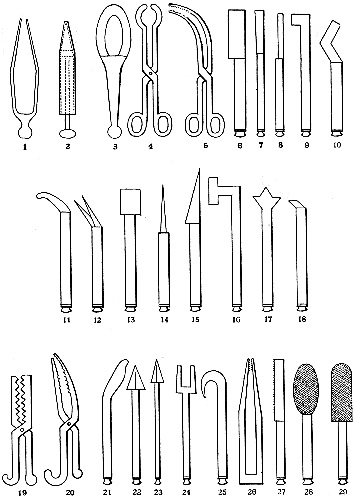
Dental instruments, 143
Dentistry, 138
Depressed fractures, 93
De Renzi, 37, 41, 44, 45, 47, 76, 155, 156
Diabolic possession, 195, 196
Diet, 31, 36
for melancholies, 185
Dioscorides, 26
Dioscoros, 5
Diphtheria, 27, 128
Diseases of nervous system, 30
of women, 156
Drainage, 97
tubes, 125
Duke, Robert, 46
Duns Scotus, 110
Dura mater, infection of, 93
Ebers Papyrus, 137
Education, characters of medieval, 12
Elias, 41
Elinus, 41
English, King of the, 40
Epileptic conditions, 30
Exorcism, 195
Eye diseases, bile in, 152
wash, urine of infants as, 152
Fabiola, Hospital of, 171
Fee, law as to, 44
Fever, 32
Filaria medinensis, 77
Fistulæ, 100
Fistulas, 127
Four masters of Salerno, 47, 91
Fracture of the skull, 91
of the thigh, extension in, 123
Fractures of the skull, 94
depressed, 93
Frederick II., 42
law of, 43, 206
Gaddesden, John of, 70, 119
Galen, 18, 19, 26, 47, 72, 116
Gariopontus, 41
Gerssdorff, Hans von, 135
Gilbert, 69
Giovanni of Arcoli, 143
Glaucoma, 152
Gonorrhœa, 123
Gregory, Major, 189
of Tours, 181
Guarna, Rebecca, 157
Guerini, 142, 143
Guido of Montpellier, 64
Gurlt, 9, 47, 69, 90, 93, 95, 96, 99, 106, 110, 113, 121, 146, 156
Guy de Chauliac. See Chauliac
Guy of Montpellier. See Montpellier
Hæmoptysis, 30
Hangman’s rope, 28
Hare-lip, 134
Hartmann von der Aue, 64
Headache, 30
Hemicrania, 30
Herbs, 26
Hernia, 68
operations too frequent, 122
radical cure of, 121
reduction of, 122
Hernias, 99
Herodotus, 137
Hippocrates, 26, 47
Holy Ghost Hospital, 172
Hospital, 64, 65
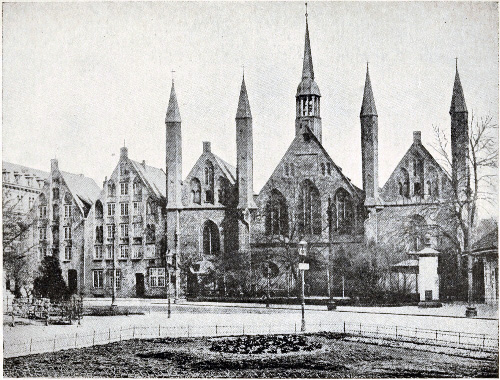
at Lübeck, 178
for lunatics, 187
of Bedlam, 188
of Belisarius, 171
of Fabiola, 171
of Pope Symmachus, 171
of St. Basil, 170
of St. Jean, 178
of Tonnerre, 176
Hospitals, 169
Christian, 24
for lepers, 181
of the Holy Ghost, 172
royal, 174
Hotel Dieu, 188
“Hudibras,” 107
Hugh of Lucca, 96, 104
Humours, 54
Hymns, Latin, 48
Hysteria, 34
Indian surgeons, 106
Infection of dura mater, 93
Infirmaries in monasteries, 24
Inhalations, steam, 29
Insane, care of the, 34, 183, 189
Insanity, 194
lash for, 198
Intestine, suture of, 134
Intestines, wounds of, 99
Italy the postgraduate medical centre, 118
John of Salisbury, 64
of Gaddesden, 70, 119
King of the English, 49
Laceration of the middle meningeal artery, 92
Lanfranc, 11, 80, 96, 110
Lash for insanity, 198
Latin hymns, 48
Law as to fee, 44
of Frederick II., 43, 206
Lepers, hospitals for, 181
Ligatures, 125
“Lilium Medicinæ,” 73
Linear cicatrices, 101
Lister, Lord, 103
Louis IX., 110
Lübeck, hospital at, 178
Lunatics, hospital for, 187
Lucca, Hugh of, 96, 104
Lyons, Archbishop of, 63
Manzolini, Madame, 165
Mad dog, 68, 80
Magnetism, 15
Maimonides, 35, 79
Medical oath, 44
schools at universities, 74
superstitions, 22
Medici, 164
Medicine and surgery, relations of, 115
popular, 22
Medieval education, characters of, 12
medicine, periods of, 21
textbooks, 88
Melancholics, diet for, 185
Mental defectives, colonies for, 202
Meningeal artery, laceration of, 92
Mercuriade, 157
Mercury, use of, 123
Mesue, 47
Methrodoros, 5
Metrorrhagia, 33
Middle Ages, limits of, vii
Milk, 29, 52
bath, 78
Monasteries, infirmaries in, 24
Mondeville, Henri de, 11, 66, 114, 116
Mondino, 96, 164
Monte Cassino, 39
Montpellier, Guy de, 10, 61, 173
Moorish physicians, 62
Morbus Gallicus, 124
Morley, Henry, 17
Morgagni, 84
Muratori, 76
Nasal cautery, 148
polypi, 147
speculum, 149
Nature study, 13
Needling for cataract, 151
Nefretykes, 85
Nerve suture, 113
Nervous system, 30
Nicaise, 166
Nose, surgery of the, 106
Number of bones, 54
of veins, 54
Nurses, order of, 180
Nutrition per rectum, 77
Oath, medical, 44
Œsophagus tube, 123
Ophthalmology, 151
Opium, 29
Order of nurses, 180
Ordronaux, 47, 50
Oribasius, 28
Orthodontia, 139
Pagel, 56, 127, 194
Pammachius, 171
Paris, 40, 110
Passavant, Jean, 111
Paul of Ægina, 6, 27, 33, 138, 146
Peregrinus, 15
Perineum, rupture of, 157
Perugia, Charter of the University, 212
Pfolspeundt, Heinrich von, 133, 134
Physician, conduct of the, 58
Physicians, Moorish, 62
Pitard, Jean, 114
Plague, bubonic, 77
Plastic surgery, 106, 134
Polypi, nasal, 147
Pontus, 41
Pope Symmachus, Hospital of, 171
Popular medicine, 22
Power, D’Arcy, 127
Psycho-analysis, 196
Pure drug law, 43
Pus, 103
Puschmann, 56
Putrefaction, 97
Rabies, 81, 128
Rectal feeding, 78
surgery, 127
Red light treatment, 70, 82
Regimen, 48, 49
sanitatis, 47
Renal disease, 85
Rhazes, 35, 148
Roger, 42, 56, 70, 90, 103
Roland, 56, 103
Rolando, 91
Roman medicine, origin of, 2
“Rosa Anglica,” 70
Rupture of the perineum, 157
St. Basil, Hospital of, 170
St. Benedict, 24
St. Bernard, 63
of Clairvaux, 161
St. Hildegarde, 160
St. Jean, Hospital of, 178
Saintsbury, Professor, 48
Salerno, 7, 37, 75, 155
curriculum at, 38
Salerno, school of, 57
Salicet, William of, 96, 105
Salisbury, John of, 64
Salvino de Armato, 152
Santa Sophia, architect of, 5
School of Salerno, 57
Scotus, Duns, 40
Sects in surgery, 116
Sick, care of the, 24, 25
Skin of the snake, 28
Skull, fractures of, 91, 94
opening the, 92
Smallpox, 35, 70
Snake, skin of, 28
Sore throat, 31
Spectacles, 73, 152
Steam inhalations, 29
Stiffened bandages, 123
Students, 65
Superstitions, medical, 22
Surgeon, training of, 117
Surgeons, Arabian, 140
barber, 11
Indian, 106
temperance in, 97
Surgery, antiseptic, 104
of the nose, 106
plastic, 106, 134
rectal, 127
sects in, 116
Surgical specialities, 136
Syphilis, 123
arsenic treatment of, 124
Tagliacozzi, 107
Taranta, Valesco de, 71
Tartar, removal of, 141
Teeth, artificial, 142
cleaning of, 140
filling of, 145
preservation of, 139, 144
straightening of, 139
Temperaments, 54
Temperance in surgeons, 97
Testicle excision in hernia operations, 121
Tetanus, 130
Textbooks, medieval, 88
Theodoric, 70, 96, 102, 113
Therapeutics, 23
Thigh, fracture of, 123
Thomas Aquinas, 110
Thyroid gland, 28
Tonnerre, Hospital of, 176
Tooth-powder, 140
Tracheotomy, 147, 150
Trallianus, 4
Trephining, 93, 94
Trichiasis, 153
Trotula, 155
Truss, 73, 122
Union by first intention, 100
Universities, medical schools at, 74
Urine of infants as eye-wash, 152
Use of mercury, 123
Uvula, affections of the, 150
Valentine, Basil, 84
Valesco de Taranta, 71
Veins, number of, 54
Vicious sexual habits, 28
Vigo, John de, 145
Viollet le Duc, 176
Virchow, 171, 174, 181
William of Salicet, 96, 105
Wine as antiseptic, 101
Women, diseases of, 156
in medicine, 10
physicians, 166
professors, 155
students, 155
Wood dogge, 129
Wood-hound, 193
Wounds, abdominal, 98
dry treatment of, 125
of intestines, 99
treatment of, 98
Yperman, 123, 131
PRINTED IN GREAT BRITAIN BY BILLING AND SONS, LTD., GUILDFORD
IN THE SAME SERIES
PASTEUR & AFTER PASTEUR
By STEPHEN PAGET, F.R.C.S.
HON. SECRETARY DEFENCE SOCIETY
Large Crown 8vo, cloth, with 8 fall-page illustrations
(By post 5/5) PRICE 5/- NET (By post 5/5)
“We heartily congratulate Mr. Paget on his book, which is deeply
interesting and holds the attention from start to finish.”—Nature.
“There could be no better way of arousing an intelligent interest in
the aims and methods of scientific medicine than the study of this
book. We commend it to all intending to enter the profession as an
excellent intellectual preparation for the work they will have to
do.”—British Medical Journal.
THE EDINBURGH SCHOOL OF SURGERY BEFORE LISTER
By ALEXANDER MILES, M.D., F.R.C.S.
SURGEON TO THE ROYAL INFIRMARY, EDINBURGH
Crown 8vo, cloth, with 8 pages of illustrations
(By post 5/5) PRICE 5/- NET (By post 5/5)
“A most fascinating volume which should appeal to students of surgery
who desire to know more of the history of their art.... We feel sure
the book will score an instantaneous and well-merited
success.”—Medical Times.
“Mr. Miles’s account is admirably written, so much so that we felt
sorry when we reached the last page, on which appears the word
‘brilliant.’ It is this same word ‘brilliant’ which might be applied
to the authorship of this most interesting volume.”—Medical World.
“... a well-written and worthy contribution to the history of
surgery.”—The Hospital.
“This unpretentious and extremely interesting little book ... a
valuable record of the great school which it commemorates.”—Lancet.
OTHER MEDICAL BOOKS
The Edinburgh Medical Series
TEXT-BOOKS FOR STUDENTS AND PRACTITIONERS
DISEASES AND INJURIES OF THE EYE. By William George Sym, M.D., F.R.C.S.E.
Crown 8vo, cloth, containing 25 full-page Illustrations, 16 of them in
colour, and 88 figures in the text; also a Type Test Card at end of
volume.
Price 12/6 net. (By post 13/-.)
A TEXT-BOOK OF MIDWIFERY. By R. W. Johnstone, M.A., M.D., F.R.C.S.E.,
M.R.C.P.E. Second Edition. Crown 8vo, cloth, containing 264 Illustrations.
Price 12/6 net. (By post 13/-.)
RADIOGRAPHY AND RADIO-THERAPEUTICS. By Robert Knox, M.D. (Edin.), C.M.
(Edin.), M.R.C.S. (Eng.), L.R.C.P. (Lond.). Third Edition. Containing 90
full-page plates and over 400 Illustrations in the text. Super royal 8vo,
cloth, in two volumes. Vol. I., Radiography. Price 35/- net. (By post
35/9.) Vol. II., Radio-Therapeutics.
Price 18/- net. (By post 18/6.)
X-RAYS IN GENERAL PRACTICE. A Handbook for the General Practitioner and
Student. By Alice Vance Knox, M.B., B.Ch. With chapters on instrumentation
by Robert Knox, M.D., C.M., M.R.C.S., L.R.C.P. Crown 8vo, cloth, with many
Illustrations. In the Press.
THE STRUCTURE OF THE FOWL. By O. Charnock Bradley, M.D., D.Sc, M.R.C.V.S.
Crown 8vo, cloth, with 73 Illustrations.
Price 6/- net. (By post 6/6.)
TUBERCULOSIS OF BONES AND JOINTS IN CHILDREN. By John Fraser, M.D.,
F.R.C.S. (Edin.), Ch.M. Containing 51 full-page plates, two of them in
colour, and 164 Illustrations in the text. Super royal 8vo, cloth.
Price 20/- net. (By post 20/9.)
CEREBRO-SPINAL FEVER. The Etiology, Symptomatology, Diagnosis, and
Treatment of Epidemic Cerebro-Spinal Meningitis. By Cecil Worster-Drought,
M.A., M.B., Captain (Temp.) R.A.M.C., and Alex. Mills Kennedy, M.D., late
Captain R.A.M.C. Demy 8vo, cloth, with 8 full-page plates and 56 line
Illustrations and Charts in the text. Price 30/- net. (By post 30/9.)
MEDICAL APPLIED ANATOMY. By T. B. Johnston, M.B. Crown 8vo, cloth,
containing 3 full-page plates in colour, and 146 Illustrations in the
text.
Price 12/6 net. (By post 13/-.)
DISEASES OF CHILDREN. By A. Dingwall-Fordyce, M.D., F.R.C.P.E. Containing
32 full-page plates, 8 of them in colour, and 84 Illustrations in the
text. Crown 8vo, cloth.
Price 12/6 net. (By post 13/-.)
PRACTICAL PATHOLOGY, MORBID ANATOMY, AND POST-MORTEM TECHNIQUE. By James
Miller, M.D., F.R.C.P.E. Containing 111 Illustrations, and a Frontispiece
in colour. Crown 8vo, cloth.
Price 12/6 net. (By post 13/-.)
Other Medical Books
A MANUAL OF MEDICAL JURISPRUDENCE, TOXICOLOGY, & PUBLIC HEALTH. By W. G.
Aitchison Robertson, M.D., D.Sc., F.R.C.P.E., F.R.S.E. Third Edition.
Crown 8vo, cloth, with 48 Illustrations.
Price 12/6 net. (By post 13/-.)
SURGERY AT A CASUALTY CLEARING STATION. By Cuthbert Wallace, C.M.G.,
F.R.C.S., Surgeon of St. Thomas’s Hospital; Consulting Surgeon, British
Armies in France; and John Fraser, M.C. Ch.M., M.D., F.R.C.S. (Edin.),
Assistant Surgeon, Sick Children’s Hospital, Edinburgh. Crown 8vo, cloth,
with 63 figures in the text.
Price 10/6 net. (By post 11/-.)
THE POCKET PRESCRIBER. By James Burnett, M.A., M.D., M.R.C.P.E. Third
Edition. Foolscap 16mo. (4⅛ by 2¾ inches), cloth.
Price 1/6 net. (By post 1/8.)
BLACK’S MEDICAL DICTIONARY. Edited by John D. Comrie, M.A., B.Sc., M.D.,
F.R.C.P.E., Editor of the “Edinburgh Medical Series.” Sixth Edition,
completing 40,000. Revised and much enlarged. Containing 431
Illustrations, 12 being full-page in colour. Demy 8vo, cloth.
Price 12/6 net. (By post 13/-.)
THE POCKET CLINICAL GUIDE. By James Burnet, M.A., M.D., M.R.C.P.E. Second
Edition. Foolscap 16mo (4⅛ by 2¾ inches), cloth.
Price 2/- net. (By post 2/3.)
TEXT-BOOK OF OPERATIVE SURGERY. By Dr. Th. Kocher. Third English Edition,
greatly increased. Translated by Harold J. Stiles, M.B., F.R.C.S. (Edin.),
from the 5th German Edition. Containing 415 Illustrations, many with
colour introduced. Super royal 8vo, cloth.
Price 30/- net. (By post 30/9.)
PUBLISHED BY
A. & C. BLACK, LTD., 4, 5 & 6 SOHO SQUARE, LONDON, W.1
Footnotes:
[1] Fordham University Press, New York, 1911.
[2] Popular Science Monthly, May, 1911.
[3] Philadelphia: Lippincott, 1871.
[4] The Latin lines run thus:
Si vis incolumem, si vis te reddere sanum,
Cures tolle graves, iras crede profanum.
Parce mero—cœnato parum, non sit tibi vanum
Surgere post epulas; somnum fuge meridianum;
Ne mictum retine, nec comprime fortiter anum;
Hæc bene si serves, tu longo tempore vives.
[5] English translations of the Regimen were made in 1575, 1607, and
1617. The two latter were printed; the former exists in manuscript in the
Library of Corpus Christi College, Oxford. The opening lines of the
edition of 1607 deserve to be noted because they are the origin of an
expression that has been frequently quoted since.
The Salerne Schoole doth by these lines impart
All health to England’s King, and doth advise
From care his head to keepe, from wrath his harte.
Drink not much wine, sup light, and soone arise.
When meat is gone long sitting breedeth smart;
And after noone still waking keepe your eies,
When mou’d you find your selfe to nature’s need,
Forbeare them not, for that much danger breeds,
Use three physitians still—first Dr. Quiet,
Next Dr. Merry-man, and third Dr. Dyet.
[6] Some of these old medical traditions come down to us from many more
centuries than we have any idea of until we begin to trace them.
Ordinarily it is presumed that the advice with regard to the taking of
small amounts of fluid during meals comes to us from the modern
physiologists. In “The Babees Book,” a volume on etiquette for young folks
issued in the thirteenth century, there is among other advices, as, for
instance, “not to laugh or speak while the mouth is full of meat or
drink,” and also “not to pick the teeth with knife or straw or wand or
stick at table,” this warning: “While thou holdest meat in mouth beware to
drink; that is an unhonest chare; and also physick forbids it quite.” It
was “an unhonest chare” because the drinking-cups were used in common, and
drinking with meat in the mouth led to their soiling, to the disgust of
succeeding drinkers. All the generations ever since have been in slavery
to the expression that “physic forbids it quite,” and now we know without
good reason.
[7] The book called “The Hundred Merry Jests” suggests that the wagtail is
light of digestion because it is ever on the wing, and therefore had, as
it were, an essential lightness.
[8] International Clinics, vol. iii., series 28.
[9] “Historical Relations of Medicine and Surgery down to the Sixteenth
Century.” London, 1904.
[10] The subsequent disuse of anæthesia seems an almost impossible mystery
to many, but the practically total oblivion into which the practice fell
is incomprehensible. This is emphasized by the fact that while it dropped
out of medical tradition, the memory of it remained among the poets, and
especially among the dramatists. Shakespeare used the tradition in “Romeo
and Juliet.” Tom Middleton, in the tragedy of “Women Beware Women” (Act
IV., Scene i., 1605), says:
“I’ll imitate the pities of old surgeons
To this lost limb, who, ere they show their art,
Cast one asleep, then cut the diseased part.”
[11] “Physicke is so studied and practised with the Egyptians that every
disease hath his several physicians, who striveth to excell in healing
that one disease and not to be expert in curing many. Whereof it cometh
that every corner of that country is full of physicians. Some for the
eyes, others for the head, many for the teeth, not a few for the stomach
and the inwards.”
[12] The Ebers Papyrus shows that special attention was paid to diseases
of the eyes, the nose, and throat, and we have traditions of operations
upon these from very early times. Conservative surgery of the teeth, and
the application of prosthetic dental apparatus, being rather cosmetic than
absolutely necessary, might possibly be expected not to have developed
until comparatively recent times; but apart from the traditions in Egypt
with regard to this speciality, which are rather dubious, we have abundant
evidence of the definite development of dentistry from the long ago. The
old Etruscans evidently paid considerable attention to prosthetic
dentistry, for we have specimens from the Etruscan tombs which show that
they did bridge work in gold, supplied artificial teeth, and used many
forms of dental apparatus. At Rome the Laws of the Twelve Tables (circa
450 B.C.) forbade the burying of gold with a corpse except such as was
fastened to the teeth, showing that the employment of gold in the mouth
for dental repair must have been rather common. We have specimens of gold
caps for teeth from the early Roman period; and there is even a
well-confirmed tradition of the transplantation of teeth, a practice which
seems to have been taken up again in the later Middle Ages, and then
allowed to lapse once more until our own time.
[13] Dr. Petells, discussing this use of livers (Janus, 1898), says that
there has been some tendency to revert to the idea of biliary principles
as of value in external eye diseases.
[14] “Gesammelte Abhandlungen aus dem Gebiete der Oeffentliche Medizin,”
Hirschwald, Berlin, 1877.
[15] See Walsh, “The Thirteenth, Greatest of Centuries,” New York, seventh
edition, 1914.
[16] Burdett, “Hospitals and Asylums of the World.”
[17] London, 1909.
[18] To be found in Huillard-Brehollis’ “Diplomatic History of Frederick
II. with Documents” (issued in twelve quarto volumes, Paris, 1851-1861).
[19] Under logic at this time was included the study of practically all
the subjects that are now included under the term the seven liberal arts.
Huxley, in his address before the University of Aberdeen, on the occasion
of his inauguration as rector of that university, said: “The scholars (of
the early days of the universities, first half of the thirteenth century)
studied grammar, rhetoric, arithmetic and geometry, astronomy, theology
and music.” He added: “Thus their work, however imperfect and faulty,
judged by modern lights, it may have been, brought them face to face with
all the leading aspects of the many-sided mind of man. For these studies
did really contain, at any rate in embryo—sometimes, it may be, in
caricature—what we now call philosophy, mathematical and physical science
and art. And I doubt if the curriculum of any modern university shows so
clear and generous a comprehension of what is meant by culture as the old
trivium and quadrivium does.” Science and Education Essays, p. 197. New
York, D. Appleton and Co. 1896.
[20] A tarrenus or tarrene in gold was equal to about thirty cents of our
money. Money at that time had from ten to fifteen times the purchasing
power that it has at the present time. An ordinary workman at this time in
England received about four pence a day, which was just the price of a
pair of shoes, while a fat goose could be bought for two and a half pence,
a sheep for one shilling and two pence, a fat hog for three shillings, and
a stall-fed ox for sixteen shillings (Act of Edward III. fixing prices).
[21] The University of Perugia had already achieved a European reputation
for its Law School, and this Papal document was evidently meant to
maintain standards, and keep the new Medical School up to the best
criteria of the times. The original Latin of this document, as well as of
the Law of Frederick II., may be found in Walsh, “The Popes and Science,”
Fordham University Press, New York, 1908. They are quoted directly from
the official collection of Papal Bulls.