“They arise now like the stars before me
Through the long, long night of years;
Some are bright with heavenly radiance,
And others shine out through our tears.
They arise, too, like mystical flowers,
All different and all the same—
As they lie on my heart like a garland
That is wreathed around Mary’s name,”
“Good morning and a blessing, comrade.” It
was the greeting of the Jew to the knight
who lay asleep under a palm the day after
the flight. The sleeper slowly rising,
murmured:
“I’m half vexed at thee, Ichabod; thou hast dissolved
a dream filled with sights of home and mother.”
“I’ve brought lentils, barley, and grape-clusters;
they are better than dreams when the sun is up.”
“To those sad when awake, joyful dreams are welcome.”
“There are real joys just before us.”
“Real joys, just before us? Grim sarcasm; a sorry
jest, Jew!”
“No; oh, no. I’m telling thee the smiling, clean-faced
truth. We’ll be safe at Jabbock’s city by sun
set!”
“Safe? safe? I’m unused to that word; almost
afraid of it. What does it mean in this country?”
“Oh, these cavalrymen! always on the charge; now
here, now there. Thy thoughts go by habit, sometimes
racing forward, sometimes retreating. A while
ago thou wert as full of faith as Gideon, now thou art
as timorous as Canaan’s spies.”
“My habits have grown fat by feeding on piebald
experiences.”
“Experience is a lying prophet, when it counts without
reckoning God.”
“I can not see a step ahead. That’s certainty to
me, though thou callest it doubt. I know not how to
hang rainbows upon the ghostly brows of the future
when I’ve no power to lay hand on the ghostly form
and have no rainbows.”
“He that lifted the burdens of the past from off us
holds the changing winds of the future in His fists.
One second of life goes ever with only one second of
care. I learned this of Sir Charleroy long ago. Now
he forgets his own teachings. Shall I call him Reuben,
never excelling because unstable as water?”
“Call me slave: Uncertainty’s slave! Thou didst
waken me from a dream of home, to the shock of
remembering again that I was homeless, dead to all
that once made life worth living. The gorgeous hopes
of thy fertile mind are mocked by stern present facts.”
“Odd talk from one just dreaming of his mother; a
good woman didst say? then very hopeful; all good
women are. Then remember how thou didst lift me
to the very gates of heaven yesterday. Thou canst not
see a step ahead? Well, then look back; miles; years.
Was not our God in thy battles in the thickets; in the
mountains; in Jordan? My poor reasoning tells me
that He has wrought too much for us to drop us
now. He must get His reward in keeping us to the
end.”
“Some of the past makes me shudder, Ichabod.”
“Pick out the best, not the worst. We escaped the
very Gehenna at Jericho, following murderers, the
storm, slavery; now free, fed, rested, the eastern air
washed and sunned to a tonic. I’m drinking lotus balm
out of it.”
“There it is; the sun’s in thy brain, poet-preacher.”
“No, I’m only giving thee back some of thine own
sermons. I draw from my own heart no monster
memories. If I’ve fought hard battles it sufficeth
that I have fought them once. I’ll not recall their
bloody sweat and tears for the sake of refighting them.
No, I’m going back to the sweet, happy hours of babyhood;
for I tell thee, knight, there is a world of joy to
a man, scorched by stern experience, to forget himself
sometimes back to the lullabys and warblings of the
days of his innocence.”
“I can’t do it.”
“I can’t help doing it, especially in this place! My
whole being feeds on a present scent of home.”
“Thou knowest the country hereabouts?”
“My soul laughs in friendly converse with these
crocuses, pinks, and asphodels, turning the velvet,
grassy plains to palace carpets. I’m saying to myself
these blossoms must know me, their bowing heads
and offered odors being my reward for nursing their
mothers when I was a boy.”
“Well, flowers are sincere friends; they never change
and are all charitable. That’s why they are deemed fit
presents to those in prison, or proper offering to be laid
on the breast of the dead Magdalene.”
“Ah, dead Magdalene; for even the symbol of a
broken promise; born to be a queen of love, by perverted
love dethroned! Woman, man’s ward, by man
betrayed; the guide star setting in black night; the
savior of human purity befouling all purity! Given
the power by which Eve was to crush the serpent’s
head and using it to breed all serpentine ills. This is
Eve turning a volcano upon Eden. Put flowers upon
her once passionate, now dead, heart, in awful contrast!
Nature at her worst is intensified anguish; at her best
an ocean of joy, an universe of light and song. So I
learn of nature under man. Listen to nature’s perfumed
throb now: these thousands of feathered songsters,
millions of lesser creatures, whose melody is
larger than themselves and more perceptible. Hear
the humming, thrumming, buzzing, trumpetings.
Oh, this is life as the All-Saving tuned it to utter
joy! It widens, deepens, thickens; getting sweeter,
louder, happier all the way. A tempest, set to music,
knight. I’m caught in its whirl and join in its praisings.
It comes over me as an insight of what nature
really is. God cares for it all and made it thus, to
throb and exult!” Ichabod paused in transport.
“But I sometimes think there’s a great waste of these
things; there is so much in places where there is no
human ear or eye to hear or see.”
“Reuben is narrow-viewed just now. Man is not
all! God makes happiness because He is so full of
goodness He must. Our rabbis call Him ‘The Fountain.’
There is no waste! He makes these things for
His own joy, and, methinks, looks down from the circle
of the heavens to say to what is in the desert or wilderness,
‘Very good.’ Then, beyond this, I’ve sometimes
thought He kept the processions of joy and beauty
moving along; coming, going, dying, living, ending and
beginning again, as a sort of practice; by action keeping
all fresh and new. He causes things of beauty and
power to pass through His divine alchemy from one
glory to another, as the general causes his squadrons
to move through the evolutions of the battle before
the conflict. The Father is awaiting man’s hour, man’s
return from sinning; the time for millennial advent;
then all delights, as if fresh born, all goods newly harvested,
will appear to be multiplied, intensified, transfigured.
That will be the beginning of hereafter.”
“Oh, Israel, the sun is in thy brain. I forget all
logic of contention, charmed out of words, by feasting
on thy orisons, Go on, Jew.”
“Then I’ll say ’twas God, not chance, nor fate, that
brought us to wander alone with nature. Read well
nature’s book that lies open in the lap of the Great
Teacher! Only stand close to Him and He will hold
the torch, turn the pages and give the sure interpretations
of the sweetness that feeds quiet, the picturesqueness
which evokes smiles and the stately grandeurs
which beget faith.”
“Israel, thou climbest the sun-ladder to rhapsody!”
“Whether soaring, climbing, or creeping, I know
not; but this I know, I’m tasting in these wanderings
God’s kisses. They are in the flowers; my spirit rests
on His as my body on the balm of the fresh breezes.
Then, animate nature seems so contented and happy!
Why, I’ve been ravished by the songsters; as I’ve said
to myself, they echo the angelic anthem of heaven,
peace. Had any such doubt as haunts thee, come to
me, since passing Jordan, it would have been sung out
of countenance by the winged warblers or dragged
from my heart captive in floral fetters by Him that
hath two staves, beauty and bands.”
“Oh, Ichabod, do not pause. Go on, I pray thee.”
“Then thou art glad to hear that nature is not a
beautiful widow mourning her dead bridegroom
through the ages?”
“I love to listen to thee.”
“Listen to a wiser. See those stately heliotropes.
They stand above all of their kind with shining faces;
great in aspiration, great in devotion. All day they
turn toward the sun and when their blossoms fade they
leave a hardy seed. The winter may bury it, but it
springs forth in vernal days, strong in the life it won
by loving the summer sun.”
“Ichabod, I’m charmed! Let’s abide here always
amid these joys of nature.”
“What, be hermits?”
“Yes; life’s troubles are made by its people; the
fewer people the fewer troubles.”
“While sharing their troubles may we not lessen
them. No man may live to himself; we’re wedded to
each other.”
“Yes, wedded to life. A royal phrase; since I’ve
been constantly either hating or loving it; fearing to
live and then fearing to die. Wedded! ah, ha, ha; the
wedded are those who most madly love and then most
bitterly hate.”
“Say sometimes; then thou’lt be like the stopped
horologue, telling the true time once in twenty-four
hours, at least.”
“Thy poetry runs into caustic quality. What hast
thou been lunching on since morn?”
“At least not on Dead Sea apples, fair without, ashes
within. My poetry, if I have any, always sings in
accord with the company it keeps.”
“How many more arrows in thy quiver, hast thou?”
“Only one, and that a question; does my master intend
to foreswear marriage himself? He ridicules it.”
“I have already done so.”
“Well, ’tis well thou didst not live in Rome, for its
citizens that dared to live amid the temptations and
soul-crampings of voluntary bachelorhood were highly
taxed for their disregard of the claims of society and
the state.”
“Yet even the Romans ever deemed bachelorhood
a blessing. In this opinion royal Claudius decreed that
the sailors who brought to Rome a ship loaded from
the wheat granaries of Egypt in the time of Agabus’s
famine, should be as a reward permitted to remain unmarried.
If I were a Roman and a sailor I’d pray for
a famine and a Claudius.”
“A world without wives? What a world!”
So saying Ichabod caught up a stick and began
marking on the earth.
“How now, Israel; some sorcery?”
“No—yet, may be, yes. I’ll picture a world without
women.”
The Jew outlined the Egyptian deity, “Kneph.”
“What have we, man or beast?”
“Truly, I think partly both. The knight has described
his Elysium and I have here pictured a fit king
for it. Behold thy god, sworn celibate. Egypt’s
adored Kneph. Is this hideous enough?”
“A god! well he’s not handsome; a ram’s head;
four horns; two up, two down; armed as both ram and
goat?”
“Both were sacred to him in Egypt; also the horned
snake with which Cleopatra put out her life; poor, unfortunate
man-wrecked beauty.”
“But, Jew, thou dost dawdle! What of this play?”
“Oh, nothing, only Kneph would do well for a sailor,
at Rome, under Claudius, in famine time!”
“My poet wanders, but yet stings.”
“So? Kneph was a god that boasted, or rather his
spokesmen did, that he was the father of his mother.
What economy! No need to be grateful to or love a
mother; no need to wear a wife on the heart. The
folly of a dark age by folly darkened in the mad attempt
to lift up man without his purer better part.”
“How strange, Jew, whenever we touch a new
belief, or an old one, new to us, we find peoples following
an idea or ideal. There has been a crying
through the world ever for a some one for pilgrim
man to follow. How passing strange; our century
wails the self-same cry; and somehow it always happens
that this matter has something to do with woman.
See; ‘Kneph’ was the monstrous birth of those who
thought man superlative, and greatness to be by being
all man. How sharply the devotion to the Madonna
cuts across this! She was mother of the noblest, and
man in the begetting left out. Oh, my head’s full of
thoughts, but they tumble along toward my lips without
system or leader. I talk like a madman, though I
think like a Seraph.”
“I think, Sir Charleroy, that a healthy son of Adam
sneering at all women, publicly, reproaches himself as
being one who never knew a true one.”
“More javelins! I’d swear, anyhow, that if I’d been
Adam, no winged serpent of gaudy colors and honey
tongue could have lured me from Paradise, Eve or no
Eve!”
“If thou hadst been there thou wouldst have been
lonesome with the speechless herds; finding the new
woman, would have loved her like the boy who mates
just to see how it seems.”
“Oh, likely!”
“Then if thy ward or angel attempted to elope
with the devil thou wouldst have gone along, too,
from curiosity, as lad to a hippodrome, just to see the
finish; or as thousands of men since Adam, tied to
wayward women, have gone down with them to darkness,
preferring hell with their idols to heaven without.”
“I suppose so. Oh, how strangely are the fates of
men and women interwoven.”
“Then thou dost not now elect to live a hermit,
without the companionship of the frail, fair and faithful
sex which are said to double our joys?”
“Yes and multiply our sorrows!”
“I suspect thou’lt change thy late creed very soon.”
“Why so?”
“I expect ere long that we’ll meet some living blossoms.”
“By my token, that’s good news, Ichabod.”
“So, then, thou art ready to recant?”
Evening came, and the pilgrims supped on the meager
meat they were able to procure in the fields.
“Now poet of the Palm Land mellow my dreams by
possessing me of thy meditations. What fixes thy
gaze?”
“The monarch of the sky; after a day such as this
has been, he seems to me to take his departure with a
peculiar sort of triumphal sweep of his trailing splendors.”
“Horus exulting over prostrate Set.”
“But night, not the green-colored son of Osiris, conquers
now, master.”
“Night never conquers. It merely lives by sufferance;
often routed by the invincible spears of the sun.
Darkness creeps forth here because the golden charger
in masterful strategy has gone elsewhere to rout other
armies of the dark kingdom. Lay this to thy heart,
good Jew.”
“I do, as precious ointment to a blister. Enlarge me.”
“There, Jew; see the fleecy clouds over Jordan.
How grand!”
“Yea, as I’ve often seen them; some like alabaster
thrones, and others like ships on fire, while others are
like silver castles, banded with cornelian and gold, with
here and there hyacinthian shields hung on their battlements,
all fresh as the stones in heaven’s foundation
walls! How they career and float along the empurpled
ocean of the west! I forget myself even
now into their midst. Oh, knight, such pictures,
such visions make my soul shout in peals of holy
laughter.”
“My Israel, the sun which woos the earth into making
love to him with flowers never sets in thy brain; thou
livest in the poet’s constant noon.”
“But we both are changing. Even the knight gets
mellow. Hardship, the sun and faith are working in
us both for good.”
“Getting to be? No; thou wert and art poet,
painter and singer; all in one. If the world does not
hear thee the Seraphim will, by and by.”
“I’ve noticed that souls unbent from some long, twisting
pain, run, aspire and play. It is mercy’s rest, reward.”
“God fits some especially to catch passing joys, Ichabod.”
“Yea, and it all comes from a serene faith that all
is very good as He made it. I’m just opening to the
Sun Eternal, at whose right hand are pleasures evermore.
I love thy wakening touch, my guide.”
“Ah, I’m a bungling player on the harp of thy soul,
but I love thy melody. Child of nature, speak more
and more to me.”
“I can but ill tell all. I’m dumb amid the waves of
peace which enhalo, the hopes that thrill, the views of
truth that fill my being.”
“I believe thee on my soul, Jew. I’d stop now to
remember a little, perhaps to sleep, since so I can follow
dreams that would craze me to contemplate awake; but
if we now sleep, pray God our day-dreams go on and on.
I think we are pilgrims following spiritual truths.
They’ll lead us on high; let’s not miss their direction.”
“One may sleep, master, when he can not think; for
me, now, I’d rather court, awake, my mind’s guests, for
a time, meanwhile gainsaying the lullabys of cricket
and nightingale now floating out from every bush.”
“So be it. How shall we proceed to pass the time?”
“Can we set up an Ebenezer? God hitherto hath
helped us.”
“I have it; we’ll to the feast.”
“Well, we have what some great kings have not, and
so shall find joy in a feast. We have appetite!”
“Thou dost miss my meaning, though thy point is
prime. We seldom think to thank the Giver for the
power to enjoy as well as for the enjoyable. I knew a
French prince, once, who said he’d give his birthright
for one good dinner, and he was no Esau, either. He
had dinners and dinners, but what were they along
with premature decay gnawing at his vitals like a rat,
while he himself could eat less than a babe?”
“I see; the knight would have us thankfully commemorate
to-day’s enjoyment of nature.”
“Just so; I think, in loving nature, because we begin
to understand her, we will be on our way to all the natural
joy of which she is God’s interpreter.”
“But our feast?”
“The stars are out on the blue; their queen will
soon come up from the sea, then I’ll induct thee into
the feast of the ‘Rose.’ The rose is the queen of
flowers, and flowers the thoughts of God!”
“The feast of the Rose! I’ve heard it was a licencious,
heathen orgy!”
“It was then a shameful misnomer. My Mary found
it; transformed it. Out of it, through reverence of her,
comes a beautiful observance. See here, Jew.”
So saying, the knight took from his bosom a string
of precious stones and arranged them, as they glowed
under the moonlight, on the ground heart-shaped.
The knight then questioningly observed the Jew.
The latter shook his head and remarked:
“I’ve seen such often among the Arabs. They have
a prayer for each bead to be said the night after the
death of one of their number, believing the shade departs
not to Hades ’till the prayers are said. Thou
dost not practice their enchantments?”
“Bah! Never. My gemmed circle has a deeper,
holier significance. Each pendant is to recall to mind
some virtue or event in the saintly Mary’s life. Then
there are guilds called, ‘Brothers of the Rosary.’ I
belong to one such; each member is sworn to pray for
all the others wherever scattered. The Turks may
have had a praying string, but the Crusaders have
appropriated and applied it to nobler uses.”
“Tell me more of it, if there be more.”
“There are but fifteen in my brotherhood.”
“Only fifteen, no room for me?” said the Jew.
“Fifteen; to suggest the fifteen great events in
Mary’s life; namely, the Annunciation; Gabriel announced
to Mary that she was to be the Mother of
Jesus; the Visitation; Mary in the Gospel spirit went
quickly to tell her kinswoman of her promised favor; the
Birth of Jesus, this was the crowning joy; then here is the
gem that recalls the Presentation of Jesus in the Temple.
Thou knowest, Jew, thy fathers often wondered how,
after all, a lamb, an animal, could stand between
offended Deity and man. Jesus in the Temple was
the fulfillment or explanation of the mystery!”
“Yea, truly, I’ve seen this. Oh, that all my people
could also see it!”
“Then, here is the jewel that reminds us of the
‘Scourging at the pillar’ of Him ‘by whose stripes we
are healed.’”
“Israel reads Isaiah with darkened mind, my loving
guide. I’ve seen this. Oh, that my people could.”
“Here is the jewel that recalls the ‘Crowning with
thorns’ of Him that hath to give, at His right hand,
‘pleasures forever more.’ He wore that thorny coronet
that His redeemed should return with singing,
crowned with everlasting joy.”
“I’ve felt it; feel it now. Hallelujah!”
“This one is to commemorate ‘Jesus bearing the
Cross;’ this one ‘His crucifixion,’ and this ‘His resurrection.’”
“The hope of hopes by our Saducees denied!”
“Then we have here another to remind us of our
Saviour’s ‘Ascension,’ with His pregnant promise of a
royal return to take at last His children home.”
“Come, Lord Jesus, even so, quickly!” cried Ichabod.
“‘Wait patiently for Him and He will give thee the
desire of thy heart,’ oh, heir of faithful Abraham!”
“I weary sometimes, my loved teacher.”
“So do we, of our brotherhood; but here is a thought
of rest; this bead recalls ‘Pentecost.’ We are led of
the Spirit, which guides to all truth and comforts by
the way.”
“But what has all this to do with Mary?”
“Oh, here are two beads; one reminds us of her
‘Assumption’ into heaven, the other of her ‘Crowning.’”
“Was she crowned?”
“Yea, in heaven, for the Son of Mary promised to
His faithful ones this exaltation; ‘I appoint unto you a
Kingdom as my Father hath appointed unto me, ye which
have continued with me in my temptation.’ Surely,
she that followed him from the pains of parturition,
as an outcast, to the Cross and the sepulcher, continued!”
“I would I could have been there to enter the race
for such crowning.”
“‘He hath made us kings and priests unto God;
if we suffer we shall also reign with Him,’ Jew.”
“Hallelujah! would I could shout it to heaven; no,
I do; but rather to all Jewry!” exclaimed the Israelite.
“John was only a ‘voice crying in the wilderness,’ as
he thought, but he was heard at the palace and down
the ages. Even now I voice his words in this lone
place.”
“Thou didst not tell me of the meaning of that black
and red pendant,” said Ichabod, interrupting.
“Oh, Gethsemane, Jesus, the intercessor for the
world, ‘who ever lives to intercede.’ The black sign
is of that.”
“Then I’ve a Saviour in glory praying for me. Oh,
this is balm and water to me! Why do I dare to think of
myself as a poor Jew! God pity; no, forgive me! I, repining
sometimes and yet defended in glory; honored
by royal adoption, elected of God, called to kingship!”
“How we do go up and down; sometimes thou, sometimes
I. Now I’m leading, awhile ago ’twas thou.
Yea, we are all dependants; but this is healthful meditation,
Ichabod, and thy confession rebukes me as well.”
“Is this all of the feast?”
“Oh, no. Here are some tokens to remind us of
Mary’s life; so brief, so useful. See, here, five gems
that remind us of the wounds of her son; her wounds
as well, for the sword that pierced Him pierced through
to her soul also. At each of these emblems we ‘Rosary
Brothers’ repeat the Lord’s Prayer. Last of all,
reverently clasping this crucifix, we sacredly repeat
the Apostle’s Creed, the same as I taught thee at
Jericho.”
“I remember, as I do the water courses, when thirsty.”
“What think’st thou of all this formality? Is it like
the Arabic mummeries?”
“No, they are mocking devils, are they not?”
“I am not to judge of their sincerity, nor their needs,
nor art thou.”
“Master, I wish I could be a Rosary Brother. Methinks
it would help my ambling faith sometimes, if I
could touch a token.”
“He above is all tender of baby faiths that can do
no better than amble. Remember the words of thy
own Hosea: ‘I drew them with cords of a man, with
bonds of love, I taught Ephriam to go; taking them
by the arms; just as a mother teaches her babe to walk,’
is it not?”
“Even so. Does the Rosary help some to walk?”
“I believe it does.”
“Tell me more about it.”
“The Crusaders were the first to call Mary ‘The Rose.’
To almost all mankind that flower has ever been the
emblem of pure, unselfish love, and when the soldiers
of the Cross grew to understand the character of her
that gave the world its Saviour, they could think of no
title more fitting for that queenly woman.”
“I’ve an Egyptian rosary, knight. See, I wear it
on this golden chain, next my heart, for its safety——”
“To ward off witchcraft?”
“Bah! ’Tis a toy in usefulness. I keep it, thinking
it may work incantation with the money-lender,
and so save me sometime from starvation.” Then the
Jew laughed aloud at his own wit. It seemed very
ridiculous to him to liken his talisman to the real
rosary or its saint.
“Wouldst thou let me examine it, Jew?”
The latter handed to the knight a chain and image.
“Egyptian?”
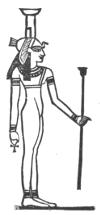
“An image of Neb-ta, sister of Isis, the wife of the
Sun God Osiris. It was given me by a Copt priest,
whom I saved from drowning in the Nile.”
“A Copt?”
“A Copt. He was a professed Christian; but, like
some of the ancestral Egyptians, sought to be right by
being a little of every thing. He was very superstitious,
though he thought himself very broad-minded.
He was quite certain that Coptic Christianity was true,
though not equally certain that his pagan ancestors
were in faith all false. He thought he’d be on the safe
side by mixing a little of all creeds with his own, and
so he prayed in Christ’s name and also Neb-ta’s.”
“A pretty fool, Jew.”
“Yea. He had a story about the goddess, very
pretty when not absurd, running somehow thus: When
Osiris was cut to pieces by Set, a type of day slain by
night, I think, Neb-ta went round the world with her
widowed sister, Isis, to gather up the fragments of her
spouse. Isis is the moon above; below, reproduction.
She is pictured in Egypt, as all the female deities, with
two eggs and a half-circle at the side, to express the
latter idea. Isis has in her hand also this sign—a
cross supporting an egg, to typify immortality. The
old Egyptian priest told me this sympathetic Neb-ta,
if I trusted her, would reward me for saving his life, by
defending my case in Hades. There is a good deal of
mysticism in all this, but I rather prize the gift, since
it reminds me that I once saved a man.”
“But, Nourahmal? Since thou knew of Mary thou
hast saved a woman, Jew.”
The Jew was silent. The knight continued:
“These philosophic, inseeing, sign-writing, symbol-making
Egyptians were pilgrims, too; a nation of
graal-seekers; after an idea, example. I see always the
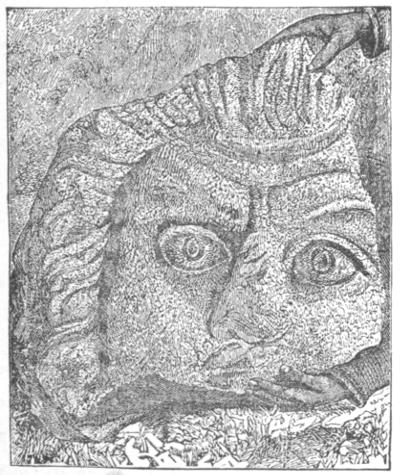
huge Sphinx coming before me when I think of
them.”
“The Sphinx! Well, that’s strange. I’d never think
of that, unless I happened upon something very big
and very meaningless!”
“No, no; the people that rocked the cradle of religions
in their infancy, wrought all their theology into
that one mighty symbol, to endure and challenge compare
with all that man should find beside.”
“I do not see how!”
“The Sphinx faces the East—light!”
“True!”
“It can not reach that light toward which it looks,
neither could the Nubians.”
“All true.”
“It was part man, part beast; but the upper part
was man, and this is what we think we know, and all
of man?”
“Oh, knight, Phthah, the ‘beautiful-faced,’ ‘secret-opener’
of the Nile gods has touched thee.”
“The Sphinx was like man’s thought; too great for
words; at least such words as men can now fit to their
lips.”
“I see; it’s all coming into my mind, master.”
“It sat still and was silent, but the world went on;
the thought it expressed reached hearts after the men
that formed the image had passed away. The truth
lives ever, and can not die until it completes its purpose.”
“Thou art a magician, who pleases, astonishes,
excites, instructs, and at the same time plays with
me as if I were a pigmy!”
“It’s not I, but the truth. The Sphinx again! Its
hugeness, truth expressed, appears mighty when placed
by our sides.”
“Tell me where I am! Shall I fling Neb-ta away as
a bauble, or beg its pardon for hanging so much meaning
to a fool’s neck?”
“Vehement! The sun is in thy head!”
“But shall I sit and look as a Sphinx, or run mad
because I can’t?”
“Be calm, and let me tell thee that the dwellers by
the mighty Nile plagued themselves with lasting darkness
when they banished the people whose leader’s face
shone from communion with Jehovah. They clung to
some half truths, left them by the progeny of Joseph,
but the half was dimmed by courted lusts.”
“But my people had no Neb-ta, no women divinities
to leave in Egypt.”
“No, yet Egypt, aiming to exalt the tender, the beautiful,
the mother, incarnated certain virtues, and lo, a
woman deity! It was an effort to find the ‘Rose.’
The nation was in a vast, serious pilgrimage through all
their dynasties after an idea, a pattern; an opportunity
to reach and to express the best things. I tell thee,
Jew, the heathen nations sit in darkness; this side
and that, along the track of time, holding here and
there a torch, waiting through the night whose hours
are tolled off at century intervals, for something, Some
One. There have passed before them like phantoms,
gods and gods; man invented, man evolved; but none
of these tarried, none satisfied. Oh, ‘the Isles wait for
thee,’ Jesus, Thou Ideal Man, and also for the true conception
of Mary the ideal woman!”
“For two Gods? Is Mary divine?”
“Did I say that? Nay, as the child Jesus was subject
to her, so she was subject to the Christ, at
last. Christ was the Word, Mary His blessed echo;
Christ the Sun, Mary the Moon that reflected that
light, showing its beauty in woman’s life!”
“But now, what shall I do with my beautiful fright,
Neb-ta, Sir Charleroy?”
“Put her away, in mind, amid the galaxies of
woman deities; mythical in all but the pitiful sincerity
of the adoration of their devotees and in the greatness
of the truths they vaguely articulated. See, I’ll interpret:
Isis going round the world to gather up the
fragments of her dismembered husband. Woman’s
ministry; the restoration of man; wife consecration to
an only love. Then there was not only beautiful widowhood,
second only to beautiful wifehood, but also
the spinster sister. Hail Egypt! Thy Sphinx saw
further than our peoples of boasted civilizations. At
our best we never rose so near to a just altitude as to
attempt the deification of the maiden sister, the omnipresent
angel, who mothers other people’s children as
if they were her own. Egypt worshipped motherhood,
perhaps grossly, in adoring the earth’s fructifications,
but she did not overlook those pious souls who
in a glorious self-abnegation play waiting-maids to the
real queens of earth, the child-bearers. I’d never
tire praising the child-bearers, or all who love them,
for they that bring forth a life are greater than the
greatest kingly man-slayer on earth. The world is
upside down; no religion is wholly false that aids to
right it in any degree. Hail, creeds of Egypt, or any
other land, that seek to efface from fame’s pages the
names of life-destroyers that thereon may chiefly
shine the names of those who give or save life.”
“Oh, oscillating Sir Charleroy, thou art just and
courtly now.”
“Praise me, then! Mankind would average better
by far than it does if all were right half the time.”
“Would I could gather all the threads of to-day’s
blessed communings into a golden band to support
over my heart faith’s breastplate.”
“I can give thee its summary: God, a beauty Creator,
out of all things hideous in His good Providence
will emerge the fine, tender and loving. Neb-ta, Egypt’s
ideal, carried the lotus, the flower of unrestrained
pleasure, as her scepter; Neb-ta-like the influences
that sway most human hearts to-day; but the Rose of
the world has blossomed. Mary, the flower of women.
They that love and serve, as that warm, red-hearted
woman, shall at last reign in eternal bliss within the
ruby walls of the New Jerusalem.”
“I’m with the knight, to proclaim thy Rose!”
“A good profession! It will be well if we remember
that woman is as essential to religion as religion to
women. As for man he needs the one as the interpreter
of the other. Therefore, it was that God sent
to earth a flower that could talk.”