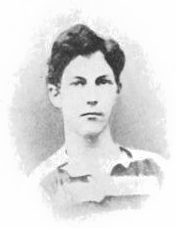
RICHARD JEFFERIES (p. 27)
I am sweatily struggling to the end of Faust II, where Goethe’s just
showing off his knowledge. I am also reading a very interesting book on
Goethe and Schiller; very adoring it is, but it lets out quite
unconsciously the terrible dryness of their entirely intellectual
friendship and (Goethe’s at least) entirely intellectual life. If Goethe
really died saying “more light,” it was very silly of him: what he
wanted was more warmth. G. and S. apparently made friends, on their own
confession, merely because their ideas and artistic ideals were the
same, which fact ought to be the very first to make them bore one
another.
All this is leading to the following conclusion. The Germans can act
Shakespeare, have good beer and poetry, but their prose is cobwebby
stuff. Hence I want to read some good prose again. Also it is summer.
And for a year or two I had always laid up “The Pageant of Summer” as a
treat for a hot July. In spite of all former vows of celibacy in the
way of English, now’s the time. So, unless the cost of book-postage here
is ruinous, could you send me a small volume of Essays by Richard
Jefferies called The Life of the Fields, the first essay in the series
being the Pageant of Summer? No particular hurry, but I should be
amazingly grateful if you’ll send it (it’s quite a little book),
especially as I presume the pageant of summer takes place in that part
of the country where I should be now had——had a stronger will than
you. In the midst of my setting up and smashing of deities—Masefield,
Hardy, Goethe—I always fall back on Richard Jefferies wandering about
in the background. I have at least the tie of locality with him. (July
1914.)
I’ve given up German prose altogether. It’s like a stale cake compounded
of foreign elements. So I have laid in a huge store of Richard Jefferies
for the rest of July, and read him none the less voraciously because we
are countrymen. (I know it’s wrong of me, but I count myself as
Wiltshire....) When I die (in sixty years) I am going to leave all my
presumably enormous fortune to Marlborough on condition that a thorough
knowledge of Richard Jefferies is ensured by the teaching there. I think
it is only right considering we are bred upon the self-same hill. It
would also encourage Naturalists and discourage cricketers....
But, in any case. I’m not reading so much German as I did ought to. I
dabble in their modern poetry, which is mostly of the morbidly religious
kind. The language is massively beautiful, the thought is rich and
sleek, the air that of the inside of a church. Magnificent artists they
are, with no inspiration, who take religion up as a very responsive
subject for art, and mould it in their hands like sticky putty. There
are magnificent parts in it, but you can imagine what a relief it was to
get back to Jefferies and Liddington Castle. (July 1914.)
IBSEN (pp. 50-52)
Ibsen’s last, John Gabriel Borkman, is a wonderfully fine play, far
better than any others by Ibsen that I have read or seen, but I can
imagine it would lose a good deal in an English translation. The acting
of the two middle-aged sisters who are the protagonists was marvellous.
The men were a good deal more difficult to hear, but also very striking.
Next to the fineness of the play (which has far more poetry in it than
any others of his I’ve read, though of course there’s a bank in the
background, as there always seems to be in Ibsen)—the apathy of the
very crowded house struck me most. There was very little clapping at the
end at the acts: at the end of the play none, which was just as well
because one of them was dead and would have had to jump up again. So
altogether I am very much struck by my first German theatre, though the
fineness of the play may have much to do with it. It was just a little
spoilt by the last Act being in a pine forest on a hill with sugar that
was meant to look like snow. This rather took away from the effect of
the scene, which in the German is one of the finest things I have ever
heard, possessing throughout a wonderful rhythm which may or may not
exist in the original. What a beautiful language it can be! (13
February 1914.)
I have been reading many criticisms of John Gabriel Borkman, and it
strikes me more and more that it is the most remarkable play I have ever
read. It is head and shoulders above the others of Ibsen’s I know: a
much broader affair. John Gabriel Borkman is a tremendous character. His
great desire, which led him to overstep the law for one moment, and of
course he was caught and got eight years, was “Menschenglück zu
schaffen.” One moment Ibsen lets you see one side of his character (the
side he himself saw) and you see the Perfect Altruist: the next moment
the other side is turned, and you see the Complete Egoist. The play all
takes place in the last three hours of J. G. B.’s life, and in these
three hours his real love, whom he had rejected for business reasons
and married her twin-sister, shows him for the first time the Egoist
that masqueraded all its life as Altruist. The technique is perfect and
it bristles with minor problems. It is absolutely fair, for if J. G. B.
had sacrificed his ideals and married the right twin, he would not have
been deserted after his disgrace. And the way that during the three
hours the whole past history of the man comes out is marvellous. The
brief dialogue between the sisters which closes the piece is fine, and
suddenly throws a new light on the problem of how the tragedy could have
been evaded, when you thought all that could be said had been said. (20
February 1914.)
I feel that this visit to Schwerin will spoil me for the theatre for the
rest of my life. I have never ceased to see John Gabriel Borkman
mentally since my second visit to it (when the acting was even liner
than before and struck me as a perfect presentation of a perfect play).
My only regret was that the whole family wasn’t there as well. I should
so like to talk it over with you, and the way that at the very end of
his last play Ibsen sums up the object against which all his battle was
directed: “Es war viel mehr die Kälte die ihn tötete.” “Die Kälte, sagst
du, die Kälte! die hat ihn schon längst getötet.”... “Ja, die
Herzenskälte.” (10 April 1914.)
[The play] at the Königliches Schauspielhaus [Berlin] was Ibsen’s Peer
Gynt with Grieg’s incidental music—the Northern Faust, as it is
called: though the mixture of allegory and reality is not carried off so
successfully as in the Southern Faust. Peer Gynt has the advantage of
being a far more human and amiable creature, and not a cold fish like
Faust. I suppose that difference is also to be found in the characters
of the respective authors. I always wanted to know why Faust had no
relations to make demands on him. Peer Gynt is a charmingly light piece,
with an irresistible mixture of fantastical poetry and a very racy
humour. The scene where Peer returns to his blind and dying mother and,
like a practical fellow, instead of sentimentalizing, sits himself on
the end of her bed, persuades her it is a chariot and rides her up to
heaven, describing the scenes on the way, the surliness of St Peter at
the gate, the appearance of God the Father, who “put Peter quite in the
shade” and decided to let mother Aasa in, was delightful. The acting was
of course perfect. (5 June 1914.)
THE ODYSSEY (p. 73)
The Odyssey is a great joy when once you can read it in big chunks and
not a hundred lines at a time, being [forced] to note all the silly
grammatical strangenesses. I could not read it in better surroundings
for the whole tone of the book is so thoroughly German and domestic. A
friend of sorts of the ——s died lately; and when the Frau attempted
to break the news to Karl at table, he immediately said “Don’t tell me
anything sad while I’m eating.” That very afternoon I came across
someone in the Odyssey who made, under the same circumstances,
precisely the same remark[1]. In the Odyssey and in Schwerin alike
they are perfectly unaffected about their devotion to good food. In both
too I find the double patriotism which suffers not a bit from its
duplicity—in the Odyssey to their little Ithaca as well as to Achaea
as a whole; here equally to the Kaiser and the pug-nosed Grand Duke. In
both is the habit of longwinded anecdotage in the same rambling
irrelevant way, and the quite unquenchable hospitality. And the Helen of
the Odyssey bustling about a footstool for Telemachus or showing off
her new presents (she had just returned from a jaunt to Egypt)—a
washing-tub, and a work-basket that ran on wheels (think!)—is the
perfect German Hausfrau. (27 March 1914.)
If I had the smallest amount of patience, steadiness or concentrative
faculty, I could write a brilliant book comparing life in Ithaca, Sparta
and holy Pylos in the time of Odysseus with life in
Mecklenburg-Schwerin in the time of Herr Dr ——. In both you get the
same unquenchable hospitality and perfectly unquenchable anecdotage
faculty. In both whenever you make a visit or go into a house, they are
“busying themselves with a meal.” Du lieber Karl (I mean Herr Dr ——)
has three times, when his wife has tried to talk of death, disease or
crime by table, unconsciously given a literal translation of
Peisistratus’s sound remark οὐ γὰρ ἐγώ γε τέρπουʹ ὀδυρόμενος
μεταδόρπιοσ[2]—and that is their attitude to meals throughout. Need I
add the ἀγλαὰ δῶρα they insist on giving their guests, with the opinion
that it is the host that is the indebted party and the possession of a
guest confers honour and responsibility: and their innate patriotism,
the οὔ τοι ἐγώ γε ἦς γαίης δύναμαι γλυκερώτερον ἄλλο ἰδέσθαι[3] spirit
(however dull it is)—to complete the parallel? So I am really reading
it in sympathetic surroundings, and when I have just got past the part
where Helen shows off to Menelaus her new work-basket that runs on
wheels, and the Frau rushes in to show me her new water-can with a spout
designed to resemble a pig—I see the two are made from the same stuff
(I mean, of course, Helen and Frau ——, not Frau —— and the pig). Also,
I enjoy being able to share in a quiet amateur way with Odysseus his
feelings about “were it but the smoke leaping up from his own land.”
(23 April 1914.)
Good luck to Helen of Troy. As you say, she loved her own sex as well.
Her last appearance in Homer is when Telemachus was just leaving her and
Menelaus after paying them a visit in Sparta, and she stood on the
doorstep with a robe in her hand and spoke a word and called him ‘I also
am giving thee a gift, dear child,—this, a memorial of Helen’s
handiwork, against the day of thy marriage to which we all look forward,
that thou mayest give it to thy wife: till then, let it be stored in thy
palace under thy mother’s care.’” But she never gives to me the
impression in Homer of being quite happy. I’m sure she was always dull
down in Sparta with fatherly old Menelaus—though she never showed it of
course. But there is always something a little wistful in her way of
speaking. She only made other people happy and consequently another set
of other people miserable. One of the best things in the Iliad is the
way you are made to feel (without any statement) that Helen fell really
in love with Hector—and this shows her good taste, for of all the
Homeric heroes Hector is the only unselfish man. She seems to me only to
have loved to please Menelaus and Paris but to have really loved
Hector—and naturally for Hector and Achilles, the altruist and the
egoist, were miles nobler than any one else on either side—but Hector
never gave any sign that he regarded her as anything more than his
distressed sister-in-law. But after Hector’s death she must have left
part of her behind her, and made a real nice wife to poor pompous
Menelaus in his old age. She seems to have had a marvellous power of
adaptability. (April 1914.)
I made my pilgrimage on Saturday, when, though I had to get up with the
lark to hear the energetic old Eucken lecture at 7 a.m., I had no
lecture after 10, and went straight off to Weimar. I spent the rest of
the morning (actually) in the museum, inspecting chiefly Preller’s
wall-paintings of the Odyssey. They are the best criticism of the book
I have seen and gave me a new and more pleasant idea of Odysseus. Weimar
does not give the same impression of musty age as parts of Jena. It
seems a flourishing well-watered town, and I should like very much to
live there, chiefly for the sake of the park. The name “Park” puts one
off, but it is really a beautiful place like a college garden on an
extensive scale. After I had wandered about there very pleasantly for an
hour or so, I noticed a statue in a prominent position above me.
“Another Goethe,” thought I; but I looked at it again, and it had not
that look of self-confident self-conscious greatness that all the
Goethes have. So I went up to it and recognised a countryman—looking
down from this height on Weimar, with one eye half-closed and an
attitude of head expressing amused and tolerant but penetrating
interest. It was certainly the first satisfactory representation of
Shakespeare I have ever seen. It appears quite new, but I could not
discover the sculptor’s name. The one-eye-half-closed trick was most
effective; you thought “this is a very humorous kindly human
gentleman”—then you went round to the other side and saw the open eye!
The blot in Weimar is the Schiller-Goethe statue in front of the
theatre. They are both embracing rather stupidly—and O so fat! (8 May
1914.)
GERMANY (p. 56)
In the evening I am generally to be found avoiding a certain insincere
type of German student, who hunts me down ostensibly to “tie a bond of
good-comradeship,” but really to work up facts about what “England”
thinks. Such people of undeveloped individuality tell me in return what
“wir Deutschen” think, in a touching national spirit, which would have
charmed Plato. But they don’t charm me. Indeed I see in them the very
worst result of 1871. They have no idea beyond the “State,” and have
put me off Socialism for the rest of my life. They are not the kind of
people, as [the Irish R.M.] puts it, “you could borrow half-a-crown to
get drunk with.” But such is only a small proportion and come from the
north and west; they just show how Sedan has ruined one type of German,
for I’m sure the German nature is the nicest in the world, as far as it
is not warped by the German Empire. I like their lack of reserve and
self-consciousness, our two national virtues. They all write poetry and
recite it with gusto to any three hours’ old acquaintance. We all write
poetry too in England, but we write it on the bedroom wash-stand and
lock the bedroom door, and disclaim it vehemently in public. (2 June
1914.)
The two great sins people impute to Germany are that she says that might
is right and bullies the little dogs. But I don’t think she means that
might qua might is right, but that confidence of superiority is right,
and by superiority she means spiritual superiority. She said to Belgium,
“We enlightened thinkers see that it is necessary to the world that all
opposition to Deutsche Kultur should be crushed. As citizens of the
world you must assist us in our object and assert those higher ideas of
world citizenship which are not bound by treaties. But if you oppose us,
we have only one alternative.” That, at least, is what the best of them
would have said; only the diplomats put it rather more brusquely, She
was going on a missionary voyage with all the zest of Faust—
Er wandle so den Erdentag entlang;
Wenn Geister spuken, geh’ er seinen Gang;
Im Weiterschreiten find’ er Qual und Glück,
Er, unbefriedigt jeden Augenblick![4]
—and missionaries know no law....
So it seems to me that Germany’s only fault (and I think you often
commented on it in those you met) is a lack of real insight and sympathy
with those who differ from her. We are not fighting a bully, but a
bigot. They are a young nation and don’t yet see that what they consider
is being done for the good of the world may be really being done for
self-gratification—like X. who, under pretence of informing the form,
dropped into the habit of parading his own knowledge. X. incidentally
did the form a service by creating great amusement for it, and so is
Germany incidentally doing the world a service (though not in the way it
meant) by giving them something to live and die for, which no country
but Germany had before. If the bigot conquers he will learn in time his
mistaken methods (for it is only of the methods and not of the goal of
Germany that one can disapprove)—just as the early Christian bigots
conquered by bigotry and grew larger in sympathy and tolerance after
conquest. I regard the war as one between sisters, between Martha and
Mary, the efficient and intolerant against the casual and sympathetic.
Each side has a virtue for which it is fighting, and each that virtue’s
supplementary vice. And I hope that whatever the material result of the
conflict, it will purge these two virtues of their vices, and efficiency
and tolerance will no longer be incompatible.
But I think that tolerance is the larger virtue of the two, and
efficiency must be her servant. So I am quite glad to fight against this
rebellious servant. In fact I look at it this way. Suppose my platoon
were the world. Then my platoon sergeant would represent efficiency and
I would represent tolerance. And I always take the sternest measures to
keep my platoon sergeant in check! I fully appreciate the wisdom of the
War Office when they put inefficient officers to rule sergeants. Adsit
omen.
Now you know what Sorley thinks about it. And do excuse all his gassing.
I know I already overdosed you on those five splendid days between
Coblenz and Neumagen. But I’ve seen the Fatherland (I like to call it
the Fatherland, for in many families Papa represents efficiency and
Mamma tolerance ... but don’t think I’m W.S.P.U.) so horribly
misrepresented that I’ve been burning to put in my case for them to a
sympathetic ear. Wir sind gewiss Hamburger Jungen, as that lieber
besoffener Österreicher told us. And so we must stand up for them, even
while trying to knock them down. (October 1914.)
On return to England, by the way, I renewed my acquaintance with Robert
Browning. The last line of Mr Sludge the Medium—“yet there is
something in it, tricks and all”—converted me, and since then I have
used no other. I wish we could recall him from the stars and get him to
write a Dramatic Idyll or something, giving a soliloquy of the feelings
and motives and quick changes of heat and cold that must be going
through the poor Kaiser’s mind at present. He would really show that
impartial sympathy for him, which the British press and public so
doltishly deny him, when in talk and comment they deny him even the
rights of a human being. R. B. could do it perfectly—or Shakespeare. I
think the Kaiser not unlike Macbeth, with the military clique in Prussia
as his Lady Macbeth, and the court flatterers as the three weird
sisters. He’ll be a splendid field for dramatists and writers in days to
come. (October 1914.)
It [a magazine article] brought back to me that little crooked old
fellow that Hopkinson and I met at the fag-end of our hot day’s walk as
we swung into Neumagen. His little face was lit with a wild uncertain
excitement he had not known since 1870, and he advanced towards us
waving his stick and yelling at us “Der Krieg ist los, Junge,” just as
we might be running to watch a football match and he was come to tell us
we must hurry up for the game had begun. And then the next night on the
platform at Trier, train after train passing crowded with soldiers bound
for Metz: varied once or twice by a truck-load of “swarthier alien
crews,” thin old women like wineskins, with beautiful and piercing
faces, and big heavy men and tiny aged-looking children: Italian
colonists exiled to their country again. Occasionally one of the men
would jump out to fetch a glass of water to relieve their thirst in all
that heat and crowding. The heat of the night is worse than the heat of
the day, and geistige Getränke were verboten. Then the train would
slowly move out into the darkness that led to Metz and an exact
reproduction of it would steam in and fill its place: and we watched the
signal on the southward side of Trier, till the lights should give a
jump and the finger drop and let in the train which was to carry us out
of that highly-strung and thrilling land.
At Cologne I saw a herd of some thirty American school-pmarms whom I had
assisted to entertain at Eucken’s just a fortnight before. I shouted out
to them, but they were far too upset to take any notice, but went
bobbing into one compartment and out again and into another like people
in a cinematograph. Their haste anxiety and topsyturviness were caused
by thoughts of their own safety and escape, and though perfectly natural
contrasted so strangely with all the many other signs of haste
perturbation and distress that I had seen, which were much quieter and
stronger and more full-bodied than that of those Americans, because it
was the Vaterland and not the individual that was darting about and
looking for the way and was in need: and the silent submissive
unquestioning faces of the dark uprooted Italians peering from the
squeaking trucks formed a fitting background—Cassandra from the
backmost car looking steadily down on Agamemnon as he stepped from his
triumphal purple chariot and Clytemnestra offered him her hand. (23
November 1914.)
It is surprising how very little difference a total change of
circumstances and prospects makes in the individual. The German (I know
from the 48 hours of the war that I spent there) is radically changed,
and until he is sent to the front, his one dream and thought will be how
quickest to die for his country. He is able more clearly to see the
tremendous issues, and changes accordingly. I don’t know whether it is
because the English are more phlegmatic or more shortsighted or more
egoistic or what, that makes them inwardly and outwardly so far less
shaken by the war than at first seemed probable. The German, I am sure,
during the period of training “dies daily” until he is allowed to die.
We go there with our eyes shut. (28 November 1914.)
We had a very swinging Christmas—one that makes one realize (in common
with other incidents of the war) how near savages we are and how much
the stomach (which Nietzsche calls the Father of Melancholy) is also the
best procurer of enjoyment. We gave the men a good church—plenty of
loud hymns—, a good dinner—plenty of beer—, and the rest of the day
was spent in sleep. I saw then very clearly that whereas for the upper
classes Christmas is a spiritual debauch in which one remembers for a
day to be generous and cheerful and open-handed, it is only a more or
less physical debauch for the poorer classes, who need no reminder,
since they are generous and cheerful and open-handed all the year round.
One has fairly good chances of observing the life of the barrack-room,
and what a contrast to the life of a house in a public school! The
system is roughly the same: the house-master or platoon-commander
entrusts the discipline of his charge to prefects or corporals, as the
case may be. They never open their mouths in the barrack-room without
the introduction of the unprintable swear-words and epithets: they have
absolutely no “morality” (in the narrower, generally accepted sense):
yet the public school boy should live among them to learn a little
Christianity: for they are so extraordinarily nice to one another. They
live in and for the present: we in and for the future. So they are
cheerful and charitable always: and we often niggardly and unkind and
spiteful. In the gymnasium at Marlborough, how the few clumsy specimens
are ragged and despised and jeered at by the rest of the squad; in the
gymnasium here you should hear the sounding cheer given to the man who
has tried for eight weeks to make a long-jump of eight feet and at last
by the advice and assistance of others has succeeded. They seem
instinctively to regard a man singly, at his own rate, by his own
standards and possibilities, not in comparison with themselves or
others: that’s why they are so far ahead of us in their treatment and
sizing up of others.
It’s very interesting, what you say about Athens and Sparta, and England
and Germany. Curious, isn’t it, that in old days a nation fought another
for land or money: now we are fighting Germany for her spiritual
qualities—thoroughness, and fearlessness of effort, and effacement of
the individual. I think that Germany, in spite of her vast bigotry and
blindness, is in a kind of way living up to the motto that Goethe left
her in the closing words of Faust, before he died.
Ay, in this thought is my whole life’s persistence.
This is the whole conclusion of the true:
He only earns his Freedom, owns Existence,
Who every day must conquer her anew!
So let him journey through his earthly day,
Mid hustling spirits, go his self-found way,
Find torture, bliss, in every forward stride,
He, every moment still unsatisfied![5]
A very close parallel may be drawn between Faust and present history
(with Belgium as Gretchen). And Faust found spiritual salvation in the
end! (27 December 1914.)
“MANY A BETTER ONE” (p. 69)
——’s death was a shock. Still, since Achilles’ κάτθανε καί Πάτροκλος
ὄ περ σέο πολλὸυ ἀμείνων[6], which should be read at the grave of every
corpse in addition to the burial service, no saner and splendider
comment on death has been made, especially, as here, where it seemed a
cruel waste. (28 November 1914.)
“BLANK SUMMER’S SURFEIT” (p. 70)
From the time that the May blossom is scattered till the first frosts of
September, one is always at one’s worst. Summer is stagnating: there is
no more spring (in both senses) anywhere. When the corn is grown and the
autumn seed not yet sown, it has only to bask in the sun, to fatten and
ripen: a damnable time for man; heaven for the vegetables. And so I am
sunk deep in “Denkfaulheit,” trying to catch in the distant but
incessant upper thunder of the air promise of October rainstorms: long
runs clad only in jersey and shorts over the Marlborough downs, cloked
in rain, as of yore: likewise, in the aimless toothless grumbling of the
guns, promise of a great advance to come: hailstones and coals of fire.
(July 1915.)
“ETERNALLY TO DO” (p. 71)
Masefield has founded a new school of poetry and given a strange example
to future poets; and this is wherein his greatness and originality lies:
that he is a man of action not imagination. For he has one of the
fundamental qualities of a great poet—a thorough enjoyment of life. He
has it in a more pre-eminent degree than even Browning, perhaps the
stock instance of a poet who was great because he liked life. Everyone
has read the latter’s lines about “the wild joys of living, the leaping
from rock up to rock.” These are splendid lines: but one somehow does
not feel that Browning ever leapt from rock up to rock himself. He saw
other people doing it, doubtless, and thought it fine. But I don’t think
he did it himself ever....
Masefield writes that he knows and testifies that he has seen.
Throughout his poems there are lines and phrases so instinct with life,
that they betoken a man who writes of what he has experienced, not of
what he thinks he can imagine: who has braved the storm, who has walked
in the hells, who has seen the reality of life: who does not, like
Tennyson, shut off the world he has to write about, attempting to
imagine shipwrecks from the sofa, or battles in his bed. Compare for
instance Enoch Arden and Dauber. One is a dream: the other, life....
The sower, who reaps not, has found a voice at last—a harsh rough
voice, compelling, strong, triumphant. Let us, the reapers where we have
not sown, give ear to it. Are they not much better than we? The voice of
our poets and men of letters is finely trained and sweet to hear; it
teems with sharp saws and rich sentiment: it is a marvel of delicate
technique: it pleases, it flatters, it charms, it soothes: it is a
living lie. The voice of John Masefield rings rough and ill trained: it
tells a story, it leaves the thinking to the reader, it gives him no
dessert of sentiment, cut, dried,—and ready made to go to sleep on: it
jars, it grates, it makes him wonder; it is full of hope and faith and
power and strife and God. Till Mr Masefield came on earth, the poetry
of the world had been written by the men who lounged, who looked on. It
is sin in a man to write of the world before he has known the world, and
the failing of every poet up till now has been that he has written of
what he loved to imagine but dared not to experience. But Masefield
writes that he knows and testifies that he has seen; with him expression
is the fruit of action, the sweat of a body that has passed through the
fire.
We stand by the watershed of English poetry; for the vastness and wonder
of modern life has demanded that men should know what they write about.
Behind us are the poets of imagination; before us are the poets of fact.
For Masefield as a poet may be bad or good: I think him good, but you
may think him bad: but, good or bad, he has got this quality which no
one can deny and few belittle. He is the first of a multitude of coming
poets (so I trust and pray) who are men of action before they are men of
speech and men of speech because they are men of action. Those whom,
because they do not live in our narrow painted groove, we call the Lower
Classes, it is they who truly know what life is: so to them let us look
for the true expression of life. One has already arisen, and his name is
Masefield. We await the coming of others in his train. (Essay on
Masefield, 3 November 1912.)
The war is a chasm in time.... In a job like this, one lives in times a
year ago—and a year hence, alternately. Keine Nachricht. A large amount
of organized disorderliness, killing the spirit. A vagueness and a
dullness everywhere: an unromantic sitting still 100 yards from Brother
Bosch. There’s something rotten in the state of something. One feels it
but cannot be definite of what. Not even is there the premonition of
something big impending: gathering and ready to burst. None of that
feeling of confidence, offensiveness, “personal ascendancy,” with which
the reports so delight our people at home. Mutual helplessness and
lassitude, as when two boxers who have battered each other crouch
dancing two paces from each other, waiting for the other to hit.
Improvised organization, with its red hat, has muddled out romance. It
is not the strong god of the Germans—that makes their Prussian Beamter
so bloody and their fight against fearful odds so successful. Our
organization is like a nasty fat old frowsy cook dressed up in her
mistress’s clothes: fussy, unpopular, and upstart: trailing the scent of
the scullery behind her. In periods of rest we are billeted in a town of
sewage farms, mean streets, and starving cats: delightful population:
but an air of late June weariness. For Spring again! This is not Hell as
I hoped, but Limbo Lake with green growths on the water, full of
minnows.
So one lives in a year ago—and a year hence. What are your feet doing,
a year hence?... where, while riding in your Kentish lanes, are you
riding twelve months hence? I am sometimes in Mexico, selling cloth: or
in Russia, doing Lord knows what: in Serbia or the Balkans: in England,
never. England remains the dream, the background: at once the memory and
the ideal. Sorley is the Gaelic for wanderer. I have had a conventional
education: Oxford would have corked it. But this has freed the spirit,
glory be. Give me the Odyssey, and I return the New Testament to
store. Physically as well as spiritually, give me the road.
Only sometimes the horrible question of bread and butter shadows the
dream: it has shadowed many, I should think. It must be tackled. But I
always seek to avoid the awkward, by postponing it.
You figure in these dreams as the pioneer-sergeant. Perhaps you are
the Odysseus, I am but one of the dog-like έταῖροι.... But however that
may be, our lives will be πολύπλαγκτοι, though our paths may be
different. And we will be buried by the sea—
Timon will make his everlasting mansion
Upon beachéd verge of a salt flood,
Which twice a day with hid embosséd froth
The turbulent surge shall cover.
Details can wait—perhaps for ever. These are the plans. I sometimes
almost forgive Tennyson his other enormities for having written
Ulysses. (16 June 1915.)
“THE GRANDEUR OF THEIR MESS” (p. 74)
I am bleached with chalk and grown hairy. And I think exultantly and
sweetly of the one or two or three outstandingly admirable meals of my
life. One in Yorkshire, in an inn upon the moors, with a fire of logs
and ale and tea and every sort of Yorkshire bakery, especially bears me
company. And yet another in Mecklenburg-Schwerin (where they are very
English) in a farm-house utterly at peace in broad fields sloping to the
sea. I remember a tureen of champagne in the middle of the table to
which we helped ourselves with ladles! I remember my hunger after three
hours’ ride over the country: and the fishing-town of Wismar lying like
an English town on the sea. In that great old farm-house where I dined
at 3 p.m. as the May day began to cool, fruit of sea and of land joined
hands together, fish fresh caught and ducks fresh killed: it was a
wedding of the elements. It was perhaps the greatest meal I have had
ever, for everything we ate had been alive that morning—the champagne
was alive yet. We feasted like kings till the sun sank, for it was
impossible to overeat. ’Twas Homeric and its memory fills many hungry
hours. (5 October 1915.)
“THE OLD WAR-JOY, THE OLD WAR-PAIN” (p. 76)
This is a little hamlet, smelling pleasantly of manure. I have never
felt more restful. We arrived at dawn: white dawn across the plane trees
and coming through the fields of rye. After two hours in an oily ship
and ten in a grimy train, the “war area” was a haven of relief. These
French trains shriek so: there is no sight more desolating than
abandoned engines passing up and down the lines, hooting in their
loneliness. There is something eerie in a railway by night.
But this is perfect. The other officers have heard the heavy guns and
perhaps I shall soon. They make perfect cider in this valley: still,
like them. There are clouds of dust along the roads, and in the leaves:
but the dust here is native and caressing and pure, not like the dust of
Aldershot, gritted and fouled by motors and thousands of feet. ’Tis a
very Limbo lake: set between the tireless railways behind and twenty
miles in front the fighting. Drink its cider and paddle in its rushy
streams: and see if you care whether you die to-morrow. It brings out a
new part of oneself, the loiterer, neither scorning nor desiring
delights, gliding listlessly through the minutes from meal-time to
meal-time, like the stream through the rushes: or stagnant and smooth
like their cider, unfathomably gold: beautiful and calm without mental
fear. And in four-score hours we will pull up our braces and fight.
These hours will have slipt over me, and I shall march hotly to the
firing-line, by turn critic, actor, hero, coward, and soldier of
fortune: perhaps even for a moment Christian, humble, with “Thy will be
done.” Then shock, combustion, the emergence of one of these: death or
life: and then return to the old rigmarole. I imagine that this, while
it may or may not knock about your body, will make very little
difference to you otherwise.
A speedy relief from Chatham. There is vibration in the air when you
hear “The Battalion will move across the water on....”
The moon won’t rise till late, but there is such placid weariness in all
the bearing earth, that I must go out to see. I have not been “auf dem
Lande” for many years: man muss den Augenblick geniessen. (1 June
1915.)
Your letter arrived and awoke the now drifting ME to consciousness. I
had understood and acquiesced in your silence. The re-creation of that
self which one is to a friend is an effort: repaying if it succeeds,
but not to be forced. Wherefore, were it not for the dangers dancing
attendance on the adjourning type of mind—which a year’s military
training has not been able to efface from me—I should not be writing to
you now. For it is just after breakfast—and you know what breakfast is:
putter to sleep of all mental energy and discontent: charmer, sedative,
leveller: maker of Britons. I should wait till after tea when the
undiscriminating sun has shown his back—a fine back—on the world, and
oneself by the aid of tea has thrown off the mental sleep of heat. But
after tea I am on duty. So with bacon in my throat and my brain like a
poached egg I will try to do you justice....
I wonder how long it takes the King’s Pawn, who so proudly initiates the
game of chess, to realize that he is a pawn. Same with us. We are
finding out that we play the unimportant if necessary part. At present a
dam, untested, whose presence not whose action stops the stream from
approaching: and then—a mere handle to steel: dealers of death which we
are not allowed to plan. But I have complained enough before of the
minion state of the “damned foot.” It is something to have no
responsibility—an inglorious ease of mind....
Health—and I don’t know what ill-health is—invites you so much to
smooth and shallow ways: where a happiness may only be found by
renouncing the other happiness of which one set out in search. Yet here
there is enough to stay the bubbling surface stream. Looking into the
future one sees a holocaust somewhere: and at present there is—thank
God—enough of “experience” to keep the wits edged (a callous way of
putting it, perhaps). But out in front at night in that no-man’s land
and long graveyard there is a freedom and a spur. Rustling of the
grasses and grave tap-tapping of distant workers: the tension and
silence of encounter, when one struggles in the dark for moral victory
over the enemy patrol: the wail of the exploded bomb and the animal
cries of wounded men. Then death and the horrible thankfulness when one
sees that the next man is dead: “We won’t have to carry him in under
fire, thank God; dragging will do”: hauling in of the great resistless
body in the dark: the smashed head rattling: the relief, the relief that
the thing has ceased to groan: that the bullet or bomb that made the man
an animal has now made the animal a corpse. One is hardened by now:
purged of all false pity: perhaps more selfish than before. The
spiritual and the animal get so much more sharply divided in hours of
encounter, taking possession of the body by swift turns. (26 August
1915.)
The chess players are no longer waiting so infernal long between their
moves. And the patient pawns are all in movement, hourly expecting
further advances—whether to be taken or reach the back lines and be
queened. ’Tis sweet, this pawn-being: there are no cares, no doubts:
wherefore no regrets. The burden which I am sure is the parent of
ill-temper drunkenness and premature old age—to wit, the making up of
one’s own mind—is lifted from our shoulders. I can now understand the
value of dogma, which is the General Commander-in-chief of the mind. I
am now beginning to think that free thinkers should give their minds
into subjection, for we who have given our actions and volitions into
subjection gain such marvellous rest thereby. Only of course it is the
subjecting of their powers of will and deed to a wrong master on the
part of a great nation that has led Europe into war. Perhaps afterwards,
I and my likes will again become indiscriminate rebels. For the present
we find high relief in making ourselves soldiers. (5 October 1915.)
“PERHAPS THE ROAD UP ILSLEY WAY,
THE OLD RIDGE-TRACK, WILL BE MY WAY” (p. 76)
When I next come down to Marlborough it shall be an entry worthy of the
place and of the enterer. Not in khaki, with gloves and a little cane,
with creased trousers from Aldershot—“dyed garments from Bozrah”—but
in grey bags, an old coat and a knapsack, coming over the downland from
Chiseldon, putting up at the Sun! Then after a night there and a
tattered stroll through the High Street, feeling perhaps the minor
inconveniences of complete communion with Nature, I should put on a
gentlemanly suit and crave admittance at your door, talk old scandal,
search old Housebooks, swank in Court and sing in Chapel and be a
regular O.M.: retaining always the right on Monday afternoon (it always
rains on Mondays in Marlborough) to sweat round Barbury and Totter Down,
what time you dealt out nasty little oblong unseens to the Upper VI.
This would be my Odyssey. At present I am too cornered by my uniform for
any such luxuries. (May 1915.)
There is really very little to say about the life here. Change of
circumstance, I find, means little compared to change of company. And as
one has gone out and is still with the same officers with whom one had
rubbed shoulders unceasingly for the last nine months, and of whom one
had acquired that extraordinarily intimate knowledge which comes of
constant συυουσία, one does not notice the change: until one or two or
three drop off. And one wonders why.
They are extraordinarily close, really, these friendships of
circumstance, distinct as they remain from friendships of choice....
Only, I think, once or twice does one stumble across that person into
whom one fits at once: to whom one can stand naked, all disclosed. But
circumstance provides the second best: and I’m sure that any gathering
of men will in time lead to a very very close half-friendship between
them all (I only say half-friendship because I wish to distinguish it
from the other). So there has really been no change in coming over here:
the change is to come when half of this improvised “band of brothers”
are wiped away in a day. We are learning to be soldiers slowly—that is
to say, adopting the soldierly attitude of complete disconnection with
our job during odd hours. No shop. So when I think I should tell you
“something about the trenches,” I find I have neither the inclination
nor the power.
This however. On our weekly march from the trenches back to our old
farmhouse a mile or two behind, we leave the communication-trench for a
road, hedged on one side only, with open ploughland to the right. It
runs a little down hill till the road branches. Then half left up over
open country goes our track, with the ground shelving away to the right
of us. Can you see it? The Toll House to the First Post on Trainers Down
on a small scale. There is something in the way that at the end of the
hedge the road leaps up to the left into the beyond that puts me in mind
of Trainers Down. It is what that turn into unhedged country and that
leap promises, not what it achieves, that makes the likeness. It is
nothing when you get up, no wildness, no openness. But there it remains
to cheer me on each relief....
I hear that a very select group of public schools will by this time be
enjoying the Camp “somewhere in England.” May they not take it too
seriously! Seein’ as ’ow all training is washed out as soon as you turn
that narrow street corner at Boulogne, where some watcher with a lantern
is always up for the English troops arriving, with a “Bon courage” for
every man.
A year ago to-day—but that way madness lies. (4 August 1915.)
CAMBRIDGE:
PRINTED BY J. B. PEACE, M. A., AT THE UNIVERSITY PRESS.