MAKAR’S DREAM

AND OTHER STORIES
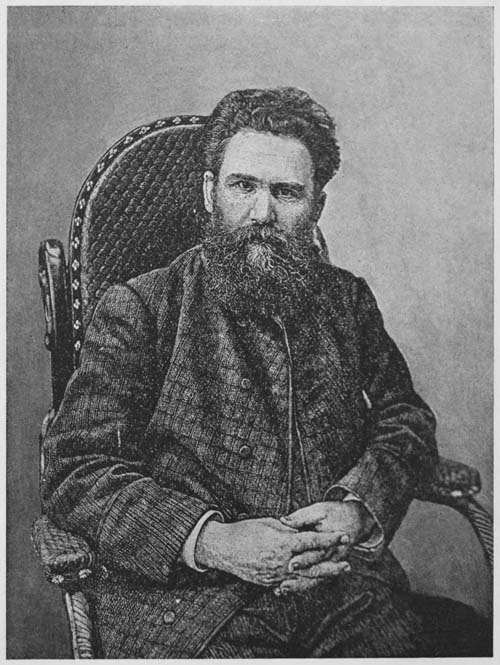
VLADIMIR KOROLENKO
MAKAR’S DREAM
AND OTHER STORIES
BY
VLADIMIR KOROLENKO
TRANSLATED FROM THE RUSSIAN WITH AN
INTRODUCTION BY
MARIAN FELL

NEW YORK
DUFFIELD AND COMPANY
1916
Copyright, 1916, by
DUFFIELD & CO.
Whole book · 14 sections
AND OTHER STORIES
VLADIMIR KOROLENKO
MAKAR’S DREAM
AND OTHER STORIES
BY
VLADIMIR KOROLENKO
TRANSLATED FROM THE RUSSIAN WITH AN
INTRODUCTION BY
MARIAN FELL
NEW YORK
DUFFIELD AND COMPANY
1916
Copyright, 1916, by
DUFFIELD & CO.
VLADIMIR KOROLENKO
The writings of Vladimir Korolenko have been likened to “a fresh breeze blowing through the heavy air of a hospital.” The hospital is the pessimistic literature of the modern Russian intellectuals; the fresh breeze is the voice of the simple-hearted children of “Mother Russia.” These are for the most part tillers of the soil and conquerors of waste places; peasants, pioneers, and Siberian exiles; they often belong to the great class of “the insulted and the injured”: they suffer untold hardships, but their heads are unbowed and their hearts are full of courage and the desire for justice. Among them the great writer’s early life was spent.
Vladimir Korolenko was born on June 15th, 1853, in Zhitomir, a small town in Southwestern or Little Russia. On his father’s side he came of an old Cossack family, his mother was the daughter of a Polish landowner of Zhitomir. The boy’s early life was spent amidst picturesque surroundings; he grew up among the Poles, Jews, and light-hearted, dark-eyed peasants that make up the population of Little Russia, and he never lost the poetic love of nature and the wholesome sense of humour that were nurtured in him under those warm, bright skies. In his story entitled “In Bad Company” he has vividly described the romantic little town that was the home of his childhood. The stern but just judge of that tale is more or less the prototype of his own father. The elder Korolenko was distinguished for an impeccable honesty of practice rare in an official of those times; consequently, when he died in 1870, he left his widow and five children without the slightest means of support. Thanks, however, to the energy of his heroic mother, Vladimir was enabled at seventeen to enter the School of Technology in Petrograd.
Then followed three years of struggle to combine his schooling with the necessity for earning a living, during which Korolenko himself says that he does not know how he managed to escape starvation. Even a cheap dinner of eighteen copecks or nine cents was such a luxury to him in those days that he only treated himself to it six or seven times during the course of one whole year.
In 1874 the young student went to Moscow with ten hard-earned roubles in his pocket and entered the Petrovski Academy, but he was soon expelled from that seat of learning for presenting a petition from his fellow-students to the Director of the College. He returned to Petrograd where his family were now living, and he and his brother made a desperate attempt to support themselves and their brothers and sisters by proof-reading. The future author began sending articles to the newspapers and magazines, and it was then that occurred the first of the series of arrests to which he was subjected for what were considered his advanced social doctrines. He was sent first to Kronstadt for a year and then to Viatka; thence he travelled to Perm, and from Perm to Tomsk; at last he was finally exiled to the distant eastern Siberian province of Yakutsk.
There he spent nearly six years, the most valuable, to him, of his whole life. The vast forest that clothes those far northeastern marshes, grand, gloomy, and held forever in the grip of a deadly cold, made an indelible impression on the imagination of the young artist. He was profoundly moved by the sorrows of the half-savage pioneers inhabiting its trackless solitudes, by the indomitable spirit of his fellow-exiles, and by the adventurous life of the “brodiagi” or wanderers, convicts escaped from prison who return secretly on foot to their “Mother Russia” across the whole breadth of the Siberian continent.
Korolenko was released from exile in 1885, and immediately on his return to Russia published his beautiful “Makar’s Dream.”
The success of the story was immediate, the fame of the author was at once assured. No politics, no social doctrines were here; the appeal of Makar’s plea was universal; liberal and conservative critics alike united in a chorus of praise. The Russian reading public was charmed by the originality of the subject, the radiant conciseness of the author’s style, and the lyric beauty of the story’s end which illuminates with deep significance every detail that has gone before. Poor Makar, most lonely dweller in the Siberian forest, leading a life of incredible labour and hardship, finally dies, and for his sins is condemned at the Judgment of the Great Toyon, or Chief, to suffer in the life hereafter sorrows and toil more grievous than any he has known on earth. Here is the type of “the insulted and the injured” beloved of Dostoievsky and Tolstoi, but with one supreme difference: Makar does not suffer misfortune in passive dejection, he protests. He protests indignantly against the injustice of the judgment of the Great Toyon. Life for him has been desperately hard; it is unjust to judge him by the standards set for the righteous whom the Toyon loves, “whose faces are bathed in perfume and whose garments are sewn by other hands than their own.” This protest, combined with a warm love for all humanity, was to become the keynote of Korolenko’s writings.
His next story, “In Bad Company,” appeared in the same year, and added still more to the young author’s popularity. It is a general favourite in Russia to this day. Though its style is slightly tainted with a flowery Polish exuberance, the descriptions of the old feudal ruins are full of poetry, the children are drawn with sympathy and insight, and the vagabond Turkevich, in his tragi-comic rôle of the Prophet Jeremiah, sounds an unmistakable note of protest.
“The Murmuring Forest” was published in 1886, and is a darkly romantic tale of the dreaming pine forests of Southern Russia, written in the style of an ancient legend. Here the protest of the Cossack Opanas and the forester Raman is blind and rude and brings death to their highborn oppressor, but the plot is laid in feudal times and the need of the serfs was great. The voice of the wind in the tree-tops dominates the unfolding of the simple story like a resonant chord, and when at last fierce justice is done to the tyrant Count, its advent seems as inevitable as the breaking of the thunder-storm that, during the whole course of the tale, has been brewing over the forest.
“The Day of Atonement” is one of Korolenko’s lightest and gayest stories. In describing the merry life of the South, the Little Russian’s kindly humour joins hands with his glowing imagination, and we have a vivid glimpse of a cosy village surrounded by cherry gardens and bathed in warm moonlight; of black-eyed girls, of timid, bustling Jews, of superstitious townsmen, of a canny miller; in short, of all the busy, active life of a town within the Jewish Pale.
But grave or gay, merry or sad, Korolenko is above all things an optimist in his outlook on the world. Through thick and thin, through sorrow and misfortune, the poor, artless heroes of his stories all turn their faces towards the light. The writer’s kind heart never ceases its search for the “eternally human” in every man, and deeply does he sympathise with mankind’s unquenchable desire for freedom and justice, which can face evil unafraid. He himself has said in a letter to a friend: “The Universe is not the sport of accidental forces. Determinism, Evolution, and all other theories lead one to confess that there is a law which is drawing us toward something; toward something which we call ‘good’ in all its manifestations, that is to say toward kindness, truth, right, beauty, and justice.”
That is the burden of Korolenko’s message to the world, embodied in all his writings.
On his return from Siberia, Korolenko went to live in Nijni-Novgorod and there took an active part in bettering the conditions of life among “the insulted and the injured” whom he loved. In a year of famine he worked hard to organise free kitchens for the starving poor, and many energetic articles from his pen were published in the papers. He also continued to produce stories, sketches, and several longer novels, of which the best known is the “Blind Musician.”
In 1894 he made a journey to England and America, and on his return wrote an amusing record of his travels entitled: “Without a Tongue.”
In 1895 he became the editor of the magazine, Russkoye Bogatsvo, and since that date the great story writer has definitely devoted himself to journalism, and has now become one of Russia’s greatest publicists.
The Russian heart is essentially charitable and full of human kindness. Thoroughly democratic in their relations with one another, the Russian people have the misfortune to labour under the harshest political régime in Europe. Like many of his countrymen, Korolenko now devotes his life to the cause of the suffering and the downtrodden, and to helping those who are the victims of social and political injustice.
MAKAR’S DREAM
A CHRISTMAS STORY
This dream was dreamed by poor Makar, who herded his calves in a stern and distant land, by that same Makar upon whose head all troubles are said to fall.
Makar’s birth place was the lonely village of Chalgan, lost in the far forests of Yakutsk. His parents and grandparents had wrested a strip of land from the forest, and their courage had not failed even when the dark thickets still stood about them like a hostile wall. Rail fences began to stretch across the clearing; small, smoky huts began to crowd thickly upon it; hay and straw stacks sprang up; and at last, from a knoll in the centre of the encampment, a church spire had shot toward heaven like a banner of victory.
Chalgan had become a village.
But while Makar’s forbears had been striving with the forest, burning it with fire and hewing it with steel, they themselves had slowly become savage in their turn. They married Yakut women, spoke the language of the Yakuts, adopted their customs, and gradually in them the characteristics of the Great Russian race had been obliterated and lost.
Nevertheless, my Makar firmly believed that he was a Russian peasant of Chalgan, and not a nomad Yakut. In Chalgan he had been born, there he had lived and there he meant to die. He was very proud of his birth and station, and when he wished to vilify his fellow-townsmen would call them “heathen Yakuts,” though if the truth must be told, he differed from them neither in habits nor manner of living. He seldom spoke Russian and, when he did, spoke it badly. He dressed in skins, wore “torbas” on his feet, ate dough-cakes and drank brick-tea, supplemented on holidays and special occasions with as much cooked butter as happened to be on the table before him. He could ride very skilfully on an ox, and when he fell ill he always summoned a wizard, who would go mad and spring at him, gnashing his teeth, hoping to frighten the malady out of his patient and so drive it away.
Makar worked desperately hard, lived in poverty, and suffered from hunger and cold. Had he a thought beyond his unceasing anxiety to obtain his dough-cakes and brick-tea? Yes, he had.
When he was drunk, he would weep and cry: “Oh, Lord my God, what a life!” sometimes adding that he would like to give it all up and go up on to the “mountain.” There he need neither sow nor reap, nor cut and haul wood, nor even grind grain on a hand millstone. He would “be saved,” that was all. He did not know exactly where the mountain was, nor what it was like, he only knew that there was such a place, and that it was somewhere far away, so far that there not even the District Policeman could find him. Of course there he would pay no taxes.
When sober he abandoned these thoughts, realising perchance the impossibility of finding that beautiful mountain, but when drunk he grew bolder. Admitting that he might not find that particular mountain, but some other, he would say: “In that case I should die.” But he was prepared to start, nevertheless. If he did not carry out his intention, it was because the Tartars in the village always sold him vile vodka with an infusion of mahorka[A] for strength, and this quickly made him ill and laid him by the heels.
It was Christmas Eve, and Makar knew that to-morrow would be a great holiday. This being the case, he was overpowered with a longing for drink, but to drink there was nothing. His resources were at an end. His flour was all gone, he was already in debt to the village merchants and Tartars, yet to-morrow was a great holiday, he would not be able to work, what could he do if he did not get drunk? This reflection made him unhappy. What a life it was! He had not even one bottle of vodka to drink on the great winter holiday.
Then a happy thought came to him. He got up and put on his ragged fur coat. His wife, a sturdy, sinewy woman, remarkably strong and equally remarkably ugly, who saw through all his simple wiles, guessed his intentions as usual.
“Where are you going, you wretch? To drink vodka alone?”
“Be quiet. I’m going to buy one bottle. We’ll drink it together to-morrow.”
He gave her a sly wink and clapped her on the shoulder with such force that she staggered. A woman’s heart is like that; though she knew that Makar was deceiving her, she surrendered to the charms of that conjugal caress.
He went out of the house, caught his old piebald pony in the courtyard, led him by the mane to the sleigh, and put him in harness. The piebald soon carried Makar through the gates and then stopped and looked enquiringly at his Master, who was sitting plunged in thought. At this Makar pulled the left rein, and drove away to the outskirts of the village.
On the edge of the village stood a little hut out of which, as out of the other huts, the smoke of a little fire rose high, high into the air, veiling the bright moon and the white, glittering hosts of stars. The flames crackled merrily and sparkled through the dim icicles that hung about the doorway. All was quiet inside the courtyard gates.
Strangers from a foreign land lived here. How they had come, what tempest had cast them up in that lonely clearing, Makar knew not, neither cared to know, but he liked to trade with them, for they neither pressed him too hard nor insisted upon payment.
On entering the hut, Makar went straight to the fireplace and stretched out his frozen hands over the blaze, crying “Tcha” to explain how the frost had nipped him.
The foreigners were at home; a candle was burning on the table although no work was being done. One man was lying on the bed blowing rings of smoke, pensively following their winding curves with his eyes, and intertwining with them the long threads of his thoughts.
The other was sitting over the fire thoughtfully watching the sparks that crept across the burning wood.
“Hello!” said Makar, to break the oppressive silence.
He did not know—how should he—the sadness that filled the hearts of the two strangers, the memories that crowded their brains that evening, the visions they saw in the fantastic play of fire and smoke. Besides, he had troubles of his own.
The young man who sat by the chimney raised his head and looked at Makar with puzzled eyes, as if not recognising him. Then, with a shake of his head, he quickly got up from his chair.
“Ah, good evening, good evening, Makar. Good. Will you have tea with us?”
“Tea?” Makar repeated after him. “That’s good. That’s good, brother; that’s fine.”
He began quickly to take off his things. Once free of his fur coat and cap he felt more at his ease, and, seeing the red coals already glowing in the samovar, he turned to the young man with exaggerated enthusiasm.
“I like you, that is the truth. I like you so, so very much; at night I don’t sleep——”
The stranger turned, and a bitter smile crept over his face.
“You like me, do you?” he asked. “What do you want?”
“Business,” Makar answered. “But how did you know?”
“All right. When I’ve had tea I’ll tell you.”
As his hosts themselves had offered him tea, Makar thought the moment opportune to press the point farther.
“Have you any roast meat?” he asked. “I like it.”
“No, we haven’t.”
“Well, never mind,” replied Makar soothingly. “We’ll have that some other time, won’t we?” And he repeated his question: “We’ll have that some other time?”
“Very well.”
Makar now considered that the strangers owed him a piece of roast meat, and he never failed to collect a debt of this kind.
Another hour found him seated once more in his sled, having made one whole rouble by selling five loads of wood in advance on fairly good terms. Now, although he had vowed and sworn not to drink up the money until to-morrow, he nevertheless made up his mind to do so without delay. What odds? The pleasure ahead silenced the voice of his conscience; he even forgot the cruel drubbing in store for his drunken self from his wife, the faithful and the deceived.
“Where are you going, Makar?” called the stranger laughing, as Makar’s horse, instead of going straight ahead, turned off to the left in the direction of the Tartar settlement.
“Whoa! Whoa! Will you look where the brute is going?” cried Makar to exculpate himself, tugging hard at the left rein nevertheless and slyly slapping his pony’s side with the right.
The clever little horse stumbled patiently away in the direction required by his master, and the scraping of the runners soon stopped in front of a Tartar house.
At the gate stood several horses with high-peaked Yakut saddles on their backs.
The air in the crowded hut was stifling and hot; a dense cloud of acrid mahorka smoke hung in the air and wound slowly up the chimney. Yakut visitors were sitting on benches about the room or had clustered around the tables set with mugs full of vodka. Here and there little groups were gathered over a game of cards. The faces of all were flushed and shining with sweat. The eyes of the gamblers were fiercely intent on their play, and the money came and went in a flash from pocket to pocket. On a pile of straw in a corner sat a drunken Yakut, rocking his body to and fro and droning an endless song. He drew the wild, rasping sounds from his throat in every possible key, repeating always that to-morrow was a great holiday and that to-day he was drunk.
Makar paid his rouble and received in return a bottle of vodka. He slipped it into the breast of his coat and retired unnoticed into a corner. There he filled mug after mug in rapid succession and gulped them down one after another. The liquor was vile, diluted for the holiday with more than three quarters of water, but if the dole of vodka was scant, the mahorka had not been stinted. Makar caught his breath after each draught, and purple spots circled before his eyes.
The liquor soon overpowered him; he also sank down on the straw, folded his arms around his knees, and laid his heavy head upon them. The same dreary, rasping sounds burst of their own accord from his throat; he sang that to-morrow was a great holiday and that he had drunk up five loads of wood.
Meanwhile the hut was filling with other Yakuts who had come to town to go to church and to drink Tartar vodka, and the host saw that soon there would be no room for more. He rose from the table and looked at the company, and, as he did so, his eye fell upon Makar and the Yakut sitting in their dark corner. He made his way to the Yakut, seized him by the coat collar, and flung him out of the hut. Then he approached Makar.
As a citizen of Chalgan, the Tartar showed him greater respect; he threw the door open wide and gave the poor fellow such a kick from behind that Makar shot out of the hut and buried his nose in a snow-drift.
It would be difficult to say whether Makar was offended by this treatment or not. He felt snow up his sleeves and on his face, picked himself up somehow out of the drift, and staggered to where his piebald was standing.
The moon had by now risen high in the heavens and the tail of the Great Bear was dipping toward the horizon. The cold was tightening its grasp. The first fiery shafts of the Aurora were flaring up fitfully out of a dark, semicircular cloud in the north and playing softly across the sky.
The piebald, realising, it seemed, his master’s condition, trudged carefully and soberly homeward. Makar sat in his sled, swaying from side to side, and continued his song. He sang that he had drunk away five loads of wood, and that his old woman would kill him when he got home.
The sounds that burst from his throat rasped and groaned so dismally through the evening air that his friend the foreigner, who had climbed up on to his roof to close the mouth of the chimney, felt more than ever unhappy at the sound of Makar’s song.
Meanwhile the piebald had drawn the sled to the top of a little hill from where the surrounding country could be distinctly seen. The snowy expanse lay shining brightly, bathed in the rays of the moon, but from time to time the moonlight faded and the white fields grew dark until, with a sudden flash, the radiance of the Northern Lights streamed across them. Then it seemed as if the snowy hills and the forest that clothed them were coming very close, to withdraw once again into the distant shadow. Makar spied plainly through the trees the silvery bald crown of the little knoll behind which his traps were waiting for all the wild dwellers of the forest. The sight of this hill changed the tenor of his thoughts. He sang that a fox had been caught in one of his snares; he would sell the pelt in the morning, and so his wife would not kill him.
The first chimes of the church bells were ringing through the frosty air as Makar re-entered his hut. His first words were to tell his wife that a fox had been caught in one of his traps, and as he had forgotten entirely that the old woman had not shared his vodka, he was violently surprised when she gave him a cruel kick, without paying any attention to his good news.
Later, as he lay prostrate on the bed, she managed to give him another blow in the back with her fist.
Meanwhile the solemn, festal chiming of the bells broke over Chalgan and floated far, far away into the distance.
He lay on his bed with his head burning and his vitals on fire. The strong mixture of vodka and mahorka was coursing through his veins, and trickles of melted snow were running down his face and back.
His wife thought him asleep, but he was not sleeping. He could not get the idea of that fox out of his head. He had succeeded in convincing himself absolutely that a fox had been caught in one of his traps, and he even knew which trap it was. He saw the fox pinned under the heavy log, saw it tearing at the snow with its claws and struggling to be free, while the moonbeams stole into the thicket and played over its red-gold fur. The eyes of the wild creature were glowing at his approach.
He could stand it no longer. He rose from his bed, and started to find his faithful pony who was to carry him into the forest.
But what was this? Had the strong arms of his wife really seized him by the collar of his fur coat and thrown him back on the bed?
No, here he was, already beyond the village. The runners of his sleigh were creaking smoothly over the hard snow. Chalgan had been left behind. The solemn tones of the church bells came floating along his trail, and on the black line of the horizon bands of dark horsemen in tall, pointed hats were silhouetted against the bright sky. The Yakuts were hurrying to church.
The moon went down, and a small, whitish cloud appeared in the zenith, shining with suffused, phosphorescent lustre. It gathered size, it broke, it flickered, and rays of iridescent light spread swiftly from it in all directions, while the dark, semicircular cloud in the north grew blacker and blacker, more sombre than the forest which Makar was approaching.
The road wound through a dense, low thicket with little hills rising on either hand; the farther it advanced, the higher grew the trees, until at last the taiga[B] closed about it, mute and pregnant with mystery. The naked branches of the larches drooped under their loads of silvery rime. The soft radiance of the Aurora filtered through the tree-tops, and strayed across the frosty earth, unveiling now an icy glade, now the fallen trunk of some giant of the forest half buried in the snow.
Another moment, and again all was sunk in murky darkness, full-fraught with secrecy and silence. Makar stopped. Here, almost at the side of the road, were set the first units of an elaborate system of traps. He could see clearly in the phosphorescent light the low stockade of fallen timber and the first trap—three long, heavy logs resting upon an upright post, and held in place by a complicated arrangement of levers and horse-hair ropes.
To be sure, these traps were not his, but might not a fox have been caught in them, too? Makar quickly got out of his sled, left the clever piebald standing in the road, and listened attentively.
Not a sound in the forest! Only the solemn ringing of the church bells came floating as before from the distant, invisible village.
There was nothing to fear. Aliosha, the owner of the traps and Makar’s neighbour and bitter enemy, was no doubt in church. Not a track could be seen on the smooth breast of the new-fallen snow.
Makar struck into the thicket—no one was there.
The snow creaked under foot. The log traps lay side by side like a row of cannon with gaping jaws, in silent expectation.
Makar walked up and down the line without finding anything, and turned back to the road.
But what was that? A faint rustle! The gleam of red fur near at hand in a spot of light! Makar saw clearly the pointed ears of a fox; it waved its bushy tail from side to side as if to beckon him into the forest, and vanished among the tree-trunks in the direction of his traps. Next moment a dull, heavy thud resounded through the forest, ringing out clearly at first, and then echoing more faintly under the canopy of trees, until it died softly away in the dark abysses of the taiga.
Makar’s heart leapt—a trap had fallen!
He sprang toward the sound, pushing his way through the undergrowth. The icy twigs whipped his eyes and showered snow in his face; he stumbled and lost his breath.
At last he ran into a clearing that he himself had made. Hoary white trees surrounded the little glade, and a shrinking path crept across it, with the mouth of a large trap guarding its farther end. A few steps more and——
Suddenly, the figure of a man appeared on the path near the trap—appeared and vanished. Makar recognised Aliosha. He saw distinctly his short, massive, stooping form and his walk like a bear’s. His dark face looked blacker than he had ever seen it, Makar thought, and his large teeth showed in a wider grin than ever.
Makar was seized with genuine anger. “The scoundrel! He has been at my traps!” It was true that Makar had just made the round of Aliosha’s traps, but that was a different matter. The difference was that when he visited other men’s traps he felt afraid of being discovered, but when others came to his traps, he felt indignation and a longing to lay hands on the man who had violated his rights.
He darted toward the fallen trap. There was the fox! Aliosha, too, was approaching with his shuffling bear’s walk; Makar must reach the trap first!
There lay the fallen log and under it glistened the ruddy coat of the captive creature. The fox was scratching at the snow with its paws exactly as Makar had seen it scratch in his dream, and was watching his approach with bright, burning eyes, just as he had dreamt that it would.
“Titima! (Don’t touch it!) It is mine!” cried Makar to Aliosha.
“Titima!” came Aliosha’s voice like an echo. “It is mine!”
Both men ran up at the same moment, and both began quickly to raise the log, freeing the animal beneath it. As the log was lifted the fox rose too. It gave a little jump, stopped, looked at the two men with mocking eyes, and then, lowering its nose, licked the place that had been caught under the log. This done it hopped gaily away with a farewell flirt of its tail.
Aliosha would have thrown himself after it, but Makar caught him by the coat tails.
“Titima!” he cried. “It is mine!” And he started after the fox.
“Titima!” echoed Aliosha’s voice again, and Makar felt himself seized, in turn, by the tails of his coat, and saw Aliosha dart forward.
Makar was furious. He forgot the fox and rushed after Aliosha, who now turned to flee.
They ran faster and faster. The twigs of the larches knocked the cap from Aliosha’s head, but he could not stop to regain it. Makar was already upon him with a fierce cry. But Aliosha had always been more crafty than poor Makar. He suddenly stopped, turned round, and lowered his head; Makar ran straight into it with his stomach and turned head over heels in the snow. As he fell, that infernal Aliosha snatched the cap from his head and vanished into the forest.
Makar rose slowly to his feet. He felt thoroughly beaten and miserable. The state of his mind was pitiful. The fox had been in his hands and now—he thought he saw it again in the darkening forest wave its tail gaily once more and vanish forever.
Darkness was falling. The little white cloud in the zenith could barely be seen, and beams of fading light were flowing wearily and languidly from it as it gently melted away.
Sharp rivulets of icy water were running in streams over Makar’s heated body; the snow had gone up his sleeves and was trickling down his back and into his boots. That infernal Aliosha had taken away his cap and Makar well knew that the pitiless cold does not jest with men who go into the taiga without gloves and without a hat.
He had already walked far. According to his calculations he should long since have been in sight of the church steeple, but here he was still in the forest. The taiga held him in its embrace like a witch. The same solemn ringing came to his ears from afar; he thought he was walking toward it, but the sound kept growing more and more distant, and a dull despair crept into Makar’s heart as its echoes came ever more faintly to his ears.
He was tired; he was choking; his legs were shaking under him. His bruised body ached miserably, his breathing strangled him, his feet and hands were growing numb, and red-hot bands seemed tightening around his bare head.
“I shall die!” came more and more frequently into his mind, but still he walked on.
The taiga held its peace. It closed about him with obdurate hostility and gave him no light and no hope.
“I shall die!” Makar kept thinking.
His strength left him altogether. The saplings now beat him squarely in the face without the least shame, in derision at his helpless plight. As he crossed one little glade a white hare ran out, sat up on its hind legs, waved its long, black-tipped ears, and began to wash its face, making the rudest grimaces at Makar. It gave him to understand that it knew him well, knew him to be the same Makar who had devised cunning means of destruction for it in the forest; but now it was its turn to jeer.
Makar felt bitterly sad. The taiga grew more animated, but with a malign activity. Even the distant trees now threw their long branches across his way, snatched at his hair, and beat his face and eyes. The ptarmigans came out of their secret coverts and fixed their round, curious eyes upon him, and the wood-grouse ran in and out among them with drooping tails and angry, spreading wings, loudly telling their mates of him, Makar, and of his snares. Finally, a thousand fox-faces glanced from the distant thickets; they sniffed the air and looked derisively at him, pricking their sharp ears. Then the hares came and stood on their hind legs before him and shouted with laughter as they told of Makar’s misfortune.
That was too much.
“I shall die!” thought Makar, and he decided to do so as quickly as possible.
He lay down on the snow.
The cold increased. The last rays of the Aurora flickered faintly and stretched across the sky to peep at Makar through the tree-tops. The last echoes of the church bells came floating to him from far-away Chalgan.
The Northern Lights flared up and went out. The bells ceased ringing.
Makar died.
He did not notice how this came to pass. He knew that something should come out of him, and waited, thinking every moment it would come, but nothing appeared.
Nevertheless, he realised that he was now dead, and he therefore lay very still; he lay so long that he grew tired.
The night was dark when Makar felt someone push him with his foot. He turned his head and opened his eyes.
The larches were now standing meekly and quietly over him, as if ashamed of their former pranks. The shaggy spruces stretched out their long snow-covered arms and rocked themselves gently, gently, and the starry snowflakes settled softly through the air.
The kind, bright stars looked down through the branches from the dark blue sky, and seemed to be saying: “See, a poor man has died!”
Over Makar’s prostrate form and prodding him with his foot stood the old priest Ivan. His long cassock was white with snow; snow lay upon his fur hat, his shoulders, and his beard. Most surprising of all was the fact that this was the same Father Ivan who had died five years ago.
He had been a good priest. He had never pressed Makar for his tithes and had not even asked to be paid for the services of the church; Makar had always fixed the price of his own christenings and requiems, and he now remembered with confusion that it had sometimes been extremely low and that sometimes he had not even paid it at all. Father Ivan had never resented this, he had only required one thing: a bottle of vodka on every occasion. If Makar had no money, Father Ivan would send him for the bottle himself, and they would drink it together. The good priest always grew as drunk as a lord, but he fought neither fiercely nor often. Makar would see him home, and hand him over, helpless and defenseless, to the care of the Mother Priestess, his wife.
Yes, he had been a good priest, but his end had been bad.
One day, when there was no one else at home, the fuddled Father, who was lying alone on the bed, had taken it into his head to smoke. He got up and staggered toward the great, fiercely heated fireplace to light his pipe at the blaze. But he was too drunk, he swayed and fell into the fire. When his family returned, all that remained of the little Father were his feet.
Every one regretted good Father Ivan, but no doctor on earth could have saved him, as only his feet remained. So they buried the feet, and a new priest was appointed to fill the place of Father Ivan.
And now Ivan himself, sound and whole, was standing over Makar, prodding him with his foot.
“Get up, Makar, old man!” he was saying, “and let us be going.”
“Where must I go?” asked Makar with displeasure. He supposed that once dead he ought to lie still, and that there was no need for him now to be wandering about the forest, losing his way. If he had to do that, then why had he died?
“Let us go to the great Toyon.”[C]
“Why should I go to him?” Makar asked.
“He is going to judge you,” answered the priest in a sorrowful, compassionate voice.
Makar recollected that, in fact, one did have to appear at some judgment after one died. He had heard that at church. The priest was right after all; he would have to get up.
So Makar rose, muttering under his breath that they couldn’t even let a man alone after he was dead.
The priest walked before and Makar followed. They went always straight ahead, and the larches stood meekly aside and allowed them to pass; they were going eastward.
Makar noted with surprise that Father Ivan left no tracks in the snow behind him; he looked under his own feet and saw no tracks either; the snow lay as fresh and smooth as a table cloth.
How easy it would be now, he reflected, to rob other men’s traps, as no one could find him out! But the priest must have read his secret thought, for he turned and said: “Kabis! (stop that!). You don’t know what you will get for thoughts like that.”
“Well, I declare!” exclaimed the disgusted Makar. “Can’t I even think what I please? What makes you so strict these days? Hold your tongue!”
The priest shook his head and walked on.
“Have we far to go?” asked Makar.
“Yes, a long way,” answered the priest sadly.
“And what shall we have to eat?” Makar inquired with anxiety.
“You have forgotten that you are dead,” the priest answered turning toward him. “You won’t have to eat or drink now.”
Makar did not like that idea in the least. Of course it would be all right in case there were nothing to eat, but then one ought to lie still, as he did at first after his death. But to walk, and to walk a long way, and to eat nothing, that seemed to him to be absolutely outrageous. He began muttering again.
“Don’t grumble!”
“All right!” he answered in an injured voice and went on complaining and growling to himself about such a stupid arrangement.
“They make a man walk and yet he needn’t eat! Who ever heard of such a thing?”
He was extremely discontented as he followed the priest. And they walked a long way. Though Makar could not see the dawn, they seemed, by the distance they had covered, to have been walking a week. They had left so many ravines and hills behind them, so many rivers and lakes, so many forests and plains! Whenever Makar looked back, the dark taiga seemed to be running away behind them and the high, snowclad mountains seemed to be melting into the murky night and hiding swiftly behind the horizon.
They appeared to be climbing higher and higher. The stars grew larger and brighter; from the crest of the height to which they had risen they could see the rim of the setting moon. It seemed to have been in haste to escape, but Makar and the priest had overtaken it. Then it rose again over the horizon, and the travellers found themselves on a level, very high plain. It was light now, much lighter than early in the night, and this was due, of course, to the fact that they were much nearer the stars than they had been before. Each one of these, in size like an apple, glittered with ineffable brightness; the moon, as large as a huge barrel-head, blazed with the brilliance of the sun, lighting up the vast expanse from one edge to the other.
Every snowflake on the plain was sharply discernible, and countless paths stretched across it, all converging toward the same point in the east. Men of various aspects and in many different garbs were walking and riding along these roads.
Makar looked sharply at one horseman, and then suddenly turned off the road and pursued him.
“Stop! Stop!” cried the priest, but Makar did not even hear him. He had recognised a Tartar, an old acquaintance of his, who had stolen a piebald horse from him once, and who had died five years ago. There was that same Tartar now, riding along on the very same horse! The animal was skimming over the ground, clouds of snowy dust were rising from under its hoofs, glittering with the rainbow colours of twinkling stars. Makar was surprised that he should be able, on foot, to overtake the Tartar so easily in his mad gallop. Besides, when he perceived Makar a few steps behind him, he stopped with great readiness. Makar fell upon him with passion.
“Come to the sheriff with me!” he cried. “That is my horse; he has a split in his right ear. Look at the man, how smart he is, riding along on a stolen horse while the owner follows on foot like a beggar!”
“Gently,” said the Tartar. “No need to go for the sheriff! You say this is your horse, take him and be damned to the brute! This is the fifth year I have been riding him up and down on one and the same spot! Every foot-passenger overtakes me. It is humiliating for a good Tartar, it is indeed!”
He threw his leg over the saddle in act to alight, but at that moment the panting priest came running up and seized Makar by the arm.
“Unfortunate man!” he cried. “What are you about? Can’t you see that the Tartar is fooling you?”
“Of course he is fooling me!” shouted Makar waving his arms. “That was a lovely horse, a real gentleman’s horse; I was offered forty roubles for him before his third spring. Never you mind, brother! If you have spoilt that horse for me I shall cut him up for meat, and you shall pay me his full value in money! Do you think, because you are a Tartar, there are no laws for you?”
Makar was flying into a passion and shouting in order to draw a crowd about him, for he was afraid of Tartars from habit, but the priest broke in on his outburst.
“Gently, gently, Makar, you keep forgetting that you are dead! What do you want with a horse? Can’t you see that you travel much faster on foot than the Tartar does on horseback? Would you like to be forced to ride for a whole thousand years?”
Makar now understood why the Tartar had been so willing to give up his horse.
“They’re a crooked lot!” he thought, and he turned to the Tartar.
“Very well then,” he said. “Take the horse, brother; I forgive you!”
The Tartar angrily pulled his fur cap over his ears and lashed his horse. The pony galloped madly, and clouds of snow flew from under its hoofs, but long as Makar and the priest stood still, the Tartar did not budge an inch from their side.
He spat angrily and turned to Makar.
“Listen, friend, haven’t you a bit of mahorka with you? I do want to smoke so badly, and I finished all mine five years ago.”
“You’re a friend of dogs but no friend of mine,” retorted Makar in a rage. “You have stolen my horse and now you ask for mahorka! Confound you altogether, I’m not sorry for you one bit!”
With these words Makar moved on.
“You made a mistake not to give him a little mahorka,” said Father Ivan. “The Toyon would have forgiven you at least one hundred sins for that at the Judgment.”
“Then why didn’t you tell me that before?” snapped Makar.
“Ah, it is too late to teach you anything now. You should have learnt it from your priest while you were alive.”
Makar was furious. He saw no sense in priests who took their tithes and did not even teach a man when to give a leaf of mahorka to a Tartar in order to gain forgiveness for his sins. One hundred sins were no joke! And all for a leaf of tobacco! The mistake had cost him dear.
“Wait a moment!” he exclaimed. “One leaf will do very well for us two. Let me give the other four to the Tartar this minute, that will mean four hundred sins!”
“Look behind you,” answered the priest.
Makar looked round. The white, empty plain lay stretched out far behind them; the Tartar appeared for a second upon it, a tiny, distant dot. Makar thought he could distinguish the white cloud rising from under the hoofs of his piebald, but next moment the dot, too, had vanished.
“Well, well, the Tartar will manage all right without his mahorka. You see how he has ruined my horse, the scoundrel!”
“No, he has not ruined your horse,” answered the priest. “That horse was stolen. Have you not heard the old men say that a stolen horse will never go far?”
Makar had certainly heard this from the old men, but as he had often seen Tartars ride all the way to the city on horses that they had stolen, he had never put much belief in the saying. He now concluded that old men were sometimes right.
They now began to pass many other horsemen on the plain. All were hurrying along as fast as the first; the horses were flying like birds, the riders dripping with sweat, yet Makar and the priest kept overtaking them and leaving them behind.
Most of these horsemen were Tartars, but a few were natives of Chalgan; some of the latter were astride stolen oxen and were goading them on with lumps of ice.
Makar looked with hatred at the Tartars, and muttered every time he passed one that the fellow had deserved much worse than this, but when he met a peasant from Chalgan he would stop and chat amicably with him, as they were friends, after all, even if they were thieves! Sometimes he would even show his fellow-feeling by picking up a lump of ice and diligently beating the ox or horse from behind, but let him take so much as one step forward himself, and horse and rider would be left far in the rear, a scarcely visible dot.
The plain seemed to be boundless. Though Makar and his companion occasionally overtook these riders and pedestrians, the country around was deserted, and the travellers seemed to be separated by hundreds of thousands of miles.
Among others, Makar fell in with an old man unknown to him, who plainly hailed from Chalgan; this could be discerned from his face, his clothes, and even from his walk, but Makar could not remember ever having seen him before. The old man wore a ragged fur coat, a great shaggy hat, tattered and worn leather breeches, and still older calf-skin boots. Worst of all, he was carrying on his shoulders, in spite of his old age, a crone still more ancient than himself, whose feet trailed on the ground. The old man was wheezing and staggering along, leaning heavily on his stick. Makar felt sorry for him. He stopped and the old man stopped too.
“Kansi! (Speak!)” said Makar pleasantly.
“No,” answered the greybeard.
“What have you seen?”
“Nothing.”
“What have you heard?”
“Nothing.”
Makar was silent for a while, and then thought he might ask the old man who he was and whence he had crawled.
The old man told his name. Long since, he said—he did not know himself how many years ago—he had left Chalgan and gone up to the “mountain” to save himself. There he had done no work, had lived on roots and berries, and had neither ploughed nor sowed nor ground wheat nor paid taxes. When he died he went to the Judgment of the Toyon. The Toyon asked him who he was, and what he had done. He answered he had gone up on the “mountain” and had saved himself. “Very well,” the Toyon answered, “but where is your wife? Go and fetch her here.” So he went back for his old woman. But she had been forced to beg before she died, as there had been no one to support her, and she had had neither house, nor cow, nor bread. Her strength had failed, and now finally she was not able to move her legs. So he was obliged to carry her to the Toyon on his back.
As he said this, the old man burst into tears, but the old woman kicked him with her heels as if he had been an ox, and cried in a weak, cross voice:
“Go on!”
Makar felt more sorry than ever for the old man, and heartily thanked his stars that he had not succeeded in going to the “mountain” himself. His wife was large and lusty, and his burden would have been even heavier than that of the old man; if, in addition to this, she had begun to kick him as if he were an ox, he would certainly have died a second death.
He tried to hold the old woman’s feet out of pity for his friend, but he had scarcely taken three steps before he was forced to drop them hastily, or they would certainly have remained in his hands; another minute, and the old man and his burden were left far out of sight.
For the remainder of his journey Makar met no more travellers whom he honoured with marked attention. Here were thieves crawling along step by step, laden like beasts of burden with stolen goods; here rode fat Yakut chieftains towering in their high saddles, their peaked hats brushing the clouds; here, skipping beside them, ran poor workmen, as lean and light as hares; here strode a gloomy murderer, blood-drenched, with haggard, furtive eyes. He kept casting himself in vain into the pure snow, hoping to wash out the crimson stains; the snow around him was instantly dyed red, but the blood upon the murderer started out more vividly than ever, and in his eyes there gleamed wild horror and despair. So he ran on, shunning the frightened gaze of all men.
From time to time the little souls of children came flying through the air like birds, winging their way in great flocks, and this was no surprise to Makar. Bad, coarse food, dirt, the heat from the fireplaces, and the cold draughts in the huts drove them from Chalgan alone in hundreds. As they overtook the murderer, the startled flocks wheeled swiftly aside, and long after their passage the air was filled with the quick, anxious whirring of their little pinions.
Makar could not help remarking that, in comparison with the other travellers, he was moving at a fairly swift pace, and he hastened to ascribe this to his own virtue.
“Listen Asabit! (Father!)” he said. “What do you think, even if I was fond of drinking I was a good man, wasn’t I? God loves me, doesn’t he?”
He looked inquiringly at Father Ivan. He had a secret motive for asking this question, he wanted to find out something from the old priest, but the latter answered curtly:
“Don’t be conceited! We are near the end now. You will soon find that out for yourself.”
Makar had not noticed until then that a light seemed to be breaking over the plain. First a few lambent rays flashed up over the horizon, spreading swiftly across the sky and extinguishing the bright stars. They went out, the moon set, and the plain lay in darkness.
Then mists arose on the plain and stood round about it like a guard of honour.
And at a certain point in the east the mists grew bright like a legion of warriors in golden armour.
And then the mists stirred, and the warriors prostrated themselves upon the ground.
And the sun rose from their midst, and rested upon their golden ranks, and looked across the plain.
And the whole plain shone with a wonderful, dazzling radiance.
And the mists rose triumphantly in a mighty host, parted in the south, swayed, and swept upwards.
And Makar seemed to hear a most enchanting melody, the immemorial pæan with which the earth daily greets the rising sun. He had never before given it due attention, and only now felt for the first time the beauty of the song.
He stood and hearkened and would not go any farther; he wanted to stand there forever and listen.
But Father Ivan touched him on the arm.
“We have arrived,” he said. “Let us go in.”
Thereupon Makar noticed that they were standing before a large door which had previously been hidden by the mist.
He was very loath to proceed, but could not fail to comply.
They entered a large and spacious hut, and not until then did Makar reflect that it had been very cold outside. In the middle of the hut was a chimney of pure silver marvellously engraved, and in it blazed logs of gold, radiating such an even heat that one’s whole body was penetrated by it in an instant. The flames in this beautiful fireplace neither scorched nor dazzled the eyes, they only warmed, and once more Makar wanted to stand there and toast himself forever. Father Ivan, too, came and stood before the fire, stretching out his frozen hands to the blaze.
Four doors opened out of the room, and of these only one led into the open air; through the other three young men in long white gowns were coming and going. Makar imagined that they must be the servants of this Toyon. He seemed to remember having seen them somewhere before, but could not recollect exactly where. He was not a little surprised to note that each servant wore a pair of large white wings upon his back, and decided that the Toyon must have other workmen beside these, for surely they, encumbered with their wings, could never make their way through the forest thickets when they went to cut wood or poles.
One of the servants approached the fire, and, turning his back to the blaze, addressed Father Ivan.
“Speak!”
“There is nought to say.”
“What did you hear in the world?”
“Nothing.”
“What did you see?”
“Nothing.”
Both were silent, and then the priest said:
“I have brought this one.”
“Is he from Chalgan?” asked the servant.
“Yes, from Chalgan.”
“Then we must get ready the big scales.”
He left the room to make his preparations, and Makar asked the priest why scales were needed, and why they must be large.
“You see,” answered the priest a trifle embarrassed, “the scales are needed to weigh the good and evil you did when you were alive. With all other people the good and evil almost balance one another, but the inhabitants of Chalgan bring so many sins with them that the Toyon had to have special scales made with one of the bowls extra large in order to contain them all.”
At these words Makar quailed, and felt his heart-strings tighten.
The servant brought in and set up the big scales. One bowl was small and of gold, the other was wooden and of huge proportions. A deep black pit suddenly opened under the wooden bowl.
Makar approached the scales, and carefully inspected them to make sure they were not false. They proved to be correct; the bowls hung motionless, without movement up or down.
To tell the truth, he did not exactly understand their mechanism, and would have preferred to have done business with the simple balances by whose aid he had learned to buy and sell with great profit to himself during the course of his long life.
“The Toyon is coming!” cried Father Ivan suddenly, and hastily began to pull his cassock straight.
The central door opened and in came an ancient, venerable Toyon, his long silvery beard hanging below his waist. He was dressed in rich furs and tissues unknown to Makar, and on his feet he wore warm velvet-lined boots, such as Makar had seen depicted on antique ikons.
Makar recognised him at a glance as the same old greybeard whose picture he had seen in church, only here he was unattended by his son. Makar decided that the latter must have gone out on business. The dove flew into the room, however, and after circling about the old man’s head, settled upon his knee. The old Toyon stroked the dove with his hand as he sat on the seat that had been especially prepared for him.
The Toyon’s face was kind, and when Makar became too downcast he looked at it and felt better.
His heart was heavy because he was suddenly remembering all his past life down to the smallest detail; he remembered every step he had taken, every blow of his axe, every tree he had felled, every deceit he had practiced, every glass of vodka he had drunk.
He grew frightened and ashamed, but he took heart as he looked at the face of the old Toyon.
And as he took heart it occurred to him that there might be some things he could manage to conceal.
The old Toyon looked searchingly at him and asked him who he was and whence he had come, what his name was and what his age might be.
When Makar had replied to his questions, the old Toyon asked:
“What have you done in your life?”
“You know that yourself,” answered Makar. “Surely it is written in your book!”
Makar wanted to test the Toyon and find out whether everything was really inscribed there or no.
“Tell me yourself,” answered the old Toyon.
Makar took courage.
He began enumerating all his works, and although he remembered every blow he had struck with his axe, every pole he had cut, and every furrow he had ploughed, he added to his reckoning thousands of poles and hundreds of loads of wood and hundreds of logs and hundreds of pounds of sown seed.
When all had been told, the old Toyon turned to Father Ivan and said:
“Bring hither the book.”
Makar saw from this that Father Ivan was secretary to the Toyon, and was annoyed that the other had given him no friendly hint of the fact.
Father Ivan brought the great book, opened it, and began to read.
“Just look and see how many poles are inscribed there,” said the old Toyon.
Father Ivan looked and answered sorrowfully:
“He added a round three thousand to his reckoning.”
“It’s a lie!” shouted Makar vehemently. “He must be wrong because he was a drunkard and died a wicked death!”
“Be quiet!” commanded the Toyon. “Did he charge you more than was fair for christenings and weddings? Did he ever press you for tithes?”
“Why waste words?” answered Makar.
“You see,” the Toyon said, “I know without assistance from you that he was fond of drink——”
And the old Toyon lost his temper. “Read his sins from the book now; he is a cheat, and I can’t believe his words!” he cried to Father Ivan.
Meanwhile the servants were heaping into the golden bowl all Makar’s poles, and his wood, and his ploughing, and all his work. And there proved to be so much that the golden bowl sank, and the wooden bowl rose out of reach, high, high into the air. So the young servants of God flew up to it on their pinions and hundreds of them pulled it to the floor with ropes.
Heavy is the labour of a native of Chalgan!
Then Father Ivan began adding up the number of frauds that Makar had committed, and there proved to be twenty-one thousand, three hundred and three. Then he added up the number of bottles of vodka he had drunk, and there proved to be four hundred. And the priest read on and Makar saw that the wooden bowl was pulling on the gold one; it sank into the hole, and, as the priest read, it descended ever deeper and deeper.
Makar realised then that things were going badly for him; he stepped up to the scales and furtively tried to block them with his foot.
But one of the servants saw it, and a clamour arose amongst them.
“What is the matter there?” asked the old Toyon.
“Why, he was trying to block the scales with his foot!” cried the servant.
At that the Toyon turned wrathfully to Makar, exclaiming:
“I see that you are a cheat, a sluggard, and a drunkard. You have left your arrears unpaid behind you, you owe tithes to the priest, and the policeman is steadily sinning on your account by swearing every time he speaks your name.”
Then, turning to Father Ivan, the old Toyon asked:
“Who in Chalgan gives the heaviest loads to his horses to pull, and who works them the hardest?”
Father Ivan answered:
“The church warden. He carries the mail and drives the district policeman.”
To that the Toyon answered:
“Hand over this sluggard to the church warden for a horse and let him pull the policeman until he drops—we shall see what will happen next.”
Just as the Toyon was saying these words, the door opened; his son entered the hut and sat down at his right hand.
And the son said:
“I have heard the sentence pronounced by you. I have lived long on the earth, and I know the ways of the world. It will be hard for the poor man to take the place of the district policeman’s horse. However, so be it, only mayhap he still has something to say: speak baraksan! (poor fellow!)”
Then there happened a strange thing. Makar, the Makar who had never before in his life uttered more than ten words at a time, suddenly felt himself possessed of the gift of eloquence. He began speaking, and wondered at himself. There seemed to be two Makars, the one talking, the other listening and marvelling. He could scarcely believe his ears. His discourse flowed from his lips with fluency and passion; the words pursued one another swiftly, and ranged themselves in long and graceful rows. He did not hesitate. If by any chance he became confused, he corrected himself and shouted twice louder than before. But above all he felt that his words were carrying conviction.
The ancient Toyon, who had at first been a little annoyed by his boldness, began listening with rapt attention, as if he were being persuaded that Makar was not the fool that he seemed to be. Father Ivan had been frightened for an instant and had plucked Makar by the coat-tails, but Makar had pushed him aside and continued his speech. The fears of the old priest were quickly allayed; he even beamed at Makar as he heard his old parishioner boldly declaring the truth, and saw that that truth was pleasing to the heart of the ancient Toyon. Even the young servants of the Toyon with their long gowns and their white wings came out of their quarters and stood in the doorways listening with wonder to Makar’s words, nudging one another with their elbows.
Makar commenced his plea by saying that he did not want to take the place of the church warden’s horse. Not because he was afraid of hard work, but because the sentence was unjust. And because the sentence was unjust, he would not submit to it; he would not do a stroke of work nor move one single foot. Let them do what they would with him! Let them hand him over to the devils forever, he would not haul the policeman, because to condemn him to do so was an injustice. And let them not imagine that he was afraid of being a horse. Although the church warden drove his horse hard, he fed him with oats, but he, Makar, had been goaded all his life, and no one had ever fed him.
“Who has goaded you?” asked the Toyon.
Yes, all his life long he had been goaded. The bailiff had goaded him; the tax assessor and the policeman had goaded him, demanding taxes and tallage; hunger and want had goaded him; cold and heat, rain and drought had goaded him; the frozen earth and the ruthless forest had goaded him. The horse had trudged on with its eyes on the ground, ignorant of its journey’s end; so had he trudged through life. Had he known the meaning of what the priest read in church or for what his tithes were demanded? Had he known why his eldest son had been taken away as a soldier and whither he had gone? Had he known where he had died and where his poor bones had been laid?
He had drunk, it was charged, too much vodka; so he had, for his heart had craved it.
“How many bottles did you say that he drank?” the Toyon asked.
“Four hundred,” answered Father Ivan, with a glance at the book.
That might be so, pleaded Makar, but was it really all vodka? Three quarters of it was water; only one quarter was vodka, and that was stiffened with vile mahorka. Three hundred bottles might well be deducted from his account.
“Is what he says true?” asked the ancient Toyon of Father Ivan, and it was plain that his anger was not yet appeased.
“Absolutely true,” the priest answered quickly, and Makar continued his tale.
It was true that he had added three thousand poles to his account, but what if he had? What if he had only cut sixteen thousand? Was that so small a number? Besides, while he had cut two thousand his first wife had been ill. His heart had been aching, he had longed to sit by her bedside, but want had driven him into the forest, and in the forest he had wept, and the tears had frozen on his eye-lashes, and because of his grief, the cold had struck into his very heart, and still he had chopped.
And then his old woman had died. He had to bury her, but he had no money to pay for the burial. So he had hired himself out to chop wood to pay for his wife’s abode in the world beyond. The merchant had seen how great was his need, and had only paid him ten kopecks—and his old woman had lain all alone in the icy hut while he had once more chopped wood and wept. Surely each one of those loads should be counted as four or even more!
Tears rose in the eyes of the old Toyon, and Makar saw the scales trembling and the wooden bowl rising as the golden one sank.
And still he talked on.
Everything was written down in their book, he said, let them look and see if any one had ever done him a kindness or brought him happiness and joy! Where were his children? If they had died his heart had been heavy and sad; if they had lived to grow up they had left him, to carry on their fight alone with their own grinding needs. So he had remained to grow old with his second wife, and had felt his strength failing and had seen that a pitiless, homeless old age was creeping upon him. They two had stood solitary as two lorn fir-trees on the steppe, buffeted on every hand by the merciless winds.
“Is that true?” asked the Toyon again, and the priest hastened to answer:
“Absolutely true.”
And the scales trembled once more—but the old Toyon pondered.
“How is this?” he asked. “Have I not many on earth who are truly righteous? Their eyes are clear, their faces are bright, and their garments are without a stain. Their hearts are mellow as well tilled soil in which flourishes good seed, sending up strong and fragrant shoots whose odour is pleasant to my nostrils. But you—look at yourself!”
All eyes were now turned on Makar, and he felt ashamed. He knew that his eyes were dim, that his face was dull, that his hair and beard were unkempt, that his raiment was torn. And though for some time before his death he had intended to buy a pair of new boots in which to appear at the Judgment, he somehow had always managed to drink up the money, and now stood before the Toyon in wretched fur shoes like a Yakut.
“Your face is dull,” the Toyon went on. “Your eyes are bleared and your clothes are torn. Your heart is choked with weeds and thistles and bitter wormwood. That is why I love my righteous and turn my face from the ungodly such as you.”
Makar’s heart contracted and he blushed for his own existence. He hung his head for a moment and then suddenly raised it and took up his tale once more.
Which righteous men did the Toyon mean? he asked. If he meant those that lived on earth in rich houses at the same time that Makar was there, then he knew all about them! Their eyes were clear because they had not shed the tears he had shed; their faces were bright because they were bathed in perfume, and their spotless garments were sewn by other hands than their own.
Again Makar hung his head, and again raised it.
And did not the Toyon know that he too had come into the world as they had with clear, candid eyes in which heaven and earth lay reflected? That he had been born with a pure heart, ready to expand to all the beauty of the world? Whose fault was it if he now longed to hide his besmirched and dishonoured head under the ground? He could not say. But this he did know, that the patience of his soul was exhausted!
Of course Makar would have been calmer could he have seen the effect that his speech was having on the Toyon, or how each of his wrathful words fell into the golden bowl like a plummet of lead. But he saw nothing of this because his heart was overwhelmed with blind despair.
He had gone over again the whole of his bitter existence. How had he managed to bear the terrible burden until now? He had borne it because the star of hope had still beckoned him onward, shining like a watch-fire through mists of toil and doubt. He was alive, therefore he might, he would, know a happier fate. But now he stood at the end, and the star had gone out.
Darkness fell on his soul, and rage broke over it as a tempest breaks over the steppe in the night. He forgot who he was and before whose face he stood; he forgot all but his wrath.
But the old Toyon said to him:
“Wait a moment, baraksan! You are not on earth. There is justice here for you, also.”
At that Makar trembled. The idea that some one pitied him dawned upon his mind and filled and softened his heart, but because his whole miserable existence now lay exposed before him from his first day to his last, unbearable self-pity overwhelmed him and he burst into tears.
And the ancient Toyon wept with him. And old Father Ivan wept, and the young servants of God shed tears and wiped them away with their wide sleeves.
And the scales wavered, and the wooden bowl rose ever higher and higher!
THE MURMURING FOREST
A LEGEND OF THE POLYESIE[D]
The forest was murmuring.
There was always a murmuring in this forest, long-drawn, monotonous, like the undertones of a distant bell, like a faint song without words, like vague memories of the past. There was always a murmuring in the forest because it was a dense wood of ancient pines, untouched as yet by the axe and saw of the timber merchant. The tall, century-old trees with their mighty red-brown trunks stood in frowning ranks, proudly thrusting their green, interwoven tops aloft. The air under them was still and sweet with resin; bright ferns pierced the carpet of needles with which the ground was clothed, and superbly displayed their motionless, fringed foliage. Tall, green grass-blades had shot upward in the moist places, and there, too, white clover-heads drooped heavily, as if overcome with gentle languor. And always overhead, without a pause and without an end, droned the voice of the forest, the low sighing of the ancient pines.
But now these sighs had grown deeper and louder. I was riding along a woodland path, and although the sky was invisible, I knew, under the darkly frowning trees, that a storm was gathering overhead. The hour was late. A few last rays of sunlight were still filtering in here and there between the tree-trunks, but misty shadows had already begun to gather in the thickets. A thunder-storm was brewing for the night. I was forced to abandon all idea of continuing the chase that day, and could only think of reaching a night’s lodging before the storm broke. My horse struck his hoof against a bare root, snorted, and pricked his ears, harkening to the muffled impacts of the forest echo. Then of his own accord he turned his steps into the well-known path that led to the hut of the forest guard.
A dog barked. White plastered walls gleamed among the thinning tree-trunks, a blue wisp of smoke appeared, curling upward under the overshadowing branches, and a lop-sided cottage with a dilapidated roof stood before me, sheltering under a wall of ruddy tree-trunks. It seemed to have sunk down upon the ground, while the proud graceful pines nodded their heads, high, high above it. In the centre of the clearing stood two oak trees, huddling close to one another.
Here lived the foresters Zakhar and Maksim, the invariable companions of my hunting expeditions. But now they were evidently away from home, for no one came out of the house at the barking of the great collie. Only their old grandfather with his bald head and his grey whiskers was sitting on a bench outside the door, braiding shoes of bast. The old man’s beard swept almost to his belt; his eyes were vague as if he were trying in vain to remember something.
“Good evening, daddy! Is any one at home?”
“Eh, hey,” mumbled the old man, shaking his head; “neither Zakhar nor Maksim is here and Motria has gone into the wood for the cow. The cow has run away; perhaps the bears have eaten her. And so there is no one in the cottage.”
“Well, well, never mind. I’ll sit here with you and wait.”
“Yes, sit down and wait!” the old man nodded, and watched me with dim, watery eyes as I tied my horse to the branch of one of the oaks. The old man was failing fast. He was nearly blind and his hands trembled.
“And who are you, lad?” he asked, as I sat down on the bench.
I was accustomed to hearing this question at every visit.
“Eh, hey; now I know, now I know,” said the old man, resuming his work on the shoe. “My old head is like a sieve; nothing stays in it now. I remember people who died a long time ago, oh, I remember them well! But I forget new people. I have lived in this world a long time.”
“Have you lived in this forest long, daddy?”
“Eh, hey; a long time! When the Frenchmen came into the Tsar’s country I was here.”
“You have seen much in your day. You must have many stories to tell.”
The old man looked at me with surprise.
“And what would I have seen, lad? I have seen the forest. The forest murmurs night and day, winter and summer. One hundred years have I lived in this forest like that tree there without heeding the passage of time. And now I must go to my grave, and sometimes I can’t tell, myself, whether I have lived in this world or not. Eh, hey; yes, yes. Perhaps, after all, I have not lived at all.”
A corner of the dark cloud moved out over the clearing from behind the close-growing tree-tops, and the pines that stood about the clearing rocked in the first gusts of wind. The murmur of the forest swelled into a great resonant chord. The old man raised his head and listened.
“A storm is coming,” he said after a pause. “I know. Oi, oi! A storm will howl to-night, and will break the pines and tear them up by the roots. The Master of the forest will come out.”
“How do you know that, daddy?”
“Eh, hey; I know it! I know what the trees are saying. Trees know what fear is as well as we do. There’s the aspen, a worthless tree that’s always getting broken to pieces. It trembles even when there is no wind. The pines in the forest sing and play, but if the wind rises ever so little they raise their voices and groan. This is nothing yet. There, listen to that! Although my eyes see badly, my ears can hear: that was an oak tree rustling. The oaks have been touched in the clearing. The storm is coming.”
And, as a matter of fact, the pair of low, gnarled oak trees that stood in the centre of the clearing, protected by the high wall of the forest, now waved their strong branches and gave forth a muffled rustling easily distinguishable from the clear, resonant notes of the pines.
“Eh, hey; do you hear that, lad?” asked the old man with a childishly cunning smile. “When the oak trees mutter like that, it means that the Master is coming out at night to break them. But no, he won’t break them! The oak is a strong tree, too strong even for the Master. Yes indeed!”
“What Master, daddy? You say yourself it is the storm that breaks them.”
The old man nodded his head with a crafty look.
“Eh, hey; I know that! They tell me there are some people in the world these days who don’t believe in anything. Yes indeed! But I have seen him as plainly as I see you now, and better, because my eyes are old now, and they were young then. Oi, oi! How well I could see when I was young!”
“When did you see him, daddy? Tell me, do!”
“It was an evening just like this. The pines began to groan in the forest. First they sang and then they groaned: oh-ah-o-oh-a-h! And then they stopped, and then they began again louder and more pitifully than ever. Eh, hey; they groaned because they knew that the Master would throw down many of them that night! And then the oak trees began to talk. And toward evening things grew worse until he came whirling along with the night. He ran through the forest laughing and crying, dancing and spinning, and always swooping down on those oak trees and trying to tear them up by the roots. And once in the Autumn I looked out of the window, and he didn’t like that. He came rushing up to the window and, bang-bang, he broke it with a pine knot. He nearly hit my face, bad luck to him! But I’m no fool. I jumped back. Eh, hey; lad, that’s the sort of a quarrelsome fellow he is!”
“But what does he look like?”
“He looks exactly like an old willow tree in a marsh. Just exactly! His hair is like dry mistletoe on a tree, and his beard too; but his nose is like a big fat pine knot and his mouth is as twisted as if it were all overgrown with lichen. Bah, how ugly he is! God pity any Christian that looks like him! Yes indeed! I saw him once quite close, in a swamp. If you’ll come here in the winter you can see him for yourself. You must go in that direction, up that hill—it is covered with woods—and climb to the very top of the highest tree. He can sometimes be seen from there racing along over the tree-tops, carrying a white staff in his hand, and whirling, whirling until he whirls down the hill into the valley. Then he runs away and disappears into the forest. Eh, hey! And wherever he steps he leaves a foot-print of white snow. If you don’t believe an old man come and see for yourself.”
The old man babbled on; the excited, anxious voices of the forest and the impending storm seemed to have set his old blood racing. The aged gaffer laughed and blinked his faded eyes.
But suddenly a shadow flitted across his high, wrinkled forehead. He nudged me with his elbow and said with a mysterious look:
“Let me tell you something, lad. Of course the Master of the forest is a worthless, good-for-nothing creature, that is true. It disgusts a Christian to see an ugly face like his, but let me tell you the truth about him: he never does any one any harm. He plays jokes on people, of course, but as for hurting them, he never would do that!”
“But you said yourself, daddy, that he tried to hit you with a pine knot.”
“Eh, hey; he tried to! But he was angry then because I was looking at him through the window; yes indeed! But if you don’t go poking your nose into his affairs he’ll never play you a dirty trick. That’s what he’s like. Worse things have been done by men than by him in this forest. Eh, hey; they have indeed!”
The old man’s head dropped forward on to his breast and he sat silent for several minutes. Then he looked at me, and a ray of awakening memory seemed to gleam through the film that fogged his eyes.
“I’ll tell you an old story of our forest, lad. It happened here in this very place, a long, long time ago. Almost always I remember it as in a dream. But when the forest begins to talk more loudly, I remember it well. Shall I tell it to you?”
“Yes, do, daddy! Tell me!”
“Very well, I’ll tell you; eh, hey! Listen!”
My father and mother died, you know, a long time ago when I was only a little lad. They left me in the world alone. That’s what happened to me, eh, hey! Well, the village warden looked at me and thought: “What shall we do with this boy?” And the lord of the manor thought the same thing. And at that time Raman, the forest guard, came out of the forest, and he said to the warden: “Let me have that boy to take back to my cottage with me. I’ll take good care of him. It will be company for me in the forest and he will be fed.” That’s what he said, and the warden answered: “Take him!” So he took me. And I have lived in the forest ever since.
Raman brought me up here. God forbid that any one should look as terrible as he did! His eyes were black, his hair was black, and a dark soul looked out of his eyes because the man had lived alone in the forest all his life. The bears, people said, were his brothers and the wolves were his nephews. He knew all the wild animals and was afraid of none, but he kept away from people and wouldn’t even look at them. That’s what he was like. It’s the honest truth. When he looked at me I felt as if a cat were tickling my back with its tail. But he was a good man all the same, and I must say he fed me well. We always had buckwheat porridge with grease, and a duck if he happened to kill one. Yes, he fed me well; it’s the truth and I must say it.
So we two lived together. Raman used to go out into the forest every day and lock me up in the cottage so that the wild animals shouldn’t eat me. Then they gave him a wife called Aksana.
The Count, who was the lord of the manor, gave him his wife. He called Raman to the village and said to him:
“Come, Raman, you must marry.”
“How can I marry? What should I do with a wife in the forest when I already have a boy there? I don’t want to marry!” he said.
He wasn’t used to girls, that’s what the matter was. But the Count was sly. When I remember him, lad, I think to myself: there are no men like him now, they are all gone. Take yourself, for instance. They say you are a Count’s son too. That may be true, but you haven’t got the—well the real thing, in you. You’re a miserable little snip of a boy, that’s all you are.
But he was a real one, just as they used to be. You may think it a funny thing that a hundred men should tremble before one, but look at the falcon, boy, and the chicken! Both are hatched out of an egg, but the falcon longs to soar as soon as his wings are strong. Then, when he screams in the sky, how not only the little chickens but the old cocks run! The noble is a falcon, the peasant is a hen.
I remember when I was a little boy seeing thirty peasants hauling heavy logs out of the forest and the Count riding along alone on his horse, twirling his whiskers. The horse under him was prancing, but he kept looking from side to side. Oi, oi! When the peasants met the Count, how they got out of his way, turning their horses aside into the snow, and how they took off their caps! They had heavy work afterwards pulling the logs out of the snow back on to the road while the Count galloped away. The road had been too narrow for him to pass the peasants of course! Whenever the Count moved an eyebrow the peasants trembled. When he laughed, they laughed; when he frowned, they cried. No one ever opposed the Count; it had never been done.
But Raman had grown up in the forest and did not know the ways of the world, so the Count was not very angry when he refused the girl.
“I want you to marry,” the Count said. “Why I want you to do it is my business. Take Aksana.”
“I don’t want to,” answered Raman. “I don’t want her. Let the Devil marry her, I won’t! There now!”
The Count ordered a knout to be brought. They stretched Raman out, and the Count asked him:
“Will you marry, Raman?”
“No,” he answered, “I won’t.”
“Then give it to him on the back,” commanded the Count, “as hard as you can lay it on.”
They gave it to him good and hard. Raman was a strong man, but he got tired of it at last.
“All right, stop!” he cried. “That’s enough. May all the devils in hell take her! I won’t suffer this torture for any woman! Give her to me; I’ll marry her!”
Now there lived at the Count’s castle a huntsman named Opanas. Opanas came riding in from the fields just as they were persuading Raman to be married. He heard Raman’s trouble and fell at the Count’s feet. He fell down and kissed them.
“What’s the use of thrashing that man, kind master?” he asked. “Better let me marry Aksana with a free will.”
Eh, hey; he wanted to marry her himself. That’s what he wanted, yes indeed!
So Raman was pleased and grew happy again. He got up and tied up his breeches and said:
“That’s splendid!” says he. “But why couldn’t you have come a little sooner, man? And the Count too—that’s how it always is! Wouldn’t it have been better to have found out first who wanted to marry her? Instead of that they grab the first man that comes along and begin flogging him! Do you think that is Christian?” he asked. “Bah!”
Eh, hey; he didn’t have any mercy on the Count, that’s the sort of man Raman was. When he got angry it was safest to keep out of his way, even for a Count. But the Count was sly! You see he was after something. He ordered Raman to be stretched out on the grass.
“I want to make you happy, fool!” he cried. “And you turn up your nose at me! You are living alone now like a bear in his den; it is dull for me when I come to see you. Lay it on to the fool until he says he has had enough! As for you Opanas, go to the devil! You weren’t asked to this party,” he said. “So don’t sit down at the table unless you want to be entertained like Raman.”
But Raman’s anger had gone beyond joking by that time, eh, hey! They tickled him well, and, you know, people in those days could take a man’s hide off beautifully with a knout, but he lay quite still and never said: that’s enough! He endured it a long time, but at last he spat and cried:
“It’s not right to baste a Christian like this for a woman without even counting the stripes! That’s enough! And may your hands shrivel and drop off, you accursed servants! The devil himself must have taught you to use the knout. Do you think I’m a bundle of wheat on a threshing floor that you beat me like this? If that’s your idea, I’m going to get married.”
Then the Count laughed.
“That’s splendid!” he cried. “Though you won’t be able to sit down at your wedding, you will dance all the livelier.”
The Count was a jolly man, indeed he was, eh, hey! Something bad happened to him afterwards though; God forbid that anything like that should ever happen to any Christian! I wouldn’t wish it for any one. It wouldn’t be right to wish it even for a Jew. That’s what I think about it.
Well, they got Raman married. He brought his young wife to this cottage, and at first he did nothing but scold her and blame her for his thrashing.
“You’re not worth a thrashing to any man!” he used to say.
As soon as he came home out of the forest he would chase her out of the house shouting:
“Away with you! I don’t want a woman in my house! Don’t let me see you here again! I don’t like to have a woman sleeping here. I don’t like the smell.”
Eh, hey!
But later he got used to her. Aksana swept out the hut and painted it to look nice and clean, and put the china neatly away, and at last everything shone so brightly that one’s heart grew merry at the sight of it. Raman saw what a good woman she was, and little by little he got used to her. Yes, he not only got used to her, lad, he began to love her. Yes indeed, I am telling you the truth. That’s what happened to Raman. When he found out what the woman was like he said:
“Thanks to the Count I have learnt what a good thing is. What a fool I was! How many stripes I took, and now I see that it isn’t so bad after all! It is even good. That’s the truth!”
And so some time passed, I don’t know exactly how much. Then one day Aksana lay down on a bench and began to groan. That evening she was ill, and when I woke up in the morning I heard a shrill little voice squeaking. Eh, hey, I thought to myself, I know what has happened, a baby has been born! And so it had.
The baby did not stay long in this world. Only from that morning until night. It stopped squeaking in the evening. Aksana cried, but Raman said:
“The child has gone, so now we won’t call in the priest. We can bury it ourselves under a pine tree.”
That’s what Raman said. And he not only said it, he did it. He dug a little grave under a tree and buried the child. There stands the old stump of the tree to this day. It has been split by lightning. Yes, that is the same pine tree under which Raman buried the child. And I’ll tell you something, boy: to this day when the sun goes down and the stars shine out over the forest a little bird comes flying to that tree and cries. It pipes so sadly, poor little bird, that one’s heart aches to hear it. It is the little unchristened soul crying for a cross. A learned man, they say, who knows things out of books, could give it a cross and then it would not fly about any more. But we live here in the forest and don’t know anything. It comes flying up begging for help and all we can say is: “You poor, poor little soul, we can’t do anything for you!” So then it cries and flies away, and next day it comes back again. Ah, boy, I’m sorry for the poor little soul!
Well, when Aksana got well again she was always going to the grave. She would sit on the grave and cry; sometimes she would cry so loudly that her voice could be heard through the whole forest. She was grieving for her baby, but Raman did not grieve for the baby, he grieved for her. He used to come back out of the forest and stand by Aksana and say:
“Be quiet, silly woman! What is there to cry for? One child has died but there may be another. And a better one, perhaps! Because that one may not have been mine, I don’t know whether it was or not, but the next one will be mine!”
Aksana did not like it when he talked like that. She would stop crying and begin to howl at him with bad words. Then Raman would get angry.
“What are you howling for?” he would ask. “I didn’t say anything of the kind. I only said I didn’t know. And the reason I don’t know is because you were living in the world among men then, and not in the forest. So how can I be sure? Now you are living in the forest; now it is all right. Old granny Feodosia said when I went to the village to fetch her: ‘Your baby came very quickly, Raman.’ And I said to the old woman: ‘How do I know whether it came quickly or not?’ But come now, stop bawling or I’ll get angry, and might even beat you.”
Well, Aksana would shout at him for a while and then she would stop. She would scold him and hit him on the back, but when Raman began to get angry himself she would grow quiet. She would be frightened. She used to embrace him then, and kiss him, and look into his eyes. Then my Raman would grow quiet again. Because, you know, lad—but you probably don’t know, though I do, even if I have never married, because I’m an old man—I know that a young woman is so sweet to kiss that she can twist any man around her finger at will no matter how angry he is. Oi, oi, I know what these women are! And Aksana was a tidy young thing; one doesn’t see her like now-a-days. I’ll tell you, lad, women are not what they were.
Well, one day a horn blew in the forest: tara-tara-ta-ta! That’s how it echoed through the forest, clearly and gaily. I was a little fellow then and didn’t know what it was. I saw the birds rising from their nests and flapping their wings and screaming, and I saw the hares skipping over the ground with their ears laid back, as fast as they could scamper. I thought perhaps it was some unknown wild animal making that pretty noise. But it was not a wild animal, it was the Count trotting through the forest on his horse and blowing his horn. Behind him came his huntsmen leading their hounds on the leash. The handsomest of all the huntsmen was Opanas, caracoling behind the Count dressed in a long blue Cossack coat. Opanas’ cap had a peaked golden crown, his horse was capering under him, his carbine was glistening on his back, and his bandura[E] was slung across his shoulder by a strap. The Count liked Opanas because he played well on the bandura and was an expert at singing songs. Ah, this lad Opanas was handsome, terribly handsome! The Count simply didn’t compare with Opanas. The Count was bald and his nose was red and his eyes, though they were merry, were not like those of Opanas! When Opanas looked at me—at me, a little whipper-snapper—I couldn’t help laughing, and I wasn’t a young girl! People said that Opanas’ father was a Cossack from beyond the Dnieper; every one there is handsome and nimble and sleek. And think, boy, the difference there is between flying across the plains like a bird with a horse and a lance, and chopping wood with an axe!
Well, I ran out of the hut and looked, and there came the Count and stopped right in front of the house, and the huntsmen stopped too. Raman ran out of the hut and held the Count’s stirrup and the Count climbed down from his horse. Raman bowed to him.
“Good day!” the Count says to Raman.
“Eh, hey,” answers Raman. “I’m very well, thanks, and how are you?”
You see, Raman didn’t know how to answer the Count as he ought to have done. The attendants all laughed at his words and the Count laughed too.
“I’m very glad you are well,” says the Count. “And where is your wife?”
“Where should my wife be? My wife is in the hut.”
“Then we’ll go into the hut,” says the Count. “And meanwhile light a fire, lads, and prepare something to eat, for we have come to congratulate the young couple.”
So they went into the hut; the Count, and Opanas, and Raman bareheaded behind them with Bogdan, the oldest of the huntsmen and the Count’s faithful servant. There are no servants like him in the world now.
Bogdan was old and ruled the other attendants sternly, but in the Count’s presence he was like that dog there. There was no one in the world for Bogdan except the Count. People said that when Bogdan’s father and mother had died he had asked the old Count for a house and land, for he wanted to marry. But the old Count would not allow it. He made him the young Count’s servant and said: “There are your mother and father and wife!” So Bogdan took the boy and taught him to ride and shoot. And the young Count grew up and began to rule in his father’s place, and old Bogdan still followed him like a dog.
Okh, I’ll tell you the truth. Many people have cursed Bogdan; many tears have fallen because of him, and all on account of the Count. At one word from the Count, Bogdan would have torn his own father to shreds.
Well, I was a little fellow, and I ran into the house behind the Count. I was curious to see what would happen. Wherever he went I went too.
Well, I looked, and there, standing in the middle of the hut, I saw the Count stroking his whiskers and laughing. And there was Raman standing first on one foot and then on another, crushing his hat in his hands, and there, too, was Opanas leaning against the wall, looking, poor fellow, like a young oak in a storm. He was frowning and sad.
All three were turned toward Aksana. Only old Bogdan was sitting on a bench in a corner with his top-knot[F] hanging down, waiting for the Count to give him an order. Aksana was standing in a corner by the stove with her eyes on the floor, as crimson as that poppy there in the barley. Okh, it was plain the witch felt that something wicked was about to happen because of her. Let me tell you something, lad: if three men stand looking at one woman nothing good ever comes of it. Hair is sure to fly, if nothing worse. I know that, because I have seen it happen myself.
“How now, Raman, lad?” laughed the Count. “Did I give you a good wife or not?”
“Not bad,” answered Raman. “The woman will do.”
Here Opanas shrugged his shoulders, raised his eyes to Aksana, and muttered:
“What a woman she is! If only that goose hadn’t got her!”
Raman overheard the words and turned to Opanas and said:
“Why do I seem a goose to you, Lord Opanas? Eh, hey; tell me that!”
“Because you don’t know how to protect your wife; that’s why you’re a goose.”
That’s what Opanas said to him! The Count stamped his foot. Bogdan shook his head, but Raman thought a minute and then raised his head and looked at the Count.
“Why should I protect her?” he asked Opanas, but his eyes were fixed on the Count. “There’s no one here in the forest except wild beasts, unless it is our gracious Count when he comes. Whom should I protect her from? Look out, you misbegotten Cossack you, don’t provoke me, or before you know it I’ll have you by the forelock!”
And perhaps the business would have ended in a thrashing if the Count hadn’t interfered. He stamped his foot, and every one was silent.
“Gently there, you Devil’s spawn,” he said. “You didn’t come here to fight. Congratulate the young people first, and then in the evening we’ll go hunting on the marsh. Here, follow me!”
The Count turned on his heel and left the hut. The attendants had already spread a dinner under the trees. Bogdan followed the Count, but Opanas stayed with Raman in the front entry.
“Don’t be angry with me, brother,” said the Cossack. “Listen to what Opanas has to tell you. You saw how I rolled in the dust at the Count’s feet, and kissed his boots, and begged him to give me Aksana? Well, God bless you, man! The priest has tied you up; it’s your luck, I see, but my heart can’t stand that wicked fellow making sport of you and of her again. Hey ho, no one knows what I have in my heart! It would be well were I to lay him in the cold ground for a bed with the help of my gun!”
Raman stared at the Cossack and asked:
“Have you gone out of your head this hour, Cossack?”
I did not hear what Opanas began whispering to Raman in the front entry in answer to this; I only heard Raman clap him on the back.
“Okh, Opanas, Opanas! How wicked and cunning people are in this world! I knew nothing of this, living in the forest. Eh, hey, Count, Count, what evil you have brought on your head!”
“Come!” Opanas says to him. “Go now, and don’t show anything, especially before Bogdan. You’re a simple man and that hound of the Count’s is crafty. Be sure you don’t drink much of the Count’s wine; and if he sends you out on the marsh with the huntsmen and himself wants to stay behind, lead the huntsmen to the old oak tree, put them on a round-about road, and tell them that you are going to walk straight through the forest. Then come back here as quick as you can.”
“Good,” says Raman. “It’s hunting I shall go, though my gun won’t be loaded with bird-shot for little birds, but with a good stout bullet for a bear.”
Then they went out. The Count was sitting on a carpet on the ground. He ordered a flagon of wine and a goblet to be brought to him, filled a goblet full and passed it to Raman. Eh, hey; the Count’s flagon and goblet were fair to see and his wine was better still. One little goblet, and your heart would be full of happiness; another, and it would leap in your breast; if a man were not used to it he would roll under his seat after the third unless a woman were there to lay him on top of it.
Eh, hey; I tell you, the Count was clever. He wanted to make Raman drunk on his wine, but there was no wine in the world that could overpower Raman. He emptied one goblet from the Count’s hands and then another, and still another, until his eyes glowed like a wolf’s and his black whiskers began to twitch. The Count at last grew angry.
“How sturdily that Devil’s spawn can lap up the wine and never blink an eye! Any other fellow would have been blubbering by now, but look at him, lads; he is laughing still!”
The wicked Count well knew that if a man cried from wine his top-knot would soon be trailing on the table. But this time he had mistaken his man.
“And why should I cry?” asked Raman in return. “That would even be rude. The gracious Count comes to congratulate me on my marriage and I begin to howl like a woman! Thank God I have nothing to cry for yet; let my enemies do the crying!”
“That means you are contented?” asks the Count.
“Eh, hey! And why should I be discontented?”
“Do you remember how I betrothed you with the help of a knout?”
“How should I not remember? I was a foolish man then and didn’t know bitter from sweet. The knout was bitter, but I loved it better than a woman. Thanks to you, gracious Count, this fool has learned to eat honey.”
“All right, all right,” says the Count. “And now I want you to do me a good turn. Go out on the marsh with my huntsmen and shoot as many birds as you can, and especially do I want you to get me a blackcock.”
“And when does the Count send us out on the marsh?” asks Raman.
“When you have had one more drink. Opanas will sing us a song, and then go in God’s name.”
Raman fixes his eyes on the Count and says:
“That will not be easy. It is late, the marsh is far, and, besides, the forest is murmuring in the wind; there will be a storm to-night. How can one kill a shy bird on an evening like this?”
But the Count was drunk, and he was always powerfully bad-tempered in his cups. He heard his attendants whispering among themselves that “surely Raman was right, there would soon be a storm,” and he was very angry. He slammed down his goblet and glared about him. Every man held his tongue.
Only Opanas was not afraid; he stepped out as the Count had told him to do to sing his song with his bandura. He tuned it, glanced sideways at the Count, and said:
“Come to your senses, gracious Lord! When has it ever been known that men went hunting birds at night, in a dark forest, in the midst of a storm?”
That’s how bold he was! The other serfs of the Count were afraid, of course, but he was a free man of Cossack birth. An old Cossack player of the bandura had brought him as a youngster from the Ukraine. There, lad, the people had made trouble in the town of Uman. They had put out this old Cossack’s eyes, cut off his ears, and sent him out like that into the world. So he had walked and walked, from village to town, and wandered into our country with the little lad Opanas as his guide. The old Count took him into his house because he loved beautiful songs. So when the old man died, Opanas grew up in the palace. The young Count grew to like him, and would often endure speeches from him for which he would have flayed three skins off the back of another man.
So it was now. He was angry at first, and the men thought he was going to hit the Cossack, but he soon spoke to Opanas and said:
“Oi, Opanas, Opanas! You’re a clever lad, but it’s plain you don’t understand that no man should put his nose in the crack of a door for fear some one might slam it.”
That’s how he guessed the Cossack’s riddle! And the Cossack saw at once he had guessed it. And he answered the Count in a song. Oi, if the Count had been able to understand a Cossack song, his Countess might not have had to shed tears over him that night! “Thank you, Count, for your wisdom,” said Opanas. “Now in return I am going to sing to you. Listen well.”
Then he raised his head and looked up at the sky; he saw an eagle soaring there and the wind driving the dark clouds along. He listened and heard the tall pines murmuring.
And once more he struck the strings of his bandura.
Eh, lad, you never chanced to hear Opanas play, and now you will never hear it! The bandura is a simple trick, but oh, how well a man who knows it can make it talk! When Opanas ran his hand across the strings it told him everything: how the dark pine forest sings in a storm; how the wind hums through the sedge on the desert steppe; how the dry grass whispers on a high Cossack grave.
No, lad, you won’t hear such playing as that now-a-days!
All kinds of people come here now that have been not only in our Polyesie but in other countries as well: all over the Ukraine, in Chirigin and Poltava and Kiev. They say that players of the bandura are out of fashion now and that you never hear them at fairs and in the bazaars. I still have an old bandura hanging on the wall of the hut. Opanas taught me to play it, but no one has learnt to play it from me. When I die—and that will be soon—who knows, perhaps nobody in the wide world will ever hear the notes of a bandura again. No, indeed!
And Opanas began singing a song in a low voice. Opanas’ voice was not loud; it was brooding and sad, and went straight to the heart. And the song, lad, was made up for the Count by the Cossack himself. I have never heard it again, and when, later, I used to tease Opanas to sing it, he always refused.
“The man for whom that song was sung,” he would say, “is no longer in this world.”
The Cossack told the Count all the truth in that song, and what the Count’s fate would be, and the Count wept; the tears even trickled down his beard, and yet it was plain that not one word did he understand.
Okh, I can’t remember the song; I can only remember a few words. The Cossack sang about Count Ivan:
There, lad! I seem to hear that song at this moment, and to see those men again. There stands the Cossack with his bandura; the Count is sitting on his carpet; his head is bowed, and he is weeping. The Count’s men are gathered about him and are nudging one another with their elbows, and old Bogdan is shaking his head. And the forest is murmuring, just as it is murmuring now, and the bandura is chiming softly, dreamily, while the Cossack sings of how the Countess wept over the grave of Count Ivan:
Okh, the Count did not understand that song. He wiped his eyes and said:
“Come now, Raman! Come, lads, mount your horses! And you, Opanas, ride with them; I’ve had enough of your singing! That was a good song, only you sang of things that never happen in this world.”
But the Cossack’s heart was softened by his song and his eyes were dim.
“Okh, Count, Count,” says Opanas. “In my country the old men say that legends and songs contain the truth. But in legends the truth is like iron that has passed through the world from hand to hand for many years and has grown rusty. But the truth in songs is like gold that rust will never corrode. That’s what the old men say!”
But the Count waved his hand.
“It may be so in your country, but here it is not so. Go, go, Opanas; I am tired of listening to you.”
The Cossack stood still for a moment and then fell at the Count’s feet.
“Do as I beseech you, Count!” he cried. “Mount your horse and ride home to your Countess! My heart foretells disaster.”
At that the Count grew angry in earnest. He kicked the Cossack aside with his boot as if he had been a dog.
“Get out of my sight!” he shouted. “Now I see that you’re not a Cossack but an old woman! Leave me, or evil will befall you! What are you waiting for, hounds? Am I no longer your master? Here, I’ll show you something that your fathers never saw done by my father!”
Opanas rose like a dark thunder-cloud and exchanged glances with Raman. Raman was standing off at one side, leaning on his carbine as if nothing had happened.
The Cossack struck his bandura against a tree; the bandura flew to pieces and the sound of its groan echoed through the forest.
“Very well, then!” he cried. “Let the devils in the next world teach him who will not hear wise counsel in this! I see, Count, you have no need of a faithful servant!”
Before the Count could answer Opanas had jumped into his saddle and ridden away. The other attendants mounted their horses too. Raman shouldered his carbine and walked away; as he passed the hut he called out to Aksana:
“Put the boy to sleep, Aksana; it is time. And prepare a bed for the Count!”
They had soon all ridden away into the wood by that road there, and the Count went into the hut; only the Count’s horse was left standing outside, tied to a tree. Night was already falling; a murmur was going about the forest, and a few drops of rain were falling, just as they are now. Aksana laid me to sleep in the hayloft and made the sign of the cross over me for the night. I could hear my Aksana crying.
Okh, what could a little lad like me understand of all that was going on? I wrapped myself in the hay and lay listening to the storm singing its song in the forest until I began to fall asleep.
Eh, hey! Suddenly I heard footsteps outside the hut. They reached the tree, and some one untied the Count’s horse. The horse snorted and stamped and galloped away into the forest. The sound of its hoofs soon died away in the distance. But before long I heard galloping again; some one was coming down the road. This man rode up post haste, jumped down from his saddle, and rushed to the window of the hut.
“Count! Count!” cried the voice of old Bogdan. “Oi, Count! Open the door quickly! That devil of a Cossack means harm! He has let your horse loose in the forest!”
Before the old man had time to finish his sentence he was seized from behind. I was frightened, for I heard something fall.
The Count tore open the door and jumped out with his carbine in his hand, but Raman caught him in the front entry right by the top-knot as he had done the other, and flung him to the ground as well.
The Count saw that things were going badly for him and he cried:
“Oi, let me go, Raman, lad! Have you forgotten the good turn I did you?”
Raman answered:
“I remember, wicked Count, the good turn you did me and my wife. And now I shall pay you for it.”
But the Count cried again:
“Help me, help me, Opanas, my faithful servant! I have loved you as my own son!”
But Opanas answered:
“You drove your faithful servant away like a dog. You have loved me as a stick loves the back which it beats, and now you love me as the back loves the stick which beats it! I begged and implored you to listen to me. You wouldn’t!”
Then the Count began calling to Aksana for help.
“Intercede for me, Aksana; you have a kind heart!”
Aksana came running out, wringing her hands.
“I begged you on my knees, Count, at your feet I once begged you, to spare my maidenhood, and to-night I besought you not to defile me, a married woman. You would not spare me, and now you are asking mercy for yourself. Okh, do not ask it from me; what can I do?”
“Let me go!” cried the Count once more. “You will all go to Siberia because of me!”
“Do not grieve for us, Count,” answered Opanas. “Raman will be out on the marsh before your men get back, and, as for me, I am alone in the world, thanks to your kindness. I shan’t worry about myself. I shall shoulder my carbine and be off into the forest. I shall gather together a band of lusty lads and we shall roam through the country, coming forth out of the forest onto the highroads at night. When we reach a village we shall make straight for the Count’s domain. Come on, Raman, lad, raise up the Count and let us carry his honour out into the rain.”
Then the Count began to struggle and scream, but Raman only growled under his breath, and Opanas laughed. So they went out.
But I took fright. I rushed into the hut and ran straight to Aksana. My Aksana was sitting on a bench, as white as that plaster wall.
And the storm was raging in earnest through the forest by now; the pines were shouting with many voices, and the wind was howling, while from time to time a clap of thunder would rend the air. Aksana and I sat on a bench, and all at once I heard someone groan in the forest. Okh, he groaned so pitifully that to-day when I remember it my heart grows heavy, and yet it happened many years ago.
“Aksana,” I asked, “dear Aksana, who is that groaning in the forest?”
But she took me in her arms and rocked me and said:
“Go to sleep, little lad, it is nothing! It is only—the forest murmuring.”
And the forest was murmuring indeed! Oh, how loudly it was talking that night!
We sat there together a little while longer and then I heard what I thought was a shot in the forest.
“Aksana,” I asked, “dear Aksana, who is that shooting with a gun?”
But she only rocked me and answered:
“Be quiet, be quiet, little lad; that is God’s lightning striking in the forest.”
But she herself was crying, and holding me close to her breast. She rocked me to sleep, repeating softly:
“The forest is murmuring; the forest is murmuring, little lad.”
So I lay in her arms and went to sleep.
And when morning came, lad, I jumped up, and there was the sun shining and Aksana sitting all dressed in the hut. I remembered what had happened the night before and thought: “It was all a dream!”
But it was not a dream; oi, no, not a dream; it was true. I ran out of the hut into the forest. The birds were singing and the dew was shining on the grass. I ran into the thicket and there I saw the Count and a huntsman lying side by side. The Count was peaceful and pale, but the huntsman was grey, like a dove, and stern as if he had been alive. On the breasts of the Count and of the huntsman were bloody stains.
“Well, and what became of the others?” I asked, seeing that the old man had bowed his head and was silent.
“Eh, hey! That is all there is to the story, as Opanas the Cossack used to say. He lived long in the forest, roaming about the highroads and over the domains of the nobles with his lads. His fate had been written at his birth; his fathers had been robbers and a robber he had to be. He came here to this hut more than once, lad, most often when Raman was away. He would come and sit for a while and sing a song and play upon his bandura. But when he came with his comrades, Aksana and Raman would always be here together to greet him. Okh, to tell you the truth, lad, guilty deeds have been done here. Maksim and Zakhar will soon come back out of the forest—look well at them both. I say nothing to them about it, but any one who knew Raman and Opanas could tell at a glance which one of the boys looks like which, although they are not the sons but the grandsons of those men. That is what has been done here in this forest, lad, in my memory.
“And the forest is murmuring loudly to-night. There will be rain.”
The old man spoke the last words as if he were tired. His excitement had died out, his tongue was tripping, his head was shaking, and his eyes were full of tears.
Night had fallen; the forest was wrapped in darkness. The wind was thundering against the but like a rising tide. The black tree-tops were tossing like the crests of waves in a fierce gale.
Soon a merry barking announced the approach of the dogs and their masters. Both foresters appeared striding swiftly toward the hut, and behind them came the panting Motria, driving in her lost cow. Our company was now complete.
A few minutes later we were sitting in the hut. A cheerful fire was crackling in the stove; Motria was preparing our supper.
Although I had seen Zakhar and Maksim many times before, I now looked at them with especial interest. Zakhar’s face was dark. His eyebrows grew out from under a straight, low forehead, and his eyes were sombre, although a natural kindness and an inherent strength could also be read in his features. Maksim’s glance was frank and his grey eyes were caressing; he ruffled his fair curls now and then, and his laugh was peculiarly ringing and merry.
“And what has the old man been telling you?” asked Maksim. “That old legend about our grandfather?”
“Yes,” I answered.
“There now, he always does that! When the forest begins to murmur loudly he always remembers the past. Now he won’t be able to sleep all night.”
“He is like a little child,” added Motria, pouring out the old man’s tea.
The old man seemed not to know that they were talking of him. He had entirely collapsed, and was smiling vacantly from time to time and nodding his head. Only when the storm that was blustering through the forest shook the hut did he seem to grow anxious; then he would lend an ear to the noise, harkening to it with a frightened look on his face.
Soon all grew quiet in the hut. A tallow-dip flickered dimly and a cricket was chirping its monotonous song. In the forest a thousand mighty but muffled voices were talking together and calling fiercely to one another through the night. Terrible powers seemed to be holding a noisy conclave in the outer darkness. From time to time the tumultuous thunder would rise and swell and the door of the hut would quiver as if some one were leaning against it from the outside, hissing with rage, while the nocturnal tempest piped a piteous, heart-breaking note in the chimney. At moments the fury of the storm would abate and an ominous silence would fall and oppress the heart, until once more the thunder would rise, as if the ancient pines had plotted to suddenly tear themselves from their roots and fly away into an unknown land in the arms of the blast.
I lost myself for a few moments in a confused slumber, but it could not have been for long. The gale was howling through the forest in many tones and keys. The tallow-dip flared and lit up the hut. The old man was sitting on his bench feeling about him with his arms as if he expected to find somebody near him. A look of fear and almost of childish helplessness distorted the face of the poor old man.
“Aksana!” I heard his piteous whisper. “Dear Aksana, who is that groaning in the forest?”
His hands fluttered anxiously and he seemed to be listening for a reply.
“Eh, hey,” he spoke again. “No one is groaning; it is the noise of the storm in the forest. That is all; it is the forest murmuring, murmuring——”
A few minutes passed. Bluish flashes of lightning stared every second or two into the little window, and the tall, fantastic forms of the pines kept springing out of the darkness and vanishing again into the angry heart of the storm. Suddenly a brilliant light dimmed the pale flame of the tallow-dip and a sharp, near-by peal of thunder crashed over the forest.
The old man again moved anxiously on his bench.
“Aksana, dear Aksana, who is that shooting with a gun?”
“Go to sleep, grandfather, go to sleep,” I heard Motria’s quiet voice answer from her place on the stove. “It’s always like this. He always calls Aksana if there’s a storm at night. He forgets that Aksana has long been dead. Okh—ho!”
Motria yawned, whispered a prayer, and silence fell once more in the hut, broken only by the noise of the forest and the old man’s anxious whispering:
“The forest is murmuring, the forest is murmuring—dear Aksana——”
Soon a heavy rain began to fall, drowning with its descending torrents the groans of the pines.
IN BAD COMPANY
THE RUINS
My mother died when I was six years old. After her death my father surrendered himself entirely to his own grief, and seemed to forget my existence. He caressed my little sister at times, and saw to her welfare in his own way, because he could trace her mother’s features in her face, but I grew up like a wild sapling of the fields; no one gave me any especial care, though, on the other hand, no one restricted my freedom.
The little village where we lived was called Kniazh Gorodok or Princetown. It belonged to a proud but impoverished race of Polish noblemen, and presented all the typical features of any small town in Southwestern Russia, where the pitiful remnants of stately Polish grandeur drag out their weary days in a gently flowing current of incessant toil mingled with the trivial bustle of Jewish “geschäft” or business.
If you approached the village from the east, the first thing that caught your eye was the prison—the great architectural ornament of the town. The village itself lay spread below you on the shores of its slumberous ponds, and you descended to it by a steep highway that was barred at last by the traditional city gates. The drowsy veteran who was toasting his red face in the sun, the very embodiment of tranquil sleep, would lazily raise the barrier, and behold! you were in the town, although at first you might not perceive it. Grey fences and vacant lots littered with piles of rubbish were interspersed here and there among the crumbling and staring-eyed little “khatkas” or huts. Farther on, the wide market place appeared, bright with the roofs of the Jewish “travellers’ rests,” while the Government buildings gave an air of melancholy to the scene, with their white walls and their barrack-like regularity of outline. The wooden bridge thrown across the little river would groan and tremble under the wheels of your carriage, swaying like a decrepit old man. A Jewish street led away from the bridge, lined with warehouses, shops, miserable bazaars, and bakers’ booths, while the Hebrew money-changers sat at their tables on the sidewalks under their parasols. Everywhere were dirt and swarms of children tumbling in the dust of the street. Another minute, however, and you were already beyond the village. Softly the birches would be whispering over the graves in the cemetery, while the breeze stirred the wheat fields, and sang in mournful cadences among the roadside telegraph wires.
The little river, spanned by the above mentioned bridge, flowed from one pond into another, and thus enclosed the town at the north and south by swamps and broad expanses of water. The ponds had grown shallower from year to year, until at last they had become choked by vegetation, and tall, thickly-growing reeds now rippled like the sea upon the wide marshes. In the centre of one of these ponds was an island, and on the island stood an old, half-ruined castle.
I remember with what terror I used always to contemplate this mighty, decaying pile. Stories and legends, each one more frightful than the last, were current about it. The island, it was said, was artificial, piled up by the hands of captive Turks. “The castle is built upon human bones;” so ran the saying among the old people of the village, and my childish imagination pictured with horror thousands of Turkish skeletons supporting with bony hands the island, the castle, and the tall, pyramidal poplar trees. Of course this only made the castle appear more terrible than ever, and even on bright days, if, emboldened by the sunlight and the loud voices of the birds, we approached it too closely, it would ofttimes throw us into spasms of panic fear, so horribly did the dark cavities of its windows glower down upon us. A mysterious rustling would seem to stray through its deserted halls, and pebbles and bits of plaster would come rattling down, awakening the muffled echoes. At such times we would scamper away without even a glance behind us, seeming to hear, long after, sounds of clattering and banging and laughter resounding in our ears.
But, on autumn nights, when the giant poplars swayed and chanted under the wind that came flying to them across the ponds, this horror would spread from the island to the mainland and would reign over the whole village. “Oi vei mir!” the Jews would whisper with terror, while God-fearing old citizens crossed themselves, and even our nearest neighbour, the blacksmith, the very incarnation of diabolical strength, would come out into his little yard and, making the sign of the cross, would mutter under his breath a prayer for the peace of departed souls.
Old, grey-bearded Yanush, who, for lack of any other abode, had taken refuge in a cellar of the castle, had often told us that on such nights as these he could clearly hear cries rising from under the ground. It was the Turks stirring under the island, knocking their bones together, and loudly charging their Polish masters with cruelty. Then in the old castle halls and on the island would resound the clanking of arms, and the lords would call their liegemen together with loud shouts. Yanush could hear quite plainly, through the moaning and howling of the storm, the stamping of horses’ hoofs, the clashing of swords, and the words of command. He even heard, once, the great-grandfather of the present Count, immortalised by the memory of his ruthless deeds, come trampling out on his blooded steed, and, riding to the centre of the island, cry out with a dreadful oath: “Silence there, you yelping heathen dogs!”
The descendants of this Count had long since abandoned the home of their ancestors. The greater part of the ducats and treasure with which their coffers had once been filled to overflowing had crossed over the bridge into the hands of the Jews, and the last representatives of the glorious line had built themselves a commonplace white house on a hill a little farther from the town. Here their tedious but vainglorious lives were spent in contemptuous and dignified isolation.
Only at rare intervals did the old Count, himself a ruin as gloomy as the castle and the island, appear in the little town, mounted on an old nag of English breed. At his side through the streets rode his daughter, majestic and thin, in a black riding-habit, while their head groom followed respectfully behind. The stately Countess was fated to remain forever unwed. Any possible suitors who were her equals in birth had faint-heartedly scattered across the world in search of the rich daughters of merchants in foreign lands, and had either deserted their ancestral castles or had turned them over to be pulled down by the Jews. As for the little town which lay spread out at the foot of the hill, not a youth could be found there who would dare to raise his eyes to the beautiful Countess. We little boys, on catching sight of these three riders, would pick ourselves up out of the soft dust of the street, and, scattering timidly like a flock of birds into various houses, would follow the gloomy lords of the terrible castle with eyes full of curiosity and fear.
On a hill west of the town, among decaying crosses and sunken graves, there stood a long-deserted dissenting chapel, the offspring of a city in the valley proper below. Hither, in days of yore, the chapel bell had summoned the townsfolk in their clean if plain surtouts, with staves in their hands in place of the swords which rattled at the sides of the small farmers, also called hither from the neighbouring villages and farms by the clear notes of the chapel bell.
From here could be seen the island, with its great, sombre poplars, but the castle kept itself angrily and contemptuously hidden from the chapel behind their dense greenery. Only when the southwest wind rose from the reed-beds and descended upon the island did the sighing poplars sway aside and the castle windows gleam between them, allowing the castle to cast dark glances at the little chapel. Both were corpses now. The castle’s eyes were dim and no longer reflected the rays of the setting sun; the chapel’s roof had fallen in, and, in place of its sonorous, high-toned copper bell, the screech owls now raised their evil, midnight voices among its rafters.
But the old, historic gulf that had, in former times, divided the proud, lordly castle from the bourgeois dissenting chapel, continued even after their death, kept open by the worms that had burrowed into the crumbling corpses and had occupied the safest corners of their vaults and cellars. The coffin-worms infesting these lifeless buildings were men.
There had been a time when the ancient castle had served as a free refuge without restrictions of any kind for every poor wretch that needed it. Every one who could find no shelter in the town, every poor creature that had fallen on evil days and had lost, for one reason or another, the power to pay even the few copecks needed for a roof and fire by night and in stormy weather—all these poor wretches found their way to the island, and there hid their vanquished heads among the gloomy, threatening, tottering ruins, paying for the hospitality they found there only by the danger they ran of being buried alive under a pile of débris. “He lives in the castle” had come to be the expression used to denote the last stages of beggardom and civilian degradation. The old castle gladly received and sheltered every variety of wandering destitution: poor writers temporarily ruined, forlorn old women, and homeless vagabonds. These persons tore down the interior of the rotting building, broke up its floors and ceilings, lit their stoves, cooked heaven knows what, and, in a word, fulfilled in some way or another their functions of life.
Nevertheless, there came a day when dissension broke out among the company roosting under the roof of those hoary ruins. Then it was that old Yanush, who had once been one of the Count’s smaller “officials,” prepared a sort of gubernatorial manifesto for himself and seized the reins of power. He set himself to reorganise things, and for several days such a hubbub ensued and such cries arose on the island that it seemed at times as if the Turks had torn themselves from their prison underground in order to avenge themselves upon their Polish tyrants. This Yanush sorted out the inhabitants of the ruins, dividing the sheep from the goats. The sheep, who remained in the castle as before, helped him to expel the unhappy goats, who were stubborn and put up a desperate but ineffectual resistance. When, at last, with the silent but no less effective coöperation of the policeman, order was once more restored on the island it appeared that the change effected had been distinctly aristocratic in character. Yanush had allowed only “good Christians,” that is, Roman Catholics, to remain in the castle, and, besides this, most of them were either former servants or descendants of servants of the Count’s family. They were all either old men in long, tattered cloaks with huge red noses, or hideous, scolding hags who still clung, in the last stages of destitution, to their caps and mantles. They formed a homogeneous, closely united, aristocratic circle that had established, as it were, a monopoly in the trade of beggary. On week-days these old dames and gaffers would go with prayers on their lips from house to house of the more prosperous townspeople, carrying gossip, complaining of their hard lot, and pouring forth tears and supplications; but on Sundays they would appear as the most honoured members of those long lines that, in Western Russia, extend from the doors of Roman Catholic churches. There they would proudly accept offerings in the name of the “Lord Jesus” and the “Lady Mother of God.”
Attracted by the uproar and shouts that came to us from the island during the revolution, I betook myself thither with a few of my companions, and, hiding behind the thick trunks of the poplars, we watched Yanush at the head of an army of red-nosed dotards and unsightly shrews drive out the last inhabitants of the castle that were liable to expulsion. Evening fell. Drops of rain were already falling from a cloud that was hanging over the high summits of the poplars. A few unhappy wretches, wrapping their impossibly tattered rags about them, still lingered about the island, piteous, confused, and scared, and, like toads that have been poked out of their holes by boys, tried to crawl back unnoticed into some cranny of the castle wall. But Yanush and the beldames drove them away with curses and cries, threatening them with sticks and pitchforks, while the silent policeman stood by, also grasping a stout oaken cudgel, and preserving an armed neutrality, although he plainly favoured the conquering party. So this unhappy riffraff disappeared grumbling over the bridge, leaving the island forever, until one by one they were swallowed up in the rainy darkness of the rapidly falling night.
After that memorable evening both Yanush and the old castle, which had both, until then, impressed me with their vague grandeur, lost all their attraction in my eyes. Before that night I had liked to cross over to the island and to contemplate the grey castle walls and mossy roof, even from afar. When the motley figures of its inmates crawled out into the brightness of morning, yawning, coughing, and crossing themselves in the sunlight, I had looked upon them with a sort of reverence, as upon creatures clothed in the same mystery that surrounded the whole castle. “They sleep there at night,” thought I; “they hear everything that happens when the moon looks in at the broken windows and the wind howls through the great halls.” I had loved to listen to Yanush, when, with all the loquacity of seventy years, he had taken his seat beneath a poplar tree and told me tales of the glorious past of the dying building. Images of this past would rise before my childish imagination, and there would be wafted into my heart a solemn melancholy and a vague sympathy for the life lived here of old inside these dismal walls. Romantic shades of an antiquity unknown to me would flit across my young soul as the light shadows of clouds flit across a bright field on a windy day.
But after that evening the castle and its bard appeared to me in a new light. Meeting me the following day near the island, Yanush called me to him and assured me with satisfaction that “the son of such honoured parents as mine” could now boldly visit the island, as he would find an absolutely orderly population upon it. He even led me by the hand up to the very castle, but I snatched my hand out of his almost in tears, and ran away as fast as my legs could carry me; the castle had become odious to me. The windows of the upper story had been boarded up, while the lower floor was ruled over by the “mantles and caps.” The old women crawled out, looking so unattractive, fawning upon me so mawkishly, and at the same time scolding one another so loudly that I honestly wondered how the old Count who was wont to discipline his Turks on stormy nights could stand having these old crones so near him. But chiefly I could not forget the cold ruthlessness with which the triumphant inhabitants of the castle had driven away their unfortunate fellow-inmates, and my heart contracted at the remembrance of the poor creatures left without a roof over their heads.
However this may be, the old castle taught me for the first time the great fact that, from the sublime to the ridiculous is but a step. That which was sublime in the castle was all overgrown with convolvulus and ivy, and that which was ridiculous was revolting to me, and wounded my childish susceptibility too keenly for me to feel the irony of the contrast; this was still inaccessible to me.
QUEER CHARACTERS
The nights following the revolution on the island were passed by the town in great anxiety. Dogs barked, house doors creaked, and the citizens kept emerging into the streets, knocking on the fences with sticks, and letting every one know how valiant they were. The town knew that a band of shivering and hungry folk was roaming through the streets, cold and wet, in the raw darkness of the rainy night, and realising full well that only harsh feelings could exist in the hearts of these people toward it, the town put itself on guard and answered these sentiments with threats. And, as if on purpose, the nights now fell upon the earth in the midst of torrents of cold rain, and passed away leaving low-flying clouds hanging close above the ground. And the wind bellowed in the heart of the evil weather, shaking the tree-tops, thundering against the walls, and chanting to me in my bed of the dozens of human creatures deprived of warmth, with no roof over their heads.
But at last spring triumphed over winter’s rage; the sun dried the wet earth, and in the meantime the homeless wanderers had slipped away, whither, heaven knows. The nightly barking of the dogs diminished, the townsfolk stopped knocking on the fences, and life assumed once more its monotonous and sleepy aspect. The hot sun rose in the sky, scorched the dusty streets, and drove the lively sons of Israel into the shelter of their little booths; the “commissionaires” lounged lazily in the sun, sharply eyeing the passers-by and the Jewish “geschäft”; the scratching of official pens was heard through the open windows of the Government buildings; the town ladies wandered up and down the bazaars in the mornings with baskets on their arms, and in the evenings came out walking majestically, leaning upon the arms of their spouses, stirring up the street dust with the full trains of their dresses. The old men and women from the castle decorously made the round of their patrons without disturbing the universal harmony. The townsfolk gladly recognised their right to existence, and considered it absolutely proper that some people should receive alms every Saturday, while the denizens of the castle accepted this charity with the utmost respectability.
Only the unfortunate exiles now found no protection in the town. It is true they no longer roamed the streets at night, and people said they had taken refuge somewhere on the hill near the dissenting chapel, but how they had managed to find a dwelling place there no one could exactly say. All saw, however, the most impossible and suspicious-looking figures in the world climb down every morning from the cliffs on which the chapel stood and disappear again at twilight in the same direction. These people disturbed the quiet, sleepy life of the town by their appearance, standing out like sombre stains against the grey background of village life. The citizens looked at them askance with feelings of hostility and alarm, while they, on the other hand, watched the village with furtively attentive eyes that sent cold chills running down the back of many a townsman. These persons did not resemble in any way the aristocratic mendicants from the castle; the town did not recognise them and they did not ask for recognition. Their relations with the community were purely war-like in character; they preferred cursing a townsman to flattering him; they preferred taking things themselves to asking for them. Nevertheless, as often happens among a sombre mass of unfortunates, there were those among them who, for brains and talent, would have been an honour to the more select society of the castle, but who had been discontented there, and preferred the more democratic life of the dissenting chapel. A few of these poor creatures were distinguished by characteristics of profoundest tragedy.
I remember vividly to this day how merrily the street would hum as the melancholy, stooping figure of the old “Professor” walked along it. He was a gentle being, oppressed by a clouded intelligence, and he wore an old frieze overcoat and a wide-brimmed hat trimmed with a faded cockade. His learned title he had appropriated, it seemed, because of a vague tradition that he had once, somehow, somewhere, been a tutor. It would be hard to imagine a creature more mild and harmless. He could generally be seen wandering about the streets with dim eyes and head sunk forward on his breast. The ingenious townsfolk knew two peculiarities of his which they made use of to procure a cruel enjoyment for themselves. The Professor was always muttering something to himself and no one could ever make out what he was saying. His words would trickle after one another with the troubled murmur of a little brooklet, while he fixed his vague eyes upon his listener’s face as if he were trying to convey to that man’s mind the elusive meaning of his long discourses. He could be wound up like a clock, and to do this it was only necessary for one of the lanky commissionaires dozing on the sidewalk to call the old man to him and ask him some question. The Professor would shake his head, pensively fix his faded eyes upon the face of his interlocutor, and begin to murmur something sorrowful without an end. Thereupon his questioner could calmly walk away or go to sleep, and when he woke he would still be certain to see over him that dark, melancholy figure, murmuring his unintelligible phrases. But, naturally, this situation was not, in itself, particularly interesting. It was the second of the Professor’s characteristics that enabled the louts of the street-corners to procure their most striking effects. The unhappy man could never hear sharp or pointed instruments mentioned without emotion. And so, at the very height of his unintelligible eloquence, his listener would suddenly jump up and scream in a harsh voice: “Knives, scissors, needles, pins!” Then the poor old man, interrupted in the midst of his reverie, would throw up his arms with the gesture of a wounded bird, and stare about him in terror with his hands clutching at his breast. Ah, how many sufferings are incomprehensible to lanky commissionaires because the sufferers cannot express their pain by means of a lusty blow! But the poor Professor would only look about him in deep distress, and his inexpressible suffering could be divined from his voice as he turned his clouded eyes upon his tormentor and cried, convulsively tearing at his breast:
“A hook—a hook in my heart!”
He was probably trying to say that his heart had been rent by the townsman’s exclamation, but naturally it was his very circumstance that had served to dispel somewhat the tedium of the street loafer. So the poor Professor would hurry away, his head bowed even lower than before, as if he feared a blow, and loud peals of laughter would pursue him as the pert townsfolk ran out into the street, filling the air with screams like the blows of a lash and shouting:
“Knives, scissors, needles, pins!”
In justice to the exiles from the castle, it must be said that they always stood loyally by one another, and if two or three of Turkevich’s tatterdemalions, or, more especially, if the retired grenadier Zausailov descended upon the Professor’s pursuers at such a time a cruel punishment always overtook a large number of that crowd. Zausailov, who was the possessor of a huge frame, a purplish blue nose, and fiercely protruding eyes, had long since declared war on every living being, and recognised neither treaties nor neutrality. Each time that he met the Professor with the rabble in pursuit his angry shouts would fill the air then and long after, as he swept through the streets like Tamerlane, destroying everything that stood in the way of his redoubtable progress. Thus he practised “pogroms” on the Jews on a large scale long before they had begun to break out elsewhere. He would torture every Jew that fell a prisoner into his hands and wreak insults on the Hebrew ladies until at last the expedition of the bold grenadier would come to an end in the gaol, where he was invariably domiciled after his bloody bouts with the populace in which both sides always manifested no small amount of valour.
The other individual the sight of whose misfortunes and downfall was a source of great amusement to the people, was Lavrovski, a retired and absolutely drink-sodden Civil Servant. The inhabitants of the town could easily remember the time when Lavrovski was never spoken of as anything but “My Lord the Secretary”; when he went about in a uniform with brass buttons, his neck swathed in handkerchiefs of the most marvellous hues. It is likely that this circumstance lent an additional piquancy to the contemplation of his present state. The change in Lavrovski’s life had come swiftly; it had sufficed for a certain brilliant officer of dragoons to come to Kniazh Gorodok and live there for two weeks. In that time he succeeded in winning and carrying off a golden-haired lady, the rich inn-keeper’s daughter. The inhabitants of the town never heard of the beautiful Anna again, for she had sunk forever beneath their horizon. And so Lavrovski was left with all his bright-hued handkerchiefs, but without the hope that had once embellished the life of the little official. It was long since he had ceased to be a Civil Servant. Somewhere, in some remote village, there lived a family whose hope and mainstay he had once been, but he had lost all care for anything now. In his rare sober moments he would walk swiftly through the streets with downcast eyes, looking at no one, as if he were overcome with shame at the fact of his own existence. Ragged, dirty, with long, unkempt hair, he was always a prominent figure in a crowd, and attracted universal attention to himself, but he seemed never to notice any one, or to hear anything. Only occasionally would he cast a wild look of bewilderment about him, as much as to say: “What do these strangers want of me? What have I done to them, and why do they follow me so persistently with their mockery?” If, during one of these flashes of consciousness, his ear caught the name of the lady with the golden hair a tempestuous fury would rise in his heart, his eyes would shine in his pale face with dark fire, and he would throw himself upon the crowd of his tormentors, which would then quickly disperse. These flashes of anger, rare as they were, strangely provoked the interest of the loafers who found that time hung heavily on their hands, and it is no wonder, then, that when Lavrovski walked down the street with downcast eyes, the rabble that followed him should try to rouse him from his apathy, and at last begin to throw mud and stones at him.
When Lavrovski was drunk he would obstinately seek out dark fence-corners and swampy meadows and other such extraordinary places, and there he would sit, his long legs stretched out in front of him, his poor grey head sunk on his breast. Solitude and vodka awoke in him a flow of expansiveness and a desire to pour forth the sorrow of his heavy heart, so he would embark upon endless stories of his ruined youth, addressing himself now to the grey posts of the ancient fence, now to the birch trees indulgently whispering something over his head, now to the magpies that came hopping up to his gloomy figure with feminine curiosity.
If any of us little boys succeeded in tracking him to such a place we would silently surround him and listen with beating hearts to his long and terrible stories. Our hair would stand on end as we gazed with horror at that pale creature accusing himself of every crime under the sun. According to Lavrovski’s own account he had killed his father, driven his mother into the grave, and brought disgrace on his brothers and sisters. We had no reason for not believing these fearful confessions, and were only surprised that Lavrovski seemed to have had several fathers; he had thrust a sword into the heart of one, another he had killed with slow poison, a third he had dragged down with him into some abyss or other. So we would listen, overwhelmed with sympathy and horror, until Lavrovski’s tongue became more and more entangled and at last ceased to be able to pronounce articulate sounds; merciful sleep would then put an end to the outpouring of his confessions.
The grown people laughed at us and told us that these stories were all moonshine, and that Lavrovski’s parents had died a natural death from sickness or starvation. But our tender, childish hearts heard the cries of genuine affliction in his groans, and, taking the allegories of the unhappy man literally, we came nearer than our elders to understanding the tragic wrecking of his life.
When Lavrovski’s head had sunk lower than ever and snores, broken by nervous sobs, came from his throat, we would lean our little heads over the poor man. We would peer into his face and watch the shadows of his misdeeds flitting across it even in his sleep; we would see his brows contract convulsively and his lips tighten in a piteous, almost childishly plaintive grimace.
“I’ll kill you!” he once shrieked suddenly, conscious of a vague uneasiness caused by our presence, and at this we scattered like a flock of startled birds.
It sometimes happened that rain fell on him sleeping thus, dust covered him, and several times in the autumn he was literally buried in snow. If he did not die an untimely death, he without doubt owed this to the care which other unfortunates like himself took of his pitiful person. Especially did he owe his life to the jolly Turkevich, who would search him out, pull him up, set him on his feet, and take him away with him.
Turkevich belonged to the class of people, who, as he himself expressed it, do not spit in their own porridge, and while the Professor and Lavrovski were passive sufferers, he presented the appearance of a person who was happy and fortunate in many ways. To begin with, he had suddenly announced that he was a general without asking the assent of any one, and demanded that the townsfolk should call him by that honourable title. As no one dared to question his right to it, Turkevich very soon became imbued with a belief in his own greatness. He always stalked along very majestically, knitting his brows severely, and displaying a perfect readiness to break any one’s jaw, which last act he evidently considered the special prerogative of a general. If his care free brain was ever visited for a moment by doubts on the score of his title, he would catch the first man he saw on the street and sternly ask him:
“Who am I, eh?”
“General Turkevich!” the man would answer meekly, feeling himself in an awkward position, whereupon Turkevich would slowly release him and proudly twirl his whiskers.
“Ex-actly!”
And as he had, beside all this, a very special way of twirling his beetling moustache and an inexhaustible fund of quaint sayings and witticisms, it was not surprising that he was constantly surrounded by a crowd of lively listeners. Even the doors of the best restaurants, where the landholders of the country assembled to play billiards, were open to him. To tell the truth, however, it not infrequently happened that General Turkevich would come flying out of them with the alacrity of a man who is being shoved rather unceremoniously from behind. But these incidents, which he explained by the lack of respect the landholders had for wit, had no effect upon Turkevich’s general frame of mind. A state of happy self-confidence and continual intoxication—that was his normal condition.
In this last circumstance lay the second key to his felicity; one glass of vodka was enough to keep him fuddled for a day. This fact people explained by the immense quantity which Turkevich had already drunk, and which was said to have converted his blood into a solution of vodka. All that was necessary now was for the General to bring this solution to a proper strength, for it to ripple and rush through his veins, painting the world for him with rainbow tints.
If, on the other hand, for one reason or another, the General could not procure a glass of vodka for a day or two, he would suffer the most excruciating torture. First he would fall into a fit of melancholy and low spirits. All knew that at these times the terrible General was more helpless than a child, and many hastened to wreak vengeance upon him then for insults received. They would beat him and spit upon him and cover him with mud, while he would not even try to run away from the disgrace, but would bellow at the top of his lungs while the tears streamed in torrents down his long, drooping moustache. The poor wretch would turn to every one, imploring them to kill him; saying that, anyhow, he was doomed to die a dog’s death in a fence corner. At that every one would stand aside, for there was something in the voice and face of the General at those times which sent even his most determined enemies away as fast as their legs could carry them. They could not bear to see the face, to hear the voice of a man who, for an instant, was conscious of the appalling tragedy of his lot.
Then another change would come over the General and he would grow terrible to look at. His eyes would flash feverishly, his cheeks would cave in, his short hair would bristle on his head, he would go off into a kind of frenzy, and, rising to his feet, would stalk triumphantly through the streets, beating his breast and announcing to every one in a loud voice:
“I am going! Like Jeremiah, I am going to denounce the ungodly!”
This was always the signal for an interesting scene.
It may safely be said that Turkevich played the part of a famous person in our little town, so it was small wonder that the sedatest and busiest of our townsmen should drop their work and mingle with the rabble at the heels of the new prophet, or that at least they should watch his progress from afar. He usually went first to the Secretary of the County Court, and before his house he would hold something like a session of court, choosing suitable members of the crowd to take the parts of the plaintiff and the defendant. He himself would make the pleas and reply to them, mimicking very skilfully the voice and manner of a prisoner.
As he was always able to give a contemporary flavour to his performances by alluding to some fact well known to all, and as he was extremely well versed in the procedures of a court room, it was not surprising that the Secretary’s cook should come flying out of the house in a twinkling, touch Turkevich on the arm, and hastily disappear, repulsing as she went the attentions of Turkevich’s followers. Turkevich would laugh sardonically on receiving this gift, and, waving the money triumphantly, would retire to the nearest tavern.
Having slightly slaked his thirst there, he would continue to lead his audience from house to house of those whom he “denounced,” varying his programme to suit each particular case. As he always received money for each performance, his fierce tone would gradually become more mild, his moustache would begin to curl once more, and the denunciatory drama gradually became a merry vaudeville that generally ended in front of the house where Kotz, the Captain of Police, lived. Kotz was the most kindly of all the city officials and had only two little weaknesses: he dyed his grey hair black and had a partiality for fat cooks. In everything else he showed an implicit confidence in the will of God and the “gratitude” of the townsfolk. Having arrived in front of the Police Captain’s house, Turkevich would wink gaily at his companions, throw up his cap, and announce in stentorian tones that not the Police Captain lived here, but Turkevich’s own father and benefactor.
Then he would fix his eyes on the windows and await results. The consequence was always one of two things: either the fat, red-cheeked Matriona would come running out of the front door with a present from Turkevich’s “father and benefactor,” or the door would remain closed, and Turkevich would catch sight at a window of an angry old face in a frame of coal-black hair, while Matriona would creep through back ways to the police station. There the cobbler Mikita, who made a very good living out of these very affairs with Turkevich, was always sitting. On seeing Matriona he would immediately throw down his boot-last and rise from his seat.
Meanwhile Turkevich, seeing that no good results followed his dithyrambs, would, little by little, cautiously have recourse to satire. He would usually begin by remarking what a pity it was that his benefactor thought it necessary to dye his honourable grey hair with shoe blacking. Next, grieved by the absolute lack of attention which his eloquence received, he would raise his voice and begin to assail his benefactor as a melancholy example of a man living illegally with Matriona. By the time he reached this delicate subject, the General had always lost all hope of reconciliation with his “benefactor,” and would therefore arm himself with all the genuine eloquence of indignation. It was a pity that an unexpected interruption almost always came at this point in his speech. Kotz’s angry yellow face would appear thrust out of one of the windows of his house, and Mikita, who had crept up with marvellous dexterity, would seize Turkevich from behind. No member of his audience ever tried to warn the orator of his approaching danger, for Mikita’s artistic methods always called forth universal admiration. Cut off in the midst of a word, the General would suddenly whirl through the air and find himself upside down on Mikita’s back. A few seconds more, and the sturdy cobbler would be quietly making his way to the gaol, bending slightly beneath his burden, and followed by the deafening shouts of the populace. Another minute, and the black door of the police station would gape like a pair of forbidding jaws and the General would disappear into the darkness, helplessly kicking his feet. The thankless mob would cry, “Hurrah for Mikita!” and gradually melt away.
Beside these individuals who were conspicuous among the ranks of the vagabonds, a dark crew of pitiful, ragged creatures had taken refuge near the chapel, and these never failed to create intense excitement by their appearance at the bazaars. The merchants would hastily seek to protect their goods with their hands, as a hen covers her brood when a hawk appears in the sky above her. There was a rumour afloat that these poor wretches had formed a fraternal organisation and that now, since they had been deprived of their last resources by their expulsion from the castle, they occupied themselves with petty thieving in the town and its environs. Such rumours were chiefly founded on the fact that a man cannot live without bread, and as all the suspicious persons had in some way or other abandoned the normal way of obtaining it, and had been cut off from the benefits of local charity, it was naturally concluded that they must either steal or die. As they did not die, the very fact of their remaining alive was evidence of their guilty practices.
If this was true, it was no less apparent that the organiser and leader of the band could be no other than Tiburtsi Drab, the most remarkable of all the queer characters that had lost their home in the castle.
Drab’s origin was shrouded in the most mystifying uncertainty. Those who were gifted with a vivid imagination credited him with having an aristocratic name which he had brought to shame; he was therefore obliged to conceal himself, at the same time taking part, it was said, in the exploits of the notorious Karmeliuk. But, in the first place, he was not old enough for this, and, in the second place, Tiburtsi’s appearance did not present one single aristocratic feature. He was tall, and his heavily stooping shoulders seemed to tell of great burdens borne by the unfortunate man. His large features were coarsely expressive. His short, reddish hair bristled stiffly all over his head; his receding forehead, his slightly projecting lower jaw, and the rapid play of his facial muscles lent something apish to his face, but the eyes that sparkled under his beetling brows were determined and dark, and there shone in them, beside cunning, a keen perspicacity, energy, and an uncommon intelligence. While his features were changing under the kaleidoscopic play of his expressions, his eyes would retain their same fixed, unvarying look, and for this reason the buffoonery of the strange man filled me with unreasoning dread.
Tiburtsi’s hands were callous and rough, and he stamped his great feet like a peasant. Therefore the consensus of opinion among the townsfolk was that he was not of aristocratic birth, and the most they would concede was that he might have been the servant of a great family. But here another difficulty presented itself: how, then, explain the phenomenal learning that every one unanimously admitted he possessed? It was impossible not to acknowledge this obvious fact, for there was not a tavern in the whole town where Tiburtsi had not stood on a barrel and spouted whole speeches from Cicero and Xenophon for the benefit of the Little Russians collected there on market days. These Little Russians would gape and nudge one another with their elbows, while Tiburtsi, towering above them in his rags, would thunder forth Catilinus or paint the exploits of Cæsar and the craft of Mithridates. Little Russians are, by nature, endowed with a glowing fancy, and these were able to read their own meaning into Tiburtsi’s fiery if unintelligible speeches. When the orator beat his breast and turned to them with flashing eyes, exclaiming: “Patres Conscripti!” they too would knit their brows and say to one another:
“Aha, the son of a gun, he does bark!”
Later, when Tiburtsi would raise his eyes to the ceiling and begin declaiming endless verses of Latin poetry, his whiskered audience would follow every word he uttered with timid and pitying sympathy. They felt as if the soul of their orator were soaring somewhere in an unknown region where people did not talk like Christians, and by his despairing gestures they concluded that it was there meeting with the most sorrowful adventures. But this sympathetic tension reached its height whenever Tiburtsi rolled up his eyes so that only the whites were visible and wrung his audience’s heart with endless recitations from Virgil and from Homer. Such hollow, sepulchral tones would then shake his voice that those who sat farthest away and were most under the influence of the Jewish “gorelka”[G] would hang their heads until their long top-knots dangled before them, and begin to sob:
“Oh, oh, little mother, how sad it is!” while the tears would flow from their eyes and trickle piteously down their long whiskers.
This learning of the queer fellow’s made it necessary to invent a new hypothesis about him which should tally more closely with the obvious facts. It was at last agreed that Tiburtsi had once been the house-boy of a count who had sent him to a Jesuit school with his own son, desiring that he should clean the young gentleman’s boots. It appeared, however, that the young count had received most of the blows of the holy fathers’ three-tailed “disciplinarian,” while the servant had appropriated the learning intended for the head of his master.
As a result of the mystery which surrounded Tiburtsi, he was credited among other things with having an intimate knowledge of witchcraft. If a “witch-ball”[H] suddenly appeared in the billowy fields that closed like a sea about the last hovels of the town, no one could pull it up with less danger to himself and to the reapers than Tiburtsi. If an owl settled in the evening on some one’s roof and, with loud cries, summoned death to the house, Tiburtsi would be sent for and would drive the ill-omened bird away by reciting quotations from Livy.
No one could even conjecture how Tiburtsi happened to have children, and yet the fact was obvious; there were even two facts, a boy of seven, unusually well-grown and intelligent for his age, and a little girl of three. Tiburtsi had led, or rather carried, the boy with him during the early days of his appearance over our horizon. As for the little girl, he had seemed to vanish for several months into an absolutely unknown place in order to procure her.
The boy, whose name was Valek, was tall and thin and dark. He might sometimes be seen sauntering gloomily about the town with his hands in his pockets, casting sidelong glances about him without having anything in particular to do, and was the cause of many a palpitating heart to the bakers.
The little girl was only seen once or twice, borne aloft in Tiburtsi’s arms. She then disappeared and no one knew whither she had gone.
People spoke of certain subterranean passages on the hill near the dissenting chapel, and such places were not uncommon in that part of Russia, over which the Tartars had so often swept with fire and sword, where Polish licence had run high, and where the fierce heroes of the old Ukraine had held their bloody tribunals. So every one believed in the existence of these caves, especially as it was clear that the band of poor unfortunates must be living somewhere. They always disappeared toward evening in precisely the direction of the chapel. Thither the Professor hobbled with his drowsy gait; thither strode Tiburtsi, swiftly and resolutely; thither staggered Turkevich, leading the fierce and helpless Lavrovski; thither went a crowd of other suspicious creatures, and vanished into the darkness of night. There was no man brave enough to follow them up the slippery clay landslides that clothed the hillside. The hill, which was honeycombed with graves, enjoyed an evil reputation. Blue flames might be seen burning in the old cemetery in the dusk of autumn nights, and the screech owls hooted so shrilly and loudly in the chapel that even the blacksmith’s fearless heart would quail when the cries of the accursed birds came to his ears.
MY FATHER AND I
“This is bad, young man, bad!” old Yanush used often to say, meeting me in the street in Turkevich’s train or among Tiburtsi’s audience.
And as he said this the old man would wag his grey beard.
“This is bad, young man; you are in bad company. It is a pity, a very great pity to see the son of such honourable parents among them.”
As a matter of fact, since my mother had died and my father’s gloomy face had become even more sombre than before, I was very seldom seen at home. I used to creep into the garden like a young wolf in the late summer evenings, carefully avoid a meeting with my father, open my window which was half-concealed by lilac bushes, and slip silently into bed. If my little sister was not asleep in her cradle in the next room I used to go in to see her, and we would softly kiss one another and play together, taking care not to wake our grumbling old nurse.
In the morning, at break of day, while every one else in the house was still asleep, I was already tracing a dewy pathway through the tall grass of our garden, jumping across the fence, and making my way to the pond where my madcap companions would be waiting for me with fishing rods. Or else I would go down to the mill where the sleepy miller would have opened the sluices a few moments before, and where the water, its glassy surface delicately quivering, would already be plunging down the mill-race, going bravely on its way to its daily toil.
The big mill-wheels, roused by the water’s noisy blows, would quiver too and seem to yield unwillingly, as if loath to forego their sleep, but next moment they would be turning, splashing the foam about, and bathing themselves in the cold torrent.
Behind them the shafts would slowly begin to revolve; inside the mill pinions would rattle, millstones would whirr, and a white floury dust would rise in clouds through the cracks of the venerable building.
Then I would run on—I loved to meet Nature at her awakening. I was glad when I succeeded in rousing a sleepy lark or in startling a timid hare from its form. The dew-drops would be dripping from the maiden-hair and from the faces of the meadow flowers as I crossed the fields on my way to the woods beyond the town. The trees would greet me with a drowsy murmur. The pale, surly faces of the prisoners would not yet be peering from the windows of the gaol, and only the sentry would be walking around its walls, noisily rattling his rifle as he relieved the tired night-watchman.
Although I had made a long round, when I reached the town again I would still meet sleepy figures here and there, opening the shutters of the houses. But when the sun rose over the hill, a rackety bell would ring out across the ponds calling the school-boys together, and hunger would drive me home to my morning tea.
Every one called me a tramp and a young good-for-nothing, and I was on the whole so often reproached with my many wicked tendencies, that at last I came to be persuaded of them myself. My father believed in them too, and sometimes made an effort to take my education in hand, but these attempts invariably ended in failure. The sight of his stern, melancholy face on which lay the harsh imprint of inconsolable grief frightened me and drove me into myself. I would stand uneasily before him, first on one foot and then on the other, glancing about me, and plucking at my little breeches. Sometimes I seemed to feel something rising in my breast; I wanted him to kiss me and take me on his knee. I should then have nestled to his breast and perhaps we should have wept together—the stern man and the child—at the thought of our common loss. But he would look at me instead with dim eyes that seemed to be staring at something over my head, and I would shrink under that gaze, which was incomprehensible to me.
“Do you remember your mother?”
Did I remember her? Ah, yes, I remembered! I remembered how, in the night, I used to awaken and, finding her soft arms in the darkness, would nestle near them, covering them with kisses. I remembered her as she had sat dying at the open window, gazing sorrowfully at the lovely Spring landscape before her, bidding it farewell in the last year of her life.
Ah, yes, I remembered her! As she lay beautiful, young, and covered with flowers, but with the seal of death upon her pale face, I had crouched in a corner like a young wild thing, staring at her with burning eyes before which the whole awful riddle of life and death was being unfolded. And at last, when a crowd of strangers had borne her away, was it not my sobs that filled the house with low sounds of weeping on the first night of my bereavement?
Ah yes, I remembered her! And still, in the silence of night, I would awaken with my childish heart bursting with an overflowing love, a smile of happiness on my lips, in blessed forgetfulness, wrapped in the rosy dreams of childhood. And once more it seemed that she was with me, and that at any moment I might feel again her gentle, loving kiss. But my arms would reach out into the empty darkness, and again the consciousness of my bitter loneliness would pierce my soul. Then I would press my hands to my aching heart and scalding tears would trickle down my cheeks.
Ah yes, I remembered her! But at the question of that tall, stern man with whom I wished to feel a sense of kinship and could not, I would wince more than ever, and quietly withdraw my little hand from his.
And he would turn away from me with anger and pain. He felt that he had not the slightest influence over me, that an insurmountable barrier stood between us. He had loved her too much while she was alive to notice me in his happiness, and now his deep sorrow hid me from him.
So little by little the gulf dividing us grew ever wider and deeper. He became more and more convinced that I was a wicked, worthless boy, with a hard, selfish heart, and the feeling that he should but could not teach me; should love me, but could not find a corner in his heart to harbour this love, still more increased his dislike for me. And this I felt. I used to watch him sometimes from where I stood hidden behind the shrubbery. He would walk up and down the garden paths with ever quickening footsteps, groaning with the unbearable agony in his heart. My heart too would ache with sympathy and pity at the sight of him. Once, when he took his head in his hands and sank down sobbing on a bench, I could endure it no longer and ran out of the shrubbery into the path, impelled by an undefinable impulse to be near him.
But he, roused from his gloomy and hopeless meditations, looked at me sternly and checked me with the cold question:
“What do you want?”
I did not want anything. I turned quickly away, ashamed of my outburst, afraid lest my father should read it in my blushing face. I ran into the grove in the garden and falling on my face in the grass wept bitterly from vexation and pain.
At six years I had already experienced all the horrors of loneliness.
My sister Sonia was four. I loved her passionately and she returned my love, but the general, fixed opinion that I was an out-and-out little rascal at last succeeded in raising a high barrier between us. Whenever I began to play with her in my noisy, frolicsome way, our old nurse, always sleepy and always picking over hen feathers for pillows with closed eyes, would wake up in an instant, swiftly seize my Sonia, and carry her away, throwing an angry glance at me. At such times she always reminded me of a ruffled brood-hen, while I likened myself to a marauding hawk, and Sonia to a little chicken. I would be hurt and vexed. It was no wonder, then, that I soon abandoned all attempts to amuse Sonia with my objectionable games, and in a little while both our house and the little garden began to grow irksome to me, for I found there neither welcome nor kindness. I began to roam. My whole being was quivering with strange presentiments; a foretaste, as it were, of life. It seemed to me that I should surely find something somewhere out there, in that great, unknown world beyond the old walled garden; I felt as if I should and would do something, only I knew not what, and from the bottom of my soul a feeling that tempted me and teased me rose up to meet this mystery. I was constantly awaiting the solution of these riddles, and instinctively fled from our nurse and her feathers, from the familiar, lazy whispering of the apple trees in our little garden, and from the silly knife-blows that resounded whenever meat was being chopped in our kitchen. From then on the epithets of “street urchin” and “tramp” were added to my other unflattering appellations. But I paid no heed to this; I had grown accustomed to reproaches, and endured them as I endured sudden downpours of rain and the fierce heat of the sun. I listened scowling to all rebukes and went my own way. Wandering through the streets, I watched the life of the town with childishly inquiring eyes; I listened to the rumbling of the wagons on the highway and tried to catch the echoes of great far-away cities, either in the clatter of their wheels or in the whispering of the wind among the tall Cossack tombs by the roadside. More than once did my eyes open wide with fear, more than once did my heart stop beating at the panorama of life unfolding before me, picture after picture, impression after impression, each leaving a vivid imprint on my heart. I saw and knew a great deal that children much older than myself ordinarily never see, and all the while that unexplained something which had risen from the depths of my childish soul called to me as before, ceaseless, mysterious, vibrant.
After the shrews of the castle had deprived the old building of my respect and admiration, and when every corner of the town had become familiar to me down to the last filthy alley, then I began to turn my eyes into the distance, toward the hill on which the dissenting chapel stood. At first I approached it from one side and then from another like a timid animal, not daring to climb a hill that had such an evil reputation. But as I gradually grew more familiar with the place, I began to see before me only peaceful graves and fallen crosses. Nowhere were there any visible signs of life or of the presence of human beings. It lay quiet, deserted and alone. Only the chapel frowned at me with its empty windows, as if absorbed in melancholy meditation. I longed to inspect the building from every point of view, to look inside it, and so to make sure that there was nothing in it but dust. But it was both terrifying and inconvenient to undertake such an expedition alone, and so I enlisted a small army of three scape-graces, urchins who were attracted to the adventure by the promise of cakes and of apples from our garden.
I MAKE SOME NEW ACQUAINTANCES
We started on our expedition one day after dinner, and, having reached the hill, began climbing the clay landslides that had been torn from its side by grave diggers long dead and by the freshets of Spring. These landslides had stripped the hillside bare, and here and there white, crumbling bones protruded through the clay. In one place the rotting corner of a coffin jutted out; in another a human skull grinned at us, fixing us with its dark, hollow eyes.
At last, lending one another a hand, we scrambled up over the last cliff and found ourselves on the summit of the hill. The sun was already nearing the horizon. Its slanting rays were tenderly gilding the sward of the old cemetery, playing across its ancient, zig-zag crosses, and streaming through the windows of the chapel. The air was still, and about us reigned the deep peace of a deserted burial ground. Here we no longer saw skulls and shank-bones and coffins. A soft, gently sloping carpet of fresh green grass had lovingly concealed in its embrace the horror and ugliness of death.
We were alone. Only the sparrows were bustling merrily about us, and a few swallows were silently flying in and out of the windows of the chapel standing disconsolately among its grassy graves, modest crosses, and the tumble-down stone sepulchres on the débris of which gleamed the bright faces of butter-cups, violets, and clover blossoms.
“No one is here,” said one of my companions.
“The sun is setting,” added another, looking at the sun, which, although it had not yet set, was hanging low above the hill.
The doors and windows were boarded up for some distance above the ground, but, with the help of my companions, I had hopes of scaling them and peeping into the chapel.
“Don’t!” cried one of my band, suddenly losing his courage and seizing my arm.
“Get away, you old woman!” the oldest of our little army shouted at him, deftly offering me his back.
I jumped bravely upon it; he stood up, and I found myself with my feet on his shoulders. In this position I could easily reach the window-sill with my hand. I made sure of its strength, and then pulled myself up and sat on it.
“Well, what do you see?” the boys asked from below, with lively curiosity.
I was silent. By peering over the sill I could see down into the interior of the chapel, from whence there rose to meet me all the solemn quiet of an abandoned place of worship. The interior of the tall, narrow building was innocent of paint. The evening sunlight was streaming unobstructed through the open windows, staining the peeling walls a brilliant gold. I saw the inside of the closed door, the crumbling gallery, the ancient tottering columns. The distance from the window to the floor appeared much greater than from the window to the grass outside. I seemed to be looking down into a deep abyss, and at first I could not make out what certain strange objects were whose fantastic forms were resting upon the floor.
Meanwhile my friends were growing weary of standing below waiting for me to give them news, and one of them climbed up by the same method that I had employed, and took his seat beside me, holding on to the window frame.
“That’s the altar,” he said, looking down at one of the strange objects on the floor.
“And that’s the lustre.”
“And that’s the little table for the Bible.”
“Yes, but what’s that?” I asked, pointing to the dark shape that lay beside the altar.
“That’s a priest’s hat.”
“No, it’s a bucket.”
“What would they have used a bucket for?”
“To carry coals for the incense.”
“No, it certainly is a hat. Anyhow, we can find out!” I cried. “Here, let’s tie your belt to the window-sill, and you can let yourself down by it!”
“I like that! Let yourself down if you want to!”
“Do you think I wouldn’t go?”
“Go on then!”
Acting on impulse I tied the two belts together, slipped them under the window-sill, and, giving one end to my companion, let myself down by the other. I trembled as my feet touched the floor, but a glance at my friend’s face bending sympathetically over me reassured me. The sound of my heels rang out under the ceiling, resounding in the chapel’s void, and echoing among its dark corners. A few sparrows started up from their roosts in the gallery and fluttered out through a large hole in the roof. All at once I caught sight of a stern, bearded face under a crown of thorns looking down at me from over the window in which we had been sitting. It was an immense crucifix leaning out from high up under the rafters.
I was seized with dread. My companion’s eyes sparkled, and he held his breath with curiosity and sympathy.
“Are you going any farther?” he asked in a low voice.
“Yes,” I answered in the same tone, summoning all my courage, but at that instant something totally unexpected happened. First, we heard the rattle of plaster falling in the gallery. Then something moved overhead, stirring up clouds of dust, and a big grey mass flapped its wings and rose to the hole in the roof. The chapel was darkened in a moment. A huge old owl, frightened out of a dark corner by our noise, hung poised for a moment in the aperture with outstretched wings, and then sailed away.
A wave of shuddering fear passed over me.
“Pull me up!” I cried to my playmate, and seized the strap.
“Don’t be frightened!” he answered soothingly and prepared to pull me up into the sunshine and the light of day.
But all at once I saw his face become distorted with alarm. He screamed, jumped down from the window-sill, and vanished in an instant. I instinctively looked behind me, and caught sight of a strange apparition which filled me, however, more with surprise than terror.
The dark object that had been the subject of our dispute, and that had first looked like a bucket, then like a hat, and then at last like a kettle, suddenly flashed across my vision and vanished behind the altar. All I could distinguish was the dim outline of a small, what seemed to be a child’s, hand, beckoning the object into its hiding place.
It would be hard to describe my sensations at that moment. They were not painful, the feeling that overcame me could not even be called fear. I seemed to be in another world. From somewhere, as if from the world that I had left, there came to me, a few seconds later, the swift frightened pattering of three pairs of children’s feet. This sound soon died away, and I was left alone in that tomb-like place, in the presence of an apparition inexplicable and strange.
Time ceased to exist for me, therefore I cannot say whether it was soon or not before I was aware of suppressed whispering under the altar.
“Why doesn’t he climb up again?”
“You can see, he’s frightened.”
The first voice seemed to be that of a very little child, the second might have belonged to a boy of my own age. I seemed to see, too, a pair of black eyes shining through the chinks in the old altar.
“What’s he going to do now?” the whisper recommenced.
“Wait and see,” answered the older voice.
Something moved so violently under the altar that the structure trembled, and a little figure emerged from underneath it.
It was a boy of nine, taller than I was, thin and slight as a reed. He was dressed in a dirty shirt, and his hands were thrust into the pockets of a pair of short, tight breeches. His black hair hung in shaggy elf-locks over his dark, pensive eyes.
Although he was a stranger and had appeared on the scene in such an unusual and unexpected manner, and although he was approaching me with that infinitely provocative look with which boys always met each other among our bazaars when they were preparing for a fight, I nevertheless felt very much braver than I had before. My courage increased when there appeared from under the altar, or rather from a trap-door in the floor which was concealed by the altar, another grimy little face framed in golden curls, and a pair of bright blue eyes fixed on me full of childish curiosity.
I moved slightly away from the wall and also put my hands into my pockets according to the rules of our bazaars. This was a sign that I was not afraid of my adversary and even partly wished to hint at my contempt for him.
We stood face to face, measuring each other with our eyes. Having stared at me from head to foot, the boy asked:
“What are you doing here?”
“Nothing,” I answered. “What business is it of yours?”
My adversary jerked his shoulder as if he intended to take his hand out of his pocket and strike me. I did not blink.
“I’ll show you!” he threatened.
I stuck out my chest.
“Hit me! Try!”
The moment was crucial. On it depended the character of our future relationship. I waited, but my opponent continued to fix me with the same scrutinising gaze and did not move.
“I’ll hit—too——” I said, but more peaceably this time.
Meanwhile the little girl, with her tiny hands resting on the floor of the chapel, was trying to scramble up out of the trap-door. She fell down, got up again, and at last came tottering with uncertain steps toward the boy. Having reached him, she seized him and nestled closely to him, at the same time fixing eyes of wonder and fear upon my face.
This decided the affair. It was obvious that the boy could not fight under conditions such as these. Of course I was too generous to take advantage of the awkward situation he was in.
“What’s your name?” asked the boy, stroking the little girl’s fair curls.
“Vasia. What’s yours?”
“Mine’s Valek. I know you. You live in the garden near the pond. You have big apples.”
“Yes, our apples are fine. Don’t you want some?”
Taking out of my pocket two apples that had been intended as payment for my shamefully fugitive band, I gave one to Valek and held out the other to the little girl. But she only hid her face and pressed closer to Valek.
“She’s frightened,” he said, and handed the apple to the child himself.
“What did you come down here for?” he asked next. “Did I ever come into your garden?”
“You can come if you want to. I wish you would!” I answered joyfully.
Valek was taken back.
“I can’t play with you,” he answered sadly.
“Why not?” I asked, deeply grieved by the sorrowful voice in which he had spoken these words.
“Your father is a judge.”
“Well, what if he is?” I asked with candid amazement. “You’d play with me, not with my father!”
Valek shook his head.
“Tiburtsi wouldn’t let me.” And as if the name had reminded him of something, he suddenly recollected himself and went on: “Look here, you’re a fine boy, but you’d better go. If Tiburtsi should find you here it would be awful.”
I agreed that it was time for me to go. The last rays of the setting sun were already fading behind the windows of the chapel, and the town was some distance away.
“How can I get out of here?”
“I’ll show you. We’ll go out together.”
“And what about her?” I asked, pointing to the little girl.
“What, Marusia? She’ll come with us.”
“How? Through the window?”
Valek reflected a moment.
“I’ll tell you what; I’ll help you to climb through the window and we’ll go out another way.”
With the help of my new friend I climbed up to the window-sill. Untying the belt, I slipped it around the sill, seized both ends, and swung myself into the air. Then, releasing one end, I dropped to the ground and jerked down the belt. Valek and Marusia were already waiting for me outside, at the foot of the wall.
The sun had just set behind the hill. The town was sunk in purple mist, only the tall poplars on the island, stained by the last glow of the sunset, stood out sharply defined in pure gold. I felt as if I had been in the old cemetery for a day and a night; it was as if I had come there the day before.
“It’s lovely here!” I exclaimed, struck by the freshness of the evening and filling my lungs with the cool, damp air.
“It’s lonely here,” said Valek sadly.
“Do you live here?” I asked, as the three of us began to descend the hill.
“Yes.”
“Where’s your house?”
I couldn’t imagine that children like myself could live without a house.
Valek smiled in his habitual sad way and did not answer.
We avoided the steep landslides, for Valek knew a better path. Pushing through the reeds of a dry marsh and crossing a couple of little streams on narrow planks, we found ourselves on a flat at the foot of the hill.
Here we were forced to take leave of one another. I pressed my new friend’s hand and then held out mine to the little girl. She gave me her tiny paw affectionately and, looking up at me with her blue eyes, asked:
“Will you come again?”
“Oh, yes,” I answered. “I’ll surely come!”
“All right,” said Valek thoughtfully. “You might as well come, but only when our people are in town.”
“Who are your people?”
“Why our people: all of them, Tiburtsi and Lavrovski and Turkevich and the Professor—but perhaps he wouldn’t matter.”
“All right, I’ll watch for them, and when they’re in town, I’ll come. Good-bye!”
“Hi! Listen!” Valek called after me when I had gone a few steps. “You won’t tell any one you’ve been here with us, will you?”
“No, not a soul!” I answered firmly.
“That’s good. And when those idiots of yours ask you what you saw say the Devil.”
“All right. I’ll say that.”
“Good-bye, then!”
“Good-bye!”
The thick shades of night were descending on Kniazh Gorodok as I approached our garden wall. A slender crescent moon was hanging over the castle and the sky was bright with stars. I was about to climb the wall when some one seized my arm.
“Vasia!” my runaway friend burst out in an excited whisper. “Is that you?”
“You know it is. And so you all ran away!”
He hung his head, but curiosity got the better of his confusion and he asked again:
“What did you see there?”
“What do you think I saw?” I answered in a voice that would not admit of a doubt; “devils, of course. And you are all cowards!”
Pushing my abashed companion aside, I climbed over the wall.
Fifteen minutes later I had sunk into a profound slumber, and was dreaming that I was watching real little devils merrily hopping up out of the hole in the chapel floor. Valek was chasing them about with a birch twig, and Marusia, her eyes sparkling with pleasure, was laughing and clapping her hands.
MY ACQUAINTANCESHIP IS CONTINUED
From thenceforth I became entirely absorbed in my new acquaintances. At night as I went to bed and on rising in the morning I thought of nothing but my coming visit to the hill. I now wandered about the streets for the sole purpose of ascertaining whether the whole assemblage of what Yanush called the “bad company” was there or not. If Lavrovski was sprawling in the meadow and Turkevich and Tiburtsi were holding forth to their audiences, and if the rest of the suspicious characters were poking about the bazaar, I immediately ran off across the marsh and up the hill to the chapel, having first filled my pockets with apples, which I was allowed to pick in our garden, and with sweet-meats, which I always saved up for my new friends.
Valek, who was very serious, and whose grown-up ways inspired me with respect, would quietly accept these gifts and generally put them aside for his sister, but Marusia would clap her hands and her eyes would sparkle with unaffected pleasure. The child’s pale cheeks would glow with rosy colour and she would laugh, and this laugh of our little friend’s always went straight to our hearts and rewarded us for the sweets we had sacrificed for her sake.
This pale, diminutive little creature reminded one of a flower that had blossomed without seeing the life-giving rays of the sun. Although she was four years old, she still walked weakly on her crooked little legs, swaying like a grass-blade as she moved. Her hands were transparent and thin, and her head nodded on her neck like a bluebell on its stalk, but her glance was, at times, so unchildlike and sad, and her smile reminded me so of my mother’s during her last days as she had sat at her open window with the breeze stirring her hair, that I would often grow sad myself at the sight of her little babyish face, and the tears would rise in my eyes.
I could not help comparing her to my sister who was the same age; the latter was as round as a dumpling and as buoyant as a rubber ball. Sonia ran so merrily when she was playing and laughed so ringingly, she wore such pretty dresses, and every day her nurse would braid a crimson ribbon into her dark hair.
But my little friend hardly ever ran and very seldom laughed; when she did her laughter sounded like the tiniest of silver bells that ten steps away is scarcely audible. Her dress was dirty and old, no ribbon decked her hair, which was much longer and thicker than Sonia’s. To my surprise, Valek knew how to braid it very cleverly, and this he would do every morning.
I was a great madcap. People used to say of me: “That boy’s hands and feet are full of quicksilver.” I believed this myself, although I could not understand how and by whom the quicksilver could have been inserted. During the first days of our friendship I brought my high spirits into the company of my new companions, and I doubt if the echoes of the old chapel had ever repeated such deafening shrieks as they did whilst I was trying to rouse and amuse Valek and Marusia with my pranks. But in spite of them all I did not succeed. Valek would gaze seriously first at me and then at the little girl, and once when I was making her run a race with me, he said:
“Don’t do that, you’ll make her cry.”
And in fact, when I had teased Marusia into running, and when she heard my steps behind her, she suddenly turned round, raised her arms above her head as if to protect herself, looked at me with the helpless eyes of a trapped bird, and burst into tears. I was touched to the quick.
“There, you see,” said Valek. “She doesn’t like to play.”
He seated her on the grass and began picking flowers and tossing them to her. She stopped crying and began quietly to pick up the blossoms, whispering something to the golden butter-cups and raising the blue-bells to her lips. I grew quiet too, and lay down beside Valek and the little girl.
“Why is she like that?” I finally asked, motioning with my eyes toward Marusia.
“Why is she so quiet, you mean?” asked Valek. And then in a tone of absolute conviction, he continued: “You see, it is the grey stone.”
“Yes,” the child repeated like a feeble echo. “It is the grey stone.”
“Which grey stone?” I asked, not understanding what they meant.
“The grey stone has sucked her life away,” Valek explained, gazing at the sky as before. “Tiburtsi says so. Tiburtsi knows.”
“Yes,” the child once more echoed softly. “Tiburtsi knows everything.”
I understood nothing of the puzzling words which Valek had repeated after Tiburtsi, but the argument that Tiburtsi knew everything had its effect on me. I raised myself on one elbow and looked at Marusia. She was sitting in the same position in which Valek had placed her, and was still picking up the scattered flowers. The movements of her thin hands were slow, her eyes were like blue bruises in her pale face, and her long lashes were downcast. As I looked at that wee, pathetic figure I realised that in Tiburtsi’s words, although I could not understand them, there lay a bitter truth. Something was surely sucking away the life of this strange child that wept when other children would have laughed. But how could a grey stone do this thing?
There was a riddle more dreadful to me than all the ghosts in the old castle. Let the Turks pining under ground be never so terrible and the old count never so cruel, they all smacked of the fantastic horror of ancient legends. But here was something incredibly dreadful taking place under my very eyes. Something formless, pitiless, cruel, and heavy as a stone was hanging over this little being’s head, draining the colour from her cheeks, the brightness from her eyes, and the life out of her limbs. “It must be done at night,” I thought, and something wrung my heart until it ached.
I, too, subdued my boisterous ways under the influence of this feeling. Suiting our actions to our little lady’s quiet gravity, Valek and I would put her down somewhere upon the grass and collect flowers and little bright-hued pebbles for her, or else we would catch butterflies, or make her sparrow traps of bricks. Sometimes, stretched beside her on the grass, we would lie gazing at the sky and, as we watched the clouds sailing high above the chapel’s crumbling roof, we would tell Marusia stories or talk with one another.
These conversations cemented the friendship between Valek and me more firmly every day, and it grew steadily in spite of the sharp contrast that our characters presented. He opposed a sorrowful gravity to my impulsive high spirits and won my respect by the masterly, independent way in which he spoke of grown-up people. He also told me much that was new to me, things of which I had never thought before. Noticing that he spoke of Tiburtsi as of a comrade I asked:
“Is Tiburtsi your father?”
“He must be,” he answered thoughtfully, as if the question had never before occurred to him.
“Does he love you?”
“Yes,” he answered much more decidedly this time. “He is always doing things for me, and sometimes, you know, he kisses me and cries.”
“He loves me and cries too!” Marusia chimed in, with a look of childish pride.
“My father doesn’t love me,” I said sadly. “He never kisses me. He is a horrid man.”
“No, no,” Valek objected. “You don’t understand. Tiburtsi says he isn’t. He says the Judge is the best man in the town, and that the town would have been ruined long ago if it had not been for your father and the Priest who has just gone into a monastery, and the Jewish Rabbi. Those three—”
“What have those three done?”
“The town hasn’t been ruined because they were there, so Tiburtsi says, because they look after the poor people. Your father, you know, once sentenced a count to punishment.”
“Yes, that’s so. The count was very angry.”
“There, you see! It’s no joke to sentence a count.”
“Why?”
“Why?” Valek repeated. “Because a count isn’t an ordinary person. A count does what he pleases and drives in a coach, and then that count had money. He would have given money to any other judge, and the judge would have let him go and condemned a poor man.”
“Yes, that’s true. I heard the count shouting in our house: ‘I can buy and sell every one of you!’”
“And what did the Judge say?”
“My father said: ‘Get out of my sight!’”
“There, now, you see! And Tiburtsi says he isn’t afraid to drive a rich man away, but when old Ivanovna came to him with her rheumatism he had a chair brought for her. He’s like that! Even Turkevich has never raised a rumpus under his windows.”
That was true; when he was on his denunciatory expeditions Turkevich always passed by our windows in silence, and sometimes even took off his cap.
All this set me thinking deeply. Valek was showing me my father in a light in which I had never before seen him, and the boy’s words touched chords of filial pride in my heart. I was pleased to hear these praises of my father coming from Tiburtsi who “knew everything,” but there still quivered in my breast, with a pang of aching love, the bitter certainty that this man never could and never would love me as Tiburtsi loved his children.
AMONG THE “GREY STONES”
Several days passed. The “bad company” ceased to appear in town, and I wandered through the streets in vain, feeling sad and lonely, waiting for them to return so that I might hasten to the hill.
Only the Professor came down once with his sleepy walk; neither Tiburtsi nor Turkevich appeared. I was thoroughly unhappy, for not to see Valek and Marusia had come to be a great loss to me. But one day as I was walking down the street with hanging head Valek suddenly laid his hand upon my shoulder.
“Why don’t you come to see us any more?” he asked.
“I’m afraid to—I haven’t seen your people in town.”
“O—oh—and I never thought of telling you! Our people aren’t at home; you can come. And I thought it was something else!”
“What?”
“I thought you were tired of coming.”
“No, no! I’m coming at once; I even have the apples here with me.”
At mention of the apples Valek suddenly turned toward me as if he wanted to say something, but nothing came, and he only gave me an odd look.
“No matter, no matter,” he dismissed the question, seeing that I was looking expectantly at him. “Go along up the hill; I have something to do; I’ll catch you up on the way.”
I walked along, glancing back frequently, expecting to be overtaken by Valek, but I had climbed the hill and reached the chapel before he had appeared. I stopped in doubt as to what I ought to do. Before me lay the graveyard, desolate and hushed, without the faintest sign of human habitation. Only sparrows were twittering in the sunshine, and a thicket of wild cherry trees, honeysuckle, and lilac bushes that nestled close up under the southern wall of the chapel was softly whispering something with its dark, dense foliage.
I looked about. Where should I go next? Clearly, the only thing to do was to wait for Valek. So I began to wander among the graves, idly trying to decipher the epitaphs on the mossy tombstones. As I was roaming thus from grave to grave, I suddenly stumbled upon a large, half-ruined vault. The roof of this vault had been taken off or else had been torn away by storms, and was lying close at hand. The door was boarded up. Out of curiosity I propped an old cross against the wall, climbed up, and peered into the vault. It was empty, but a window with glass panes had been let into the centre of the floor, and under these panes there gaped the black void of a subterranean chamber.
While I was looking into this tomb and marvelling at the strange situation of the window, Valek came running, panting and tired, to the top of the hill. He was carrying a large loaf of Jewish bread in his arms, something was sticking out from under his coat, and the perspiration was streaming down his face.
“Oh!” he cried at sight of me. “There you are! If Tiburtsi should find you here, how angry he would be! But it’s too late to do anything now. I know you’re all right and won’t tell any one where we live. Let’s go in!”
“Go in where? Is it far?”
“You’ll see. Follow me.”
He pushed aside the twigs of the honeysuckle and lilac bushes and disappeared into the thicket beneath the chapel wall. I followed him, and found myself on a small trampled patch of earth which had been entirely concealed from me before by foliage. Between the stems of the cherry trees I saw a fairly large opening from which a flight of earthen steps led downward. Valek started down, bidding me follow him, and in a few seconds we found ourselves in darkness underground. Valek took my hand and led me through a narrow, damp passage, until, turning sharply to the right, we emerged into a spacious crypt.
I stopped at the entrance, amazed at this unexpected sight. Two beams of light fell sharply from overhead, painting two luminous bands across the darkness of the crypt. This light came from a couple of windows, one of which I had seen in the floor of the vault, and another, which lay beyond and which had evidently been constructed in the same way as the first. The rays of the sun did not fall directly upon these windows, but were reflected into them from the walls of the two old vaults. This light was diffused in the grey air underground, and fell upon the flag-stone floor, from which it was reflected once more, filling the crypt with a dusky shimmer. The walls were also of stone, and massive, thick columns, rising ponderously from the floor, spread their stone arches in all directions and at last firmly clasped the vaulted roof above.
Two figures were sitting in a patch of light on the floor. The old Professor, with bowed head and muttering something to himself, was cobbling his rags together with a needle. He did not even look up as we entered the crypt, and had it not been for the slight movement of his hands, his grey figure might easily have been mistaken for some grotesque piece of stone carving.
Under the other window sat Marusia by a little heap of flowers, sorting them over, as her custom was. A beam of light fell on her fair curls, bathing her in radiance from head to foot, but in spite of this she stood out a strange little misty speck against the grey stone background, looking as if she might melt and vanish at any moment. Whenever a cloud passed over the earth, dimming the sun’s brightness, this background seemed to slip away and disappear, swallowed up in darkness, but when the sun shone out anew, the cold, cruel stones stood out once more, clasping each other above the tiny figure of the child in an indissoluble embrace. I involuntarily remembered Valek’s saying about the “grey stone” that was draining Marusia’s merriment away, and a feeling of superstitious fear came stealing into my heart. I seemed to be aware of an invisible but terrible stony stare directed at her, rapacious and intent; I felt that the crypt was keenly eyeing its prey.
“Valek!” lisped Marusia gaily, as she caught sight of her brother. When she saw me with him a faint light shone in her eyes.
I gave her the apples I had brought, and Valek, breaking the loaf in two, gave her a piece and handed the rest to the Professor. That unhappy man of learning accepted the gift indifferently, and began munching without tearing himself away from his occupation. I shivered and moved uneasily, stifled, as it were, by the oppressive “stare” of those grey stones.
“Come! Come away from here——” I insisted, plucking at Valek’s sleeve. “Take her away!”
“Come, Marusia, let’s go upstairs,” Valek called to his sister.
And the three of us climbed up out of the crypt, but even out of doors I felt a sense of restlessness and strain. Valek was sadder and more silent than usual.
“Did you stay in town to buy that bread?” I asked.
“To buy it?” laughed Valek. “Where would I find the money?”
“How did you get it then? Did you ask for it?”
“Yes, that’s likely! Who would give it to me? No, brother, I nabbed it from Sarah the Jewess’ bread-tray at the bazaar. She didn’t see me.”
He said this in a matter-of-fact voice, sprawling on the grass with his hands under his head. I raised myself on my elbow and stared at him.
“So you stole it?”
“Yes, I did.”
I threw myself back on the grass and we lay for a minute in silence.
“It’s wicked to steal!” I burst out, full of the saddest perplexity.
“Our people were all away. Marusia was crying because she was hungry.”
“Yes, I was hungry,” repeated the child with pitiful simplicity.
I had not yet discovered what hunger was, but at the little one’s last words my breast heaved and I stared at my friends as if I were seeing them for the first time. Valek was lying on the grass as before, pensively watching a soaring sparrow-hawk, but he now no longer looked impressive. At the sight of Marusia holding her piece of bread in both hands my heart absolutely stopped beating.
“Why”—I asked with an effort—“Why didn’t you tell me this before?”
“I wanted to tell you, and then I changed my mind. You have no money of your own.”
“Well, what difference does that make? I should have brought a loaf from home.”
“What, on the sly?”
“Yes-es——”
“Then you would have stolen it too.”
“I—it would have been from my father.”
“That’s worse!” said Valek decidedly. “I never rob my father.”
“Well, then, I should have asked for it. He would have given it to me.”
“Oh, he might have given it to you once—but how could he provide for all the beggars in town?”
“Are you—beggars?” I asked in a low voice.
“Yes, we are beggars,” answered Valek bluntly and gruffly.
I said nothing, and in a few minutes I rose to go.
“Are you going away already?” asked Valek.
“Yes.”
I was going because I could not, that day, play tranquilly with my friends as before. The pure, childish affection I had felt for them was sullied. Although the love I bore Valek and Marusia was not diminished, there was now mingled with it a sharp current of pity that turned it to a burning heartache. On reaching home I went to bed early because I did not know where to lay this new feeling of pain with which my whole soul was burning. I buried my head under my pillow and wept bitterly until kindly sleep at last came with her soft breath to blow away my grief.
TIBURTSI APPEARS ON THE SCENE
“Good morning! I thought you weren’t coming back any more!” this was Valek’s greeting to me when I appeared on the hill next day.
I understood why he had said this.
“No, I—I shall always come here,” I answered firmly, to put an end to that question forever.
Valek’s spirits rose perceptibly at this answer and we both felt more at ease.
“Well, and where are your people?” I asked. “Haven’t they come back yet?”
“Not yet. The Lord knows what has become of them.”
We went gaily to work to manufacture a cunning sparrow trap for which I had brought the string. This string we put into Marusia’s hand, and whenever a thoughtless sparrow came hopping carelessly into the snare, Marusia would pull the string, and the cover would slam down over the bird, which we would afterwards release.
Meanwhile, at noon, the sky had grown overcast. Dark clouds soon came rolling up, and we could hear the storm roaring between merry claps of thunder. I was very unwilling, at first, to go down into the crypt, but remembering that Valek and Marusia lived there always I overcame the unpleasant sensation, and went with them. All was dark and quiet there, but we could hear the muffled din of the thunder overhead rumbling exactly as if some one were driving an enormous wagon over a monstrous bridge. I soon grew more accustomed to the crypt, and we stood listening happily to the broad sheets of rain descending upon the earth, while the roar and crash of the incessant thunder-claps keyed up our nerves and woke in us an animation that demanded an outlet.
“Come, let’s play blind-man’s buff!” I suggested.
They tied a bandage over my eyes. Marusia’s pitiful little laughter rang out as her languid feet stumbled across the stone floor, while I ran in pursuit, until I suddenly found myself bending over a wet form, and at the same moment felt some one seize my leg. A powerful arm raised me off the floor and held me upside down in the air. The bandage fell from my eyes.
Tiburtsi, angry and wet and more terrible than ever from being seen upside down, was holding me by the leg and wildly rolling his eyes.
“What is this, hey?” he asked sternly, glaring at Valek. “So you are passing the time gaily here! You have pleasant company, I see.”
“Let me go!” I cried, surprised that I was able to speak at all in such an unusual position, but Tiburtsi only held my leg the tighter.
“Responde! Answer!” he sternly commanded Valek, who was standing under these difficult circumstances with two fingers thrust into his mouth, as if to proclaim that he had absolutely nothing to say.
I could see, though, that he was watching my unhappy person swinging in space like a pendulum with sympathetic eyes and a great deal of compassion.
Tiburtsi raised me and looked into my face.
“Aha, this is little master Judge unless my eyes deceive me! Why does his honour favour us with a visit?”
“Let me go!” I cried stubbornly. “Let me go at once!”
And at this I instinctively made a movement as if I were stamping my foot on the ground, but the only result was the quivering of my body in mid-air.
Tiburtsi roared with laughter.
“Ha, ha, ha! My Lord the Judge is pleased to be annoyed! But come, you don’t know me yet. Ego Tiburtsi sum. And I am going to hold you over a fire, like this, and roast you like a little pig.”
I began to think that this would inevitably be my fate, especially as Valek’s despairing face seemed to foretell the possibility of such a sad ending, but fortunately Marusia came to my rescue.
“Don’t be frightened, Vasia! Don’t be frightened!” she admonished me, going right up to Tiburtsi’s legs. “He never roasts little boys over a fire. That isn’t true!”
Tiburtsi turned me right side up with a swift movement, and set me on my feet; at this I nearly fell down, for my head was swimming, but he supported me with his hand and then, sitting down on a log, stood me between his knees.
“And how did you get here?” he asked. “Have you been coming here long? You tell me!” he commanded, turning to Valek when he saw that I would not answer.
“A long time,” answered the boy.
“How long?”
“Six days.”
This answer seemed to please Tiburtsi.
“Aha, six days!” he said, turning me round so that I faced him. “Six days is a long time. And have you babbled to any one yet where you have been?”
“No, not to any one.”
“Is that true?”
“Not to any one.”
“Bene, that is excellent. The chances are that you will not henceforth babble. I always did think you were a decent little fellow from meeting you on the street. You’re a real little guttersnipe, even if you are a judge. Have you come here to try us, eh?”
He spoke kindly enough, but my feelings were deeply hurt, therefore I answered crossly:
“I’m not a judge. I’m Vasia.”
“The one doesn’t interfere with the other, and Vasia can be a judge too—not now, but later on. It’s an old story. For instance, I am Tiburtsi, he is Valek; I am a beggar, he is a beggar. In fact, to speak frankly, I steal and he will steal too. Your father tries me now; very well then, some day you will try Valek. There you have it!”
“I shan’t try Valek,” I answered gloomily. “That isn’t true.”
“He won’t try Valek,” Marusia spoke up for me, confidently dismissing such an atrocious supposition.
The little girl nestled confidingly against the legs of this monster, and he tenderly stroked her curls with his sinewy hand.
“Don’t say that too soon,” said the strange fellow pensively, turning to me and speaking as if I were a grown man. “Don’t say that, amice! It’s an old story; every man to his own, suum cuique; every one must go his own way, and who knows, perhaps it’s a good thing that your path has crossed ours. It’s a good thing for you, amice, because it’s a good thing to have a human heart in one’s breast and not a cold stone—do you understand?”
I understood nothing, but nevertheless I fixed my gaze on this queer person’s face. Tiburtsi’s eyes were looking deeply into mine, and there gleamed dimly in them something that seemed to pierce into my very soul.
“Of course you don’t understand, because you are still a child. Therefore let me tell you briefly that you may some day remember the words of the philosopher Tiburtsi. If you ever find yourself sitting in judgment upon that boy there, remember that even in the days when you were both silly little lads playing together, you were travelling upon the road where men walk well-clothed and well-fed, while he was running along, a ragged sans-culotte with an empty belly. And besides, until that happens, remember one thing well,” he added, sharply changing his tone. “If you whisper one word of what you have seen here to that Judge of yours, or even to a bird, as sure as my name is Tiburtsi Drab I’ll hang you up by the heels in that fireplace and make roast ham of you. You understand that, I hope?”
“I won’t tell any one—I—may I come again?”
“You may, I give you my permission—sum conditionem—but you’re stupid yet and don’t understand Latin. I have already told you about that ham—now remember!”
He let me go, and stretched himself wearily on a bench by the wall.
“Bring me that there,” he said to Valek, pointing to a large bag which he had left on the threshold as he came in. “And light the fire. We’re going to cook dinner to-day.”
He was now no longer the same man who had frightened me a short while ago by rolling his eyes, or the mountebank who was wont to amuse the public for pennies. He had taken his place as a host at the head of his family, and, like a man who has returned from his daily toil, he issued commands to his household.
He seemed very tired. His clothes were drenched with rain, his hair was clinging to his brow, and his whole expression was one of utter weariness. It was the first time I had seen that look on the face of the jolly orator of the cafés, and this glimpse behind the scenes of an actor resting after playing a difficult and exhausting rôle on the stage of life, filled my heart with a feeling of pain and dread. It was another of those revelations with which the old chapel had been so rife for me.
Valek and I went quickly to work. Valek lit a little torch, and together we entered a dark passage adjoining the crypt. There, in a corner, lay some logs of half-decayed wood, bits of crosses, and old boards. We chose several pieces out of this store and, heaping them up in the fireplace, kindled a little fire. Then I had to stand aside while Valek with knowing hands went to work alone on the cooking.
Half an hour later some kind of a brew was already stewing in a pot over the fire, and while we were waiting for it to cook, Valek placed upon a rough three-legged table a frying pan in which some pieces of meat were steaming.
Tiburtsi rose.
“Is it ready?” he asked. “Well, that’s splendid. Sit down with us, boy, you have earned your dinner. Domine!”—he next shouted to the Professor. “Put down your needle and come to the table.”
“In a minute,” answered the Professor in a low voice. Such a sensible remark from him surprised me.
But the spark of consciousness that Tiburtsi’s voice had awakened in him did not reappear. The old man thrust his needle into his rags and indifferently, with a dull look, took his seat on one of the logs that served as chairs in the crypt.
Tiburtsi held Marusia on his lap. She and Valek ate with an appetite that showed what a rare luxury meat was for them; Marusia even licked her greasy little fingers. Tiburtsi ate with frequent pauses, and, evidently obeying an irresistible impulse to talk, turned his conversation to the Professor. The poor man of letters grew surprisingly attentive whenever he did this, and bowed his head to listen, with a great air of intelligence as if he understood every word. Sometimes he even signified his assent by nodding and making soft little moans.
“You see, Domine, how little a man needs,” Tiburtsi said. “Am I not right? There! now our hunger is appeased, and all that now remains for us to do is to thank God—and the Roman Catholic Priest.”
“Aha, aha!” agreed the Professor.
“You agree with me, Domine, but you don’t know what the Priest has to do with it. I know you well. Nevertheless, if it weren’t for the Priest we shouldn’t be eating fried meat and other things now.”
“Did he give it to you?” I asked.
“This youngster has an inquiring mind, Domine,” Tiburtsi continued. “Of course his Reverence gave us this, although we did not ask him for it, and although not only his left hand knew not what his right hand was doing, but neither hand had the slightest knowledge of the transaction. Eat, Domine!”
All I could understand from this strange, confused discourse was, that the method of obtaining our dinner had not been quite regular, and I could not refrain from asking another question.
“Did you—take this yourself?”
“The boy is not devoid of shrewdness,” Tiburtsi continued. “It is only a pity that he hasn’t seen the Priest. The Priest has a belly like a forty-gallon cask, and it’s no doubt very dangerous for him to indulge in greed. On the other hand all of us here suffer rather from an excess of leanness than from corpulence, therefore a certain amount of food does not come amiss. Am I right, Domine?”
“Aha, aha!” pensively moaned the Professor again.
“There, you see! You have expressed your meaning extremely successfully this time. I was beginning to think that this youngster here had more brains than some men of learning. However, to return to the Priest, I always think that a good lesson is worth the price, and in this case we can say that we bought these provisions from him. If he makes the doors of his store-house a little stronger in future we shall be quits. However,” he cried, suddenly turning to me, “you are stupid still and there is much you don’t understand. But she, there, will understand. Tell me, my Marusia, did I do right to bring you some meat?”
“Yes!” answered the child, her sapphire eyes shining softly, “Manya was hungry.”
At twilight that evening I turned homeward with a reeling brain. Tiburtsi’s strange sayings had not for a moment stilled the conviction in my breast that it was “wicked to steal.” On the contrary, the painful sensation that I had felt before had grown stronger than ever. They were beggars, thieves, they had no home! From every one around me I had long ago heard that contempt was always attached to such people. I felt all the poignancy of contempt rising from the bottom of my soul, but I instinctively shielded my affection from this bitter alloy, and did not allow the two feelings to mingle. As a result of these dark workings of my soul, my pity for Valek and Marusia grew greater and more acute, but my affection did not diminish. The formula that “it was wicked to steal” remained inviolate in my mind, but when I saw in imagination my small friend licking her greasy little fingers I rejoiced in her joy and in Valek’s.
Next evening, in one of our dark garden paths, I unexpectedly met my father. He was pacing up and down as usual, staring before him with his accustomed strange, vacant look. When I appeared beside him he put his hand on my shoulder.
“Where have you been?”
“I—I have been out walking.”
He looked at me sharply and seemed to want to say something, but his eyes soon grew abstracted again, and, with a motion of his hand, he walked away down the path. Even in those days I seemed to understand the meaning of that gesture. It said:
“Ah, what does it matter? She is not here!”
I had lied almost for the first time in my life.
I had always been afraid of my father, and I now feared him more than ever. I was harbouring in my breast a whole world of vague questions and sensations. Could he understand me? Could I confess anything to him without betraying my friends? I trembled at the thought that in due time he would hear of my acquaintance with that “bad company,” but, betray Valek and Marusia—no, that I could never do! There was a reason for my resolve: if I broke my word and betrayed them, I should never be able to raise my eyes to their faces again for shame.
AUTUMN
Autumn was drawing near. In the fields the harvest was being reaped; the leaves were turning yellow in the woods. With the approach of autumn Marusia’s health began to fail.
It was not that she complained of any pain, but she grew thinner every day; her face grew paler, her eyes grew larger and darker, and it was with difficulty that she could raise her drooping eyelids.
I could climb the hill now without caring whether the “bad company” was there or not. I had grown thoroughly accustomed to them, and felt absolutely at home in their abode.
“You’re a fine youngster, and you’ll be a great man some day,” Tiburtsi predicted.
The younger “suspicious persons” made me a bow and arrow out of elm wood; the tall, red-nosed Grenadier twirled me in the air like a leaf as he gave me gymnastic lessons. Only the Professor and Lavrovski always seemed to remain unconscious of my presence. The Professor was forever in the midst of some deep dream, while Lavrovski, when he was sober, by nature avoided all human intercourse, and preferred to crouch in a corner by himself.
All these people lived apart from Tiburtsi who, with his “family,” occupied the crypt I have already spoken of. They inhabited a crypt which was similar to ours but larger, and which was divided from it by two narrow halls. Here was less light and more dampness and gloom. In places along the walls stood wooden benches and the blocks which served as chairs. The benches were littered with heaps of rags, which had converted them into beds. In the middle of the crypt, under a ray of light, stood a joiner’s bench at which Tiburtsi and the others sometimes worked. The “bad company” included a cobbler and a basket maker, but all, with the exception of Tiburtsi, were either starvelings or triflers; men, I noticed, whose hands trembled too much for them to do any work successfully. The floor of this crypt was always strewn with chips and shavings and dirt, and disorder reigned supreme, even though Tiburtsi scolded the inmates furiously at times, and made one of them sweep the floor and put the gloomy abode in order if ever so little. I did not often visit them because I could not accustom myself to the foul air, and because, too, the sombre Lavrovski dwelt there when he was sober. He was generally either sitting on a bench with his head in his hands, his long hair streaming, or pacing up and down from corner to corner with swift strides. His whole person breathed an atmosphere of such depression and gloom that my nerves could not endure it. His fellow-unfortunates, however, had long since grown accustomed to his eccentric ways. “General Turkevich” would sometimes set him to work making fair copies of petitions and of quips and quirks which he himself had written for the townsfolk, or else he would make him write out the lampoons which he afterwards nailed to the lamp posts of the city. Lavrovski would then quietly take his seat at a table in Tiburtsi’s room, and for hours at a time would sit forming, one after another, the beautiful, even letters of his exquisite handwriting. Twice I chanced to see him carried down stupefied with drink from above ground into the crypt. The unhappy man’s head was dangling and banging from side to side, his legs were trundling helplessly after him and bumping down the stone steps, his face wore a look of misery, and tears were trickling down his cheeks. Marusia and I, clinging tightly to one another, watched these scenes from a distant corner, but Valek mixed quite nonchalantly with the men, supporting now a hand, now a foot, now the head of the helpless Lavrovski.
Everything about these people that had amused and interested me like a Punch and Judy show when I saw it in the streets was revealed to me here, behind the scenes, in all its ugly nakedness, and the sight of it weighed heavily upon my childish spirits.
Here Tiburtsi held undisputed sway. It was he who had discovered the crypts, he who had taken possession of them, and all his band obeyed him implicitly. That is probably the reason why I do not remember one single occasion on which any one of those creatures, who had certainly lost all the semblance of human beings, ever came to me with an evil suggestion.
Having gained in knowledge from a prosaic experience of life, I know now that there must have been a certain amount of depravity, petty vice, and rottenness among them, but to-day, when those people and scenes rise in my memory wrapped in the mists of the past, I see before me only tragedy, poverty, and the profoundest sadness.
Oh, Childhood and Youth, what great fountainheads of idealism you are!
And now Autumn began to come into its own. The sky was more frequently overcast, the surrounding country sank into a misty crepuscule, torrents of rain swept noisily across the earth, and their thunder resounded monotonously and mournfully in the crypt.
I found it very hard to steal away from home in this weather, for my one desire was to get away unnoticed. When I came back drenched to the skin, I would hang up my clothes before the fire myself, and slip quietly into bed, there to endure philosophically the torrents of scolding that would invariably flow from the lips of the servants and my nurse.
Every time I visited my friends I noticed that Marusia’s health was failing more and more. She never went out into the fresh air now, and the grey stone—that unseen, silent monster of the crypt—did its dreadful work without interruption, sucking the life out of her little body. The child spent most of her time in bed, and Valek and I exhausted every means in our power to amuse and interest her and to awaken the soft peals of her frail laughter.
Now that I had really become one of the “bad company” the child’s sad smile had grown almost as dear to me as my sister’s, but with Marusia I was not constantly reminded of my wickedness; here was no scolding nurse; on the contrary, I knew that each time I came my arrival would call the colour into Marusia’s cheeks. Valek embraced me like a brother, and even Tiburtsi would sometimes watch us three with a strange expression on his face and something very like tears glistening in his eyes.
Then one day the sky grew clear again. The last clouds blew away, and the sun shone out upon the earth for the last time before winter’s coming. We carried Marusia up into the sunlight, and there she seemed to revive. She gazed about her with wide eyes, and the colour came into her cheeks. It seemed as if the wind that was blowing over her with its cool, fresh breath were returning to her part of the life-blood stolen by the grey stones of the crypt. But alas! this did not last long.
And in the meanwhile clouds were beginning to gather over my head as well.
One morning as I was running down the garden path as usual I caught sight of my father and old Yanush of the castle. The old man was cringing and bowing and saying something to my father, and the latter was standing before him, gloomy and stern, with a frown of impatient anger between his eyes. At last my father stretched out his hand as if to push Yanush aside, and said:
“Go away! You are nothing but an old gossip!”
The old man blinked and, holding his hat in his hand, ran forward again and stood in my father’s path. My father’s eyes flashed with anger. Yanush was speaking in a low voice, and I could not hear what he was saying, but my father’s broken sentences fell upon my ears with the utmost distinctness, like the blows of a whip.
“I don’t believe a word of it—What do you want to persecute those people for?—I won’t listen to verbal accusations, and a written one you would be obliged to prove—Silence! that is my business—I won’t listen to you, I tell you.”
He finally pushed Yanush away so firmly that the latter did not dare to intrude upon him any longer. My father turned aside into another path, and I ran out through the gate.
I very much disliked this old owl of the castle, and I trembled now with a premonition of evil. I realised that the conversation I had overheard related to my friends and perhaps, also, to me.
When I told Tiburtsi what had happened he made a dreadful face.
“Whew, young one, what bad news that is! Oh, that accursed old fox!”
“My father drove him away,” I answered to console him.
“Your father, young man, is the best judge there has been since the days of Solomon, but do you know what curriculum vitæ means? Of course you don’t. But you know what the Record of Service is, don’t you? Well, curriculum vitæ is the Record of Service of a man who is not employed in the County Court, and if that old screech-owl has been able to ferret out anything and can show your father my record why—well, I swear to the Queen of Heaven I wouldn’t care to fall into the Judge’s clutches!”
“He’s not a cruel man, is he?” I asked, remembering what Valek had told me.
“No, no, my boy, God forbid that you should think that of your father! Your father has a good heart. Perhaps he already knows everything that Yanush has been able to tell him, and still holds his tongue. He doesn’t think it is necessary to pursue a toothless old lion into his last lair. But how can I explain it to you, my boy? Your father works for a gentleman whose name is Law. He has eyes and a heart only as long as Law is nicely tucked up in bed, but when that gentleman gets up and comes to your father and says: ‘Come on, Judge, sha’n’t we get on the trail of Tiburtsi Drab or whatever his name is?’ from that moment the Judge must lock up his heart, and his claws will become so sharp that the earth will turn upside down before Tiburtsi will escape out of his clutches. Do you understand, my boy? And that’s why I, why we all, respect your father as we do, because he is a faithful servant of his master, and such men are rare. If all Law’s servants were like him, Law could sleep quietly in his bed and never wake up at all. My whole trouble is that I had a quarrel with Law a long time ago—ah yes, my boy, a very violent quarrel!”
As he said this Tiburtsi got up, took Marusia’s hand, and, leading her into a distant corner, began kissing her and pressing his rough head to her tiny breast. I stood motionless where I was under the spell of the impression created by the strange words of this strange man. In spite of the fantastic and unintelligible twists and turns of his speech I understood perfectly the substance of what Tiburtsi had said, and my father’s image loomed more imposing than ever in my imagination, invested with a halo of stern but lovable strength amounting almost to grandeur. But at the same time another and a bitterer feeling which I bore in my breast had increased in intensity. “That’s what he’s like!” I thought. “And he doesn’t love me!”
THE DOLL
The bright days soon passed, and Marusia began to grow worse again. She now gazed indifferently with her large, fixed, darkening eyes at all our cunning devices for her amusement, and it was long since we had heard her laughter. I began to bring my playthings to the crypt, but they only diverted her for a short time. I then decided to turn for help to my sister Sonia.
Sonia had a large doll with magnificent long hair and cheeks painted a brilliant red, a present from our mother. I had the greatest faith in the powers of this doll, and therefore, calling my sister into a distant part of the garden one day, I asked her to lend it to me. I begged so earnestly and described the little suffering girl who had no toys of her own so vividly that Sonia, who at first had only clasped the doll more tightly to her breast, handed it to me and promised to play with her other toys for two or three days and to forget the doll entirely.
The effect produced on Marusia by this gaily dressed young lady with the china face exceeded all my wildest hopes. The child, who had been fading like a flower in Autumn, suddenly seemed to revive again. How tightly she hugged me! How merrily she laughed as she chattered to her new acquaintance! The doll almost worked a miracle. Marusia, who had not left her bed for many days, began to toddle about, pulling her fair-haired daughter after her, and even ran a few steps, dragging her weak little feet across the floor as she had done in former days.
At the same time the doll gave me many an anxious moment. In the first place, on my way to the hill with my prize under my coat, I had met Yanush on the road, and the old man had followed me for a long time with his eyes, and shaken his head. Then, two days later, our old nurse had noticed the disappearance of the doll, and had begun poking her nose into every corner in search of it. Sonia tried to appease her, but the child’s artless assurances that she didn’t want the doll, that the doll had gone out for a walk and would soon come back, only served to create doubts in the minds of the servants, and to awaken their suspicions that this might not simply be a question of loss. My father knew nothing as yet, and though Yanush, who came to him again one day, was sent away even more angrily than before, my father stopped me that morning on the way to the garden gate and ordered me not to leave home. The same thing happened on the following day, and only on the fourth did I get up early and slip away over the fence while my father was still asleep.
Things were still going badly on the hill. Marusia was in bed again and was worse. Her face was strangely flushed, her fair curls were lying disheveled on her pillow, and she recognised no one. Beside her lay the disastrous doll with its pink cheeks and its stupid, staring eyes.
I told Valek of the danger I was running, and we both decided that undoubtedly I ought to take the doll home, especially as Marusia would not notice its absence. But we were mistaken! No sooner did I take the doll out of the arms of the unconscious child than she opened her eyes, stared vaguely about as if she did not see me and did not know what was happening to her, and then suddenly began to cry very, very softly, but oh, so piteously, while an expression of such deep sorrow swept across her features under the veil of her delirium that, panic-stricken, I immediately laid the doll back in its former place. The child smiled, drew the doll to her breast, and grew calm again. I realised that I had tried to deprive my little friend of the first and last pleasure of her short life.
Valek looked shyly at me.
“What shall we do now?” he asked sadly.
Tiburtsi, who was sitting on a bench with his head sunk dejectedly on his breast, also looked at me, with a question in his eyes. I therefore tried to look as careless as possible, and said:
“Never mind; nurse has probably forgotten all about it by now.”
But the old woman had not forgotten. When I reached home that day I again found Yanush at the garden gate. Sonia’s eyes were red with weeping and our nurse threw me an angry, icy glance and muttered something between her toothless gums.
My father asked me where I had been, and having listened attentively to my usual answer, confined himself to telling me not to leave the house without his permission under any circumstances whatsoever. This command was categorical and absolutely peremptory. I dared not disobey it, and at the same time I could not make up my mind to ask my father for leave to go to my friends.
Four weary days passed. I spent my time roaming dejectedly about the garden, gazing longingly in the direction of the hill, and waiting, too, for the storm which I felt was gathering over my head. I had no idea what the future might bring, but my heart was as heavy as lead. No one had ever punished me in my life; my father had never so much as laid a finger on me, and I had never heard a harsh word from his lips, but I was suffering now from an oppressive sense of coming misfortune.
At last my father summoned me to his study. I opened the door and stopped timidly on the threshold. The melancholy autumn sun was shining in through the windows. My father was sitting in an arm chair before a portrait of my mother, and did not turn to look at me as I came in. I could hear the anxious beating of my own heart.
At last my father turned round; I raised my eyes and instantly dropped them again. My father’s face looked terrible to me. Half a minute passed, and I could feel his stern, fixed, withering gaze riveted upon me.
“Did you take your sister’s doll?”
The words fell upon my ears so suddenly and sharply that I quivered.
“Yes,” I answered in a low voice.
“And do you know that that doll was a present from your mother, and that you ought to have preserved it as something sacred? Did you steal it?”
“No,” I answered, raising my head.
“How can you say no?” my father suddenly shouted. “You stole it and took it away. Whom did you take it to? Speak!”
He strode swiftly toward me, and laid a heavy hand upon my shoulder. I raised my head with an effort, and looked up. My father’s face was pale. The frown of pain which had lain between his brows since my mother’s death was still there, but now his eyes were flashing with sombre wrath. I shrank away. I seemed to see madness—or was it hatred?—glaring at me out of those eyes.
“Well, what did you do? Answer!” And the hand which was holding my shoulder gripped it more tightly than before.
“I—I won’t tell you,” I answered in a low voice.
“Yes, you will tell me!” my father rapped out, and there was a threat in his voice.
“I won’t tell you,” I whispered lower still.
“You will, you will!”
He repeated these words in a muffled voice as if they had burst from him with a painful effort. I felt his hand trembling, and even seemed to hear the rage boiling in his breast. My head sank lower and lower, and tears began to drip slowly out of my eyes upon the floor, but I still kept repeating almost inaudibly:
“No, I won’t tell; I’ll never, never tell.”
It was my father’s son speaking in me. He could never have succeeded in extorting an answer from me, no, not by the fiercest tortures. There welled up in my breast in response to his threats the almost unconscious feeling of injury that comes to an ill-used child, and a sort of burning love for those whose betrayal my father was demanding.
My father drew a deep breath. I shrank away still farther, and the bitter tears scalded my cheeks. I waited.
It would be hard for me to describe my sensations at that moment. I knew that his breast was seething with rage, and that at any moment my body might be struggling helplessly in his strong, delirious arms. What would he do to me? Would he hurl me from him? Would he crush me? But I did not seem to dread that now. I even loved the man in that moment of fear, but, at the same time, I felt instinctively that he was about to shatter this love with one mad effort, and that for ever and ever after I should carry the same little flame of hatred in my heart which I had seen gleaming in his eyes.
I had lost all sense of fear. Instead, there had begun to throb in my heart a feeling exasperating, bold, challenging; I seemed to be waiting, and longing for the catastrophe to come at last.
It would be better so—yes—better—better——
Once more my father sighed heavily. I was no longer looking at him. I only heard his sighs, long, deep, and convulsive, and I know not to this day whether he himself overcame the frenzy that possessed him or whether it failed to find an outlet owing to an unexpected occurrence. I only know that at that critical moment Tiburtsi suddenly shouted under the open window in his harsh voice:
“Hi, there, my poor little friend!”
“Tiburtsi is here!” flashed through my mind, but his coming made no other impression on me. I was all beside myself with suspense, and did not even heed the trembling of my father’s hand upon my shoulder, or realise that Tiburtsi’s appearance or any other external circumstance could come between my father and myself, or could avert that which I believed to be inevitable, and which I was awaiting with such a flood of passionate anger.
Meanwhile Tiburtsi had quickly opened the door of the room, and now stood on the threshold embracing us both with his piercing, lynx-like glance. I can remember to this day the smallest details of the scene. For a moment a flash of cold, malevolent mockery gleamed in the greenish eyes and passed over the wide, uncouth face of this gutter orator, but it was only a flash. Then he shook his head, and there was more of sorrow than of his accustomed irony in his voice as he said:
“Oho, I see that my young friend is in an awkward situation.”
My father received him with a gloomy, threatening look, but Tiburtsi endured it calmly. He had grown serious now, and his mockery had ceased. There was a striking look of sadness in his eyes.
“My Lord Judge,” he said gently. “You are a just man; let the child go! The boy has been ‘in bad company,’ but God knows he has done no bad deeds, and if his little heart is drawn toward my unfortunate people, I swear to the Queen of Heaven that you may hang me if you wish, but I will not allow the boy to suffer for that. Here is your doll, my lad.”
He untied a little bundle, and took out the doll.
The hands that had been gripping my shoulder relaxed. My father looked surprised.
“What does this mean?” he asked at last.
“Let the boy go!” Tiburtsi repeated, stroking my bowed head lovingly with his broad palm. “You will get nothing out of him with your threats, and besides, I will gladly tell you everything you want to know. Come, Your Honour, let us go into another room.”
My father consented, with his eyes fixed in surprise on Tiburtsi’s face. They went out together, and I stayed rooted to the spot, overwhelmed with the emotions with which my heart was bursting. At that moment I was unconscious of what was going on around me, and if, in calling to mind the details of this scene, I remember that sparrows were twittering outside the window and that the rhythmic splash of the water-wheel came to me from the river, why that is only the mechanical action of my memory. Nothing external existed for me then; there existed only a little boy in whose breast two separate emotions were seething: anger and love; seething so fiercely that my heart was troubled as a glass of water is dimmed when two different liquids are poured into it at the same time. Such a little boy existed, and that boy was I; I was even sorry, in a way, for myself. There existed also two voices, that came to me from the next room in a confused but animated conversation.
I was still standing on the same spot when the study door opened, and both talkers came into the room. Once more I felt a hand on my head, and trembled.
It was my father’s, and he was tenderly stroking my hair.
Tiburtsi took my hands, and set me upon his knees right in my father’s presence.
“Come and see us,” he said. “Your father will let you come and say good-bye to my little girl. She—she is dead.”
Tiburtsi’s voice trembled, and he winked his eyes queerly, but he at once rose quickly to his feet, set me down on the floor, pulled himself together, and left the room.
I raised my eyes inquiringly to my father’s face. Another man was standing before me now, and there was something lovable about him which I had sought in vain before. He was looking at me with his usual pensive gaze, but there was a shade of surprise in his eyes, and what might have been a question. The storm which had just passed over our heads seemed to have dispelled the heavy mist that had lain on my father’s soul and frozen the gentle, kind expression on his face. He now seemed to recognise in me the familiar features of his own son.
I took his hand trustfully, and said:
“I didn’t steal it. Sonia lent it to me herself.”
“Yes,” he answered thoughtfully. “I know; I am guilty before you, boy, but you will try to forget it sometime, won’t you?”
I seized his hand and kissed it. I knew that he would never again look at me with the dreadful eyes which I had seen only a few moments before, and my long pent-up love burst forth in a torrent. I did not fear him now.
“Will you let me go to the hill?” I suddenly asked, remembering Tiburtsi’s invitation.
“Ye-es—go, boy, and say good-bye,” he answered tenderly, but with still the same shade of hesitation in his voice. “No, wait a minute; wait a minute, boy, please.”
He went into his bed-room and came back in a minute with a few bills which he thrust into my hand.
“Give these to Tiburtsi. Tell him that I beg him—do you understand?—that I beg him to accept this money—from you. Do you understand? And say, too,” added my father, “say that if he knows any one called Feodorovich he had better tell that Feodorovich to leave this town. And now run along boy, quickly.”
Panting and incoherent, I overtook Tiburtsi on the hill and gave him my father’s message.
“My father begs you to——” I said, and pressed the money which I had received into his hand.
I did not look at his face. He took the money, and gloomily listened to my message concerning Feodorovich.
In the crypt, on a bench in a dark corner, I found Marusia lying. The word death has little meaning for a child, but bitter tears choked me at the sight of her lifeless body. My little friend was lying there looking very serious and sad, and her tiny face was pitifully drawn. Her closed eyes were a little sunken and the blue circles around them were darker than before. Her little mouth was slightly open, and wore an expression of childish grief. This little grimace was Marusia’s answer to our tears.
The Professor was standing at her bedside, indifferently shaking his head. The Grenadier was hammering in a corner, making a coffin out of some old boards torn from the chapel roof. Lavrovski, sober and with a look of perfect understanding, was strewing Marusia’s body with autumn flowers which he himself had gathered. Valek was lying asleep in a corner, shuddering all over in his dreams, and crying out restlessly from time to time.
CONCLUSION
Soon after this the members of the “bad company” dispersed to the four corners of the earth. There remained behind only the Professor, who until his death continued to haunt the streets of the town, and Turkevich, to whom my father would give a little writing to do from time to time. For my part, I lost not a little blood in combats with the Jewish boys who tormented the Professor by reminding him of sharp and pointed instruments.
The Grenadier and the other suspicious characters went elsewhere to seek their fortunes. Tiburtsi and Valek suddenly and completely vanished, and no one could say whither they had gone, as no one knew whence they had come.
The old chapel has suffered much since then from the onslaughts of Time. First the roof fell in, breaking down the ceiling of the crypt. Then landslides began to form around the building, and the place grew more dismal than ever. The owls now hoot more loudly than before among its ruins, and the will-o’-the-wisps on the graves still glow with a malign blue fire on dark autumn nights.
One grave only, surrounded by a little fence, grows green with fresh grass every spring, and lies bedecked with brilliant flowers.
Sonia and I used often to visit this little grave, and sometimes our father would go with us. We liked to sit there in the shade of the whispering birch trees, with the town below us shimmering placidly in the sunlight. Here my sister and I read and dreamed together, sharing our first young thoughts and our first premonitions of upright, winged youth.
And when at last the time came for us to leave the quiet city of our birth, it was here, over this little grave, in the Springtime of life and hope, that we made our last compacts with one another on the last day that we spent at home.
THE DAY OF ATONEMENT
A TALE OF LITTLE RUSSIA[I]
Listen to me, man; go out of your khata on a clear night, or better still walk to the top of some little hill, and look well at the sky and the earth. Watch the bright moon climbing the heavens, and the stars winking and twinkling, and the light clouds of mist rising from the earth and wandering off somewhere one behind the other like belated travellers on a night journey. The woods will lie as if bewitched, listening to the spells that rise from them after the midnight hour, and the sleepy river will flow murmuring by you, whispering to the sycamores on its banks. Then tell me after that if anything, if any miracle, is not possible in this khata of God’s which we call the wide world.
Everything is possible. Take, for instance, an adventure that happened to a friend of mine, the miller from Novokamensk. If no one has told you the story already, I will tell it to you now, only please don’t make me swear that every word is true. I won’t swear to a thing, for though I got it from the miller himself, I don’t know to this day whether it really happened to him or not.
But whether it’s true or not, I shall tell it to you as I heard it.
One evening the miller was returning from vespers in Novokamensk, which was about three versts, not more, from his mill. For some reason the miller was a little out of temper, though he himself could not have said why. Everything had gone well in the church, and our miller, who could shout with the best, had read the prayers so loudly and so fast that the good people had been astonished.
“How he does bawl, that son of a gun!” they had exclaimed with the deepest respect. “You can’t understand one word he says. He’s a regular wheel, he is; he turns and spins and you know he has spokes in him, but you can’t see a single one, no matter how closely you look. His reading sounds like an iron wheel rumbling over a stony road; you can’t catch a word of it to save your life.”
The miller heard what the people were saying among themselves, and it made him glad. He knew how to work for the glory of God, he did! He swung his tongue as a lusty lad swings a flail on a threshing floor, till he was parched to the bottom of his throat and his eyes were popping out of his head.
The priest took him home with him after church, gave him tea, and set a full bottle of herb brandy before him, and this was afterwards taken away empty. The moon was floating high above the fields, and was staring down into the swift little Stony River when the miller left the priest’s house and started home to his mill.
Some of the villagers were already asleep; some were sitting in their khatas eating their suppers by the light of a tallow-dip, and some had been tempted out into the street by the warm, clear autumn night. The old people were sitting at the doors of their khatas, but the lasses and lads had gone out under the hedges where the heavy shade of the cherry trees hid them from view, and only their low voices could be heard in various places, with an occasional peal of suppressed laughter, and now and then the incautious kiss of a young couple. Yes, many things can happen in the dense shade of a cherry tree on such a clear, warm night!
But though the miller could not see the villagers, they could see him very well because he was walking down the middle of the street in the full light of the moon. And so they occasionally called out to him as he passed:
“Good evening, Mr. Miller! Aren’t you coming from the priest’s? Is it at his house you have been such a long time?”
Every one knew that he could not have been anywhere else, but the miller liked the question, and, slackening his pace, he would answer a little proudly each time:
“Yes, yes, I’ve made him a little visit!” and then he would walk on more puffed-up than ever.
On the other hand, some of the people sat as silent as mice under the eaves of their houses, and only hoped he would go by quickly and not see where they were hidden. But the miller was not the man to pass or forget people who owed him for flour or for grinding, or who simply had borrowed money from him. No use for them to sit out of sight in the dark, as silent as if they had taken a mouthful of water! The miller would stop in front of them every time and say:
“Good evening! Are you there? You can hold your tongues or not as you like, but get ready to pay me your debts, because your time will be up early to-morrow morning. And I won’t wait for the money, I promise you!”
And then he would walk on down the street with his shadow running beside him, so black, so very black, that the miller, who was a bookman and always ready to use his brain if need be, said to himself:
“Goodness, how black my shadow is! It really is strange. When a man’s overcoat is whiter than flour why should his shadow be blacker than soot?”
At this point in his reflections he reached the inn kept by Yankel the Jew, which stood on a little hill not far from the village. The Sabbath had been over since sunset, but the inn-keeper was not at home; only Kharko was there, the Jew’s servant, who took his place on Sabbaths and feast-days. Kharko lit his master’s candles for him and collected his debts on each Hebrew holiday, for the Jews, as every one knows, strictly observe the rules of their faith. Do you think a Jew would light a candle or touch money on a holiday? Not he! It would be a sin. Kharko the servant did all that for the inn-keeper, and he, his wife, and his children, only followed him sharply with their eyes to see that no stray five or ten copeck pieces wandered into his pocket by accident instead of into the till.
“They’re cunning people!” thought the miller to himself. “Oh, they’re very cunning! They know how to please their God and catch every penny at the same time. Yes, they’re clever people, far cleverer than we are, there’s no use denying it!”
He paused on the little patch of earth at the inn door trampled hard by the numberless human feet that jostled each other there every week day and shouted:
“Yankel! Hey, Yankel! Are you at home or not?”
“He isn’t at home, can’t you see that?” answered the servant from behind the counter.
“Where is he, then?”
“Where should he be? In the city of course,” answered the servant. “Don’t you know what to-day is?”
“No, what is it?”
“Yom Kippur, the Day of Atonement!”
“Ah, so that’s the explanation!” thought the miller.
And I must tell you that even though Kharko was a common servant and the servant of a Jew at that, he had been a soldier, and could write, and was a very proud person. He liked to turn up his nose and give himself airs, especially before the miller. He could read in church no worse than the miller himself, except that he had a cracked voice and talked through his nose. In reading the prayers he always managed to keep up with Philip the miller, but in reading the Acts he was left far behind. But he never yielded an inch. If the miller said one thing, he always said another. If the miller said “I don’t know,” the servant would answer “I do.” A disagreeable fellow he was! So now he was delighted because he had said something that had made the miller scratch his head under his hat.
“Perhaps you don’t know even yet what day this is?”
“How can I keep track of every Jewish holiday? Am I a servant of Jews?” retorted the miller angrily.
“Every holiday, indeed! That’s just it; this isn’t like every holiday. They only have one like this every year. And let me tell you something: no other people in the whole world have a holiday like this one.”
“You don’t say so!”
“You’ve heard about Khapun, I suppose?”
“Aha!”
The miller only whistled. Of course, he might have guessed it! And he peeped in through the window of the Jewish khata. The floor was strewn with hay and straw; in two and three branched candlesticks slender tallow candles were burning; he could hear a humming that seemed to come from several huge, lusty bees. It was Yankel’s young second Wife and a few Jewish children mumbling and humming their unintelligible prayers with closed eyes. There was, however, something remarkable about these prayers; it seemed as if each one of these Jews were possessed by some alien creature, sitting there in him weeping and lamenting, remembering something and praying for something. But to whom were they praying, and for what were they asking? No one could have said. Only whatever it was, it seemed to have no connection either with the inn or with money.
The miller was filled with pity and sadness and dread as he listened to the prayers of the Jews. He glanced at the servant, who could also hear the humming through the door of the inn, and said:
“They’re praying! And so you say Yankel has gone to the city?”
“Yes.”
“And what did he want to do that for? Supposing Khapun should happen to get him?”
“I don’t know why he went,” answered the servant. “If it had been me, though I’ve fought with every heathen tribe under the sun and got a medal for it, no silver roubles on earth could have tempted me away from here. I should have stayed in my khata; Khapun would hardly snatch him out of his hut.”
“And why not? If he wanted to catch a man he’d get him in his khata as well as anywhere else, I suppose.”
“You think he would, do you? If you wanted to buy a hat or a pair of gloves, where would you go for them?”
“Where should I go but to a store?”
“And why would you go to a store?”
“What a question! Because there are plenty of hats there.”
“Very well. And if you looked into the synagogue now you would see Jews a-plenty in there. They are jostling one another, and weeping and screaming so that the whole city from one end to another can hear their lamentations. Where the gnats are there the birds go. Khapun would be a fool if he trotted about hunting and rummaging through all the woods and villages. He has only one day in the year, and do you think he would waste it like that? Some villages have Jews in them, and some haven’t.”
“Well, there aren’t many that haven’t!”
“I know there aren’t many that haven’t, but there are some. And then, he can pick and choose so much better out of a crowd.”
Both men were silent. The miller was thinking that the servant had caught him again with his clever tongue, and he was feeling uncomfortable for the second time. The humming and weeping and lamenting of the Jews still came to them through the windows of the hut.
“Perhaps they are praying for the old man?”
“Perhaps they are. Anything is possible.”
“Does it really ever happen?” asked the miller, wishing to tease the servant, and at the same time feeling a twinge of human pity for the Jew. “Perhaps it’s only gossip. You know how people will gabble silly nonsense, and how every one believes them.”
These words displeased Kharko.
“Yes, people do gabble nonsense; like you, for instance!” he answered. “Do you think I invented the story myself, or my father or my father-in-law, when every Christian knows it is true?”
“Well, but have you seen it happen yourself?” asked the miller irritably, stung by the servant’s scornful words.
Now you must know that when the miller was in a passion he sometimes said that he didn’t believe in the Devil himself, and wouldn’t, until he saw him sitting in the palm of his hand. And he was flying into a passion now.
“Have you seen it happen yourself?” he repeated. “If you haven’t, don’t say it’s true, do you hear?”
Then the servant hung his head, and even went so far as to cough. Though he had been a soldier and was a lively fellow, he could sing very small at times.
“No, I haven’t seen it myself, I won’t tell you a lie. And you, Mr. Miller, have you ever seen the city of Kiev?”
“No, I haven’t: I won’t tell you a lie, either.”
“But Kiev is there just the same!”
When he heard it put as clearly as that, the miller’s eyes nearly popped out of his head.
“Whatever is true, is true,” he assented. “Yes, Kiev is there, though I haven’t seen it. One certainly ought to believe what honest folks say. You see, I should like to—I want to ask you who told you the story?”
“Who told it to me? Bah! Who told you about Kiev?”
“Tut, tut, what a tongue you have! It’s sharper than a razor; may it shrivel in your head!”
“There’s no reason why my tongue should shrivel in my head. You’d better believe what people say when every one says it. If every one says it, it must be true. If it weren’t true, every one wouldn’t say it; only magpies like you would say it, so there!”
“Tut, tut, tut! For Heaven’s sake stop a minute! You rattle out your words like a pestle in a mortar. I see I was on the wrong track, but I only wanted to know how the story began.”
“It began because it happens every year. Whatever happens people will talk about; what doesn’t happen isn’t worth talking about.”
“What a fellow you are! Wait a minute, let me catch your prattle by the tail; you whirl like a wild mare in a bog. Only just tell me what really takes place, that’s all!”
“Eh hey, so you don’t know, I see, what takes place on the Day of Atonement?”
“I used to know, and that’s why I didn’t ask. I used to hear people chattering like you about Khapun, Khapun, but what the sense of it was I never could make out.”
“Then you ought to have said so at once, and I should have told you long ago. I don’t like proud people who, when they want a drink of gorelka, say they’d drink water if it didn’t taste so bad. If you want to know what happens I’ll tell you, because I’ve been about the world and am not a stay-at-home like you. I have lived in the city for more than a year, and this is the first time I have ever worked for a Jew.”
“And isn’t it a sin to work for a Jew?” asked the miller.
“It would be for any one else; a soldier can do anything. We get a paper given to us that says so.”
“Can a piece of paper really——”
Then the soldier began telling the miller very affably all about Khapun and how he carries off one Jew a year on this day.
And if you don’t know it, I might as well tell you that Khapun is a regular Hebrew devil. He is just like ours in every way, black, with horns just like him, and he has wings like a huge bat; the only difference is that he wears ringlets and a skull cap, and only has power over Jews. If a Christian meets him at midnight in the desert, or even on the shore of a pond, he runs away like a scared dog. But he can do what he likes with the Jews, so he catches one every year and carries him away.
And Yom Kippur, the Day of Atonement, is the day fixed for him to make his choice. Long before that day comes the Jews weep and tear their clothes, and even put ashes out of their stoves on their heads for some reason or other. On the evening of the day they bathe in the rivers and ponds, and as soon as the sun goes down the poor wretches all go to their churches, and you never heard in your life such screams as come from there then! They all bawl at the top of their lungs, keeping their eyes shut tight with terror all the time. Then, as soon as the sky grows dark and the evening star comes out, Khapun comes flying from where he lives, and hovers over the church. He beats on the windows with his wings, and looks in to choose his prey. But when midnight comes, that’s when the Jews begin to get really frightened. They light all the candles to give themselves courage, fall down on the floor, and begin to scream as if some one were cutting their throats. And while they are lying there squirming Khapun flies into the room in the shape of a great crow, and they all feel the cold wind of his wings blowing across their hearts. The Jew whom Khapun has already spotted through the window feels the devil’s claws sinking into his back. Ugh! It makes one’s flesh creep even to tell of it, so just think what the poor Jew must feel! Of course he yells as loud as ever he can. But who can hear him when all the rest of them are yelling like lunatics, too? And maybe one of his neighbours does hear him, and is only glad it isn’t himself who is in such a sorry plight.
Kharko himself had heard more than once the pitiful, clear, long-drawn notes of a trumpet floating out over the city. It was a novice in the synagogue trumpeting out a farewell call to his unfortunate brother, while the rest of the Jews were putting on their shoes in the entry—Jews always go into church in their stocking feet—or standing in little groups in the moonlight, whispering together on tip-toe, staring up at the sky. And when the last man has gone, one lonely pair of shoes is left lying in the entry, waiting for its owner. Ah, those shoes will have to wait a long time, for at that very moment Khapun is flying with their owner high over woods and fields, over valleys and hills and plains, flapping his wings, and keeping well out of sight of Christian eyes. The accursed one is glad when the night is cloudy and dark. But when it is clear and still like to-night, with the moon shining as bright as day, the devil’s work may very well come to naught.
“And why?” asked the miller, trembling lest the talkative Kharko should begin poking insults at him again. But this time the servant answered quietly enough:
“Well, you see, any Christian, no matter if he’s stupid, like you, can call to the devil: ‘Drop it! It is mine!’ and Khapun will drop the Jew at once. The devil will flutter his wings, and fly away with a shrill cry like a wounded hawk, to be left without prey for a year. The Jew will fall to the ground. It will be lucky for him if he wasn’t too high up and if he falls into a bog or some other soft spot. If he doesn’t, no one will profit by his fall, neither he nor the devil.”
“So that’s how it is!” said the miller, staring nervously at the sky, in which the moon was shining with all its might. The heavens were clear; only one little cloudlet like a bit of black down was flying swiftly along between the moon and the wood that shrouded the river bank. It was a cloud, of course, but one thing about it seemed strange to the miller. Not a breath of wind was stirring, the leaves on the bushes were motionless as if in a trance, and yet the cloud was flying like a bird straight toward the city.
“Come here; let me show you something!” the miller called to the servant.
Kharko came out of the inn, and leaning against the door post, said calmly:
“Well, what is it? A fine thing you have found to show me! That’s a cloud, that is; let it alone!”
“Take another look at it! Is there any wind blowing?”
“Well, well, well! That is funny!” said the servant, perplexed. “It’s making straight for the city, too.”
And both men scratched their heads and craned their necks.
The same humming sounds came to their ears through the window as before; the miller caught a glimpse of lugubrious yellow faces, closed eyes, and motionless lips. The little Jews were crying and wriggling, and once more the miller seemed to see an alien presence in them weeping and praying for something unknown, long lost, and already half forgotten.
“Well, I must be going home,” said the miller, collecting his wits. “And yet I wanted to pay Yankel a few copecks.”
“That’s all right. I can take them for him,” said the servant, without looking at the miller.
But the miller pretended not to have heard this last remark. The sum was not so small that he cared to intrust it to a servant, much less to a vagabond soldier. With a sum like that the fellow might easily kick up his heels, as the saying is, and run away, not only out of the village, but even out of the District. If he did that, look for the wind in the fields, you would find it sooner than Kharko!
“Good night!” said the miller at last.
“Good night! And I’ll take the money if you’ll give it to me!”
“Don’t bother; I can give it to him myself.”
“Do as you like. But if I took it you wouldn’t be bothered about it any more. Well, well, it’s time to close the inn. You’re the last dog that’ll be round to-night, I’ll be bound.”
The servant scratched his back on the door post, whistled not very agreeably after the miller, and bolted the door on which were depicted in white paint a quart measure, a wine-glass, and a tin mug. Meanwhile the miller descended the hill, and walked down the road in his long white overcoat, with his coal-black shadow running beside him as before.
But the miller was not thinking of his shadow now. His thoughts were of something far different.
The miller had not gone more than a hundred yards when he heard a rustling and fluttering that sounded like two large birds taking flight from behind the hedge. But it was not a pair of birds; it was only a lad and a lass, startled by the miller’s sudden appearance out of the darkness. The lad, it seemed, was not to be frightened. Creeping into the shadows so that the two white figures were barely visible under the cherry trees, he put his arm firmly around the girl, and continued his low-toned discourse. A few yards farther on the miller heard something that halted him with annoyance.
“Hey, you there! I don’t know what your name is——” he cried. “But you might wait until I had gone by to do your kissing. Your smacks can be heard all over the village.”
And he walked right up to the hedge.
“You cur you, what do you mean by poking your nose into other people’s affairs?” a lad answered out of the darkness. “Wait a minute, I’ll kiss you on the nose with my fist! I’ll teach you to interfere with people!”
“Come, come, never mind!” said the miller, stepping back. “One would think you were doing something important! You’re a bad lad, you are, to smack a girl like that; you make a man envious. Oh, what are people coming to!”
He stood still for a moment, thought a bit, scratched his head, and finally turned aside, threw his leg over the hedge, and crossed a field to a widow’s cottage that stood a little way back from the road in the shade of a tall poplar tree.
The khata was a tiny, lop-sided affair, crumbling and falling to pieces. Its one little window was so minute that it would have been almost invisible had the night been at all dark. But now the whole cottage was glowing in the moonlight; its straw roof was shining like gold, its walls seemed to be made of silver, and the little window was blinking like a dark eye.
No light shone behind it. Probably the old woman and her daughter had no fuel and nothing to cook for supper.
The miller paused a moment, then knocked twice at the window and went a few steps aside.
He had not long to wait before two plump girlish arms were wound tightly around his neck, and something glowed among his whiskers that felt very much like two lips pressed to his mouth. Hey ho, what more is there to tell! If you have ever been kissed like that you know yourself how it feels. If you haven’t, it’s no use trying to tell you.
“Oh, Philipko, my darling for whom I have longed!” crooned the girl. “You have come, you have come! And I have been waiting so wearily for you. I thought I should parch up with longing, like grass without water.”
“Eh hey, she hasn’t parched up, though, thank God!” thought the miller, as he pressed the girl’s not emaciated form to his breast. “Thank God, she is all right yet!”
“And when shall we have the wedding, Philip?” asked the girl with her hands still lying on Philip’s shoulders, while she devoured him with burning eyes as dark as an autumn night. “Saint Philip’s day will soon be here.”
This speech was less to the miller’s liking than the girl’s kisses.
“So that’s what she’s driving at!” thought he. “Ah, Philip, Philip, now you’re going to catch it!”
But he summoned all the courage he had, and, turning his eyes away, answered:
“What a hurry you’re in, Galya, I declare! Thinking about the wedding already, are you? How can we get married when I am a miller and may soon be the richest man in the village, and you are only a poor widow’s daughter?”
The girl staggered back at these words as if a snake had bitten her. She jumped away from Philip and laid her hand on her heart.
“But I thought—oh, my poor head—then why did you knock at the window, you wicked man?”
“Eh hey!” answered the miller. “You ask why I knocked. Why shouldn’t I knock when your mother owes me money? And then you come jumping out and begin to kiss me. What can I do? I know how to kiss as well as any man——”
And he stretched out his hand toward her again, but the moment he touched the girl’s body she started as if an insect had stung her.
“Get away!” she screamed, so angrily that the miller fell back a step. “I’m not a rouble bill that you can lay your hands on as if I belonged to you. If you come back again I’ll warm you up so that you’ll forget how to make love for three years.”
The miller was taken aback.
“What a little firebrand it is! Do you think I’m a Jew that you howl at me so hatefully?”
“If you’re not a Jew, then what are you? You charge half a rouble for every rouble you lend, and then you come to me for interest besides! Get away, I tell you, you horrid brute!”
“Well, my girl!” said the miller, nervously covering his face with his hand as if she had really hit him with her fist. “I see it’s no use for a sensible man to talk to you. Go and send your mother to me.”
But the old woman had already come out of the hut, and was making a low curtsey to the miller. Philip enjoyed this more than he had the words of the girl. He stuck his arms akimbo, and the head of his black shadow rubbed so hard against the wall that he wondered his hat didn’t come off.
“Do you know what I’ve come for, old woman?” he asked.
“Oh, how should I not know, poor wretch that I am! You have come for my money.”
“Ha, ha, not your money, old woman!” the miller laughed. “I’m not a robber; I don’t come at night and take money that isn’t mine.”
“Yes, you have come for money that isn’t yours!” retorted Galya, angrily falling upon the miller. “You have come for it!”
“Crazy girl!” exclaimed the miller, stepping back. “Upon my word there isn’t another girl in the whole village as crazy as you are. And not in the village alone, in the whole District. Just think a minute what you have said! If it weren’t for your mother, who probably wouldn’t testify against you, I’d have you up in court before Christmas for cheating me. Come, think a little what you’re doing, girl!”
“Why need I think when I’m doing right?”
“How can it be right for the old woman to borrow money from me and not pay?”
“You lie! You lie like a dog! You came courting me when you were still a workman at the mill; you came to our khata and never said a word about wanting anything in return. And then, when your uncle died and you came to be a miller yourself, you collected the whole debt, and now even that won’t satisfy you!”
“And the flour?”
“Well, what about the flour? How much do you ask for it?”
“Sixty copecks a pood, not less! No one would let you have it cheaper than that, no, not if you threw your precious self in with it into the bargain.”
“And how much have you already collected from us?”
“Tut, tut, how she does talk! You’ve a tongue in your head as bad as Kharko’s, girl. I’ll answer that by asking you for the interest. Have you paid it?”
But Galya was silent. It is often that way with girls. They talk and talk and rattle along like a mill with all its stones grinding, and then they suddenly stop dead. You’d think they had run short of water. That’s how Galya did. She burst into a flood of bitter tears, and went away wiping her eyes on the wide sleeve of her blouse.
“There now!” said the miller, a little confused but satisfied in his heart. “That’s what comes of attacking people. If you hadn’t begun shouting at me there wouldn’t have been anything to cry for.”
“Hold your tongue! Hold your tongue, you foul creature!”
“Hold your own tongue, if that’s what you think!”
“Be quiet, be quiet, my honey!” the mother joined in, heaving a deep sigh. The old woman was evidently afraid of irritating the miller; it was clear she could not pay him now that her time was up.
“I won’t be quiet, mother, I won’t, I won’t!” answered the girl, as if all the wheels in her mill had begun turning again. “I won’t be quiet; and if you want to know, I’m going to scratch out his eyes so that he won’t dare to get me gossiped about for nothing, and come knocking at my window and kissing me! Tell me what you meant by knocking, or I’ll catch you by the top-knot without stopping to ask if you are a miller and a rich man or not. You never used to be proud like that; you came courting me yourself and pouring out tender words. But now you hold your nose so high that your hat won’t stay on your head!”
“Oi, honey, honey, do be quiet, my poor dear little orphan!” begged the old woman with another grievous sigh. “And you, Mr. Miller, don’t think ill of the poor silly girl. Young hearts and young wisdom are mates; they are like new beer in a ferment. They boil and foam, but if you will let them stand awhile they will grow sweet to a man’s taste.”
“What do I care?” answered the miller. “I don’t ask for either bitter or sweet from her, because you are not my equals, either of you. Give me the money, old woman, and I’ll never come near your khata again.”
“Okh, but we have no money! Wait a little; we will work for some, my daughter and I, and then we will pay you. Oh, misery me, Philipko, dearie, what a time I do have with you and with her! You know yourself I have loved you like a son; I never thought, I never guessed, you would cast my debts in my teeth and with the interest, too! Oh, if I could only get my daughter married! A good husband would be easy to find, but she won’t have any one. Ever since you have come courting the girl you seem to have cast a spell over her. ‘I’d rather be buried in the cold ground than marry any one else,’ she says. I was foolish ever to let you stay here until dawn. Oi, misery me!”
“But what can I do?” asked the miller. “You don’t understand these things, old woman. A rich man has many calls on his money. I pay the Jew what I owe him; now you must pay me.”
“Wait just one month!”
The miller rubbed his head and reflected. He felt a little sorry for the old woman, and Galya’s embroidered blouse was gleaming in the distance.
“Very well, then, only I’ll have to add thirty copecks to the debt for interest. You’d better pay at once.”
“What can I do? It’s my fate not to pay, I can see that.”
“All right, I’ll leave it at that. I’m not a Jew. I’m a decent sort of a fellow. Any one else would have charged you forty copecks at least, I know that for certain, and I’m only asking you twenty, and shall wait till St. Philip’s day for the money. But then you will have to look out. If you don’t pay, I’ll complain about you to the police.”
With these words he turned, bowed, and walked away across the pasture, without so much as a glance at the hut at whose door there shone for a long time a white embroidered blouse. It shone against the dark shade of the cherry trees like a little white star, and the miller could not see the black eyes weeping, the white arms stretched out toward him, the young breast sighing for his sake.
“Don’t cry, my honey; don’t cry, my sugar-plum!” the old woman soothed her child. “Don’t cry, it’s God’s will, my darling.”
“Okh, mother, mother, if only you had let me scratch out his eyes, perhaps I should feel better!”
After that adventure the miller’s thoughts became gloomier than ever.
“Somehow nothing ever goes right in this world,” he said to himself. “Unpleasant things are always happening, a man never knows why. For instance, that girl there drove me away. She called me a Jew. If I were a Jew and had as much money as I have and a business like mine, would I live as I do? Of course not! Look what my life is! I work in the mill myself; I don’t half sleep by night; I don’t half eat by day; I keep my eye on the water to see it doesn’t run out; I keep my eye on the stones to see they don’t come loose; I keep my eye on the shafts and the pinions and the cogs to see they run smoothly and don’t miss a stroke. Yes, and I keep my eye on that infernal workman of mine. How can one depend on a servant? If I turn my back for an instant the scoundrel runs off after the girls. Yes, a miller’s life is a dog’s life, it is! Of course, though, ever since my uncle—God rest his soul—fell into the mill-pond drunk, and the mill came to me, the money has been collecting in my pockets. But what’s the result? Don’t I have to tramp for hours after every single rouble I make, and get abused for it to my face, yes, to my very face? And how much do I get in the end? A trifle! A Christian never does get as much as a Jew. Now if only the devil would carry away that Jew Yankel I might be able to manage. The people wouldn’t go to any one but me then, whether they wanted flour or money for taxes. Oho! In that case I might even open a little inn, and then I could either get some one to run the mill for me, or else sell it. Bother the mill, say I! Somehow a man isn’t a man as long as he has to work. The fact is, one copeck begets another. Only fools don’t know that. If you buy yourself a pair of pigs, for instance—pigs are prolific animals—in a year you’ll have a herd of them, and money’s just the same. If you put it out to pasture among stupid folk you can sit still and yawn until the time comes to drive it home. Every copeck will have brought forth ten copecks, every rouble will have brought forth ten roubles.”
The miller had now reached the crest of a hill from where the road sloped gently to the river. From here, when the night breeze breathed into his face, he could faintly hear the sleepy water murmuring in the mill-race. Looking behind him, the miller could see the village sleeping among its gardens, and the widow’s little khata under its tall poplars. He stood plunged in thought for a few moments, scratching the back of his head.
“Ah, what a fool I am!” he said at last, resuming his journey. “If my uncle hadn’t taken it into his head to get drunk on gorelka and walk into the mill-pond I might have been married to Galya to-day, but now she’s beneath me. Okh, but that girl is sweet to kiss! Goodness, how sweet she is! That’s why I say that nothing ever goes right in this world. If that little face had a nice dowry behind it, if it had even as much as old Makogon is giving away with his Motria, there would be nothing more to be said!”
He cast one last look behind him, and turned on his way, when suddenly the stroke of a bell resounded from the village. Something seemed to have fallen from the church steeple that rose from a hill in the centre of the town, and to be flying, clanging and rocking, across the fields.
“Eh, hey, it is midnight on earth,” the miller mused, and with a great yawn he turned and walked rapidly down the hill, thinking of his flock as he went. He saw his roubles as if they had been alive, passing from hand to hand and from business to business, grazing and multiplying. He laughed to recall that some fools thought they worked for themselves. And when the time was ripe, he, the owner of the flock, would drive it and its increase back into his iron chest.
These thoughts were all pleasant ones, but the recollection of the Jew spoilt them again. The miller was provoked because that son of Israel had seized all the grazing for himself, leaving his poor roubles nowhere to feed and nothing to grow fat on, like a flock of sheep in a field where Jewish goats had already been pasturing. Every one knew they never could fatten there!
“Oh, I wish the devil would get him, the foul brute!” the miller said to himself, and he decided it was the thought of the Jew that depressed him so. That’s what was wrong with the world. Those infernal Jews prevented Christians from collecting their lawful profits.
Half way down the hill, where the peaceful, drowsy sound of the water in the mill-race came unintermittently to his ears, the miller suddenly stopped and struck his forehead with the palm of his hand.
“Ha! What a joke it would be! It would be a grand joke, I swear! This the Day of Atonement. What if the Hebrew devil should take a fancy to our inn-keeper Yankel? But he won’t! It couldn’t possibly happen. The town is crammed with Jews, and Yankel is a tipsy old wretch, as bony as a hedgehog. Who would want him? No,” thought the miller, “I’m not lucky enough for Khapun to choose our Yankel out of thousands of others.”
Then, like a nest of ants in a turmoil, another train of thought began to pass through his head.
“Ah, Philip, Philip!” he said to himself. “It isn’t right for a Christian to think such things! Recollect yourself! Yankel would leave children behind him, as well as debts. And another reason why it is sinful: Yankel has never done you any harm. If others have reason to blame the old inn-keeper, you yourself are not guiltless of usury.”
But the miller hastily sent other and angrier thoughts to attack these last unpleasant reflections that had begun to bite his conscience like vicious dogs.
“But after all, a Sheeny is only a Sheeny, and isn’t in the same class with Christians at all. Even if I do lend money—and I do, there’s no use denying it—it’s better for Christians to pay interest to a brother Christian than to a heathen Jew.”
At that moment the last notes of the bell pealed out from the belfry.
Probably Ivan Kadilo, the bell-ringer, had gone to sleep in the church and had pulled the bell rope in his sleep, so long had he taken to sound the hour of midnight. To atone for his neglect, this last tug was so violent that the miller actually jumped as the sound came rolling over the hill, over his head, across the river, across the wood, and away over the distant fields through which wound the road to the city.
“Every one is asleep now,” the miller thought, and something gripped his heart. “Every one is asleep where he wants to be; all but the Jews crowded weeping into their churches, and I, who am standing here by my mill-pond like a lost soul, thinking wicked thoughts.”
And everything seemed very strange to him.
“I hear the sound of the bell dying away over the fields,” thought he, “and I feel as if something invisible were running, moaning, through the country. I see the woods beyond the river drenched with dew and shining in the moonlight, and I begin to wonder why they should be covered with frost on a summer’s night. And when I remember that my uncle was drowned in that pond, and how glad I was that it happened, I seem to lose heart entirely. I don’t know whether to go down to the mill or to stay where I am.”
“Gavrilo! Hey, Gavrilo!” he shouted at last. “There now! The mill is empty, and that scamp has made off to the village again after the girls.”
Philip stepped out into a bright spot of moonlight on the dam, and stood listening to the water trickling through the sluices. It seemed to him to be stealing out of the pond and creeping toward the mill-wheels.
“I had better go to bed,” he thought. “But I’ll see that everything is all right first.”
The moon had long since climbed to the zenith, and was looking down into the water. The miller wondered that the little river should be deep enough to hold the moon, and the dark blue sky with all its stars, and the little black cloudlet that was flying along all alone like a bit of down from the direction of the city.
But as his eyes were already half blind with sleep he did not wonder long. Having opened the outer door of the mill and bolted it again from the inside so that he should hear his reprobate workman when he came home, he lay down to sleep.
“Hallo, get up, Philip!” he suddenly thought to himself, and he jumped out of bed in the darkness as if some one had hit him with an axe. “I forgot that that little cloud was the same one the Jew’s servant and I saw flying toward the city, and wondered as we watched it how it could move without wind. There isn’t much wind now, and what there is isn’t coming from that quarter. Wait a minute, Philip, there’s something queer about this!”
The miller was very sleepy, but, nevertheless, he went out barefoot on to the dam, and stood in the middle of it scratching his chest and back (the mill was not free from fleas). A light breeze was blowing from the mill-pond behind him, and yet there was that little cloud flying directly in his face. Only it now no longer looked feathery-light, neither did it fly as swiftly and freely as before. It seemed to be swaying a little and falling to earth like a wounded bird. As it flew across the moon the miller at last saw very clearly what it was, for against that bright orb were silhouetted a pair of dark, flapping wings, and below them was hanging a human form with a long, quivering beard.
“Aha, here’s a pretty to do!” thought the miller. “He’s carrying one of them away. What shall I do? If I shout to him: drop it, it is mine! the poor Jew may break his neck or fall into the pond. He’s pretty high up.”
But he soon saw that the situation was changing. The devil was circling over the mill with his burden, and beginning to sink to the ground.
“He was greedy and chose a morsel too big for him,” the miller said to himself. “Now I can rescue the Jew; he’s a living soul, after all, and isn’t to be compared to a devil. Come then, God bless me, let me shout my loudest!”
But instead of shouting he strangely enough ran away from the dam as fast as his legs could carry him, and hid under the sycamores that stood like nixies at the edge of the mill-pond, bathing their green branches in its dark water. The darkness was as deep under them as in a barrel, and the miller felt sure that no one could see him. To tell the honest truth, his teeth were chattering madly and his hands and feet were trembling as the shafts trembled when his mill was running. Nevertheless, he couldn’t resist the temptation of peeping out to see what would happen next.
First the devil fell almost to earth with his prey, and then rose again above the tree-tops, but it was plain to see that his load was too heavy for him. Twice he actually touched the water, so that the ripples spread in circles from the Jew’s feet, but each time he flapped his wings, and rose again with his prey as a sea-gull rises from the water with a heavy fish. At last, after circling about two or three times, the devil fell heavily on to the dam, and lay as if dead, with the fainting Jew inanimate at his side.
And I must tell you—I had nearly forgotten it—that our friend the miller had long ago seen whom the Jewish Khapun had brought from the city. And when he recognised him—need I conceal it when he has confessed it himself?—he grew merry at heart and thought:
“Thank God, it is no other than our inn-keeper from Novokamensk! What happens next is none of my business, because I don’t think I ought to interfere in other people’s affairs. When two dogs are fighting there’s no reason a third should jump in. Again I say, let sleeping dogs lie. What if I hadn’t have happened to be here? I’m not the Jew’s guardian.”
And he also thought:
“Aha, Philipko, now your time has come in Novokamensk!”
Both the unfortunate Jew and the devil lay motionless on the dam for a long time. The moon had begun to redden, and was hanging above the tree-tops as if only waiting to see what the end would be before setting. A hoarse cock crowed in the village, and a dog yelped twice. But no other cocks or dogs answered these two; it evidently still lacked some hours to dawn.
The miller was exhausted, and was already beginning to think it had all been a dream, especially as the dam now lay wrapped in profoundest darkness, so that it was impossible to distinguish what the black object lying upon it was. But when the solitary cock-crow resounded from the village the dark mass stirred. Yankel raised his head in its skull-cap, looked about him, got up, and began to steal softly away, stepping high like a stork with his thin legs, in his stocking-feet.
“Hi, there! Stop him; he’s making off!” the startled miller came near shouting, but next moment he saw the devil catch Yankel by his long coat-tails.
“Wait a bit!” Khapun cried. “There’s plenty of time yet. What a hurry you’re in! Here you are wanting to be off again before I’ve had time to rest! It’s all right for you, but what about me, who have to drag a big fellow like you along? I’m nearly dead!”
“Very well, then,” said the Jew, trying to free his coat-tails from the devil’s grasp. “Rest a little longer, and I’ll walk to my inn on foot.”
The devil jumped up in surprise.
“What’s that you’re saying?” he cried. “Do you think I have hired myself out to you as a cart to take you home from church, you hound? You must be joking!”
“Why should I be joking?” asked the wily Yankel, pretending to have no idea what the Devil wanted with him. “I am very grateful indeed to you for having brought me so far, and I can now go on quite well by myself. It is only a short way. I wouldn’t think of troubling you any more.”
The devil quivered with rage. He ran round and round on the same spot like a chicken with its head off, and knocked Yankel down with his wing. He was panting like a blacksmith’s bellows.
“Well, I never!” the miller thought. “I don’t care if it is sin to admire a devil, I do admire this one; he would never let his lawful property slip between his fingers, one can see that!”
Yankel sat up and began to yell with all his might. Even the devil could do nothing to stop him. Every one knows that as long as a Jew has a breath in his body nothing will make him hold his tongue.
“What does it matter, though?” thought the miller, looking round at his empty mill. “My man is either amusing himself with the girls or else lying drunk under a hedge.”
A sleepy frog in the mud answered Yankel’s pitiful screams with a croak, and a bittern, that foul bird of the night, boomed twice as if from an empty barrel: boo-oo, boo-oo! The moon had finally sunk behind the wood, assured that the Jew was dead and done for; darkness had fallen upon the mill, the dam, and the river, and a white mist had gathered over the pond.
The devil carelessly shook his wings, and lay down again, saying with a laugh:
“Scream as loud as you like! The mill is deserted.”
“How do you know it’s deserted?” snapped the Jew, and he began to scream for the miller.
“Mr. Miller! Oi, Mr. Miller! Golden, silver, diamond Mr. Miller! Please, please come here for one little tiny second and say three words, three little tiny words! I’ll make you a present of half the debt you owe me if you’ll only come!”
“You’ll make me a present of the whole debt!” said a voice in the miller’s heart.
The Jew stopped screaming, his head sank forward on his breast, and he burst into a fit of bitter weeping.
Again some time passed. The moon had now set, and its last rays had died out of the sky. Everything in heaven and on earth seemed wrapped in the deepest slumber; not a sound could be heard except the Jew’s low weeping and his exclamations of:
“Oh, my Sarah! Oh, my poor children! My poor little children!”
The devil felt a little rested, and sat up. Although it was dark, the miller could distinctly see a pair of horns like a young calf’s outlined against the white mist that hung over the pond.
“He looks just like ours!” thought the miller, feeling as if he had swallowed something exceedingly cold.
Then he saw the Jew nudge the devil with his elbow.
“What are you nudging me for?” asked Khapun.
“Sh, I want to tell you something.”
“What?”
“Won’t you please tell me why it is your custom always to carry off a poor Jew? Why don’t you catch a daintier morsel? For instance, there is an excellent miller living right here.”
The devil sighed deeply. Perhaps he was tired of sitting there on the edge of the pond by the empty mill; anyhow, he entered into conversation with the Jew. He raised his skull-cap—you must know that he wore a skull-cap with long ringlets hanging from underneath it, just as the servant had described him—and scratched his crown with a rasping noise like the most savage of cats clawing a board when a mouse has escaped it. Then he said:
“Alas, Yankel, you don’t know our business! I couldn’t possibly approach him.”
“And why, may I ask, would you have to take the time to approach him? I know for myself that you snatched me away before I could even yell.”
The devil laughed so merrily that he actually frightened a night-bird out of the reeds, and said:
“That’s a fact! You were easy to catch. And do you know why?”
“Why-y?”
“Because you’re a good lusty catcher yourself. I assure you there’s no other race on earth as sinful as you Jews.”
“Oi, vei, that is most surprising! And what are our sins?”
“Listen and I shall tell you.”
The devil turned to the Jew and began counting on his fingers.
“Number one. You are usurers.”
“One,” repeated Yankel, also counting on his fingers.
“Number two. You live by the blood and sweat of the people.”
“Two.”
“Number three. You sell the people vodka.”
“Three.”
“Number four. You dilute it with water.”
“Oh, let number four go! And what is the next?”
“Are four sins so few? Ah, Yankel, Yankel!”
“Oh, I don’t say four are few, I only say that you don’t know your own business. Do you think the miller isn’t a usurer, do you think the miller doesn’t live by the sweat and blood of the people?”
“Come, now, don’t pick at the miller! He’s not that kind of a man—he’s a Christian. A Christian is supposed to have pity not only on his own people but on others, too, even on Jews like you. That’s why it’s so hard for me to catch a Christian.”
“Oi, vei, what a mistake you make there!” cried the Jew gaily. “Here, let me tell you something——”
He jumped up, and the devil rose too; they stood facing one another. The Jew whispered something in the devil’s ear, motioning toward some object behind him under the sycamore tree. He pointed it out to the devil with his crooked forefinger.
“That’s number one!”
“You’re lying; it can’t be true!” the devil answered, a little startled, peering toward the trees where Philip was hiding.
“Ha, ha, I know better! Just wait a moment.”
Once more he whispered something, and then said aloud:
“Number two! And this——” again he whispered in the devil’s ear. “Makes three, as I am an honest Jew!”
The devil shook his head and answered doubtfully:
“It can’t be true.”
“Let’s make a bet. If I am right you shall let me go free when a year is up, and repay me my losses into the bargain.”
“Ha! I agree. What a joke it would be! Then I should try my power——”
“You’re getting a fine bargain, I can tell you!”
At that moment the cock in the village crowed once more, and although his voice was so sleepy that again no other bird answered him out of the silent night, Khapun shuddered.
“Here, what am I standing here gaping at you for while you tell me tales? A bird in the hand is worth two in the bush. Come along!”
He flapped his wings, flew a few feet along the dam, and once more fell upon poor Yankel like a hawk, burying his claws in the back of his shirt, and preparing to take flight.
Alas, how piteously old Yankel screamed, stretching out his arms toward the village and his native hut, calling his wife and children by name!
“Oi, my Sarah! Oi, Shlemka, Iteley, Movshey! Oi, Mr. Miller, Mr. Miller! Please, please save me! Say the three words! I see you; there you are, standing under the sycamore tree. Have pity on a poor Jew! He has a living soul like you!”
Very, very piteous were poor Yankel’s lamentations! Icy fingers seemed to clutch the miller’s heart and squeeze it until it ached. The devil seemed to be waiting for something, his wings fluttered like the wings of a young bustard that has not learnt to fly. He hovered silently over the dam with Yankel in his talons.
“What a wretch that devil is!” thought the miller, hiding farther under the trees. “He is only tormenting the poor Jew. If the cocks should crow again——”
Hardly had that thought entered his head than the devil laughed till the wood rang, and suddenly sprang aloft into the sky. The miller peered upward, but in a few seconds the devil appeared no larger than a sparrow. Then he glimmered for a moment like a fly, then like a gnat, and at last disappeared.
Then the miller was seized with genuine terror. His knees knocked together, his teeth chattered, his hair stood on end so high that, had he been wearing a hat, it would certainly have been knocked off his head. He never could say exactly what he did next.
Bang—bang!
Bang—bang—bang! Bang—bang!
Some one was knocking so loudly at the door of the mill that the whole building was filled with noisy echoes that reverberated in every corner. The miller thought the devil might have come back—he and the Jew had not whispered together for nothing!—so he only buried his head under the pillow.
“Bang—bang! Bang—bang! Hey, master, unlock the door!”
“I won’t!”
“And why won’t you?”
The miller raised his head.
“Ah, that sounds like Gavrilo’s voice. Gavrilo, is that you?”
“Who else should it be?”
“Swear that it’s you!”
“What?”
“Swear!”
“All right, then, I swear it’s me. How could I not be myself? And yet you want me to swear it! There’s a marvel for you!”
Even then the miller wouldn’t believe him. He went upstairs and peeped out of a window over the door, and there beneath him stood Gavrilo. The miller was much relieved and went down to open the door.
Gavrilo was actually staggered when the miller appeared in the doorway.
“Why, master, what has happened to you?”
“What’s the matter?”
“Why on earth have you smeared your face all over with flour? You’re as white as chalk!”
“Didn’t you come across the river?”
“I did.”
“And didn’t you look up?”
“Perhaps.”
“And didn’t you see some one?”
“Who?”
“Who? Fool! The creature that nabbed Yankel the inn-keeper.”
“Who the devil nabbed him?”
“Who, indeed? Why, the Jewish devil, Khapun. Don’t you know what day this has been?”
Gavrilo looked at the miller with troubled eyes and asked:
“Have you been to the village this evening?”
“Yes.”
“Did you stop at the inn?”
“Yes.”
“Did you drink any gorelka?”
“Bah, what’s the use of talking to a fool? I did have some gorelka at the priest’s, but all the same I have just seen with my own eyes the devil resting on the dam with the Jew in his claws.”
“Where?”
“Right there, in the middle of the dam.”
“And what happened next?”
“Well, and then——” the miller whistled and waved his hand in the air.
Gavrilo stared at the dam, scratched his top-knot, and looked up at the sky.
“There’s a marvel for you! What’ll we do now? How can we get along without the Jew?”
“Why are you so anxious to have a Jew here, hey?”
“It isn’t only me. One can’t—oh, don’t argue about it, master, things wouldn’t be the same without a Jew; one couldn’t get along without one.”
“Tut, tut! What a fool you are!”
“What are you scolding me for? I don’t say I’m clever, but I know millet from buckwheat. I work in the mill, but I drink vodka at the tavern. Tell me, as you’re so clever, who will be our inn-keeper now?”
“Who?”
“Yes, who?”
“Perhaps I will.”
“You?”
Gavrilo stared at the miller with his eyes starting out of his head. Then he shook his head, clicked his tongue, and said:
“So, that’s your idea!”
The miller now noticed for the first time that Gavrilo was very uncertain on his legs and that the lads had given him another black eye. To tell the truth, the fellow looked so ugly and pale that you wanted to spit at the sight of him. He was a great hand with the girls, and the lads had more than once fallen upon him. Whenever they caught him they were sure to beat him almost to death. Of course it was no wonder they beat him; the wonder was there was ever anything for which to do it!
“There is no face in the world so ugly but some girl will fall in love with it,” thought the miller. “But they love him by threes and fours and dozens. Ugh! You scarecrow!”
“Come, Gavrilo, boy,” he nevertheless said in a coaxing voice, “come and sleep with me. When a man has seen what I have he feels a bit nervous.”
“All right, it’s all the same to me.”
A minute later a certain workman was whistling through his nose. And let me tell you, I spent the night at the mill once myself, and I have never heard any one whistle through his nose as Gavrilo did. If a man didn’t like it he had better not spend the night in the same house with him or he wouldn’t sleep a wink.
“Gavrilo!” said the miller. “Hey, Gavrilo!”
“Well, then, what is it? If I couldn’t sleep myself at least I wouldn’t keep others awake!”
“Did they beat you again?”
“What if they did?”
“Where have you been?”
“You want to know everything, don’t you? In Konda.”
“In Konda? Why did you go there?”
“Because! What else do you want to know? Hee, hee, hee!”
“Aren’t there girls enough for you in Novokamensk?”
“Bah! It makes me sick to look at them. There isn’t one there that suits me.”
“What about Galya, the widow’s daughter?”
“Galya? What do I care about Galya?”
“What, have you been courting her?”
“Of course I have; what do you think?”
The miller flounced over in bed.
“You’re lying, you hound; a plague seize your mother!”
“I’m not lying and I never lie. I leave that to cleverer men than I am.”
Gavrilo yawned and said in a sleepy voice:
“Do you remember, master, how my right eye was so swelled up for a week that you couldn’t even see it?”
“Well?”
“That devil’s child entertained me by doing that. Confound her, say I! Galya, indeed!”
“So that’s how things are, is it?” thought the miller. “Gavrilo! Hey, Gavrilo! Oh, the hound, he’s snoring again—Gavrilo!”
“What do you want? Have you gone crazy?”
“Do you want to get married?”
“I haven’t made my boots yet. When I’ve made my boots I’ll think about it.”
“But I’d give you boots, and tar for them, and a hat and a belt.”
“Would you? And I’ll tell you something better still.”
“What?”
“That the cocks are already crowing in the village. Can’t you hear them going it?”
It was true. In the village, perhaps at Galya’s cottage, a shrill-voiced cock was splitting his throat shouting “cock-a-doodle-doo!”
“Cock-a-doodle-doo!” answered other voices from far and near like water boiling in a kettle, and all the cracks in the wall of the little room began to gleam white, even down to the tiniest chink.
The miller yawned blissfully.
“Ah, now they are far away!” he thought. “How funny it was! He flew all the way from the city to my mill while the clock was striking twelve. Ha, ha, and so Yankel has gone! What a joke! Why, if I should tell it to any one, they’d call me a liar. But why should I lie? They’ll find it out for themselves to-morrow. Perhaps I’d better not mention it at all. They would say I ought to have—but what’s the use of arguing about it? If I had killed the Jew myself, or anything like that, I should have been responsible for what happened, but as it is, it doesn’t concern me at all. What need had I to interfere? Let sleeping dogs lie, say I. A shut mouth plays safe. They won’t hear anything from me.”
So Philip the miller reasoned with himself, and tried to ease his conscience a little. It was only as he was on the verge of falling asleep that a thought crept out of some recess of his brain like a toad out of a hole, and that thought was:
“Now, Philip, now’s your time!”
This thought chased all the others out of his mind and took possession of it.
With it he went to sleep.
Early next morning, while the dew is still glittering on the grass, behold the miller dressed and on his way to the village. He found the people there buzzing like bees in a hive.
“Hey! Have you heard the news?” they cried. “Only a pair of shoes came back from the city last night instead of the inn-keeper.”
It was the talk of the village that morning, and the amount of gossip was sinful!
When Yankel’s widow had a pair of shoes returned to her instead of her husband, she lost her head entirely and didn’t know what in the world to do. To make matters worse, Yankel had wisely taken all his bonds to town with him, never dreaming that Khapun would get him that night. How could the poor Jew guess that out of the whole Hebrew congregation the devil would happen to choose him?
“That’s the way people always are, they never know, they never feel when trouble like, for instance, Khapun is hanging over their heads.”
So spoke the village folk, shaking their heads as they left the inn where the young Jewess and her children were tearing their clothes and beating their foreheads on the floor. And at the same time each man thought to himself:
“Well, anyhow, the bond I gave him has gone to the devil!”
To tell you the truth, there were very few in the village whose consciences whispered to them:
“It wouldn’t be a bad idea to return the principal to the Jews, even if we kept the interest.”
And the fact is no one gave up so much as one crooked penny.
The miller did not pay anything either, but then he thought he was different.
The widow Yankel begged and implored the townsfolk to help her, and even made her children throw themselves at their feet, beseeching them to let her have fifty, or even twenty, copecks on every rouble so that she shouldn’t starve, and might somehow manage to take her little orphans to the city. And more than one kind-hearted man was so moved that the tears trickled down his whiskers, and more than one nudged his neighbour and said:
“Haven’t you any fear of God in you, neighbour? Didn’t you owe the Jew money? Why don’t you pay her? Upon my word, you ought to, even if it’s only a little.”
But the neighbour would only scratch his top-knot under his hat and answer:
“Why should I pay him, when with my own hands I took him every penny I owed him the day he went to the city? Would you have me to pay twice? Now with you, neighbour, it’s different!”
“Why is it different with me when I did exactly what you did? Yankel came to me just before he went away and begged me to pay him, and I did.”
The miller listened to all this, and his heart ached to hear it.
“What a bad lot they are!” he thought. “Goodness knows, they’re a bad lot! There’s absolutely no fear of God in their hearts. I see from this that they’ll never pay me unless they’re driven to do it. So, gentlemen, I must take care or I shall get robbed; only a born fool would put his finger in the mouth of any one of you! No, you needn’t expect that of me! I’m not going to make a fool of myself. You’ll not spit in my porridge. If anything, I’ll spit in yours.”
Old Prisia alone took the Jewess two dozen eggs and a piece of cloth, and paid the inn-keeper’s widow as many copecks as she owed her.
“Take them, dearie, in God’s name,” said she. “If I owe you a little more I’ll bring it here as God sends it to me. I have brought you all I have now.”
“There’s a crafty old woman for you!” the miller again commented angrily. “She wouldn’t pay me a thing yesterday and yet she is able to pay the Jewess. How wicked these people are! One can’t even trust the old women. She says she can’t pay a good Christian like me and then goes and hands over all her money to a nasty Jewess. Wait a bit, old woman, I’ll get even with you some day!”
Well, Yankel’s widow gathered her children about her, and sold the inn and the stock of vodka for a song; but there wasn’t much vodka left, for Yankel had meant to bring back a cask from the city, and people said, too, that Kharko had filched a cask or two from what had remained. So she took what she could get and left Novokamensk on foot with her children. Two she carried in her arms, a third toddled at her side holding on to her skirt, and the two eldest skipped on ahead.
And again the villagers scratched their heads, while those who had a conscience thought: “If only I could give the Jewess a wagon for the money I owe her perhaps I’d feel easier.”
But, you see, each man was afraid that the others would guess he hadn’t squared his account with the Jew.
And the miller thought again:
“Oh, what wicked people! Now I know how gladly they’d hustle me out of the way if I should ever stumble or come a cropper.”
So the poor widow crawled away to the city, and heaven only knows what became of her there. Maybe she and the children found something to do; maybe they all died of hunger. Everything is possible. But as a matter of fact, Jews are tenacious creatures. They may live badly, but they manage to stay alive.
Then the people began to ask themselves who would be the next inn-keeper in Novokamensk. For though Yankel had gone and the women and children of the inn had wandered away into the wide world, the tavern still stood on its hill, and on its doors were still depicted in white paint a quart measure and a tin mug. And everything else was there in its proper place.
Even Kharko still sat on the hill smoking his long pipe and waiting to see whom God would send him for a master.
One evening though, when the village folk were standing in front of the empty tavern and wondering who would be their next inn-keeper, the priest came up, and bowing deeply—for the mayor was there, and as he is a great man it is no sin even for a priest to bow to him—began to say what a good thing it would be if a meeting could be arranged to close up the tavern for good and all. He, the priest, would write a letter with his own hand and send it to the bishop. And this would be a splendid, beautiful thing, and beneficial to the whole village.
The old men and the women answered that what the priest had said was the honest truth, but the miller thought the priest’s idea absolutely worthless and even insulting.
“What a wicked priest!” he thought with indignation. “There’s a friend for you! Just you wait a bit, though, holy Father, you’ll see what’ll happen.”
“You are quite right, Father,” he answered in oily tones, “your letter will do a great deal of good, only I don’t know whom it will help most, you or the village. You know yourself—don’t take it ill—that you always send to the city for vodka and so you don’t need the tavern. It would be very nice for you to have the bishop read your letter and praise it.”
The people shouted with laughter, but the priest only spat in a great huff, clapped his straw hat on his head, and walked away down the street as if nothing had happened and he was simply taking an evening stroll.
Need I tell you more? You must surely have guessed already that the miller had made up his mind to be the keeper of the Jewish tavern. And having made up his mind he talked very agreeably to the mayor, entertained whichever members of the County Court he thought advisable, and reasoned very cleverly with the captain of police and with the head of the District, as well as with the judge, the treasurer, and finally with the commissioner of rural police and the customs inspector.
On his way back from the village after all these exertions the miller passed the inn. There was Kharko, sitting on the hill smoking his pipe. The miller only nodded to him, but Kharko—although he was a proud fellow—jumped up at once and ran toward him.
“Well, what have you got to say?” asked the miller.
“What should I have to say? I am waiting for you to tell me something.”
“Well, well.”
Kharko didn’t want to nail the miller down with words yet, so he listened to what the miller said, pulled off his cap with both hands, and wisely answered:
“I shall be very glad to do all I can for my kind master.”
So the miller took possession of the inn and lorded it in Novokamensk better than Yankel had done. He put his roubles out to pasture among the people, and when the time came he drove them and their increase back into his chest. And no one there was to get in his way.
And if it was true that more than one person wept bitter tears because of him—why there is no room for truth in this world. And many did weep; whether more than had wept when Yankel kept the inn or fewer, I cannot attempt to say. Who can take the measure of human grief and who can count human tears?
Ah, no one has ever measured the grief and no one has ever counted the tears of the world, but the old folks say, “walking or riding, trouble’s always in hiding”; and that “the back doesn’t laugh at a stick or a staff.” I don’t know how true that is, but it seems true to me.
I must admit I didn’t mean to tell you all this about my friend, but it’s too late to take it back now. I’ve begun the story and I shall go on to the end. A song’s not a song, they say, if a word is missing. And after all, if the miller doesn’t hide anything, why should I?
You see, the state of affairs was this. All old Yankel had ever wanted had been human money. If he heard with one corner of his ear that some one had a rouble or two loose in his pocket his heart would give him a little prod and he would immediately think of some way in which he could pull up that rouble and put it to work for him, as one might pull a fish out of somebody else’s pond. If he succeeded, he and his Sarah would rejoice over their good fortune.
But that wasn’t enough for the miller. Yankel had always grovelled before every one, but the miller held his head as high as a turkey cock. Yankel had always slipped up to the back door of the District policeman’s house and stood timidly on the threshold, but the miller swaggered all over the front steps as if he were at home there. Yankel never took it hard if he got his ears boxed by some drunken fellow. He howled a bit and then stopped, perhaps squeezing a few extra copecks out of his tormentor one day or another to make up for it. But if the miller ever got hold of a peasant’s top-knot it would probably stay in his hands, and his eyes would flash like the sparks from a blacksmith’s hammer. With the miller it was: pay up both money and respect! And he got them both, there’s no use denying it. The people bowed low before their icons, but they bowed lower before my friend.
And yet he never could get enough. He went about as surly and angry as if a puppy were worrying his heart, thinking to himself all the time:
“Everything is wrong in this world, everything is wrong! Somehow money doesn’t make a man as happy as it ought to.”
Kharko once asked him:
“Why do you go about looking as cross as if some one had thrown a bucket of slops over you, master? What does my master want?”
“Perhaps if I got married I should be happier.”
“Then go ahead and get married.”
“That’s just the trouble. How can I get married when the thing’s impossible no matter how I tackle it? I’ll tell you the truth: I fell in love with Galya, the widow’s daughter, before I ever came to be a miller and while I was still a workman at the mill. If my uncle hadn’t got drowned I should be married to her to-day. But now you see yourself that she is below me.”
“Of course, she is below you! All you can do now is to marry rich old Makogon’s daughter Motria.”
“There you are! I can see for myself and every one says that my money and old Makogon’s would just match, but there you are again—the girl is so ugly. She sits all day like a great bale of hay everlastingly hulling seeds. Every time I look at her I feel as if some one had got me by the nose and were pulling me away from her. How different Galya is! That’s why I say everything is wrong in this world. If a man loves one girl the other one’s sure to have the money. I shall certainly shrivel up some day like a blade of grass. I loathe the world.”
The soldier took his pipe out of his mouth, spat, and said:
“That’s bad! Any one but me would never have thought of a way out of it, but I’m going to give you some advice that you’ll not be sorry if you take. Will you give me the pair of new boots that Opanas left in pawn if I tell you what to do?”
“I wouldn’t begrudge you a pair of boots for your advice, but have you thought of something that really will help me?”
Well, it turned out that that wicked soldier had thought of a plan which, if it had gone through a little bit sooner, would certainly have sent the miller straight to the devil in hell and I should never have been telling you this story.
“Very well, then, listen carefully to me,” Kharko said. “Plainly, there are three of you, one man and two girls. And plainly one man can’t possibly marry them both unless he’s a Turk.”
“How right the wretch is!” thought the miller. “What’s coming next?”
“Good! Now as you are a rich man and Motria is a rich girl, and baby can see who ought to marry who. Send the match-makers to old Makogon.”
“That’s all very well! I knew that without being told. But what about Galya?”
“Do you want to hear to the end? Or do you yourself know what I’m going to say?”
“Come, come, don’t get cross!”
“You make every one cross. I’m not the man to begin saying something and then stop before I’ve finished. Now, to come to Galya. Used she to love you?”
“I should say she did!”
“And what were you when she loved you?”
“A workman in the mill.”
“Then a baby could understand that too. If the girl loved a workman once, let her marry a workman now.”
The miller’s eyes grew as round as saucers and his head began to go round like a mill-wheel.
“But I’m not a workman any longer!”
“How dreadful! And isn’t there a workman at the mill?”
“You mean Gavrilo? So that’s your idea, is it? Very well, let him give you a pair of boots for it! Neither he nor his uncle nor his aunts will ever see me stand that arrangement, I can tell you! I’d sooner go and break every bone in his body.”
“Gracious, what a hot-tempered fellow you are; hot enough to boil an egg! I was going to tell you something entirely different when you boiled over like this.”
“What can you tell me now seeing that that little joke didn’t please me?”
“Just listen.”
Kharko took his pipe out of his mouth, winked, and clicked his tongue so sympathetically the miller felt better at once.
“And you—did you love her though she was poor?”
“Yes, indeed I did!”
“Well, then, go on loving her to your heart’s content after she has married the workman. And this is the end of my speech. You three will live at the mill together and the fourth fool won’t count. Aha! Now you know whether I have brought you honey or gall, don’t you? Yes indeed! Kharko’s head is all right because he was always licked on the back. That’s why he’s such a clever fellow and knows who will get the kernel of the nut, who will get the shell, and who will get the pair of boots.”
“But what if your plan shouldn’t work?”
“Why shouldn’t it work?”
“For lots of reasons. Perhaps old Makogon won’t consent.”
“Bah! Let me talk to him.”
“Well, what would you say?”
“I’ll tell you. I’d be on my way from the city with a load of vodka. He’d be coming toward me. We’d talk a while and then I’d say: I’ve found a husband for your daughter; it’s our miller.”
“And what would he say?”
“He’d say: ‘Well I never! Your grandmother never expected that! How much is he worth?’”
“And what would you answer?”
“I’d answer: Of course my grandmother never expected it because she died long ago, God rest her soul! So you don’t know, I see, that the devil has carried away our Jew?”
“‘Then that’s altogether different,’ he’d say. ‘If there’s no Jew in the village the miller will be a substantial man.’”
“All right, supposing Makogon gives his consent, will Galya marry the workman?”
“If you drive the girl and her mother out of their khata she will be glad to live at the mill.”
“I see—well, well——”
The miller scratched his head in perplexity, and things went on like that, you must know, not only for a day but for almost a year. The miller had hardly had time to look about him before St. Philip’s day had come and gone, and Easter, and Spring, and Summer. Then once again he found himself standing at the door of the tavern, with Kharko leaning against the door post beside him. The moon was shining exactly as it had shone one year before, the river was sparkling as it had sparkled then, the street was just as white, and the same black shadow was lying on the silver ground beside the miller. And something flashed across his memory.
“Listen to me, Kharko!”
“What do you want?”
“What day of the week is it?”
“Monday.”
“It was Saturday last year, do you remember?”
“Saturdays are as thick as flies.”
“I mean the Day of Atonement one year ago.”
“Oh, that’s what you’re thinking of! Yes, it was Saturday last year.”
“When will the Day of Atonement be this year?”
“I can’t say when it will be. There’s no Jew near here now, so I don’t know.”
“Look at the sky. It’s clear and bright, just as it was that night.”
And the miller glanced in terror at the window of the Jewish hut, afraid of seeing again those Hebrew children nodding their heads and humming their prayers for their daddy whom Khapun was carrying away over the hills and dales.
But no! All that was over. Probably not a bone was left of Yankel by now; his orphans had wandered away into the wide world, and their hut was as dark as a tomb. The miller’s heart was as full of darkness as the deserted Jewish khata.
“I didn’t save the Jew,” he thought. “It was I who made his children orphans, and now what dreadful things am I plotting against the widow’s daughter?”
“Would it be right for us to do it?” he asked of Kharko.
“Why not? Of course there are some people who won’t eat honey. Perhaps you are one of them.”
“No, I’m not one of them, but still—well, good-bye!”
“Good-bye!”
The miller started down the hill, and once more Kharko whistled after him. Although he did not whistle as insultingly as he had the year before, it flicked the miller on the raw.
“What do you mean by whistling, you rascal?” he asked, turning round.
“What, mayn’t a man even whistle?” Kharko retorted crossly. “I used to whistle when I was orderly to the Captain, and yet I mayn’t do it here!”
“After all, why shouldn’t he whistle?” the miller thought. “Only why does everything happen just as it did that evening?”
So he walked away down the hill and Kharko went on whistling, only more softly. The miller passed the garden where the cherry trees grew, and once more what seemed to be two great birds rose out of the grass. Once more a tall hat and a girl’s white blouse gleamed in the darkness and some one gave a smack that resounded through the bushes. Ugh, out upon you! But this time the miller did not stop to scold the shameless youngster; he was afraid he might get the very same answer he had had the year before. So our Philip went his way quietly toward the widow’s cottage.
There stood the little khata shimmering under the moon; the tiny window was winking, and the tall poplar seemed to be bathing in the moonlight. The miller stopped at the stile, scratched his head under his hat, and again threw his leg across the hedge.
“Knock—knock!”
“Okh, there is sure to be a fuss as there was last time, only worse,” thought the miller. “That infernal Kharko with his infernal talk told me just what to say, but now, when I remember what he told me, it doesn’t somehow seem right. It doesn’t sound common sense. But what will be, will be!” and he knocked again.
A pale face and a pair of black eyes gleamed for an instant at the window.
“Mother, mother mine!” whispered Galya. “Here’s that wicked miller again standing at the window and tapping on the pane.”
“Ah, she doesn’t lean out to put her arms around me and kiss me this time, even by mistake,” thought the miller sadly.
The girl came out softly and stood a long way off with her arms folded on her white breast.
“What do you mean by knocking again?”
Alas, it is bitter for a man to hear such cold words from the girl who has been his darling love! The miller longed to embrace her girlish form and show her why he had knocked. To tell you the truth, he was already beginning to sidle toward her when he remembered what Kharko had told him, and answered instead:
“Why should I not knock when you owe me so much that you will never be able to pay me? Your hut isn’t worth the debt.”
“If you know we shall never pay you, don’t come knocking at the window by night, you godless man! You will drive my old mother into her grave.”
“Who the devil is driving her into her grave, Galya? If you only would let me, I would give your mother a peaceful old age.”
“You’re lying!”
“No, I’m not lying! Oi, Galya, Galya! I can’t live without loving you!”
“You lie like a dog! Who was it sent the match-makers to Makogon?”
“Whether I sent them or not, I’ll tell you the whole truth and swear to it if you like. I’m pining and fading away without you. And I’m going to tell you just what we’ll do, and if you’re a sensible girl you’ll listen to me. But I make one condition: listen with your ears and answer with your tongue. No hand play this time! If there is, I’ll be angry.”
“You’ve a funny way of doing things,” said Galya, folding her arms. “However, I’ll listen to you; but I warn you, if you begin to talk nonsense don’t call on your God to help you!”
“It won’t be nonsense. You see—oh, how did Kharko begin?”
“Kharko? What has Kharko to do with you and me?”
“Oh, do be quiet or I won’t be able to get anything straight. Listen to me: used you to love me?”
“Would I have kissed an ugly face like yours if I hadn’t?”
“And what was I then, a workman in the mill or not?”
“A workman, of course. I wish to goodness you had never become a miller!”
“Tut, tut, don’t talk so much or I’ll get mixed up! So you see it is clear that you loved a workman once and that therefore you ought to marry a workman now and live at the mill. And I shall go on loving you as I always have, even if I marry ten Motrias.”
Galya actually rubbed her eyes; she thought she was dreaming.
“What nonsense are you talking, man? Either I’m absolutely crazy or else there’s a screw loose in your head. How can I marry a workman now that you are a miller? And how can you marry me when you’re sending the match-makers to Motria? What nonsense you’re talking, man! Cross yourself with your left hand!”
“What do you mean?” answered the miller. “Do you think I haven’t a workman at the mill? What about Gavrilo? Isn’t he one? He’s a little stupid, I know, but that will be all the better for us, Galya, my darling.”
Only then did the girl at last understand what the miller was driving at with his cunning talk. You should have seen her throw up her arms and heard her scream!
“Oi, mother, dear mother, listen to what he is saying! He wants to turn Turk and to keep two wives! Fetch the pitchfork out of the cottage quick, while I settle him with my hands!”
So she fell upon the miller, and the miller fell back. He escaped to the stile, put one foot upon it, and said:
“Oho! So that’s your game, little viper! Very well then, quit this hut with your mother! To-morrow I’ll take it for your debts. Away with you!”
But she shouted back:
“Get out of my garden, you Turk, as long as it’s mine! If you don’t I’ll scratch you with my nails so that even your Motria won’t know where your eyes and nose and mouth have been. Not only will you not have two sweethearts, not one will look at an eyeless creature like you.”
What use to talk to her? The miller spat, jumped quickly over the hedge, and left the village in a rage. When he reached the crest of the hill from where there came to him the murmuring of the stream in the mill-race, he looked back and shook his fist.
And at that moment he heard the sound of a bell: ding, dong; ding, dong! Again Kadilo was ringing the hour of midnight from the village belfry.
The miller reached his mill. It was all drenched with dew; the moon was shining, the wood was shimmering, and a bittern, that foul bird, was awake and booming in the reeds, sleepless, as if it were waiting for some one, as if it were calling up some one out of the pond.
Dread fell upon Philip the miller.
“Hey! Gavrilo!” he shouted.
“Oo-oo, oo-oo!” answered the bittern from the marsh, but not a squeak came from the mill.
“Oh, the confounded scapegrace! He’s run off after the girls again.” So thought the miller, and somehow did not feel like going alone into the empty mill. Although he was used to it, he sometimes remembered that not only fish but adders were to be found swimming about among the piles in the dark water under the floor.
He looked in the direction of the city. The night was warm and bright; a light mist was circling over the river that flowed through the woods, lost in the shimmering murk. There was not a cloud in the sky.
The miller looked behind him, and wondered afresh at the depth of his pond that found room in its bosom for the moon and the stars and the whole of the dark blue sky.
As he gazed at the pond, he saw in the water something resembling a gnat flying across the stars. He looked more closely, and saw the gnat grow to the size of a fly, and the fly to a sparrow, and the sparrow to a crow, and the crow to a hawk.
“Well, I’ll be damned!” cried the miller, and, raising his eyes, he saw something flying not through the water but through the air, and making straight for the mill.
“The Lord preserve us! There’s Khapun again hurrying to the city after his prey. Look at him, the unholy brute, how late he is this time! It’s past midnight already, and he’s just starting out.”
While the miller was standing there staring up at the sky, the cloud, which was now as large as an eagle, circled over the mill and began to descend. Out of it came a humming sound like out of a huge swarm of bees that has left its hive and is hovering over a garden.
“What! Is he going to rest on my dam again?” thought the miller. “What a habit he makes of it now! Wait a bit, mister! I’ll put up a cross there next year, and then you won’t come stopping at my dam on your journey like a gentleman at an inn. But what is he making that noise for, like those rattling kites children fly? I must hide under the sycamores again, and see what he’s going to do next.”
But before he had had time to reach the trees, the miller looked up and nearly shrieked aloud with terror. He saw his guest hovering right over the mill holding—what? You will never guess what the devil held in his clutches.
It was Yankel the Jew! Yes, he had brought back the selfsame Yankel whom he had carried away the year before. He was holding him tight by the back, and in Yankel’s hands was a huge bundle tied up in a sheet. The devil and Yankel were abusing one another in the air, and making as much fuss as ten Jews in a bazaar squabbling over one peasant.
The devil dropped on to the dam like a stone. If it hadn’t been for his soft bundle every bone in Yankel’s body would certainly have been broken to pieces. As soon as they touched the ground both jumped to their feet and went at it again, hammer and tongs.
“Oi, oi! What a dirty, foul trick!” screamed Yankel. “Couldn’t you have let me down more gently? I suppose you knew you had a living man in your claws?”
“I wish you and your bundle had gone right through the earth!”
“Pooh! What harm does my little bundle do you? You don’t have to carry it.”
“Your little bundle indeed! A whole mountain of trash! I have only just managed to drag you back. Oo-ff! There was nothing about this in our contract.”
“But when has it ever been known that a man went on a journey without any baggage? If you carry a man you must carry his things too; that’s understood without any contract. I see! You’ve been trying to cheat poor Yankel the Jew from the very start, and that’s why you’re quarrelling now!”
“Huh! Any one who tried to cheat you, you old fox, wouldn’t live three days! I’m precious sorry I ever agreed to anything!”
“And do you think I am perfectly delighted to have made your acquaintance? Oi, vei! You’d better tell me yourself what our contract was. But you may have forgotten it, so I’ll remind you. We made a bet. Perhaps you will say we didn’t make a bet? That would be a nice trick!”
“Who said we didn’t make a bet? Did I say we didn’t?”
“And how could you say we didn’t, when we made it right here in this very place? Perhaps you don’t remember what the bet was, as I do. You said: Jews are usurers, Jews sell the people vodka, Jews have pity on their own people but on no one else; that’s why every one wishes them to the devil. Of course, perhaps you didn’t say that, and perhaps I didn’t say in answer: there stands a miller behind that very sycamore tree who, if he had any pity for Jews, would shout to you now and say: ‘Drop him, Mr. Devil; he has a wife, he has children!’ But he won’t do it. That was number one!”
“How could the wretch have guessed that?” thought the miller; but the devil said:
“Very well; number one!”
“And then I said—don’t you remember?—I said: as soon as I’ve gone the miller will open a tavern and will begin selling diluted vodka. He lends money already at a fine rate of interest. That was number two!”
“All right; number two!” the devil agreed, but the miller scratched his head and thought:
“How could the infernal brute have guessed all that?”
“And I went on to say that, as a matter of fact, Christians did wish us to the devil. But do you think, said I, that if one of us Jews were here now and saw what you want to do to me he wouldn’t raise a fine riot? But every one you ask will say of the miller in a year: the devil fly away with him! That was number three!”
“All right; number three. I don’t deny it.”
“And a fine business it would be if you did deny it! What sort of an honest Hebrew devil would you be after that? Tell me now what you agreed to do on your part.”
“I have done all I agreed. I have left you alive for a year; number one. I have brought you back here; number two——”
“And what about number three? What are you going to do about that?”
“What do you think I’m going to do? If you win the bet I’ll let you go scot free.”
“And my losses? Don’t you know that you owe me for my losses?”
“Losses? What losses can you have had when we allowed you to do business with us for a whole year without paying a license? You wouldn’t have made as much profit in three years on earth. Just think for yourself: I carried you off in your shirt without even a pair of shoes to your feet, and look what a big bundle you’ve brought back! Where did you get it from if you made nothing but losses?”
“Oi, vei! There you are scolding me about my bundle again! Whatever I made there by trading is my own business. Did you count my profits? I tell you I made nothing but losses out of my dealings with you, besides losing a year here on earth.”
“Oh, you swindler you!” shouted the devil.
“I a swindler? No, you’re a swindler yourself, you thief, you liar, you scab!”
And they began again to wrangle so violently that their words became quite unintelligible. They waved their arms, their skull-caps quivered, and they stood up on tip-toe like two cocks preparing to fight. The devil was the first to regain control of himself.
“But we don’t yet know who has won the bet! It is true that the miller didn’t take pity on you, but we haven’t decided the other points yet. We haven’t asked the people whether he opened a tavern or not.”
“I have opened two!” the miller thought, scratching his head again. “Oh, why didn’t I wait a year? Then Yankel would have been sent to the devil for good, but now something disagreeable may come of it.”
He looked round at his mill. Couldn’t he possibly slip away to the village by crawling behind it? But just as he was contemplating this move, the sound of muttering and of uncertain footsteps came to his ears from the wood. Yankel threw his bundle over his shoulder, and ran to the very sycamore tree where the miller was hiding. The miller hardly had time to slip behind a big willow tree before the devil and Yankel were both under the sycamore, and at that moment Gavrilo appeared at the far end of the dam. Gavrilo’s coat was in tatters and was hanging off one shoulder; his hat was on one side of his head, and his bare feet were continually quarrelling with one another. If one wanted to go to the right, the other, out of contrariness, tried to go to the left. One pulled one way and the other the other, until the poor man’s head and feet nearly flew off in opposite directions. So the poor lad staggered along, weaving patterns all across the dam from one side to the other, but not progressing forward very fast.
The devil saw that Gavrilo was full, so he came out and stood in the middle of the dam just as he was. Why the devil need any one stand on ceremony with a drunkard?
“Good evening, good fellow!” he called. “Where did you get so full?”
As he said this, the miller noticed for the first time how miserable and ragged Gavrilo had grown during the last year. And it was all because he drank up at his master’s tavern everything that he earned from his master. It was long since he had seen any money; he took it all out in vodka.
The workman walked right up to the devil, saying:
“Whoa there! What has come over these devilish feet of mine? When I want them to walk, they stop; when they see any one standing under my very nose, they rush on ahead. Who are you?”
“With your permission, I am the devil.”
“Wha-at? I believe you’re lying. Well, I never! But perhaps you are right after all! There are your horns and your tail, just as they ought to be. But why do you wear ringlets hanging down your cheeks?”
“To tell you the truth, I’m the Hebrew devil.”
“Aha! There’s a marvel for you! If I were to tell people I had seen your honour no one would believe me. Wasn’t it you who carried off our Yankel last year?”
“Yes, it was I.”
“And whom are you after now? Not me? If you are, I swear I’ll yell. Yes, I’ll yell like mad. You don’t know what a voice I have.”
“Come, don’t scream for nothing, good fellow. What good would you be to me?”
“Then perhaps it’s the miller you want? If you’d like me to call him, I will. But no, wait a bit. Who would be our inn-keeper if you took him away?”
“Does he keep an inn?”
“Does he? He keeps two: one in the village and one by the side of the road.”
“Ha! ha! ha! And is that why you would be sorry to lose the miller?”
“Oi, what a loud laugh you have! Ha! I’m not the fellow to be sorry on the miller’s account. No, I didn’t mean that at all. He’s not a man to be sorry for. He thinks poor Gavrilo’s a fool. And he’s right too. I’m not very clever—don’t think ill of me for it—but still, when I eat I don’t put my porridge in another man’s mouth, but into my own. And if I get married it will be for myself, and if I don’t get married it will be for myself too. Am I right or not?”
“You’re right, you’re right, but I don’t yet know what you’re driving at.”
“Hee, hee, perhaps you don’t know because you don’t need to. But I need to know, and I do know why he wants to get me married. Oi, I know it very well, even though I’m not very bright. When you carried Yankel away that time I was sorry to see him go, and I said to my master: Well, who is going to keep the inn for us now? And he answered: Bah, you fool, do you think some one won’t turn up? Perhaps I’ll keep it myself! That’s why I say now: take the miller if you want him; we’ll find some one else to be a Jew in his place. And now let me tell you, my good man—good gracious, your honour, don’t think ill of me for calling a foul fiend a man!—and now let me tell you something: I’m getting terribly sleepy. Do as you please, but catch him yourself; I’m going to bed, I am, because I’m not very well. That will be splendid. Ah!”
Gavrilo’s legs began weaving again, and he had hardly opened the door of the mill before he fell down and began to snore.
The devil laughed merrily, and, going to the edge of the dam, beckoned to Yankel where he stood under the sycamore tree.
“You seem to have won, Yankel,” he shouted. “It looks very much like it. But give me something to wear, all the same; I’ll pay you for it.”
Yankel took a pair of breeches to the light and looked them over to be sure he wasn’t giving the devil a new pair, and while he was busy with them, an ox-cart appeared on the road leading out of the wood. The oxen were sleepily nodding their heads, the wheels were quietly squeaking, and in the cart lay a peasant, Opanas the Slow, without a coat, without a hat, without boots, bawling a song at the top of his voice.
Opanas was a good peasant, but the poor fellow sorely loved vodka. Whenever he dressed up to go anywhere Kharko would be sure to call to him from his look-out at the inn-door:
“Won’t you drink a little mugful, Opanas? What’s your hurry?”
And Opanas would drink it.
Then, when he had crossed the dam and reached the village, the miller himself would call to him from the door of the other tavern:
“Won’t you come in and have a little mugful, Opanas? What’s the hurry?”
And Opanas would have another drink there. First thing you knew he would turn home without having been anywhere else at all.
Yes, he was a good peasant, but fate had ordained him always to fall between the two taverns. And yet he was a merry fellow and was always singing songs. That is man’s nature. When he has drunk up everything he possesses and knows that an angry wife is waiting for him at home, he will make up a song and think he has got rid of his troubles. And so it was with Opanas. He was lying in his wagon singing so loudly that even the frogs jumped into the water as he drove up, and this was his song:
“Oi, what is that devilish brute standing right in the middle of the dam for, keeping my oxen from crossing? If I wasn’t too tired to get out of the cart, I’d show him how to plant himself there in the middle of the road. Gee, gee, gee-up!”
“Stop a minute, my good man!” said the devil very sweetly. “I want to have a minute’s talk with you.”
“A minute’s talk? All right then, talk away, only I’m in a hurry. The tavern at Novokamensk will soon be closed so that no one can get in. But I don’t know what you want to talk about; I don’t know you. Well?”
“About whom were you singing that pretty song?”
“Thank you for praising it! I was singing about the miller that lives in this mill, but whether the song was pretty or not is my own affair, because I was singing it to myself. Perhaps some people would fly when they heard the song, perhaps some would cry. Gee, gee, gee-up! What! Are you still standing there?”
“I’m still standing here.”
“What for?”
“You said in your song that the miller’s vodka is good. Is that so?”
“Aha, now I see how sly you are! You begin quarrelling with a man’s song before he has sung it to the end. That’s the devil’s own trick! You don’t know the proverb, I see: don’t go to hell before your father; if you do, you’ll be sorry. If that’s how you feel, I’d better sing my song to the end, so here goes:
“Get out of the way, then! What are you standing there for? What do you want now? Wait a minute till I get out of my wagon and find out whether you’re going to stand there much longer! What would you think if I gave you a taste of my stick, hey?”
“I’m going in a minute, my good man, only tell me one thing more. What would you think if the devil flew away with your miller here as he flew away with Yankel?”
“What would I think? I wouldn’t think anything at all. He’ll get him some day, that’s certain; he’ll surely get him. But you’re still standing there, I see. Take care, I’m climbing out of my wagon! Look, I’ve already raised one leg!”
“All right, all right, go along with you if you’re as cross as all that!”
“Are you out of the way?”
“Yes.”
“Gee, gee, gee-up!”
The oxen shook their horns, the yoke and axles creaked, the wagon trembled, and Opanas continued his song:
The wheels bumped down off the dam, and Opanas’ song died away behind the hill.
But before it had quite died away another song rang out from across the river. A ringing chorus of women’s voices came streaming through the night, first from afar, and then from in the wood. A party of women and girls, who had been gathering in the harvest on a distant farm, were now on their way home late at night, and were singing to give themselves courage in the wood.
The devil at once slipped to Yankel’s side under the willow tree.
“Come, give me something more to wear, quick!”
Yankel handed him a heap of rags. The devil hurled them to the ground, and seized the bundle.
“Here! What do you mean by giving me these rags as if I were a beggar? I’d be ashamed to be seen in them. Give me something respectable!”
The devil seized what he wanted, folded his wings, which were as soft as a bat’s, in a second, jumped like a flash into a pair of blue breeches as wide as the sea, threw on the rest of his clothes, drew his belt tight, and covered his horns with a high fur hat. Only his tail hung out over the top of one boot, and trailed along in the sand like a snake.
Then he smacked his lips, stamped his foot, stuck his arms akimbo, and went out to meet the lasses, looking for all the world like any young townsman, or perhaps some would-be gentleman steward.
He planted himself in the middle of the dam.
The song rang out nearer and nearer and clearer and clearer, floating away under the bright moon until it seemed as if it must wake the whole of the sleeping world. Then it suddenly broke off short.
The young women poured out of the wood as poppies might pour out of a girl’s apron, saw the long-tailed dandy standing before them, and instantly huddled together in a group at the farther end of the dam.
“Who is that standing there?” asked one of the girls.
“It’s the miller,” answered another.
“The miller! Why, it doesn’t look like him one bit!”
“Perhaps it’s his workman.”
“Who ever saw a workman dressed like that?”
“Tell us who you are if you’re not a bad spirit!” called the widow Buchilikha, evidently the boldest of the party.
The devil bowed to them from a distance, and then approached, cringing and scraping like any little upstart who tries to appear a gentleman.
“Don’t be afraid, my birdies,” said he. “I’m a young man, but I won’t do you any harm. Come on, and don’t be afraid.”
Each trying to push the other ahead, the women and girls stepped on to the dam, and soon surrounded the devil. Ah, there is nothing pleasanter than to be surrounded by a dozen or so frolicsome lasses bombarding you with swift glances, nudging one another with their elbows, and giggling. The devil’s heart was beginning to leap and sparkle a little, like birch bark in a fire; he hardly knew what to do or where to turn. And the girls kept laughing at him louder and louder.
“That’s right, that’s right, little birdies!” thought the miller, peering out from behind his gnarled willow-tree. “Remember, my duckies, how many songs Philipko has sung with you, how many dances he has led! See what trouble I’m in! Save me; I’m caught like a fly in a cobweb!”
He thought that if only they were to give the devil one little pinch the fiend would sink into the ground.
But old Buchilikha stopped the girls and exclaimed:
“Get along with you, little magpies, you’ve laughed at the poor lad till his nose hangs down and his arms are limp. Tell us, young fellow, for whom are you waiting here at the edge of the pond?”
“For the miller.”
“Then you’re a friend of his?”
“A plague upon any friend of mine that’s like him!” the miller tried to cry, but his words stuck in his throat, and the devil replied:
“He’s no very great friend of mine, but I can call him an old acquaintance.”
“Is it long since you’ve seen him?”
“Yes, a long time.”
“Then you wouldn’t recognise him now. He used to be a nice lad, but he holds his head so high now that you couldn’t touch his nose with a pitchfork.”
“Really?”
“Yes, indeed. It’s true, isn’t it, girls?”
“It’s true, true, true!” chattered the whole bevy.
“Tut, tut, not quite so loud!” cried the devil, putting his fingers in his ears. “Tell me: what has happened to him, and since when has he changed?”
“Since he grew rich.”
“And began to lend money.”
“And opened a tavern.”
“He and his horrid Kharko have fuddled my husband Opanas so that the poor man never goes anywhere now except to the tavern.”
“He has ruined our husbands and fathers with his drink.”
“Oi, oi, he’s a misery to us all, the horrid miller!” screamed one of the band, and in place of their songs, a chorus of wails and women’s lamentations rang out across the river.
Philip rather scratched his head to hear the way the young women were interceding for him. But the devil’s mind now seemed to be quite made up. He glanced at the girls out of one corner of his eye and rubbed his hands together.
“And that isn’t all!” shouted the widow Buchilikha louder than the loudest. “Have you heard what he wanted to do to the widow’s Galya?”
“Faugh!” spat the miller. “What a damned lot of magpies they are! What need to tell what they’re not asked about? And how in the world did they find it out? Though it only happened in the village to-night, they have heard the whole story in the hay-fields! Why on earth does God allow women to live in this world?”
“And what did my friend try to do to the widow’s daughter?” asked the devil, looking about him as if he weren’t particularly interested in the story.
So the magpies went on to tell him everything, talking all at once, and laid the whole affair before him from beginning to end.
The devil shook his head.
“Oi, oi, oi! That’s bad, very bad. I don’t suppose any one ever heard of your former inn-keeper Yankel doing anything like that?”
“Oh, what Jew ever thought of doing such a thing?”
“Oh, no, never!”
“I see, my daisies, my little peaches, that you don’t love my friend very much.”
“Let him get the love of all the devils; he needn’t expect any from us!”
“Oi, oi, oi, you don’t wish him much good, I see!”
“May the fever take him and shake him to pieces!”
“May he follow his uncle into the pond!”
“May the devil carry him off as he carried off Yankel!”
They all burst out laughing.
“You are right, Olena; he is worse than a Jew.”
“At least the Jew was a decent fellow; he let the girls alone and lived with his Sarah.”
The devil actually jumped in his tracks.
“Thank you, thank you, my birdies, for your friendly words. Isn’t it time for you to be going on?”
With that he threw back his head like a cock that intends to give an extra loud crow, and burst into a fit of uncontrollable laughter. He laughed so loud that all the evil spirits on the bed of the river woke up, and circles began spreading across the surface of the pond. But the girls shied away from him like a flock of sparrows into which some one has thrown a stone, and vanished as if the wind had suddenly blown them off the dam.
The goose-flesh ran up and down the miller’s back, and he stared down the road that led to the village.
“The best thing for me to do,” he thought, “is to make off after those girls as fast as my legs will carry me. I used to be able to run with the best.”
But at that moment he suddenly felt relieved, for he saw some one coming toward the mill-dam. And it wasn’t just any one, either, but his own servant Kharko.
“A miss is as good as a mile!” he thought. “There is my man!”
The servant was barefooted; he was wearing a red shirt; a cap without a brim was stuck on the back of his head, and on a stick he was carrying Opanas’ new boots, which were dripping tar all over the dam.
“What a hurry he’s in!” thought the miller. “He’s got hold of the boots already. But never mind, all my hopes are centred on him now.”
As soon as the servant caught sight of a stranger on the dam he instantly thought that here was some thieving tramp waiting to steal his boots. So he stopped a few steps from Khapun and said:
“You’d better not come any nearer, I warn you! I won’t give them up!”
“What’s the matter with you? Come to your senses, good man! Haven’t I boots of my own? Look, they are better than yours!”
“Then why have you planted yourself there by night, like a crooked willow tree by a pond?”
“Well, you see, I wanted to ask you a question.”
“Splendid! A riddle is it, eh? Who told you I could answer riddles better than any one else?”
“Ha, ha, I’ve heard people say so!”
The soldier set down his boots, took out his tobacco-pouch, and began filling his pipe. Then he struck a light with a flint, and, blowing out a thick cloud of smoke from under his nose, said:
“Now, then, spout it out. What’s your riddle?”
“It isn’t exactly a riddle. I wanted to ask you who you think is the best man in this neighbourhood?”
“I am!”
“And why do you think that? Isn’t there any one here better than you are?”
“You ask me what I think. Very well, I answer that I won’t give the first place to any one.”
“You’re right. And the miller, what sort of a man is he?”
“The miller?”
The soldier blew out of his mouth a cloud of smoke that looked as large in the moonlight as the tail of a white horse. Then he eyed the devil askance and asked:
“You’re not a Customs officer, are you?”
“No!”
“And you’re not in the police—a detective, by any chance?”
“No, no, I tell you! What, a clever chap like you, and you can’t even see when a man’s just an ordinary fellow and when he isn’t?”
“Who said I couldn’t? I can see through and through you. I only asked that on the chance. And now, let me see; you asked me what sort of man the miller was?”
“Yes.”
“Well, he’s just about medium height, neither very large nor very small; a good average.”
“Oh, that’s not what I wanted to know!”
“Isn’t it? What more do you want me to tell you? Perhaps you would like to know where his warts are, if he has any?”
“You’re trying to throw dust in my eyes I see, but I’m in a hurry. Tell me in plain words: is the miller a good man or a bad one?”
The soldier blew another huge tail of smoke out of his mouth and said:
“What a hasty fellow you are! You like to eat, but you won’t chew.”
The devil opened his eyes wide, and the miller’s heart jumped for joy.
“What a tongue that boy has!” he thought. “And yet how often have I wished that it might drop off. But now it has come in useful. How he is roasting the devil!”
“You like to eat, but you won’t chew, I tell you!” the soldier repeated sternly. “You want me to tell you whether the miller is a good man or not. Every man’s good in my opinion. I’ve eaten bread from many a stove, friend. I wouldn’t even cough where you would die of suffocation. Do you think you’ve struck a fool in me?”
“Splendid! Splendid! Give it to him hard!” the miller said to himself, dancing with joy. “My name isn’t Philip the miller if the devil doesn’t look more foolish than a sheep before half an hour is over! I read so fast in church that no one can understand me, but he talks quietly, and yet just listen to what he is saying!”
And in fact the poor devil was scratching his head so hard that he was nearly knocking his hat off.
“Hold on, soldier!” he exclaimed. “You and I seem to run on and on and never get anywhere. We’re all tangled up.”
“I don’t know about you, but there’s no tangle I can’t get out of.”
“But look here; I asked you whether the miller was a good man or not, and see where you’ve led me!”
“Then let me ask you a question: is water good or not?”
“Water? What’s the matter with water?”
“But if there was kvass[J] about you would turn up your nose at water, wouldn’t you? Water would seem tasteless, then, wouldn’t it?”
“Yes, perhaps it would.”
“And if there was beer on the table you wouldn’t drink kvass, would you?”
“No, certainly not.”
“And if some one brought you a mug of gorelka you wouldn’t look at beer, eh?”
“You’re quite right.”
“Very well then, you see!”
The devil broke out into a sweat, and the tail hanging out from under his coat beat the ground till it actually raised a cloud of dust from the dam. The soldier threw the stick with his boots on it over his shoulder and was preparing to take his departure when the devil thought of a way he might catch him. He stepped a few steps to one side, and said:
“Well,—go along, go along! I shall wait here a little while longer in case Kharko the soldier should happen to come by.”
The soldier stopped.
“What do you want with him?”
“Nothing much, but they tell me that Kharko is a bright fellow and that he knows a thing or two! I thought at first you were he. But now I see I was wrong. One simply goes round and round in a circle with you, and can’t get going to save one’s life.”
The soldier set down his boots.
“Come on, ask me another question!”
“Oh, what’s the use?”
“Try!”
“Very well, then: tell me, whom did you like the best, Yankel the inn-keeper, or the miller?”
“Why didn’t you ask me that at once? I don’t like people that hunt for their beards alongside their noses. Some people would rather walk ten versts through the fields than go one verst by the straight road. But I’ll answer you straight to the point, as they say. Yankel kept one inn, but the miller keeps two.”
“Oh, hang him, he needn’t have said that!” thought the miller, miserably. “It would have been ever so much better if he hadn’t referred to it.”
But the soldier continued:
“When I worked for Yankel, I wore bast shoes, now I wear boots!”
“From where did you get them?”
“From where, eh? Our business is like a well with two buckets. One bucket fills and the other grows empty. One goes up and the other goes down. I used to wear bast shoes; now I wear boots. Opanas used to wear boots; now he goes barefoot because he’s a fool. The bucket comes to the wise man full and goes away empty. Now do you understand?”
The devil listened attentively, and said:
“Wait a minute! At last we seem to be getting somewhere!”
“But I’ve been telling you the same thing all along. If you call Yankel kvass, then the miller is beer; but if you were to give me a glass of good vodka, I should let the beer alone.”
The tip of the devil’s tail skipped about so madly on the sand that Kharko noticed it at last. He blew a puff of smoke right into the devil’s face, and put his foot on the tail as if by accident. The devil jumped, and yelped like a great dog. Both he and Kharko took fright; they opened their eyes wide, and stood for half a minute staring at one another without saying a word.
At last Kharko whistled in that insolent way of his, and said:
“Ah, ha! ah, ha! So that’s the game, is it?”
“And what did you think?” asked the devil.
“Now I know the kind of a queer bird you are!”
“I’m what you see I am.”
“Then you’re the one who—last year—?”
“Of course.”
“And you’re—after him?”
“You’re right. And what do you think of my plan?”
Kharko stretched his limbs, blew a puff of smoke, and answered:
“Take him! I won’t cry over him. I’m a poor man. It’s none of my business. I’ll sit in the inn smoking my pipe till a third one comes along.”
Once more the devil roared with laughter, but the soldier only slung his boots across his back and walked rapidly away. As he passed the sycamore tree the miller heard him muttering to himself:
“So that’s the game, is it? He’s carried off one and now he’s come back for the other. Well, it’s none of my business. When the devil got the Jew the miller got the goods. Now he’s come for the miller and the goods will be mine. A soldier is his own master. Now that I’ve the business in my own hands, let’s see if I can’t keep it. I’ll not be poor Kharko any longer, but Mr. Khariton Tregubov. Only I’m not a fool. No temptation on earth will ever take me on to this dam at night.”
And with that he began climbing the hill.
The miller stared from side to side. Who would help him now? Not a soul was in sight. Darkness was falling; a frog was croaking sleepily in the mud; a bittern was booming angrily in the reeds. The edge of the moon was peeping over the woods as if asking: “What will become of Philip the miller now?”
It looked at him, winked, and set behind the trees.
The devil stood on the dam holding his sides with laughter. His shouts of merriment shook the floury dust out of every cranny in the old mill; all the spirits of the forest and pond awoke and came flitting toward him, some floating like shadows out of the wood, some hanging like filmy clouds over the water. The pond stirred, streaks of swirling white vapour rose from it, and ripples ran in circles across its surface. The miller gave it one look, and his blood ran cold: a blue face with dull, staring eyes was glaring up at him out of the water, its long whiskers waving like the antennæ of a water-beetle. Who could it be but his uncle, rising from the pond and coming straight toward the sycamore tree?
Yankel the Jew had long since crept silently out on to the dam, picked up the clothes which the devil had discarded, slipped across to the sycamore tree, and hastily tied up his bundle. There was no more mention of losses now; any man would have been afraid to mention them, I can tell you! Losses be hanged! Yankel hoisted his bundle on to his back and shuffled quietly away, following the others along the path that led from the mill to the village.
The miller made a rush for his mill; once there, at least he would be able to lock himself in or else wake his workman! But he had hardly quitted his tree before the devil jumped after him. Philip dashed into the mill, slammed the door, rushed into his room, hurriedly lit a light, and fell down on the floor screaming with might and main, just like—what do you think?—the Jews in their synagogue!
And the devil circled over the mill, stuck his inquisitive nose in at the window, and couldn’t make out how to get at the tempting morsel before him.
Suddenly, bang! Something dropped to the floor with a thump as if a huge cat had jumped into the room. That confounded devil had come down the chimney! The fiend sprang to his feet, and next instant the miller felt him sitting on his back, digging his claws into his flesh.
What could he do?
Suddenly, another bang! Darkness fell, and the devil was dragging the miller through a black, narrow hole. The miller smelt clay, clouds of soot rose about him, and all at once he saw lying below him the chimney and the roof of the mill, growing smaller and smaller every second, as if they and the dam and the sycamore trees and the pond were falling into a bottomless pit. And there lay the sky, reflected upside-down in the calm mill-pond spread out below them as smooth as a platter, and in it the peaceful stars were twinkling as they had always twinkled before. And the miller saw flying across those dark blue depths a form that looked first like a hawk, and then like a crow, and then like a sparrow, and then like a large fly.
“He is taking me ever so high!” thought the miller. “There go your profits for you, Philipko, and your inns, and all your fine show! Is there no Christian soul who will call to him: Drop it, it is mine?”
But Christian soul there was none! Below him slept the mill, and out of the pond the monstrous face of his uncle alone was glaring at him with glassy eyes, laughing to itself and waving its whiskers.
Farther on the Jew was still crawling up the hill, stooping under his heavy white bundle. Half way up the ascent stood Kharko, shading his eyes with his hand and gazing up at the sky.
The scattered band of girls had overtaken Opanas and his oxen. They were flying along like lunatics and Opanas was staring straight up at the sky as he lay in his cart. Though his heart was kind, his eyes were blind with vodka, and his tongue was as heavy as lead. There was no one, no one, who would cry: Drop it, it is mine!
And there lay the village. There was the tavern, closed for the night; there stood the sleeping cottages, and there lay the gardens. There, too, stood the tall poplar tree and the widow’s little khata. Old Prisia and her daughter were sitting on a bench at the door, weeping and embracing one another. And why were they weeping? Was it because next day the miller was going to drive them out of their native hut?
The miller’s heart leaped. At least these two might give him a kind thought! He plucked up courage and shouted:
“Don’t cry, Galya; don’t cry, little sweetheart! I’ll forgive you all your debts and the interest, too! Oh, I’m in trouble, in worse trouble than you are. The Evil One is carrying me away as a spider carries a little fly.”
Tender and sensitive is the heart of a girl! It did not seem possible that Galya could have heard the miller’s cry from such a great distance, but she shuddered nevertheless, and raised her dark, weeping eyes to heaven.
“Farewell, farewell, my beautiful black eyes,” the miller sighed, and at that instant he saw the girl’s hands clutch her breast and heard her rend the air with a piercing scream:
“Drop it, foul fiend! Drop it, it is mine!”
The sound tore at the devil’s ears like the mighty swing of a brandished chain. His wings fluttered feebly, his claws relaxed their hold, and Philip floated down like a feather, turning from side to side.
The devil dropped after him like a stone. But as soon as he reached him and grabbed him afresh, Galya shouted again:
“Drop it, accursed one, it is mine!”
The devil dropped the miller, and once more the poor man floated downward. So it happened three times, while the marsh lying between the mill and the village spread ever wider and wider beneath them.
Splash! The miller fell into the soft mud with such a bump that the bog bounced as if it had been on springs, and threw the miller ten feet into the air. He fell down again, jumped up, and took to his heels helter-skelter as fast as his legs could carry him. As he ran he screamed at the top of his lungs, feeling every second that the devil was going to grab him.
He reached the first hut on the outskirts of the village, flew the hedge at a bound, and found himself in the middle of the widow’s cottage. Here he came to his senses for the first time.
“Well, I am in your cottage, thank God!” he said.
Just think of it, good people, what a prank he had played! There he was early in the morning, before sunrise, before even the cows had been driven out to pasture, bareheaded, barefooted, in rags, plunging into the hut of two unmarried women, a widow and a young girl! Yes, and the fact that he was hatless was a small matter; it was lucky indeed he hadn’t lost something else on the way; if he had, he would have disgraced the poor women forever! And on top of it all what did he say? “Thank God, I am in your cottage!”
The old woman could only wave her arms, but Galya jumped up in her nightgown from a bench, threw on a dress, and cried to the miller:
“What are you doing here, you wicked man? Are you so drunk that you can’t find your own hut, and so come rushing into ours, hey?”
But the miller stood in front of her looking at her with gentle if slightly staring eyes, and said:
“Come on, hit me as hard as you can!”
And she hit him once: bang!
“Hit me again!”
So she hit him again.
“That’s right. Do you want to hit me any more?”
So she hit him a third time. Then, when she saw that not only did he not mind, but stood there looking at her with gentle eyes, she threw up her hands and burst into tears.
“Oi, misery me, poor orphan that I am, who will come to my help? Oi, what a man this is! Isn’t it enough for him that he has deceived a young girl like me, and that he wants to turn Turk, and has made every one gossip about me, and disgraced me before the whole village? Look at him, look at him, good people! I have hit him three times and he won’t even turn away. Oi, what can I do with a man like him, tell me, somebody, do!”
But the miller asked:
“Are you going to hit me again or not? Tell me truly. If you aren’t, I’m going to sit down on that bench, because I’m tired.”
Galya’s hands were approaching the miller again, but the old woman guessed there was something out of the ordinary about the business, and said to her daughter:
“Wait a bit, child! Why do you go on slapping the man’s neck without even stopping to ask him a question? Can’t you see that the lad’s a little bit off his head? Tell me, neighbour, where did you come from so suddenly, and what do you mean by saying: Thank God I am in your cottage, when you know you oughtn’t to be here at all?”
The miller rubbed his eyes and said:
“Tell me the honest truth, Auntie, am I asleep? Am I still alive? Has one night or one year passed since yesterday evening? And did I come here from the mill or did I drop from the sky?”
“Tut, tut, man! Cross yourself with your left hand! What nonsense you’re talking. You must have been dreaming!”
“I don’t know, good mother, I don’t know. I can’t make head or tail of it myself.”
He was about to sit down on a bench, when he caught sight through the window of Yankel the inn-keeper, crawling along with a huge bundle on his back. The miller jumped up, pointed toward the window, and asked the two women:
“Who is that walking along there?”
“Why, that’s our Yankel!”
“And what is he carrying?”
“A bundle from the city.”
“Then why do you say I’ve been dreaming? Don’t you see that the Jew has come back? I saw him at the mill a moment ago, carrying that very same bundle.”
“And why shouldn’t he have come back?”
“Because the devil carried him off last year. Khapun, you know.”
Well, in a word, there was a great deal of amazement when the miller told of all that had happened to him. And in the meanwhile a crowd was beginning to collect in the road in front of the cottage; the people looked in at the window, and began making slanderous comments.
“Look at that!” they said. “There’s a nice state of affairs! The miller comes tearing across the fields without a hat, without boots, all ragged and torn, and runs straight into the widow’s cottage, and there he sits with them now!”
“Hey! Tell us, good man, whom have you come to see all dressed up like that? Is it Old Prisia, or young Galya?”
You will agree, I am sure, that no one can allow a poor girl to be gossiped about like that. The miller was simply obliged to marry her. But Philip has confessed to me many a time himself that he had always loved the widow’s Galya, and that after the night when she rescued him from the foul fiend’s clutches, she grew so dear to him that he wouldn’t have let himself be driven away from her with a stick.
They are living at the mill now, and already have several children. The miller has forgotten his inn and no longer lends money at interest. And whenever a voice in his heart whispers to him to wish Yankel the Jew out of the village to the devil, he only makes a contemptuous gesture.
“And the inn?” He used sometimes to ask people after his adventure. “Will it still remain?”
“Of course the inn will remain. What should become of it?”
“But who will keep it? Perhaps you are thinking of doing it yourself?”
“Yes, perhaps I am.”
And at that the miller would only whistle.
Yes, that is the adventure that befell the miller. Such a strange adventure it was that to this day no one has decided whether it really happened or not. If you say it was all a falsehood, I can answer that the miller was not a man to tell lies. Then, Gavrilo the workman is still living at the mill, and though he confesses himself that he was thoroughly drunk that night, he remembers clearly that the miller opened the door for him, and that his master’s face was whiter than flour. And Yankel came back at dawn, and Opanas reached home drunk and without his boots, so it seems as if the miller could not really have dreamt it after all.
But then, again, take this: how could it be true, when the whole affair would have taken a year to happen and yet the miller ran barefoot into Galya’s cottage the very next morning? A great many people actually saw him, and wondered why the miller was tearing barefoot across the fields to visit the girl.
The best plan, I think, is not to look too closely into the story. Whether it happened or whether it didn’t, I’ll give you a piece of advice. If you know a miller, or any man who keeps two taverns and who abuses the Jews and yet fleeces the people like sheep, tell your friend this story. I recommend it to you; the plan has been tried. Whether he gives up his business or not, he will at least bring you a mugful of vodka that, for once, won’t be diluted with water.
There are people, of course, and this too has been found to be true, who will growl at you like dogs as soon as you tell them the story. People like them I answer with these words: Grumble and growl as much as you like, but I give you fair warning: take care the same thing doesn’t happen to you!
And I say this because, you see, the people of Novokamensk have more than once seen that very same devil again. Ever since he has had a taste of the miller, he doesn’t want to go home without some dainty morsel. So he flies about, peering in every direction like a lost bird.
Therefore, take care, good people, that something evil doesn’t befall you.
And now, good-bye! If I haven’t told the story to suit your taste, don’t think ill of me, I’m only a plain man.
FOOTNOTES:
[A] Mahorka: a very cheap smoking mixture made from the stems of tobacco.
[B] Taiga: the Siberian forest.
[C] Toyon: Chief.
[D] The Polyesie (The Woods), a district in southwestern or Little Russia.
[E] Bandura, an ancient oriental musical instrument of the lute family.
[F] The Little Russians shave their heads bare, leaving only a long tuft of hair in the middle.
[G] Gorelka: corn-whiskey.
[H] An interwoven mass of the stems of herbaceous plants often met with on the steppes of Russia.
[I] Ten days after the Jewish New Year, which is celebrated in the early Autumn, comes Yom Kippur, or the day of Purification, called by the peasants of Little Russia the “Day of Atonement.” A superstition exists among them that on this day the Jewish Devil Khapun (the Snatcher) carries off one Jew each year out of the Synagogue. This superstition probably had its origin in the extremely impressive ceremonies which the Jews carry out at this season with extraordinary zeal under the eyes of the Christian village population.
[J] Kvass: a foamy, fermented drink, made of brown flour and hops.
TRANSCRIBER’S NOTES:
Obvious typographical errors have been corrected.
Inconsistencies in hyphenation have been standardized.