Among the monumental remains of Madrid there is scarcely a memory of the
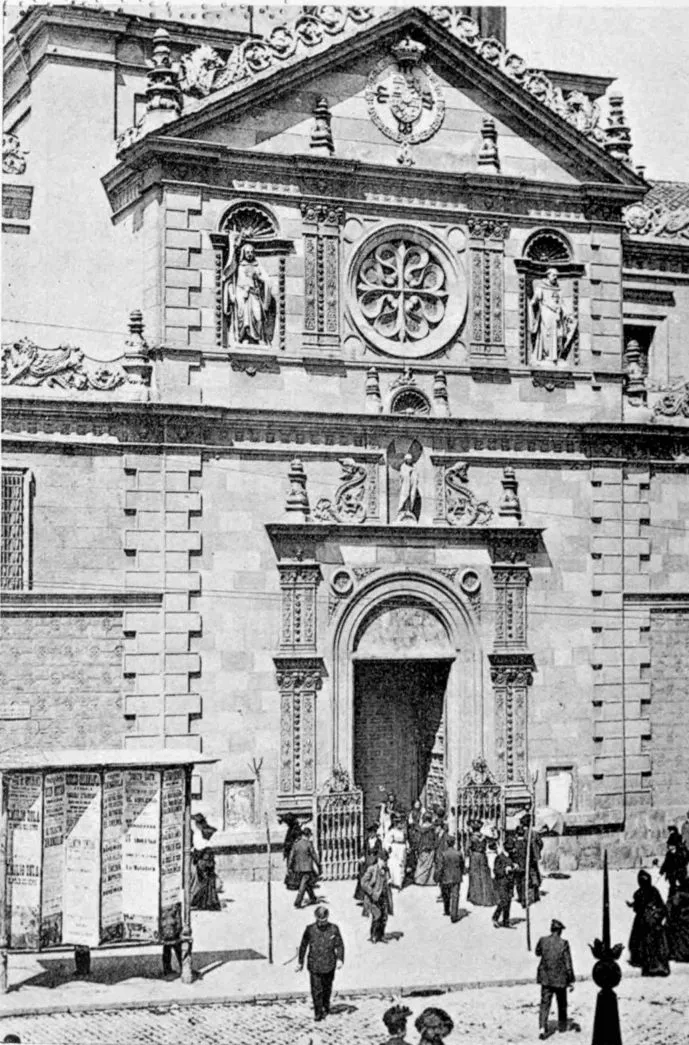
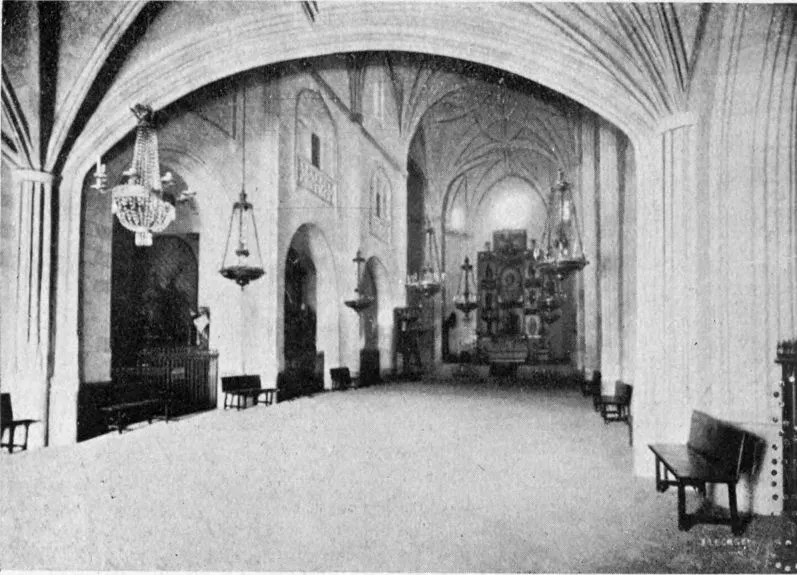
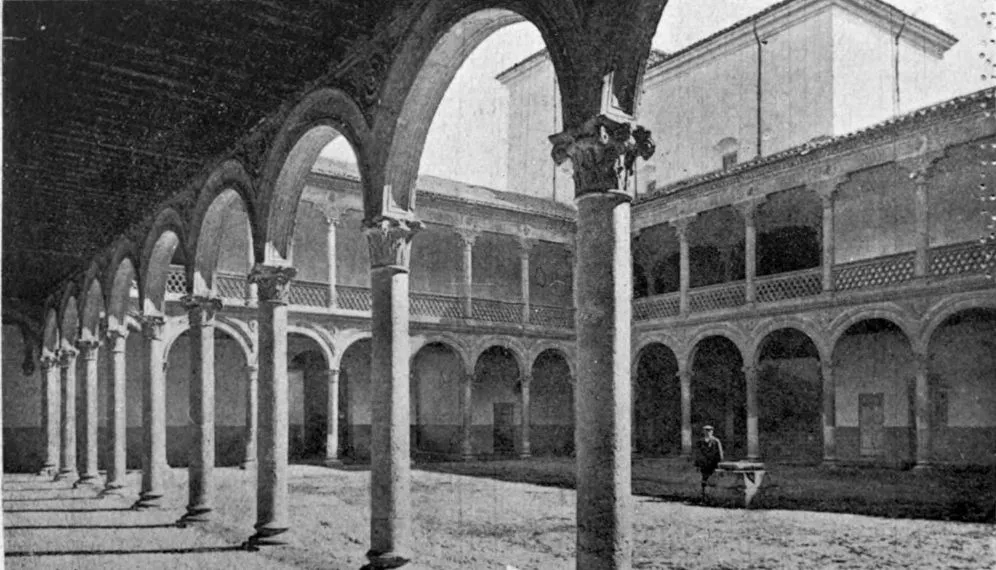
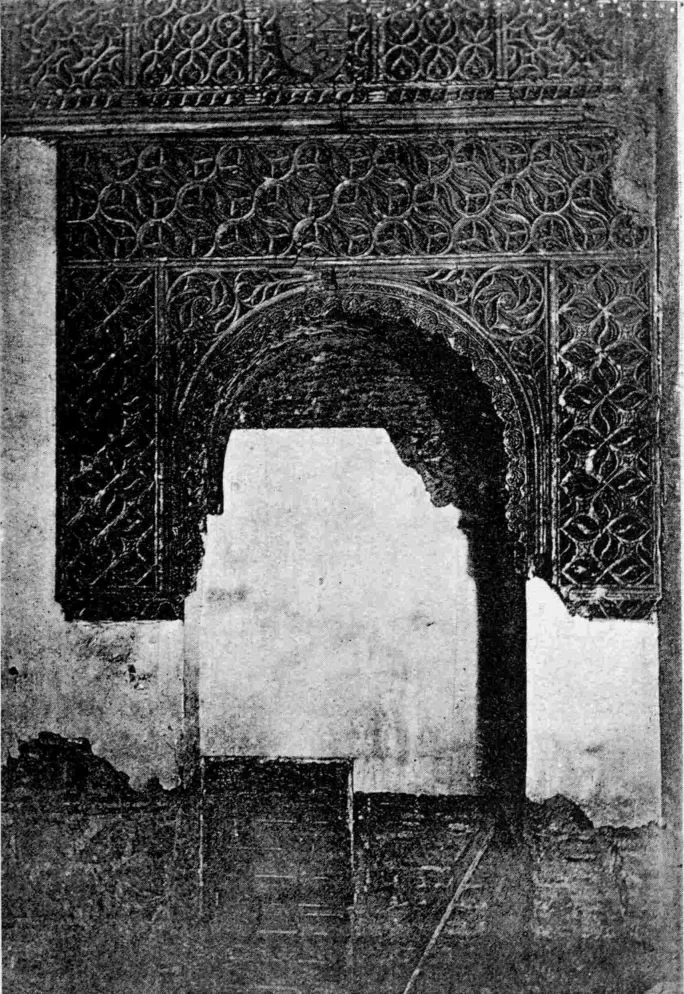
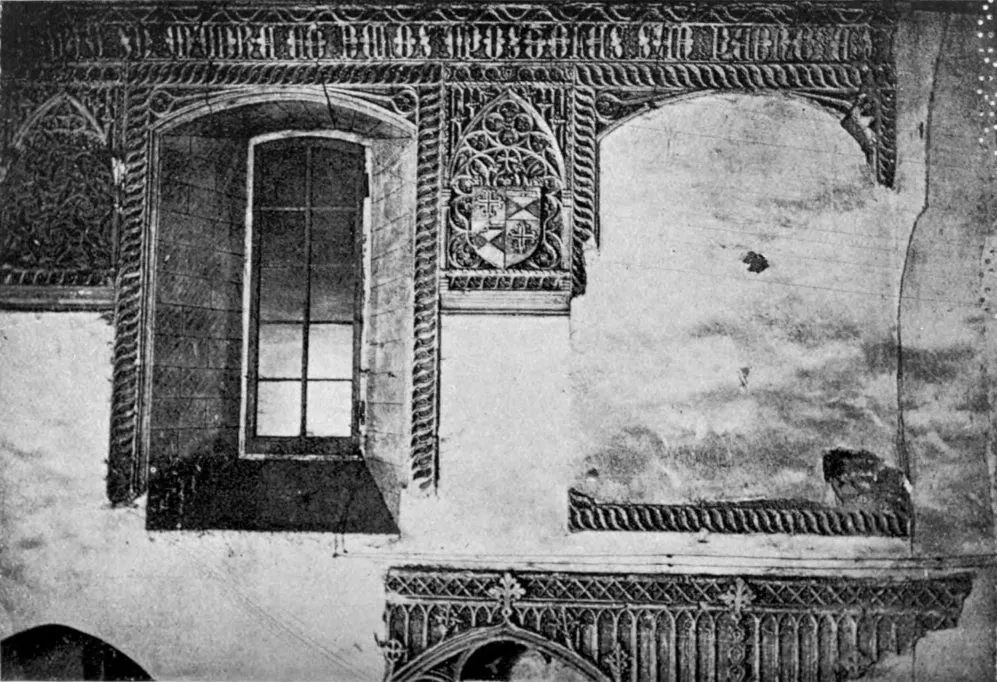
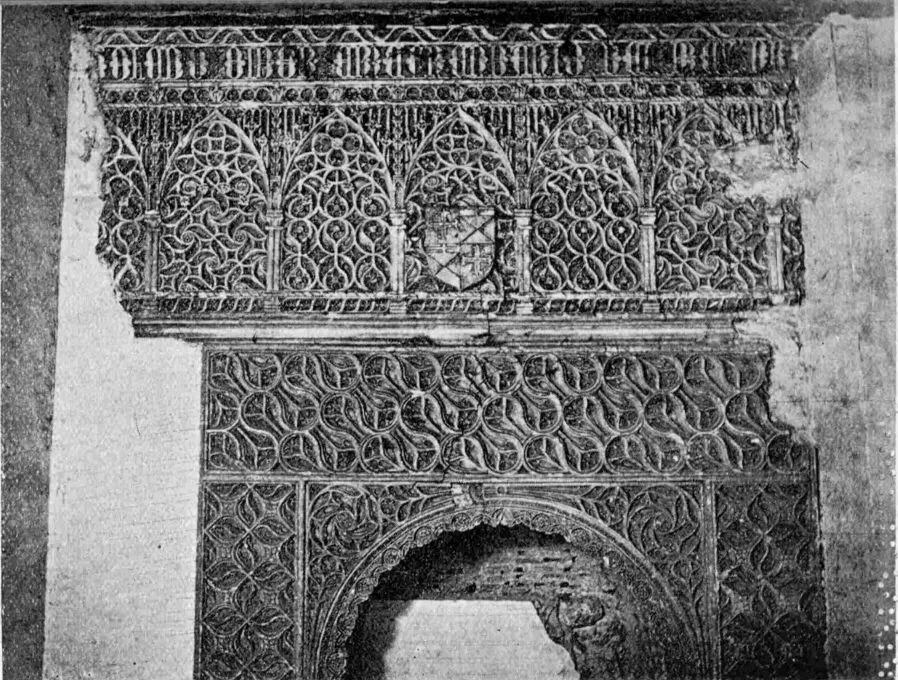
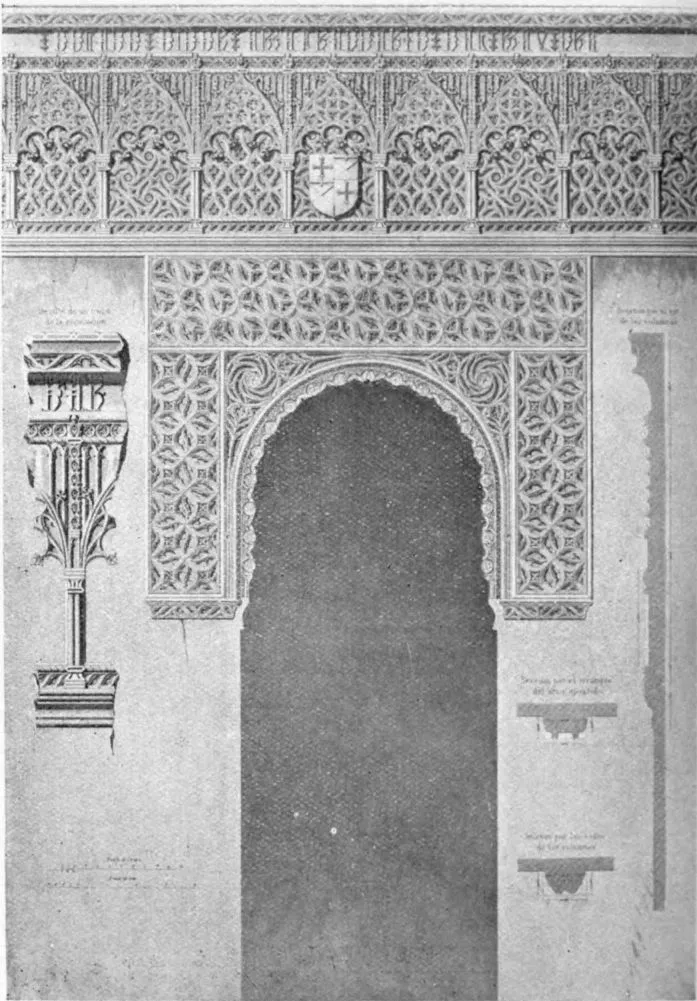
Moorish days. In the church of San Pedro we shall find an example of
Mudejar architecture, that is, the work of the “reconciled” Moriscos,
who remained in Spain down to the final expulsion. San Pedro dates from
the fourteenth or fifteenth century, and is the oldest church in the
city. The tower is square and plain, in the Moorish form, with small
windows.
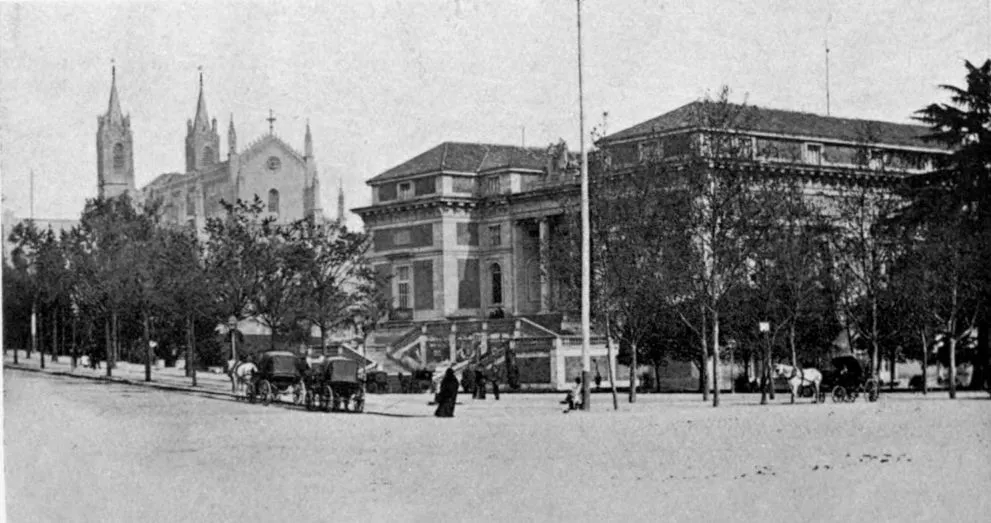
The Gothic church of San Jeronimo el Real was built in 1503, and
restored in 1879. During the French invasion the treasures of this
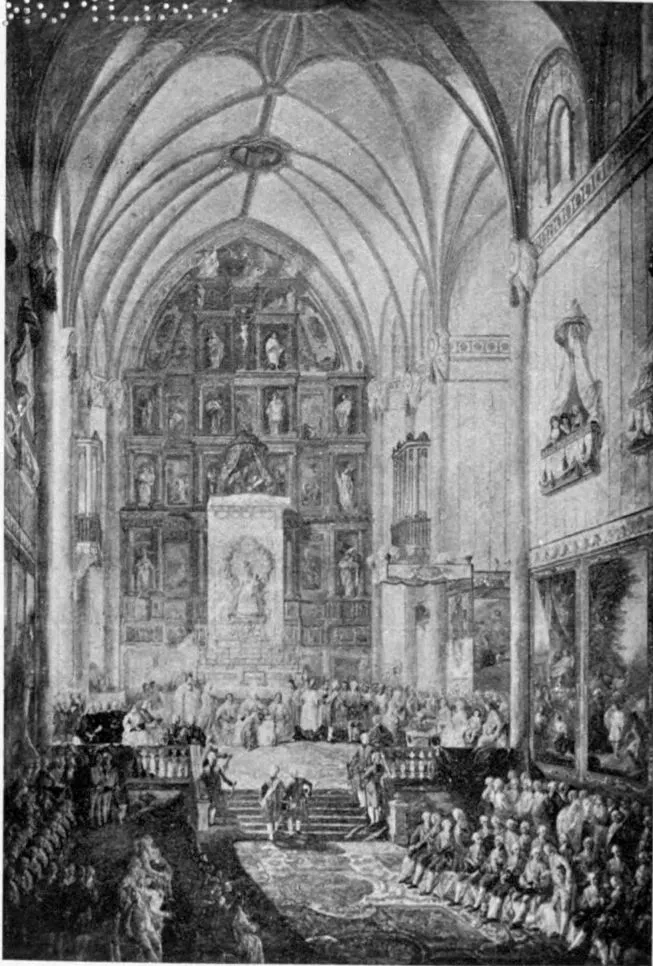
church were despoiled. Here the ceremony of taking the constitutional
oath by the heir-apparent is celebrated, and in this church was
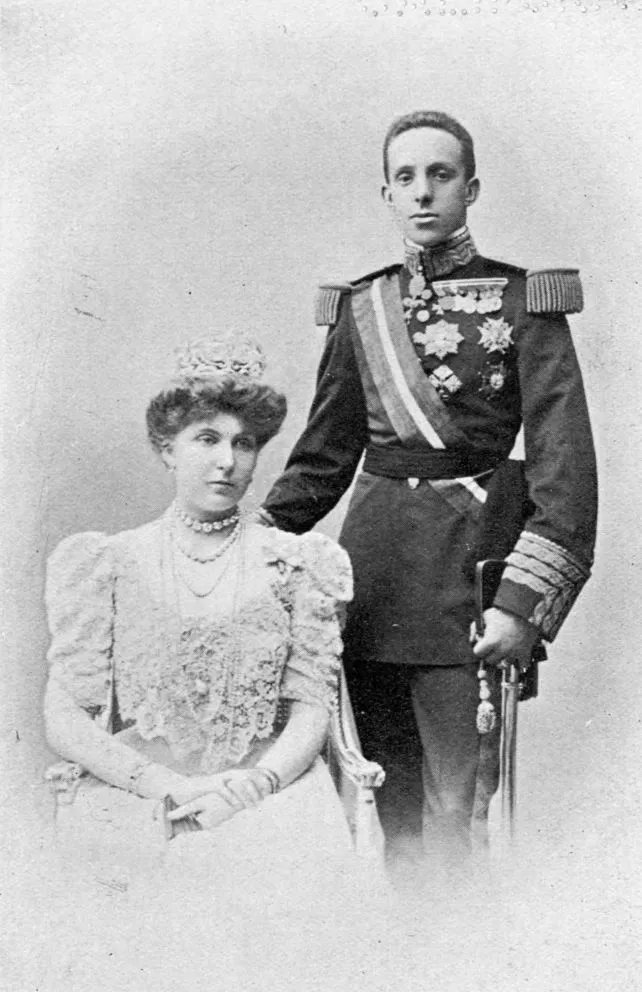
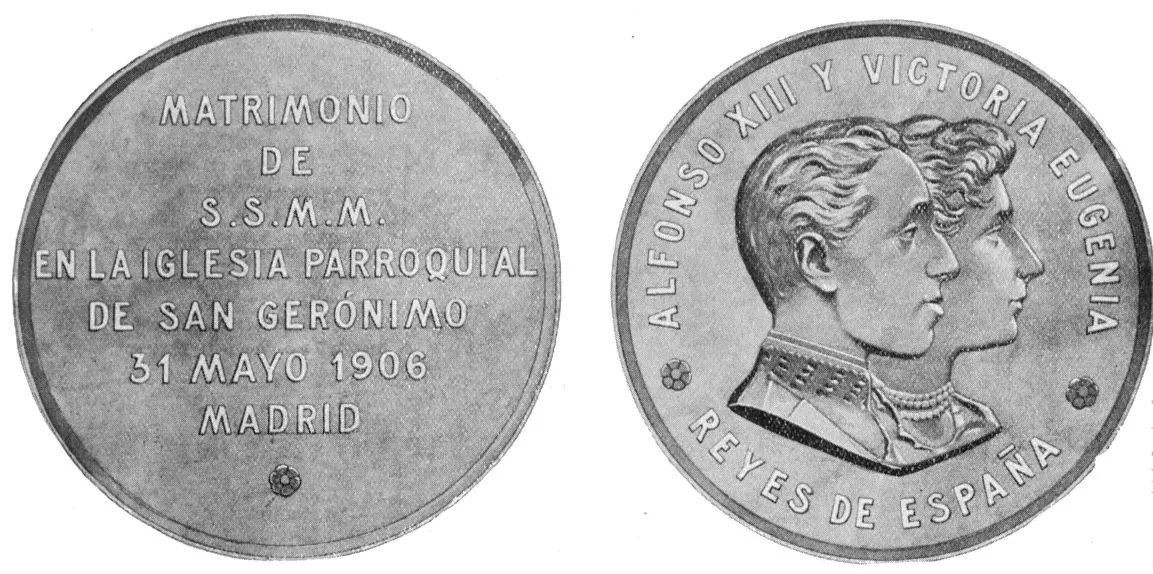
performed the marriage ceremony of the present king of Spain.
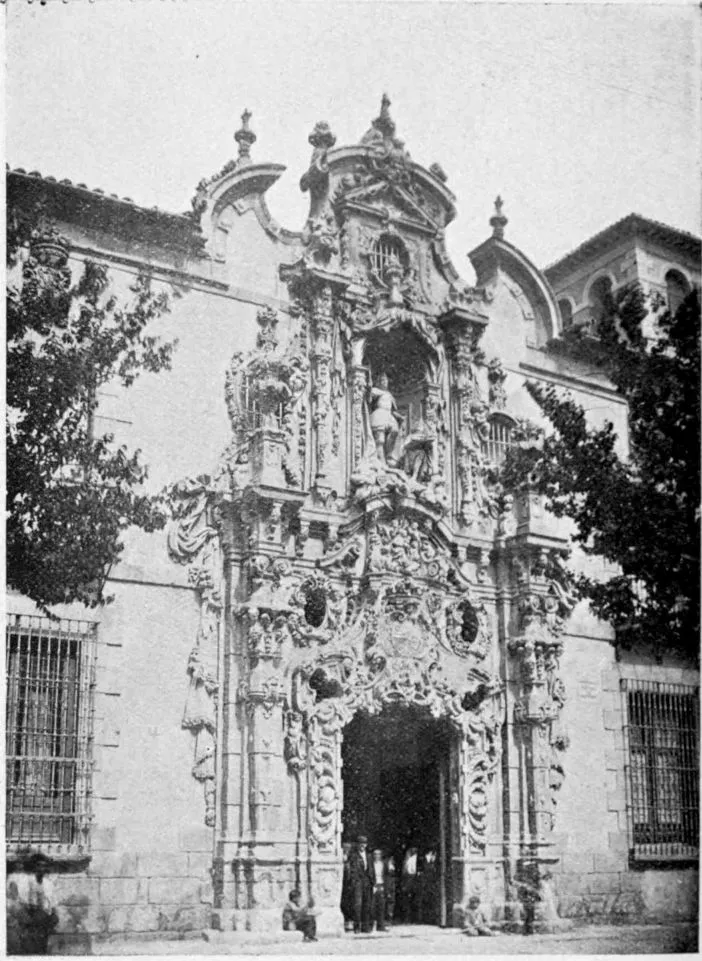
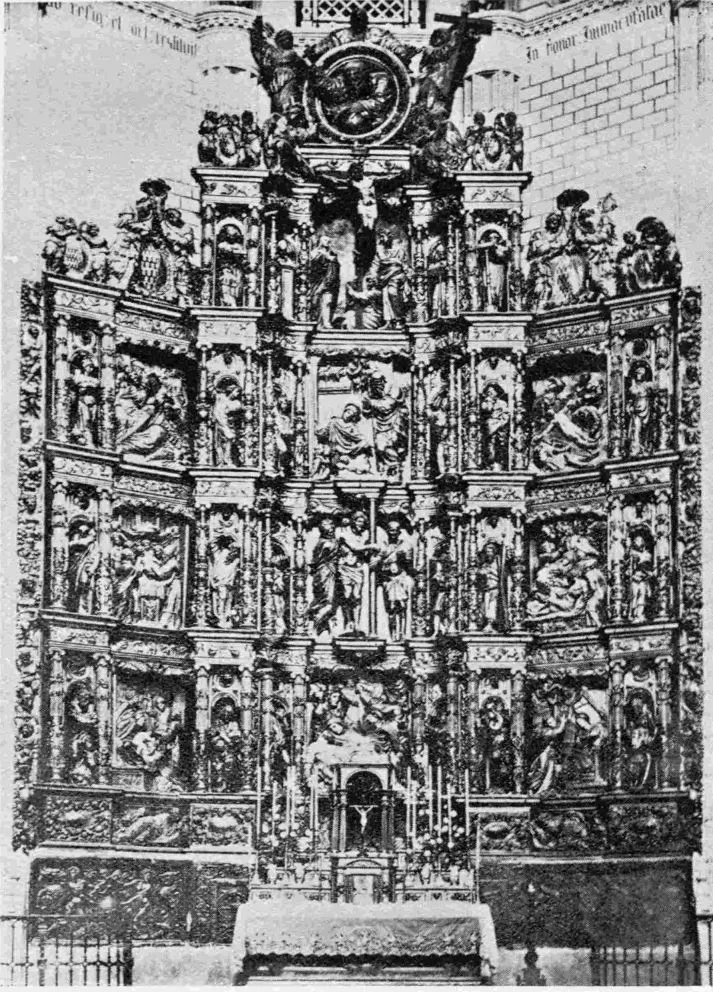
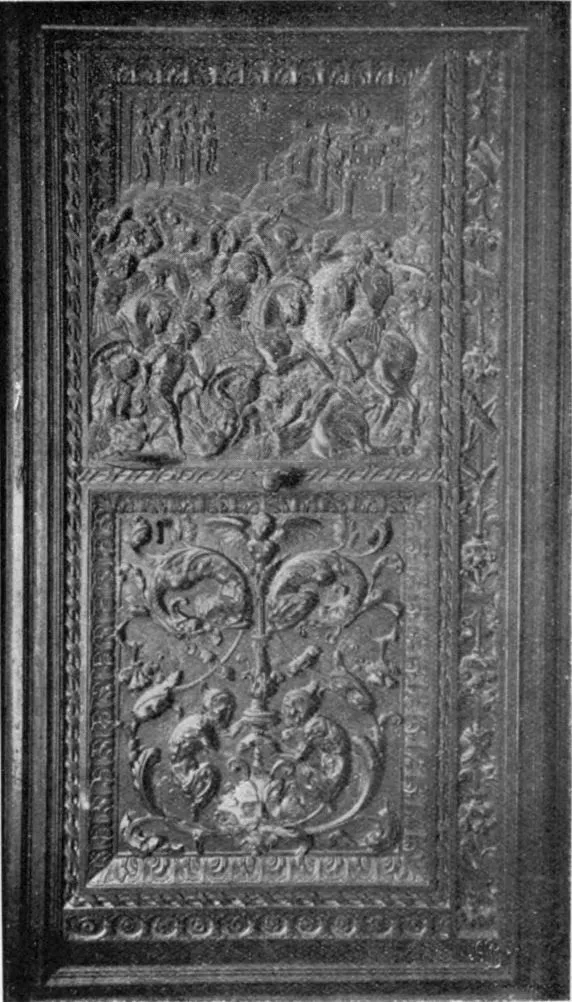
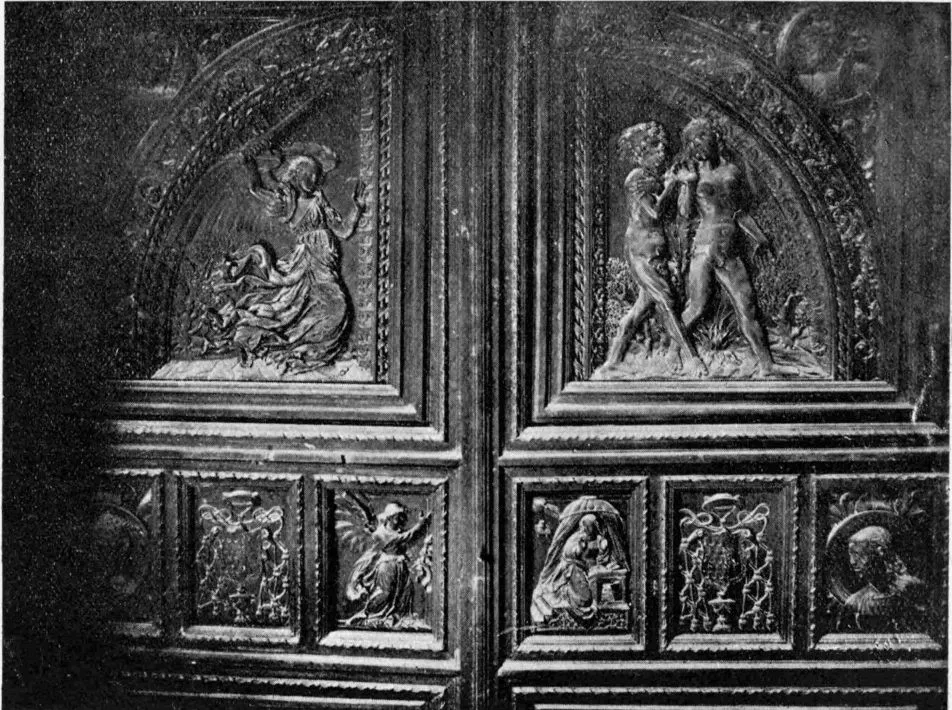
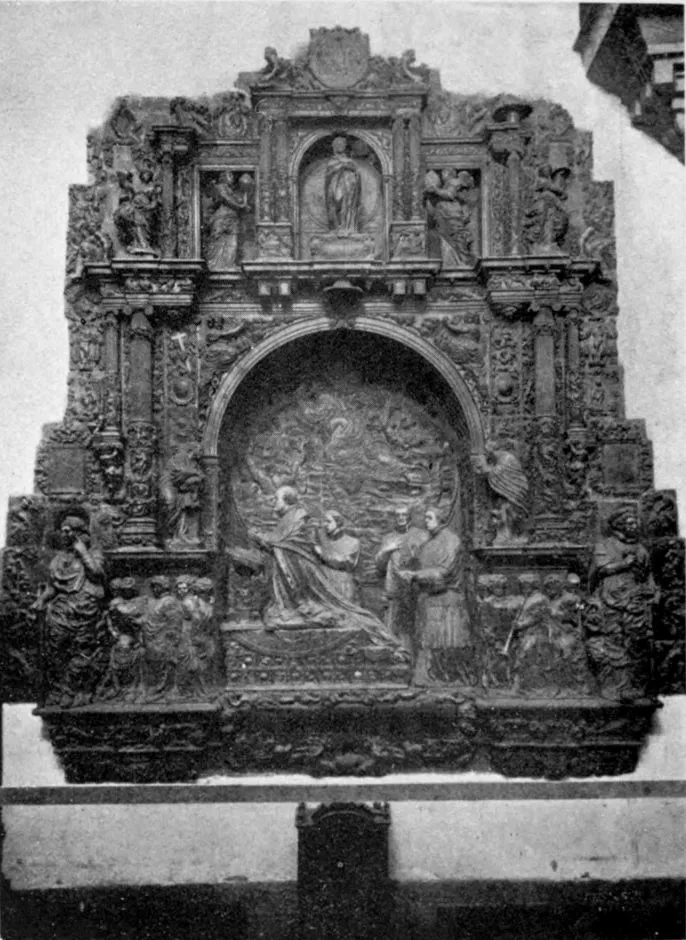
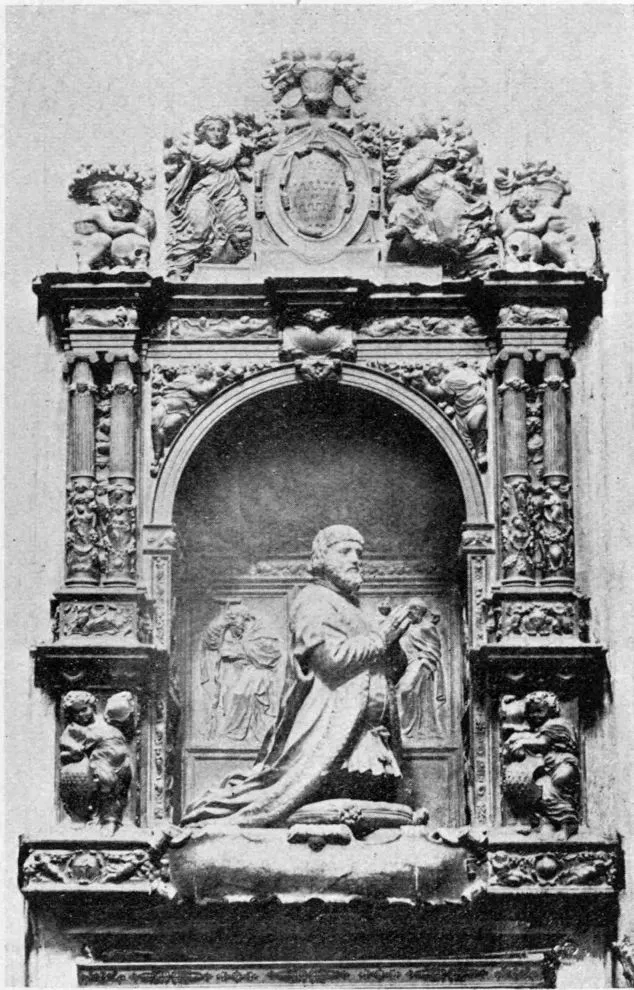
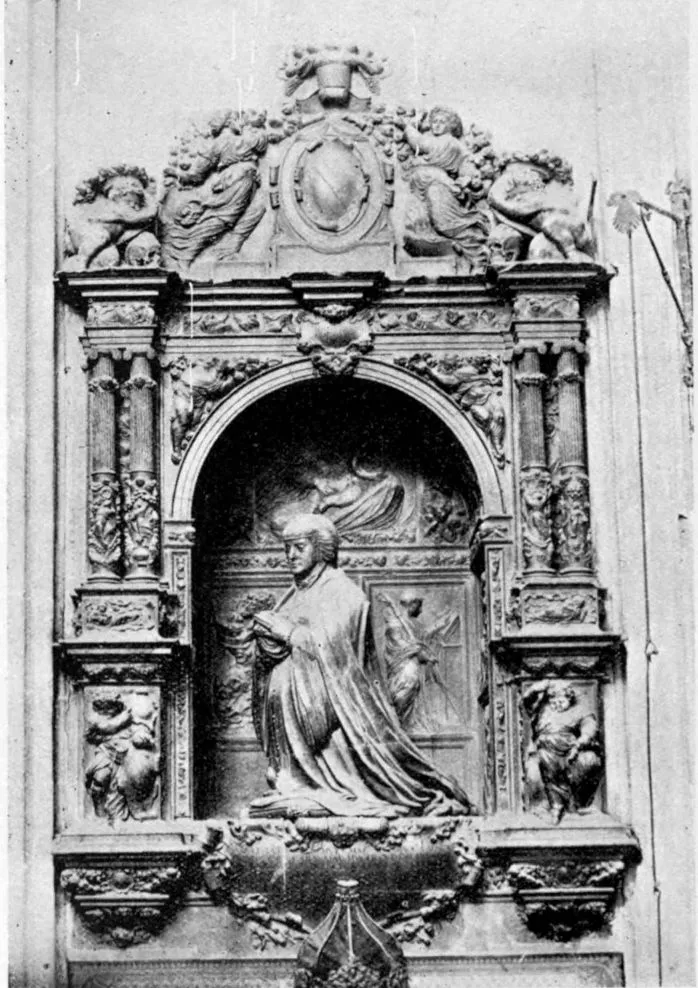
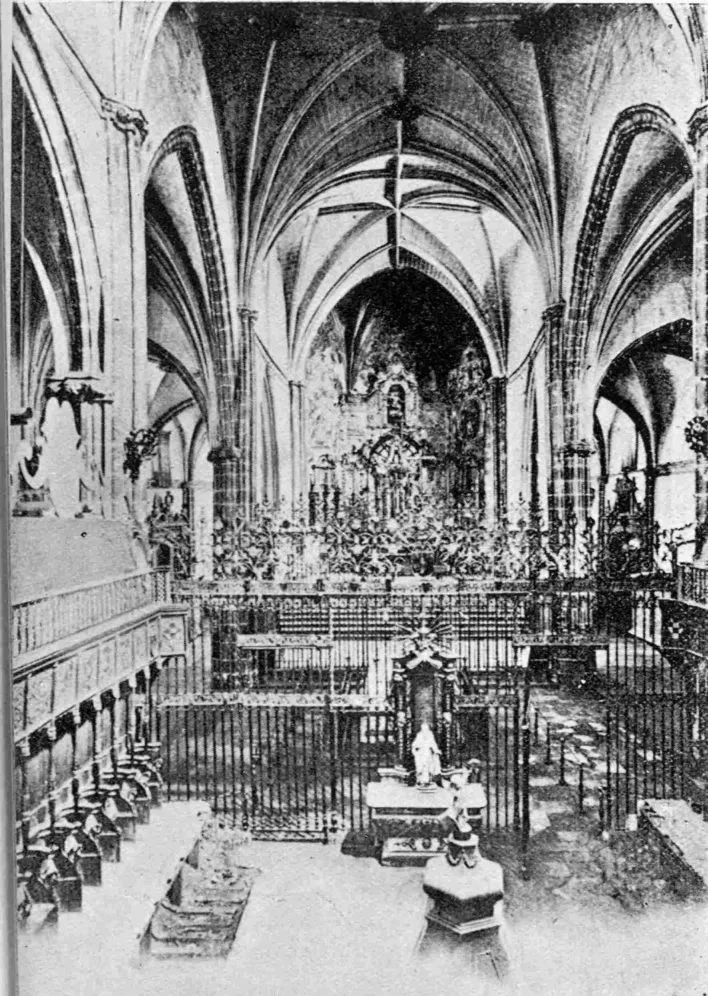
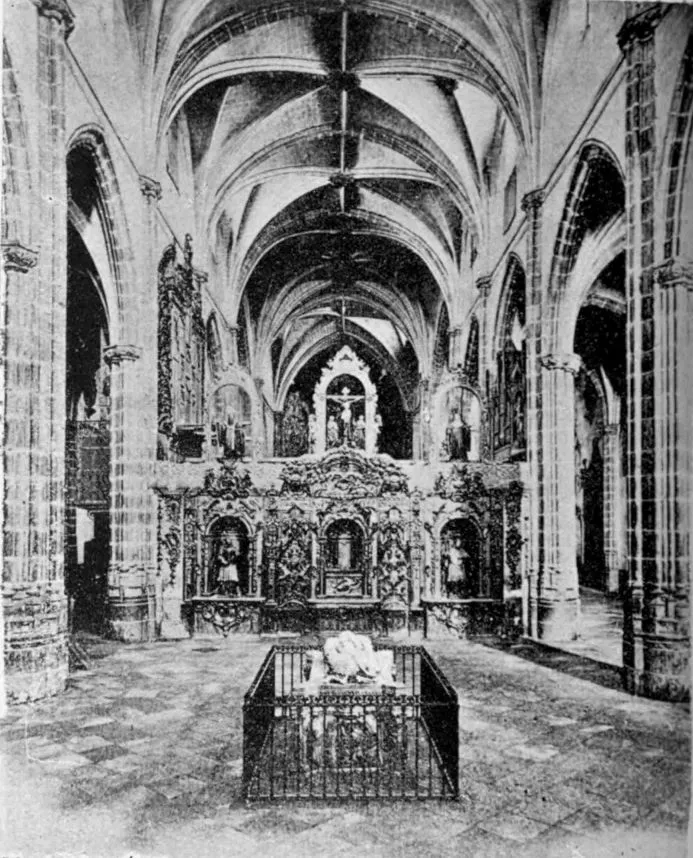
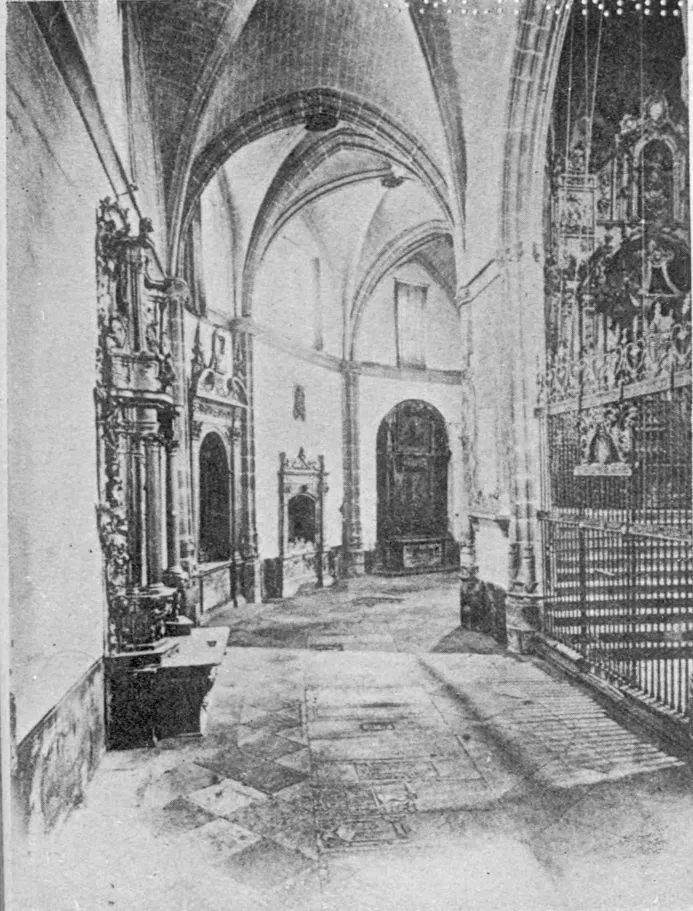
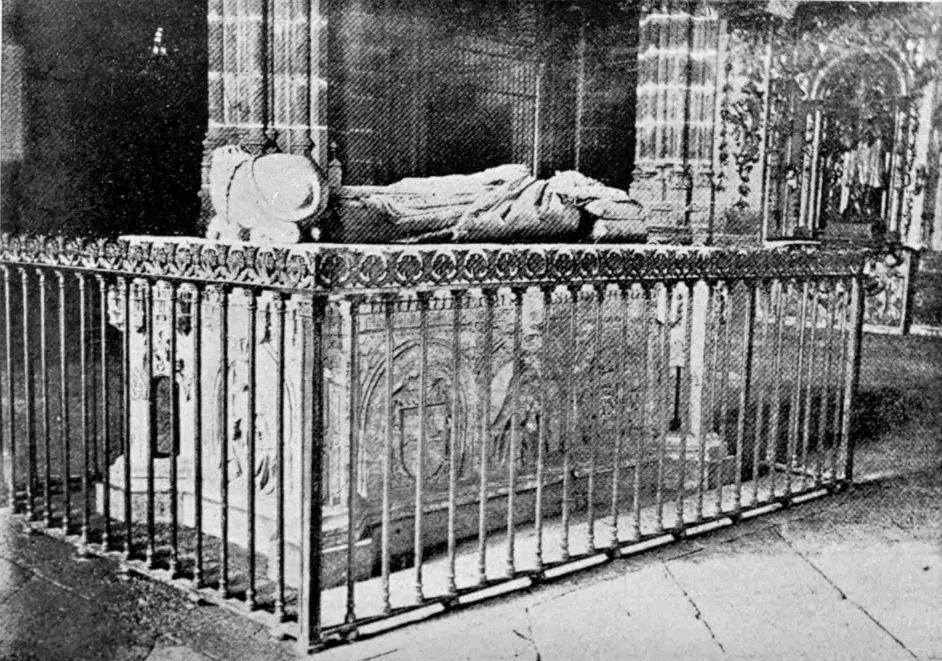
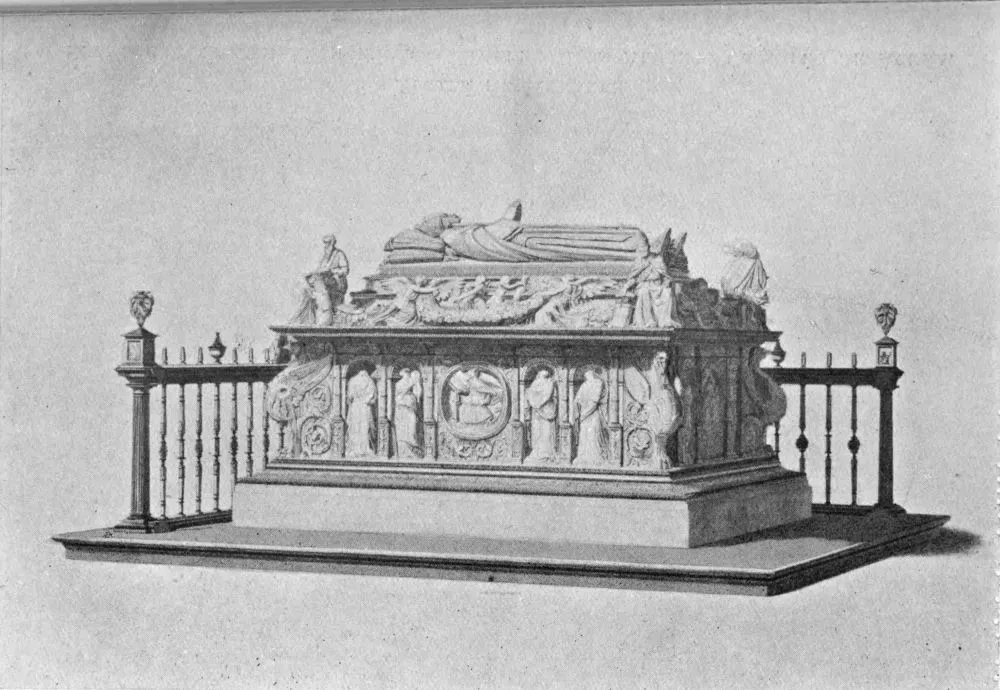
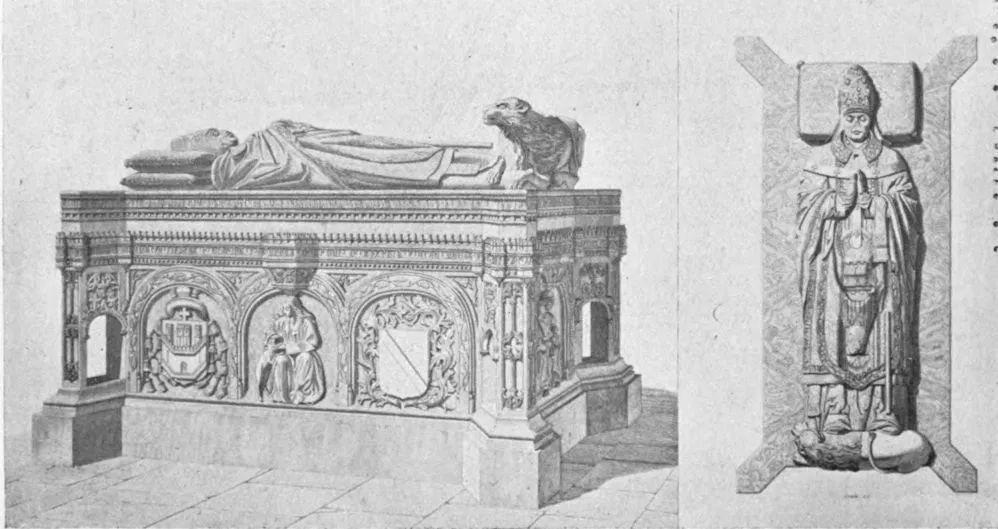
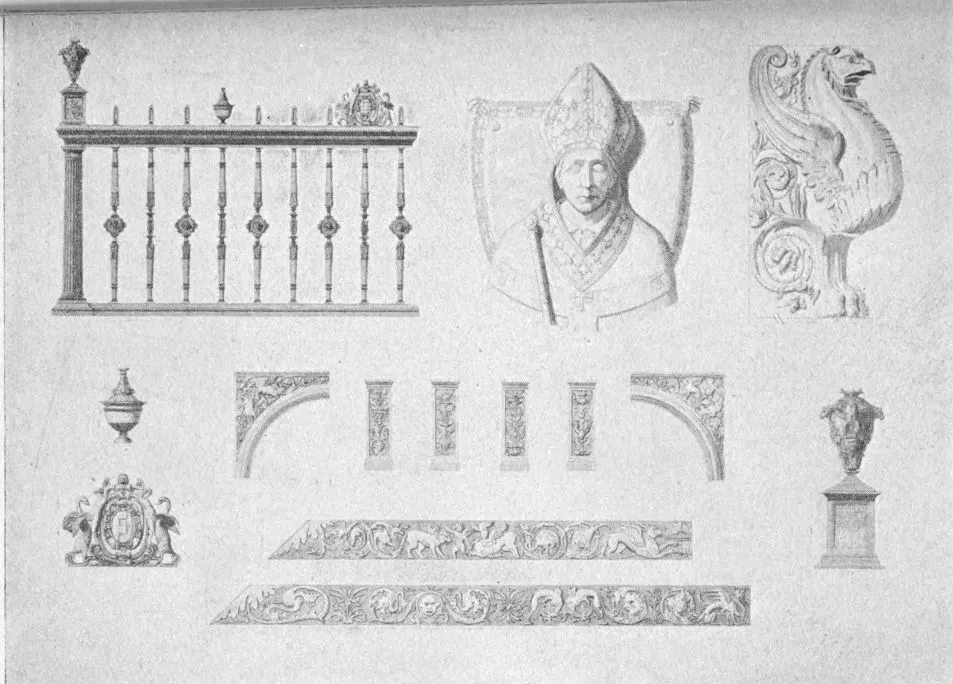
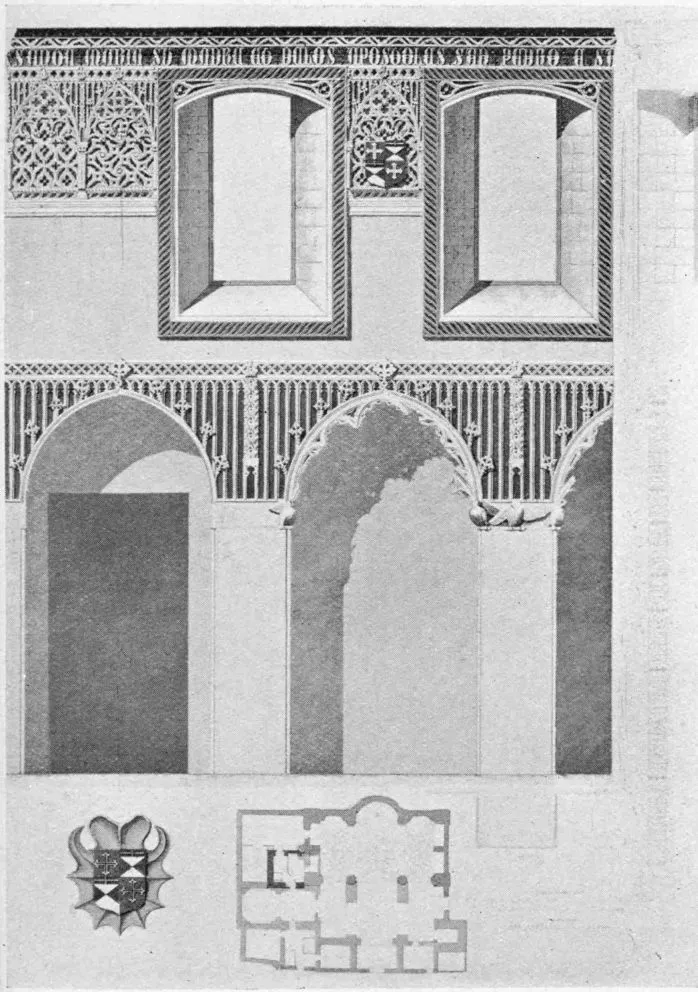
The Capilla del Obispo has a fine carved retablo, or altarpiece, in the
Renaissance style, and several interesting statues and marble tombs.
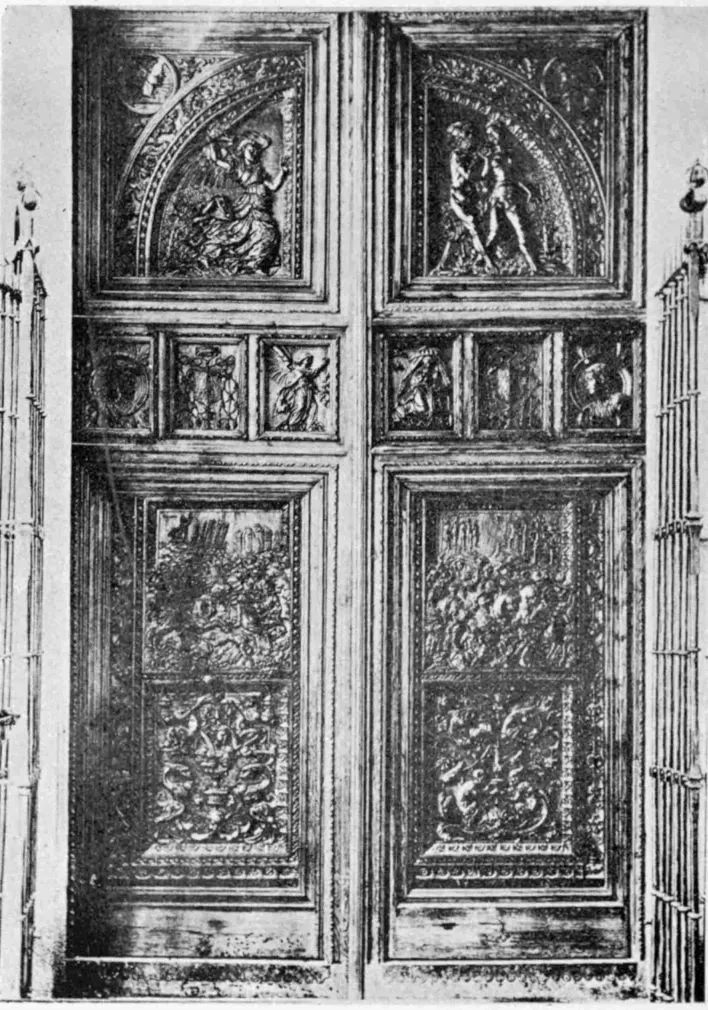
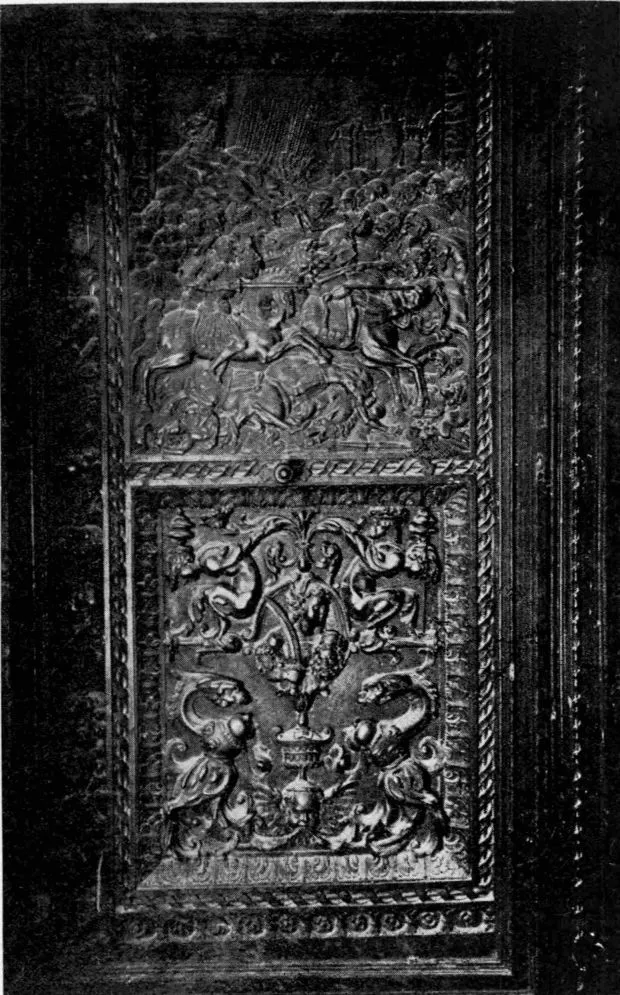
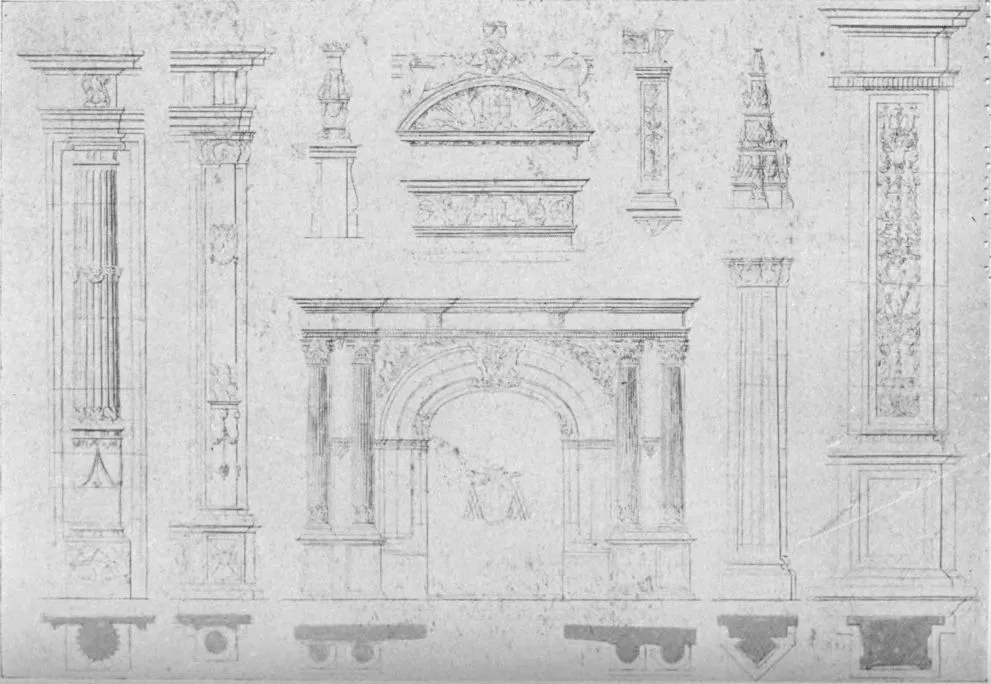
There is also a beautifully carved doorway to the chapel.
Antonio Sillero designed the Convent of the Descalzas Reales, which was
founded by the Princess Juana, daughter of Charles V. A part of the
original building remains, dating from 1559. In the chapel is a statue
of the foundress by Leoni. The front of the present church was designed
by Diego Villanueva.
The church of the Convent of the Incarnation is of the time of Philip
III., the classic façade representing the style of architecture at the
Escorial Palace. Within are some paintings by Carducho. San Francisco el
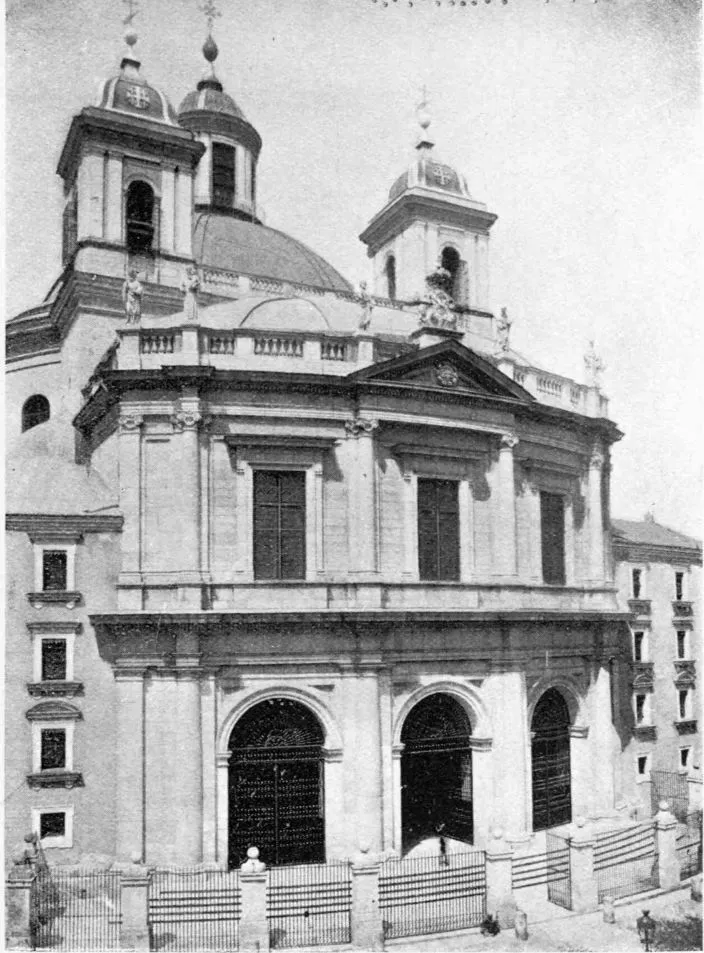
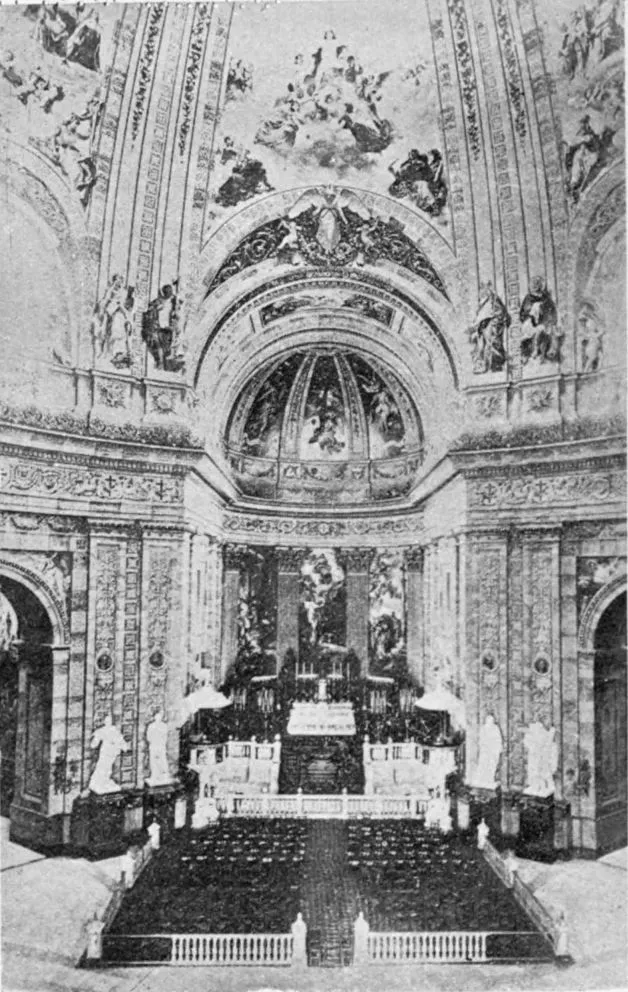
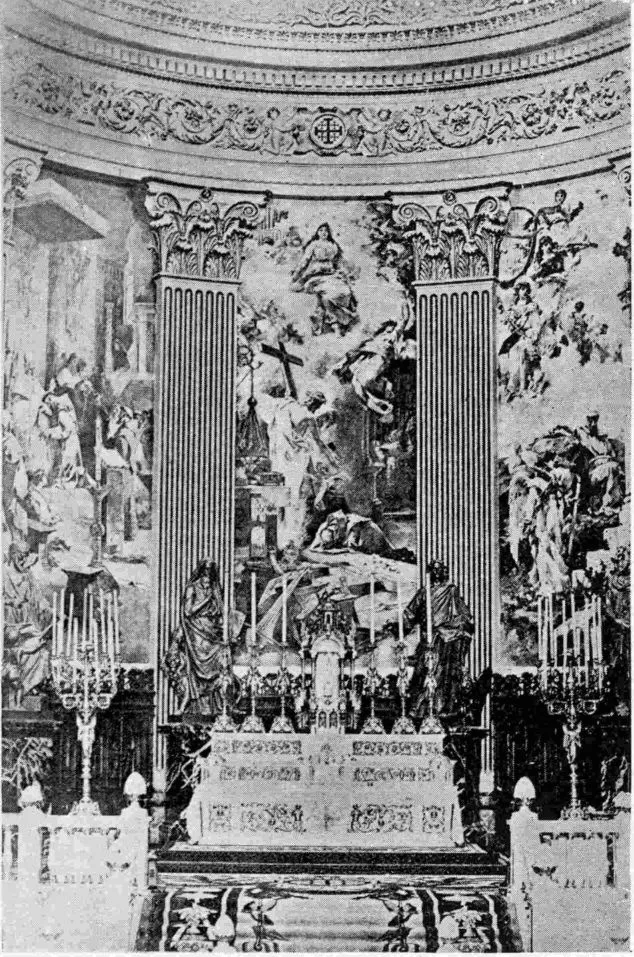
Grande is undoubtedly the finest church in Madrid. The building is
partly modelled from the plan of the Pantheon at Rome; and the objects
of interest are the fine carved doors, the sculptured figures within by
Benlliure and Bellver, and some modern fresco paintings.
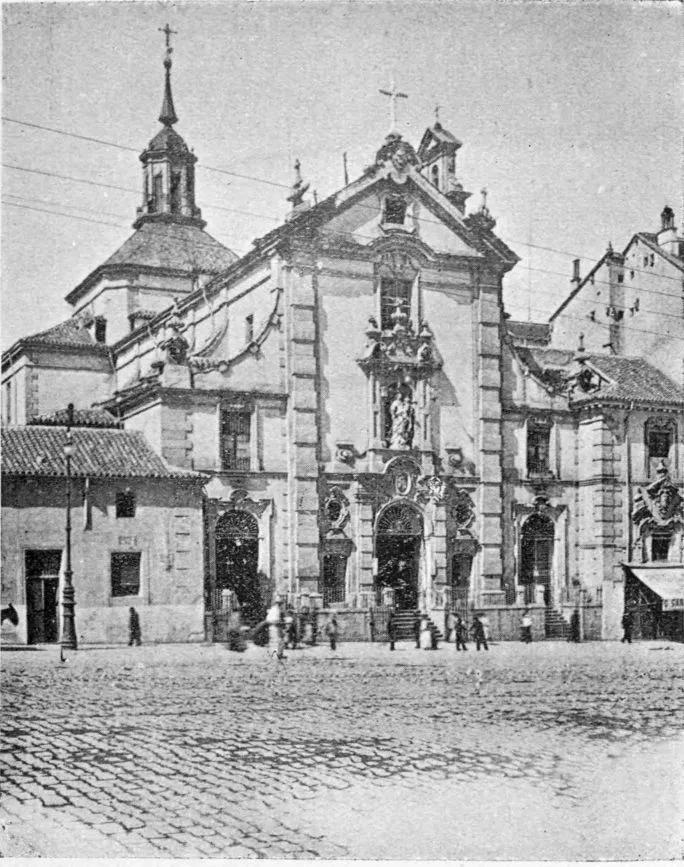
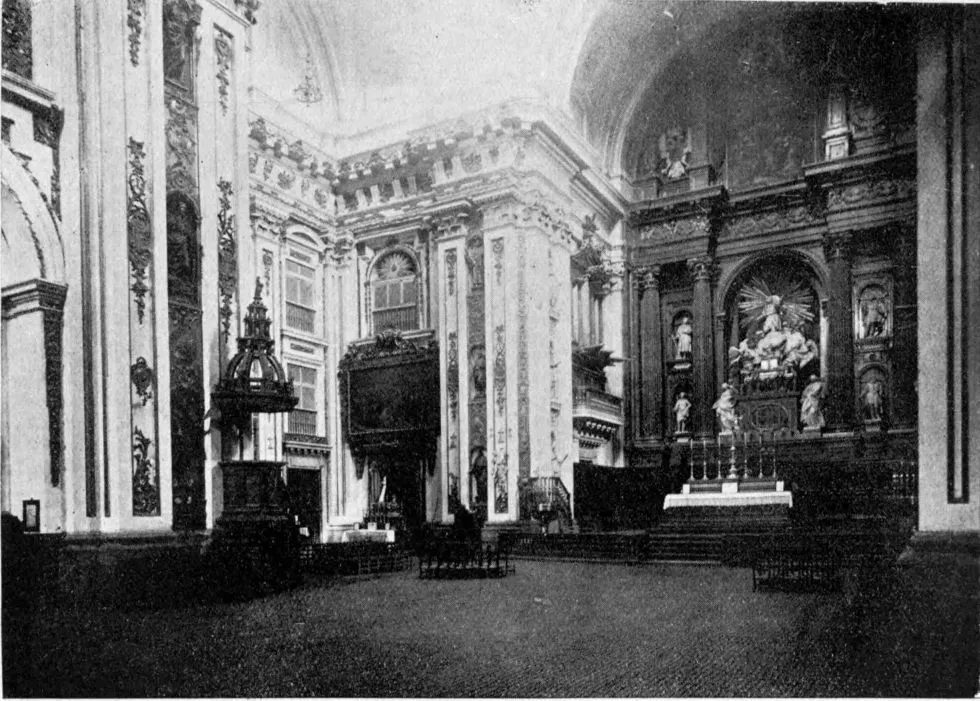
San Isidro is named after the patron saint of the city, and was erected
in the years between 1626-51. The interior is exceedingly ornate, with
gilt carvings, and niches containing images of saints. There are some
noteworthy paintings in this church, including works by Rizi, Morales
and Palomino, and a putative Titian. The picture by Morales, “Jesus and
St Peter,” is considered one of the finest examples of this artist’s
skill.
In the church of San Andrés there are some fine marble carvings, and
pictures by Carreño and Rizi. The Capilla del Obispo is behind this
church. San Antonio is noted for its frescoes of scenes from the life of
its patron saint, painted by Juan Carreño. The baroque style is seen
in the church of San Luis (1679)—especially in the carved retablo.
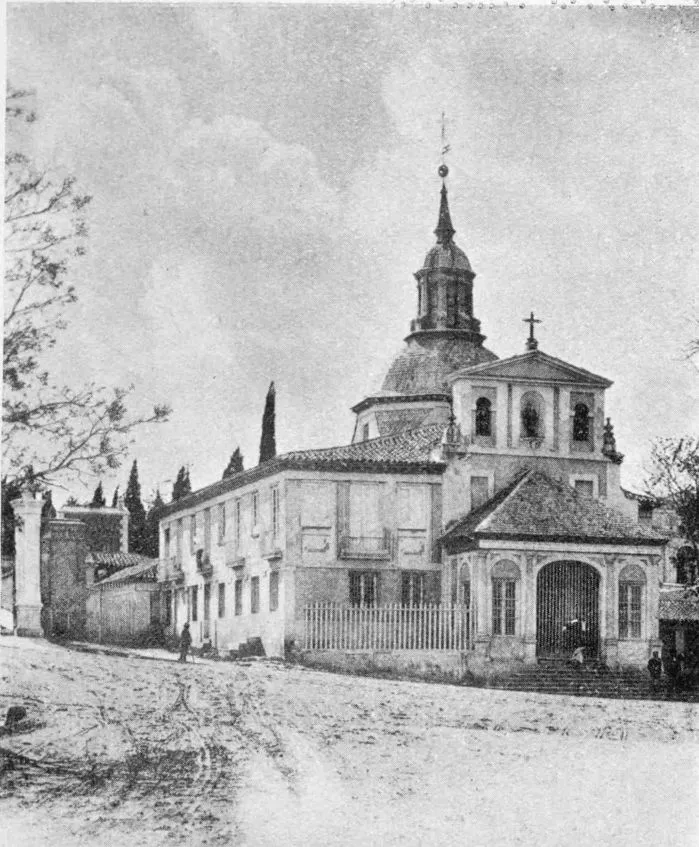
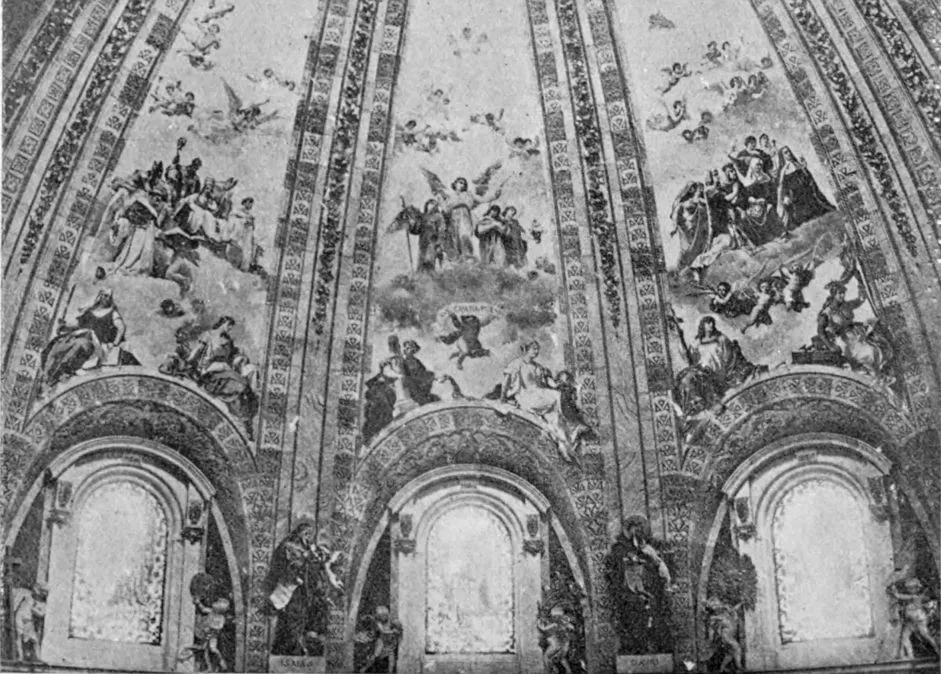
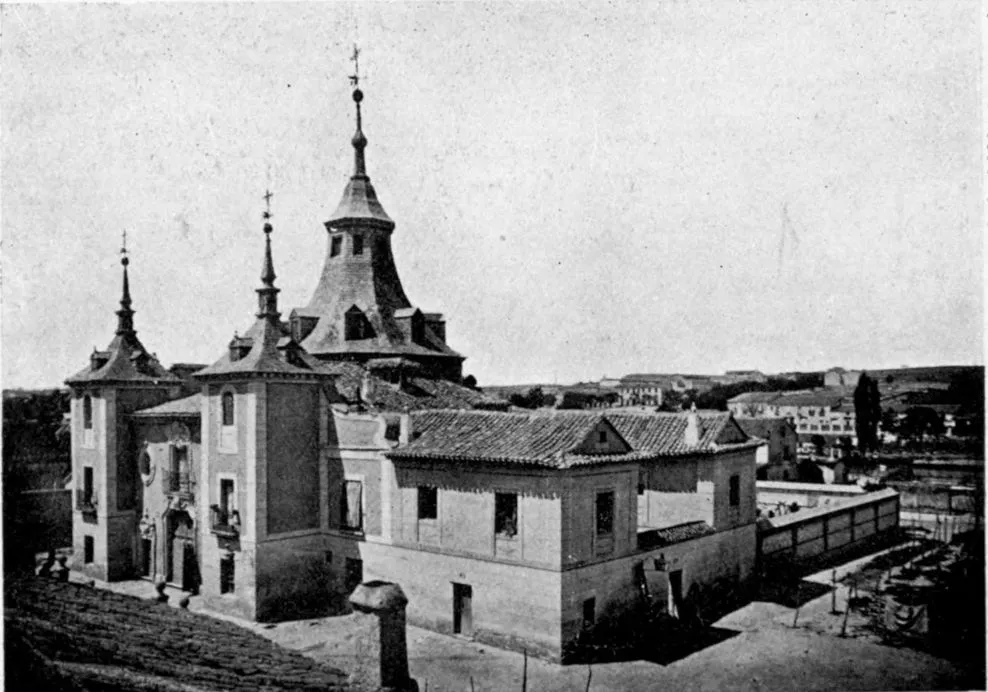
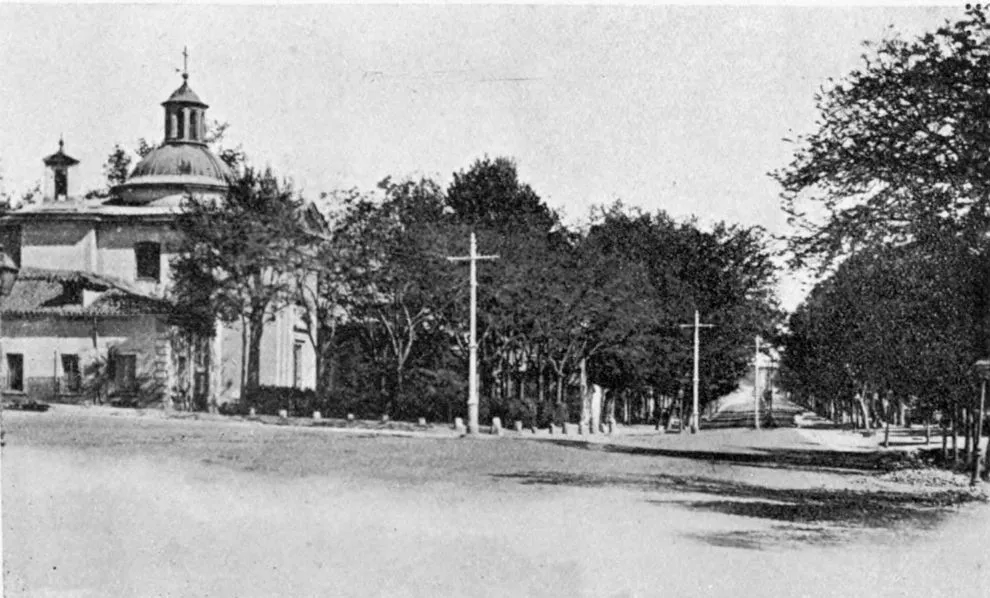
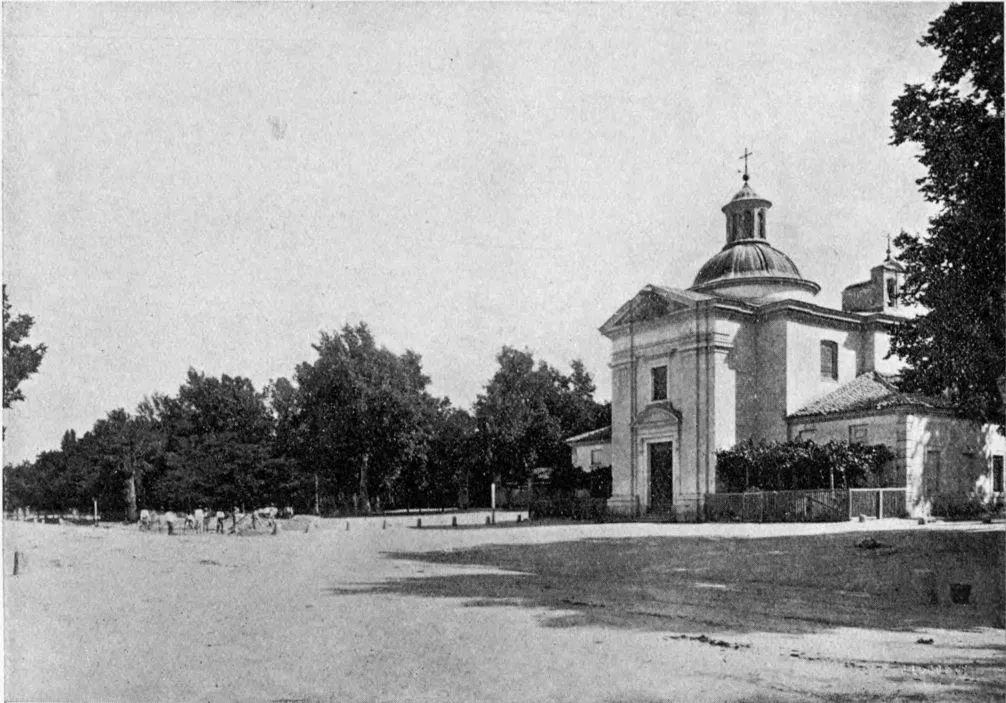
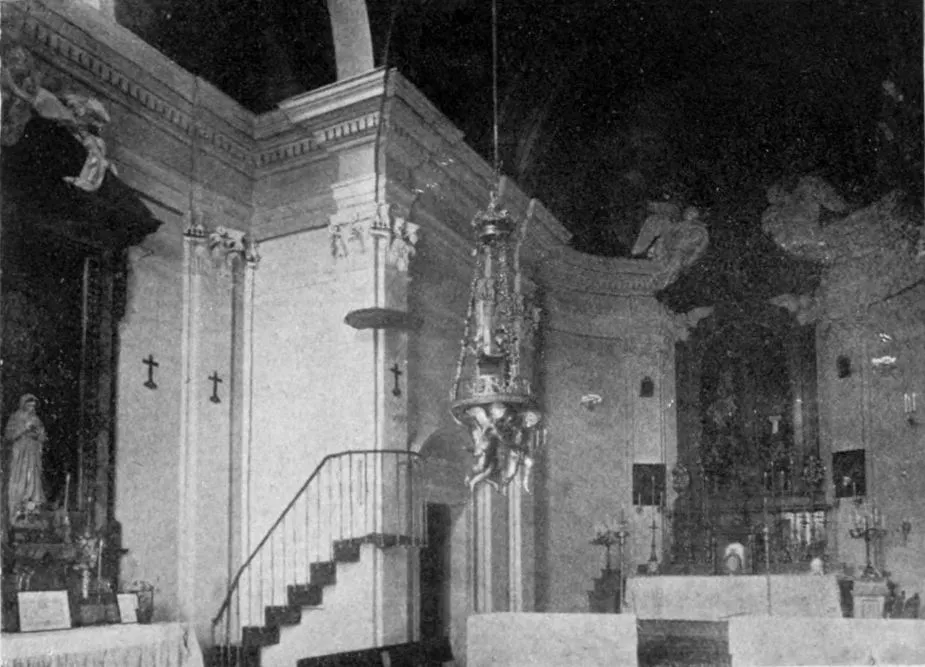
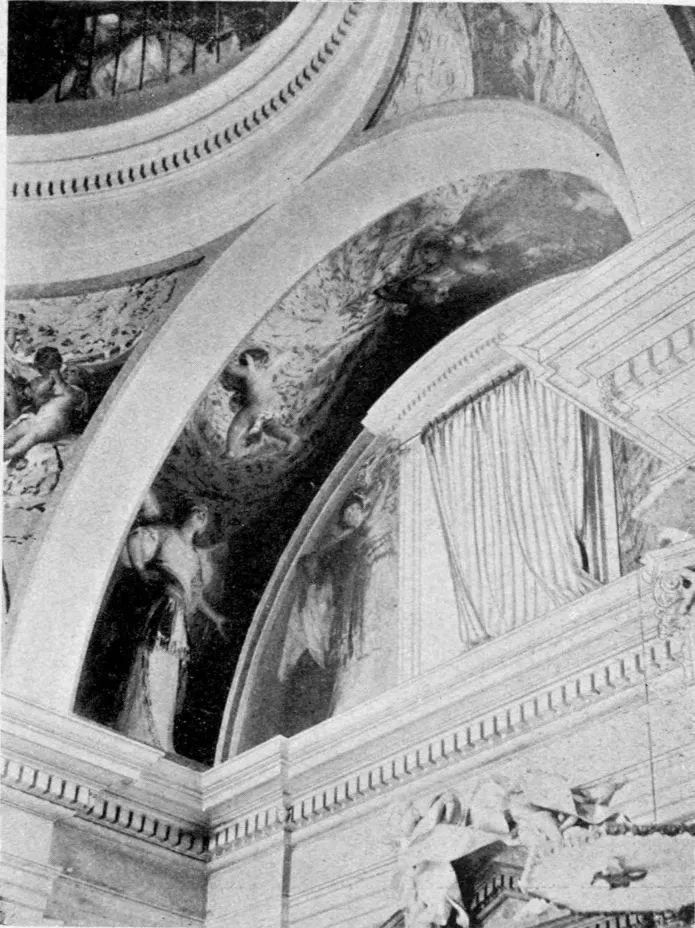
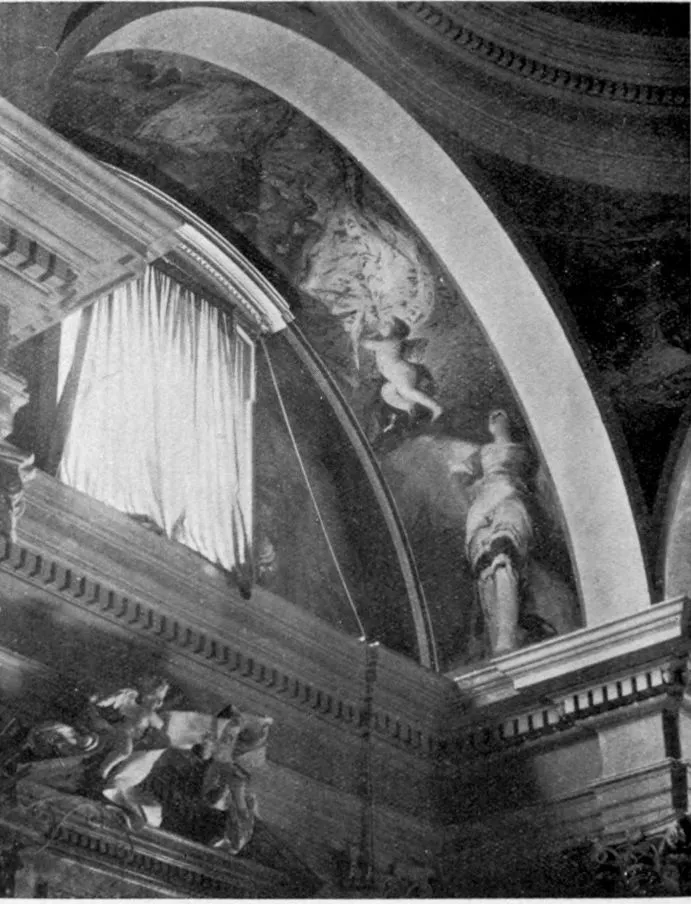
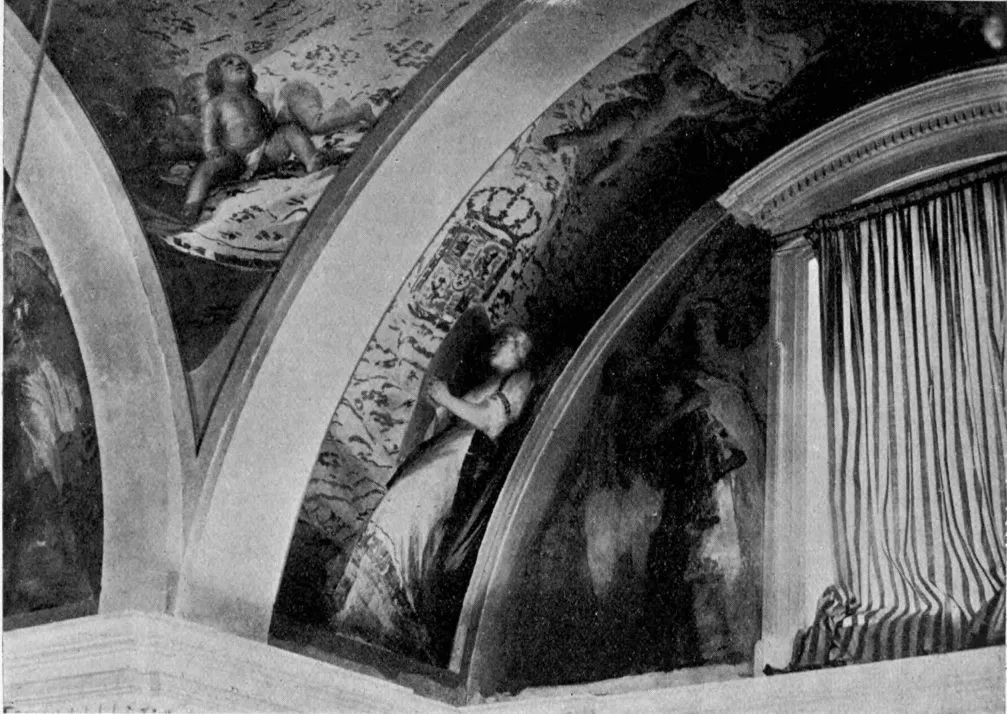
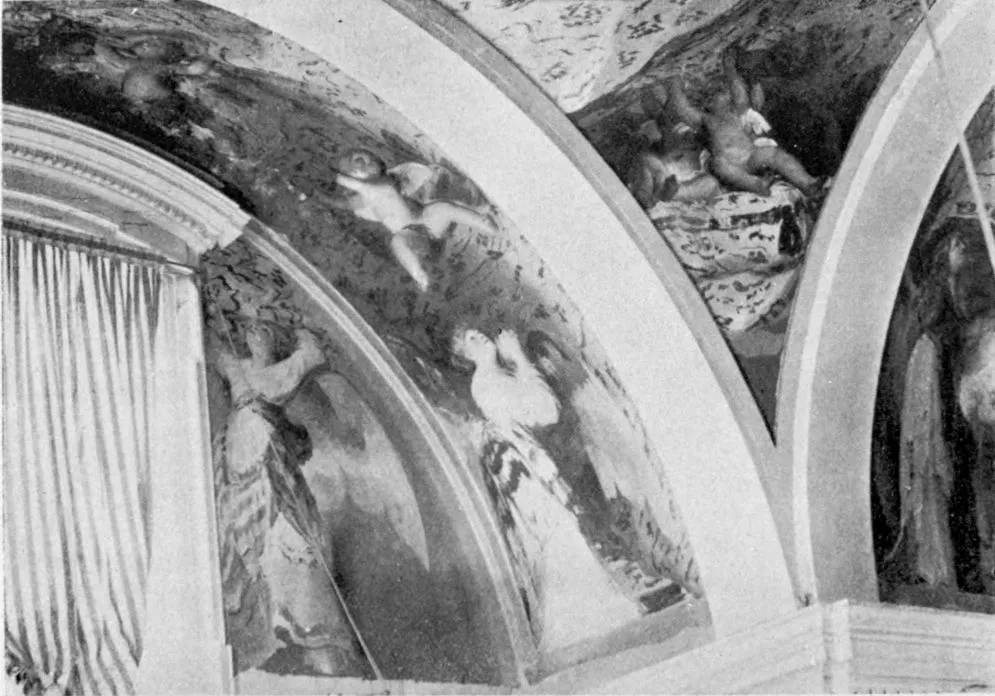
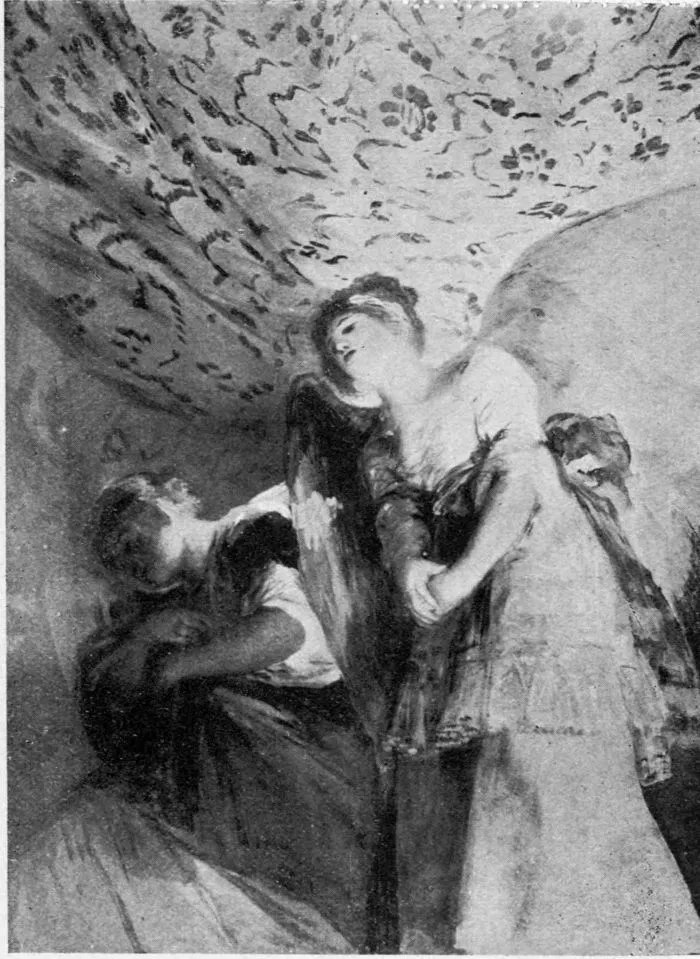
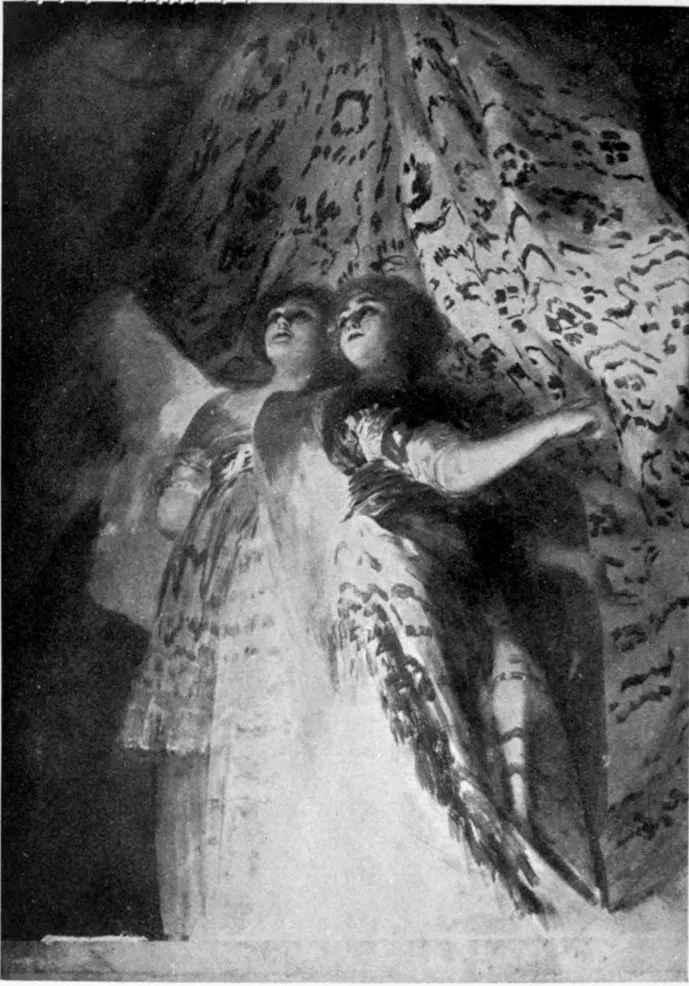
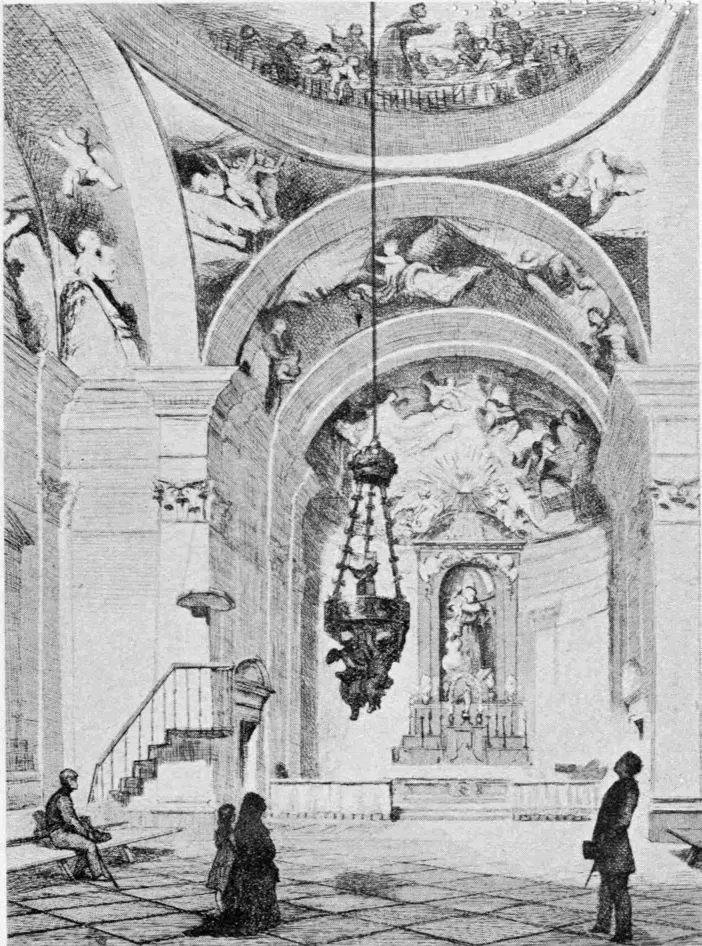
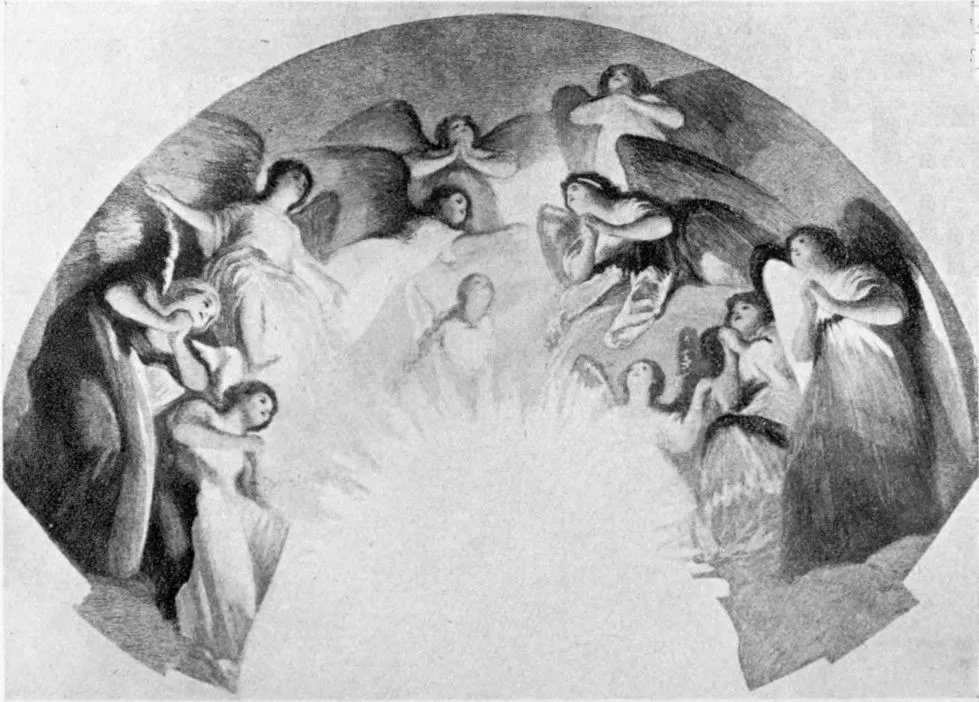
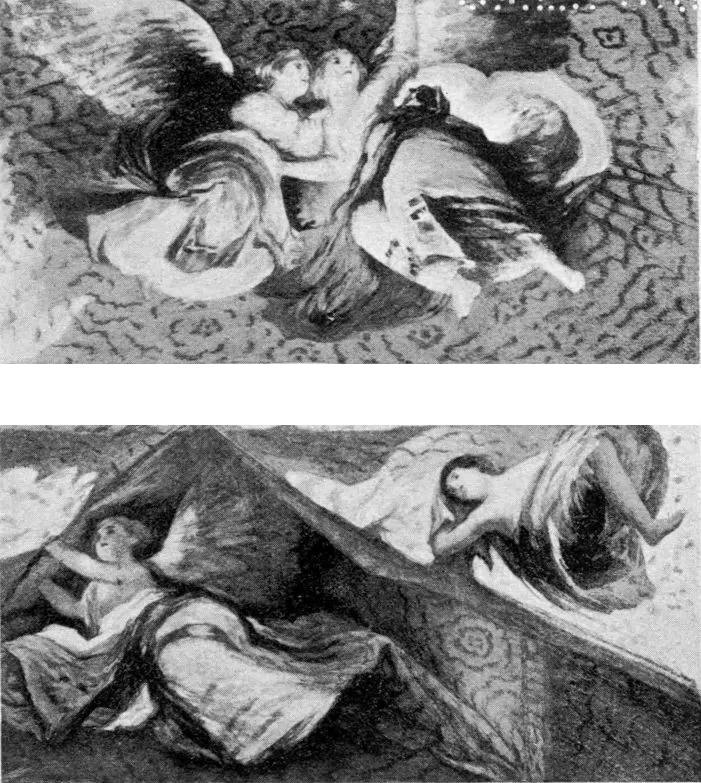
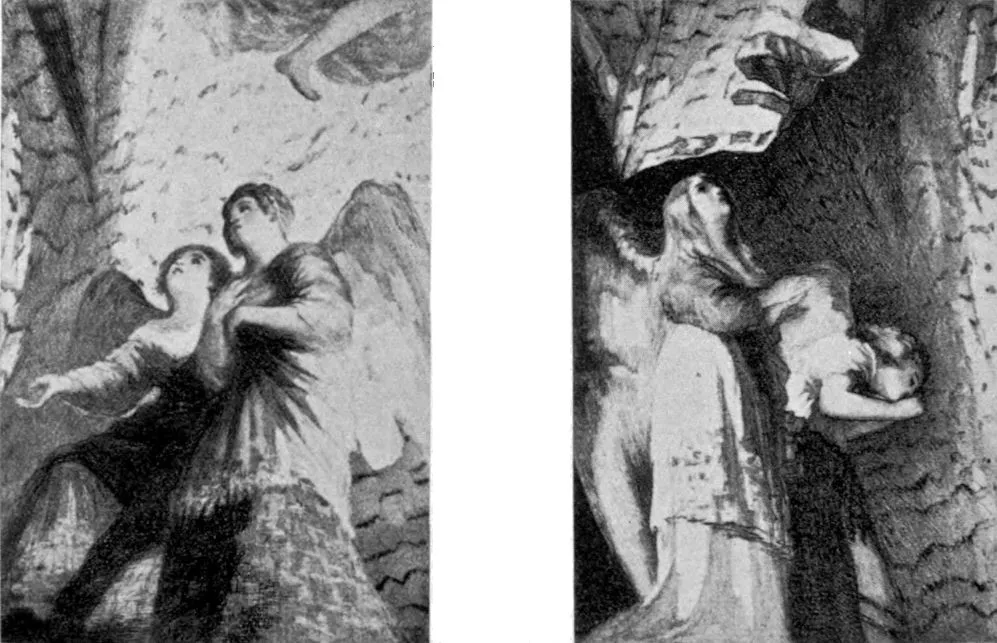
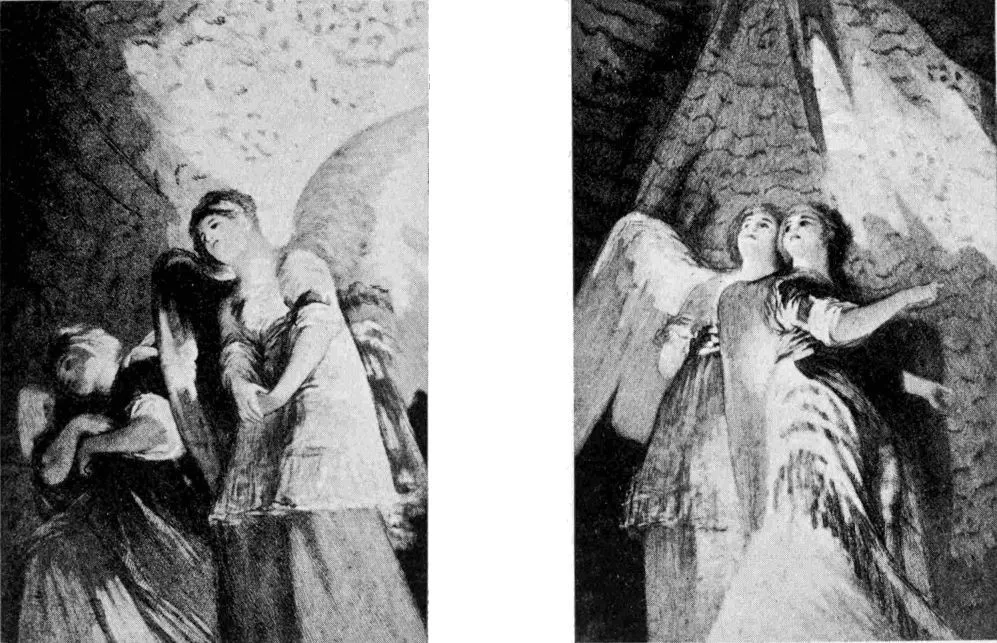
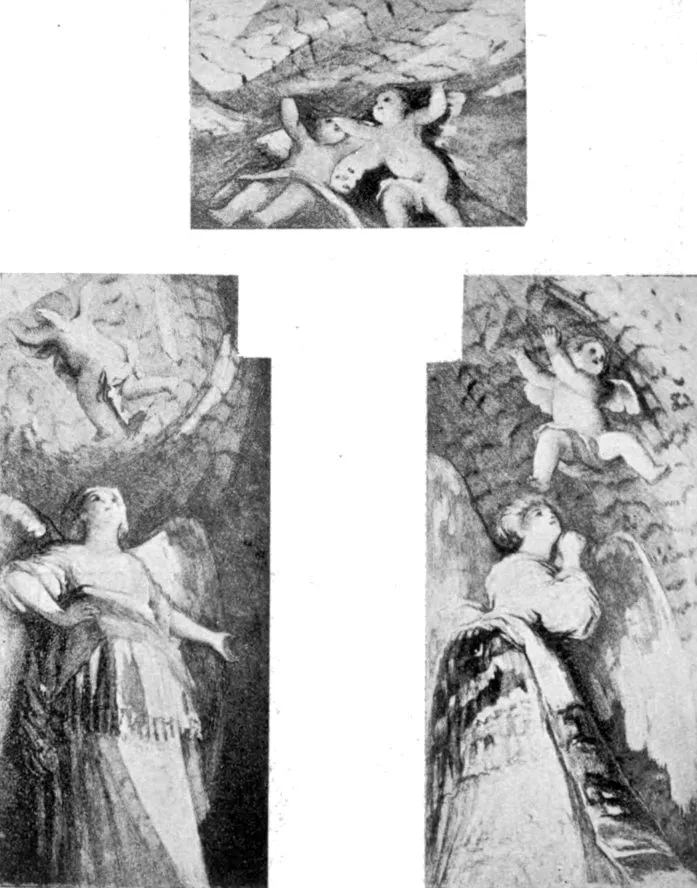
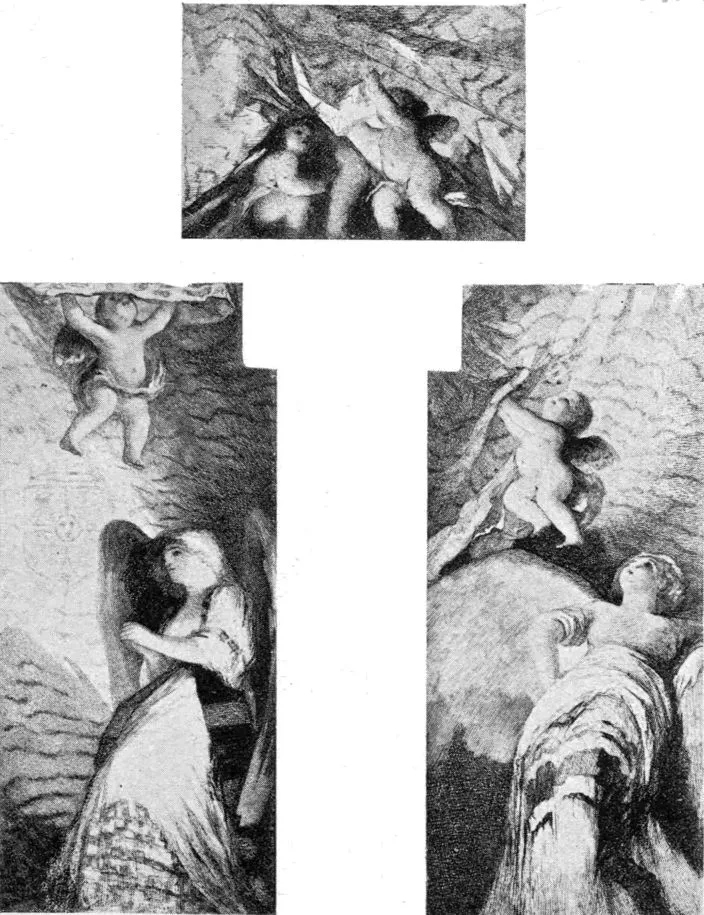
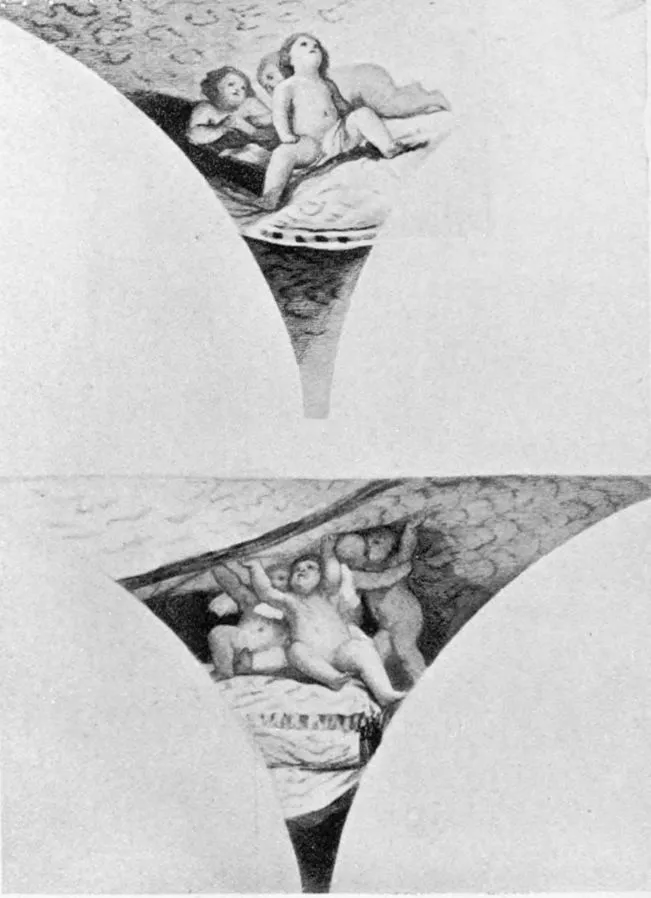
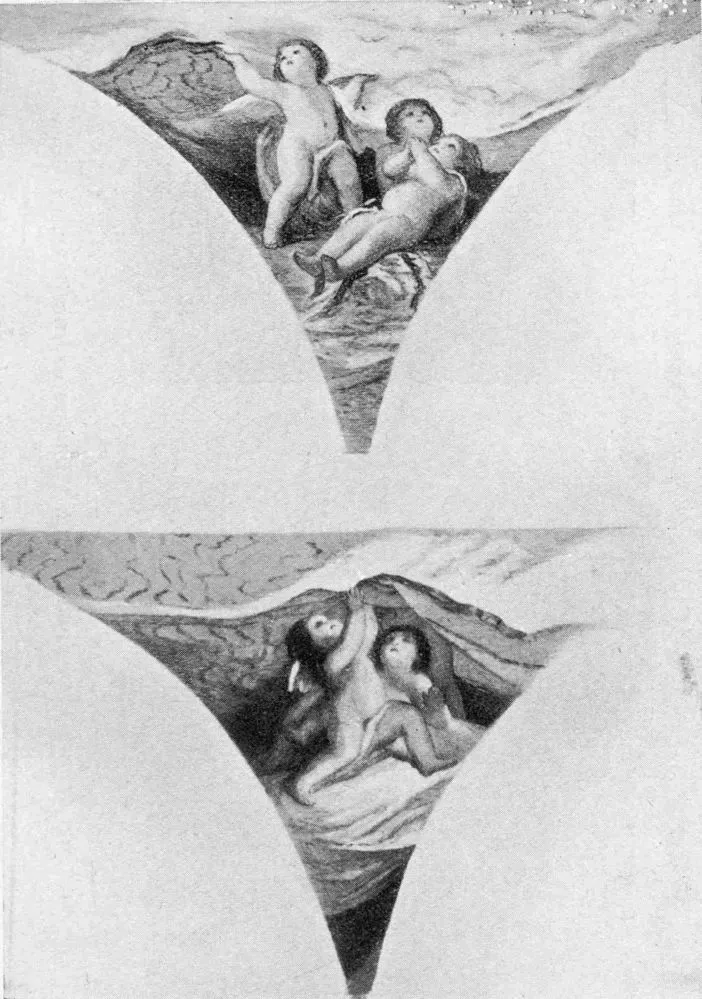
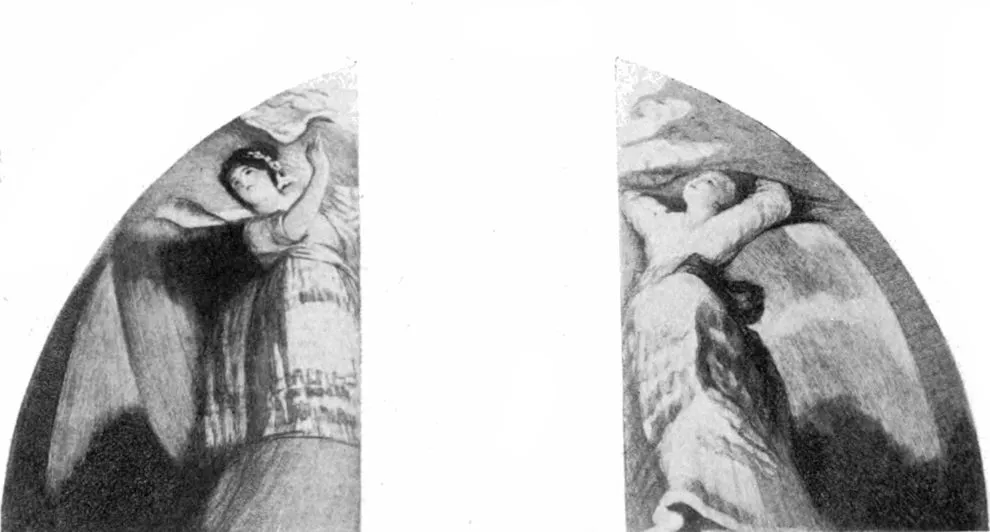
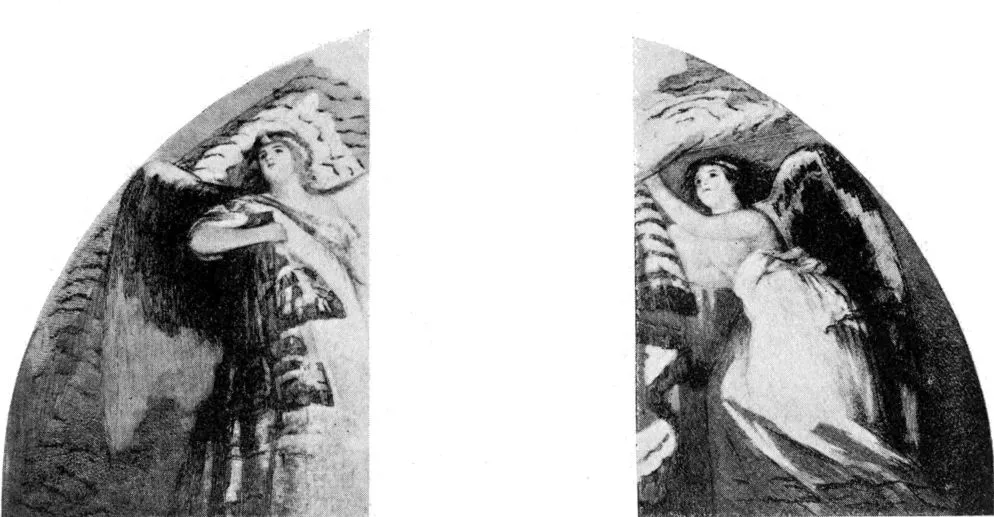
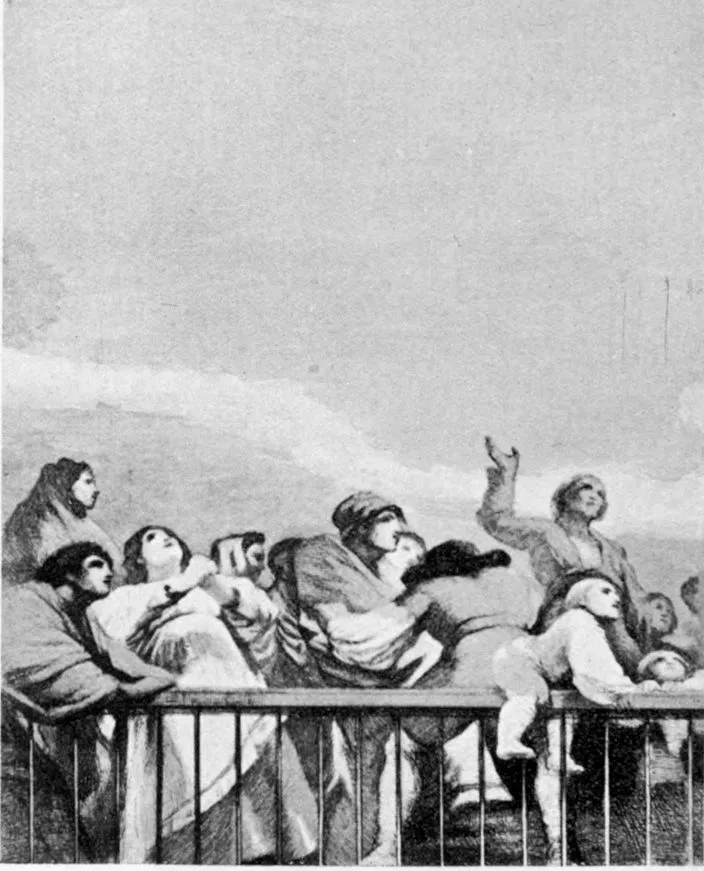
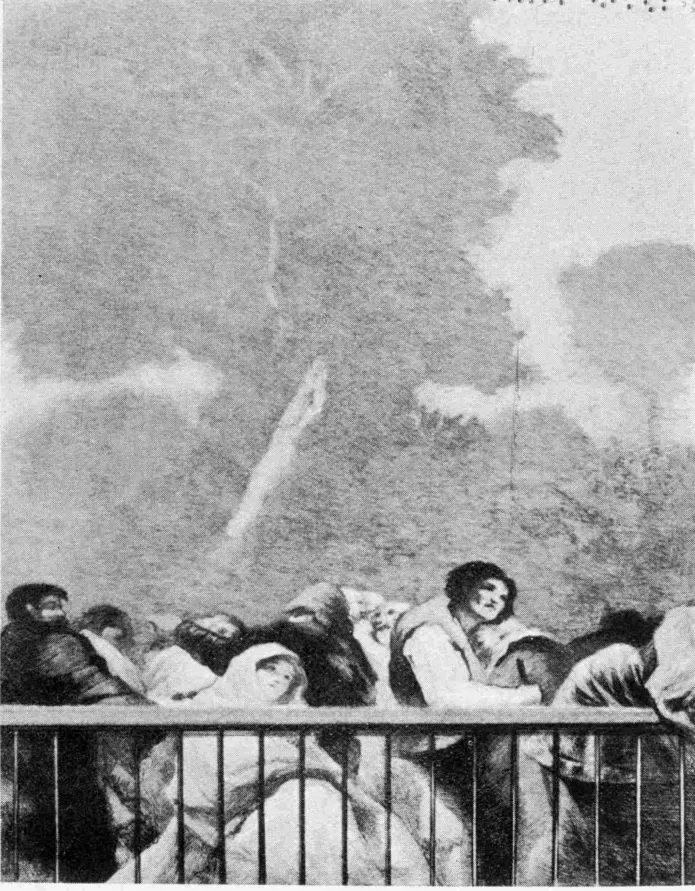
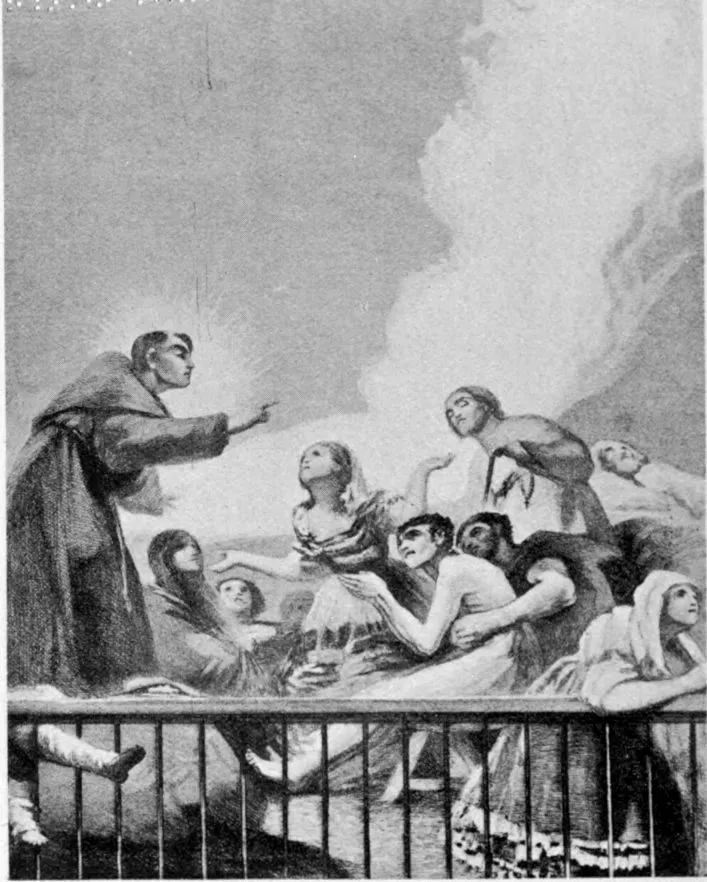
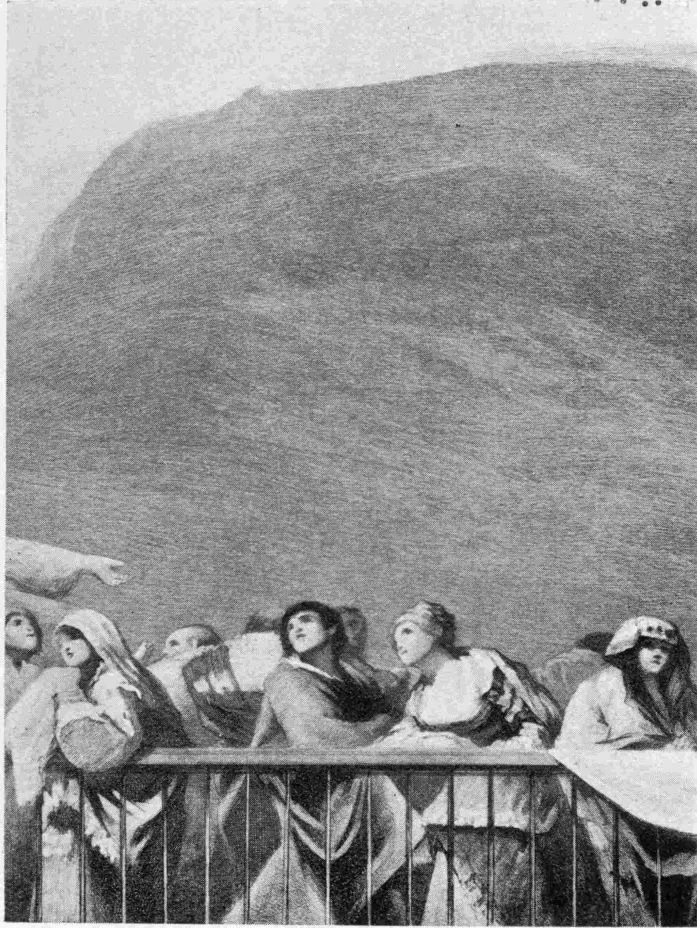
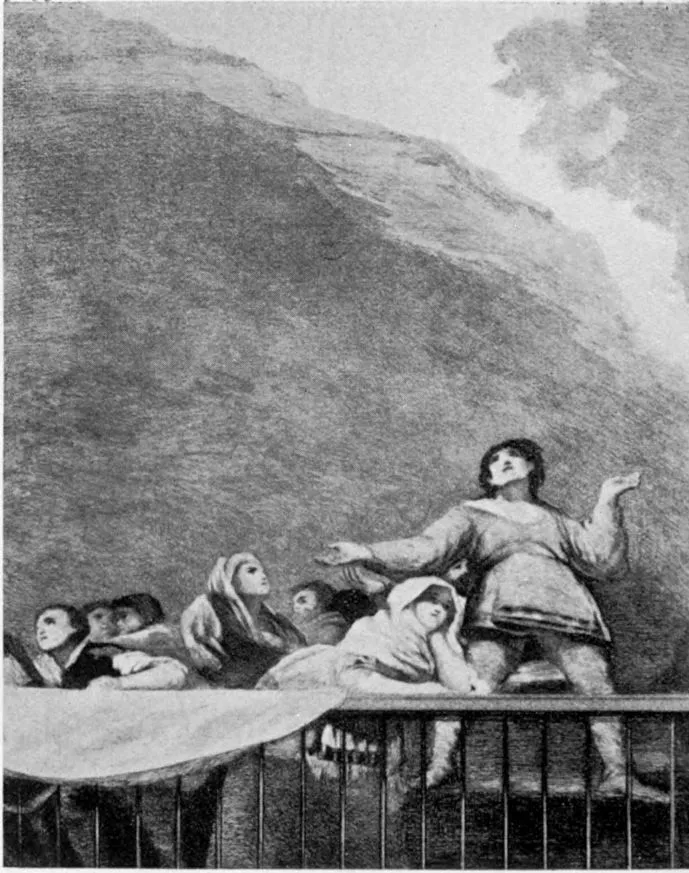
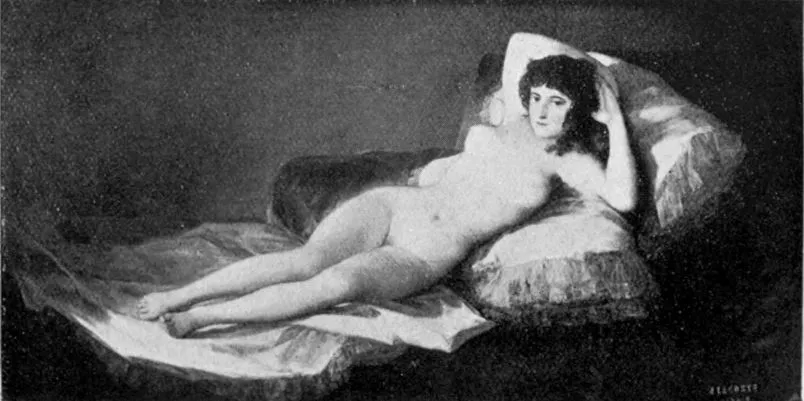
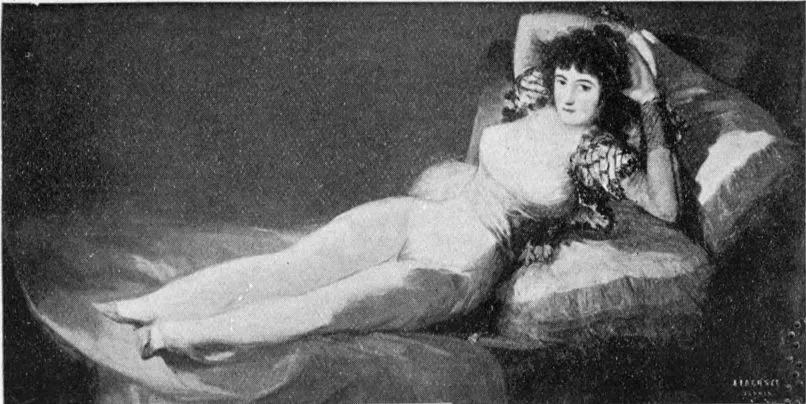
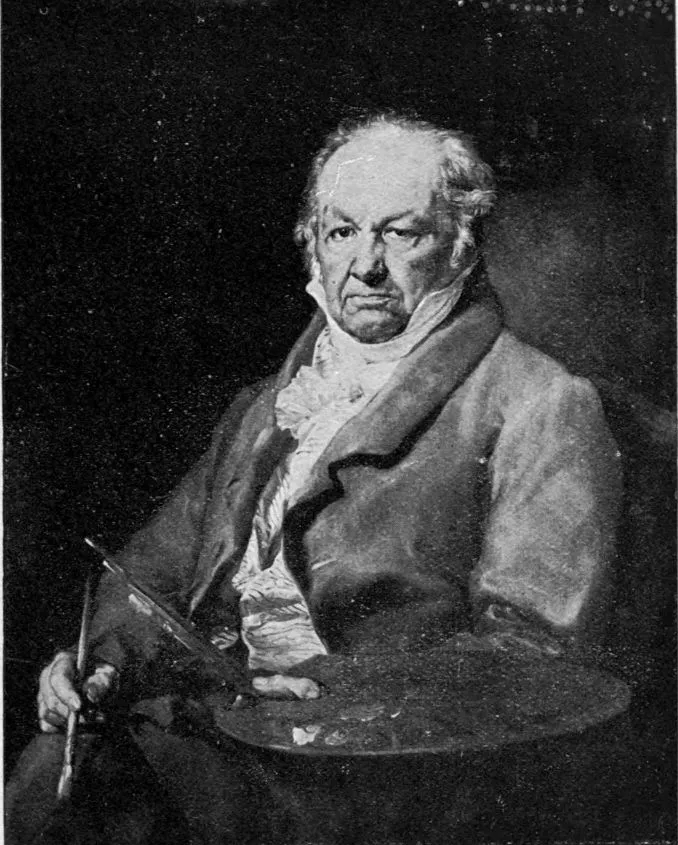
Close to the Puente Verde is the Ermita de San Antonio de la Florida,
whose dome was decorated with frescoes by Goya. The satirical painter
was engaged by the church to paint this dome with appropriate subjects,
and in sombre jest he chose his models for pious characters among the
manolas, or half-reputable women, of Madrid. The paintings are of
exceptional interest, and well represent the spirit of the grimly
facetious painter.
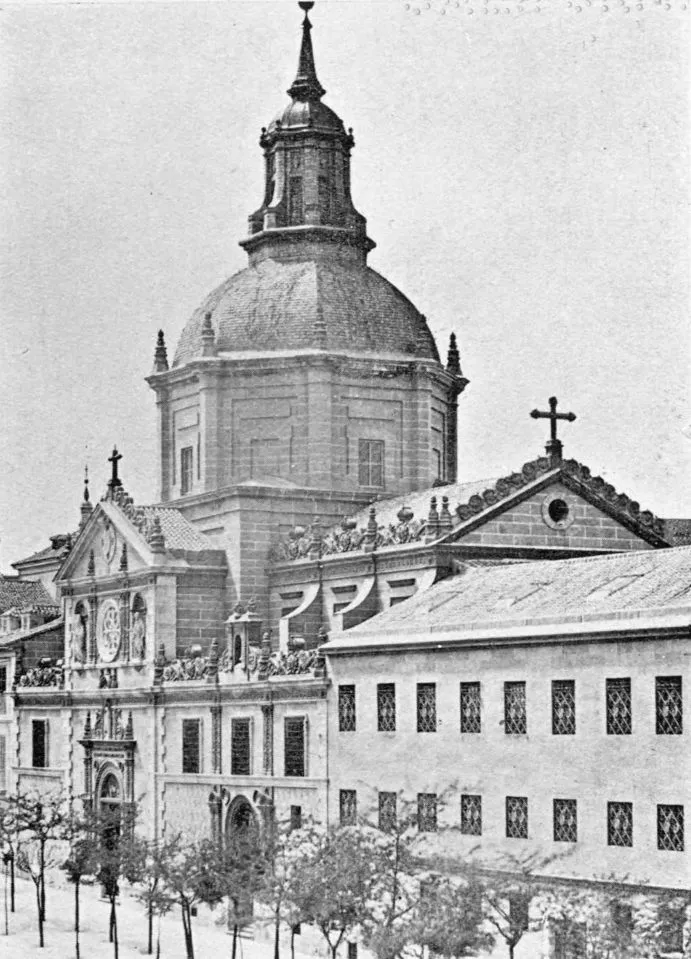
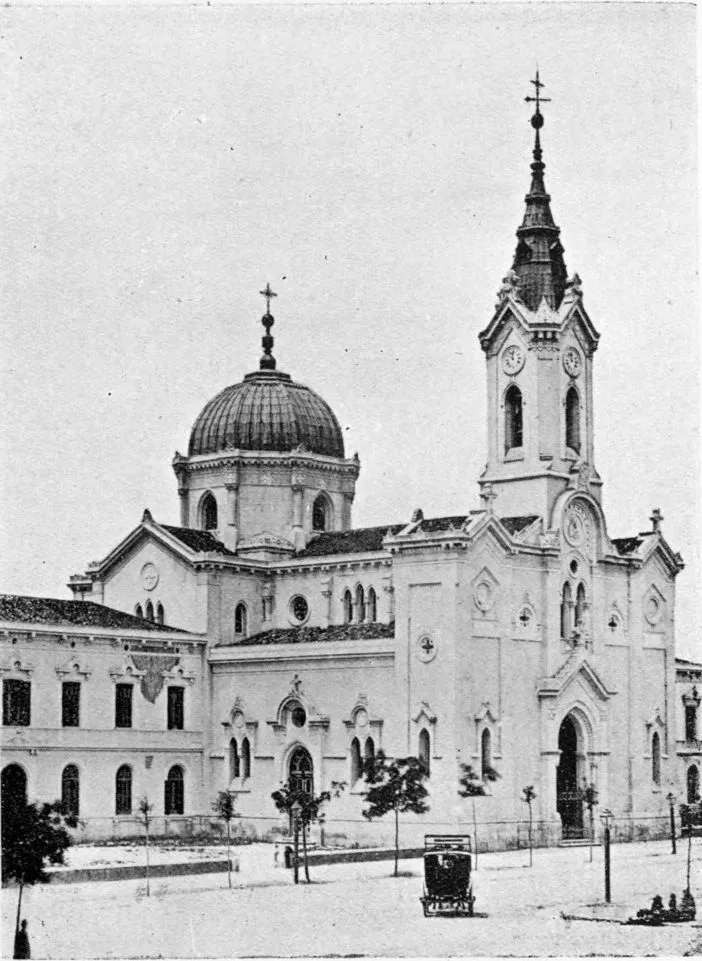
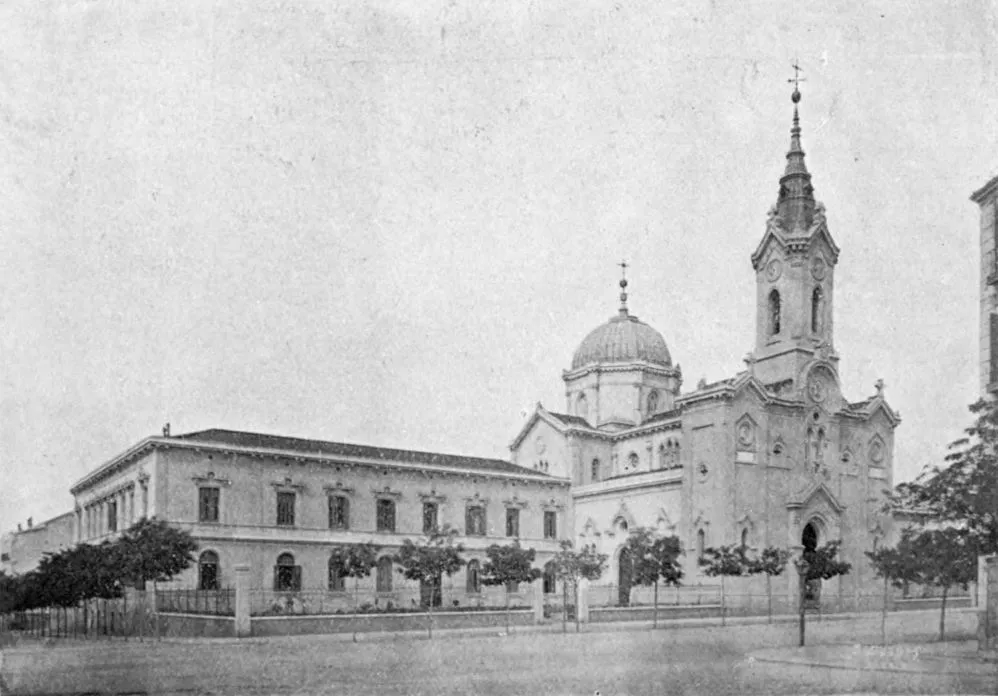
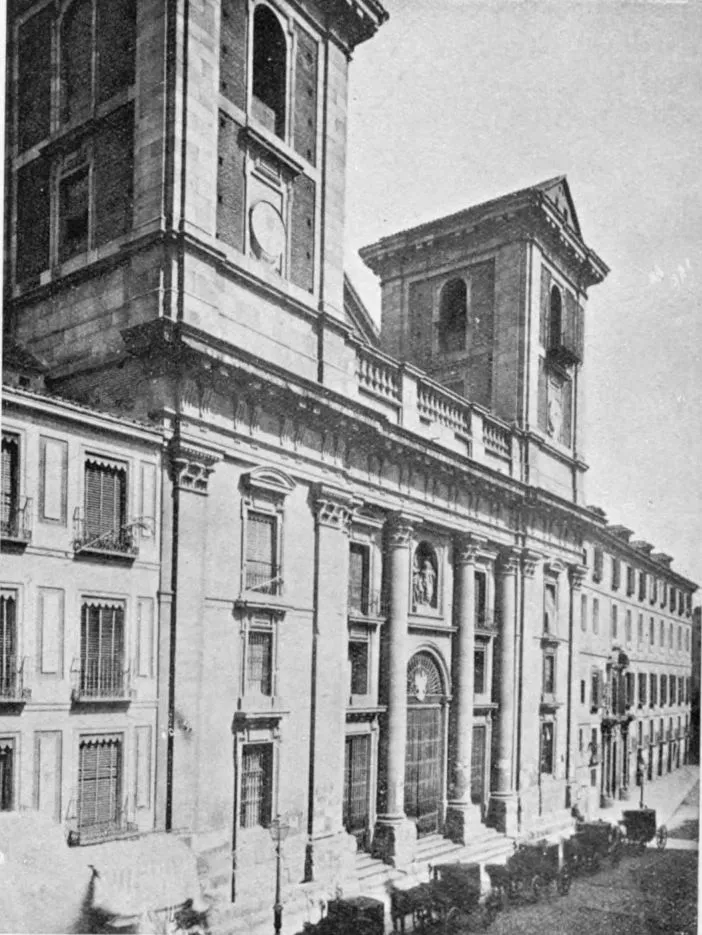
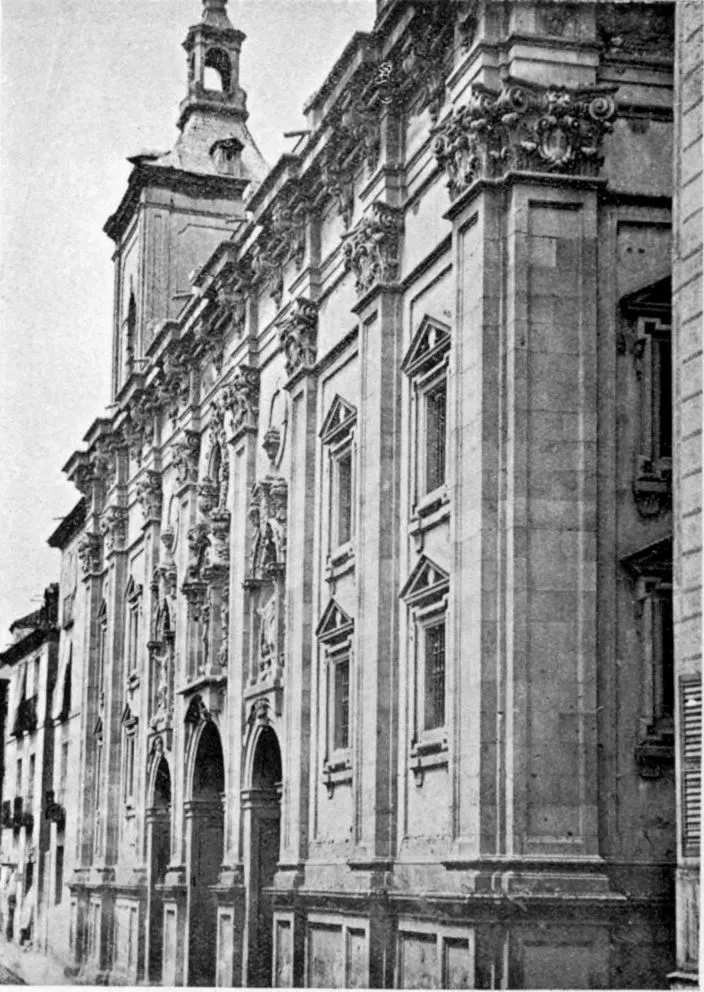
The finest specimen of baroque architecture in the city is the church of
Santa Barbara, now adjoining the Palace of Justice, and formerly the
church of a convent founded in the time of Ferdinand VI. The building is
in the form of a cross, with towers, and an ornamental façade. The dome
is decorated with frescoes, and the marble altarpiece is especially
graceful. Olivieri carved the figures of St Ferdinand, St Barbara, and
Faith and Charity on the retablo. The tomb of Ferdinand VI. by Sabatini
is in the transept. There is also a monument to General O’Donnell,
designed by Jeronimo Suñol.
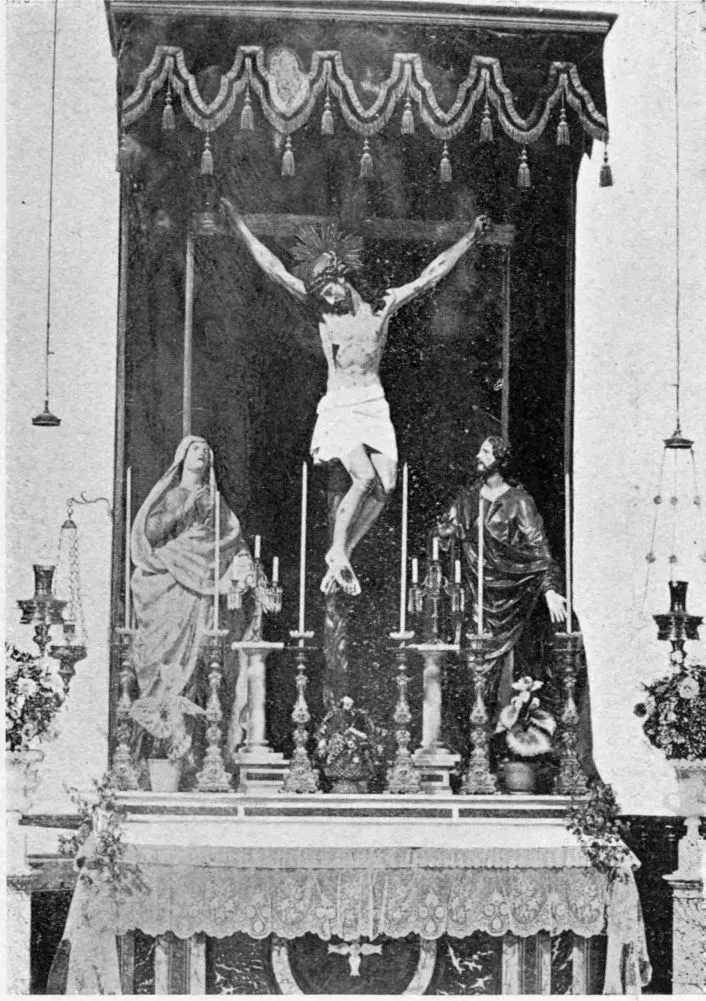
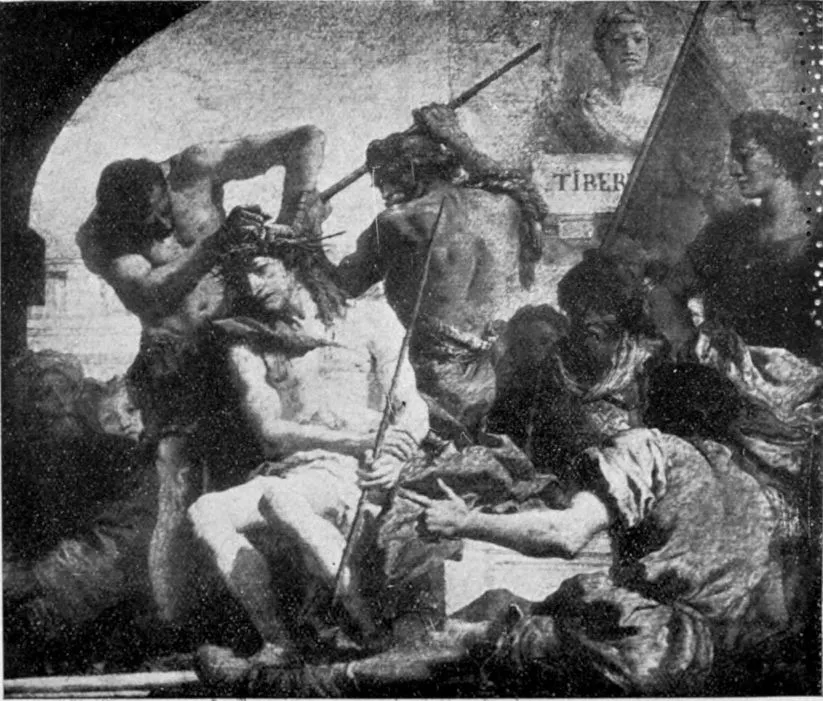
San Ginés should be seen for the picture of the “Scourging of Christ” by
Alonso Cano, and a statue of Christ by Vergara.
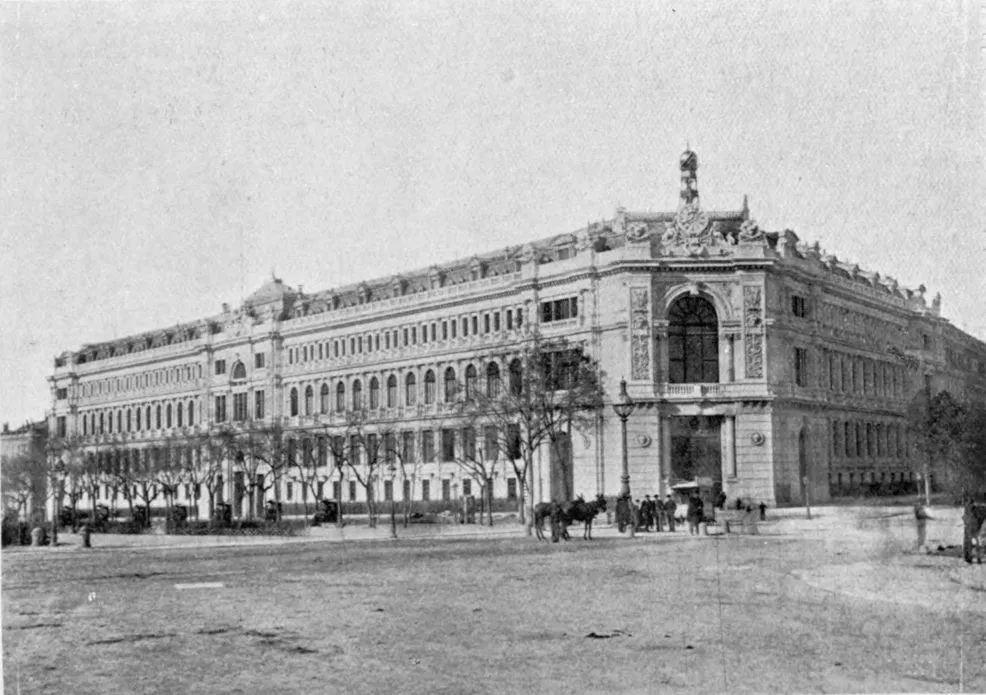
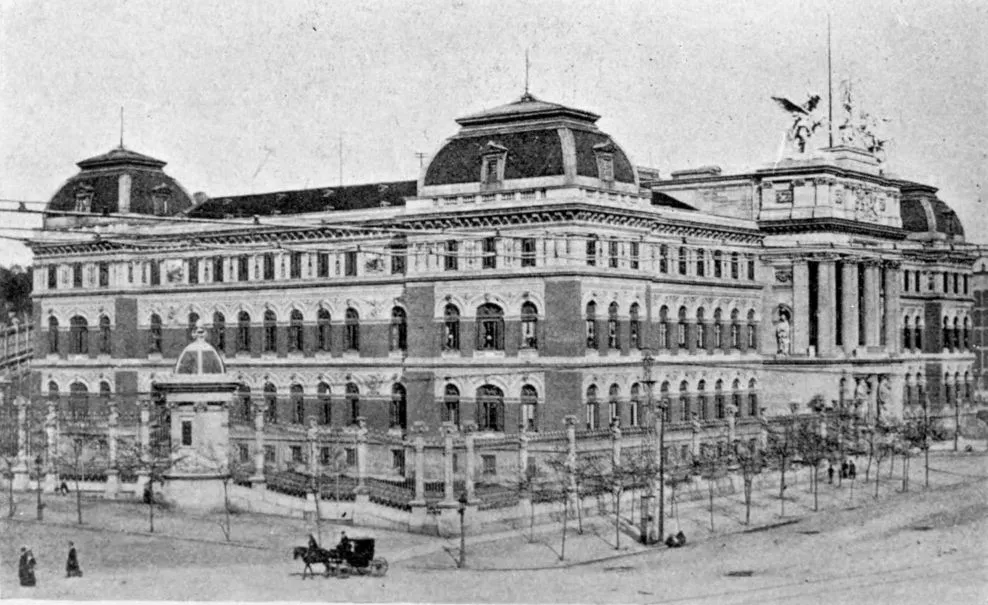
Madrid compares unfavourably with other capitals as regards buildings.
Of late years a good many new edifices have arisen, but these are
massive and pretentious rather than imposing.
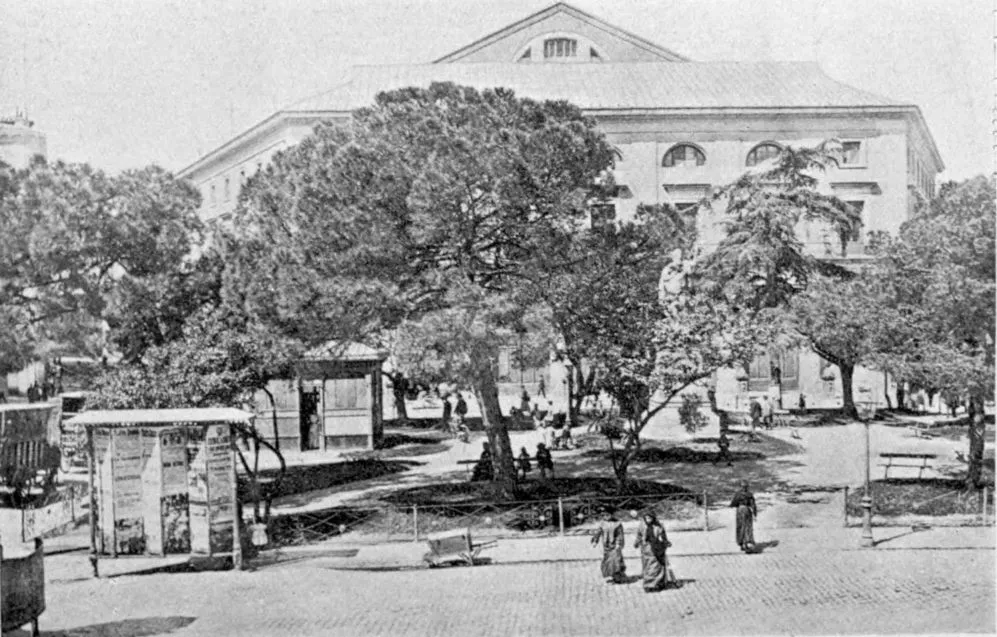
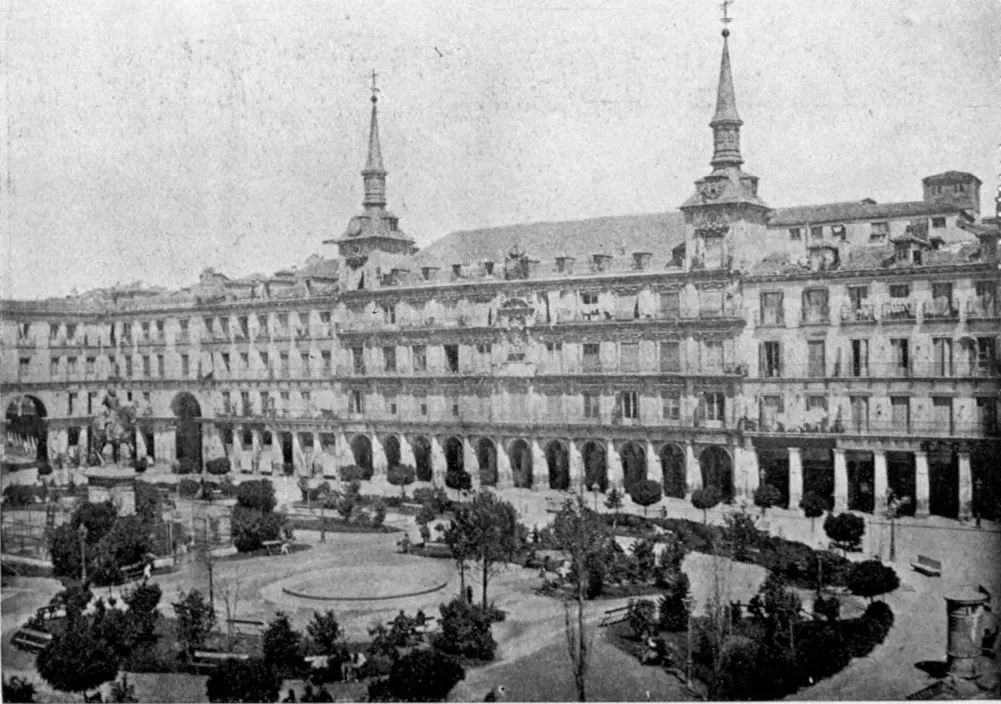
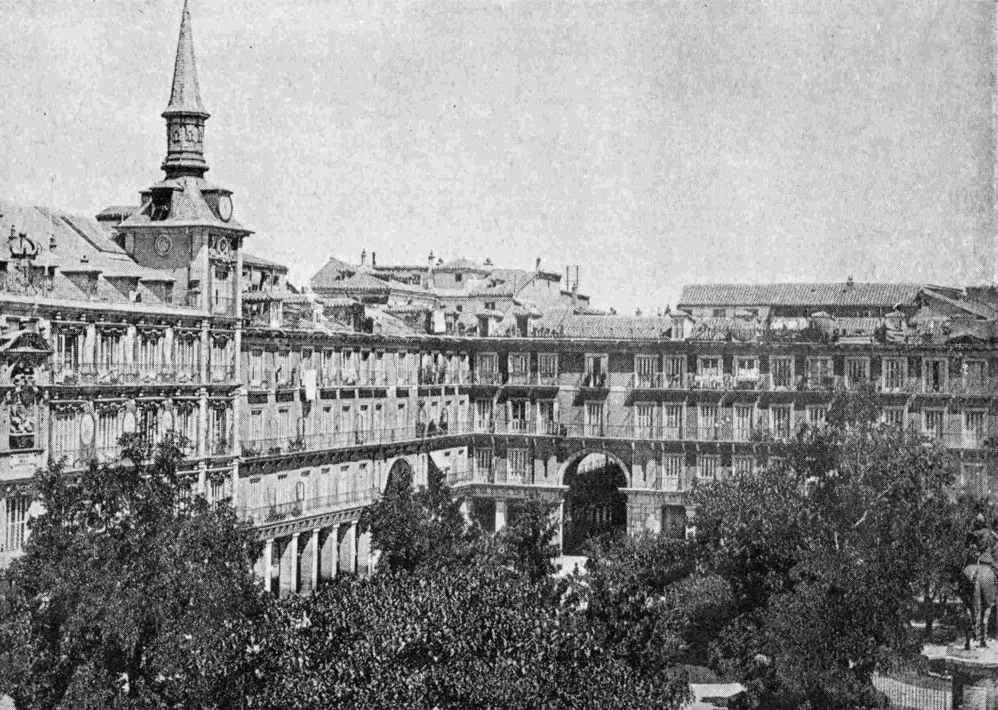
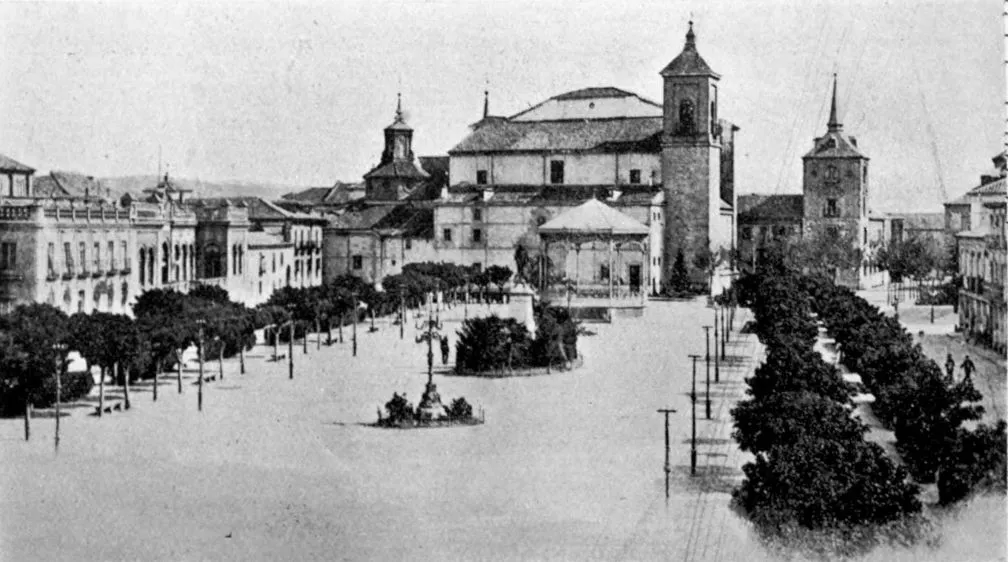
The Plaza Mayor—originally the market-place of Madrid—is historically
interesting as the scene of numerous autos de fé and bull-fights, while
the architecture of the Casa Panaderia should be examined. The building
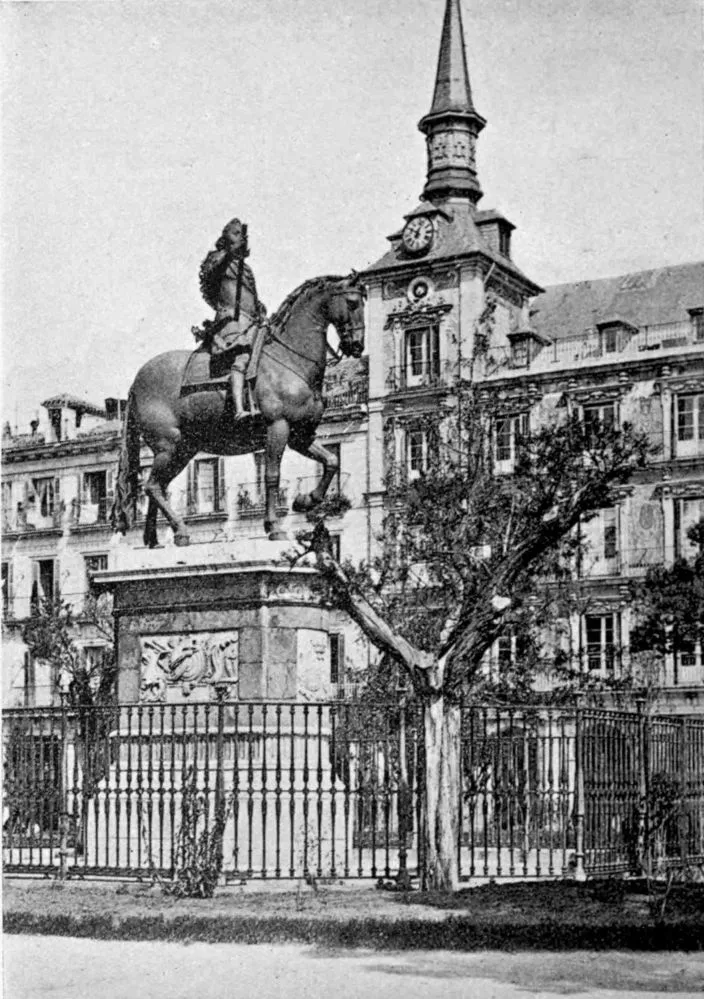
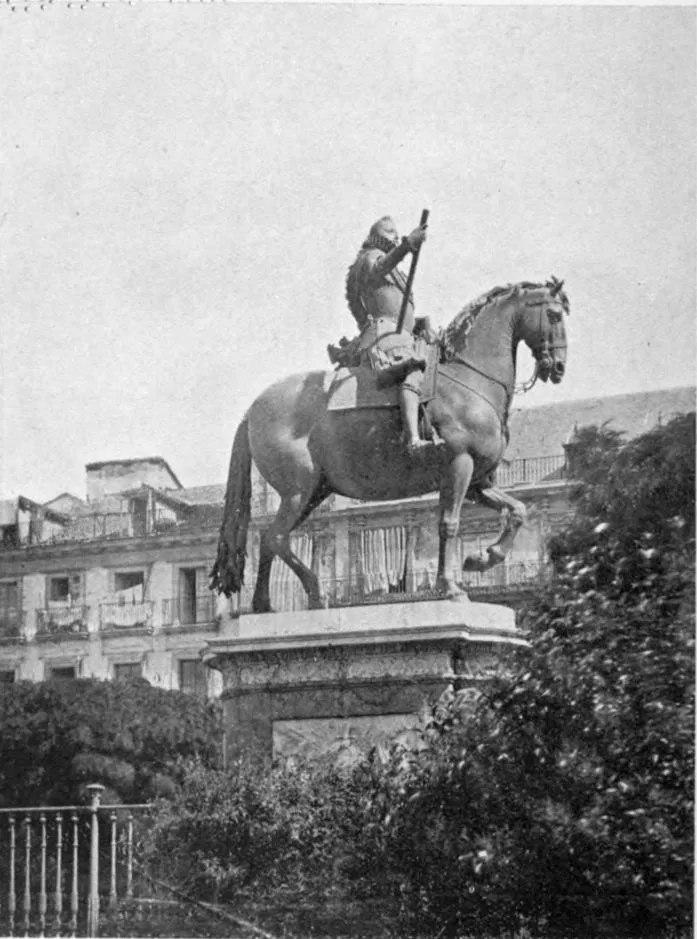
contains pictures by Coello. In the middle of the square is the statue
of Philip III. on horseback, cast in bronze, and the work of Juan de
Bologna and his pupil Tacca.
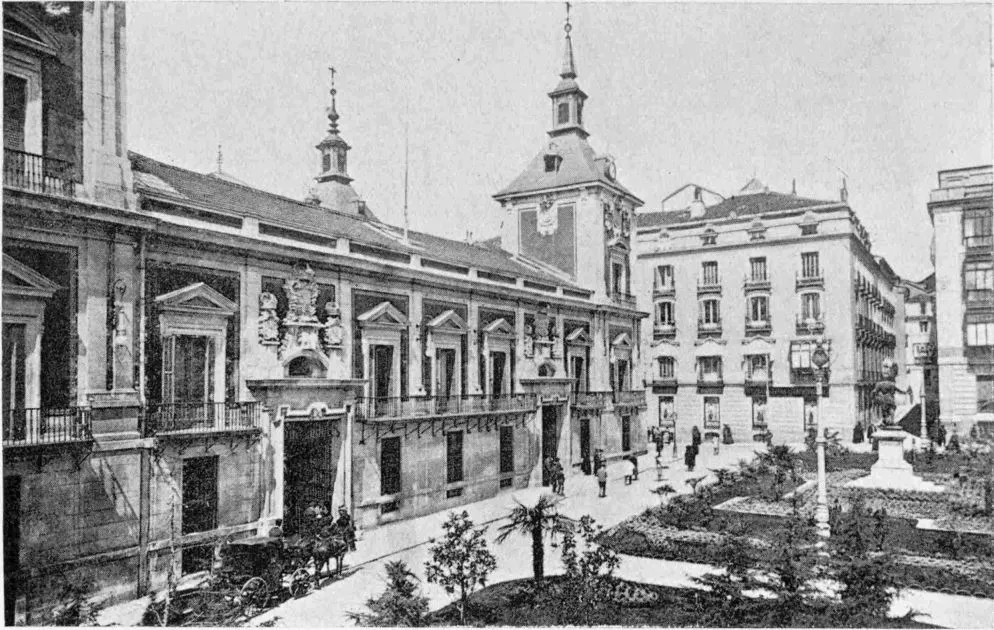
A monument of the time of Philip IV. is seen in the offices of the
Ministry of State, formerly a prison. It was designed by the Italian
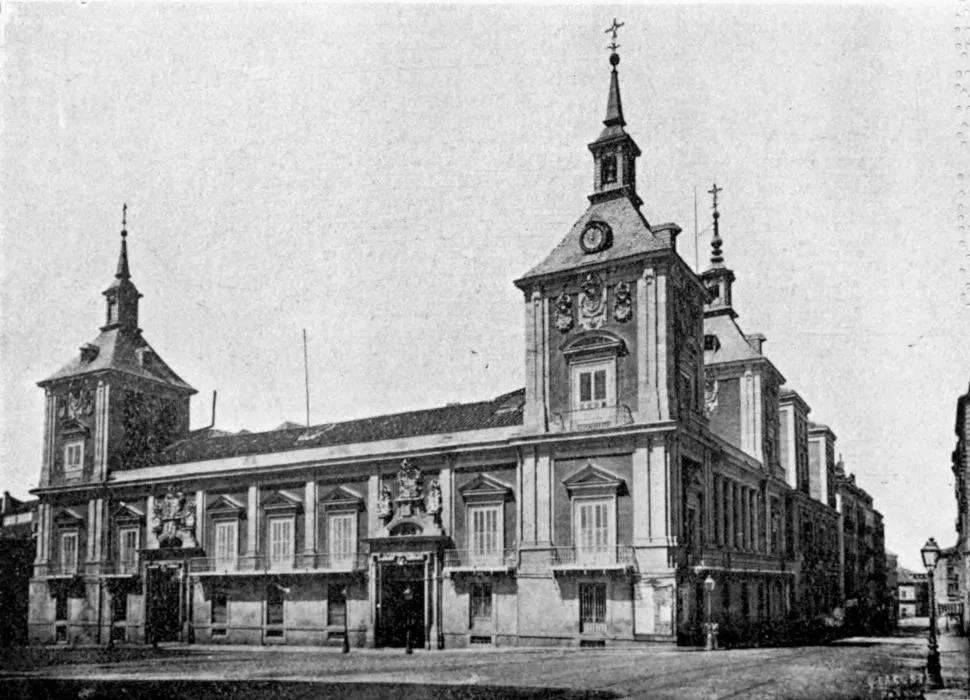
Bautista Crescenti, with figures by Herrera. The Town Hall is
seventeenth century, with a good façade, and a fine staircase. In the
oratory of this building are pictures by Palomino.
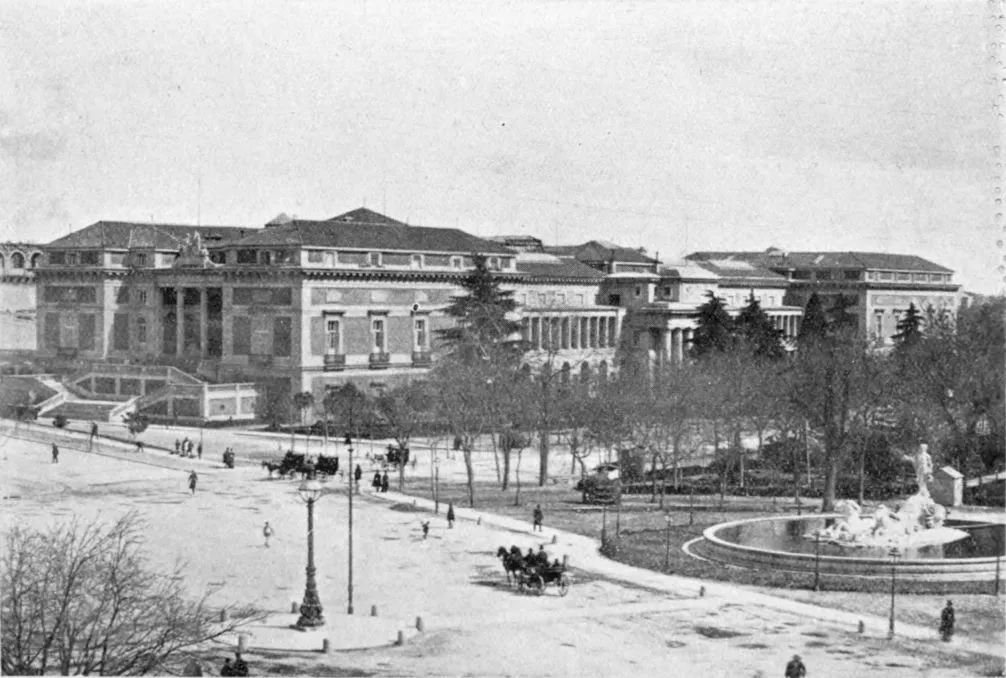
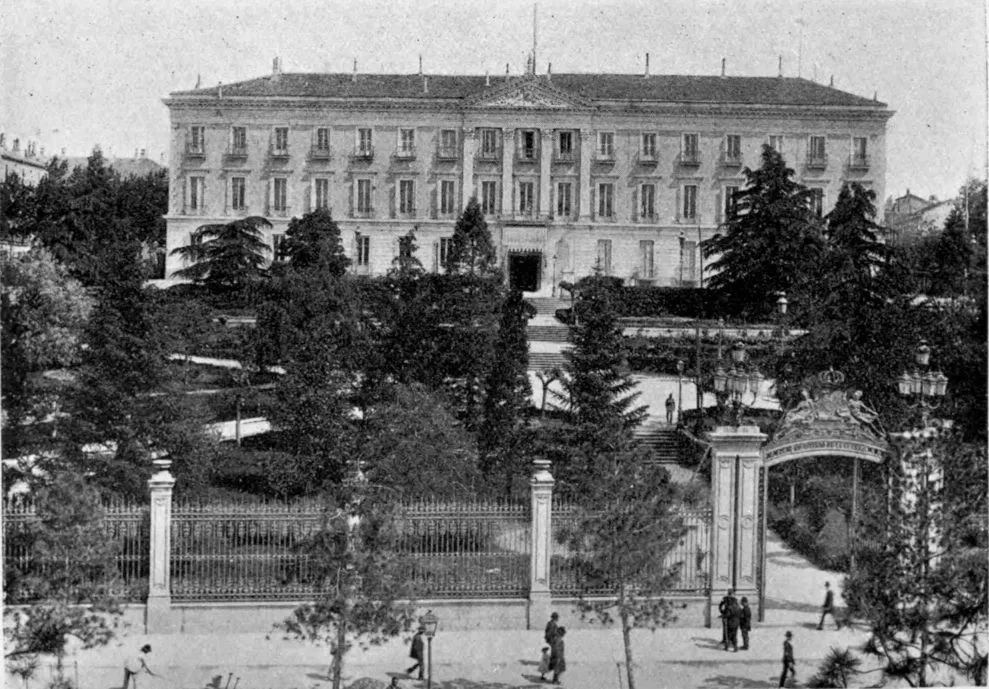
Very little remains of the old palace of the Buen Retiro, which has been
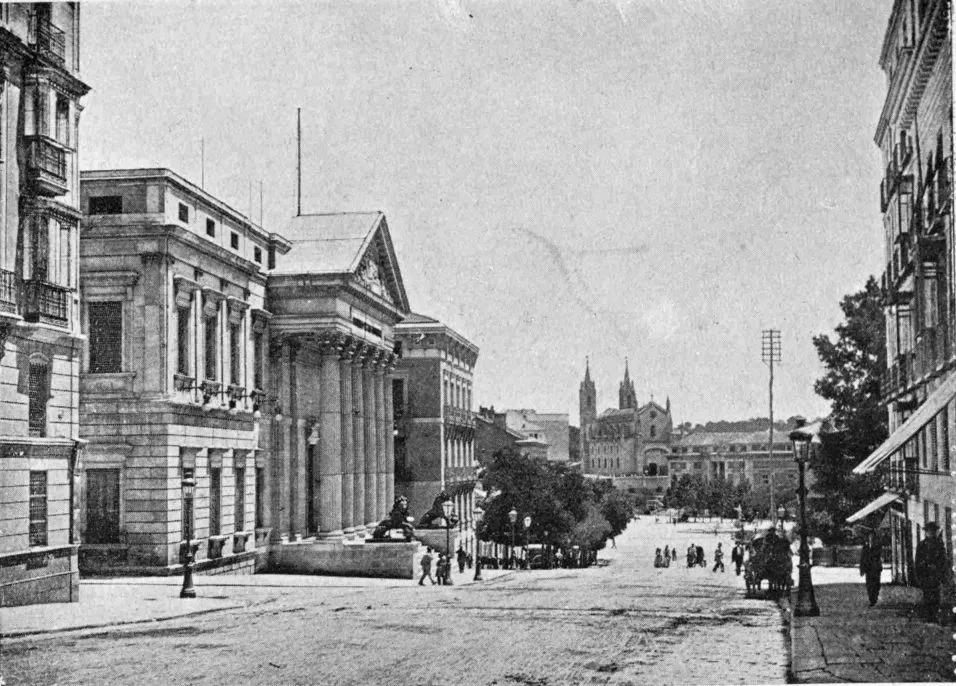
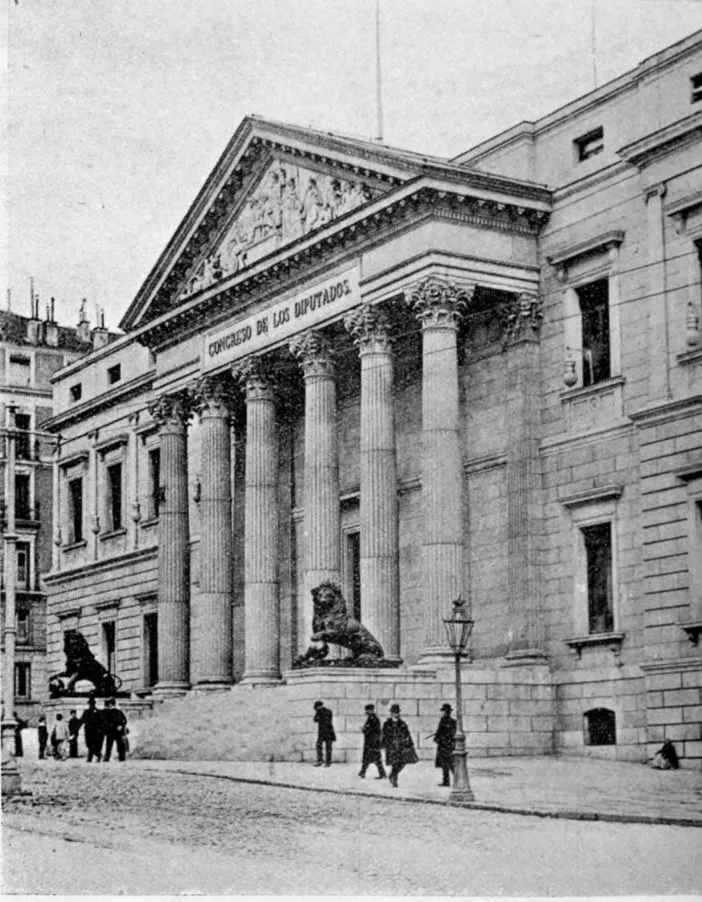
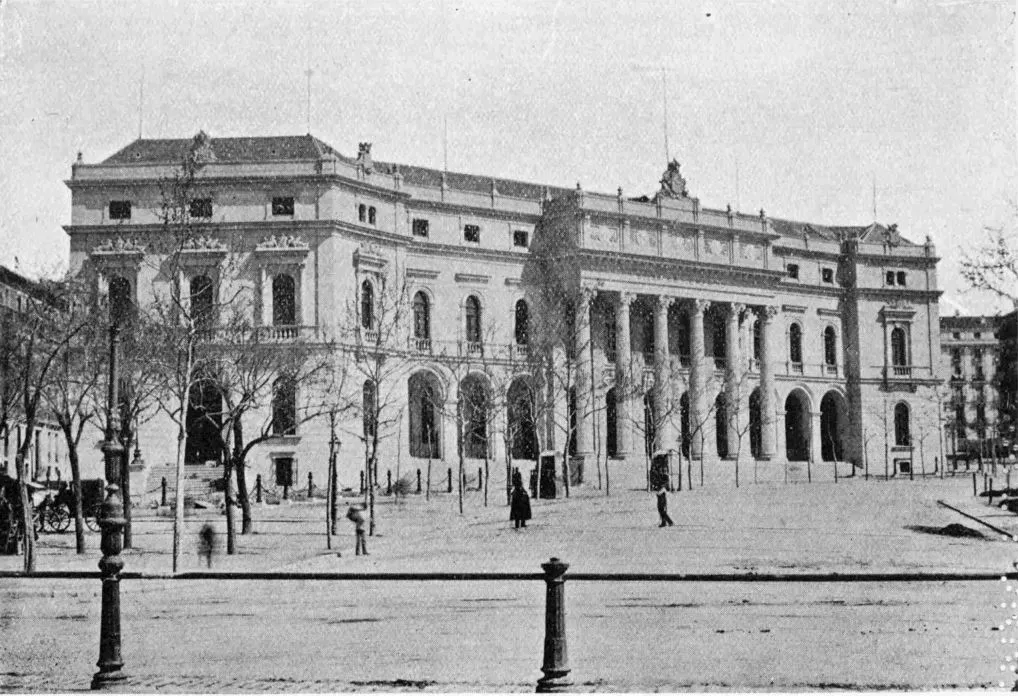
converted into the Artillery Museum. The Palacio del Congreso (House of
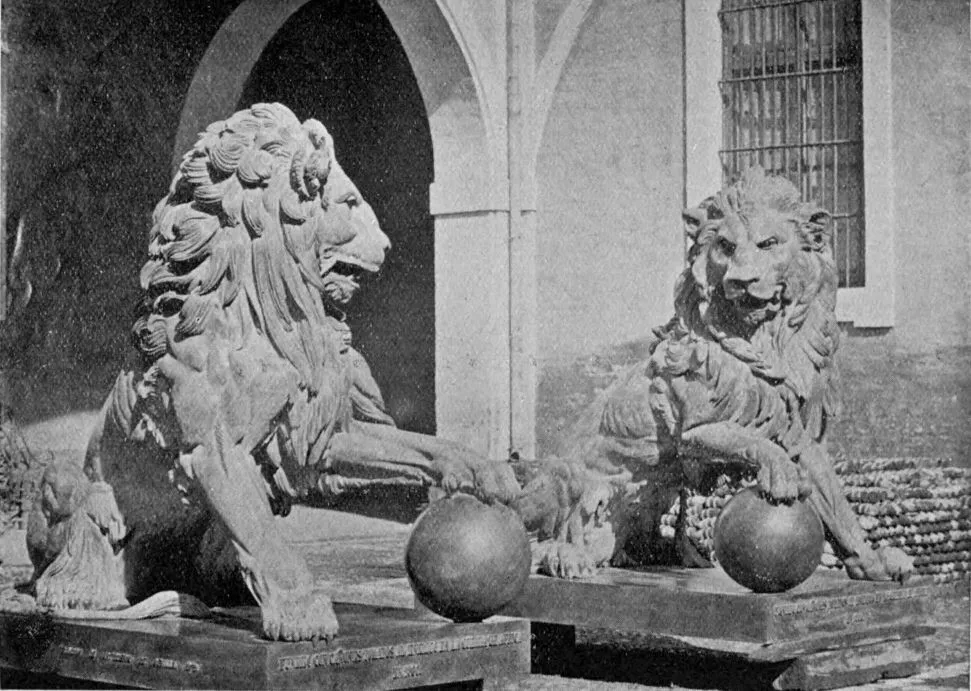
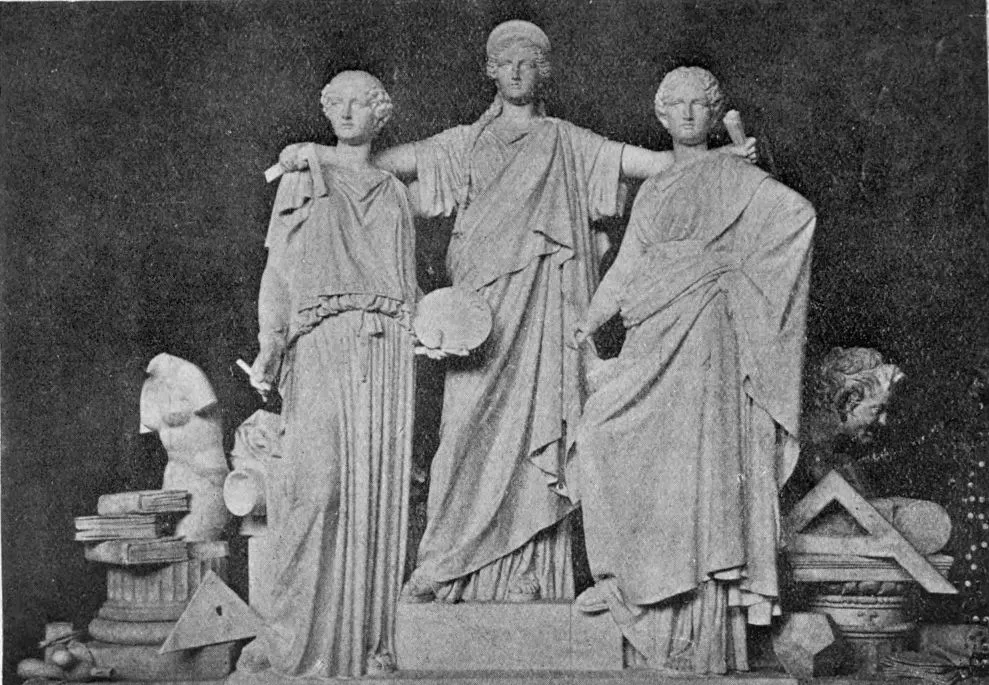
Commons), finished in 1850, is Corinthian in style. There is a fine
allegorical group by Ponzano, who also designed the lions on the front.
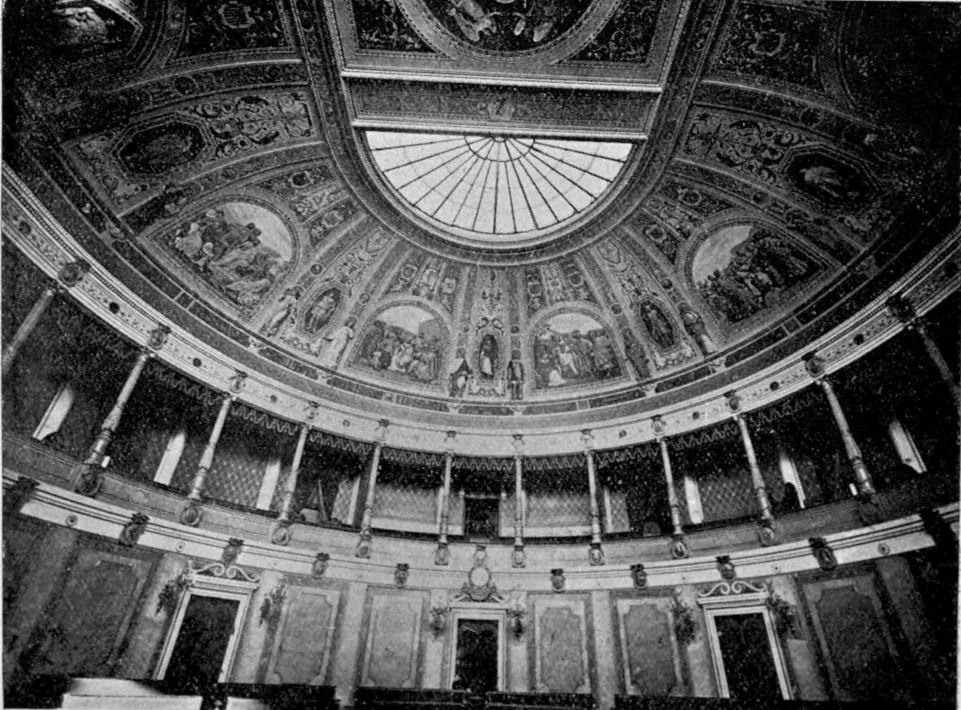
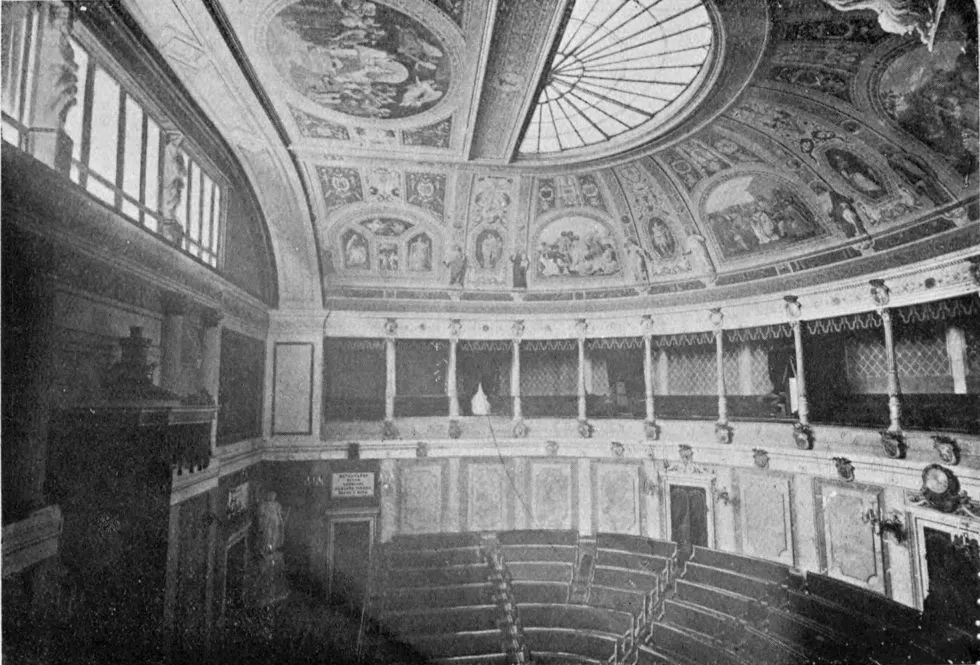
Within, there are frescoes of historic scenes.
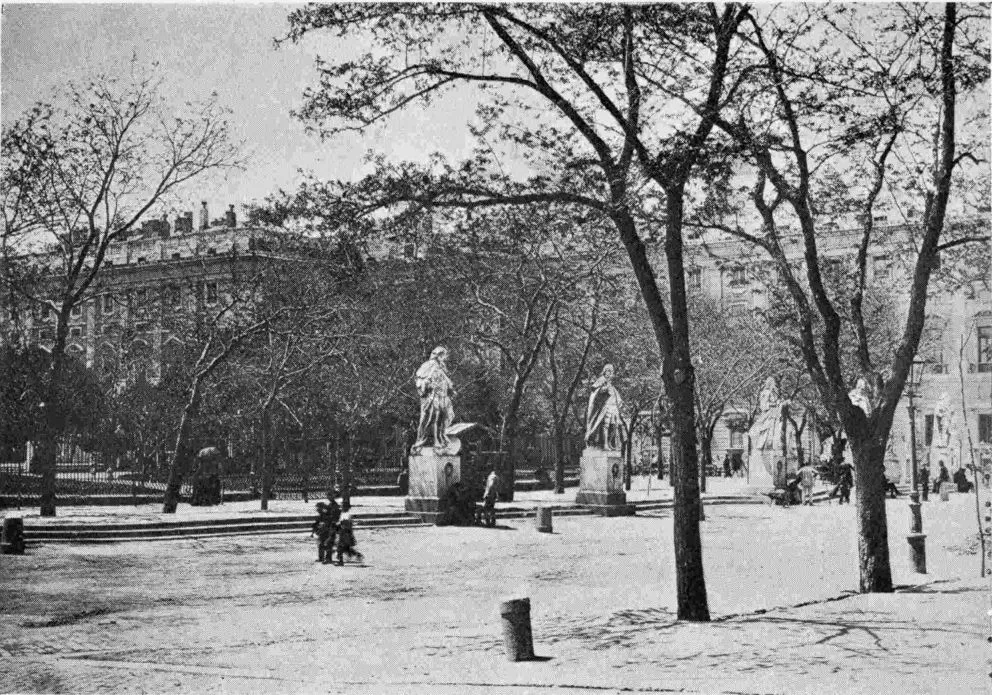
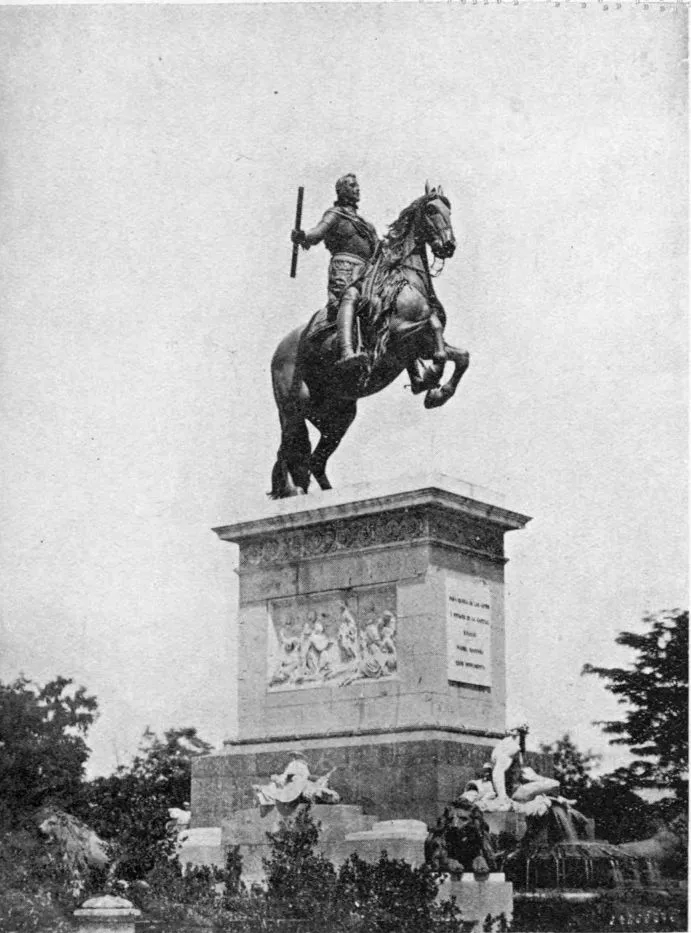
The largest square in Madrid is the Plaza de Oriente, constructed by
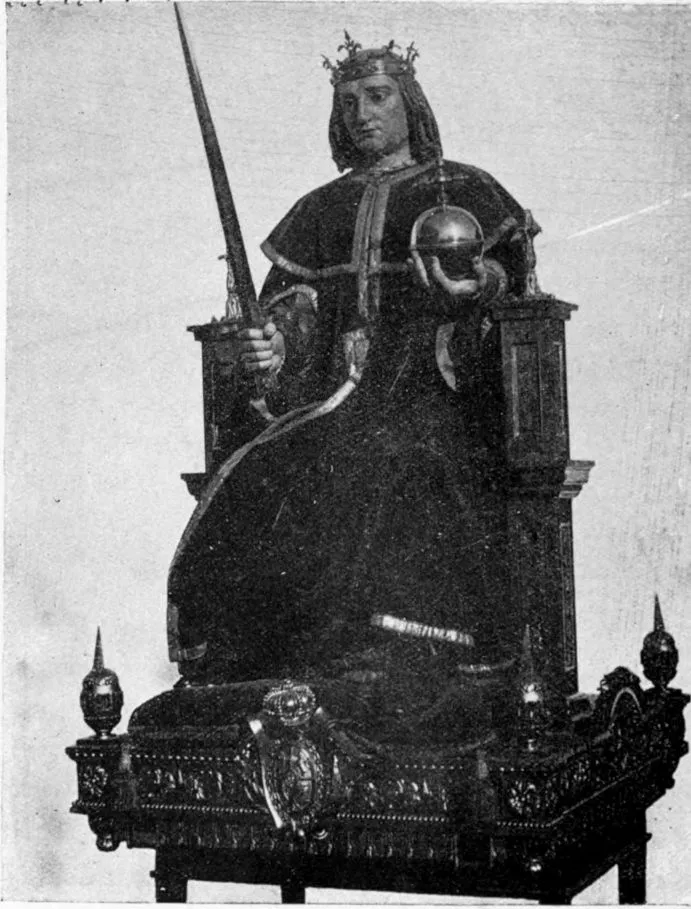
order of Joseph Buonaparte. There are fourteen immense statues of kings
in this open space, and a beautiful fountain with lions in bronze. The
equestrian statue of Philip IV. is by Tacca, from a painting by
Velazquez; its equilibrium is said to have been determined by Galileo.
The Museum of Archæology, already mentioned, has many objects of
antiquity dating from prehistoric times. There are a number of Roman
remains, Moorish relics, treasures from China and Mexico, and
curiosities of many kinds.
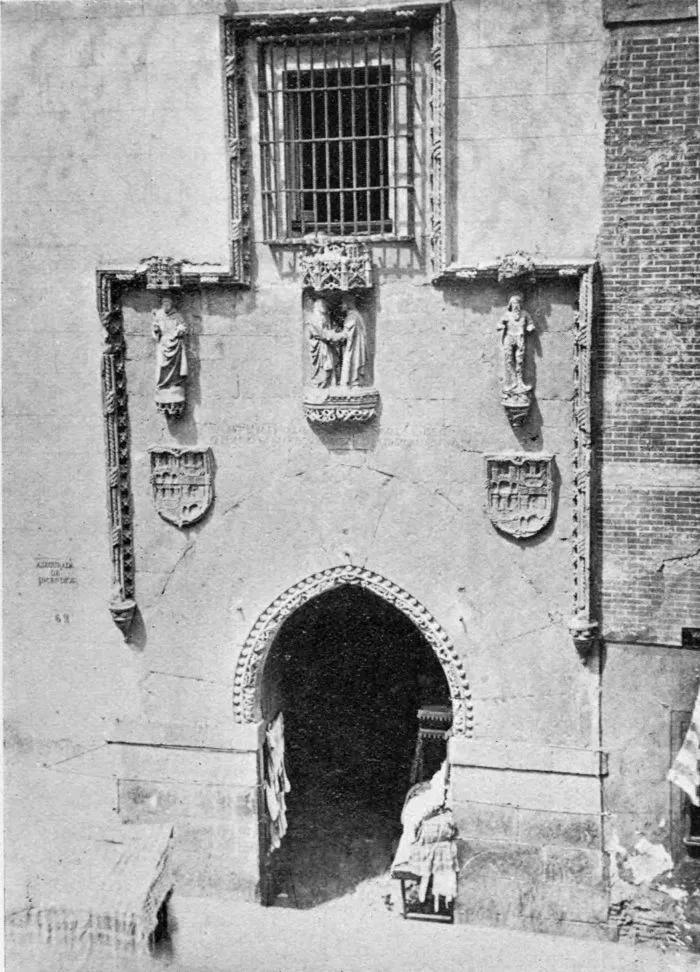
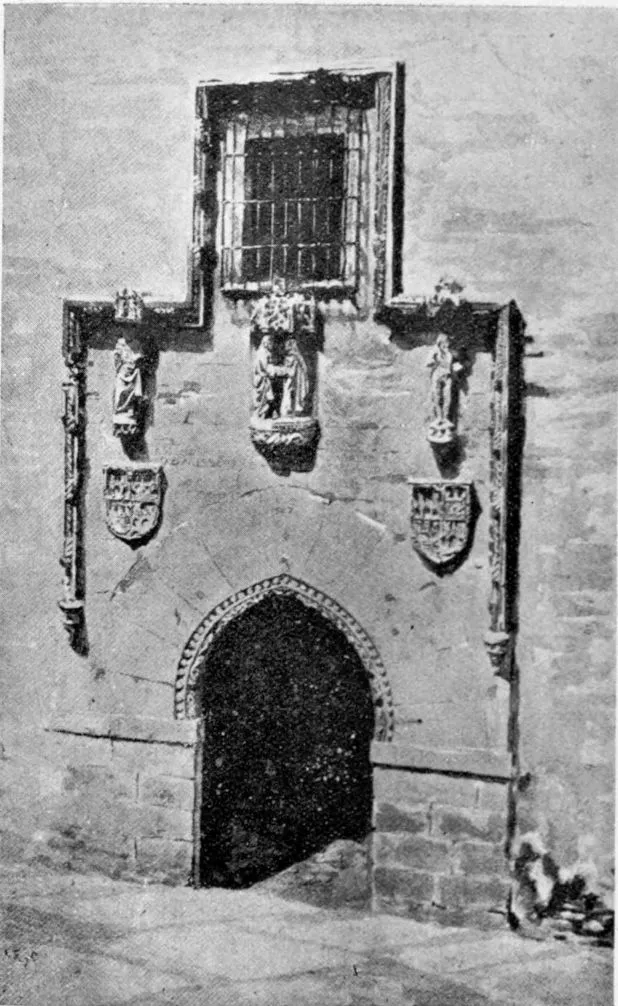
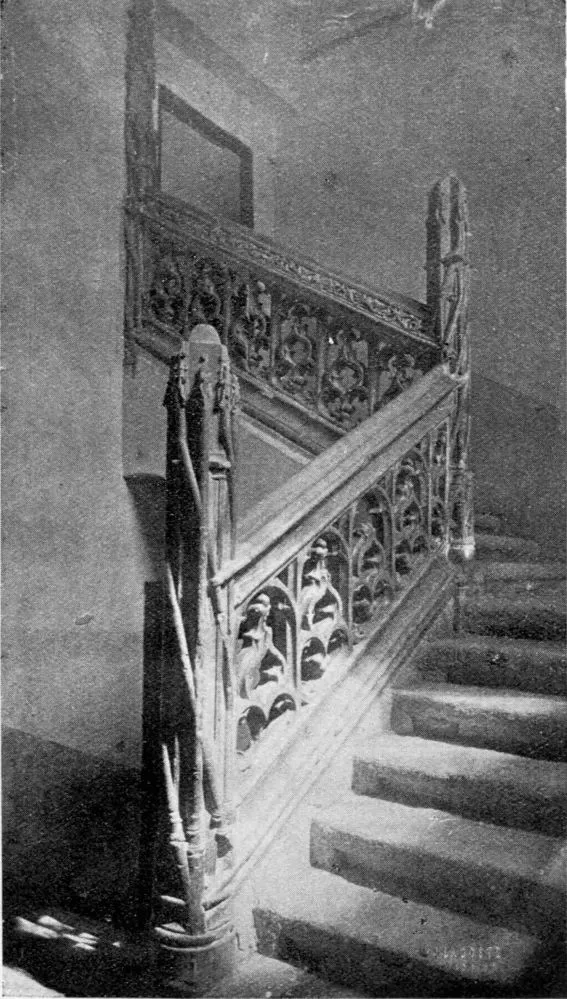
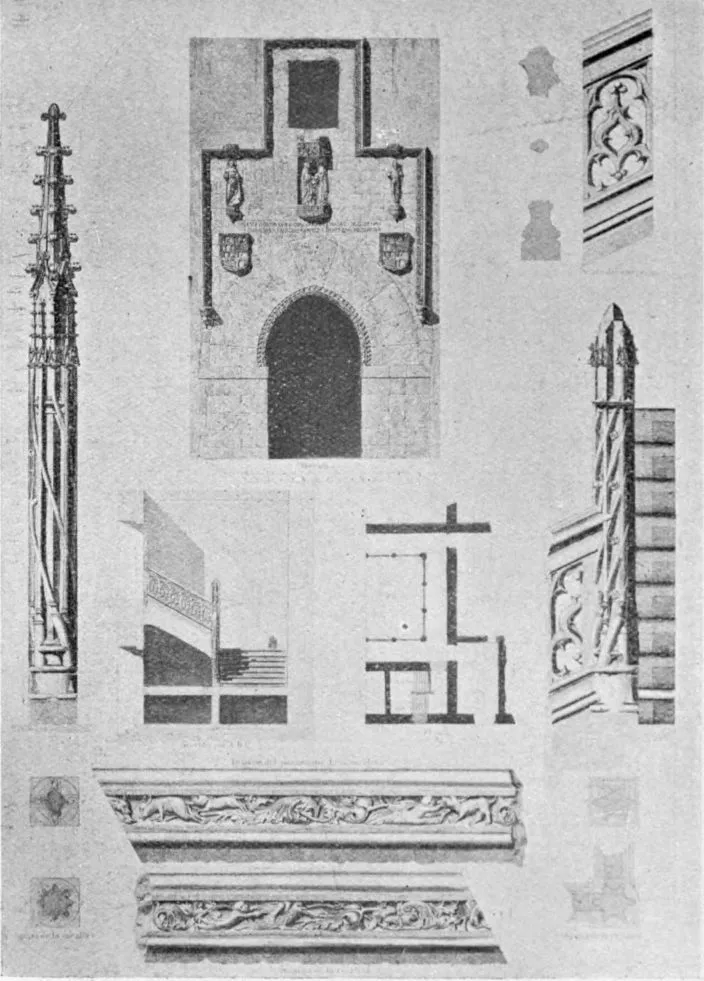
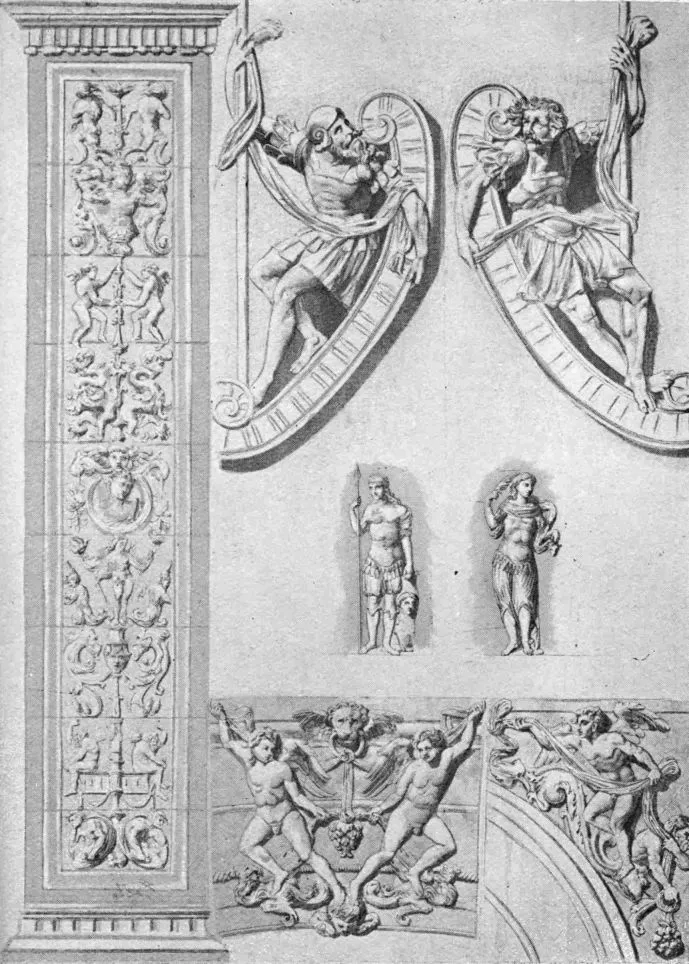
In “Castilla La Nueva” Don Jose Quadrado refers to the old door of the
Monte de Piedad, in the Plaza de las Descalzas, as an interesting relic.
It is surmounted with a very ornate bell, and there are two female
torsos, and some good carving on the frontage.
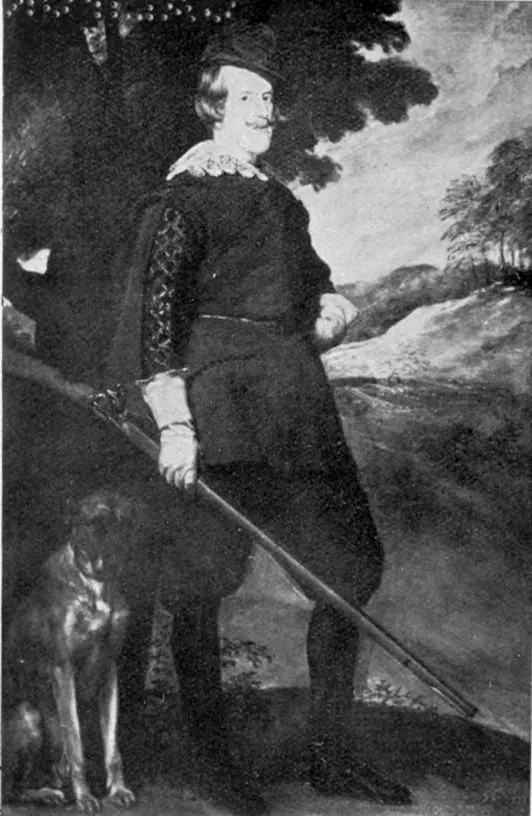
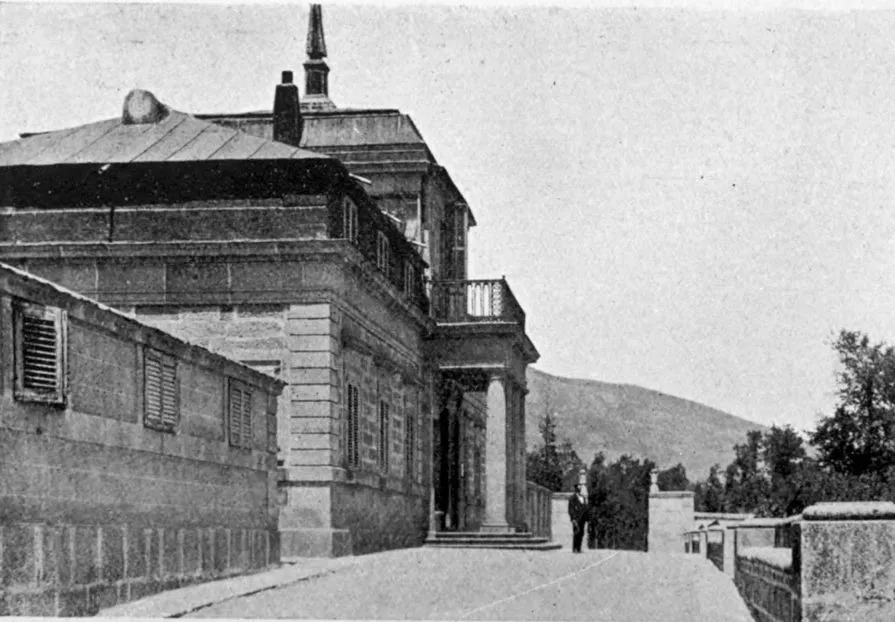
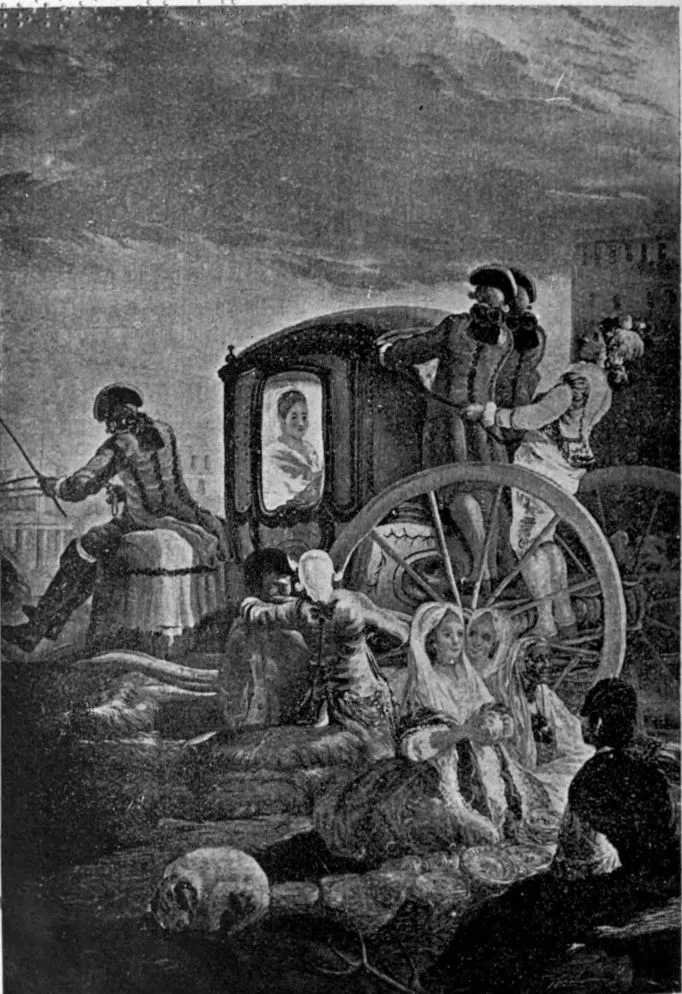
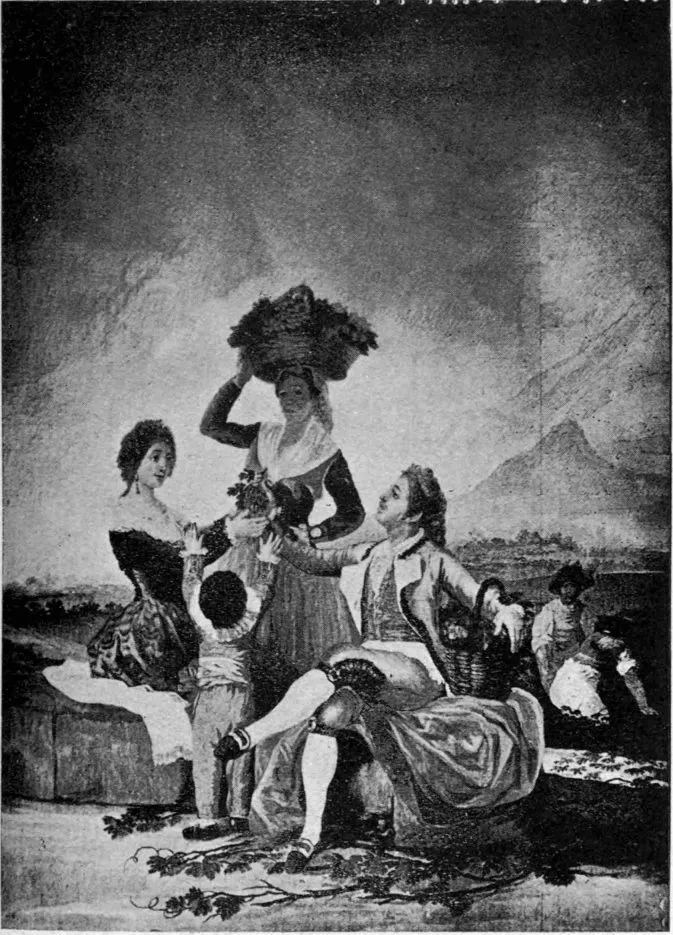
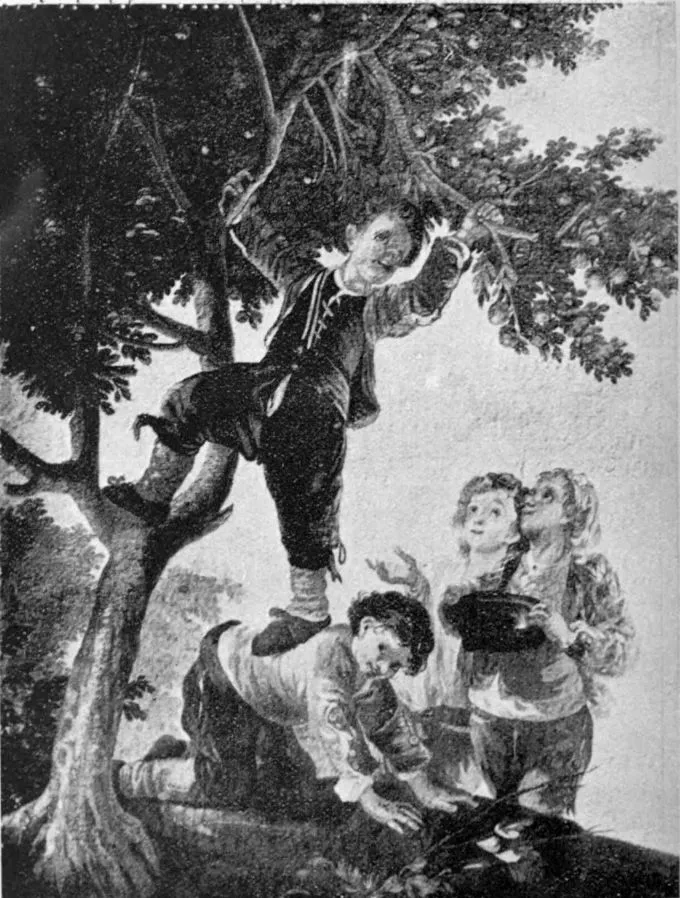
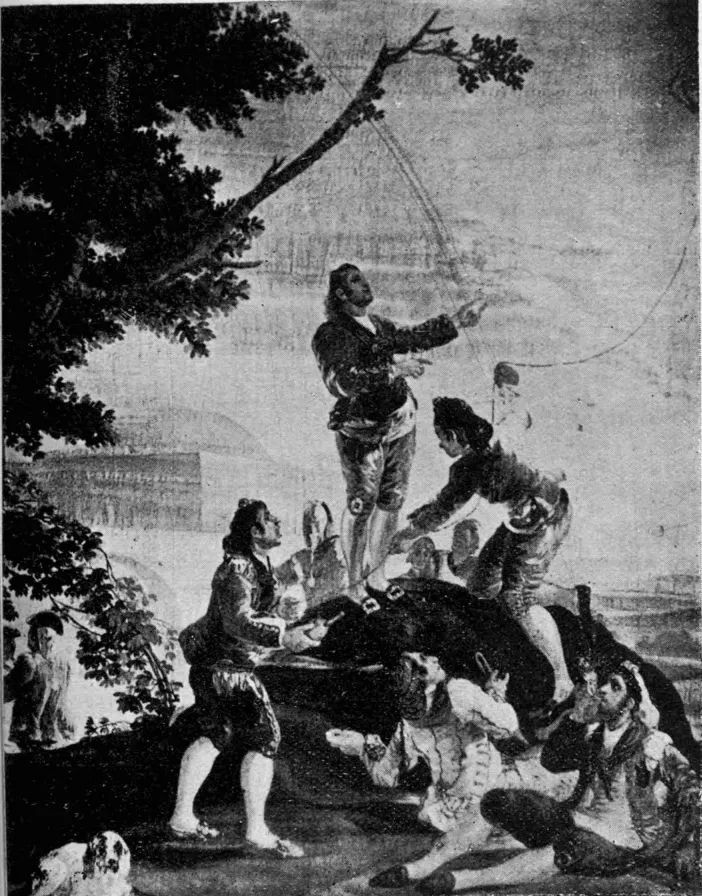
Six miles from Madrid is the royal hunting lodge of El Pardo. The
building was erected in the time of the Emperor, and reconstructed by
Charles III. It stands on high ground in a fine park. The walls are
adorned within with many interesting fresco paintings—the work of
Velazquez, Bayeu, Ribera, and other less notable artists; and there are
tapestries from designs by Goya and Teniers.
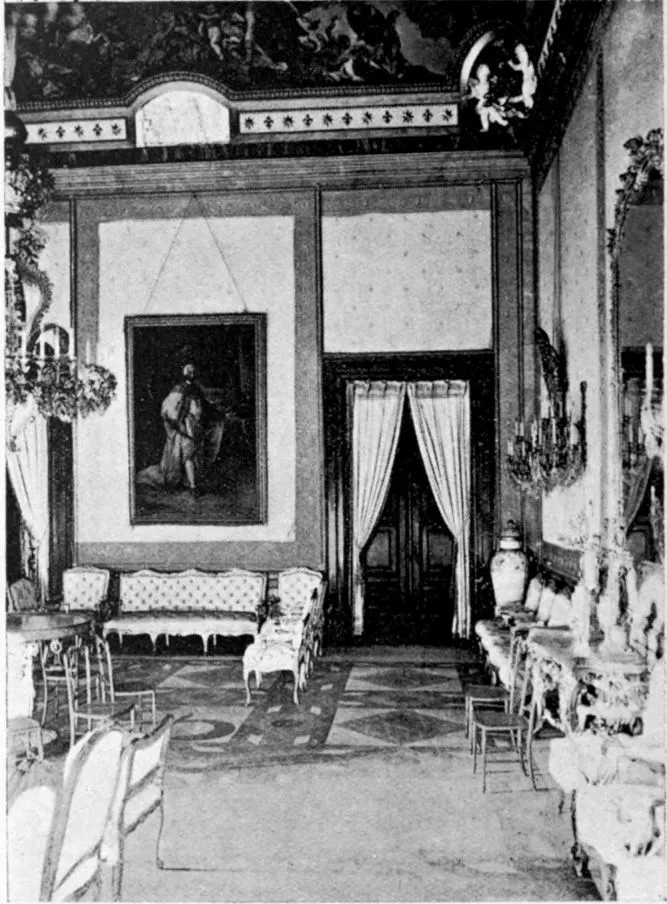
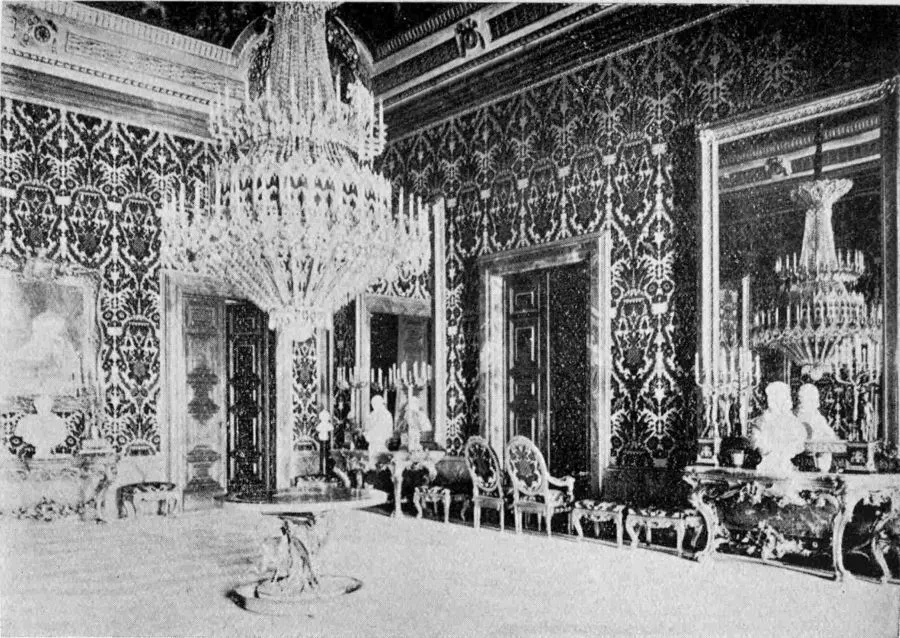
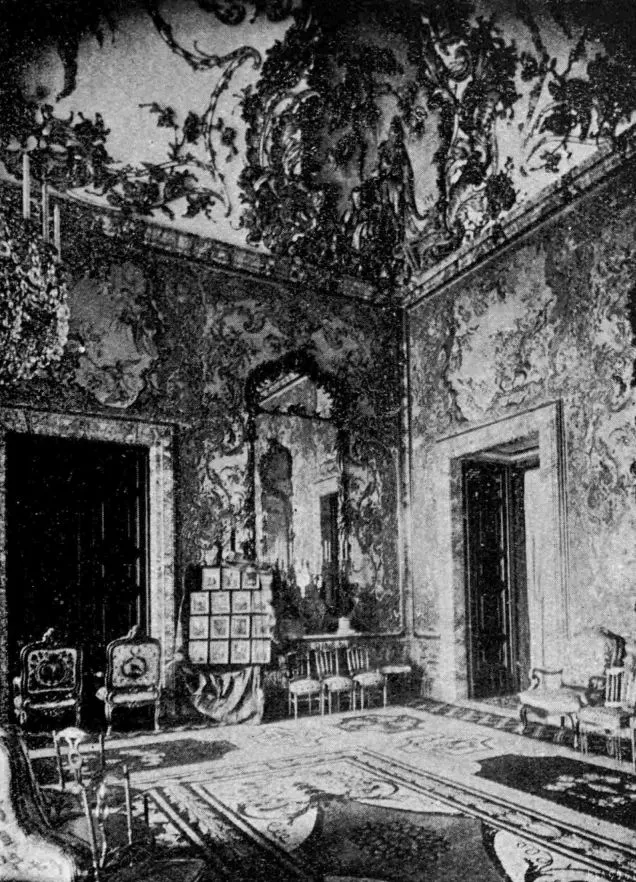
Aranjuez, thirty miles from Madrid, is a royal residence of very great
historical interest, for it was here that Charles V. and Philip II.
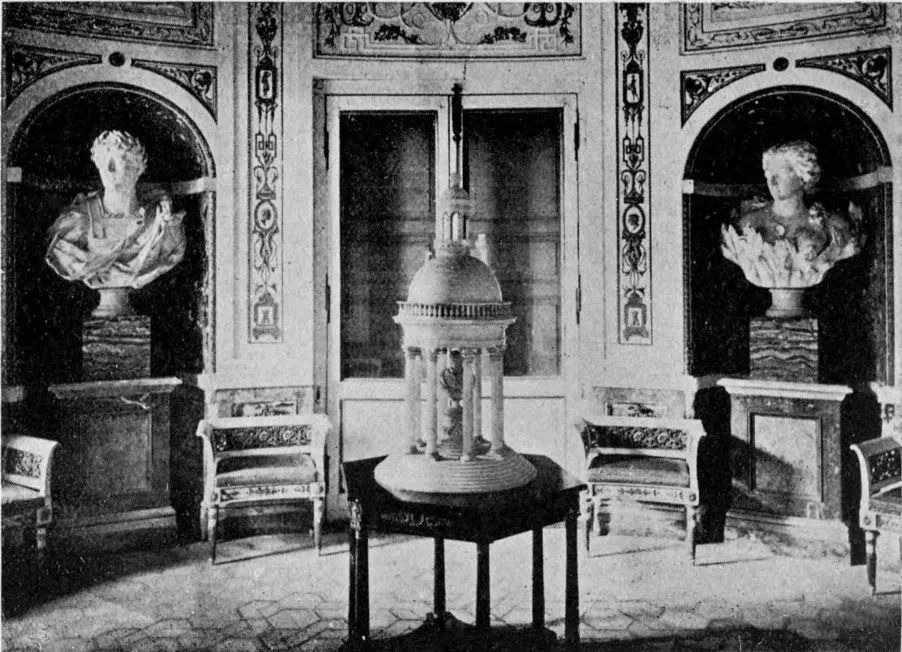
spent many hours of retirement. The palace contains pictures by Mengs,
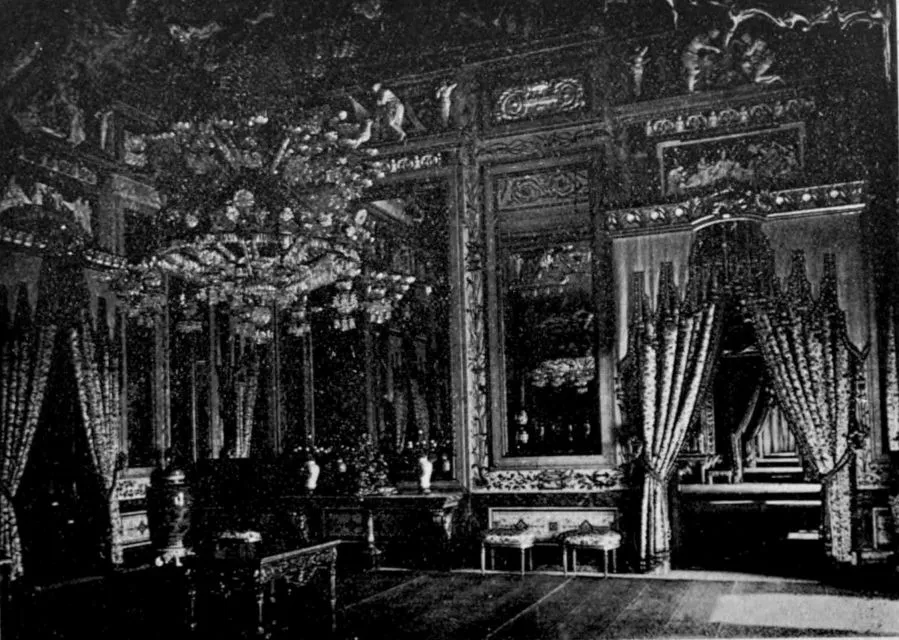
Bayeu, Maella and Lopez. The Gabinete de China is lavishly decorated
with porcelain, and is a wonderful example of this style of
ornamentation, introduced to Spain by the Italian Gricci.
The gardens at Aranjuez are exceedingly beautiful, some parts of them
being formal, and others more wild. A fine avenue fringes the river, and
there are fountains and statues in the grounds. The Countess D’Aulnoy,
describing Aranjuez, writes: “I must confess the Gardens are too close
and several of their alleys too narrow, but yet it ravishes one to walk
there, and at our coming into them, I fancy’d myself in some enchanted
Palace. The morning was cool, everywhere the Birds made a sweet melody,
and the waters a pleasant murmuring Noise! the Trees and Hedges were
loaden with excellent Fruit, and the Parterres were covered with most
odoriferent Flowers; and I enjoyed all this in most pleasant Company.”
The trees in the avenue at Aranjuez are of great age, with immense
trunks and dense foliage, testifying to the fertility of the soil. In
the Garden of the Primavera flowers and fruits flourish, for the summer
climate in this sheltered region is almost tropical, though the
surrounding hills are bare and unfertile. Innumerable nightingales haunt
the gardens and groves in the springtime.
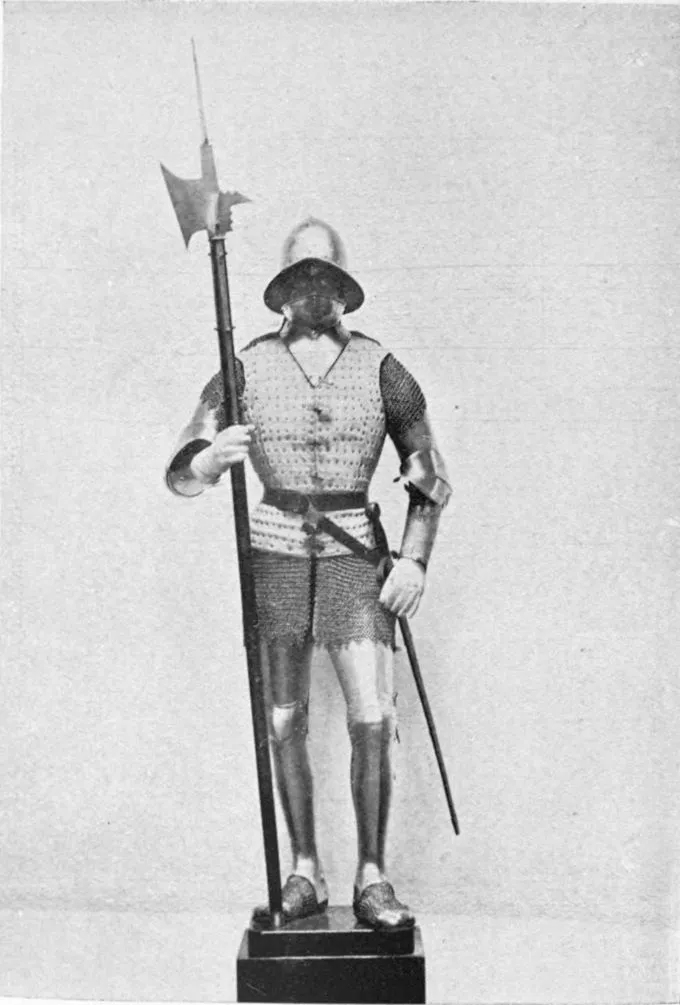
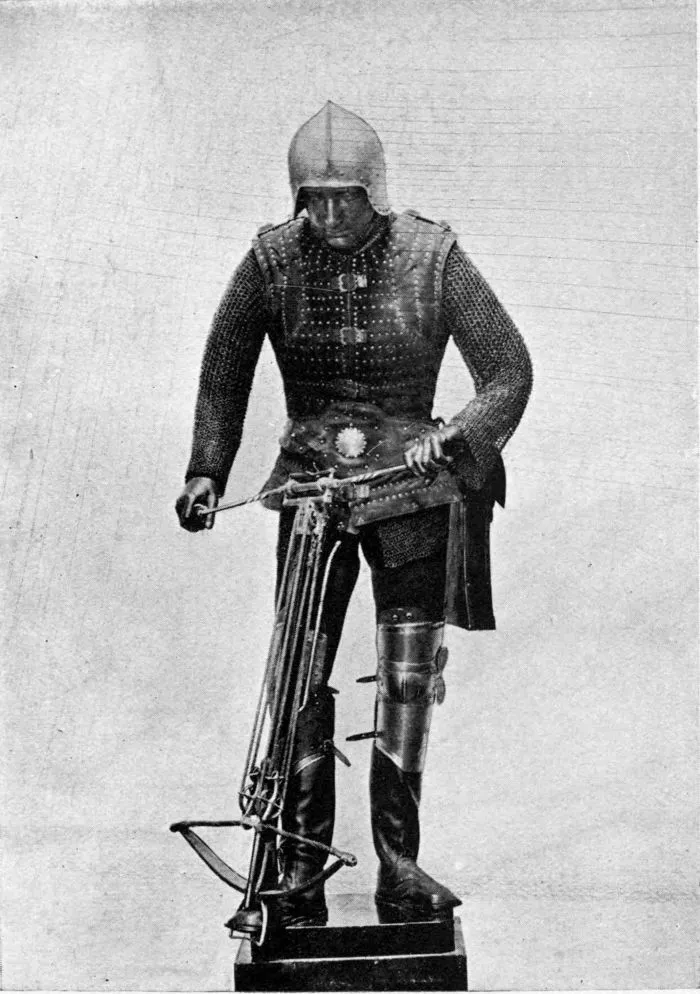
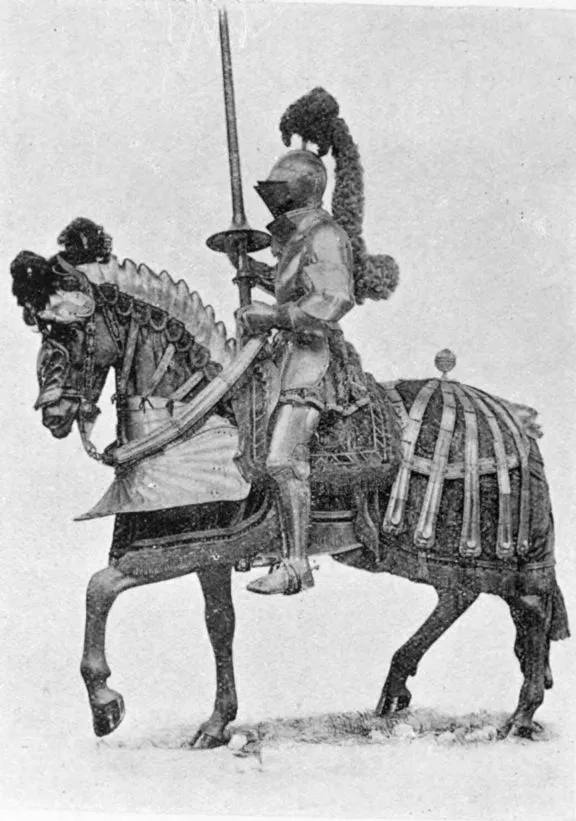
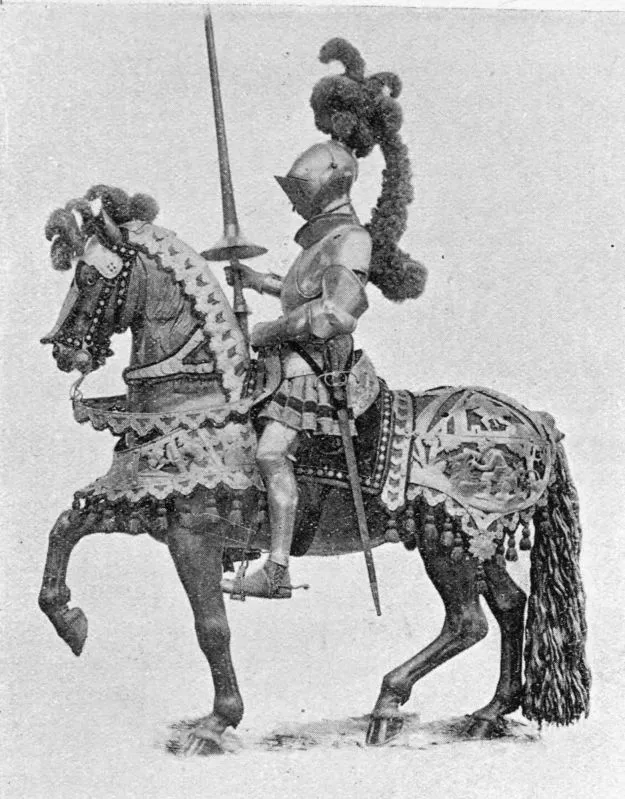
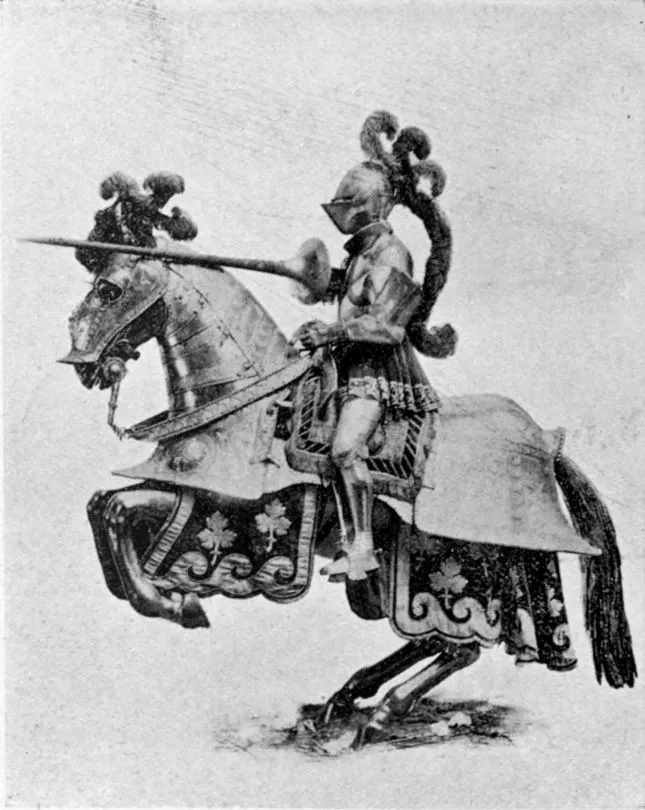
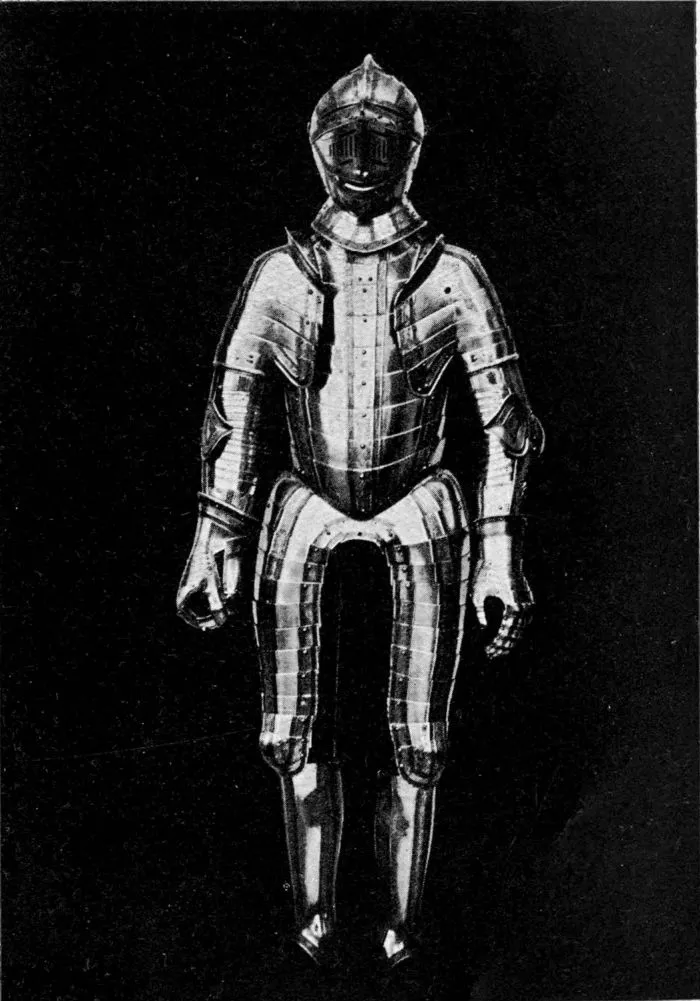
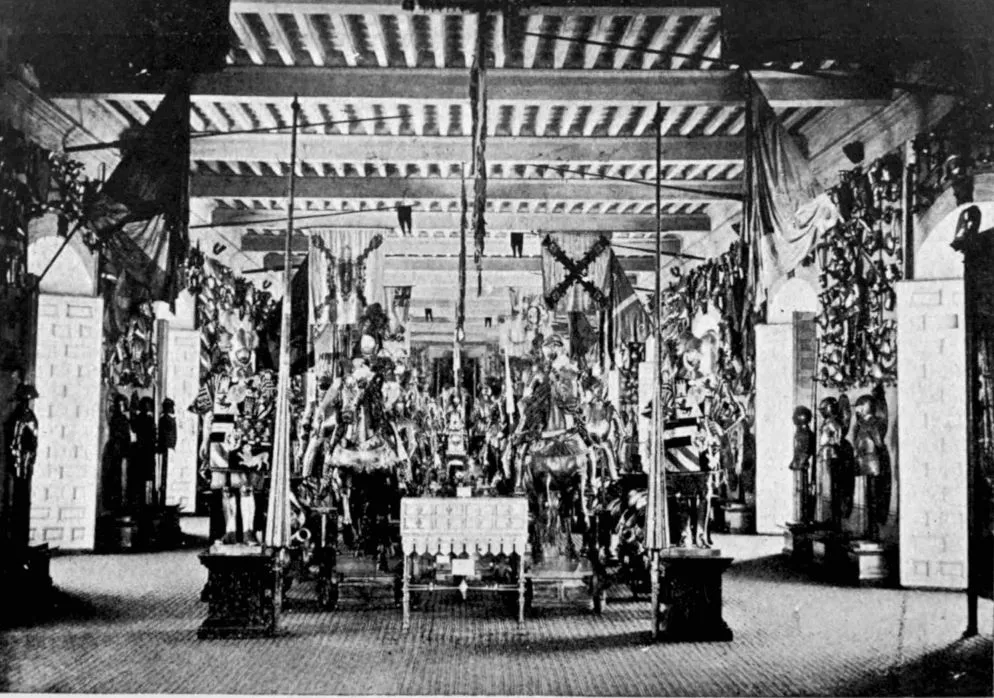
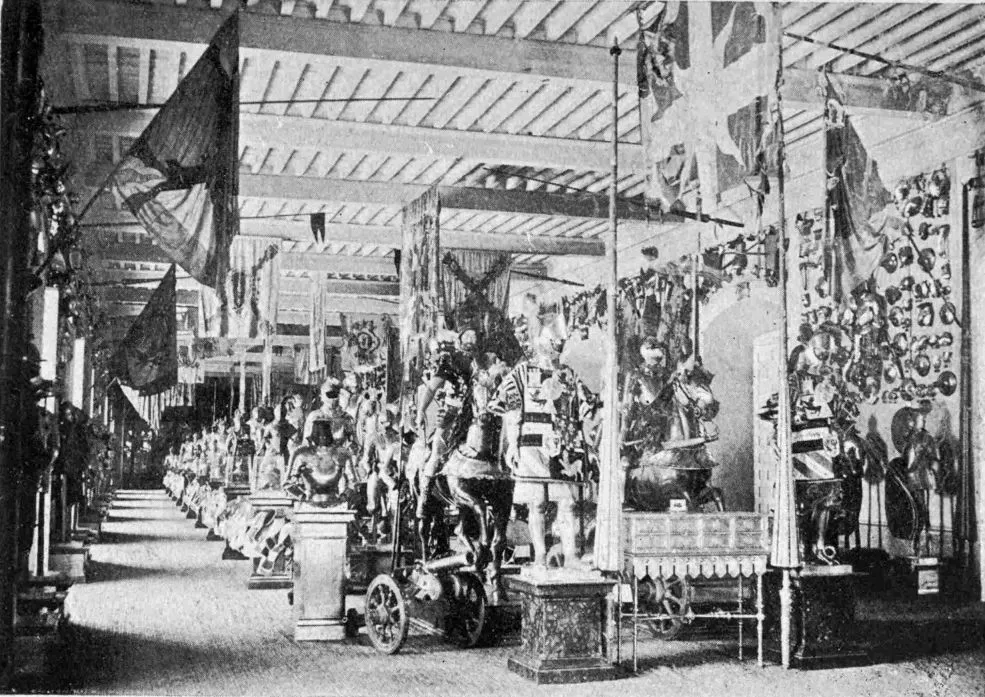
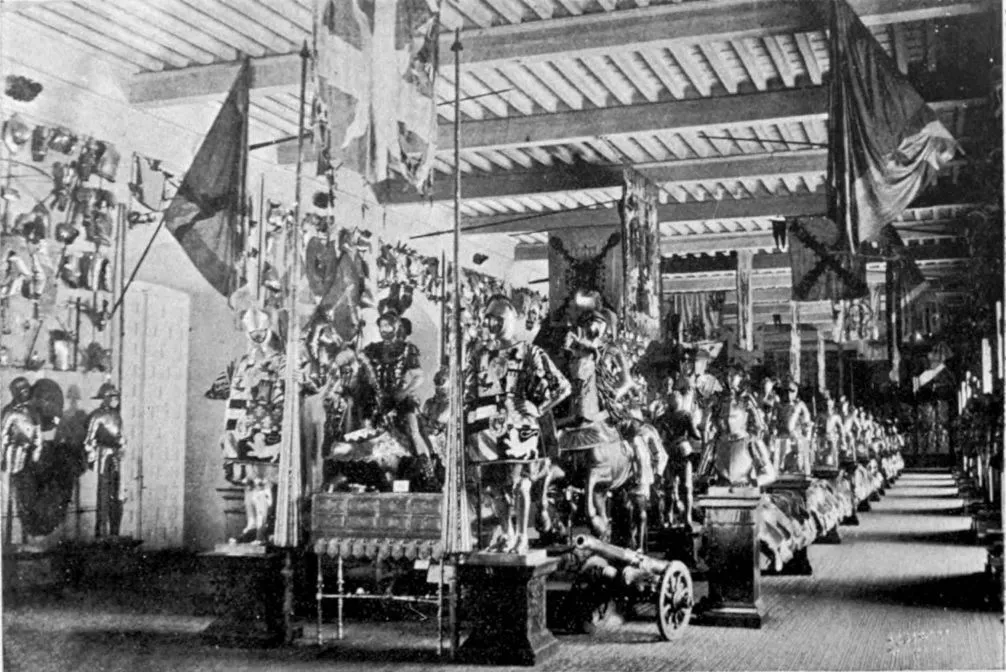
If the Prado is surpassed by one or two other galleries, Madrid can
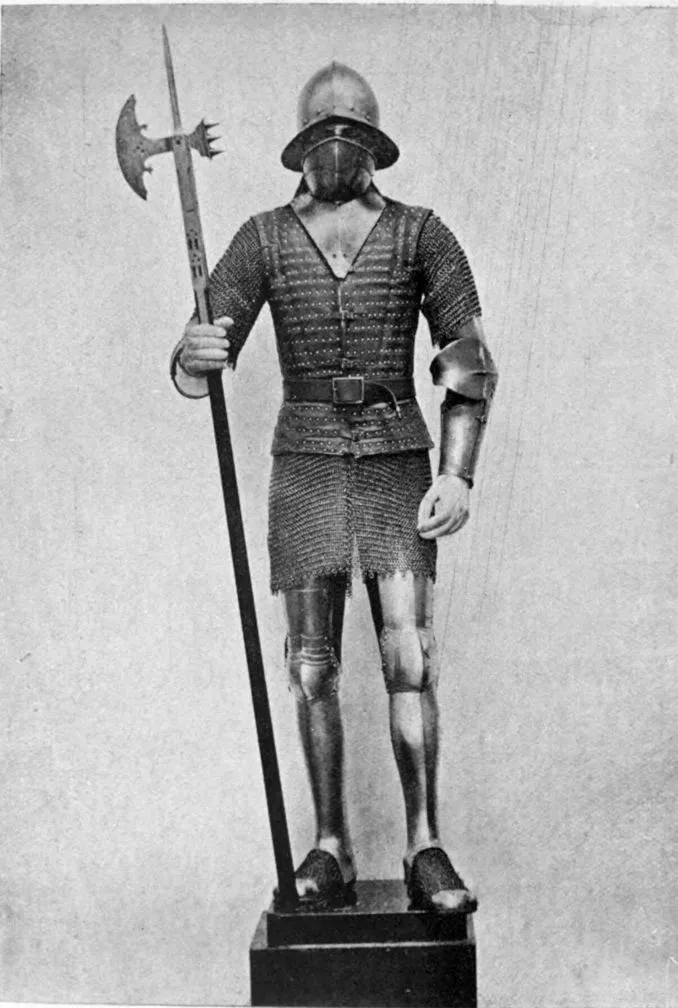
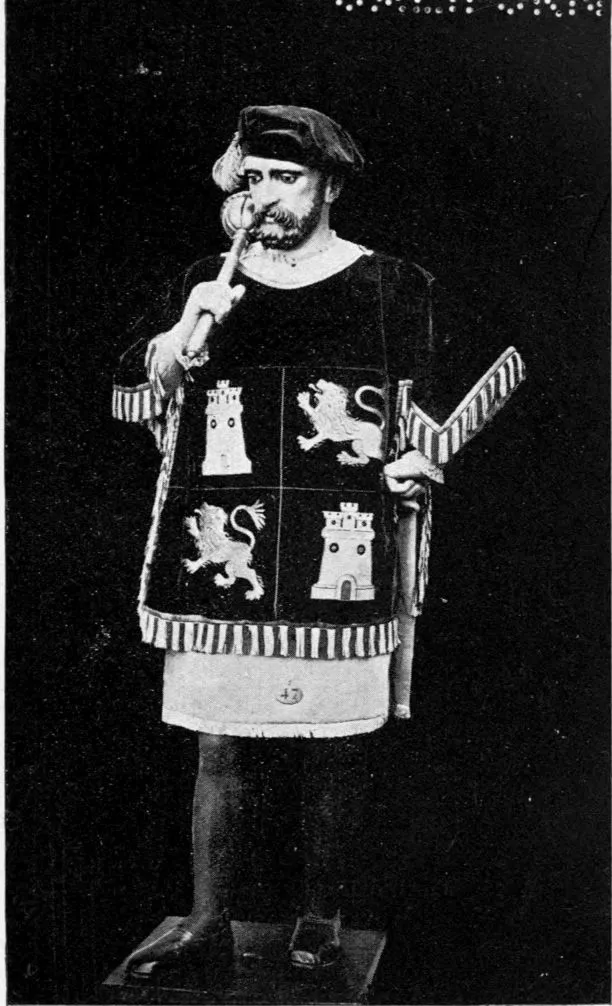
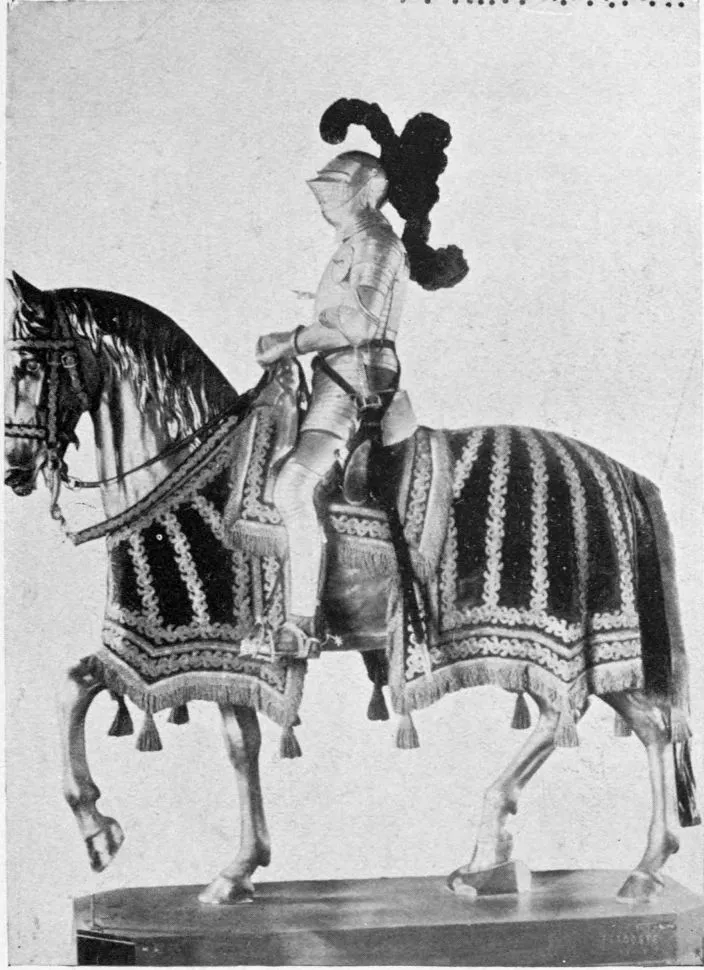
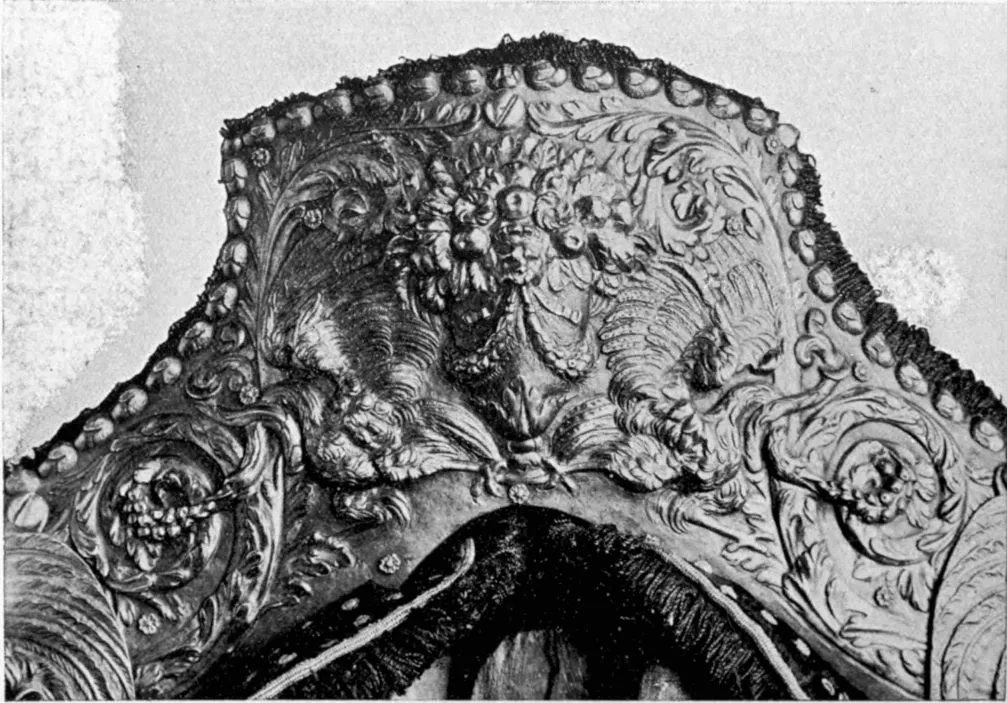
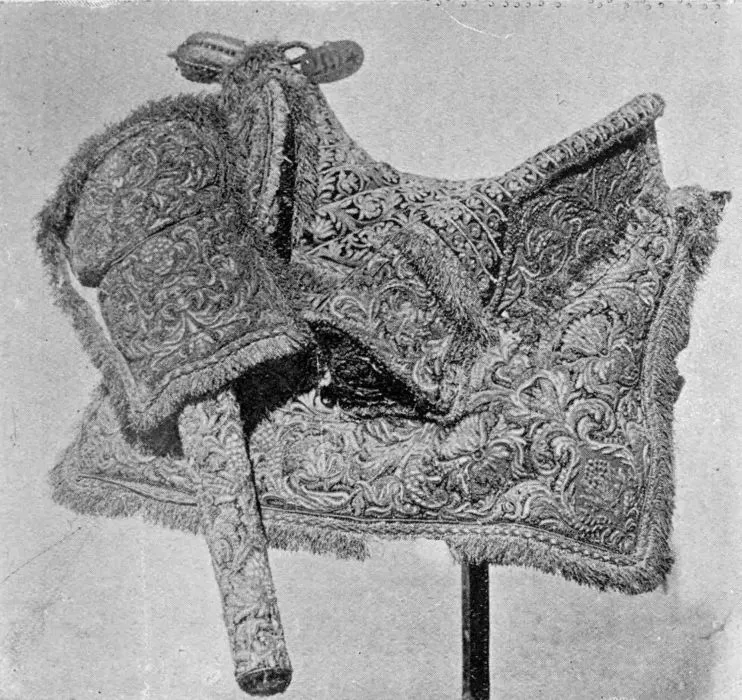
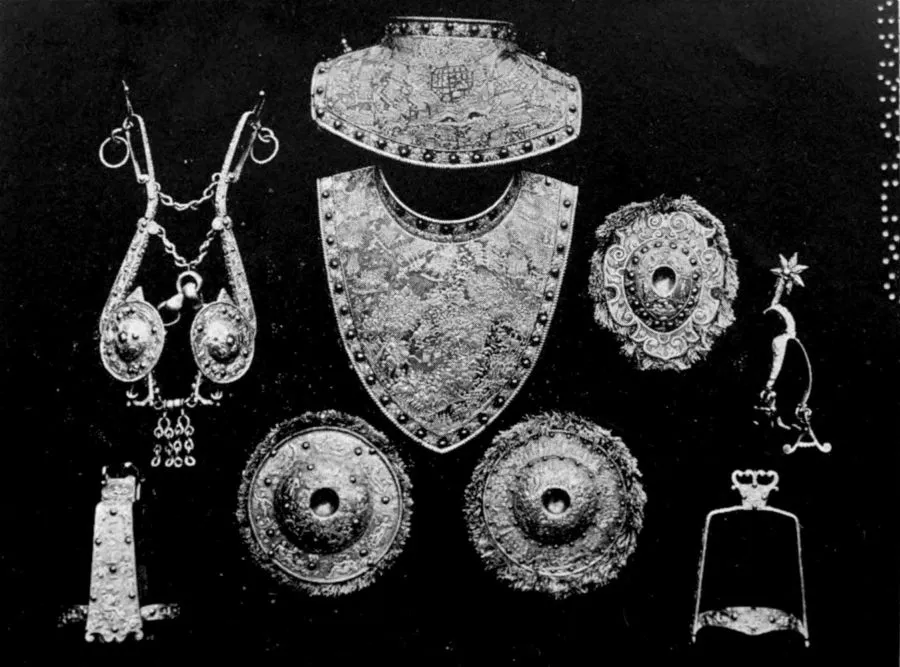
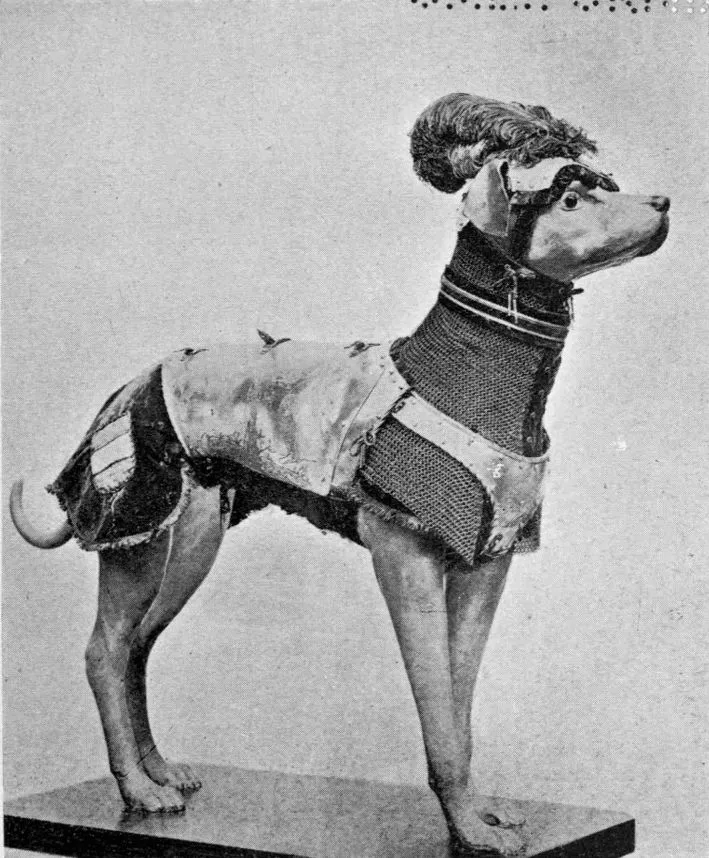
boast a collection of arms and armour which is eclipsed by no other. The
Imperial Armoury of Vienna can alone be compared with this magnificent
storehouse of the triumphs of a forgotten craft, the inception of which
is due to Philip II. The Emperor Charles, Lord of Germany and Italy, was
able to command the services of the greatest armourers of his own or any
age. By stimulating the rivalry of the famous Colmans of Augsburg and
the not less celebrated Negrolis of Milan, he brought the
armour-smith’s art to its highest pitch of development—and this, too,
at a time when new tactics and artillery seemed likely to drive it for
ever from the field. The reign of Charles marks the zenith of the craft.
The sons of Vulcan ranked among the most admired artists of their time,
and the most eminent exponents of the sister arts were proud to
embellish and to wait upon the works of their hands.
Yet it was to supply the needs of no mere dilettante that the forges of
Augsburg and Milan were kept glowing, that their anvils re-echoed
unceasingly with ringing blows. Charles was a mighty War Lord. He used
his armour in the tented field, his keen blade was waved aloft in the
van of armies; and in times of peace, he yet loved to surround himself
with the pomp and circumstance of glorious war. And when he laid aside
the helmet for the monk’s cowl, he left his son the finest martial
equipment any monarch had ever boasted before or since.
Less of a soldier than his father, Philip II. was not slow to recognise
the intrinsic value of the heritage. He ordered a house to be built
specially for its reception, thus forming the foundation of a
collection, which was added to from year to year by him and his
successors. The manufacture of defensive armour practically ceased at
the close of the seventeenth century, and the spoils of war became,
alas! rarer in the course of the next hundred years. In the uprising
against the French in 1808, the Armoury was plundered by the populace in
their frantic hunger for weapons against the detested invader, and a
year or two later the collection suffered considerably at the hands of
the Rey intruso.
In the forties, a complete re-arrangement took place by order of Queen
Isabella II. A catalogue was issued in 1849, which was useful enough in
its way, and made the priceless treasures it enumerated known to the
world. But it displayed little critical or antiquarian skill, and
perpetuated a score of picturesque and grotesquely misleading
attributions. Different pieces were labelled as the sword of Bernardo
del Carpio, the falchion of the Cid, the bit of Don Roderic, the helmet
of Boabdil, the cuirass of Garcilaso de la Vega, etc. Doubtless in
course of time the battle axe of Amadis de Gaul, the horn of Roland, and
Mambrino’s helmet would have found their way into the catalogue. Luckily
King Alfonso XII., soon after his accession, entrusted the collection to
an antiquary of the new school, the late Count of Valencia de Don Juan.
Years of labour and research, interrupted by a disastrous fire,
resulted in a complete and admirable re-organisation and classification,
and in the publication in 1898 of a catalogue which has conferred
permanent lustre on the reputation of the erudite compiler.
The collection is in no sense national. Spain, a country famed, from the
time of the Romans, all over Europe, for the excellence of its
sword-blades and the martial temper of its people, is hardly represented
in this knightly arsenal. The major portion of the exhibits proceeded
from Italian and Bavarian workshops. Historically the collection is less
valuable than our ill-arranged armoury at the Tower. It includes few
pieces anterior to the last years of the fifteenth century, and none at
all of the fourteenth. The student comes here to view not the evolution,
but the highest expression of the armourer’s craft. Those who have the
time will of course examine the exhibits piece by piece in the order
they are described in the admirable but decidedly bulky catalogue to
which I have referred. Those who regard the great armour-smiths as great
artists—and such they were—will prefer to examine their works
separately and so to familiarise themselves with the technique and style
peculiar to each.
Koloman Colman, surnamed “Helmschmied,” was the greatest of the famous
Augsburg family. Of the many superb suits he made for Charles, no fewer
than seven are in the Royal Armoury. The earliest of these (numbered A.
19) may be identified by the monogram K. D. stamped boldly on the
pike-guard of the left shoulder. The letters stand for Karolus Dux, the
wearer being at that time (about 1514) only Duke of Burgundy and heir to
the crowns of Spain. The suit belongs to the older, more graceful style
of the fifteenth century, but the tendency to exaggeration, which, later
on, became so pronounced, is seen in the size of the shoulder-guards or
pauldrons and of the shoes or sollerets. Every part of the body is
protected by plates of steel, except the throat, the armpits, and the
space between the tassets or thigh-guards, which are defended with
chain-mail. The well-shaped helmet is of the close-fitting armet type,
composed of several pieces. The breastplate is ridged down the middle,
and decorated with the engraved collar of the Golden Fleece. The combs
or elbow pieces are beautifully made, and over the right armpit is one
of the pretty round pieces called rondels or palettes. This is missing
on the left arm, where the huge pike-guard or pauldron covers the whole
shoulder and left breast. Note the detachable lance-rest, engraved with
the armourer’s mark and the Double Eagle. The decoration of the suit is
chaste and tasteful, the borders of the various pieces being adorned
with diamond-shaped reliefs. In itself light and elastic enough for wear
in the field, the suit could be strengthened and supplemented at will
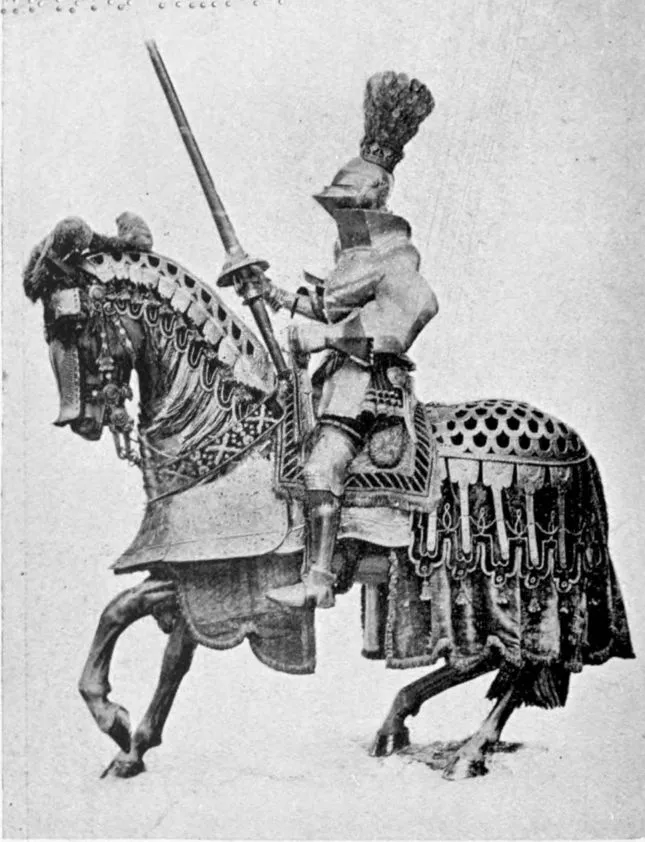
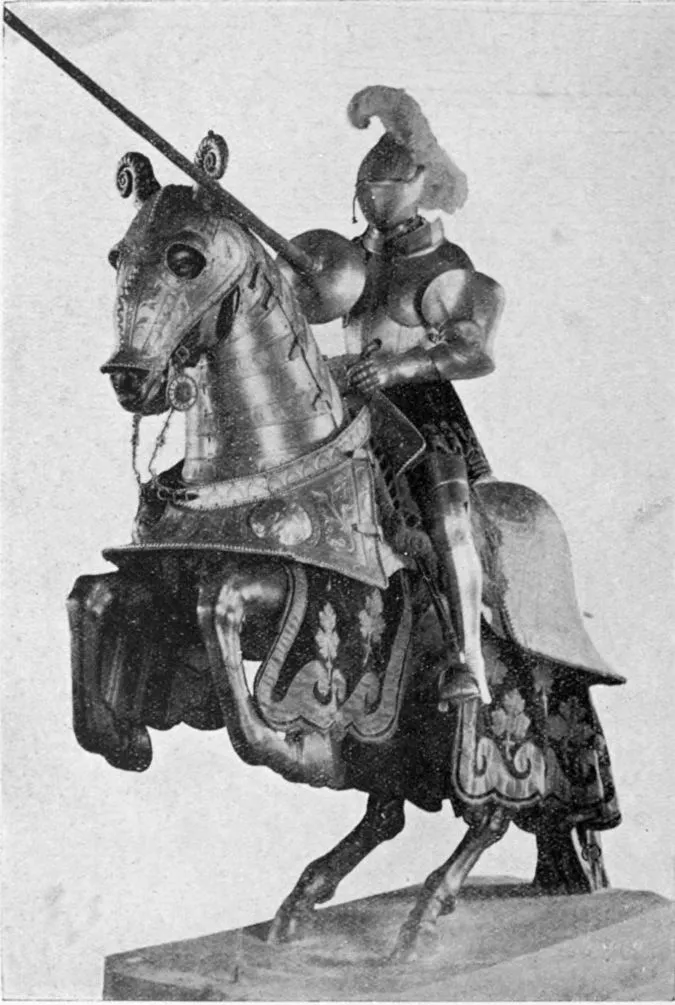
for the tilt and tournament. The extra pieces are shown on a separate
mounted figure (A. 26). The enormous arm-guards are, of course confined
to the left or exposed side. Heavy clumsy pieces such as these left less
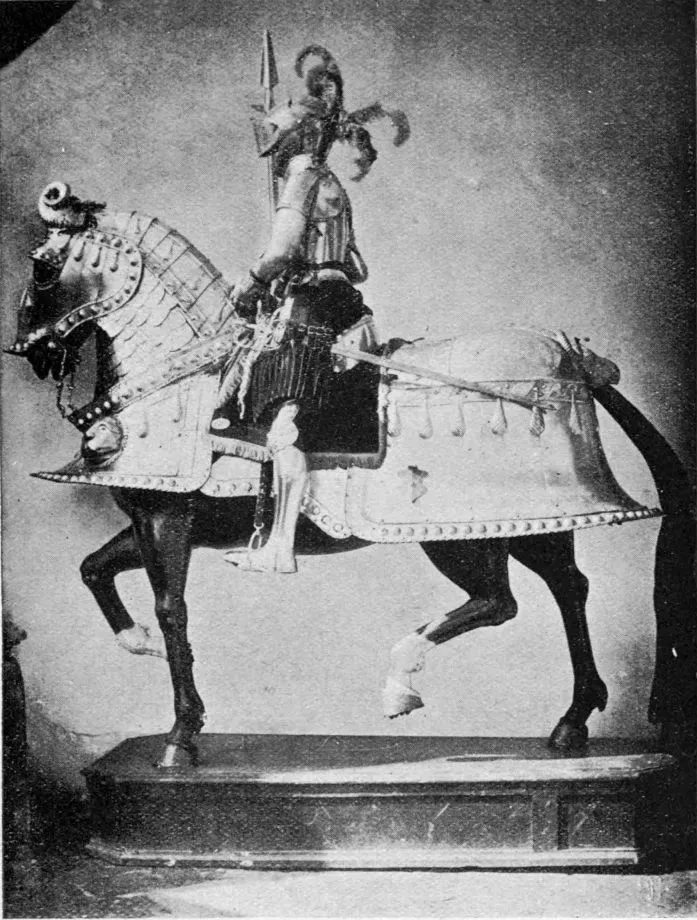
opportunity for a display of the smith’s skill than the barding or
horse-armour. This is singularly beautiful and was the work (says the
learned author of the catalogue) of Daniel Hopfer, who often assisted
Colman. The plates are gilded and etched with devices of the Golden
Fleece, the Rose, and the Pomegranate. Hopfer is also credited with the
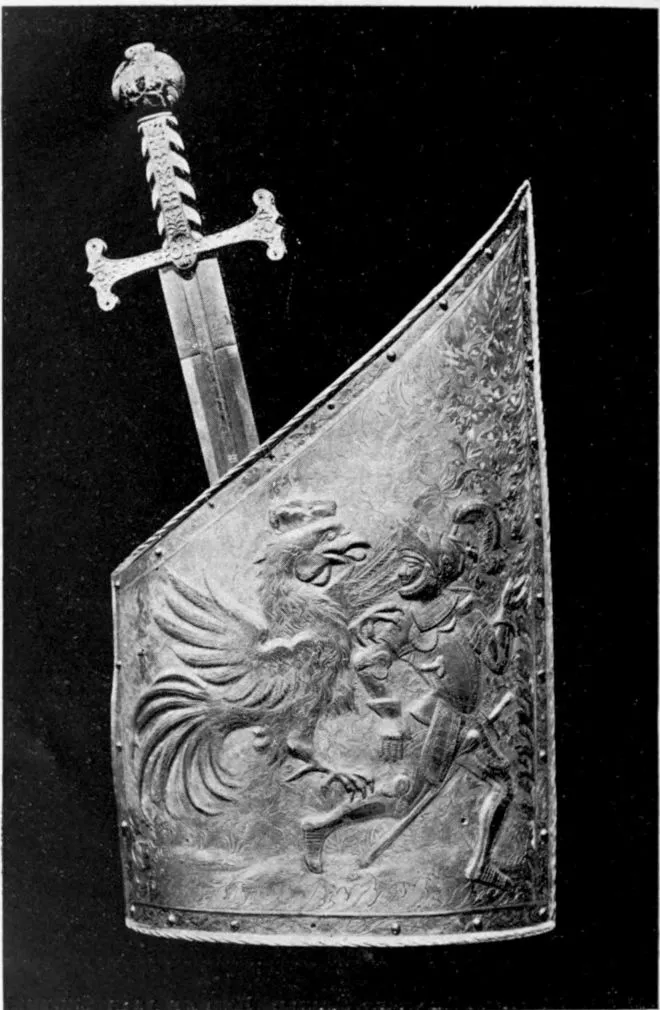
curious concave target to be screwed to the shoulder at tournaments (A.
37), which is trellised or divided by intersecting ridges to break the
point of an enemy’s lance. The spaces are engraved with much skill with
herons attacking an eagle, which clutches one in its talons. If this, as
it seems to be, is an allusion to the alliances promoted by Francis I.
against the Emperor after the Treaty of Madrid, it shows that the
shield must have been made long after the suit.
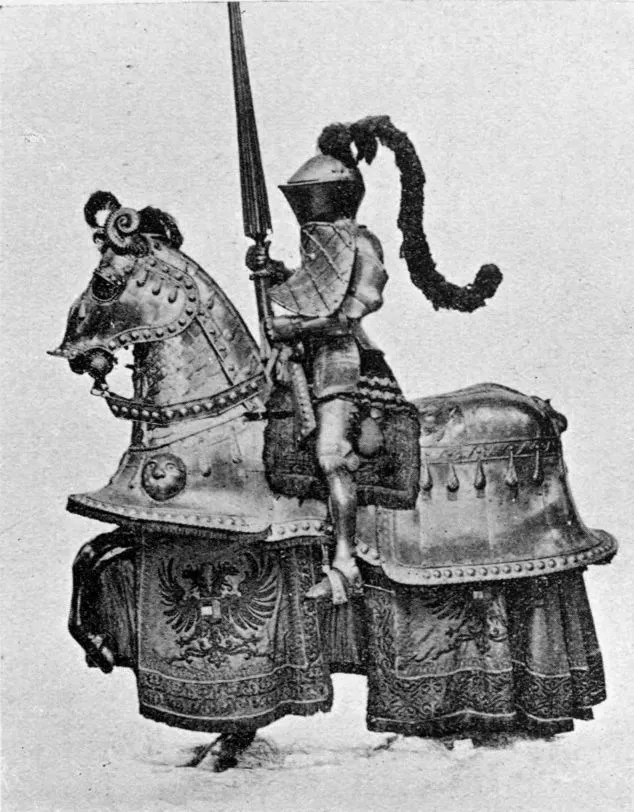
The horse-armour of the harnesses (A. 37-38), on the contrary, seems to
have been made for the Emperor Maximilian, and were etched by Burgmaier,
a celebrated engraver of his time. They are most elaborately decorated.
The ear-coverings of the one are shaped like rams’ horns; and the
poitrel (or breastplate) is embossed with grotesque faces. The
crupper-plates are decorated with compositions representing Biblical
episodes—David killing Goliath and Samson slaying the Philistines. If
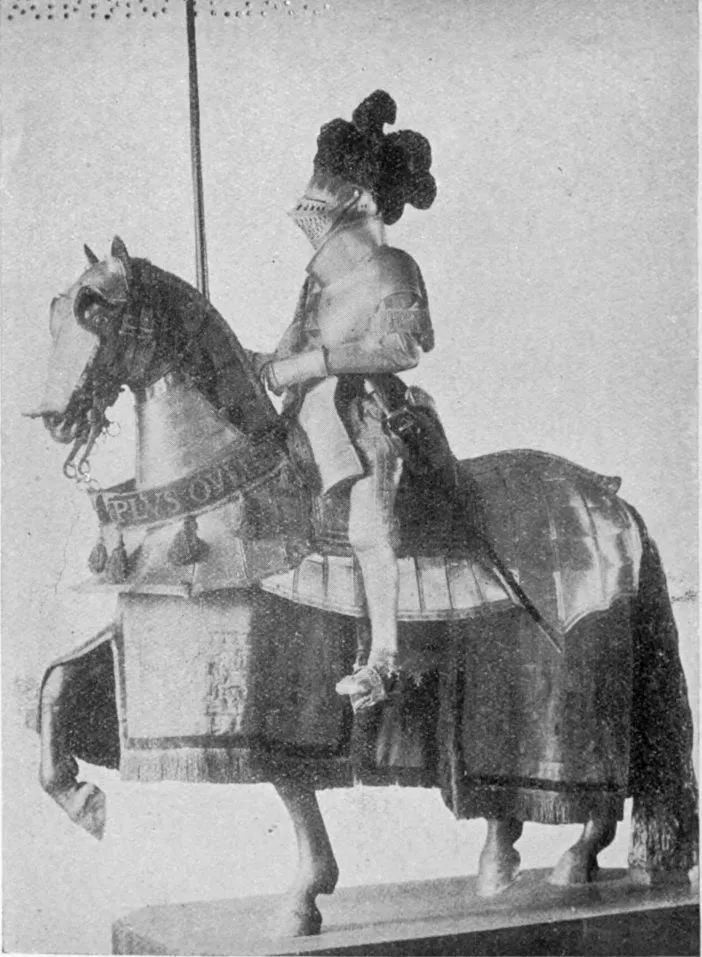
the second suit belonged to the mighty Maximilian, the forehead-plate
must have been added later, as it bears the motto “Plus Oultre,” first
adopted by Charles.
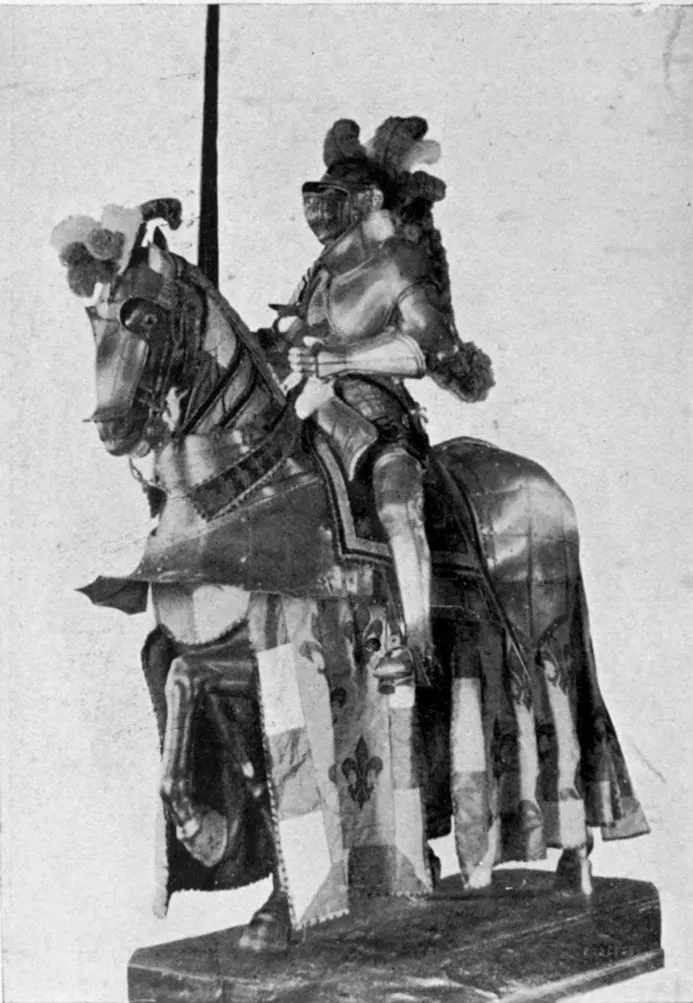
We come next to the five harnesses made between 1519 and 1539 for the
Emperor by the Augsburg firm. They are alike decorated with ornamental
bands in the direction of their greatest length and exhibit little
difference in design. Two, however, are distinguished by the ugly
lamboys or bases, a kilting of armour introduced about this time to
satisfy the craze for novelty and extravagance. One of these is called
the oak-leaf suit, from the predominant device in the ornamentation. It
is Helmschmied’s own work—probably about 1520. The various pieces are
distributed over three separate figures (A. 49-56-57). The breastplate
becomes globose, the rondels are replaced on both shoulders by the less
graceful pike-guards. No less than six extra pieces are shown that could
be attached to the helmet. Though we may regret the departure from the
elegant simplicity of the older style, our admiration is excited by the
exquisite skill displayed in the articulation of the gorget and the
bases—made as flexible as if they were of silk. Their plates are
detachable, and beneath the steel kilt were worn breeches of the same
metal, wonderfully laminated and allowing the utmost freedom to the
limbs. The bands common to all the suits exhibit a great variety of
detail. Griffins, amorini, nymphs, grotesques, heraldical devices,
flowing scrolls, floral emblems, hunting scenes, are all introduced and
interwoven with an ingenuity only exceeded by the delicacy of their
execution. The helmet at A. 57 is lightly and beautifully relieved with
the figures of Centaurs and serpents fighting.
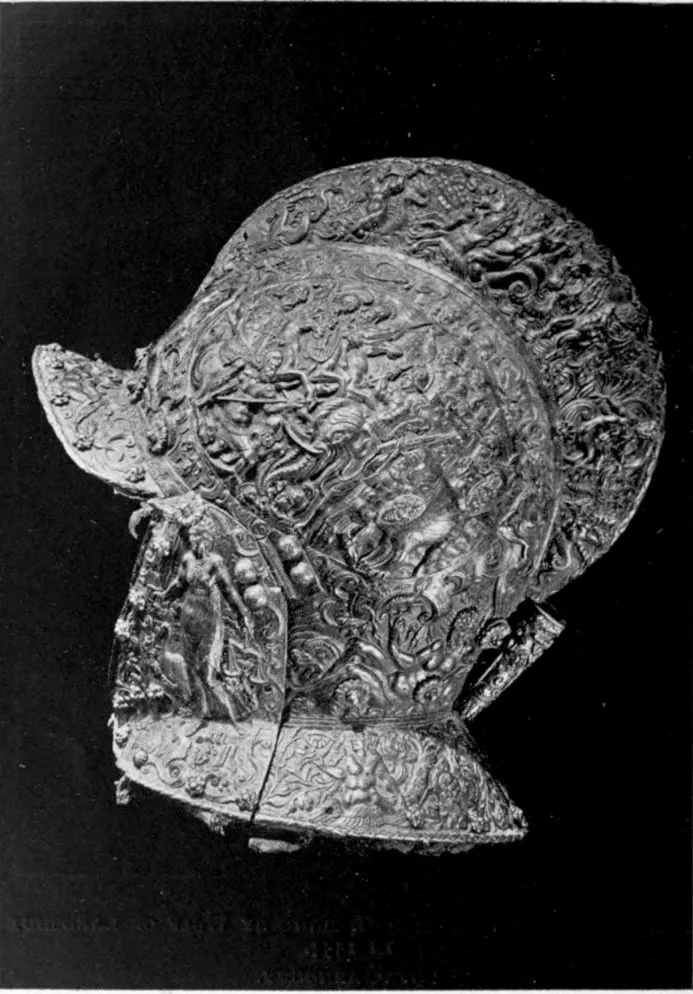
Another beautiful headpiece, of the Burgonet type, is shaped like a
dolphin’s head, and blackened and damascened. It is no doubt an example
of Hopfer’s skill. The same hand may be traced in the decoration of the
armet of the suit numbered A. 75. The reinforcing piece, in the form of
an eagle’s head and beak, was in the possession of Sir Richard Wallace,
and by him given to his Catholic Majesty.
Helmschmied, who, as Count de Valencia has proved, visited Spain in
1525, died in 1532. The last harness he made for the Emperor (A. 108)
illustrates a transition in the fashion of armour. The tassets or
hip-plates now extend down to the knee, and tend to assume the
“lobster-tail” form as worn by Cromwell’s Ironsides.
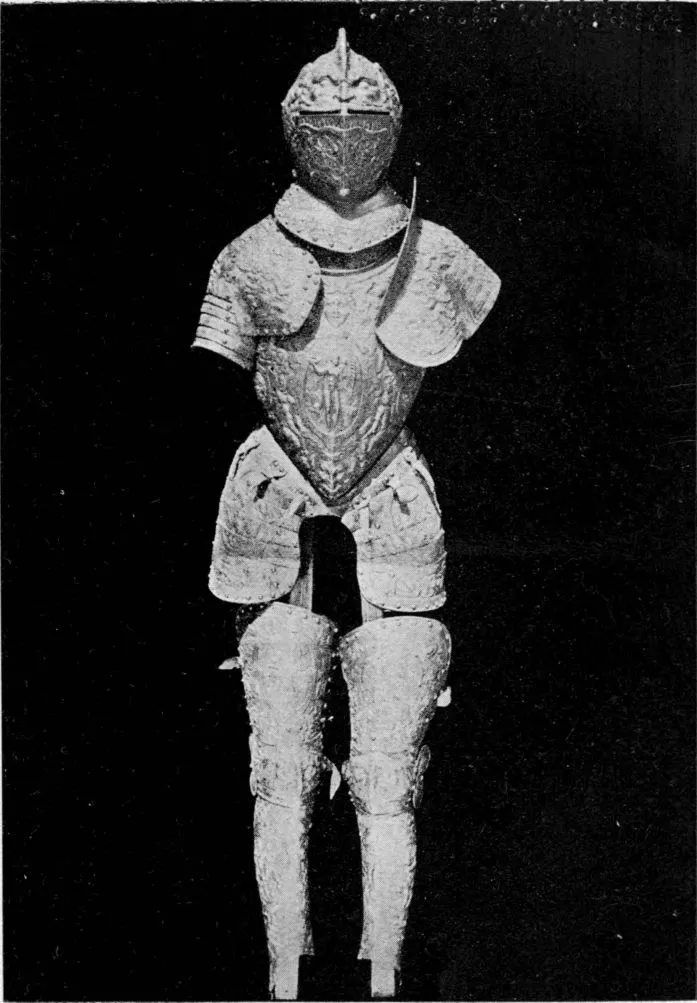
Desiderius Colman lacked the genius of his father. On the Cornucopia
suit (A. 115-117), so called from the emblem predominating in the
decoration, we recognise a close and successful imitation of
Helmschmied’s work. The vertical bands were insisted upon by the
Emperor, as they apparently added to his height. The figure, A. 164,
looks as if he had stepped out of Titian’s picture at the Prado. It is
made up of the harness he wore at the battle of Muhlberg in 1547. The
pieces are inlaid with gold and delicately etched. Desiderius made this
armour in 1544, and immediately after began work upon a suit for Prince
Philip, according to designs supplied by Don Diego de Arroyo. The
harness differs little from those worn by the Emperor. It is furnished
with “bases” and with very flexible articulated leg-armour. The
genouillères or separate knee-plates disappear, but the graceful rondels
at the armpits, and coudes or elbow pieces are retained. On the next
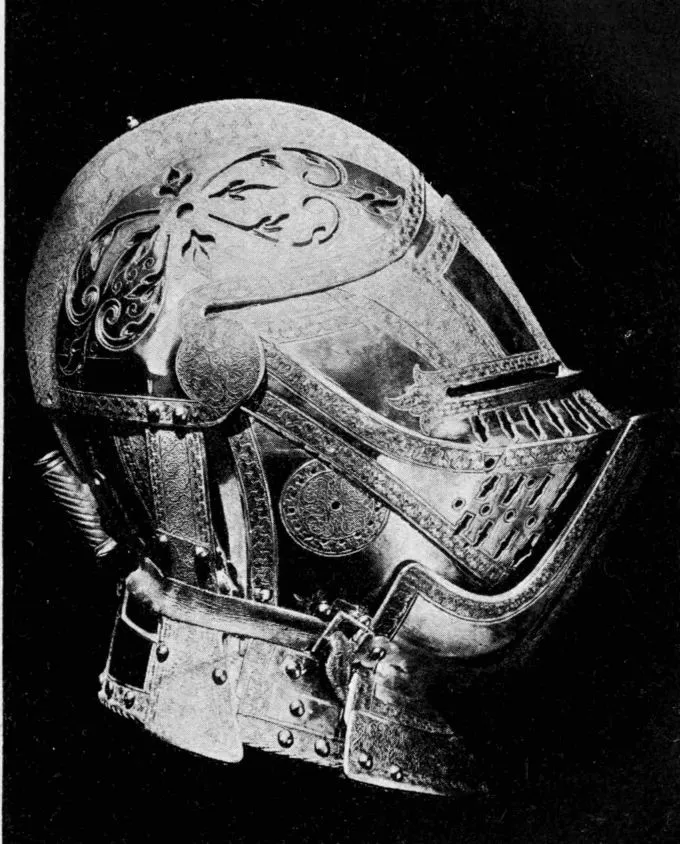
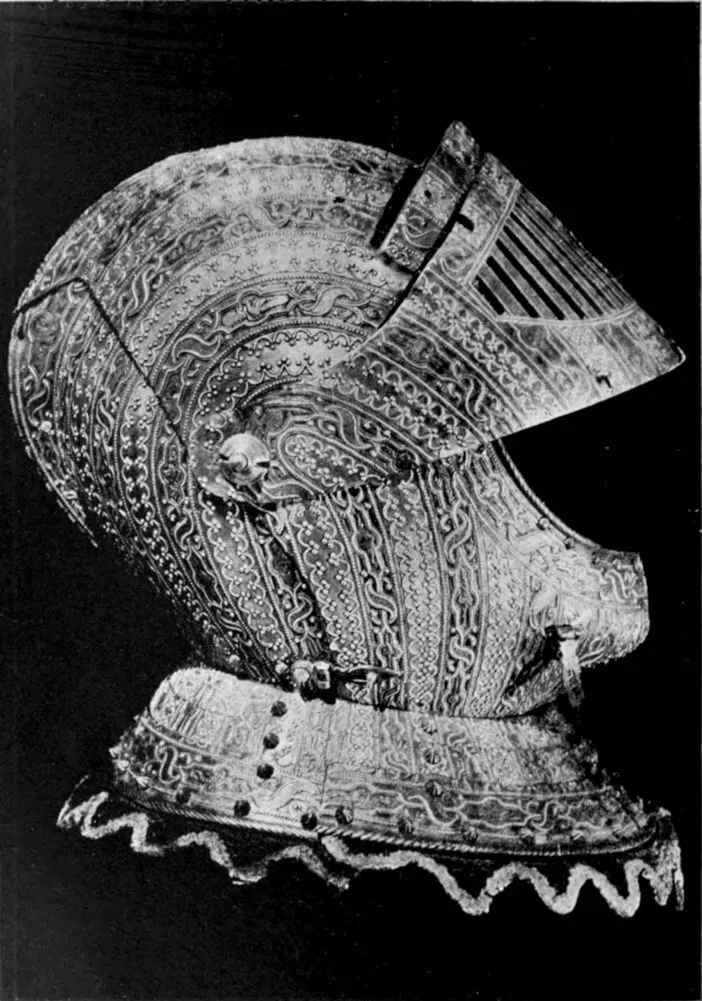
figure is shown a very fine tilting helm in three pieces, and next to
this again, a headpiece of the “morion” type fluted and delicately
etched.
The suit numbered A. 217-A. 230 should be familiar to visitors to the
Prado. Philip, as heir apparent, is shown wearing it in Titian’s picture
(No. 454) and by Rubens (No. 1607). The Count of Benavente is
represented in it by Velazquez (1090). Designed by Arroyo, the harness,
which is composed of more pieces than any other in the collection, was
made in 1549. The history of Philip’s magnificent armour (A. 239-A. 242)
as related by the Count de Valencia, is of some interest. Hitherto
Colman’s superiority to other armourers of the time had been
acknowledged only as regarded field and tilting armour—the plainer and
tougher work, in short. Burning to eclipse his Milanese competitors in
their own line and to produce a harness of the most ornate character,
Colman looked about for an assistant and found one in Georg Sigman, an
artificer of skill, whom the municipality of Augsburg had hitherto
refused to enrol as a master of his craft. Colman promised his powerful
influence to the aspirant, and together they turned out the fine suit we
see. The cuirass and all the pieces, except the jambs, coudes and
vambraces, are composed of overlapping plates. The decoration is
tasteful, consisting of longitudinal bands of blackened steel, etched
with grotesques and foliage. The coudes are embossed and gilded with
female figures upholding the order of the Golden Fleece, attended by
warriors. The genouillères are decorated with masks and satyrs. Note the
little brayette at the meeting of the limbs, a piece, stupidly enough,
rarely shown in English collections. The helmet or burgonet is richly
chased with classical compositions, with cartouches, wreaths, and
foliage. Upon it the name of Colman and the date 1552 are stamped in
full, with the initials and mark of his collaborator.
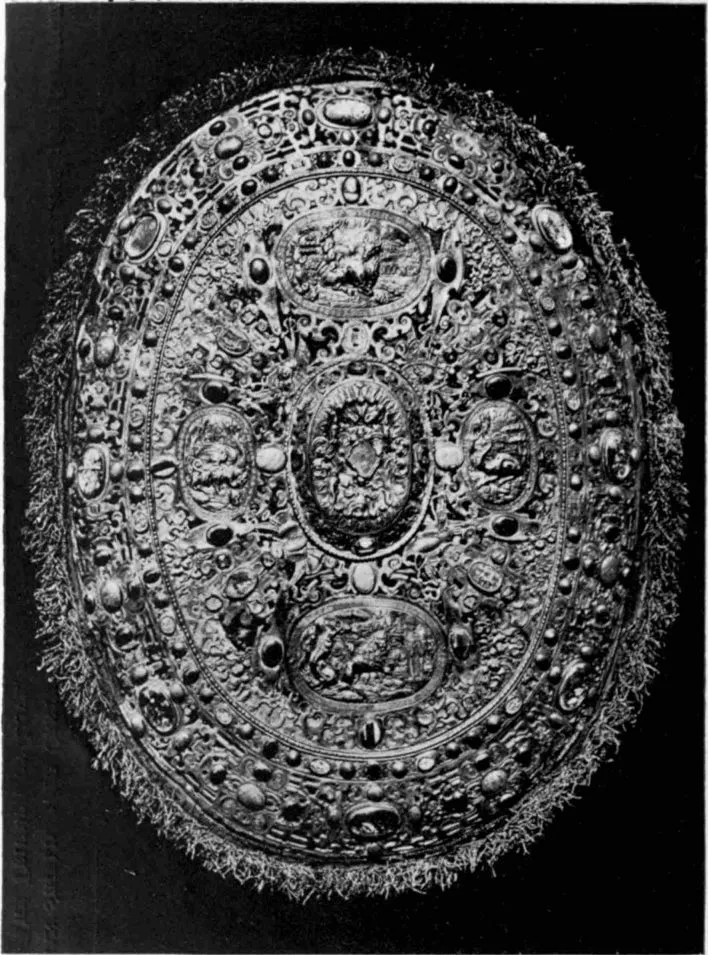
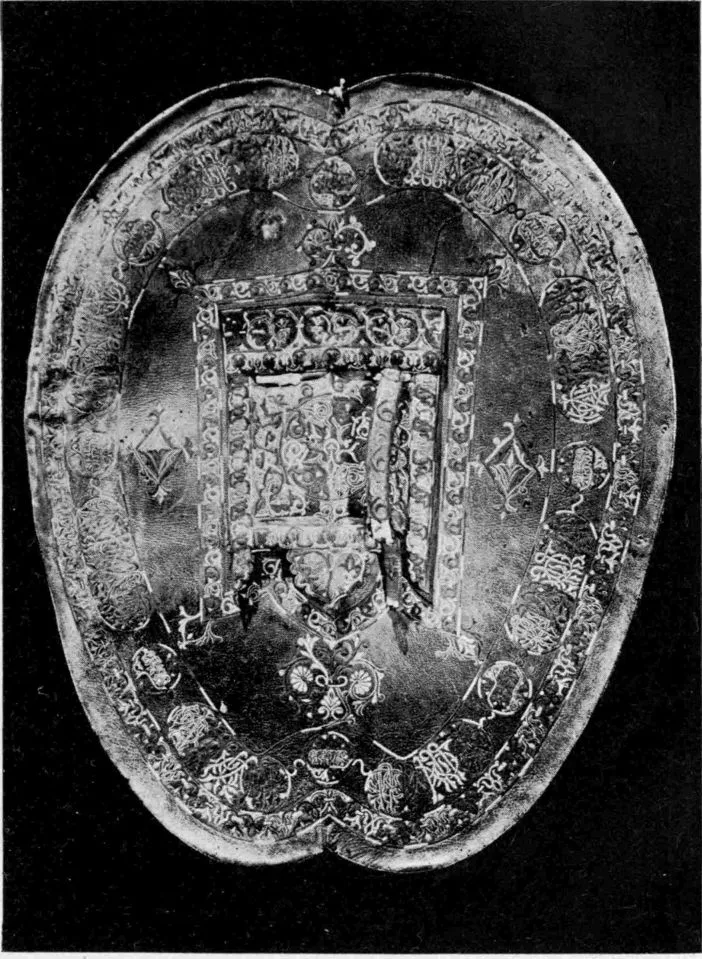
The spirit of rivalry, of which this noble panoply is the offspring, is
expressed very plainly on the shield (A. 241) attached thereto. It is
circular, of one piece, blackened, and embossed. Round the boss runs a
laurel wreath, with the name of the maker and the date. On the surface
are disposed four medallions, encircled by wreaths and designed
respectively with allegorical representations of Strength, Victory,
Wisdom, and Peace. The intermediate space is lavishly adorned with
figures, masks, and foliage, and cartouches. Less skilfully executed are
the designs round the rim, where Colman has presumptuously symbolised
his supposed triumph over his Milanese competitor by a composition in
which a bull overthrows a man bearing a shield marked “Nigrol.” The
shield will certainly not bear comparison with the Italian’s work or
even with the suit to which it is attached, but in fairness to the
German, it must be said that it is evidently unfinished. It wants the
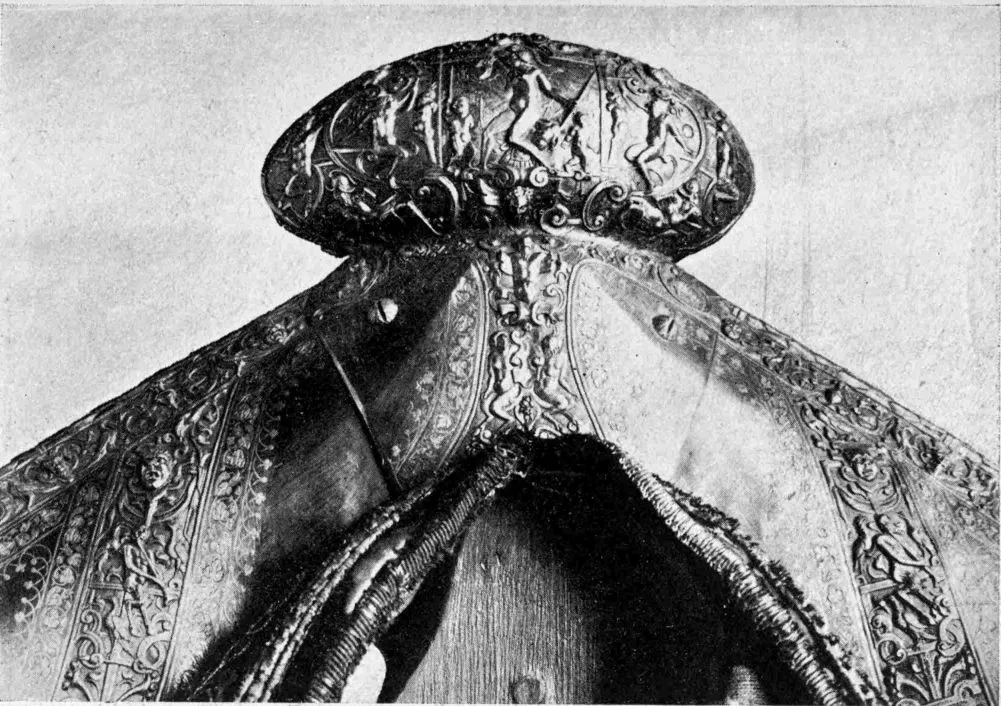
grip and the attachments for the lining. The saddle at A. 242 is the
finer work, and is adorned with the figure of Aphrodite attended by
Cupids. This is the latest specimen of the work of Desiderius Colman
preserved to us. He was living in 1575 (says Dr Wendelin Boeheim), but
when or where he died we know not.
Little is known of Sigmund Wolf, except that he was living at Landshut
in Bavaria as late as 1554, and was the teacher of Franz Grosschedel,
another armour-smith of repute. To him is ascribed the harness made for
Philip II., and styled the Burgundy Cross suit. The decoration consists
in ornamented bands as usual, on the breastplate of one figure being
engraved the figure of the Madonna. Another suit by the same maker (A.
243-262) includes no fewer than eighty-five pieces, all of which are not
at Madrid. The inordinate number of tilting-pieces show Philip’s
fondness for martial exercises. The weight of the armour when complete
would have been 37 kilogrammes. The helm is a superb example of Wolf’s
skill and the leg armour reveals his eye for symmetry. A manteau d’armes
or target is screwed to the left shoulder, as was usual in tilting
suits.
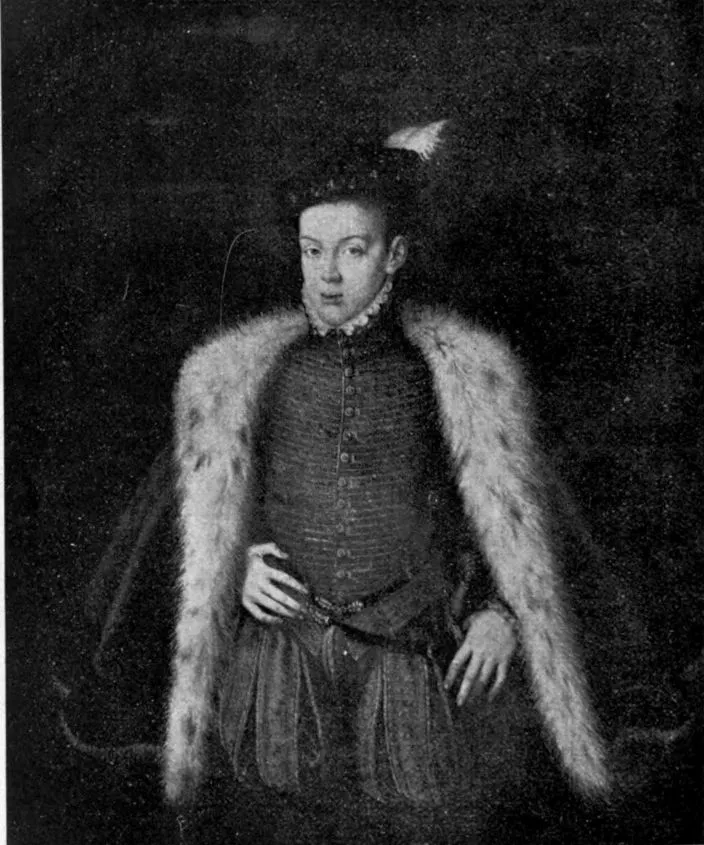
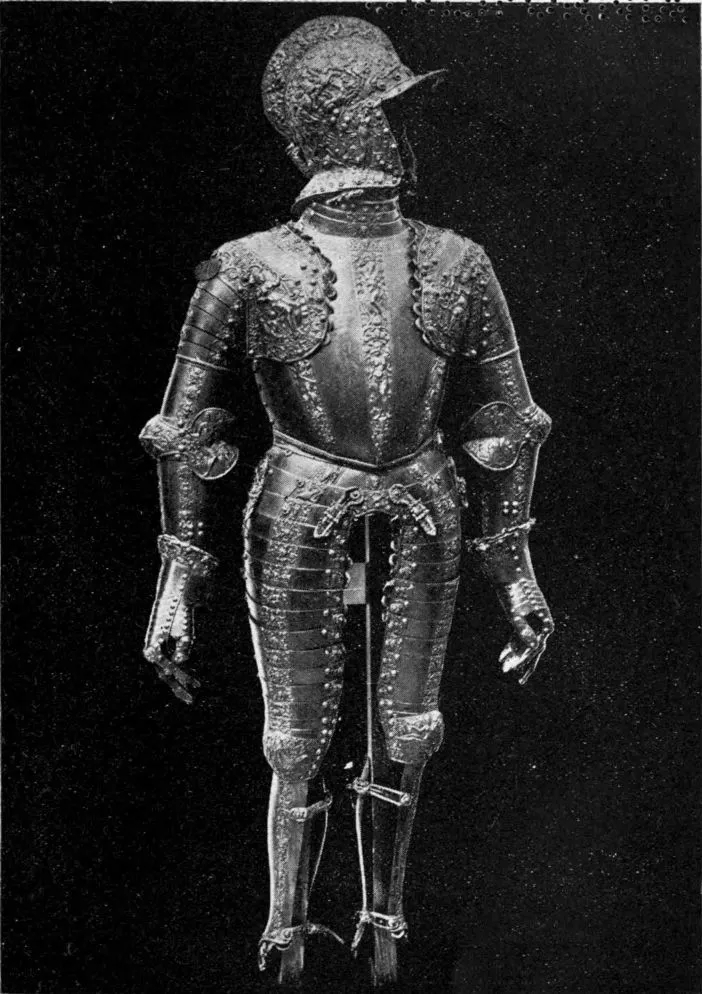
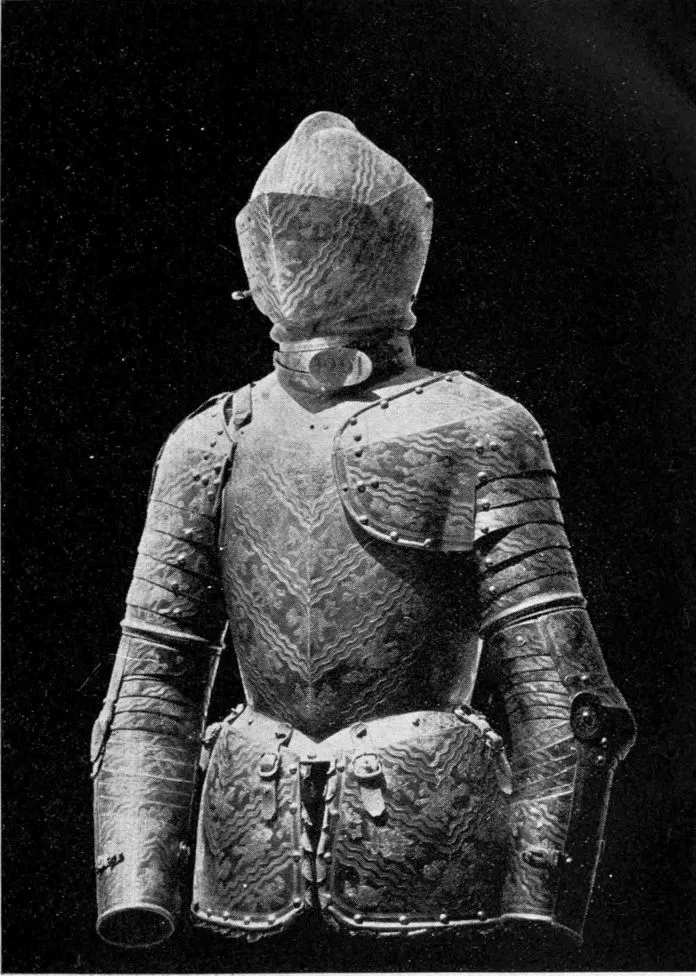
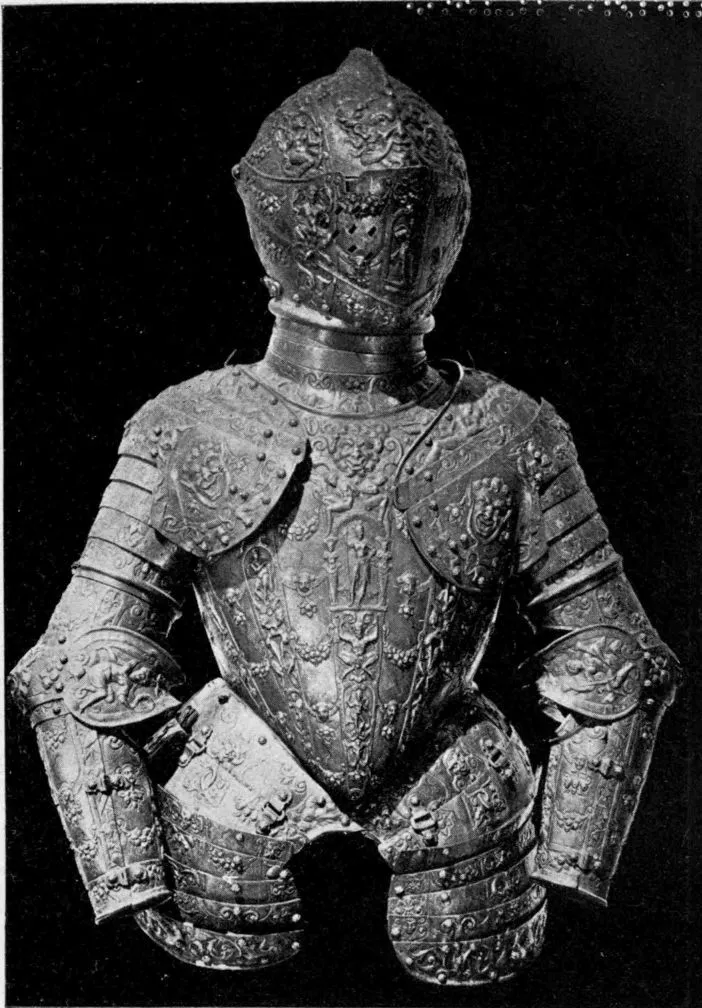
The armour with the lobster-tail tassets worn by the ill-fated Infante
Carlos, son of Philip II., at the age of thirteen or fourteen, is
attributed by Boeheim to Wilhelm von Worms of Nuremberg, and by Valencia
(with a greater show of probability, it seems to me) to one of Wolf’s
successors and namesakes. It is interesting to remark the difference in
size of the left and right pauldrons, a proof that the prince was
slightly deformed, as has so often been alleged. It is unfortunate that
the armour of our own Richard III. has not been preserved, to set at
rest the vexed question of his physical conformation.
The fecundity of Bavaria in great armour-smiths about this time proves
the truth of the adage that, given a Mæcenas, Maros will not be
wanting. Perhaps the most magnificent suit in the whole armoury is No.
A. 270, interesting doubly as having been made for that darling of
romance, Dom Sebastian of Portugal, by the gifted craftsman, Anton
Peffenhauser of Augsburg.
Boeheim has brought to light several details of this great artificer’s
life. Born at Munich in 1525, he was working twenty-two years later in
Augsburg, where he married, first Regine Meixner, and secondly twenty
years later, Regine Eitler (probably the sister of Susanne Eitler, who
married “Helmschmied” in 1565). His skill, and possibly his connection
with the Patriarch of the craft, procured Peffenhauser many exalted
patrons. In 1566 he was at work on a blackened harness for Kaiser
Maximilian II., and ten years later we find him attached to the
electoral court of Saxony. Specimens of his work are to be seen at
Dresden, Vienna, and St Petersburg. The present suit was made about
1576. A medal preserved at Prague portrays Peffenhauser as a man of
mature years, stern and dignified in countenance, with a pronouncedly
aquiline nose and full beard.
Dom Sebastian’s armour, says the Count of Valencia, is Peffenhauser’s
masterpiece, and places him on a level with, if not above, the greatest
German armourers of his time. True, he falls into the mistake of
over-ornamentation, and his figures are incorrectly designed, but the
composition and embossing are bolder than Colman’s, and, above all, his
chiselling is of inimitable precision and clearness. As to the style of
decoration, on comparing the capricious combinations of figures,
scrolls, and other devices, with the designs published by Hefner
Altenech, we are inclined to believe that it was the work of Hans
Mielich of Munich (born 1516, died 1573), or some other German artist of
the same date and equal ability.
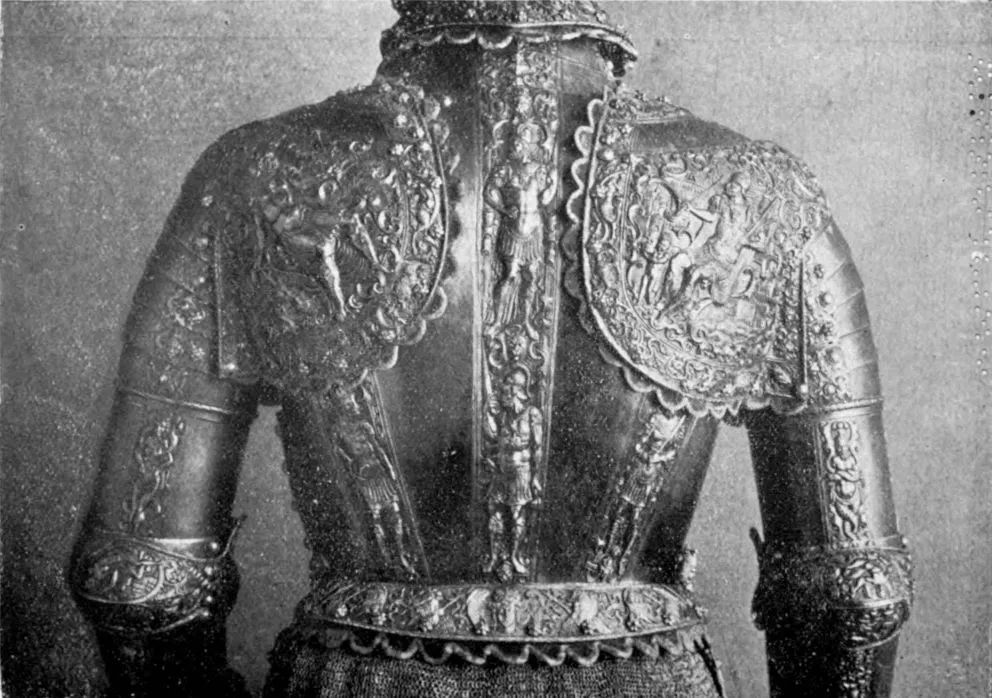
The suit consists of burgonet, breastplates, and backplates, gorget,
pauldrons, rere and vambraces, coudes, gauntlets, taces, lobster-tail
tassets, genouillères, and jambs. The nails, clasps, and plume-holder
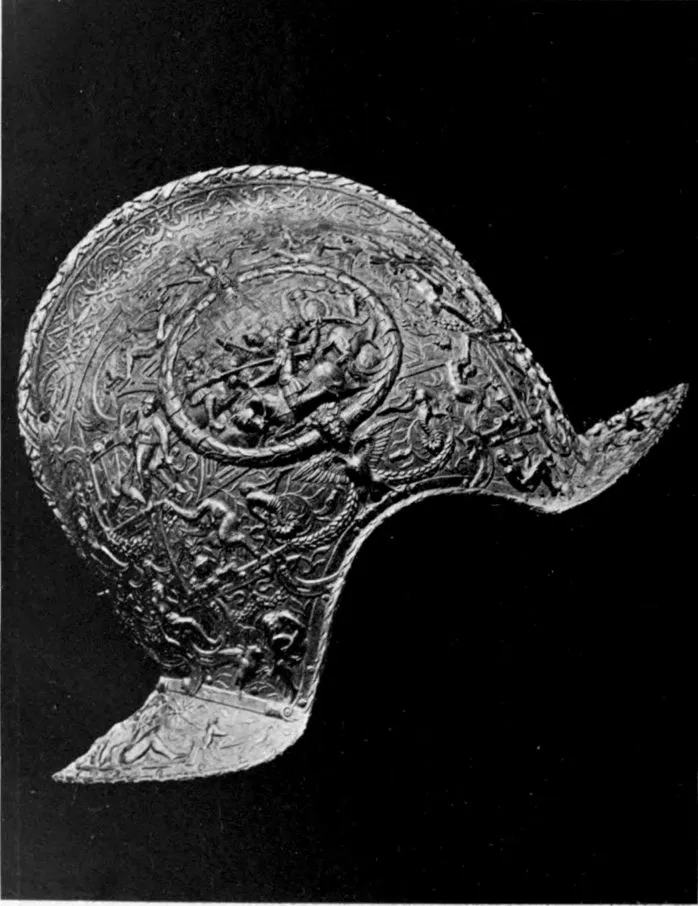
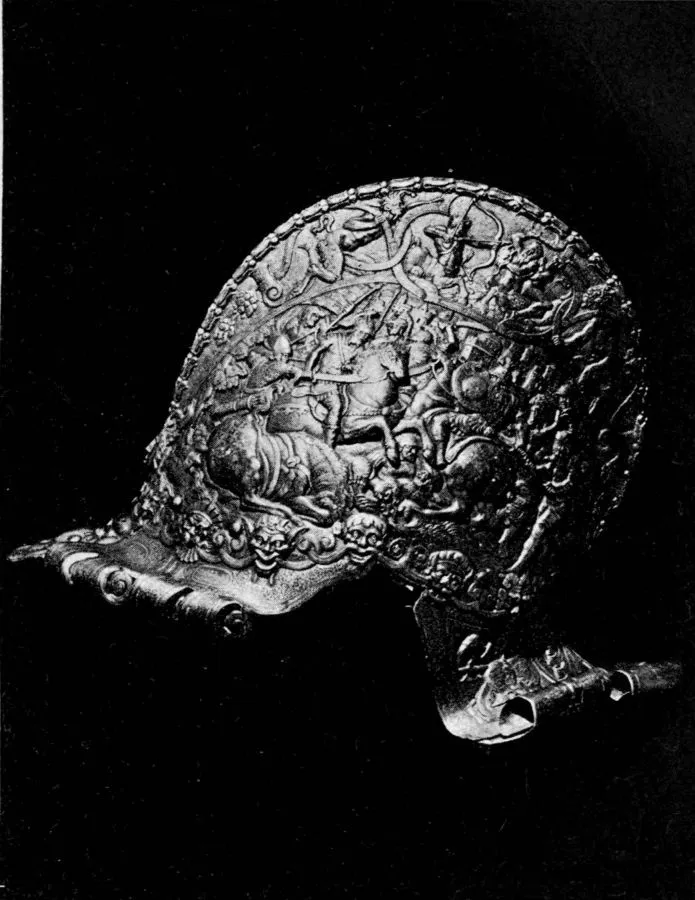
are gilded. The burgonet, wrought in one piece, is beautifully embossed
with allegorical and mythological figures and with a battle-scene in
which elephants are introduced—an allusion, doubtless, to the
Portuguese conquests in the Indies. Mythological compositions also adorn
the longitudinal bands traversing the suit from neck to ankle. The
pauldrons, or shoulder-plates, display a bewildering and marvellous
profusion of ornamented work. The elbow-guards are adorned with reliefs
of the Cardinal Virtues, the knee-plates with beautiful emblematic
groups. Thinking of this suit when still brightly burnished and gilded,
one fancies that it was thus arrayed that Milton’s archangels went forth
to battle for the lordship of the heavens.
It is now time to examine the productions of the Italian schools of
armourership. The most formidable competitors of the Augsburg family
were the celebrated Missaglias of Milan, who became known exclusively by
the name of Negroli from the year 1515 onwards. Herr Boeheim has found
traces of a Tommaso da Missaglia, who was working at Milan in 1415. His
son, Antonio, made a suit for the last Aragonese King of Naples. Some
specimens of his handiwork are to be seen in Vienna. The members of the
family with whom “Helmschmied” and his son were called upon to compete
were Filippo, Giacomo, and Francesco Negroli. The suit A. 139, forged at
Milan in 1539, and worn by Charles V., is surpassed in purity of outline
and excellence of workmanship by no other in the collection. There is no
trace here of the decadence of the craft. It is at once distinguished
from the German suits by the horizontal direction of the bands. It was
originally blackened, so as to show up the gold and silver of the
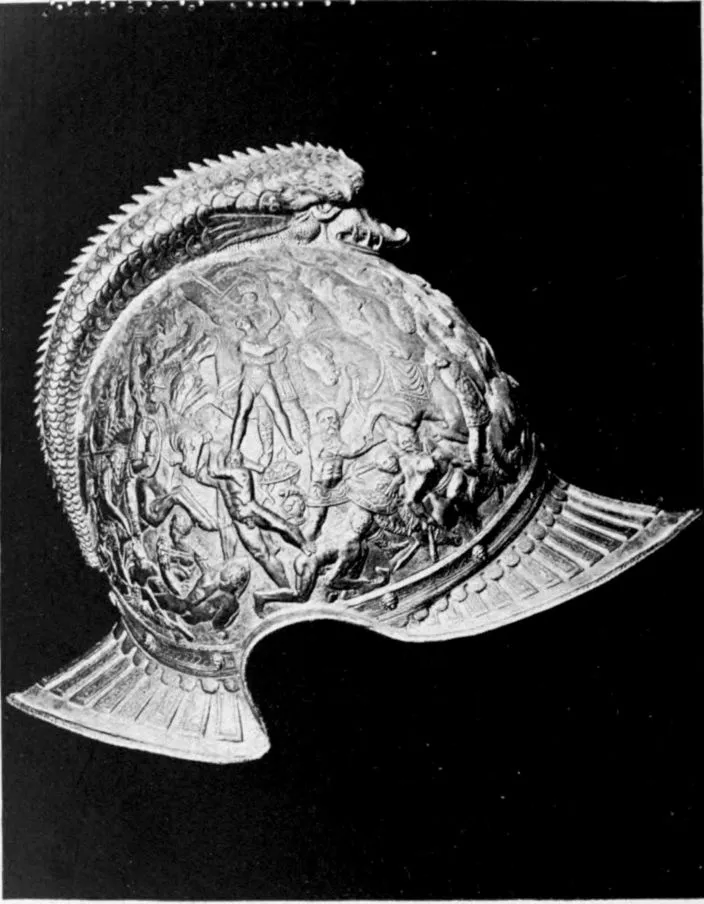
decoration. The morion is surmounted by a laurelled comb, on each side
of which run wide bands of gold damascening that meet in front to form a
fantastic face in relief. Hence the name “de los mascarones” sometimes
given to this harness. The date and maker’s names are stamped on the
border. Over the helmet could be placed a re-inforcing piece or “coif”
shaped like a serpent with scales of gold. The breastplate is adorned
with a medallion, containing an image of the Virgin. The shoulder,
elbow, and knee pieces all deserve close examination for their admirable
enrichment with lions’ heads, scrolls, and foliations.
The skill of the Negrolis must be judged, apart from this suit, by
separate pieces of armour. We have, first, the helmet and target
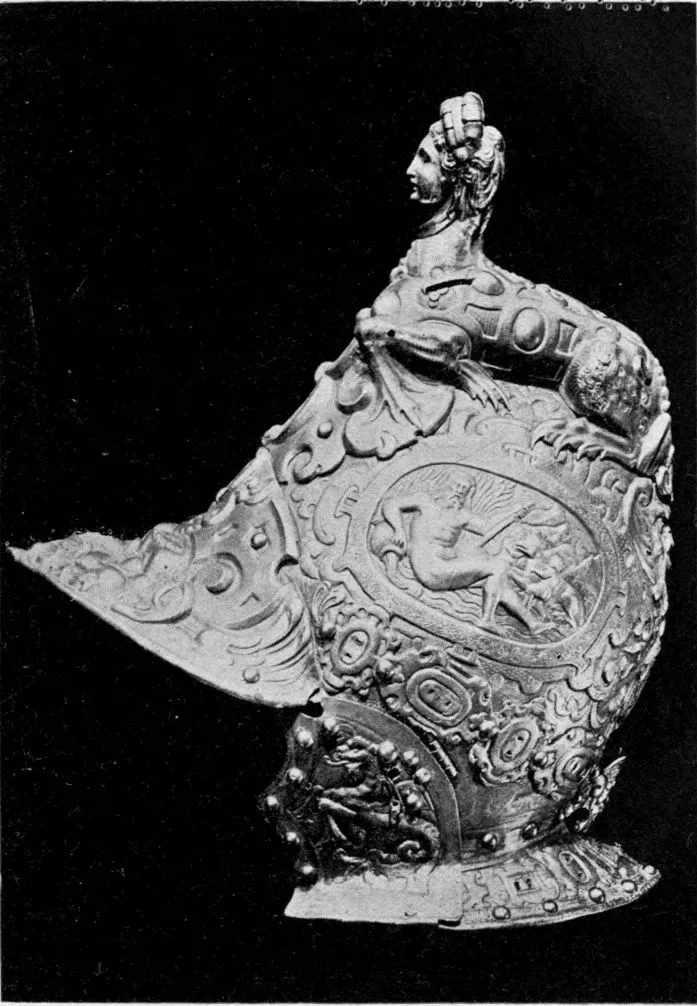
presented to the Emperor by the Duke of Mantua in 1533. The former is
moulded in the likeness of a human head—said to be Charles’
own—covered with golden curls, and encircled over the brow by a laurel
wreath. The beavor is in the form of a curly beard, the lips showing
above it. This cleverly executed, but tasteless, helmet bears the name
of Negroli, and the date 1533. The target, made to match, has a lion’s
head and mane at the boss, and a wide border, where medallions with the
Imperial arms are shown upheld by griffins and interwoven amid foliage.
Another Burgonet (D. 30), made for the Emperor by the same hands, forged
in one piece and exquisitely damascened, is surmounted by the figure of
a recumbent turbaned warrior—emblematic of the Ottoman Empire—whose
fierce mustachios are firmly grasped by two female figures, representing
Fame and Victory. Far exceeding these pieces in dignity and simplicity
of conception, and in vigour and accuracy of execution, is the famous
Medusa shield (D. 64) presented to Charles by the Municipality of Milan
upon his entrance into the city in 1541. The Gorgon’s head, daringly and
vigorously embossed, is super-imposed on the centre of the shield, and
confined within a broad laurel wreath. Outside this again are three
concentric bands. The first, narrow and richly inlaid with the precious
metals; the second, blackened and divided into sections by panels
bearing the inscription, “Is terror quod virtus anima e fortuna paret”;
the third, damascened like the first, and divided by medallions
containing the Imperial insignia. The rim is moulded into the form of a
laurel wreath. Negroli’s name is shown on the steel grip. This is
considered one of the very finest shields ever forged by an armourer.
The swords (G. 33, 34) are believed to be the work of the same hands.
Their middle surfaces and ricassi are inlaid with gold. The hilt of one
terminates in a beautiful volute, of the other in a facetted pommel.
The helmet, attributed in the old catalogues to Boabdil (D. 12), issued
from the same workshop. It is forged in one piece and could be
strengthened by a complete set of re-inforcing pieces for tilt and
tournament. Probably it would have interested us more if the old
tradition as to its ownership had not been discredited.
Great potentates in the sixteenth century were fond of appearing in
Roman garb. Charles V. was the possessor of a suit of armour of this
character, presented to him by the Duke of Urbino, and made by
Bartolommeo Campi of Pesaro. This armourer, after enjoying the patronage
of several crowned heads, served in the army of the Duke of Alba as an
engineer, and fell at the siege of Haarlem in 1573. The harness is
composed of seven pieces of blackened steel, damascened and ornamented
with bronze gilt. The cuirass, a wonderful work of art, is modelled on
the muscles of the male breast, and on it is super-imposed the head of
Medusa finished off with spiral volutes. At the shoulders are lions’
heads, with fierce rolling eye-balls. The cuirass is fringed with a row
of hanging bronze medallions, showing classic heads, masks, and other
devices, beloved of the Renaissance artificer. Cothurni with satyrs’
heads at the point, and a Bœotian casque superbly enriched, complete
this splendid antique costume.
The work of another eminent Italian artist is to be seen at A. 112. It
was presented to Charles by the Duke of Mantua and forged by Caremolo
Mondrone of Milan (1489-1543). It possesses an historic interest, as the
suit in which the Emperor made his entry into Tunis. Though the
decorative work has all but disappeared, the close fit and flowing lines
recall the best days of the armourer’s craft.
The next suit (A. 114) also testifies by the extreme delicacy of the
azziminia in imitation of Kufic inscriptions, to the wonderful skill of
the same artificer.
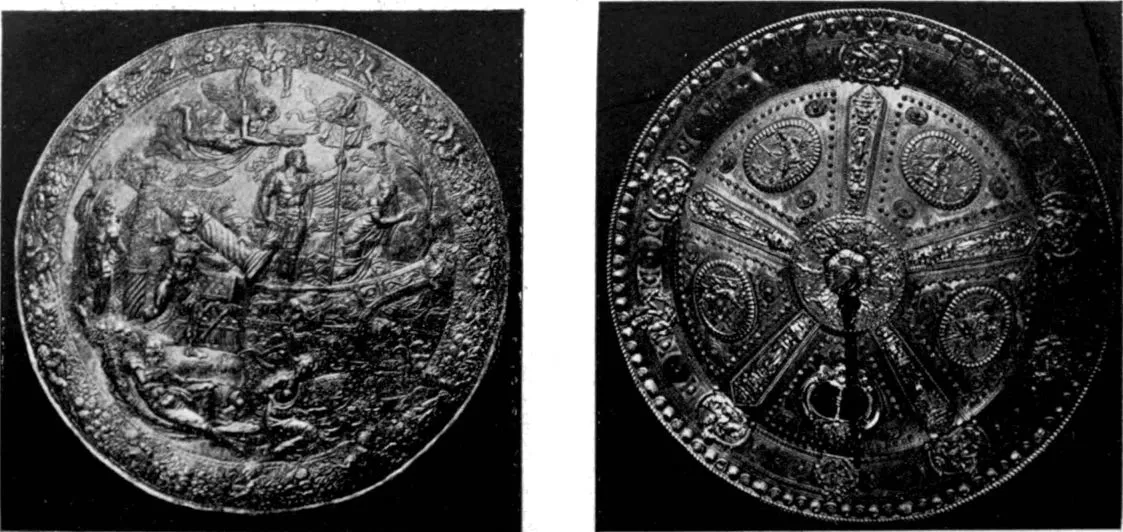
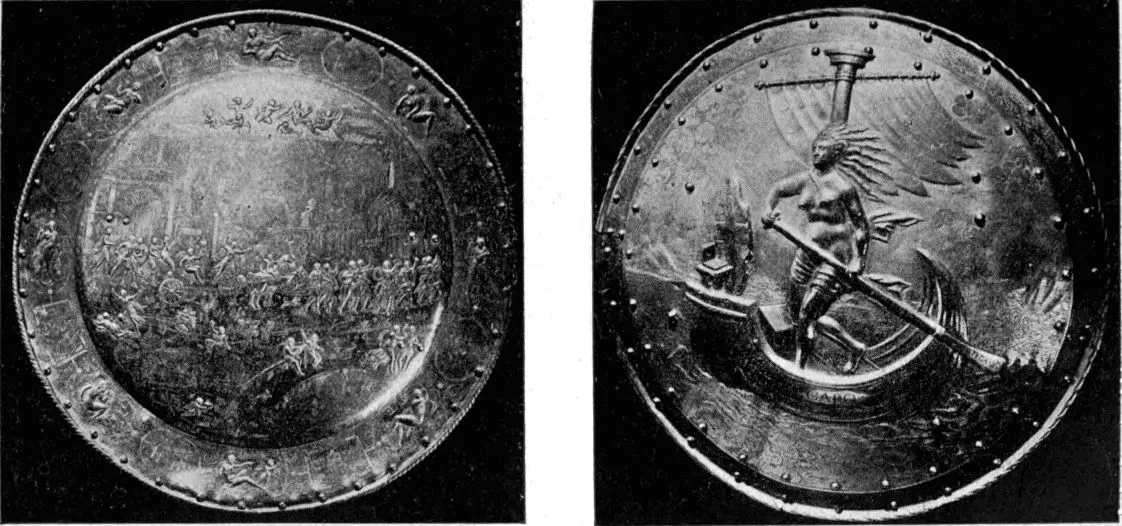
That the very greatest artists were not unwilling to co-operate in the
decoration of arms is attested by the magnificent “Plus Ultra” shield
designed by Giulio Romano, who was living in Mantua in those days. It is
forged in a single piece of steel and the whole surface is chiselled
with an elaborate composition. In the centre is seen the Emperor, in his
Roman suit, upholding the Imperial Eagle and standing upright in a
vessel, at the prow of which is Fame. Over his head Victory hovers.
Hercules, more to the left, shoulders his Pillars, and prepares to
follow the Emperor in his onward course, to the obvious consternation of
Neptune. Below the boat a river-god is seated near the figure of Africa
or America, bound and enslaved. This is certainly one of the most
remarkable productions of the armourer’s art anywhere to be seen.
The armour at one time in the possession of Charles and his son is
naturally the most interesting in the collection. The suits made for
their successors illustrate the decline of the artistic movement. The
harness was now worn chiefly for display. The connection between Spain
and Bavaria was severed, and the days had long gone when Toledo blades
were esteemed the finest weapons the world could produce. The suits made
for Philip III., when Infante, by Lucio Piccinino of Milan, is worthy of
the earlier period. It is profusely decorated with reliefs and
azziminia. The burgonet is embossed with three masks, another appearing
in the centre of the breastplate, above a panel containing a figure of
Victory and upheld by two male figures. The other pieces (many of which
are wanting) were all similarly adorned. The horse’s barding exhibits a
similar wealth of ornamentation.
Turned out in Spain itself at the Royal Arsenal of Pamplona in Navarre,
in the year 1620, is the armour catalogued under the numbers A. 350-353.
This was a suit intended for presentation by Philip III. to the Duke of
Savoy, and is lavishly decorated. A curious feature of the next suit,
also made in Navarre, is the seven indentations made by the bullets of
an arquebus. Each is set with stones. These marks were intended to
attest the thickness of the steel, but they do rather the contrary, for
the backplate has been completely perforated. We are reminded of Don
Quixote’s attempts to satisfy himself of the toughness of his helmet.
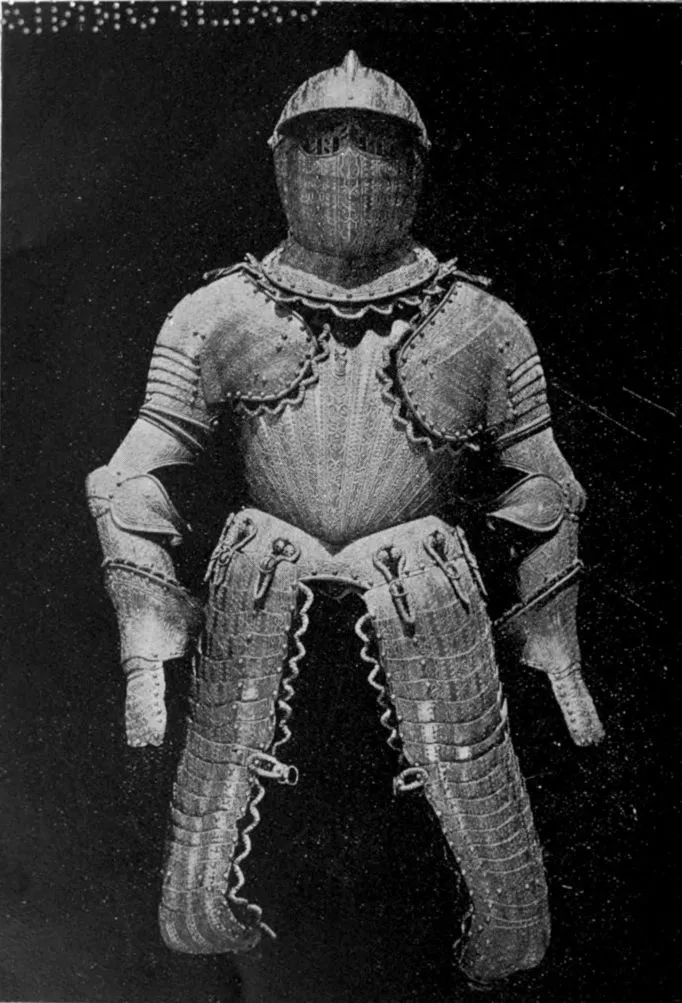
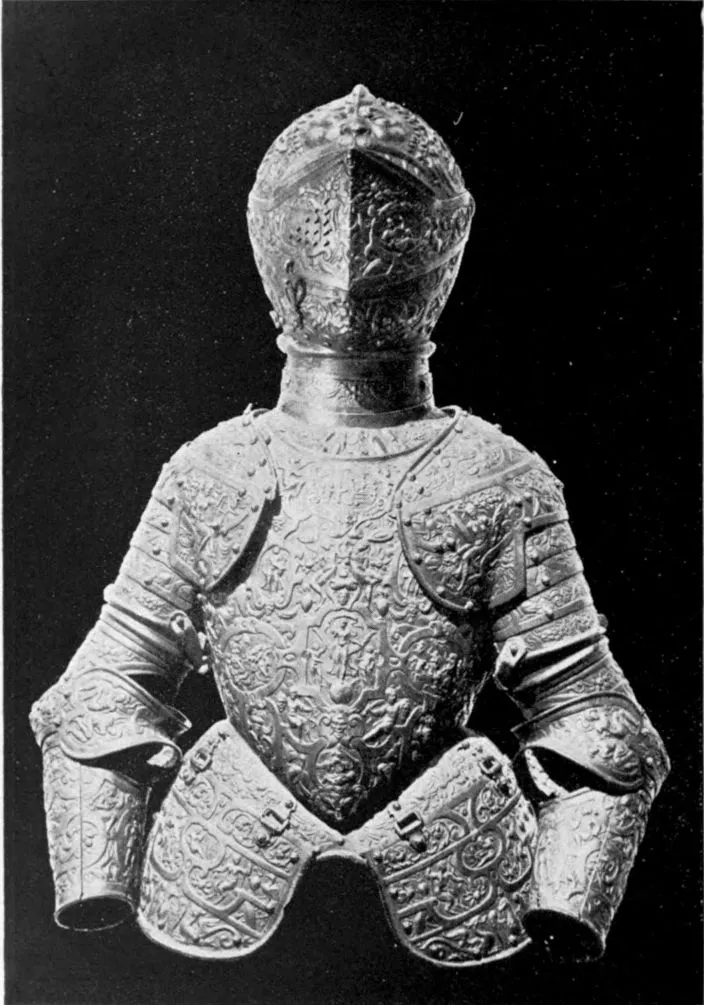
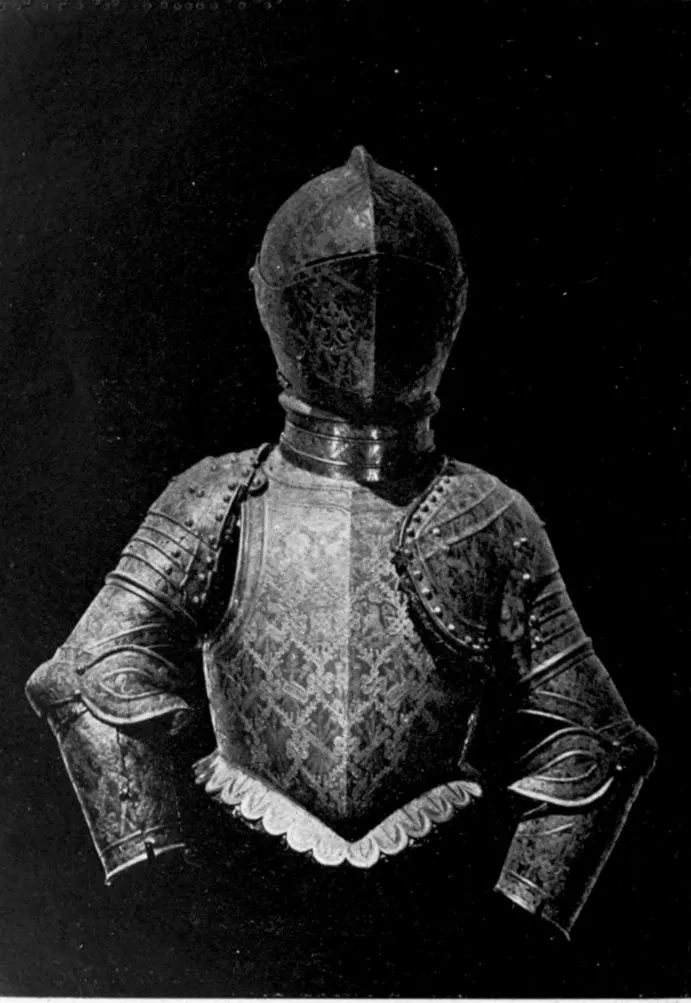
At A. 13-20 are shown six charming little suits made for the boy
princes, Philip, Ferdinand, and Charles. They are composed of closed
helmets, gorgets, cuirasses, and the usual arm-guards. The surface is
blued and divided diagonally by foliations between which appear the
emblems of Spain and the Golden Fleece.
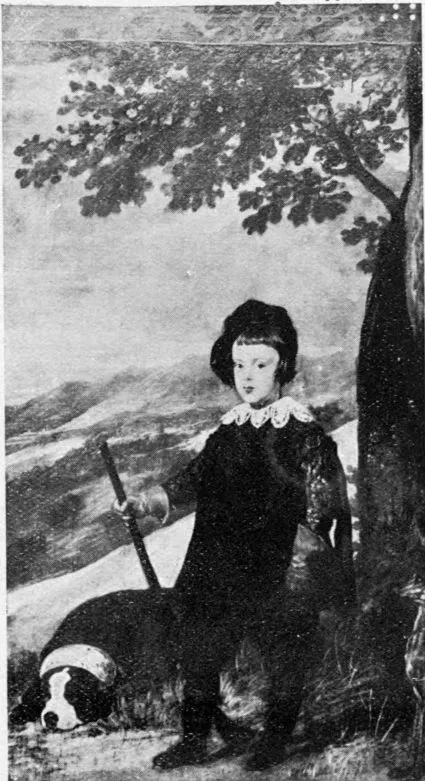
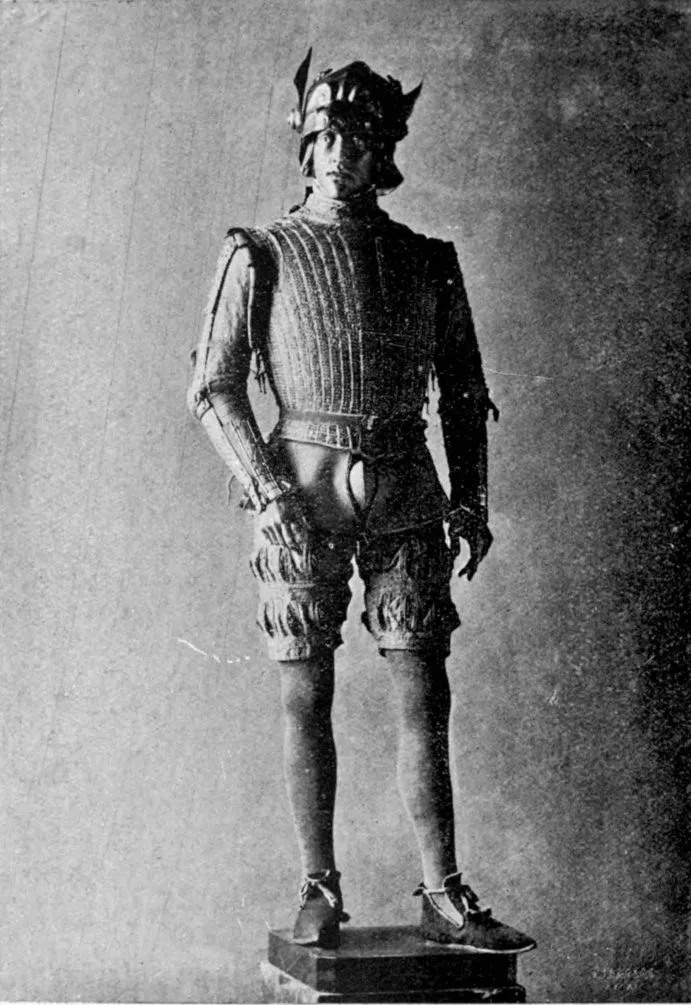
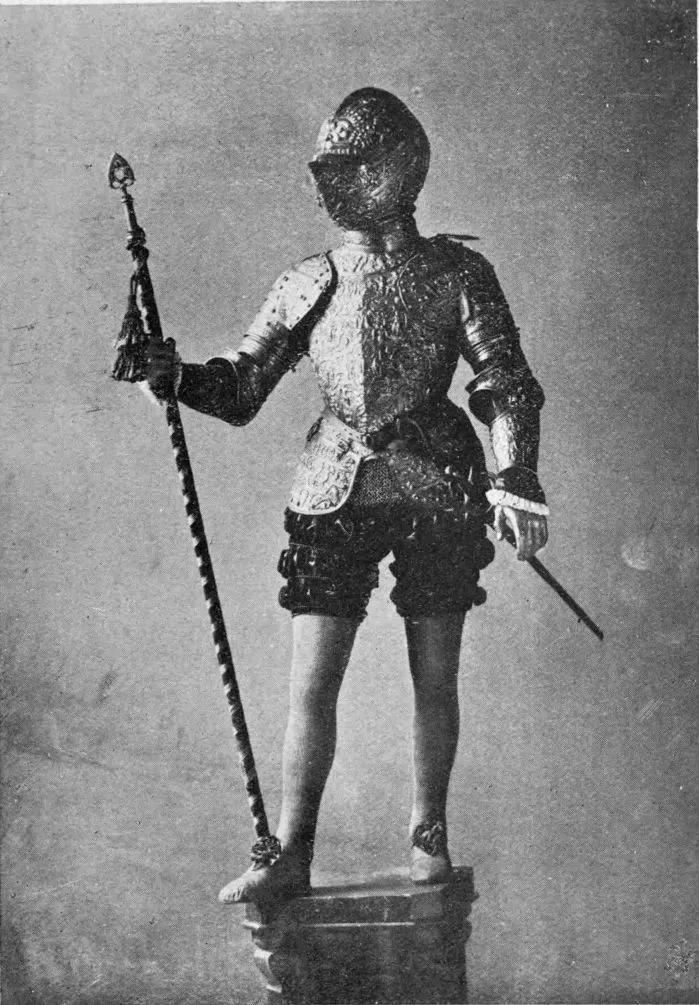
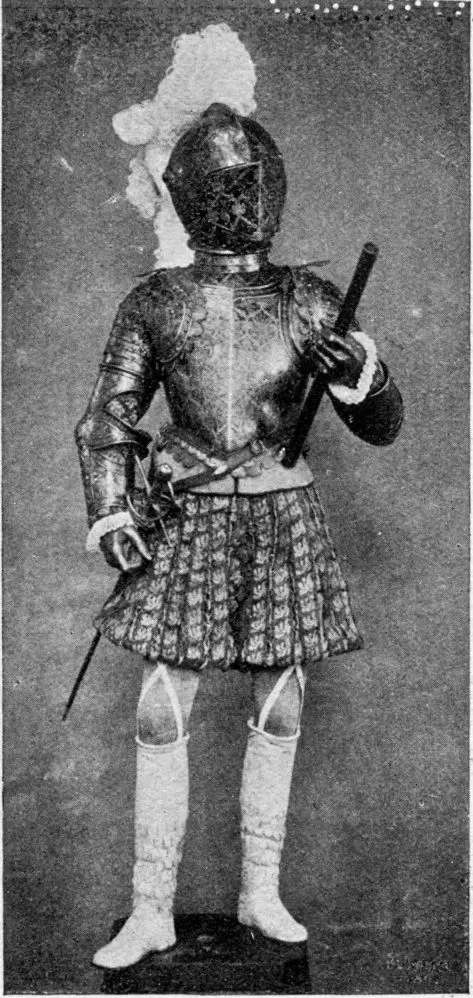
The suit made for the Infante Baltasar Carlos (1629-1646) is little
more than a costly toy, and preserves its gilding and blackening
unimpaired. The suits A. 369 and A. 394 are historically interesting, as
having been worn in the field by Prince Emmanuele Filiberto of Savoy,
the victor of St Quentin, and Don Juan José, natural son of Philip IV.,
respectively.
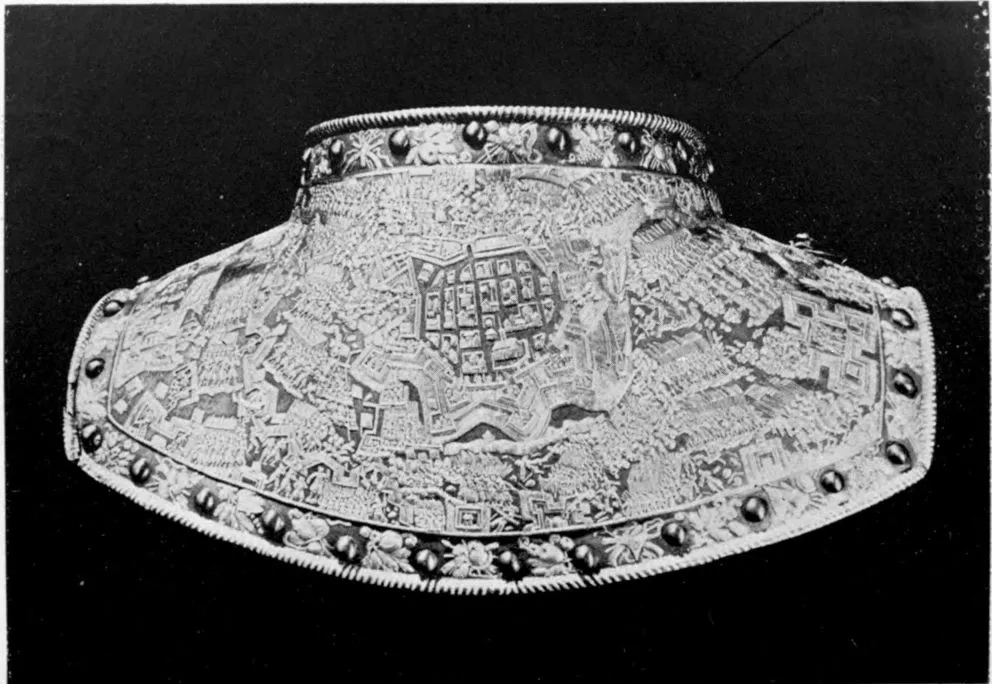
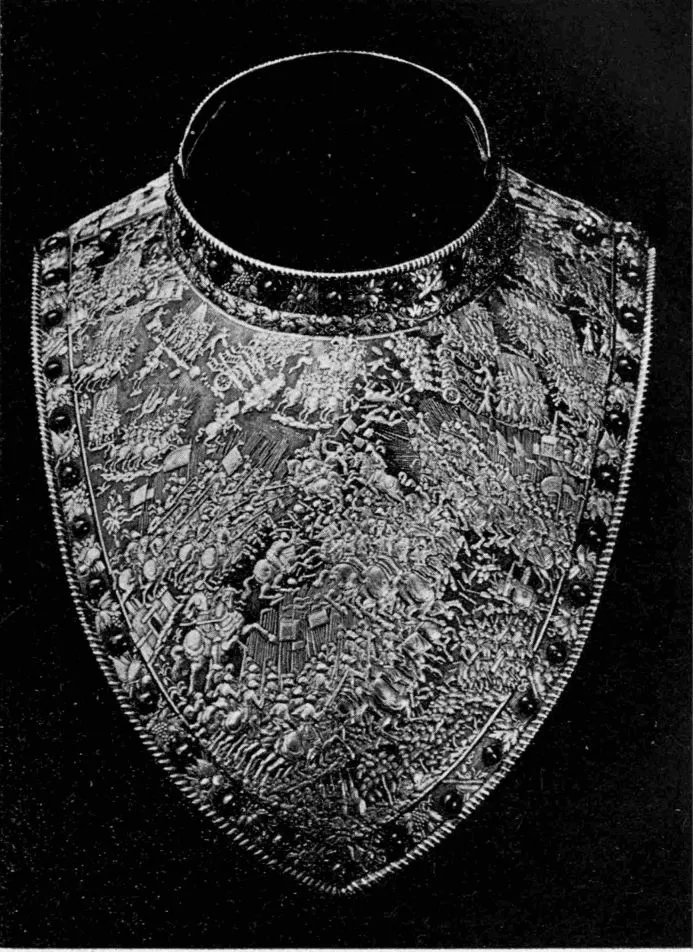
The splendidly engraved collar and gorget catalogued as A. 434-441, are
now known to portray the siege of Ostend (1601-1604) and battle of
Nieuport (1600). The details are executed with marvellous clearness, and
reflect the greatest credit on the unknown artificer. The horseman in
the centre group on the gorget is probably the Archduke Albrecht, who
distinguished himself by his valour in the battle. These pieces were
worn over a buff jerkin, such as clothed Cromwell’s Ironsides.
Many detached pieces in this grand collection are as full of interest as
the complete harnesses. The sword, G. 21, once thought to be the
“Colada” of the Cid, has lost little of its interest now that it has
been identified with that equally famous blade, the “Lobera” of St
Ferdinand. A part of the cloak in which the sainted king was buried is
also shown with his long-necked spurs or “acicates.” Then we have (at G.
13) the heavy weapon of Ferdinand the Catholic, and the sword of state
used by the Catholic sovereigns when conferring the accolade. The sword,
inscribed with the Great Captain’s name, was presented to him, the Count
of Valencia thinks, by some Italian city. The sword numbered G. 30 also
belonged to him. And who can gaze without wonderment on the Valencian
blade with which Pizarro won for Spain the vast empire of Peru?
From the New World comes a wonderful feather shield, made by the Mexican
Indians under the direction of Spanish artists. On a wicker frame are
depicted in feathers, mounted on skin, the battles of Navas de Tolosa,
Tunis, and Lepanto, and the taking of Granada. In the centre a heron is
seen defending its nest against serpents—a composition symbolical of
the campaign against heresy. The whole is an extraordinary example of
what can be achieved with such apparently impracticable materials.
Included in the collection is a brigantine made for Charles V. composed
of hundreds of pieces of steel sewn on leather, making a garment as
flexible as a jersey, and yet endowed with extraordinary resisting
power.
Older, and from certain points of view more interesting than any of
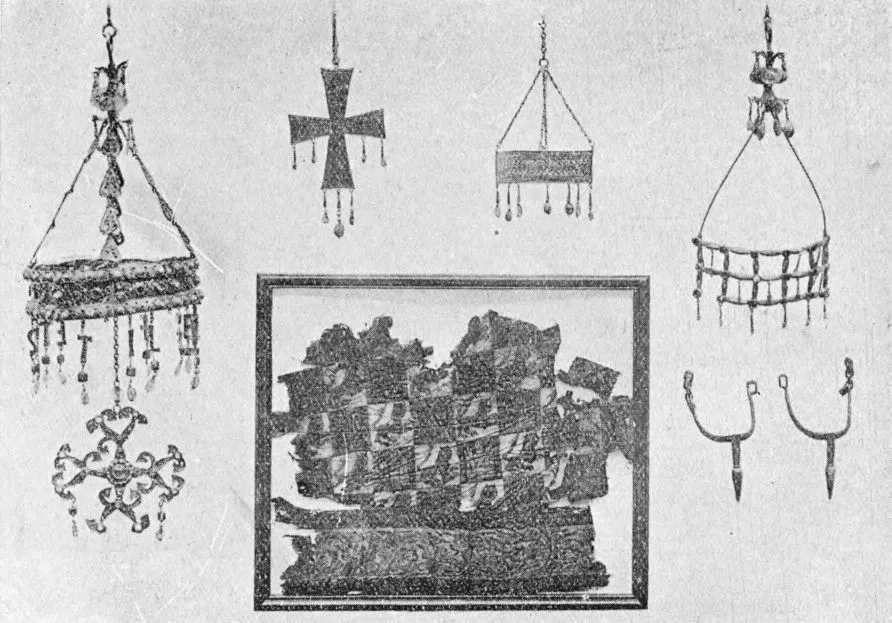
these exhibits, are the Visigothic crowns of Guarrazar, the companions
of those in the Cluny museum. These were found one moonlit night in the
year 1858 by two peasants, in the bed of a fountain, and only secured
with difficulty by the government. Much of the treasure had already come
into the possession of the goldsmiths of Toledo, and had been broken up
or melted down. It is said to have comprised a beautiful golden dove,
which, having been acquired by a jeweller, occasioned him so many qualms
of conscience that he at last eased his mind by throwing it into the
Tagus. The crowns were the offerings at shrines of King Swinthila and
his successors. They consist of hoops studded with gems and dangling
from a separate ornament of gold and rock-crystal. From the hoop hang
pendants and letters in enamel, making up the inscription, Swinthilanus
Rex Offeret. Adjacent are crosses and ornaments of the same period. An
antique horse’s bit, ascribed by tradition to Witiza, is believed by the
Count de Valencia to date from the Visigothic era.
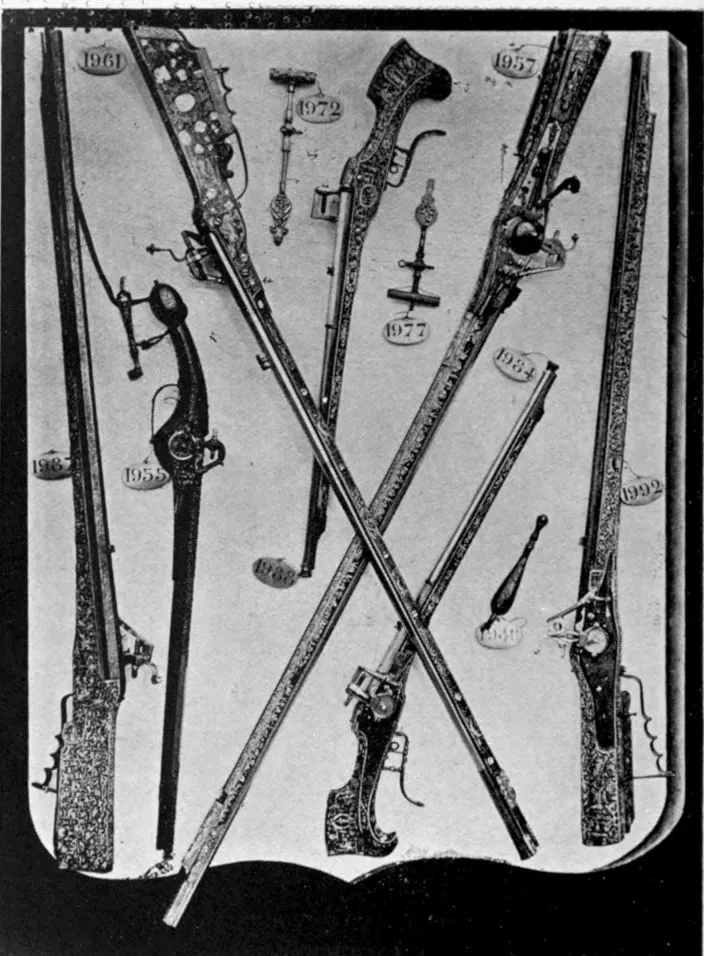
The collection comprises a superb assortment of swords, beautiful
specimens of the famous Toledo blades. Among those of historic interest,
I forgot to mention that of Hernando Cortés. The sword of Philip II.,
numbered G. 47 has a magnificent hilt richly chased, with a spherical
pommel. It is no doubt the work of Desiderius Colman, though believed,
at one time, to have been designed by Benvenuto Cellini.
Among the trophies are the sword of the Duke of Weimar, taken at
Nordlingen in 1634, the arms taken from Francis I. at Pavia, Moorish
arms from Tunis, the breastplate of the Elector of Saxony, taken at
Mühlberg, swords and standards from Lepanto, and flags taken by the
famous Admiral Alvaro de Bazán. The arms belonging to his late Catholic
Majesty, Alfonso XII., have also been added to the collection by the
Queen Dowager, who well knew the profound interest her august husband
took in this superb military museum.
No one visits Madrid without making an excursion to the Escorial, which
is to the Spanish capital what the Pyramids are to Cairo. Indeed, there
is more than one point of resemblance between these buildings. Both
impress mainly by their size, both produce no sensations of pleasure in
the beholder, both embody the solemn and crushing conception of the
majesty of death entertained by great and despotic kings.
The thoughts of Philip II., like those of the Pharaohs, turned
perpetually graveward, and it is perhaps doing no injustice to a
genuinely devout character to say that he pondered as much on the abode
of the body after death as on the post-mortem vicissitudes of his soul.
The pomp of death which, according to the sage, is to most men more
terrible than death itself, had a rare fascination for the Pharaohs and
the King of Spain. Philip in his tomb seemed a finer figure to Philip
living than Philip on his throne. Death as a catastrophe is attractive,
of course, to all manner of people, not otherwise morbid. But it was
death in its most generally repugnant aspect that appealed to this
strange, sombre sovereign of the Spains, and it was that predominating
conception that inspired him in the erection of the Escorial. The
building is his idea of the majesty and finality of Death expressed in
stone.
The story which immediately accounts for the founding of the Escorial is
well known. On the 16th August 1557, the Spaniards commanded by
Emmanuele Filiberto, Duke of Savoy, totally defeated the French under
the walls of St Quentin. Philip arrived in time to assist at the taking
of the town itself, to effect which it became necessary to demolish a
convent dedicated to St Lawrence. By way of reparation to that saint, in
thanksgiving for the victory, and in fulfilment of his father’s
instructions to create a royal mausoleum, Philip determined to erect a
vast monastery and palace under the invocation of St Lawrence. The
present site having been chosen by a commission, the work was begun in
the presence of the King himself, in the first week of April 1562. The
plans were drawn by Juan Bautista de Toledo, an architect of
distinction, who had studied at Rome and Naples. He died, however, in
1563, a few days after the laying of the first stone and the work was
then entrusted to his assistant, the more celebrated Juan de Herrera
(born in Asturias 1530, died at Madrid 1597). Villacastin, the Master of
the Works, on being invited to assist at the ceremony of laying the
first stone, replied, “Let others lay the first, I will place the last!”
His words came true, for he laid on June 23rd, 1582, the last stone,
which may be seen marked with a black cross on entering the Patio de los
Reyes.
The real architect was Philip himself. His interest in the work was so
intense, his attention to its details so minute, the idea of the whole
so much his own and so tenaciously insisted upon, that Toledo and
Herrera can have had little else to do than commit the scheme to paper.
The Escorial is essentially the work of one man, and the expression if
not of his personality, at least of the idea that obsessed him.
It was the custom in Northern Europe to propitiate some half-forgotten
infernal deities by burying a pig or a sheep alive in the foundations of
every church. The monastery of San Lorenzo was similarly consecrated by
human and animal sacrifices. After the Hermits of St Jerome (Charles
V.’s favourite order) had established themselves in the incomplete
edifice, it was whispered that a black dog persistently interrupted
their chanting by his howlings. The animal was looked upon by the people
as inspired by God thus to protest against the spoliation of the
peasantry by the Hermits. It turned out that it was only one of the
hounds of the Marquis de las Navas, bewailing his absent master; but the
benevolent monks promptly hanged the poor brute from the roof of their
cloister. In the same year a young man, twenty-four years of age, was
(no doubt for some serious offence) burned at the stake on the spot in
the neighbouring Jardin del Principe marked by a stone cross. Thus with
most solemn rites was the great Christian temple consecrated to Death.
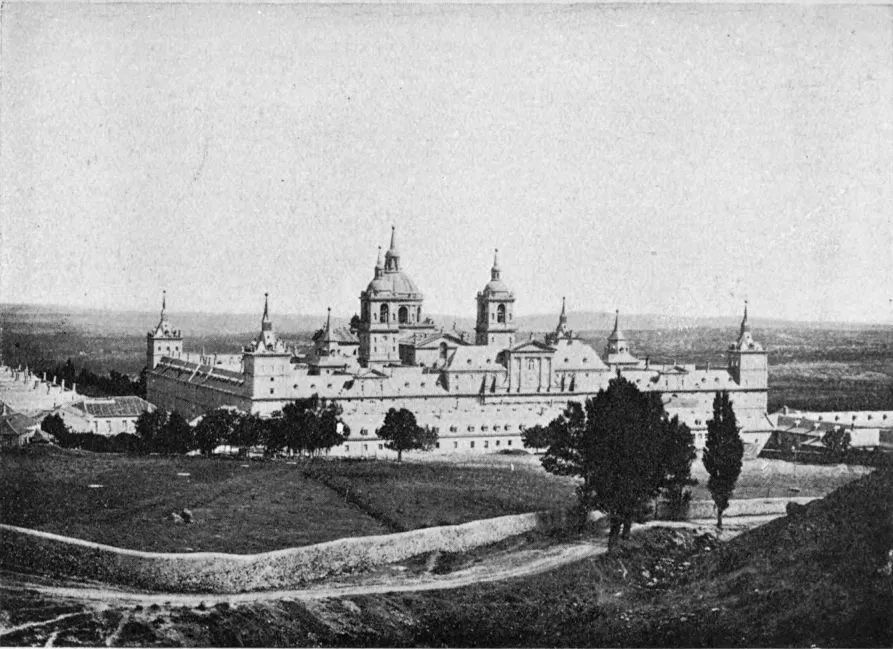
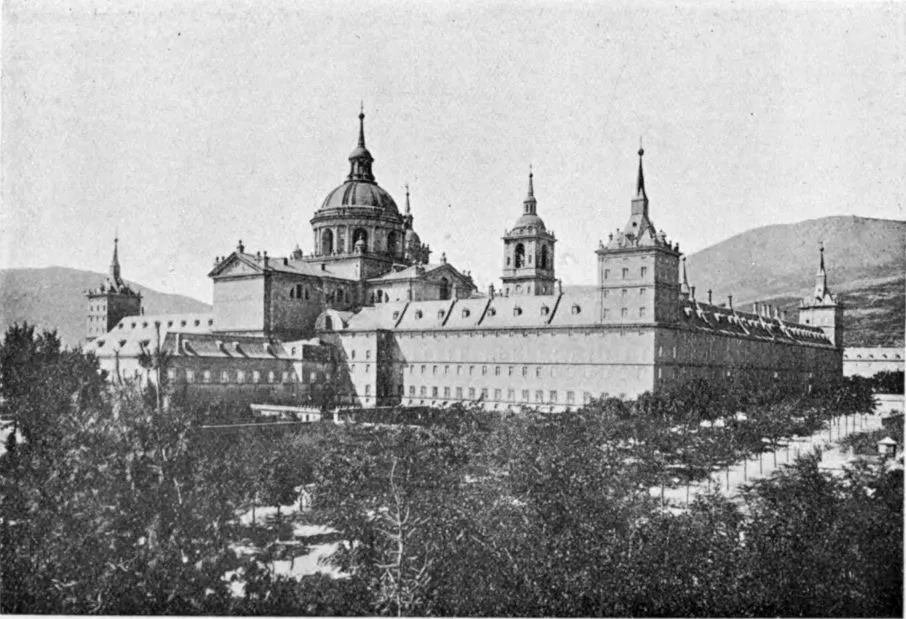
The building constitutes an immense parallelogram, its sides nearly
facing the cardinal points of the compass. The small rectangular annex
called the Palacio de Infantes projecting from the middle of the eastern
face, gives the plan a purely accidental resemblance to a gridiron,
which, according to legend, was the instrument of the titular saint’s
martyrdom. The dimensions, according to a Spanish writer, are 744
Castilian feet from north to south, 580 from east to west, and 400,000
square feet in area. The whole building is of grey granite, and appears
to form an integral part of the rock on which it stands. In its
simplicity and hugeness it might easily be mistaken for the work of
Nature, not of man. Artistically this is perhaps its sole merit, yet, as
I have said, it never fails to awe. The style is that of the second
Renaissance, here called Greco-Roman, which prefers the Doric order and
rejects all superfluous ornament. Each angle is capped by a square
tower, surmounted by a pinnacle. The façades, devoid of all decoration,
are relieved only by rows of small square windows. The upper stories are
faced with blue slate and sheets of lead. The Escorial is rivalled in
simplicity and severity by the Pyramids alone.
The main entrance is in the middle of the west front. The lower stage is
in the Doric style, four columns flanking the doorway on each side. The
door itself is 20 feet high and 12 feet wide, and painted white with
huge copper-gilt studs and knockers. Above is the second stage of the
entrance in the Ionic style. Over the door is the colossal statue of St.
Lawrence in granite, but with the head, hands, and feet in white marble.
The sculptor, Monegro, received 20,900 reales for the Spanish
coat-of-arms carved below.
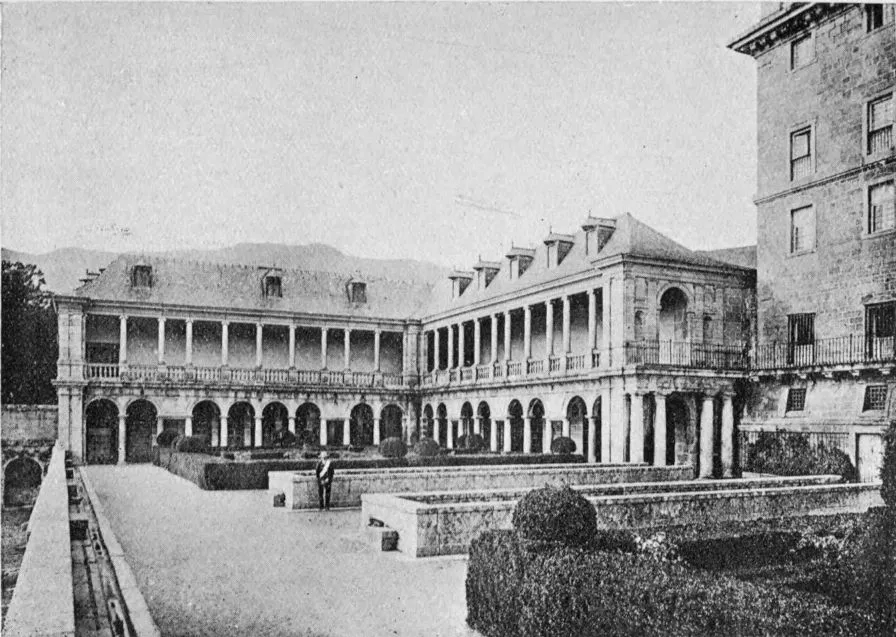
A vestibule opens upon the Patio de los Reyes, so called from the
statues of the Kings of Judah in granite and marble, also by Monegro,
which stand on pedestals above the cornice. Jehoshaphat is represented
with an axe, Hezekiah with a ram, Manasseh with the compass and square,
Josiah and Solomon with books, David with harp and sword. These kings
were selected as having had most to do with the building of the Temple,
to which the Escorial was often compared by Spanish writers. The Temple,
as represented by the Mosque of Omar, is by far the more cheerful and
ornate structure of the two.
The eastern front of this court is formed by the west front of the
church and the Escorial—undoubtedly the noblest part of the pile. It is
rightly considered Herrera’s masterpiece. The shape is said to be that
of a Greek cross, but seemed to me to be square. The west front is
flanked by square towers considerably over 200 feet high, and
terminating like those of the enceinte in pinnacles. Over the crossing
rises a stately dome, supporting a graceful pyramid, above which rises
an iron cross. These towers are the most ornamental features of the
whole vast pile.
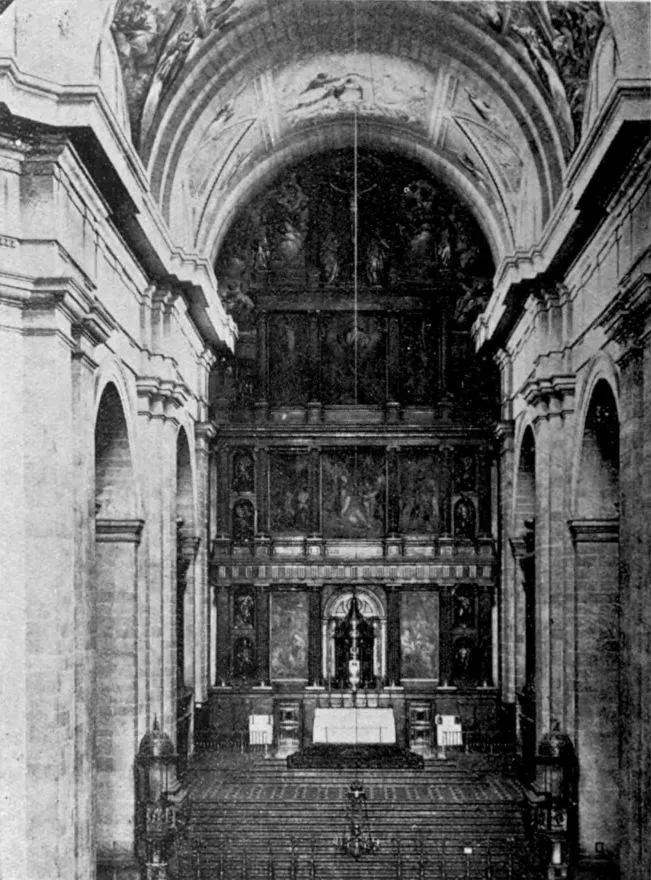
The interior of the church, truly observes Mr Lomas, “conveys exactly
the idea which English people attach to the word ‘temple,’ a place
wherein the majesty of the invisible dwarfs everything human.” It is
constructed on the model of the first plan of St Peter’s. The lantern is
carried on four enormous piers, from which to eight pilasters in the
walls spring twenty-four mighty arches, forming three naves. Giants
would seem to have been at work here. On entering we find ourselves in
the dark Lower Choir, which is separated from the rest of the church by
three bronze railings and to which were confined the lay worshippers.
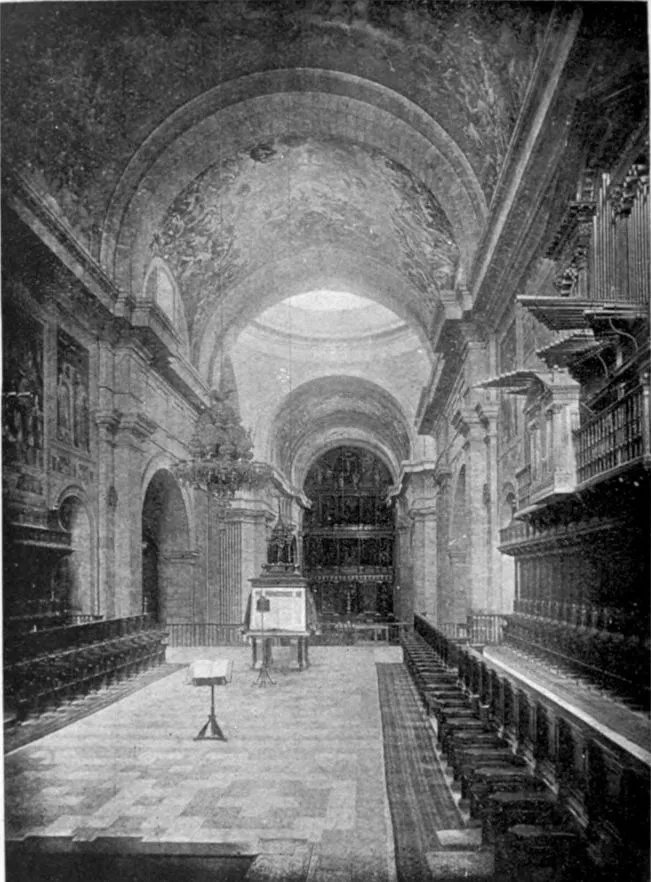
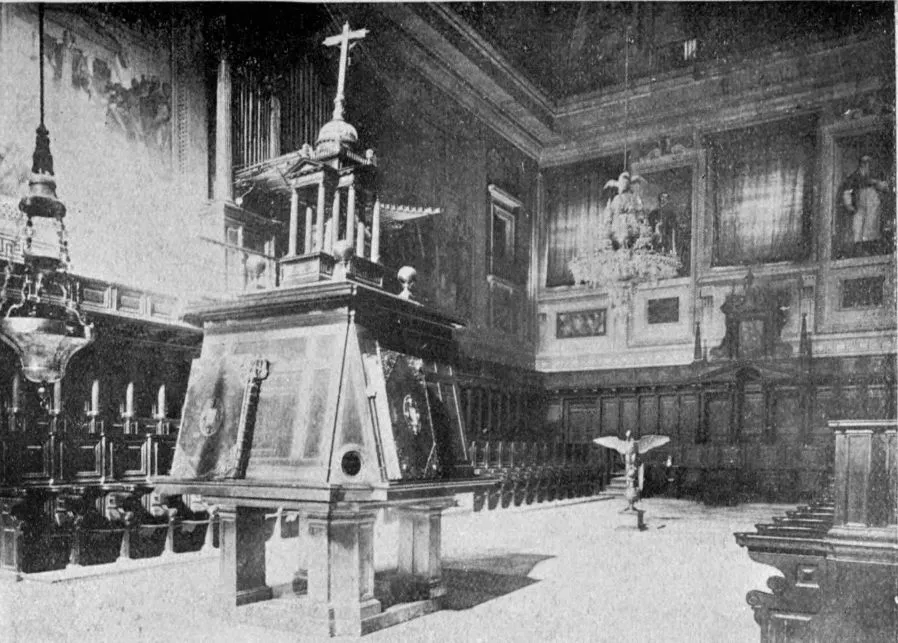
Above it is the choir, which it is unusual to find in Spain raised in a
gallery at the west end of the church, instead of blocking up the nave.
Here Philip often joined the monks in their devotions, his seat being
the one nearest the door in the south-east angle. He was absorbed in
prayer when on November 8th, 1571, during Vespers, a messenger entered
and announced to those assembled the glorious victory obtained by Don
John of Austria over the Ottoman fleet. The King gave no sign that he
was elated, or that he had even heard the intelligence, but at the
conclusion of the office he ordered a Te Deum to be intoned. He was a
man never elated by success or cast down by failure. The evil tidings of
the Armada found him as unperturbed as the good news of Lepanto. From
the same seat he assisted at the solemn requiem Mass chanted by night
for the repose of the soul of Mary, Queen of Scots. It is not without a
certain emotion that we gaze around in this gallery. The stalls are
elegantly and chastely carved in precious woods, after the designs of
Herrera. The lectern and crystal chandelier are hardly so good. The eye
turns at once to the marble crucifix signed by Benvenuto Cellini, who
placed it among his finest works. Philip, one day, covered the loins of
the figure with his handkerchief, a precedent which we see still
followed in many churches in Spain and in convent chapels in France.
In the adjoining chambers, called the Antecoros, may be seen a statue
converted into the “likeness” of St. Lawrence, and two pictures by
Navarrete “el mudo.” That artist is said to have fallen foul of certain
ecclesiastics by representing angels with beards, and an additional rule
was laid down that neither cats and dogs nor any unbecoming figures were
to be introduced into religious pictures, but only such things as
incited to devotion. The frescoes are by Luca Giordano, as are also
those which decorate the eight vaults of the church itself. In the choir
library you may see the splendid antiphoners, beautifully bound and
illuminated, and over a yard high by two yards broad.
In the church is the simple tomb of Queen Mercedes, first wife of his
late Majesty, Don Alfonso XII. The plain gold cross at her feet was the
offering of the British community of Madrid, by whom, as indeed by the
whole world, her untimely death was profoundly deplored. She is buried
here and not in the mausoleum below, as she was not the mother of a
king.
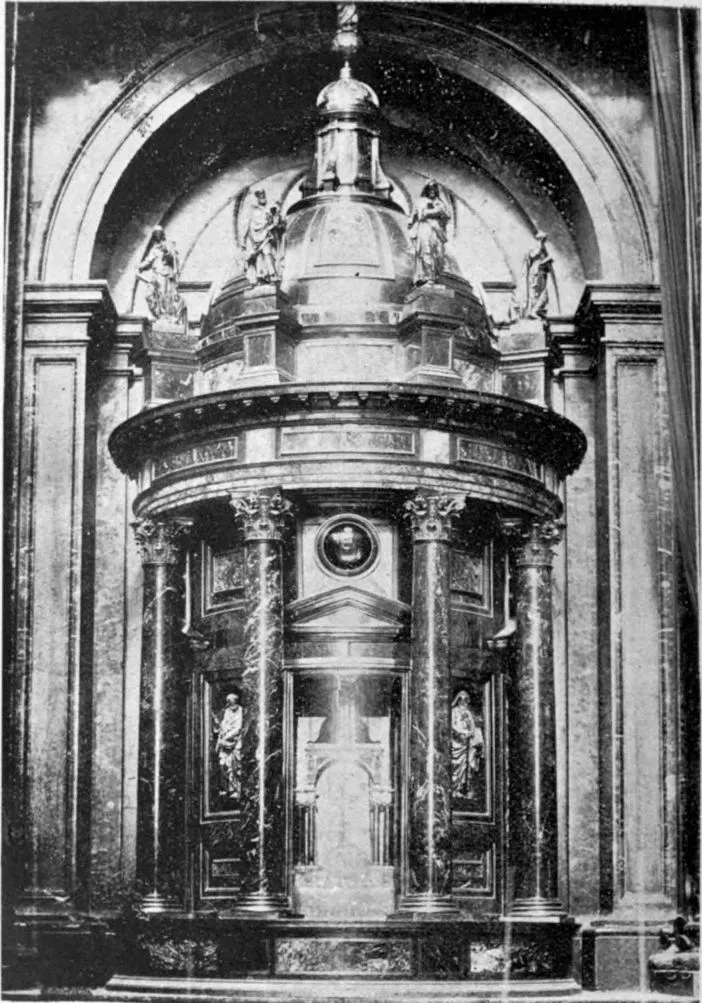
The dome of the Pantheon is covered by the steep flight of steps leading
to the chancel, so that Mass is literally celebrated above the bodies
of the kings. The altar, which cost about £(?)40,000, is isolated, and
is made of marble and jasper, a single slab of the latter stone forming
the table. According to the inscription on a bronze plate let into the
back of the altar, it contains relics of Saints Peter and Paul, Lawrence
and Vincent, and a multitude of other saints, and was consecrated in
presence of Philip by the Papal Nuncio, Camillo Caietano, Patriarch of
Alexandria, on August 30th, 1595. The beauty of the reredos or retablo
is obscured by the dark hue of the stone employed, and by the sombre
colour assumed by the paintings in course of the years. The light also
is very bad. The three stages into which the retablo is divided
correspond to the three Grecian orders of architecture. The columns are
of dark red and green jasper, with capitals and pedestals of bronze
gilt. The statues represent (looking upwards) the Four Doctors of the
Church, the Four Evangelists, St James and St Andrew, St Peter and St
Paul. The paintings depict the Nativity and Adoration of the Magi, the
Saviour bearing the Cross, the Scourging at the Pillar, the Martyrdom of
Saint Lawrence, the Resurrection, the Descent of the Holy Ghost and the
Assumption. The cross surmounting the whole was made from the wood of
the Portuguese warship, “the Five Wounds.” The architect of this fine
work was the Milanese Giacomo Trezzo, the painters Tibaldi and Zuccaro,
the sculptors Leone and Pompeio Leoni. The sanctuary to the east
contains the superb tabernacle, designed by Herrera and executed by
Trezzo, with instruments invented by him for the purpose. It was
restored in 1827 by “the pious and august” Ferdinand VII. after it had
been rifled and damaged by the French. The reliquaries in the sanctuary
contain ten entire bodies of saints, 144 heads, and 306 entire arms and
legs. Among these relics is the thigh of Saint Lawrence, showing the
roasted flesh and the holes made by the skewers.
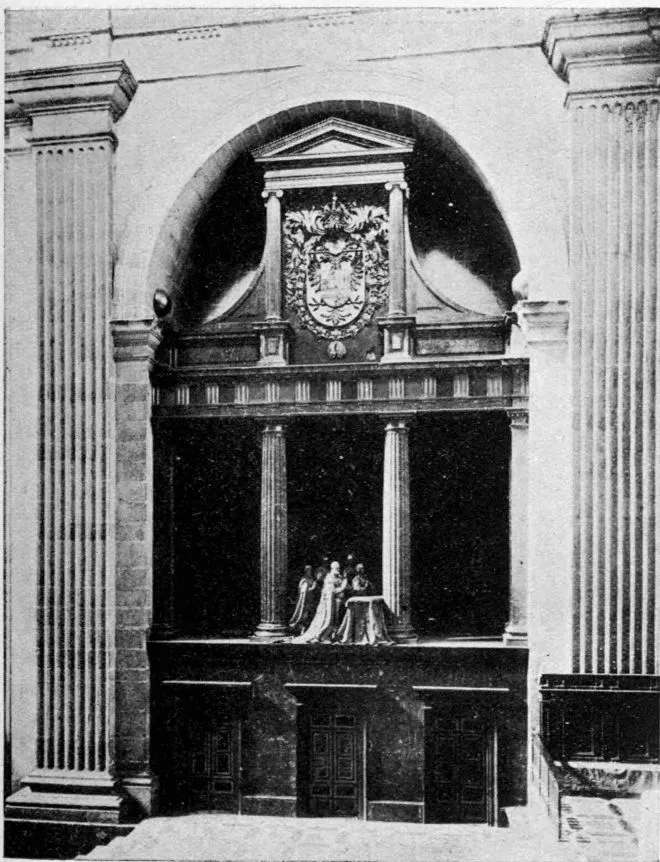
The sceptical foreigner will probably be more interested by the statues
above the oratorios or royal tribunes surrounding the altar. We see
Charles V. with his wife, daughters and sisters, Philip II. with all his
wives, except Mary Tudor, and his son, the miserable Infante Carlos. It
was not altogether a happy idea to represent a Christian prince attended
at the same time by his three wives. All these statues are faithful
portraits. The oratorio on the Epistle side adjoins the bare, narrow
chamber in which the devout king breathed his last, quitting without
regret a world with which he had no sympathy and in which he moved as a
melancholy exile.
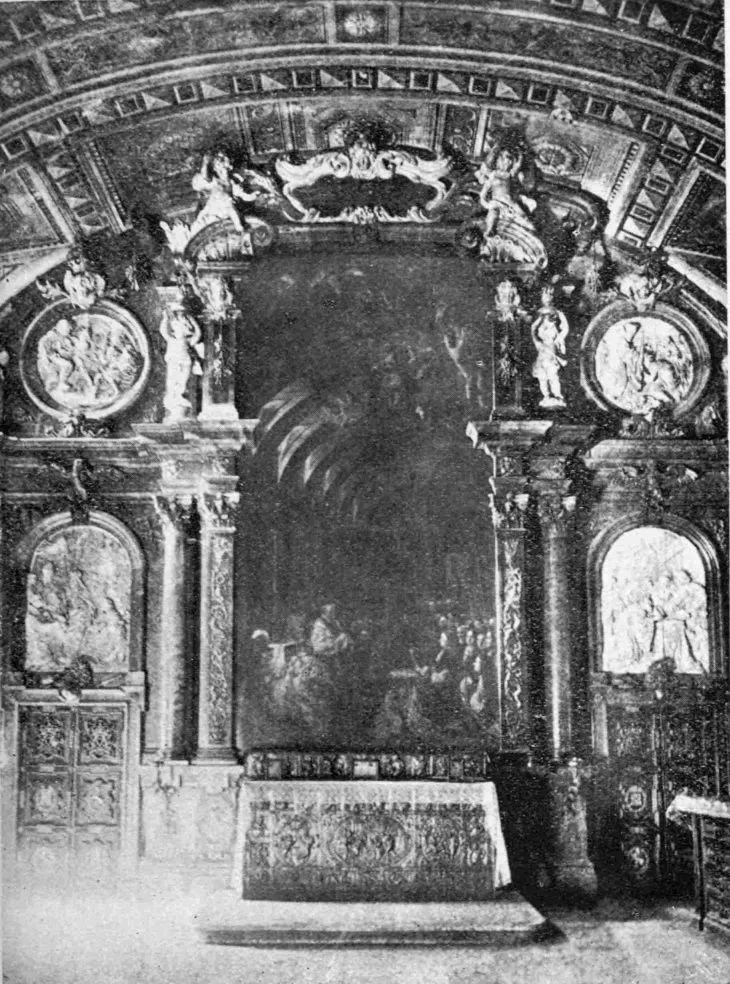
The church contains forty-eight side chapels and altars, adorned by the
paintings of Coello, Navarrete, and others of less note. The best
pictures are to be seen in the Sacristia. Here there are several works
of Titian, Tintoretto, El Greco, Zurbaran, and Ribera. The most
interesting canvas is the “Santa Forma” by Claudio Coello. The heads are
portraits of Charles II. and his ministers. The incident depicted is the
ceremony of the Veneration of the Sacred Wafer, which being trodden upon
and defiled by Protestants at Gorinchem in Holland, is said to have
exuded blood. It is preserved behind the picture and exhibited twice a
year.
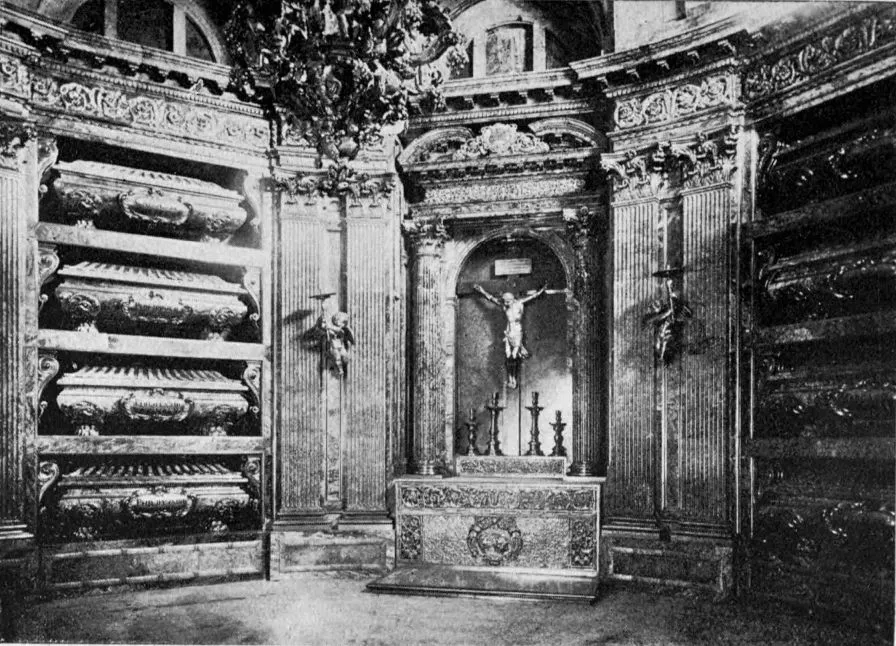
Immediately under the high altar is the Pantheon, the last resting-place
of the kings and queens of Spain. It is an octagonal chamber, lined with
precious marbles, which also in the dreadfully sensible presence of
death, seem to be decaying. No such rich chamber was desired by Philip.
It dates from 1554.
Twenty-six marble urns placed in niches round the chamber contain all
that was mortal of the monarchs of Spain and their consorts from
Charles V. to Alfonso XII., Philip V. and Ferdinand VI. excepted. There
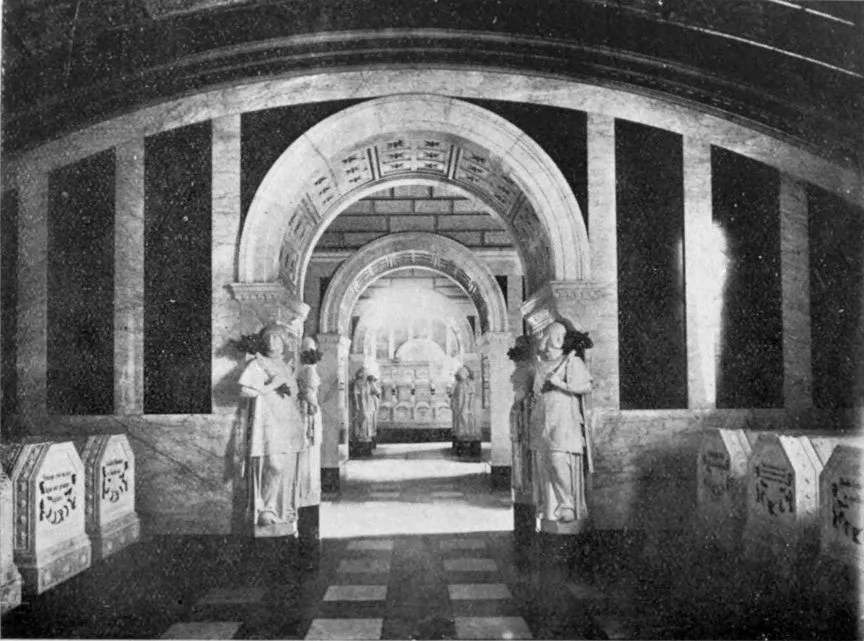
are tombs, too, awaiting the living. Ascending the steps we pass the
sealed door of the Pudridero, where the bodies are kept five years
before being placed in the Pantheon, and may visit the burial chambers
reserved to the Infantes and Infantas. Several of the vaults are still
empty. They are in purer, colder style than the heavier Pantheon of the
kings. As one ascends to the living world from these awful chambers, the
question suggests itself, what is the object of it all? The Pyramids of
Nile ought to have convinced man once for all of the hopelessness of any
effort to preserve his body unprofaned and solemnly housed through all
the years. No matter how great the dynasty, how strong the tomb, the day
must come when the jealously and reverently guarded ashes will form the
prey of some ghoulish invader. With Rameses exposed to the gaze of
wondering Cockneys, with Alexander’s tomb an object of curiosity to
tourists in the museum at Stamboul, with the tombs of the kings of Judah
explored on allfours by Cook’s trippers, how can one hope for an eternal
immunity from profanation for the Invalides, for Westminster, for the
Escorial? Kings ought to have learnt the lesson that in the pages of
history alone can they look for an earthly immortality.
The convent occupies the southern part of the building. It was
inhabited, as I have said, by the religious known as the Hermits of St
Jerome or Hieronymites, an Order established or recognised by Pope
Gregory XI. in 1373. If it still exists it counts very few members and
has played an insignificant part in ecclesiastical history compared with
the spiritual descendants of Benedict, Dominic, Francis, Bruno, and
Ignatius. For some reason or other Charles V. held the Hermits in
particular esteem, and it was this predilection that determined his son
to offer them the new monastery in 1561. The Order is likely to be best
remembered by the ecclesiologist for the peculiar plan of its
churches—cruciform, with diagonal lines extending from the ends of the
cross-piece to the head of the upright limb.
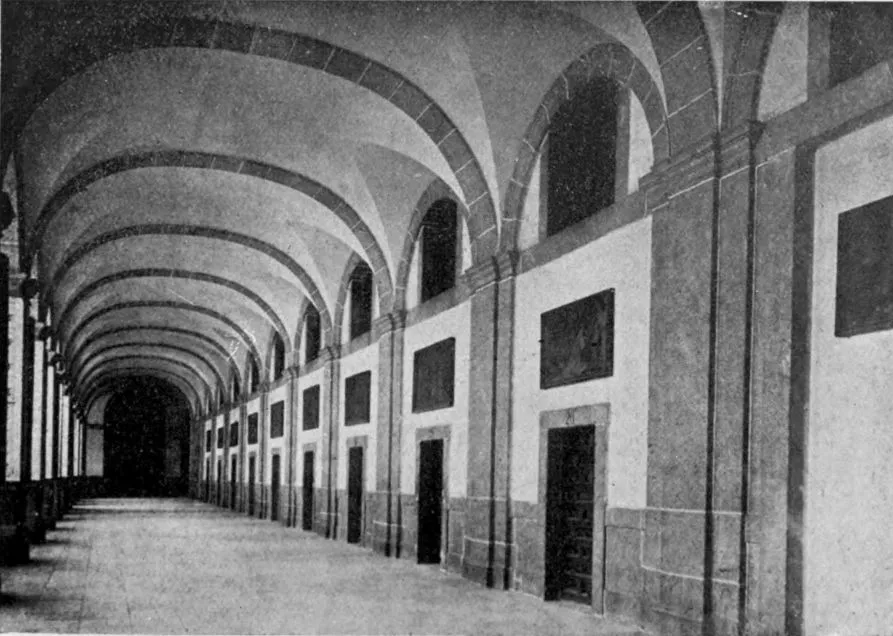
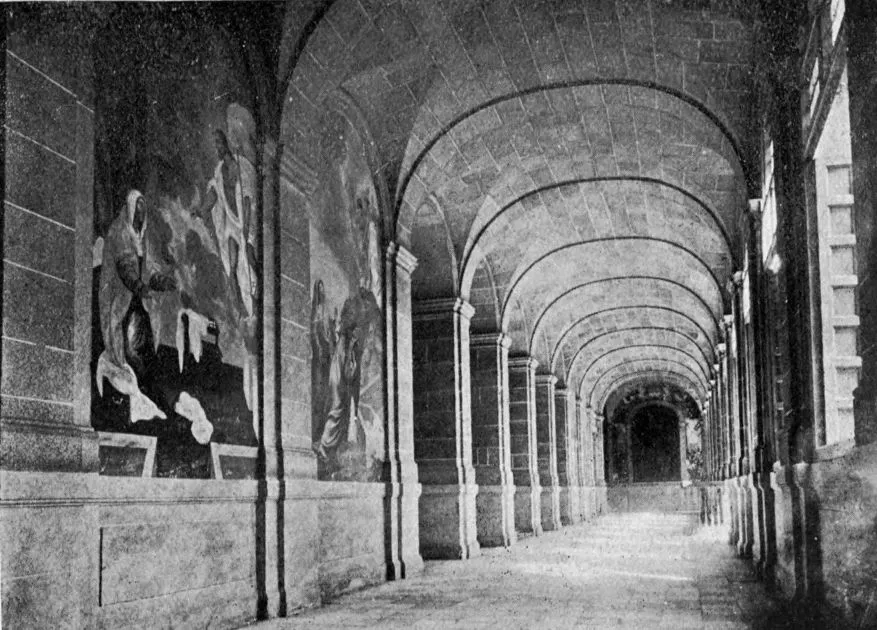
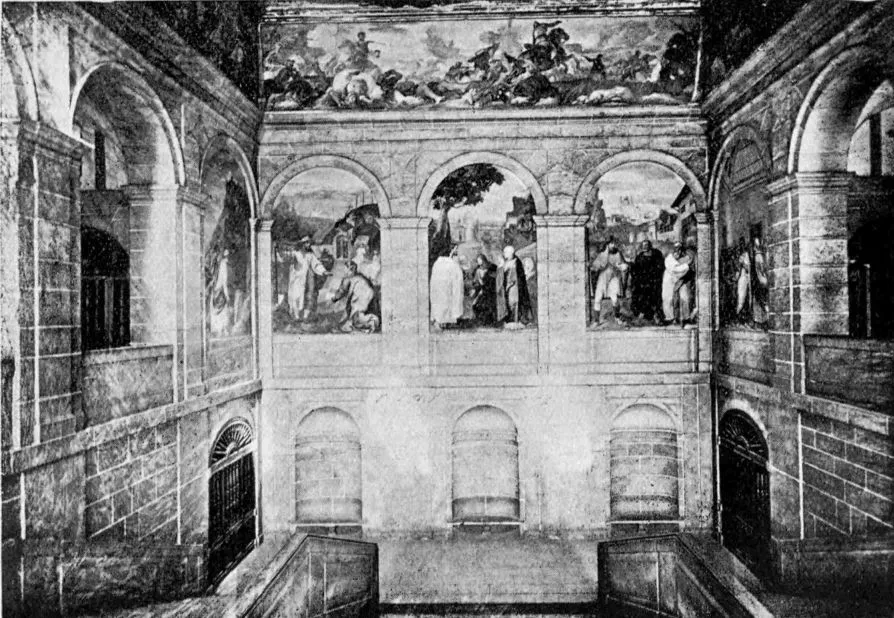
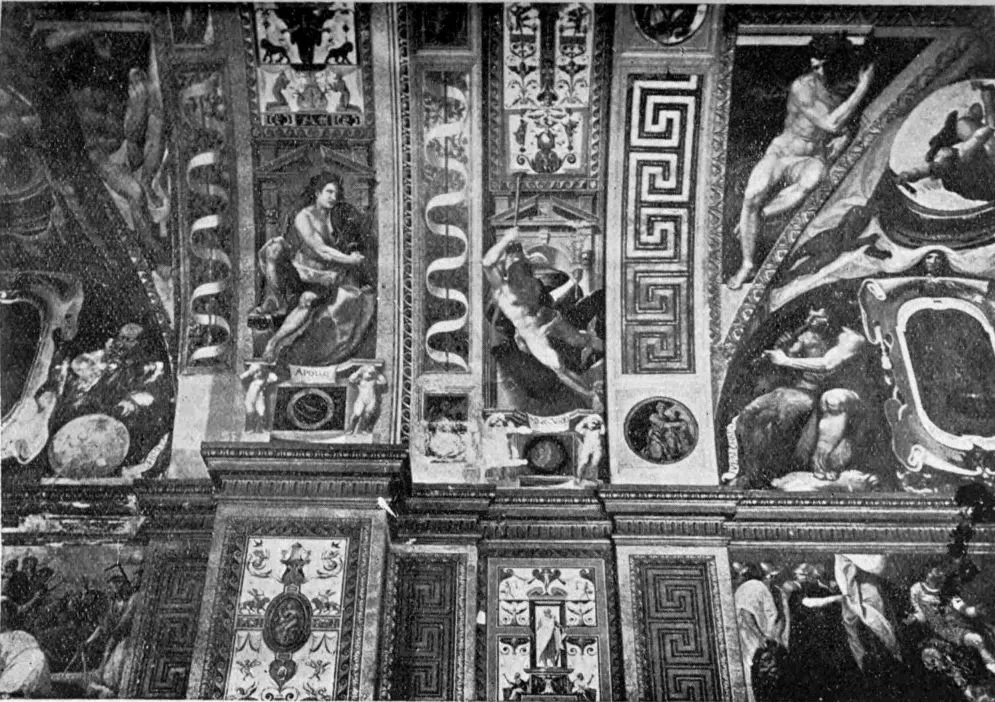
The granite cloisters in the Doric style are, or rather were, decorated
with frescoes after designs of Tibaldi, now shockingly “restored.” In
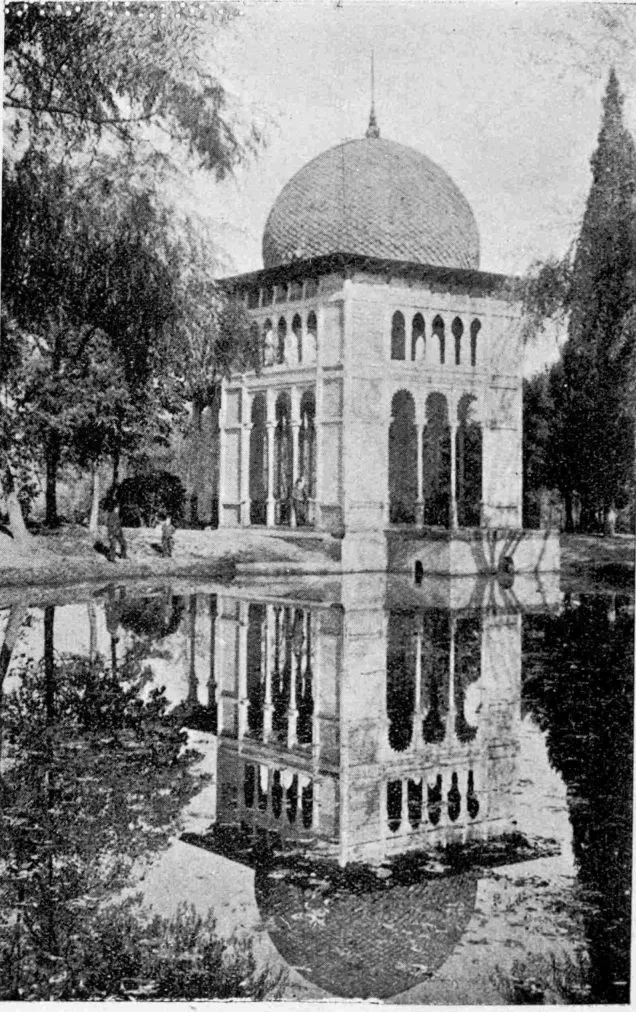
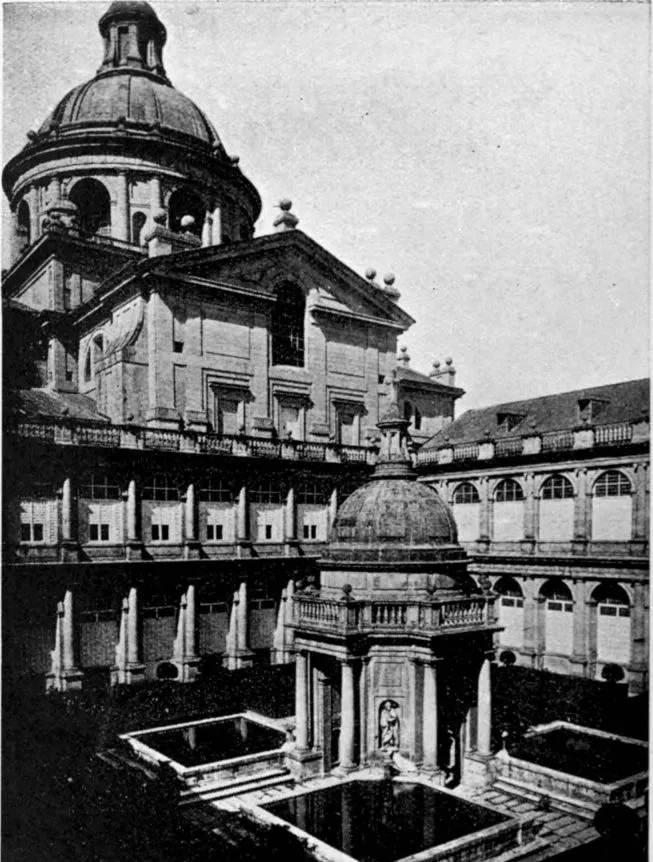
the centre of the Patio de los Evangelistas is a little octagonal
temple, covering a fountain. It is one of Herrera’s best works, in which
granite and marble have been combined with admirable skill. The white
statues of the Evangelists at the corners were sculptured by Monegro;
the appropriate inscriptions are in Latin, Greek, Hebrew and Syriac.
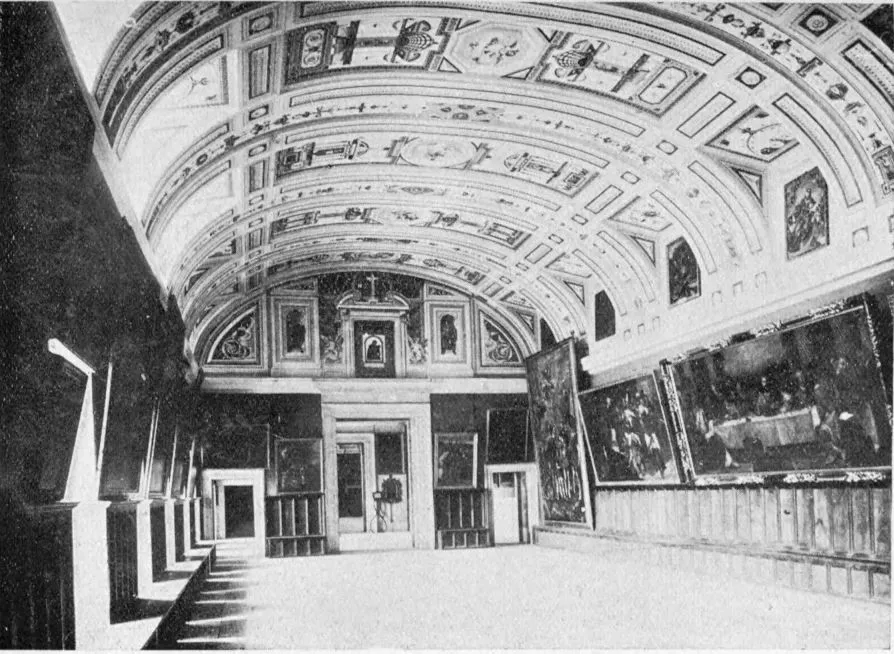
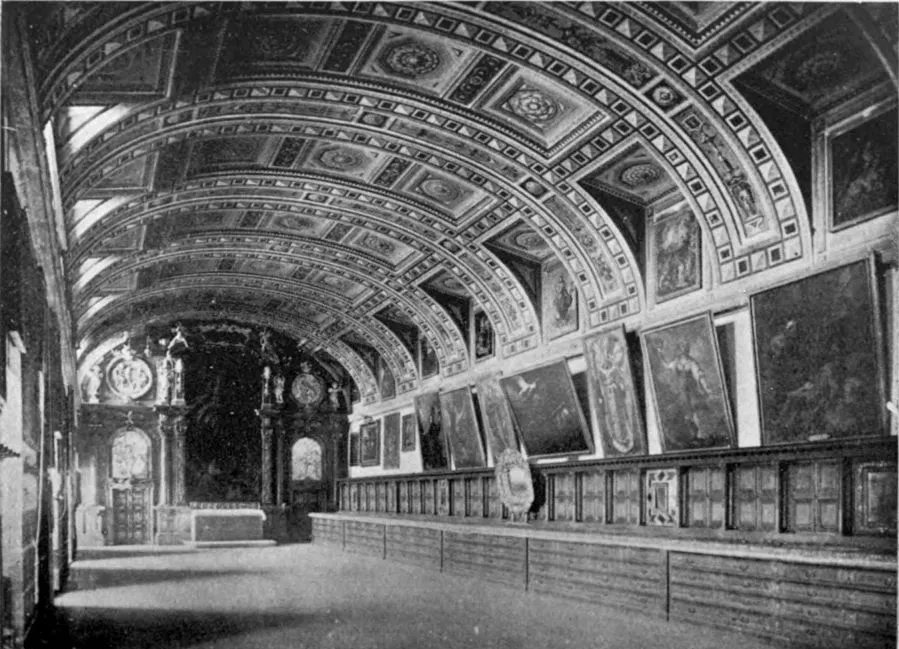
The three Chapter Rooms of the monastery form a picture gallery of high
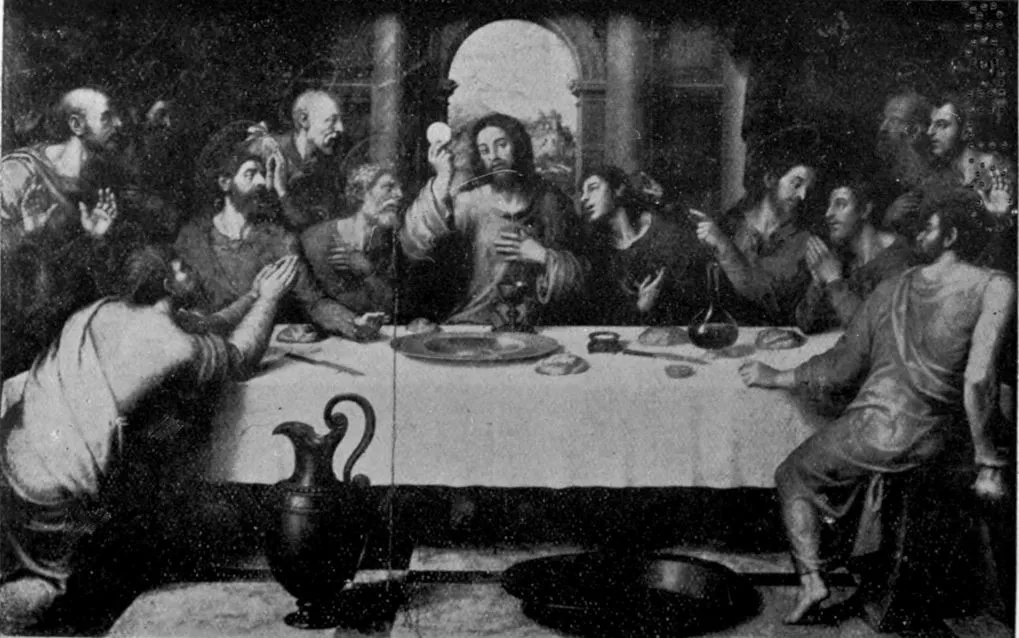
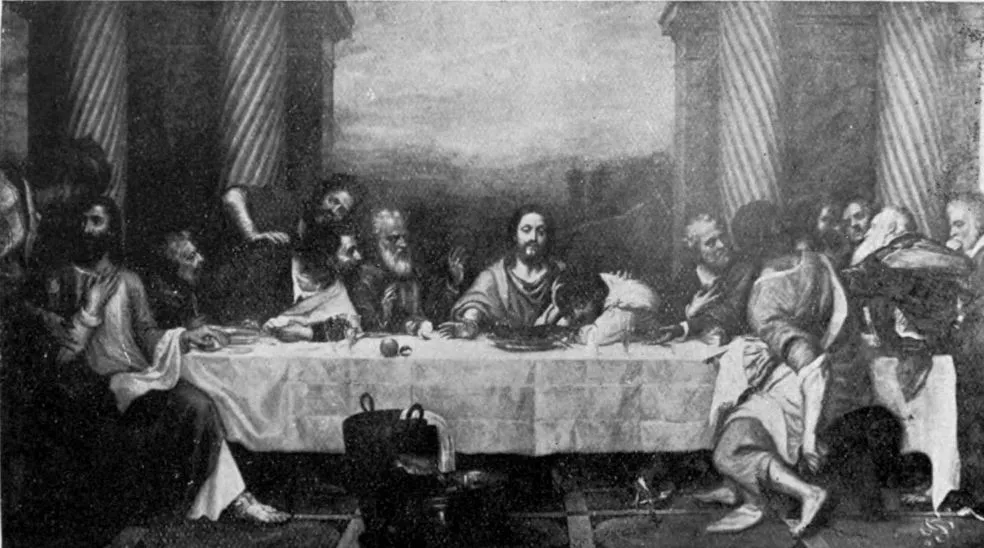
interest. Titian is represented by a Last Supper—sadly restored;
Tintoretto, by “Christ washing His Disciples’ feet,” “Christ at the
house of the Pharisee,” and “Queen Esther”—all bought from the
Collection of our Charles I. by the Spanish Ambassador—and by an “Ecce
Homo,” “Entombment,” “Adoration of the Shepherds,” and “Annunciation”;
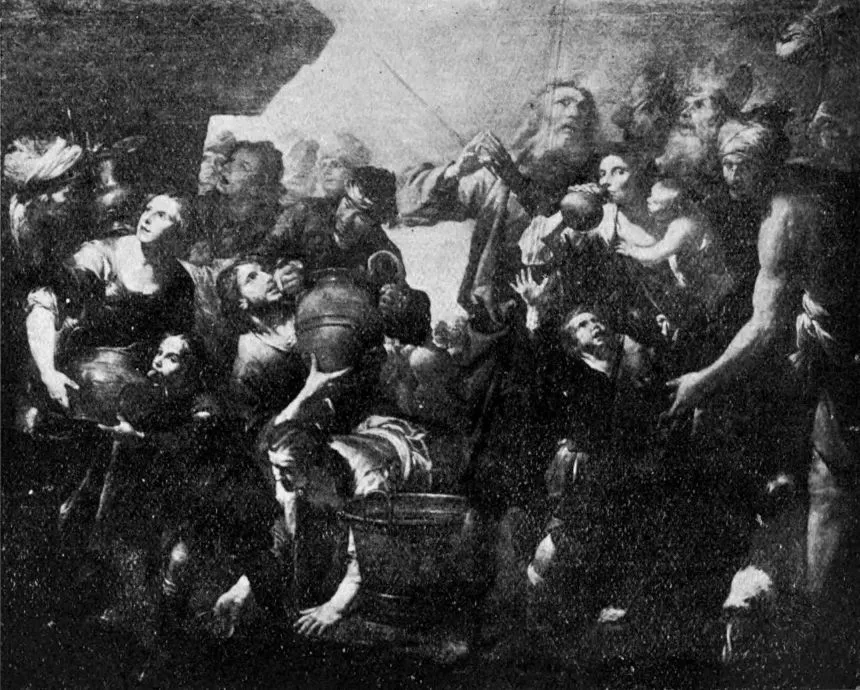
Velazquez, by “The sons of Jacob”—perhaps the best work in the
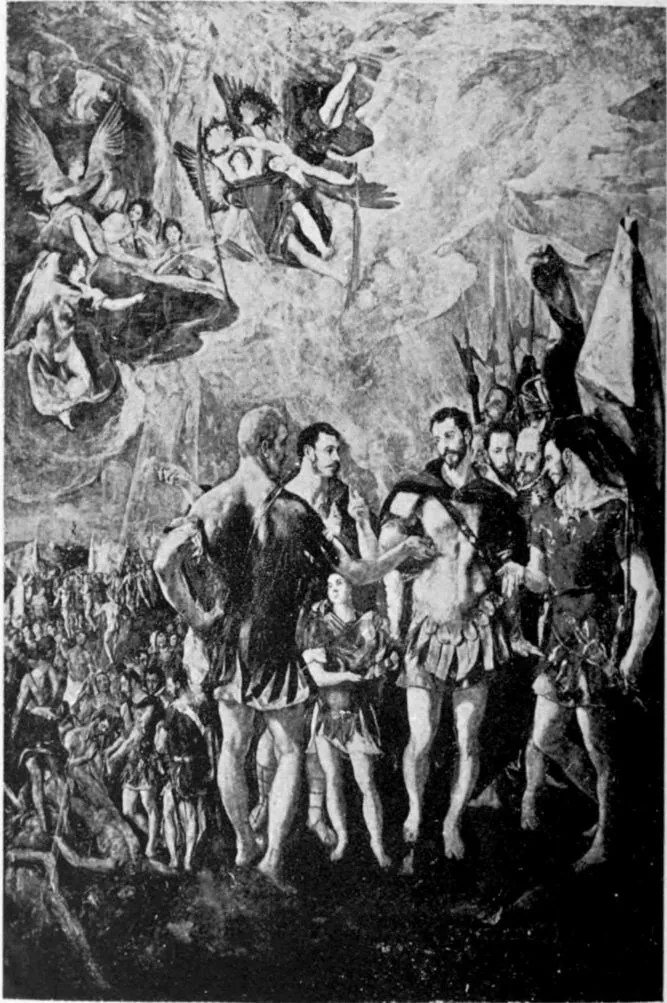
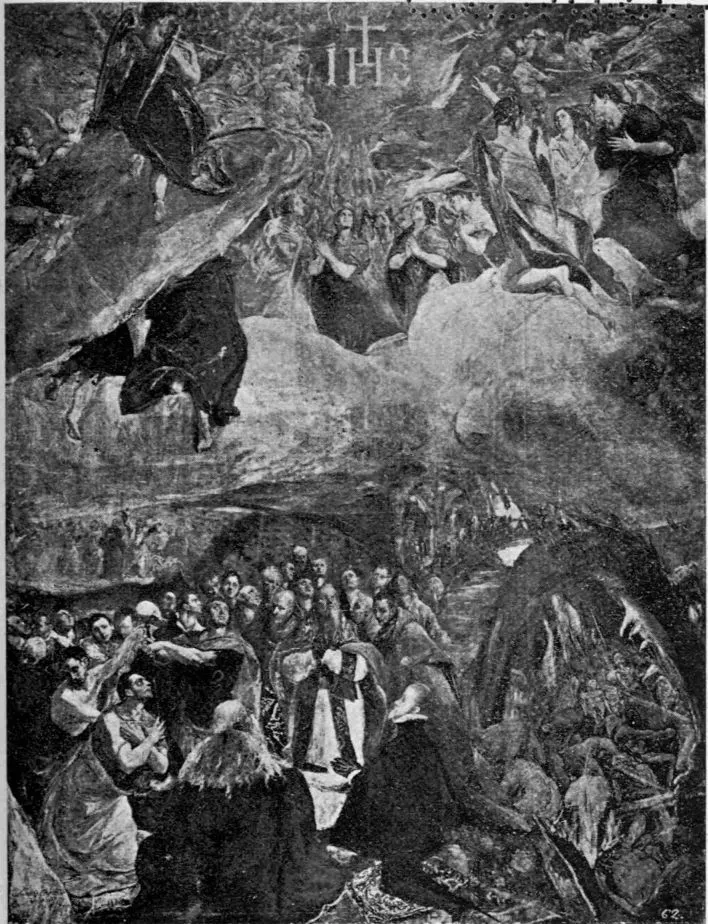
collection; El Mudo, by the “Martyrdom of St James”; El Greco, by the
“Dream of Philip II. (Glory, Purgatory, and Hell)”; Ribera, by several
canvasses. There is a good “Martyrdom of St. Lawrence” by Titian in the
old chapel, and a few good pictures, especially by El Mudo, in the upper
cloisters, reached by a grand staircase. One of the halls is called the
Aula de Moral, being reserved for conferences on points of morality.
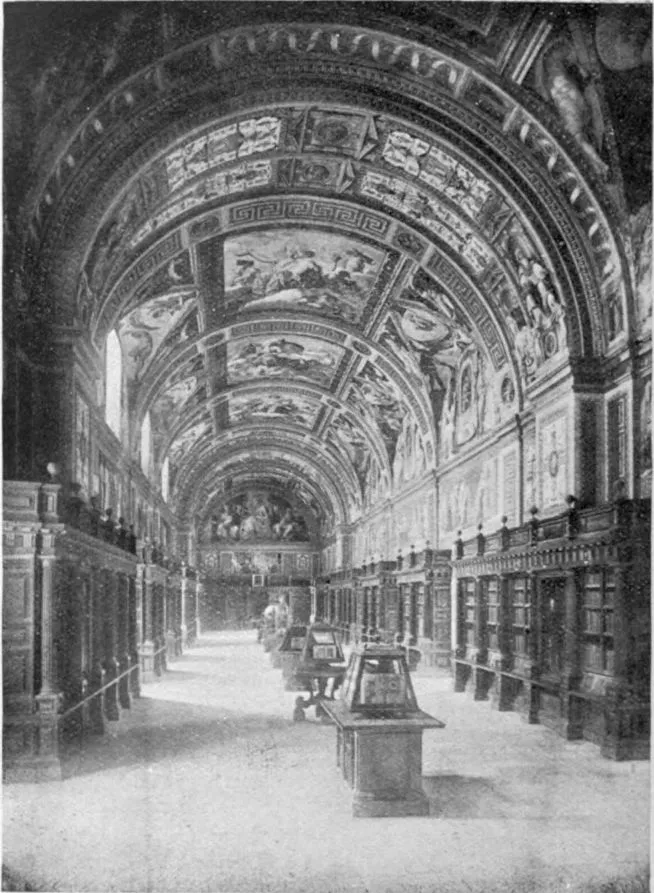
The Library is decidedly of more interest than the Convent. The books,
oddly enough, are arranged with the faces, instead of the backs,
outwards. The cases of ebony and cedar were designed by Herrera and
harmonise well with the marble pavement and tables. There are several
portraits of sovereigns here, and in cases are arranged some of the
rarer books, such as the prayer-books of Charles V., Isabel the
Catholic, Philip III., etc., a Virgil of the fifteenth century, and an
eleventh century Codex, with the four Gospels written in letters of
gold. This priceless work was begun by order of Conrad II., Emperor of
the Romans. Eighteen pounds’ weight of gold is said to have been
employed in the illumination.
The beginning of the collection was Philip’s own library, of 4000
volumes, to which was added in 1614 the valuable library of the Sultan
of Morocco. It has of course been increased by other collections from
time to time. The Arabic MSS., though not as numerous as might be
expected, are extremely valuable. Gayangos, that patient Spanish
Orientalist, I am informed, never had the opportunity of inspecting
them.
The palace occupies the northern side of the huge edifice. It forms the
least meritorious part of Herrera’s design, and was not improved by the
alterations effected by order of Charles IV. The halls are dull, dreary,
and altogether in the style of the eighteenth century—a sufficient
condemnation. Those were days when every monarch wanted a Versailles:
we see the same effort at imitation at Caserta, at the Superga, at
Wilhelmshöhe and Philippsruhe. There is, of course, a Hall of Battles,
celebrating with the exception of the pictures of the fight at St
Quentin, Lepanto, and Higueruela, victories over the Dutch and Flemings.
National self-glorification may be carried too far, but in England we
are too forgetful of our glorious past. We do not dream of adorning our
palaces with pictures of Crecy, Poitiers, Agincourt, Blenheim,
Trafalgar, and Waterloo. You may search England in vain for monuments to
William the Conqueror, the founder of the monarchy, to Edward, our great
justiciar, to the Black Prince, to de Montfort or to Langton, to whom we
owe our constitutional liberties. One unacquainted with our history
might suppose we sprang into existence a bare century ago. In a
generally conservative country like ours, this complete detachment from
the past appears strangely contradictory.
This vast, empty palace contains little of interest except the two rooms
inhabited by Philip. Within them all is austerity and simplicity—as
befitted a king who was a monk at heart. The walls are whitewashed, the
flooring of brick. The footstools remind us of the gout from which the
sad king suffered—certainly not from over-indulgence in the good things
of life. In this room he worked from four in the morning till midnight,
his labours interrupted only by his fervent devotions. The adjoining
chamber is the oratorio, of which I have already spoken, where he could
assist at the celebration of Mass. Here, at the end of a two months’
illness, patiently borne, he died, grasping the very crucifix with which
his father had been consoled during his last moments. His death, at any
rate, was happier and more dignified than that of his victorious rival,
Elizabeth, writhing out her life at Richmond in an ecstasy of remorse
and chagrin.
Adjacent to the Escorial are several blocks of buildings, such as the
Campaña, containing the domestic offices, and the Casa del Principe, the
Petit Trianon of the palace, surrounded by gardens. In these may be seen
the cross marking the spot where the baker’s boy was burnt at the stake
in Philip’s reign. A queer site for a palace dedicated to the “menus
plaisirs”!
The Escorial has been the scene of some important historical events,
notably of the arrest and imprisonment of the Infante Ferdinand, on the
charge of high treason against his father in 1807. He was afterwards
Ferdinand VII. The prince was confined in the Prior’s cell and managed
to communicate with his friends by the aid of a fishing line. Charles
IV. had no option but to pardon his son, whose intrigues resulted
indirectly in the spoliation of the palace which had been his prison, by
the French a year or two later.
Not without relief will the visitor leave these interminable halls and
corridors over which broods the presence of death, and seek the little
Silla del Rey, or King’s Chair, a mile and a half from the pile. It is a
natural seat, formed of granite rocks, where Philip used to watch the
progress of the building operations. It is worth visiting as affording
one of the pretty views to be obtained in the midst of a generally
uninviting district.
After a visit to the Escorial, the Palace of La Granja will seem what it
was intended to be—the house of life and gaiety. At any other time it
would seem a rather dull and depressing imitation of Versailles. It is
called the Grange or Farm and appropriately enough is in the midst of
charming scenery. Trees afford a shade not too often to be found in
barren, scorched Castile. And in the background the snowy Guadarrama
lift their heads above the pine forests. On the whole one does not
blame Philip V. for his choice of a royal domain, or wonder why the
present King’s father and mother spent much of their time here, soon
after their marriage. Yet at this height of 4000 feet above the sea, it
must be an Arctic spot at all seasons except summer. La Granja—or San
Ildefonso, to give it its official name—is the residence of the Court
in summer. If the Escorial expresses in stone the character of its
founder, the same cannot be said of this palace, for the fifth Philip
was of almost as gloomy a temper as the first. He spent very little time
at the pleasaunce he had decreed, for he died a few months after its
completion in 1746. Here in 1724 he abdicated the throne in favour of
his son, Don Luis, on whose death eight months later he was constrained
to resume the royal authority.
The palace itself is not a very interesting structure. The principal
façade dates from 1737, and is buttressed by columns and pilasters,
supporting an entablature and balustrade. Over the middle rises an attic
story, also surmounted with a balustrade, supported by four Caryatides
representing the seasons, between them being the coat-of-arms of Spain
and the Bourbons. This front was designed by Juvarra, and is the most
tasteful portion of the building, to which additions have been made at
different epochs with little regard to harmony or good taste. The
interior, however, reflects the taste of the present august occupants.
Much of the heavy rubbish accumulated in preceding centuries has been
relegated to the lumber room, and the vast halls and corridors have been
refurnished throughout. Rich tapestries cover the walls, and the palace
still contains upwards of 300 pictures, though the finest works of art
have gone to fill the galleries of Madrid. The chapel is only worth
visiting for the tombs of Philip V. and his Italian Queen.
But if the Palace of San Ildefonso hardly rewards the visitor for his
journey from Madrid, the park is a thing of beauty and a joy at least
during a long day. Here flourish the elm, the lime, the pine, and the
chestnut, forming delicious woods. In the ornamental gardens exists the
very finest system of fountains the world has seen. Philip V. far
surpassed the achievements of the Roi Soleil in this direction. The
first visit is naturally to the lake, a beautiful expanse of water on
the bank of which is situated the important piscicultural establishment,
founded in 1867 by the King-Consort Francisco.
The gardens are filled with statues of mythological characters, grouped
with great skill among the foliage. Those most admired are the Lucretia,
Daphne, Phœbus, and America. Especially beautiful is the group of Diana
and her nymphs surprised by Actæon, in the centre of a magnificent
fountain. Contemplating the play of the waters Philip V. is said to have
exclaimed “This has amused me three minutes and cost me three millions.”
A still finer and taller column of water issues from the Trumpet of
Fame, breaking in a shower of crystalline drops 130 feet above the water
level; while miniature rainbows interlace and form an aureole round the
head of the figure. In the centre of another lake, Latona is seen,
embracing her children, while her enemies, transformed into frogs, vomit
forth jets of water in impotent rage, which cross and recross, forming
arches in bewildering variety.
There is nothing equal to this to be seen elsewhere. The achievements of
the immortal Mr Brock with fire have been eclipsed by Renato Firmin with
the conflicting element. Spain can boast the finest display of
hydrotechnics in the world.
Before we leave this favourite home of His Catholic Majesty it is worth
while to recall a few of the events of which it has been the theatre.
On the 17th September 1832, Ferdinand VII. lay here dying. All those
round him—his family, his ministers, even the garrison—were devoted to
the interests of Don Carlos, and even his confessor ceased not to
importune the dying king to revoke the Pragmatic Sanction and to decree
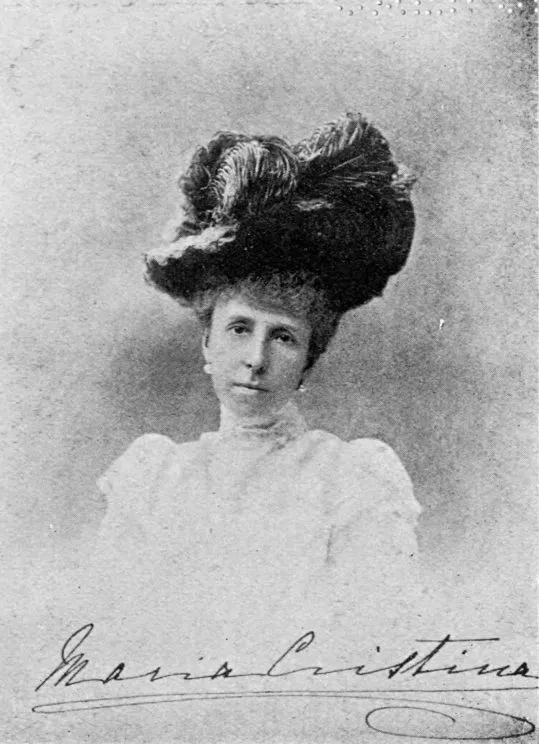
the exclusion of his own infant daughter from the throne. Queen
Cristina, in the face of such pressure, remained inactive and
despairing. With his hand guided, it is said, by the Bishop of Leon,
Ferdinand at last traced his feeble signature to the decree which
disinherited his child. The triumph of the Carlist faction seemed
complete. Suddenly at the doors of the palace appeared the Queen’s
sister, Doña Luisa Carlota, a woman of such spirit that no one
there—minister or officer or prelate—dared bar her way to the King’s
bedside. The court presently resounded with her shrill denunciations of
the Queen’s want of courage, of the King’s weakness. She summoned to her
presence the trembling minister, Calomarde, and when he offered his
hand, struck him on the face. “White hands do not wound” stammered the
statesman and fled from the presence of the royal mænad. Before such a
tempest of righteous indignation, intriguers and schemers retired. Force
at the last can always break through the meshes of treachery. Many of
those who witnessed the memorable scene must have thought of the furious
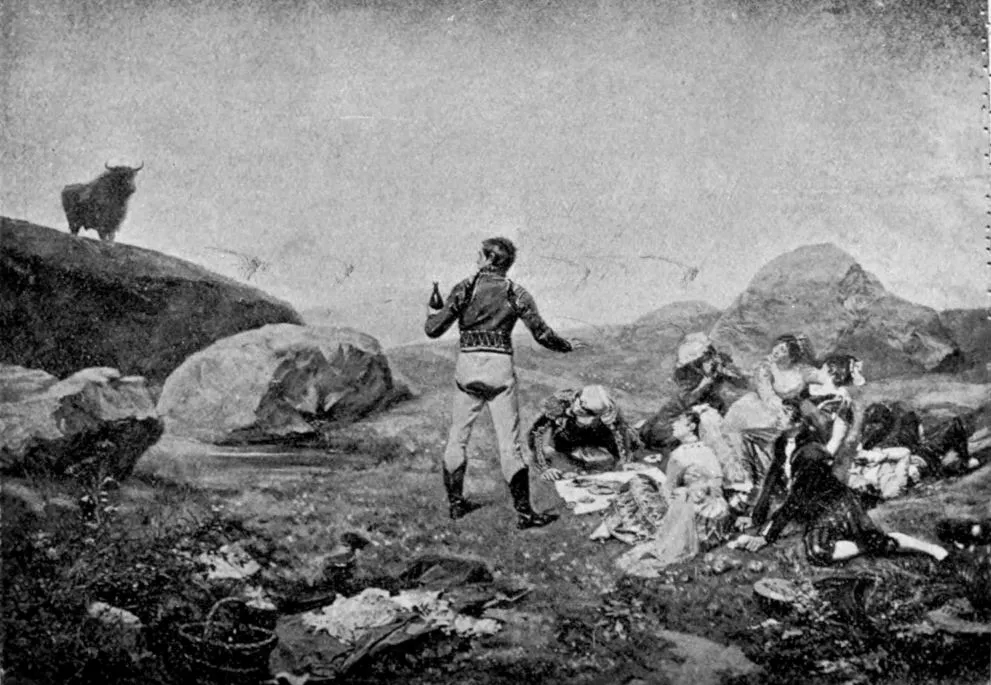
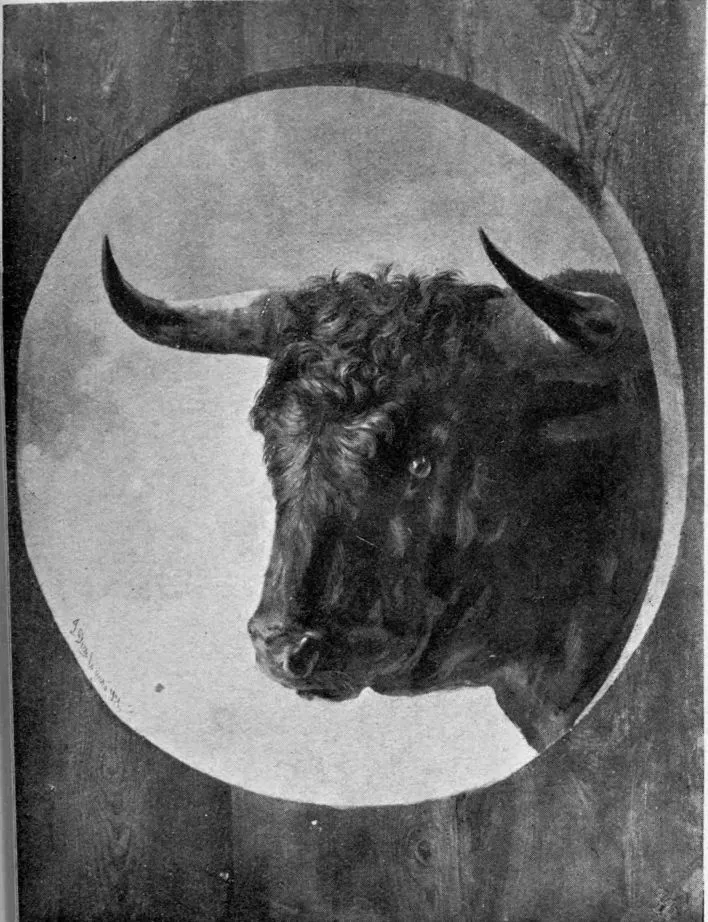
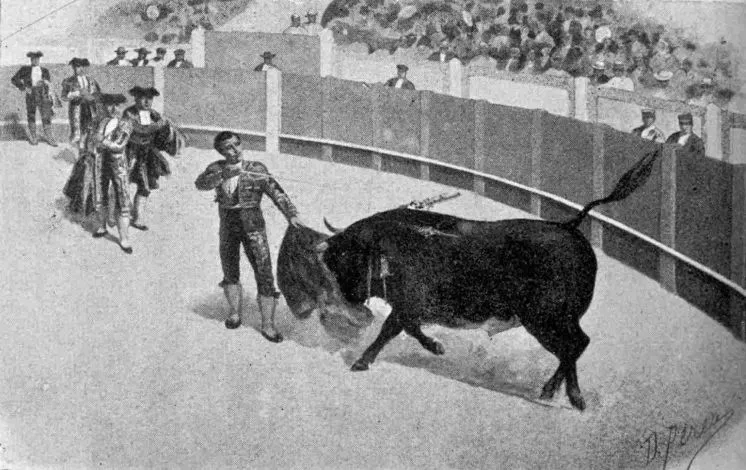
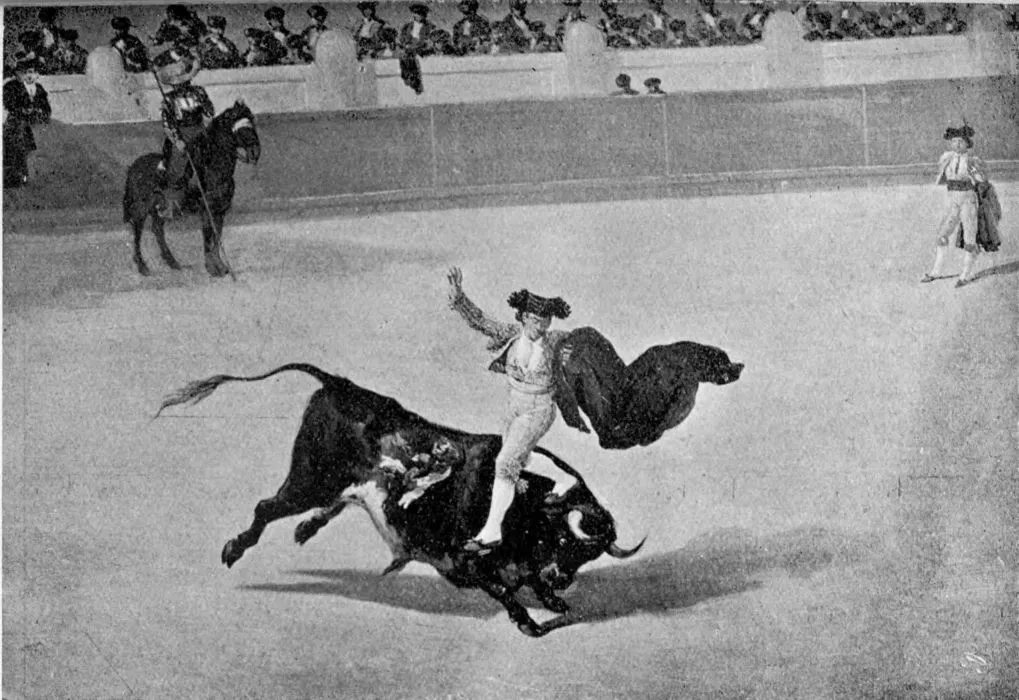
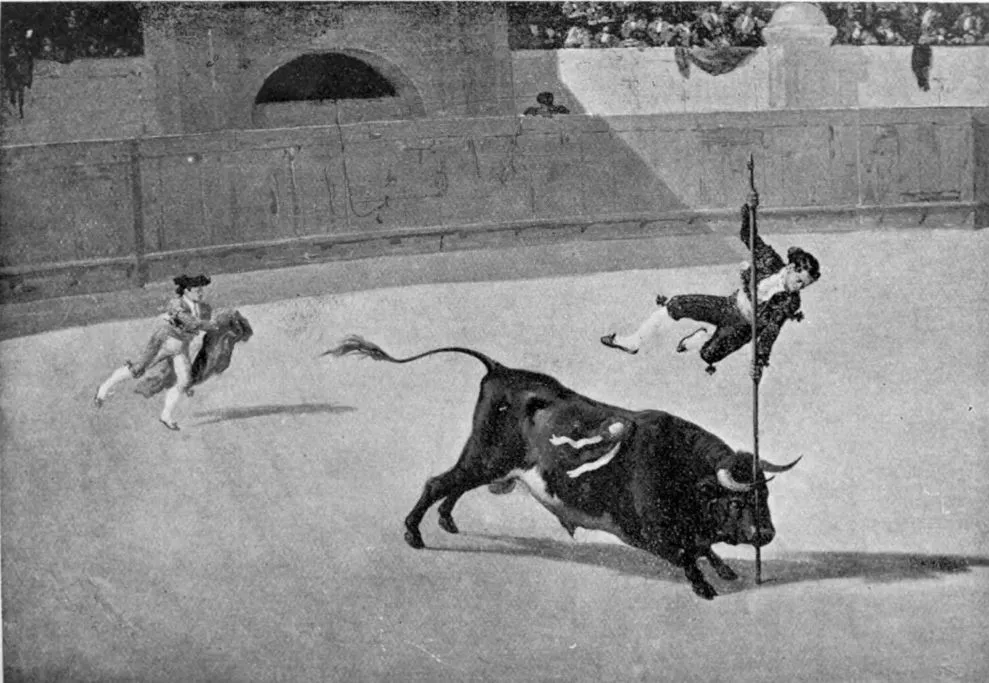
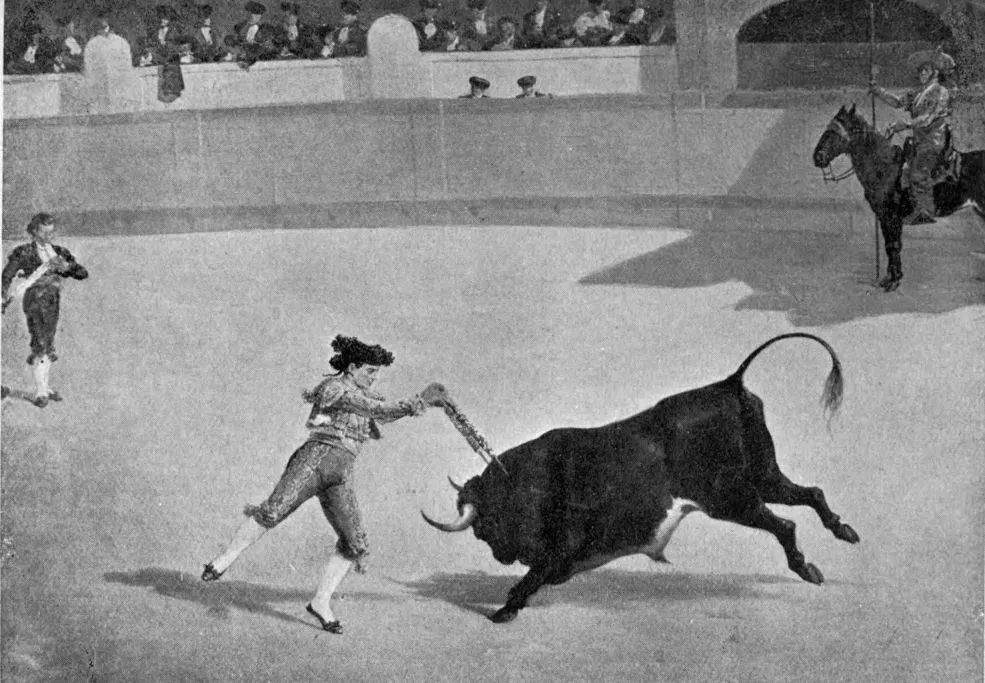
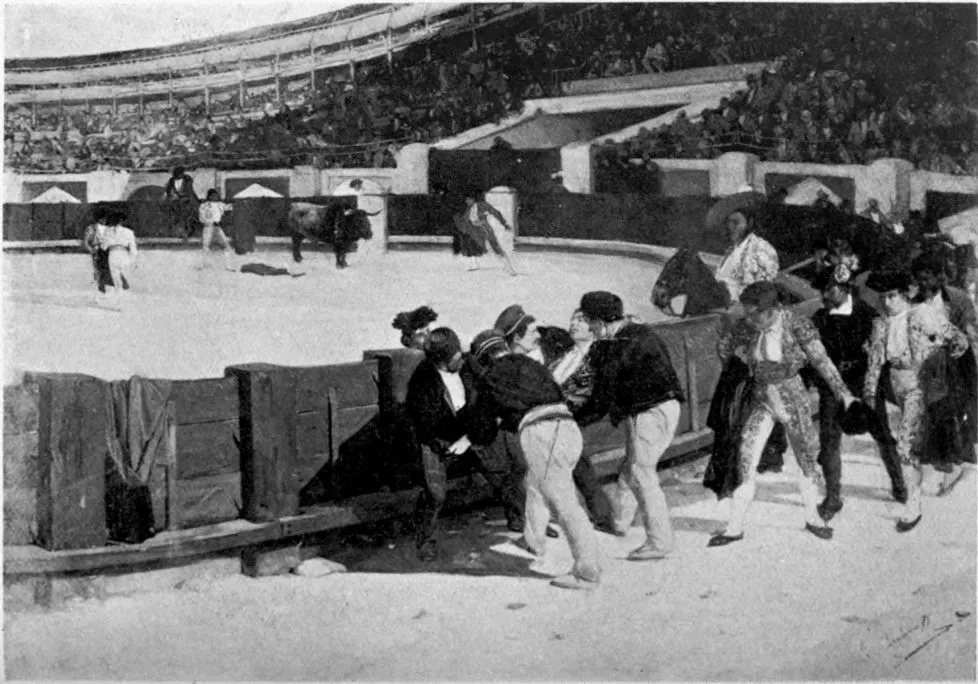
bull at Madrid which bore down before it the most dexterous of
banderilleros, the bravest of espadas, and breaking over the barriers,
dispersed a whole population. Before nightfall the decree was revoked
and the succession of the Infanta Isabella confirmed anew by royal
decree. Bravo Luisa Carlota!
Four years later, Cristina, now regent, had to face alone and
unprotected, a mob headed by the palace guard, which broke into her
room, loudly demanding the re-establishment of the Constitution of 1812.
The Queen, unmoved and tactful, asked the deputation if they knew what
the constitution was. According to the Honourable John Hay (see his
“Castilian Days”) they replied, “No, but we hear it is a good thing, and
will make salt cheaper.” The story like most good ones, is certainly
untrue, and may be classed with the legend that in 1893 when there was
an agitation in Belgium for an extended franchise, some peasant women
presented themselves at the Town Hall with buckets to carry away their
share of the “Suffrage!”
The only other royal residence which can form the goal of an excursion
from Madrid is El Pardo, a shooting-box on a large scale, six miles
from the capital. The hunting seat built here by Enrique III. was
replaced by a palace in 1543. The building is very simple, and contains
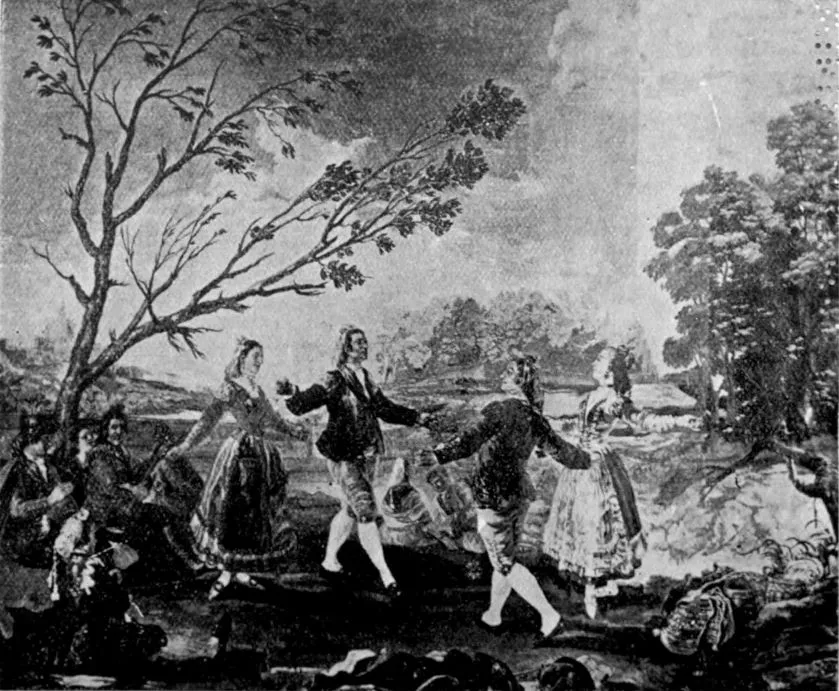
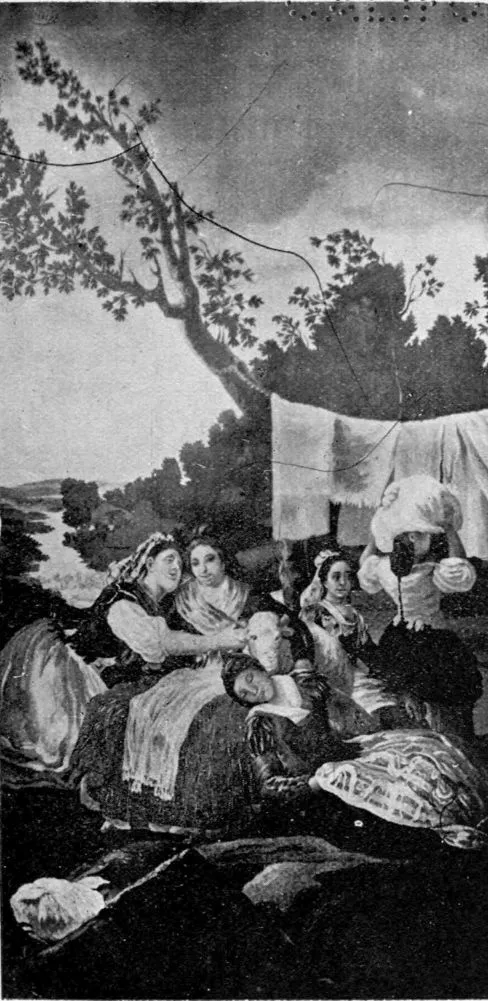
but a single court. The walls in the interior are hung with tapestries
after the designs of Goya (made in Madrid) and Teniers (made at Les
Gobelins). Students of Spanish art should visit this palace for a sight
of the best of the very few remaining works of Gaspar Becerra—the
Legend of Perseus and Andromeda. The chapel contains a copy of Ribalta’s
altar-piece in Magdalen Chapel, Oxford. Over the staircase is a fine
equestrian portrait of Don John of Austria, attributed to Ribera. These
works of art having been inspected, there is little to detain you at El
Pardo. The shooting in the adjacent covers is excellent, but few of my
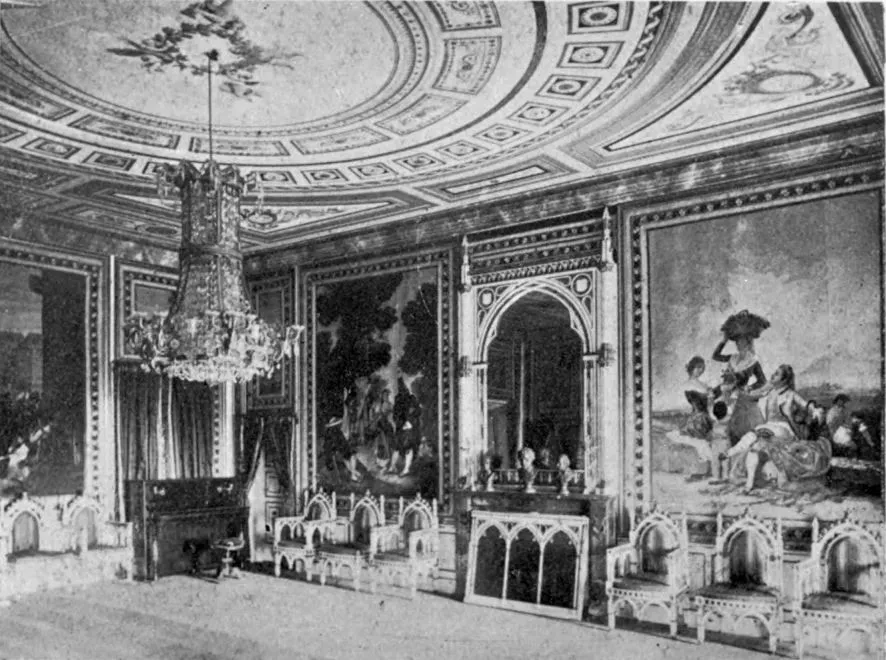
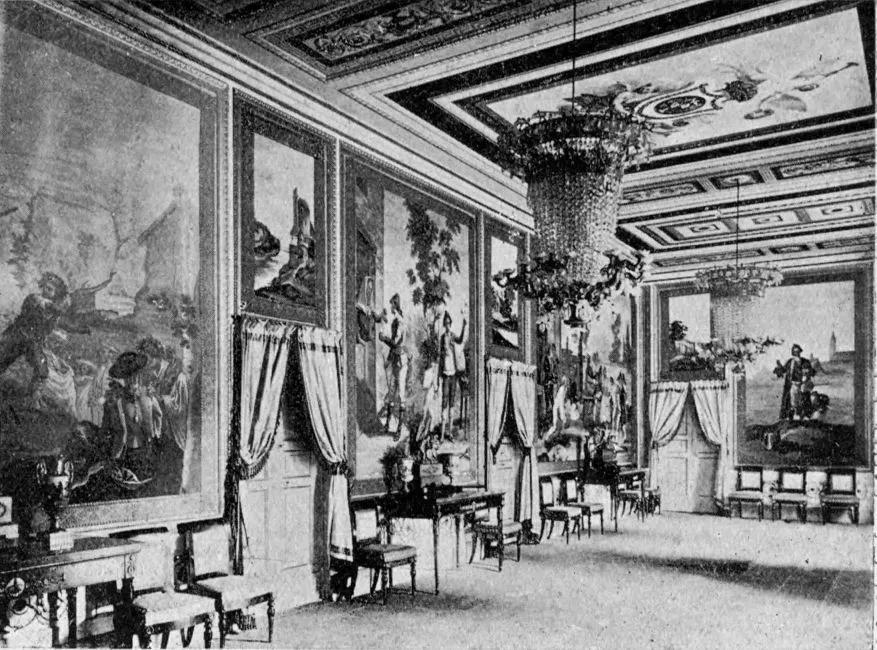
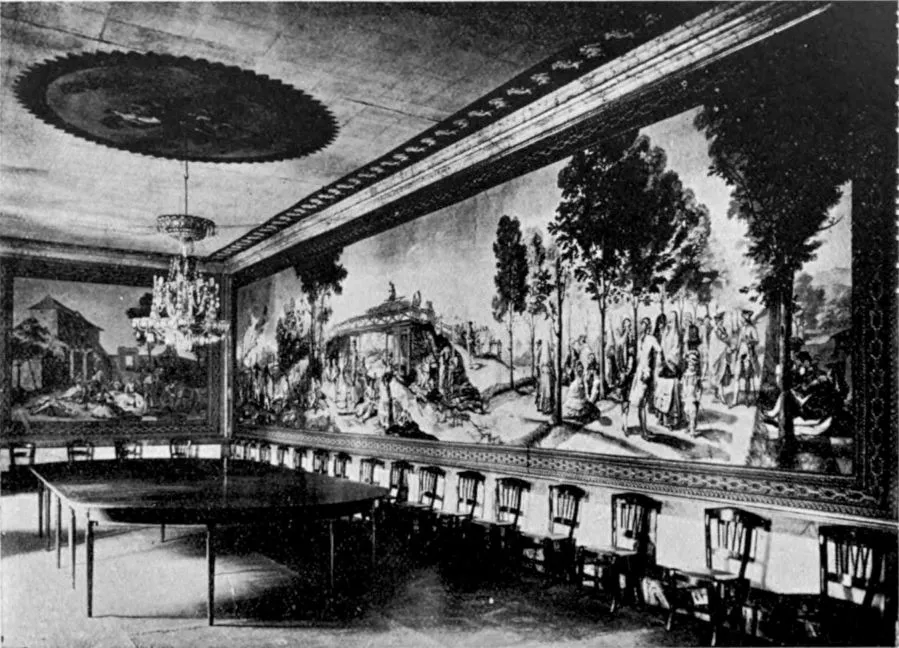
readers will have the time or opportunity to prove this for themselves.