NOWHERE is caste more noticeable than in a London audience. A little
board fence divides the ground-floor of a theatre into orchestra stalls
and a pit. It would cost you ten shillings less and your social position
to sit on the wrong side of this fence. It does not follow that sitting
on the right side of it assures your position. But it does give you an
uninterrupted view of the stage. No hats are worn, and that alone makes
it worth extra charge. There is, in most of the theatres, room for your
knees, and in some, additional room for the man who goes out between the
acts, and people who arrive after the curtain is up. A London audience
is brilliant. Everyone is in evening dress, and the audience is often
more entertaining than the play. This is especially true on a first
night. At such times the pit is watched most anxiously by the
management, as the success of the piece generally depends on their
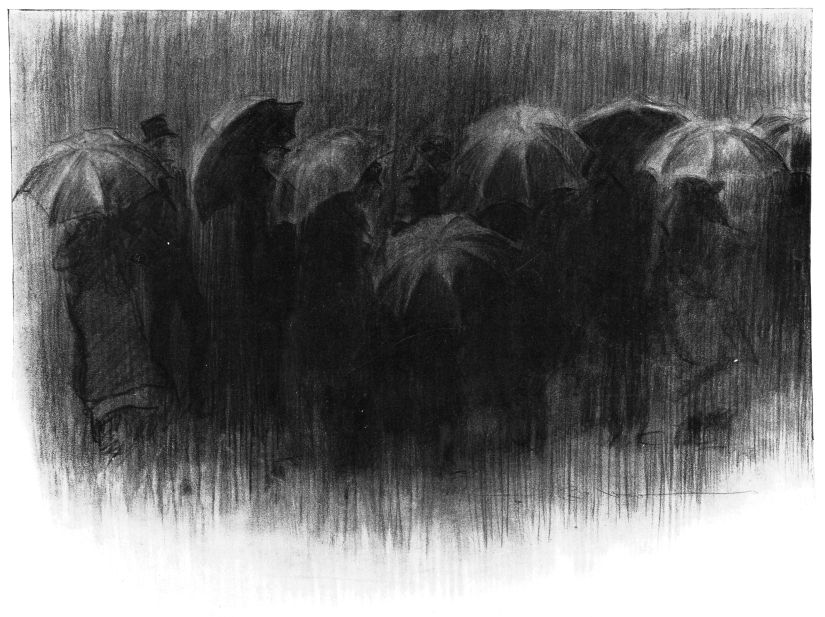
verdict. It has often occurred to me, when I have seen them on a stormy
night forming a line on the pavement outside the pit entrance, taking it
all seriously enough to stand there for hours before the doors were
opened, that by letting them inside the management might improve their
spirits, and they in their turn might be more gentle.
And it has also occurred to me that the management might further improve
the spirits of their audience by doing away with women ushers, and by
selling the programme at the same time they sell the seat; for it is
hardly fair to the first act of a play to make it overcome the
fretfulness caused by annoying attendants before it can hope to amuse.
But the second act is sure to have a fair start, and if the play is good
from there on, it will have no reason to complain of the audience.
An Englishman’s memory begins with a pantomime. A Drury Lane audience
easily explains this, as a large portion of it is composed of children.
This is just as it should be. The only mistake is that each year the
clown and pantaloon have less to do. Last winter they only appeared in
front of the drop curtain, and had difficulty in entertaining the
audience until the next scene had been set. It is strange that this
should happen among people who are naturally so true to old friends. In
the place of harlequin’s tricks they have the aërial ballets and
electrical effects, and altogether a performance that can be done just
as well at the Empire or the Alhambra. This is dangerous, for it might
in time change the character of a pantomime audience.
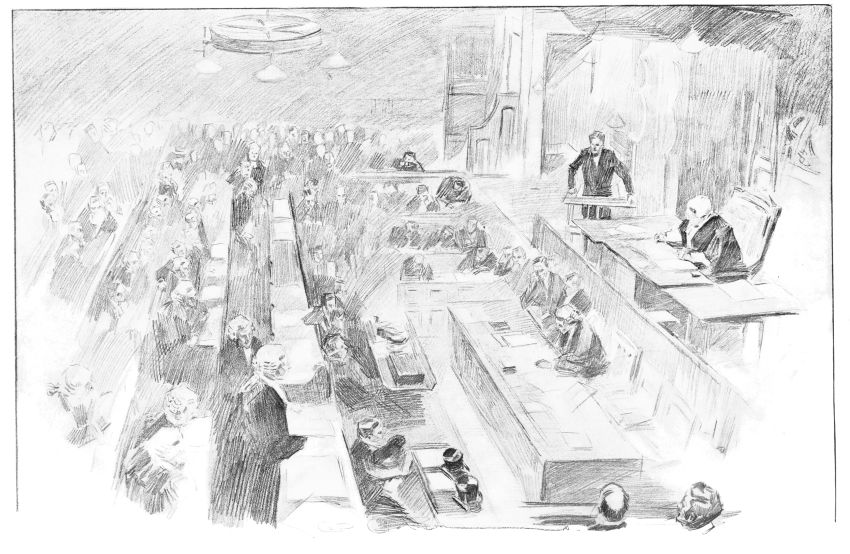
In the Lord Chief Justice’s Court
A fancy dress-ball in London is slow. The general orders are, “keep
moving along.” The man who manages the search-light, from one of the top
boxes, probably enjoys the ball the most. He certainly does more to help
it. The centre of interest is wherever he will have it. He can make a
dull costume bright, and a supper-party in one of the boxes proud; and
he can almost remove the gloom caused by the officials in black.
The greatest variety of expressions are to be seen in the audiences that
come together at the law courts. There is the never-changing face of the
judge, and the ever-changing face of the witness rocking from side to
side in his box, and there are the black-robed barristers with small
wigs and big fees, and pale law students crowding in at the doors and
filling the passage-ways; and in front of the long table that is covered
with papers and high hats sit those most interested in what is going
on—care-worn parents and women thickly veiled.
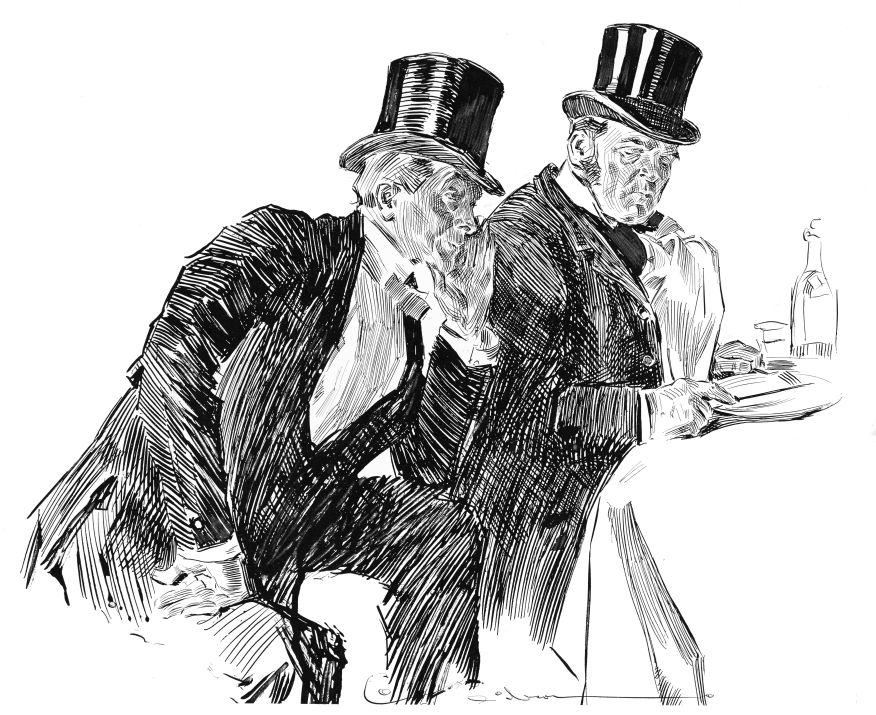
In the “Whispering Gallery”—A Small Loan
The most interesting place of amusement for men is the National Sporting
Club. Every Monday night during the winter the sports of London meet
there in the same building that Colonel Newcome and his son once left
because they objected to Captain Costigan’s song. The Colonel would be
more amused there now, well-trained and scientific boxers from all the
world meet in a roped-in square, surrounded by an orderly crowd of
stock-brokers, bankers, and miscellaneous sporting characters, who wait
for the best man to win. Then they adjourn to a front room, and around
the bar and little tables they talk about by-gone fights and the men and
horses whose pictures cover the wall. Some find their way to the Strand,
where, in a supper-room called Marble Halls, every variety of sport in
all stages of luck, and actors from the neighboring theatres, discuss
the fight of the evening round by round.
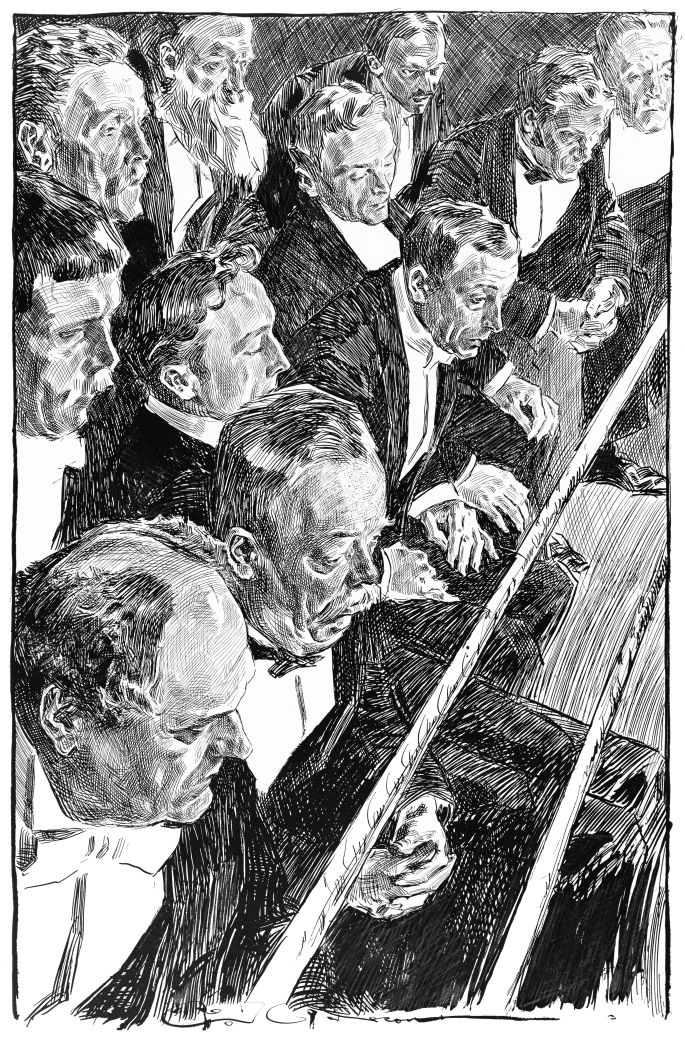
At the National Sporting Club
A Music Hall audience is the most demonstrative and amusing. It will
applaud the longest, hiss the loudest, and sometimes join in the chorus.
From the moment the numbers are posted announcing the next turn, it is
easy to tell what the performer’s reception will be. On both sides of
the orchestra are bars, and when a London barmaid stops work to listen
and laugh you may be sure that the turn is a good one. Last winter they
paid Dan Leno this compliment. The air is filled with tobacco-smoke, and
the calcium-light, on its way from the gallery to the stage, looks like
a sunbeam in a dusty hayloft.