Way down in Vir-gin-i-a, near a small creek, called Bridg-es Creek,
there is a shaft of white stone;—on it is the name of George
Wash-ing-ton and the date of his birth: Feb-ru-ar-y 22d, 1732.
On this spot once stood the big brick house in which George
Wash-ing-ton was born; it was built in 1657 by John Wash-ing-ton;
his grand-son, Au-gus-tine, was the fa-ther of the lit-tle boy who
be-came our first pres-i-dent. The moth-er of George Wash-ing-ton
was Ma-ry Ball; so sweet and fair was she, when she was a young
girl, that she was known as "Sweet Mol-ly."
Now she was not the first wife of Au-gus-tine Wash-ing-ton; and he
had two boys, Law-rence and Au-gus-tine, when he made her his wife.
These boys were so kind to their small broth-er George, when he was
young, and gave him so much help, all through his life, that their
names should stay in your minds. When George was three years old his
home was burned to the ground, and his fa-ther built a fine new
house, just o-ver the riv-er from where the cit-y of
Fred-er-icks-burg now stands. Here George went to his first school,
and the name of the man who taught him was so queer, it will not go
out of your mind;—it was "Hob-by." In those old days, the boys
wrote to their boy-friends,
just as they do at this day. See what
George, when he was nine years old, wrote to his best friend,
Rich-ard Hen-ry Lee:—"Dear Dick-ey, I thank you ver-y much for the
pret-ty pic-ture book you gave me. Sam asked me to show him the
pic-tures and I showed him all the pic-tures in it; and I read to
him how the tame el-e-phant took care of his mas-ter's lit-tle boy,
and put him on his back and would not let an-y-bod-y touch his
mas-ter's lit-tle son. I can read three or four pages some-times
with-out miss-ing a word. Ma says I may go to see you and stay all
day with you next week if it be not rain-y. She says I may ride my
po-ny. He-ro, if Uncle Ben will go with me and lead He-ro. I have a
lit-tle piece of po-et-ry a-bout the book you gave me, but I mustn't
tell you who wrote the po-et-ry.
"G. W.'s com-pli-ments to R. H. L.
And likes his book full well.
Hence-forth will count him as his friend,
And hopes ma-ny hap-py days he may spend.
"Your good friend,
"George Wash-ing-ton."
"I am go-ing to get a whip top soon, and you may see and whip it."
You see the boys in those old days were fond of books, and toys and
hors-es just as the boys of to-day are; and there is a tale of
George, and a young colt, which shows that he was a brave and strong
boy, who did not fear to tell the truth, though he had done wrong.
He and some of his boy-friends were in a field, in which were kept
some young colts, some of which had been used.
The boys caught one colt, put a bit in its mouth, and held it, while
George sprang on its back. The colt, mad with
fear, sprang in the
air, tore through the field, and tried in vain to throw the boy; at
last he leaped with such force, that he broke a blood ves-sel, and
fell to the ground dead. Just at this time George's moth-er came
out, and saw the dead colt. She asked the boys if they knew how he
died. "Yes, mad-am," at once said her own boy; and then he told the
whole truth. There are more tales of the boy-life of George and all
show that he was a brave, strong boy, full of life and fun, and at
the head in games and sports of all kinds.
His fa-ther died when he was on-ly e-lev-en (11) years old; but his
moth-er lived to be an old, old la-dy, who was, you may be sure,
ver-y proud of her great son.
Af-ter his fa-ther's death George made his home with his broth-er,
Au-gus-tine, un-til he was six-teen (16) years old; and the short
notes which he wrote to his moth-er were not like those he sent to
his boy-friends, or like those which you boys and girls write
to-day. He be-gan, "Hon-ored Mad-am;" and end-ed the stiff lit-tle
note,—"Your du-ti-ful son."
In those days folks lived on great big farms, or plan-ta-tions, as
they were called, and raised to-bac-co, which was sold for much
mon-ey in Eng-land. George's fa-ther had a ver-y large plan-ta-tion
and ma-ny slaves to work on it; some day this would all be-long to
George, and so he was taught how to write in a big round hand, how
to do sums, and to look out for those who were in his care.
All through these years there was talk of war; for a cru-el war
be-tween the French and Eng-lish, known as King George-'s War, had
be-gun; and the boys, who heard so much talk of war, of course
played at it; and George was ev-er at the head, ev-er lead-ing these
bands of young sol-diers;
he longed, just as boys would to-day, to
throw a-way his books, to leave school, to go to the true war and
bear a real gun; and when he was fif-teen, his broth-er Law-rence,
who was a sol-dier, tried to make his moth-er let him join the
na-vy, as he was too young to go to the war. But this moth-er was a
ver-y wise wo-man, and said no; that his place was at home un-til he
knew how to care for the great plan-ta-tion and the ma-ny slaves
that in five or six years would be his.
Now, at this time, this great land of ours was so wild that it was
hard to tell how much land a man owned, just where one great farm
end-ed and the next be-gan; and a man who knew the land so well that
he could tell folks just these things would be of much use; so
George now be-gan to give much time to just this work; and so well
did he do it that soon folks came to him when they were in doubt.
In fact this work led, as you shall see, straight up to the
pres-i-dent's seat. His broth-er Law-rence had mar-ried Anne
Fair-fax, and in their home at Mt. Ver-non George met ma-ny great
men; a-mong oth-ers was Lord Thom-as Fair-fax, who owned a piece of
land so large that he did not know how big it was; he sent George to
find this out; and now this young boy had a rough piece of real work
to do.
In March, 1748, he and a young friend, George Wil-liam Fair-fax,
left the ease of Mt. Ver-non to live in the wild woods, where they
would see on-ly Indians, or, at the best, rough white men; in the
log huts of the white men they found so much dirt that, af-ter one
tri-al, rath-er than sleep on dir-ty straw, with no sheet, and but
one torn, thin blan-ket, they ei-ther lay on the bare floor, near
the big wood-fire, or else built a huge fire in the woods and lay
close to it on the earth. They had to swim their hors-es o-ver
streams; they
shot wild deer and birds, and of-ten cooked and ate
them, alone in the great wild woods, far from e-ven the camp of the
In-di-ans. Once, at least, we know, from a little book in which each
night George wrote of what they had done that day, that they saw a
grand war-dance of the In-di-ans; the mu-sic by which they danced
was made by a pot half full of wa-ter, with a deer-skin o-ver the
top, and a gourd filled with shot; this must have made queer mu-sic
to dance by.
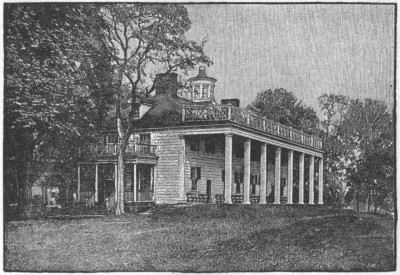 MOUNT VERNON—THE HOME OF WASHINGTON.
The boys were gone six weeks, and did their work so well that the
gov-ern-or heard of it, and he made George a "pub-lic sur-vey-or;"
that is, it was his place to find out the size of all the new farms;
and his word was to be law. He must have done this work well, too,
for the lines which he laid
down were the ones used by the new
States years and years af-ter his death.
Now, for weeks at a time, he was a-lone in the woods with the
In-di-ans; liv-ing in their camps, and learn-ing of their life; they
taught him ma-ny things; and they, in turn, learned to love and
trust him; this lone-ly life made him a grave and qui-et man; one
who talked lit-tle; and it taught him to think for him-self, at an
age when most boys are told what to do by their par-ents and
friends.
When he was not in the woods, hard at work, he was at Mt. Vernon;
and here the talk was of the great lands in the west; and of the war
bet-ween the Eng-lish and the French, who were each try-ing to drive
a-way the oth-er, and were both try-ing to force out the In-di-ans.
It was pret-ty hard for the In-di-ans, who now had not on-ly to
fight each oth-er, but the white men, too. At last they took sides,
some with the Eng-lish, some with the French; and a fierce war broke
out o-ver the land near the O-hi-o River; no white men had yet lived
there, and both sides wished to own it.
The French moved ver-y fast, and built great forts, and sent men
there to keep the Eng-lish a-way; it was no "play-war" in which
Wash-ing-ton now took part; he had real men under him; but, just as
he be-gan to learn what real war was, he had to go to the West
In-dies with his broth-er Law-rence, who was ver-y sick. They spent
the win-ter there, but Law-rence did not get well, and came back to
Mt. Ver-non in the spring, where he died in Ju-ly, 1752.
He left his land in charge of Wash-ing-ton, who now made his home
there; and when his broth-er's daugh-ter died he be-came the own-er.
Now, while Wash-ing-ton had been a-way, the French had been ver-y
ac-tive; they had made friends with the In-di-ans,
and had e-ven
dared to send some Eng-lish tra-ders in a ship to France.
At this act Eng-land was up and in arms, and sent o-ver great ships
and ma-ny men to help fight the French. The first step that Eng-land
took was to send men to warn the French a-way from the Eng-lish
forts in Penn-syl-va-ni-a; and Wash-ing-ton, who knew bet-ter than
a-ny one else the rough wild woods, and who was a friend of the
In-di-ans, led a lit-tle band of sev-en men through the dense, dark
woods and o-ver riv-ers filled with float-ing ice, up to the French
lines. He told the chief man of the French troops just what the
Eng-lish said, but this French man would not give up one inch of
ground that he had won from the In-di-ans, and gave Wash-ing-ton a
note to take back with him, in which he said as much.
Of course Eng-land could take but one course now; and so the long,
fierce war known as the "Sev-en Years' War" be-gan. Wash-ing-ton was
made a colo-nel, and showed so much skill, and was so brave, that in
a short time he took charge of part of the troops of Gen-er-al
Brad-dock.
In June, 1755, the troops made a start for Fort Du-quesne, where
they were to stay; and on this trip, while they were deep in the
woods, the In-di-ans, with fierce shrieks and wild cries, sprang on
them from the rocks and trees. The horse on which Wash-ing-ton rode
was shot; Gen-er-al Brad-dock got such a wound that he died, and
ma-ny poor men were killed. Here again Wash-ing-ton act-ed so
brave-ly, and was so wise, that the sol-diers said that Brad-dock
had lost the day and Wash-ing-ton had saved the ar-my.
At Brad-dock's death Wash-ing-ton was made chief of all
the troops
in the col-o-nies; and the first thing he did was to place men near
the homes which the white men were mak-ing in the new lands, and so
help these ear-ly set-tlers to stop the In-di-ans when they came to
rob them and to burn up their lit-tle log cab-ins, for a great fear
of the red men was o-ver all the land. Now, when the war came to a
close with the fall of the French, we find that Wash-ing-ton is a
very great man, that his troops love him ver-y much, and that the
heads of the states feel that he is a strong, wise man, and one whom
they can trust. All this time, you know, he was an Eng-lish
sol-dier, fight-ing for Eng-land; but, deep in his heart, and in the
hearts of all the brave men who fought with him, there was, we may
be sure, a love for this fair land, and a long-ing for its best
good.
After the war was at an end Wash-ing-ton, who was ver-y glad to give
up his post, mar-ried Mrs. Eus-tis, a young wid-ow with two lit-tle
chil-dren, a girl of six years and a boy of twelve, and went to Mt.
Ver-non to live. For twen-ty years now he lived the qui-et life he
loved so well. He took good care of his farm, was hap-py with his
fam-i-ly and friends, and grew, day by day, in power. He did not
lead an i-dle life, you may be sure; he rose ear-ly, had his
break-fast at sev-en in sum-mer and eight in win-ter; then rode
o-ver his farm and saw that all was right. He had his din-ner at two
o'clock; then had an ear-ly tea, and of-ten was in bed by nine
o'clock. Twice a year he sent to Lon-don for things need-ed in the
way of dress for his fam-i-ly and slaves, for tools, books, drugs,
etc. Some of the things he bought for the chil-dren I think you boys
and girls would like, too. He sent for "tops, lit-tle books for
chil-dren to read, a doll, and oth-er toys."
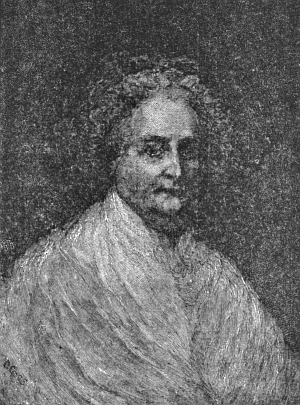 MARTHA WASHINGTON.
Wash-ing-ton loved hors-es and was ver-y fond of hunt-ing. The name
of his pet horse was "Blue-skin"; he must have looked ver-y fine
when he was on horse-back; for he was a big man, with bright blue
eyes and high color, and he wore a red vest with gold lace on it,
and a dark blue cloth coat. Mrs. Wash-ing-ton rode in a fine
car-riage drawn by four hors-es, and her driv-er wore the
Wash-ing-ton col-ors of red, white and gold. These old days were
full of life and
fun, but there was work as well, and soon came
more talk of war.
All through these twen-ty years this land was grow-ing big-ger and
big-ger; and at last came the time when folks did not see why they
should not be free from Eng-land and rule their own land in their
own way.
At last Eng-land made a law called the "Stamp Act," which put so
high a tax on goods that folks here would not pay it; tea was one of
the things on which this tax was put; and when Eng-land sent o-ver
three ships full of tea to Bos-ton, our men would not let it be
ta-ken from the ships, but broke the great chests and threw all the
tea in the wa-ter. This act is known as the "Bos-ton Tea Par-ty";
and now the first signs of war were seen; a fierce fight took place
at Lex-ing-ton, one Sun-day morn-ing, be-tween the Brit-ish and
A-mer-i-can troops; and now, all o-ver the land, went up the cry,
"To arms! To arms!"
This is how the great War of In-de-pend-ence be-gan; and you know
the name of the man who was at once put at the head of the
A-mer-i-can ar-my—George Wash-ing-ton, of course! Now he is not an
Eng-lish-man fight-ing for his king, but an A-mer-i-can fight-ing to
free his own land. A long, hard fight it was, too, but not once did
Wash-ing-ton or his brave men lose heart. He drove the Brit-ish out
of Bos-ton, and then, for fear they would go to New York, he sent
men there; but the Brit-ish ships went to Can-a-da in-stead, and
made that land theirs.
It was just at this time that Rich-ard Hen-ry Lee, the boy-friend of
Wash-ing-ton, made a move in Con-gress that our land should say to
the whole world that it would be free from Brit-ish rule; and so the
Dec-lar-a-tion of In-de-pend-ence was drawn up and sent out to the
world on July 4, 1776.
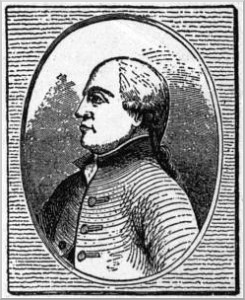 LIEUTENANT-GENERAL BURGOYNE.
From an English print, 1733.
War now be-gan in dead-ly earn-est; and, at the great bat-tle of
Long Isl-and, our men met with great loss of life, and had to flee
from the foe. Soon af-ter this bad news the Brit-ish took
Phil-a-del-phi-a, and now Wash-ing-ton was sad at heart; on
Christ-mas day of 1776, though, our troops won in the great fight
that took place at Tren-ton, and there was joy in the whole land;
good news came with the New Year, too, for Wash-ing-ton won ma-ny
fights; and at last, in Oc-to-ber, 1777, the Brit-ish troops in
charge of Gen-er-al Bur-goyne gave up their arms to Gen-er-al Gates.
That win-ter of 1777 was a bad one for Wash-ing-ton and his men; at
no time in the war did they suf-fer so much; the time was spent at
Val-ley Forge, and the men lived in log huts which they had first
built, in long straight lines, like cit-y streets; twelve men lived
in each hut, and there was a fire-place at the back, but no fire
could keep out the aw-ful cold, and no hut was snug e-nough to keep
out the snow that fell in great drifts a-round this lit-tle town of
log huts. To make things worse there was lit-tle food to be had; the
men had on-ly poor, thin clothes, and their bare feet oft-en left
marks of blood on the white snow. But the men did not lose hope, and
kept their faith through all the long months in their great lead-er,
whose lot was quite as hard as theirs was; the farm-house in which
he had a room still stands, and it is hard to be-lieve, as you look
at this old house on the banks of the Del-a-ware Riv-er, that once
the big or-chard back of it and
all the pret-ty fields were filled
with poor little wood-en huts in which, for the sake of free-dom,
lived and suf-fered thou-sands of brave men.
In the spring things were bet-ter, for France joined A-mer-i-ca in
her fight for free-dom, and three years from this time the Brit-ish
were beaten at York-town and A-mer-i-ca was free. One of the great
French-men, who gave us much help, and was a firm friend of
Wash-ing-ton's, was the Mar-quis de La-fay-ette.
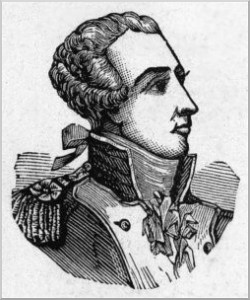 MARQUIS DE LAFAYETTE.
A ver-y sad thing dur-ing these last years of the war was the base
act of Ben-e-dict Ar-nold, who made up his mind to sell to the
Brit-ish some posts near West Point, of which he had charge. He sent
a note to Clin-ton by a young Brit-ish spy, Ma-jor An-dre; but on
his way to the Brit-ish lines this young man was caught by three of
our men. They found the note in his boots and he was brought to the
A-mer-i-can camp, tried for his life and hung as a spy. Ben-e-dict
Ar-nold had made his way to a ship and set sail for Eng-land, and
his name is hat-ed, not on-ly by his own land, but by e-ven the land
to whom he tried to sell his coun-try.
It was in March, 1783, that the news of peace spread through the
land, and it is said that Wash-ing-ton wept with joy, as he read the
glad news to his troops; he gave or-ders that the whole ar-my should
give thanks to God; and this was done at a great meet-ing on the day
af-ter Lord Corn-wal-lis laid down his sword. Then there was a great
ball giv-en at Fred-er-icks-burg, and Wash-ing-ton's old moth-er,
sev-en-ty-four years old, was there lean-ing on the arm of her son;
and do you not think she was proud, as one af-ter an-oth-er of the
great French of-fi-cers bowed to her, and spoke in her son's praise?
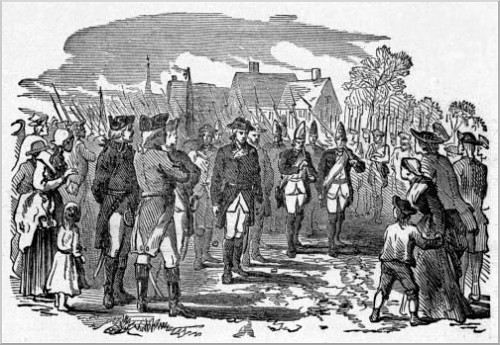 SURRENDER OF CORNWALLIS AT YORKTOWN.
It was on Christ-mas eve that Wash-ing-ton came home to Mt. Vernon,
af-ter eight years of war: rid-ing in state, with his wife at his
side, this great A-mer-i-can, feared now by kings, and loved more
than ev-er by the coun-try he had made free, came glad-ly back to
take up the qui-et coun-try life he loved so well; and here, could
he have had his way, he would have lived un-til his death; but this
new coun-try need-ed at its head a man whom folks loved and
trust-ed, and of whom oth-er lands stood in fear. No man but
Wash-ing-ton could fill this great place; and so, at the end of three
years, once more at his coun-try's call, he left his
home,—this time to be-come the first Pres-i-dent of the U-ni-ted
States. Not one voice was a-gainst him; eve-ry man in the new
coun-try vot-ed to give him this last hon-or; and on Ap-ril 30th,
1789, in New York Ci-ty, he took the oath of of-fice. Wash-ing-ton,
who was a ve-ry rich man, had tak-en no mon-ey for serv-ing his
coun-try in the war; and said he would take none now; but be-cause
oth-er Pres-i-dents might not be rich e-nough or good e-nough to
want to do the same, the peo-ple made him take $25,000 a year; now,
you know, the Pres-i-dent gets $50,000 a year.
Wash-ing-ton was in New York but one year, then the cap-i-tal was
moved to Phil-a-del-phia, and here he lived in great state, un-til
af-ter eight years in the Pres-i-dent's chair, once more, and for
the last time, he came back home to Mt. Ver-non.
At the end of his term of of-fice, Wash-ing-ton on-ly wait-ed to see
the next Pres-i-dent, John Ad-ams, take the chair, and soon af-ter
he came back talk a-rose of war with France; and, of course, the
coun-try turned to him; he was a-gain put in charge of the ar-my,
and took up the pub-lic life he had so glad-ly laid down. But he had
not long to bear it this time, for on De-cem-ber 12th, 1799, while
rid-ing in a hard rain-storm, he took a heav-y cold, from which he
died on Sat-ur-day night, De-cem-ber 14th, be-tween ten and twelve
o'clock.
Wash-ing-ton was bur-ied at Mt. Ver-non, and to-day the tomb of "The
Fa-ther of his Coun-try," as he is lov-ing-ly called is a sa-cred
place; not on-ly to us, but to the men and wo-men of the old lands,
which were taught by him so long a-go to hon-or and fear this great,
new A-mer-i-ca.
Wash-ing-ton had been dead just one hun-dred years on De-cem-ber
14th, 1899, and the date was made much of in the U-nit-ed States: in
New York Ci-ty, in Wash-ing-ton, and at Mt. Ver-non there was a
great time in his hon-or, for this great man is as dear to his
coun-try to-day as he was when he was a-live.
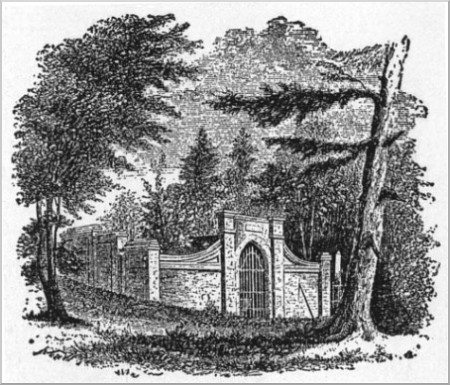 WASHINGTON FAMILY VAULT.
JOHN AD-AMS.
John Ad-ams was born, not in the far South with ma-ny slaves to wait
on him, but on a small farm in Brain-tree, Mass. Here, from old
Eng-land had come, in 1636, his great-grand-fa-ther, Hen-ry Ad-ams;
and in this old home was born on Oc-to-ber 19th, 1735, John Ad-ams,
who was to be the sec-ond Pres-i-dent of the U-nit-ed States. Now,
on this farm in the east, there was much work to be done, and few to
do it; the folks who had made their homes here did not lead such
lives of ease as those who lived on the great farms in the South.
As a small boy, though, of course, he was taught to read and write,
John Ad-ams had a good deal of hard work to do. There was wood to
chop, and snow to be cleared a-way; there were hors-es and cows to
care for, and there was much work to do in the fields. In all this
work John took his part, like the brave, strong boy that he was.
When the days grew long and cold, he was sent to an old school near
his home, and here he at once took his place with the boys, as one
who would lead in fun and sport of all kinds. There was a good deal
of fun, too, in those days, for boys and girls both; in the cold
days there was good, strong ice on which to skate; there was snow to
play in, and to make fine roads for long rides in a sleigh; and,
when the days were long and hot, there were fish in the big streams,
and there was game in the wild woods. John was not fond of his
books, but still he did good work at school; and when he was quite
young went to Har-vard Col-lege. He left it in 1755,
just at the start of the "Sev-en Years' War"; and the name of George
Wash-ing-ton, the brave young Col-o-nel of Vir-gin-ia, rang loud in
his ears.
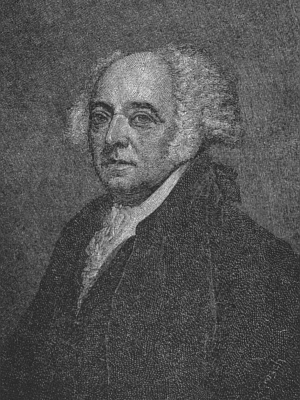 JOHN ADAMS.
He taught school in Wor-ces-ter to earn the means to take up law;
and in 1758 he be-came a law-yer. He had ma-ny cas-es, and grew wise
and great, though he did not make much mon-ey, as folks in the small
town of Brain-tree were far from rich and paid small fees. But he
did make ma-ny kind friends, and far and near he was known as a man
of clear, strong mind and quick, bright thoughts; he had a fine,
sweet voice, too, and his speech-es were al-ways wise and showed
much thought.
In the strife with Eng-land he was, from the start, on the side of
A-mer-i-ca. So much did Eng-land fear him in 1757, the Eng-lish king
sent word that he would give him great wealth if he would serve him
at this time. Ad-ams would not do this; he would speak and act just
as he thought right, and be bound by no king. When the "Stamp Act"
passed in 1764, he made a great speech, which was sent to those at
the head of his State; and when, in 1770, a troop of Brit-ish fired
on a mob of A-mer-i-can men and boys in the streets of Bos-ton, he
took the case to the courts, and spoke for the Brit-ish Cap-tain and
his men, though they had killed five of our men. It may seem strange
to you that Ad-ams, who stood for A-mer-i-can rights, should here
take sides with the Brit-ish; but, first of all, he stood for law;
and, though he knew he ran the risk of los-ing his high place in the
hearts of A-mer-i-can men, still he would do what he thought right.
But men love truth, and like to see a brave man act as he thinks
right, and so felt that he had just the clear, cool head and brain
and the strong warm heart to give aid in the dark days that were to come
to the land. He was sent to the First Con-gress and was one of
the three men who drew up the Dec-la-ra-tion of In-de-pend-ence.
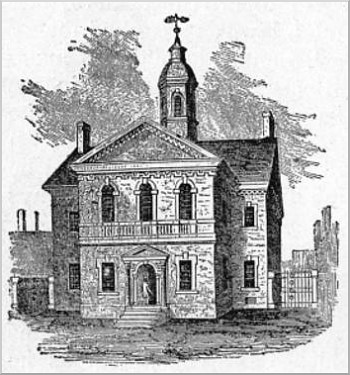 CARPENTER'S HALL.
Where the first Continental Congress met September, 1774.
He was al-so one of three men to go to France and ask for the aid
which she gave to A-mer-i-ca, in the spring af-ter that hard win-ter
at Val-ley Forge. Do you see why this trip at this time was a brave
act, and one by which Ad-ams ran a great risk of los-ing his life?
Eng-land had no wish that he should reach France, and her ships
tried in vain to get him. If he had been caught he would have been
hung, as a man who was false to his land and his king. You know that
he went to France though, and did his work well. He stood up for our
rights and had a bill passed which made the ports of France and
Eng-land free to our goods. At the end of the war he was sent to
Eng-land to look out for our rights there; and, though now this is a
pleas-ant task, it was not then, for it was hard for Ad-ams to be
true to A-mer-i-ca and yet not an-ger the Eng-lish king, George III.
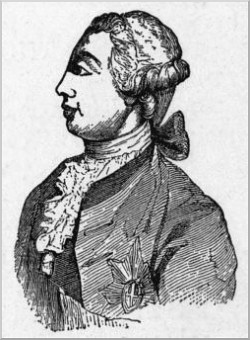 GEORGE III.
From an anonymous print.
But we have seen how bold and brave a man he was, so the first thing
he said to the king was: "I must tell your Maj-es-ty that I love no
coun-try but my own"; and said the king: "An hon-est man will nev-er
love an-y oth-er." In spite
of this, Ad-ams met with much rude-ness
at the Eng-lish court; but he did his best for his coun-try, and
when he came home in 1787, af-ter twelve years of hard work, he was
met with great joy. He was made Vice-Presi-dent with Wash-ing-ton,
and at the end of Wash-ing-ton's term of of-fice he was made
Pres-i-dent. He served on-ly four years and then made way for
Thom-as Jef-fer-son.
At the age of six-ty-eight years, with the love of the whole land,
he went to his home in Quin-cy, Mass. His heart was ever with his
coun-try; and he lived un-til his son, John Quin-cy Ad-ams, was made
Pres-i-dent of the U-nit-ed States.
His last thoughts were for his coun-try. On June 30th, 1826, he gave
as a toast for the great feast to be held on Ju-ly 4th the words:
"In-de-pend-ence for-ev-er."
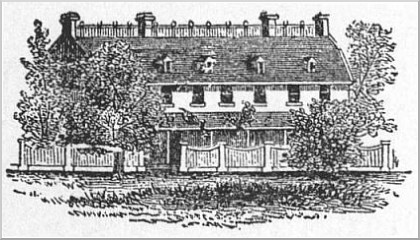 RESIDENCE OF JOHN ADAMS.
At Quincy, Mass.
He died on the night of this, A-mer-i-ca's great day. His last words
were of Jef-fer-son. He said: "Thom-as Jef-fer-son still lives." But
this was not so, for Jef-fer-son had died a few hours be-fore on
this same day; and this young land wept for two of her great men,
both of whom, in giv-ing up their best to their coun-try, helped to
make it the great, free land that it is to-day.
THOM-AS JEF-FER-SON.
When Thom-as Jef-fer-son was a boy his home was so near the
In-di-ans' camp and he saw so much of them that I am sure all boys
will like to read of him. His fa-ther, Pe-ter Jef-fer-son, took his
bride, Jane Ran-dolph, to a house on a wild tract of land of o-ver
1,000 a-cres, way out in Vir-gin-ia, right in the midst of great
woods. He was a big, strong man, and this strength was ve-ry use-ful
to him in mak-ing his new home, for he had to chop down huge trees
and then cut them up in-to the logs of which the lit-tle log cab-in
was built. He took with him in-to this wild new land on-ly a few
slaves, but with their help his farm soon grew large, and he be-came
a rich man. The In-di-ans were great friends of his, and al-ways
sure of a warm wel-come in his home.
Still, the In-di-ans were not al-ways at peace with the white men,
who had come to make their homes so near them, and folks had to be
on the watch for fear the red men would rob and kill them. Pe-ter
Jef-fer-son was made Col-o-nel of the men who kept the In-di-ans
back in the woods, and a-way from the lit-tle town that was fast
grow-ing up near his home.
Now, this great, strong man was fond of books, and it was with his
fa-ther that lit-tle Thom-as be-gan to stu-dy. He was al-so taught
to ride, to swim and to shoot; and as he was fond of mu-sic he spent
long hours in learn-ing to play on the vi-o-lin, or "fid-dle" as it
was then called. The
In-di-ans near his home liked him, and he used
to play tunes for the lit-tle, brown In-di-an boys to dance by.
He was on-ly nine years old when he went to board-ing school with a
Mr. Doug-lass, and here he be-gan to stu-dy Lat-in, Greek and
French. He was so near home that he did not stay a-way long at a
time; and in-deed, this home was such a hap-py one, so full of life
and fun, that he did not want to be a-way from it long at one time.
But this hap-py time did not last long, for Thom-as was but
four-teen years old when his brave fa-ther was shot in a fight with
the In-di-ans. This boy was now at the head of as big a place as the
fa-ther of George Wash-ing-ton had left to him, and though he kept
on with his books he had the care of this great farm to think of and
plan for. He was a bright, well-read boy; and was but six-teen when
he took a place at Wil-liam and Ma-ry Col-lege. Here, his love for
books and mu-sic kept him from the wild life led by some of the
young men there, and made friends for him a-mong the great men,
whose homes were in Wil-liams-town.
He met a great law-yer, George Wythe, and be-gan the stu-dy of law
with him when, at the end of two years, he left col-lege. In five
years he be-gan the prac-tise of law in his old home in Vir-gin-ia.
In two years, so bright and quick was he, and of such a strong,
clear mind, that he had 198 cas-es, held a high place in his State,
and was a rich man.
In 1770, while he and his moth-er were a-way from home, the old
house burned down. When news of this came to Jef-fer-son, his first
thought was for his books, and he said to the slave who had told
him: "Did you save an-y of my books?" "No, mas-ter," said the slave,
"but we did save your fid-dle." You see e-ven when he was a great and bu-sy
man he still loved his fid-dle; but the loss of all his
law books was ve-ry hard for a bu-sy law-yer, and it took him a long
while to get the new books that he must have.
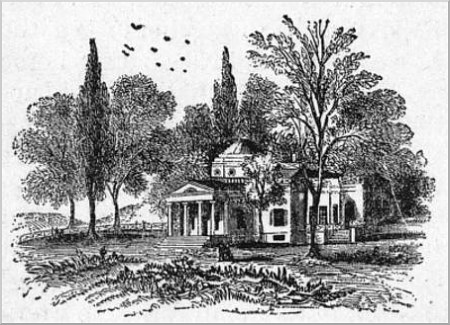 MONTICELLO.
The Home of Thomas Jefferson.
He had be-gun to build a ve-ry large new house at Mon-ti-cel-lo, and
so in the lit-tle end of this he now went to live. Two years lat-er,
to this home, which was to be-come known all o-ver the world, he
brought his bride, Mrs. Mar-tha Skel-ton, a young and ve-ry rich
wid-ow. They were mar-ried on New Year's Day, 1772, and came to
their home in such a hard snow-storm that the hors-es could not drag
the coach through the big drifts, so these two young folks left the
warm coach, and rode the tired hors-es up to the door of their new
home. Jef-fer-son and his wife gave great care to Mon-ti-cel-lo, and
it was known far and near for its great beau-ty and for its choice
and rare fruits and flow-ers.
But Jef-fer-son was much from home. In 1762 he was sent to
Con-gress, and here he at once stood at the head of the band of wise
and great men who were then there. His mind was so clear and bright
that in all the grave things that came up he knew at once just what
to do, he had the trust of all men.
He was a great help in writ-ing the Dec-la-ra-tion of
In-de-pend-ence; in fact, it may well be said that he wrote it. Soon
af-ter this great act he left Con-gress and turned his mind to
the laws of his own State; he made them safe and just for all men,
both rich and poor. In 1779 he was made gov-ern-or of Vir-gin-ia;
and now his work was hard; not on-ly must he find a way to keep the
In-di-ans from the hous-es of the white men but the Brit-ish came
down to the south and laid his fair home in ruins. Not for long
years did Mon-ti-cel-lo grow in beau-ty once more. But through all
the dark years of war Jef-fer-son did his work well; he forced back
the In-di-an foes, and gave help and aid to his State while the War
for In-de-pend-ence went on. When the war was at an end, this
strong, just man, with his clear, wise brain, was just the one to
stand up for our rights in the lands a-cross the sea, so he was sent
to France at the time Ad-ams was in Eng-land. While here he had a
bill passed by which Eng-land said she would look on our land as
free; and this was a big point for us to gain.
When Jef-fer-son came home he was made Sec-re-ta-ry of State, and in
this high of-fice did much good work; it was he who first gave us
our own coins to use in place of the Eng-lish coins, which, up to
that time had been in use here. Now, Al-ex-an-der Ham-il-ton was in
charge of the work of mak-ing the coin, and a great feud came up
be-tween him and Jef-fer-son as to how this should be done. Men, of
course, took sides in this strife, and so two bands sprang up which
were known as Re-pub-li-cans and Fed-er-al-ists; to-day these two
bands are known as Re-pub-li-cans and Dem-o-crats. Al-ex-an-der
Ham-il-ton was killed in a du-el by Aa-ron Burr in Ju-ly, 1804.
In 1801, Jef-fer-son was made Pres-i-dent; and while he was in the
chair this land grew strong and great.
Our first steam-boat was built by Rob-ert Ful-ton while Jef-fer-son
was Pres-i-dent; and it did not look at all like the great boats of
to-day; it was a heav-y, clum-sy boat, which went by sails as well
as steam.
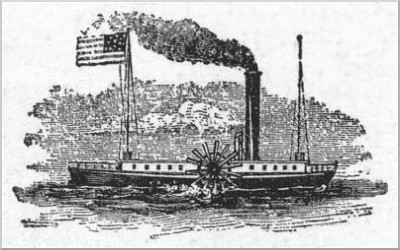 THE CLERMONT.
Rob-ert Ful-ton's first Steam-boat.
Jef-fer-son tried hard to put an end to the slave-trade, which he
felt was a great wrong; he thought, too, that folks should have the
right to serve God in their own way; and he held that on-ly men who
could read and write should vote.
He was a great and a wise man; books were his dear friends; and so
one of the hard-est things he had to do, af-ter he went home to
Mon-ti-cel-lo, when he left the White House, was to sell all his
books to Con-gress in or-der to get mon-ey to live on. To his own
home hosts of friends and stran-gers came to see the great man, just
as they had when he was in Wash-ing-ton. But he sold his books so
cheap that the mon-ey did not help him much; and, at last, it seemed
as if he must sell his dear old home. But now the peo-ple for whom
he had done so much helped him, and a big fund was raised, so that
he could keep his home and live there in com-fort un-til his death.
He lived to be a ver-y old man, and e-ven when he was so weak he
could not rise from his bed, his great, strong brain was still
clear. You know that he died on the 4th of Ju-ly, 1826, just a few
hours be-fore the death of his old friend, John Ad-ams.
Next to the name of George Wash-ing-ton, there is no name a-mong the
great men of our land, of which the peo-ple are so proud, as that of
Thom-as Jef-fer-son.
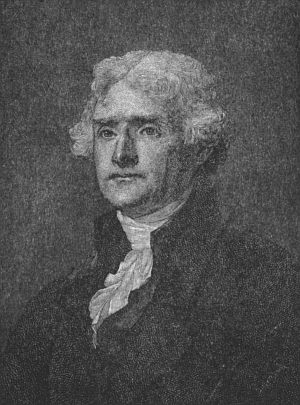 THOMAS JEFFERSON.
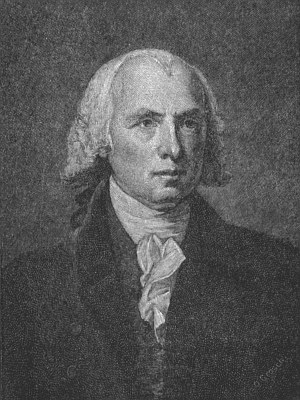 JAMES MADISON.
JAMES MAD-I-SON.
In the home of his grand-fath-er at Port Con-way, Vir-gin-i-a, was
born, in the spring of 1751, the small boy who was to be our fourth
Pres-i-dent. He was ver-y young, though, when he went to live at
Mont-pel-ier, his fath-er's great farm in Vir-gin-i-a, and here he
led much the same life as George Wash-ing-ton did when a boy. He was
but a small boy when the French and Eng-lish War be-gan, and when
Brad-dock lost the day, a great fear of the In-di-ans spread to the
ver-y door of his home; and he grew up with the name of George
Wash-ing-ton ev-er in his ears, as a great he-ro.
His school days were much like those of Jef-fer-son. He was a young
boy when he could read French and Span-ish with ease, and was as
well hard at work at Greek and Lat-in. In 1769 he went to Prince-ton
Col-lege, and here, as well as when he was at home, Jef-fer-son was
a great help to him. The old-er man wrote to the boy in the qui-et
old col-lege town, a-bout the scenes of war; he told him much of the
Brit-ish troops in the Bos-ton streets, of young John Ad-ams and of
Wash-ing-ton. So, when in 1771 he left col-lege, he knew a great
deal a-bout the strife of the day, and had deep, clear thoughts
a-bout it. At home he led a qui-et life with his books, un-til 1774,
then he was put at the head of a few men, who were to guard their
own town if the Brit-ish troops came there. In this post he showed
such a wise, clear mind and did his part so well that in a short
time he was put in a high place in his State, and from there in 1779 was
sent to Con-gress. Jef-fer-son was at this time Gov-ern-or
of Vir-gin-i-a, and the two men were close, warm friends.
For twen-ty five years Mad-i-son was one of the first men in this
land. He had no taste for war, but he soon took a high place with
those who made the laws of the land. One of the great things he did
was to help draw up the Con-sti-tu-tion of the U-nit-ed States.
In 1794 this grave and qui-et man mar-ried, as Wash-ing-ton and
Jef-fer-son had done, a young and love-ly wid-ow. She was but
twen-ty-two years old, twen-ty years young-er than he, and her name
was Mrs. Dor-o-thy Payne Todd. Lat-er on, the folks who grew to love
this fair la-dy so well, gave her the name by which we know her
to-day—"Dol-ly Mad-i-son." She was a Quak-er-ess, and so fair and
sweet was she, in her qui-et lit-tle gown of gray, that once a
friend said to her: "Dol-ly, tru-ly thou must hide thy face, so
ma-ny stare at thee."
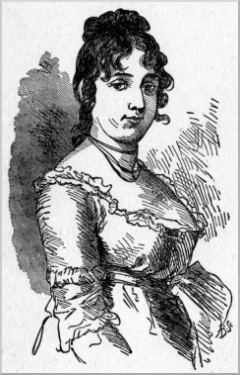 MRS. DOLLY PAYNE MADISON.
For one year af-ter his mar-riage, Mad-i-son lived at Mont-pel-ier;
then a-gain he went in-to pub-lic life, first in his State, and
af-ter that, in 1800, as Sec-re-ta-ry of State un-der Jef-fer-son.
Now, be-gan the gay life at the White House, for which "Dol-ly"
Mad-i-son won so much fame. Jef-fer-son's wife was dead, and it was
the wife of his friend that helped him en-ter-tain the White House
guests. Well did this love-ly la-dy do her part, and in 1808 when,
as the wife of the Pres-i-dent, she be-came the real mis-tress of
the White House, more than ev-er did the peo-ple love her. To-day,
of all the pic-tures of the Pres-i-dents' wives that hang up-on the
White House walls, none is more love-ly than that of the gay and
pretty "Dol-ly Mad-i-son."
Mad-i-son was most of all a man of peace, and yet it was while he
was in of-fice that the U-nit-ed States was drawn in-to the War of
1812. Eng-land, then at war with France, said she had the right to
search A-mer-i-can ships to see if they were tak-ing aid to France.
A-mer-i-ca would not give this right to Eng-land, and so the war
be-gan. In 1814 the Brit-ish came to the cit-y of Wash-ing-ton, and
for the on-ly time in A-mer-i-can his-to-ry the Pres-i-dent had to
leave his home.
Mad-i-son, with the Sec-re-ta-ry of State and some friends, went to
a lit-tle inn near Wash-ing-ton, and here they were met by Mrs.
Mad-i-son, who had stayed as long as she could at the White House to
save some things from the hands of the Brit-ish. She had brought the
great Dec-la-ra-tion of In-de-pend-ence, and had cut from its big
frame the pic-ture of Wash-ing-ton and brought it safe-ly a-way. The
Brit-ish troops set fire to the White House, the na-vy yard, the
Cap-i-tol, and in fact the whole town. They left in great haste,
though, when they heard that our troops were on the way, and the
next day Mrs. Mad-i-son put on the dress of a wash-wo-man, so folks
would not know her, and made a start for her home, but the British
had set fire to a bridge she had to cross on the way and then she
begged an
A-mer-i-can sol-dier to row her o-ver the riv-er. He
would not do so un-til she told him who she was, and then he was
ver-y glad to take this brave lit-tle la-dy in his boat. On-ly black
ash-es marked the spot on which the White House had once stood, so
she had to go to her sis-ter's home, where the Pres-i-dent soon
joined her.
The Eng-lish troops now tried to take Bal-ti-more, but our brave men
drove them back; and when they tried to make a raid on New
Or-le-ans, Gen-er-al Jack-son and his troops fought so hard that the
foe could not get in-to the cit-y.
This was the last fight of this war, and peace was signed at Ghent,
De-cem-ber 24th, 1814. From that day Eng-land has had to leave our
ships a-lone and to treat A-mer-i-ca as one of the great nations of
the world.
In 1817 Mad-i-son was not sor-ry to go back to his old home, and
here ma-ny hap-py years were spent, for the fair la-dy of the White
House kept o-pen house in her own home, and guests from far and near
were glad to come here. One of Mad-i-son's dear-est friends was old
Thom-as Jef-fer-son, who oft-en rode o-ver from his home at
Mon-ti-cel-lo, which was on-ly thir-ty miles from Mont-pel-ier.
Mad-i-son wrote a good deal at this time; and once a-gain was seen
in pub-lic life. In 1829 he was at the head of the great change made
in all the laws of the whole land.
He died af-ter a long sick-ness at his home in Mont-pel-ier on June
28th, 1836.
JAMES MON-ROE.
James Mon-roe was, like Wash-ing-ton, Mad-i-son and Jef-fer-son,
born in Vir-gin-i-a. Our first Pres-i-dent was just twen-ty six
years old when, in West-more-land County, on A-pril 28th, 1758, was
born the boy who was to be the fifth Pres-i-dent. His fa-ther,
Colo-nel Spense Mon-roe, owned a big farm and was quite rich.
Lit-tle James was sent to good schools and did not have to work to
earn the means to stay in school. He learned at first to hunt, to
skate and to swim; and was good friends with all the boys; but
through all the fun and school work came up the talk of war; of the
long strife with Eng-land and the fierce red men. It was hard for a
brave boy to hear such talk and yet keep on at his books, and though
Mon-roe did go to Wil-liam and Mary Col-lege, he did not stay long,
for we hear of him in 1775 at the camp near Bos-ton. In 1776 we see
him at the head of a band of men, and from that time on he was in
the thick of the fight. He fought at White Plains and Har-lem
Heights, and was so brave that the great Wash-ing-ton gave him high
praise for his work, and made him, when but eight-een years old, a
cap-tain in the ar-my. At the great fight at Tren-ton he got a bad
wound and had to rest for some time. In the big fights of the war
this brave young man was one of the first in the field; his hopes
were ev-er high, and he put heart in-to the weak and worn men who
looked to him for help in the sad years of the war. In 1780 he
be-gan the stud-y of law with his old friend Thom-as
Jef-fer-son
and soon led the bright men of the day.
So good a friend of his was Jef-fer-son, that the home to which
Mon-roe took his bride in 1785, was planned for him by Jef-fer-son,
who, so it is said, al-so gave him the nails to build it with.
In 1794 he was sent to France to look out for A-mer-i-ca's rights,
but he found talk of war there at that time. The peo-ple did not
want a king an-y long-er, but wished to be-come a free land like
A-mer-i-ca, with a pres-i-dent at the head; and Mad-i-son, who was a
Re-pub-li-can, took sides with the Re-pub-li-cans in France. The
king did not like this, and so Mad-i-son had to come home at the end
of two years.
But he met with a wel-come at home, and his own State made him its
Gov-ern-or. In 1803 he was once more sent to France; this time to
buy the State of Lou-is-i-an-a from the French, and he paid
Na-po-le-on for this large State $15,000,000.
Twice Mon-roe was sent to Spain and once to Eng-land, where his task
was to force Eng-land to stop her search of A-mer-i-can ships. You
know he could not do this, for that was the cause of the War of
1812.
Tired and sad at heart, he came back home, and was glad to rest for
a while in his own home; but he was of too much use to his coun-try
to be i-dle long. Once more, in 1811, he was made Gov-ern-or of
Vir-gin-i-a.
Then came the War of 1812; and it was Mon-roe, now Sec-re-ta-ry of
State, who, at the head of a few men, saw the Brit-ish land near
Wash-ing-ton and sent word to Mad-i-son to leave the cit-y. He al-so
act-ed as Sec-re-ta-ry of War at this time, and so well did he do
his part that in 1816 he
was named for Pres-i-dent by the
Dem-o-crats. He got the most votes and so took the first place in
our great land.
His first act was to pay off the great debt which the War of 1812
had brought on us. He did this in a ver-y short time; and now our
trade grew so great that rail-roads were built; and so our first
rail-road was made while Mad-i-son was Pres-i-dent.
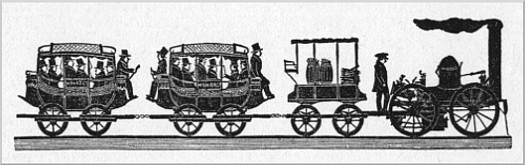 FIRST RAILROAD TRAIN.
There was a fierce war with the In-di-ans in Flor-i-da at this time;
but Gen-er-al Jack-son was sent down there and he forced them to lay
down their arms and keep the peace.
Just at this time, too, we got Flor-i-da from the King of Spain, and
gave up Tex-as, af-ter pay-ing a big sum of mon-ey to the
A-mer-i-cans, who had been robbed by Spain.
Mis-sou-ri came in-to the Un-ion while Mon-roe was Pres-i-dent, and
there was a fierce storm of words; the North said she should not
hold slaves after she was a State, the South said that she should.
At last Con-gress gave way to the South-ern States; but made a law
that there should be a line drawn through the land, north of which
no State should hold slaves.
In 1825 Mon-roe was free to go to his home at Oak Hill, Vir-gin-i-a,
and here he lived un-til 1830. His wife died in that
year, and then
he went to live with his daugh-ter in New York. He died here on the
4th of Ju-ly, 1831, and his name is one that the whole land loves
and hon-ors.
He was bur-ied in New York, but on the one hun-dredth
an-ni-ver-sa-ry of his birth, his bod-y was tak-en to Rich-mond,
Vir-gin-i-a, and a hand-some stone raised o-ver his grave.
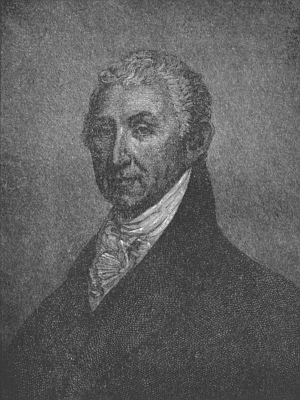 JAMES MONROE.
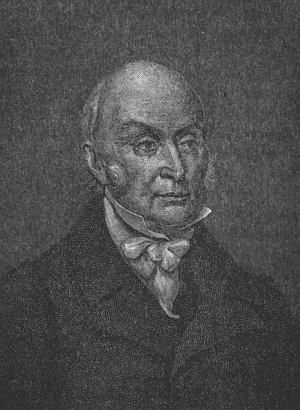 JOHN QUINCY ADAMS.
JOHN QUIN-CY AD-AMS.
The lit-tle boy who be-came our sixth Pres-i-dent led a life not at
all like that of an-y oth-er of the boys of whom you have read. His
fa-ther was John Ad-ams, our sec-ond Pres-i-dent, and when, on Ju-ly
11th, 1767, lit-tle John Quin-cy Ad-ams was born in the old home at
Brain-tree, Mass., his great fa-ther was al-read-y speak-ing
brave-ly for his coun-try's rights in the cit-y of Bos-ton. In 1772
the fam-i-ly moved to Bos-ton, and lit-tle John, for two years, saw,
as the oth-er boys did, the Brit-ish sol-diers in their bright red
coats on pa-rade in the Bos-ton streets, and heard on all sides talk
of war with Eng-land. He saw a lit-tle of real war, too; for when he
was eight years old, his moth-er took him on top of a high hill,
called Be-mis Hill, from which he saw the smoke and heard the roar
of can-non in that aw-ful bat-tle of Bunk-er Hill. When, in 1776,
the Brit-ish left Bos-ton, this lit-tle lad of nine years used to
oft-en ride on horse-back in and out of the city to bring home the
lat-est news. This was a ride of twen-ty-two miles from the old home
at Brain-tree, where Mrs. Ad-ams had gone when her hus-band went to
Con-gress, and I think it took a pret-ty brave and strong boy to
ride all those long miles a-lone.
When John Ad-ams went to France to try and get her aid for
A-mer-i-ca, he took with him his lit-tle boy, then ten years old. It
was a rough, hard trip; for, not on-ly were there fierce winds which
lashed the waves in-to fu-ry, but they were chased by Brit-ish
ships, for Eng-land did not want John
Ad-ams to get this help from
France. But they reached Par-is in safe-ty, and lit-tle John was at
once put in a French school. He on-ly stayed for a-bout a year and
went back home with his fa-ther in the spring. Now for three months
he was with his moth-er, and then in No-vem-ber he and some oth-er
boys who were placed in his fa-ther's care, all start-ed for France,
where they were to be put in a good school.
This trip was hard-er than the oth-er one, for the big ship,
"Sen-si-ble," sprang a leak, and af-ter some days of great per-il,
they were glad to go to the near-est land, which was Spain; and now
there was a long, hard trip by land be-fore France could be reached.
They had sailed on Nov. 13th, 1779, and it was not un-til Feb. 5th,
1780, that the lit-tle par-ty reached Par-is.
For two years now our lit-tle lad was hard at work with his books in
Par-is; then his fa-ther was sent to the Neth-er-lands as
A-mer-i-can Min-is-ter, and he took his lit-tle son there and placed
him in a school in Am-ster-dam; from here he went to the
U-ni-ver-si-ty at Ley-den, where he stayed un-til Ju-ly, 1781.
He was now on-ly four-teen years old; but you see he had been in so
ma-ny lands, that he could speak as the folks did in those strange
lands, and this was a rare thing in those days. In 1781 Fran-cis
Da-na, then the A-mer-i-can Min-is-ter to Rus-sia, need-ing some one
to help him in his work, sent to Ley-den for this young boy. They
passed through Ger-ma-ny on the way to Rus-sia, and here John
Quin-cy learned some-thing of an-oth-er new land. Then, af-ter a
year in Rus-sia, he left Mr. Da-na and stud-ied for a year in
Swe-den. The next spring he went to his fa-ther in Hol-land, and
then went to Par-is with him, and was pres-ent
when the trea-ty of
peace be-tween Eng-land and A-mer-i-ca end-ed the War of
In-de-pend-ence.
For two years more he stud-ied a-broad, and then sailed for home in
May, 1783. He at once en-tered the jun-ior class at Har-vard
Col-lege and grad-u-a-ted with next to the high-est hon-ors in 1787.
Then he took up law, as his fa-ther had done, and be-gan to
prac-tise in Bos-ton. He made few friends; folks did not love him as
they had ei-ther Mad-i-son or Mon-roe, but he was al-ways known to
be a man of great pow-er, and of great learn-ing; and know-ing so
much of other lands, he was just the man to be sent as A-mer-i-can
Min-is-ter to these coun-tries.
In 1794 Wash-ing-ton sent him to Hol-land, and in 1796 he was sent
to Ber-lin.
When, in 1801, Ad-ams came back home, it was to find new hon-ors
wait-ing for him. He was sent first to the State Sen-ate and then to
Con-gress. You see the steps by which our Pres-i-dents rose to
pow-er were much the same in ev-er-y case. A du-ty well done in a
small place led to some-thing a lit-tle high-er, and so on to the
great-est hon-or of all—the Pres-i-dent's chair.
The State of Mas-sa-chu-setts was ver-y proud of John Quin-cy
A-dams; not only was he a great states-man and the son of the man
whom they all loved, but he was, as well, a fine schol-ar, and a
bril-liant speak-er. In 1809 he was sent a-broad a-gain for his
coun-try; this time to Rus-sia, where he had not been since he was a
boy of four-teen; in 1815 he was sent to France, but he was here
on-ly a few months, when war broke out in France, and all the
min-is-ters from oth-er coun-tries were called a-way; he went at
once to Eng-land, and here he had a much more pleasant time than his
father had when he went there as the first Amer-i-can
min-is-ter; the U-nit-ed States was now known as a big strong coun-try, and no
one dared to be rude to her min-is-ter. In 1817 his own land felt
the need of the great man who had served her so well a-broad, and he
was called home to be-come Sec-re-ta-ry of State. No man was so well
fit-ted for this post as he; for there were ma-ny men from the lands
a-cross the sea, now com-ing and go-ing in the cap-i-tal of the
U-nit-ed States, to talk o-ver great ques-tions; there were new
states com-ing in-to the Un-i-on; and oth-er lands were al-ways
try-ing to gain a lit-tle pow-er here; so John Quin-cy Ad-ams, who
not on-ly was a great schol-ar, and a fine law-yer, but al-so knew
well so ma-ny lands be-sides his own, was just the man to help
Pres-i-dent Mon-roe through his eight years of work.
He al-so was the man best suit-ed for the Pres-i-dent's chair, at
the end of Mon-roe's term of of-fice. Not once, while Ad-ams was in
Wash-ing-ton work-ing hard, did he for-get his old fa-ther,
watch-ing, in his home at Quin-cy, the bu-sy life of his great son.
Once ev-er-y year he went to the qui-et old home, and told his
fa-ther of the life in Wash-ing-ton, in which the old-er man had
once held so great a place.
At the age of six-ty-eight, Ad-ams went back to his home in Quin-cy,
but in 1830 once more he was sent to Con-gress, and for six-teen
years he kept his seat there; he grew old and gray serv-ing his
na-tive land; he made bit-ter en-e-mies, but ma-ny warm friends; he
feared no one, and his voice was al-ways for the free-dom of this
great land. On No-vem-ber 19th, 1846, he had a stroke of
par-al-y-sis while walk-ing in Bos-ton; but three months later we
saw him a-gain in Wash-ing-ton, and tak-ing his old seat in
Con-gress. As the gray old man came feeb-ly in-to the hall, ev-er-y
man pres-ent
rose to his feet, and so stood un-til he took his
seat. He was too weak now to talk, and on-ly once more did he try to
speak his mind on one of the great ques-tions of the day. This was
on Feb-ru-a-ry 21st, 1848. He rose to speak, but fell in-to the arms
of a man near him; at once they took him in-to a cloak-room, and
sent for his wife. For two days did he lay there, and then, on the
morn-ing of Feb-ru-a-ry 23d, his great soul took its flight. His
last words were: "This is the last of life, and I am con-tent."
AN-DREW JACK-SON.
The boy who was to be our sev-enth Pres-i-dent did not lead the sort
of life, as boy or man, that the oth-er Pres-i-dents did. He was the
son of a poor I-rish-man who came here from Ire-land in 1765. He was
born on March 15th, 1767, in a small place in South Car-o-li-na,
called the Wax-haw Set-tle-ments. Poor and mean was the log house in
which he first saw the light, and when his fa-ther died, which was
when An-drew was a wee baby, the life of the lit-tle home was
hard-er yet. His moth-er was a brave, good wo-man, and so well did
she do her hard part in life that she was loved by all who knew her,
and was known far and near as "Aunt Bet-ty."
Andrew was a great care to her when a boy, for, full of life and
fun, he did not care for books, and was at the head in all sorts of
wild sport. He was ev-er read-y for a fight with boys who made him
an-gry; the small boys looked to him for help in any strife with
boys big-ger than they; and so strong was he, or read-y to knock a
boy down for a real or a fan-cied wrong, that they soon found it
best to give him his own way, and let him take his place as lead-er
a-mong them; when he was at the head all went well.
He was just nine years old when the Dec-la-ra-tion of
In-de-pend-ence was signed, and then came four years of war with
Eng-land. In 1780 this war was car-ried into the South, and on May
29th a number of Brit-ish sol-diers un-der Colo-nel Tarle-ton killed
and wounded over 200 of the men and boys from the Wax-haw
set-tle-ments. A-mong those who helped
to care for the hurt and
dy-ing men were Mrs. Jack-son and her boys. An-drew was on-ly
four-teen when he fell in-to the hands of the Brit-ish, and he, with
o-ver one hun-dred sick and dy-ing men, was kept for days in a
dir-ty pen, with no beds, lit-tle to eat and on-ly stale wa-ter to
drink. To make things worse, small-pox broke out and An-drew was one
of those who had it. His brave moth-er was at last a-ble to free
him, and it was ow-ing to her lov-ing care that he did not die at
this aw-ful time.
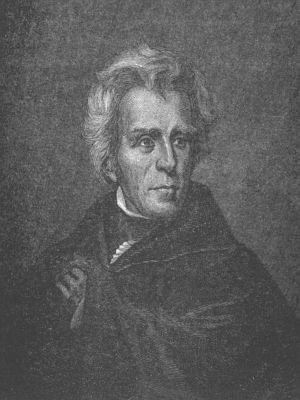 ANDREW JACKSON.
Af-ter he was well e-nough to be left, his moth-er, who was ver-y
sor-ry for the poor A-mer-ican sol-diers, went to Charles-ton to
take care of those who were sick and wound-ed here. Just as she had
be-gun her no-ble work she was ta-ken sick and died.
Soon af-ter her death came the good news of peace; and now young
An-drew be-gan to pay some heed to his books, with the hope of
stud-y-ing law. He al-so taught school for a while, though he could
not have been a ver-y good teach-er, for he nev-er learned how to
spell ver-y well him-self. Still, in 1787, we find he has learned
e-nough to take up the prac-tice of law, and he be-gan this work in
Nash-ville, Ten-nes-see; and now we see the boy who had been the
lead-er in boy-ish sports, games and fights, be-come at once a
lead-er a-mong men. He was tall and quite good look-ing, with bright
blue eyes and red-dish hair, and he was full of fun and life; he
rode horse-back well, and knew how to shoot straight; and a-bove all
he was a brave man, a-fraid of noth-ing.
In 1788 he was giv-en a place in which he had to try for the State
all men who had done wrong and it need-ed, in those wild days and in
that new land, a brave man for such a work, for he would make ma-ny
foes, both a-mong the
bad white men and the In-di-ans. His work
took him from Nash-ville to Jones-bor-ough, and here the In-di-ans
were ver-y strong and ver-y cru-el, kill-ing and rob-bing the white
men and wo-men, and e-ven the lit-tle ba-bies in their moth-ers'
arms. Hear-ing and see-ing day by day more and more of this sav-age
war-fare, al-ways in dan-ger of be-ing killed by night or day by
some In-di-an hid-ing be-hind a tree or house, Jack-son learned to
know the In-di-ans and their hab-its bet-ter than most men did, so
was read-y to fight them in their own way in a few years.
He made his home in Nash-ville and built up a good law prac-tice. He
grew in pow-er so fast that in 1797 he was sent as the first man
from Ten-nes-see to Con-gress. He went all the way from his home to
Phil-a-del-phi-a, a dis-tance of 800 miles, on horse-back. In 1798
we see him a-gain at home as Judge of the Su-preme Court, and here
he stayed un-til 1804. Then came four-teen years of peace for the
land, and a hap-py home life for him. A-mong oth-er things which
Jack-son did at this time was to build a large log store in which he
kept all sorts of things which both the white men and the In-di-ans
want-ed. His home, which was called "The Her-mit-age," was a fine
house for those days, and in later years it grew as well known as
Mt. Ver-non and Mon-ti-cel-lo. Jack-son was all through his life a
man who would stand up for his own way, if it led to strife with his
best friend, and more than once he fought du-els to the death. In
Con-gress he would, when he rose to speak, some-times choke with
blind rage if he could not make his point and force men to yield to
him.
Af-ter years of peace came the War of 1812, and from that hour
Jack-son's name was first in the minds of men. He showed great skill
in his fights with the red men, and won
much fame in a fierce fight
with the Creeks, a bad tribe of In-di-ans in Al-a-ba-ma.
He could force men to do as he said; the young men of that day
looked up-on him with awe and fear, but rushed to fill his ranks and
serve un-der him.
In 1815 he won the day at New Or-le-ans, and put the Brit-ish troops
to flight with great loss of life. At the end of the war, back home
went Jack-son for the rest of which he stood in sore need; but, in
1818, strife with the Sem-i-nole In-di-ans in Flor-i-da came up, and
Jack-son was sent there.
At this time Spain owned Flor-i-da, and it was both Span-ish troops
and In-di-an foes that Jack-son had to meet, but he won his way, and
at last made Spain yield her rights in Flor-i-da and sign a peace.
In 1823 she sold Flor-i-da to us for $5,000,000; not such a great
sum when we think what a rich and great place this "Land of
Flow-ers" is. Jack-son was now put at the head of things in
Flor-i-da, and the hard-est part of his work was to keep peace in
the bad tribe of Sem-i-nole In-di-ans. With their chief Os-ce-o-la
at their head they would creep out from the woods and swamps of
Flor-i-da, rush on the homes of the white men, and burn them to the
ground, and then dash back to the woods, where they could safe-ly
hide. At the end of four years Jack-son was glad to go home to the
Her-mit-age; here he and his wife led a qui-et life and kept up
ma-ny of the ways of their young days, though now they were quite
rich. Af-ter din-ner, they would sit, one on each side of the great
big wood fire, in the large hall, and smoke their old pipes, with
the long stems, just as they had in their log cab-in of long a-go.
But the great gen-er-al could not live this qui-et life long; in
1823 he was sent to Con-gress; and here
he met with high hon-or. On
New Year's Day, 1824, the great men of the day gave him the pock-et
tel-e-scope that Wash-ing-ton had owned; a year from the day on
which the Bat-tle of New Or-le-ans was fought, John Quin-cy Ad-ams
gave him a great feast, at which were men, who held high rank here
and in oth-er lands; and on the day that he was fif-ty-sev-en years
old, Pres-i-dent Mon-roe gave him a gold badge for his brave acts in
his fights for his coun-try. In 1828 this rough, but brave and kind,
old man, was made pres-i-dent; and now he stood up for his own way,
just as he had in the wars of his land, and when he was but a boy.
His first act was to stop some states in the South from leav-ing the
Un-ion. John C. Cal-houn was at the head of a band of men, who felt
that the North had more rights than the South; had more than its
share of wealth and land; so rose the wish to set up a rule just for
the South. "But," said Jack-son, "if one state goes out oth-ers
will; and our great land will be a ru-in." So he stopped this plan,
just in time.
All the years that Jack-son was pres-i-dent, our great land gained
in strength; new rail-roads were built; and new steam-boats; the
land grew rich year by year.
In 1824 the slaves in Mex-i-co were set free, and Tex-as came in-to
the Un-ion.
On the whole, Jack-son's term was a good one for the land; and so
well did the peo-ple like him, that he is the on-ly pres-i-dent of
whom it has been said that he was bet-ter liked when he went out of
of-fice than when he went in.
The last years of his life were spent at "The Her-mit-age," where he
died on June 8th, 1845.
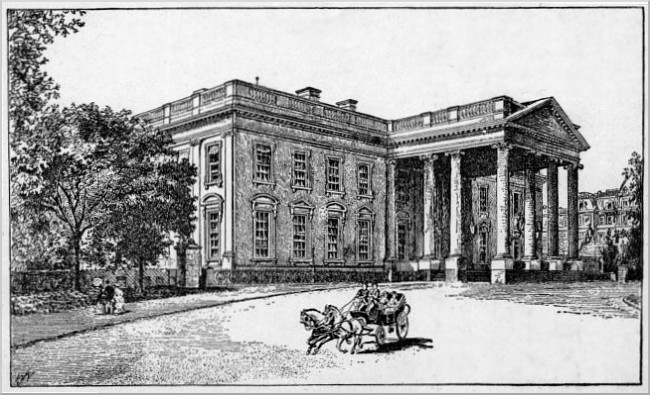 THE WHITE HOUSE—HOME OF THE PRESIDENTS.