Next day Tony left Anna's garden early
in the morning. He ambled along the
smooth motor road, singing and begging
whenever he found someone to beg from.
On each side of the road were black posts
with white caps on them, glistening in the
sun, polished to shine. Snow-white oxen
passed, driven by farmers.
In vineyards grapevines climbed and
twisted about old trees. In nearly every
archway a baby, a goat, or a donkey stood
and stared at Tony as he passed.
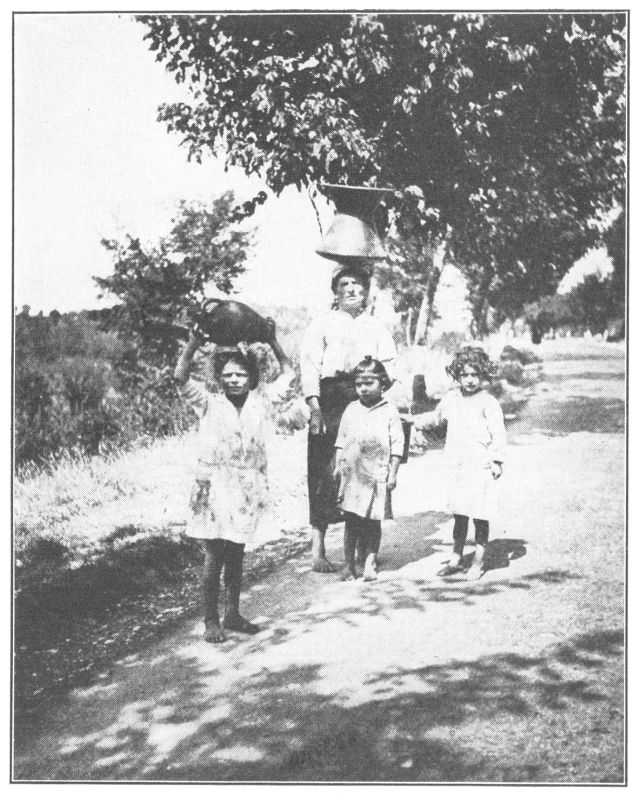
Women and children with large baskets
or bundles on their heads trudged by. Tiny
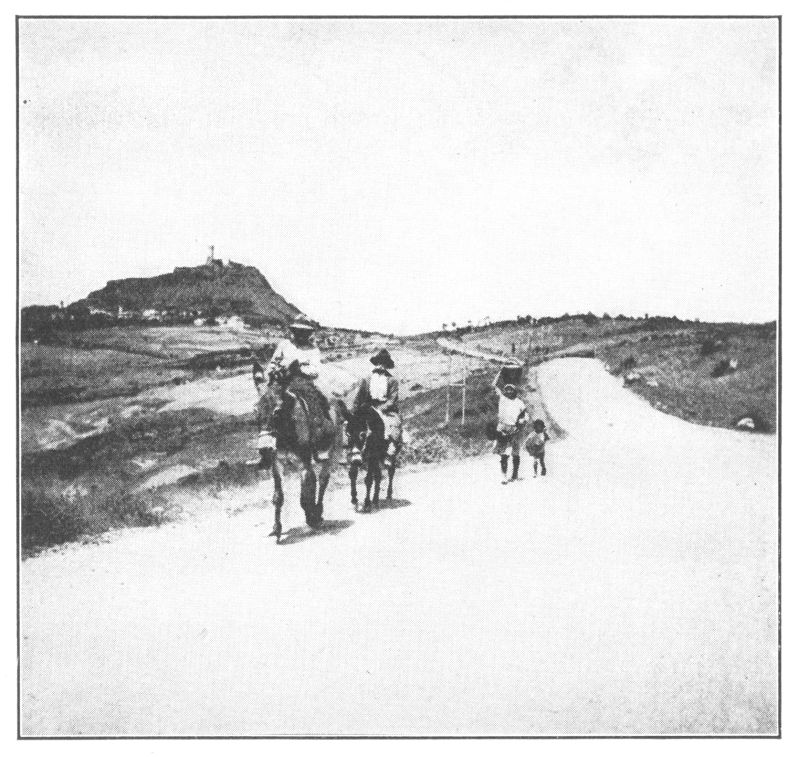
donkeys carried mountainous loads on their
backs.
|
|
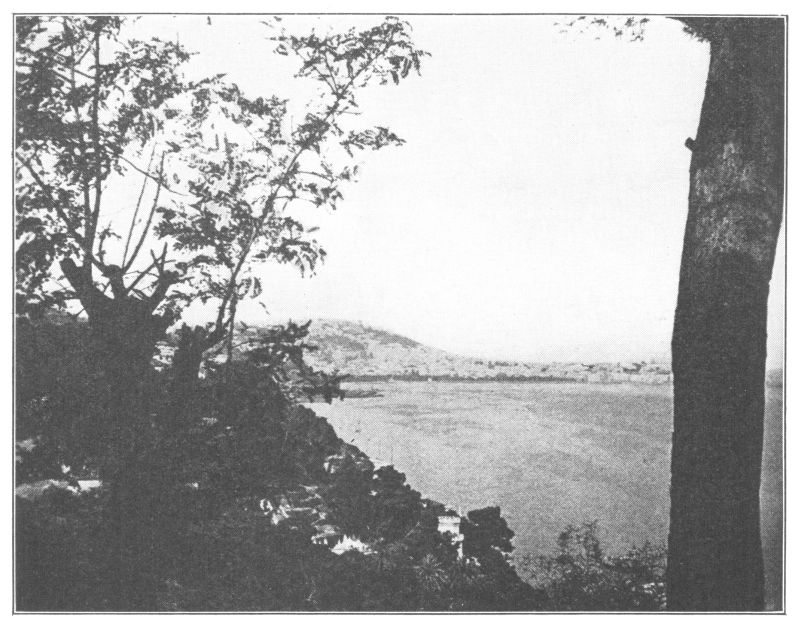
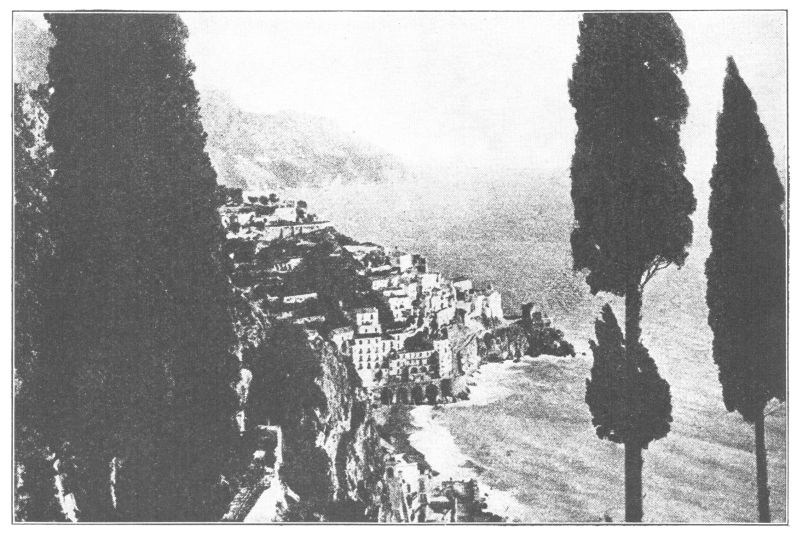
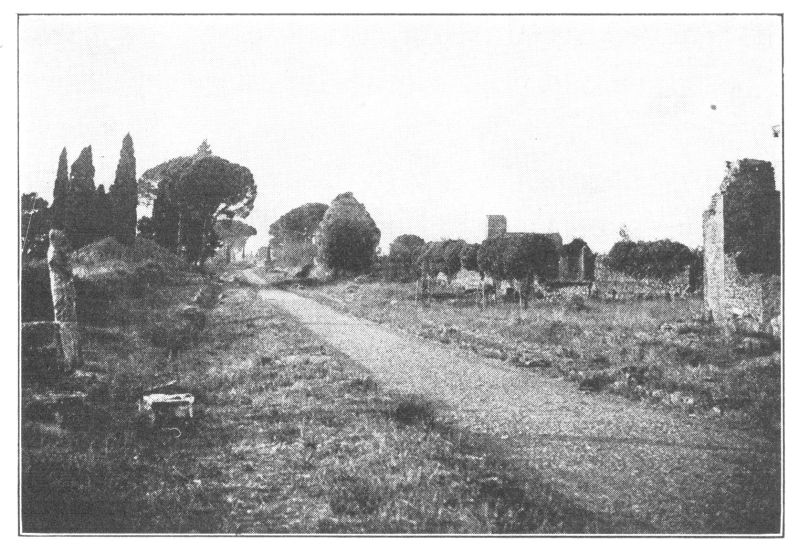
ALONG THE ROAD, NEAR NAPLES
|
Occasionally, there would be an automobile.
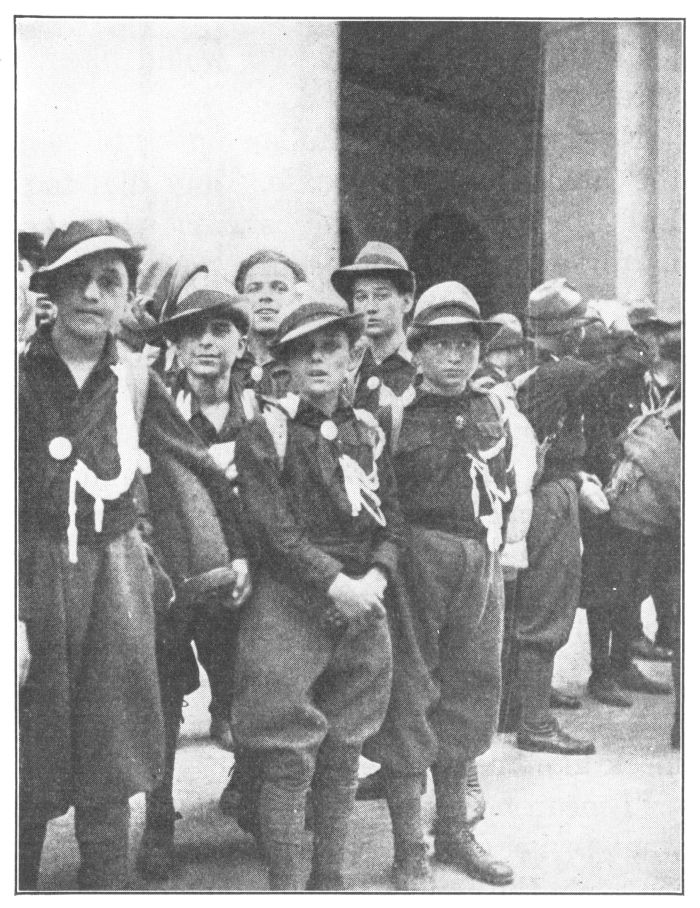
Tony liked the little cars named
"Balilla," after the Boys' Group. They are
the smallest Italian cars made.
|
|
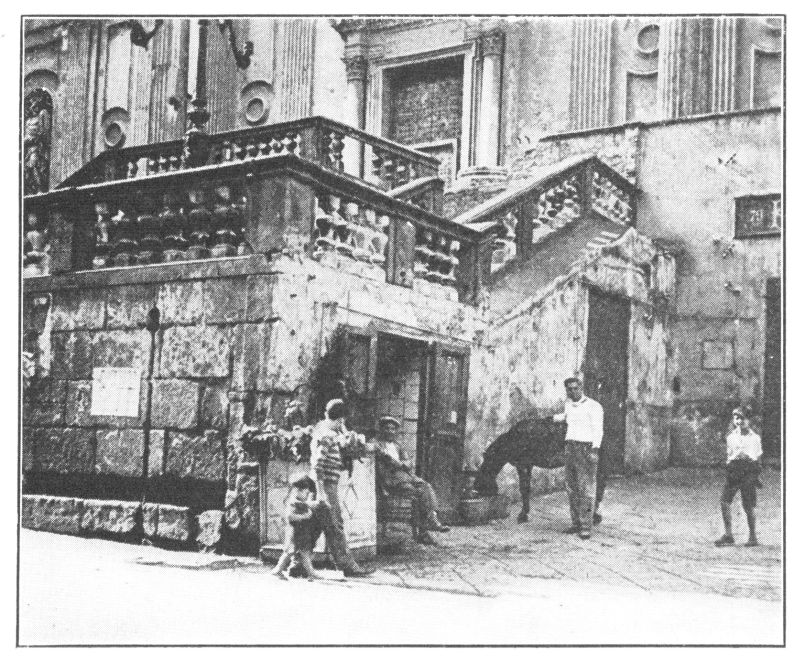
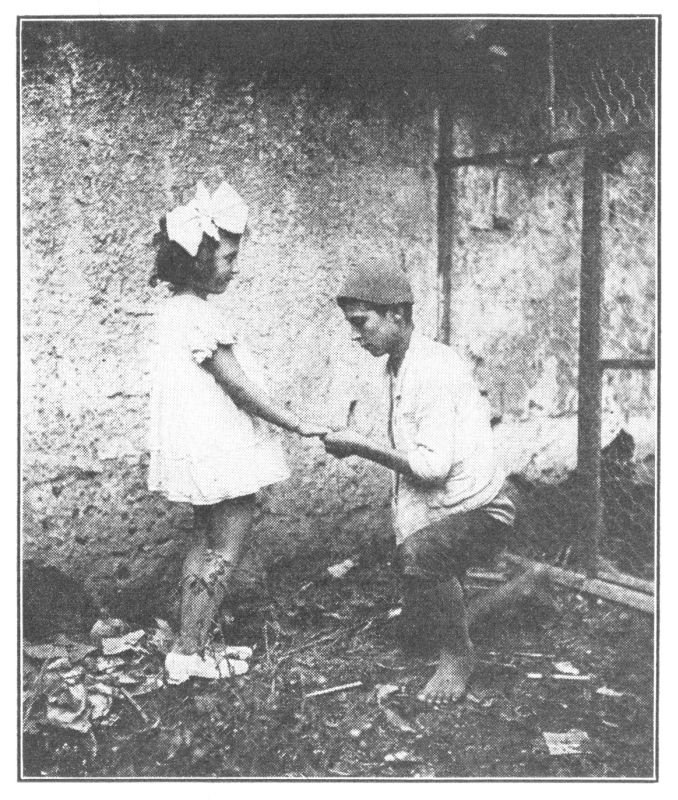
ALONG THE ROAD
|
Tony bought chestnuts and munched
them. Chestnuts often take the place of
bread among the poor people.
Toward the end of day Tony began to miss
Tina. He had seldom been separated from
her for such a long time. So he returned to
Anna's house.
He hoped that Anna had not forgotten to
leave his dinner. He also hoped that her
father would not forget to tell more stories
tonight. This was a pleasant life.
But, of course, Tony was too wise to think
that he could go on living like this forever.
Guido might find him. Or Anna's father
might discover him.
Yet if he ran off with Tina he would be a
"thief like Guido!" No, that would never,
never do!
Oh, how difficult it all was!
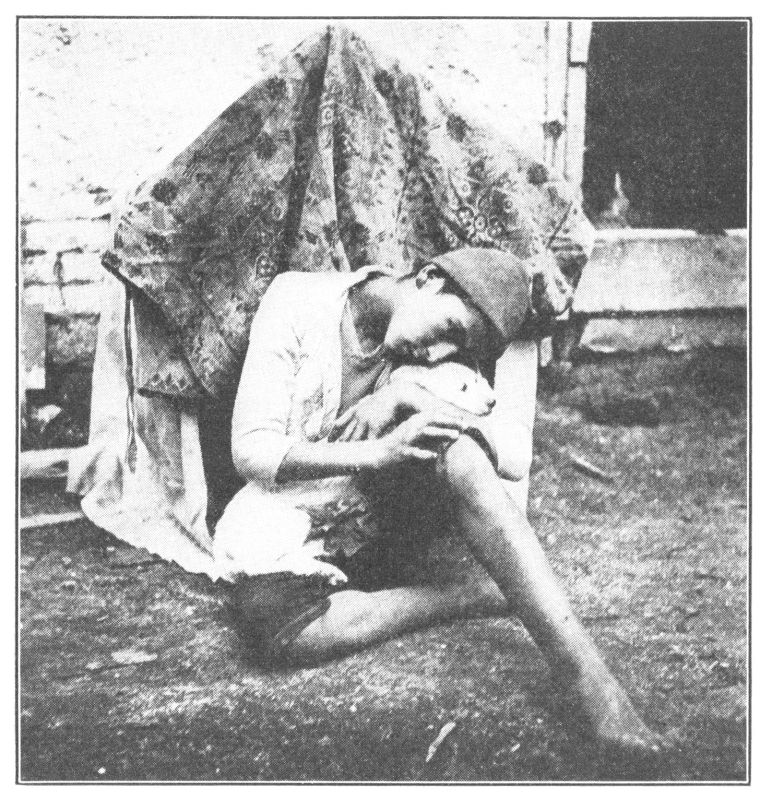
But upon arriving at Tina's tent he forgot
his troubles, for he found there a neatly covered
dish. It contained macaroni, meat, and
salad. An ideal meal for an Italian boy!
Also, Anna had really left some torrone
on the plate. Tony sighed with pleasure and
began to eat. Good little Anna!
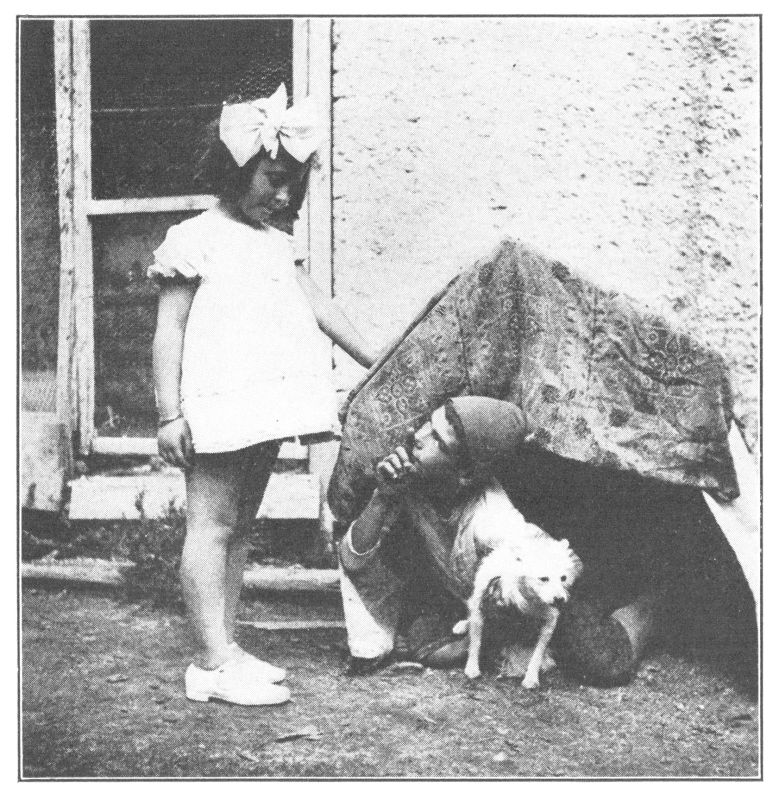
All day the little girl had been thinking
of the beggar boy. However, she had kept
her adventure a secret.
But, oh, Tony, beware! Anna is very
young, and it is difficult for small children
to keep secrets. Especially, when secrets
are as interesting as you are!
This evening the weather was cooler. The
moon did not shine. When Tony finished
his dinner, he slipped under the window as
he had done before. He hoped Anna's
father would tell more stories of Italy.
Presently, he saw the family enter the
room. They had dined. The mother took
up her sewing. The father settled himself
in his chair with a book.
Anna, with her dog, nestled down in his
lap. Tony knew that now more stories were
coming. He leaned against the side of the house.
|
|
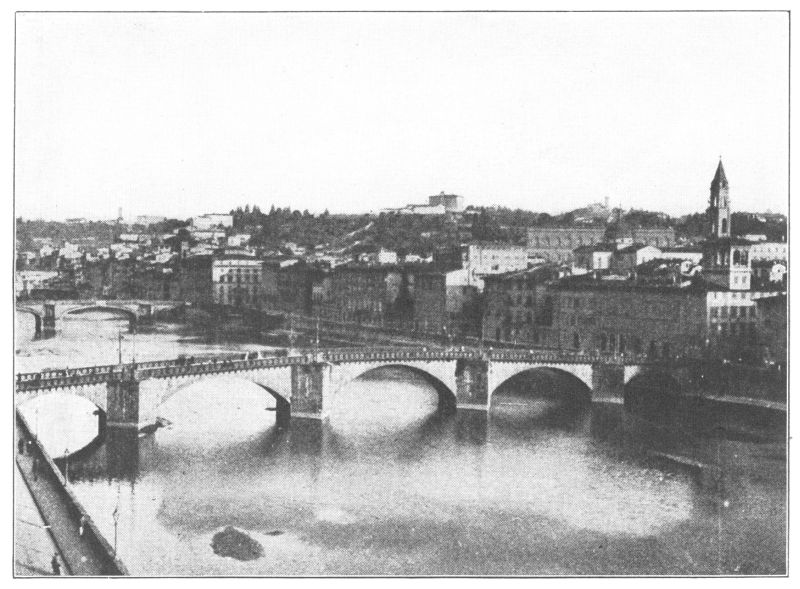
FLORENCE AND THE ARNO RIVER
|
He closed his eyes contentedly and
listened.
|
|
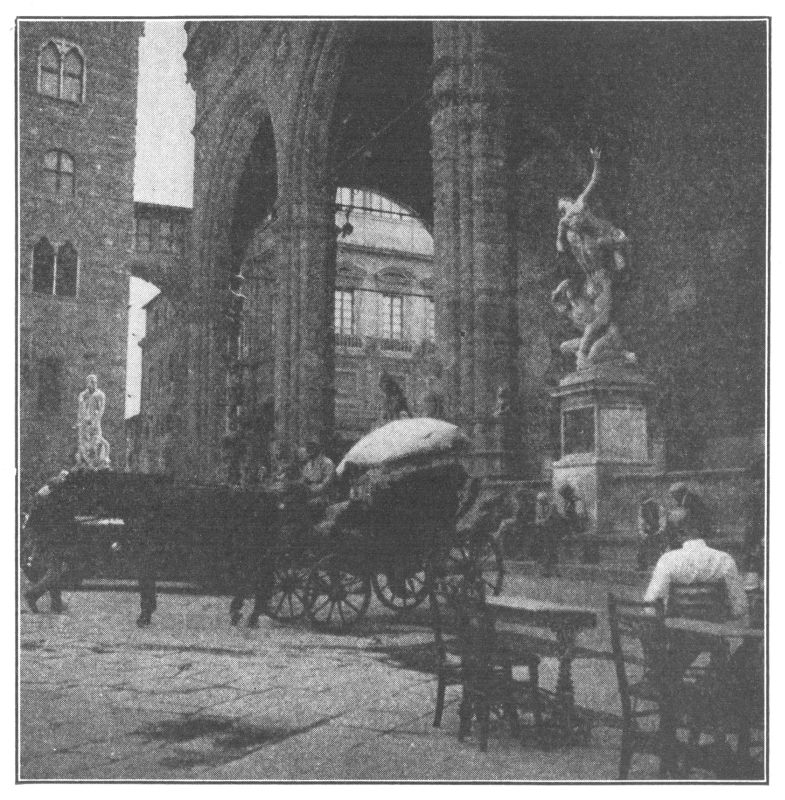
PIAZZA DELLA SIGNORIA: FLORENCE
|
"It is early," said Anna's father. "We
shall have a long time to read tonight. Shall
we hear more about the cities of Italy?"
|
|
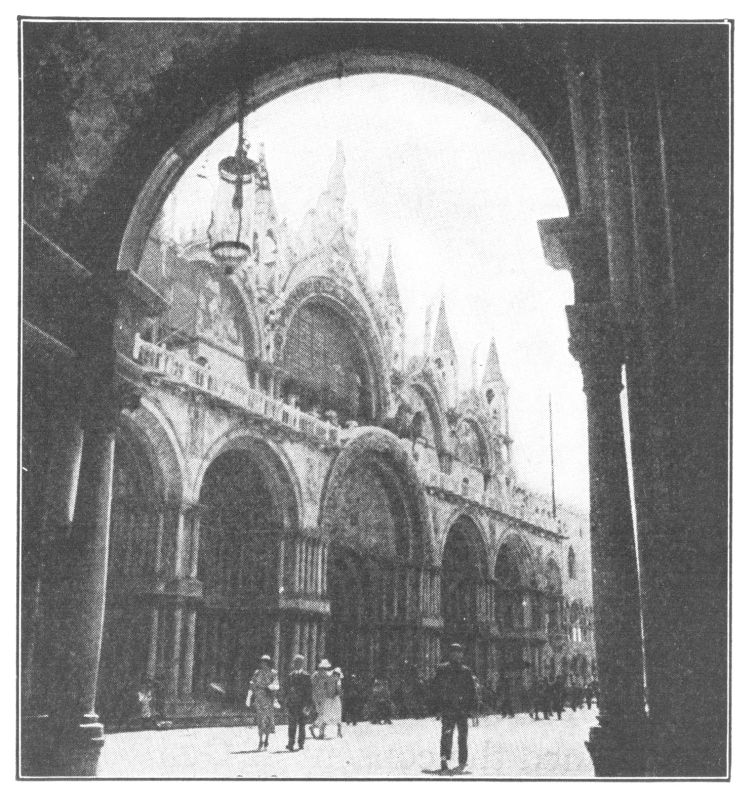
ST. MARK'S: VENICE
|
"Yes, and about animals, too," said Anna.
Her father laughed. "Perhaps we shall
meet some as we wander," he said. "Listen,
now, while I tell you of Florence.
"It is a city of ancient palaces! In the
days of the civil war, homes of the rich were
built like fortresses. This was to protect
them from the enemy. Most of these prison-like
palaces still stand.
"Florence is a city of art! The famous
Campanile, or bell tower, reminds us of its
artist-architect, Giotto. Here is a story told
about the painter when he was a peasant lad
tending his father's sheep.
"One day a great artist named Cimabue
paid a visit to the countryside. He was impressed
by a sketch which the young shepherd
had made.
"He gained the consent of Giotto's father
to take his son to Florence. There he promised
to teach the boy how to paint.
"So Giotto became Cimabue's apprentice,
or helper. He worked hard and learned a
great deal. But, like all boys, he was fun-loving.
One day he played a joke upon his
master.
"Cimabue had gone out, leaving in the
studio an unfinished portrait of a gentleman.
When he returned, there was a fly
sitting upon the nose of his painting.
"He tried to brush off the fly but it would
not move. He looked more closely and discovered
what had happened. His mischievous
young apprentice, Giotto, had painted
that fly!
"The master was not angry. He enjoyed
the joke and recognized the lad's skill.
"Giotto became known as the father of
one of the first schools of painting.
"Florence is also a city of great men!
"One day, long ago, a nine-year-old boy
named Dante went to the feast of flowers,
which is celebrated every year. Here,
among the beautiful blossoms, he beheld
one more beautiful and sweet than all the
rest.
"But this one was not a flower. She was
a little maiden and her name was Beatrice.
All day long Dante watched her as she
played about, and never, throughout his
whole life, did he forget her.
"Though they seldom met, the little girl
named Beatrice was forever with Dante in
his dreams. To her he wrote most of his
marvelous poetry. For Dante became
Italy's greatest poet!
"Florence, city of wonders!
"A legend tells that when Christ went to
heaven he carried with him a cricket. So,
each year, before Ascension Day, everybody
buys a cricket.
"They guard their crickets most carefully.
For, if one should die, misfortune befalls its
owner.
"On Ascension Day a crowd gathers in the
park. Here there is much gaiety, with balloons,
music, and fireworks.
"At a certain time each person opens
the door of his cricket's cage and frees it.
|
|
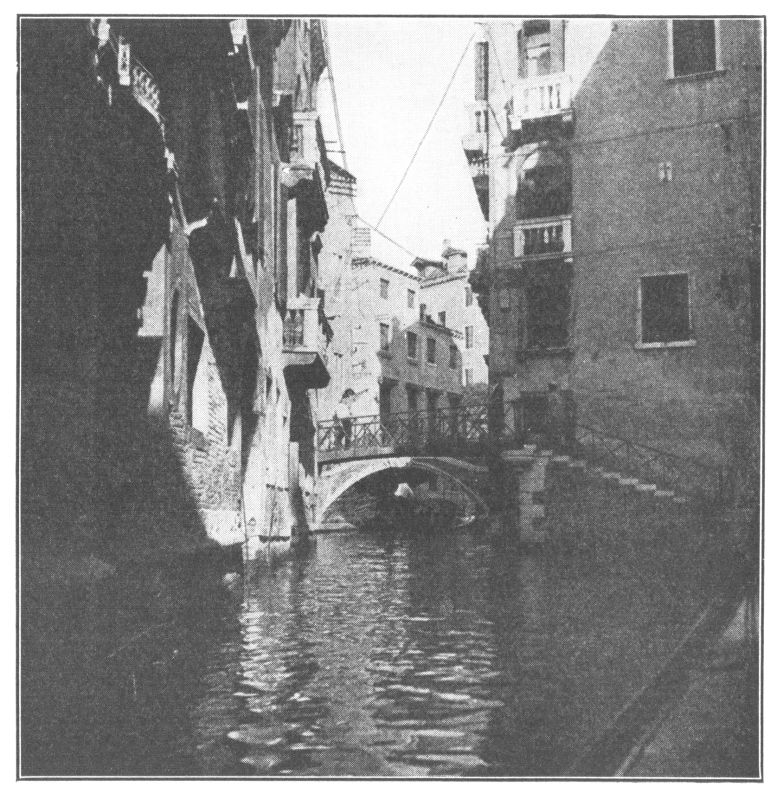
A CANAL IN VENICE
|
"This is an anxious moment. For, if the
cricket leaps into the air, good fortune will
follow the owner. But if he creeps slowly
away, his poor owner will suffer bad luck.
|
|
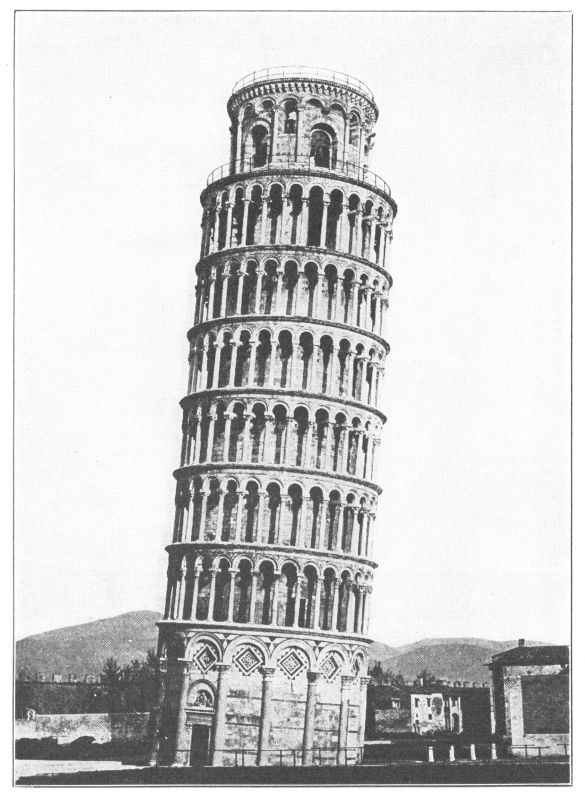
THE LEANING TOWER OF PISA
|
"Of course, today few people really believe
this. But they still keep up the quaint old
custom.
"Florence is a grey cluster of narrow
streets and dignified squares. It seems to
bulge with art treasures, and it has a charm
of its own.
"Near Florence, in Pisa, is the curious
Leaning Tower. It is one of the Seven Wonders
of the World. It seems to be toppling
over. Yet it has stood this way for hundreds
of years. Maybe it is tired."
Anna's father stopped reading.
"Is my little girl tired, too?" he asked.
"Shall I put down the book?"
"No, no, Papa!" said Anna.
Tony, under the window wanted to answer,
"No, no!" too. But, then, his opinion
had not been asked.
"The next story is about Venice," continued
the father.
"Once upon a time there lived in Italy a
people known as the Veneti. They were not
fish, yet they built a city in the water.
"Savage tribes had driven them from
their land. They had no home. So they
settled upon some small islands at the head
of the Adriatic Sea. They called their
island-city Venice.
"Fish were plentiful. They salted them
and traded them for treasures of all kinds.
People began to come from everywhere to
buy these treasures. Venice became the
most important market in Europe.
"St. Mark is the patron saint of Venice.
To him the Veneti, or Venetians, have built
a wonderful cathedral. In front stands the
statue of a lion, the favorite animal of St.
Mark.
"Four huge horses adorn the door.
Though they are made of bronze, they have
travelled widely. They have been moved to
different places at many times.
|
|
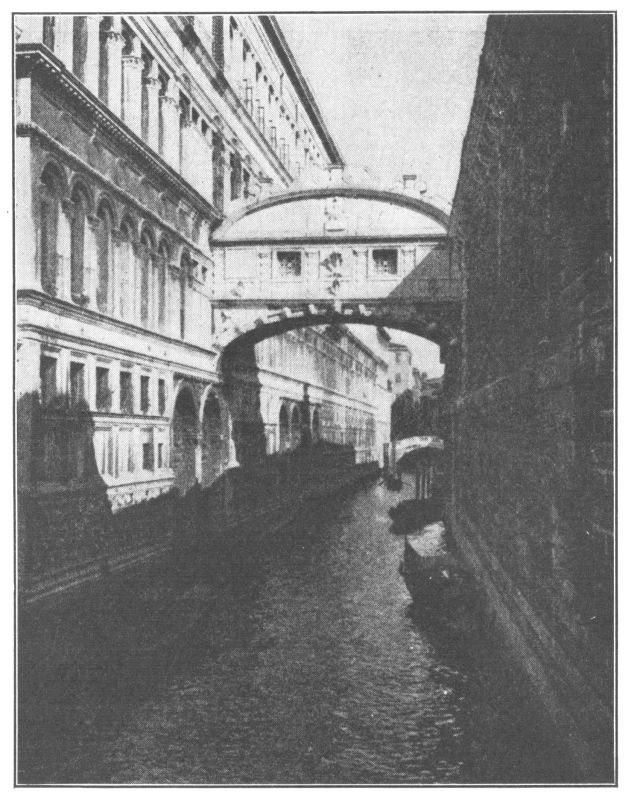
THE BRIDGE OF SIGHS: VENICE
|
"Inside, the cathedral is decorated with
mosaics. They are made of bits of colored
stone or glass fitted together.
|
|
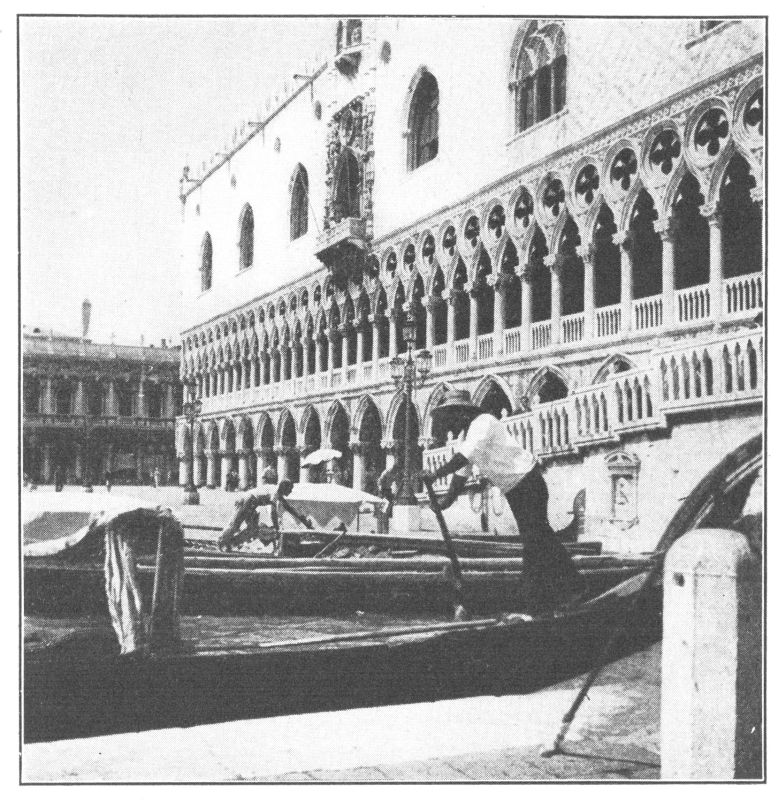
THE DOGE'S PALACE: VENICE
|
|
|
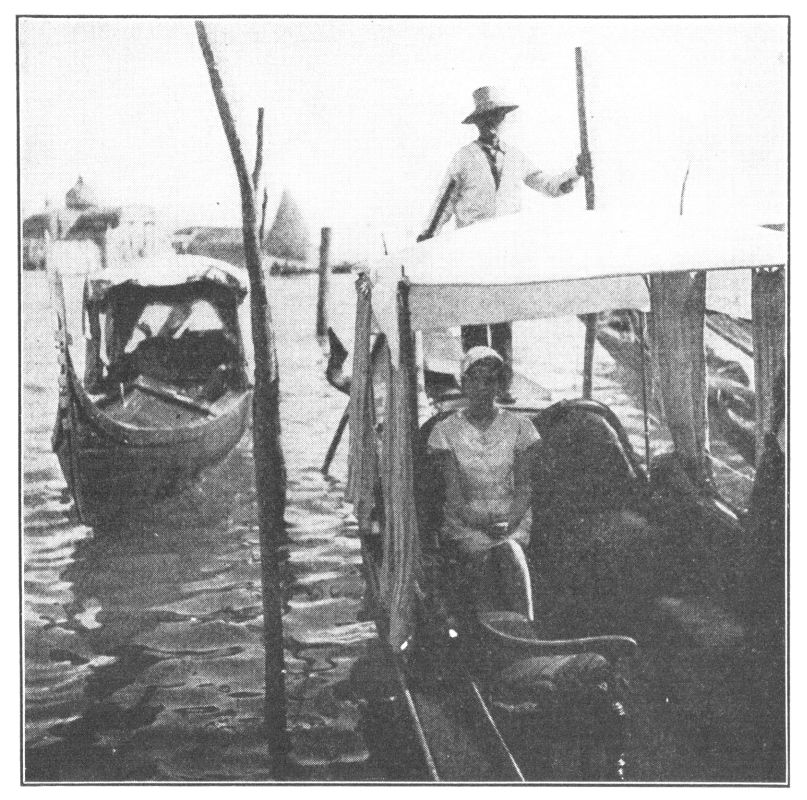
IN A GONDOLA
|
"St. Mark's Square is the largest piece of
ground in Venice. The rest is water.
Streets are canals. Boatmen guide long,
black boats called gondolas through these
canals. They sing and cry out strange signals
to other boatmen.
"In years gone by Venice, like Rome, was
a world of its own. A Doge, or Duke, ruled
over the city.
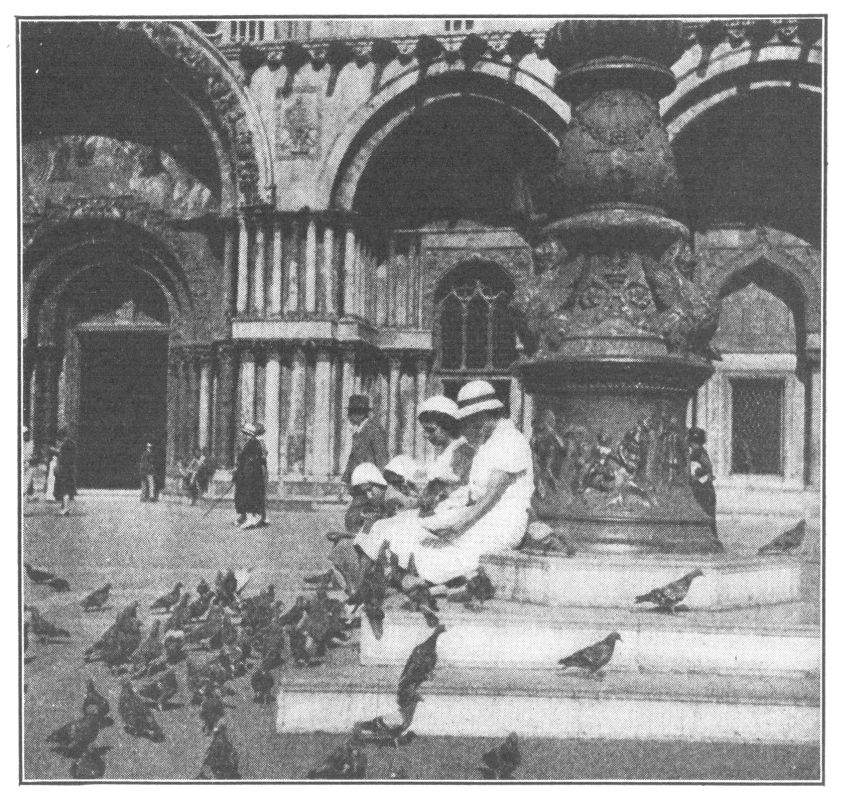
|
|
FEEDING PIGEONS IN ST. MARK'S SQUARE
|
"Between the Doge's Palace and the
prison is a bridge. Over this bridge
marched those condemned to prison by the
Doge. As they marched they sighed and
that is why the bridge is known as 'The
Bridge of Sighs.'
"On one of the little islands live the glass
blowers. Just as you blow soap bubbles, so
they blow melted glass into vases and bowls.
Venetian glass is famous.
"There are hundreds of pigeons flying
about St. Mark's Square. While you are in
Venice, you must surely allow a pigeon to
sit upon your head. If you do not do this,
your visit will not be complete and I am sure
the pigeon will be disappointed!
"Naturally (and this is most important to
the pigeon) you must put some corn on your
head first. It is not your hair nor your hat
which attracts him!
"Venice is a city of Dreams! And—animals!"
The father looked up from his book. Anna
laughed.
"Yes, that is true," she said. "There was
St. Mark's lion, the bronze horses, the
pigeons, and—and—oh, yes, the fish!"
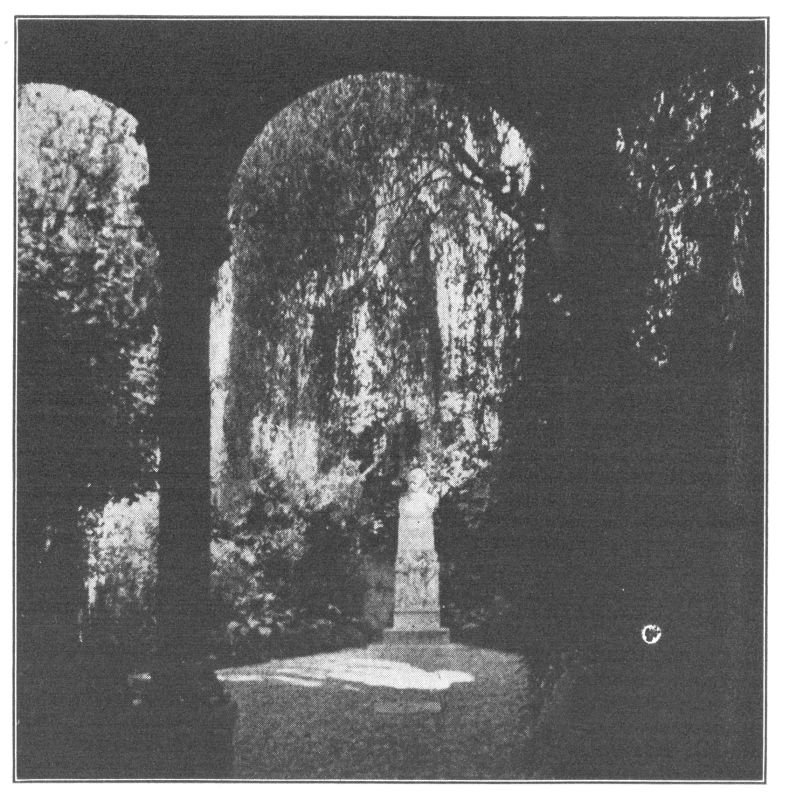
|
|
JULIET'S GRAVE: VERONA
|
"You have forgotten some of the other
animals we read about in the stories of
other cities," said her father.
Anna looked puzzled.
"Don't you remember the crickets of
Florence?" asked her father. "And that fly
which Giotto painted on the nose of Cimabue's
painting!"
"Oh, that was a nice chapter," said the
little girl. "Now some more."
Her father began to read again:
"The greatest playwright in the world
was Shakespeare. He was an Englishman.
He wrote a play called 'Romeo and Juliet.'"
"Was it about animals?" asked Anna.
"No," smiled her father. "It was about
two lovers. It is a very famous story and
the scene is laid in Verona, an Italian city.
"In Verona there is a beautiful little grave
where they say Romeo and Juliet are buried.
The statue of Shakespeare stands over it."
"But how can they be buried if they were
only book people?" asked Anna.
"That is a good question," said her father.
"Of course, it cannot be true unless such
people really lived."
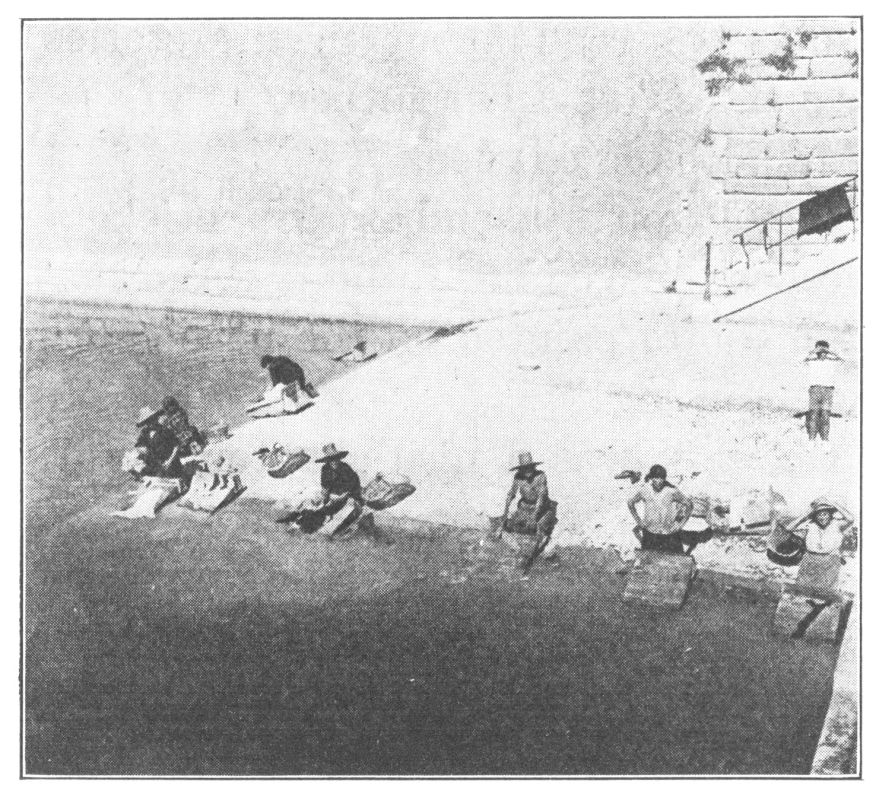
|
|
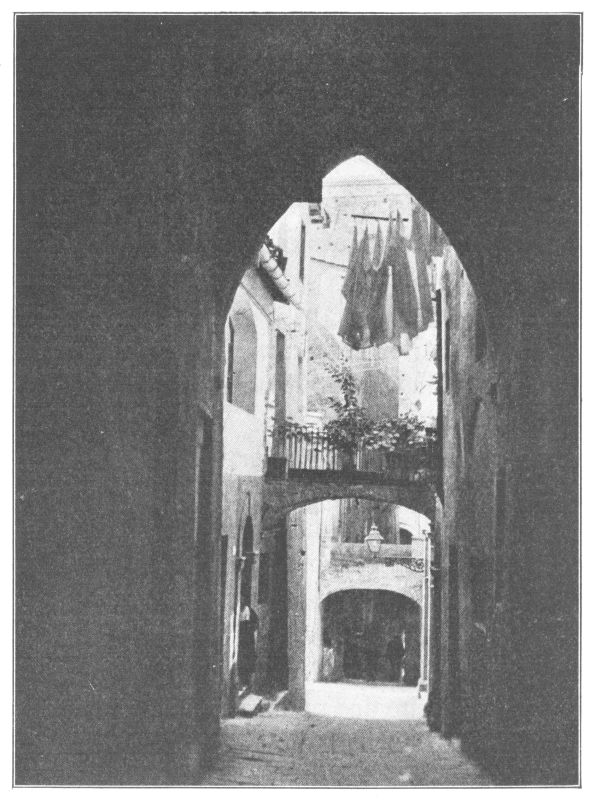
WASHING CLOTHES
|
"Maybe they buried the book which Mr.
Shakespeare wrote!" decided Anna.
Just then there came a queer, muffled
noise under the window. Tony had sneezed!
Anna's father, turning the pages of the
book, did not seem to hear it. But Anna,
who had been thinking of Tony, did.
She wanted so much to tell her father
about the poor boy. She really did not think
that her father would be unkind to him.
Yet she had promised to say nothing, and
she must keep her word.
"Papa," she suddenly asked. "If you had
a little boy who told stories and did not
obey, what would you do to him?"
Her father hesitated a moment. Then he
answered, "I would try to teach him the
beauty of truth and I would discipline him."
His voice had a very severe ring. He continued:
"There are too many lazy little beggars
in the streets of Naples, like that lying
young son of the Marionette Man. They
have never been properly trained, and they
are a disgrace to a beautiful city. They
should be taught. They should be made to
obey!"
Upon the word "obey," his hand came
down with a bang on the arm of the chair.
It made Tony jump.
CHAPTER VII