The Brussels Sprout sat among the cabbages,
thinking.
The Brussels Sprout was not a little vegetable.
He was a little boy. His name was
really Philippe. But he was called "Petit
Choux de Bruxelles" (pe-tē´ shōō de brük-sel),
which means in French, "Little Brussels
Sprout." French is spoken in Brussels,
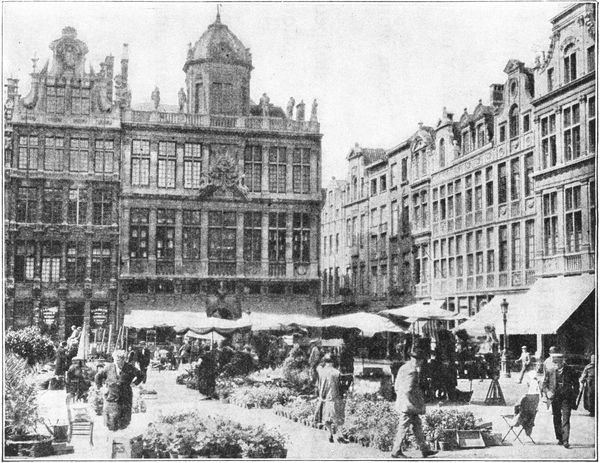
and this little boy was born in that city.
But he now lived on a farm a few miles
outside of Brussels.
The name "choux" (shōō) or "cabbage,"
is often used as a pet name. That was the
reason why Philippe's parents called him
Little Cabbage or Sprout.
Sprout was a very good name for this little
boy, because new ideas were always sprouting
in his head.
He was always dreaming dreams and wishing
wishes. He was never satisfied.
One of his dearest wishes was for a little
sister.
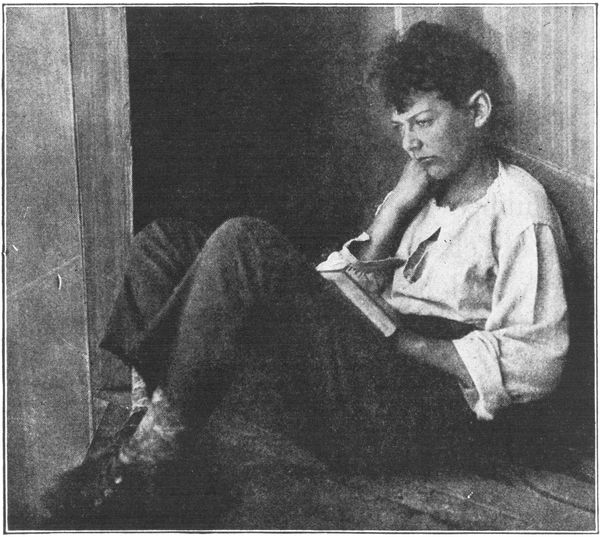
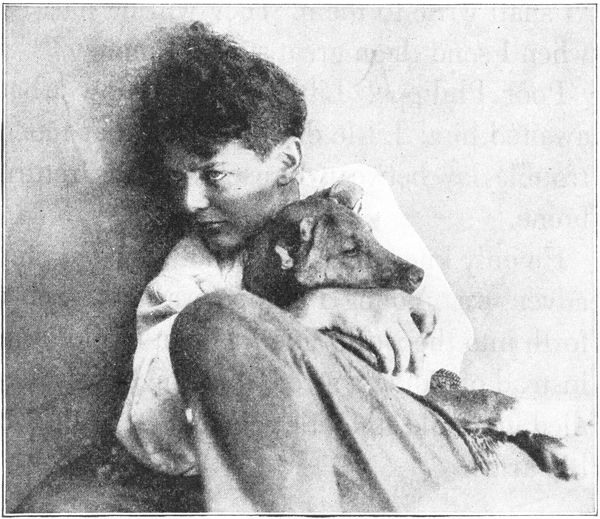
Today he sat among the cabbages and
thought deeply. He was wondering why one
of the cabbages did not open and give him
a baby sister.
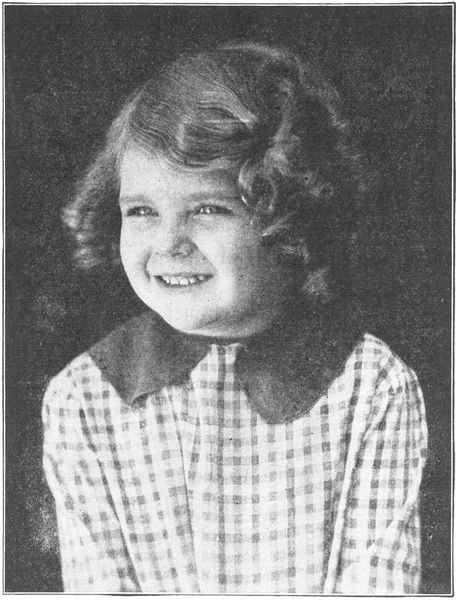
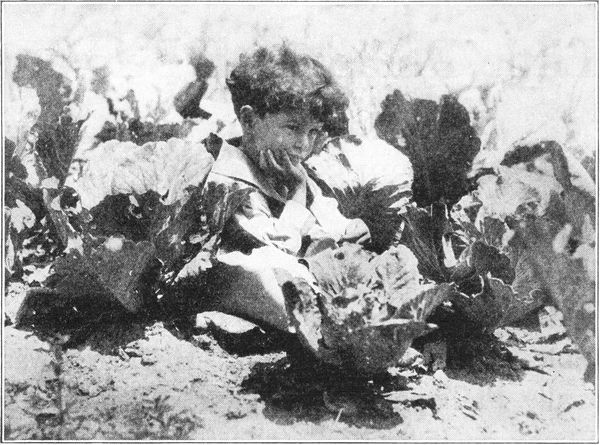 SPROUT SAT AMONG THE CABBAGES
This may sound queer to you. But Philippe
was only five years old, and he believed very
earnestly that babies pop out of cabbages.
It is a Belgian folk tale. Philippe had
planted these cabbages in his garden for this
very purpose.
But no baby sister had popped out of a
cabbage yet.
Philippe wanted a baby sister with whom
to play. He was the kind of little boy who
always longed for something.
He was not really discontented. But he
liked new things to happen. And besides he
was a bit lonely on that farm, with nobody
to play with him.
"Why do you look so sad today, my little
cabbage?" asked his mother.
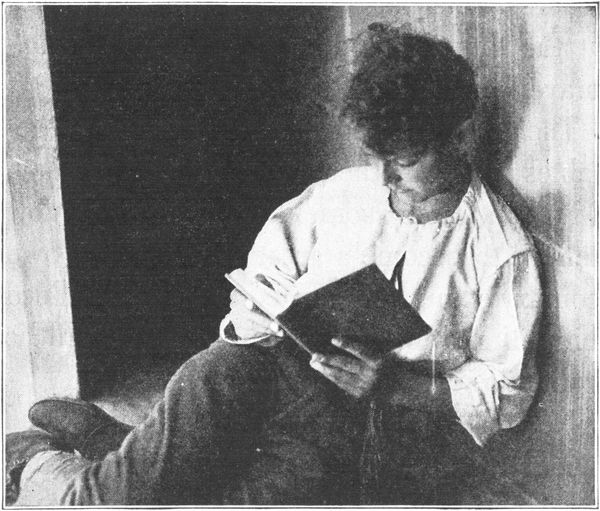
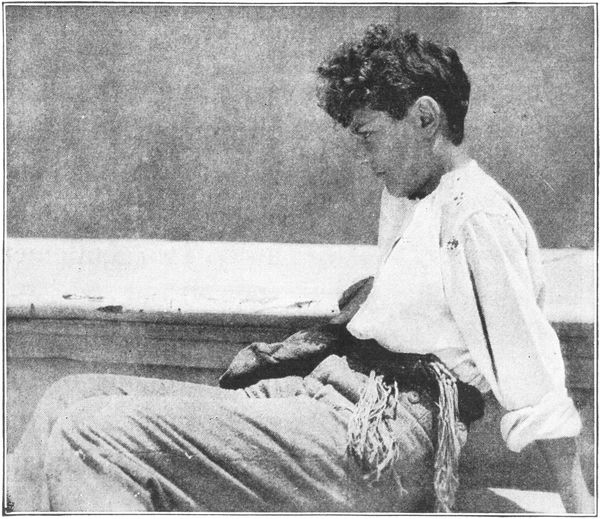
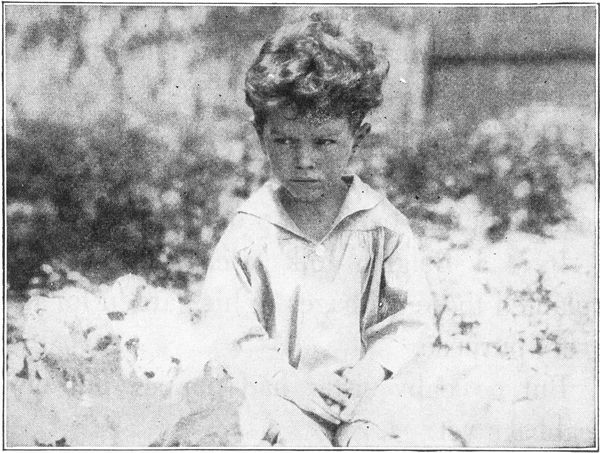 HE WAS NEVER SATISFIED
She had just come out of the house and
stood looking down at him.
"I am thinking that never will the baby,
Cauliflower, come!" he answered.
Cauliflower was what Philippe had determined
to name the sister for whom he longed.
Cauliflower in French is "choux fleur"
(shōō-flûr), which means "cabbage flower."
"Are you quite certain that none of the cabbages
moved today?" asked Mother Yvelle
(ē-vĕl'), smiling strangely.
Philippe shook his head and replied, "They
are all quite still, Mamma. The little sister
is not coming."
Then Mother Yvelle laughed and threw
both arms about her little boy.
"Do not say that," she cried.
Philippe looked at her and saw a shiny
light in her eyes. Mother Yvelle said softly,
"Soon—soon—the great day is coming when
my Philippe shall be a little brother!"
A little brother! Philippe could hardly
believe the words that Mother Yvelle had
spoken. But it was true. Mother Yvelle
spoke only the truth.
When Mother Yvelle went into the house,
Philippe looked at each cabbage carefully.
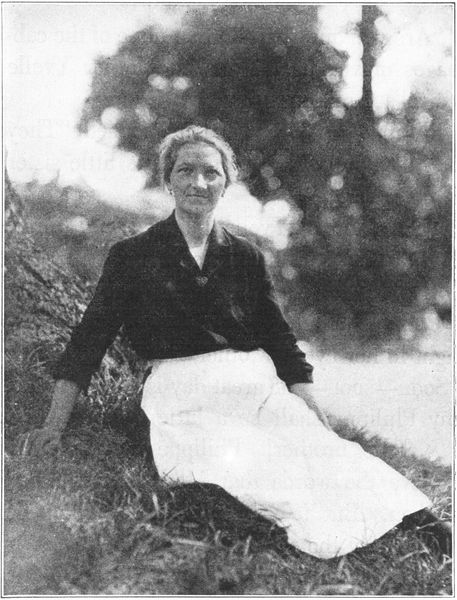 MOTHER YVELLE
"Which one will it be?" he wondered excitedly.
"Which cabbage will open and give
me my little Cauliflower?"
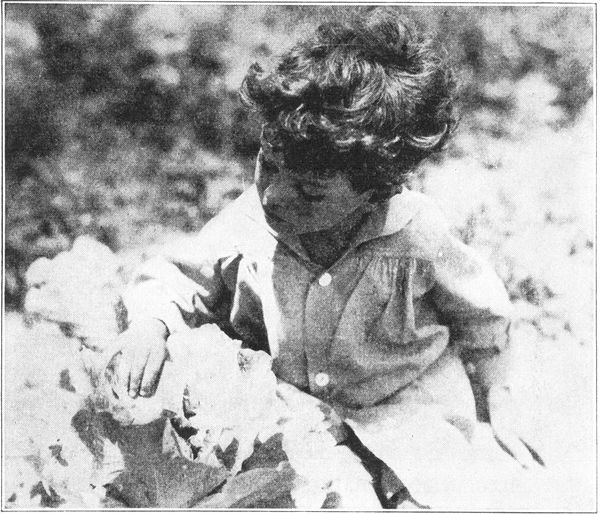 "WHICH ONE WILL IT BE?"
Philippe was happy beyond all dreams. He
examined each vegetable. But he could find
no sign of the coming baby in any of them.
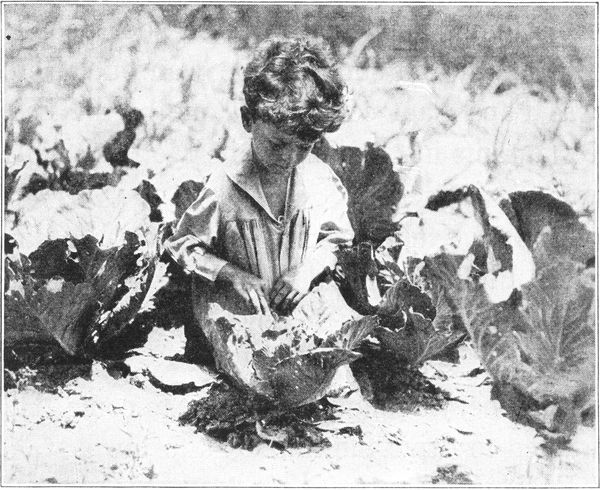 HE EXAMINED EACH VEGETABLE
He went to the barn. There he spoke to
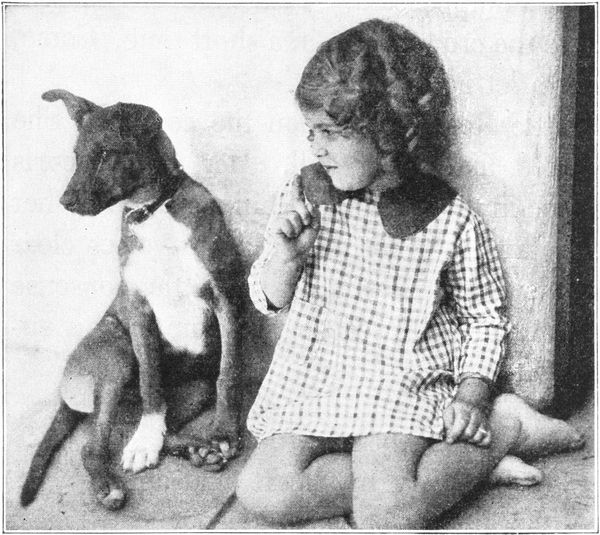
the big dogs, his only companions. He told
them the great news.
These dogs did not have much time to play
with a little boy. They were usually working.
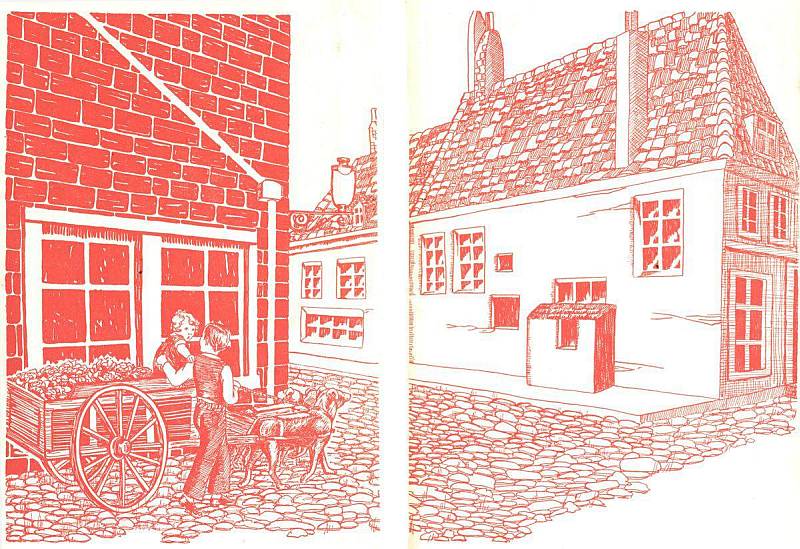
For Belgian dogs draw carts for their
owners.
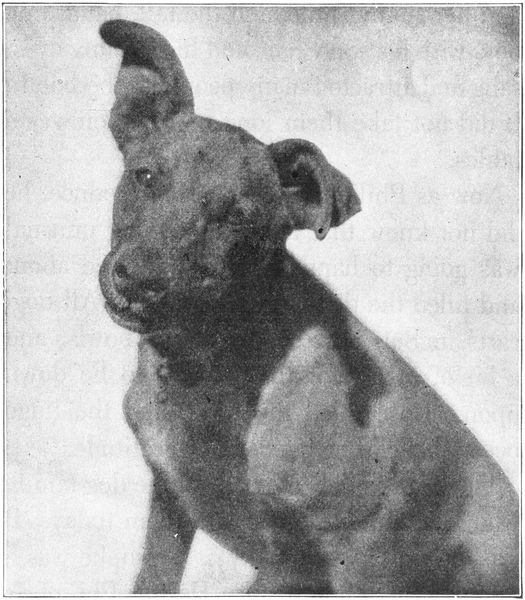
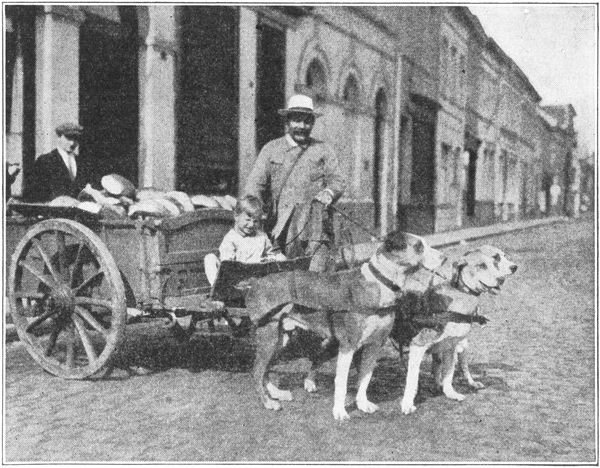 BELGIAN DOGS DRAW CARTS FOR THEIR OWNERS
Philippe's mother had a big vegetable cart.
Nearly every morning she loaded it with
peas and beans and carrots and onions. She
then hitched the dogs and drove them to
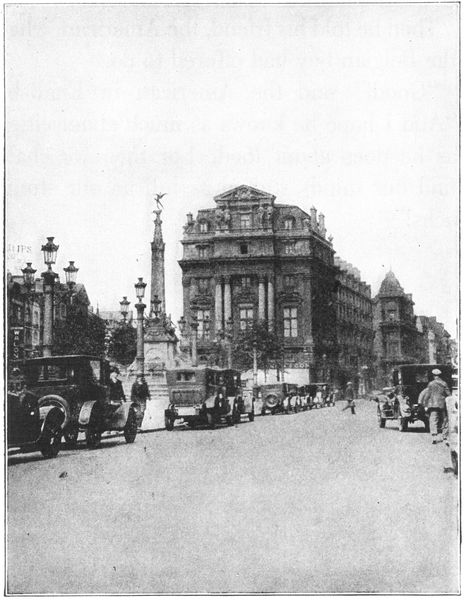
the market place in Brussels. Here she
would sit at a stand and sell her fresh vegetables.
Philippe usually went with her. But sometimes
he stayed at home with the gardener.
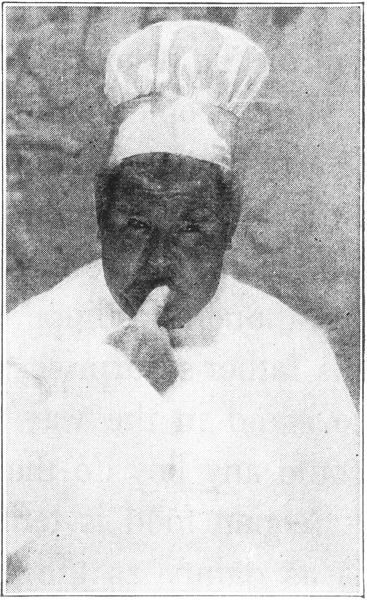
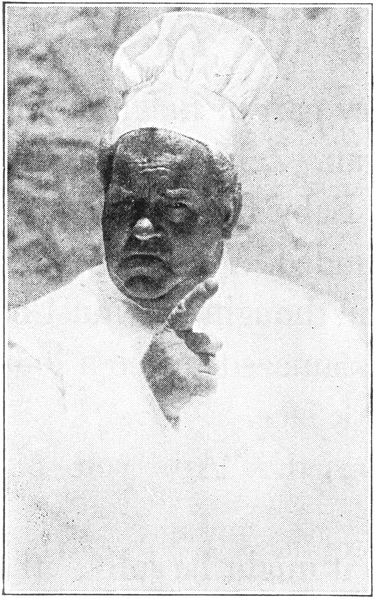
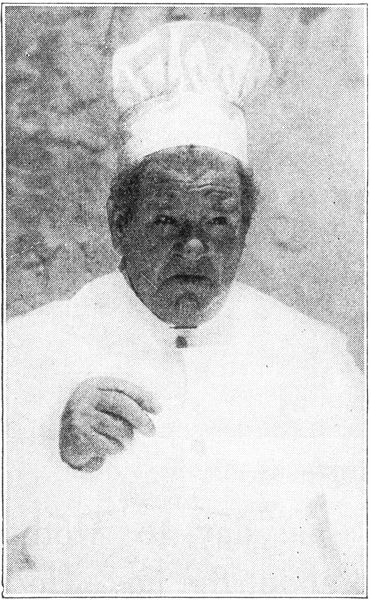
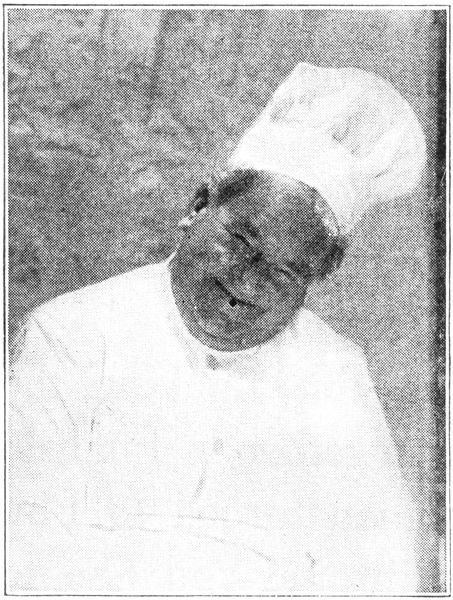
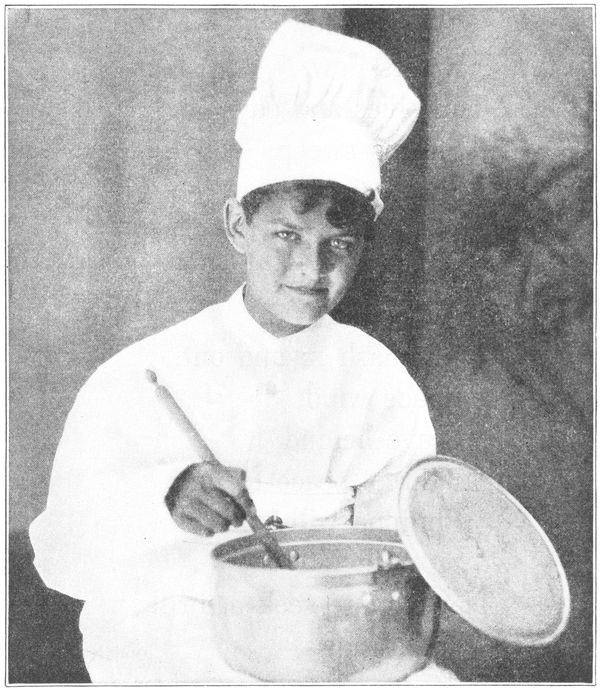
Philippe's father was a chef. Papa Paul
was a very fine chef and could cook some
of the best French and Belgian dishes.
He cooked in a fine restaurant in Brussels.
He came home late at night, and so Philippe
saw little of his father.
But he admired his father very much. He
wanted to cook the way his father did some
day. That was another great desire in the
heart of this little boy. Philippe dreamed
of some day becoming a chef like his father.
But he did not look like Papa Paul.
Philippe's father was stout and round and
smiling. And Philippe was rather slender,
and had a serious little face with big dreamy
eyes. He was like his mother.
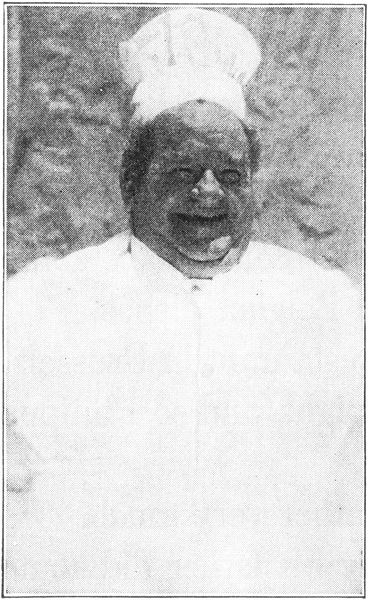 STOUT AND ROUND AND SMILING
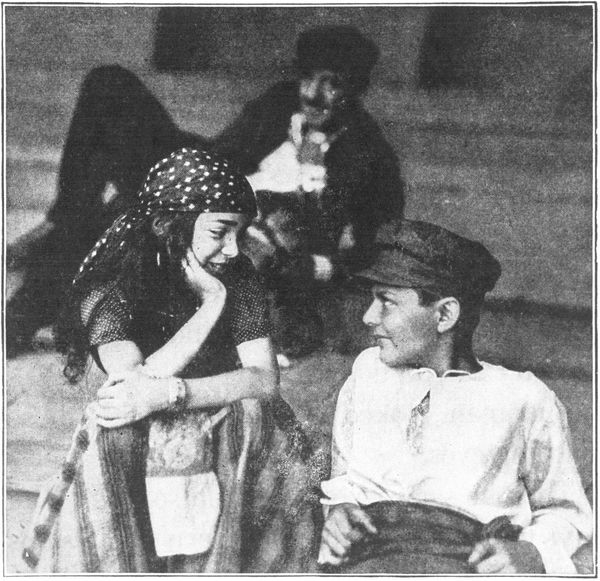
Mother Yvelle was
thin and pale and
sad-looking.
You see, she and
her husband had lived
through the terrible
World War.
There are, however,
people whose dispositions
are so jolly that
they forget sadness.
Philippe's father was
one of these people.
Though Papa Paul wore a wooden leg, it did
not seem to affect his sunny smile. When
he was in the war he had been shot in the
leg, and now he wore a leg of wood. He had
been a chef only since the war.
Before the war Philippe's parents had
farmed and raised vegetables together. They
had been happy farmers. But their farm had
been blown to bits by the enemy.
Many stormy years passed, and many terrible
things happened to these poor people.
But finally the sunny smile won out. Here
was Papa Paul cooking in one of the best
restaurants in Belgium, while Mother Yvelle
was the farmer.
Mother Yvelle looked forward to the day
when Philippe should be old enough to help
her drive the dogs to town with the vegetables.
Philippe, too, wanted that day to come. He
wanted to drive the fine dogs to town.
From the barn he made his way to a tiny
shack, which was his own little kitchen.
Here he spent many hours over a small stove
his father had made for him. He prepared
dishes that he thought were very fine.
Today he had gathered some vegetables
and carried them with the other things he
had in his arms.
"What are you going to cook today?" asked
the gardener, Emile (ā-mēl´).
He stood in the door holding a big rake
and looking amused.
"A stew—a very fine stew," answered
Philippe, and he began to pour a number of
things into a pot.
"What are you putting into the stew?"
asked Emile.
"Onions and peas, some rice, a nice little
fat snail and a root," the boy replied, as he
began to stir.
"A root? What kind of a root?" inquired
the gardener.
"Oh, a root that I found. A very big one.
I dug it up."
Emile laughed and moved on. One could
never tell what went into Philippe's stews.
Sometimes Emile was made to taste them.
Then he had to tell Philippe that the stews
were good. But Emile always had to drink
some water afterwards to wash away the taste.
But then Philippe was such a little boy. Besides,
the gardener felt sorry for him, because
he was lonesome.
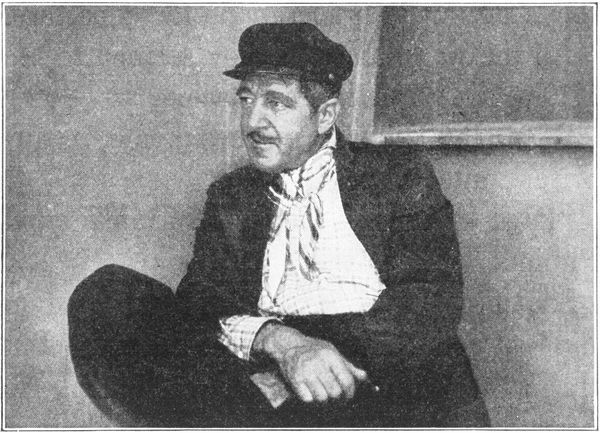
Philippe called the gardener Emile Epinard
(ā-mēl´ ā-pē-när´), which means "Emile
Spinach." And, indeed, Emile did look like
a ragged leaf of spinach!
Philippe had a vegetable game. He always
tried to think what vegetable each person
looked like.
Then he would call that person by the
name of that vegetable. It was fun.
For instance, he always called his father
"Papa Pomme" (pōm), which means
"Father Apple." This name rather shocked
Mother Yvelle. But it pleased the jolly
round chef. He would tell his friends about
it and laugh until his fat sides shook.
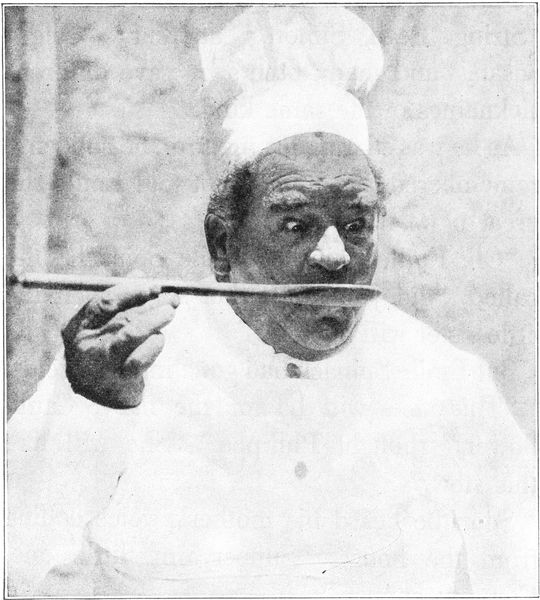 PAPA POMME WAS A VERY FINE CHEF
Philippe had a friend whom he called
"String Bean Simon," another, "Celery
Susan," and many others he gave different
nicknames of the same kind.
As he was stirring his mixture, he suddenly
remembered that he had not told Emile the
great news.
"Oh, Emile Spinach, Emile Spinach," he
called, "did you know that soon, soon the
little sister will be here?"
But Emile Spinach had gone into the fields.
"This stew will be for the baby, Cauliflower,"
thought Philippe. "She will like
this stew."
Soon he heard his mother's voice calling
from the house, "Supper, my little one.
Come to supper."
Carrying his precious pot, he started toward
the cottage. On the way he once more
examined the cabbages.
But there was still no sign of a baby in any
of them.
As he neared the house, he noticed a beautiful
rose growing near the wall.
It had been in full bloom the day before.
Now it was beginning to droop. Philippe
looked at it pityingly.
"Poor rose!" he said. "Tomorrow you will
be dead."
Then he went into the house.
The next morning Philippe arose early. He
ran to the cabbage patch. But the cabbages
all looked neat and whole. None had been
disturbed during the night.
"She has not come!" moaned poor Philippe.
Sadly he started toward the cottage, when
again he noticed the rose. But this time it
was only the stem he saw. The petals all
had fallen to the ground.
"Poor rose!" he sighed. "She is dead!"
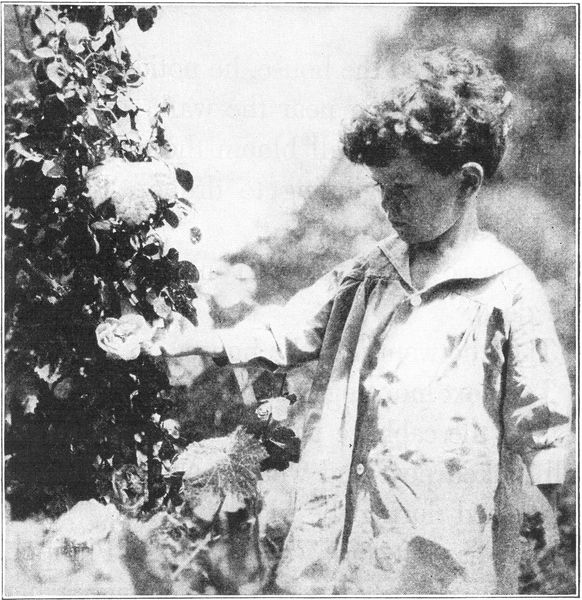 "POOR ROSE," HE SAID
There was a step behind him. A heavy
hand was laid on his shoulder.
His father's deep, fine voice boomed,
"What are you saying, my little cabbage?"
"Poor rose is dead!" answered Philippe
sadly.
"What!" exclaimed Papa Pomme. "Why,
Baby Rose is born!"
"Baby Rose?" questioned Philippe.
"Yes, my son," Papa Pomme said. "Your
little sister came to us last night—your little
sister Rose."
Philippe leaped up and threw his arms
about his father's neck in a burst of joy.
At last his little sister was here! Then he
looked at the dead rose, and from it, to the
live and healthy cabbages. He smiled knowingly.
"Papa Pomme," he said, "it was not from
the cabbage that Baby came. So, you see,
she shall not be our Cauliflower. It was the
rose that opened to give her to us. That is
why she is our Baby Rose."
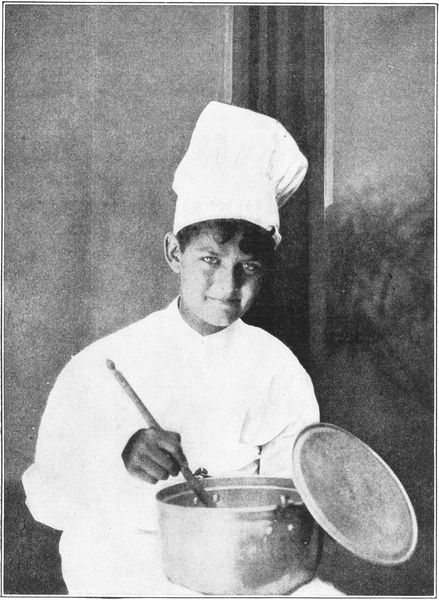 LITTLE PHILIPPE OF BELGIUM