Top
[Dr. Prudden is Professor of Pathology in the College of Physicians and
Surgeons, New York. He has bestowed especial attention upon the means of
preventing disease: in that important field he has written three capital
manuals, all published by G. P. Putnam's Sons, New
York:—“Story of the Bacteria,” “Dust and Its
Dangers,” “Water and Ice Supplies.” His other works,
intended for the professional reader, are of the highest authority. The
article here given appeared in Harper's Magazine, March, 1894;
copyright by Harper & Brothers, who have granted permission to
reprint. In May, 1902, these pages were revised by Dr. Prudden.]
It is commonly neither wise nor necessary for people not professionally
concerned to think much about disease, or weigh anxiously the chance or
mode of its acquirement. But now and then conditions arise which demand
general attention and instruction regarding certain diseases in order
that a great, threatening calamity may be averted. Such a condition
faces the people in all lands to-day in the appalling prevalence of
tuberculosis. A disease which in mild or severe form affects at least
one-half of the whole human race, and which causes the death of full
one-seventh of all who pass away, killing about one-third of those who
perish between the ages of fifteen and forty-five—a disease which
is most insidious in its onset, and often relentless in its
course, and which may be largely prevented—is one about which we
cannot be indifferent, and should not be longer inactive.
There has long been reason for believing that tuberculosis is a
communicable disease. Its prevalence in certain families and
communities, its frequent occurrence in those who have personally
attended upon its victims, its onset in those who have occupied
apartments vacated by consumptives—such facts observed over and
over again abundantly justify the belief in its communicability. Up to
the commencement of the last decade the cause of the disease was
altogether unknown, and no definite data were at hand which could enable
us to fix upon a feasible plan for limiting its ravages. But in these
later years a great light has been thrown upon this and other kindred
diseases.
Most intelligent people are aware that within the past decade a new
field in the domain of life has been revealed and widely explored. It
has been learned that in earth and air and water there exist countless
myriads of living things so minute as to lie far beyond the limits of
the unaided vision, and yet in the aggregate so potent in the
maintenance of the cycle of life upon earth that without their activity
all life would soon cease to be, and the elements which for a short span
fall under the sway of the life forces in all higher animals and plants
would lapse finally and irrevocably into their primal state.
These tiny organisms are called germs, microbes, or micro-organisms. One
great and important group of them belongs among the microscopic plants
called bacteria. These bacteria as a class are important in their
economy of nature, because they live for the most part on dead organic
material—that is, such material as has once formed a portion of
some living thing.
The world's store of available oxygen, hydrogen, carbon and nitrogen,
out of which all living beings are largely formed, is limited, and if
after these have served their temporary uses, as the medium through
which that mysterious potency called life alone can find expression,
they were not speedily released, new generations of living beings could
neither assume nor maintain their place in the great cycle of life. And
so these tiny plants, year in, year out, by day and by night, unseen and
mostly unheeded, are busy always in making possible the return of each
year's visible vegetation and the maintenance of an unbroken succession
of generations in man and beast.
Different groups and races among the bacteria have different
habitations, and vary widely in their special powers. Complex and
powerful as is the aggregate result which they accomplish in the world,
the performances of the individual are comparatively simple. They are
most liberally endowed with the capacity for multiplication, and each
germ acts as a tiny chemical laboratory, taking into itself the
organic matter on which it feeds, and resolving it into new compounds.
Some of the latter are used in building up and maintaining its own body,
while others are given off into the surrounding media.
We are but just beginning to peer at the mysterious processes which go
on under the influence of the bacteria in this underworld of life, and
to realize that all the lore which unwearied toilers in the past have
gathered in their studies of the visible forms of animals and plants,
makes but one of the many chapters in nature's story-book of life.
But this new and stimulating point of view, toward which the studies of
the past decade have led us, does not look so largely into the domain of
the practical that it would greatly attract the majority of business and
pleasure and ennui ridden mankind were it not for one very practical
fact which these recent studies have revealed. This is, that among the
myriads of altogether beneficent bacteria which people the earth, and
air, and water, there are a few forms which have chosen out of all the
world as their most congenial residence the bodies of men. But even this
would be of only passing interest to most people were it not still
further unfortunately true that in the performance of their simple
life-processes these man-loving bacteria, feeding on the tissues of
their host, and setting free certain subtle poisons in his blood, each after its kind, can
induce those disturbances of the body's functions and those changes in
its structure which we call disease.
The diseases caused by the growth of germs in the body are called
infectious. The germs causing some of the infectious diseases are given
off from the bodies of their victims in such form as to be readily
transmitted through the air to others, in whom they may incite similar
disease. Such diseases are spoken of as readily communicable, though it
is not actually the disease itself, but only the germ causing it, which
is transmitted. In other infectious diseases transmission but rarely
occurs. Many infectious diseases are very easily communicated from the
sick to the well under unsanitary and uncleanly conditions, which with
proper care are very little liable to spread.
I need not here put on parade the whole uncanny list of germ diseases,
in which tuberculosis stands foremost, followed by pneumonia,
diphtheria, typhoid fever, scarlatina, cholera, small-pox, and the rest.
Nor need I call to mind the means by which our growing knowledge in this
domain has been day by day laid under tribute for suggestions of hope
and safety for the stricken. It is a record of brilliant conquest in
nature, and already of far-reaching beneficence to man.
But the great fundamental advance which signalizes the past decade is
the lifting of this whole class of fateful germ diseases out of
the region of the intangible and mysterious, and their
establishment, on the basis of positive experimental research, in the
domain of the comprehensible and definite. The things which cause them
are no longer for us mysterious emanations from the sick, or incorporate
expressions of malign forces against which conjurations or prayers could
alone promise protection, but they are particulate beings, never
self-engendered, never evolved in the body, always entering from
without—things which we can see and handle and kill.
Let us now glance at the germ called the tubercle bacillus, the germ
which induces and which alone can induce tuberculosis. It does not exist
and thrive in the body of men or animals in health. Without the entrance
of this particular germ into the human body from without, tuberculosis
cannot develop in it. Without the transmission of this germ in some way
or other in a living condition from the sick to the well, tuberculosis
cannot spread. In the life-story of this tiny germ lie both the potency
for mischief which we deplore and the secret of our release from its
bondage.
The tubercle bacillus is a little colourless, rod-like plant, so small
that even many thousands of them piled together would make a heap far
too small to be visible to the naked eye. It cannot move about, nor can
it grow without moisture, nor at a temperature much above or much below
that of the human body. The material on which it feeds must be
very nicely adapted to its requirements, and it has no lurking and
growing places in nature outside of the bodies of men and a few
warm-blooded animals. It can be cultivated artificially in the
laboratory, and we know more about its life and peculiarities than about
almost any other germ. While it can remain alive in a dried state for
many weeks, it is readily killed by heat, by sunlight, and by many of
those chemical substances which we call disinfectants. It does not
flourish equally well in the bodies of all human beings.
When once it gains lodgment in a body suited to its growth it multiplies
slowly, each germ dividing and subdividing, taking from the tissues
material for its growth, and returning to them certain subtle poisons
which it sets free. The action of the tubercle bacillus is peculiar in
that it stimulates the cells of the body, wherever it may lodge and
grow, to the formation of little masses of new tissue, which we call
tubercles. These tubercles are as a rule short-lived, and, if the
disease progresses, tend to disintegrate. If the tubercles have grown in
such situations as to make this possible, as in the intestinal canal or
the lungs, the disintegrated and broken-down material, often containing
myriads of the living germs, may be cast off from the body. In
tuberculosis of the lungs, or consumption, this waste material is thrown
off with the sputum [spittle]. While almost any part of the body
may be affected, tuberculosis of the lungs is by far the most common
form of the disease.
It follows from what has been said that the only way in which we can
acquire tuberculosis is by getting into our bodies tubercle bacilli from
tuberculous men or animals. The only animals liable to convey the
disease to man are tuberculous cattle, and these through the use of
either meat or milk. The danger from the use of uncooked meat or the
unboiled milk from tuberculous cattle is real and serious, but it will
not be considered here at length, because the great and prevailing
danger of infection comes from another source.
Almost as soon as the significance of the tubercle bacillus was
established, a series of studies was undertaken on the possibility of
the spread of the disease by the breath or exhalations of the persons of
consumptives. These studies at once showed that the tubercle bacillus
cannot be given off into the air of the breath from the moist surfaces
of the mouth and air passages, nor from any material which may come from
them while this material remains moist, nor from healthy unsoiled
surfaces of the body. The establishment of this fact is of far-reaching
consequence, because it shows that neither the person nor the breath of
the consumptive is a direct source of danger, even to the most constant
and intimate attendants.
While the discharges from the bowels in persons suffering from
tuberculosis of the intestinal tract may contain many living bacilli,
the usual mode of disposal of these discharges protects us from any
considerable danger from this source.
It is the sputum after its discharge from the body on which our
attention must be fixed. While the sputum is moist it can, as a rule, do
no harm, unless it should be directly transmitted to those who are well
by violent coughing, sneezing, etc., by the use of uncleansed cooking or
eating utensils, by soiled hands, or by such intimate personal contact
as kissing or fondling. But if in any way the sputum becomes dried, on
floors or walls or bedding, on handkerchiefs or towels, or on the person
of the patient, it may soon become disseminated in the air as dust, and
can thus be breathed into the lungs of exposed persons.
The wide distribution of tubercle bacilli in the air of living-rooms,
and in other dusty places where people go, is due partly to the
frequency of the disease and the large numbers of living bacilli which
are cast off in the sputum (sometimes millions in a day), and partly to
the fact that many of the victims of consumption go about among their
fellows for purposes of business or pleasure for months or years. So
each consumptive, if not intelligently careful, may year after year be
to his fellow-men a source of active and serious and continual
infection.
This, then, the dried, uncared-for sputum of those suffering from
pulmonary tuberculosis, is the great source of danger; this the means so
long concealed by which a large part of the human race prematurely
perishes. Let but this discharged material be rendered harmless or
destroyed before it dries in all cases, and the ravages of this scourge
would largely cease. This is not a theoretic matter only, for again and
again have the living and virulent germs been found clinging to the
walls and furniture and bedding and handkerchiefs of consumptive
persons, and in the dust of the rooms in which they dwell. A malady
whose victims far outnumber those of all other infectious diseases put
together, sparing neither rich nor poor, seizing upon life while it is
as yet only a promise, but most inexorable in the fulness of its
tide—this malady can be largely prevented by the universal and
persistent practice of intelligent cleanliness.
We have learned in the past few years one fact about tuberculosis which
is of incalculable comfort to many, and that is that the disease is not
hereditary. It is very important that we should understand this, because
it seems to contradict a long-prevalent tradition, and a belief still
widely and sorrowfully entertained. Bacteria, and especially most
disease-producing bacteria, are very sensitive in the matter of growth
and reproduction to the conditions under which they are placed, and
especially to the material on which they feed. So that a germ
which can induce serious disease in one species of animal is harmless in
the body of a different though closely allied form. More than this,
different individuals of the same species, or the same individual at
different times, may have the most marked differences in susceptibility
in the presence of disease-producing germs. What this subtle difference
is we do not know. Whether the body at one time affords a congenial soil
to the invading germs and at another does not, whether its marvelous and
complex powers of resisting the virulent tendencies of disease-producing
bacteria at one period or in one individual are more vigorous than in
another, and vary at different times, we do not certainly know. This,
however, we do know, that certain individuals are more likely than
others to yield to the incursions of the tubercle bacillus. This
vulnerability in the presence of invading germs we call susceptibility,
and susceptibility to the action of the tubercle bacillus is hereditary.
It is not the disease, tuberculosis, which comes into the world with
certain individuals or with successive children of the same family, but
the aptitude to contract it should external conditions favour. What
subtle impress on the cells which are to develop into the new individual
renders him more than another an easy prey to the tubercle bacillus
should it later find lodgment in his body we do not know, and we may
not hope soon to be enlightened, since all the intricate
mysteries of heredity seem involved in the problem. But this we do know,
that how ever much the child of tuberculous parents or a member of a
tuberculous family may be predisposed to the disease, he cannot acquire
tuberculosis unless by some mischance the fateful germ enters his body
from without. What has been all through these years regarded as the
strongest proof of the hereditary transmission of
tuberculosis—namely, the occurrence of the disease in several
members of the same household—is, in the new light, simply the
result of household infection—the breathing of air especially
liable to contain the noxious germs, or their entrance in some other way
into the bodies of persons especially sensitive to their presence. I do
not mean to imply that under no conditions can the tubercle bacillus be
transmitted from the mother to the child before its birth. In a few
instances this is believed to have happened. But its occurrence is so
extremely infrequent that it may be regarded as accidental, and of no
serious importance from our present point of view.
But it will perhaps be said, “If the tubercle bacilli are so
widely diffused, why do we not all acquire tuberculosis, and why was the
world not long since depopulated?” In order to explain this matter
I must ask the reader to look with me for a moment at some of the body's
natural safeguards against bacterial and other invaders from the
air. It has been found that a person breathing in germ and dust-laden
air through the nose breathes out again air which is both dust and germ
free. The air passages of the nose are tortuous, and lined with a moist
membrane, against which the air impinges in its passage. On these moist
surfaces most of the solid suspended particles, the germs among them,
are caught and held fast, and may be thrown off again by secretion. In
breathing through the mouth this safeguard is not utilized. Again, the
upper passages leading to the lungs are lined with a delicate membrane
of cells, whose free surfaces are thickly beset with tiny hairlike
projections. These projections are constantly moving back and forth with
a quick sweep, in such a way that they carry small particles which may
have escaped the barriers above up into the mouth, from which they may
be readily discharged. In this way much of the evil of breathing dust
and germ-laden air is averted. But in spite of these natural safeguards
a great deal of foreign material does, under the ordinary conditions of
life indoors or in dusty places, find lodgment in the delicate recesses
of the lungs. The body tolerates a good deal of the deleterious
material, but its overtasked toleration fails at last, when serious
disease may ensue.
When ordinary forms of living bacteria get into the tissues of the body,
a very complex cellular mechanism, not fully understood, usually results
in their destruction and ultimate removal. In the presence of the
tubercle bacillus the body cells are often able to build a dense
enclosing wall around the affected region, shutting it off from the rest
of the body. This is one of the modes of natural cure. The body cells
are sometimes able, if sustained by nourishing food and an abundance of
fresh air, to carry on, year after year, a successful struggle with the
invading germs, so that the usefulness and enjoyment of life are but
little interfered with. Finally, a certain proportion of human beings
seem to be endowed at birth with some as yet unknown quality in the
cells or fluids of the body which naturally unfits them for the life
uses of the tubercle bacillus, and so renders the individual for longer
or shorter periods practically immune.
Others, on the contrary, are, as we have seen, from birth unusually
susceptible. This inherited susceptibility to the incursions of the
tubercle bacillus, should this find lodgment in the body from without,
by no means always reveals itself in any apparent lack of vigour or
robustness of the body. Still, any habit or mode of life which
diminishes the bodily vigour, whether in those predisposed to this
malady or in the apparently immune, and gives it a leaning toward
disease, diminishes, as a rule, the chances of a successful contest with
the bacillus. And so it is that in spite of the wide distribution of
these fateful germs in frequented places, and the tendency of
certain vulnerable persons to succumb to their ravages, so many people
are not affected by them, and so many, although not altogether escaping
their malign influence, are yet able to wrest at least a moiety of life
from the hand of the great destroyer.
The degree of success which may attend our crusade against tuberculosis
will largely depend upon the wide diffusion of the knowledge of its
communicability by means of the sputum dried and powdered and floating
in the air as dust, and the intelligent persistence with which the
morbid material may be safely cared for at its sources. The resolute
avoidance by consumptives of the not only filthy but dangerous practice
of spitting upon floors or streets, or anywhere else except into proper
receptacles; the use of receptacles which may be and are frequently and
thoroughly cleansed, and, best of all, of water-proof paper cups, which
with their contents may be burned; or, when circumstances require, the
receiving of the dangerous material on cloths or Japanese paper napkins,
which may be destroyed by fire, and not on more valuable handkerchiefs
on which the sputum is allowed to dry while in use or before
disinfection and washing; scrupulous care by others of the sputum of
those too ill to care for it themselves—these are the
comparatively simple means from which we may most confidently expect
relief. The details of these precautions and their adaptation to
the special circumstances of those suffering from the disease can be
most wisely left to the physician, and though of paramount importance,
need not further engage our attention here.
To the consumptive himself these measures are not without a vital
significance. For his chances of recovery may be in no small degree
diminished if he be more or less constantly liable to a fresh infection
from material which he has once got rid of, and which should have been
destroyed.
The great volumes of fresh, moving air which we encounter out-of-doors
in properly cleansed streets usually so greatly dilutes the dust, of
whatever kind, that little apprehension need be felt from its presence.
When, however, in crowded cities, the streets are, as is nearly always
the case, save for a few favored localities, filthy, and but fitfully
cared for; when choking dust clouds must be encountered by the citizen
during the haphazard and slatternly essays at cleaning made by untrained
and irresponsible sweepers; we cannot ignore a danger from street dust
which may well incite grave apprehension. The citizen can, if he must,
run from the presence of cloud-enwrapped machines furiously whirled
along half-sprinkled pavements; he may avoid a block on which the
hand-sweepers, in the absence or in disregard of rules, ply their
nefarious brooms over unwet surfaces, because too indolent or
indifferent to sprinkle them—these things he can do if he
be not willing or ready to apply the citizen's remedy for municipal
misrule.
But it is in rooms either of dwelling or assembling places that the ill
effects of infectious dust are most potent, because the air is here not
so constantly renewed as it is out-of-doors, and is liable to be
breathed over and over again. Dust which gets into houses does not
readily leave them, unless special and intelligent means be directed to
its removal. We do not usually realize that, though the air itself in
inhabited rooms is constantly changing more or less rapidly by
diffusion, by draughts, or by purposed ventilation, fine dust particles
are not removed under the same influences in proportionate degree. They
cling more or less tenaciously to all surfaces on which they have
settled, and especially to fabrics, so that currents of abundant force
and sufficient distribution to change the air may and usually do leave
the lodged dust particles almost entirely undisturbed.
One of the most threatening tendencies of modern times in matters of
health is that of overcrowding in cities, and the great element of
danger from this overcrowding is not only and not chiefly the
insufficiency of air in living-rooms and the lack of ready means for its
renewal, but the accumulation in this air of infectious germs floating
with the dust. Abundant water supply and good sewerage have
rendered possible and measurably safe, so far as the ordinary
waste of life is concerned, the building of vast tenements which swarm
with people. But the means of getting pure air, and especially of
disposing of infectious material often floating in it when it is
confined, have not at all kept pace with the demands of health and
cleanliness.
But when we return to larger and more liberally furnished dwellings of
the well-to-do classes, we are not reassured, for in some respects the
rich are sadly handicapped by the “tyranny of things.” Of
course, long and thick piled carpets afford persistent lurking-places
for infectious as well as other dust. Certainly heavy hangings in a
measure hinder the detergent action of the sunlight, shut the used air
in and the fresh air out, and shelter floating matter which might
otherwise escape. Without doubt, complex upholstery with roughened
fabrics increases the difficulties in the maintenance of cleanliness.
But the usage of the householder in these matters will, after all,
depend upon whether his practical devotion be most at Fashion's or
Hygeia's shrine. We may hope for the coming of a time when clean, clear,
airy, simply furnished living-rooms shall replace the stuffy, fabric
strewn apartments in which the fashionable citizen so much delights
to-day.
In one particular, however, the devotion to cleanliness may be
unreservedly insistent, and that is that in the cleaning of
living-rooms, whether occupied by the sick or the well, the distinct and
recognized purpose of the operation shall be to remove, and not simply
to stir up, the ever-gathering dust. The past few years, so beneficently
signalized by the exploitation of the new germ lore, have seen marked
departures from the traditional sweepings and dustings of a past era;
and the emancipation of the housekeeper, and incidentally of the
household, from the thrall of the pestiferous feather duster seems
fairly under way. Still, some of the old barbarous travesties upon
cleaning widely persist. The dry broom still seeks out in the deep
recesses of the carpets not the coarser particles of dirt alone, but the
hordes of living germs which were for the time safely ensconced, and
among these such malignant forms as the chances of the day have
gathered. These all are set awhirl in the air; some collect upon salient
points of the fittings and furnishings; many stay with the operator, to
vex for hours the delicate breathing passages or the deeper recesses of
the lungs. Then in the lull which follows, gravity reasserts its sway,
and the myriad particles, both the living and the dead, slowly settle to
the horizontal surfaces, especially to the carpets. Then the feather
duster comes upon the scene, and another cyclone befalls. The result of
it all is that the dust has finally been forced to more or less
completely abandon the smooth and shining surfaces where it would
be visible, and is largely caught in the surface roughness of the
carpets or upholstery or hangings, ready at the lightest footfall or the
chariest touch to dance into the air again, and be taken into the lungs
of the victims of the prevailing delusion—the delusion that the
way to care for always obnoxious and offensive and often dangerous dust
is not to get it out of the house, but to keep it stirring in the air
until at last it has settled where it does not vex the eye.
By the use of moist tea leaves in the sweeping of carpets, by the use of
soft-textured fabrics, frequently shaken out-of-doors, or by moist
cloths or chamois in dusting, much useless dust-scattering may be
avoided. But no matter what the means employed, the final purpose of
every household cleaning should be to get the dust, not afloat, but
away.
Probably the most serious source of infection which one is liable to
encounter in the usual ways of life is the occupancy at hotels of
bed-rooms vacated by consumptives without subsequent efficient
cleansing, and travel in sleeping cars. I need not enter here into the
harrowing details of desperate uncleanness which the ordinary railway
travel brings to light. It is to be hoped that popular demand for reform
in the routine of hotel-keepers and railroad managers in the matter of
ordinary sweeping and dusting, and in the precautions against the spread
of tuberculosis, may soon usher in among them a day of
reasonable sanitary intelligence.
A belief in the communicability of tuberculosis is becoming widely
diffused, and it would seem to be desirable, on the ground of policy
alone, for the managers of summer, and especially of winter resorts
frequented by consumptives, to let it be known in no uncertain way that
their precautions against the spread of infectious diseases are
effectually in line with the demands of modern sanitary science.
The members of families bearing a hereditary susceptibility to the
acquirement of this disease should strive to foster those conditions
which favour a healthy, vigorous life in occupation, food, exercise and
amusement and remember that for them more than for others it is
important to avoid such occupations and places as favour the
distribution, in the air or otherwise, of the tubercle bacillus.
But when the individual has done what he can in making his surroundings
clean, and in thus limiting the spread of the tubercle bacillus, there
still remains work for municipal and State and national authorities in
diffusing the necessary knowledge of the disease and its modes of
prevention; in directly caring for those unable to care for themselves;
in securing for all such freedom from contact with sources of the
disease as the dictates of science and humanity may require.
To health boards, either national or local, must be largely
entrusted the primary protection of the people against the danger from
tuberculous cattle.
A national bureau of health might be of incalculable service in
stimulating and harmonizing measures for the suppression of tuberculosis
in various parts of the land, and in fostering research in lines which
promise large practical return in the saving of life.
Tuberculosis has in this country been officially almost entirely ignored
in those practical measures which health boards universally recognize as
efficient in the suppression of this class of maladies. Physicians are
not now generally required to report it to the local health boards.
Systematic official measures of disinfection are not widely practised.
But such official measures have been found extremely useful in the
limitation of other communicable diseases. While consumption must
logically be classed with diphtheria and scarlatina and small-pox as a
communicable germ disease, it is, in fact, in the light of our present
knowledge, when intelligently cared for, so little liable to spread that
it is properly exempt from some of those summary measures which health
authorities are justified in adopting with the more readily and less
avoidably communicable maladies. Moreover, consumption is apt to involve
such prolonged illness, and so often permits affected persons for months
and years to go about their usual avocations, that general isolation
would be both impracticable and inhumane. Moreover, for reasons
which it is hoped are evident to the reader, isolation among those
capable of caring for themselves is at present entirely unnecessary.
But while extreme measures are not called for, local health boards must
soon act in the prevention of tuberculosis. For the present the wisest
and most humane course would seem to be to attempt to secure the desired
ends rather by instruction and counsel and help than by direct and
summary procedures. There is no more pitiable spectacle in this land
to-day than that of hundreds of victims of advanced tuberculosis in
every large town who cannot be comfortably or safely cared for in the
dwellings of the poor, and yet who are always unwelcome applicants at
most of our hospitals and at many are denied admission altogether. They
are victims of ignorance and of vicious social and hygienic conditions
for which they are not largely responsible, and States and
municipalities, which are most to blame, owe them at least a shelter and
a place to die. Unquestionably one of the urgent duties immediately
before us in all parts of the land where tuberculosis prevails is the
establishment of special hospitals in which this disease can be treated
and its victims safely cared for.
And now at last remains to be spoken what word of cheer and hope our new
outlooks may have given us for those who are already under the
shadow of this sorrowful affliction. The dreams and aspirations and
strenuous labours of the students of this disease have looked steadily
toward the discovery of some definite and positive means of cure, but as
yet full success lingers beyond their grasp. The methods for the early
detection of tuberculosis which science has pointed out make it possible
for affected persons to plan such modes of life and early seek such
salubrious climates as promise a hope of recovery. We have studied
closely the ways in which the cells of the body often successfully
resist the incursions of the already seated germs, and learned how in
many ways the natural forces of cure may be sustained and strengthened.
We have learned much about certain complicating occurrences which often
form the most serious features in the progress of tuberculosis of the
lungs, and how they may be best avoided. And so to-day the outlook for
those in the earlier stages of this disease is in a considerable
proportion of cases extremely encouraging. It is no longer for us the
hopeless malady which it was earlier believed to be. It is not
necessarily a bitter losing fight upon which one enters who becomes
aware that the finger of this disease is upon him. A long and happy and
useful life may still be his if the conditions which favour his cure be
early and intelligently fixed upon, and patiently and faithfully
persisted in. The wise physician is here the best adviser in
climate and regimen, as well as in the proper selection of remedial
measures, and the earlier his counsel is sought and acted on, the
brighter will usually be the outlook for recovery.
Research in tuberculosis and the ministration of the physician should,
and generally do, go hand in hand, and no time should be lost in
bringing to the aid of the stricken what light and promise the studies
of the laboratory day by day may yield. The great and beneficent work
which has been accomplished by Trudeau in the Adirondack woods, in at
once widening the bounds of knowledge of tuberculosis and in carrying to
a successful issue in so many the varied and delicate processes of cure,
is a cheering example of what may be accomplished with persistent
devotion, by the light of our new knowledge, in mastering a malady so
long considered hopeless.
MALARIA AND MOSQUITOES — George M. Sternberg, M.D., LL.D.
Top
[Dr. Sternberg, Surgeon-General of the United States Army, is an
investigator and author of distinction. His works include a
“Manual of Bacteriology,” a “Text-Book of
Bacteriology,” and “Immunity, Protective Inoculations and
Serum-Therapy,” all published by William Wood & Co., New York.
The address which follows was delivered by Dr. Sternberg as president of
the Philosophical Society of Washington, December 8, 1900. It appeared
in the Popular Science Monthly, February, 1901, copyright, and is here
reprinted by the kind permission of the editor of the Monthly and the
author.
A book well worth reading in this connection is
“Mosquitoes,” by Leland O. Howard, Chief of the Division of
Entomology, United States Department of Agriculture, Washington, D. C.,
and published by McClure, Phillips & Co., New York.]
In my address as President of the Biological Society, in 1896, the
subject chosen was “The Malarial Parasite and Other Pathogenic
Protozoa.” This address was published in March, 1897, in the
Popular Science Monthly, and I must refer you to this illustrated
paper for a detailed account of the morphological character of the
malarial parasite. It is my intention at the present time to speak of
“Malaria” in a more general way, and of the recent
experimental evidence in support of Manson's suggestion, first made in
1894, that the mosquito serves as an intermediate host for the
parasite. The discovery of this parasite may justly be considered one of
the greatest achievements of scientific research during the nineteenth
century. Twenty-five years ago the best informed physicians entertained
erroneous ideas with reference to the nature of malaria and the etiology
[inquiry into the causes] of the malarial fevers. Observation has taught
them that there was something in the air in the vicinity of marshes in
tropical regions, and during the summer and autumn in semi-tropical and
temperate regions, which gave rise to periodic fevers in those exposed
in such localities, and the usual inference was that this something was
of gaseous form—that it was a special kind of bad air generated in
swampy localities under favourable meteorological conditions. It was
recognized at the same time that there are other kinds of bad air, such
as the offensive emanations from sewers and the products of respiration
of man and animals, but the term malaria was reserved especially for the
kind of bad air which was supposed to give rise to the so-called
malarial fevers. In the light of our present knowledge it is evident
that this term is a misnomer. There is no good reason for believing that
the air of swamps is any more deleterious to those who breathe it than
the air of the sea coast or that in the vicinity of inland lakes and
ponds. Moreover, the stagnant pools, which are covered with a
“green scum” and from which bubbles of gas are given off,
have lost all terrors for the well-informed man, except in so
far as they serve as breeding places for mosquitoes of the genus
Anopheles. The green scum is made up of harmless algæ such as
Spirogyra, Zygnema Protococcus, Euglena, etc.; and the gas which is
given off from the mud at the bottom of such stagnant pools is for the
most part a well-known and comparatively harmless compound of hydrogen
and carbon—methane or “marsh gas.” In short, we now
know that the air in the vicinity of marshes is not deleterious because
of any special kind of bad air present in such localities, but because
it contains mosquitoes infected with a parasite known to be the specific
cause of the so-called malarial fevers. This parasite was discovered in
the blood of patients suffering from intermittent fevers by Laveran, a
surgeon in the French army, whose investigations were conducted in
Algiers. This famous discovery was made toward the end of the year 1880,
but it was several years later before the profession generally began to
attach much importance to the alleged discovery. It was first confirmed
by Richard in 1882; then by the Italian investigators, Marchiafava,
Celli, Golgi and Bignami; by Councilman, Osier and Thayer in this
country, and by many other competent observers in various parts of the
world. The Italian investigators named not only confirmed the presence
of the parasite discovered by Laveran in the blood of those suffering
from malarial fevers, but they demonstrated its etiological
rôle by inoculation experiments and added greatly to our knowledge
of its life history (1883-1898). The fact that the life history of the
parasite includes a period of existence in the body of the mosquito, as
an intermediate host, has recently been demonstrated by the English army
surgeons Manson and Ross, and confirmed by numerous observers, including
the famous German bacteriologist, Koch.
The discoveries referred to, as is usual, have had to withstand the
criticism of conservative physicians, who, having adopted the prevailing
theories with reference to the etiology of periodic fevers, were
naturally skeptical as to the reliability of the observations made by
Laveran and those who claimed to have confirmed his discovery. The first
contention was that the bodies described as present in the blood were
not parasites, but deformed blood corpuscles. This objection was soon
set at rest by the demonstration, repeatedly made, that the
intra-corpuscular forms underwent distinct amœboid movements
[resembling those of the amœba, a jelly-like organism of simple
type]. No one witnessing these movements could doubt that he was
observing a living micro-organism. The same was true of the
extra-corpuscular flagellate bodies [resembling a whip-lash], which may
be seen to undergo very active movements, as a result of which the red
blood corpuscles are violently displaced and the flagellate body itself
dashes about in the field of view.
The first confirmation in this country of Laveran's discovery of
amœboid parasites in the blood of malarial fever patients was made
by myself in the pathological laboratory of the Johns Hopkins University
in March, 1886. In May, 1885, I had visited Rome as a delegate to the
International Sanitary Conference, convened in that city under the
auspices of the Italian Government, and while there I visited the Santo
Spirito Hospital for the purpose of witnessing a demonstration, by Drs.
Marchiafava and Celli, of that city, of the presence of the plasmodium
malariæ in the blood of persons suffering from intermittent
fever. Blood was drawn from the finger during the febrile [feverish]
attack and from individuals to whom quinine had not been administered.
The demonstration was entirely satisfactory, and no doubt was left in my
mind that I saw living parasitic micro-organisms in the interior of red
blood corpuscles obtained from the circulation of malarial fever
patients. The motions were quite slow, and were manifested by a gradual
change of outline rather than by visible movement. After a period of
amœboid activity of greater or less duration, the body again
assumed an oval or spherical form and remained quiescent for a time.
While in this form it was easily recognized, as the spherical shape
caused the light passing through it to be refracted and gave the
impression of a body having a dark contour and a central vacuole [minute
cavity]; but when it was flattened out and undergoing
amœboid changes in form, it was necessary to focus very carefully
and to have a good illumination in order to see it. The objective used
was a Zeiss's one-twelfth inch homogeneous oil immersion.
But, very properly, skepticism with reference to the causal relation of
these bodies to the disease with which they are associated was not
removed by the demonstration that they are in fact blood parasites, that
they are present in considerable numbers during the febrile paroxysms.
These facts, however, give strong support to the inference that they are
indeed the cause of the disease. This inference is further supported by
the evident destruction of red blood corpuscles by the parasite, as
shown by the presence of grains of black pigment in the amœba-like
micro-organisms observed in these corpuscles and the accumulation of
this insoluble blood pigment in the liver and spleen of those who have
suffered repeated attacks of intermittent fever. The enormous loss of
red blood corpuscles as a result of such attacks is shown by the
anæmic condition of the patient and also by actual enumeration.
According to Kelsch, a patient of vigorous constitution in the first
four days of a quotidian [daily recurrent] intermittent fever, or a
remittent of first invasion, may suffer a loss of 2,000,000 red blood
corpuscles per cubic millimeter of blood, and in certain cases a loss of
1,000,000 has been verified at the end of twenty-four hours. In cases of
intermittent fever having a duration of twenty to thirty days
the number of red blood cells may be reduced from the normal, which is
about 5,000,000 per cubic millimeter, to 1,000,000 or even less. In view
of this destruction of the red blood cells and the demonstrated fact
that a certain number, at least, are destroyed during the febrile
paroxysms by a blood parasite, which invades the cells and grows at the
expense of the continued hæmoglobin [the red substance in the
blood], it may be thought that the etiological rôle of the
parasite should be conceded. But scientific conservatism demands more
than this, and the final proof has been afforded by the experiments of
Gerhardt and of Marchiafava and Celli—since confirmed by many
others. This proof consists in the experimental inoculation of healthy
individuals with blood containing the parasite and the development of a
typical attack of periodic fever as a result of such inoculation.
Marchiafava and Bignami, in their elaborate article upon
“Malaria,” published in the Twentieth Century Practice of
Medicine, say:
“The transmission of the disease occurs equally whether the blood
is taken during the apyretic [aguish] period or during a febrile
[feverish] paroxysm, whether it contains young parasites or those in
process of development, or whether it contains sporulation [minute
spore-like] forms. Only the crescent forms, when injected alone, do not
transmit the infection, as has been demonstrated by Bastianelli, Bignami
and Thayer, and as can be readily understood when we remember
the biological significance of these forms.
“In order that the disease be reproduced in the inoculated subject
it is not necessary to inject the malarial blood into a vein of the
recipient, as has been done in most of the experiments; a subcutaneous
injection is all-sufficient. Nor is it necessary to inject several cubic
centimeters, as was done especially in the earlier experiments; a
fraction of a cubic centimeter will suffice, and even less than one
drop, as Bignami has shown.”
After the inoculation of a healthy individual with blood containing the
parasite a period varying from four to twenty-one days elapses before
the occurrence of a febrile paroxysm. This is the so-called period of
incubation, during which, no doubt, the parasite is undergoing
multiplication in the blood of the inoculated individual. The duration
of this period depends to some extent upon the quantity of blood used
for the inoculation and its richness in parasites. It also depends upon
the particular variety of the parasite present, for it has been
ascertained that there are at least three distinct varieties of the
malarial parasite—one which produces the quartan type of fever, in
which there is a paroxysm every third day and in which, in experimental
inoculations made, the period of incubation has varied from eleven to
eighteen days; in the tertian type, or second day fever, the period of
incubation noted has been from nine to twelve days; and in the
æstivo-autumnal type the duration has usually not exceeded
five days. The parasite associated with each of these types of fever may
be recognized by an expert, and there is no longer any doubt that the
difference in type is due to the fact that different varieties or
“species” of the malarial parasite exist, each having a
different period of development. Blood drawn during a febrile paroxysm
shows the parasite in its different stages of intra-corpuscular
development. The final result of this development is a segmenting body,
having pigment granules at its center, which occupies the greater part
of the interior of the red corpuscle. The number of segments into which
this body divides differs in the different types of fever, and there are
other points of difference by which the several varieties may be
distinguished one from the other, but which it is not necessary to
mention at the present time. The important point is that the result of
the segmentation of the adult parasites contained in the red corpuscles
is the formation of a large number of spore-like bodies, which are set
free by the disintegration of the remains of the blood corpuscles and
which constitute a new brood of reproductive elements, which in their
turn invade healthy blood corpuscles and effect their destruction. This
cycle of development without doubt accounts for the periodicity of the
characteristic febrile paroxysms; and, as stated, the different
varieties complete their cycle of development in different period of
time, thus accounting for the recurrence of the paroxysms at
intervals of forty-eight hours, in one type of fever, and of three days
in another type. When a daily paroxysm occurs, this is believed to be
due to the alternate development of two groups of parasites of the
tertian variety, as it has not been possible to distinguish the parasite
found in the blood of persons suffering from a quotidian form of
intermittent fever from that of the tertian form. Very often, also, the
daily paroxysm occurs on succeeding days at a different hour, while the
paroxysm every alternate day at the same hour is a fact which sustains
the view that we have to deal, in such cases, with two broods of the
tertian parasite which mature on alternate days. In other cases there
may be two distinct paroxysms on the same day, and none on the following
day, indicating the presence of two broods of tertian parasites maturing
at different hours every second day.
The hypothesis that malarial infection results from the bites of
mosquitoes was advanced and ably supported by Dr. A. F. A. King, of
Washington, D. C., in a paper read before the Philosophical Society on
February 10, 1883, and published in the Popular Science Monthly in
September of the same year. In 1894, Manson supported the same
hypothesis in a paper published in the British Medical Journal
(December 8), and the following year (1895) Ross made the important
discovery that when blood containing the crescentic bodies was ingested
by the mosquito, these crescents rapidly underwent changes
similar to those heretofore described, resulting in the formation of
motile [spontaneously moving] filaments, which become detached from the
parent body and continue to exhibit active movements. In 1897, Ross
ascertained, further, that when blood containing crescents was fed to a
particular species of mosquito, living pigmented parasites could be
found in the stomach walls of the insect. Continuing his researches with
a parasite of the same class which is found in birds, and in which the
mosquito also serves as an intermediate host, Ross found that this
parasite enters the stomach wall of the insect, and, as a result of its
development in that locality, forms reproductive bodies (sporozoites),
which subsequently find their way to the venenosalivary [poisonous
salivary] glands of the insect which is now capable of infecting other
birds of the same species as that from which the blood was obtained in
the first instance. Ross further showed that the mosquito which served
as an intermediate host for this parasite could not transmit the
malarial parasite of man or another similar parasite of birds
(halteridium). These discoveries of Ross have been confirmed by Grassi,
Koch and others, and it has been shown that the mosquitoes which serve
as intermediate host for the malarial parasites of man belong to the
genus Anopheles, and especially to the species known as Anopheles
claviger.
The question whether mosquitoes infected with the malarial
parasite invariably become infected as a result of the ingestion [taking
in] of human blood containing this parasite has not been settled in a
definite manner, but certain facts indicate that this is not the case.
Thus there are localities noted for being extremely dangerous on account
of the malarial fevers contracted by those who visit them, which on this
very account are rarely visited by man. Yet there must be a great
abundance of infected mosquitoes in these localities, and especially in
low swampy regions in the tropics. If man and the mosquitoes are alone
concerned in the propagation of this parasite, how shall we account for
the abundance of infected mosquitoes in uninhabited marshes? It appears
probable that some other vertebrate animal serves in place of man to
maintain the life cycle of the parasite, or that it may be propagated
through successive generations of mosquitoes.
It is well known that persons engaged in digging canals, railroad cuts,
etc., in malarious regions are especially liable to be attacked with one
or the other of the forms of malarial fever. This may be due to the fact
that the digging operations result in the formation of little pools
suitable for the development of the eggs of Anopheles, but another
explanation has been offered. Ross and others have found in infected
mosquitoes certain bodies, described by Ross as “black
spores,” which resist decomposition and which may be resting
spores capable of retaining their vitality for a long time. The
suggestion is that these “black spores” or other incysted
[enclosed in a small vessel] reproductive bodies may have been deposited
in the soil by mosquitoes long since defunct, “and that in moving
the soil these dormant parasites are set at liberty, and so, in air, in
water or otherwise, gain access to the workmen engaged” (Manson).
This hypothesis is not supported by recent observations, which indicate
that infection in man occurs only as a result of inoculation through the
bite of an infected mosquito. The question is whether malarial fevers
can be contracted in marshy localities independently of the mosquito,
which has been demonstrated to be an intermediate host of the malarial
parasite? Is this parasite present in the air or water in such
localities as well as in the bodies of infected mosquitoes? Its presence
has never been demonstrated by the microscope; but this fact has little
value in view of the great variety of micro-organisms present in marsh
water or suspended in the air everywhere near the surface of the ground,
and the difficulty of recognizing the elementary reproductive bodies by
which the various species are maintained through successive generations.
It would appear that a crucial experiment for the determination of this
question would be to expose healthy individuals in a malarious region
and to exclude the mosquito by some appropriate means. This experiment
has been made during the past summer, and the result up to the
present time has been reported by Manson in the London Lancet
of September 29, 1900. Five healthy individuals have lived in a hut on
the Roman Campagna since early in the month of July. They have been
protected against mosquito bites by mosquito-netting screens in the
doors and windows and by mosquito bars over the beds. They go about
freely during the daytime, but remain in their protected hut from sunset
to sunrise. At the time Manson made his report all these individuals
remained in perfect health. It has long been known that labourers could
come from the villages in the mountainous region near the Roman Campagna
and work during the day, returning to their homes at night, without
great danger of contracting the fever, while those who remained on the
Campagna at night ran great risk of falling sick with fever, as a result
of “exposure to the night air.” What has already been said
makes it appear extremely probable that the “night air,” by
itself, is no more dangerous than the day air, but that the real danger
consists in the presence of infected mosquitoes of a species which seeks
its food at night. As pointed out by King, in his paper already referred
to, it has repeatedly been claimed by travelers in malarious regions
that sleeping under a mosquito bar is an effectual method of prophylaxis
[prevention] against intermittent fevers.
That malarial fevers may be transmitted by mosquitoes of the genus
Anopheles was first demonstrated by the Italian physician
Bignami, whose experiments were made in the Santo Spirito Hospital in
Rome. The subjects of the experiment, with their full consent, were
placed in a suitable room and exposed to the bites of mosquitoes brought
from Maccarese, “a marshy place with an evil but deserved
reputation for the intensity of its fevers.” It has been objected
to these experiments that they were made in Rome, at a season of the
year when malarial fevers prevail to a greater or less extent in that
city, but Marchiafava and Bignami say:
“It is well known to all physicians here that, although there are
some centers of malaria in certain portions of the suburbs, the city
proper is entirely free from malaria, as long experience has
demonstrated, and at no season of the year does one acquire the disease
in Rome.”
In view of the objection made, a crucial experiment has recently been
made in the city of London. The result is reported by Manson, as
follows:
“Mosquitoes infected with the parasite of benign tertian malarial
fever were sent from Rome to England, and were allowed to feed upon the
blood of a perfectly healthy individual (Dr. Manson's son, who had never
had malarial disease). Forty mosquitoes, in all, were allowed to bite
him between August 29 and September 12. On September 14 he had a rise of
temperature, with headache and slight chilliness, but no organisms were
found in his blood. A febrile paroxysm occurred daily
thereafter, but the parasites did not appear in the blood until
September 17, when large numbers of typical tertian parasites were
found. They soon disappeared under the influence of quinine.”
We have still to consider the question of the transmission of malarial
fevers by the ingestion of water from malarious localities. Numerous
medical authors have recorded facts which they deemed convincing as
showing that malarial fevers may be contracted in this way. I have long
been of the opinion that while the observed facts may, for the most
part, be authentic, the inference is based upon a mistake in diagnosis
[determination]. That, in truth, the fevers which can justly be ascribed
to the ingestion [taking into the body] of a contaminated water supply
are not true malarial fevers—i. e., they are not due to the
presence of the malarial parasite in the blood. This view was sustained
by me, in my work on “Malaria and Malarial Diseases,”
published in 1883. The fevers supposed to have been contracted in this
way are, as a rule, continued or remittent in character, and they are
known under a variety of names. Thus we have “Roman fever,”
“Naples fever,” “remittent fever,”
“mountain fever,” “typhomalarial fever,” etc.
The leading physicians and pathologists, in regions where these fevers
prevail, are now convinced that they are not malarial fevers, but are
simply more or less typical varieties of typhoid fever, a disease due to
a specific bacillus [minute comma-shaped plant], and which is
commonly contracted as a result of the ingestion of contaminated water
or food. The error in diagnosis, upon which the inference has been based
that malarial fevers may be contracted through drinking water, has been
widespread in this country, in Europe and in the British possessions in
India. It vitiated our medical statistics of the Civil War and of the
recent war with Spain. In my work already referred to, I say:
“Probably one of the most common mistakes in diagnosis, made in
all parts of the world where malarial and enteric [intestinal] fevers
are endemic [characteristic of the locality], is that of calling an
attack of fever, belonging to the last mentioned category, malarial
remittent. This arises from the difficulties attending a differential
diagnosis at the outset, and from the fact that having once made a
diagnosis of malarial fever, the physician, even if convinced later that
a mistake has been made, does not always feel willing to confess it. The
case therefore appears in the mortality returns, if it prove fatal, or
in the statistical reports of disease, if made by an army or navy
surgeon, as at first diagnosed.”

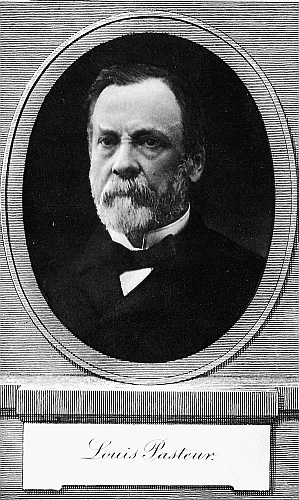 Louis Pasteur.