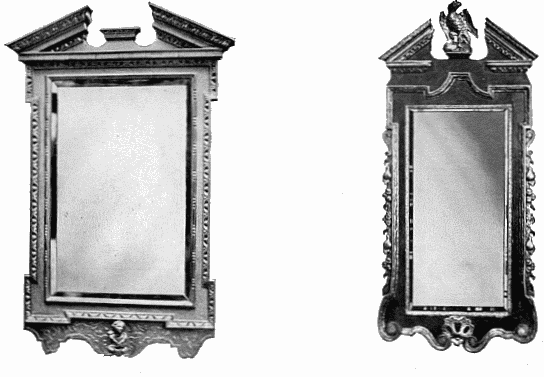
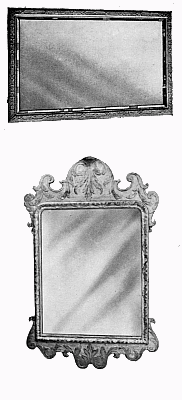
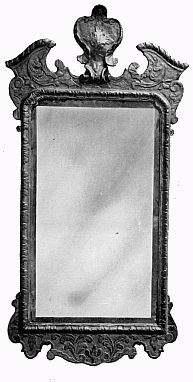
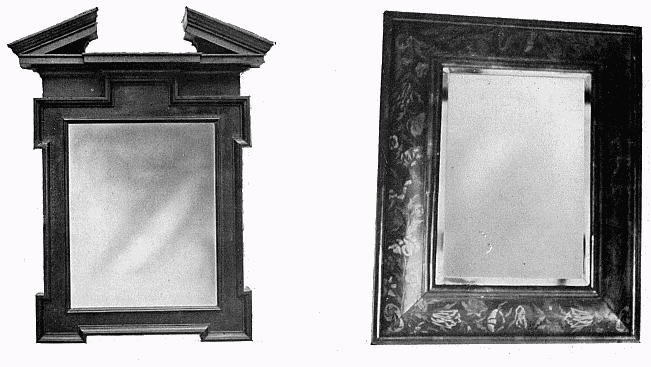
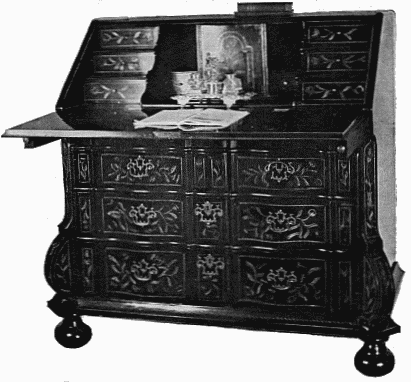
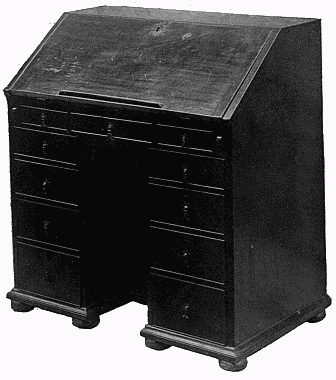
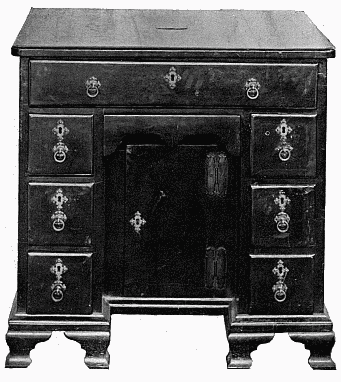
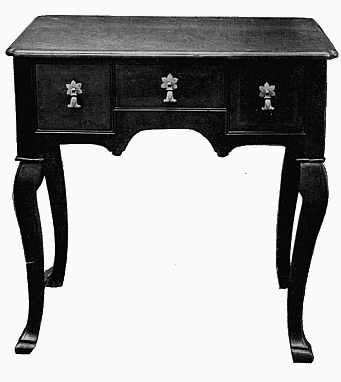
English lacquered furniture "in the Oriental taste" belongs to the last
quarter of the seventeenth and the first half of the eighteenth
centuries. It is not surprising that when the rage for everything
Chinese and Japanese—at the time indiscriminately called "Indian"—was
prevalent, a school of Anglo-Oriental craftsmen should have sprung up.
The taste was at its height about 1710, and continued for many years.
The art of lacquering is said by the Japanese themselves to have been
practised in Japan as early as the third century, when the Empress Jingo
conquered Corea. In the ninth century the Kioto artists inlaid their
lacquer with mother-of-pearl. In the fifteenth century landscape
decorations were used, and by the end of the seventeenth century the art
had reached its zenith. The material used in Japan is resin-lac, an
exudation from the lacquer-tree (Rhus vernicifera). Without going into
the details of the art, it is well to bear in mind that the brilliant
surface of Japanese lacquer is not obtained by varnishing, but by the
actual polishing of the lacquer itself. It is treated as a solid body,
built up stage by stage and polished at every stage. For an exposition
of the art one cannot do better than read Mr. Marcus B. Huish's chapter
on lacquer in "Japan and Its Art."
It was probably not till late Tudor times that any specimens of Japanese
or Chinese lacquer found their way to this country, and then principally
in the shape of small cups, bowls, and trays. "Indian Cabinets" are
mentioned occasionally in inventories at the end of Elizabeth's reign,
and in the household accounts of Charles II. there is an item of £100
for "two Jappan Cabinets."
The English and Portuguese traded with Japan in Elizabeth's reign, but
were expelled in 1637. The Dutch were more tenacious, and from the
commencement of their trading operations with Japan, in 1600, managed,
at intervals, to keep in touch with their new market. Even the Dutch
were regarded unfavourably by the Japanese authorities, and traded under
considerable disabilities. The majority of the lacquered ware which came
to England filtered through Holland. It was brought to Europe round the
Cape in the armed Dutch merchantmen which, at the same time, were
bringing home the beautiful old Imari vases and dishes with kinrande
(brocade) decorations, which served later on as the models for the
early Crown Derby "Old Japan" wares and the simple Kakiyemon specimens
copied at Chelsea, Bow, and Dresden. One of these old ships, the
Middleburg, trading from the China Seas, homeward bound and laden with
bullion and curios, went down in Soldanha Bay, off the South African
coast, on October 18, 1714. In August 1907 the divers salvaged some of
the cargo. Needless to say, the "Jappan Cabinets" had long since
perished, but the little Chinese blue-and-white cups and saucers came to
the surface none the worse for nearly two hundred years' immersion in
salt water.
We are fortunate in still possessing at Hampton Court Palace a goodly
number of Kakiyemon hexagonal covered jars and bottle-shaped vases, and
tall cylindrical Chinese blue-and-white vases of the Khang Hi reign,
placed there by William and Mary; but the scarcity of contemporary
English furniture there is deplorable. The real beauty of old Oriental
porcelain is never so apparent as when displayed on the old "Jappan
Cabinets" or the sombre furniture of the Orange-Nassau dynasty.
It was fashionable to decry the craze for things Chinese, and early
eighteenth-century literature teems with gibes at the china maniacs of
the day. We have referred in the first chapter of the volume to
Macaulay's small opinion of the merits of old Chinese porcelain. The
Spectator for February 12, 1712, contains a letter from an imaginary
Jack Anvil who had made a fortune, married a lady of quality, and grown
into Sir John Enville. He tells how my Lady Mary Enville "next set
herself to reform every room in my house, having glazed all my
chimney-pieces with looking glasses, and planted every corner with such
heaps of China, that I am obliged to move about my own house with the
greatest caution and circumspection for fear of hurting some of our
brittle furniture."
Daniel Defoe, in his "Tour of Great Britain," says: "The Queen (Mary)
brought in the custom or humour, as I may call it, of furnishing houses
with China ware which increased to a strange degree afterwards, piling
their China upon the tops of Cabinets, scrutores and every Chymney Piece
to the top of the ceilings and even setting up shelves for their China
ware where they wanted such places, till it became a grivance in the
expence of it and even injurious to their Families and Estates."
At Hampton Court to-day we can see the chimney-pieces in the corners of
the smaller closets with the tiers of diminishing shelves reaching
almost to the ceilings, and displayed thereon are the "flymy little bits
of Blue" which Mr. Henley laughs at in his Villanelle. Perhaps some
day our National Museum will overflow and refurnish Hampton Court
Palace, which to-day in its furnishing, apart from the pictures and
tapestries, is but a shadow of its old self.
Although germane to the matter, the foregoing is somewhat in the
nature of a digression from the subject of the "japanned" furniture,
which took such a hold of the popular fancy that the making of such
things was practised as a hobby by the amateurs of the period. "A
Treatise on Japanning and Varnishing" was issued by John Stalker
in 1688, and, just as "painting and the use of the backboard" were
essentials in the curriculum of the early Victorian seminary, so were
the young ladies of the reign of William III. taught the gentle art of
"Japanning." In the Verney Memoirs we find Edmund Verney, son of Sir
John Verney, the Squire of East Claydon, writing to his little daughter
Molly (aged about eight years) in 1682 or 1683, at Mrs. Priest's school
at Great Chelsey: "I find you have a desire to learn to Jappan, as you
call it, and I approve of it, and so I shall of anything that is Good
and Virtuous, Therefore learn in God's name all Good Things, and I will
willingly be at the Charge so farr as I am able—tho' They come
from Japan and from never so farr and Look of an Indian Hue and Odour,
for I admire all accomplishments that will render you considerable and
Lovely in the sight of God and Man.... To learn this art costs a Guiney
entrance and some 40's more to buy materials to work upon."
John Stalker's treatise is probably the earliest printed work in
connection with furniture-making. We never hear of any individual name
connected with the manufacture of furniture during the oak period,
although there had been a guild of cofferers. The names of the makers of
the superb Charles chairs are lost in oblivion, and we have to wait till
the eighteenth century before any artist-craftsman or designer gives his
name to a style.
Stalker's treatise is contained in a folio volume of eighty-four pages
of letterpress and twenty-four pages of copper-plate engravings. The
title-page reads: "A Treatise of Japanning and Varnishing, Being a
compleat discovery of those Arts. With the best way of making all sorts
of Varnish for Japan, Woods, Prints, Plate or Pictures. The method of
Guilding, Burnishing and Lackering with the art of Guilding, Separateing
and Refining metals, and the most curios ways of painting on Glass or
otherwise. Also rules for counterfeiting Tortoise Shell, and Marble and
for staining or Dying Wood, Ivory, etc. Together with above an hundred
distinct patterns of Japan Work, for Tables, Stands, Frames, Cabinets,
Boxes &c. Curiously engraven on 24 large Copper Plates. By John Stalker
September the 7th 1688. Licenced R. Midgley and entered according to
order. Oxford Printed for and sold by the Author, living at the Golden
Ball in St. James Market London in the year MDCLXXXVIII."
This comprehensive work is "Dedicated to the RIGHT Honourable The
Countess of Darby a lady no less eminent for her quality, Beauty and
Vertue, then for her incomparable Skill and Experience in the Arts that
those Experiments belong to, as well as in several others."
In a page and a half of the preface the author takes us through the
history of painting from early Grecian times, particularly pointing out
that the art of portrait-painting alone can keep our memories green. He
goes on to say: "Well then as painting has made an honourable provision
for our bodies so Japanning has taught us a method, no way inferior to
it, for the splendour and preservation of our Furniture and Houses.
These Buildings, like our bodies, continually tending to ruin and
dissolution are still in want of fresh supplies and reparations. On the
one hand they are assaulted with unexpected mischances, on the other
with the injuries of time and weather; but the art of Japanning has made
them almost impregnable against both; no damp air, no mouldring worm, or
corroding time, can possibly deface it; and, which is more wonderful,
although its ingredients the Gums, which are in their own nature
inflamable yet this most vigorously resists the fire, and is itself
found to be incombustible. True, genuine Japan, like the Salamander,
lives in the flames, and stands unalterable, when the wood which was
imprison'd in it, is utterly consumed.... What can be more surprising
then to have our chambers overlaid with varnish more glassy and
reflecting than polisht Marble? No Amorous Nymph need entertain a
Dialogue with her Glass, or Narcissus retire to a Fountain, to survey
his charming countenance, when the house is one entire speculum. To this
we subjoin the Golden Draught, with which Japan is so exquisitively
adorned, than which nothing can be more beautiful, more rich or
majestick."
In John Stalker's opinion Europe, both Ancient and Modern, must in the
adornments of cities give pride of place to Japan, for "surely this
Province was Nature's Darling and the Favourite of the Gods, for Jupiter
has vouchsaft it a visit as formally to Danae in a Golden shower."
In an epistle to "the Reader and Practitioner" he severely censures
inferior artificers who "without modesty or blush impose upon the gentry
such Stuff and Trash, for Japan work, that whether it is a greater
scandal to the name or artifice, I cannot determine. Might we advise
such foolish pretenders, their time would be better imployed in drawing
Whistles and Puppets for the Toyshops to please Children, than
contriving ornaments for a room of State."
He cautions the reader against the common error of mistaking Bantam work
for real Japan. "This must be alledged for the Bantam work that it is
very pretty," &c. &c.; but the Japan is "more grave and majestick ...
the Japan artist works most of all in Gold and other metals, and Bantam
for the generality in colours with a small sprinkling of Gold here and
there, like the patches on a Ladie's countenance."
He professes, in the "Cutts or Patterns," to have exactly imitated the
towers, steeples, figures and rocks of Japan according to designs of
such found on imported specimens. "Perhaps we have helped them a little
in their proportions where they were lame or defective, and made them
more pleasant, yet altogether as Antick. Had we industriously contrived
the prospective, or shadowed them otherwise than they are: we should
have wandered from the Design, which is only to imitate the true genuine
Indian work, and perhaps in a great measure might puzzle and confound
the unexperienced Practitioner."
It may interest readers to know the market prices of some of the
materials used in 1688. Seed-lac, 14s. to 18s. per lb.; gum
sandrack, 1s. to 1s. 2d. per lb.; gum animæ, 3s. to 5s. per
lb.; Venice turpentine, 1s. 6d. to 1s. 8d. per lb.; white
rosin, 4d. to 6d. per lb.; shell-lac, 1s. 6d. to 2s. per
lb.; gum arabic, 1s. per lb.; gum copall, 1s. to 1s. 6d. per
lb.; gum elemni, 4d. to 5d. per oz.; benjamin or benzoine, 4d.
to 8d. per oz.; dragon's blood, 8d. to 1s. per oz. "Brass dust,"
Stalker says, cannot be made in England, though it has often been
tried. The best, we learn, comes from Germany! He goes on to describe
various metal-dusts, such as "Silver dust," "Green Gold," "Dirty Gold,"
"Powder tinn," and "Copper." Of the makers of "speckles" of divers
sorts—gold, silver, copper—"I shall only mention two, viz.
a Goldbeater, at the hand and hammer in Long Acre; and another of the
same trade over against Mercers Chappel in Cheapside."
The twenty-four pages of "Cutts" include designs for "Powder Boxes,"
"Looking glass frames," "For Drauers for Cabbinets to be placed
according to your fancy," and "For a Standish for Pen Inke and paper
which may also serve for a comb box." The drawings include "An Embassy,"
"A Pagod Worshipp in ye Indies," and another sketch in which the central
figure would appear to be a hybrid Red Indian before whom several
devotees are grovelling.
We have quoted John Stalker at some length as giving interesting
sidelights on an industry occupying the attentions of a numerous class
in his own day. For the actual carrying out of the methods employed we
must refer the reader to the book itself—a book which is invaluable to
any one who has a piece of Old English lac in want of repair. There is
an old-world charm about the work of the Stalker and contemporary
schools, but in point of real beauty it is as far removed from the
Japanese lacquer as the "Oriental" porcelain of the eighteenth-century
European factories is from its Chinese or Japanese prototype. The
complaint has often been made of the lack of perspective in the Oriental
decorations. This may be said, to use a hackneyed phrase, to be the
defect of its qualities. We have by this time come to see things to a
certain extent through Japanese eyes, and have learnt to love the
defect.
The artist of Old Japan—be he painter, potter, metal-worker, or
lacquerer—was an artist to his finger-tips, and his work was full of a
symbolism utterly incomprehensible to the Western mind. Those in Japan
who know will tell you that a master lacquerer of the seventeenth
century would spend many years on the decoration of a simple, small box.
In the initial stage—the preparation of the background—it has been
calculated that 530 hours are required in the aggregate for drying the
various layers; but the young ladies at Mrs. Priest's school at Great
Chelsey in the seventeenth century expect, by the aid of Stalker's
instructions, to learn the art in twelve lessons! Honest John Stalker
thinks he can improve upon his Japanese models, with the result that,
whilst we may have a little less of the "defect," we have scarcely any
of the "qualities." It is ever thus when West attempts to copy East.
We may mention in passing that the French furniture-makers of the
eighteenth century utilised, in the production of some of their finest
commodes, drawer-fronts and panels of genuine Japanese lacquer which
must have been manufactured specially for the French market,
exhibiting, as they do, shapes quite foreign to anything in use in
Japan. It is highly probable that these serpentine and bow-shaped
drawer-fronts were sent out to Japan to receive their decoration. In the
"Jones Bequest" at the Victoria and Albert Museum, we can see superb
examples of such belonging to the period of Louis XV. It is said that
Madame Pompadour expended 110,000 livres on Japanese lacquer. Marie
Antoinette's collection in the Louvre is considerable; but it is quite
certain that the finest examples of the art never left Japan. Mr. Huish,
to whose book we have above referred, gives some interesting statistics
pointing to the scarcity of fine old lacquer in this country during the
early days of trade with the East. In one year during the eighteenth
century eleven ships sailed, and, whilst carrying 16,580 pieces of
porcelain, they brought only twelve pieces of lac.
To-day Old English lacquered furniture is much sought after, and prices
are advancing rapidly. The coloured varieties include red, blue, green,
violet, and occasionally buff.
The red in particular is highly prized. Black lac, which was made in
great quantities in every shape of furniture, is still comparatively
plentiful. An early eighteenth-century grandfather's clock, which might
fetch anything from five to ten pounds if the case were of plain oak,
would have a selling value of from ten to twenty pounds if lacquered.
Evidence points to the fact that, in the majority of cases, the lacquer
was an afterthought. The furniture of the day was turned out, in the
ordinary course of trade, quite innocent of lacquer, and afterwards
treated by professional japanners—sometimes maltreated by amateurs. Not
long since, in our own day, there was a similar craze for covering
furniture with enamel paints.
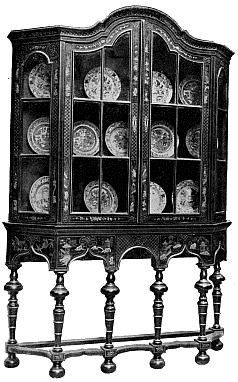
Fig. 74 is an interesting china cabinet in black lacquer of William and
Mary period, 7 ft. 5 in. high and 5 ft. wide, priced at £30. A
first-class modern mahogany or walnut-wood cabinet of the size could
scarcely be made for the money, whilst the old lac, apart from its
intrinsic charm, has an additional sentimental value as marking a phase
in the history of furniture—a phase in decoration. In this cabinet we
have also a development in form; it is palpably the product of a period
when the rage for collecting porcelain was prevalent, and in the same
connection it is no less useful to-day. The modern designer scarcely
invents anything more appropriate. It is interesting to note this
cabinet as an example of the afterthought in decoration. The
owners—Messrs. Story and Triggs Ltd., of Queen Victoria Street,
London—have discovered that the lacquer is superimposed on walnut
veneer! It tells its own tale.
Fig. 75 is an early example of red lacquer, a cabinet with boldly arched
cornice; the repetition of the arch at either end gives a fine
architectural finish to the top. The upper part encloses shelves, and
there are four drawers in the base. The decoration consists of various
Chinese views of ladies in a garden, a temple with a man and children,
trees, rocks and lakes. It was probably made about 1690; 75 in. high, 31
in. wide, and 23 in. deep.
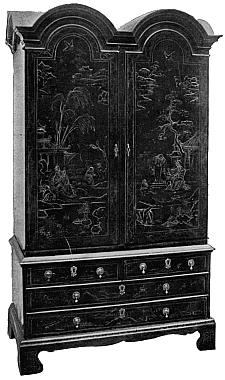
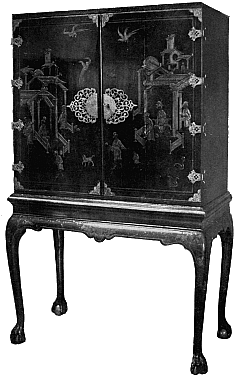
Fig. 76 is somewhat later—about 1710—with typical Queen Anne period
cabriole legs and claw-and-ball feet. The doors, which enclose five
drawers, are decorated with figures, buildings, birds and flowers, and
are furnished with finely chased ormolu lock-plates and hinges. It is of
black lacquer with red and gold reliefs, measures 67 in. by 39 in. by 19
in, and is valued at about £45.
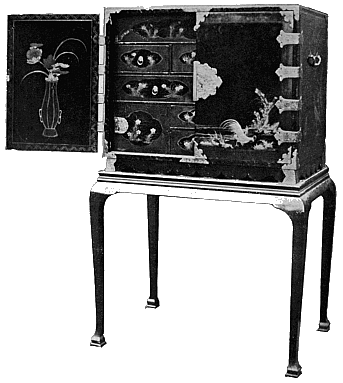
Fig. 77 is still later—about 1730—a cabinet surmounted on plain
cabriole legs. On the front is a view of a lake with Oriental figures,
cocks, and vegetation. Inside the doors are studies of the lotus-flower
in vases. The hinges and lock-plates are fine examples of English
metal-work in the Chinese taste. This piece is 56 in. high and 36 in.
wide, and is valued at £35.
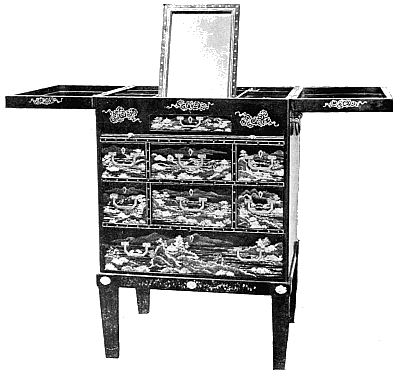
For comparison we give an example (Fig. 78) of a piece of lacquered
furniture made in China about 1740. This dressing-table, built of
camphor-wood, and still exhaling a delicate fragrance, was evidently
made for England and copied, as to shape, from an English table. It is
inlaid with mother-of-pearl designs of landscape, birds, and flowers;
and the interior is fitted with a mirror, writing-desk, and numerous
boxes.
During the English "japanning" period, every imaginable shape of
furniture received this Oriental treatment. Besides the various forms of
cabinet, we find lacquered mirror-frames, dressing-tables, corner
cupboards, hanging cupboards, chests and chests of drawers, chairs,
work-boxes, writing-desks, coffee-tables, card-tables, pole-screens,
trays, barometer-cases, and even bellows-cases.
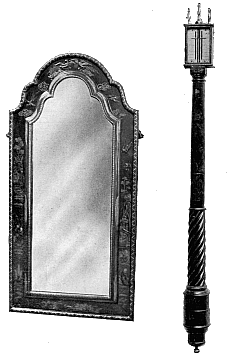
We give an example of a simple mirror in red lacquered frame with arched
top (Fig. 79). It measures 39 in. by 19 in. This and the three preceding
examples are the property of Mr. F. W. Phillips, of The Manor House,
Hitchin.
Fig. 80 is a barometer in lacquered case of about 1700.
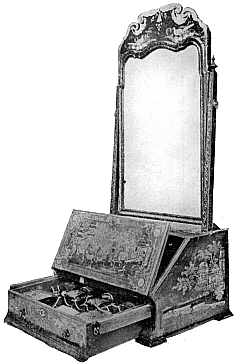
Fig. 81, at the Victoria and Albert Museum, is of Dutch make of the
early eighteenth century—a dressing-glass suspended between two
uprights, which are supported on a cabinet with sloping front. Inside
the cabinet is a compartment with a hinged door, flanked on either side
by an open compartment, one long and two short drawers. The lower part
has seventeen compartments fitted with boxes, brushes, and various
toilet requisites. The lacquer is raised and gilt on a red ground,
showing groups of figures in Chinese costumes, buildings, landscapes and
floral designs with birds.
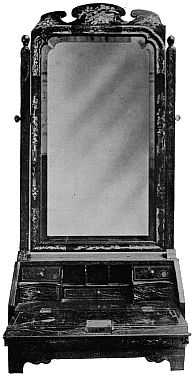
Fig. 82 is a somewhat similar glass but of English make. The woods
composing it are poplar, pine and oak, and it is decorated with blue and
gold lacquer, the effect of which is the reverse of pleasing.
We have said that the European lacquer will not bear close comparison
with the Old Japanese. The methods of the Chinese were simpler, and the
English "japanner" (it is, of course, a misleading term) was more
successful in his attempts to copy the Chinese cabinets. His best
examples, if indeed they fell far short in technique, did in method to
a large-extent approximate to the work of the Celestial.
English lacquer as a mere investment is worth buying at reasonable
prices, and in choosing pieces the collector will do well to look, as
much as possible, for the real Oriental feeling.
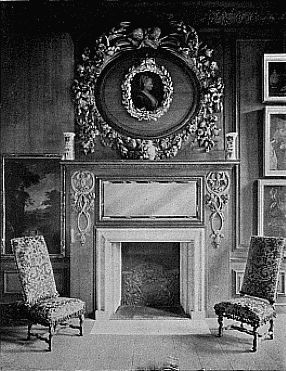
Fig. 1. MANTELPIECE IN HAMPTON COURT PALACE
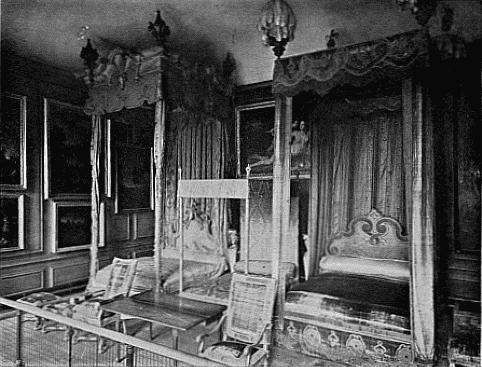
Fig. 2. BEDSTEADS AT HAMPTON COURT PALACE
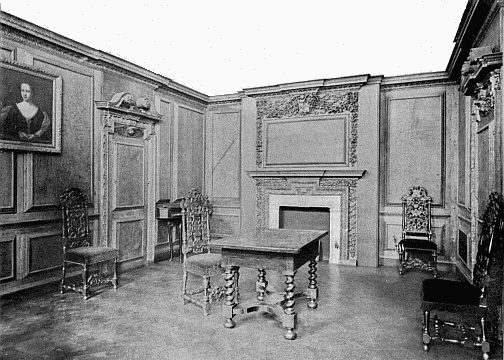
Fig. 3. ROOM IN CLIFFORD'S INN
(PERIOD WILLIAM AND MARY)
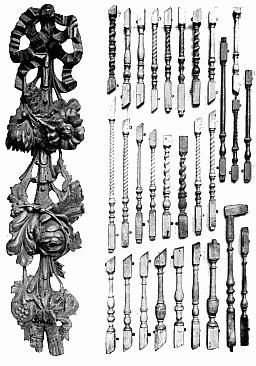
Fig. 4. CARVING IN
PINEWOOD ATTRIBUTED TO GRINLING GIBBON
Fig. 5. TURNED BALUSTERS
(LATE SEVENTEENTH AND EARLY EIGHTEENTH CENTURIES)
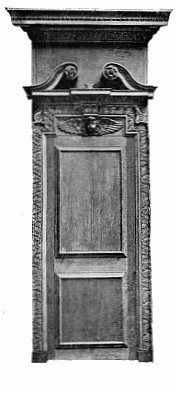
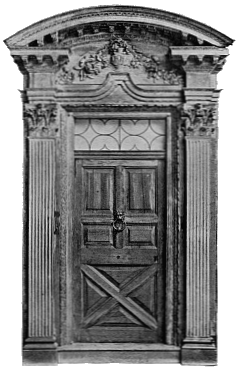
Fig. 6. DOORWAY
(LATE SEVENTEENTH CENTURY)
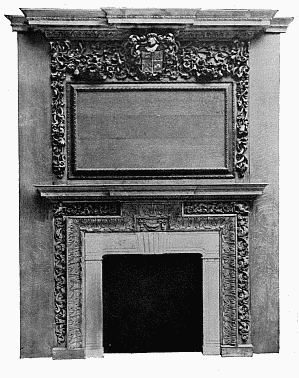
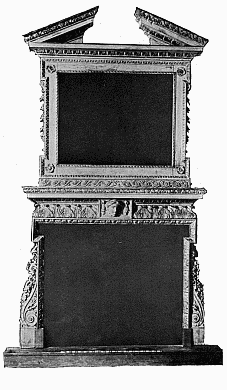
Fig. 7. OVERMANTEL
(LATE SEVENTEENTH CENTURY)
Fig. 8. DOORWAY
(EARLY EIGHTEENTH CENTURY)
Fig. 9. MANTELPIECE
(EARLY EIGHTEENTH CENTURY)
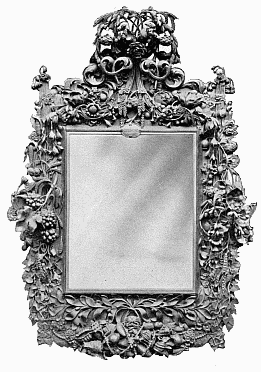
Fig. 10. MIRROR FRAME
ATTRIBUTED TO GRINLING GIBBON
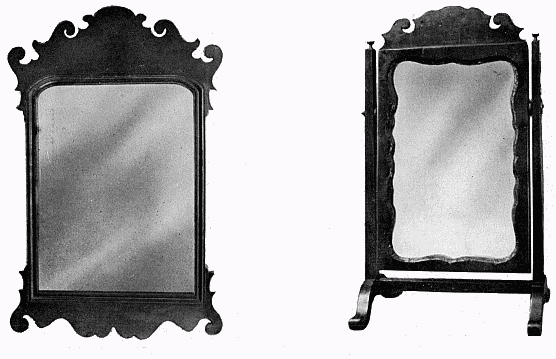
Fig. 11. SIMPLE WALL MIRROR
(QUEEN ANNE PERIOD)
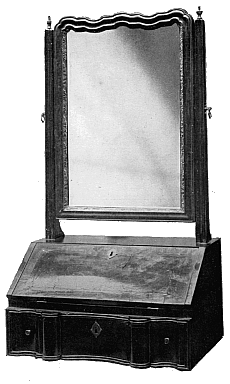
Fig. 12. SIMPLE TOILET MIRROR
(QUEEN ANNE PERIOD)
(The property of Mr. F. W. Phillips, The Manor House, Hitchin)
Fig. 13. WALL MIRROR
(QUEEN ANNE PERIOD)
Fig. 14. WALL MIRROR
(QUEEN ANNE PERIOD)
Fig. 15.
"GESSO" MIRROR (QUEEN ANNE PERIOD)
Fig. 16. "GESSO" MIRROR
(QUEEN ANNE PERIOD)
Fig. 17. FINE "GESSO" MIRROR
(QUEEN ANNE PERIOD)
Fig. 18.
MIRROR FROM "FLASK" TAVERN
PIMLICO, DATE ABOUT 1700
Fig. 19. MARQUETRY MIRROR
(EARLY EIGHTEENTH CENTURY)
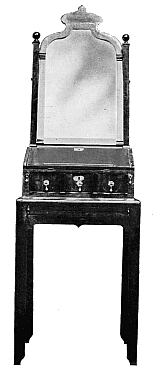
Fig. 20. TOILET MIRROR WITH DRAWERS
(QUEEN ANNE PERIOD)
Fig. 21. TOILET MIRROR ON STAND
(QUEEN ANNE PERIOD)
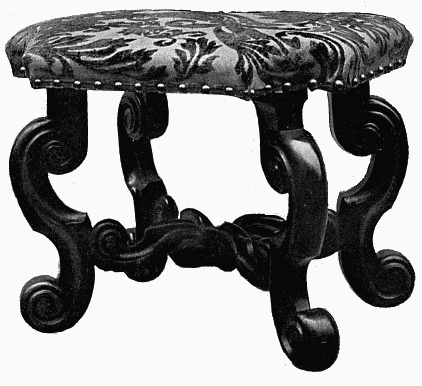
Fig. 22. STOOL (PERIOD OF WILLIAM AND MARY)
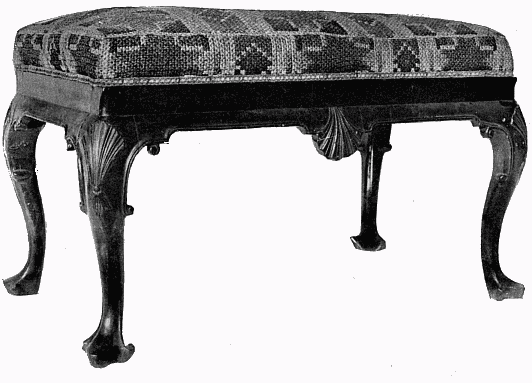
Fig. 23. FINE STOOL (PERIOD QUEEN ANNE)
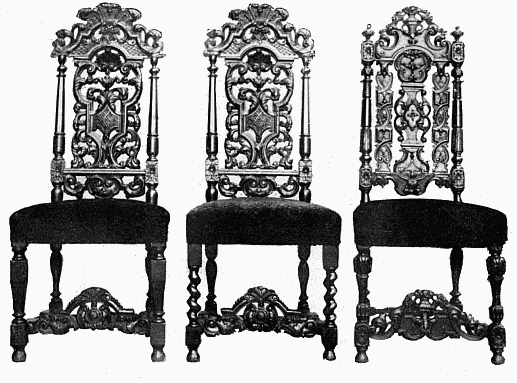
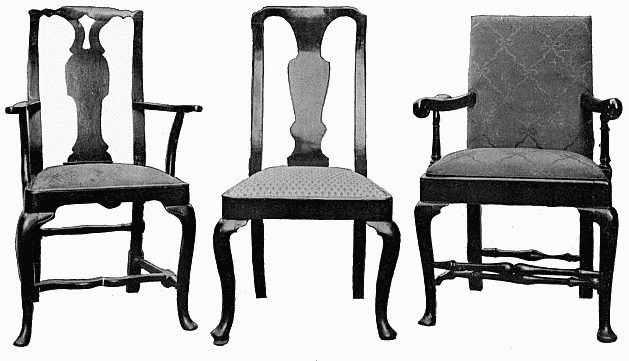
Fig. 24. Fig. 25. Fig. 26.
FINE CHAIRS (PERIOD WILLIAM AND MARY)
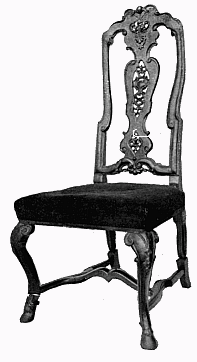
Fig. 27. FINE CHAIR
(PERIOD WILLIAM AND MARY)
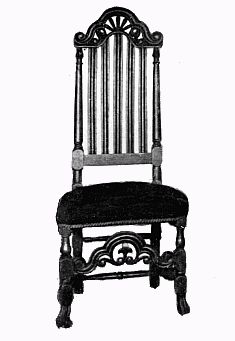
Fig. 28. SIMPLE CHAIR
(PERIOD WILLIAM AND MARY)
(The property of F. W. Phillips, The Manor House,
Hitchin, Herts)
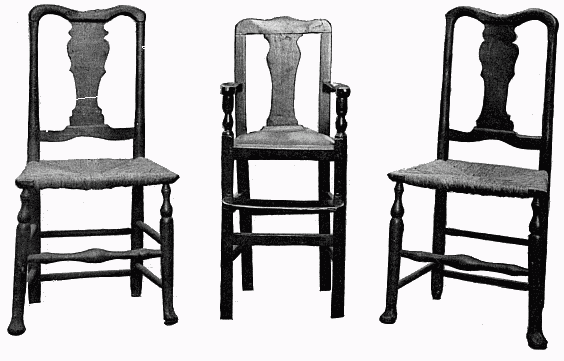
Fig. 29. Fig. 30 Fig. 31.
SIMPLE CHAIRS (PERIOD QUEEN ANNE)
(The property of Mr. J. H. Springett, High Street, Rochester)
Fig. 32.
SIMPLE CHAIR WITH CABRIOLE LEGS
(QUEEN ANNE PERIOD)
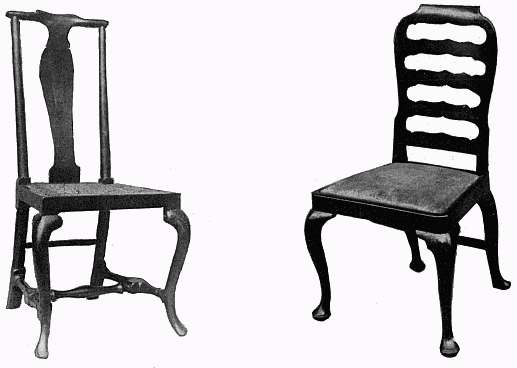
Fig. 33. Fig. 34. Fig. 35.
SIMPLE CHAIRS WITH CABRIOLE LEGS
(QUEEN ANNE PERIOD)
(The property of Mr. J. H. Springett, High Street, Rochester)
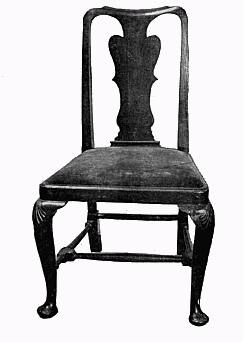
Fig. 36. QUEEN ANNE CHAIR WITH INLAID SPLAT
Fig. 37. LATE QUEEN ANNE CHAIR
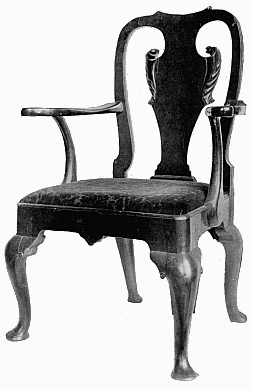
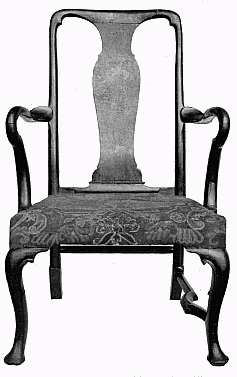
Fig. 38. FINE ARM CHAIR (QUEEN ANNE PERIOD)
Fig. 39. ARM CHAIR (QUEEN ANNE PERIOD)
COVERED WITH "PETIT POINT" NEEDLEWORK
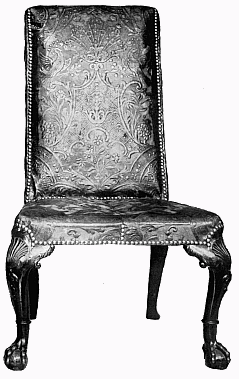
Fig. 40.
FINE CHAIR (LATE QUEEN ANNE PERIOD)
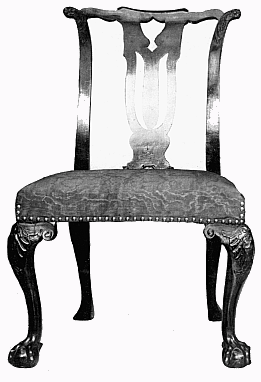
Fig. 41.
FINE CHAIR (LATE QUEEN ANNE PERIOD)
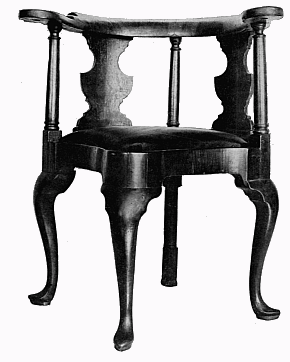
Fig. 42.
CORNER OR ROUNDABOUT CHAIR (LATE QUEEN
ANNE PERIOD)
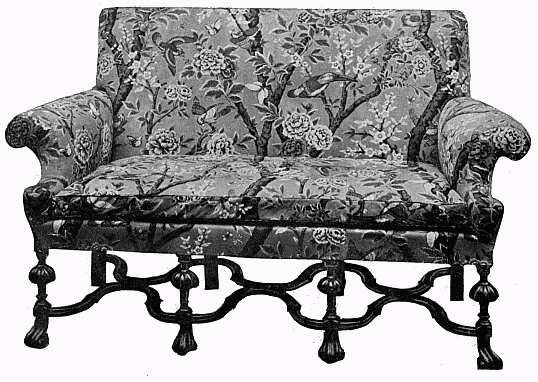
Fig. 43. SETTEE (WILLIAM AND MARY PERIOD)
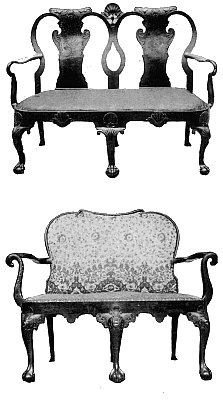
Fig. 44. FINE SETTEE (LATE QUEEN ANNE PERIOD)
Fig. 45. FINE SETTEE (LATE QUEEN ANNE PERIOD)
Fig. 46.
TABLE (PERIOD WILLIAM AND MARY)
(The property of Mr. F. W. Phillips, The Manor
House, Hitchin)
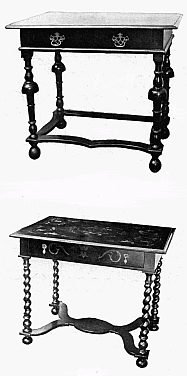
Fig. 47.
TABLE (PERIOD WILLIAM AND MARY)
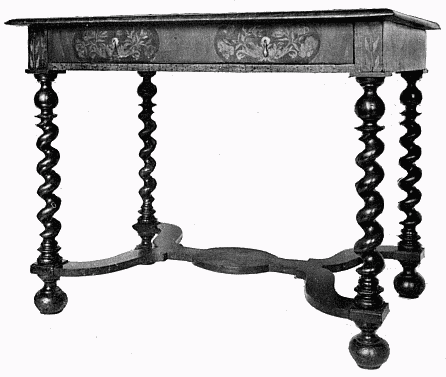
Fig. 48. TABLE (WILLIAM AND MARY PERIOD)
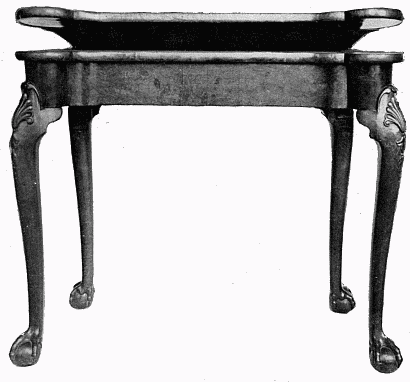
Fig. 49. TABLE (LATE QUEEN ANNE PERIOD)
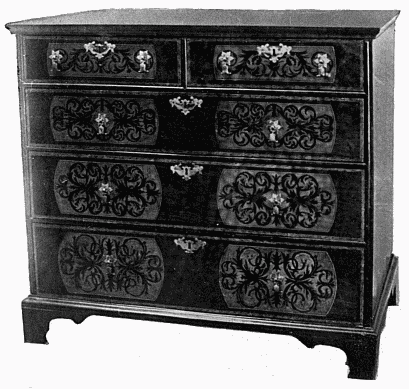
Fig. 50. CHEST OF DRAWERS (WILLIAM AND MARY PERIOD)
Fig. 51. CHEST OF DRAWERS (WILLIAM AND MARY PERIOD)
Fig. 52.
CHEST OF DRAWERS ON TWISTED LEGS
(WILLIAM AND MARY PERIOD)
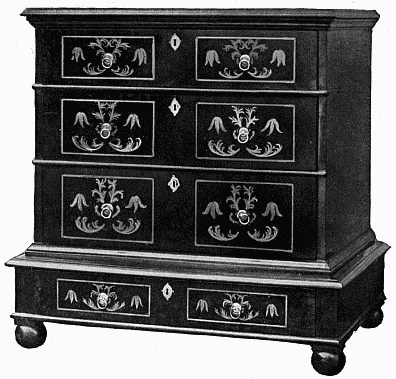
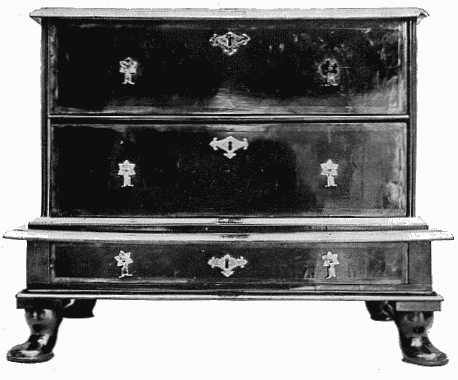
Fig. 53. DWARF CHEST OF DRAWERS ON FEET
(WILLIAM AND MARY PERIOD)
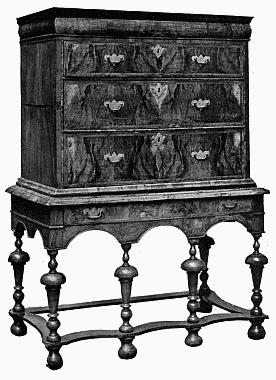
Fig. 54.
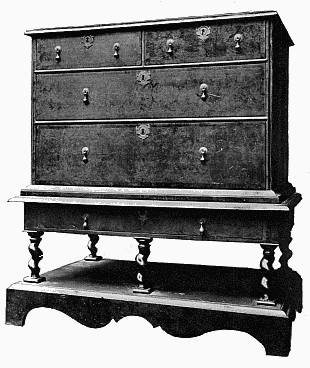
FINE CHEST ON STAND (WILLIAM AND MARY PERIOD)
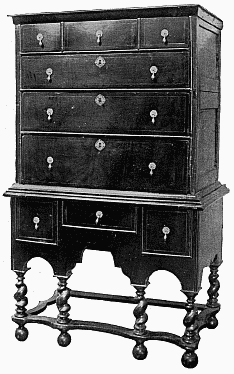
Fig. 55.
SIMPLE CHEST ON STAND (WILLIAM AND
MARY PERIOD)
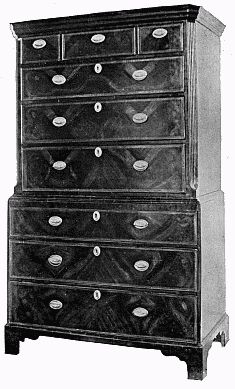
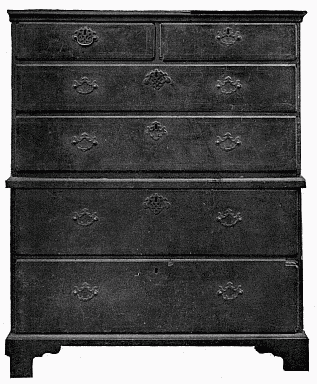
Fig. 56. TALLBOY (QUEEN ANNE PERIOD)
Fig. 57. TALLBOY (QUEEN ANNE PERIOD)
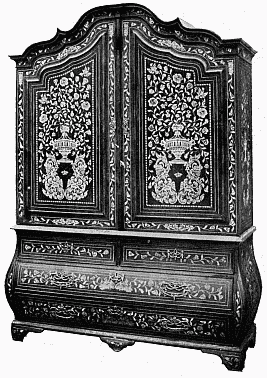
Fig. 58. WARDROBE IN MARQUETRY
(The property of Mr. F. W. Phillips, The Manor House, Hitchin, Herts)
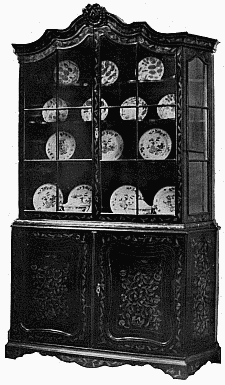
Fig. 59. CHINA CABINET IN MARQUETRY
Fig. 60. SIMPLE BUREAU
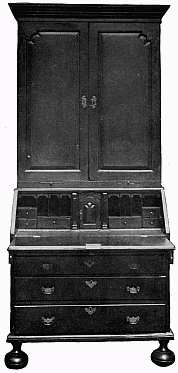
(WILLIAM AND MARY PERIOD)
Fig. 61. BUREAU (WILLIAM AND MARY PERIOD)
Fig. 62. BUREAU (QUEEN ANNE PERIOD)
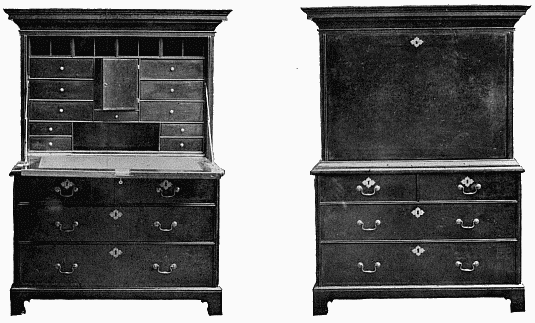
Fig. 63. WRITING TABLE (QUEEN ANNE PERIOD)
Fig. 64.
WRITING OR DRESSING TABLE (QUEEN ANNE PERIOD)
Fig. 65. Fig. 66.
ESCRITOIRE (QUEEN ANNE PERIOD)
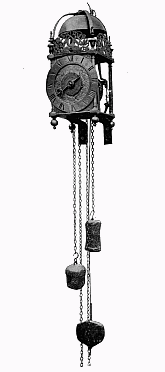
Fig. 67. "BIRDCAGE" CLOCK
(SECOND HALF SEVENTEENTH CENTURY)
Fig. 68.
LANTERN CLOCK IN HOODED CASE
(FIRST HALF EIGHTEENTH CENTURY)
Fig. 69.
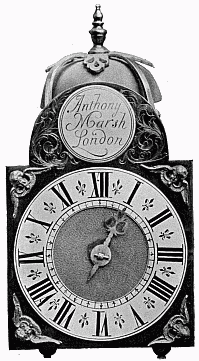
LANTERN CLOCK WITHOUT CASE
(FIRST HALF EIGHTEENTH CENTURY)
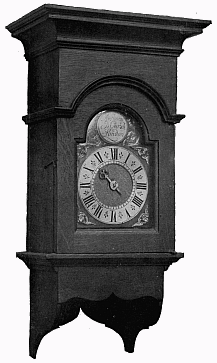
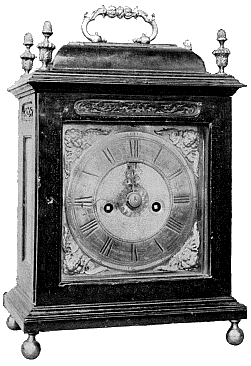
Fig. 70. BRACKET CLOCK
(SEVENTEENTH CENTURY)
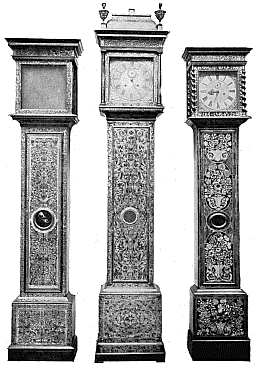
Fig. 73. Fig. 72. Fig. 71.
MARQUETRY CLOCKS AND CLOCK CASES
Fig. 74. LACQUERED CHINA CABINET
Fig. 75. LACQUERED CABINET WITH DRAWERS
Fig. 76. LACQUERED CABINET
Fig. 77. LACQUERED CABINET
Fig. 78. LACQUERED DRESSING-TABLE
Fig. 79. LACQUERED MIRROR
Fig. 80. BAROMETER IN LACQUERED CASE
Fig. 81.
LACQUERED TOILET MIRROR
Fig.82.
LACQUERED TOILET MIRROR