A voluminous parcel of letters and official documents quite recently
brought to light in one of the continental court archives[1] invalidates
in many material points the short notices which historians have given us
of the captivity and flight from Innsbruck of Princess Clementina
Sobiesky, the elder Pretender's wife, and supplies us with an ample and
interesting account of this episode in the lives of the two most
persecuted men of the day, the Pretender and his father-in-law, Prince
James Sobiesky of Poland.
It will be remembered that after the failure of his Scotch expedition of
1715 the Pretender—or, as he was then commonly styled, the Chevalier de
St. George—was obliged to quit France and Germany and retire to Italy,
where the misfortunes of his family, proceeding in part from its
devotion to the Roman Catholic Church, gave him the best right to expect
a hospitable reception. Here he opened a negotiation with Prince James
Sobiesky which had for its object his marriage with Princess Clementina,
Sobiesky's daughter. Sobiesky was the son of John, king of Poland, the
heroic deliverer of Vienna and Christendom from the Turks. This
unfortunate prince, having signally failed in his repeated attempts to
instal himself upon the Polish throne, vacated by his father's death,
had retired to Ohlau, a large estate near Breslau in Silesia belonging
to the emperor Charles VI., and with which the latter had invested him.
The negotiations carried on between the two parties ended in the formal
betrothal of the Princess Clementina to James III., king of Great
Britain and Ireland, as the Pretender styled himself.
Meanwhile, the English government had exhibited great solicitude to
frustrate the Pretender's intention of strengthening his cause by
contracting a marriage likely to yield an heir to his pretensions to the
crown of Great Britain. The Pretender and Sobiesky were both perfectly
well aware of this, and hence Sobiesky's anxiety that the union should
be completed as soon as possible. Through the vacillating character of
the bridegroom valuable time was lost at the last moment, and before the
project could be carried out the petty court at Ohlau was surrounded by
English spies. We know that in August, 1718, the English government was
acquainted with the whole plot, and was using to the utmost the
influence which its friendly relationship with the emperor of Germany
gave it. A prohibition was obtained from him forbidding all further
intercourse between the Pretender and Sobiesky, whose wife, it should be
mentioned, was the emperor's aunt.
Sobiesky vainly expostulated with his imperial kinsman. He reminded him
that although he was then residing within the frontiers of the empire,
he was nevertheless an independent prince; and he begged him to consider
that his conduct was unworthy of their close relationship and
incompatible with every feeling of gratitude toward the memory of his
father, the brave deliverer of Vienna and of Christendom. Charles, who
had at this time very good reasons for wishing to keep on a good footing
with England, not only turned a deaf ear to the expostulations of Prince
Sobiesky, but actually threatened him with his highest displeasure if he
did not sever his connection with that "worthless vagabond princeling."
Sobiesky, convinced that nothing was to be gained by delay, and quite
prepared to sacrifice the favor of his mighty kinsman for the sake of
compassing his object, determined to send his daughter to Italy to join
her betrothed, with a view to the consummation of the marriage.
In the latter half of September, 1718, Princess Clementina and her
mother, accompanied by a suite consisting of a lady-in-waiting, a
confidential maid, Monsieur Châteaudoux, a gentleman of the household,
with his servant, and Monsieur la Haye,[2] gentleman-in-waiting of the
Pretender, left Ohlau for Innsbruck en route for Italy. Secret as the
preparations for the journey had been kept, they had not escaped the
notice of the English agent at Breslau; and a few hours after the
departure of the princess and her party an English and a German courier
left that town—the one for London, the other for Warsaw. In a
remarkably short time the former had accomplished his journey, and was
back again in Vienna, the bearer of an autograph letter from the king,
George I., to the emperor Charles. The immediate upshot was a despatch
sent off in hot haste to the provincial government of Tyrol, ordering
that body to stop the princely party wherever they could lay hands on
them, "be it in Innsbruck or any other part of our empire."
The twelve privy councillors who constituted the government of Tyrol
were "sorely perplexed and harassed by this order;" for it appears that
so little time had been lost by the courier on his way to and from
London that the order actually reached Innsbruck two days before the
arrival of the party, who, as we must presume, accomplished their
journey from Breslau to Augsburg, and from thence to Innsbruck, by very
easy stages. The first despatch from the emperor was short, and was
couched in somewhat mysterious terms, so that the bewildered privy
councillors, exaggerating the importance of their commission, caused the
most portentous precautions to be taken. Bodies of armed men were
despatched in all directions to watch the different mountain-passes and
high-roads leading into the country from the North. To the astonishment
of the zealous statesmen, the princely party arrived two days later
(October 3d), "quietly and properly mannered." They took rooms at the
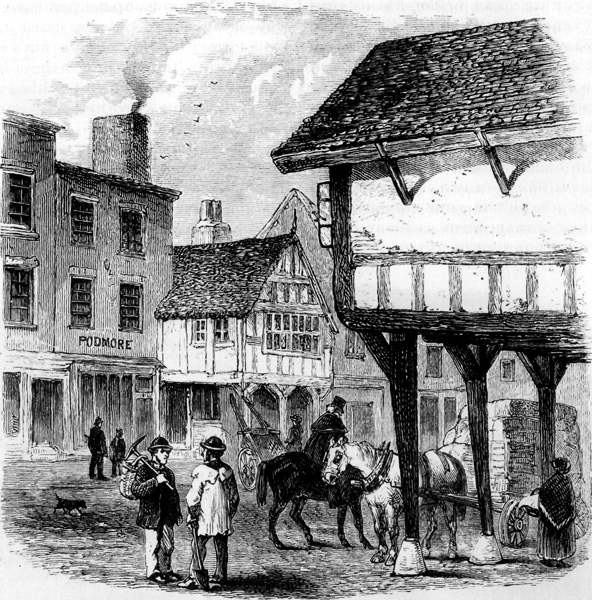
principal hostelry, swinging the signboard of the Golden Rose.[3]
When their arrival became known, a privy council was immediately
convoked, and the councillors, who had received that morning minute
instructions from the emperor, sent to their noble visitors a deputation
consisting of two of their number, Count Lodron and Count Sonnenburg.
Their request for an interview was at first refused, on the plea that
the illustrious travellers were at the time engaged in their devotions
and very much fatigued by their journey. The lady-in-waiting, who in the
absence of a chamberlain acted as spokesman, was then informed by the
two counts that they came by the express order of His Majesty "to convey
a certain message to the princess and her daughter."[4] Thereupon they
were allowed to enter and present themselves to the princess-mother.
"After humbly offering their congratulations on their safe arrival,"
the two councillors acquainted the princess-mother with the desire of
the emperor that she and her daughter should take up their residence at
Innsbruck. On receiving this startling news, "the princess seemed a bit
frightened, and stood silent for a little time." Presently she replied
that she was quite willing to comply with His Majesty's order, strange
as it seemed to her, "for," said she, "our journey had for its sole
object a visit to the holy shrine at Loretto, there to perform our
prayers." Bowing humbly, the deputation assured her of their ignorance
of the whole matter, whereupon the princess dismissed them. They had
hardly reached the council-hall, where their ten comrades were awaiting
them, as we may presume, full of eagerness and curious to hear how they
had fared, when the gentleman-in-waiting of the princess overtook them
and acquainted them with her wish to be allowed to inspect the imperial
cabinet order. The councillors, "though in our character," said they to
the emperor, "as representatives of your most exalted person, we were
surely not obliged to produce our credentials," forthwith returned and
complied with the princess's request. The minute résumé sent by them to
the emperor, and from which we make these verbatim extracts, then says:
"The inspection of the document seemed to satisfy the princess,
especially when Your Majesty's humble servants pointed out to her the
autograph signature of Your exalted Majesty."
Upon a hint of the princess the two councillors placed at her service
the court courier; and we hear that this personage left for Vienna that
same night as the bearer of two letters from the princess—one to her
sister, mother of Charles VI., the other to the emperor himself—as well
as of a minute protocol in which the privy councillors detailed the
occurrences of this eventful day.
The Pretender, it seems, must have awaited the party from Ohlau near the
Austrian-Italian frontier, for on the 9th of October, six days after
their arrival at Innsbruck, a Scotch nobleman appears on the scene.
According to the declaration of the postmaster-general of Tyrol, Count
Taxis, this gentleman had travelled with the greatest despatch the night
through from Trent to Innsbruck. At Innsbruck he seems suddenly to have
lost the desire to continue his journey, for after stopping two days in
the town, during which time he was seen conversing with a person in the
suite of Princess Sobiesky, he was about to start for Italy, whence he
had come, when the privy councillors, whose suspicion had been aroused
by his strange conduct, had him arrested and brought before them. On
being asked for his passport, he maintained that he had none, and
declared himself "to be a Scotch nobleman, his name Robert Seiberg
[sic], thirty-six years of age, and travelling for his amusement."
When pressed to give further information, he told them that he had been
on the Continent for the last two years, that he had been travelling in
France and Italy, and that he was on his way to Vienna when he
accidentally met a friend and countryman of his named La Haye, who was
travelling in the suite of Princess Sobiesky. More pressure being
brought to bear upon him, he produced a passport which he said he had
received from the Irish Capuchin monks at Prague, and which bore the
name of Count John Wirmann. He was then asked if he possessed any
letters or documents bearing upon the Pretender or the Sobiesky family.
He declined to answer this question; and when force was threatened he
requested a private interview with the president of the council. To him
he ultimately acknowledged that "he was a servant of King James of
England." He was then asked to produce the letters and documents in his
possession. Amongst them was found a letter in English, but without
address, heading or signature. It was a communication from the Princess
Clementina to her affianced, and in it she informed him of the
misfortune that had befallen them, and warned him not to entrust any
letters to couriers or messengers. She told him that her mother had
written to her sister and to the emperor, but that she feared their
efforts would be in vain. The closing sentence of the letter is: "We
receive much honor and politeness. Adieu."
This letter, with the rest of the papers found upon Fremont,[5] was sent
to the emperor, and the bearer himself was taken to a second-class
hostelry. Here he was closely watched, and although he had given his
word of honor not to escape, he was not allowed even to go out alone.
To the mortification of the privy council, the emperor discountenanced
their rigorous proceeding, for the next courier from Vienna brought an
imperial order commanding them to set the "Stuart messenger" at liberty,
and forthwith to provide suitable lodgings in a private house, as
befitted their rank, for the two illustrious ladies and their suite. The
emperor had at first intended to place the imperial palace at their
disposal, but he subsequently ordered "that a more respectable private
house in or out of the town" should be prepared for the ladies, adding
"that he did not wish the noble ladies to know that this was done by his
order, but rather that it should seem an act of politeness on the part
of the privy council."
Baron Greiffen, a member of that body, seems to have been the only one
that took the hint to heart; for we find that the two princesses and
their suite removed their domicil to the "palatial building"—in reality
a quiet and by no means very magnificent house—of which the above-named
nobleman was owner. The princely party entered upon their new residence,
which was situated in the new town just outside the town-walls, on the
23d and 24th of October. Trained servants were now added to the princely
household by the cautious privy councillors. Amongst these, however, as
we see by the minutes sent to the emperor, were a couple of "trusty
personages"—in other words, court spies. A handsome offering of choice
game, fish and wine, the usual form of paying homage to distinguished
guests, was presented to the princesses.
While the princesses are installing themselves in their new prison, we
will turn for a moment to the Pretender, who had arrived on the 8th of
October at Bologna, where he was to await the coming of the princess and
her daughter. For seven days he remained without news, a prey to
anxiety. On the 15th of October he received the first intimation of the
fate that had befallen his bride, and the very next day he despatched
two letters to the mother and daughter at Innsbruck.[6] From the answer
to these missives we learn that the princesses had by no means given up
the project of effecting their flight to Italy. The long, dreary winter
evenings and the absence of all society in dull Innsbruck left them full
time and opportunity to plan the best means of escape; and though they
were surrounded by watchful spies and guarded by a morbidly cautious
government, they yet found ways and means to communicate two or three
times with their friends in the North and the South. Strange to say, the
councillors themselves afforded them on one occasion the means of
intercourse with the Pretender. Under the pretence that bills of
exchange were awaiting her at Venice, Princess Sobiesky obtained
permission to send her gentleman-in-waiting, La Haye, to the latter town
to arrange "these necessary money-matters."
After the departure of the princess from Ohlau the English government
concentrated its attention upon the unfortunate father of the bride, for
it was obvious that as long as the head of the family continued to
advocate the marriage, all efforts to dissolve the betrothal would prove
abortive. He was therefore made the object of countless intrigues on the
part of England's staunch ally the emperor. A special commissioner,
Count Praschma, then governor of Silesia, was sent by the imperial court
to Ohlau. On the 14th of October he met Prince Sobiesky, but, though the
interview lasted from three o'clock in the afternoon till a late hour
of the night, the count did not succeed in bringing Sobiesky to more
reasonable views. Sobiesky refused to give him then and there a definite
answer, and begged him to come again the next day. "The matter," he
said, "was of too vital importance for him to give a decisive answer
that day." The result of the next day's interview was that Count
Praschma set down in writing, at the prince's dictation, two separate
minutes—the one addressed to the emperor personally, the other also
nominally addressed to him, but specially prepared for the scrutiny of
the English ambassador at Vienna. Did we not know that the courier who
left for Vienna the same evening with these two documents was also the
bearer of a third, a private letter from Praschma to the emperor, we
should naturally wonder at the count's willingness to comply with this
whim of Sobiesky—a proceeding which would have been fraught with some
danger for the imperial commissioner. These documents are not without
interest, for they give us a picture of the political intrigues forming
such unstable links between the courts of St. James and Vienna. The
limited space of this paper, however, compels us to confine ourselves to
a brief résumé of their contents. In the first, addressed to the emperor
personally, Prince Sobiesky lays great stress upon "the certainty that
the marriage with the Pretender would prove to be a source of great
political advantage to Austria"—an argument which, we must confess, was
well adapted to find favor in the eyes of Charles VI., the last male
descendant of a house in the history of which marriage had played such a
momentous rôle. He pointed out to the emperor that "His British Majesty"
would find in the annulment of the betrothal no help in suppressing
rebellion in his kingdom; and, moreover, that it would be quite
impossible for the king by any means to prevent the Pretender's
marrying. "It is well known," he goes on to say, "that the
English"—meaning the rebels—"wait only for the marriage of the
Pretender, and not for an alliance with a foreign power." He begs his
imperial kinsman not to shut his eyes to the obvious precariousness of
King George's tenure of the throne, nor to the well-known fact that dire
necessity alone had impelled the king to come to his aid by sending the
English fleet to Naples. The emperor is warned that the king of England
would assuredly break off his alliance with him the moment he had no
longer cause to dread the Pretender; and he is reminded that while the
former was at best a cold and crafty ally, he would find the prince a
staunch and powerful confederate. "It is therefore," he continues, "for
Your Majesty's interest to bring about a marriage, and not to allow the
royal house of Stuart to become extinct. And even, taking the worst for
granted, if the Pretender did not succeed in realizing his pretensions
to the British throne, it would be only fair on the part of Your Majesty
to remind King George that the marriage would detract nothing from, and
have no influence whatever upon, the alliance between him and Your
Majesty." Sobiesky closes his letter by assuring the emperor how deeply
he regretted his displeasure, and by declaring that he had acted in good
faith to the emperor; "for," said he, "I would never have advocated this
match without the consent of Your Majesty had I not received the written
assurance of Her Majesty the empress Eleonora (the emperor's mother)
that she had spoken to Your Majesty on this matter. To me this was
sufficient; for, considering the course of European politics, I dared
not hope to receive open signs of Your Majesty's approbation."
Count Praschma remarks, in his private report to the emperor, that he
believes "Prince Sobiesky places great reliance on the assistance
proffered by the Roman Curia, on the good-will displayed by the regent
of France, no less than on the guarantee ensured to him by Sweden and
Prussia, and on the concurrence of Russia."
In the second document Prince Sobiesky displays far more energy and
spirit in resisting the overbearing demands of King George, whom he
persistently styles throughout the whole of this second paper "elector
of Hanover." He not only condemns the king's intrigues as perfidious,
but also asserts with much emphasis that the marriage between his
daughter and the Pretender had been consummated and stood irrevocable.
He trusts that His Majesty will decline to uphold any further these
grossly unjust concessions which the elector and his government had
dared to exact of a monarch who was famed for his justice and benignity.
He humbly reminds the emperor, his exalted kinsman, that the great
services which his (Sobiesky's) father had rendered to Christendom
deserved worthier recognition than the open persecution to which he and
his family were then subjected. He declares with some asperity that the
elector of Hanover has no right whatever over his person, and that he,
an independent prince, reserves to himself the power to dispose of his
own flesh and blood. The threats of England would never frighten him
into submission, especially as he is sure of the aid of several
potentates—a circumstance which ensures to him the safety of his
estates in Poland and France. "The marriage," says he, "is not opposed
to the interest of Your Majesty in respect to your alliance with the
elector, for the union does not enrich the Pretender either in money or
in land. And were it possible that the marriage could be still
prevented, the Pretender would assuredly turn to some more powerful
court, able to supply him not only with a wife, but also with ample
funds and troops." Sobiesky closed his missive with the request to His
Majesty to take back the investiture of Ohlau, "a place which had become
unbearable to him through the ignominious treatment to which he was
constantly exposed, no less than by the endless trouble and pecuniary
losses which the management of that imperial estate entailed upon him."
He was desirous of removing to some distant and secluded spot, far away
from Poland, where he could end his days in peace.
These two important missives were followed a few days later (17th and
19th of October) by two more letters from the prince to Chancellor
Count Zinzendorf at Vienna. Of their contents—which are generally a
repetition of the arguments contained in the first two—we need not
speak, except in reference to one point, which was evidently the result
of an after-thought that had rushed through the bewildered prince's
head. The reader will have observed that Sobiesky, while using the name
of almost every potentate of Europe to strengthen his arguments, omits
to mention the Pope, the staunchest and most powerful partisan he had.
This omission he seeks to repair in his letters to Zinzendorf, in which
he endeavors to persuade the emperor that the marriage ceremony had
really been performed, though only by proxy, and that hence it was a
matrimonium ratum, which, according to the canon law, could not be
dissolved without drawing upon the parties concerned in the act the just
wrath of the pontiff and of every good Catholic.
These four letters, but chiefly the first two, had evidently some effect
in making the emperor waver. This appears from one of the most striking
sentences in a letter from the imperial court to Monsieur de
Peutenrieder, imperial ambassador at the court of St. James, which runs
as follows: "In the mean while I beg you to remember that we are very
desirous of extricating ourselves from this dilemma honesto et licito
modo. We were, and are still, quite willing and prepared to do
everything in this delicate affair according to the wishes of the king,
to convince him of our love and friendship.... The emperor wishes you to
convince the king, as politely and delicately as possible, that we fear
our measures in this marriage affair will prove abortive."
Politicians in England, less scrupulous than their confrères on the
Continent, persisted in their demand that no concessions should be made
to Prince Sobiesky until the betrothal, the work of Alberoni and the
Roman Curia, was formally dissolved. In a formal protest which the
English ambassador at the imperial court handed in (9th of December)
stress is laid upon the fact that Prince Sobiesky was not an
independent prince, but rather a subject of the emperor, and that hence
his conduct, culpable in the extreme, deserved to be visited by the
emperor with severity. It was alleged to be ridiculous that he held out
against the express wish of the allies, well knowing how easy it would
be for the king of England to ruin him entirely. Even Venice, whither it
was said Prince Sobiesky wished to retire, would not receive him for
fear of annoying England. The duke of Modena, prompted by sincere
consideration for England, had broken off his engagement with the eldest
daughter of Prince Sobiesky, and it was very probable that the duke of
Guastalla would follow this example.
We should tire the reader were we to repeat all the arguments employed
by statesmen in defence of the English policy. Untenable as most of them
were, they sufficed to dispel such slight qualms of conscience as had
arisen in Charles's mind. England's powerful fleet and beef-fed troops
were then far more important to Charles than the empty thanks of a
thriftless princeling.
While the father was thus being made the centre of political intrigues,
the lives of his wife and daughter, on whose account the courts of
Europe had been thrown into a state of commotion, flowed on in the same
dull routine which had marked them from the very beginning. Four long
months were thus spent, and the rigorous winter of Tyrol was at its
height, when the guardians of the princesses, the worthy privy
councillors, were suddenly startled from their lethargic repose by the
news that the friends of their noble prisoners in the North and the
South were on the move. On the 11th of February, 1719, it became known
in Vienna that Prince Sobiesky had mysteriously left Ohlau, and that it
was supposed he had repaired to Augsburg. Ten days later the governor of
Mantua (then part of the empire) reported that the Pretender had turned
his back on Rome on the 8th of February, and had posted to Florence.
These two highly suspicious movements convinced the emperor that the
Sobiesky party was bent upon rescuing Princess Clementina. Strict
injunctions were therefore despatched to Innsbruck, enforcing redoubled
precautions against a surprise, while the governors of Mantua and Trent
were at the same time commanded to keep a watchful eye on all travellers
that passed through those towns, and were supplied with minute
instructions for their conduct should the Pretender visit either of
them. Force was not to be used in ejecting the person of the Pretender,
but he was to be told quite politely "that the emperor had given strict
orders not to allow him to proceed on his journey toward Innsbruck, and
that hence his further stay in the town was useless."
Politely as this imperial decree was framed, the Pretender did not give
the authorities occasion to make use of it, for his journey had Spain,
and not Innsbruck, for its goal. Ignorant of this circumstance,
government continued to maintain its cautious attitude. A staff officer
and a body of men were under a plausible pretext quartered in the house
adjoining the Sobiesky palace, and the two spies in the retinue of the
Princess Clementina were ordered "to make it a point to catch sight of
her at least once in every twenty-four hours." The privy councillors,
indeed, deemed all these precautions superfluous, for they placed full
reliance on the barrier, seemingly insurmountable by a delicate young
woman, with which Nature had surrounded the prisoner in the shape of a
severe winter blocking up all the Alpine passes leading to the South;
and they now reported to the emperor that they had done everything in
their power to make escape or rescue impossible.
Nothing of importance occurred for the next two months, save that the
princess-mother wrote to the emperor, and informed the Innsbruck
government that she desired to return to Ohlau—a request which the
emperor immediately granted, little thinking it to be a mere ruse on the
part of the ladies to lull their watchful guardians.
The night of the 27th of April was at last to witness the triumph of the
artful prisoners over their vigilant jailers.
In the afternoon of that day Princess Clementina drove, as usual, to the
church of the Franciscans (well known to all tourists for its celebrated
monument to Maximilian I.), there to perform her devotions. From thence
she drove home. It was the last time the sedate burghers of Innsbruck
set eyes upon her. Mother and daughter passed the evening in the usual
manner, as the spies witnessed with their own eyes. At eleven o'clock
the servants retired, and none of them had observed, as they deposed
upon their oath, anything in the least suspicious, save that Monsieur de
Châteaudoux was seen under the gate by the scullery-maid half an hour
later.
On the following morning the servants were told that Princess Clementina
was ill, and that they must keep as quiet as possible in order that her
fitful slumbers might not be disturbed. No suspicion was aroused by this
incident for two whole days. The escape had taken place on Thursday
night, and not till late in the evening of Saturday did the head-steward
of the Sobiesky household, one of the court spies, think proper to
inform one of the privy councillors of the fact that the young princess
had remained invisible, shut up in her room, since Friday morning. The
suspicions of the privy councillor were aroused, and notwithstanding the
late hour a council was immediately convoked to deliberate on the best
means of convincing themselves by actual inspection of the presence of
their prisoner. It was decided that the doctor who had been in the habit
of attending the Sobiesky family should be sent early the next morning
to see her in person. The physician, on presenting himself to the
lady-in-waiting, was politely informed that "he was only to come when
called." Not a little startled, for hitherto he had had free access to
the princess's room, he forthwith informed the privy councillors, who
were spending their Sunday forenoon in debate, of the result of his
visit. Upon hearing the physician's tale, they despatched Baron
Greiffen, the owner of the house in which the Sobiesky family lived, to
insist upon an interview with Princess Clementina, and thus pacify
their minds. The lady-in-waiting vainly endeavored to rid herself of the
inopportune visitor by pleading for her sick mistress; and when,
finally, Baron Greiffen assumed a sterner tone, she pertly asked him,
"And what if the princess has really given you the slip?" These words
amounted, of course, to an open confession of the deplorable fact. No
doubt they grated very harshly on the ears of the hapless councillors,
whose commission now obliged the baron to break the news of the
prisoner's escape to his confrères, who were anxiously awaiting his
return in the Diet Hall.
We will not pry into the feelings of utter consternation and abject
bewilderment which took possession of that solemn-faced company when
they heard that their charge had so ignominiously duped them. These
feelings are dimly reflected in the pile of long-winded minutes which
followed each other in quick succession, and in which the councillors
vainly endeavored to appease the wrath of their monarch.
Charles, on hearing of Princess Clementina's escape, is said to have
burst out in a fit of laughter, which, however, soon gave way to a storm
of rage. On this occasion, it is likewise reported, he made the only pun
that ever passed his lips.
But to return to the twelve hapless councillors, whom we left staring
blankly at each other in the Innsbruck Diet Hall. Two of their
number—the very same who had had the honor of receiving the princess on
her arrival in the town—were sent off to seek an interview with her
mother. "They found her," as they state in one of the minutes, "bathed
in tears, but quite willing and prepared to give them all the
information she could respecting the mysterious and most deplorable
flight of her daughter, of which, so she assured us, she had known
absolutely nothing." Her words, confirmed by her tears, at first found
ready credence with her gullible visitors. Later on they asked
themselves, "If she really did not know anything of the flight, why did
she not inform us at once?" and some revulsion in their feelings
accordingly took place.
The princess-mother then handed to the deputies a letter which "she had
found on her daughter's dressing-table on the morning of her flight." In
this letter, the original of which is before us, Princess Clementina
informs her mother, whom she addresses as "Your Royal Highness," that
the day before she had received two letters—one from her father, and
the other from her husband the king, in which they both begged her to
entrust herself to the care of certain persons who would be sent to take
her away as speedily as possible. High-flown passages, breathing the
deepest regret for the step she is about to take without her mother's
knowledge and consent, intermingled with quite unnatural expressions of
humiliation before the august personage of "Madame, my dear mother, Your
Royal Highness," make up the rest of this capital sham.
From the depositions of the various witnesses examined by the
councillors it is easy to fit together the details of this remarkable
escape—details which, as we have hinted in the beginning of this paper,
differ on important points from the scanty notices on the subject which
French and English historians have given us.
Sir Walter Scott, in his Tales of a Grandfather, gives us correctly
the names at least of the persons who were immediately concerned in the
abduction. Prominent among these persons was Charles Wogan, one of the
prisoners of Preston, and one of the most devoted partisans of the
Stuarts. It was he who devised the plan, and to whom the princess had
been instructed by her father, in a letter which lies before us, to
entrust herself. Major Misset, his wife, and Captain Toole, with two
attendants, and finally the maid-servant of Mrs. Misset, who was to take
the place of Princess Clementina, made up the rest of the company. These
persons were divided into two distinct parties—the first consisting of
three gentlemen, Wogan, Misset and Toole, and "two ladies," Mrs.
Misset's maid being ranked with her mistress; and the second of Captain
Toole's two attendants. It is unnecessary to speak of these again, for,
as far as we can see, their aid was not called into requisition.
Wogan's party travelled from Augsburg viâ Füssen and Reusse to
Innsbruck, at that time the usual route to Italy from South Germany. To
enable them to make frequent stoppages without arousing suspicion, "one
of the ladies" (Mrs. Misset's maid) was reported to be enceinte. They
stopped twenty-four hours at Nassereit, a post-station near the Bavarian
frontier and a few hours' journey from Innsbruck, assigning as the
reason for this strange proceeding the "precarious condition of the
lady," who, as the postboy declared, was beautifully dressed and wore a
red cloak, but kept her features hidden under a thick veil. In reality,
they awaited at Nassereit the final orders of Châteaudoux. These were
brought by his servant the morning after their arrival. The party set
out in the afternoon, and after short stoppages at the intermediate
post-stations arrived at Innsbruck at half-past 9 P.M. (27th of April).
They drove to a second-class hostelry outside the town, whither one of
the gentlemen (in all probability Captain Toole) had preceded them,
ordering a comfortable room to be immediately heated. The Kellnerin
(barmaid)—there were no waiters—seems to have had eyes for the
gentlemen only, for while she deposed that the latter were "young,
handsome and very well dressed," she could give very little information
as to the appearance of the two ladies. In fact, all she remembered was
that the smaller one had a black veil. Wogan, the smallest and stoutest
of the three gentlemen, wore a handsome white coat, and nether garments
to match, while his head was adorned with an aristocratic perruque.
Captain Toole was, according to her account, a tall and very handsome
man, clothed in light garments. On being shown into the apartment, the
lady with the black veil threw herself upon the bed, while the other sat
down near the table with the gentlemen. Supper was ordered and brought
up. The so-called Herrenmahl or "gentlemen's meal," consisted of
barley soup, roast meat, veal ragoût and salad, washed down by two
mass or four bottles of wine. On the police-sheet, which was
presented to them before they retired, they inscribed themselves as
"Monsieur de Cernes, avec son épouse et famille, de Flandre, en voyage
pour Loretto."
We have selected these few extracts from the enormous mass of evidence
collected by the distracted councillors in order to give the reader some
little idea of the consternation excited by this daring and well-planned
escapade.
When the party had finished their repast the second lady joined her
companion on the bed, while the "two" gentlemen—the third being
evidently on the watch—left the room to take a stroll under the arched
gateway of the house. Here the postilion, on coming to receive his
orders, met them. He was told by the smaller of the two (that is, Wogan)
that they would leave punctually at two o'clock that same night. This
was, properly speaking, against the town laws, but the postilion, who
had been told that they would proceed on their journey that night, had
provided for the emergency by seeking the necessary permission from the
postmaster-general, Count Taxis. This he had received in the shape of a
message brought down by the lady's maid of the countess, "that he might
drive on whenever he liked."
The most important part of the whole undertaking yet remained to be
performed. This was the abduction of Princess Clementina from her house,
situated in quite another part of the town, and conducting her through
the streets to the hostelry. We have seen that on the night in question
the servants of the Sobiesky household had retired at eleven o'clock,
and that Monsieur Châteaudoux was seen loitering about the gate half an
hour later, evidently for the purpose of choosing a propitious moment to
let the princess out of the house. By one o'clock the princess was
already in the hostelry. She had donned the same attire as the three
gentlemen who accompanied her wore—viz., a long white cloak and a broad
hat. The distance between the two houses was considerable; and, what was
worse, the party had to pass the only bridge that led across the Inn,
the hostelry being situated on the other side of the river. While they
were groping their way through the crazy lanes and winding streets of
the town an incident occurred which came near exemplifying the old adage
about the cup and the lip. The party were placed for a quarter of an
hour or thereabouts in the most imminent risk of detection. The minutes
which proved such pleasant reading for the emperor contain such ample
information, paraded in the most pompous style, of this most ludicrous
adventure, that we do not hesitate to give the reader a short extract.
We must premise that the night was extremely dark, and a violent storm
of sleet and snow was raging at the time. This, however, did not prevent
the Rumormeister—or, as we might translate the word, the "riotmaster,"
whose duties were those of a police sergeant and night watchman—from
being out on patrol, accompanied by several trusty men, on the lookout,
not for robbers and thieves, but for students. It seems that the
frequenters of the Innsbruck University gave great and constant trouble
to this most important of town functionaries. By all that we hear of
their mad excesses and their riotous conduct, we can conclude that "Gown
versus Town" was a constant war-cry in those dark days of Innsbruck.
The "riotmaster"—evidently a most conscientious personage, judging from
his conduct on that auspicious night—was of course constantly the
object of the students' spite and revenge. To quote the words of this
much-exposed individual, we find "that he completed his first round that
night by ten o'clock. He had met some students, but they did not
commence any riot or fight. At twelve o'clock, while on his second
round, he was approaching the meat-booths"—a row of stalls of which
some time previously the students had made a clean sweep—"when by the
light of his lantern he and his men perceived some persons standing
about. As the thought struck him that these might be students, he firmly
advanced with the intention of catching the evil-doers and giving them
a sound thrashing." On getting quite close to the booths he and his men
heard a "subtile woman's voice." At this moment three figures issued
from the gloom, while a fourth followed them at a little distance, and
passing by him they turned the corner of the street leading to the Inn
bridge. Our confidence in the courage of the riotmaster is rudely shaken
by his next remark: "I called out Good-night! but they did not answer
me; and after vainly searching behind the booths for the female whose
voice we had heard, but whom we did not perceive among the four persons
that left, we proceeded with due caution to follow these suspicious
personages." When they reached the bridge, the butcher's man, leading
three oxen and carrying a lantern, met them, and him the riotmaster
asked if he had not seen four students on the bridge. Upon receiving a
negative reply, the whole matter seemed more suspicious than ever, and
he was just ordering his men to search below the bridge, where the
students might have secreted themselves, when the butcher himself came
up and told him he had met four persons on the other side of the bridge.
"Thereupon," says the report, "we returned to our quarters, confident
that they were only French people"—meaning outlandish or foreign folk.
But to return from this ludicrous interlude, the details of which the
privy councillors narrate with the most self-assured satisfaction as
evidence of the active zeal of their town functionary. The party on
reaching the inn divided itself, the three gentlemen ascending the
stairs, while the Princess Clementina hid herself in the carriage. Our
friend the Kellnerin was still up, and met the gentlemen on the landing,
"whereupon they seemed annoyed, and told me I might go to bed, for they
did not require me any more." The girl once away in her bedroom, it was
easy enough to bring the princess up stairs unobserved. Although we can
without difficulty follow the whole undertaking from step to step, there
is one point which the documents before us fail to clear up—when and
where Mrs. Misset's maid took the place of the princess, and what
became of her afterward.
It seems to us that Wogan exaggerated the difficulties of the scheme, or
at least omitted to take into account the astounding stupidity of the
Kellnerin, and in fact of everybody with whom the party came in contact.
For all that the Kellnerin observed, they might have dispensed with the
"sick lady" altogether, and yet have driven away from the house with two
princesses instead of one. Of such an extraordinarily unsophisticated
nature was this simple handmaiden that, when helping the sick lady down
stairs to the carriage, she noticed that the skirt of her dress was wet,
and that the dress itself was of brown taffeta, similar to the one the
princess generally wore (proving thereby that she had frequently seen
the princess). Nevertheless, no suspicion crossed her mind, though she
knew that the party had arrived in a closed carriage, and that the
ladies had not gone out.
Punctually at two o'clock the party drove off, the two ladies and two of
the gentlemen inside, the third on horseback acting as outrider. At the
very first station after Innsbruck, Schönberg on the Brenner road, some
delay occurred, for the great depth of snow obliged them to add two more
horses to the four they already had, and the whole house had to be
roused. Nothing of importance seems to have occurred in crossing the
high Brenner Pass, although the huge masses of snow on the slopes of the
mountains threatened every minute to bury the travellers. At Trent they
received the second check, which, from the results that seemed at first
inevitable, was far more serious than that at Schönberg. That very
morning the margravine of Baden had passed through Trent, and her
numerous carriages had required every one of the post-horses stabled in
the town. The postmaster, Count Wolkenstein, the very man whom the privy
councillors had warned some months previously to keep a sharp lookout on
all travellers, helped them out of the scrape by providing private
horses—a matter of some difficulty.
On Saturday night (29th of April) at ten o'clock, Princess Clementina
had reached Venetian territory at Peri, and was saved. This was half an
hour before the privy councillors at Innsbruck had received the first
intimation of her absence. The grand reward of liberty, we presume,
fully compensated the youthful princess for the fatigues and absorbing
excitement of the preceding eight and forty hours. Little as we may
sympathize with the cause for which this brave little party were
fighting, we cannot deny them the praise that in the face of the
difficulties which stood in their way, much as they may have been
lightened by the inordinate slowness of mind in general at Innsbruck,
the undertaking was a decidedly plucky one and deserved the successful
issue it had.
Princess Clementina's gentleman-in-waiting, the oft-mentioned
Châteaudoux, fared less happily in his attempt to follow his mistress.
The day after the princess's flight from Innsbruck, and before the
slightest suspicion had been aroused in the minds of the privy
councillors, Châteaudoux, having in due form received permission to
undertake a journey to Italy on business matters, as on a former
occasion, left Innsbruck. He had delayed his departure too long,
however, for though he had a clear start of nearly twenty-four hours,
the lieutenant who commanded the pursuit of the princess overtook him
close to the frontier and led him back to Roveredo, where he remained
eighty-five days in confinement. The important papers and his mistress's
jewels were taken from him and sent to Innsbruck, whence the papers
wandered by the usual route to the emperor: the jewels, however, were
handed to the princess-mother.
From Peri the fugitives hastened to Bologna, where, as we know, the
marriage ceremony was solemnized by proxy,[7] Lord Dunbar being the
Pretender's representative. From Bologna the princess proceeded to Rome,
where a royal reception was given her at the hands of the highest
dignitaries of Church and State. A medal well known to numismatists
commemorates the incident of the flight. On the obverse we see Princess
Clementina's bust and the inscription "Clementina, Queen of Great
Britain, France, Scotland and Ireland:" the reverse represents her
riding in a car drawn by a spirited team and guided by Amor, the god of
love, as coachman. The words, "I follow fortune and the good cause," and
below, "To Deluded Guardians, 1719," surround this novel design, which
reminds us somewhat of the incidents peculiar to a Gretna-Green runaway
match.
At Rome, where the Pretender and his wife took up their permanent
residence, and where they were treated as became their rank of titular
king and queen of England, that gifted but foolish adventurer, Baron
Pöllnitz, frequently met them. The description which he gives in his
Mémoires of Princess Clementina's person and appearance is worth
quoting. "The queen," so he styles her, "is a princess who really
deserves to be a queen. Without being a beauty of the first rank, she
combines in her person resistless charms. She has a sterling character,
and never did one find greater humility and tender-heartedness. She is
obliging, compassionate and charitable: her piety is sincere, and her
life is that of a saint.... Did she possess a kingdom, she would
assuredly make it her first aim to discharge conscientiously her queenly
duties. Nature has bestowed upon her those gifts that would ensure her
success. She has remarkable powers of comprehension and a truly
wonderful memory. She speaks the Polish, German, French, Italian and
English tongues so perfectly as to leave it an open question which of
these is her mother-language. Of all royal personages with whom I have
had the honor of coming into contact, she is the most worthy of general
veneration, and I would wish to see her happy."
Unfortunately, Fate bereft this unhappy princess of the chance of
proving the truth of the old adage about fools speaking the truth.[8]
W.A. Baillie-Grohman.