The cover image was created by the transcriber and is placed in the public domain.
LIFE OF OCTAVIA HILL
MACMILLAN AND CO., Limited
LONDON . BOMBAY . CALCUTTA
MELBOURNE
THE MACMILLAN COMPANY
NEW YORK . BOSTON . CHICAGO
DALLAS . SAN FRANCISCO
THE MACMILLAN CO. OF CANADA, Ltd.
TORONTO
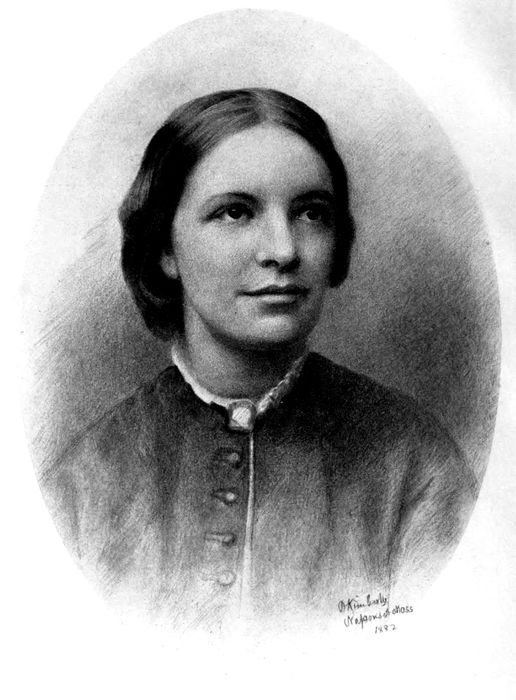
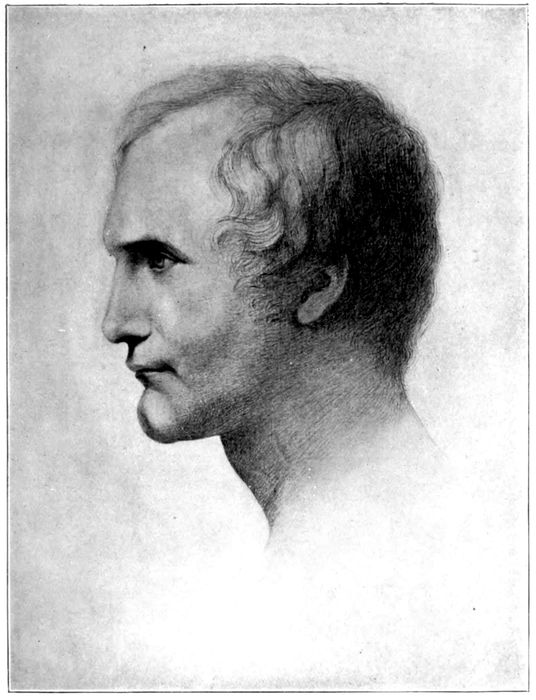
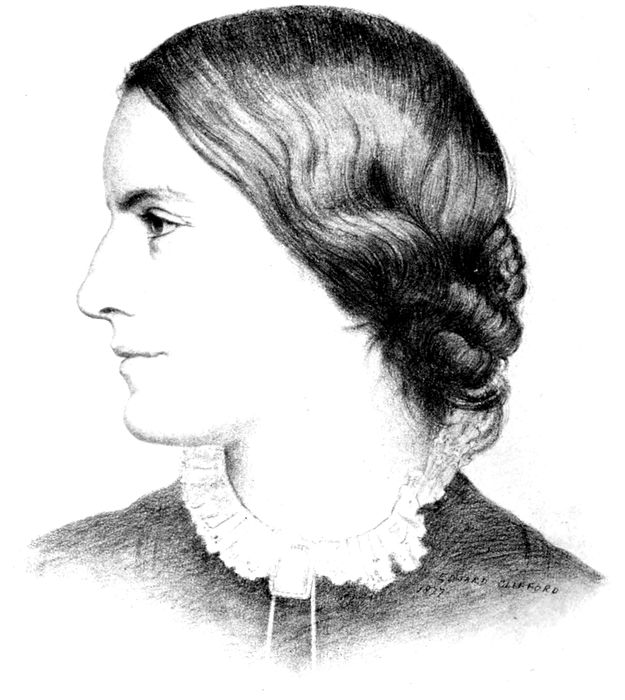
Octavia Hill.
From a photograph enlarged by an American artist.
EDITED BY
C. EDMUND MAURICE
“The Holy Supper is kept indeed
In what so we share with another’s need.
Not what we give, but what we share;
For the gift without the giver is bare.”
Vision of Sir Launfal.
MACMILLAN AND CO., LIMITED
ST. MARTIN’S STREET, LONDON
1913
Copyright
PREFACE
v
It was but a short time before the death of Miss
Octavia Hill that one of her sisters succeeded, with much
difficulty, in convincing her that some account of her
life would be necessary to satisfy the public demand.
On realising this fact, she expressed a strong wish
that the family should keep the details of such a
memoir in their own hands; and she afterwards made
a special request that the final decision as to what
should be published, and what suppressed, should rest
with me.
It will, therefore, be understood that I am rather the
editor than the author of this book. The most important
part of this Memoir will be found in the letters;
and it is by my express wish that they are printed in
larger type than the explanations which link them
together.
But even those explanations are only in a limited
sense my own work. All I have done is to weave
together statements made by my wife and her sisters,
a paper left by their Mother, and, in the very early
part, the recollections of Octavia’s early playmate, Miss
Margaret Howitt.
Only in those chapters which cover the period from
1866 to 1877 have I trusted, to any considerable
viextent, to my own memory; for it was in those years
that I was most closely associated with some parts of
Octavia’s work.
With regard to the letters, there are two points to
note. First, I have endeavoured, as far as possible,
to arrange them chronologically; not separating the
special subjects, in which Octavia was interested, from
each other, but rather suggesting the variety of interests
which were occupying her mind at the same time.
Secondly, I have endeavoured to emphasise the human
and family sympathy, and not merely her business
capacity.
There was an outcry in the papers a little time ago,
with regard to Florence Nightingale, which took a
rather peculiar form. These writers said that there had
been too much sentimental talk about the “lady of the
lamp” bending over the sick bed; and that this
picture had obscured Miss Nightingale’s real power of
organisation and practical reform. Perhaps twentieth
century hardness may be as blinding as nineteenth
century sentiment. At any rate, the danger with
regard to Octavia Hill is precisely of the opposite kind
to that which was supposed to threaten the fame of
Florence Nightingale.
Octavia’s power of organisation, and her principles
of discipline, have been allowed by many critics to
thrust into the background her human sympathies.
The figure of the landlady sternly exacting her rents
seems to stand rather on the opposite side to the “lady
of the lamp.”
“Miss Hill,” said a critic in the early days of her
fame, “I was puzzled to make out how you succeeded
in your work, till I realised that the broker was always
in the background.”
viiThis statement represents the view of her work
which was always most distasteful to Octavia. She disliked
extremely the phrase “rent collector” as summing
up the essential character of that work. She maintained,
as strongly as did Carlyle, that “cash payment was not
the sole nexus between man and man,” not, as another
critic supposed, because she held that “the poor were
there for the rich to do good to”; but because she
realised that each had to learn from the other by
common sympathy with each other’s needs, and not by
a hard enforcement of claims, or a careless belief in the
power of money giving. It is this wider and more
human aspect of her life, which I hope these letters
will bring home to their readers. Perhaps the point of
view, on which I am insisting, can be best summed up in
Canon Barnett’s words, “She brought the force of
religion into the cause of wisdom, and gave emotion to
justice.”
I need only add my most hearty thanks to the friends
who have helped me, either by sending Miss Hill’s
letters, or by hints derived from their own recollections,
or by enabling us to use the pictures which appear in
this volume.
Early in the nineteenth century Mr. James Hill was
carrying on in Peterborough a business as corn merchant which
his father had made very successful, and to which was added a
banking business. Later on he removed to Wisbeach with his
brother Thomas. James Hill showed much of his father’s
business capacity, though sometimes carried away by an oversanguine
temperament. Both his ability and his hopefulness
were to be put to a severe test, when in 1825 England suffered
from a general banking panic, and Mr. Hill failed in company
with other bankers of greater note. But he roused himself to
meet the emergency, and to a great extent retrieved his
fortunes, for a time.
His troubles, however, were increased in 1832 by the loss of
his second wife; and, as a widower with six children, he found
himself in an anxious and difficult position. He had always
been a very affectionate husband and father; and he was most
desirous to find some one who would help him in the care of
his children. While thinking over this problem, his attention
was attracted by some articles on education, which had lately
appeared in The Monthly Repository; with these articles he was
so much impressed that he obtained from the Editor the name
and address of the writer. She proved to be Miss Caroline
Southwood Smith, the daughter of Dr. Southwood Smith, the
celebrated Sanitary Reformer.
Mr. Hill called on the writer at Wimbledon, and found that
she was already engaged in teaching in a private family.
2When that engagement had ended, Mr. Hill persuaded
Miss Smith to undertake the teaching of his children. How
heartily they responded to her care will be shown by two letters
given later on: and when, in 1835, she became the wife of
Mr. Hill, she received a welcome from her step-children such as
few step-mothers can have experienced. The marriage took
place at St. Botolph’s, Bishopsgate.
She assisted her husband in every way, and entered most
sympathetically into his patriotic efforts to reform public
abuses. He had been most successful in reforming the
corruption in the Wisbeach municipal government, and had
succeeded in excluding any claim for church rates from his
parish. The extraordinary physical energy which he threw into
all his work is well illustrated by his riding fifty miles to secure
the pardon of the last man who was condemned to death for
sheep stealing. This excessive energy was facilitated by a life
of great self-restraint and devotion to study. He read much
and accumulated a very fine library. Nor even in this matter
did he limit his aims to mere self-improvement. He wished
to extend to others, as far as possible, his own advantages, and
he founded in Wisbeach an Infant School, which should introduce
sounder methods of education. It was one of the first Infant
Schools built. With a characteristic audacity he chose for the
motto of this school the words in which Wordsworth embodied
the advice which he sarcastically suggests that Rob Roy would
have given to Napoleon, had they been contemporaries:
He also started a penny paper to advocate various reforms, and at
one time he bought the local theatre and invited celebrated
actors to perform there. Later on he co-operated most earnestly
with the advocates of Free Trade.
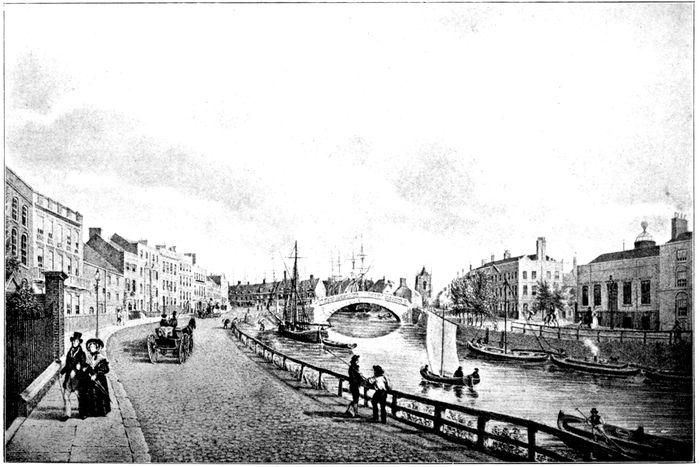
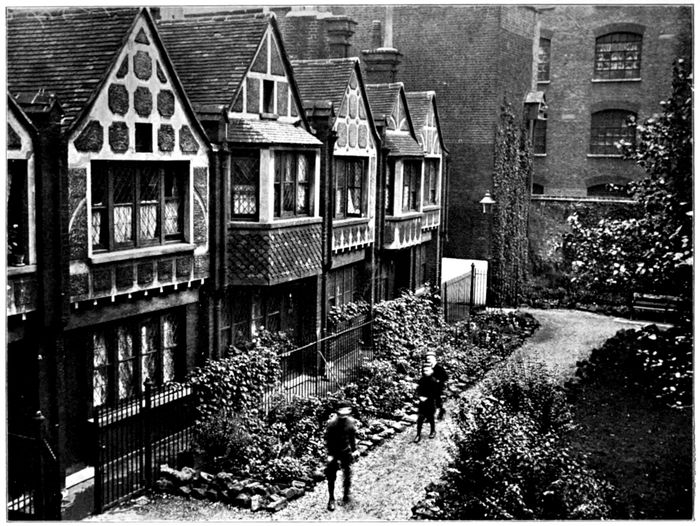
Wisbeach in 1840.
House on right side of bridge where Octavia was born December 3rd, 1838.
PARENTAGE AND CHILDHOOD
3Into this energetic life at Wisbeach three daughters were
born:
Miranda, January 1st, 1836,
Gertrude, July 28th, 1837,
Octavia, December 3rd, 1838.
The name given to the third child marks the close connection
always recognised between Mr. Hill’s different families.
Octavia was his eighth daughter, and the half-sisters welcomed
the new-comers as heartily as they had done their mother.
Octavia’s elder sisters were Julia and Louisa, the children of
Mr. Hill’s first wife, Margaret, Ida, and Kate, daughters by
the second wife. There was only one son, Arthur, who proved
himself a most affectionate and generous brother. Later on he
built up a business for himself in Reading, where, as Mayor,
he did much for the improvement of the town, showing the
same public spirit which animated his father. And when he
became a rich man, he welcomed to his beautiful grounds on
many occasions the poor people in whom Octavia was interested.
But in 1840 a great change fell on the outward life of the
family. There came another bank panic; and, though Mr. Hill
tried to struggle against his difficulties, they proved too much
for him. The house at Wisbeach was given up and the children
of the earlier marriage were taken by their maternal grandmother;
and Gertrude was adopted by her grandfather, Dr.
Southwood Smith. Mrs. Hill was complimented by the Bankruptcy
Commissioners on the economical way in which she had
managed the household expenses, which had facilitated a settlement
of her husband’s affairs; and Mr. Hill tried for some years
to fulfil all his obligations to his creditors.
In the year of the bankruptcy, another daughter, Emily
Southwood, was born in her grandfather’s cottage in Epping
Forest, and in 1843 Florence the youngest child was born at
Leeds.
For some years the family moved about from place to place.
At one time they were in lodgings in Pond Street, Hampstead,
where the house was discovered by an artist friend who was
convinced that the children dancing round a rose-bush must be
the daughters of Mrs. Hill.
At last the strain of anxiety became too much for Mr. Hill.
He broke down physically and mentally, and became
4incapable of supporting his family. Under these circumstances,
Dr. Southwood Smith became responsible for the care of his
daughter and her children, and placed them in a little cottage
at Finchley. Mrs. Hill maintained that it had been a great
advantage to her daughters and herself that poverty had
deprived her of the help of servants, and compelled her to do
everything for the children herself; and they heartily responded
to her care. Her daughter Miranda in later years wrote as
follows. “It is difficult to express to those who never knew
Mrs. Hill what her influence was on those who came in contact
with her. On her children it left an indelible impression as
deep as life itself, and as lasting. From her book ‘Notes on
Education’ it will be seen how entirely she felt the spirit to be
everything in education. She seldom gave a distinct order or
made a rule; but her children felt that she lived continually in
the presence of God, and that in her there was an atmosphere
of goodness, and that moral beauty was a delight to her in the
same way that outward beauty is to so many people. She was
ardent and yet so serene that to come into her room was like
entering a haven of peace where evil and bitterness could not
live. Her children also learned from early infancy, from her
attitude of mind, that if a thing was right it must be done;
there ceased to be any question about it, and how great a help
that feeling is to timid natures or weak wills only those know
who have experienced it.”
The children spent nearly all their time out of doors in the
meadows, and on the common, and were described by one of the
villagers as “the young ladies who are always up in the
hedges.”
Octavia early developed presence of mind and resourcefulness.
One day she and Emily were sailing walnut-shell boats in a
large water butt, when Emily fell in head foremost. Octavia
instantly ran back to the other end of the garden to give
impulse to her jump, and then, leaping on to the butt, pulled it
over, so that she was able to drag her sister out. At an even
earlier age, she saved another sister, who had fallen into a deep
stream in Epping Forest. The nurse-maid ran away screaming,
but Octavia stepped down the bank and held out a stick to her
5sister and so pulled her out. She was always overflowing with
energy which showed itself in various ways. When about eight
years old she was climbing on a high fence and fell on the
back of her head; so that for some time she was forbidden to
do any lessons; but her mother found that she was playing at
keeping a school, and was learning long pieces of poetry, French
grammar, and doing sums for the pretence children, so that she
was working her brain more than she would have done in the
school room.
Her love of learning and writing poetry was great; and it was
about this time that she wrote the following elegy on a young
pigeon:
As some of the letters given in this book will show, Octavia
was somewhat inclined to exaggerate the practical as opposed
to the imaginative part of her nature. As a fact the imaginative
and even fanciful side of her was apparent at an early age; for
on one occasion she was found to have left a party at her grandfather’s
and to have seated herself on the steps in the garden.
When asked what she was doing, she answered, “I am looking
for the fairies!” “Have you seen any?” asked her friend,
“No,” replied Octavia, and added with the cheery confidence
which distinguished her, “but I am sure I shall see them.”
This imaginative side of her must have been greatly stimulated
by the only young companions with whom she and her
sisters were brought into contact. These were the younger son
and daughter of William and Mary Howitt, the well-known
writers. Miss Margaret Howitt writes, “The kind wish of my
elder sister Anna Mary to afford pleasure to her small brother
6and sister led to a children’s party being given to celebrate her
twenty-second birthday on January 15th, 1846. The five little
grandchildren of Dr. Southwood Smith were amongst the
guests, henceforward to become our cherished friends for life.
It was simply owing to suitability of age that Octavia became
immediately the chosen playmate of my brother Charlton and
myself; she was his junior by eleven months, my senior by
eight. Although she was a very ardent, eager child, with a quick
sense of the ludicrous that was partially hidden under a precise
determined manner, she never forgot a smile of sympathy or a
word of kindness bestowed upon her.... On her two playmates,
though quite unconsciously to herself, Octavia enforced an
exacting discipline of high aims and self-improvement, against
which, I, being of a more ordinary mould than Charlton, often
chafed; and more especially because her lofty standard was
coupled with a quite startling humility.
“I had secretly parcelled out the house to spirits both good and
bad; and I think now it must have been to humour me that
Octavia joined in my daily rites of propitiation to those
invisibles. I can see her now in the dim light of the cellar, the
domain of hob-goblins, following Charlton who led the way,
whilst I brought up the rear, with an awe-inspiring countenance
either induced by some preoccupation, or by the thoroughness
with which she would join in any pastime.
“When Octavia visited us later on, her sense of humour was
as keen as ever, but life seemed already to have for her a set
purpose.... At the beginning of the ’fifties, awakening one
night, I saw by the light of a lamp in the road a young
statuesque figure seated with folded hands in the sister bed.
“‘What are you about, Ockey?’ I said.
“‘Praying for Poland,’ was the reply.”
This last story was, in one way, less characteristic of Octavia
than it would have been of Miranda, but the wave of feeling
about such subjects, which passed over her friends and relations,
was often reflected in Octavia both then and in later times.
At this time, however, her chief contact with those problems
of public life which were afterwards most to interest her was
confined to her visits to her grandfather, where she occasionally
assisted Gertrude in copying Dr. Smith’s papers on Sanitary
7Reform.[3] It was in connection with this work that she gave a
remarkable proof of that power of concentrating her mind on,
and utilising effectively any important fact affecting the matter
with which she was concerned, which afterwards stood her in
good stead. Among the papers which she copied was an
Order in Council, freeing tenement houses from a certain tax
which had hitherto been exacted from them. Years after, when
she was beginning the work of superintending the houses, she
remembered this Order in Council. She made inquiries and
found that it was still in force, but that it was entirely unknown
to many owners of tenement houses. She was therefore able to
free the tenants under her care from an undue burden.
Her visits to her grandfather also brought her into touch,
unconsciously sometimes, with several distinguished men, one
of whom remembered the meeting at a later period. Long after
the time of which I am writing, on meeting the poet Browning
at dinner, he informed her that he had seen her as a child at
Highgate. She remarked that it was probably her sister
Gertrude. “I remember her too,” said Browning. “I was
calling on R. H. Horne, the author of Orion, who was on a visit
there; and, when you and your sister had left the room, he said,
‘Those are wonderful children; you can talk to them about
anything.’”
The training which Mrs. Hill gave her children produced a
certain independence and originality which was noticed at a
later time of life, when a friend, commenting on a special little
device, produced in an emergency, remarked, “I knew it must
be done by a Hill; all you do is so original.”
But this bright and free country life was soon to be exchanged
for new experiences, the account of which needs
another chapter.
Letter from Louisa Hill to her Stepmother.
Norwich, July 19th, 1840.
My Darling Mama,
I am so delighted to know that you will soon be
well and strong again, and able to lend the strength
8and assistance which you always have in trying circumstances.
How happy you will be, when the little ones are
older, when you get beyond the merely physical part
of their education. I am sure your children will all be
beautiful, good and wise, for they come into the world
finely organized and are watched and trained under
your gentle and elevating influence.
I heartily rejoice that the baby is a girl; you will
give her strength to endure and struggle with the evils
which are the birthright of her sex. She will add to
the number of well educated women, who, I am afraid
form but a very small portion of humanity. But I
forget the difference in age. This little baby belongs
almost to the third generation. She will be in her
bloom, when we shall be old women, if not dead.
Great changes may take place before she attains womanhood.
Very affectionately yours,
Louisa Hill.
Mrs. Hill to her little daughter Gertrude.
81, St. Mark’s Place, Leeds.
September 1st, 1843.
Ockey can now read quite well, and spends a
great deal of time every day in reading to herself. Do
you know she can scarcely walk, she goes leaping as if
she were a little kangaroo—that is because she is such
a merry little girl.
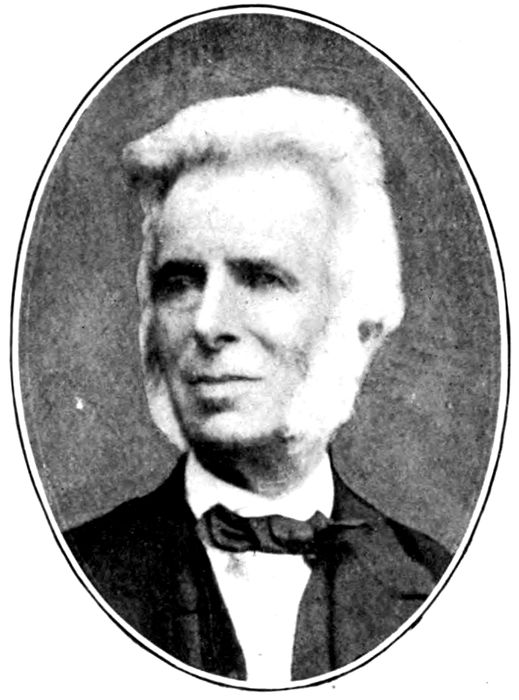
James Hill.
Father of Octavia Hill.
9(Undated, probably 1843).
Ockey speaks to everything that is said to her
and corrects or makes fun of any mistake. She is
always ready for a joke. To-day her Papa said, “Take
care or you will have a downfall.” “That I should not
mind,” said Ockey, “if the down was there when I fell,”
and then she laughed.
Leeds, 1843.
Ockey learns to read very nicely. She is a
very funny little girl; this is the way she talks.
“Mama, I am as hot as if I were on the fire.”
“Mama, I shall never button this shoe if I were to
try till the world is knocked down.” She says things
are as ugly as coal. The other day she told Minnie
that she should “like to have a field so large that she
could run about in it for ever.”
From Octavia (at the age of four).
This letter shows her early love of colour, especially red.
We have a box full of silks. I gave Miranda
a beautiful piece, it was velvet and the colours were
black, purple, yellow and white and green. Miranda
gave me a beautiful piece of crimson plush. Miranda
has a book called The Peacock at Home and it has three
stories in it.
Mrs. Hill to Gertrude.
November, 1845.
On Monday it is Ockey’s birthday. She will be
seven years old. She intends to give me a patchwork bag
on that day—and she sits on a play box placed on a
window-board, and looks so pretty, sewing earnestly
away, never thinking that I am watching her. Every
now and then she looks out at the passers by: they
know every boy and girl, cat, dog, and donkey in the
10village by sight, and a good many of them by name, and
for those whose name they do not know they invent
one.
From Mrs. Howitt to Mrs. Hill.
February, 1846.
I am quite anxious to hear something about
Maggie. I hope she has been as good a child, and may
have left half as sweet a memory as dear Ockey.
Ockey goes on beautifully. We are all charmed
with her; and know not how we shall part with her
again.
In another letter about February, 1846.
I brought Miranda home with Maggie yesterday.
We are all greatly pleased with her. She is a dear
sweet creature; different from Ockey, but, in her way,
quite as lovable. We find Maggie much improved by
Mrs. Hill’s kind care of her, and by her intercourse with
those dear little children.
In March, 1846, Mrs. Howitt writes again:
Miranda and Maggie go on charmingly. Miranda
is very sweet and much more cheerful than I expected
to find her. She is full of life and fun, and has the
same kind of ringing joyous laugh as Ockey. The same
in spirit, though not in degree. Ockey’s laugh is
the happiest, sweetest I ever heard.
11About 1849.
Octavia to her Mother.
June 10th, no year
(evidently a very early one).
We had a delicious sail yesterday. We were
out for two hours, and it was so lovely; the sun shone
warm and clear upon the calm blue waters; and the
waves, and the bells were very pretty and made sweet
music.
It is so delicious bathing; we stay in so long, and
try to float and splash and dash and prance and dance.
I am so happy; you don’t know how happy. They
are all so sweet and kind to me, and it is so beautiful
here.
Give my love to the little ones, and tell them (be
sure to tell them) that I did mean to bid them good-bye. It was not out of anger; but I forgot in my
hurry; and though that was bad enough it was not as
bad as they thought it was.
Ponney wants you and we all want you to try to
get Mrs. Bugden to allow Miranda to come to the
carting of the hay at Hillside, which will be about
Thursday week.
From Kate Hill to Miranda.
Uttoxeter,
February 2nd, 1850.
I shall have great pleasure in working for the
Peace Society; but I want you to tell me when the
Bazaar is to be held, because if soon, I must not
make anything too large to be sent in a letter. I hope
it will not be before my holidays for I like best to do
coarse work. Will you tell me, too, what are the
12doctrines of the Peace Society? I know very little
about it though still enough to engage my sympathies.
Will you give the enclosed collar to dear Mamma
with my love, and ask whether I shall make some like
it for the bazaar?
But Mamma is to be sure and keep this one for
herself because I have made it for her, and I like my
work to be round her neck, as my arms cannot be
there.
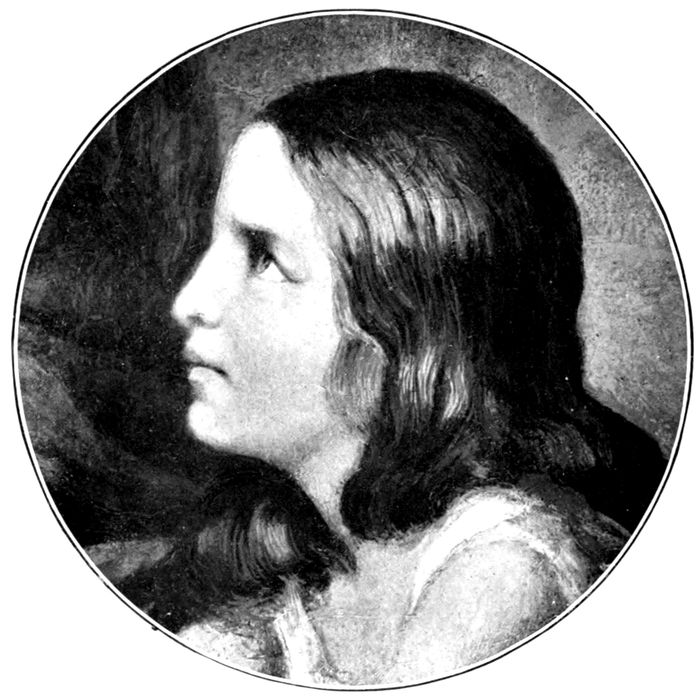
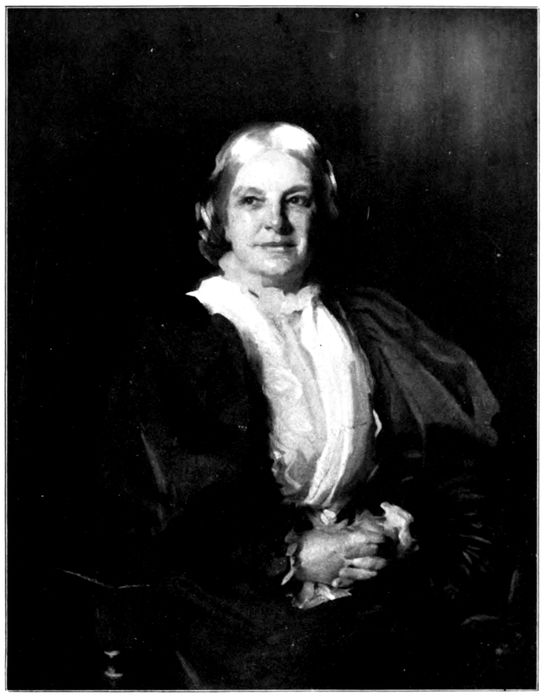
Octavia Hill as a Child.
From an Oil Painting by Margaret Gillies.
CHAPTER II EARLY WORK IN LONDON 1851—APRIL, 1856
13
Through all the bright and free life at Finchley, Mrs. Hill
had never forgotten that her daughters would have to earn
their living. Miranda, indeed, at the age of thirteen, had begun
to earn as a pupil teacher in the private school of a friend;
and her sister Margaret mentions in a letter the characteristic
fact that Miranda had wished to give some of her first earnings
to her half-sisters, who were starting a school. When, then,
these sisters realised that Mrs. Hill was considering Octavia’s
future work, they, in their turn, offered to give her a free
education, as a start in life. On the other hand, Octavia’s
artistic talent had already attracted the attention of Mrs. Hill’s
friend, Miss Margaret Gillies; and she offered to train Octavia
in her studio. Both these offers attracted Octavia herself; but
Mrs. Hill did not wish to part with her. Whilst she was still
hesitating, her attention was drawn to the notice of an
Exhibition, to be held at 4 Russell Place, Fitzroy Square, of
special preparations of painted glass, consolidated so as to make
it suitable for tables and other purposes. She found that Miss
Wallace, the patentee, was promoting the Exhibition, partly to
secure work for some Polish exiles, in whom she was interested,
partly with the more general aim of finding regular suitable
paying employment for ladies.
Mrs. Hill mentions that her first thought was that Miranda,
whose overflowing fancy seemed to her dangerously unpractical,
might be roused to more steady work by such an occupation as
this. But it was natural that it soon occurred to her that
Octavia’s admitted artistic talent might also be utilised in this
14way. So she applied for admission for both her daughters to
this work. But, as Miss Wallace was unable to carry on the
business, Mr. Vansittart Neale most generously came forward
with the capital, in order to carry it on on a co-operative basis.
He asked Mrs. Hill to become the manager, which she very
gladly consented to do, as she was much interested in co-operation
and in the employment of women.
Such was Octavia’s first introduction to London. The change
from the healthy open-air life at Finchley, and from the beauty
of the country, to the ugliness of her new surroundings told
heavily on her spirits; and this depression was increased by the
sudden sense of the evil and misery in the world. Among the
workers at the Guild was a Miss Joanna Graham, who rapidly
became a warm friend of Miranda’s. She introduced both
sisters to the “London Labour and the London Poor,” then just
brought out by Mayhew; also to the pamphlets and other
essays written by the Christian Socialist leaders of the movement
with which Mr. Neale had already brought them into
contact. The pictures given by Mayhew of the life of the
London poor, and the desire awakened by the Christian
Socialists to struggle against evils, which seemed to her
irresistible, produced in Octavia such a state of mind that she
began to think that all laughter or amusement was wicked.
Miranda, always able to see the humorous side of a question,
tried to laugh her out of this extreme depression; and, when
Octavia persisted, the elder sister composed an imaginary
epitaph on herself, supposed to be written by Octavia:
“Her foibles were many, her virtues were few;
And the more that she laughed, the more stern the world grew.”
This produced a most startling letter of stern remonstrance
from Octavia; so stern that one is relieved to find it closed by
a loving message and followed by a P.S. “Love to all. Thank
you for the apples.”
Of course, this extreme gloom, unnatural in any young girl,
was especially out of keeping with anyone of Octavia’s buoyant
temperament, and the happy busy life at the Ladies’ Guild soon
had its effect.
THE LADIES’ GUILD
15The following account given by Mrs. Hill in April, 1856,
shows somewhat of the social life. “The ladies used to go to
lectures together. In this case, the subject of the lecture
became, next day, that of the conversation in the workroom.
The conversation in general fell on interesting subjects, the
favourite subjects being politics, religion, art, news, the country
and its scenery, poverty and wages, etc. A very favourite
subject was the derivation and definition of words; then
the ladies would join their voices in chorus, taking different
parts. Indeed a merrier company, ‘within the limits of
becoming mirth,’ the writer never chanced to see. There was
generally some joke in hand. In the winter, they often
assembled in the evening at the Guild. Sometimes they drank
tea together, and afterwards sang and danced joyously.”
The artistic work at the Guild brought Octavia into contact
with the Rogers family. Mr. G. Rogers was wood carver to the
Queen, and produced some very interesting work. All his
family had artistic leanings; but it was his daughter, who is
best known by her writings on Palestine, who specially attracted
Octavia, and for whom she formed one of those enthusiastic
friendships which exercised so marked an influence on her life.
A younger friend, whose name was afterwards to be so closely
associated with Octavia’s, was Miss Emma Cons. She, like
Octavia, was much interested in art; and, on the other hand,
her high girlish spirits called out in Octavia again the old love
of exercise and fun that had shown itself so strongly in the
Finchley days. Indeed Miss Cons was so much given to romps
that Octavia’s fellow workers (including her sisters) were rather
startled at the attraction which her new friend had for her.
But it is clear from the letters, produced here, that Octavia
saw the real power concealed for the time under these
hoydenish ways; and she marked her as one on whom she could
rely, and from whom she expected much.
But it must not be forgotten that among the most important
of these influences, then at work on Octavia, were the characters
and teaching of the Christian Socialist leaders. Soon after
joining the Guild she had begun to attend the lectures at the
Hall of Association; and her attendance at Lincoln’s Inn Chapel
16brought her in 1852 under the influence of my father, Rev.
F. D. Maurice. She and Emily attended the daily morning
service; and, after a time, my father used often to let them walk
back with him, and he would answer many of Octavia’s difficulties
about religious and social questions. On one occasion she
asked him if it would not be very nice if one could get rid of
all responsibility. He laughed and said it would indeed be
very comfortable. But that she did not shirk responsibility is
shown by the following incident. It was in the early days of
the Guild, when Octavia was only about fourteen, that she was
alone in the house with the exception of Mrs. Horne,[5] who was
at the top of the house. It was Sunday; and everyone else had
gone to Church. On coming out of a second-floor room she
saw a man standing near the door of a large cupboard, in which
she supposed he must have hidden. “How did you come up
here?” she asked. “I came up the stairs,” replied the man.
“Then you will please to walk down again,” said Octavia in a
quiet tone. He obeyed her, and she walked behind him down
three long flights of stairs, and saw him out at the front door.
Her sense of responsibility was the greater because some money,
belonging to the Guild, had been paid late on Saturday and
was in the office.
After the Guild had been carried on for some time, Mr. Neale
was asked to take over a new kind of work, which a lady had
started in order to employ some Ragged School children. This
was the making of a special kind of toy which she had invented;
and Mr. Neale appointed Octavia head of the workroom. The
following account is given by my wife and her sister Miranda.
The management of the toy-making helped to “develop
Octavia’s business faculties. She had to pass the children’s
work, which was paid by the piece, to assign the various
processes to each child, to choose the shapes and colours of the
toy furniture, to price it, and to see that, when the suites were
finished, they were neatly packed in boxes and sent over to
the show room, where the ladies’ glass work was also exhibited.
From time to time she had to take stock, and to see if the sales
justified the expenditure.
TOY-WORKERS
17“Her daily intercourse with the girls taught her to know
intimately the life of the poor. Most of the children came from
very poor homes, and had, though so young, experienced great
hardships. There was Louisa, an emotional, affectionate girl
who had lost both parents, and helped to support herself and
the aunt with whom she lived. She had worked at artificial
flower-making, and told us how, when trade was busy, she had
been kept late into the night, and had had to run frightened
through the streets in the small hours of the morning, and tap
at the window to wake her aunt. There was poor Denis whose
face and neck were terribly disfigured with burns; but who had
such a sweet pathetic voice that, when she sang, one forgot her
ugliness. There was Clara, a tall, over-grown girl from a dirty
home, who was half-starved and cruelly treated. She wore a
low dress and short sleeves, and one could see her bones almost
coming through her skin. On one occasion when her work was
too slovenly to be passed, she burst into tears, and said that her
mother would beat her if she did not take back the money
expected of her. There was little Elizabeth, a stunted child of
about nine, with so fierce a look that Octavia, in loving raillery,
called her her little wild beast. She had never come with us
on the Saturday-afternoon walks to Hampstead, but used to
look wistfully after us. Once we pressed her very much to come,
and then she exclaimed ‘I cannot, I have to nurse the baby.’
“Another child was R. who was lost sight of, and later on was
found in a dark cellar into which one descended by a ladder,
where she sat all day to sell pennyworths of coal. She was
half-starved and unkindly treated, but she seemed to take that
as a matter of course; what she did resent was that her cat
was starved. Later on Octavia sent her to an Industrial
School; and after some years she emigrated, and wrote to tell of
her happy married life.
“Harriet and her sister were of a higher class, and had a clean,
respectable home. They were earnest Methodists. We lost
sight of Harriet for forty years, and then found her very happily
married. She had remembered Octavia with the deepest
affection, and had preserved all her letters.
“The girls were in the habit of bringing their dinners to eat
18in the workroom, and what they brought was very poor fare.
Octavia suggested that they should club together to buy their
food, and that each girl in turn should cook it. The long table
was cleared, and a white cloth laid, and the food served nicely.
Octavia brought over her own luncheon to eat with the girls,
and, after the Grace had been sung, it was a pretty sight to see
the sad, careworn faces of the children light up, as they sat
round the table while she talked to them. Among other things,
she learnt to scrub the floor, in order to teach the children to
keep the workroom clean.
“A good many of the girls were older than Octavia and
inclined to be insubordinate, but she very soon established
order, and that without recourse to punishment. The girls had
been accustomed to be fined for offences, and they were quite
amazed when they found this was no longer the case. On one
occasion they refused to scrub the work-tables, which was part
of their daily duty. Immediately Octavia and her two younger
sisters set to work to do the scrubbing, and soon the girls gave
in. They had been fined for swearing, but the swearing soon
ceased, and they sang hymns or nice songs. Octavia was their
leader and companion in all that they did, and this sharing in
their work, and yet leading the way, won them all to obey as
well as to love her. Sometimes, on a Saturday afternoon, she
would take her little group of workers for a walk to Hampstead
Heath or Bishop’s Wood. Her sister Gertrude remembers
walking in Highgate Lane on a spring afternoon with
Professor Owen, who was quietly explaining something about
the mosses on Lord Mansfield’s fence—all being very still—when,
to her surprise, the hedge was broken open, and, with a
burst of joy, who should leap down from the bank with a staff
in her hand and a straw hat torn by the thicket but Octavia,
followed by a troop of ragged toy-workers, happy and flushed,
each with a lap full of blue-bells. Octavia stayed for a minute
to speak to her sister and the Professor; then off they all went
back into the wood and away towards Finchley.
“Schools were not what they are now, and Octavia was
amazed at the ignorance of these girls. They quite believed that
wolves and bears might be lurking in the woods; and they did
19not know the names of any of the flowers. It was afterwards
arranged that Miranda should give the girls lessons for an hour
or so each afternoon.”[6]
In 1854 Dr. Southwood Smith left Hillside and moved to
Weybridge, where his grandchildren were always welcomed in
the same loving way that they had been at Highgate.
But, before he could move, he was seized with a severe
illness which necessitated an operation. A few weeks later his
granddaughter Emily was attacked by scarlet fever, and her
life was despaired of by two doctors. Then her grandfather, in
spite of his weak state, came back to London, and saved her
life; and when she could be removed, took her to Weybridge
to watch over her convalescence. This of course withdrew her
from the toy work, and threw more of the burden on Octavia.
A year later her youngest sister Florence was also withdrawn
from the work by ill-health, and taken to Italy by her
aunt, Miss Emily Smith, who gave her loving care for six
years. It was in the summer of 1855 that an expedition of the
toy-workers into the country led to the formation of some
important friendships. Mrs. Harrison, to whose house at Romford
they were invited, was the sister of Mrs. Howitt, and she
and her family became warm friends of Octavia’s. Some of
the letters given further on were written to Mary, the eldest
daughter, who was very artistic.
EARLY FRIENDSHIPS
But even more important was the friendship then formed
with Miss Mary Harris, a member of the Society of Friends, who
was a great deal older than Octavia, and whose calm, loving
nature was a great rest to her. From the time they first met
till 1893, when Miss Harris died, Octavia poured out more of her
secret thoughts to her than to anyone else, and when they were
away from each other wrote to her constantly.
On the occasion of this visit to Romford another guest was
Mr. Ellis Yarnall, the American, whose letters to Lord Coleridge
have lately been published. He recorded in his diary the
following description of Miranda and Octavia.
“Some young ladies were expected, and with them about
20twenty children, girls to whom they are teaching some
decorative arts. The children played in the grounds; the
young ladies (Miranda and Octavia) were with us at luncheon;
and we had a great deal of talk about Mr. Ruskin, who is a
friend of theirs. They described his eloquence as a speaker,
his earnestness of manner, his changing countenance, even
when he was silent, as though thoughts grave and gay were
passing through his mind. It was plain to me that his strong
intellect and bright fancy were having their true influence on
these young persons, themselves highly gifted and altogether
like-minded, eighteen and sixteen or thereabouts—sisters. I was
astonished at the strength of intellect which they displayed.
The talk of the elder one especially was, I think, more
striking than that of any person of her age I ever knew. She
reminded me of Corinne and other women of renown. What a
pleasure it was to look at her fine face with the glow of
enthusiasm upon it, and to wonder whether gifts like hers
would not one day produce fruits which the world would value.
Her description of the effect which the hearing of Beethoven’s
music on some late occasion had had upon her was an utterance
of passionate feeling showing true poetic susceptibility.
“They are the granddaughters of Dr. Southwood Smith.”
Towards the end of 1855 an important event took place,
which led to Mrs. Hill’s withdrawal from the Ladies’ Guild.
My father had been interested in Octavia’s work for the Toy-workers, and offered to take a Bible Class for them. The
Theological Essays controversy was just then at burning point;
and the ladies who had handed over the business part of the
toy work, still considered that they had a right to interfere
about the religious instruction of the children. These ladies
were very Evangelical (as Evangelicalism went in those days)
and they threatened to withdraw all pecuniary help and the
support of the Ragged School Union, if my father was allowed
to teach the girls. The managers of the business were so much
alarmed at this threat that they asked my father to withdraw
his offer. Mrs. Hill and her daughters were naturally very
indignant at this; and Mrs. Hill’s protests led to her losing
21the post of Manager at the Guild. She and Emily went to
Weybridge. Miranda and Octavia continued to work for
a time; but when it seemed likely that the Guild would
fail, Miranda obtained daily teaching and Octavia applied
to Ruskin to learn from him if there would be any chance
of her supporting herself by painting. He replied most
kindly, and asked her to let him have a table-top designed
and painted by herself. This design[7] was a spray of bramble
leaves in all their brilliant autumn colours, encircling the
centre space which formed a background that was dark at
one part and gradually grew lighter, and finally changed into
soft blue, suggesting storm clouds passing away, and leaving a
bright sky. Round the edge, among the leaves, were the words
of the Psalm, “He brought them out of darkness and out of
the shadow of death, and brake their bonds in sunder.”
This led to Ruskin’s undertaking to train Octavia and
give her work. Soon after this came the final crisis at the
Guild; and Octavia obtained the appointment mentioned in the
last letter of this chapter.
EARLY WORK IN LONDON
June 14th, 1852.
To Miranda.
Thank you many many times for your sweet letter.
It was such a comfort to me.
I am very well indeed now. I do not know when I
have been better, except that I am rather weak. I am at
Finchley with Minnie. I long dreadfully to go to town;
but I think I can wait patiently till Wednesday.
I have been very unfortunate in being away from the
Guild just at this time. Do you know Mr. Walter
Cooper has been there? and Mr. Lewis and the trustees
(Mr. Furnivall) go there so often; and all the bustle,
and trying to feel Christian-like to Mr. and Miss ——.
O, would it not have been delightful!
I have Miss Graham’s books here; they are so interesting.
22I am so very happy when I am reading them. My
interest gets deeper and stronger every day. I wish, oh!
I so long, to do something, and I cannot. Andy! do you
think I ever shall be able to do anything really useful?
I do not at all like Mr. ——, or rather I entirely despise
and dislike his opinions. I will tell you all about it when
I see you. I will only tell you now that he likes “the
subordination of the employed to the employer”; and
he thinks “there is no tribunal so proper as the discretion
of the employer to decide those delicate questions
of the personal conduct of the employed.” Did you
ever hear of such a thing? Is it not horrible?
Mr. Furnivall I admire more and more the more I
know and read of him; and, as to Mr. Ludlow,
certainly there is not (excepting Mr. Furnivall) such
a person in the whole world. He has the largest,
clearest, best-balanced mind joined to the truest most
earnest wish to help the working classes I ever met
with (of course excepting Mr. Furnivall’s).
I have read to-day his “Christian Socialism and its
Opponents.” All I can say of it, and all he writes is
that it is grand, and that I never can forget it, or cease
to be grateful for it. His lectures have sunk deeper
into my heart than anything else; one reason is, I
dare say, that they were the first; but they were most
noble and grand; his own great soul seemed to breathe
itself into his works. But I forget—I shall get no
sympathy from you. I must tell Miss Graham. Andy,
do you think Mr. Furnivall will bring him to the Guild?
Do you think he meant it; or, if not, do you think we
ever shall know him?
The Festival will be on Monday. I am looking
forward to it with such pleasure. I do so long to
see you; it seems ages since I did; I want to know
23what you think about the ‘Guild’; I do so want your
advice, too, upon a thousand subjects. I have a good
deal to read to you, which I have written since you
were away. Give my dearest love to Miss Graham.
Tell her I never can thank her enough for all the noble
and beautiful books she has lent me; that, as to the
Christian Socialist, I never never before read anything
which inspired such earnest longing to do something
for the cause of association; and it interested me so
very much that the hours I have spent in reading that
are never to be forgotten; they were unequalled in
pleasure to any that I have ever spent in reading;
and that, if I live years and years, I shall never forget,
or cease to remember with gratitude that it was to her
that I owe the great happiness of first reading a Socialist
book, which I consider one of the greatest happinesses
any one can have. Thank her, also, for the other books;
tell her the “Cheap Clothes and Nasty” and “Labour
and the Poor” are some of the most dreadful things I
ever read. They have made a deep impression on
me. How delightful the History of the Working
Tailors’ Association is!
Do you know I have a post at the Guild? I have
to give out the stores and am responsible for them.
The ladies have all sent me a book as a testimony
of their gratitude to me for reading to them. How
very kind it is of them! Dear Laura has written
me such a sweet letter. I love to think of you
among those lovely scenes by the beautiful sea, with
dear Miss Graham....
Your own loving little sister, Ockey.
I am sadly afraid the Journal[8] will stop at Midsummer.
What is to become of me???
24Ladies’ Guild,
July 27th, 1852.
Miranda to Joanna Graham,
We all declare that we have never spent a more
glorious evening. I think I never saw such a face as
Mr. Kingsley’s. That face was the chief pleasure of
all, though there was a most splendid collection of people
there. We went a party of six, Ockey, Mama, Mary,
I, Mr. Rogers, and Miss Cons. We met Walter Cooper
at the door, and he was very kind and seemed glad to
see us. The Hall was very crowded but he got seats
for us. Mama and I were together. We looked round
and got glimpses of the Promoters.[9] Mary fixed on
Mr. Neale at once and was delighted with him. She
noticed his head among all the rest and admired it
almost more than any.... Suddenly, amongst a great
crowd of faces, Mary pointed out one to me and asked
if that was Mr. Kingsley, and it was. Mary thought it
noble. Mr. Neale introduced Kingsley to Mama, and
he talked to her for some time ... and Mr. Neale
introduced Mr. Ludlow to Mama, much to Ockey’s
delight.... I think Mr. Kingsley’s face extremely
suffering and full of the deepest feeling. But there is
such a sublime spirituality; he looks so far above this
earth, as if he were rapt up in grand reveries; one feels
such intense humility and awe of him. I hardly dared
look at him; and the more I looked, the more I felt
what a grand thing the human soul is when developed as
it is in him. Professor Maurice was called to the chair,
and he made a nice speech. He seemed as if he felt
a great deal more than he could express, and therefore
left feelings rather than ideas in one’s mind. He said a
25great deal about self-sacrifice; though he said he felt
almost ashamed to speak of self-sacrifice to working
men, while he himself was in possession of all the
comforts of life. He had to leave after he had made
his speech; and, just as he was about to leave the platform,
Mr. Cooper said that the Manager of the Builders’
Association, Mr. Pickard, would read an address to
Professor Maurice as an embodiment of the sentiments
of the Associations, and that the Manager of the Printers
would present him with a testimonial, the exclusive
gift of the working men. The address of thanks was
very nicely expressed; and then the testimonial, a
silver inkstand, was presented. It was so touching
to think of all those poor working men, who had
worked so hard to earn the money to make the
testimonial, and the beautiful spirit of gratitude.
I could not restrain my tears. Professor Maurice
answered the address and thanked them in the most
heartfelt manner. After he left, Mr. Hansard was put
in the chair, and Lloyd Jones spoke on Co-operative
Stores. Mr. Newton spoke on Mechanics’ Institutes, and
said they were not at all satisfactory as far as they
professed to educate the working men. Someone in
the Hall got up and said that he knew of one gentleman
on the Committee of these Institutes, who, in
opposition to the majority of the Committee, threatened
to resign if “Alton Locke” was allowed in the Library.
I could not see Mr. Kingsley’s face.... The next
subject was the Industrial and Provident Societies Bill
which had just been passed. Mr. Kingsley then made
a short speech; one knew at once that it was a poet
who was speaking.... Gerald Massey’s is a very fine
face. He has dreamy eyes and wild looking hair; but,
after the others, he’s not to be thought of.
26Ladies’ Guild,
October 22nd, 1852.
To Gertrude.
Oh Gertrude! I am so happy, so very very
happy. I wish you were with me. You would so love
all my beautiful things. I will tell you about them
when you come. I have a little room, all to myself.
When anything is wrong or unjust down stairs, I have
only to come up into my own little room, and it
is so still. It is full of such happy recollections. I
have my nice books; all my great soul-inspiring books
are here. Then I have all my writing things. I write
a great deal now. I have such a beautiful book of
extracts that I have made. I have usually some flowers;
for the ladies are very kind in bringing me them. I
have a few poor little plants that I am fond of. Then I
have eleven dear little snails. They are such darlings.
And then, Gertrude, I have my drawing things. I
do not let anyone see my drawings. I do not do much.
It is sad to think, after I have done anything, “And,
after all your visions of grandeur and beauty, is this all
you can produce?” I believe I am very wrong about
my drawing; I never draw things for the sake of learning.
I try things above me. I have such dreams, both
day and night, of what I would do, and when I try what
do I see? A little miserable scrap that is not worth
looking at. Once I tried a figure. Of course it was
frightful.... We have returned Ruskin. I do so miss
it. It was so very beautiful. This evening I have
found such an extract from “Modern Painters” that I
shall copy it for you.
Do you go on with your drawing? I hope you do.
Oh Gertrude! is it not a glorious thing to think that a
divine thought should descend for ages and ages?
27Think of Raphael and Michael Angelo! (though I
know but little of them).—To think that every grand
feeling they had they could preserve for centuries! Oh
what an influence they must have! Think of the
thousands of great thoughts they must have created in
people’s minds; the millions of sorrow that one great
picture (one truly great picture) would calm and comfort.
Will that never be painted again? Do you think
there will? And when? I am going to see the
Dulwich Gallery soon. Is it not glorious? I wish you
could see a bit of hawthorn I have here, such colours! I
am writing a curious letter; just what comes foremost
in my mind.... When I have finished work and go up
to tea, if any one is out of spirits, it makes me so;
and I feel (do you know what I mean?) a tear in
my throat.
Ladies’ Guild,
July 13th, /53.
To Gertrude.
I write to you because I wish to give you a
happier impression of me than you can have from
Tuesday. I am all alone; it is so still; and I am very
happy; now I will try and account for the strange state
I was in last night.
When I got into the country I felt that, if I stayed
looking at sky and trees and flowers,[10] my friends would
think me dull and become dull themselves and spoil all
enjoyment. So all the day my whole energies were
“stretched” to be merry and lively. I felt that if
I waited one moment to look at anything, I should
28never tear myself away, and I got into a wild state. I
did enjoy very much the mere exercise, and the mirth,
and happiness of every one. I hardly thought all this;
I only felt it. Then, at the singing class, the strain
being over, and having nothing to sustain me, I sank
into low spirits. As we were singing “Oh come ye into
the summer woods,” a longing came over me to be there;
a dim recollection of tops of the trees with the evening
sun upon them, a panting desire to sit there, and
cry myself quiet....
But it is all too beautiful now; I could almost fancy
myself at home.... As to my drawing, whether I will
or no I must go on with that; and, though I do not
hope, I trust....
September 18th, /53.
Dear Sisters,
I fully intended to come over to you to-day, but
I have a sore foot, and can only limp to the classes.
Private. On Wednesday evening I went to see Miss
Cooper, and spent the whole evening there. Just as
I was going William Cooper came in and told me (don’t
tell anyone) that they have discovered heresy in Professor
Maurice’s last book, and he will probably be
expelled from the Church. I had not time to ask any
questions, as Miss Cooper returned, and she is not
to know. Professor Maurice came to town on Monday
night, went to Walter Cooper on Tuesday before Miss
Cooper was out of bed, and returned to the country in
the evening.... On Thursday there was a Council.
Walter Cooper looks very grave and rather ill and
anxious. What all this betokens, I cannot guess; but
I fear something sad.
I have been reading “The Message of the Church to
29the Labouring Men”; it is so beautiful; also “The
Duty of the Age.” I did not think Lord Goderich[11]
was so nice; it would just suit Andy.
Mr. Edwards will give us a large order for a skirting
board of marble if we can do it for 8d. a foot; also an
order for a painted glass conservatory.
If any of you love me, see if you can’t send me
a piece of Indian ink and a paint brush, and “The
Land we live in,” and look out for some toys, or books
that you don’t want—the latter two for the little child
at the needlewoman’s.
November 27th, 1853.
To Gertrude.
About Ruskin, it matters very little to me what
The Times, or anything else, says of him. I see much,
very very much, to admire in him, and several things
which I could wish different. If, as I suppose, The
Times accuses him of affectation of style and want of
humility, I entirely deny the first charge; as I think
there is never a single word he writes, which could have
been left out without loss, or changed without spoiling
the idea; and, if it means that each sentence of his
has a beauty of sound as well as of meaning, I say that
it is to me all the more right for that; and that to be
able to reproduce that sound is a gift not to be neglected....
As to the second objection I say, if Ruskin sees
a truth which is generally denied, he is right to
proclaim it with his whole strength. He says not “I
see it is so because I am a higher creature than you,”
but “I see it, because I have gone to God, and His
works for it. You may all see it, if you will look,
30using the powers He has given you; only look in
sincerity and humility. It is only because I am
humble, because I am content to give up my own
ideas and notions, to take the truth because it is God’s,
to believe that it is good and right. It is only so I can
discover harmony in this universe, and I am sent (he
says) with a loud voice to proclaim this to you.”
Ladies’ Guild,
December 5th, 1853.
To Gertrude.
Ruskin has been here. All went as well as I
could possibly wish. He was most delighted with the
things, as showing the wonderful power we possess of
introducing and preserving colour. He gave us some
most interesting and useful hints about colour, and
ordered five slabs to be painted for him; adapting two
of the designs he wanted from some we had, which Mr.
Terry was to go to his house to do on Monday. He
offered to lend us some things to copy. If you had
seen the kind, gentle way in which he spoke, the interest
he showed, the noble way in which he treated
every subject, the pretty way in which he gave the
order, and lastly, if you had seen him as he said on
going away, his eyes full of tears, “I wish you all
success with all my heart,” you would have said with
me that it was utterly wonderful to think that that was
the man who was accused of being mad, presumptuous,
conceited and prejudiced. If it be prejudice to love
right and beauty, if it be conceited to declare that God
had revealed them to you, to endeavour to make your
voice heard in their defence, if it be mad to believe in
their triumph, and that we must work to make them
triumph, then he is all four, and may God make us
31all so!... All my sisters, Kitty and Mama, have
given me Mr. Maurice’s “Ancient Philosophy” and
have written in it “From her sisters in affection and
work.” This sentence makes me very happy. I know
it is true. I know our work has bound us together....
Another thing happened on Sunday which pleased
me very much. Mr. Neale heard Miranda talking about
my birthday; and he said he was going to give me Mr.
Maurice’s “Prophets and Kings of the Old Testament.”
He came on Sunday on purpose to bring it. It seems
such a glory that he does look upon us as related to
him, not merely as receivers of wages, that he considers
us workers with him. All that I have struggled to
accomplish, so long and so wearily, seems just now to
be succeeding, all fruitless as the work has seemed; the
seeds buried, dead as I thought them, have sprung above
the ground.
Ladies’ Guild,
January 10th, 1854.
To Gertrude.
Mr. Cooper gave me last night a copy of the
Address of the congregation at Lincoln’s Inn to Mr.
Maurice. He had asked Mr. Ludlow for it on purpose
for me, and Mr. Ludlow had written my name on it.
I got “Yeast” for Miranda. Have you ever read
it, and do you remember that Barnakill forbids Launcelot
to be an artist? It has made a great impression
on me.
Hillside,
February 10th, 1854.
Miranda to Miss Joanna Graham.
You have not heard yet that there is great
thought of enrolling the Guild as an Industrial Society,
32under the new Act. Would it not be very nice? Mr.
Neale had drawn out a set of rules; and he sent
them to Mama for her to approve or make her
remarks upon. There are however some difficulties
in the way.
I have not yet been able to write a recollection of
that very beautiful class at Mr. Maurice’s; but I hope
to do it.
Ladies’ Guild,
June 11th, 1854.
To Gertrude.
(Speaking of Hillside.)
I hope that I may never, as long as I live,
forget the sunny, bright happy hours I have passed
there. There remains in my mind a recollection, a
vision of beauty connected with it, which can never be
effaced....
Mr. Maurice has been speaking to-day of sacrifice
as the link between man and man, and man and God.
It was such a sermon! One feels as if all peace and
quiet holiness were around one; everything appears to
have a beauty and calm in it, to which we can turn
back in times of storm and wild noisy rivalries, as to
the memory of sunny days, and to shed a light on all
dark and difficult things, on sorrow and loneliness....
It is so still! A garnet coloured glass is on the table
full of bright golden buttercups, and grass; now the
door is open they tremble in the wind, carrying one
back to slopes of long grass full of buttercups and
sorrel, as the evening wind sweeps over it.
INFLUENCE OF RUSKIN AND F. D. MAURICE
33September 17th, 1854.
To Miranda.
(In the Lake Country.)
I have spent three happy evenings with Miss
Rogers. I have had a very interesting conversation on
religion with Charlie Bennett, Harry and Mr. Rogers....
You cannot think what pleasure your notes have
been, telling us, as they do, of a life of rest and beauty.
One doesn’t seem to know much about that sort of
thing, and yet they seem to speak of home to you, as
not many things do. One thing will be that you will
be able to understand Ruskin infinitely better than you
would have done. I imagine that some of the descriptions,
that appear to us bright images of things almost
vague at times (they are so far off), will remind you of
actual beauties that you have really seen, memories
connected with life. Ruskin has done something to
rescue many things from vagueness. He has embodied
them in words which will convey these impressions
they gave you, as nobody else ever has, I believe....
I have been to Westminster Abbey with Miss Cons,
have I ever spoken about her to you? It seems to me
that she is capable of a very great deal. She said
something the other day about Mr. Maurice and Walter
Cooper that made me very angry. I told her I would
never tell her anything again; however, instead of that,
I told her a great deal more than I ever did before. I
told her that it was he who had led me to the Church,
who had shown me a life in the creeds, the services
and the Bible; who had interpreted for me much that
was dark and puzzling in life; how the belief in a
Father, a Son and a Holy Ghost might be the most real
34faith, not a dead notion; that I might believe, not
only that God was manifesting himself to each man in
the inward consciousness of light and beauty in himself
and all around; that those had led to infinite perplexities
and doubts, but that a real person had come
amongst us, who had known the Father, whose will had
been brought into harmony with His; that He was
stronger than doubts and sorrow and had overcome
them; that He had declared that we might have life,
that life was knowledge of God. From this conversation
came a determination that Miss Cons and I should
read the Theological Essays together.
... Oh if you could but see my ferns and all my
things here. I have so many things I want to do in
this room, but they all want money, sometimes as little
as threepence, sometimes several pounds. It is perfect,
because everything is progressing. The ivy will some
day creep around the windows. I shall some day
know my books better, and perhaps at last the room
will be all grey stone, the window Gothic, and there
may be pictures of my own painting; and the stony
walls may be covered with wild masses of leaves standing
out boldly in the sunlight, with their shadows
sharp and dark on the grey background.
I began this letter to-day, as the first sunbeam fell
on my flowers. Nobody could have been happier.
Now I have run up from work to finish it, feeling very
cross. Kitty has complained to Mama that Miss Cons
and I make a great deal of noise. We never do anything
but talk. Never mind! she’ll find me silent
enough.
INFLUENCE OF RUSKIN
35Ladies’ Guild,
March 14th, 1855.
To Emily.
I find on reflection that it will be a rather more
difficult undertaking than I imagined to write to you
every two days. However I will do my best.
You will have seen, by this time, what a wonderful
event is about to take place in my life, and will, no
doubt, have realized what it will be to me. But,
however wonderfully you may all enter into my
feelings, or even discover them, I do not think any
of you can really understand what this is to me, unless
you could have looked into my heart continually for
three years, and seen how at first he was only a friend
of Mr. Furnivall’s[12]; then how his books were everything
and he nothing; then how his name suggested
a vision of vague beauty and distant and indefinite
glory.... Still he was distant, almost unreal. He
might be in Italy, or Palestine, or he might be passing
me at that moment.... Perhaps in a year or two
hence I may tell you what my thoughts were, and
are at this period;—but, all this time I was learning
to admire him more and more, and now leave the rest
till after Friday.
I send you a prospectus of the College, which I
beg you will return. Walter Cooper was with us last
night; but I don’t think we heard any news.
Anna Mary (Howitt) has fulfilled her promise to lend
me “Modern Painters.” She sent them yesterday; I
leave you to put in all the marks of admiration and the
“oh how delightfuls!” according to your own fancies;
working people have no time for anything but facts,
36(not that the delight of reading “Modern Painters”
is less a fact than that the book is in this house),
but——
I am very bright to-night, as you may perceive, and
am writing this in the most comfortable way, in bed.
Tell F. that I expect she is quite a woman, and is quite
independent of my letters, and, as I promised to write
to you, she must not expect letters from me; but she
must accept my kindness to Pussie, and my care of her
plants, as the affectionate proof of my remembrance and
friendship. Will you, dear children, think of me very
earnestly on Friday at two; and try to see poor
Mansfield’s[13] grave? I suppose there is not a single
fern. You know how much I want them.
I’m getting a toothache with sitting up in the cold;
so I must lie down and read. I’ve written to accept
Ruskin’s invitation.
Ladies’ Guild,
March 16th, 1855.
To Emily.
There is only one thing to speak about just now,
Ruskin. I have been,—fancy! We could not get an
omnibus which would pass the door, without waiting
till it would be too late. We took one which brought
us to Camberwell Gate; we tore along, thinking we
were late, and too much engrossed by that idea, to
see or think of anything else. At last we arrived at
a green gate with a lodge. We asked for Mr. Ruskin,
and were sent on to the house. Imagine a handsome
mansion or large villa, a broad sweep of gravel road
leading to it, bordered by a lawn, on which stood an
37immense cedar of Lebanon, on the other a bank covered
with golden celandines in full flower, and shaded by
immense elms. Ascending a flight of steps leading to
a glass door, we looked into a handsome hall; a
footman came and showed us upstairs; we entered
Mr. Ruskin’s study, and he was there. He received
us very warmly, asked us about our journey there, and
about the weather, which I then for the first time
perceived. The room was lofty, the furniture dark, the
table covered with papers, the walls rich with pictures,
a cabinet full of shells, with a dead fern or two; and
looking out of the window over a garden (I never
looked at it) on to a field which sloped very gently,
more like a bit of park, large trees on it, with their
shadows strongly marked by the bright sun, and very
still; beyond, slopes of meadow and woodland, over
which the shadows of large white clouds kept passing.
Mr. Ruskin was very kind, and showed us numbers
of manuscripts, which I admired more than I had any
idea of, and sketches. He evidently thought my design
well done, admired the fir and bramble, blamed my not
knowing exactly what colours I should put everywhere,
and illustrated these things—that in a fine design
each thing is of importance, that the effect of the whole
would be spoilt by the alteration of any part; that
simplicity of form is needful to show colour; that no
colour is precious till it is gradated; that grass is more
yellow than we think; that holly is not green (made
only with blue and yellow) (sic) but with crimson and
white in it; that it is impossible to have colour on
paper so light and so living as in nature; that, in
the fourteenth and fifteenth centuries, work becomes
coarser, more floral, less grotesque than in the thirteenth.
We had a delightful conversation about one thing. I
38remarked what a world of beauty he was surrounded
with; and he answered that, if I could change places
with him, I should be no happier than I am now.
I said I knew that very well; but I affirmed there was
a positive pleasure in a beautiful thing. He said he
was very covetous, always wanting more; and that
he desired happiness, but from the success of what he
was doing; that he would part with all he possessed,
if he could thereby insure that some real illuminators
would arise. We then, though quite consistent, appeared
to change sides in the argument. I said that
there was as much pleasure to be found in London
as in the country; that the beauties were more valued
when seen, and the scraps of beauty more loved. He
said that man was not meant to be in a constant state
of enthusiasm (of which by the way we stand in no
danger); that the blessing of the country was more
negative; that brick walls were a positive pain. I
said that I was very glad to say that, although sometimes
feeling crushed by the ugliness, I could forget it.
He ended by saying that, as I was fond of the country,
he hoped after May, when the weather was warm, I
should often go down there; and then, altering the
reason of the invitation, he said that, if I wanted to
refresh my memory and come to see his MSS., I could
come any day and chance finding him at home; or, if
I would send a line the day before, he would try and be
at home. This is not half of this conversation, and we
had several others, to say nothing of illustrations and
propositions.
And now, M., do you, or do you not wish to hear
what I think of it; that that which is asked for is
given; that, well-used, this friendship (?), so happily
begun, may be a long and growing one; that I have
39seen a world of beauty; and that this might be the
opening to a more glorious path; and that I would
give years, if I could bring to Ruskin “the peace which
passeth all understanding”?
WORK FOR RUSKIN
Ladies’ Guild,
March 19th, 1855.
To Emily.
I ought to have written yesterday; but, as I
cannot write on Saturdays, I thought it was well to get
to the right days again. You must not think it unkind,
if I do not write to you again, as Mr. Ruskin has lately
sent us some work to do. Of course I wish to do it;
so, as there is other work wanted, I shall have to do it
in the evening. Mr. Maurice also will be home on
Wednesday; and I am not sure that we shall not be
admitted to two meetings there are to be.... Tell
F. her kettle mourns day and night at its loneliness,
and muses over its utter uselessness; and the book-case
looks sadly dejected, but it has not told me the
reason.
Don’t expect a merry letter to-night. I am rather
dejected.... I often wish now I were quite free and
could work at what I liked.... It requires a strong
heart to go on working, without anyone caring whether
you are longing to do anything else. I am going to
work all the Fast[14] day at Ruskin’s things; and God
give me a brave heart, for I am sure nothing else can.
Dear child, I hope you are happy and enjoying the
country very much. I long to see Mr. Maurice again.
When I do, I shall have more to tell you, if I have
time to write. I am very wretched. I am not to
40begin Ruskin’s work to-morrow.... I am trying
very hard not to complain. If I have attained so far
thro’ all obstacles of three long years, surely I shall be
helped to go farther; and surely there is a reward, there
is a use in all the long hours I have worked, all the
energy I have given; surely there is a brighter day
coming. He who works for man must look to man for
his reward; but we have worked for God, and He will
reward us.
Ladies’ Guild,
March 21st, 1855.
To Emily.
Thank you very much for your letter. I am
very much interested by your account of that clergyman.
I should think from what you say, that his influence
must be very good. The mere fact of the congregation
being so poor and degraded would seem to shew it. It
is very difficult to tell what the doctrines of a man are
from one sermon; and very likely you heard the worst
side of them.
I have been to Lincoln’s Inn to-day, and have heard
Mr. Maurice, and have seen Mr. Hughes, Mr. Kingsley
and Mr. Ludlow. Mr. Cooper advises me to go and see
whether we shall be admitted at the meeting. Mr.
Kingsley will preach at Bethnal Green on Sunday
evening. I am in the very heart of painting Ruskin’s
designs, really enjoying it.
SERMON BY F. D. MAURICE
I have a copy of the form of prayer for to-day, which
you will like to read when you return. Mr. Maurice
preached such a beautiful sermon about it.[15] The text
was the 1st to 8th verses of 1st Chapter of S. Luke.
41He said that, three weeks ago all England was startled
by the news that the man[16] whom she had looked upon
as her most deadly enemy was dead; that whatever
hopes statesmen or merchants might entertain of the
result, had proved wrong; that many people said there
must be a purpose in this event; that however sinful it
might be to rejoice over it, they could not but believe
that it was working towards some good end. To such
people, he continued, I would answer, “assuredly not
an emperor falls (because not a sparrow falls) without
our Father in Heaven; and to Him who wills it every
event will bring a blessing.” And what should we learn
from this? In the first place, we have all of us fancied
that we were fighting against a man; whereas the fact
is we are fighting against a principle, which is represented,
perhaps in a nobler form than usual, in this
man. People objecting to this say, “no, we are fighting
against flesh and blood; we leave all abstractions to
philosophers.” I agree with them thus far. We are
engaged with realities; if a principle be a mere theory,
to be disputed about in books, it is nothing to living
men; but, if it be that which gives energy and motive
to action, then it has everything to do with them. We
are fighting against that arbitrary power, which treats
men as mere machines or tools, and is utterly indifferent
to national life. There is great danger connected with
the belief that our enemies are men, not principles.
We are likely, we are almost sure, not to see the same
enemy at home. We are all too much inclined to think
that we live only to carry on our separate trades
and professions. We happen, indeed, to carry them on
together in a certain geographical position, which has
been for some years called the island of Great Britain.
42We have, it is true, a common language. It is very
convenient it should be so, just as it is very convenient
to have a medium of exchange. It would hinder our
buying and selling very much, if it were not so. It is
also very important to have laws to punish those who
injure their neighbours. These laws must be general,
lest one class should gain the ascendency. We must
also have a doctrine preached about future rewards and
punishments. Of course about such an uncertain
subject there can be little agreement; and therefore, if
all compete in preaching, it will suit all tastes. We do
not want a sense of national life. It is this indifference
to it which we have been striving against thro’ all
generations. This common enemy unites us to all past
ages; if we have lost sight of it, we lose the meaning of
history. And this is the meaning of a Fast day.
It speaks to us all as members of a nation; it tells us of
a stronger bond than that of possessing a common
enemy; that we possess a common Father; this gives
prayer a meaning, and national life a reality. And this
speaks to us individually. So long as we look upon
the Emperor of Russia as our enemy we cannot expect
to have to conquer him; (sic), and we cannot ask for help
to do so.... Thank you for the promise of ferns.
Bring several. Numbers here will be glad of them.
We are having the garden dug, and shall be glad of all
contributions. Can you bring a stone and a root from
Mr. Mansfield’s grave?... It is very late, past
twelve (long).
Ladies’ Guild,
March 27th, 1855.
To Emily.
Thank you for your two dear letters. They
interested me very much indeed. Have you read
43“Brave Words”?[17] I think G. and you might like to
read it together. Mr. Maurice preached at Lincoln’s
Inn on Sunday morning. I did not know of it. Since
I have known him[18] I have missed hearing him four
times, Stepney, Whitechapel, lecture on Newspapers,
and last Sunday. It was a funeral sermon for Mr.
Mansfield; and all his friends met together afterwards.
They are going to have it every year. Mama went
with me in the afternoon. The text was the 27th verse
of the fourteenth of St. John. Mr. Maurice began by
saying that these words were not understood at the
time they were spoken. The events which followed
them seemed the most awful contradiction of them;
for even He who had spoken them appeared to have
lost then the gift which He promised. The question
was, What peace was it which He gave? It could not
be peace in the world; the wars, the contentions
showed that that had not been given. The Gospel
which they brought to the world seemed to bring
divisions not unity, strife not peace. It could not be
peace in the Church; for a few weeks it seemed as if
this might be the gift which Christ had left. They
had all things in common; and then arose contentions,
people pretending to have sold their possessions, and
given the whole value of them to the Church, when
they had retained half. Paul rebuking Peter; discussions
about circumcision. Was it outward peace for
themselves? Never had any set of men experienced so
little as the Apostles. Was it inward peace, a cessation
of all fierce war with evil, of all conflict? Surely not.
For that which Christ promised He must have realised
Himself. They had heard the cry on the Cross, and
44seen the agony in the garden; surely there never was a
more awful fight with evil than that which He had
carried on. Above all, they had forsaken Him themselves.
If anything would add to their sense that they
had no peace, it would be that when they thought they
were ready to die for Him, they had left Him; the
cross and death did not divide Him from them so much
as their unfaithfulness. But all this showed that the
peace which He promised could be no outward peace;
that it could not be felt till they were ready to give
up that. The sense of a friend, a deliverer, the revelation
of a Father, would give them really a peace which
the world did not give, and could not take away. I
forget how it came in, but Mr. Maurice mentioned
Christ’s look to Peter which made him weep, and
contrasted that with Judas’s remorse. I would give
you a better account of this sermon, but I ought to
have written it before. It is now confused in my mind
with Kingsley’s, the one I heard on Wednesday, and
with several things I have been reading.
We are not to execute our own designs for Ruskin, at
any rate yet. I have been doing his letters in the work
hours.... About what you and G. have been saying,
I should answer, that I think you are quite right in
maintaining that, if the war is right, we must be right
in praying to God to help us in it; but I think there is
a certain cowardice, a shrinking from looking facts in
the face, when people say that they are not asking God
to help them to kill men. That is not the end, but it is
the means. What I think we want to see is that all
things are as nothing in comparison with right; that
we have no business to calculate results; that we are to
give up comfort, homes, those who are dearest to us,
life, everything, to defend right. I wish very much to
45have time to think what a nationality is, that it should
be worth so much. I feel that it is worth everything.
I suppose every nation has a separate work to do, which
would be left undone were it extinct. I think a nation
can never perish till it has so far neglected its mission
that its existence has no more meaning. If it has
fulfilled its work it will be given more to do; so with
the Jews; they had borne witness to a living Ruler, a
King of the people; they had had glimpses that the
King would be more fully revealed; they believed that it
was He who had brought them out of captivity, had
strengthened them in battle. They had forgotten Him,
and asked for a visible king like the other nations,
when their glory was to be different from them, those
other nations. The king was given; the prophet saw
that there was a divine meaning in the cry for one;
but Saul was the representative of the people, he was a
mere general. He was wrecked; and yet there was a
meaning in the offer. The earthly king might set
himself up, might tyrannize over the people; but he
was the continual witness of a power, which he might
recognize and bow before; life was as nothing to the
Israelites, nationality everything. And they did not
fall because they thought so little of life; they thought
too much of it, if you look upon life as merely the
breath. But if life is the light of men, we have no
evidence, we can have none, that it is in the power
of man to take it away. They did not give it, and
they cannot destroy it. If in Him was the life, in Him
it is, and ever will be; we may surely trust to Him
those whom He has made. The light which shined in
the darkness was surely that which has been in our
soldiers, in the long-suffering they have had; their
breath, their bodies man can destroy; but that which
46has given them strength is still theirs, when their last
struggle on earth has ended, and they go perhaps to a
more awful fight; but with a peace which cannot leave
them. The Jews fell; they thought they were different
from all the world, when they were most like it. They
were boasting of their privileges, trusting in themselves;
they evidently thought the highest sign of
godliness was utter selfishness. They would have
thought it a triumph for Christ, if He had saved
Himself. He died that death might have no more
darkness for us, no more loneliness; for He was light
and life, that He might bear witness that breath is not
the most precious thing; that there is One Who is
always trying to destroy that higher life, but that it is
His gift and He will preserve it....
Mr. Maurice preaches next Sunday at Mile End.
It is very late, so good night.... Mr. Maurice
asked very kindly how you were. He does not
appreciate the noble patience with which you are
waiting at Weybridge; but, if he does not understand
it, we do sympathise.
Ladies’ Guild,
April 19th, 1855.
Emily to Florence.
VISIT TO RUSKIN
I have such a great deal to tell you that I don’t
know what to put first. You must know that Ruskin
appointed to see Mr. Pickard[19] at 2 o’clock at his house;
and he was to take the letters that they have done as
specimens at about half past twelve. Ockey came
running into the workroom, half crying, half laughing,
and came and whispered something to Miranda who left
the room with her. Presently Miranda came back
47laughing, and saying that she had succeeded.... It
came out that this was the case.... Ockey had wanted
very much to go with Mr. Pickard; but he was going
in his cart; and Ockey could not go in an omnibus and
meet him there, because it would offend him; so Miranda
persuaded Mama to let Ockey go in the cart. She
says that she enjoyed it so much; Mr. Pickard was so
kind and thoughtful. He did not drive up to the door
in the cart, but left it at some distance. Ruskin received
them very kindly and was very much pleased with the
letters, and has given an order for two more to be done.
When they left Ruskin, Mr. Pickard seemed determined
that they should enjoy themselves. He wanted to
explore a pretty road that there was; and soon he set
his heart on going to the Crystal Palace; so he took
Ockey there, and showed her all over the gardens which
she had never seen before, and led her about from room
to room.... At last Ockey began to fear that he
would never leave, and that she should be late for the
meeting at the Agency. However, she got back in
time.
Ladies’ Guild,
July 6th, 1855.
To Miss Harrison.
We shall be very happy to see your friends and
your uncle, who I think I have had the pleasure of
meeting at Mrs. Howitt’s.
It gives us very great pleasure to see anyone who is
really interested in our work. Sympathy is very precious,
and the knowledge that we are not working
utterly alone; it is a wonderfully interesting work,
at times a difficult one; thrown so much together as we
all are, we have to ask ourselves what it is that unites
48us, now that we have at last broken thro’ the wall of ice
that has surrounded these children’s hearts, threatening
to shape them into machines, not to educate them
as human beings, having individuality, powers of perception
and reflection; tho’, thank God! it never could
have achieved its work entirely because they would
always have had power of loving, however blunted it
might have been.... I do not think the influence that
the rich and poor might have upon one another has
been at all understood by either. I think we have all
taken it too much for granted—a great deal more than
we should have done—that the giving is all on one side,
the receiving on the other.... I have had a great
success to-day, in destroying, I trust for ever, a six
years’ quarrel between two of the children. But a long
work lies before us; and to-day’s victory is but a small
emblem of what must be. There must be many a cloud,
and many a storm, and many an earthquake; and
yet we must rise victorious, to lead these children
to love truth, to realize it as more eternal, more real
than any material substances; to teach them that in the
principle of a sacrifice lies all strength; to open their
hearts and eyes to all beauty; to bring out the principle
of obedience and sacrifice, as opposed to selfishness and
lawlessness. This is not a small work, and they must
learn to do that which lies before them, to look upon the
fulfilment of the duties which God has given them,
in whatever position they may be, as that which will
open to them the Kingdom of Heaven. This is a work
which we must ask to be able to undertake in all
humility, all energy, all earnestness, all faith; feeling
that our only strength, our sufficient strength is that
God is working with us.
I do not know whether I ought to apologise for writing
49such a long letter; but I hardly remembered what
I was doing.
CHILDREN’S CONSCIENCES
Ladies’ Guild,
4, Russell Place,
Fitzroy Square,
July 16th, 1855.
To Miss Harrison.
It has given me much pleasure to receive your
very kind letter. I thank you in my own name and in
that of the children for your welcome invitation. It
will give us very great pleasure to accept it.... Your
letters have given me much pleasure because they are
assurances that we are not working utterly alone;
because we want this assurance; because the evil which
is so great, and so near, is almost crushing, without
a consciousness of having fellow labourers. It is such a
very small number that can come within our reach;
our influence is so limited even on those with whom we
have most to do; there is so much in ourselves that
hinders us from understanding and loving these children
as we should do; so much in them that hinders them
from caring for our love. Fancy appealing to a child’s
sense of duty to do something which will delay her
work, prevent her earning so much as she would otherwise
have done, perhaps deprive her of a meal, very
often of a new pair of shoes! How strong her sense of
duty must be, how real right must seem to her (if she is
to prevail), to counterbalance the reality of the dinner
and clothes! How dare I hope, I very often ask myself,
to awaken this sense? And yet I do go on acting as if
it were existing; appealing to it, and receiving proofs
of its existence continually. I dare not hope that I
shall have the power of creating it. I dare not disbelieve
50that I ought to be the agent in awakening
it. It is a very wonderful work in which we are
engaged. It is a very awful work, when you feel how
easily you can reach their hearts, how hard it is to
reach their consciences; they will do anything for you,
they will do hardly anything because it is right. And
tho’ this is dangerous, because so false a ground to stand
upon, yet this inclination testifies of a precious truth.
It might teach us, if we would only learn, how much all
human beings must crave for personality; how cold,
how dead, how distant are all abstractions. A soul
diffused thro’ nature, an ideal, an essence, a principle,
may seem to satisfy a comfortably situated philosopher.
It is sufficient to dream and speculate about; it is not
enough to live upon. Even in his most easy moments,
there will be strange questionings in him as to what
connection this God of his bears to life; and there will
come a time when the ground beneath him shall be
shaken; when he shall ask what he is standing upon;
when evil shall rise before him as something very real,
very near; then he will have to ask whether there
is nothing nearer, nothing more real; yes! in his old
creeds (if they deserve the name) there is an essence
pervading all things. An essence, when this is a real
battle, when evil is gathered up in some person, is felt
to be most terribly personal. If evil is all vague, all
mysterious, and yet most real, is there no Person
stronger than it, mysterious through His divinity?
Yes! then all history, all life will testify there is such a
one. Man has been trying to bow down even to himself;
he has longed to worship, but it must be something
definite, something eternal; such a one has been shown.
Every man is to act as if it were so. You are all
to speak to those around you, as if they had that
51in them which would recognise and reverence this
Conqueror, this Knight; and yet as if they knew that
He could only be God’s warrior, because He came not to
crush but to raise; and yet that, just because of this,
He was bound to fight with evil, bound to destroy; and
I do hope we may be able to awaken in the hearts
of these children a knowledge that they are called
soldiers of Christ, in whatever place they may find
themselves; that it is their duty not to speak or act or
think as if there were no evil; that it is no proof
of trust in God to shut their eyes. They do see evil,
they do feel it in themselves, they are bound to testify
that God is stronger than the devil, light than darkness,
life than death. There is all danger of our disbelieving
this. I feel it in myself. I am frequently inclined to
act as if I believed that another than a righteous God
was ruling, especially in the hearts of others; as if there
was nothing so strong as selfishness, nothing so mighty
as self interest; and yet I am bound to claim for these
children, to claim for all of us, the name of Christians,
children of God, inheritors of His Kingdom.
Ladies’ Guild,
July 24th, 1855.
To Miss Harrison.
... And now I must thank you all very very
much for your kindness, which I am sure we shall never
any of us forget. I am sure you will be glad to hear
how much we all enjoyed the whole day. I am sure
that it was to many of us a revelation not only of
beauty and comfort, but of gentleness and generosity,
which we have cause to be very grateful for. The
children have never ceased talking about it; the boat,
the water, the garden, the flowers are continual sources
52of delight. I asked them to-day if they had any
message to you, as I was going to write. They seemed
oppressed by a sense of wanting to say something.
One of them said she had plenty to say, if she was
going to write herself. There was an eager discussion
in one corner as to whether it would be proper to
send their love; but they ended by asking me to thank
you all for them, as they did not know how. I felt
very much inclined to tell them how very little I
knew how; except that I thought the very love, which
they seemed to think it would be shocking to express,
was the only thanks which you would care anything
about.
I have had a very sad day to-day. A scene with
the children, bringing up old quarrels, repeating unkind
things which should have been forgotten long ago; a
recommencement of a feud, which I had so rashly
hoped was destroyed for ever. I spoke to them very
earnestly; there was not a dry eye in all the room; but
I fear that very little lasting good has been done. I
do not see what to do about it.
HOW TO FIND OUR WORK
I went yesterday to Epping Forest with both the
Tailors’ Associations. There were eighty of us at tea;
and, as they sat in the long room, covered with beech
boughs, some of us were called upon to sing “Now
pray we for our Country!” and I could not help thinking
how real the prayers of the workers are, because
their lives are so much together. With no doubt that
the prayer would be answered, I could sing “Who
blesseth her is blessed,” and think of all those dear
children at home, who are trying, and will, I trust, try
more to Bless England; and I could thank God for
such as you, because I am sure that, if England has not
devoted children, and faithful servants, she must perish;
53and I could ask that such days as this may not be
very rare, because the only meaning of our life, like
the only meaning of her life, is union.
On Saturday the children were talking about their
visit to you; and one of them said: “Ah! I should
like to live there always.” “So should I!” and “Oh
that would be nice!” echoed round the room. They
then said to me, “Should you not like to live there
always?”
I was conscious of a very strong impulse urging me
to answer “Yes.” An idea of quiet (which has lately
been occasionally my ideal of happiness) came over me,
more especially a vision of your uncle’s face, which
always seemed to me to possess a divine expression of
rest. I saw the danger; I yielded to the fear too
much; I feared I was shrinking from work; and I said:
“Do you want me to go? Do not you see there is
work to be done here? I am of use.” I saw the
mistake in a moment; but something interrupted me,
and I forgot the conversation. In about half an hour,
I felt a little hand slide into mine, and hold it very
tight. Harriet’s large eyes fixed themselves on me, and
she said in a trembling voice: “But, Miss Ockey, isn’t
there work to be done there, if one is willing to
do it?”
I felt the rebuke very much. It spoke to a very
strong tendency in me; and I told her that there was
in all positions some work to be done, for which the
world would be nobler; that we must all try to see the
good which others were doing; but that I was sure we
never could do any work well, until we were content
to do our own well; that, until we had cultivated
to the utmost the little garden in which our house
stood, we must not cry for acres of distant land; that
54no change of circumstances, before death or after it,
could ever make us conscientious or zealous, or gentle;
and that I was quite sure that, if any one of them
could have done more good in any other position, they
would have been there.
Mama has asked me to be sure to say that Mr.
Vansittart Neale is very much interested in your uncle’s
plan, and that he is here on Tuesdays, Wednesdays and
Fridays.... I am very sorry that I cannot send the
plan of the Ladies’ College in this letter; I will do so on
the first opportunity. I send you two addresses which
I wish you would read, as I should like you to know
something of Mr. Maurice. If you could know, as I
know, the unwearied energy, the untiring devotion with
which he works; how he has established the Associations,
the Working Men’s College, and now the College
for Working Women, you could not fail to respect him.
But, if to this was added the consciousness that he had
been the agent of showing you the ground on which
you were standing, the sun by whose light alone you
could work! It has been my very earnest prayer that
I may be able to prevent some from living on speculations,
even as long as I lived on them. When first I
met your uncle, I had just begun to know Mr. Maurice,
apart from the band with whom he was working,—just
begun to long for the certainty of which he spoke;—to
be utterly weary of conjecturing; and I think I owe
a great deal to the impression of your uncle’s face and
voice. They seemed so calm, so fixed; but nothing
except real work, real intercourse with people who
needed comfort, could ever have given me strength.
Again, after three years, we have met; and I am still
crying for more earnest faith, but only for others now.
I do thank him. I do thank you and every one who
55has helped me to make their lives more blessed and
happy. I hope they may learn to work for one another
in fellowship.
NAMES AND THEIR MEANINGS
Ladies’ Guild,
August 1st, 1855.
To Miss Harrison.
Thank you very much for your long, kind letter.
It did my heart good to receive it.
You may indeed call me “Miss Ockie” if it pleases
you; but I shall be glad if you will leave out the
“Miss” altogether, if you like.
“Ockie” is a very familiar name associated in my
mind with most of my sisters, and with the times when
I ran wild in the country; a name which binds the past
and the present together, which bears a continual protest
against my tendency to forget my childhood.
“Loke” is my name with which is associated all my
strength; it is Florence’s own invention; whenever my
sisters call me their brother, then I am “Loke.”
“Octavia” is Mama’s name for me, whenever I am
working with her. Whenever I am steady, I have a
right to it. “Miss Hill” is bound up with very precious
recollections, very happy associations. Mr. Maurice,
Mr. Ruskin, and one or two others use it principally.
But I now think I see in the children’s name for me
the union of all, the gathering up of the essence of
each,—the casting away of its evil. It must bear
witness, as the first does, that, however changed, I was
once passionate, lonely. It must remind me of scenes
long past; it must comprehend the strength of the
second, the energy and perseverance of the third; it
can do so because it is a working name; because there
is no motive of strength or energy, without affection;
56it must be connected with the last name, because there
is no sure ground for it, except in the words “This is
My commandment that ye love one another.”
This name is indeed dear to me now. I never can
forget (I do not think the recollection will ever grow
fainter) the way they received me on Saturday. I had been
ill, but insisted upon working. One of them suggested
that they should be quiet; and I never had such complete
silence, although I did not once tell them to be quiet,
because I thought it hard to cramp them simply because
I chose to work; and the next morning when I returned
from my early walk, they were all over the house, to
catch the first sight of me. Four of them had been
here since before seven, nine being their usual time.
Those who lived near together arranged that whoever
woke early should go to call all the others. Every one
had something for me—flowers, books, fruit; they
brought me the footstool; they anticipated every want
that I had. I never saw such bountiful unconscious
love and attention.... I should never have done telling
you how kind they are.... I began reading out to
them to-day; it succeeded admirably. I only wish I
knew more people to do it. I can only give them three
hours in a week, and that only during the autumn.
August 5th.
I do not know what you will say to me, dear Miss
Harrison, for not sending this letter, but I have been
very busy and much excited.
I have been, since I wrote it, to Mr. Ruskin’s for
the third time. But still it is a very wonderful event
for me; and, I think, always will be; for not only is
everything which he says precious—all opening new
fields of thought and lighting them,—but also his
57house is full of the most wonderful pictures that I ever
dreamed of. Not fifty Royal Academies could be worth
one rough sketch in that house; and he is so inexpressibly
kind, so earnest to help everyone, and so generous that
one comes home inclined to say to everything, “Hush
while I think about it”; and then to continue, “Whirl
on! for I have a quietness, which has another Source
than you, and which is given to influence you.”
THE BASIS OF SOCIETY
I go to-day to see the Sunday School, which most of
my children attend; they press me very much to teach
in it. Would to God that I could show them the
deeper, mightier foundation than that they are standing
on! I believe I am doing so in a way. I believe that,
when I first came to them, I took the right ground. I
was bound to assume, and I have assumed, that justice,
truth, and self-sacrifice, are the principles that hold
Society together; that its existence testifies to their
strength; that what is true of Society at large is true
of our Society; that it does not and cannot stand,
except in proportion to their strength. I believe that
this is the great Christian principle—that there is no
might nor greatness in Christ’s life, no saving power
in His death, no triumph in His resurrection, unless
it is the eternal witness that obedience and self-sacrifice
give to victory over lawlessness and selfishness.
I believe that, in so far as I am acting as if this were
true, I am teaching them to be followers of Christ.
What I wish I could teach them is to have a more
personal religion. This I believe to be the great work
that Sunday schools have done; they have little scope
for teaching the other truths, even if they recognise
them. Daily life must teach that. We are teaching
it to one another here. They are making it a much
more living faith for me than it has ever been before.
58May the God of England strengthen us all, to trust that
He is King and that He is righteous.
Thank your sisters very much for the prospect of
the leaves; they will indeed be treasures to all of us.
Ladies’ Guild,
4, Russell Place,
September 21st, 1855.
Margaret—a toy-worker—to Emily Hill.
I hope you are enjoying yourself.... We had
such a beautiful lesson to-day about the world. I miss
you very. I wish you would come back again. It is
now twenty-five minutes to eight; it was very dark,
and I and Harriet put a farthing together, and sent
L. and S. out for a halfpenny candle.... Oh! our
gardens are getting on so badly! We had an Irish
stew for dinner to-day. Do come back as soon as you
can; and I daresay you see numbers of snakes and
snails, and glow-worms, and beautiful caterpillars and
all sorts of insects. I daresay the leaves are falling
fast. I daresay you are very happy together. When
you went away, Louisa, Sarah, and Dennis did sob and
cry so. I daresay when you are alone by yourself you
are thinking of home, and it makes you very sad; but
never mind; cheer up. S. earned two shillings and a
farthing, and L. two shillings and two pence; and
I earned two and twopence yesterday. Were we not
good girls? and Miss Ockey was very pleased with us.
We have finished that splendid, oh beautiful! book,
“Steadfast Gabriel”; and I never saw such a beautiful
book in my life. Sarah is always thinking of you, and
I too. The account this week comes to £19 all but
59fourpence. We have most splendid boxes of toys in the
show room, beautiful, elegant.
I am writing the poetry that you like very much in
my copy book. Good night. I must depart from the
workshop.
ENJOYMENT OF BEAUTY
Marshals, Romford,
October 16, 1855.
To Emily.
Tell Miss Cons that I often wish she were here;
she would appreciate so much the beauty of everything.
She would rejoice to look at the gigantic trees
holding themselves so still, with, here and there, a
branch all gold or copper coloured, and the brilliant
berries; to trace the light wreaths of briony not yet
transformed into streams of gold, but just changed
enough from their summer green to tell you their own
individual story, how they grew deep down in the
hedge, and then climbed up clinging for strength even
to thorny branches, even to leafless ones; they tell how
they trust themselves, and tangle and knot themselves
closer and closer; one wreath only impatient for light
and sunlight, running up some spray of rose or bramble;
and then, as if content to be made more and more like
that sun, rests on its thorny pillar and stretches down
its golden arms to its friends below, every leaf telling
the same story as the whole plant; beginning in darkness,
ending in light; beginning in life, ending in
glorified death; beginning in green, ending in gold;
beginning in massive strength, ending in spiritual power.
But it is of you and A. I think, when, gathered round
the fire in an evening, we talk of the Guild, of Ruskin,
of the poor, of education, of politics and history.
60Marshals,
October 19th, 1855.
To Miss Howitt.
Will you tell your Mama that I shall have great
pleasure in writing to Maggie.... How many days we
have spent together! She remembers them, I find,
with as much pleasure as I do. I do wonder whether
we shall ever know each other better! Has she many
friends of her own age? I have not very much time.
Still there are some things (and this certainly one of
them) which are well worth devoting time to.
I am very happy here. The country is very beautiful.
The gold and red and purple leaves are very precious—partly
because of their rarity. There are, as yet, no
masses of colour,—no leaves of autumn foliage,—only
single boughs, and sprays and leaves, standing out from
among the green. The sunlight comes and goes, like
one who knows the innermost soul of those around
him, and loves to pierce into their mystery. The
purple distance is, however, so far, so lovely, that it
seems as if the sun even could not penetrate it;—like
those sad, solitary beings whom one sometimes meets,
who have no fellowship with those around;—still, in
the darkness of night, there is union between them and
the world that is nearer; and, as the sun is leaving the
earth, and the twilight gathers in the East, the whole
earth will be lighted by a wonderful mist of light—lighted
and wrapped in it.
I must thank you again for the “Modern Painters.”
It has been a very great pleasure to me to have it. I
grow to value it more and more every day.
As I daresay you would have heard from Charlton,
we acted the “Bondmaid” yesterday. All the children
came to see it. It was the only play that they had
61ever seen. I have not seen them since, and am very
anxious to hear what they thought of it. It must have
been a wonderful event in their lives. They are (as
indeed I think we all are) a great deal too much
wrapped up in our own affairs; and it must be very
much because we know ourselves so much better than
others. Therefore I do not fear to give way to what I
know is a preference that the children feel for story-books.
They have even expressed it; and I reserve to
myself the choice of books.
INFLUENCE OF BOOKS
I would rather that they had a strong sympathy with
men than with birds; therefore I would prefer them to
read about men, particularly if they will learn to study
the characters more than the events. Yet I value
all natural history, all science, as bringing them to
realities, saving them from dreams and visions. But I
would have them to look upon all strong feeling, love,
hate, gentleness, reverence, as being as real as stones
and trees and stars. They are very suspicious. Now
in books there can be no suspicion. All is declared to
be good or evil. Deceit may be shown indeed, but
devotion is shown also. I would not have them to
believe all around them to be what it appears; for it is
not so; but I must get them to believe that, in the
deep souls of those even who appear the worst, there is
a spark of nobleness, which it is in their power to reach,
with which they are to claim fellowship, which they are
to look upon as the only eternal part of men. It is for
this reason that I do not fear, day after day, to read
stories to those who are in the midst of hard work,
poverty, sickness, hundreds of people, trials, hopes and
deaths. Therefore I have asked you for those books,
which are among the very few which I would let these
dear children read.
62Ladies’ Guild,
December 2nd (1855?).
To Emily.
I am writing with my consolidated[20] table before
me. I do hope you will be able to see it before it goes
to Ruskin’s. Mama will I daresay tell you how I
intend to spend my birthday. Do think of me at half
past one, if you know in time.
Mr. Maurice asks how you are continually, and is
very kind. He is gone to Cambridge, and will not be
at Lincoln’s Inn to-morrow. Is it not a pity? All
goes on very well here; the children are very dear.
I wish you could be with us to-morrow. I want you to
see Ruskin. I trust it will be a fine day.... I have
undertaken to teach the two C.’s writing and arithmetic.
It is so nice. I am very happy, everyone is so kind. I
am delighting in the thought of to-morrow. I do not
know whether any other day would be the same, if one
thought about it; but it does seem to me as if one’s
birthday held the same relation to other days that
Mr. Maurice says a ruler does to his people,—as if it
gathered up all the meaning of those other days,
embodied the meaning of all of them; and so, if things
happen, as it seems probable they will, I shall feel that,
as, last year, I had to learn the value of the Church
service read by Mr. Maurice, so this year I have to
learn how precious it is when read by anyone, now
that he is away; as last year I was to feel what a
blessed thing a home was, where all members of it were
63together, so this year I must learn how much of the real
spirit of home, unity, cheerfulness, may be brought out
when many members of a family are scattered....
Many of the workers are coming to Lincoln’s Inn. If I
do not see Ruskin I shall think that it represents
the past year. I have had intercourse with him on
all subjects connected with art. If I do see him, I
shall hope that it is emblematic of the coming
year;... it is a strange thing that the sad, hard-working,
selfish should cling to the bright, radiant,
generous.
SOURCE OF CONFIDENCE
Ladies’ Guild,
December 3rd, 1855.
To Miss Harris.
Miss Harrison tells me that she thinks I may
write to you.—I need not tell you how much pleasure
it gives me to do so, especially to-day, as it is my
birthday.
All is quiet, everyone asleep, the room empty, the
fire out; but I never knew a more cheerful scene.
Everything seems bright and blessed, to-day, for me. I
trust that it is so, and always will be, for you; that,
after many dark shadows, fearful changes, hard work,
(if you ever know such) there shall come calm joy like
this. And not only after, but in the darkness. You
have heard about those last strange changes that have
taken place among us. In the very heart of them, I
felt most deeply conscious how very mighty all good
must be; how little our weakness would hinder God’s
work. This conviction gave me whatever strength,
courage, power, I have had. In proportion as I lost
light of it, I have been weak, timid, and wavering.
64They may chain our tongues and hands to a great
degree, forbid us to read the Bible together, &c., but no
human power can check the influence which continual
sacrifice has; no one can hinder the conviction that
these children are gaining,—all Love can overcome
Evil. This is a Gospel which will prepare them
for that more personal one, which these people will
teach!
You ask what Miranda and I intend to do. Andy is
teaching in the morning, and teaching my children in
the afternoon. I am working here, where I will continue,
as long as ever I have any strength, or as long as
I am permitted to do so. My whole life is bound in
with this Society. Every energy I possess belongs to
it. If I leave here, I intend to continue to support
myself if possible, if I can keep body and soul together.
I have just completed some work for Ruskin. When I
take it home, I intend to learn whether he thinks it of
any use for me to go on drawing; whether there is any
hope of employment; if so, I shall devote all spare time
to it. If not, I intend to begin to study with all
energy, to qualify myself as a governess; resting sure
that whatever work offers itself may be done well, may
become a blessed, noble, occupation.
I wish I could convey to you any impression of the
picture[21] I have seen to-day. Yes, if I could impart to
anyone my own perception of the picture, could only
let them have an opportunity of looking at it for as
long as I did, I should have done something worth
living for. That union of the truth with the ideal is
perfect, solemn, glorious, awful and mighty. It will I
trust never fade from my memory.
MORAL GROWTH OF THE CHILDREN
65December 4th, 1855.
Thank you for all kind messages about us, or to us.
I wish I could tell you about my children, of the blessed
spirit which they are beginning to show continually. I
wish I could tell you of the kindness of all our friends;
above all I hope that you do possess that strong
confidence in a great spirit of love, that you do see
the effects of its strength in those, whoever they may
be, for whom and with whom you have worked, a
confidence not based on fiction or fancy, but on
experience, on a clear perception of motives. I have
had that faith for some years; but I am sure we shall
all look back to this crisis as to a time which has tried,
proved, and strengthened it. No one need suspect us
of blinding ourselves to the existence of selfishness; our
life would not permit it; but oh the joy, after a life of
many sorrows, many changes, in which either no friends
did stand by us, or we had not the power to see that
they did, to see at last the time arrived when numbers
of arms are stretched out to save us,—this is glorious!
But, above and beyond the delight of gratitude for
sympathy, what a blessing it is to feel how much there
is in men that is generous, affectionate, sympathetic;
to know that, if you are no longer to encourage this
spirit among those with whom you have lived so long,
God can and will strengthen it. If you may no longer
bow before those with whom you live, when you see
their wonderful nobleness, struggling with adverse circumstances,
no longer learn humility from them, God
himself will teach you in other places, and by other
means. You dare leave all your labour to Him, because
He has given you whatever of a right spirit you have
exercised in it.
VISIT TO RUSKIN
66Ladies’ Guild,
December 7th, 1855.
To Emily.
I have been trying to write to you every night,
but have been too sleepy. It is now luncheon time, so
I must not write much.... I did indeed spend a
glorious day on Monday. Emma Cons and I walked to
Dulwich. Oh the delight of the frosty morning! the
beautiful leaves as they peeped out from the banks! As
we passed Ruskin’s house, it seemed wrapped in mist;
just as we came up, the sun broke out behind the house,
which, however, quite shaded the garden, except that
one ray darted thro’ the glass doors of the hall, and
pierced the darkest depths of the steady cedars; then
on to Dulwich, where we met Miss Harris. I wrote a
letter asking Ruskin to let us see his pictures. We
drove to his house, sent the letter in; the answer
was that the ladies were to be shown in. “Crawley”
took us into the dining-room and stirred the fire; the
room was papered with red flock paper, and there were
a number of almost purple leather chairs and a number
of pictures. Crawley led us up to one saying, “This is
the Slave Ship.” Oh, you do not know how often I
have read Ruskin’s description of this picture, and
have hoped that it was in his possession: I had not
remembered it, however, since I had heard of this
promised visit. It was such a surprise. I looked at it
for some time; then I just looked at the other pictures
in the room; one was the “Grand Canal at Venice” by
Turner, which I hardly saw. There was a sketch by
Tintoret of a doge at his prayers, very beautiful, with
a picture of the second coming of Christ; the large
picture, for which this was a study, is now in Venice.
There were two or three William Hunts, two or three
67by Prout, who you know now paints architecture so
beautifully. Crawley said, “Perhaps you can find
enough to amuse (!!!) you for twenty minutes, until
our other rooms are disengaged.” Of course I was
delighted; but, having once really looked at the Slave
Ship, it was impossible to turn to anything else. I must
not attempt to describe it, Ruskin having done so;...
Crawley returned but too soon; told us about the
other pictures, pointed out a figure of “our Saviour
which Mr. Ruskin thinks a great deal of.” Had he not
done so, I should be standing before the Slave Ship
now. Ruskin sent down a very kind message. I did
not hear whether it was “his kind regards” as I was
thinking; but the end of the message was “he would
have been very glad to have come down to shew us the
pictures himself, were it not that he was correcting his
book, and had been much delayed by a severe cold.”
And then we went thro’ three more rooms, and the hall
full of pictures, which I had not time to see properly,
but which remain in my memory like a bright vivid
dream; quiet lakes with a glow of colour, cities in
moonlight, and lighted with a wonderful glow of furnace
light; emerging, wild, fantastically shaped grey clouds,
blown by evening winds leaving the sky one glow of
sunset light; fairs all bright; with an old cathedral
quietly watching impetuous waves dancing against lonely
rocks; solemn bays of massy rocks with a darkened
line of evening sun against the sky; the sweep of the
river beside rounded hills; but all done by an eye which
sought for true beauty, not a line out of harmony, or
that does not tell some precious tale. When I reached
home W. said that Miss Sterling had called.... “She
said she was very glad you had taken a holiday.” Well
what do you suppose I did? I had dinner and set off
68to Queen’s Square, where I was most kindly received.
Mr. Maurice had just returned from Cambridge and had
four gentlemen with him; so I did not see him or Mrs.
Maurice. Kate[22] was busy making ornaments for a
Christmas-tree “for the boys.” I was there a long time,
and it was a complete success. Miss Sterling grows
every day kinder.
(Then follows a list of the little presents given to her on her
birthday by the toy-workers)....
Ladies’ Guild,
December 19th, 1855.
To her Mother.
I have received your letter and will attend to
the business.... About coming to Weybridge....
Mr. Maurice tells me that he will preach at Lincoln’s
Inn on Tuesday morning. Of course I cannot miss
that; but I will, if necessary, as a great sacrifice, give
up the morning service, on one condition, that it is not
made a precedent for expecting it again.... I very
much wish to spend some part of Christmas with you,
and to see you again; but I very much wish you would
all be contented, if I spent Christmas Eve with you, as I
would much value to do so. See how people feel about
it, and let me know.
DANGER OF TOO MUCH CONFIDENCE
Ladies’ Guild,
4, Russell Place,
December 24th, 1855.
To Miss Harris,
I know very well that you will like to hear of
my little darlings. For some time past I have written
but little about them, because I have been much
69interested about other things; and they have been but
little to me, except that I have treasured their affection
much. I know now how much I have neglected them,
and am at last thoroughly awakened from my dream.
But I very much regret to say that a spirit has entered
into the workroom which I do not think healthy.
When I was with you, I think I must have spoken of
the hardness of working when one is suspected, and not
steadily cared for. Now I have a far different cause of
complaint;—an exaggerated admiration, an immovable
belief that all I do is perfect, a dislike of anyone who
even tells me to do anything which they see I do not
wish to do. But I trust soon to bring this also to
reason. I care little for what is called a merry Christmas;
but it made me very sad to hear all last week
calculations about puddings, discussions as to whether
they could not manage to come in for two Christmas
dinners, mixed with laments that they should have to
nurse a baby all day; no real pleasure to look forward
to, with a very strong feeling that they had a right to
some. I could bear it no longer. I proposed that we
should have a snapdragon all together some evening.
They were overjoyed. We found we could have a grand
one by paying twopence each. Still I found that it
was but little, as it would last so short a time. I
then thought of a Christmas tree. I am going to
Grandpapa’s to-morrow, and shall endeavour to get a
little fir or holly. All the children bought small things
for it last Saturday, and will I daresay, do so next;—tapers,
apples, oranges, nuts, &c. I then asked them
to bring all their sisters, and all their brothers under
twelve. Many did not wish for the trouble of taking
care of the little ones; but I have insisted, and I
believe prevailed. Of course we shall have grand
70games, sea’s rough, hunt the slipper, old coach, frog in
the middle, blind man’s buff, &c. The children must
all have tea before they come. Fortunately there is no
ice to break. We all know one another. Andy is going
to write a little play for them to act; and I shall teach
them it during work. This is a great delight to them.
Another thing which I anticipate great pleasure from
is dancing. They will enjoy it much. Really the spirit
shown has been beautiful. One of the girls has asked
her mother to make a cake and send it. One great
distress is that some of them have nothing but heavy
boots, and so will not be able to dance. Poor little
things! I wish I could do for them all which I have it
in my heart to do. It will be a strange party; there
will be no hostess; or rather, we shall all be hostesses.
Each will have contributed what she could. Another
thing which I mean to do, if I find it possible without
bringing ourselves into bondage, is to ask for contributions
from the richer members of the Guild. I am sure
it will do both them and us good. But I trust to show
to others and to myself, how much of what is precious
in a party is entirely independent of any expenditure,
and eating; how possible it is to have much fellowship
and gaiety without large outlay of money. I have
renounced parties myself. There is no longer any
pleasure to be found in them, which may not be found
better elsewhere. This love of immense gatherings is
unmeaning. The love of show is detestable. There is
no time for conversation, no place for affection, no
purpose in them, or none which I can understand.
And yet I do feel that this party will be a very nice
one. I do believe it will succeed. I have renounced
parties, above all I have renounced Christmas parties.
It is now certainly a time for rejoicing. I believe it;
71but, as one grows and lives, above all as year follows
year, and there is removed from one’s side one whose
blessed smile has lighted our Christmas hearth, as the
vacant chair becomes a witness of the lost one, as one is
conscious of the “one mute presence watching all,”
when one has said in one’s heart, “Why should we keep
Christmas at all; witness as it is of change?” and one
has answered, “Would the sense of change forsake you
if you had no such time? Do you wish that it should
leave you? Or has it taught you to put all trust
in One who is unchanging, Who gives to all their
work, Who binds all in one?” When one has felt
all this, the mirth of Christmas is gone but not its
value; witness, as it is, of that inward union of which
we vainly strive to hold the outward symbol. We may
spend it in the truest sense with those who have been
called to other lands.
VALUE OF CHRISTMAS TO THE CHILDREN
But these, my children, to whom care and anxiety
are so familiar, and to whom all the beauty and poetry
of life are so strange, so new,—I must bring home to
them some of the gladness which they see around them;
their only Christmas trees must not be those in confectioners’
windows, at which they gaze with longing
eyes. There is time enough for Christmas to become
solemn, when it has become joyful and dear.
I thought that I loved these children when I was
with you. I did not know how much it was possible to
love them. I am very much pleased about another
person, with whom I have been so long,—Miss Cons.
She has now thoroughly established herself, and has
begun to study, walk, think, draw, be entirely independent
of me. More than this, when she came here,
she had not a single person in the world to love or be
loved by except her own family.... Our Miss Cons,
72however, has got to know friends; and whoever cares to
break through her shell will be well rewarded. I am
most pleased to find that there are several who have
done so, and that she is gaining warm friends. I find
in her a strength and energy which is quite refreshing,
and consign to her much which I should otherwise
undertake myself. I feel, in Miss Cons, whose growth
I have watched eagerly, an amazing perseverance, a
calmness, a power, and a glorious humility before which
I bow, and which I feel may be destined to carry out
great works more nobly. I am particularly glad that
she has friends, as I find that now instead of giving her
my society, I can only give her my friendship and
sympathy.
Now dear Miss Harris good night. I do most fervently
hope that you may have a blessed Christmas and a
Happy New Year.
January 11th, 1856.
To Mary Harris.
It is on loving, infinitely more than on being
loved, that happiness depends. I feel how little the
reception of one’s services or love has to do with their
power of giving joy. However, yesterday the children
were particularly kind, dear little things! To-morrow
the College begins again. Oh I am so glad the holidays
are over! I have not heard from Ruskin. Perhaps I
shall find a letter to-day. Shall I, I wonder, go to him
to-morrow?
I am reading aloud to the children a very beautiful
book by Miss Gillies; and it was so strange to meet
with real things that had done and said and heard
said, long, long ago, when I used to stay there.
The Men’s College is to be moved to Great Ormond
73Street; but whether our classes are going too I do not
know. I hear that at one meeting it was proposed that
women should be admitted to the General Meeting.
The idea was laughed at. Someone then proposed that
the women’s classes should be held in the evening; and
the question was referred to the Council.
“TOY CHILDREN” MANAGEMENT
Ladies’ Guild,
January 27th, 1856.
Miranda to Joanna DurrantnéeGraham.
Ockey is so accurate and so certain in her statements
that she has been able to refute all aspersions;
and her excellent management of the toy work is so
evident; all the details are so perfect, which is what
Mr. Neale thinks so much of, that it is clear he is entirely
on Ockey’s side in the matter; though she has a good
deal of pain, and has still some anxiety about it. As
for her influence over the children, it strengthens day
by day; those who have been constantly with us are
so much impressed.
Ladies’ Guild,
February 18th, 1856.
To Emily.
... My own plans are very uncertain; my
own wish is to find such work as can be done in
the workroom, so that I may superintend the children
without receiving remuneration, but which may at the
same time be sufficiently remunerative to allow me
to earn more, and yet continue my studies. I shall
speak to D. to-morrow to find out whether colouring
photographs would meet these conditions, and whether
I can get work at it. Another plan is to learn watch
engraving. Bennett promises work to us, but cannot
74teach. I cling to the idea, as it affords a prospect
of establishing a Guild gradually; the objection is the
time which would probably intervene before I should
acquire skill. I do not at all enter into D.’s plan of
designing. I do not believe in it as remunerative; and
it would separate me from that social work which I have
learned to prize so highly. One other path is open.
I have to write to Ruskin this week, and you will
hear from me after I have done so. I ought to say
that I told Mr. Neale my plans on Saturday; and
he said he was very glad that I should get other work,
the employment here being so uncertain....
I speak (perhaps it may seem indifferently) of the
utter failure of that for which we have all struggled
so long and so hard. I do so, partly because I believe
that what we have asked for has not failed; but I am
not to speak of that now. I do so, because, although at
present I am much bent upon securing a living for
ourselves, I intend to accept no work however delightful,
however remunerative (except as a temporary thing),
which would deprive me of the power of working for
others. I care but little for any system of division of
profits, although it may bear witness for a great truth, and
be the means of equalising remunerations, and avoiding
disputes. That which I do care for is the intercourse,
sympathy, self-sacrifice, and mutual help which are
called out in fellow-workers; and this I believe to
be worth striving for; this I mean to work for. I
may seem to turn out of the path in this wearying
wood; but it will only be a walk round a thicket, which
hindered my progress; and free from debt, and with a
clear conscience, I will work, even if I have (which,
however, I do not believe) to work in another way for a
short time.
RELIGIOUS TRAINING OF THE CHILDREN
75Ladies’ Guild,
February 27th, 1856.
Miranda to Mrs. Durrant.
There are many events going on here; but I do
not wish to speak of them till they are certain. It is
indeed delightful that Mama has found some one to take
her articles. I long to read them.
Thank you for the present for the Scripture prints. I
have refrained from at all touching on the subject of
religion with the children, since Miss C.’s affair; because
I thought Mr. Neale would not wish it introduced as a
lesson. Miss C. did not approve of my reading the
Bible with the children. They have often begged me to
do so since; but I felt I had no right to do it in lesson
time without Mr. Neale’s permission; but I shall ask
him now whether he objects.... Ruskin is delighted
with Ockey’s table, and means to give her employment
in illumination, if she will learn it, and if she has the
powers he believes she has; and she means to give an
hour or two to the Toy superintendence, and the rest to
illumination. Is not this very very good news? Ruskin
has been so exceedingly kind to Ockey about it. She
received to-day a present of a beautiful paint-box and
all other materials she can want. I think she must be
very happy. She has just completed some work. I
mean the moral training of the Industrial children; so
she can now leave the chief superintendence to another
person, in the full confidence that all will go well, and
she is just beginning another work that is delightful to
her. And she has so many friends. The Sterlings,
Mr. Maurice, Miss Rogers, Ruskin and nice Miss
Harrison all seem so fond of her. She is very successful
and deserves to be so, for she does everything so
well.
76Ladies’ Guild.
March 18th, 1856.
To Emily.
We shall indeed be glad to see you. Come as
early as ever you can on Thursday. I have succeeded
in avoiding going to Pentonville. At present the
arrangement is that Mr. P. has no connection with us,
except that Kitty or any of us can cut and inlay
for him in a workroom at our own house; that our
house is to be entirely separate from the children’s
workroom; the former being cheaper if situated nearer
Camden Town, and it being essential that the latter
should be easy of access for Mr. Neale and others. We
shall probably get it somewhere near Red Lion Square,
Queen’s Square and Lincoln’s Inn. Hurrah! This
morning all was doubtful, to-night all is going right....
Dear Minnie, think well before you decide to come,
whether you will choose to do so now, while all is bustle,
change, confusion, and contention, or after we are settled.
We long very much to see you; and you would be of
great use, and it would be a great comfort to have you
with me to “baffle” everyone. Could you manage to stay
till Tuesday, and go with me to Ruskin’s? We would
stay afterwards and see his pictures; and I could leave
you at the Waterloo Station as we passed, coming home?
You will hear Mr. Maurice too. I never can find time
to-night to tell you all or one half of that which has
happened only to-day. How much less then, that which
has happened during the last week! Already I have
more to do this week, than I could possibly do, if it
were not absolutely necessary that it should be done.
Mr. Neale has found a house, which he thinks would
suit us; it must, however, be taken on lease; of course
77we can be neither legally nor morally bound to remain
there. Our work may call us in other directions. I go
to look for a toy-room to-morrow. Do come, darling.
DIFFICULTIES OF THE WORK
Tell my own Mamma that we feel with her how
terribly painful this scene would be to her; but we
hope she will soon come to us. Ask her not to think
me unkind or thoughtless for not writing oftener. I
really cannot. I work almost without intermission,
giving up Lincoln’s Inn[23] even, continually. Also when
one has some great purpose to carry out, some great
struggle to go through, or some things troubling one,
one cannot write to any to whom it would seem strange—not
to mention that which is going on within one.
If she could see what we go through, at every crisis of
such a change as this, how one is one day triumphant,
another uncertain, a third uneasy; and if there is
momentary rest, the reaction is so strong that one is
bound down by it, she would not wonder. Give my
dear love to her.
Harry Rogers has been here to-night, to tell me about
gold, outlines, brushes, pens, burnishing, etc.
I trust soon to send Mamma my first balance sheet!
Do come, come early, but be prepared, if you come, to
work.
If I find that I have time on Saturday or Monday to
go to Ruskin, without an appointment, we will perhaps
run the risk of not seeing him, as we can probably see
the pictures.
Give my dear love to Mamma; tell her I hope not to
fail, and ask her to believe me to be for ever her fellow-worker
and disciple.
78March 29th, 1856.
To Miss Harris.
I have seen your cousin to-day, as perhaps you
may have heard, and am very much pleased with him
and all that he says. I am very, very sorry now that
we did not keep to the subject, in which I suppose his
principal interest lies, the employment of women. But
somehow one so naturally speaks of that which one is
doing; and so the conversation naturally turned to the
employment and education of children; though I think
you may have seen how conscious I have been lately of
the intimate connection between the two subjects; principally
because, unless you can develop the minds of
your workers, they never can become intelligent, or
qualify themselves to fill better situations.
Have you (and has Mrs. Simpson) seen Mrs. Jameson’s
“Sisters of Mercy”? It is a book in which I feel
a great interest; and which I value, particularly as
showing how women and men ought to work together.
Octavia to Miss Harris.
I am out of spirits to-day; because we had
already succeeded in making a profit of twelve shillings
a week—instead of a loss of two pounds—when Mr.
—— came to-day and gave orders for really unnecessary
fittings which will cost a good deal. It is more than
any mortal (or at least, more than I) can bear; it is
really no use working. Yes it is though.
13, Francis Street,
April 6th, 1856.
Mrs. Hill to Emily.
SECRETARYSHIP OF WOMEN’S CLASSES
I write to tell you what I am sure you will
consider very good news. Mr. Maurice has given
79Ockey the Secretaryship at the Women’s College at a
salary of £26 a year. She has to be there two hours
only every afternoon; and, as the children[24] cannot be
left, you are to come and take her place in her absence.
It is all settled; but you must come on Monday, that
you may go on Tuesday to Ruskin with Ockey....
Now are you not a happy child?...
Mr. Neale is so glad you are coming.
CHAPTER III WORKING WOMEN’S CLASSES AND ART TRAINING APRIL, 1856—DECEMBER, 1858
80
The appointment mentioned in the last letter of the previous
chapter must have been surprising to some of those interested
in the classes. It was certainly a most responsible position for
a girl not much over seventeen. Not only had Octavia to
superintend the business arrangements of the classes, but also
to advise the women attending as to the subjects that would be
most useful to them. And she was even expected to step into
the place of any teacher who happened to be absent from her
class. This was a sufficiently trying demand, even when the
class dealt with subjects with which she was tolerably well
acquainted; but on one occasion, at any rate, she found herself
required to teach botany; and, as she explained to her sister
Gertrude, “I knew nothing of botany, but a great deal about
flowers; and as there happened to be a bunch of flowers in the
room, I talked to the women about them, and I do not think
the time was wasted.” When the Ladies’ Guild was broken up
the toy work was continued by Mr. Neale for a time, in a room
at Devonshire Street, which, being near the working women’s
classes, was convenient for Octavia. She and her mother and
sisters were in lodgings at Francis Street, and then moved back
to 4, Russell Place, which was let out in furnished apartments,
after the Guild left.
In 1857 a scholarship at Queen’s College, Harley Street, was
founded in honour of Mr. Maurice, who was given the choice of
the first scholar, in recognition of the time and money that he
had devoted to the College. He knew that Emily was very
anxious to become a teacher; and he offered the scholarship to
81her, partly out of sympathy with this wish, and partly out of
regard to Octavia. Thus when, later on, the school was started,
Emily was able to help Octavia in a way she could not possibly
have done otherwise.
In 1868, Miranda’s health began to fail. She had begun
work very early, and had found the strain of so many hours’
teaching, added to the long walk, and exposure to weather,
more than she could bear. It was therefore arranged that she
should join her aunt and Florence in Italy, and obtain teaching
there, while Mrs. Hill took over her English pupils.
LETTER FROM TOY-WORKER
May 1st, 1856.
From one of the Toy-workers.
Dearest Miss Ockey,
I hope you arrived at Plaistow quite safely on
Monday. Dear Miss Ockey I hope you are quite well
and very happy; but I suppose that you are very happy
with your dear friends.
Dear Miss Ockey we do miss you so dreadfully. I do
so long to see you and hear your voice again. The place
is so dull without you, and to me seems like a prison.
I have been agoing to say so often—“Miss Ockey repeat
some poetry (sic) or talk about birds, or do something.”
Dear Miss Ockey, will you, if you please if it will
not be too much trouble, get me a furn (sic); only gather
it yourself, or else it will not do. Dear Miss Ockey I
have thought so often of what you said on Saturday
that two people could hardly work for one year without
owing each other something; and I am ashamed and
very very sorry to be obliged to come to the conclusion
that all you owe me is the recollection of many unhappy
days, and the great trouble and anxiety that I have been
to you; for you said yourself that, when you were in
bed of a night you used to think what could you do to
82me to alter me; while on my part I owe you that no
one on earth can ever repay you. Dear Miss Ockey
your Mama as been reading to us out of Howitt’s
“Boys’ Country Book,” and teaching us poetry. I hope
you are not working, for I am sure Mr. Ruskin would
not wish you.
How is dear little Emma?[25] I hope you have some
fun with her, and you will be able to tell us of the fun
which you had with her. How does the beautiful
celandine and violets and primroses look? On Tuesday
I saw Mr. Morris running so quickly. Dear Miss Ockey
do you know that I knew a person who was afraid to
speak to there (sic) friends, what do you think of them?
Do please come home on Saturday, and if you write to
anyone will you tell them at what time you will be there
dear Miss Ockey. I do not mean this for a hint, but if
you take it for one I shall be very glad indeed. Will
you give my love to the flowers?
I am yours ever truly and affectionately,
Louisa.
No date (1856).
To Miss Margaret Harrison.
Well! if I had power, I certainly would write or
draw something very bitter, sad, and severe about
people; but it ought to go hand in hand with something
deep, pathetic, and reverent about them. I wish
I could draw or write; for I believe that I feel people’s
characters to my very fingers. I long to draw them as
I see them, both when my spirit mourns over them, and
when it bows before them. I say I feel their characters;
and so I do, just as one feels the beauty or harshness of
a colour or line.
LETTER ABOUT A TOY-WORKER
8339, Devonshire Street, Queen’s Square,
July 5th, 1856.
To the Mother of one of the Toy-makers.
Dear Mrs. J.,
I regret to have to tell Harriet not to return to
work till Thursday next, as I have said that those
children who do not earn five shillings in a week should
lose three days’ work. I am very sorry to be obliged to
say this, but I hope it, or a sense of the necessity of
being industrious, will soon render any such law unnecessary.
I shall be as pleased as proud when the
day arrives, when I see all the children steady, earnest,
and eager to do all they can to help those near and
dear to them. I am sure their idleness results more
from want of thought than anything else; but they
must try to overcome this; and if they fail to do this
because it is right to do so, they must be taught to do
so by other means.
However, I ought to say that Harriet has improved
very much indeed lately; she has been so much more
gentle and steady, and more earnest about her lessons.
It is therefore with much pleasure that I give her Mr.
Neale’s invitation to spend a day at his house, and hope
that she may grow more and more good, gentle,
generous, and earnest, working for you, herself and all
whom she can benefit, not only willingly but unceasingly;
and I am sure she will find in quiet earnest
work a happiness and peace which are far more joyous
than giddiness. I ought to tell you how much I love
her, and how much life and pleasure she gives to all
here. I am pleased to see her take a deeper interest in
things, because I am sure we all care too little, and not
too much for things; and rightly directed, her love for
84all she cares for may be a constant source of joy to herself
and others. I wish she would draw more. I am
sure she would do it well.
With many thanks to you for all the pleasure she has
given us, believe me, dear Mrs. J., yours very truly,
Octavia Hill.
The Cedars,
July 24th, 1856.
“Let earnest work for ever show
Our willing service to our God;
Let peace and grace like flowers grow,
Beside the path that we have trod.
Let them be watered by that rain
Which from strong trees is wont to fall;
Which they themselves receive again
From Heaven which bendeth over all.
For not so much a flower depends
Upon the rain on which it lives,
As men do on the love of friends,—
The trust, the hope, which that love gives.
Yet if the rain is like man’s love,
Like God’s love is the blessed earth;
The one refreshing from above,
The other giving beings birth.
That which on God’s love does not stand
No might of human love can plant.
God grant us rain! oh let us stand!
A root in Thee to all men grant!”
For dear little Harriet from her friend Octavia Hill,
with earnest hope that neither summer drought nor
winter frost may ever deprive her of the rain, and that
her trust, like the roots of the flowers she loves, may
ever take more firm hold of God, as their little fibres
do of the strong nourishing dear old earth.
VISIT FROM FORMER TOY-WORKER
8531, Red Lion Square,
August 19th, 1856.
To Miss Annie Harrison.
Do you remember a long time ago when you
were at Marshals, taking a great interest in all that I
told you of a little girl, called Elizabeth. I had not
been able to find her house, and so had not seen or
heard anything of her for many months—last night,
however, as we were sitting expecting Mr. Simpson,
some one came up and said, “Miss Ockey a little girl of
the name of Elizabeth wants you.” I ran down and
led up the little girl. She is not much grown, has still
a pale but pretty face; and her dark hair and eyelashes
make her look quite southern; she speaks in a
raised voice, and like a child; she is very small, but is,
I believe, thirteen years old. She was so glad to see
us. I asked her how she found us out. She had been
first to the Guild, and was told, as she said, “That no
such name lived there.” She then determined to go to
the other children’s houses, to which she had been once
last summer. She went to Clara’s. She had moved;
she went to Margaret’s, she was out; but her mother
directed her to Harriet’s, and she is one of the girls
who now works for us, so she told Elizabeth we now
worked in Devonshire Street. “I told her she
had better tell me your residence; for that
Devonshire Street was such a long way. I thought
so because of its name, but I must have come
by the end of it, if it leads into Theobald’s Road.
I said the number of the house all the way for fear I
forgot it.” She said she has “been at service in a large
gentleman’s family at King’s Cross where I did all the
washing; I kep’ it (meaning the situation) six months
86but I was forced to give it up, it was too hard, for I
had all the work to do, they didn’t keep no other
servant.” “Have you seen anything of the country
lately?” I asked. “Oh no Miss, I haven’t seen it since
you took me; oh, don’t I remember Romford!” I
had seen her large bright eyes looking earnestly at a
bunch of glorious purple flowers I had brought with
me, and I could not help giving her one piece to carry
back to the miserable home she had left. Her father
has lost his work through drinking, her mother has but
little washing to do, and has two children younger than
Elizabeth, and a baby. The eldest boy has work at
4/6 a week but he has to walk an immense way to it.
They lived in Clerkenwell, over a rag-shop, where this
little girl used to sleep in a back-parlour, but could not
go to bed till after eleven or later, because the girl she
slept with always kept the key; “for there was lots of
rags there.” And this is a child who seems meant to
live wherever beauty may be found, comparatively
without affection, utterly indifferent to home. She is
hardly touched by kindness; but at the sight of
flowers her face lights up, her eyebrows rise, her whole
being seems expanded. I never, never shall forget her
in the fields at Hampstead. She is high-spirited; and
I trust she may not be crushed by sorrow. Energetic
and persevering to the extreme, I think she will
make herself master of events by submitting to their
laws. She, alone of all my children, worked beautifully
when I doomed her to do anything. “It is no use,
it must be done,” said in an unsympathetic tone, acted
like magic. Indeed, she was altogether indifferent to
sympathy. When I had to go and help and teach and
encourage others, Elizabeth struggled on alone. She is
gloriously proud, can stand alone, and say candidly to us
87what she thinks. There is not one-half the feeling
about equality in classes in any of the others, notwithstanding
all their talk, that there is in her, with her
free, independent spirit. Twice, and twice only, have I
seen it broken, and then but for a short time; once
because she came late and I ordered her to leave work.
Her mother it seems would not let her come without
breakfast; her father had been out all night drinking,
and had not returned with the money. And again
when she heard she was to leave, she cried as though
her little strong heart would break;—still, unlike the
others, not complaining, but passionately. When the
last day of work came, and the others were all miserable,
she was laughing, calling it the day of judgment, and
hopping about like a little spirit of evil. And, when the
last moment came, she only made a bow, and said
good-bye like a little cockatoo, and left us. Left us;
and went where no mother’s love was strong enough to
call forth love which ought to direct that strong will,
and mighty energy,—to Clerkenwell, where no gleam
of beauty should gladden, and so soften, her little
heart; where the angel face, that I have seen smile
forth from below wreaths of flowers instinctively
arranged, and most beautifully so, should cease to
be beautiful because children’s faces are often like deep
water, reflecting only the images of what they see. The
strength of her nature will not leave her; but to what
will it be applied? who will direct the strong will? who
will cultivate the latent powers? who will call forth the
spirit of love?
I have written more than I intended, I only meant to
let you know we had seen Elizabeth as you seemed to
take an interest in her. She is coming to me on Thursday
at Devonshire Street.
88September 10th, 1856.
Louisa to Emily.
It was such a pretty little cottage where I went.
It has a thatched roof with pretty green creepers all
over it, and the birds come and build their nests there,
and bees and wasps make nests there. At the back of
this house there are some beautiful fields, and into these
I went, and all round was the garlands of bright nightshade.
The field looked one glow of scarlet berries,
and of course I gathered some for my dear Miss Ockey,
and I put some nightshade and some of Miss Ockey’s
own thistles and some buttercups together. The buttercups
always remind me of dear Miss Florence. I never
see one without thinking of the day I first went with
her in the fields, how she jumped up those banks! I
think she sprang up them like the silvery-footed
Antelope does about the rocks. Miss Ockey was at
Miss Harris’s on Sunday and Monday and she did
some photographs of leaves, and Miss Harris is agoing
to do us each one of our favourite leaves. Mr. Furnivall
came on Saturday to see the drawing class given, was
not that a gloriously beautiful thing?... Mr. Evans
the toy dealer has gave us an order of a pound’s worth
of things, and when they were taken in, he gave another
order for another nine shillings’ worth of things. Is not
that good news? I think we all go on better with our
work. Last week I earned ten shillings at ring stands,
which I think was wonderful, because I never did any
before.... Please come back soon. You have got
four weeks longer to stay now. It seems as if you had
been away two years.
“TOM BROWN’S SCHOOL DAYS”
89October, 1856.
To Mary Harris.
Oh, about Tom Brown! No it is not by Arthur
Hughes, the artist, but by Thos. Hughes, the barrister,
the friend of Mr. Maurice, teacher of gymnastics at the
College, co-worker with Mr. Furnivall in establishing
social meetings, etc.; one of the brightest, best men in
the world. I think the book one of the noblest works
I have read, possessing the first element one looks for
in a great book, namely progress—a book, too, opposed
to the evil of the age, as I think, sadness. I know you
may say, “Oh! that is the fault of the bit of the world
you see as a worker, one who sees the poor, and who
knows earnest people.” There is a sorrow which I
honour; and I believe Mr. Hughes would too; but I
speak of that sorrow which eats into their warmest
heart, and fights ever against their energy, urging them
to hopelessness and despair, the selfish sadness that asks
itself continually, “What have I of joy?” I speak of
the sadness pervading all classes, which rushes with
sickening force on the young lady who has danced most
gaily at the ball, when she begins to unfasten her sash
in her own room; which weighs heavily on the comfortable
old lady as she sits in her drawing-room, to
receive guests; which makes the worker gaze in gloomy
despondency on the long long wearying days of toil, and
makes the poor man say, “Nothing but care and
trouble, and hard work, and the workhouse at last,”—each
and all saying, “What is the end and purpose of
all this?”—I feel the book is a healthy blow at all this
way of looking at things; and, as such, I hold it to
possess the second element of a great book, namely fitness,
for the age in which it is written. Then I feel that
shadow of Dr. Arnold thro’out the book, the presence and
90work felt, the form so rarely seen, both beautiful and
life-like. Then I think the instance of the ennobling
influence of having someone depending on one is most
valuable. Then see how the truly great nature gathers
good from all things thro’ life. And imagine how I
delight in the athletic games, and try to feel how I
prize the book. I know you will feel all the objections
to it quite strongly enough; and I won’t try to say
anything about them except; Don’t hastily believe that
the author advocates all he paints. There are few
things in the world (are there any?) from which a great
nature won’t glean some good.
4, Russell Place,
October 21st, 1856.
To Mary Harris.
Oh, Mary, money is very powerful. I have
just came in from paying several people for some work
done, for the execution of an order which we accepted
to give them employment. Many of them are old
Guild people, who arranged to wait till the things were
paid for; the payment has been a little delayed, and
so it was unexpected by them; and there they were,
educated and uneducated, living in nice streets renting
the whole house, or in little back attics in small streets,—all
glad to see me; but still more so when I told my
errand; and the relieved look that for a few moments
lighted up their careworn faces touched me very much.
To think of the power of those small pieces of money,
to think of the thankfulness they caused! But what
struck me especially was that to one the shilling was of
as much importance as the pound to another; and so it
was; one set had learned by hard experience not to
expect the little luxuries of eating. Butter, sugar, and
even meat are rarely used by them; but, more than
91that, they have less of an appearance to keep up. Are
they better for it? Does that effort to appear something
not help to keep up self-respect? I rather
think it does. But in all classes there is the same
care; all thought bent upon that which must be paid
for, whether to-morrow’s dinner, or neat gloves in
which to go to church next Sunday. But God be
thanked for English home life! say I, whenever I come
in from visiting anywhere. See how, if one is ill, all
the calculations are gone and forgotten in a moment;
and the full ardour of love is given with a depth of
tenderness that withers in a moment all worldly considerations.—I
saw Louisa to-night set out to walk
about four miles home, after coming from Notting Hill
this morning,—walking twice from here to Devonshire
Street, and I do not know how many miles yesterday.
I stood and watched her among the hurrying crowd.
She was walking slowly, for her feet were terribly sore,
and as she was lost to view, I noticed how the gas-light
flared in the foggy night on the worn faces near me.
DIFFICULTIES OF THE CHILDREN’S LIVES
October 27th, 1856.
To Mary Harris.
I am so much disappointed not to finish the
illumination. But what a day I have had! One continual
whirl of doing and remembering, taking
addresses, examining pupils, covering books, sorting
copy-books, but (most tiring of all) trying to attend to
fifty people at once, with the knowledge that at least
five of them will be offended if they think themselves
the least in the world slighted, and that they think I
have no right to be indifferent to what they think. I
am so glad to-morrow night I shall see Mr. Maurice.
Oh! Mary, think of that!
92I don’t know what there is in the word “lady” which
will connect itself with all kinds of things I despise and
hate; first and most universally it suggests a want of
perseverance, and bending before small obstacles, a
continual “I would if——”
October 29th, 1856.
To Mary Harris.
I can scarcely see because of the terrible fog, but
I must tell you what I know you will be very glad to
hear;—all my immediate fear about the toys is over, as
I have this morning received an order from the same
wholesale house to which we had furnished specimens
of the toys some time ago. This will not, I think,
necessitate my taking an additional worker, as the
Bazaar gets on so very badly just now; but only fancy
how delightful it would be to have the business steadily
increase. These wholesale dealers, too, are so delightful
to do business with, as they always pay ready
money, order things in large quantities, and never
change their minds when things are half done.
4, Russell Place,
November 4th, 1856.
To Mary Harris.
I have left off learning my Latin as I walk to
Devonshire Street, and get a little time to think. I wish
the children were better. They have not at all gone back,
but I should like to be able to try them by a higher
standard. I think they grow mentally and morally
lazy. They care about history, natural history, geography
and many other things, if once I begin to talk
till they are thoroughly interested, and go on without
93giving them trouble; and I—yes the fault always finds
its way home—I get lazy and would rather dream and
think, rather be silent than sing or talk; and so we
very often stagnate, except as far as our hands are
concerned. I must study something for them—but
when?... Andy says she is quite as ignorant about
dress as you can possibly be. She thanks you very
much for the lace, which she thinks beautiful. I say
she because I know nothing about it, but do thank you
very heartily, as far as I am capable of thinking on the
subject.
EFFECT OF SPIRITUAL BEAUTY
November 9th, 1856.
To Mary Harris, who was visiting in Newgate.
If you knew or could imagine what effect the
presence of a noble soul can have on those usually
surrounded by a hurrying struggling crowd; what it is
to be taught to look at spiritual beauty; what to a
much worn care-pressed being it is to know at last
that, shut out tho’ she has seemed from all the best and
most honourable around her, borne downwards as she
has been by the weight of many sorrows, much anguish
and inward evil, there is yet left, even on this earth,
one who will take her as she is, and love her because
she has that in her which is God given. This last she
will learn afterwards, and I know that, deep in those
hearts hardened by crime and degraded, there yet is
human feeling to be called out by nothing so much as
trust and love.
39, Devonshire Street,
November 9th, 1856.
To Mary Harris.
I thank God for work, and for so blessing
our work. I believe I might often say with Ruskin
94the first clause of the sentence, certainly always the
last, “I am happy while I work; when I play I am
miserable.”
Is it not strange that tho’ I have an unusually
clear idea of the sermon, the only impression last
Sunday afternoon is one of complete quiet? It was no
effort to understand, nor was I, as usual, dreadfully
tired in church; but I had the consciousness, not of
peace nor of rest, but of quiet, such as when one sits
out of doors in the country, not thinking, only seeing.
4, Russell Place,
January 17th, 1857.
To Mary Harris.
ABSENCE OF ART IN SCOTLAND
On Wednesday evening we went to hear Ruskin
give a lecture on the occasion of the presentation of
some money offered by him as a prize; but, owing to
the imperfection of the work, the money was divided
between the competitors, as some compensation for their
loss of time. Their failure, he explained, was mainly
owing to his having set them to work which was not
possible for them to do well;—the carving of a panel,
the subject to be taken from some historical event of
the year. Apparently both parties took it for granted
that it was to be about the Crimean War; for Ruskin
said that he had overlooked the fact that no one could
represent that which he had never seen; and, when the
old builders lived, happily for art, but unhappily for
the nations, wars were continually fought within sight,
their scenes were present with the workman; they
haunted him; he dreamed of them by night, and could
not help carving them. Ruskin had expected better things
of the workmen, because he saw with what spirit cheap
periodicals were illustrated; really we see quite wonderful
95things in them. He had expected, too, that there
would have been many competitors, and there were
only two. He felt sorry for the failure; but not so
sorry as he would have been, had he not noticed that
things which begin too swimmingly do not always
succeed so well as those which fail at first. The workmen
would not be altogether pleased that instead of a
prize, he gave them a lecture. “Last year,” he said,
“while travelling in the North of Scotland I was very
painfully impressed by the absence of any art—amongst
grand natural scenery; the inhabitants seem to be
utterly without any art-expression of their perception
of it; no buildings rise, no pictures are painted; truly
the huts of grey stone are roofed with the peat, set
picturesquely in oblique lines, which seem to have been
marked by the stroke of some gigantic claymore. The
only evidence of any power of design among them is
the arrangement of the lines of colour in the tartan.
And in Inverness, a city built on the shore of the most
beautiful estuary in the world, at the foot of the
Grampians, set as it were like a jewel to clasp the folds
of the mountains to the blue zone of the sea—the only
building which has evidence of any recognition of art
is the modern decorated prison.”
4, Russell Place,
March 19th, 1857.
To Mary Harris.
Some time ago Miss Sterling had a very long
conversation with me on the way I am ruining my
health, but especially about Sunday work; and I told her
just what I have felt about it—that to leave off working
was a privilege, to continue a duty—that I dared not
claim any time as my own; that I had sometimes felt
96as if I had earned a time to rest or enjoy leisure; and
then had been convinced that all time was God’s and to
be used for Him.
Miss Sterling mentioned it to Mr. Maurice, and in
consequence he asked me to go to his house this
evening, to talk to him about it. He spoke very
beautifully indeed about it, and of course very kindly
to me. He thought that rest was as much a part of
God’s order as work was; that we have no right to put
ourselves out of that order, as if we were above it. He
told me that the division of things into duties and
privileges was an arbitrary one; there is no such broad
distinction, every privilege involves a duty; our
highest privilege is to perform our duty; rest is as
much a duty as work; it is very self-willed to try to
do without it; it is really hopeless to try to exist, if one
is for ever giving out, and never receiving; nor does he
think that the doing of actions rightly, brings with it
enough of this receiving. He also advised that I should
go to church every Sunday morning[26] with Mama, as he
believed it would be a great bond of union.
And, Mary, I could not help the tears coming into my
eyes, and my voice being choked at feeling so cared for
by one so noble, so infinitely strong, so perfectly calm;
and a strange sense of perfect peace, such as I have not
felt since I saw you, stole over me. And yet I was so
hard, so unconvinced, and so strangely bitter; bitter
with myself in feeling how much of pride had made me
think I could stand without help; and we sat quite
silent for a few moments. At last Mr. Maurice spoke
in a deep full voice, you felt what a depth of human
sympathy was in it: “Will you think about it then,
Miss Hill?”
97I felt how I trusted him; and told him that I did
not see clearly about it, but would do what he advised,
and then perhaps all would be plainer to me. “I am
quite sure it will,” he said; and wishing him good-bye I
came away.
45, Great Ormond St.,
July 1st, 1857.
To Emily.
IMPRESSION OF ROSSETTI
I did not go to Mr. Neale’s and the children
made a horrid mess of it. Miss C. forgot the name of
the station; and they went to Beddington and had to
walk eight miles, and other absurdities.
I saw Rossetti last night, and learned that Ruskin is
not going abroad, but to Manchester, Oxford, etc., to
lecture. He starts to-day. He was at Russell Place, to
see the pictures; but did not see any of us. Rossetti
was so friendly, I could not hate him, with his bright
bright eyes, and recalling, as he did, dear people; and
he was so kind too.... Miss R. has heard of our being
confirmed.[27] ... Mr. Maurice has been lecturing on
Milton before the Royal Society.
45, Great Ormond St.,
July 8th, 1857.
To Florence.
... What fine efforts you are making about the
toys! They quite put me to shame. How nice it is
tho’, that we can work together, tho’ we are so far apart,
is it not?... I hope you will get to know Mrs.
Browning some day. How glorious that thunderstorm
98must have been! Do you know I am to teach all the
classes this autumn, except singing,—(all is not many—reading,
writing and arithmetic). The ladies are all
going out of town.... Do you know I so enjoyed my
visit to Weybridge last April. I have never enjoyed a
visit there so much. I enjoyed the riding so, and how
beautiful the country is!... (Of a visit to Buckinghamshire
she writes): You know there are acres and
acres and acres of beech woods, valleys and hills clothed
and covered with them, and there are rounded hills with
most beautiful slopes; and from little cleared spaces in
the woods one catches a glimpse of far-off purple hills,
and nearer hills covered with wood, and farm-houses
with their great barns golden-roofed, with lichen lying
in a sheltered hollow; and the great bare head of some
uncovered hill, cut with clear outline against the sky;
and then perhaps we plunged into the depths of the
woods again, where the sunlight fell between the fan-like
branches of the beeches and thro’ their leaves like a
green mist, on to the silver stems, and on to the ground
russet with last year’s fallen leaves, perhaps upon the
crest of some tall fern, or upon a sheet of blue speed-wells,
or on some little wood sorrel plant, or a grey tree
stump, touched with golden lichen, or gold-green moss.
And then the larks, cuckoos, and nightingales seemed
hardly to stop by night or day, but kept up a glad
sweet chorus.—The classes will be over in a minute,
and then I must go. Forgive this short letter. I will
try to write more next time. I often think of you, dear
dear little Flo, and love to see “Loke” at the beginning
of a letter. It is your own name, and no one else uses
it, so it always reminds me of you.
994, Russell Place, Fitzroy Square,
July 17th, 1857.
To Gertrude.
If you could bring me anything at any time
to draw I should be so glad. I am so tired of privet,
and dusty hornbeam,—especially when I have drawn
one piece several times, and don’t the least know when
I shall get a fresh one; and if, moreover, the things
you brought told me a little about far, fair places,
where they grew, they would help me.
The following letter refers to the building of a school at
All Saints’, Suffolk.
4, Russell Place, Fitzroy Square, W.,
August 14th, 1857.
To Emily.
ARCHITECTURE OF A SCHOOL
I return the tracings. I decidedly prefer No. 3
to any which you can choose. I mean I approve of
your choice entirely, under the circumstances. At
the same time, I enclose a small extract from Ruskin,
bearing on the subject. Now I should not propose
altering any but the entirely square windows. But,
if that were possible, they would be much more
beautiful. I am afraid they would have to be a little
lower down, to make room for the shield, as they call
it (namely, you understand, the solid block of stone),
which need not, I think, necessarily be carved at all,
though it would be more beautiful, of course. One
or two words, or even letters, that were appropriate,
might perhaps be found and placed on the shields.
At any rate the Committee could hardly object,
could they? The opening, you understand, would be
square as ever. I suppose each window would require
100three little shields. I think you will quite understand
about them from the drawing I send you. It is the
window Ruskin refers to (thirteenth century, Oakham
Castle). I could not resist doing a little towards
beginning to shade it; but, in spite of that, I think
you’ll understand it. I leave it entirely to you to
apply the suggestion, if practicable. Tell Mr. Durrant
I admire the arrangement of large square panes very
much. I think I even prefer it to the quarries. I
am very glad indeed to have influenced, in the least
degree, his wish to have Gothic windows. I’ll make
a finished drawing, or clear tracing of this window,
if you want it; but yours will be so simple that this
will not be of any use, I think, except to explain the
plan, which my rough sketch will do.
I have seen Ruskin’s manager to-day, and had a long
talk about Ruskin, which I enjoyed much....
P.S.—There is not the smallest necessity for the
aperture of the window being of a pointed shape.
Make the uppermost arch pointed only, and make the
top of the window square, filling the interval with a
stone shield, and you may have a perfect school of
architecture, not only consistent with, but eminently
conducive to every comfort of your daily life. The
window in Oakham Castle is an example of such a
form actually employed in the thirteenth century.
4, Russell Place, W.,
September 22nd, 1857.
Mrs. Hill to Emily.
SUPERVISION OF THE TOY-WORKERS
Amelia[28] has taken the toys, and in a rather
different spirit from Mr. P. She said to Miranda,
101“Well, Miss Miranda, I shall expect of course to be
paid for my time bye and bye; but more than that I
don’t want for myself. If I fail, I shall think others
have failed before me; and I may perhaps have done
a little good.” This being her tone, I am proud of her,
and look upon her as a fellow-worker in the cause, who
has come in by God’s providence to relieve Ockey of a
burden, and so setting her free to work her higher
influence all the more. I am to go and teach as usual;
and Ockey will keep the accounts for Amelia. Amelia
said to M., “You know, Miss M., I shall want your
Mamma to come and give the spirit.” The debt on the
toys is £25, which Amelia is to repay, as she can—half
to us and half to Mr. Neale. He did not wish to
take any, and entered with zeal into the new plan.
Ockey seemed quite touched.... He seemed most
anxious that the teaching should go on. The children
are quite in love with his Geography lessons, and won’t
hear a word against him. On the morning of the day
it was all settled, Ockey received the sweetest letter
from Miss Harris, asking what sum it would require to
carry on the toys for another year; but dear O. very
properly, I believe, was firm to carry out the change.
We must give all our influence now to the new phase
of things, since the spirit is the same.... Ockey
begins to-morrow to work at home. I mean to read
some nice book to her, and do all I can to make her
happy. She is my own brave, beautiful, good tender
Ockey; and it’s a hard trial to lose one’s post in a
Cause; but the Cause itself (that being God’s) can
never be lost.
102November 22nd, 1857.
To Florence.
I don’t know whether you will receive this letter,
or the box that was despatched yesterday, first. So I
must tell you that in it you will find a very few drawings
of mine. I will tell you a little about them. I have
selected them from a great many that I have done, for
I have been at work at that kind of drawing all the
summer. I am speaking of the flowers. You will see
we chose to send you the water forget-me-not, cranesbill
and lady’s finger, all of which were old favourites
of yours. There is one page of virginian creeper and
creeping jenny which I send, partly because they are of
London growth; and when I had no fresh bright wild
country things, day after day did I persevere in drawing
the dirty little fellows from the black wall and dirty
earth; so they seem to me rather characteristic of my
work. The dear buglos is one of my friends; the
bramble you know I always loved; and so I have sent
you a little piece shaded. I am rather proud of the
stalk of the highest leaf; indeed I like it all. Then
those drawings on note-paper are copies from Albert
Dürer. Is not that a beautiful little piece with the
thistle and grass, and stones? How do you like my
old donkey’s head? It is nearly the first animal I have
ever drawn. In the picture, which is one of Joseph and
Mary taking Christ, when a little child, down into Egypt,
the donkey is being led by Joseph, and he is just looking
out of the corner of his eye in that odd way at the thistle,
evidently thinking if his rein is long enough for him to
snatch at it; but he is nearly past it, and clearly will
have to go without the treat. Down below two little
lizards are at play; on a log a little bird is perched. I
hope you will receive the drawings on my birthday.
103They are the only things I have to give you, dear one;
but I like to think you know what I have been doing.—I
had not seen Ruskin all the summer and autumn, but
he just came, on Friday, in time to see my work; so
that I could send it to you. He is busy in town every
day, so that he could not see me at Denmark Hill; but
he came here. You do not know how pleased he was
with all I had done, or how happy I was that he was
pleased. He said I had done an immense quantity of
work, and that I was far more accurate than any of his
men at the College, whom, you know, he teaches every
week. He said of one of my drawings, “This is quite
a marvellous piece of drawing, Octavia.” And when I
showed him one of my Albert Dürers he exclaimed,
“Is that yours? I was going to say you had been
cutting up my print.”
RUSKIN’S CRITICISMS
“Ah,” I said, “you won’t find it so accurate when
you look nearer.” He then said that it was as accurate
as it was possible to be without absolutely tracing it.
He told me he saw with what spirit I had worked. He
is going to take me to Marlboro’ House on Friday,
and give me a student’s ticket; for he wants me to
copy some Turners for him in outline. He says he must
give me more teaching, which he can do when I am
working at Marlboro’ House, where he will come and
superintend me, when he has time. I felt altogether so
delighted. Ruskin is so kind and beautiful. You know
he is coming to keep my birthday with us.... He has
been very busy, so that his looking over my work has
been delayed. He sent me the Albert Dürer four weeks
ago, saying, “Copy this, bit by bit, till I see you.” At
last I had done it so long that I was sure he could not
want me to go on longer. So I hit on this odd plan.
I wrote to him something in this style: “My dear Mr.
104Ruskin, there was once a shepherd’s dog, who was
ordered by his master to watch a flock of sheep. His
master forgot to call him away, and went home.
Surprised at the dog’s absence, he returned after two
days, and found the poor fellow still watching his sheep.
And the dog, who now addresses you, would be very glad
to be thus patient and obedient, if she were sure that
she was really doing the work her master most wanted
done; but a great doubt has arisen in her mind as
to it. She would not venture to set up her ideas
of what is best or most necessary above her master’s.
If he does want her to go on with the work, well and
good. If not, can he write? If he cannot, she has
done all she could, and will remain obedient to his
words.” Was it not fun? He answered by return of
post beginning, “My poor little doggie, I really will
come to-morrow.” We are going to Lincoln’s Inn
to-morrow, and then I am going to hear Spurgeon.
Do you know who he is?
4, Russell Place,
November 22nd, 1857.
Emily to Florence.
I told you that Ruskin had promised to come
the evening before Ockey’s birthday. She wanted to
give him some present, so this is what we have thought
of. Do you remember a little stand Ockey was going
to paint for a chamois with the words[29]:—
“We see our skies thro’ clouds of smoke.
Theirs bends o’er wastes of sunlit snow.
God leads us all in different ways,
His hand to see, His will to know.”
We have just thought that she might finish that for
him. But we were at a loss how to get a Swiss
105chamois. Well! you remember you had one given to
you by Joanna, and they appealed to me as to whether
I thought you would like to give it to Ruskin; and, as
it is only ten days before the time, we could not hear
from you; so I have ventured to take the responsibility
of Ockey’s giving it, feeling sure what you would say
if you were here. I hope I have done right, but I
cannot bear that you should not join us in doing nice
things of the kind, because you are at a distance. I
know that your heart is in them. If she has an opportunity,
Ockey means to say that it is your chamois.
Ruskin will be pleased at its coming from you too.
He always asks so kindly and sympathetically about
you. When he was here on Friday he asked about
you, before he looked at any of Ockey’s work....
Our reading in the evenings goes on delightfully. We
have finished that beautiful book of Myers, “Lives
of Great Men,” and are reading Mr. Maurice’s
“Philosophy.”
4, Russell Place,
November 27th, 1857.
To Gertrude.
I have been to Marlboro’ House to-day with
Ruskin, and of course greatly enjoyed it. He showed
me the work he wants done; but he wishes me to copy,
this week, an etching of Turner’s, that he may see if I
can do the work. It is not what you would call high
art, I think. I do not yet at all know if he still means
me for an illuminator or not. He does not say; but
wishes me to copy these sketches in pen and ink,
because they will be of use to him too. He wants me,
after that, to copy some pencil drawings of Turner’s,
but says it may possibly be six months before I can
106do them. I don’t think he still does mean me for an
illuminator; but I feel, as Dawie[30] says, it is altogether
his doing, and I have no responsibility. He was so
kind to-day. We are looking forward to his visit with
great delight. He has lent me 3rd and 4th vols. of
“Modern Painters” to read aloud in the evenings, at
my request.
December 10th, 1857.
Emily to Florence.
Ruskin came a little before his time. Mama,
Ockey and I were in the room ready to receive him.
He came in, looking kind and bright; and the first
thing he asked, before he sat down, was, how you
were. Mama read him Aunt Emily’s letter about you,
and one of your letters. Andy soon came in, and we
had a great deal of most interesting conversation—on
the respective influences of town and country—on
French, English, and Americans—on animals, of which
Ruskin is very fond—on Reserve and Cordelia. When
Ruskin said something about reserve, Andy and Ockey
exclaimed, laughing, “Oh you should ask Minnie,”
which made me feel very hot and blush. Ruskin took
my part and was very kind. He agrees with me in
thinking it so much more easy to write than to speak
about anything one feels. Andy and Ockey disagreed
about it. He agreed very much with all Mama’s
remarks. After tea we sang to Ruskin, which he liked,
I think; and it was very interesting to hear his
remarks on the different songs. He always chose out
some point which he liked and which he could praise,
which was very pretty of him.
RUSKIN ON POETRY AND SCENERY
107After that we spoke about poetry. He does not
think anyone but a great poet, who gives up his life to
it, should attempt to write any. He says there is always
a good deal of vanity in it; and it spoils one’s ear for
good poetry to compose bad. Mama had been speaking
of our poetry; Ruskin asked Andy to repeat some,
saying it would be very pretty of her to do so, after all
he had been saying against it. She did so, and I think
he was pleased with it, and the more so when he heard
it had taken a long time to write. He said that he
could not judge of it by hearing it in that way, and he
should like a copy.
Ockey is drawing at Marlboro’ House, and Ruskin is
at work in another room; so he comes up once or twice
to look at her work.
January 5th, 1858.
Ruskin to Octavia.
My dear Octavia,
I am very glad you and your sisters and friend
enjoyed the pictures, and that you see how beautiful
they are. They are quite infinite. I cannot understand
how any human work can possess so much of the
inexhaustibleness of nature.
Do not be sorry that you cannot see beautiful places
at present. The first sensation is a thing to look
forward to with hope. It cannot be had twice—it
does not not much matter whether it comes sooner or
later.
My lecture is at Kensington on the 13th of this
month. If you find difficulties in getting admission,
write to me, and I will get you a ticket or two.
I send you a new etching, and the print finished.
108I only want the etching copied, but thought you
would like to see how Turner prepares in it for his light
and shade.
Yours always most truly,
J. Ruskin.
Kind regards to Mama, Miranda, and Minnie.
That story about the Fisherman always puzzled me
sadly to know who the Fish was. How could he do so
many things for the Fisherman?
Florence,
January 9th, 1858.
Florence to Octavia.
I have spent an evening with Mrs. Browning.
I will tell you all about it; but first I must say
how delighted I am with her. I felt from the first
minute how simpatica she was to me, a woman one
could love dearly and admire. Last Tuesday B.[31] met
Browning (who is always very friendly), and he said
“Will you come and take tea with us to-morrow
night?” Of course she accepted, and I was most
delighted. Accordingly the next evening we went. As
we went in, I felt so excited; it is so long that I have
wanted to see her, and I said to myself that I should be
disappointed. Mr. Browning came forward cordially to
welcome us; and then came Mrs. Browning. She
is very short indeed; but one does not observe the
shortness. She has long black curls, and large eyes;
one can hardly say what colour; in some lights they
look a beautiful brown; in others a dark grey; as for
the other features they are not pretty; in fact I suppose
she would not be considered at all pretty; but to me
109she is a great deal more. She shook hands very kindly
and made me sit on the sofa by her. There was also
Mrs. Jameson. She is quite an old lady with mild blue
eyes. There was also Mr. Tennyson, Alfred Tennyson’s
brother. There was a good deal of small talk, and there
was a discussion about places. Mrs. Jameson asked a
good deal about Viareggio. At last the conversation
turned towards England. It is evident neither Mrs.
Browning nor her husband like England much.
MRS. BROWNING ON ENGLAND
She began abusing it, saying she always felt so
downcast when there, that the sky felt as if it was
falling down, and the rooms were so small; she finished
by saying, “I do not sympathise with those who have
yearnings after England.” Then she turned to me and
said, “Perhaps you can tell me something about yearnings
after England. Do you yearn after it?” “Oh
yes,” I said, “very much indeed; I love England, and
would not live out of it for long for anything.” “Why
not?” said Mrs. Jameson in her quiet yet energetic
way. So I said, “Firstly Mama and all my sisters
are there,” and I was going to say more, when other
visitors were announced and there was a general stir.
Mrs. Browning said to me, with a very sweet smile,
“I am sure it is a very good reason.” ... There was
a great deal of very interesting conversation about
women, with regard to their right to property when
married. Mrs. Jameson was very energetic about it,
though I did not think her reasoning was good; also
Mrs. Browning talked very nicely about it; but I could
not hear all that she said, because I had changed places,
and was not near her; and she has such a small voice,
that it is difficult to hear what she says. They wanted
to get Mr. Browning to sign a petition to Parliament,
showing the injustice done to women, according to the
110present law, about their property. I liked what he
said very much. He has very liberal ideas about it,
and was quite willing to sign; only he did not know
how the law could be altered without entailing other
greater injustices. However, at the end, he said he
would sign. I think he does everything that his wife
wishes. It is so nice to see them together; they are
so exceedingly fond of one another, and he is so
attentive to her. There was a great deal of merry
conversation. When we were leaving Mrs. Browning
said, “This is the first time you have spent the evening
here; but I hope it won’t be the last.”
April 21st, 1858.
To Mrs. Howitt.
My dearest Mrs. Howitt,
How glorious this weather is! To-day I saw,
in a little back street near Soho, two little golden-haired
children, leaning out of a window in the early
sunlight, gazing intently into a bird’s cage, hanging on
the wall;—the poor little prisoner singing as if his little
heart would break. Just so, I thought, the children
here may want us; but we must break our hearts in
longing for the distant glories of hill and wood. In a
moment, one felt that it ought rather to teach that
even here Spring brought joys—that we have visions
and witnesses of brighter lands and fairer lives than we
can see around us.
Derwent Bank,
July 4th, 1858.
To a Friend.
To me the whole world is so full of things crying
out to be done, each one of which would be sufficient
111for a lifetime’s heart and thought, I think. In fact
each work seems to be interesting in almost exact proportion
to the amount I can devote to it, capable of
infinite expansion in breadth or depth. For my part I
would always rather choose the latter, would rather
take up wholly a few individuals or pictures or books,
and love and know and study them deeply, than have
any more superficial (though wider) sympathies; and
my trial is, and has always been, that I have to tear
myself away from this intense grasp and absorbing
interest, to love and know and help in fresh and fresh
directions. I have often felt like a perpetually uprooted
plant. Only somehow in looking back, I find
continuity and deep inner relation between the various
works and times of my life, and always find the past a
possession because in memory I have it still....
DEPTH BETTER THAN BREADTH
I am so glad you will not turn the ignorant ones out
of the class, at any rate yet. I know well one weakens
one’s hands by not keeping one distinct aim before
one; but then one never likes not to meet any effort,
however small, on the part of people under one’s charge.
I have not always the courage to give myself pain of
that kind, I believe.
How very beautiful the lines on the Supper are!
4, Russell Place,
August 1st, 1858.
To Miranda and Emily.
Take dearest Mama under your special care, for
she will not take care of herself under her own. Send
her back stronger, I charge you. Also think of your
old sister here, and how she loves you both, and thinks
of you. You won’t think her unkind not to come,
knowing what prevents her, and she hopes her previous
112consent proves to you that work and whims wouldn’t
have detained her. Be merry, be happy, be free; send
for anything conveyable that you want, and trust to
Aladdin’s lamp. See what grand things it has done
already, and have faith.
August 8th, 1858.
To Gertrude.
If we were all less self-occupied, what a depth of
beauty and order we should see in the influence of
persons and things on people, traced in the momentary
lighting up of an eye, or the slight quiver of a lip,
which we lose perhaps in a fit of self-contemplation;
and that revelation of God’s purpose and way of work
passes unnoticed, a cause of praise and power lost to us.
And then I would wish most lovingly to grasp the
whole purpose of each life, and influence of details on
it, to see all the strong impulses leading to selfishness
or pride, or any form of evil; to watch, not unaiding,
the struggle with them; to contemplate with intense
sympathy and reverence every purifying affection,
stimulating hope, earnest purpose, self-control, and
every form of good; to look at all, not as one standing
aloof or above; but as fellow-worker, fellow-sufferer; to
trace the same tendency to evil and good in myself; to
find the point or points, as one always does, in which
everyone is so much greater than oneself, that one bows
before it in joy and cries, “Thank God for it.”
4, Russell Place,
August 15th, 1858.
To Mrs. Hill.
R.[32] went on Wednesday. Her mother was much
nicer at the last. I hear from Brighton that the child
113is very happy. It would have done you good to see
her delight at her new clothes, and the care with which
she went to a clean crossing, tho’ the roads were not
very muddy. Her indifference about leaving home was,
of course, very sad. But just as we were going away,
one of those immense Irish women one sometimes sees,
who was selling apples in the Old Bailey, called her back,
and giving her a kiss said, “God bless you, child. Be a
good girl.”
INVITATIONS AND HOLIDAYS
I have wished Mary good-bye.... We spoke about
my going back with her, which is a relief. I don’t like
a thing which both people know the other is thinking
of not spoken of and explained, and so I was very glad
she mentioned it.... Private. Would you ferret out
for me whether A. is looking forward to her half
holiday for going to see people? and if she is, say
nothing; but, if she isn’t, ask her not to make any
engagements to go away, at first, out of charity or
acquiescence, as I shall like very much to have her at
home. Public again. I have some more flowers which
are a great pleasure. Everyone is very kind, that is
to say everyone I hear of or see; there are not many.
It seems so strange to feel the piano had not been
opened for so long. This morning I sang all our sacred
music,—some that I am fond of and did not know, I
spelt out on the piano. It reminded me, by contrast
more than by likeness, of the Sunday music we sometimes
used to have. I have invitations from Margaret
and Gertrude which I shall accept, if I can, after I know
that Mary is gone; but next week my College opens.
However, considering that I have Wednesday free, I
hope to get away. I do not seem of any use to anyone,
but I hope I shall do all the better when work begins....
Thank you for all your long, most welcome,
114letters.... In constant thought of you, Yours
Octavia.
August 19th, 1858.
To Emily.
(Tho’ this is for all of you.) It is but right and
nice that, having known of my long waiting, you should
know now that I am quite satisfied. Dear Mary has been
here; and really, I don’t know how to be thankful
enough for having seen her so long and so delightfully.
I waited all the morning, getting more distracted and
disappointed every quarter of an hour; for I knew she
must be back at Elmhurst at 6.30, and leave Camden
Road at 4.30; and 1, 2, 3 o’clock came. Before 3, however,
I had quite made up my mind to it. I did this the
more easily, because I was sure that, when she did
come, if I had been repining and longing before, I should
be selfish and covetous then. Well, at 3.10 she
arrived with such a headache she could hardly stand....
In a very few minutes her head grew better, and
she resolved to go by the 5.50 train. And oh! we had
such an afternoon! It is worth more than many weeks
with her in society.... She asked to hear Andy’s
song “Wilt Thou not visit me?”... She promises
that if she comes to London next year she will come to
stay here, if we still want her! At last we parted, not
at all sadly. She is so sweet and good.... Her heart
was open as usual to hear all about everyone,—Ruskin,
Mr. Maurice and the children, in fact every person and
thing we care for.
August 17th, 1858.
To Miranda.
Tell Minnie I have just finished Maurice’s
“Ecclesiastical History.” I am so very much interested in
115it, and think she would be even more so, knowing
so much about all the people. I should very much like
to have a talk with her about them, especially Polycarp,
Clemens of Alexandria, Irenaeus and Ignatius. I should
like to know if she has been taught to like Tertullian
or not.... Ruskin’s work seems to take nearly all day.
My own needlework has hardly been touched since
Mama left. Certainly I have despatched R. I think
singing and reading have flourished most. I can’t consider
Ruskin’s work has got on, because I was not
at Marlboro’ House last week, tho’ in other respects it’s
all right. I think, most of my time seems spent in
putting the room neat.
WORK FOR RUSKIN
4, Russell Place,
August 26th, 1858.
To Miss Harris.
Margaret[33] has been kindness itself.... She
urges that Andy should take a resident situation on
account of her health. But Andy’s heart is so clinging,
and wound so fast round her home, her health even
would suffer.... Her influence on the children is the
fruit of three years’ work.... Andy is the sunshine of
her home.
4, Russell Place,
December 3rd, 1858.
Emily to Miranda.
Mr. Maurice talked to Ockey a good deal about
the Bible Class at the College. He wanted to know
who some of the pupils were; and Ockey said it was
so interesting to hear his descriptions of the people,
116and see the kinds of things he had noticed. One
woman he said he met very often; he fancied she was
a milliner; and then he was so distressed lest this
little theory of his should have misled Ockey in any
way; and he said he was sure he did not know why
he thought so.
45, Great Ormond Street,
December 8th, 1858.
To Miranda, who was in Italy.
I am doing some work for “Modern Painters.”
Ruskin is coming on Friday to spend the evening with
us. Dearest thing, I wish you knew how much I feel
your sweetness. Now I must tell you some news.
Ruskin is most kind. He called the Prouts “quite
admirable,” the tones so even and pure; “some of
them,” he continued, “I like better than the originals.
But I think you might make your work more accurate!”
Is not the last an odd remark? He was so delighted
with the progress of my Portman Hall pupils, quite
astonished. He writes: “I wish I had seen Miranda
before she went. But I can’t do a tenth of the things
I want to do.”
4, Russell Place,
December 12th, 1858.
Emily to Florence.
When Ockey saw Ruskin, he said that he should
be sure to come, unless his father should propose for
them to go to the play that night, in which case, he
must put off almost any engagement.
On Friday we got all the room beautifully neat, and
decorated with sprays and leaves that dear Gertrude
had sent us from Weybridge. Ockey and I were in
117white with black ribbons, and dear Mama looked very
nice in her black dress with white collar and sleeves.
There was a splendid fire, and tea very prettily set out,
and all looked cheerful and nice. When we were all
ready and seven o’clock came, Ockey and I began to
get very anxious lest he should not come; listening
most intently to all the carriages, and sitting with the
door open, and candle ready to light him upstairs. A
quarter past seven came, and Ockey said, “Well at
half past I shall give up all hope and begin to cry.
The only thing that makes me think he is coming is,
that the lamp burns so remarkably well.” A carriage
stopped; a knock at the door came. Ockey, much to
my surprise, would run down to meet him. Mama
and I sat demurely on the sofa, and waited till he
came in. He had brought a number of sketches to
show us—all his summer’s work. Was it not kind?
When we were all seated, he asked directly about
Andy. How she had got on, on her journey, and how
she had found you. When Mama began talking about
you both, he said so sweetly and sympathetically, “I
hope it does not pain you to talk about these things.”
VISIT FROM RUSKIN
He explained to Ockey, one of the first things, that
he had not brought her any birthday present; that it
must be a Christmas present, as he had wanted to know
what books she had. Ockey said something about “Oh
no! he did so much”; and Mama said that when we
were children, she had introduced the practice of our
giving presents on our birthdays, rather than receiving
them, because she had wished to impress on us that we
were born to give, rather than to receive. Ruskin said
that he thought it was very ungracious that friends
should come to a person, and expect them to give them
presents, because it was their birthday, as much as to
118say, “You came into the world to give to us. Prove to
us that you are of some good.”
Then Ruskin made a remark about the cream and
said that the difficulty people had in getting cream in
London was a proof that it was growing too large.
Ockey said that so much milk and cream came from
the country, and asked Mama if she remembered the
cans they had seen the morning they came from Cambridge.
This led to their speaking of the pleasure of
their visit, and, among other things, Ockey spoke of the
sunlight dying away from the stained glass windows in
King’s College chapel, when they were at the service
there. Ruskin said there was hardly anything more
solemnly impressive than the death of a stained glass
window; and then he said how very little influence the
beauty of the Universities had on the men. He says
they are proud of them, but nothing more; that when
he first went to College he thought it very grand and
fine; but soon lost all the impression of solemnity, and
looked on the gowns as so many black rags, and the
service in the chapel as a daily punishment; and he
found that it was the case with all the young men he
met. Only perhaps Tennyson or other poets care for
it. Ockey said, “Well! people don’t feel it at the
time, I think they do afterwards. I know many people
who speak with such great pleasure of their University.
I am sure it is quite beautiful to hear Mr. Maurice
speak of it.” Ruskin said, “Well! but Mr. Maurice is
a poet.” At which Mama and Ockey said they
thought him anything but that. Mama said how
very seldom he made any similes; Ruskin said, “But I
do not look upon it that a poet’s work is to make
similes; but to make things.” He said he did not
know much about Mr. Maurice; he had not read much
119of his, he found it such hard work. He could not
follow him. He seemed like a man who did not see
clearly, and was always stretching out, moving on in
the right direction, but in a fog.
OCTAVIA AND RUSKIN ON F. D. MAURICE
Ockey said, “No! I don’t believe it is so at all. Mr.
Maurice quite understands what he means himself; and
the difficulty which people find in understanding him,
arises partly from his style, and partly that people
require to understand his way of putting things.”
Ruskin said, “I’m very glad to hear you say that you
think Mr. Maurice knows what he means himself; but
I had always thought that the very greatest men were
essentially simple. The only great man I know who is
not, Dante, throws out a word or two quite knowing
what he means, and says, ‘Think out that,’ and people
do not know which end of the thing they have got, and
so quarrel over what he does mean. But when he says
anything directly, it is very clear and simple. And so
with all really great men.”
RUSKIN ON THE DANGER OF UNSELFISHNESS
I said that Mr. Maurice had a wonderful power of
understanding his pupils’ answers, of finding out what
they meant by confused answers, of getting at the truth
they wished to bring out, and of putting it so clearly to
them. Ruskin replied that that was a very great thing.
Ockey said yes it was very beautiful; and that she
could not understand how it was he had such a knowledge
of human nature, when he had no knowledge of
individuals. I said, “Perhaps he has more than you think.”
Ockey said, “Of course you would solve the matter in
that way.” Ruskin asked why, and O. said, “Because
Minnie has such an admiration for Mr. Maurice.”—Ruskin
said, “Well, Minnie, as you admire Mr. Maurice
so much, can you explain why it is that he is so pained
at being misunderstood?” Ockey answered for me, to
120my relief and said, “Oh, you refer to the Preface of the
‘Doctrine of Sacrifice.’ I think it is because he longs
so much for Union.” Ruskin said that was a very good
answer. He repeated again that he was glad we thought
Mr. Maurice knew what he meant. O. said, “O yes, and I
would engage to make anyone who took the trouble to read
a small piece of his writing carefully, master the style
and understand him, in three-quarters of an hour.”
Ruskin said he would take her at her word; for he
wished to understand Mr. Maurice, and that he would
make out clearly, as his tutor used to say, what he did
and what he did not understand, and ask her about any
difficulty he had. So O. said, would he read the
sermon on Mr. Mansfield’s death? And he said he did
not want to read anything about death; it made him
so very sad. O. said she did not think it would make
him sad to read what Mr. Maurice said about death,
and explained who Mr. Mansfield was. When Ruskin
remembered, he was interested, and took the sermon.
They were talking about the want of music in Mr.
Maurice’s writings; and O. asked Ruskin what he
thought of Kingsley’s poems. Ruskin had not read
them; but he did not like hexameters, he could not
read them, even for the sake of a fine thought; for
perhaps the thought would make him remember the
hexameter, which would be too great a punishment.
O. said she thought the ballads very beautiful,—R. said
he only knew the poems in “Alton Locke,” and he liked
those very much. Mama asked if he knew the “Three
Fishers,” and asked us to sing it, which we did, without
the music of course. Ruskin was pleased both with
words and music. But he said that in general he
thought Kingsley too sad, and that he injured the
purpose for which he wrote by being exaggerated and
121not correct in his facts. We were talking about happiness,
and Kingsley’s suffering so much when he came
to town.
Ruskin said for his part he was never happy
except when he was selfish, when he shut himself up,
and read only the books he liked, or enjoyed the sunshine
and nature. He did not know how it was that,
whenever he did what he believed to be right, he
suffered for it; that it seemed like his unlucky star.
O. said, “Don’t talk about stars. What do you mean
by it?” R. said, “Well, I will give you a small crumb
of an instance. When I was travelling a great many
years ago, at a time my father was ill, I met with a
picture of Turner’s, one of the finest he ever did. I
did not quite know the value of it myself; and I knew
that it would vex my father if I bought it without his
leave; so I wrote back to him. Meanwhile the picture
was bought by some one, who utterly destroyed it.
Now if I had bought it, it might have made my father
lose his appetite for a day, but nothing more. And
this is only one small instance. It is always the way
when I do right. Miss Edgeworth would have made
the picture go to a round of people, converting them to
Turner, and come back to me crowned with laurel. I
was brought up on Miss Edgeworth’s principles; but I
have not found them at all true in my case.” Mama
said there was a truth in them, but that in some
respects they were very false; that she believed that
every one had to suffer very much in doing right; that
she had felt it so particularly about Ruskin himself;
that the brave and true things he said were often misunderstood;
but that she always felt her heart warm
towards him, and she thought to herself,—if only
people would receive them as they were meant. “But,”
she said, “I think you may be very happy that you do
122excite the kind of admiration that you do, in many
people; and that you have the power of exciting the noble
and beautiful emotions which your words and writings
do.” Ruskin said that he would wish his word about
art to be taken just in the same way that a physician’s
or lawyer’s would be about medicine or law. O. said
she was sure it was so, more than he thought; and
that it was a growing thing. That a lady had said to
her the other day, that a word from him would be
enough to ruin her; and O. added, “At which I felt
very proud.” She said that she thought when people
did right, the good they expected very often did not
come, because they were not perfectly wise, as well as
perfectly right; but that, tho’ they had to suffer for
want of judgment, in the end they were always blessed;
but in different ways from those they had expected;
that, as long as people calculated results, they could
not do right; they must do right for right’s sake.
Ruskin said, “Do you mean to say that a man,
who had been very selfish, and thought he would
make himself happy by going out and giving to all
the beggars he met, would not succeed?” O. said, “No!
he might at first, but he would find afterwards that
he had gathered around him many people who only
cared for his money. Whereas, if a man did the same
thing from a sincere love for his fellow creatures, he
would not have the pain of suspecting the motives
of all around him, and he would have the sympathy
of those engaged in the same good work.” They were
speaking of the blessing of having the sympathy of
people, and R. said he had some people who understood
him. O. said, with a very bright smile, “Oh have
you?” R. said, “Yes. I think you do pretty well.”
Then Mama read Miranda’s letter about her voyage
123from Marseilles, with which R. was much pleased, and
said it recalled all the scenery to him; and when she
came to the part about the red sail, he told O. to
remind him to show her a small Turner in the National
Gallery which showed the wonderful beauty of a red
sail. He asked if there were part of another letter he
might hear, and anything about Florence. I brought
Andy’s to me, and while it was being read I turned my
face away for fear of its telling too much, as I could
hardly bear it; but when the thought of you both
changed into joy, I lifted my face and met such a look
of tenderness and sympathy. When the letter was
finished, R. said to Mama, “How happy you must be
in them all!” “Thank you. It is very beautiful.”
RUSKIN’S CONVERSATION
Then he showed us the sketches. I don’t think I shall
ever forget them. I see them constantly at night when
I shut my eyes. They have given me most beautiful
visions of lovely scenery. One of the things which
gave me the most pleasure was to hear R. talk about
them with such perfect humility, condemning or praising
them, just as if they had been another person’s work,
no false shame in admiring them, and entering with such
hearty sympathy into our pleasure in them. Then
came a quiet talk, which I think R. quite enjoyed. I
felt as if we had come nearer to him than ever; as if he
were opening something of his heart, and asking for
help. He said once, “I do not say any of these things
to make you sad, but because I think you may say
something to make me happier.” He was regretting
that the colours of a sunset faded; and I said I thought
the changefulness of nature was one of its greatest
beauties. At first he agreed; and then he said, “No, it
reminded him how all things must pass away.” Then
we had a very solemn talk about good being continued
124in another world, and the purpose of sorrow. I said that it
was most comforting to me to look back, and see how
things which had seemed so sad turned out as blessings.
R. said, “It may be so with you good people; but if I
look back it is to find blunders. To remember the past
is like Purgatory.” O. said that the past interpreted the
present, and made her hopeful for the future. I think
some of the things we said (especially what Mama said)
may have made him happier. When he heard that his
carriage had come, he said something about its being
sad that evenings went so fast. Indeed he stayed long
after his carriage had come, and when he was half down
stairs, returned to look at O.’s pupils’ drawings of his
own accord, and said he was in no hurry if she had
anything else to tell him. When we thanked him for
coming, he said that he ought not to be thanked, as he
had so much enjoyed himself.
December 19th, 1858.
Emily to Miranda.
Dear Ockey has had rather a disappointment
lately about her work,—that is to say she has been
awakened to the sense of its not being as accurate
as she had hoped it was. She wrote to Ruskin to ask
about his employing a young artist. He wrote back
very kindly saying he could employ two or three girls,
supposing they could copy accurately; but accuracy
meant so much. “Even you are nothing near the
mark yet, tho’ the Claude foreground is a step in
advance.” Of course O. knew that the things she had
done in water colour were very far from right; but she
had thought that her pencil and pen work was very
nearly so. In the same letter he said that he always
had a chivalrous desire to help women, but he began
125to think his old lady friends were right when they
cautioned him against it, as he had found all his
girl protegés, with the exception of Ockey, “very
sufficiently troublesome.” She met him the same day
at Dulwich, and he was very kind; and if she can
have a little bright weather, so as to get on with her
Dulwich work, she will be in good spirits again, I
think.
RUSKIN’S SKETCHES
4, Russell Place,
December 19th, 1858.
To Miranda.
Now for Ruskin. Minnie has told you something
about the evening; but nothing about the sketches.
The first we saw was one of an old walled and fortified
town in Switzerland, with little arched gateway guarded
by towers and wall; the moat is dried up and filled up;
long grass and buttercups grow there. Then he showed
us a view of the cliffs which form the banks of Lake
Lucerne; their tops are for the most part inaccessible,
quite lonely, haunted only by the eagle. “Fancy,
Octavia,” Ruskin said, “walking up there, where one
can get among chestnut glades, along winding paths,
bringing you suddenly to the edge, and looking down
on the blue water.” He showed us two sketches of
Morgarten. Then he showed us exquisite sketches of
Bellinzona, where the three Forest Cantons had each
a castle built on a high rock. He has done the whole
thing in the loveliest way, making a kind of plan of
the whole, and sketching large and carefully in colour
each bit of it, even the little rows of leaves on a bank.
But nothing can explain to you the sense of size and
space and grandeur conveyed by the drawing of hundreds
of pines, chestnuts and poplars, yet each seen as part
126of an enormous whole. The sketch of Bellinzona Ruskin
had drawn from the priest’s garden, a lovely spot on a
rock near the chapel and house, on the side of a steep
craggy cliff, the little posts carefully bricked up to
support a patch of mould here and there, on one of
which was planted corn. Among it grew white lilies
seen against a further piece of brightest green grass;
beyond lay the ravine of the Ticino, and beyond again
the mountains.... Miss B. has been offered the
Secretaryship of the Children’s Hospital; but her father
and mother say that no daughter ought to leave home
except to be married, or to earn her own living, witness
Florence Nightingale, who has returned a mere wreck.
Why if ever there was an example fitted to stir up
heroism it might be hers! I wonder if her mother
were asked whether she was prouder and fonder of her
before her work or after? or whether she grudged the
health which she herself has sacrificed so willingly? I
am going daily to Dulwich. It is a long walk even if I
take omnibus between Charing Cross and Camberwell
Gate.
CHAPTER IV MILTON STREET, DORSET SQUARE DECEMBER, 1858—APRIL, 1861.
127
When Miranda went to Italy, in 1858, Octavia suggested to
her grandfather that it would be more economical, as well as
more comfortable, if she and her mother and Emily could move
into unfurnished rooms. Octavia said that, if he would lend
the money for furniture, she would be able to repay him out of
what would be saved on rent. He kindly undertook to lend the
required amount; and, after the rooms had been secured, Octavia
made out a list of necessary furniture, with approximate prices.
Then after her day’s work, she visited various shops, and with
Gertrude’s and Emily’s help chose what was required. If she
spent more on one thing, she took the amount off something else;
and she determined that she would keep to the fixed sum. This
was achieved. Then she planned and cut the carpet, and each
evening she and Emily sat on the floor sewing it. One night
they worked till 12 o’clock. All this time Octavia was going
each morning to Dulwich, where she stood drawing for about
four hours, then she went to Great Ormond Street to the
Women’s Classes, and walked from there to Milton Street,
Dorset Square. Yet she was as merry as possible, and sang
and repeated poetry while she and Emily were at work. And
in due time she repaid the money that she had borrowed.
103, Milton St., Dorset Sq.,
January 4th, 1859.
Mrs. Hill to her daughter Miranda.
I only came to this house to-day. It is so very
pretty; you and Florence would be enchanted with it.
128Dear Ockey and Minnie must have worked so hard;
they would not let me have any trouble, but arranged it
all, and beautiful indeed it looks: the crimson table
cover and chair cover and green carpet and white muslin
curtains and white walls with roses, make such a lovely
combination, and I enjoy the nice square high rooms.
Miss Sterling, who called yesterday, exclaimed, “What a
dainty room you have.” It certainly does give one a
most pleasant sense of simplicity, cleanliness, and
beautiful colour.
January 25th, 1859.
Octavia to Miranda.
... I think you will like our dear new home;
the prettiness of it is a continual delight to me, and I
am most thankful for its order and cleanliness.... I
am so fond of it.... I was amazed to find how much
you had all thought of Ruskin’s statement about my
accuracy. Of course I was disappointed, because I
thought the battle was won; but you see it referred to
pencil and colour sketches, in which I had not tried
mainly for accuracy, believing that I need not try, that
the amount of measurement I gave it secured it; and I
had other things to aim at. It was not colour or pencil
sketches that he ever praised for accuracy. (Oh yes, the
first coloured one; but then it had so little colour). I
never thought for a moment my eye was accurate about
anything, unless it were matching colours. I only
thought that, by some miracle, the things I had done
were as accurate as human work need be; and that all
would continue so, if I worked in the same way. Now
that I know where I am, I don’t doubt I can win the
battle in time by steady work; and I have not been
129the least cast down about it, since the first hour I
knew it. I am very impatient to get home and see
how Minnie is. I didn’t like leaving the darling all
alone.
CONVALESCENCE
To her Sisters.
... Don’t let anyone frighten you about my
health; I think they none of them are frightened now;
but, whether or no, I am resolved to take the most
immense care; for I think it probable this will be
required for a little time, and that it is very important
that I should preserve both health and strength....
I enjoy Dulwich[34] extremely; you know it is so nice to
see a little country. I only go three days in the week
now, because of fatigue and expense.... I have such
lovely walks home past trees with rooks’ nests, you
remember them. Our home is in such exquisite order;
for dear M. has the housekeeping and everything is as
orderly and noiseless and comfortable as can be. I
hope she won’t find it too much for her ... the rooms
are very pretty and comfortable. For my part I greatly
fear I’m growing idle, I never seem hard worked now,
and I never seem to do needlework or anything. I take
it however very quietly, and don’t mean to exert
myself just now unless I need.... Ruskin was so
kind when he heard I had been ill. He wrote to tell
me to write and let him know whether I ought not to
stop working for some time....
February 7th.—We went to a Pre-Raph. Exhib., and
saw the loveliest wood in Spring, full of harebells, a
thorn tree casting a shadow over some of the flowers.
130February 27th, 1859.
Emily to her sister Miranda.
... Ockey has just received another Veronese
to copy for her work at home. She has begun doing
it so beautifully. She is distressed at only working
three hours on Dulwich days; so she has begun
working in her spare time at the College, and by that
she will manage six hours every day....
We are very regular with our reading three evenings
a week from nine to ten. Mama reads and Ockey and
I work.... I think Ockey is becoming converted to
Shakespeare. Dear Mama reads it so beautifully.
February, 1859.
My dear Mr. Ruskin,
I thank you for your letter. “What has been
the matter?” you ask. Physically, only this, I have
severe pains in walking distances that I used to manage
easily. But you would quite laugh if you saw me, to
hear me speak of want of strength.
But the truth is that, if enough is as good as a feast,
too little must be as bad as a famine; and I feared that
I had just too little for my work. But everyone agrees
that it isn’t fatigue that has made me ill, but responsibility
and worry and want of change. It’s my own
fault. I ought to take things more quietly and not
think that so very much depends on my deciding
wisely, and not nearly break my heart if things go
wrong for a time.
I think you’re mistaken about the teaching, which
is hopeful and refreshing. As to sentiment there are
few people who have not stronger feelings than I have.
I assure you, I am considered the person in the family,
131who is without imagination, poetry, feeling, affection.
Good only to do a sum, carry a weight, go a long walk
in the rain, or decide any difficult question about
tangible things. You happen to know the other side
of me. All that’s kept in, that I may do my work;
and you don’t know what a life of calculation and
routine and steadiness mine is. I’m told that the
best developed organ that I have is that of caution.
ESTIMATE OF HER OWN CHARACTER
However, thank you, I hope I haven’t “come to a
smash.” I’m gloriously well to-day, and I’ve done my
full work; perhaps I may manage five days at Dulwich
after all. I think I wrote too seriously, and I beg
your pardon. You can imagine the horror of being ill,
to a person whose whole heart is in what they do, and
who has never been obliged to calculate strength, but
only time.
Never mind, I’m in glorious spirits now. The
Salvator is going on well. I’m not the least afraid
of anything. I will conscientiously take care of my
health; and, if I lose it then, I can’t help it. I should
like to leave them all comfortable, and learn to love
them, and to live to do some drawing worth doing and
to see the Alps; and then I’d leave the world in God’s
hands who made it. In the meantime I’ll order the
dinners, and try to be quiet and sensible, if you will
go on having patience with me. You’ll see me rational
and quiet some day. You mustn’t expect a great deal
of wisdom, in spite of my having begun with hard
experiences so young. You know I’m only a little
more than twenty; and it takes a long time and a great
deal to teach me anything. I assure you I try to be
calm and sensible about all things, and if I say foolish
things, I don’t often do them, as our condition here
shows. I never, but for two days in my life, felt so
132strongly about anything as to prevent my working and
both times I think you would admit that I had sufficient
cause. So neither feelings nor excitement do
anyone very much harm.
Most sincere thanks for your letter. You won’t
forget the out of the way ways that I can help you.
I will be sure not to overwork myself; and it would
be a great pleasure to me to help you more.
I am,
Yours affectionately,
Octavia Hill.
103, Milton Street, Dorset Square,
March 6th, 1859.
To Miranda.
... Ruskin has written me such a kind letter
telling me to take as long a holiday as I like.... I
am to do “such a difficult thing from Turner” at South
Kensington soon. I was much puzzled, knowing that
would prevent my beginning work till ten o’clock any
day; so after much thought I meant to give up the
College. I mentioned it to Miss Sterling, who seemed
quite dismayed, said I must know they could not
possibly supply my place; it was impossible; the whole
flourishing or decay of the classes depended on whom
they had in my place; my value could not be calculated
in £. s. d., or in any number of mechanical
performances. So after calculating that I could get
at the worst thirty or thirty-three hours’ work weekly,
I resolved to remain. I had no idea Miss Sterling
cared so much about it.... To-morrow we have a
grand tea-meeting at the Young Women’s; Lord
Shaftesbury will be there.... I draw at the College
133daily now. I have such nice expeditions to Dulwich,
I go over the fields, and now the leaves are coming out
it is most lovely.
Minnie and I never sing here now at all, we haven’t
time.
HER PUPILS IN DRAWING
March 27th, 1859.
To Miranda.
I really could not write last Sunday. I am now
writing in the lovely early morning, before setting off
to go to the eight o’clock Communion service at
Lincoln’s Inn. We shall think of you both.... I
have nearly finished the cloud I have been copying at
Dulwich, and am anxiously expecting Ruskin’s criticism
on it. You know I am going to Normandy on or about
the 16th; fortunately I do not yet realise it, except as
a point before which certain works must be done and
preparations made; but when I am fairly off I suppose
I shall believe it; and not until then. I think you
would be very much interested in some of my drawing
pupils. One little boy, James, is my great favourite.
He is ten years old, and tells me he has lived in
Worcestershire until last September; but he is not like
a country child, he is so intelligent. He has bright
beautiful eyes, and I like to see his queer little figure in
his pretty white blouse waiting for me at the door.
He is so earnest and interested in his drawing, and
works so very hard at it, it is quite delightful to teach
him. Then there is a little girl, Annie, who is now so
good and attentive. I like to see her dear pretty little
head, bent down over her drawing. She has a beautifully
fair skin, and when I find fault with her, all her
face colours; and she has large blue eyes with long
lashes and soft fair hair. She hasn’t special talent
134for drawing like James, but I like her personally so
much. My women are progressing surely and steadily.
They’re getting the right spirit and aims. I take them
leaves and sprays to show them their beauties and teach
them their names.... I am reading the first volume
of “Modern Painters.” I thought you would like to
look at these pictures in the light of his words....
I am so very much wrapped up in my drawing I seem
to think of little else; and yet I do manage somehow to
remember and dwell on a great deal besides. I often
think of you both.
103, Milton Street,
April 3rd, 1859.
To Miranda.
I have been suffering with severe pains in my
back, but else I am quite well and I hope Normandy will
set me up in health. It will seem very strange to you,
but I dread it. I have been working so long, I don’t
feel as if I knew how to stop. I am afraid I shall be in
everyone’s way, and do everything awkwardly and ill.
Mary[35] will forgive me however. Dear Mary! Mrs.
Harrison writes that she is looking forward to my visit
most eagerly; and she thinks it will do her a great deal
of good.
You will know how thankful I am that we shall stay
in this dear little home. I need not tell you how kind
everyone is, you know they always were, but it seems to
me as if people even increased in kindness wherever
I go, from the old man who takes care of the pictures at
Dulwich, and brings me his first wallflowers and spray
of sweet-briar, to Mr. Maurice’s ready advice; poor and
135rich, learned and unlearned, old foe and new friend
seem to help us; when I am good and humble and walk
home watching the sunset or rooks’ nests against the
night sky, I often repeat the Magnificat and think
thankfully of all people’s kindness. Sometimes I look
back thro’ the strange long years and trace the growth
of things and people. Then, dears, I think of you
both.
ITALIAN WAR OF LIBERATION
Via della Scala,
April 5th, 1859.
Florence to Octavia.
You ask me if there is any danger for English at
Florence. Everyone says that as long as the English
minister is here, we are perfectly safe; but, if England
takes any decided part in the war, if the minister goes,
and it is not safe for the English to remain, they will be
ordered to go, and a certain time allowed them; but
people seem to think it very unlikely.... There is a
great deal of excitement among the Italians, and a great
deal of fine feeling. I heard an anecdote the other day
which pleased me very much, particularly as it was
about a Leghorn boatman, which I had always thought
to be the most horrid class possible. There were two
young men volunteers, who had to cross in a boat to
go somewhere; on landing, they gave the boatman
5 pauls; he still held out his hand; they thought he
was not contented, and gave him a Napoleon; he continued
to hold out his hand, “What is it?” they said.—“Take
your money back,” he replied. “I never have
taken any from volunteers, and hope never to do so;
but if you would shake hands with me, I should like
to shake hands with any one who is going to fight
for Italy.”
13645, Great Ormond St.
April 16th, 1859.
Emily to her sister Miranda.
You will be glad to hear that Ockey has really
gone to Dieppe ... It seemed a great pity to shorten
her holiday by two days, because of her college work
this afternoon, which I was fortunately able to take....
She saw Ruskin yesterday. She went to Dulwich
and took her work from there to Denmark Hill. Ruskin
had said in his letter that he had only a quarter of an
hour to spare; so of course she was careful to go away
after a quarter of an hour; but altho’ her visit was so
very short, it seems to have been very nice. Ruskin
was very pleased with all her work. The cloud is to be
left till his return in the autumn; and O. is to draw
other things at Dulwich, which Ruskin wants for the
“Modern Painters.” She is also to copy Turners at
South Kensington, directly the pictures go there from
Marlborough House; so this summer she will have
three days at Dulwich and three at Kensington.
In speaking of the cloud, O. said that it was all
wrong; why did Ruskin praise it? And he said he
knew it was wrong, but that it was very difficult indeed.
Salvator had a great deal of power, and what he
blamed him for was for misdirecting it.
The Veronese which O. had been doing at home,
Ruskin was delighted with. He said he wanted to keep
it, to show some people what girls could do. You may
think what a state of excitement dear Ockey was in
yesterday with seeing Ruskin and with the thought of
her journey.... Her costume looked so pretty and
suitable. Gertrude made her a present of such a
137beautiful black silk dress, so nicely made that it has
disclosed to me, what I did not know before, that Ockey
has an extremely pretty figure.
EXPERIENCES OF TRAVEL
27, Faubourg de la Barre, Dieppe.
April 18th, 1859.
To her Mother.
I am quietly, splendidly happy; everyone is
kindness itself. I had a very rough passage indeed,
but the wind was favourable and never shall I forget
the vanishing of the cliffs of England in a deep intense
blue mist of cloud, as the storms came on. I stayed on
deck all the six hours we were on board, standing on a
bench looking over the changing space of waters; the
fresh free wind blowing delightfully. The old look of
all things is enchanting; high flint walls are built up
the hills, out of which grow hundreds of wallflowers.
The large old church, with its time-eaten stones and
boldly carved gargoyles, delights me more than anything;
its pinnacles rise up in the sunny air; and its
lovely flying buttresses against the blue sky, all crested
and crowned with wallflowers and ferns; and all the
grey stone mellowed and toned by thousands of gold
and silver lichens.
I hope you are all comfortable and have all that you
want. Tell Minnie that, though I gave her directions
about what she was to do, she is not to think that I
mean to bind her to do these things if circumstances
alter. She will use her own judgment.
I took a vehement determination to have nothing to
do with a short stout repulsive foreigner, who sat in
the railway carriage opposite to me, and who, to my
consternation, was most polite and attentive.
138Tell Minnie this, it will amuse her. He was a man
of immense curiosity; and, I must in justice allow, he
gave me no cause whatever for my aversion to him
unless it were that, though he was willing enough to
discourse about France, Switzerland, etc., or open and
shut windows when he had nothing else to do, he took
good care to keep all his energies for himself at any
time of bustle; and, after chattering nearly three hours
to me, directly we reached Dieppe he never even
looked round to see if I’d met my friends, or told or
showed me anything, though he knew the regulations
of the city well—which would have surprised me if
I’d trusted his nasty eye, and would have made me
feel desolate, if I hadn’t been who I am, and in a state
of happy and independent resolution (which, perhaps, I
ought to give him credit for perceiving). I was really
glad of his chatter at last, for I thought the voyage
long.
April 24th, 1859.
To Emily.
It has seemed to me so wonderful really to see
large spaces of almost uninhabited country; they give
me a sense of loneliness and quiet, quite unequalled
and delightful. We came to a large lonely château,
surrounded with firs, just as the sun sank behind a low
hill, towards which it looked. The hill, the firs, the
birches opposite stood up dark against the sunset. Oh!
it was so lovely! That night (Thursday) we slept at
Houden in a room with great whitewashed beams,
looking out over the yard. We didn’t sleep, we were
so cold; and we got up only just in time for the
diligence to Rambouillet. The country was flattish,
139and very like Weybridge in soil and trees and plants;
only the poplars were exquisitely graceful. I never
knew what avenues were till now. They are lovely,
and seem to me to be particularly interesting in being
so orderly; yet the order was only discerned, the
beauty only felt, from one spot....
We could hardly bear the suspense of climbing the
hill, on which it[36] stood. We wanted to see the
carving, and could hardly have borne the time, but that
we saw its spires. At last we stood at its foot, and
saw the great thing towering in the sunlighted blue
vault. We could not tear ourselves away from the rich
old porches at the north end; tho’ we were sinking
with hunger;—one exclaiming, “Oh this is St. Peter—his
key! look!” Another discovering, with delight,
that there was the Virgin, or there was the Righteous
Judgment. At last we went and had dinner, and on
returning, entered.
I think you will be greatly amused to hear of our
adventures, and all the people we have seen. I have
to do all the talking to people, I’m getting quite ready
to ask questions, and it increases the fun very much.[37]
We have been in the most complete country and among
quite rustic things; and I have laughed more since I
came to France, than I have done for years, I think.
I can’t say that I think the people very nice; they are
extremely polite, except the soldiers, but are wretched
beggars.... I hope, dear people, that all goes on well
with you, and that all is comfortable. Pray tell me
if it is not.
140Via della Scala,
Tuesday, April 24th, 1859.
Florence to Octavia.
There is great excitement in the town; a great
many people about, and a great many gens d’armes.
It seems the troops here want to go off to the war; and
the Grand Duke does not know what to do; the soldiers
are in great excitement, and it was said if he did not
let them go there would be a revolution, or something
or other to-day.
The poor old Hyena does not know what to do, he
has too many keepers. I believe the end will be he will
abdicate, and leave the management of affairs to his
sons. Many people are going: and still more are
talking about it, because of the war and the unsettled
state of affairs. I cannot say I feel at all afraid, I feel
so perfectly safe. I am in the hands of One who knows
what is best. In case of a revolution, everyone seems
to think there would be no danger for private
individuals. The Italians, especially the Florentines,
are a good people, passionate, but not bloodthirsty and
savage like the French. It would certainly be very
shocking to be among scenes of violence; and I do
hope the French will not come here, on any excuse. Of
course there is no knowing.
Wednesday, April 25th, 1859.
Well here we are without a government! Old
Hyena has decamped, and all the family. The accounts
at present are rather confused; but it seems the troops
said they would go to the war, and it would be the
worse for the Grand Duke if he did not let them; so he
was obliged to consent: but then the people wanted a
141constitution, and he was to tell them his decision at the
Pitti Palace this afternoon; I do not know if he
appeared; but at six he was gone. To-morrow General
something or other from the King of Sardinia comes.
You have no idea of the happy wild excitement the
town has been in all day; everywhere the Italian
colours, troops of men, with bright coloured flags, going
about the streets, crying “Viva l’Italia!” “Viva il re
Vittorio Emanuele!” “Viva l’independenza Italiana!”;
at the cafés and hotels great flags up, and hardly a man
without a bow or feather or something of Italian
colours. It is very impressive and exciting; there is
something so beautiful in unity, in men forgetting for a
time their petty cares and dislikes, enmities, passions,
interests, uniting in the great common feeling. Coachmen
seem especially patriotic. I have not seen one
without the Italian colours; perhaps it may be that,
being mezza festa, and many people wanting carriages,
in the present state of feeling a coachman who had the
colours would be preferred. M. would call it very
wrong of me to be suspicious, and attribute bad motives
to people.
THE TUSCAN REVOLUTION
I cannot help pitying poor old Hyena; I hope he is
pretty comfortable. No doubt he has been sending his
things off for a long time. He would not have been
bad, if he had been a private gentleman, poor fellow;
he was out of his place, like a poor old dog having
to draw a great cart. There were great placards up
saying that the Grand Duke had gone, and that
General —— from Piedmont would come, and in the
meanwhile begging of the people to behave properly,
and not to make any disturbance. But they were as
peaceable as possible; seemed as if they would like
to shake hands with everyone. I never saw such a
142happy expression on the Florentine faces; it was quite
pleasant; even the little dust-heap boys had the colours
on their ragged hats. I wonder how it will all end.
What a terrible thing war is. A thing for the ninth
and not the nineteenth century....
B.[38] told me to say we have had a most peaceable
revolution; and there is no danger. It seems the Grand
Duke first refused everything that was demanded; but
afterwards said he would do anything; but the people
would not accept then.
Milton Street,
May 12th, 1859.
Octavia to Gertrude.
I’ve enjoyed all. It is right to let people hear
of joy in this world. We were so delighted with
Mortain, where there are immense grey granite rocks,
and soft green dells of richest grass, bright with millions
of flowers.... I saw showers of rain in the distance
changed to bright mist, as they were between me and
the sun, and the mist swept over the waves of blue hills,
and from higher still among wastes of moor desolate
with wind, tho’ bright with furze and cranberry, to
which I climbed with hands and feet. I saw the sea,
nine miles away, one golden blaze, on which the motionless
grey rock of Mt. St. Michel stood faint and clear and
firm. I delighted in the diligences. We always took
the coupé, and there we were almost always alone....
The view from the top of the castle of Mt. St. Michel
was magnificent, rising suddenly 300 feet out of the
flat sand. This granite rock is very impressive; it had
a wonderful tendency to become deep purple and has a
look of solemn solitude which is rather increased than
143diminished by its one neighbour Tombe-lame....
Light and shadow passed quickly over the immense
space now turning the grey sand to dazzling yellow
white, now lighting a silver thread of some far-off,
before unnoticed, stream; now leaving some space of
water the brightest green, or purest blue; while far in
the distance a long white line tells of the approach of
the tide of dashing waves and rushing waters, and
of the deep unfathomed ocean.
HOW TO CHOOSE BOOKS FOR A LIBRARY
1859.
To Miss Sterling.
My own impression about the Library is that all
books may be read rightly or idly; that, if the pupils
are inclined to choose the latter course, they will not
read “instructive books” and will get no good from
wise ones. I should choose books by great authors,
whether fiction, poetry or science; because they will
repay earnest and careful reading; and any which seem
to me likely to be delightful, because they treat truthfully
anything that ought to interest people. I would
suggest a few books; but they will probably be those
which have taught me much, and which other people
have been interested in, more because they knew them
better than other books than because they were naturally
suited to them. Longfellow, Wordsworth, Scott, George
Herbert (too difficult?), Tennyson, Mrs. Gaskell’s
“Moorland Cottage,” “Lizzie Leigh and other Tales”
(cutting out “Lizzie Leigh”) and “Mary Barton”
(perhaps). For the girls “Moral Courage” and
“Steadfast Gabriel,” published by Chambers. The
“Ocean Child,” “Birds and Flowers,” and some of Miss
Martineau’s books are full of right and interesting
thoughts. Miss Bremer’s “Strife and Peace” and
144“The Home” always seemed to me very beautiful books.
If we might add one copy of the “Lectures on Great
Men” to the Library and one of the “Feats on the
Fiord” I think it would be well; the former would be a
most valuable addition, and the more often it was read
the better. I don’t know the price of Kingsley’s “Good
News” nor whether it be much read, or if not whether
or no it would be worth while to get it for Mary Moore’s
benefit. I know very well the harm that would be done
by any one reading these books only; and I would give
you a far more serious list if I were able, provided
always that they were great books of their kind. None
of the books that I have read of a more studious kind
seem to me the least suited to them; and of course you
will remember that, where study is voluntary, it is begun
because something has become living and interesting to
us, as poets and writers of fiction often can make things,
and people who love actual fact, like Ruskin and Carlyle,
so seldom do. I don’t mean to exclude the two last
from amongst the poets; but there is a great deal of
simple fact and logic, untouched by feeling, in both.
It often seems to me that, if we all had more of the
poet nature, we should get people much more interested
in all things near and far; and then, if we loved truth
more, they would go thro’ much otherwise dry hard
work to know facts. And one thing more, we mustn’t
forget that reading forms but a small portion of a
working woman’s life.
103, Milton St., Dorset Sq.,
May 29th, 1859.
To Miranda.
I have Ruskin’s notes ready to send you by the
next opportunity; and they will tell you far more
145about the exhibition than I can. I saw him on Monday
week; and he told me that he saw from all I had done
that I had the power to become all he wanted of me,
namely a thoroughly good copyist. He wants me to
learn to copy in water-colours the great Venetian
masters. He asked me if I could be quite happy
to do this, and told me he could be quite happy to
spend his life thus, if he were in circumstances to do it.
He then said to me that he had thought of setting me
this summer to copy things for Mod. Paint.; but that,
as that would not teach me much, it would be better
for him, if I could be happy not to do any work which
was to be used by him at once; to get a greater power.
“In the one case,” he said, “at the end of six or eight
months I should have several useful drawings, but you
would be of little more use than now; whereas, in the
other, you would have attained considerable power.” ...
MORE WORK FOR RUSKIN
I believe it will be a real comfort to Ruskin, to feel
that I am going to copy the pictures that he feels to be
so precious, and that are being so destroyed. You see
no one is taught to be humble enough to give up setting
down their own fancies, that they may set down facts;
and they deify these fancies and notions and imaginations
of their own hearts, till they really think it a
mean thing to represent nature, or other men’s works
simply and faithfully: people hate copying because
they do not copy simply, I believe. One tells me that
when she copies, she is striving to appropriate the
excellence of the picture; another that she is not
wanting to copy the picture, but to sketch nature;
she therefore will go so far off that she cannot see it
clearly.... One lady assures me she should despise a
person who paints exactly from nature, as she should
a person who copies pictures: that Art has a higher
146function than either to delight or to teach; it has to
remind us of our glory before the fall. Mr. D. informs
me that in the time I take to copy a foreground, he
would get the essence of every picture in the Dulwich
collection. It sets me wondering what the essence of a
picture is, that it can be got at so rapidly; and whether,
if it is worth much, it may not also be worth much
labour to gain it, and require much of the much talked
of thought and spirit of man; whether faithful and
earnest work may not be the only fit preparation for
perception of truth in picture or in life; whether
before we can understand, much less embody, noble
truth, it may not be necessary firmly to believe day
after day, when it is inconvenient, and when it is
agreeable, that there really is a truth and a God of
Truth, distinct from the imaginations of men’s hearts;
whether simplicity is not much more necessary than
excitement, even in art. So that I think one has reason
to be very thankful to have been taught to look at real
lines and colours and sizes, which one may not misrepresent;
which don’t change when we change, nor depend
for their power or beauty on our thoughts about them.
Milton Street,
June 26th, 1859.
To Florence.
INFLUENCE OF MRS. BROWNING ON OCTAVIA
... I quite trust Ruskin about his plans for
me; only I wonder why he should speak so despisingly
of all copies, and yet set me to do them; but some day
I shall understand it. I haven’t any doubt that Mrs.
Browning feels passionately and intensely; but probably
her passion is both controlled and concealed. I
think her turning away, when you spoke of England,
147simply showed she saw you were feeling a great
deal, and she meant to help you to conceal it. Ruskin
says of her that she is the only entirely perfect example
of womanhood he knows. You will see her again?
I wish it were possible, or would be of any use, to
thank her thro’ you for all she has taught me. You
know sometimes as I walk to Dulwich in the scorching
sun and am doubtful, or as tiredly I return up the
New Road, the sunset or moonlight speaking less to
me than haunting uncertain fears about those I love, I
begin repeating “Isabel’s Child” to myself. The
wonderful power of contrast of wild storm without, and
dream within, the glory of the child’s vision, the almost
awful infinity of thought in every verse, the perfect
reality of the whole, are fresh delights to me, and yet
I forget them all in the perfect rest of the last verse.
“Oh you
Earth’s tender and impassioned few!
Take courage to entrust your love
To Him so named, Who guards above
Its ends, and shall fulfil,
Breaking the narrow prayers that may
Befit your narrow hearts, away
In His broad loving will.”
And numbers of other lines and verses and poems teach
me day by day. Well! you ask what I mean about
not singing. Simply that I sing out of tune and
haven’t time to learn not to do so, having a bad ear;
and so I think I’d better make up my mind to the fact.
Thanks, dearest, for all your sympathy; but don’t be
unhappy about me for any reason. I am so happy;
and more so day by day. Miss Rogers returns this
week. Mrs. Yarnall[39] has a little daughter.
148103, Milton Street,
July 24th, 1859.
To Miranda.
I want to ensure giving you some account of a
speech of Kingsley’s. An Association of ladies has been
formed to help sanitary reform; they have published
tracts, etc. Their first public meeting was held on
Thursday at Willis’s Rooms. Lord Shaftesbury made a
speech as chairman, and urged ladies to attend to all
the details of the question, as men could not. The
legislative and theoretical was to be done only by them;
the minute and much of the practical by ladies. Mr.
Kingsley said: “After the excellent résumé of your
intentions which we have just heard in your report,
there seems nothing left for me to say, except to ask
you to consider what will be the result, if you succeed
in accomplishing your aims. Now just consider! very
great aims, very important aims—very dangerous aims
some people would tell you that they are; nothing less
than saving alive of some four out of every five (?)
children that die annually. If you believe the teaching
of many great political economists, who think that
England is in great danger of being over-populated, and
who advocate preventive checks on the increase of
population, you had better pause and think whether it
wouldn’t be better on the whole, just to let the children
die; whether we mayn’t have difficulty in finding work
and food for them. But if you hold, as I confess I do,
that a human being is precisely the most precious thing
the earth can have; if you think that the English race
is the very noblest race the world contains; that it has,
moreover, a greater power of adapting itself to every
kind of climate and mode of life than any other, except
149the old Roman, ever had; that, besides all this, it is, on
the whole, a young race, showing no signs of decay;
you will see that it is worth while for political economists
to look on the map, and see that at least four-fifths of
the world is uninhabited, and not cultivated even in the
most ordinary way.”
KINGSLEY ON SANITARY REFORM
I ought to tell you that, before this he had shown us
how he expected women principally to be of use, by
saying that he looked upon this Association most
thankfully because, for reasons which he wasn’t going
to explain here, he looked upon the legislative part of
sanitary reform with something more like despair than
ever. They were not reasons connected with this
Government, or with any possible Government, but
resulted from his consideration of the character of the
individuals, into whose possession small houses were
passing more and more. He was not going into the
question here; it would have to be attended to, but it
seemed a great way off. Therefore he hoped women
would go, not only to the occupiers, but to the possessors
of the house, and influence people of “our own class.”
“And it’s so easy,” he said; “there isn’t a woman in this
room who couldn’t save the lives of four or five children
within the next six months; and this, without giving up
one of your daily duties, one of your pleasures, one even
of your frivolities, if you choose.
“You ask me what is more terrible than a field of
battle, and I tell you outraged nature. Nature issues
no protocols, nor warning notes to bid you be on your
guard. Silently, and without stepping out of her way,
by the same laws by which she makes the grass grow,
she will kill and kill and kill and kill. And more than
this, we have our courtesies of war and our chivalries of
war; a soldier will not kill an unarmed man, a woman
150or a child; but nature has no pity. By an awful law,
but for some blessed purpose, she is allowed to have
none; and she will strike alike the child in its cradle,
the strong man or woman. I wish to God someone had
pictorial power to set before the mothers of England
what that means—100,000 (?) preventable deaths! Oh
be in earnest. Remember that, as a live dog is better
than a dead lion, so one of those little children in the
kennel out there is worth saving. Try to remember that
it is not the will of our Father that one of these little
ones should perish.”
103, Milton St., Dorset Sq.,
August 14th, 1859.
To Emily.
I hope you haven’t thought me unkind, which
indeed I haven’t meant to be, but only very busy, as
assuredly I do mean to be all my life long, if I can contrive
it. Thanks for your sweet and welcome letters.
You will have received the French lines, without
accents. I will neither vouch for spelling nor grammar,
but you must treat them as if they were exercises in
Chapsall.
FURNIVALL’S SUNDAY WALKS
The event of my life since I last saw you has been, as
you know, an expedition last Sunday of which I would
wish to speak reasonably and calmly if I can succeed.
Indeed it was glorious! I never saw a better friendship
than that between the men and him (Mr. Furnivall).
I’m a little weary of thinking over the Sunday question,
and yet—lest you cast me off utterly, and Mr. Durrant
ceases to send me kind messages, and Mary be shocked
indeed—I must tell you a little how we stand here
about it. Of course I told Mr. F. that I should never
151dream of entering into a plan involving habitual
absence from church; tho’ I didn’t tell him how much I
can sympathise with the spirit of some people who do.
He goes with the men every Sunday; they, some of them
at least, remain at home to go to church each alternate
Sunday; but that is no part of his plan. His own faith
is just as deep and living as ever; but he has evidently
been disappointed with the amount or kind of union the
church gives. They go regularly and very happily
all together; he is ever ready to sympathise and enter
into all kinds of happiness from the greatest to the
least. He showed me where they walked, he told me
when we were coming to the loveliest groups of trees,
when to the creek where they bathe, how the park looked
at moonlight, and how they all enjoyed it. He wants
us to join them in an excursion to Leith Hill or Box
Hill in September. I asked if it must be a Sunday, and
he thought much about it, but says the men can’t get
holidays. He talked about Rossiter, told me he heard
one of my sisters was down with Durrant. He amused
me vastly by saying, “Hoets, whom you saw at Cambridge,
wants people to go and see his wife and children,
as he’s thinking of going to Australia.” As if one
could go and call on Mrs. Hoets without introduction, on
such a plea! Oh, Minnie, but it was so glorious! As
we walked through the park at Richmond at night, we
sang hymns, “No! never part again,” “There is a happy
land,” “Here we suffer grief and pain.” In the chorus of
the last, a number of working, or rather loitering, men in
Richmond joined very earnestly. We saw the pictures
at Hampton Court with which I was much pleased. The
men were very nice; they are so learned about flowers,
etc., so respectful, so thoroughly happy. Several of our
own pupils were there; everyone behaved well.
152103, Milton Street, Dorset Square,
August 20th, 1859.
To Rev. F. D. Maurice.
I hope that you will, in your great kindness,
forgive my troubling you by asking whether you can
give me a few words of advice on questions that are
troubling me practically very much indeed.
1st. I have been very much impressed by the good
and joy Mr. Furnivall’s Sunday excursions seem to be
giving to the men and to their wives, sisters, and
friends, who from time to time accompany them. I
have rarely seen a more respectful, intelligent, and
happy party than they. Of course I shouldn’t approve
of members of the Church missing service habitually;
but that doesn’t seem to me to be at all necessary to
the plan. I know some people, to whom such a refreshment
after their week’s work would be an inestimable
good. It would give me a great delight to accept
invitations for them; and have this opportunity of
seeing them, and helping them; nor can I see any rule
which can make it right for me to go and see my
friends on Sunday, or go into the country, and yet
makes it wrong for them to go all together. Ought I
to give up my only day for seeing relations and
friends? I shouldn’t have hesitated about it, but that
I imagine, perhaps incorrectly, that you disapprove of
those excursions. May I ask if it is so? I have been
trying to enter into the full purpose of Sunday, as you
told me, quite giving up work, and, as you told me,
everything that was an effort (except writing to my
sisters, which ought to be none), and I do at last understand
Sunday as a duty as well as privilege; but is not
refreshment by seeing friends and change of scene
right?
THE SUNDAY QUESTION
153I wanted to ask two still more difficult questions but
really ought not to trouble you more. Oh that you
were in London that I might ask you! No! I am glad
you are resting. And truly too, I don’t depend on
your advice, but I know our Father has thousands of
ways to teach me, if only my stubborn will and foolish
fancies don’t blind me.
God bless you all. I hope Mrs. Maurice is better.
Please don’t answer if you are busy or tired. Is it
really difficult to tell what is right? Or is it only that
one will not see the truth? Or does one not pray
trustfully enough?
The classes are going on steadily and well. I am
very well too; and dear Mama and Minnie are having
happy holidays. I am all alone.
Octavia to Rev. F. D. Maurice.
I cannot attempt to express the thankfulness I
feel for your kindness in answering my letter, perhaps
most of all for the first words, “You should never
apologise for asking my opinion,” because it seems as
if it might be understood to have reference to our
baptism; and although I quite feel the help you would
give to everyone to be the most precious, and don’t
want any special right to more than you would give to
others, yet I often feel as if I very much wanted to be
sure that I was not wrong in asking you questions
about our own life, which I do not feel wise enough,
or old enough, to decide myself, and which I cannot
trust, though I sometimes do leave, to the decision of
others. It is not about questions referring to faith that
I feel this most. I know always about this to Whom
I can go, and thank God! for some years (until this
154question of Sunday) have felt His help all sufficient;
and it has been, except for my own sin and weakness,
but one long blessed revelation of His love, of the
meaning of prayer and sacraments. It was not about
them that I feel as if I wanted any more help than I
have; seldom now (tho’ most deeply when I feel it at
all) about home life; for we have learnt a good deal now
about where we have been wrong about it; it is principally
about the application of principles to other social
questions; it is all very well for people to tell me not
to trouble myself about them, but they are involved in
every action of daily life. Earnest thought, life itself,
and some words of your own and others, for whom I
have a great respect, have led me to convictions which,
as I say, would lead me to actions differing widely from
yours, and, I suppose, proceeding from some difference in
principle. Sometimes I act for a little while on my
own convictions, and am very happy, till the recollection
of how wrong I was, and how sure I was about
other things which you have taught me, principally by
advising my giving up a course of action and adopting
another, or some partial failure, make me think I am
arrogant and self-willed; and yet when I take the other
course I am oppressed with a sense of neglected duties,
fear of my own honesty, and confusion about how far I
ought to trust people, and you specially. This produces
inconsistency in action; tho’, on the whole, I adopt
the latter course for the questions relating principally
to work at the College; I feel my position there
implies very complete obedience. When I can see
you (but that is so seldom now), I so try (indeed I
try always) to understand the grounds on which you
act; and I own myself fairly puzzled. It was to this I
referred.
155Your letter has shown me a much deeper meaning in
Sunday than I had ever perceived in it; and I see the
difficulty about the excursions very clearly, as not
speaking to people as spiritual beings, called to full rest
in trust in God: I am not sure that I do not think that,
after the Church service has done this, the rest of the
day would not be better passed among God’s works in
the country, and in friendly intercourse; but I am less
sure of having entered into the teaching of the Bible on
the subject, than of setting a sufficient value on mere
cessation from toil and recreation; and so I shall
decidedly give up these excursions, till I have thought
more about them. And even then I hope I am not
wrong in feeling that I do not think, especially as
College people are concerned, I could feel it right to go
to them, when you feel as you do about it.
I am afraid this letter will give you the impression
that I am trusting far too much to you, far too little in
God; tho’ I have stated very frankly (it reads to me
almost unkindly), how fears that you may be wrong
about some things mingle with my sure knowledge how
wonderfully you have been proved right about others.
I accept both reproaches. I am often tempted to trust
too much to you; not, I think, to believe your wisdom,
and gentleness, and patience, and faith to be greater
than they are, but to think too much that I was to
trust to them in you, instead of in God, because I have
not felt Him to be an ever-present guide, not only into
the mysteries of His own Love, not only into the meaning
of past wants, but into the grounds of all right and
all wise action. This and this only has confused me; all
has been ordered to teach me, all to strengthen me; and
I alone am wrong. Only with these thoughts others
mingle; I must not, in order to recover faith in a
156Director, give up the direction He places in my way; I
must not mistake self-will for conscience, nor impatience
for honesty. No one on earth can distinguish them for
me; but He will. It so often seems to me as if two
different courses of action were right or might be right;
and this is what puzzles me, even tho’ it is a blessing
as binding me to people of widely different opinions.
Thank you once more, dear Sir, for all teaching, given
now and before.
(Undated, probably August, 1859.)
To Miranda.
Thanks for your sweet letter received yesterday.
What have I been thinking and feeling about? Dear
me, that is a question. Well, dear, of extra things, first
and foremost of a delightful dance Mr. Furnivall gave
to his friends among the men and their friends, and to
which he invited me. I went with Louisa[40] and
Henrietta;[41] and a glorious evening we had! Before
that, I had been one of their Sunday excursions with
them.... I received, however, a letter from Mr.
Maurice in answer to my enquiries (oh such a beautiful
letter!), which makes me feel I have much to learn about
Sunday, and at any rate I could not go with College
people, his feeling being so strong on the subject,
I think. This has been, as you may imagine, a great
effort to me; for really my day refreshed me so entirely;
and I was so happy. Do you know perhaps I’m going
down to Godmanchester (where Cromwell was born) to
visit a new friend, Miss Baumgartner, during my next
holidays.
MORE ART WORK
157103, Milton Street,
September 11th, 1859.
To Miranda.
... I have just begun the most wonderful
piece of drapery, black and gold, copied from a Rubens
at Dulwich. Neither Jupiter, nor any of my other
Dulwich work, is finished; they are waiting for Ruskin....
Last night I had the glorious delight of looking
over a sketch book of his, which Mr. Ward brought to
Margy’s. It was called “Notes by the Wayside,
1845–46.” The things were exquisite; some of
Florence specially interested me of course. The original
coloured sketches of the two engravings of sunset clouds
behind mountains, and St. George of the Seaweed
at Venice, which are published in the “Modern
Painters,” were there too. Oh so lovely!—Miss Sterling
is now in Ireland. I begin to long dreadfully for their
return.... While Gertrude is in Scotland, I have the
use of her Library subscription. I have been revelling
in Oliver Cromwell, and Ludlow’s “India,” and look
forward to several delightful books, if only I can get a
little time.... My drawing class for the Portman
Hall children is going on so very well. I have had it
all alone since July. Oh! and they begin to draw so
well! T. is I think very pleased. I am teaching Mrs.
W. and a new lady, illumination; that is to say they
come and draw here, while I am at work, two hours
weekly. I’ve been writing an article for the College
Magazine, at Mr. Litchfield’s request.
103, Milton Street,
September 25th, 1859.
To Miranda.
Decidedly take lessons from Kraus.... As to
sending money home, dearest, don’t think of it; we have
158ample, as my balance sheet next week will show you;
spend it in any way that will be most useful to you in
promoting health, rest, and knowledge; we are getting,
one way, or another, an immense amount of change and
rest here, and I earnestly hope you will do the same to
the best of your power.... I do indeed sympathise
with you about church; it is a quite inexpressible
blessing, and must be specially so to you.... I have
read Tennyson’s “Idylls of the King.” I consider
the whole book glorified by Arthur’s last speech to
Guenevere. Tennyson takes the view that, if she had
been pure and worked with Arthur, his noble efforts
and reforms would have lived and triumphed. He goes
away to fight his best knight, all his hopes and
successes blighted. I always did like Launcelot, in
spite of everything; and I do still. There is a lovely
character too, called Enid. But the whole book is
painfully impressed on my mind, as written by a man,
so vividly and perpetually conscious of sensuality, tho’
of so much that is noble; but I should love to possess
the book. Oh it is so real! I am reading, too,
Carlyle’s “Cromwell” with intensest interest. Mama[42]
is so very very happy in her life, it is quite delightful.
I have answered your question briefly, because I’m so
sure of the answer.... We want to see that we and
our work are not essential to the world; that, if we do
our work imperfectly, so that we love Him, that is
what He asks. He can save and teach people without us....
My own dearest, God will lead us all, will
He not? We know how our blunders of judgment,
and want of power can never hinder His work; that
He asks us, not for great works, but self-forgetting
peaceful hearts; that our wisdom at best can fathom
159little of His purposes; but that He reigns and sends
His spirit to us. I fancy, if we saw God working and
resting, instead of our own working, our faces would
shine like that of Moses; and we should care very little
that we could not speak, but would trust Him to fill us
with such love that it would breathe in all we did.
WORK FOR RUSKIN
October 10th, 1859.
To Miranda.
I have a good deal to tell you to-day. On
Saturday I saw Ruskin. I think he was very well
satisfied with my work, tho’ it was none of it finished,
and none of it right; still it was very satisfactory to
me to find that it had none of the faults my work had
last year, i.e., not being dark enough, nor massed
enough. I returned, in spite of all this, in a horrid
state of wretchedness; but this I have got over now, as
I will tell you....
I believe what made me so wretched was the sudden
vivid thought of how very little pleasure I could ever
give Ruskin, even by the most conscientious work;
that one stanza of Tennyson’s was better to him, would
teach more that he wanted to teach, than all my life’s
work. I had thought that, by earnestness and humility,
and sacrifice of other works and thoughts, I might really
help him considerably. I have no doubt that an
immense deal of thought of self is mixed with this
notion; but it has its root deeper than that; and
now I come to think over all Ruskin said, I see no
reason to alter my conviction that I can do this work.
The fact is, if one sits down to make a plan, it is often
foolish and impracticable; but the plans life reveals to
us, which are unfolded to us, and which we are hardly
conscious of,—these, I think, are usually God’s plans,
160and He helps us to carry them out. If this is not
what He means me to do, may He, for He alone can,
help me to give it up; but if, as now I think, He
has been preparing me by multitudes of things, childhood
in the country, girlhood in town, hard work, most
precious and direct teaching of drawing, sympathy with
people round, affection for and gratitude to Ruskin, and
an ever deepening admiration for him, and knowledge
of his plans,—if, I say, God has been preparing me by
this, and much more, first to love Nature and Art,
second, to care that all should love Nature and Art,
and third to see how to help them to do so; will He
not too give me humility to take the place He ordains
for me in this great work, tho’ it be the lowest of all,—faith
to believe I can help, and oh such energy and
earnestness? I am very happy indeed now....
Ruskin was particularly pleased with the bull’s head....
I believe one of the things that made me so
unhappy on Saturday was that I had been reading
the “Political Economy of Art”; and I could not help
thinking of the passage about the great man, beginning,
“He can be kind to you, but you can never more be
kind to him.” And then too I had wanted to take
home a very good account to dearest Mama and
Minnie; and he did not criticise it altogether; and in
spite of all the praise he gave it, I felt how miserably
incomplete it was. But I am sure I have progressed;
and perhaps the dissatisfaction is also a gain. But
this they could not feel, and all the way home, and
even now, I can’t help crying at the thought of it;
and the less they show they’re disappointed, the more I
feel it; and sometimes Mama seems to think Ruskin
capricious; and I am certain he is not. Well it is all
over now.
POSSIBILITIES IN ALL POSITIONS
161Chivery, near Tring,
October 10th, 1859.
To Harriet, a former toy-worker.
I had been thinking a good deal of our conversation
about teaching.... I will just tell you a
very little what I think of it,—I believe most people
render their position a blessing, or otherwise, themselves
good or wretched; and that the post becomes one
of interest and usefulness, according to the estimate of
it held by her who occupies it; in fact that all work
done as routine without love, whether it be a queen’s or
a chimney-sweep’s, is quite despicable, and all done
with love most honourable. I know some works have
greater responsibilities, and call for higher, or rather
more, powers; some works (writing poems for instance)
are in themselves greater; but I believe the noblest
faculties of every human being are called for in her work.
Conscientiousness—for instance—is wanted everywhere.
Much intellect is not. But that which equalises
the dignity of various works is, that all, or all that I
can think of, are exercised either with people or for
people. And people, being God’s children, may be
taught and influenced, unconsciously often to themselves,
by every part of those round them. I believe
this teaching to be the most precious part of all our
lives. Those of us who are called to be teachers may,
I believe, thank God that it is so with them so clearly,
so definitely; but I often think that the influence over
us by those who are not definitely set to teach us is the
most powerful. Love and mercy and gentleness and
humility and thoughtfulness each of us needs equally in
her work. And, as I said at first, people give us the
work they find we can do. A nurse may wash and
162dress children for many years in love and faithfulness;
but she can do more besides, sometimes. She can tell
them stories and teach them, and in a thousand ways
call out their powers. No one expects this in a nurse,
because they cannot get it; but once give it them, and
you raise your position, probably in their eyes, at any
rate in our Father’s. We are not half ambitious
enough; we struggle for little honours, seldom for the
far more difficult and far nobler ones....
With most affectionate wishes for your future, dear,
and love to Sarah and yourself, and in remembrance of
old days, I am
Ever your loving friend,
Octavia Hill.
I don’t know when I felt so proudly pleased as when
I gathered that you were trying to be cheerful and
useful in your present work.
Godmanchester,
October 15th, 1859.
To Emily.
Here I am, all safe and well. This is the loveliest,
dearest old house. I never was in such a one
before. Miss Baumgartner met me at the station,
and we walked here. The house stands in a long old
street, almost opposite the church. It is (the house is)
old red brick, not very pretty, but quite old. The
dining-room is like a grand old hall; the staircase,
which is in the centre of the house, faces it, and is
separated from it by three Gothic doors; low steps,
broad banisters, and a kind of gallery landing make it
feel quite ancient; the hall is hung with old pictures.
The garden is not large, it consists of a glorious lawn
163of smooth bright green grass, a few brilliant flower
borders, and a long bright old brick wall, a small cedar
on the lawn; but it is bounded at the bottom by the
Ouse, a deep clear stream, across which is a pretty
bridge leading to an embowered island, belonging to
this house; a water mill is above; below the view of
Hinchinbrook where Cromwell’s uncle lived. The boathouse
contains several boats; one Miss B. pointed out
to me as hers. She will teach me to row. She is very
kind and interesting; her mother, a nice old lady of
whom I am rather afraid and rather fond. Her father
very old. Her brother very fond of flowers, very nice,
I think. They have lived here for years. It is very
nice.
MISS BAUMGARTNER’S HOUSE
103, Milton Street, Dorset Square,
October 23rd, 1859.
To Miranda.
Your letter of delight about the music lessons
gives me great pleasure. I received it one morning in
a large wood-panelled dining-room, looking out to a
smooth field set with large elms. I had just entered
the room thro’ one of three Gothic doors, after descending
a low-stepped staircase with massive oaken banisters,
into a large wood-panelled hall hung with old pictures.
Just as I had finished your note, an old lady entered by
another door, whom you would not at all have known,
if you had been watching in a magic mirror; a tall
stately old lady dressed all in black, with a quick step
and very kind face, holding in one hand a basket of
keys, and in the other some scented-leaved verbena and
heliotrope, some of which she gave to me; and some was
laid on the bright breakfast table for someone who had
not yet arrived. The door opened, and there came in
164with springing step, and upright carriage, someone whom
you would have felt inclined now to call girl—now
woman. Her cheerfulness, and the air of one who has
long been the youngest of the house, and the darling of
many brothers, as well as of father and mother,—her
slight figure,—all seemed to give her the first name; but
when you looked at her, there were older lines about her
face that made you say “30”; and, as you knew the
face better, you would trace, under all that glad manner,
lines of deeply felt suffering; and certain looks in the
deep softness of her grey eyes,—a certain calmness, even
in her enthusiasm, would have made you feel that the
best of womanhood and of girlhood were combined in
her. I suppose you have guessed long ago that I am
describing Emma Baumgartner, my new and very dear
friend. As I went down there a perfect stranger, having
only seen her twice, and her mother once, knowing
nothing about who they were, and we had no mutual
friends, we had to be specially communicative; and so, I
suppose, our friendship sprang up more quickly than
otherwise it could have done. Then, except at meals,
we were quite alone, drawing, walking, rowing or resting.
But the principal thing that drew us together was my
delight in finding in her a great nobleness of judgment
and of sympathy, right views about work, and all
religious and social questions; and I think she found a
great pleasure in my companionship. We taught her
night-school for men and boys together. We attended
her men’s reading-room. We taught in the Sunday
school. We drew. We talked of Ruskin and Mr.
Maurice, as well as of her brothers, my sisters, architecture,
and all kinds of things. I have had a delightful
visit; and she says she does not know when she has
enjoyed a week so much. She has no friends in London
165now, and greatly longs to come up in the spring, to see
the exhibitions, or earlier in order to see Ruskin.
When you can, will you look carefully at the tracery
of the head window of the Campanile of Giotto at
Florence, if you have an opportunity. I have the most
splendid engraving by me in the “Seven Lamps.” Also
an arch from the façade of the Church of San Michele at
Lucca. How you would delight in the book! I have
not yet read it. He says the Gothic of Verona is far
nobler than that of Venice, and that of Florence nobler
than that of Verona. He says, that, in Italian traceries
the whole proportion and power of the design is made
to depend upon the dark forms.
WORK FOR RUSKIN
November 20th, 1859.
To Miranda.
Thanks for your sweet sympathetic letter. I
think Ruskin is right. First, about work in general, I
think he wishes us to perceive the wide difference
between that which shows moral rightness in the
worker, and that which shows peculiar intellectual and
other greatness. Then as to my work, Ruskin has set
me to one which he believes to be the right training for
an artist; and he would be glad that at present I did
not look beyond it; first, because one must be contented
to do a work before one can do it, and secondly, because
he would then be sure I loved art, not only my own
ambitious notions; in addition to which he really longs
to have things well copied. This is what I think on
the subject; but your letter was very delightful,
dearest....
Dearest Andy, how heartily I wish you all success in
your work. It is just a year to-day since that terrible
166parting at London Bridge—a year not lost to any of us.
I think we can feel something at least has been done,
since then. We feel a little stronger, surer, better,
fuller of hope, more able to bear patiently any shock or
storm that may come....
My love to little Florence, for whose dear sake I am
kind to every dog and cat I see, and even love them a
little. I protected a little cat from some teasing children
on Tuesday, by nursing her for an hour!
November 21st, 1859.
To Miss Baumgartner.
You must not (in charity please, you must not)
contrast your letters with mine. Depend on it, those
whose minds are most healthily toned write, more
often, true and sympathetic accounts of facts than
about faiths, principles and theories. It is so invigorating
to be brought in contact rather with God’s facts
than with men’s fancies; and, though the question
“What do all these things mean?” “What should they
teach us?” is indeed a deeper one than “What are
they?” yet one is too apt, if one asks the question too
often, to lose sight of the facts in their simple existence;
to see only their relation to men, at last only to
oneself.
VISIT TO A PUPIL’S HOME
I spent an hour last Tuesday evening at the house of
one of my pupils (W.M. College pupils). Her mother
had begged that I would go. They live at the very top
of a house near one of the London markets, rather
a wretched neighbourhood. Sarah, my pupil, a quiet
girl of fourteen, walked with me. Her mother, prettily
dressed, opened the door, carrying in her arms the
baby, dressed in its little white frock, and coral
167fastening its little shoes. I had never been there
before; and I was conducted up the dark staircase to
the attics. Here I saw by the furniture that they had
seen “better days.” One tiny room was their sitting-room, comfortably furnished; a bright clean fire, tea
set, and the children’s grandmother sitting primly
attired to receive me. All this I saw, and it made me
understand something more of the people at once. It
would have done anyone’s heart good to see the self-forgetfulness
of these people; the five tiny little girls,
the eldest only seven, each delighted to give place
to one another; and as to Sarah, who is their half-sister,
it was lovely to see how quietly she served
everyone. They are earnest High-Church people; the
baby is called Amy Herbert, after Miss Sewell’s heroine,
and also because Mrs. —— is so fond of George Herbert’s
poems. The tiny children all sang some hymns, “O let
us be joyful,” and others.
Sarah comes to my drawing class, and we had much
talk about her lessons. Her mother means to read
aloud to her these winter evenings, while she draws;
and then she will read while her mother works. It is a
brave faithful little home, and such as one loves to
come upon; and I was much touched by their hospitable
cordial reception of me. I thought you would like
to hear thus much.
103, Milton Street, Dorset Square,
November 27th, 1859.
To Miss Baumgartner.
Mrs. Browning has taught me so very much,
or rather has been such a friend to me, saying precisely
what I wanted to hear (first expressing my own feelings
168so completely, and then carrying me on to the only
hopes and thoughts that can satisfy one at such times),
that it seems to me as if I knew her, and that she really
had suffered and thought with me....
Why is entering into other people’s feelings, even
sad, so restful? Is it not because we are meant to bear
one another’s burdens? So I’ve been reading authors
who don’t echo my own feelings so much, and
trying more than ever to understand all kinds of
people....
I always feel so solemnly about my own birthday; ...
Your way of spending yours makes me ashamed,
for ... in the evening we shall have friends, who are
far from being among the sad and poor.... I never
have seen any but specially nice people on my
birthday.
On the 5th, I shall take my drawing class to South
Kensington which I shall consider also a kind of celebration
of my birthday. About Arthur, I believe that
the duty of a wife, even of a friend, is, with regard to a
man’s work, so terribly misunderstood. Mr. Ludlow
says, “He sacrificed his wife to his Round Table,” not
seeing that, as he loved her, had she been anything
worthy of the name of wife, her highest joy and duty
should have been to work for it with him; and that
it was his great glory that he expected this of
her.... And this is true, in part, of all relations and
friends, the glory of each is not in demanding
attention, but in love, sympathetic fellow-work, ready
sympathy....
Tried by the precious test of facts near home, I say
my theory is right; and I think you, of all people,
believe it.
169December 5th, 1859.
To Margaret Howitt.
Dear Miranda is deeply interested in her little
Italian pupils, and longs much for nice English stories
for them. She just wrote to beg us to send her all that
remained of our childhood’s stock. I never read them
now; they would be of real use there; and I conquered
my selfishness at last; but I couldn’t help a great pain
in packing the dear books which Mrs. Howitt had given
me so long ago. I remember well the night she gave me
“Fireside Verses,” and the many many happy hours it
gave us as children. And now the books are gone, to do
a little more blessed work; but I have instructed
Miranda to bring them carefully back with her.
BIRTHDAYS
Milton Street,
December 5th, 1859.
To Miss Baumgartner.
I am glad you have redeemed your birthday
from melancholy, and consecrated it to charity, which,
after all, is one of the most surely joyous things. I must
read the St. Andrew’s Day carefully; but now I must
give you an account of my birthday. It was a cold,
bright day. I woke late; it was post time as I left my
room, no letters; time went on, no letters. I was fairly
disappointed; but, half an hour too late, owing to frost,
your letter and one from Miss Harris arrived. I was
leaving the house for Dulwich, and so read them in the
omnibus with thankful delight. I enjoyed my walk
much; the snow lay white on the long finger-like
boughs of Ruskin’s cedar, as I passed, and prayed God’s
blessing might rest on the house. I worked well, and
then went to the College and did the same, thinking of
many things. Dear Miss Sterling was most kind, and
170allowed me to leave early. When I reached home thro’
long damp-aired gas-lighted windy streets, all looked
bright and warm. Gertrude had arrived bringing
presents,—one a pair of quaint, delightful, old silver
bracelets from an old lady, a friend of grandpapa’s,
whom I had never seen, but who has heard of me.
When I entered the room I was amazed. It was
brightly lighted, and decorated with ivy a friend had
sent; another dear old lady had herself gathered me
the last roses and lauristinus, myrtle leaves and
chrysanthemums from her garden. One long table
was set for tea, but the other was covered with
presents. Mary Harris had sent me the “Idylls” and
the “Two Paths.” One dear lady, whom I have never
seen but often written to (Mrs. Robins), had sent eleven
volumes of poems—Scott (who will be very valuable
to me) and Crabbe whom I don’t yet know. I tell you
of the books, because they are such very precious things
to possess.... Miss Rogers read us the loveliest Arab
story. Gertrude, Minnie, and I sang; and all my best
available friends were here, and were delighted to make
one another’s acquaintance. I was proudly delighted
with them all, and most humbly delighted by all their
kindness which I felt I had so very little deserved. It
was almost too much to bear. Once or twice I dwelt
thankfully on the thought that, except Mr. Maurice,
who was ill, I had seen or heard from everyone I cared
for specially, except Ruskin. When nearly everyone
had left, Gertrude rushed upstairs, handed me a parcel
saying, “Someone thinks it’s from Mr. Ruskin.” “No,”
I said quietly, looking at the unformed handwriting.
“Then what made the servant say so?” I sat down
on the stairs and tore it open. It was! I enclose his
letter, which specially pleased me, for its sympathy with
171my work among people. The books are by Souvestre,
an author whom I love already, from the little I know
of him. It was very sweetly thoughtful of Ruskin to
remember me.... Do you know the old Spanish
proverb, “To him that watches, everything is revealed.”
It certainly is true; and how glorious it is to gaze
backward upon the past, which, be it ever so dark, is
fact and therefore God-permitted. And as one gazes
one sees gradually the unbroken way in which our
Father leads us towards Him, unbroken save by our
own rebellious wills and by many sharp rocks which
seemed hindrances; but now we see that they bridged
for us many a dark gulf.
BIBLE WOMEN
I have been reading the most beautiful book called
“The Missing Link.” It is an account of the Bible
women of whom you may have heard. They are quite
poor women, sent by ladies to sell Bibles, to teach and
help and cheer the very poorest people. It is wonderful
what they have done, and what lovely things they have
seen. They have reached the very lowest class, seen
and helped them in their homes. They give nothing
away, but get people to buy beds and clothes, for which
they pay gradually. They encourage women to take a
pride in keeping their children and homes neat; and,
living among them, can do so much. Mr. and Mrs.
Maurice are so deeply interested in the plan, that
they have lent me the book, to see if we cannot help
at all.
December 10th, 1859.
Emily to Miranda.
You cannot think how affectionately everyone
at the Shaws[43] took leave of Mama, and how sorry
172Emily and Willy were to lose their lessons. Willie
said, “Well, Baby, what shall we do without lessings?
It’s horrid!”
103, Milton Street,
December 18th, 1859.
To Miss Baumgartner.
... Last night we had the second practice of
our men’s and women’s advanced singing class at the
College. It was very delightful; the mere singing
was that; and then it was nearly the first united thing
we have had, and so full of promise. When I contrasted
the nervous shamefaced way our ladies behaved,
seeming to think it would kill them if they happened
to open the door of a room where there were only men,
etc., etc., with the natural, free noble way in which you
work among them, I was proud of you, and thankful
too....
We go down to Grandpapa’s at Weybridge. But
many other things are Christmas celebrations too. On
the 28th, I am to be at a “Musical Evening” at the Boys’
Home, where are about 50 destitute boys. The singing
will delight them, I’ve no doubt. Then on the 5th
we shall have a social party at the College; Mr. Maurice
and Mr. Hughes will be there and many other good
and great people. Have you ever read Crabbe’s life?
I think nothing can be nobler than Burke’s behaviour;
and how fine Crabbe’s letter to him is!
The Pines, Weybridge,
Christmas Day, 1859.
To Miranda.
... I am particularly happy about my work.
Ruskin is so pleased with it all. My four Dulwich
drawings are now right and ready for use; in fact he
wants them at once that they may be put into the
hands of the engraver. I am to do four more, small,
but, Ruskin says, difficult examples of inferior work—and
one bit from Turner.... I had a quite delicious
hour and a quarter at Ruskin’s on Friday. We talked
on many interesting subjects....
Dr. Southwood Smith.
Grandfather of Octavia Hill.
From a Chalk Drawing by Margaret Gillies.
173Snowball fell down yesterday when I was riding him.
Mama and Minnie were being driven by Gertrude just
behind. If anyone else had been driving, I must have
been run over; but G., with her grand calmness and
power, stopped Ariel at once, turning her to one side.
I am only shaken, not hurt at all. I was not thrown,
but fell with Snowball.
A VISIT TO RUSKIN
Christmas, 1859.
To Miss Baumgartner.
On Friday I was shown into Ruskin’s study.
One window had the shutters shut; the table was
covered with books and papers; the fire burned brightly;
at one window Ruskin sat drawing from a Turner, all
squared over that it might be reduced. With his
own exquisite elegance and ease, which enables him to
do the oddest things in a way that one can’t feel rude,
instead of rising, he threw himself back in his chair
and shook hands with me, as I stood behind; then he
rose and giving me his chair walked to the fire—and
then, Emma, he produced the loveliest drawings of
boughs of oak to show me, one beautifully foreshortened,
and explained the growth of it to me; how
every leaf sends down a little rib that thickens the stems—how
the leaves grow in spirals of five. He got a bit,
and showed me the section. They were lovely. Then
he told me that he wanted me to do an example of
174good work for “Modern Painters,” one he had meant to
do himself but for which he will not now have time—a
bit of the fir boughs in Turner’s “Crossing the Brook,”
now at South Kensington.
I told him about you, about my visit, about your
work among the men—how lovely I thought it, and
how fresh. He was very much pleased, and told me
about the daughter of a friend of his, who does much
the same—to whom it seems he has sent several of my
drawings for her men to use.
We got at last upon the subject of the education of
working women; and he asked much about it, seemed
greatly interested. I told him many anecdotes, and
something of what I said in my article on the subject.
He was much interested about the question of fiction.
He hopes to publish the fifth volume in the spring. I
was with him an hour and a quarter. When I came
away he said, “We’d quite a nice chat”; he “wasn’t
so horridly busy as usual.”
January 8th, 1860.
To Miss Baumgartner.
In a description of a gathering at the Working
Men’s College she says: “I was much interested in an
earnest young countryman of the name of Cooke, who
had presented a collection of butterflies and moths, etc.,
to the College. As every scrap of natural history is
eagerly learnt by me, to be repeated wherever I go,
and lovingly remembered, I got him to tell me some
of their names and habits....
“I was delighted to hear Mr. Dickinson (whose portrait
of Mr. Maurice you may remember) praising Mr.
Ward’s drawings.... It was very nice to see old faces
back again and to feel as if I never should have done
175shaking hands ... its joy consisted so much in the
momentary grasp of a hand, in the sudden sight of a
face which owed all its preciousness to the thought
of natures I had learnt to know in sad moments or
hard-working days.... Does it not seem to you one
of the main things we long for in heaven that every
strong affection for visible things will have some
answer?... I often feel so sure that the love of
places, employments, books, as well as people, is not
to perish, but to be justified.”
RUSKIN AND MR. BUNNEY
January 29th, 1860.
To Miss Baumgartner.
Yesterday I saw Ruskin. “Do you come by
appointment?” the servant asked me, “because Mr.
Ruskin said he would see no one.” “Mr. Ruskin fixed
the day, I named the hour; but if he is busy——.” The
servant, however, seemed sure that I was to be admitted,
and I was shown into the study, where Ruskin
greeted me with the words, “I’m very glad to see
you.” I saw he was ill, and found he had been suffering
from toothache, and awake all night. I begged
him, therefore, not to attend to my work. However
he would do it. I shall not readily forget the afternoon.
He was not busy, and showed me the loveliest
things, exquisite copies of illuminations, wonderful
sketches by Mr. Bunney (one of his College pupils),
sketches which Ruskin said he had seen nothing like
them except Turner.... And then Ruskin showed
me two of Turner’s loveliest small drawings, one of
Solomon’s pools, and beyond their square basins, and
the battlements, amidst which the light gleamed, the
sun was setting; and clouds gathered about him,
because, Ruskin said, the clouds gathered about
176Solomon’s wisdom. Oh that sky palpitating with
colour, changing on every thousandth inch!
Ruskin asked me if I’d been reading anything lately;
and we talked about Tennyson. I said he was so very
sad. He said, “You see far more to make you sad
than I do; but I don’t think Tennyson a bit too sad.
I haven’t found that he sees far enough.” “He knows,
however,” Ruskin said, “how far he does see, and that
is more than other people do.” I told him how years
ago Tennyson’s words had distressed me, because I
believed that good was then and always, and that we it
is who mar it all; I forgot that what had distressed
me most of all was Tennyson’s apparent uncertainty
about the fact at all. “So runs my dream,” etc.
Ruskin said, “Do you think that good is coming
now to bad people?” “Yes,” I replied, “and that
their greatest sin is in refusing it.” “But how much
more that is than most people see,” he went on. “Oh,
yes, I see that now,” I agreed, smiling; “I am amused
now that I did not know that then.”
We spoke about the wickedness of rich and poor
people. Ruskin spoke of the little children like angels
he saw running about the dirty streets, and thought
how they were to be made wicked. I spoke about
the frightful want of feeling in all classes; but added
that I thought rich people were now waking up to a
sense of their duties. “Yes,” he said, “I’m glad that
you and I have probably a good deal of life still to
come. I think we may live to see some great changes
in society.” “I hope at least,” I said, “to see some
great changes in individuals before I die.” “Oh, no,”
he said, “that’s quite hopeless; people are always the
same. You can’t alter natures.”
We talked a good deal about it; but not quite
177decisively. I see we quite agree that you can only
call out and make living that which is in a nature.
Ruskin meant a great truth when he said, “I can never
alter myself. I think I had better make the best of
myself as I am.” When I said, “I am very much
altered during the last few years,” he laughed very
kindly, saying, “Oh, no, you’re not; you’re just the
same as ever; only you know more.”
But it does make all the difference in the world
whether we are fully developing all that we are meant
to be, conquering all bad passions, or not.
MISS JEX BLAKE
103, Milton Street,
February 5th, 1860.
To her sisters Miranda and Florence.
I am afraid that it is long since I wrote to you;
but of course I am always thinking of you both, dears,
and longing to have you home again, that you may
really know all our doings and lives. Mine lately you
would assuredly consider rather of the dissipated kind.
I’ve been giving some book-keeping lessons to Miss J. B.
She is a bright, spirited, brave, generous young lady
living alone in true bachelor style. It took me three
nights to teach her, and she begged me to come to
dinner each time.... She has a friend, who is killing
herself by hard work to support her younger sisters....
I gather she would gladly give her friend help,
for she speaks most sadly of the “modern fallacy”
“that the money must be earned.” She thinks it
might be given when people are dear friends; she says
they’ve given the most precious thing; and what
difference can a little money make? I am so very
happy about my work, now that I’ve finished nine
drawings altogether for the “Modern Painters.” Oh,
178you old Mirry, what a person you are for a joke! I’ve
found you out! How came you to write that I’d
received 6d. from Lord Palmerston, and spent 6d. in
seven birds’ nests! Impertinent old thing! I came
upon the entries in looking thro’ my cash book; and I
think Mama will never forget it.
February 26th, 1860.
Mrs. Hill to Miranda.
Gertrude, Octavia and Minnie went to a party
at Mrs. Shaw’s. Gertrude and Minnie say Octavia
looked “perfectly lovely.” She had a high white dress,
a grand scarlet sash and scarlet net.... Ockey, tho’
looking so ill, is unusually nice, genial and merry. She
has met with some amusing people lately, and it is as
good as a play to hear her relate her dealings with them.
She attracts an unusual share of confidence. Even
strangers go to her for advice. Ladies at S. Kensington[44]
read their letters to her—tell her their history. She
could not help laughing one day; she said a lady, a
perfect stranger, told her all about herself, even to the
time she went to bed.
April 1st, 1860.
To Miss Howitt,
My dearest Maggie,
As to those old days—I owe more to those
visits than I can ever express. I remember now that
strange imagination of yours that peopled the world
for us with wonderful and beautiful beings, and I am
sure we always went on happily together.
(She also speaks of the impression of Mrs. Howitt’s
loving, cheerful look.)
RUSKIN ON LOUIS NAPOLEON
179April 15th, 1860.
Emily to Miranda.
Yesterday we took Miss Baumgartner to see
Ruskin’s Turners.... Ruskin says he does not mean
to write any more for ten years, but to teach more....
He said he did not want to write any letters to people.
He wanted Ockey’s advice, as to what excuse he should
make. She said he should think what was the truth,
and try if he could not say that. Then he began talking
about truth, saying it was difficult to speak the truth;
but to convey a truthful impression was almost impossible.
That those who speak the truth are often
the most misunderstood. O. asked him if he had read
Mrs. Browning’s new poems. He called them beautiful
but absurd. O. said, “Why absurd? Because she
trusts Louis Napoleon?” “No,” he said; “I hold it
is right to trust a man till he does something which
proves him wrong. But mind, you’re not to say I’m
wrong if he turns out treacherous.” Ruskin said that
the taking of Savoy did not implicate Napoleon’s
character, because it was no pecuniary advantage to
him, “not much larger than my garden and very poor.”
Do you think an ambitious man would spend thousands
of men and money for that? He takes it just to pacify
the French, who want some substantial proof that they
were conquerors. To me personally it was a great blow,
because it was so nice and dirty and tumble-down, and
those wretched French will go and put it all to rights.
It will be much better for the people, but I shall get no
more sketching.
180103, Milton Street,
April 29th, 1860.
To Miranda.
At last I’ve returned to my old proper habit of
writing once a fortnight to you, I hope. I’ve been
gadding about in the idlest way possible, and yet with
my time quite full. You ask me about Good Friday.
My dear sister, I’m far more afraid of your plaguing
and torturing your conscience than of your doing
wrong.
Mr. Maurice and Mr. Davies seem to me decidedly
to think it a mistake to treat going to church as always
a duty; of course you must do whatever you think
right. I shouldn’t hesitate to give up going to church
on one day, or even fifty, for one of you. You dear
old thing, I wish I had you here to give you a thorough
good rest, and rousing, and refreshing. How I should
enjoy it! I’m as merry as a grig. I greatly enjoyed
Miss Baumgartner’s visit. Miss J. B. and I are great
companions. I’m always doing things with her. You
know she’s teaching me Euclid. We went to see
Holman Hunt’s picture. It is very wonderful, in some
respects extremely beautiful, exquisitely beautiful as to
colour. But I don’t feel as if the picture had thrown
much light on the subject for me. I have taken a
class in the night-school for girls here for three weeks,
during the absence of Miss C. S. I am so glad at last
to get into parish work. Miss Sterling and Miss J. B.
give me almost unlimited money help for poor people;
the only question is how to use it wisely....
We have been twice to Spitalfields and seen much
poverty there among the weavers, besides making the
acquaintance of a most nice Ragged School master
there. He went round with us to the people’s houses
181quite gladly, after his hard day’s work; and it was so
very nice to see the welcome all the people gave him,
but especially the children. He told us such an
interesting story about a pupil of his, a very desperate
bad character, about 16, who gambled in school, and
only came with the avowed intention of having “a
lark,” i.e., pouring out the ink, and upsetting the forms.
At last this schoolmaster spoke to him, told him he had
no children of his own, and that he should be one to
him, if he would. The boy was deeply touched. He
always sat by the master and studied hard. To quote
Mr. S., “I assure you, and I’m not ashamed to own it,
he distanced me out and out. He was a first-rate
mathematician; he solved some of the greatest
problems of the age (?). ‘There, old ’un,’ he used to
say, showing me his slate in triumph, ‘do you know
anything about that?’”
A RAGGED SCHOOL MASTER
“And what became of him at last?” we asked. “He
died at twenty-one,” Mr. S. answered, his eyes filling
with tears as he went on. “He died a peaceful and
triumphant Christian. My wife and I never left his bed
for three days and nights. That’s his portrait; he’d
long promised it to me, and on the Thursday (he died
on Tuesday) he said, ‘Old fellow, if you don’t have it
now, you’ll never have it.’ I never could break him of
his rough way of speaking. He’d come in here to the
last and say, ‘Well, old ’un, have you got anything to
eat?’ He wanted to come over from his father’s
house, and die in my easy chair; and the little wife and
I would have given him his wish. But the doctor
forbade it. Yes, I do miss him.”
Maggie Yarnall is now on her voyage to England,
which gives me the faintest most precious hope that
Mary Harris may possibly come to London.
182103, Milton Street, Dorset Square,
August 16th, 1860.
To Miranda.
SUGGESTIONS TO MIRANDA
Your sweet and kind letter gave me a great deal
of pleasure. I have written to Florence, as you will
probably see. I am glad that you asked me to do so.
I have a great deal to tell you. I do not know how
you think or feel about Portman Hall school. You
know that I do not think the omission of all religious
teaching a sufficient reason, for disapproval to counterbalance
the immense good which I consider they are
doing there, especially as the teacher and three of the
monitors are earnest believers in our Lord; and I do
believe more is taught indirectly than directly. I
teach my drawing class there, and heartily wish the
school success; tho’ I confess I look to a day when we
shall have as liberal views about education carried out
by members of the Church. I would not give my
whole or main strength to the school unless I were
obliged; but I would and do very willingly help. You
will wonder why I write all this. It is because they
are trying to find a lady to help there; and I have
mentioned you to them. They could not meet with
what they wanted, and had just made arrangements
for extra lessons instead until spring, when my note
proposing your taking the work next spring arrived.
I mentioned Mrs. Malleson as able to say what she
thought of your fitness for the post; and, since communicating
with her, Mme. Bodichon is very anxious
to arrange it in the spring when she again returns
from Algiers. They first wanted a person’s entire time
for £100; but now they have resolved to divide their
fund, and would probably like to have you for about
two or three hours daily except Saturday. I do think
183that a permanent work of this sort, and among that
class of children, would be deeply interesting; that it
would make a nice change from private pupils; that
you would find Mme. Bodichon and Mrs. Malleson
delightful people to work under; you would have such
power to carry out what you thought best;—and, dearest
Andy, it is not the least part of the pleasure of the
thought to me that it does seem to me it would make
it so safe for you both to return, so certain that you
would, if you had the prospect of this daily work. I
must tell you that Miss Sterling appears, from the
short talk we have had, to think that it is not a good
thing to do, only a nice thing to have a certainty; but
she herself confesses, and I am sure it is true, she does
not know about it. Nothing has to be, or can be,
settled yet, but I should like to know how you feel
about it. I mean to learn what Mr. Maurice thinks.
Oh, darling, you must come home in spring somehow.
We are on Mr. Davies’ side of the street, two doors
nearer to the New Road. I am doing such a glorious
illumination round a photograph of Raphael’s Madonna
della Seggiola, with the words, “For unto us a child is
born, etc.” It reminds me of the glorious chorus.
Milton Street,
August 19th, 1860.
To Miss Baumgartner.
Yes, I am really back again, and so hard at work
that our glorious tour[45] only comes to me at moments as
a precious bright possession that nothing can take away,
and interpreting splendidly one passage after another in
this glorious volume of Ruskin (which I have at last
obtained to read)....
184If you had any notion of my state of mind just now!
Everything I want to do seems delayed. One girl, a
darling protegée of mine, says her mistress starves her,
will not try another place, insists upon going home.
Oh such a home! irreligious, dirty, cruel, impoverished;
and the girl has just had two years’ training. Well!
she must just try her home, and God bring her safe out
of it.... We hope to have my dearest sisters home
next spring. I have been offered some delicious teaching
for Andy, in a school near here, just the kind of
work, and among the class of children that she would
enjoy; and the supporters of the school are earnest
generous people. There is, however, no religious teaching
given in the school; wherefore, say many wise
people to me, you as a Christian should not accept it at
all. So I have not thought; but I suppose I hardly
feel sure enough about whether I ought to give my
sister advice, however strong my conviction may be,
when wise good people think differently.... I never
have stopped, I hope I never shall stop, to consider
what set or sect of people are at work, if I thoroughly
and entirely approve of the work. I may think the
work incomplete; but, if it comes in my way, and
I think it good, as far as it goes, I do help it with the
little power I have. Above all I would not, in this
age, refuse help to a society because it did not state
that it was working in Christ’s cause. I do believe we
want all generous and good work recognised as Christ’s,
whether conscious or unconscious. I think the tendency
is very much for doubters to think the best work is
done by benevolent unbelievers; to think our faith
cramps our labours and narrows our hearts. I would
like, so far as in me lies, to show them we care for men
as men, we care for good as good. I never would deny
185faith. I care very little to express it anywhere but in
life.... How much these people lose by their omission
I believe they will one day know. I think the time
will come when all this round world will seem to them
mainly precious, because it was made by a Father and
redeemed by His Son.
ON JOINING A NEW SOCIETY
October 30th, 1860.
To Miss M. Howitt.
In these days, when so many conscientious
people seem to be seeking over the whole world for
some new good work, and cannot see the holiness of
that which lies near them, it is very delicious to find
people owning their home work as first and most blessed.
At the same time, I cannot feel that I should join your
Society further than I have joined it already. It feels
to me that all people who are obeying the best part of
the nature that has been given them, do, more or less,
belong to it;—that those, who know from Whom the
light proceeds “that lighteth every man that cometh
into the world,” know themselves to be bound into
a society by that gift, by being children of God and
heirs of Christ.
Do, dear Maggie, believe that I feel it the greatest
honour to have been asked to join your Society, and
have great sympathy with you about it.
To Mary Harris.
How the real bond of family re-asserts itself,
dominant over fancy, attraction, yes even perhaps, in
a measure, over friendship itself! as tho’ it would teach
us how tremendous is the bond of duty. Certainly we
have duties to our friends too; but they seem to have
more relation to what we feel instinctive longing to do,
186innate capacity for doing,—to stand more by virtue of
relations we have chosen for ourselves, than solely,
wholly on the command of God. I suppose it must
be because He is our Father.
November 15th, 1860.
To Miranda.
I have spoken to Mr. Maurice about Portman
Hall; and he decidedly thinks you ought not to undertake
it. He says, what one sees at once, that you
could not bind yourself not to speak to the children in
any way that seemed best to you. He said that he
believes those who are acting up to all they know will
learn more; but those who habitually ignore what they
know, lose it. He was so good, and took a great
interest in all our plans.
November, 1860.
To Gertrude.
I begin not to wonder that men of business look
forward to leaving off work, when they get old. I
think it would be very delicious to have done with the
bustle, and be able to see people one loves, and think
a little in peace. However, I daresay it’s all right;
and it certainly is a glorious life; but lists of things
one has to do, and machinery to keep things going,
never can be as interesting as writing to my darling
sister.
December 17th, 1860.
To Miss Baumgartner,
Account of the taking of the lease of 14, Nottingham Place.
My own dearest Emma,
All has been arranged about the house at last.
I am very thankful indeed about it; and we are all
187thoroughly pleased with the house.... Ruskin was
very kind indeed about it.
TAKING 14, NOTTINGHAM PLACE
We had a delicious talk afterwards about my life and
life in general, and cultivated affection, its duties,
practicability; whether or not the cultivation of it
deteriorated natures and how.
Ruskin spoke of his own father and mother. He
quite willingly wrote what he imagined would satisfy
Mr. Harlowe,[46] and so did Mr. Maurice; but in the
meantime Miss Wodehouse had most kindly offered a
guarantee. She was perfectly convinced of the success
of the plan, and was anxious that Miss Jex Blake
should have her rooms.
I had such a glorious talk with Ruskin, stayed till
2.20; had to take a cab, and to drive furiously to
College, where I was ten minutes late, and recovered
from shame and remorse for it, by finding everyone in
a state of alarm about me; only so thankful I was safe,
my unpunctuality being unprecedented. I was a little
proud, and vastly amused.
CHAPTER V 1860—1870 NOTTINGHAM PLACE SCHOOL. BEGINNING OF HOUSING WORK.
188
The removal to 14, Nottingham Place was one of the great
crises in Octavia’s life. The housing work, with which her
name is specially connected, was organised in this new home;
and here began the regular co-operation of the sisters in the
educational work, which they felt to be so important in itself,
and which, as will be seen from the letters, linked itself on so
happily to the work among the poor tenants of the Marylebone
courts.
On the other hand, this period was marked by special
troubles; which, however, led to the formation of new friendships,
and the strengthening of old. Thus the value of her friendship
with Mr. William Shaen, which had been realised many years
earlier, was yet more fully appreciated, in consequence of the
difficulties connected with the purchase of Ruskin’s houses;
and the help, then begun, continued throughout his life. Her
friendship with Mrs. Nassau Senior, the sister of Mr. Thomas
Hughes, was increased by the ability which she brought to bear
in the arrangement of the accounts for the houses.[47] A time of
great despondency and pain, during Octavia’s first visit to Italy,
led her to appreciate the sympathy of her friend, Miss Mayo;
189and the rather dreary, commonplace life in the hydropathic
establishment at Ben Rhydding, brought her in contact with
Mr. Cockerell, who became one of her most helpful fellow-workers;
while the need of assistance, caused by the turbulence of the
children in the playground, made specially valuable the staunch
fellow-work of Miss Harriet Harrison and her sister Emily.
FIRST THOUGHT OF HOUSING-REFORM
Another friend, who came forward to help, when Octavia was
obliged to go to Italy and Ben Rhydding on account of her
health, was Mrs. Godwin, the sister-in-law of George MacDonald.
The management of the houses had devolved on Emily, who
found in Mrs. Godwin’s firm and gentle influence the greatest
assistance in those early difficult days in Freshwater Place.
With regard to the housing problem, my wife gives the following
account of the incident which first fixed Octavia’s mind on
the subject:
“When we went to Nottingham Place, Octavia arranged to
have a weekly gathering in our kitchen, of the poor women
whom we knew, to teach them to cut out and make clothes.
One night, one of the women fainted; and we found out that
she had been up all the previous night washing, while she
rocked her baby’s cradle with her foot. Next day, Octavia
went to the woman’s home, and found her living in a damp, unhealthy
kitchen. Octavia was most anxious to help her to move
into more healthy quarters, and spent a long time hunting for
rooms; but could find none where the children would be taken.
Then all she had heard as a child about the experiences of her
grandfather, Dr. Southwood Smith, in East London, and all she
had known of the toy-workers’ homes, rushed back on her mind;
and she realised that even at her very doors there was the same
great evil. With this in her mind, she went to take her
drawings to Ruskin, not long after the death of his father. He
was burdened by the responsibility of the fortune that he had
just inherited, and told Octavia how puzzled he was as to the
best use to make of it. She at once suggested the provision of
better houses for the poor. He replied that he had not time
to see to such things; but asked whether, if he supplied the
capital for buying a tenement house, she could undertake the
management. He should like to receive five per cent. on his
190capital; not that he cared for the money; but that, if the
scheme were placed on a business footing, others might follow
the example. Upon which, Octavia exclaimed, ‘Who will ever
hear of what I do?’ Nevertheless, she admitted the justice of
his criticism, and promised to use her best efforts to make the
scheme a paying one; and so actually began the work which
was to spread so far.
“When Octavia was searching for a suitable house to turn
into tenements for the poor,—she was most anxious to find
one with a garden. We spent many days looking at empty
houses, and seeing landlords and agents; but, whenever the
purpose for which the house was required was understood,
difficulties were at once raised. At last, after one of these
refusals, Octavia exclaimed, ‘Where are the poor to live?’
Upon which the agent replied coldly. ‘I don’t know; but
they must keep off the St. John’s Wood Estate.’”
With regard to the school, which was to supply so many
zealous and sympathetic helpers for Octavia’s work, it will be
noted that all of the four sisters had shown an early interest in
education; and while Octavia and Emily carried on the teaching
at Nottingham Place, in which Florence afterwards shared,
Miranda was managing a day school for the children of small
tradesmen and artizans. The Nottingham Place school was
originally intended only for a few children of intimate friends.
But the growth of the numbers, and Octavia’s additional work
in the management of the houses, induced Miranda, in 1866, to
give up her separate teaching, and to become the head of the
Nottingham Place school.
OCTAVIA’S EDUCATIONAL POWER
As will be seen from one or more of the letters, Octavia was
disposed to emphasise the difference between her stern ideas of
discipline, and Miranda’s gentle persuasiveness; and, though
this difference may have been exaggerated in Octavia’s mind,
something of the same feeling seems to be reflected in the
accounts given by early pupils. On the other hand, that
Octavia’s readiness of resource and helpfulness in emergencies
was specially impressed on the memories of the scholars, seems
proved by an amusing story, which I remember hearing from
one of the pupils.
191One night, some of the girls suddenly awoke to the impression
that some intruder had come into the room. Whether the
newcomer was a ghost or a burglar, they were, of course,
uncertain. (I forget whether a chest of drawers or a towel-horse
was the real offender.) But after trying all sorts of
remedies, one girl cried out triumphantly, “I’ll tell Miss Octavia”;
and this form of defiance seemed to restore the courage of the
most timid.
But one would rather mention as the distinctive part in the
management of the Nottingham Place school, not so much the
differences of quality between any of the sisters as the way in
which they all worked into each other’s hands. Another old
pupil, writing since Octavia’s death, says, “I feel what a privilege
I had in being one amongst you all—the little I do was first put
into me in Nottingham Place days. I so admired you all, and
the separate work you did.”
Nor was Octavia’s power over the young limited to those who
were officially recognised as her pupils. Dr. Greville MacDonald,
who has since made his mark in such different ways, writes:—“Miss
Octavia Hill had an extraordinary influence upon me in
my boyhood, though she could have known nothing of it. She
was the first person who taught me how to learn, and how to
love learning. In my youth, when I began to know a little of
her social power and her personal sacrifice, she had more to do,
I think, than even my father, in giving me a steadfast faith;
which, thanks to her heart and life, became established amidst
the ruins of conflicting questions, and has ever grown in steadfastness.”
But, besides the assistance which the school supplied in the
development of Octavia’s work among the poor, the home at
Nottingham Place was connected in a more material way with
the inhabitants of the Marylebone courts. The stables at the
back of the house were turned into a room for the tenants’
parties; the rooms above were let to a blind man and his
family in whom Octavia was much interested; and, in order to
prepare the place for habitation, Octavia and Miss Cons
whitewashed and painted the rooms, and even glazed the
windows. This practical knowledge of such work was a great
192help to her in carrying out the repairs of the houses, and
training unskilled men, whom she wished to employ.
The rest of the development of this period may be gathered
from the letters. There is one to Mrs. Shaen, dwelling on her
difficulties with the playground; and at first they were very
great. When the ground was being enclosed, the wall was
twice pulled down. And, when Octavia and Emily went into
the court, they were pelted. At the time of the opening, to
which I and my father went, we were warned by a policeman
that the court was too bad for us to go down. How great a
change was wrought the following letters will show.
14, Nottingham Place, W.
December 13th, 1860.
Emily to Miranda.
We came here on Saturday; and very delighted
we are with our new quarters. Poor Ockey had such
difficulty about getting the house, because of being a
lady without property, and so young; they thought it
mere speculation. Mr. Maurice and Ruskin, who were
her references, were so kind about it. Ruskin saw the
landlord at the College about it; and Ockey received a
letter to the effect that Mr. Ruskin had borne testimony
to her “energy and every estimable quality,” and, if he
and Mr. Maurice would, without giving a formal
guarantee, say as much in writing as that they believed
Ockey capable of managing the affair, it would be
sufficient. These letters were written; but, before they
were both received, Miss Wodehouse had given a formal
guarantee; and O., to her delight, found that Mr. Shaen
had arranged the matter. Was it not nice of Miss
Wodehouse? She heard from Miss J. B. of the difficulty,
and said that she had perfect confidence in O. and perfect
confidence in the plan; and she would give the
guarantee in a minute.... We did not know till nine
193o’clock that morning that we were to move; so you
may think what a bustle we were in.... Ockey is
immensely busy, and quite in her element, buying things,
and reading over schedules of fixtures, and examining
the plans, and carpentering. We have not yet fixed
what rooms we are to keep; it must depend on the
lodgers.... We are close to the park; so the air is very
good; and we are about ten minutes’ walk from Queen’s
College. The back of the house is delightfully quiet,
because it looks out on Marylebone church and schools.
The rooks in your favourite tree are so near that we
often hear them cawing.
The Pines,
Christmas Day, 1860.
Emily to Miranda.
... Ockey came from Brighton yesterday. On
Monday evening she proposes to start for Cumberland.
She has to go up to town to-morrow, for Ruskin is going
to attend to her work. She is much better than last
week; and I never knew her sweeter. I can hardly bear
her to leave the room, I have seen so little of her for so
long, and I feel she is so soon going away.
MOVE TO 14, NOTTINGHAM PLACE
14, Nottingham Place,
January 20th, 1861.
You need not be anxious about the house, everyone
calculates to lose the first quarter. Ockey has all
the money put aside for her first quarter’s rent, in case
we should not let....
Is it not delightful that Ockey is so happy with Miss
Harris? She seems not able to express half her joy;
her letters are full of such expressions as “Oh, I am so
happy!” “Oh, it is so delicious!”—and she thinks she
shall go back there again and again.
194Weybridge,
January 1st, 1861.
To Miranda.
... I am just going to Cumberland for three
weeks. Think of the glory of that! To-morrow
I am to see Ruskin about my work. We had a very
delightful evening on my birthday; you know he sent
me “The Angel in the House” and “Faithful for
Ever.” Ruskin and I had a delightful long talk on
the 5th about all sorts of things.... This bright,
beautiful Christmas, with all its glorious thoughts,
makes one hope that next year we shall all be together.
Dearest Andy, you know I would not urge you lightly
to leave a work you had undertaken; but I do feel
that we ought to be all together again. Life is too
short and precious for us to spend much of it separate;
and we do want all our strength for work here....
It’s a miserable fact that I never write to you except
about business; but I should have liked to tell you
about our new home, with its wide stone stairs, and
large, light, quiet rooms. I am looking forward to
your return with great longing.... It’s striking
twelve, so I must not write more; but, dearest Andy,
I do wish you all good birthday wishes, and that this
year may be brighter than any before it. Give darling
Flo a kiss for me; how delicious it will be to see her
again!
... I wish, dear Mir., that you were having a
holiday; it seems really hard for you alone to be working.
195I wonder when you will get some change and
refreshment.... I am grieved that Mama refused to
go to Cromer; I am really anxious about her getting
away somehow this summer; she seems to me to be
living too monotonous a life; so if you see anything
she would like to do, pray encourage it, regardless of
expense, and write and tell me about it at once. I
don’t consider it an open question whether, if it is in
our power, we should send her anywhere she fancies
going. And will you remember that often the only
way to do this is to enter heart and soul into some
pleasure with her?
Written from Derwent Bank (undated, 1861).
To Miranda.
.... How well I remember coming suddenly
in upon you that last dreadful night, and finding you
hard at work on my skirt (which, by the way, has met
with unqualified admiration, darling), and how good
you were in never opposing my coming. Well, I’ve had
such a summer as I never shall forget. The unbroken
peace of it, like one long unclouded day! The merry
home life, and exquisite redundance of the perpetual
beauty. If I raise my eyes I see the mountains,
perhaps crowned and veiled in lighted cloud; if I walk
round the garden, the long sprays of rose, or delicate
green ferns, delight me; if, in the night, or rather early
dawn, I come into this room which adjoins mine, I see
the moonlight lying over the river, field and hills, or
the long cold level lake of mist lying in the valley,
breaking under the first ray of the sun, and rising
in wreathed pillars, covering the lowest end of the
village of Broughton, as it rises, but never, I understand,
196rising as high as this house. Then we’ve read
so; the ignorant old thing is getting some glimmerings
about history. I’ve left off walking again; after the
first fortnight I got more and more tired with it, but I
persevered till the fever came, and have never resumed
it; but the terrace here is my continual haunt.
Ambleside,
June 10th, 1861.
To Florence.
I want to tell you something of all I have seen
and felt, because ... I fear you have had a sad house.
I have been to Keswick. We spent several delicious
days there, sitting up on lovely hills overlooking
Derwent Water, with all its wooded islands, and the
blue valleys that part ridge beyond ridge of mountains;
and rowing in the evening on the smooth water
watching the sun set, and mists gathering on the
mountains, gathering in intensity of colour, minute by
minute; or driving far over the mountain passes to
Buttermere, and Crummock, and learning about ferns and
flowers. Then we drove to a lovely little village called
Eamont Bridge; it is rich in historic memories....
We saw a large Druid circle called Mayborough (of
which Turner has made a lovely picture). Then we
went to Lord Brougham’s place, Brougham Hall. It is
an old building which belonged to his ancestors generations
back. It is kept in the best possible taste; there
are fine old Norman rooms, with a well under one bed
for supplying the castle in times of siege. There are
beautiful pictures by Gainsborough, Reynolds, Holbein,—a
most interesting collection of portraits. Then we
saw a grand old ruined castle. Then the village where
the rebels were taken in the rebellion against George, in
197favour of Charles Edward. Mary’s aunt, a dear old lady
who lived at Eamont Bridge, was the child of a man whose
father has written a most interesting letter giving an
account of their capture. The Duke of Cumberland
came to his house; and Mrs. Mason’s father, then a
youth, was sent out to him to give him notice of an
ambush. His mother hid in a wardrobe for fear.
We drove to the foot of Ullswater, and then rowed
up it—nine miles; but it poured, which we thought
fun.
TIME WITH MISS HARRIS
Flimby, Maryport,
July 15, 1861.
To Emily.
I wrote a few words to you to All Saints, as I
didn’t like your birthday to pass without one word
from me; but now I write in answer to your dear little
letter....
We are so happy here, sitting out on the beach.
Bathing, reading, and going to church are, I believe,
our only employments, for I am often very very weary.
The children[49] are running wild, as they always do here,
it seems; so Mary and I sit in the sunlight in great
peace. The children heard it was your birthday
to-morrow; and, dear little things, they have come
running in with their little treasures of seaweed and
flowers begging me to send them; several offers have
been made of various things which it was impossible to
send by post; so I enclose lavender and heartsease, and
some seaweed from them all, and my best love to you,
darling. Shall I send the balance sheets to you in
future, or will it be useless? Does A. understand them?
I speak of returning in September, because A. cannot do
198my work and hers too; also because I thought I’d like
to see you quietly before Sophy’s return; but I don’t want
the report spread; besides, it’s quite uncertain whether
I shall be well enough to return. Do tell me whether
it could be anyhow easily arranged about the double
work without me till October.
Derwent Bank,
August 15, 1861.
To Miranda.
I went all over a coal pit yesterday. It was
very impressive. Of course the depth and darkness
and lowness one expected; but I had not realised the
entire absence of all native life; no rats or mice, or
even insects. Of course there was no place for them to
be; but, were the pit forsaken, there would be none at
all. At present there are a few weak flies seen; and
the rats are terrifically fierce, having so little food.
When caught in a trap they are usually found with
great pieces eaten out of them by their fellows. They
are brought down sometimes in the bags brought with
food for the horses, who live in darkness, but in such an
equable temperature, and free from exposure to weather
that they look quite thriving. Wood down there soon
rots, and is soon covered with white lichen like wool,
but exquisitely feathered. The large furnace, kept
continually burning near the second shaft, to cause a
perpetual draught, looked so living and bright, after
the damp low dimly lighted passages. The height of
these depends on the depth of the coal strata. They
call the earth above it the roof. The safety of a mine,
and the ease with which it is worked, much depends on
the material of the roof. Here it is stone, which is nice
and firm. The main roads are first cut out, from which
199five yards apart are the cuttings. When these are
sufficiently worked, the spaces left between (called
pillars) are taken out, and the roof supported with
props, which soon give way, and the passages gradually
are closed.
VISITS FROM RUSKIN
April 27th, 1862.
To Miss Baumgartner.
Ruskin is coming to us on Wednesday.... There
is something almost solemn in the intense joy ...
I can remember when he came to us when we were so
very very poor, and home was like a little raft in a dark
storm; where the wonder every day was whether we
could live thro’ it; and now the sea looks calm, even if
there are waves; and we have leisure to look at the
little boat in which we sail, and wonder if it will ever
be painted with bright colours.... I remember too
how once Ruskin’s coming was like some strange joy;
any little accident might have removed him for ever from
all connection with us. Now the silent work of years has
bound us together in a sort of friendship, which,
whether it leads to outward communication or not,
years, and separation, and silences will not touch; and
this visit comes like the expression of a friendship
naturally, and like a bit of a whole.
14, Nottingham Place,
August 31st, 1862.
To Mrs. Shaen.
I am in town now to take care of the young
friends, who are to live with us. The work is extremely
interesting to me; all the girls have some special
interest to me. Annie and Edith Harris from their
relationship to my best friend; I. from her position;
200M. from her position, and for the sake of her family.
Minnie’s pupils, who are coming daily to be taught with
the others, are the children of a widow who is working
hard to educate them well to support themselves. They
are dear, earnest, thoughtful, gentle, well-trained girls;
so that the work will be very nice, and supplies an
object now that the home is rather broken up.
1862.
To Gertrude (about starting the School).
As to needlework, it is one of my great desires
to teach it to those children thoroughly, as well as all
habits of neatness, punctuality, self-reliance, and such
practical power and forethought as will make them
helpful in their homes. I think they may be taught to
delight in them. When lessons are over, I hope to
read to them, while they work; or we will sing or talk
together. If the children have time for study, work,
walking, and play, I so much hope some of the elder
ones will manage to spare some time for teaching quiet
little children, either on Sunday or some other day. I
think it would deepen their interest in their own
studies so much; but I do mean to be so very careful
not to overwork them. I may find that one cannot set
them to teach without overstraining them.
14, Nottingham Place,
(undated). Probably August 1862.
To her Mother.
I believe that I really have not written to you
since you left us, which certainly is very shameful
behaviour on my part.... A. is certainly infinitely
better than she was, in mind and spirits, but just as
foolish about overwork. It seems impossible to influence
201her about it. Annie and Edith are very fond of her;
and this is good, I think. She will often sing to them
in the evening, and read aloud to us all. I hope
gradually, by these sort of things, to get her interested
in finishing work early, and undertaking no more; but
it is slow and difficult work. Her school is increasing,
and her hope and delight in it too. You will easily
imagine what a busy and merry household we are,
with these young things laughing and playing like
kittens....
THE NOTTINGHAM PLACE SCHOOL
I take Annie and Edith to the Swimming Bath every
week.... They are to join a gymnasium too, and
always walk in the park. I hope we shall manage to
keep, or rather make them well. I don’t think they
have strong constitutions....
I am very glad that you are seeing so much that is
beautiful and grand. It must be a great delight....
Now that teaching has fallen to my share, I regret very
much my great ignorance. I want to work very hard
at Latin. Minnie and I are thinking of trying whether
Miss S., or some other good Christian, will read it with
us. At present I work at it a little alone.... The
Sintram is packed to go now. We miss it very much;
but I have had the St. Michael framed, and think of
putting it there. I often reproach myself so much,
dear Mama, now that you are gone, with the way I
never entered into your plans for joy. I tried latterly
to do it, even then feeling my mistakes, which I suppose
will all come more clearly before me as years go on;
and perhaps it is no good dwelling too much on what
is past recall. I wish this letter, or anything else I
could do, would make you feel how entirely I rejoice
with you in all you are seeing; but perhaps you do
know it partly. I am trying now to make the household
202bright and sociable for all the children; and I feel
more every day that every right healthy joy is a little
bit of true riches—the end for which really all work is
done.... Tell dear Flo. I will write next time, and
assure her I remember all her directions about half
hours after dinner very seriously and very tenderly,
because they remind me of her. I hope she’ll find my
education improved on her return. Give her a kiss
for me.
January 18th, 1863.
To Miss Baumgartner.
RUSKIN’S APPEAL TO OCTAVIA
We are all reassembled for work after Xmas
dispersion; and my little troop occupy much of my time.
We are all well, and busy. I am succeeding capitally.
Ruskin, you know, perhaps, has gone, giving me the
grandest drawing lesson, an hour and a half quite alone,—thorough
teaching; and then it is so nice; I do feel
we are such thorough friends. He talks so quietly, so
trustfully, so (I had almost written) reverently; and
then the thought made me laugh. But I think you’ll
know what I mean. He saw me again the next day at
Burne-Jones’s, introducing me to him and his wife;
and after a little time, asking to speak with me on
business. We went into a quiet little room; and, after
business was over, had the most delicious talk. He
asked me to write to him in Switzerland, saying that I
was “the one” (and then with his accustomed accuracy
correcting the statement to), “one of the few” people
from whom he wished to hear; and then once more he
qualified it by saying, “You tell me just the things
I wish to hear.” All this, however, this quiet acknowledged
friendship can hardly be described even in
words, to me so precious, which expressed it, because it
203depended on the way, and slight accents and actions
impossible to describe. So to come to more important
things; Ruskin was so delighted with the trumpet
Fra Angelico, that I am to leave Turners and all else
and devote myself to Fra Angelico and Orcagna,
wherever I can find them; also a little water-colour
drawing won the remark that now I had “delicacy” of
touch for anything. Nevertheless Ruskin’s heart is
with social things; and I was earnestly charged to leave
any drawing, if I saw what of help I could give anywhere,
believing (which is not difficult) that in doing
any good, I was fulfilling Ruskin’s wish and will as
much as in drawing. “Never argue that it is not my
work,” he said; “I believe you have power among
people, which I ought not to monopolise. I’m going
away myself too; so just look upon it that I leave you
charged to do anything you may see good to be done;
only mind, Octavia! one way there is in which you may
both grieve and vex me, namely by hurting yourself.
Don’t be proud and foolish; remember your strength is
worth keeping. Rest for months or years, if you ought,
but don’t lose it.” Rather a strange, rather a proud, a
very thankful and glorious position,—isn’t it, Emma?
It doesn’t make much practical change. The social
work is best done by the way. He didn’t mean “help
people with money,” for he didn’t leave me any. I
meant to rest a good deal; but the confidence and the
freedom, if it is wanted,—these make a difference.
14, Nottingham Place, W.,
February 4th, 1863.
To Florence.
... I only began my physiology yesterday,
but have done a great deal since, and if Mrs. M. has the
204sense not to object to the children’s learning it, I shall
go on with it steadily, preparing a lesson for them each
week, and so shall learn much myself.—I think you
would think all our little flock very much improved, if
you could see them....
... You will have heard, I suppose, of our
magnificent concert for the blind. It was one of the
most splendid evenings of my life.... M.E. is so
delightful a child to me. I can’t tell you how I enjoy
her. I often long for you, dear, with all your sympathy
with people in general, and power of making children
happy. You know I’ve a damping cool sort of way that
just stabs all their enjoyment. I don’t think I’ve
any child nature left in me. However, it will injure
them less, that what they all want is to grow up.
I mean S. and I. and M.E. want qualities, that will
fit them for early usefulness, developed.
July 25th, 1863.
Mrs. Hill to Miranda.
... I think neither M. nor O. can have found
time to tell you about their visit to Ruskin. He entertained
them grandly at luncheon. They stayed two
hours talking on all kinds of high subjects. It seems
M. said some very pithy things, which delighted him
extremely, and which he afterwards quoted. He spoke
of O.’s painting powers very highly—he was all kindness.
M. says he seems so impressed with O.’s greatness,
and he told someone she was the best person he knew....
He said to O., “I don’t like to blame people for
what they do, when they are mad with grief or terror;
but I must say it was cruel of you to tell me about A.’s
illness; I was very ill at the time; and it threw me
back.” She answered, “I didn’t think——” “You
205didn’t think I should care. I care very much for her
sake, and very much for yours.” He asked a great deal
about it, and when they spoke of how we nursed you,
the tears came into his eyes.
MIRANDA’S ILLNESS
July, 1863.
To Miss Baumgartner.
Miranda’s life has been in imminent danger; in
fact, for some days the doctors gave us no hope....
You may imagine what the watching and nursing were.
I can never tell; so awfully is every incident of those
long days and nights burnt into my memory. But
there is one thing you can’t know. The infinite, the
wonderful, the universal sympathy and desire to help;
it was something triumphantly beautiful; one felt it
even at the worst, only it felt so very far away, so
helpless. Mr. Maurice was here daily, often twice or
thrice. He used to come, like a great tender angel of
strength, so infinitely pitiful, saying and reading to us
things never to be forgotten, answering Miranda’s
questions unconsciously asked, so that they answered
those deep down in us, thinking no service too small
for him to render, none too arduous, startling me to
a sense of my own existence by some tender bit of
thought for me. And Miss Sterling, I don’t know what
we should have done without her. When danger was
gone but anxiety remained, I sank down to a state of
miserable weakness and low spirits; and she would come
and take me out for drives. I couldn’t stand or walk,
so terribly fatiguing had the nursing been; why, the
simple feeding was enough. Miranda was fed every
half hour, and Mama and I did very nearly everything.
Ruskin sent most kindly. And then the little
children, who stole about the house and spoke in
206whispers; and my children, who did their work quite
self-reliantly, and waited with gentlest service on us;
and poor old women who sent daily to ask, and teachers
who offered all service to set us free, and friends who
drove in to bring flowers and grapes, and servants who
were like rocks of strength: there wasn’t one person,
who didn’t show love and helpfulness far above what
one could have dreamed or hoped.
July 25th, 1863.
To Miss Baumgartner.
Minnie and I had been at Ruskin’s, talking for
two hours about faith. It has left upon us both an
impression of the deepest solemnity. Minnie says joy.
Well yes, I say joy too....
I am sitting in the hush of an examination; the
children each at a separate table are deep in sums; so
strangely do the little things of this world blend themselves
with the great, all these strange duties leading
one on to the great thoughts and facts that lie below.
14, Nottingham Place,
September 1st, 1863.
To Emily from her Mother.
Dear Octa has just arrived. She has been so
happy at Leicester. She says she never had such a
fight to get away from any place. They were so happy
together, those girls. Octa spirited them up to all kinds
of things, made designs for L.’s carvings, inspired one
of them to come up to town and go in for a Latin
certificate at Queen’s; gave A. hints about village
schools, etc.
RICH AND POOR
207November 29th, 1863.
To Miss Baumgartner.
We have all felt some time or other how much
we owe to those who have consented to be served by
us; and I sometimes dream about the time that shall
come when we shall try “to keep up the spirit of our
poor,” not by shutting up their hearts in cold dignified
independence, but by giving them others to help, and
thus rousing the deepest of all motives for self help,
that which is the only foundation on which to build
our services to others. How strangely then, when all
confess mutual dependence, and glory in mutual service,
will all our strange words sound about admiration for
those who starve in silence; as if that silent starvation
were not the most awful protest against all who might
have been near friends, who might have been noble
Christian ministers.... I have been thinking very
much of the past, because of the sad news from Australia
of my dear old playfellow Charlton Howitt. They sent
me a copy of the Govt. Provincial Engineer, saying it
should be sent to me as “one of dear Charlton’s old
old friends”; and they all seem to bear it as calmly
and faithfully as they were sure to do.
Offley Cottage, Luton, Beds.,
December 22nd, 1863.
To Miss Baumgartner.
It happens that Andy’s school has moved to the
very room which, in the first old days of London work,
Mama took as a workroom, now twelve years ago.
I had not been to the room till the day of this party,
and Andy had not remembered it.
And there I stood again after twelve years, with a
208deep sense of mighty love on all sides, to help me
to do whatever I willed; friends and sisters, pupils and
servants watched and waited for sign and look that
they might know what I wanted done; and there was
not one among the little pale faces lit up with unwonted
joy, that I might not have committed to some strong
friend to be cherished, if my own strength failed.
On the Sunday following I had eight young servants
from different places, whom I have long known and
watched, to go with me to receive the Communion,
as we hope to do together each year.
As I came out, Mr. Hughes was waiting for me,
asking, almost entreating, that one of us would teach
his children. Finding that we really couldn’t, he asked
me to come to breakfast next day, and see Mrs. Hughes,
to advise her about a governess.
They were extremely cordial and earnest,—said that
for years they had been longing to get us, but that
Miss Sterling had always told them that we were too
busy, which indeed is true. I was much touched by
Mr. Hughes’ grief about the children’s hatred of
lessons; and finding that they wanted someone to
take the children into the country for a month, till
they could find a governess, I thought that I might
take the work, and perhaps might get the little things
thro’ some difficulties, and so might make lessons
pleasanter hereafter.
I gave my own pupils[50] three days’ lessons. Minnie
took the last three, after which they went in to the
Cambridge Local Examinations.
I came down here at three days’ notice, and have
succeeded beyond my brightest hopes.
VISIT TO MR. HUGHES
209Offley Cottage, Luton,
Christmas, 1863.
To Miranda.
Last night Mr. Hughes read some splendid
Christmas thoughts about “Vie de Jésus” of Mr.
Maurice’s from “Macmillan.” It was glorious. Mr.
Hughes is cordiality and politeness itself, and does so
like to talk about Co-operation. He speaks of Mr.
Neale, but has not seen him lately.
December 31st, 1863.
I am very happy here, getting on capitally, especially
with Mrs. Hughes, whom I like extremely. Mr. Hughes
and I have very nice talks; and he is so entirely kind
and considerate. The children are most delighted with
the history poems.[51] Will you tell Mama I kept the
“Education” because Mrs. Hughes was so interested in
it; and I have read a bit to her each night after dinner,
before Mr. Hughes joined us.
14, Nottingham Place,
February 18th, 1864.
To Miss Davies.
Re a petition to ask for the extension of University Exams. to girls.
I am really ashamed to have troubled you to
write twice about the signatures, which we are heartily
glad to forward.
I meant to write and ask whether signatures of
private governesses in private families were needed.
I gather from your last note that they are. I will
obtain any that I can on the other paper, and forward
210them to you, if I am not suddenly called from London.
We are very anxious to learn the girls’ fate; though
we feel sure none of our pupils have passed. I suppose,
in that case, we shall receive no notice. If there is any
chance of a formal or informal examination next term,
we should like to know; and every pupil shall pass.
We shall know the standard, and have time to prepare,
and shall send in those girls only who are just of the
right age.
P.S.—I see you ask how I think the examinations
told. I was extremely pleased with the effect on our
pupils. I thought they were much invigorated by the
examination; it interested them much; the intercourse
with other students gave them a feeling of working
with a large body of learners all over England, which
was very good; and I think the examination tended
to raise their standard somewhat—which, I regret to
say, I think is not high.
These like all other examinations require careful and
noble use; people must look beyond them, or they
cannot look at them rightly. There are better things
to be learnt than ever can come out in an examination.
And to work for one is dangerous; learning, for the
sake of learning and knowing, is the only legitimate
course; but a standard, that will test our knowledge at
last, is almost invaluable.
THE USE OF EXAMINATIONS
I hope to find these examinations quite consistent
with real education of body, soul, and spirit. I would
not give up an hour’s rowing weekly, nor a single bit of
reading to a blind old woman, nor any deeper study
than would be tested in the examination, for the
privilege of attending and passing; but I believe the
intellectual stimulus will be most valuable, and need
interfere with nothing; and I quite expect to send up our
211pupils regularly, if you are able to obtain the privilege
for us. But there is a still greater value in these
examinations. Some such plan must be adopted before
the education of our girls will improve. It is next to
impossible for ladies to know what their governesses
know; there is no recognised system of examining
pupils. I am sure the want is a very great one, and
very generally felt. I have had very much to do with
finding governesses for people; and I feel the difficulty
myself keenly, so keenly that I would not myself
undertake pupils here, until I had organised a plan by
which their parents might see something of their progress.
I provided each girl with a book, in which her
answers to the examination questions, each half-year,
might be written; and then her parents can see her
progress. But of course this plan is clumsy. The questions
are given by the teachers, who must necessarily
know where the pupils are likely to fail, and who
examine, in fact, on their own course of instruction;
and we want just such a standard as this offers. I
write in haste, but hope you will be able to understand,
though I have expressed myself so badly.
April 17th, 1864.
To Mrs. Shaen.
As to myself, I can only say that every year
adds more and more to the number of blessings I have
to be thankful for,—friends, and knowledge, or rather
sight, and power, and hope, all increasing steadily;
rich and poor, young and old, teachers and taught,
forming so bright a band of friends round us here. I
don’t think anyone can be richer, and all our work
opens before us calling for fresh energy and hope,
while as I look back over the past years of those I love,
212as well as of mine, I see ever fresh proofs of a guiding
love and wisdom. I am so happy!
March 11th, 1864.
To Miss Baumgartner.
Florence is coming back to us after the Easter
holidays. Will you be interested to know that I have
got to know Holman Hunt very well, through the
Hughes’s, to whom I often go now? Two of their
children come to us to learn drawing, arithmetic, and
Latin. I like Mr. Hughes more and more.
We heard Kingsley the other day, such a splendid
sermon.
Mary Eliza passed the Cambridge Local Examination,
though two years under the age, and with six
weeks’ preparation. I have my certificate (i.e. from
Queen’s College) signed, amongst others, by Stanley.
14, Nottingham Place,
Sunday, April 19th, 1864.
To Mrs. Shaen.
I have long been wanting to gather near us my
friends among the poor, in some house arranged for their
health and convenience, in fact a small private model
lodging-house, where I may know everyone, and do
something towards making their lives healthier and
happier; and to my intense joy Ruskin has promised to
help me to work the plan. You see he feels his father’s
property implies an additional duty to help to alleviate
the misery around him; and he seems to trust us about
this work. He writes, “Believe me, you will give me
one of the greatest pleasures yet possible to me, by
enabling me to be of use in this particular manner, and
to these ends.” So we are to collect materials, and
213form our plans more definitely; and tho’ we shall begin
very quietly, and I never wish the house to be very
large, yet I see no end to what may grow out of it.
Our present singing and work will, of course, be open to
any of our tenants who like to come. We shall take
the children out, and teach the girls; and many bright
friendships, I hope, will grow up amongst us. The
servants and children here are trained for the work and
longing to co-operate. I saw Ruskin on Monday, and
felt that the suggestion might be a blessing to him; so
I wrote on Wednesday, and received the grand promise
of help by return of post, showing how entirely it met
his own wishes. So now we are deep in studying details
of model lodging-houses, and are so very happy.
Yes, it will delight me to help you in this; but I
should like to begin very quietly and temperately, and
to go on gradually. My father’s executors are old friends,
and I don’t want to discomfort them by lashing out
suddenly into a number of plans,—in about three months
from this time I shall know more precisely what I am
about: meantime, get your ideas clear—and, believe
me, you will give me one of the greatest pleasures yet
possible to me, by enabling me to be of use in this
particular manner, and to these ends.
Affectionately yours,
J. Ruskin.
Thank you for notes upon different people. I’ve got
the plates for Miss B.
214Received May 24th, 1864.
To Miss Baumgartner.
I write expecting your warm sympathy in a
much beloved plan that now Ruskin promises to help
me to carry out. We are to have a house near here
(with a little ground to make a playground and drying
ground), and this house is to be put to rights, for letting
to my poor friends among the working-class women. We
are to begin very quietly, and go on gradually; but I
see such bright things that may (that almost must) grow
out of it. I hope much from the power the association
of several families will give us of teaching and help.
The large circle of helpful friends around us will be
invaluable. I am so happy that I can hardly walk on
the ground.
Egerton House,
Beckenham, July 11th, 1864.
To her Mother.
I think you will be interested to hear that we
went to West Wickham church yesterday. It is the
loveliest village church I ever saw, I think, standing
near an old castle-like house, and far from the village.
Evidently, at some time the chaplain of the lord of the
manor has been the clergyman; and the chapel has been
an appendage to the great house.... We had not long
sat down, when I saw Mr. Neale very near. His wife
and two daughters were with him. He does not look
one bit changed to me.... The service was very
beautiful and set me thinking much about him, and his
life, and its apparent failures and real successes. There
was something very touching in the sight and thought
of him. I had such a sense of his being looked upon by
many people, if not as foolish, at least as having utterly
215failed. As if that unbounded, because entirely
unselfish, generosity could fail to leave its impression
on the world! His own retreat from all the people who
would have reverenced his spirit seems, too, as if he
himself had a sense of utter failure. I would give a
great deal, if I could know what may, indirectly, or
rather untraced, grow out of such work as his.
STUDY OF A PORTRAIT
14, Nottingham Place,
December 11th, 1864.
To Miss Baumgartner.
The purchase of the house has been delayed by
legal difficulties; but, at last, Ruskin has placed the
whole affair in my hands; and when I am satisfied about
the house, he will at once send me a cheque for the
whole amount required. This enables me to employ
our own lawyer,[53] who is, heart and soul, in the plan;
but, since I saw Ruskin, I could not attend to the
matter at all; for every moment of light time has been
occupied by a drawing for the Society of Antiquaries;
and the dark has been little enough for teaching,
accounts, and all my various extra work. This drawing
I should like you to see; it is a copy of the earliest
dated portrait of an Englishman,—1446. It is of an
ancestor of Lord Verulam; one of the Grimstones; such
a quiet, stedfast face, looking out from under a perfectly
black hat, with quiet thoughtful eyes, like a person who
went slowly and steadily on his way, without either
hurry or doubt. I should never have done, were I to
tell you of all the importance attached to his shield and
chain and necklace, and all the accessories of the picture;
how the antiquaries glory in each detail, and understand
216from them each, who and what he was. To me his
quiet face comments in its silence on our hurry and
uncertainty; and, as I sit drawing him, I hope to
gather reproach enough from his still eyes to teach me
to live quietly. It is rather a grand piece of work; and
is to be kept in the gallery of the Society, after being
sent to Germany, to be chromo-lithographed for publication
in their “Archæologia.” The Secretary of the
National Gallery had noticed my work, and recommended
me to the Secretary of the National Portrait Gallery,
to do the work. It is expected by them, and by the
Director of Antiquaries, to lead to much more, and
would really make me rich, in spite of myself; but
there is small chance of time to do it in. I have also
two portraits waiting to be done, miniatures; but
happily I do them at home at odd half-hours.
I am also much interested in my large drawing class
at the Working women’s College. Eighteen hard-working,
intelligent women attend regularly. Our daily
pupils have increased to six, which, with six residents,
are as much as we can manage well, and we have refused
any more, daily or resident. When we once get the
tone up, the new pupils will fall into it naturally; but,
after increasing our number and parting from some, we
have had hard work this term to battle with the schoolgirl
element, which was strong in new-comers, and gained
strength from numbers. Our old pupils have come out
finely; but the experience has made it a difficult term.
And now for another side of our lives. We are every
moment expecting Mr. Maurice. He comes in now we
are such near neighbours, and sits and talks so very
delightfully. We hope he will spend an evening here,
while Mrs. Maurice is at Bath, and we should not be
robbing her of him. MacDonald is so kind and nice.
217I am going there on Tuesday, when he gives a lecture
on Sacred Poetry. Mr. Maurice is to be there. I have
twice lately heard MacDonald read Chaucer and lecture
on it.
Ruskin, whose lecture at Manchester you will probably
hear, is coming to us on his return. He wrote
such a delightful little note about it, and I had such a
grand talk with him, quietly, just before he went.
FIRST PURCHASE OF HOUSES
April 2nd, 1865.
To Miss Baumgartner.
Our great event of the term has been the actual
purchase for fifty-six years of three houses in a court
close to us, which Ruskin has really achieved for us.
We buy them full of tenants; but there is in each house
at present a landlord, who comes between us and the
weekly lodgers, and of whom we cannot get rid till
Midsummer. All we can do, therefore, is to throw our
classes open to the tenants, and to do much small
personal work among them, so that we may get to
know them. But all repairing, and preventing of
over-crowding, and authority to exclude thoroughly
disreputable lodgers, must wait till Midsummer. At
that time we are to begin the alteration of our stables
into one large room, which will enable us to get the
tenants together for all sorts of purposes, much more
easily than at present. I am taking my holidays now,
that I may do with short ones after this additional
work begins.... I feel that the work will be invaluable
to my own girls here. They have each chosen
one little child to work for. We are hoping to improve
all the children’s health by taking them to row, when
we go into the park, and we are to try to get a playground
for them. The plan promises to pay; but of
218this I say very little; so very much depends on
management, and the possibility of avoiding bad debts.
Did I tell you of the purchase of a chest of tea for
selling to the women? They save much, and get very
good tea. My hope is, however, not in this, nor any
other outward arrangement; but in these as a means
of knowing and training the people to work and to
trust. It is with me entirely a question of education.
My whole hope is in that. I do care immensely, however,
for just sufficient material power to be able to
meet any efforts of theirs to manage better; and for
the children to secure their health in some degree; but
this, so much having been given, I confidently expect
to receive, if there be a real need. My conscience
smites me for calling the possession of these houses the
event of the term for us. I ought to have spoken of
Gertrude’s marriage.[54] They are now in Florence, very
bright and happy. We were all at the wedding; and
very solemn and beautiful and bright it was.
Denmark Hill,
April 14th, 1866.
My Dear Octavia,
I am much obliged by, and interested in, your
letter. That Friar’s Crag! I was thankful to hear it is
still there with its roots. Did I ever tell you my first
memory of all life is looking down into the water there,
holding my nurse’s hand?
All that about the quiet children liking old things is
delightful to me.
Is any part of the lakes likely to be left in any
human quiet? and do you think there might be any
219possible chance of finding a purchaseable fragment of
earth and ripple of stream anywhere? Sometimes I
feel horror at calling this, or any place like it among
these accursed suburbs, “home”—for ever.
RELATIONS WITH RUSKIN
My mother was saying—just before your letter
came, “I wish you would ask Miss Hill if she has
time to come out and sit with me for an hour—and
talk to me.”
So I said I thought you would when you came back.
It will be nice—for I’m not well and I’m going away
for a few weeks, to try if I can get just one more
glance at Venice and Verona—before I am utterly old;
but I haven’t yet left my mother for any time since my
father’s death, and I shall be grateful to you if you can
come to see her sometimes.
That is very lovely about your friend; it rejoices me
to hear of your being so happy and having this utter
peace, after your utter toil. But it is too soon over.
Ever affectionately yours,
J. Ruskin.
The Crag, Maenporth, Falmouth,
April 15th, 1865.
To Mrs. Shaen.
The money part is very regular and simple, just
so much paid into Ruskin’s bank each quarter; but to
me the work is of engrossing interest. We have three
houses, each with six rooms; and we have managed
gradually to get the people to take two rooms, in many
cases.... When it was well started, we looked round
for some opportunity to complete the original plan, by
getting a playground, which we had failed to do with
any available houses. I was so very happy at finding
a bit of freehold ground, covered with old stables, to
220be sold with five cottages, in a very populous district
near us, and a large house and pretty garden besides.
Ruskin has bought it, and it is this which just now is
taking every thought and power that is available, to
plan and bring into order. I dare not tell anyone the
difficulty of this. When it is over, I may venture
to speak of it; now I should lose hope and courage
if I dwelt on it much.... We have made eighteen
additional rooms available for the poor, and have given
orders for four cottages, which are Ruskin’s, but still in
the hands of the middlemen, to be thoroughly repaired....
The children seen to have so few joys, and to
spring to meet any suggestion of employment with
such eagerness, instead of fighting and sitting in the
gutter, with dirty faces and listless vacant expression.
I found an eager little crowd threading beads, last time
I was in the playground. We hope to get some tiny
gardens there; and Ruskin has promised some seats. I
hope to teach them to draw a little; singing we have
already introduced. On the whole, I am so thankful, so
glad, so hopeful in it all; and, when I remember the old
days when I seemed so powerless, I am almost awed.
Everything is so lovely here. Dear Miss Sterling! is
it not like her to give us all the opportunity for such
a rest?
About 1865.
To Mr. Ruskin.
This place may be considered as fairly started
on a remunerative plan. I daresay you will be as
pleased as I that this is so.
I told the tenants how difficult I found it to pay
for all the use of the money,—an expense that they
never realise; and explained how the less they broke
221the more they would have. I told them what sum
I set apart for repairs; and that they were freely
welcome to the whole, and might have safes and
washing-stools and copper-lids, if the money would
buy them—since which time not one thing has been
broken in any house.
OPENING OF THE PLAYGROUND
May 19th, 1866.
To Miss Baumgartner.
My work grows daily more interesting. Ruskin
has bought six more houses, and in a densely populated
neighbourhood. Some houses in the court were reported
unfit for human habitation, and have been converted
into warehouses; the rest are inhabited by a desperate
and forlorn set of people, wild, dirty, violent, ignorant
as ever I have seen. Here, pulling down a few stables,
we have cleared a bit of ground, fenced it and gravelled
it; and on Tuesday last, opened it as a playground for
quite poor girls. I worked on quite alone about it, preferring
power and responsibility and work, to committees
and their slow, dull movements; and when
nearly ready I mentioned the undertaking, and was quite
amazed at the interest and sympathy that it met with.
Mr. Maurice and Mr. L. Davies came to the meeting;
and numbers of ladies and gentlemen; and the whole
plan seems to meet with such approval that subscriptions
are offered, and I hope to make the place
really very efficient. My girls are of course very helpful....
My dear old houses contribute the aristocracy to all
our entertainments. We took twenty of the children
from them, to make a leaven among the wilder
ones on Tuesday; and I hope much from them hereafter....
222Often it grieves me to find how much they preserve
peace because they know I feel their disputes so sadly;
but I try to console myself, and to hope that beginning
from this, they may at last learn how bitterly all their
sin pains God who loves them better than I do, and
works for them so much more wisely. I never speak
to them of Him. I think too much, not too little,
is said about Him, to the poor especially; but sometimes
I do break through my rule, when I am urging
them to do better, to live a little more nearly in accordance
with the teaching of their hearts....
Ruskin has lent me a Rossetti and two William
Butts and a John Lewis for some weeks; the colour of
the first is a perpetual joy.
August, 1866.
My work promises to lead to some drawing again
now. I have commissions to make four large pictures
from the old Masters to be fixed on the walls of a room
like frescoes; and Lady Ducie, to whose daughter
I gave a few lessons, wants me to go down there some
weeks in the autumn, to teach her again. As I should
be living in their house, I should give all my time to
drawing.
Perhaps Harriet will have told you that Andy is
coming back to help us instead of teaching her own
school; and we are to take additional pupils. Until they
come, Andy’s return gives me time to draw.
I hope that, for the children, Andy’s return may be an
unmitigated gain; for I hope much from her gentleness
and tenderness, and her great power of interesting them
in study; and all the strong stern rule may be in
my hands still; and, whatever else I feel I can do best
for them, I shall continue to do. I should like to write
223to you of each of them, for the thought of them all
haunts me continually; they seem such a bright, strong,
dear band of young things, better knit to me just now,
on the whole, than ever they were before.
CONCERT FOR THE BLIND
December 9th, 1865.
Emily to Mrs. Shaen.
Last week we gave a concert to upwards of
a hundred poor people, eighty of whom were blind. It
was a very pathetic sight; but their great delight in the
music, and the beautiful expressions of many of their
faces, redeemed it. Some of the faces were continually
turned upwards, and seemed as if they were drinking in
every sound. One of the blind people, in speaking
of music, said: “Why you know it is like meat and
drink to us blind.” Some of them had never had such
an evening; and did not even know what the word
concert meant. We admitted a great number of guides
this time, which we had not done before. The blind
people seemed to care so much about having them, that
we thought it better to let them come, even tho’ it
excluded more of the blind. One man spoke so nicely
about it; and said, “You see we feel so grateful to our
guides; they are like eyes to us, and we don’t half
enjoy it if they are shut out.”
One of the blind men we know is teaching a poor
crippled boy chair-mending; and, when we asked how
the boy was getting on, the man answered “Why
he ought to learn to do it by feeling; for it stands
to reason his sight don’t help him much. I don’t think
much of sight.” The boy enjoys his work so much, and
he says he dreams of it; and if he had a chair at home
he would practise all day.
224The Crag, Maenporth,
July 29th, 1866.
Florence to Emily.
There are great signs of cholera coming to
London. I have been administering Battey right and
left with great efficiency. I was very sorry to leave at
such a time, for one really was of use. I compiled a
beautiful thing for Ruth, with Gertrude, from the
cholera reports, and sent her the lecture on epidemics.
What a good thing it is that they have the house to
house visitation!... Mama, A. and O. all seem to
me gloomy; they declare they are not. Ockey is
rather like a man taking a holiday; she thinks it her
duty to be idle, and does not quite know what to do
with herself; but I am going to worry her down to the
rocks to hunt for zoophites; and she has promised to
read “Modern Painters.”
... We are all very happy here. A. and Octa
bathe every day, and read Virgil together after breakfast....
After early dinner we all sit out of doors, and
the others work while I read Spenser.... Octa paints
the sunset every night from the field above the house....
at 9.30 we sing a hymn and read prayers and
then separate, some to bed. F. and I perhaps walk by
starlight;—some read in their own room till bedtime.
They all go out at low tide to find things which have
“suffered a sea change into something rich and strange”
on the rocks; and have been very successful, to F.’s
225great delight.... We are very merry. O. thinks she
has laughed more this week than in a year at home;
but I don’t think she knows what a frequent occurrence
that is.... A. has written such a beautiful essay
on contentment for the Essay Meeting, and Octa a very
good one on tact.... Did you know Hugh[56] had
fought at Waterloo and in four battles in the Peninsular
War. He has medals for them.... Mr. Maurice took
away twenty-four photographs of him, so I suppose he
liked him—but Kattern[57] is my favourite. Hugh told
us “there was a very pretty chapter—Titus—it gave
advice to old men and young people—and was very
solemn at the end.” He groans at prayers—but poor
fellow, I suppose he feels, and does not know how to
express that feeling.
A VISIT TO CORNWALL
Sarsden, Chipping Norton,
November 11th, 1866.
To Mrs. Shaen.
To-morrow I return home, after a most happy
visit.
I go to take possession of the four very worst houses
of any I have ever had to deal with.
My dear pupils become more and more to me. I
cannot even express what their love and helpfulness
is to me.
January 4th, 1867.
To Mrs. Shaen.
I return home on the 12th, to a very interesting
meeting at Mr. Maurice’s, about forming an Industrial
School.[58]
226January 14th, 1867.
To Mrs. Shaen.
Gardening is to me a great joy. I hate the
trouble of going out, but when I am once there, I am
as happy as it is possible to be. What a quantity one
learns when one tries to do nothing.
14, Nottingham Place, W.
February 17th, 1867.
To Miss Florence Davenport Hill.
I am very sorry indeed to hear such a bad
account of Mr. Hill. I hope, if this bright warm
weather continues, it may do him good. It is sad
for the Clifton time to have been spent in nursing
instead of nice society.
About the reader, or about anything else, you need
never think that I should ever suspect you or your
sister of shrinking from effort, or of being anything
but brave and generous; but one has to be brave in
refusing as well as in accepting; and considerate
towards those whose whole lives God has bound up
with our own most nearly; as well as to the many
pathetically forlorn of the great world family who
cross our path. Each case can but be decided on its
own merits. I quite see how in this one there may be
many difficulties. If I did not, as I say, I should feel
quite sure you had decided it as rightly as you could,
and quite unselfishly. Do you not often feel (I do) as
if people were often selfish in yielding to feeling instead
of ruling it?
This brings me to the most interesting question
about gifts, to which you allude. It is to me a puzzling
one, not so much as regards the poor (there I can see
227my way some distance, I think, and have written a few
words on the subject, which I hope some day to print).
I think that when gifts are given and received by the
same person, they are ennobling. It is the greediness
of the recipient that is the awful result at present; and
the helpless indolence of expectant selfishness. Call
the man out of himself by letting him know the joy
of receiving and giving, and you may pour your gifts
upon him, even lavishly, and not corrupt him. Besides
this, let us give better things; sympathy, friendship,
intercourse; let us be friends, and then we can give
with comparative impunity. For the hearts of people
always feel the spiritual gift to be the greater if it be
genuine at all. Where a material gift comes as a
witness of real love, it is the love that is the all-absorbing
thought, not the gift, be it ever so much needed.
All presents, too, should depend to some degree on
character; we do not to one another select those
calculated to deepen any tendency we disapprove,
rather to awake fresh admiration of what is noble.
THE RIGHT WAYS OF GIVING
I cry out to myself in the courts every day, “What
a frightful confusion of chances we have here as to how
or whether there is to be food or not!” A man accepts
underpaid work; a little is scraped up by one child,
a little begged by another; a gigantic machinery of
complicated charities relieves a man of half his responsibilities,
not once and for all clearly and definitely,
but—probably or possibly—he gets help here or there.
There is no certainty, no quiet, no order in his way of
subsisting. And he has an innate sense that his most
natural wants ought to be supplied if he works; so he
takes our gifts thanklessly; and then we blame him or
despise him for his alternate servility and ingratitude;
and we dare not use his large desires to urge him to
228effort; and, if he will make none, let him suffer; but
please God one day we shall arrange to be ready with
work for every man, and give him nothing if he will
not work; we cannot do the latter without the former,
I believe.
Then, at last, will come the day when we shall be able
to give at least to our friends among them as we give
to one another, and not confuse still more hopelessly
the complication of chances about the means of support,—nor
have any doubt the giver is more than the
gift, and be sure that he who gladly receives to-day
will to-morrow give more gladly.
It is not often that I turn away from the very
engrossing detail of work here, to think much about
general questions; and I am afraid I have expressed
myself very badly, and that you will hardly make out
what I mean. It is with me here almost as with the
poor themselves, a kind of fight for mere existence;—references,
notices, rents, repairs, the dry necessary
matters of business, take up almost all time and
thought; only as, after all, we are human beings, and
not machines, the people round, and all we see and
hear, leave a kind of mark on us, an impression of awe,
or pity and wonder, or sometimes love; and when we
do pause, the manifold impressions start into life, and
teach us so much, and all the business has to be arranged
in reference to these various people; and how
hard it is to do justly and love mercy, and walk
humbly.
March 8th, 1867.
To Florence.
They’ve just announced that there is space for
half a sheet in this letter, but that it must be written
229now or never; and indeed I am not fit to write to a
Christian. Here I am, head and ears deep in notices
about dustmen, requests for lawyers to send accounts,
etc., etc.; and yet I am so glad to say a few words to
you, even if they’re not of the brightest; and that they
can’t be, for I’ve just come in from a round of visits to
the nine houses; and somehow it’s been a day of small
worries about all sorts of repairs, and things of that
kind. I was thinking when I came in that really it
would be a small cost in real value to pay any sum, however
tremendous, to get rid of this annoying small
perpetual care, if the work could be done as well; but
then it couldn’t: it is only when the detail is really
managed on as great principles as the whole plan, that a
work becomes really good. And so, I suppose, being
really the school of training the tenants most effectually,
I must still keep it, and hope that it will not finally
make one either mean, or small or bitter.... I think
the playground is going very well now. Did I tell you
we have opened it during school hours as a drying
ground? Oh, Florence, the court is so improved! I
think you would be so pleased. We have broken out
windows on all the staircases, and cleaned all the rooms,
and put in a large clean cistern; and oh! it is so fresh
and neat compared with what it was. Do you hear
about our Girls’ Home? I hope it will soon be started.
God bless you, dear child!
IMPROVEMENT IN THE COURTS
Derwent Bank, Broughton, Carlisle.
June 14th, 1867.
To Miss Baumgartner.
... I have asked Miranda to send you a copy of
“All the Year Round” in which there is a short article
on the Playground. It seems Ruskin read an extract
230from it at the lecture, of which I am not a little proud.
It is however sadly cut up by the editor, which I am
the more sorry for as there were parts with which I had
taken the greatest pains, in order to express as clearly
and concisely as possible my principles and experience
about gifts. I cannot readily do the thing again; and
they have only printed a sentence here and there! That
they have made the construction most awkward does
not really matter.... I enjoy reading very much, and
tho’ I would rather read on the old subjects, and the
dear old authors over again, I try to choose those newer
ones, and get a little general information, to know a
little about matters in which my whole heart is not
bound up.
Sunday, June 16th, 1867.
Emily to Octavia.
On Florence’s birthday we are going to have a
concert and reading for the tenants, and I thought that
it would be so nice if you would write a letter to them
which we could read aloud. I think it so important
that they should feel your sympathy and influence near
them as much as possible.
The little Martins are going to school to-morrow. We
have been very busy making their clothes. Isabel and
Eliza (two of the Nottingham Place pupils) have been
most helpful about it; I sent for Mrs. Martin to speak
to her about it; and Mrs. Simeon said she set off to
come and then turned back, saying that she could not
go; it seemed so much was being done for her that she
felt like a regular cadger. She is a woman with a
strong love of independence.
Then follows Octavia’s letter to the tenants mentioned in the
preceding letter.
LETTER READ AT GATHERING OF TENANTS
231June 23rd, 1867.
My dear Friends.
As you will be all together I take the opportunity
of writing a few words to tell you how much I
am thinking of you. I remember the many times we
have met on such occasions before, and I long to be
amongst you. I should so like to have a little chat
with each of you, to hear how all the little ones are,
and how you have been getting on all this long time.
My sisters write and tell me how you are, more than
once a week; but you know this is never quite the same
as talking to you. Those are, however, my happiest
days when I hear good news of you; and the best news
I could hear is that you are trying to do what is right.
You and I, my friends, each know how difficult this is;
we have each our different temptations, but we will
strive to do better than we have done. You will all
know how I look for good news of you, how I have
wished to see you make your homes better and happier,
how I have felt that the places I possessed were given
me to make them better; how I have loved my work,
and now that I have only left it in the full hope of
going back to it far better able to do it than I was. So
you will understand that I hope we have a great deal
to do together, in the glad time to come, when I shall
be among you again.
I am in such a beautiful place, among such very kind
people; and it is all so quiet and restful; how often I
wish each of you could have a long complete rest.
And now I can only once more wish you God speed!
thanking you for all the many kind things you did for
me while I was with you, and asking you to help all
those who are so very kindly doing my work for me,
232and to make their work easy, as you so often did
mine.
There is little or nothing I can do for you now; the
old days of work are over for the present; but I have
a home for which I worked long ago, almost as hard as
some of you have worked for yours, and which I love
more than I could ever tell anyone; and now I cannot
help my sisters any more. Will you try, for my sake,
to make their work happy and easy? This you can do;
and you know, as well as I do, how happy helping
people is.
I do not desire for myself, or you, or my sisters,
pupils, servants, or any of the dear circle I have left,
any better blessing than to have the joy of helping
others. Oh! my dear people, pray and hope for me
that I may have it again soon amongst you all.
I am,
Always faithfully yours,
Octavia Hill.
June 27th, 1867.
Emily to Mrs. Shaen.
Octavia is starting on a three days’ tour among
the lakes with Miss Harris. On Monday evening we
had a concert and reading for the tenants; and a letter
from Octavia was read to them, which they all responded
to most beautifully; one of the men made a most
touching little speech in reply. Many of them said
they had never enjoyed an evening so much in their
lives; and I have been so much touched and delighted
at several little acts of kindness and consideration
towards me; their silent answer to Octavia’s appeal
that they would try to make the work easier for those
who are carrying it on for her.
HOME-SICKNESS
233Heatherside, Wellington College,
Woking,
September 28th, 1867.
To Mrs. Nassau Senior.
Thank you so much for the accounts; how
beautifully you have managed them....
It is dreadfully tempting to be so near you all. I
long to be amongst you, if it were only just to feel
myself with you for an hour or two. You seem to
me such a blessed company gathered round that dear
old home of ours. But the time will not now seem
long before I really see you, and am once more at work.
Remember me to all the tenants. Tell Mrs. Moirey
she must remember I don’t mean to lose sight of her
and hers....
My love to Mrs. Hughes and the children. It is
such a comfort to think of your being back to help
them at home, and I like to think of your cheering
them by your uniform brightness as you used to
cheer me.
October 6th, 1867.
Emily to Octavia.
We had a very nice work class. Andy reads
while I attend to the people. They were anxious to
hear about you, and were touched at your sending the
little presents to the children.... I think I have got
a much better set of tenants. M. is very anxious to
pay; still I feel it so uncertain with his health in that
state. You know he was a year without work; and
when he got it, he was too weak and gave himself
an internal strain....
It was so nice to see how the pupils had thought
234of the poor children, and had brought little presents.
Mary had brought an ivy root and fern roots, and
clothes for the work class. Louisa had cut out and
made entirely a lovely dress and jacket for Alice P.,
and had dressed some very pretty dolls, and brought
some splendid flowers. Harriet had gathered blackberries
and made them into jam. It is so nice that
they remembered and cared for these things in their
holidays.
20, Via dei Serragli, Florence,
October 10th, 1867.
To Emily.
EXPERIENCES ON THE JOURNEY TO ITALY
Here I am safe and sound at last, and very
cheery and bright. Dear Aunt Emily is so kind; and
there is something genial and homelike about being
here. The journey from Chambery was very interesting,
the Mt. Cenis was so impressive; it was too dark
for me really to see it, and perhaps I a good deal
misunderstood the things I did see; but it was very
quiet and awful and solemn, sitting up in the banquette,
so wholly alone as I felt, in the near presence of the
great peaks and gulfs and winds and snow; sometimes
foaming streams glittered for a few minutes far below;
sometimes a great cloud of mist came slowly down and
wrapped us round; the horses were many of them
grey, and looked very ghostly and unreal under the
lamp-light; but their shadows looked like real black
horses tearing along. Altogether, it was weird and
wild, and I liked it. I had a very stupid companion;
but happily he relapsed into perfect silence during the
whole time. He was such a forlorn and stupid young
Irishman whom I had picked up. He had been travelling
with two companions, had got out of the train, and
235it had gone on without him. He could not speak one
word of either French or Italian, and was going to
Rome; they had his luggage and his passport. He
was very tall, and very miserable, and I had to take
pity on him, and do everything for him; but he certainly
was very cowardly. At Turin I was weary, and
did not want to have any breakfast; and I asked an
energetic Prussian lady, who spoke English and Italian,
to take him, and see to him, but he wouldn’t go for a
long time; and then, just as all the time was over, he
returned and said he thought he’d better stay by me;
so, to my no small disgust, I had to rouse myself and
take him to his breakfast at Alessandria. However,
the best of him was he didn’t speak at all, but only
clung piteously to my heels. By the way, writing of
travelling companions, Aunt Emily just suggests you
would be amused to hear that at Turin I fell in with
such a polite and attentive Italian officer, who
travelled with me all the way. He surprised me so
much by his penetration about everything. You know
it is rather troublesome to have an expressive kind of
face; and yet it is, I suppose, helpful too. He was
extremely kind about the window, tho’ he was very
cold; and I didn’t say a word, for I knew it was
unreasonable to have it open; but he saw in a moment
what I wished, and wouldn’t let me even half shut it.
Then we had a great deal of talk about cities and
countries; and I asked him if he knew London. Long
afterwards he said to me, “You asked me if I knew
London; and it was with an accent which told me you
love it much, tho’ you do call it an ugly and dirty city.”
I told him that the worse it was, the more one was
bound to help it; and the more one tried to help it,
the more one loved it. He said, “We soldiers have to
236leave our country to serve it.” And I said, “Yes, it
did not matter how, but we must all do it.” I kept
catching glimpses of the mountains in the distance, and
presently he said, “There is something out there which
pleases you from time to time.” So I told him what it
was; and after that he was so kind in warning me to
look here or there, for the mountains would be in sight....
He behaved extremely well, and I think he
thought I was the queerest creature he ever saw....
He was rather sneering at the Prussian lady for being
une savante and for travelling alone. I was, looking
out of the window and thinking. He said, “You smile
continually; one sees that you think of what is dear to
you. Are you thinking of your country?” So I just
told him I was thinking one could travel alone or do
this or that or anything when one was really sure that
God was with one; and that one often knew it best
when one was alone. Then I said all things, all people,
help one. “But,” he persisted, “those who really are
brave because they know this, they do all things with
a different manner, such a manner that all who meet
them feel too that they are in His presence and under
His protection.”
Well, I was very thankful for the dear home letters....
I have seen literally nothing of the city as yet.
I am to do the picture for Lady Abercrombie. Was it
not fortunate I did not go on Saturday from Chambery?
A portion of the Mt. Cenis fell and blocked up the
road; the diligences had all to be unloaded, and
people and luggage carried across a torrent and
past the blocked portion of the road to other vehicles
beyond.
EXPERIENCES IN FLORENCE
237October 18th, 1867.
Miranda to Octavia.
The houses in Freshwater Place seem getting
into much better order now that Minnie is in town
again. The P.’s are so energetic about the playground,
so anxious to make it succeed. P. has been painting the
swings (for which he would only take a trifle). He says
a ground like that is a Godsend to the neighbourhood;
and he proposes putting up a little direction board
outside the court that people may find the way....
Minnie wants to know if she may admit P.’s children
on Sunday. He longs so much for quiet to read his
newspaper. I suppose the playground would be like a
garden to the cottage.
Florence,
November 2nd, 1867.
To Emily.
The galleries were closed yesterday, as it was All
Saints’ Day; so I wanted to have a long bright day at
Fiesole, or somewhere in the country, which is my great
joy. But it was not to be; we did not get off till about
three, and went to Certosa. Ask F. to tell you what a
lovely place it is; and it looked so lovely in the autumn
afternoon and evening light. A convent on a hill, the
approach almost like that to a castle, so straight and
steep, and bounded by such high walls. But the loveliest
view was when we ascended a steep road to the south
of it, and looked beyond it to the setting sun, the great
couchant hills purple and grey beyond its own battlemented
wall,—campanile, and cypresses all dark against
the sky; but Florence and the mountains beyond
Florence were bathed in rose mist. Gradually as the
light left the valley it became pale misty blue, the
238shadow creeping up till it veiled even the snow-covered
peaks themselves. Tell dear A. I am not, and never
have been, disappointed with anything, except a little
perhaps with having to work, after all; but this is very
unreasonable. I have no anxiety, and possibly I am
after all better for a little compulsory action; or I
might go to sleep altogether, or take to thinking too
much. As to the country, it might grow upon me; but
it hardly seems to me as if it could, it is so supremely
perfectly beautiful. I have not even missed my beloved
grass; for first it would not fit in with the rest; and
second there seems to me to be a kind of uncultivation
or perhaps rather of mountain character given to the
landscape by its absence which has a peculiar charm. I
daresay this is an unreasonable fancy, based on my
northern associations of grass with richness of soil; but
it is involuntary and to me specially delightful, partly
as being different, and so not touching me too much,
partly as giving a sense of freedom and air for which I
pant. Then it is quite delicious to an eye that glories
so in colour, to see the great masses of earth, ready to
turn to gold or purple or red, or all these in infinite
combinations with brown, and over all the silver network
of the weird olive trees. I fancy I should rather
miss the grass increasingly than decreasingly....
Remember me affectionately to Mrs. P.[59]; dear, good,
bright little George! to think I shall not see him again,
and that he is to do no more service here below;—all
young lives that go out so, hint so distinctly of the life
that is to be—I do think of you all so. Has anyone
239thanked dear Mrs. Nassau Senior for her letter? and
told her of the pleasure it gave and brought me?...
I take the opportunity of writing when B. is out. I like
to be ready to chat and walk with her when she is here....
HOME-SICKNESS
Florence.
To Emily.
I joined the Cherubini Choral Society here; we are
singing some lovely things of Bach’s and one of
Mozart’s. I believe we are to give our first concert
on the 18th.... The anemones are quite wonderful.
I gathered on Sunday every imaginable shade of purple,
from blue to crimson; such a bunch they made, so soft
and deep in their gradations.
I hardly dare, even now, to write of home. I think
of it as little as I can; the abiding sense of it in all its
preciousness, and the heart-hunger for it never leaves
me for a moment, but I try to pretend to myself that
the things here are very engrossing and sufficient; and
in a way they are. I have put aside the question
of possible wants of one and another which I might
satisfy, sure that I shall some day have a richer store of
help to pour out for them, if I am (as I now believe
I am) gathering strength. Every word mentioning the
dear English people is precious. I glance down the
letters for proper names very eagerly; you are all too
good about writing, but there are necessarily so many
you never mention ... and oh so many of the tenants
and playground children ... and I always want more
and more about the people you mention. Do you not
mean to send me Ruskin’s letters to you? I should like
to see them. I fancied perhaps you did not send them,
because you thought they would make me gloomy; if
240they are gloomy—or might somehow pain me;—but
they would not. I know him too well for that, and I
should like to see them.
I have been reading Browning’s “Rabbi Ben Ezra.”
I think it one of the truest things he, or anyone else,
has ever written.
Miranda’s letters are so delightful. Her fun always
touches me somehow, and never too much.... So my
pride is to be broken every way, and even those proudly
triumphant P. P. accounts are to get into a mess.
I am much honoured by dear Mr. Maurice’s interest
about my return; I see S. Ursula[60] never got back; but
I think I must give up all claim to the name, if it
depended on the 11,000 virgins; tho’ the number swells
now even here.
Via de Serragli,
January 24th, 1868.
To Emily.
WALK WITH CHILDREN NEAR FLORENCE
I seize the time when I am bright and hopeful
to write to you dear ones at home; and for once will
tell you facts not feelings. I have just returned from
my visit to the S.’s. It has been very delightful....
M. is full of will and temper, and, not understanding
any English, would be wholly unmanageable by me;
and I keep a good deal away from her. But the others,
strangely enough, have attached themselves warmly to
me; and there seems no end to the amusements I can
think of for them; and I have so enjoyed it. They are
not the least tiring children, partly because they are
quiet; partly, I fancy, because I have not to try to do
other things too, but give my whole thought to them.
It is so soothing to feel the dear little hands in mine,
241and see the sweet upturned faces. Besides, it is nice
to get on with children. I don’t like the things I can’t
do. We three wandered out into the quiet poderes
which are all round. We turned even away from the
view of Florence over to the quiet distances. I set the
children gathering daisies to make chains to decorate
the dolls’ house for a doll’s birthday which I proposed;
and suddenly we came upon a large purple wild anemone.
The view was English in colouring, for it has been grey
and rainy, but all so wholly different on earth that
no sameness of sky or light made it speak to one even
in the same language, of which I am always glad. The
children were full of delight with their walk. It was
so nice going with me, they said.
Now good-bye, dearest sister.
March 1st, 1868.
Emily to Octavia.
It is wonderful how smoothly things go on, and
I am able to do the most important part of the work.
The thing I have most to neglect is going to see the
people; but I spent nearly two hours with them; and
they all welcomed me. Poor Alice[61] had scalded her
hand and was very suffering; but, after I had talked
to her a little she said, with tears in her eyes, “Somehow
before you came in I was so down-hearted, but
telling you my troubles eases my heart, it does
indeed.”
20, Via de Serragli,
March 1st, 1868.
To Emily.
... As to me I am thriving in the most
unaccountable way.... This week I really have had
242dissipation, and it has done me all the good in the
world....
There was some masquerading at Mrs. Taylor’s, and
we were asked to come in costume. I was gloomy and
unwilling; but, seeing “B” “in for a spree,” entered
into it. I wrote to Mrs. Ross for an Eastern dress;
she sent such a magnificent one. It was the admiration
of the whole company; in fact, I am never to
hear the last of it, I think. It was pronounced very
becoming.... Then we went to the Corso. It has
been very grand this year; for there is a Society which
has offered large prizes, and done a great deal to promote
the matter. It was very silly, you know; but
I tried to forget that, and managed pretty well. The
Turkish Ambassador sent Mrs. Ross his carriage. She
did not know he was going to send it, and it came too
late for her to send to ask me to go with her; so I
went with Mrs. Taylor; but we saw Mrs. Ross looking
so lovely and queenly, and child-like, with little Alick
by her. I am to dine with her some day soon, and go
to the French play afterwards. On Friday I fancy we
(Miss Mayo and I) start for Pisa; next week I shall
probably spend at Bello Sguardo with the Starks.
They have kept asking me to go; but I have deferred
it till the Orcagna is finished.
14, Nottingham Place,
April 5th, 1868.
To Miss Mayo.
After mentioning a failure to see Ruskin, and
George Macdonald (the latter failure partly due to her
painting and partly to her ill-health), she adds, “But
you will know that I am prouder and more thankful
for the special place amongst (and love of) the many
243who have few to love them and few to help them, than
even for the friendship of the greatly good; and of
these among all classes I have found so many. Monday,
I collected rents, and had such happy talks with the
people.... When people are kind now, it is a great
pleasure, but when, my power of physical effort being
all gone, they seem to feel as if I might yet help them
by presence and care, it makes me thankful to God who
has left me some small work to do for Him; it is
almost too much. This I had half hoped to feel in
returning. I have far more than realised the hope that
I had.” ...
ENJOYMENT OF HOME LIFE
(Speaking warmly of Mr. Watson of the Society of
Antiquaries and his wife she says) They are very High
Church, but not foolishly so. I fancy it is the refinement
and beauty which attract them.
My sisters have asked me so earnestly to leave the
main work for the pupils in their hands that I have
done so. All is going on so beautifully that I have
little temptation to meddle either. It seems a little
strange, most so in the mornings, when I no longer
read; but the sense of perfect harmony with them all
takes away any kind of regret from the change.
... (Speaking of the houses she says), “I have now
drifted past the triumphant meeting into full work
there, and all its tiresome details; but with the refreshment
of seeing people I love, and the stimulus of
other minds occupied with other thoughts, I meet these
details with less intensity of thought than of old. My
sisters are such a rest and joy to me; I could never tell
anyone what they are.” ...
... “I have drifted into the old state of intense
interest and joy in all the little world I love and work
in; it seems like native air to me; and it seems to me,
244in what Matthew Arnold would call my provincialism,
much more interesting (if not important) to see whether
a few words will obtain a holiday for the over-worked
teacher whom I love, and who is wearing herself out
for her family, than to know what Louis Napoleon is
doing.”
Probably May, 1868.
To Octavia from her Mother.
Altho’ I was not there I have volunteered (like
many other reporters) to describe yesterday’s gala. It
was a complete success; the prettiest fête that has yet
been given; and your sisters were delighted with the
improvement in the children compared with last year.
On Monday evening Minnie and most of the pupils went
up to 207[62] to make wreaths. They found Mr. Ruskin’s
and Mrs. Gillum’s flowers there—both most beautiful
in their way. Eliza said the gardener had asked to
deposit them himself in the kitchen, and had laid them
down so carefully, and as if he were so fond of them—worthy
servant of his master! Andy spent the whole
day there, and the pupils went up, as they finished
work, to help. The result was splendid; numbers of
lovely wreaths, and a throne made of a chair shape with
three steps. The blind fiddler non est inventus; so they
got an organ man, which did quite as well. Your sisters
were delighted with Mr. and Mrs. Howard ... their
sympathy was so genuine—they left with tears in their
eyes. Well, the ceremony began by drawing lots for
the queen, and it fell on Nelly Kinaly. The child took
out the wreaths from the basket; and Florence called
the child whom she thought they would suit, and one of
our girls in turn crowned them. Andy says the children
245looked so pretty—their untidiness only went for
picturesqueness. They had cakes, biscuits and oranges;
but except one or two boys, the flowers interested them
more than the cake. Florence played at trap with
the boys and Mr. Smale.
VISIT TO MISS HARRIS
Derwent Bank,
July 22nd, 1868.
Octavia to Miss Mayo.
The time of my leaving here draws sadly near
and I have done so little—mostly weeding I think, and
that is so interesting, it keeps me out of doors, not
standing or walking and yet gives me something to do.
It is quiet and nice and I like the smell of the earth and
the soothing monotony of the movement and thought.
We have not been reading anything of any depth or
weight; usually we do here, but somehow this time we
have read scraps of things, and what I should call
decidedly light reading. “Scenes in Clerical Life,” part
of Chaucer, the “Story of Doom” (I am delighted with
Laurence), a good deal of Browning, and a little of
Thackeray.
Ben Rhydding, Leeds,
August 3rd, 1868.
To Miss Mayo.
I want Dr. Macleod to let me leave, as I am
so without definite illness now; and it hardly seems
right to stay here merely to gain strength; but they
won’t even let me speak on the subject yet; and nothing
is so provoking as to leave things half done; so I must
let the matter be finally decided by them.
(Very warm expressions of admiration and gratitude
for Dr. Macleod.)
2462, Ashfield House, Harrogate,
September 20th, 1868.
I came here on Wednesday to see Miss Harris,
who has been seriously ill but is now rapidly gaining
strength....
I should like to have seen you while I am still in
overflowing health and so merry; it seems too bad
to go to one’s best friends always when one is
broken.
(Description of Turner’s Norham and Melrose.)
We are reading the Spanish Gipsy aloud. I wonder
what you think of it. To me it seems full of wonderful
passages expressive of fresh fact, and so exquisitely
expressed that one longs to remember the exact words;
but the whole thing is disjointed; the story improbable.
I always find it impossible to believe people would have
acted as she makes them. I suppose I am mistaken;
but I can never feel the things the least natural; and
yet I should find it hard to say on what ground I
disbelieved them. To me the power of looking all round
questions, and seeing how all view them, is not specially
delightful, unless at the end there comes some deliberate
or distinctive sense of reverence or sympathy with the
most right. The perpetual suspense is painful to me.
I feel as if I would say, “See as much, judge as mercifully,
as you can; but show just so much enthusiasm on
one side or another, as would lead to action in real life.”
The other temperament seems always either weak and
irresolute, or likely to lead to wrong action.
Now Browning, with all his dramatic power, and
turning it upon such various (and often such low)
people, has yet distinct love or scorn, has definite grasp
of some positive good.
MORRIS’S “JASON”
24714, Nottingham Place,
October 4th, 1868.
To a Friend.
We three sisters have had a jolly meeting; and
we are anticipating the arrival of our dear pupils, Mama
and Florence, to-morrow.
Dear Alice Collingwood[63] has done wonders; I never
knew the business half so well managed when my sisters
were away; and she has been so happy in the work,
and has learnt to know and care for the people so
much.
Have you read Morris’s “Jason”? I have been reading
it for the second time. I am increasingly impressed
by it. It is marvellous to me how any one can so throw
himself into so noble a time without Christianity; the
hint of deeper meaning is so telling, and goes so home,
because it is only suggested and kept subservient to the
intense realism of the scenes and incidents. It is a
book one believes from first to last. The accessories
are described so beautifully; it is true poetry.
I know it is very forlorn to depend for intellectual
intercourse on books and absent people. But for you
who have so many resources, I hope it is not quite
so bad. At any rate, how you must be feeling yourself
useful. Still I am sorry for you; you seem somehow
(all sensitive people do) to get so much more pain than
pleasure out of your feeling. I wonder whether you are
ill-balanced, and your bodies ought to be more vigorous
to match your organisations; or whether you are, as
it were, martyrs, for us to love and look up to, and
learn from and delight in; but appointed, for some
inscrutable reason, to bear a large share of the pain of
248the world—to be purified to a higher point than we,
until the last sorrow shall be put under your feet.
Any way and every way, God bless and keep you.
14, Nottingham Place,
November 29th, 1868.
To Miss Baumgartner.
We are all assembled again, and very happy.
We have a very large number of pupils, as many as
we could take in; but these are mainly under my
sisters’ care, who enjoy the work, and thrive in it.
I only teach the girls a few things, and rejoice in their
bright young life. I give a few drawing lessons, and
am managing my dear houses, which are getting into
such excellent order as to be a great joy, and but little
painful care. I am drawing again at last, too, to my
great delight, and am able to see a good deal of my
friends, and to bind up all the links of knowledge of
the details of their lives, broken by my illness and
absence. So it is a quiet, beautiful, thankful, busy, but
not oppressed, life.
14, Nottingham Place,
March 7th, 1869.
To Miss Harris.
My dearest Mary,
I have had a most delightful week. The crowning
day was last Sunday, when I dined at Ruskin’s.
It was exceedingly interesting. I had been determined
to ask him a little about Greek mythology,
literature and art; and how, without knowledge of
Greek, one might enter into some comprehension of
all these; for I have lived long enough to remember
the passionate revolt of our then young thinkers against
249the dead formal worship of all that had its origin in
Greece; and now I am interested to notice the men,
leading from weight of earnestness, tho’ educated in all
the Gothic and Teuton sympathies, turning back to
Greek thought, and even imagery, as if it contained
nobler symbols of abiding truth than our northern
legends. Yes, even to feel the influence of the Grecian
wave myself. So we got into interesting talk. He told
me that there was little translation of Greek which he
knew or cared for; that he had done a little himself,
which will be published with next Tuesday’s lecture;
that Homer, even translated by Pope, taught one a
good deal; that some tales by Cox (do you know
them?) were intensely good; but (as I was pleased to
know that I had instinctively felt), Morris’s Jason was
the most helpful almost of all. He sketched for me
most beautifully, a kind of plan of Greek mythology,
saying that the deities who governed the elements were
the primary ones; the earth the sustainer of man; the
water governing the ebb and flow of his fortunes, the
two fiery deities earthly and heavenly; and the goddess of
the air the inspirer. He quoted curious parallel thoughts
from the Bible; “the wind bloweth where it listeth.”
He told me some strange things, too, about Minerva
giving men strength from winged beings, and once,
when enduing Menelaus with courage to fight Paris,
giving it from a mosquito; whereas most gods give
them strength from quadrupeds that are strong.
Round these central deities are grouped many minor
ones; Mercury, the cloud-compeller, often represented
as a shepherd, guides the footsteps of men in life and
death.
RUSKIN ON GREEK MYTHOLOGY
I asked him how far Virgil was too Roman to be
trusted. He seemed very much pleased to find that I
250could read Virgil, and was fond of him; it seems
that he is very fond. He said moreover that Latin
was untranslateable—being so magnificent a language;
whereas Greek, mainly depending for its interest on
thought, could be perfectly well translated. I found
that he and I agreed in liking the 2nd and 7th books
best, he rather inclining to the Infernal Regions and
the Fall of Troy. He told me that the exquisite
tenderness between fathers and sons delighted him
above all things in Virgil, and led one to the root
of the main source of Roman greatness in its noblest
time.
You will be sorry to hear that Miss Cons can only, at
present, give one day and a half weekly to the work; and
that Miss Sterling is so much interested in what she
calls “linking my little affairs to whatever has life,”
that she will not work except near us—nor of course
could Miss Cons do more than this in so short a time.
On Wednesday we are to have our play.[64] We are
actually to have an audience of 200 poor people.
Everyone is very kind about it; we have a splendid
room, and all promises well.
Oh, Mary! life and its many interests is a great and
blessed possession. I love it so much.... And yet
it seems such a simple, quiet thing to slip out of it
presently; and for other and better people to take up
their work, and carry it on for their day too.
May 9th, 1869.
To Miss F. Davenport Hill.
... The trees are of course very small; but
the creepers helped us, and the playground never looked
251so pretty. Our new swings were put up; and three
people were entirely occupied with superintending
them the whole time. Each child had a definite time
allowed; and all others were kept out of the way;
no easy matter with children so eager and so unaccustomed
to control. The little band acquitted itself
admirably, considering how young it is yet; it is an
acquisition. We had numbers of games of course.
The see-saw was crowded all the time. Two people
took charge of it; and it seemed about as much as
they could manage. It was very touching to see the
children, when they first saw me open the gate. Our
tenants were to come in first; and I had to pick
them out from the dense mass of eager faces. Such
impatience! as if a few minutes were hours! Such a
break of light came over the face as I caught the eye
of a tenant; the “Mary, you may come,” or “Dickey,
you next,” was entirely unnecessary to the child
addressed, but was the signal for others to make way;
and thro’ such tiny avenues, or from under bigger girls’
skirts, the tiny creatures emerged to the wonderful
place of flowers and the many welcoming friends. I
was rather proud to see that I was usually guided
by a neater dress or cleaner face to a tenant. Then
followed the admission of a few children coming to
classes, or members of the band or drill classes, but not
tenants. And then the mass of children from the
neighbourhood. Oh such a troop! The grown up
people crowded on any place from which they could
see. I wished our wall had been moved, and the rails
up, both for the extra space, and that more people
might have seen. All children had flowers, cake, and
an orange on leaving. My conclusion is, the place is
really getting into order.
252I had the report from a surveyor on the houses for
which we are in treaty. He says very naïvely, “It
seems to me the houses are much out of repair, tho’
considered by the landlord in excellent condition for
the class of inmates.” He says, too, the property in
the neighbourhood is in excellent condition, and will
let well.... Will you send me a copy of papers
respecting boarding out? I should much like to send
them to Mrs. N. Senior. I believe the chances are
better in the country, and the plan more likely to be
tried there.
I am glad you think it is best to wait and see the
June list for Macmillan. It will be very odd if the
thing ever is published. I am looking forward so
eagerly to throwing the burden of the playground
expenses, at least partially, on our new buildings;
they are such a perpetual worry to me, and for so
small a sum it seems a pity to be annoyed. If the
surplus profit of the rooms will, as I hope, pay for the
superintendence, it will make a great difference to me. We
hope to finish the building this week. I feel so ungrateful
when I complain of anything, when all has prospered
in this wonderful way. Perhaps I am a little tired
to-night.
14, Nottingham Place,
April 13th, 1869.
To Mrs. W. Shaen.
I cannot tell you what my people are to me.
We are such thorough friends. Sometimes small
actions of theirs go straight to one’s heart, making me
feel how nice our relation to one another is. The other
day I went down the court, once so savage and desolate.
I saw two or three of the worst boys in the neighbourhood
253looking very happy and smiling. “Have you
seen Mrs. Mayne?” they clamoured eagerly. Mrs.
Mayne is our superintendent there. “She’s got something
taking care of for you.” I found that the boys
had walked twelve miles, doubtless delighted with the
expedition, but specially to bring me back a great
quantity of “palm.” And, as I came out carrying it,
“Will you have some more?” “Wait a bit and have
some more,” they cried. When I remembered that
these same boys had been our greatest trouble, defying
authority, climbing walls, breaking windows, throwing
stones, with their hands against us in all things, I
could not but feel that we had got on a little, however
the houses may fall short in external perfection of what
one longs for them to be. I have hardly any of the
teaching at home; dear Andy and Minnie having
thrown their strength fully into it; so Flo and I only
take special classes; but the bright young life round
one is very refreshing; and I grow much attached to
some of the girls;—not the old sense of being any
longer their head; this, you will understand, I am not
sorry to resign, however precious the position was.
Meantime, I have my little sanctum here and go out
among my ever-increasing circle of real friends. My
work now is mainly teaching drawing, which I enjoy
much.
IMPROVEMENT IN THE COURTS
June 7th, 1869.
To Miss Florence Davenport Hill.
... We are having a large meeting in the
parish this week to try to organise the relief given;
very opposite creeds will be represented—Archbishop
Manning, Mr. Davies, Mr. Fremantle, Eardley-Wilmot,
254and others. I must go myself. I shall try to get
Rose to go too....
Lady Ducie writes that she is perfectly engrossed in
your book, and tells me she must get it. She is quite
appalled at the state of things in the workhouse; it
seems quite to be weighing on her mind.
June 9th, 1869.
To the Same.
... I daresay one is apt to overrate one’s own work;
but one is the more anxious to have it fairly weighed,
and receive all advice from other people; and I do
want to have it fairly considered, and get the authorities
to recognise it. Mr. F., the rector of our district, and
the main mover in the matter, is to call on me to-day.
May some power inspire me with intellect and speech!
I have hardly a hope that they will place me on the
Committee. I shall try boldly; but I think no ladies
will be admitted. Mr. F. is happily a friend of Lady
Ducie’s.
P.S.—Mr. F. has just been, and will propose my
name at the Committee.
Ben Rhydding,
September 10th, 1869.
To Emily.
... Life here has been a great success every
way. It is odd, in a place like this, to get on so well;
but energy and enjoyment are such a delight to people,
they forgive much, where they can secure them and
have these. A large picnic party went to Fountains
yesterday. They begged me to go. I could not, and
said, “I will ask all the people, and, when you are
started, you really won’t want me.” “Oh,” said a
255young, buoyant Quaker youth, “but we do want you to
talk.” ... In pity also give me some more teaching;
it is the only anchor I have, and I shall be destroyed
by dissipation if you don’t preserve me. Oh dear, I
have been writing three hours; and I did so want to do
my miniature; for you don’t know how much I want
to finish it.
ALARM AT HER OWN FAME
6, Clifton Villas,
Bradford,
September 17th, 1869.
To Emily.
To-night there is to be a dinner party here. Dr.
Bridges and several influential people are asked to meet
me;—I do feel such a take-in of a person. I wish someone
would explode me; it is so difficult to un-humbug
oneself. It is all taken for extreme modesty (fancy
mine!) and laid to one’s account as so much excellence.
A Mr. and Mrs. R. K., who are looked upon as great
guns, are giving a dinner party in my honour. Really
it’s very ridiculous; what I am glad of is that I am
going to see Saltaire, a model village near here which
has grown up round a manufactory, belonging to a
Mr. Titus (now Sir Titus) Salt; no beer shops there,
only model cottages, schools, etc.... I’m very
happy, and as bright as can be; but save me from this
again! I’m going to settle down to a steady, quiet old
age, if ever the happy time arrives when I reach home.
CHAPTER VI 1870–1875 GROWING PUBLICITY OF OCTAVIA’S WORK
256
The period from 1870–1875, if it contains less of what may
be called new departures in Octavia’s life than the period which
preceded it, or that which followed it, yet can show phases of
struggle, constructive work, and the discipline of trial and
opposition, as remarkable as at any time of her life; and it also
includes an important change in her circumstances, which much
affected all her subsequent career.
It may be said, perhaps, that the distinctive characteristic of
this period was that it brought her greater publicity than her
previous efforts had produced, and so answered her question
to Ruskin, “Who will ever hear of what I do?”
First of all: the time was one in which a variety of circumstances
had been compelling many, who had not hitherto shown
much interest in the poor, to turn their attention in that
direction; while many others, who had been anxious to do their
duty to the poor, had begun to realise that the hap-hazard
methods of relief hitherto in vogue had broken down.
The failure of large Mansion House Funds, which had been,
raised in the ’sixties to meet special distress, had brought home
to many workers among the poor the need of substituting
closer co-operation for their isolated efforts. Some of those,
who had realised this need, also perceived that it was necessary
to make enquiry into the conditions of the applicants for relief,
before they could discover the best means of assisting them.
The great variety of characters and ideals and experiences
257which marked the people, who were thus temporarily drawn
together, naturally tended to produce considerable collisions;
and, in order to understand Octavia’s attitude to the Charity
Organisation Society, one must remember the different difficulties
with which she had to deal. There were, of course, those
who had rushed into the movement, as they would have taken
up any other new fashion in dress or mode of life or locomotion,
and who wished to do nothing that would unduly offend fashionable
feeling. These were backed in many cases by people of a
higher stamp,—tender-hearted men and women, who were
impressed by the misery of the poor, and who merely looked to
the Society as a newer, and more efficient, relief agency. At the
other extreme were those who thought that organisation and
rules could do everything. Then again the attempts at
organisation of charity had led to the discovery that many so-called
charitable societies were utterly corrupt in their objects,
and that many more were unwise and careless in their methods
of relief. This raised a furious desire for radical reform, which
at one time threatened to substitute destruction for organisation.
Along with this iconoclastic zeal was a violent anti-clerical
feeling, founded on the belief that the clergy were the authors
and chief abettors of the old irregular system of relief. Into
this vortex of controversy Octavia was unavoidably dragged.
EARLY DAYS OF THE C.O.S.
It will have been seen (and it will have to be reiterated in
various forms) that she believed in personal and sympathetic
intercourse with the poor, as far more important than any
organisation; and that, where co-operation and organisation were
necessary, she preferred small local efforts to great centralised
schemes. At the same time, she felt that the giving of money,
when dissociated, as it too often is, from real sympathy, does
infinite harm, and should be checked by reformers of charity.
Both points were emphasised by Octavia in the paper which
she read before the Social Science Association in 1869 on the
“Importance of aiding the poor without alms-giving.”
“Alleviation of distress,” she says, “may be systematically
arranged by a society; but I am satisfied that, without strong
personal influence, no radical cure of those who have fallen low
can be effected. Gifts may be pretty fairly distributed by a
258Committee, though they lose half their graciousness; but, if we
are to place our people in permanently self-supporting positions,
it will depend on the various courses of action suitable to
various people and circumstances, the ground of which can be
perceived only by sweet subtle human sympathy, and power of
human love.”
And again:—
“By knowledge of character more is meant than whether a
man is a drunkard or a woman is dishonest; it means knowledge
of the passions, hopes, and history of people; where the
temptation will touch them, what is the little scheme they have
made of their own lives, or would make, if they had encouragement;
what training long past phases of their lives may have
afforded; how to move, touch, teach them. Our memories and
our hopes are more truly factors of our lives than we often
remember.”
With regard to her relations to the clergy, I may mention
that, while the Charity Organisation Society was still in its
infancy, she began an experiment in a Marylebone district which
was entirely under the guidance of Rev. W. Fremantle, the
Vicar of the parish, now Dean of Ripon. So much was
Mr. Fremantle impressed by the usefulness of this work, that he
persuaded Octavia to send in an account of it to the Local
Government Board.
It was also through this work that she became acquainted
with Rev. Samuel Barnett, then curate to Mr. Fremantle, and
since so widely known as the promoter of various good works,
and especially as the Founder of Toynbee Hall. It was in
connection with this Committee that Octavia insisted most on
the desirability of substituting employment for relief whenever
possible; and out of this plan also arose the scheme of Charity
Organisation pensions, which has since formed so important a
part of the work of the Society.
It may seem strange that, with her preference for individual
effort, and for small local organisations, she should have consented
to become a member of the Central Council of the
Charity Organisation Society. But there was much in that
position which chimed in with her aspirations. The Society
259was, after all, a federation of local Committees, acting in sympathy
with each other, but quite independent of each other in
many of their arrangements. Then, in theory at least, the
Committees acted on the principle that every case was to be
dealt with on its own merits; a principle which, if fully carried
out, would have been a great protection against mere officialism.
The Central Council too was a debating Society, for the exchange
of ideas on specially pressing difficulties, rather than a regular
governing body. And, in spite of what I have said of the mixed
elements in the Council, it must be remembered that the
membership of that body brought Octavia into touch with many
eminent workers in the reform of charity, amongst whom I
would specially mention the courteous and tactful Secretary,
Mr. C. P. B. Bosanquet, whose services in the stormy birth time
of the Society are too often forgotten.
DEFECTS IN THE C.O.S.
Nevertheless there were some reforms in the spirit and
methods of the Society to which Octavia found it necessary to
give attention; and, as I often went with her to the Council
meetings, I may claim to know the points which interested her.
Thus she soon began to be alarmed at that iconoclastic zeal of
which I have spoken; particularly as in some who then influenced
the Society’s action this zeal had produced a positive delight in
attacking for attack’s sake. A long struggle, in which Octavia
took part, ended in changes which at least modified this unfortunate
state of mind.
Another and marked defect in the organisation of the Council
led Octavia to abandon, for a time, one of her special beliefs in
order to enforce another, which seemed to her of more importance.
The Committees of the Society, through which direct relief work
has always been carried on, were divided according to the chief
London districts; and thus some Committees of the richer
parishes were much more able to raise funds in their own
neighbourhood than could the Eastern and Southern
Committees. The consequence was that the Central Society
was obliged to supply funds to supplement the needs of the
poorer districts; and, in return, claimed to exercise a control
over the distribution of those funds, which could not be claimed
over the richer Committees.
260Thus the poorer Committees were deprived of the independence
secured by the richer ones.
In order to equalise these arrangements, it was proposed to
centralise all the funds of the Society in Buckingham Street.
Octavia advocated the change; but the majority of the Council
felt that such a change would destroy that local interest in the
work, on which the strength of the Society depended; and
subsequent modifications in the arrangements of the Committees,
aided, perhaps, by a considerable change in the personnel of the
Council, did, to some extent, reform the defect which I have
referred to. It may be said generally that, as the aims of the
Society became more coherent and definite, and the chief
workers grew more alike in their fundamental principles,
Octavia’s sympathies with the Society increased; and when Mr.
Loch succeeded Mr. Bosanquet as secretary of the Council, her
friendship for the new secretary still further strengthened her
approval of the action of the Society.
Her sympathies with the enquiry traditions of the Society,
and with the restrictions on reckless relief, often startled and
repelled some of the more impulsive philanthropists; but
one of the most earnest of them wrote, “I remember taking to
her a typical case for advice, and she gave me what I thought
stern advice, and I demurred. But she was right; and I often
thought of it afterwards.”
During this very period, her attention was painfully drawn
to the difficulties of her local and more individual work, and to
the dangers of that purely official view of charitable movements,
against which she was always on her guard.
She had published in a magazine an account of the courts
which had been placed under her care; and of course, in explaining
the object of her undertaking, she was obliged to describe
the condition of the houses when first she undertook the
management of them. Unfortunately, some fussy person took
the article to the medical officer, with the question, “If these
things were so, what were you doing?” The medical officer
was at once seized with a panic, and ordered the destruction of
all the houses in that court. Octavia thereupon went to remonstrate
with him; and, after hearing her explanations, he withdrew
261the order. But he had to report to the Vestry, so the
matter could not end with that withdrawal. The majority of
the Vestry took the side of their officer; and one zealous vestryman
exclaimed that he hoped they would hear no more of Miss
Hill and her houses. The bitterness was so keen that Octavia
feared that the tenants of the court would be affected by the
local opinion. Mr. Bond, however, who took an active interest
in the workmen’s club, which had been formed in the court,
explained the circumstances to the men; and the general feeling
of the tenants was drawn to Octavia’s side. Mr. Ernest Hart
undertook to discuss the matter with the medical officer; and
gradually the official feeling changed, or at least was greatly
modified. But three incidents bearing on the affair should be
mentioned.
DIFFICULTIES WITH VESTRY OFFICIALS
During the controversy, Octavia’s attention was called to the
dangers which would come to the court from a public house
built close to it. Her first idea was to secure some kind of disinterested
management which should prevent the evils of the
ordinary public house; but, finding that, for the time, this was
impracticable, she addressed herself to the work of defeating
the licence. This she succeeded in doing, but one of the J.P.’s,
who had specially championed the publican, was so furious that
he addressed insulting remarks to her in reference to her management
of the houses.
On the other hand she was much cheered by a letter from
Ruskin, received during this crisis. Not long after the first
houses were bought he had begun a little to cool towards the
work, partly from not understanding Octavia’s attitude towards
alms-giving; and partly from that horror of London ugliness
which led him to think that any London scheme must fail. But
his personal regard for Octavia remained untouched; and, visiting
Carlyle during the crisis, he spoke of Octavia’s work, and received
such a warm expression of admiration from the “Sage of Chelsea,”
that he noted down the words and promptly sent them to
Octavia, greatly to her delight.
The third incident refers to the attitude of her friends on
the Charity Organisation Council. Some of them thought that
her management of the courts should be considered as affecting
262their movement, and that a friendly enquiry into her methods
would strengthen their hands. She disliked the thought of
greater publicity, but reluctantly consented to submit her books
and papers to the Special Committee appointed for this enquiry.
Though they were friendly in tone, Octavia greatly disliked the
visits of these gentlemen; and, when they wished to examine the
tenants of the courts to find out the moral effects produced on
them by the changes, Octavia put her foot down, and declined
to allow this interference between herself and her “friends.”
I have given what some may think an undue prominence to
this attack on her by the Marylebone officials; but I have two
grounds for that course. One is that it was the first important
exhibition of that officialism which increased in Octavia her
strong dislike of State or Municipal management. The other
is that the intensity of her feeling on the matter brings out a
point in her character of which many were unaware. I remember
well that when Mrs. Nassau Senior was smarting under the
attacks on her report on Workhouse Reform, two men remarked
that “Miss Octavia Hill would not have felt such attacks, as
Mrs. Senior did.” Both were intelligent men, and both had
some personal acquaintance with Octavia. But both were mistaken.
It was in the middle of these difficulties and struggles that
her attention was partly diverted from her own work by her
interest in the affairs of a friend; and, for what I believe to
have been the only time in her life, she took an active share in
an attempt to return a Member to Parliament. This was in
1874 when Mr. Thomas Hughes came forward as a candidate
for Marylebone. Her personal admiration for him, dating from
the old Christian Socialist days, and strengthened by her
experiences as teacher to his children, decided her to abandon
her general indifference to Parliamentary work; and she declared
with her usual vehemence that they would return him.
Canvassers went out from 14 Nottingham Place with electioneering
circulars; and all friends whom Octavia could influence
were pressed into the service. Unfortunately, for reasons which
do not concern this biography, the effort failed; and, by a
curious combination of circumstances, several people were led to
263attribute Octavia’s zeal to an interest in the cause of Female
Suffrage.
ATTITUDE TOWARDS FEMALE SUFFRAGE
This mistaken idea seems to make this a proper place for a
short word of explanation of her attitude on this question. The
fact is that Octavia never felt the keen interest in the public
questions of the day which animated Miranda; and, since she
had discovered that she could do a definite piece of work for the
good of the poor, she had begun to feel a positive dislike for
Parliamentary life, and party politics, as tending to draw people
away from “cultivating their own garden,” into taking part
in wider, but less immediately useful, work. This opinion
she felt it specially necessary to emphasise in reference to
women.
First; it was with women that she specially co-operated in her
work among the poor; and her discovery of a new outlet for
their energies, and her warm appreciation of their possible
capacity, led her to look on the Female Suffrage movement as a
sort of red herring drawn across the path of her fellow workers,
which hindered them from taking an adequate interest in those
subjects with which she considered them specially fitted to deal.
Secondly, even in that pacific phase of the Female Suffrage
movement, there were champions of this cause who thought it
more important to call attention to what women could accomplish
than to undertake regular work. Thus they seemed
to promote that intense love of advertising which Octavia
abhorred. Lastly, there were always people who assumed that
one, who had done so much efficient work, must be in favour of
a change, which would enable so many other women less well
provided with powers of work to accomplish more than they
could now succeed in doing. And this mistake was strengthened
by the constant confusion between Octavia and her friend
Miss Davenport Hill.
Although she acknowledged in a letter (written from Tortworth
and published in this book) that this indifference to these larger
issues deprived her of some valuable information, and put her at
a disadvantage, she always continued, to the end of her life, to
act in these matters rather (as in the Marylebone election)
from motives of personal sympathy with some special adviser
264than from those carefully considered reasons which guided her
in the work identified with her name.
Of course in the biography of any original thinker or actor
one must record apparent contradictions; and it is rather curious
that this same period, which contains her one interference
in a Parliamentary election, is marked also by her one active
attempt to assist in the framing of an Act of Parliament, the
Artizans’ Dwellings Bill, which brought her into some opposition
to more extreme individualists than herself. The main part of
her action in this matter will be best brought out by the
letters which follow; but there is one point which may be overlooked,
and on which I should specially like to insist. In the
very period when she was enduring such harsh treatment from
the medical officer and the Vestry, she helped in promoting a
measure which increased the power both of medical officers and
of local councils, in dealing with houses like those under her
charge. Thus she made it clear that she could see the general
advantage of machinery, which had been, and might be, turned
against herself.
It must be remembered that all this trying work was
carried on while she was still engaged in teaching the pupils at
the Nottingham Place School; and many of her friends had
felt, for some time, that the effort, needed for the two kinds of
work, was too great a strain on her strength. An offer of
pecuniary assistance by a friend a few years before this time
had been gently, but firmly, refused; but, under Mr. William
Shaen’s guidance, a number of wealthy friends succeeded,
without her knowledge, in organising a fund which should make
her free for the further development of the housing-reform
schemes. As this plan had been brought into a definite form
before Octavia was aware of it, and as she remembered that
one break down in her health had recently occurred, she felt
bound to accept the offer, under the limitations mentioned
in the letter to Mr. Shaen given in this chapter. And thus she
was placed for the rest of her life in a position which raised her
out of the struggles, which had hampered her early years.
In 1875 Miss Louisa Schuyler, President of the State Charity
Aid Association, collected five of Octavia’s Magazine articles,
265and brought them out in America under the title of “Homes of
the London Poor.” This book was afterwards published in
England, and later on translated into German by H.R.H.
Princess Alice.
DESCRIPTION OF A FELLOW-WORKER
About 1870.
Octavia to Mr. Cockerell.
I am sending to the East my new assistant,
Miss G. By her quiet, gentle manner and familiarity
with the poor and their ways, and from being firm,
kindly and chatty, she has been more help to me than
any assistant has been for many a long day. She
has all the powers I have not, and has filled in my
deficiencies in B. Court in a way that had made me look
forward to working with her very much. Difficulties
vanished at her touch; she had always time to chat
with the people, knew all the little news which throws
so much light on character, noticed small excellence or
neglect about the workman’s doings, and kept much of
the detail right, leaving me free for the deeper personal
intercourse with the people that I happen to get to
know best, and to meet the greater difficulties of some
of their lives. I shall miss her sorely there; while I
am there, I could have worked well with her; she
would have done all the essential work I do, if not all,
at great cost. I am glad to give her to the East; she
lives there, the need there is far greater, and it is all
right she should go, we must train the new workers
here. It is right she goes, and that is enough.
About 1870.
Mr. Barnett to Octavia.
I am just back from an evening with the men.
I can’t help writing to tell you of their talk. They
266were all of one mind in approving of your system.
“It is charity, and it is not charity,” said one man.
“It is charity because it is human kindness; and it is
not charity because it does not make people cringing.”
Another said, “We had heard that none but your
supporters spoke; for every complaint brought out
more clearly what you had done.” A third thought
that they ought to get up a testimonial to you.
November 23rd, 1870.
To Miss F. Davenport Hill.
I send a list of my appointments as they stand
at present; of course I can’t bind myself to them all;
but they show the probabilities.
Thursday.—9 till dark, at Hampstead, drawing.
7 o’clock Tenants’ children’s party (I could leave them
for an hour or so).
Friday.—9–1 at home drawing.
1–1½ at Walmer St. receiving applicants.
¼ to 2 to ¼ to 3 drawing class at home.
¼ to 3 to 4 Walmer St. (if possible) visiting.
4 to 6 ladies come to see me about work at home.
Evening—Half-year’s accounts for Drury Lane.
Invited to dine out—don’t expect to go.
Saturday.—9½ to 11 Latin class at home.
11 to 1 Committee at 151, Marylebone Rd.
Afternoon Walmer St. and week’s accounts.
7 to 10½ Collecting savings at —— Court.
Saturday evening, December 3rd, is our party for our
old tenants here. Oh! do come, if you possibly can;
I shall so specially want you. I cannot tell you how I
want to talk to you.
A JOKING LETTER
267January 3rd, 1871.
To Miranda.
Your humble servant, the writer, is in good
health and spirits, but is growing so deeply devoted to
the delights of her own sweet society, that she is somewhat
alarmed, and fears that on your return she may be
found to have lost the power of speech.
To such tremendous reactions does Nature at times lead
us!!! The circle of interest grows also narrower daily,
(barring Walmer Street). She cares for nothing and
nobody beyond her reach, while she sits in her beloved
arm-chair.[65]
Entre nous, however, I think there is still somewhere
some little tenderness in her heart for her respected and
absent relatives.
I don’t know how to sign myself, my persons being
hopelessly now in a jumble; so beg you with your
ordinary penetration to discover
The Writer.
14, Nottingham Place, W.,
April 24th, 1871.
To Matthew Davenport Hill.
I was so much touched and delighted with your
letter. Words, such as those from such as you, do
so much to help on our way those of us who are
struggling, somewhat alone, to meet and master the
difficulties that beset us. What I am trying to do
is simply in my eyes a bit of adult education or
reformatory work, among a few people corrupted by
268gifts. It seems to me that, if we will give them a little
sympathy and counsel, we do something for them; but
that, if, in addition, we let the grand old laws of
the world have their natural fulfilment, we do still
more. For along time the feeling of the people was
very awful in its bitterness; but now we are such
friends; in fact all the time of difficulty seems quite
past in every way. The hissing is all over; and smiles
and kind greetings come to me, as in my own houses;
and the people come to me for sympathy and advice.
Speaking of a scheme of the Church Council of St. Mary’s,
Marylebone, as an extension of her scheme, she says:
I rather fear their going too fast and far, and
letting the practice of supplying work take the place of
training and test by means of it.
You will be glad to hear that all the houses are
prospering. Our new ones are just built;—the new
tenants are to enter them next week. The rooms have
been eagerly sought for, as they are in the midst of
a densely populated part of Marylebone.
B—— Court, the last purchased property, is still in
a dreadful state; oh! so dirty and dilapidated; but the
people are so charming; we have such a wonderful
hold over them, and can therefore do so much with and
for them.
I brought up from the country ninety bunches of
flowers. There was one for each family, in three sets of
houses. I had such a work distributing them; those in
B—— Court had to be given at night, when we went to
collect savings. I got such a delightful greeting as
I went from room to room. I could not help thinking
of the old days, and how changed all was.
MR. COCKERELL’S DESCRIPTION OF OCTAVIA
269September 5th, 1871.
From Mr. Cockerell to ——.
I am very glad to think that you are going to
Ben Rhydding. As we have just come back, it may be
a little amusement to you to have sort of an introduction
to some of the people among whom you are about
to spend the next three weeks. First and foremost of
all the guests at Ben Rhydding, in my opinion, comes
Miss Octavia Hill; an unobtrusive, plainly dressed little
lady, everlastingly knitting an extraordinarily fine piece
of work, whose face attracts you at first, and charms
you, as you become acquainted with the power of mind
and sweetness of character, to which it gives expression;
a lady of great force and energy, with a wide, open and
well-stored brain, but, withal, as gently and womanly as
a woman can be; and possessed of a wonderful tact,
which makes her the most instructive and the pleasantest
companion in the establishment. Miss Hill has done
great things among the poor, in her own district of
Marylebone; and has written on the subject of homes
for the poor in the “Fortnightly” and “Macmillan.”
Undated.
To Miss Mayo.
I hear continual news of all my tenants. To-day
they are to have a tea at our house. It always gives
me satisfaction to think of any amusements provided
for them. I wish we could get them more into the
country. Does it not always seem to you that the
quiet influence of nature is more restful to Londoners
than anything else? But picnic parties got up among
the London poor, even tho’ they are attended only by
the better class, carry London noise and vulgarity out
270into the woods and fields, and give no sense of hush or
rest. What I should like better than being able to
organise large parties (those might be most valuable,
and a great deal could be done to give a sense of order
and peace to them) would be to be able to take eight
or ten people, either children or grown up people, or
two families, into some quiet place. If one could afford
to give Saturday afternoons to it, for a few months in
the year, one might do a great deal. I am sure that
the power of enjoying things that are lovely and quiet
is one of which the poor stand in need, that it wants
cultivation, which means in this case sympathy with
the germs of it which are innate, and a little food to
nourish it, and occasional quiet to let it assert itself.
Church Hill House, Barnet,
September 26th, 1871.
To Miss Mayo.
It is no joke to get £3,000, to ascertain precisely
the value of the property, and to negotiate with
all the people concerned, in exactly the right order and
way. I have not had a spare five minutes I think till
now; and I have thought of you so much, and so very
lovingly.
There is something ludicrous in attempting to foresee
events. On the principles we may build, for they do
not change; but the outward things and their teachings
we cannot foresee.
Somehow personal poverty is a help to me. It keeps
me more simple and energetic, and somehow low and
humble and hardy, in the midst of a somewhat intoxicating
power. It pleases me, too, to have considerable
difficulty and effort in my own life, when what I do
seems hard to the people—even though they never
271know it. I could not tell you all the many ways it helps
me. All the same, I know very well that, if in any
way that I call natural and right, I found myself set
above the necessity for effort and denial for myself, I
should bless God, and feel it a relief and help. Only,
I should like it to come only if it came naturally.
WOMEN’S HOME WORK
I suppose I told you of dear Minnie’s engagement to
Mr. Edmund Maurice.
I am thinking of writing on the subject of women’s
work from their own homes. You know how strongly
I believe in its practicability and power. How I should
like a talk with you on the question. I am under a
promise to write some paper; and I am sure that
this would be the most useful, though another about
the houses would be most popular. Of course, if I
write, it would be with the view of bringing the
definite scheme for making volunteers’ work more
efficient and available before people. My only doubt
is how far it is wise to write now, or to wait till we
have worked at the question this winter, and can speak
of the plan as in more vigorous action. I daresay the
question of my having time or not time to write will
decide the matter.
12, Victoria Square, Clifton,
December 30th, 1871.
To Miranda.
How I have thought of you, not for your sake, but
for my own! I wonder whether it will always be so
with you, that people want you always for themselves.
No one ever comes to you without being sure of your
sympathy and tenderness. But I’m past even your
teasing now. Still I am very happy. Ruskin was
right in saying I was sure to be.
272Undated.
I dined at the Barnetts’ last night, met Dr.
Bridges, Dr. Abbott, Mr. and Mrs. Courtney, etc. Mr.
Barnett is trying to get four acres of land, which is full
of lodging-houses.... I see he does not think it
would be well for me to join the County Council.
The donations come streaming in with such beautiful
letters.
I am to speak at Fulham Palace on Friday for the
Charity Organisation.
12, Victoria Square, Clifton,
January 1st, 1872.
To Miss Harris.
Everyone is very kind, and you know that I
have a knack of being happy nearly everywhere;
but I grant it is harder to one in holidays than at
any other time.
As to public work, Oh Mary! how it is growing and
prospering. This is the first day of the year; and
looking back on the past one, and forward to the
promises of this year, how infinitely much I have to
be thankful for! I do not know whether you know
that Walmer Street and Walmer Place are actually
bought by Miss Sterling; and that we have been able
to purify them in a wonderful degree.
Have you heard of the death of old Mrs. Ruskin?
It has been strange how, lately, Ruskin has turned
back to me. I have had such letters from him, asking
for my opinions on the triumph of good, and the life
after death. I do not think that words, still less
letters, are of very much use; still one is glad to say
what little one can.
... I wonder if you have read either of Browning’s
273last books;—Balaustion is beautiful. I have the
greatest delight in Hercules; and the growth in
Admetus is very wonderful; especially the approximation
of his nature to that of Alcestis,—as gradually the
impression of what she is, and has done, sinks into
him. He was beginning to be like his wife. I think
that the contrast is marvellously drawn between the
extreme joy of a being like Hercules, utterly ready
to die at any moment,—prepared therefore for all
things,—and the selfish cowardice of Admetus. The
dawning in Alcestis of the perception of his defects is
very terrible, but very true to nature. The conclusion
is beautiful; but I think that I cannot fully have understood
it. Browning would never have made such a
mistake as to represent people, meaning to do right,
and yet being allowed by God to have the fulfilment
of their prayer, if it was not really the best for them,
and for the world—especially as they never seem to
see it; so it has taught them nothing. They realise
the holy and happy individual life of love; but miss
for ever the power of blessing their country. So I
read it. Tell me if I am wrong when you have
read it.
BALAUSTION
Oh, we are getting on so beautifully at St. Mary’s!
I cannot tell you of half our successes, or the vistas
of hope that open out before me. May I only have
a long life and many fellow workers!
Crockham Hill Farm, Edenbridge, Kent,
January 3rd, 1872.
To Mrs. Nassau Senior.
Dearest Janey,
Stansfeld wrote to tell me that he had written
to you. Oh! I do long to hear the result. If you
274cannot do it, no one can; and it wants doing, so I
hope you will try.
I am so thankful and so touched about your help
about the Public-house. You are the only person
except myself who has as yet found a soul to help. I
can’t tell you what a sharing of burdens it feels. I am
nearly sick of writing about it, or rather of the thought
that by any post now the matter may have to be
decided; and I may not know of enough money to
say, “Let the arrangement be made.” I dare not
promise a farthing more than I have been promised.
I never trust to the future for help; it would seem
to me wrong, as I have not of my own what would
enable me to meet the engagement; and, tho’ one
must get something more, one never knows how
much....
I do not know when I have felt such joy as on
receipt of Stansfeld’s letter; oh! Janey, do try the
work if you have a chance.
I am your ever loving friend,
Octavia Hill.
Crockham Hill Farm, Edenbridge, Kent,
January 5th, 1872.
To Mrs. Nassau Senior.
Thank you most heartily; your offer of help did
me more good than anything; somehow such a spirit
puts new heart into one. I had a very nice letter from
Stansfeld, telling me result of interview; he appears to
have been highly satisfied. God bless and help you in
the work. I am a little sorry in one way that it does
not take you more away from home. I hoped that
you might have had a few hours to rebound from the
275weight, and might have been stronger for home work
for the daily absence. But, in some ways, it will make
the work easier; and I suppose the sense of progress
and of public work do one good any way, and carry one
thro’ a great many small and some most heavy trials
with a sustaining sense that there are larger and deeper
interests than are contained in our own circle, which is
so small, tho’ so dear. So the work may help you thus
after all, as I’m sure you will help it.
MRS. SENIOR’S FRIENDSHIP
You don’t fancy for a moment that I would be so
mean as to take your money. No, Janey dear, I could
not. Spend it nobly and well as you are sure to do,
but don’t think of giving it to me. We will try yet, in
trust that there are richer people enough forthcoming
to do the thing. I shall tell Mr. Hughes this, if he
writes. But you can hardly tell how much your offer
cheered me. One gets a little impatient and bitter,
quite wrongly I am sure, waiting for the slow rich
people to make up their leisurely minds, when one’s
keenly cherished plans hang upon their decision. We,
who have gathered our impressions down among the
people in long past years, on whom the swift sight of
the possibility of good to be done bursts like a clear
ray into darkness, who hold our few possessions in
money somewhat lightly, ready to risk them, and counting
them a small gift to offer for any chance of good,
we who are to hold the reins of power, and know just
how far we may hope to win, must use a little imaginative
patience with those whose training has been so
different.
It makes one feel a little lonely sometimes, but in
the beginning of things one must be that.
276April 28th, 1872.
To Mary Harris.
We had our playground festival yesterday, with
all its wonderful memories, and the blessed sense of
progress.... Out of the utter loneliness of those first
days of work, on that little beloved spot, what a wealth
of love and help has gathered, even for me personally.
And oh, Mary! what a progress in the people, and the
dear old place! The cottages looked so neat and clean,
the whole place so fresh and substantially good. I
looked at my lamp that stood as a guard throwing light,
before which dark deeds quail, night after night where
darkness had reigned before,—a type of much of the
character of the way we have to work. Neither punishment,
nor rewards, nor rule is what we hope most from,
but supervision, a glance, a look, a bringing things to
light. I looked at my cottage with its heightened rooms,—a
definite bit of tangible good, strange type too of our
work—taking off the weight from above that presses
down, in order that the human being may have room
to breathe, to expand, to rise. Then how the children
have improved! What a number of games they know!
And as to my singing class it was quite delightful. They
sang with all their hearts, and seemed never weary,
song after song. I had a troup of them round and
about marching and singing “Trelawney.” So many of
them knew the same songs and games. It was capital!
Such days are worth living for.
Tortworth Court,
September 3rd, 1872.
To Mrs. Shaen.
Pray tell Mr. Shaen I should lose some very great
advantages if he made any alteration as to the
277“disputing.” I hope he never will. It is only that I
was amused at Miss Shaen’s confirming my impression.
I don’t at all wish for any change; it certainly is never
unfriendly disputing, and always interesting.
The marriage was very bright and quiet; all was
solemn and glad. The tenants gave the Bible, as
Minnie and Edmund stepped out of the vestry; and
one of their children gave the loveliest bouquet. I like
to think that the blessing of the poor rested on them.
MRS. SENIOR’S APPOINTMENT
14, Nottingham Place, W.,
November 18th, 1872.
To Mrs. Nassau Senior.
I had written to Stansfeld[66] before your letter
arrived, but have only just received his reply. I want
you to meet him before we enter upon the question of
your fitness in any detail. I have therefore told him
nothing but that I think I know someone who will do.
He is coming to the party on the 28th, as he has long
wanted to come to one; and I shall introduce you to
one another there, if all be well. I am sure that you
are the very person; and if he has any sense, he will
feel this. We shall see....
Thank you all the same for the offer to take the
responsibility. I have really very little to do at this
set of parties: my only duty is to bring the entertainers
and keep them happy and harmonious. It is not as
when my own dear poor are the guests. If you are
there, and keeping all going, I shall just rest happily in
seeing all go well.
I had a triumphant interview with Longley[67] and the
278guardians this morning, obtained all, more than all I
had hoped.
I somehow believe, dear, that we shall get this
appointment under Stansfeld managed. It seems so
entirely the right thing. I am sure it would be the
greatest interest to you to have such a work, and it
might even tell as a rest. I am sure that you would
do it splendidly.
Nottingham Place, W.,
November 19th, 1872.
Mrs. Hill to Mrs. Edmund Maurice.
Octavia’s mumps at present are nothing but a
subject of joy to her; for she stays at home and gets
thro’ quantities of work with the most gladsome spirit.
She gave me a delightful impression of her visit to you;
but of course her fatigue, which had been rapidly
accumulating for a week reached its climax in that
7 mile walk in the cold and dark. She said the petting
she received made up for everything.
November 28th, 1872.
Mrs. Hill to Mrs. E. Maurice.
It seems the tenants have so completely taken it
for granted they are to come here on O.’s birthday on
December 3rd, that Miss Cons thinks they would arrive
on that evening even without invitation. Octa clings
very much to you and Edmund being here....
Undated.
Same to the Same.
Octa is so interested in the Sanitary Committee
of the C.O.S.... All the men who have worked from
279the beginning are there and many others besides. It is
not wonderful that Octa should be among them, and
able continually to say a word in season. Dear child,
the mantle has fallen on her.[68]
QUESTION OF REMAINING IN THE CHURCH
14, Nottingham Place, W.,
December 15th, 1872.
To Mrs. Nassau Senior.
As to the points on which you and I equally
differ from so many clergymen and churchmen, if we
think Maurice’s interpretation of the creeds the true
and simple one, is it not doubly incumbent upon us to
uphold it in the Church? Leaving it would be like
saying we could not honestly stay in it. Then does not
all the best, most thorough, most convincing, most
peaceful reform of any body come from within? in
family, in business, in nation, in Church? Does not
all growth and reform come from those who remain
with the company in which they find themselves? Is
there not almost always a right at the root of the
relationship, which may be asserted and vindicated,
and on the recognition of which reform depends? That
body must be corrupt indeed, which must be left by
earnest members of it. Surely there are abundant
signs of growing healthy life and reform in the Church;
all the vigorous and new things nearly are signs of
good. Why should you set up the decidedly old-fashioned
interpretation of doctrine, and that held by
a certainly decreasing number in the Church, and feel
hardly honest in differing from it and remaining in the
Church?
Don’t think I am special-pleading. Except for the
280sake of the Church, I don’t care where you are. While
you are what you are, you are safe everywhere; for
you will find grace and goodness in all things; and
God’s Church certainly comprehends those not in the
Church of England. If you are sure that the services
do not speak to and with you in words that help; if
there is a lurking sense of want of courage or candour
in remaining, which is real, not fancied; if you have a
sense of antagonism and alienation, not support and
fellowship, why not leave the Church? Those who
love and know you would never feel you further from
them; and, if you found support and peace greater
from other teaching and other services, why not go
where you would have it? To me, of course, the old
services, which first opened to me the sight of how
things are, and how they should be, come home to me
with a gathered force almost weekly. To me there
open continually new visions of how our Church will
expand and adapt itself to the large comprehensiveness
and new needs of the time. I believe the men who are
now in her will cling on, with passionate affection, to
the creeds and services; but that they will link themselves
more with the outer world, and see with clearer
eyes; and that the Church will insensibly grow with
and by their growth.
I see in such movements as Mr. Fremantle’s Church
Council, open to people of all creeds by election, a sign
of much deeper and wider faith than churchmen have
hitherto recognised as possible in the Church. I see in
it, also, much ground of hope in the added responsibility
and interest possessed by laymen. The new permission
to use churches for lectures on secular subjects seems
to me another sign of the breaking down of formal
distinctions, and recognition of life as holy.
28114, Nottingham Place, W.,
January 22nd, 1873.
To Mrs. Nassau Senior.
You slipped out so that I did not see when you
went; and I do not seem one-half to have thanked you
for all your help; it was of a kind I never can forget.
Neither do I seem to have told you how very happy the
news of the arrangement with Stansfeld made me.
I hope you were not damped by the hitch about the
“Public.” I am so accustomed to this kind of thing, and
to its coming all right, that I seem to see beyond the
difficulty. Will you, when you are seeing or writing to
your friends, tell them of the delay in the immediate
starting of the plan? It shall be done soon somehow,
and might come to an issue any day; but I feel a little
anxious lest any contributor should begin to think we
did not intend to try the plan, if they hear nothing
for some little time. You will know best to whom this
temporary pause had better be explained.
MR. S. A. BARNETT’S MARRIAGE
February 8th, 1873.
Miranda to Mrs. Durrant.
Did I tell you that Mr. Barnett, the curate who
has worked with Octavia so admirably in St. Mary’s,
has just married Miss Henrietta Rowland, one of
Octavia’s best workers; and now they are going to live
and work in the East End? Octavia thinks it such a
splendid thing to have such a man at work down there—she
thinks it quite a nucleus of fresh life; and
Mrs. Barnett, of whom Octavia is very fond, is
admirably fitted for the work too. The wedding was
very touching—the church was crowded with poor
people; even the galleries were filled with them. He
282was so much beloved—one of those men with strong
individual sympathies and an intimate personal knowledge
of the people in their homes—a strong Radical
too, with a horror of class distinctions, and practical
disregard of them, which you don’t find in all Radicals.
14, Nottingham Place,
March 6th, 1873.
To a friend who had been calumniated.
No rumours nor published statements, or chattering
remarks would ever confuse me, or weigh for a
moment against the quiet assurance of anyone whom I
trusted. The facts which really concern one about
one’s friends are not those of their business or circumstances,
but of themselves; and I think one knows a
little when and how one may trust. When one does
feel confidence, much more confusing circumstances
than these have ever been do not touch one’s trust.
I think one often has to hold two truths apparently
utterly inconsistent, side by side in one’s mind, knowing
that, both being proved true, there must be some
possibility of reconciling them by some unknown third
truth, which time may reveal. And I am sure that
trust in anyone, known to be good, could not be
shaken by merely outward appearances. One likes
to know how things are. One objects to be puzzled,
and to have no word of explanation about how things
are; but trust in human beings is no more to be
determined by want of sight, than the trust in God
Himself is by the impossibility of seeing why He leads
us by certain ways we cannot understand for the
moment. For the human trust is based on that which
is part of His nature, and as such is quite firmly
planted.... We read half a controversy, and largely
283resolve that the truth lies somewhere between the two
correspondents. We do not long for judgment, but
“hush matters up,” or let them “blow over”; and do
not bring them out to the light, and choose between
them.
THE PUBLIC HOUSE CONTROVERSY
March 9th, 1873.
To Mr. Cockerell.
I am in a frantic state of excitement (which I
fear will be dashed very completely) as to the public-house.
Mr. Fremantle handed me a slip of paper
at a meeting yesterday to say that the licence of the
“Walmer Castle” had been refused, and asking if he
should see Sir J. Hamilton (who is chairman, I think
he said, of the Bench), about granting one to us....
Since which, tho’ I have written and sent messengers, I
cannot get any answer.... To-morrow I purpose
going myself and waiting till I can see him....
I wonder why you enjoy Jason “immensely.” It
is marvellously real, and so old-world as to be a
refreshment to those mixed up with nineteenth-century
things. The images are lovely, and the music of the
verse soft; but the sustained melancholy of the whole
poem is very terrible, I have always thought, a certain
measure being put on all joy by the belief that it has
no outcome, no fulfilment anywhere beyond itself. You
have not, I daresay, finished the book to see how, with
all his fortitude, just because he misses the highest
joy of all, he chooses so low a one as to reject all that
had made the majesty of life, the companion at once of
pain and of his greatness too. I have always longed
to see how Morris would treat a distinctly Christian
story, and was full of regret that he withdrew—or
never wrote—his promised “St. Dorothea.”
284March 16th, 1873.
To Mary Harris.
How strangely people do come to me, Mary!
I cannot make it out. There is something in the work
which strongly attracts them. Mr. —— seemed perfectly
engrossed, and could hardly tear himself away. What it
is, I cannot tell; but either pity, or some other feeling,
is gathering round me a company of allies so kind and
so zealous that I ought to achieve a great deal. It is
well for me that I am served so willingly, for I would
rather do anything at any cost than have it done for
me unreadily.
March 23rd, 1873.
To Mary Harris.
We have heard to-day a sermon of Kingsley’s
for the Girls’ Home. It was almost wholly about Mr.
Maurice, and gave him fully the place one believes he
has. It was a sermon full of Kingsley’s own peculiar
power; and there was not a word in it that was not
true and beautiful. It was to us a sight of deepest
solemnity. The church,—that where we were baptised,
and confirmed and where Minnie was married—was
crammed with people, and one knew every second face.
It was filled with the old Lincoln’s Inn and Vere St.
people, and with their spiritual inheritors of all that
teaching. Mr. Davies, grave and intense, was the
moving spirit there....
We had a very good meeting on Wednesday at
Willis’s Rooms. I was the only lady on the platform,
and in the ante-room had such interesting talk with
all the people. Lord Shaftesbury and Lord Westminster
and Lord Lichfield and Mr. Hughes, Mr. Andrew
Johnston, Mr. Longley, and hosts of people were there.
285Mr. Hughes stayed by me all the time and was so
kind. Did I tell thee about dining at the Cowper
Temples and meeting Kingsley and Lord and Lady
Ducie? It is all very interesting; but thou knows how
often the loveliest and best things one meets are not
among the celebrities at all, but by piercing below the
surface of those who are supposed to be commonplace.
I cannot tell thee how often this happens to me.
A VISIT TO RUSKIN
Brantwood, Coniston,
April 27th, 1873.
To Mary Harris.
I have stores of lovely memories, to last for
many a day.... We drove to the foot of a steep
ascent, and then climbed the steep slope,—such a road.
It was by smooth slopes set with fir and larch and
sycamore, by mountain walls covered with ivy, till at
length we got to where the lake lay far beneath us.
Then we left the road and went on to a central point,
where the peaks stood round us like a great company of
spirits; and one ridge beyond another showed their
great blue flanks; past a mountain tarn, and wild stream,
which flowed to the valley, by cascades and dark deep
brown pools, and banks set with primrose, anemone,
and wood sorrel.... It ended very brightly and
sweetly after all, quite to my heart’s content.
14, Nottingham Place, W.,
May 11th, 1873.
To Mary Harris.
The cupboard[69] is come and is fairly established in
my room. You cannot tell what a rest and delight it is
to me. For, first, it looks quite at home and gives a
286solemn old-world feeling to the room which is in itself a
rest. But, secondly, the carved frieze on which are date
and initials, is thrown forward and its projection throws
a great quiet space of shade which the eye cannot
penetrate. It is like some of those old Byzantine
palaces, or the shadow below the Palazzo Vecchio at
Florence. The recess panels, old knobs, even the keyholes,
give sharp shadows much smaller, but full of
beauty. I did not the least anticipate the beauty of
this while the cupboard stood in the hall. The double
light was very unbecoming, while the height of this
window and the nearness of the cupboard to it makes
the shadows beautifully steep. The shade it throws on
the door is very nice. As to the Doge, he looks quieter
than ever up above the dark oak. The room looks perfectly
beautiful to my mind. I need hardly say the
cupboard stands behind the door, the sofa with its end
towards door. I sit in my green chair and gaze at the
cupboard with greatest delight.
May 18th, 1873.
To Miss Harris.
I have bought a house in ——, certainly the
worst Court left untouched by us on this side of the
parish.
Mr. Longley writes to me from the Local Government
Board, to say they are really thinking of appointing
Mr. Barnett a Guardian. I am just going to St. Jude’s
(Whitechapel) to spend the evening.
We are deeply interested about the rebuilding in
B. Court. I wish we could pause a very little, and
reinforce ourselves in our old positions, before extending
further. I almost tremble when I see how little power
of growth any of our schemes have, where I withdraw
287myself. However, I say to myself, “Courage! it will
the more bring out the character and power of your
fellow-workers.” I often and often pray heart and soul
as I go in and out, that someone with wisdom and zeal
would arise, and take my place or part of it. The Store
is doing very badly, and I wish you would send me a
prospectus of the Manchester Store. Dearest Lady
Ducie is more and more in —— Court. It is a great
blessing.
ARRANGEMENTS TO VISIT A COURT
14, Nottingham Place, W.,
May 25, 1873.
To Mrs. Nassau Senior.
I shall be delighted to see Dr. Mouat as well as
the others, on Wednesday. I only ought to point out to
you that in going through the courts, especially if we
go into any rooms, we must divide. Five of us could
not well invade a small room unexpectedly; also that
in areas, yards, and courts, one can’t talk so well to a
large party, to point out what has been done, or tell
what was. It might be well managed in this way.
You might all come here; and we might sit and have a
nice talk before we start. We might appoint that
Miss Cons should meet us in the Court; and two might
go with her, and three with me, to see what is to be
seen. She can and does tell and show as well or
better than I. Wednesday is by no means a hard day,
thank you, for me; especially as they have determined
that the Dwellings Committee at the Council should not
sit this week. I shall enjoy dining with you very much;
it would do me all the good in the world; as to meeting
Mr. Bosanquet, it would be a great pleasure. He is a
man who lives up to his Christianity, moment by
moment, and in silence teaches it more powerfully than
288almost anyone I know. He is just a touch conventional,
and alarms me in proportion; but I like him thoroughly.
I wonder how you are. You say nothing of that. It
will be so nice to see you again.
June 15th, 1873.
I have had a great delight this week. Browning
has been reading his last volume at Lady D——’s.
The intense fervour of the man dominated the company
into a hush of awe.
The MacDonalds are home and so kind. Mr. James
Cropper of Kendal has asked me to go and stay with
him.
14, Nottingham Place, W.,
June 22nd, 1873.
To Mrs. N. Senior.
I never realised till this moment that I had not
written to tell you how very glad we shall all be to
have Miss C. here. I think it may help us all to get
on better together. I wish I were gentler, and better
able to let people see what I feel. In one way I can
conceal nothing. Everyone knows what I think, right
or wrong, which passes; but few know how much I care
for them. Sometimes people almost make me wonder
whether I love in some other, poorer way than most
people after all; one cannot measure one’s own love by
that of others; but I feel as if I loved very deeply,
rejoiced in natures, would serve people thankfully,
never forsake them; but it seems to be very difficult
for any but a few to know this. I daresay little
thoughtfulnesses and gentle gracious acts are worth a
great deal more; and these I miss doing very disgracefully.
Well, I do try to amend; and where I fail,
289people must forgive me, and take what they can get
from me, hoping to find what they need most from
others.
It will be very delightful to see you to-morrow night.
There is a kind of piano at the Club; we shall want
plenty of songs. Probably you know the kind; simple
ones, that will do them real good, and especially
“Angels ever bright and fair.” The room is tiny, and
very close; but we will do our best to air it; you said
you perferred meeting us there. The hour is 8 o’clock.
As to me I am as well as it is possible to be, and
very happy. We had magnificent weather for our
journey; and here the weather is very nice, tho’ we
have hardly a day without some rain. We don’t pay
any attention to it, but manage to be out seven or eight
hours daily. The sea is so grand just now; there have
been storms out at sea; and the swell sends the waves
rolling in, and breaking in masses of foam about the
rocks. There was a revival here among the fishermen
twelve years ago; the effects of it seem really to have
lasted; and everyone dates all the reforms from that.
The fishermen are a splendid race here; vigorous and
simple. Mr. MacDonald seems so at home with them;
and we often get into nice talks with them on the
beach. The sea-town, as they call it, and another tiny
village called Port Nochie contain nothing but fishermen;
they hardly intermarry at all with the land population;
but are a distinct race, tho’ within a few yards
290of us here. They have only about six surnames in the
place; every man is known by a nick-name. We spent
the day on Wednesday at an old castle on a promontory
of rock, washed on three sides by the sea itself. The
position and plan remind me forcibly of Tintagel. It is
called Finlater Castle, and is now nothing but a ruin.
The family is merged in that of the present Lord
Seafield, who is the head of the clan Grant; and bears
for his motto, “Stand fast Craig Ellachie!” Do you
remember Ruskin’s allusion to it in “The Two Paths”?
Lord Seafield’s house is close to here. They are away;
but have lent Mr. MacDonald keys to the garden
and house.... I am delighted that you got the girl
that situation.... How very nice about the Work
Class tea. I do so much like to hear of things like that
when I am away.
14, Nottingham Place, W.,
September 28th, 1873.
To Miss Harris.
.... The number of people whom I saw who
were interested in the work was very great. Among
others, Mr. F. Myers, the poet, offered me £500
for houses. Mr. Crowder did the same. Did I tell thee
that his father is dead? He comes into a large fortune,
and is full of schemes of his future work. He has two
friends, clergymen, with them he hopes to work; but
they seem to me set on the country, and he on London
work. If he comes alone to London he says that
it would be to me; but I should try to transfer him to
Mr. Barnett.
They all got up at five o’clock, drove some miles, and
came by train to Rugby to talk over matters with me.
They are such a splendid trio.
SWISS COTTAGE FIELDS MOVEMENT
2911873 (?).
To Mrs. Fitch.
Can you interest anyone in the plan described
in the enclosed? And will Mr. Fitch give his name to
the North Marylebone Committee?
I shall never forget Mr. Haweis’s action in this
matter, and shall respect him all my life. He saw the
magnitude of the undertaking, but never paused, for
fear he should be leading a forlorn hope; he resolutely
and earnestly took the matter up. He has got us a
worker as Honorary Secretary, at once, and thinks we
are certain “to succeed if we do the thing well,” as we
only want money.
Hope is the one article which is deficient; but,
though I have always the smallest imaginable supply of
it myself, I feel as if, for the sake of securing air and
light and beauty for the hundreds I see up in those
fields, when I take my own people there, I had resolution
enough to nerve every one else in London for the
effort. We have nearly £4,000 promised, and have
only been at work a few days; but the provoking
thing is that so many people say they will help, if the
scheme is carried out, instead of seeing that it depends
on them, and such as they, to say what they will give,
before we can tell whether it will be carried out.
Perhaps I am impatient; but I wish small people
would build like the ants, and believe the heap will
grow bigger, if they persevere; and that big people
would take pattern from Mr. Haweis, and be a little
more courageous, even if it should turn out that they
lead a forlorn hope; and that they would not hang
back, till they see if others of their kind come in a flock.
These fields are within the four miles radius,—are
292within a stone’s throw of a station of the Metropolitan;
their view can’t be built out because they are on a
hill; the houses are rapidly creeping round their
fourth side; they are within an easy walk of Lisson
Grove and its crowded courts, to say nothing of our
people here. Of course they are not central, yet no
one can make a park, when a place has become central.
Let them try in St. Giles or Clerkenwell; we must a
little precede the builders, if we are to have central
places. I have one idea at this moment,—“the fields.”
Laugh at me as much as ever you feel inclined; but get
Mr. Fitch to help us.
14, Nottingham Place,
October 5th, 1873.
A special extra letter to fellow-workers about a proposed
inscription on Freshwater Place.
I should have liked to have written to each, because
I should like to have recalled the special thanks, which
makes me anxious you should each consent to help me
in a piece of work that I have in hand. Some of you
have worked side by side with me in the court which it
will benefit; some of you have helped me with money
and with sympathy never to be forgotten, in difficult
undertakings, before the world smiled on them, or
success crowned them; some of you stood by me when
my work was unpopular, and seemed to many cruel;
some of you have knelt with us in daily prayer, lived
among us, learnt things from us, cheered us with your
glad young lives, and are now gone back to other
homes. Perhaps you were interested in our work, when
you were among us; perhaps you understood and cared
little for it then; but it may look more important and
293useful as you look back to it. Some of you have never
lived or worked with us at all, but have entered into
the deeper fellowship of sympathy, have hoped for
the same bright things, prayed for them, and feel
(though separated by space) “one of us,” in a deeper
sense than that in which some of you have used the
phrase.
THE MOTTO FOR FRESHWATER PLACE
I cannot write to each of you; but, if, on any of
these grounds, you would care to help in a plan that I
have much at heart, I earnestly wish you would.
You all know Freshwater Place, our first freehold,
Mr. Ruskin’s court, where we have our playground,—which
is mixed up with May festival memories for
many of you.
You know something of how hard I worked for it
long ago; my difficulties in building the wall, and in
contending with the dirt of the people; how gradually
we reduced it to comparative order, have paved it,
lighted it, supplied water cisterns, raised the height
of rooms, built a staircase, balcony, and additional
storey; how Mr. Ruskin had five trees planted for us,
and creepers, and by his beautiful presents of flowers,
helped to teach our people to love flowers. You know,
or can imagine, how dear the place is to me.
For some six years now, I have thought that, if ever
I could afford it, I should like to put up along the
whole length of the four houses which face the playground
on the east side, some words, which have been
very present to me many a time, when my plans for
improving the place for the tenants were either very
unsuccessful for the moment, or very promising or
very triumphant, or very bright, but far away in the
future.
The words are these:—“Every house is builded by
294some man; but He that built all things is God.” They
have been present to me when I have been at work
in putting to rights visible, tangible things there;
they have been no less present to me, when I have
been trying to build up anything good in the people.
They have reproached any presumption in me; but
they have revealed to me the sure ground for the very
brightest hope that I have ever cherished for the worst
of them; for it is indeed but a very limited sense in
which we build anything; we only work as His
ministers; but all that is built, or shall be built and
established, He doeth it Himself.
How much of all this meaning the passers by may
see one does not know, nor very much care. The
words would assuredly be a blessing to some people
when they come suddenly upon them, in a city full of
places, that almost make one think that God did not
build them,—has forgotten them,—and does not mean
to rebuild them in the years to come, when we listen
to His voice more.
Now will you help me to place the words there? I
am not likely ever to be able to afford to do it myself;
but I was talking one day lately to a friend about my
six years’ wish to do it; and he suggested that many
people might like to help. There are fifty-six letters;
if each letter is a foot square, the inscription will
occupy the full length of the four houses; each letter
will cost nearly 8/–. If any of you will give a letter,
you may like to feel that you have helped to write a
sentence that will speak when you are far away, and
after you are dead.
I want to make the sentence very lovely in colour,
that the mere brightness of it may be a joy to every
one that sees it. It will be done in tiles, so that every
295shower of rain may keep them clean and bright. I
want them to be done in blues, purples and greens, and
very bright; for, though the loveliest effect comes from
a subdued glow with sparks of brilliant colour gleaming
out, our inscription, costly as it will be, and though it
will run the length of four houses, will be a little space
compared with the dingy spaces of wall in the court,
and but a spot compared to the still dingier spaces of
all London; so we must treat it as the spark, and let
it glow with bright colours.
PREPARATION OF THE TILES
She ends by two long quotations from Ruskin, of
which she says:—“They, no doubt, taught me to care
for permanent decoration, which should endear houses
to men, for external decoration which should be a
common joy.”
October 26th, 1873.
To Mr. Cockerell.
Thank you very much for the nice rent book.
It is such a pleasure to me to see things nice; and I
am sure it has a good influence on everyone concerned.
Just because I do so little to put them right myself, it
gives me quite a thrill of gratitude and pleasure when
anyone else does.... Miss —— is sure to consider it
quite thrown away labour. Why is this in her, I often
wonder? She would do a thing of the kind any day
to spoil me, but she would think me quite mad to care,
all the time. I went to Mr. De Morgan’s studio. I
think the things lovely; and I think I mean to decide
the matter according to my desire, partly because I
care very much, partly because the thing will last;
and I think the world is coming round towards such
colour and design almost every year; so I shall feel
296only a little in advance of it, not out of harmony.
But I am quite sure that the dim subdued solemn
colour, and blurred uncertain suggestive outline, will
not seem to people in general half so pretty, or so good,
as the clearly defined edge and crude but gay colour of
some other tiles. There is an artistic loveliness about
the one, which one must watch to care for; while the
vulgar completeness of the other commends itself to
modern taste. So far, I know you personally will
agree with me; and we must prepare other people to
be disappointed. But, in my next decision, I don’t
know that I shall carry even you with me. The more
I thought out the question, and the more I saw of the
tiles, the more I felt as if blue, and blue only, would
look best. I can’t see how we can get a look of unity
in the inscription, if we introduce other colour. I
dislike a distinction between capitals and other letters
in colour, when one has no difference in height. I
dislike the idea of a line round the inscription; besides,
it would decrease the size. I therefore strongly urged
blue only, but gradated blue, such as I saw there. I
know in his heart Mr. De Morgan agreed with me.
He has, however, a lovely copper lustre, which gleams
like a fish’s back, and tells now as light, now as dark,
like gold, according to how the rays fall on it; and he
sorely wants to see this; also he has a deep crimsony
red which he is fond of. I never wavered, however, in
my adherence to the blue, except in sight of one plate,—green
blue and purple shot like a peacock’s tail, but
in a lighter key. I really decided nothing; first,
because I had not the money, but I might have decided
provisionally, and let a postcard finish the business
with the one word “now,” when all the tiles are
promised; but Mr. De Morgan, like a true artist,
297pressed so hard for leave to try different colours and
designs, on his own responsibility, and for his own
pleasure, that I agreed at last that he should do a few
letters in the next kiln. Of course it is all gain to us;
and I was most decided that none of the money subscribed
should go in experiments.
NAMES OF THE HELPERS IN THE MOTTO
298November 11th, 1873.
Dearest Mrs. Shaen,
Mr. Shaen’s repeated help, again and again, has
alone carried us through difficult crises in the work. It
is not only his power and thoroughness nor only the
amount of heart with which he has entered into its
objects, but the blessed sense of quiet and assurance it
gives to feel how completely one can trust him, that
makes me know that we owe more to him than to almost
anyone else who has helped us. I shall never forget his
help at times of difficulty, and uniform kindness
always.
14, Nottingham Place,
October 12th, 1873.
To Mrs. N. Senior.
I have not felt at all like a friend in not answering
you before, as I often do when people do or write
loving things, and I never utter a word. But I did not
feel so—for I knew that you knew quite well much that
it was in my heart to say. Only now I do delightedly
seize the time for writing.
I do see very distinctly indeed how ladies might be
enrolled in the service of the Poor Law, just as we do
it here. I think that the plan has immense advantages,
so long as we have out-door relief; and that it might
help to break down the system very much. If I were
doing the thing, I would enrol not ladies, but volunteer
men and women. They must have a definite head and
centre. That centre might be either paid or unpaid. I
think our relieving officers and guardians would report
well of the scheme, even as it works now; though, after
it has been longer on foot, of course we could prove
more results. We could be used to any extent for an
299extension of the scheme, if it were decided on, and if
the time had arrived for extending it. It is very
different from the larger questions which Stansfeld asked
you to grapple with, and comes down to the individual
work, and would fit on therefore with ours here. I will
delightedly see you about it, at any time or place that
you arrange. This, of course, touches nothing but the
question of out-door relief. I don’t think that I have
anything practical to suggest about the in-door poor,
among whom, no doubt, women’s work is much needed.
One sees a great many principles, which ought to be
brought to bear in the workhouse, if only one went
there in power; but I have neither experience nor time
to help in this direction.
POOR LAW REFORMS
I see certain definite lines of work, in which I shall be
particularly glad of help; but of course it would never
do to break in upon a definite course of reading.
Miss Peters,[71] my new assistant, has not come yet
unfortunately. I almost pray that she may stay, as she
seems so exactly all that I have so long wanted.
Mr. Barrington is so good that I grow much interested
in him, and am very grateful to him.
The following letter refers to a testimonial presented to
Mr. Cockerell by the members of a Workmen’s Club.
December 21st, 1873.
To Mr. Cockerell.
Surely the recognition of and approval of good
work depends on the degree of the perfection of the perceiving
and measuring power of onlookers. There is
much glittering meretricious work which everyone sees
and applauds; there is much of the noblest work which
300few, if any, see; but surely, while we have spirits and
hearts, we must sometimes catch a glimpse of the good
things done among us, and of their value. You must
indeed have a low opinion of your poor club friends, if
you think that, because they see it, and respect it, and
delight in your work, it must be bad. There was no
oppressive sense of obligation among them; there was
no flattery, expectant of returned compliments; there
was no thought of your expecting word or token of
thanks; but so far as I could see, a happy over-brimming
sense of help, joyfully given and joyfully received.
Nothing delighted me more than the earnest, intense
way in which when the speaker poured out his epithets
of “liberal,” “gracious,” “generous,” the noun that had
to come was (rather, I thought, to his own surprise)
“advice.” It seemed to me quite beautiful that, with
the wide class gulf between you, the relation was so
manly, so happy, so independent; and that the adjectives
were so evidently hearty and sincere and the gift
so pure from all taint. When you read the end of
Brook Lambert’s letter, or Lowell’s Sir Launfal, you will
know why the relationship between you seemed to me
so real, even tho’ their sense that the only thing they
could give you was not a thing at all, but a few words to
tell you what they felt. Did you feel so “dumb”?
Well! it did not strike me so. I believe I anticipated
that; I do not think people can do otherwise than
as their nature prompts them, especially when suddenly
tried. But do not be uneasy; your life has not been
“dumb” to them, and will not be; perhaps will speak
none the less deeply for that very dumbness....
Yes! I suppose you too would have shut yourself
out from the inscription, if I had been foolish enough to
mean, and you had known me so little as to think
301I meant, that you should measure the amount and form
of your faith, before helping us. I never meant it. It
is good to be wholly honest, and to say the difficult and
unpopular thing, when one has to answer a question, and
to be cautious not to confuse a feeling with an opinion,
nor a hope with a logically proved conviction. But
I should be the last person to ask the question,
especially in that way, or to desire to shut out anyone
in the cold, who had not clearly thought out their
belief, or to whom gigantic problems loomed terrible
between themselves and the desired belief....
HOW TO FIND “THE REAL MAN”
I didn’t want the gift made unwillingly, nor, certainly,
insincerely; but the latter I never suspected. To me
the real man is the man when his hope is brightest, and
the vision of what may be almost trembles into certainty,
that that best thing is. This is the man I
see and know, see as I myself believe that he will
be when the veils are rent asunder, and he sees, after
having learnt what it is to be alone and blind. To me
too there is much the same kind of distinction between
a man’s distinctly grasped and well defined opinions,
and his gleams of what may be beyond them, as Browning
shows, between his achieved work and visions of
better things, when he says:—
Then she quotes the three verses beginning “Not on
the vulgar mass,” from Rabbi Ben Ezra.
Hastings (George MacDonald’s).
December 27th, 1873.
To Mr. Cockerell.
I am not a little amused that the idea that the
best man is the real man should seem to you in any
way new. I am sure you must always have felt it and
302acted on it, with children, with wrong-doers, when
they, whom you have watched and cared for, have
wandered from what is right; whenever you have tried
to reconcile a quarrel, whenever you have tried to
forgive anyone who has done you a wrong. It can
only be the definite way of putting the thought into
words that can be new. I think all the sense of peace
one is able to have in this world comes from this conviction;
certainly all who have tried to reform themselves
owe their strength to this faith. It seems to me
the only ground for preaching freedom, and the only
right foundation for hope for any of us.... Miss Cons
came out with such a great proffer of help that it made
me feel how real her friendship was, whatever little
clouds or freaks might obscure it; how it was something
that might be depended on in need, and was real
and true all the time. It did me such good. I came
down here quite encouraged.
Tortworth Court,
January 3rd, 1874.
To Mr. Cockerell.
I wonder what you would think of life here. I
often feel how much most people would learn and
gather from men actually engaged in the political
world’s work; and how much I lose it all, for need of
knowledge enough to learn. I come in, like some
queer new being, from another region; but I think it
enlarges one even to see and listen to those whose
interests are so different. Lady Ducie I know you
would like heartily and deeply. I feel it a great
privilege to see her so thoroughly. What a strange
thing it is to glide so wholly into a sense of ease and
perfect harmony with such a variety of people as I
303know, and to meet them on such simple human grounds
of sympathy!
March 26th, 1874.
Mrs. Hill to Mrs. Edmund Maurice.
Octavia had her party of 300 costermongers
from Drury Lane last night. She did not sit down
once from 3 o’clock till past eleven, nor did she eat in
the interval. It was a grand success. The people
thoroughly enjoyed themselves. Of course they did
ample justice to the tea, and liked the music so much,—poor
people. Miss Antoinette Sterling sang beautiful,
rather solemn, music, in her rich alto voice. When she
and her friend came in in opera cloaks, the people
cheered; “it was all the opera cloaks,” she said to Octa....
The clergyman was enthusiastically delighted, and
told O. she should have a great hall in his parish whenever
she wanted it....
MR. BARNETT ON THE EAST END
Undated. Probably April, 1874.
Mrs. Hill to Mrs. Edmund Maurice.
... Mr. Barnett’s illness is sad.... Octa went
there on Sunday evening, and had a very interesting
talk with him. She asked him what would be the end
of the East End. Would it disperse, or what? He said
he thought it would change; that there is a great deal
of building going on countrywards—houses that implied
an income of £500 a year or so;—these were taken by
people who had got their money in the East End, and
who would continue their connection with it, and help
to raise it. He thinks it more airy than the West End.
His house is better built than Mr. Hart’s in Queen Anne
Street. Mr. and Mrs. Hughes sent Octa a pressing
invitation for Sunday evening;—but the Barnetts
304won.... O. is going to dine this evening at the
Seeleys’. She keeps wonderfully well, and is as busy
as a bee—in and out—in and out—very like a bee—and
like it too in her happy murmurings whilst at work,
and evident pleasure in the work....
Derwent Bank, Broughton,
April 12th, 1874.
Octavia to Mrs. Edmund Maurice.
Thank you very much indeed for the letter of
introduction to Professor Caird.... I hope I may have
time to see him; but I shall only be there two nights,
and have my time pretty well promised.... M. will
tell you that the C.O.S., St. Mary’s, the Council, and a
private lesson prevent us from taking any other day
for the excursions, except Wednesday.
June 16th, 1874.
Octavia to Wm. Shaen.
I did not manage to say to you to-day what I
was wanting much to say, which was that, in spite of
the extreme kindness and beautiful feeling shown by
whoever has given all this help, I must request you not
to receive for me one farthing more. The thing is done,
beautifully, efficiently, abundantly; there really it must
rest. I have more than enough for holidays and everything
I can possibly want, as much as ever I wish to
have. And it is one thing to accept once for all a great
gift like this; and quite another to take help for special
objects in this way. I do assure you I would rather not;
in fact I simply can’t do it. I don’t know that I could
logically defend my position, but I feel the distinction
very deeply; and I do assure you I mean what I say.
305richer than I ever did, and able to do things I never
dreamed of doing. But once more and most emphatically
I decline more. I have enough.
LIFE AMONG THE POOR
1874.
To Miss Harris.
It is very nice being again right down among the
tenants; and, oh! dear me! how things do get on when
one does them oneself! It has all caused a great change
in my life; for I have now four nights weekly engaged
among the people,—often five; so I have to refuse nearly
every invitation that comes, and, except for my near
fellow-workers, I see little of anyone, except the poor.
However, the fellow-workers are now very numerous,
and care to take trouble to see one.
Andy and the girls are entering most heartily into
one or two plans for the poor. Agnes Yarnall’s[72] great
interest is such a help among the girls. The girls are
to issue invitations, devise entertainments, and order
things for the tenants’ children’s party. And Miranda
and they are to practise sacred music for one of the
St. Jude’s Soirées (i.e. for Mr. Barnett’s church in Whitechapel).
I am so glad, for the old interest appeared to
have cooled so of late years; but now they are full of
it. I went a long walk with the Barnetts at Wimbledon;
it was so lovely, and I brought back fresh green
moss, and a few gorse flowers.
June 18th, 1874.
Mrs. Hill to Mrs. Edmund Maurice.
... Octavia’s affairs do grow. This morning
she received offers of four other properties. I don’t
306know that she will accept them. Miss Cons and Octa
have gone to dine at Mrs. Backhouse’s.... O. was
tempted by the attraction of meeting her dear Mr.
Cropper; else it was a struggle to her to give up the
Charity Organisation Committee.... O. proposes to
take me to Normandy for a fortnight.
14, Nottingham Place, W.
July 19th, 1874.
Miranda to Edmund Maurice.
... I think all went very well; and the deep
purpose of Octavia’s statesmanship—for which the
party was given, that of uniting St. Mary’s people
somewhat—seemed to have succeeded. I feel frightened,
when I discover what deep reasons of state Octavia has
for her actions. I am afraid of spoiling some political
combination (parochial rather than political) by some
awkwardness of mine, from being wholly incapable
of telling what it all means. I feel as if Octavia were
a kind of Cecil in her sphere....
We were much amused, because we heard there was
to be a children’s service, after which a collection was
to be made for some benevolent institution for schoolmasters
and schoolmistresses. I thought the children
would not be willing to give. Octavia thought they
might, if they looked on it as a propitiatory sacrifice;
or if they hoped to pension off the teachers quickly,
as infirm and unable to teach. Then Miss S. told us
that Lord Shaftesbury had once asked a boy why the
Eunuch “went on his way rejoicing,” and the boy
replied, “Because Philip had done the teaching of him,
Sir.”
MRS. SENIOR’S REPORT
307The Mill, Limpsfield.
September 20th, 1874.
To Mrs. N. Senior.
... I was longing for news of you when the
rumour reaches me that your Report is really out.
What that will really mean to you of suspense, anxiety,
of doubt of what it will be right under given circumstances
to do or not to do, I can only imagine. But
this I know, and should care for you to know,—that
one, at least (one who is probably the sample of many),
will be thinking of you with love and perfect trust.
Whatever the newspaper critics, the interested officials,
the angry partisans, may say, there are those who
know that your work has been done with conscience,
patience, singleness of eye and heart. There are those,
too, who know that out of such work God will in His
own time bring results valuable to the world; that it is
like good seed sown in good ground; and, though it
may seem to die for a time, it will bear fruit. No
momentary ebullition of feeling, no apparent failure,
can ever confuse us as to this, we shall not be puzzled
by having to wait for results;—nor will any minor
points draw our attention from the fact that the work
is thoroughly sound and good, governed by a right
spirit; and it will vindicate itself as such, in the best
of all possible ways, by achieving success, in the deepest
sense of that much abused word “success.”
You and I know that it matters little if we have to
be the out-of-sight piers driven deep into the marsh, on
which the visible ones are carried, that support the
bridge. We do not mind if, hereafter, people forget
that there are any low down at all; if some have to
be used up in trying experiments, before the best way
of building the bridge is discovered. We are quite
308willing to be among these. The bridge is what we
care for, and not our place in it; and we believe that,
to the end, it may be kept in remembrance that this
is alone to be our object. But as we are human piers,
conscious of our own flaws, we are apt to fear that,
so far from forming strong supports, we may, through
our own defects, be weak foundations for the bridge.
We must remember always that God has been always
pleased to build His best bridges with human piers, not
angels, nor working by miracles; but that He has
always let us help Him, if we will, never letting our
faults impede His purposes, when we struggled that
they should not....
... I shall be home on the 28th, when I shall hear
of any important article. I fancy your part is done;
and that you will now have the easier duty of passive
silence, leaving whatever has to be said to others....
Edmund wants much to have a copy of your Report,
and would like, too, to write an article for the “Contemporary,”[73]
if you know of no one doing it. Charles
(Lewes) is sure to know how to get the information
that he needs.
This rest has been such a blessed thing for me. I got
such a break from responsibilities of work as I never
remember since I was a child.
Limpsfield, Red Hill,
September 20th, 1874.
To Mrs. Shaen.
My great fear was Miss P.’s leaving, as she is
independent of salary. Her greatest friend tells me
that at first she thought it all almost overpoweringly
309sad. I remember that she wanted to help people more,
and do repairs faster, than I thought wise. I told her
to do exactly what she thought right as to helping
them with money. But I told her strongly what I
believed, and urged her to watch the result closely. I
told her the amount to be spent for repairs, and that
she must not exceed that; but that she might spend it
exactly as she chose in the house under her care. It
has ended in her feeling great loving confidence in my
greater experience, appealing to it most willingly, and
yet exercising and enjoying power, which has made her
very much attached to the tenants and the house that I
gave her to manage. I look for great help from her in
the future, and I am very fond of her indeed.
CONFIDENCE IN HER WORKERS
October 18th, 1874.
To Miss Harris.
I think the division of the work is going really
very well. It makes a great difference certainly to my
work; it is quite curious how it simplifies matters; of
course it remains to be seen whether the things are well
done; but if not, we must improve or change our
workers. At least now we and they know their duties;
and they have a chance of proving if they are, or can
grow to be, up to them. If we succeed at all, we shall
succeed much better than ever. Dear Miss Cons is
more good and sweet than words can express; but the
pain to her is still very great, and thro’ her is costing
me a great deal. I, however, have the consolation of
clearly seeing the better end. The other workers are
most happy in their freedom and distinct responsibility,
and in coming nearer to me; and I shall know better
what is in them.
310November 1st, 1874.
To Mary Harris.
We had a teetotal meeting at B. Crt. on
Thursday. Mr. Smale is going to take the lead there
in the teetotal cause. It was very touching and very
beautiful to see him take the pledge. He looked so
young and so good, and took it wholly for the sake
of the people. The speeches of the men from an old
established teetotal club, “The Dauntless,” were very
beautiful. I never heard anything straighter from the
heart, nor saw more living fire burning in men’s eyes.
We have begun a series of paid entertainments in
B. Crt. on successive Saturdays. Last night the season
opened with a capital play by the MacDonalds. The
room was crowded to overflowing. The next performance
is to be an operetta by Mrs. Baylis and her friends....
Mary! I do so often tremble lest I should spoil
all by growing despotic or narrow-minded, or overbearing,
or selfish; such power as I have is a quite
terrible responsibility; and so few people tell me where
I am wrong.
This letter refers to the attacks of the medical officer on
the B—— houses.
November 17th, 1874.
To Mr. Cockerell.
I enclose copy of attack, and will send one of
my answer as soon as I can. I am afraid the meeting
may be much more troublesome in consequence; but I
am glad that it is fixed independently of all this. My
fear is that the meeting may appear to them extorted
by fear; but we can but do our best. Of course it
must deal with the same questions. Much will depend
on the result of Thursday’s Vestry, on which occasion
311I have asked to have my letter read, when Dr. ——’s
report comes up.
Everyone has been kinder than I can well say; but
the sort of thing is troublesome and tiring very.
DIFFICULTIES WITH THE VESTRY
14, Nottingham Place,
November 23rd, 1874.
To Mrs. Edmund Maurice from Miranda.
... Mr. Bosanquet says the Vestry cannot
condemn the houses. Octavia has called a meeting of
B. Court tenants to consult as to how they can keep
things in better order, keep front doors shut, &c.... She
is very sorry it should happen now; but she had
fixed the meeting before this Vestry row occurred. She
fears the tenants will be in a very bad state, because of
this affair; and I fear she will come back very dispirited.
It almost feels like that old Walmer Street meeting.
She wants to get co-operation; and the people think
she is only to hear complaints.
14, Nottingham Place,
November 27th, 1874.
From Same to Same
The result seems satisfactory on the whole.
The Vestry did adopt Dr. W.’s report; but the
question of the measures to be taken was referred to
Dr. W. and Octavia together. She was asked if she
would be satisfied with that, and said she would. She
said this on the strength of Mr. E. Hart’s co-operation,—who
had seen Dr. W. the evening before the Vestry
meeting, and had shown him how utterly untenable his
position was. Mr. Hart looked into the matter
thoroughly with O., and said he thought she had a
very good case; and that, if Dr. W. persisted, he
312would only get into difficulties. So, Dr. W. was most
anxious to retreat, and agreed to have a meeting with
O. and Mr. Hart to settle measures of reform after the
Vestry meeting.... Several strangers in the Vestry
were very nice about O., and the feeling very much in
her favour at last.
December 8th, 1874.
Octavia to Mr. Cockerell.
I don’t like the idea of simply repaying the
balance after repairs are paid for. These repairs are so
vaguely enormous that we should never know where we
are. Besides, I fancy all successful management of
finance depends on walking open-eyed forward, having
weighed possibilities and results....
I have just returned to-day from Leeds, after such a
happy visit, in which I do hope I have been really
successful. The conference was most interesting, and
composed of very influential people. They collected
£3,000 at once, which is ample to buy and improve the
court they want to begin on; and they will wisely
begin on a small scale. Evidently more help would be
forthcoming directly if wanted. I don’t think the
Corporation will move yet. Everyone was kind, tho’
they were all strangers. Somehow it was all very
bright and seemed to contrast strangely with Dr. ——’s
memories.
The following letter requires a word of explanation. Ruskin
had written to Octavia quoting the words which Carlyle
used about her:—“Of a most faithful disposition, with clear
sagacity to guide it. You can’t get faithful people; they’re
quite exceptional. I never heard of another like this one.”
(A pause) “The clear mind and perfect attention, meaning
nothing but good to the people, and taking infinite care to tell
them no lies.”
CARLYLE’S TRIBUTE TO OCTAVIA’S WORK
313December 20th, 1874.
To Mr. Ruskin.
I am more touched than I can well tell you, at
your thinking of sending me Carlyle’s words in the
midst of all your trouble. It was very kind and
showed me,—what I cared for most about it—that you
had not given a bad account of me to Carlyle; for, as
he does not know me, he must have judged me from
your account, I like to presume. But, besides the comfort
of finding an old friend speaking kindly of me, I
must say the words, coming from Carlyle, came to me
like the blessing of a prophet; something as if they
partly bound me to live up to them, partly crowned me
with honour for having suggested them, and partly
soothed me for present troubles, and helped me to see
how ephemeral they were....
I am avoiding all newspapers, meetings and committees,
and just going on my own way, with silence and
sound work and patience. How my friends have come
round me no words will describe; and I do believe, and
must believe that I shall win in the deep sense of the
word “win,” in the long run. But somehow Carlyle’s
words came, as I say, like a fresh message, teaching me
to see all he has taught so magnificently, that the true
thing is the strong thing, and that the perfect act will
prevail against the wordy clamour.
The words shall be a standard for me to live up to.
December 26th, 1874.
From Ruskin.
I have been prevented from telling you in
answer to your lovely letter, that what Carlyle said was
absolutely his own gathering and conclusion from what
314he had seen and read of you, or heard, in various
general channels, and had no reference whatever to any
report or praise of mine. I am very glad I had it to
send you just when you are beginning to feel the
Adversary at last rousing himself; and that you respect
Carlyle so much as to be rejoiced by his thoughts of
you.
The next letter refers to the housing scheme at Leeds.
From Rev. Estlin Carpenter to Mrs. Edmund Maurice.
On the practical side, Miss Octavia Hill had
extraordinary mastery of detail. She was kind enough,
when I was living in Leeds, to accept an invitation to
come and describe her methods to a company, chiefly of
business men. We arranged a meeting in the theatre of
the Philosophical Hall, and some of the leading citizens
were there. I well remember the surprise of some of
them at the clearness—not only of her opening exposition—but
of her spontaneous replies to questions concerning
all sorts of matters affecting the treatment of
house property, sanitation, repairs, bad debts.
CHAPTER VII 1875—1878 THE OPEN SPACE MOVEMENT
315
The period recorded in the following letters marks the inauguration
of a movement, which Octavia considered almost as
important as that housing work with which her name is
especially connected—the movement for the preservation of
open spaces. It will be remembered that, in her first efforts to
deal with tenement houses, she had been particularly anxious
to secure a house with a garden; and, failing that, she had
devoted a large part of her energies to laying out a playground,
and brightening it by May Festivals, in which efforts she had
the hearty co-operation of Mr. Ruskin, who sent his own
gardener to plant the trees.
It was natural, therefore, that she should desire to keep open
all outlets for her poor friends in Marylebone, which would
enable them to enjoy the fresh air and open country.
Hence she became considerably alarmed, when she heard, in
1873, that some difficulties, which had hindered the destruction
of the fields near the Swiss Cottage, had been removed; and
that building plans were in preparation. The fields were dear
to her, not only as the nearest country outlet for the Marylebone
poor; but also as recalling her childhood, when they formed
part of a wide stretch of open country where she and her sisters
had played. She at once threw herself into the promotion of a
scheme for saving these fields from the builder, and securing
them as a recreation ground for the public. She enlisted the
sympathy of Dean Stanley, Mr. Haweis and other well-known
Londoners in the movement; while Mr. Edward Bond and Mr.
C. L. Lewes and other Hampstead residents tried to stave off
316the encroachments of the builders from Hampstead. But the
agent, who had the building scheme in hand, when he found
that the purchase money was likely to be raised, succeeded in
throwing such difficulties in the way, that the scheme was
defeated; and Fitzjohn’s Avenue rose upon the ruins of the
memories and hopes, which I have described.
About the same time Octavia’s attention was called to the
attempt of some members of the Society of Friends to build
over the Bunhill Fields burial ground; an attempt obviously
dangerous to health, and shocking to the feelings of many whose
friends and relations were buried in the ground. Again, after
a struggle, Octavia was defeated in her attempt to save the
whole of the ground.
These defeats convinced her of the desirability of rousing
public opinion to the need of open space and fresh air for the
poor; and it was while she was considering this matter that her
sister Miranda read, to the pupils at Nottingham Place, a paper
on the need of bringing beauty home to the people. This was a
scheme, first, for decorating clubs and hospitals and other institutions
used by the poor; secondly, for bringing first-class music
within their reach; and, lastly, for preserving disused burial
grounds and other open spaces. Octavia was so much impressed
with her sister’s suggestions that she persuaded Miranda to
read her paper again before a meeting of the National Health
Society. How much the movement was in advance of the public
opinion of that time was shown by more than one incident.
Even on the very occasion when Miranda read her paper to
the National Health Society a pause followed the reading; and
then a lady started up, and tried to turn away discussion from
the subject of the paper by introducing a reference to some
new invention, which she considered much more important to
health than the securing of open spaces could be. Octavia at
once rose, and recalled the audience to the subject of the paper;
and some sympathy was roused in the audience.
But, outside that circle, a chorus of scorn came from comic
and Society papers; and, if mockery could have stifled a movement,
this one would have been nipped in the bud. But cold
water sometimes makes such things grow. Several notable and
317helpful people came to its support; and I well remember that
one gentleman was stirred, by the attacks of Punch, to send a
subscription to the new Society.
FOUNDATION OF THE KYRLE SOCIETY
The name of the Man of Ross was chosen as the most fitting,
badge of the new movement, and Her Royal Highness Princess
Louise consented to become the President. Thus the Society
which began with a small knot of friends, meeting at Nottingham
Place, became widely useful, and Kyrle Societies were
formed in other parts of the country, while the London
Decorative branch was assisted by such artists as Leighton and
William Morris, and the Musical branch was helped for many
years by Malcolm Lawson.
When a sub-committee was formed for dealing with open
spaces, a very zealous and energetic lady was chosen as Honorary
Secretary. She was full of the wrongs suffered by the poor,
in the destruction of their rights over commons. Octavia
was no less impressed with these grievances; and she took an
active share in the work of the Commons Preservation Society;
but she felt that the Kyrle Society had a different function from
that of the larger and more combative body; and that to secure
open spaces, and lay out disused burial grounds, was a work
which could not be joined on to the struggles for legal rights
undertaken by the Commons Preservation Society. As the
Honorary Secretary of the Open Spaces Committee was unable to
recognise the desirability of the separation between these two
kinds of work, she resigned, and I took her place for a time.
Like all good work, this movement led to unexpected consequences;
and while much of the preservation of Metropolitan
Open Spaces was afterwards undertaken by the Metropolitan
Boulevards Association, Octavia, as will be shown later on, took
an active part in still wider developments of this and similar
undertakings.
Thus it will be seen that the Open Spaces movement had a
great many branches ... and its growth was well summarised
by Octavia in a remark to her sister Miranda.
When I first began the work, people would say, “I will give
money for necessaries for the poor; but I do not see what they
want with recreation.” Then after a few years, they said, “I can
318understand poor people needing amusement; but what good
will open spaces do them? And now everybody recognises the
importance of open spaces.”
This change of public opinion was, no doubt, produced
by the joint action of many people; and amongst Octavia’s
fellow-workers in this matter none was more sympathetic
and efficient than Mr. (now Sir Robert) Hunter. He had
taken an active part in the formation of the Open Spaces
Committee of the Kyrle Society; as Solicitor of the Commons
Preservation Society, he had been able to further, by timely
advice, many of the movements for securing the legal rights
of the public over various commons and greens; and, while
residing in Lincoln’s Inn Fields, he had been the soul of an
attempt (then indeed a failure, but the prelude to a more
successful effort) to persuade the municipal authorities to
throw open the garden of Lincoln’s Inn Fields to the general
public. Indeed, with the possible exception of Lord Eversley,
the open spaces movement owes more to him than to any
other man.
But it will be easily understood that this important movement,
even if it had been always successful, must have added a
considerable strain to that sense of growing responsibility which
was produced by the supervision of the tenants; and when
accompanied with the kind of failures which I have mentioned,
it often brought much vexation. And this period was also
marked by the deaths of two of Octavia’s most valued fellow-workers,
Mrs. Nassau Senior (that most lovable and charming
sister of Mr. Hughes) and Mr. Cockerell, a most able and
sympathetic member of the Committee of the Workmen’s
Club, in which Octavia took so deep an interest.
While these and other troubles were already breaking down
her strength, there came the additional trial of that misunderstanding
with Ruskin, to which so much attention has
unfortunately been called. As the correspondence has been
published, I do not propose to refer at length to that painful
incident. But I feel bound a little to anticipate events by
saying that we have ample evidence that Ruskin regretted his
hasty words; that he showed his renewed confidence in Octavia
319by the manner in which he finally made over to her the
possession of his houses; and that, on the other hand, her old
affection and admiration for him never wavered in spite of that
passing cloud. I may bring the allusion to this episode to an
end by quoting the words which she used in her Letter to her
Fellow Workers in 1899 on Ruskin’s death:
OCTAVIA’S FEELING TO RUSKIN
“The earth seems indeed sadder and poorer that such a man
lives on it no more.
“That penetrating sympathy, that marvellous imagination,
that wonderful power of expression, that high ideal of life have
not only blessed his friends, but have left their mark on
England.
“To me personally the loss is irreparable. I have cared to
think of the master and friend of my youth, in his lovely home,
and to feel that he was among us still.
“He has passed to the great beyond. All his noblest
aspirations are opening before him, the incompletenesses passed
away, the companionship of the mighty dead around him; the
work accomplished, the love fulfilled, the peace complete, the
blessings of thousands upon him.”
But I have only introduced the subject in this place in order
to emphasise the circumstances of the breakdown in Octavia’s
health, and the interruption to her work, which, as will be seen
in the next chapter, produced so remarkable a change in her
life.
February 14th, 1875.
To Mary Harris.
... Hast thou seen that Mr. Cross has brought
in his Bill? Thou mayest think how intensely eager
we are over it. I dined at Mr. Kay Shuttleworth’s on
Wednesday to discuss its clauses with him and a few experienced
people, that he might know what to press on
the House; and on Friday Mr. K. S. called together
another small company at the Ch. Org. Soc. to
rediscuss matters. They think the bill may be made to
320work. They say the omissions are from ignorance, and
will be willingly corrected when pointed out, as everyone
wants to work it. I dare hardly hope; it seems so
very near the realisation of much one has wanted so
long. Stansfeld was there, and was so kind, and
Mr. Shaw-Lefevre. I am a great deal in B. Court
just now, and right down among the people there,
which is very nice. I am sensible how much I lack
swiftly turning perception, and unfailing gentleness, and
a certain cautious reservation of speech. My only
chance among the people is trying to be all right, so that
it mayn’t matter their seeing right thro’ me. I have no
powers of diplomacy; these I don’t regret, but the power
of non-expression might be an advantage. However, I
don’t get into great messes somehow; and I suppose one
was made like this, to do some particular work in the
world. The people are delightful down there, so
responsive, so trustful.... Dost thou know if ever
I write again I shall make a point of dwelling on
Ruskin’s beginning the work? I fancy he feels sadly his
schemes have not succeeded; and they only want the
admixture of humdrum elements to make them into
bodies; the soul is all there. His share is the soul, and
this ought to come prominently out.
I enclose the report of Stanley’s sermon, and of Mr.
Kay Shuttleworth’s speech....
I daresay I may feel more courageous after to-morrow,
when the public-house trial comes on. We quite expect
to be defeated here, but hope to win on the appeal. It
will be very horrid to-morrow; there is such strong
personal feeling....
Miss Martin, the lady from Leeds who is staying here,
is so very nice. She has great power, and will do the
work admirably. She has great perception of character,
321and is so much interested in all our people, poor and
rich. It is a real pleasure to see her with the
people....
ARTISANS’ DWELLINGS BILL
Mr. Cross has accepted nearly all we submitted to
him. So far all is very satisfactory; but on the other
hand there is likely to be considerable delay; also
Mr. Fawcett, representing extreme political economy,
and a Mr. Cawley representing vestrydom, are hatching
a great opposition. We are much afraid of clogging
amendments being carried; and no one knows what the
Lords will do. I have secured an able and earnest
young supporter for the Bill, in the person of Lord
Monteagle, who will really master the details, and may
secure more powerful allies in the world’s opinion;
though I believe in the careful whole-hearted work of
young men really in earnest, much more than in the
chance of a few words from a man of influence. Dost not
thou?
I have been much engrossed about Mr. Cross’s Bill
this week. I was in the House on Monday when it was
read a second time. Mr. Kay Shuttleworth and Mr.
Lefevre came up and had a long talk with me, and it
was very interesting. I did not learn very much; and
tho’ they and Mr. Stansfeld and Mr. Plunkett and Mr.
Rathbone are talking over amendments with me, I
feel as if, now that the matter was well before the
House, they and others were far better judges of what
amendments would work, what there was a hope of
carrying, than I am. It was very solemn, tho’; and a
thing I never shall forget. I was sitting quite alone
in the gallery belonging to the Speaker’s wife; it was
very late, and she and her friends had all gone home.
The gallery is high up above the House, but one sees
and hears beautifully. I had been listening intently, but,
322when Mr. Kay Shuttleworth began to speak, I thought
I knew all that he was going to say, and was leaning
back thinking, when suddenly my own name caught
my ear. Mr. S. was speaking of the Macmillan article;
and, instead of quoting dry facts and figures, he read
aloud from it the description of the wonderful delight
it gave me to see the courts laid open to the light and
air. And then he read the bit about the Chairman of
the Trust going over the old plans and photographs,
and remarking on the changes, and the longing that
arose that someone, someday, in London might be able
to note similar purification. The words recalled vividly
the intensity of the longing, and the wonderfully swift
realisation of the prayer; and a great gush of joy
rushed over me. But, besides that, somehow it seemed
a blessed thing to have half suggested, and wholly
anticipated the feeling on the part of that bright,
promising young man, and thro’ him to the whole
House. One felt so small, so alone and out-of-sight;
and there were thoughts bearing fruit in ways of which
one had never dreamed. I can’t tell how tiny it made
me feel. Mr. Kay Shuttleworth happened to have told
me that he had been spending Sunday in the country,
and could not get the subject out of his head, and that
he had re-read the article. I did not hear Mr. Rathbone’s
mention of my work, as I had gone to get some
tea; my head was so very bad.
A Miss Martin, a friend of Mr. Estlin Carpenter’s, is
coming to stay with us till Easter, to learn our work,
that she may help in the houses that they are purchasing
in Leeds.
I am heartily enjoying my work in B. Court.
LORD SHUTTLEWORTH AND OCTAVIA’S WORK
323From Lord Shuttleworth to Mr. Edmund Maurice.
On the Artisans’ Dwellings Act of 1875.
I was closely associated with Miss Octavia Hill
in 1873, during the inquiry by a committee of the
C.O.S. into the whole question of the dwellings of the
working classes in London. It was a remarkable committee,
over which the late Lord Napier and Ettrick
presided, and to which nearly everyone then prominent
in the work of improved dwellings belonged, including
such men as Lord Shaftesbury, Sir Sidney Waterlow,
Mr. Hughes (Tom Brown), etc., etc. Mr. Bosanquet
was then Secretary of the C.O.S., and took an active
part.
In 1874, with encouragement from Miss Octavia Hill
and others, I brought the subject before the House
of Commons, basing my speech a good deal on the
excellent and very practical report of the C.O.S. Committee.
In the debate on my motion, Mr. (now Lord)
Cross, who was then Home Secretary, promised a Bill,
which he introduced and passed on the part of Mr.
Disraeli’s Government in 1875—the Artisans’ Dwellings
Act. In the consideration of that Bill Miss Octavia Hill
again gave valuable advice; and when, a few years afterwards
(about the year 1880), a committee of the C.O.S.
was appointed to consider the working of the Act, and
how far it should be amended, she and I again worked
together upon that committee, and I remember gratefully
the signal help which she then gave.
Miss Octavia Hill was pre-eminently fitted for contributing
an exceptional amount of practical knowledge,
experience, and wisdom at the meetings of such committees
and conferences on a subject which she had
324made her own. She would quietly listen to a discussion
of some point, and at last say a few weighty words in
her calm, impressive, tactful way, which would carry
with her the general assent of all, or nearly all, who
heard her, and would thus promptly bring the debate to
a sound conclusion.
I think it was in the ’eighties that, in a certain
London parish, a progressive clergyman and his Church
Council rather impulsively took up a housing improvement
scheme. Before launching it, they were persuaded
by one of their members to ask Miss Hill’s
advice. I was present at the meeting of the Council
which she kindly consented to attend. According to
what, I think, was her habit, she sat quite silent for
perhaps an hour or more, while various members propounded
their ideas and sketched out the scheme.
When they had quite finished, she very quietly and
gently, but convincingly, said a few words of common
sense which showed that the scheme, though admirably
intended, was unpractical; and from that moment it
ceased to exist. This was an instance of the weight
which she carried, by her tact and wisdom and experience,
even in a meeting of people who, with one or two
exceptions, were, I believe, complete strangers.
Derwent Bank, Boughton, Carlisle,
March 28th, 1875.
To Mrs. N. Senior.
The boarding out here is really heart-cheering
to see.
What do you think that the Barnetts’ great news
was? That they had had a legacy, and wanted to
spend it in rebuilding their worst court irrespective of
325making it pay, or waiting for the Bill. Of course I
said by all means; and now, if they can but purchase,
I think that it will give new life to their future there,
to see some tangible and radical reform actually
achieved.
DIFFICULTIES WITH MEDICAL OFFICER
14, Nottingham Place,
April 19th, 1875.
To Miss Harris.
On Tuesday a batch of orders was issued by Dr.
—— which (or rather all that grow out of that fact)
gives me a good deal of trouble,—more I believe, a great
deal, than it ought. I believe that, if I could make up
my mind that I see the right thing pretty distinctly,
and can do it and leave the result, it would be far
better; but I am apt to go over and over the subject,
hoping to think out better measures, brooding over it.
I know that the way to succeed is to think perpetually
of things, till one suddenly sees the straight way
through the difficulties; but it becomes, sometimes,
very wearing; and it is useless, whenever the only
straight way is that of waiting till the right has time to
win the day by its own innate force. I fancy that is
the case here; our action has to be next to nothing;
time, extreme silence, and great patience will secure the
final accomplishment of whatever may be best with
regard to the poor houses. I need not mind if little
plans of mine fail wholly; still less need I tremble if
dangers threaten them. There may be fifty reasons
why it may be best for them all to sink to nothing.
But it is not they and their outward forms that I have
lived for, but all they are meant to help to achieve;
and this, well thou knows, must succeed if I and they
are annihilated.
326Mary, I think the thing I most failed to convey to
thee of all I had wanted thee to know, was the intense
blessing that Mama is to us all. I think I understand
her so very much more than I have done all my life;
her sympathy is so delightful; and, now that I am
sharing her room, I have time to tell her the events of
the day. I think the sense of life is a joy to her;
while often she puts before me principles bearing on
questions under consideration quite beautifully.
14, Nottingham Place, W.,
April 25th, 1875.
To Miss Harris.
The public-house trial is over; and we won
triumphantly and conclusively, and are very thankful
for it. But the spirit of the people was very dreadful;
and it doesn’t augur well for the future work. Fifty
vestrymen and 150 ratepayers signed in favour of the
license. Several vestrymen attended and gave evidence.
Mr. Fremantle was very brave and true-hearted.
Sir J. H. was in a towering rage, and tried to annoy
me with things that didn’t touch me. But it all points
to future difficulty. However, I cannot say I am discouraged.
As long as there was hope of peace from
explanation and care, I was full of anxiety; but now
we must go straight on; and, if storm comes, the law
is over us all, and what it decrees, we will all readily do.
Miss Cons, as always when need is great, is very good
just now.
Caroline Southwood Hill.
Octavia’s Mother.
From a Photograph by Andrew Whelpdale.
327April 28th, 1875.
To Mr. Cockerell.
I see by Saturday’s Mercury the doctor promises
another report on B. Court soon. But I,—well I read
Cromwell, and listen to Mr. Bond’s advice about taking
things coolly, and go on steadily with my work, and
don’t trouble much about things. I got a bit of
encouragement yesterday, which ought to keep me up
for many a long day. I am paying periodical visits
to all the courts; and I came upon one yesterday,
beginning to go quite after my own heart, like Mrs.
Fitch’s in other hands than mine, and not a very
brilliant success yet; but sure to grow; for the
volunteer there was on the most perfect terms of
quiet gentle power, and happy intercourse with the
people, noticing, and managing cleaning, repairs, rents,
everything. I am so thankful.
DEATH OF A MEMBER OF WORKMEN’S CLUB
May 6th, 1875.
To Mr. Cockerell.
I wonder whether the news has reached you
of Mitchell’s death. We can hardly realise the thought.
He died the next day. The loss to us all will be heavy,
and the pain great. If one had dared to single out the
life which seemed of most value to the corporate life of
the court, it would have been his. We must try to
make his death draw us all together; and we must try
to take care of his widow and children in the way
which will be lasting gain to them. I don’t see how
yet. Everyone’s heart is brimming over with sympathy,
and they will have enough, and more than enough
perhaps done for them just now. At any rate now
money help would be of little value; and we must leave
place too for the friends near him to do their part, and
make the little sacrifices (often so much greater than
ours); and we will come in with strong, quiet, lasting
aid to help her to earn, or something of that kind.
32814, Nottingham Place, W.,
May 16th, 1875.
To Mary Harris.
I do not know that I have much that is beautiful
or helpful to tell you, except the natures of people;
those are the loveliest things that I see; and they are
lovely—some of them. Janey’s, for instance. I saw
her for a short time yesterday, as I had to be in
Battersea to meet Mr. Erskine Clarke’s district visitors.
She is looking better, and spoke with grateful joy of
your letter about the boarding out.
I was much delighted with G. Place, which I went
over on Tuesday. Miss Cons has got it well in hand.
I mean I was pleased with her dealing with the place.
About 1875.
Octavia to Rev. S. Barnett.
QUALIFICATIONS FOR COMMITTEE
I have no suggestions for the Com. or Admin.
Com.[74] which would be capable of being embodied in a
report. My engrossing and continuous thought about
them is the hope that they will manage to secure the
right men. But there is no receipt for the selection;
and probably the Com. has not to nominate for election,
but will have to recommend methods of election,
numbers, division of work, about all which I am not a
specially good judge. The one thing I should have
been saying, had it pleased you to leave me at my old
post, would have been that the important point was to
get the right men, and that they would be found
among those who have worked among the poor, and
329who have power of grasping facts. I should have
been urging them earnestly to consider quite solemnly
the importance of the duty they have to discharge, and
to put no one on out of politeness, or because they
“must,” or because they have this or that influence,
or have given time, or will “feel”; to let no minor
considerations come in; but to concentrate their full
force on the thought “how is this organising of charity,
this great work of caring for our poor to be achieved?”
And I should have been adding that, in my opinion,
experience among, or care for, the poor was a more
essential qualification for a seat on the Admin. than the
other one power to grasp principles; and for this reason
that the knowledge of the poor will not be gained
afterwards at Buckingham St.; but the principles may
be learnt by the mere fact of dealing with large
numbers of bare facts, probably will be learnt there
by any men who have it in them ever to learn them
at all. This and a few words about the actual men to
be selected would have been my contribution to the
work, had I been there. But now I feel it is all out
of my power to touch, and I rejoice more than words
would say to see how triumphantly it and much else
goes without me. A few words would influence so
many things if I wrote them; but I may not; and so
instead I have the privilege of looking, as if I were
dead, to see how they go when I do not speak a word,
and learning first how magnificently they go in the
main in the way I have hoped for so long; and secondly
how little it matters that much goes otherwise than it
would, if I wrote ever so small a sentence.
330About June 12th, 1875.
Octavia to Mr. Ludlow.
I have not seen anything of you for many years,
nor heard anything of you lately; but, when I was
thinking over the names of people resident at Wimbledon,
who might possibly care to help with a party of
four hundred of my tenants whom I am going to bring
down there on Wednesday, yours naturally suggested
itself, as I have some impression that you are still
living there. I do not know that I should have
ventured to write, having no special claim for these
my people on you; but, your name having once
occurred to me in relation to the question, I could
not help feeling a wish to ask you just to walk over
and see us, if you could without trouble, some time in
the afternoon or evening at or near Cæsar’s Camp,
where we expect to be. I have vivid memories of
tailors’ “bean-feasts” long ago, with which those with
whom you were working were associated; perhaps
there I then first learned both the great good
which grew out of such association with the people
in their joys, and also how much was needed to
make such gatherings more refined in tone, and gentler
and quieter. If, as a child, I learned all this from
what I saw, it was years before it became possible to
me to realise what I saw to be needed. Though the
thought of these my present excursions and winter
parties was untraced by me to its germ so long ago,
though now my people are quite unconnected with the
Associations and founders of Associations, it yet remains
true that it was the early connection with that
body of “Christian Socialists,” to which much of my
present work must owe its spirit. It had to find its
own form, according to the needs and possibilities of
331circumstances; but its spirit must have been influenced
deeply by the deeds and words of all that
group of men, among whom it pleased God to lead me,
when life was just first presenting its puzzles to me.
The form of much of your work has changed, died
down, and withered, as forms often must; but the
principles you were all teaching do not change; and
now that many of them are understood by the younger
generations, now that they who belong to those younger
generations are coming forward so earnestly to work,
grateful as I am for their help, and glad of their
sympathy, there always remains to my mind a peculiar
silent, more solemn, link with all who are associated
with the earlier more difficult and lonely efforts of the
past. It has pleased God to alter much since then.
The voices that taught us are silent; but His voice still
speaks; and, if He has made of the child who learned
so much of the people (just from being one among them)
now the leader of 3,000 tenants, He doesn’t forbid that
she should still be a child again, in thinking over the
old days, and better still, in listening to His teaching.
LINK BETWEEN PRESENT AND PAST WORKERS
re Swiss Cottage Fields?
July 19th, 1875.
To Mr. Cockerell.
Thank you very much for your letter about the
city. I saw Mr. Bond yesterday, and again had a long
talk with him about the best way of proceeding; and
we decided that, for the moment, we would let the
big-monied people alone, till we are better worth their
notice, and work among those who cannot give more at
the utmost than £25 and £50. I believe (thank God!)
more in nobodies than in “somebodies.”
332Tortworth Court, Tatfield, R.S.O.,
Gloucester.
August 3rd, 1875.
To Mrs. Senior.
I feel as if you ought to know what we are
doing and deeply thinking of; yet I have been afraid
to write to you for fear you should tire yourself by
helping us. Now, however, that “Macmillan” is out, I
fancy you are sure to hear of our work; and also I have
increasing longing for the sense of your sympathy.
Do you not know how one turns with longing for such
sympathy, when vistas of effortful work look interminable,
and when so many people “begin to make
excuse.” I send you then the papers with my love;
and I hope you will see “Macmillan”; but do not help,
except with loving sympathy, this time, please.
I came down here last night. It is infinitely peaceful,
and Lady Ducie is very sweet and loving; and all is so
very quiet. But I feel leaving my fields so that I could
almost cry.[75]
We have got on very well, better than anyone could
have expected. We have collected £9,500 in little
more than three weeks; but the vacation has come
upon us with its inevitable pause; and it becomes a
question whether the owners will give us time to try,
after it.
How strange it seems to me (does it not to you?)
that the momentary difficulty is to persuade the
owners that there is a chance of anyone (any body of
people in London or England), being in the least likely
to be inclined to give the money for a place which must
333be a blessing to hundreds now, and hundreds yet to
come—a great free gift to their city, and the chief city
of their country. Fields reminding men and women
long lost in the whirl of London, of child days and
places near where they were born; fields where little
children can see the wild flowers grow, as they are
beginning to do once more on Hampstead Heath, but
nearer their homes. Let other people look, if they
know where, for the millionaire to do it all at once.
Happy for him, if he be honoured to do such a thing!
say I; he will find his buttercups more abidingly
powerful and blessed than his sovereigns; but, as to
me, I believe in the hearts of our poorer people,
professional men, ladies with limited incomes, who
know what homes, and families, and the poor are; and
who will make for once an effort and sacrifice, to give
£25 or £50 to save a bit of green hilly ground near
a city, where fresh winds may blow, and where wild
flowers still are found, and where happy people can
still walk within reach of their homes. These have
come forward, are coming forward; but I begin
to realise how many of them it takes to contribute
£1,000.
PEOPLE OF LIMITED INCOMES BEST HELPERS
Please God, when October comes, if time is given
us, we will begin in full force. Meantime I must write
many letters.
Tortworth Court,
August 9th, 1875.
To Mrs. N. Senior.
Many and most loving thanks for your letter, and
all your sweet help.
I think of little else but my Fields[76] day and night.
334We have now £8,150. The collection goes on slowly,
but quite steadily, day by day; very well I think for
the time of year; but we are in great fear that the
owners will not wait.
I wonder owners are not a little awed by possession
of so important a treasure, and do not pause a little,
before they use it wholly without reference to the
people.
25, Church Row, Hampstead,
August 19th, 1875.
To Mrs. N. Senior.
You will have heard from Charles of the sudden
collapse of all our schemes for the purchase of the fields.
The owners withdrew their offer after five days’ notice.
We were led to hope that this notice might be reconsidered,
when the owner returned; but he confirms
it, tells us we must consider the offer absolutely withdrawn,
and refused even to receive a guarantee within a
week for the full amount. I think the loss very great.
The spirit of many of the people who helped us was so
beautiful. I shall never forget that.
25, Church Row, Hampstead.
August 21st, 1875.
To Mrs. N. Senior.
MEANS OF SAVING OPEN SPACES
We could almost have cried over your letter,
dear, dear, Janey; how delightful is your joy in doing
what is blessed and helpful. I will think over the
generous offer; but I believe now we had better pause,
for sufficient time to learn really which are now the best
places available, and which those most needing space.
These fields, which we knew, being gone, there is no
335such immediate hurry; and I thought of seeing a
member of the Commons Preservation Society, with
whom I have been in communication, learning what
they are doing, and what they see before them of
definite work. Also whether they would care to enlarge
their work, so far as to appoint some one to examine
into the provisions for every part of London, district by
district,—the possible central small open spaces, the
nearest available larger ones. If they won’t do it,
I will, or will get it done, and then bend my energies
to whatever direction help is most needed. Isn’t this
best? Then, please God, we shall get that silly clause repealed,
which prohibits the proceeds of the grain dues
set aside for open spaces from being applied in the
district of the Metropolitan Board of Works. And, if
that is done, we shall have a fund yearly coming in, and
may buy and buy as opportunity serves. Last year it
came to £10,000, and was spent in a Park at Stratford;
but, on most sides, except the east, the Metrop.
Bd. of Works has jurisdiction for fifteen miles round
London. Fancy debarring the City money for open
spaces being spent in that area! In short, Janey
dearest, I will assuredly go and see your farm. But I
must, I think, review the whole area, and see where and
how space will tell most. And I ought now at once
to go and finish my holiday in Ireland. I go with a tenfold
lighter heart for the love and generosity and
sympathy of your letter; and you need not fear that
nothing will be done, because we don’t act at once. For
the moment I am a little broken by the loss; and
it would be difficult to begin just at once to work again;
but, please God, if I live, I will see something efficient
done, if power of mine, first or second hand, will do it;
I promise you that.
33614, Nottingham Place,
September 22nd, 1875.
To Mrs. Edmund Maurice.
Thanks for the Hampstead Express. I think
it very important you should know what to say about
the Traitors’ Hill[77] question for me if anyone asks you.
I do not purpose pledging myself to any one spot,
until I have carefully prepared a general map, to see
where space is most needed. My impression is that I
shall care most (now that the Swiss Cottage Fields are
gone) for small central spaces; but this may not prove
to be the case. I shall work first to secure that
£10,000, and the grave-yards, and shall obtain co-operation
from the Com. Pres. Society, or else some
new body appointed ad hoc, before I do anything for
any one place, as, in all probability, I shall not, myself,
work in so much detail for any. Those which remain
to be secured are, so far as I know them, so much more
on a level in importance, that I can work for them
gradually, quietly and less personally. But I can
pledge myself to nothing of any sort or kind till I have
met Mr. Hunter, Mr. Redford, and a few others, and
have explored the subject in its general bearings.
October 3rd, 1875.
To Miss Harris.
What have we to tell thee of brightest and
best? First I was most delighted with what I learnt
of the B——’s Court Women’s and Girls’ Institute at a
little Committee at Mrs. Hart’s on Tuesday. I knew
the influence was strong and beautiful there; but I
had not realised how very much corporate life there
337was among the women themselves; how much they
felt the Institute their own; how they cared for and
worked for it. I am to help the singing class there
myself, this year, to try to introduce better songs and
thoughts in the court. I hope for much help from
musical people; but we want all so very simple. I
shall keep the conduct of all myself.
IMPROVEMENT IN B. COURT
Did I tell thee that Miss Peters is engaged to be
married? I am very glad; and yet I am, perhaps,
selfish enough not to be able quite to forget my own
loss. However, she stays with us for a year, and is
very sweet.
It is very nice being so much in B——’s Court now.
I do like the people there. B., who was so utterly
drunken—has been steady now for many months; he
has such a nice house, and is a leader among the
teetotalers. Quite a large group of girls were gathered
round the notice board announcing the re-opening of
the Institute. We used to say that no notice was of
any use; but they were eagerly reading, and asked me
to read to them the new teachers’ names and explain
other points;—and this though there was a counter
attraction in the shape of a quarrel.
Good progress is being made in Leeds. They have
bought two more blocks of buildings; Miss Martin and
Miss Bakewell are to manage them.
October 3rd, 1875.
To Mr. Cockerell.
You will be glad to hear that Dr. —— has
reported to the Board of Works as to districts requiring
to be dealt with under the Art. Dwell. Bill, and has
not included B——’s Court. I think he has chosen the
right spots, and am glad, tho’ I was prepared for the
338other course being adopted. How glad one is if anyone
one has suspected does better than one has hoped!
The next letter refers to the Bunhill Fields burial ground.
14, Nottingham Place,
November 21st, 1875.
To Miss Harris.
Thanks for the letter to Mr. Harrison. I hope to
make way in the matter; but it is a little difficult to
know how to begin. However Mr. Bond and I are to
see the ground on Wednesday; and, on Saturday,
Mr. Lefevre, now Chairman of the Commons Preservation
Society, the Secretary and the Solicitor are to meet
Mr. Bond and me; and then I presume we shall make
a formal application to the “Six Weeks’” Meeting. I
long to get the ground; but though the Local Board
will surrender immediately their seventeen years’ lease,
so far as I at present see, there is no chance of the
Quakers doing anything, except selling at full value.
We may manage the cost; but it points to securing
churchyards if possible, which would only entail the cost,
very heavy I imagine, of making them beautiful, not
the purchase also. However we shall see: at any rate,
it is a definite bit of ground in a popular poor neighbourhood
to be sold; and the thing is to learn the
price, to see whether we can raise it; and if so, whether
it is the best expenditure for the money. Perhaps, if
the Six Weeks’ Meeting can do nothing in the way of
generosity, the application may interest individual
members to give. At any rate we must see. I am full
of thought about it all. I wonder if you see the Charity
Organisation Reporter, and noticed the appointment of
Mr. Loch as secretary. Did I tell you that he is
engaged to Miss Peters, and so good? I daresay
339Miranda has told you of Miss Potter,[78] who has been
staying here. She wants to stay on for, possibly, two
or three years. She is very bright and happy here;
extremely capable, and has been through a good deal in
her life, though she is young. She seems to fit in
among us very well.
By the way, dost thou know I have found a motto in
George Herbert which I intend to appropriate, as
expressive of the way that I get on now, by means of
my friends? “A dwarf, on a giant’s shoulder, sees
further of the two.”
We have chosen a pretty one for the Girls’ Institute
in B. Court—“God hath oft a great share in a little
house.”
GREAT DUTIES AND SMALL
14, Nottingham Place,
December 12th, 1875.
To Miss F. Davenport Hill.
... I do love life and all it brings very deeply,
and should like to live long too, to see the progress of
so many things that I care for; I think a past is as great
a help to a life as to an institution. It seems as if one
were bound to live up to it. What I always fear about
my own life is the tendency to excuse myself from
small daily duties; yet I am certain they are the real
test of life. I don’t mean that great claims ought to be
sacrificed to small ones, nor that the duties remain the
same for a woman as for a girl. Many small manual
duties pass wholly away; but it is by the small graciousnesses,
by the thoroughness of the out-of-sight detail, that
God will judge our spirit and our work. My difficulty
is always to secure this exquisite thoroughness, which
alone seems to make the work true, and yet to delegate
340it. However, I learn gradually how to overlook and
test it better and better; and I gather round me an ever
larger, more capable, and more sweetly attached body of
fellow-workers.
As to the gracious thoughtfulness for others, and
silent self-control and sweet temper, I never had much
gift for them; and I do fear that, deeply as I honour
them, and hard as I strive to live up to my ideal, I still
fail very decidedly,—which is wrong. I used to think
that time would soften passionate engrossment, and
leave me leisure to perceive the little wants of others;
but I think I pant with almost increasing passionate
longing for the great things that I see before me.
We are getting on about the open spaces gradually,
and, I think, surely; but there is no need to trouble
anyone yet, till those we have in view are more definitely
arranged about. It is a great joy to me that something
will be done. Will you be interested I wonder, in the
enclosed letter? My sister[79] wrote it for our pupils,
past and present; but I was so delighted with it, that I
took possession of it, and printed it for private circulation.
Though it is only a week old, it is meeting with the
warmest response, so that I fancy we shall have to let it
become something larger and more public. I want our
Clubs, Institutes, school-rooms, when we have our parties
there, and the outsides of our churches and houses, to
be brighter.
May 22nd, 1876.
From Ruskin.
What time, I wonder, will it take, before we fairly
encounter the opposite tide, wave to wave—you with
your steady gain—the Enemy with his steadier and
swifter ruin? When is the limit to be put to the
destruction of fields?[80]
Miranda Hill.
From a Photograph by Maull and Fox.
RUSKIN ON THE GROWING EVIL OF LONDON
341June 8th, 1876.
From Ruskin.
My question, a very vital one, is, whether it
really never enters your mind at all that all measures of
amelioration in great cities, such as your sister’s paper
pleads for, and as you rejoice in having effected, may in
reality be only encouragements to the great Evil Doers
in their daily accumulating Sin?
Venice, shortest day, 1876.
From Ruskin.
I have received to-day your letter, with its
beautifully felt and written statement. It comes to me
on my birthday to the Nuova Vita; this day last year
being the one on which I got signs sufficient for me that
there was hope of that life; and I am very thankful to
know that I have been thus of use to you, and that you
feel that I have; a much mistaken sense of a separation
between us in essential principles having been for two
or three years growing upon me, to my great puzzlement
and pain; so that this paper is a very moving and
precious revelation to me.
June 24th, 1876.
From Ruskin.
I was greatly delighted by your long kind letter;
and it is much more than a delight to me, and it is a
most weighty assistance in my purposes, that you can
take this house[81] and put it to use....
342I wanted to say something more about your and
Miranda’s work.[82] I cannot say more, however, than
that, whether in the best direction or not, it cannot but
be exemplary and fruitful.
14, Nottingham Place,
May 28th, 1876.
To Mary Harris.
Miss Cons has taken supervision of the Drury
Lane district from her own house, Mr. Westroper
being wholly, and her sister partly, told off to her,
and several volunteers; if it works well, it will be
grand. The Bishop’s meeting doesn’t bear fruit in the
distinct way that I had hoped; the visitors won’t organise
before they come, but come singly, which means that
much more indirect work will have to be done before
we get our organisation. However all the result is
good, as far as it goes.
Miranda’s paper[83] was so very beautiful. I do wish
it had been heard by a larger audience. The room was
quite full, however; and the hearers were just those in
whom the thoughts would be likely to bear abundant
fruit.
June 2nd, 1876.
To Wm. Shaen.
I am writing to ask you whether you will do me
a service, which will really be a considerable one. It is
to take the chair for me at a meeting of the Liberal
Social Union on the 29th of this month, when I am
going to read a paper on the subject of Charity. The
people are all strangers to me; and I gather that their
343spirit is not one with which I shall feel very heartily
in tune. It is a large gathering, and may be difficult
to keep to the consideration of what we can do, instead
of what we can not do. I am extremely anxious about
this latter point. It is so easy to denounce what has
been done, so difficult patiently to consider what can be
done; and I don’t want the opportunity to be lost of
doing this. It will depend more on the tone of the
meeting than anything. Personally, too, it would be a
comfort to feel in sympathy with the chairman, and full
confidence in him, which I certainly should do very
completely if you would kindly fill the office. The
chairmen suggested by no means seemed to me satisfactory;
and I was delighted that the letters, which
named them, contained also the proposal that I should
select one. I looked all down the list of members; and
there is not a single one whom I know, except yourself,
whom I should like for the post. I feel the moment
an important one. Unless we get volunteers in greater
abundance, and that very rapidly, the Charity Organisation
Society must suffer very considerably from the
necessarily hard routine of official work compared to
spontaneous work; and I am trying to do what in me
lies to secure the help of as many people as possible.
Among the members of the L.S.U. I believe we should
find the wisdom, and freedom from parochial work; and,
if we could but stir up their living sympathy with the
poor, we might do much.
CONFIDENCE IN MR. SHAEN
14, Nottingham Place, W.,
July 17th, 1876.
To Miss Olive Cockerell.
I sent you a little brooch, which I want you to
wear in remembrance of the day you were baptised, and
344of the words which we then heard together. Ask
Mama for a piece of her hair to put in the brooch;
and, when you wear it, think of her love. It is a funny
little old-fashioned brooch, but I thought it was very
pretty; and I liked it, because it looked as if it had
a history. I thought you might like it for this reason
too. But I am afraid it will not begin to speak to you,
like those delightful things in Andersen’s stories. If
only it could, what a quantity it might tell you! I
wonder whom it belonged to; and whether it has been
given, with words of loving hope, ever before, to any
one; and whether the hope was realised or not. Does
it not look as if its pearls might once have been tears,
but had lost their passionateness, and had become quiet,
like old people’s tears, that are slow and still and deep,
and much sadder, often, than young people’s, though
more beautiful in power of reflecting? What do the
old people’s tears reflect when they have lived good
lives? Oh, Ollie dear, they reflect all the things
which are round them, or have happened to them; and
each looks lovelier than the other; some rose-coloured,
some gold, some blue like the heaven, some white like
snow. We may all be glad to have tears like these,
set like jewels in a crown, to make our lives look
royal.
This old-fashioned brooch, too, seemed to me like a
good christening present, because those words that we
heard have a history, like it;—those words, I mean,
about your being signed with the sign of the Cross, in
token that hereafter you should not be ashamed to be
Christ’s soldier and to fight under His banner against
the world, the flesh, and the devil. Many a mother,
Ollie, like yours, has heard them prayed over her little
girl, and has wondered whether, when she grew to be a
345woman, she would remember them. Many a father has
listened to them, asking for strength to bring up his
child, so that she shall live as she ought. Many loving
friends have stood by and prayed for the child, for her
own sake, for the sake of the parents who love her, and
for the sake of the great God who loves her even more.
And the little girl has grown up, and lived her life, and
had her history. And the same beautiful old words
have been prayed for others; and, whether they have
remembered them, and lived as if they were true, or
whether they have fallen away, still the memory of the
words has always borne witness to those who loved the
children, that they really did belong to God, and that
they had no business to be mean or cowardly or untruthful
or anything bad. If the children forgot all
this, and did wrong, still there was hope that they
would return and be good some day; for that they
were under God’s own care, and that He wanted to
gather them under His wings.
MEANING OF BAPTISMAL PROMISES
We, who were all together that day, asked for
you, my child, that you might have courage to do
right. We know God means that courage for you,
that He will give it to you. Remember this all your
life long; and remember too, the love which gathered
round you as a child.
I send you a few words, more precious than any
pearls; for they contain the wish of a great and good
man for his little girl. They are very much like what
we might have said to you; only that they are set in a
sweet, solemn, and lovely way, which will make you
remember them better.
Take them, dear, as the expression of what all
who love you would say; and let them ring in
your ears in the coming years. I, your loving godmother,
346Octavia Hill, write them on the next page
for you.
The lines appended are Kingsley’s poem beginning:—
“My fairest child, I have no song to give you.”
14, Nottingham Place,
July 23rd, 1876.
To Miss Harris.
Our failure this year has been on the open space
question. Dora will tell thee about the Friends. Not
that they stand alone; the matter is one on which
much preliminary work has to be done. People don’t
know about the importance yet. It is so sad; for the
places are going for ever so rapidly. I have written,
by Mr. Lefevre’s request, to The Times.
January 28th, 1877.
To Mrs. Hill.
Bunhill Fields contract for sale has fallen
through, and the Quakers are again considering the
matter. I hear hopeful news about Lincoln’s Inn.[84]
B——’s Court is going so beautifully; every room
and shop let; the people so happy and good; the clubs
full of life; the finances so satisfactory.
14, Nottingham Place,
February 7th, 1877.
To Mrs. Gillum.
... The fact is my time is so utterly
engrossed that it is absolutely true that I have not
time to see even old friends quietly, unless under special
347circumstances warranting an exception. It is strange,
but the strain of responsible schemes under my continuous
charge, the thought necessary for dealing with
all the new large plans before me, and starting them
wisely and well, the ever-flowing stream of persons with
whom I have to make appointments on business, and
the incessant buzz around me of my assistants and
immediate fellow-workers, leave me in a state of utter
exhaustion on a Saturday night, which makes perfect
stillness the only possibility for Sundays. Even the
walks are often taken up by the companionship of
persons who want to talk over with me this plan or
that; or to submit to me some difficulty. I cannot tell
you how difficult it is to see anything even of Mama and
Miranda, and as to Gertrude and Minnie I rarely see
them, even if they come here. It is well for me that in
the course of work I do naturally see many of my
friends; and that I do love and care very deeply for
many of my fellow workers. Else I don’t quite know
what would have happened to me by now.
PRESSURE OF WORK
I know you will begin to tell me I ought to give
something up. And I could only answer my whole life
is giving up of work. I part with bit after bit often of
that I care for most, and that week after week; but it
is the nearest of all duties, added to the large new
questions, in which a little of my time goes a very long
way, which thus engross me. Such, for instance, as
those I have now in hand—the purchase for Lord
Pembroke of £6,000 worth of houses for the poor. He
gives money, pays worker; one of my fellow workers
trains her. Mr. Barnett sends me names of courts;
but the seeing the spot, its capabilities, value, the best
scheme to improve it, getting surveyors’ and lawyers’
reports, I must do. I have six such schemes in hand
348now, small and large together at this moment. Then I
had to see Sir James Hogg, the chairman of the Metrop.
Bd. of Works, on Tuesday about the Holborn rebuilding
under the Art. Dwell. Bill. I have obtained leave from
Sir E. Colbroke to plant the Mile End Road with trees.
I have all the negotiations with the vestry to make.
The C.O.S. takes much of my time, tho’ I have left all
our local works to others. Then all the time I have
3,500 tenants and £30,000 or £40,000 worth of money
under my continuous charge; and, though I only see
my people in one court face to face as of old, and the
ordinary work goes on smoothly, yet even the extraordinary
on so large a scale takes time. Questions of
rebuilding, of construction, of changes of collectors, of
introduction of workers to one another,—I assure you
the exceptional things I can hardly refuse to do (so large
is the result from half an hour’s work), use up my half
hours nearly every one. I do read, I must, in holidays,
when I go right away out of reach of frequent posts
daily on those blessed Sundays, sometimes the last
thing at night, that I may sleep better. I now and
again catch (as if for breath) at a picture gallery; but so
rarely, and only suddenly, when I see I can.
Venice,
February 18th, 1877.
From Ruskin.
My dear Octavia,
I have your beautiful letter with account of
donations in print, and am greatly delighted with it.
You will find yourself, without working for it, taking
a position in the literary, no less than in the philanthropic,
world. It seems to me not improbable that
349the great powers and interests you are now exciting in
so many minds, will indeed go on from the remedial to
the radical cure of social evils: and that you have been
taking the right method of attack all along....
Ever affectionately and gratefully yours,
J. Ruskin.
DEATH OF MRS. NASSAU SENIOR
Derwent Bank, Great Broughton, Carlisle,
March 21st, 1877.
To Mr. Cockerell.
Did you know Mrs. Nassau Senior?... I sit
waiting for the telegram that shall tell me that she is
gone from among us. I feel stunned; for I had large
hope from her vigorous constitution; and now this
relapse is strange. She was, among my many friends,
one of the noblest, purest-hearted, bravest to accept,
for herself and all she loved, pain, if pain meant choice
of highest good; with an ardent longing to serve, a
burning generosity, which put us all to shame. Moreover
she loved me, as few do; and I her; and, when I
think that I can go to her no more, I dare not think of
what the loss will be. But neither dare I grieve; she
seems too high, too near, too great, to grieve for or
about; the silence will be terrible, but if one keeps
one’s spirit true and quiet, and in tune with the noblest
part of the absent loved ones, strange voices come
across the silence, convictions of how they feel, and
what they would say, if they could, to our listening
hearts; only I know this and all things come straight
to us from One Who cares for us; that His truth,
somehow, the fact He has allowed to be, is best; and it
is a help so to have loved Truth thro’ all one’s life, that,
when she veils herself in darkest guise, we dare not
turn from her....
350I am busy about Quaker’s Burial Ground, and Archbishop’s
meeting and other things.
Derwent Bank,
March 27th, 1877.
To Mrs. Edmund Maurice.
I have replied to Mr. L. and Fawcett pretty
much in full ... and reiterate my own strong conviction
that the railway is not needed, that it will
spoil the Heath’s beauty and need not increase accessibility;
compare the erection of a station to any which
might be erected in Kensington Gardens on the same
plea; state my own opinions strongly, and “let it
work.” You will judge whether to do more. I am
doing my little best—which means many fruitless
letters about Bunhill Fields, the Archbishop’s meeting, ... and my poor Lambeth. It is unfruitful work so
far; but all things must have a season of sowing, and
the reaping must come some day. Numbers of people,
too, are doing their best to help, which is beautiful....
I have, you see, so very much of many kinds in
my life.
A letter on the opening of B. Court Club on Sunday.
April 13th, 1877.
To Mr. Cockerell.
I think, as I live so very near, and as my life is
so much in my own hands to plan, so that I can (and I
will) rest on other days, that I will, if I am better and
return, take up some small bit of work on a Sunday,
afternoon, down there, or perhaps get the girls to come
to me in the evening. My life seems meant for this, if
for anything; only the worst is that I seem not to have
351that glad bright sympathy with young things, which
makes some of my friends able to make such classes a
real joy to the girls. However, I will try—or try to
try.
ADMIRATION FOR ST. CHRISTOPHER
14, Nottingham Place,
July 7th, 1877.
To Mr. Cockerell.
... I rather thought of “St. Christopher’s
Buildings” if the name must be changed. I’m very fond
of St. Christopher. His early history, less known than
the later parts, is to me very beautiful; and, associated
in my mind with B. Crt., the way he learnt that the
good thing was the strong thing, seems to me very
grand. And he learnt it by service and bearing too.
The world would fancy it was named after some old
church; and I should hear the grand old legend in the
name. Is it too fantastic a name? Do you know the
early part of St. Christopher’s life, I wonder? I think
in B. Crt. we want all to be reminded that the devil is
himself afraid when he really sees the good thing. Also
I like St. Christopher’s respect for his own physical
strength.... Everyone is so kind. I think I have a
magnificent set of friends. As to Mrs. Shaen and Lady
Ducie they really are like angels. I hardly knew Mrs.
Shaen’s height of nature till now, and her expressiveness
makes her a great delight; while Lady Ducie’s
magnificent silent sympathy, and that exquisite depth
of tenderness of hers, are so very beautiful. The
servants too, and the children, and the people who come
in and out to help, and are not very near,—their silent
little acts of thoughtful kindness touch me often very
much. I ought to be so very full of thankfulness and
joy.
352No date. Probably 1877.
To Mary Harris.
I cannot tell you what important work we have
in hand. We are restoring and re-establishing a
provident dispensary here. It implies an immense deal
of thought, judgment, money. Mr. Crowder is quite
the leader in it all. I am quite proud of him....
Then we were laying deep foundations for Mr. Hughes’
future success.[85] This week we have our blind concert at
which 660 tenants also will be present.
I went over the new buildings in B. Court on
Wednesday. They really are beautiful. It does one’s
heart good to see them. I think Lord Ducie must be
delighted.
August 22nd.
To Mrs. Shaen.
Everyone falls in with my plan for the little
orphans,[86] and I am trying to place them in the village
where Miss Harris lives. Boarding out is most successfully
carried on there. Dear Janey came and stayed
there and saw the houses. My former pupils would
watch the children for me, and, if I go there, I should
see them myself.
Not dated.
Mrs. Hill to Mrs. Edmund Maurice.
Octa arrived safely yesterday in perfect enthusiasm
about her visit and certainly better for it.
She dined in the evening at Lord Monteagle’s, and
353found Fawcett quite opposed to the Bill. She talked
with him at dinner and afterwards, and I believe quite
altered his views. In wishing her good-bye he said he
owed to her a most interesting and delightful evening,
and he was glad to have met her. He apologised to
Lady Monteagle for having engrossed the conversation,
and kept it on this topic; he hoped to meet her again,
and not be so absorbed.
OCTAVIA’S BREAKDOWN
Saturday (1877).
Mrs. Hill to Mrs. Edmund Maurice.
A change has come o’er the spirit of our dream.
Octa has seen Dr. Hughlings Jackson three times; and
Lady Ducie has seen him once; and he insists, in a way
we cannot gainsay, that Octa shall at once cease work.
She is going abroad, but we don’t yet know where—and
is organising work in the houses to go on without her;—all
the other work must of course take its chance in
other hands,—those in which it now is.
Dr. H. Jackson thinks she will ultimately quite
recover, and says she must have immense strength to
have gone on all these months.
December 7th, 1877.
Octavia to Miss Lee, now Mrs. Huddy.
Believe me the work you have done for me in
B. Court during the past year has been the greatest
consolation to me. It often sits heavily on my heart to
think how much real deep personal work goes undone in
the courts, while I am called away, or which I am not
fitted to do; and, when I see that you and such as you
are taking it up, I feel so thankful. I know that that
is the work which is of deep and true value.
CHAPTER VIII 1878—1881 FOREIGN TRAVELS—MANAGEMENT OF HER WORK AT HOME
354
I mentioned, in an earlier chapter, the way in which Octavia’s
difficulties had, on more than one occasion, called out the help
and sympathy of new friends. This good fortune was remarkably
exemplified when she broke down in 1877. Miss Yorke,
who now came forward to give her sympathy and help, became
one of the most important figures in the remaining years of
Octavia’s life; and, by her persistent devotion to her comfort
and active help in her work, did much to encourage her to new
efforts. But, for the moment, her help took the form of accompanying
her in a foreign tour, which turned Octavia’s attention
away from the troubles which were weighing on her mind, and
gave her new sources of interest.
In the letters chosen to illustrate the tour, I have, as a rule,
preferred those which show her sympathy with the people and
modes of life with which she came in contact, rather than those
descriptions of scenery, which often strike readers as familiar.
But her strong artistic sense gave her so great a power of realizing
and describing natural beauty, that I have occasionally
made exceptions to this rule.
As the final decision to go abroad was only accepted after
considerable hesitation and delay, Octavia had to make all her
provision for her time of absence in the course of a week.
Under these circumstances, her sister, Mrs. Lewes, consented to
undertake the guidance of the fellow workers in this emergency.
As, however, Mrs. Lewes could not assume all the responsibility
355which had fallen on her sister, a certain amount of decentralisation
was effected, and greater power entrusted to the fellow
workers.
HER FELLOW-WORKERS
The capacity and disposition possessed by each thus became
more manifest; and, while some showed administrative power,
but with little real sympathy, others, who had felt more of
Octavia’s personal influence, threw themselves, with hearty
delight, into the life of the poor people. I have chosen
letters from two of these sympathetic workers, as best illustrating
Octavia’s purpose. One was a lady whose name I do not
venture to quote, because I have not been able to find out
where she is now, or obtain her consent to the use of her name;
but I am sure that she cannot be offended that her cheery, and
rather unique influence should be remembered. The other is
Miss Emily Harrison, to whom I have already alluded in an
earlier chapter; whose little painting room near the playground
was the scene of much friendly intercourse, and much more useful
guidance than a more conventional teacher could give. At the
same time Octavia’s personal influence on the tenants was
shown by such experiences as Mrs. Lewes relates. One tenant
said to her, “We shall be all right now you’ve come. We do
understand Miss Hill and Miss Cons.” And again Mrs. Lewes
writes, “At the D.’s I began with a locked door, a barking dog,
and a notice to quit, and ended with a gentle interview, a
promise to pay up largely, as soon as ever he is in work, and a
withdrawn notice.”
It will be seen that one victory, though of a temporary kind,
marked this period. The public-house, which had been so
bitter a bone of contention at an earlier stage of its existence,
was turned into a coffee-house; and, under Miss Cons’
energetic guidance, succeeded in holding its own for some
time.
Still more cheering news came to Octavia during her absence.
Her example had been producing effect in other towns; movements
for housing reform had begun in Liverpool, Manchester,
and Dublin; and a very efficient worker, who had come to
Octavia for advice and training, was carrying on a satisfactory
scheme in Leeds.
356January 10th, 1878.
Miranda to Mary Harris.
As to Octavia’s work, she means to get Gertrude
to be the centre, as far as she can, but each of the
volunteers to be put in direct communication with the
owners, and to be answerable immediately to them;
and she will ask the owners to understand that she
expects them to look into the balance sheets, each
quarter, and to see how things are going for themselves;
not to hold her responsible any more just now. Meanwhile
she leaves all the work in train; and Gertrude
will advise and help the volunteers, and direct the
assistants as far as she can, but will not take Octavia’s
responsibility to the owners. Of course she could not,
as the work cannot be her first duty; and she might
have to break off any time. O. thinks the plan will
make the volunteers splendidly independent, and will
answer very well wherever there is a good worker; also
that the worst can do little else than not make any
great improvements in their properties. The management
of the Donation Fund she leaves with Minnie,
whose judgment she trusts very much.
Hôtel D’Holland, Cannes,
January 24th, 1878.
Octavia to her Mother.
We reached here last night. Miss Yorke is
kinder, brighter, and with subtler sympathy than I had
imagined. She is an excellent manager, and prevents
one’s feeling forlorn in travelling. It is an immense
comfort that all my work is so well started, and that I
am anxious about nothing.... I hope dear Gertrude
found all as easy as could be; but one feels how
puzzling things might be, from there being omissions of
form, when once the living voice was gone.
Octavia Hill.
From a Drawing by Edward Clifford. 1877.
357Villa Cattaneo, Nervi Riviera de Levante,
February 4th, 1878.
The MacDonalds are very kind, but I rest much
more on Miss Yorke’s quiet, strong, wise help. There
is something so sterling in her. She says little, and
does so much. I am deeply interested about the war,
and long for news. We get no newspapers here! And,
for the first time in my life, I do miss them sadly.
I write just a little greeting to you, as one of the
many friends who are thinking pretty often of you, and
longing for the time when you may come back, revived,
to all the folks who need you here.
I wished so much for you to go, that I can’t be sorry,
for a moment, that you are gone. What I hope now is,
that you may have a delicious sky above you, and hills
and green plains on each side, and a few unexpected
roses, and the promise of anemones and violets before
long; and that you are already feeling, as it were, in a
new planet, and as if everything had happened about
forty years ago. Distance and time are more like each
other than might be supposed.
Don’t, of course, think of answering any note of mine.
I shall hear of you, I hope, from Miss Miranda.
Yours sincerely,
Edward Clifford.
35814, Nottingham Place,
January 27th, 1878.
Mrs. Hill to Octavia.
My own dearest child,
I feel it a great blessing that you have no
anxiety about your work. I am glad, both for its sake,
and for yours; for I am sure you could not recover, as we
wish you to do, if you felt things were likely to go ill.
I hope this change will prove an improvement in its
organisation, and the beginning of an easier life for you.
You have climbed the hill far enough to look back, and
survey the road passed over; and reflection will suggest
to you by what future paths the goal you set before
yourself is most likely to be reached. Accept this
interval, as a precious time lent you for retrospect and
prospect, and for renewing the bodily health that you
have expended so unsparingly.
Your loving Mother.
c/o George MacDonald, Esq.,
Villa Cattaneo,
February 9th, 1878.
Octavia to Emily.
I should greatly prefer, if you have time, that
you should train a lady on each Committee[88] to wise
relief with the fund,[89] rather than spend it on entertainments.
You see I want to distribute power, not to
accumulate it, and to bring it near the workers, who are
face to face with the poor.
We know no news except what we learn in private
letters; not a creature here sees a paper. I don’t know,
if the six million is voted, nor whether the Pope is
dead.
MEMORIES OF MAZZINI IN GENOA
359Villa Cattaneo, Nervi,
February 12th, 1878.
To Emily and Edmund Maurice.
... We found Vaccari, a young shopman
in a jeweller’s shop, in a little back street in Genoa.
He was greatly delighted, and told us it was the
first donation they had had from England, he thought.
He was so sorry not to show us the house himself, (he
could not leave his master’s shop on a week day) so that
we fixed to go in to Genoa, on purpose, on Sunday, and
to see the house and the tomb.
We drove first to the cemetery. On a little plateau
there were four tombs. One of Mazzini’s mother,
buried in 1852. It seems he chose the spot himself.
He came unknown to Genoa, made his way into the
cemetery, mingled with the crowd, wandered over the
place, and chose this spot for her burial. He then
returned to Geneva, and wrote to a friend of his in
Genoa, asking him to arrange the burial. He planned
the stone himself. There is a profile bas-relief of her;
and the stone simply records that it is that of Maria
Mazzini, the mother of the exile, Joseph Mazzini
(escile is, I suppose, exile). Six very beautiful cypresses
stand round the tomb, three on each side. The feeling
is one of space, air, freedom, simplicity, and tenderness.
Next to her tomb is that of Savi, much less simple, but
beautiful. The third grave is that of a stranger. Behind
the three is a kind of cavern, in the side of the steep
rocky slope which rises high above. This cavern has a
very simple massive Egyptian-looking entrance over
which alone stand the words “Giuseppe Mazzini.”
Within is the tomb. The whole was designed by a
young workman not twenty years old, but a disciple of
Mazzini’s.
360We went then to the house. High but very humble;
a dark staircase leads to a dark back room looking out
upon one of the narrow viciola with which Genoa is
traversed; here an old man, looking very poor, but
(V. told us) who had known M. well, was carving
little wooden frames by the faint light which came
in just by the window. V. led us very solemnly into a
small room leading out of this, where he told us Mazzini
was born. This contained a book-case with their club-library—not
in all more than double the size of mine—and
several more portraits and relics of their heroes.
It was evident the club used this as a little reading
or committee room. There were besides numerous casts,
engravings, photographs, and little busts of Mazzini,
Mamelli, M.’s mother, and others; a little glass case
with the quill pen with which M. wrote one of his books,
the cockade he wore at Rome, two pairs of his spectacles,
a tiny little letter from him, and a lock of his hair;
another autograph framed, nearly undecipherable, had
been written the day before his death.
The whole morning was to me very interesting and
instructive; of course I judge from very slight data, but
it appeared to me that we had come upon a man of
deep and strong conviction, of much education, much
thought, one of a company of poor men, bound together
in closest fellowship by a common reverence, a common
hope, and memory of a time of real danger and
adversity. Their efforts were very touching. We
asked what hope there was of collecting the remainder
of the money. V. answered that they meant to do it.
“Mais, madame, pour les ouvriers ça demande du temps.”
We asked about the chance of securing the books.
“Some of us,” he replied, “have the works of Signor
Mazzini; it is our intention to present them to the
361library. We have ourselves read them, and made
notes, that we may be able to spare them the
better.” Something like a library that, written first
indelibly in men’s minds. Their small contributions,
too, for purchasing the house were touching.
REVERENCE FOR RELICS OF MAZZINI
I could not help thinking it strange that a man
of such thought, dwelling on the far future with quiet
hope, speaking of education as the thing to desire, and
having come face to face with great men, at great
epochs, should tell us, with such impressiveness, that
one man in Genoa had Mazzini’s purse, his sword and
other things. No body of workmen in England would
speak so of any dead man’s possessions. Has the
worship of saints’ relics thus coloured the forms of
reverence? Was it that the times in England have
needed and produced no such heroism, as that of the
man who held his life in his hands for years, and
chose exile for his fellow citizens? Was it that definite
creeds of Catholicism had been cast aside by these men?
no other profession of faith except reverence for country
and heroes adopted? Is it southern adoration? Or
what made the difference? I ask myself and know too
little to reply. But of one thing I am sure; it is not that
the spirit is less important than the accident of form.
Except in that question of the autograph, I was struck
again and again at the way in which Vaccari went right
thro’ the non-essential to the essential.
All thro’ the interview I felt painfully that I knew
too little to learn a tenth part from him of what I
might. He gave me credit again and again for knowledge,
and was disappointed by my ignorance. I
stopped him to tell me about an inscription on a house
I had noticed. It was to Mamelli saying that he gave
his blood to his country, and his poems to posterity,
362and that in that house he had his cradle and his
dwelling. He thought I knew that Mamelli had died
young, wounded at the siege of Rome in 1849; and his
face lighted with joy and he broke from French into
his native Italian as he said it was he who sent Mazzini
the message, “Rome is a republic! Come!” He told
me that the mother of Mamelli still lived in a garret
there, and his sister. I admired the stone and inscription,
and he said with pleased smile, “It is we” (that
was I think his circolo or club) “which drew out
and planned it there.”
I suppose it will live rent free, if these three little
rooms, of to them holy memory, are purchased.
I wish Edmund would write to him, if ever occasion
offers. He seemed so delighted with sympathy, and
must have felt me very stupid—of course I am ignorant,
and the difficulty of language was great. I could
understand, but not talk. I could have done nothing
but for Miss Yorke, who was so kind; she knew less
than I did, much! But she took such pains, and asked
everything I asked her. They look upon England as
very rich, and cared for sympathy. He did not want us
to think they were not really in earnest because the
matter took time here, said it was so different in
England; and, when Miss Yorke said there were rich
men in Genoa, he said, “Oh, yes, but not so many, and
it is not they who listened to Mazzini.”
Octavia.
Rome,
March 14th, 1878.
Octavia to her Mother.
I write to-day, to be sure to send a letter in time
for your birthday; time and strength are so uncertain
363now, one has to be beforehand with things. I think of
you so, and shall think of you on the day. My
thoughts of you all make me realise how you are all
doing, and have done so much, and how little I am
doing to combat the difficulties that every day brings.
I do hope you all know that I am better; that will
make one anxiety less. How I think of you all, of
dear Andy bearing the burden of all management; of
dear Florence keeping to work with her frail health; of
dear Gertrude so marvellously carrying on my work;
and of dear Minnie doing all so perfectly, and thinking
of everyone. Among them all, however, you seem to
me to have the heaviest weight, who have to care for
us all and think for and of us, and be our centre and
head.
EXPEDITIONS FROM ROME
Hotel Vittoria, Rome,
April 3rd, 1878.
To her Mother.
I have been thinking that it would be a very
good thing if, at the end of May, you were to come out
to me for a month. By that time I shall be in Switzerland.
I am not a very bright companion, and we
should not be able to travel about; still, I think you
might enjoy the beauty and the quiet; and, if you
were to bring a few books, we might sit out of doors
and read together.... We went to Albano and La
Riccia, which Ruskin knew; and I began to look a
little more; the flowers were lovely, and I liked seeing
the site of Long Alba, and Monte Cavo, sacred to
Jupiter Latiaris. I drew a great tomb there. Yesterday
we went to Ostia. I drew the castle, and also
drew, in a great fir wood near the sea at Castel Fusano.
We have been sixteen long drives to places since we
364came here—many of them full of beauty and interest.
Ruskin and Virgil made me feel more at home at
Albano and Ostia. I fancy, too, I am really better the
last two days.
Hotel Vittoria, Rome,
April 4th (1878).
To her Mother.
... We drive to-day to Tivoli, to-morrow to
Subiaco (St. Bernard’s Monastery); on Saturday to
Olevano; on Sunday we drive thro’ Palestrina to
Frascati. On Monday we shall see Tusculum, and then
drive to Albano, where we shall probably stay some
days. Miss Y. has gone to tell the carriage not to
come before post time, because I want news of you all
before starting.... We drove yesterday to Veci; it
was a lovely drive. I am certainly better. I am much
stronger, but I must not try yet even a little walking:
it hurts my head. How interested you would have
been with all these beautiful places and historical
associations! It is a splendid way of seeing them to
drive out, as we have been doing for the last three
weeks. Of course one loses much by not being able to
walk, even a little, when one gets there; especially in a
country where the existence of a road to a place seems
an exception to be noted.
Perugia,
April 14th, 1878.
To Miranda.
You would have been interested in Assisi. It is
quite unspoiled. There is not a new or unsightly
building there. It is marvellous to see how one man
has stamped his mark upon it for 550 years. Where
365he has marked it, and where he could not make his
mark, is equally notable. It was interesting too to see
the place now, when the institutions he founded, and
which necessarily have preserved many outward rules
of his, are on the eve of passing away: and to pause
and wonder what effect their disappearance will have on
the influence he exercises. The little town stands on
the sunny side of a very bare hill. It is full of towers,
and balconies and loggie, and old arches; it seems well-to-do,
but old-world, living only by its memory—St.
Francis a kind of living soul preserving and pervading
its body.
IMPRESSIONS OF ASSISI
Inside the town stands the tiny little church of San
Damiano, the one he wanted to rebuild at first, and for
which he took the money. Sta. Chiara and her nuns
were first there. All has been preserved as it was then.
The tiny church, the rough choir seats, the simple
nameless burial place, the vaulted refectory with its
rugged seats, the small rude infirmary, Sta. Chiara’s
little room, are all there, and have received, as herself
did, his own stamp of humility, simplicity, and poverty,
more truly, more abidingly than any others. They say
she kept the Saracen from touching them by looking
from a window; but, when she died, the nuns were
frightened; and the citizens built for them a church and
nunnery in the town. This, a large church, has now
no marks of either simplicity or special beauty that I
cared for, except four frescoes by Giotto, on the vaults of
so high a roof that I could see little except the exquisite
glow of resplendent colour, and enough of angel form
to fall in with the general impression Assisi gives, that
these glad and bright visitants were by the holy and
humble men of heart, who dwelt and painted there, felt
to be all around them, whether they kneel on earth
366during a crucifixion, or support the head of a dying
saint, or guide a mortal on his dark path, or in bright
companies fill the visible heaven, or, with stately
splendour, stand in myriads before the rapt eyes of the
man who conquers temptation. One feels no surprise;
the sight of their high holy and cloudless faces seems
quite familiar; it is as if earth and heaven must be
filled with them; one feels one might hear the rush of
their great wings any moment, or hear their swift
strong tread either; and they are companionable too,
not far from men, “not too bright and good for human
nature’s daily food”; or, at least, the barrier is so slight
a one, that it gives us no surprise when they step down
among men, or when a weary man is lifted suddenly by
and among them.
The monk who showed us over the church gave us a
very graphic account of the discovery and opening
of St. F.’s coffin fifty years ago. It reminded one of
“Past and Present.” No one knew exactly where the
coffin would be; they only knew the church had been
built for the body to be brought there, just after his
death. The Pope declared the coffin would be certainly
under the altar. They would not disturb this, and
so tunnelled sideways. They worked at night only, not
to disturb the minds of the townspeople. They worked
fifty-two nights; then they found the coffin. The head
lay pillowed on a stone, the arms crossed; the figure was
perfect for a moment, but crumbled as the air reached
it. Medals proved its authenticity. It was sent to
Rome to be certified by the Pope; then carried in procession
through the town which was “full! full!” the
monk said, “for everyone came, for he was not only a
saint, but he did much good to all people; so everyone
came to it.” Then they replaced the coffin on the solid
367rock, where for 500 years it had been, hollowed a chapel
round it, and there it is. And he so humble a man, who
wanted to be out of sight! Strangely sweet did the
tiny little church of Portiuncula seem; and the little
hut by it where he died, which now are enclosed by the
great dome of St. Maria degli Angeli in the plain just
below Assisi. They seemed to bring back the simple,
child-like heart of the man; they and the home of
Sta. Chiara seemed to me almost more to recall him than
even the solemn glory of the frescoes on the twilight
richness of San Francesco. And now the order he
established will pass away.
REPORTS OF HOME WORK
May 11th, 1878 or 9?
Miranda to Octavia.
Miss Cons has spent Mr. Crewdson’s £10 on the
Walmer Castle library, which has now 300 volumes and
sixty members, many of them lads from sixteen to
twenty. Miss Cons goes to the Walmer Castle herself
from three to eleven every alternate Sunday afternoon;
to set the managers free to go out. She said half-apologetically,
“I don’t serve unless there is a great
press; but I see that things go right.”
July 21st, 1878.
Gertrude to Octavia.
When I was in B. Court I took round some of
the notices about the Club, as Mr. Brock had spoken so
warmly of its efforts to right itself; and I had a very
nice talk with Hobbs. He promised to go and talk to
Mr. Brock that evening, and spoke with pleasure of the
old days, when those who were teetotalers and those
who were not worked side by side, and its own funds
made it self-supporting. Bristow, too, spoke to Miss
368Garton most heartily. He brought out a chair that they
might talk more comfortably; and he said he would
sacrifice “I don’t know what time and money” rather
than see the Club broken up. This week, too, Miss
Kennedy sends good news from Dublin. She says she
has been afloat three weeks with her father’s property in
Dublin, which was neglected. She has adopted all your
plans and books, and writes up for printed forms; and
she seemed so interested. But just as keen as ever
about B. Court. She says, “I had a delightful interview
with Mrs. Fitch, just before leaving London, and we
talked out all or most of our new ideas and wishes. So
I hope the ‘alliance’ will be most satisfactory. I will
do all I know to make it so.”
Hôtel Bellevue, Thun,
August 5th, 1878.
To Miranda.
We go on so freely just from place to place as
each day seems best, quite out of the beat of tourists,
and off the regular tracks, really near the lives and
heart of the people. We see them in their chalets and
gardens, and in the upland fields bringing back their
harvests. To-day we have crossed sunny plains and
uplands, and come along the ravines beside lovely
rivers, and stopped to lunch at queer old-fashioned inns.
I don’t expect to like it so much when we get to the
grander scenery. I expect the roads are fewer, and the
tracks more beaten; we shall meet more tourists and
tourists’ inns. But still, as we take carriages and stop
where we like, we can avoid the worst places. We have
all our luggage with us; and, when the horses are fed,
we take out our books and cloaks, and sit in fields and
woods. At the inns and hotels Miss Y. is perfectly at
369her ease, and makes every place at once like home.
She is, too, up to all emergencies, like Mr. Barnett or
Miss Cons; so, if we have an adventure on the way, she
knows what to do and all that is safe and right. She
knows at a glance which carriages are large enough,
what hotels are suitable, which drags are strong enough,
at which places we may leave luggage unwatched, what
men would fulfil engagements without supervision, etc.,
etc.
MISS YORKE’S RESOURCEFULNESS
How you would rejoice to see the simple happy
homes of the people, and all the wild woods, streams,
and rocks, and pretty fields!
Bernina Hospice,
September 14th, 1878.
Octavia to her Mother.
We are here at the queerest, nicest, out of the way
place. It is a capital hotel, the people kindly, simple,
and capable. We are the only people staying here,
tho’ travellers call continually. To our great delight last
night heavy snow began to fall, and has continued all
day. The sky is evidently full of snow, and we cannot
see far, but, between the swiftly falling flakes, we dimly
see the great slopes of the near mountains, and a white
ghost-like lake fed by the glacier opposite. Beyond it
we see a narrow little barrier of rocks (which was black
when we arrived, but now is quite white) which separates
us from another little lake called Lago Nero, fed
not by glaciers but by springs, and which therefore is
dark and clear, not thick and white like Lago Bianco.
The narrow little barrier marks the watershed, from
which streams descend on one side to the Black Sea,
and on the other to the Adriatic.
370Zernetz,
October 1st, 1878.
To her Mother.
The drive to-day was magnificent, the weather
beautiful (this was our fifteenth pass, this is the only
one we have been over twice). It is much more beautiful,
now the snow is so much more abundant. The
larches are the brightest pale gold. The cloud shadows
were lovely to-day. We get the warmest welcome from
all the people we have seen before. Miss Y. sees, recognises,
and remembers all about them all. It is quite
funny when we drive thro’ a town or village; she sees the
driver who took us to one place, or the girl from whom
we bought something; it is marvellous how she remembers
them after such slight acquaintance, or under such
different appearances. It makes all the people so
pleased. It is very strange; the season is over, and
the hotels are closed, or not expecting visitors; and the
masters of some of them are hard at work, in rough
clothes, doing field labour—some of course have other
hotels at Cannes or Nice—but others, who looked so
spick and span in the summer, you meet now with a
long whip in the lanes, following an ox-cart with hay.
We had such a pathetic, interesting driver to-day, a
brown, weather-beaten, much-enduring man. He drove
us in the summer, and won Miss Y.’s heart by taking
so much care of his horse, and so little of himself. He
looked worn and shabby then, when everyone looked
spruce. His little flaxen-haired girl of three years old ran
out to see him, and he took her up on the box for a few
yards. To-day we engaged him again, and he was so
pleased; he’s so hard-working looking. I think he is
rarely employed as a driver. The 40 francs seemed a
very large sum to him; and he put on such a gigantic,
371very clean collar in honour of the day. He walked a
large part of the forty miles to save his horse; and
Miss Y. noticed what a small dinner he ordered, and
that he never lighted a cigar all day (so different from
most of the drivers) till just as we were coming here,
when, with a solemn and pleased air, as if it were the
right thing, he lighted one to drive up smoking. He
doesn’t look wretched, only long-suffering, as to weather
and work, and very careful. We have engaged him to
take us on thirty-eight miles to-morrow; and I daresay
he will carry home his 80 francs and spend or save it
very providently.
Tyrol,
October 4th, 1878.
To Miranda.
Will Minnie look into the question of the Commons
Preservation appeal, with a view to considering
whether or not to give £20 of the Ruskin donation
money? On the one hand they must be very careful
about litigation; on the other, their hands ought to be
strengthened to carry on that which is wise.
EXPERIENCES IN TYROL
Bruneck,
October 13th, 1878.
To her Mother.
I think you would be much interested by the
old-world life here, and the customs handed down for
generations. Maggie is very kind in explaining the
things we see. Yesterday troops of cattle were returning
from the mountain pastures to their winter homes
near the farms. Each troop had its best cow decorated
with a cow-crown, a high and bright erection of which
the creature was very proud. She wore also a bright,
372broad, embroidered collar, and a gigantic sweet-toned
bell, much larger than I ever saw in Switzerland. Cows,
goats, oxen, sheep, and men all came together, most of
them more or less adorned with flowers, ribbons, bells,
and embroidery. But the principal cow, quite conscious
of her honour, walked in a stately way in front. The
people came out in force, in every village, to see them
pass; and the greatest excitement prevailed to see in what
condition they returned. To-day, after mass, they are
all turned into the largest field on each farm, and the
neighbours go round to pay visits to see how each herd
has prospered. The senner or dairyman, who has been
in charge, brings down in triumph all his butter and
cheeses; and they go quite far out of their way, to pass
in triumphal procession with the flocks through Bruneck
itself. I suppose as a kind of type of the plenty he
brings, it is the custom for him to store his pockets
with cakes which he gives to the villagers on his
way down. Maggie told us last year their queen cow
broke her horn just before they should return; and she
had to be deposed, and was very depressed; another cow
had to be trained to wear a crown; they practised with
a milking stool, and had to teach her to walk first. I
thought Blanche would like to hear all this. We drove
yesterday to Tauffers, a village twelve miles from here. It
lies at the head of a valley, and six weeks ago was a lovely
village full of gardens and surrounded by meadows.
But, one Saturday, the river ceased to flow; and they
were alarmed. It seemed a mass from an avalanche had
fallen into it and blocked it; and, after the body of
water had accumulated behind it, it suddenly broke
thro’ the dam and tore in headlong force along, carrying
great rocky sand and trees in its course. For six hours
it tore along; and then the men could get out to see to
373the cattle. Every bridge between them and Bruneck
and the outer world was torn away. There were some
Austrian tourists there; and two of them volunteered to
scramble over the waste of ruin, and climb along the
edge of the mountain down to Bruneck with some
of the villagers; and they came to the burgomaster
here, and bore witness to the desolation. The burgomaster
sent a great drum thro’ the town announcing
the catastrophe; and all the peasants round brought
food and carts and horses, and worked with a will.
LIFE OF A TYROLESE PEASANT
The Tyrol,
October 27th, 1878.
To Miranda.
Did I tell you how here the elder brother has
all and the younger has nothing but the right to
support, and labourers’ wages in return for labourers’
work, on the ancestral estate? Some go away to
make a place for themselves elsewhere; but many
don’t. They can never marry, and they grow old in
a life of humble service on their brother’s land.
Mr. Howitt has been much touched by the life and
character of the brother of the old man who owns this
farm, and wrote these lines which he would like you to
see. He told us of the old man’s silent life, strict
attention to the cattle, reverent raising of his hat, and
letting his grey hair be caught by the wind, as he
prayed in the field when the vesper bell rang in the
distant town, and of his unnoticed place among the
other labourers; and how when his nephew was
married, he thought he must make him a present;
so he asked leave to go into the bedroom let to the
Howitts, where the chest of drawers containing his
own earthly possessions stood; how he took out a
374green little old jug made in the form of an animal,
of no value, but all that he could find to give. Take
care of the lines, for I like them.
Lienz,
November 2nd, 1878.
To Miranda.
I should be frantic if you didn’t so beautifully
report all you send, so that I know what there ought
to be.
I was so delighted with Miss Martineau’s letters; it
seems to me to show how much things have taken
root, and how much heart there is in things, and how
people are helping one another. I wonder if Mrs.
Wilson is sure to be fully occupied. It is delightful
when the volunteers themselves do so much; but I
hope they will use the assistants in other fields.
It is no use frittering time and strength in many
places.
St. Michael, November 9th, 1878.
To her Mother.
TYROLESE SCENERY
I really ought to tell you of our travels, they
are so full of interesting things. At Heiligenblut, on
Wednesday, we hadn’t very fine weather; the sky was
dark as when snow is coming; but we went a scramble
up to a high point (where there was a ruined chapel
with a fine view of the Gross Glockner) and all the
snowy valley and peaks, and all up, by an icy stream,
which reminded me very much of Lowell’s Sir Launfal.
On Thursday the weather was really magnificent, clear,
bright, and so sunny. We saw the Gross Glockner
to perfection, and then drove three hours to Winklern.
We had a dreadful char-a-banc with such gaps in the
375boards of the floor; it was very draughty for our feet,
but we had such views! At Winklern we changed
carriages, and started for another four hour drive to
Ober Vellach; but the fates seemed against us; first
the axle of the carriage broke and quietly deposited us
on the ground to our infinite amusement. The driver
went off with the horse to try to borrow another; and
I sat in the sun trying to draw a chalet, with such
Indian corn outside it, and above, the golden larches,
and beyond them the slope of snow; but I hadn’t time
to do anything. The man returned with a kind of
cart, but very comfortable. We drove some way in it,
when the man looked and saw the cord, which had tied
our luggage, loose, and all the luggage gone. We made
him drive back some miles; and there quite quietly in
the middle of the road stood the luggage, neither
walker nor driver having passed. It began to get late;
the sun set, in wonderful splendour; and then the
moon rose. We were driving thro’ a long defile in
which a torrent joins the Möll. It is a wildly destructive
one, and has strewn the whole valley with
stupendous stones, and dug channels among them, and
tossed them here and there over all the waste. The
road threads its way, now down into channels of half
frozen water, now up great banks of stones; here and
there the Möll expands into small lakes, in which the
opposite slopes of snow-covered fir trees and the moon
and snow peaks were exquisitely reflected; and for miles
we went without seeing a house. It was very lovely.
On Friday we drove only 20 miles to Spital; the
weather was quite lovely, every blade of grass sparkled
in the sunlight, and the frosty air made everything
bright. We had two fine grey horses, which greatly
delighted Miss Y. They trotted along the frozen snow
376at a fine pace. To-day we have driven 29 miles,
from Spital, by Gmund and Rennwig, here. It was
not clear when we started; a snow cloud seemed to
darken the sky. We climbed a long steep bleak hill,
and then saw the folds of the hills north, south, east,
and west, and the river, by which we were to travel
so long, deep in its channel, far below us; still the
light was not beautiful. Gmund is a funny old-world
place, with an arched gateway to enter by,
and another under a château to go out by, and
a fine old statue on a bridge,—nothing pretty in it,
only it looks so asleep. The road led on for nine
miles more by the river, till we came to Rennwig.
There we were to change our carriage for one with two
horses, as the Katschburg over which we had to pass is
steep. We went into the inn to have some coffee.
There were the maids spinning and the mistress working,
and our driver came in for his food; all in the same
large warm sitting-room where we were. To our intense
delight, when we came out, we found we were to have
a sledge and two large horses, strong as cart-horses, to
draw it. It was very comfortable; we had no end of
wraps; and Miss Y. bought us each some great warm
over-boots this morning. There we sat, as warm as
could be, with our luggage packed round us. We saw
at once that the day, the middle of which had cleared
and been splendid, had changed its mind, and more
snow was coming, as a heavy cloud hung over the
mountain in front. Slowly, lightly, thickly it began to
fall; the great fir-covered slopes were seen through the
mist of it; the landscape was little changed by it, for
there was much before; the road was thick with
it, the drifts white and deep; the mountains loomed
large and white; then the moon rose, and the snow
377ceased. Such a silence, such a scene I never saw; for
nine miles we drove without passing a house or a person.
|A TYROLESE INN|
Our driver had a great horn, which he blew before
a bend in the road, to warn any sledge that might be
coming; and the unfamiliar sound seemed to make the
silence more marked. We are on a post road, and
employing postal vehicles, and all is safe and familiar,
and easy to the people evidently, but very impressive to
us. We are, as you say, seeing the country as it is, and
not in gala dress for tourists. We like the people much.
We seem a great marvel to them; they see few tourists
here, and few English anywhere. We are in a very
comfortable inn, but surrounded by deep snow. We are
much amused with the people in the room where we had
supper. A perfectly sober, orderly, well-behaved
set of men and women came in to supper. One
great dish was placed in the middle of the table;
they all helped themselves to it with spoons,
which they took out of their pockets. When they had
finished, they sucked their spoons and pocketed them.
The master and mistress of the hotel, their servants and
children, came next. They had a plate each allowed
them, but only one glass amongst them. They give us
many things which they think the right thing; but they
evidently regard them as great luxuries, and to be taken
great care of. The little bits of carpet beside our beds
they carefully fold up every morning and put away all
day, and get them out for us each night. Their little
charges are somewhat touching. They ask us how much
bread we have eaten, and charge accordingly. We go
on to Radstadt to-morrow. Don’t be anxious about us,
we are very cautious; and I never saw anything like
Miss Y.’s knowledge and observation. She knows the
strength and power and time and chances of all things.
378St. Johann in Pongau,
November 11th.
We had such a day yesterday! We came sleighing
fifty miles. We came by Unter Tauern down to
Radstadt, and then it being only 3.30 o’clock, and
as we had only driven forty miles, we thought, after
dining and asking for a chance post card, we would
go nine and a half miles to Wagram, as we wanted to see
the winter sunset over the snow, and it would give us
more time at Gastein. We drove off, still all in
sledges; and a splendid sunset it was. It was quite
dark when we drove into Wagram, which appears in
large letters on the map; but, as Baedeker mentions no
inn, we had enquired at Radstadt which was the best.
It was a rough place indeed, but the woman took us
upstairs, promising a room, when suddenly, whether it
was that in the light she saw we were quite unlike the
country people, or what, I can’t say, but she turned
resolutely downstairs, took us into a kind of top room
to parley; and nothing could induce her to give us a
room. Moreover, she declared that there was no horse
in the village which would take us on. The master,
our coachman, and all the men in the room supported
her. Miss Y. really believed them, she is so very
disinclined to suspicion; they seemed to send and see,
but became more positive. “Oh,” I said, “get a room;
they’ll send us on to-morrow.” “There was no room,”
they said. I thought they looked simple people frightened
at us, so I said, “Ask her what she advises us to do.”
Go back to Radstadt, two hours’ drive in the utter
dark. However, there was nothing for it, and laughing
we agreed. We still stood talking. “Tell her we’re
English,” I suggested, “and have many railways in
England, and no sledges”; for I saw one of the great
379causes of suspicion was that we hadn’t gone round by
railway.
|MISS YORKE’S DIPLOMACY|
Miss Y. told them; and they became interested.
She was very gentle, and, I think, touched them; for
suddenly the men made a sign to her to accompany
them. I followed their flaring tallow candle thro’ great
barns, out into the stable yard, where in solemn circle
they showed her a sledge, such as peasants use, just a
platform of boards on runners. “Would that do?”
“Certainly, perfectly.” So persistently truthful was
she that she thought they meant a man would drag
it, and said pleasantly, “Oh, it didn’t matter about a
horse at all.” Horse! they’d a beautiful horse, she must
really see it; so she was conducted thro’ great barns
to the stable. She admired duly the great animals, but
still clinging to her belief in their truth, said, “But
they can’t go in the snow.” “Oh, beautifully!” they
exclaimed. So all was settled. The good woman,
touched by her gentleness, couldn’t do enough for her,
and fetched her own great slippers lest her feet
should be wet, and they all took us under their
wings. They would make us go into the hot tap-room,
and there kept us for two hours, while they
prepared our room. We were made to draw up to
the common table, and saw the moderate drink and
food, the strong young women walkers who came in for
their dry bread and beer, laid down their bundles, and
set off again to walk all night. We saw the men drinking,
and they looked with much interest at our maps.
Meantime we saw them wash our sheets and bring them
in to dry; and we felt the preparations the women were
making above, while the men did the honours below.
We hinted our fatigue; but it was all of no use. At
last we got the man to take us up to our room. The
woman was giving it a final sweeping, and wasn’t very
380pleased; but we admired the room and won her heart.
A long low room with beams showing fine tiny latticed
windows, a great massive wooden door with such a
carved pediment, a long shelf running all round the
room under the ceiling, set all round with shining
pewter plates, two feet in diameter, against which hung
numerous glass tankards. The beds were very small,
but quite comfortable. The man asked the woman if she
had given us water, “Oh yes, sehr viel”—very much—she
replied. We found it a decanter full, and we had
one towel between us; but evidently her very best, all
embroidered at the end. They did their utmost for us.
They seemed a little relieved, and very much pleased
when Miss Y. paid them this morning. The man
showed it to the woman, as much as to say, “I told you
they would pay all right”; and she nodded a self-controlled,
satisfied little nod. We all shook hands;
and we drove off, sitting back to back on the sledge,
our feet down at each side; they could be put into a
ring like a stirrup when we chose; our luggage tied on
near us, and we came merrily on here thro’ the snow.
Now we are going on to Lind.
November 26th, 1878.
Octavia to her Mother.
I hope you will receive safely a letter I posted
from Innsbruck to tell you that I am coming home for
a very short time, and that I expect to arrive on
Saturday evening, November 30th, but may be as late
as Monday 2nd (evening).
We drove here from Imst to-day, forty-one miles
thro’ the Ober-Inn-Thal, and passed all along the defile
of the Finstermunster. It has been the worst day we
have had for seeing the scenery; still I thought it very
381grand, and was glad to see what threatening snow looks
like. The great swirls of wild white cloud, breaking
and clinging against the mountain sides, and lying level
in narrow ravines, were very grand. The Finstermunster
is very impressive, the Inn threads its way
500 feet below the road; and the craggy cliffs above
the road were stupendous. We hope the snow may fall
heavily to-night, and leave it clear for the Engadine
to-morrow. Yesterday, when we drove thirty-seven
miles from Innsbruck to Imst, it was quite fine nearly all
day. Here we are in our old quarters at Nauders, at the
old-fashioned inn we liked; but we have had to come
to the other side of the house to secure a room with a
stove, very necessary with snow deep round everywhere.
I shall turn up in a very forlorn condition, as to dress
fit for London.... I try not to think of coming back;
I daren’t.
LETTER TO A NIECE
Salzburg,
November 17th, 1878.
To her Niece, Blanche Lewes (aged 6).
I was so pleased by your sending me the little
bunch of roses in Mama’s letter. I was glad to hear
of your moving to Elm Cottage. I fancy it is very
pretty. I hope you and Maud like being there.
I suppose you very often go to see Aunt Margaret.
You would be interested to see the way we travel here.
There is thick snow on the ground; and we go on
sledges,—that is carriages that have no wheels, but go
easily in the snow. They go very fast.
The other day we started before it was light. The
moon was shining brightly; there was a little light in
the sky where the sun would rise. Miss Yorke and I
382sat in a sledge, which is so low that one feels almost on
the ground.
The driver had on a great fur coat, a fur cap, and
great fur gloves. He looked like a picture of a Laplander;
but we had a horse, not a reindeer, to draw us.
There was another sledge behind us with our luggage.
I couldn’t think why the white horse that was drawing
it kept coming and rubbing his nose against my
shoulder; and I thought, too, that it was a little frisky
sometimes. When it got excited, it seemed to prance
about a good deal; and I wondered why the driver let it.
But soon we saw that the good little creature was
being trusted to follow without any driver at all.
He followed for twelve miles, till we changed horses,
over the mountain and over the wide tracts of snow,
where the road was only marked by posts which stood
up from the snow; and through the quiet little
mountain villages, where the people were just waking
and coming out to cut a way through the snow to their
cow-houses or wood-sheds.
Every now and then the driver of our sledge turned
back and called, “Cieco, Cieco” to the horse; and he
trotted up, and rubbed his nose against my shoulder.
We met the peasants walking. It was hard work in
the snow; even where our horse had been, it was over
their knees. One boy had a little dog with him; he
wanted to keep it out of the snow, and had buttoned it
into his coat in front; its little head looked so funny,
wagging in front of his chest. We went up over the
mountains where there were no more houses, and hardly
any peasants to be seen, only just snow-covered
mountains, and fir trees loaded with snow, and all the
streams were covered or edged with icicles, some of
them as tall as a cottage.
383There used to be wolves there; but I suppose there
are none now. It was strangely solitary; so much so
that we saw two pretty chamois going over the snow
together into a fir wood. They left pretty footprints
in the snow. There wasn’t another road going in the
same direction for a hundred miles; so, though it was
so high and cold and snowy, the people have to go over
it all the winter. It was very beautiful to see the sun
rise, and the snow on them looked quite rose-coloured
in the light. We drove fifty miles in sledges that day.
The people here all have a little ground, and they plant
what they want to eat and to wear too: and they
hardly ever buy anything in shops. Their cows and
goats and fowls give them milk and eggs and cheese
and milk; and their sheep provide them with wool;
and they have flax and hemp, and the women spin and
weave it; and they make it in the winter; and they
make even the leather for their shoes at home from the
skins of animals. Very little corn ripens here; it is not
warm enough; but they make great racks, like gigantic
towel rails, with numbers of rails twice as high as the
houses; and there the little corn that they have and
their hay are placed, that they may get sun and wind
and ripen and dry.
They are very fond of their country, and have fought
for it several times.
I mustn’t write you more of a letter to-day. With
love and kisses to Maud and baby and Papa and
Mama.
About 1878.
To Mr. Ruskin.
Thank you very much for your letter.
Please don’t think about me. If in anything you
384ever did or thought there is anything you would wish
otherwise, forget it, as if it had never been. Never
mind telling me, or even telling yourself, whether there
was anything, or nothing, or if anything how much, or
what it was; just, if it occurs to you, put it from you
like an unreal thing; never let it trouble you. You
know this is what I wish always.
Be sure not to trouble, so far as I am concerned, about
any painful thoughts of me, which remain to you, if
such there be. They are either true and will abide, or
false and will vanish—it can but be for a little time.
Bagnieres de Bigorre,
February 5th, 1879.
To Mrs. Edmund Maurice.
There’s a thing I am anxious about; and that is
I fear I’ve led you into what may be troublesome, as it
turns out, and that is the Kyrle Open Spaces Committee....
You never said or felt or implied that
you’d time for a great new work, which this kindling
would be; and I write to say to you that I quite realise
this, and shall not be surprised or disappointed that
the K. S. C. becomes a very different thing from what
we three talked of that morning, or even what I wrote
of from Paris. I daresay you and E. will manage to
make it a most useful opening up of the Open Space
Kyrle work in London; and this will indirectly help the
wilder commons slowly; in fact there need be no
difference in programme; but I think you ought at
once to know that I see a wide difference in expectation.
It is clear there is no large or zealous body to
gather together; you can’t even get an Hon. Sec., but
the effort will be good as far as it goes.... It is the
want of general interest, without a fire in the midst,
385that is telling. But never mind; only don’t think I
expect much, nor strain yourself to do anything you
don’t see your way to. Take it very quietly; go on
till it grows into more life, if it may be, before all the
commons are gone....
CONTRAST BETWEEN FRANCE AND TYROL
Hôtel de France, Bagnieres de Luchon,
Haute Garonne,
February 8th, 1879.
To Blanche Lewes.
I hear you were interested by my other letter.
Now I am in quite another country. I am in France,
and very near Spain. We meant to have ridden to-day
a little way up the mountain and looked down into
Spain; but there is still a little too much snow. They
have no sledges here, as they had in Tyrol. The snow
soon melts here. All the carts are drawn by great
oxen. They draw them with their heads, not with
collars as horses do. They have their heads harnessed,
because their necks are so very strong. They have
great sheepskins fastened on their horns, partly to look
pretty, and partly, I think, to prevent the harness
rubbing them. On Wednesday, we were driving in a
carriage with two fine horses. We began to go up a
hill, and we passed a cart with a heavy block of granite,
and twelve strong oxen to draw it. We went on a
very little way, and then our naughty horses didn’t like
going up-hill; and, instead of going on, they went back;
and they wouldn’t press against the collar; and, the
more the coachman tried to drive them on, the more
they went back. This is called “jibbing”; and it is
very dangerous, because they can’t see where they are
pushing the carriage; and they might send it off the
road, down a precipice. Miss Yorke and I got out, as
386well as we could. The coachman, who had been very
proud of his horses, and who had driven past the twelve
oxen very dashingly (the oxen go very slowly), now
said very meekly, “I must get two cows.” So he
called the driver of the oxen to lend him two; and they
fastened these in front of the horses. It looked so
funny to see how the patient things pulled slowly and
steadily up the hill; and the naughty horses couldn’t
help coming, though once, when the rope broke which
fastened the oxen, the horses again tried to go backwards.
The man talked to the oxen all the way; they
seemed to know all he meant them to do when he
shouted. We couldn’t tell what he said, for the people
here don’t talk French among themselves, but an old
language that their neighbours can understand. They
wear bright handkerchiefs tied round their heads, instead
of hats or bonnets, and their boots are not made
of leather, but all of wood; they are turned up at the
toes, and oh! they make such a noise on the floor!
Besides the oxen they use a great many mules; and
they carry the milk to market in bottles slung on each
side of the mules. It is much warmer here than in
England, and many flowers are out already. The snowdrops
grow wild in the woods.
March, 1879.
Mrs. Hill to Octavia.
Miranda gave your message to Mrs. Hollyer[90]
whilst she was doing my grate. When she had left
Mrs. Hollyer said, “Paradise Place is so quiet now;
there are such nice respectable people. We are all so
comfortable there”; then she looked up in my face
387with such a nice expression, and added, “Will you tell
Miss Octavia so?” I did think it such a delicate way
of returning your sympathy in her illness.
WILLIAM HOWITT’S DEATH
Rome,
March 27th, 1879.
To Mrs. Shaen.
Did you see dear Mr. Howitt’s death? We
found him dying, when we came here. He was one
of my oldest friends. I remember their house as one
of the happiest and best I knew as a child. He used
to take me for walks, when I was six years old. Mrs.
Howitt looks so clearly thro’ to the meeting in the
future, and has none but holy and happy recollections
and the human grief is so natural, and yet the peace of
trust so great. It is beautiful and helpful to me. I
was almost a daughter to her, and her son who died in
Australia one of my earliest companions; so she lets me
slip in there, and there seems more life in the house of
death than in all the sunlighted hills, for God seems so
near her, and she feels that so.
Verona,
May 9th, 1879.
To Mrs. Edmund Maurice.
I am very sorry you are having so much trouble
about the name; perhaps now that the real work is
so abundant, and must be so engrossing, this question
may die down. I do feel that the name, be it what it
may, ought to mark the much larger work you propose
to yourselves than the C.P.S. does; else you may hereafter
have difficulty in getting all the work recognised
as yours; and also people will be puzzled continuously
388and practically by your not being a branch of the
C.P.S. Remind Mr. Haweis that you have to encourage
gift and purchase and beautifying as well as “preservation”;
that you have to do with private land as well
as commons, and that you have to do with Metropolitan
as well as rural open spaces. A name never includes
all objects; but a narrower one belonging to a somewhat
analogous society would be very confusing. So I
feel.... Mr. Barnett you have probably seen.[91] His
letter strikes me as depressed, and I am sorry. I realise
what he says about throwing stones, but such practices
often die down, after a little; and tar paving is such
uninteresting London stuff; you can’t plant, or even
have a may-pole in it; nor feel as if it were the earth.
I hope they won’t put it, and certainly wouldn’t give a
farthing to help; but I’m so sorry the burden of that
and the Pensions is on him.... How splendid all the
life of the movement you describe is. I have no fear if
the people now interested can only be kept working with
some result, enough to keep up their hope; if so, the
things must grow.
Freshwater Place,
1879 or ’80.
Miss Emily Harrison to Octavia.
I got two nice little letters from children, when I
was away. I heard they took my answers, and read
them to the other children in the Playground. Wasn’t
it nice of them? I send you my little neighbour’s
artistic efforts; he is only a little chap. They had
trained my scarlet runners, and left everything just as
it was in my room, and welcomed me back so tenderly,
389saying the place had felt empty and dull without me. A
girl, who has a lot of sisters to mother, came to tell me
she had found the motto she liked best, “Love is the
greatest force,” evidently learnt from experience; for
they are all so fond of her. She and four sisters, and
other little and big neighbours, came yesterday to work
for an industrial exhibition we are going to have; and
whilst they did needlework and pasting, etc., we read
the “Fairy Spinner.”[92] I think M. H. was really the
only one who could listen to it, as she has been ill and
didn’t feel the excitement of the novelty so much as the
others. Some of the dear little tots kept running past
crying to the swallows and butterflies painted on the
wall, “I’ll catch you bird,” “I’ll catch you butterfly,”
almost as happy, dear, as if they were real ones, I
think.... We came home to that dear Haven named
Miranda, looking so sweet and rested and full of delightful
sayings and doings of other people. Can’t you see
her upturned face telling them, and a twinkle in her
eyes at something funny?
ART IN FRESHWATER PLACE
No date. (Probably 1879.)
From Miss Emily Harrison.
Dearest Octavia,
Oh if one could but have a penny botanical
garden in the Marylebone Road for the hot little
children and weakly old people!
“Now I hope you’ll enjoy yourself,” with a hearty
grasp of the hand, as much as to say, “You must
now,” was the last word I heard at Freshwater Place.
I didn’t at all like leaving it. The children enjoyed
390their field day very much, I think, and kept asking,
“Wasn’t it nice on Saturday?” with such a little hug
of your hand! I was so pleased with one child, who,
I knew, in the midst of amusing herself, simply to
give me pleasure, came away to me with, “Won’t
Miss like to have a game of six acres of land?” and
the girl with the dreadful face behaved splendidly,
and carried poor little Shannon all the way home to
Swiss Cottage; for we nearly killed the poor little
fellow. The cab-door burst open, and he was shot out,
and I expected him to be killed on the spot. But on
Sunday he was on his legs again—quite a hero; and
instead of pitching into me, his parents were so kind;
only too anxious to reassure me, and show how well
he could walk. In fact, Johnny has come into notice
ever since. I had a nice talk with grave Mrs. Wilson,
who is going to lend books, and to honour me by
getting me a cup of tea there; and I went to say,
“How d’ye do?” and “Good-bye!” to B. Court Club,
and found Mrs. Lewes there.
She was so pleased to get her rents all right; but
also disappointed at many things. It seems that it is
when everything looks like failure that courage comes
from some bright spot, or something to start you
afresh.
From a Lady helping in B. Court.
The cobbling class that I have superintended
since the 2nd of December has kept up, as well as I
could expect, in some respects, and very much better
in others; for, though it has not increased in numbers,
some boys have never missed coming. They have
really learnt to mend well, and have improved so
391wonderfully in their manners to each other and to
me, that, in three or four cases, we have got really
fond of each other, and that is my hope for the future.
Good, I like to think, may result. Nine boys attended
the last evening, and seemed very sorry that it was the
last, asking if, next winter, the class would be again;
and, as they have once or twice hinted their hope of
my taking them for something else in an evening, I
am going to try; and we shall read English History to
begin with, and talk, and so on; for we are really so
comfortable with each other that just to be together
is a pleasure to us now. They are only young. But
I found that they and older boys did not do well
together.... The boy beyond all the others whom I
care for is James ——; and as I fear you may have
heard anything but good of him—for I am the only
one of your ladies who has any liking for him, except,
I think, Miss Leighton,—perhaps it may be a mistake
to like James as much as I do, and to hope that he will
do so well. But I am quite sure that if you, dear Miss
Hill, had the same cause as I have to admire all his
ways and work that I can see, you would also care
little for what is said about his mother and father.
The first evening that he came he did nothing but
watch me, and stand, rather rudely, with his cap
on all the time. Also he had brought no halfpenny;
and I told him that just for that evening he might
stay, but that another time he could not without
paying.
THE BOYS OF B. COURT
His large head and the powerful expression of his
face made me think how bad, or how good, he might
be, according to the way he turns. I heard that
evening that he was one of the worst (English
“troublesome”) boys in the Court. To my surprise
392he came the next time with his halfpenny; and, when
I said that Lush the cobbler was late, he offered very
civilly to go for him. I thanked him, and made much
of him. During the evening he worked more steadily
than any of them; and ever since he has been my best
boy, both as regards working, and coming even when
he has nothing to mend, just because he seems so
happy to be there and to do any little thing that he
possibly can for me. Mrs. Jales says that he is now
much better in the Court too. To say I like him says
little, for I do a great deal more than that. A woman
would be strangely made who did not get to feel him
as somewhat her own property, and, even if he goes
wrong afterwards, not to lose her affection for him
easily.
Braemar,
September 16th, 1879.
To Mrs. Shaen.
In an age when doubt assails so many young
spirits with its light destruction of belief in the eternal
and intangible, will not the possession of such a brother
be perhaps to the elder ones something no other possession
could be? Those who have never loved and lost
may think of the dead as buried and done with; those
whose lost ones had nothing noble or specially characteristic
which was good about them, may think of them
as having lived; but whoever has seen and loved a being
with peculiar beauty and nobleness, will have moments,
and those the best and deepest in life, when the
certainty that that being still lives, will be quite quietly
triumphant over all clever talk or brilliant flippancy.
I think to you all Frank will be always a blessing—in
spite of pain.
OPEN SPACES PRESERVATION
393On the attempt to save the site of Horsemonger Lane Gaol
as an Open Space.
Braemar,
September 24th, 1879.
To Mrs. Edmund Maurice.
I think we could get the Archbishop to hold a
meeting. In fact I have no fear about getting money, if
dear E. can only get it into a working shape where that
only is needed. After all, even if Government did give
it, that only means all being taxed; and surely, so long
as riches exist, there is need to call upon those who have
them to give of their abundance freely and heartily
to such places as Southwark; even without asking them,
to make it possible for those of them who want to give
to give helpfully, and, so long as there are even quite
poor people with any surplus, it is a pity they should
not have the joy of giving freely. Is it to be all compulsory
taxes, and no free-will offering?
B. Court Club,
October 18th, 1878 or 1879 (?).
Gertrude to Octavia.
Mr. Blyth asked to come to see me on purpose
to know what I thought about things. He is very
hopeful, much pleased at the quiet dignified way in
which the (Temperance) Lodges men behaved. They
asked the old men (who are chiefly boys) what they
meant to do about the debt, and their reply was that,
if they could not meet it otherwise, they must sell the
furniture, billiard tables, etc.! So, finally, the teetotalers
have formally taken the debts (now said to be £5)
upon themselves, and have also taken the tables, etc., as
part of the club belongings.
There were, last week, forty-five new teetotal members,
394and there are twenty-four non-total abstainers—sixty-nine
in all. Seventeen and threepence was paid
in entrance fees, the whole room cleaned and put in
order; and Grimmins’s first act was to fasten up with
his own hands, in the renewed room, the tablet to Mr.
Cockerell’s memory. They want it to be just as it all
was at first, and to have a penny subscription and no
ballot at election.
Eland House,
November 3rd, 1879 or ’80.
From Mrs. Edmund Maurice to Octavia.
We went to the opening of Walmer Castle, which
was a great success. There were large crowds both of
rich and poor. Among others Mr. Hughes, Mr. Hart,
Mr. Davies, Mr. Diggle, General Gardiner, Charles and
Gertrude. After the “public” had been admitted to
the tap-room, and before they began making their
purchases, speeches were made by one or two people.
Mr. Hughes made a very nice speech, and so did Mr.
Diggle, who was much applauded. He came up and
asked very warmly after you, and said you would be
glad to hear that all the work in St. Mary’s was going
on well, and some of it was being carried on with more
vigour than ever. Miss Cons looked very happy, and
was busy talking to everybody. The whole place
looked very clean and comfortable, and all the food
very nice; there were decorations of flowers, and bright
flags flying outside. We went over the house, and
saw the beautiful dining-room upstairs and the smoking-room,
and some very comfortable furnished little bedrooms
for respectable men. General Gardiner turned
to a friend and said, “We should some of us have been
very glad of as good a bedroom as this at the University.”
395My fear about the bedrooms is that they are
too dear. A shilling a night is not much to pay for
so nice a little furnished room; but, if a working man
has to pay seven shillings a week for his room, I fear he
will think it too much. Downstairs there is a nice
large room to be used for the Boys’ Club. It is to be
decorated by the Kyrle Society.
WORK OF THE KYRLE SOCIETY
14, Nottingham Place,
October 17th, 1879.
From Miranda.
I don’t know whether Minnie will write and
give you any account of the Kyrle Committee Meeting
yesterday; but, in case she does not, I think you will
be glad to know that all went, I think, very satisfactorily.
Your letter was received with pleasure, and
your offer of transferring the St. Christopher work to
the Kyrle was received with warm thanks. Somebody is
to be found to undertake the drawing.... Can
you tell me where your large St. Christopher is? I
was asked to show it yesterday, that the Committee
might see how much needed completing.
The money was voted for the choir without any
difficulty. We have two applications to decorate rooms
for working girls.
Minnie asked, on behalf of the O.S. Committee,
whether they were at liberty to appeal to the public
for funds without consulting the General Committee on
the subject. It was decided that they could not.
Mr. N. said that he thought they never ought to take
any public action without consulting the General Committee.
We explained how impossible it would be to
work at all, if no public action could be taken without
reference to the General Committee; for all the work is
396dealing with public bodies, vestries, etc., and, when
Minnie pointed out that in any doubtful case like
Burnham Beeches, the O.S. Committee always had,
and always would, consult the General Committee,
Mr. N. was satisfied.
14, Nottingham Place, W.,
December 15th, 1879.
Octavia to a Volunteer Worker.
In order to bind the work in the Court (not the
collecting, to which this letter does not refer at all) and
to make the arrangements simpler and more organised,
it is proposed to unite the teachers of the evening
classes into a little Committee.
I hope you will be able to join this Committee. I do
not think that it will involve you in any labour which
will not be very easy, even to so busy a person as you;
while it would, in many ways, save you trouble in
making arrangements a little more organised and easy
to deal with. I think you would all enjoy the little
reason for meeting from time to time.
Unless any unforeseen business presents itself, I
should think two meetings in the year would be ample;
one to settle summer and one winter arrangements, for it
is proposed to leave everyone utterly free to do on their
evening precisely what seems good to them, so that the
only questions that the Committee would have to deal
with would be those which might clash with or influence
other workers, or in which they would wish to have a
voice. My sister, Mrs. Edmund Maurice, will be Secretary
of the little Committee. There would be five
members, including yourself; but if large questions of
general interest were coming before the Committee, it
would be well to invite the other workers in the Court
397to attend and vote, as the landlord is anxious for the
room to be as generally useful as possible, especially as
Lady Ducie has given up hers to the general use of the
Court so entirely by giving the use of it to the Club. I
am not without hope that I may have the great pleasure of
seeing the Committee meet just once here, after Xmas,
before I go. I hope rather great things from it, do you
know? I feel how much the life of the Court has
developed since I left. All of you seem to me stronger
and quite knowing your own strength, which is an
immense help. The work is more individual, more
living, more firmly rooted; but I don’t like to think
that you should lose anything by my absence; and I
sometimes dare to hope that this little Committee might,
while leaving to each of you full, free scope, give you each
the little connecting link you seem as if you might lose
in losing me. I mean the power of all meeting for
common work, of gathering strength each from the other,
of adding power and life each to the other’s work, of
knowing and meeting one another, of understanding
each what the other means, of pausing for a moment to
see if there is anything to learn, to accept, to use in the
other’s work, the sense of a common cause and of being
one body to interpret that common cause in the noblest
way in which it can be conceived, and to sink all little
narrow views in the broadest and deepest ones.
GROWTH OF WORK IN OCTAVIA’S ABSENCE
Rome,
February 18th, 1880.
To Miranda.
What an interesting account you give of Mr.
Clifford’s discussions! I believe few people will grasp
what he meant the main point of the discussion to be;
but I do believe they will be very useful, if they show
398people who are doing tangible good, or good less
spiritual, that distinct teaching about God Himself may
be needed. I think the reaction from doing that only
has been too great, and that I and many people need to
be reminded of that deepest way of work; tho’ I think
we always take it up when we have the power, but we
hardly look out for, or abundantly use, the people who
have the power, nor cultivate it in ourselves. I think it
is the next thing we have to aim at. In fear of undue
pressure, we hardly appeal bravely enough to the indwelling
power of response there must be in every one.
Brindisi,
February 20th, 1880.
To her Mother.
... I am glad you like the Diary of an Old
Soul. I think MacDonald singularly excels in that
quaint, simple, deeply religious poetry. Somehow he
has naturally the habit of making those queer comparisons,
and sudden leaps from great to small things which
one finds in the old poets; and, in the same way, his
deep faith atones for the strangeness. There is even
something captivating in it. I think the book very
beautiful. I went to see Mrs. Grey in Rome. She was
so very kind and nice, and so interesting too. We
talked of old times, and of the Public Day Schools, and
the Kindergarten work. We also saw the Marshes....
Yesterday we came from Beneventum here. The day
was wild, and there was even rain; but it was very
interesting, first to cross the watershed between the
Adriatic and Tyrrhenian Seas, then to traverse the great
plain lying round Foggia, where four and a half million
sheep used to graze, returning in winter by three great
roads called the Strade dei Pecore. The merino sheep
399used to be there, now the plain is gradually being cultivated;
but there are still half a million sheep, and one
sees herds of great grey cattle, and droves of 40 or 60
horses, looking almost wild, grazing among the glades
of oak trees, or on the open ground.
CO-OPERATION WITH CLERGY
February 21st, 1880.
Miranda to Octavia.
One of the lady workers was talking of giving
food to one of the B. Crt. men, who has been ill; but
I found he had just got into work, so I suggested he
could get on for himself now. I then explained to her
that your plan was to let St. Thomas’s Relief Committee
do any absolute relief, and then to strengthen
them with gifts, if you can make any. She was so
much interested, and very glad to know it. She said
that she had no idea you worked with the Church
authorities to that extent. She knew you were a member
of the Church, but had no idea you co-operated
with the clergy to that extent. So many people
thought you chose to be independent. I explained how
anxious you were that the clergy should be willing to
be co-operated with, and told her that your desire was
to work with them and so was that of the C.O.S. if
they would but be worked with.... Mr. E. writes:
“Will Mr. M. contribute to the Thirlmere Defence Fund?
He may be induced to do so when he remembers Miss
Octavia Hill’s words” (evidently some words you spoke
some time ago).
Hotel St. George, Corfu,
Tuesday, February 24th, 1880.
To her Mother.
We reached here on Saturday. We found no
post left here for England till to-day; I hope you will
400not have thought it very long before you heard. We
had a splendid passage here.... I lay on the deck
nearly all day, and saw the wild, blue, beautiful Albanian
shore, such a land of bare wild mountain-land. The
name of the people means “Highlander.” Then we
floated past the islands and into the narrow sea between
Corfu and Albania, where the Venetians and Turks had
their last sea fight, and the Turks tried no more to
advance into Europe. It was a glorious light as we
floated into Corfu about half past. When we had passed
thro’ 13 miles of this forest country with the mountains
in view, and here and there, but very far between,
a village or two, we came out on a cliff over the sea,
along which we drove three miles. The road had been
made by the English soldiers, but it is now all going
gradually to pieces; the arches which support the
bridges over the little streams (which, by the way, are
now quite dry) are all cracking, their keystones protruding;
the well-built walls supporting the road on the
slope of the hills are crumbling gradually down, taking
the road with them. Great hollows are appearing in
the road, and large stones in thousands rolling down
upon it. The driver said, “Il governo non fa niente
per la strada.” And there it is crumbling to decay. It
does seem a pity.
We are going on board the Greek boat to-day en
route for Athens. We hear the “roughness” only consists
in the want of good food; that the boat and
arrangements are good. There is at any rate much less
open sea, and the scenery is finer. An English lady
who sat by me last night said she had been both ways
and much preferred ours, but the gentlemen here make
a great talking about the food. I daresay it will do for
us. I am doing very little drawing and no good with
401it; but it is possible I may later, and this sea could not
be attempted without emerald green.
CONDITION OF PATRAS
Athens,
February 28th, 1880.
To Miranda.
Patras, their new commercial city, is nearly as
pathetic and nearly as interesting as modern Athens;
and one feels that from there actual safety, as well as
education, and even the possibility of seeing the beauty,
must spread gradually. The difficulties of travel are
quite extraordinary, quite independently of the question
of safety. There are no hotels, no lodgings, no beds,
hardly any food, no relays of horses, no posts, no accurate
guide-books, no trustworthy people to give
information. And somehow one feels it will all come
gradually from this little town, springing up, as it were,
yesterday, with its little throb of life, which must permeate
the whole before it can be healthy or alive.
Even from a tourist’s point of view, mountains and
woods and defiles and rivers are no use because you
can’t get at them; and what of the life of the people,
their education, their power of using the good things
that the earth brings forth?
Hôtel des Étrangers, Athens,
March 3rd, 1880.
To her Mother.
Mrs. Coupland’s introductions have been most
useful.... Dr. Milschaefer came himself to give us
a lesson in modern Greek, and brought such an interesting
young Greek to teach us the pronunciation. It is
very interesting to see how the young national life is
flowing instinctively in the old grooves. The great
402thing they have progressed in, since their independence,
has been education. Their University is evidently
becoming remarkable, and people are coming from Asia
Minor and Turkey to study. Their girls’ schools and
boys’ schools are evidently what they feel they are
succeeding in. They regret, however, that everyone
tries to be a lawyer or something of that kind; and
that agriculture and manufacture are neglected. Evidently
agriculture has a great future here. The country
is much less fertile than in olden times, partly from the
bad systems of cultivation, partly, I should guess, from
the neglect of trees. They excuse themselves by saying
that the ancient Greeks had slaves; but one feels free
men ought to work as well as slaves! and one can see
they know they ought to do better. One great want is
population. They can and do live by the rudest systems
of culture. I daresay the utter insecurity of country
life, which for years (I suppose ages) has prevailed, will
have prevented anyone seeing to, or caring for, farming.
The Greeks look as if they had much more stamina than
the Italians. I fancy their sea life has kept it up; and
perhaps their mountain fastnesses, and the fiercer
oppression have really been better for them than the
enervated life of Italian cities under Austrian, or despotic,
cultivated home rule, where the richer and nobler classes
must have had the ease of civilisation without the
responsibility or duty of self-government. But this is
all theory to account for the greater energy one sees.
Certainly the Greeks seem to me to have dealt really
well with brigandage, in contrast with the Italians.
After that dreadful affair in 1870,[93] the House of
Deputies enacted a law for four years, punishing the
403relations of those who were with the brigands, and the
villages near which it occurred, which law the English
minister here tells us, really extirpated it in a few
months, so that the English consuls were able officially
to report that, except on the borders and in Thessaly, it
no longer existed. Brigandage broke out some time
ago in Acarnania, and they instantly re-enacted the law,
and it disappeared. It seems to me wise and right in
cases where, as here, the crime could only exist by
reason of the collusion of the surrounding people. And
it must be much kinder than dallying on, as the Italians
keep doing in Sicily, first sending and then withdrawing
troops. Mr. Corbett was so kind. Gen. Gardiner
got me a letter of introduction thro’ Mr. Eric Barrington,
who is Secretary to Lord Salisbury; the letter was
evidently a very kind one. Mr. Corbett called at once,
and gave us full and kind assurances and directions as
to our movements. The border land is evidently, as
every one has said thro’out, quite unsafe; but everywhere
else confidence has been quite restored for some
years. We have the very best advice, and shall strictly
follow it, so you need not have any fear. By the way,
do you know those four poor gentlemen were given a
large escort, and they insisted on galloping on, and
leaving them two miles behind!! So Mr. Corbett told
us. It really makes a great difference as to the blame
attached to the Greek authorities.
BRIGANDAGE IN GREECE
We went up Mt. Pentelicus on Monday. The day
was not fine, it was wet and cold, and we had no view
from the top; but I did enjoy it so very much. The
colours of all the wild landscape near were so exquisite ...
I never saw such lights, even in Italy.
(Here follows an account of flowers found, and the
difficulty of identifying them without botany books.)
404I never shall forget the sunset light coming back last
night, as we saw it on Pentelicus, Parnes and Hymettus,
and on the Acropolis of Athens. There was the grey-green
foreground of stone and dead thyme; the red
ground here and there ploughed up, the grey-green
olive, or full dark pine, set far and far between; then there
were the blue shadowed sides and bases of the mountains
and their snow-covered tops, now in blue shadow, now
in rose-coloured light, and then all the sun-lighted sides
of the mountains were rose and gold; and the blue-green
sea, turned in places into one silver sheet of ripple,
broke on the shores with sweet musical voice. It was
like a dream of perfect beauty.... Mrs. Corbett turns
out to be a cousin of Lady Ducie’s, and writes most
warmly about seeing me.
About difficulties in the school.
Athens,
March, 1880.
Octavia to Miranda.
Something has set the girls out of tune. I
know how trying it is, and how the sense of it shuts
one up, and makes it impossible to be oneself, or to
trust to them. But I believe, if one could remember at
such times what depths of better things there are in
every human heart, and how they only need to be
believed in and appealed to (especially in these young
things), to spring up and grow and thrive, one would more
quickly get past these trying times. There is usually
either some stupid misconception, or false standard of
what is desirable, confusing the young mind, some
phantom, which seems good to it, and is not good;
or else some real evil, which the child herself knows to
405be evil, and against which she—the better self—will side
with you the teacher, if you can but assume that she is
ready to do so. One may beat about the bush for any
length of time, by dealing with manifestations of wrong;
but if one can get near people, and get their spirits into
harmony with God’s will and purpose, and make them
feel that one only wants that done, one strikes at the
root of the evil, and loses at once the sense of jar,
because it is lost in the sense of harmony with the good
in people.
GREEK SCENERY
Hôtel des Étrangers, Athens,
March 10th, 1880
To her Mother.
... I suppose this will reach you a little
before your birthday (tho’ that seems hardly credible);
let it bring you my loving wishes for all that is
brightest and best. We went on Saturday to Tatoë,
which is a little place on Mt. Parnes, where the king
has built a little place for summer. It is close to the
old pass of Dekelea, which the Spartans fortified, and
held during the Peloponnesian War. It was a glorious
day, and we thoroughly enjoyed it; Mt. Pentelicus
looked quite beautiful. There is a great quantity of
fir wood near the king’s place. They have cleared away
trees here and there; I fancy, to let one see the giants
of the native forest, which stand magnificently, throwing
their arms up in the sunshine, a foreground to the
blue mountains. The ground was covered with wild
golden crocuses, blue anemones; and, here and there, if
a little bit of land was sown with corn, there were great
crimson anemones growing among it. The utter solitude
of the country is so strange here. One drives for miles,
and hardly sees a creature. We drove on Monday to
406the Bay of Phalerum, and spent the afternoon at
the Acropolis, and saw the sunset from there.
Yesterday a wild, tearing wind arose. We were to
to have gone to Phyle, and the mules had been
sent on; but the storm of wind raged, so we did
not attempt it; in fact we could hardly stand
on the hill of Areopagus, or beat our way back
along the streets, when we returned from seeing the
theatre of Dionysius, and the Stadium. We spent
Sunday evening at Mrs. Corbett’s, and last evening at
Mrs. Finlay’s, and met Mr. and Mrs. F. Noel. They go
to Eubœa soon, and we shall follow soon.... As I
sit, I see the snow heavily falling between me and the
cypress trees. It does look so out of place.... Every
one agrees in one united testimony as to the extinction
of brigandage.... Here it is pretty to watch the
restored confidence, and the life that is able to grow
up under it. They seem to be very cautious still, and
send mounted gendarmes out over all these solitary
roads; but it is nice to hear the pride with which the
gendarme tells you you can go anywhere.... People
are beginning to build little houses in the country, and
there are other marks of confidence. How interesting
it is to hear, on all sides, of the love of education! It
seems quite innate; the children clamour to be taught,
and especially do they delight in politics. They had no
toys till lately. Old Mrs. Hill, who first established
schools here for girls, forty years ago, says she never
sees the toy-shops without remembering how she brought
the first dolls to Athens, and tried to teach the children
to play. She says they all sit down to read; boys and
girls stand at the corners to discuss politics. Children
used to walk from Eleusis and back to attend school
here.
GREEK POLITICS
407Athens,
March 18th, 1880.
To her Mother.
We saw, some few hundred yards from the
hamlet, an old, broken marble pillar placed there to
mark from the surrounding hilly open common a tiny
space separated by a rough ridge of earth from the
common; but even the ridges had gaps in them, one of
which led to a stony path. We followed it, and found
ourselves in the churchyard. A few graves, marked
with little crosses, and planted with sweet rosemary,
gathered round one which alone had a stone, a little
railing, and a young date-tree planted at each corner.
To our astonishment, we found the inscription in French.
It was: “Oh you who pass by, pause and know that
here lies an angel who waits for thee beyond there,
Beatrice B.... who died in her 15th year, 1877.” It
was so simple, and, having no surname, seemed to mark
this more. We wondered whether French people were
the cultivators, and what was the history. The people
were all Greeks at the house doors in the hamlet, and
we don’t know enough Greek to ask who has begun the
cultivation. Still, we are getting on fast with our Greek.
We often wish we knew more. There is an exciting
ministerial crisis here—M. Tricoupis, the Liberal candidate,
trying to overthrow, on financial questions,
M. Koumondouros, the Conservative. People say M.
Tricoupis is the man of most principle, but that he
has not a strong party. Some of the deputies stay at
this hotel, and every night at dinner they have a hot
argument; but we cannot even follow the main drift—we
only catch a few words here and there. If we knew
more, we should learn much more. We have had a
408Greek master every night, and have been learning
the grammar, when Miss Y. would let me; but it is
slow work till one gets to the point of hearing.
Hôtel des Étrangers, Athens,
March 20th, 1880.
To Miranda.
... There seems so much to tell you of what
we see here. I feel always as if I ought to dash into
a sort of swift summary of journal, instead of writing,
as I should like, about all the things you tell me. I am
sure you know how my heart and thoughts follow you
all in them, and I think you will like to know many
things I am seeing.
A SYMPATHETIC TEACHER
The weather has been so wild and wintry that we are
glad to be settled here, and shall not move till it is
assured spring time. Meanwhile, we are seeing things
within a drive, learning Greek, and trying to gather
what we can about modern Greek life. Yesterday we
went to see Mrs. Hill’s day school for girls. Dr. and
Mrs. Hill came here nearly fifty years ago; their work
has been supported by the Americans. This school was
the first house built in Athens among the hovels. They
used some foundations of an ancient market, and say
the steps of the school, which were found when they
were digging the foundations, may be those up which
St. Paul stepped. Dr. and Mrs. Hill built their own
house at the same time; and it stands in quite the poor
part of Athens, the palace and all the better houses
being later, and forming a new quarter. Dr. Hill is
now quite blind, and Mrs. Hill too old to teach; but a
vigorous and most sympathetic Scotch lady, Miss Muir,
lives with them, and carries on their work. I was
delighted with her; she and they seem to have been
409animated with the true spirit of trust in the people,
love for them, and desire, not to proselytise, but to work
with all that is good and pure in what the people themselves
believe—to strengthen that, instead of dwelling
on differences. Hence they have never found any
difficulty in working with the Greek priests. The lady
who was with us kept pressing difficulties upon Miss
Muir, and asking her if she was not hampered by this
or that; and it was very beautiful to hear her answers.
“Have you not great difficulties in not being allowed
to read the Bible?” “No,” said Miss Muir; “we read
it from end to end if we wish.” “But how about the
Greek doctrine and the procession of the Holy Ghost?”
“O, the Filioque! we haven’t to touch upon it any
way! Do you know there is a little school at the foot
of Mount Parnes, from which the priest wrote, asking if
we could spare any old spelling books, or maps, or school
things, and we gathered together what we could; since
which, we have always been interested in the school.
And some time ago the priest said they would like some
copies of the Bible. I wrote to America, and they sent
out twelve copies of the New Testament. Twelve of
the elder lads and the priest walked all the way to
Athens one day, in pouring rain, to receive these.
Some months after they wrote to say that, in reading
the New Testament, so many questions came up for
which they wanted to refer to the Old Testament.
‘Might they have the Pentateuch?’ So I wrote to
America again. When the books came, I drove to
Parnes to take them. The priest was absent for a few
hours; on his return he rang the great village bell, and
all the peasants assembled, and the great boys came
forward to receive their books, and I wrote their names
in them. ‘Tell me,’ I said, ‘is it true that you read
410these? So many people say you don’t.’ ‘Every day,’
he answered, ‘we have our food of necessities, and something
to give it a relish; so daily we have our lessons,
and something to give them a relish.’ Many missionaries
tell the people they should not cross themselves.
To me,” she said, “it is beautiful to see them do it, when
I remember what centuries they have lived under the
Turks, as a despised and oppressed nation, and think
what it must have cost them to make that cross publicly,
as they do when they pass a church. It is the assertion
of their Christianity. I sometimes ask myself how
many of us would have power to make that cross?”
“But aren’t you obliged to have a priest come in and
teach?” “No,” said Miss M.; “many come in as friends,
and we always invite those we know to the examinations
and gatherings; and we have a large number of
priests’ children as scholars, but in this school we never
had a priest to teach. In Mrs. Hill’s other school she
often had a young deacon as pupil teacher. She used
to prepare her Bible lessons with him. They are very
ignorant, and were delighted to learn and then teach.”
All the human sympathy was so quick and so deep.
She showed a tiny orphan boy of 4, left by his mother,
at her death, whom they placed in school, to live with
the teacher. We asked for a Greek teacher, and she
recommended one of two orphan pupil teachers, to whom
they had given rooms in the building. All the education
in Greece, of rich and poor, was initiated by
Dr. and Mrs. Hill. They have still this school of 700
boys and girls, and train their own teachers; but the
larger work they helped the Government to start,
and then gave it up to them.... I wonder what will
be done about the unveiling of St. Christopher. They
are not Lady Ducie’s houses, you see. I should like a
411little ceremony; but it is difficult to imagine a simple
natural one, and there seems no place for it.
CHARACTER OF TRICOUPIS
Athens,
March 25th, 1880.
To her Mother.
I wonder how you are. It seems so strange not
to know. We went to see Dr. and Mrs. Hill the other
day. Such quiet interesting beautiful old people.
They remind me of Quakers. They are beloved and
respected by every one, Greek and English, poor and
sick, and seem to be the only missionaries who have
won the people’s hearts, by trying to get them to do
better in the way their consciences told them. They
are full of stories of all they have seen. They came
after the battle of Navarino. The Turks were still
here for two years after they came; but the protocols
were signed, and the Greeks were preparing to return.
They told us lovely loving little stories of the people
they had known; of their first teacher, a Greek girl
from Crete, who came to them as a child, and became
like a daughter to them, and of many of their protegés;
but all in the same honouring, affectionate way people
speak, who have the power of drawing out what is
good in those they meet. There has been the wildest
excitement here about the change of ministry. M.
Tricoupis has just succeeded M. Koumondouros. Mr. T.
seems to be universally respected. The English say he
is the Greek they trust. The Greeks say he is before
the age, too good for the time, &c. He is the son of a
much respected Greek who was for years envoy in
London; and he and his sister are supposed to owe
much of their enlightenment to English influence; they
are much attached to England. His main object is to
412abolish the payment of a tenth part of the agricultural
produce to the Government, which is supposed to press
heavily on the people. We hear that it was one great
cause of the War of Independence; but it has never
yet been altered. He is also understood to be most
anxious to alter the practice now in force here, according
to which every Government employé, from post
office clerks upwards, changes with the ministry. It
seems there are £2,000,000 of uncollected taxes in
Greece now, the arrears being largely due to the tax-collectors
being unable to employ any compulsion, the
debtors simply threatening not to vote for the party
which enforces payment. There are 500 doctors and
500 lawyers trained here in the University every year;
the doctors, they say, do very well, for they go off into
the villages in Asia Minor and Turkey. They are trying
to improve the education of the priests, and train many;
but only five out of every one hundred remain priests.
But it all sounds to me like the swift cultivation of
a large number of educated men, who must help. It
is clear that party feeling runs high, and it is difficult
to be sure with what bias statements are made; but,
various as are the views, the statement of facts is
curiously unanimous; and one listens to the quiet
people who sympathise and talk quietly, as well as to
the bursts of indignation and scorn; and we seem to
learn a good deal. As I say, the facts that all tell us are
much the same. We were fortunate yesterday, in
being taken to Mlle. Tricoupis. She was very kind;
her brother, of course, was too busy to be seen, and she
was very tired—she had been receiving till two o’clock
the night before, all the Greeks calling to offer congratulations
to the new Prime Minister; but she was
very kind and talked some little time, tho’ not about
413any of these burning questions. We are to go
again....
UNVEILING ST. CHRISTOPHER
Athens,
March 26th, 1880.
To Miranda.
I shall be so glad if anything is managed in the
way of a little ceremony in Bts. Crt. for St. Christopher.
I see many difficulties, but I should like it. I am
specially glad if it leads to telling the people the story.
Will the unveiler read one to the people, I wonder?
And where? It seems a pity there is no space in the
court where the people can gather. I had been
wondering what could be devised in the way of a
ceremony, and had thought of little medals with date
and motto to be given to eldest and youngest child in
each family resident there a given time, and their
marching in procession thro’ St. Christopher’s room to
receive them, with music and flowers and flags; but
I think it would mean a great deal of labour. I think
these common memories good for tenants and workers.
I don’t much fear stone throwing; but one never quite
knows how people will see things; one may throw a
stone where fifty look with interest. I hope and
believe they will like the thing; but if anything does
happen I am always ready for failure in preparing the
hearts of people for any new thing; some one must pay
the cost in disappointment. I am quite willing to
do so.
Athens,
April 1st, 1880.
Octavia to her Mother.
... We went up Pentelicus and had a lovely
day. It is a splendid view from the top. One sees
Eubœa with its long range of snow mountains and its
414narrow strait, and Helena and Andros and the mountain
ranges of Parnes, Cithæron and Parnassus; and Hymettus,
and Athens and its plain; below lies Marathon with its
red soil and blue bay—indeed blue bays of the sea seem
to be around one almost everywhere. Last evening we
spent at the Hills’. Mrs. H. was saying that letters,
when first they came here, were 7 months coming
from America; that they could negotiate no bill of
exchange here; when they wanted money Dr. H. used
to have to go and fetch it from Smyrna, to which, of
course, moreover, there were none but sailing ships.
She said they never knew how long it would take,
especially because of the quarantine. Plague raged at
Constantinople and Jerusalem, so that vessels were often
and often kept six weeks with passengers in quarantine.
She says the last plague was in 1843.... We went to
the House of Deputies to hear a debate, in the box of
the Diplomatic Corps, and could see well, and could
have heard had we known more Greek. It was very
curiously interesting to see the House. The gallery is
open to the public, and was quite densely packed with
a crowd of the very poorest people, with earnest, eager
eyes, watching and listening, with an intentness beyond
what I ever saw at the play. Crowds outside, too, were
standing, talking and waiting; and this goes on day
after day. Mr. Darcy, the clergyman here, took us;
and he knew all the members, and pointed them out to
us and told us about them. I have been reading some
very interesting statistics about Greece, published seven
or eight years ago. Do you know that since the independence
her population has doubled, and her revenue
has increased 500 per cent.?—the children in school were
between 6,000 and 7,000 and are now 81,000. I forget
the increase of acres cultivated, but it is very large.
THE GROWTH OF THE GREEK NATION
415Athens,
April 8th, 1880.
To Miranda.
We went yesterday to Phyle, and saw the actual
fortified place held by Thrasybulus against the 30
tyrants. The gigantic walls still stand. We went with
Miss Muir, who is so friendly and delightful with all the
people, it is beautiful to see. It reminds me of going
about with Miss Cons. She always finds out all about
the people and finds helpful things to do for them; and
it makes one see all the gentle, helpful, friendly,
hospitable side. It is so different from going about with
guides. We had such a glorious day. We drove for
10 miles over a very bad road to a village called
Chassia, quite up in a ravine of Parnes. There the
road stopped, and I had a mule, and we went for 2½
hours into the folds of the mountain ravines, till we
came to the great promontory-like rock. The utter
solitude, the exquisite blue of the shadows on the
gigantic cliff-like rocks, the clear sun-filled air, the
fresh breeze, the far away look of plain or hill or bay
alive with noble memories filled me with a strange awed
joy. I am much touched with the nation. I am afraid
I shall never tell you all that makes me feel towards
them as I do. I am getting such a vivid impression of
the people, its hopes and admirations, and capacities.
It is clearly growing. I have been reading a great
many official statistics, which show the wonderful
growth. I cannot but believe it has a great future.
I sometimes think of Matthew Arnold’s ideas about
Hellenism, and wonder whether in very deed the people
may be destined to bring out that side of human nature
he speaks of as so wanting in the “Hebrew”;—the sort
of intellectual grasp and reverence for thought and
416intangible things. Yet the nation has hard work just
now with its tangible things, and is working to get
them into order. Also it has, in its suffering under the
Turks, clung with tenacity to its Christian faith, which
is more than life to it; and this feeling is intensified by
the faith being connected with the nation, the early
martyrs for national freedom being many of them
bishops. We were present in the metropolitan church
at the anniversary of Greek independence. The king
and the children were there. It was strange to see the
tremendous crowd, the solitary Lutheran king, the tiny
children standing between him and the people crossing
themselves, and the gorgeously dressed priests who
seem so human and so near the people compared with
the Catholic clergy. With respect to the national
worship for an idea—THE families who are considered
great here are those who have lost their all at Missolonghi,
or in supplying ships from Hydra!
Athens,
April 8th, 1880.
To her Mother.
... How delighted you will be about the
elections! Is it not really marvellous; I never expected
it! It is strange sometimes how silent England is, and
yet how her heart rings true! I am filled with prayerful,
almost tremulous, hope that the new Government
will live up to a high standard. Oh! do you think it
will? It is pathetic to see how happy the Greeks are
about it, and how much they hope from England now.
Sometimes I fear the Liberals will not have courage to
tax to meet past expenditure quickly, as they ought;
or to deal generously with the little struggling
nationalities. Those I shall feel the test questions for
417them, as to their consciences. I believe they will deal
with the question of land, which will be good. The
Barnetts are here, and Mr. B. very much interested
about the elections in England.... Mr. B.’s whole
heart is at home, and in talking of it....
COURTESY OF GREEK WORKMEN
Corinth,
Sunday, April 11th, 1880.
To Her Mother.
We started on our travels again yesterday, and
seem to have seen a great deal. We drove from Athens
to Megara yesterday—we being Miss Yorke, Miss Muir,
a very nice Swiss lady, and myself. We were received
and entertained by a hand-loom weaver, who knew Miss
Muir. They were so kind; they gave up to us a large
room, their best, and all slept in their second room,
which led thro’ ours. Our beds were spotlessly clean,
but laid on the earthen floor, after we had all had
supper together, father, mother, married son and his
wife, and half the village looking on. I never saw more
affectionate welcome, or more native courtesy than they
all showed. The son and his young wife spent the
afternoon taking us to call on their friends and relations.
It was so touching and beautiful; the very poorest
people receiving us with such a dignified bearing; and
everywhere we had to take something. One old woman,
the mother of 12 children, and quite poor, was quite
distressed she had nothing but some figs and nuts to
give us. She remembered the time of the Turks and
the dreadful hardships. Our host had come out of
Thessaly to be in “free Greece,” after it was known that
Thessaly was not to belong to Greece. “Oh”! he said,
“they brought the children away in boxes, or anything,
to get them safe into Greece.”
418Megara is a populous village, almost entirely composed
of houses of one room only. The people wear the
most lovely costume, and carry themselves magnificently,
so that every group forms a picture. There was nothing
pretty in the old houses, so I am glad to hear they
were beginning to build themselves better ones. We saw
more of their life than we could have seen anyhow else,
and heard more of their sayings. I shall just jot down
a few, anyhow, to be sure to tell you. They never speak
harm of anything, especially in the evening. They call
the worst bit of a road Kali Scali, Kali meaning good;
and in the evening they respectfully call vinegar “the
little sweet thing.” Many of their expressions are
formed from agricultural work. When Miss Muir’s
glove was lost they were much distressed, and said
someone must have “reaped” it. The bride and bridegroom
are married in crowns which are framed and
hung up; and when they die they are buried in them.
The sons have to marry in regular order of age, and must
not do so till their sisters are married off. The boys and
girls—mere children—never stand together; the most
eager crowds of lookers-on yesterday sorted themselves,
the boys being on one side, and the girls on the other.
They speak very freely to those above them in rank,
our host kept addressing Miss Muir: “Oh, sister, what
sayest thou?” tho’ the you is well distinguished from
“thou.” There is no water in the village, but a large
washing place outside it—great stone troughs by the
spring; every girl, when she marries, has to receive one
as part of her dowry. The unmarried girls wear a complete
skull-cap made of half drachmas, about sixpence
each; they never wear the cap after marriage, and never
unthread it for use, unless in dire need. These people gave
us food, lodging, and all their time, and turned out of their
419room, and would not hear of receiving anything. As
we came along to-day, we met a flock of sheep with
lambs; and Miss M. heard the muleteers tell the
shepherd to wait till they came back, as they must take
the Paschal lamb back for our host’s family. So we
united to send the lamb back as a present. The people
are all rigidly fasting; their Lent is not over. Not a
man will touch any meat we offer him. At Easter
every family buys a lamb, fattens and kills it. We
had a sort of royal reception; the priest, the demarch,
the schoolmaster, and all the people coming down.
Here we four, utter strangers, rode up dusty and tired,
sent in to the banker here a letter of introduction for
Mr. Dufour, and all four were instantly received, lodged,
and fed as a matter of course.
GREEK EASTER FEASTS
Patras,
April 12th, 1880.
We came on by the Greek steamer here yesterday.
Mr. Barnett brought me from Athens your delightful
letter and dear Miranda’s, and some newspapers....
We have seen the Consul and his wife—delightful
people. They have recommended us a former servant
of their own, who was with them for years, to drive us
to Olympia. The same man lately took Mr. Newton,
the chief man at the British Museum. It is a four
days’ drive there and back, and Miss Muir and Mr.
Dufour left us at Corinth, so we are thoroughly glad to
have a trustworthy man. We are in high spirits, the
weather glorious; and we are looking forward to going
very much. Part of to-day’s drive is thro’ four hours of
oak forest! I do not know if we told you about
Olympia. The Germans are excavating there, and have
found all the temples buried under sand brought down
420by the Alpheus, and some grand statues, one of Hermes,
as fine as any of the world-famous statues. It is very
fine of the German Government to take all the expense.
They spent 10,000 francs annually on it till this year,
when they are too poor; and the Emperor himself has
given 5,000 that the work may not cease. Yet
they are to have nothing for it except the right of
taking casts. Everything they find is to belong to the
Greek Government; only they stipulated that the
Greeks should make them a road. Scientific Germans
are there directing, with 500 Greek workmen. They
say they are such splendid workmen, better than
Germans—so the director says. We take all our food
with us to-day, and sleep at a khan. At Olympia the
director’s cook will take us in. It is all very funny.
Here there is a very nice hotel. We find our Greek
most useful. I am so delighted about the English news
of elections.
Pyrgos,
April 14th, 1880.
To her Mother.
AN OAK WOOD IN GREECE
I seem to have such a number of things to tell
you, I hardly know how to begin. We left Patras at
6 o’clock on Monday morning, and drove on and on for
miles, along the bright sea-shore, just on the beach;
then we turned inland, along the roughest roads; no
boundary road in a remote district in England could be
worse. We had to go at a foot’s pace; but it was all
lovely, great masses of asphodel in full bloom, bushes
of broom one sheet of gold, crimson carpets of great
cranesbill; olive, oak, and terebinth; and between, and
over them, we saw the bright sea and the blue mountains.
We drove thro’ countless streams, large and
small, now fording rivers, now plunging down steep
421banks. Then we came to the oak forest thro’ which we
drove, incessantly, over the smooth turf, or gravelly
soil, for four hours. The oaks stand, not close together,
but as in an English park, here and there, thicker or
more scattered, on slopes, or spaces of turf. Many of
the trees were old and knotted; some had suffered by
fire; here and there were parts full of rich underwood;
and then we came to smooth sheets of delicate blue
with the tiny iris; the mountains were always in sight.
There was hardly a trace of cultivation; hardly a house
the whole day to be seen; and we drove incessantly till
6 at night. We stayed the night at a khan, they say
one of the best in Greece; and the wall and beds were
clean; but it is a strange kind of savage accommodation.
The dogs barked so, and the wind howled over
the great plain we had reached; I could not sleep
much. Next day—yesterday—we started at 5 in the
morning, having cooked and eaten our breakfast. The
clouds, which had gathered over night, broke away
before the sun; and we had a magnificent day. We
drove on and on, thro’ uncultivated wastes rather like
our heaths, thro’ water courses, and usually off the road,
it was so bad; but with the most splendid light, and a
view of the sea, and Zante in the distance. At mid-day
we dined here; and then drove on to Olympia in a sunlight
I never shall forget. The road from here to
Olympia is very good. It has been made by the Greek
Government, that being the one condition the Germans
made on undertaking the excavations. We excited the
greatest amazement, as no ladies do anything alone here;
it is very amusing. The country is much more cultivated
near here; and, going to Olympia, we saw several
villages; but still it was very strange to drive for 3½
hours up, as it were, into the heart of an untraversed
422country, and find the road stopping in the heart of a
remote valley, where a handful of Germans had undertaken
this curious great work. Five hundred Greek
workmen were digging and carting and shovelling.
Our coachman led us to a sort of foreman, who asked us
if we spoke German or Greek. He spoke no English,
but some Italian. We asked for a lodging, and he sent
one of his men to take us to the cottage of the director’s
cook, who has 3 spare rooms. We climbed a steep
hill overlooking the excavations, on which stood one
new, well-built house. We were led to such a cottage
that I felt as if we hardly could sleep there. However
the bed was clean, and the view something splendid.
We ate our dinner laid on a board on the top of a stool;
and we sat on the bed. We had not an atom of blind,
nor a chair!—After that we got a man with a lantern;
and, armed with one of Mrs. Coupland’s introductions,
a visiting card, and the name of a Dr. and Mrs. Irvi,
mentioned to us by the Consul at Patras, we went off to
what the peasants call the “German house.”—I had
hardly sent in my card with message of enquiry before
Mrs. Irvi came out with kindest words and hurried us
in to a room where sat, after their dinner, the little
company of Germans, who are directing the work. She
introduced us to Herr Kurtzius, who speaks English.
Such a man! but I must tell you of him later. Mrs. I.
was so kind, would make us have coffee and stay, and
would go back with us to see where we were lodged.
She laughed, saying, “Oh yes! its our very best hotel
here, you could not do better.” Three gentlemen
friends of theirs were sleeping there too. The German
house is quite full.—We breakfasted with the Irvis at
7 o’clock, and then Herr K. came with his plan, and for
three hours shewed us over the excavations. He is
423such a man!
|GERMAN EXCAVATIONS AT OLYMPIA|
It has evidently been the dream of his
life to do this thing; and now it is nearly done. You
can see by the far away look of his great blue eyes, and
the way he stumbles over the wood and stones in his
path, that his thoughts are of the past and the future,
or, at any rate, not of the earth, earthy. It was he who
imagined doing this thing, mentioned it to the Crown
Prince, who got the German Parliament to pay; and
now they have excavated, at a depth of often 20 feet of
gravel, the whole space on which the temples and their
surrounding buildings stood. The space occupied is that
bounded on the south by the Alpheus, just where a
smaller river joins it. This triangular space lies at the
foot of a small sand hill. But such a valley as it is!
And between the mountains that bound it you can see
the opening to the defiles leading south to Messina,
north to Corinth, east to Sparta; and all round the
wooded hills look down upon the sunny plain, and
you can almost see the old Greeks trooping
in from every quarter. The foundations of all
the buildings are found, the bases of walls and pillars
in their places, the steps, the entrances, the pedestals of
the statues all in their places. Twenty-one statues (or
the principal part of them) from the pediments have
been found, besides the Hermes and Bacchus of Praxiteles,
and numbers of Roman statues, and a lovely
Greek figure of the Winged Victory descending. The
Hermes is splendid. He carries the infant Bacchus on
his arm, such a sweet child; the head was only found
last week. The early statues from the pediment are
very powerful, massive and expressive, but not so
delicate nor so exquisitely true in artistic power. I
almost think the whole scene impressed me most. The
great temple of Zeus stands in the centre of the ground,
424its mighty pillars shattered by earthquake. One sees
the pedestal of the gold figure of Zeus sixty feet high,
which was taken from Byzantium; one sees all round
the other temples. The one to Hera is one of the oldest.
Pelops has a temple too; but, being a hero who died,
not a god who lives always, its entrance is to the setting
sun, not on the East like those of the rest. Then there
is the Gymnasium, where the youths practised with the
rough stones, that they might not slip in wrestling, and
the smooth ones for their masters still lying in their
places. Beyond are the eleven treasure houses, built
by eleven of the Greek towns, each for their own votive
offerings to the gods, which on great feast days were
opened and their glories displayed. Then I was interested
to see the one that belonged to Megara. There
is a great arched passage, leading from the space where
the altars were, thro’ which, after sacrificing to the gods,
the judges and competitors in solemn procession walked,
not being visible to the people assembled to see the
games, till they came out of the passage. Two statues,
one of Fortune and one of Nemesis, were found, which
watched over this way—the one supposed to remind
competitors how Fortune might favour or injure them,
the other to warn the judges and competitors alike of
the punishment which certainly overtakes any breach
of fairness. We saw the stone from which the runners
started; and, exactly 600 feet beyond, where they knew
it ought to be, these Germans dug down twenty-one
feet thro’ the gravel, and found the goal or opposite
starting place. We saw the men washing tiny little
bronze figures of animals about one and a half inches
long, which they had just found, which are supposed to
be votive offerings from the very poor to the god.
They are green with age now.
HERR KURTZIUS
425These Germans leave in a month or two; and the
500 men cease working. They will be dreadfully
missed; for they have brought work and money, and
civilisation and visitors, right up into the heart of the
country. The place will be left—the Greek Pompeii—to
the Greeks to take care of. They have to build a
museum and arrange the treasures. Herr Kurtzius
carries away all he has learned. He has sent to Berlin
the casts and plans and maps; and there they are
making models of the thing as he found it, and as he
thinks it was of old. He takes, one may say—nothing;
but one sees that to him to have done what
enables him to know is all. He doesn’t look as if he
worked for fame, or for others, but to know and to see.
As he showed us the things, now and then he flashed
up, as if it were all before him, and spoke of the life
that had been as if he saw, sometimes gently stroked
the faces of the statues, pointing out how perfect they
were; now and again his eyes looked out as to some
further thought he did not tell.
We post this at Patras, where we arrived safely
to-night (April 16th); to-morrow we go by steamer to
Athens, where I hope to find news of you all.
Achmetaga, Eubœa,
April 24th, 1880.
Octavia to her Mother.
... I must try to tell you something of all we
have been seeing. We left Athens on Tuesday at
five o’clock in the morning, having engaged a carriage
to take us to Thebes. It was an exquisite morning,
and we drove by Eleusis thro’ a pass of Cithæron, supposed
to be that of Eleuthera. We saw the ruins of
426the fortress of the ancient Greeks guarding the Attic
end of the pass. As we came down on the Bœotian
side, a magnificent view of Parnassus opened on our
left; the site of Platæa was in sight; but nothing
remains to mark it, as seen from a distance; far away
to the East we saw the grand snow-covered range
of mountains in Eubœa, and the beautiful peak of
Delphi (Delphi in Eubœa) rising highest in the chain.
When we got to Thebes, which stands very picturesquely
on a hill, we drove thro’ its main street, thro’ the
savage barking of fierce dogs, and rather wild-looking
people. Mr. Petousi, the deputy to whose care Mr.
Noel had recommended us, was away; so we drove
on to the house of Mrs. Theagenes, to whom Dr.
Hill had given us an introduction. We were quite
unexpected, but were at once received most kindly,
and arrangements were made for us to stay all night.
Mrs. Theagenes is the widow of the Colonel who
tried to help about the freedom of those young
Englishmen near Marathon, and who went to see the
brigands about them. He felt the matter so deeply,
that it is said to have caused his death.... He seems
to have been a man of culture, and thought and
principle, and a friend of General Church and the early
Greek patriots. His books and pictures remain; and
his widow and son and daughter were most kind....
They took us out to see the town, which was dirty, and
looked neglected. We did not come upon traces of
any progress or life. Of course we may be wrong;
and we were most touched by their kindness; but the
town did not inspire one with hope. Next day we had
a splendid drive across to Chalcis; the road, an excellent
one, leads down in sight of the Euripus and
Eubœan mountains. The fortifications at Chalcis are
427very picturesque.
|MR. NOEL’S HOUSE IN EUBŒA|
We slept at Chalcis at the house of a
Mr. Boudouris, whose sister was carried off by brigands
many years ago from there, but very kindly treated, till
ransomed.... From Chalcis we started next morning
at daybreak, on mules, under the charge of a sort of
head man of Mr. Noel’s, not the steward but another,
and a second servant. It was a very impressive
journey, and gave one an idea of remoteness. For
eight hours we went steadily on over hills and along
ravines, beyond all roads, with nothing but rough
bridle paths. The forests were beautiful, the mountains
grand, the sea fair and smooth as a lake in the distance,
but not a house, nor a trace of man did we pass for
hours. We came along beside a lovely half stream,
half river, in a deep ravine, set with fir and plane, and
oak trees, and with great bushes of white heath. At
last we came upon a sort of clearance in the forest, like
an English village, only without any road to it, and in
sight, and quite near, of mountains on three sides, one
covered with snow. Here and there among the wooded
hills there were cleared fields of corn, maize, and vine,
well-built stone houses, very small, but with tiled roofs
clustered at the foot of one wooded hill, on the slope of
which, above the cottages but below the trees which
crown it, stood the house we are now in, with its wide
vine-covered trellised verandah, its walled garden and
great well. We rode up and alighted in the great yard,
round which the long stone houses for grain, the stables,
and houses for oxen, and the wood-sheds are built.
We were led into the drawing-room, and then into our
bedroom, which looked like that in an English country
house. We looked out on the park-like scenery and
the busy village below, and felt what a work had been
done. Here, forty-six years ago, came three young
428foreigners quite alone. Mr. Noel was but twenty. The
place was all forest. The few people in straw huts
had gone to the other side of the estate, fifty miles off,
to be away from the road—this little bridle path—to
get away from the Turks. They had built their doors
low that the Turks mightn’t lead their horses in.
Hardly could the peasants be persuaded to come back,
so frightened were they. Fever seized first the brother-in-law,
then Mr. Noel, who was lifted on to his horse
by Mr. Müller, and taken to Chalcis. The brother-in-law
died. Dr. Hill, then in Athens, heard there were
two young men ill at Chalcis, took a boat, as there
were no steamers, and came and fetched them, took
them to his own house, and nursed Mr. Noel for a year.
“No doubt he saved Noel’s life,” says Mr. Müller
quietly, quite unconscious of the spiritedness of their
own action. They returned, built, planted, encouraged,
watched, and have made of this a little sort of
oasis in the desert, in its life, like that gathered round
an English landlord. And yet, oh how different! The
life here reminds me very much of that led by Flora
MacIvor and her brother. The same loyalty to Mr.
Frank Noel appears to prevail among the people; the
same distance from law makes him the judge among
them; the same wild habits seem to prevail; the same
virtues, and those only.... There is no road to this
place; and when Mrs. F. Noel was married she wanted
a piano. “How did you get it here?” I asked. “We
had it brought in a small boat to the sea-shore, about
three hours from here; and some fête day, when the
men were not working, Mr. Noel went out among them
and said that I wanted my piano, and which of them
would go and carry it? Thirty-six of them sprang up
to go, and they carried it for three hours over the open
429country in relays of twelve.
|INFLUENCE OF THE NOELS|
Mr. Noel and I, of course,
went too. In the evening they came in, and we had a
good supper, and I played to them. They would have
been much hurt if we had offered to pay.” Another
time Mr. Noel came in from seeing some of the
tenants, and said, “—— has been to me to
ask me to lend him one of my field guards to help
him to carry off by force the girl he was engaged to,
who has broken off the affair with her parents’ (consent).
I told him it wouldn’t do, but that they must return
the presents.” “And double them,” added Mr. Müller.
“Certainly,” said Mr. Noel. “A girl has been waiting
here all day to see you,” said Mr. Noel, “she has
brought a large bottle for you to give her some
medicine; the gendarmes came to take her husband;
and her blood is quite cold ever since.” And this sort
of thing goes on incessantly. One hears too of one
man, who lost his presence of mind when one of the
great forest fires surrounded the seventy villagers, and
Mr. Noel, who had been three days and three nights
trying to stop it. He lay on the ground, and would
not stir; Mr. Noel raised him and dragged him on and
on, and, as the man says, saved his life. It is beautiful
to see young Mrs. Noel among them all, so gentle and
brave and stately. It was such a picture last night, as
she stood near the house door in the great yard. The
great oxen were feeding or lying about; about twenty
men and women, in the beautiful costume of the country,
stood about listening to her, and watching her one little
child, a girl of nearly two years old, who was carried
about and petted, first by one and then another. It
was near sunset; and the long sloping rays fell on the
group. Mr. Noel was away for some days; and she
and the tiny child were the only representatives of the
430race that rules here by education and gentleness. The
rest just look, love, and obey.
Constantinople,
May 6th, 1880.
To her Mother.
I don’t know if it is my fault, or the strong preconceived
impression, or the absence of sun; but this
place feels to me like a cursed or doomed one, a city of
corruption and decay. It doesn’t strike me as the least
beautiful.
We went on Sunday, which was the Greek Easter
Eve, to the midnight service here. We got capital
places in the part railed off for the priests, where no
ladies are allowed, nor the congregation. At midnight
the old tradition says that fire comes down from heaven.
There seems to be no distinct belief in that, as a
miracle, here; but it was a beautiful service. The
priest came out at midnight with the light; and rapidly
every single soul there lighted the taper he held, the
light spreading from the priests with wonderful rapidity.
The church was crowded with earnest, rather rugged
looking men. They read the Gospel on Easter Sunday
in eight languages. They go out at night to look for
Christ, and come back saying, “He is risen.” There
was a good deal of dress and ceremony, but a good deal
of fervour.
A TURKISH CEMETERY
We have seen a great deal since I wrote to you,—the
large silent mosques with their space and simplicity,
the triple walls which surround the town, with ancient
Greek inscriptions built into them. The Golden Gate
in them, thro’ which the emperors made triumphal
entry; the walled-up gate, so dealt with because the
Turks believe the Christians will re-enter by that gate;
431wonderful old Christian churches now converted into
mosques, with the crosses and Christian symbols mutilated—one,
however, very beautiful, where the mosaics
were preserved. Then we have seen the large vault
underground, supported by 1001 columns in old times,
built to supply Byzantium with water; the strange
cemeteries of the Turks, the dismallest of places; the
stones high and narrow are tumbling about in every
direction like ninepins; the graves are in quite untold
numbers by the road sides, on banks, in ditches, anywhere
and everywhere, without fence, without protection,
without reverence; even the cypress trees among them
look forlorn, and the stones much more forlorn because
of the vermilion and emerald green and cobalt and gold,
which once made them gay. It was such a contrast to
cross to Skutari, where the British dead, who fell in the
Crimea, lie. The ground is enclosed with a well-built
wall; it is quite bright with flowering trees and shrubs,
and lies on the sunniest slope overlooking the blue sea.
Comparatively few graves have any stone, or name, or
record; but the greenest, brightest, sunniest, best cared-for
turf covers them. The inscriptions suggest such
stories; here the record of two brothers about 20, surviving
one another 4 days; several erected by brother
officers, one to a private by his companions, one by a
young sister to her brother, who, she says, “cheerfully
surrendered his life to his country”; nineteen, twenty,
even eighteen once or twice, are frequent ages for the
dead. The hospital, where Miss Nightingale worked,
stands just above and looks so good, and solid, and in
order. We went a ride yesterday round by the Sweet
Waters of Europe, all round the Golden Horn. We came
back thro’ the Greek quarter. It was such a comfort to
see the windows clean and bright, and without the dismal
432wooden lattice work, which shuts in the Turkish houses,
and the women with bright, uncovered faces sitting at
the windows sewing.
I think so constantly of you all, tho’ I write nothing
about it.
On the Danube, off Turn Severin,
May 13th, 1880.
To her Mother.
IMPRESSIONS OF THE SERVIANS
I am sitting on board one of the Danube steamers
in the twilight writing to you. We are lying at Turn
Severin for the night, because they want daylight to
go thro’ the Iron Gates. We had a good passage from
Constantinople to Varna; the Bosphorus was very
beautiful as we sailed up. Just beyond Therapia the
population on its shores seems almost suddenly to cease.
It makes one feel how it is only the overflow from Constantinople.
Beyond Therapia one sees little but
Genoese castles, a light-house or two, and a very few tiny
villages, cliffs, bare heights and points. It is strange
to see the fortified narrowest part, kept by such different
nations, and a point where Byzantine and Turk of old
looked at one another across the narrow water from their
respective fortresses, and measured their respective
strength. Varna has no good port; they say it is as
far from the steamer as Jaffa, and the passage horrid in
rough weather, because no mole is built; but happily it
was calm, when we went on shore in a large boat with
four rowers. I was interested to land in Bulgaria.
One wonders what these young nations are going to be,
somewhat as one does about children. The country
looked strange and very uninhabited; but it was much
more beautiful than I expected. We went by railway
thro’ it to Rustchuk. First we went thro’ the flat
433bottom of a valley, bounded by low wooded hills. A
river flowed thro’ it, which often spread into what
looked like lakes, they might be floods. Further on,
we seemed to mount and pass over hills—I suppose low
spurs of the Balkans. There we saw miles and miles of
the most exquisite spring-green woods, spreading over
waves and waves of hill away to the far distance. We
came to downs too, great stretches of swelling hills and
hollows of green grass that had never been cultivated;
on them here and there we saw herds of buffaloes and
horses feeding. At Rustchuk we came upon this boat.
We sailed between Roumania and Bulgaria first; then
we came to Servia on the right bank of the river, and
soon we shall come to Austria on the left. It has been
exquisitely beautiful to watch the great stretches of
river, with the sky reflected in them, to walk up and
down the deck and watch the sun rise and set, to pass
the willowy islands, and note the great tracts of uninhabited
land, decreasing, I suppose, as we get higher
up the river. Yesterday we passed numbers of wild-looking
Servians. I never saw any people look so like
savages. They were in funny boats just made of a
trunk of a tree hollowed out, and cut short off at either
end. They looked heavy and clumsy and very primitive;
the men had little clumsy wooden paddles, and
were dressed so strangely, and looked so poor and
crushed down with labour. They were mostly fishing;
those on the shore were dressed in something exactly
the colour of the sandy banks. I wondered such people
could exist on the shores of a great water highway like
this. A gentleman on board told me they were “all
robbers and murderers,” which made me very angry,
for I don’t think he knew anything about them. I was
glad to remember Miss Irby, and to be able to say a
434quiet word about knowing a lady who had worked
among them for years; and that I did not believe she
had found them such dreadful hardened people as he
seemed to think. “Oh,” he said, “she probably lives
in one of the towns, and has a dragoman to intervene
between her and the people.” “No,” I replied, “I
believe not; I think she has travelled all over the
country, she is working about schools there, and, I fancy,
knows the people.”
We pass by little villages with minarets, and red
roofs, and then for miles not a house again, only the
great river going on and on; sometimes we pass a funny
raft, sometimes a Greek steamer or tug; always every
change in sky or shore reflects itself in this great river.
Approaching Pesth,
May 16th.
VIEWS FROM THE DANUBE
The morning after I wrote this, I was up at 3 o’clock,
because the steamer was said to start before the dawn,
and I wanted to see the Iron Gates. I came up on deck,
and all was very still; the stars reflected in the water.
The shore of each bank was still quite flat; but, in
front, one saw the hills. Just as the sun rose with its
round globe out of the water, the boat started. In what
seemed but a few minutes after we had been in the flat
plain, the gates of the hills appeared just in front of us.
The morning sun lighted the great cliffs on one side of
the water-paved ravine, and left the other walls of rock
in deep blue shadow, while just in the place where the
rocks on either side looked as if they met and closed the
passage, a wreath of rose-coloured morning mist lay,
which, gently rising with the sun’s heat, spread itself
in faint, thin, lovely streaks along the wooded hills,
rising gradually and losing themselves in the blue sky.
435Everything was reflected in the sheet of smooth water.
The river is almost at its fullest, I believe. This same
large steamer can come from Rustchuk to Pesth. I
believe the ice is melted, and had not yet reached the
sea, as it were; so we saw less of the rapids than if it
had been later in the year; but, here and there, the
river was all churned into foam; and, in places, a great
line of white breakers showed where a great ridge of
rock ran right across the channel. Nothing could
exceed the beauty of that sunrise scene; but the scenery
is even grander further up, in what is called the Defile
of Kasan. It was very interesting to see distinctly the
remains of Trajan’s road. What a work to make a road
thro’ such a defile, without gunpowder! One sees the
strong hand of the Roman, as one watches the road cut
on the buttresses of the great cliffs above the deep,
wild water, and traces still the clear-cut holes in which
wooden supports were placed; and there is the Latin
inscription still on the rocks. After we had passed thro’
the wonderful defile we came where the Danube spreads
out almost like a lake; and, since then, we have come on
and on, up and up it, watching sunrise and sunset, and
moonlight and thunderstorm; seeing the fortresses
that guard it, the very few villages and towns on its
banks, that is to say very few in comparison with the
miles of uninhabited shore, lovely woods, of island after
island covered with thick woods, of great plains over
which the cloud shadows float. It has been a most
interesting and most delightful life. Miss Y. took a
private cabin, where we have all our things as comfortably
about us as if we were at home, and can make
our tea or lie down within view of the river; but
mainly we use the higher deck as our sitting-room;
there we have two easy chairs, and our work, our books,
436our writing by us. Or we pace the deck till the stars
come out. We shall be quite sorry when it comes
to an end. The tourists go by train now, the great
bulk of them at least; a few come on board just to see
the Iron Gates, but they leave at Orsova, and don’t
even see the Defile of Kasan; nor can they realise
anything of the great history of the river, how it
lives till it reaches the Gates; of its course thro’ this
great Hungarian plain, past the high sandy cliffs which
protect its tiny villages on the one shore from the great
floods which must break at times violently over its low
left bank. They do not see its free towns, still exempt
from military service, except in time of war; nor note
the mouths of the Drave and the Theiss, and the
thousands of streams that feed and swell the Danube.
They do not see the floods out, and the people in their
flat-bottomed boats sailing about over the meadows,
nor the herds of grey cattle, nor the vineyards on
the slopes, nor the reedy banks, nor the lonely stacks
of wood in the forests, nor mount the paddle-box and
see the country people on the fore part of the ship,
Servians, and Hungarians and Bulgarians, the strange
costumes, the funny German life; nor see the local fête,
the fireworks from the boats on the flooded meadows,
the corn-grinding mills in the middle of the river; they
cannot watch these, with the free cool air blowing all
round them, and the sun shining, and every mist and
wreath and change of cloud visible all round in the
whole space of sky. I wish we did not get to Pesth
to-day. But we shall have some more of the Danube
between Vienna and Linz. I do not the least know
what we shall do beyond Dresden. I must write when
we have fixed, with fresh directions about letters. I
think of you so often, dear Mama, and wish you
437were here. I fancy you would enjoy the kind of thing
so much.
We shall post this at Pesth. I suppose some day
they will prevent the floods here. It is beautiful to see
how much of the earth has still to be filled with happy
home life; and, near lovely things, this is not the
impression one gets in England.
IMPRESSIONS OF NUREMBERG
Nuremberg,
May 24th, 1880.
To her Mother.
We saw the Rathhaus where the Imperial Diet
met till 1806.... The town looks very comfortable
and flourishing, as if the old things had been taken into
use and would stay;—not like Italy and Constantinople,
as if every breath of purer or more living thought would
sweep away some of the beauty, and substitute hideous
Paris or London models. Trees grow among the houses;
and children play round them, and clean industrious
women knit at their doors; and comfortable little shops
are opened in them; and you see “Bürger Schule” put
up over their doors; and yet they aren’t all torn down
and replaced with rows of houses, like Camden Town,
and shops like Oxford St.; and still these gardens for
the people everywhere look reproach on me, when I
think of England, and every tree and creeper and space
of green grass in the town reminds me of our unconsumed
smoke, and how it poisons our plants, and
dims the colour of all things for us....
We hope to make a few useful outlines here for
windows, &c., in possible future houses in London.
438Harrogate,
August 25th, 1880.
To Mrs. Shaen.
I have been very much delighted lately with
some correspondence with some of my fellow-workers
about the Artizans’ Dwellings Acts. We had a great
blow about the work itself just as I left town,—one
likely to create dissension and call up bad feeling; and
somehow the correspondence about it has, instead,
shown how nobly men respond, when they manage to
find the right way to look at things. I often wonder
how men manage to get into such messes, when human
hearts ring so true if struck rightly. It has been really
quite beautiful to see how men will put temptation and
bad feeling (even when almost justified) under their
feet, when reminded of the cause for which they should
work. I don’t even know that it is a question of
reminding. The good men see nobly and act accordingly.
I am obliged to keep very much out of
all (even thought of) work. The home claims are
very strong just now, and my own strength not very
great. It is very strange to have to put the old things
so wholly second. I do not know, however, how to
be entirely sad about it. I often think that now
people want more to see how noble private life should
be, and can be, than to take up public work,—at any
rate exclusively.
Harrogate,
September 4th, 1880.
Mrs. Hill to Mrs. Edmund Maurice.
If you were to spend all your time from now till
Christmas in guessing what Octavia was doing last
Friday afternoon you would never guess aright, so I
439will tell you. She was acting to a Harrogate audience
the part of Piety in the MacDonald’s “Pilgrim’s Progress.”
On Thursday we had spent the day at Harewood,
and on our return found Lily and Bob here waiting to
ask if she would act for poor Grace, then lying seriously
ill of hæmorrhage, at Ilkley. The rooms for the performance
were engaged, and it seemed impossible to
postpone it. Octavia agreed and learned her part (eight
pages) that night. I cannot tell you how beautiful she
looked, and how lovely her voice sounded. It was most
pathetic to see the MacDonalds so brave and energetic;
but all so pale and feeling-full. Poor Mr. Jamieson
acted Mr. Brisk. MacDonald was so chivalrous and
beautiful to his poor wife and to us,—forgot no tenderness
to her, or politeness to Miss Yorke and to me.
OCTAVIA IN THE “PILGRIM’S PROGRESS”
September 20th, 1880.
To Mr. Blyth.
I was grieved to hear of so much wrong in the
court, and to think of you in the lovely autumn, trying
to stem it. But, in one sense, one is never lonely in
one’s efforts to stem wrong. So mighty is the Power
that fights with us.
Do you ever think that the want you feel in the
people is due less to the amount than to the kind of
help. Part of it is due to their own selves, there is no
denying it; but is it not also due, in part, to many of
the present workers acting rather from a supposed
height, than face to face, and heart to heart, from real
human sympathy and friendship? I think so. The
outward gift never wins gratitude, or calls up the
gracious sense of affection. The human sympathy
always does. Do you know, by the way, Lowell’s “Sir
Launfal”?
CHAPTER IX 1881—1889 APPOINTMENT BY THE ECCLESIASTICAL COMMISSIONERS
440
This period of return to work was marked by many very
welcome successes. The consent of Ruskin to the legal transfer
of his houses in Paradise Place to Octavia, and the purchase by
Mr. Shaen of Freshwater Place were proofs of the stability of
her plans.
From 1883 to 1889 lasted the great movement for rescuing
Parliament Hill and the neighbouring land from the builder,
and adding it to Hampstead Heath; and many other victories in
the open space struggle were also achieved at this time.
But perhaps the most remarkable change in Octavia’s position,
as a worker, was her appointment by the Ecclesiastical Commissioners
to manage a great part of their property in
Southwark. She was asked to attend a meeting of that body.
They wished to learn if she would buy some old courts belonging
to them. This, she said, was impossible. Then they asked
if she would take a lease of these same houses; and, when she
declined to do so, they asked if she would undertake the
management. This she consented to do; and the Commissioners
were so much impressed with the capable business-like character
of her remarks, and with her subsequent management, that they
afterwards extended the territory under her care.
It should be noted, in this connection, that this position gave
her the first opportunity of planning cottages, while Red Cross
Hall and Garden gave further occasion for her development of
entertainments and outdoor-life for the poor. It is in this
period also that her links with foreign workers were extended.
Some housing work had begun in Paris, at an earlier time; and
the translation by H.R.H. Princess Alice of “The Homes of the
441London Poor” into German had led to the formation of the
“Octavia Hill Verein” in Berlin. Swedish and Russian ladies
also came to ask advice, and Miss Le’Maire has given an account
in an Italian magazine of the impression left upon her by her
visit to Octavia.
WORK IN DEPTFORD
It was during this time that Octavia took over the management
of some houses in Deptford, the care of which seemed to
weigh heavily on her mind. If, indeed, one compares her
descriptions of these South London courts with the early letters
about some of the Marylebone tenants, there can be no reason
to suppose that the prospects of improvement were more hopeless
in the later effort than in the earlier; but Octavia had now
begun to realise that management from a distance was an almost
insuperable difficulty; and that to delegate or transfer distant
work would become a necessary duty. Although, therefore,
marked improvement was made in the relations between her
and her Deptford tenants, as will be seen from the letter written
in 1885 during the Trafalgar Square riots, she felt it better in the
end to hand the care of these houses over completely to a very
efficient fellow-worker, who succeeded in managing the courts
in a satisfactory way.
A curious incident connected the Deptford work with another
successful effort to save an open space. When visiting one
of the tenants in Queen Street, Deptford, Octavia noticed a glass
filled with flowers, and on enquiry found that they had been
picked in a place known as “Hilly Fields.” Octavia was struck
with the name, followed up the clue, and eventually succeeded
in securing the Fields as a public open space. This story rests
on the authority of the American lady, Miss Ellen Chase, who
worked with Octavia in Deptford, and who, on returning to
Massachusetts, carried out the same principles in the management
of houses in her own country.
Park Farm, Limpsfield,
April 16th, 1881.
To Mrs. Edmund Maurice.
Now I come to my crowning news. I have had
a most grateful and affectionate note from Mrs. Severn,
442with messages from Ruskin. He gladly accepts my
offer for Paradise Place, and will be very glad if I can
find a purchaser for Freshwater Place. I think, the
receipts and expenditure shewing so very good a balance,
I should have no fear of our buying it too ourselves;
but there are several things to think of, one being the
question of ready money. I must try and take up the
things, one after another; they take so much thinking.
This refers to questions of preservation of a common near
Sheffield.
Abinger Hatch, Dorking,
April 21st, 1881.
To Mrs. Edmund Maurice.
I must say in spite of what Mr. H. says I cannot
help thinking it would be better to help them, always
supposing one could get a barrister, who really cared,
and was in earnest.
You see one great reason Mr. Hunter seems to hesitate
is, that he says so rich a place as Sheffield ought to
do it itself, and that the people of the place have not
done much for themselves. But first, it seems to me
hard to punish the poor of Sheffield for the omissions of
the rich; second, I think the subject still so new that a
town may wake up too late, and bitterly regret what it
has lost; third, these commons seem to me national
treasures, and less and less to concern only the towns
or villages nearest to which they happen to be (I am
sure we are feeling this just now in this little driving
tour); and there is no reason to punish England for
supineness on the part of Sheffield; and fourthly, I am
not at all sure that Sheffield has been supine. Clearly
from Mr. B.’s letter a section of the public there are
keenly interested, and have been at work.
ADVANTAGES OF INDIVIDUAL ACTION
443All Mr. H. says might tell with a society heavily
weighted with past efforts, as I daresay the C.P.S. is,
or bound to keep power to take initiatory action where
local strength may be forthcoming after a time, but not
necessarily governing my decision about the money that I
really have in hand, available for precisely the only opportunity
open at this moment, by which I can help forward
the preservation of commons. Every year that we can
keep them, people care more and do more; every acre
kept is a certain possession for ever. The more serious
point of Mr. Hunter’s letter seems to me that in which
he calls Mr. A.’s “not a strong case.” By which I
gather that he means not sure to win. But then he
goes on to say that it is an important suit, as keeping
the common till some plan for regulation can be
arranged.
On the whole, therefore, I am strongly inclined to
give the money.... If it be lost, in the sense of not
winning the suit, and yet if the suit is essential to keeping
the question open, it is worth while for someone to be
the loser. I expect that causes are like stakes which are
driven into a marsh and are buried, but carry the roadway;
and who could lose the money better than I, to
whom the hope and future are so clear, and to whom
people have trusted money, just that I may be able at
critical moments to dare something for a great and
possible good?
April 25th, 1881.
To Mr. Shaen.
I am indeed delighted to hear that there is a
chance of your buying Freshwater Place.
So strongly do I feel about the playground and a
garden, so sure am I of the great pressure that would be
444put upon owners to sell or let, for building a church or a
chapel, or a school, or an institution, if not houses, that,
quite independently of my old affection and memories
of the place and the tenants, I feel as if it must not go
into strange hands. I’ve been thinking it all over, and
whether I ought to buy it myself; but, if I were ill, or
away, or dead, its management might be a trouble to
my sisters. Now would you be afraid to share it with
me? I couldn’t throw myself into the personal work
down there; I couldn’t stand it; but, while I keep at
all well, I would look into its affairs, choose and watch
its workers, remove or guide them, and have its
accounts regularly audited. There would then be an
almost certainty of its paying 5 per cent.; and, at the
worst, if anything prevents my watching it, you would
only have risked half the money.
Abinger Hatch, Dorking,
May 3rd, 1881.
To Mrs. Shaen.
Oh, dear! I am so thankful about Freshwater
Place. I wonder what you will all think of it, and do
with it. I hope you do not expect much. It is only
when one feels what the narrow courts are, and how
the people get maddened with the heat of them in
summer, and how the children have no where to play,
and how their noise hurts their mothers’ nerves,
that one feels what these few square yards of ugly
space are.—But, things being as they are in London,
that air, that space are quite riches to the poor.
I quite feel what Mr. Shaen says about joint ownership;
one never gets the same love for a place, because
never the same sense of responsibility.
445Brantwood,
May 5th, 1881.
From Ruskin.
I have had great pleasure in hearing, thro’ Mrs.
Severn, of the arrangements of Marylebone, etc., and
am entirely glad the thing should pass into your hands,
and that you are still able to take interest in it, and
encourage and advise your helpers. I trust, however,
you will not be led back into any anxious or deliberative
thought. I find it a very strict law of my present
moral being—or being anyway—to be anxious about
nothing and to determine on nothing!
Letter to a Mr. Green, who had served on the Battersea
C.O.C., but who had afterwards broken down in health, and who
had sent some flowers for the children of the tenants:—
HER LOVE OF DAISIES
May 18th, 1881.
To Mr. Green.
I do want some common daisy roots, not the
double daisy, but the ordinary white daisy. They bloom
on and on in London so vigorously, and quite startle
one with pleasure, when one comes on these little white
flowers, against the dark background of some London
court. I think their very simplicity reminds the people
of their childhood. As for me, I have quite a longing
for them, and have only two here; so I should venture
to keep some, if you are good enough to send some.
They are things we have never had sent to us; and I
do not often get an opportunity of bringing any. But
I hope that you will take no real trouble; only we
should be glad if it were easy to send them.
446June 3rd, 1881.
To Mrs. Shaen.
We had such a very interesting afternoon at
Morris’s. He took us all over the garden and into his
study, and such an interesting carpet factory, which
reminded me of Megara in its simplicity, silence, beauty
and quiet. It was just in his own garden. The tapestry
he had been making himself in his study was beautiful!!
Tortworth,
February 27th, 1882.
To her Mother.
All the visitors have now departed except
Mrs. S. and myself. I had not been very fortunate
in seeing much of Lowell till this morning, when we
had a long and very interesting talk over poets and
poems, specially Browning and Mrs. Browning. I like
Lord Aberdare very much, and had a good deal of
interesting talk with him. Of Mr. Hughes I have
seen much, and had much talk of old times and
people; one felt very heartily and deeply in sympathy
with him.... Lord Ducie has been asking me to look
over some Greek charts, and tell him about what we
saw and did; so I must do it before afternoon tea, to
be sure to be ready. Mrs. Lowell is much of an invalid
still, having had a terrible fever in Spain, from which
she has not recovered. I had a long and interesting
talk with her to-day.
San Gemignano,
April 18th, 1883.
To her Mother.
The people here look very flourishing. I can’t
help thinking education is beginning to tell. The
447young people look so well-behaved and intelligent
and clean. They still spin as they walk in the fields,
and weave in their dark hollows of houses; but I hear
their voices singing among the olives as they lay out
their linen to bleach; and the contadini, who come up
with the sleek, well-fed, strong oxen, look comfortable
and well-to-do.... I think I shall join some Latin
class when I return, tho’ I shall have no advanced
pupils. It gives a great freshness to one’s teaching,
and there are many little things one might hear that
would be useful. I have never heard Latin taught.
I wish I could hear of a good teacher. I should care
more for that than for an advanced class.... I would
rather join a class than have separate lessons. I want
to hear other people taught. Individual teachers, if
they find you advanced in certain ways, assume that
you know the elements.
IMPROVEMENT IN ITALIAN PEASANTRY
14, Nottingham Place, W.,
July 19th, 1883.
To her Mother.
A Tenants’ Party at Hillside.
I must snatch a few minutes to tell you what a
great success yesterday was. Everything was so beautifully
arranged. Gertrude had thought of everything
for the people. To see little Blanche, flitting about in
an utterly unconscious state of sweet serviceableness,
was quite beautiful. The others too were very good
and happy, but nothing to dear little Blanche. We
walked across the fields some seventy strong, but they
seemed nothing in those wide, free meadows.... The
boys went with Mr. Morley, who brought his dog and
sent him into the water. The children ran and sang
and made merry; the women enjoyed the bright air
448and quiet. We all relieved them of their babies as
much as we could, and we rested often. Near the lane
we found little Blanche, blushing with joy and shyness.
She led us back; Gertrude and the others came out to
receive us, and we turned into the field, which was
looking lovely. The children ran to the swings, and
began games. Gertrude had had trusses of straw put
in a sort of tier of benches up by the summer house,
dry and warm, and soft and comfortable. The children
had tea there.... The elders had tea at the same
time in the garden on the lawn.... We were very
strong in entertainers.... The people were delighted
with the garden, the field, the house. The boys played
cricket with the gentlemen; everyone was amused, and
happy, and good. The arrangements were perfection.
Two waggonettes took all the women and babies and
toddling children back to the station.... Dear little
Blanche had her wish about the strawberries. She had
an exquisite bunch of flowers, which she gave with
her own hands to each grown person before they
started....
I have been this morning to see a stately, dear old
clergyman, a certain Prebendary Mackenzie, who wrote
to me about some ground that the Haberdashers’ Company
own. He is a member of the Company, and was
to-day to bring before them a plan for using the ground
as a garden. It is near Old Street Road. I found such
a fine old man, with stately, old-fashioned ways. He
was sitting with his wife in a parlour in Woburn
Square. I send you some more letters from donors;
sums keep coming in. I feel, like Florence, that I like
these small sums much.
I have been to-day to see Spitalfields churchyard.
It is the one I should like to see laid out....
449Mr. Mason had his flower show in the little garden;
400 people came in each night, paying 3d. or 6d. He
says this is the first garden fête in Bethnal Green.
A TRIBUTE FROM RUSSIA
19, Avenue Hoche, Paris,
23rd April, 1884.
From a Russian Lady.
I take the liberty of enclosing an article on the
Homes of the London Poor, which appeared in the
Journal de St. Petersbourg, in which I have expressed
very faintly the admiration I feel for your book, and the
deeds of which the book gives us a glimpse.
I have scarce the courage of taking any of the time,
on which there are so many calls; and yet I would be
very grateful if you would glance through my poor
attempt, and take it as a proof of my sympathy and
respect.
For people who pass their life in wishing they might
be useful, there is something saddening, and yet inspiriting,
to find that all the time some have been
up and doing. That is the mixed feeling with which
I read your delightful volume; but what predominated
was the pleasure and pride of seeing what a woman
can do.
I shall be in London before long, and, if it is not
asking too much, may I hope to see you and tell you
what I have vainly tried to write?
I am afraid, after all, that I have gone too far, and
that when, if ever, I have the pleasure of standing
before you, all my courage will evaporate, and I will
be utterly unable to express the feelings with which I
look up to you, much as a raw recruit on the general
who has led victory in many a good fight.
450So accept my unexpressed sympathy, and excuse me
again for troubling you.
Queen’s Hotel, Penzance,
April 25th, 1884.
To Mrs. Edmund Maurice.
As to the opening of Wakefield Street,[94] the date
must depend on the grass. I fear it will have to be
late in June.... The more difficult thing, to my
mind, is to think of the sort of ceremony that would
be interesting, possible, and more than a form. I think
the absence of any square space a difficulty. There is
no space for speaking, or gathering people together. If
we could have had anything like our May festival, and
had the poor in, I should have liked it; but I see no
space for anything but a procession, which would hardly
do. Perhaps some brilliant idea will be suggested....
What a very nice account of the donation fund
results! It is just possible Deptford and Southwark
may open up new needs to us. If not, you and I will
have still further to lay our heads together to spend the
money well. It takes a great deal of work to spend
well so large a sum. I don’t know if it would suit you
for me to come on Saturday; but don’t let a creature
know I’m coming, if I do come.
... I have quite a tremendous day on Monday, as
I have to take over the Eccles Com. work, and to
see to Deptford. Besides the necessary work at home, ... Sir C. Dilke asks me if I can give evidence
before the Royal Commission on Tuesday....
What a shame not to tell you of the beauty and the
quiet! but it is quite late, and I have written such a
number of letters.
BRET HARTE’S POEMS
45114, Nott. Place,
Sunday, August 3rd, 1884.
To her Mother.
... I have read a good deal of Mr. Maurice’s
life. How very beautiful it is, specially, I think, the
letter written in 1871, on “Subscription no Bondage”!
I have also been poring over “Thomas à Kempis,” of
which I never tire. To-day at Hillside I read Ruskin’s
“Story of Ida.” It reminds me, in its perfect simplicity
of narrative, with quiet undercurrent of unobtrusive
feeling, of the very early painters’ work. It goes right
to one’s heart; and one utterly forgets everything and
everyone but the subject. I have read, too, a little of
Bret Harte, and liked him better. There was one poem
of his about a lost child, found after prayer, and the
speaker’s conviction that the angels had taken care of
the child, which ends with a quaint, but very natural
statement that they were better so employed than
“loafing about the throne.” It makes one feel how
much more one real memory of an actual deliverance
goes home to a man than fanciful descriptions....
October 21st, 1884.
To Miss Barter.
I was much interested by your letter. Thank
you for it. I have always made the houses under my
charge pay 5 per cent.; but it would be a great responsibility
to accept for their purchase the entire capital
of anyone, and specially of a young lady probably
unaccustomed to business. Such undertakings are
necessarily subject to the possible variations in value,
hitherto certainly advancing, but not necessarily always
so, of house property let to working people.
But thank you all the same for thinking of it. The
452spirit in which you do so makes me think that possibly
there might be some other way in which you could help
us. I wonder whether you would care to come any day
and talk this over with me, so that I could realise the
facts; but I assure you the responsibility of even considering
your generous project, seeing it relates to your
whole capital, is one I could not take.
1885.
Letter to Fellow Workers.
I have, since I last wrote to you, been successful
in establishing my work in South London, according to
the long-cherished wish of my heart. In March of
1884, I was put in charge, by the owner, of forty-eight
houses in Deptford. In May of the same year, I undertook
the care of several of the courts in Southwark for
the Ecclesiastical Commissioners. In November of the
same year, the Commissioners handed over to me an
additional group of courts. In January of 1885 I
accepted the management of seventy-eight more houses
in Deptford. A friend is just arranging to take forty-one
houses in Southwark on lease from the Commissioners.
But I hope to retain trained workers and
a portion of the tenants in a considerate and responsible
way, which is quite independent of me or my advice.
I ought, however, to repeat here once more that there is
much which is technical, and which must be thoroughly
learnt; and that unless intending workers set aside
a time to learn their business thoroughly with us or
others who have experience, they will do more harm
than good by undertaking to manage houses.
One distinct advance, that is noticeable since I last
wrote, is the readiness shown by men of business and
companies to place their houses under our care. A
deeper sense of responsibility as to the conduct of them,
453a perception of how much in their management is
better done by women, and I hope, a confidence that
we try faithfully, and succeed tolerably, in the effort
to make them prosperous, have led to this result. This
method of extending the area over which we have
control has been a great help. It has occurred at a
time when, owing to the altered condition of letting in
London, I could no longer, with confidence, have
recommended to those who are unacquainted with
business, and who depend on receiving a fair return for
their capital, to undertake now the responsibility of
purchasing houses.
PROGRESS IN SOUTHWARK AND DEPTFORD
When we began in Southwark, we secured an almost
entirely new group of volunteers, who learnt there
under one or two leaders, and who now form a valued
nucleus from which to expand further.
In Deptford, I was obliged at first to take with me
helpers from some distance, as we had none near there;
but gradually, I am delighted to say, we have found
many living at Blackheath and its neighbourhood who
are co-operating with us; and we hope they, as the
years roll on, will be quite independent of us.
Of the success of our work? Well! I am thankful
and hopeful. Of course it has varied with the nature
and constancy of our workers, and with the response
our tenants give us. The new places always tax our
strength, and we have had our difficulties in them, but
we seem to make steady progress; I feel all must go
well in proportion as we love our people and aim at
securing their real good, and base our action on wise
and far-sighted principles. There is not a court where
I do not mark distinct advance; but none know better
than I how much more might have been done in each
of them, and how much lies before us still to do.
454Letter to Fellow Workers, 1887, about Red Cross Garden.
It was, when handed over to me, a waste, desolate place.
There had been a paper factory on one half of it, which
had been burnt down. Four or five feet of unburnt
paper lay in irregular heaps, blackened by fire, saturated
with rain, and smelling most unpleasantly. It had lain
there for five years, and much rubbish had been thrown
in. A warehouse some stories high fronted the street
on the other half of the ground, with no forecourt or
area to remove its dull height further from the rooms in
the model dwellings which faced it. Our first work was
to set bon-fires alight gradually to burn the mass of
paper. This took about six weeks to do, tho’ the fires
were kept alight day and night. The ashes were good
for the soil in the garden, and we were saved the whole
cost of carting the paper away. Our next task was to
pull down the warehouse, and let a little sun in on our
garden, and additional light, air and sight of sky to
numerous tenants in the blocks in Red Cross Street.
The next work was to have a low wall and substantial
iron railings placed on the side bounded by the street,
so that the garden could be seen and the light and air
be unimpeded.
Then came the erection of a covered playground for
the children; it runs the whole length of a huge warehouse
which bounds the garden on one side. It is
roofed with timber from the warehouse we pulled down,
and the roof is supported by massive pillars. The
space is paved with red bricks set diagonally, so as to
make a pretty pattern. At one end of this arcade is a
drinking fountain.
The roof of this covered playground is flat, and forms
a long terrace, which is approached by a flight of stairs.
Southwark.
Red Cross Cottages and Garden. Opened June, 1887.
QUESTION OF LIVING WITH THE POOR
455Hotel Bellevue, Wäggis,
May 24th, 1885.
To her Mother.
I am much interested in the Spectator cutting,
tho’ I believe myself that the strain of living in the
worst places would be too trying yet to educated people;
it would diminish their strength, and so their usefulness;
The reform must be, I believe, more gradual. The
newspapers go in for such extremes, from utter separation
to living in a court! I should urge the spending of
many hours weekly there, as achieving most just now,
because it is less suicidal than the other course, and
more natural.
Hotel Lukmanner, Ilanz, Grisons,
June 7th, 1885.
To her Mother.
Dissentis seems to me a very old-world place. A
dear old lady keeps the inn, which is very comfortable;
but one seems nearer the life of the people here than
where modern hotels have invaded.... How
striking to me is the character of every separate house
in these valleys. Something, of course, is due to the
varieties of the ground, but much, too, I cannot help
seeing, to the fact that the houses belong to the
inhabitants. I wonder if we shall live to see a larger
number of English owners? I doubt it. It seems to
me that the impediments come by no means mainly
from the landlords. Of course they would cling,
especially in towns, to possession where value is rising,
but I doubt the tenants caring to buy much for occupation.
They, like the landlords, like to buy houses
rising in value, with an idea of letting or selling; but
few, I fancy, desire to bind themselves to one spot and
456way of life. They like the freedom and the change of
hiring. Even young married people, who, as a class,
settle in with most sense of attachment to place and
things, expect to move to another neighbourhood if
work changes, or to a larger house if it prospers.
Perhaps it is partly the great cost of living, and the
fact that rent has to be paid. But one rarely sees in
English towns a house lived in by a family for generations,
the large families filling from cellar to attic, and
the small ones using the best rooms mainly. One
fancies a small family should like a small house.
Whereas clearly houses in the country in old times
must have been handed down to very various occupants.
Some little sense of individuality would be
quickly stamped, even on London houses, if they
were owned by occupiers. But the attachment to
things seems giving place to a desire for their
perfection, and we seem inclined rather to hire furniture
or appliances for special occasions than to
accept, even our houses, as in any way permanent. If
they don’t suit us, for the moment, we change them.
Well there is a noble independence of things as well as
a noble attachment to them; and “the old order
changeth, giving place to new, And God fulfils Himself
in many ways.” There will have to come back, however,
in one form or another, that element of rest in
which alone certain human virtues can live; but it may
come in ways we do not know.
Deptford,
September, 1885?
To Mrs. Edmund Maurice.
All is very bright and well with us here, except
poor Queen Street, which is a constant anxiety. My
457great fear is that Mr. T. will sell it, and take the
management out of my hands. I am sure we should
get on in time. However, all that is out of my hands.
I don’t know that I could have done differently at any
juncture; and so I must just abide the result, and accept
it as purposed, and look to see what next opens out;
meantime, till it is decided, I am clinging on to the hope
of it rather passionately. The MacDonalds came to town
yesterday. I am to dine there on Tuesday.... I’ve
been preparing my corn for a green refreshment to us a
little later, and putting in my hyacinths. It is a great
delight to me to come back to such things from Deptford.
THE PARLIAMENT HILL MOVEMENT
October 15th, 1885.
Miranda to Mr. Edmund Maurice.
We hear that the Metropolitan Board received
the subject of Parliament Hill favourably.... There
came in a petition from representative working men....
There were trade societies, co-operative societies,
benefit societies represented. Mr. B. said the co-operative
signatures represented 2,000 working men. The
petition from East End Clergy had fifty names of clergy
and dissenting ministers, and the list was headed by
the Bishop of Bedford....
Octavia goes down to Lady Ducie for three days. I
shall be glad of the change of thought for her. She is
so worn with Deptford. Things are still very discouraging
there; they seem unable to get respectable
tenants, the new ones they hoped were good, turning
out unsatisfactory. Still helpers are rallying round
her.... It is nice to find old pupils coming to the
front.
458November 11th, 1885.
Octavia will have told you the result of the meeting
of the Hampstead Heath Committee re Parliament Hill
extension. Everyone seems to say “Go on agitating
thro’ the Press, and get the matter well before the
public, there is yet hope.” But I think Octavia has
little hope.
Did I tell you about the old woman at Deptford who
said to Octavia in a voice of reassurance and yet wonder,
“You have feelings! When you first came you did
not know us, and we did not know you; but you have
feelings!” As if O. would be as surprised as she was at
the discovery!
1884 or 5.
Miss Ellen Chase to Octavia.
King (a Deptford tenant) had torn his garden
all to pieces and broken pale of fence and windows here
and there, and did not show himself at all. We were
non-plussed. First I hoped to slip notice under door,
but the weather-board was too close; that is a reason
against putting them on. Then we debated how legal
a service pinning to the back door would be, but Mr.
P. thought it would be awkward if I was summoned
for breaking into his premises; and to post it we thought
would not be customary; so we were balked and Mrs.
Lynch smiled sweetly all the time at her door. Mrs. T.
had the cheek to offer nothing, so I took her a notice.
I gave out several jobs of cleaning to even off the £7.
Mrs. Sandal’s cistern was leaking worst sort. Matthews
and Arter both said floor too old to pay for removal.
My unlets have come down 10s.
MIRANDA’S INFLUENCE
45914 Not. Place,
November 7th, 1885.
Octavia to Mrs. Edmund Maurice.
I am so much interested to hear of all you have
been seeing; but I think I’d better write of things here.
I’ve just come back from a Hampstead Heath Committee,—a
large, strong, determined one. They decided to bring
a Bill into Parliament. Mr. S. Lefevre and Mr. Hunter
went off to see Lord Mansfield’s agent....
1 think Deptford is in a very thriving state in many
ways; we are getting in such a quantity of local
strength.
Miranda seems to me very happy, and, I hope, tolerably
well. Her sweetness with everyone is beyond description,
and also her merry fun over all that takes place.
She is quite delightful as a coadjutor, bringing all the
people so sweetly together, and never making difficulties
in anything; and all her spirits and power come out....
The Bishop of Manchester’s death is greatly felt.
They say Jews, Catholics, the Greek Patriarch and
people of all kinds went to the memorial service, and
that they call him the “Bishop of all denominations.”
Sarsden, Chipping Norton,
October 17th, 1885.
To Mrs. Edmund Maurice.
... It is very delightful to escape to sunlight and
colour here from Deptford and London. All, however,
is, I think, going towards good with us in the work.
Mr. T. is prepared to spend a good deal on the houses,
with a view of raising the property; and I hope it may
be a help to us in raising the people. I hope and
believe too that I and my workers are all better for
460a certain amount of difficulty, and unpopularity; and
that it tests them, and draws them together. In these
days when benevolence is popular, I think we may be
thankful to have difficulty to surmount. All my
workers have stood to their guns splendidly, and have
been so helpful too.
14 Not. Pl., W.,
November 23rd, 1885.
To Mrs. Edmund Maurice.
We have been having much busy and interesting
work of various kinds. No. 8 B. Ct. has been handed
over to us in an awful state of dirt and dilapidation,
and we are busy with estimates and workmen. Miss J.’s
new houses in Southwark will be ready at Xmas; and
the company which owns the new blocks there have
made repeated application to us to manage for them.
Miss J. seems inclined to get a group of workers round
her, and do this....
The Hampstead Heath meeting was in some respects
satisfactory.... Still the money needed is so large,
and only the Met. Bd. can do it, and there isn’t a sign
they will; so I have next to no hope, or rather expect
something to turn up, if success is to come.... I have
been more successful than I at one time feared about
the dilapidation money at Pn. Street; but it is still bad
enough.... I am just back from Deptford. I really do
think it is getting on.... The houses are filling
slowly. We are getting much more local co-operation....
Interrupted. (Undated) probably November, 1885.
I dined at Lord Hobhouse’s on Friday. Mr.
Ghose, an Indian gentleman, and his wife were there,
461Mr. Ghose’s brother is standing for Deptford. Lord H.
says he would not have a chance with a middle-class or
rich constituency; but that there is a strong feeling
among the working men that he ought to get in....
We have a group of co-operators, who have taken Miss
Y.’s hall for a monthly gathering. The tenants’ plays,
one for grown up people and two for children, are in
full swing.
VISIT TO GEORGE MACDONALD
Casa Coraggio, Bordighera,
December 10th, 1885.
To her Mother.
Thank you for your sweet birthday letter....
To-night we are having some charades in honour of
Mr. MacDonald’s birthday. The house is large and full
and happy, and I think very good for Edmund. To-day
we have rain.
It is strange they prophesied rain yesterday, in
consequence of a practice, or rather sham fight, of
the French men-of-war. We heard a violent noise at
dinner yesterday; and, going up to the loggia to discover
the cause, we saw seven large men-of-war. They said
they were 5 miles off, and that they often went out
from some bay near Cannes, where they spend the
winter, to practise firing. We could see them all
confused in the smoke, and the great heaving mass
of water somehow caused by the firing,
The MacDonalds are getting up all manner of
Christmas things, among others a series of sacred
tableaux; they say the peasants come from far and
near to see them.
The little Octavia is a sweet child. It is very
touching to see Mrs. MacDonald with her, and also to
see young Mr. Jamieson’s widowed house, with all the
462things Grace made and did.... I try not to think too
much of you all, and of all the things at home, but you
will realise how much my heart turns to England.
However, I mean to have a really good holiday. It is
very restful here, at once very homelike, and yet with
no duties. MacDonald’s bright faith and sweet sympathy
are beautiful; and I must say Mrs. MacDonald’s way of
gathering people in is delightful to me.
Casa Coraggio,
December 16th, 1885.
To her Mother.
I have been longing to write to you. I have
been away to Mentone and Nice. I had a delightful
visit to Lady Ducie; she was so sweet, looks much
better, and seemed so very glad to see me. She has
a little basket carriage and two little ponies, and she
took me the most beautiful drive all along by those
lovely bays of the blue, clear Mediterranean, with their
olive and cypress set slopes of cliff and promontory, and
beautiful waves breaking against the rocks....
All is very peaceful and good here, and the spirit of
the house quite beautiful. Last night MacDonald read
aloud to us one of Hawthorne’s stories; it was so very
beautiful. I think it might do to read at Christmas.
He has given me the book. But it would lose a good
deal in losing his reading; and perhaps some of you will
have thought of something better. Oh! to think of the
delight of finding you at home, when I come back, and
the blessed Christmas time. I shall be much happier
about Minnie for having seen her, and I like to think
of her here.... I often think of Florence and how
she would rejoice in the beauty.
RECOLLECTIONS OF ASSISI
46314, Nott. Place, W.,
December 27th, 1885.
To Mrs. Edmund Maurice.
I have been thinking over your plans.... The
city (Siena) is quite the loveliest and most interesting
I ever saw. As to Assisi, it is just a vision of angels;
it is like having looked thro’ the gates of heaven for a
season. If there’s any chance of your going to Assisi,
be sure you read, before you go, the little popular
Italian book called “Fiorettini di San Francesco”
used by the peasants. You can buy it for a few
centesimi, Flo says. I should be glad if you’d buy it,
and bring it back to me. I’m so fond of it, and
it would be good Italian reading for you, it’s so
easy. Don’t be cavilling, but read it and love it as
I do....
My love to the MacDonalds;[95] tell them how entirely
happy and refreshed I was by my visit to them, and
how glad I am to have seen them in their new
home....
I got thro’ the bulk of the accounts on Thursday.
I had a fine staff, and they are getting capable. Mr.
Shaen hasn’t finished the deeds, and we can’t take
over Zoar Street to-morrow!... I have an offer of
£2,000 for houses. As a gift or investment, I think I
shall risk it, and the Bishop of Rochester’s £1,000 to
buy houses in Southwark to keep our workers
together. I had a comfortable journey, changed
carriages at Marseilles, couldn’t lie down till Dijon;
but had a reassuring crowded company of 6 ladies!
464January, 1886.
To Mrs. Edmund Maurice.
I knew you would hear some report of the riots,
and would be anxious for news.... You need not be
anxious about Deptford. Of course, after such a
breakdown of police administration, one feels as if one
might meet violence any where; but I think of all
places I should feel, if it came, safest in Deptford.
That this is so marks progress that I had hardly
realised till your postcard recalled the old state of
things. The people are gentle, responsive, and tractable
there, if sometimes a little ill-tempered—that is
the worst. At least I know they would stand by
us. No one thinks the outbreak came from workmen;
no one thinks it was excited by Socialists. It was just
thieves and vagabonds; and the amount of excitement
from the Socialists is also clear. I was interested to
hear from Sir U. Shuttleworth that it has been the
custom of late years to enter into communication with
the promoters of working men’s gatherings; and, if
they themselves considered they could keep order, to
leave it to them; and you would notice the workmen
mentioned having told off 500 marshals, as if they
felt themselves in charge; and from the very first
they warned Hyndman and Co. off the ground. Of
course Sir U. is retained for the Government; and I
hear from others that a force of police is always ready,
or I conclude ought to be; but it is nice to feel in what
way the working men themselves are trusted. I
wonder what Edmund would say as to prosecuting
Hyndman. My impulse would be for doing so. All
seems very quiet now, and people say it is as safe as
it is after a railway accident. It has seemed a very
465strange week in London. We had a very successful
Berthon St. party. Ld. and Lady Wolmer came, and
he was such a help at the door. I rarely saw such
courtesy, firmness, tact, sympathy, and care shown
among strangers.... We had a C.O.S. meeting at
the Davenport Hills’ yesterday. Mr. Pell was in the
chair, and I spoke; it seemed so strange, being there
without Edmund and you. One felt as if it were
unnatural and almost wrong. Dear Mrs. Godwin was
there.... The meeting was very full.... You will
have seen about the huge relief fund formed at the
Mansion House; it has reached £20,000. No one
seems to me really to believe in the exceptional
distress. It is a dreadful calamity, this fund being
formed....
CHARITY ORGANISATION MEETING
I dined at the John Hollands’ on Wednesday, and
met Sir U. Shuttleworth, Bryce, and Mr. O’Connor
Power. The former told me the impression was that
Gladstone would prepare his scheme, bring it in, be
beaten, and then go to the country.
From Miranda.
Octavia has left her letter unfinished for me to
add something.... She read such a very beautiful
paper on Saturday.... I think people felt her paper
very much. She spoke with such feeling.
14 Nottingham Place,
January 17th, 1886.
To Mrs. Edmund Maurice.
My affairs are going really well. We had a
beautiful Hereford party; Mrs. Macdonell’s children
466have got up a Christmas tree for poor children, and they
have let me send six children with Mrs. Read. I am so
glad. Miranda’s play of “Beauty and the Beast” is to
be acted at St. Christopher’s. Col. Maurice’s lecture at
Southwark is on Friday, and our dance at Bts. Court.
There was a meeting at the Mansion House yesterday
about Home Arts and industries, and the use of the
Board Schools for classes for them, for singing and
recreation ... many working men have offered their
help as teachers. To-morrow is the C.O.S. annual
meeting. I mean to go; there may be unpopularity
and difficulty and one ought to be there, tho’ it is a
Monday.[96] Deptford is slow, and silence is perhaps
best; I can’t help thinking the sound work we are putting
into it must be telling. The snow was a great
difficulty last week, it melted and then froze, leaving
three inches of ice in the gutters, which blocked them;
the houses were partly flooded, and much of our expenditure
on internal repairs will have to be done again.
The tenants were very hopeless and listless; but, strange
to say, not angry or ill-tempered. I do get very fond
of them, when I am among them. Bts. Court is most
flourishing.... There has been a trial about Cross
Bones,[97] and it is decided that they may NOT build. I
had a funny interesting visit from Mr. T. who represents
the lady who offers the £1,000 for houses; it is
absolutely at my disposal; now I have to find houses to
replace those the Commissioners will pull down. I met
the Bishop of London, the other day, at an exhibition
of the people’s own work. Mr. Tanner[98] is brimful of
energy, and the assistant secretary very capable.
A DANCE WITH THE TENANTS
46714 Nottingham Place, W.
February 7th, 1886.
To Mrs. Edmund Maurice.
We had a most triumphantly successful party at
Southwark. It was a huge number, tho’ it was only half
our tenants. Mrs. J. Marshall came and her band, and
they did play so beautifully, and we had musical chairs,
and Sir Roger. The hall had been decorated by the
Kyrle and looked very pretty. Miss Johnson and Miss
Tait brought the loveliest flowers in pots, tulips, red,
white and yellow, cyclamen, etc. Miss Barter had sent
a hamper of oranges.... Lord S. came looking very
clean and prim. I set him soon to bring some very
dusty chairs and so broke the formality; and he was
soon waltzing away with one of the tenants to the merry
tune the band was playing. He said most decidedly, in
going away, that no one had enjoyed it more than he,
and that he hoped I should ask him to the second.
The Bishop wrote very warmly, but couldn’t come. He
is thinking of selling London House, and going to live
in Clerkenwell to be near the poor. Miss J. and Miss I.
were delightful among their people, and W. was helping
heartily. I invited the Ashmores, our new superintendents
at Berthon Street.... On Wednesday we
have a party at Berthon Street, and I want Ashmore to
take the lead. Miss H. is a great success. A. and I
decide that no one was ever so happy here. She seems
to pick up like a flower you put in water. She can do
everything, and is strong on the human, artistic, and
gardening sides....
46814 Nottingham Place,
February 21st, 1886.
To Mrs. Edmund Maurice.
... Even if there is distress, this miserable
huge fund, which can be used for nothing radical, won’t
help.... We had a very successful dance at St. Christopher’s.
Dr. Longstaff came and was the life and soul
of the party. We had a very poor man, named Pearce,
who lives in our houses in Bell Street, and belongs to
Mrs. J. Marshall’s band. He plays the violin and reads
beautifully, and is very glad to earn a small sum by
playing, and we feel the violin a great help. Mrs.
Martin,[99] from Burley, is living at 3 Adspar Street....
She sent me a most affectionate message. Miranda is
succeeding delightfully in Horace Street, her gentleness
is winning all hearts....
14, Nottingham Place, W.
February 28th, 1886.
To Mrs. Edmund Maurice.
FAILURE OF MANSION HOUSE FUND
The Mansion House Fund, its terrible mistakes
and failures, have occupied us a great deal. Mr. Alford
has taken up the matter strongly, and, tho’ deeply
deploring the fund, has undertaken to administer it in
his parish and St. Mark’s. He has a very good Committee.
Miranda and I attended the first meeting. I
hear that the working men on the Committees, especially
those who represent the Oddfellows and Foresters, are
the greatest help in the only four parishes where any
order is attempted. As a rule, the most utter confusion
prevails; and the crowd of regular roughs awes some
469into giving soup tickets! So low have we got with a
fund, the only excuse for which is that the distress has
reached a higher class than ever would apply! Men in
work are getting the relief unknown. Vestrymen and
publicans initial papers, which are treated like cheques
which must be honoured. People who ought to have
£5 have 3s. tickets, and tickets are sold for drink.
Five Committees meet in one room to decide cases, the
only data being statements written by clerks from
applicant’s dictation. The City Missionary at Deptford
says that, if the money had been thrown into the sea, it
would have been better. Perhaps you saw Shipton’s
magnificent answer refusing to co-operate, and that of
the Engineers’ Trade Society. The Mansion House
refused £2,000 to the Beaumont Trustees for laying
out gardens, etc.; and the £1,000 they did give was not
enough, and has had to be returned. Lord Brabazon’s
money seems the only portion of the fund which is
doing good. Everyone is praying for the fund to be
exhausted. I am therefore, and therefore only, thinking
of getting the Kyrle to accept money for labour for
Sayes Court and St. George’s, if they can be now put
in hand. Miranda is delightful among the poor people.
She remembers all their wants and knows their
characters. It is quite delightful having her as a link
with Paradise Place and Horace Street.... Miss
Hogg is charming, and so valuable among the people.
One gets quite human links with the tenants now in
her part. We are all much occupied with a family
named C——, man in full work at £1 a week, rent
5s. 6d., seven children, the eldest still at school, and
the wife able to do nothing but see to them....
I hope you will have some real Italian spring before you
come back.
470August 8th, 1886.
To Miranda About a Tenant in B—— Court.
Mrs. P. had been out in the yard with her baby
just before, well and cheerful, and she suddenly burst
out crying that it was dead; and, indeed, its eyes were
glazing over, and it looked half dead. I said a warm
bath at once; but someone cried, “The doctor,” on
which she tore down the street with it in her arms,
quite mad. I sent Sam Moore after her, the only
person I could find; and was left alone with two almost
babies and the house. I filled and put on kettles,
borrowed tub and extemporised sponge and blanket.
When they came back they said the doctor had ordered
a warm bath. Mrs. C. and Mrs. R. helped nicely, and
we left little Albert happily asleep and better.
Loch Maree,
September 18th, 1886.
To her Mother.
I received Miranda’s telegram with grand news of
the passing of the Heath Bill. I do really think
that makes it nearly sure that we shall have 50 acres
saved, and every acre saved makes the saving of others
more likely. Did you hear of Charles’s[100] enormous
energy when he saw the Bill was coming on? He ran
from Crockham Hill to Westerham in twenty-seven
minutes to catch the train. I wonder if a letter I wrote
was sent to The Times.
February 12th, 1887.
From Miranda to Miss Harris.
I went with Octavia yesterday to see the piece
of ground that the Ecclesiastical Commissioners have
given for the garden. It is a larger piece than I had
471expected, and is in the midst of poor people’s houses.
It will be a boon. At present it is in a deplorable
state—covered with rubbish, and with an empty warehouse
on it, and high back walls on each side. Lord
Ducie told his wife he thought it “the most unpromising
piece of ground that he had ever seen.” But all the
more delightful will it be to get trees, grass, and water
there. Thou knows that Lady Ducie has promised all
the money for the laying out, and O. is now busy
planning a large hall near the garden, to be available
for parties, classes, etc. She thinks that she can arrange
it so as to keep several cottages still standing (always
her great wish in this time of huge blocks), if the
Commissioners will let her lease the site that she wishes
for. She has thoroughly interested their surveyor in
her plan.
DEATH OF MR. SHAEN
14, Nottingham Place,
March 4th, 1887.
To Mrs. Edmund Maurice.
I gather that you have not seen the terribly sad
news which reached me yesterday about dear Mr. Shaen.
He is gone from us, and in a moment. I think of the
girls and Mrs. Shaen, but I cannot help feeling, too, how
irreparable is such a loss of a friend of nearly thirty
years’ standing, who never failed in noble and wise
counsel, and to whose judgment nearly all the work
I ever did has owed so much. And one was so sure,
not only of his wisdom and generosity, but of his
kindness. It is a heavy blow.
14, Nottingham Place, W.,
March 15th, 1887.
To Miss Shaen.
Dearest Maggie,
Looking back on Mr. Shaen’s life as I remember
it, and his character, as I saw it, nothing is to me so
472wonderful as the tenderness and the silence of it. The
pity and the chivalry were quite infinite; and the expression
of them was absolutely in deeds only. Then,
I should think, there never was a more entire truth of
nature than his; no shadow of lie or equivocation could
sully it. Hence, I think, the purity of his nature.
Amid the noisy and shallow philanthropy we see around
us, how the silent service of a life stands out! The
memory of it is a possession for ever; and there is
a rebuke to our faithlessness in the memory of his faith
that the only thing was the right thing. How poor all
these words seem! but, believe me, they come with a
love that will last on, and on which you may count.—I
am
Your affte. old friend,
Octavia Hill.
The laying out as a garden of the Quaker Burial Ground.
14, Not. Pl., W.
Sunday, March 15th.
To Mrs. Edmund Maurice.
Miss Y. and I went down to Quaker St. yesterday.
The ground seems nicely finished.... Mrs. W.
was very full of joy about it—said she thought it
would save the children from accidents; the streets were
so crowded with drays, and children could play in the
garden till parents or elders fetched them. She said it
had been crowded with children when the man was
painting there. Mr. W. came in while we were there.
He said he had hoped for some little opening (ceremony),
but added, “it is a small thing,” in a voice that showed
it was anything but that to them. He said quite cheerfully
he should just have their teachers, and march the
473children in, and have a little chat about not throwing
stones.
RUSKIN’S INFLUENCE
April 2nd, 1887.
To Sydney Cockerell.
I think your own instincts will guide you better
than any words of mine, when you come face to face
with Ruskin, as to what to talk of with him. It will
be an event in your life, and I hope you may talk only
of what is bright as well as good. If you felt as if any
mention of me, or the work you help me in, comes
under this head, I should be greatly delighted; but, if
it does not, then I am quite ready to leave all in
silence, till the time when the understanding of all
we have all meant here shall be perfect. Don’t risk
clouds in your visit, whatever you do....
January 18th, 1888.
I beg you in all advice and in all speech to think
only of what is best for Mr. Ruskin; that is really
all that matters now.
June 8th, 1887.
To Mr. Sydney Cockerell.
It is the greatest joy to me to think that you
and Olive will be able to be such a comfort to Mr.
Ruskin, and that you will have the marvellous joy of
the intercourse with him. You will gather memories
which life will never take away.... It is a high
honour and great blessing which has come to you both.
I believe you will walk worthily of it in the time to
come, with, as it were, your shoes put off your feet;
for indeed the spirit which will be near you will make
the place holy ground.
474April 24th, 1888.
It is very nice to have some news now and
again from out of the death-like silence into which the
friendship of nearly a lifetime has fallen. As you
know, I believe the silence is the best for Mr. Ruskin;
and so, if you take my advice, you will not break it on
that side.
Switzerland,
(July 2nd?) 1887.
To her Mother.
... I suppose Miranda will have told you of
the offer of the ticket for the Abbey[101] to me. I do not
know whether it is the news coming here, so far away;
but it has impressed me rather. I cannot think why I,
who have done so simply, and at no great cost, just
what lay before me, should be singled out in this kind
of way. I always feel as if I ought to do, or be,
something more, in order to deserve it. What a wonderful
state London seems to have been in about the
Jubilee! What recollections the Queen must have had
crowding on her at the service!
March, 1887.
? To the Secretary of the Ecclesiastical Commissioners.
Dear Sir,
You were interested about the plan of my taking
charge of the houses occupied by the poor on the
Southwark Estate of the Ecclesiastical Commissioners;
and I am anxious you should know how matters stand,
as I feel as if the future of the people might be
475influenced by it. May I therefore tell you the state
of affairs?
ECCLESIASTICAL COMMISSIONERS
I was ready to have taken over all the weekly property
in Southwark in the hands of the Commissioners.
I was very willing to accept the decision that I should
begin with a third or so of it, which I took over on
May 5th. I was most anxious to have leased to me
the portion of the ground allotted to the permanent
housing of the poor, which was then unlet to builders.
It would have rendered the personal work that we are
doing among the tenants tenfold more useful, because
we could have continued our work among them, and
kept them together, with some sense of a corporate
body, when the time came for the destruction of the
present houses, instead of their being either scattered or
handed over to the government of an ordinary builder.
The portion of the property handed over to our
charge appears to be that most directly doomed to
destruction, either by rebuilding by others, or by railways,
or owing to its condition or situation. A large
part of it, we are told, may be wanted this month.
The whole of the land for rebuilding for the poor is
now let.
The past cannot be helped. But I wonder if there is
anything that you can do, to render our work more permanent,
or to let it lead up to anything. I have
written to Lord Stanhope and to Mr. Clutton to ask,
in another form, the same question. They are both
most kind; but I am anxious that you too should know
the facts. Their past action makes me a little fear that
either they hardly grasp the importance of the point,
in their interest and pleasure in the new buildings, or,
for some other reason, they may not decide to hand
over more to our care....
476It is always difficult to take away paid work from
those who have done it in the old way well, in order
to introduce another plan. Whether it is right to do
so, must depend on the excellence of the new plan,
which must be a matter of opinion.
In my estimation, of course, such personal work as
my friends and I can give is the only way to raise
these people. We are quite willing to go on, and do
what little we can, till our tenants must leave us; but
what we do can never have the effect that it would
have, if, in any way, we could retain them longer
near us.
What is still feasible is, first, to give over to our
care some of the weekly tenements which are in a
more solid state of repair, and which may therefore
stand longer as cottages; and to give us these in
addition to what we have. So you would extend our
work. So you would give us the interest of more
permanent work. So you would enable us, perhaps,
to keep near us some of the tenants to whom we feel
it most important, when our present houses are pulled
down. Second, you might give me, or some of my
friends, a lease of some of your houses. As you (as
Commissioners) do not see your way to keep them
under your own direct control, you might lease them
to us, though leases are hateful things.
I fancy the latter plan is the one to which Mr.
Clutton sees his way; but I hope that it will not be
all that you will do. Several courts, substantial in
themselves, and not, as I understand, doomed to come
down, unless they interfere with larger schemes, remain
in your hands.
If there is no valid reason, unknown to me, I hope
these may be confided to us.
THE VAUXHALL GARDEN
477July ?, 1887.
From Miranda to Mrs. Edmund Maurice.
Our life is a very busy one, as usual. Octavia’s
Sunday afternoons in Red Cross Hall have been a
wonderful success; the people have come in increasing
numbers, and seem to enjoy the music and the books
and illustrated papers greatly.... We are now very
busy and interested about another Open Space—a garden
for Vauxhall. Fawcett’s house stands there; and
the large grounds of that and the adjoining house are
offered for sale for a public park.... Out of £44,000,
all has been promised except £7,000, and Octavia is
working with all her might to get this together. There
is to be a meeting at Lambeth Palace at which Mrs.
Fawcett and Octavia are to speak. It is to us so
strange that there is such readiness to give large sums
to technical schools, which could be built at any time,
and such backwardness about giving to Open Spaces,
which, if lost now, can never be recovered. Individuals
are generous about it, and certainly public interest in
the question has grown; but corporate bodies, with
money to give at their discretion, seem slow to see the
advantages as yet.
July 17th, 1887.
Miranda to Mary Harris.
Octavia and I were at such an interesting open-air meeting at South Lambeth yesterday, to consider
the advisability of buying The Lawn (Fawcett’s old
house and grounds), and the adjoining grounds, which
are large and beautifully wooded, to form a park for
Lambeth. The speakers were in waggons, the audience
chiefly working men. The appreciation of the Open
478Spaces was very striking. Octavia said how public
opinion on the subject has grown. The working men’s
comments that we—being in the crowd—heard, were
very interesting. I must say I thought their spirit
very good. The only thing was they would not listen
to any speakers on the other side, tho’ asked to do so
by their chairman—evidently a popular man; and tho’
several of the nicest of the audience said, “Give the
man a hearing,” “Let’s hear the other side.” But the
desire to gain the park, even at the increase of rates,
was very strong, quite unmistakable; also the warm
way in which they responded to a speaker who described
the temptation to drink, of people who had been sleeping
and working in impure air, and who said that drink
really took more strength out than it put in. “What is
the best tonic after labour?” asked he—and many
voices shouted “Fresh air, fresh air.” In fact I thought
the Temperance view of the question excited more
enthusiasm than any other, except the good the park
would do to the children. “If we can’t enjoy it often,
the little uns will,” I heard one man say to another
aside.
We are so delighted that the Hampstead Vestry has
at last voted £20,000 for the purchase of Parliament
Hill, by forty-five votes to ten. There was a majority
of twenty-one against it on the last occasion.
The Countess of Ducie’s, Tortworth Court,
August 21st, 1887.
Octavia to Miss Ellen Chase.
I hope that you and Miss Terry reached home
safely.... You would find some troublesome little
scraps of paper about roofs. They were all I could
manage before I left. I write now to say that I must
479ask you to use your own discretion on arriving at Queen
Street. My own strong impression is that the downpour
probably arose from causes which operated in all
sorts of houses, poor and rich; that is, that the arrangements
were not calculated to meet such a storm as
Wednesday’s. I know the gutters, which run from back
to front of houses in Queen Street, are narrow. They
are formed of flat pieces of zinc which are turned up at
the edges under the tiles—thus.
REFORMS IN DEPTFORD
If the bit which runs up is not wide, the water gets
over the edge, if the gutter becomes too full, and enters
the house under the tile. For this there is no remedy
but a wider gutter. This I do not think it worth while
to put for exceptional storms. If this seems to you
likely, or if you can elicit from Moore that this is the
cause, just say nothing; order the plaster of ceilings,
or other urgent internal work to be reinstated. We
can take our time as to further radical improvement.
If, however, the gutter is itself defective, or Moore distinctly
asserts that it is, and that he can patch it up for
a few shillings, let him do that; and the sooner the
better.... If the E.’s are gone, get on swiftly with
repairs required for letting there. Tell French polisher
at 33 that we shall have a house when it is done up;
but try not to show it, till it looks pretty nice....
November 14th, 1887.
To Mr. Sydney Cockerell.
You will remember well Mr. Cooper’s great gift
to us, and will have seen his death in Saturday’s paper.
480I propose to put up to him a slab in the wall at
Southwark, with these words:—
“To the Honble. Henry Frederick Cooper, whom we
never saw, whom we hoped to see; but God took him
to Himself before we could rejoice him by our joy here,
or thank him with audible words. November, 1887.”
If you think that any of the members of the club,
poor or rich, would like to join in the memorial by
giving a few pence, will you, when occasion offers, ask
them? The money I shall myself provide gladly; so
no one need help who doesn’t wish to. I write to you
because you know all about the gift, and how it helped
us. Don’t say a word if you think it better not; I leave
it entirely to you.
I send you a copy of our Parliament Hill papers, ...
but we have a huge sum still to raise, upwards of
£20,000; it comes in daily, and we mean to carry it
through; but we shall have to strain every nerve.
14, Nottingham Place, W.,
March 2nd, 1888.
To Mr. Sydney Cockerell.
After an elaborate discussion of a difference
between the members of the club and the trustees, and
suggestions for removing that difference, she says
they (the club members) are much the best judges
of their own business, and if they don’t think it does
we must see if we can think of a plan that they
approve.
I am sorry that they didn’t approve of the scheme
of our appointing a representative. I didn’t mean it for
want of confidence in them; but a club is a changing
body; who is to say which of its members will be
there and powerful for the whole time of the lease?
PATH OVER SKIDDAW SECURED
481May 17th, 1888.
Miranda to Mrs. Durrant.
We are very much interested just now in the
defence of foot-paths in Lake District. Some land-owners
are shutting up old rights of way, and preventing
people from ascending the mountains. A very brave
clergyman,[102] a friend of Octavia’s, who has a parish at
Keswick, has taken up the defence of these rights, and
is threatened with a very expensive law-suit. He and
the other “defenders” are appealing to the public of
the large towns to help with a guarantee fund. A
meeting was organised at Hampstead which turned out
very successfully.
14, Nottingham Place,
July 14th, 1888.
To Mr. Sydney Cockerell.
I hope you have had a very happy time away.
What a wonderful thing it seems your meeting Mr.
Ruskin! and what an added interest it must have
been to all things, translating them into vivid and
permanent life! A memory that will be a possession
for ever.
You will be interested to see the great Latrigg[103]
success! I fancy you may like to have a copy of the
speech that I made at the perilous juncture, now
happily no more needed for distribution.
Larksfield,
September 2nd, 1888.
To her Mother.
I think of you, dearest Mama, a great deal, and
long for the time when you will be nearer us; meantime
482I never feel far away at all, I am so sure of your
sympathy about all I am thinking of and working for.
I do not think you know MacDonald’s “Diary of an
Old Soul,” do you? There is a very beautiful part of
the August portion of it, about forgetfulness of God,
and His memory of us, and the nearness to Him, which
I think you would like. The last verse always naturally
makes me think of you; but I think there never could
have been any mother, of whom it was so true that she
desired no personal nearness, so that she was entirely
one with what her children did. Your love seems
entirely free from a touch of self in it; and I always
feel as near you away as when I am by you.
14, Nottingham Place, W.,
September 23rd, 1888.
To her Mother.
We had the first evening performance at Red
Cross Hall yesterday of “The Pilgrim’s Progress.” The
hall looked beautiful, lighted up. It was a moonlight
night, and the cottages and gardens looked lovely. I
found the Committeemen very busy and happy and
important. Everything was ready, and the curtain up
and looking very pretty. The hall was full. Many of
the workers were there and very happy. One of the
Committeemen said to me, “Considering the neighbourhood,
you couldn’t have a more respectable audience!”
The MacDonalds seemed happy and busy. When the
play began it was most beautiful. It is wonderful they
can act it as they do, with the blanks in their company
death has made; but it only seems to have made it to
them truer and more solemn. Some of the scenes—notably
that in the Valley of Humiliation—seem to me
more beautiful than ever; so is the grouping. Also, in
483the dark valley, when the little boy asks Great Heart
to draw his sword against the shadow, and he tells him
that no weapon avails there but All Prayer, and they
fall into a short procession, Great Heart first, alone,
then the two couples of little boys in their red and
black little dresses, then Christiana and Mercy, the one
in a lovely old black dress, and the other in the fairest
blue and white, and they troop off chanting, all their
hands raised. It is most beautiful. The working men,
I hear, felt the play most. I fancy they followed the
sense best.
PERFORMANCE OF PILGRIM’S PROGRESS
14, Nottingham Place,
October 8th, 1888.
To Her Mother.
As you say, the teachings of history show us the
reason of our hope. There is no subject so curious to
me as this of the influence of circumstances. In some
cases their power, in others their powerlessness. But
that we must all try to make them better with might
and main, there is no doubt. Then we may leave all
trustfully in God’s hands....
I see no chance of even a day at my beloved thistles[104]
as yet—am very busy.
December 16th, 1888.
Miranda Hill to Ellen Chase.
The Lawn Meeting went off very well yesterday
at Lambeth Palace. The speeches were capital, the
Dean of Windsor’s (Miss Tait’s brother-in-law), and
Mrs. Fawcett’s, Mr. Edwards’s (the clergyman of
the district, who gave an interesting sketch of the
484movement) and finally Mr. Lester’s. He is a working
man, such an enthusiast for the garden, and his was a
delightful speech. He told us he was an engine-driver,
and was at work from 4 a.m. to 7 p.m. often. He said,
I earn my bread by the sweat of my brow and am quite
agreeable to do so; but, when I come down from that
beastly stokehole, I do wish to breathe some of that pure
air that the Almighty has made for all men. I think
his speech interested people more than anybody else’s.
Miss Octavia’s, of course, was beautiful, and was valued,
I think. Such a beautiful letter from Florence Nightingale
was read to the meeting. Miss O. says that of all
the people who have spoken or written on Open Spaces,
F. Nightingale has got most to the heart of the matter.
January 7th, 1889.
To Miranda.
I thought you ought to know before the world
that the meeting went beautifully to-day. The men’s
spirit was really beautiful, so child-like, trustful and
dignified. The Prince’s face is refined and intellectual
and full of power. His speech was beautiful, very
simple and very human, very fluently graceful. Mrs.
Benson came, and she and the Prince and the Archbishop
were charmed with the men’s spirit, and the
naturalness of the whole little ceremony. They said
they wished all meetings were like that.... The
great certainty as to the thoroughness of the work they
had themselves done, mingled with their interest in the
Royal visit, was delightful. They were most keen to
have a card framed in record of the day, and apologised
for not thinking my scrubby little thing quite good
enough! I brought them up to the Archbishop telling
them he, not I, should sign it, whereupon they
485explained it was for their “offspring,” that if, L. added
“I should live, and he should live to be King, I might
tell them I’ve shaken hands with the Crown.” Also
they were very emphatic about the hearty good shake of
the hand the Prince had given each. “None of your
shaking with one little finger. We working men know
a right good shake of the hand. We haven’t all been
dragged up,” said one man.
BUSINESS VIRTUES
January 13th, 1889.
To a Friend who is giving up Art for Business.
I cannot but feel how hard the sacrifice is to you
just now; but do you know I really believe that the
partnership will be the best. I remember so well
somewhat similar trial in my own early life, and how I
seemed to have to turn away from my ideal; and, by
unexpected ways, I found, years afterwards, that just
the sacrifice I had to make brought me, by ways that I
did not know, to that ideal. Anyway, I think that
the steady work, combined with the love of all high
things, will be so good. Anyway, I pray that all may
be ordered for you in your Father’s own way for the
very best.
South Lodge,
January 21st, 1889.
Mrs. Hill to Miranda.
Octavia told us a great deal about Charles’s
election,[105] all very pleasant. He seems to have won
golden opinions by his directness, and has been much
touched by the extreme kindness he has received. The
election has been conducted on most honourable and
486courteous terms. Charles says he never should have
won but for Gertrude. Her wonderful organising power
told on the day. Octa. spoke at the evening meeting
(she seems no longer to dread speaking). Charles’s
working men were enthusiastic, waited till two o’clock
in the morning to hear the result.
February 24th, 1889.
Miranda to Miss Ellen Chase.
The other week Octavia made such a beautiful
speech for the C.O.S. at Fulham Palace (the Bishop of
London’s). I went with her and Miss Yorke to the
meeting there. The old palace is so fine, stands in a
park with a moat, and looks as if it were far in the
country—not near town at all. There is an old hall,
built in Henry VII.’s time (though altered in the last
century), with carved wooden screen and ancient full-length
portraits.... In that hall the meeting was....
The Bishop—Temple (former headmaster of Rugby), and
his wife were very friendly. He gave a most amusing
account in his speech of how Miss O. had convinced him
and the other Ecclesiastical Commissioners that they
were wrong, and she was right, about certain points.
He said: “When she had talked to us for half an hour
we were quite refuted. I never had such a beating in
my life! Consequently I feel great respect for her. So
fully did she convince us, that we not only did what she
asked us on that estate, but proceeded to carry out
similar plans on other estates.” Miss O. supposes he
refers to the gift of land for Open Spaces, and is very
pleased, not having known before that those gifts were
the result of her representations to the Coms. about
Red X Garden.
48714, Nottingham Place,
February 18th, 1886.
To Miranda.
I left Mama at South Lodge this morning. She
read me yesterday some of Miss Wedgwood’s book,[106] XI.—the
chapter about the Romans and Law. It reminded
me a little of things that Mr. Maurice has said, but was
very different, too. I was much interested by what she
says about the influence of women, as shown in Homer
and Virgil, and on to the Middle Ages.
THE PARLIAMENT HILL MOVEMENT
March, 1889.
This letter requires a few words of explanation.
The long negotiation for securing the addition of Parliament
Hill and the adjoining lands to Hampstead Heath,
begun in 1884, had just been concluded. They had
involved negotiations with the old Metropolitan Board
of Works (which expired just at the close of our negotiations),
and with two ground landlords, besides appeals
to three vestries and to a large number of private
persons. The meeting, referred to in the following
letter, was held at Grosvenor House to decide on the
question of the application of the surplus of the funds
raised by the Committee. Octavia and the majority of
the Committee were in favour of using the money for
the general movement for preserving open spaces; the
proposal of the amendment was to apply it to securing
access from Kentish Town to the Parliament Hill Fields.
To Miranda.
The meeting was a great success, and very animated.
It was very full. There were fourteen reporters.
488The Duke of Westminster came up on purpose to take
the chair, but was ill, and could not.
Rogers Field moved his amendment re the balance.
Mr. Ewan Christian seconded. There was great excitement,
and I thought great sympathy with the amendment.
Mr. Baines replied, and then Edmund made a
speech. We won by 22 votes. Miss Yorke was very
keen, and asked me with great eagerness if she might
vote, and did it con amore.
Sir Thos. Farrer[107] made a beautiful speech, referring to
his memories of Coleridge and Crabbe at Hampstead.
Lord Hobhouse made a fine speech, noble in tone,
dwelling on London as a whole, and what it might be,
if municipal feeling drew together the great Londoners.
Mr. Saml. Hoare referred to the struggle that he
remembered his father had had, nearly alone, to save
the Heath itself, and the growth of public interest
in the subject. He also spoke of Mr. Shaw-Lefevre’s
help in those early difficult days.
Maud[108] was there, and much interested in seeing Mr.
Shaw-Lefevre, whose face she much liked.
March 30th, 1889.
To Miranda.
I had a pleasant Red Cross Committee, very.
The gymnasium was in full swing; such a number of
great hulking youths, so energetic and happy.
Mr. B. was very much delighted, and said that it did
so much good to their physique. He says our sergeant
is very good. The appeal for the corps reads so well.
Was it you who helped me with it? They propose a
meeting, with some military man in the chair, some
489afternoon at four o’clock; and the local magnates
invited by a card, to be sent out with a printed appeal.
The men were delighted with the idea, and seemed so
full of sympathy and go.
I thought you would like to see Miss Sewell’s nice
letter. (Miss Sewell was head of Southwark settlement.)
I have, as you will know, replied that we
should not dream of any move till winter next year, and
must be guided by what we see best then.
I cannot tell whether dear old Marylebone or Southwark
will seem the most natural working centre, nor
how far such a body as the Settlement would leave you
and me enough sense of home.
RED CROSS CLUB
April 26th, 1889.
To her Mother.
Lady Nicholson has brought the loveliest panels,
painted for Red Cross Men’s Club. A large set of
water lilies and other water plants, with bulrushes and
kingfishers for the centre over the mantelpiece. A
panel with swallows and wild roses, one with titmice,
one with a wren, and one with a robin. She has given
me £2 for fixing and mounting. Will it not be nice to
have all that colour down in Southwark? Miranda and
I were there to-day, and found everything looking very
nice. M. was much pleased with Gable Cottages....
Miss Cons seems to be doing beautiful work at the
L. C. Council, inspiring everyone, and keeping herself
in the shade. She amused us much with her account
of getting the Lawn resolution passed.
M. and I went to-day to see Mr. Hoole[109] about some
more cottages. He was so nice. He is just going to Wells,
where you know he is building some cottages for the
490Bishop. I am so glad to have given him the introduction.
He seems to have been delighted with both
Bishop and beauty of town.
We have just received a basket of camellias from
Hillside. I wish you could see their lovely red and
white. That is what I am always wishing about all
things. However, the next best thing is the telling
you about them.
Crockham,
May 5th, 1889.
To her Mother.
I went to Waterloo and met Col. Maurice, and
we proceeded to Blackheath. A pleasant little victoria
met us, and drove us to the Ranger’s Lodge, a house
which stands facing Blackheath, with a magnificent
view of blue distance; and on the London side such
a space of blue quite studded with steeples and towers.
The Ranger’s Lodge is an old mansion, with great
panelled rooms all painted white, and hung with old
portraits. The house belongs to the Queen, and has
been given to Lord Wolseley for his lifetime. It
belonged to Lord Chesterfield and to Lady Mayo. In
what is now the kitchen garden stood the house where
Queen Caroline lived; and her mother (the Duchess of
Brunswick?) lived in the Ranger’s Lodge. There are
twenty acres of lovely old garden, with smooth lawns
and great cedar trees; and all round the grounds
stretch the glades of Greenwich Park; one magnificent
avenue of chestnuts, in full young green, specially
delighted me. Lady W. is so delighted with the place....
I was charmed with her, and with her simple, tall,
pretty daughter; also I liked Lord W. very much;
and it was very interesting to hear him talk. He has a
491very simple, reverent sort of interest in all sorts of
subjects, not his own.... They were all very kind
and helpful to me....
Mindful of your words, I was out at 5½ this morning
gardening in the cool. The cuckoo and lark kept me
glad company.
PLEA FOR THE CADET CORPS
Larksfield,
May 19th, 1889.
To her Mother.
I am specially interested about article by Col.
Maurice, because I have been thinking a great deal
about the matter lately. Of course I realise all you
say about war; but I do not feel any doubts about the
Volunteer Cadet Corps; for at least three reasons.
First, I do feel defensive war right, if by sad necessity
it should ever be called for, which I greatly doubt.
Secondly, because the volunteer movement seems to me
a helpful form for preparation to take, contrasting
strongly with all standing armies. And a peculiarly
safe form for military preparation, because (sic) men
who have homes and professions and very varied sympathies
and thoughts do not seem to me the least likely
to hurry us on to any war. Thirdly, because I do so
clearly see that exercise, discipline, obedience, esprit-de-corps,
camping out, manly companionship with the
gentlemen who will be their officers, will be to our
Southwark lads the very best possible education. I see
very forcibly all Mr. Brooke says about how it fills a
great gap in their education; also I have watched the
marvellous growth in the few Queen Street young men
who have joined the militia. It has been the saving of
them. I dare say a great deal will be said about the
492movement, on its military side, that I shall in no way
agree with; but I a little stand aside, and let the good
and true men, who are helping, and whose scheme it
really is, carry on, a little by my strength, their own
thoughtfully planned scheme; just as I might lend a
hall to Salvationists or others, who on the whole were
teaching what was right, tho’ I could not myself teach
or agree with all they say. Only in this case I am
more heartily with my fellow workers. I do feel that
neither Mr. Barnett nor Mr. Brooke, who believe this
movement reaches a sort of boy that nothing else does,
and reforms him, are either of them men to desire to
strengthen a love of war. In fact I see, what they,
who know the lads better than I, say most emphatically,
that all the temptations to war are entirely absent from
these boys; they are cowardly and wanting in power of
endurance, wanting in power of standing together, worshippers
of money. All which the volunteer movement
will teach them will, I believe, be helpful. So at least
they say, and so I believe, and to a great degree have
seen....
14 Nottingham Place, W.
May 29th, 1889.
To her Mother.
I am delighted to think of the day being fixed
for seeing you. Miss Yorke is not here to-night, but
she would, I know, be delighted for you to come to
Crockham. It is the very thing she has been building
on, and caring to try to plan for. I long to have
you there in the silent, cheerful little house, which
catches every ray of sunlight there is, and where, even
tho’ we have no real garden, the buttercups, the broom,
493the forget-me-nots, and the daisies are set like gems
among the grass and bright sorrel. Miss Yorke wants
you to occupy the room that has access to the balcony,
so that we shall have a little out-door sitting-room when
we want to be absolutely quiet, and there are writing
places and things so that we can sit up there, indoors
too, whenever we like. I shall bring down needle work;
and I am looking forward to reading and work together;
and it seems to me as if it would be so peaceful and so
bright. Miss Yorke has specially planned this little
separate place, because she knows how much you care
for solitude, and how much I am looking forward to a
quiet time with you.... I could bring you any or
every meal you like. I hope to get the little carriage
for some drives; and I am counting the hours till you
come. Still I know what a hermit you sometimes like
to be.
MRS. HILL’S VISIT TO MISS YORKE
... No dear Mama, I did not accept the post on the
Commission.[110] Even if I could have done the work
(and I had no special qualifications), there are others
who can and will be pretty sure to do it; and I could
not have done it without losing some of the near intercourse
with tenants and workers, and even with you all,
which makes work go so very differently. I have so
often in my life thought, in deciding about taking work,
of Marion Earle’s[111] words, when she leaves the work
the fashionable people are asking for, and goes to nurse
the bed-ridden comrade who is poor and out of sight,
“Let others miss me
Never miss me, God.”
I wrote a very careful letter, not a formal one, in reply,
and have had the enclosed very nice answer.
494Larksfield,
June 9th, 1889.
To her Mother.
It is strange how that word “Society” is always
used for that which is superficial and selfish, if not
worse. I have not read Garibaldi’s life, but one gets a
vivid idea of it from Mrs. King’s “Disciples.”
Andy will tell you how busy I have been with
references for Ossington. It is refreshing to come in
contact with such happy-looking neat little homes....
I think a lark has built in our long grass; it returns so
often to the same spot; and two wood pigeons frequent
the place and perch on the small trees so prettily.
The thistles are vigorous; every time I cut them I
expect next time they will be weaker, but they are not;
however, there are much more various things growing
among them, each of which delights me.
14, Nottingham Place, W.
June 17th, 1889.
To her Mother.
I put some heartsease in my dress, a thing I
hardly ever do; but there came into my mind that bit
from the Pilgrim’s Progress when the shepherd hands it
to the pilgrims, and says it grows so well in the Valley
of Humility, and comes fresh from the king’s hand
every day, and that it increases by sharing. So, feeling
a little low at having left you, I put some in my dress
and Margy’s brooch on, and sat down to write, a
formidable pile of letters being before me.... I am
glad to have heard the latter part of the beautiful life
of Garibaldi.
LARKSFIELD CROCKHAM HILL
495Larksfield,
June 23rd, 1889.
To her Mother.
Oh it is so lovely here! And it is so delightful
to watch what nature has done, now that she has taken
possession of the ground, what lovely and various
things she has set in it. I have been thinking how
you would rejoice in it all. There are wild roses in the
hedges, and many more foxgloves than last year; then
there are great beds of white clover, and patches of
golden lady’s finger, and spaces of buttercup and potentilla,
and tall large heads of crimson clover; the pink
mallow is in bud; so is the sweet brier; but all these
and many more are set in great spaces of the loveliest
tall grass and sorrel, every colour from emerald green
thro’ gold and silver and grey and orange, to deep
crimson and russet brown, gradating one into another,
and glowing as the wind bends the tufts of grass....
I keep thinking how you would enjoy the wealth of
wild beauty all round; one just steps out of this
window and finds oneself on a sort of fraternal nearness
with tall grass and stately and lovely flower. Every
one that passes away this year I have wished you
could see.
July 6th, 1889.
To Mr. Sydney Cockerell.
You have chosen work which is not after your
own heart, rightly, I think; and I believe a great
blessing will be on it. I think it will give continuity
and reality to a life that might else have gone like so
many artists’ lives into freaks and fancies, instead
of into practicable, serviceable work, glorified by imaginative
thought, high ideals, and artistic joy; but having
496chosen it, and the days in the main being not what
call out your full power, I hope you may have many
opportunities of real enjoyment; and for this you will
need all spare power, seeing that you will, I know,
always be helping those nearest you very abundantly....
I quite feel what you say as to the duty of seeing
first to whatever grows naturally out of your own
work. It is certainly a first duty, and I should be very
wrong if, for the sake of retaining your help, I said
a word on the other side. You must discount anything
I say with the thought that I may be unconsciously
biassed. In fact I hesitate to give advice.
For I think you will probably feel your way to what is
right for you to do, with a true instinct. But as you
ask me, I will tell you one or two things that strike
me about it. I understand your letter to mean that
there are two kinds of work which might lead you to
give up Southwark. One is required for the conduct
and development of the business. On this clearly I
can give no opinion at all. So far as the Southwark
work interferes with due performance of this, clearly it
must be given up; and all one would want you to
remember is the importance of rightly estimating the
“due”; for, first, it must be generously and liberally
estimated; secondly it must be estimated with full care
of health; and thirdly there is a something, small it
may be when one is young, but still a something, which
in every life may and should be given to the help of
the desolate people and districts out of one’s beat or
outside one’s work, which, rightly estimated, and
deliberately restricted, may be continued for years,
and tell by its continuity, and by the fact that the
donor has gained weight and power in other fields.
Then, secondly, I read your letter to mean that you
497think such gift should be to your own employés, and
those nearer you. There I am heartily with you;
manifestly that is every man’s first duty, and all the
more so, because the coming in contact with them in
business also tests the wisdom and truth of the work
and its spirit. So that I should naturally have looked
forward to that sphere, when the time comes....
I purposely say nothing of how very much I should
miss you. I do not like to think of it.
THE “BALLAD-MONGER”
14, Nottingham Place.
July 20th, 1889.
To Mr. Sydney Cockerell.
Miranda and I were delighted with the “Ballad-Monger,”
and very much interested to think of your
pleasure in it. I think Gringoire very wonderful.
That artist’s nature, alive from head to heels; that
exquisite appreciation of life full of joy, with the utter
readiness to lay it down, which comes from holding
things, as it were, loosely, because so much by the
heart. It gave me a little the same feeling as St.
Francis, against whom everything was powerless, because
he was above pain, or loss, or death, or exile, or
fear, and yet to whom every bird was a brother. The
utter unselfishness and dignity of Gringoire was
wonderful.
The King and Loyse were each beautiful in their way;
the stillness of Loyse when she is, as it were, drawn to
him, was very beautiful. We both have to thank you
for a great pleasure.
July 21st, 1889.
To her Mother.
I am probably going to Oxford on the 31st, to
read a paper at the opening meeting of the University
498Extension.... There will be 1,000 people; but I
understand them to break up into sections. I do not
know what audience I shall have.... (Then follows
an account of the “Ballad-Monger”) ... I went to
Red X Hall yesterday, as the police band were to play....
It was very nice to talk to the men, and see their
great delight in watching the growth of the trees and
creepers and plants. Last night I dined at Lambeth;
the Archbishop telegraphed to ask me. He is to speak
on the clause about children being employed in theatres,
in the House of Lords on Monday, and wanted to talk
it over. I had time to arm myself with a capital letter
from Miss Davenport Hill; and we had a very interesting,
and I hope not useless, talk.
July 28th, 1889.
To her Mother.
The great event of the week was the party at
Arthur’s,[112] which was beautiful. The grounds and
gardens are lovely.... You will have heard of the
torrents of rain as we went to the station, but has anyone
told you that the sunlight was quite exquisite all
the afternoon?—also that two waggons and two carriages
took, I should think, quite 100 people? No one is one
bit worse for the rain; they only seem to remember the
kindness and the beauty.... We have been making
progress towards securing the “Laundry” long desired
by Miss Yorke.... Two ladies interested in the neighbourhood
have sent £200 to help the scheme forward.
Larksfield,
August 11th, 1889.
To Miranda.
I was so delighted to receive your sweet letter
to-day; and quite like a child in my delight at the
499bags. They are pretty, and the letters exactly what I
wanted. We pinned some paper ones on on Tuesday;
and they all came off, to the great confusion of the
money. Also these nice letters give a kind of individuality
which I do like in a bag, or a cup, or
anything I use.
Larksfield,
August 15th, 1889.
To Mr. S. Cockerell.
I have never thought the world’s regard, or
money-success, or worldly surroundings worth anything;
and, when they fall away from us, I think that it is
often that they may leave us freer to enter into
realities.
OCTAVIA’S FEELING TO RUSKIN
December 7th, 1889.
To Mr. S. Cockerell.
I return the valuable letter with many thanks to
Olive and to you for letting me see it. I had not done
so before. I think he is right about the forgiveness;
and I think it is hard that any of you should expect a
man, who had the place in the world that he had when
he knew me as a girl of not fifteen years, should ask
forgiveness. Not for a moment do I myself wish it,
unless in any way it took away from him the sadness of
the memory of what he did. I tell you, most distinctly,
I do not think there is very much in the whole affair;
that is, when the imperfections of earth and speech are
taken away, I do not think that there will be very
much to clear up between Mr. Ruskin and me. Till
that time, touched as I am by your chivalrous kindness
about it, I do seriously assure you I think a merciful
silence is at once the best and the most dignified course,
500for him and me. What has the world to do with it, if
we both feel silence all that is needed? There are
things that nothing will ever put right in this world;
and yet they don’t really touch what is right for all
worlds.
I say this for your sake, that you may feel at peace
about it all; else nothing would make me say anything.
Be at peace about it. I am. I hope Mr. Ruskin is.
He may be. The thing is past, let us bury it; that
which the earth will not cover, which is not of it, lives
in the Eternal Kingdom; and in the thought of it earthly
imperfection or mistakes seem very small things.
14, Nottingham Place,
December 29th, 1889.
To Mary Harris.
Thank you so very much for your loving letter.
I was so very glad to have news of you. I can imagine
what an interest the Home is with all its human work,
now that books are more cut off from you than they
were; and I like to think, too, that you will have many
round you who love you and look to you.
I wonder what you thought of “Asolando.” I have
hardly read it all yet. I fear it does not strike me,
that it contains any poems on a level with his finest.
When I heard of Browning’s death, in the thought of
his rejoining her, I could not help remembering every
word of the Epilogue to Fifine, which is very beautiful.
I wish you could hear Mr. Alford’s sermons. No one,
since Mr. Maurice, seems to me so abundantly well worth
hearing.
I have taken charge of nine new blocks of buildings,
within a stone’s throw of this house. We are buying
some of the worst houses that remain in Blank Court.
501I am preparing to build in Southwark, besides all the
old work. I have a grand band of workers; but one
has much to do for and with them.
WORK IN DEPTFORD AND SOUTHWARK
14, Nottingham Place, W.
April 28th, 1889.
To her Mother.
Miranda and I concocted a letter to the owners
of some dreadful buildings in Southwark, which Miss J.
is ready to undertake, asking to have them put under
her care. So we have sent that off; and it may bear
fruit now or later. Then we finished the accounts of
Gable Cottages, and despatched report of same. They
are now complete! Then I settled about the painting
of Hereford Buildings. We had an evening’s work
over Income Tax returns.... To-morrow I collect
in Deptford; Miss Hogg is still away; also Mr. T. is
sending his manager to talk over matters with me. Then
I have to go right up near Paddington to a Com. of
the Women’s University Settlement for Southwark. I
hope much from the link with them, and the members
interest me much. They are all very refined, highly
cultivated (all, I fancy, have been at one of the
Universities), and very young. I feel quite a veteran
among them; and they are so sweet and humble and
keen to learn about the things out of their old line of
experience. I much delight in thinking one may link
their young life with the houses, and hall, and garden in
Southwark.
It feels like home now Miranda is back again; and it
is wonderful to see the atmosphere of love and peace and
duty she spreads round her....
My horse-chestnut and one oak grow quite tall; and
all my ferns are in little rolls waiting for a little more
502warmth and rain and time to uncurl; the children’s
voices (but soft and as if far away) are singing hymns
in the school; the birds are chirping, and a quiet sense
of Sunday calm is over things.
December 4th, 1889.
To Miss M. Shaen.
We are busy as usual, and all goes with wonderful
success—a sort of thorough, quiet, steady progress
and life that often amazes me. The great stir of strikes
and free dinners and huge gifts, the excitement of those
who feel as if action now alone were beginning, and as
if all had to be rearranged, replanted, as it were, before it
would grow, touches us little; and in the steady friendship
of old days, and slow but definite improvement of
tangible things in a few places, work goes quietly
forward as the years roll on. We are helped, no doubt,
by the wave of right hearty sympathy and sincere
sense of duty now pervading the educated classes, and
largely helped; and from my heart I thank God for it.
But for the crude theories, I can only hope that many of
them will be exploded before they do real harm.
October 25th, 1889.
Miranda to Mary Harris.
The Nineteenth Century article brought Octavia
several offers of personal help—one which will be very
valuable, I think. Professor Tyndall sent her such a
nice letter, full of sympathy with her article, sending
her £10, and saying if he were younger he would have
offered personal help himself.
Octavia has had so many interviews and so much to
decide—a letter from Chief Commissioner about police,
interview with Ecclesiastical Commissioners’ man of
503business about land for more cottages near Red Cross,
which she much hopes to get; interview with Lord
Rowton about some housing scheme; besides the Red
Cross entertainments beginning next week, which all
want arranging for. I am glad to say that she has
handed over to me a good deal of the correspondence.
WORK FOR ECCLESIASTICAL COMMISSIONERS
November 12th, 1889.
To her Mother.
I thought you would be glad to know that I had
a most satisfactory interview with Mr. De Bock Porter,
who represents the Ecclesiastical Commissioners. Times
are indeed changed! I saw him about what I call
White Cross Cottages; and I think they will meet me
most kindly about it. It will be very delightful if I
can get six cottages there. It will widen the passage,
preserve light and sight of sky in the garden, make the
approach to the hall by night much better, besides providing
six more pleasant homes for people near the
garden. I am so very happy about it! I also had a
very useful talk about the whole estate.
Larksfield,
September 15th, 1889.
To her Mother.
I am very much interested about my Southwark
building, which is progressing well; think of having
twenty more such cottages as Red Cross ones! Our
working men are so happy about the arrangements for
the “Pilgrim’s Progress.”[113] Each of them will have fifty
tickets to give away. They are also very busy and
important with the various things with which they can
help. It is very pretty and cheering to see them.
50414, Nottingham Place, W.,
June 29th, 1889.
To her Mother.
... It is time for closing the books for the
half-year; and I have been, therefore, specially busy this
week, but I hope now we are through the worst of it.
On Monday I went to poor Deptford. Lady Maud is
doing beautifully; and it is pleasant to follow Miss
Hogg’s good work; but poor Miss —— seems to have
done badly indeed. I hardly knew to what a miserable
extent she depended on me. It is very unfortunate.
On Tuesday we had our first Ossington collection. In
the afternoon I went to the University Settlement
meeting. They had borrowed Red Cross Hall. It was
a sad meeting ... but I hope now that difficulty
is over. Mr. Loch came and spoke beautifully, striking
the right note, and pointing out the practical question
before the meeting. They all responded except Miss
——. It was a splendid body of women, young,
thoughtful, refined, and earnest, and looking so pretty.
The head of Lady Margaret’s Hall, Miss Wordsworth,
was there; and Mrs. H. Sidgwick and FitzJames
Stephen’s daughter spoke so well.... The Lochs
had never seen the Hall, Garden and Cottages before, and
were so delighted. After the meeting we had tea and
talk. Miss Gladstone was there and very friendly. It
all kept me so late there that I saw the garden in its
evening fullness; all the people seemed enjoying it.
CHAPTER X 1890—1902 FURTHER PROGRESS IN HOUSING AND OPEN SPACE WORK
505
This period, while including great developments in the movements
in which Octavia was specially interested, was also
marked by public discussions, which greatly affected her work.
She was much interested in the controversy between General
Booth and the Charity Organisation Society, about the General’s
huge scheme of centralised, and despotically managed, relief;
and in this, as in so many other matters, she warmly approved
of the efforts of Mr. Loch, Secretary of the C.O.S., to produce
wiser views of administration of charity.[114] The same friend also
assisted her in discussions with the poorer municipal voters,
on the best method of distributing the payment of rates
between landlord and tenant, and the most economical method
of providing houses for the poor.
This time was also marked by another of the many proofs of
Octavia’s desire to connect her interest in art with her efforts
for moral and physical progress. The fine hall in Red Cross
Garden, was used by the neighbourhood for entertainments;
and, on Sundays, very good music was performed there by
numerous friends, to large gatherings of the people. Among
other friends, who helped, was Mrs. Julian Marshall, who
506trained a band of Southwark boys to play in the Hall. It was
now proposed that the walls of the Hall should be decorated
with representations of peaceful heroism; and Mrs. Russell
Barrington enlisted Walter Crane’s help in the matter, who
most generously designed the pictures. The first of these was
that of Alice Ayres the servant girl, represented in the act of
rescuing children from a fire in Southwark. Her connection
with the neighbourhood greatly interested the tenants.
In 1898, Octavia was much encouraged by the growth of
appreciation felt for her work, which was shown by the presentation
to her of her portrait painted by Sargent.[115] A large
number of friends had subscribed for this; and, at the
presentation, Mr. Loch was the spokesman. Some of her
words in answer will be quoted at the conclusion of this
book. She was much touched by this proof of affection; and
the large gathering of friends included those who had known
and worked with her for years, and the descendants of others.
But, important as were the developments in her work in the
houses, perhaps the most notable of all the events of this period
was connected with the Open Space movement. By the efforts
of Sir Robert Hunter and other friends, “The National Trust
for Preserving Places of Natural Beauty and of Historic Interest,”
was founded, which undertook to buy or accept from donors
places described by the above title, and to care for and manage
them for the people. And Canon Rawnsley became Hon.
Secretary.
A special outcome of this movement, in which Octavia was
much interested, ought to be particularly noticed; the acquisition
of places in the Lake district, secured partly on account of
their beauty, and partly to provide access to the lakes, for the
general public.
A different kind of open space, in a very different neighbourhood,
was the “Postman’s Park”—a recreation ground
secured near the General Post Office, where deeds of heroism
are recorded by Watts, though without the addition of such
pictures of the heroes as were painted in Red Cross Hall. This
time saw the band of foreign imitators of Octavia’s work
notably increased, by the visit to England of Dutch ladies, who
formed warm friendships with Octavia, and who have shown in
Holland such excellent results of the training which they
received.
Octavia Hill.
From an Oil Painting by Sargent. Presented to her in 1898.
... All goes well with us here. My room has
been our last household pleasure. It has turned out so
pretty; and I am so astonished because it was the room
where all the leavings naturally gravitated. But you
know it has a pretty bow like the back drawing-room;
and my one extravagance has been a very nice brass
curtain rod. On this, with large curtain rings which
draw easily, we have hung the curtains which Minnie
gave,—crimson—and they look so bright in the western
sun, and so snug when drawn at night. Then I have
my writing-table in the bow, and my pretty dark book-case,
and the old drawing-room carpet from Nottingham
Place, which looks quite handsome, as good things do.
My photographs group themselves prettily on the walls;
and altogether it is very nice....
January 19th, 1890.
To her Mother.
One feels that the more intercourse with honest,
truthful people they[117] can have the better; and that our
work, when least it shows outward progress, has this of
value—that there are, in and out among them, those
who are trying to fulfil at least the ordinary daily
duties of life, as in God’s sight. I am myself a little
508cheered about the place just now; and, of course,
looking to Miss Chase’s return to them with hope.
She has so very much human sympathy, and feels,
thro’ all their faults, so instinctively down to all that
is human and good; never palliates their wrong, but
loves them in spite of it, and clings to the good in
them.
14, Nottingham Place,
February 27th, 1890.
I hope I shall manage to take care of myself,
and not give you all trouble again by any stupidity.
It is much more easy to be obedient than discreet.
March 18th, 1890.
To her Mother.
Deptford went quite wonderfully yesterday. I
do think it begins to improve. Miss Chase’s joy in it
is refreshing, and also contagious; and she always tells
one nice things about the people. Ossington too went
well to-day. I had a large group of workers....
Each took a staircase, and came back to report to me.
I had time to see and help each.
March 23rd, 1890.
To Mr. Sydney Cockerell.
I am extremely sorry if any words of mine
have tended to intensify any dissatisfaction you may
feel with your work in life.... When work is good
in its object, as merchant’s work must be, is it not
pretty sure that a good man, whose path has led him
straight into the thick of it, seeing its abuses and
temptations, has a distinct calling? The difficulties
are the foundation of the triumph. The world is all
509full of them. We grope about, and seem hardly to
see our way; but if honestly, moment by moment, we
do as much as we see, somehow the place is better for
our presence; and in the long years, looking back, we
find we have been led on by paths we did not see,
towards ends we hardly dreamed of reaching. Some
men sit down in their studies, and imagine a world all
different, or speculate as to whether, if they turned it
all upside down, selfishness would not vanish because
comfort had come. We don’t know what this world
would be if it were altered; but we do know how God has
given it to us; whom He has put near us; where He
has called us; what power He has given us.... I do
not believe in this God’s earth there can be a place
where right is impossible. If it is difficult, the more
glory is there in very humbly, very steadily, leading a
forlorn hope.... Remember there is a Truth of
things, as well as of words. Our words are indeed
feeble exponents of Truth; but, whatever fact we meet
in life, that is God’s own permitted Fact or Truth,
possibly not eternal, but meant for us to accept or to
resist; but always to deal with, for which effort He
gives strength.
RIGHT ACTION POSSIBLE EVERYWHERE
June 4th, 1890.
To Mr. Sydney Cockerell.
Thank you for reminding me about the Brier
Rose. Six of us have been to see it at different times,
all thanks to you. The colour is, indeed, wonderful,
and the vision complete; and, if there is wanting a
certain strenuous life about it, it is unfair, perhaps, to
look for that in a fairy tale. As allegory, I seem to
miss the energy of life and thought; but, then, the
beauty of colour!
510June 27th, 1890.
To Sydney Cockerell.
I enclose tickets for the opening of the lawn. I
send those for Fawcett House for Mrs. Cockerell and
Olive. They would there see the general view of
things, and the Royal party would pass quite close....
I most earnestly hope that you will be able to help us
as steward; we shall sorely need reliable ones. I am
much distressed that, in spite of almost superhuman
efforts, I seem unable to escape being taken up by the
necessity of “receiving,” and so shall not be free to rush
where need may be to see how all goes, and so shall
need much to have really trustworthy fellow-workers,
who will stay where they are asked, and can be trusted
really to give signals to those who have to perform any
part of the little ceremony.
June 20th, 1890.
To her Mother.
Re the opening of the lawn.
I am to see Sir F. Knowles, who represents the
Prince, for final settlement of programme on Monday at
2.30 o’clock; and, after that, we have a committee, and I
hope much will get definitely settled and communicable;
and that I may send to the printers. Next week I
have a series of interviews on the ground with the
builders, vestry, workmen, police, volunteers, band, and
guard, etc. Thursday, a committee to settle distribution
of tickets, and after that we shall despatch them.
The week following we must get to more detailed
decisions as to individuals and their duties, and see
the execution of what the corporate bodies plan....
OPENING OF “THE LAWN,” LAMBETH
511Larksfield,
July 9th, 1890.
Mrs. Hill to Mrs. Edmund Maurice.
Princess Louise and the Prince and Princess of
Wales were delighted and thoroughly at one with the
people. The Prince of Wales was about to enter his
carriage, when he bethought him of returning and
making his way through the crowd and seeking out
Lester to shake hands with him.... Octavia was
delighted with the workmen. She says it was entirely
due to them that the order was so good. Miss Chase
was most sprightly and full of delight with the fun.
Miranda in the house ... was a most happy and
useful hostess. Mr. K. and A. were most complimentary
to Octavia as to the arrangements. She says they
have taken three weeks’ “hard work;” and her “hard
work” means something.... I do rejoice that
our Royal family use their great position as they do.
Crockham,
August 14th, 1890.
Octavia to Mrs. Edmund Maurice.
We went to see the Poors’ Land at Bethnal
Green on Tuesday. You know it was left to trustees
200 years ago with an emphatic clause prohibiting all
building. It has been let to a lunatic asylum built on
adjoining land, which has used it for a huge garden,
six-and-a-half acres. The authorities there are strong
against the proposed building.... We went to
Oxford House the same day to meet some members of
the Poors’ Land Committee. They showed us a workmen’s
club there, numbering 600 members, to which is
512attached a co-operative store, doing £10,000 a year
business. It is all under the wing of Mr. and Mrs. B.,
who used to go backwards and forwards from Hampstead
to work, but now have taken a large old house
adjoining the club, and live there entirely....
They have a sacred-looking little chapel, where they
have family prayers, which opens from their house and
from the club, so that any who like can join. They say
few do; “but they know there is prayer going up for
them in all their troubles, and in what strength and
hope we work.” ... At night we went to Bethnal
Green to be present at a meeting of the local committee.
They met in the first floor room over a cheesemonger’s
shop, the cheesemonger being himself one of the
trustees. The committee was all composed of tradesmen
of the neighbourhood, except that there was one
very young but very capable lawyer from Oxford House.
Then there was a negro, who, they say, has been most
helpful. He has a wonderful gift of oratory, and has
addressed numbers of open-air meetings. It was a
strange and interesting sight, but oh! so difficult to get
any business done, tho’ they were all very zealous
and touchingly eager to do all which would enable us
to take up the matter. Then yesterday, by way of
contrast, we drove over to a farm ... to see Mr.
S., who, we heard, would give us information we wanted
to record by way of protection for (a) common. He is
said to have fought in old days for common rights....
He was a very fine, upright, noble-looking man, and
spoke out in a quiet, independent way. The table
cloth was laid, and I saw neatly marked in red marking
cotton on it E ... S ... 1822; and one felt the
care bestowed, and the dignity, by the continuity, of
the life.
SLIGHT DISTURBANCE IN DEPTFORD
513September 1st, 1890.
To Mrs. Edmund Maurice.
... Everyone has been so very loving and
helpful that indeed I have had a sense of blessing about
the time.... Nor was I much concerned about the
Queen St. matter,[118] except that I could not take it on
my own shoulders from dear Miss Chase. I know how
little such things mean, and how real a blessing the
quiet people feel in our rule; they dare not but pretend
sympathy at the moment, but in their hearts they are
thankful. We had a perfectly calm day to-day; everyone
specially bright and friendly to Miss Chase. Mrs.
W.[119] got tea ready for her, she says, on Thursday, but
dare not offer it in the street; she meant to send it to
the station, but thought Charlotte would be tracked.
Miss Chase was as bright as a sunbeam; and all seems
as past as if it were a century ago.... I hear two of
the White Cross cottages are let, tho’ they are not
finished. I am so glad. I was a little nervous, because
Miss I. says the street is such a difficulty.
September 10th, 1890.
To Rev. Ingham Brooke.
I cannot defer writing to tell you how entirely
and heartily I hope that a very happy and full and
noble life may be opening out for you both. I have not
the pleasure of knowing Miss Wallick, but I trust she
is all you deserve; and, if she be, she must be good
indeed. As to sacrifice, I don’t know; perhaps there is
no great good possible without it; but what one feels
is the immensely deeper meaning and joy which comes,
514when, as Ruskin says, one gets the equality “not of
likeness,” but of giving and receiving; the souls that
are unlike, and the nations that are unlike, and the
natures that are unlike, each receiving something from,
and of, the other’s gifts and the other’s glory. And of
such interchange all noble love has much.
That a great new gift has come to you, all your
friends will greatly rejoice. You, who have done so
abundantly much for the poor, you who have thought
so little of self, best of all seem to deserve such graciousness
of blessing as a wife will be. I am so very, very glad,
and earnestly hope all good things for you both....
Whatever change it makes in the work, in which you
have been the main stay, indeed which you alone have
made possible, I trust you know that I shall feel it all
right. Such changes ought to come; you have worked
long and hard; and, wherever you are, you will work;
but, besides this, all we are working for is to make
individual life noble, homes happy, and family life
good; and so all foundation of noble married life is a
gain to what we are working for, tho’ our small schemes
of philanthropy may crumble away....
The deep affections which gather round places, and
the immense power for good among men which their
knowledge and love of us give, make me often feel that
the continuity of work in one place is a great blessing
and duty.
November 12th, 1890.
Miranda to Mrs. Durrant.
You are right in thinking that we want to settle
quite near our present house on account of work and
nearness to Hampstead too. We have found a house
that we very much like in the Marylebone Road. It is
515smaller than this, and with much smaller rooms; but it
is quiet, light, and cheerful (having its chief rooms with
a south aspect), and cheap. It is also not a great risk,
as we shall take it by the year—at any rate till we
know how we like it. It has a garden in front—and a
yard behind—to our great delight; a little light space
and quiet being our chief requirements. The Marylebone
Road used to be noisy; but now it has a wooden
pavement, a great boon. There will be room for
Octavia and me with Miss Yorke and two of the friends
now living with us, Miss Pearson and Miss Sim. It
would be a great sorrow to part with them; so we are
thankful to get a house large enough for us all.
MOVE TO MARYLEBONE ROAD
Octavia’s work is so wide and many-sided, and she is
so large-hearted and wise in giving all her fellow
workers leave to work in their own way, that she often
hands a little domain over to me to work in my own
way. So there is no sense of not carrying out my own
ideas.
14, Nottingham Place,
November 22nd, 1890.
Octavia to Mr. S. Cockerell.
I have never really thanked you for sending me
Booth’s book. They are all reading it with interest.
I believe I shall do so, some day, if we may keep it so
long; but I prefer “Old’s News,” like a true disciple
of Ruskin’s, and would rather read it when the fuss
is a little over. I know in my heart of hearts, what
I think; and that is that it all depends on the spiritual
and personal power; and that we must measure, if at
all, in the courts, rather than in the book. But the
book would interpret at least the aim. So, thank you
much.
516December 30th, 1890.
To the Same.
Thank you so very much for sending me “The
Dream of John Ball.” I began reading it yesterday,
but have not had time to get very far in it. Still I
hope to do so soon, and send you many heartiest
thanks for your kindness in thus sending it to me.
I have to thank you for such thoughtful and powerful
help in the past year, I hardly know how to begin.
I only hope that the conduct of our business which
now falls on you, and so much of the help at the Hall,
is not weighing too heavily on you, or curtailing too
much your time for refreshing change. You must be
sure to tell me if it does. I shall try hard to supplement;
and I think, with all our work in Southwark
developing as it is, we ought to reinforce there; but,
in any way, it is the greatest blessing to have such
strong, careful help.
Larksfield,
February 1st, 1891.
To the Same.
I should certainly think that it would be right
to retain statement that the Churn articles appeared in
C.O.S. Review. It is only courteous and truthful.
There is a tendency to accept the help of C.O.S., and
then to avoid identifying ourselves with it, which I,
most of all, should be careful to avoid.
When they give us a lift, we must be most careful to
help an heroic and unpopular body, by, at least, having
the grace to state the facts.
February 17th, 1891.
To the Same.
Miranda was much better on Friday, and
ventured to the play. We both enjoyed it greatly.
517It is very pretty. Helen’s character beautifully imagined,
and Maud very natural and cheerful. We thought of
you with gratitude.
CRITICISM OF WILLIAM MORRIS
Larksfield, Crockham Hill, Edenbridge, Kent,
August 21st, 1891.
To Mr. Sydney Cockerell.
Thank you for Morris’s pamphlet. I read it all
with interest. There are some parts in it that I should
like to talk over with you. I felt the practical part
very poor. I also think the miseries of the middle ages
slurred over in a marvellous manner! That doesn’t
much matter practically; but it gives the sense of
a crooked way of looking at things. On the other hand
I felt heartily one with the author in his longing to
better things, and tried hard to see if he threw any
fresh light. In fact I thought the aim of the book
helpful, but nothing else.
Larksfield, Crockham Hill,
Edenbridge, Kent,
April 20th, 1891.
To Mr. Sydney Cockerell.
Miss Sewell, the future head of the (Southwark)
Settlement proposes to arrange four lectures on Civic
Duty, Socialism, etc., by Mr. Bernard Bosanquet (whose
name I daresay you know), in Southwark, to which the
Settlement might invite their various associates, workers,
and friends. They would have tea and coffee, and a
little informal talk afterwards. I think it an excellent
plan, and that it would greatly tend to bring the whole
body of members and friends together and to work.
They asked about the Hall; and it seemed to me that
518for such an object (which is practically starting good
work in Southwark), especially as it is in the afternoon,
we ought to lend it freely.
April 26th, 1891.
As to Cadet Corps.
The only duty I have is to remind all who can
judge that our object is to train good, useful, and
healthy men, capable of becoming volunteers; but that
we are pledged, by our own lives and convictions, and
by the trust reposed in us by others, not to weigh for a
moment military training against good, natural, healthy
influences. Having said this, and I say it here in this
letter, I have said all I know; and I am quite happy to
leave the decision to the Committees.
June 21st, 1891.
To Mr. Sydney Cockerell.
I am really grieved at what you say. I can
imagine the “push” may be very distasteful; but
the decision I should have thought would have
been there, and all good; and one hoped such clear
power of business as you have, combined with other
gifts, would have done instead of “push” even in this
age.
I remember a great actress, acting Shakespeare to
an untrained audience, being asked how it was they
were so silently attentive; and she said, “When they
shout ‘louder’ from the gallery, I lower my voice.” I
always remembered that story. I can’t help clinging
on to the hope of the possible success of useful business,
with all its manifold training, bringing one into touch
with things, and the high ideals. But we shall see.
MORRIS’S LECTURES ON ART
519July 19th.
Far be it from me to say one word against any
decision to stick to business. You know how much I
honour it, and feel it worth sacrifices; and, somehow,
its regular duties seem to give ballast to characters....
We shall miss you at Erleigh.
190, Marylebone Road,
December 29th, 1891.
To Miss Harris.
We have just parted from our Christmas party
of dear ones. Mama, Minnie, Edmund, and Florence
left yesterday, and Margy[120] on Sunday. Miranda and I
are settling in to our usual most interesting daily
work again, in this new home, which is becoming very
dear.
“As catching up to-day and yesterday
In a perfect chord of love.”
I wish thou had’st ever seen it. Perhaps, when
spring time comes again, thou may’st come. Larksfield,
too, would interest thee; and thou would’st find it
grown, I think.
March 31st, 1892.
To Sydney Cockerell.
I am more and more delighted with the exquisite
book. It is indeed lovely. My sister Florence and
many others have been rejoicing in its beauty. I have
been rejoicing in its beauty. I have only read the
preface straight through once. I do not think it strikes
me as necessarily very revolutionary, tho’ I can
520believe some people might think the aim that Morris
sets before us can only be obtained by revolution. I do
not think this, and did not notice that he says so.
What struck me was not that it was revolutionary, but
that I did not feel that it was very true. There are
people to whom Art is a very great joy, and to whom
pleasure in making lovely things is great; and one
could believe the number might and should increase,
and the joy increase. But I think there are, and may
rightly be thousands, the main work of whose days may
be some little or even great effort, and their work be
joyful rather in its result than in its doing; and that
this effort is a natural and right discipline. The joy of
many, by far the greatest, is the home joy which
glorifies and gladdens the daily work. And this I may
say without forgetting the blessing of all natural and
created beauty; without wishing to explain away the
undue sadness, and unhealthy conditions of much
modern work. Only I think Morris over-estimates the
sorrow for most men.
Perhaps few but Cambridge men will remember the joke
referred to in the following letter. Doctor Thompson, of
Trinity, said of a young Fellow whose action on a certain
occasion he had resented, that “the time which he could spare
from the adornment of his person he devoted to a conscientious
neglect of his duties.”
Larksfield, Crockham Hill,
April 11th, 1892.
My dearest Miranda.
I fear you must think me very neglectful, but I
really seem to have my time very full. You see, there
is all “the time I spend in the neglect of my duties,”
to say nothing of the rest. You will not suspect me of
521devoting much to “the adornment of my person;” but
I have ordered a new hat and dress.
RUSSIAN PERSECUTION OF JEWS
Mr. Mocatta came in on Friday, and so did Miss
Astley and a friend. Mr. Mocatta gave a very interesting
account of the Jews’ expulsion, and what they are
doing.... He says that they are mainly descendants of
the Jews, who were spoiled by the Crusaders; and that
they found themselves obliged to migrate from the
whole line of march of the Crusaders, and settled in
Poland.... There they lived in peace till the
partition of Poland. Then the Russians restricted them
to the “pale,” which was large, all towns, no villages or
country. Certain people, university graduates, retired
soldiers, etc., might “live out of the pale,” and gradually
others did so also, by bribing police or escaping notice....
Then lately the old laws were enforced, and people, who
for forty or fifty years have lived elsewhere, were all
ordered back to the pale. He says they all want to get
to America, and used to come to England hoping to be
helped further.
He spoke, with great approbation, of Baron Hirsch’s
scheme. He has a vast tract in the Argentine Republic—lovely
climate and fertile soil; but it must take a
year to get ready.
Larksfield,
April 15th, 1892.
(ReHilly Fields?)
To Miranda.
You ask about the House of Commons, My
evidence went all right. I think I scored; but I felt
from the first it was no use, and they considered that
they could not go into the question on what I call its
important grounds. Having passed the second reading,
522they could not alter the matter so much in principle.
They only really heard me as to access to the
Park for the poor, and a few other things. It was
rather interesting to see the crowded Committee room,
and the row of wigged lawyers, and the small Committee,
and to hear the evidence and cross-examination.
April, 1892.
To Miranda.
We went to a wonderfully beautiful exhibition
of pictures at Guildhall. There is a very beautiful
Burne-Jones, “The Wheel of Fortune.” Of course
Fortune is blind, but it is really grand. Also “Love
among the Ruins”; very lovely—the woman’s face
really so, and the colour exquisite.
I hope we may get the Bell St. freehold. It would
be a great relief.
Larksfield,
August 12th, 1892.
To Miranda.
We had a delightful day yesterday at Lady
Pollock’s with a party from Southwark. We had refreshing
drives in waggonettes, dinner and tea out of
doors, uninterrupted sunshine, and the greatest kindness.
At the station Hallam Tennyson came up and
reintroduced himself; he was so kind and friendly, and
invited me to luncheon there, saying that his father
would be so very glad if I would go. I am to write to
him to fix a day.
Larksfield,
September 4th, 1892.
To her Mother.
... I went to Tennyson’s on Monday. Mrs.
Hunter sent me over. It was an exquisite drive over
523the spur of Blackdown, among the heather, and with
the loveliest views on each side towards promontory of
hill beyond hill descending to the plain. Then, through
a long quiet lane arched with trees, reminding me somewhat
of lanes in the Isle of Wight; then out again on
to the open heath, and then into Tennyson’s grounds.
The house ... is not interesting; it stands among
terraces set with great evergreens standing rather like
cypress at the Pitti; between them the blue distance of
valley and hill. Lady Tennyson was very kind, and
looked as spiritual and full of heart as ever. Lord
Tennyson and I had some talk before luncheon, but
nothing of any real interest; at lunch some Americans
arrived, and the lady was next to him, and I on
Hallam’s right, so I got no talk, and after luncheon
he was tired. So far as he was concerned, it was disappointing.
But they were all most kind, begged me
to go again; and I felt as if I had got a real glimpse of
the home. Young Mrs. Tennyson was charming, and I
had a quite delightful afternoon with her. She showed
me a set of large beautiful photographs of the
characters in the “Foresters,” which has been acted
in America. She has a large room, with a balcony,
and a lovely view at the top of the house near her
children.... Lady Sophia Palmer has asked me to
go to them next Sunday to meet the Bishop of London
and Mrs. Temple, and Jowett, but I am not going.
The Hooles are coming here.
VISIT TO THE TENNYSONS
Dear Miranda is so sweet; we read Dante all three
together, which is very interesting....
I am going to try to avoid going up to town
next week. I seem to long for a little time of quiet;
and ten days here would be so restful. We shall
see.
524December 7th, 1892.
To Miss Harris.
My own dearest Mary,
Thy beautiful letter arrived duly, and was the
greatest joy to me. Thanks and blessings on thee for
it! I don’t ever feel it easy, of late years, to say anything
except about practical things, but thou knowest
how incessantly my thoughts fly back to thee, not only
now, but as thou ever wert to me in the old, old days.
I have just finished rough draft of very dull article
for Nineteenth Century, also marking map of footpath
for Quarter Sessions.
I am sending off Alessandri’s lovely Venetian work
to the Arundel, after which I hope to send it to Mary
Harrison, and I hope thou wilt see it. I am sure thou
wilt delight in the beautiful Doge. He lies before me
now, so still and grand.
1893.
Letter to Fellow-Workers.
I came down to breakfast one morning and found
on my table a letter from Mrs. Russell Gurney, whom I
had not seen for many years, saying she had left to me
in her will a block of model dwellings,[121] which she and
her husband had built years before, but that she would
like me to take it now. The gift went right to my
heart, and I was delighted. But I asked her to make it
a trust, and she kindly consented to let it be added to
the trust.
A SOUTHWARK FLOWER SHOW
525July 22nd, 1893.
From Miranda to Mary Harris.
We have had a very busy time. Our Southwark
Flower Show, the first held at Red Cross Garden, was a
great success. We found the plants grown by the poor
people much healthier than we had dared to hope in
such an atmosphere. Great interest was felt by the
poor people; and they seem to feel encouraged; and
many more intend to exhibit next year. The scene was
very pretty, the garden decorated with flags, and little
tables with tea under the balcony where people sat, as
in a foreign town. There were two bands, one of them
the Southwark Cadets; and the scene was enlivened by
their bright coats. The plants were under cover in the
hall. Out of doors the people danced Sir Roger de
Coverley to the music of the band. Octavia is busy
with plans for new cottages. We are so glad that the
Ecclesiastical Commissioners are interesting themselves
to build such. They have consulted her about plans.
May 17th, 1893.
To Miss Olive Cockerell.
Dearest Olive,
If I don’t see you before you start, be sure my
love and blessings go with you out into the strange, new
world.[122] I hope you will be very happy, and that the
lifting of the horizon, which is such a joy to the young,
and to those who, as they grow older, still keep the
child heart, may be a great refreshment. You leave
behind you so much love, and a year so soon slips over,
526that I hope the sense in parting will be almost all of gain
and hope.
I am, dearest Olive,
Your loving Godmother,
Octavia Hill.
June 18th, 1893.
Miranda to Mrs. Durrant.
Lord Aberdare is Chairman of the Royal Commission
on Pensions for the Aged Poor, before which
Octavia gave evidence last week. He had been abroad,
and so was not present when she gave evidence; but he
said playfully he hoped they had treated her properly
in his absence, and said that Chamberlain had “acknowledged
himself vanquished.” Octavia had to answer
some rather catchy questions from him; but her clear,
cool head enabled her to come out with triumph. One
of the Commissioners afterwards laughed and said to
her privately, “How well you tackled Joe!” and “You
did stand up to Joe!” with great wonder and glee.
Octavia said to Lord Aberdare that the Commissioners
had made long statements of their views, and had asked
her whether she agreed with these, and that it was
rather difficult to follow and to reply.
November 22nd, 1893.
Octavia to Sydney Cockerell.
I am returning, with many thanks, “Ruskin’s
Life.” It is, even to me, wonderful reading, when one
gets a sort of living impression of the whole, by reading
it thro’. One or two of the apparent failures brought
tears to my eyes, and the memory of the words,—
LIFE OF RUSKIN
527“If he strained too wide,
It was not to take honour, but give help;
The gesture was heroic. If his hand
Accomplishing nothing ... (well it is proved)
That empty hand thrown impotently out
Were sooner caught, I think, by One in heaven,
Than may a hand that reaped a harvest in,
And kept the scythe’s glow on it.”
Then, when one thinks of what the world was in his
early days, and what it is now, and what his share in
its attainment of higher ideals and simpler life, one
realises something of what he has achieved.
The picture of the Brantwood life was, to me, specially
charming. Some of the book was, as you will
know, exquisitely painful. But I cling on to greater
confidence in silence than in words. The chasms and ruins
of tempest and earthquake are healed best by the quiet
growth of all that is lovely and gentle; but Time is
needed. Time, and to be let alone.
November 22nd, 1893.
To Ellen Chase.
... Queen Street goes wonderfully. Miss Gee
does wonders there. I have been collecting on your
side, and greatly do I enjoy it. I have with me, usually,
there a charming young lady, Miss Ter Meulen from
Amsterdam, who is spending a few months in England,
to prepare for taking up houses in her own country.
She is full of power, brightness, and sweet human
sympathy. Mrs. C. is clear, never missed a 6d., as she
promised you, very righteous and grand now; the home
looks very happy and comfortable. Mrs. L. is taking
pattern by her, is paying 3d., without fail, but still has
£2 7s. 0d. to clear. Poor Mrs. M. met with bad accident,
a barrel from a dray fell on her, and she has been
528in bed for weeks; but M. says with a real loving
smile, “I shall have her about again by Xmas.” C. is
out of work! Maria C. is as responsible and satisfactory
as ever. Her influence tells at home; the place
is a pattern of neatness. Bridget C. is married; at first
I thought the others were going to the dogs without
her, and her husband wouldn’t let her live in the street;
but we had one row with old C., conquered him, and
began on sound footing....
Thank you very much for report of Public Reservations.
It is most useful. Mr. Rawnsley has taken up
the idea of a similar trust; we are getting it up, and
had a first meeting this month. Forty-one acres of
Hilly Fields are really bought; the four acres of Glebe
still hang fire. I am invited to unveiling of Lowell’s
Memorial at the Abbey on Tuesday; I should like to
go, but it is just in the heart of Southwark work. Can
I go?
December 7th, 1893.
To Miss Harris.
How very, very long it is since we met! but
how the memory of all the love of years abides and
grows!... It was a very holy and quiet birthday;
just at Mr. Alford’s church, with Mama and the
beloved Hampstead circle. Miranda and Mama wrote
me lovely poems with their presents, and flowers poured
in; but they were just from the near circle, or very old
friends.... I had arranged not to go to Red Cross in
order to go to Mama....
Hast thou seen Lowell’s letters? They are full of
fun, but with a great vein of tenderest pathos too.
ABOUT METHODS OF WORK
529190 Marylebone Road,
December 10th, 1893.
Miranda to Mrs. Durrant.
Octavia gave evidence the other day before a
Committee on the subject of the Unemployed. She is
strongly against exceptional measures. She was examined
for an hour and a quarter, and her friends on
the Committee note that her evidence did good. It
took us nearly six hours to correct the proofs of her
evidence.
190 Marylebone Road, N.W.,
February 10th, 1894.
Octavia to Miss Shaen.
What you say about work with me makes me
very longing. But, dearest Maggie, I would be the
last to say a word to urge you to strain to do what
would risk your health. It is such a blessing that
you are back among your friends. Only don’t forget
me, and let less scrupulous friends press you in, and
make me lose you, if even you can do more, and might
have come to me. What I have always thought that
I should like best of all—what would have seemed to
me to have opened up the maximum of help with the
minimum of exertion,—what would have brought us
together, and would have given us the benefit of your
judgment and sympathy in most useful manner, would
have been to let us elect you on the Women’s University
Settlement Committee. It meets only once a month.
Miss Sewell brings up the work in a quite perfect way;
and, thro’ her, one comes into touch with that second
stage of life—the one of helping others—which opens
out to so many Girton, Newnham, and other girls in
530this age of service. Your presence among us would be
the greatest help.
But, as I say, my most earnest desire is to stand
aside, and not by word, look, or deed press you, till you
feel able. Indeed, one knows how little one can plan
for another. Ways we know little of open for our
friends, and lead to better things than our most loving
and longing thoughts can imagine.
Viterbo,
April 6th, 1894.
To her Mother.
Here we are, in the quaintest city. It is called
the Nuremberg of Italy, and is full of marvellous doorways,
fountains, outside staircases, and towers. It is
entirely surrounded by walls. The foundations are
Etruscan. The people come riding in from the country
on mules, with trousers of goat or sheepskin with the
hair on, and leather at the back where the saddle would
wear it. They have hugely long sticks for whips, and
look wild and good-bye.... Florence would delight in
the great cavern-like looking shops, with the people at
work in them, and in the streets; and everything goes
on out of doors, and the workman makes and sells his
own goods at home. We see several hand-looms in the
streets. We have been to the Cathedral, and the
Council Chamber adjoining, the roof of which fell on
its proud builder and killed him, and which has stood
roofless for some two or three hundred years. A monk
was awakened from a vision in which he saw a black
man, who was the devil, striking the wall. First he
called the people to help the pope, who had built the
chamber; but then he cried out that it was too late—the
pope was dead. We go on to-morrow to Narni,
531and on Monday to Terni. We have here a large vaulted
bedroom, about three times the size of the drawing-room
at Nottingham Place, with three great doors draped
with curtains, a marble floor, and large window looking
into the Piazza de Rocca. A great fountain plays therein,
and across it pass the soldiers, the monks in procession,
the country people coming in by the Fiorentino Gate of
the city. It is somewhat like a huge cave at night with
two candles; but most Italian by day.
Your affectionate daughter,
Octavia.
OLD ITALIAN TOWNS
Hotel Europa, Terni,
April 10th, 1894.
To her Mother.
... We have just come down from Amelia.
It is one of the oldest cities in Italy, much older than
Rome. There is, however, nothing left of the very old
times, except the huge stones of its walls. One can
well see how strong it must have been. The river folds
round its base almost in a circle; and the deep ravine
goes all round, and is set with colossal crags. It is a
picturesque place; and, living as we did opposite its
gate, we saw all the life which assembled there.
Viterbo was much fuller, of course, of artistic and
historic treasures; but it was sad to hear of the
country being so rough. M. Shaen’s friend, a Mr.
Fisher, who has travelled about much, and collected
such lovely things, was kind enough to make enquiries
for us of various people. They say the brigandage is
extinct, but the country quite unsafe. One proprietor
there pays blackmail to two wild sorts of outlaws, and
they keep off others! The professor, who superintends
the Etruscan discoveries, has had to give up going;
532they all agreed English people were much safer; but
all also told us it would be risky to be about the
country. So, as we cared little for the towns, and
wanted too to drive, we came over at once to this side,
which is quite different. We had the funniest arrangement
at Viterbo—a palatial bedroom, large, vaulted,
and grand, but no food to be had except from a little
café. At Amelia it was a small country inn, quite in
the country, and with lovely views, but all the arrangements
very queer. Here we are back in a regular good
hotel with all the comforts of civilised life.
190 Marylebone Road,
October 16th, 1894.
Miranda to her Mother.
Mary Harris did enjoy the time! She was
delighted to see Octavia; said she felt her “so life
giving,” and compared her to Herakles in Balaustion.
She was struck with the combination of the poetical
with the practical, and said, “I am glad to have seen
that side too!” She enjoyed Octavia’s reading of
poetry.
190 Marylebone Road,
October 30th, 1894.
Octavia to Mrs. Edmund Maurice.
I am very sorry not to get up to see you....
I write this in the train en route for Southwark. I
have been paddling about all the morning in the courts,
with Sir Talbot and Lady Baker, Miss Marriott, Lady
B.’s sister, Miss Sim, the surveyor to the estate, a
builder and a leaseholder. Such a funny and large
company. We were discussing the future of the various
cottages and blocks. It was very satisfactory to meet
533so large-hearted and liberal an owner, and to feel so
trusted as to one’s opinion. We planned several nice
things. I had been dreading an interview, as there
were many difficulties, but all went splendidly. We
are getting most responsive and happy replies about the
Browning lectures that we are getting up for the
pleasure of our friends.... We have nearly finished
the alteration in one of the three Settlement houses,
and come into full possession of the second on Nov. 14;
so we are very busy with plans and estimates. I am
also busy with plans for two sets of new cottages near
Lisson Grove, besides taking over 19 from the Comrs.
in Pimlico.
WORK IN SOUTHWARK
We are in full swing with the Hall, and all is going
well there. We had such exquisite flowers last Sunday,
sent from Blackmore, and such beautiful singing. The
Hall was full.
I wonder how Florence’s Dante reading went to-day.
It would be a very discouraging day for any but the
strong to venture out. I fear, my darling Minnie, it
isn’t very propitious for your swift recovery....
Mr. Chubb has actually got the deed conveying the
Cliff at Barmouth.[123]
Erleigh Court, Reading,
February 9th, 1895.
To Mr. Sydney Cockerill.
On Lady Ducie’s death.
I can hardly yet realise what the void in my life will
be from the loss of the friend of some thirty years,
and of such a friend. She was quite unique, the
majesty of intellect being only equalled by the depths
of her affection, and the greatness of her spirit. The
534intercourse has been unclouded for all these years; and
there will be a void that nothing can fill. Still all this
is a great possession, and one to be thankful for; and
I feel very near her now, and will try to live better for
the sight of what such a spirit can be.
Letter about a book called “Neighbours of Ours,” a series
of East End scenes.
190 Marylebone Road, N.W.,
March 7th, 1895.
To Mr. Henry Nevinson.
I have received your most kind letter and the
book. I am very much pleased to possess it, but feel
rather ashamed at your having the trouble to send it
to me. Thank you for it very much.
It is quite true that I have been deeply interested in
it. It seems to me an absolutely true picture of people
in a stratum of society never before described in
literature. It is a picture drawn with real human
sympathy, and shows, in a beautiful way, how human
affection survives, as the divine spark, in the midst of
much degradation. The dramatic power of the book
seems to me remarkable; the only time that the author
reveals himself is in the tenderness of the chosen title,
which should go home to us as a rebuke, but to the
people as a pledge of deep human sympathy.
I fear the book will be little understood. I can
think of but few who will pierce below the low state
of civilisation to what is good; and the absence of the
sentimental pictures of virtues our Londoners have not,
which prevail in current writing, will deceive many.
But, for the few who know or who can see how much
mess and confusion co-exist in men with sparks of
535created nobleness, the book will be a record and a
treasure. Thank you for it very much.
The fun is most refreshing.
OLD MEMORIES
190 Marylebone Road, N.W.,
March 20th, 1895.
To Earl of Ducie.
Thank you for the key of the bureau, I shall
care much to have the bureau; having been Lady
Ducie’s, it will come like a message.
I don’t think you want me to thank you. You feel,
and want me to feel, that the gift comes from her; but
you know that I do feel your kindness about it all.[124]
May 27th, 1895.
To Margaret Shaen on the Playground Festival.
I write just a few words to congratulate you on
the thorough success of the day. I thought it went
beautifully. Tho’ I saw so little of you, I was conscious
thro’out of your being there, and of how much
all owed to your being owner and head; but most I was
thinking that, for you, as for me, the place was alive
with memories. There were to us both Presences plain
in the place; and, as Browning says, there were both
kinds, those who are to be, and to inherit the world we
are trying to make fitter for them, as well as the
“Wonderful dead who have passed
Thro’ the body and gone.”
They all seemed so really among us that sometimes I
could hardly think of anything tangible to be done.
Truly did I think of Ruskin’s passage about Association,
and how places become enriched by the life that has
been passed in them. You will know the passage well.
536The Warren,
June 5th, 1895.
To Mrs. Edmund Maurice.
... You will be sorry to hear that Miss Plunkett
has resigned her Hon. Sec. ship for the Hall.
She gives it up after the Flower Show. It will be a
great loss; in fact it will alter what it is possible to do
there. I never find anyone take another’s place. Work
becomes different with a new worker. I always find
help when it is really needed; but I do wonder where
this is coming from. However there is time. I had a
delightful visit from Miss Tait. She is going to build
three cottages on a small bit of freehold ground near
Lambeth Palace. She brought me the plans and such
a lovely sketch of the outside. The Eccles. Commrs.
lent her the plans, etc., of ours, and she said to me,
“You have fired them with interest about building
cottages!” Miss Tait has a lease of the court at the
back, so she will have quite a little colony there, and
Miss Neilson is helping her. Also Miss Gee has been
put in charge of some dreadfully managed blocks close
to Mrs. Blyth’s which were a great annoyance to them.
This is nice in every way.... I have done all my
work in advance, or farmed it out; I was so frightened
of its falling on Miranda; and I have engaged a bright
new worker to come three days weekly, Miss Covington
now having been transferred to the new cottages at
Westminster, and to help on the South side of river.
2 Montacute Gardens, Tunbridge Wells,
June 28th, 1895.
To a Fellow Worker.
It is very important that you should have a
good holiday some time, and I know well how difficult
it is to arrange holidays.
537... I am far too deeply impressed with what we
owe to volunteers, far too anxious not to spoil the joy
they have in going, even to lay any claim to their time.
What they give I want them to give with full and willing
hearts; and it is only they therefore who can decide
what it shall be.... It is for each who knows the facts
to decide whether she wishes to stay and share the work
during the time when the strain is greatest.
I am extremely glad your courts have been going
well.
HOUSING WORK IN MUNICH
June 10th, 1896.
To Miss Howitt.
My mother has handed on to me your interesting
letter of May 29th, that I may answer the part
relating to the Munich schemes. I am delighted to
hear of the prospect of extension of such work. Those
only who know Munich, its working people, customs,
and laws, would know how far our plans would suit;
and how far, and in what way, they ought to be modified.
But I quite feel with you that some knowledge
of them might be most useful to anyone in starting
similar work, if only to show a way of proceeding,
which would suggest alterations to suit Munich. If
anyone came to London with the idea of such preparation,
I would gladly show and tell them all I could,
but it would have to be some definite time, when I saw
my way to give them an opening for real work; and I
am afraid that I should have to ask that whoever came
should devote a minimum of three months to steady work.
Nothing could be learnt under that time, and it is a
great upsetting of work to arrange it for less.
My little book, “Homes of the London Poor,” was
538translated by the late Princess Alice, but I am not sure
where it was published. The “Octavia Hill” Verein
of Berlin might know.
October 26th, 1896.
To Sydney Cockerell.
I suppose you do not happen to know any
gentleman likely to do for, and accept, our National
Trust secretaryship? I fear we want a great deal, and
give next to nothing. Of course, it might grow, but
then it might not. The work would be delightful to
one who cared for it: all the good results of the
Commons and Footpaths work, with little or no fighting.
On the contrary, calling on the generous and good
people. But then we want interest in the cause, and
accurate habits of business.... Our want comes
about in this way: Our Com. Pres. Sec. has resigned,
and we have been able to promote to his post
our young secretary,[125] who has done such splendid work
for our Kent and Surrey Footpath Committee and the
National Trust, giving half his time to each. Now he
will give all his time to commons, and gather under him
our vigorous young committees with a real friendly
relation and good grasp.... I wonder if you saw
my letter about Tintagel in the papers. Last week we
needed £84 to save that headland; to-day we need
only £23, so I almost see it ours. Is it not delightful?
I must set to work now about Alfreston,[126] a much more
difficult problem, and hampered by mistakes and delays
before we touched the matter. Still, into a safe state it
must be got.
TRAINING A DUTCH LADY
539November 2nd, 1896.
To a Friend.
(About helping to train a Dutch lady.)
I am most anxious to do all I can to help Miss
Maas in learning what she can of work. She has made
great sacrifices in coming to England to learn, and I
fear it is not easy for her to do so. She is thoroughly
in earnest, and it is just in order to help real learners
like her, who steadily settle down to some months’
training, that I feel it is important not to take round
those who can only devote a day or two to the thing.
July 28th, 1897.
Mrs. Hill to Miss G. Schuyler.
Octavia’s work grows and grows, and according
to its wont flourishes. Her heart is chiefly interested
just now in saving beautiful spots in England, securing
them in their beauty for future generations. But more
and more and more houses come into her care. For the
next six weeks every Wednesday will be devoted to
taking tenants into the country. One of the excursions
is by steamer to Southend, and will number 500
persons.
Stella d’Ore, Cortina,
October, 1897.
To her Mother.
We crossed the plain of the Piave, and then
entered the series of wild gorges which took us up and
up by the river, till we reached Pieve di Cadore, Titian’s
birthplace. There we slept in a large old Italian inn.
We visited the little cottage where he was born. It
540made one feel what great things come from the outwardly
small. Such a tiny kitchen, with wood fire made on a
great stone in the centre, over which a great canopy
came down to receive and conduct the smoke. Such
quaint old stairs, and such a tiny bedroom, with garret
over it. A great bronze statue of him dominates the
tiny piazza, and faces the small but beautiful municipio.
October 25th, 1897.
To Ellen Chase.
Sir R. Hunter is very anxious to procure the
latest reports of the Open Spaces movement in the
U.S.A. Both that of Boston Met. Park Commission
and also the Trustees of State Reservations. Could you
be so very kind as to get them and send them either to
him or to me? I should be so grateful, and I know they
would be well used.
190 Marylebone Road,
March 13th, 1898.
To Mrs. Edmund Maurice.
I am just starting for the Hall, where Sir
J. Causton’s singers will perform. It is just the sort of
dreary day on which I think the fire, and light, and
flowers will be appreciated by Southwark people. We
are greatly enjoying Bryce’s book, and grateful to you
for telling us of it....
I have just come back from the Hall. We had those
nice working people from Sir J. Causton’s; such a
sweet earnest little girl of nine played the violin! Her
father, one of the overseers, is so very proud of her.
The dear little thing looked delicate.
ARRANGEMENTS AT TOYS HILL
541Larksfield,
August 14th, 1898.
To her Mother.
... I am going over to-morrow to Toys Hill,
to talk over many things with Miss Sewell. I want to
get a general idea of what to aim at about the various
pieces of land, which cottages to keep, which to replace,
which part to open to the public. Some of the cottages
are greatly overcrowded, and with that I must deal.
I have also now definitely to settle about the well,[127] and
order it. So far as I see, it will be best to throw open
the little terrace adjoining the road which commands
the farthest view, and which has some oak trees on it.
Here, too, will be our well, and, I hope, a seat. The
slope from it is so steep that we shall need a little
cris-cross wooden fence as a slight protection. It will
then be rather like the places one sees abroad—projecting
terraces to see a view. Then, also, I think the
whole steep bank might be well left open, and the earth
that is excavated may be put at the roots of the trees.
Two of the cottages I hope may be made both better
and prettier. There is some flat ground below, where,
perhaps, we may build two. At this moment cottages
are so much needed, and the hill is still open; I think
using this land might be best. On my own land I want,
this autumn at least, to plant.
February 21st, 1899.
Mrs. Hill to her Cousin Miss Price.
Octavia’s visit to Alnwick was a remarkably
pleasant one. She was much interested in the family,
542in the castle, in the scenery to which, and through which
they drove—and in the object of her visit—the improvement
of the sanitary state of the town. It was
the first town which adopted the measures recommended
by the General Board of Health when my father was
on the Board; so we have memories there. He stayed
in Alnwick in 1855 to superintend the sanitary improvements.
Rome,
March 10th, 1899.
To her Mother.
... Miss E. took us yesterday to the museum
where the various statues, inscriptions, and urns have been
placed; and it was wonderfully living and interesting
to hear, in so living a way, what all the things were.
It is marvellous to realise how the books explain the
sculptures, and the sculptures illustrate the books....
We drove to Hadrian’s villa. It was lovely sunlight, I
never saw such cypresses; they and the olive trees
looked most beautiful among the stately ruins. Miss
E. described Hadrian’s life and surroundings in the most
living way.... We drove to an old convent purchased
by a Mr. S. It stands on the edge of the gorge of the
Arno, and just opposite the waterfall, and his grounds
go down to the river. One enters a long old corridor,
and the cells, from the bedrooms; the prior’s rooms are
the principal rooms; one looks out on one side to the
gorge and fall, on the other to the convent garden, great
lemon trees covered with fruit, doves, trellis for vines,
a cell where a hermit has lived since the 4th century.
Nothing spoiled, only lived in by a noble sweet and
sympathetic English family. On a floor below the
entrance is the refectory which is their dining-room;
543the monks’ seats all round were set with lemons in tubs.
Below this, but all opening out on level terraces on the
steep declivity, Mr. S. has excavated a grand room with
a Roman pavement.
OBJECTIONS TO RUSKIN MEMORIAL
August 22nd, 1900.
To the Treasurer,
Ruskin Memorial Fund.
Sir,
I am in receipt of the circular letter about the
proposed memorial to Mr. Ruskin in Westminster
Abbey. I am sorry not to see my way to unite with
his friends in a scheme which is meant to do honour to
one to whom England owes so much, and from whom I
myself received teaching and help, which have greatly
influenced my life and work. But Ruskin needs no
memorial. His influence is deeply impressed on
thousands; his memorial consists in his books, his
life, his work.
What it seems to me that we, who knew him, should
do, in memory of him, is to carry out more earnestly
what he taught us that was good. If, in memory of
him, a building were to be preserved in its ancient
beauty, or a mountain top, or lake, or river side were to
be kept in its loveliness for all to enjoy, I should gladly
hail the scheme and care to see the place saved, not so
much as a memorial to him—he needs none—as a
fulfilment of a hope of his.
The erection in the Abbey appears to me to be at
least a questionable good. It is one which he himself
might have felt as jarring with the surroundings. He
cared so much for untouched buildings handed down to
us. I could not join in a scheme for touching them.
544September 16th, 1900.
To Olive Cockerell.
I like to picture what a meeting it may be of
those two in the great beyond, where we dare to hope
for so much, and to look to meet those we love; we, as
they, purified and grown, and strengthened. Such
thoughts, dear, and not of the grave and death, be
yours and Una’s, tho’ one knows how deep the pain is,
and must be.
October 20th, 1908.
Do you not believe your Father and Mother see
and know? I do, only we can’t hear them speak.
6 Montacute Gardens,
Tunbridge Wells,
December 4th, 1900.
To Mrs. Hanson.
... You have so much good work of your
own on hand that we must be careful not to plan anything
which would be a burden, or overtax your strength.
To work with full power, to work where one is well
known, and where one’s character tells, is important.
Larksfield, Crockham Hill,
May 19th, 1901.
To her Mother.
I did wish I had known how beautiful all would
be at Red Cross yesterday, and had suggested your
coming. It was really exquisite in spirit and in form.
Dear Miss Ironside was there, the inspiring spirit of
such a group of helpers, and trembling with anxious
desire for me to see all, and to thank the helpers.
There were thirty children from each of twelve schools,
545and one group besides, who this year performed the
ribbon dance, led the singing, etc. Teachers both men
and women from all the schools were there leading and
caring for the children....
A SOUTHWARK FESTIVAL
The Kyrle flags made a great effect. The garden
itself looked lovely; trees and creepers are growing, and
the Good Shepherd gleamed out among them, as if
watching over the glad crowd of happy children, who
marched and danced and played in bright young unconsciousness.
They had almost unlimited pipes for blowing
soap bubbles, and a long line of children along the
balcony sent bubbles innumerable floating into the sun-lighted
air. The cottages have lately been painted and
looked so pretty. Every window in them, as well as in
the blocks of Mowbray and Stanhope, was crowded with
onlookers, as was the line of railing separating the garden
from Red Cross Street. On the platform in the
Hall, tea was served for the teachers and helpers, who
went in in detachments. Of course the band made a
great feature. At the end it was really most impressive
to stand on the balcony and see the great group of children
fall into line and march singing to the accompaniment
of the band, three times round the garden, making
lovely curves over the bridge and by the band stand,
the sunlight streaming on them, till they filed into the
Hall, where each received a bunch of flowers and a bun,
and so home.
1901.
To Fellow Workers.
But by far the largest increase of our work has
been in consequence of the Ecclesiastical Commissioners
asking us to take charge of some of their property, of
which the leases fell in, in Southwark and Lambeth.
In Southwark the area had been leased long ago on
546the old-fashioned tenure of “lives.” That is, it was
held, not for a specified term of years, but subject to
the life of certain persons. The lease fell in therefore
quite suddenly, and fifty of the houses, which were
occupied by working people, were placed under my
care. I had only four days’ notice before I had to begin
collecting. It was well for us that my fellow-workers rose
to the occasion, and at once undertook the added duties;
well, too, that we were just then pretty strong in
workers. It was a curious Monday’s work. The houses
having been let and sublet I could be furnished with
few particulars. I had a map, and the numbers of the
houses, which were scattered in various streets over the
five acres which had reverted to the Commissioners; but I
had no tenant’s name, nor the rental of any tenement, nor
did the tenants know or recognise the written authority,
having long paid to other landlords. I subdivided the
area geographically between my two principal South
London workers, and I went to every house accompanied
by one or other of them. I learnt the name of the
tenant, explained the circumstances, saw their books
and learnt their rental, and finally succeeded in obtaining
every rent. Many of the houses required much
attention, and since then we have been busily employed
in supervising necessary repairs. The late lessees were
liable for dilapidations, and I felt once more how
valuable to us it was to represent owners like the
Commissioners, for all this legal and surveying work was
done ably by responsible and qualified men of business,
while we were free to go in and out among the tenants,
watch details, report grievous defects, decide what
repairs essential to health should be done instantly.
We have not half done all this, but we are steadily
progressing.
WORK FROM ECCLESIASTICAL COMMISSIONERS
547The very same day the Commissioners sent to me
about this sudden accession of work in Southwark, they
asked me whether I could also take over 160 houses in
Lambeth. I had known that this lease was falling in to
them, and I knew that they proposed rebuilding for
working people on some seven acres there, and would
consult me about this. But I had no idea that they
meant to ask me to take charge of the old cottages
pending the rebuilding. However, we were able to
undertake this, and it will be a very great advantage to
us to get to know the tenants, the locality, the workers
in the neighbourhood, before the great decisions about
rebuilding are made. In this case I had the advantage
of going round with the late lessee, who gave me names,
rentals and particulars, and whose relations with his late
tenants struck me as very satisfactory and human. On
this area our main duties have been to induce tenants
to pay who knew that their houses were coming down;
(in this we have succeeded), to decide those difficult
questions of what to repair in houses soon to be
destroyed, to empty one portion of the area where
cottages are first to be built, providing accommodation as
far as possible for tenants, and to arrange the somewhat
complicated minute details as to rates and taxes payable
for cottages partly empty, or temporarily empty, on assessments
which had all to be ascertained, and where certain
rates in certain houses for certain times only were
payable by the owners, whom we represent.
CHAPTER XI LAST YEARS OF LIFE 1902–1912
548
Successful as was the period of work mentioned in the last
chapter, it was soon followed by an event which produced a
deep influence on the remaining years of Octavia’s life. Her
mother had throughout her life been her most helpful guide
and inspirer, and her death at the end of 1902 produced a blank
which could not be filled. Yet, in spite of this blow, the
last period of Octavia’s life was marked by much vigorous
work, as will be seen by the quotations from her “Letters
to her Fellow Workers.” The Ecclesiastical Commissioners had
steadily increased her sphere of operations, and at the time of
her death she and her fellow workers were managing property
for the Commissioners in Southwark, Lambeth, Westminster,
and Walworth.
But far more trying were the anxieties connected with the
latest acquisition of house property in the West end, since the
houses in this district had been used for evil purposes; and
others near them were still misused in the same way. This
made it doubly difficult to raise the standard of living among
the people, and to protect the respectable tenants from annoyance.
Yet even here the vigour and sympathy of her fellow workers
gave her much encouragement, especially such utterances as that
of the policeman mentioned in the letter dated November 28th,
1911.
POOR LAW COMMISSION
549In the Open Space movement she was much cheered by the
acquisition of land at Gowbarrow overlooking Ullswater Lake;
and she threw herself energetically into the plan for purchasing
additional land on Mariners’ Hill, which had become peculiarly
precious to her since the erection of the seat in memory of her
mother.
But all this progress, in what she considered the proper work
of her life, was interrupted, in 1907, by a duty which she was,
at the time, rather disposed to look upon as likely to be barren
of results. This was her appointment on the Royal Commission
for enquiring into the working of the Poor Law. Nevertheless
it will be seen from her letters that she heartily devoted herself
to the rather exhausting labour of the visits to Institutions in
various parts of the country, as well as the attendance at the
sittings of the Commissioners. It should be mentioned also that
the burden of her labours had been much increased by a recent
carriage accident. The letter from Lord George Hamilton, the
chairman of the Commission, shows that some, at least, of her
colleagues found more value in her services than she was
disposed to attach to them; and from other quarters, also, we
have heard similar appreciation, from those who had opportunity
of observing her work.
As so many words have been wasted on theories about her
attitude towards the decisions of the Commissioners, I wish to
call special attention to her letter to the Chairman, as showing
the exact extent of her difference from, and agreement with, the
conclusions of her colleagues.
Her steady dislike to undue Government interference with
movements for assisting the poor showed itself also in 1909, in
that part of her Letter to her Fellow Workers which refers to
the attempts of the War Office to exploit the Cadet Corps.
In the same year she was greatly encouraged by the progress
of the housing reform, carried on in Amsterdam and other towns
by her Dutch friends, a progress which gave her special satisfaction.
But all these hopes and efforts were marred in 1910 by the
loss of her sister Miranda, who from her earliest days had
brought so bright and helpful an element into Octavia’s life, and
550who since 1866 had been her right hand in work, and her great
support and comfort in times of difficulty.
Though Octavia’s health was gradually giving way under
various strains, her Letter to her Fellow Workers in 1911 was
one of the most hopeful she had ever written; and there was no
sign of decay in her interest in the work. She mentions a
scheme which was very near her heart, for preserving land on
the banks of the Wandle, as follows—“I have long been anxious
to impress on people the importance of connecting larger existing
Open Spaces by pleasant walking ways, away from dust and
noise: these walks need not necessarily be very broad, but
should be set with trees, have near them grass and flowers, if
only at the edges, and should be provided with plenty of seats.
To women and young children, who cannot get to far-off parks,
these pathways would be of inestimable value; and they would
save strong walkers, too, from having to tramp through ugly
streets, or go by train or tram before reaching the open
common or park. Doubly useful would these walking ways be
if they could be along the banks of a river.
“I thanked last year those of my sister Miranda’s friends and
pupils who had given in memory of her seven acres of Grange
Fell in the Cumberland she loved so well. This year I record
with deepest thanks that a part of this Wandle land has been
given by a large group of her former pupils. They have sent
offerings from far and near.”
I may mention here how much she would have appreciated
the generous gift, since made by Mr. Richardson Evans, of land
which forms part of the banks which she desired to save.
The same note of cheerfulness which marked her last “Letter
to her Fellow Workers” appears in the letter written to her
youngest sister at the opening of 1912 given at the end of this
chapter.
Re Saint Didier,
June 10th, 1902.
To her Mother.
... Then we came to the lonely Hospice in its
waste of snow. It was not nearly so impressive as the
551Great St. Bernard, when you and I went, and of which
I have so vivid a memory. I saw no monks, little of
religious life; one priest, whom they called the Rector,
seemed the only sign of the religious foundation. And
yet in some ways it was most impressive to realise that,
for nearly a thousand years, travellers, poor and rich,
had been received there by men dedicating themselves
to a lonely and trying life. The peasants told us how
many went over in winter, and how many died from
exposure. There was also in the Hospice a letter from
a man, who was lost in the snow in March, 1901. He
described how a wind came and swept away all traces of
the way; how he plunged twice up to his neck in snow,
and struggled against despair, and tried to go, in what
proved the wrong direction, when a great black finger,
but shining, twice appeared to him, and pointed in
another direction. He followed, and came upon a
refuge. The shelter saved his life; and the next day
six men from the Hospice found him and took him
there. Later, on the edge of the pass, we saw the
Roman column to Jupiter, on which a little figure of
St. Bernard stands. It is quite black, and looked so
small in the waste of snow; but it stands grandly, and,
with outstretched hand and finger, points emphatically
to the Hospice, a sort of type of the things which
out of weakness are made strong; and one wondered
whether some memory of the guiding hand had returned
to the lost man in the snow.
GREAT ST. BERNARD HOSPICE
The old Rector told us he had been there forty years.
He was very apologetic about his dress; he told us the
snow in winter came up to the roof; but they always
get light and air at one end, which faced the south, and
from which the wind always swept the snow. The
guide told us the Rector had been made Canon at
552Aosta, and, being over seventy, had been urged to go
down there to live; but he had refused, saying he knew
the pass, and would remain there. The only living
things we saw were snow buntings. A few yards from
the Hospice we came in sight of Mont Blanc, its
highest peaks set with its magnificent “aiguilles,”
standing up in a vault of blue air. Mountain after
mountain stood round it in company, in a magnificent
circle; and, seen over slopes of glittering snow, looking
back over the upland valley filled with snow, we saw
the little Hospice standing alone, standing out against
the blue lower slopes of the white crested chain of
Savoy, the little figure of St. Bernard, the only dark
thing in the waste of white, throwing its triumphant
small arm out towards the Hospice, which he founded
and must have inspired for so many centuries. Down
we came into the world of rushing water, of green and
of colour.
190 Marylebone Road,
September 15th, 1902.
To Rev. Ingham Brooke.
You will, of course, have been in correspondence
with Captain Bennett and others about the irreparable
loss which the Cadets have sustained in the death of
Colonel Salmond. We had all been looking and hoping
for his return.
I feel sure that the movement has much real value,
as distinct from Church Lads’ Brigades, etc.; that it
needs a real head with power. It ought to have grown
much during the past years; but, as far as I can see,
it has kept its head above water only, while the less
thorough works, like the Boys’ Brigades, have advertised
themselves. Both works, no doubt, are good; but ours
553appeals at once to a lower level, and a more manly kind
of lad; and, as a preparation for soldiers and sailors, it
is unrivalled.
DEDICATION OF BRANDLEHOW
Derwent Island,
October 16th, 1902.
To Mrs. Edmund Maurice.
The scene[128] was really most beautiful and very
funnily primitive. The great tent was blown to atoms;
and the little red daïs was out under the free sky, with
the great lake and splendid mountains, and golden
bracken slopes around us; and the nice north country
people quite near, and so happy and orderly. The
Princess was most kind, and really deeply interested
in the National Trust work. I reminded her of the
opening of Wakefield Street, and our early days. My
heart is very full of the thought of all who helped to
get this land. I wished you could have been with us.
It really was a wonderful thing to think it was done.
Hilston, Headington Road, Oxford,
November 26th, 1902.
To her Mother.
... We had a very wonderful visit to Edinburgh
after I wrote to you. We met, I should think,
the most interesting Edinburgh people. Dr. and Mrs.
Kerr had about twelve guests each of the three nights
we were there, and were most kind in telling us, before
dinner, who were coming. On Friday morning we had
a large meeting of workers, with representatives from
Perth, Dundee, and Glasgow, all working in houses, and
we discussed practical questions. At four o’clock
554we went to Mr. Haldane’s to tea, and met a crowd of
people, Provost, town councillors, owners, workmen,
donors. Then came the public meeting, when I read
my paper. It was crowded and most responsive, and
the paper answered the purpose admirably. The chairman,
a clergyman, who they say is doing a great work
in Edinburgh, spoke of Maurice, Kingsley, and Ruskin
as “the giants from whom we have learnt, and drawn
inspiration,” and referred to my having known them,
and the privilege of having heard of them from me,
and welcomed me for their sake as well as my own.
That night came a Presbyterian clergyman, who has
1,000 working men at his Sunday services, and 800
women on Wednesdays. He hardly ever goes out, but
came to meet me. Such a fine fellow! Everyone was
most kind, and we had a wonderful departure next day.
Thirty or forty of the workers came to see us off,
brought the most magnificent bouquet, and large
bunches of violets with such words of thanks. It was
like a royal departure.
January 25th, 1903.
To Mr. Wm. Blyth.
Your most kind letter telling me of your sympathy,
and quoting my mother’s own words about
Death, and beyond Death, is among the first which I
answer. I have wanted to write and thank you so much
for it.
And yet how very much we have to be thankful for!
Such memories of a noble and honoured life, prolonged
among us in fulness of sympathy for so many blessed
years,[129] and now to pass before us into the new life,
full of faith and surrounded by all who loved her.
HER MOTHER’S DEATH
555The loss to us is very great, but it is so because of
the greatness of the blessing we have had. We must
try to live not unworthy of our traditions, and to bear
well the sorrow sent us to bear. The great kindness of
friends is at once a summons and a strength.
February 22nd, 1903.
To Miss Margaret Shaen.
I know you would feel Mr. Litchfield’s[130] death.
Those who are associated with those we love, and who
have gone before us, always catch some of their light;
and Mr. Litchfield’s true sympathy with all that was
good, and his faithful and conscientious help, always
made him feel “one of us,” as our tenants say, tho’ of
late years I saw little of him.
My dear mother kept her full sympathy in all things
to the last; her marvellous vitality never flagged; we
were all with her. She just lived to see her eldest
grandchild, Blanche, engaged. Life was full, bright,
and crowned with love and hope to the end. Now
Elinor, too, our youngest niece, is engaged; and it seems
like a trumpet call to come back to life, and even to
their joy; and one feels one must not lose heart or hope,
tho’ all life seems so changed.
April 29th, 1903.
To Mr. Wm. Blyth.
Thank you for the words about dear Elinor.
The wedding was very beautiful, and I believe there is
every hope of her having a very happy future.
556To us the memories of my dear mother were very
present. I felt as if she must know, and be among us;
a sympathy so deep as hers, a love so great, cannot be
bound by earthly death; only the silence is a pain while
it lasts.
Larksfield,
May 17th, 1903.
To Miranda.
We had a most interesting afternoon yesterday
with Mr. Chubb, going both to Mariners and Ide Hill.
We all agreed in favour of the former; partly because
of the magnificent view, partly because it is now or
never for it. The Ide Hill bit, you remember, faces
Toys Hill, and isn’t so pretty as to view; it is more
important as to access, and a small bit would give that;
also, a year or two hence, the land may not be dearer.
Anyway, at this moment we can ask for precisely the
parts we care for at “Mariners,” just as we did at
“Ide” long ago. It is all vacant; a little later there
might be impediments or curtailment. Mr. Chubb and
Mr. Fleming paced it, and I was cheered to see how
much three acres would take. Mr. Chubb is now to
measure it precisely on map, submit it to us, and then
see owners with offer, and see how good an access or
accesses we can get.
Larksfield, Crockham Hill,
August 23rd, 1903.
Octavia to Miranda.
Miss Gladstone is here.... She is full of
wit, animation, stories, and appreciation of the beauty.
WORK FROM ECCLESIASTICAL COMMISSIONERS
557The following letter refers to the taking over the management
of property ere to the Ecclesiastical Commissioners.
1903.
Letter to Fellow Workers.
It was a huge undertaking, and needed much
care and labour to start it well, and naturally we were
all keen to help. It was a great day when we took over
the place. Our seconds in command took charge manfully
for a fortnight of all our old courts; and fourteen
of us, including all my own responsible workers, and one
lady who had gained experience in Edinburgh. We
met on Monday, October 5th, to take over the estate,
and collect from 500 or 600 tenants wholly unknown to
us. We organised it all thoughtfully; we had fifteen
collecting books, and all the tenants’ books prepared;
had opened a bank account, had found a room as office,
and divided the area among our workers. Our first
duty was to get the tenants to recognise our authority
and pay us. I think we were very successful; we got
every tenant on the estate to pay us without any legal
process, except one, who was a regular scamp. We
collected some £250, most of it in silver, and got it
safely to the bank. Then came the question of repairs;
there were written in the first few weeks 1,000 orders
for these, altho’, as the whole area is to be rebuilt, we
were only doing really urgent repairs and no substantial
ones. All these had to be overlooked and reported on
and paid for. Next came pouring in the claims for
borough and water rates. We had ascertained the
assessment of every house, the facts as to whether landlord
or tenant was responsible, whether the rates were
compounded for or not, what allowance was to be claimed
for empty rooms. There were two water companies
558supplying the area, and we had to learn which supplied
each house.
The whole place was to be rebuilt, and even the
streets rearranged and widened; and I had promised the
Commissioners I would advise them as to the future
plans. These had to be prepared at the earliest date
possible; the more so as the sanitary authorities were
pressing, and sent 100 orders in the first few days we
were there. It is needless to say with what speed,
capacity and zeal the representatives of the Commissioners
carried on their part of these preparations; and
they rapidly decided on the streets which should be first
rebuilt, and what should be erected there. But this
only implied more to be done, for we had to empty
the streets swiftly, and that meant doing up all possible
empty houses in other streets and getting the tenants
into them. Fortunately, there were several houses
empty, the falling in of the lease having scared away
tenants. The Commissioners had decided to close all
the public houses on the estate, and we let one to a
girls’ club, and had to put repairs in hand to fit it for its
changed destination.
Meantime, my skilled workers had to be withdrawn,
tho’ Miss Lumsden’s staff was new to the work; and I do
not know how the business could have been done but for
her immense power, devotion and zeal, and the extreme
kindness of friends in offering special help.
The matter now stands thus: We have got thro’ the
first quarter; have collected £2,672—mostly in silver.
Plans have been prepared for rebuilding and rearrangement
of the whole estate, and these are now before the
Commissioners for consideration. They provide a site
for rebuilding the parish school; an area of about an
acre as a public recreation ground; they substitute four
559wide for three narrow streets, and afford accommodation
for 700 families in four-roomed and six-roomed cottages,
cottage flats, and flats of three and two-roomed tenements
in houses in no case higher than three storeys.
MR. CHUBB’S WORK
190, Marylebone Road,
October 19th, 1904.
To a Friend Offering Help.
Thank you for your able and most interesting
letter re the scheme for the neighbourhood of the
Wandle. It is the very thing one would desire to have
done. The best advice I can give is that you should
approach the able and helpful secretary of the Kent and
Surrey Committee of the C.P.S. at 25, Victoria Street,
Westminster, and see if they can in any way help. As
a rule they work most in the country; but Mr. L.
Chubb, their Sec., has more knowledge of how to
work such a scheme as you sketch than anyone I know;
and I hope he may at least see his way to seeing and
advising. I am writing to him and forwarding your
letter.
I fancy he will agree with me that your best course
would be to form a strong local committee, to get some
one or two people to select the exact area as silently as
possible, to approach the owners and get an option of
purchase, and then only to make the scheme public and
approach the various bodies and individuals who should
help.
I am a member of the Kent and Surrey Committee,
and on that body might be able to help; and I should
always hear from Mr. Chubb of the progress of the
scheme, so as to help at any juncture if possible, tho’,
individually, I fear at this moment I cannot undertake
anything. I have, as you will see from the enclosed, in
560addition to my regular London work, a large country
one on hand.
1904.
Letter to Fellow-Workers.
In one way, this Notting Hill area is the most
satisfactory to me of any we have. It is so steadily improving,
and the people with it. It is meeting so much
the needs of those who find it hardest to get on. The
group of ladies who manage it are eminently fitted to
help on any who can be helped there, whether it be by
introducing the young people to better work, by recommending
widows for charing, by giving the labourer an
odd job of rough work, by immediately calling attention
to cases of illness or extreme want, by bringing a little
healthy amusement into somewhat monotonous hard-working
lives, and in many other ways. The work is
much more like that which I was able to do in
earlier years than any which is possible in most new
buildings.
We have had a great alarm about the work in South
London. When I wrote to you last it was still doubtful
whether the Ecclesiastical Commissioners would decide to
undertake the responsibility of rebuilding, and retaining
in their own hands, the whole of the area which was to be
devoted to dwellings for the working classes. It was
still undecided whether they would not lease a part to
builders or companies. They have resolved to retain the
whole in their own hands, and to manage it by their
own agents, of whom Miss Lumsden is the first. The
advantages of this plan are obvious. The Commissioners
will be directly responsible for good arrangements and
government, instead of being powerless to interfere for
eighty or ninety years; they will be freer than any
561lessees can be to modify, should change be needed, owing
to development of science, or alteration of requirements
as time goes on; they can determine conditions of life
in a large area occupied by working people, which may
have as deep an influence as the churches and schools,
which, up to now, they have felt it their duty to supply.
All this they have felt it possible to do, because they
realise that there is growing up a certain number of
ladies capable of representing them, and possessing
special knowledge. So that in the years to come, as
they will have lawyers to do legal business, surveyors
and architects to see to the fabric of their houses, so
they will have managers to supervise in detail the
comfort and health of their tenants, so far as these
depend on proper conditions in the houses in which they
live; managers who will be interested in the people, and
will have time to see thoroughly to the numerous details
involved in management of such areas.
LADIES HELPING OFFICIALS
190, Marylebone Road,
April 12th, 1905.
About Tolstoi’s “Resurrection.”
To Mr. S. Cockerell.
At last I have finished your book. Thank you
very much for lending it to me. Of course, one feels
the nobility of the author’s aim, and some of the chapters
are interesting as opening a view into life so utterly
different from ours. A great advantage in a book I feel
this to be. But, take it as a whole, I can’t say I feel the
book either refreshing or helpful; and I am a little disappointed
even with the art of it. There is growth in
one or two characters, but all the rest are like a series
of very minute photographs without clearness, or
562interest, or growth, no connection with the rest of the
book, and no beauty. Also the theories seem to me not
true nor practical. Wherefore I know I prove myself
unworthy and dense; but I cannot help it. The short
stories are some of them perfect, as works of art; and
some have both meaning and beauty. Anyway, thank
you for lending them. It is interesting to realise what
men like Tolstoi are thinking, and to try to realise why
many in England look up to him.
Larksfield,
July 16th, 1905.
To Mrs. Edmund Maurice.
I write to say how very glad I shall be if you
decide to go with us on Wednesday.[131] Miss Yorke says
we are to have a carriage reserved for us, and to be
driven to the cottages, of which there are 120! So, in
some ways, it won’t be so tiring as on an ordinary day,
and we shall certainly see and hear more. How nice it
would be to have the day with you!
I had a wonderful day yesterday. The L.C.C. opened
the garden given by the Ecclesiastical Commissioners at
Walworth. The whole place gay; a platform at one
end was enclosed, but in front of us was the whole
space crowded with people, the garden being open to
all. In front and around were all new houses, with
large bow-windows overlooking the garden, wider streets,
the whole 22 acres either rebuilt or rebuilding.
The Ecclesiastical Commissioners were represented by
Sir Lewis Dibdin and Sir A. De Bock Porter. The
former made a most satisfactory speech, showing that
he grasped the main points of the work.
563I went to dear Red Cross to the Flower Show. There
the personal work was more marked, and the people
had done much for themselves.
POOR LAW COMMISSION
Hotel Metropole, Leeds,
February 6th, 1907.
To Mrs. Edmund Maurice.
How very sweet of you to write to me, and
such an interesting letter! I was indeed glad to receive
it. The extracts about tree-planting are delightful.
Curiously enough, two of our Commissioners had been
at the Distress Committee here yesterday, and had
heard of some afforestation being done by the unemployed;
the planting near a moorland reservoir
belonging to the Corporation. They got £1,000 from
the Local Government Board, and were prepared to
employ fifty men fencing and planting, but can’t get
more than thirty-three!...
I am looking forward with joy to returning home
to-morrow. I believe I shall spend the day at Bradford,
and return straight from there. To-day we have been
all day at Hull. To give my mind a little change I
read Emerson in the train. It was very refreshing. I
wonder if Edmund will have seen Bryce. What a
wonderful new work his will be!
Edinburgh,
June 13th, 1907.
To Mrs. Edmund Maurice.
I could not finish this yesterday, and now
complete it while the evidence goes on. We had a long
day yesterday. We saw a large orphan school—1,300
children in separate houses on a large estate, with river
running thro’ it, church, and school. It was built by a
564poor lad, very forlorn in Glasgow, who resolved to help
children if he could. He is dead; but his daughter
showed us over. It is one of those institutions where
they make a point of having no capital invested, or
funded income; they say all depends on prayer. There
is a sanatorium for phthisis, and a farm for sane
epileptics close by. We hear that trade in Paisley is
very brisk, and the demand for girls in the factories
is practically unlimited; the wages often £1 or £2 a
week, and some manufacturers have a very high standard
of duty. The Coatses have built beautiful lodging-houses
and clubs for the girls who work there. They would
teach girls work, which is readily learnt. We went over
a large poor-house and lunatic asylum, and attended a
parish relief committee. I am longing to be home.
September, 1907.
To Miranda.
I had an interesting interview with Mr. Mackay
on Saturday about giving evidence before Poor Law
Royal Commission. It seems he is a fellow worker of
Mr. Crowder’s, hence his wisdom. I liked him much.
By the way, at Islington there was in the chair a
Mr. Robarts, a member of the L.C.C., an ally of Mr.
Murphy’s there, and a large builder. He told us such
interesting things about the Labour Leaders there.
Also he put very clearly the present difficulty of employing
old or slightly disqualified men at any wages,
owing to the Trade Union rules now; but he added that
the working men were aware of the difficulty, and that
the Amalgamated Engineers were considering the possibility
of dividing the men themselves into 1st, 2nd,
3rd class, and fixing different rates. I had a long
interview with Mr. Hoole on Saturday to look over the
565Oxford plans. Also the University itself wants to build
cottages on a farm of theirs, and wants me to send
his address.
Red Cross Hall,
December 14th.
To Miranda.
Burns is quite keen about the Wandle scheme;
is sanctioning unemployed money for clearing the area
on its banks, used for dust. It will then be made into
a garden. He will not, after seeing our photographs,
have the river straightened.
POOR LAW COMMISSION
1907.
Letter to My Fellow Workers.
The Poor Law Commission has necessarily
occupied much of my time, and bids fair to continue to
do so. It is naturally very interesting. We have visited
Lancashire, Yorkshire, the Midlands, South Wales, the
Eastern Counties, the Western Counties, and Scotland. My
colleagues went also to the neighbourhood of Shrewsbury
and to Northumberland; but I could not go. Next year
we purpose visiting Ireland. The time has not arrived
for making any remarks on the vast field which has
opened before us; it is deeply interesting, partly by the
great and important questions it suggests, partly by
the large number of individuals of whose life-work we
get some idea. These latter have often and often
recalled to me Miss Alexander’s beautiful legend of the
Hidden Servants; and, as I have got a glimpse of
the righteous manufacturer, the devoted leader of the
Friendly Society, the generous founder of some out-of-sight
charity, the faithful nurse, the energetic matron
566or teacher, the self-sacrificing wise guardian, the humble
and gentle pauper, I have heard echo in my ear the
thankful words: “How many Thy hidden servants
are.”
Of course there is the other side; and the problem
appears to me the more puzzling, the more the solution
of it depends, not on machinery which Commissions
may recommend and Parliaments set up, but on the
number of faithful men and women whom England can
secure and inspire as faithful servants in their manifold
duties.
We have placed on one such bit of land, given to the
National Trust in memory of my mother, a stone seat
designed by Mr. Hoole. Near it her eldest great grandchild
has planted an oak; we hope he will remember it
in years to come, and connect the future with the past,
where it had its root. The seat bears words from
Lowell’s Commemoration Ode, from the passage:—
“Blow, trumpets, all your exultations blow,
For never shall their aureoled presence lack;
I see them muster in a gleaming row,
With ever-youthful brows that nobler show.
We find in our dull road their shining track
In every nobler mood,
We feel the orient of their spirit glow,
Part of our life’s unalterable good
Of all our saintlier aspiration.
They come transfigured back,
Secure from change in their high-hearted ways,
Beautiful evermore, and with the rays
Of morn on their white shields of expectation.”
In memory has it been given, but in glad memory,
and with such thoughts as should be present to him
who shall there watch the spring growth, and look out
on the beauty of the England he loves, and which is the
inheritance of her sons.
MARINERS’ HILL
567190 Marylebone Road, N.W.
April 14th, 1908.
To a Friend Offering Help.
I am glad your houses in South London are
doing well. We are having a depressing time as to
workmen’s houses in London; one wonders how things
will go in the future. I do hope, better.
You ask about our longed-for bit of ground. It is
on the range of hills on which Sevenoaks is, but further
west; the hills are a range between the North Downs
and the Ashdown Forest range. The exact hill is called
Mariners’ Hill, and is about equidistant from Eden
Bridge, Oxted and Westerham. I was there on Sunday,
and the view was quite magnificent. The ground was
a mass of primroses in full flower; and all the wild
hyacinth leaves were coming up. There is a great deal of
brushwood, through which we shall cut paths; but there
are a few good oak trees; and, if all be well, I shall plant
some more, and some beeches, where they will not hide the
view; and the upland meadow we shall keep quite clear.
We still want £336 to complete the purchase; but we
have achieved getting the land into friendly hands; so
that we secure time to try to raise the balance. This is
a great mercy, especially as I am so very busy that it
is difficult to take steps for making the need more
known. Till we got the land into safe hands, I dared
not mention where it was, lest the vendors should raise
the price.
190 Marylebone Road,
November, 1908.
To Lord George Hamilton.
I feel it so important that as many of us as
possible should be able to sign the report without
reservations, that I trouble you with a letter.
568I have always desired an “ad hoc” body; but I am
too ignorant about these statutory committees, absolutely
to object to them. But it seems to me that, as
at present drafted, the report provides no safeguards
against two dangers, namely, the overtaxing of the
strength of the county councillors; and the possibility
of the nominations (on the Minor authority) being in
untrustworthy hands.
If the scheme of nomination be much more carefully
thought out, and provided for, it would meet my great
difficulty about the authority. Is this possible?
I hear all round of the impossibility of County
Councillors doing the work entrusted to them; of the
duties devolving necessarily on officials; and of their
being put on committees, other than those for which
they have aptitude and experience.
The Minor Committees are those that really do the
work, face to face with the poor; and I see no provision
that they shall be composed of the right people.
I have not seen what Dr. Downes is drafting, yet;
and I do not know how far I may agree with it, but I
would willingly come into line with you all if I could;
and, so far as the Authority is concerned, this of the
nomination is my difficulty.
I can’t see my way about the “Abnormal” scheme of
National Work; nor to accept what seems to me an
extension of out-relief. I am ready not to vote for its
abolition. I am glad that the out-relief given should
be far more wisely supervised; that we should have
country workhouses with space for real work (called
Labour Colonies if the world likes); but, when it comes
to money grants for the able-bodied men outside any
institution, and without disfranchisement, because they
are thought respectable, we seem to be extending out-relief
569so as to trench on what can only be done by
Charity. But these are points which will come up soon
on Part VI.
The other point arises only on Part IX.; and something
will, I conclude, go to the Government before it
is before us; and I feel, with Dr. Downes, that any
dissent, that any of us are compelled to express, must
be expressed by them.
POOR LAW COMMISSION
This letter, written after Octavia’s death to her sister by
the Chairman of the Poor Law Commission, is inserted here
as bearing on that Commission.
1912.
To Miss F. Hill from Lord George Hamilton.
.... I was associated with Miss Octavia Hill for
five years on the Poor Law Commission; and, during
that time, I acquired for her a feeling of deep reverence
and regard. She was a great woman, and in no way
did she more show her greatness than in her absolute
disregard of the frivolities and fancies of the moment.
The work she has done, and the school she has founded,
will live and perpetuate her memory.
To me she was a pillar of strength, and, at critical
moments of discussion and controversy, she would intervene,
and, with a few words of undeniable common
sense and insight, solve the problem we were considering.
May 29th, 1909.
To a Friend.
Your sweet letter with all its loving thought,
followed me to Italy; and, now that we have just returned,
I want to write to you and thank you. We
have had a wonderful time on Lakes Garda and Iseo
570and in Tyrol, and in Switzerland. Miranda and I have
returned much refreshed, ready for a spell of work.
I am sure that you do all that is possible, with your
health; and being is so much more important than
doing.
About Notting Hill I am thankful to say that there
is much religious and temperance work going on among
the people; and we are in closest touch with those who
are doing it, clergy, parish workers, heroic workers in
clubs. I trust that it may be telling on individuals;
but those who are doing it are at least as convinced as
we are, that, in ordering the homes, in employing and
teaching the workers, in purifying the houses, we have
a special work to do, which is essential in supplementing
the spiritual teaching.
The Vicar is a splendid worker. Miranda’s goddaughter
Miss Macdonell[132] is wonderful in her work
among the girls—but the power, which we have, of
preventing certain gross evils is, they feel, the greatest
help, in the rescue of these feeble folk.
September ?, 1909.
To Miranda.
Dear Mr. Booth has resigned his place on the
Commission. There was great sympathy and warmth of
feeling shown, and we all signed a letter to him.... It
was a little breezy; but L. did not make much way.
Mr. Crooks was interesting. It was a very long day. I
thought I must stay till Mr. Brookbank had finished.
I told the Com. I did not think I could manage Ireland.
I believe I ought to take some Labour Colony visiting.
It would be far easier, and much more to the point.
WAR OFFICE AND CADET CORPS
5711909.
Letter to my Fellow-Workers.
We are, many of us, much exercised now as to
the future of the Cadet Corps. The First London
Battalion, founded in 1887, has always been linked
closely with our work in Southwark, two companies
drilling in the Hall, and the headquarters of the battalion
being quite near. The health, the physique, and
the moral training of our lads have owed much to it.
More than eight thousand boys have passed through its
ranks; and many have done honourable service for
their country both by sea and land. The day has now
come when the War Office are about to link on the
Cadets to the general organisation for military service.
They have issued suggested regulations, which appear
to me, and to all the devoted group of gentlemen who
have acted as officers to these lads for now so many
years, to be full of peril to the whole movement.
It is proposed to make the severance of the Cadet
from his officers, comrades, and club, compulsory at the
age of seventeen. This regulation is not proposed for
higher-class boys; and it would seem hard indeed to
make it for such lads as ours. We have always felt the
club life, the camping out together and with their
officers, part of the most valuable influences possible.
If it is to cease at seventeen, when the Cadet is not a
man, when he is open to all the temptations of the
streets, and to the undisciplined life there, most of the
good gained from fourteen to seventeen would be lost.
Moreover, no workman’s club is open to him till he is
eighteen.
Setting aside the moral and physical training, it
appears to us a great mistake from the point of view of
those who desire to link such lads on to the organisation
572for the defence of our country. It is true that, if
they desire to do so, they can join the Territorials. But
these boys are not in a strong position to arrange with
their employers to be given time; nor can they afford
to sacrifice time or wages. Some do and would join the
Territorials at seventeen; and we should not propose
their being barred from doing so; but we think their
severance from the Cadet Corps at seventeen should be
optional. If they are inclined for a military career,
they are far more likely to enlist in the regular army,
where they would be provided for. This they cannot
do till they are eighteen. For the sake of that unique
and wonderful reforming power, which we have found
the Cadet Corps to be for our London lads, we very
earnestly deprecate the adoption by the War Office of
the suggested rule of breaking its influence off at the
early age of seventeen.
June 7th, 1910.
Octavia to Miss Alice Cockerill.
It is a lovely thought of yours to give[133] something,
and like the sort of inspiration which she gave.
I am glad you were at the service. It was indeed a
gathering of those who loved her.
The blank here is terrible, but I have so many
blessings; and among the greatest is the memory of
life with her.
190 Marylebone Road,
June 18th, 1910.
On the Death of Miss Wallick and of Miranda.
Dear Mrs. Brooke,
In very deed there is a fellowship of suffering.
Our modern way of looking upon suffering as a thing
573which, by good arrangements, we can get rid of, misses
often that solemn sense of its holiness, which those,
who live in constant memory of our Lord’s suffering,
enter into.
MIRANDA’S DEATH
Yours was a far harder loss,—in seeing the young
right spirit pass from among you, with all the promise
of life before her.
My sister went, though full of eager and loving
sympathy, and rich in openings for useful work, yet
after a long and very full and happy life; and she lay,
surrounded by flowers, with the love and devotion of
the many, high and low, young and old, who had loved
her. She had no pain; and she lived all her life so
near to God, so vividly conscious of all the spiritual
world, that it hardly seemed a step to the heavenly one.
And yet the great void remains. I know that it is all
right, and that my sorrow is as nothing to that of
many; there is no jar to forget, no memories but of
blessing and peace; but yet the loss is very great. I
had lived on her love for seventy years, and had had
the blessing of it daily; and the loss of its daily
influence is very great.
Larksfield,
August 28th, 1910.
Octavia to Mrs. Edmund Maurice.
We saw Elinor and Carrington[134] and the children
yesterday; all well. Baby Anna was asleep on the
lawn. We had a most interesting morning at Mariner’s
Hill. Capell met us, and we arranged about various
short dwarfstone walls, curved, and with ivy in the
interstices, here and there, to keep up the bank near the
lane and preserve trees thereon. Also for stumps lying
574about to be arranged as seats. It was so nice to see his
interest in the place and joy in the beauty. We did
some cutting to open out view from Mama’s seat. In
the afternoon we drove to Toy’s Hill, and walked to
Ide Hill to inspect possible future purchase.[135] It was
so lovely; the path by the stream promises well, and
on the upper field the heather has really taken hold,
and was in flower; and the trees we planted begin to
be a feature. The stony field is now covered with
vegetation.
We hope to start on Thursday and visit Cheddar.
On the Mendip Hills above Cheddar,
September 4th, 1910.
To Mrs. Edmund Maurice.
Below lies a wide stretch of country; away to
the right are Clevedon and the Severn; in front, the
grand-looking group of the Quantocks; and to our
left, Glastonbury Tor and Wells. We walked up the
gorge where are the Cheddar cliffs, and rejoiced in seeing
what the National Trust has done in stopping the
quarrying.
The cliffs are really grand. From the top of the
ravine we came up thro’ a wood and out on to this
delicious ground, where we are spending the day....
Mrs. Lowe has left the National Trust £200! They
are nearing the goal about Borrowdale Fell!
Dunster,
September 14th, 1910.
To Mrs. Edmund Maurice.
We are having very beautiful walks. We drove
to Minehead and then walked along a wonderful cliff
575with splendid views. When the road came to an end,
we passed a little footpath thro’ fern and heather and
dwarf gorse.... At last we came to a rounded
hill, which formed the end of the high ground; and, far
below us, we saw Porlock. We went quite down the
hillside by a lovely path cut on the slope by Sir Thos.
Acland, who also has made innumerable lovely paths
all thro’ his woods, all open to the public. We took a
carriage from the little village of Bossington, and the
driver said: “If ever anything good is done, you always
find the Aclands are at the bottom of it.” This man
had been five years up in London as a grocer’s assistant;
but finding his father overdone with his farm, came
back to help him, and says he and his brothers are
making a thorough success of it.
THE “NATIONAL TRUST”
July 25, 1911.
Speaking of the National Trust she says:
We are a body with many members, and, besides
ourselves, there are the various local correspondents of
all sorts. We have had no friction, and this has been
largely due to the tact and judgment of our Secretary.
We must try to secure this again, but the sphere of
work is much larger than when Mr. Bond came.
Bettws-y-Coed,
February 5th, 1911.
To Mrs. Edmund Maurice.
We think of leaving here on Thursday and
spending a night at Barmouth. I want to see the
earliest possession of the National Trust, and perhaps
the donor, Ruskin’s friend.
576Bettws-y-Coed,
February 28th, 1911.
To Mrs. Edmund Maurice.
I heard from Mr. Bond[136] that a member of the
Trust wished to give One Tree Hill, and now he writes
that he has leave to tell me that it is Gertrude and Dr.
Hurry; and that it is to be in memory of Arthur. I
know you will be very glad. How glad Arthur would
be that his children showed a large generosity for a
public object.
November 25th, 1911.
On Wednesday there will be a gathering of the
family at the opening of the bath at Reading, given by
his children and grandchildren in memory of dear
Arthur.[137]
November 28th, 1911.
To Miss Louisa Marshall.
I cannot tell you what a relief your gift is to me.
It enables me to purchase all the houses now purchasable
there.... I think that, with all our misfortunes
there, much good is being done. A lady, who works
among the poor near, tells that, the other night, she saw
a woman lying on the pavement and went up to see if
she could help. A young Irish policeman was there,
and helped most beautifully to get the poor woman to
the hospital. She was ill, but was known to be one of
the worst characters. The policeman opened out about
his awe at the dreadful character of the district; then
he went on “But do you know, there are some ladies
who come down here? I have not an idea who they
are; and I don’t know their names; but they are
577Christians. They get possession of the houses, and
they won’t let any of this wrong go on there; not, if
they know it. And there isn’t anything to be made
out of it.” This last sentence even pleased me; for I
have been rather unhappy, because, lately, it has been
so difficult to make things pay as they always used to do;
and herein one realised how the empty rooms (empty
because the tidy people dread the wickedness) had
shown some men that a sacrifice was made by the
owners, rather than they would tolerate wrong doing
where they had power to keep order.
CHANGES IN FRESHWATER PLACE
January 2nd, 1912.
(About the proposed sale of Freshwater Place.)
To Miss Lily Shaen.
Well, then comes the question, how far is what
we planned and your Father made possible, still wanted?
And how far can you and I secure its being carried on?
If not to be carried on, what should take its place?
These three questions must be faced.
The first is to me the most difficult to answer. I
have been so long out of touch with the work there.
Are the houses, which are thoroughly healthy and so
cheap, still prized by the people? or are the showier and
more elaborately fitted houses attracting tenants? The
letting would show this.... Supposing these houses,
and the bright little playground still appreciated, I do
not think you would find it at all difficult to get a
trained lady to take the management.... Numbers of
ladies are learning managing now; and I, or those who
hereafter may represent me, would know such. And
tho’ I do not feel the need of houses in London anything
comparable to what it was in old days (indeed, in
578many districts there are quantities of unlet rooms), the
need of wise management is as great, or greater than
ever; and, personally, I should feel it a greatresponsibility
to give up power of controlling the management
of any houses, for which I had been responsible.
So that, if the houses still let, I do think it would be
very sad to let them go; for, tho’ I quite see that you
can’t do the thing, I feel sure you could get it done.
Now as to No. 3. Suppose you decide to sell and
give up the continuing thro’ others of the old work,
would you look out for something for which you would
care, to which this land could be devoted? Its possession
in a densely covered area is a power. Think
over it well, will you?
April 12th, 1912.
Octavia to Miss Alice Cockerill.
Will you give my sincere thanks to Mrs. ——,[138]
and tell her I am sure that there is a blessing on such
gifts. I do rejoice when people’s hearts are set on
giving, and what a joy it is to them; it seems to make
their lives so happy and so full. Gifts which are a
sacrifice to the giver impress and inspire others, and
I am glad to report them to those engaged in this
work.
190 Marylebone Road,
January 2nd, 1912.
My very dearest Florence,
Lily Shaen writes to ask me about a possible
sale of Freshwater Place, and the house in Marylebone
Road.
I am going to see Capell on Saturday. I have a
579kind of idea that he may be able to help about access
to Ide Hill from the Toys Hill side.
CHEERY VIEW OF HER WORK
We have gone on with Ruskin’s Life; it is very
interesting; but the writer esteems his political economy
higher than I should do, in comparison with his art
work.
The New Year opens for me in many ways very
happily. It is wonderful to think that I have been
able to secure the purchase of the seventeen houses at
Notting Hill, all we feared to lose; and even one
seemed impossible at one time.
Then the Wandle scheme promises well. I have a
letter from Miss Tupper, which may lead to the preservation
of an important view from Mariners’ Hill,
which is in danger. I think my new workers promise
well; and certainly the old ones are growing in power.
I have various schemes for the year which is beginning,
and hope to carry them through. I have just come in
from Redvers Street, the place in Hoxton which we
took over for the Montefiores. It is a joy to note
the wonderful progress there. Miss Christian[139] has
just been here. She gets into such real touch with all
whom she sees. And all her gifts are so full of
sympathy with the recipient. To-morrow is Cosette’s[140]
wedding; it is to be very quiet.
Your loving sister,
Octavia.
CONCLUSION
580
For more than a year before her death, Octavia had suffered
from breathlessness, and at Easter of 1912, she became aware that
her illness was serious. She at once began to plan the devolution
of her work. She wrote to the Ecclesiastical Commissioners
and to five other owners of house property, to ask if they would
appoint certain of her trained workers to take over the direct
management of the houses. And she was much gratified that
all these owners were ready to fall in with her suggestions; and
that her lady workers were willing to undertake the responsibility
of management and direction.
She decided to bequeath her own freehold property to her
married nieces, the three daughters of Mrs. Charles Lewes, in
the belief that they would care for the work, and continue the
good management which would ensure the welfare of the
tenants. Her nieces had been associated with her in many
ways from their early girlhood, and their love and reverence for
her made it likely that they would respond to this trust.
These arrangements entailed many letters and interviews, the
looking over documents and accounts (she had no fewer than nine
banking accounts for which she was personally responsible); and
all this was a most arduous task in her weak state of health.
In May she went with Miss Yorke to Larksfield to try what
rest and fresh air would do for her. She greatly enjoyed the
beauty of the spring, and sat in an easy chair on the lawn for
hours delighting in the birds and flowers, and specially in the
scarlet poppies and golden broom seen against the blue
distance.
However, she was fast losing strength, and when she
returned to Marylebone Rd., on June 3rd, she never left the
house again; but her energy never flagged. Up to within three
days of her death she continued to see her friends and fellow
workers, using to the utmost her failing strength, and endeavouring
to arrange for the efficient carrying on of the many works
in which she took such a keen interest. She was much cheered
581by the money sent to secure the purchase of Mariners’ Hill, and
she watched eagerly for letters or news of donations.
FINAL ARRANGEMENTS
Miss Rosamond Davenport Hill had bequeathed £500 to her
sister, Miss Florence Davenport Hill, on the understanding that
the latter should leave it to Octavia. When, however, Miss
F. D. Hill heard how very ill Octavia was, she generously sent a
cheque, which came the very day before Octavia died. This
£500 was more than enough to secure the purchase of
Mariners’ Hill, and Octavia’s delight and thankfulness were
great. It was a specially precious gift, as coming from
such an old and dear friend. Octavia was anxious that her
illness should not attract public attention; but, as it became
known, flowers and loving messages came pouring in, which
touched her deeply. She longed to see her relations and
friends, and was delighted to welcome all, as far as her failing
strength would allow. One of her nieces, after visiting her,
wrote, “It was like Heaven, to be with her”; and others felt
the same. She seemed to glow with faith and unselfish love,
and she had a sweet smile for anyone who rendered the least
service.
All through her illness she was surrounded by love. Miss
Sim, who for many years had formed part of her household, was
unfailing in her watchful care. Her sisters were constantly
with her, and Miss Yorke was devoted to her day and night.
She was most tenderly and carefully advised by Dr. Turnbull,
who had previously attended her sister, Miranda.
When Octavia realised that she could not recover she said,
speaking of her work, “I might have given it a few more
touches, but I think it is nearly all planned now, very well.”
It was a great comfort to her to know that Miss Yorke, who
had lived and worked with her for thirty years, would stay on
in the dear home in Marylebone Road, and form a centre for
fellow-workers, and old friends; and, above all, that she would
take the responsibility of such a large amount of the work.
Octavia was also very happy at the arrangements made for
the other house property; for she knew that each group of ladies
would gather others round them. She felt that she was handing
on the torch to those who were animated by the right spirit,
582and in speaking of this future for her work she said, “When I
think of all this, it does not seem like death, but a new life.”
On the evening of August 12th, she gathered her household
round her to say good-bye, and on the following night passed
peacefully away.
She was laid by her sister, Miranda, in the quiet little churchyard
at Crockham Hill; and, although no formal invitations to
the funeral had been sent, friends and relations gathered from
far and near, even one of her Dutch friends coming from
Amsterdam for the occasion; and many representatives of public
bodies with which she had been connected were present.
Among the many lovely wreaths sent, was one from H.R.H.
Princess Louise, bearing the following inscription:—
“In deepest admiration and esteem for one who devoted
her whole life and energy to the advancement
and welfare of her fellow-countrymen.”
Sir Robert Hunter had been deputed to represent the
Princess as he was Chairman of the “National Trust for
preserving places of beauty,” of which H.R.H. was President.
Suggestions had been made that Octavia should be buried in
Westminster Abbey, but her relations were obliged to decline
this honour, as her express directions had been that she should
be buried at Crockham Hill.
The desire for a more public recognition, however, was
gratified by a memorial service which was held in Southwark
Cathedral, in the centre of a district where so much of her later
work had been done. This was largely attended, and a beautifully
appreciative sermon was preached by Canon Rawnsley.
SUMMARY OF HER PURPOSES
Many tributes were paid to her memory in newspapers both
English and foreign; but perhaps the best summary of her life’s
work might be expressed in the words which she herself used
in returning thanks for the portrait presented to her by her
friends in 1898. “When I am gone, I hope my friends will not
try to carry out any special system, or to follow blindly in the
track which I have trodden. New circumstances require
various efforts; and it is the spirit, not the dead form, that
should be perpetuated. When the time comes that we slip
583from our places, and they are called to the front as leaders, what
should they inherit from us? Not a system, not an association,
not dead formulas. We shall leave them a few houses, purified
and improved, a few new and better ones built, a certain record
of thoughtful and loving management, a few open spaces, some
of which will be more beautiful than they would have been;
but what we care most to leave them is not any tangible thing,
however great, not any memory, however good, but the quick
eye to see, the true soul to measure, the large hope to grasp the
mighty issues of the new and better days to come—greater
ideals greater hope, and patience to realise both.”
20. After the glass had been painted, a hard composition was put at the
back to make it solid enough to bear a weight. Sometimes it broke in
the process, and the painting had to be done over again.
37. Octavia had only learned a little French from her mother, and had
had no practice in speaking except a very little to the refugee Poles, who
worked at the Ladies’ Guild, eight years previously.
47. How difficult some of Octavia’s zealous workers found this problem
may be gathered from the following story:—On one occasion she heard a
stormy altercation going on between one of her collectors and a tenant,
and found that the point at issue was whether the rent due was 6s. 11d.
or 7s. all but a penny.
58. This was afterwards known as the “Maurice Girls’ Home.”
59. One of the first tenants. Her only boy died in hospital. She was a
widow who went very early to work. Octavia and her sisters went every
morning for some weeks to get the children ready for school, until they
had learnt to do it themselves.
60. A name her sister Miranda gave her, because she attracted so many
persons to join her in all she did.
64. This refers to a performance of the “Merchant of Venice” in Dr.
Martineau’s schoolroom in Portland Street. Octavia acted Portia.
65. A present to her from the tenants on her return after illness.
66. This refers to the appointment of Mrs. Nassau Senior, as the first
woman inspector of workhouses, by Mr. Stansfeld, President of the Poor
Law Board.
114. Mr. Loch, on his part, was impressed with her way of seizing the
point that was “eternally important;” and he has, since her death,
expressed a wish to use the influence of the C.O.S. in the direction of
those more positive reforms in which she was specially engaged in
Notting Hill.
115. This portrait was left by Octavia to the National Portrait Gallery.
116. The house to which they moved after school was given up.
121. This refers to some small freehold houses given by Mrs.
Scrase Dickins to be held in trust by Lord Wolmer, Miss
Johnson, and Octavia, on the understanding that the interest
accruing from the gift should be devoted to some good object.
127. A well given by Octavia to Toys Hill village, the spring being
discovered by a “water-finder.”
128. The description refers to the dedication to the public of the land at
Brandlehow, near Derwentwater.
129. Mrs. Hill was nearly ninety-four years of age at her death.
130. Mr. R. B. Litchfield, one of the founders of the Working Men’s
College in Great Ormond Street (now in Crowndale Road).
131. This letter alludes to a proposed visit to Letchworth where she had
been asked to assist in judging the merits of certain model cottages
which were to be exhibited there.
132. Daughter of Sir John Macdonell and of Octavia’s old friend, the
niece of Mary Howitt.