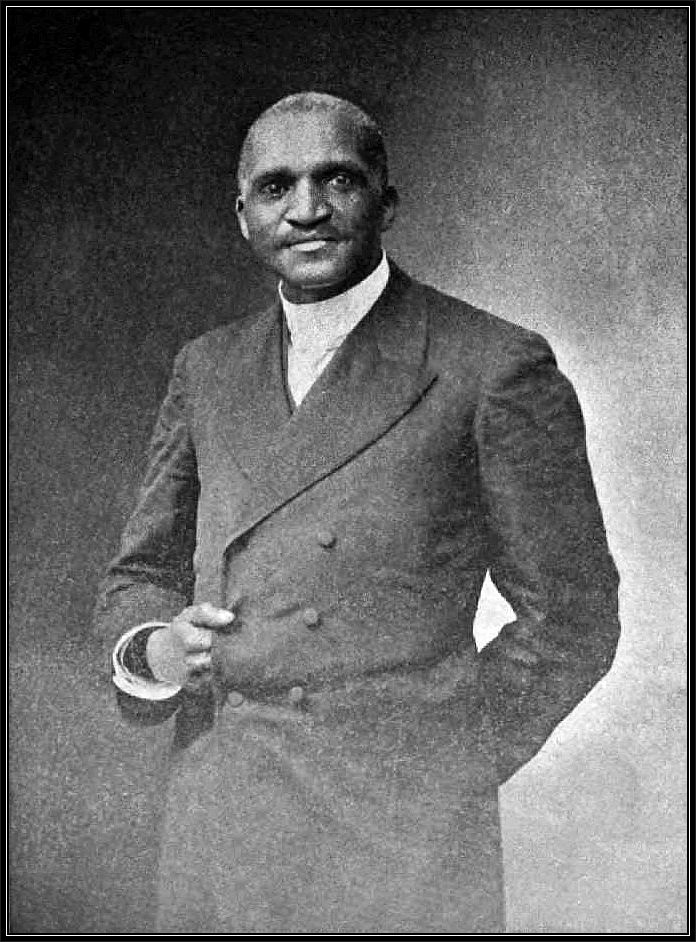
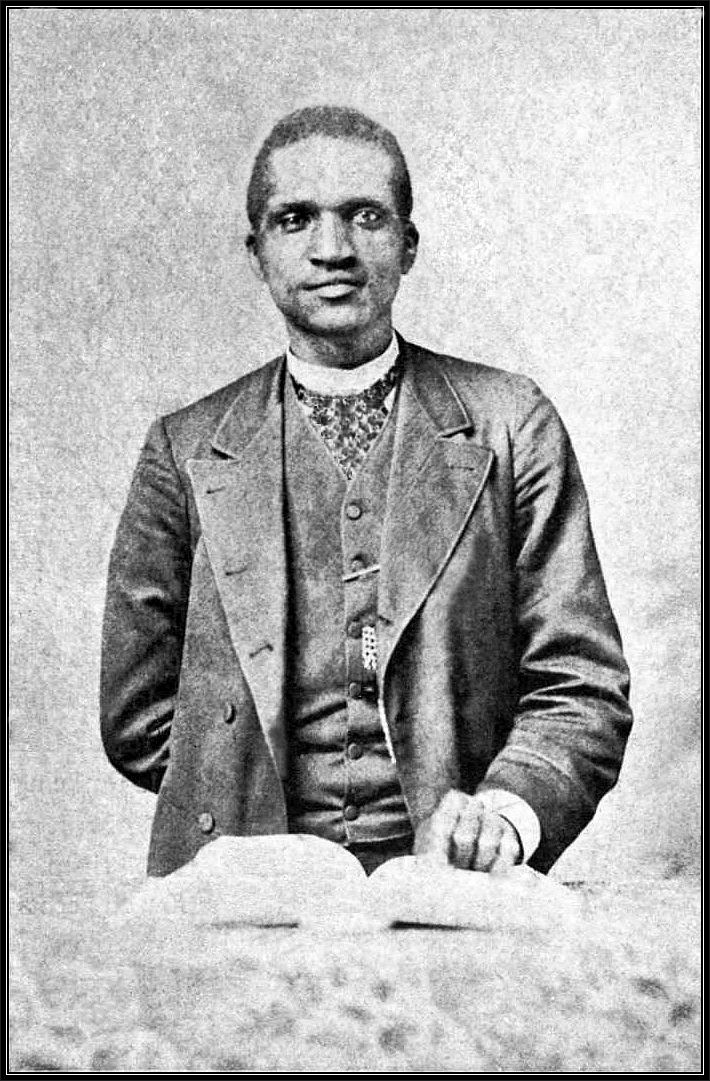
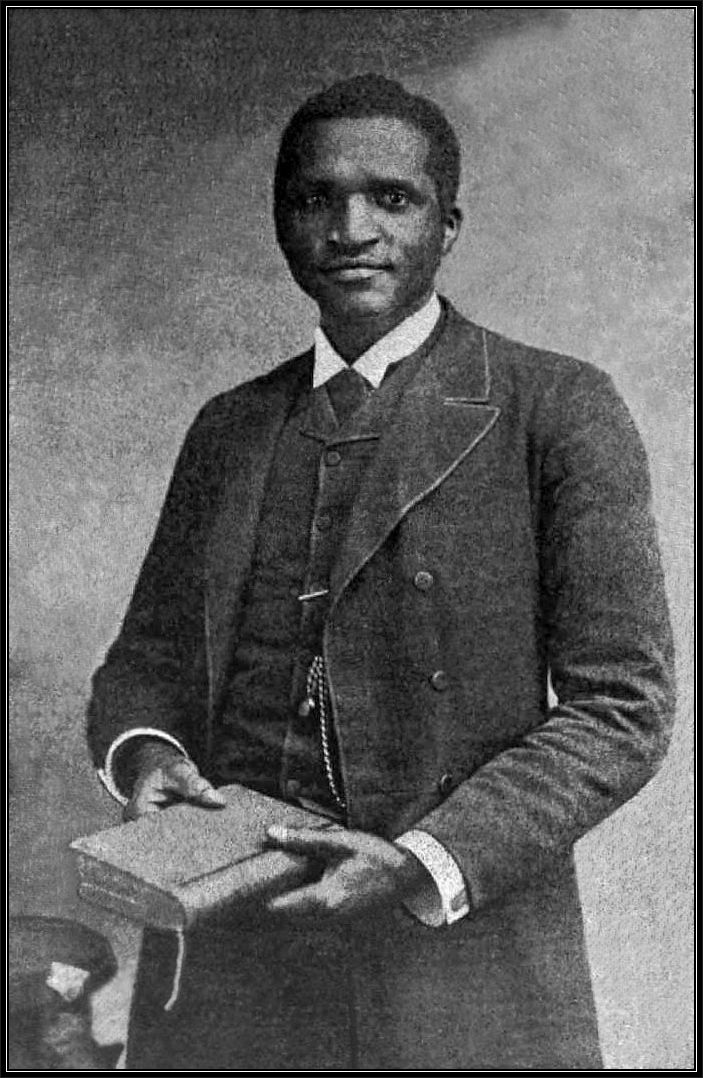
Following extracts from various newspapers will indicate how
extensive Dr. Walker’s work has been, and how highly it has been
appreciated by the people, white and black, North and South:
From the Examiner, New York City’s Baptist newspaper, Feb.
22nd, 1900:
“President A. B. Sears was in the chair at the meeting of the
City Ministers’ Conference. Rev. C. N. Mitchell, of Toronto, who
was on his way to his new mission field in Bolivia, and Rev. James
T. McGovern, who has been preaching at the Emmanuel Church,
and was recently appointed missionary to Spain, were introduced.
Mr. W. Henry Grant, Assistant General Secretary of the Ecumenical
Conference on Foreign Missions, presented the financial needs
of the Conference, and spoke of the great good which will result
in missionary stimulus from the meetings to be held in Carnegie
Hall, April 21 to May 1. The paper of the morning was presented
by Rev. Dr. Charles T. Walker, Pastor of the Mount Olivet
Church. He discussed his topic, ‘Truth from Another Angle on
the Negro Problem,’ with so much freshness and power that
the conference requested it for publication and voted money to
cover the cost. The distinguishing feature of the paper was the
fact that Dr. Walker ascribed the prejudice against the Negro
race to racial rather than sectional antipathies. He gave an outline
of Negro advancement along religious, educational and financial
lines, pleaded for simple justice for the Negro, and urged that
all avenues of progress should be open to him on the simple qualification
of manhood and character.”
From the New York Sun, Nov. 1899:
“The Mt. Olivet Baptist Church, African, which was but a few
months ago torn by the dissensions between the Rev. Daniel W.
Wisher, who was then its pastor, and the majority of his congregation,
demonstrated yesterday that its troubles have not affected
the vigor of the church, but have rather awakened it to new
strength. Since the new pastor, the Rev. Dr. Charles T. Walker,
was installed there have been revival meetings seven nights a
week, and new converts have been made to the number of 110.
Of these, the seventy-six who seemed to the pastor and deacons
most worthy were baptized at the morning service yesterday.
“The news of so great a baptism had spread about among other
Baptist congregations among the colored people of the city, and
had been almost enviously commented upon in Methodist circles.
At half past ten o’clock yesterday morning half an hour before the
service was to begin, every seat was filled and the tact of the ushers
had to be exercised to the utmost to dispose properly of the
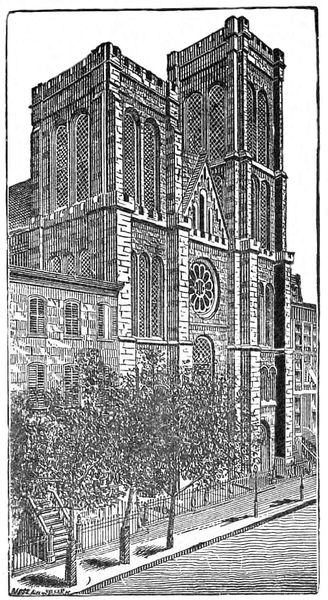
streams of people that came pouring down to the big gray church
from the east and west under the shadow of the elevated railroad
tracks. At a quarter before 10 o’clock the outside doors of the
church were locked and after that only those who were related to
the candidates to be baptized were admitted. The candidates
themselves had taken the precaution to come very early. For an
hour after the church doors were closed a constantly increasing
crowd of the disappointed stood on the steps and on the sidewalk
and bewailed their lack of foresight in not coming earlier.
“The volume of sound with which the great congregation rolled
out the full strains of the opening hymn, ‘Blow, ye, the trumpet
blow,’ was enough to have raised a less emotional congregation
to a high state of religious exaltation. It was some time after the
‘Amen’ that closed the song before the undertone of joyful exultation
quite subsided. The Rev. Dr. Walker preached on
‘Christ, the Living Rock.’ His text was: ‘And did all drink the
same spiritual drink; for they drank of that spiritual Rock that
followed them: and that Rock was Christ.’
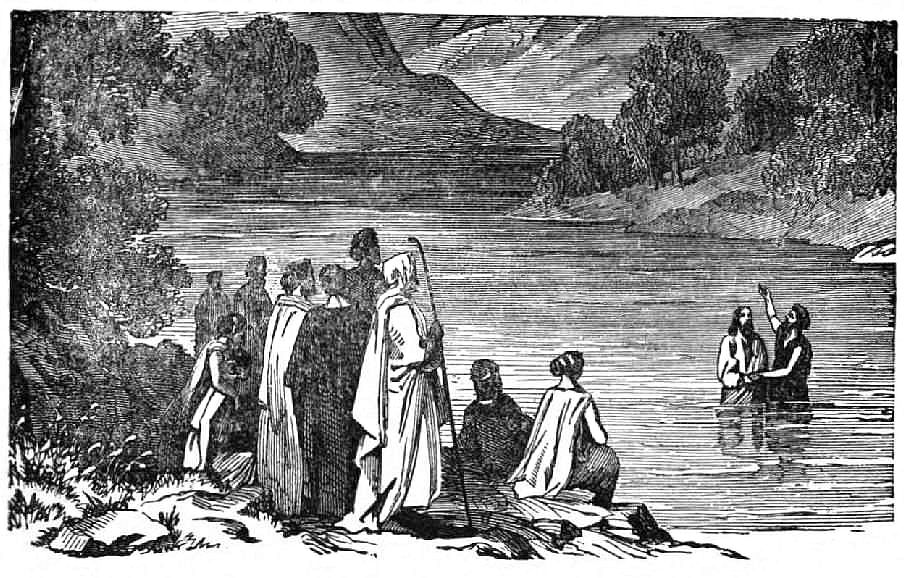
“Fifty women were immersed in just twenty-five minutes. It
took twenty-six minutes to baptize the twenty-six men. After
the closing hymn, ‘Rock of Ages,’ had been sung in a mighty
chorus that made the great church seem to sway with the harmony,
the Rev. Dr. Walker, with his wet garments still upon him, dismissed
the congregation with a prayer. Few left the church until
they had congratulated the newly-baptized members most
heartily.”
From the New York World, March 12, 1900:
“What is believed to be the largest number of persons ever
baptized at one time within a building were submerged yesterday
morning at the Mt. Olivet Baptist Church, on Fifty-third Street
near Seventh Avenue, by the Rev. C. T. Walker, who is known
among those of his race as the ‘Black John the Baptist.’
“Five weeks ago a revival was begun. As a result the membership
of the church has increased 483. Two hundred and thirty-four
of the new members had never been baptized. Yesterday it
was arranged that 184 of them should be submerged.
“Long before 11 o’clock, the hour set for the opening of the
services, the big church was packed to its utmost capacity, and
those who could not get inside the doors were lined along Fifty-third
Street. At 10:30 o’clock the street was completely blocked,
and a squad of policemen from the West Forty-seventh Street Station
had to be called to clear the way.
“The pool, which is of marble, is in the rear of the rostrum, with
steps leading to it from either side. The water was between three
and four feet deep. The Rev. Mr. Walker and Deacon G. H.
Webb stood in the centre of it. Three men stood on the steps
on each side to assist the candidates.
“The first person to be led up was Octavia Adams, who had
been cook in the family of Robert Ingersoll for ten years. While
on the steps of the pool she said that as long as she had known
Col. Ingersoll she had been a firm believer in all of his doctrines,
but she now realized the power and the goodness of God. She
was full of enthusiasm, and after she had been taken out and
dressed, she went back to the church and encouraged those who
were to follow her.
“First of the men to be led up was the old blind man who is
such a familiar sight at the Fifty-ninth Street Park entrance. He
is nearly eighty years old and had to be carried to the edge of the
pool.
“The congregation was greatly excited. Women in all parts
of the church tore their hats from their heads and shouted wildly.
During the last half hour of the service six of them fainted.”
From the New York Journal, March 12, 1900:
“Yesterday was a day of jubilee and joy in the Mt. Olivet Baptist
Church. The fruits of the five weeks of the soul-stirring revival
were gathered. Converts to the number of 184 men, women,
children, boys and girls, were baptized by immersion amid such
scenes of praises as are not likely to be forgotten by the hundreds
present. To take the figures of the happy elders, it was a record
breaking event in New York for 408 recent converts to gather in
fellowship in a meeting last night; this result was especially gratifying
because of the recent dissensions in Mt. Olivet Church. For
a time there was the trouble and then came a rallying cry and with
it a new leader—the Rev. C. T. Walker, of the Tabernacle Baptist
Church of Augusta, a preacher of forcible ability and intense
religious zeal, sometimes called the colored ‘John the Baptist.’
Under the pastorate of Mr. Walker, Mt. Olivet has thrived. The
baptismal services yesterday morning attracted a tremendous congregation.
Long before the doors opened the crowd was pressing
at the doors of the pretty church, 53rd Street and Broadway. The
morning sermon was preached by Rev. Silas X. Floyd, the successor
of Mr. Walker in Augusta. The subject was, ‘Pleasing
God.’
“The baptismal services followed. The marble baptismal tank
sunk in the pulpit platform was opened. The candidates for baptism,
144 women in white flannel baptismal robes, and 40 men in
black, met in the Sunday school rooms in the basement which was
divided into two sections.
“For three hours, Mr. Walker and his assistant, Deacon Webb,
stood waist deep in the tank and conducted the baptismal services.
“The religious enthusiasm of the congregation was intense.
Three women and two men fainted after leaving the tank. Converts
and members became hoarse, with their cries for blessing
and approval; an hysterical cry from a newly baptized convert
dripping with water on leaving the tank was followed by choruses
of glad cries. The baptism of a little blind girl was followed by
a tumult of enthusiasm.
“‘Indeed, this reminds me of a day in the old South,’ said Mr.
Floyd, his eyes glowing with religious emotion.
“With but brief intervals, hymns were sung with striking fervor.
A brother who sat on the platform led a series of old-fashioned,
Southern camp-meeting hymns. One was:
I have a little book I carry with me,
It tells me all about heaven and Galilee,
Bye and bye.
When the storm of life is over.
We’ll anchor in the harbor,
We will praise God forever,
Bye and bye.’
“Such hymns were sung with the intonation peculiar to the
singing of colored congregations in the South. Men and women
arose, and as the singing progressed, their bodies rocked and their
feel kept time to the swing of the melodies.
“The greatest single victory over sin in the minds of those present
was the conversion and baptism of Mrs. Octavia Adams, of
No. 117 E. 21st St., the city home of the late Col. Robert G. Ingersoll.
Mrs. Adams had been a cook in the family for years.”
From New York Tribune, March 12, 1900:
“One hundred and eighty-four persons were baptized by immersion
at Mt. Olivet Baptist Church, Fifty Third Street, near
Broadway yesterday morning. Of this number 89 were women.
In all 408 persons were received into the church. It was originally
intended that 233 persons should be received in the church
by baptism, but of that number 49 did not present themselves.
The remainder were received into the church on profession of
faith. The baptismal ceremonies were conducted by Rev. C. T.
Walker, the pastor of the church, and Deacon Webb.
“During the baptism ceremonies religious fervor was worked
up to such a state that several women and two men fainted. Three
women fainted while being immersed. All, however, were revived.
“For five weeks, the Rev. Mr. Walker has been conducting revival
services in the church, and yesterday’s ceremonies were the
result of the work of conversion.
“Anticipating the crush that would be at the church, and fearful
that there might be trouble in handling it, Capt. Donohue, of the
West 47th Street Station, detailed five patrolmen from his command
to remain at the church during the services. Several times
the patrolmen were forced to resort to rather rough tactics in order
to keep the big crowd in check. Finally at the request of the
church officials, the police cleared the big corridors of the church
and drove several hundred persons who were late in arriving into
the street.
“The jam about the church was terrific. Every conceivable
vantage point was taken inside the big auditorium long before the
services were begun.
“People were jammed in the church like sardines. They filled
the aisles and stood about three or four deep about the pulpit.
Some time before the service began, the church was filled and the
police were instructed not to allow more to enter. Then began a
wild scramble. In a few minutes there were fully 1,000 persons
struggling in the vestibule and on the pavement outside the
church.
“The candidates for baptism were seated in the center of the
church, the women on one side of the aisles, while the men, black-robed
and in their stocking feet, were on the other side.
“The women were all clad in loose fitting white flannel gowns.
The majority of them had white ribbons in their hair. The regular
sermon was preached by Rev. S. X. Floyd of Augusta, Ga.
“The women were baptized first, the children and men last. The
first to be immersed was a little blind girl; as she was brought up
dripping from the big tank she cried, ‘Thank God, I am saved.’
The child’s cry was taken up by the big congregation.
“While the men were being baptized somebody in the congregation
began singing, ‘Bye-and-bye’; the song was quickly taken
up by the entire congregation and the religious enthusiasm was
increased. Men and women arose in their seats, and while they
sang they waved books and handkerchiefs.
“It was announced by the Rev. Mr. Walker that on the list of
converts were men and women from every clime. There were
several blind, deaf and dumb. Mr. Walker said that among those
who received baptism was a colored woman who for many years
had been employed in the household of the late Robert G. Ingersoll,
the agnostic.”
From the New York Times, May 7, 1900:
“Mount Olivet Baptist Church celebrated yesterday its 22nd
anniversary with afternoon and evening meetings. The exercises
were held in Carnegie Hall which was crowded not only
with the members of the congregation, but with colored Odd Fellows
and other societies and colored residents of the different boroughs.
“The meeting was more or less a congratulatory one to the Rev.
Dr. C. T. Walker, whose pastorate began seven months ago, when
he came here from Augusta Ga. The Trustees’ report showed
that the church had had the most prosperous year in its existence,
and although covert references were made by the speakers to the
troubles of the Rev. Mr. Wisher, the old sores have been healed
and everybody was in harmony.
“In April of last year the church was in debt exclusive of a
mortgage of $19,500, in the sum of $1,400 with $100.80 in the
treasury. Since then there have been paid for running expenses
$6,168.88, and there is now a balance on hand of $899.71. Within
Dr. Walker’s pastorate, over 800 members have been added.
“The collection yesterday morning brought in $1,269.16. At
the evening services this sum was swelled to $1,634.46. To this
will be added $1,000 taken in at recent collections. The announcement
was made that John D. and William Rockefeller were
among the contributors in the past and that the City Mission had
borne the ‘white man’s burden’ in helping to raise the big church
debt to the amount of $9,000.
“The Rev. Dr. R. S. MacArthur, of Calvary Baptist Church,
spoke in complimentary terms of the work of Dr. Walker.
“‘I consider him the most valuable acquisition to the ministry
of this great city,’ he said. ‘If you can spare him for some service
I want him to come and speak in Calvary. My people want
good preaching, and he is a good preacher. And if you will put
up with me, I’ll come to you for one service.’ (Laughter and applause
followed this remark.)
“Dr. MacArthur then made a plea for general education among
the colored people, and said: ‘It has made me boil with indignation
when I have seen the door shut in the face of black men and
opened to white men with black hearts.’”
From the Augusta (Ga.) Chronicle, March 20, 1900:
“Rev. C. T. Walker, the ‘Black Spurgeon,’ who has lately acquired
the sub-name of the ‘Black John the Baptist’ by the big results
of the recently held revival in New York, delivered a strong
lecture at his former church, Tabernacle Baptist, on Ellis Street,
last night to a crowded house.
“The subject used by Rev. Walker was ‘The Negro for the
Twentieth Century.’” He took as a special theme the necessity
of the Negro race patronizing their own enterprises and learning
to have confidence in themselves that the white race has in itself.
He bore heavily upon the importance to his race of an industrial
education.
“He said that the Negro must put aside the ante-bellum belief
of their absolute dependence upon the whites and stand solely
upon their own efforts. He said that prejudice was very general
against the colored man and it rested entirely with him whether
in the days to come the race will attain that place which it should
attain. He especially advised his hearers to spread the necessity
of character-building among their people that this end might be
reached. They should all think more of upholding themselves
individually and collectively; they must all have more respect for
their women, since in them, to a great degree, lives what the leaders
of the race are working for. The parents should be especially
particular to see that their boys and girls were educated in the
trades, that they may be taught the hurtfulness of idleness and the
profit of being always employed at something which would be
beneficial.
“At the conclusion of his address, to make this point more
forceful, he asked all of the professional and business men present
to stand up. A large number responded, and he pointed them
out as an example for the idle to follow.”
From the Fall River, Mass., Evening News:
“The people who turned out to hear Rev. C. T. Walker, D. D.,
speak at the Royal Arcanum Hall, on Bank Street, on Thursday
night, were abundantly rewarded for ignoring the rain. Dr.
Walker is one of the best known colored men in this country. He
ranks with Booker T. Washington in prominence, and has won
this prominence through intelligence and ability. He is now Pastor
of Mount Olivet Baptist Church in New York City, one of the
largest and strongest churches among the colored people of the
North. His reputation as a more than local man of note was won
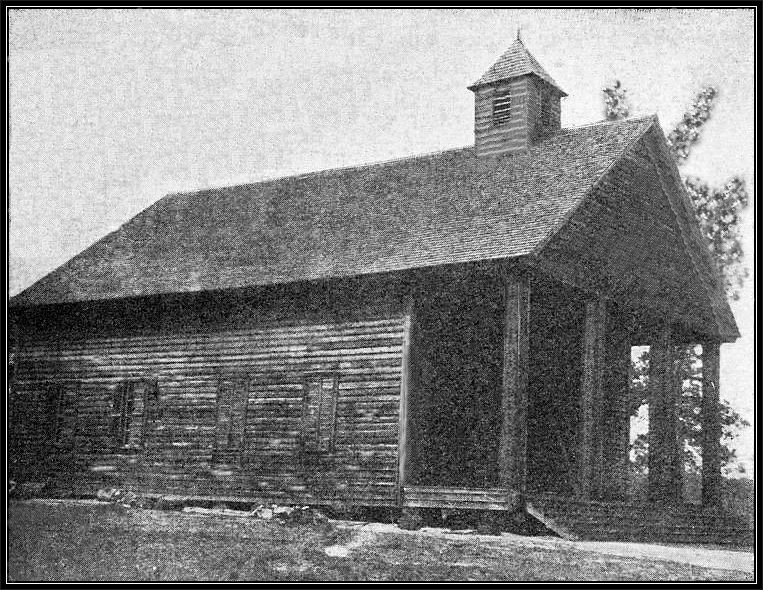
while he was pastor of the Tabernacle Baptist Church of Augusta,
Ga. He secured the funds to erect the building, and made the
church one of the biggest among his people in the South.
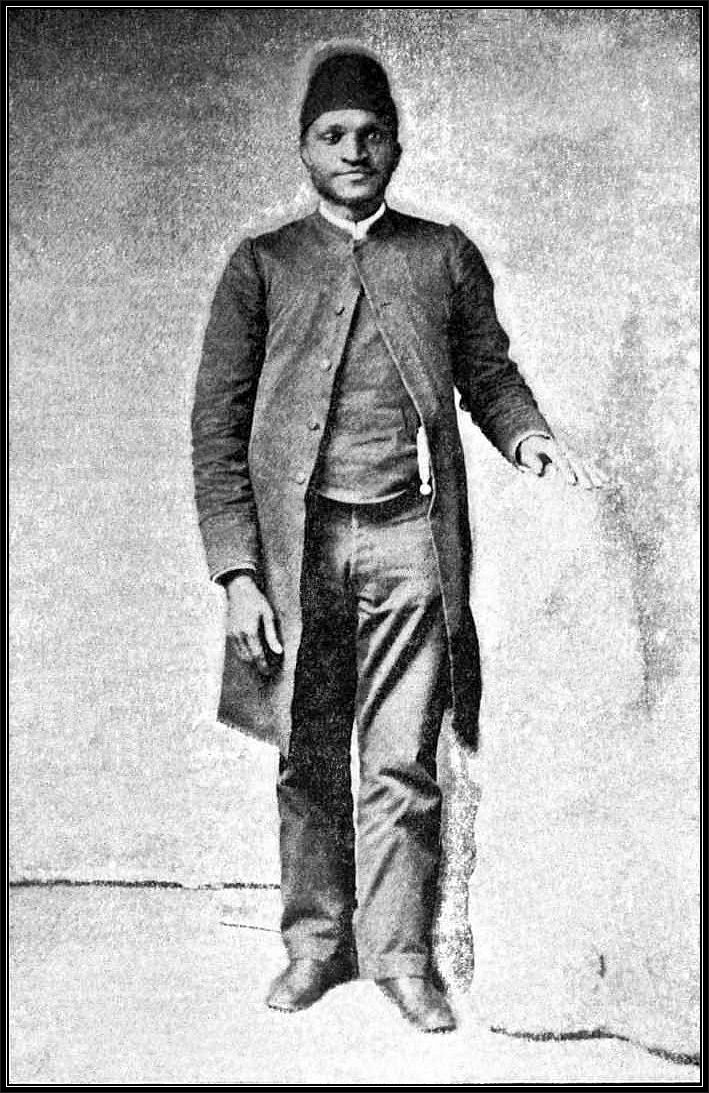
“Dr. Walker is a remarkable man, one whom it would repay
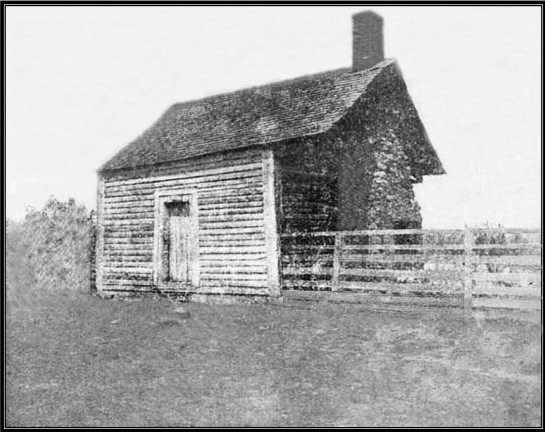
anybody to meet. He was born a slave in 1858. Left an orphan
when only eight years of age, he worked as a field hand until he
was fifteen years old, when he began to study for the ministry.
Largely through his own efforts he has become a man of notably
large and broad education. He has traveled extensively, and
has a great fund of material for use both in the pulpit and in talks
and lectures. When one has heard him talk the main element of
his notable success in life becomes apparent. He is a born orator.
His gift has been cultivated to fine advantage. He has that quality
of voice which makes speaking to large assemblies of people
no difficult task. There is no suggestion of the shouting preacher
in his method, but his voice carries naturally and easily. It was
apparent that he was accustomed to speaking in much larger halls
than the one in which he was heard last night. His voice was
rather crowded there when he was specially earnest. He is very
eloquent and may well be called ‘The Black Spurgeon of America.’
His fund of humor is inexhaustible. This humor took
well with his audience. Many of those present were old acquaintances.”
From the Georgia Baptist (Augusta, Ga.), July 20, 1899:
“It has been known for some weeks that the Mount Olivet Baptist
Church, of New York City, with fifteen hundred present, had
extended a unanimous call to Dr. C. T. Walker, of our city, to accept
its pastorate.
“The universal hope of our community has been that Dr.
Walker would decline this call as flattering as it is and remain in
Augusta. No man in Augusta has a deeper hold upon the whole
community than Dr. Walker. His success as a pastor of Tabernacle
Baptist Church in this city for the past fourteen years has
been phenomenal and humanly speaking it does not appear that
a man can be found to take his place at this church. Aside from
Tabernacle Church, all the people of Augusta, white and colored,
are anxious that Dr. Walker remain in Augusta. Should he decide
to accept the call to New York, Dr. Walker will leave behind
him thousands of loving hearts whose prayers will follow
him wherever his lot may be cast.”
From the Augusta (Ga.), Chronicle, March 27, 1901:
“Will D. Upshaw, of Mercer University, who spent Sunday
and part of yesterday in Augusta, left for Macon at 4 o’clock yesterday
afternoon. He is returning from a stay of several months
in New York, where he has been in the interest of a loan fund at
Mercer, and where, as press reports and his subscription list indicate,
he did some excellent and successful work for the great
Georgia College.
“Speaking of preachers in New York, Mr. Upshaw said,
‘Many people in Augusta will be gratified to learn that your city
recently sent to the metropolis a man who is preaching to the
largest crowds of any man in New York, either white or colored.
I refer to none other than Charles T. Walker, ‘The Black Spurgeon,’
so long and favorably known in Augusta. I confess that
as a Georgian, I felt a great deal of pride and congratulation for
my own State, to see with my own eyes the remarkable work he
is doing and hear on all sides many expressions of commendation
concerning him. I had the pleasure of speaking in his church
several times. On the Sunday night on which I spoke, 1,500 people
packed the house, and on another occasion, in company with
Dr. Frank Rogers Morse, the accomplished associate pastor of
Calvary Church, I attended the services and heard the pastor
preach to an overflowing audience that crowded floor and galleries,
and it is no disparagement to the white brethren to say that his
sermon was one of the most forceful I heard in the metropolis. Dr.
Walker’s congregations are growing until he has to hold overflow
meetings in the lecture room. You will find many Negroes of fine
education and genuine culture while there is a refreshing sprinkling—I
use the word ‘refreshing’ advisedly—of the old-fashioned
‘Georgia darkey,’ whom Alex Bealer describes so strikingly, who
keeps the speaker in good spirits by the occasional lusty ‘Amen.’
“When Dr. Walker took hold of the church, it had been somewhat
divided by the political sermons of his predecessor; but the
present pastor has had the good sense to steer clear of such breakers.
Now the large church is united and harmonious, and much
genuine good is being done. Dr. Morse, who often acts as an advisory
friend of the colored church, in speaking to me of the new
pastor, said, ‘Mr. Walker is a true man, really a remarkable man,
and the work he is doing is marvelous.’
“In speaking of the contribution which Rev. Charles T. Walker
is making to the solution of the race problem by his presence and
work in the North, Mr. Upshaw said:
“‘I have heard Rev. Walker deliver an address by special request
of the New York Baptist ministers’ conference, which, while
true to his race, as all honest men wanted him to be, was so fair
and sensible that he deserves the commendation of all white men,
and especially all Southern men. In that Northern atmosphere,
where many of his hearers not only expected but possibly wished
this distinguished Southern Negro to flay his former neighbors,
Charlie Walker had the common sense not to make one single sectional
allusion. He never used the words “North” or “South,”
throughout his entire address. He discussed the sad fact of undue
race prejudice, not from a sectional but a racial standpoint,
and plead with an eloquence that was as touching as it was thrilling,
that his race be admitted to progress everywhere on the credentials
of worth and justice.
“‘Dr. C. O. Pope, so well known in Augusta, and now President
of Simmons’ College, in Texas, was in the audience, and
when Dr. Walker sat down amid many cheers, and maybe, some
tears, Dr. Pope arose and told the people that he was raised in the
community with Charles Walker’s father, and having known from
boyhood the man who had addressed them, he wished to bear testimony
to the worth of the man, and the truth and fairness of what
he had said.
“‘It was my own pleasure to supplement Dr. Pope’s words
along the same line and by an emphasis of what I had told the
ministers’ conference in a speech before Dr. Walker’s coming—that
if there were more Charles T. Walkers and Booker T. Washingtons,
there would be less race problems in the South.’
“When the Chronicle reporter smiled and suggested that he was
giving the former Augusta pastor very high praise, Mr. Upshaw
smiled pleasantly in turn and said:
“‘Yes, I know I am, but I am doing it deliberately and unreservedly.’
“‘I believe that when a worthy Negro like Charles T. Walker,
with faith in God and love for man, a humanity that cannot be
spoiled by praise, breaks through conditions and tendencies that
keep so many of his race below honor and progress, it is only just
and right that his more fortunate white neighbor should give him
the credit due, take him by the hand and say: “God bless you. If
you are honestly trying to lift up yourself and your people, I will
honestly help you to be true to yourself, to your people and to
God.”
From the Georgia Baptist, Nov. 15, 1901:
“No man, white or colored, has gone from the South to New
York, the great commercial metropolis of this country, and made
for himself in so short a time a reputation and friends that our Dr.
Walker has.
“As highly regarded as he has been for years in Augusta, his
real worth to the denomination, the country and the race has not
been fully understood until he entered the pastorate in New York
City. Mt. Olivet Baptist Church, of which he is pastor in New
York, is no more anxious that he continue his labors with them
than are the thousands of his friends outside of his church. The
mass meeting, called at Mt. Olivet Church, Nov. 6, at which hundreds
gathered to give expression to the great desire that Dr.
Walker continue his work in that city, was presided over by the
distinguished Dr. MacArthur, one of the leading white ministers
of the country. Bishop W. B. Derrick led the speakers in eulogizing
the work of Dr. Walker, and urging him to withdraw his
resignation tendered to Mt. Olivet Church. The speakers on the
program were men of note of all denominations and leading politicians
who, as a rule, take no interest in religion.
“Dr. Walker’s friends in Augusta, white and colored, can but
feel gratified at his success in the North and the high regard
which he has won from all classes. The Baptists of Georgia are
ardently attached to Dr. Walker, and if he decides to return to his
old charge, they will receive him back with open arms.”
Testimonials similar to the above could be multiplied by the
score. North, South, East and West, Dr. Walker is a man well
spoken of by white and black, publican and sinner.