Abergavenny, 410.
Abergavenny, Earl of, wreck of the, 494 n.;
495 n.
Abernethy, Dr. John, 525;
C. determines to place himself under the care of, 564, 565.
Achard, F. C., 299 and note.
Acland, Sir John, 523 and note.
Acting, 621-623.
Acton, 184, 186-188, 191.
Adams, Dr. Joseph, 442 and note.
Addison’s Spectator, studied by C. in connection with The Friend, 557, 558.
Address on the Present War, An, 85 n.
Address to a Young Jackass and its Tethered Mother, 119 and note, 120.
Aders, Mrs., 701 n., 702 n., 752;
letters from C., 701, 769.
Adscombe, 175, 184, 188.
Advising, the rage of, 474, 475.
Adye, Major, 493.
Æschylus, Essay on the Prometheus of, 740 and note.
Aids to Reflection, 688 n.;
preparation and publication of, 734 n., 738;
C. calls Stuart’s attention to certain passages in, 741;
favourable opinions of, 741;
756 n.
Ainger, Rev. Alfred, 400 n.
Akenside, Mark, 197.
Albuera, the Battle of, C.’s articles on, 567 and note.
Alfoxden, 10 n.;
Wordsworth settles at, 224, 227;
326, 515.
Alison’s History of Europe, 628 n.
Allen, Robert, 41 and note, 45, 47, 50;
extract from a letter from him to C., 57 n.;
63, 75, 83, 126;
appointed deputy-surgeon to the Second Royals, 225 and note;
letter to C., 225 n.
Allsop, Mrs., 733 n.
Allsop, Thomas, friendship and correspondence with C., 695, 696;
publishes C.’s letters after his death, 696;
his Letters, Conversations, and Recollections of S. T. Coleridge, 41 n., 527 n., 675 n., 696 and note, 698 n., 721 n.;
711;
C.’s letter of Oct. 8, 1822, 721 n.;
letter from C., 696.
Allston, Washington, 523;
his bust of C., 570 n., 571;
his portraits of C., 572 and note;
his art and moral character, 573, 574;
581, 633;
his genius and his misfortunes, 650;
695 and notes;
letter from C., 498.
Ambleside, 335;
Lloyd settles at, 344;
577, 578.
America, proposed emigration of C. and other pantisocrats to, 81, 88-91, 98, 101-103, 146;
prospects of war with England, 91;
241;
progress of religious deism in, 414;
C.’s letter concerning the inevitableness of a war with, 629.
Amtmann of Ratzeburg, the, 264, 268, 271.
Amulet, The, 257.
Ancient Mariner, The, 81 n.;
written in a dream or dreamlike reverie, 245 n.;
696.
Animal Vitality, Essay on, by Thelwall, 179, 212.
Annual Anthology, the, edited by Southey, 207 n., 226 n., 295 n., 298 n.;
C. suggests a classification of poems in, 313, 314, 317;
318, 320, 322 and note, 330, 331, 748 n.
Annual Review, 488, 489, 522.
Anti-Jacobin, The Beauties of the, its libel on C., 320 and note.
Antiquary, The, by Scott, C.’s portrait introduced into an illustration for, 736 and note.
Ants, Treatise on, by Huber, 712.
Ardinghello, by Heinse, 683 and note.
Arnold, Mr., 602, 603.
Arrochar, 432 and note.
Arthur’s Crag, 439.
A-seity, 688 and note.
Asgill, John, and his Treatises, 761 and note.
Ashburton, 305 n.
Ashe, Thomas, his Miscellanies, Æsthetic and Literary, 633 n.
Ashley, C. with the Morgans at, 631.
Ashley, Lord, and the Ten Hours Bills, 689 n.
Ashton, 140 and note.
As late I roamed through Fancy’s shadowy vale, a sonnet, 116 n., 118.
Atheism, 161, 162, 167, 199, 200.
Athenæum, The, 206 n., 536 n., 753 n.
Atlantic Monthly, 206 n.
Autobiographical letters from C. to Thomas Poole, 3-21.
Baader, Franz Xavier von, 683 and note.
Babb, Mr., 422.
Bacon, Lord, his Novum Organum, 735.
Badcock, Mr., 21.
Badcock, Harry, 22.
Badcock, Sam, 22.
Bala, 79.
Ball, Lady, 494 n., 497.
Ball, Sir Alexander John, 484, 487, 496, 497;
mutual regard of C. and, 508 n.;
524, 554;
C.’s narrative of his life, 579 n.;
his opinions of Lady Nelson and Lady Hamilton, 637.
Ballad of the Dark Ladie, The, 375.
Bampfylde, John Codrington Warwick, his genius, originality, and subsequent lunacy, 309 and note;
his Sixteen Sonnets, 309 n.
Banfill, Mr., 306.
Barbauld, Anna Lætitia, 317 n.
Barbou Casimir, The, 67 and notes, 68.
Barlow, Caleb, 38.
Barr, Mr., his children, 154.
Barrington, Hon. and Rt. Rev. John Shute, Bishop of Durham, 582 and note.
Bassenthwaite Lake, 335, 376 n.;
sunset over, 384.
Beard, On Mrs. Monday’s, 9 n.
Beaumont, Lady, 459, 573, 580, 592, 593;
procures subscribers to C.’s lectures, 599;
644, 645, 739, 741;
letter from C., 641.
Beaumont, Sir George, 440 n., 462;
his affection for C. preceded by dislike, 468;
493;
extract from a letter from Wordsworth on John Wordsworth’s death, 494 n.;
496;
lends the Wordsworths his farmhouse near Coleorton, 509 n.;
579-581;
C. explains the nature of his quarrel with Wordsworth to, 592, 593;
595 n., 629;
on Allston as an historical painter, 633;
739, 741;
letter from C., 570.
Beauties of the Anti-Jacobin, The, its libel on C., 320 and note.
Becky Fall, 305 n.
Beddoes, Dr. Thomas, 157, 211, 338;
C.’s grief at his death, 543 and note, 544 and note;
his advice and sympathy in response to C.’s confession, 543 n.;
his character. 544.
Bedford, Grosvenor, 400 n.
Beet sugar, 299 and note.
Beguines, the, 327 n.
Bell, Rev. Andrew, D. D., 575, 582 and note, 605;
his Origin, Nature, and Object of the New System of Education, 581 and note, 582.
Bell, Rev. Andrew, Life of, by R. and C. C. Southey, 581 n.
Bellingham, John, 598 n.
Bell-ringing in Germany, 293.
Belper, Lord (Edward Strutt), 215 n.
Bennett, Abraham, his electroscope, 218 n., 219 n.
Bentley’s Quarto Edition of Horace, 68 and note.
Benvenuti, 498, 499.
Benyowski, Count, or the Conspiracy of Kamtschatka, a Tragi-comedy, by Kotzebue, 236 and note.
Berdmore, Mr., 80, 82.
Bernard, Sir Thomas, 579 and notes, 580, 582, 585, 595 n., 599.
Betham, Matilda, To. From a Stranger, 404 n.
Bible, The, as literature, C.’s opinion of, 200;
slovenly hexameters in, 398.
Bibliography, Southey’s proposed work, 428-430.
Bibliotheca Britannica, or an History of British Literature, a proposed work, 425-427, 429, 430.
Bigotry, 198.
Billington, Mrs. Elizabeth Weichsel, 368.
Bingen, 751.
Biographia Literaria, 3, 68 n., 74 n., 152 n., 164 n., 174 n., 232 n., 257, 320 n., 498 n., 607 n., 669 n., 670 n.;
C. ill-used by the printer of, 673, 674;
679, 756 n.
Birmingham, 151, 152.
Bishop’s Middleham, 358 and note, 360.
Blackwood’s Magazine, 756.
Blake, William, as poet, painter, and engraver, 685 n., 686 n.;
C.’s criticism of his poems and their accompanying illustrations, 686-688;
his Songs of Innocence and Experience, 686 n.
Bloomfield, Robert, 395.
Blumenbach, Prof., 279, 298.
Book of the Church, The, 724.
Books, C.’s early taste in, 11 and note, 12;
in later life, 180, 181.
Booksellers, C.’s horror of, 548.
Borrowdale, 431.
Borrowdale mountains, the, 370.
Botany Bay Eclogues, by Robert Southey, 76 n., 116.
Bourbons, C.’s Essay on the restoration of the, 629 and note.
Bourne, Sturges, 542.
Bovey waterfall, 305 n.
Bowdon, Anne, marries Edward Coleridge, 53 n.
Bowdon, Betsy, 18.
Bowdon, John (C.’s uncle), C. goes to live with, 18, 19.
Bowdons, the, C.’s mother’s family, 4.
Bowles, the surgeon, 212.
Bowles, To, 111.
Bowles, Rev. William Lisle, C.’s admiration for his poems, 37, 42, 179;
63 n., 76 and note;
C.’s sonnet to, 111 and note;
115;
his sonnets, 177;
his Hope, an Allegorical Sketch, 179, 180;
196, 197, 211;
his translation of Dean Ogle’s Latin Iambics, 374 and note;
school life at Winchester, 374 n.;
C.’s, Southey’s, and Sotheby’s admiration of, and its effect on their poems, 396;
borrows a line from a poem of C.’s, 396;
his second volume of poems, 403, 404;
637, 638, 650-652.
Bowscale, the mountain, 339.
Box, 631.
Boyce, Anne Ogden, her Records of a Quaker Family, 538 n.
Boyer, Rev. James, 61, 113, 768 n.
Brahmin creed, the, 229.
Brandes, Herr von, 279.
Brandl’s Samuel Taylor Coleridge and the English Romantic School, 258, 674 n., 740 n.
Bratha, 394, 535.
Bray, near Maidenhead, 69, 70.
Brazil, Emperor of, an enthusiastic student and admirer of C., 696.
Bread-riots, 643 n.
Brecon, 410, 411.
Bremhill, 650.
Brent, Mr., 598, 599.
Brent, Miss Charlotte, 520, 524-526;
C.’s affection for, 565;
577, 585, 600, 618, 643, 722 n.;
letter from C., 722.
See Morgan family, the.
Brentford, 326, 673 n.
Bridgewater, 164.
Bright, Henry A., 245 n.
Bristol, C.’s bachelor life in, 133-135;
138, 139, 163 n., 166, 167, 184, 326, 414, 520, 572 n., 621, 623, 624.
Bristol Journal, 633 n.
British Critic, the, 350.
Brookes, Mr., 80, 82.
Brothers, The, by Wordsworth, the original of Leonard in, 494 n.;
C. accused of borrowing a line from, 609 n.
Brown, John, printer and publisher of The Friend, 542 n.
Brun, Frederica, C.’s indebtedness to her for the framework of the Hymn before Sunrise in the Vale of Chamouni, 405 n.
Bruno, Giordano, 371.
Brunton, Miss, 86 and note, 87, 89;
verses to, 94.
Brunton, Elizabeth, 86 n.
Brunton, John, 86 n., 87.
Brunton, Louisa, 86 n.
Bryant, Jacob, 216 n., 219.
Buchan, Earl of, 139.
Buclé, Miss, 136.
See Cruikshank, Mrs. John.
Buller, Sir Francis (Judge), 6 n.;
obtains a Christ’s Hospital Presentation for C., 18.
Buonaparte, 308, 327 n., 329 and note;
his animosity against C., 498 n.;
530 n.;
C.’s cartoon and lines on, 642.
Burdett, Sir Francis, 598.
Burke, Edmund, C.’s sonnet to, 116 n., 118;
his Letter to a Noble Lord, 157 and note;
Thelwall on, 166;
177.
Burnett, George, 74, 121, 140-142, 144-151, 174 n., 325, 467.
Burns, Robert, 196;
C.’s poem on, 206 and note, 207.
Burton, 326.
Burton’s Anatomy of Melancholy, 428.
Busts of C., 570 n., 571, 695 n.
Butler, Samuel (afterwards Head Master of Shrewsbury and Bishop of Lichfield), 46 and note.
Buttermere, 393.
Byron, Lord, his Childe Harold, 583;
666, 694, 726.
Byron, Lord, Conversations of, by Capt. Thomas Medwin, 735 and note.
Cabriere, Miss, 18.
Caermarthen, 411.
Caldbeck, 376 n., 724.
Calder, the river, 339.
Caldwell, Rev. George, 25 and note, 29, 71, 82.
Calne, Wiltshire, C.’s life at, 641-653.
Calvert, Raisley, 345 n.
Calvert, William, proposes to study chemistry with C. and Wordsworth, 345;
his portrait in a poem of Wordsworth’s, 345 n.;
proposes to share his new house near Greta Hall with Wordsworth and his sister, 346;
his sense and ability, 346;
347, 348.
Cambridge, description of, 39;
137, 270.
Cambridge, Reminiscences of, by Henry Gunning, 24 n., 363 n.
Cambridge Intelligencer, The, 93 n., 218 n.
Cambridge University, C.’s life at, 22-57, 70-72, 81-129;
C. thinks of leaving, 97 n.;
137.
Cameos and intaglios, casts of, 703 and note.
Campbell, James Dykes, 251 n., 337 n.;
his Samuel Taylor Coleridge, 269 n., 527 n., 572 n., 600 n., 631 n., 653 n., 666 n., 667 n., 674 n., 681 n., 684 n., 698 n., 752 n., 753 n., 772 n.
Canary Islands, 417, 418.
Canning, George, 542, 674.
Canova, Antonio, on Allston’s modelling, 573.
Cape Esperichel, 473.
Carlisle, Sir Anthony, 341 and note.
Carlton House, 392.
Carlyle, Thomas, his portrait of C. in the Life of Sterling, 771 n.
Carlyon, Clement, M. D., his Early Years and Late Recollections, 258, 298 n.
Carnosity, Mrs., 472.
Carrock, the mountain, a tempest on, 339, 340.
Carrock man, the, 339.
Cartwright, Major John, 635 and note.
Cary, Rev. Henry, his Memoir of H. F. Cary, 676 n.
Cary, H. F., Memoir of, by Henry Cary, 676 n.
Cary, Rev. H. F., his translation of the Divina Commedia, 676, 677 and note, 678, 679;
C. introduces himself to, 676 n.;
685, 699;
letters from C., 676, 677, 731, 760.
Casimir, the Barbou, 67 and notes, 68.
Castlereagh, Lord, 662.
Castle Spectre, The, a play by Monk Lewis, C.’s criticism of, 236 and note, 237, 238;
626.
Catania, 458.
Cat-serenades in Malta, 483 n., 484 n.
Catherine II., Empress of Russia, 207 n.
Cathloma, 51.
Catholic Emancipation, C.’s Letters to Judge Fletcher on, 629 and note, 634 and note, 635, 636, 642.
Catholicism in Germany, 291, 292.
Catholic question, the, letters in the Courier on, 567 and note;
C. proposes to again write for the Courier on, 660, 662;
arrangements for the proposed articles on, 664, 665.
Cattermole, George, 750 n.;
letter from C., 750.
Cattermole, Richard, 750 n.
Cattle, disposal of dead and sick, in Germany, 294.
Chalmers, Rev. Thomas, D. D., calls on C., 752 and note.
Chantrey, Mr. (afterwards Sir) Francis, R. A., C.’s impressions of, 699;
727.
Chapman, Mr., appointed Public Secretary of Malta, 491, 496.
Character, A, 631 n.
Charity, 110 n.
Chatterton, Monody on the Death of, 110 n., 158 n.;
C.’s opinion of it in 1797, 222, 223;
620 n.
Chatterton, Thomas, unpopularity of his poems, 221, 222;
Southey’s exertions in aid of his sister, 221, 222.
Chemistry, C. proposes to study, 345-347.
Chepstow, 139, 140 n.
Chester, John, accompanies C. to Germany, 259;
265, 267, 269 n., 272, 280, 281, 300.
Childe Harold, by Byron, 583.
Childhood, memory of, in old age, 428.
Children in cotton factories, legislation as to the employment of, 689 and note.
Christ, both God and man, 710.
Christabel, written in a dream or dreamlike reverie, 245 n.;
310, 313, 317, 337 and note, 342, 349;
Conclusion to Part II., 355 and note, 356 n.;
Part II., 405 n.;
a fine edition proposed, 421, 422;
437 n., 523;
C. quotes from, 609, 610;
the broken friendship commemorated in, 609 n.;
the copyright of, 669;
the Edinburgh Review’s unkind criticism of, 669 and note, 670;
Mr. Frere advises C. to finish, 674;
696.
Christianity, the one true Philosophy (C.’s magnum opus), outline of, 632, 633;
fragmentary remains of, 632 n.;
the sole motive for C.’s wish to live, 668;
J. H. Green helps to lay the foundations of, 679 n.;
694, 753;
plans for, 772, 773.
Christian Observer, 653 n.
Christmas Carol, A, 330.
Christmas Indoors in North Germany, 257, 275 n.
Christmas Out of Doors, 257.
Christmas-tree, the German, 289, 290.
Christ’s Hospital, C.’s life at, 18-22;
173 n.
Christ’s Hospital Five and Thirty Years Ago, by Charles Lamb, 20 n.
Christ’s Hospital, List of Exhibitioners, from 1566-1885, 41 n.
Chronicle, Morning, 111 n., 114, 116 n., 119 n., 126, 162, 167, 505, 506, 606 n., 615, 616.
Chubb, Mr., of Bridgwater, 231.
Church, The Book of the, by Southey, 724.
Church, the English, 135, 306, 651-653, 676, 757.
Church, the Scottish, in a state of ossification, 744, 745.
Church, the Wesleyan, 769.
Cibber, Colley, and his son, Theophilus, 693.
Cibber, Theophilus, his reply to his father, 693.
Cintra, Wordsworth’s pamphlet on the Convention of, 534 and note, 543 and note;
C.’s criticism of, 548-550.
Clagget, Charles, 70 and note.
Clare, Lord, 638.
Clarke, Mrs., the notorious, 543 n.
Clarkson, Mrs., 592.
Clarkson, Thomas, 363, 398;
his History of the Abolition of the Slave Trade, 527 and note, 528-530;
his character, 529, 530;
C.’s review of his book, 535, 536;
538 n., 547, 548;
on the second rupture between C. and Wordsworth, 599 n.
Clement, Mr., a bookseller, 548.
Clergyman, an earnest young, 691.
Clevedon, C.’s honeymoon at, 136.
Clock, a motto for a market, 553 and note, 554 n.
Coates, Matthew, 441 n.;
his belief in the impersonality of the deity, 444;
letter from C., 441.
Coates, Mrs. Matthew, 442, 443.
Cobham, 673 n.
Cole, Mrs., 271.
Coleorton, Memorials of, 369 n., 440.
Coleorton Farmhouse, C.’s visit to the Wordsworths at, 509-514.
Coleridge, Anne (sister—usually called “Nancy”), 8 and note, 21, 26.
Coleridge, Berkeley (son), birth of, 247 and note, 248, 249;
taken with smallpox, 259 n., 260 n.;
262, 267, 272;
death of, 247 n., 282-287, 289.
Coleridge, David Hartley (son—usually called “Hartley”), birth of, 169;
176, 205, 213, 220, 231, 245, 260-262, 267 n., 289, 296, 305, 318;
his talkativeness and boisterousness at the age of three, 321;
his theologico-astronomical hypothesis as to stars, 323;
a pompous remark by, 332;
illness, 342, 343;
early astronomical observations, 342, 343;
an extraordinary creature, 343, 344;
345 n., 355, 356 n., 359;
a poet in spite of his low forehead, 395;
408, 413, 416, 421;
at seven years, 443;
plans for his education, 461, 462;
468, 508;
visits the Wordsworths at Coleorton Farmhouse with his father, 509-514;
as a traveller, 509;
his character at ten years, 510, 512;
511;
under his father’s sole care for four or five months, 511 n.;
spends five or six weeks with his father and the Wordsworths at Basil Montagu’s house in London, 511 n.;
portraits of, 511 n.;
521;
his appearance, behavior, and mental acuteness at the age of thirteen, 564;
at fifteen, 576, 577;
at Mr. Dawes’s school, 576 and note, 577;
583 n.;
friendly relations with his cousins, 675 and note;
C. asks Poole to invite him to Stowey, 675;
visits Stowey, 675 n.;
684, 721, 726;
letter of advice from S. T. C., 511.
Coleridge, Derwent (son of S. T. C. and father of the editor), birth baptism of, 338 and note;
344, and 355, 359;
learns his letters, 393, 395;
408, 413, 416;
at three years, 443;
462, 468, 521;
at nine years, 564;
at eleven years, 576, 577;
at Mr. Dawes’s school, 576 and note, 577;
580, 605 n., 671 n.;
John Hookham Frere’s assistance in sending him to Cambridge, 675 and note;
707, 711.
Coleridge, Miss Edith, 670 n.
Coleridge, Edward (brother), 7, 53-55, 699 n.
Coleridge, Rev. Edward (nephew), 724 n.;
letters from C., 724, 738, 744.
Coleridge, Frances Duke (niece), 726 and note, 740.
Coleridge, Francis Syndercombe (brother), 8, 9, 11, 12, 13;
his boyish quarrel with S. T. C., 13, 14;
becomes a midshipman, 17;
dies, 53 and note.
Coleridge, Frederick (nephew), 56.
Coleridge, Rev. George (brother), 7, 8;
his character and ability, 8;
12, 21 n., 25 n.;
his lines to Genius, Ibi Hæc Incondita Solus, 43 n.;
59;
his self-forgetting economy, 65;
extract from a letter from J. Plampin, 70 n.;
95, 97 n., 98 and note, 261;
visit from S. T. C. and his wife, 305 n., 306;
467, 498 n., 512;
disapproves of S. T. C.’s intended separation from his wife and refuses to receive him and his family into his house, 523 and note;
699 n.;
approaching death of, 746-748;
S. T. C.’s relations with, 747, 748;
letters from S. T. C., 22, 23, 42, 53, 55, 59, 60, 62-70, 103, 239.
Coleridge, the Rev. George, To, a dedication, 223 and note.
Coleridge, Rev. George May (nephew), his friendly relations with Hartley C., 675 and note;
letter from C., 746.
Coleridge, Hartley, Poems of, 511 n.
Coleridge, Henry Nelson (nephew and son-in-law), 3, 553 n., 570 n., 579 n., 744-746;
sketch of his life, 756 n.;
letter from S. T. C., 756.
Coleridge, Mrs. Henry Nelson (Sara Coleridge), 9 n., 163 n.;
extract from a letter from Mrs. Wordsworth, 220 n.;
320 n., 327 n., 572 n.
Coleridge, James, the younger, (nephew), his narrow escape, 56.
Coleridge, Colonel James (brother), 7, 54, 56, 61, 306, 724 n., 726 n.;
letter from S. T. C., 61.
Coleridge, Mrs. James (sister-in-law), 740.
Coleridge, John (brother), 7.
Coleridge, John (grandfather), 4, 5.
Coleridge, Mrs. John (mother), 5 n., 7, 13-17, 21 n., 25, 56;
letter from S. T. C., 21.
Coleridge, Rev. John (father), 5 and note, 6, 7, 10-12, 15, 16;
dies, 17, 18;
his character, 18.
Coleridge, John Duke, Lord Chief-Justice (great-nephew), 572 n., 699 n., 745 n.
Coleridge, Sir John Taylor (nephew), his friendly relations with Hartley C., 675 and note;
editor of The Quarterly Review, 736 and note, 737;
his judgment and knowledge of the world, 739;
delighted with Aids to Reflection, 739;
740 n., 744, 745;
letter from S. T. C., 734.
Coleridge, Luke Herman (brother), 8, 21, 22.
Coleridge, Samuel Taylor, his autobiographical letters to Thomas Poole, 3-18;
ancestry and parentage, 4-7;
birth, 6, 9 and note;
his brothers and sister, 7-9;
christened, 9;
infancy and childhood, 9-12;
learns to read, 10;
early taste in books, 11 and note, 12;
his dreaminess and indisposition to bodily activity in childhood, 12;
boyhood, 12-21;
has a dangerous fever, 12-13;
quarrels with his brother Frank, runs away, and is found and brought back, 13-15;
his imagination developed early by the reading of fairy tales, 16;
a Christ’s Hospital Presentation procured for him by Judge Buller, 18;
visits his maternal uncle, Mr. John Bowdon, in London, 18, 19;
becomes a Blue-Coat boy, 19;
his life at Christ’s Hospital, 20-22;
enters Jesus College, Cambridge, 22, 23;
becomes acquainted with the Evans family, 23 and note, 24;
writes a Greek Ode, for which he obtains the Browne gold medal for 1792, 43 and note;
is matriculated as pensioner, 44 and note;
his examination for the Craven Scholarship, 45 and note, 46;
his temperament, 47;
takes violin lessons, 49;
enlists in the army, 57 and note;
nurses a comrade who is ill of smallpox in the Henley workhouse, 58 and note;
his enlistment disclosed to his family, 57 n., 58, 59;
remorse, 59-61, 64, 65;
arrangements resulting in his discharge, 61-70;
his religious beliefs at twenty-one, 68, 69;
returns to the university and is punished, 70, 71;
drops his gay acquaintances and settles down to hard work, 71;
makes a tour of North Wales with Mr. J. Hucks, 72-81;
falls in love with Miss Sarah Fricker, 81;
proposes to go to America with a colony of pantisocrats, 81, 88-91, 101-103;
his interest in Miss Fricker cools and his old love for Mary Evans revives, 89;
his indolence, 103, 104;
on his own poetry, 112;
considers going to Wales with Southey and others to found a colony of pantisocrats, 121, 122;
his love for Mary Evans proves hopeless, 122-126;
in lodgings in Bristol after having left Cambridge without taking his degree, 133-135;
marries Miss Sarah Fricker and spends the honeymoon in a cottage at Clevedon, 136;
breaks with Southey, 136-151;
happiness in early married life, 139;
his tour to procure subscribers for the Watchman, 151 and note, 152-154;
poverty, 154, 155;
receives a communication from Mr. Thomas Poole that seven or eight friends have undertaken to subscribe a certain sum to be paid annually to him as the author of the monody on Chatterton, 158 n.;
discontinues the Watchman, 158;
takes Charles Lloyd into his home, 168-170;
birth of his first child, David Hartley, 169;
considers starting a day school at Derby, 170 and note;
has a severe attack of neuralgia for which he takes laudanum, 173-176;
early use of opium and beginning of the habit, 173 n., 174 n.;
selects twenty-eight sonnets by himself, Southey, Lloyd, Lamb, and others and has them privately printed, to be bound up with Bowles’s sonnets, 177, 206 and note;
his description of himself in 1796, 180, 181;
his personal appearance as described by another, 180 n., 181 n.;
anxious to take a cottage at Nether Stowey and support himself by gardening, 184-194;
makes arrangements to carry out this plan, 209;
his partial reconciliation with Southey, 210, 211;
in the cottage at Nether Stowey, 213;
his engagement as tutor to the children of Mrs. Evans of Darley Hall breaks down, 215 n.;
his visit at Mrs. Evans’s house, 216;
daily life at Nether Stowey, 219, 220;
visits Wordsworth at Racedown, 220 and note, 221;
secures a house (Alfoxden) for Wordsworth near Stowey, 224;
visits him there, 227;
finishes his tragedy, Osorio, 231;
suspected of conspiracy with Wordsworth and Thelwall against the government, 232 n.;
accepts an annuity of £150 for life from Josiah and Thomas Wedgwood, 234 and note, 235 and note;
declines an offer of the Unitarian pastorate at Shrewsbury, 235 and note, 236;
writes Joseph Cottle in regard to a third edition of his poems, 239;
rupture with Lloyd, 238, 245 n., 246;
first recourse to opium to relieve distress of mind, 245 n.;
birth of a second child, Berkeley, 247;
temporary estrangement from Lamb caused by Lloyd, 249-253;
goes to Germany with William Wordsworth, Dorothy Wordsworth, and John Chester, for the purpose of study and observation, 258-262;
life en pension with Chester in the family of a German pastor at Ratzeburg, after parting from the Wordsworths at Hamburg, 262-278;
learning the German language, 262, 263, 267, 268;
writes a poem in German, 263;
proposes to proceed to Göttingen, 268-270;
proposes to write a life of Lessing, 270;
travels by coach from Ratzeburg to Göttingen, passing through Hanover, 278-280;
enters the University, 281;
receives word of the death of his little son, Berkeley, 282-287;
learns the Gothic and Theotuscan languages, 298;
reconciliation with Southey, after the return from Germany, 303, 304;
with his wife and child he visits the Southeys at Exeter, 305 and note;
accompanies Southey on a walking-tour in Dartmoor, 305 and note;
makes a tour of the Lake Country, 312 n., 313;
in London, writing for the Morning Post, 315-332;
life at Greta Hall, near Keswick, 335-444;
proposes to write an essay on the elements of poetry, 338, 347;
proposes to study chemistry with William Calvert as a fellow-student, 345-347;
proposes to write a book on the originality and merits of Locke, Hobbes, and Hume, 349, 350;
spends a week at Scarborough, riding and bathing for his health, 361-363;
divides the winter of 1801-1802 between London and Nether Stowey, 365-368;
domestic unhappiness, 366;
writes the Ode to Dejection, addressing it to Wordsworth, 378-384;
discouraged about his poetic faculty, 388;
a separation from his wife considered and harmony restored, 389, 390;
makes a walking-tour of the Lake Country, 393 and note, 394;
makes a tour of South Wales with Thomas and Sarah Wedgwood, 410-414;
his regimen at this time, 412, 413, 416, 417;
birth of his daughter Sara, 416;
with Charles and Mary Lamb in London, 421, 422;
takes Mary Lamb to the private madhouse at Hugsden, 422;
his tour in Scotland, 431-441;
love for and delight in his children, 443;
visits Wordsworth at Grasmere and is taken ill there, 447, 448;
his rapid recovery, 451;
plans and preparations for going abroad, 447-469;
his mental attitude towards his wife, 468;
voyage to Malta, 469-481;
dislike of his own first name, 470, 471;
life in Malta, 481-484;
a Sicilian tour, 485 and note, 486 and note, 487;
in Malta again, 487-497;
his duties as Acting Public Secretary at Malta, 487, 491, 493, 494 and note, 495-497;
his grief at Captain John Wordsworth’s death, 494 and note, 495 and note, 497;
in Italy, 498-502;
returns to England, 501;
remains in and about London, writing political articles for the Courier, 505-509;
invited to deliver a course of lectures at the Royal Institution, 507;
visits the Wordsworths at Coleorton Farmhouse with his son Hartley, 509-514;
spends five or six weeks with Hartley in the company of the Wordsworths at Basil Montagu’s house in London, 511 n.;
outlines his course of lectures at the Royal Institution, 515, 516, 522;
begins his lectures, 525;
a change for the better in health, habits, and spirits, the result of his placing himself under the care of a physician, 533 and note, 543 n.;
with the Wordsworths at Grasmere, devoting himself to the publication of The Friend, 533-559;
in London, 564;
determines to place himself under the care of Dr. John Abernethy, 564, 565;
visits the Morgans in Portland Place, Hammersmith, 566-575;
life-masks, death-mask, busts, and portraits, 570 and note, 572 and notes;
last visit to Greta Hall and the Lake Country, 575-578;
misunderstanding with Wordsworth, 576 n., 577, 578, 586-588;
visits the Morgans at No. 71 Berners Street, 579-612;
preparations for another course of lectures, 579, 580, 582, 585;
writes Wordsworth letters of explanation, 588-595;
his Lectures on the Drama at Willis’s Rooms, 595 and notes, 596, 597, 599;
reconciled with Wordsworth, 596, 597, 599;
second rupture with Wordsworth, 599 n., 600 n.;
Josiah’s half of the Wedgwood annuity withdrawn on account of C.’s abuse of opium, 602, 611 and note;
successful production of his tragedy, Remorse (Osorio rewritten), at Drury Lane Theatre, 602-611;
sells a part of his library, 616 and note;
anguish and remorse from the abuse of opium, 616-621, 623, 624;
at Bristol, 621-626;
proposes to translate Faust for John Murray, 624 and note, 625, 626;
convalescent, 631;
with the Morgans at Ashley, near Box, 631;
writing at his projected great work, Christianity, the one true Philosophy, 632 and note, 633;
with the Morgans at Mr. Page’s, Calne, Wilts, 641-653;
resolves to free himself from his opium habit and arranges to enter the house of James Gillman, Esq., a surgeon, in Highgate (an arrangement which ends only with his life), 657-659;
submits his drama Zapolya to the Drury Lane Committee, and, after its rejection, publishes it in book form, 666 and note, 667-669;
publishes Sibylline Leaves and Biographia Literaria, 673;
disputes with his publishers, Fenner and Curtis, 673, 674 and note;
proposes a new Encyclopædia, 674;
his reputation as a critic, 677 n.;
visits Joseph Henry Green, Esq., at St. Lawrence, near Maldon, 690-693;
his snuff-taking habits, 691, 692 and note;
his friendship and correspondence with Thomas Allsop, 695, 696;
delivers a course of Lectures on the History of Philosophy at the Crown and Anchor, Strand, 698 and note;
criticises his portrait by Thomas Phillips, 699, 700;
at the seashore, 700, 701;
a candidate for associateship in the Royal Society of Literature, 726, 727;
elected as a Royal Associate, 728;
at Ramsgate, 729-731;
prepares and publishes Aids to Reflection, 734 n., 738;
reads an Essay on the Prometheus of Æschylus before the Royal Society of Literature, 739, 740;
another visit to Ramsgate, 742-744;
takes a seven weeks’ continental tour with Wordsworth and his daughter, 751;
illness, 754-756, 758;
convalescence, 760, 761;
begins to see a new edition of his poetical works through the press, 769 n.;
writes a letter to his godchild from his deathbed, 775, 776.
Coleridge, Early Recollections of, by Joseph Cottle, 139 n., 140 n., 151 n., 219 n., 232 n., 251 n., 616 n., 617 n., 633 n.
Coleridge, Life of, by James Gillman, 3, 20 n., 23 n., 24 n., 45 n., 46 n., 171 n., 257, 680 n., 761 n.
Coleridge, Samuel Taylor, by James Dykes Campbell, 269 n., 527 n., 572 n., 600 n., 631 n., 653 n., 666 n., 667 n., 674 n., 681 n., 684 n., 698 n., 752 n., 753 n., 772 n.
Coleridge, Samuel Taylor, and the English Romantic School, by Alois Brandl, 258, 674 n., 740 n.
Coleridge, S. T., Letters, Conversations, and Recollections of, by Thomas Allsop, 41 n., 527 n., 675 n.;
the publication of, regarded by C.’s friends as an act of bad faith, 696 and note, 721 n.;
698 n.
Coleridge, S. T., Spiritual Philosophy, founded on the Teaching of, by J. H. Green, 680 n.
Coleridge’s Logic, article in The Athenæum, 753 n.
Coleridge and Southey, Reminiscences of, by Joseph Cottle, 268 n., 269 n., 417, 456 n., 617 n.
Coleridge, Mrs. Samuel Taylor (Sarah Fricker, afterwards called “Sara”), edits the second edition of Biographia Literaria, 3;
136, 145, 146, 150, 151;
illness and recovery of, 155, 156;
168;
birth of her first child, David Hartley, 169;
174 n., 181, 188-190, 205, 213, 214, 216, 224, 245;
birth of her second child, Berkeley, 247-249;
257, 258, 259 n.;
extract from a letter to S. T. C., 263 n.;
extract from a letter to Mrs. Lovell, 267 n.;
271, 297, 312 n., 313, 318, 321, 325, 326, 332;
birth and baptism of her third child, Derwent, 338 and note;
her devotion saves his life, 338 n.;
387;
fears of a separation from her husband operate to restore harmony, 389, 390;
her faults as detailed by S. T. C., 389, 390;
392, 393 n., 395, 396;
birth of a daughter, Sara, 416;
418, 443, 457, 467, 490, 491, 521;
extract from a letter to Poole, 576 n.;
578;
John Kenyon a kind friend to, 639 n.;
letters from S. T. C., 259-266, 271, 277, 284, 288, 367, 410, 420, 431, 460, 467, 480, 496, 507, 509, 563, 579, 583, 602;
letter to S. T. C. after her little Berkeley’s death, 282 n.
Coleridge, Sara (daughter), her birth, 416;
in infancy, 443;
at the age of nine, 575, 576;
580, 724;
marries her cousin, Henry Nelson C., 756 n.
See Coleridge, Mrs. Henry Nelson.
Coleridge, Sara, Memoir and Letters of, 461 n., 758 n.
Coleridge, the Hundred of, in North Devon, 4 and note.
Coleridge, the Parish of, 4 n.
Coleridge, William (brother), 7.
Coleridge, William Hart (nephew, afterwards Bishop of Barbadoes), befriends Hartley C., 675 n.;
707;
his portrait by Thomas Phillips, R. A., 740 and note.
Coleridge, William Rennell, 699 n.
Coleridge family, origin of, 4 n.
Collier, John Payne, 575 n.
Collins, William, his Ode on the Poetical Character, 196;
his Odes, 318.
Collins, William, A. R. A. (afterward, R. A.), letter from C., 693.
Colman, George, the younger, genius of, 621;
his Who wants a Guinea?, 621 n.
Columbus, the, a vessel, 730.
Combe Florey, 308 n.
Comberbacke, Silas Tomkyn, C.’s assumed name, 62.
Comic Drama, the downfall of the, 616.
Complaint of Ninathoma, The, 51.
Concerning Poetry, a proposed book, 347, 386, 387.
Conciones ad Populum, 85 n., 161 n., 166, 454 n., 527 n.
Confessions of an Enquiring Spirit, originally addressed to Rev. Edward Coleridge, 724 n.;
756 n.
Coniston, 394.
Connubial Rupture, On a late, 179 n.
Consciousness of infants, 283.
Conservative Party in 1832, the, 757.
Consolation, a note of, 113.
Consolations and Comforts, etc., a projected book, 452, 453.
Constant, Benjamin, his tract On the Strength of the Existing Government of France, and the Necessity of supporting it, 219 and note.
Contempt, C.’s definition of, 198.
Contentment, Motives of, by Archdeacon Paley, 47.
Conversation, C.’s, 181, 752 and note;
C.’s maxims of, 244.
Conversation evenings at the Gillmans’, 740, 741, 774.
Cookson, Dr., Canon of Windsor and Rector of Forncett, Norfolk, 311 and note.
Copland, 400.
Cordomi, a pseudonym of C.’s, 295 n.
Cornhill Magazine, 345 n.
Cornish, Mr., 66.
Corry, Right Hon. Isaac, 390 and note.
Corsham, 650, 652 n.
Corsica, 174 n.
Corsican Rangers, 554.
Cote House, Josiah Wedgwood’s residence, C. visits, 416;
455 n.
Cottle, Joseph, agrees to pay C. a fixed sum for his poetry, 136;
137;
his Early Recollections of Coleridge, 139 n., 140 n., 151 n., 219 n., 232 n., 251 n., 616 n., 617 n., 633 n.;
144, 184, 185, 191, 192, 212;
his Reminiscences of Coleridge and Southey, 268 n., 269 n., 417, 456 n., 617 n.;
his financial difficulties, 319;
358;
his Malvern Hill, 358;
his publication of C.’s letters of confession and remorse deeply resented by C.’s family and friends, 616 n., 617 n.;
convalescent after a dangerous illness, 619;
letters from C., 133, 134, 154, 218 n., 220, 238, 251 n., 616, 619.
Courier, the, 230;
C. writes for, 505, 506, 507 n., 520;
534 and note, 543;
its conduct during the investigation of the charges against the Duke of York universally extolled, 545;
articles and recommendations for, 567 and notes, 568;
C. as a candidate for the place of auxiliary to, 568-570;
568 n.;
C. breaks with, 574;
598, 629 and notes, 634 and note;
change in the character of, 660-662, 664;
C. proposes to write on the Catholic question for, 660, 662;
arrangements for the proposed articles, 664, 665.
Courier office, C. lodges at the, 505, 520.
Cowper, William, “the divine chit-chat of,” 197 and note;
his Task, 242 n.
Craven, Countess of, 86 n.
Craven Scholarship, C.’s examination for the, 45 and note, 46.
Crediton, 5 n., 11.
Critical Review, 185, 489.
Criticism welcome to true poets, 402.
Crompton, Dr., of Derby, 215;
letter from Thelwall on the Wedgwood annuity, 234 n.
Crompton, Mrs., of Derby, 215.
Crompton, Mrs., of Eaton Hall, 758.
Crompton, Dr. Peter, of Eaton Hall, 359 and note, 758 n.
Cruikshank, Ellen, 165.
Cruikshank, John, 136, 177, 184, 188.
Cruikshank, Mrs. John (Anna), 177;
lines to, 177 n.;
213.
See Buclé, Miss.
Cryptogram, C.’s, 597 n.
Cunningham, Rev. J. W., his Velvet Cushion, 651 and note.
Cupid turned Chymist, 54 n., 56.
Currie, James, 359 and note.
Curse of Kehama, The, by Southey, 684.
Curtis, Rev. T., partner of Fenner, C.’s publisher, his ill-usage of C., 674.
Cuxhaven, 259.
Dalton, John, 457 and note.
Damer, Hon. Mrs., 368.
Dana, Miss R. Charlotte, 572 n.
Dante and his Divina Commedia, 676, 677 and note, 678, 679, 731 n., 732.
Danvers, Charles, his kindness of heart, 316.
Dark Ladie, The Ballad of the, 375.
Darnley, Earl, 629.
Dartmoor, a walking-tour in, 305 and note.
Dartmouth, 305 and note.
Darwin, Dr. Erasmus, C.’s conversation with, 152, 153;
his philosophy of insincerity, 161;
C.’s opinion of his poems, 164;
211;
the first literary character in Europe, and the most original-minded man, 215;
386, 648.
Dash Beck, 375 n., 376 n.
Davy, Sir Humphry, 315-317, 321, 324, 326, 344, 350, 357, 365, 379 n., 448;
a Theo-mammonist, 455;
456;
C. attends his lectures, 462 and note, 463;
C.’s esteem and admiration for, 514;
his successful efforts to induce C. to give a course of lectures at the Royal Institution, 515, 516;
seriously ill, 520, 521;
hears from C. of his improvement in health and habits, 533 n.;
673 n.;
letters from C., 336-341, 345, 514.
Davy, Sir Humphry, Fragmentary Remains of, edited by Dr. Davy, 343 n., 533 n.
Dawe, George, R. A., his life-mask and portrait of C., 572 and note;
his funeral and C.’s epigram thereon, 572 n.;
immortalized by Lamb, 572 n.;
engaged on a picture to illustrate C.’s poem, Love, 573;
his admiration for Allston’s modelling, 573;
his character and manners, 581;
a fortunate grub, 605.
Dawes, Rev. John, teacher of Hartley and Derwent C., 576 and note, 577.
Death, fear of, responsible for many virtues, 744;
the nature of, 762, 763.
Death and life, meditations on, 283-287.
Death-mask of C., a, 570 n.
Death of Mattathias, The, by Robert Southey, 108 and note.
Deism, religious, 414.
Dejection: An Ode, 378 and note, 379 and note, 380-384, 405 n.
Della Cruscanism, 196.
Democracy, C. disavows belief in, 104-105;
134, 243.
See Republicanism and Pantisocracy.
Denbigh, 80, 81.
Denman, Miss, 769, 770.
Dentist, a French, 40.
De Quincey, Thomas, 405 n., 525;
revises the proofs and writes an appendix for Wordsworth’s pamphlet On the Convention of Cintra, 549, 550 n.;
563, 601, 772 n.
Derby, 152;
proposal to start a school in, 170 and note;
188;
the people of, 215 and note, 216.
Derwent, the river, 339.
Descartes, René, 351 and note.
Destiny of Nations, The, 278 n., 178 n.
Deutschland in seiner tiefsten Erniedrigung, by John Philip Palm, C.’s translation of, 530.
De Vere, Aubrey, extract from a letter from Sir William Rowan Hamilton to, 759 n.
Devil’s Thoughts, The, by Coleridge and Southey, 318.
Devock Lake, 393.
Devonshire, 305 and note.
Devonshire, Georgiana, Duchess of, Ode to, 320 and note, 330.
Dibdin, Mr., stage-manager at Drury Lane Theatre, 666.
Disappointment, To, 28.
Dissuasion from Popery, by Jeremy Taylor, 639.
Divina Commedia, C. praises the Rev. H. F. Cary’s translation of, 676, 677 and note, 678, 679;
Gabriele Rossetti’s essay on the mechanism and interpretation of, 732.
Doctor, The, 583 n., 584 n.
Döring, Herr von, 279.
Dove, Dr. Daniel, 583 and note, 584.
Dove Cottage, Grasmere, 379 n.
See Grasmere.
Dowseborough, 225 n.
Drakard, John, 567 and note.
Drayton, Michael, his Poly-Olbion, 374 n.
Dreams, the state of mind in, 663.
Drury Lane Theatre, C.’s Zapolya before the committee of, 666 and note, 667.
Dryden, John, his slovenly verses, 672.
Dubois, Edward, 705 and note.
Duchess, Ode to the, 320 and note, 330.
Dunmow, Essex, 456, 459.
Duns Scotus, 358.
Dupuis, Charles François, his Origine de tous les Cultes, ou Religion Universelle, 181 and note.
Durham, Bishop of, 582 and note.
Durham, C. reading Duns Scotus at, 358-361.
Duty, 495 n.
Dyer, George, 84, 93, 316, 317;
his article on Southey in Public Characters for 1799-1800, 317 and note;
363, 422;
sketch of his life, 748 n.;
C.’s esteem and affection for, 748, 749;
his benevolence and beneficence, 749;
letter from C., 748.
Earl of Abergavenny, the wreck of, 494 n.;
495 n.
Early Recollections of Coleridge, by Joseph Cottle, 139 n., 140 n., 151 n., 219 n., 232 n., 251 n., 616 n., 617 n., 633 n.
Early Years and Late Recollections, by Clement Carlyon, M. D., 258, 298 n.
East Tarbet, 431, 432 and note, 433.
Echoes, 400 n.
Edgeworth, Maria, her Helen, 773, 774.
Edgeworth, Richard Lovell, 262.
Edgeworth’s Essay on Education, 261.
Edgeworths, the, very miserable when children, 262.
Edinburgh, a place of literary gossip, 423;
C.’s visit to, 434-440;
Southey’s first impressions of, 438 n.
Edinburgh Review, The, 438 n.;
Southey declines Scott’s offer to secure him a place on, 521 and note, 522;
its attitude towards C., 527;
C.’s review of Clarkson’s book in, 527 and note, 528-530;
636, 637;
severe review of Christabel in, 669 and note, 670;
Jeffrey’s reply to C. in, 669 n.;
re-echoes C.’s praise of Cary’s Dante, 677 n.;
its broad, predetermined abuse of C., 697, 723;
its influence on the sale of Wordsworth’s books in Scotland, 741, 742.
Edmund Oliver, by Charles Lloyd, drawn from C.’s life, 252 and note;
311.
Education, Practical, by Richard Lovell Edgeworth and Maria Edgeworth, 261.
Education through the imagination preferable to that which makes the senses the only criteria of belief, 16, 17.
Edwards, Rev. Mr., of Birmingham, extract from a letter from C. to, 174 n.
Edwards, Thomas, LL. D., 101 and note.
Egremont, 393.
Egypt, Observations on, 486 n.
Egypt, political relations of, 492.
Eichhorn, Prof., of Göttingen, 298, 564, 707, 773.
Einbeck, 279, 280.
Elbe, the, 259, 277.
Electrometers of taste, 218 and note.
Elegy, by Robert Southey, 115.
Elleray, 535.
Elliot, H., Minister at the Court of Naples, 508 and note.
Elliston, Mr., an actor, 611.
Elmsley, Rev. Peter, 438 and note, 439.
Encyclopædia Metropolitana, a work projected by C., 674, 681.
Encyclopædias, 427, 429, 430.
Ennerdale, 393.
Epitaph, by C., 769 and note, 770, 771.
Epitaph, by Wordsworth, 284.
Erigena, Joannes Scotus, 417;
the modern founder of the school of pantheism, 424.
Erskine, Lord, his Bill for the Prevention of Cruelty to Animals, 635 and note.
Erste Schiffer, Der (The First Navigator), by Gesner, 369, 371, 372, 376-378, 397, 402, 403.
Eskdale, 393, 401.
Essay on Animal Vitality, by Thelwall, 179, 212.
Essay on Fasting, 157.
Essay on the New French Constitution, 320 and note.
Essay on the Prometheus of Æschylus, 740 and note.
Essay on the Science of Method, 681 and note.
Essays on His Own Times, 156 n., 157 n., 320 n., 327 n., 329 n., 335 n., 414 n., 498 n., 567 n., 629 n., 634 n.
Essay on the Fine Arts, 633 and note, 634.
Essays upon Epitaphs, by Wordsworth, 585 and note.
Estlin, Mrs. J. P., 190, 213, 214.
Estlin, Rev. J. P., 184, 185, 190, 239, 287, 288;
his sermons, 385;
416;
letters from C., 213, 245, 246, 414.
Ether, 420, 435.
Etna, 458, 485 n., 486 n.
Evans, Mrs., C. spends a fortnight with, 23 and note;
24;
C.’s filial regard for, 26, 27;
her unselfishness, 46;
letters from C., 26, 39, 45.
Evans, Anne, 27, 29-31;
letters from C., 37, 52.
Evans, Eliza, 78.
Evans, Mrs. Elizabeth, of Darley Hall, her proposal to engage C. as tutor to her children, 215 n.;
her kindness to C. and Mrs. C., 215 n., 210;
231, 367.
Evans, Mary, 23 n., 27, 30;
an acute mind beneath a soft surface of feminine delicacy, 50;
C. sees her at Wrexham and confesses to Southey his love for her, 78;
97 and note;
song addressed to, 100;
C.’s unrequited love for, 123-125;
letters from C., 30, 41, 47, 122, 124;
letter to C., 87-89.
Evans, Walter, 231.
Evans, William, of Darley Hall, 215 n.
Evolution, 648.
Examiner, The, its notice of C.’s tragedy, Remorse, 606.
Excursion, The, by Wordsworth, 244 n., 337 n., 585 n.;
C.’s opinion of, 641;
the Edinburgh Review’s criticism of, 642;
C. discusses it in the light of his previous expectations, 645-650.
Exeter, 305 and note.
Ezekiel, 705 n.
Faith, C.’s definition of, 202;
204.
Fall of Robespierre, The, 85 and note, 87, 93, 104 and notes.
Falls of Foyers, the, 440.
Farmer, Priscilla, Poems on the Death of, by Charles Lloyd, 206 and note.
Farmers, 335 n.
Farmhouse, by Robert Lovell, 115.
Fasting, Essay on, 157.
Faulkner: a Tragedy, by William Godwin, 524 and note.
Fauntleroy’s trial, 730.
Faust, C.’s proposal to translate, 624 and note, 625, 626.
Favell, Robert, 86, 109 n., 110 n., 113, 225 and note.
Fayette, 112.
Fears in Solitude, published, 261 n.;
318, 321, 328, 552, 703 and note.
Fellowes, Mr., of Nottingham, 153.
Female Biography, or Memoirs of Illustrious and Celebrated Women, by Mary Hayes, 318 and note.
Fenner, Rest, publishes Zapolya for C., 666 n.;
his ill-usage of C. in regard to Sibylline Leaves, Biographia Literaria, and the projected Encyclopædia Metropolitana, 673, 674 and note.
Fenwick, Dr., 361 and note.
Fenwick, Mrs. E., 465 and note.
Fernier, John, 211.
Fichte, Johann Gottlieb, the philosophy of, 682, 683, 735.
Field, Mr., 93.
Fine Arts, Essays on the, 633 and note, 634.
Fire, The, by Robert Southey, 108 and note.
Fire and Famine, 327.
First Landing Place, The, 684 n.
First Navigator, The, translation of Gesner’s Der Erste Schiffer, 369, 371, 372, 376-378, 397, 402, 403.
Fitzgibbon, John, 638.
Fletcher, Judge, C.’s Courier Letters to, 629 and note, 634 and note, 635, 636, 642.
Florence, 499 n.
Flower, Benjamin, editor of the Cambridge Intelligencer, 93 and note.
Flower, The, by George Herbert, 695.
Flowers, 745, 746.
Fort Augustus, 435.
Foster-Mother’s Tale, The, 510 n.
Fox, Charles James, his Letter to the Westminster Electors, 50;
327;
Coleridge versus, 423, 424;
proposed articles on, 505;
506;
death of, 507 and note;
629 and note.
Fox, Dr., 619.
Foyers, the Falls of, 440.
Fragment found in a Lecture Room, A, 44.
Fragments of a Journal of a Tour over the Brocken, 257.
France, political condition of, in 1800, 329 and note.
France, an Ode, 261 n., 552.
Freeling, Sir Francis, 751.
French, C. not proficient in, 181.
French Constitution, Essay on the New, 320 and note.
French Empire under Buonaparte, C.’s essays on the, 629 and note.
French Revolution, the, 219, 240.
Frend, William, 24 and note.
Frere, George, 672.
Frere, Right Hon. John Hookham, 672 and note;
advice and friendly assistance to C. from, 674, 675 and note;
698, 731, 732, 737.
Fricker, Mrs., 98, 189;
C. proposes to allow her an annuity of £20, 190;
423, 458.
Fricker, Edith (afterwards Mrs. Robert Southey), 82;
marries Southey, 137 n.;
163 n.
See Southey, Mrs. Robert.
Fricker, George, 315, 316.
Fricker, Martha, 600.
Fricker, Sarah, C. falls in love with, 81;
83-86;
C.’s love cools, 89;
marries C., 136;
138, 163 n.;
letter from Southey, 107 n.
See Coleridge, Mrs. Samuel Taylor.
Friend, The, 11 n., 25 n., 86 n., 257, 274 n., 275 n., 351 n., 404 n., 412 n., 453 n., 454 n.;
preliminary prospectus of, and its revision, 533, 536 and note, 537-541, 542 n.;
arrangements for the publication of, 541, 542 and note, 544, 546, 547;
its vicissitudes during its first eight months, 547, 548, 551, 552, 554-559;
Addison’s Spectator compared with, 557, 558;
the reprint of, 575, 579 and note, 580 n., 585 and note;
606, 611, 629 and note, 630, 667 n.;
J. H. Frere’s advice in regard to, 674;
the object of the third volume of, 676;
684 n.;
697, 756 n., 768 and note.
Friends, C. complains of lack of sympathy on the part of his, 696, 697.
Friend’s Quarterly Examiner, The, 536 n., 538 n.
Frisky Songster, The, 237.
Frost at Midnight, 8 n., 261 n.
Gale and Curtis, 579 and note, 580 n.
Gallow Hill, 359 n., 362, 379 n.
Gallows and hangman in Germany, 294.
Gardening, C. proposes to undertake, 183-194;
C. begins it at Nether Stowey, 213;
recommended to Thelwall, 215;
at Nether Stowey, 219, 220.
Gebir, 328.
Gentleman’s Magazine, The, 455 n.
Georgiana, Duchess of Devonshire, Ode to, 320 and note, 330.
German language, the, C. learning, 262, 263, 267, 268.
German philosophers, C.’s opinions of, 681-683, 735.
German playing-cards, 263.
Germans, their partiality for England and the English, 263, 264;
their eating and smoking customs, 276, 277;
an unlovely race, 278;
their Christmas-tree and other religious customs, 289-292;
superstitions of the bauers, 291, 292, 294;
marriage customs of the bauers, 292, 293.
Germany, 257, 258;
C.’s sojourn in, 259-300;
post coaches in, 278, 279;
the clergy of, 291;
Protestants and Catholics of, 291, 292;
bell-ringing in, 293;
churches in, 293;
shepherds in, 293;
care of owls in, 293;
gallows and hangman in, 294;
disposal of dead and sick cattle in, 294;
beet sugar in, 299.
Gerrald, Joseph, 161 and note, 166, 167 n.
Gesenius, Friedrich Heinrich Wilhelm, 773.
Gesner, his Erste Schiffer (The First Navigator), 369, 371, 372, 376-378, 397, 402, 403;
his rhythmical prose, 398.
Ghosts, 684.
Gibraltar, 469, 473, 474;
description of, 475-479;
480, 493.
Gifford, William, his criticism of C.’s tragedy, Remorse, 605, 606;
669, 737.
Gillman, Alexander, 703 n.
Gillman, Henry, 693 n.
Gillman, James, his Life of Coleridge, 3, 20 n., 23 n., 24 n., 45 n., 46 n., 171 n., 257;
442 n., 680 n., 761 n.;
his faithful friendship for C., 657;
C. arranges to enter his household as a patient, 657-659;
C.’s pecuniary obligations to, 658 n.;
character and intellect of, 665;
670 n., 679, 685, 692, 704;
C.’s gratitude to and affection for, 721, 722;
on C.’s opium habit, 761 n.;
768;
extracts from a letter from John Sterling to, 772 n.;
letters from C., 657, 700, 721, 729, 742.
Gillman, James, the younger, passes his examination for ordination with great credit, 755.
Gillman, Mrs. James (Anne), her faithful friendship for C., 657;
character of, 665;
679, 684, 685, 702 n., 705, 721, 722, 729, 733;
illness of, 738;
C.’s attachment to, 746;
C.’s gratitude to and affection for, 754;
764, 774;
letters from C., 690, 745, 754.
Ginger-tea, 412, 413.
Glencoe, 413, 440.
Glen Falloch, 433.
Gloucester, 72.
Gnats, 692.
Godliness, C.’s definition of, 203 n., 204;
St. Peter’s paraphrase of, 204.
Godwin, William, 91, 114;
C.’s sonnet to, 116 n., 117;
lines by Southey to, 120;
his misanthropy, 161, 162;
161 n., 167;
C.’s book on, 210;
316, 321;
his St. Leon, 324, 325;
a quarrel and reconciliation with C., 457, 464-466;
his Faulkner: a Tragedy, 524 and note;
C. accepts his invitation to meet Grattan, 565, 566;
letter from C., 565.
Godwin, William: His Friends and Contemporaries, by Charles Kegan Paul, 161 n., 324 n., 465 n.
Godwin, Mrs. William, 465, 466, 566.
Goethe, Johann Wolfgang von, his Faust, C.’s proposal to translate, 624 and note, 625, 626;
his Zur Farbenlehre, 699.
Gosforth, 393.
Goslar, 272, 273.
Göttingen, C. proposes to visit, 268-270, 272;
268 n., 269 n.;
C. calls on Professor Heyne at, 280;
C. enters the University of, 281;
the Saturday Club at, 281;
the gallows near, 294;
C.’s stay at, 281-300.
Gough, Charles, 369 n.
Governments as effects and causes, 241.
Grasmere, 335, 346, 362, 379 n., 394, 405 n., 419, 420;
C. visits and is taken ill there, 447, 448;
C. visits, 533-569.
See Kendal.
Grattan, Henry, C.’s admiration for, 566.
Greek Islands, the, 329.
Greek poetry contrasted with Hebrew poetry, 405, 406.
Greek Sapphic Ode, On the Slave Trade, 43 and note.
Green, Mr., clerk of the Courier, 568 and note.
Green, Joseph Henry, 605, 632 n.;
his eminence in the surgical profession, 679 n.;
C.’s amanuensis and collaborateur, 679 n.;
C. appoints him his literary executor, 679 n.;
his published works, 679 n., 680 n.;
his character and intellect, 680 n.;
his faithful friendship for C., 680 n.;
his Spiritual Philosophy, founded on the Teaching of S. T. Coleridge, 680 n.;
receives a visit from C. at St. Lawrence, near Maldon, 690-693;
753 n.;
letters from C., 669, 680, 688, 699, 704, 706, 726, 728, 751, 754, 767.
Green, Mrs. Joseph Henry, 691, 692, 699, 705.
Greenough, Mr., 458 and note.
Greta, the river, 339.
Greta Hall, near Keswick, C.’s life at, 335-444;
situation of, 335;
description of 391, 392;
C. urges Southey to make it his home, 391, 392, 394, 395;
Southey at first declines but subsequently accepts C.’s invitation to settle there, 395 n.;
Southey makes a visit there which proves permanent, 435;
460 n.;
sold by its owner in C.’s absence, 490, 491;
C.’s last visit to, 575 and note, 576-578;
724, 725.
See Keswick.
Grey, Mr., editor of the Morning Chronicle, 114.
“Grinning for joy,” 81 n.
Grisedale Tarn, 547.
Grose, Judge, 567 and note.
Grossness versus suggestiveness, 377.
Group of Englishmen, A, by Eliza Meteyard, 269 n., 308 n.
Growth of the Individual Mind, On the, C.’s extempore lecture, 680 and note, 681.
Gunning, Henry, his Reminiscences of Cambridge, 24 n.
Gwynne, General, K. L. D., 62.
Hæmony, Milton’s allegorical flower, 406, 407.
Hague, Charles, 50.
Hale, Sir Philip, a “titled Dogberry,” 232 n.
Hall, S. C., 257, 745 n.
Hamburg, 257, 259;
C.’s arrival at, 261;
268 n.
Hamilton, a Cambridge man at Göttingen, 281.
Hamilton, Lady, 637 and note.
Hamilton, Sir William Rowan, 759 and note, 760.
Hamlet, Notes on, 684 n.
Hancock’s house, 297.
Hangman and gallows in Germany, 294.
Hanover, 279, 280.
Happiness, 75 n.
Happy Warrior, The, by Wordsworth, the original of, 494 n.
Harding, Miss, sister of Mrs. Gillman, 703.
Harper’s Magazine, 570 n., 571 n.
Harris, Mr., 666.
Hart, Dick, 54.
Hart, Miss Jane, 7, 8.
Hart, Miss Sara, 8.
Hartley, David, 113, 169, 348, 351 n., 428.
Haunted Beach, The, by Mrs. Robinson, 322 n.;
C. struck with, 331, 332.
Hayes, Mary, 318 and note;
her Female Biography, 318 and note;
her correspondence with Lloyd, 322;
C.’s opinion of her intellect, 323.
Hazlitt, William, supposed to have written the Edinburgh Review criticism of Christabel, 669 and note.
Hebrew poetry richer in imagination than the Greek, 405, 406.
Heinse’s Ardinghello, 683 and note.
Helen, by Maria Edgeworth, 773, 774.
Helvellyn, 547.
Henley workhouse, C. nurses a fellow-dragoon in the, 58 and note.
Herald, Morning, its notice of C.’s tragedy, Remorse, 603.
Herbert, George, C.’s love for his poems, 694, 695;
his Temple, 694;
his Flower, 695.
Heretics of the first two Centuries after Christ, History of the, by Nathaniel Lardner, D. D., 330.
Herodotus, 738.
Hertford, C. a Blue-Coat boy at, 19 and note.
Hess, Jonas Lewis von, 555 and note.
Hessey, Mr., of Taylor and Hessey, publishers, 739.
Hexameters, parts of the Bible and Ossian written in slovenly, 398.
Heyne, Christian Gottlob, 279;
C. calls on, 280;
281.
Higginbottom, Nehemiah, a pseudonym of C.’s, 251 n.
Highgate, History of, by Lloyd, 572 n.
Highland Girl, To a, by Wordsworth, 549.
Highland lass, a beautiful, 432 and note, 459.
High Wycombe, 62-64.
Hill, Mrs. Herbert. See Southey, Bertha.
Hill, Thomas, 705 and note.
History of Highgate, by Lloyd, 572 n.
History of the Abolition of the Slave Trade, by Thomas Clarkson, C.’s review of, 527 and note, 528-530, 535, 536.
History of the Heretics of the first two Centuries after Christ, by Nathaniel Lardner, D. D., 330.
History of the Levelling Principle, proposed, 323, 328 n., 330.
Hobbes, Thomas, 349, 350.
Holcroft, Mr., C.’s conversation on Pantisocracy with, 114, 115;
the high priest of atheism, 162.
Hold your mad hands!, a sonnet by Southey, 127 and note.
Holland, 751.
Holt, Mrs., 18.
Home-Sick, Written in Germany, quoted, 298.
Homesickness of C. in Germany, 265, 266, 272, 273, 278, 288, 289, 295, 296, 298.
Hood, Thomas, his Odes to Great People, 250 n.
Hope, an Allegorical Sketch, by Bowles, 179, 180.
Hopkinson, Lieutenant, 62.
Horace, Bentley’s Quarto Edition of, 68 and note.
Hospitality in poverty, 340.
Hour when we shall meet again, The, 157.
Howe, Admiral Lord, 262 and note.
Howe, Emanuel Scoope, second Viscount, 262 n.
Howell, Mr., of Covent Garden, 366 and note.
Howick, Lord, 507.
Howley, Miss, 739.
Huber’s Treatise on Ants, 712.
Hucks, J., accompanies C. on a tour in Wales, 74-81;
his Tour in North Wales, 74 n., 81 n.;
76, 77 and note, 81 and note, 306.
Hume, David, 307, 349, 350.
Hume, Joseph, M. P., a fermentive virus, 757.
Hungary, 329.
Hunt, Leigh, Autobiography of, 20 n., 41 n., 225 n., 455 n.
Hunter, John, 211.
Hurwitz, Hyman, 667 n.;
his Israel’s Lament, 681 n.
Hutchinson, George, 358 and note, 359 n., 360.
Hutchinson, Joanna, 359 n.
Hutchinson, John, of Penrith, 358 n.
Hutchinson, John, of the Middle Temple, 359 n.
Hutchinson, Mary, marries William Wordsworth, 359 n.;
367.
Hutchinson, Sarah, 359 n., 360, 362, 367, 393 n.;
her motherly care of Hartley C., 510;
511;
C.’s amanuensis, 536 n., 542 n.;
582, 587, 590 n.
Hutchinson, Thomas, of Gallow Hill, 359 n., 362.
Hutton, James, M. D., 153 and note;
his Investigation of the Principles of Knowledge, 167.
Hutton, Lawrence, 570 n.
Hutton Hall, near Penrith, 296.
Hymn before Sunrise in the Vale of Chamouni, origin of, 404 and 405 and note.
Ibi Hæc Incondita Solus, by George Coleridge, 43 n.
Idolatry of modern religion, the, 414, 415.
Illuminizing, 323, 324.
Illustrated London News, The, 258, 453 n., 497 n., 768 n.
Imagination, education of the, 16, 17.
Imitated from the Welsh (a song), 112 and note, 113.
Imitations from the Modern Latin Poets, 67 n., 122.
Impersonality of the Deity, 444.
Indolence, a vice of powerful venom, 103, 104.
Infant, the death of an, 282-287.
Infant, who died before its Christening, On an, 287.
Ingratitude, C. complains of, 627-631.
Insincerity, a virtue, 161.
Instinct, definition of, 712.
In the Pass of Killicranky, by Wordsworth, 458.
Ireland, Account of, by Edward Wakefield, 638.
Ireland, View of the State of, by Edmund Spenser, 638 n.
Irving, Rev. Edward, 723;
a great orator, 726;
on Southey and Byron, 726;
741, 742, 744, 748, 752.
Isaiah, 200.
Israel’s Lament, by Hyman Hurwitz, C. translates, 681 and note.
Jackson, Mr., owner of Greta Hall, 335, 368, 391, 392, 394, 395, 434, 460 and note, 461;
godfather to Hartley C., 461 n.;
sells Greta Hall, 491;
Hartley C.’s attachment for, 510.
Jackson, William, 309 and notes.
Jackstraws, 462, 468.
Jacobi, Heinrich Freidrich, 683.
Jacobinism in England, 642.
Jardine, Rev. David, 139 and note.
Jasper, by Mrs. Robinson, 322 n.
Jeffrey, Francis (afterwards Lord), 453 n., 521 n.;
C. accuses him of being unwarrantably severe on him, 527;
536 n., 538 n.;
C.’s accusation of personal and ungenerous animosity against himself and his reply thereto, 669 and note, 670;
735;
his attitude toward Wordsworth’s poetry, 742;
letters from C., 527, 528, 534.
See Edinburgh Review.
Jerdan, Mr., of Michael’s Grove, Brompton, 727.
Jesus College, C.’s life at, 22-57, 70-72, 81-129.
Jews in a German inn, 280.
Joan of Arc, by Southey, 141, 149, 178 and note, 179;
Cottle sells the copyright to Longman, 319.
John of Milan, 566 n.
Johnson, J., the bookseller, lends C. £30, 261;
publishes Fears in Solitude, for C., 261 and notes, 318;
321.
Johnson, Dr. Samuel, on the condition of the mind during stage representations, 663.
Johnston, Lady, 731.
Johnston, Sir Alexander, 730 and note;
C.’s impressions of, 731.
Josephus, 407.
Kant, Immanuel, 204 n., 351 n.;
C.’s opinion of the philosophy of, 681, 682;
his Kritik der praktischen Vernunft, 681, 682 and note;
his Religion innerhalb der Grenzen der blossen Vernunft, 682;
valued by C. more as a logician than as a metaphysician, 735;
his Critique of the Pure Reason, 735.
Keats, John, 764 n.
Keenan, Mr., 309.
Keenan, Mrs., 309 and note.
Kehama, The Curse of, by Southey, 684.
Kempsford, Gloucestershire, 267 n.
Kendal, 447, 451, 452, 535, 575.
See Grasmere.
Kendall, Mr., a poet, 306.
Kennard, Adam Steinmetz, 762 n.;
letter from C., 775.
Kennard, John Peirse, 762 n.;
letter from C., 772.
Kenyon, Mrs., 639, 640.
Kenyon, John, 639 n.;
letter from C., 639.
Keswick, 174 n.;
C. passes through, during his first tour in the Lake Country, 312 n.;
a Druidical circle near, 312 n.;
C.’s house at, 335;
climate of, 361;
405 n., 530, 535, 724, 725.
See Greta Hall.
Keswick, the lake of, 335.
Keswick, the vale of, 312 n., 313 n.;
its beauties, 410, 411.
Kielmansegge, Baron, and his daughter, Mary Sophia, 263 n.
Kilmansig, Countess, C. becomes acquainted with, 262, 263.
King, Mr., 183, 185, 186.
King, Mrs., 183.
Kingsley, Rev. Charles, 771 n.
Kingston, Duchess of, her masquerade costume, 237.
Kinnaird, Douglas, 666, 667.
Kirkstone Pass, a storm in, 418-420.
Kisses, 54 n.
Klopstock, Friedrich Gottlieb, 257;
his Messias, 372, 373.
Knecht, Rupert, 289 n., 290, 291.
Knight, Rev. William Angus, LL.D., his Life of William Wordsworth, 164 n., 220 n., 447 n., 585 n., 591 n., 596 n., 599 n., 600 n., 733 n., 759 n.
Kosciusko, C.’s sonnet to, 116 n., 117.
Kotzebue’s Count Benyowski, or the Conspiracy of Kamtschatka, a Tragi-comedy, 236 and note.
Kubla Khan, when written, 245 n.;
437 n.
Kyle, John, the Man of Ross, 77, 651 n.
Lake Bassenthwaite, 335, 376 n.;
sunset over, 384.
Lake Country, the, C. makes a tour of, 312 n., 313;
another tour of, 393 and note, 394;
C.’s last visit to, 575 n.
See Grasmere, Greta Hall, Kendal, Keswick.
Lalla Rookh, by Moore, 672.
Lamb, C., To, 128 and note.
Lamb, Charles, love of Woolman’s Journal, 4 n.;
visit to Nether Stowey, 10 n.;
his Christ’s Hospital Five and Thirty Years Ago, 20 n.;
a man of uncommon genius, 111;
writes four lines of a sonnet for C., 111, 112 and note;
and his sister, 127, 128;
C.’s lines to, 128 and note;
163 n.;
correspondence with C. after his (Lamb’s) mother’s tragic death, 171 and note;
182;
extract from a letter to C., 197 n.;
206 n.;
his Grandame, 206 n.;
C.’s poem on Burns addressed to, 206 and note, 207;
extract from a letter to C., 223 n.;
visits C. at Nether Stowey, 224 and note, 225-227;
temporary estrangement from C., 249-253;
his relations to the quarrel between C. and Southey, 304, 312, 320 n.;
visits C. at Greta Hall with his sister, 396 n.;
a Latin letter from, 400 n.;
405 n., 421, 422, 460 n., 474;
his Recollections of a Late Royal Academician, 572 n.;
his connection with the reconciliation of C. and Wordsworth, 586-588, 594;
on William Blake’s paintings, engravings, and poems, 686 n.;
704;
his Superannuated Man, 740;
744;
his acquaintance with George Dyer, 748 n.;
751 n., 760;
letter of condolence from C., 171;
other letters from C., 249, 586.
Lamb, Charles, Letters of, 164 n., 171 n., 197 n., 396 n., 400 n., 465 n., 466 n., 686 n., 748 n.
Lamb’s Prose Works, 4 n., 20 n., 25 n., 41 n.
Lamb, Mary, 127, 128, 226 n.;
visits the Coleridges at Greta Hall with her brother Charles, 396 n.;
becomes worse and is taken to a private madhouse, 422;
465;
learns from C. of his quarrel with Wordsworth, 590, 591;
endeavors to bring about a reconciliation between C. and Wordsworth, 594;
704.
Lampedusa, island, essay on, 495 and note.
Landlord at Keswick, C.’s, 335.
See Jackson, Mr.
Lardner, Nathaniel, D. D., his Letter on the Logos, 157;
his History of the Heretics of the first two Centuries after Christ, 330;
on a passage in Josephus, 407.
Latin essay by C., 29 n.
Laudanum, used by C. in an attack of neuralgia, 173 and note, 174 and note, 175-177;
193, 240, 617, 659.
See Opium.
Lauderdale, James Maitland, Earl of, 689 and note.
Law, human as distinguished from divine, 635, 636.
Lawrence, Miss, governess in the family of Dr. Peter Crompton, 758 n.;
letter from C., 758.
Lawrence, William, 711 n.
Lawson, Sir Gilford, 270;
C. has free access to his library, 336;
392.
Lay of the Last Minstrel, The, by Scott, 523.
Lay Sermon, the second, 669.
Leach, William Elford, C. meets, 711 and note.
Lecky, G. F., British Consul at Syracuse, 458;
C. entertained by, 485 n.
Lectures, C.’s at the Royal Institution, 506 n., 507, 508, 511, 515, 516, 522, 525;
at the rooms of the London Philosophical Society, 574 and note, 575 and note;
a proposed course at Liverpool, 578;
preparations for another course in London, 579, 580, 582, 585;
at Willis’s Rooms on the Drama, 595 and note, 596, 597, 599;
602, 604;
an extempore lecture On the Growth of the Individual Mind, at the rooms of the London Philosophical Society, 680 and note, 681;
regarded as a means of livelihood, 694;
on the History of Philosophy, delivered at the Crown and Anchor, Strand, 698 and note.
Lectures on Shakespeare, 575 n.
Lectures on Shakespeare and Other Dramatists, 756 n.
Leghorn, 498, 499 and note, 500.
Le Grice, Charles Valentine, 23, 24;
his Tineum, 111 and note;
225 and note, 325.
Leibnitz, Gottfried Wilhelm, Baron von, 280, 360, 735.
Leighton, Robert, Archbishop of Glasgow, his genius and character, 717, 718;
his orthodoxy, 719;
C. proposes to compile a volume of selections from his writings, 719, 720;
C. at work on the compilation, which, together with his own comment and corollaries, is finally published as Aids to Reflection, 734 and note.
Leslie, Charles Robert, 695 and note;
his pencil sketch of C., 695 n.;
introduces a portrait of C. into an illustration for The Antiquary, 736 and note.
Lessing, Life of, C. proposes to write, 270;
321, 323, 338.
Letters, C.’s reluctance to open and answer, 534.
Letters from the Lake Poets, 25 n., 86 n., 267 n., 366 n., 369 n., 527 n., 534 n., 542 n., 543 n., 705 n.
Letter smuggling, 459.
Letters on the Spaniards, 629 and note.
Letter to a Noble Lord, by Edmund Burke, 157 and note.
Leviathan, the man-of-war, 467;
a majestic and beautiful creature, 471, 472;
477.
Lewis Monk, his play, Castle Spectre, 236 and note, 237, 238, 626.
Liberty, the Progress of, 206.
Life and death, meditations on, 283-287.
Life-masks of C., 570 and note.
Lime-Tree Bower my Prison, this, 225 and note, 226 and notes, 227, 228 n.
Lines on a Friend who died of a Frenzy Fever, 98 and note, 103 n., 106 and note.
Lines to a Friend, 8 n.
Lippincott’s Magazine, 674 n.
Lisbon, the Rock of, 473.
Literary Life. See Biographia Literaria.
Literary Remains, 684 n., 740 n., 756 n., 761 n.
Literature, a proposed History of British, 425-427, 429, 430.
Literature as a profession, C.’s opinion of, 191, 192.
Live nits, 360.
Liverpool, 578.
Liverpool, Lord, 665, 674.
Llandovery, 411.
Llanfyllin, 79.
Llangollen, 80.
Llangunnog, 79.
Lloyd, Mr., father of Charles, 168, 186.
Lloyd, Charles, and Woolman’s Journal, 4 n.;
goes to live with C., 168-170;
character and genius of, 169, 170;
184, 189, 190, 192, 205, 206;
his Poems on the Death of Priscilla Farmer, 206 n.;
207 n., 208 n.;
with C. at Nether Stowey, 213;
238;
a serious quarrel with C., 238, 245 n., 246, 249-253;
his Edmund Oliver drawn from C.’s life, 252 and note;
his relations to the quarrel between C. and Southey, 304;
reading Greek with Christopher Wordsworth, 311;
unworthy of confidence, 311, 312;
his Edmund Oliver, 311;
his moral sense warped, 322, 323;
settles at Ambleside, 344;
C. spends a night with him at Bratha, 394;
563;
his History of Highgate, 572 n., 578.
Llyswen, 234 n., 235 n.
Loch Katrine, 431, 432 and note, 433.
Loch Lomond, 431, 432 n., 433, 440.
Locke, John, C.’s opinion of his philosophy, 349-351, 648;
713.
Lockhart, Mr., 756.
Lodore, the waterfall of, 335, 408.
Lodore mountains, the, 370.
Logic, The Elements of, 753 n.
Logic, The History of, 753 n.
Logos, Letter on the, by Dr. Nathaniel Lardner, 157.
London, Bishop of, 739;
his favourable opinion of Aids to Reflection, 741.
London Philosophical Society, C.’s lectures at the rooms of, 574 and note, 575 and note, 680 n.
Longman, Mr., the publisher, 319, 321;
on anonymous publications, 324, 325;
328, 329, 341, 349, 357;
loses money on C.’s translation of Wallenstein, 403;
593.
Lonsdale, Lord, 538 n., 550, 733 n.
Losh, James, 219 and note.
Louis XVI., the death of, 219 and note.
Love, George Dawe engaged on a picture to illustrate C.’s poem, 573.
Love and the Female Character, C.’s lecture, 574 n., 575 and note.
Lovell, Robert, 75;
C.’s opinion of his poems, 110;
114;
his Farmhouse, 115, 121, 122, 139, 147, 150;
dies, 159 n.;
317 n.
Lovell, Robert, and Robert Southey of Balliol College, Bath, Poems by, 107 n.
Lovell, Mrs. Robert (Mary Fricker), 122, 159 and note, 485.
Lover’s Complaint to his Mistress, A, 36.
Low was our pretty Cot, C.’s opinion of, 224.
Lubec, 274, 275.
Lucretius, his philosophy and his poetry, 648.
Luff, Captain, 369 and note, 547.
Luise, ein ländliches Gedicht in drei Idyllen, by Johann Heinrich Voss, quotation from, 203 n.;
an emphatically original poem, 625;
627.
Lüneburg, 278.
Lushington, Mr., 101.
Luss, 431.
Lycon, Ode to, by Robert Southey, 107 n., 108.
Lyrical Ballads, by Coleridge and Wordsworth, 336, 337, 341, 350 and note, 387, 607, 678.
Macaulay, Alexander, death of, 491.
Mackintosh, Sir James, his rejected offer to procure a place for C. under himself in India, 454, 455;
C.’s dislike and distrust of, 454 n., 455 n.;
596.
Macklin, Harriet, 751 and note, 764.
Madeira, 442, 451, 452.
Madoc, by Southey, C. urges its completion and publication, 314, 467;
357;
C.’s enthusiasm for, 388, 489, 490;
a divine passage of, 463 and note.
Mad Ox, The, 219 n., 327.
Magee, William, D. D., 761 n.
Magnum Opus. See Christianity, the one true Philosophy.
Maid of Orleans, 239.
Malta, C. plans a trip to, 457, 458;
the voyage to, 469-481;
sojourn at, 481-484, 487-497;
army affairs at, 554, 555.
Maltese, the, 483 and note, 484 and note.
Maltese, Regiment, the, 554, 555.
Malvern Hills, by Joseph Cottle, 358.
Manchester Massacre, the, 702 n.
Manchineel, 223 n.
Marburg, 291.
Margarot, 166, 167 n.
Markes, Rev. Mr., 310.
Marriage as a means of ensuring the nature and education of children, 216, 217.
Marsh, Herbert, Bishop of Peterborough, his lecture on the authenticity and credibility of the books collected in the New Testament, 707, 708.
Martin, Rev. H., 74 n., 81 n.
Mary, the Maid of the Inn, by Southey, 223.
Massena, Marshal, defeats the Russians at Zurich, 308 and note.
Masy, Mr., 40.
Mathews, Charles, C. hears and sees his entertainment, At Home, 704, 705;
letter from C., 621.
Mattathias, The Death of, by Robert Southey, 108 and note.
Maurice, Rev. John Frederick Dennison, 771 n.
Maxwell, Captain, of the Royal Artillery, 493, 495, 496.
McKinnon, General, 309 n.
Medea, a subject for a tragedy, 399.
Meditation, C.’s habits of, 658.
Medwin, Capt. Thomas, his Conversations of Lord Byron, 735 and note.
Meerschaum pipes, 277.
Melancholy, a Fragment, 396 and note, 397.
Memory of childhood in old age, 428.
Mendelssohn, Moses, 203 n., 204 n.
Men of the Time, 317 n.
Merry, Robert, 86 n.
Messina, 485, 486.
Metaphysics, 102, 347-352;
C. proposes to write a book on Locke, Hobbes, and Hume, 349, 350;
in poetry, 372;
effect of the study of, 388;
C.’s projected great work on, 632 and note, 633;
of the German philosophers, 681-683, 735;
712, 713.
See Christianity, the One True Philosophy, Philosophy, Religion.
Meteyard, Eliza, her Group of Englishmen, 269 n., 308 n.
Method, Essay on the Science of, 681 and note.
Methuen, Rev. T. A., 652 and note.
Microcosm, 43 and note.
Middleton, H. F. (afterwards Bishop of Calcutta), 23, 25, 32, 33.
Milman, Henry Hart, 737 and note.
Milton, John, 164, 197 and note;
a sublimer poet than Homer or Virgil, 199, 200;
the imagery in Paradise Lost borrowed from the Scriptures, 199, 200;
his Accidence, 331;
on poetry, 387;
his platonizing spirit, 406, 407;
678, 734.
Milton, Lord, 567 and note.
Mind versus Nature, in youth and later life, 742, 743.
Minor Poems, 317 n.
Miscellanies, Æsthetic and Literary, 711 n.
Miss Rosamond, by Southey, 108 and note.
Mitford, Mary Russell, 63 n.
Molly, 11.
Monarchy likened to a cockatrice, 73.
Monday’s Beard, On Mrs., 9 n.
Money, Rev. William, 651 n.;
letter from C., 651.
Monody on the Death of Chatterton, 110 n., 158 n., 620 n.
Monologue to a Young Jackass in Jesus Piece, 119 n.
Monopolists, 335 n.
Montagu, Basil, 363 n., 511 n.;
causes a misunderstanding between C. and Wordsworth, 578, 586-591, 593, 599, 612;
endeavours to have an associateship of the Royal Society of Literature conferred on C., 726, 727;
his efforts successful, 728;
749.
Montagu, Mrs. Basil, her connection with the quarrel between C. and Wordsworth, 588, 589, 591, 599.
Monthly Magazine, the, 179 and note, 185, 197, 215, 251 n., 310, 317.
Moore, Thomas, his Lalla Rookh, 672;
his misuse of the possessive case, 672.
Moors, C.’s opinion of, 478.
Morality and religion, 676.
Moreau, Jean Victor, 449 and note.
Morgan, Mrs., 145, 148.
Morgan, John James, 524, 526;
a faithful and zealous friend, 580;
C. confides the news of his quarrel with Wordsworth to, 591, 592;
596, 650, 665;
letter from C., 575.
Morgan, Mrs. John James, C.’s affection for, 565;
578, 600, 618, 650, 722 n.;
letter from C., 524.
Morgan family, the (J. J. Morgan, his wife, and his wife’s sister, Miss Charlotte Brent), C.’s feelings of affection, esteem, and gratitude towards, 519, 520, 524-526, 565;
C. visits, 566-575 and note, 579-622;
585;
C. confides the news of his quarrel with Wordsworth to, 591, 592;
C. regards as his saviours, 592;
600 n.;
with C. at Calne, 641-653;
their faithful devotion to C., 657, 722 n.;
letters from C., 519, 524, 564.
Mortimer, John Hamilton, 373 and note.
Motion of Contentment, by Archdeacon Paley, 47.
Motley, J. C., 467-469, 475.
Mountains, of Portugal, 470, 473;
about Gibraltar, 478.
Mumps, the, 545 and note.
Murray, John, 581;
proposes to publish a translation of Faust, 624-626;
his connection with the publication of Zapolya, 666 and note, 667-669;
offers C. two hundred guineas for a volume of specimens of Rabbinical wisdom, 667 n.;
699 n.;
proposal from C. to compile a volume of selections from Archbishop Leighton, 717-720;
723;
his proposal to publish an edition of C.’s poems, 787;
letters from C., 624, 665, 717.
Murray, John, Memoirs of, 624 n., 666 n.
Music, 49.
Myrtle, praise of the, 745, 746.
Mythology, Greek and Roman, contrasted with Christianity, 199, 200.
Nanny, 260, 295.
Naples, 486, 502.
Napoleon, 308, 327 n., 329 and note;
his animosity against C., 498 n.;
530 n.;
C.’s cartoon and lines on, 642.
Napoleon Bonaparte, Life of, by Sir Walter Scott, 174 n.
Natural Theology, by William Paley, 424 n., 425 n.
Nature, her influence on the passions, 243, 244;
Mind and, two rival artists, 742, 743.
Natur-philosophen, C. on the, 682, 683.
Navigation and Discovery, The Spirit of, by William Lisle Bowles, 403 and note.
Necessitarianism, the sophistry of, 454.
Neighbours, 186.
Nelson, Lady, 637.
Nelson, Lord, 637 and note.
Nesbitt, Fanny, C.’s poem to, 56, 57.
Netherlands, the, 751.
Nether Stowey, 165 and note;
C. proposes to move to, 184-194;
arrangements for moving to, 209;
settled at, 213;
C.’s description of his place at, 213;
Thelwall urged not to settle at, 232-234;
the curate-in-charge of, 267 n.;
297, 325, 366;
C.’s last visit to, 405 n.;
497 n.
Neuralgia, a severe attack of, 173-177.
Newcome’s (Mr.) School, 7, 25 n.
Newlands, 393 and note, 411, 725.
New Monthly Magazine, 257.
Newspapers, freshness necessary for, 568.
New Testament, the, Bishop March’s lecture on the authenticity and credibility of the books collected in, 707, 708.
Newton, Mr., 48.
Newton, Mrs., sister of Thomas Chatterton, 221, 222.
Newton, Sir Isaac, 352.
Nightingale, The, a Conversational Poem, 296 n.
Ninathoma, The Complaint of, 51.
Nixon, Miss Eliza, unpublished lines of C. to, 773 n., 774 n.;
letter from C., 773.
Nobs, Dr. Daniel Dove’s horse, in The Doctor, 583 and note, 584.
No more the visionary soul shall dwell, 109 and note, 208 n.
Nordhausen, 273.
Northcote, Sir Stafford, 15 and note.
Northmore, Thomas, C. dines with, 306, 307;
an offensive character to the aristocrats, 310.
North Wales, C.’s tour of, 72-81.
Notes on Hamlet, 684 n.
Notes on Noble’s Appeal, 684 n.
Notes Theological and Political, 684 n., 761 n.
Nottingham, 153, 154, 216.
Novi, Suwarrow’s victory at, 307 and note.
Nuremberg, 555.
Objective, different meanings of the term, 755.
Observations on Egypt, 486 n.
Ocean, the, by night, 260.
Ode in the manner of Anacreon, An, 35.
Ode on the Poetical Character, by William Collins, 196.
Odes to Great People, by Thomas Hood, 250 n.
Ode to Dejection, 378 and note, 379 and note, 380-384, 405 n.
Ode to Georgiana, Duchess of Devonshire, 320 and note, 330.
Ode to Lycon, by Robert Southey, 107 n., 108.
Ode to Romance, by Robert Southey, 107 and note.
Ode to the Departing Year, 212 n.;
C.’s reply to Thelwall’s criticisms on, 218 and note;
221.
Ode to the Duchess, 320 and note, 330.
O gentle look, that didst my soul beguile, a sonnet, 111, 112 and note.
Ogle, Captain, 63 and note.
Ogle, Lieutenant, 374 n.
Ogle, Dr. Newton, Dean of Westminster, his Latin Iambics, 374 and note.
Oken, Lorenz, his Natural History, 736.
Old Man in the Snow, 110 and note.
Omniana, by C. and Southey, 9 n., 554 n., 718 n.
On a Discovery made too late, 92 and note, 123 n.
On a late Connubial Rupture, 179 n.
On an Infant who died before its Christening, 287.
Once a Jacobin, always a Jacobin, 414.
On Revisiting the Sea-Shore, 361 n.
Onstel, 97 n.
On the Slave Trade, 43 and note.
Opium, C.’s early use of, and beginning of the habit, 173 and note, 174 and note, 175;
first recourse to it for the relief of mental distress, 245 n.;
daily quantity reduced, 413;
regarded as less harmful than other stimulants, 413;
420;
its use discontinued for a time, 434, 435;
anguish and remorse from its abuse, 616-621, 623, 624;
in order to free himself from the slavery, C. arranges to live with Mr. James Gillman as a patient, 657-659;
a final effort to give up the use of it altogether, 760 and note;
the habit regulated and brought under control, but never entirely done away with, 760 n., 761 n.
Oporto, seen from the sea, 469, 470.
Orestes, by William Sotheby, 402, 409, 410.
Original Sin, C. a believer in, 242.
Original Sin, Letter on, by Jeremy Taylor, 640.
Origine de tous les Cultes, ou Religion universelle, by Charles François Dupuis, 181 and note.
Origin, Nature, and Object of the New System of Education, by Andrew Bell, D. D., 581 and note, 582.
Osorio, a tragedy, 10 n., 229 and note, 231, 284 n., 603 n.
See Remorse.
Ossian, hexameters in, 398.
Otter, the river, 14, 15.
Ottery St. Mary, 6-8, 305 n.;
C. wished by his family to settle at, 325;
C.’s last visit to, 405 n.;
a proposed visit to, 512, 513;
745 n.
Owen, William, 425 n.
O what a loud and fearful shriek was there, a sonnet, 116 n., 117.
Owls, care of, in Germany, 293.
Oxford University, C.’s feeling towards, 45, 72.
Paignton, 305 n.
Pain, a sonnet, 174 n.
Pain, C. interested in, 341.
Pains of Sleep, The, 435-437 and note.
Paley, William, Archdeacon of Carlisle, his Motives of Contentment, 47;
his Natural Theology, 424 and note;
713.
Palm, John Philip, his pamphlet reflecting on Napoleon leads to his trial and execution, 530 and note;
C. translates his pamphlet, 530.
Pantisocracy, 73, 79, 81, 82, 88-91, 101-103, 109 n., 121, 122, 134, 135, 138-141, 143-147, 149, 317 n., 748 n.
Paradise Lost, by Milton, its imagery borrowed from the Scriptures, 199, 200.
Parasite, a, 705.
Parliamentary Reform, essay on, 567.
Parndon House, 506 n., 507, 508.
Parret, the river, 165.
Parties, political, in England, 242.
Pasquin, Antony, 603 and note.
Patience, 203 and note.
Patteson, Hon. Mr. Justice, 726 n.
Paul, Charles Kegan, his William Godwin: His Friends and Contemporaries, 161 n., 324 n., 465 n.
Pauper’s Funeral, by Robert Southey, 108 and note, 109.
Peace and Union, by William Friend, 24 n.
Pearce, Dr., Master of Jesus College, 23, 24, 65, 70-72.
Pedlar, The, former title of Wordsworth’s Excursion, 337 and note.
Peel, Sir Robert, 689 n.
Penche, M. de la, 49.
Penmaen Mawr, C.’s ascent of, 81 n.
Penn, William, 539.
Pennington, W., 541, 542 n., 544.
Penrith, 420, 421, 547, 548, 575 n.
Penruddock, 420, 421.
Perceval, Rt. Hon. Spencer, assassination of, 597, 598 and note.
Perdita, see Robinson, Mrs. Mary.
Peripatetic, The, or Sketches of the Heart, of Nature, and of Society, by John Thelwall, 166 and note.
Perry, James, 114.
Perspiration. A Travelling Eclogue, 73.
Peterloo, 702 n.
Philip Van Artevelde, by Sir Henry Taylor, 774 and note.
Phillips, Elizabeth (C.’s half sister), 54 n.
Phillips, Sir Richard, 317 and note, 325, 327.
Phillips, Thomas, R. A., 699;
his two portraits of C., 699 and note, 700, 740;
his portrait of William Hart Coleridge, Bishop of Barbadoes and the Leeward Islands, 740 and note.
Philological Museum, 733 n.
Philosophy, 648-650;
German, 681-683
C.’s lectures on the History of, 698 and note.
See Metaphysics and Religion.
Pickering, W., 579 n.
Picture, The: or The Lover’s Resolution, 405 n., 620 n.
Pinney, Mr., of Bristol, 163 n.;
his estate in the West Indies, 360, 361.
Pipes, meerschaum, 277.
Pisa, C.’s stay at, 499 n., 500 n.;
his account of, 500 n.
Pitt, Rt. Hon. William, C.’s report in the Morning Post of his speech on the continuance of the war with France, 327 and note;
proposed articles on, 505;
C.’s detestation of, 535 and note;
629 and note.
Pixies’ Parlour, The, 222.
Plampin, J., 70 and note.
Plato, his gorgeous nonsense, 211;
his theology, 406.
Playing-cards, German, 263.
Pleasure, intoxicating power of, 370.
Plinlimmon, C.’s ascent of, 81 n.
Plot Discovered, The, 156 and note.
Poems by Robert Lovell and Robert Southey of Balliol College, Bath, 107 n.
Poems and fragments of poems introduced by C. into his letters, 28, 35, 36, 51, 52, 54, 56, 73, 75, 77, 83, 92, 94, 98, 100, 111-113, 207, 212, 225, 355, 379-384, 388, 389, 397, 404, 412, 435-437, 553, 609, 620, 642, 646, 702, 770, 771.
Poems on the Death of Priscilla Farmer, by Charles Lloyd, 206 and note.
Poetical Character, Ode on the, by Collins, 196.
Poetry, Concerning, a proposed book, 347, 386, 387.
Poetry, C. proposes to write an essay on, 338, 347, 386, 387;
Greek and Hebrew, 405, 406.
Poetry, C.’s, not obscure or mystical, 194, 195.
Poland, 329.
Political parties in England, 242.
Politics, 240-243, 546, 550, 553, 574, 702, 712, 713, 757.
See Democracy, Pantisocracy, Republicanism.
Poole, Richard, 249.
Poole, Mrs. Richard, 248.
Poole, Thomas, contributes to The Watchman, 155;
collects a testimonial in the form of an annuity of £35 or £40 for C., 158 n.;
C.’s gratitude, 158, 159;
C. proposes to visit, 159;
C.’s affection for, 168, 210, 258, 609, 610, 753;
C. proposes to visit him with Charles Lloyd, 170;
C.’s happiness at the prospect of living near, 173;
his connection with C.’s removal to Nether Stowey, 183-193, 208-210;
213, 219, 220;
his opinion of Wordsworth, 221;
232 and note, 233, 239, 257, 258, 260, 282 n., 289;
effects a reconciliation between C. and Southey, 390;
308, 319;
C.’s reasons for not naming his third son after, 344;
death of his mother, 364;
396, 437 n.;
nobly employed, 453;
his rectitude and simplicity of heart, 454;
456 n.;
his forgetfulness, 460;
515, 523;
extract from a letter from C., 533 n.;
a visit to Grasmere proposed, 545;
his narrative of John Walford, 553 and note;
C. complains of unkindness from, 609, 610;
639 n., 657;
meets C. at Samuel Purkis’s, Brentford, 673;
extract from a letter from C. about Samuel Purkis, 673 n.;
autobiographical letters from C., 3-18;
other letters from C., 136, 155, 158, 168, 172, 176, 183-187, 208, 248, 249, 258, 267, 282, 305, 335, 343, 348, 350, 364, 452, 454, 541, 544, 550, 556, 609, 673, 753.
Poole, Thomas, and his Friends, by Mrs. Henry Sandford, 158 n., 165 n., 170 n., 183 n., 232 n., 234 n., 258, 267 n., 282 n., 391 n., 335 n., 456 n., 533 n., 553 n., 673 n., 676 n.
Poole, William, 176.
Pope, the, C. leaves Rome at a warning from, 498 n.
Pope, Alexander, his Essay on Man, 648;
a favorite walk of, 671.
Pople, Mr., publisher of C.’s tragedy, Remorse, 602.
Porson, Mr., 114, 115.
Portinscale, 393 and note.
Portraits of C., crayon sketch by Dawe, 572 and note;
full-length portrait by Allston begun at Rome, 572 and note;
portrait by Allston taken at Bristol, 572 n.;
pencil sketch by Leslie, 695 n.;
two portraits by Thomas Phillips, 699 and note, 700, 740;
Wyville’s proofs, 770.
Portugal, C. on Southey’s proposed history of, 387, 388, 423;
the coast of, 469-471, 473.
Possessive case, Moore’s misuse of the, 672.
Post, Morning, 310;
C. writing for, 320 and note, 324, 326, 327 and note, 329 and note;
331, 335 n., 337, 376, 378 n., 379 n., 398, 404 n., 405, 414, 423, 455 n.;
Napoleon’s animosity aroused by C.’s articles in, 498 n.;
its notice of C.’s tragedy, Remorse, 603 n.
Postage, rates too high, 345.
Posthumous Fame, 29 n.
Potter, Mr., 97 and note, 106.
Poverty, in England, 353, 354;
blessings of, 364.
Pratt, 321.
Prelude, The, by Wordsworth, a reference to C. in, 486 n.;
C.’s lines To William Wordsworth after hearing him recite, 641, 644, 646, 647 and note;
C.’s admiration of, 645, 647 n.
Pride, 149.
Priestley, Joseph, C.’s sonnet to, 116 and note;
his doctrine as to the future existence of infants, 286.
Progress of Liberty, The, 296.
Prometheus of Æschylus, Essay on the, 740 and note.
Property, to be modified by the predominance of intellect, 323.
Pseudonym, Ἔστησε, 398;
its meaning, 407 and note, 408.
Public Characters for 1799-1800, published by Richard Phillips, 317 n.
Puff and Slander, projected satires, 630 and notes, 631 n.
Purkis, Samuel, 326, 673 n.
Quack medicine, a German, 264.
Quaker Family, Records of a, by Anne Ogden Boyce, 538 n.
Quaker girl, inelegant remark of a little, 362, 368.
Quakerism, 415;
C.’s belief in the essentials of, 539-541;
C.’s definition of, 556.
Quakers, as subscribers to The Friend, 556, 557.
Quakers and Unitarians, the only Christians, 415.
Quantocks, the, 405 n.
Quarterly Review, The, 606;
its review of The Letters of Lord Nelson to Lady Hamilton, 637 and note, 667;
reëchoes C.’s praise of Cary’s Dante, 677 n.;
its attitude towards C., 697, 723;
John Taylor Coleridge editor of, 736 and notes, 737.
Rabbinical Tales, 667 and note, 669.
Racedown, C.’s visit to Wordsworth at, 163 n., 220 and note, 221.
Race of Banquo, The, by Southey, 92 and note.
Rae, Mr., an actor, 611, 667.
Rainbow, The, by Southey, 108 and note.
Ramsgate, 700, 722, 729-731, 742-744.
Ratzeburg, 257;
C.’s stay in, 262-278;
the Amtmann of, 264, 268, 271;
description of, 273-277;
C. leaves, 278;
292-294.
“Raw Head” and “Bloody Bones,” 45.
Reading, see Books.
Reading, Berkshire, 66, 67.
Reason and understanding, the distinction between, 712, 713.
Recluse, The, a projected poem by Wordsworth of which The Excursion (q. v.) was to form the second part and to which The Prelude (q. v.) was to be an introduction, C.’s hopes for, 646, 647 and note, 648-650.
Recollections of a Late Royal Academician, by Charles Lamb, 572 n.
Records of a Quaker Family, by Anne Ogden Boyce, 538 n.
Redcliff, 144.
Redcliff Hill, 154.
Reflection, Aids to, 688 n.
Reflections on having left a Place of Retirement, 606 n.
Reform Bill, 760, 762.
Reich, Dr., 734, 736.
Rejected Addresses, by Horace and James Smith, 606.
Religion, beliefs and doubts of C. in regard to, 64, 68, 69, 88, 105, 106, 127, 135, 152, 153, 159-161, 167, 171, 172, 198-205, 210, 211, 228, 229, 235 n., 242, 247, 248, 285, 286, 342, 364, 365, 407, 414, 415, 444, 538-541, 617-620, 624, 676, 688, 694, 706-712, 746-748, 750, 754, 758-760, 762, 763, 771, 775, 776.
Religious Musings, 239.
Reminiscences of Cambridge, by Henry Gunning, 24 n., 363 n.
Reminiscences of Coleridge and Southey, by Cottle, 268 n., 269 n., 417, 456 n., 617 n.
Remorse, C.’s definition of, 607.
Remorse, A Tragedy (Osorio rewritten), rehearsal of, 600;
has a brief spell of success, 600 n., 602, 604, 610, 611;
business arrangements as to its publication, 602;
press notices of, 603 and note, 604;
William Gifford’s criticism of, 605;
the underlying principle of the plot of, 607, 608;
wretchedly acted, 608, 611;
metres of, 608;
lack of pathos in, 608;
plagiarisms in, 608;
labors occasioned to C. by its production and success, 610;
financial success of, 611;
Quarterly Review’s criticism of, 630;
696.
Repentance preached by the Christian religion, 201.
Reporting the debates for the Morning Post, 324, 326, 327.
Republicanism, 72, 79-81, 243.
See Democracy, Pantisocracy.
Retrospect, The, by Robert Southey, 107 and note.
Revelation, 676.
Reynell, Richard, 497 and note.
Rheumatism, C.’s sufferings from, 174 n., 193, 209, 307, 308, 432, 433.
Rhine, the, 751.
Richards, George, 41 and note.
Richardson, Mrs., 145.
Richter, Jean Paul, his Vorschule der Aisthetik, 683 and note.
Rickman, John, 456 n., 459, 462, 542, 599.
Ridgeway and Symonds, publishers, 638 n.
Robbers, The, by Schiller, 96 and note, 97, 221.
Roberts, Margaret, 358 n.
Robespierre, Maximilian Marie Isidore, 203 n., 329 n.
Robespierre, The Fall of, 85 and note, 87, 93, 104 and notes.
Robinson, Frederick John (afterwards Earl of Ripon), his Corn Bill, 643 and note.
Robinson, Henry Crabb, 225 n., 593, 599, 670 n.;
in old age, 671 n.;
reads William Blake’s poems to Wordsworth, 686 n.;
extract from a letter from C. to, 689 n.;
his Diary, 225 n., 575 n., 591 n., 595 n., 686 n., 689 n.;
letter from C., 671.
Robinson, Mrs. Mary (“Perdita”), contributes poems to the Annual Anthology, 322 and note;
her Haunted Beach, 331, 332;
her ear for metre, 332.
Roman Catholicism in Germany, 291, 292.
Romance, Ode to, by Southey, 107 and note.
Rome, C.’s flight from, 498 n.;
501, 502.
Rosamund, Miss, by Southey, 108 and note.
Rosamund to Henry; written after she had taken the veil, by Southey, 108 n.
Roscoe, William, 359 and note.
Rose, Sir George, 456 and note.
Rose, The, 54 and note.
Rose, W., 542.
Roskilly, Rev. Mr., 267 n., 270;
letter from C., 267.
Ross, 77.
Ross, the Man of, 77, 651 n.
Rossetti, Gabriele, 731 and note, 732, 733.
Rough, Sergeant, 225 and note.
Royal Institution, C. obtains a lectureship at the, 506 n., 507, 508, 511;
an outline of proposed lectures at the, 515, 516, 522;
C.’s lectures at the, 525.
Royal Society of Literature, the, Basil Montagu’s endeavors to secure for C. an associateship of, 726, 727;
C. an associate of, 728;
731;
an essay for, 737, 738;
C. reads an Essay on the Prometheus of Æschylus before, 739, 740.
Rulers, always as bad as they dare to be, 240.
Rush, Sir William, 368.
Rushiford, 358.
Russell, Mr., of Exeter, C.’s fellow-traveller, 498 n., 500 and note.
Rustats, 24, 43.
Ruth, by Wordsworth, 387.
Ruthin, 78.
St. Albyn, Mrs., the owner of Alfoxden, 232 n.
St. Augustine, 375.
St. Bees, 392, 393.
St. Blasius, 292.
St. Clear, 411, 412.
St. Lawrence, near Maldon, description of, 690-692.
St. Leon, by Godwin, the copyright sold for £400, 324, 325.
St. Nevis, 360, 361.
St. Paul’s Epistle to the Hebrews, 200.
Salernitanus, 566 and note.
Salisbury, 53-55.
Samuel, C.’s dislike of the name, 470, 471.
Sandford, Mrs. Henry, 183 n.;
her Thomas Poole and his Friends, 158 n., 165 n., 170 n., 183 n., 232 n., 234 n., 258, 267 n., 282 n., 319 n., 335 n., 456 n., 533 n., 553 n., 673 n., 676 n.
Saturday Club, the, at Göttingen, 281.
Satyrane’s Letters, 257, 274 n., 558.
Savage, Mr., 534.
Savory, Mr., 316.
Scafell, 393, 394;
in a thunderstorm on, 400 and note;
view from the summit of, 400, 401;
suggests the Hymn before Sunrise in the Vale of Chamouni, 404 and note, 405 and note.
Scale Force, 375.
Scarborough, 361-363.
Schelling, Friedrich Wilhelm Joseph von, the philosophy of, 683, 735.
Schiller, his Robbers, 96 and note, 97, 221;
C. translates manuscript plays of, 331;
C.’s translation of his Wallenstein, 403, 608.
Scholarship examinations, 24, 43, 45 and note, 46.
Schöning, Maria Eleanora, the story of, 555 and note, 556.
Scoope, Emanuel, second Viscount Howe, 262 n.
Scotland, C.’s tour in, 431-441;
the four most wonderful sights in, 439, 440.
Scott, an attorney, his manner of revenging himself on C., 310, 311.
Scott, Sir Walter, his Life of Napoleon Bonaparte, 174 n.;
his house in Edinburgh, 439;
takes Hartley C. to the Tower, 511 n.;
his offer to use his influence to get a place for Southey on the staff of the Edinburgh Review, 522 and note, 522;
his Lay of the Last Minstrel, 523;
605, 694;
his Antiquary, 736 and note.
Sea-bathing, 361 n., 362 and note.
Seasickness, no sympathy for, 743, 744.
Sermoni propriora, 606 and note.
Shad, 82, 89, 96.
Shaftesbury, Lord, 689 n.
Shakespeare, Lectures on, 557 n.
Shakespeare and other Dramatists, Lectures on, 756 n.
Sharp, Richard, 447 n.;
letter from C., 447.
Shepherds, German, 293.
Sheridan, R. B., Esq., To, 116 n., 118.
Shrewsbury, C. offered the Unitarian pastorate at, 235 and note, 236.
Sibylline Leaves, 178 n., 378 n., 379 n., 404 n.;
C. ill-used by the printer of, 673, 674;
678, 770.
Sicily, C. plans to visit, 457, 458;
C.’s first tour in, 485 and note, 486 and note, 487;
523.
Siddons, Mrs., 50.
Sieyès, Abbé, 329 and note.
Sigh, The, 100 and note.
Simplicity, Sonnet to, 251 and note.
Sin, original, C. a believer in, 242.
Sincerity, regarded by Dr. Darwin as vicious, 161.
Sixteen Sonnets, by Bampfylde, 369 n.
Skiddaw, 335, 336;
sunset over, 384.
Skiddaw Forest, 376 n.
Slavery, question of its introduction into the proposed pantisocratic colony, 89, 90, 95, 96.
Slave Trade, History of the Abolition of the, by Thomas Clarkson, C.’s review of, 527 and note, 528-530, 535, 536.
Slave Trade, On the, 43 and note.
Slee, Miss, 362, 363.
Sleep, C.’s sufferings in, 435, 440, 441, 447.
Smerdon, Mrs., 21, 22.
Smerdon, Rev. Mr., Vicar of Ottery, 22, 106 and note.
Smith, Charlotte, 326.
Smith, Horace and James, their Rejected Addresses, 606.
Smith, James, 704.
Smith, Raphael, 701 n.
Smith, Robert Percy (Bobus), 43 and note.
Smith, William, M. P., 506 n., 507 and note.
Snuff, 691, 692 and note.
Social Life at the English Universities, by Christopher Wordsworth, 225 n.
Something Childish, but Very Natural, quoted, 294.
Song, 100.
Songs of the Pixies, 222.
Sonnet, an anonymous, 177, 178.
Sonnet composed on a journey homeward, the author having received intelligence of the birth of a son, 194 and note, 195.
Sonnets, 111, 112, and note;
to Priestley, 116 and note;
to Kosciusko, 116 n., 117;
to Godwin, 116 n., 117;
to Sheridan, 116 n., 117, 118;
to Burke, 116 n., 118;
to Southey, 116 n., 120;
a selection of, privately printed by C., 177, 206 and note;
by “Nehemiah Higginbottom,” 251 n.
Sonnets, Sixteen, by Bampfylde, 309 n.
Sonnet to Simplicity, 251 and note.
Sonnet to the Author of the Robbers, 96 n.
Sorrel, James, 21.
Sotheby, William, C. translates Gesner’s Erste Schiffer at his instance, 369, 371, 372, 376-378, 397, 402, 403;
his translation of the Georgics of Virgil, 375;
his Poems, 375;
his Netley Abbey, 396;
his Welsh Tour, 396;
his Orestes, 402, 409, 410;
proposes a fine edition of Christabel, 421, 422;
492, 579, 595 n., 604, 605;
letters from C., 369, 376, 396-408.
Sotheby, Mrs. William, 369, 375, 378.
Soul and body, 708, 709.
South Devon, 305 n.
Southey, Lieutenant, 563.
Southey, Bertha, daughter of Robert S., born, 546, 547 and note, 578.
Southey, Catharine, daughter of Robert S., 578.
Southey, Rev. Charles Cuthbert, his Life and Correspondence of Robert Southey, 308 n., 309 n., 327 n., 329 n., 384 n., 395 n., 400 n., 425 n., 488 n., 521 n., 584 n., 748 n.;
on the date of composition of The Doctor, 583 n.
Southey, Edith, daughter of Robert S., 578.
Southey, Dr. Henry, 615 and note.
Southey, Herbert, son of Robert S., 578;
his nicknames, 583 n.
Southey, Margaret, daughter of Robert S., born, 394 n., 395 n.;
dies, 435 n.
Southey, Mrs. Margaret, mother of Robert S., 138, 147.
Southey, Robert, his and C.’s Omniana, 9 n., 554 n., 718 n.;
his Botany Bay Eclogues, 76 n., 116;
proposed emigration to America with a colony of pantisocrats, 81, 82, 89-91, 95, 96, 98, 101-103;
his sonnets, 82, 83, 92, 108;
his connection with C.’s engagement to Miss Sarah Fricker, 84-86, 126;
his Race of Banquo, 92 and note;
97 n.;
his Retrospect, 107 and note;
his Ode to Romance, 107 and note;
his Ode to Lycon, 107 n., 108;
his Death of Mattathias, 108 and note;
his sonnets, To Valentine, The Fire, The Rainbow, 108 and notes;
his Rosamund to Henry, 108 and notes;
his Pauper’s Funeral, 108 and note, 109;
his Chapel Bell, 110 and note;
C. prophesies fame for, 110;
his Elegy, 115;
C.’s sonnet to, 116 n., 120;
lines to Godwin, 120;
suggestion that the proposed colony of pantisocrats be founded in Wales, 121, 122;
his sonnet, Hold your mad hands!, 127 and note;
his abandonment of pantisocracy causes a serious rupture with C., 134-151;
marries Edith Fricker, 137 n.;
his Joan of Arc, 141, 149, 178 and note, 210, 319;
163 n.;
the poet for the patriot, 178;
198 and note;
his verses to a college cat, 207;
C. compares his poetry with his own, 210;
personal relations with C. after the partial reconciliation, 210, 211;
his exertions in aid of Chatterton’s sister, 221, 222;
his Mary the Maid of the Inn, 223;
C.’s Sonnet to Simplicity not written with reference to, 251 and note;
a more complete reconciliation with C., 303, 304;
visits C. at Stowey with his wife, 304;
C., with his wife and child, visits him at Exeter, 305 and note;
accompanies C. on a walking tour in Dartmoor, 305 and note;
his Specimens of the Later English Poets, 309 n.;
his Madoc, 314, 357, 388, 463 and note, 467, 489, 490;
his Thalaba the Destroyer, 314, 319, 324, 357, 684;
out of health, 314;
C. suggests his removing to London, 315;
George Dyer’s article on, 317 and note;
The Devil’s Thoughts, written in collaboration with C., 318;
320 n.;
thinks of going abroad for his health, 326, 329, 360, 361;
an advocate of the establishment of Protestant orders of Sisters of Mercy, 327 n.;
proposes the establishment of a magazine with signed articles, 328 n.;
extract from a letter to C. on the condition of France, 329 n.;
C. begs him to make his home at Greta Hall, 354-356, 362, 391, 392, 394, 395;
367, 379 n.;
his proposed history of Portugal, 387, 388, 423;
secretary to the Chancellor of the Exchequer for Ireland for a short time, 390 and note;
birth of his first child, Margaret, 394 n., 395 n.;
his admiration of Bowles and its effect on his poems, 396;
400 n.;
his prose style, 423;
his proposed bibliographical work, 428-430;
makes a visit to Greta Hall which proves permanent, 435;
death of his little daughter, Margaret, 435 and note, 437;
his first impressions of Edinburgh, 438 n.;
442;
on Hartley and Derwent Coleridge, 443;
460, 463, 468, 484, 488 n.;
poverty, 490;
his Wat Tyler, 507 n.;
declines an offer from Scott to secure him a place on the staff of the Edinburgh Review, 521 and note;
542 n.;
extract from a letter to J. N. White, 545 n.;
on the mumps, 545 n.;
546;
birth of his daughter Bertha, 546, 547 and note;
548;
corrects proofs of The Friend, 551 and note;
575;
C.’s love and esteem for, 578;
his family in 1812, 578;
C.’s estimate of, 581;
on the authorship of The Doctor, 583 n., 584 n.;
585;
C. states his side of the quarrel with Wordsworth in conversation with, 592;
604, 609 n., 615, 617 n.;
writes of his friend John Kenyon, 639 n.;
his protection of C.’s family, 657;
C.’s letter introducing Mr. Ludwig Tieck, 670;
his Curse of Kehama, 684;
694, 718, 724;
his Book of the Church, 724;
726;
his acquaintance with George Dyer, 748 n.;
letters from C., 72-101, 106-121, 125, 134, 137, 221, 251 n., 303, 307-332, 354-361, 365, 384, 393, 415, 422-430, 434, 437, 464, 469, 487, 520, 554, 597, 605, 670;
letter to Miss Sarah Fricker, 107 n.
See Annual Anthology, the, edited by Southey.
Southey, Robert, Life and Correspondence of, by Rev. Charles Cuthbert Southey, 108 n., 308 n., 309 n., 327 n., 329 n., 384 n., 395 n., 400 n., 425 n., 488 n., 521 n., 584 n., 736 n., 748 n.
Southey, Robert, Selections from Letters of, 305 n., 438 n., 447 n., 543 n., 545 n., 583 n., 584 n., 736 n.
Southey, Robert, of Balliol College, Bath, Poems by Robert Lovell and, 107 n.
Southey, Mrs. Robert (Edith Fricker), Southey’s sonnet to, 127 and note;
384, 385, 390-392;
birth of her first child, Margaret, 394 n., 395 n.;
484;
birth of her daughter Bertha, 546, 547 and note;
592.
Southey, Thomas, 108 n., 109 n., 147;
a midshipman on the Sylph at the time of her capture, 308 and note.
South Molton, 5.
Spade of a Friend (an Agriculturist), To the, by Wordsworth, in honor of Thomas Wilkinson, 538 n.
Spaniards, C.’s opinion of, 478.
Spaniards, Letters on the, 629 and note.
Sparrow, Mr., head-master of Newcome’s Academy, 24, 25 n.
Specimens of the Later English Poets, by Southey, 309 n.
Spectator, Addison’s, studied by C. in connection with The Friend, 557, 558.
Speedwell, the brig, 467;
on board, 469-481.
Spenser, Edmund, his View of the State of Ireland, 638 and note;
quotation from, 694.
Spillekins, 462, 468.
Spinoza, Benedict, 632.
Spirit of Navigation and Discovery, The, by William Lisle Bowles, 403 and note.
Spiritual Philosophy, founded on the Teaching of S. T. Coleridge, by J. H. Green, with memoir of the author’s life, by Sir John Simon, 680 n.
Spurzheim, Johann Kaspar, his life-mask and bust of C., 570 n.
Stage, illusion of the, 663.
Stamford News, 567 n.
Stanger, Mrs. Joshua (Mary Calvert), 345 n.
Stanzas written in my Pocket Copy of Thomson’s Castle of Indolence, by Wordsworth, 345 n.
Steam vessels, 730 and note, 743.
Steffens, Heinrich, 683.
Steinburg, Baron, 279.
Steinmetz, Adam, C.’s letter to his friend, John Peirse Kennard, after his death, 762;
his character and amiable qualities, 763, 764, 775.
Steinmetz, John Henry, 762 n.
Stephen, Leslie, on C.’s study of Kant, 351 n.
Stephens (Stevens), Launcelot Pepys, 25 and note.
Sterling, Life of, by Carlyle, 771 n., 772 n.
Sterling, John, his admiration for C., 771 n., 772 n.;
letter from C., 771.
Sternbald’s Wanderungen, by Ludwig Tieck, 683 and note.
Stevens (Stephens), Launcelot Pepys, 25 and note.
Stoddart, Dr. (afterwards Sir) John, 477 and note, 481, 508;
detains C.’s books and MSS., 523;
524.
Stoke House, C. visits the Wedgwoods at, 673 n.
Storm, on a mountain-top, 339, 340;
with lightning in December, 365, 366;
on Scafell, 400 and note;
in Kirkstone Pass, 418-420.
Stowey, see Nether Stowey.
Stowey Benefit Club, 233.
Stowey Castle, 225 n.
Street, Mr., editor of the Courier, 506, 533, 567, 568, 570, 616, 629, 634;
his unsatisfactory conduct of the Courier, 661, 662.
Strutt, Mr., 152, 153.
Strutt, Edward (Lord Belper), 215 n.
Strutt, Joseph, 215 n., 216, 367.
Strutt, Mrs. Joseph, 216.
Strutt, William, 215 and note.
Stuart, Miss, a personal reminiscence of C. by, 705 n.
Stuart, Daniel, proprietor and editor of the Morning Post and Courier, 311, 315;
engages C. for the Morning Post, 319, 320;
321, 329;
engages lodgings in Covent Garden for C., 366 n.;
on C.’s dislike of Sir James Mackintosh, 454 n., 455 n.;
458, 468, 474, 486 n., 507, 508, 519, 520, 542, 543 n.;
a friend of Dr. Henry Southey, 615 n.;
his steadiness and independence of character, 660;
his public services, 660;
his knowledge of men, 660;
letters from C., 475, 485, 493, 501, 505, 533, 545, 547, 566, 595, 615, 627, 634, 660, 663, 740.
See Courier and Post, Morning.
Stutfield, Mr., amanuensis and disciple of C., 753 and note.
Sugar, beet, 299 and note.
Sun, The, 633.
Sunset in the Lake Country, a, 384.
Supernatural, C.’s essay on the, 684.
Superstitions of the German bauers, 291, 292, 294.
Suwarrow, Alexander Vasilievitch, 307 and note.
Swedenborg, Emanuel, his De Cultu et Amore Dei, 684 n.;
his De Cœlo et Inferno, 684 n.;
688, 729, 730.
Swedenborgianism, C. and, 684 n.
Swift, Jonathan, his Drapier Letters, 638 and note.
Sylph, the gun-brig, capture of, 308 n.
Sympathy, C.’s craving for, 696, 697.
Synesius, by Canterus, 67 and note, 68.
Syracuse, Sicily, 458;
C.’s visit to, 485 n., 486 n.
Table Talk, 81 n., 440 n., 624 n., 633 n., 684 n., 699 n., 756 n., 763 n., 764 n.
Table Talk and Omniana, 9 n., 554 n., 571 n., 718 n., 764 n.
Tatum, 53, 54.
Taunton, 220 n.;
C. preaches for Dr. Toulmin in, 247.
Taxation, C.’s Essay on, 629 and note.
Taxes, 757.
Taylor, Sir Henry, his Philip Van Artevelde, 774 and note.
Taylor, Jeremy, his Dissuasion from Popery, 639;
his Letter on Original Sin, 640;
a complete man, 640, 641.
Taylor, Samuel, 9.
Taylor, William, 310;
on double rhymes in English, 332;
488, 489.
Tea, 412, 413, 417.
Temperance, suggestions as to the furtherance of the cause of, 767-769.
Temple, The, by George Herbert, 694.
Teneriffe, 414, 417.
Terminology, C. wishes to form a better, 755.
Thalaba the Destroyer, by Southey, 414;
C.’s advice as to publishing, 319;
324, 357, 684.
The Hour when we shall meet again, 157.
Thelwall, John, his radicalism, 159, 160;
his criticisms of C.’s poetry, 163, 164, 194-197, 218;
on Burke, 166;
his Peripatetic, or Sketches of the Heart, of Nature, and of Society, 166 and note;
his Essay on Animal Vitality, 179, 212;
his Poems, 179, 197;
his contemptuous attitude towards the Christian Religion, 198-205;
two odes by, 218;
C. criticises a poem and a so-called sonnet by, 230;
C. advises him not to settle at Stowey, 232-234;
letter to Dr. Crompton on the Wedgwood annuity, 234 n.;
extract from a letter from C. on the Wedgwood annuity, 235 n.;
letters from C., 159, 166, 178, 193, 210, 214, 228-232.
Thelwall, Mrs. John (Stella, first wife of preceding), 181, 205, 206 n., 207, 214.
Theology, C.’s great interest in, 406;
C.’s projected great work on, 632 and note, 633.
Theory of Life, 711 n.
The piteous sobs which choke the virgin’s breast, a sonnet by C., 206 n.
This Lime-Tree Bower my Prison, 225 and note, 226 and notes, 227, 228 n.
Thompson, James, 343 and note.
Thornycroft, Hamo, R. A., 570 n.;
his bust of C., 695 n.
Thou gentle look, that didst my soul beguile, see O gentle look, etc.
Though king-bred rage with lawless tumult rude, a sonnet, 116 and note.
Thought, a rule for the regulation of, 244, 245.
Three Graves, The, 412 and note, 551, 606.
Thunder-storm, in December, 365, 366;
on Scafell, 400 and note.
Tieck, Ludwig, a letter of introduction from C. to Southey, 670;
two letters to C. from, 670 n.;
671, 672, 680;
his Sternbald’s Wanderungen, 663 and note;
699.
Times, The, 327 n.;
its notice of C.’s tragedy Remorse, 603 and note.
Tineum, by C. Valentine Le Grice, 111 and note.
Tiverton, 56.
To a Friend, together with an Unfinished Poem, 128 n., 454 n.
To a friend who had declared his intention of writing no more poetry, 206 n.
To a Gentleman, 647 n.
See To William Wordsworth.
To a Highland Girl, by Wordsworth, 459.
To a Young Ass; its mother being tethered near it, 119 and note, 120, 606 and note.
To a Young Lady, with a Poem on the French Revolution, 94 and note.
To a Young Man of Fortune who had abandoned himself to an indolent and causeless melancholy, 207 and note, 208 and note.
Tobin, Mr., his habit of advising 474, 475.
Tobin, James, 460 n.
Tobin, John, 460 n.
To Bowles, 111 and note.
To Disappointment, 28.
Tomalin, J., his Shorthand Report of Lectures, 11 n., 575 n.
To Matilda Betham. From a Stranger, 404 n.
Tomkins, Mr., 397, 402, 403.
To my own Heart, 92 n.
Tooke, Andrew, 455 n.;
his Pantheon, 455 and note.
Tooke, Horne, 218.
To one who published in print what had been intrusted to him by my fireside, 252 n.
Torbay, 305 n.
To R. B. Sheridan, Esq., 116 n., 118.
To the Spade of a Friend (an Agriculturist), by Wordsworth, in honor of Thomas Wilkinson, 538 n.
Totness, 305.
Toulmin, Rev. Dr., 220 n.;
tragic death of his daughter, 247, 248.
Tour in North Wales, by J. Hucks, 74 n., 81 n.
Tour over the Brocken, 257.
Tour through Parts of Wales, by William Sotheby, 396.
To Valentine, by Southey, 108 and note.
Towers, 321.
To William Wordsworth, 641, 644;
C. quotes from, 646, 647;
647 n.
Treaty of Vienna, 615 and note.
Trossachs, the, 431, 432, 440.
Tuckett, G. L., 57 n.;
letter from C., 57.
Tulk, Charles Augustus, 684 n.;
letters from C., 684, 712.
Turkey, 329.
Turner, Sharon, 425 n., 593.
Two Founts, The, 702 n.
Two Round Spaces on a Tombstone, The, the hero of, 455.
Two Sisters, To, 702 n.
Tychsen, Olaus, 398 and note.
Tyson, T., 393.
Ulpha Kirk, 393.
Understanding, as distinguished from reason, 712, 713.
Unitarianism, 415, 758, 759.
Upcott, C. visits Josiah Wedgwood at, 308.
Usk, the vale of, 410.
Valentine, To, by Southey, 108 and note.
Valetta, Malta, C.’s visit to, 481-484, 487-497.
Valette, General, 484;
given command of the Maltese Regiment, 554, 555.
Vane, Sir Frederick, his library, 296.
Velvet Cushion, The, by Rev. J. W. Cunningham, 651 and note.
Vienna, Treaty of, 615 and note.
Violin-teacher, C.’s, 49.
Virgil’s Æneid, Wordsworth’s unfinished translation of, 733 and note, 734.
Virgil’s Georgics, William Sotheby’s translation, 375.
Visions of the Maid of Orleans, The, 192, 206.
Vital power, definition of, 712.
Vogelstein, Karl Christian Vogel von, a letter of introduction from Ludwig Tieck to C., 670 n.
Von Axen, Messrs. P. and O., 269 n.
Voss, Johann Heinrich, his Luise, 203 n., 625, 627;
his Idylls, 398.
Voyage to Malta, C.’s, 469-481.
Wade, Josiah, 137 n., 145, 151 n., 152 n., 191, 288;
publication by Cottle of Coleridge’s letter of June 26, 1814, to, 616 n., 617 n.;
letters from C., 151, 623.
Waithman, a politician, 598.
Wakefield, Edward, his Account of Ireland, 638.
Wales, proposed colony of pantisocrats in, 121, 122, 140, 141.
Wales, Tour through Parts of, by William Sotheby, 396.
Wales, North, C.’s tour of, 72-81.
Wales, South, C.’s tour of, 410-414.
Walford, John, Poole’s narrative of, 553 and note.
Walker, Thomas, 162.
Walk into the country, a, 32, 33.
Wallenstein, by Schiller, C.’s translation of, 403, 608.
Wallis, Mr., 498-500, 523.
Wallis, Mrs., 392.
Wanderer’s Farewell to Two Sisters, The, 722 n.
Ward, C. A., 763 n.
Ward, Thomas, 170 n.
Wardle, Colonel, leads the attack on the Duke of York in the House of Commons, 543 and note.
Warren, Parson, 18.
Wastdale, 393, 401.
Watchman, The, 57 n.;
C.’s tour to procure subscribers for, 151 and note, 152-154;
155-157;
discontinued, 158;
174 n., 611.
Watson, Mrs. Henry, 698 n., 702 n.
Wat Tyler, by Southey, 506 n.
Wedgwood, Josiah, 260, 261, 268, 269 n.;
visit from C. at Upcott, 308;
his temporary residence at Upcott, 308 n.;
337 n., 350, 351 and note, 416 n.;
withdraws his half of the Wedgwood annuity from C., 602, 611 and note;
C.’s regard and love for, 611, 612.
Wedgwood, Josiah and Thomas, settle on C. an annuity for life of £150, 234 and note, 235 and note;
269 n., 321.
Wedgwood, Miss Sarah, 412, 416, 417.
Wedgwood, Thomas, 323, 379 n.;
with C. in South Wales, 412, 413;
his fine and subtle mind, 412;
proposes to pass the winter in Italy with C., 413, 414, 418;
415, 416;
a genuine philosopher, 448, 449;
C.’s gratitude towards, 451;
456 n., 493;
C.’s love for, mingled with fear, 612;
letter from C., 417.
Welles, A., 462.
Wellesley, Marquis of, 674.
Welsh clergyman, a, 79, 80.
Wensley, Miss, an actress, and her father, 704.
Wernigerode Inn, 298 n.
West, Mr., 633.
Whitbread, Samuel, 598.
White, Blanco, 741, 744.
White, J. N., extract from a letter from Southey, 545 n.
White Water Dash, 375 and note, 376 n.
Wilberforce, William, 535.
Wilkie, Sir David, his portraits of Hartley C., 511 n.;
his Blind Fiddler, 511 n.
Wilkinson, Thomas, 538 n.;
letter from C., 538.
Will, lunacy or idiocy of the, 768.
Williams, Edward (Iolo Morgangw), 162 and note.
Williams, John (“Antony Pasquin”), 603 n.
Wilson, Mrs., housekeeper for Mr. Jackson of Greta Hall, 461 and note, 491;
Hartley C.’s attachment for, 510.
Wilson, Professor, 756.
Windy Brow, 346.
Wish written in Jesus Wood, February 10, 1792, A, 35.
With passive joy the moment I survey, an anonymous sonnet, 177, 178.
With wayworn feet, a pilgrim woe-begone, a sonnet by Southey, 127 and note.
Wolf, Freiherr Johann Christian von, 735.
Wollstonecraft, Mary, 316, 318 n., 321.
Woodlands, 271.
Woolman, John, 540.
Woolman, John, the Journal of, 4 and note.
Worcester, 154.
Wordsworth, Catherine, 563.
Wordsworth, Rev. Christopher, D. D., 225 n.;
Charles Lloyd reads Greek with, 311.
Wordsworth, Rev. Christopher, M. A., his Social Life at the English Universities in the Eighteenth Century, 225 n.
Wordsworth, Rt. Rev. Christopher, D. D., his Memoirs of William Wordsworth, 432 n., 585 n.
Wordsworth, Dorothy, 10 n.;
C.’s description of, 218 n.;
visits C. with her brother, 224-227;
228, 231, 245 n., 249;
goes to Germany with William Wordsworth, Coleridge, and John Chester, 259;
with her brother at Goslar, 272, 273;
returns with him to England, 288, 296;
311 n., 346, 367, 373, 385;
accompanies her brother and C. on a tour in Scotland, 431, 432 and note;
577, 599 n.
Wordsworth, John, son of William W., 545.
Wordsworth, Captain John, and the effect of his death on C.’s spirits, 494 and note, 495 and note, 497.
Wordsworth, Thomas, death of, 599 n.;
C.’s love of, 600.
Wordsworth, William, 10 n., 163 and note, 164 and note, 218 n.;
visit from C. at Racedown, 220 and note, 221;
greatness of, 221, 224;
settles at Alfoxden, near Stowey, 224;
at C.’s cottage, 224-227;
C. visits him at Alfoxden, 227;
228, 231, 232;
suspected of conspiracy against the government, 232 n., 233;
memoranda scribbled on the outside sheet of a letter from C., 238 n.;
his greatness and amiability, 239;
his Excursion, 244 n., 337 n., 585 n., 641, 642, 645-650;
245;
C.’s admiration for, 246;
250 n.;
accompanies C. to Germany, 259;
268, 269 n.;
considers settling near the Lakes, 270;
271;
at Goslar with his sister, 272, 273;
an Epitaph by, 284;
returns to England, 288, 296;
wishes C. to live near him in the North of England, 296;
his grief at C.’s refusal, 296, 297;
304, 313;
his and C.’s Lyrical Ballads, 336, 337, 341, 350 and note, 387;
his admiration for Christabel, 337;
338, 342;
proposal from William Calvert in regard to sharing his house and studying chemistry with him, 345, 346;
his Stanzas written in my Pocket Copy of Thomson’s Castle of Indolence, 345 n.;
348, 350;
marries Miss Mary Hutchinson, 359 n.;
363, 367, 370, 373;
his opinion of poetic license, 373-375;
C. addresses his Ode to Dejection to, 378 and note, 379 and note, 380-384;
385-387;
his Ruth, 387;
400, 418, 428;
with C. on a Scotch tour, 431-434;
his Peter Bell, 432 and note;
441, 443;
receives a visit at Grasmere from C., who is taken ill there, 447;
his hypochondria, 448;
his happiness and philosophy, 449, 450;
a most original poet, 450;
451;
his To a Highland Girl, 459;
464, 468;
his reference to C. in The Prelude, 386 n.;
452;
his Brothers, 494 n., 609 n.;
his Happy Warrior, 494 n.;
extract from a letter to Sir George Beaumont on John Wordsworth’s death, 494 n.;
511 and note, 522;
his essays on the Convention of Cintra, 534 and note, 543 and note, 548-550;
535;
his To the Spade of a Friend, 558 n.;
543 and note, 546, 522, 553 n., 556;
C.’s misunderstanding with, 576 n., 577, 578, 586-588, 612;
his Essays upon Epitaphs, 585 and note;
a long-delayed explanation from C., 588-595;
reconciled with C., 596, 597, 599, 612;
death of his son Thomas, 599 n.;
second rupture with C., 599 n., 600 n.;
his projected poem, The Recluse, 646, 647 and note, 648-650;
678;
on William Blake as a poet, 686 n.;
his unfinished translation of the Æneid, 733 and note, 734;
felicities and unforgettable lines and stanzas in his poems, 734;
influence of the Edinburgh Review on the sale of his works in Scotland, 741, 742;
759 n.;
letters from C., 234, 588, 596, 599, 643, 733.
Wordsworth, William, Life of, by Rev. William Angus Knight, LL. D., 164 n., 220 n., 447 n., 585 n., 591 n., 596 n., 599 n., 600 n., 733 n., 759 n.
Wordsworth, William, Memoirs of, by Christopher Wordsworth, 432 n., 550 n., 585 n.
Wordsworth, William, To, 641, 644;
C. quotes from, 646, 647;
647 n.
Wordsworth, Mrs. William, extract from a letter to Sara Coleridge, 220;
525.
See Hutchinson, Mary.
Wordsworths, the, visit from C. and his son Hartley at Coleorton Farmhouse, 509-514;
545;
letter from C., 456.
Wrangham, Francis, 363 and note.
Wrexham, 77, 78.
Wright, Joseph, A. R. A. (Wright of Derby), 152 and note.
Wright, W. Aldis, 174 n.
Wynne, Mr., an old friend of Southey’s, 639 n.
Wyville’s proofs of C.’s portrait, 770.
Yarmouth, 258, 259.
Yates, Miss, 39.
Yews near Brecon, 411.
York, Duke of, 543 n., 555 n., 567 and note.
Young, Edward, 404.
Youth and Age, 730 n.
Zapolya: A Christmas Tale, in two Parts, its publication in book form after rejection by the Drury Lane Committee, 666 and note, 667-669.
Footnotes:
[1] Richard Sharp, 1759-1835, known as “Conversation Sharp,” a banker,
Member of Parliament, and distinguished critic. He was a friend of
Wordsworth’s, and on intimate terms with Coleridge and Southey. Life of
W. Wordsworth, i. 377; Letters of R. Southey, i. 279, et passim.
[2] Jean Victor Moreau, 1763-1813. The “retreat” took place in October,
1796, after his defeat of the Archduke Charles at Neresheim, in the
preceding August. Biographical Dictionary.
[3] This phrase reappears in the first issue (1808) of the Prospectus of
The Friend. Jeffrey, to whom the Prospectus was submitted, objected to
the wording, and it was changed, in the first instance, to “mental gloom”
and finally to “dejection of mind.” See letter to F. Jeffrey, December 14,
1808, published in the Illustrated London News, June 10, 1893. Letter
CLXXI.
[4] See concluding paragraph of Introductory Address of Conciones ad
Populum (February, 1795); The Friend, Section I., Essay xvi.;
Coleridge’s Works, 1853, ii. 307. For recantation of Necessitarianism,
see footnote (1797) to lines “To a Friend, together with an Unfinished
Poem.” Poetical Works, p. 38.
[5] Stuart is responsible for a story that Coleridge’s dislike and
distrust of the “fellow from Aberdeen,” the hero of The Two Round Spaces
on a Tombstone, dated from a visit to the Wedgwoods at Cote House, when
Mackintosh outtalked and outshone his fellow protégé, and drove him in
dudgeon from the party. But in 1838, when he contributed his articles to
the Gentleman’s Magazine, Stuart had forgotten much and looked at all
things from a different point of view. For instance, he says that the
verses attacking Mackintosh were never published, whereas they appeared in
the Morning Post of December 4, 1800. A more probable explanation is
that Stuart, who was not on good terms with his brother-in-law, was in the
habit of confiding his grievances, and that Coleridge, more suo,
espoused his friend’s cause with unnecessary vehemence. Gentleman’s
Magazine, May, 1838, p. 485.
[6] The Pantheon. By Andrew Tooke. Revised, etc., for the use of
schools. London: 1791.
“Tooke was a prodigious favourite with us (at Christ’s Hospital). I see
before me, as vividly now as ever, his Mars and Apollo, his Venus and
Aurora—the Mars coming on furiously in his car; Apollo, with his radiant
head, in the midst of shades and fountains; Aurora with hers, a golden
dawn; and Venus, very handsome, we thought, and not looking too modest in
‘a slight cymar.’” Autobiography of Leigh Hunt, p. 75.
[7] See note infra.
[8] George Rose, 1744-1818, statesman and political writer. He had
recently brought in a bill which “authorised the sending to all the Parish
Overseers in the country a paper of questions on the condition of the
poor.” Poole, at the instance of John Rickman, secretary to Speaker Abbot,
was at this time engaged at Westminster in drawing up an abstract of the
various returns which had been made in accordance with Sir George Rose’s
bill. See Letter from T. Poole to T. Wedgwood, dated September 14, 1803.
Cottle’s Reminiscences, pp. 477, 478; Thomas Poole and his Friends,
ii. 107-114.
[9] See Letter to Southey of February 20, 1804. Letter CXLIX.
[10] John Dalton, 1766-1844, chemist and meteorologist. He published his
researches on the atomic theory, which he had begun in 1803, in his New
System of Chemical Philosophy, in 1808. Biographical Dictionary.
[11] His old fellow-student at Göttingen.
[12]
“O for a single hour of that Dundee,
Who on that day the word of onset gave.”
“In the Pass of Killicranky.” Wordsworth’s Poetical Works, 1889, p. 201.
[13] John Tobin the dramatist (or possibly his brother James), with whom
Coleridge spent the last weeks of his stay in London, before he left for
Portsmouth on the 27th of March, on his way to Malta.
[14] The misspelling, which was intentional, was an intimation to Lamb
that the letter was not to be opened.
[15] A retired carrier, the owner of Greta Hall, who occupied “the smaller
of the two houses inter-connected under one roof.” He was godfather to
Hartley Coleridge, and left him a legacy of fifty pounds. Mrs. Wilson, the
“Wilsy” of Hartley’s childhood, was Jackson’s housekeeper. Memoir and
Letters of Sara Coleridge, 1873, i. 13.
[16] Coleridge had already attended Davy’s Lectures at the Royal
Institution in 1802, and, possibly, in 1803. It is probable that allusions
in his correspondence to Davy’s Lectures gave rise to the mistaken
supposition that he delivered public lectures in London before 1808.
[17]
“He said, and, gliding like a snake,
Where Caradoc lay sleeping made his way.
Sweetly slept he, and pleasant were his dreams
Of Britain, and the blue-eyed maid he loved.
The Azteca stood over him; he knew
His victim, and the power of vengeance gave
Malignant joy. ‘Once hast thou ’scaped my arm:
But what shall save thee now?’ the Tyger thought,
Exulting; and he raised his spear to strike.
That instant, o’er the Briton’s unseen harp
The gale of morning past, and swept its strings
Into so sweet a harmony, that sure
It seem’d no earthly tone. The savage man
Suspends his stroke; he looks astonished round;
No human hand is near: ... and hark! again
The aërial music swells and dies away.
Then first the heart of Tlalala felt fear:
He thought that some protecting spirit watch’d
Beside the Stranger, and, abash’d, withdrew.”
“Madoc in Aztlan,” Book XI. Southey’s Poetical Works, 1838, v. 274, 275.
[18] Mrs. E. Fenwick, author of Secrecy, a novel (1799); a friend of
Godwin’s first wife, Mary Wollstonecraft. William Godwin, by C. Kegan
Paul, i. 282, 283. See, also, Lamb’s Letters (ed. Ainger), i. 331; and
Lamb’s essays, “Two Races of Men,” and “Newspapers Thirty-five Years ago.”
[19] Lamb’s “bad baby”—“a disgusting woman who wears green spectacles.”
Letters, passim.
[20] Afterwards Sir John Stoddart, Chief Justice of Malta, 1826-39.
[21] A note dated “Treasury, July 20th, 1805,” gives vent to his feelings
on this point. “Saturday morning ½ past nine o’clock, and soon I shall
have to brace up my hearing in toto, (for I hear in my brain—I hear,
that is, I have an immediate and peculiar feeling instantly co-adunated
with the sense of external sound = (exactly) to that which is experienced
when one makes a wry face, and putting one’s right hand palm-wise to the
right ear, and the left palm pressing hard on the forehead, one says to a
bawler, ‘For mercy’s sake, man! don’t split the drum of one’s
ear’—sensations analogous to this of various degrees of pain, even to a
strange sort of uneasy pleasure. I am obnoxious to pure sound and
therefore was saying—[N. B. Tho’ I ramble, I always come back to
sense—the sense alive, tho’ sometimes a limb of syntax broken]—was
saying that I hear in my brain, and still more hear in my stomach). For
this ubiquity, almost (for I might safely add my toes—one or two, at
least—and my knees) for this ubiquity of the Tympanum auditorium I am
now to wind up my courage, for in a few seconds that accursed Reveille,
the horrible crash and persevering malignant torture of the
Pare-de-Drum, will attack me, like a party of yelling, drunken North
American Indians attacking a crazy fort with a tired garrison, out of an
ambush. The noisiness of the Maltese everybody must notice; but I have
observed uniformly among them such utter impassiveness to the action of
sounds as that I am fearful that the verum will be scarcely
verisimile. I have heard screams of the most frightful kind, as of
children run over by a cart, and running to the window I have seen two
children in a parlour opposite to me (naked, except a kerchief tied round
the waist) screaming in their horrid fiendiness—for fun! three adults
in the room perfectly unannoyed, and this suffered to continue for twenty
minutes, or as long as their lungs enabled them. But it goes thro’
everything, their street-cries, their priests, their advocates, their very
pigs yell rather than squeak, or both together, rather, as if they were
the true descendants of some half-dozen of the swine into which the Devils
went, recovered by the Royal Humane Society. The dogs all night long would
draw curses on them, but that the Maltese cats—it surpasses description,
for he who has only heard caterwauling on English roofs can have no idea
of a cat-serenade in Malta. In England it has often a close and painful
resemblance to the distressful cries of young children, but in Malta it is
identical with the wide range of screams uttered by imps while they are
dragging each other into hotter and still hotter pools of brimstone and
fire. It is the discord of Torment and of Rage and of Hate, of paroxysms
of Revenge, and every note grumbles away into Despair.”
[22] The first Sicilian tour extended from the middle of August to the 7th
of November, 1804. Two or three days, August 19-21, were spent in the
neighbourhood of Etna. He slept at Nicolosi and visited the Hospice of St.
Nicola dell’ Arena. It is unlikely that he reached the actual summit, but
two ascents were made, probably to the limit of the wooded region. A few
days later, August 24, he reached Syracuse, where he was hospitably
entertained by H. M. Consul G. F. Lecky. The notes which he took of his
visit to Etna are fragmentary and imperfect, but the description of
Syracuse and its surroundings occupies many pages of his note-book. Under
the heading, “Timoleon’s, Oct. 18, 1804, Wednesday, noon,” he writes: “The
Gaza and Tree at Tremiglia. Rocks with cactus, pendulous branches,
seed-pods black at the same time with the orange-yellow flower, and little
daisy-like tufts of silky hair.... Timoleon’s villa, supposed to be in the
field above the present house, from which you ascend to fifty stairs.
Grand view of the harbour and sea, over that tongue of land which forms
the anti-Ortygian embracing arm of the harbour, the point of Plemmyrium
where Alcibiades and Nicias landed. I left the aqueduct and walked
ascendingly to some ruined cottages, beside a delve, with straight
limestone walls of rock, on which there played the shadows of the fig-tree
and the olive. I was on part of Epipolæ, and a glorious view indeed!
Before me a neck of stony common and fields—Ortygia, the open sea and the
ships, and the circular harbour which it embraces, and the sea over that
again. To my right that large extent of plain, green, rich, finely wooded;
the fields so divided and enclosed that you, as it were, knew at the
first view that they are all hedged and enclosed, and yet no hedges nor
enclosings obtrude themselves—an effect of the vast number of trees of
the same sort. On my left, stony fields, two harbours, Magnisi and its
sand isle, and Augusta, and Etna, whose smoke mingles with the clouds even
as they rise from the crater.... Still as I walk the lizard gliding
darts along the road, and immerges himself under a stone, and the
grasshopper leaps and tumbles awkwardly before me.”
It must have been in anticipation of this visit to Sicily, or after some
communication with Coleridge, that Wordsworth, after alluding to his
friend’s abode,—
“Where Etna over hill and valley casts
His shadow stretching towards Syracuse,
The city of Timoleon,”
gives utterance to that unusual outburst of feeling:—
“Oh! wrap him in your shades, ye giant woods,
On Etna’s side; and thou, O flowery field
Of Enna! is there not some nook of thine,
From the first play-time of the infant world
Kept sacred to restorative delight,
When from afar invoked by anxious love?”
Wordsworth’s Poetical Works, 1889, “The Prelude,” Book XI. p. 319.
[23] A short treatise entitled Observations on Egypt, which is extant in
MS., may have been among the papers sent to Stuart with a view to
publication.
[24] Shakespeare, Richard III., Act I. Scene 4.
[25] He had, perhaps, something more than a suspicion that Southey
disliked these protestations. In the letter of friendly remonstrance
(February, 1804), which Southey wrote to him after the affair with Godwin,
he admits that he may be “too intolerant of these phrases,” but, indeed,
he adds, “when they are true, they may be excused, and when they are not,
there is no excuse for them.” Life and Correspondence, ii. 266.
[26] Cynocephalus, Dog-visaged. Compare Milton’s “Hymn on the Nativity:”—
“The brutish gods of Nile as fast,
Isis and Orus and the dog Anubis haste.”
[27] A printed slip, cut off from some public document, has been preserved
in one of Coleridge’s note-books. It runs thus: “Segreteria del Governo li
29 Gennajo 1805. Samuel T. Coleridge Seg. Pub. del. Commis. Regio. G. N.
Zammit Pro segretario.” His actual period of office extended from January
18 to September 6, 1805.
[28] John Wordsworth, the poet’s younger brother, the original of Leonard
in “The Brothers,” and of “The Happy Warrior,” was drowned off the Bill of
Portland, February 5, 1805. In a letter to Sir G. Beaumont, dated February
11, 1805, Wordsworth writes: “I can say nothing higher of my ever-dear
brother than that he was worthy of his sister, who is now weeping beside
me, and of the friendship of Coleridge; meek, affectionate, silently
enthusiastic, loving all quiet things, and a poet in everything but
words.” “We have had no tidings of Coleridge. I tremble for the moment
when he is to hear of my brother’s death; it will distress him to the
heart, and his poor body cannot bear sorrow. He loved my brother, and he
knows how we at Grasmere loved him.” The report of the wreck of the Earl
of Abergavenny and of the loss of her captain did not reach Malta till the
31st of March. It was a Sunday, and Coleridge, who had been sent for to
the Palace, first heard the news from Lady Ball. His emotion at the time,
and, perhaps, a petition to be excused from his duties brought from her
the next day “a kindly letter of apology.” “Your strong feelings,” she
writes, “are too great for your health. I hope that you will soon recover
your spirits.” But Coleridge took the trouble to heart. It was the first
death in the inner circle of his friends; it meant a heavy sorrow to those
whom he best loved, and it seemed to confirm the haunting presentiment
that death would once more visit his family during his absence from home.
Ten days later he writes (in a note-book): “O dear John Wordsworth! What
joy at Grasmere that you were made Captain of the Abergavenny! now it was
next to certain that you would in a few years settle in your native hills,
and be verily one of the concern. Then came your share in the brilliant
action at Linois. I was at Grasmere in spirit only! but in spirit I was
one of the rejoicers ... and all these were but decoys of death! Well, but
a nobler feeling than these vain regrets would become the friend of the
man whose last words were, ‘I have done my duty! let her go!’ Let us do
our duty; all else is a dream—life and death alike a dream! This short
sentence would comprise, I believe, the sum of all profound philosophy, of
ethics and metaphysics, and conjointly from Plato to Fichte. S. T. C.”
[29] An island midway between Malta and Tunis, ceded by Naples to Don
Fernandez in 1802.
[30] A description of the cottage at Stowey and its inmates, contained in
a letter written by Mr. Richard Reynell (in August, 1797) to his sister at
Thorveston, was published in the Illustrated London News, April 22,
1893.
[31] Coleridge left Rome with his friend Mr. Russell on Sunday, May 18,
1806. He had received, so he tells us in the Biographia Literaria, a
secret warning from the Pope that Napoleon, whose animosity had been
roused by articles in the Morning Post, had ordered his arrest. A
similar statement is made in a footnote to a title-page of a proposed
reprint of newspaper articles (an anticipation of Essays on His Own
Times), which was drawn up in 1817. “My essays,” he writes, “in the
Morning Post, during the peace of Amiens, brought my life into jeopardy
when I was at Rome. An order for my arrest came from Paris to Rome at
twelve at night—by the Pope’s goodness I was off by one—and the arrest
of all the English took place at six.” In a letter to his brother George,
which he wrote about six months after he returned to England, he says that
he was warned to leave Rome, but does not enter into particulars. It is a
well-known fact that Napoleon read the leading articles in the Morning
Post, and deeply resented their tone and spirit, but whether Coleridge
was rightly informed that an order for his arrest had come from Paris, or
whether he was warned that, if with other Englishmen he should be
arrested, his connection with the Morning Post would come to light, must
remain doubtful. Coleridge’s Works, 1853, iii. 309.
[32] An entry in a note-book, dated June 7, 1806, expresses this at
greater length: “O my children! whether, and which of you are dead,
whether any and which among you are alive I know not, and were a letter to
arrive this moment from Keswick I fear that I should be unable to open it,
so deep and black is my despair. O my children! My children! I gave you
life once, unconscious of the life I was giving, and you as unconsciously
have given life to me.” A fortnight later, he ends a similar outburst of
despair with a cry for deliverance:—
Come, come thou bleak December wind,
And blow the dry leaves from the tree!
Flash, like a love-thought thro’ me, Death!
And take a life that wearies me.
[33] It is difficult to trace his movements during his last week in Italy.
He reached Leghorn on Saturday, June 7. Thence he made his way to Florence
and returned to Pisa on a Thursday, probably Thursday, June 19, the date
of this letter. On Sunday, June 22, he was still at Pisa, but, I take it,
on the eve of setting sail for England. Fifty-five days later, August 17,
he leaped on shore at Stangate Creek. His account of Pisa is highly
characteristic. “Of the hanging Tower,” he writes, “the Duomo, the
Cemetery, the Baptistery, I shall say nothing, except that being all
together they form a wild mass, especially by moonlight, when the hanging
Tower has something of a supernatural look; but what interested me with a
deeper interest were the two hospitals, one for men, one for women,” etc.,
and these he proceeds to describe. Nevertheless he must have paid more
attention to the treasures of Pisan art than his note implies, for many
years after in a Lecture on the History of Philosophy, delivered January
19, 1819, he describes minutely and vividly the “Triumph of Death,” the
great fresco in the Campo Santo at Pisa, which was formerly assigned to
Oreagna, but is now, I believe, attributed to Ambrogio and Pietro
Lorenzetti. MS. Journal; MS. Report of Lecture.
[34] Mr. Russell was an artist, an Exeter man, whom Coleridge met in Rome.
They were fellow-travellers in Italy, and returned together to England.
[35] William Smith, M. P. for Norwich, who lived at Parndon House, near
Harlow, in Essex. It was in a great measure through his advice and
interest that Coleridge obtained his Lectureship at the Royal Institution.
Ten years later (1817), on the occasion of the surreptitious publication
of Wat Tyler, Mr. Smith, who was a staunch liberal, denounced the
Laureate as a “renegade,” and Coleridge with something of his old vigour
gave battle on behalf of his brother-in-law in the pages of The Courier.
Essays on His Own Times, iii. 939-950.
[36] Charles James Fox died on September 13, 1806.
[37] An unpublished letter from Sir Alexander Ball to His Excellency H.
Elliot, Esq. (Minister at the Court of Naples), strongly recommends
Coleridge to his favourable notice and consideration. Nothing that
Coleridge ever said in favour of “Ball” exceeds what Sir Alexander says of
Coleridge, but the Minister, whose hands must have been pretty full at the
time, failed to be impressed, and withheld his patronage.
[38] “The Foster-Mother’s Tale,” Poetical Works, 1893, p. 83.
[39] Hartley Coleridge, now in his eleventh year, was under his father’s
sole care from the end of December, 1806, to May, 1807. The first three
months were spent in the farmhouse near Coleorton, which Sir G. Beaumont
had lent to the Wordsworths, and it must have been when that visit was
drawing to a close that this letter was written for Hartley’s benefit. The
remaining five or six weeks were passed in the company of the Wordsworths
at Basil Montagu’s house in London. Then it was that Hartley saw his first
play, and was taken by Wordsworth and Walter Scott to the Tower. “The
bard’s economy,” says Hartley, “would not allow us to visit the Jewel
Office, but Mr. Scott, then no anactolater, took an evident pride in
showing me the claymores and bucklers taken from the Loyalists at
Culloden.” Whilst he was at Coleorton, Hartley was painted by Sir David
Wilkie. It is the portrait of a child “whose fancies from afar are
brought,” but the Hartley of this letter is better represented by the
grimacing boy in Wilkie’s “Blind Fiddler,” for which, I have been told, he
sat as a model. Poems of Hartley Coleridge, 1851, i. ccxxii.
[40] Scott had proposed to Southey that he should use his influence with
Jeffrey to get him placed on the staff of the Edinburgh Review. Southey
declined the offer alike on the score of political divergence from the
editor, and disapproval of “that sort of bitterness [in criticism] which
tends directly to wound a man in his feelings, and injure him in his fame
and fortune.” Life and Correspondence, iii. 124-128. See, too,
Lockhart’s Life of Sir Walter Scott, 1837, ii. 130.
[41] Sir John Acland. The property is now in the possession of a
descendant in the female line, Sir Alexander Hood, of Fairfield,
Dodington.
[42] To receive him and his family at Ottery as had been originally
proposed. George Coleridge disapproved of his brother’s intended
separation from his wife, and declined to countenance it in any way
whatever.
[43] Faulkner: a Tragedy, 1807-1808, 8vo.
[44] I presume that the reference is to the Conciones ad Populum,
published at Bristol, November 16, 1795.
[45] Coleridge’s article on Clarkson’s History of the Abolition of the
Slave Trade was published in the Edinburgh Review, July, 1808. It has
never been reprinted. Samuel Taylor Coleridge, by J. Dykes Campbell,
London, 1894, p. 168; Letters from the Lake Poets, p. 180; Allsop’s
Letters, 1836, ii. 112.
[46] Of this pamphlet or the translation of Palm’s Deutschland in seiner
tiefsten Erniedrigung, I know nothing. The author, John Philip Palm, a
Nuremberg bookseller, was shot August 26, 1806, in consequence of the
publication of the work, which reflected unfavorably on the conduct and
career of Napoleon.
[47] Compare his letter to Poole, dated December 4, 1808. “Begin to count
my life, as a friend of yours, from 1st January, 1809;” and a letter to
Davy, of December, 1808, in which he speaks of a change for the better in
health and habits. Thomas Poole and his Friends, ii. 227; Fragmentary
Remains of Sir H. Davy, p. 101.
[48] The Convention of Cintra was signed August 30, 1808. Wordsworth’s
Essays were begun in the following November. “For the sake of immediate
and general circulation I determined (when I had made a considerable
progress in the manuscript) to print it in different portions in one of
the daily newspapers. Accordingly two portions of it were printed, in the
months of December and January, in the Courier. An accidental loss of
several sheets of the manuscript delayed the continuance of the
publication in that manner till the close of the Christmas holidays; and
this plan of publication was given up.” Advertisement to Wordsworth’s
pamphlet on the Convention of Cintra, May 20, 1809: Letters from the
Lake Poets, p. 385.
[49] “In the place of some just eulogiums due to Mr. Pitt was substituted
some abuse and detraction.” Allsop’s Letters, 1836, ii. 112.
[50] A preliminary prospectus of The Friend was printed at Kendal and
submitted to Jeffrey and a few others. A copy of this “first edition” is
in my possession, and it is interesting to notice that Coleridge has
directed his amanuensis, Miss Hutchinson, to amend certain offending
phrases in accordance with Jeffrey’s suggestions. “Speculative gloom” and
“year-long absences” he gives up, but, as the postscript intimates, “moral
impulses” he has the hardihood to retain. See The Friend’s Quarterly
Examiner for July, 1893, art. “S. T. Coleridge on Quaker Principles;” and
Athenæum for September 16, 1893, art. “Coleridge on Quaker Principles.”
[51] Thomas Wilkinson, of Yanwath, near Penrith, was a member of the
Society of Friends. He owned and tilled a small estate on the banks of the
Emont, which he laid out and ornamented “after the manner of Shenstone at
his Leasowes.” As a friend and neighbour of the Clarksons and of Lord
Lonsdale he was well known to Wordsworth, who, greatly daring, wrote in
his honour his lines “To the Spade of a Friend (an Agriculturist).”
Alas! for the poor Prospectus! “Speculative gloom” and “year-long absence”
had been sacrificed to Jeffrey, and now “Architecture, Dress, Dancing,
Gardening, Music, Poetry, and Painting” were erased in obedience to
Wilkinson. Most of these articles, however, “Architecture, Dress,” etc.,
reappeared in a second edition of the Prospectus, attached to the second
number of The Friend, but Dancing, “Greek statuesque dancing,” on which
Coleridge might have discoursed at some length, was gone forever.
Wordsworth’s Works, p. 211 (Fenwick Note); The Friend’s Quarterly
Examiner, July, 1893; Records of a Quaker Family, by Anne Ogden Boyce,
London, 1889, pp. 30, 31, 55.
[52] The original draft of the prospectus of The Friend, which was
issued in the late autumn of 1808, was printed at Kendal by W. Pennington.
Certain alterations were suggested by Jeffrey and others (Southey in a
letter to Rickman dated January 18, 1809, complains that Coleridge had
“carried a prospectus wet from the pen to the publisher, without
consulting anybody”), and a fresh batch of prospectuses was printed in
London. A third variant attached to the first number of the weekly issue,
June 1, 1809, was printed by Brown, a bookseller and stationer at Penrith,
who, on Mr. Pennington’s refusal, undertook to print and publish The
Friend. Some curious letters which passed between Coleridge and his
printer, together with the MS. of The Friend, in the handwriting of Miss
Sarah Hutchinson, are preserved in the Forster Library at the South
Kensington Museum. Letters from the Lake Poets, pp. 85-188; Selections
from the Letters of R. Southey, ii. 120.
[53] Compare letters to Stuart (December), 1808. “You will long ere this
have received Wordsworth’s second Essay, etc., rewritten by me, and in
some parts recomposed.” Letters from the Lake Poets, p. 101.
[54] Colonel Wardle, who led the attack in the House of Commons against
the Duke of York, with regard to the undue influence in military
appointments of the notorious Mrs. Clarke.
[55] Coleridge’s friendship with Dr. Beddoes dated from 1795-96, and was
associated with his happier days. It is possible that the recent amendment
in health and spirits was due to advice and sympathy which he had met with
in response to a confession made in writing to his old Bristol friend. His
death, which took place on the 24th of December, 1808, would rob Coleridge
of a newly-found support, and would “take out of his life” the hope of
self-conquest. The letter implies that he had recently heard from or
conversed with Beddoes.
[56] Compare letter from Southey to J. N. White dated April 21, 1809. “A
ridiculous disorder called the Mumps has nearly gone through the house,
and visited me on its way—a thing which puts one more out of humour than
out of health; but my neck has now regained its elasticity, and I have
left off the extra swathings which yesterday buried my chin, after the
fashion of fops a few years ago.” Selections from the Letters of R.
Southey, ii, 135, 136.
[57] The Parliamentary investigation of the charges and allegations with
regard to the military patronage of the Duke of York.
[58] Bertha Southey, afterwards Mrs. Herbert Hill, was born March 27,
1809.
[59] “The Appendix (to the pamphlet On the Convention of Cintra), a
portion of the work which Mr. Wordsworth regarded as executed in a
masterly manner, was drawn up by Mr. De Quincey, who revised the proofs of
the whole.” Memoirs of Wordsworth, i. 384.
[60] In Southey’s copy of the reprint of the stamped sheets of The
Friend the passage runs thus: “However this may be, the Understanding or
regulative faculty is manifestly distinct from Life and Sensation, its
function being to take up the passive affections of the sense into
distinct Thoughts and Judgements, according to its own essential forms.
These forms, however,” etc. The Friend, No. 5, Thursday, September 14,
1809, p. 79, n.
[61] For extracts from Poole’s narrative of John Walford, see Thomas
Poole and his Friends, ii. 235-237. Wordsworth endeavoured to put the
narrative into verse, but was dissatisfied with the result. His lines have
never been published.
[62] H. N. Coleridge included these lines, as they appear in a note-book,
among the Omniana of 1809-1816. They are headed incorrectly,
“Inscription on a Clock in Cheapside.” The MS. is not very legible, but
there can be no doubt that Coleridge wrote, “On a clock in a market place
(proposed).” Table Talk, etc., 1884, p. 401; Poetical Works, p. 181.
[63] The story of Maria Eleanora Schöning appeared in No. 13 of The
Friend, Thursday, November 16, 1809, pp. 194-208. It was reprinted as the
“Second Landing Place” in the revised edition of The Friend, published
in 1818. The somewhat laboured description of the heroine’s voice, which
displeased Southey, and the beautiful illustration of the “withered leaf”
were allowed to remain unaltered, and appear in every edition. Coleridge’s
Works, 1853, ii. 312-326.
[64] Jonas Lewis von Hess, 1766-1823. He was a friend and pupil of Kant,
and author of A History of Hamburg.
[65] John of Milan, who flourished 1100 A. D., was the author of Medicina
Salernitana. He also composed “versibus Leoninis,” a poem entitled Flos
Medicinæ. Hoffmann’s Lexicon Universale, art. “Salernum.”
[66] Three letters on the Catholic Question appeared in the Courier,
September 3, 21, and 26, 1811. Essays on His Own Times, iii. 891-896,
920-932.
[67] The Battle of Albuera. Articles on the battle appeared in the
Courier on June 5 and 8, 1811. Essays on His Own Times, iii. 802-805.
[68] “That a Judge should have regarded as an aggravation of a libel on
the British Army, the writer’s having written against Buonaparte, is an
act so monstrous,” etc. “Buonaparte,” Courier, June 29, 1811; Essays on
His Own Times, iii. 818.
[69] John Drakard, the printer of the Stamford News, was convicted at
Lincoln, May 25, 1811, of the publication of an article against flogging
in the army, and sentenced to a fine and imprisonment.
[70] Lord Milton, one of the members for Yorkshire, brought forward a
motion on June 6, 1811, against the reappointment of the Duke of York as
Commander-in-Chief.
[71] Clerk of the Courier. Letter to Gentleman’s Magazine, June, 1838,
p. 586.
[72] Many years after the date of this letter, Dr. Spurzheim took a
life-mask of Coleridge’s face, and used it as a model for a bust which
originally belonged to H. N. Coleridge, and is now in the Library at
Heath’s Court, Ottery St. Mary. Another bust of Coleridge, very similar to
Spurzheim’s, belonged to my father, and is still in the possession of the
family. I have been told that it was taken from a death-mask, but as Mr.
Hamo Thornycroft, who designed the bust for Westminster Abbey, pointed out
to me, it abounds in anatomical defects. In a letter which Henry Coleridge
wrote to his father, Colonel Coleridge, on the day of his uncle’s death,
he says that a death-mask had been taken of the poet’s features. Whether
this served as a model for a posthumous bust, or not, I am unable to say.
In the curious and valuable article on death-masks which Mr. Laurence
Hutton contributed to the October number of Harper’s Magazine, for 1892,
he gives a fac-simile of a death-mask which was said to be that of S, T.
Coleridge. At the time that I wrote to him on the subject, I had not seen
Henry Coleridge’s letter, but I came to the conclusion that this sad
memorial of death was genuine. The “glorious forehead” is there, but the
look has passed away, and the “rest is silence.” With regard to Allston’s
bust of Coleridge, which was exhibited at the Royal Academy in 1812, I
possess no information. See Harper’s Magazine, October, 1892, pp. 782,
783.
[73] A favourite quip. Apropos of the bed on which he slept at Trinity
College, Cambridge, in June, 1833, he remarks, “Truly I lay down at night
a man, and awoke in the morning a bruise.” Table Talk, etc., Bell & Co.,
1884, p. 231, note.
[74] “Crimen ingrati animi nil aliud est quam perspicacia quædam in causam
collati beneficii.” De Augmentis Scientiarum, cap. iii. 15. If this is
the passage which Coleridge is quoting, he has inserted some words of his
own. The Works of Bacon, 1711, i. 183.
[75] A crayon sketch of Coleridge, drawn by George Dawe, R. A., is now in
existence at Heath Court. The figure, which is turned sideways, the face
looking up, the legs crossed, is that of a man in early middle life,
somewhat too portly for his years. An engraving of the sketch forms the
frontispiece to Lloyd’s History of Highgate. It was, in the late Lord
Coleridge’s opinion, a most characteristic likeness of his great-uncle. A
time came when, for some reason, Coleridge held Dawe in but light esteem.
I possess a card of invitation to his funeral, which took place at St.
Paul’s Cathedral, on October 27, 1829. It is endorsed thus:—
“I really would have attended the Grub’s Canonization in St. Paul’s,
under the impression that it would gratify his sister, Mrs. Wright;
but Mr. G. interposed a conditional but sufficiently decorous
negative. ‘No! Unless you wish to follow his Grubship still further
down.’ So I pleaded ill health. But the very Thursday morning I went
to Town to see my daughter, for the first time, as Mrs. Henry
Coleridge, in Gower Street, and, odd enough, the stage was stopped by
the Pompous Funeral of the unchangeable and predestinated Grub, and I
extemporised:—
As Grub Dawe pass’d beneath the Hearse’s Lid,
On which a large RESURGAM met the eye,
Col, who well knew the Grub, cried, Lord forbid!
I trust, he’s only telling us a lie!
S. T. Coleridge.”
Dawe, it may be remembered, is immortalised by Lamb in his amusing
Recollections of a Late Royal Academician.
[76] This portrait, begun at Rome, was not finished when Coleridge left.
It is now in the possession of Allston’s niece, Miss Charlotte Dana, of
Boston, Mass., U. S. A. The portrait by Allston, now in the National
Portrait Gallery, was taken at Bristol in 1814. Samuel Taylor Coleridge,
a Narrative, by J. Dykes Campbell, 1894, p. 150, footnote 5.
[77] The lectures were delivered at the rooms of “The London Philosophical
Society, Scotch Corporation Hall, Crane Court, Fleet Street (entrance from
Fetter Lane).” Of the lecture on “Love and the Female Character,” which
was delivered on December 9, 1811, H. C. Robinson writes: “Accompanied
Mrs. Rough to Coleridge’s seventh and incomparably best Lecture. He
declaimed with great eloquence about love, without wandering from his
subject, Romeo and Juliet.” Among the friends who took notes were John
Payne Collier, and a Mr. Tomalin. Coleridge’s Lectures on Shakespeare,
London, 1856, p. viii.; H. C. Robinson’s Diary, ii. 348, MS. notes by J.
Tomalin.
[78] The visit to Greta Hall, the last he ever paid to the Lake Country,
lasted about a month, from February 23 to March 26. On his journey
southward he remained in Penrith for a little over a fortnight, rejoining
the Morgans towards the middle of April.
[79] The Reverend John Dawes, who kept a day-school at Ambleside. Hartley
and Derwent Coleridge, Robert Jameson, Owen Lloyd and his three brothers
(sons of Charles Lloyd), and the late Edward Jefferies, afterwards Curate
and Rector of Grasmere, were among his pupils. In the Memoir of Hartley
Coleridge, his brother Derwent describes at some length the character of
his “worthy master,” and adds: “We were among his earliest scholars, and
deeming it, as he said, an honour to be entrusted with the education of
Mr. Coleridge’s sons, he refused, first for the elder, and afterwards for
the younger brother, any pecuniary remuneration.” Poems of Hartley
Coleridge, 1851, i. liii.
[80] In an unpublished letter from Mrs. Coleridge to Poole, dated October
30, 1812, she tells her old friend that when “the boys” perceived that
their father did not intend to turn aside to visit the Wordsworths at the
Rectory opposite Grasmere Church, they turned pale and were visibly
affected. No doubt they knew all about the quarrel and were mightily
concerned, but their agitation was a reflex of the grief and passion “writ
large” in their father’s face. One can imagine with what ecstasy of
self-torture he would pass through Grasmere and leave Wordsworth
unvisited.
[81] Sir Thomas Bernard, 1750-1818, the well-known philanthropist and
promoter of national education, was one of the founders of the Royal
Institution.
[82] It is probable that during his stay at Penrith he recovered a number
of unbound sheets of the reprint of The Friend. His proposal to Gale and
Curtis must have been to conclude the unfinished narrative of the life of
Sir Alexander Ball, and to publish the whole as a complete work. A printed
slip cut out of a page of publishers’ advertisements and forwarded to “H.
N. Coleridge, Esq., from W. Pickering,” contains the following
announcement:—
“Mr. Coleridge’s Friend, of which twenty-eight Numbers are published,
may now be had, in one Volume, royal 8vo. boards, of Mess. Gale and
Curtis, Paternoster Row. And Mr. C. intends to complete the Work, in from
eight to ten similar sheets to the foregoing, which will be published
together in one part, sewed. The Subscribers to the former part can obtain
them through their regular Booksellers. Only 300 copies remain of the 28
numbers, and their being printed on unstamped paper will account to the
Subscribers for the difference of price. 23, Paternoster Row, London, 1st
February, 1812.”
[83] The full title of this work was The Origin, Nature and Object of the
New System of Education. Southey’s Life of Dr. Bell, ii. 409.
[84] The Honourable and Right Reverend John Shute Barrington, 1734-1826,
sixth son of the first Lord Barrington, was successively Bishop of
Llandaff, Salisbury, and Durham. He was a warm supporter of the Madras
system of education. It was no doubt Dr. Bell who helped to interest the
Bishop in Coleridge’s Lectures.
[85] Herbert Southey, known in the family as “Dog-Lunus,” and “Lunus,” and
“The Moon.” Letters of R. Southey, ii. 399.
[86] Readers of The Doctor will not be at a loss to understand the
significance of the references to Dr. Daniel Dove and his horse Nobs.
According to Cuthbert Southey, the actual composition of the book began in
1813, but the date of this letter (April, 1812) shows that the myth or
legend of the “Doctor,” and his iron-grey, which had taken shape certainly
as early as 1805, was fully developed in the spring of 1812, when
Coleridge paid his last visit to Greta Hall. It was not till the winter of
1833-1834, that the first two volumes of The Doctor appeared in print,
and, as they were published anonymously, they were, probably, by persons
familiar with his contribution to Blackwood and the London Magazine,
attributed to Hartley Coleridge. “No clue to the author has reached me,”
wrote Southey to his friend Wynne. “As for Hartley Coleridge, I wish it
were his, but am certain that it is not. He is quite clever enough to have
written it—quite odd enough, but his opinions are desperately radical,
and he is the last person in the world to disguise them. One report was
that his father had assisted him; there is not a page in the book, wise or
foolish, which the latter could have written, neither his wisdom nor his
folly are of that kind.” There had been a time when Southey would have
expressed himself differently, but in 1834 dissociation from Coleridge had
become a matter alike of habit and of principle. Southey’s Life and
Correspondence, ii. 355, vi. 225-229; Letters of R. Southey, iv. 373.
[87] The first of the series of “Essays upon Epitaphs” was published in
No. 25 of the original issue of The Friend (Feb. 22, 1810), and
republished by Wordsworth in the notes to The Excursion, 1814. “Two
other portions of the ‘Series,’ of which the Bishop of Lincoln gives an
outline and some extracts in the Memoirs (i. 434-445), were published in
full in Prose Works of Wordsworth, 1876, ii. 41-75.” Life of W.
Wordsworth, ii. 152; Poetical Works of Wordsworth, Bibliography, p.
907.
[88] To Miss Sarah Hutchinson, then living in Wales.
[89] That Wordsworth ever used these words, or commissioned Montagu to
repeat them to Coleridge, is in itself improbable and was solemnly denied
by Wordsworth himself. But Wordsworth did not deny that with the best
motives and in a kindly spirit he took Montagu into his confidence and put
him on his guard, that he professed “to have no hope” of his old friend,
and that with regard to Coleridge’s “habits” he might have described them
as a “nuisance” in his family. It was all meant for the best, but much
evil and misery might have been avoided if Wordsworth had warned Coleridge
that if he should make his home under Montagu’s roof he could not keep
silence, or, better still, if he had kept silence and left Montagu to
fight his own battles. The cruel words which Montagu put into Wordsworth’s
mouth or Coleridge in his agitation and resentment put into Montagu’s,
were but the salt which the sufferer rubbed into his own wound. The time,
the manner, and the person combined to aggravate his misery and dismay.
Judgment had been delivered against him in absentiâ, and the judge was
none other than his own “familiar friend.” Henry Crabb Robinson’s Diary,
May 3-10, 1812, first published in Life of W. Wordsworth, ii. 168, 187.
[90] The tickets were numbered and signed by the lecturer. Printed cards
which were issued by way of advertisement contained the following
announcement:—
“Lectures on the Drama.
“Mr. Coleridge proposes to give a series of Lectures on the Drama of the
Greek, French, English and Spanish stage, chiefly with Reference to the
Works of Shakespeare, at Willis’s Rooms, King Street, St. James’s, on the
Tuesdays and Fridays in May and June at Three o’clock precisely. The
Course will contain Six Lectures, at One Guinea. The Tickets Transferable.
An Account is opened at Mess. Ransom Morland & Co., Bankers, Pall Mall, in
the names of Sir G. Beaumont, Bart., Sir T. Bernard, Bart., W. Sotheby,
Esq., where Subscriptions will be received, and Tickets issued. The First
Lecture on Tuesday, the 12th of May.—S. T. C., 71, Berners St.”
For an account of the first four lectures, see H. C. Robinson’s Diary,
i. 385-388.
[91] From Bombay.
[92] I have followed Professor Knight in omitting a passage in which “he
gives a lengthened list of circumstances which seemed to justify
misunderstanding.” The alleged facts throw no light on the relations
between Coleridge and Wordsworth.
[93] The cryptogram which Coleridge invented for his own use was based on
the arbitrary selection of letters of the Greek as equivalents to letters
of the English alphabet. The vowels were represented by English letters,
by the various points, and by algebraic symbols. An expert would probably
decipher nine tenths of these memoranda at a glance, but here and there
the words symbolised are themselves anagrams of Greek, Latin, and German
words, and, in a few instances, the clue is hard to seek.
[94] The Right Honourable Spencer Perceval was shot by a man named
Bellingham, in the lobby of the House of Commons, May 11, 1812.
[95] The occasion of this letter was the death of Wordsworth’s son,
Thomas, which took place December 1, 1812. It would seem, as Professor
Knight intimates, that the letter was not altogether acceptable to the
Wordsworths, and that “no immediate reply was sent to Coleridge.” We have
it, on the authority of Mr. Clarkson, that when Wordsworth and Dorothy did
write, in the spring of the following year, inviting him to Grasmere,
their letters remained unanswered, and that when the news came that
Coleridge was about to leave London for the seaside, a fresh wound was
inflicted, and fresh offence taken. As Mr. Dykes Campbell has pointed out,
the consequences of this second rupture were fatal to Coleridge’s peace of
mind and to his well-being generally. The brief spell of success and
prosperity which attended the representation of “Remorse” inspired him for
a few weeks with unnatural courage, but as the “pale unwarming light of
Hope” died away, he was left to face the world and himself as best or as
worst he could. Of the months which intervened between March and
September, 1813, there is no record, and we can only guess that he
remained with his kind and patient hosts, the Morgans, sick in body and
broken-hearted. Life of W. Wordsworth, ii. 182; Samuel Taylor
Coleridge, a Narrative, by J. Dykes Campbell, 1894, pp. 193-197.
[96] See Letter CXCV., p. 611, note 2.
[97] The notice of “Remorse” in The Times, though it condemned the play
as a whole, was not altogether uncomplimentary, and would be accepted at
the present day by the majority of critics as just and fair. It was, no
doubt, the didactic and patronising tone adopted towards the author which
excited Coleridge’s indignation. “We speak,” writes the reviewer, “with
restraint and unwillingly of the defects of a work which must have cost
its author so much labour. We are peculiarly reluctant to touch the
anxieties of a man,” etc. The notice in the Morning Post was friendly
and flattering in the highest degree. The preface to Osorio, London,
1873, contains selections of press notices of “Remorse,” and other
interesting matter. See, too, Poetical Works, Editor’s Note on
“Remorse,” pp. 649-651.
[98] John Williams, described by Macaulay as “a filthy and malignant
baboon,” who wrote under the pseudonym of “Anthony Pasquin,” emigrated to
America early in this century. In 1804 he published a work in Boston, and
there is, apparently, no reason to suppose that he subsequently returned
to England. Either Coleridge was in error or he uses the term generally
for a scurrilous critic.
[99] This note-book must have passed out of Coleridge’s possession in his
lifetime, for it is not among those which were bequeathed to Joseph Henry
Green, and subsequently passed into the hands of my father. The two folio
volumes of the Greek Poets were in my father’s library, and are now in my
possession.
[100] “Mr. Colridge (sic) will not, we fear, be as much entertained as
we were with his ‘Playhouse Musings,’ which begin with characteristic
pathos and simplicity, and put us much in mind of the affecting story of
old Poulter’s mare.”
[101] The motto “Sermoni propriora,” translated by Lamb “properer for a
sermon,” was prefixed to “Reflections on having left a Place of
Retirement.” The lines “To a Young Ass” were originally published in the
Morning Chronicle, December 30, 1794, under the heading, “Address to a
Young Jack Ass, and its tethered Mother. In Familiar Verse.” Poetical
Works, pp. 35, 36, Appendix C, p. 477. See, too, Biographia Literaria,
Coleridge’s Works, 1853, iii. 161.
[102] The words, “Obscurest Haunt of all our mountains,” are to be found
in the first act of “Remorse,” lines 115, 116. Their counterpart in
Wordsworth’s poems occurs in “The Brothers,” l. 140. (“It is the loneliest
place of all these hills.”) “De minimis non curat lex,” especially when
there is a plea to be advanced, or a charge to be defended. Poetical
Works, p. 362; Works of Wordsworth, p. 127.
[103] Many theories have been hazarded with regard to the broken
friendship commemorated in these lines. My own impression is that
Coleridge, if he had anything personal in his mind, and we may be sure
that he had, was looking back on his early friendship with Southey and the
bitter quarrel which began over the collapse of pantisocracy, and was
never healed till the summer of 1799. In the late autumn of 1800, when the
second part of “Christabel” was written, Southey was absent in Portugal,
and the thought of all that had come and gone between him and his “heart’s
best brother” inspired this outburst of affection and regret.
[104] The annuity of £150 for life, which Josiah Wedgwood, on his own and
his brother Thomas’ behalf, offered to Coleridge in January, 1798. The
letter expressly states that it is “an annuity for life of £150 to be
regularly paid by us, no condition whatsoever being annexed to it.” “We
mean,” he adds, “the annuity to be independent of everything but the wreck
of our fortune.” It is extraordinary that a man of probity should have
taken advantage of the fact that the annuity, as had been proposed, was
not secured by law, and should have struck this blow, not so much at
Coleridge, as at his wife and children, for whom the annuity was reserved.
It is hardly likely that a man of business forgot the terms of his own
offer, or that he could have imagined that Coleridge was no longer in need
of support. Either in some fit of penitence or of passion Coleridge
offered to release him, or once again “whispering tongues had poisoned
truth,” and some one had represented to Wedgwood that the money was doing
more harm than good. But a bond is a bond, and it is hard to see, unless
the act and deed were Coleridge’s, how Wedgwood can escape blame. Thomas
Poole and his Friends, i. 257-259.
[105] Dr. Southey, the poet’s younger brother Henry, and Daniel Stuart
were afterwards neighbours in Harley Street. A close intimacy and lifelong
friendship arose between the two families.
[106] Treaty of Vienna, October 9, 1809.
[107] This could only have been carried out in part. A large portion of
the books which Coleridge possessed at his death consisted of those which
he had purchased during his travels in Germany in 1799, and in Italy in
1805-1806.
[108] The publication by Cottle, in 1837, of this and the following
letter, and still more of that to Josiah Wade of June 26, 1814 (Letter
CC.), was deeply resented by Coleridge’s three children and by all his
friends. In the preface to his Early Recollections Cottle defends
himself on the plea that in the interests of truth these confessions
should be revealed, and urges that Coleridge’s own demand that after his
death “a full and unqualified narrative of my wretchedness and its guilty
cause may be made public,” not only justified but called for his action in
the matter. The law of copyright in the letters of parents and remoter
ancestors was less clearly defined at that time than it is at present, and
Coleridge’s literary executors contented themselves with recording their
protest in the strongest possible terms. In 1848, when Cottle reprinted
his Early Recollections, together with some additional matter, under the
title of Reminiscences of S. T. Coleridge, etc., he was able to quote
Southey as an advocate, though, possibly, a reluctant advocate, for
publication. There can be no question that neither Coleridge’s request nor
Southey’s sanction gave Cottle any right to wound the feelings of the
living or to expose the frailties and remorse of the dead. The letters,
which have been public property for nearly sixty years, are included in
these volumes because they have a natural and proper place in any
collection of Coleridge’s Letters which claims to be, in any sense,
representative of his correspondence at large.
[109] At whatever time these lines may have been written, they were not
printed till 1829, when they were prefixed to the “Monody on the Death of
Chatterton.” Poetical Works, p. 61; Editor’s Note, pp. 562, 563.
[110] “The Picture; or The Lover’s Resolution,” lines 17-25. Poetical
Works, p. 162.
[111] Solomon Grundy is a character, played by Fawcett, in George Colman
the younger’s piece, Who wants a Guinea? produced at Covent Garden,
1804-1805.
[112] A character in Macklin’s play, Love à la Mode.
[113] A character in Macklin’s play, A Man of the World.
[114] It is needless to say that Coleridge never even attempted a
translation of Faust. Whether there were initial difficulties with
regard to procuring the “whole of Goethe’s works,” and other books of
reference, or whether his heart failed him when he began to study the work
with a view to translation, the arrangement with Murray fell through. A
statement in the Table Talk for February 16, 1833, that the task was
abandoned on moral grounds, that he could not bring himself to familiarise
the English public with “language, much of which was,” he thought,
“vulgar, licentious, and blasphemous,” is not borne out by the tone of his
letters to Murray, of July 29, August 31, 1814. No doubt the spirit of
Faust, alike with regard to theology and morality, would at all times
have been distasteful to him, but with regard to what actually took place,
he deceived himself in supposing that the feelings and scruples of old age
would have prevailed in middle life. Memoirs of John Murray, i. 297 et
seq.
[115] “The thoughts of Coleridge, even during the whirl of passing events,
discovered their hidden springs, and poured forth, in an obscure style,
and to an unheeding age, the great moral truths which were then being
proclaimed in characters of fire to mankind.” Alison’s History of
Europe, ix. 3 (ninth edition).
[116] The eight “Letters on the Spaniards,” which Coleridge contributed to
the Courier in December, January, 1809-10, are reprinted in Essays on
His Own Times, ii. 593-676.
[117] The character of Pitt appeared in the Morning Post, March 19,
1800; the letters to Fox, on November 4, 9, 1802; the Essays on the French
Empire, etc., September 21, 25, and October 2, 1802; the Essay on the
restoration of the Bourbons, October, 1802. They are reprinted in the
second volume of Essays on His Own Times.
Six Letters to Judge Fletcher on Catholic Emancipation, which appeared at
irregular intervals in the Courier, September-December, 1814, are
reprinted in Essays on His Own Times, iii. 677-733.
The Essay on Taxation forms the seventh Essay of Section the First, on the
Principles of Political Knowledge. The Friend; Coleridge’s Works,
Harper & Brothers, 1853, ii. 208-222.
[118] Neither the original nor the transcript of this letter has, to my
knowledge, been preserved.
[119] He reverts to this “turning of the worm” in a letter to Morgan dated
January 5, 1818. He threatened to attack publishers and printers in “a
vigorous and harmonious satire” to be called “Puff and Slander.” I am
inclined to think that the remarkable verses entitled “A Character,” which
were first printed in 1834, were an accomplished instalment of “these two
long satires.” Letter in British Museum. MSS. Addit. 25612. Samuel Taylor
Coleridge, a Narrative by J. Dykes Campbell, p. 234, note; Poetical
Works, pp. 195, 642.
[120] A work which should contain all knowledge and proclaim all
philosophy had been Coleridge’s dream from the beginning, and, as no such
work was ever produced, it may be said to have been his dream to the end.
And yet it was something more than a dream. Besides innumerable fragments
of metaphysical and theological speculation which have passed into my
hands, he actually did compose and dictate two large quarto volumes on
formal logic, which are extant. “Something more than a volume,” a
portentous introduction to his magnum opus, was dictated to his
amanuensis and disciple, J. H. Green, and is now in my possession. A
commentary on the Gospels and some of the Epistles, of which the original
MS. is extant, and of which I possess a transcription, was an accomplished
fact. I say nothing of the actual or relative value of this unpublished
matter, but it should be put on record that it exists, that much labour,
ill-judged perhaps, and ineffectual labour, was expended on the outworks
of the fortresses, and that the walls and bastions are standing to the
present day.
[121] The appearance of these “Essays on the Fine Arts” was announced in
the Bristol Journal of August 6, 1814. They were reprinted in 1837 by
Cottle, in his Early Recollections, ii. 201-240, and by Thomas Ashe in
1885, in his Miscellanies, Æsthetic and Literary, pp. 5-35. Coleridge
himself “set a high value” on these essays. See Table Talk of January 1,
1834.
[122] The working editor of the Courier.
[123] The third letter to Judge Fletcher on Ireland was published in the
Courier, October 21, 1814. It is reprinted in Essays on His Own Times,
iii. 690-697.
[124] John Cartwright, 1740-1824, known as Major Cartwright, was an ardent
parliamentary reformer and an advocate of universal suffrage. He refused
to fight against the United States and wrote Letters on American
Independence (1774).
[125] Lord Erskine’s Bill for the Prevention of Cruelty to Animals was
brought forward in the House of Lords May 15, 1809, and was passed without
a division. The Bill was read a second time in the House of Commons but
was rejected on going into committee, the opposition being led by Windham
in a speech of considerable ability.
By “imperfect” duties Coleridge probably means “duties of imperfect
obligation.”
[126] This article, a review of “The Letters of Lord Nelson to Lady
Hamilton; with a Supplement of Interesting Letters by Distinguished
Personages. 2 vols. 8vo. Lovewell and Co. London. 1814,” appeared in No.
xxi. of The Quarterly Review, for April, 1814. The attack is mainly
directed against Lady Hamilton, but Nelson, with every pretence of
reluctance and of general admiration, is also censured on moral grounds,
and his letters are held up to ridicule.
[127] A partner in the publishing firm of Ridgeway and Symonds. Letters
of R. Southey, iii. 65.
[128] The reference is to Swift’s famous “Drapier” Letters. Swift wrote in
the assumed character of a draper, and dated his letters “From my shop in
St. Francis Street,” but why he adopted the French instead of the English
spelling of the word does not seem to have been satisfactorily explained.
Notes and Queries, III. Series, x. 55.
[129] The View of the State of Ireland, first published in 1633.
[130] John Kenyon, 1783-1856, a poet and philanthropist. He settled at
Woodlands near Stowey in 1802, and became acquainted with Poole and
Poole’s friends. He was on especially intimate terms with Southey, who
writes of him (January 11, 1827) to his still older friend Wynne, as “one
of the very best and pleasantest men whom I have ever known, one whom
every one likes at first sight, and likes better the longer he is known.”
With Coleridge himself the tie was less close, but he was, I know, a most
kind friend to the poet’s wife during those anxious years, 1814-1819, when
her children were growing up, and she had little else to depend upon but
Southey’s generous protection and the moiety of the Wedgwood annuity.
Kenyon’s friendship with the Brownings belongs to a later chapter of
literary history.
[131] Poetical Works, p. 176; Appendix H, pp. 525, 526.
[132] Poetical Works, p. 450.
[133] In 1815 an act was brought in by Mr. Robinson (afterwards Lord
Ripon) and passed, permitting the importation of corn when the price of
home-grown wheat reached 80s. a quarter. During the spring of the year,
January-March, while the bill was being discussed, bread-riots took place
in London and Westminster.
[134] It would seem that Coleridge had either overlooked or declined to
put faith in Wordsworth’s Apology for The Excursion, which appeared in
the Preface to the First Edition of 1814. He was, of course, familiar with
the “poem on the growth of your mind,” the hitherto unnamed and
unpublished Prelude, and he must have been at least equally familiar
with the earlier books of The Excursion. Why then was he disappointed
with the poem as a whole, and what had he looked for at Wordsworth’s
hands? Not, it would seem, for an “ante-chapel,” but for the sanctuary
itself. He had been stirred to the depths by the recitation of The
Prelude at Coleorton, and in his lines “To a Gentleman,” which he quotes
in this letter, he recapitulates the arguments of the poem. This he
considered was The Excursion, “an Orphic song indeed”! and as he
listened the melody sank into his soul. But that was but an exordium, a
“prelusive strain” to The Recluse, which might indeed include the
Grasmere fragment, the story of Margaret and so forth, but which in the
form of poetry would convey the substance of divine philosophy. He had
looked for a second Milton who would put Lucretius to a double shame, for
a “philosophic poem,” which would justify anew “the ways of God to men;”
and in lieu of this pageant of the imagination there was Wordsworth
prolific of moral discourse, of scenic and personal narrative—a prophet
indeed, but “unmindful of the heavenly Vision.”
[135] The Rev. William Money, a descendant of John Kyrle, the “Man of
Ross,” eulogised alike by Pope and Coleridge, was at this time in
possession of the family seat of Whetham, a few miles distant from Calne,
in Wiltshire. Coleridge was often a guest at his house.
[136] A controversial work on the inspiration of Scripture. A thin thread
of narrative runs through the dissertation. It was the work of the Rev. J.
W. Cunningham, Vicar of Harrow, and was published in 1813.
[137] The Hon. and Rev. T. A. Methuen, Rector of All Cannings, was the son
of Paul Methuen, Esq., M. P., afterward Lord Methuen of Corsham House. He
contributed some reminiscences of Coleridge at this period to the
Christian Observer of 1845. Samuel Taylor Coleridge, a Narrative, by
J. Dykes Campbell, 1894, p. 208.
[138] The annual payments for board and lodging, which were made at first,
for some time before Coleridge’s death fell into abeyance. The approximate
amount of the debt so incurred, and the circumstances under which it began
to accumulate, are alike unknown to me. The fact that such a debt existed
was, I believe, a secret jealously guarded by his generous hosts, but as,
with the best intentions, statements have been made to the effect that
there was no pecuniary obligation on Coleridge’s part, it is right that
the truth should be known. On the other hand, it is only fair to
Coleridge’s memory to put it on record that this debt of honour was a sore
trouble to him, and that he met it as best he could. We know, for
instance, on his own authority, that the profits of the three volume
edition of his poems, published in 1828, were made over to Mr. Gillman.
[139] Zapolya: A Christmas Tale, in two Parts, was published by Rest
Fenner late in 1817. A year before, after the first part had been rejected
by the Drury Lane Committee, Coleridge arranged with Murray to publish
both parts as a poem, and received an advance of £50 on the MS. He had, it
seems, applied to Murray to be released from this engagement, and on the
strength of an ambiguous reply, offered the work to the publishers of
Sybilline Leaves. From letters to Murray, dated March 26 and March 29,
1817, it is evident that the £50 advanced on A Christmas Tale was
repaid. In acknowledging the receipt of the sum, Murray seems to have
generously omitted all mention of a similar advance on “a play then in
composition.” In his letter of March 29, Coleridge speaks of this second
debt, which does not appear to have been paid. Samuel Taylor Coleridge, a
Narrative, by J. Dykes Campbell, p. 223; Memoirs of John Murray, i.
301-306.
[140] Murray had offered Coleridge two hundred guineas for “a small volume
of specimens of Rabbinical Wisdom,” but owing to pressure of work the
project was abandoned. “Specimens of Rabbinical Wisdom selected from the
Mishna” had already appeared in the original issue of The Friend (Nos.
x., xi.), and these, with the assistance of his friend Hyman Hurwitz,
Master of the Hebrew Academy at Highgate, he intended to supplement and
expand into a volume. Samuel Taylor Coleridge, a Narrative, by J. Dykes
Campbell, p. 224 and note.
[141] Apart from internal evidence, there is nothing to prove that this
article, a review of “Christabel,” which appeared in the Edinburgh
Review, December, 1816, was written by Hazlitt. It led, however, to the
insertion of a footnote in the first volume of the Biographia Literaria,
in which Coleridge accused Jeffrey of personal and ungenerous animosity
against himself, and reminded him of hospitality shown to him at Keswick,
and of the complacent and flattering language which he had employed on
that occasion. Not content with commissioning Hazlitt to review the book,
Jeffrey appended a long footnote signed with his initials, in which he
indignantly repudiates the charge of personal animus, and makes bitter fun
of Coleridge’s susceptibility to flattery, and of his boasted hospitality.
Southey had offered him a cup of coffee, and Coleridge had dined with him
at the inn. Voila tout. Both footnotes are good reading. Biographia
Literaria, ed. 1817, i. 52 note; Edinburgh Review, December, 1817.
[142] Two letters from Tieck to Coleridge have been preserved, a very long
one, dated February 20, 1818, in which he discusses a scheme for bringing
out his works in England, and asks Coleridge if he has succeeded in
finding a publisher for him, and the following note, written sixteen years
later, to introduce the German painter, Herr von Vogelstein. I am indebted
to my cousin, Miss Edith Coleridge, for a translation of both letters.
Dresden, April 30, 1834.
I hope that my dear and honoured friend Coleridge still remembers me.
To me those delightful hours at Highgate remain unforgettable. I have
seen your friend Robinson, once here in Dresden, but you—At that time
I believed that I should come again to England—and in such hopes we
grow old and wear away.
My kindest remembrances to your excellent hosts at Highgate. It is
with especial emotion that I look again and again at the Anatomy of
Melancholy [a present from Mr. Gillman], as well as the Lay
Sermons, Christabel, and the Biographia Literaria. Herr von
Vogelstein, one of the most esteemed historical painters of Germany,
brings you this letter from your loving
Ludwig Tieck.
[143] Henry Crabb Robinson, whose admirable diaries, first published in
1869, may, it is hoped, be reëdited and published in full, died at the age
of ninety-one in 1867. He was a constant guest at my father’s house in
Chelsea during my boyhood. I have, too, a distinct remembrance of his
walking over Loughrigg from Rydal Mount, where he was staying with Mrs.
Wordsworth, and visiting my parents at High Close, between Grasmere and
Langdale, then and now the property of Mr. Wheatley Balme. This must have
been in 1857, when he was past eighty years of age. My impression is that
his conversation consisted, for the most part, of anecdotes concerning
Wieland and Schiller and Goethe. Of Wordsworth and Coleridge he must have
had much to say, but his words, as was natural, fell on the unheeding ears
of a child.
[144] The Right Hon. John Hookham Frere, 1769-1846, now better known as
the translator of Aristophanes than as statesman or diplomatist, was a
warm friend to Coleridge in his later years. He figures in the later
memoranda and correspondence as ὁ καλοκάγαθος, the ideal
Christian gentleman.
[145] Samuel Purkis, of Brentford, tanner and man of letters, was an early
friend of Poole’s, and through him became acquainted with Coleridge and
Sir Humphry Davy. When Coleridge went up to London in June, 1798, to stay
with the Wedgwoods at Stoke House, in the village of Cobham, he stayed a
night at Brentford on the way. In a letter to Poole of the same date, he
thus describes his host: “Purkis is a gentleman, with the free and
cordial and interesting manners of the man of literature. His colloquial
diction is uncommonly pleasing, his information various, his own mind
elegant and acute.” Thomas Poole and his Friends, i. 271, et passim.
[146] For an account of Coleridge’s relations with his publishers, Fenner
and Curtis, see Samuel Taylor Coleridge, a Narrative, by J. Dykes
Campbell, p. 227. See, too, Lippincott’s Mag. for June, 1870, art. “Some
Unpublished Correspondence of S. T. Coleridge,” and Brandl’s Samuel
Taylor Coleridge and the Romantic School, 1887, pp. 351-353.
[147] J. H. Frere was, I believe, one of those who assisted Coleridge to
send his younger son to Cambridge.
[148] John Taylor Coleridge (better known as Mr. Justice Coleridge), and
George May Coleridge, Vicar of St. Mary Church, Devon, and Prebendary of
Wells. Another cousin who befriended Hartley, when he was an undergraduate
at Merton, and again later when he was living with the Montagus, in
London, was William Hart Coleridge, afterward Bishop of Barbados. The
poet’s own testimony to the good work of his nephews should be set against
Allsop’s foolish and uncalled for attack on “the Bishop and the Judge.”
Letters, etc., of S. T. Coleridge, 1836, i. 225, note.
[149] Poole’s reply to this letter, dated July 31, 1817, contained an
invitation to Hartley to come to Nether Stowey. Mrs. Sandford tells us
that it was believed that “the young man spent more than one vacation at
Stowey, where he was well-known and very popular, though the young ladies
of the place either themselves called him the Black Dwarf, or cherished a
conviction that that was his nickname at Oxford.” Thomas Poole and his
Friends, ii. 256-258.
[150] The Rev. H. F. Cary, 1772-1844, the well-known translator of the
Divina Commedia. His son and biographer, the Rev. Henry Cary, gives the
following account of his father’s first introduction to Coleridge, which
took place at Littlehampton in the autumn of 1817:—
“It was our custom to walk on the sands and read Homer aloud, a practice
adopted partly for the sake of the sea-breezes.... For several consecutive
days Coleridge crossed us in our walk. The sound of the Greek, and
especially the expressive countenance of the tutor, attracted his notice;
so one day, as we met, he placed himself directly in my father’s way and
thus accosted him: ‘Sir, yours is a face I should know. I am Samuel
Taylor Coleridge.’” Memoir of H. F. Cary, ii. 18.
[151] It appears, however, that he underrated his position as a critic. A
quotation from Cary’s Dante, and a eulogistic mention of the work
generally, in a lecture on Dante, delivered by Coleridge at Flower-de-Luce
Court, on February 27, 1818, led, so his son says, to the immediate sale
of a thousand copies, and notices “reëchoing Coleridge’s praises” in the
Edinburgh and Quarterly Reviews. Memoir of H. F. Cary, ii. 28.
[152] From the Destiny of Nations.
[153] Joseph Henry Green, 1791-1863, an eminent surgeon and anatomist. In
his own profession he won distinction as lecturer and operator, and as the
author of the Dissector’s Manual, and some pamphlets on medical reform
and education. He was twice, 1849-50 and 1858-59, President of the College
of Surgeons. His acquaintance with Coleridge, which began in 1817, was
destined to influence his whole career. It was his custom for many years
to pass two afternoons of the week at Highgate, and on these occasions as
amanuensis and collaborateur, he helped to lay the foundations of the
Magnum Opus. Coleridge appointed him his literary executor, and
bequeathed to him a mass of unpublished MSS. which it was hoped he would
reduce to order and publish as a connected system of philosophy. Two
addresses which he delivered, as Hunterian Orations in 1841 and 1847, on
“Vital Dynamics” and “Mental Dynamics,” were published in his lifetime,
and after his death two volumes entitled Spiritual Philosophy, founded on
the Teaching of S. T. Coleridge, were issued, together with a memoir, by
his friend and former pupil, Sir John Simon.
His fame has suffered eclipse owing in great measure to his chivalrous if
unsuccessful attempt to do honour to Coleridge. But he deserves to stand
alone. Members of his own profession not versed in polar logic looked up
to his “great and noble intellect” with pride and delight, and by those
who were honoured by his intimacy he was held in love and reverence. To
Coleridge he was a friend indeed, bringing with him balms more soothing
than “poppy or mandragora,” the healing waters of Faith and Hope.
Spiritual Philosophy, by J. H. Green; Memoir of the author’s life,
i.-lix.
[154] This must have been the impromptu lecture “On the Growth of the
Individual Mind,” delivered at the rooms of the London Philosophical
Society. According to Gillman, who details the circumstances under which
the address was given, but does not supply the date, the lecturer began
with an “apologetic preface”: “The lecture I am about to give this evening
is purely extempore. Should you find a nominative case looking out for a
verb—or a fatherless verb for a nominative case, you must excuse it. It
is purely extempore, though I have thought and read much on this subject.”
Life of Coleridge, pp. 354-357.
[155] The “Essay on the Science of Method” was finished in December, 1817,
and printed in the following January. Samuel Taylor Coleridge, a
Narrative, by J. Dykes Campbell, 1894, p. 232.
[156] The Hebrew text and Coleridge’s translation were published in the
form of a pamphlet, and sold by “T. Boosey, 4 Old Broad Street, 1817.” The
full title was “Israel’s Lament. Translation of a Hebrew dirge, chaunted
in the Great Synagogue, St. James’ Place, Aldgate, on the day of the
Funeral of her Royal Highness the Princess Charlotte. By Hyman Hurwitz,
Master of the Hebrew Academy, Highgate, 1817.”
The translation is below Coleridge at his worst. The “Harp of Quantock”
must, indeed, have required stringing before such a line as “For England’s
Lady is laid low” could have escaped the file, or “worn her” be permitted
to rhyme with “mourner”! Poetical Works, p. 187; Editor’s Note, p. 638.
[157] The Kritik der praktischen Vernunft was published in 1797.
[158] This statement requires explanation. Franz Xavier von Baader,
1765-1841, was a mystic of the school of Jacob Böhme, and wrote in
opposition to Schelling.
[159] Ludwig Tieck published his Sternbald’s Wanderungen in 1798.
[160] Heinse’s Ardinghello was published in 1787.
[161] Richter’s Vorschule der Aisthetik was published in 1804 (3 vols.).
[162] See Table Talk for January 3 and May 1, 1823. See, also, The
Friend, Essay iii. of the First Landing Place. Coleridge’s Works,
Harper & Brothers, 1853, ii. 134-137, and “Notes on Hamlet,” Ibid. iv.
147-150.
[163] Charles Augustus Tulk, described by Mr. Campbell as “a man of
fortune with an uncommon taste for philosophical speculation,” was an
eminent Swedenborgian, and mainly instrumental in establishing the “New
Church” in Great Britain. It was through Coleridge’s intimacy with Mr.
Tulk that his writings became known to the Swedenborgian community, and
that his letters were read at their gatherings. I possess transcripts of
twenty-five letters from Coleridge to Tulk, in many of which he details
his theories of ontological speculation. The originals were sold and
dispersed in 1882.
A note on Swedenborg’s treatise, “De Cultu et Amore Dei,” is printed in
Notes Theological and Political, London, 1853, p. 110, but a long series
of marginalia on the pages of the treatise, “De Cœlo et Inferno,” of
which a transcript has been made, remains unpublished.
For Coleridge’s views on Swedenborgianism, see “Notes on Noble’s Appeal,”
Literary Remains; Coleridge’s Works, Harper & Brothers, 1853, v.
522-527.
[164] It may be supposed that it was Blake, the mystic and the
spiritualist, that aroused Tulk’s interest, and that, as an indirect
consequence, the original edition of his poems, “engraved in
writing-hand,” was sent to Coleridge for his inspection and criticism. The
Songs of Innocence were published in 1787, ten years before the Lyrical
Ballads appeared, and more than thirty years before the date of this
letter, but they were known only to a few. Lamb, writing in 1824, speaks
of him as Robert Blake, and after praising in the highest terms his
paintings and engravings, says that he has never read his poems, “which
have been sold hitherto only in manuscript.” It is strange that Coleridge
should not have been familiar with them, for in 1812 Crabb Robinson, so he
tells us, read them aloud to Wordsworth, who was “pleased with some of
them, and considered Blake as having the elements of poetry, a thousand
times more than either Byron or Scott.” None, however, of these hearty and
genuine admirers appear to have reflected that Blake had “gone back to
nature,” a while before Wordsworth or Coleridge turned their steps in that
direction. Letters of Charles Lamb, 1886, ii. 104, 105, 324, 325; H. C.
Robinson’s Diary, i. 385.
[165] In the Aids to Reflection, at the close of a long comment on a
passage in Field, Coleridge alludes to “discussions of the Greek Fathers,
and of the Schoolmen on the obscure and abysmal subject of the divine
A-seity, and the distinction between the θέλημα and the βουλή, that is,
the Absolute Will as the universal ground of all being, and the election
and purpose of God in the personal Idea, as Father.” Coleridge’s Works,
1853, i. 317.
[166] The bill in which Coleridge interested himself, and in favour of
which he wrote two circulars which were printed and distributed, was
introduced in the House of Commons by the first Sir Robert Peel. The
object of the bill was to regulate the employment of children in cotton
factories. A bill for prohibiting the employment of children under nine
was passed in 1833, but it was not till 1844 that the late Lord
Shaftesbury, then Lord Ashley, succeeded in passing the Ten Hours Bills.
In a letter of May 3d to Crabb Robinson, Coleridge asks: “Can you furnish
us with any other instances in which the legislature has interfered with
what is ironically called ‘Free Labour’ (i. e. dared to prohibit
soul-murder on the part of the rich, and self-slaughter on that of the
poor!), or any dictum of our grave law authorities from Fortescue—to
Eldon: for from the borough of Hell I wish to have no representatives.”
Henry Crabb Robinson’s Diary, ii. 93-95.
[167] James Maitland, 1759-1839, eighth Earl of Lauderdale, belonged to
the party of Charles James Fox, and, like Coleridge, opposed the first war
with France, which began in 1793. In the ministry of “All the Talents” he
held the Great Seal of Scotland. Coleridge calls him plebeian because he
inherited the peerage from a remote connection. He was the author of
several treatises on finance and political economy.
[168] It was, I have been told by an eyewitness, Coleridge’s habit to take
a pinch of snuff, and whilst he was talking to rub it between his fingers.
He wasted so much snuff in the process that the maid servant had
directions to sweep up these literary remains and replace them in the
canister.
[169] A pet name for the Gillmans’ younger son, Henry.
[170] Coleridge was fond of quoting these lines as applicable to himself.
[171] Washington Allston.
[172] Charles Robert Leslie, historical painter, 1794-1859, was born of
American parents, but studied art in London under Washington Allston. A
pencil sketch, for which Coleridge sat to him in 1820, is in my
possession. Mr. Hamo Thornycroft, R. A., after a careful inspection of
other portraits and engravings of S. T. Coleridge, modelled the bust which
now (thanks to American generosity) finds its place in Poets’ Corner,
mainly in accordance with this sketch.
[173] Letters, Conversations, and Recollections of S. T. Coleridge,
London, 1836, i. 1-3.
[174] The Prospectus of the Lectures on the History of Philosophy was
printed in Allsop’s Letters, etc., as Letter xliv., November 26, 1818,
but the announcement of the time and place has been omitted. A very rare
copy of the original prospectus, which has been placed in my hands by Mrs.
Henry Watson, gives the following details:—
“This course will be comprised in Fourteen Lectures, to commence on Monday
evening, December 7, 1818, at eight o’clock, at the Crown and Anchor,
Strand; and be continued on the following Mondays, with the intermission
of Christmas week—Double Tickets, admitting a Lady and Gentleman, Three
Guineas. Single Tickets, Two Guineas. Admission to a Single Lecture, Five
Shillings. An Historical and Chronological Guide to the course will be
printed.”
A reporter was hired at the expense of Hookham Frere to take down the
lectures in shorthand. A transcript, which I possess, contains numerous
errors and omissions, but is interesting as affording proof of the
conversational style of Coleridge’s lectures. See, for further account of
Lectures of 1819, Samuel Taylor Coleridge, a Narrative, by J. Dykes
Campbell, pp. 238, 239.
[175] Thomas Phillips, R. A., 1770-1845, painted two portraits of
Coleridge, one of which is in the possession of Mr. John Murray, and was
engraved as the frontispiece of the first volume of the Table Talk; and
the other in that of Mr. William Rennell Coleridge, of Salston, Ottery St.
Mary. The late Lord Chief Justice used to say that the Salston picture was
“the best presentation of the outward man.” No doubt it recalled his
great-uncle as he remembered him. It certainly bears a close resemblance
to the portraits of Coleridge’s brothers, Edward and George, and of other
members of the family.
[176] My impression is that this letter was written to Mrs. Aders, the
beautiful and accomplished daughter of the engraver Raphael Smith, but the
address is wanting and I cannot speak with any certainty.
[177] Compare lines 16-20 of The Two Founts:—
“As on the driving cloud the shiny bow,
That gracious thing made up of tears and light.”
The poem as a whole was composed in 1826, and, as I am assured by Mrs.
Henry Watson (on the authority of her grandmother, Mrs. Gillman),
addressed to Mrs. Aders; but the fifth and a preceding stanza, which
Coleridge marked for interpolation, in an annotated copy of Poetical
Works, 1828 (kindly lent me by Mrs. Watson), must have been written
before that date, and were, as I gather from an insertion in a note-book,
originally addressed to Mrs. Gillman. Poetical Works, p. 196. See, too,
for unprinted stanza, Ibid. Editor’s Note, p. 642.
[178] “To Two Sisters.” Poetical Works, p. 179.
[179] The so-called “Manchester Massacre,” nicknamed Peterloo, took place
August 16, 1819. Towards the middle of October dangerous riots broke out
at North Shields. Cries of “Blood for blood,” “Manchester over again,”
were heard in the streets, and “so daring have the mob been that they
actually threatened to burn or destroy the ships of war.” Annual
Register, October 15-23, 1819.
[180] “Fears in Solitude.” Poetical Works, p. 127.
[181] Mrs. Gillman’s sister.
[182] A collection of casts of antique gems, once, no doubt, the property
of S. T. C., is now in the possession of Alexander Gillman, Esq., of
Sussex Square, Brighton.
[183] Edward Dubois, satirist, 1775-1850, was the author of The Wreath,
a Translation of Boccaccio’s Decameron, 1804, and other works besides
those mentioned in the text. Biographical Dictionary.
[184] A late note-book of the Highgate period contains the following
doggerel:—
To the most veracious Anecdotist and
Small-Talk Man, Thomas Hill, Esq.
Tom Hill who laughs at cares and woes,
As nanci—nili—pili—
What is he like as I suppose?
Why to be sure, a Rose, a Rose.
At least no soul that Tom Hill knows,
Could e’er recall a Li-ly.
S. T. C.
“The first time,” writes Miss Stuart, in a personal remembrance of
Coleridge, headed “A Farewell, 1834,” “I dined in company at my father’s
table, I sat between Coleridge and Mr. Hill (known as ‘Little Tommy Hill’)
of the Adelphi, and Ezekiel then formed the theme of Coleridge’s
eloquence. I well remember his citing the chapter of the Dead Bones, and
his sepulchral voice as he asked, ‘Can these bones live?’ Then, his
observation that nothing in the range of human thought was more sublime
than Ezekiel’s reply, ‘Lord, thou knowest,’ in deepest humility, not
presuming to doubt the omnipotence of the Most High.” Letters from the
Lake Poets, p. 322. See, too, Letters from Hill to Stuart, Ibid. p.
435.
[185] William Elford Leach, 1790-1836, a physician and naturalist, was at
this time Curator of the Natural History Department at the British Museum.
By Lawrencian, Coleridge means a disciple of the eminent surgeon William
Lawrence, whose “Lectures on the Physiology, Zoölogy, and Natural History
of Man,” which were delivered in 1816, are alluded to more than once in
his “Theory of Life.” “Theory of Life” in Miscellanies, Æsthetic and
Literary, Bohn’s Standard Library, pp. 377, 385.
[186] Included in the Omniana of 1809-1816. Table Talk, etc., Bell &
Sons, 1884, p. 400.
[187] Compare a letter of Coleridge to Allsop, dated October 8, 1822, in
which he details “the four griping and grasping sorrows, each of which
seemed to have my very heart in its hands, compressing or wringing.”
It was the publication of this particular letter, with its thinly-veiled
allusions to Wordsworth, Southey, and to Coleridge’s sons, which not only
excited indignation against Allsop, but moved Southey to write a letter to
Cottle. Letters, Conversation, etc., 1836, ii. 140-146.
[188] Compare “The Wanderer’s Farewell to Two Sisters” (Mrs. Morgan and
Miss Brent), 1807. Miss Brent made her home with her married sister, Mrs.
J. J. Morgan, and during the years 1810-1815, when Coleridge lived under
the Morgans’ roof at Hammersmith, in London, and in the West of England,
he received from these ladies the most affectionate care and attention,
both in sickness and in health. Poetical Works, pp. 179, 180.
[189] The Reverend Edward Coleridge, 1800-1883, the sixth and youngest son
of Colonel James Coleridge, was for many years a Master and afterwards a
Fellow of Eton. He also held the College living of Mapledurham near
Reading. He corresponded with his uncle, who was greatly attached to him,
on philosophical and theological questions. It was to him that the
“Confessions of an Enquiring Spirit” were originally addressed in the form
of letters.
[190] Colonel Coleridge’s only daughter, Frances Duke, was afterwards
married to the Honourable Mr. Justice Patteson, a Judge of the Queen’s
Bench.
[191]
Like those trim skiffs, unknown of yore
On winding lake, or rivers wide,
That ask no aid of sail or oar,
That fear no spite of wind or tide.
“Youth and Age,” ll. 12-15. Poetical Works, p. 191. A MS. copy of “Youth
and Age” in my possession, of which the probable date is 1822, reads
“boats” for “skiffs.”
[192] Sir Alexander Johnston, 1775-1849, a learned orientalist. He was
Advocate General (afterwards Chief Justice) of Ceylon, and had much to do
with the reorganisation of the constitution of the island. He was one of
the founders of the Royal Asiatic Society. Dict. of Nat. Biog. art.
“Johnston, Sir Alexander.”
[193] Gabriele Rossetti, 1783-1854, the father of Dante G. Rossetti, etc.,
first visited England as a political exile in 1824. In 1830 he was
appointed Professor of the Italian language at King’s College. He is best
known as a commentator on Dante. He presented Coleridge with a copy of his
work, Dello Spirito Antipapale che Produsse la Riforma, and some of his
verses in MS., which are in my possession.
[194] From the letter of Wordsworth to Lord Lonsdale, of February 5, 1819,
it is plain that the translation of three books of the Æneid had been
already completed at that date. Another letter written five years later,
November 3, 1824, implies that the work had been put aside, and, after a
long interval, reattempted. In the mean time a letter of Coleridge to Mrs.
Allsop, of April 8, 1824, tells us that the three books had been sent to
Coleridge and must have remained in his possession for some time. The MS.
of this translation appears to have been lost, but “one of the books,”
Professor Knight tells us, was printed in the Philological Museum, at
Cambridge, in 1832. Life of W. Wordsworth, ii. 296-303.
[195] Coleridge was at this time (1824) engaged in making a selection of
choice passages from the works of Archbishop Leighton, which, together
with his own comment and corollaries, were published as Aids to
Reflection, in 1825. See Letter CCXXX.
[196] Conversations of Lord Byron, etc., by Captain Medwin.
[197] The frontispiece of the second volume of the Antiquary represents
Dr. Dousterswivel digging for treasure in Misticot’s grave. The
resemblance to Coleridge is, perhaps, not wholly imaginary.
[198] John Taylor Coleridge was editor of the Quarterly Review for one
year, 1825-1826. Southey’s Life and Correspondence, v. 194, 201, 204,
239, etc.; Letters of Robert Southey, iii. 455, 473, 511, 514, etc.
[199] Henry Hart Milman, 1791-1868, afterwards celebrated as historian and
divine (Dean of St. Paul’s, 1849), was, at this time, distinguished
chiefly as a poet. His Fall of Jerusalem was published in 1820. He was a
contributor to the Quarterly Review.
[200] Afterward the wife of Sir George Beaumont, the artist’s son and
successor in the baronetcy.
[201] Almost the same sentence with regard to his address as Royal
Associate occurs in a letter to his nephew, John Taylor Coleridge, of May
20, 1825. The “Essay on the Prometheus of Æschylus,” which was printed in
Literary Remains, was republished in Coleridge’s Works, Harper &
Brothers, 1853, iv. 344-365. See, also, Brandl’s Life of Coleridge, p.
361.
[202] The portrait of William Hart Coleridge, Bishop of Barbadoes and the
Leeward Islands, by Thomas Phillips, R. A., is now in the Hall of Christ
Church, Oxford.
[203] A sprig of this myrtle (or was it a sprig of myrtle in a nosegay?)
grew into a plant. At some time after Coleridge’s death it passed into the
hands of the late S. C. Hall, who presented it to the late Lord Coleridge.
It now flourishes, in strong old age, in a protected nook outside the
library at Heath’s Court, Ottery St. Mary.
[204] George Dyer, 1755-1841, best remembered as the author of The
History of the University of Cambridge, and a companion work on The
Privileges of the University of Cambridge, began life as a Baptist
minister, but settled in London as a man of letters in 1792. As a
“brother-Grecian” he was introduced to Coleridge in 1794, in the early
days of pantisocracy, and probably through him became intimate with Lamb
and Southey. He contributed “The Show, an English Eclogue,” and other
poems, to the Annual Anthology of 1799 and 1800. His poetry was a
constant source of amused delight to Lamb and Coleridge. A pencil sketch
of Dyer by Matilda Betham is in the British Museum. Letters of Charles
Lamb, i. 125-128 et passim; Southey’s Life and Correspondence, i. 218
et passim.
[205] George Cattermole, 1800-1868, to whose “peculiar gifts and powerful
genius” Mr. Ruskin has borne testimony, was eminent as an architectural
draughtsman and water-colour painter. With his marvellous illustrations of
“Master Humphrey’s Clock” all the world is familiar. Dict. of Nat. Biog.
art. “George Cattermole.” His brother Richard was Secretary of the Royal
Society of Literature, of which Coleridge was appointed a Royal Associate
in 1825. Copies of this and of other letters from Coleridge to Cattermole
were kindly placed at my disposal by Mr. James M. Menzies of 24, Carlton
Hill, St. John’s Wood.
[206] Harriet Macklin, Coleridge’s faithful attendant for the last seven
or eight years of his life. On his deathbed he left a solemn request in
writing that his family should make a due acknowledgment of her services.
It was to her that Lamb, when he visited Highgate after Coleridge’s death,
made a present of five guineas.
[207] Dr. Chalmers represented the visit as having lasted three hours, and
that during that “stricken” period he only got occasional glimpses of what
the prophet “would be at.” His little daughter, however, was so moved by
the “mellifluous flow of discourse” that, when “the music ceased, her
overwrought feelings found relief in tears.” Samuel Taylor Coleridge, a
Narrative, by J. Dykes Campbell, 1894, p. 260, footnote.
[208] A disciple and amanuensis, to whom, it is believed, he dictated two
quarto volumes on “The History of Logic” and “The Elements of Logic,”
which originally belonged to Joseph Henry Green, and are now in the
possession of Mr. C. A. Ward of Chingford Hatch. Samuel Taylor Coleridge,
a Narrative, by J. Dykes Campbell, 1894, pp. 250, 251; Athenæum, July
1, 1893, art. “Coleridge’s Logic.”
[209] Henry Nelson Coleridge, 1798-1843, was the fifth son of Colonel
James Coleridge of Heath’s Court, Ottery St. Mary. His marriage with the
poet’s daughter took place on September 3, 1829. He was the author of Six
Months in the West Indies, 1825, and an Introduction to the Study of the
Greek Poets, 1830. He practised as a chancery barrister and won
distinction in his profession. The later years of his life were devoted to
the reëditing of his uncle’s published works, and to throwing into a
connected shape the literary as distinguished from the philosophical
section of his unpublished MSS. The Table Talk, the best known of
Coleridge’s prose works, appeared in 1835. Four volumes of Literary
Remains, including the “Lectures on Shakespeare and other Dramatists,”
were issued 1836-1839. The third edition of The Friend, 1837, the
Confessions of an Inquiring Spirit, 1840, and the fifth edition of Aids
to Reflection, 1843, followed in succession. The second edition of the
Biographia Literaria, which “he had prepared in part,” was published by
his widow in 1847.
A close study of the original documents which were at my uncle’s disposal
enables me to bear testimony to his editorial skill, to his insight, his
unwearied industry, his faithfulness. Of the charm of his appearance, and
the brilliance of his conversation, I have heard those who knew him speak
with enthusiasm. He died, from an affection of the spine, in January,
1843.
[210] This lady was for many years governess in the family of Dr. Crompton
of Eaton Hall, near Liverpool. Memoirs and Letters of Sara Coleridge,
London, 1873, i. 8 109-116.
[211] Sir William Rowan Hamilton, 1805-1865, the great mathematician, was
at this time Professor of Astronomy at Dublin. He was afterwards appointed
Astronomer Royal of Ireland. He was, as is well known, a man of culture
and a poet; and it was partly to ascertain his views on scientific
questions, and partly to interest him in his verses, that Hamilton was
anxious to be made known to Coleridge. He had begun a correspondence with
Wordsworth as early as 1827, and Wordsworth, on the occasion of his tour
in Ireland in 1829, visited Hamilton at the Observatory. Miss Lawrence’s
introduction led to an interview, but a letter which Hamilton wrote to
Coleridge in the spring of 1832 remained unanswered. In a second letter,
dated February 3, 1833, he speaks of a “Lecture on Astronomy” which he
forwards for Coleridge’s acceptance, and also of “some love-poems to a
lady to whom I am shortly to be married.” The love-poems, eight sonnets,
which are smoothly turned and are charming enough, have survived, but the
lecture has disappeared. The interest of this remarkable letter lies in
the double appeal to Coleridge as a scientific authority and a literary
critic. Coleridge’s reply, if reply there was, would be read with peculiar
interest. In a letter to Mr. Aubrey de Vere, May 28, 1832, he thus records
his impressions of Coleridge: “Coleridge is rather to be considered as a
Faculty than as a Mind; and I did so consider him. I seemed rather to
listen to an oracular voice, to be circumfused in a Divine ὀμφὴ,
than—as in the presence of Wordsworth—to hold commune with an exalted
man.” Life of W. Wordsworth, iii. 157-174, 210, etc.
[212] He is referring to a final effort to give up the use of opium
altogether. It is needless to say that, after a trial of some duration,
the attempt was found to be impracticable. It has been strenuously denied,
as though it had been falsely asserted, that under the Gillmans’ care
Coleridge overcame the habit of taking laudanum in more or less unusual
quantities. Gillman, while he maintains that his patient in the use of
narcotics satisfied the claims of duty, makes no such statement; and the
confessions or outpourings from the later note-books which are included in
the Life point to a different conclusion. That after his settlement at
Highgate, in 1816, the habit was regulated and brought under control, and
that this change for the better was due to the Gillmans’ care and to his
own ever-renewed efforts to be free, none can gainsay. There was a moral
struggle, and into that “sore agony” it would be presumption to intrude;
but to a moral victory Coleridge laid no claim. And, at the last, it was
“mercy,” not “praise,” for which he pleaded.
[213] The notes on Asgill’s Treatises were printed in the Literary
Remains, Coleridge’s Works, 1853, v. 545-550, and in Notes Theological
and Political, London, 1853, pp. 103-109.
[214] Admirers of Dr. Magee, 1765-1831, who was successively Bishop of
Raphoe, 1819, and Archbishop of Dublin, 1822. He was the author of
Discourses on the Scriptural Doctrines of the Atonement. He was
grandfather of the late Archbishop of York, better known as Bishop of
Peterborough.
[215] I am indebted to Mr. John Henry Steinmetz, a younger brother of
Coleridge’s friend and ardent disciple, for a copy of this letter. It was
addressed, he informs me, to his brother’s friend, the late Mr. John
Peirse Kennard, of Hordle Cliff, Hants, father of the late Sir John
Coleridge Kennard, Bart., M. P. for Salisbury, and of Mr. Adam Steinmetz
Kennard, of Crawley Court Hants, at whose baptism the poet was present,
and to whom he addressed the well-known letter (Letter CCLX.), “To my
Godchild, Adam Steinmetz Kennard.”
[216] See Table Talk, August 14, 1832.
[217] So, too, of Keats. See Table Talk, etc., Bell & Sons. 1884, Talk
for August 14, 1832. Table p. 179.
[218] “The sot would reject the poisoned cup, yet the trembling-hand with
which he raises his daily or hourly draught to his lips has not left him
ignorant that this, too, is altogether a poison.” The Friend, Essay
xiv.; Coleridge’s Works, ii. 100.
[219] The motto of this theme, (January 19, 1794), of which I possess a
transcript in Coleridge’s handwriting, or perhaps the original copy, is—
Quid fas
Atque nefas tandem incipiunt sentire peractis
Criminibus.
The theme was selected by Boyer for insertion in his Liber Aureus of
school exercises in prose and verse, now in the possession of James Boyer,
Esq., of the Coopers’ Company. The sentence to which Coleridge alludes ran
thus: “As if we were in some great sea-vortex, every moment we perceive
our ruin more clearly, every moment we are impelled towards it with
greater force.”
The essay was printed for the first time in the Illustrated London News,
April 1, 1893.
[220] This letter, which is addressed in Coleridge’s handwriting, “Mrs.
Aders, favoured by H. Gillman,” and endorsed in pencil, “S. T. C.’s letter
for Miss Denman,” refers to the new edition of his poetical works which
Coleridge had begun to see through the press. Apparently he had intended
that the “Epitaph” should be inscribed on the outline of a headstone, and
that this should illustrate, by way of vignette, the last page of the
volume.
[221] Of the exact date of Sterling’s first visit to Highgate there is no
record. It may, however, be taken for granted that his intimacy with
Coleridge began in 1828, when he was in his twenty-third year, and
continued until the autumn of 1833,—perhaps lasted until Coleridge’s
death. Unlike Maurice, and Maurice’s disciple, Kingsley, Sterling outlived
his early enthusiasm for Coleridge and his acceptance of his teaching. It
may be said, indeed, that, thanks to the genius of his second master,
Carlyle, he suggests both the reaction against and the rejection of
Coleridge. Of that rejection Carlyle, in his Life of Sterling, made
himself the mouth-piece. It is idle to say of that marvellous but
disillusioning presentment that it is untruthful, or exaggerated, or
unkind. It is a sketch from the life, and who can doubt that it is
lifelike? But other eyes saw another Coleridge who held them entranced. To
them he was the seer of the vision beautiful, the “priest of invisible
rites behind the veil of the senses,” and to their ears his voice was of
one who brought good tidings of reconciliation and assurance. Many, too,
who cared for none of these things, were attracted to the man. Like the
wedding-guest in the Ancient Mariner, they stood still. No other, they
felt, was so wise, so loveable. They, too, were eye-witnesses, and their
portraiture has not been outpainted by Carlyle. Apart from any expression
of opinion, it is worth while to note that Carlyle saw Coleridge for the
last time in the spring of 1825, and that the Life of Sterling was
composed more than a quarter of a century later. His opinion of the man
had, indeed, changed but little, as the notes and letters of 1824-25
clearly testify, but his criticism of the writer was far less appreciative
than it had been in Coleridge’s lifetime. The following extracts from a
letter of Sterling to Gillman, dated “Hurstmonceaux, October 9, 1834,” are
evidence that his feelings towards Coleridge were at that time those of a
reverent disciple:—
“The Inscription [in Highgate Church] will forever be enough to put to
shame the heartless vanity of a thousand such writers as the Opium Eater.
As a portrait, or even as a hint for one, his papers seem to me worse than
useless.
“If it is possible, I will certainly go to Highgate, and wait on Mrs.
Gillman and yourself. I have travelled the road thither with keen and
buoyant expectation, and returned with high and animating remembrances
oftener than any other in England. Hereafter, too, it will not have lost
its charm. There is not only all this world of recollection, but the
dwelling of those who best knew and best loved his work.” Life of
Sterling, 1871, pp. 46-54; Samuel Taylor Coleridge, a Narrative, by J.
Dykes Campbell, pp. 259-261; British Museum, add. MS. 34,225, f. 194.
[222] The following unpublished lines were addressed by Coleridge to this
young lady, a neighbour, I presume, and friend of the Gillmans. They must
be among the last he ever wrote:—
ELISA.
Translation of Claudian.
Dulcia dona mihi tu mittis semper Elisa!
Sweet gifts to me thou sendest always, Elisa!
Et quicquid mittis, Thura putare decet.
And whatever thou sendest, Sabean odours to think it it behoves me.
The whole adapted from an epigram of Claudius by substituting Thura for
mella, the original distich being in return for a Present of Honey.
Imitation.
Sweet Gift! and always doth Eliza send
Sweet Gifts and full of fragrance to her Friend.
Enough for Him to know they come from Her,
Whate’er she sends is Frankincense and Myrrh.
Another on the same subject by S. T. C. himself:—
Semper, Eliza! mihi tu suaveolentia donas:
Nam quicquid donas, te redolere puto.
Literal translation: Always, Eliza! to me things of sweet odour thou
presentest. For whatever thou presentest, I fancy redolent of thyself.
Whate’er thou giv’st, it still is sweet to me,
For still I find it redolent of thee!
[223] Philip Van Artevelde.
[224] Sir Henry Taylor.
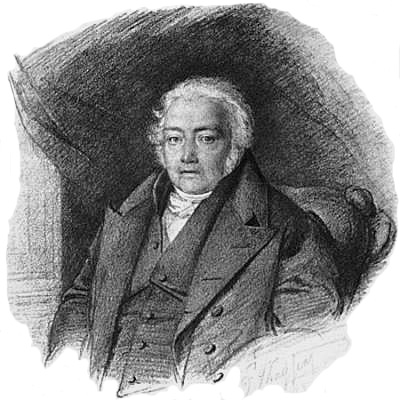

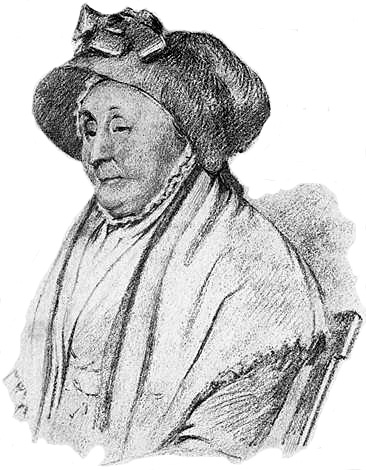
 and so inclose on three sides the rudder-case. But now
immediately that the sun has sunk, the sea runs high, and the vessel
begins its old trick of rocking, which it had intermitted the whole
day—the second intermission only since our voyage. Oh, how glad I was to
see Cape Mondego, and then yesterday the Rock of Lisbon and the fine
mountains at its interior extremity, which I conceived to be Cintra! Its
outline from the sea is something like this
and so inclose on three sides the rudder-case. But now
immediately that the sun has sunk, the sea runs high, and the vessel
begins its old trick of rocking, which it had intermitted the whole
day—the second intermission only since our voyage. Oh, how glad I was to
see Cape Mondego, and then yesterday the Rock of Lisbon and the fine
mountains at its interior extremity, which I conceived to be Cintra! Its
outline from the sea is something like this
 one above another in that
form, so that everything grows as in huge garden pots. The whole island
looks like one monstrous fortification. Nothing green meets your
eye—one dreary, grey-white,—and all the country towns from the
retirement and invisibility of the windows look like towns burnt out and
desolate. Yet the fertility is marvellous. You almost see things grow, and
the population is, I suppose, unexampled. The town of Valetta itself
contains about one hundred and ten streets, all at right angles to each
other, each having from twelve to fifty houses; but many of them very
steep—a few staired all across, and almost all, in some part or other,
if not the whole, having the footway on each side so staired. The houses
lofty, all looking new. The good houses are built with a court in the
centre, and the rooms large and lofty, from sixteen to twenty feet high,
and walls enormously thick, all necessary for coolness. The fortifications
of Valetta are endless. When I first walked about them, I was struck all
of a heap with their strangeness, and when I came to understand a little
of their purpose, I was overwhelmed with wonder. Such vast masses—bulky
mountain-breasted heights; gardens with pomegranate trees—the prickly
pears in the fosses, and the caper (the most beautiful of flowers) growing
profusely in the interstices of the high walls and on the battlements. The
Maltese are a dark, light-limbed people. Of the women five tenths are
ugly; of the remainder, four fifths would be ordinary but that they look
so quaint, and one tenth, perhaps, may be called quaint-pretty. The
prettiest resemble pretty Jewesses in England. They are the noisiest
race
one above another in that
form, so that everything grows as in huge garden pots. The whole island
looks like one monstrous fortification. Nothing green meets your
eye—one dreary, grey-white,—and all the country towns from the
retirement and invisibility of the windows look like towns burnt out and
desolate. Yet the fertility is marvellous. You almost see things grow, and
the population is, I suppose, unexampled. The town of Valetta itself
contains about one hundred and ten streets, all at right angles to each
other, each having from twelve to fifty houses; but many of them very
steep—a few staired all across, and almost all, in some part or other,
if not the whole, having the footway on each side so staired. The houses
lofty, all looking new. The good houses are built with a court in the
centre, and the rooms large and lofty, from sixteen to twenty feet high,
and walls enormously thick, all necessary for coolness. The fortifications
of Valetta are endless. When I first walked about them, I was struck all
of a heap with their strangeness, and when I came to understand a little
of their purpose, I was overwhelmed with wonder. Such vast masses—bulky
mountain-breasted heights; gardens with pomegranate trees—the prickly
pears in the fosses, and the caper (the most beautiful of flowers) growing
profusely in the interstices of the high walls and on the battlements. The
Maltese are a dark, light-limbed people. Of the women five tenths are
ugly; of the remainder, four fifths would be ordinary but that they look
so quaint, and one tenth, perhaps, may be called quaint-pretty. The
prettiest resemble pretty Jewesses in England. They are the noisiest
race