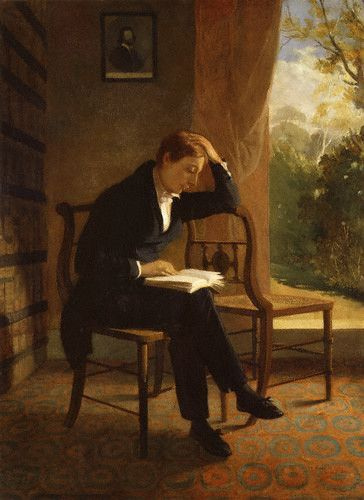
Note.—The first lines of all verses quoted in the letters are given here
under the first word. An asterisk is prefixed to the names of those to
whom letters are written, the letters themselves, as well as the addresses
from which Keats wrote, being given under the heading “Letters.”
Abbey, Miss, 122
Abbey, Mr., 52 and note, 58, 119, 123, 161, 162, 182, 185, 216, 218, 232, 268, 271, 273, 274, 284, 290, 294, 297, 311, 313, 315, 318, 331, 336, 347, 350, 354, 356, 359.
Referred to as “my guardian,” 267
Abbey, Mrs., 51, 123, 197, 262, 271, 359
Abbeys, the, 363
Abbot, 231
Abelard, Sandt, like a young, 300
Academy, the Royal, 329
Achievement, a man of, needs negative capability, 48
Achilles, 21, 80, 180
Adam’s dream (Paradise Lost, Bk. viii.), compared to imagination, 41, 42
Adonais, xix.
Adonis, 263
Adonis, Venus and, quoted, 45
Agnes, St., Eve of, 217, 221, 280, 288, 333, 362 note;
an alteration in it censured, 360
Agriculture, influence of, 287 seq.
“A haunting Music sole perhaps and lone,” etc., 289
“Ah, ken ye what I met the day,” etc., 127
Aladdin, 223
Alcibiades, 95
Alexander, the emperor, 174
Alfred (Exeter Paper), the, 171
Alfred, King, 15, 80
Alice Fell, 249
“All gentle folks who owe a grudge,” etc., 137
All’s Well that ends Well, quoted, 33 and note
Alston’s “Uriel,” 76
Altam and his Wife, by Ollier, 197
Amena (and Wells), 239, 245
America, George K. goes to, 109
Americans distrusted, 312
Anatomy of Melancholy, quoted, 296, 297
Andrew, Sir [Aguecheek], misquoted, 103 and note
Andrews, Miss, 341
Annals of Fine Arts, contributed to, 272, note
Ann or Anne, the maid, 209, 310
Anthony, St., 309
Anthony, Mark, compared to Buonaparte, 17
Anthony and Cleopatra, 95;
quoted, 16, 17
Apollo, 74, 82
Apuleius, the Platonist, 259
Archer, 190, 208
Archimage, 249
Archimago, 18
Archimedes, 20
Aretino, 313
Ariadne, 223
Ariosto, 95 note, 289, 313, 333
Art, the excellence of, its intensity, 47
Arthur’s Seat, 136
“As Hermes once took to his feathers light,” 246
Athenæum, Dilke connected with, xviii.
A[ubrey], Mrs. M[ary], verses to, by Mrs. Philips, 29
Audubon, 291, 312, 341
Audubon, Mrs., 341, 344
Augustan age, 259
Aunt, J. K.’s, 274. See Mrs. Jennings
Autograph originals of J. K.’s letters, xii. xiii.
Autumn, Ode to, 320 and note
Ayr described, 133
B., Miss. See Brown, Miss
Babel, the tower of, 23, 29
Bacchus, 223
Bacon, Lord, 174
Bagpipe, effect of, 138
*Bailey, Benjamin, xii., 26, 32, 44, 52, 53, 84, 97, 102, 109, 132, 135, 146, 164, 190, 355;
his character, 27, 54;
his curacy, 36;
his appreciation of Endymion, 31;
his love affairs, 224 seq.;
K.’s visit to him at Oxford, 19 and note
Bailey, Mrs., 281
Barbara Lewthwaite, 249
“Bards of passion and of mirth,” 206
Barley, Rigs of, by Burns, 133
Barnes, 111
Barnes, Miss, 231
Bartolozzi, 195, 196
Basil, Pot of, 113, 166, 171, 221, 280;
few stanzas of, written in folio Shakspeare, 101
“Bathsheba,” by Wilkie, 76
Beattie, 201
Beaumont, Sir George, 329, 330 note
Beaumont and Fletcher, 228
Bedhampton, visit to, 216, 219, 221
Beggar of Cumberland, 31
Bellaston, Lady, 302
Benjamin, Mr., 317
Bensley, 10
Bentley (J. K.’s landlord), 33 note, 153, 194, 219, 337
Bentley, Mrs., 33, 153, 194, 219, 239, 337, 365
Bentley children, the, 33, 103 note, 188
Bertrand, General, 17 note
Betty Foy, 249
Bewick [J.], 56, 58, 96, 240
Bible, the, 177, 225, 226
Birkbeck, 175, 188, 194, 217, 226, 238, 257, 268, 342
Birkbeck, the Misses, 247
Blackwood, 60, 164, 167, 171, 194, 234, 323
Boccaccio, 101;
tales from, 280
Bonchurch described, 276, 279
“Book, my” (the vol. containing Lamia, Isabella, The Eve of St. Agnes, Hyperion, and the Odes), 362, 363, 368, 370
Boxer (Mrs. Dilke’s dog), 26
Box Hill ascended, 45
Boys, the. See Brown’s brothers
Bradshaw, Richard, 119
Braggadochio, 340
Brawne, Fanny, 191 and note, 218, 244;
described, 196;
K.’s feelings towards, 371, 372, 373, 374;
letters to, xii. note;
reasons for their being omitted, xvii.
*Brawne, Mrs., 191, 202, 219, 224, 239, 244, 349, 365
[Brawne], Sam, 373
Briggs, 341
Brigs of Ayr, 133
Britain, Little. See Reynoldses, the
British Gallery seen, 76
British Museum, 329
Brothers. See Keats, George and Tom
*Brown, Charles Armitage, xviii., 26, 33, 35, 48, 56, 58, 76, 82, 98, 119, 123, 128, 133, 136, 138, 139, 141, 145, 148, 165, 177, 191, 194, 195 note, 196, 198, 200, 209, 218, 219, 221, 240, 243, 244, 245, 264, 272, 273, 279, 281, 284, 286, 289, 292, 301, 306, 307, 309, 314, 319, 323, 325, 328, 332, 333 note, 334, 336, 344, 345, 347 and note, 348, 352, 356, 357, 358, 359, 360 note, 363, 369;
anecdote of, 295, 296;
as a draughtsman, 274, 351;
and Jenny Jacobs, 279;
a joke on, 316, 320;
his kindness, 234;
lends K. money, 274, 290;
lives with K., 187 note, 188, 331 note;
his odd dislikes, 324;
a story by, 219, 220, 224;
tour to Scotland with K., 110 [114-161];
writes a tragedy with K. See Otho the Great
Brown’s brothers, 239 note, 245
Brown, John, 245
Brown, Mrs. Septimus, 218
B[rown], Miss, 196
Bucke, Mr. (dramatic author), 241
Buffon, 233, 346
Bunyan’s Pilgrim’s Progress, 21;
his Emblems, 309
Buonaparte, 20, 173, 219;
compared to Mark Anthony, 17
Burdett, Sir F., 174
Burford Bridge visited, 40-45
Burleigh, Lord, 361
Burns, 130, 131, 132, 234;
spoilt by the Kirk, 124;
lines after visiting his country, 146;
after visiting his tomb, 117;
his misery, 134;
his native place described, 133
Burns, Mrs., 118
Burton’s Anatomy of Melancholy quoted, 296, 297
Butler, 76, 102, 202
Butler, Sarah, 102
Byron, 33, 106, 163, 173, 198, 221, 226, 231, 240;
his Don Juan, 297;
Fourth canto of Childe Harold expected, 76;
Don Giovanni expected, 218
Cæsar, Julius, 80
Caleb Williams, 205
Caliban, 7 note, 58, 245 note
Cameron, Mrs., 155 seq.
Canning, 345
Canterbury, a visit to, projected, 18
Cap and Bells, 331 note, 333 and note, 362 note
Capital letters, peculiar use of, xiv.
Capper, 178, 181, 294
Carisbrooke visited, 6 seq.
Carlisle, Deist bookseller, 220, 299
Carlisle visited, 117
Cary’s Dante, 113
“Castle, The Enchanted,” by Claude, 91 and note
Castlereagh, 90, 345;
An Ode to, 335
Cave of Despair, Spenser’s, a picture by Severn, 334 and note, 355
Ceres, 142
Chambers of Life—the infant or thoughtless Chamber, and the Chamber of Maiden thought, 107, 108;
the third Chamber, 109
Champion, The, a number written by K., 47, 49, 52;
a sonnet by K. printed in, 8
Chapman’s Homer, 363 and note
Charlemagne, 118
Charles. See Wylie, Charles
Charles I., 7
Charles II., 90
Charles Stuart, a “Jacobin” song on, 148
Charlotte, Princess, 192
“Charmian,” 165 note, 172, 173.
See Cox, Miss Charlotte
Chatterton, Endymion, dedicated to, 97;
Hazlitt on, 76;
writes the purest English, 313, 321
Chaucer, 18, 103, 228, 333;
his Gallicisms, 313, 321
Chesterfield, Lord, 355
Chichester visited, 212, 217, 218
“Chief of Organic Numbers!” etc., 62
Christ Rejected (Haydon’s picture), 47, 94
Christianity v. The Examiner, 10;
Shakspeare’s, 11
Christians, a query concerning, 10
Christie, 44
Chronicle, The, 46, 171, 247;
John Scott’s defence of K. in, 167
Cinderella, 21, 232
Circe (in Endymion), 99
Claret, a rhapsody concerning, 222, 223
Clark, Dr., 370, 376
*Clarke, C. C., xvii., 10, 219;
his influence on K., xviii.
Claude’s “Enchanted Castle,” 91 and note
Cleopatra, 125, 173
Clinker, Humphrey, 52
Cobbett, 208, 218, 222, 355
Cockney school, 39, 60 and note
Cockney, the young, xvi.
Coleridge, 38, 72;
his limitations, 48;
his talk, 244
Collins, Hazlitt on, 76
Colnaghi, 300
Colvin, S., allowed H. Buxton Forman to use autographs in his possession, xii. note;
his life of K. in Men of Letters, xi., 331 note, 347 note
Commonplace people, Hazlitt on, 37
Comus, 89, 108
Constable, the bookseller, 60
Continent, K.’s thoughts of visiting the, 18
Cook, Captain, 346
Cordelia, 80
Coriolanus, Hazlitt on, 229
Corneille, 95 and note
C[ornwall] B[arry], Mr., 353, 354
Country, the, K.’s opinion of, 209;
K. thinks of settling in, 4
Covent Garden Tragedy [Retribution, or the Chieftain’s Daughter], an article on, 49 and note
Cowes visited, 7
Cowper, 72;
as a letter-writer, xiv.
Cox, Miss Charlotte, 165 and note, 172 and note, 173.
See “Charmian”
Crabbe, 72, 232
Cripps, 32, 37, 40, 41, 44, 52, 56, 62, 71;
introductions to Haydon, 32, 53
Criticism, K.’s independence of, 167
Croft, Dr., 72
Cromwell, 174
Crusoe, Robinson, 26, 338
“Crystalline Brother of the belt of Heaven,” etc., 46
Cumberland Beggar, the, 31
Dance, a Highland, described, 116
Dante, 95 note, 113, 145, 214, 246, 313
Davenports, the, 220, 231, 239, 348
David, 25, 325
“Dear Reynolds! as last night I lay in bed,” etc., 91
Death, K.’s thoughts of, when alone, 112
Deist, The, 299
Dennet, Miss, a Columbine, 51
“Dentatus,” Haydon’s picture, 87
Devereux, 362
Devon, Duke of, 72
Devonshire described, 75, 79, 80, 83, 85, 91, 95, 97, 98, 101;
like Lydia Languish, 83
Dewint, 114
Dewint, Mrs., 114
*Dilke, Charles Wentworth, xii. note, 9, 26, 31, 47, 48, 56, 59, 76, 81, 128, 146, 158, 195 note, 200, 202, 203, 208, 239, 245, 266, 269, 292, 296, 327, 340, 343, 372, 374;
a capital friend, 51;
takes the Champion, 51, 58;
his character, 314;
his devotion to his son, 222, 240, 241, 295;
editor follows his dates, xiii.;
a “Godwin Methodist,” 314;
a “Godwin perfectibility Man,” 175;
ill, 170, 348;
neighbour to K., 187 note
Dilke, Charley, 222, 224, 240, 241, 264, 279, 292, 295, 314, 360
Dilke, Mrs., 4, 8, 9, 26, 31, 51, 164, 170, 183, 189, 198, 202, 209, 210, 213, 217, 223, 224, 240, 262, 264, 269, 274, 292, 325, 328, 332, 336, 340, 349, 354, 357, 359, 360, 365, 374;
her brother, 359
Dilke, William, 26 and note
Dinah, Aunt, 6
Diocletian, 174
Diomed, 80
Dolabella (in Anthony and Cleopatra), 16
Don Juan, 297
Drawing of K., a, 2 and note
Drewe family, the, 197
Drewe, George, 198
Drury Lane Pantomime [Don Giovanni], 49 and note, 55
Dryope (in Endymion), 78
Du Bois, 47, 198
Dunghill, Duchess of, 126
Duns, besieged by, 19, 28
Dürer, Albert, 330
Edinburgh Review, the, 37, 39, 40, 113, 190, 301, 302, 326
Edmund Ironside, 80
Elements, the, regarded as comforters, 25
Elizabeth, Queen, Holinshed’s, 333;
her Latin exercises, 355
Elizabethans, compared with moderns, 68
Ellenborough, Lord, 47
Ellipsis, recommended by Haydon, 2
Elliston, 335, 336
Elmes, James, 272 note, 274
Emblems, the, of Bunyan, 309
Endymion [“I stood tiptoe upon a little hill”], 3 note
Endymion, 27, 34, 35, 161, 302, 366.
First book begun, 17;
prospects of, 57;
in the press, 63;
readings in, 64:
second book copied, 71;
proofs of, 72:
third book, progressing, 31;
finished, 33:
third and fourth books, copied, 78:
fourth book, quoted, 84;
finished, 88.
Alterations suggested by Taylor, 77;
anxiety to get it printed, 78;
appreciated by Bailey, 31;
dedicated to Chatterton, 97;
described, 168;
cheque sent to author of it, 192, 199;
engravings by Haydon for it, 57;
referred to by K. as a pioneer, 77;
admired by the Miss Porters, 192, 193;
the preface to it, 88, 96, 97, 98;
readings in, 99;
called slipshod, 167 and note;
the story of it told to Fanny K., 22
Enfield, school at, xviii.
English, Chatterton’s is the purest, 313
Enobarb (in Anthony and Cleopatra), 16
Erasmus, 10, 17
Esau, 68
Euclid, 29, 177
Eustace, 163
Evadné, by Sheil, 231, 232
Evans, Sir Hugh (in Merry Wives), 104 and note
Eve, 103, 255
“Ever let the Fancy roam,” etc., 203
Examiner, The, 17, 40, 44, 47, 51, 194, 208, 219, 234, 328;
its defence of K., 171;
K.’s notice of Reynolds’ Peter Bell in it, 248, 249;
v. Christianity, 10
Excursion, Wordsworth’s, one of the three good things of the age, 53, 54
Fagging at schools, 178
Fairies, Chorus of, 251
Falstaff, 77, 351
Fame, sonnets on, 258
“Fame like a wayward girl will still be coy,” etc., 258
Family letters, xi.
Fanny. See Keats, Fanny
“Far, far around shall those dark-crested trees,” etc., 115
Fazio, 72
Fenbank, Mr. P., 199
Fielding, 52, 200
Fingal’s Cave described, 150
Fitzgerald, Miss, 193
Fladgate, Frank, 133
Flageolet, not admired, 161, 162
Fleet Street household (i.e. Taylor’s. See p. 286), 54
Fletcher, Mrs. Philips, compared to, 31
Fletcher and Beaumont, 228
Flirting, 173
Florence, A Garden of, by Reynolds, 67 and note
Florimel, 248, 249
Foliage, by Leigh Hunt, 11 note;
reviewed in the Quarterly, 113
Forman, H. Buxton, his edition, xii.;
letters to Fanny K. printed in this volume by his permission, xii. note
Fortunatus’s purse, 32
“Four Seasons fill the measure of the year,” etc., 81
Framptons, the, 238
Francesca, 58, 246
Franklin, Benjamin, 175
French dramatists, 95 and note
French language inferior to English, 23
Frogley, Miss, 192
Fry, 290
Fuseli, 306, 330
G. minor (see Wylie, Georgiana), 192
Gaelic talked, 140
Gattie, 197
Gay, 106
Genesis, 26
Genius, of K. in prose writing, xi.;
men of, have not individuality, 41
George. See Keats, George
George, little (see Wylie, Georgiana), 200, 201
George II., 362
Gertrude of Wyoming, 342
Ghosts, 44
Gibbon, 76
Gifford, 220, 226 seq., 229;
his attack on K., 192
Giovanni, Don, by Byron, expected, 218
Gipsies, 37
Gipsy, The, of Wordsworth, 37
Glasgow visited, 131, 132
Glaucus (in Endymion), 99
Gleig, xix., 35, 36, 44, 63, 82, 113;
described, 35 note
Gleig, Miss, 225
Gliddon, 290
Godwin, 175, 205, 206, 314;
his Mandeville, 51, 286;
his Caleb Williams and St. Leon, 205
Gray, 106;
as a letter writer, xiv.;
Hazlitt on, 76
“Great spirits now on earth are sojourning,” etc., 2
Greek, K. determines to learn, 101
Green, Mr., 244
Griselda, 245
Grover, Miss, 339
Guido, 201
Gyges’s ring, 32
H., Miss, 231, 232
Hamlet, 80, 106
Hammond, 309
Handwriting of K., xiv.
Happiness not expected, 38
“Happy happy glowing fire,” etc., 251
Harold, Childe, 68
Harris, Bob, 51, 58
Hart, 340
Haslam, 51, 56, 159, 178, 181, 187, 188, 189, 195, 197, 200, 202, 209, 210, 219, 224, 228, 235, 264, 270, 284, 307, 342, 344, 369, 373, 375;
his father’s death, 238, 266;
a kind friend, 269, 339;
his “lady and family,” 340;
in love, 293;
“is very Beadle to an amorous sigh,” 333;
a message to, 377
Hastings, Lady, met at, 179, 223
*Haydon, xii. note, 2 and note, 5, 8, 9, 39, 41, 47, 54, 58, 195, 197, 198, 201, 240, 272, 340, 343, 355, 356, 361;
his autobiography, 50 and note;
his “Christ” contained a portrait of K., 16;
and is “tinted into immortality,” 94;
his “Dentatus,” 87;
on Elgin marbles, 75;
his eyes weak, 219;
on French dramatists, etc., 95 and note;
his “Life and Love,” 330 and note;
loved as a brother, 15;
his pictures one of the three glories of the age, 53, 54;
his portrait, 6;
quarrels with Hunt, 33, 34, 35, 56, 61;
and with Reynolds, 55, 56;
discovers a seal of Shakspeare, 85;
“this glorious Haydon and all his creation,” 1;
his “Solomon,” 214
Hazlewood, 178, 181, 294
Hazlitt, 3, 96, 101, 106, 107, 109, 111, 179, 191, 197, 205, 218, 326;
his prosecution of Blackwood, 164;
his essay on commonplace people, 37;
the only good damner, 87;
his lectures, 64, 72, 76, 332;
his letter to Gifford quoted, 226 seq., 229;
on Shakspeare, 16, 56, 58;
his review of Southey, 10 and note, 16;
his depth of taste, 53, 54;
his Round Table, 31 and note
Hazlitt, Mrs., 218
Heart of Midlothian (an opera), 249
Heart’s affections and beauty of Imagination the only certain things, 41
Hebrew, the study of, advised, 24
“He is to weet a melancholy Carle,” etc., 244
Helen, 125
“Hence Burgundy, Claret, and Port,” etc., 65
Hengist, 90
Henrietta Street. See Wylies, the
Henry. See Wylie, Henry
Herculaneum, a piece of, 83
“Here all the summer could I stay,” etc., 85
Hermes, 223
“Hermia and Helena,” by Severn, 265
Hesketh, Lady, xv.
*Hessey, xi., 53, 100, 114, 164, 177, 184 note, 199, 282, 286
Hessey, Mrs., 88
Hesseys, the. See Percy Street
Hill, 47
Hilton, 114, 240
Hindoos, 257
Hobhouse, 208
Hodgkinson, 271, 284, 297, 363
Hogarth, 107, 200, 351
Hogg, 234
Holbein, 361
Holinshed’s Queen Elizabeth, 333
Holts, one of the, 218
Homer, 80, 95 note, 101, 134, 144;
Pope’s, 13, 14;
Chapman’s, 363 and note
Hone, 47, 51, 220
Honeycomb, Mr., 28
Hook, 309
Hooker, Bishop, 173
Hopkinses, the, 38
Hoppner, 189, 190
Horace, 353
Houghton, Lord, xix., 289 note, 347 note;
his Life of K., xii.
“How fever’d is that Man who cannot look,” etc., 258
Howard, John, 173
Hubbard, Mother, 177
Hugh, Parson, 104 and note
Humour superior to wit, 47
Hunger and sleepiness, 122
Hunt, Henry, his triumphal entry into London, 299, 329
Hunt, John, 17, 28, 58, 67 note, 72, 191
*Hunt, Leigh, xviii., 2 note, 3, 9, 49, 51, 63, 68, 72, 76, 96, 174, 177, 179, 191, 232, 239, 240, 248, 249, 307, 343, 353, 354, 365, 366, 374;
attacked, 39, 113;
“Cockney school articles” thought to be by Scott, 60 and note;
criticises Endymion, 57, 58;
his Foliage, 11 note;
damned Hampstead, 87;
his influence on K., xviii.;
K. his élève, 35;
K. moves near to him, 360 note;
K. stays in his house, 363 note, 364;
his kindness, 368;
his lock of Milton’s hair, 62;
his money difficulties, 218;
his Nymphs, 11;
his sonnet on the Nile, 72;
his paper on Preternatural History, 234;
his Literary Pocket-book, 190, 197;
his quarrel with Haydon, 33, 34, 35, 56, 61;
his self-delusions, 15
Hunt, Mrs., 13, 51, 55
Hyperion, 331 note, 362 note;
begun, 194, 195;
not continued, 221;
continued, 280;
given up because of its Miltonic inversions, 321
Iago, 184
Idleness, 278
“If by dull rhymes our English must be chained,” etc., 261
“I had a dove and the sweet dove died,” 207
“I have examin’d and do find,” etc., by Mrs. Philips, 29
Imagination, 41, 42, 43, 108;
the rudder of Poetry, 34;
its beauty and the heart’s affections alone certain, 41;
compared to Adam’s dream (Paradise Lost, Book viii.), 41, 42
Imogen, 24, 184
Indolence, Ode on, 235 and note;
The Castle of, by Thomson, 234
Invention, the Polar Star of Poetry, 34
Iona [Iconkill] visited, 148, 149
Ireby, 117;
country dancing school at, 116
Ireland visited, 124
Irish and Scotch compared, 126, 129
Isabella, or The Pot of Basil, 109, 113, 362 note
Isis, K.’s boating on the, 28
Italian, studied, 101, 289;
the language full of poetry, 23
Italy, xix.
“It keeps eternal whisperings around,” etc., 8
Jacobs, Jenny, and Brown, 279
Jacques, 68
James I., 361
Jane, St. See Reynolds, Jane
Jean, Burns’, 134
Jeffrey, xii., xix.
Jemmy, Master. See Rice, James
Jennings, Mrs., 290, 318;
referred to as “my aunt,” 274
Jessy of Dumblane, 160
Jesus and Socrates, 236
Joanna, To, by Wordsworth, 116 note
John (see Reynolds), 27, 33, 162
John, St., 325
Jonson, Ben, 247 note
Journal-letters, xii.
Jove better than Mercury, 75, 97
Judea, 11
Juliet, 24, 135
Junkets, i.e. John Keats, 13
Kean, 46, 48, 84, 131, 191, 226, 241, 280, 284, 285, 286, 291, 319, 336, 340
Keasle, 189
Keasle, Miss, 170, 189, 308
Keasle, Mrs., 189
Keats, Emily (daughter of George K.), 294, 319, 339, 344, 347;
her birth announced, 273
Keats family, letters to, xi.
*Keats, Fanny, xii. note, 6, 51, 58, 153, 158, 169, 177, 197, 223, 228, 292, 371, 375, 377;
she is kept from K. by the Abbeys, 145, 218;
the story of Endymion is related to her, 22
Keats, Frances. See Keats, Fanny
*Keats, George, 6, 8, 9, 10, 13, 14, 17, 22, 23, 34, 38, 49, 52, 84, 101, 109, 112, 114, 119, 132, 142, 152, 153, 161, 166, 187, 213, 217, 263, 265, 268, 270, 273, 275, 277, 284, 285, 320, 337, 340, 341, 343, 344, 345, 346, 347, 349, 358, 359, 361, 362, 369, 375, 376, 377;
his affairs troublesome, 324, 331, 336;
he goes to America, 109, 182;
he visits England, 328 and note;
he returns to America, 358;
he is more than a brother to John K., 158;
he copies John K.’s verses, 342;
he is devoted to his little girl, 339;
bad news from him, 321, 322, 332;
J. K.’s sonnet to him, 72
Keats, Georgiana. See Wylie, Georgiana
Keats, John, his genius in prose-writing, xi.;
his Life by Colvin, xi., 331 note;
and by Lord Houghton, xi.;
the characteristics of his letters, xiv. xv.;
his character, “the young Cockney,” Shakspeare in his blood, xvi., 14;
his reticence about Fanny Brawne, xvi.;
the influence of Haydon, Leigh Hunt, and Charles Cowden Clarke over him, xviii.;
his school at Enfield, xviii.;
his portrait, 2;
his thoughts of settling in the country, 4;
he writes in the Champion, 8, 47, 49;
he cannot exist without poetry, 9, 165;
“why I should be a poet,” 12;
his money troubles, 14, 19, 28;
he reads and writes eight hours a day, but cannot compose when “fevered in a contrary direction,” 14;
his morbidity, 15, 38, 110, 111;
his excitement during composition, 18;
his thoughts of visiting the country, 18;
he writes with energy, 23;
he regards the elements as comforters, 25;
he projects a romance, 32;
he expects to be called Hunt’s élève, 35;
he does not expect happiness, 38;
his article on “Covent Garden,” 49 and note;
his views of religion, 81, 256;
his plan of life, 94;
he regards the public as an enemy but does not write under its shadow, 96;
he studies Italian, 101, 289;
he determines to learn Greek, 101;
his thoughts of death when alone, 112;
is noticed in the Edinburgh and Quarterly, 113;
his ill-health, 122, 347-377;
his independence of criticism, 167;
he expects to be among the English poet after his death, 171;
his defence by Reynolds, 171;
his declamations against matrimony, 180;
his pleasure in solitude, 181;
he talks of giving up writing, 184;
a sonnet and cheque to him, 192, 199;
his notion of a rondeau, 207;
his thoughts of the country, 209;
his notice of Reynolds’ Peter Bell, 248, 249;
he feels himself the protector of Fanny K., 216;
“he is quite the little poet,” 219;
his rhapsody about claret, 222, 223;
his scorn of parsons, 221 seq., 233, 268;
he talks of turning physician, 233;
his portrait by Severn, 274;
his change of character, 309;
his distrust of Americans, 312;
his feelings towards Fanny Brawne during his last illness, 371, 372
*Keats, Tom, 8, 9, 11, 44, 47 note, 79, 82, 84, 85, 87, 94, 100, 112, 135, 158, 159, 165, 169, 175, 177, 179, 180, 181, 182, 183, 185, 215, 301 note, 349;
his death, 187 and note;
his illness, 43, 49, 63, 103, 161, 162, 164, 168, 186, 187;
his belief in immortality, 188;
his likeness to Fanny K., 397;
his low spirits, 98;
Wells’ treatment of him, 239, 245
Kelly, Mr., 124
Kemble, 198
Kent, Miss, 13, 51
Keswick visited, 114, 115
Kingston, 47, 50 and note, 53, 95, 196;
his criticisms, 98
Kirkman, 190, 208, 209;
his uncle William, 208
Kneller, Sir G., 361
Knox, John, 220
Kotzebue, 241, 300
La Belle Dame sans Merci, 250
Lacon, Fool, 339
Lady of the Lake, 136
Lakes, the, described, 114, 115
Lamb, Charles, 39, 191, 316, 361;
his practical jokes, 50
Lamia, 277, 280, 294, 362 note;
finished, 288;
quoted, 289 and note
Landseer, 50, 58
Laon and Cythna, by Shelley, 48 and note
Launce (in Two Gentlemen of Verona), 4
Lear, King, 47, 58, 63, 80;
a sonnet on, 59
Leech-gatherer, the, 31
Leicester, Sir John, 240
Lely, Sir Peter, 361
Leon, St., by Godwin, 205
Letters, those to Fanny Brawne omitted, xvii.;
frivolous classification of, 106, 163;
characteristics of K.’s, xv.;
Dated from, Burford Bridge, 40-44;
Carisbrooke, 6;
Carlisle, 116;
Donaghadee, 124;
Featherstone Buildings, 48;
Fleet Street (Wells’), 71;
Hampstead (Well Walk), 33-40, 46, 53-67, 71-78, 109-114, 161-187;
Hampstead (Wentworth Place), 187-273, 331-359;
Keswick, 114;
London, 1-4, 19, 39;
Margate, 10-17;
the Maria Crowther, 370;
Mortimer Terrace (Leigh Hunt’s), 363;
Naples, 372-374;
Oxford, 19-32;
Rome, 376;
Scotland, 118-123, 125-158
Auchen-cairn, 119, 123;
Ballantrae, 127;
Cairndow, 136;
Dumfries, 118;
Girvan, 129;
Glasgow, 131;
Inverness, 158;
Inverary, 138, 142;
Island of Mull, 144-147;
Kilmelfort, 139;
Kingswells, 130, 133;
Kirkcudbright, 120;
Kirkoswald, 129;
Letter Findlay, 153;
Maybole, 130;
Newton-Stewart, 122, 123;
Oban, 141, 148;
Stranraer, 125;
Shanklin, 275-277;
Southampton, 4;
Teignmouth, 78-103;
Wentworth Place (Mrs. Brawne’s), 364-370;
Wesleyan Place, Kentish Town, 360-362;
Winchester, 280-328.
To Bailey, Benjamin, 33, 36, 39, 40, 61, 78, 109, 111, 142, 280;
Brawne, Mrs., 372;
Brown, Charles, 325, 327, 360, 368, 370, 374, 376;
Clarke, Charles Cowden, 1, 2;
Dilke, Charles Wentworth, 40, 163, 277, 322, 328, 354, 359;
Elmes, James, 272;
Haydon, Benjamin Robert, 1, 2, 13, 32, 53, 85, 94, 211, 213, 214, 215, 267, 274, 328, 363, 367;
Hessey, James Augustus, 167;
Hunt, Leigh, 10;
Keats, Fanny, 21, 118, 161, 162, 166, 182, 183, 185, 187, 213, 215, 216, 262, 263, 264, 265, 268, 270, 271, 272, 273, 275, 283, 331, 334, 335, 337, 347, 348, 350, 352, 353, 355, 356, 357, 358, 362, 363, 364, 368;
Keats, George and Georgiana, 168, 187, 217, 290;
Keats, George and Thomas, 4, 46, 48, 54, 57, 71, 75;
Keats, Georgiana, 338;
Keats, Thomas, 114, 123, 127, 136, 147, 153;
Reynolds, Jane, 24, 162;
Reynolds, John Hamilton, 3, 4, 6, 28, 44, 65, 67, 73, 82, 90, 96, 98, 100, 103, 132, 165, 276, 282, 319, 352;
Reynolds, Mariane and Jane, 19;
Reynolds, Mrs., 211;
Rice, James, 88, 186, 335, 350;
Severn, Joseph, 265, 332, 334;
Shelley, Percy Bysshe, 365;
Taylor, John, 53, 58, 64, 71, 77, 99, 114, 212, 281, 286, 333, 360, 367;
Messrs. Taylor and Hessey, 17, 19, 78, 88;
Woodhouse, Richard, 210;
Wylie, Mrs., 158
Lewis, 177, 189, 197, 219, 222
Lewis, David, 349
Life, a palace with chambers, 107, 109;
a pleasant life, 73;
that projected by J. K., 94;
of a man worth anything is an allegory, 226
Lisle, 286
Listen, 198
Little, 106
Little Britain. See Reynoldses, the
Llanos, Señor, xix.
“Lloyd, Lacy Vaughan,” i.e. J. K., 362 and note
Lord of the Isles, 136
Lover, the, a ridiculous person, 293
Lucifer, 25
Lucius, Sir, 210
Ludolph (in Otho the Great), 319, 335
Lyceum, 295
Lycidas, 89
Lydia Languish, 83
Macbeth, 288
Machiavelli, 313
Mackenzie, 201
Macmillan’s Magazine, xii. note
Macready, 335
Magdalen Hall visited, 19 note, 22;
a beautiful name, 84
Mahomet, 159
Maiden-Thought, the second chamber of life, 107
Maid’s Tragedy, by Beaumont and Fletcher, 228
Man is like a hawk, 236;
is a poor forked creature, 254-257
Mancur or Manker, 208, 245
Mandeville, by Godwin, 51, 286
Margate visited, 10-17
Maria Crowther (the ship in which K. went to Naples), 370, 371 note
Mariane. See Reynolds, Mariane
Mark, St., Eve of, 221;
quoted, 302, 303
Marlowe, 247 note
Martin, 31, 44, 53, 194, 245, 249, 292, 293, 354
Martin, Miss, 225, 293
Mary Queen of Scots, 6, 32
Massinger, 324
Mathew, Caroline, 208
Mathew, Mrs., 208
Matthew (Wordsworth’s), 68
Matthews, the comedian, 297
Matrimony, K. declaims against, 180
Maw the apostate, 219
Measure for Measure quoted, 11
Medicine, the study of, 104
Meg Merrilies’s country, 119, 123
Mercury, 75, 344
Mermaid lines, 70, 71 and note
Merry Wives of Windsor quoted, 104 and note
Methodists exposed by Horace Smith, 72
Millar, 339
Millar, Mary, 191, 218, 219, 248, 308, 339;
her suitors, 189, 210
Millar, Mrs., 170, 176, 178, 248
Milman, 87
Milton, 101, 106, 142, 174, 175, 263, 355;
anecdote of, 88, 89, 90;
his Hierarchies, 283;
his influence shown in Hyperion, 321;
his Latinised language, 313, 314;
a picture of him, 6;
his philosophy, 108;
quoted, 42, 237;
K.’s verses on his hair, 62;
compared to Wordsworth, 105
Minerva, 344;
her Ægis, 2
Monkhouse, 50, 229, 274
Montague, Lady M. W., 29
Moore, Thomas, 109, 193, 202, 232;
his Tom Cribb’s Memorial to Congress, 228
Moore’s Almanack, 21, 80, 346
Morbidity of temperament, 15
Morley, John, xi.
“Mother, your” (in K.’s American letters). See Wylie, Mrs.
“Mother of Hermes! and still youthful Maia!” etc., 105
Mountains, effect of, 144
Mozart, 193, 194
Muggs, Nehemiah, by Horace Smith, 72
Mulgrave, Lord, 330 and note
Murray, 312
Naples Harbour, 372 seq.
Napoleon, 174
“Nature withheld Cassandra in the skies,” etc., 166
Negative capability needed by men of achievement, 48
Nelson, 98
Neville, Henry, 192, 193
Nevis, Ben, described, 153
Newport visited, 7, 8
Newton, Rev. John, xv.
Nicolini, the singer, 20
Niece. See Keats, Emily
Nightingale, Ode to, 91 note, 272 note, 342
Nile, sonnets on, 72
Nimrod, 26
Niobe, 38
Northcote, 240
Norval, 337
“No! those days are gone away,” etc., 69
“Not Aladdin magian,” 150
“Not as a swordsman would I pardon crave,” etc., 319
Novello, 191, 193, 195
Novello, Mrs., 197
Nymphs, The, by Leigh Hunt, 11
Odes, the, 362 note
“Of late two dainties were before me placed,” etc., 139
“O Goddess! hear these tuneless numbers, wrung,” etc., 259
“O golden-tongued Romance with serene Lute!” etc., 59
“Old Meg she was a gipsy,” etc., 120
Ollier, 1, 87, 179, 197, 219;
published K.’s Poems, 72;
his Altam and his Wife, 197
One, Two, Three, Four, by Reynolds, 295
“Opening on Neptune with fair blessed beams,” etc., 25
Ophelia, 80
Opie, Mrs., 72
Ops, 184
Original Poems, by Miss Taylor, 23
Orinda, the matchless. See Philips, Mrs.
Orpheus, 214
“O soft embalmer of the still midnight,” etc., 259
Othello, 329
Otho the Great, 277, 279, 280, 281, 284, 285, 323, 325, 335, 336, 340 (sometimes referred to as the, or our, tragedy)
“O those whose face hath felt the winter’s wind,” etc., 74
“Over the hill and over the dale,” etc., 90
“O what can ail thee knight-at-arms,” etc., 250
Oxford described, 20, 22;
visited, 19-32
Oxford Herald, The, 112 and note
Paine, Tom, 299
Paolo, 246
Paradise Lost, 42, 89, 108, 281, 282, 313
Park, Mungo, 50
Parsons, 221 seq., 233, 268
Patmore, 106
Payne, Howard, 191
Peachey, 192, 217, 226
Peachey family, 49
Peacock, 87
“Pensive they sit, and roll their languid eyes,” etc., 293
Peona, 38
Pepin, King, the History of, 21
Percy Street (i.e. the Hesseys), 54, 78, 88, 100, 114, 282
Peter Bell, by Wordsworth, and the parody by Reynolds, 240, 248, 249
Petzelians, 10
Phaethon, 12
Philips, Mrs., her verses to Mrs. M[ary] A[ubrey], 29
Phillips, old, 26
Philosopher’s stone, 32
Philosopher’s back-garden, 89
Physician, K.’s thoughts of becoming a, 233
Pilgrim’s Progress, 21
Pindar, Peter, 49, 72, 348
Pistol (in Henry IV.), 84 and note
Pizarro, 254
Pliny, 233
Plutarch’s Lives, 14
Pocket-book, The Literary, by Leigh Hunt, 190, 197
Poems of 1817, 2 note
Poems, original, by Miss Taylor, 23
“Poet, he is quite the little,” said of K., 219
Poet, the Northern, i.e. Wordsworth, 28
“Poet, why I should be a,” 12
Poets, advertisement to, in the Chronicle, 46
Poets, the English, K. expects to be among, after death, 171
Poets, the vices of, 211, 212
Poetry, axioms of, 77;
genius of, 167, 168;
effect of writing on K., 18;
K. cannot exist without, 9, 165;
K. cannot write when “fevered in a contrary direction,” 14;
invention the Polar Star of, 34;
a Jack o’Lantern, 81;
other things necessary, 101;
not written under the shadow of public thought, 96;
should be retiring, unobtrusive, 68
Politics, 298
Pope’s Homer, 13, 14
Popularity, 281
Porter, Jane, 219
Porter, the Misses, 192, 193
Pot of Basil, 101, 113
Present, an anonymous, 192, 199
Primrose Island, the Isle of Wight, 7
Proserpine, 142
Prose writing, genius of K. in, xi.
Protector of Fanny K., 216
Protestantism discussed, 108
Psyche, Ode to, 115 note, 259
Public, the, an enemy to K., 96
Punctuation peculiar, preserved, xiv.
Pythagoras, 89
Quarterly Review, the, 37, 113, 167, 171, 224, 302
Queen Mab, 48
R.’s, the Miss. See Reynolds, Misses
Rabelais, 76
Radcliffe, Mrs., 83, 221
Rakehell, 44
Raleigh, Sir W., 20
Raphael, 17, 201
“Read me a lesson, Muse, and speak it loud,” etc., 158
Red Riding Hood, 177
Redhall, 52, 195, 202
Reformation, effects of, 108
Religion, K. on, 81, 256
Revolt of Islam, 48 note
*Reynolds, Jane, xii., 8, 27, 33, 43;
as St. Jane, 39;
a translator, 24
*Reynolds, John Hamilton, xi., 2, 5, 6, 17, 18, 27, 33, 34, 35, 36, 46, 48, 54, 57, 62, 71, 130, 142, 162, 164, 179, 198, 218, 223, 245, 311, 324, 335, 352, 354, 376 (sometimes as John);
anecdote of, 308;
two articles by, 72;
his character, 344;
defends K., 171;
writes for the Edinburgh Review, 60, 190, 198;
poetical epistle by K. to, 91;
his farce, 295;
his Garden of Florence, 67 and note;
his illness, 76, 90, 97, 100, 111, 113;
he takes up law, 323, 325;
his quarrel with Haydon, 55, 61;
his Peter Bell, 240, 248, 249;
his sonnets, 3 note, 67 and note, 69;
his Spenserian, 103, 104
*Reynolds, Mariane, xii., 26, 27, 33, 43;
her attitude towards Bailey, 225
Reynolds, the Misses, 6, 9, 44, 102, 135, 172, 173, 190, 218, 225 (sometimes as sisters of J. H. R.)
*Reynolds, Mrs., 36, 44, 102, 114, 135, 172, 225, 264, 348 (mother of J. H. R.)
Reynoldses, the, 19, 44, 49, 97, 111, 142, 164, 165 note, 198, 225, 322 (sometimes as Little Britain)
“Reynolds’s Cove,” a spot so called by K., 28, 31
Rhyme, Essays in, by Miss Taylor, 23
*Rice, James, xii., 9, 31, 36, 50, 52, 64, 84, 102, 104, 111, 135, 164, 166, 177, 198, 219, 223, 225, 249, 282, 292, 345, 354, 373;
(once as Master Jemmy) and the barmaids, 90;
his character, 344;
his ill health, 33, 44, 58, 273, 276, 277
Richards, 3, 72, 219, 241, 344
Richardson, 301, 330
Rimini, The Story of, by Hunt, 10, 58
Ritchie, 50, 198
Robertson’s America, 254
Robin Hood, 125;
sonnets to, by Reynolds, 67 note;
J. K. answers above, 68, 69 and note
Robinson, Crabb, 72 and note
Robinson, Miss, 196
Rodwell, 53
Rogers, 218, 232
Romance, a fine thing, 88;
projected by K., 32
Rome visited, 376, 377
Romeo, 25
Rondeau, K.’s notion of, 207
Ronsard translated by K., 165, 166
Ross, Captain, 189
Round Table, by Hazlitt, 31 and note
Ruth, 125
Salmasius, 88, 89
Salmon, Mr., 212
Sam [Brawne], 373
Sancho, 67
Sandt, 300
Sannazaro, 313
Sappho, 29
Saturn, 184
Saunders, 293
Sawrey, Dr., 49, 166
Sawrey, Mrs., 238, 239
Scenery, 80
Schoolmaster of K., xviii.
Scotch, the, 118, 124, 126
Scotland visited, 110, 118-158
Scott, John (editor of the Champion), 8 note, 50, 167 note
Scott, Mrs., 72
Scott, Sir W., 76, 198;
author of “Cockney” articles, 60
and note; compared to Smollett, 51, 52
Sea, a sonnet on the, 8
Serjeant, the, of Fielding or Smollett, 52
*Severn, Joseph, xix., 3, 49, 186, 231, 293, 306;
orders for drawing from Emperor of Russia, 52;
his illness, 171;
his “Hermia and Helena,” 265;
draws a head of K., 274;
his “Cave of Despair,” 334 and note, 335;
is with K. during his last illness and death, 373, 375, 377 note
Shakspeare, xvi., xviii., 1 note, 5 note, 7 note, 8, 9, 16, 17, 25, 47, 48, 72, 77, 80, 81, 84, 95 note, 101, 106, 107, 131, 177, 189, 201, 221, 226, 228, 229, 263, 281, 337, 343, 355;
his Christianity, 11;
a presiding genius to K., 14;
his seal, 85;
his sonnets, 45
Shandy, Tristram, 344
Shanklin described, 6 seq.;
visited, 275-280
Sheil’s play, 231, 232
*Shelley, 12 and note, 33, 35, 76, 365;
captious about Endymion, 58;
his Laon and Cythna and Queen Mab objected to, 48;
as a letter-writer, xv.;
his sonnet on the Nile, 72
Shelley, Mrs., 12, 366
Shipton, Mother, 232
Sibylline Leaves, 18, 40
Sidney, Algernon, 174, 175
Sidney, Sir Philip, 10
Silenus, 223
Simon Pure, 248, 249
Simple (in Merry Wives), 95 note
Sister or sister-in-law (in K.’s American letters). See Wylie, Georgiana
Skinner, 245
Slang of the Rice set, 50
Sleep, sonnet on, 259
Slips of the pen, not preserved in this edition, xiv.
Smith, Horace, 33, 47, 72, 75
Smith, Sidney, 309
Smith, William, Southey’s letter to, 10 note
Smithfield, the burnings at, 108
Smollett compared to Scott, 51, 52
Snook, 26, 195 and note, 219, 317, 371 note;
visited by K., 217
Socrates, 255;
and Jesus, 236
Solitude, K.’s pleasure in, 181
Solomon, 100
“Solomon,” by Haydon, 214
Songs, many written by K., 72
Sonnet to Keats, a, 199
Sonnets by K., 2, 8, 59, 66, 81, 117, 139, 158, 238, 246, 258, 259;
a new form, 261;
many written, 72;
one on the Nile, 72 and note
Sophocles, 142
“Souls of Poets dead and gone,” etc., 70
Southampton, road to, described, 4 seq.
Southcote, Joanna, 220
Southey, 232, 244, 361;
Hazlitt on, 10 and note, 16
Spectator, The, 293
Speed’s edition of K., xiii. and note
Spelling tricks, K.’s, not followed in this edition, xiv.
Spenser, 9;
his Cave of Despair subject of a picture by Severn, 334 note, 335
Staffa described, 150
Stark (the artist), 76
“Star of high promise!—not to this dark age,” etc. (sonnet to K.), 199
Stephens, 49
Stevenson (Rice’s nickname for Thornton), 345
Susan Gale, 249
Swift, 76, 344
T., Mr., 18. See Taylor
Tam o’ Shanter, 130, 133
Tarpeian Rock, 38
Tasso, 95 note
Taste, Hazlitt’s depth of, 53, 54
*Taylor, xi., 18, 44, 53, 56, 76, 97, 111, 135, 168, 177, 199, 221, 236, 238, 248, 250, 292, 324, 340;
he helps K., 290;
he is pleased with Endymion, 57;
and suggests changes, 77
Taylor, Jeremy, 225
Taylor, Miss (author of Essays in Rhyme and Original Poems), 23
Taylors, the (as Fleet Street), 54
Teignmouth visited, 78-109
Tempest quoted, 5 note, 7 note, 9, 245
Tertullian, 10
Text of this edition, xiv.
Theatricals, private, described, 59
Theocritus, 180
“There is a charm in footing slow across a silent plain,” etc., 146
“There was a naughty Boy,” etc., 121
“The sun from meridian height,” etc., 25
“The Town, the churchyard, and the setting sun,” etc., 117
Thomson, 72, 234
Thornton, 163, 345
Thought, the centre of the intellectual world, 82
Tighe, Mrs., 201
Timotheus, 25
Tintern Abbey, by Wordsworth, 108
“’Tis the witching time of night,” etc., 175
Tom. See Keats, Tom
Tom Cribb’s Memorial to Congress, by Moore, 228, 344
Tootts, 373
Tournament, suggested by mountains, 116
Towers, Mr., 218
Tragedy. See Otho the Great
Trimmer, Mr., 192
Troilus, 180
Trojan horse, 96
Turton, Dr., 101
Twelfth Night, quoted 11
Twisse, Horace, 198
“Two or three Posies,” etc., 269
Unreserve of K.’s letters, xiv.
“Upon a Sabbath-day it fell,” etc., 303
“Upon my Life Sir Nevis I am pique’d,” 156
Urganda, 18
“Uriel,” by Alston, 76
Vandyck, 361
Vathek, Caliph, 134
Velocipede, 233
Venery, the philosophy of, 106
Venus and Adonis, quoted, 45
Verse and other quotations in letters given in full in this edition, xiii.
Virgil, 18
Voltaire, 76, 231, 254, 362
Waldegrave, Miss, 170, 191, 219, 248, 292, 315
Wallace, 329
Walpole’s Letters, 208
Walton, 290
Warder, 181
Warner Street, 3
Washington, 175
Way, 221
Webb, Cornelius, 39
Webb, Mrs., 218
Wellington, Duke of, 17, 345
Well Walk (where the brothers K. lodged), 152, 183
Wells, Charles, 47 and note, 48 note, 49, 50, 52, 55, 58, 59;
his treatment of George K., 239, 245
Wells, Mrs., 52
Wentworth Place (occupied by Dilke and Brown), 142, 163, (K. moves to), 187
Wentworthians, the, 223
“Were they unhappy then?—It cannot be,” etc., 102
West, 87;
his “Death on the Pale Horse,” 47
“When I have fears that I may cease to be,” etc., 66
“When they were come into the Faery’s Court,” etc., 241
“Where be ye going, you Devon Maid?” etc., 66
“Wherein lies Happiness! In that which becks,” etc., 64
Whitehead, 63, 82
“Why did I laugh to-night? No voice will tell,” etc., 238
Wight, Isle of, “the Primrose Island,” 7;
visited, 6-9, 275-279, 370
Wilkie, 76, 111
Wilkinson, 6
William of Wickham, 284
Williams, Dominie, 218
Williams, Mrs., 34
Winchester described, 283 seq., 302, 320;
visited, 280-328
Winkine (author of treatise on garden-rollers), 20
Winter, Miss, 231
Women, the influence of, 143;
classed with “roses and sweetmeats,” 370;
why should they suffer? 61
Wood, 10
*Woodhouse, Richard, 100, 114, 168, 218, 248, 250, 282, 287 note, 289 note, 320 note, 322, 324;
copied letters, xi.;
a letter from him introducing Miss Porter, 192, 193
Wooler, 47
Wordsworth, 2 and note, 17, 28, 33, 39, 50, 54, 55, 58, 79, 81, 95, 114, 232, 236, 249, 361 (as the Northern Poet, 28);
his character, 76;
his genius, 105-108;
his Gipsy, 37;
his house, 116;
damned the Lakes, 87;
his Peter Bell, 240;
his philosophy illustrated by his Matthew, 67, 68;
his portrait in Haydon’s “Christ,” 16 and note;
he is read by K., 28;
his Tintern Abbey, 108;
the “Wordsworthian or egotistical Sublime style of poetry,” 184
Wordsworth, Mrs. and Miss (as W. W.’s wife and sister), 87
Wylie, Charles, 165, 170, 178, 189, 292, 307, 339, 341, 342, 344 (sometimes as Charles)
*Wylie, Georgiana, 75 and note, 117, 119, 192, 200, 201, 305, 306, 372 (sometimes as sister, sister-in-law, G. minor, or little George);
an acrostic on her name, 300;
admired by K., 113, 169, 173;
married to George K., xix.
Wylie, Henry, 170, 176, 178, 197, 219, 231, 257, 292, 341, 346, 358 (sometimes as Henry);
“a greater blade than ever,” 307;
his bride cake, 339
*Wylie, Mrs., 117, 158, 168, 169, 178, 189, 191, 197, 217, 222, 223, 231, 239, 248, 257, 263, 270, 284, 292, 307, 314, 337, 338, 341, 349 (sometimes as mother)
Wylie, Mrs. Henry, 339, 346
Wylies, the two, i.e. Charles and Henry, 239, 248, 266, 348, 364 (sometimes as brothers)
Wylies, the (as Henrietta Street), 189
Wyoming, Gertrude of, 342
Yellow Dwarf, the, 67 note, 72
Young (the actor), 285
Zoroastrians, 257
THE END
Printed in Great Britain by R. & R. Clark, Limited, Edinburgh.
Footnotes:
[A] A complete friend. This line sounded very oddly to me at first.
[B] Especially as I have a black eye.
[1] Macmillan’s Magazine, August 1888.
[2] For the letters already printed by Lord Houghton, Mr. Forman as a rule
simply copied the text of that editor. The letters to Fanny Brawne and
Fanny Keats, on the other hand, he printed with great accuracy from the
autographs, and had autographs also before him in revising those to Dilke,
Haydon, and several besides. The correspondence with Fanny Keats he kindly
gave me leave to use for the present volume, receiving from me in return
the right to use my MS. materials for a revised issue of his own work. In
that issue, which appeared at the end of 1889, the new matter is, however,
printed separately, in the form of scraps and addenda detached from their
context; and the present edition (the appearance of which has been delayed
for two years by accidental circumstances) is the only one in which the
true text of the American and miscellaneous letters is given consecutively
and in proper order.
[3] The letters in which I have relied wholly or in part on Mr. Speed’s
text are Nos. xxv. lxxx. (only for a few passages missing in the
autograph) cxvi. and cxxxi.
[4] Where the dates in my text are printed without brackets, they are
those given by Keats himself; the dates within brackets have been supplied
either from the postmarks (as was done by Woodhouse in all his
transcripts) or by inference from the text.
[5] The autographs of these letters, all except three, are now in the
British Museum.
[6] The early letters of Keats are full of these Shakspearean tags and
allusions: some of the less familiar I have thought it worth while to mark
in the footnotes.
[7] The references are of course to Wordsworth, Leigh Hunt, and Haydon. In
the sonnet as printed in the Poems of 1817, and all later editions, the
last line but one breaks off at “workings,” the words “in the human mart”
having been omitted by Haydon’s advice.
[8] Presumably as shown in some drawing or miniature.
[9] Not the long poem published under that title in 1818, but the earlier
attempt beginning, “I stood tiptoe upon a little hill,” which was printed
as a fragment in the Poems of 1817.
[10] This letter, which is marked by Woodhouse in his copy “no date, sent
by hand,” I take to be an answer to the commendatory sonnet addressed by
Reynolds to Keats on February 27, 1817: see Keats (Men of Letters
Series), Appendix, p. 223.
[11] For Stephano’s “Here’s my comfort,” twice in Tempest, II. ii.
[12]
“I’ll not show him
Where the quick freshes are.”
Caliban in Tempest, III. ii.
[13] This sonnet was first published in the Champion (edited by John
Scott) for August 17, 1817.
[14] Charles Cowden Clarke.
[15] For Sunday, May 4, 1817.
[16] The first part, published in the same number of the Examiner, of a
ferocious review by Hazlitt of Southey’s Letter to William Smith, Esq., M.P.
[17] The poem so entitled on which Hunt was now at work, and which was
published in the volume called Foliage (1818).
[18] Alluding to the well-known story of Shelley dismaying an old lady in
a stage-coach by suddenly, à propos of nothing, crying out to Leigh Hunt
in the words of Richard II., “For God’s sake, let us sit upon the ground,” etc.
[19] Opening speech of the King in Love’s Labour’s Lost.
[20] I.e., their likenesses, as introduced by Haydon into his picture of
Christ’s Entry into Jerusalem.
[21] General Bertrand, who followed Napoleon to St. Helena.
[22] On a visit to Benjamin Bailey at Magdalen Hall.
[23] Littlehampton.
[24] Reynolds’s family lived in Little Britain.
[25] William Dilke, a younger brother of Charles Dilke, who had served in
the Commissariat department in the Peninsula, America, and Paris. He died
in 1885 at the age of 90.
[26] The Round Table: republished from the Examiner of the two
preceding years.
[27] First Lord in All’s Well that Ends Well, IV. iii.
[28] Bentley, the Hampstead postman, was Keats’s landlord at the house in
Well Walk where he and his brothers had taken up their quarters the
previous June.
[29] G. R. Gleig, son of the Bishop of Stirling: born 1796, died 1888:
served in the Peninsula War and afterwards took orders: Chaplain-General
to the Forces from 1846 to 1875: author of the Subaltern and many
military tales and histories.
[30] Reynolds and Rice.
[31] Sic: for “unpaid”?
[32]
“She disappear’d, and left me dark: I waked
To find her, or for ever to deplore
Her loss, and other pleasures all abjure:
When, out of hope, behold her not far off,
Such as I saw her in my dream, adorn’d
With what all Earth or Heaven could bestow
To make her amiable.”
Paradise Lost, Book VIII.
[33] Charles Wells, a schoolmate of Tom Keats; afterwards author of
Stories after Nature and Joseph and his Brethren. For Keats’s
subsequent cause of quarrel with him see below, Letter XCII.
[34] An admirable phrase!—if only penetralium were Latin.
[35] Laon and Cythna, presently changed to The Revolt of Islam.
[36] The family of Charles Wells lived at this address.
[37] Both in fact appeared in the number for Sunday, January 4: see
postscript below.
[38] The Hampstead doctor who attended the Keats brothers.
[39] The text of this letter is described by its American editor (who
seems to have mistaken the order of one or two passages) as written in an
evident hurry and almost illegible.
[40] Mr. Kingston was a Commissioner of Stamps, an acquaintance and
tiresome hanger-on of Wordsworth.
[41] For a more glowing account of this supper party of December 28, 1817,
compare Haydon, Autobiography, i. p. 384. The Mr. Ritchie referred to
started on a Government mission to Fezzan in September 1818, and died at
Morzouk the following November. An account of the expedition was published
by his travelling companion, Captain G. F. Lyon, R.N.
[42] The manager: of whom Macready in his Reminiscences has so much that
is pleasant to say.
[43] Tea-merchant, of Pancras Lane and Walthamstow: guardian to the Keats
brothers and their sister.
[44] Of course a mere delusion; but Hunt and those of his circle retained
for years afterwards an impression that Scott had in some way inspired or
encouraged the Cockney School articles.
[45] Alluding to two sonnets of Reynolds On Robin Hood, copies of which
Keats had just received from him by post. They were printed in the Yellow
Dwarf (edited by John Hunt) for February 21, 1818, and again in the
collection of poems published by Reynolds in 1821 under the title A
Garden of Florence.
[46] Both the Robin Hood and the Mermaid lines as afterwards printed
vary in several places from these first drafts.
[47] Henry Crabb Robinson, author of the Diaries.
[48] The Olliers (Shelley’s publishers) had brought out Keats’s Poems
the previous spring, and the ill success of the volume had led to a sharp
quarrel between them and the Keats brothers.
[49] Georgiana Wylie, to whom George Keats was engaged.
[50] This letter has been hitherto erroneously printed under date
September 1818.
[51] Reading doubtful.
[52] The five lines ending here Keats afterwards re-cast, doubtless in
order to get rid of the cockney rhyme “ports” and “thoughts.”
[53] “And, sweetheart, lie thou there”:—Pistol (to his sword) in Henry
IV., Part 2, II. iv.
[54] Replying to an ecstatic note of Haydon’s about a seal with a true
lover’s knot and the initials W. S., lately found in a field at
Stratford-on-Avon.
[55] Dentatus was the subject of Haydon’s new picture.
[56] The famous picture now belonging to Lady Wantage, and exhibited at
Burlington House in 1888. Whether Keats ever saw the original is doubtful
(it was not shown at the British Institution in his time), but he must
have been familiar with the subject as engraved by Vivarès and Woollett,
and its suggestive power worked in his mind until it yielded at last the
distilled poetic essence of the “magic casement” passage in the Ode to a
Nightingale. It is interesting to note the theme of the Grecian Urn ode
coming in also amidst the “unconnected subject and careless verse” of this
rhymed epistle.
[57] Sic: probably, as suggested by Mr. Forman, for “I hope what you
achieve is not lost upon me.”
[58] The English rebels against tradition in poetry and art at this time
took much the same view of the French dramatists of the grand siècle as
was taken by the romantiques of their own nation a few years later; and
Haydon had written to Keats in his last letter, “When I die I’ll have
Shakspeare placed on my heart, with Homer in my right hand and Ariosto in
the other, Dante at my head, Tasso at my feet, and Corneille under my
——”
[59] “He hath fought with a Warrener”:—Simple in Merry Wives, I. iv.
[60] The first draught of the proposed preface to Endymion.
[61] Changed in the printed version to—“His image in the dusk she seemed
to see.”
[62] The quotation is from Slender in Merry Wives of Windsor, I. i.
[63] Meaning the atmosphere of the little Bentleys in Well Walk.
[64] “I will make an end of my dinner; there’s pippins and cheese to
come”:—Sir Hugh Evans in Merry Wives of Windsor, I. ii.
[65] The crossing of the letter, begun at the words “Have you not,” here
dips into the original writing.
[66] The Oxford Herald for June 6, 1818.
[67] Referring probably to the unfortunate second marriage made by their
mother.
[68] A leaf with the name and “from the Author,” notes Woodhouse.
[69] Compare the Ode to Psyche:—
“Far, far around shall those dark-crested trees
Fledge the wild-ridged mountains steep by steep.”
[70] Wordsworth’s lines “To Joanna” seem to have been special favourites
with Keats.
[71] Keats here repeats for his brother the Meg Merrilies piece contained
in the preceding letter to Fanny.
[72] Reading doubtful.
[73] Here follows a sketch.
[74] The Swan and Two Necks, Lad Lane, London, seems to have been the
coach office for Liverpool and the North-West; compare Lamb’s Letters
(ed. Ainger), vol. i. p. 241.
[75] By Long Island Keats means, not of course the great chain of the
Outer Hebrides so styled, but the little island of Luing, east of Scarba
Sound. His account of the place from which he is writing, and its distance
from Oban as specified in the paragraph added there next day, seem to
identify it certainly as Kilmelfort.
[76] Cary’s translation.
[77] No place so named appears on any map: but at the foot of the
Cruach-Doire-nan-Cuílean, off the road, is a house named Derrynaculan, and
a few miles farther on, at the head of Loch Seridain, an ancient fortified
site or Dun, with an inn on the road near by.
[78] For Loch na Keal.
[79] The six lines from “place” to “dance” were judiciously omitted by
Keats in copying these verses later.
[80] Miss Charlotte Cox, an East-Indian cousin of the Reynoldses—the
“Charmian” described more fully in Letter LXXIII.
[81] Referring to these words in John Scott’s letter in his defence,
Morning Chronicle, October 3, 1818:—“That there are also many, very
many passages indicating both haste and carelessness I will not deny; nay,
I will go further, and assert that a real friend of the author would have
dissuaded him from immediate publication.”
[82] Miss Charlotte Cox; see above, Letter LXX.
[83] This, notes Woodhouse, is in reply to a letter of protest he had
written Keats concerning “what had fallen from him, about six weeks back,
when we dined together at Mr. Hessey’s, respecting his continuing to
write; which he seemed very doubtful of.”
[84] On the death of his brother Tom (which took place December 1, a few
hours after the last letter was written) Brown urged Keats to leave the
lodgings where the brothers had lived together, and come and live with him
at Wentworth Place—a block of two semi-detached houses in a large garden
at the bottom of John Street, of which Dilke occupied the larger and Brown
the smaller: see Keats (Men of Letters Series), p. 128. Keats complied;
and henceforth his letters dated Hampstead must be understood as written
not from Well Walk, but from Wentworth Place.
[85] A paper of the largest folio size, used by Keats in this letter only,
and containing some eight hundred words a page of his writing.
[86] This is Keats’s first mention of Fanny Brawne. His sense on first
acquaintance of her power to charm and tease him must be understood, in
spite of his reticence on the subject, as having grown quickly into the
absorbing passion which tormented the remainder of his days.
[87] Of Bedhampton Castle: a connection of the Dilkes and special friend
of Brown.
[88] I.e. on George Keats’s mother-in-law, Mrs. Wylie.
[89] The tassels were a gift from his sister-in-law.
[90] The sheet which Keats accidentally left out in making up his packet
in the spring, and which he forwarded with this supplement from Winchester
the following September, seems to have begun with the words, “On Monday we
had to dinner,” etc. (p. 231), and to have ended with the words, “but as I
am” (p. 235, line 1): at least this portion of the letter is missing in
the autograph now before me. I supply it from Jeffrey’s transcript.
[91] To about this date must belong the posthumously printed Ode on
Indolence, which describes the same mood with nearly the same imagery.
Possibly the “black eye” mentioned by Keats in his footnote, together with
the reflections on street-fighting later on, may help us to fix the date
of his famous fight with the butcher boy.
[92] Compare the repetition of the same thought and phrase in the ode To
a Nightingale written two months later.
[93] Slightly misquoted from Macbeth in the banquet scene.
[94] By mistake for the 19th of March.
[95] For “put together”?
[96] Brown’s younger brothers: see below, p. 245.
[97]
“Sometime am I
All wound with adders, who with cloven tongues
Do hiss me into madness.”
Caliban in Tempest, II. ii.
[98] This old word for a snack between meals is used by Marlowe and Ben
Jonson, and I believe still survives at some of the public schools.
[99] This notice of Reynolds’s parody was printed, with some revision, in
the Examiner for April 26, 1819.
[100] There is no other autograph copy of this famous poem except the
draft here given. It contains several erasures and corrections. In verse 3
Keats had written first, for “a lily” and “a fading rose,” “death’s lily”
and “death’s fading rose”: in verse 4, for “Meads,” “Wilds”: in verse 7,
for “manna dew,” “honey dew”: in verse 8, for “and sigh’d full sore,” “and
there she sigh’d”; in verse 11, for “gaped wide,” “wide agape”: and in
verse 12, for “sojourn,” “wither.”
[101] Sic: obviously for “run” or “go.”
[102] In all probability the Ode to a Nightingale, published in the July
number of the Annals of the Fine Arts, of which James Elmes was editor.
[103] This and the next interpolation are Brown’s.
[104] So copied by Woodhouse: query “battle-axe”?
[105] Keats’s quotation from his first draft of Lamia continued, says
Woodhouse, for thirty lines more: but as the text varied much from that
subsequently printed, and as Woodhouse’s notes of these variations are
lost, I can only give thus much, from an autograph first draft of the
passage in the possession of Lord Houghton.
[106] Keats here copies, with slight changes and abridgments, his letter
to Tom of July 23, 1818 (see above, p. 147), ending with the lines written
after visiting Staffa: as to which he adds, “I find I must keep
memorandums of the verses I send you, for I do not remember whether I have
sent the following lines upon Staffa. I hope not; ’twould be a horrid bore
to you, especially after reading this dull specimen of description. For
myself I hate descriptions. I would not send it if it were not mine.”
[107] The beautiful Ode to Autumn, the draft of which Keats had copied
in a letter (unluckily not preserved) written earlier in the same day to
Woodhouse.
[108] Sir George Beaumonts and Lord Mulgraves: compare Haydon’s Life and
Correspondence.
[109] In the interval between the last letter and this, Keats had tried
the experiment of living alone in Westminster lodgings, and failed. After
a visit to his beloved at Hampstead, he could keep none of his wise
resolutions, but wrote to her, “I can think of nothing else ... I cannot
exist without you ... you have absorb’d me ... I shall be able to do
nothing—I should like to cast the die for Love or Death—I have no
patience with anything else” ... and at the end of a week he had gone back
to live next door to her with Brown at Wentworth Place. Here he quickly
fell into that state of feverish despondency and recklessness to which his
friends, especially Brown, have borne witness, and the signs of which are
perceptible in his letters of the time, and still more in his verse, viz.
the remodelled Hyperion and the Cap and Bells: see Keats (Men of
Letters Series), pp. 180-190.
[110] Referring to the fairy poem of The Cap and Bells, the writing of
which, says Brown, was Keats’s morning occupation during these weeks.
[111] Spenser’s Cave of Despair was the subject of the picture (already
referred to in Letter CXXIV.) with which Severn won the Royal Academy
premium, awarded December 10 of this year.
[112] George Keats had come over for a hurried visit to England on
business.
[113] Hemorrhage from the lungs; in which Keats recognised his
death-warrant, and after which the remainder of his life was but that of a
doomed invalid. The particulars of the attack, as related by Charles
Brown, are given by Lord Houghton, and in Keats (Men of Letters Series),
p. 193.
[114] Brown having let his house (Wentworth Place) when he started for a
fresh Scotch tour on May 7, Keats moved to lodgings at the above address
in order to be near Leigh Hunt, who was then living in Mortimer Terrace,
Kentish Town.
[115] The Cap and Bells was to have appeared under this pseudonym. By
“begin” Keats means begin again (compare above, CXXXVIII.): he did not,
however, do so, and the eighty-eight stanzas of the poem which are left
all belong to the previous year (end of October—beginning of December
1819).
[116] The volume containing Lamia, Isabella, The Eve of St. Agnes,
Hyperion, and the Odes.
[117] After the attack last mentioned, Keats went to be taken care of in
Hunt’s house, and stayed there till August 12.
[118] Chapman’s Homer.
[119] The Maria Crowther had in fact sailed from London September 18:
contrary winds holding her in the Channel, Keats had landed at Portsmouth
for a night’s visit to the Snooks of Bedhampton.
[120] On the 10th of December following came a renewal of fever and
hemorrhage, extinguishing the last hope of recovery: and after eleven more
weeks of suffering, only alleviated by the devoted care of Severn, the
poet died in his friend’s arms on the 23d of February 1821.