Printed by A. and R. Spottiswoode,
Printers-Street, London.
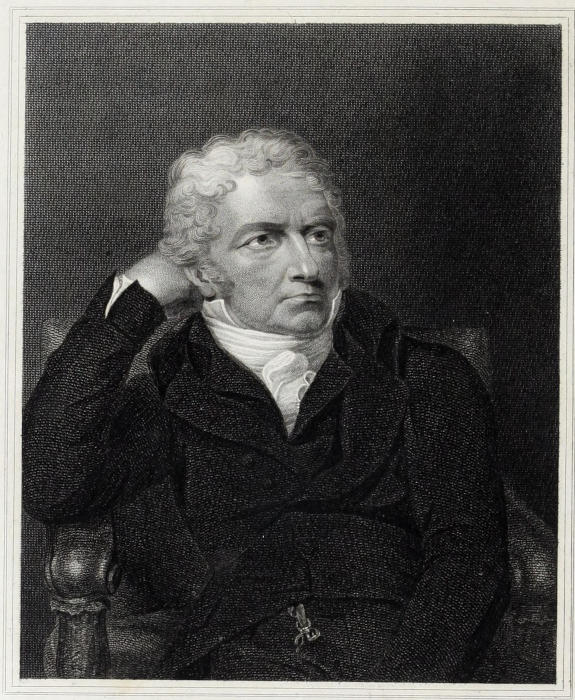
HENRY FUSELI ESQR. R.A.
Engraved by R. W. Sievier, from a Miniature by Moses Haughton.
Published May 1, 1820, by T. Cadell & W. Davies, Strand, London.
LECTURES ON PAINTING, DELIVERED AT THE ROYAL ACADEMY, BY HENRY FUSELI, P.P.
WITH ADDITIONAL OBSERVATIONS AND NOTES.
LONDON:
PRINTED FOR T. CADELL AND W. DAVIES, IN THE STRAND,
BOOKSELLERS TO THE ROYAL ACADEMY
AND W. BLACKWOOD, EDINBURGH.
1820.
INTRODUCTION.
It cannot be considered as superfluous or assuming
to present the reader of the following lectures, with
a succinct characteristic sketch of the principal
technic instruction, ancient and modern, which we
possess: I say, a sketch, for an elaborate and methodical
survey, or a plan well digested and strictly
followed, would demand a volume. These observations,
less written for the man of letters and cultivated
taste, than for the student who wishes to inform
himself of the history and progress of his art, are to
direct him to the sources from which my principles
are deduced, to enable him, by comparing my authors
with myself, to judge how far the theory which I
deliver, may be depended on as genuine, or ought
to be rejected as erroneous or false.
The works or fragments of works which we
possess, are either purely elementary, critically historical,
biographic, or mixed up of all three. On
the books purely elementary, the van of which is led
by Lionardo da Vinci and Albert Durer, and the rear
by Gherard Lairesse, as the principles which they
detail must be supposed to be already in the student’s
possession, or are occasionally interwoven with the
topics of the Lectures, I shall not expatiate, but immediately
proceed to the historically critical writers;
who consist of all the antients yet remaining, Pausanias
excepted.
We may thank Destiny that, in the general wreck
of antient art, a sufficient number of entire and
mutilated monuments have escaped the savage rage of
barbarous conquest, and the still more savage hand
of superstition, not only to prove that the principles
which we deliver, formed the body of antient art, but
to furnish us with their standard of style. For if we
had nothing to rely on to prove its existence than the
historic and critical information left us, such is the
chaos of assertion and contradiction, such the chronologic
confusion, and dissonance of dates, that
nothing short of a miracle could guide us through
the labyrinth, and the whole would assume a fabulous
aspect. Add to this the occupation and character
of the writers, none of them a professional man.
For the rules of Parrhasius, the volumes of Pamphilus,
Apelles, Metrodorus, all irrecoverably lost,
we must rely on the hasty compilations of a warrior,
or the incidental remarks of an orator, Pliny and
Quintilian. Pliny, authoritative in his verdicts, a
Roman in decision, was rather desirous of knowing
much, than of knowing well; the other, though, as
appears, a man of exquisite taste, was too much
occupied by his own art to allow ours more than a
rapid glance. In Pliny, it is necessary, and for an
artist not very difficult, to distinguish when he speaks
from himself and when he delivers an extract, however
short; whenever he does the first, he is seldom
able to separate the kernel from the husk; he is
credulous, irrelevant, ludicrous. The Jupiter of Phidias,
the Doryphorus of Polycletus, the Aphrodite of
Praxiteles, the Demos of Parrhasius, the Venus of
Apelles, provoke his admiration in no greater degree
than the cord drawn over the horns and muzzle of
the bull in the group of Amphion Zetus and Antiopa;
the spires and windings of the serpents in that of the
Laocoon, the effect of the foam from the sponge of
Protogenes, the partridge in his Jalysus, the grapes
that imposed on the birds, and the curtain which deceived
Zeuxis. Such is Pliny when he speaks from
himself, or perhaps from the hints of some Dilettante;
but when he delivers an extract, his information is not
only essential and important, but expressed by the
most appropriate words. Such is his account of the
glazing-method of Apelles, in which, as Reynolds
has observed, he speaks the language of an artist;
such is what he says of the manner in which Protogenes
embodied his colours, though it may require
the practice of an artist to penetrate his meaning.
No sculptor could describe better in many words
than he does in one, the manœuvre by which
Nicias gave the decided line of correctness to the
models of Praxiteles; the word circumlitio, shaping,
rounding the moist clay with the finger is evidently
a term of art. Thus when he describes the method
of Pausias, who, in painting a sacrifice, foreshortened
the bull and threw his shade on part of
the surrounding crowd, he throws before us the
depth of the scenery and its forcible chiaroscuro;
nor is he less happy, at least in my opinion,
when he translates the deep aphorism by
which Eupompus directed Lysippus to recur to
Nature, and to animate the rigid form with the
air of life.
In his dates he seldom errs, and sometimes adjusts
or corrects the errours of Greek chronology, though
not with equal attention; for whilst he exposes the
impropriety of ascribing to Polycletus a statue of
Hephestion, the friend of Alexander, who lived a
century after him, he thinks it worth his while to
repeat that Erynna, the contemporary of Sappho,
who lived nearly as many years before him, celebrated
in her poems a work of his friend and fellow-scholar
Myron of Eleutheræ. His text is at the same time so
deplorably mutilated that it often equally defies conjecture
and interpretation. Still, from what is genuine
it must be confessed that he condenses in a
few chapters the contents of volumes, and fills the
whole atmosphere of art. Whatever he tells, whether
the most puerile legend, or the best attested fact,
he tells with dignity.
Of Quintilian, whose information is all relative
to style, the tenth chapter of the twelfth book, a passage
on Expression in the eleventh, and scattered
fragments of observations analogous to the process of
his own art, is all that we possess; but what he says,
though comparatively small in bulk with what we
have of Pliny, leaves us to wish for more. His review
of the revolutions of style in painting, from
Polygnotus to Apelles, and in sculpture from Phidias
to Lysippus, is succinct and rapid; but though
so rapid and succinct, every word is poised by characteristic
precision, and can only be the result of
long and judicious inquiry, and perhaps even minute
examination. His theory and taste savour neither of
the antiquary nor the mere Dilettante; he neither
dwells on the infancy of art with doating fondness,
nor melts its essential and solid principles in the crucibles
of merely curious or voluptuous execution.
Still less in volume, and still less intentional are the
short but important observations on the principles of
art and the epochs of style, scattered over nearly all
the works of Cicero, but chiefly his Orator and Rhetoric
Institutions. Some of his introductions to these
books might furnish the classic scenery of Poussin
with figures; and though he seems to have had as
little native taste for painting and sculpture, and
even less than he had taste for poetry, he had a
conception of nature; and, with his usual acumen,
comparing the principles of one art with those of
another, frequently scattered useful hints, or made
pertinent observations. For many of these he might
probably be indebted to Hortensius, with whom,
though his rival in eloquence, he lived on terms of
familiarity, and who was a man of declared taste and
one of the first collectors of the time.
Pausanias, the Cappadocian, was certainly no
critic, and his credulity is at least equal to his
curiosity; he is often little more than a nomenclator,
and the indiscriminate chronicler of legitimate tradition
and legendary trash; but the minute and
scrupulous diligence with which he examined what
fell under his own eye, amply makes up for what he
may want of method or of judgment. His description
of the pictures of Polygnotus at Delphi, and of
the Jupiter of Phidias at Olympia, are perhaps
superiour to all that might have been given by men
of more assuming powers, mines of information,
and inestimable legacies to our arts.
The Heroics of the elder, and the Eicones or
Picture Galleries of the elder and younger Philostratus,
though perhaps not expressly written for the
artist, and rather to amuse than to instruct, cannot
be sufficiently consulted by the epic or dramatic
artist. The Heroics furnish the standard of form
and habits for the Grecian and Troic warriours, from
Protesilaus to Paris and Euphorbus; and he who
wishes to acquaint himself with the limits the ancients
prescribed to invention, and the latitude they allowed
to expression, will find no better guide than an
attentive survey of the subjects displayed in their
galleries.
Such are the most prominent features of antient criticism,
and those which we wish the artist to be familiar
with; the innumerable hints, maxims, anecdotes,
descriptions, scattered over Lucian, Ælian, Athenæus,
Achilles Tatius, Tatian, Pollux, and many more,
may be consulted to advantage by the man of taste
and letters, and probably may be neglected without
much loss by the student.
Of modern writers on art, Vasari leads the van;
theorist, artist, critic, and biographer in one. The
history of modern art owes no doubt much to Vasari;
he leads us from its cradle, to its maturity, with the
anxious diligence of a nurse, but he likewise has her
derelictions; for more loquacious than ample, and
less discriminating styles than eager to accumulate
descriptions, he is at an early period exhausted by the
superlatives lavished on inferiour claims, and forced
into frigid rhapsodies and astrologic nonsense to do
justice to the greater. He swears by the divinity of
M. Agnolo. He tells us himself that he copied every
figure of the Capella Sistina and the Stanze of Raffaello;
yet his memory was either so treacherous[1],
or his rapidity in writing so inconsiderate, that his account
of both is a mere heap of errours and unpardonable
confusion; and one might almost fancy that
he had never entered the Vatican. Of Correggio he
leaves us less informed than of Apelles. Even Bottari,
the learned editor of his work, his countryman and
advocate against the complaints of Agostino Carracci
and Federigo Zucchero, though ever ready to fight
his battles, is at a loss to account for his mistakes.
He has been called the Herodotus of our art, and if the
main simplicity of his narrative, and the desire of heaping
anecdote on anecdote, entitle him in some degree
to that appellation, we ought not to forget, that the
information of every day adds something to the authenticity
of the Greek historian, whilst every day
furnishes matter to question the credibility of the
Tuscan.
What we find not in Vasari it is useless to search for
amid the rubbish of his contemporaries or followers,
from Condivi to Ridolfi, and on to Malvasia, whose
criticism on the style of Lodovico Carracci and
his pupils in the cloisters of St. Michele in Bosco,
near Bologna, amount to little more than a sonorous
rhapsody of ill applied or empty metaphors and
extravagant praise; till the appearance of Lanzi,
who in his ‘Storia Pittorica della Italia,’ has availed
himself of all the information existing in his time,
has corrected most of those who wrote before him,
and though perhaps not possessed of great discriminative
powers, has accumulated more instructive
anecdotes, rescued more deserving names from oblivion,
and opened a wider prospect of art than all his
predecessors.[2]
The French critics composed a complete system of
rules. Du Fresnoy spent his life in composing and
revising general aphorisms in Latin classic verse;
some on granted, some on disputable, some on false
principles. Though Horace was his model, neither
the Poet’s language nor method have been imitated by
him. From Du Fresnoy himself, we learn not what
is essential, what accidental, what superinduced, in
style; from his text none ever rose practically wiser
than he sat down to study it: if he be useful, he owes
his usefulness to the penetration of his English commentator;
the notes of Reynolds, treasures of practical
observation, place him among those whom we
may read with profit. What can be learnt from precept,
founded on prescriptive authority, more than
on the verdicts of nature, is displayed in the volumes
of De Piles and Felibien; a system, as it has been followed
by the former students of their academy, and
sent out with the successful combatants for the premium
to their academic establishment at Rome, to have its
efficiency proved by the contemplation of Italian style
and execution. The timorous candidates for fame,
knowing its rules to be the only road to success at
their return, whatever be their individual bent of character,
implicitly adopt them, and the consequence is,
as may be supposed, that technical equality, which
borders on mediocrity. After an exulting and eager
survey of the wonders the place exhibits, they all undergo
a similar course of study. Six months are allotted
to the Vatican, and in equal portions divided
between the Fierté of M. Agnolo, and the more correct
graces of Raffaello; the next six months are in
equal intervals devoted to the academic powers of Annibale
Carracci, and the purity of the antique.
About the middle of the last century the German
critics, established at Rome, began to claim the
exclusive privilege of teaching the art, and to form
a complete system of antique style. The verdicts
of Mengs and Winkelmann became the oracles of
Antiquaries, dilettanti, and artists from the Pyrenees
to the utmost North of Europe, have been detailed,
and are not without their influence here. Winkelmann
was the parasite of the fragments that fell
from the conversation or the tablets of Mengs, a
deep scholar, and better fitted to comment a classic
than to give lessons on art and style, he reasoned
himself into frigid reveries and Platonic dreams on
beauty. As far as the taste or the instructions of his
tutor directed him, he is right, whenever they are,
and between his own learning and the tuition of
the other, his history of art delivers a specious
system and a prodigious number of useful observations.
He has not, however, in his regulation of
epochs, discriminated styles, and masters, with the
precision, attention, and acumen, which from the
advantages of his situation and habits might have
been expected; and disappoints us as often by
meagreness, neglect, and confusion, as he offends by
laboured and inflated rhapsodies on the most celebrated
monuments of art. To him Germany owes
the shackles of her artists, and the narrow limits
of their aim; from him they have learnt to substitute
the means for the end, and by a hopeless chace
after what they call beauty, to lose what alone can
make beauty interesting, expression and mind. The
works of Mengs himself are no doubt full of the
most useful information, deep observation, and often
consummate criticism. He has traced and distinguished
the principles of the moderns from those of
the ancients; and in his comparative view of the design,
colour, composition, and expression of Raffaello
Correggio and Tiziano, with luminous perspicuity and
deep precision, pointed out the prerogative or inferiority
of each. As an artist he is an instance of what perseverance,
study, experience and encouragement can
atchieve to supply the place of genius.
Of English critics, whose writings preceded the
present century, whether we consider solidity of
theory or practical usefulness, the last is undoubtedly
the first. To compare Reynolds with his predecessors
would equally disgrace our judgment and impeach
our gratitude. His volumes can never be consulted
without profit, and should never be quitted by the
student’s hand, but to embody by exercise the precepts
he gives and the means he points out.
ERRATA.
Transcriber’s Note: The errata have been corrected.
FIRST LECTURE. ANCIENT ART. — ARGUMENT. — FIRST LECTURE.
Ταυτα μεν ὀυν πλαστων και γραφεων και ποιητων παιδες ὀργασονται. ὁ δε πασιν ἐπανθει τουτοις,
ἡ χαρις, μαλλον δε ἁπασαι ἁμα, ὁποσαι χαριτες, και ὁποσοι ἐρωτες περίχορευοντες,
τις ἀν μιμησασθαι δυναιτο?
ΛΟΥΚΙΑΝΟΥ Σαμ. ἐικονες.
Introduction. Greece the legitimate parent of the Art.—Summary of the local
and political causes. Conjectures on the mechanic process of the Art. Period of
preparation—Polygnotus—essential style—Apollodorus—characteristic style.
Period of establishment—Zeuxis, Parrhasius, Timanthes. Period of refinement—Eupompus—Apelles,
Aristides, Euphranor.
The difficulties of the task prescribed to me,
if they do not preponderate are at least equal to the
honour of the situation. If, to discourse on any topic
with truth, precision, and clearness, before a mixed
or fortuitous audience, before men neither initiated
in the subject, nor rendered minutely attentive by
expectation, be no easy task, how much more arduous
must it be to speak systematically on an art, before
a select assembly, composed of Professors whose
life has been divided between theory and practice, of
Critics whose taste has been refined by contemplation
and comparison, and of Students, who bent on
the same pursuit, look for the best and always most
compendious method of mastering the principles, to
arrive at its emoluments and honours. Your lecturer
is to instruct them in the principles of ‘composition;
to form their taste for design and colouring; to
strengthen their judgment; to point out to them the
beauties and imperfections of celebrated works of
art; and the particular excellencies and defects of
great masters; and finally, to lead them into the
readiest and most efficacious paths of study.’[3]—If,
Gentlemen, these directions presuppose in the student
a sufficient stock of elementary knowledge, an expertness
in the rudiments, not mere wishes but a
peremptory will of improvement, and judgment with
docility; how much more do they imply in the person
selected to address them—knowledge founded on
theory, substantiated and matured by practice, a mass
of select and well digested materials, perspicuity of
method and command of words, imagination to place
things in such views as they are not commonly seen
in, presence of mind, and that resolution, the result
of conscious vigour, which in daring to correct
errours, cannot be easily discountenanced.—As conditions
like these would discourage abilities far superior
to mine, my hopes of approbation, moderate as
they are, must in a great measure depend on that
indulgence which may grant to my will what it would
refuse to my powers.
Before I proceed to the history of style itself, it
seems to be necessary that we should agree about the
terms which denote its object and perpetually recur in
treating of it; that my vocabulary of technic expression
should not clash with the dictionary of my audience:
mine is nearly that of your late president. I shall
confine myself at present to a few of the most important;
the words nature, beauty, grace, taste, copy,
imitation, genius, talent. Thus, by nature I understand
the general and permanent principles of visible
objects, not disfigured by accident, or distempered by
disease, not modified by fashion or local habits. Nature
is a collective idea, and though its essence exist in
each individual of the species, can never in its perfection
inhabit a single object. On beauty I do not
mean to perplex you or myself with abstract ideas,
and the romantic reveries of platonic philosophy, or
to inquire whether it be the result of a simple or
complex principle. As a local idea, beauty is a despotic
princess, and subject to the anarchies of despotism,
enthroned to-day, dethroned to-morrow. The
beauty we acknowledge is that harmonious whole of
the human frame, that unison of parts to one end,
which enchants us; the result of the standard set by
the great masters of our art, the ancients, and confirmed
by the submissive verdict of modern imitation.
By grace I mean that artless balance of motion and
repose sprung from character, founded on propriety,
which neither falls short of the demands nor overleaps
the modesty of nature. Applied to execution, it means
that dextrous power which hides the means by which
it was attained, the difficulties it has conquered. When
we say taste, we mean not crudely the knowledge of
what is right in art: taste estimates the degrees of
excellence, and by comparison proceeds from justness
to refinement. Our language, or rather those who
use it, generally confound, when speaking of the art,
copy with imitation, though essentially different in
operation and meaning. Precision of eye and obedience
of hand are the requisites of the former, without
the least pretence to choice, what to select, what to
reject; whilst choice directed by judgment or taste
constitutes the essence of imitation, and alone can
raise the most dextrous copyist to the noble rank of
an artist. The imitation of the ancients was, essential,
characteristic, ideal. The first cleared nature of accident,
defect, excrescence; the second found the
stamen which connects character with the central
form; the third raised the whole and the parts to the
highest degree of unison. Of genius I shall speak
with reserve, for no word has been more indiscriminately
confounded; by genius I mean that power
which enlarges the circle of human knowledge,
which discovers new materials of nature, or combines
the known with novelty, whilst talent arranges, cultivates,
polishes the discoveries of genius.
Guided by these preliminaries we now approach
that happy coast, where, from an arbitrary hieroglyph,
the palliative of ignorance, from a tool of despotism,
or a ponderous monument of eternal sleep, art
emerged into life, motion and liberty; where situation,
climate, national character, religion, manners
and government conspired to raise it on that permanent
basis, which after the ruins of the fabric itself,
still subsists and bids defiance to the ravages of time;
as uniform in the principle as various in its applications,
the art of the Greeks possessed in itself and
propagated, like its chief object Man, the germs of
immortality.
I shall not detail here the reasons and the coincidence
of fortunate circumstances which raised the
Greeks to be the arbiters of form.[4] The standard
they erected, the canon they framed, fell not from
Heaven: but as they fancied themselves of divine
origin, and Religion was the first mover of their art,
it followed that they should endeavour to invest their
authors with the most perfect form; and as Man
possesses that exclusively, they were led to a complete
and intellectual study of his elements and constitution;
this, with their climate, which allowed that form to
grow, and to shew itself to the greatest advantage; with
their civil and political institutions, which established
and encouraged exercises and manners best calculated
to develop its powers; and above all that simplicity of
their end, that uniformity of pursuit which in all its
derivations retraced the great principle from which it
sprang, and like a central stamen drew it out into one
immense connected web of congenial imitation; these,
I say, are the reasons why the Greeks carried the art
to a height which no subsequent time or race has been
able to rival or even to approach.
Great as these advantages were, it is not to be supposed
that Nature deviated from her gradual progress
in the development of human faculties, in favour of
the Greeks. Greek Art had her infancy, but the
Graces rocked the cradle, and Love taught her to
speak. If ever legend deserved our belief, the amorous
tale of the Corinthian maid, who traced the shade
of her departing lover by the secret lamp, appeals to
our sympathy, to grant it; and leads us at the same
time to some observations on the first mechanical
essays of Painting, and that linear method which,
though passed nearly unnoticed by Winkelmann,
seems to have continued as the basis of execution,
even when the instrument for which it was chiefly
adapted, had long been laid aside.
The etymology of the word used by the Greeks to
express Painting being the same with that which they
employ for Writing, makes the similarity of tool,
materials, method, almost certain. The tool was a
style or pen of wood or metal; the materials a
board, or a levigated plane of wood, metal, stone,
or some prepared compound; the method, letters or
lines.
The first essays of the art were Skiagrams, simple
outlines of a shade, similar to those which have been
introduced to vulgar use by the students and parasites
of Physiognomy, under the name of Silhouettes;
without any other addition of character or feature
but what the profile of the object thus delineated,
could afford.
The next step of the art was the Monogram, outlines
of figures without light or shade, but with some
addition of the parts within the outline, and from that
to the Monochrom, or paintings of a single colour on
a plane or tablet, primed with white, and then covered
with what they called punic wax, first amalgamated
with a tough resinous pigment, generally of a red,
sometimes dark brown, or black colour. In, or rather
through this thin inky ground, the outlines were
traced with a firm but pliant style, which they called
Cestrum; if the traced line happened to be incorrect
or wrong, it was gently effaced with the finger or
with a sponge, and easily replaced by a fresh one.
When the whole design was settled, and no farther
alteration intended, it was suffered to dry, was covered,
to make it permanent, with a brown encaustic varnish,
the lights were worked over again, and rendered
more brilliant with a point still more delicate,
according to the gradual advance from mere outlines
to some indications, and at last to masses of light and
shade, and from those to the superinduction of different
colours, or the invention of the Polychrom, which
by the addition of the pencil to the style, raised the
mezzotinto or stained drawing to a legitimate picture,
and at length produced that vaunted harmony, the
magic scale of Grecian colour.[5]
If this conjecture, for it is not more, on the process
of linear painting, formed on the evidence and
comparison of passages always unconnected, and frequently
contradictory, be founded in fact, the rapturous
astonishment at the supposed momentaneous
production of the Herculanean dancers and the figures
on the earthen vases of the ancients, will cease; or rather,
we shall no longer suffer ourselves to be deluded
by palpable impossibility of execution: on a
ground of levigated lime or on potters ware, no velocity
or certainty attainable by human hands can conduct
a full pencil with that degree of evenness equal
from beginning to end with which we see those
figures executed, or if it could, would ever be able to
fix the line on the glassy surface without its flowing:
to make the appearances we see, possible, we must
have recourse to the linear process that has been described,
and transfer our admiration, to the perseverance,
the correctness of principle, the elegance of
taste that conducted the artist’s hand, without presuming
to arm it with contradictory powers: the figures
he drew and we admire, are not the magic produce
of a winged pencil, they are the result of gradual
improvement, exquisitely finished monochroms.
How long the pencil continued only to assist, when
it began to engross and when it at last entirely supplanted
the cestrum, cannot in the perplexity of accidental
report be ascertained. Apollodorus in the
93d Olymp. and Zeuxis in the 94th, are said to have
used it with freedom and with power. The battle of
the Lapithæ and the Centaurs, which according to
Pausanias, Parrhasius painted on the shield of the
Minerva of Phidias, to be chased by Mys, could be
nothing but a monochrom, and was probably designed
with the cestrum, as an instrument of greater
accuracy.[6] Apelles and Protogenes, nearly a century
afterwards, drew their contested lines with the
pencil; and that alone, as delicacy and evanescent
subtlety were the characteristic of those lines, may
give an idea of their mechanic excellence. And yet
in their time the diagraphic process[7], which is the
very same with the linear one we have described,
made a part of liberal education. And Pausias of
Sicyon, the contemporary of Apelles, and perhaps
the greatest master of composition amongst the ancients,
when employed to repair the decayed pictures
of Polygnotus at Thespiæ, was adjudged by general
opinion to have egregiously failed in the attempt, because
he had substituted the pencil to the cestrum,
and entered a contest of superiority with weapons not
his own.
Here it might seem in its place to say something
on the Encaustic method used by the ancients; were
it not a subject by ambiguity of expression and conjectural
dispute so involved in obscurity that a true
account of its process must be despaired of: the most
probable idea we can form of it is, that it bore some
resemblance to our oil-painting, and that the name
was adopted to denote the use of materials, inflammable
or prepared by fire, the supposed durability of
which, whether applied hot or cold, authorised the
terms ἐνεκαυσε and inussit.
The first great name of that epoch of the preparatory
period when facts appear to overbalance conjecture,
is that of Polygnotus of Thasos, who painted
the poecile at Athens, and the lesche or public hall at
Delphi. Of these works, but chiefly of the two large
pictures at Delphi, which represented scenes subsequent
to the eversion of Troy, and Ulysses consulting
the spirit of Tiresias in Hades, Pausanias[8] gives
a minute and circumstantial detail; by which we are
led to surmise, that what is now called composition
was totally wanting in them as a whole: for he begins
his description at one end of the picture, and
finishes it at the opposite extremity, a senseless method
if we suppose that a central group, or a principal
figure to which the rest were in a certain degree subordinate,
attracted the eye; it appears as plain that
they had no perspective, the series of figures on the
second or middle ground being described as placed
above those on the fore-ground, and the figures in the
distance above the whole: the honest method too
which the painter chose of annexing to many of his
figures, their names in writing, savours much of the
infancy of painting.—We should however be cautious
to impute solely to ignorance or imbecility, what
might rest on the firm base of permanent principle.
The genius of Polygnotus was more than that of any
other artist before or after, Phidias perhaps alone
excepted, a public genius, his works monumental
works, and these very pictures the votive offerings of
the Gnidians. The art at that summit, when exerting
its powers to record the feats, consecrate the acts,
perpetuate the rites, propagate the religion, or to disseminate
the peculiar doctrines of a nation, heedless of
the rules prescribed to inferior excellence and humbler
pursuits, returns to its elements, leaps strict possibility,
combines remote causes with present effects,
connects local distance and unites separate moments.—Simplicity,
parallelism, apposition, take place of
variety, contrast and composition.—Such was the
Lesche painted by Polygnotus, and if we consider the
variety of powers that distinguished many of the
parts, we must incline to ascribe the primitive arrangement
of the whole rather to the artist’s choice
and lofty simplicity, than want of comprehension:
nature had endowed him with that rectitude of taste
which in the individuum discovers the stamen of
the genus, hence his style of design was essential with
glimpses of grandeur[9] and ideal beauty. Polygnotus,
says Aristotle, improves the model. His invention
reached the conception of undescribed being, in
the dæmon Eurynomus; filled the chasm of description
in Theseus and Pirithous, in Ariadne and Phædra;
and improved its terrours in the spectre of
Tityus; whilst colour to assist it, became in his hand
an organ of expression; such was the prophetic glow
which still crimsoned the cheeks of his Cassandra in
the time of Lucian.[10] The improvements in painting
which Pliny ascribes to him, of having dressed
the heads of his females in variegated veils and bandeaus,
and robed them in lucid drapery, of having
gently opened the lips, given a glimpse of the teeth,
and lessened the former monotony of face, such
improvements I say were surely the most trifling
part of a power to which the age of Apelles and
that of Quintilian paid equal homage: nor can it
add much to our esteem for him, to be told by Pliny
that there existed, in the portico of Pompey, a picture
of his with the figure of a warrior in an attitude
so ambiguous as to make it a question whether he
were ascending or descending. Such a figure could
only be the offspring of mental or technic imbecility,
even if it resembled the celebrated one of a Diomede
carrying off the palladium with one and holding a
sword in the other hand, on the intaglio inscribed,
I think, with the name of Dioscorides.
With this simplicity of manner and materials the
art seems to have proceeded from Polygnotus, Aglaophon,
Phidias, Panænus, Colotes, and Evenor, the
father of Parrhasius, during a period of more or less
disputed olympiads, to the appearance of Apollodorus
the Athenian, who applied the essential principles of
Polygnotus to the delineation of the species, by investigating
the leading forms that discriminate the various
classes of human qualities and passions. The acuteness
of his taste led him to discover that as all men
were connected by one general form, so they were
separated each by some predominant power, which
fixed character and bound them to a class: that in
proportion as this specific power partook of individual
peculiarities, the farther it was removed from a share
in that harmonious system which constitutes nature,
and consists in a due balance of all its parts; thence
he drew his line of imitation, and personified the
central form of the class, to which his object belonged;
and to which the rest of its qualities administered
without being absorbed: agility was not
suffered to destroy firmness, solidity or weight; nor
strength and weight agility; elegance did not degenerate
to effeminacy, or grandeur swell to hugeness;
such were his principles of style: his expression extended
them to the mind, if we may judge from the
two subjects mentioned by Pliny, in which he seems
to have personified the characters of devotion and
impiety; that, in the adoring figure of a priest, perhaps
of Chryses, expanding his gratitude at the shrine
of the God whose arrows avenged his wrongs and
restored his daughter: and this, in the figure of Ajax
wrecked, and from the sea-swept rock hurling defiance
unto the murky sky. As neither of these subjects
can present themselves to a painters mind
without a contrast of the most awful and terrific
tones of colour, magic of light and shade, and
unlimited command over the tools of art, we may
with Pliny and with Plutarch consider Apollodorus
as the first assertor of the pencil’s honours, as the
first colourist of his age, and the man who opened
the gates of art which the Heracleot Zeuxis entered.[11]
From the essential style of Polygnotus and the
specific discrimination of Apollodorus, Zeuxis, by
comparison of what belonged to the genus and what
to the class, framed at last that ideal form, which in
his opinion, constituted the supreme degree of human
beauty, or in other words, embodied possibility, by
uniting the various but homogeneous powers scattered
among many, in one object, to one end. Such
a system, if it originated in genius, was the considerate
result of taste refined by the unremitting
perseverance with which he observed, consulted, compared,
selected the congenial but scattered forms of
nature. Our ideas are the offspring of our senses,
we are not more able create the form of a being, we
have not seen, without retrospect to one we know,
than we are able to create a new sense. He whose
fancy has conceived an idea of the most beautiful
form must have composed it from actual existence,
and he alone can comprehend what one degree of
beauty wants to become equal to another, and at last
superlative. He who thinks the pretty handsome, will
think the handsome a beauty, and fancy he has met
an ideal form in a merely handsome one, whilst he
who has compared beauty with beauty, will at last
improve form upon form to a perfect image; this
was the method of Zeuxis, and this he learnt from
Homer, whose mode of ideal composition, according
to Quintilian, he considered as his model. Each individual
of Homer forms a class, expresses and is circumscribed
by one quality of heroic power; Achilles
alone unites their various but congenial energies.
The grace of Nireus, the dignity of Agamemnon, the
impetuosity of Hector, the magnitude, the steady
prowess of the great, the velocity of the lesser
Ajax, the perseverance of Ulysses, the intrepidity of
Diomede, are emanations of energy that reunite in
one splendid centre fixed in Achilles. This standard
of the unison of homogeneous powers exhibited in
successive action by the poet, the painter, invigorated
no doubt by the contemplation of the works of
Phidias, transferred to his own art and substantiated
by form, when he selected the congenial beauties
of Croton to compose a perfect female. Like Phidias
too, he appears to have been less pathetic than
sublime, and even in his female forms more ample
and august than elegant or captivating: his principle
was epic, and this Aristotle either considered not or
did not comprehend, when he refuses him the expression
of character in action and feature: Jupiter
on his throne encircled by the celestial synod, and
Helen, the arbitress of Troy, contained probably the
principal elements of his style; but he could trace
the mother’s agitation in Alcmena, and in Penelope
the pangs of wedded love.
On those powers of his invention which Lucian
relates in the memoir inscribed with the name of
Zeuxis, I shall reserve my observations for a fitter
moment. Of his colour we know little, but it is
not unreasonable to suppose that it emulated the
beauties and the grandeur of his design; and that
he extended light and shade to masses, may be
implied from his peculiar method of painting monochroms
on a black ground, adding the lights in
white.[12]
The correctness of Parrhasius succeeded to the
genius of Zeuxis. He circumscribed his ample style,
and by subtle examination of outline established that
standard of divine and heroic form which raised him
to the authority of a legislator from whose decisions
there was no appeal. He gave to the divine and
heroic character in painting, what Polycletus had
given to the human in sculpture, by his Doryphorus,
a canon of proportion. Phidias had discovered in
the nod of the Homeric Jupiter the characteristic
of majesty, inclination of the head: this hinted to
him a higher elevation of the neck behind, a bolder
protrusion of the front, and the increased perpendicular
of the profile. To this conception Parrhasius
fixed a maximum; that point from which
descends the ultimate line of celestial beauty, the
angle within which moves what is inferior, beyond
which what is portentous. From the head conclude
to the proportions of the neck, the limbs,
the extremities; from the father to the race of gods;
all, the sons of one, Zeus; derived from one source
of tradition, Homer; formed by one artist, Phidias:
on him measured and decided by Parrhasius. In
the simplicity of this principle, adhered to by the
succeeding periods, lies the uninterrupted progress
and the unattainable superiority of Grecian art.
With this prerogative, which evidently implies a
profound as well as general knowledge of the parts,
how are we to reconcile the criticism passed on the
intermediate parts of his forms as inferior to their
outline? or how could Winkelmann, in contradiction
with his own principles, explain it, by a want of
anatomic knowledge[13]? how is it possible to suppose
that he who decided his outline with such
intelligence that it appeared ambient, and pronounced
the parts that escaped the eye, should have
been uninformed of its contents? let us rather suppose
that the defect ascribed to the intermediate
forms of his bodies, if such a fault there was, consisted
in an affectation of smoothness bordering
on insipidity, in something effeminately voluptuous,
which absorbed their character and the idea of elastic
vigour; and this Euphranor seems to have hinted
at, when in comparing his own Theseus with that
of Parrhasius, he pronounced the Ionian’s to have
fed on roses, his own on flesh[14]: emasculate softness
was not in his opinion, the proper companion
of the contour, or flowery freshness of colour
an adequate substitute for the sterner tints of heroic
form.
None of the ancients seem to have united or wished
to combine as man and artist, more qualities seemingly
incompatible than Parrhasius.—The volubility
and ostentatious insolence of an Asiatic with Athenian
simplicity and urbanity of manners; punctilious correctness
with blandishments of handling and luxurious
colour, and with sublime and pathetic conception, a
fancy libidinously sportive[15]. If he was not the
inventor, he surely was the greatest master of allegory,
supposing that he really embodied by signs
universally comprehended that image of the Athenian
ΔΗΜΟΣ or people, which was to combine and to
express at once its contradictory qualities. Perhaps
he traced the jarring branches to their source, the
aboriginal moral principle of the Athenian character,
which he made intuitive. This supposition alone can
shed a dawn of possibility on what else appears impossible.
We know that the personification of the
Athenian Δημος was an object of sculpture, and that
its images by Lyson and Leochares[16] were publicly
set up; but there is no clue to decide whether they
preceded or followed the conceit of Parrhasius. It
was repeated by Aristolaus, the son of Pausias.
The decided forms of Parrhasius, Timanthes the
Cythnian, his competitor for fame, attempted to inspire
with mind and to animate with passions. No
picture of antiquity is more celebrated than his immolation
of Iphigenia in Aulis, painted, as Quintilian
informs us, in contest with Colotes of Teos, a painter
and sculptor from the school of Phidias; crowned
with victory at its rival exhibition, and since, the
theme of unlimited praise from the orators and historians
of antiquity, though the solidity or justice of
their praise relatively to our art, has been questioned
by modern criticism. On this subject, which not
only contains the gradations of affection from the
most remote to the closest link of humanity, but appears
to me to offer the fairest specimen of the limits
which the theory of the ancients had prescribed to
the expression of pathos, I think it my duty the more
circumstantially to expatiate, as the censure passed on
the method of Timanthes, has been sanctioned by the
highest authority in matters of art, that of your late
President, in his eighth discourse at the delivery of
the academic prize for the best picture painted from
this very subject.
How did Timanthes treat it? Iphigenia, the victim
ordained by the oracle, to be offered for the success
of the Greek expedition against Troy, was represented
standing ready for immolation at the altar, the priest,
the instruments of death at her side; and around her,
an assembly of the most important agents or witnesses
of the terrible solemnity, from Ulysses, who had disengaged
her from the embraces of her mother at
Mycenæ, to her nearest male relations, her uncle Menelaus,
and her own father, Agamemnon. Timanthes,
say Pliny and Quintilian with surprising similarity of
phrase, when, in gradation he had consumed every
image of grief within the reach of art, from the
unhappy priest, to the deeper grief of Ulysses,
and from that to the pangs of kindred sympathy in
Menelaus, unable to express with dignity the father’s
woe, threw a veil, or if you will, a mantle over his
face.——This mantle, the pivot of objection, indiscriminately
borrowed, as might easily be supposed, by
all the concurrents for the prize, gave rise to the following
series of criticisms:
‘Before I conclude, I cannot avoid making one
observation on the pictures now before us. I have
observed, that every candidate has copied the celebrated
invention of Timanthes in hiding the face of
Agamemnon in his mantle; indeed such lavish
encomiums have been bestowed on this thought,
and that too by men of the highest character in
critical knowledge,—Cicero, Quintilian, Valerius
Maximus, and Pliny,—and have been since re-echoed
by almost every modern that has written on
the Arts, that your adopting it can neither be wondered
at, nor blamed. It appears now to be so
much connected with the subject, that the spectator
would perhaps be disappointed in not finding united
in the picture what he always united in his mind,
and considered as indispensably belonging to the
subject. But it may be observed, that those who
praise this circumstance were not painters. They
use it as an illustration only of their own art; it
served their purpose, and it was certainly not their
business to enter into the objections that lie against
it in another Art. I fear we have but very scanty
means of exciting those powers over the imagination,
which make so very considerable and refined
a part of poetry. It is a doubt with me, whether
we should even make the attempt. The chief, if
not the only occasion which the painter has for this
artifice, is, when the subject is improper to be more
fully represented, either for the sake of decency, or
to avoid what would be disagreeable to be seen;
and this is not to raise or increase the passions,
which is the reason that is given for this practice,
but on the contrary to diminish their effect.
‘Mr. Falconet has observed, in a note on this
passage in his translation of Pliny, that the circumstance
of covering the face of Agamemnon
was probably not in consequence of any fine
imagination of the painter,—which he considers
as a discovery of the critics,—but merely copied
from the description of the sacrifice, as it is found
in Euripides.
‘The words from which the picture is supposed to
be taken, are these: Agamemnon saw Iphigenia
advance towards the fatal altar; he groaned, he
turned aside his head, he shed tears, and covered his
face with his robe.
‘Falconet does not at all acquiesce in the praise
that is bestowed on Timanthes; not only because it
is not his invention, but because he thinks meanly of
this trick of concealing, except in instances of blood,
where the objects would be too horrible to be seen;
but, says he, “in an afflicted Father, in a King, in
Agamemnon, you, who are a painter, conceal from
me the most interesting circumstance, and then put
me off with sophistry and a veil. You are (he adds)
a feeble painter, without resources: you do not
know even those of your Art. I care not what veil
it is, whether closed hands, arms raised, or any other
action that conceals from me the countenance of the
Hero. You think of veiling Agamemnon; you
have unveiled your own ignorance.”
‘To what Falconet has said, we may add, that
supposing this method of leaving the expression of
grief to the imagination, to be, as it was thought to
be, the invention of the painter, and that it deserves
all the praise that has been given it, still it is a trick
that will serve but once; whoever does it a second
time, will not only want novelty, but be justly
suspected of using artifice to evade difficulties.
If difficulties overcome make a great part of the
merit of Art, difficulties evaded can deserve but
little commendation.’
To this string of animadversions, I subjoin with
diffidence the following observations:
The subject of Timanthes was the immolation of
Iphigenia; Iphigenia was the principal figure, and
her form, her resignation, or her anguish the painter’s
principal task; the figure of Agamemnon, however,
important, is merely accessory, and no more necessary
to make the subject a completely tragic one, than
that of Clytemnestra the mother, no more than that
of Priam, to impress us with sympathy at the death of
Polyxena. It is therefore a misnomer of the French
critic, to call Agamemnon ‘the hero’ of the subject.
Neither the French nor the English critic appear
to me to have comprehended the real motive of
Timanthes, as contained in the words ‘decere, pro
dignitate, and digne,’ in the passages of Tully,
Quintilian, and Pliny[17]; they ascribe to impotence
what was the forbearance of judgment; Timanthes
felt like a father: he did not hide the face of
Agamemnon, because it was beyond the power of
his art, not because it was beyond the possibility,
but because it was beyond the dignity of expression,
because the inspiring feature of paternal affection at
that moment, and the action which of necessity must
have accompanied it, would either have destroyed
the grandeur of the character and the solemnity of the
scene, or subjected the painter with the majority of
his judges to the imputation of insensibility. He
must either have represented him in tears, or convulsed
at the flash of the raised dagger, forgetting the
chief in the father, or shown him absorbed by despair,
and in that state of stupefaction, which levels all
features and deadens expression; he might indeed
have chosen a fourth mode, he might have exhibited
him fainting and palsied in the arms of his attendants,
and by this confusion of male and female character,
merited the applause of every theatre at Paris. But
Timanthes had too true a sense of nature to expose a
father’s feelings or to tear a passion to rags; nor had
the Greeks yet learnt of Rome to steel the face. If
he made Agamemnon bear his calamity as a man, he
made him also feel it as a man. It became the leader
of Greece to sanction the ceremony with his presence,
it did not become the father to see his daughter
beneath the dagger’s point: the same nature that
threw a real mantle over the face of Timoleon, when
he assisted at the punishment of his brother, taught
Timanthes to throw an imaginary one over the face of
Agamemnon; neither height nor depth, propriety of
expression was his aim.
The critic grants that the expedient of Timanthes
may be allowed in ‘instances of blood,’ the supported
aspect of which would change a scene of commiseration
and terror into one of abomination and horror,
which ought for ever to be excluded from the province
of art, of poetry as well as painting: and would not
the face of Agamemnon, uncovered, have had this
effect? was not the scene he must have witnessed a
scene of blood? and whose blood was to be shed?
that of his own daughter—and what daughter?
young, beautiful, helpless, innocent, resigned—the
very idea of resignation in such a victim, must either
have acted irresistibly to procure her relief, or thrown
a veil over a father’s face. A man who is determined
to sport wit at the expence of heart alone could
call such an expedient ridiculous—‘as ridiculous,’
Mr. Falconet continues, ‘as a poet would be, who in
a pathetic situation, instead of satisfying my expectation,
to rid himself of the business, should say, that
the sentiments of his hero are so far above whatever
can be said on the occasion, that he shall say nothing.’
And has not Homer, though he does not tell us
this, acted upon a similar principle? has he not,
when Ulysses addresses Ajax in Hades, in the most
pathetic and conciliatory manner, instead of furnishing
him with an answer, made him remain in indignant
silence during the address, then turn his step
and stalk away? has not the universal voice of genuine
criticism with Longinus told us, and if it had
not, would not Nature’s own voice tell us, that that
silence was characteristic, that it precluded, included,
and soaring above all answer, consigned Ulysses for
ever to a sense of inferiority? Nor is it necessary
to render such criticism contemptible to mention the
silence of Dido in Virgil, or the Niobe of Æschylus,
who was introduced veiled, and continued mute
during her presence on the stage.
But in hiding Agamemnon’s face Timanthes loses
the honour of invention, as he is merely the imitator
of Euripides, who did it before him[18]? I am not
prepared with chronologic proofs to decide whether
Euripides or Timanthes, who were contemporaries,
about the period of the Peloponnesian war, fell first
on this expedient; though the silence of Pliny and
Quintilian on that head, seems to be in favour of the
painter, neither of whom could be ignorant of the
celebrated drama of Euripides, and would not willingly
have suffered the honour of this master-stroke
of an art they were so much better acquainted with
than painting, to be transferred to another from its
real author, had the poet’s claim been prior: nor shall
I urge that the picture of Timanthes was crowned
with victory by those who were in daily habits of
assisting at the dramas of Euripides, without having
their verdict impeached by Colotes or his friends, who
would not have failed to avail themselves of so flagrant
a proof of inferiority as the want of invention,
in the work of his rival:—I shall only ask, what is
invention? if it be the combination of the most important
moment of a fact with the most varied effects
of the reigning passion on the characters introduced—the
invention of Timanthes consisted in shewing,
by the gradation of that passion in the faces of the
assistant mourners, the reason why that of the principal
one, was hid. This he performed, and this the
poet, whether prior or subsequent, did not and could
not do, but left it with a silent appeal to our own
mind and fancy.
In presuming to differ on the propriety of this
mode of expression in the picture of Timanthes from
the respectable authority I have quoted, I am far from
a wish to invalidate the equally pertinent and acute
remarks made on the danger of its imitation, though
I am decidedly of opinion that it is strictly within the
limits of our art. If it be a ‘trick,’ it is certainly
one that ‘has served more than once.’ We find it
adopted to express the grief of a beautiful female
figure on a bassorelievo formerly in the palace Valle
at Rome, and preserved in the Admiranda of S. Bartoli;
it is used, though with his own originality, by
Michael Angelo in the figure of Abijam, to mark unutterable
woe; Raphael, to shew that he thought it
the best possible mode of expressing remorse and the
deepest sense of repentance, borrowed it in the expulsion
from Paradise, without any alteration, from
Masaccio; and like him, turned Adam out with both
his hands before his face. And how has he represented
Moses at the burning bush, to express the astonished
awe of human in the visible presence of
divine nature? by a double repetition of the same
expedient; once in the ceiling of a Stanza, and again
in the loggia of the Vatican, with both his hands before
his face, or rather with his face immersed in his
hands. As we cannot suspect in the master of expression
the unworthy motive of making use of this
mode merely to avoid a difficulty, or to denote the
insupportable splendour of the vision, which was so
far from being the case, that, according to the sacred
record, Moses stept out of his way to examine the
ineffectual blaze: we must conclude that nature herself
dictated to him this method as superior to all he
could express by features; and that he recognized
the same dictate in Masaccio, who can no more be
supposed to have been acquainted with the precedent
of Timanthes, than Shakspeare with that of Euripides,
when he made Macduff draw his hat over his face.
Masaccio and Raphael proceeded on the principle,
Gherard Lairesse copied only the image of Timanthes,
and has perhaps incurred by it the charge of what
Longinus calls parenthyrsos, in the ill-timed application
of supreme pathos, to an inadequate call.
Agamemnon is introduced covering his face with his
mantle, at the death of Polyxena, the captive daughter
of Priam, sacrificed to the manes of Achilles, her betrothed
lover, treacherously slain in the midst of the
nuptial ceremony, by her brother Paris. The death
of Polyxena, whose charms had been productive of
the greatest disaster that could befal the Grecian
army, could not perhaps provoke in its leader emotions
similar to those which he felt at that of his own
daughter: it must however be owned that the figure of
the chief is equally dignified and pathetic; and that,
by the introduction of the spectre of Achilles at the
immolation of the damsel to his manes, the artist’s fancy
has in some degree atoned for the want of discrimination
in the professor.
Such were the artists, who according to the most
corresponding data formed the style of that second
period, which fixed the end and established the limits
of art, on whose firm basis arose the luxuriant fabric
of the third or the period of refinement, which added
grace and polish to the forms it could not surpass;
amenity or truth to the tones it could not invigourate;
magic and imperceptible transition to the abrupt division
of masses; gave depth and roundness to composition;
at the breast of nature herself caught the
passions as they rose, and familiarized expression:
The period of Apelles, Protogenes, Aristides, Euphranor,
Pausias, the pupils of Pamphilus and his
master Eupompus, whose authority obtained what
had not been granted to his great predecessor and
countryman Polycletus, the new establishment of the
school of Sicyon.[19]
The leading principle of Eupompus may be traced
in the advice which he gave to Lysippus, (as preserved
by Pliny,) whom, when consulted on a standard
of imitation, he directed to the contemplation of
human variety in the multitude of the characters that
were passing by, with the axiom, ‘that nature herself
was to be imitated, not an artist.’ Excellence,
said Eupompus, is thy aim, such excellence as that of
Phidias and Polycletus; but it is not obtained by the
servile imitation of works, however perfect, without
mounting to the principle which raised them to that
height; that principle apply to thy purpose, there
fix thy aim. He who, with the same freedom of access
to nature as another man, contents himself to approach
her only through his medium, has resigned
his birth-right and originality together; his master’s
manner will be his style. If Phidias and Polycletus
have discovered the substance and established the
permanent principle of the human frame, they have
not exhausted the variety of human appearances and
human character; if they have abstracted the forms
of majesty and those of beauty, nature compared with
their works will point out a grace that has been left
for thee; if they have pre-occupied man as he is, be
thine to give him that air with which he actually
appears.[20]
Such was the advice of Eupompus: less lofty, less
ambitious than what the departed epoch of genius
would have dictated, but better suited to the times,
and better to his pupil’s mind. When the spirit
of liberty forsook the public, grandeur had left
the private mind of Greece: subdued by Philip, the
gods of Athens and Olympia had migrated to Pella,
and Alexander was become the representative of
Jupiter; still those who had lost the substance
fondled the shadow of liberty; rhetoric mimicked the
thunders of oratory, sophistry and metaphysic debate
that philosophy, which had guided life, and the grand
taste that had dictated to art the monumental style,
invested gods with human form and raised individuals
to heroes, began to give way to refinements in appreciating
the degrees of elegance or of resemblance in
imitation: the advice of Eupompus however, far from
implying the abolition of the old system, recalled his
pupil to the examen of the great principle on which
it had established its excellence, and to the resources
which its inexhaustible variety offered for new combinations.
That Lysippus considered it in that light, his devotion
to the Doryphorus of Polycletus, known even
to Tully, sufficiently proved. That figure which
comprised the pure proportions of juvenile vigour,
furnished the readiest application for those additional
refinements of variety, character, and fleshy charms,
that made the base of his invention: its symmetry
directing his researches amid the insidious play of
accidental charms, and the claims of inherent grace,
never suffered imitation to deviate into incorrectness;
whilst its squareness and elemental beauty melted in
more familiar forms on the eye, and from an object of
cold admiration became the glowing one of sympathy.
Such was probably the method formed by Lysippus on
the advice of Eupompus, more perplexed than explained
by the superficial extract and the rapid phrase
of Pliny.
From the statuary’s we may form our idea of the
painter’s method. The doctrine of Eupompus was
adopted by Pamphilus the Amphipolitan, the most
scientific artist of his time, and by him communicated
to Apelles of Cos, or as Lucian will have it, of
Ephesus[21], his pupil; in whom, if we believe tradition,
nature exhibited, once, a specimen what her
union with education and circumstances could produce.
The name of Apelles in Pliny is the synonime
of unrivalled and unattainable excellence, but the
enumeration of his works points out the modification
which we ought to apply to that superiority; it neither
comprises exclusive sublimity of invention, the most
acute discrimination of character, the widest sphere
of comprehension, the most judicious and best
balanced composition, nor the deepest pathos of expression:
his great prerogative consisted more in the
unison than in the extent of his powers; he knew
better what he could do, what ought to be done, at
what point he could arrive, and what lay beyond his
reach, than any other artist. Grace of conception and
refinement of taste were his elements, and went hand
in hand with grace of execution and taste in finish,
powerful and seldom possessed singly, irresistible
when united: that he built both on the firm basis of
the former system, not on its subversion, his well-known
contest of lines with Protogenes, not a legendary
tale, but a well-attested fact, irrefragably proves:
what those lines were, drawn with nearly miraculous
subtlety in different colours, one upon the other or
rather within each other, it would be equally unavailing
and useless to inquire; but the corollaries we
may deduce from the contest, are obviously these,
that the schools of Greece recognized all one elemental
principle: that acuteness and fidelity of eye
and obedience of hand form precision; precision, proportion;
proportion, beauty: that it is the ‘little more
or less,’ imperceptible to vulgar eyes, which constitutes
grace and establishes the superiority of one
artist over another: that the knowledge of the degrees
of things, or taste, presupposes a perfect knowledge
of the things themselves: that colour, grace, and
taste are ornaments not substitutes of form, expression
and character, and when they usurp that title, degenerate
into splendid faults.
Such were the principles on which Apelles formed
his Venus, or rather the personification of Female
Grace, the wonder of art, the despair of artists;
whose outline baffled every attempt at emendation,
whilst imitation shrunk from the purity, the force,
the brilliancy, the evanescent gradations of her
tints.[22]
The refinements of the art were by Aristides of
Thebes applied to the mind. The passions which tradition
had organized for Timanthes, Aristides caught
as they rose from the breast or escaped from the lips
of Nature herself; his volume was man, his scene
society: he drew the subtle discriminations of mind
in every stage of life, the whispers, the simple cry of
passion and its most complex accents. Such, as history
informs us, was the suppliant whose voice you
seemed to hear, such his sick man’s half-extinguished
eye and labouring breast, such Byblis expiring in the
pangs of love, and above all the half-slain mother
shuddering lest the eager babe should suck the blood
from her palsied nipple. This picture was probably at
Thebes, when Alexander sacked that town; what his
feelings were when he saw it, we may guess from his
sending it to Pella. Its expression, poised between
the anguish of maternal affection and the pangs of
death, gives to commiseration an image, which neither
the infant piteously caressing his slain mother
in the group of Epigonus[23], nor the absorbed feature
of the Niobe, nor the struggle of the Laocoon
excite. Timanthes had marked the limits that discriminate
terrour from the excess of horrour; Aristides
drew the line that separates it from disgust.
His subject is one of those that touch the ambiguous
line of a squeamish sense.—Taste and smell, as
sources of tragic emotion, and in consequence of their
power, commanding gesture, seem scarcely admissible
in art or on the theatre, because their extremes
are nearer allied to disgust, and loathsome or risible
ideas, than to terrour. The prophetic trance of Cassandra,
who scents the prepared murder of Agamemnon
at the threshold of the ominous hall; the desperate
moan of Macbeth’s queen on seeing the visionary
spot still uneffaced infect her hand—are images
snatched from the lap of terrour—but soon would
cease to be so, were the artist or the actress to inforce
the dreadful hint with indiscreet expression or gesture.
This, completely understood by Aristides, was as
completely missed by his imitators, Raphael[24] in the
Morbetto, and Poussin in his plague of the Philistines.
In the group of Aristides, our sympathy is
immediately interested by the mother, still alive
though mortally wounded, helpless, beautiful, and
forgetting herself in the anguish for her child, whose
situation still suffers hope to mingle with our fears;
he is only approaching the nipple of the mother.
In the group of Raphael, the mother dead of the
plague, herself an object of apathy, becomes one of
disgust, by the action of the man, who bending over
her, at his utmost reach of arm, with one hand removes
the child from the breast, whilst the other,
applied to his nostrils, bars the effluvia of death.
Our feelings alienated from the mother, come too late
even for the child, who by his languor already betrays
the mortal symptoms of the poison he imbibed
at the parent corpse. It is curious to observe the
permutation of ideas which takes place, as imitation
is removed from the sources of nature: Poussin, not
content with adopting the group of Raphael, once
more repeats the loathsome attitude in the same scene;
he forgot, in his eagerness to render the idea of contagion
still more intuitive, that he was averting our
feelings with ideas of disgust.
The refinements of expression were carried still farther
by the disciple of Aristides, Euphranor the Isthmian,
who excelled equally as painter and statuary, if
we may form our judgment from the Theseus he opposed
to that of Parrhasius and the bronze figure of
Alexander Paris, in whom, says Pliny[25], the umpire
of the goddesses, the lover of Helen, and yet the
murderer of Achilles might be traced. This account,
which is evidently a quotation of Pliny’s, and not the
assumed verdict of a connoisseur, has been translated
with an emphasis it does not admit of, to prove that
an attempt to express different qualities or passions at
once in the same object, must naturally tend to obliterate
the effect of each. ‘Pliny,’ says our critic, ‘observes,
that in a statue of Paris by Euphranor, you
might discover at the same time, three different
characters: the dignity of a judge of the goddesses,
the lover of Helen, and the conqueror of Achilles.
A statue in which you endeavour to unite stately
dignity, youthful elegance, and stern valour, must
surely possess none of these to any eminent degree.’
The paraphrase, it is first to be observed, lends itself
the mixtures to Pliny it disapproves of; we look in
vain for the coalition of ‘stately dignity, stern valour,
and youthful elegance,’ in the Paris he describes:
the murderer of Achilles was not his conqueror. But
may not dignity, elegance, and valour, or any other not
irreconcileable qualities, be visible at once in a figure
without destroying the primary feature of its character,
or impairing its expression? Let us appeal to the
Apollo. Is he not a figure of character and expression,
and does he not possess all three in a supreme
degree? Will it imply mediocrity of conception or
confusion of character, if we were to say that his
countenance, attitude, and form combines divine
majesty, enchanting grace, and lofty indignation? Yet
not all three, one ideal whole irradiated the mind of
the artist who conceived the divine semblance. He
gave, no doubt, the preference of expression to the
action in which the god is engaged, or rather, from
the accomplishment of which he recedes with lofty
and contemptuous ease.—This was the first impression
which he meant to make upon us: but what
contemplation stops here? what hinders us when we
consider the beauty of these features, the harmony of
these forms, to find in them the abstract of all his
other qualities, to roam over the whole history of his
atchievements? we see him enter the celestial synod,
and all the gods rise at his august appearance[26]; we
see him sweep the plain after Daphne; precede Hector
with the ægis and disperse the Greeks; strike Patroclus
with his palm and decide his destiny.—And
is the figure frigid because its great idea is inexhaustible?
might we not say the same of the infant Hercules
of Zeuxis or of Reynolds? did not the idea of
the man inspire the hand that framed the mighty
child? his magnitude, his crushing grasp, his energy
of will, are only the germ, the prelude of the power
that rid the earth of monsters, and which our mind
pursues. Such was no doubt the Paris of Euphranor:
he made his character so pregnant, that those who
knew his history might trace in it the origin of all his
future feats, though first impressed by the expression
allotted to the predominant quality and moment.
The acute inspector, the elegant umpire of female
form receiving the contested pledge with a dignified
pause, or with enamoured eagerness presenting it to
the arbitress of his destiny, was probably the predominant
idea of the figure: whilst the deserter of
Oenone, the seducer of Helen, the subtle archer, that
future murderer of Achilles, lurked under the insidious
eyebrow, and in the penetrating glance of beauty’s
chosen minion. Such appeared to me the character
and expression of the sitting Paris in the voluptuous
Phrygian dress, formerly in the cortile of the palace
Altheims, at Rome. A figure nearly colossal, which
many of you may remember, and a faint idea of whom
may be gathered from the print among those in the
collection published of the Museum Clementinum.
A work, in my opinion, of the highest style and worthy
of Euphranor, though I shall not venture to call
it a repetition in marble of his bronze.
From these observations on the collateral and unsolicited
beauties which must branch out from the
primary expression of every great idea, it will not, I
hope, be suspected, that I mean to invalidate the necessity
of its unity, or to be the advocate of pedantic
subdivision. All such division diminishes, all such
mixtures impair the simplicity and clearness of expression:
in the group of the Laocoon, the frigid
ecstasies of German criticism have discovered pity
like a vapour swimming on the father’s eyes; he is
seen to suppress in the groan for his children the
shriek for himself—his nostrils are drawn upward to
express indignation at unworthy sufferings, whilst he
is said at the same time to implore celestial help.
To these are added the winged effects of the serpent-poison,
the writhings of the body, the spasms of the
extremities: to the miraculous organization of such
expression, Agesander, the sculptor of the Laocoon,
was too wise to lay claim. His figure is a class, it
characterizes every beauty of virility verging on age;
the prince, the priest, the father are visible, but absorbed
in the man serve only to dignify the victim of
one great expression; though poised by the artist, for
us to apply the compass to the face of the Laocoon,
is to measure the wave fluctuating in the storm: this
tempestuous front, this contracted nose, the immersion
of these eyes, and above all that long-drawn
mouth, are, separate and united, seats of convulsion,
features of nature struggling within the jaws of death.
SECOND LECTURE. ART OF THE MODERNS. — ARGUMENT. — SECOND LECTURE
ὉΙ ΤΙΝΕΣ ΗΓΕΜΟΝΕΣ ΚΑΙ ΚΟΙΡΑΝΟΙ ΗΣΑΝ.
ΠΛΗΘΥΝ Δ’ ΟΥΚ ΑΝ ΕΓΩ ΜΥΘΗΣΟΜΑΙ ΟΥΔ’ ΟΝΟΜΗΝΩ
ΟΥΔ’ ΕΙ ΜΟΙ ΔΕΚΑ ΜΕΝ ΓΛΩΣΣΑΙ, ΔΕΚΑ ΔΕ ΣΤΟΜΑΤ’ ΕΙΕΝ,
ΦΩΝΗ Δ’ ΑΡΡΗΚΤΟΣ.
Homer. Iliad. B. 487.
Introduction—different direction of the art. Preparative style—Masaccio—Lionardo
da Vinci. Style of establishment—Michael Angelo, Raphael, Titiano,
Correggio. Style of refinement, and depravation. Schools—of Tuscany, Rome,
Venice, Lombardy. The Ecclectic school. Machinists. The German school—Albert
Durer. The Flemish school—Rubens. The Dutch school—Rembrandt.
Observations on art in Switzerland. The French school. The Spanish school.
England—Conclusion.
In the preceding discourse I have endeavoured
to impress you with the general features of
ancient art in its different periods of preparation,
establishment, and refinement. We are now arrived
at the epoch of its restoration in the fifteenth century
of our æra, when religion and wealth rousing emulation,
reproduced its powers, but gave to their exertion
a very different direction. The reigning church
found itself indeed under the necessity of giving more
splendour to the temples and mansions destined to receive
its votaries, of subduing their senses with the
charm of appropriate images and the exhibition of
events and actions, which might stimulate their zeal
and inflame their hearts: but the sacred mysteries of
divine Being, the method adopted by Revelation, the
duties its doctrine imposed, the virtues it demanded
from its followers, faith, resignation, humility, sufferings,
substituted a medium of art as much inferior to
the resources of Paganism in a physical sense as incomparably
superior in a spiritual one. Those public
customs, that perhaps as much tended to spread the
infections of vice as they facilitated the means of art,
were no more; the heroism of the Christian and his
beauty were internal, and powerful or exquisite forms
allied him no longer exclusively to his God. The
chief repertory of the artist, the sacred records, furnished
indeed a sublime cosmogony, scenes of patriarchal
simplicity and a poetic race, which left nothing
to regret in the loss of heathen mythology; but the
stem of the nation whose history is its exclusive theme,
if it abounded in characters and powers fit for the
exhibition of passions, did not teem with forms sufficiently
exalted, to inform the artist and elevate the
art. Ingredients of a baser cast mingled their alloy
with the materials of grandeur and of beauty. Monastic
legend and the rubric of martyrology claimed
more than a legitimate share from the labours of the
pencil and the chisel, made nudity the exclusive property
of emaciated hermits or decrepit age, and if the
breast of manhood was allowed to bare its vigour, or
beauty to expand her bosom, the antidotes of terrour
and of horrour were ready at their side to check the
apprehended infection of their charms. When we
add to this the heterogeneous stock on which the
reviving system of arts was grafted, a race indeed inhabiting
a genial climate, but itself the fœces of barbarity,
the remnants of Gothic adventurers, humanised
only by the cross, mouldering amid the ruins of
the temples they had demolished, the battered fragments
of the images their rage had crushed—when
we add this, I say, we shall less wonder at the languor
of modern art in its rise and progress, than be astonished
at the vigour by which it adapted and raised
materials partly so unfit and defective, partly so contaminated,
to the magnificent system which we are to
contemplate.
Sculpture had already produced respectable specimens
of its reviving powers in the bassorelievos of Lorenzo
Ghiberti, some works of Donato, and the Christ
of Philippo Brunelleschi[27], when the first symptoms
of imitation appeared in the frescos of Tommaso da
St. Giovanni, commonly called Masaccio, from the
total neglect of his appearance and person[28]: Masaccio
first conceived that parts are to constitute a
whole; that composition ought to have a centre; expression,
truth; and execution, unity: his line deserves
attention, though his subjects led him not to
investigation of form, and the shortness of his life
forbade his extending those elements which Raphael,
nearly a century afterward, carried to perfection—it
is sufficiently glorious for him to have been more than
once copied by that great master of expression, and
in some degree to have been the herald of his style:
Masaccio lives more in the figure of Paul preaching
on the areopagus, of the celebrated cartoon in our
possession, and in the borrowed figure of Adam expelled
from paradise in the loggia of the Vatican,
than in his own mutilated or retouched remains.
The essays of Masaccio in imitation and expression,
Andrea Mantegna[29] attempted to unite with form;
led by the contemplation of the antique, fragments
of which he ambitiously scattered over his works:
though a Lombard, and born prior to the discovery
of the best ancient statues, he seems to have been acquainted
with a variety of characters, from forms that
remind us of the Apollo, Mercury or Meleager, down
to the fauns and satyrs: but his taste was too crude,
his fancy too grotesque, and his comprehension too
weak to advert from the parts that remained to the
whole that inspired them: hence in his figures of
dignity or beauty we see not only the meagre forms
of common models, but even their defects tacked to
ideal Torso’s; and his fauns and satyrs, instead of native
luxuriance of growth and the sportive appendages
of mixed being, are decorated with heraldic excrescences
and arabesque absurdity. His triumphs are
known to you all; they are a copious inventory of
classic lumber, swept together with more industry
than taste, but full of valuable materials. Of expression
he was not ignorant: his burial of Christ furnished
Raphael with the composition, and some of the
features and attitudes in his picture on the same subject
in the palace of the Borghese’s—the figure of
St. John, however, left out by Raphael, proves that
Mantegna sometimes mistook grimace for the highest
degree of grief. His oil-pictures exhibit little more
than the elaborate anguish of missal-painting; his
frescoes destroyed at the construction of the Clementine
museum, had freshness, freedom and imitation.
To Luca Signorelli, of Cortona[30], nature more
than atoned for the want of those advantages which
the study of the antique had offered to Andrea Mantegna.
He seems to have been the first who contemplated
with a discriminating eye his object, saw what
was accident and what essential; balanced light and
shade, and decided the motion of his figures. He
foreshortened with equal boldness and intelligence,
and thence it is, probably, that Vasari fancies to have
discovered in the last judgment of Michael Angelo
traces of imitation from the Lunetta, painted by
Luca, in the church of the Madonna, at Orvieto; but
the powers which animated him there, and before at
Arezzo, are no longer visible in the Gothic medley
with which he filled two compartments in the chapel
of Sixtus IV. at Rome.
Such was the dawn of modern art, when Lionardo
da Vinci[31] broke forth with a splendour which distanced
former excellence: made up of all the elements
that constitute the essence of genius, favoured by
education and circumstances, all ear, all eye, all grasp;
painter, poet, sculptor, anatomist, architect, engineer,
chemist, machinist, musician, man of science, and
sometimes empiric[32], he laid hold of every beauty
in the enchanted circle, but without exclusive attachment
to one, dismissed in her turn each. Fitter to
scatter hints than to teach by example, he wasted life,
insatiate, in experiment. To a capacity which at
once penetrated the principle and real aim of the art,
he joined an inequality of fancy that at one moment
lent him wings for the pursuit of beauty, and the next,
flung him on the ground to crawl after deformity: we
owe him chiaroscuro with all its magic, we owe him
caricature with all its incongruities. His notions of
the most elaborate finish and his want of perseverance
were at least equal:—want of perseverance alone
could make him abandon his cartoon destined for the
great council-chamber at Florence, of which the
celebrated contest of horsemen was but one group;
for to him who could organize that composition,
Michael Angelo himself ought rather to have been
an object of emulation than of fear: and that he was
able to organize it, we may be certain from the
remaining imperfect sketch in the ‘Etruria Pittrice;’
but still more from the admirable print of it by
Edelinck, after a drawing of Rubens, who was
Lionardo’s great admirer, and has said much to impress
us with the beauties of his last supper in the
refectory of the Dominicans at Milano, the only one
of his great works which he carried to ultimate finish,
through all its parts, from the head of Christ to the
least important one: it perished soon after him, and
we can estimate the loss only from the copies that
survive.
Bartolomeo della Porta, or di S. Marco, the last
master of this period[33], first gave gradation to
colour, form and masses to drapery, and a grave
dignity, till then unknown, to execution. If he was
not endowed with the versatility and comprehension
of Lionardo, his principles were less mixed with base
matter and less apt to mislead him. As a member of
a religious order, he confined himself to subjects and
characters of piety, but the few nudities which he
allowed himself to exhibit, show sufficient intelligence
and still more style: he foreshortened with truth
and boldness, and whenever the figure did admit of
it, made his drapery the vehicle of the limb it invests.
He was the true master of Raphael, whom his tuition
weaned from the meanness of Pietro Perugino, and
prepared for the mighty style of Michael Angelo
Buonarroti.
Sublimity of conception, grandeur of form, and
breadth of manner are the elements of Michael Angelo’s
style.[34] By these principles he selected or
rejected the objects of imitation. As painter, as
sculptor, as architect, he attempted, and above any
other man succeeded to unite magnificence of plan
and endless variety of subordinate parts with the
utmost simplicity and breadth. His line is uniformly
grand: character and beauty were admitted only as far
as they could be made subservient to grandeur. The
child, the female, meanness, deformity, were by him
indiscriminately stamped with grandeur. A beggar
rose from his hand the patriarch of poverty; the
hump of his dwarf is impressed with dignity; his
women are moulds of generation; his infants teem
with the man; his men are a race of giants. This
is the ‘terribil via’ hinted at by Agostino Carracci,
though perhaps as little understood by the Bolognese
as by the blindest of his Tuscan adorers, with Vasari
at their head. To give the appearance of perfect
ease to the most perplexing difficulty, was the exclusive
power of Michael Angelo. He is the inventor
of epic painting, in that sublime circle of the Sistine
chapel, which exhibits the origin, the progress, and
the final dispensations of theocracy. He has personified
motion in the groups of the cartoon of
Pisa; embodied sentiment on the monuments of
St. Lorenzo, unravelled the features of meditation in
the prophets and sibyls of the Sistine chapel; and
in the last judgment, with every attitude that varies
the human body, traced the master-trait of every
passion that sways the human heart. Though as
sculptor, he expressed the character of flesh more
perfectly than all who went before or came after
him, yet he never submitted to copy an individual;
Julio the second only excepted, and in him he
represented the reigning passion rather than the
man.[35] In painting he contented himself with a
negative colour, and as the painter of mankind,
rejected all meretricious ornament.[36] The fabric of
St. Peter, scattered into infinity of jarring parts by
Bramante and his successors, he concentrated; suspended
the cupola, and to the most complex gave the
air of the most simple of edifices. Such, take him all
in all, was M. Angelo, the salt of art: sometimes he
no doubt had his moments of dereliction, deviated
into manner, or perplexed the grandeur of his forms
with futile and ostentatious anatomy: both met with
armies of copyists, and it has been his fate to have
been censured for their folly.
The inspiration of Michael Angelo was followed by
the milder genius of Raphael Sanzio[37], the father of
dramatic painting, the painter of humanity; less elevated,
less vigorous, but more insinuating, more
pressing on our hearts, the warm master of our sympathies.
What effect of human connexion, what feature
of the mind, from the gentlest emotion to the
most fervid burst of passion, has been left unobserved,
has not received a characteristic stamp from that examiner
of man? M. Angelo came to nature, nature
came to Raphael—he transmitted her features like a
lucid glass unstained, unmodified. We stand with
awe before M. Angelo, and tremble at the height to
which he elevates us—we embrace Raphael, and follow
him wherever he leads us. Energy, with propriety
of character and modest grace poise his line
and determine his correctness. Perfect human
beauty he has not represented; no face of Raphael’s
is perfectly beautiful; no figure of his, in the abstract,
possesses the proportions that could raise it to a
standard of imitation: form to him was only a vehicle
of character or pathos, and to those he adapted it in
a mode and with a truth which leaves all attempts at
emendation hopeless. His invention connects the utmost
stretch of possibility, with the most plausible
degree of probability, in a manner that equally surprizes
our fancy, persuades our judgment, and affects
our heart. His composition always hastens to the
most necessary point as its centre, and from that disseminates,
to that leads back as rays, all secondary
ones. Group, form, and contrast are subordinate to
the event, and common-place ever excluded. His expression,
in strict unison with and decided by character,
whether calm, animated, agitated, convulsed, or
absorbed by the inspiring passion, unmixed and pure,
never contradicts its cause, equally remote from tameness
and grimace: the moment of his choice never
suffers the action to stagnate or to expire; it is the
moment of transition, the crisis big with the past and
pregnant with the future.—If, separately taken, the
line of Raphael has been excelled in correctness, elegance,
and energy; his colour far surpassed in tone
and truth, and harmony; his masses in roundness,
and his chiaroscuro in effect—considered as instruments
of pathos, they have never been equalled;
and in composition, invention, expression, and the
power of telling a story, he has never been approached.
Whilst the superiour principles of the art were receiving
the homage of Tuscany and Rome, the inferiour
but more alluring charm of colour began to
spread its fascination at Venice, from the pallet of
Giorgione da Castel Franco[38], and irresistibly entranced
every eye that approached the magic of Titiano
Vecelli of Cador.[39] To no colourist before or
after him, did nature unveil herself with that dignified
familiarity in which she appeared to Titiano. His
organ, universal and equally fit for all her exhibitions,
rendered her simplest to her most compound appearances
with equal purity and truth. He penetrated
the essence and the general principle of the substances
before him, and on these established his theory
of colour. He invented that breadth of local tint
which no imitation has attained; and first expressed
the negative nature of shade: his are the charms of
glazing, and the mystery of reflexes, by which he detached,
rounded, connected, or enriched his objects.
His harmony is less indebted to the force of light and
shade, or the artifices of contrast, than to a due balance
of colour, equally remote from monotony and
spots. His backgrounds seem to be dictated by nature.
Landscape, whether it be considered as the
transcript of a spot, or the rich combination of congenial
objects, or as the scene of a phœnomenon, dates
its origin from him: he is the father of portrait painting,
of resemblance with form, character with dignity,
and costume with subordination.
Another charm was yet wanting to complete the
round of art—harmony: it appeared with Antonio
Læti[40] called Correggio, whose works it attended like
an enchanted spirit. The harmony and the grace of
Correggio are proverbial: the medium which by
breadth of gradation unites two opposite principles,
the coalition of light and darkness by imperceptible
transition, are the element of his style.—This inspires
his figures with grace, to this their grace is subordinate:
the most appropriate, the most elegant attitudes
were adopted, rejected, perhaps sacrificed to the most
awkward ones, in compliance with this imperious
principle: parts vanished, were absorbed, or emerged
in obedience to it. This unison of a whole, predominates
over all that remains of him, from the vastness
of his cupolas to the smallest of his oil-pictures.—The
harmony of Correggio, though assisted by exquisite
hues, was entirely independent of colour: his
great organ was chiaroscuro in its most extensive
sense; compared with the expanse in which he floats,
the effects of Lionardo da Vinci are little more than
the dying ray of evening, and the concentrated flash
of Giorgione discordant abruptness. The bland
central light of a globe, imperceptibly gliding through
lucid demi-tints into rich reflected shades, composes
the spell of Correggio, and affects us with the soft
emotions of a delicious dream.
Such was the ingenuity that prepared, and such the
genius that raised to its height the fabric of modern
art. Before we proceed to the next epoch, let us make
an observation:
Form not your judgment of an artist from the
exceptions which his conduct may furnish, from the
exertions of accidental vigour, some deviations into
other walks, or some unpremeditated flights of fancy,
but from the predominant rule of his system, the
general principle of his works. The line and style
of Titian’s design, sometimes expand themselves like
those of Michael Angelo. His Abraham prevented
from sacrificing Isaac; his David adoring over the
giant-trunk of Goliah; the Friar escaping from the
murderer of his companion in the forest, equal in
loftiness of conception and style of design, their
mighty tone of colour and daring execution: the
heads and groups of Raphael’s frescos and portraits
sometimes glow and palpitate with the tints of Titian,
or coalesce in masses of harmony, and undulate with
graces superior to those of Correggio; who in his
turn once reached the highest summit of invention,
when he embodied silence and personified the mysteries
of love in the voluptuous group of Jupiter and
Io; and again exceeded all competition of expression
in the divine features of his Ecce-Homo. But
these sudden irradiations, these flashes of power are
only exceptions from their wonted principles; pathos
and character own Raphael for their master, colour
remains the domain of Titian, and harmony the sovereign
mistress of Correggio.
The resemblance which marked the two first periods
of ancient and modern art, vanishes altogether
as we extend our view to the consideration of the
third, or that of refinement, and the origin of schools.
The pre-eminence of ancient art, as we have observed,
was less the result of superiour powers, than
of simplicity of aim and uniformity of pursuit. The
Helladic and the Ionian schools appear to have concurred
in directing their instruction to the grand
principles of form and expression: this was the
stamen which they drew out into one immense connected
web. The talents that succeeded genius, applied
and directed their industry and polish to decorate
the established system, the refinements of taste, grace,
sentiment, colour, adorned beauty, grandeur and expression.
The Tuscan, the Roman, the Venetian,
and the Lombard schools, whether from incapacity,
want of education, of adequate or dignified encouragement,
meanness of conception, or all these together,
separated, and in a short time substituted the medium
for the end. Michael Angelo lived to see the electric
shock which his design and style had given to art,
propagated by the Tuscan and Venetian schools, as
the ostentatious vehicle of puny conceits and emblematic
quibbles, or the palliative of empty pomp and
degraded luxuriance of colour. He had been copied
but was not imitated by Andrea Vannucchi, surnamed
del Sarto, who in his series of pictures on the life of
John the Baptist, in preference adopted the meagre
style of Albert Durer. The artist who appears to
have penetrated deepest to his mind, was Pelegrino
Tibaldi, of Bologna[41]; celebrated as the painter of
the frescos in the academic institute of that city, and
as the architect of the Escurial under Philip II. The
compositions, groups, and single figures of the institute
exhibit a singular mixture of extraordinary
vigour and puerile imbecility of conception, of character
and caricature, of style and manner. Polypheme
groping at the mouth of his cave for Ulysses,
and Æolus granting him favourable winds, are striking
instances of both: than the cyclops, Michael Angelo
himself never conceived a form of savage energy, with
attitude and limbs more in unison; whilst the god of
winds is degraded to a scanty and ludicrous semblance
of Thersites, and Ulysses with his companions travestied
by the semibarbarous look and costume of
the age of Constantine or Attila; the manner of
Michael Angelo is the style of Pelegrino Tibaldi;
from him Golzius, Hemskerk, and Spranger borrowed
the compendium of the Tuscan’s peculiarities.
With this mighty talent, however, Michael Angelo
seems not to have been acquainted, but by that unaccountable
weakness incident to the greatest powers,
and the severe remembrancer of their vanity, he became
the superintendant and assistant tutor of the
Venetian Sebastiano[42], and of Daniel Ricciarelli,
of Volterra[43]; the first of whom, with an exquisite
eye for individual, had no sense for ideal colour,
whilst the other rendered great diligence and much
anatomical erudition, useless by meagreness of line
and sterility of ideas: how far Michael Angelo succeeded
in initiating either in his principles, the far-famed
pictures of the resuscitation of Lazarus,
by the first, once in the cathedral of Narbonne,
and since inspected by us all at the Lyceum
here[44], and the fresco of the descent from the
cross, in the church of La Trinità del Monte, at
Rome, by the second, sufficiently evince: pictures
which combine the most heterogeneous principles.
The group of Lazarus in Sebastian del Piombo’s
and that of the women, with the figure of Christ, in
Daniel Ricciarelli’s, not only breathe the sublime conception
that inspired, but the master-hand that shaped
them: offsprings of Michael Angelo himself, models
of expression, style, and breadth, they cast on all the
rest an air of inferiority, and only serve to prove the
incongruity of partnership between unequal powers;
this inferiority however is respectable, when compared
with the depravations of Michael Angelo’s style
by the remainder of the Tuscan school, especially
those of Giorgio Vasari[45], the most superficial artist
and the most abandoned mannerist of his time, but
the most acute observer of men and the most dextrous
flatterer of princes. He overwhelmed the palaces
of the Medici and of the popes, the convents and
churches of Italy, with a deluge of mediocrity, commended
by rapidity and shameless ‘bravura’ of hand:
he alone did more work than all the artists of Tuscany
together, and to him may be truly applied, what
he had the insolence to say of Tintoretto, that he
turned the art into a boy’s toy.
Whilst Michael Angelo was doomed to lament the
perversion of his style, death prevented Raphael from
witnessing the gradual decay of his. The exuberant
fertility of Julio Pipi called Romano[46], and the less
extensive but classic taste of Polydoro da Caravaggio
deserted indeed the standard of their master, but with
a dignity and magnitude of compass which command
respect. It is less from his tutored works in the
Vatican, than from the colossal conceptions, the
pathetic or sublime allegories, and the voluptuous
reveries which enchant the palace del T, near Mantoua,
that we must form our estimate of Julio’s
powers; they were of a size to challenge all competition,
had he united purity of taste and delicacy of
mind with energy and loftiness of thought; as they
are, they resemble a mighty stream, sometimes flowing
in a full and limpid vein, but oftener turbid with
rubbish. He has left specimens of composition
from the most sublime to the most extravagant; to a
primeval simplicity of conception in his mythologic
subjects, which transports us to the golden age of
Hesiod, he joined a rage for the grotesque; to uncommon
powers of expression a decided attachment
to deformity and grimace, and to the warmest and
most genial imagery, the most ungenial colour.
With nearly equal, but still more mixed fertility,
Francesco Primaticcio[47] propagated the style and the
conceptions of his master Julio on the gallic side of
the Alps, and with the assistance of Nicolo, commonly
called Dell’ Abbate after him, filled the palaces
of Francis I. with mythologic and allegoric
works, in frescos of an energy and depth of tone
till then unknown. Theirs was the cyclus of pictures
from the Odyssea of Homer at Fontainbleau, a mine
of classic and picturesque materials: they are destroyed,
and we may estimate their loss, even through
the disguise of the mannered and feeble etchings of
Theodore Van Tulden.
The compact style of Polydoro[48], formed on the
antique, such as it is exhibited in the best series of the
Roman military bassorelievos, is more monumental,
than imitative or characteristic. But the virility of
his taste, the impassioned motion of his groups, the
simplicity, breadth, and never excelled elegance and
probability of his drapery, with the forcible chiaroscuro
of his compositions, make us regret the narrowness
of the walk, to which he confined his powers.
No painter ever painted his own mind so forcibly
as Michael Angelo Amerigi, surnamed Il Caravaggi.[49]
To none nature ever set limits with a
more decided hand. Darkness gave him light; into
his melancholy cell light stole only with a pale reluctant
ray, or broke on it, as flashes on a stormy
night. The most vulgar forms he recommended by
ideal light and shade, and a tremendous breadth of
manner.
The aim and style of the Roman school deserve
little further notice here, till the appearance of Nicolas
Poussin[50] a Frenchman, but grafted on the Roman
stock. Bred under Quintin Varin a French painter
of mediocrity, he found on his arrival in Italy that
he had more to unlearn than to follow of his master’s
principles, renounced the national character, and not
only with the utmost ardour adopted, but suffered
himself to be wholly absorbed by the antique. Such
was his attachment to the ancients, that it may be
said he less imitated their spirit than copied their
relics and painted sculpture; the costume, the mythology,
the rites of antiquity were his element;
his scenery, his landscape are pure classic ground.
He has left specimens to shew that he was sometimes
sublime, and often in the highest degree pathetic, but
history in the strictest sense, was his property, and in
that he ought to be followed. His agents only appear,
to tell the fact, they are subordinate to the
story. Sometimes he attempted to tell a story that
cannot be told: of his historic dignity the celebrated
series of Sacraments; of his sublimity, the vision he
gave to Coriolanus; of his pathetic power, the infant
Pyrrhus; and of the vain attempt to tell by figures
what words alone can tell, the testament of Eudamidas,
are striking instances. His eye, though impressed
with the tint, and breadth, and imitation of
Titiano, seldom inspired him to charm with colour,
crudity and patches frequently deform his effects. He
is unequal in his style of design; sometimes his comprehension
fails him, he supplies, like Pietro Testa,
ideal heads and torso’s with limbs and extremities
transcribed from the model. Whether from choice
or want of power he has seldom executed his conceptions
on a larger scale than that which bears his
name, and which has perhaps as much contributed to
make him the darling of this country, as his merit.
The wildness of Salvator Rosa[51] opposes a
powerful contrast to the classic regularity of Poussin.
Terrific and grand in his conceptions of inanimate
nature, he was reduced to attempts of hiding by
boldness of hand, his inability of exhibiting her impassioned,
or in the dignity of character: his line
is vulgar: his magic visions less founded on principles
of terrour than on mythologic trash and caprice,
are to the probable combinations of nature,
what the paroxysms of a fever are to the flights of
vigorous fancy. Though so much extolled and so
ambitiously imitated, his banditti are a medley made
up of starveling models, shreds and bits of armour
from his lumber-room, brushed into notice by a
daring pencil. Salvator was a satyrist and a critic,
but the rod which he had the insolence to lift against
the nudities of Michael Angelo, and the anachronism
of Raphael, would have been better employed in
chastising his own misconceptions.
The principle of Titiano, less pure in itself and less
decided in its object of imitation, did not suffer so
much from its more or less appropriate application by
his successors, as the former two. Colour once in a
very high degree attained, disdains subordination and
engrosses the whole. Mutual similarity attracts, body
tends to body, as mind to mind, and he, who has once
gained supreme dominion over the eye, will hardly
resign it to court the more coy approbation of mind,
of a few opposed to nearly all. Add to this the
character of the place and the nature of the encouragement
held out to the Venetian artists. Venice
was the centre of commerce, the repository of the
riches of the globe, the splendid toy-shop of the time:
its chief inhabitants princely merchants, or a patrician
race elevated to rank by accumulations from trade, or
naval prowess; the bulk of the people mechanics or
artisans, administering the means, and in their turn
fed by the produce of luxury. Of such a system,
what could the art be more than the parasite? Religion
itself had exchanged its gravity for the allurements
of ear and eye, and even sanctity disgusted,
unless arrayed by the gorgeous hand of fashion.—Such
was, such will always be the birth-place and the
theatre of colour: and hence it is more matter of
wonder that the first and greatest colourists should so
long have forborne to overstep the modesty of nature
in the use of that alluring medium, than that they
yielded by degrees to its golden solicitations.[52]
The principle of Correggio vanished with its author,
though it found numerous imitators of its parts. Since
him, no eye has conceived that expanse of harmony
with which the voluptuous sensibility of his mind
arranged and enchanted all visible nature. His grace,
so much vaunted and so little understood, was adopted
and improved to elegance by Francesco Mazzuoli,
called il Parmegiano[53], but instead of making her the
measure of propriety he degraded her to affectation:
in Parmegiano’s figures action is the adjective of the
posture; the accident of attitude; they ‘make themselves
air, into which they vanish.’ That disengaged
play of delicate forms, the ‘Sueltezza’ of the Italians,
is the prerogative of Parmegiano, though nearly
always obtained at the expence of proportion. His
grandeur as conscious as his grace, sacrifices the
motive to the mode, simplicity to contrast: his St.
John loses the fervour of the apostle in the orator;
his Moses the dignity of the lawgiver in the savage.
With incredible force of chiaroscuro, he united bland
effects and fascinating hues, but their frequent ruins
teach the important lesson, that the mixtures which
anticipate the beauties of time, are big with the seeds
of premature decay.
Such was the state of the art, when, towards the decline
of the sixteenth century, Lodovico Carracci[54],
with his cousins Agostino and Annibale, founded at
Bologna that ecclectic school, which by selecting the
beauties, correcting the faults, supplying the defects
and avoiding the extremes of the different styles,
attempted to form a perfect system. But as the
mechanic part was their only object, they did not
perceive that the projected union was incompatible
with the leading principle of each master. Let us
hear this plan from Agostino Carracci himself, as it is
laid down in his sonnet[55] on the ingredients required
to form a perfect painter, if that may be called a sonnet,
which has more the air of medical prescription.
‘Take,’ says Agostino, ‘the design of Rome, Venetian
motion and shade, the dignified tone of Lombardy’s
colour, the terrible manner of Michael
Angelo, the just symmetry of Raphael, Titiano’s
truth of nature, and the sovereign purity of
Correggio’s style: add to these the decorum and
solidity of Tibaldi, the learned invention of Primaticcio,
and a little of Parmegiano’s grace: but
to save so much study, such weary labour, apply
your imitation to the works which our dear Nicolo
has left us here.’ Of such advice, balanced between
the tone of regular breeding and the cant of an
empiric, what could be the result? excellence or
mediocrity? who ever imagined that a multitude
of dissimilar threads could compose an uniform texture,
that dissemination of spots would make masses,
or a little of many things produce a legitimate
whole? indiscriminate imitation must end in the
extinction of character, and that in mediocrity—the
cypher of art.
And were the Carracci such? separate the precept
from the practice, the artist from the teacher; and the
Carracci are in possession of my submissive homage.
Lodovico, far from implicitly subscribing to a master’s
dictates, was the sworn pupil of nature. To a modest
style of form, to a simplicity eminently fitted for those
subjects of religious gravity which his taste preferred,
he joined that solemnity of hue, that sober twilight,
the air of cloistered meditation, which you have so
often heard recommended as the proper tone of historic
colour. Too often content to rear the humbler
graces of his subject, he seldom courted elegance, but
always, when he did, with enviable success. Even
now, though nearly in a state of evanescence, the
three nymphs in the garden scene of St. Michele in
Bosco, seem moulded by the hand, inspired by the
breath of love. Agostino, with a singular modesty
which prompted him rather to propagate the fame of
others by his graver, than by steady exertion to rely on
his own power for perpetuity of name, combined with
some learning a cultivated taste, correctness, though
not elegance of form, and a corregiesque colour.
Annibale, superior to both in power of execution and
academic prowess, was inferior to either in taste and
sensibility and judgment; for the most striking proof
of this inferiority I appeal to his master-work, the
work on which he rests his fame, the gallery of the
Farnese palace: a work whose uniform vigour of
execution, nothing can equal but its imbecility and
incongruity of conception. If impropriety of ornament
were to be fixed by definition, the subjects of the
Farnese gallery might be quoted as the most decisive
instances. Criticism has attempted to dismiss Paolo
Veronese and Tintoretto from the province of legitimate
history with the contemptuous appellation of
ornamental painters, not for having painted subjects
inapplicable to the public and private palaces, the
churches and convents, which they were employed to
decorate, but because they treated them sometimes
without regard to costume, or the simplicity due to
sacred, heroic or allegoric subjects: if this be just,
where shall we class him, who with the Capella
Sistina, and the Vatican before his eye, fills the mansion
of religious austerity and episcopal dignity, with
a chaotic series of trite fable and bacchanalian revelry,
without allegory, void of allusion, merely to gratify
the puerile ostentation of dauntless execution and
academic vigour? if the praise given to a work be not
always transferable to its master; if, as Milton says,
‘the work some praise and some the architect,’ let us
admire the splendour, the exuberance, the concentration
of powers displayed in the Farnese gallery, whilst
we lament their misapplication by Annibale Carracci.
The heterogeneous principle of the ecclectic school
soon operated its own dissolution: the great talents
which the Carracci had tutored, soon found their
own bias, and abandoned themselves to their own
peculiar taste. B. Schidone died young in 1615.
Barto. Schidone, Guido Reni[56], Giovanni Lanfranco,
Francesco Albani, Domenico Zampieri, and
Francesco Barbieri, called Guercino, differed as much
in their objects of imitation as their names. Schidone,
all of whose mind was in his eye, embraced, and
often to meaner subjects applied the harmony and
colour of Correggio, whilst Lanfranco strove, but
strove without success, to follow him through the
expanse of his creation and masses. Grace attracted
Guido, but it was the studied grace of theatres: his
female forms are abstracts of antique beauty, attended
by languishing attitudes, arrayed by voluptuous
fashions. His male forms, transcripts of models,
such as are found in a genial climate, are sometimes
highly characteristic of dignified manhood or apostolic
fervour, like his Peter and Paul, formerly in
the Zampieri at Bologna: sometimes stately, courteous,
insipid, like his Paris attending Helen, more
with the air of an ambassadour, by proxy, than carrying
her off with a lover’s fervour. His Aurora
deserved to precede a more majestic sun, and hours
less clumsy: his colour varies with his style, sometimes
bland and harmonious, sometimes vigorous and
stern, sometimes flat and insipid. Albani, chiefly
attracted by soft mythologic conceits, formed nereids
and oreads on plump Venetian models, and contrasted
their pearly hues with the rosy tints of loves,
the juicy brown of fauns and satyrs, and rich marine
or sylvan scenery. Domenichino, more obedient than
the rest to his masters, aimed at the beauty of the
antique, the expression of Raphael, the vigour of
Annibale, the colour of Lodovico, and mixing something
of each, fell short of all; whilst Guercino broke
like a torrent over all academic rules, and with an
ungovernable itch of copying whatever lay in his
way, sacrificed mind, form and costume, to effects
of colour, fierceness of chiaroscuro, and intrepidity
of hand.
Such was the state of art, when the spirit of machinery,
in submission to the vanities and upstart
pride of papal nepotism, destroyed what yet was left
of meaning; when equilibration, contrast, grouping,
engrossed composition, and poured a deluge of gay
common-place over the platfonds, pannels, and cupolas
of palaces and temples. Those who could not
conceive a figure singly, scattered multitudes; to
count, was to be poor. The rainbow and the seasons
were ransacked for their hues, and every eye became
the tributary of the great, but abused talents of Pietro
da Cortona, and the fascinating but debauched and
empty facility of Luca Giordano.[57]
The same revolution of mind that had organized
the arts of Italy, spread, without visible communication,
to Germany, and towards the decline of the
fifteenth century, the uncouth essays of Martin Schön,
Michael Wolgemuth, and Albrecht Altorfer, were
succeeded by the finer polish and the more dextrous
method of Albert Durer. The indiscriminate use of
the words genius and talent has perhaps no where
caused more confusion than in the classification of
artists. Albert Durer was in my opinion a man of
great ingenuity, without being a genius. He studied,
and, as far as his penetration reached, established
certain proportions of the human frame, but he did
not invent a style: every work of his is a proof that
he wanted the power of imitation, of concluding
from what he saw, to what he did not see, that he
copied rather than selected the forms that surrounded
him, and sans remorse tacked deformity and meagreness
to fulness, and sometimes to beauty.[58] Such
is his design; in composition copious without taste,
anxiously precise in parts, and unmindful of the
whole, he has rather shewn us what to avoid than
what to follow. He sometimes had a glimpse of the
sublime, but it was only a glimpse: the expanded
agony of Christ on the mount of Olives, and the
mystic conception of his figure of Melancholy, are
thoughts of sublimity, though the expression of the
last is weakened by the rubbish he has thrown about
her. His Knight, attended by Death and the Fiend,
is more capricious than terrible; and his Adam and
Eve are two common models shut up in a rocky dungeon.
If he approached genius in any part of art, it
was in colour. His colour went beyond his age, and
as far excelled in truth and breadth and handling the
oil colour of Raphael, as Raphael excels him in every
other quality. I speak of easel-pictures—his drapery
is broad though much too angular, and rather
snapt than folded. Albert is called the father of the
German school, though he neither reared scholars,
nor was imitated by the German artists of his or the
succeeding century. That the exportation of his
works to Italy should have effected a temporary
change in the principles of some Tuscans who had
studied Michael Angelo, of Andrea del Sarto, and
Jacopo da Pontormo, is a fact which proves that
minds at certain periods may be subject to epidemic
influence as well as bodies.
Lucas of Leyden[59] was the Dutch imitator of Albert;
but the forms of Aldegraver, Sebald Beheim, and
George Pentz, appear to have been the result of careful
inspection of Marc Antonio’s prints from Raphael,
of whom Pentz was probably a scholar; and ere long
the style of Michael Angelo, as adopted by Pelegrino
Tibaldi, and spread by the graver of Giorgio Mantuano,
provoked those caravans of German, Dutch
and Flemish students, who on their return from Italy,
at the courts of Prague and Munich, in Flanders and
the Netherlands, introduced that preposterous manner,
the bloated excrescence of diseased brains, which in
the form of man left nothing human, distorted action
and gesture with insanity of affectation, and dressed
the gewgaws of children in colossal shapes; the style
of Golzius and Spranger, Heynz and ab Ach: but
though content to feed on the husks of Tuscan
design, they imbibed the colour of Venice, and spread
the elements of that excellence which distinguished
the succeeding schools of Flanders and of Holland.
This frantic pilgrimage to Italy ceased at the apparition
of the two meteors of art, Peter Paul
Rubens[60], and Rembrandt Van Rhyn; both of
whom disdaining to acknowledge the usual laws of
admission to the temple of fame, boldly forged their
own keys, entered and took possession, each, of a
most conspicuous place by his own power. Rubens,
born at Cologne, in Germany, but brought up at
Antwerp, then the depository of western commerce,
a school of religious and classic learning, and the
pompous seat of Austrian and Spanish superstition,
met these advantages with an ardour and success of
which ordinary minds can form no idea, if we compare
the period at which he is said to have seriously
applied himself to painting, under the tuition of
Otho Van Veen, with the unbounded power he had
acquired over the instruments of art when he set out
for Italy; where we instantly discover him not as the
pupil, but as the successful rival of the masters whose
works he had selected for the objects of his emulation.
Endowed with a full comprehension of his own
character, he wasted not a moment on the acquisition
of excellence incompatible with its fervour, but flew
to the centre of his ambition, Venice, and soon compounded
from the splendour of Paolo Veronese and
the glow of Tintoretto, that florid system of mannered
magnificence which is the element of his art and the
principle of his school. He first spread that ideal
pallet, which reduced to its standard the variety of
nature, and once methodized, whilst his mind tuned
the method, shortened or superseded individual imitation.
His scholars, however dissimilar in themselves,
saw with the eye of their master; the eye of
Rubens was become the substitute of nature: still
the mind alone that had balanced these tints, and
weighed their powers, could apply them to their
objects, and determine their use in the pompous
display of historic and allegoric magnificence; for
that they were selected, for that the gorgeous nosegay
swelled: but when in the progress of depraved
practice they became the mere palliatives of mental
impotence, empty representatives of themselves, the
supporters of nothing but clumsy forms and clumsier
conceits, they can only be considered as splendid improprieties,
as the substitutes for wants which no
colour can palliate and no tint supply.
In this censure I am under no apprehension of being
suspected to include either the illustrious name of
Vandyck[61], or that of Abraham Diepenbeck. Vandyck,
more elegant, more refined, to graces, which
the genius of Rubens disdained to court, joined that
exquisite taste which, in following the general principle
of his master, moderated, and adapted its
application to his own pursuits. His sphere was
portrait, and the imitation of Titiano insured him the
second place in that. The fancy of Diepenbeck,
though not so exuberant, if I be not mistaken, excelled
in sublimity the imagination of Rubens: his
Bellerophon, Dioscuri, Hippolytus, Ixion, Sisyphus,
fear no competitor among the productions of his
master.
Rembrandt[62] was, in my opinion, a genius of the
first class in whatever relates not to form. In spite
of the most portentous deformity, and without considering
the spell of his chiaroscuro, such were his
powers of nature, such the grandeur, pathos, or
simplicity of his composition, from the most elevated
or extensive arrangement to the meanest and most
homely, that the best cultivated eye, the purest sensibility,
and the most refined taste dwell on them,
equally enthralled. Shakspeare alone excepted, no
one combined with so much transcendent excellence,
so many, in all other men unpardonable faults—and
reconciled us to them. He possessed the full empire
of light and shade, and of all the tints that float
between them: he tinged his pencil with equal
success in the cool of dawn, in the noon-day ray, in
the livid flash, in evanescent twilight, and rendered
darkness visible. Though made to bend a stedfast
eye on the bolder phenomena of nature, yet he knew
how to follow her into her calmest abodes, gave
interest to insipidity or baldness, and plucked a flower
in every desart. None ever like Rembrandt knew to
improve an accident into a beauty, or give importance
to a trifle. If ever he had a master, he had no followers;
Holland was not made to comprehend his
power. The succeeding school of colourists were
content to tip the cottage, the hamlet, the boor, the
ale-pot, the shambles, and the haze of winter, with
orient hues, or the glow of setting summer suns.
In turning our eye to Switzerland we shall find
great powers without great names, those of Hans
Holbein[63] and Francis Mola only excepted. But
the scrupulous precision, the high finish, and the
tizianesque colour of Hans Holbein, make the least
part of his excellence for those who have seen his
Designs of the Passion, and that series of emblematic
groups, known under the name of Holbein’s Dance
of Death. From Belinzona to Basle, invention appears
to have been the characteristic of Helvetic art:
the works of Tobias Stimmer, Christopher Murer,
Jost Amman, Gotthard Ringgli, are mines of invention,
and exhibit a style of design, equally poised
between the emaciated dryness of Albert Durer and
the bloated corpulence of Golzius.
The seeds of mediocrity which the Carracci had
attempted to scatter over Italy, found a more benign
soil, and reared an abundant harvest in France: to
mix up a compound from something of every excellence
in the catalogue of art, was the principle of
their theory and their aim in execution. It is in
France where Michael Angelo’s right to the title of
a painter was first questioned. The fierceness of his
line, as they call it, the purity of the antique, and the
characteristic forms of Raphael, are only the road to
the academic vigour, the librated style of Annibale
Carracci, and from that they appeal to the model; in
composition they consult more the artifice of grouping,
contrast and richness, than the subject or propriety;
their expression is dictated by the theatre.
From the uniformity of this process, not to allow that
the school of France offers respectable exceptions,
would be unjust; without recurring again to the
name of Nicolas Poussin, the works of Eustache le
Sueur[64], Charles le Brun, Sebastien Bourdon, and
sometimes Pierre Mignard, contain original beauties
and rich materials. Le Sueur’s series of pictures
in the Chartreux exhibit the features of contemplative
piety, in a purity of style and a placid breadth of
manner that moves the heart. His dignified martyrdom
of St. Laurence and the burning of the magic
books at Ephesus, breathe the spirit of Raphael. The
powerful comprehension of a whole, only equalled
by the fire which pervades every part of the battles of
Alexander, by Charles le Brun, would entitle him to
the highest rank in history, had the characters been
less mannered, had he not exchanged the Argyraspids
and the Macedonian phalanx for the compact legionaries
of the Trajan pillar; had he distinguished
Greeks from barbarians, rather by national feature and
form than by accoutrement and armour. The seven
works of charity by Seb. Bourdon teem with surprising
pathetic and always novel images; and in the
plague of David, by Pierre Mignard, our sympathy
is roused by energies of terrour and combinations of
woe, which escaped Poussin and Raphael himself.
The obstinacy of national pride[65], perhaps more
than the neglect of government or the frown of superstition,
confined the labours of the Spanish school,
from its obscure origin at Sevilla to its brightest
period, within the narrow limits of individual imitation.
But the degree of perfection attained by Diego
Velasquez, Joseph Ribera, and Morillo, in pursuing
the same object by means as different as successful,
impresses us with deep respect for the variety of their
powers.
That the great style ever received the homage of
Spanish genius, appears not; neither Alfonso Berruguette,
nor Pellegrino Tibaldi, left followers: but that
the eyes and the taste fed by the substance of Spagnuoletto
and Morillo, should without reluctance have
submitted to the gay volatility of Luica Giordano,
and the ostentatious flimsiness of Sebastian Conca,
would be matter of surprize, did we not see the same
principles successfully pursued in the platfonds of
Antonio Raphael Mengs, the painter of philosophy,
as he is stiled by his biographer D’Azara. The cartoons
of the frescoes painted for the royal palace at
Madrid, representing the apotheosis of Trajan and
the temple of Renown, exhibit less the style of Raphael
in the nuptials of Cupid and Psyche at the
Farnesina, than the gorgeous but empty bustle of
Pietro da Cortona.
From this view of art on the continent, let us cast
a glance on its state in this country, from the age of
Henry VIII. to our own.—From that period to this,
Britain never ceased pouring its caravans of noble
and wealthy pilgrims over Italy, Greece and Ionia,
to pay their devotions at the shrines of virtù and
taste: not content with adoring the obscure idols,
they have ransacked their temples, and none returned
without some share in the spoil: in plaister or in
marble, on canvas or in gems, the arts of Greece and
Italy were transported to England, and what Petronius
said of Rome, that it was easier to meet there
with a god than a man, might be said of London.
Without inquiring into the permanent and accidental
causes of the inefficacy of these efforts with regard to
public taste and support of art, it is observable, that,
whilst Francis I. was busied, not to aggregate a mass
of painted and chiselled treasures merely to gratify
his own vanity, and brood over them with sterile
avarice, but to scatter the seeds of taste over France,
by calling, employing, enriching Andrea del Sarto,
Rustici, Rosso, Primaticcio, Cellini, Niccolo; in
England, Holbein and Torregiano under Henry, and
Federigo Zucchero under Elizabeth, were condemned
to gothic work and portrait painting. Charles indeed
called Rubens and his scholars to provoke the
latent English spark, but the effect was intercepted
by his destiny. His son, in possession of the cartoons
of Raphael, and with the magnificence of
Whitehall before his eyes, suffered Verio to contaminate
the walls of his palaces, or degraded Lely
to paint the Cymons and Iphigenias of his court;
whilst the manner of Kneller swept completely what
yet might be left of taste, under his successors: such
was the equally contemptible and deplorable state of
English art, till the genius of Reynolds first rescued
from the mannered depravation of foreigners his own
branch, and soon extending his view to the higher
departments of art, joined that select body of artists
who addressed the ever open ear, ever attentive mind
of our Royal Founder, with the first idea of this establishment.
His beneficence soon gave it a place and
a name, his august patronage, sanction, and individual
encouragement: the annually increased merits
of thirty exhibitions in this place, with the collateral
ones contrived by the speculations of commerce,
have told the surprising effects: a mass of self-taught
and tutored powers burst upon the general eye, and
unequivocally told the world what might be expected
from the concurrence of public encouragement—how
far this have been or may be granted or withheld,
it is not here my province to surmise: the plans
lately adopted and now organizing within these walls
for the dignified propagation and support of art,
whether fostered by the great, or left to their own
energy, must soon decide what may be produced by
the unison of British genius and talent, and whether
the painters school of that nation which claims the
foremost honours of modern poetry, which has produced
with Reynolds, Hogarth, Gainsborough and
Wilson, shall submit to content themselves with
a subordinate place among the schools we have
enumerated.
THIRD LECTURE. INVENTION. PART I. — ARGUMENT. — THIRD LECTURE.
——ΤΙ Τ’ ΑΡ ΑΥ ΦΘΟΝΕΕΙΣ, ΕΡΗΙΡΟΝ ΑΟΙΔΟΝ
ΤΕΡΠΕΙΝ, ΟΠΠΗ ΟΙ ΝΟΟΣ ΟΡΝΥΤΑΙ; ΟΥ ΝΥ Τ’ ΑΟΙΔΟΙ
ΑΙΤΙΟΙ, ΑΛΛΑ ΠΟΘΙ ΖΕΥΣ ΑΙΤΙΟΣ, ὉΣΤΕ ΔΙΔΩΣΙΝ
ΑΝΔΡΑΣΙΝ ΑΛΦΗΣΤΗΣΙΝ, ΟΠΩΣ ΕΘΕΛΗΣΙΝ ΕΚΑΣΤΩΙ.
Homer. Odyss. A. 346.
Introduction. Discrimination of Poetry and Painting. General idea of Invention—its
right to select a subject from nature itself. Visiones—Theon—Agasias.
Cartoon of Pisa—Incendio del Borgo. Specific idea of Invention: Epic subjects—Michael
Angelo. Dramatic subjects—Raphael. Historic subjects—Poussin,
&c. Invention has a right to adopt ideas—examples. Duplicity of subject and
moment inadmissible. Transfiguration of Raphael.
The brilliant antithesis ascribed to Simonides,
that ‘painting is mute poesy and poetry speaking
painting,’ made, I apprehend, no part of the technic
systems of antiquity: for this we may depend on the
general practice of its artists, and still more safely on
the philosophic discrimination of Plutarch[66], who
tells us, that as poetry and painting resemble each
other in their uniform address to the senses, for the
impression they mean to make on our fancy and by
that on our mind, so they differ as essentially in their
materials and their modes of application, which are
regulated by the diversity of the organs they address,
ear and eye. Successive action communicated by
sounds, and time, are the medium of poetry; form
displayed in space, and momentaneous energy, are the
element of painting.
As, if these premises be true, the distinct representation
of continued action is refused to an art which
cannot express even in a series of subjects, but by a
supposed mental effort in the spectator’s mind, the
regular succession of their moments, it becomes
evident, that instead of attempting to impress us by
the indiscriminate usurpation of a principle out of its
reach, it ought chiefly to rely for its effect on its
great characteristics space and form, singly or in apposition.
In forms alone the idea of existence can
be rendered permanent. Sounds die, words perish
or become obsolete and obscure, even colours fade,
forms alone can neither be extinguished nor misconstrued;
by application to their standard alone description
becomes intelligible and distinct. Thus the
effectual idea of corporeal beauty can strictly exist
only in the plastic arts: for as the notion of beauty
arises from the pleasure we feel in the harmonious
co-operation of the various parts of some favourite
object to one end at once, it implies their immediate
co-existence in the mass they compose; and therefore
can be distinctly perceived and conveyed to the mind
by the eye alone: hence the representation of form in
figure is the physical element of the Art.
But as bodies exist in time as well as in space; as
the pleasure arising from the mere symmetry of an
object is as transient as it is immediate; as harmony
of parts, if the body be the agent of an internal
power, depends for its proof on their application, it
follows, that the exclusive exhibition of inert and unemployed
form, would be a mistake of the medium
for the end, and that character or action is required
to make it an interesting object of imitation. And
this is the moral element of the art.
Those important moments then which exhibit the
united exertion of form and character in a single object
or in participation with collateral beings, at once,
and which with equal rapidity and pregnancy give us
a glimpse of the past and lead our eye to what
follows, furnish the true materials of those technic
powers, that select, direct, and fix the objects of imitation
to their centre.
The most eminent of these, by the explicit acknowledgment
of all ages, and the silent testimony of
every breast, is invention. He whose eye athwart the
outward crust of the rock penetrates into the composition
of its materials, and discovers a gold mine, is
surely superiour to him who afterwards adapts the
metal for use. Colombo, when he from astronomic
and physical inductions concluded to the existence of
land in the opposite hemisphere, was surely superiour
to Amerigo Vespucci who took possession of its continent;
and when Newton improving accident by
meditation, discovered and established the laws of
attraction, the projectile and centrifuge qualities of
the system, he gave the clue to all who after him applied
it to the various branches of philosophy, and was
in fact the author of all the benefits accruing from
their application to society. Homer, when he means
to give the principal feature of man, calls him inventor
(αλφηστης.)
From what we have said it is clear that the term
invention never ought to be so far misconstrued as to
be confounded with that of creation, incompatible
with our notions of limited being, an idea of pure
astonishment, and admissible only when we mention
Omnipotence: to invent is to find: to find something,
presupposes its existence somewhere, implicitly or
explicitly, scattered or in a mass: nor should I have
presumed to say so much on a word of a meaning so
plain, had it not been, and were it not daily confounded,
and by fashionable authorities too, with the
term creation.
Form in its widest meaning, the visible universe
that envelops our senses, and its counterpart the
invisible one that agitates our mind with visions bred
on sense by fancy, are the element and the realm of
invention; it discovers, selects, combines the possible,
the probable, the known, in a mode that strikes with
an air of truth and novelty, at once. Possible strictly
means an effect derived from a cause, a body composed
of materials, a coalition of forms, whose union
or co-agency imply in themselves no absurdity, no
contradiction: applied to our art it takes a wider
latitude; it means the representation of effects derived
from causes, or forms compounded from materials,
heterogeneous and incompatible among themselves,
but rendered so plausible to our senses, that the
transition of one part to another seems to be accounted
for by an air of organization, and the eye glides imperceptibly
or with satisfaction from one to the other
and over the whole: that this was the condition on
which, and the limits within which alone the ancients
permitted invention to represent what was strictly
speaking impossible, we may with plausibility surmise
from the picture of Zeuxis, described by Lucian in the
memoir to which he has prefixed that painter’s name,
who was probably one of the first adventurers in this
species of imagery.—Zeuxis had painted a family of
centaurs; the dam a beautiful female to the middle,
with the lower parts gradually sliding into the most
exquisite forms of a young Thessalian mare half
reclined in playful repose and gently pawing the
velvet ground, offered her human nipple to one
infant centaur, whilst another greedily sucked the
ferine udder below, but both with their eyes turned
up to a lyon-whelp held over them by the male centaur
their father, rising above the hillock on which
the female reclined, a grim feature, but whose ferocity
was somewhat tempered by a smile. The scenery,
the colour, the chiaroscuro, the finish of the whole
was no doubt equal to the style and the conception.
This picture the artist exhibited, expecting that justice
from the penetration of the public which the genius
deserved that taught him to give plausibility to a
compound of heterogeneous forms, to inspire them
with suitable soul, and to imitate the laws of existence:
he was mistaken. The novelty of the conceit
eclipsed the art that had embodied it, the artist was
absorbed in his subject, and the unbounded praise
bestowed, was that of idle restless curiosity, gratified.
Sick of gods and goddesses, of demigods and pure
human combinations, the Athenians panted only for
what was new. The artist, as haughty as irritable,
ordered his picture to be withdrawn; cover it, Micchio,
said he to his attendant, cover it and carry it
home, for this mob stick only to the clay of our art.—Such
were the limits set to invention by the ancients;
secure within these, it defied the ridicule
thrown on that grotesque conglutination, which
Horace exposes; guarded by these, their mythology
scattered its metamorphoses, made every element its
tributary, and transmitted the privilege to us, on
equal conditions: their Scylla and the Portress of
Hell, their dæmons and our spectres, the shade of
Patroclus and the ghost of Hamlet, their naiads,
nymphs, and oreads, and our sylphs, gnomes, and
fairies, their furies and our witches, differ less in
essence, than in local, temporary, social modifications:
their common origin was fancy, operating on the
materials of nature, assisted by legendary tradition
and the curiosity implanted in us of diving into the
invisible[67]; and they are suffered or invited to mix
with or superintend real agency, in proportion of the
analogy which we discover between them and ourselves.
Pindar praises Homer less for that ‘winged
power’ which whirls incident on incident with such
rapidity, that absorbed by the whole, and drawn from
the impossibility of single parts, we swallow a tale
too gross to be believed in a dream; than for the
greater power by which he contrived to connect his
imaginary creation with the realities of nature and
human passions[68]; without this the fiction of the
poet and the painter will leave us stupified rather by
its insolence than impressed by its power, it will be
considered only as a superior kind of legerdemain, an
exertion of ingenuity to no adequate end.
Before we proceed to the process and the methods
of invention, it is not superfluous to advert to a question
which has often been made, and by some has
been answered in the negative; whether it be within
the artist’s province or not, to find or to combine a subject
from himself, without having recourse to tradition
or the stores of history and poetry? Why not, if the
subject be within the limits of art and the combinations
of nature, though it should have escaped observation?
shall the immediate avenues of the mind, open
to all its observers, from the poet to the novelist, be
shut only to the artist? shall he be reduced to receive
as alms from them what he has a right to share as
common property? assertions like these, say in other
words, that the Laocoon owes the impression he
makes on us to his name alone, and that if tradition
had not told a story and Pliny fixed it to that work,
the artist’s conception of a father with his sons, surprised
and entangled by two serpents within the recesses
of a cavern or lonesome dell, was inadmissible
and transgressed the laws of invention. I am much
mistaken, if, so far from losing its power over us
with its traditional sanction, it would not rouse our
sympathy more forcibly, and press the subject closer
to our breast, were it considered only as the representation
of an incident common to humanity. The ancients
were so convinced of their right to this disputed
prerogative that they assigned it its own class,
and Theon the Samian is mentioned by Quintilian,
whom none will accuse or suspect of confounding the
limits of the arts, in his list of primary painters, as
owing his celebrity to that intuition into the sudden
movements of nature, which the Greeks called φαντασιας,
the Romans visiones, and we might circumscribe by
the phrase of ‘unpremeditated conceptions’ the reproduction
of associated ideas; he explains what he
understood by it in the following passage adapted to
his own profession, rhetoric.[69] ‘We give,’ says
he, ‘the name of visions to what the Greeks call
phantasies; that power by which the images of absent
things are represented by the mind with the
energy of objects moving before our eyes: he who
conceives these rightly will be a master of passions;
his is that well-tempered fancy which can imagine
things, voices, acts, as they really exist, a power
perhaps in a great measure dependent on our will.
For if these images so pursue us, when our minds are
in a state of rest, or fondly fed by hope, or in a kind
of waking dream; that we seem to travel, to sail, to
fight, to harangue in public, or to dispose of riches
we possess not, and all this with an air of reality,
why should we not turn to use this vice of the mind?—Suppose
I am to plead the case of a murdered
man, why should not every supposable circumstance
of the act float before my eyes? shall I not see the
murderer unawares rush in upon him? in vain he tries
to escape—see how pale he turns—hear you not
his shrieks, his entreaties? do you not see him flying,
struck, falling? will not his blood, his ashy
semblance, his groans, his last expiring gasp, seize
on my mind?’
Permit me to apply this organ of the orator for one
moment to the poet’s process: by this radiant recollection
of associated ideas, the spontaneous ebullitions
of nature, selected by observation, treasured by memory,
classed by sensibility and judgment, Shakspeare
became the supreme master of passions and the ruler
of our hearts; this embodied his Falstaff and his
Shylock, Hamlet and Lear, Juliet and Rosalind. By
this power he saw Warwick uncover the corpse of
Gloster, and swear to his assassination and his tugs
for life; by this he made Banquo see the weird sisters
bubble up from earth, and in their own air vanish;
this is the hand that struck upon the bell when
Macbeth’s drink was ready, and from her chamber
pushed his dreaming wife, once more to methodize
the murder of her guest.—
And this was the power of Theon[70]; such was
the unpremeditated conception that inspired him
with the idea of that warriour, who in the words of
Ælian, seemed to embody the terrible graces and the
enthusiastic furor of the god of war. Impetuous he
rushed onward to oppose the sudden incursion of
enemies; with shield thrown forward and high brandished
faulchion, his step as he swept on, seemed to
devour the ground: his eye flashed defiance; you
fancied to hear his voice, his look denounce perdition
and slaughter without mercy. This figure, single
and without other accompaniments of war than what
the havock of the distance shewed, Theon deemed
sufficient to answer the impression he intended to
make on those whom he had selected to inspect it.
He kept it covered, till a trumpet, prepared for the
purpose, after a prelude of martial symphonies, at
once, by his command, blew with invigourated fierceness,
a signal of attack—the curtain dropped, the
terrific figure appeared to start from the canvass,
and irresistibly assailed the astonished eyes of the
assembly.
To prove the relation of Ælian no hyperbolic
legend, I need not insist on the magic effect which
the union of two sister powers must produce on the
senses: of what our art alone and unassisted may
perform, the most unequivocal proof exists within
these walls; your eyes, your feelings, and your fancy
have long anticipated it: whose mind has not now
recalled that wonder of a figure, the misnomed
gladiator of Agasias, a figure whose tremendous
energy embodies every element of motion, whilst
its pathetic dignity of character enforces sympathies,
which the undisguised ferocity of Theon’s
warriour in vain solicits. But the same irradiation
which shewed the soldier to Theon, shewed to
Agasias the leader: Theon saw the passion,
Agasias[71] its rule.
But the most striking instance of the eminent place
due to this intuitive faculty among the principal organs
of invention, is that celebrated performance,
which by the united testimony of cotemporary writers,
and the evident traces of its imitation, scattered over
the works of cotemporary artists, contributed alone
more to the restoration of art and the revolution of
style, than the united effort of the two centuries that
preceded it: I mean the astonishing design commonly
called the cartoon of Pisa, the work of Michael
Agnolo Buonarrotti, begun in competition with Lionardo
da Vinci, and at intervals finished at Florence.
This work, whose celebrity subjected those who had
not seen it to the supercilious contempt of the luckier
ones who had; which was the common centre of attraction
to all the students of Tuscany and Romagna,
from Raphael Sanzio to Bastian da St. Gallo, called
Aristotile, from his loquacious descants on its beauties;
this inestimable work itself is lost, and its
destruction is with too much appearance of truth
fixed on the mean villany of Baccio Bandinelli, who,
in possession of the key to the apartment where it
was kept, during the revolutionary troubles of the
Florentine republic, after making what use he thought
proper of it, is said to have torn it in pieces. Still
we may form an idea of its principal groups from
some ancient prints and drawings; and of its composition
from a small copy now existing at Holkham,
the outlines of which have been lately etched. Crude,
disguised, or feeble, as these specimens are, they will
prove better guides than the half-informed rhapsodies
of Vasari, the meagre account of Ascanio Condivi,
better than the mere anatomic verdict of Benvenuto
Cellini, who denies that the powers afterward exerted
in the Capella Sistina, arrive at ‘half its
excellence.’[72]
It represents an imaginary moment relative to the
war carried on by the Florentines against Pisa: and
exhibits a numerous group of warriours, roused from
their bathing in the Arno, by the sudden signal of a
trumpet and rushing to arms. This composition may
without exaggeration be said to personify with unexampled
variety that motion, which Agasias and Theon
embodied in single figures: in imagining this transient
moment from a state of relaxation to a state of
energy, the ideas of motion, to use the bold figure
of Dante, seem to have showered into the artist’s
mind. From the chief, nearly placed in the
centre, who precedes, and whose voice accompanies
the trumpet, every age of human agility, every
attitude, every feature of alarm, haste, hurry, exertion,
eagerness, burst into so many rays, like sparks
flying from the hammer. Many have reached, some
boldly step, some have leaped on the rocky shore;
here two arms emerging from the water grapple with
the rock, there two hands cry for help, and their
companions bend over or rush on to assist them;
often imitated, but inimitable is the ardent feature of
the grim veteran whose every sinew labours to force
over the dripping limbs his cloaths, whilst gnashing he
pushes the foot through the rending garment. He is
contrasted by the slender elegance of a half averted
youth, who, though eagerly buckling the armour to
his thigh, methodizes haste; another swings the
high-raised hauberk on his shoulder, whilst one who
seems a leader, mindless of dress, ready for combat,
and with brandished spear, overturns a third, who
crouched to grasp a weapon—one naked himself
buckles on the mail of his companion, and he, turned
toward the enemy, seems to stamp impatiently the
ground.—Experience and rage, old vigour, young
velocity, expanded or contracted, vie in exertions of
energy. Yet in this scene of tumult one motive animates
the whole, eagerness to engage with subordination
to command; this preserves the dignity of
action, and from a straggling rabble changes the
figures to men whose legitimate contest interests our
wishes.
This intuition into the pure emanations of nature,
Raphael Sanzio possessed in the most enviable degree,
from the utmost conflict of passions, to the enchanting
round of gentler emotion, and the nearly silent
hints of mind and character. To this he devoted the
tremendous scenery of that magnificent fresco, known
to you all under the name of the Incendio del Borgo,
in which he sacrificed the historic and mystic part of
his subject to the effusion of the various passions
roused by the sudden terrours of nocturnal conflagration.
It is not for the faint appearance of the
miracle which approaches with the pontiff and his
train in the back-ground, that Raphael invites our
eyes; the perturbation, necessity, hope, fear, danger,
the pangs and efforts of affection grappling with the
enraged elements of wind and fire, displayed on the
fore-ground, furnish the pathetic motives that press on
our hearts. That mother, who but half awake or
rather in a waking trance, drives her children instinctively
before her; that prostrate female half covered
by her streaming hair, with elevated arms
imploring heaven; that other who over the flaming
tenement, heedless of her own danger, absorbed in
maternal agony, boldly reaches over to drop the babe
into the outstretched arms of its father; that common
son of nature, who careless of another’s woe, intent
only on his own safety, librates a leap from the burning
wall; the vigorous youth who followed by an aged
mother bears the palsied father on his shoulder from
the rushing wreck; the nimble grace of those helpless
females that vainly strive to administer relief—these
are the real objects of the painter’s aim, and leave
the pontiff and the miracle, with taper, bell and clergy—unheeded
in the distance.
I shall not at present expatiate in tracing from this
source the novel combinations of affection by which
Raphael contrived to interest us in his numerous repetitions
of Madonnas and holy Families, selected from
the warmest effusions of domestic endearment, or in
Milton’s phrase, from ‘all the charities of father, son,
and mother.’ Nor shall I follow it in its more contaminated
descent, to those representations of local
manners and national modifications of society, whose
characteristic discrimination and humorous exuberance,
for instance, we admire in Hogarth, but
which, like the fleeting passions of the day, every
hour contributes something to obliterate, which soon
become unintelligible by time, or degenerate into
caricature, the chronicle of scandal, the history-book
of the vulgar.
Invention in its more specific sense receives its subjects
from poetry or authenticated tradition; they are
epic or sublime, dramatic or impassioned, historic or
circumscribed by truth. The first astonishes; the second
moves; the third informs.
The aim of the epic painter is to impress one general
idea, one great quality of nature or mode of society,
some great maxim, without descending to those subdivisions,
which the detail of character prescribes: he
paints the elements with their own simplicity, height,
depth, the vast, the grand, darkness, light; life, death;
the past, the future; man, pity, love, joy, fear, terrour,
peace, war, religion, government: and the
visible agents are only engines to force one irresistible
idea upon the mind and fancy, as the machinery of
Archimedes served only to convey destruction, and the
wheels of a watch serve only to tell time.
Such is the first and general sense of what is called
the sublime, epic, allegoric, lyric substance. Homer,
to impress one forcible idea of war, its origin, its progress,
and its end, set to work innumerable engines
of various magnitude, yet none but what uniformly
tends to enforce this and only this idea; gods and
demigods are only actors, and nature but the scene of
war; no character is discriminated but where discrimination
discovers a new look of war; no passion
is raised but what is blown up by the breath of war,
and as soon absorbed in its universal blaze:—As in
a conflagration we see turrets, spires, and temples
illuminated only to propagate the honours of destruction,
so through the stormy page of Homer, we see
his heroines and heroes, but by the light that blasts
them.
This is the principle of that divine series of frescoes,
with which under the pontificates of Julius II. and
Paul III. Michael Angelo adorned the lofty compartments
of the Capella Sistina, and from a modesty or
a pride for ever to be lamented, only not occupied the
whole of its ample sides. Its subject is theocracy or
the empire of religion, considered as the parent and
queen of man; the origin, the progress, and final
dispensation of Providence, as taught by the sacred
records. Amid this imagery of primeval simplicity,
whose sole object is the relation of the race to its
Founder, to look for minute discrimination of character,
is to invert the principle of the artist’s invention:
here is only God with man. The veil of
eternity is rent; time, space, and matter teem in the
creation of the elements and of earth; life issues from
God and adoration from man, in the creation of
Adam and his mate; transgression of the precept at
the tree of knowledge proves the origin of evil, and
of expulsion from the immediate intercourse with
God; the œconomy of justice and grace commences
in the revolutions of the deluge, and the covenant
made with Noah; and the germs of social character
are traced in the subsequent scene between him and
his sons; the awful synod of prophets and sibyls are
the heralds of the Redeemer, and the host of patriarchs
the pedigree of the Son of Man; the brazen
serpent and the fall of Haman, the giant subdued by
the stripling in Goliah and David, and the conquerour
destroyed by female weakness in Judith, are types of
his mysterious progress, till Jonah pronounces him
immortal; and the magnificence of the last judgment
by shewing the Saviour in the judge of man, sums up
the whole, and reunites the founder and the race.
Such is the spirit of the Sistine chapel, and the outline
of its general invention, with regard to the cycle
of its subjects—as in their choice they lead to each
other without intermediate chasms in the transition;
as each preceding one prepares and directs the conduct
of the next, this the following; and as the intrinsic
variety of all, conspires to the simplicity of one
great end. The specific invention of the pictures
separate, as each constitutes an independent whole,
deserves our consideration next: each has its centre,
from which it disseminates, to which it leads back all
secondary points; arranged, hid, or displayed, as they
are more or less organs of the inspiring plan: each
rigorously is circumscribed by its generic character,
no inferiour merely conventional, temporary, local, or
disparate beauty, however in itself alluring, is admitted;
each finally turns upon that transient moment,
the moment of suspense, big with the past,
and pregnant with the future; the action no where
expires, for action and interest terminate together.
Thus in the creation of Adam, the Creator borne on
a group of attendant spirits, the personified powers
of omnipotence, moves on toward his last, best work,
the lord of his creation: the immortal spark, issuing
from his extended arm, electrifies the new-formed
being, who tremblingly alive, half raised half reclined,
hastens to meet his Maker. In the formation of Eve
the astonishment of life, just organised, is absorbed in
the sublimer sentiment of adoration; perfect, though
not all disengaged from the side of her dreaming mate,
she moves with folded hands and humble dignity towards
the majestic Form whose half raised hand
attracts her—what words can express the equally
bland and irresistible velocity of that mysterious
Being, who forms the sun and moon, and already
past, leaves the earth, compleatly formed, behind
him? Here apposition is the symbol of immensity.[73]
From these specimens of invention exerted in the
more numerous compositions of this sublime cycle,
let me fix your attention for a few moments on the
powers it displays in the single figures of the Prophets,
those organs of embodied sentiment: their
expression and attitude, whilst it exhibits the unequivocal
marks of inspired contemplation in all; and
with equal variety, energy, and delicacy, stamps character
on each; exhibits in the occupation of the
present moment the traces of the past and hints of
the future. Esaiah, the image of inspiration, sublime
and lofty, with an attitude expressive of the sacred
trance in which meditation on the Messiah had immersed
him, starts at the voice of an attendant genius,
who seems to pronounce the words, ‘to us a child
is born, to us a son is given.’ Daniel, the humbler
image of eager diligence, transcribes from a volume
held by a stripling, with a gesture natural to those
who, absorbed in the progress of their subject, are
heedless of convenience; his posture shews that he
had inspected the volume from which now he is
turned, and shall return to it immediately. Zachariah
personifies consideration, he has read, and
ponders on what he reads. Inquiry moves in the
dignified activity of Joel; hastening to open a sacred
scrowl, and to compare the scriptures with each
other. Ezechiel, the fervid feature of fancy, the
seer of resurrection, represented as on the field
strewn with bones of the dead, points downward and
asks, ‘can these bones live?’ the attendant angel,
borne on the wind that agitates his locks and the
prophet’s vestments, with raised arm and finger, pronounces,
they shall rise; last, Jeremiah, subdued by
grief and exhausted by lamentation, sinks in silent
woe over the ruins of Jerusalem. Nor are the sibyls,
those female oracles, less expressive, less individually
marked—they are the echo, the counterpart of the
prophets; Vigilance, Meditation, Instruction, Divination
are personified. If the artist, who absorbed
by the uniform power and magnitude of execution,
saw only breadth and nature in their figures, must be
told that he has discovered the least part of their
excellence; the critic who charges them with affectation,
can only be dismissed with our contempt.
On the immense plain of the last judgment, Michael
Angelo has wound up the destiny of man, simply
considered as the subject of religion, faithful or
rebellious; and in one generic manner has distributed
happiness and misery, the general feature of passions
is given, and no more.—But had Raphael meditated
that subject, he would undoubtedly have applied to
our sympathies for his choice of imagery; he would
have combined all possible emotions with the utmost
variety of probable or real character: a father meeting
his son, a mother torn from her daughter, lovers
flying into each others arms, friends for ever separated,
children accusing their parents, enemies
reconciled; tyrants dragged before the tribunal by
their subjects, conquerors hiding themselves from
their victims of carnage; innocence declared, hypocrisy
unmasked, atheism confounded, detected fraud,
triumphant resignation; the most prominent features
of connubial, fraternal, kindred connexion.—In a
word, the heads of that infinite variety which Dante
has minutely scattered over his poem—all domestic,
politic, religious relations; whatever is not local in
virtue and in vice: and the sublimity of the greatest
of all events, would have been merely the minister of
sympathies and passions[74].
If opinions be divided on the respective advantages
and disadvantages of these two modes; if to some it
should appear, though from consideration of the plan
which guided Michael Angelo, I am far from subscribing
to their notions, that the scenery of the last
judgment, might have gained more by the dramatic
introduction of varied pathos, than it would have lost
by the dereliction of its generic simplicity: there can,
I believe, be but one opinion with regard to the methods
adopted by him and Raphael in the invention
of the moment that characterises the creation of Eve:
both artists applied for it to their own minds, but with
very different success: the elevation of Michael
Angelo’s soul, inspired by the operation of creation
itself, furnished him at once with the feature that
stamps on human nature its most glorious prerogative:
whilst the characteristic subtilty, rather than
sensibility of Raphael’s mind, in this instance, offered
nothing but a frigid succedaneum; a symptom incident
to all, when after the subsided astonishment on a great
and sudden event, the mind recollecting itself, ponders
on it with inquisitive surmise. In Michael
Angelo, all self-consideration is absorbed in the sublimity
of the sentiment which issues from the august
Presence that attracts Eve; ‘her earthly,’ in Milton’s
expression, ‘by his heavenly overpowered,’ pours
itself in adoration: whilst in the inimitable cast of
Adam’s figure, we trace the hint of that half conscious
moment when sleep began to give way to the vivacity
of the dream inspired. In Raphael, creation is complete—Eve
is presented to Adam, now awake: but
neither the new-born charms, the submissive grace
and virgin purity of the beauteous image; nor the
awful presence of her Introductor, draw him from his
mental trance into effusions of love or gratitude; at
ease reclined, with fingers pointing at himself and his
new mate, he seems to methodize the surprising event
that took place during his sleep, and to whisper the
words ‘flesh of my flesh.’
Thus, but far better adapted, has Raphael personified
Dialogue, moved the lips of Soliloquy, unbent or
wrinkled the features, and arranged the limbs and
gesture of Meditation, in the pictures of the Parnassus
and of the school of Athens, parts of the immense
allegoric drama that fills the stanzas, and displays the
brightest ornament of the Vatican; the immortal
monument of the towering ambition, unlimited patronage,
and refined taste of Julius II. and Leo X.,
its cycle represents the origin, the progress, extent,
and final triumph of church empire, or ecclesiastic
government; in the first subject, of the Parnassus,
Poetry led back to its origin and first duty, the herald
and interpreter of a first Cause, in the universal language
of imagery addressed to the senses, unites man,
scattered and savage, in social and religious bands.
What was the surmise of the eye and the wish of hearts,
is gradually made the result of reason, in the characters
of the school of Athens, by the researches of
philosophy, which from bodies to mind, from corporeal
harmony to moral fitness, and from the duties
of society, ascends to the doctrine of God and hopes
of immortality. Here revelation in its stricter sense
commences, and conjecture becomes a glorious
reality: in the composition of the dispute on the
sacrament, the Saviour after ascension seated on his
throne, the attested son of God and Man, surrounded
by his types, the prophets, patriarchs, apostles and
the hosts of heaven, institutes the mysteries and
initiates in his sacrament the heads and presbyters of
the church militant, who in the awful presence of
their Master and the celestial synod, discuss, explain,
propound his doctrine. That the sacred mystery
shall clear all doubt and subdue all heresy, is taught
in the miracle of the blood-stained wafer; that without
arms, by the arm of Heaven itself, it shall release
its votaries, and defeat its enemies, the deliverance
of Peter, the overthrow of Heliodorus, the flight of
Attila, the captive Saracens, bear testimony; that
nature itself shall submit to its power and the elements
obey its mandates, the checked conflagration
of the Borgo, declares: till hastening to its ultimate
triumphs, its union with the state, it is proclaimed by
the vision of Constantine, confirmed by the rout
of Maxentius, established by the imperial pupils
receiving baptism, and submitting to accept his crown
at the feet of the mitred pontiff.
Such is the rapid outline of the cycle painted or
designed by Raphael on the compartments of the
stanzas sacred to his name. Here is the mass of his
powers in poetic conception and execution, here is
every period of his style, his emancipation from the
narrow shackles of Pietro Perugino, his discriminations
of characteristic form, on to the heroic
grandeur of his line. Here is that master-tone of
fresco painting, the real instrument of history, which
with its silver purity and breadth unites the glow of
Titiano and Correggio’s tints. Every where we meet
the superiority of genius, but more or less impressive,
with more or less felicity in proportion as each subject
was more or less susceptible of dramatic treatment.
From the bland enthusiasm of the Parnassus, and the
sedate or eager features of meditation in the school
of Athens, to the sterner traits of dogmatic controversy
in the dispute of the sacrament, and the symptoms
of religious conviction or inflamed zeal at the
mass of Bolsena. Not the miracle, as we have observed,
the fears and terrours of humanity inspire and
seize us at the conflagration of the Borgo: if in the
Heliodorus the sublimity of the vision balances sympathy
with astonishment, we follow the rapid ministers
of grace to their revenge, less to rescue the temple
from the gripe of sacrilege, than inspired by the palpitating
graces, the helpless innocence, the defenceless
beauty of the females and children scattered around;
and thus we forget the vision of the labarum, the
angels and Constantine in the battle, to plunge in
the wave with Maxentius, or to share the agonies
of the father who recognizes his own son in the enemy
he slew.
With what propriety Raphael introduced portrait,
though in its most dignified and elevated sense, into
some compositions of the great work which we are contemplating,
I shall not now discuss; the allegoric part
of the work may account for it: he has, however, by
its admission, stamped that branch of painting at once
with its essential feature, character, and has assigned
it its place and rank: ennobled by character, it rises
to dramatic dignity, destitute of that, it sinks to mere
mechanic dexterity, or floats, a bubble of fashion.
Portrait is to historic painting in art, what physiognomy
is to pathognomy in science; that shews the
character and powers of the being which it delineates,
in its formation and at rest: this shews it in
exertion. Bembo, Bramante, Dante, Gonzaga,
Savonarola, Raphael himself may be considered in
the inferior light of mere characteristic ornament;
but Julius the second authenticating the miracle at
the mass of Bolsena, or borne into the temple, rather
to authorize than to witness the punishment inflicted
on its spoiler; Leo with his train calmly facing Attila,
or deciding on his tribunal the fate of the captive
Saracens, tell us by their presence that they are the
heroes of the drama, that the action has been contrived
for them, is subordinate to them, and has been
composed to illustrate their character. For as in the
epic, act and agent are subordinate to the maxim, and
in pure history are mere organs of the fact; so the
drama subordinates both fact and maxim to the
agent, his character and passion: what in them was
end is but the medium here.
Such were the principles on which he treated the
beautiful tale of Amor and Psyche: the allegory of
Apuleius became a drama under the hand of Raphael,
though it must be owned, that with every charm of
scenic gradation and lyric imagery, its characters, as
exquisitely chosen as acutely discriminated, exhibit
less the obstacles and real object of affection, and its
final triumph over mere appetite and sexual instinct,
than the voluptuous history of his own favourite
passion. The faint light of the maxim vanishes
in the splendour which expands before our fancy the
enchanted circle of wanton dalliance and amorous
attachment.
But the power of Raphael’s invention exerts itself
chiefly in subjects where the drama, divested of epic
or allegoric fiction, meets pure history, and elevates,
invigourates, impresses the pregnant moment of a real
fact, with character and pathos: The summit of these
is that magnificent series of coloured designs commonly
called the cartoons, so well known to you all,
part of which we happily possess; formerly when complete
and united, and now, in the copies of the tapestry
annually exhibited in the colonnade of the Vatican,
they represent in thirteen compositions the origin,
sanction, œconomy and progress of the Christian religion.
In whatever light we consider their invention,
as parts of one whole relative to each other, or independent
each of the rest, and as single subjects, there
can be scarcely named a beauty or a mystery of which
the cartoons furnish not an instance or a clue; they
are poised between perspicuity and pregnancy of moment;
we shall have opportunities to speak of all or
the greater part of them, but that of Paul on the
areopagus, will furnish us at present with conclusions
for the remainder.
It represents the Apostle announcing his God from
the height of the areopagus. Enthusiasm and curiosity
make up the subject; simplicity of attitude invests the
speaker with sublimity; the parallelism of his action
invigorates his energy; situation gives him command
over the whole; the light in which he is placed, attracts
the first glance; he appears the organ of a superior
Power. The assembly, though selected with
characteristic art for the purpose, are the natural offspring
of place and moment. The involved meditation
of the Stoic, the Cynic’s ironic sneer, the incredulous
smile of the elegant Epicurean, the eager disputants
of the Academy, the elevated attention of Plato’s
school, the rankling malice of the Rabbi, the Magician’s
mysterious glance, repeat in louder or in lower
tones the novel doctrine; but whilst curiosity and
meditation, loud debate and fixed prejudice, tell, ponder
on, repeat, reject, discuss it, the animated gesture
of conviction in Dionysius and Damaris, announce
the power of its tenets, and hint the established belief
of immortality.
But the powers of Raphael in combining the drama
with pure historic fact, are best estimated when compared
with those exerted by other masters on the same
subject. For this we select from the series we examine
that which represented the massacre, as it is
called, of the innocents, or of the infants at Bethlem;
an original, precious part of which still remains in the
possession of a friend of art among us. On this subject
Baccio Bandinelli, Tintoretto, Rubens, Le Brun,
and Poussin, have tried their various powers.
The massacre of the infants by Baccio Bandinelli,
contrived chiefly to exhibit his anatomic skill, is a
complicated tableau of every contorsion of human attitude
and limbs that precedes dislocation; the expression
floats between a studied imagery of frigid
horrour and loathsome abomination.
The stormy brush of Tintoretto swept individual
woe away in general masses. Two immense wings
of light and shade divide the composition, and hide
the want of sentiment in tumult.
To Rubens magnificence and contrast dictated the
actors and the scene. A loud lamenting dame, in
velvet robes, with golden locks dishevelled, and wide
extended arms, meets our first glance. Behind, a
group of steel-clad satellites open their rows of spears
to admit the nimble, naked ministers of murder,
charged with their infant prey, within their ranks,
ready to close again against the frantic mothers who
pursue them: the pompous gloom of the palace in
the middle ground is set off by cottages and village
scenery in the distance.
Le Brun surrounded the allegoric tomb of Rachel
with rapid horsemen, receiving the children whom
the assassins tore from their parents arms, and strewed
the field with infant-slaughter.
Poussin tied in one vigorous group what he conceived
of blood-trained villany and maternal frenzy.
Whilst Raphael, in dramatic gradation, disclosed all
the mother through every image of pity and of
terrour; through tears, shrieks, resistance, revenge,
to the stunned look of despair; and traced the villain
from the palpitations of scarce initiated crime to the
sedate grin of veteran murder.
History, strictly so called, follows the drama:
fiction now ceases, and invention consists only in
selecting and fixing with dignity, precision, and sentiment,
the moments of reality. Suppose that the
artist choose the death of Germanicus—He is not to
give us the highest images of general grief which
impresses the features of a people or a family at the
death of a beloved chief or father; for this would be
epic imagery: we should have Achilles, Hector,
Niobe. He is not to mix up characters which observation
and comparison have pointed out to him as
the fittest to excite the gradations of sympathy; not
Admetus and Alceste, not Meleager and Atalanta;
for this would be the drama. He is to give us the
idea of a Roman dying amidst Romans, as tradition
gave him, with all the real modifications of time and
place, which may serve unequivocally to discriminate
that moment of grief from all others. Germanicus,
Agrippina, Caius, Vitellius, the legates, the centurions
at Antioch; the hero, the husband, the father,
the friend, the leader, the struggles of nature and
sparks of hope must be subjected to the phisiognomic
character and the features of Germanicus, the son of
Drusus, the Cæsar of Tiberius. Maternal, female,
connubial passion must be tinged by Agrippina, the
woman absorbed in the Roman, less lover than companion
of her husband’s grandeur: even the bursts of
friendship, attachment, allegiance, and revenge, must
be stamped by the military, ceremonial, and distinctive
costume of Rome.
The judicious observation of all this does not reduce
the historic painter to the anxiously minute
detail of a copyist. Firm he rests on the true basis
of art, imitation: the fixed character of things determines
all in his choice, and mere floating accident,
transient modes and whims of fashion, are still excluded.
If defects, if deformities are represented,
they must be permanent, they must be inherent in
the character. Edward the first and Richard the
third must be marked, but marked, to strengthen
rather than to diminish the interest we take in the
man; thus the deformity of Richard will add to his
terrour, and the enormous stride of Edward to his
dignity. If my limits permitted, your own recollection
would dispense me from expatiating in examples
on this more familiar branch of invention.
The history of our own times and of our own
country has produced a specimen, in the death of a
military hero, as excellent as often imitated, which,
though respect forbids me to name it, cannot, I
trust, be absent from your mind.
Such are the stricter outlines of general and specific
invention in the three principal branches of our
art; but as their near alliance allows not always a
strict discrimination of their limits; as the mind and
fancy of men, upon the whole, consist of mixed
qualities, we seldom meet with a human performance
exclusively made up of epic, dramatic, or pure historic
materials.
Novelty and feelings will make the rigid historian
sometimes launch out into the marvellous, or warm
his bosom and extort a tear; the dramatist, in gazing
at some tremendous feature, or the pomp of superiour
agency, will drop the chain of sympathy and
be absorbed in the sublime; whilst the epic or lyric
painter forgets his solitary grandeur, sometimes descends
and mixes with his agents. Thus Homer
gave the feature of the drama in Hector and Andromache,
in Irus and Ulysses; the spirit from the
prison house stalks like the shade of Ajax, in Shakspeare;
the daughter of Soranus pleading for her
father, and Octavia encircled by centurions, melt like
Ophelia and Alceste, in Tacitus; thus Raphael personified
the genius of the river in Joshua’s passage
through the Jordan, and again at the ceremony of Solomon’s
inauguration; and thus Poussin raised before
the scared eye of Coriolanus, the frowning vision of
Rome, all armed, with her attendant, Fortune.
These general excursions from one province of the
art into those of its congenial neighbours, granted by
judicious invention to the artist, let me apply to the
grant of a more specific licence[75]: Horace, the
most judicious of critics, when treating on the use of
poetic words, tells his pupils, that the adoption of an
old word, rendered novel by a skilful construction with
others, will entitle the poet to the praise of original
diction. The same will be granted to the judicious
adoption of figures in art.
Far from impairing the originality of invention,
the unpremeditated discovery of an appropriate attitude
or figure in the works of antiquity, or of the
great old masters after the revival, and its adoption,
or the apt transposition of one misplaced in some
inferiour work, will add lustre to a performance of
commensurate or superiour power, by a kind coalition
with the rest, immediately furnished by nature
and the subject. In such a case it is easily discovered
whether a subject have been chosen merely
to borrow an idea, an attitude or figure, or whether
their eminent fitness procured them their place.
An adopted idea or figure in a work of genius is a
foil or a companion of the rest; but an idea of genius
borrowed by mediocrity, tears all associate shreds, it
is the giant’s thumb by which the pigmy offered the
measure of his own littleness. We stamp the plagiary
on the borrower, who, without fit materials or
adequate conceptions of his own, seeks to shelter
impotence under purloined vigour; we leave him
with the full praise of invention, who by the harmony
of a whole proves that what he adopted might have
been his own offspring though anticipated by another.
If he take now, he soon may give. Thus Michael
Angelo scattered the Torso of Apollonius in every
view, in every direction, in groups and single figures,
over the composition of the last judgment; and in
the Lunetta of Judith and her maid gave an original
turn to figures adopted from the gem of Pier Maria
da Pescia: if the figure of Adam dismissed from
Paradise, by Raphael, still own Masaccio for its
inventor, he can scarcely be said to have furnished
more than the hint of that enthusiasm and energy
which we admire in Paul on the areopagus: in the
picture of the covenant with Noah, the sublimity
of the vision, and the graces of the mother entangled
by her babes, find their originals in the Sistine chapel,
but they are equalled by the fervour which conceived
the Patriarch who, with the infant pressed to his
bosom, with folded hands, and prostrate on his knees,
adores. What figure or what gesture in the cartoon
of Pisa, has not been imitated? Raphael, Parmegiano,
Poussin, are equally indebted to it; in the
sacrament of baptism, the last did little more than
transcribe that knot of powers, the fierce feature of
the veteran who, eager to pull on his cloaths, pushes
his foot through the rending garment.—Such are the
indulgences which invention grants to fancy, taste,
and judgment.
But a limited fragment of observations must not
presume to exhaust what in itself is inexhaustible; the
features of invention are multiplied before me as my
powers decrease: I shall therefore no longer trespass
on your patience, than by fixing your attention for a
few moments on one of its boldest flights, the transfiguration
of Raphael; a performance equally celebrated
and censured; in which the most judicious of
inventors, the painter of propriety, is said to have not
only wrestled for extent of information with the historian,
but attempted to leap the boundaries, and,
with a less discriminating than daring hand, to remove
the established limits of the art, to have arbitrarily
combined two actions, and consequently two different
moments.
Were this charge founded, I might content myself
with observing, that the transfiguration, more than
any other of Raphael’s oil-pictures, was a public performance,
destined by Julio de Medici, afterward
Clement VII. for his archiepiscopal church at Narbonne;
that it was painted in contest with Sebastian
del Piombo, assisted in his rival-picture of Lazarus by
Michael Angelo; and thus, considering it as framed
on the simple principles of the monumental style,
established in my first discourse, on the pictures of
Polygnotus at Delphi, I might frame a plausible excuse
for the modern artist; but Raphael is above the
assistance of subterfuge, and it is sufficient to examine
the picture, in order to prove the futility of the
charge. Raphael has connected with the transfiguration
not the cure of the maniac, but his presentation
for it; if, according to the[76] Gospel record, this
happened at the foot of the mountain, whilst the
apparition took place at the top, what improbability
is there in assigning the same moment to both?
Raphael’s design was to represent Jesus as the Son
of God, and at the same time as the reliever of human
misery, by an unequivocal fact. The transfiguration
on Tabor, and the miraculous cure which followed the
descent of Jesus, united, furnished that fact. The
difficulty was how to combine two successive actions
in one moment: he overcame it by sacrificing the
moment of the cure to that of the apparition, by implying
the lesser miracle in the greater. In subordinating
the cure to the vision he obtained sublimity,
in placing the crowd and the patient on the fore-ground,
he gained room for the full exertion of his
dramatic powers; it was not necessary that the
dæmoniac should be represented in the moment of
recovery, if its certainty could be expressed by other
means: it is implied, it is placed beyond all doubt by
the glorious apparition above; it is made nearly intuitive
by the uplifted hand and finger of the apostle
in the centre, who without hesitation, undismayed by
the obstinacy of the dæmon, unmoved by the clamour
of the crowd and the pusillanimous scepticism of some
of his companions, refers the father of the maniac in
an authoritative manner for certain and speedy help
to his master[77] on the mountain above, whom,
though unseen, his attitude at once connects with all
that passes below; here is the point of contact, here
is that union of the two parts of the fact in one moment,
which Richardson and Falconet could not
discover.
FOURTH LECTURE. INVENTION. PART II. — ARGUMENT. — FOURTH LECTURE.
ΦΘΟΝΕΡΑ Δ’ ΑΛΛΟΣ ἈΝΗΡ ΒΛΕΠΩΝ,
ΓΝΩΜΑΝ ΚΕΝΕΑΝ ΣΚΟΤΩΙ ΚΥΛΙΝΔΕΙ
ΧΑΜΑΙΠΕΤΟΙΣΑΝ.
ΠΙΝΔΑΡ. ΝΕΜ. ΕΙΔ. Δ.
Choice of subjects; divided into positive, negative, repulsive.—Observations on the
Parerga, or Accessories of Invention.
The imitation of Nature, as it presents itself in
space and figure, being the real sphere of plastic
Invention, it follows, that whatever can occupy a
place and be circumscribed by lines, characterised by
form, substantiated by colour and light and shade,
without provoking incredulity, shocking our conception
by absurdity, averting our eye by loathsomeness
or horrour, is strictly within its province: but though
all Nature seem to teem with objects of imitation,
the ‘Choice’ of subjects is a point of great importance
to the Artist; the conception, the progress, the
finish, and the success of his work depend upon
it. An apt and advantageous subject rouses and
elevates Invention, invigourates, promotes, and adds
delight to labour; whilst a dull or repulsive one
breeds obstacles at every step, dejects and wearies—the
Artist loses his labour, the spectator his expectation.
The first demand on every work of art is that it
constitute one whole, that it fully pronounce its own
meaning, that it tell itself; it ought to be independent;
the essential part of its subject ought to be
comprehended and understood without collateral
assistance, without borrowing its commentary from
the historian or the poet; for as we are soon wearied
with a poem whose fable and motives reach us only
by the borrowed light of annexed notes, so we turn
our eye discontented from a picture or a statue whose
meaning depends on the charity of a Cicerone, or
must be fetched from a book.
As the condition that each work of art should fully
and essentially tell its own tale, undoubtedly narrows
the quantity of admissible objects, singly taken, to
remedy this, to enlarge the range of subjects, Invention
has contrived by a Cyclus or series to tell the
most important moments of a long story, its beginning,
its middle, and its end: for though some of
these may not, in themselves, admit of distinct discrimination,
they may receive and impart light by
connection.
Of him who undertakes thus to personify a tale,
the first demand is, that his Invention dwell on the
firm basis of the story, on its most important and
significant moments, or its principal actors. Next,
as the nature of the art which is confined to the
apparition of single moments forces him to leap
many intermediate ones, he cannot be said to have
invented with propriety, if he neglect imperceptibly
to fill the chasm occasioned by their omission; and,
finally, that he shall not interrupt or lose the leading
thread of his plan in quest of episodes, in the display
of subordinate or adventitious beauties. On the observation
of these rules depends the perspicuity of his work,
the interest we take in it, and, consequently, all that
can be gained by the adoption of a historic series.
When form, colour, with conception and execution,
are deducted from a work, its subject, the unwrought
stuff only, the naked materials remain, and these we
divide into three classes.
The first are positive, advantageous, commensurate
with and adapted for the art. The whole of the
work lies prepared in their germ, and spontaneously
meets the rearing hand of the Artist.
The second class, composed of subjects negative
and uninteresting in themselves, depends entirely on
the manner of treating; such subjects owe what they
can be to the genius of the Artist.
The repulsive, the subjects which cannot pronounce
their own meaning, constitute the third class.
On them genius and talent are equally wasted, because
the art has no medium to render them intelligible.
Taste and execution may recommend them
to our eye, but never can make them generally impressive,
or stamp them with perspicuity.
To begin with advantageous subjects, immediately
above the scenes of vulgar life, of animals, and
common landscape, the simple representation of
actions purely human, appears to be as nearly related
to the art as to ourselves; their effect is immediate;
they want no explanation; from them, therefore, we
begin our scale. The next step leads us to pure
historic subjects, singly or in a series; beyond these
the delineation of character, or, properly speaking,
the drama, invites; immediately above this we place
the epic with its mythologic, allegoric, and symbolic
branches.
On these four branches of Invention, as I have
treated diffusely in the lecture published on this
subject, and since successively in these prelections, I
shall not at present circumstantially dwell, but as
succinctly as possible remind you only of their specific
difference and elements.
The first class, which, without much boldness of
metaphor, may be said to draw its substance immediately
from the lap of Nature, to be as elemental as
her emotions, and the passions by which she sways
us, finds its echo in all hearts, and imparts its charm
to every eye; from the mutual caresses of maternal
affection and infant simplicity, the whispers of
love or eruptions of jealousy and revenge, to the
terrours of life, struggling with danger, or grappling
with death. The Madonnas of Raphael; the Ugolino,
the Paolo and Francesca of Dante; the conflagration
of the Borgo; the Niobe protecting her
daughter; Hæmon piercing his own breast, with
Antigone hanging dead from his arm[78], owe the
sympathies they call forth to their assimilating power,
and not to the names they bear: without names,
without reference to time and place, they would
impress with equal energy, because they find their
counterpart in every breast, and speak the language
of mankind. Such were the Phantasiae of the ancients,
which modern art, by indiscriminate laxity of
application, in what is called Fancy-Pictures, has
more debased than imitated. A mother’s and a
lover’s kiss acquire their value from the lips they
press, and suffering deformity mingles disgust with
pity.
Historic Invention administers to truth. History,
as contradistinguished from arbitrary or poetic narration,
tells us not what might be, but what is or
was; circumscribes the probable, the grand, and the
pathetic, with truth of time, place, custom; gives
“local habitation and a name:” its agents are the
pure organs of a fact. Historic plans, when sufficiently
distinct to be told, and founded on the basis of
human nature, have that prerogative over mere
natural imagery, that whilst they bespeak our sympathy,
they interest our intellect. We were pleased
with the former as men, we are attracted by this
as members of society: bound round with public
and private connections and duties, taught curiosity
by education, we wish to regulate our conduct by
comparisons of analogous situations and similar
modes of society: these History furnishes; transplants
us into other times; empires and revolutions
of empires pass before us with memorable facts and
actors in their train, the legislator, the philosopher,
the discoverer, the polishers of life, the warriour,
the divine, are the principal inhabitants of this soil:
it is perhaps unnecessary to add, that nothing trivial,
nothing grovelling or mean, should be suffered to
approach it. This is the department of Tacitus and
Poussin. The exhibition of character in the conflict
of passions with the rights, the rules, the prejudices
of society, is the legitimate sphere of dramatic
invention. It inspires, it agitates us by reflected
self-love, with pity, terrour, hope, and fear; whatever
makes events, and time and place, the ministers
of character and pathos, let fiction or reality compose
the tissue, is its legitimate claim: it distinguishes and
raises itself above historic representation by laying the
chief interest on the actors, and moulding the fact
into mere situations contrived for their exhibition:
they are the end, this the medium. Such is the invention
of Sophocles and Shakspeare, and uniformly
that of Raphael. The actors, who in Poussin and
the rest of historic painters, shine by the splendour
of the fact, reflect it in Raphael with unborrowed
rays: they are the luminous object to which the action
points.
Of the epic plan, the loftiest species of human conception,
the aim is to astonish whilst it instructs; it
is the sublime allegory of a maxim. Here Invention
arranges a plan by general ideas, the selection of the
most prominent features of Nature, or favourable
modes of society, visibly to substantiate some great
maxim. If it admits history for its basis, it hides
the limits in its grandeur; if it select characters to
conduct its plan, it is only in the genus, their features
reflect, their passions are kindled by the maxim, and
absorbed in its universal blaze: at this elevation
heaven and earth mingle their boundaries, men are
raised to demigods, and gods descend. This is the
sphere of Homer, Phidias, and Michael Agnolo.
Allegory, or the personification of invisible physic
and metaphysic ideas, though not banished from the
regions of Invention, is equally inadmissible in pure
epic, dramatic, and historic plans, because, wherever
it enters, it must rule the whole.[79] It rules with
propriety the mystic drama of the Vatican, where the
characters displayed are only the varied instruments
of a mystery by which the church was established,
and Julio and Leone are the allegoric image, the representatives
of that church; but the epic, dramatic,
and historic painter embellish with poetry or delineate
with truth, what either was or is supposed to be real;
they must therefore conduct their plans by personal
and substantial agency, if they mean to excite that
credibility, without which it is not in their power to
create an interest in the spectator or the reader.
That great principle, the necessity of a moral tendency
or of some doctrine useful to mankind in the
whole of an epic performance, admitted, are we
therefore to sacrifice the uniformity of its parts, and
thus to lose that credibility which alone can impress
us with the importance of the maxim that dictated
to the poet narration and to the artist imagery?
Are the agents sometimes to be real beings, and
sometimes abstract ideas? Is the Zeus of Homer,
of whose almighty will the bard, at the very threshold
of his poem, proclaims himself only the herald, by
the purblind acuteness of a commentator, to be
turned into Æther; and Juno, just arriving from her
celestial toilet, changed into air, to procure from
their mystic embraces the allegoric offspring of vernal
impregnation? When Minerva, by her weight, makes
the chariot of Diomede groan, and Mars wounded,
roars with the voice of ten thousand, are they nothing
but the symbol of military discipline, and the
sound of the battle’s roar? or Ate, seized by her
hair, and by Zeus dashed from the battlements of
heaven, is she only a metaphysic idea? Forbid it,
Sense! As well might we say, that Milton, when he
called the porteress of hell, Satan’s daughter, Sin,
and his son and dread antagonist, Death, meant only
to impress us with ideas of privation and nonentity,
and sacrificed the real agents of his poem to an
unskilful choice of names? Yet it is their name
that has bewildered his commentator and biographer
in criticisms equally cold, repugnant and incongruous,
on the admissibility and inadmissibility of allegory
in poems of supposed reality. What becomes
of the interest the poet and the artist mean to
excite in us, if, in the moment of reading or contemplating,
we do not believe what the one tells and
the other shews? It is that magic which places on
the same basis of existence, and amalgamates the
mythic or superhuman, and the human parts of the
Ilias, of Paradise Lost, and of the Sistine chapel, that
enraptures, agitates, and whirls us along as readers
or spectators.
When Poussin represented Coriolanus in the Volscian
camp, he placed before him in suppliant attitudes
his mother, wife, and children, with a train of
Roman matrons kneeling, and behind them the erect
and frowning form of an armed female, accompanied
by another with streaming hair, recumbent on a wheel.
On these two, unseen to all else, Coriolanus, perplexed
in the extreme, in an attitude of despair, his sword
half drawn, as if to slay himself, fixes his scared eyes:
who discovers not that he is in a trance, and in the
female warriour recognises the tutelary genius of
Rome, and her attendant Fortune, to terrify him into
compliance? Shall we disgrace with the frigid conceit
of an allegory the powerful invention which disclosed
to the painter’s eye the agitation in the Roman’s
breast and the proper moment for fiction? Who is
not struck by the sublimity of a vision which, without
diminishing the credibility of the fact, adds to its importance,
and raises the hero, by making him submit
not to the impulse of private ties, but to the imperious
destiny of his country?
Among the paltry subterfuges contrived by dullness
to palliate the want of invention, the laborious pedantry
of emblems ranks foremost, by which arbitrary
and conventional signs have been substituted for character
and expression. If the assertion of S. Johnson,
that the plastic arts ‘can illustrate, but cannot inform,’
be false as a general maxim, it gains an air of
truth with regard to this hieroglyphic mode of exchanging
substance for signs; and the story which he
adds in proof, of a young girl’s mistaking the usual
figure of Justice with a steel-yard for a cherry-woman,
becomes here appropriate. The child had seen many
stall and market-women, and always with a steel-yard
or a pair of scales, but never a figure of Justice; and
it might as well be pretended that one not initiated in
the Egyptian mysteries, should discover in the Scarabæus
of an obelisk the summer solstice, as that a
child, a girl, or a man not acquainted with Cæsar
Ripa, or some other emblem-coyner, should find
in a female holding a balance over her eyes, in another
with a bridle in her hand, in a third leaning
on a broken pillar, and in a fourth loaded with
children, the symbols of Justice, Temperance, Fortitude
and Charity. If these signs be at all admissible,
they ought, at least, to receive as much light from
the form, the character, and expression of the figures
they accompany, as they reflect on them, else they
become burlesque, instead of being attributes. Though
this rage for emblem did not become epidemic
before the lapse of the sixteenth century, when
the Cavalieri of the art, the Zucchari, Vasari and
Porta’s undertook to deliver more work than their
brains could furnish with thought, yet even the philosophers
of the art, in the classic days of Julio
and Leo, cannot be said to have been entirely free
from it. What analogy is there between an ostrich
at the side of a female with a balance in her hand,
and the idea of Justice? Yet thus has Raphael represented
her in a stanza of the Vatican. Nor has
he been constant to the same emblem, as on the
ceiling of another stanza, he has introduced her with
a scale, and armed with a sword. The Night of
M. Agnolo, on the Medicean tombs, might certainly
be taken for what she professes to be, without the
assistance of the mask, the poppies, and the owl at
her feet, for the dominion of sleep is personified in
her expression and posture: perhaps even her
beautiful companion, whose faintly stretching attitude
and half-opened eyes, express the symptoms of
approaching morn, might be conceived for its representative[80];
but no stretch of fancy can, in their male
associates, reach the symbols of full day and eve, or
in the females of the monument of Julio II. the
ideas of contemplative and active life.
To means so arbitrary, confused and precarious,
the ancients never descended: their general ideas had
an uniform and general typus, which invention never
presumed to alter or to transgress; but this typus lay
less in the attributes than in the character and form.
The inverted torch and moon-flower were the accompaniments,
and not the substitutes, of Death and
Sleep; neither Psyche nor Victory depended on her
wings. Mercury was recognized without the caduceus
or purse, and Apollo without his bow or lyre; various
and similar, the branches of one family, their leading
lines descended from that full type of majesty which
Phidias, the architect of gods, had stamped on his
Jupiter. Whether we ought to consider the son of
Charmidas as the inventor or the regulator of this
supreme and irremovable standard, matters not, from
him the ancient writers date the epoch of mythic
invention; no revolutions of style changed the character
of his forms, talent only polished with more
or less success what his laws had established.
Phidias, says Quintilian, was framed to form gods;
Phidias, says Pliny, gave in his Jupiter a new motive
to religion.
Whether or not, after the restoration of art, the
Supreme Being, the eternal essence of incomprehensible
perfection, ought ever to have been approached
by the feeble efforts of human conception, it
is not my office to discuss, perhaps it ought not—but
since it has, as the Roman church has embodied
divine substance, and called on our arts for an auxiliary,
it was to be expected that, to make assistance
effectual, a full type, a supreme standard of form,
should have been established for the author and the
agents of the sacred circle: but, be it from the tyranny
of religious barbarians, or inability, or to avoid the
imputation of copying each other, painters and
sculptors, widely differing among themselves in the
conception of divine or sainted form and character,
agree in nothing but attributes and symbols: triangular
glories, angelic ministry and minstrelsy, the
colours of the drapery; the cross, the spear, the
stigmata; the descending dove; in implements of
ecclesiastic power or instruments of martyrdom.
The Biblic expression, as it is translated, ‘of the
Ancient of Days’—which means ‘He that existed
before time,’ furnished the primitive artists, instead
of an image of supreme majesty, only with the hoary
image of age: and such a figure borne along by a
globe of angels, and crowned with a kind of episcopal
mitre, recurs on the bronzes of Lorenzo Ghiberti.
The sublime mind of M. Agnolo, soaring beyond the
idea of decrepitude and puny formality, strove to form
a type in the elemental energy of the Creator of
Adam, and darted life from His extended hand, but
in the Creator of Eve sunk again to the idea of age.
Raphael strove to compound a form from M. Angelo
and his predecessors, to combine energy and rapidity
with age: in the Loggia he follows M. Agnolo, in the
Stanza the prior artists; here his gods are affable and
mild, there rapid, and perhaps more violent than
energetic. After these two great names, it were
profanation to name the attempts of their successors.
The same fluctuation perplexes the effigy of the
Saviour. Lionardo da Vinci attempted to unite
power with calm serenity, but in the Last Supper
alone presses on our hearts by humanity of countenance.
The Infant Christ of M. Agnolo is a superhuman
conception, but as Man and Redeemer with
his cross, in the Minerva, he is a figure as mannered
in form and attitude, as averting by stern severity;
and, as the Judge of Mankind in the Last Judgment,
he seems to me as unworthy of the artist’s mind as of
his master-hand. The Christs of Raphael, as infants,
are seldom more than lovely children; as a man, the
painter has poised His form between church tradition
and the dignified mildness of his own character.
Two extremes appear to have co-operated to impede
the establishment of a type in the formation of
the Saviour: by one He is converted into a character
of mythology, the other debases Him to the dregs of
mankind.
‘The character corresponding with that of Christ,’
says Mengs[81], ‘ought to be a compound of the
characters of Jupiter and of Apollo, allowing only
for the accidental expression of the moment.’ What
magic shall amalgamate the superhuman airs of
Rhea’s and Latona’s sons, with patience in suffering
and resignation? The critic in his exultation forgot
the leading feature of his Master—condescending
humility. In the race of Jupiter majesty is often
tempered by emanations of beauty and of grace, but
never softened to warm humanity. Here lies the
knot:
The Saviour of mankind extending his arm to
relieve, without visible means, the afflicted, the hopeless,
the dying, the dead, is a subject that visits
with awe the breast of every one who calls himself
after His name; the artist is in the sphere of
adoration.
An exalted sage descending to every beneficent office
of humanity, instructing ignorance, not only forgiving
but excusing outrage, pressing his enemy to his breast,
commands the sympathy of every man, though he be
no believer; the artist is in the sphere of sentiment.
But a mean man, marked with the features of a
mean race, surrounded by a beggarly, ill-shaped
rabble and stupid crowds—may be mistaken for a
juggler, that claims the attention of no man. Of
this let Art beware.
From these observations on positive we now proceed
to the class of negative subjects. Negative we
call those which in themselves possess little that is
significant, historically true or attractive, pathetic or
sublime, which leave our heart and fancy listless and
in apathy, though by the art with which they are
executed they allure and retain the eye: here, if ever,
the artist creates his own work, in raising, by ingenious
combination, that to a positive subject which
in its parts is none, or merely passive.
The first rank among these claims that mystic class
of monumental pictures, allusive to mysteries of
religion and religious institutions, asylums, charities;
or votive pictures of those who dedicate offerings of
gratitude for life saved or happiness conferred: in
these the male and female patrons of such creeds,
societies and persons, prophets, apostles, saints,
warriours and doctors, with and without the donor
or the suppliant, combine in apposition or groups,
and are suffered to flank each other without incurring
the indignation due to Anachronism, as they are
always placed in the presence of the Divine Being,
before whom the distance of epochs, place, and races;
the customs, dress, and habits of different nations, are
supposed to vanish; and the present, past, and future
to exist in the same moment.
These, which the simplicity of primitive art dismissed
without more invention than elevating the
Madonna with the infant Saviour, and arranging the
saints and suppliants in formal parallels beneath, the
genius of greater masters often, though not always,
transformed to organs of sublimity, or connected in
an assemblage of interesting and highly pleasing
groups, by inventing a congruous action or scenery,
which spread warmth over a subject that, simply
considered, threatened to freeze the beholder. Let
us give an instance.
The Madonna, called Dell’ Impannato by Raphael,
is one of these: it is so called because he introduced,
in the back-ground, the old Italian linen or paper
window. Maria is represented standing or raising
herself to offer the Infant to St. Elizabeth, who
stretches out her arms to receive him. Mary
Magdalen behind, and bending over her, points to
St. John, and caresses the child; he with infantine
joy escapes from her touch, and looking at her, leaps
up to his mother’s neck. St. John, as the principal
figure, is placed in the fore-ground on a leopard’s
skin, and with raised hand seems to prophesy of
Christ; he appears to have eight or ten years, Christ
scarcely two. At this anachronism, or the much
bolder one committed in the admission of M. Magdalen,
who was probably younger than Christ, those
only will be shocked who have not considered the
nature of a votive picture: this was dedicated to
St. John, as the tutelary saint of Florence, and
before it was transferred to the Pitti Gallery, was
the altar-piece in a domestic chapel of the Medicean
family.[82]
The greater part of this audience are acquainted,
some are familiar with the celebrated painting of
Correggio, formerly treasured in the Pilotta of
Parma; transported to the Louvre and again replaced.
In the invention of this work, which exhibits
St. Jerome, to whom it was dedicated, presenting his
translation of the Scriptures, by the hand of an angel,
to the infant seated in the lap of the Madonna, the
patron of the piece, is sacrificed in place to the
female and angelic group which occupies the middle.
The figure that chiefly attracts, has, by its suavity,
for centuries, attracted, and still absorbs the general
eye, is that charming one of the Magdalen, in a
half kneeling, half recumbent posture, pressing the
foot of Jesus to her lips. By doing this, the painter
has, undoubtedly, offered to the Graces the boldest
and most enamoured sacrifice which they ever received
from art. He has been rewarded, accordingly,
for the impropriety of her usurping the first glance
which ought to fix itself on the Divinity, and the
Saint vanishes in the amorous gaze on her charms.
If the Magdalen has long possessed the right of
being present where the Madonna presides, she ought
to assist the purpose of the picture in subordinate
entreaty; her action should have been that of supplication;
as it is, it is the effusion of fondling, unmixed
love.
The true medium between dry apposition and
exuberant contrast, appears to have been kept by
Titian, in an altar-piece of the Franciscans, or Frari,
in spite of French selection, still at Venice; and of
which the simple grandeur has been balanced by
Reynolds against the artificial splendour of Rubens
in a similar subject. It probably was what it represents,
the thanks-offering of a noble family, for some
victory obtained, or conquest made in the Morea.
The heads of the family, male and female, presented
by St. Francis, occupy the two wings of the composition,
kneeling, and with hands joined in prayer, in
attitudes nearly parallel. Elevated in the centre,
St. Peter stands at the altar, between two columns,
his hand in the Gospel-book, the keys before him,
addressing the suppliants. Above him, to the right,
appears the Madonna, holding the infant, and with
benign countenance, seems to sanction the ceremony.
Two stripling cherubs on an airy cloud, right over
the centre, rear the cross; an armed warriour with
the standard of victory, and behind him a turbaned
Turk or Moor, approach from the left and round
the whole.
Such is the invention of a work, which, whilst
it fills the mind, refuses utterance to words; of which
it is difficult to say, whether it subdue more by simplicity,
command by dignity, persuade by propriety,
assuage by repose, or charm by contrast. A great
part of these groups consists of portraits in habiliments
of the time, deep, vivid, brilliant; but all are
completely subject to the tone of gravity that emanates
from the centre, a sacred silence enwraps the
whole; all gleams and nothing flashes. Steady to
his purpose, and penetrated by his motive, though
brooding over every part of his work, the artist
appears no where.[83]
Next to this higher class of negative subjects,
though much lower, may be placed the magnificence
of ornamental painting, the pompous machinery of
Paolo Veronese, Pietro da Cortona, and Rubens.
Splendour, contrast, and profusion, are the springs of
its invention. The painter, not the story, is the
principal subject here. Dazzled by piles of Palladian
architecture, tables set out with regal luxury,
terrasses of plate, crowds of Venetian nobles, pages,
dwarfs, gold-collared Moors, and choirs of vocal
and instrumental music, embrowned and tuned by
meridian skies, what eye has time to discover, in
the brilliant chaos, the visit of Christ to Simon the
Pharisee, or the sober nuptials of Canah? but when
the charm dissolves, though avowedly wonders of
disposition, colour, and unlimited powers of all-grasping
execution, if considered in any other light than
as the luxurious trappings of ostentatious wealth,
judgment must pronounce them ominous pledges of
irreclaimable depravity of taste, glittering masses of
portentous incongruities and colossal baubles.
The next place to representation of pomp among negative
subjects, but far below, we assign to Portrait. Not
that characteristic portrait by which Silanion, in the
face of Apollodorus, personified habitual indignation;
Apelles in Alexander superhuman ambition; Raphael
in Julio the IId. pontifical fierceness; Titian in Paul
IIId. testy age with priestly subtlety; and in Machiavelli
and Cæsar Borgia the wily features of conspiracy
and treason.—Not that portrait by which Rubens contrasted
the physiognomy of philosophic and classic
acuteness with that of genius in the conversation-piece
of Grotius, Meursius, Lipsius, and himself; not the
nice and delicate discriminations of Vandyk, nor that
power which, in our days, substantiated humour in
Sterne, comedy in Garrick, and mental and corporeal
strife, to use his own words, in Samuel Johnson. On
that broad basis, portrait takes its exalted place between
history and the drama. The portrait I mean
is that common one as widely spread as confined in
its principle; the remembrancer of insignificance,
mere human resemblance, in attitude without action,
features without meaning, dress without drapery, and
situation without propriety. The aim of the artist
and the sitter’s wish are confined to external likeness;
that deeper, nobler aim, the personification of character,
is neither required, nor, if obtained, recognised.
The better artist, condemned to this task, can
here only distinguish himself from his duller brother
by execution, by invoking the assistance of back-ground,
chiaroscuro and picturesque effects, and thus,
sometimes produces a work which delights the eye
and leaves us, whilst we lament the misapplication,
with a strong impression of his power; him we see,
not the insignificant individual that usurps the centre,
one we never saw, care not if we never see, and if
we do, remember not, for his head can personify
nothing but his opulence or his pretence; it is furniture.
If any branch of art be once debased to a mere
article of fashionable furniture, it will seldom elevate
itself above the taste and the caprice of the owner,
or the dictates of fashion; for its success depends on
both; and though there be not a bauble thrown
by the sportive hand of fashion which taste may not
catch to advantage, it will seldom be allowed to do
it, if fashion dictate the mode. Since liberty and
commerce have more levelled the ranks of society,
and more equally diffused opulence, private importance
has been increased, family connections and attachments
have been more numerously formed, and
hence portrait painting, which formerly was the exclusive
property of princes, or a tribute to beauty,
prowess, genius, talent, and distinguished character,
is now become a kind of family calendar, engrossed
by the mutual charities of parents, children, brothers,
nephews, cousins, and relatives of all colours.
To portrait painting, thus circumstanced, we subjoin,
as the last branch of uninteresting subjects, that
kind of landscape which is entirely occupied with the
tame delineation of a given spot; an enumeration of
hill and dale, clumps of trees, shrubs, water, meadows,
cottages and houses, what is commonly called
Views. These, if not assisted by nature, dictated by
taste, or chosen for character, may delight the owner
of the acres they enclose, the inhabitants of the spot,
perhaps the antiquary or the traveller, but to every
other eye they are little more than topography. The
landscape of Titian, of Mola, of Salvator, of the
Poussins, Claude, Rubens, Elzheimer, Rembrandt and
Wilson, spurns all relation with this kind of mapwork.
To them nature disclosed her bosom in the varied
light of rising, meridian, setting suns; in twilight,
night and dawn. Height, depth, solitude, strike, terrify,
absorb, bewilder in their scenery. We tread on
classic or romantic ground, or wander through the
characteristic groups of rich congenial objects. The
usual choice of the Dutch school, which frequently
exhibits no more than the transcript of a spot, borders,
indeed, nearer on the negative kind of landscape;
but imitation will not be entitled to the pleasure
we receive, or the admiration we bestow, on
their genial works, till it has learnt to give an air of
choice to necessity, to imitate their hues, spread their
masses, and to rival the touch of their pencil.
Subjects which cannot, in their whole compass, be
brought before the eye, which appeal for the best part
of their meaning, to the erudition of the spectator,
and the refinements of sentimental enthusiasm, seem
equally to defy the powers of invention. The labour
of disentangling the former, dissolves the momentary
magic of the first impression, and leaves us cold: the
second evaporates under the grosser touch of sensual
art. It may be more than doubted whether the resignation
of Alcestis can ever be made intuitive; the
pathos of the story consists in the heroic resolution of
Alcestis to save her husband’s life by resigning her
own. Now the art can shew no more than Alcestis
dying: the cause of her death, her elevation of mind,
the disinterested heroism of her resolution to die, are
beyond its power.
Raffaelle’s celebrated donation of the keys to St.
Peter in the cartoon before us, as ineffectually struggles
with more than the irremovable obscurity, with
the ambiguity of the subject: a numerous group of
grave and devout characters, in attitudes of anxious
debate and eager curiosity, press forward to witness
the behests of a person who, with one hand, seems
to have consigned two massy keys to their foremost
companion on his knees, and with the other hand
points to a flock of sheep, grazing behind. What associating
power can find the connexion between
those keys and the pasturing herd? or discover in an
obtrusive allegory the only real motive of the emotions
that inspire the apostolic group? the artist’s
most determined admirer, if not the slave of pontifical
authority, ready to transubstantiate whatever comes before
him, must confine his homage to the power that
interests us in a composition without a subject.
Poussin’s extolled picture of the testament of Eudamidas
is another proof of the inefficacy to represent
the enthusiasm of sentiment by the efforts of art.
The figures have simplicity, the expression energy, it
is well composed, in short, it possesses every requisite
but that which alone could make it what it pretends
to be:—you see an elderly man on his death-bed;
a physician, pensive, with his hand on the man’s
breast, his wife and daughter desolate at the foot of
the bed; one, who resembles a notary, eagerly writing;
a buckler and a lance on the wall; and the
simple implements of the scene, tell us the former occupation
and the circumstances of Eudamidas—but
his legacy—the secure reliance on the friend to whom
he bequeaths his daughter—the noble acceptance
and magnanimity of that friend, these we ought to
see, and seek in vain for them; what is represented
in the picture may be as well applied to any other
man who died, made a will, and left a daughter and
a wife, as to the Corinthian Eudamidas.
This is not the only instance in which Poussin has
mistaken erudition and detail of circumstances for evidence.
The exposition of Infant Moses on the Nile,
is a picture as much celebrated as the former: a woman
shoves a child placed in a basket from the shore.
A man mournfully pensive walks off followed by a boy
who turns towards the woman and connects the
groups; a girl in the back-ground, points to a distance,
where we discover the Egyptian princess, and
thus anticipate the fate of the child. The statue of a
river god recumbent on the sphinx, a town with lofty
temples, pyramids and obelisks tell Memphis and the
Nile; and smoaking brick-kilns still nearer allude to
the servitude and toil of Israel in Egypt: not one
circumstance is omitted that could contribute to explain
the meaning of the whole; but the repulsive
subject completely baffled the painter’s endeavour to
shew the real motive of the action. We cannot penetrate
the cause that forces these people to expose
the child on the river, and hence our sympathy and
participation languish, we turn from a subject that
gives us danger without fear, to admire the expression
of the parts, the classic elegance, the harmony
of colours, the mastery of execution.
The importance of some secondary points of invention,
of scenery, back-ground, drapery, ornament, is
frequently such, that, independent of the want of more
essential parts, if possessed in a very eminent degree,
they have singly raised from insignificance to esteem,
names that had few other rights to consideration; and
neglected, in spite of superiour comprehension, in the
choice or conception of a subject, in defiance of style
and perhaps of colour, of expression, and sometimes
composition, often have left little but apathy to the
contemplation of works produced by men of superiour
grasp and essential excellence. Fewer would admire
Poussin were he deprived of his scenery, though I
shall not assert with Mengs, that in his works the
subject is more frequently the appendix than the principle
of the back-ground; what right could the
greater part of Andrea del Sarto’s historic compositions
claim to our attention, if deprived of the parallelism,
the repose and space in which his figures are
arranged, or the ample draperies that invest them,
and hide with solemn simplicity their vulgarity of character
and limbs: it often requires no inconsiderable
degree of mental power and technic discrimination to
separate the sublimity of Michael Agnolo, and the pathos
of Raffaelle from the total neglect or the incongruities
of scenery and back-ground, which frequently
involve or clog their conceptions, to add by fancy
the place on which their figures ought to stand, the
horizon that ought to elevate or surround them, and
the masses of light and shade indolently neglected or
sacrificed to higher principles. How deeply the importance
of scenery and situation, with their proper
degree of finish, were felt by Tiziano, before and after
his emancipation from the shackles of Giov. Bellino,
every work of his during the course of nearly a centenary
practice proves: to select two from all, the
Martyrdom of the Dominican Peter, that summary of
his accumulated powers, and the presentation of the
Virgin, one of his first historic essays, owe, if not all,
their greatest effect, to scenery: loftiness and solitude
of site, assist the sublimity of the descending vision
to consecrate the actors beyond what their characters
and style of limbs could claim, and render the first an
object of submissive admiration, whilst its simple
grandeur renders the second one of cheerful and indulgent
acquiescence; and reconciles us to a detail of
portrait-painting, and the impropriety of associating
domestic and vulgar imagery with a consecrated
subject.
It is for these reasons that the importance of scenery
and back-ground has been so much insisted on
by Reynolds; who frequently declared, that whatever
preparatory assistance he might admit in the draperies
or other parts of his figures, he always made it a
point to keep the arrangement of the scenery, the
disposition and ultimate finish of the back-ground to
himself.
By the choice and scenery of the back-ground we
are frequently enabled to judge how far a painter entered
into his subject, whether he understood its nature,
to what class it belonged, what impression it
was capable of making, what passion it was calculated
to rouse: the sedate, the solemn, the severe, the
awful, the terrible, the sublime, the placid, the solitary,
the pleasing, the gay, are stamped by it. Sometimes
it ought to be negative, entirely subordinate,
receding or shrinking into itself, sometimes more
positive, it acts, invigourates, assists the subject, and
claims attention; sometimes its forms, sometimes its
colour ought to command.—A subject in itself bordering
on the usual or common, may become sublime
or pathetic by the back-ground alone, and a sublime or
pathetic one may become trivial and uninteresting by
it: a female leaning her head on her hand on a rock
might easily suggest itself to any painter of portrait,
but the means of making this figure interesting to
those who are not concerned in the likeness, were not
to be picked from the mixtures of the palette, Reynolds
found the secret in contrasting the tranquillity
and repose of the person by a tempestuous sea and a
stormy shore in the distance; and in another female
contemplating a tremulous sea by a placid moonlight,
he connected elegance with sympathy and desire.
Whatever connects the individual with the elements,
whether by abrupt or imperceptible means, is
an instrument of sublimity, as, whatever connects it in
the same manner with, or tears it from the species,
may become an organ of pathos: in this discrimination
lies the rule by which our art, to astonish or
move, ought to choose the scenery of its subjects.
It is not by the accumulation of infernal or magic machinery,
distinctly seen, by the introduction of Hecate
and a chorus of female dæmons and witches, by
surrounding him with successive apparitions at once,
and a range of shadows moving above or before him,
that Macbeth can be made an object of terrour,—to
render him so you must place him on a ridge, his
down-dashed eye absorbed by the murky abyss; surround
the horrid vision with darkness, exclude its
limits, and shear its light to glimpses.
This art of giving to the principal figure the command
of the horizon, is perhaps the only principle by
which modern art might have gained an advantage
over that of the antients, and improved the dignity of
composition, had it been steadily pursued by its great
restorers, the painters of Julio II. and Leone X.
though we find it more attended to in the monumental
imagery of the Capella Sistina, than in the Stanze
and the cartoons of Raffaello, which being oftener
pathetic or intellectual than sublime, suffered less by
neglecting it.
The same principle which has developed in the
cone, the form generally most proper for composing
a single figure or a group, contains the reason why
the principal figure or group should be the most
elevated object of a composition, and locally command
the accidents of scenery and place. The Apollo of
Belvedere, singly or in a group, was surely not composed
to move at the bottom of a valley, nor the
Zeus of Phidias to be covered with a roof.
The improprieties attendant on the neglect of this
principle are, perhaps, in no work of eminence more
offensively evident than in the celebrated resuscitation
of Lazarus by Sebastian del Piombo, whose composition,
if composition it deserve to be called, seems to
have been dictated by the back-ground. It usurps the
first glance; it partly buries, every where throngs,
and in the most important place squeezes the subject
into a corner. The horizon is at the top, Jesus, Maria,
and Lazarus at the bottom of the scene. Though
its plan and groups recede in diminished forms, they
advance in glaring opaque colour, nor can it avail
in excuse of the artist, to say that the multitude of
figures admitted are characters chosen to shew in different
modes of expression the effect of the miracle,
whilst their number gives celebrity to it and discriminates
it from the obscure trick of a juggler: all this,
if it had been done, though perhaps it has not, for
by far the greater part are not spectators, might have
been done with subordination: the most authentic
proof of the reality of the miracle ought to have
beamed from the countenance of Him who performed
it, and of the restored man’s sister.—In
every work something must be first, something
last; that is essential, this optional; that is present
by its own right, this by courtesy and convenience.[84]
The rival picture of the resuscitation of Lazarus,
the Transfiguration of Christ by Raffaello, avoids the
inconvenience of indiscriminate crowding, and the
impertinent luxuriance of scenery which we have
censured, by the artifice of escaping from what is
strictly called back-ground, and excluding it altogether:
the action on the fore-ground is the basis
and Christ the apex of the cone, and what they might
have suffered from diminution of size is compensated
by elevation and splendour. In sacrificing to this
principle the rules of a perspective which he was so
well acquainted with, Raffaello succeeded to unite the
beginning, the middle, and the end of the event which
he represented in one moment; he escaped every
atom of common-place or unnecessary embellishment,
with a simplicity and so artless an air, that few but
the dull, the petulant, and the pedant, can refuse him
their assent, admiration and sympathy; if he has not,
strictly speaking, embodied possibility, he has perhaps
done more, he has done what Homer did, by hiding
the unmanageable but less essential part of his
materials, he has transformed it to probability.
I have said that by the choice of scenery alone, we
may often, if not always, judge how far an artist has
penetrated his subject, what emotion in treating it he
meant to excite. No subjects can elucidate this with
so much perspicuity, as those generally distinguished
by the name of Madonnas: subjects stamped with a
mystery of religion, and originally contrived under
the bland images of maternal fondness to subdue the
heart. In examining the considerable number of
those by Raffaello, we find generally some reciprocal
feature of filial and parental love, ‘the charities of
father, son, and mother,’ sometimes varied by infant
play and female caresses, sometimes dignified by
celestial ministry and homage; the endearments of
the nursery selected and embodied by forms more
charming than exalted, less beautiful than genial—accordingly
the choice of scenery consists seldom in
more than a pleasing accompaniment: the flower and
the shrub, the rivulet and grove, enamel the seat or
embower the repose of the sacred pilgrims under
the serenity of a placid sky, expanded or breaking
through trees, or sheltering rains; whilst in those
surrounded by domestic scenery, a warm recess veils
the mother, now hiding her darling from profane
aspect, now pressing him to her bosom, or contemplating
in silent rapture his charms displayed on her
lap—accompaniments and actions, though appropriate,
without allusion to the mysterious personages
they profess to exhibit—to discriminate them
the chair, the window, the saddle on which Joseph
sits in one, the flowers which he kneeling presents
in another, the cradle, the bath, are called
on. Raffaello was less penetrated by a devout
than by an amorous principle; his design was
less to stamp maternal affection with the seal of
religion than to consecrate the face he adored;
his Holy Families, with one exception, are the
apotheosis of his Fornarina.
This exception, as it proves what had been advanced
of the rest, so it proves, likewise, that the
omission of its beauties in them was more a matter
of choice than want of comprehension. Than the
face and attitude of the Madonna of Versailles,
known from a print by Edelinck, copied by Giac.
Frey, nature and art combined never offered to
the sense and heart a more exalted sentiment, or more
correspondent forms. The face still, indeed, offers
his favourite lines, lines not of supreme beauty,
but they have assumed a sanctity which is in vain
looked for in all its sister faces; serious without
severity, pure without insipidity, humble though
majestic, charming and modest at once, and without
affectation graceful; face and figure unite what we
can conceive of maternal beauty, equally poised
between effusion of affection and the mysterious
sentiment of superiority in the awful Infant, whom
she bends to receive from his slumbers.
The bland imagery of Raffaello was exalted to
a type of devotion by M. Angelo, and place and
scenery are adjusted with allegoric or prophetic
ornament: thus in the picture painted for Angelo
Doni, where the enraptured mother receives the
Infant from the hands of Joseph, the scene behind
exhibits the new sacrament in varied groups of
Baptists, immersing themselves or issuing from
the fount. In another, representing the annunciation,
we discover in the awful twilight of a recess,
the figure of Moses breaking the tables he received
on Sinai, an allusion to the abolition of the
old law—an infringement of Jewish habits, for
the figure is not an apparition, but a statue, readily
forgiven to its allegoric beauty. Even in those
subjects relating to Christ and his family, where the
back-ground is destitute of allusive ornament, it
appears the seat of meditation or virgin purity,
and consecrates the sentiment or action of the figures,
as in the salutation of St. Giovanni in Laterano, and
in that where Maria contemplates her son spread in
her lap, and seems to bend under the presentiment of
the terrible moment which shall spread him at her
feet, under the cross; but in that monumental
image of Jesus expired on the cross, with the Madonna
and John on each side, what is the scenery
but the echo of the subject? The surrounding element
sympathises with the woe of the sufferers in the
two mourning Genii emerging from the air—a sublime
conception, which Vasari fancied to have successfully
imitated and perhaps improved, when in a repetition
of the same subject, he travestied them to Phœbus
and Diana extinguishing their orbs, as symbols of
sun and moon eclipsed.[85]
What has been said of the luxuriance of Poussin’s
scenery, leads to that intemperate abuse which allots
it a greater space, a more conspicuous situation, a
higher finish and effect than the importance of the
subject itself permits—by which, unity is destroyed,
and it becomes doubtful to what class a work belongs,
whether it be a mixture of two or more, or all, where
portrait with architecture, landscape with history,
for ‘mastery striving, each rules a moment.’ It
cannot be denied that some of the noblest works of
art are liable to this imputation, and that the fond
admiration of the detailed beauties in the scenery of
the Pietro Martire of Titian, if it does not detract
from the main purpose for which the picture was or
ought to have been painted, certainly adds nothing to
its real interest—nature finishes all, but an attempt to
mimic nature’s universality palsies the hand of art;
the celebrated ‘Cene,’ or Supper-Scenes of Paolo
Cagliari can escape this imputation only by being
classed as models of ornamental painting; and were
it not known, that notwithstanding their grandeur
propriety, and pathos of composition, the Cartoons
of Raffaello had been originally destined, still more
for popular amusement, than the poised admiration
of select judges, it would be difficult to excuse or
to account for the exuberance, not seldom the impropriety
of accompaniment and of scenery, with which
some of them are loaded: in the Cartoon of the
miraculous draught of fishes, perhaps Giovanni d’
Udine would not have been allowed to treat us
with fac-similes of the herons of the lake on its
fore-ground; in that of Paul on the Areopagus,
there would probably have been less agglomeration
of finished, unfinished, or half-demolished buildings;
in the miracle of Peter and John, the principal
agents would scarcely have been hemmed in by a
barbaric colonnade, loaded with profane ornament;
or in the Massacre of the Infants, the humble
cottages of Bethlehem been transformed to piles
of Ionian architecture, girt with gods in inter-columnar
niches, and the metropolitan pomp of
Rome.
Elements of Composition; Grouping; M. Agnolo; Correggio; Raffaello; Breadth;—Expression;
its Classes, its Limits.
Invention is followed by Composition. Composition,
in its stricter sense, is the dresser of Invention, it superintends
the disposition of its materials.
Composition has physical and moral elements: those
are Perspective and Light with shade; these, Unity,
Propriety and Perspicuity; without Unity it cannot
span its subject; without Propriety it cannot tell the
story; without Perspicuity it clouds the fact with
confusion; destitute of light and shade it misses the
effect, and heedless of perspective it cannot find a
place.
Composition, like all other parts of style, had a
gradual progress; it began in monotony and apposition,
emerged to centre and depth, established itself
on harmony and masses, was debauched by contrast
and by grouping, and finally supplanted by machinery,
common-place, and manner.
Of sculpture as infant painting had borrowed its
first theory of forms, so it probably borrowed its method
of arranging them; and this is Apposition, a collateral
arrangement of figures necessary for telling a
single or the scattered moments of a fact. If statuary
indulged in the combination of numerous groups,
such as those of the Niobe, it might dispose them in
composition, it might fix a centre and its rays, and so
produce an illusion as far as colourless form is capable
of giving it. But sculpture, when it was first consulted
by painting, was not yet arrived at that period
which allowed the display of such magnificence; a
single figure or a single group could not sufficiently
inform the painter; he was reduced to consult bassorelievo,
and of that Apposition is the element.
And in this light we ought to contemplate a great
part of the Capella Sistina. Its plan was monumental,
and some of its compartments were allotted
to Apposition, not because M. Agnolo was a sculptor,
but because it was a more comprehensive medium to
exhibit his general plan than the narrower scale of
composition. He admitted and like a master treated
composition, whenever his subject from the primeval
simplicity of elemental nature retreated within the
closer bounds of society: his Patriarchs, his Prophets
and his Sibyls, singly considered or as groups, the
scenery of the Brazen Serpent, of David and of Judith,
of Noah and his sons, are models of the roundest and
grandest composition. What principle of composition
do we miss in the creation of Adam and of Eve?
Can it grasp with more unity, characterise with
more propriety, present with brighter perspicuity,
give greater truth of place or round with more effect?
If collateral arrangement be the ruling plan of the Last
Judgment, if point of sight and linear and aërial perspective
in what is elevated, comes forward or recedes,
if artificial masses and ostentatious roundness, on the
whole, be absorbed by design or sacrificed to higher
principles, what effects has the greatest power of
machinery ever contrived to emulate the conglobation
of those struggling groups where light and shade
administered to terrour or sublimity? What, to
emulate the boat of Charon disemboguing its crew
of criminals, flung in a murky mass of shade across
the pallid concave and bleak blast of light that blows
it on us? A meteor in the realms of chiaroscuro
which obscures whatever the most daring servants of
that power elsewhere produced.
If the plan of M. Agnolo must be estimated by
other principles, his process must be settled by other
rules than the plan and process of Correggio at
Parma. Though the first and greatest, Correggio was
no more than a Machinist. It was less the Assumption
of the Virgin, less a monument of triumphant
Religion he meditated to exhibit by sublimity of conception
or characteristic composition, than by the
ultimate powers of linear and aërial perspective at an
elevation which demanded eccentric and violent foreshortening,
set off and tuned by magic light and
shade, to embody the medium in which the actors
were to move; and to the splendour and loftiness of
that he accommodated the subject and subordinated
the agents. Hence his work, though moving in a
flood of harmony, is not legitimate Composition.
The synod that surrounds the glory, the glory itself
that embosoms the Virgin and her angelic choir,
Christ who precipitates himself to meet the glory, are
equally absorbed in the bravura of the vehicle, they
radiate reflect and mass, but shew us little more than
limbs. This makes the cupola of Correggio less
epic or dramatic than ornamental. The technic part
of Composition alone, though carried to the highest
pitch of perfection, if its ostentation absorb the subject,
stamps inferiority on the master. Take away
Homer’s language, and you take much, but you leave
the epic poet unimpaired; take it from Virgil, strip
him of the majesty, the glow, the propriety of his
diction, and the remainder of his claim to epic poetry
will nearly be reduced to what he borrowed from
Homer’s plan. What is it we remember when we
leave the cupolas of Correggio, what when we leave
the chapel of Sixtus? There, a man who transferred
to a colossal scale the dictates of his draped
or naked model, applied them with a comprehensive
eye and set them off by magic light and
shade and wide expanded harmony of tone; here an
epic plan combined and told in simple modes of
grandeur. Each man gave what he had, Correggio
limbs and effect, M. Agnolo being, form and meaning.
If the cupola of Correggio be in its kind, unequalled
by earlier or succeeding plans, if it leave far behind
the effusions of Lanfranchi and Pietro da Cortona, it
was not the less their model; the ornamental style of
machinists dates not the less its origin from him.
Various are the shapes in which Composition embodies
its subject and presents it to our eye. The
cone or pyramid, the globe, the grape, flame and
stream, the circle and its segments, lend their figure
to elevate, concentrate, round, diffuse themselves or
undulate in its masses. It towers in the Apollo, it
darts its flame forward in the warriour of Agasias, its
lambent spires wind upward with the Laocoon; it
inverts the cone in the Hercules of Glycon, it doubles
it, or undulates in Venus and the Graces. In the
bland central light of a globe imperceptibly gliding
through lucid demi-tints into rich reflected shades, it
composes the spell of Correggio and entrances like a
delicious dream; whilst like a torrent it rushes from
the hand of Tintorett over the trembling canvass in
enormous wings of light and shade, and sweeps all
individual importance in general effects. But whether
its groups be imbrowned on a lucid sky, or
emerge from darkness, whether it break like a meridian
sun on the reflected object with Rubens, or from
Rembrandt, flash on it in lightning, whatever be its
form or its effect, if it be more or less than what
it ought to be—a vehicle, if it branch not out of
the subject as the produce of its root, if it do not
contain all that distinguishes it from other subjects,
if it leave out aught that is characteristic and exclusively
its own, and admit what is superfluous or
common-place—it is no longer Composition, it is
grouping only, an ostentatious or useless scaffolding
about an edifice without a base; such was not the
Composition of Raffaello.
The leading principle of Raffaello’s composition is
that simple air, that artlessness which persuades us
that his figures have been less composed by skill than
grouped by Nature, that the fact must have happened
as we see it represented. Simplicity taught him to
grasp his subject, propriety to give it character and
form, and perspicuity to give it breadth and place.
The School of Athens in the Vatican, the Death of
Ananias, and the Sacrifice at Lystra, among the cartoons
may serve as instances.
A metaphysical composition, if it be numerous,
will be oftener mistaken for dilapidation of fragments
than regular distribution of materials. The
School of Athens communicates to few more than
an arbitrary assemblage of speculative groups. Yet
if the subject be the dramatic representation of Philosophy,
as it prepares for active life, the parts of the
building are not connected with more regular gradation
than those groups. Archimedes and Pythagoras,
Plato and Socrates, Aristotle and Democritus,
Epictetus, Diogenes and Aristippus, in different degrees
of characteristic modes, tell one great doctrine,
that, fitted by physical and intellectual harmony, man
ascends from himself to society, from society to God.
For this, group balances group, action is contrasted
by repose, each weight has its counterpoise; unity
and variety shed harmony over the whole.
In the cartoon of Ananias, at the first glance,
and even before we are made acquainted with the
particulars of the subject, we become partners of
the scene. The disposition is amphitheatric, the
scenery a spacious hall, the heart of the action is
the centre, the wings assist, elucidate, connect it
with the ends. The apoplectic man before us, is
evidently the victim of a supernatural power, inspiring
the apostolic figures, who on the raised
platform with threatening arm, pronounced, and
with the word enforced his doom. The terrour occasioned
by the sudden stroke is best expressed by
the features of youth and middle age on each side of
the sufferer; it is instantaneous, because its shock has
not yet spread beyond them, a contrivance not to
interrupt the dignity due to the sacred scene, and to
stamp the character of devout attention on the assembly.
What preceded and what followed is equally
implied in their occupation, and in the figure of a
matron entering and absorbed in counting money,
though she approaches the fatal centre, and whom
we may suppose to be Sapphira, the accomplice and
the wife of Ananias, and the devoted partner of his
fate. In this composition of near thirty figures, none
can be pointed out as a figure of common place or
mere convenience; legitimate offsprings of one subject,
they are linked to each other, and to the centre
by one common chain, all act and all have room to
act, repose alternates with energy.
The Sacrifice at Lystra, though as a whole it has
more of collateral arrangement than depth of Composition,
as it traces in the moment of its choice the
motive that produced and shews the disappointment
that checks it, has collected actors and faces the most
suitable to express both: actors and features of godlike
dignity, superstitious devotion and eager curiosity: the
scene is the vestibule of the temple of Hermes, and
Paul the supposed representative of that deity, though
not placed in the centre or a central light, by his elevation,
gesture, and the whole of the composition
streaming toward him, commands the first glance.
At the very onset of the ceremony the sacrificer is
arrested in the act of smiting the victim, by the outstretched
arm of a young man bursting through the
hymning throng of priests and victimarii, observing
Paul indignant rending his garment in horrour of the
idolatrous perversion of his miracle.[86] The miracle
itself is personified in that characteristic figure of the
healed man, who with eyes flashing joy and gratitude
on the Apostle, and hands joined in adoration, rushes
in, accompanied by an aged man of gravity and rank,
who, lifting up part of the garment that covered his
thigh, attests him to have been the identic owner of
those crutches that formerly supported him, though
now as useless thrown on the pavement.
Among the cartoons which we do not possess, and
probably exist only in the tapestries of Rome and
Madrid, and engravings copied from them, the Resurrection
of Christ and his Ascension, equally mark
Raphael’s discriminative powers in their contrasted
compositions. The Resurrection derives its interest
from the convulsive rapidity, the Ascension from its
calmness of motion. In that, the hero like a ball of
fire shoots up from the bursting tomb and sinking
cearments, and scatters astonishment and dismay.
What apprehension dared not to suspect, what fancy
could not dream of, no eye had ever beheld and no
tongue ever uttered, blazes before us: the passions
dart in rays resistless from the centre. Fear, terrour,
conviction, wrestle with dignity and courage in the
centurion; convulse brutality, overwhelm violence,
enervate resistance, absorb incredulity in the guard.
The whole is tempestuous. The Ascension is the
majestic last of many similar scenes: no longer with
the rapidity of a conqueror, but with the calm serenity
of triumphant power, the Hero is borne up in
splendour, and gradually vanishes from those, who
by repeated visions had been taught to expect whatever
was amazing. Silent and composed, with eyes
more absorbed in adoration than wonder they follow
the glorious emanation; till addressed by the white-robed
messengers of their departed king, they relapse
to the feelings of men.
We have considered hitherto the mental part of
Raffaello’s composition, let us say a word of the
technic. His excellence in this is breadth of masses,
and of positive light and shade.
Breadth, or that quality of execution which makes
a whole so predominate over the parts as to excite
the idea of uninterrupted unity amid the greatest
variety, modern art, as it appears to me, owes to
M. Agnolo. The breadth of M. Agnolo resembles
the tide and ebb of a mighty sea; waves approach,
arrive, retreat, but in their rise and fall, emerging or
absorbed, impress us only with the image of the
power that raises, that directs them; whilst the discrepance
of obtruding parts in the works of the
infant Florentine, Venetian and German schools, distracts
our eye like the numberless breakers of a
shallow river, or as the brambles and creepers that
entangle the paths of a wood, and instead of shewing
us our road, perplex us only with themselves. By
breadth the artist puts us into immediate possession
of the whole, and from that, gently leads us to the
examination of the parts according to their relative
importance: hence it follows, that in a representation
of organized surfaces, breadth is the judicious display
of fullness, not a substitute of vacuity. Breadth
might be easily obtained if emptiness could give it.
Yet even in that degraded state, if gratification of the
eye be a first indispensable duty of an art, that can
impress us only by that organ, it is preferable to the
laboured display of parts ambitiously thronging for
admittance at the expence of the whole; to that perplexed
diligence, which wearies us with impediment
before we can penetrate a meaning or arrive at the
subject whose clear idea must be first obtained before
we can judge of the propriety or impropriety of parts.
The principle which constitutes the breadth of Raphael
was neither so absolute nor so comprehensive as that
of M. Agnolo’s. But his perspicacity soon discovered
that great, uninterrupted masses of light and shade,
bespeak, satisfy, conduct and give repose to the eye;
that opposition of light and shade gives perspicuity.
Convinced of this, he let their mass fall as broad on
his figures as their importance, attitude and relation
to each other permitted, and as seldom as possible,
interrupted it. Masses of shade he opposed to light,
and lucid ones to shade. The strict observation of
this rule appears to be the cause why every figure of
Raffaello, however small, even at a considerable
distance, describes itself, and strikes the eye with distinctness;
so, that even the comparatively diminutive
figures of his Loggia are easily discriminated from
the Cortile below. To this maxim he remained faithful
in all his works, a few instances excepted, when
instead of light and shade he separated figures by
reflexes of a different colour; exceptions more dictated
by necessity than choice, and which serve
rather to confirm than to impair the rule.
It cannot be denied that, if this positive opposition
gave superior distinctness, it occasioned sometimes
abruptness. Each part is broad, but separation is
too visible. Reflexes he uniformly neglects, and from
whatever cause is often inattentive to transition; he does
not sufficiently connect with breadth of demi-tint the
two extremes of his masses; and, though much less in
fresco than in oil, seems not always to have had a distinct
idea of the gradations required completely to
round as well as to spread a whole; to have been more
anxious to obtain breadth itself than its elemental
harmony.
It does not appear that the great masters of
legitimate composition in the sixteenth century,
attended to or understood the advantages which
elevation of site and a low horizon are capable of
giving to a subject. They place us in the gallery to
behold their scenes; but from want of keeping the
horizontal line becomes a perpendicular, and drops
the distance on the fore-ground; the more remote
groups do not approach, but fall or stand upon the
foremost actors. As this impedes the principles of
unity and grandeur in numerous composition, so it
impairs each individual form; which, to be grand,
ought to rise upward in moderate foreshortening,
command the horizon, or be in contact with the sky.
Reverse this plan in the composition of Pietro
Martyre by Tiziàn, let the horizontal line be raised
above the friar on the fore-ground, space, loftiness,
and unity, vanish together. What gives sublimity to
Rembrandt’s Ecce Homo more than this principle?
A composition, which though complete, hides in its
grandeur the limits of its scenery. Its form is as a
pyramid whose top is lost in the sky as its base in
tumultuous murky waves. From the fluctuating
crowds who inundate the base of the tribunal, we
rise to Pilate, surrounded and perplexed by the
varied ferocity of the sanguinary synod, to whose
remorseless gripe he surrenders his wand; and from
him we ascend to the sublime resignation of innocence
in Christ, and regardless of the roar below,
securely repose on his countenance. Such is the
grandeur of a conception, which in its blaze absorbs
the abominable detail of materials too vulgar to be
mentioned; had the materials been equal to the
conception and composition, the Ecce Homo of
Rembrandt, even unsupported by the magic of its
light and shade, or his spell of colours, would have
been an assemblage of superhuman powers.
Far, too far, from having answered all the demands
of composition, my limits force me, and my subject
requires, to give a faint sketch of the most prominent
features of Expression, its assistant and interpreter.
They interweave themselves so closely with each
other, and both with Invention, that we can scarcely
conceive one without supposing the presence of the
rest, and applying the principles of each to all;
still they are separate powers, and may be possessed
singly. The figure of Christ by M. Agnolo in
the Minerva, embracing his cross and the instruments
of suffering, is sublimely conceived, powerfully arranged;
but neither his features or expression are
those of Christ.
Expression is the vivid image of the passion that
affects the mind; its language, and the portrait of its
situation. It animates the features, attitudes, and
gestures, which Invention selected and Composition
arranged; its principles, like theirs, are simplicity,
propriety, and energy.
It is important to distinguish the materials and the
spirit of expression. To give this we must be masters
of the forms and of the hues that embody it. Without
truth of line no true expression is possible; and the
passions, whose inward energy stamped form on
feature, equally reside, fluctuate, flash or lower on it
in colour, and give it energy by light and shade.
To make a face speak clearly and with propriety,
it must not only be well constructed, but have its own
exclusive character. Though the element of the
passions be the same in all, they neither speak in all
with equal energy nor are circumscribed by equal
limits. Though joy be joy, and anger anger, the
joy of the sanguine is not that of the phlegmatic,
nor the anger of the melancholy that of the fiery
character; and the discriminations established by
complexion are equally conspicuous in those of climate,
habit, education, and rank. Expression has its
classes. Decebalus and Syphax, though both determined
to die, meet death with eye as different as hues.
The tremulous emotion of Hector’s breast when he
approaches Ajax, is not the palpitation of Paris when
he discovers Menelaus; the frown of the Hercynian
Phantom may repress the ardour, but cannot subdue
the dignity of Drusus; the fear of Marius cannot
sink to the panic of the Cimber, who drops the dagger
at entering his prison, nor the astonishment of
Hamlet degenerate into the fright of vulgar fear.
Le Sueur was not aware of this when he painted his
Alexander. Perhaps no picture is, in spite of common
sense, oftener quoted for its expression than Alexander
sick on his bed, with the cup at his lips, observing
the calumniated physician. The manner in which he
is represented is as inconsistent with the story as injurious
to the character of the Macedonian hero. The
Alexander of Le Sueur has the prying look of a spy.
He who was capable of that look would no more have
ventured on quaffing a single drop of the suspected
medicine, than on the conquest of the Persian empire.
If Alexander, when he drank the cup, had not the
most positive faith in the incorruptibility of Philippus,
he was more than an ideot, he was a felon against
himself and a traitour to his army, whose safety
depended on the success of the experiment. His
expression ought to be open and unconcerned confidence—as
that of his physician, a contemptuous
smile, or curiosity suspended by indignation, or the
indifference of a mind conscious of innocence, and
fully relying on its being known to his friend. Le
Sueur, instead of these, has given him little more
than a stupid stare and vulgar form.
The emanations of the passions, which pathognomy
has reduced to the four principal sources of calm
emotion; joy; grief simple, or with pain; and
terrour;—may be divided into internal and external
ones: those hint their action only, they influence a
feature or some extremity; these extend their sway
over the whole frame—they animate, agitate,
depress, convulse, absorb form. The systematic
designers of pathognomy have given their element,
their extremes, the mask; the ancients have established
their technic standard, and their degrees of
admissibility in art. The Apollo is animated; the
warriour of Agasias is agitated; the dying gladiator
or herald suffers in depression; the Laocoon is convulsed;
the Niobe is absorbed. The greater the
mental vigour, dignity, or habitual self-command of
a person, the less perceptible to superficial observation
or vulgar eyes, will be the emotion of his mind. The
greater the predominance of fancy over intellect, the
more ungovernable the conceits of self-importance, so
much the more will passion partake of outward and
less dignified energy. The Jupiter of Homer manifests
his will and power by the mere contraction of his
eyebrows; Socrates in the school of Athens only
moves his finger, and Ovid in the Parnassus only lays
it over his lips, and both say enough; but Achilles
throws himself headlong, and is prevented from slaying
himself by the grasp of his friend. Only then,
when passion or suffering become too big for utterance,
the wisdom of ancient art has borrowed a
feature from tranquillity, though not its air. For
every being seized by an enormous passion, be it joy
or grief, or fear sunk to despair, loses the character of
its own individual expression, and is absorbed by the
power of the feature that attracts it. Niobe and her
family are assimilated by extreme anguish; Ugolino
is petrified by the fate that swept the stripling at his
foot, and sweeps in pangs the rest. The metamorphoses
of ancient mythology are founded on this
principle, are allegoric. Clytia, Biblis, Salmacis,
Narcissus, tell only the resistless power of sympathetic
attraction.
Similar principles award to Raffaello the palm of
expression among the moderns: driven to extremes
after his demise by Julio Romano and a long interval
of languor, it seemed to revive in Domenichino; I
say seemed, for his sensibility was not supported by
equal comprehension, elevation of mind, or dignity of
motion; his sentiment wants propriety, he is a mannerist
in feeling, and tacks the imagery of Theocritus
to the subjects of Homer. A detail of petty though
amiable conceptions, is rather calculated to diminish
than to enforce the energy of a pathetic whole: a lovely
child taking refuge in the lap or bosom of a lovely
mother, is an idea of nature, and pleasing in a lowly,
pastoral, or domestic subject; but, perpetually recurring,
becomes common-place, and amid the terrours
of martyrdom, is a shred sewed to a purple robe. In
touching the characteristic circle that surrounds the
Ananias of Raffaello, you touch the electric chain, a
genuine spark irresistibly darts from the last as from
the first, penetrates, subdues; at the Martyrdom of
St. Agnes by Domenichino, you saunter among the
adventitious mob of a lane, where the silly chat of
neighbouring gossips announces a topic as silly, till
you find with indignation, that instead of a broken
pot or a petty theft, you are to witness a scene for
which heaven opens, the angels descend, and Jesus
rises from his throne.
It is however but justice to observe, that there is a
subject in which Domenichino has not unsuccessfully
wrestled, and, in my opinion, even excelled Raffaello;
I mean the demoniac boy among the series of frescos
at Grotto Ferrata: that inspired figure is evidently
the organ of an internal, superiour, preternatural
agent, darted upward without contorsion, and considered
as unconnected with the story, never to be confounded
with a merely tumultuary distorted maniac,
which is not perhaps the case of the boy in the
Transfiguration; the subject too being within the
range of Domenichino’s powers, domestic, the whole
of the persons introduced is characteristic: awe, with
reliance on the saint who operates the miracle or
cure, and terrour at the redoubled fury of his son,
mark the rustic father; nor could the agonizing
female with the infant in her arm, as she is the
mother, be exchanged to advantage, and with propriety
occupies that place which the fondling females
in the pictures of St. Sebastian, St. Andrew, and St.
Agnes, only usurp.
The martyrdom, or rather the brutally ostentatious
murder of St. Agnes leads us to the limits of expression:
sympathy and disgust are the irreconcileable
parallels that must for ever separate legitimate terrour
and pity from horrour and aversion. We cannot
sympathise with what we detest or despise, nor
fully pity what we shudder at or loath. So little
were these limits understood by the moderns, M. Agnolo
excepted, that even the humanity and delicacy
of Raffaello did not guard him from excursions into
the realms of horrour and loathsomeness: it is difficult
to conceive what could provoke him to make a
finished design of the inhumanities that accompany
the martyrdom of St. Felicitas at which even description
shudders? a design made on purpose to be dispersed
over Europe, perpetuated and made known to
all by the graver of Marc Antonio: was it to prove
to Albert Durer and the Germans of his time that
they had not exhausted the sources of abomination?
He made an equal mistake in the Morbetto, where,
though not with so lavish a hand as Poussin after
him, instead of the moral effects of the plague, he
has personified the effluvia of putrefaction. What
he had not penetration to avoid could not be expected
to be shunned by his scholars. Julio Romano
delighted in studied images of torture as well as of the
most abandoned licentiousness. Among his contemporaries,
Correggio even attempted to give a zest to
the most wanton cruelty by an affectation of grace in
the picture of the Saints Placido and Flavia: but the
enamoured trance of Placido with his neck half cut,
and the anthem that quivers on the lips of Flavia
whilst a sword is entering her side, in vain bespeak
our sympathy, for whilst we detest the felons who
slaughter them, we loath to inspect the actual
process of the crime; mangling is contagious,
and spreads aversion from the slaughterman to the
victim. If St. Bartholemew and St. Erasmus are
subjects for painting, they can only be so before, and
neither under nor after the operation of the knife or
windlass. A decollated martyr represented with his
head in his hand, as Rubens did, and a headless
corpse with the head lying by it, as Correggio, can
only prove the brutality, stupidity, or bigotry of the
employer and the callus or venality of the artist.
The gradations of expression within, close to, and
beyond its limits cannot perhaps be elucidated with
greater perspicuity than by comparison; and the
different moments which Julio Romano, Vandyke
and Rembrandt, have selected to represent the subject
of Samson betrayed by Delilah, offers one of the
fairest specimens furnished by art. Considering it as
a drama, we may say that Julio forms the plot, Vandyke
unravels it, and Rembrandt shews the extreme
of the catastrophe.
In the composition of Julio, Samson, satiated with
pleasure, plunged into sleep, and stretched on the
ground, rests his head and presses with his arm the
thigh of Delilah on one side, whilst on the other a
nimble minion busily but with timorous caution fingers
and clips his locks; such is his fear, that, to be
firm, he rests one knee on a foot-stool tremblingly
watching the sleeper, and ready to escape at his least
motion. Delilah seated between both, fixed by the
weight of Samson warily turns her head toward a
troop of warriours in the back ground, with the left
arm stretched out she beckons their leader, with the
finger of the right hand she presses her lip to enjoin
silence and noiseless approach. The Herculean make
and lion port of Samson, his perturbed though ponderous
sleep, the quivering agility of the curled
favourite employed, the harlot graces and meretricious
elegance contrasted by equal firmness and sense of
danger in Delilah, the attitude and look of the grim
veteran who heads the ambush, whilst they give us
the clue to all that followed, keep us in anxious suspense,
we palpitate in breathless expectation; this is
the plot.
The terrours which Julio made us forbode, Vandyke
summons to our eyes. The mysterious lock is
cut; the dreaded victim is roused from the lap of
the harlot-priestess. Starting unconscious of his
departed power, he attempts to spring forward,
and with one effort of his mighty breast and expanded
arms to dash his foes to the ground and fling
the alarmed traitress from him—in vain, shorn of his
strength he is borne down by the weight of the mailed
chief that throws himself upon him, and overpowered
by a throng of infuriate satellites. But though overpowered,
less aghast than indignant, his eye flashes
reproach on the perfidious female whose wheedling
caresses drew the fatal secret from his breast; the
plot is unfolded, and what succeeds, too horrible for
the sense, is left to fancy to brood upon, or drop it.
This moment of horrour the gigantic but barbarous
genius of Rembrandt chose, and, without a
metaphor, executed a subject, which humanity, judgment
and taste taught his rivals, only to treat; he
displays a scene which no eye but that of Domitian
or Nero could wish or bear to see. Samson stretched
on the ground is held by one Philistine under him,
whilst another chains his right arm, and a third clenching
his beard with one, drives a dagger into his eye
with the other hand. The pain that blasts him, darts
expression from the contortions of the mouth and his
gnashing teeth to the crampy convulsions of the leg
dashed high into the air. Some fiend-like features
glare through the gloomy light which discovers Delilah,
her work now done, sliding off, the shears in
her left, the locks of Samson in her right hand.
If her figure, elegant, attractive, such as Rembrandt
never conceived before or after, deserve our
wonder rather than our praise; no words can do justice
to the expression that animates her face, and
shews her less shrinking from the horrid scene than
exulting in being its cause. Such is the work whose
magic of colour, tone and chiaroscuro irresistibly
entrap the eye, whilst we detest the brutal choice of
the moment.[87]
Let us in conclusion contrast the stern pathos of
this scenery with the placid emotions of a milder subject,
in the celebrated pictures which represent the
Communion or death of St. Jerome by Agostino
Carracci and his scholar Domenichino, that an
altar-piece in the Certosa near Bologna, this in the
church of St. Girolamo della Carità at Rome; but for
some time both exhibited in the gallery of the Louvre
at Paris. What I have to say on the Invention, Expression,
Characters, Tone and Colour of either is
the result of observations lately made on both in that
gallery, where then they were placed nearly opposite
to each other.
In each picture, St. Jerome brought from his cell
to receive the sacrament is represented on his knees,
supported by devout attendants; in each the officiating
priest is in the act of administering to the dying
saint; the same clerical society fills the portico of the
temple in both, in both the scene is witnessed from
above by infant angels.
The general opinion is in favour of the Pupil,
but if in the economy of the whole Domenichino surpasses
his master, he appears to me greatly inferiour
both in the character and expression of the hero.
Domenichino has represented Piety scarcely struggling
with decay, Agostino triumphant over it, his
saint becomes in the place where he is, a superiour
being, and is inspired by the approaching god: that
of Domenichino seems divided between resignation,
mental and bodily imbecility and desire. The saint
of Agostino is a lion, that of Domenichino a lamb.
In the sacerdotal figure administering the viaticum,
Domenichino has less improved than corrected
the unworthy choice of his master. The priest of
Agostino is one of the Frati Godenti of Dante, before
they received the infernal hood; a gross, fat, self-conceited
terrestrial feature, a countenance equally
proof to elevation, pity or thought. The priest of
Domenichino is a minister of grace, stamped with
the sacred humility that characterized his master, and
penetrated by the function of which he is the instrument.
We are more impressed with the graces of youth
than the energies of manhood verging on age: in
this respect, as well as that of contrast with the decrepitude
of St. Jerome, the placid contemplative
beauty of the young deacon on the fore-ground of
Domenichino, will probably please more, than the
poetic trance of the assistant friar with the lighted
taper in the fore-ground of Agostino. This must
however be observed, that as Domenichino thought
proper to introduce supernatural witnesses of the
ceremony in imitation of his master, their effect
seems less ornamental and more interwoven with
the plan, by being perceived by the actors themselves.
If the attendant characters in the picture of Agostino
are more numerous, and have on the whole,
furnished the hints of admission to those of Domenichino,
this, with one exception, may be said to
have used more propriety and judgment in the choice.
Both have introduced a man with a turban, and
opened a portico to characterise an Asiatic scene.
With regard to composition, Domenichino undoubtedly
gains the palm. The disposition on the
whole he owes to his master, though he reversed it,
but he has cleared it of that oppressive bustle which
rather involves and crouds the principal actors in
Agostino than attends them. He spreads tranquillity
with space and repose without vacuity.
With this corresponds the tone of the whole. The
evening-freshness of an oriental day tinges every
part; the medium of Agostino partakes too much of
the fumigated inside of a catholic chapel.
The draperies of both are characteristic and unite
subordination with dignity, but their colour is chosen
with more judgment by Domenichino, the imbrowned
gold and ample folds of the robe of the administering
priest are more genial than the cold blue, white and
yellow on the priest of his master; in both, perhaps,
the white draperies on the fore-ground figures have
too little strength for the central colours, but it is
more perceived in Carracci than in Domenichino.
The forms of the saint in Carracci are grander and
more ideal than in the saint of Domenichino, some have
even thought them too vigorous: both, in my opinion
are in harmony with the emotion of the face and expression
of either. The eagerness that animates the
countenance of the one may be supposed to spread a
momentary vigour over his frame. The mental dereliction
of countenance in the other with equal propriety
relaxes and palsies the limbs which depend
on it.
The colour of Carracci’s saint is much more characteristic
of fleshy though nearly bloodless substance,
than that chosen by his rival, which is withered,
shrivelled, leathery in the lights, and earthy in the
shades; but the head of the officiating priest in Domenichino,
whether considered as a specimen of colour
independent of the rest, or as set off by it, for
truth, tone, freshness, energy, is not only the best
Domenichino ever painted, but perhaps the best that
can be conceived.
Definition.—Lionardo da Vinci.—Giorgione.—Antonio da Correggio.
The term Chiaroscuro, adopted from the Italian, in
its primary and simplest sense, means the division of
a single object into light and shade, and in its widest
compass comprises their distribution over a whole
composition: whether the first derive its splendour
by being exposed to a direct light, or from colours in
its nature luminous; and whether the second owe
their obscurity directly to the privation of light, or be
produced by colours in themselves opaque. Its exclusive
power is, to give substance to form, place to
figure and to create space. It may be considered as
legitimate or spurious: it is legitimate when, as the
immediate offspring of the subject, its disposition,
extent, strength or sweetness are subservient to
form, expression, and invigourate or illustrate character,
by heightening the primary actor or actors, and
subordinating the secondary; it is spurious when
from an assistant aspiring to the rights of a principal,
it becomes a substitute for indispensible or more
essential demands. As such, it has often been employed
by the machinists of different schools, for
whom it became the refuge of ignorance, a palliative
for an incurable disease, and the asylum of emptiness;
still, as even a resource of this kind proves a
certain vigour of mind, it surprises into something
like unwilling admiration and forced applause.
Of every subject Unity is the soul: unity, of course,
is inseparable from legitimate chiaroscuro: hence
the individual light and shade of every figure that
makes part of a given or chosen subject, whether
natural or ideal, as well as the more compound one
of the different intermediate groups, must act as so
many rays emanating from one centre and terminate,
blazing, evanescent, or obscured, in rounding it to
the eye.
Truth is the next requisite of chiaroscuro, whatever
be the subject. Some it attends without
ambition, content with common effects, some it
invigourates or inspires: but in either case, let
the effect be that of usual expanded day-light, or
artificial and condensed, it ought to be regulated by
truth in extent, strength, brilliancy, softness and
above all, by simplicity in its positive and purity in
its negative parts. As shade is the mere absence
of light, it cannot, except from reflexes, possess
any hue or colour of its own, and acquires all its
charms from transparency.
But to the rules which art prescribes to Chiaroscuro,
to round each figure of a composition with
truth, to connect it with the neighbouring groups,
and both with the whole—it adds, that all this
should be done with strict adherence to propriety,
at the least possible expence of the subordinate parts,
and with the utmost attainable degree of effect
and harmony—demands which it is not my duty
to inquire, whether they entered ever with equal
evidence the mind of any one artist, ancient or
modern: whether, if it be granted possible that they
did, they were ever balanced with equal impartiality;
and grant this, whether they ever were or could be
executed with equal felicity. A character of equal universal
power is not a human character—and the
nearest approach to perfection can only be in carrying
to excellence one great quality with the least alloy of
defects. Thus in the School of Athens, Raffaello’s
great aim being to embody on the same scene, the gradations,
varieties and utmost point of human culture
as it proceeds from the individual to society, and from
that ascends to God; he suffered expression and character
to preponderate over effect and combination of
masses, and contriving to unite the opposite wings
with the centre by entrance and exit at each extremity,
as far as expression could do it, succeeded, to make
what in itself is little more than apposition of single
figures or detached groups, one grand whole.—I say,
as far as expression could satisfy a mind qualified to
contemplate and penetrate his principle, however unsatisfied
a merely picturesque eye might wander over
a scattered assemblage of figures equally illuminated
and unconnected by a commanding mass of light and
shade.
From this deficiency of effect in the composition
we speak of, it is evident, that mere natural light and
shade, however separately or individually true, is not
always legitimate Chiaroscuro in art. Nature sheds or
withholds her ray indiscriminately, and every object
has what share it can obtain by place and position,
which it is the business of art to arrange by fixing a
centre and distributing the rays according to the more
or less important claims of the subject: as long as it
regulates itself by strict observance of that principle,
it matters not whether its principal mass radiate from
the middle, wind in undulating shapes, dart in decided
beams from the extremities; emanate from one
source, or borrow additional effect from subordinate
ones: let it mount like flame or descend in lightning;
dash in stern tones terrour on the eye, emergent from
a dark or luminous medium; through twilight immerse
itself in impenetrable gloom or gradually
vanish in voluptuous repose, guided by the subject
the most daring division of light and shade, becomes
natural and legitimate, and the most regular, spurious
and illegitimate without it.
To attain in the execution the highest possible and
widest expanded effect of light, with equal depth and
transparence in the shade, brilliancy of colour is less
required than unison: a sovereign tone must pervade
the whole, which though arbitrary and dependent on
choice, decides all subordinate ones, as the tone of the
first instrument in a regular concert tunes all the
rest; their effect intirely depends on being in unison
with it, and discord is produced whenever they revolt:
by thus uniting itself with the whole, the simplest
tone well managed may become, not only harmonious,
but rich and splendid, it is then the tone of
nature: whilst the most brilliant one, if contradicted
or disappointed by the detail of the inferiour, may
become heavy, leathern, and discordant.
Though every work of Correggio is an illustration
of this principle, and none with brighter evidence
than his ‘Notte,’ in which the central light of the
infant irradiates the whole; perhaps the most decisive,
because most appropriate proof of it is in its
companion the less known picture of St. Sebastian, at
Dresden; in which the central light of a glory, not
only surprises the eye with all the splendour of a sun,
though its colour is a yellow comparatively faint, and
terminates in brown, but tinges the whole, perfectly
transparent, with its emanation.
That not before the lapse of two hundred years
after the resurrection of Art, the discovery of Chiaroscuro,
as a principle of beauty in single figures
and of effect in composition, should be awarded to
Lionardo da Vinci, a patriarch of that school which
time has shewn of all others the least inclined to appreciate
its advantages, is at once a proof of the singularity
that marks the local distribution of powers,
and of the inconceivable slowness which attends
human perception in the progress of study: but
without generally admitting what has been said with
more energy than judgment or regard to truth, that
modern art literally sprang from the loins of Lionardo,
it must be granted that no work anterior or contemporary
with his essays in Chiaroscuro now exist to
disprove his claim to the first vision of its harmony;
its magic lent the charm, by which his females allure,
to forms neither ideal nor much varied; sisters of one
family they attract by the light in which they radiate,
by the shade that veils them—for the features of
Giotto’s or Memmi’s Madonnas or virgin-saints floating
in the same medium, would require little more to
be their equals.
This principle Lionardo seems seldom if ever to
have extended to relieve or recommend his larger
compositions and male figures, if we except the group
of contending horsemen which made or was intended
for some part of his rival cartoon in the Sala del
Consiglio: a knot of supreme powers in Composition
and Chiaroscuro; though, as we know it chiefly from
a copy of P. P. Rubens engraved by Edelinck, the
gross evidence of Flemish liberties taken with the
style, makes it probable that the original simplicity of
light and shade has been invigourated by the artificial
contrasts of the copyist. Lionardo’s open scenery,
tinged with the glareless evenness of plain day-light,
seldom warrants effects so concentrated. Unostentatious
gravity marks the characters of his Last Supper,
and in sober evening tones marked probably
the Chiaroscuro of the groups and scenery, if we may
be allowed to form our judgment from the little that
remains unimpaired by the ravages of time and the
more barbarous ones of renovators.
To the discovery of central radiance the genius of
Lionardo with equal penetration added its counterpart,
purity of shade and the coalescence of both
through imperceptible demi-tints. Whatever tone of
light he chose, he never forgot that the shade intended
to set it off, was only its absence and not a
positive colour, and that both were to be harmonised
by demi-tints composed of both; a principle of which
no school anterior to him has left a trace.
That the discovery of a principle big with advantages
as obvious as important to art should have
been reserved for the penetration of Lionardo, however
singular, is less strange than that, when discovered
and its powers demonstrated, it should, with
the exception of one name, have not only met
with no imitators, but with an ambiguous and even
discouraging reception from the pupils of his own
school, and some next allied to it. Vasari, his panegyrist
rather than biographer, talks of it more as
a singular phænomenon than as an evident principle,
and avowing that he introduced a certain depth
of shade into oil-painting, which enabled succeeding
artists to relieve their figures more forcibly[88], persevered
to discolour walls and pannels with washy flat
insipidity. Bartolomeo della Porta alone appears to
have had sufficient compass of mind to grasp its energy
and connect it with colour: from him, through Andrea
del Sarto down to Pietro Berettini, who owed his
effects rather to opposition of tints than to legitimate
Chiaroscuro, the Tuscan school gradually suffered it to
dwindle into evanescence. Unless we were to consider
its astonishing effects in some of Michael Angelo’s
works in the light of imitations rather than as emanations
of his own genius; which perhaps we are the
less warranted to presume as he seems to have paid
no attention to Lionardo’s discovery in its brightest
period; for the groups of his celebrated cartoon exhibit
little more than individual light and shade.
What the Tuscan school treated with neglect the
Roman appears not to have been eager to adopt: if
Raffaello did not remain a stranger to the theories of
Lionardo and Frà. Bartolomeo, he suffered the principle
to lie dormant; for no production of his during
his intercourse with them is marked by concentration of
light or purity of shade or subordinate masses: nor is
the interval between his last departure from Florence
and his entrance of the Vatican discriminated by any
visible progress in massing and illuminating a whole:
the upper and lower parts of the dispute on the
Sacrament, cut sheer asunder, as a whole, are little
relieved in either; and if the Parnassus and the school
of Athens have the beginning, middle, and end of
legitimate Composition, they owe it to expression
and feeling; nor can the more vigorous display of
Chiaroscuro in the works of the second stanza, the
Deliverance of Peter, the Fall of Heliodorus, the
Attila, the Mass of Bolsena be referred to a principle
of imitation, when we see it neglected in a subject
where it might have ruled with absolute sway, in the
Incendio del Borgo, and on the whole in every Composition
of the third and fourth stanza; a series of
evidence that Raffaello considered Chiaroscuro as a
subordinate vehicle, and never suffered its blandishments
or energies to absorb meaning or to supplant
expression and form[89]: but the harmony which
immediately after him Giulio Pipi, and Polydoro only
excepted, the rest of his pupils had sacrificed or consecrated
to higher beauties, their successors, the subsequent
Roman school from the Zuccari through
Giuseppo Cesari down to C. Maratta, if they did not
entirely lose in a heavy display of academic pedantry,
or destroy by the remorseless ‘bravura’ of mannered
practice, they uniformly polluted by bastard theories
and adulterated methods of shade.
When I say that the Roman school uniformly
erred in their principle of shade, I have not forgot
M. Angelo da Caravaggio, whose darks are in such
perfect unison with the lights of his chiaroscuro, that
A. Carracci declared he did not grind colour but flesh
itself for his tints (‘che macinava carne’), and whom
for that reason and on such authority I choose rather
to consider as the head of his own school than as
the member of another: in some of his surviving
works, but far more frequently in those which without
sufficient authenticity are ascribed to him, an
abrupt transition from light to darkness, without an
intervening demi-tint, has offended the eye and provoked
the sarcasm of an eminent critic: but as long
as the picture of the entombing of Christ in the
Chiesa Nuova at Rome may be appealed to; as long
as the Pilgrim’s kneeling before the Madonna with
the child in her arms, of St. Agostino at Rome, shall
retain their tone; or the Infant Jesus, once in the
Spada palace, crushing the Serpent’s head, shall resist
the ravages of time—it will be difficult to produce
in similar works of any other master or any other
school, from Lionardo down to Rembrandt, a system
of chiaroscuro which shall equal the severe yet mellow
energy of the first; the departing evening ray
and veiled glow of the second; or, with unimpaired
harmony, the bold decision of masses and stern light
and shade of the third.
The homage sparingly granted or callously refused
to chiaroscuro by the two schools of design
was with implicit devotion paid to it by the nurse of
colour, the school of Venice. Whether as tradition
on the authority of Vasari maintains, they received it
as a principle of imitation from the perspicacity, or as
a native discovery from the genius of Giorgione Barbarelli,
though from what has been advanced on
both sides of the question, it would be presumptuous
positively to decide on either, it must be allowed,
that if the Venetian received a hint from the Florentine,
he extended it through a system, the harmony
of which was all his own, and excelled in breadth and
amenity the light which it could not surpass in splendour,
added transparence to purity of shade, rounded
by reflexes and discovered by the contrast of deep
with aërial colour, that energy of effect which mere
chiaroscuro could not have reached, and which was
carried near perfection by Paolo Cagliari.
Among the varied mischief poured into this country
by the rapacious sophistry of traders and the
ambitious cullibility of wealthy collectors, no hand
perhaps has been more destructive to the genuine
appreciation of original styles than the baptism of
pictures with names not their own: by this prolific
method worse ones than those of Luini, Aretusi,
Timoteo della Vite, Bonifacio, are daily graced with
the honours due to Lionardo, Correggio, Raffaello,
Tiziàn; though none have suffered more by the multiplication
than Giorgione, whom shortness of life, a
peculiar fatality of circumstances, and the ravages of
time, have conspired to render one of the scarcest as
well as least authenticated artists even in Italy: to
whom his earliest and latest biographers have been
as critically unjust as chronologically inattentive;
Vasari by transferring to another his principal work;
Fiorillo by making him paint the portrait of Calvin
the Reformer.[90]
To form our opinion therefore of Giorgione’s chiaroscuro
from a few portraits or single figures, if
legitimate, often restored, or from the crumbling
remnants of his decayed frescoes, would be to form
an estimate of a magnificent fabric from some loose
fragment or stone: to do full justice to his powers
we must have recourse to his surprising work in
the school of St. Marco at Venice; a composition
whose terrific graces Vasari descants on with a fervour
inferior only to the artist’s own inspiration,
though he unaccountably ascribes it to the elder
Palma.[91]
‘In the school of S. Marco he painted the story
of the ship which conducts the body of S. Mark
through a horrible tempest, with other barges
assailed by furious winds; and besides, groups of
aërial apparitions, and various forms of fiends who
vent their blasts against the vessels, that by dint of
oars and energy of arms strive to force their way
through the mountainous and hostile waves which
threaten to submerge them. You hear the howling
blast, you see the grasp and fiery exertion of the
men, the fluctuation of the waves, the lightning
that bursts the clouds, the oars bent by the flood,
the flood broke by the oars, and dashed to spray
by the sinews of the rowers. What more? In
vain I labour to recollect a picture that equals the
terrours of this, whose design, invention, and
colour make the canvass tremble! Often when he
finishes, an artist, absorbed in the contemplation of
parts, forgets the main point of a design, and as the
spirits cool, loses the vein of his enthusiasm; but
this man never losing sight of the subject, guided
his conceit to perfection.’
The effect of this work, when it drew such a stream
of eulogy from lips else so frugal in Venetian praise,
may be guessed at from the impression it makes in its
present decay—for even now, it might defy the competition
of the most terrific specimens in chiaroscuro,
the boat of Charon in M. Angelo’s Last Judgment,
perhaps only excepted. Yet its master was defrauded
of its glory by his panegyrist, whilst it was exciting
the wonder and curiosity of every beholder: Lanzi
is the only historian who notices its remains, and
the real author[92]; we look in vain for it in
Ridolfi, who in his Life of Giorgione treats us instead
of it with a delectable account of a night-piece which
he painted, exhibiting the tragi-comedy of castrating
a cat.
It has been treated as a mistake to confine the
chiaroscuro of a subject exclusively to one source; nor
can it be doubted that often it is and has been proved to
be both necessary and advantageous to admit more;
this is however a licence to be granted with considerable
caution, and it appears to be the privilege of
superiour powers to raise a subject, by the admission
of subordinate, sometimes diverging, sometimes opposite
streams of light, to assist and invigourate the
effect of the primary one, without impairing that unity
which, alone can ensure a breadth of effect, without
which each part, for mastery striving, soon would be
lost in confusion, or crumble into fragments. The
best instances of the advantages gained by the superinduction
of artificial light, appear to be the Pietro
Martire and the S. Lorenzo of Tiziano; if selection
can be made from the works of a master, where to
count is to choose. In the first, the stern light of
evening far advanced in the back-ground, is commanded
by the celestial emanation bursting from
above, wrapping the summit in splendour, and
diffusing itself in rays more or less devious over the
scenery. The subject of S. Lorenzo, a nocturnal
scene, admits light from two sources—the fire
beneath the saint, and a raised torch: but receives
its principal splendour from the aërial reflex of the
vision on high, which sheds its mitigating ray on
the martyr.
The nocturnal studies of Tintoretto from models
and artificial groups have been celebrated: these,
prepared in wax or clay, he arranged, raised, suspended,
to produce masses, foreshortening, and
variety of effect: it was thence he acquired that
decision of chiaroscuro unknown to more expanded
day-light, by which he divided his bodies, and those
wings of obscurity and light by which he separated
the groups of his composition, though the mellowness
of his eye nearly always instructed him to
connect the two extremes by something intermediate
that partook of both, as the extremes themselves by
reflexes with the back-ground or the scenery. The
general rapidity of his process, by which he baffled
his competitors and often overwhelmed himself, did
not indeed always permit him to attend deliberately to
this principle, and often hurried him into an abuse of
practice, which in the lights turned breadth into
mannered or insipid flatness, and in the shadows into
total extinction of parts: of all this, he has in the
schools of S. Rocco and Marco given the most unquestionable
instances; the Resurrection of Christ and the
Massacre of the Innocents, comprehend every charm
by which chiaroscuro fascinates its votaries: in the
vision, dewy dawn melts into deep but pellucid shade,
itself rent or reflected by celestial splendor and
angelic hues: whilst in the Infant-massacre at Bethlehem
alternate sheets of stormy light, and agitated
gloom, dash horrour on the astonished eye.
He pursued, however, another method to create,
without more assistance from chiaroscuro than individual
light and shade, an effect equivalent and perhaps
superiour to what the utmost stretch of its powers
could have produced, in the crucifixion of the Albergo,
or guest-room of S. Rocco, the largest and most
celebrated of his works. The multitudinous rabble
dispersed over that picture, (for such, rather than
composition, one group excepted, that assemblage
of accidental figures deserves to be called), he connected
by a sovereign tone, ingulphing the whole in one
mass of ominous twilight, an eclipse, or what precedes
a storm, or hurricane, or earthquake; nor suffering the
captive eye to rest on any other object than the faint
gleam hovering over the head of the Saviour in the
centre, and in still fainter tones dying on the sainted
group gathered beneath the cross. Yet this nearly
superhuman contrivance which raises above admiration
a work whose incongruous parts else must have
sunk it beneath mediocrity, Agostino Carracci in his
print, with chalcographic callus, has totally overlooked;
for notwithstanding the iron sky that overhangs the
whole, he has spread, if not sunshine, the most declared
day-light from end to end, nor left the eye uninformed
of one motley article, or one blade of grass.
With Iacopo Robusti may be named, though
adopted by another school, Belisario Corenzio an
Achæan Greek, his pupil, his imitator in the magic
of chiaroscuro, and with still less compunction his
rival in dispatch and rapidity of hand: the immense
compositions in which he overflowed, he encompassed,
and carried to irresistible central splendour by streams
of shade, and hemmed his glories in with clouds, or
showery, or pregnant with thunder. The monasteries
and churches of Naples and its dependencies abound
in his frescos.
The more adscititious effects of chiaroscuro produced
by the opposition of dark to lucid, opaque to
transparent bodies, and cold to warm tints, though
fully understood by the whole Venetian school, were
nearly carried to perfection by Paolo Cagliari. There
is no variety of harmonious or powerful combination
in the empire of colour, as a substitute of light and
shade, which did not emanate from his eye, variegate
his canvas, and invigourate his scenery. Many of his
works, however, and principally the masses scattered
over his suppers, prove that he was master of that
legitimate chiaroscuro which, independent of colour,
animates composition: but the gaiety of his mind
which inspired him with subjects of magnificence and
splendour, of numerous assemblies canopied by serene
skies or roving lofty palaces, made him seek his
effects oftener in opposed tints, than in powerful
depths of light and shade.
But all preceding, contemporary, and subsequent
schools, with their united powers of chiaroscuro, were
far excelled both in compass and magnitude of its
application by the genius of Antonio Allegri from the
place of his nativity, surnamed Correggio. To them
light and shade was only necessary as the more or
less employed, or obedient attendant on design, composition
and colour: but design, composition and
colour, were no more than the submissive vehicles, or
inchanted ministers of its charms to Correggio. If,
strictly speaking, he was not the inventor of its
element, he fully spanned its measure, and expanded
the powers of its harmony through Heaven and earth;
in his eye and hand it became the organ of sublimity;
the process of his cupolas made it no longer a question
whether an art circumscribed by lines and figure
could convey ideas of reality and immensity at once.
Entranced by his spell, and lap’d in his elysium, we
are not aware of the wide difference between the
conception of the medium, the place, space and mode
in which certain beings ought, or may be supposed to
move, and that of those beings themselves; and forget,
though fully adequate to the first, that Correggio was
unequal to the second; that though he could build
Heaven he could not people it. If M. Agnolo
found in the depth of his mind and in grandeur of
line the means of rendering the immediate effect of
will and power intuitive in the creation of Adam, by
darting life from the finger of Omnipotence, the coalition
of light and darkness opened to the entranced
eye of Correggio the means of embodying the Mosaic.
‘Let there be light,’ and created light in that stream
of glory which, issuing from the divine infant in his
Notte, proclaims a god. If Thought be personified
in the prophets and Sybils of the Sistine chapel, he
has made silence audible in the slumbering twilight
that surrounds the Zingara; and filled the gloom
which enbosoms Jupiter and Io, with the whispers of
Love.
And though perhaps we should be nearer truth by
ascribing the cause of Correggio’s magic to the happy
conformation of his organs, and his calm serenity of
mind, than to Platonic ecstacies, a poet might at least
be allowed to say ‘that his soul, absorbed by the
contemplation of infinity, soared above the sphere
of measurable powers, knowing that every object
whose limits can be distinctly perceived by the
mind, must be within its grasp; and however grand,
magnificent, beautiful or terrific, fall short of the
conception itself, and be less than sublime.’—In
this, from whatever cause, consists the real spell of
Correggio—which neither Parmegiano nor Annibale
Carracci seem to have been able to penetrate: the Bolognese
certainly not; for if we believe himself in his
letters to Ludovico, expressive of his emotions at the
first sight of Correggio’s cupolas, he confines his
admiration to the foreshortening and grace of forms,
the successful imitation of flesh, and rigorous perspective.
Of Correggio’s numerous pretending imitators Lodovico
Carracci appears to be the only one who penetrated
his principle: the axiom, that the less the
traces appear of the means, by which a work has
been produced, the more it resembles the operations
of nature, is not an axiom likely to spring from
the infancy of art. The even colour, veiled splendour,
the solemn twilight; that tone of devotion and
cloistered meditation, which Lodovico Carracci spread
over his works could arise only from the contemplation
of some preceding style, analogous to his own
feelings and its comparison with nature, and where
could that be met with in a degree equal to what
he found in the infinite unity and variety of Correggio’s
effusions? They inspired his frescos in the
cloisters of St. Michele in Bosco: the foreshortenings
of the muscular labourers at the Hermitage, and of
the ponderous dæmon that mocks their toil, the warlike
splendour in the homage of Totila, the nocturnal
conflagration of Monte Cassino, the wild graces of
deranged beauty, and the insidious charms of the sister
nymphs in the garden scene, equally proclaim the
pupil of Correggio.
His triumph in oil is the altar piece of St. John
preaching in a chapel of the Certosa at Bologna,
whose lights seem embrowned by a golden veil, and
the shadowy gleam of Vallombrosa; though he
sometimes indulged in tones austere, pronounced and
hardy: such is the Flagellation of Christ in the same
church, whose tremendous depth of flesh-tints contrasts
the open wide-expanded sky, and less conveys
than dashes its terrours on the astonished sense.
The Schools of Bologna, Parma, Milano, with more
or less geniality, imitated their predecessors, but added
no new features to the theory of light and shade.—As
to its progress on this side of the Alps, it is better
to say nothing than little on the wide range of Rubens
and the miracles of Rembrandt.
FOOTNOTES
[1] There will be an opportunity to notice that incredible dereliction of reminiscence
which prompted him to transfer what he had rightly ascribed to Giorgione,
in the Florentine edition, 1550, to the elder Palma in the subsequent ones. See
Lecture on Chiaroscuro.
[2] It ought not, however, to be disguised, that the history of art, deviating from its
real object, has been swelled to a diffuse catalogue of individuals, who, being the
nurslings of different schools, or picking something from the real establishers of art,
have done little more than repeat or mimic rather than imitate, at second hand, what
their masters or predecessors had found in nature, discriminated and applied to art
in obedience to its dictates. Without depreciating the merits of that multitude who
strenuously passed life in following others, it must be pronounced a task below
history to allow them more than a transitory glance; neither novelty nor selection
and combination of scattered materials, are entitled to serious attention from him who
only investigates the real progress of art, if novelty is proved to have added nothing
essential to the system, and selection to have only diluted energy, and by a popular
amalgama to have been content with captivating the vulgar. Novelty, without enlarging
the circle of fancy, may delight, but is nearer allied to whim than to
invention; and an Ecclectic system without equality of parts, as it originated in want
of comprehension, totters on the brink of mediocrity, sinks art, or splits it into
crafts decorated with the specious name of schools, whose members, authorised by
prescript, emboldened by dexterity of hand, encouraged by ignorance, or heading a
cabal, subsist on mere repetition, with few more legitimate claims to the honours of
history than a rhapsodist to those of the poem which he recites.
[3] Abstract of the Laws of the Royal Academy, article Professors: page 21.
[4] This has been done in a superior manner by J. G. Herder, in his Ideen zur
Philosophie der geschichte der Menschheit, Vol. iii. Book 13, a work translated under
the title of Outlines of a Philosophy of the History of Man, 4to.
[5] This account is founded on the conjectures of Mr. Riem, in his Treatise on
die Malerey der Alten, or the Painting of the Ancients, 4to. Berlin, 1787.
[6] Pausanias Attic, c. xxviii. The word used by Pausanias καταγραψαι, shews
that the figures of Parrhasius were intended for a Bassorelievo. They were in
profile. This is the sense of the word Catagrapha in Pliny, xxxv. c. 8. he translates
it “obliquas imagines.”
[7] By the authority chiefly of Pamphilus the master of Apelles, who taught at
Sicyon. ‘Hujus auctoritate,’ says Pliny, xxxv. 10. ‘effectum est Sicyone primum,
deinde et in tota Græcia, ut pueri ingenui ante omnia diagraphicen, hoc est, picturam
in buxo, docerentur,’ &c. Harduin, contrary to the common editions, reads indeed,
and by the authority, he says, of all the MSS. graphicen, which he translates: ars
‘delineandi,’ desseigner, but he has not proved that graphice means not more than
design; and if he had, what was it that Pamphilus taught? he was not the inventor
of what he had been taught himself. He established or rather renewed a particular
method of drawing, which contained the rudiments, and facilitated the method of
painting.
[9] This I take to be the sense of Μεγεθος here, which distinguished him, according
to Ælian, Var. Hist. iv. 3. from Dionysius of Colophon. The word Τελειοις
in the same passage: και ἐν τοις τελειοις ἐιργαζετο τα ἀθλα, I translate: he aimed at,
he sought his praise in the representation of essential proportion; which leads to ideal
beauty.
The κρειττους, χειρους, ὁμοιους; or the βελτιονας ἦ καθ’ ἡμας, ἦκαι τοιουτους, ἠ χειρονας, of
Aristotle, Poetic. c. 2. by which he distinguishes Polygnotus, Dionysius, Pauson,
confirms the sense given to the passage of Ælian.
[10] παρειῶν το ἐνερευθες, ὁιαν την Κασσανδραν ἐν τη λεσχη ἐποιησε τοις Δελφοις.
Lucian: ειχονες. This, and what Pausanias tells of the colour of Eurynomus in the
same picture, together with the coloured draperies mentioned by Pliny; makes it
evident, that the ‘simplex color’ ascribed by Quintilian to Polygnotus and Aglaophon,
implies less a single colour, as some have supposed, than that simplicity always
attendant on the infancy of painting, which leaves every colour unmixed and crudely
by itself. Indeed the Poecile (ἡ ποικιλη στοα) which obtained its name from his pictures,
is alone a sufficient proof of variety of colours.
[11] Hic primus species exprimere instituit, Pliny, xxxv. 96. as species in the
sense Harduin takes it, ‘oris et habitus venustas,’ cannot be refused to Polygnotus,
and the artists immediately preceding Apollodorus, it must mean here the subdivisions
of generic form; the classes.
At this period we may with probability fix the invention of local colour, and
tone; which, though strictly speaking it be neither the light nor the shade, is regulated
by the medium which tinges both. This, Pliny calls ‘splendour.’ To Apollodorus
Plutarch ascribes likewise the invention of tints, the mixtures of colour
and the gradations of shade, if I conceive the passage rightly: Ἀπολλοδωρος ὁ
Ζωγραφος Ἀνθρωπων πρωτος ἐξευρων φθοραν και ἀποχρωσιν Σκιας, (Plutarch, Bellone
an pace Ath, &c. 346.) This was the element of the ancient Αρμογη, that imperceptible
transition, which, without opacity, confusion or hardness, united local
colour, demi-tint, shade and reflexes.
[12] ‘Pinxit et monochromata ex albo.’ Pliny, xxxv. 9. This Aristotle,
Poet. c. 6. calls λευκογραφειν.
[13] In lineis extremis palmam adeptus——minor tamen videtur, sibi comparatus,
in mediis corporibus exprimendis. Pliny, xxxv. 10. Here we find the
inferiority of the middle parts merely relative to himself. Compared with himself,
Parrhasius was not all equal.
[14] Theseus, in quo dixit, eundem apud Parrhasium rosa pastum esse, suum vero
carne. Plin. xxxv. 11.
[15] The epithet which he gave to himself of Ἀβροδιαιτος, the delicate, the elegant,
and the epigram he is said to have composed on himself, are known: See Athenæus,
l. xii. He wore, says Ælian, Var. Hist. ix. 11. a purple robe and a golden garland;
he bore a staff wound round with tendrils of gold, and his sandals were tied to his
feet and ancles with golden straps. Of his easy simplicity we may judge from his
dialogue with Socrates in Xenophon; ἀπομνημονευατων, 1. iii. Of his libidinous fancy,
beside what Pliny says, from his Archigallus, and the Meleager and Atalanta mentioned
by Suetonius in Tiberio, c. 44.
[16] In the portico of the Piræus by Leochares; in the hall of the Five-hundred,
by Lyson: in the back portico of the Ceramicus there was a picture of
Theseus, of Democracy and the Demos, by Euphranor. Pausan. Attic. i. 3.
Aristolaus, according to Pliny was a painter, ‘e severissimis.’
[17] Cicero Oratore, 73, seq.—In alioque ponatur, aliudque totum sit, utrum
decere an oportere dicas; oportere enim, perfectionem declarat officii, quo et semper
utendum est, et omnibus: decere, quasi aptum esse, consentaneumque tempori
et personæ; quod cum in factis sæpissime, tum in dictis valet, in vultu denique,
et gestu, et incessu. Contraque item dedecere. Quod si poeta fugit, ut maximum
vitium, qui peccat, etiam, cum probam orationem affingit improbo, stultove sapientis:
si denique pictor ille vicit, cum immolanda Iphigenia tristis Calchas esset, mæstior
Ulysses, moereret Menelaus, obvolvendum caput Agamemnonis esse, quoniam summum
ilium luctum penicillo, non posset imitari: si denique histrio, quid deceat quærit:
quid faciendum oratori putemus?
M. F. Quintilianus, 1. ii. c. 14.—Operienda sunt quædam, sive ostendi non
debent, sive exprimi pro dignitate non possunt: ut fecit Timanthes, ut opinor,
Cithnius, in ea tabula qua Coloten tejum vicit. Nam cum in Iphigeniæ immolatione
pinxisset tristem Calchantem, tristiorem Ulyssem, addidisset Menelao quem summum
poterat ars efficere Moerorem, consumptis affectibus, non reperiens quo digne
modo Patris vultum possit exprimere, velavit ejus caput, et sui cuique animo dedit
æstimandum.
It is evident to the slightest consideration, that both Cicero and Quintilian lose
sight of their premises, and contradict themselves in the motive they ascribe to
Timanthes. Their want of acquaintance with the nature of plastic expression made
them imagine the face of Agamemnon beyond the power of the artist. They were
not aware that by making him waste expression on inferior actors at the expence
of a principal one, they call him an improvident spendthrift and not a wise
œconomist.
From Valerius Maximus, who calls the subject ‘Luctuosum immolatæ Iphigeniæ
sacrificium’ instead of immolandæ, little can be expected to the purpose. Pliny, with
the digne of Quintilian has the same confusion of motive.
[18] It is observed by an ingenious Critic, that in the tragedy of Euripides, the
procession is described, and upon Iphigenia’s looking back on her father, he groans,
and hides his face to conceal his tears; whilst the picture gives the moment that
precedes the sacrifice, and the hiding has a different object and arises from another
impression.
[20] Lysippum Sicyonium—audendi rationem cepisse pictoris Eupompi responso.
Eum enim interrogatum, quem sequeretur antecedentium, dixisse demonstrata hominum
multitudine, naturam ipsam imitandam esse, non artificem. Non habet Latinum
nomen symmetria, quam diligentissime custodivit, nova intactaque ratione quadratas
veterum staturas permutando: Vulgoque dicebat, ab illis factos, quales essent,
homines: a se, quales viderentur esse. Plin. xxxiv. 8.
[21] Μαλλον δε Ἀπελλης ὁ Ἐφεσιος παλαι ταυτην προῦλαβε την ἐικονα· Και γας ἀυ και
ὁυτος διαβληθεις προς Πτολεμαιον——
Λουκιανου περι του μ. ῤ. Π. Τ. Δ.
[22] Apelles was probably the inventor of what artists call glazing. See Reynolds
on Du Fresnoy, note 37. vol. iii.
[23] In matri interfectæ infante miserabiliter blandiente. Plin. 1. xxxiv. c. 9.
[24] A design of Raphael, representing the lues of the Trojans in Creta, known by
the print of Marc Antonio Raymondi.
[25] Reynolds’ Disc. V. vol. i p. 120. Euphranoris Alexander Paris est: in quo
laudatur quod omnia simul intelligantur, judex dearum, amator Helenæ, et tamen
Achillis interfector. Plin. 1. xxxiv. 8.
[27] See the account of this in Vasari; vita di P. Brunelleschi, tom. ii. 114. It is
of wood, and still exists in the chapel of the family Gondi, in the church of S. Maria
Novella. I know that near a century before Donato, Giotto is said to have worked
in marble two bassorelievos on the campanile of the cathedral of Florence; they
probably excel the style of his pictures, as much as the bronze works executed by
Andrea Pisano, from his designs, at the door of the Battisterio.
[28] Masaccio da S. Giovanni di Valdarno born in 1402, is said to have died in
1443. He was the pupil of Masolino da Panicale.
[29] Andrea Mantegna died at Mantoua, 1505. A monument erected to his memory
in 1517, by his sons, gave rise to the mistake of dating his death from that
period.
[30] Luca Signorelli died at Cortona 1521, aged 82.
[31] Lionardo da Vinci is said to have died in 1517, aged 75, at Paris.
[32] The flying birds of paste, the lions filled with lilies, the lizards with dragons
wings, horned and silvered over, savour equally of the boy and the quack. It is
singular enough that there exists not the smallest hint of Lorenzo de Medici having
employed or noticed a man of such powers and such early celebrity; the legend
which makes him go to Rome with Juliano de Medici at the access of Leo X, to
accept employment in the Vatican, whether sufficiently authentic or not, furnishes a
characteristic trait of the man. The Pope passing through the room allotted for
the pictures, and instead of designs and cartoons, finding nothing but an apparatus
of distillery, of oils and varnishes, exclaimed, Oimè costui non è per far nulla, da che
comincia a pensare alla fine innanzi il principio dell’ opera! From an admirable
sonnet of Lionardo, preserved by Lomazzo, he appears to have been sensible of the
inconstancy of his own temper, and full of wishes, at least, to correct it.
Much has been said of the honour he received by expiring in the arms of
Francis I. It was indeed an honour, by which destiny in some degree atoned to
that monarch for his future disaster at Pavia.
[33] Frà. Bartolomeo died at Florence 1517, at the age of 48.
[34] Michael Angelo Buonarroti born at Castel-Caprese in 1474, died at Rome
1564, aged 90.
[35] Like Silanion—‘Apollodorum fecit, fictorem et ipsum, sed inter cunctos diligentissimum
artis & inimicum sui judicem, crebro perfecta signa frangentem, dum
satiare cupiditatem nequit artis, et ideo insanum cognominarum. Hoc in eo expressit,
nec hominem ex ære fecit sed Iracundiam.’ Plin. 1. xxxiv. 7.
[36] When M. Angelo pronounced oil-painting to be Arte da donna e da huomini
agiati e infingardi, a maxim to which the fierce Venetian manner has given an air
of paradox, he spoke relatively to fresco: it was a lash on the short-sighted insolence
of Sebastian del Piombo, who wanted to persuade Paul III. to have the last
judgment painted in oil. That he had a sense for the beauties of oil colour, its
glow, its juice, its richness, its pulp, the praises which he lavished on Titiano, whom
he called the only painter, and his patronage of Frà. Sebastian himself, evidently
prove. When young, M. Angelo attempted oil-painting with success; the picture
painted for Angelo Doni is an instance, and probably the only intire work of the
kind that remains. The Lazarus, in the picture destined for the cathedral at Narbonne,
rejects the claim of every other hand. The Leda, the cartoon of which,
formerly in the palace of the Vecchietti at Florence, is now in the possession of
W. Lock, Esq., was painted in distemper; (a tempera); all small or large oil pictures
shown as his, are copies from his designs or cartoons, by Marcello Venusti, Giacopo
da Pontormo, Battista Franco, and Sebastian of Venice.
[37] Raphael Sanzio, of Urbino, died at Rome 1520, at the age of 37.
[38] Giorgio Barbarelli, from his size and beauty called Giorgione, was born at
Castel Franco, in the territory of Venice, 1478, and died at Venice, 1511.
[39] Titiano Vecelli, or as the Venetians call him, Tiziàn, born at Cador in the
Friulese, died at Venice, 1576, aged 99.
[40] The birth and life of Antonio Allegri, or as he called himself Læti, surnamed
Correggio, is more involved in obscurity than the life of Apelles. Whether he was
born in 1490 or 94 is not ascertained; the time of his death in 1534 is more certain.
The best account of him has undoubtedly been given by A. R. Mengs in his Memorie
concernenti la vita e le opere di Antonio Allegri denominato il Correggio. Vol. ii. of his
works, published by the Spaniard D. G. Niccola d’Azara.
[41] Pelegrino Tibaldi died at Milano in 1592, aged 70.
[42] Sebastiano, afterwards called Del Piombo from the office of the papal signet,
died at Rome in 1547, aged 62.
[43] Daniel Ricciarelli, of Volterra, died in 1566, aged 57.
[44] Now the first ornament of the exquisite collection of J. J. Angerstein, Esq.
[45] Giorgio Vasari, of Arezzo, died in 1584, aged 68.
[46] Julio Pipi, called Romano, died at Mantoua in 1546, aged 54.
[47] Francesco Primaticcio, made Abbé de St. Martin de Troyes, by Francis I.,
died in France 1570, aged 80.
[48] Polydoro Caldara da Caravaggio was assassinated at Messina in 1543, aged 51.
[49] Michael Angelo Amerigi, surnamed Il Caravaggi, knight of Malta, died
1609, aged 40.
[50] Nicolas Poussin, of Andely, died at Rome 1665, aged 71.
[51] Salvator Rosa, surnamed Salvatoriello, died at Rome 1673, aged 59.
[52] Of the portraits which Raphael in fresco scattered over the compositions of
the Vatican, we shall find an opportunity to speak. But in oil the real style
of portrait began at Venice with Giorgione, flourished in Sebastian del Piombo, and
was carried to perfection by Titiano, who filled the masses of the first without entangling
himself in the minute details of the second. Tintoretto, Bassan, and
Paolo of Verona, followed the principle of Titiano. After these, it migrated from
Italy to reside with the Spaniard Diego Velasquez; from whom Rubens and Vandyck
attempted to transplant it to Flanders, France and England, with unequal
success. France seized less on the delicacy than on the affectation of Vandyck,
and soon turned the art of representing men and women into a mere remembrancer
of fashions and airs. England had possessed Holbein, but it was reserved for the
German Lely, and his successor Kneller, to lay the foundation of a manner, which,
by pretending to unite portrait with history, gave a retrograde direction for near a
century, to both. A mob of shepherds and shepherdesses in flowing wigs and
dressed curls, ruffled Endymion’s, humble Juno’s, withered Hebe’s, surly Allegroes,
and smirking Pensierosa’s, usurped the place of truth, propriety and character.
Even the lamented powers of the greatest painter, whom this country and perhaps
our age produced, long vainly struggled, and scarcely in the eve of life succeeded to
emancipate us from this dastard taste.
[53] Francesco Mazzuoli, called il Parmegiano, died at Casal Maggiore in 1540,
at the age of 36. The magnificent picture of the St. John, we speak of, was begun
by order of the Lady Maria Bufalina, and destined for the church of St. Salvadore
del Lauro at Città di Castello. It probably never received the last hand of the
master, who fled from Rome, where he painted it, at the sacking of that city,
under Charles Bourbon, in 1527; it remained in the refectory of the convent
della Pace for several years, was carried to Città di Castello by Messer Giulio
Bufalini, and is now in England. The Moses, a figure in fresco at Parma, together
with Raphael’s figure of God in the vision of Ezekiel, is said, by Mr. Mason, to
have furnished Gray with the head and action of his bard: if that was the case, he
would have done well, to acquaint us with the poet’s method, of making ‘Placidis
coire immitia.’
[54] Lodovico Carracci died at Bologna 1619, aged 64.
Agostino Carracci died at Parma in 1602, at the age of 44. His is the St.
Girolamo in the Certosa, near Bologna; his, the Thetis with the nereids, cupids, and
tritons, in the gallery of the palace Farnese. Why, as an engraver, he should
have wasted his powers on the large plate from the crucifixion, painted by Tintoretto,
in the hospitio of the school of St. Rocco, a picture, of which he could not express
the tone, its greatest merit, is not easily unriddled. Annibale Carracci died at Rome
in 1609, at the age of 49.
Malvasia, author of the Felsina Pittrice, has made this sonnet the text to his
drowsy rhapsody on the frescoes of Lodovico Carracci and some of his scholars, in
the cloisters of St. Michele in Bosco, by Bologna. He circumscribes the ‘Mossa
Veneziana,’ of the sonnet, by ‘Quel strepitoso motivo & quel divincolamento’
peculiar to Tintoretto.
[56] Guido Reni died in 1642, aged 68. Giov. Lanfranco died at Naples in 1647
aged 66. Franc. Albani died in 1660, aged 82. Domenico Zampieri, called il
Domenichino, died in 1641, aged 60. Franc. Barbieri of Cento, called il Guercino,
from a cast in his eye, died in 1667, aged 76.
[57] Pietro Berretini, of Cortona, the painter of the cieling in the Barberini hall,
and of the gallery in the lesser Pamphili palace; the vernal suavity of whose fresco-tints
no pencil ever equalled, died at Rome in 1669, aged 73. Luca Giordano,
nick-named Fa-presto, or Dispatch, from the rapidity of his execution, the greatest
machinist of his time, died in 1705, aged 76.
[58] We are informed by the Editor of the Latin translation of Albert Durer’s
book, on the symmetry of the parts of the human frame, (Parisiis, in officina Caroli
Perier in vico Bellovaco, sub Bellerophonte, 1557, fol.) that, during Albert’s stay
at Venice, where he resided for a short time, to procure redress from the Signoria,
for the forgery of Marc Antonio, he became familiar with Giovanni Bellini: and
that Andrea Mantegna, who had heard of his arrival in Italy, and had conceived
an high opinion of his execution and fertility, sent him a message of invitation to
Mantoua, for the express purpose of giving him an idea of that form of which he
himself had obtained a glimpse from the contemplation of the antique. Andrea
was then ill, and expired before Albert, who immediately prepared to set out for
Mantoua, could profit by his instructions. This disappointment, says my author,
Albert never ceased to lament during his life. How fit the Mantouan was to instruct
the German, is not the question here; but Albert’s regret seems to prove
that he felt a want which his model could not supply; and that he had too just an
idea of the importance of the art to be proud of dexterity of finger or facility of
execution, when employed on objects essentially defective or comparatively trifling.
The following personal account of Albert deserves to be given in the Latin Editor’s
own words: ‘E Pannonia oriundum accepimus—Erat caput argutum, oculi
micantes, nasus honestus & quern Greci Τετράγωνον vocant; proceriusculum
collum, pectus amplum, castigatus venter, femora nervosa, crura stabilia: sed digitis
nihil dixisses vidisse elegantius.’
Albert Durer was the scholar of Martin Schön and Michael Wolgemuth, and
died at Nuremberg in 1528, aged 57.
[59] Lucas Jacob, called Lucas of Leyden, and by the Italians, Luca d’Ollanda,
died at Leyden in 1533.
[60] Peter Paul Rubens, of Cologne, the disciple of Adam Van Ort and Otho
Venius, died at or near Antwerp in 1641, aged 63.
See the admirable character given of him by Sir Joshua Reynolds, annexed to his
journey to Flanders, vol. ii. of his works.
[61] Anthony Vandyck died in London, 1641, at the age of 42.—The poetic conception
of Abraham Diepenbeck may be estimated from the Temple des Muses of
Mr. de Marolles; re-edited but not improved by Bernard Picart.
[62] Rembrandt died, at Amsterdam? in 1674, aged 68.
[63] Hans Holbein, of Basle, died in London, 1544, at the age of 46. Peter
Francis Mola, the scholar of Giuseppe d’Arpino and Franc. Albani, was born at the
village of Coldre, of the diocese of Balerna, in the bailliage of Mendrisio, in 1621,
and died at Rome in 1666.
[64] Eustache le Sueur, bred under Simon Voüet, died at Paris in 1655, at the
age of 38. His fellow scholar and overbearing rival Charles le Brun, died in 1690,
aged 71.
[65] For the best account of Spanish art, see Lettera di A. R. Mengs a Don
Antonio Ponz. Opere di Mengs, vol. ii. Mengs was born at Ausig, in Bohemia,
in 1728, and died at Rome in 1779.
[67] All minute detail tends to destroy terrour, as all minute ornament, grandeur.
The catalogue of the cauldron’s ingredients in Macbeth, destroys the terrour attendant
on the mysterious darkness of preternatural agency; and the seraglio trappings
of Rubens, annihilate his heroes.
[69] M. F. Quintilianus, l. xii. 10.—Concipiendis visionibus (quas ΦΑΝΤΑΣΙΑΣ
vocant) Theon Samius—est præstantissimus.
At quomodo fiet ut afficiamur? neque enim sunt motus in nostra potestate. Tentabo
etiam de hoc dicere. Quas Φαντασιας græci vocant, nos sanè visiones appellamus;
per quas imagines rerum absentium ita repræsentantur animo, ut eas cernere
oculis ac præsentes habere videamur: has quisquis bene conceperit, is erit in affectibus
potentissimus. Hunc quidam dicunt ἐυφαντασιωτον, qui sibi res, voces, actus,
secundum verum optume finget: quod quidem nobis volentibus facile continget.
Nam ut inter otia animorum et spes inanes, et velut somnia quædam vigilantium,
ita nos hæ de quibus loquimur, imagines persequuntur, ut peregrinari, navigare,
præliari, populos alloqui, divitiarum quas non habemus, usum videamur disponere;
nec cogitare, sed facere: hoc animi vitium ad utilitatem non transferemus? ut hominem
occisum querar, non omnia quæ in re præsenti accidisse credibile est, in oculis
habebo? non percussor ille subitus erumpet? non expavescet circumventus? exclamabit,
vel rogabit, vel fugiet? non ferientem, non concidentem videbo? non animo
sanguis, et pallor et gemitus, extremus denique expirantis hiatus insidebit?
Idem, l. vi. c. 11.
Theon numbered with the ‘Proceres’ by Quintilian, by Pliny with less discrimination
is placed among the ‘Primis Proximos;’ and in some passage of Plutarch,
unaccountably censured for impropriety of subject, ατοπια, in representing the madness
of Orestes.
[70] Αιλιανου ποικ. ιστορ. l. ii. c. 44. Θεωνος του Ζωγραφου πολλα μεν και ἀλλα
ὁμολογει την χειρουργιαν ἀγαθην οὐσαν, ἀ ταρ οὐν και τοδε το γραμμα.——Και ἐιπες
ἀν ἀυτον ἐνθουσιᾶν, ὡσπερ εξ Ἀρεος μανεντα.——Και σφαττειν βλεπων, και ἀπειλῶν
δι ὁλου του σχηματος, ὁτι μηδενος φεισεται.
[71] The name of Agasias, the scholar or son of Dositheos, the Ephesian, occurs
not in ancient record; and whether he be the Egesias of Quintilian and Pliny, or
these the same, cannot be ascertained; though the style of sculpture, and the form
of the letters in the inscription are not much at variance with the character which
the former gives to the age and style of Calon and Egesias; ‘Signa—duriora et
Tuscanicis proxima.’ The impropriety of calling this figure a gladiator has been
shewn by Winkelmann, and on his remark, that it probably exhibits the attitude of
a soldier, who signalized himself in some moment of danger, Lessing has founded a
conjecture, that it is the figure of Chabrias, from the following passage of Corn.
Nepos: ‘Elucet maxime inventum ejus in proelio, quod apud Thebas fecit, cum
Boetiis subsidio venisset. Namque in eo victoriæ fidente summo duce Agesilao,
fugatis jam ab eo conductitiis catervis, reliquam phalangem loco vetuit cedere;
obnixoque genu scuto, projectâque hastâ, impetum excipere hostium docuit. Id
novum Agesilaus intuens, progredi non est ausus, suosque jam incurrentes tubâ
revocavit. Hoc usque eo in Græcia famâ celebratum est, ut illo statu Chabrias
sibi statuam fieri voluerit, quæ publicè ei ab Atheniensibus in foro constituta est.
Ex quo factum est, ut postea athletæ, cæterique artifices his statibus in statuis
ponendis uterentur, in quibus victoriam essent adepti?’
On this passage, simple and unperplexed, if we except the words, ‘cæterique
‘artifices,’ where something is evidently dropped or changed, there can, I trust,
be but one opinion—that the manœuvre of Chabrias was defensive, and consisted in
giving the phalanx a stationary, and at the same time—impenetrable posture, to
check the progress of the enemy; a repulse, not a victory was obtained; the Thebans
were content to maintain their ground, and not a word is said by the historian, of a
pursuit, when Agesilaus, startled at the contrivance, called off his troops: but the
warriour of Agasias rushes forward in an assailing attitude, whilst with his head and
shield turned upwards he seems to guard himself from some attack above him.
Lessing, aware of this, to make the passage square with his conjecture, is reduced
to a change of punctuation, and accordingly transposes the decisive comma after
‘scuto,’ to ‘genu,’ and reads ‘obnixo genu,’ scuto projectâque hastâ,—docuit.’
This alone might warrant us to dismiss his conjecture as less solid than daring and
acute.
The statue erected to Chabrias in the Athenian forum was probably of brass, for
‘statua’ and ‘statuarius,’ in Pliny at least, will I believe always be found relative
to figures and artists in metal; such were those which at an early period the Athenians
dedicated to Harmodios and Aristogiton: from them the custom spread in
every direction, and iconic figures in metal, began, says Pliny, to be the ornaments
of every municipal forum.
From another passage in Nepos, I was once willing to find in our figure an Alcibiades
in Phrygia, rushing from the flames of the cottage fired to destroy him, and
guarding himself against the javelins and arrows which the gang of Sysamithres and
Bagoas showered on him at a distance. ‘Ille,’ says the historian, ‘sonitu flammæ?
excitatus, quod gladius ei erat subductus, familiaris sui subalare telum eripuit—et—flammæ
vim transit. Quem, ut Barbari incendium effugisse viderunt, telis
eminus missis, interfecerunt. Sic Alcibiades annos circiter quadraginta natus,
diem obiit supremum.’
Such is the age of our figure, and it is to be noticed that the right arm and hand,
now armed with a lance, are modern; if it be objected, that the figure is iconic, and
that the head of Alcibiades, cut off after his death, was carried to Pharnabazus, and
his body burned by his mistress; it might be observed in reply, that busts and figures
of Alcibiades must have been frequent in Greece, and that the expression found its
source in the mind of Agasias. On this conjecture however I shall not insist: let
us only observe that the character, forms and attitude, might be turned to better use
than what Poussin made of it. It might form an admirable Ulysses bestriding the
deck of his ship to defend his companions from the descending fangs of Scylla, or
rather, with indignation and anguish, seeing them already snatched up and writhing
in the mysterious gripe:
Ἀυταρ ἐγω καταδυς κλυτα τευχεα, και δυο δυoρε
Μακρ’ ἐν χερσιν ἑλων, ἐις ἰκρια νηος ἐβαινον
Πρωρης——ἐκαμον δε μοι ὀσσε
Παντη παπταινοντι προς ἦεροειδεα πετρην
Σκεψαμενος δε——
Ἠδη των ἐνοησα ποδας και χειρας ὑπερθεν
Ὑψος’ ἀειρομενων——
Odyss. M. 328. seq.
[72] Sebbene il divino Michel Agnolo fece la gran Cappella di Papa Julio, dappoi
non arrivò a questo segno mai alla metà, la sun virtù non aggiunse mai alla forza di
quei primi studi. Vita di Benvenuto Cellini, p. 13.—Vasari, as appears from his
own account, never himself saw the cartoon: he talks of an ‘infinity of combatants
on horseback,’ of which there neither remains nor ever can have existed a
trace, if the picture at Holkham be the work of Bastiano da St. Gallo. This
he saw, for it was painted, at his own desire, by that master, from his small cartoon
in 1542, and by means of Monsignor Jovio transmitted to Francis I. who highly
esteemed it; from his collection it however disappeared, and no mention is made
of it by the French writers for near two centuries. It was probably discovered at
Paris, bought and carried to England by the late Lord Leicester. That Vasari, on
inspecting the copy, should not have corrected the confused account he gives of the
cartoon from hearsay, can be wondered at, only by those, who are unacquainted
with his character as a writer. One solitary horse and a drummer on the imaginary
back-ground of the groups engraved by Agostino Venetiano, are all the
cavalry remaining of Vasari’s squadrons, and can as little belong to Michel
Agnolo as the spot on which they are placed.
The following are his own words: ‘Si vedeva dalle divine mani di Michelagnolo
chi affrettare lo armarsi per dare ajuto a’compagni, altri affibbiarsi la corazza,
e molti metter altre armi indosso, ed infiniti combattendo a cavallo cominciare
la zuffa.’
[74] Much has been said of the loss we have suffered in the marginal drawings
which Michael Angelo drew in his Dante. Invention may have suffered in being
deprived of them; they can, however, have been little more than hints of a size too
minute to admit of much discrimination. The true terrours of Dante depend as
much upon the medium in which he shews, or gives us a glimpse of his figures, as on
their form. The characteristic outlines of his fiends, Michael Angelo personified in
the dæmons of the last judgment, and invigourated the undisguised appetite, ferocity
or craft of the brute, by traits of human malignity, cruelty, or lust. The Minos of
Dante, in Messer Biagio da Cesena, and his Charon, have been recognized by all;
but less the shivering wretch held over the barge by a hook, and evidently taken
from the following passage in the xxiid of the Inferno:
Et Graffiacan, che gli era più di contra
Gli arroncigliò l’impegolate chiome;
E trasse ’l sù, che mi parve una lontra.
None has noticed as imitations of Dante in the xxivth book, the astonishing groups
in the Lunetta of the brazen serpent; none the various hints from the Inferno and
Purgatorio scattered over the attitudes and expressions of the figures rising from their
graves. In the Lunetta of Haman, we owe the sublime conception of his figure to
the subsequent passage in the xviith c. of Purgatory:
Poi piobbe dentro al’ alta phantasia
Un Crucifisso, dispettoso e fiero
Nella sua vista, e lo qual si moria.
The bassorelievo on the border of the second rock, in Purgatory, furnished the idea
of the Annunziata, painted by Marcello Venusti from his design, in the sacristy of
St. Giov. Lateran, by order of Tommaso de’ Cavalieri, the select friend and favourite
of Michael Angelo.
We are told that Michael Angelo represented the Ugolino of Dante, inclosed in
the tower of Pisa; if he did, his own work is lost: but if, as some suppose, the
bassorelievo of that subject by Pierino da Vinci, be taken from his idea, notwithstanding
the greater latitude, which the sculptor might claim, in divesting the
figures of drapery and costume; he appears to me, to have erred in the means
employed to rouse our sympathy. A sullen but muscular character, with groups of
muscular bodies and forms of strength, about him, with the allegoric figure of the
Arno at their feet, and that of Famine hovering over their heads, are not the fierce
Gothic chief, deprived of revenge, brooding over despair in the stony cage; are not
the exhausted agonies of a father, petrified by the helpless groans of an expiring
family, offering their own bodies for his food, to prolong his life.
[77] The vision on Tabor, as represented here, is the most characteristic produced
by modern art. Whether we consider the action of the apostles overpowered by
the divine effulgence and divided between adoration and astonishment; or the
forms of the prophets ascending like flame, and attracted by the lucid centre, or
the majesty of Jesus himself, whose countenance, is the only one we know, expressive
of his superhuman nature. That the unison of such powers, should not,
for once, have disarmed the burlesque of the French critic, rouses equal surprise
and indignation.
[78] The group in the Ludovisi, ever since its discovery, absurdly misnamed Pætus
and Arria, notwithstanding some dissonance of taste and execution, may with more
plausibility claim the title of Hæmon and Antigone.
[79] The whole of the gallery of Luxemburg by Rubens is but a branch of its
magnificence: general as the elements, universal and permanent as the affections of
human nature, allegory breaks the fetters of time, it unites with boundless sway, mythologic,
feodal, local incongruities, fleeting modes of society and fugitive fashions:
thus, in the picture of Rubens, Minerva, who instructs, the Graces that surround
the royal maiden at the poetic fount, are not what they are in Homer, the real
tutress of Telemachus, the real dressers of Venus, they are the symbols only of the
education which the princess received. In that sublime design of Michael Agnolo,
where a figure is roused by a descending genius from his repose on a globe, on which
he yet reclines, and with surprize discovers the phantoms of the passions which he
courted, unmasked in wild confusion flitting round him, M. Agnolo was less ambitious
to express the nature of a dream, or to bespeak our attention to its picturesque
effect and powerful contrasts, than to impress us with the lesson, that all is vanity and
life a farce, unless engaged by virtue and the pursuits of mind.
[81] Speaking of the figure of Christ by Raphael in the Madonna del Spasimo, he
calls it ‘Una Figura d’un Carattere fra quel di Giove, e quello d’Apollo; quale
effettivamente deve esser quello, che corrisponde a Cristo, aggiungendovi soltanto
l’espressione accidentale della passione, in cui si rappresenta.’ Opere 11. 83.
[83] The composition, and in some degree the lines, but neither its tone nor effect,
may be found among the etchings of Le Fevre.
[84] I cannot quit this picture without observing, that it presents the most incontrovertible
evidence of the incongruities arising from the jarring coalition of the
grand and ornamental styles. The group of Lazarus may be said to contain the
most valuable relic of the classic time of modern, and perhaps the only specimen left
of M. Agnolo’s oil-painting: an opinion which will scarcely be disputed by him,
who has examined the manner of the Sistine chapel, and in his mind compared it
with the group of the Lazarus, and that with the style and treatment of the other
parts.
[85] In a picture which he painted at Rome for Bindo Altoviti, it represented
‘Un Cristo quanto il vivo, levato di croce, e posto in terra a’ piedi della Madre;
e nell’ aria Febo, che oscura la faccia del sole, e Diana quella della Luna. Nel
paese poi, oscurato da queste Tenebre, si veggiono spezzarsi alcuni monti di pietra,
mossi dal terremoto, e certi corpi morti di santi risorgendo, uscire de sepolcri in
vari modi; il quale quadro, finito che fu, per sua grazia non dispiacque al maggior
pittore, scultore, e architetto, che sia stato a’ tempi nostri passati?’ The compliment
was not paid to M. Agnolo himself, for the word ‘passati’ tells that he was no
more, but it levied a tribute on posterity.
Vita di Giorgio Vasari.
[86] A miracle means an act performed by virtue of an unknown law of Nature.
[87] The form, but not the soul, of Julio’s composition has been borrowed by
Rubens, or the master of the well known picture in the gallery of Dulwich college.
Few can be unacquainted with the work of Vandyke, spread by the best engravers of
that school. The picture of Rembrandt is the chief ornament of the collection in the
garden-house of the Schönborn family, in one of the suburbs of Vienna: has been
etched on a large scale, and there is a copy of it in the gallery at Cassel. A circumstantial
account of it may be found in the Eighth Letter, vol. iii. of Küttner’s
Travels.
[88] Nella arte della pittura aggiunse costui alla maniera del colorire ad olio, una
certa oscurità; donde banno dato i moderni gran forza e rilievo alle Loro figure.
Vasari vita di Lion. da Vinci, p. 559. ed. 1550.
[89] In the greater part of the cartoons, it does not appear that chiaroscuro had
more than an ordinary share of attention:
In the Miraculous Draught plain day-light prevails.
In the miracle at the Temple-gate a more forcible and more sublime effect would
have been obtained from a cupola-light and pillars darkened on the fore-ground.
In the exceccation of Elymas, composition and expression owe little of their roundness
and evidence to chiaroscuro.
Apposition seems to have arranged the Sacrifice at Lystra.
If Dionysius and Damaris, in the cartoon of the Areopagus, had more forcibly
refracted by dark colours or shade, the light against the speaker, effect and subject
would have gained.
Considered individually or in masses, the chiaroscuro in the cartoon of Ananias
appears to be perfect; but the Donation of the Keys owes what impression it makes
on us in a great measure to the skilful distribution of its light and shade.
[90] In the following absurd description of the well-known picture in the palace
Pitti: ‘It consists of three half-figures, one of which represents Martin Luther
in the habit of an Augustin Monk, who plays on a harpsichord; Calvin stands by
him in a chorister’s dress, with a violin in his hand: opposite you see a young
lively girl in a bonnet with a plume of white feathers; by her Giorgione meant to
represent the noted Catharine, Luther’s mistress and wife,’ &c. Fiorillo, vol. ii.
p. 63. To expose the ignorant credulity which dictated this passage, it is sufficient
to observe, that Giorgione died 1511, and that Calvin was born 1508.
[91] In every edition of the Vite subsequent to his own of 1550. The following
passage deserves to be given in his own words: ‘Giorgione di Castel franco; il
quale sfumò le sue pitture e dette una terribil’ movenzia a certe cose come è una
storia nella scuola di san Marco a Venezia, dove è un tempo turbido che tuona,
et trema il dipinto, et le figure si muovono & si spiccano da la tavola per una certa
oscurità di ombre bene intese.’ Proemio della terza Parte delle Vite, p. 558.
[92] A La Scuola di S. Marco La Tempesta Sedata dal Santo, ove fra Le altre cose
sono tre remiganti ignudi, pregiatissimi pel disegno, e per le attitudini. Lanzi
storia, &c. Tomo II. parte prima. Scuola Veneta.
Printed by A. and R. Spottiswoode,
Printers-Street, London.