Thomas Lawrence was born in the year 1769, when Sir Joshua Reynolds
was in his forty-sixth year, and Gainsborough was two-and-forty years
his senior. His father, after whom he was named, was a ne’er-do-well
of decent birth and good education who had made a clandestine marriage
with a lady of better social position than his own; for Lucy Read, who
married Thomas Lawrence, senior, was related to the Powis family.
Because she listened to his suit she was disowned and disinherited by
her relations. Her influence upon her son would seem to have been
wholly good; indeed he was devoted to both parents, though his father
started to exploit the child’s gifts in nursery days; and his grief
when the old people died was very severe. Thomas Lawrence, senior,
“stiff in opinion, always in the wrong,” was “everything in turn and
nothing long.” Attorney, verse-writer, actor, exciseman, and farmer,
he had become a tavern-keeper when his sorely tried wife presented him
with the baby who was destined to paint the portrait of Benjamin West
that hangs in the National Portrait Gallery, and to succeed him as
President of the Royal Academy.
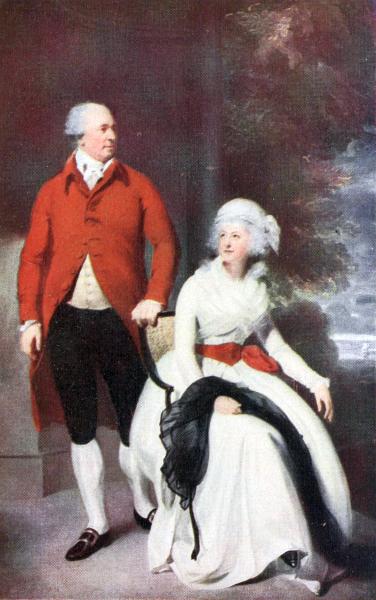
PLATE III.—PORTRAIT OF MR. AND MRS. JOHN JULIUS
ANGERSTEIN
(In the Louvre)
This work, despite one or two regrettable conventions from which the
painter was never entirely free when he put more than one figure on
his canvas, is of more than passing interest. Mr. Angerstein was a
great collector of pictures, a wealthy man to whom the painter was
often in debt. The head of Mrs. Angerstein is beautifully posed.
At a very early age little Thomas Lawrence developed a wonderful gift
for making life-like sketches, and at the same time he inherited his
father’s gift of recitation. Such an effective combination seemed to
be too good to waste, and the elder Lawrence employed the lad to
improve custom in the Bristol tavern over which he presided in his own
careless fashion. Visitors were invited to hear the infant prodigy
recite, or if their ears were duller than their eyes, they were
invited to sit for their portraits. Doubtless this was excellent for
custom, but it did not avail altogether, for the Bristol house on the
great Bath Road soon passed into the hands of unsatisfied creditors,
and the family moved, not without considerable private aid, to the
Black Bear Inn at Devizes, then a place of importance to the coaches
passing on their way to and from the west. At Devizes the boy
received a little education, nothing better than a smattering, and was
called upon at short intervals to exhibit his precocity. He soon found
an influential and appreciative audience.
A large proportion of those who patronised the Black Bear Inn were men
of position and culture; they could not only appreciate the boy’s
gifts, but could reward them. Indeed we read that a few years later
the elder Lawrence received an offer from one of his old-time
visitors, Sir Henry Harpur, to send the boy to Italy and have his
gifts developed in the best schools. Unhappily the father knew as much
about art as he did about inn-keeping; he was indignant rather than
pleased with the suggestion that foreign study could improve the
child’s gifts. “My son’s talents,” he replied, “require no
cultivation,” and this answer says more for his stupidity than all
his repeated failures to adapt himself to any one of the many
occupations he followed so unsuccessfully until the time came when he
could live in comparative affluence upon the proceeds of his boy’s
talent. Doubtless in the latter days he ever prided himself upon the
discernment that had kept the lad by his side.
The artist’s earliest work would seem to have consisted of chalk
drawings which were produced with great rapidity and sold to his
father’s customers for half a guinea or a guinea each. The likeness in
each case must have been good, for it is on record that one of his
earliest efforts, a sketch of Lady Kenyon, who stayed at his father’s
inn with her husband, was easily recognised five-and-twenty years
later. But drawing was not the only accomplishment of his early days.
He was, as has been remarked earlier, a clever reciter. Garrick heard
him twice when he was a lad, and on the second occasion asked his
father if “Tommy was to be an actor or a painter?” The father had no
doubt at all about the profession that promised to be the more
profitable, and, in later years, when the artist was very anxious to
go upon the stage, was at great pains to persuade him not to do so. As
his son was more intent upon helping the family than anything else,
the advice was taken, and doubtless the results justified it. The
theatre could have offered no equal reward for talent, however great.
To the end of his days the painter was a fluent reciter, and possessed
a mastery over his voice that could turn every tone into a caress.
More than one woman was misled by it into thinking that the artist
was seriously in love with her.
As early as 1785 young Lawrence received his first public recognition;
it came from the Society of Arts, which was then quite a serious rival
of the Royal Academy. He sent a copy on glass of a Transfiguration,
perhaps one he had seen at Corsham House, the seat of the Methuen
family. It was made two years before, when the painter was fourteen
years of age, and although the rules of the Society did not admit of a
work being put in for competition more than a year after it was
painted, the Council felt bound to make an exception in this case, and
presented him with five guineas and a silver-gilt palette. For a boy,
and he was nothing more, this was a considerable triumph, but it had
been led up to by much startling work at Devizes and Oxford. When
young Lawrence was ten years old, Daines Barrington (Gilbert White’s
correspondent) had referred to him as “a lad who can copy historical
pictures amazingly, and is likewise an excellent reader of blank
verse.”
From Devizes the family had gone to Oxford, where they lived and
thrived upon the proceeds of the boy’s pencil. Among his sitters were
the Bishops of Oxford and Llandaff, Earls Bathurst and Warwick,
Countess Egremont, and many others. The visitors to the inn at Bristol
and Devizes had spread his fame, and Oxford was such a liberal patron
that Thomas Lawrence, senior, moved to Bath, where he took a house at
one hundred pounds a year rental as a boarding-house. Sitters were
expected, and did not fail. Here it was that young Lawrence painted
Mrs. Siddons for the first time, that Sir Henry Harpur offered to
adopt him, and that Hoare the painter, to whom the boy was indebted
for many hints, wanted him to sit for a picture of the youthful
Christ. Small wonder that if at the age of seventeen, after he had
taken up oils instead of crayon, and had copied a certain number of
old masters—Rembrandt, Reynolds, Titian—his thoughts turned to
London, the Mecca of all British art pilgrims; and he wrote to his
mother with the unblushing confidence of youth to say, he “would risk
his reputation for the painting of a head”—the reputation of
seventeen years—“with any save Sir Joshua.” Gainsborough, Romney, and
Hoppner were very much in evidence then, and the challenge would seem
an odd one if it had been more than a lad’s confidential boast to his
mother.
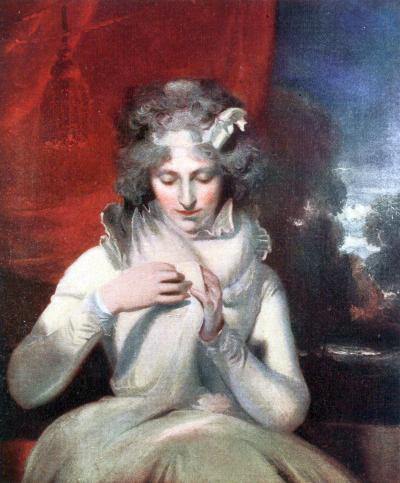
PLATE IV.—MISS GEORGINA LENNOX, AFTERWARDS COUNTESS
BATHURST
(In the collection of Earl Bathurst)
Fine colouring and effective modelling are noticeable qualities in
this, one of the painter’s highly successful portraits. Here we have a
painting that does not suffer from the costume of the sitter and a
rather daring but completely fortunate effect in the contrast between
the curtain background and the dress. The landscape is, as usual,
quite conventional and uninspired.
So he came to London, entered himself as an Academy student, and took
apartments in Leicester Fields, a district made popular by Sir Joshua.
His father was behind him in all this; and as there was some money in
hand, and a good send-off was necessary, an exhibition of the boy’s
work was arranged. To make it still more attractive, the worthy
innkeeper included a collection of stuffed birds recently acquired.
Between the amateurs of art and ornithology the exhibition fell to the
ground; it was a failure unredeemed. Happily the funds were still
sufficient to enable young Lawrence to take a house in Duke Street,
St. James’, and a studio in Jermyn Street near by. Hoare introduced
him to Sir Joshua, for whom Lawrence’s admiration was ever
whole-hearted. The great painter looked at his work, and remarked,
“Study nature—study nature.” In years to come, looking at some of
the famous early portraits, he remarked with the rare generosity that
was one of his characteristics, “This young man has begun at a point
of excellence where I left off.”
Success did not come with Lawrence from the provinces; a few years
were to pass before it visited him in London and elected to remain
associated with his work as long as he lived. He found many friends,
and was much at the house of Mrs. Siddons, whose portrait as Zara he
had painted four years earlier. Her family consisted then of two boys,
Henry and George, and two daughters, Sarah Martha (Sally), then twelve
years old, and Maria, aged eight. It was round the lives of these two
girls that the strangest romance of Lawrence’s life was to be woven.
Both Sally and Maria were very attractive girls, with the fragile
beauty that suggests early in life a tendency to consumption. John
Kemble, another firm friend of Lawrence, was brother of Mrs. Siddons.
The first three years that the artist spent in London were not
associated with any striking successes, but in 1790 a portrait of the
Queen and Princess Amelia attracted considerable attention, and
pleased King George III., who liked British artists best if they had
not studied abroad. The royal patronage came at the right time.
Already Lawrence was beginning to experience the financial
difficulties that never left him as long as he lived, no matter what
his income might be. He was making an allowance of £300 a year to his
parents, and for the rest, his earnings “melted,” says Allan
Cunningham, “like snow on a thatch.” King George was royal in his
patronage, and expressed to the Royal Academy his wish that the young
artist should be made an Associate forthwith. To this suggestion there
was great opposition, and in the end the difficulty was solved by
making the artist a Supplementary Associate, the only one in the
Academy’s history.
In 1792 great honours were achieved. The King appointed Lawrence to be
his painter in ordinary, in succession to the late Sir Joshua
Reynolds, passing over Romney, Hoppner, Opie, and others, whose claims
to the honour were held to be greater. Nothing succeeds like success,
and the Dilettanti Society, suspending their regulation that said
nobody who had not crossed the Alps could join their brotherhood,
elected Lawrence and made him one of their chosen painters. He painted
full-length portraits of the King and Queen, to be sent as a
present to the Emperor of China, moved from Duke Street to Bond
Street, and raised his prices all round, charging one hundred guineas
for full-length portraits, fifty for half-lengths, and twenty-five for
heads. In 1794 he received the full honours of the Academy; a year
later the poet Cowper sat to him, and was so pleased with the portrait
that he invited the artist to Weston.
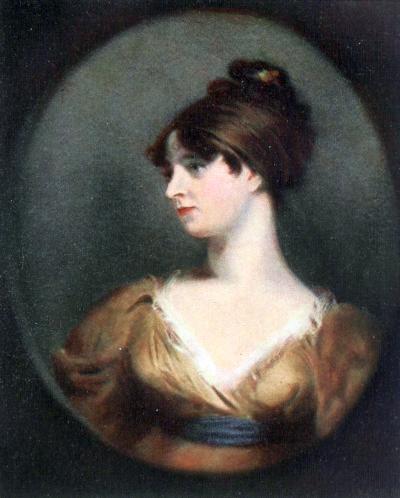
PLATE V.—MISS MARIA SIDDONS
(In the Wallace Collection)
The portrait of the lady with whom the artist was in love, and to whom
he paid his vows, is a tribute to one side of the painter’s art. He
has contrived to put far more into it than the mere quality of
attractiveness. The constitutional delicacy of the sitter, her refined
and sensitive nature, are clearly expressed, and the colour harmony is
attractive.
Soon after this Lawrence would seem to have had some grave doubt
as to whether his gifts were completely expressed through the
medium of portraiture. The dramatic sense was very strong in
him—portrait-painting could not quite satisfy it. To be “master of
the unlettered nameless faces” sufficed him no longer, and he started
a series of big canvases that added more to his labours than his
fame. Staying with his great friend Fuseli at a house in Pembrokeshire
he saw the artist leaning over some rocks that stand above the Bay of
Bristol. The pose gave him an idea for a big canvas known as “Satan,”
that was painted in 1797, found its way to the Duke of Norfolk’s
collection, and then to the Academy authorities. A year later he gave
London its first view of “Coriolanus in the house of Aufidius,” and
followed this with other classical studies—Hamlet, Cato, and others,
for which John Kemble sat.
In the opening days of 1798 Lawrence proposed to Maria Siddons, and
the family’s consent was given to the union. The engagement was brief.
Within a few weeks he confessed to Mrs. Siddons that he had mistaken
his feelings, and asked to be allowed to woo Sally Siddons instead.
To this startling request Mrs. Siddons gave her consent, but kept the
truth back from her husband and brothers. To Maria the shock was
naturally a severe one, and for a consumptive girl, whose medical
treatment consisted of confinement to the house and repeated
bleedings, it may even have been a contributory cause of death. Be
this as it may, and her correspondence shows that she did recover from
the first shock, the truth remains that she passed away in October of
the same year, and on her death-bed implored her sister not to marry
Lawrence. In “An Artist’s Love Story,” to which reference was made in
an earlier chapter, the whole story of the engagement and its tragic
dénouement is set out at length.
There seems no reason to doubt that Lawrence would have married Sally
Siddons had he been able to do so, when Maria had passed from the
scene, and that in years to come he was profoundly moved by her death.
We know, too, that he died a bachelor, though the opportunities for
marriage that came in his way were almost startling in their number;
so it well may be that there were deeper springs of devotion and
loyalty in his heart than were expressed by his pen. Sally Siddons
died in 1803, when Lawrence was thirty-four years old, and had more
than a quarter of a century to live. We may then give him the benefit
of the doubts that have arisen in the minds of his contemporaries and
biographers. Some still declare that Maria Siddons died of a broken
heart, but the recently published correspondence throws a measure of
doubt upon the statement; and fair-minded people will incline to the
belief expressed by Allan Cunningham that “she died of a disease and
a doctor.”
While the social tragedy was affecting his private life, Lawrence was
making great headway in his profession and out of it. In society he
was an established favourite; he had a handsome face, a fluent and
honeyed tongue, he wrote agreeable verses, and made facile sketches,
which he would give freely to his friends and acquaintances. His most
intimate associates were Smirke, the architect of the British Museum,
Farrington and Fuseli the artists, John Kemble the actor, and Mrs.
Siddons, whom he painted as Aspasia as well as Zara, though he never
approached the beauty of the Gainsborough Siddons in our national
collection. Some of his paintings went to engravers, who paid big
prices for them; and though after moving from Bond Street to Greek
Street he settled finally at 65 Russell Square, he never entertained
on such a scale as his position would have justified. In fact he
seldom or never gave a dinner party, excusing himself on the ground
that he had neither wife nor mistress to superintend one. His prices
rose steadily; he took half his fee in advance, but was always in debt
and difficulty, and frequently forced to borrow at a high rate of
interest. A devoted and conscientious worker, he always stood to his
canvas, and seldom spoke to his sitter. At a first sitting he would
draw the sitter’s head, at the second he would start painting. He told
friends that on one occasion he worked for thirty-seven hours
consecutively, a marvellous feat for a man who never sat down to
paint.
In the year 1801 Lawrence passed through a very critical time. The
Princess of Wales sat to him at Montague House, Blackheath; he stayed
in the house while at work on the portrait, spoke and wrote in rather
indiscreet fashion, guiltless of everything save enthusiasm, and
provoked a scandal of the first magnitude that alienated royal favour.
The scandal grew and spread and was partly the subject of the
commission of inquiry that sat several years later, and whose labours
were known as “The Delicate Investigation.” Lawrence was not even
referred to in the report issued by the commissioners, but he made a
difficult position worse by going out of the way publicly to declare
his own and the Princess’s innocence. For some time after the scandal
was broached, the lady visitors to the studio in Russell Square were
few and far between, and Lawrence was never as happy with men as with
women. The genius of his brush was essentially feminine.
In the years wherein the sun of court favour was withheld, and
fashionable women were less constant in their attention, he was
nevertheless extremely busy, and was able to raise his prices in 1802,
1806, 1808, and 1810, the last date being the year of Hoppner’s death.
His other rivals included Beecher and Owen. For one who had
comparatively few expenses, a large income, and neither parents, wife,
nor children to support, the general position should have been very
satisfactory, but nothing seemed able to keep Lawrence in easy
financial circumstances. Financial difficulties followed him as they
had followed his father before him; neither his great industry nor his
raised prices availed to keep him from all manner of small troubles.
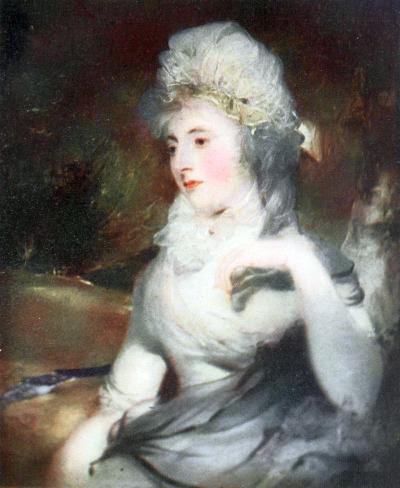
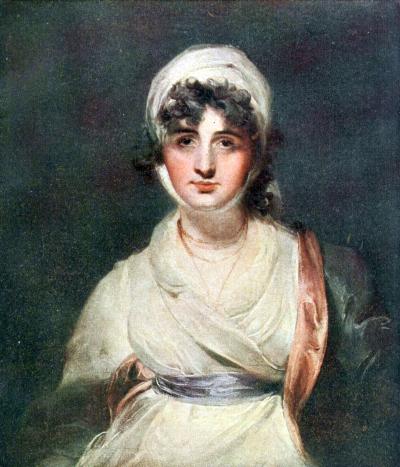
PLATE VI.—PORTRAIT OF A LADY
(In the Wallace Collection)
This portrait of an unknown sitter is as happily posed as it is
unhappily dressed. One notices two points of interest—the fine
painting of the head and the atmosphere of self-consciousness that is
common to so many of the Lawrence portraits.
The early years of the nineteenth century passed without any very
stirring events apart from the appointment of the Commission for the
“Delicate Investigation.” Lawrence kept his place, earned a great deal
of money, spent a great part before he received it, met some of the
greatest men of the day—statesmen, soldiers, literati,
ecclesiastics, and the rest—and was a frequent visitor to country
houses where he took part in private theatricals. Indeed he may be
said to have survived the loss of royal favour very creditably. As the
years passed, subduing all recollection of the scandal associated with
Montague House, Blackheath, his name was brought forward again in
Court circles, where he was greatly missed by the women, if not by the
men. There was no other painter who could combine the portrait with
truth and flattery in such exquisite proportions that they conveyed
an impression of youth and beauty while stating all essential truths.
The truth was well summed up by one of Sir Thomas’s biographers who
wrote: “Lawrence lavished summer colours upon autumn and on winter,
and gave to declining years the vigour of the life of youth.”
It had long been an ambition of the painter to visit Paris, and when
in 1814 the entrance of the allied armies into the French capital
opened it to travellers, Lawrence was prompt to take advantage of the
situation. Now after many years he hoped to see the famous collection
in the Louvre, enriched as it had been of late years by the thefts of
Marshal Soult and others of Napoleon’s generals with a flair for
works of art. But before he could complete his work the painter was
summoned back to London. On the intervention of the first Marquis of
Londonderry, the Prince Regent had taken the proper and charitable
view of the Montague House affair.
Lawrence was commissioned to paint for Windsor Castle a commemoration
gallery of those who had restored the Bourbons. The sitters chosen
were the Emperor of Russia, the King of Prussia, Blücher, and Hetman
Platoff. The portraits were painted, and at about the same time,
Wellington and Metternich sat to the painter. Lawrence recovered all
the ground he had lost, and gained fresh honours in rapid succession.
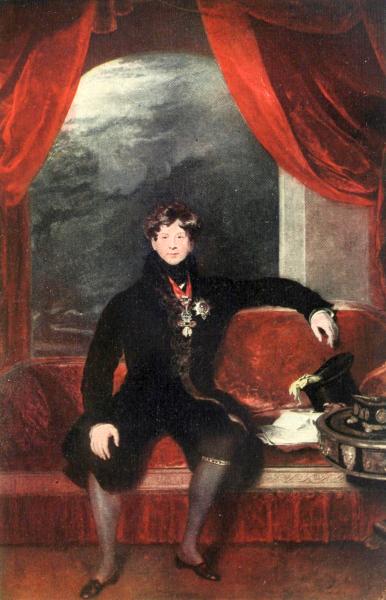
In the year of Waterloo he painted the portrait of the Prince Regent,
who knighted him; in 1817 he painted at Claremont the portrait of the
Princess Charlotte. To these years his biographers trace the
beginning of his relations with Mrs. Wolfe, wife of a diplomat
accredited to this country. Cunningham refers to her as the wife of a
Danish Consul, Mr. Knapp says she was the wife of the German
Ambassador, but the point is not worth investigating. Suffice it she
was a clever, attractive woman, separated from her husband, and the
artist seems to have established with her intimate but platonic
relations. He was devoted to her, but, then, he had a very susceptible
heart. The friendship continued until the death of the lady, whom the
artist survived only a few months.
In 1818 a further and greater honour than any that had come his way
hitherto was conferred upon Sir Thomas. He was sent to Aix-la-Chapelle
to paint members of the Congress then sitting there, with instructions
to proceed to Vienna and Rome. An allowance of one thousand a year
for travelling expenses made the commission still more attractive, and
the artist, free at last to travel and to work in the most stimulating
surroundings Europe could provide, remained away from England for a
year and a half. In his work he distinguished himself. His sitters
included Emperor Francis of Austria, Louis XVIII., Charles X.,
Archduke Charles, Metternich, Techernicheff, Ouvaroff, Hardenberg,
Nesselrode, Baron Gentz, Earl Bathurst, Lord Liverpool, the Marquis of
Londonderry, the Duke of Cambridge, and Mr. Canning. In Rome the aged
Pontiff Pius VII. gave him nine sittings, and he painted the portrait
of the great Cardinal Gonsalvi, “the Pitt of Rome.” But it was not
only to paint that he went to the Eternal City; he had much to learn,
and some of the letters he wrote to London during his stay are
remarkable for their sound judgment and insight. The supreme master of
art for him was Michael Angelo, following him Raphael, Correggio,
Titian, Sir Joshua, and perhaps J. M. W. Turner came in the order
named. To the end Lawrence was faithful in his devotion to the art of
the first President of the R.A. “I don’t see why British artists wish
to travel abroad when we have Sir Joshua in England,” he said in his
untravelled days. He was not heard to express this opinion again in
the years when he had crossed “the narrow seas.” Eighteen months of
foreign travel did much for him; he brought a wider mind and a bigger
intelligence home with him; to say nothing of a collection of gifts
from European rulers and honours from many academies of art. From the
social standpoint it is hard to believe that life could have given
more than it gave in 1818-19.
Lawrence was able to visit several Italian cities, and returned to
London at the end of his eighteen months’ sojourn in the country, to
find that Benjamin West had just died, and that he had been elected to
succeed him as President of the Royal Academy. His attitude was
dignified. “There are,” he said, “others better qualified to be
President; I shall, however, discharge the duties as well and wisely
as I can. I shall be true to the Academy and, in my intentions, just
and impartial.” In giving his consent to Lawrence’s election, King
George IV. presented the new P.R.A. with a gold chain and medal. King
George also sat to him,[1] and was heard to say that Lawrence was “a
well-bred gentleman.”
In many respects the Academy chose wisely. Sir Thomas was a man who
had moved and still moved in the highest social circles, whose
pleasant manners made friends and conciliated foes; he was very
popular with all save the most critical of contemporary artists. But,
on the other hand, he was never a great teacher, and his addresses to
the students were of little worth. He would seem to have entertained
the idea of running a studio after the old Italian fashion; perhaps he
had learned about it in Rome. There would have been a certain number
of student apprentices to prepare the work, and he would have trained
the cleverest among them to do still more. Unfortunately there was not
enough money to start the required establishment; not all the foreign
travel, the handsome presents, and the considerable fees had
availed to stem the chronic leakage in the exchequer, and the scheme
came to nothing. Sir Thomas resumed his place in London life, bringing
an enhanced reputation; and all the old scandals being quite
forgotten, the house in Russell Square was thronged with fair women
who trusted to the artist, and not in vain, to make them fairer still.
His portrait of Lady Blessington, reproduced here, called for
recognition from Lord Byron in the stanzas beginning—
“Were I now as I was, I had sung
What Lawrence has painted so well.”
Both Byron and Sir Walter Scott spoke of the social graces of Sir
Thomas. His manners would seem to have been distinguished, though his
taste, generally correct, was not always above suspicion.
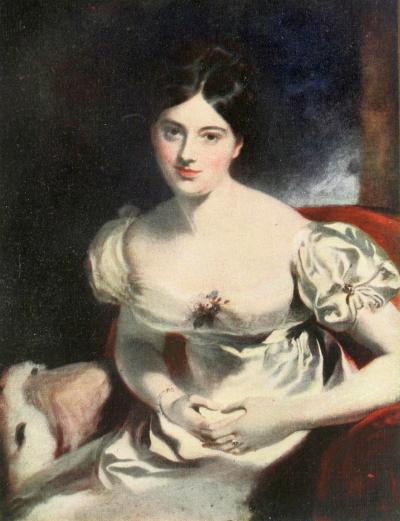
PLATE VII.—PORTRAIT OF COUNTESS BLESSINGTON
(In the Wallace Collection)
This portrait is one by which the painter is best known, and is the
singularly felicitous expression of a very beautiful woman. It reveals
the strength, and perhaps a little of the weakness, of the artist, and
made a great sensation when first exhibited in London, moving Lord
Byron to an expression of praise, to which brief reference is made in
the text.
In 1825 he was called to Paris, where he painted Charles X., the
Dauphin, and others, and received the title of Chevalier of the
Legion of Honour. The Academies of St. Luke in Rome, and those of
Florence, Venice, Bologna, Turin, Vienna, and Copenhagen, had given
him honorary memberships; the Fine Arts Academy of America had done
the same, and there were other bodies that had expressed their
sentiments in similar form.
As he approached his sixtieth year, Sir Thomas would seem to have
become conscious of failing health and the double burden of old age
and loneliness. He had acquired every honour within his grasp, but he
had lost his best friends through death, and monetary worries still
troubled him. This last fact is the more surprising, because his
prices were now very high indeed. They ranged from two hundred guineas
for a head to seven hundred for an “extra length portrait,” and even
at these high prices there was no lack of patronage. He had no
extravagances of a discreditable kind, but he could not resist the
chance of buying a fine drawing, whether old or new, and as, when his
collection was sold after his death for twenty thousand pounds, it was
said to have fetched far less than it cost, one large source of
expenditure is accounted for. Then again the President was a
singularly generous man, who could not refuse an appeal, and some of
those who were round him were quick to take advantage of his weakness.
Making every allowance for his expenditure as collector and
philanthropist, it is hard to understand why he could earn so much and
have so little. Even when he painted the portrait of Sir Robert Peel
he wrote letters asking for the money before the work was finished.
Happily the statesman was a good and understanding friend; not only
did he entertain the artist very frequently, but he commissioned him
to paint a gallery of distinguished Englishmen for his country
house—a commission the painter did not live to execute.
In the late twenties of the nineteenth century, Sir Thomas discovered
a serious state of mind and became a churchman. The death of Mrs.
Wolfe, to whom reference has been made, in the year 1829, grieved him
so deeply that he laid aside his brush for a month. The Irish Academy
gave him its honorary membership, and the city of Bristol, in which he
was born, gave its freedom, and these were the last of his honours.
Those about him noted an ever-increasing feebleness, a failing
interest in life, though he stuck manfully to his duty, and early in
January 1830 the end came. He was buried in St. Paul’s Cathedral by
the side of Reynolds and Benjamin West. All the Academicians attended,
scores of the aristocracy sent mourning coaches, and Sir Robert Peel
was among the pall-bearers.