PROBLEMS
Serious problems arise from a consideration of the
Latin democracies, which are in the full tide of
development. They are divided, in spite of
common traditions, and they comprise races whose
marriage has not been precisely happy. In spite
of the resources of the soil, and its fabulous wealth,
these States live by loans. Their political life is
not organised; the parties obey leaders who bring
to the struggle for power neither an ideal nor a
programme of concrete reforms. The population
of these States is so small that America may be
called a desert.
We will consider all these problems minutely:
problems of unity, of race, of population, of
financial conditions, and of politics.
The foundations of unity: religion, language, and similarity of
development—Neither Europe, nor Asia, nor Africa presents
this moral unity in the same degree as Latin America—The
future groupings of the peoples: Central America, the
Confederation of the Antilles, Greater Colombia, the Confederation
of the Pacific, and the Confederation of La Plata—Political and
economical aspects of these unions—The last attempts at
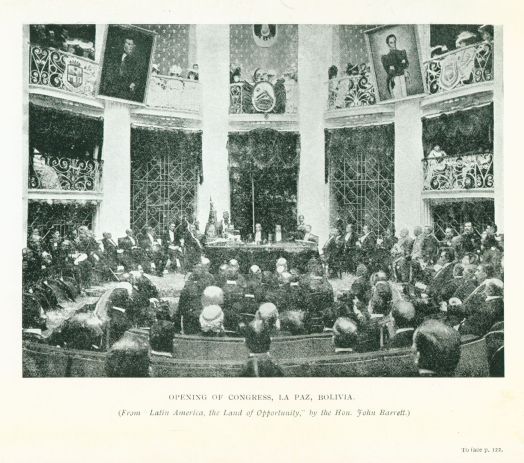
federation in Central America—The Bolivian Congress—The
A.B.C.—the union of the Argentine, Brazil, and Chili.
A professor of the American university of Harvard,
Mr. Coolidge, writes that if there is one thing that
proves the backwardness of the political spirit of
the Latin Americans, it is precisely the existence of so
many hostile democracies on a continent which is in
so many respects uniform. With so many points in
common, with the same language, the same civilisation,
the same essential interests, they persist in
maintaining the political subdivisions due to the mere
accidents of their history.[1] And he advises in all
sincerity that these inimical nations should associate
themselves in powerful groups, a means of defence
which no nation could oppose, neither the United
States nor Europe. If, for example, Bolivia,
Uruguay, and Paraguay were to unite with the
Argentine Republic; if the old United States of Colombia
were re-established, and if, as formerly, Venezuela
and Ecuador, with perhaps Peru, were to form a
confederation; if the republics of Central America were
at last to succeed in forming a durable confederation,
and were perhaps to join Mexico—then Latin America
would consist only of a few great States, each of
which would be sufficiently important to assume by
right an enviable position in the modern world, and
to fear no aggression on the part of any foreign
power.
The Latin Republics pay no attention to this wise
counsel; we observe among them a tendency toward
further disagreement, toward an atomic disintegration.
Originally a different and a wider movement,
in the sense of the close union of similar nationalities,
did manifest itself. The contrary principle prevails
to-day, and it results in the separation of complementary
provinces and the conflict of sister nations.
During a century of isolated political development,
and under the influence of territory and climate,
divergent characteristics have manifested themselves
in the nations of America. Mexico is without the
tropical eloquence we find in Colombia; the Chilian
inflexibility contrasts with the rich imagination of the
Brazilians; the Argentines have become a
commercial people; Chili is a bellicose republic;
Bolivia has an astute policy, the work of a slow and
practical people, which has given it a new strength;
Peru persists in its dreams of generous idealism;
Central America remains rent by an anarchy which
seems incurable; Venezuela is still inspired by an
empty "lyricism." Some of these republics are
practical peoples governed by active plutocracies;
others are given to dreaming and are led by
presidents suffering from neurosis. In the Tropics we
find civil war and idleness; on the cold table-lands,
in the temperate plains, and in the maritime cities,
wealth and peace.
But such divergences do not form an essential
separation; they cannot destroy the age-long work
of laws, religion, institutions, tradition, and language.
Unity possesses indestructible foundations, as old and
as deep-rooted as the race itself.
From Mexico to Chili the religion is the same;
the intolerance of alien cults is the same; so are the
clericalism, the anti-clericalism, the fanaticism, and
the superficial free thought; the influence of the
clergy in the State, upon women, and the schools;
the lack of true religious feeling under the
appearance of general belief.
To this first very important factor of unity we
must add the powerful and permanent influence of
the Spanish language, whose future is bound up with
the future of the Latin Transatlantic peoples.
Sonorous and arrogant, this language expresses, better
than any other, the vices and the grandeur of the
American mind; its rhetoric and its heroism, its
continuity of spirit from the feats of the Cid to the
Republican revolutions. The Spanish tongue is an
intimate bond of union between the destinies of the
metropolis and those of its ancient colonies, and it
separates the two Americas, one being the expression
of the Latin and the other of the Anglo-Saxon genius.
The language is always to a certain extent
transformed in these democracies; provincialisms and
Americanisms abound; the popular tongue differs
from the autocratic Castilian. Don Rufino Cuervo
predicts that Spanish will undergo essential alterations
in America, as was the case with Latin at the time of
the Roman decadence. An Argentine writer, Señor
Ernesto Quesada, believes that a national language
is in process of formation on the banks of the Plata,
and that the barbarisms of the popular speech are
forecasts of a new tongue. In Chili an exalted
patriot has upheld the originality of the Chilian race
and language in an anonymous book, claiming that
they derive from the Gothic. Thus is the effect of
the national spirit exaggerated. Among the
Ibero-American republics there is a profound and general
resemblance in the pronunciation and the syntax of
the language; the same linguistic defects even are
to be found in all. The Spanish of the Peninsula
loses its majesty overseas; it is no longer the
language, lordly in its beauty, solemn in its
ornaments, of Granada, of Mariana, of Perez de Guzman.
Familiar, declamatory, pronounced with a caressing
accent, the Castilian of America is uniform from
North to South.
More effectual than religion and language the
identity of race explains the similarity of the
American peoples, and constitutes a promise of lasting
unity. The native race, the Spanish race, and the
negro race are everywhere mingled, in similar
proportions, from the frontier of the United States to
the southern limits of the continent. On the Atlantic
seaboard European immigration, an influx of
Russians, Italians, and Germans, has given the
supremacy to the white race, but this influence is
limited to small belts of land, when we consider
the vast area of the continent.
A single half-caste race, with here the negro and
there the Indian predominant over the conquering
Spaniard, obtains from the Atlantic to the Pacific.
There is a greater resemblance between Peruvians and
Argentines, Colombians and Chilians, than between the
inhabitants of two distant provinces of France, such
as Provence and Flanders, Brittany and Burgundy, or
between the Italian of the north, positive and virile,
and the lazy and sensual Neapolitan, or between the
North American of the Far West and the native of
New England. The slight provincial differences
enable us the better to understand the unity of the
continent.
This identity explains the monotonous history of
America. A succession of military periods and industrial
periods, of revolts and dictatorships; perpetual
promises of political restoration; the tyranny of
ignorant adventurers, and complicated and delusive
legislation.
It is in the great crises of its history that the
essential unity of the race is revealed. The Wars of
Independence were a unanimous movement, an
expression of profound solidarity. In 1865, after
half a century of isolation, the democracies of the
Pacific once more united to oppose Spain's attempt
at reconquest. Soldiers of different nations, who had
already fought in bygone battles, but against each
other, now fought side by side for the common liberty.
The same unity of inspiration has brought the nations
together in opposition to many projects of conquest:
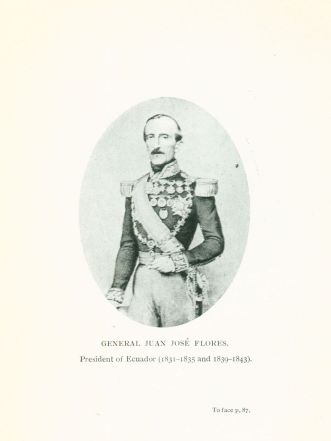
the expedition of Flores against Ecuador, of France
against Mexico, and the Anglo-French alliance
against Rosas. At the second Hague Congress in
1907 Latin America revealed to the Western world
the importance of her wealth and the valour of her
men, and supported her ideal of arbitration; to the
Monroe doctrine she opposed the doctrine of Drago,
and, without preliminary understanding, asserted her
unity.
No other continent offers so many reasons for
union, and herein lies the chief originality of Latin
America.
In Europe states and races are in conflict, and the
unstable equilibrium is maintained only by means of
alliances. Religions, political systems, traditions, and
languages differ. History is merely a succession of
turbulent hegemonies: of Spain, England, France,
and Germany. We find artificial nations, like
Austria; unions of democratic and theocratic peoples,
like the Franco-Russian Alliance; rival empires of
the same race, like England and Germany; political
alliances of alien races, like Germany and Italy; and
the dispersion of peoples painfully seeking to recover
their lost unity, like the Poles, the Irish, and the
Slavs. The federation of Europe is a Utopian dream.
Africa is not yet autonomous; it is a vast group
of enslaved peoples of primitive races, colonised by
the great European powers. There the Anglo-Saxon
genius is seeking to establish a political union between
English and Dutch, and one day, perhaps, the empire
dreamed of by Cecil Rhodes will stretch from Cairo
to the Cape. But the unity of Africa is impossible;
for the colonists come to the Dark Continent as
conquerors, as the representatives of hostile interests;
they can but quarrel over Morocco, Tripoli, and the
Congo. Oceania possesses only a partial unity in
the Australian commonwealth, the work of England.
In Asia it is still more impossible to guess whence
a future unity might arise. Mussulmans and
Buddhists share India; Japan has won only an
ephemeral superiority; China retains all her
irreducible independence; in Manchuria and Korea
Russian and Asiatic interests are opposed; in
Turkestan, Persia, and Tibet the conflicts of race
and religion are enough to destroy any hope of union.
In America and in America only the political
problem is relatively simple. Unity is there at once a
tradition and a present necessity, yet in spite of this
fact the disunion of the Latin democracies persists.
Forty years ago Alberdi thought it necessary, and
believed it possible, to redraw the map of America.
To-day the Latin nations overseas are less plastic;
the frontiers seem too definitely established, and
prejudices too deeply rooted to allow of such a
recombination; but the formation of groups of nations
is no less urgent. If the unity of the continent by
means of a vast federation in the Anglo-Saxon
manner seems impossible, it is none the less necessary
to group the Latin-American nations in a durable
fashion, according to their affinities. While respecting
the inevitable geographical inequalities which give
certain peoples an evident superiority over others,
and the no less inevitable economic inequalities which
create natural unions, it would still be possible to
found a stable assemblage of nations, a Continent.
There is a spontaneous hierarchy in the Latin
New World; there are superior and inferior
democracies, maritime nations and inland states.
Paraguay will always be inferior to the Argentine
Republic; Uruguay to Brazil; Bolivia to Chili;
Ecuador to Peru; Guatemala to Mexico; as much
from the point of wealth as in population and
influence. The preservation of the autonomy of republics
which differ so greatly in the extent and situation
of their territories can only be removed by federative
grouping. To oppress and colonise these countries
is the desire of all imperialists, no matter whence
they come; but the peace of America demands
another solution; which is, not the synthesis which
some one powerful State might enforce, but the
co-operation of free organisms. By grouping
themselves about more advanced peoples the secondary
nations might succeed in preserving their threatened
autonomy.
Central America, exhausted by anarchy, may aspire
to unity; these five small nations maintain a
precarious independence in the face of the United
States. Until 1842 Central America was only one
State, and subsequent attempts at unification proved
that this was not merely the artificial creation of its
politicians. When the Panama Canal has divided the
two Americas, and increased the power of the United
States, these nations, together with Mexico, might
form a true Spanish advance-guard in the North.
Moreover, the free islands of the Caribbean Sea
might be united in a Confederation of the Antilles,
according to the noble dream of Hostos. Greater
Colombia might be reconstituted, with Ecuador, New
Granada, and Venezuela. Their greatest leaders have
desired their union, as a preventive of indefinite and
fractional division and internal discord. On the basis
of common traditions, and for important geographical
reasons, these three nations might form an imposing
Confederacy. Once the Canal is open, this group of
peoples, stretching from the Atlantic to the Pacific,
on the northern extremity of the continent, would
form a massive Latin rampart, a country capable of
absorbing European emigration and of opposing to
Anglo-Saxon invasion the resistance of a vast
populated and united territory.
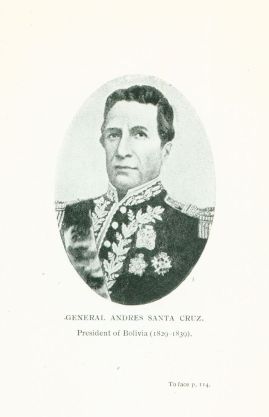
Bolivia, the inland republic, deprived of her
coast-line by Chili, has already been twice united to Peru;
in 1837, under the authority of Santa-Cruz, and in
1879, to oppose the supremacy of Chili on the
Pacific. What should henceforth separate it from
a people to which it is united by so many historical
and economic ties, and a similitude of territory and
race from Cuzco to Oruro? Chili and Peru will
be either two perpetual enemies, or two peoples drawn
together by a useful understanding. Their
geographical proximity, their mutually complementary
products—the tropical fruits of Peru and the products
of the temperate zones of Chili—might contribute to
bring them together. Have we not here an actual
economic harmony? In the moral domain the very
causes which have engendered hatred between Chili
and Peru, from the time of Portales to that of Pinto,
might equally prove to be the elements of future
friendship. Peru, impoverished by the Chilian
conquest, and deprived of her deposits of nitre, would
no longer be the victim of the Chilian greed of gold,
nor the hatred of a poor colony for the elegant
vice-kingdom. Chili is wealthier than Peru, and her
people have more energy and more will-power,
although they may have less imagination, less nobility
of character, and less eloquence. The Peruvian
vivacity and grace may be contrasted with the prosaic
deliberation of Chili; the anarchy of the one country
with the political stability of the other; the idealism
of Peru with the common-sense of Chili. Physically
and morally these two countries complete one
another. The economic necessities of each might
form the permanent basis of a possible alliance. The
Confederation of the Pacific, formed by Peru, Bolivia,
and Chili, would be a safeguard against future wars
in America. Unhappily Chili professes and seeks
to enforce a superiority founded upon victory, just
as, when the German Empire was confederated,
victorious and warlike Prussia enforced her
superiority over artistic Bavaria.
The Confederation of La Plata, the heir to the
traditions of the colonial era, might be formed of
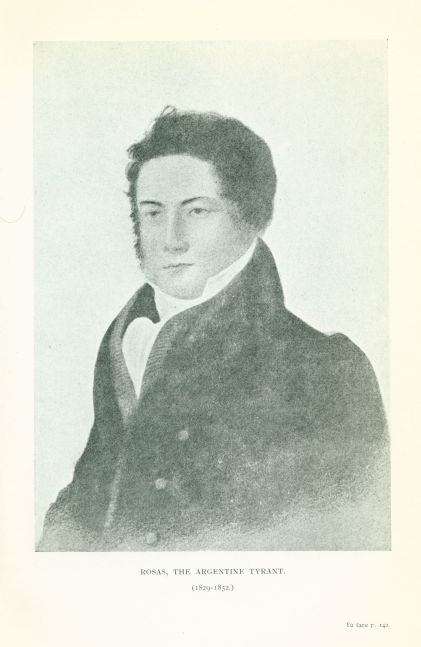
Argentina, Uruguay, and Paraguay. Rosas did seek
to create this great federal organisation. During the
course of the century Uruguay has extended her
sympathies alternately to the Argentine and to Brazil,
and Paraguay, during a period of epic grandeur,
defended her isolation. The union of these republics
was prevented by national rivalities and the ambitions
of their caudillos, but it will surely be effected in the
future under the pressure of the power of Argentina.
It is true that Uruguay has only too definite an
originality in the matter of intellect, from the point of
view of liberalism and education, but the federation
of the future would not be the imposition of a harsh
hegemony of one nation over others, but rather the
co-operation of republics with equal rights which had
at last understood the poverty of their isolated
condition. Paraguay, remote and concealed, ruled
sometimes by a Jesuitical and now by a civil dictatorship,
has need of a place in such a vast confederation of
cultivated peoples.
These groups of nations will thus form a new
America, organic and powerful. Brazil, with her
immense territory and dense population; the
Confederation of La Plata; the Confederation of the
Pacific; Greater Colombia: these will finally
establish the continental equilibrium so anxiously desired.
In the North, Mexico and Central America and the
Confederation of the Antilles would form three Latin
States to balance the enveloping movement of the
Anglo-Saxons. Instead of twenty divided republics
we should thus have seven powerful nations. We
should have not the vague Union of which all the
Utopian professors since Bolivar have spoken, but a
definite grouping and confederation of peoples united
by real economic, geographical, and political ties.
To realise these fusions there are both economic
and political methods. Hasty conventions would be
powerless to uproot the hatreds and the narrow
conceptions of patriotism peculiar to the American
peoples. The organisation of the continent should be
the work of thinkers, statesmen, and captains of
industry, a work fortified by time and history. To
the tradition of discord we must oppose another, the
tradition of union.
A series of partial commercial treaties, navigation
treaties, railway systems, customs unions, and
international congresses (like those recently held at
Montevideo and Santiago) may all be indicated as
means of realising unity. The railways above all
will create a new continent; for isolation and lack
of population are the enemies of American federation.
To-day these peoples do not know one another.
Paris is their intellectual capital, where their poets,
thinkers, and statesmen meet. In America everything
makes for separation: forests, plains, and
mountains. What does Venezuela know of Chili,
Peru of Mexico, Colombia of the Argentine? Even
in the case of neighbouring nations the political
leaders do not know one another. The psychology
of neighbouring peoples is a mystery; whence
traditional errors and disastrous wars. American
journalism is ignorant of nothing in European life—the
sessions of the Duma, the ministerial crises of
Roumania, the nobility of the Gotha Almanac, the
scandals of Berlin; but of the public life of the
American nations it publishes only the vaguest and
most erroneous news. By stimulating the love of
travel and building railroads these peoples would
escape from an isolation so perilous. "Every line
of railroad which crosses a frontier," said Gladstone,
"prepares the way for universal confederation." The
Yankees have understood this, which is why they are
preparing to build a great Pan-American railway to
unite the two Americas under their financial sceptre.
The line which has recently united the two
capitals of the South—Santiago and Buenos-Ayres—has
contributed to the formation of a solid
understanding between Chili and the Argentine. That
which will unite Lima and Buenos-Ayres in the near
future will bring the culture of the Argentine to
the Bolivian table-lands, as far as Cuzco, the centre
of Inca tradition; it will draw together the seaboard
populations of the two oceans, the Atlantic and the
Pacific, and will prove a powerful agent of civilisation
and unity. The great rivers of the Amazonian basin
from the Putumayo to the Beni, the affluents of the
Rio de la Plata, the Magdalena and the Orinoco,
united by new railroads, will also contribute to the
continental unity by multiplying international
relations. One may well repeat the celebrated phrase,
that to govern is to lay rails. Railways vanquish
barbarism; they attract the stranger, people the
desert, civilise the native. Political organisation and
internal peace correspond with the development of
the means of communication. With the appearance
of the rails the caudillos lose their influence, and a
double transformation is effected; in the interior by
the civilising action of commingled interests, and at
the exterior by the new relations which the multiplication
of railways involves.
Customs unions in Germany created the Imperial
unity; Mr. Chamberlain thinks that a Zollverein
would increase the power of the British Empire.
The economic grouping of nations prepares the way
for future confederations. The frequent congresses
which unify law and jurisprudence, and bring
together politicians, men of letters and scientists, all
tend to the same result. To increase the number of
these assemblies, to hold them in different capitals
of the continent, and to replace the Pan-American
Congresses, whose plans are somewhat indefinite, by
racial Latin-American Congresses, would be equally
to the profit of the economic and intellectual unity of
the continent, and the harmony of its politics and its
laws. An undivided, uniform American law,[2] a single
monetary system, a similar policy in respect of
protectionism and free trade, the unification of methods
of teaching, and the equivalence of academic
diplomas and university degrees, are questions that
might be discussed at these general assemblies. Each
nation would have ministers in the other republics,
who would be at once intellectual emissaries and
propagandists, while to-day American peoples who
send ministers to Austria or to Switzerland have no
accredited representatives in the capitals of adjacent
states. The national ambitions which satisfy our
politicians to-day would be replaced by a more ample
and original design, embracing the future of an
entire continent, as was the case a century ago.
In short, we should neglect no form of
co-operation—conventions, travel, diplomatic labours,
periodical congresses, commercial treaties, and partial
groups of nations. Nothing but a disastrous weakness
can perpetuate the present division of the Latin
peoples in the face of the unity of the United States.
The nations of the South are not unaware of this
necessity, and after a century of independence they
are seeking to reconstitute the ancient unions.
Central America, disturbed by periodic wars, is
endeavouring to create a Confederation. In 1895 a
treaty between Honduras, Nicaragua, and Salvador
formed the Republic of Central America; only Costa
Rica and Guatemala held aloof from this union. In
1902 all these nations, with the exception of
Guatemala, accepted a convention of arbitration. In
1905 the presidents of the five republics met at
Corinth in order to honour the work of Morazan and
Rufino Barrios; spontaneously, or at the instance
of the United States and Mexico, they signed various
treaties intended to realise the unity of the sister
nations. A Central American Pedagogic Institute
was created, and a "Bureau of the Five Republics,"
with the same object of unification. In 1907, after
nine different conflicts in the interval, a conference
of these same nations was assembled at Washington.
On this occasion a tribunal of arbitration for Central
America was installed, and the neutrality of Honduras
was recognised. This tribunal, which sits at Cartago,
in Costa-Rica, is to judge the conflicts between states
and the diplomatic claims of the governments and of
individuals. Moreover, the Republics of Central
America have agreed to a declaration which provides
that they will recognise no government which
has been enforced by a revolution or a coup d'État,
and that they will not intervene in the political
movements of neighbouring countries.
The Court of Arbitration thus established had
already, in 1909, settled differences between Salvador
and Honduras, and between Guatemala and
Nicaragua, by rejecting the pretentions of Honduras
in the one case and of Nicaragua in the other.[3] In
short, the United States and Mexico are leading these
peoples, who used to be in a condition of perpetual
discord, towards the unity necessary to their progress.
A Congress met recently (1911) at Caracas, which
was attended by the representatives of the states
liberated by Bolivar—Venezuela, New Granada,
Ecuador, Bolivia, and Peru. This was a truly
Bolivian assembly in honour of the national hero.
The object of this Congress was to reconstitute
Greater Colombia with the three Republics which
formerly made part of it—Venezuela, New Granada,
and Ecuador; this would be a return, after the lapse
of a century, to the harmonious union of the sister
peoples, which would truly give them a common
future.
The formation of a great Bolivian State, after a
period of isolation lasting more than a century, is
certainly the dream of generous statesmen. It is
not easy to conceive of the political union of peoples
as far removed as those of Venezuela and Bolivia,
but this assembly might well result in a natural union
of the peoples of the North; a new Greater
Colombia, whose provinces would stretch from the
Atlantic to the Pacific.
In the south the A.B.C., the alliance of the
Argentine, Brazil, and Chili, is the question incessantly
discussed in the sensational press, and in the
chancelleries, which love to surround themselves with an
atmosphere of mystery. These three nations, wealthy,
military powers, situated in distinct zones, are seeking
confederation; their ambition is to exercise in
America a tutelage which they consider indispensable.
Already the understanding of May, 1902, had limited
the armaments of Chili and the Argentine, and had
put an end to a long conflict. The rivality between
the Argentine and Brazil; the old friendship between
that country and Chili, which afterwards changed to
a jealous alienation; the rivalry between the Argentine
and Chili in the matter of wealth and power;
discord, threats of war, uneasy friendships; all this
is insufficient to restrain the military ambition of
the three great nations. The statesmen of Buenos-Ayres,
Rio de Janeiro, and Santiago are labouring
to effect the realisation of an alliance between the
three most highly civilised and organised and most
advanced nations of the continent. Once this union
is accomplished, to the indisputable influence of the
United States will be added the moderative influence
of the three great States of the South, and the
equilibrium between Latins and Anglo-Saxons would be
its immediate result.
There are writers in America who defend the
chauvinistic autonomy of small countries as against
the natural supremacy of such combinations of States.
It is, however, certain that these alliances do not
in any way threaten the countries which take part in
them; they respect their internal constitution, and
their historic organisation; they confine themselves
to a fusion of general and external interests, to
matters of commerce, and of peace and war. These
utilitarian partisans of the independence of each
separate nation cannot conceive of the grouping of
nations as in the Greater Colombia, the Confederation
of the Pacific, or the Southern Alliance, without the
existence of obvious commercial interests. It is
certainly true that the Zollverein, or permanent customs
agreement, was the basis of German unity. But there
are moral interests as powerful and as obvious as the
interests of commerce. Should not a common danger,
such as the Yankee peril in Panama and Central
America, impel nations toward federation and unity?
Moreover, federation is not always the result of
purely commercial ties. Our century tends to
synthetical action. As modern nations were formed by
overcoming the old feudal anarchy, so metropolis
and colonies are uniting in our days to form
formidable empires which merely commercial interests could
not explain. What economic tie served as the basis
of the South African Federation, a group of hostile
races retaining a memory of autonomy? Did not
North and South in the United States enter upon a
terrible war of interests, and, in spite of this utilitarian
antagonism, is not Lincoln, the founder of the Union,
as great to-day as Washington, the founder of
nationality? The enormous power of the North
American nation is the result of this unity. If the
patricians of the South had been victorious in the
War of Secession, if they had succeeded in annihilating
the Federal bond, then instead of the Republic
which overawes Europe and aspires to Americanise
the world there would be two powerless and inimical
States; in the South an oligarchic nation served by
slaves, and in the North a feeble assemblage of
Puritan provinces, while the Far West would be
incapable of resisting the Yellow Peril.
But there are economic ties between the Latin
nations, which may assist the preparation of
respectable unions. Between Brazil and Chili, Peru and
Chili, Bolivia, Chili, and Peru, or the Argentine,
Paraguay, and Bolivia, there are actual currents of
commercial exchange, of agricultural products from
complementary zones, and therein a basis of union
may be found.
Latin America cannot continue to live divided,
while her enemies are building up vast federations
and enormous empires. Whether in the name of race
or commercial interests, of common utility or true
independence, the American democracies must form
themselves into three or four powerful States. The
Latin New World is alone in resisting the universal
impulse toward the establishment of syndicates and
federations, trusts and trades unions, associations
and alliances—in short, of increasingly vast and
increasingly powerful organisations.
The gravity of the problem—The three races, European, Indian,
and Negro—Their characteristics—The mestizos and mulattos—The
conditions of miscegenation according to M. Gustave Le
Bon—Regression to the primitive type.
The racial question is a very serious problem in
American history. It explains the progress of certain
peoples and the decadence of others, and it is the
key to the incurable disorder which divides America.
Upon it depend a great number of secondary phenomena;
the public wealth, the industrial system, the
stability of governments, the solidity of patriotism.
It is therefore essential that the continent should have
a constant policy, based upon the study of the
problems which are raised by the facts of race,
just as there is an agrarian policy in Russia, a
protectionist policy in Germany, and a free-trade policy
in England.
In the United States all the varieties of the
European type are intermingled: Scandinavians and
Italians, Irish and Germans; but in the Latin
republics there are peoples of strange lineage:
American Indians, negroes, Orientals, and Europeans
of different origin are creating the race of the future
in homes in which mixed blood is the rule.
In the Argentine, where Spanish, Russian, and
Italian immigrants intermingle, the social formation
is extremely complicated. The aboriginal Indians
have been united with African negroes, and with
Spanish and Portuguese Jews; then came Italians
and Basques, French and Anglo-Saxons; a multiple
invasion, with the Latin element prevailing. In
Brazil Germans and Africans marry Indians and
Portuguese. Among the Pacific peoples, above all
in Peru, a considerable Asiatic influx, Chinese and
Japanese, still further complicates the human mixture.
In Mexico and Bolivia the native element, the Indian,
prevails. The negroes form a very important portion
of the population of Cuba and San Domingo. Costa-Rica
is a democracy of whites; and in the Argentine,
as in Chili, all vestiges of the African type have
disappeared. In short, there are no pure races in
America. The aboriginal Indian himself was the
product of the admixture of ancient tribes and castes.
In the course of time historic races may form
themselves; in the meantime an indefinable admixture
prevails.
This complication of castes, this admixture of
divers bloods, has created many problems. For
example, is the formation of a national consciousness
possible with such disparate elements? Would such
heterogeneous democracies be able to resist the
invasion of superior races? Finally, is the South
American half-caste absolutely incapable of
organisation and culture?
Facile generalisations will not suffice to solve these
questions. Here the experience of travellers and of
American history even is of greater value than the
verdicts of the anthropologists. In the first place
the half-breeds are not all hybrids, and it is not true
that the union of the Spaniard and the American has
always been sterile. Hence the absolute necessity
of understanding the proper character of each of the
races which have formed modern America.
The Spaniards who arrived in the New World came
from different provinces; here alone is a prime cause
of variety. Simultaneously with the languid
Andalusian and the austere Basque, the grave Catalonian
and the impetuous Estremaduran left Spain. Where
the descendants of the Basque prevail, as in Chili,
the political organism is more stable, if less brilliant,
than elsewhere, and a strong will-power shows itself
in work and success. The Castilians brought to
America their arrogance, and the fruitless gestures
of the hidalgo; where the Andalusians are in the
majority their agile fantasy, their gentle non curanza,
militates against all serious or continuous effort. The
descendants of the Portuguese are far more practical
than those of the Spaniards; they are also more
disciplined and more laborious. The psychological
characteristics of the Indian are just as various; the
descendant of the Quechuas does not resemble the
descendant of the Charruas, any more than the
temperament of the Araucanian resembles that of the
Aztec. In Chili, Uruguay, and the Argentine, there
were warlike populations whose union with the
conquerors has formed virile half-castes, an energetic
and laborious plebs. In Chili Araucanians and
Basques have intermingled; and is it not in this
fusion that we must seek the explanation of the
persistent character of the Chilian nation, and its
military spirit? The Aymara of Bolivia and the south-east
of Peru is hard and sanguinary; the Quechua of
the table-lands of the Andes is gentle and servile. It
is by no means a matter of indifference whether the
modern citizen of the Latin democracies is descended
from a Guarani, an Aztec, an Araucan, or a Chibcha;
he will, as the case may be, prove aggressive or
passive, a nomadic shepherd or a quiet tiller of the
common soil.
The Indian of the present time, undermined by
alcohol and poverty, is free according to the law,
but a serf by virtue of the permanance of authoritative
manners. Petty tyrannies make him a slave; he
works for the cacique, the baron of American
feudalism. The curé, the sub-prefect, and the judge,
all-powerful in these young democracies, exploit him
and despoil him of his possessions.[1] The communities,
very like the Russian mir, are disappearing, and
the Indian is losing his traditional rights to the lands
of the collectivity. Without sufficient food, without
hygiene, a distracted and laborious beast, he decays
and perishes; to forget the misery of his daily lot
he drinks, becomes an alcoholic, and his numerous
progeny present the characteristics of degeneracy.
He lives in the mountains or table-lands, where a
glacial cold prevails and the solitude is eternal.
Nothing disturbs the monotony of these desolate
stretches; nothing breaks the inflexible line of the
limitless horizons; there the Indian grows as melancholy
and as desiccated as the desert that surrounds
him. The great occasions of his civil life—birth,
marriage, and death—are the subjects of a religious
exploitation. Servile and superstitious, he finally
loves the tyrannies that oppress him. He adores the
familiar gods of the Cerros, of the mountain. He is
at once a Christian and a fetish-worshipper; he sees
in mysterious nature demons and goblins, occult
powers which are favourable and hostile by turn.
There are, nevertheless, regions where despotism
has developed in the Indian a sort of passive
resistance. There he is sober and vigorous, and by his
complete adaptation to the maternal soil he has
grown apathetic and a creature of routine. He hates
all that might destroy his age-long traditions:
schools, military training, and the authority that
despoils him. Conservative and melancholy, he lives
on the border of the Republic and its laws; his heart
grows hot against the tyranny from which he forever
suffers. Dissimulation, servility, and melancholy are
his leading traits; rancour, hardness, and hypocrisy
are the forms of his defensive energy. He supports
his slavery upon this cold earth, but he sometimes
revolts against his exploiters; and at Huanta and
Ayoayo he fought against his oppressors with true
courage, sustained by hatred, as in the heroic times
of Tupac-Amaru.[2] After this bloody epic he resumed
his monotonous existence under the heedless sky.
In his songs he curses his birth and his destiny.
In the evening he leaves the narrow valley where
in his slavery he is employed in agricultural labours,
to journey into the cerros and mourn the abandonment
of his household gods. A weird lamentation
passes over the darkening earth, and from summit to
summit the Cordillera re-echoes the sorrowful and
melodious plaint of the Indian as he curses conquest
and warfare.
The negroes of Angola or the Congo have mingled
equally with the Spaniard and the Indian. The
African woman satisfied the ardour of the
conquerors; she has darkened the skin of the race.
The negroes arrived as slaves; sold a usanza de
feria (as beasts of burden), they were primitive
creatures, impulsive and sensual. Idle and servile,
they have not contributed to the progress of the race.
In the dwelling-houses of the colonial period they
were domestics, acting as pions to their masters'
children; in the fields and the plantations of sugar-cane
they were slaves, branded by the lash of the overseer.
They form an illiterate population which exercises a
depressing influence on the American imagination
and character. They increase still further the
voluptuous intensity of the tropical temper, weaken it, and
infuse into the blood of the Creole elements of
idleness, recklessness, and servility which are becoming
permanent.
The three races—Iberian, Indian, and African—united
by blood, form the population of South
America. In the United States union with the
aborigines is regarded by the colonist with repugnance;
in the South miscegenation is a great national
fact; it is universal. The Chilian oligarchy has
kept aloof from the Araucanians, but even in
that country unions between whites and Indians
abound. Mestizos are the descendants of whites and
Indians; mulattos the children of Spaniards and
negroes; zambos the sons of negroes and Indians.
Besides these there are a multitude of social
sub-divisions. On the Pacific coast Chinese and negroes
have interbred. From the Caucasian white, bronzed
by the tropics, to the pure negro, we find an infinite
variety in the cephalic index, in the colour of the
skin, and in the stature.
It is always the Indian that prevails, and the Latin
democracies are mestizo or indigenous. The ruling
class has adopted the costume, the usages, and the
laws of Europe, but the population which forms the
national mass is Quechua, Aymara, or Aztec. In
Peru, in Bolivia, and in Ecuador the Indian of pure
race, not having as yet mingled his blood with that
of the Spanish conquerors, constitutes the ethnic base.
In the Sierra the people speak Quechua and Aymara;
there also the vanquished races preserve their
traditional communism. Of the total population of Peru
and Ecuador the white element only attains to the
feeble proportion of 6 per cent., while the Indian
element represents 70 per cent. of the population of
these countries, and 50 per cent. in Bolivia. In
Mexico the Indian is equally in the majority, and we
may say that there are four Indian nations on the
continent: Mexico, Peru, Ecuador, and Bolivia.
In countries where the pure native has not survived
the mestizos abound; they form the population of
Colombia, Chili, Uruguay, and Paraguay; in this
latter country Guarani is spoken much more
frequently than Spanish. The true American of the
South is the mestizo, the descendant of Spaniards and
Indians; but this new race, which is almost the
rule from Mexico to Buenos-Ayres, is not always a
hybrid product. The warlike peoples, like those of
Paraguay and Chili, are descended from Spaniards,
Araucanians, and Guaranis. Energetic leaders have
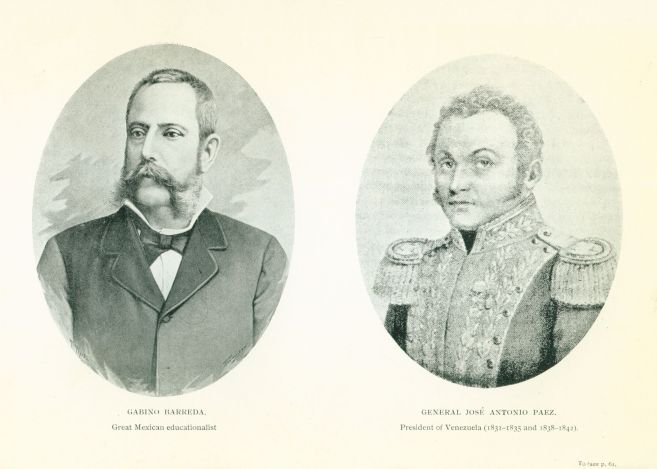
been found among the mestizos: Paez in Venezuela,
Castilla in Peru, Diaz in Mexico, and Santa-Cruz in
Bolivia. An Argentine anthropologist, Señor Ayarragaray,
says that "the primary mestizo is inferior to
his European progenitors, but at the same time he
is often superior to his native ancestors." He is
haughty, virile, and ambitious if his ancestors were
Charruas, Guaranis, or Araucanians; even the
descendant of the peaceable Quechuas is superior to
the Indian. He learns Spanish, assimilates the
manners of a new and superior civilisation, and forms
the ruling caste at the bar and in politics. The
mestizo, the product of a first crossing, is not
otherwise a useful element of the political and economic
unity of America; he retains too much the defects
of the native; he is false and servile, and often
incapable of effort. It is only after fresh unions with
Europeans that he manifests the full force of the
characteristics obtained from the white. The heir
of the colonising race and of the autocthonous race,
both adapted to the same soil, he is extremely
patriotic; Americanism, a doctrine hostile to
foreigners, is his work. He wishes to obtain power
in order to usurp the privileges of the Creole
oligarchies.
One may say that the admixture of the prevailing
strains with black blood has been disastrous for these
democracies. In applying John Stuart Mill's law
of concomitant variations to the development of
Spanish America one may determine a necessary
relation between the numerical proportion of negroes
and the intensity of civilisation. Wealth increases
and internal order is greater in the Argentine, Uruguay,
and Chili, and it is precisely in these countries
that the proportion of negroes has always been low;
they have disappeared in the admixture of European
races. In Cuba, San Domingo, and some of the
republics of Central America, and certain of the
States of the Brazilial Confederation, where the
children of slaves constitute the greater portion of
the population, internal disorders are continual. A
black republic, Hayti, demonstrates by its revolutionary
history the political incapacity of the negro race.
The mulatto and the zambo are the true American
hybrids. D'Orbigny believed the mestizo to be
superior to the descendants of the Africans imported
as slaves; Burmeister is of opinion that in the
mulatto the characteristics of the negro are
predominant. Ayarragaray states that the children born
of the union of negroes with zambos or natives are
in general inferior to their parents, as much in
intelligence as in physical energy. The inferior elements
of the races which unite are evidently combined in
their offspring. It is observed also that both in
the mulattos and the zambos certain internal
contradictions may be noted; their will is weak and
uncertain, and is dominated by instinct and gross
and violent passions. Weakness of character
corresponds with a turgid intelligence, incapable of
profound analysis, or method, or general ideas, and a
certain oratorical extravagance, a pompous rhetoric.
The mulatto loves luxury and extravagance; he is
servile, and lacks moral feeling. The invasion of
negroes affected all the Iberian colonies, where, to
replace the outrageously exploited Indian, African
slaves were imported by the ingenuous evangelists
of the time. In Brazil, Cuba, Panama, Venezuela,
and Peru this caste forms a high proportion of the
total population. In Brazil 15 per cent. of the
population is composed of negroes, without counting the
immense number of mulattos and zambos. Bahia
is half an African city. In Rio de Janeiro the
negroes of pure blood abound. In Panama the
full-blooded Africans form 10 per cent. of the
population. Between 1759 and 1803 642,000 negroes
entered Brazil; between 1792 and 1810 Cuba
received 89,000. These figures prove the formidable
influence of the former slaves in modern America.
But they are revenged for their enslavement in that
their blood is mingled with that of their masters.
Incapable of order and self-government, they are
a factor of anarchy; every species of vain outer
show attracts them—sonorous phraseology and
ostentation. They make a show of an official
function, a university title, or an academic diploma. As
the Indian could not work in the tropics black
immigration was directed principally upon those regions,
and the enervating climate, the indiscipline of the
mulatto, and the weakness of the white element have
contributed to the decadence of the Equatorial
nations.
The mulatto is more despised than the mestizo
because he often shows the abjectness of the slave
and the indecision of the hybrid; he is at once
servile and arrogant, envious and ambitious. His
violent desire to mount to a higher social rank, to
acquire wealth, power, and display, is, as Señor
Bunge very justly remarks, a "hyperæsthesia of
arrivism."
The zambos have created nothing in America. On
the other hand, the robust mestizo populations, the
Mamelucos of Brazil, the Cholos of Peru and Bolivia,
the Rotos of Chili, descendants of Spaniards and the
Guarani Indians, are distinguished by their pride
and virility. Instability, apathy, degeneration—all
the signs of exhausted race—are encountered far
more frequently in the mulatto than in the mestizo.
The European established in America becomes a
Creole; his is a new race, the final product of
secular unions. He is neither Indian, nor black,
nor Spaniard. The castes are confounded and have
formed an American stock, in which we may
distinguish the psychological traits of the Indian and
the negro, while the shades of skin and forms of
skull reveal a remote intermixture. If all the
races of the New World were finally to unite, the
Creole would be the real American.
He is idle and brilliant. There is nothing
excessive either in his ideals or his passions; all is
mediocre, measured, harmonious. His fine and
caustic irony chills his more exuberant enthusiasms;
he triumphs by means of laughter. He loves grace,
verbal elegance, quibbles even, and artistic form;
great passions or desires do not move him. In
religion he is sceptical, indifferent, and in politics he
disputes in the Byzantine manner. No one could
discover in him a trace of his Spanish forefather,
stoical and adventurous.
But is unity possible with such numerous castes?
Must we not wait for the work of many centuries
before a clearly American population be formed?
The admixture of Indian, European, mestizo, and
mulatto blood continues. How form a homogeneous
race of these varieties? There will be a period of
painful unrest: American revolutions reveal the
disequilibrium of men and races. Miscegenation often
produces types devoid of all proportion, either
physical or moral.
The resistance of neo-Americans to fatigue and
disease is considerably diminished. In the seething
retort of the future the elements of a novel
synthesis combine and grow yet more complex. If the
castes remain divided there will be no unity possible
to oppose a probable invasion. "Three conditions
are necessary," says M. Gustave Le Bon, "before
races can achieve fusion and form a new race, more
or less homogeneous. The first of these conditions
is that the races subjected to the process of crossing
must not be too inequal in number; the second, that
they must not differ too greatly in character; the
third, that they must be for a long time subjected
to an identical environment."
Examining the mixed peoples of America in conformity
with these principles we see that the Indian
and the negro are greatly superior to the whites in
numbers; the pure European element does not
amount to 10 per cent. of the total population. In
Brazil and the Argentine there are numbers of
German and Italian immigrants, but in other countries
the necessary stream of invasion of superior races
does not exist.
We have indicated the profound differences which
divide the bold Spaniard from the negro slave; we
have said that the servility of the Indian race
contrasts with the pride of the conquerors; that is to
say, that the mixture of rival castes, Iberians, Indians,
and negroes, has generally had disastrous
consequences. Perhaps we may except the fortunate
combinations of mestizo blood in Chili, Southern Brazil,
Mexico, Colombia, Peru, and Bolivia. Finally, the
territory has not yet exercised a decisive influence
upon the races in contact. The modern Frenchman
and Anglo-Saxon are born of the admixture of
ancient races subjected for centuries to the influences
of the soil. The great invasions which modified the
traditional stock took place a thousand years ago;
they explain the terrible struggles of the Middle
Ages. The new American type has not so long a
history.
In short, none of the conditions established by the
French psychologists are realised by the
Latin-American democracies, and their populations are
therefore degenerate.
The lower castes struggle successfully against the
traditional rules: the order which formerly existed
is followed by moral anarchy; solid conviction by
a superficial scepticism, and the Castilian tenacity
by indecision. The black race is doing its work and
the continent is returning to its primitive barbarism.
This retrogression constitutes a very serious
menace. In South America civilisation is dependent
upon the numerical predominance of the victorious
Spaniard, on the triumph of the white man over the
mulatto, the negro, and the Indian. Only a
plentiful European immigration can re-establish the
shattered equilibrium of the American races. In
the Argentine the cosmopolitan alluvium has
destroyed the negro and mitigated the Indian. A
century ago there were 20 per cent. of Africans in
Buenos-Ayres; the ancient slave has now disappeared,
and mulattos are rare. In Mexico, on the
other hand, in 1810 the Europeans formed a sixth
part of the population; to-day they do not form
more than a twentieth part.
Dr. Karl Pearson, in his celebrated book National
Life and Character, writes: "In the long run the
inferior civilisations give proof of a vigour greater
than that of the superior civilisations; the
disinherited gain upon the privileged castes, and the
conquered people absorbs the conquering people." He
declared further that Brazil would quickly fall
into the power of the negroes, and that while the
Indians would multiply and develop in the inaccessible
regions of the north and the centre, the white
peoples, crowded out by the progress of these races,
would be numerous only in the cities and the more
salubrious districts. This painful prophecy will be
accomplished to the letter if, in the conflict of castes,
the white population is not promptly reinforced by
the arrival of new colonists.
But crossing alone will not communicate the
superior characteristics of the race to the mestizo
in a lasting manner. "It is necessary that he should
be the fruit of a union of the third, fourth, or fifth
degree; that is, that there should have been as many
successive crossings, with a father or a mother of
the white race, before the mestizo can be in a
condition to assimilate European culture," writes an
Argentine sociologist. For this vast process of
selection to be realised to the profit of the white man
not only must the races subjected to admixture exist
in certain proportions, but the mass of Europeans
must prevail and impose their temper upon the future
castes. In short, the problem of race depends upon
the solution given to the demographic problem.
Without the help of a new population there will be
in America not merely a lamentable exhaustion but
also a prompt recoil of the race. The phrase of
Alberdi is still true: "In America to govern means
to populate."
The colonists brought with them the traditions and
manners of the disciplined races, a moral organisation
which was the work of centuries of common life.
People of rural extraction, when they reached
America, upheld the established interests, the
government, the law, and the peace; they worked, fought,
and laid up treasure. Moreover, only the most
enterprising of men emigrated, and they transmitted to
the new democracies an element of vitality they had
not before known. As early as the second generation
the descendants of the foreign colonists were
already Argentines, Brazilians, or Peruvians; their
patriotism was as ardent and devoted and exclusive
as that of their fathers. They completely adopted
the local manners. They had been transformed by
the action of the American environment.
Basques or Italians have already transformed the
Argentine. They arrive as artisans, or labourers,
or clerks and traders; they form agricultural
colonies and become landowners. They soon break
their fetters; their sons become merchants, financial
agents, or wealthy plutocrats. Of 1,000 inhabitants
there are 128 Italians and only 99 Argentines who
own land. These Latins are prolific; in 1904 1,000
Argentine women gave life to 80 infants; 1,000
Spanish women to 123, and 1,000 Italian women to
175.[3] These immigrants thus increase the national
wealth and people the desert.[4] Moreover, their
descendants figure in politics and letters. Let us
mention only a few Argentine names remarkable
on one count or another: Groussac, Magnasco,
Becher, Bunge, Ingegnieros, Chiappori, Banchs,
and Gerchunoff.
The caudillos: their action—Revolutions—Divorce between written
Constitutions and political life—The future parties—The
bureaucracy.
The development of the Ibero-American democracies
differs considerably from the admirable spirit of their
political charters. The latter include all the
principles of government applied by the great European
nations: the equilibrium of powers, natural rights,
a liberal suffrage, and representative assemblies, but
the reality contradicts the idealism of the statutes
imported from Europe. The traditions of the
prevailing race, in fact, have created simple and
barbarous systems of government. The caudillo is the
pivot of this political system: leader of a party, of
a social group, or a family whose important relations
make it powerful, he enforces his tyrannical will
upon the multitude. In him resides the power of
government and the law. On his permanent action
depends the internal order of the State, its economic
development, and the national organisation. His
authority is inviolable, superior to the Constitution
and its laws.
All the history of America, and the inheritance of
the Spaniard and the Indian, has ended in the
exaltation of the caudillo. Government by caciques,
absolute masters, like the caudillos themselves, is
very ancient in Spain, as was shown by Joaquin
Costa in his analysis of the foundations of Spanish
politics. In each province, in each city, was a
central personage in whom justice and might were
incarnated; admired by the crowd, obeyed by
opinion, enforcing his manners and his ideas. The
American Indians obeyed caciques, and the first
conquerors quickly saw that by winning over the
local chiefs they would at the same time subject
the native populations. The existence of the caudillos
may also be explained by territorial influences. It
has been written that the desert is monotheistic;
over its arid uniformity one imposing God reigns
supreme. It is the same with the steppes, the
pampas, and the table-lands of America; vast and
monotonous tracts; Paez and Quiroga were divinities
of such regions. No other force could limit their
authority. Contrasted with the uniform level of
mankind which is the work of the plains, their firm
chieftainship assumed divine attributes. American
revolutions are like the Moorish wars directed by mystic
Kaids.
Señor Raphael Salillas writes that in Spain the
cacique is a hypertrophy of the political personage;
he symbolises the excess of power and of the ambition
of Spanish individualism. In America the first
conquistadors quarrelled for the supreme authority.
The civil wars of the Conquest arose from conflicts
between chiefs; none of them could conceive of
power as real unless it was unlimited and despotic.
After them the all-powerful viceroy, a demi-god in
his powers, exercised a similar domination. The
South American President, the heir to the traditions
of the governors of the colonial epoch, also possesses
the maximum of authority; the Constitution confers
upon him powers like those of the Czars of Russia.
Power for its own sake is the ideal of such men.
The less important chieftains are satisfied by the
government of a province; the great leader aspires
to rule a republic. Questions of personality are the
prevailing characteristics of politics; and despotic
rulers abound. When a "Regenerator" usurps the
supreme power a "Restorer" appears to dispute
it with him; then a "Liberator," and finally a
"Defender of the Constitution." The lesser gods
fight to their hearts' content, and the democracy
accepts the victor, in whom it admires the representative
leader, the robust creation of the race. Such a
man is not like the character of Ibsen's, who is strong
in his isolation; in the caudillo the average characteristics
of the nation, its vices and its qualities, are
better defined and more strongly accentuated; he
obeys his instincts and certain fixed ideas; he
conceives of no ideals; he is impressionable and
fanatical.
Señor Ayarragarray distinguishes two varieties of
caudillo; the cunning and the violent. The latter
was above all peculiar to the military period of
Ibero-American history. The leader of a band that
ravaged like the Huns, he ruled by terror and
audacity, enforcing the discipline of the barracks in
civil life. The caudillo of the cunning type exercised
a more prolonged moral dictatorship; he belongs
to a period of transition between the military period
and the industrial period. This new master retained
the supreme power by lies and subterfuges. A
half-civilised tyrant, he used wealth as others used force,
and instead of brutally thrusting himself on the
people he employed a system of tortuous corruption.
The rule of the caudillos led to presidential
government. The Constitutions established assemblies; but
tradition triumphed in spite of these theoretical
structures. Since the colonial period centralisation
and unity have been the American forms of
government.
In the person of the President of these democracies
resides all the authority which usually devolves upon
the public functionaries. He commands the army,
multiplies the wheels of administration, and surrounds
himself with doctors of law and Prætorian soldiers.
The Assemblies obey him; he intervenes in the course
of elections, and obtains the Parliamentary majorities
that he requires. The upper magistracy is sometimes
indocile to the desires of the Government, but
in the life of the provinces the judges depend
absolutely upon the political leaders. The supreme
direction of the finances, the army, the fleet, and the
administration in general rests with the President,
as before the republican era it belonged to the
viceroy.
The parties fight among themselves, not only for
power, but to obtain this omnipotent presidency.
They realise that the chief of the Executive is the
effective agent of all political changes; that ministers
and parliaments are only secondary factors in political
life. An Argentine sociologist, Señor Joaquin Gonzalez,
has said very justly that "each governmental
period is characterised by the condition and the worth
of the man who presides over it. This presidential
system, in default of a solid and elevated political
education, has in great measure favoured the return
to the personal régime."
To this system correspond the political groups
without programmes; men do not struggle for the
triumph of ideas, but for that of certain individuals.
The consecrated terms lose their traditional meaning.
There are civilists who uphold militarism; liberals
who strive to increase the presidential authority;
nationalists who favour cosmopolitanism; constitutionalists
who violate the political charter. The
personal system groups conservatives and liberals
together. Even in Chili, where the activity of the
parties has been unusually continuous, the older
parties have split up into shapeless factions. The
President establishes his despotic authority over the
confusion of these rival groups; he tries to dissolve
the small factions, to divide them, in order to rule
them.
Without ideals or unity of action the parties are
transformed into greedy cliques, which are distinguished
by the colour of their favours. As in Byzantium,
so in Venezuela, the Blues struggle against the
Yellows, while in Uruguay the Whites oppose the
Reds, red being the distinctive colour of the Argentine
federalists. An aggressive intolerance divides these
groups; they gather round their gonfaloniere and
their party symbol in irreducible factions. No
common interest can reconcile them, not even that of
their native country. Each party supports a leader,
an interest, a dogma; on the one side a man beholds
his own party, the missionaries of truth and culture;
the other are his enemies, mercenary and corrupt.
Each group believes that it seeks to retain the
supremacy in the name of disinterested virtue and
patriotism. Rosas used to call his opponents
"infamous savages." For the gang in possession of
power, the revolutionaries are malefactors; for the
latter the ruling party are merely a government of
thieves and tyrants. There are gods of good and
evil, as in the Oriental theogonies. Educated in
the Roman Church, Americans bring into politics the
absolutism of religious dogmas; they have no
conception of toleration. The dominant party prefers
to annihilate its adversaries, to realise the complete
unanimity of the nation; the hatred of one's
opponents is the first duty of the prominent politician.
The opposition can hardly pretend to fill a place of
influence in the assemblies, or slowly to acquire
power. It is only by violence that the parties can
emerge from the condition of ostracism in which
they are held by the faction in power, and it is by
violence that they return to that condition. Apart
from the rule of the caudillos the political lie is
triumphant; the freedom of the suffrage is only a
platonic promise inscribed in the Constitution; the
elections are the work of the Government; there is
no public opinion. Journalism, almost always
opportunist, merely reflects the indecision of the parties.
Political statutes and social conditions contradict each
other; the former proclaim equality, and there are
many races; there is universal suffrage, and the
races are illiterate; liberty and despotic rulers
enforce an arbitrary power. By means of the
prefects and governors the President directs the
elections, supports this or that candidate, and even
chooses his successor. He is the supreme elector.
The representative assemblies become veritable
bureaucratic institutions; deputies and senators
accept the orders of the President. According to
Señor L. A. de Herrera, two castes are in process
of formation, "on the one hand the oligarchies,
which possess the supreme power in defiance of the
public will, and on the other the citizens, who are
deprived of all participation in the government." Frequent
revolutions and pronunciamentos, according
to Spanish tradition, disturb the ruling class in
the exercise of power; these superficial movements
cannot be compared to the great crises of European
history, which result in the disappearance of a
political system or bring about the advent of a new
social class. They are merely the result of the
perpetual conflict between the caudillos; the leaders and
the oligarchies change, but the system, with its
secular vices, remains.
The South American revolutions may be regarded
as a necessary form of political activity: in Venezuela
fifty-two important revolts have broken out within
a century. The victorious party tries to destroy the
other groups; revolution thus represents a political
weapon to those parties which are deprived of the
suffrage. It corresponds to the protests of European
minorities, to the anarchical strikes of the
proletariat, to the great public meetings of England, in
which the opposing parties attack the Government.
It is to the excessive simplicity of the political system,
in which opinion has no other means of expression
than the tyranny of oligarchies on the one hand and
the rebellion of the vanquished on the other, that the
interminable and sanguinary conflicts of Spanish
America are due. These internal wars continually
retard the economic development of the State and
decrease its stability; they ruin the foreign credit
of the republics, prepare the way for humiliating
interventions, and give rise to tyrannies; but it must
not be forgotten that revolution, in these democracies
without law and without real suffrage, has often been
the only means of defending liberty. Against the
tyrants even conservative spirits have revolted, and
rebellion has become reaction.
For the rest, the civil wars have lost their former
character. They used to symbolise the return to
primeval chaos; vagabond multitudes, armed bands,
desolated the fields and burned the towns. Assassination,
theft, the devastation of property and estates,
war without mercy, fire, and all the powers of
destruction were in revolt against the feeble
foundations of nationality.
As by the inverse selection of the Spanish Inquisition,
the most intelligent and the most cultivated
perished. Brutal horsemen occupied the cities in
which Spanish civilisation had attained its apogee.
Sarmiento has described the assault on the nomad
wagons which bore the national penates across the
Argentine pampas in a sort of Tartar Odyssey amid
the infinite desolation of the plains. Even when the
social classes were organised and the economic
interests defined the rivality of the leaders continued,
and politics remained personal. However, civil war is
already no longer the brutal onset of men with neither
law nor faith, no longer an irruption of outlaws.
The drama has replaced the epic; the conflict of
passions and interests succeeds to the battles of
semi-divine personages, proud of their tragic mission.
Men buy votes; electoral committees falsify the
suffrage, as in the United States, by force of money.
Thus the plutocracy conquers the benches of
Congress.
If the continent spontaneously creates dictators
then is all the ambitious structure of American
politics—parliaments, ministers, and
municipalities—merely a delusive invention?
In some States in which the economic life is
intense, as in the Argentine, Chili, Brazil, and
Uruguay, benevolent despotism does not mark the
high-water limit of national development; there new parties
are forming themselves, and the caudillos will soon
disappear. Dr. Ingegnieros foresees the creation in
the Argentine of new political groups, with financial
tendencies. The rural class which rules in the
provinces and possesses the great mass of the national
wealth, which is derived from stock-raising and
agriculture, and the commercial and industrial
middle-class of the cities, will form, like the Tories and
Whigs in England, the two parties of the future.
Once the secondary parties have disappeared, the
two great political organisations will prevail alone.
This transformation of the old groups is logical.
In the colonial period the conflict for the possession
of power took place within the narrow limits of public
life; the Spaniards were in the majority in the
audiencas, the courts, and the Creoles in the cabildos,
the municipalities. The former upheld religious
intolerance, economic monopoly, and the exclusive and
universal empire of the metropolis; the latter
endeavoured to obtain economic and political equality,
the abolition of privileges, and a national government.
After the revolution these divisions grew more
complex; federalism and unity, religious quarrels, and
sometimes the mutual hostility of the different castes,
divided men into shifting groups. Politics became
the warfare of irreducible clans. In the organised
nations of the south the dissensions gradually lost
their importance, and a general indifference
succeeded to the old theological hatreds. Federals and
municipalists were still fighting, but the original
bitterness of their antagonism was dead. On the
other hand, the castes were progressively becoming
confounded by intermarriage.
However, the economic factors persisted, and their
importance has increased as towns and industries
have developed. Financial questions will in future
divide the citizens of those democracies which have
become plainly industrial; the agrarians will oppose
the manufacturers and the free-traders the
protectionists. Like the republicans and democrats of the
United States, certain groups will favour imperialism
and others neutrality. The group which would
stimulate Yankee or German influence will be opposed
by another, the partisan of Italian or French activity.
Already in Cuba there are some who favour
annexation by the United States, while others
demand complete autonomy. Some politicians
would agree to immigration without reserve or
restriction, while others, the nationalists, would
defend the integrity of their inheritance against
foreign invasion. America, like modern France, will
have its métèques; they will be the Europeans, the
Yankees, and the yellow races.
Apart from the southern nations there has as yet
been no formation of classes or social interests. None
of the problems which agitate Europe—extension of
the suffrage, proportional representation, municipal
autonomy—have any immediate importance among
them. The State is the necessary guardian, a kind
of social providence whence derive riches, strength,
and progress. To weaken this influence would be
to encourage internal disorder; only those
Constitutions have been of use in America which have
reinforced the central power against the attacks of
a perpetual anarchy.
The progress of these democracies is the work of
foreign capital, and when political anarchy prevails
credit collapses. Governments which ensure peace
and paternal tyrants are therefore preferable to
demagogues. A young Venezuelan critic, Señor Machado
Hernandez, having studied the history of his country,
rent as it has been by revolutions, considers that
the best form of government for America is that
which reinforces the attributions of the executive and
establishes a dictatorship. In place of the Swiss
referendum and the federal organisation of the United
States autocracy is, it seems to us, the only practical
practical means of government.
To increase the duration of the presidency in order
to avoid the too frequent conflicts of parties; to
simplify the political machine, which transforms the
increasingly numerous parliaments into mere
bureaucratic institutions; to prolong the mandate of
senators and deputies, so that the life of the people
shall not be disturbed by continual elections; in
short, to surrender the ingenuous dogmas of the
political statutes in favour of concrete reforms: such
would appear to be the ideal which in Tropical
America—in Mexico, Peru, and Bolivia—would arrest
the destructive action of revolutions.
It is obvious that a president furnished with a
strong authority may quickly become a tyrant, but
in these nations is not political power always a
semi-dictatorship which is tolerated? The head of the
State governs for four years according to the term
of the Constitution, but his action is continued by
his successor. The real duration of his political
action is twenty years.
If a tutelary president is necessary it is none the
less essential to oppose his autocracy by a moderative
power which would recall, in its constitution,
the life-Senate of Bolivar. One may even conceive
of a Senate which would represent the real national
interests: a stable body, the union of all the forces
of social conservation; a serene assembly untroubled
by democratic cravings, in which the clergy, the
universities, commerce, the industries, the army, the
marine, and the judiciary, might defend the Constitution
and tradition against the assaults of demagogy,
against too audacious reformers. Garcia-Moreno
wished to see the mandate of the senators extended
to a term of twelve years.
The quality of the legislative chambers is ineffective
in America. In fact, both being elected by the
popular vote, and having like electoral majorities,
the Lower Chamber always gets its way with the
Senate, which represents neither interests nor
traditions. There is in reality one uniform assembly
artificially divided into two independent bodies. The
whole is dominated, there being no conservative
institutions as a useful corrective, by the anonymous
or Jacobin will of the multitude, which is moved by
all sorts of divided interests: the craving for power,
provincial pride, and a passion for cabal and
intrigue.
A factor of American politics which is as serious
as the periodical revolutions is the development of
the bureaucracy.
In the still simple life of the nation the organs of
the public administration are complicated in the most
exaggerated manner. The budget supports a sterile
class recruited principally among the Creoles, who
prefer the security of officialism to the conquest of
the soil. Energy and hope diminish with the almost
infinite increase of the "budgetivores."
Foreigners monopolise trade and industry, and
thus acquire property in the soil which has been
inherited by a race of Americans without energy.
A North American observer[1] writes that the great
fortunes of the Argentines of American extraction
have been made by the ever-increasing value of real
estate, and are due to the natural development of the
country rather than to their own initiative or
enterprise. But the South Americans are on the way
to waste these fortunes, and the fortunate colonists
from Spain and Italy are gradually replacing them
in the social hierarchy.
According to a Mexican statesman, Señor Justo
Sierra, the government in South America is an
administration of employés, protected by other
employés, the army. These nations, which are
being invaded by active immigrants, are thus
directed by a group of mandarins, and if the young
men of these countries are not encouraged in
commercial and industrial vocations by a practical
education the enriched colonists will expel the Creole
from his ancient position. A few writers defend the
bureaucracy as the refuge, in the face of the
cosmopolitan invasion, of the choice spirits of the nation:
writers, artists, and politicians. "If foreigners
dispose of the material fortune of the country," says a
distinguished young observer, Señor Manuel Galvez,
"it is just that we others, Argentines, should dispose
of its intellectual fortune." A noble idealism,
satisfied by an unreal wealth! But from the point of
view of the national life this lack of equilibrium
is disturbing. In face of the progress of the
victorious foreigners who are making themselves masters
of the soil, to shut oneself up in a tower of ivory
would be the most complete of renunciations.
In the organisation of the America of the future
we must not forget the suggestions of Caliban.
Among the innumerable bureaucrats who devour the
budgets there will not always be writers worthy of
official protection; they will rather be recruited
among an indolent youth, restive under any sustained
effort.
The encouragement of "choice spirits" must not
be confounded with the unjustifiable maintenance of
a legion of parasites. The caudillo multiplies
functions in order to reward his friends; nepotism
prevails in the world of politics.
The great political transformations of the future
will be due to the development of the common
wealth; new parties will appear and the bureaucracy
will have to be considerably diminished.
Loans—Budgets—Paper money—The formation of national capital.
Unexploited wealth abounds in America. Forests
of rubber, as in the African Congo; mines of gold
and diamonds, which recall the treasures of the
Transvaal and the Klondyke; rivers which flow over
beds of auriferous sand, like the Pactolus of ancient
legend; coffee, cocoa, and wheat, whose abundance
is such that these products are enough to glut the
markets of the world. But there is no national
capital. This contrast between the wealth of the
soil and the poverty of the State gives rise to serious
economic problems.
By means of long-sustained efforts, an active race
would have won financial independence. The
Latin-Americans, idle, and accustomed to leave everything
to the initiative of the State, have been unable to
effect the conquest of the soil, and it is foreign
capital that exploits the treasure of America.
Since the very beginnings of independence the
Latin democracies, lacking financial reserves, have
had need of European gold. The government of
Spain used to seize upon the wealth of her colonies
to satisfy the needs of a prodigal court, and to prevent
its own bankruptcy. The independence of America
was won with the aid of English money, hence the
first of the necessary loans. Canning encouraged
the South American revolutionaries, and the English
bankers gave their support to their plans, in the
shape of loans to the new governments. Colombian,
Argentine, and Peruvian agents solicited heavy loans
in the City of London, without which assistance the
Spanish power could never have been defeated.
The republican régime thus commenced its career
by assuming imperious financial responsibilities.
Before commencing to practise a policy of fiscal
economy, it was necessary to accept the conclusion
of the most urgent loans, but once the European
markets were open the financial orgy commenced.
In 1820 Señor Zea concluded the first Colombian
loan; in 1821 the government of that country
declared that it could not ensure the service of the
debt. The necessities of the war with Spain and
the always difficult task of building up a new society
demanded the assistance of foreign gold; loans
accumulated, and very soon various States were obliged
to solicit the simultaneous reduction of the capital
borrowed and the rate of interest paid. The lamentable
history of these bankrupt democracies dates from
this period.
Little by little these financial contracts lost all
semblance of serious business. In the impossibility
of obtaining really solid guarantees the bankers
imposed preposterous conditions, and issue at a
discount became the rule with the new conventions. A
series of interventions in Buenos-Ayres, Mexico, San
Domingo, and Venezuela, diplomatic conflicts, and
claims for indemnity resulted from this precarious
procedure. Moreover, thanks to the protection
accorded by their respective countries, foreigners
acquired a privileged position. The Americans were
subjected to the jurisdiction of the ordinary courts,
before which they could demand the payment of
their claims on the State; foreigners enjoyed
exceptional treatment. A statute was enacted in their
favour, and their governments supported them in the
recovery of unjustifiable claims. Sir Charles Wyke,
English minister to Mexico, wrote to the Foreign
Office in 1862: "Nineteen out of twenty foreigners
who reside in this unfortunate country have some
claim against the government in one way or another.
Many of these claims are really based on the denial
of real justice, while others have been fabricated
throughout, as a good speculation, which would
enable the claimant to obtain money for some
imaginary wrong; for example, three days' imprisonment
which was intentionally provoked with the
object of formulating a claim which might be pushed
to an exorbitant figure."[1]
In face of the string of debts which arose from the
loans themselves, or from claims for damages suffered
during the civil wars, the governments could only
succumb. The immorality of the fiscal agents and
the greed of the foreigner will explain these
continual bankruptcies, which constitute the financial
history of America.
The descendants of the prodigal Spanish conquerors,
who knew nothing of labour or thrift, have
incessantly resorted to fresh loans in order to fill the
gaps in their budgets. Politicians knew of only one
solution of the economic disorder—to borrow, so that
little by little the Latin-American countries became
actually the financial colonies of Europe.
Economic dependence has a necessary corollary—political
servitude. French intervention in Mexico
was originally caused by the mass of unsatisfied
financial claims; foreigners, the creditors of the
State, were in favour of intervention. England and
France, who began by seeking to ensure the recovery
of certain debts, finally forced a monarch upon
the debitor nation. The United States entertained
the ambition of becoming the sole creditor of the
American peoples: this remarkable privilege would
have assured them of an incontestable hegemony over
the whole continent.
In the history of Latin America loans symbolise
political disorder, lack of foresight, and waste; it is
thanks to loans that revolutions are carried out, and
it is by loans that the caudillos have enriched
themselves. Old debts are liquidated by means of new,
and budgetary deficits are balanced by means of
foreign gold. When the poverty caused by political
disorder becomes too great the American governments
clamour feverishly in the markets of Europe for
the hypothecation of the public revenues, and the
issue of fresh funds, offering to pay a high interest,
and recognising the rights of suspended creditors.
On the one hand the budget is loaded to create new
employments in order to assuage the national appetite
for sinecures, while the protective tariffs are raised
to enrich the State. Thus the forces of production
disappear, life becomes dearer, and poverty can only
increase. America has until lately known little of
productive loans intended for use in the construction
of railways, irrigation works, harbours, or for the
organisation of colonies of immigrants.
The product of the customs and other fiscal dues
is not enough to stimulate the material progress of
a nation. So application is made to the bankers of
London or Paris; but it is the very excess of these
loan operations and the bad employment of the funds
obtained that impoverishes the continent. The
excessive number of administrative sinecures, the greed
of the leaders, the vanity of governments, all call
for gold; and when the normal revenues are not
sufficient to enrich these hungry oligarchies, a loan
which may involve the very future of the country
appears to all to be the natural remedy.
The budgets of various States complicate still
further a situation already difficult. They increase
beyond all measure, without the slightest relation to
the progress made by the nation. They are based
upon taxes which are one of the causes of the national
impoverishment, or upon a protectionist tariff which
adds greatly to the cost of life. The politicians,
thinking chiefly of appearances, neglect the
development of the national resources for the immediate
augmentation of the fiscal revenues; thanks to fresh
taxes, the budgets increase. These resources are
not employed in furthering profitable undertakings,
such as building railroads or highways, or increasing
the navigability of the rivers. The bureaucracy is
increased in a like proportion, and the budgets,
swelled in order to dupe the outside world, serve only
to support a nest of parasites. In the economic life
of these countries the State is a kind of beneficent
providence which creates and preserves the fortune of
individual persons, increases the common poverty by
taxation, display, useless enterprises, the upkeep of
military and civil officials, and the waste of money
borrowed abroad; such is the "alimentary politics"
of which Le Play speaks. The government is the
public treasury; by the government all citizens live,
directly or indirectly, and the foreigner profits by
exploiting the national wealth. A centralising power,
the State forces a golden livery upon this bureaucratic
mob of magistrates and deputies, political masters
and teachers.
To sum up, the new continent, politically free, is
economically a vassal. This dependence is
inevitable; without European capital there would have
been no railways, no ports, and no stable government
in America. But the disorder which prevails in the
finances of the country changes into a real servitude
what might otherwise have been a beneficial relation.
By the accumulation of loans frequent crises are
provoked, and frequent occasions of foreign intervention.
A policy of thrift would have led to the establishment
of economic equilibrium. Foreign gold has
poured in continually, not only in the form of loans
but in the shape of material works—railways, ports,
industries, and industrial undertakings. It is in this
way that English capital has accumulated in the
Argentine, Uruguay, Brazil, and Chili, where it has
become a prominent factor in the industrial development
of the country. In the Argentine it amounts
to 300 millions, in Brazil to 150 millions, in Chili to
51 millions, and in Uruguay to 46 millions of pounds
sterling.
New problems arise from the relation between the
size of the population and the amount of the capital
imported. The increase of alien wealth in nations
which are not fertilised by powerful currents of
immigration constitutes a real danger. To pay the
incessantly increasing interest of the wealth borrowed,
fresh sources of production and a constant increase
of economic exchanges are necessary; in a word, a
greater density of population. The exhaustion of the
human stock in the debitor nations creates a very
serious lack of financial equilibrium, which may
result, not only in bankruptcy but also in the loss of
political independence by annexation.
The solution of the financial problem depends, then,
upon the solution of the problem of population.
Immigrants will solve it by increasing the number
of productive units, by accumulating their savings,
by irresistible efforts which lay the foundations of
solid fortunes. It is true that the wealth which
they will create will also be of foreign origin, but
in the second or third generation the descendants
of the enriched colonists will become true citizens of
the country in which their fathers have established
themselves. They will have forgotten their country
of origin, and will mingle with the old families which
conserve the national traditions.
The ideal of peoples whose economic condition is
dependence is naturally autonomy; without it all
liberty is precarious. A considerable stream of
exports flows from America to Europe to pay for
imports and the interest on foreign capital. Only
this large exportation of products, as in the case of
the Argentine, Mexico, and Brazil, can maintain a
favourable commercial balance. The Argentine
economist Alberto Martinez has demonstrated that
as in his country there is neither an economic reserve
nor a national capital, the diminution of exports causes
serious financial disturbances; exchange is unstable,
the rate rises, trade falls off, and credit is suspended.
In other countries the economic system is instability
itself. It depends almost entirely on two or three
agricultural products—coffee, cane-sugar, and rubber—and
the incessant fluctuations in the prices of these
products, which constitute the wealth of the country.
One does not observe the regularity of the exports
of the Argentine and Brazil, nor any important
industrial development. To remedy the lack of equilibrium
in the budget and to pay the interest on the foreign
debt, the State, the guardian of the public fortune,
once more resorts to loans. The creation of a
national capital is thus an urgent necessity for these
prodigal democracies.
By stimulating the development of agriculture, by
creating or protecting industry, by diminishing the
budgetary charges by the reduction of useless
bureaucratic employments and sumptuary expenses, the
Latin-American governments could gradually
establish the necessary reserves.
On the other hand, fiscal agreements, commercial
treaties, and railways must contribute to the solidarity
of these nations among themselves. Europe has
invested vast sums of capital in America; she sends
thither large quantities of the products of her
industries, but there are peoples more favoured than others
by this invasion of capital. It should be possible
by a series of practical conventions to lay the foundations
of a Zollverein. The dependence of certain
republics as compared with others should tend to
make them commercially independent of Europe.
Already a number of industries are being developed
in America; in Brazil their yield attains the annual
value of 46 million pounds; in 1909 the imports
were diminished by 3 million pounds in consequence
of this new economic factor. It may be supposed that
in the still distant future the agricultural peoples of
America will buy the products of their industrial
neighbours, the Argentine, Brazil, and Uruguay. The
unification of the monetary system will still further
facilitate the development of this inter-state
commerce, this trade between zones almost exclusively
agricultural, and other regions both agricultural and
industrial; thus closer economic relations will be
the basis of a lasting political understanding. No
American republic has yet reached the term of its
economic development.
We may distinguish three periods in the evolution
of the nations towards autonomy; during the first
their dependence is absolute, in respect of ideas as
much as of men and capital; such is the present
situation of the majority of the Latin democracies.
During the second period agriculture suffices for the
national necessities and industry develops; the
Argentine, Brazil, and Mexico are already in this
state of partial liberty. Finally, the period of
agricultural and industrial exportation commences, and
the intellectual influence of the country makes itself
felt beyond the frontiers. After France and England,
Germany and the United States reached this glorious
phase. Neither Mexico nor the Argentine nor Brazil
is as yet flooding the world with its industrial
products nor affecting it by its original intellectual
activities; there is no culture or philosophy that we
can properly term Argentine or Chilian. Europe is
tributary to the Argentine for her wheat and meats,
and to Brazil for her coffee, but ideas and machines
come from Paris, London, and New York.
M. Limantour, who tried to save the Mexican railways
from the Yankee capitalists, and the Argentine
economists, who endeavoured to convert the foreign
into a national debt, are preparing the way for the
future reign of financial liberty; but this
transformation depends on the increase of public or private
wealth and the activity of immigrants, who in
hospitable America soon become landed proprietors or
merchants.
In the country districts, as in the cities, which are
every day more numerous, the common wealth and
the fiscal revenues are increasing, owing to the efforts
of industrious men. Not only are foreign industrial
undertakings being founded, but national institutions
also, fed by national capital. When the necessary
loans can be subscribed in the country itself, when
railways and ports are constructed with State or
private capital, or with the financial aid of other
South American governments; when American
multi-millionaires (there are already plenty of them in
the Argentine) have effected the nationalisation of the
public works now in the hands of foreigners, then the
economic ideal of these democracies will be realised.
Latin America may already be considered as
independent from the agricultural point of view; it
possesses riches which are peculiar to it: coffee to
Brazil, wheat to the Argentine, sugar to Peru, fruits
and rubber to the Tropics. Its productive capacity
is considerable. It may rule the markets of the
world. The systematic exploitation of its mines will
reveal treasures which are not even suspected. We
may say, then, that even without great industries the
American continent, independent in the agricultural
domain, and an exporter of precious metals, may
win a doubtless precarious economic liberty.
The Panama Canal and the two Americas—The future conflicts
between Slavs, Germans, Anglo-Saxons, and Latins—The role
of Latin America.
A new route offered to human commerce transforms
the politics of the world. The Suez Canal opened
the legendary East to Europe, directed the stream of
European emigration towards Australia, and favoured
the formation, in South Africa, of an Anglo-Saxon
Confederation. The Panama Canal is destined to
produce profound perturbations in the equilibrium
of the nations of the New World. Humboldt
announced these changes in 1804:[1] "The products
of China will be brought more than 6,000 miles nearer
Europe and the United States; great changes will
take place in the political condition of eastern Asia,
because this tongue of earth (Panama) has for
centuries been the rampart of the independence of
China and Japan."
The Atlantic is to-day the ocean of the civilised
world. The opening of the canal will thus displace
the political axis of the world. The Pacific, an
ocean separated from the civilising currents of
Europe, will receive directly from the Old World
the wealth and products of its labour and its
emigrants. Until the present time the United States
and Japan have shared in its rule as a mare clausum,
and they are disputing the supremacy in Asia and
Western America. Once the isthmus is pierced, new
commercial peoples may invade with their victorious
industries the enchanted lands of Asia and the
distant republics of South America. New York will
be nearer to Callao, but the distance between
Hamburg and Havre and the Peruvian coast will be
equally diminished. It has been calculated that by
the new route the voyage between Liverpool and the
great ports of the Pacific will be reduced by 2,600
to 6,000 miles, according to the respective positions
of the latter, and the distance between New York
and the same centres of commercial activity will be
diminished by 1,000 to 8,400 miles. German,
French, and English navigation companies will run
a service of modern vessels direct to the great ports
of Chili and China. The paths of the world's trade
will be changed; Panama will form the gate of
civilisation to Eastern Asia and Western America,
as Suez is to Central Asia, Eastern Africa, and
Oceania. The Atlantic will become the ocean of the
Old World.
The trade of the new era must undergo unexpected
transformations. The influence of Europe in China
and Western America will be considerably increased.
Germany should become the rival of the United States
in the commercial supremacy in the East and in the
republics of Latin America. Her vessels, messengers
of imperialism, which now make long voyages
through the Straits of Magellan to reach Valparaiso
and Callao, will then employ the canal route. The
vessels of Japan will bear to Europe, as formerly
did the Phoenician navigators, the products of the
exotic Orient; New York will dethrone Antwerp,
Hamburg, and Liverpool; the English will lose
their historic position as intermediaries between
Europe and Asia. The United States, masters of
the canal, will create in New York a great fair in
which the merchandise of East and West will be
accumulated: the treasures of Asia, the gold of
Europe, and the products of their own overgrown
industries. They will thus have won an economic
hegemony over the Pacific, South America, and
China, where they will be at least privileged
competitors in the struggle between England and
Germany. Between New York and Hong Kong, New
York and Yokohama, and New York and Melbourne
new commercial relations will be established. In
approaching New York the East will recede from
Liverpool and the ports of Europe, and the Panama
route will favour the industries of the United States
in Asia and Oceania. It may already be foreseen
that the United States will be terrible competitors
in Australia, and above all in New Zealand, where
they will drive the English merchants from the
markets. It is difficult to write, like Tarde, a
"fragment of future history"; too many unknown
forces intervene in the historical drama of the
peoples. But no doubt, unless some extraordinary
event occurs to disturb the evolution of the modern
peoples, the great nations of industrial Europe and
Japan, the champion of Asiatic integrity, will oppose
the formidable progress of the United States.
The canal sets a frontier to Yankee ambition; it
is the southern line, the "South Coast Line" of
which a North American politician, Jefferson, used
to dream. As early as 1809 he believed that Cuba
and Canada would become incorporated, as States
of the Union, in the immense Confederation; anticipating
the rude lyrics of Walt Whitman, he dreamed
of founding "an empire of liberty so vast that the
like has never been seen." Heirs to the Anglo-Saxon
genius, the Americans of the North wish to
form a democratic federation.
They have succeeded in doing in Cuba what Japan
has done in Korea: first, the struggle for autonomy,
then the necessary intervention, then a protectorate,
and perhaps annexation. Thus the prophecy of
Jefferson will be realised. Between Canada, an
autonomous colony, and the United States, there are
common economic interests, and commercial treaties
have created such a plexus of interests that the
evolution from these practical alliances to political union
would seem to be a simple matter. The disintegration
of the Anglo-Saxon Empire will be the work
of the United States. American activities in Canada
are steadily increasing; the Yankee capital
employed in various Canadian industries amounts to
£20,000,000. Trade is increasing, and by virtue
of new conventions the United States will be even
better situated than ever to dispute the Canadian
markets with England. In this free colony there is
a Far West which the States have peopled. The
East is Anglo-Saxon, industrial, aristocratic; the
West, barbarian and agrarian, desires union with
the neighbouring democracy. Münsterberg reports
that a Boston journal prints every day, in large
letters, on the first page, that the first duty of the
United States is the annexation of Canada.
The friendship of England, and the moral harmony
of the English-speaking world, will perhaps check
the progress of American imperialism northward;
but the capital which develops and exploits the west
of Canada is a competitor which cannot be resisted.
Moreover, such men as Goldwin Smith, a moral
authority in Canada, counsel union with the great
Republican neighbour. Free trade, which the English
radicals wish to maintain, relaxes the economic ties
which might ensure the duration of the British
Empire, and prevents the formation of a Zollverein,
of that fiscal union between Great Britain and her
colonies which was the great project of Chamberlain.
It is to guarantee commercial and economic
interests that Canada is approaching the United
States and withdrawing from England.
Mexico, where £100,000,000 of American capital
is invested; Panama, a republic subjected to the
protectorate of the Anglo-Saxon North; the Canal
Zone, which the Yankees have acquired as a remote
southern possession; the Antilles, which they are
gradually absorbing; Central America, where ever
turbulent republics tolerate pacificatory intervention;
and Canada, rich and autonomous, form, for the
statesmen of Washington and the Yellow Press, a
great and desirable empire. In two centuries the
small Puritan colonies of the Atlantic seaboard will
perhaps have come to govern the continent from the
Pole to the Tropics; and will create, with the aid
of all the races of mankind, a new Anglo-Saxon
humanity, industrial and democratic. Thus the
Roman Republic, from her narrow home between
the Apennines, governed the world, as did Great
Britain, peopled by a tenacious race, the sea.
To check the advance of the United States the
South will lack a political force of the same weight.
The conflict between the united Americans of the
North and the divided inhabitants of the South will
necessarily terminate fatally for the Latin New
World.
The Pacific will be the theatre of racial wars and
vast and transforming emigrations. Once the canal
is open it is extremely probable that European
emigrants will descend in large numbers upon the
seaboard of Western America. Brazil and the Argentine
attract the modern adventurer; their Eldorado is
in the Argentine plains or the forests of Brazil.
Venezuela, invaded by emigrants of Germanic race,
will be born again; a dense population will fill her
valleys, and Caracas will become a great Latin city.
But in Colombia, Peru, Ecuador, and Bolivia, there
is a great lack of centres of civilisation in the
interior, and the sierra is largely wild and unpeopled;
all progress is in the small towns of the coast, set
amidst the aridity of the desert. Chinese and
Japanese, who are content with low wages, are crushing
the European worker by their competition. Japanese
colonies will people the American West from Panama
to Chili, and in these new countries the fusion of
Japanese and Indian blood is by no means impossible.
There will always be two distinct regions in South
America, separated by the Andes and divided by
the Tropics. The Atlantic region will retain its
liberty, and increase in wealth and in power. It
is possible that the south of Brazil will become
German, but the Argentine, Chili, Uruguay, and the
great Brazilian States will defend the Latin heritage
and European tradition. To the north and the west
depopulated and divided nations will struggle against
an invasion of peoples of similar races coming from
the east and against a conquering people from the
north. Thanks to the protection of Japan, they may
be able to free themselves from the tutelage of the
United States, or they may be able to hold off the
subjects of the Mikado by submitting to the influence
of North America. Only the federation of all the
Latin republics under the pressure of Europe—that
is to say, of England, France, and Italy, who have
important markets in America—might save the
nations of the Pacific, just as a century ago Great
Britain was able to defend the autonomy of these
peoples against the mystic projects of the Holy
Alliance.
The Monroe doctrine, which prohibits the
intervention of Europe in the affairs of America and
angers the German imperialists, the professors of
external expansion, like Münsterberg, may become
obsolete. If Germany or Japan were to defeat the
United States, this tutelary doctrine would be only
a melancholy memory. Latin America would emerge
from the isolation imposed upon it by the Yankee
nation, and would form part of the European concert,
the combination of political forces—alliances and
understandings—which is the basis of the modern
equilibrium. It would become united by political ties
to the nations which enrich it with their capital and
buy its products.
Japan has not lost her originality as an Asiatic
nation, because she is united to England by a treaty
which assures the status quo in the East. The
Latin republics will not renounce their character as
American nations because they may conclude
understandings with the nations of the West. Already
there are commercial treaties between these nations
and Europe, as well as a harmony of economic and
intellectual interests. Brazil and the Argentine,
where British money and French ideals prevail,
might themselves unite to form a vast combination
of alliances with the group of European nations
which conquered, civilised, and enriched America:
that is, Spain, France, and England. Will not a
community of interests in America give a new strength
to the union of these peoples in Europe? Great
political changes would result from these new
influences: the American Latins, by entering into the
combinations of European politics, would divide
Italy, whose interests in the Argentine and Brazil
are so great, from the Triple Alliance, and would
strengthen the understanding between England and
France against Germany, which disputes with them
not only the hegemony of Europe but also the
preponderance in America. Canning, who opposed the
designs of the Holy Alliance, used to say a century
ago that he had given the New World liberty in order
to restore equilibrium to the Old World. Against
the theocratic peoples who were seeking to
overshadow the destinies of the earth he evoked the
apparition of these free democracies destined to
establish the benefits of liberty on a firm footing.
His hope was premature, because it was hardly
possible for perfect republics to rise from the ruins
of Spanish absolutism. Even to-day, after a century
of attempts at constitutional government, only a few
Latin American States—the Argentine, Brazil, Chili,
Peru, and Bolivia—seem capable of fulfilling the
desires of Canning.
These peoples would contribute to the defence of
the Latin ideal. But is not this an excessive ambition
for nations still semi-barbarous? The old races of
the West contemplate their impetuous advance with
much the same distrust as that which Rome experienced
as she watched the turbulent migrations of
Goths and Germans. And even if the Latin race
could check its irremediable decadence by the aid
of the wealth and youth of these American peoples,
would it really be profitable to oppose the triumph of
the Anglo-Saxons and the Slavs for the sake of
saving a fallen caste? Seventy years ago Tocqueville
visited the United States and divined their future
greatness. To-day M. Clemenceau, a politician and
a great admirer of the North American Republic,
praises the Latin vigour, as he sees it in
Buenos-Ayres, Uruguay, and Rio de Janeiro. The Yankee
republic has realised the prophecies of the former
critic, and it would not be strange if the southern
democracies of America were to confirm the optimism
of the latter. A new energy, undeniable material
progress, and a fertile creative faith announce the
advent, in the new continent, if not of the Eldorado
of which the hungry emigrant dreams, at least of
wealthy nations, rich in industry and agriculture;
the advent of a world in which the glorious age of
the exhausted Latin world may renew itself, as in
the classic fountain. When Emerson visited England
fifty years ago he declared that the heart of the
Britannic race was in the United States, and that
the "mother island," exhausted, would some day,
like many parents, be satisfied with the vigour which
she had bestowed upon her own children.[2] In
speaking of Spain and Portugal, might not Argentines,
Brazilians, and Chilians employ the same proud
language?
The decadence of the Latins, which seems obvious
to the sociologist, may really be only a long period
of abeyance. The adventures in which such an
exuberant force of heroism was expended might well
result in a reaction, a weariness after creation.
At the beginning of the modern period, in the
sixteenth century, the English, undisciplined adventurers,
were hostile to the regularity and monotony of
industrial life; in the nineteenth century they built an
empire, organised a powerful industrialism, and
became slow and methodical; and in 1894 Dr. Karl
Pearson was uneasy as to "the decadence of British
energy which is revealed by the adoption of State
socialism and by the poverty of mechanical invention."[3]
In the future the Latins may regain their old
virility. The ricorsi which Vico saw in history cause
certain peoples to recover the pre-eminence they have
lost, while others, prosperous nations, fall back into
decadence; no privilege is eternal, no reaction is
irremediable and inevitable.
"Multa renascentur quæ jam cecidere, cadentque
Quæ nunc sunt in honore...."
The imperial policy of Charles V. and Philip II.,
the conquest of a continent by the Spaniards,
Portuguese, and French, the glorious festival of the
Renaissance, the triumph of Lepanto, the splendid
empire of Venice, the political activity of Richelieu,
the great century of French classicism, the
Revolution which proclaimed the Rights of Man, and the
Napoleonic epic, the liberation of Spanish America:
this is the hymn of glory of the Latin race. To-day
Belgium, Italy, and the Argentine give signs of a
renaissance of that race, which men have supposed to
be exhausted.
Heirs of the Latin spirit in the moral, religious, and
political domain, the Ibero-American peoples are
seeking to conserve their glorious heritage. The
idea of race, in the sense of traditions and culture, is
predominant in modern politics. Flourishing on
every hand, we see Pan-Slavism, Pan-Islamism,
Pan-Asianism, Pan-Germanism, Pan-Latinism—barbarous
words which give an indication as to the struggles
of the future. The Slavs of Dalmatia, Germany,
Servia, and Bosnia would reconstitute, with the
fragments of many divided nations, a State which would
also be a race. Islam unites divers peoples by the
ardour of a new fanaticism, under the inspiration of
popular Khalifs or marabouts, from Soudan to Fez,
from Bombay to Stamboul. Vast unions of scattered
peoples are thus springing into formation, in the
name of a religion or a common origin. Slavs,
Saxons, Latins, and Mongols are contending for the
possession of the world. It is thus that the drama
of history becomes simplified; above the quarrels of
precarious nations are rising the profound
antagonisms of millennial races.
Onésime Reclus, in an excellent volume, the
Partage du monde, has gone into the respective
positions of each of these powerful groups. The
conclusions of his analysis are full of hope; in spite of
the Saxons and Slavs the Latins still hold vast
territories, which they must people. Their geographical
position, despite Anglo-Saxon imperialism and the
immense surface of all the Russias of Europe and
Asia, is certainly not inferior.
There are a hundred million Slavs scattered over
an immense Asiatic and European territory, which
stretches from Vladivostock to the Baltic Sea; two
and a half milliards of hectares are waiting for the
children of this prodigious race. By uniting the
peoples of Norway, Sweden, Denmark, Belgium,
Holland, and Switzerland to the Germans of Austria,
the German race, whether it propagates the gospel
of Pan-Germanism by commercial penetration or by
violence, possesses about 100 million hectares for
93 millions of men. The Anglo-Saxons, the natural
enemies of German expansion, the rivals of the
Deutschtum in Asia, Africa, and America, rule an
almost unlimited area of milliards of hectares; India,
Canada, the United States, South Africa, Egypt,
Australia, conquered territories and kingdoms held
in tutelage, peoples of all faiths and all races. More
than 200 millions of Anglo-Saxons people this
"greater Britain" without including India, which is
not assimilable.
The territory occupied by the Latin peoples in
Europe, America, and Africa is 3.9 million hectares,
inhabited by 250 millions of men; the number of
Latins is thus not really inferior to that of the
Anglo-Saxons, nor are the territories open to Latin expansion
inferior to those reserved for the rival race. With
the French colonies in Asia they amount to 4 milliards
of hectares.
Here we have a Latin superiority; by the extent
of their territories and their numbers the Latins
outnumber the Slavs and the Germans. They do not
yield to the English either in human capital nor
in wealth of exploitable territory. And England has
reached the zenith of her industrial period, the
maximum of her political development; the figures of
the birth-rate in the industrial towns are diminishing,
and emigration has almost ceased. The State is
becoming the protector of a demagogic and decadent
crowd. The United States seek to conquer new
territories for their imperialist race. But the Latins
possess in South America a rich and almost
uninhabited continent, and in the north of Africa the
French are in process of founding a colonial empire
which will rival Egypt in wealth and importance, and
will reach from Morocco to the Congo and from
Dakar to Tunis.
Reclus calculates that Latin America could feed a
hundred persons per square kilometre. While the
natality of the Anglo-Saxon cities of the Atlantic
seaboard in the United States remains stationary the
Latin American population is increasing prodigiously;
it is to-day 80 millions, and a century ago, when
Humboldt visited the New World, it was approximately
only 15 millions. It is possible that by the
last years of the present century the number of South
Americans will have reached 250 millions; the
equilibrium between Latins and Anglo-Saxons will
then be broken in favour of the former.
America is thus an essential factor of the future
of the Latin nations. The destiny of France, Spain,
Portugal, and Italy would be different if the 80
millions of Latin Americans were to lose their racial
traditions; if in a century or two America were to
pass under the sceptre of the United States, or if
the Germans and Anglo-Saxons were to attack
and oppress the nucleus of civilisation formed
by the Argentine, Uruguay, and Southern Brazil.
Economically America would lose markets;
intellectually, docile colonies; practically, centres of
expansion. To-day Anglo-Saxons, Germans, Slavs, and
Neo-Latins are balancing forces which may develop
in harmony in the framework of Christian civilisation
without wars of conquest and without ambitions
of monopoly. The moral unity of South America
would contribute to the realisation of such an ideal.
A new Anglo-Saxon continent running from Alaska
to Cape Horn, built on the ruins of twenty Spanish
republics, would be the presage of a final decadence.
In the struggles of hundreds of years' duration
between the Latin States and the barbarians, between
Catholicism and Protestantism, between the French
genius and the Teutonic spirit, between the
Renaissance and the Reformation, the Latins would have
lost the last battle.
America is a laboratory of free peoples. Dr. Charles
W. Eliott, rector of the great University of
Harvard, has studied the contribution of the United
States to modern civilisation. Arbitration as a
universal principle, toleration, universal suffrage,
material well-being, and political liberty seem to him
to be the characteristics of North American culture.
In the Latin South we encounter similar principles.
Arbitration is the basis of international relations;
tolerance from the religious point of view is in
process of development. Political liberty is still more
a matter of Constitutions than of custom; but the
liberal political charters, adapted to the principles
of modern civilisation, are the ideal of these republics.
When the wilderness is peopled by new races,
democracies will grow to maturity within this
scaffolding, and universal suffrage, individual rights
and tolerance will be realities.
In Latin America, above all among the southern
nations, one cannot conceive of the restoration of the
old social order, or of despotism and religious
inquisition. The new continent, whether Saxon or Latin,
is democratic and liberal.
If as in the time of the Holy Alliance the theocratic
peoples were to ally themselves—Catholic and warlike
Austria, Germany, dominated by Prussian feudalism,
Russia, mystic and formidable—the whole American
continent would be the bulwark of liberty. If
Germans and Latins or Latins and Anglo-Saxtons
were to fight between themselves the overseas
democracies would greatly contribute to the vitality of
the Latin race. If in a Europe dominated by Slavs
and Germans the peoples of the Mediterranean were
forced to withdraw in painful exodus towards the
blue sea peopled by the Greek islands and symbols
old as the world, it is probable that the ancient myth
would be realised anew, and that the torch which
bears the ideal of Latin civilisation would pass from
Paris to Buenos-Ayres or Rio de Janeiro, as it passed
from Rome to Paris in the modern epoch, or from
Greece to Rome in the classic period. America,
to-day desert and divided, would save the culture of
France and Italy, the heritage of the Revolution and
the Renaissance, and would thus have justified to the
utmost the fortunate audacity of Christopher
Columbus.
Names in italics are those of literary men, philosophers, &c.
A.B.C., the (federation), 348-9
Aberdeen, Lord, 64
Absolutism, 51
Acosta, 247
African elements in Spain, 40-1
African race, see Negroes
Agriculture, 384-5
Alberdi, 236
Alcantara, President of Venezuela,
110
Alva, Duke of, 30
America, Anglo-Saxon, 16, see
United States
America, South, the conquest of,
16, 44; early Constitutions, 82
Anarchy, military (86-94); leads
to dictatorship, 88; spontaneity
of, 89; in Colombia, 201; in the
tropics, 222-31
Andes, San Martin crosses the,
67
Andrade, 183, 256-7
Antilles, the, 222
Arabs in Spain, 40-1
Aranda, 64
Aranha, Graça, 268
Arbitration, Court of, 347, 399
Argentine, the, 48, 77-8; first
Constitution of, 83; 92 (134-46);
revolution in, 134; early
Constitutions, 134; federation of,
135; democracy in, 135;
Constitution of 1826, 137-8
Artigas, 89, 127
Autocracy, follows revolution, 88,
93
Avellanada, 255
Ayacucho, 71
Ayagarray, 307
Aztecs, the, 47, 53, 149
BALMES, 274
Balmaceda, President of Chili,
170-8
Barreto, 273
Basques in S. America, 364
Belgrano, 61, 66
Bello, 246, 251-2, 272
Bentham, 245
Bilbao, 236-7
Blanco-Encalada, 125
Bolivar, 61, 63-9; youth of, 70;
as general, 71; President, 71;
downfall of, 72; character and
principles, 72-80, 81-3, 102,
113, 122-3
Bolivia, 80, 122-6
Bonaparte, 88, 91
Bourget, Paul, 15
Boyer, President of Hayti, 229
Brazil (180-90); revolution in,
180; slavery abolished, 189;
revolution in, 189
Buenos Ayres, 65
Bunge, C. O., 279
Bustamente, 150-1
Bureaucracy, 376-7
CABILDO, the, 98
California, Japanese in, 326
Canning, 393-4
Canovas, 314
Carabobo, 76
Caracas, Congress of, 348
Caro, 253-4
Carrera (Guatemalan), 224
Casimiro-Ulloa, 117
Castes, inimical, 91, 370
Castillo, 115-6
Castro, General, 105
Catholicism in S. America, 286
Caudillos, the, 16, 89, 94-5, 365-70
Central America, 83, 222-6;
confederation of, 347
Chamberlain, Mr., 346
Charrua Indians, 131
Chibcha Indians, 47
Chili, 48, 92, 104 (164-79); social
revolution in, 178, 342
Chivalry, literature of, 34
Church, the, in the colonies, 52-3
Cid, the, 34
Cities of Spain, 30, 33, 38, 40
Civil wars, 371
Clemenceau, M., 15
Clergy in Spain, 42
Cochrane, Lord, 68
Coolidge, Professor, 321, 335
Colombia (201-12); anarchy in,
201; parties, 202-3
Colonies, the Spanish (44-57); life
in, 54-7; revolution, 58
Commune in Spain, 38
Comte, 274-5
Conquest of S. America, 16
Conquistadores, the, 45-8, 93
Constitutions of Chili and
Venezuela, 82; of Bolivia, the
Argentine, and Colombia, 83; of
Venezuela, 103; of Chili, 104;
of Venezuela, 105; of Colombia,
203-4; of Greater Colombia,
204; of Ecuador, 214; of
Central America, 233
Convention, the French, 88
Cortez, 45
Costa-Rica, 225-6
Creole, the, 29, 50, 59, 360-1
Cuba (313-22); civil war in, 315;
purchase mooted, 317; racial
factors, 318
DARIO, RUBEN, 261-5
Decadence of conquerors, 44, 50, 85
Democracy in Spain, 37-40; in
S. America, 93
Diaz, G., 255-6
Diaz, Leopoldo, 258
Diaz, President of Mexico, 77,
155-63
Dictators, the, 16
Directory of Buenos Ayres, 82
Don Quixote, 34
ECHENIQUE, President of Peru, 115
Echeverria, 254
Economic Problems (378-86);
loans, 379, 381; foreign capital,
383
Ecuador, 92-3 (213-21)
Encyclopædists, the, 65, 81
England, policy of, 64; influence
of, 83, 390
Equalitarianism, 63
Estrade, Angel de, 268
FALCON, President of Venezuela,
106-7
Faustinas I. of Hayti, 229
Federation, in Spain, 35; Bolivar's
prophecies of, 77; see Unity
Feijó, Diego, 184-5
Feudal system, 30, 38
Flores, Dictator of Uruguay, 132-3
Flores, J. J., founder of Ecuador,
87, 213
Fombona, Blanco, 265, 268
Fouillée, 277
France, Anatole, 15
France, intellectual influence of,
81-2
Francia, Dr., tyrant of Paraguay,
191-5
Free cities of Spain, 30, 35, 40
GARCIA-MORENO, President of
Ecuador, 215-21
German capital, 292-4
German colonists, 291-7
German Emperor, the, 323
German Peril, the, 290-7
Gongorism, 34
Goths, the, 41
Guarani Indians, 191
Guatemala, 223
Guayaquil, 213
Guizot, 245
Guyau, 278
Guzman-Blanco, Dictator of
Venezuela, 101, 106-8; policy of
reconstruction, 108-10; return to
power, 110-12
HALF-CASTES, 93, 338; see Mestizos
Hawaii, annexation of 303;
Japanese in, 325-6
Hayti, 226-31
Heredity, in the Spanish republics,
97
Hispaniola, 226
Hostos, E. de, 272-3
Hugo, Victor, 261, 263
Humboldt, 50
IBERIANS, 31-2, 40-1
Ibero-Americans, 283-9
Ideology, political, 235-48
Ignatius of Loyola, 33
Incas, the, 47
Independence, wars of, 29, 58-81
Indians, at conquest, 46-8, 91;
distribution of, 93, 352-3
Individualism, in Spain, 31-5; in
S. America, 88
Industrialism, rise of, 94-6
Inquisition, the, 42, 52
Isthmus, States of the, 77
Itaborahy, 186
Italians in South America, 364
Iturbide, Emperor of Mexico, 61,
82, 149-50
JACOBINISM, 81
Japan, 393
Japanese Peril (323-31);
emigrants, 327; spies, 329
Jaurès, 15
João VI., 180-2
Juarez, Mexican Dictator, 152-5
Junin, 71,76
Juntas, 30; colonial, 60;
revolutionary, 84
KING, see Monarchy
LA PAZ, revolt at, 65
La Plata, confederation of, 343
Lamartine, 244-5
Lansdowne, Lord, 83
Larreta, E. R., 269
Lastarria, 236-9
Latifundia, 92, 98
Latin race, the, 17; future of the,
(387-400); decadence of, 395
Latin spirit, the, 17; in S. America,
287-9
Lavalleja, President of Uruguay,
127-9, 131
Law, influence of Spanish, 54
Lee, Gen. Homer, 325
Liberators, the, 66
Liniers, 65
Literature, 249-70
Lodges, revolutionary, 65-81
Lopez, Argentine caudillo, 89, 139
Lopez, tyrants of Paraguay, 196
Loyola, 33
Lugones, 265
MAIA, J. J. de, 82
"Maine," sinking of the, 315
Marmol, 254-5
Marti, 315
Maximilian, Emperor of Mexico,
154-5
Mestizos, 103, 356-60
Mexico, 48; first Constitution of,
83, 92-3 (149-63); intervention
of the French, 153
Militarism, 86-94
Mill, James, 272
Mill, J. S., 274-5
Miranda, 66, 81, 83
Miscegenation, 48-50; in Peru,
194; see Indians, Mestizos, Negro,
Race
Monagas, J. T. and J. G.,
Presidents of Venezuela, 103-5
Monagas, J. R., President of
Venezuela, 107
Monarchy in Spain, 35-8; its
relations at time of revolution with
the revolted colonies, 60-1, 63
Monks, 52-3
Monopoly, 51-2
Monroe Doctrine, 290-1, 302-4,
392
Montalvo, 239-40
Montezuma, 48
Montt, President of Chili, 168-9
Mosquera, President of Colombia
206-7
Münsterberg, Professor, 294
Mystics of Spain, 33
NABUCO, J., 274
Nationality, early phases of, 84
Negroes, first introduction of, 49,
50; distribution of, 53, 355-6,
358-9
Nervo, A., 265
New Granada, 77
Nietzsche, 278
North American Peril, 298-312
Nuñez, Rafael, President of
Colombia, 201, 206-11, 276
OLMEDO, 251
Olney, Secretary, 300
Orbegoso, 123
Ordoñez, President of Uruguay,
132
Oribe, President of Uruguay, 129
PACIFIC, Confederation of the, 343
Paez, President of Venezuela, 61,
87, 91, 101-6
Palma, R., 267
Panama, 303; the Canal, 387-8
Pando, 126
Paraguay, 191-7; the great war in,
196-7
Pardo, Felipe, 252
Pardo, President of Peru, 117-9
Paz, 140
Pearson, Karl, 362
Pedro, Dom, I., 182
Pedro, Dom, II., 185-6, 188
Pelucones, 92
Peru, 68, 70-1; first Constitution,
82; 92-3 (113-121); War of
Independence, 113, 342
Philosophy, 271-80
Picaro, the, in literature, 34, 43
Pierola, President of Peru, 120
Pitt, 83
Plutocracy, rise of, 94; future
of, 97
Poincaré, R., 14
Political conflict, the, 92;
problems, 365-77
Popham, Sir Home, 65
Portales, President of Chili, 118,
124, 165-8
Porto Rico, 303
Portuguese in S. America, 45-6
Posadas, 61
QUINTANA, 250, 252
Quiroga, General, 139-40
Quito, 65
RACE, problems of, 283-9, 351-64
Regenerators, the, 87
Renaissance, the, 45
Republics, early S. American, 39,
61
Revolutions, 65-81; ideology of,
81-5; 94
Reyles, Carlos, 206-9
Rio Branco, 187
Rivadavia, Dictator of the
Argentine, 135-8
Rivera, President of Uruguay,
127-30
Rocafuerte, President of Ecuador,
214
Rodo, J. E., 133, 264, 266, 274
Rome, in Spain, 33
Roosevelt, Theodore, 304, 318
Root, Secretary, 300
Rosas, Argentine tyrant, 139-46
Rousseau, J. J., influence of, 81
SALAVERRY, 123-4, 254
Salisbury, Lord, 300
Salvador, 223
San Domingo, 226-31
San Martin, Protector of Peru,
crosses the Andes, 67, 68-9,
72
San Martin, Zorilla, 256
Sancho Panza, 53
Santa-Ana, President of Mexico,
150-1
Santa-Cruz, President of Bolivia,
87, 114, 125
Santana, Dictator of San Domingo,
230
Santander, President of Colombia,
87, 205
Sarmiento, 242-3
Sierra, the, 91-2
Silva, J. A., 265
Slavery, 104; abolished in Brazil,
189
Slavs, the, 394-5, 397
Soublette, 103
Spain, early history of, 30-43;
religion in, 33; laws of, in
S. America, 285
Spencer, Herbert, 86, 274-6
Stoicism, 33
Sucre, 70-1, 213
TAFT, President, 320
Tammany Hall, 301, 320
Teresa, Saint, 33
Territorial overlords, 97-8
"Thirty-three, the," 128
Toussaint Louverture, 228-9
Trade, future of, 388-9
Tyranny, advantages of, 96
UGARTE, MANUEL, 266
United States, supremacy of, 299
intervention in South and
Central America, 303-4; race
troubles in, 308, 311; future
influence of, 390-1
Unity, problems of, 335-50
Urbina, President of Ecuador, 215!
Uruguay, 127-33
VALENCIA, Convention of, 105
Varas, 168
Vargas, Dr., President of Venezuela, 102
Velasco, 125-6
Venezuela, 82, 92-3, 101-3; civil
war in, 106; revolution of 1870,
108
Verlaine, 263
Viceroys, the, 51
Vivanco, 115
Voltaire, 81
WASHINGTON, 82
Weyler, 315
Wood, General, 318-9
YEGROS, Consul of Paraguay, 192
ZALDUA, DR., President of
Colombia, 211
Zambos, 358-9
Zollverein, 305-6, 346, 349
The Gresham Press
UNWIN BROTHERS, LIMITED,
WOKING AND LONDON
THE SOUTH AMERICAN SERIES.
Demy 8vo, Cloth.
VOL. I.—CHILE.
By G. F. SCOTT ELLIOT, M.A., F.R.G.S., Author of "A
NATURALIST IN MID-AFRICA." With an Introduction by
MARTIN HUME, a Map, and 39 Illustrations.
"An exhaustive and interesting account,
not only of the turbulent history of this
country, but of the present conditions and
seeming prospects, ... and the characters
of the Chileno and English and German
colonists there."—Westminster Gazette.
VOL. II.—PERU.
By C. REGINALD ENOCK, F.R.G.S., Author of "THE ANDES
AND THE AMAZON." With an Introduction by MARTIN
HUME, a Map, and 72 Illustrations.
"An important work.... The writer possesses
a quick eye and a keen intelligence,
is many-sided in his interests, and on certain
subjects speaks as an expert.
The volume deals fully with the development
of the country.... Illustrated by a
large number of excellent photographs."—Times.
VOL. III.—MEXICO.
By C. REGINALD ENOCK, F.R.G.S. With an Introduction by
MARTIN HUME, a Map, and 64 full-page Illustrations.
"Mr. Enock unites to a terse and vivid literary
style the commercial instinct and
trained observation of a shrewd man of
affairs."—Aberdeen Free Press.
"Mr. Enock transmutes the hard material
of ancient chronicles into gleaming
romance; he describes scenery with a poet's skill.
Full of charm he makes his
pages, alluring as a fairy tale,
an epic stirring and virile."—Manchester City News.
VOL. IV.—ARGENTINA.
By W. A. HIRST. With an Introduction by MARTIN HUME, a
Map, and 64 Illustrations.
"The best and most comprehensive of recent works
on the greatest and most
progressive of the Republics of South
America."—Manchester Guardian.
"In the treatment of both the main divisions
of a complex theme, the historical
and descriptive, Mr. Hirst shows judgment and skill
that are decidedly rare....
Mr. Hirst's exceedingly able and
interesting book."—Westminster Gazette.
"A very interesting and trustworthy survey
of the present conditions and
prospects of the country."—Times.
VOL. V.—BRAZIL.
By PIERRE DENIS. With Historical Chapter by BERNARD MIALL,
a Map, and 36 Illustrations.
"It is a mine of information, arranged with all
the lucidity of a Frenchman; and
in one case, in the long chapter devoted to the
valorization of coffee, the treatment
deserves to be called masterly."—Globe.
VOL. VI.—URUGUAY.
By W. H. KOEBEL. With a Map and 55 Illustrations.
VOL. VII.—GUIANA: BRITISH, FRENCH, AND DUTCH.
By JAMES RODWAY. With a Map and 36 Illustrations.
VOL. VIII.—VENEZUELA.
By LEONARD DALTON, F.G.S., F.R.G.S. With a Map and
34 Illustrations.
VOL. IX.—LATIN AMERICA: ITS RISE AND PROGRESS.
By F. GARCIA CALDERON. With a Preface by RAYMOND
POINCARÉ, Prime Minister of France, a Map, and 34 Illustrations.
VOL. X.—COLOMBIA.
By P. J. EDER. With 2 Maps and 40 Illustrations.