Land of Play
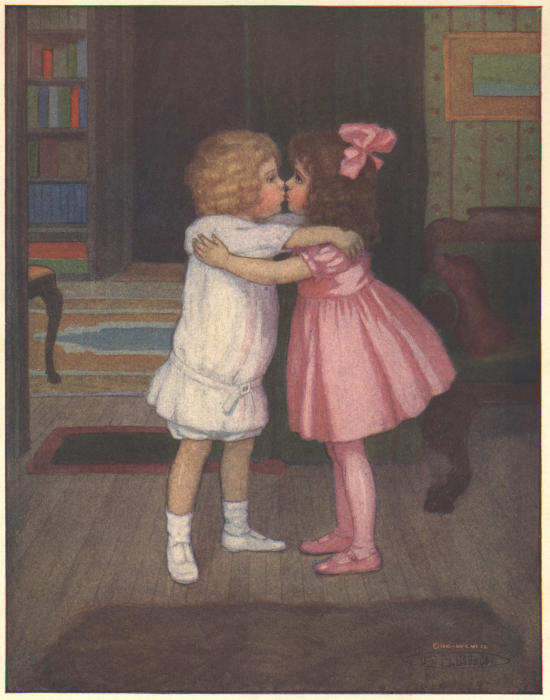
THEIR FIRST KISS
Verses—Rhymes—Stories
Selected by
Sara Tawney Lefferts
Illustrated by
M. L. Kirk & Florence England Nosworthy
New York
Cupples & Leon Company
Copyright, 1911, by
CUPPLES & LEON COMPANY
Printed in U.S.A.
Whole book · 197 sections
THEIR FIRST KISS
Verses—Rhymes—Stories
Selected by
Sara Tawney Lefferts
Illustrated by
M. L. Kirk & Florence England Nosworthy
New York
Cupples & Leon Company
Copyright, 1911, by
CUPPLES & LEON COMPANY
Printed in U.S.A.
Acknowledgment is due the following publishers and authors, for their courteous permission to use material on which they hold copyright:
Houghton, Mifflin & Co., for permission to use “Hiawatha’s Childhood,” “The Heights by Great Men Reached,” by Henry W. Longfellow; “Barefoot Boy,” by John G. Whittier; “Chippy Chirio,” by John Burroughs; “What the Winds Bring,” by Edmund Clarence Stedman; “Fable,” “Duty,” by Emerson; “The Brown Thrush,” by Lucy Larcom; “April,” by Alice Cary.
The Century Co., for permission to use “The Little Elf,” by John Kendrick Bangs.
Small, Maynard & Co., for permission to use “The Tax Gatherer,” by John B. Tabb.
Harper & Brothers, for permission to use “A Child’s Laughter,” from The Poetical Works of Algernon Charles Swinburne.
Little, Brown & Co., for permission to use “The Swallow,” “There’s Nothing Like the Rose,” by Christina G. Rossetti; “Boys and Girls,” by Louisa M. Alcott.
Lothrop, Lee & Shepard Co., for permission to use “Follow Me,” by Eliza Lee Follen.
New England Publishing Co., for permission to use “Our Mother,” from The American Primary Teacher.
The Reilly & Britton Co., for permission to use “The Christmas Stocking,” by L. Frank Baum (copy. 1905).
Sarah J. Day, for permission to use “Buttercups,” from “Mayflowers to Mistletoe” (G. P. Putnam’s Sons).
Kate Upson Clark, for permission to use “Charlie’s Story,” “Marjorie’s Bath,” “Good Listening.”
Good Housekeeping Magazine, for permission to use “A Dutch Lullaby,” “A Dutch Winter,” by Ella Broes van Heekeren.
Newson & Co., for permission to reprint “A Story of Washington.”
Charles Scribner’s Sons, for permission to use “Extremes,” by James Whitcomb Riley, from “The Book of Joyous Children”; “My Ship and I,” “The Little Land,” from “A Child’s Garden of Verses,” by Robert Louis Stevenson, and “The Duel,” by Eugene Field.
—Robert Louis Stevenson.
Knowing how much good books are enjoyed by those who travel through what Stevenson calls “The Land of Play,” it has been a pleasure to select from the verse and prose of our best writers, old and new, the contents of this pictured volume for “The Little People,” and perchance for some older traveller who may wish to be,—
—S. T. L.
—Sir Walter Scott.
—Kate Upson Clark.
—Jean Ingelow.
—Charles and Mary Lamb.
I had known Mr. Peggotty’s quaint house very well in my childhood, and I am sure I could not have been more charmed with it if it had been Aladdin’s palace, roc’s egg and all. It was an old black barge or boat, high and dry on Yarmouth sands, with an iron funnel sticking out of it for a chimney. There was a delightful door cut in the side, and it was roofed in, and there were little windows in it. It was beautifully clean, and as tidy as possible. There were some lockers and boxes, and there was a table, and there was a Dutch clock, and there was a chest of drawers, and there was a tea-tray with a painting on it, and the tray was kept from tumbling down by a Bible, and the tray if it had tumbled down, would have Smashed a quantity of cups and saucers and a tea-pot that were grouped around the book.
On the walls were colored pictures of Abraham in red going to sacrifice Isaac in blue, and of Daniel in yellow being cast into a den of roaring green lions. Over the little mantleshelf was a picture of the “Sarah Jane” lugger, built at Sunderland, with a real little wooden stern stuck on it—a work of Art combining composition with carpentry, which I had regarded in my childhood as one of the most enviable possessions the world could afford.
—Charles Dickens.
From the author’s condensation of David Copperfield.
—Alice Cary.
—Edward Lear.
—Lillian Howard Cort.

—David Everett.
—Christina G. Rossetti.
—William Cowper.
To err is human, to forgive divine.
—Alexander Pope.
—William Cowper.
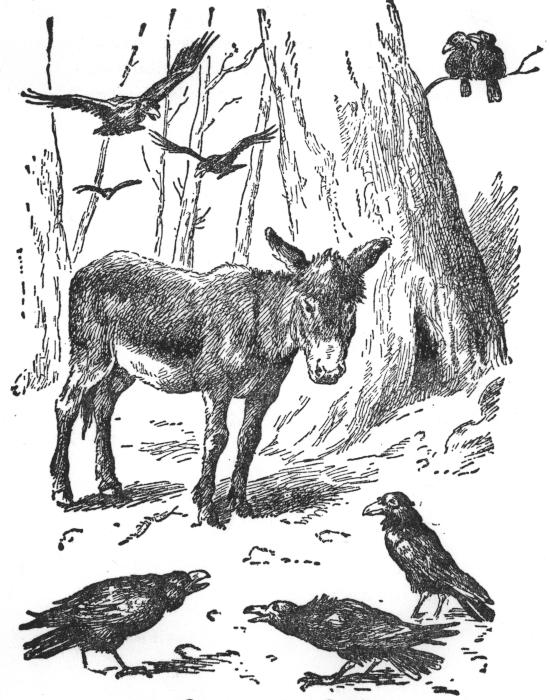
Out in the Cold.
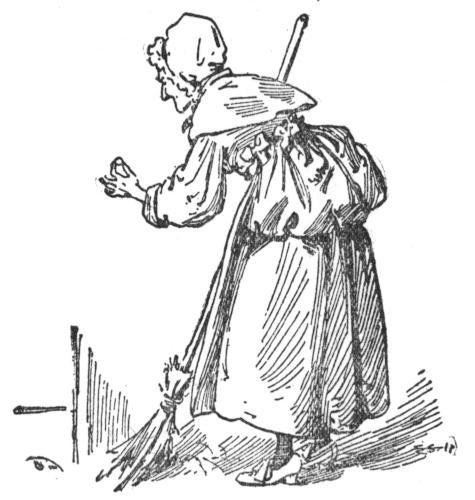
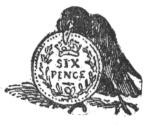
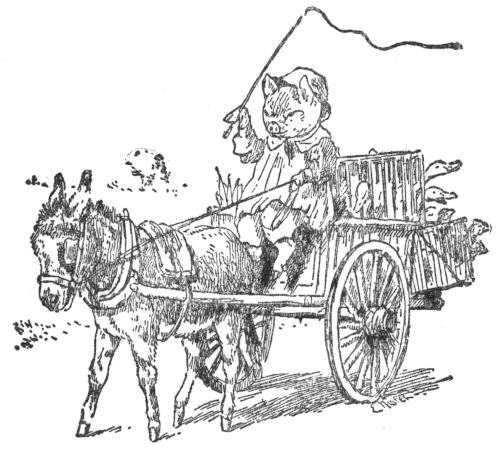
An old woman was sweeping her house, and she found a little crooked sixpence. “What,” said she, “shall I do with this little sixpence? I will go to market, and buy a little pig.” As she was coming home, she came to a stile; the piggy would not go over the stile.
She went a little farther, and she met a dog. So she said to the dog—
But the dog would not.
She went a little farther, and she met a stick. So she said—
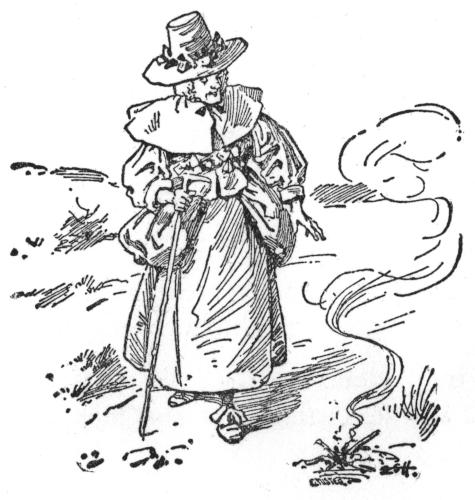
But the stick would not. She went a little farther, and she met a fire. So she said—
But the fire would not.
She went a little farther, and she met some water. So she said—
But the water would not.
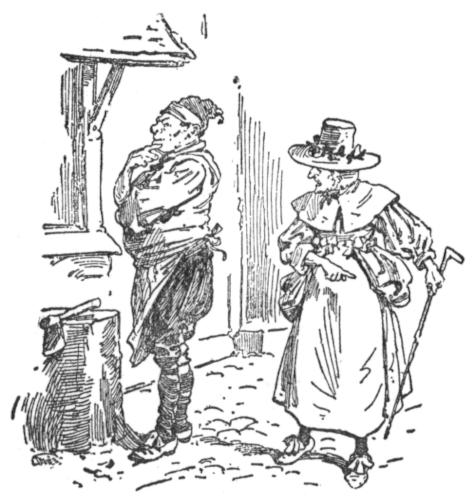
She went a little farther, and she met an ox. So she said—
But the ox would not.
She went a little farther, and she met a butcher. So she said—
But the butcher would not. She went a little farther, and she met a rope. So she said—
But the rope would not. She went a little farther, and she met a rat. So she said—
But the rat would not.
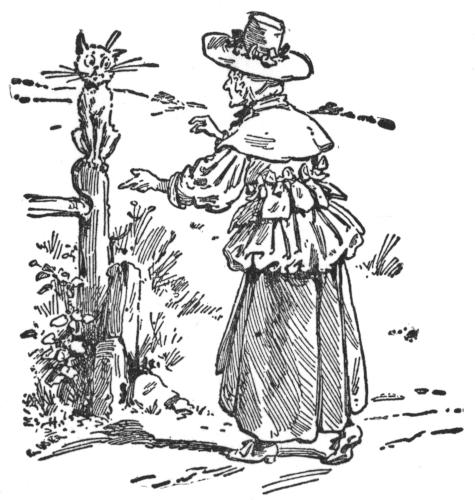
She went a little farther, and she met a cat. So she said—
But the cat said to her, “If you will go to yonder cow, and fetch me a saucer of milk, I will kill the rat.” So away went the old woman to the cow, and said—
But the cow said to her, “If you will go to yonder haymakers, and fetch me a wisp of hay, I’ll give you the milk.” So away went the old woman to the haymakers, and said—
But the haymakers said to her, “If you will go to yonder stream, and fetch us a bucket of water, we’ll give you the hay.” So away the old woman went; but when she got to the stream, she found the bucket was full of holes. So she covered the bottom with pebbles, and then filled the bucket with water, and away she went back with it to the haymakers; and they gave her a wisp of hay. As soon as the cow had eaten the hay, she gave the old woman the milk; and away she went with it in a saucer to the cat. As soon as the cat had lapped up the milk—
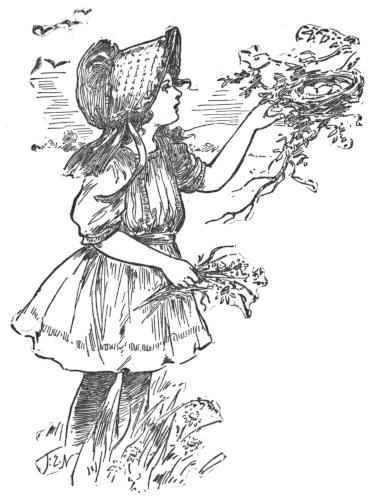
—Lucy Larcom.
The best doctors in the world are Doctor Diet, Doctor Quiet, and Doctor Merryman.
—Dean Swift.
—Unknown.
—Lewis Carroll.
—John B. Tabb.
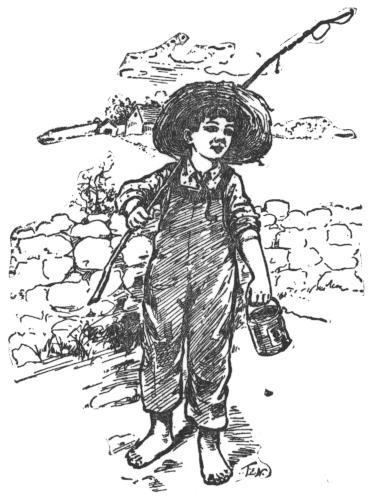
—John Greenleaf Whittier.
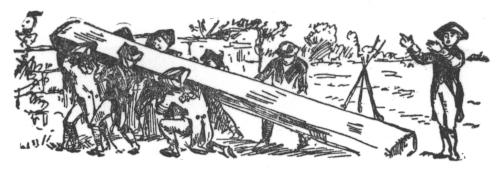
During the Revolutionary War, the corporal of a little band of soldiers was giving orders about a heavy beam which they were trying to raise to the top of the wall. It was almost too heavy for them, and the voice of the corporal was often heard shouting, “Heave away! There it goes! Heave ho!”
A man in citizen’s clothes was passing, and asked the corporal why he did not help them. Very much astonished, the corporal replied, with the pomp of an emperor, “Sir, I am a corporal!”
“You are, are you?” replied the stranger; “I was not aware of that,” and taking off his hat he bowed, saying, “I ask your pardon, Mr. Corporal.”
Upon this he put his shoulder to the beam and pulled until the sweat stood on his forehead. When the beam was right, he turned to the corporal, saying, “Mr. Corporal, when you have another such job and have not men enough, send for your commander-in-chief, and I shall gladly come to help you a second time.”
The corporal was thunderstruck. It was Washington.
—William Cowper.
Sloth makes all things difficult; but Industry, all easy; and he that rises late must trot all day, and shall scarce overtake his business at night; while Laziness travels so slowly that Poverty soon overtakes him.
—Benjamin Franklin.
—Robert Browning.
—Ellen Brannan Tawney.
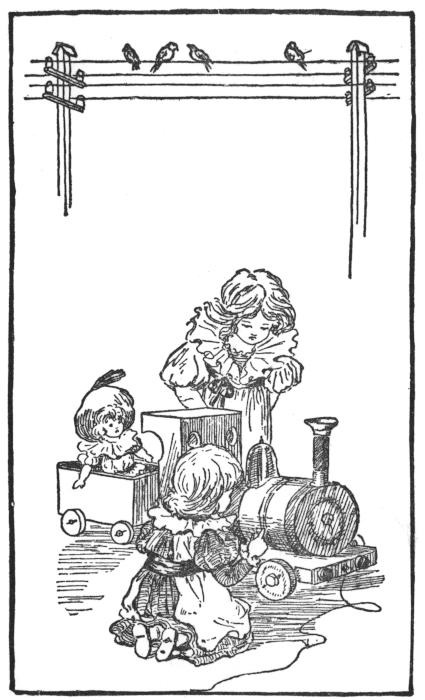
The Nursery Express.
—Lillian Howard Cork.
—Alfred, Lord Tennyson.
Whatever is worth doing at all, is worth doing well.
—Lord Chesterfield.
—William Wordsworth.
—George Eliot.
Millions for defense, but not one cent for tribute.
—C. C. Pinckney.
—Ralph Waldo Emerson.
—Sara Tawney Lefferts.
—Henry Wadsworth Longfellow.
—Eliza Lee Follen.
—Selleck Osborne.
Truth is the highest thing that man may keep.
—Geoffrey Chaucer.
—Ebenezer Cobham Brewer.
—Anonymous.
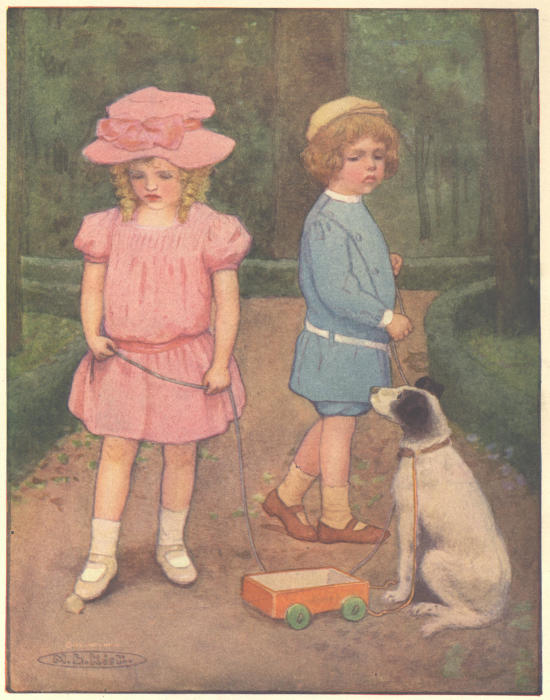
IT TAKES TWO TO MAKE A QUARREL
“Oh, father,” said a little frog to a big frog, sitting by the side of a pool, “I have seen such a terrible monster! It was as big as a mountain, with horns on its head. It had a long tail, and hoofs divided in two.”
“Tush, child, tush,” said the old frog, “that was only Farmer White’s ox. I can easily make myself as big; just you see.” And he blew himself out. “Was he as big as that?” he asked.
“Oh, much bigger than that,” said the young frog.
Again the old frog blew himself out, and asked the young one if the ox was as big.
“Bigger, father,” was the reply, “much bigger.”
Then the old frog took a very deep breath, and blew and swelled, and swelled and blew—until he burst!
—John Burroughs.
—Algernon Charles Swinburne.
—Ann Taylor.
—From the German.
—William Shakespeare.
Gather a single blade of grass, and examine for a minute its narrow sword-shaped strip of fluted green. Nothing, as it seems, is there of notable goodness or beauty. A very little strength, and a very little tallness, and a few delicate long lines meeting in a point—not a perfect point, either, but blunt and unfinished—by no means a creditable or apparently much-cared-for example of Nature’s workmanship, made only to be trodden on to-day, and to-morrow to be cast into the oven; and a little pale hollow stalk, feeble and flaccid, leading down to the dull brown fibers of roots.
And yet think of it well, and judge whether of all the gorgeous flowers that beam in summer air, and of all the strong and goodly trees, pleasant to the eyes or good for food—stately palm and pine, strong ash and oak, scented citron, burdened vine—there be any by man so deeply loved, by God so highly graced, as that narrow point of feeble green.
—John Ruskin (Modern Painters).
—Alexander Pope.
—Lord Houghton.
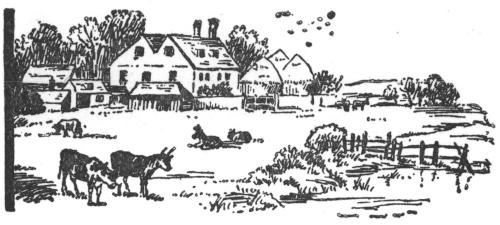
The Farmyard.
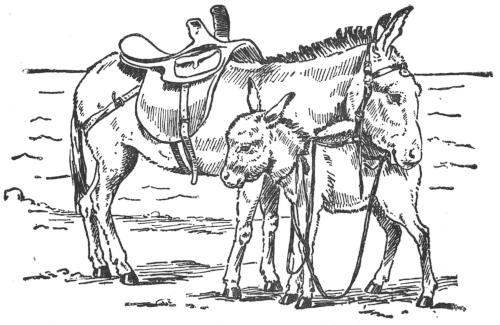
Waiting to be Hired.
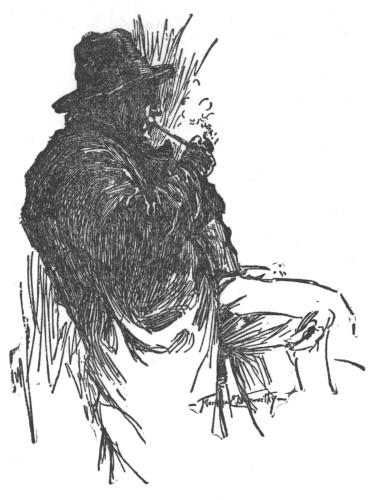
—Robert Burns.
From “The Song of Hiawatha.”
—Henry Wadsworth Longfellow.
They are never alone that are accompanied with noblest thoughts.
—Sir Philip Sidney.
(One.)
—Samuel Francis Smith.
There is the national flag! He must be cold, indeed, who can look upon its folds rippling in the breeze without pride of country. If he be in a foreign land the flag is companionship and country itself, with all its endearments. It has been called “a floating piece of poetry,” and yet I know not if it have greater beauty than other ensigns. Its highest beauty is in what it symbolizes. It is because it represents all, that all gaze at it with delight and reverence. It is a piece of bunting lifted in the air, but it speaks sublimely, and every part has a voice. Its stripes of alternate red and white proclaim the original union of thirteen states to maintain the Declaration of Independence. Its stars of white in a field of blue proclaim that union of States constituting our national constellation, which receives a new star with every state. The two together signify union, past and present. The very colors have a language which was officially recognized by our fathers. White is for purity, red for valor, blue for justice; and all together, bunting, stars, stripes, and colors, blazing in the sky, make the flag of our country—to be cherished by all our hearts, to be upheld by all our hands.
—Charles Sumner.
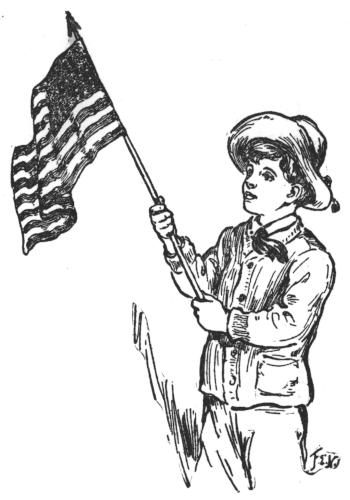
—Helen Lee Sargent.
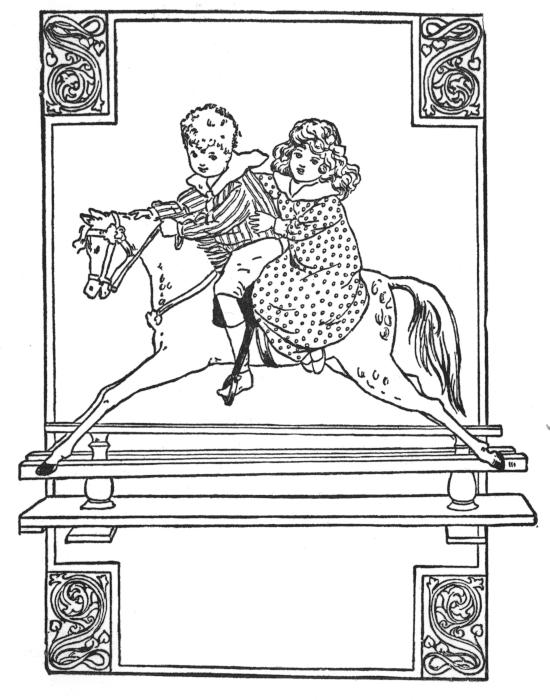
—Ella Broes van Heekeren.
—Edmund Spenser.
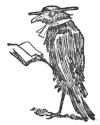
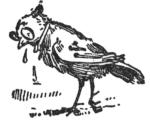
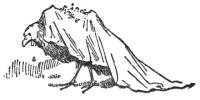
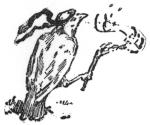
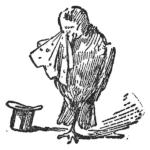
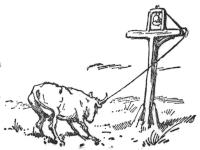
—Sara Tawney Lefferts.
Truth is the highest thing that man can keep.
—Geoffrey Chaucer.
—Christina G. Rossetti.
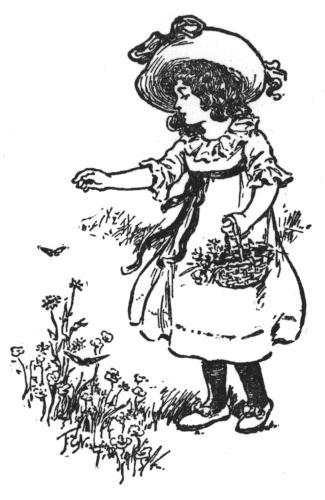
—Sarah F. Day.
—Ralph Waldo Emerson.
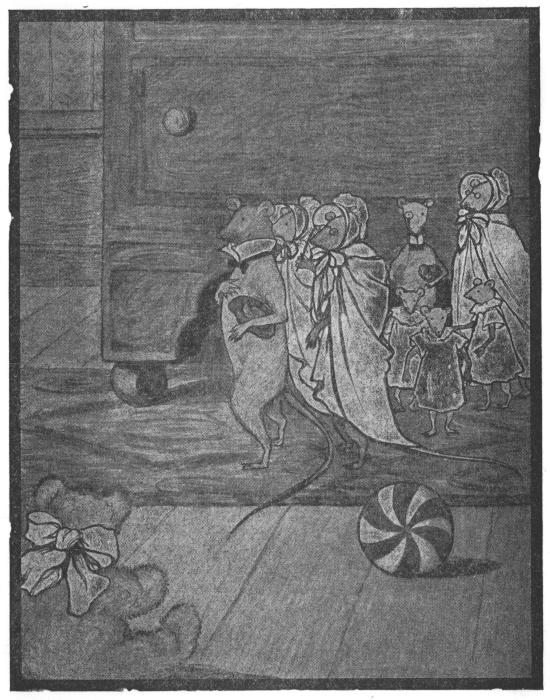
A Field Mouse had a friend who lived in a house in town. Now the Town Mouse was asked by the Field Mouse to dine with him, and out he went and sat down to a meal of corn and wheat.
“Do you know, my friend,” said he, “that you live a mere ant’s life out here? Why, I have all kinds of things at home; come and enjoy them.”
So the two set off for town, and there the Town Mouse showed his beans and meal, his dates, too; his cheese and fruit and honey. And as the Field Mouse ate, drank, and was merry, he thought how rich his friend was and how poor he was.
But as they ate, a man all at once opened the door, and the mice were in such fear that they ran into a crack.
Then when they would eat some nice figs, in came a maid to get a pot of honey or a bit of cheese; and when they saw her, they hid in a hole.
Then the Field Mouse would eat no more, but said to the Town Mouse: “Do as you like, my good friend; eat all you want, have your fill of good things, but you are always in fear of your life. As for me, poor Mouse, who have only corn and wheat, I will live on at home, in no fear of any one.”
—Aesop.
—Ella Broes van Heekeren.
—Samuel Butler.
—Lydia Maria Child.
—Lewis Carroll.
Let us have faith that right makes might, and in that faith let us to the end dare to do our duty as we understand it.
—Abraham Lincoln.
Little Donald was one day taken by his father to see the circus procession. His little sister Lucy was obliged to stay at home. While they were standing on the sidewalk, the father bought two balloons, saying, “One of these is for you, Donald, and the other we will take home to Lucy.” On account of the dense crowd, the father was carrying the balloons, holding them high above his head, when suddenly one of them exploded. Donald looked at it in dismay for a moment. Then his little face brightened, and he said cheerfully, “It’s too bad that Lucy’s balloon is spoiled, but I will let her play with mine sometimes.”
—Kate Upson Clark.
—Charles Lamb.
—John Wesley.
A little neglect may breed mischief: For want of a nail the shoe was lost; for want of a shoe the horse was lost; and for want of a horse the rider was lost.
—Benjamin Franklin.
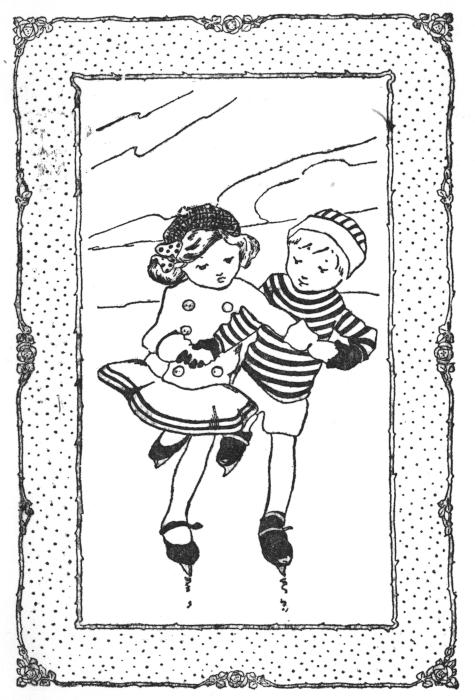
Every action in company ought to be with some sign of respect to those present.
Think before you speak, pronounce not imperfectly, nor bring your words too hastily, but orderly and distinctly.
Associate yourself with men of good quality, if you esteem your own reputation; for it is better to be alone than in bad company.
—George Washington.
When we are alone, we have our thoughts to watch, in the family our tempers, in company our tongues.
—Hannah More.
—Charles Kingsley.
—Unknown.
—Oliver Goldsmith.
(A book.)
—Hannah More.
—James Hogg.
—Isaac Watts.
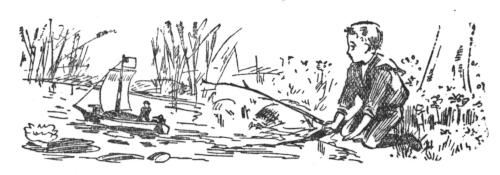
—Robert Louis Stevenson.
Never leave that till tomorrow which you can do today.
—Benjamin Franklin.
—Sara Tawney Lefferts.
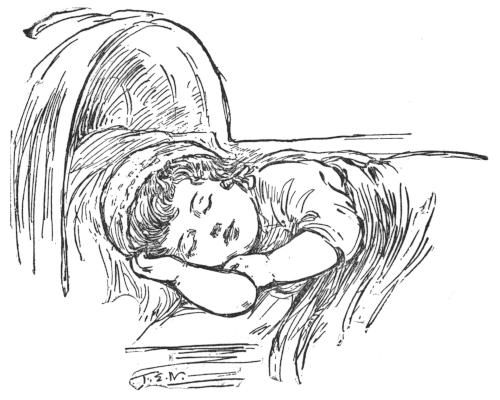
—Ella Broes van Heekeren.
If we work upon marble, it will perish; if we work upon brass, time will efface it; if we rear temples, they will crumble into dust! but if we work upon our immortal minds, if we imbue them with principles—with the just fear of God and our fellowmen—we engrave on those tablets something which will brighten to all eternity.
—Daniel Webster.
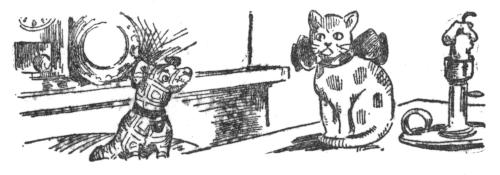
—Eugene Field.
—Robert Burns.
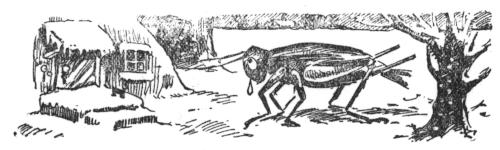
—Unknown.
It is the Listener who is just now in far greater demand than the Talker.
Let us all learn the Fine Art of Good Listening.
—Kate Upson Clark.
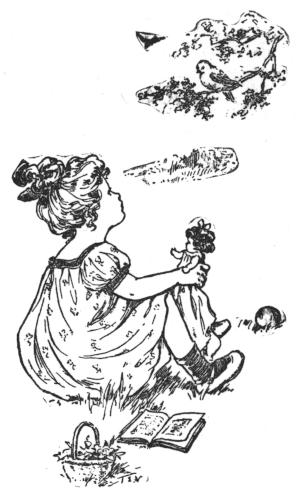
—Jane Taylor.
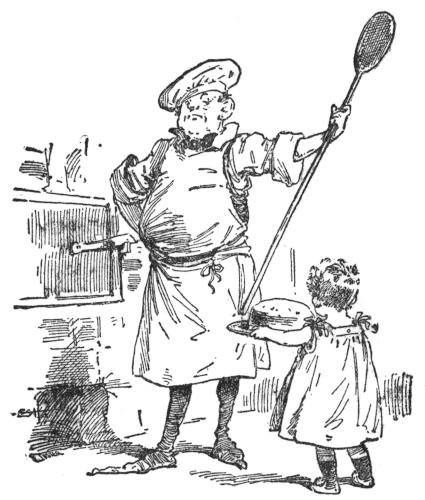
(A cinder-sifter.)
—Elizabeth Barrett Browning.
—Alfred, Lord Tennyson.
—George Herbert.
—Lord Houghton.
—William Wordsworth.
—Isaac Watts.
An ancient Italian legend tells how Good St. Nicholas of Padua first gave presents on Christmas Eve by throwing purses in at the open windows of needy people. Purses in those days were knitted of yarn and tied with strings at the open ends. They were not unlike stockings, except that they had no feet. People began to hang these long empty purses of yarn on their window-sills on Christmas Eve, so that St. Nicholas, as he passed by, could put money into them. When money became scarce the long purses were filled with presents instead—useful things for the big people, and books and toys for the children.
In cold countries, where the windows could not be left open, folks hung their purses near the fireplace, believing that St. Nicholas would come down the chimney and leave his presents for them. And after the knitted purses went out of fashion they hung up their stockings, which closely resembled the old-time purses, so that there would be plenty of room for the Christmas presents, and old St. Nicholas (Santa Claus), who lived on through all the ages, would know he had been expected.
That is how the Christmas stocking came to be used, and why it will be used for many generations to come in thousands of homes on each succeeding Christmas Eve....
—L. Frank Baum.
—Alfred, Lord Tennyson.
—Alfred, Lord Tennyson.
—Edward Lear.
—William Cowper.
A young American who had broken an appointment with Dr. Franklin, came to him the following day prepared to make his peace with an apology. He was making a tiresome excuse when Dr. Franklin stopped him, saying, “My dear boy, say no more. You have, indeed, said too much already. For he who is good at making an excuse, is seldom good at anything else.”
—Benjamin Franklin.
—James Whitcomb Riley.
—Jane and Ann Taylor.
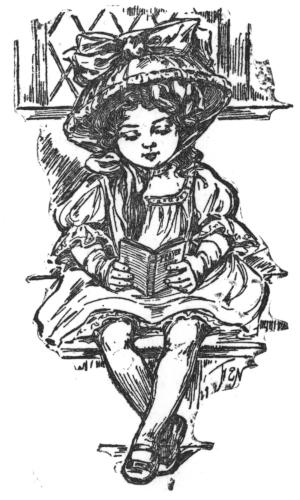
—Mary Howitt.
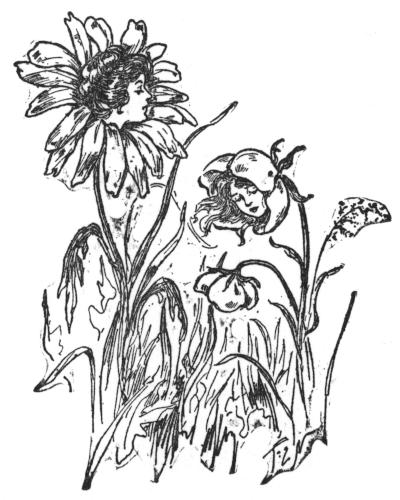
(Coals.)
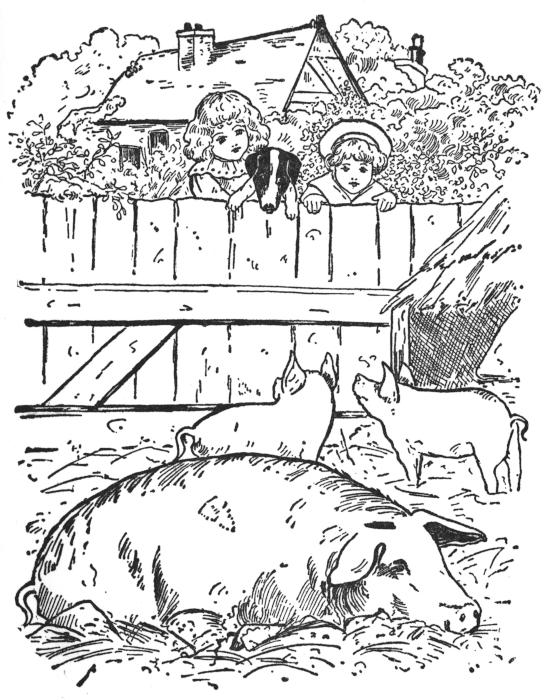
—John Kendrick Bangs.
—Isaac Watts.
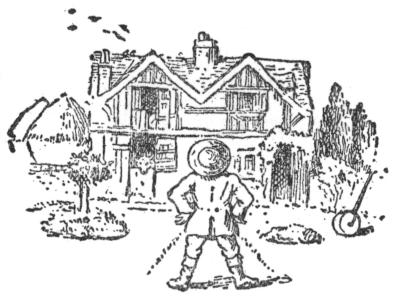
This is the house that Jack built.
|
|
|
|
|
|
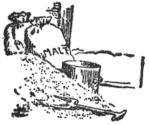
This is the malt
That lay in the house that Jack built.
|
|
|
|
|
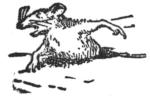
This is the rat,
That ate the malt
That lay in the house that Jack built.
|
|
|
|
|
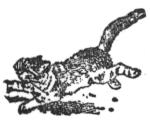
This is the cat,
That killed the rat,
That ate the malt
That lay in the house that Jack built.
|
|
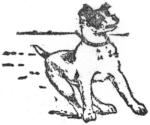
This is the dog,
That worried the cat,
That killed the rat,
That ate the malt
That lay in the house that Jack built.
|
|
|
|
|
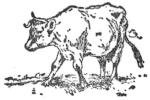
This is the cow with the crumpled horn,
That tossed the dog,
That worried the cat,
That killed the rat,
That ate the malt
That lay in the house that Jack built.
|
|
|
|
|
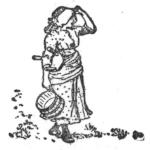
This is the maiden all forlorn,
That milked the cow with the crumpled horn,
That tossed the dog,
That worried the cat,
That killed the rat,
That ate the malt
That lay in the house that Jack built.
|
|
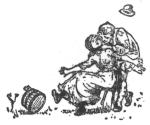
This is the man all tattered and torn,
That kissed the maiden all forlorn,
That milked the cow with the crumpled horn,
That tossed the dog,
That worried the cat,
That killed the rat,
That ate the malt
That lay in the house that Jack built.
|
|
|
|
|
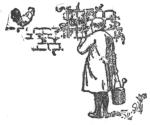
This is the priest all shaven and shorn,
That married the man all tattered and torn,
That kissed the maiden all forlorn,
That milked the cow with the crumpled horn,
That tossed the dog,
That worried the cat,
That killed the rat,
That ate the malt
That lay in the house that Jack built.
|
|
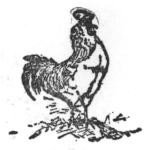
This is the cock that crowed in the morn,
That waked the priest all shaven and shorn,
That married the man all tattered and torn,
That kissed the maiden all forlorn,
That milked the cow with the crumpled horn,
That tossed the dog,
That worried the cat,
That killed the rat,
That ate the malt
That lay in the house that Jack built.
|
|
|
|
|
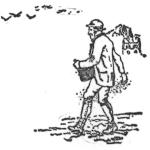
This is the farmer sowing his corn,
That kept the cock that crowed in the morn,
That waked the priest all shaven and shorn,
That married the man all tattered and torn,
That kissed the maiden all forlorn,
That milked the cow with the crumpled horn,
That tossed the dog,
That worried the cat,
That killed the rat,
That ate the malt
That lay in the house that Jack built.
|
—Charles Kingsley.
—Samuel Taylor Coleridge.
—Ann Taylor.
—Jane Taylor.
—William Cowper.
—William Shakespeare.