Lancashire is not only the principal seat of the English cotton
manufacture. Over and above the processes which are auxiliary to it
and complete it, many are carried on of a nature altogether
independent, and upon a scale so vast as again to give this busy
county the preeminence. The mind is arrested not more by the variety
than by the magnitude of Lancashire work. Contemplating the
inexpressible activity, all directed to a common end, one cannot but
recall the famous description of the building of Carthage, with the
simile which makes it vivid for all ages. Like all other manifold
work, it presents also its amusing phases. In Manchester there are
professional "knockers-up"—men whose business it is to tap at
up-stair windows with a long wand, when the time comes to arouse the
sleeper from his pillow.
The industrial occupations specially identified with the cotton trade
are bleaching, dyeing, and calico-printing. Bleaching, the plainest
and simplest, was effected originally by exposure of the cloth to the
open air and solar light. Spread over the meadows and pastures, as
long as summer lasted, the country, wherever a "whiter" or "whitster"
pursued his calling, was more wintry-looking in July than often at
Christmas. The process itself was tedious, requiring incessant
attention, as well as being liable to serious hindrance, and involving
much loss to the merchant through the usually long delay. Above all,
it conduced to the moral damage of the community, since the bleaching
crofts were of necessity accessible, and furnished to the ill-disposed
an incentive to the crime which figures so lamentably in their
history. That changes and events, both good and evil, are prone to
come in clusters is a very ancient matter of observation. At the
precise moment when the ingenious machinery produced by Hargreaves,
Arkwright, and Crompton, was developing its powers, a complete
revolution took place in regard to bleaching. Scheele discovered that
vegetable colours gave way to chlorine. Berthollet and Dr. Henry (the
latter residing in Manchester) extended and perfected the application.
By 1774 the bleaching process had been shortened one-half; the
meadows and pastures were released; the summer sunshine fell once more
upon verdure,
"Diffugere nives, redeunt jam gramina campis";
and by about 1790 the art became what we have it to-day, one purely
for indoors. The new method was first practised successfully in the
neighbourhood of Bolton, which place has preserved its original
reputation, though long since rivalled in every part of the
cotton-manufacturing district, and often in more distant spots, a
copious supply of clean water being indispensable, and outweighing in
its value the advantages of proximity to town. Many successive steps
have to be taken before perfect whiteness can be secured, these
demanding the utmost care and the strictest order of procedure.
Finally, unless destined for the dye-house or the print-works, the
cloth is stiffened with starch made from wheaten flour, the
consumption of which article is very large also in the factories,
where it is employed to give tenacity to the yarn, reacting
beneficially upon the agricultural interest; then, in order to give it
the beautiful smoothness and gloss which remind one of the petals of
the snowdrop, it is pressed between huge rollers which play against
one another under the influence of powerful engines. On emerging from
them it is said to have been "cylindered," or, corruptly,
"calendered." Bleaching, it will appear from this, is a process which
but slightly taxes human strength. Very interesting is it to note how,
in the presence of chemistry and steam, the old word "manufacture" has
in modern times changed its meaning. To-day the office of human
fingers is less to "make" than to guide the forces of nature, all the
harder work being delegated to inanimate wood and iron. The time
ordinarily allowed for bleaching is one or two days, though, if
needful, the entire process can be accelerated. The cost is about a
halfpenny per yard.
Dyeing is carried on in Lancashire quite as extensively as bleaching.
Here, again, the exactest chemical knowledge is wanted. The managers
are usually men well versed in science. A visit to an important
dye-works always awakens the liveliest sentiments of admiration, and
were it not for the relentless fouling of the streams which receive
the refuse, few scenes of industry would live longer in pleasant
memory. For although dye-works exist in towns and their suburbs, they
are more frequently established out in the country, where there are
babbling brooks and "shallow falls," with a view to obtaining a
plentiful and steady supply of clean water. Factories also are
sometimes found amid the fields, occupying quite isolated positions,
the object being similar—the command of some definite local
advantage. When at the foot of a hill it is interesting to observe
that the chimney is placed half-way up the slope, a preliminary
underground passage inducing a more powerful draught.
It is in the neighbourhood of these rural establishments that the hurt
done by manufacturing to the pristine beauty of the country becomes
conspicuous. Near the towns the results are simply dirt, withered
hedges, and a general withdrawal of meadow adornment. In the country
we perceive how the picturesque becomes affected. Railways are not
more cruel. Cotton, with all its kindliness, reverses the celestial
process which makes the wilderness blossom as the rose. There are
differences in degree—the upper portion of the Irwell valley, near
Summerseat, is in a measure exceptional; but we must never expect to
find a spot wholly devoid of illustrations of blight and mischief.
Against the destruction of natural beauty, when works and factories
assume the sway, of course must be set not only the employment of the
industrious, but the enormous rise in the value of the land; since
rise of such character is a sign of advancing civilisation, which in
due time will more than compensate the damage. In the manufacturing
parts of Lancashire land available for farming purposes commands ten
times the rental of a century ago. Mr. Henry Ashworth's paper on the
increase in the value of Lancashire property, published in 1841,
showed that since 1692 the rise in Bolton had been six hundredfold.
The highest place in the trio of beautiful arts now before us is held
undeniably by calico-printing, since it not only "paints" the woven
fabric "with delight," but in its power to multiply and vary the
cheerful pictures is practically inexhaustible; thus representing, and
in the most charming manner, the outcome of the sweet facility of the
seasons. Next to the diversities of living flowers assuredly come the
devices of the pattern-designer who discreetly goes to nature for his
inspiration. Much of his work must of necessity be conventionalised,
and some of it cannot be other than arbitrary and artificial; but
there is no reason why, in its steadiest practice, strictly natural
forms and colours should not always be regarded as truest and best.
The tendency is daily more and more in this direction, so that
calico-printing may justly anticipate a future even more
distinguished than its present and its past. The "past," if we press
for the birthday, is an ancient one indeed. Not to mention the
chintzes of India, in the days of Calidasa, Pliny shows us very
plainly that printing by means of mordants was practised in Egypt in
the first century of the Christian era. When introduced into Western
Europe is not known; for our present sketch it is enough that in
England it began about a.d. 1700, coming, like many other excellent
things, of the short-sighted efforts of selfishness, which,
fortunately for mankind, always invites the retaliations of
generosity. In the year mentioned, 1700, with a view to favouring the
manufacturers of woollen and silk, the importation of prints from
India was forbidden. Experiments were at once made with a view to
production of similar work at home. This was soon discovered to be
practicable, and preparations were made for printing upon a large
scale, and at a moderate cost, when a new hindrance arose—say rather
that the old malignant one, jealous opposition, reappeared. For a time
this was successful, but at last the privilege to print in England was
conceded, burdened, however, with the condition that the metropolis
and the immediate vicinity should alone possess the right—a
circumstance which recalls to mind the original law as to joint-stock
banks. The monopoly wrought its own destruction, for there was one
county at least, a despised but courageous one in the north, which was
not likely to remain a passive spectator. Contemporaneously with the
new bleaching process above described, contemporaneously also with the
employment of the new cotton machinery, calico-printing obtained the
provincial footing which from that time forwards has never ceased to
strengthen, and which now renders Lancashire the most important
district in the world in regard alike to the immensity of production
and the inexpressible beauty of the workmanship. It is not too much to
say, with an eminent author, that the calico-printing works of
Lancashire are entitled to count with the most distinguished English
seats of useful science, and the most interesting scenes of the
exercise of tasteful invention. The earliest enterprise was in
Manchester itself, in 1745, the year of the visit of Prince Charles
and his army, the original Lancashire efforts having been made, so
history says, by the grandfather of the late distinguished surgeon,
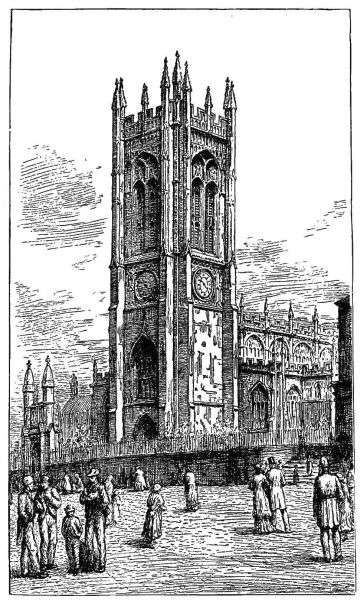
Mr. Joseph Jordan. The "works" were situated on the banks of the
Irwell, close to St. Mary's Church. Blackburn soon followed, and under
the influence of the supreme abilities of the Peels, remained for
many years the uncontested centre. Print-works are now met with in
every little recess where there is supply of water, doubtless the
first thing looked for when they were founded. The natural current
sufficed at first; but it soon became customary to construct home or
private reservoirs, and upon these the dependence is now essentially
placed. No county in England needs so much water as Lancashire, and
certainly there is not one that presents so many little bits of
water-surface artificially prepared. It is pleasant to observe that
the reservoirs belonging to "works," when belonging to a man of taste,
have often been rendered extremely pretty by the introduction of
water-lilies: flowers not only of unrivalled queenliness among
aquatics, but distinguished among our native vegetation by the pensive
languor always associated with the idea of the Oriental—the
water-lilies' birthright—for, as a race, they are much more Asiatic
than European, and by happy coincidence the most appropriate that
could be placed there, the water-lily being the emblem not more of the
Nile than of the Ganges.
The multiplicity of the printing processes, and their complexity, call
for many distinct buildings. Hence, when large, and isolated away in
the country, as very generally happens, a print-works has quite the
look of a rising village. There is a laboratory, with library, for the
managing chemist, a suite of apartments for the designers, and a house
and fruitful garden for the resident partner, with, in addition, not
uncommonly, a schoolroom for the children. When the designers have
completed their sketches, the engraver's work begins—a business in
itself, and carried on almost exclusively in town, and especially in
Manchester. Originally the pattern was cut upon a block of wood,
usually sycamore, the success of the transfer to the cloth depending
chiefly upon the dexterity of the workman. In 1785 this very primitive
mode was superseded by "cylinder-printing," the pattern being engraved
upon copper rollers, as many as there are colours; and though
"block-printing" shares the unquenchable vitality of hand-loom
weaving, the roller may now be considered universal. The employment of
copper supplies another very interesting illustration of the resort
made to this metal in almost every kind of high decorative art, and
prepares us to understand the fitness of the ancient mythological use,
and why associated with the goddess of love and beauty.
These great undertakings—the bleaching, the dyeing, and the printing
of the calico—demand steady supplies of the chemicals and other
agents by means of which the various objects are attained. Hence in
Lancashire the unrivalled number and extent of the manufacturing
chemical works; and, especially in Manchester, the business,—never
heard of in many English counties, here locally distinguished as the
"drysalter's." The drysalter sees to the importation from foreign
countries of the indigo, the madder, and other dye-stuffs in daily
request; he deals also in the manifold kinds of gum constantly asked
for, supplying himself partly from abroad, viâ Liverpool, partly
from works close by which prepare it artificially. A well-known sight
in Manchester is that of a cartload of logs of some curious tropical
dyewood, rudely hewn by the axe, and still retaining in the cavities
of the bark little relics of the mosses and lichens of their native
forest.
The chemical works are located principally in the extreme south-west,
especially near Widnes, a place which at once betrays itself to the
passing traveller in the almost suffocating atmosphere, and the total
extinction of the beauty of trees and hedges, spectres and gaunt
skeletons alone remaining where once was verdure. Here we find in its
utmost vigour the manufacture of "soda-ash" (an impure carbonate),
and of chloride of lime, both for the use of bleachers; also, prepared
from the first-named, "caustic soda," for the soap-boilers of
Liverpool and Warrington; and chlorate of potash, peculiarly for the
dyers. Nitric acid also is made in immense quantity, the basis being
Chilian saltpetre, though for their materials for the soda-products
the manufacturers have no need to go further than Cheshire, the supply
of salt being drawn entirely from the Northwich mines. The discharge
of stifling vapours was much worse before the passing of the Alkali
Act than at present; and, curiously enough, though by no means without
a parallel, involved positive loss to the manufacturer, who now
manages to detain a considerable amount of good residuum previously
wasted. The Act permits a limited quantity of noxious matter to go up
the chimney; the stream is tested every day to see that the right is
not abused: how terrible is the action even of that little the
surrounding fields are themselves not slow to testify; everything,
even in summer, looks dirty, lean, and dejected. Sulphuric acid is
likewise manufactured on a great scale, especially at
Newton-le-Willows, the basis (except when required to be very pure,
when sulphur is employed) being iron pyrites imported from Spain.
Hundreds of thousands of tons are prepared every year. There is
probably not a single manufacturing process carried on in England in
which chemical agency is involved which does not call for it. Hence,
in the consumption of sulphuric acid, we have always a capital index
to the state of trade, so far as regards appeal to the activity of the
producing classes.
In the extent of its manufacture of all the substances above
mentioned, Lancashire is far ahead of every competitor in the world;
Germany comes next, and then probably France.
Carbolic acid is of peculiarly Lancashire origin, having been
originally introduced commercially by the late Dr. Crace Calvert.
Supplies are in daily request for the production of colour: the
employment for antiseptic purposes is larger yet; the export is also
very considerable. Other immensely important chemicals prepared in
South Lancashire, and on a scale almost incredible,—Manchester
helping the Widnes corner,—are sulphate of soda and sulphate of
copper, the last-named being now in unlimited demand, not only by the
dyers and calico-printers, but for the batteries used in electric
telegraphy. In the presence of all this marvellous work, how quaintly
reads the history of the Lancashire chemistry of 500 years ago. It
had then not emerged from alchemy, which, after being forbidden by
Henry IV., and again legalised by Henry VI., was warmly encouraged by
the credulous Edward III., and had no devouter adherents than the
Asshetons and the Traffords, who in their loyalty undertook to supply
the king with silver and gold to the extent of his needs—so soon as
the "philosopher's stone" should be discovered! Before we laugh at
their misdirected zeal, it may be well to inquire whether the world
has suffered more from scornful and premature rejection, or from
honest and simple enthusiasm, such as in playing with alchemy brought
to life the germs of the profoundest and most variously useful of the
sciences.
Though Lancashire tries no longer to transmute the baser metals into
the precious ones by means of alchemy, it succeeds by the honester and
less circuitous route of industry. Lead is obtained, though not in
large quantity, at Anglezark, near Rivington Pike; and iron, in the
excellent form of hæmatite, plentifully in the Ulverston and Furness
district. The smelting is carried on chiefly at Barrow, where the
business will no doubt continue to prosper, though hæmatite of late
years has somewhat lost its ancient supremacy, methods having been
discovered by which ores hitherto deemed inferior are practically
changed to good and useful ones.
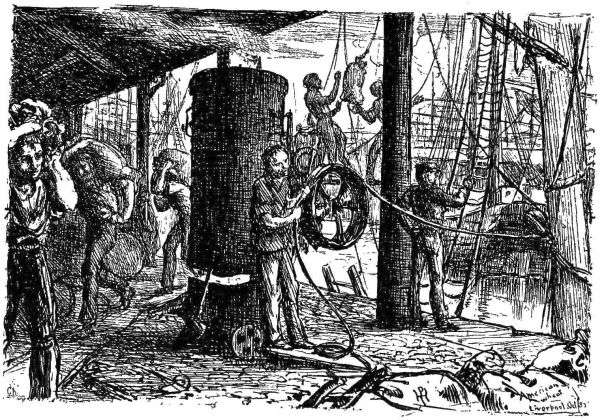
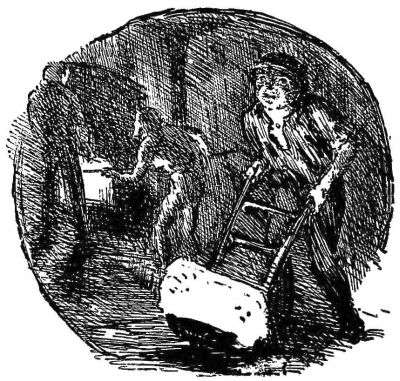
IN THE WIRE WORKS
In any case the triumphs of Lancashire will continue to be shown, as
heretofore, in her foundries and engine-works, the latter innumerable.
Whitworth, Fairbairn, Nasmyth, are names too well known to need more
than citation. Nasmyth's steam-hammer in itself is unique.
Irresistible when it smites with a will, a giant in power and
emphasis, it can assume, when it pleases, the lightsome manners of a
butterfly. Let a lady place her hand upon the anvil, the mighty
creature just gives it a kiss, gently, courteously, and retires. It is
rather a misfortune for the stupendous products of the foundry and
engine-works that, except in the case of the locomotive, as soon as
completed they are hidden away for evermore, embedded where completely
lost to view, and thought of as little as the human heart. Happily in
the streets of Manchester there is frequent reminder, in the shape of
some leviathan drawn slowly by a team of eight, ten, twelve, or even
fourteen superb horses. Bradford, one of the suburbs of Manchester,
supplies the world with the visible factor of its nervous
system—those mysterious-looking threads which now everywhere show
against the sky, and literally allow of intercourse between "Indus and
the Pole." In addition to their manufacture of telegraph-wire, the
Messrs. Johnson prepare the whole of what is wanted for the wire-rope
bridges now common in America. Large quantities of wire are produced
also at Warrington; here, however, of kinds adapted more particularly
for domestic use. In connection with metal it is worthy also of note
that Lancashire is the principal seat of the manufacture of the
impregnable safes which, laughing at thieves and fire, challenge even
the earthquake. They are made in Liverpool by Milner and Company, and
near Bolton by the Chatwoods.
Lancashire was long distinguished for its manufacture of silk, though
it never acquired the importance held by Macclesfield. In Europe this
beautiful art came to the front as one of the results of the later
Crusades—enterprises which, though productive of untold suffering,
awoke the mind of all the civilised parts of the Continent from its
slumber of ages, enlarging the sphere of popular thought, reviving the
taste for elegant practices forgotten since the fall of the Western
Empire, and extending commerce and knowledge in general. To Lancashire
men the history is thus one of special interest. Italy led the way in
the manufacture; Spain and France soon followed, the latter acquiring
distinction, and at the close of the sixteenth century the English
Channel was crossed. Tyranny, as in the case of calico-printing, was
the prime cause, the original Spitalfields weavers having been part of
the crowd of Protestants who at that period were constrained, like the
unhappy and forlorn in more modern times, to seek the refuge always
afforded in our sea-girt isle.[24] James I. was so strongly impressed
with the importance of the manufacture that, hoping to promote it at
home, he procured many thousands of young mulberry-trees, some of
which, or their immediate descendants, are still to be found,
venerable but not exhausted, in the grounds and gardens of old country
houses. The Civil Wars gave a heavy check to further progress. Little
more was done till 1718, when a silk-mill, worked by a water-wheel,
was built at Derby. This in time had to close its doors awhile,
through the refusal of the King of Sardinia to permit the exportation
of the raw material, always so difficult to procure in quantity. At
last there was recovery; the manufacture crept into Cheshire, and at
the commencement of the present century into Lancashire, taking root
especially in the ancient villages of Middleton and Eccles, and
gradually spreading to the adjacent hamlets.
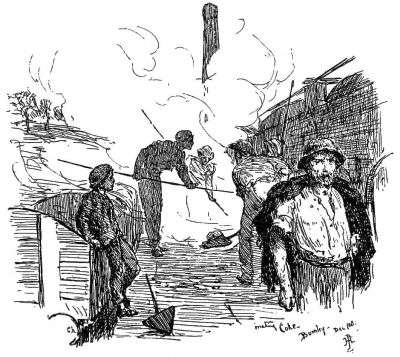
MAKING COKE
The arrival was opportune, and helped to break the fall of the
hand-loom cotton weavers, many of whom could not endure the loss of
freedom imposed by the rules of the factory, and whose latent love of
beauty, as disclosed in their taste for floriculture, was called forth
in a new and agreeable manner. Silk-weaving was further congenial to
these men in being more cleanly and less laborious than the former
work, requiring more care and vigilance, and rather more skill, thus
exactly suiting a race of worshippers of the auricula, the polyanthus,
and the carnation. The auricula, locally called the "basier," a
corruption of "bear's ear," is the subject of a charming little poem
by one of the old Swinton weavers, preserved intact, reprinted in
Wilkinson's Lancashire Ballads, and peculiarly valuable in respect
of the light it throws upon the temperament of a simple and worthy
race, now almost extinct. We may be allowed to quote two of the
verses:
Come and listen awhile unto what we shall say
Concerning the season, the month we call May;
For the flowers they are springing, the birds they do sing,
And the basiers are sweet in the morning of May.
When the trees are in bloom, and the meadows are green,
The sweet-smelling cowslips are plain to be seen;
The sweet ties of nature we plainly do say,
For the basiers are sweet in the morning of May!
The silk-weavers about Middleton were renowned also for their zest in
entomology, and truly wonderful were their cabinets of Lepidoptera.
Unfortunately, when all was prosperous, there came a change. Ever
since 1860, the year of the new, and still current, silk-treaties with
France, whereby its original command of the trade was restored, the
manufacture of silk in Lancashire, and everywhere else in England, has
been steadily and hopelessly declining; and at the present day,
compared with half a century ago, the production is less than a tenth
of what it was. Power-looms naturally have the preference with
employers, since they represent invested capital; whereas the
hand-loom weaver, if there is no work for him, has merely to be told
so. The latter, as a consequence, is now seldom met with. The trade,
such as remains, gathers chiefly about Leigh. Middleton, once so
famous for its "broad silks,"—those adapted for ladies' dresses,—now
spends its time chiefly in the preparation of "trimmings"; and
wherever carried on the manufacture is almost wholly of the kind
called "mixed," or cotton and silk combined, this being more in
demand, because lower in price, though not wearing so well.
From silk that befits empresses to hemp, the material of sackcloth,
the way is long. But it must not be overlooked, in regard to the
textile manufactures of Lancashire, that each extreme is familiar.
Warrington, in the bygones, prepared more than half the entire
quantity of sailcloth required for the navy. It was a ship laden with
hemp from the Baltic for use in Lancashire which, touching at the Isle
of Skye, brought the first news of Prince Charles Edward's landing
there.
Lancashire produces one-sixth of all the paper made in England. In
other words, there are in this county about fifty of the nearly 300
English paper-mills, including the very largest of them—Messrs.
Wrigley and Sons', near Bury. The first to be established was
Crompton's, at Farnworth, near Bolton, which dates from 1676, or
exactly eighty-eight years after the building of the famous Kentish
one referred to by Shakspere,[25] which itself followed, by just a
century, the primeval one at Stevenage. Every description of paper,
except that required for bank-notes, is made in Lancashire. The mills
themselves, like the dyeworks, haunt the river-sides, though they no
longer draw their supplies of water from the stream. Paper-works
cannot possibly prosper if there be iron in the water they use, or
decomposed vegetable matter. Hence in Lancashire it is now customary
to sink wells of considerable depth, and in any case to provide for
elaborate filtration. No spectacle in its way is more wonderful than
that of a paper-machine at work. There is no limit to the length of
the piece it is able to produce continuously, save that which is
imposed by its own restricted dimensions. A roll could be made—as it
is—of three or four miles in length, the cylinder gradually gathering
up the pulp till it can hold no more. Very interesting also is it to
observe the variety of material now employed. Esparto, or "Spanish
grass," is brought to Liverpool (as to Cardiff and Newcastle) in
exchange for coal, and wood-pulp from Norway and Sweden viâ Hull.
At Darwen we find the largest and most important production in England
of the ornamental wall-papers which now take the place of the
distemper painting of ancient Egypt, Herculaneum, and Pompeii. The
manufacture was originally very similar to block calico-printing. In
or about 1839 Messrs. C. & J. G. Potter introduced "rollers," with the
additional novelty of the pattern being cut in relief; and this is
now almost universal, the Messrs. Potter having progeny, as it were,
all over the country, though they themselves still produce quite
one-half of the quantity consumed. They have customers in every part
of the civilised world, and adapt their work to the diverse and often
fantastic tastes of all in turn, directed not uncommonly, as in the
case of the Hindoos and the Japanese, by native designs, which they
are required to follow implicitly.
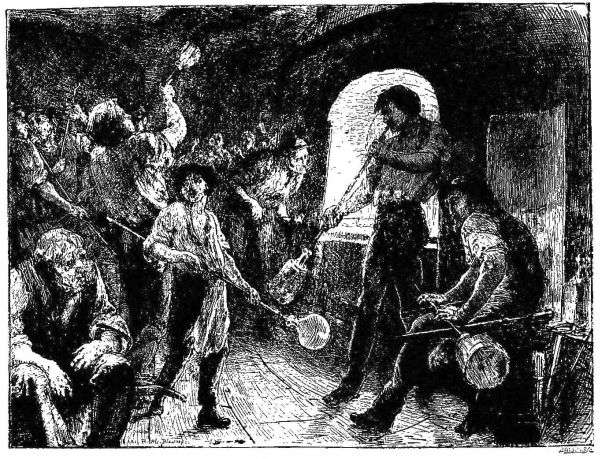
GLASS-BLOWING
To go further into the story of modern Lancashire manufacturing is not
possible, since there is scarcely a British industry which in this
county is without example, and to treat of the whole even briefly
would require thrice the space already occupied. Among the foremost
scenes to be described would be the plate-glass works at St. Helens;
and the Manchester india-rubber works, the original, now sixty-seven
years old, still carried on under the familiar name of Charles
Macintosh & Co. The first were established in Glasgow; London, and
then Manchester, were the next following centres, beginning with
simple waterproof, but now producing articles of every conceivable
variety. Thread, tape, pins, carpenters' tools, nails, screws,
terra-cotta, bottles, aniline, soap, brass, and pewter-work, are also
Lancashire staples. Gunpowder is manufactured near the foot of
Windermere; and at Prescot and thereabouts the people employ
themselves, as they have done now for nearly three centuries, in
manufacturing the delicate "works" and "movements" required for
watches. Not without significance either, in regard to the general
capabilities of the county, is the preparation at Newton by Messrs.
M'Corquodale of the whole of the requirements of the Government, both
for home use and in India, in the way of stationery and account-books.
For the Government alone they manufacture forty millions of envelopes
every year. They also execute the enormous amount of printing demanded
by the L. & N. W. Railway Company. The great ship-building works at
Barrow now need no more than a reference. The magnificent Atlantic
Inman steamer, the City of Rome, a ship with a gross tonnage of
8400, and propelled by, upon the lowest estimate, 8500 indicated
horse-power, was launched here in June 1881. After the ill-fated
Great Eastern, this was the largest vessel then afloat. All has come
into existence since about 1860, when the population of this
out-of-the-way Lancashire village was under 4000, though now nearly
50,000, a growth without parallel except in the United States.
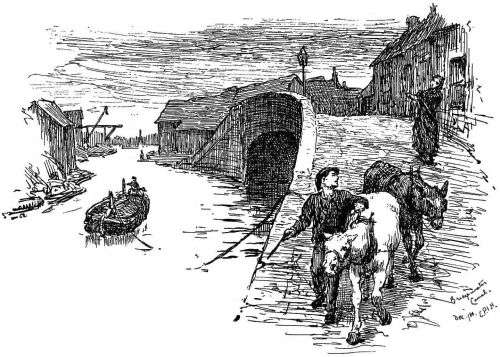
ON THE BRIDGEWATER CANAL
Omitting a considerable number of minor activities, there is, in
addition to the above, the vast sphere of industry, part of the very
life of working Lancashire, though not a manufacture, indicated by the
little word "coal." In their value and importance the Lancashire
collieries vie with the cotton-mills, declaring once again how close
and constant is the dependence of the prosperity of a great
manufacturing district upon its geology. Coalfields lying below the
surface leave the soil above them free for the purposes of the farmer
and the builder; in other words, for the raising of human food and the
development of useful constructive arts. Where there is plenty of coal
double the number of people can exist; the enormous population of
Lancashire south of the Ribble has unquestionably come as much of its
coalfields as of the invention of the spinning-jenny. The prevailing
rock in this portion of Lancashire is the well-known new red
sandstone, the same as that which overlies all our other best English
coal deposits. Concurrently with it, and with the millstone-grit, the
measures which have brought so much wealth to the county, extend from
Pendleton, two miles from Manchester, to Colne in the north-east, and
to St. Helen's in the west, many vast branches running out in various
directions from the principal mass. What the exact thickness may be
of course is not known, but, according to Mr. Dickinson, it may be
estimated at 6450 feet. Some of the deepest pits in the country have
been sunk in it, as at the Rosebridge Colliery, near Wigan, where the
depth already reached is nearly 2500 feet, and the Ashton-moss Pit,
near Ashton-under-Lyne, which goes still lower,—it is said to 2700
feet,—in which case this last will be the deepest in England. The
direction of the dip is described by the colliers in a very pretty
way. They say it is towards "the rising sun," or "the setting sun,"
the different points included between these opposites being similarly
expressed by "dipping towards nine-o'clock sun," "twelve-o'clock sun,"
and so on. The sun is thus their compass, though few men see less of
it during their hours of labour. The neighbourhood of a colliery is
generally well declared. Independently of the apparatus over the
opening of the pit, there is no mistaking the significance of the row
of neat cottages, all fashioned on the same architectural model, a few
stray ones here and there, a trim little front garden seldom wanting,
with close by a few shops, a school-house, a chapel, both very plain,
and the proprietor's or agent's residence, somewhat ornate, and
garnished with evergreen shrubs, ready always for the washing of a
kindly shower. In many places, as at Wigan, Atherton, Tyldesley, and
St. Helens, women, both single and married, work at the collieries,
but only above ground, or at the bank. They are prohibited by statute
from descending the pit, and their names and ages are all exactly
registered. Up to the waist they are dressed like men. Above the
knees, instead of a coat, they have a peculiarly fashioned tunic, a
compromise between gown and jacket, by which they may be distinguished
from afar: a limp bonnet tied under the chin protects the head, but
never conceals the ear-rings and plaited hair. Many of these women are
plainly equal to their masculine colleagues in physical power, yet
they earn only two-thirds of the wages given to men. The decorum of
their behaviour while at work is unimpeachable; on Sundays they do
their best to dress like ladies. The Lancashire quarries are also
remarkable, though little resorted to by the architect. Commercial
prosperity is always most conspicuous where the buildings are
principally not of stone, but of brick.
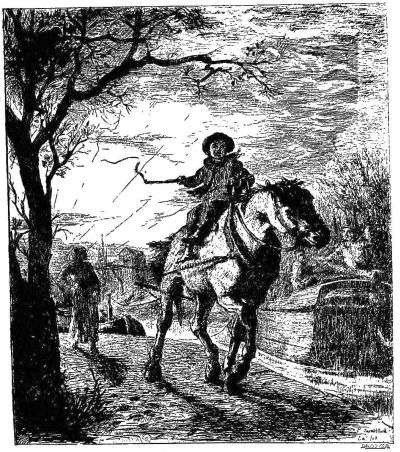
ON THE BRIDGEWATER CANAL
Nothing does more to sustain and encourage the industry of a working
population than a steady system of transit, and a well-timed delivery,
alike of the natural products of the ground and of the articles
manufactured. Hence the early development in Lancashire of the idea
of the canal, and, sixty years afterwards, of that of the railway. The
history of the Bridgewater Canal is one of the most interesting
connected with the county enterprise, the more so since all other
canals were imitations of it. Many, however, are not aware that the
celebrated peer under whose dictation it was constructed—Francis
Egerton, the third and last Duke of Bridgewater—was led to devote
himself for solace sake to engineering through a disappointment in
love. That women, when troubled or bereaved, should take refuge in
works of charity, and that when wealthy they should found hospitals
and build orphanages, is very natural, and has plenty of
exemplification; but for a man to turn when similarly circumstanced to
science is phenomenal, and the records of search for consolation after
this manner would probably be sifted in vain for a parallel case.
Several versions of the story are afloat; whichever way be the true
one, it is beyond a doubt that one of the greatest industrial
achievements ever witnessed in England had for its prime cause the
caprice or the temper of the widowed Duchess of Hamilton,—to whom a
second coronet was offered,—she who in her early days was the
celebrated belle Elizabeth Gunning. There is a waterway of this
description in Lancashire more remarkable in some respects even than
the duke's canal—that one called the Leeds and Liverpool, the
Lancashire portion of which curls round from the great seaport by way
of Ormskirk, Southport, Wigan, Chorley, Burnley, and Colne, where the
Yorkshire boundary is crossed. Near the towns, and especially in the
south-west and south-east, these useful highways are dreary and
uninteresting; but in rural districts, such as they must needs
traverse, often for lengths of many miles, the borders sometimes
acquire an unlooked-for picturesqueness, and are gaily dressed with
wild-flowers. In any case they never fail in possession of the rude
charms of the gliding boat, the slow-paced horse, and artless guide.
The Lancashire railway system, it may be remarked, extends to within a
trifle of 600 miles.