MR. ALFRED A. KNOPF
has been appointed the sole authorized
American publisher of KNUT HAMSUN
The following books are now ready:
HUNGER
GROWTH OF THE SOIL
SHALLOW SOIL
DREAMERS
PAN
WANDERERS
The following are scheduled for later publications:
CHILDREN OF THE TIME [Spring, 1923]
VICTORIA
THE VILLAGE OF SEGELFOSS
BENONI
ROSA
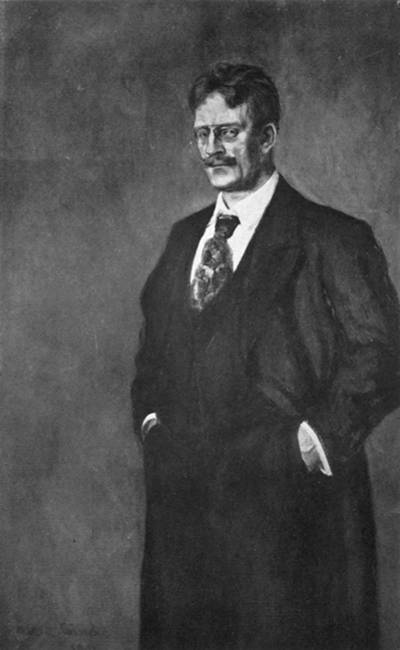
Knut Hamsun Photo by Wilse
Knut Hamsun
by
Hanna Astrup Larsen
Editor "The American-Scandinavian Review"
New York
Alfred · A · Knopf
Mcmxxii
COPYRIGHT, 1922, BY
ALFRED A. KNOPF, Inc. Published, October, 1922
Set up and printed by the Vail-Ballou Co., Binghamton, N. Y.
Paper furnished by W. F. Etherington & Co., New York.
Bound by the H. Wolff Estate, New York.
MANUFACTURED IN THE UNITED STATES OF AMERICA
The author wishes to acknowledge her debt
to The American-Scandinavian Foundation
for the Fellowship which enabled her to study
the works of Hamsun in Norway during the
winter of 1920-1921.
THE WANDERER — EARLY LIFE IN NORWAY — FROM THE WHEATFIELDS TO THE FISHING BANKS — THE AUTHOR OF "HUNGER"
Knut Hamsun has become identified
in our minds with the lonely
figure that recurs again and again
in his earlier books, the Wanderer who is for
ever outside of organized society and for ever
pays the penalty of being different from
the crowd and unable to conform to its standards.
That this lonely creature is really
himself in a certain period of his life we
know from the testimony of his own works.
Yet this vagabond and iconoclast sprang
from the most conservative stock of Norway.
He is the descendant of an old peasant family
in Gudbrandsdalen, one of the interior
mountain valleys in the heart of the country.
Gudbrandsdalen is a region of proud historical
traditions. There, nine centuries
ago, King Saint Olaf struggled to foist the
new religion on a stiff-necked race of pagans,
and not far from Hamsun's birthplace
one of the oldest churches in Norway proclaimed
his victory. There, six centuries ago,
the Scotch invader Sinclair was annihilated
with all his force when "the peasants
of Vaage and Lesje and Lom their whetted
axes shouldered," as the ballad tells us, and
the story is still cherished, still repeated to
every traveller. In this as in other secluded
valleys in Norway a peasant aristocracy developed,
a hard, strong race, intensely proud
of its family and land, looking on any
one who had been less than three generations
in the neighborhood as an interloper, and
scorning the classes of people who were not
rooted to the soil by inherited homesteads.
For the Norwegian roving blood is strangely
tempered by a passionate attachment to
inherited land, a trait that is perhaps a salutary
safeguard against the national restlessness.
Artistic handicrafts flourished in the
valley. In the Open Air Museum at Lillehammer
we may see them even now, marvellous
creations of hammered iron, tapestries
picturing scenes from the Bible, wood carvings
in mellow colors and with a Renaissance
exuberance of design overflowing
even the commonest kitchen utensils, all of a
rich yet disciplined beauty as if built on age-old
artistic traditions and standards.
Hamsun counted among his forefathers
many of the artistic craftsmen who set their
stamp of culture upon their community.
His father's father was a worker in metals.
The arts did not bring wealth to those who
practised them, however, and his parents at
the time of his birth were in straitened circumstances.
He was born, August 4, 1859,
in Lom, in one of the small well-weathered
houses which look so bleak and insignificant
against the mighty Gudbrandsdalen uplands.
When he was four years old his family removed
to the Lofoten Islands, Nordland, in
an effort to better their fortunes.
Two strains may be traced in Knut Hamsun's
personality. By virtue of his blood and
birth he had his roots in a community characterized
by an unusually firm and solid culture
based on centuries of tradition, and this heritage
we shall find coming out in him more and
more in his later years. The moralist and
preacher who wrote "Growth of the Soil" is a
true scion of the best old peasant stock.
Through the impressions of his childhood and
early youth he became affiliated with the volatile
race of Nordland, a people as alien from
the heavier inland peasant as if they lived on
different continents. The fishermen who play
with death for the wealth of the sea and depend
for their livelihood on the caprices of
nature do not easily harden into traditional
moulds. Childish and improvident, witty
and sentimental, often fond of the melodramatic,
simple and yet shrewd, superstitious but
brave beyond all praise, the native of Nordland
is a type unlike every other Norwegian.
Wherever he may roam, he will yearn for the
wonderland of his youth. It is from this
Nordland type that Hamsun has created his
Wanderer hero, and it was from the nature
of Nordland with its alternations of melting
loveliness and stark gloom that he drew his
poetic inspiration.
At the very time when Hamsun was spending
his childhood in the Lofoten Islands, Jonas
Lie, the literary discoverer of Arctic Norway,
wrote his idyllic little story "Second
Sight" in which he has really delineated a
"Wanderer" type, his hero being a gifted
Nordland lad who is set apart from ordinary
people by his strange mental malady and who,
wherever he goes, feels himself an alien. In
this book, written at a time when not even
fixed steamship routes united Nordland with
the southern part of the country (railroads
are even yet unknown), Jonas Lie has given
us a classic description of the country in its
virgin state of isolation. It gives the key to
that mysterious, extravagant strain which belongs
to the Nordland type, and throws light
on the sources from which Hamsun drew his
hero.
The words that to other people convey only
commonplaces become magnified in the Nordland
mind accustomed to the ecstatic moods
of nature, Lie tells us. Fish to a Nordlanding
means Lofoten's and Finmarken's millions,
an infinite variety, from the spouting whales
that penetrate our fjords driving huge masses
of fish like a froth before them, to the tiniest
minnow. When he speaks of birds, the Nordlanding
does not mean merely an eatable fowl
or two, but a heavenly host, billowing in the
air like white breakers around the bird crags,
shrieking and fluttering and filling the air
like a veritable snow-storm over the nesting-places.
He thinks of the eider-duck and the
tystey; the duck and the sea-pie swimming
in fjord and sound or perched on the rocks;
the gull, the osprey, and the eagle sailing
through the air; the owl moaning weirdly in
the mountain clefts—a world of birds. A
storm at sea to him means sudden hurricanes
that sweep down from the mountains and uproot
buildings—so that people at home often
have to tie down their houses with chains—waves
rushing in from the Arctic Ocean
fathoms high, burying big rocks and skerries
in their froth and then receding so fast
that a ship may be left high and dry and be
smashed right in the open sea; hosts of brave
men sailing before the wind to save not only
their own lives but the dearly bought boatload
on which the lives of those at home depend.
"There in the North popular fancy from
mythical times has imagined the home of all
the powers of evil. There the Lapp has
made himself feared by his sorceries, and
there at the outermost edge of the world,
washed by the breakers of the dark, wintry
grey Arctic Ocean, stand the gods of primitive
times, the demoniacal, terrible, half formless
powers of darkness against whom even
the Æsir did battle, but who were not entirely
vanquished before St. Olaf with his cruciform
sword 'set them in stock and stone.'—The
terrors of nature have created an army of
evil demons that draw people to them, ghosts
of drowned men who have not been buried in
Christian earth, mountain titans, the sea
draug who sails in his half boat and in the
winter nights shrieks terribly out on the fjord.
Many a man in real danger has perished because
his comrades were afraid of the draug,
and we of second sight can see him.
"But even though the overwhelming might
of nature bears down with oppressive weight
on everything living along that dark, wintry,
frothing coast, where nine months of the
year are a constant twilight and three of these
are without even a glimpse of the sun, so
that people's minds become filled with fear
of the dark, yet Nordland also possesses the
opposite extreme in its sun-warmed, clear-skied,
scent-filled summers with their endless
play of infinitely varied colors and tints, when
distances of seventy or eighty miles seem to
melt away so that we can shout across them,
when the mountain clothes itself in brownish
green grass to the very top—in Lofoten to a
height of two thousand feet—and the slender
birch trees wreathe the tops of the hills and
the edges of the mountain clefts like a dance
of sixteen-year-old white-clad girls, while
the fragrance of strawberries and raspberries
rises to you through the warm air as you
pass in your shirt sleeves, and the day is so
hot that you long to bathe in the sun-filled,
rippling sea which is clear to the very bottom.
"The learned say that the intensities of
color and fragrance in the far North are due
to the power of the light which fills the air
when the sun shines without interruption day
and night. Therefore one can not pick so
aromatic strawberries and raspberries or so
fragrant birch boughs in any other clime.
If a fairy idyl has any home, it is certainly
in the deep fjord valleys of Nordland in the
summer. It is as though the sun were kissing
nature so much more tenderly because
they have such a short time to be together and
must soon part again."
Jonas Lie's description, which I have
taken the liberty to quote in abbreviated form,
gives a picture of the surroundings in which
Hamsun spent his boyhood. It would have
been impossible to find any spot in the world
more suited to nourish the fancy of an imaginative,
impressionable boy. Lonely as he
was, he had little to interest him or occupy
his mind except what he could find for himself
out of doors. He was put to work herding
cattle, and spent long dreamy hours alone
revelling in the loveliness of the light Nordland
summer. It was then he laid the foundation
for his habit of roaming alone in the
woods and fields, and there he gained that
intimate, tender knowledge of nature which
appears in his works. In telling of his childhood,
Hamsun says that the animals and birds
became his friends. He speaks also of the
deep impression which the sea made upon
him. His uncle's house, where he spent
some of his boyhood, was built above the
ocean stream, Glimma, which rushed over
a rocky bottom, sometimes one way, sometimes
another, according to the tide, but always
in motion. Beyond it lay the open sea.
The sharp contrasts of nature, its alternations
between darkness and light, are reflected
in the temperament of the Nordland
people who are easily swung from one extreme
to another. Underneath the brightness
and levity there is a consciousness of
superstitions that are felt sometimes as dark
and sinister forces waiting to drag men away
from the light into the gloomy void where the
evil powers reign. The boy Knut Hamsun's
nature was like a sensitive stringed instrument
vibrating to the faintest breath of nature's
moods, and we find in his works the nervousness,
the quick transitions, and the swinging
between extremes of exaltation and despair
which belong to the Nordland type. While
the brightness predominates, the gloom is also
present, especially in his earliest, most personal
works.
The years he spent with his clergyman uncle
were not happy. The uncle had no idea of
how to handle a highstrung boy, and his
method of education consisted of many lickings,
much hard work, and few hours for
play. So lonely and dreary was the boy's
life that he found his chief amusement in
roaming about in the cemetery, spelling out
the inscriptions on crosses and slabs, making
up stories about them, and talking to himself,
or listening to the wind rustling in the grass
that grew tall on neglected graves. Occasionally
the old weather vane on the church
steeple would let out a terrible shriek when
the wind veered. It sounded like "iron gritting
its teeth against some other iron."
Sometimes he would help the old grave-digger
in his work, and he had strict injunctions
on what to do if bits of bone or tufts of
hair worked their way out to the surface.
They were to be put back in place and decently
covered. Once, however, he ventured
to disobey the gravedigger and take with him
a tooth which he thought he could use for
some little object he was fashioning. In the
short story "A Ghost" in the collection
"Things that Have Happened to Me," where
he draws this dismal story of his childhood,
he tells how the dead owner appeared to him
and threatened him at intervals for years
afterwards, even after he had left the house
of his uncle and was living with his parents,
where he shared a room with his brothers and
sisters. The apparition froze him with fear
and tortured him so that he was often tempted
to throw himself in the Glimma and end it
all. Of the effect that this incident had upon
him he writes: "This man, this red-bearded
messenger from the land of death, did me
much harm by the unspeakable gloom he cast
over my childhood. Since then I have had
more than one vision, more than one strange
encounter with the inexplicable but nothing
that has gripped me with such force. And
yet perhaps the effect upon me was not all
harmful. I have often thought of that. It
has occurred to me that he was one of the first
things that made me grit my teeth and harden
myself. In my later experiences I have often
had need of it."
In view of the high position clergymen
hold in Norway, and especially considering
the prestige attached to the official class fifty
years ago, it seems odd that a clergyman's
nephew, an inmate of his house for years,
should have been slated for a shoemaker, but
evidently there was no money with which to
send Knut to school, and perhaps his mental
gifts were not of the caliber to promise that
he would fit easily into any one of the usual
professional niches. After his confirmation,
which is the Norwegian boy's entrance to
manhood, he was therefore apprenticed to a
cobbler in the city of Bodö on the mainland.
In his own mind, however, he was quite determined
that he was to be a poet, and it was
while working for the cobbler that he published
his first literary venture, a highly romantic
poem called "Meeting Again." This
was followed by the story "Björger, by Knud
Pedersen Hamsund," a gloomy, introspective
tale of an orphaned peasant boy and a lady
of high degree who died for love of him—a
foreshadowing of the motif in "Victoria."
In spite of its immaturity, its absurdity even,
the story, according to the judgment of critics
to-day, shows flashes of Hamsun's peculiar
genius. Alas, there were no critics wise and
sympathetic enough to see its promise at the
time, if indeed any critics read it. The book
was printed by the nineteen-year-old author at
his own expense, paid for by his hard-earned
savings, and was bought by a few people in
Bodö, but hardly circulated beyond the confines
of the city.
Naturally the cobbler's bench could not
long confine his restlessness, and, after a short
experience as a coal-heaver on the docks of
Bodö—where his eye-glasses attracted amused
attention as out of keeping with his work—Hamsun
set out on the wanderings that were
to last full ten years. He taught a little
school, was clerk in a sheriff's office, and
crushed stones on the road.
The experiences of this period were the
foundation of his two novels "Under the
Autumn Star" and "A Wanderer Plays with
Muted Strings," bound in the English edition
under the common title "Wanderers."
Written many years later from the standpoint
of an elderly citizen who leaves his
home in the city to revisit the haunts of his
youth and play at being a vagrant laborer
once more, they give his adventures in the
softening light of retrospect. A touch of
personal description may be found in the
lines, "I taught myself to walk with long,
tenacious steps. The proletarian appearance
I had already in my face and hands."
There is a lingering tenderness in the author's
treatment of these years which would
indicate that at the time of writing he looked
back upon them almost with regretful longing.
We do not find the smallest trace of
the acrid bitterness which he put into the
short stories from his American experiences
or into the account of his struggles to gain
a foothold in Christiania. The roving life
without fixed habitation or routine had its
charms for him and it gave him an opportunity
to be much out of doors. Strong and
capable as he was, the manual labor in itself
held no terrors for him, and he was rather
proud of his inventive skill. "Under the
Autumn Star" recounts a number of small
technical triumphs, chief among which was
a marvellous saw for cutting timber on the
root—an actual invention of Hamsun's.
Not many years ago he replied in answer to
a question in an enquête that the proudest
achievement of his life was the invention of
this saw, in the practicability of which he
still had faith, although I believe it has never
been perfected for actual use.
During the time when he ate and slept with
servants and tramped the road with other
day laborers, while observing the upper class
from the vantage point of his own obscurity,
Hamsun garnered a full sheaf of those curious
and startling incidents by means of which
he keeps his readers in a constant state of surprise.
Meanwhile he did not forget his old
ambition to become a poet. He felt the need
of an education, and gradually worked his
way southward to Christiania, where he entered
the University.
The experiment was not a success. At that
time the University was much more than
now under the influence of old academic
traditions, and did not welcome the rustic in
search of knowledge as cordially as perhaps
it would have done to-day. Moreover, the
former cobbler and road-laborer was uncouth
in his manner, bursting with loud-voiced
opinions, and by no means filled with
the proper reverence for authority. He soon
realized that he was a misfit in University
circles, and gave up the attempt in disgust.
Of more benefit to him was a trip to the continent
which he was enabled to make. After
his return he went back to his old life on the
road, but his intellect was more and more
reaching out beyond the humble work by
which he earned his living. Finally he made
his escape and took passage to America.
In the early eighties, when Hamsun
started out for America, the tide of
Norwegian immigration was at its
height. Not only were thousands and thousands
of young men and women going across
the sea to try to better their worldly status,
but America had come to be looked upon as
a spiritual as well as an economic land of
promise. The poets, Björnson, Ibsen, Kielland,
Jonas Lie and others were busy sending
their heroes and heroines over there to find
expansion of life or perhaps to come back
and be the fresh, salty stream in the back
waters of Norwegian narrowness and prejudice.
We need only call to mind Lona
Hessel in "Pillars of Society." Knut Hamsun
had, of course, read these books, and when
he started out for the New World he did not
go merely as an immigrant to seek his fortune.
He hoped to find those larger opportunities
for leading his own life and using his
gifts which the poets had been telling him
about. He had bruised himself on Old World
littleness; quite naturally he looked to the
New World for bigger visions, ampler spaces,
and a saner estimate of a man's worth. In
this he was destined to be sorely disappointed.
And yet some of the things he sought, and
even more those he learned to value later in
life, were there, but he failed to find them.
His dream of being a poet was still alive in
him, and when he came to his countrymen in
the Middle West he announced to a friend
that he was going to write poetry for the Norwegian
people in America. To one who
knows the Middle Western settlements, there
is something pathetic in this youthful ambition.
God knows that if any one needs a poet
it is the immigrant who is torn violently from
his contact with the spiritual life of the old
country and has not yet taken root in the
new, but the Hamsun of that day had no message
which his emigrated countrymen cared
to hear. Like other immigrants they were absorbed
in the task of building a new community,
and when this work left them any
leisure they preferred to sing the old songs
and dream the old dreams of the fjælls and
fjords. Immigrants are generally very conservative,
and cling with all the fibres of
their affection to the old melodies. They
have little ear for any new voice that lifts
itself among them. But the Middle West
has never at any time had much use for the
dreamer and visionary, and in Hamsun's day
it was more than now a country of absorption
in material things by as much as it was
nearer pioneer times.
Hamsun soon found that in order to make
his living he would have to work hard under
conditions more distasteful to him than his old
roving life in Norway. For a while he cherished
a hope that he might be able to make
his way in some manner more suited to his
mental equipment. He came under the influence
of a Norwegian writer and clergyman,
Kristoffer Janson, of Minneapolis, who
tried to make a Unitarian minister of him.
But the faith that tries to modernize religion
by eliminating its mystery could not long
hold the imagination of one who sees mystery
as the very life and essence of religion. In
the diatribes on American intellectual life
published after his return to Norway he paid
his respects to Unitarianism in an essay on
Emerson. He cared little for the Concord
philosopher. Of the American poets he
"could bear to read" certain parts of Walt
Whitman, Poe, and Hawthorne, while he referred
to our most beloved poet as "the somnolent
Longfellow." In Minneapolis he tried
to express his unflattering views on American
literature in lectures, and hired Dania
Hall for the purpose, but Americans of Scandinavian
extraction are extremely quick to
resent any attack on their adopted country,
and refused to listen to him.
When we remember how sober and well
draped was the verse of our great New England
poets, we can hardly wonder that it
failed to satisfy the young author who, a few
years later, was to lay bare every quivering
nerve of his being in "Hunger." Nor can we
wonder that a young immigrant, forced to
work hard in rough surroundings, should not
have discovered the finest flowers of American
culture. It is more remarkable that he
who was destined to write the great epic of the
pioneer farmer in "Growth of the Soil"
should have failed utterly to see the real elemental
soundness and vigor of the pioneer
community in which he found himself, and
that he should never have had his eyes opened
to the many obscure Isaks toiling on Norwegian
farms in the Middle West. Yet this
too can easily be understood when we remember
how he thirsted for the richer,
subtler life of an old community and how
little his thirst had yet been satisfied.
In his later books Hamsun has glorified any
kind of work that has to do with practical
realities and is done with a will. In his youth
he learned by his own experience the deadening,
brutalizing effect of toiling under the
lash. He was initiated on the wheatfields of
North Dakota, where production was carried
on with swarms of day laborers. In the
winter, on the grip of a Chicago street car, he
suffered the hardships of long hours and low
pay for uncongenial work. Finally he
plumbed the lowest depths he was fated to
know when he spent some miserable seasons on
a fishing-smack off New Foundland.
Reminiscences of these years are found in
a few short stories and sketches scattered
through various volumes of his works.
"Woman's Victory" a story in "Struggling
Life" (1905) is based on his experiences in
Chicago, and is prefaced by a paragraph
which gives a vivid picture of this phase of
his American adventures. It begins: "I was
a street car conductor in Chicago. First I
had a job on the Halstead line, which was a
horse car line running from the centre of town
to the cattle market. We who had night duty
were not very safe, for there were many suspicious
characters passing that way at night.
We were not allowed to shoot and kill people,
for then the company would have had to
pay compensation. However, one is seldom
wholly devoid of weapons, and there was the
handle of the brake which could be torn off
and was a great comfort. Not that I ever had
need of it except once.
"In 1886 I stood on my car every night
through the Christmas holidays, and nothing
happened. Once there came a big crowd of
Irishmen out of the cattle market and quite
filled my car. They were drunk and had
bottles along. They sang loudly and did not
seem inclined to pay, although the car started.
Now they had paid the company five cents
every evening and every morning for another
year, they said, and this was Christmas, and
they were not going to pay. There was nothing
unreasonable in this point of view, but I
did not dare to let them off for fear of the
company's 'spies' who were on the watch for
lapses on the part of conductors. A policeman
boarded the car. He stood there for a
few minutes, said something about Christmas
and the weather, and jumped off again when
he saw how crowded the car was. I knew
very well that at a word from the policeman
all the passengers would have had to pay their
fares, but I said nothing. 'Why didn't
you report us?' asked one of the men. 'I
thought it unnecessary,' said I, 'I am dealing
with gentlemen.' At that there were some of
them who began to laugh, but others thought
I had spoken well, and they saw to it that
everybody paid."
The author's North Dakota experiences
are the subject of several short stories.
"Zacchæus" in the collection "Brushwood"
(1903) gives a vivid picture of life on Billibony
farm, where work began at three in the
morning and went on at a nerve-racking speed
until the stars came out at night, and the only
comic relief was the serving up to Zacchæus
of his own finger in the stew. Yet Zacchæus
who treasured this severed member of himself,
and the cook who played the gruesome
trick because Zacchæus had laid hands on
his sacred "library" consisting of one old
newspaper and a book of war songs, these
were human compared to the creatures described
in the sketch "On the Banks" in
"Siesta" (1897). Never before or since has
Hamsun drawn a picture of such stark and
unrelieved hideousness as this description of
eight men who were herded together on the
boat regardless of race or color, whose chief
pleasure was maltreating the fish they caught,
and whose obscene talk and lewd dreams
rise from the crowded forecastle like a loathsome
stench. To the man of nerves and imagination
who tells the story, the horror of
the situation was deepened by the consciousness
of the hostile powers of nature lying in
wait out there on the sea which closed around
him everywhere and of the unseen monsters
in the deep trying to hold what is their own
while the men tug frantically at the nets. This
sense of being surrounded by hostile forces
is very unusual with Hamsun, who generally
loves to dwell on the friendliness of nature.
With these months on the fishing banks,
the cup was full. Hamsun made up his
mind that his wanderings must end and his
real work begin, no matter at what cost. He
took passage home on a Danish steamer, and
came to Christiania in 1888, determined to
make his way by writing. He was not wholly
unknown in the editorial offices of the city.
He had been back in Norway between the
years 1883 and 1886, when he had attempted
to give lectures on literature, though not with
much more success than that which attended
his efforts in Minneapolis. During his
second sojourn in the United States he had
written some correspondences to Norwegian
papers.
Before beginning his serious literary work,
Hamsun threw off at white heat a book entitled
"Intellectual Life in Modern America"
(1889). It is full of prejudice and misinformation:
arraignment of American culture
after following resplendently attired servant
girls on the street and listening to their conversation
(just as Kipling did); moralizings
about the divorce evil based on the stories in
sensational newspapers without the slightest
knowledge of good American home-life;
condemnation of our art museums and opera
houses as temples of Mammon, and much
more of the same kind. Yet the scathing satire
of the book, though biased, does not always
miss its mark. Hamsun's shrewdness had penetrated
to the weakness of American civilization,
its externalism, its materialism, its dryness
and shallowness. We may also admit
that his American experiences fell in a period
of little intellectual vitality, when the great
New Englanders had been relegated to school
declamations, and the modern quickening of
liberal thought was yet far distant.
One thing, at least, must be set down to
Hamsun's credit. He did not, like many
lesser writers from across the sea, fall into the
cheap and easy task of ridiculing the simple
people of the frontier or making fun of his
own countrymen in their uncouth efforts to
Americanize themselves. His shafts were always
aimed at that which passes for the highest
in American civilization. Here as in his
later onslaughts on Ibsen and Tolstoy, his audacities
loved a shining mark.
There are only a few scattered references
in the book to the Norwegian immigrants in
this country, and these are full of sympathetic
comprehension of their difficulties.
This fact, however, has not prevented "Intellectual
Life in Modern America" from being
a stumbling block and an offense to Americans
of Norwegian extraction. It has
been one of the main factors in preventing for
many years the recognition of his genius among
them.
In this connection I recollect the first and
only time I have seen Knut Hamsun. It was
in 1896, on my first visit to Norway, when I
met him at the home of my relatives, and I
can well remember how my own youthful
prairie patriotism resented his attacks on the
country my parents had made their own.
As I think of him at this distance of years,
with tolerance for his views on America, with
charity for other things not acceptable to the
staid household of which I was a member, I
remember him as a man of distinguished presence,
still in the flush of young manhood.
He was distinctly of the fair, virile type met
in the eastern mountain districts where he was
born, tall, broad-shouldered, with a particularly
fine profile and well-shaped head which
he carried in a regal manner. He was then
at the height of his early fame.
Knut Hamsun, like more than one
other Norwegian genius, won his
first recognition in Denmark, where
he spent a few months after his return from
the United States. Edvard Brandes, at that
time editor of the Copenhagen daily "Politiken,"
has told a story of a young Norwegian
who one day presented himself at the
office with a manuscript. The editor was
about to refuse it on the ground of unsuitable
length, when something in the appearance
of the stranger made the refusal die on
his lips. It was the shabbiest, most emaciated
figure that had ever crossed the editorial
threshold, but there was something in the
pale, trembling face and the eyes behind the
glasses that moved the editor in spite of himself.
He took the manuscript home with
him and began to read it. As he read the
story of the starving young genius, it dawned
on him with a sense of shame that the writer
was probably at that moment without the
means of subsistence. Hastily he enclosed
a ten krone bill in an envelope, addressed
it to the place the unknown author had given
as his residence, and ran to the station to mail
it. Then he returned and read on to the last
paragraphs, where the hero is stealthily
crawling up to his room, afraid to rouse a
wrathful landlady, and is moved to a delirium
of joy by the receipt of a letter containing
a ten krone bill sent him by an editor—ten
kroner being the highest pitch of opulence
to which Hamsun ever carries his hero.
In telling the coincidence that same evening
to a Swedish critic, Axel Lundegård,
who has published the story, Brandes spoke
of how the manuscript had impressed him.
"It was not only that it showed talent. It
somehow caught one by the throat. There
was about it something of a Dostoievsky."
"Was it really so remarkable?" asked
Lundegård. "What was the title of it?"
"Hunger."
"And the author?"
"Knut Hamsun."
"It was the first time I heard the name
Knut Hamsun," writes Lundegård, "and the
first time I heard the phrase 'something of a
Dostoievsky' used about any of his books.
Since then it has become a commonplace, but
applied to the first production of a young
author by a critic not at all given to over-enthusiasm,
it was a tribute."
Through the influence of Edvard Brandes
the manuscript, which contained the first
chapters of the book "Hunger," was placed
with a new radical Copenhagen magazine,
"New Soil." This was in 1888. The story
was anonymous, but it attracted attention by
its exotic brilliance of style and by the intensity
which up to that time had been unknown in
Northern literature. Rumors of its authorship
were current, and were confirmed when,
in 1890, the book "Hunger" burst upon a
startled Christiania and made its author instantly
famous.
In the intervening time Hamsun had
gained some notoriety in his own country by
the publication of "Intellectual Life in
Modern America." Although he had thus
trumpeted forth his failure to find any stirring
of the intellect whatever in the great
American republic, the Norwegian critic
Sigurd Hoel attributes the style of "Hunger"
to American influence. It had a daredevil
humor, a dash and verve, and a feeling for
effect that certainly had no precedent in the
respectable annals of Norwegian literature.
"It was the time when I went about and
starved in Christiania, that strange city which
no one leaves before it has set its mark upon
him,"—so runs the oft-quoted first sentence in
"Hunger." There is no reason why it should
have been Christiania. It might as well have
been the American brain market, New York,
or any other city where men and women try
to sell the product of their brains and learn
that their finest thoughts and highest efforts
are not of the slightest consequence to anybody.
Hundreds of men and women have
fought the fight to which he has given classic
expression. They will recognize his astonishment
as it dawned upon him that although
he had "the best brain in the country and
shoulders that could stop a truck," there was
no place for him in the great machine that
ground food for the dullest and stupidest.
They will know the bending of the neck and
the sagging of the spirit, the hysterical swinging
between absurd pride and shameless
grasping at any opportunity, the agonized
striving to catch the eye and ear of an indifferent
world by strained and overwrought work,
the impotent sense of never being able to begin
the fight on equal terms.
Few, however, have dared to follow the experiment
to the uttermost ends of destitution.
Few have explored the abysses of suffering
through which Hamsun leads his hero.
At one time he tried to bully a poor frightened
cashier into stealing five öre (a little
over a cent) from the cash drawer so that he
could buy bread with it. Another time he refused
the offer of an editor to pay him in advance
for an article not yet written. Once
he suddenly decided to beg the price of a little
food from some big business man whose name
had suddenly come into his head with the
force of an inspiration, and persisted, humiliating
himself to the depths, holding his
ground till he was practically thrown out.
Another time, when he himself had starved
for days, he pawned his vest to get a krone
to give a beggar. It is just such absurdities
and inconsistencies that people commit when
the starch of everyday habits has been washed
out of them.
He keeps back nothing in his story. He
even relates with grim humor an encounter
with a girl of the streets who in pity offers to
take him home with her although he has no
money, while he simulates virtue to conceal
his abject state: "I am Pastor So-and-so.
Go away and sin no more." But his realism
does not consist merely in dragging out
into the light the acts that others commit in
the dark. One need not be a genius to do
that. No, he plumbs below action, below even
conscious thought and feeling, to those erratic
impulses that would make criminals or maniacs
of us all if we followed them, not only
the great overmastering passions that have
their place in the Decalogue, but all the fitful
whims and inconsequential trifles that influence
conduct. It is as though the delirium
of hunger had released all that which is
usually controlled by will or custom. Sometimes,
when he has starved for days, he can
feel his brain as it were detaching itself from
the rest of his personality, going its own way,
manufacturing idiotic conceits, which he
knows to be idiotic, but can not stop. Yet
all the time his other consciousness is sitting
by, holding the pulse of his delirious imagination
and recording its antics.
The light, whimsical touch rarely fails him,
but occasionally there are passages of a sombre
and thrilling pathos, as the following:
"God had thrust His finger down into the
tissue of my nerves and gently, quite casually,
disarranged the fibres a little. And God had
drawn His finger back, and behold, there
were shreds and fine root filaments on His
fingers from the tissue of my nerves. And
there was an open hole after the finger which
was God's finger and wounds in my brain
where His finger had passed. But when
God had touched me with the finger of His
hand, he left me alone and did not touch me
any more."
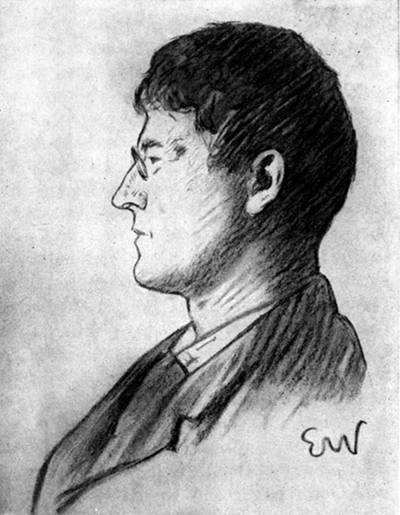
Hamsun as a Young Man From a Drawing by Erik Werenskiold
Once he cursed God. He had begged a
bone of a butcher under pretense of giving it
to his dog, and hid it under his coat until he
came to a doorway where he could take it
out and gnaw it. But the noxious bits came
up again as fast as he could swallow them,
while the tears streamed from his eyes, and
his whole body shook with nausea. Then he
screamed out his imprecations: "I tell you,
you sacred Ba'al of heaven, you do not exist,
but if you did I would curse you so that your
heaven should tremble with the fires of hell.
I tell you, I have offered you my service, and
you have refused it, and I turn my back on
you forever, because you did not know the
time of your visitation. I tell you that I
know I am going to die, and yet I scorn you,
you heavenly Apis, in the teeth of death.
You have used your power over me, although
you know that I never bend in adversity.
Ought you not to know it? Did you form
my heart in your sleep? I tell you, my whole
life and every drop of blood in me rejoices
in scorning you and spitting on your grace.
From this moment I renounce you and all
your works and all your ways; I will curse my
thought if it thinks of you and tear off my lips
if they ever again speak your name. I say to
you, if you exist, the last word in life or in
death—I say farewell." But the imp of
irony, which in Hamsun is never far away, is
peeping over his shoulder as he writes, and
the blasphemies are hardly cold on the page
before he tells himself that they are "literature."
He is conscious of forming his curses
so that they read well. This outburst stands
alone in his works. It is as though in "Hunger"
he had once for all rid himself of all the
accumulated rage and agony of his youth.
They never come again.
The book is without beginning and end and
without a plot, but it has a series of climaxes.
Each section describes some phase of hunger
and its attendant sufferings: the physical deterioration
and weakness, the rebellion of
spirit, the hallucinations, the shame and degradation.
When the strain becomes intolerable,
the tension suddenly snaps with the
receipt of five or ten kroner, and then Hamsun
instantly removes his hero from our sight.
We never see him in the enjoyment of this
comparative opulence, but when the money is
gone, we meet him again beginning the old
struggle, though each time weaker and more
unfit to take up the fight. He never achieves
anything; his small successes in occasionally
selling a manuscript never lead to anything.
The book is a record of defeat and frustration
which have at last become inevitable because
something in himself has given way. Even
his strange love affair with the girl whom he
calls Ylajali ends in baffled disappointment.
Finally Hamsun simply cuts the thread of
the story by letting his hero ship as an ordinary
seaman in a boat that is going to England.
He leaves the city he had set out to conquer.
The city has conquered him. "Out in the
fjord I straightened up once and, drenched
with fever and weakness, looked in toward
land and said good-bye for this time to the
city of Christiania, where the windows shone
so brightly in all the homes."
THE POET — HIS OWN HERO — THE HERO AND THE HEROINE — GOD IN NATURE — WITH MUTED STRINGS — THE LITERARY ARTIST
The most adequate idea of Hamsun's
artistic personality can be gained by
reading his early works from "Hunger"
to "Munken Vendt" and preferably reading
them in the order of their appearance.
Through the medley of characters there
emerges a distinct type that can be traced in
one after the other of his early books but disappears
in the later, more objective, pictures
of whole communities. This person is at first
always the hero in whom everything centres;
later he steps into the background as
an onlooker who is sometimes the author's
spokesman. He is always a dreamer and one
who stands outside of organized society; but
this aloofness is not self-sought. On the contrary,
he often suffers in his loneliness, and is
longing and struggling to come within the
circle of human fellowship, but there is something
in his own nature which unfits him to be
a cog in the common machinery. His pulses
are differently attuned from those of other
people. The standards by which happiness
and success are usually measured mean nothing
to him, but he can be lifted to exaltation
by the fragrance of a flower or the humming
of an insect. He is often a poet, if not in actual
production at least in his temperament,
and has the poet's responsiveness to things
that more thick-skinned people do not notice.
An ugly face, a jarring noise can shiver his
highest mood like crystal and plunge him to
the depths of despair. A sour look or an unkind
word or even a trifling mishap—the
loss of a lead pencil when he is inspired to
write—can cast a gloom over his day. He is
full of generous impulses which sometimes
take erratic forms and is capable of carrying
self-sacrifice to the most senseless extreme, but
his nature has never a drop of meanness. He
revels in communing with nature and finds
pleasure in the society of some lowly friend
or simple, loving woman, but any happiness
that life may bring him is never more than a
momentary gleam. He never lives to his full
potentiality either in achievement or in passion.
The Swedish critic John Landquist
puts the question why we never tire of this
oft-repeated Hamsun hero any more than of
his Swedish cousin Gösta Berling, and answers
that it is because he never gains anything
and never turns any situation to his
own advantage.
There is no doubt that this constantly recurring
figure is Hamsun himself in one incarnation
after another. He has pointed the
connection by personal description, by reference
to his authorship, and once even by the
use of his own name. He has to a greater extent
than most creative artists drawn for his
subjects on his own varied experiences, and
though he has of course transmuted them in
his imagination, it is clear that he has at
least been near enough to the events he records
to have lived through them very intensely
in his own mind. This is, of course,
notably true of "Hunger," which was written
at the age of thirty, when his own experiences
as a journalistic free lance in Christiania were
still fresh in his mind. It is true also of "Mysteries,"
"Pan," and "Victoria," each one of
which corresponds to some phase in his
own development. In "Munken Vendt" and
"Wanderers" there are reminiscences from his
vagabond days, and it is significant of the subjectivity
with which he enters into the person
of his hero that in the latter he has chosen to
make the narrator a man of his own age at the
time of writing rather than reincarnate himself
in the image of his youth. In the earlier
books, on the other hand, the hero is always
young, generally between twenty-five and
thirty.
The Hamsun ego as the critic of contemporary
phenomena, the outsider who is unable
to fit himself into any clique or party, appears
in Höibro of "Editor Lynge," who is carried
over into the drama "Sunset," and in Coldevin
of "Shallow Soil." He is absent from all
the author's later, more objective, novels,
"Dreamers," "Benoni," "Rosa," "Children of
the Age," "Segelfoss City," and "Women at
the Pump," but we may perhaps find a shadow
of him in Sheriff Geissler of "Growth of
the Soil," the garrulous wiseacre who "knew
what was right, but did not do it."
The typical traits of the young Hamsun
hero are found in the highest degree in Johan
Nagel. The central figure of "Mysteries"
(1892) is a reincarnation of the nameless narrator
of "Hunger," a few years older, gentler,
but no less erratic, and even more sensitive.
There is about him a great lassitude, an indifference
to his own advancement in life,
which might easily be the aftermath of great
suffering and terrible struggles. He seems
to have no purpose of any kind. He steps
ashore one day in a small Norwegian seacoast
town simply because it looks so pleasant to a
returned wanderer, and there he remains,
startling the inhabitants by his odd manners
and freakish garments. There is an exquisite
goodness in Nagel. His attitude
is no longer that of the clenched fist.
He tries to win his way into the fellowship
of his neighbors by acts of quixotic
generosity—which another impulse leads
him to cover up. He takes infinite pains
to find opportunities of giving pleasure to the
outcasts of the community without letting
them know whence the bounty comes. He
loves to decoy a beggar into a doorway and
bestow a large sum upon him with strict injunctions
to secrecy. He has in the highest
degree the sweetness and longing for affection
which is a leading trait in all the Hamsun
heroes, though least apparent in the
youngest of them, the narrator of "Hunger;"
but he has also in a superlative degree their
unfitness for the common affairs of men.
Consequently he suffers the fate of those who
would do good as it were from the outside
without being a part of the community for
which they would sacrifice themselves: his
efforts fall fruitless to the ground.
Into this book Hamsun has introduced a
curious parody of the hero, a little wizened
cripple who is like a deformed reflection of
Nagel. This poor devil carries goodness,
meekness, and long-suffering to a point where
it merely rouses the beast in the respectable
citizens of the small town and draws on himself
brutal persecution; but underneath his
real goodness there is some abyss of evil which
we are not allowed to fathom, but which
Nagel understands by a strange intuition.
His efforts to warn and save his protegé are
unavailing. Unsuccessful too are his efforts
to win the confidence of Martha Gude to
whom he turns for consolation when Dagny
rejects his love. Nagel is an artist nature,
and in the latter part of the book he is revealed
as a violinist with at least a touch of
real genius, but he has been thoroughly disillusioned
regarding himself and his art. He
will not be one of the swarm of little geniuses
or cater to the beef-eaters. Whatever possibilities
of achievement still lie dormant in
him are completely destroyed by his unhappy
love affair.
Written at a time when Hamsun from the
lecture platform was carrying on a campaign
against the older poets and the established
literary standards, "Mysteries" is made the vehicle
of many iconoclastic opinions, and
Nagel is to a greater extent than most of his
heroes made the mouthpiece of the author's
views. In long rambling talks, sometimes
carried on with himself as sole audience, he
attacks Ibsen, Tolstoy, Gladstone, and other
great names of the day. In the books immediately
following "Mysteries," "Editor
Lynge" and "Shallow Soil," Hamsun continues
his attacks on the ideals of the day,
though in them he directs his blows rather at
the small imitators of the great.
The Hamsun hero in his relation to nature
appears in "Pan" (1894). Lieutenant
Glahn, the central figure of the book, is a
hunter who has lived in the forest until he has
himself taken on something of the nature of
an animal in the look of his eyes and in his
manner of moving. He is supremely happy
in his hut. His senses are saturated with the
warmth of summer days, the fragrance of
roots and trees, the soughing of the woods,
and the tiny noises of all the things that live
in the forest. His spirit rests in the sense that
in nature all things go on, tiny streamlets
trickle their melodies against the mountainside
though no one hears them, the brook
rushes to the ocean, and everything is renewed
each year regardless of human fates. With
the outdoor life comes the primitive love of
shelter which we lose in cities; a warm sense
of home ripples through his whole being
when he returns to his but in the evening, and
he talks to his dog about how comfortable
they are.
Glahn has found peace in the forest, but
this peace is shattered as soon as he comes in
contact with his fellowmen. Awkward and
uncouth, he is unable to comport himself with
dignity even in the little group of merchants
and professional men that constitute society
in a Nordland fishing village. He is too
proud and simple to cope with the caprices
of the woman he has fallen in love with, and
she soon tires of him. Then Glahn, moved
by a childish desire to make her feel his existence
even though it be only by a big noise,
arranges a rock explosion, and this foolish
feat accidently kills the only person who
really loves him, the simple woman whom he
has met in the forest. Against his misery now
nature, which a few weeks earlier was all in
all to him, has no remedy.
Between the appearance of "Pan" and "Victoria"
(1898) lay a period of productive work
resulting in the publication of the dramatic
trilogy centering in the philosopher Kareno
and a volume of short stories entitled "Siesta."
The increasing success of Hamsun's own authorship
set its stamp on the next incarnation
of his hero, Johannes, the miller's son in "Victoria"
who becomes a poet. Johannes is the
only one of all his youthful heroes who is fundamentally
a harmonious nature and the only
one who masters life. The opening paragraph
of the book is like a happier reflection
of Hamsun's own dreamy, lonely boyhood.
"The miller's son went around and thought.
He was a big fellow of fourteen years, brown
from sun and wind and full of ideas. When
he was grown up he was going to be a match
manufacturer. That was so deliciously dangerous,
he might get sulphur on his fingers so
that no one would dare to shake hands with
him. He would be very much respected by
the other boys because of his dangerous trade."
Johannes knows all the birds and is like "a
little father" to the trees, lifting up their
branches when they are weighed down by
snow. He preaches to a congregation of
boulders in the old granite quarry, and stands
dreaming over the mill dam, following the
course of the bubbles as they burst in foam.
"When he was grown up he was going to be a
diver, that's what he was going to be. Then
he would step down into the ocean from the
deck of a ship and enter strange kingdoms
and lands where marvellous forests were waving,
and a castle of coral stood on the bottom.
And the princess beckons to him from a window
and says, 'Come in!'"
Just as Hamsun's own dreams are echoed
in this boyish imagery, so his own authorship
in its happiest time when he felt all his
powers in full swing, is reflected in the later
story of Johannes. Between the rude hunter
of "Pan" and the poet of "Victoria" there is a
lifetime of development. Johannes is just as
impulsive and irrepressible as the other Hamsun
heroes he is quite likely to burst into loud
song in the middle of the night and disturb
the neighbors, if a happy idea strikes him,
but he has really found himself in his work.
Johannes is loved by the young lady of the
manor with a love that is strong enough for
death, but not strong enough for life. He
loses her, but the loss does not blight his life.
The great emotion she has given him remains
with him to deepen and enrich his nature and
to become the life-sap of his blossoming genius.
Very different from the miller's son and
yet of the same family is the happy-go-lucky
swain who gives his name to the dramatic
poem "Munken Vendt" (1902). It is to some
degree reminiscent of "Peer Gynt" both in the
verse form and in the chief character; but
while Ibsen wrote a bloody satire of the worst
qualities in his race, Hamsun has drawn a
lovable vagabond. Munken Vendt is a
student and hunter whose adventures take
place in some Norwegian valley at a period
not definitely fixed, but certainly much more
romantic than the present. He is something
of a poet, is clever but unable to turn his gifts
to his own advantage, is clothed in rags but
always with a feather in his cap and ready to
give away his last shirt, wins sweethearts
wherever he goes but fails the woman who
should have been his mate, and finally throws
away his life in a senseless extravagance of
self-sacrifice. There is about Munken Vendt,
for all his foolishness, a proud defiance of
suffering, a noble pathos, a bigness and elevation
of thought, which give his portrait a
distinctive place in the Hamsun gallery.
The books I have mentioned here are generally
regarded as the most individualistic of
Hamsun's works and as those that reveal his
personality most intimately. Among them
should be counted also "The Wild Chorus"
(1904), a slender volume of poems which,
with "Munken Vendt," constitute all that he
has written in metrical form. While Hamsun
is most at home in poetic prose, his poems
have a wild, fresh charm and are intensely
personal expressions of his views on the two
subjects that engage him most deeply: love
between man and woman and love of nature.
A veritable Shakespearean gallery
of women, drawn with subtle insight
and delicate sympathy, is found
in Hamsun's works. Though infinitely varied
in their personalities, they move within
certain limits and have certain traits in common.
They are intensely feminine with the
nervous fitfulness and spasmodic capriciousness
that go with overwrought sexual sensibilities.
Occasionally he carries a woman
through this phase in her life into a warm
and passionate motherliness, but never into a
finer and more complex individual development.
All his heroines have in the highest
degree the unfathomable lure of sex, but what
they are above and beyond this we never
learn.
The limitation may be less in the heroines
themselves than in the medium through
which we are allowed to see them. If it were
possible to mention in the same breath two
such antipodes as Jane Austen and Knut
Hamsun, I might recall what has been said of
her that she never attempts to tell us how
men talk when they are away from the presence
of women. He never describes a woman
when she is alone. We are never allowed to
be present when his heroines commune with
their own thoughts; we never see them from
their own point of view and but rarely from
that of a mere observer. We glimpse only
so much of them as they reveal to their lovers,
and while in this way they never lose the
glamour and mystery with which they are surrounded,
it is inevitable that they will seem
members of a common sisterhood, inasmuch
as their lover, the Hamsun hero, is always the
same.
In the character of Edvarda in "Pan" the
qualities of the Hamsun heroine are heavily
underscored. She is a wayward girl with
erotic instincts early awakened and with a
flighty imagination which sets her lovers absurd
tasks, and yet there is a certain sweetness
and a primitive freshness about her that attract
in spite of better judgment. Her curiosity
is roused by Glahn, the hunter with the
"eyes like an animal's"; she invites him to
her father's house and draws him into their
social circle. At a picnic she suddenly flies
at him and kisses him in the presence of the
assembled village, and after this outburst she
meets him constantly, circles around his hut
by night, and kisses his very footprints. But
in a few days her violence has exhausted itself;
she stays away from their trysts; she
insults and ridicules him in her own home as
publicly as she has formerly favored him,
and before many weeks have passed, she has
engaged herself to another man. Yet her love
for Glahn is real, and presently she makes
frantic attempts to get him back. Glahn's
stubborn resistance is the measure of the suffering
she has inflicted upon him, and when
at last she begs him to leave his dog Æsop
with her when he departs, he shoots his four-footed
friend and sends her the body. He
seeks consolation with other women, and there
is much sweetness in his relation with Eva,
the simple daughter of the people, but in
spite of her humble, unquestioning devotion
and his real tenderness for her, his feeling
never touches the heights or the depths. Even
when he is with her, the thought of Edvarda is
like a constantly smarting wound. Yet he continues
to resist Edvarda's advances. When
after the lapse of some years she tries to call
him back, he pretends to himself that he does
not care, but he goes away to the Indian jungle
and seeks death.
Edvarda reappears in a subsequent novel
"Rosa," a torn and lacerated soul, forever unsatisfied,
with strange gleams of generosity
alternating with petty cruelty. She owns
that there have been some moments in life
not so bad as others, and chief among these
to her was the time when she was in love with
the strange hunter. In her desperate longing
for something that will take her out of
herself, she has spasms of religion, but at last
sinks to the level of having an erotic adventure
with a Lapp in the forest and worshipping
his hideous little stone god.
A repellent creature in many ways is Edvarda,
and yet the author has managed to
make us feel her through the perceptions of
her lover, who sees—shall we say a figment
of his imagination or the real Edvarda? Behind
her flagrant coquetries he discerns a
fount of purity: "She has such chaste hands."
Her girlish affectations, even her clumsiness,
have for him a kind of appeal as of something
naïve and helpless. Glahn and Edvarda are
both essentially and deeply primitive though
afflicted with a blight of sophistication. Each
answers to a profound need in the other; each
has for the other that one supreme thing
which is higher and deeper than virtue and
wisdom and which no one can give in its full
intensity to more than one person out of the
world of men and women. Both know that it
is so, and yet something in themselves prevents
them from giving and receiving that
which both long for with undying fervor.
Glahn's passion is strong enough to ruin his
life, but it is after all not strong enough to
hold fast through good and bad, in happiness
and unhappiness, and win from the relation
the fullness of life which no one but Edvarda
could give him. The conflict of love
which Hamsun so often describes is here
present in the most clearcut form because
there is nothing outwardly to divide the lovers.
Their tragedy is entirely of their own
making.
Dagny in "Mysteries" is superficially a
much more attractive young woman than
Edvarda. She is the clergyman's daughter,
sweet and blithe, with a big blond braid
and a habit of blushing when she speaks. All
the village loves her, and we can easily
imagine her visiting the sick and befriending
the poor. But Dagny is a far more inveterate
coquette than Edvarda. While Edvarda
was moved by her own thirst for excitement
and longed rather to be herself subjugated
than to subjugate others, Dagny is a
deliberate flirt who can not bring herself to
release any man once she has him in her
power. Whether she loves Nagel or not he
does not know, nor does the reader. She
weakens for a moment under the force of
his passion, but she holds fast to her purpose of
marrying her handsome and wealthy fiancé,
although she intrigues to prevent Martha
Gude from giving Nagel what she herself
withholds. That his death for her sake
shakes her nature to its depths we learn
when we meet her again in "Editor Lynge,"
where she owns to herself that at one word
more she would have given up everything
and thrown herself on his breast.
This one word Nagel never speaks. Like
the hero of "Pan" he seeks the haven of another
woman's tenderness. He yearns toward
Martha Gude with all his heart, longs for
the peace and rest and purity she could have
brought into his life, and yet he can not tear
himself loose from the passion that binds his
soul and senses. Even while he is pleading
with Martha and tries to win her confidence
in a scene drawn with tender delicacy, his
thoughts are with Dagny, and when at last
he has won Martha's shy promise, he rushes
out into the night to whisper Dagny's name
to the trees and the earth. The love which
gushes forth irrepressibly from some unquenchable
fountain in the soul, which wells
out again and again, warm and fresh, however
often its outlet is clogged and muddied,
this love Hamsun has often pictured and
seldom with more tragic force than in the
unhappy hero of "Mysteries." And yet, great
and real as his love is—great and real
enough to send him to his death—it is not
perfect. It is poisoned by a lingering doubt,
which prevents him from putting forth the
one last effort that would have broken down
Dagny's resistance.
The lovers in Hamsun's books are never at
peace. They never know the quiet, gradual
opening of heart to heart or the intimate
communion of perfect sympathy. With them
the conflict always goes on. Gunnar Heiberg,
the Norwegian dramatist, has said that
there is no such thing as mutual love, because
no two people ever love each other
simultaneously. When one has grown warm,
the other has grown cold; and when one advances,
the other instinctively recoils. With
Hamsun the conflict is more fine-spun than
that which Heiberg has painted rather crassly.
The mutual love is there, but it is a thing so
wild and shy and sensitive that it shrinks back
into the dark at a touch even from the hand of
the beloved. Or is perhaps the human soul
so jealous of its freedom that it reacts against
having another individuality fasten upon it
even in love?
It is these intangible forces rather than the
outer facts that divide the lovers in "Victoria."
Victoria is the patrician among Hamsun's
heroines, not only because of her birth and
breeding, but by virtue of her character. She
is far too noble for deliberate coquetry, and
yet she tortures Johannes by an apparent capriciousness
that seems out of keeping with
her frank, generous nature, while he answers
with coldness and hauteur. Why? Victoria
has the secret, agonizing consciousness of the
promise she has given her father that she
would marry a wealthy suitor who can retrieve
the fallen fortunes of the family.
Johannes feels his own humble birth and his
distance from the princess of his dreams. Yet
these reasons seem hardly sufficient. It is
difficult to imagine that battered old aristocrat,
Victoria's father, forcing his daughter
into an unhappy marriage to save his home,
still more difficult to picture the mother, who
knows everything, leading her daughter to
the sacrifice. Moreover, Johannes, though
of humble birth, has won fame and has developed
into a man of substantive personality.
He is not only Victoria's lover but her
playmate and oldest friend and a favorite of
her parents. In fact the sweetness in the relation
between cottage and manor is one of
the things that entitle "Victoria" to its reputation
as the most idyllic among its author's
works. Why then do not these four
people face the situation together? Why
does not at least Victoria talk it over with
her lover? Afterwards she writes that she
has been hindered by many things but most
by her own nature which leads her to be
cruel to herself. But the real reason is that
Hamsun's art at this stage of his development
has no use for fulfillment. With
fulfillment comes indifference. It is his to
paint the unslaked thirst and the unstilled
longing. Therefore the wonderful letter in
which Victoria lays bare her heart is not sent
until after her death, and therefore she
leaves Johannes the legacy of a great tragic
feeling which is forever alive and throbbing
because it is forever unsatisfied.
Mariane Holmengraa in "Segelfoss City"
belongs with Hamsun's young heroines. She
has some traits both of Edvarda and of Victoria.
But in this much later book the author
has begun to take a godfatherly attitude
toward his young hero and heroine; their
sparring is playful rather than tragic, and he
leaves them at the entrance to what promises
to be a happy-ever-afterwards.
In "Munken Vendt" the man's waywardness
and the woman's pride divide the two who
should have belonged to each other. When
Iselin, the great lady of Os, stoops to befriend
the vagabond student, he tells her brutally
that he has no use for her kindness and does
not love her. Many years later, when he returns
after a long absence, he again rejects her
advances. In revenge Iselin orders him to
be bound to a tree with uplifted arms until
the seed in his hand has sprouted. Munken
Vendt bears the torture without a murmur
and curses those who would release him before
she gives the word, but his hands are crippled
by the ordeal, and, partly in consequence
of his helplessness, he meets death not long
after by an accident. Then Iselin walks backward
over the edge of a pier and is drowned.
Here the conflict, which appears more veiled
in Hamsun's other books, is clearly expressed
in terms of savage, impulsive actions possible
only in a primitive state of society.
A relation of perfect trust and harmony is
that of Isak and Inger in "Growth of the
Soil." From their elemental community of
interest develops a really beautiful affection,
which Inger's straying from the straight path
can not long disturb. It is almost as though
the author would say: So simple and so primitive
must people be in order to make a success
of marriage for the complex and the sophisticated
there is no such thing as happiness in
love. A similar lesson might be drawn from
"The Last Joy" where Ingeborg Torsen, a
teacher, after various adventures, marries a
peasant and becomes happy in sharing his
humble work and bearing his children.
The rebellion of a man against the monotony
of marriage has been presented again and
again by writers great and small from every
possible angle. The inner revolt of a
woman against the concrete fact of marriage,
even with the man she has herself chosen, has
not often been pictured, and rarely with the
sympathetic divination that Hamsun brings
to bear on the subject. Puzzling and contradictory,
but very interesting is, for instance,
Fru Adelheid in "Children of the Age." She
is a woman with a cold manner but with a
warmth of temperament revealed only in her
voice. At first we do not know whether she
is attracted to her husband or repelled by him
until she reveals that she has simply reacted
against his air of possession. Her husband,
the "lieutenant" of Segelfoss manor, knows
that his wife has enthralled his soul and senses
and that no other woman can mean anything to
him, but he can not bring himself to try to
patch up what has been broken. Here we
have the conflict between two people of maturer
years who wake up one day to the realization
that it is too late. Life has passed them
by and can never be recaptured.
In "Wanderers" the disintegrating influence
in the marriage of the Falkenbergs is
habit that breeds indifference, and Fru
Falkenberg, one of Hamsun's most poignantly
beautiful and most unhappy heroines, is of
too fine a caliber to survive the bruise to her
self-respect. In "Shallow Soil" Hanka Tidemand
is drawn by the false glamour of genius
which surrounds the poet Irgens, and regards
her husband as nothing but a commonplace
business man. Here, however, the strength
and depth of the man's love saves the situation.
In its happy ending their story is unique
among the author's earlier works.
Among his many wayward heroines Hamsun
has painted one woman of calm and benignant
steadfastness, Rosa, the heroine of the two
Nordland novels, "Benoni" and "Rosa." She
is so deeply and innately faithful that she not
only clings for many years to her worthless
fiancé and finally marries him, but even after
she has been forced to divorce him and has
been told he is dead, she feels that she can
"never be unmarried from" the man whose
wife she has once been. It is only after he is
really dead and after her child is born that she
can be content in her marriage with her devoted
old suitor, Benoni. Then the mother
instinct, which is her strongest characteristic,
awakens and enfolds not only her child but
her child's father. Quite alone in the sisterhood
of Hamsun heroines stands Martha
Gude, a spinster of forty with white hair and
young eyes and a child heart. Her goodness
and her purity, which has the dewy freshness
of morning, draw Nagel to her, although she
is twelve years older than he.
Side by side and often intermingled with
the ethereal delicacy of his love passages,
Hamsun has many pages of such crassness that
often, at the first reading of his books, they
seem to overshadow and blot out the fineness.
He treats the subject of sex sometimes
with brutal Old Testament directness, sometimes
with a rough, caustic humor akin to
that of "Tom Jones" or "Tristam Shandy," but
never with sultry eroticism or with innuendo
under the guise of morality. There is in
his very earthiness something that brings its
own cleansing, as water is cleansed by passing
through the ground. Probably most of
us would willingly have spared from his
pages many passages in "Benoni" and "Rosa,"
"The Last Joy," and more especially in his
last book "Women at the Pump," and even
in "Growth of the Soil," but they all belong
to the author's conception of a true picture of
life.
"What was love?" writes Johannes in "Victoria."
"A wind soughing in the roses, no, a
yellow phosphorescence. Love was music
hot as hell which made even the hearts of old
men dance. It was like the marguerite which
opens wide at the approach of night, and it
was like the anemone which closes at a breath
and dies at a touch.
"Such was love.
"It could ruin a man, raise him up, and
brand him again; it could love me to-day,
you to-morrow, and him to-morrow night,
so fickle was it. But it could also hold fast
like an unbreakable seal and glow unquenchably
in the hour of death, so everlasting was
it. What then was love?
"Oh, love it was like a summer night with
stars in the heavens and fragrance on earth.
But why does it make the youth go on secret
paths, and why does it make the old man stand
on tiptoe in his lonely chamber? Alas, love
makes the human heart into a garden of toadstools,
a luxuriant and shameless garden in
which secret and immodest toadstools grow.
"Does it not make the monk sneak by
stealth through closed gardens and put his
eye to the windows of sleepers at night?
And does it not strike the nun with foolishness
and darken the understanding of the
princess? It lays the head of the king low
on the road so that his hair sweeps all the
dust of the road, and he whispers indecent
words to himself and sticks his tongue out.
"Such was love.
"No, no, it was something very different
again, and it was like no other thing in all
the world. It came to earth on a night in
spring when a youth saw two eyes, two eyes.
He gazed and saw. He kissed a mouth,
then it was as if two lights had met in his
heart, as a sun that struck lightning from a
star. He fell in an embrace, then he heard
and saw nothing more in all the world.
"Love is God's first word, the first thought
that passed through his brain. When he
said: Let there be light! then love came.
And all that he had made was very good,
and he would have none of it unmade again.
And love became the origin of the world
and the ruler of the world. But all its ways
are full of blossoms and blood, blossoms and
blood."
The fervent love of nature which vibrates
through everything Hamsun
has written has endeared him to many
of his countrymen who are repelled by his
eroticism and out of sympathy with his social
theories. The lyric rhapsodies in "Pan"
minister to a deep and real craving in the
Norwegian temperament, and it is not for
nothing that this book has steadfastly held
its own as the first in the affections of the public.
"Fair is the valley; never saw I it
fairer," said Gunnar of Hlidarendi in "Njal's
Saga," when he turned from the ship he had
made ready to carry him away from his Iceland
home, and went back to face certain
death there rather than save himself by banishment.
To the Northerner, whether he be
Icelander, Swede, or Norwegian, natural environment
is the determining influence in the
choice of his home; and not only the poet and
artist but the average middle class individual,
clerk, teacher, or store-keeper, will forego
social life and endure much discomfort in
order to establish himself in a place where
he can satisfy the love of beauty in nature
which is one of the strongest passions in the
Northern races. And yet, however fair the
valley of his home, he will yearn to get away
from it sometimes, to rove alone on skis over
the snowfields or bury himself in a forest hut
far from the sound of a human voice. The
vast uncultivated stretches of Norway have
enabled the people to follow their bent and
seek outdoor solitude, and while the habit
has not fostered in them the pleasant urban
virtues of nations that live more in cities, it
has developed a richness and intensity of inner
life which has flowered vividly in their
art and literature.
The solitary hunter of "Pan" is perhaps the
most typically Norwegian among the Hamsun
heroes, and in him love of nature has
deepened into a veritable passion. This
book, which followed several novels of city
and town life and was written during a summer
in Norway after a sojourn abroad, is the
first full-toned expression of Hamsun's feeling
for nature. It has a melting tenderness
and a warm intimacy of knowledge which
can only come from much living out of doors,
as the author did when he herded cattle as
a boy, and later when he roved through the
country as a vagrant laborer. To read it is
like nothing else but lying on your back and
gazing up to the mountains until you feel the
breath of the forest as your own breath and
sense no stirring of life except that which
sways the trees above you. The feeling of
being one with nature, of enfolding all things
with affection and being oneself enfolded in
a universal goodness, is typical of Hamsun's
attitude. He never paints nature merely as
the scenic background for his human drama,
and he never romances about nature for its
own sake. He rarely describes in detail; it
is as though he were too near for description.
Like a child which buries its face on its
mother's breast and does not know whether
her features are homely or beautiful, he seems
to be hiding his face in the grass and listening
to the pulse-beats of the earth rather than
standing off and looking at it. "I seem to be
lying face to face with the bottom of the
universe," says Glahn, as he gazes into a clear
sunset sky, "and my heart seems to beat tenderly
against this bottom and to be at home
here." Nothing is great or small to him.
A boulder in the road fills him with such a
sense of friendliness that he goes back every
day and feels as though he were being welcomed
home. A blade of grass trembling in
the sun suffuses his soul with an infinite sea
of tenderness.
"Pan" is full of lyric outbursts. When
Glahn revisits the forest on the first spring
day, he is moved to transports. He weeps
with love and joy and is dissolved in thankfulness
to all living things. He calls the
birds and trees and rocks by name; nay, even
the beetles and worms are his friends. The
mountains seem to call to him, and he lifts
his head to answer them. He can sit for
hours listening to the tiny drip, drip of the
water that trickles down the face of the rocks,
singing its own melody year in and year out,
and this faint stirring of life fills his soul with
contentment.
Glahn follows the intense seasonal changes
of Nordland. At midsummer, when the sun
hardly dips its golden ball in the sea at night,
he sees all nature intoxicated with sex, rushing
on to fruition in the few short weeks of
summer. Then mysterious fancies come over
him. He weaves a strange tale about Iselin,
the mistress of life, the spirit of love, who
lives in the forest. He dreams that she comes
to him and tells about her first love. The
breath of the forest is like her breath, and he
feels her kisses on his lips, and the stars sing
in his blood. The women who meet him in
the forest, Eva and the little goat-girl, seem to
him only a part of nature as they expand
unconsciously to love like the flower in the
sun, and he takes what they give him. Yet
there is in him a spiritual craving which these
loves of the forest can not satisfy.
Summer passes; the first nipping sense of
autumn is in the air, and the children of
nature too feel the benumbing hand of coming
winter, as if the brief thrill of summer
in their veins had already subsided. But in
the solitude of the dark, cold "iron nights"
the Northern Pan wins from Nature the highest
she has to give him. As he sits alone, he
gives thanks for "the lonely night, for the
mountains, the darkness, and the throbbing
ocean.... This stillness that murmurs in my
ear is the blood of all nature that is seething.
God who vibrates through the world and me."
Though "Pan" is Hamsun's first great rapturous
hymn to nature, his earlier novel
"Mysteries" contains some beautiful passages
that may be considered a prelude to it. Nagel
is absorbed in the affairs of men and smitten
with the modern social unrest. He lives the
life of books and thoughts and is no half-savage
hunter like Glahn, but he seeks in nature
the sense of vastness and infinity that his
soul longs for. He loves to lie on his back
and feel himself sailing off into the sea of
heaven. "He lost himself in a transport of
contentment. Nothing disturbed him, but up
in the air the soft sound went on, the sound of
an immense stamping-mill, God who trod his
wheel. But in the woods round about him
there was not a stir, not a leaf or a pine-needle
moved. Nagel curled up with pleasure, drew
his knees up under him, and shivered with a
sense of how good it all was.... He was in
a strange frame of mind, filled with psychic
pleasure. Every nerve in him was alive, he
felt music in his blood, felt himself akin to
nature and the sun and the mountains and
everything else, felt himself caught up in a
vibration of his own ego from trees and hillocks
and blades of grass. His soul expanded
and was like a full-toned organ within him.
He never forgot how the soft music literally
rose and fell with the pulsing of his blood."
As in "Pan" and "Mysteries," so in his
other books Hamsun makes us feel the moods
of nature through those of his people. In
"Victoria" we are always conscious of the
colorful background of heather and rowan
and sparkling blue sea because the minds of
Johannes and Victoria are steeped in the
beauty of the land where they have played as
children. In the big Nordland novels, on the
other hand, we meet people who take no direct
interest in their natural environments, and
here the author is more chary of his nature lyricism.
The careless, childish, volatile fisherfolk
and day labourers in "Benoni" and
"Rosa" and in "Segelfoss Town" take the
glory of the sea and the cliffs with their
swarms of white-winged birds very much for
granted and have nothing to say about them,
but unconsciously their life rises and falls with
the seasons. "It was spring again" is the almost
invariable prelude to action in the Nordland
novels. The warm nights had come; the
red sunlight was over sea and land; the boys
and girls went about singing and laughing and
flirting the whole night long, and even the old
felt the stirring of youth in their blood, the
unquenchable old villain Mack got "the strong
look" in his eyes again, and poor old Holmengraa
went on devious paths. There is a glamour
and a fairy-tale atmosphere always resting
over Nordland summers, but when autumn
comes, a numbed torpor steals over
everything, as if people, like nature, were
only lying dormant waiting for spring to
wake them again.
Even that glamour which redeems the littleness
in "Segelfoss City" has died in "Women
at the Pump," the author's latest book, in
which he depicts the petty mean, degenerate
people of a small town that seems afflicted
with dry rot, and the total absence of feeling
for nature has much to do with the grey and
rayless effect of this novel. In "Growth of
the Soil," on the other hand, there is a wonderful
sense of the nearness of nature. Isak
could not put his reflections into words, but a
simple awe takes possession of him in the loneliness
of the forest and the moors, where he
"meets God." As Geissler expresses it, the
plain people of Sellanraa meet nature bare-handed
in the midst of a great friendliness,
and the mountains stand around and look at
them.
Yet Hamsun's feeling for nature is by no
means a mere primitive emotion; it is rather
the reasoned expression of a man who has
found his way back to the real sources of life.
In its subtlest and most artistic form it appears
in the "Wanderer" books. The overemphasis
and extravagance which could, in
"Pan," verge on the hysterical are gone, and
instead there is a mellow sweetness, a poignant
tenderness as of a man who knows that
his own autumn has arrived and that winter
is on the way. It is Indian summer in the
opening chapter of "Under the Autumn Star."
The air is mild and warm and tranquil, everything
breathes peace after the brief, intense
effort of summer to put forth growth. Round
about stand the red rowans and the stiff-necked
flowers refusing to know that fall is
here. In these paragraphs the keynote of the
book is given, and throughout this book and
its sequel, "A Wanderer Plays with Muted.
Strings," the harmony with nature is preserved.
For all the charm of the story and
the pungency of the reflections on various
themes, that which lingers in the reader's mind
is the long autumn road, the nights in the
fragrant hayloft, the smell of freshly felled
trees, and the fire in the woods where
the Wanderer is alone at last with nature.
Hamsun loves the warm, expansive moods
of nature and has confessed to a positive dislike
of ice and snow. Descriptions of winter
are rare in his books, but the opening chapter
of "The Last Joy" finds the Wanderer snowbound
in a hut far up in the mountains, and
although he watches the spring awakening of
nature, he knows that in his own life winter
has come to stay. For that very reason he
feels as never before a great upwelling of
affection for all things around him, animate
and inanimate. He can sit for hours merely
watching the course of the sun, or speculating
about some tiny bug which was born and
will probably die on the one leaf it inhabits,
or marvelling at the wonder of reproduction
in a little plant that is releasing its seed.
A lonely little path straggling through the
forest affects him like a child's hand in his
own. A lacerated pine stump rouses his pity
as he stands gazing at it until his other, civilized
self reminds him that his eyes have
probably acquired the simple animal expression
of people in the Stone Age. He walks
over a hillside and feels a tenderness emanating
from it. "It is not really a hillside, it is a
bosom, a lap, so soft is it, and I walk carefully
and do not tramp heavily on it with my
feet. I am filled with wonder at it: a great
hillside so tender and helpless that it allows
us to use it as a mother, allows an ant to crawl
over it. If there is a boulder half covered
with grass, it has not just happened here; it
lives here and has lived here long."
Knut Hamsun From a Painting by Henrik Lund
As he walks on, he begins to feel a strange
influence about him. "Something vibrates
softly in me, and it seems to me as so often
before out of doors that the place has just
been left, that some one has just been here
and has stepped aside. At this moment I
am alone with some one here, and a little
later I see a back that vanishes in the forest.
It is God, I say to myself. There I stand, I
do not speak, I do not sing, I only look.
I feel that my face is filled with the vision.
It was God, I say to myself. A figment
of the imagination, you will reply. No,
a little insight into things, I say. Do I
make a god of nature? What do you do?
Have not the Mohammedans their god and
the Jews their god and the Hindoos their god?
No one knows God, my little friend, men
only know gods. Now and then it seems to
me that I meet mine."
In one of his oriental travel sketches Hamsun
has said that unlike most people he never
gets through with God, but feels the need of
brooding over him under the starry heavens
and listening for his voice in the breath of
the forest. In "The Last Joy" the sense of
God in nature is always present in the background
of the narrator's thoughts. In the
great stillness, where he is the only human
being, he feels himself expanding into something
greater than himself, he becomes God's
neighbor. The last joy is to retire and sit
alone in the woods and feel the friendly darkness
closing around him. "It is the lofty
and religious element in solitude and darkness
that makes us crave them. It is not that
we want to get away from other people because
we can not bear to have any one near
us—no, no! But it is the mysterious sense
that everything is rushing in on us from afar,
and yet all is near, so that we sit in the midst
of an omnipresence. Perhaps it is God."
The superiority of youth over age has
been a cardinal doctrine with Hamsun.
How seriously he has taken it
is best shown by the fact that four of his plays
and three of his novels are devoted to the
theme. First in point of time is the dramatic
trilogy, "At the Gate of the Kingdom"
(1895), "The Game of Life" (1896),
and "Sunset" (1898), presenting three stages
in the life of the philosopher Kareno. Of
later date are the three novels, "Under the Autumn
Star" (1906), "A Wanderer Plays with
Muted Strings" (1909), and "The Last Joy"
(1912), each marking a milestone in the progress
of the Wanderer toward the land of
old age. Quite alone stands "In the Power of
Life" (1910), a drama which shows an aging
courtezan desperately trying to retain a
few shreds of her power over men.
Kareno, a native of Nordland, has Lapp
blood in his veins, which may in part account
for the latent weakness that comes out
in him as soon as the strong impetus of youth
has died down. At twenty-nine he rushes
into print gallantly to attack the prevailing
ideals of his day, such as eternal peace, the
apotheosis of labor, the humanitarian efforts
to preserve life however worthless, and in general
the gods of liberalism. Spencer and
Stuart Mill, who were at that time names to
conjure with, he called mediocrities devoid
of inspiration. His most violent onslaughts
were reserved for the doctrine that youth
should honor old age. For these theories he
sacrificed wife and home, career and friends.
In the following play we find him, now
thirty-nine, as tutor to a rich man's children
in Nordland. His intellect is already befuddled.
By means of a glass house provided
with powerful lenses, which his patron is helping
him to build and equip, he is trying to
achieve by material, technical contrivances the
clarity which, after all, he has proved himself
unable to evolve from within. His moral fibre
too is weakened. At twenty-nine he allowed
his young wife to leave him rather than temporize
with his conscience; now he becomes
absorbed in a passion for his patron's daughter,
Teresita, a wanton, capricious woman of the
Edvarda type but without Edvarda's sweetness.
Formerly he refused to save his home
from impending catastrophe by a proferred
loan from his comrade Jerven, because the
money was the fruit of Jerven's apostacy from
their common cause; now he is ready to accept
bounty from any source.
A fire which consumes his house and manuscripts
terminates his work in Nordland, and
we hear no more of him, before, in the last
of the three plays, we find him in Christiania
again. He is now fifty, and his deterioration
is complete. He is settling down to a life
of smug Philistine contentment, enjoying the
fortune which his wife has in the meantime
inherited, and accepting the daughter who is
the fruit of his wife's unfaithfulness rather
than quarrel with the comforts she provides
for him. Kareno has somehow managed to
preserve a semblance of his former fire and
with it a reputation for prowess as a dauntless
fighter, but in his heart he is already out of
sympathy with the cause of youth and ready
to turn traitor at the first beckoning of really
substantial honors.
The other characters have gone through
the same process of dissolution. Jerven has
continued his inevitable downward course.
His one time fiancée, Miss Hovind, who
broke with him because of his apostacy, has
become a silly old maid who glories in her
former connection with the famous professor.
Only Höibro, the man outside the
parties who is still at variance with everything
accepted, has kept himself at fifty-one unspotted
from the world.
The weakness of the trilogy lies partly in
the character of Kareno which shows not so
much the softening of fibre due to old age as
the revelation of a latent meanness, and partly
in the nature of the principles for which he
is expected to sacrifice himself. It is true
that he feels in his youth the reality of the
spiritual above the temporal, and in the face
of impending ruin he can say: "It is as though
I had been alone on earth last night. There
is a wall between human beings and that
which is outside them, but this wall is now
worn thin, and I will try to break it down,
to knock my head through it and see. And
see!" But what he sees is only temporalities,
not eternal verities. Granted that the liberal
movement had become stale and needed a renewal,
there was nothing in that fact to create
a supreme issue. It was one of many movements
that have run and will run their natural
course till the inevitable reaction sets in.
There was no great scientific truth or fiery
religious passion involved, nothing to call
forth a Galileo or a Luther. As with Kareno,
so with Jerven and Miss Hovind. A girl
who breaks with her lover because he weakens
in his denunciations of Spencer and Stuart
Mill is a strain on the reader's credulity.
There is only one of the vaunted principles
in the trilogy which has a universal application,
namely the doctrine that a man at fifty
is useless and should resign his place to the
young, but this doctrine Kareno can hardly
be expected to hold with the same uncompromising
rigor at fifty as at twenty-nine.
The whole situation therefore becomes farcical,
and we can hardly wonder that the middle-aged
philosopher wipes his brow when his
young quondam admirer reads in his ear the
following quotation from his own early
works:
"What do you demand of the young? That
they shall honor the old. Why? The doctrine
was invented by decrepit age itself.
When age could no longer assert itself in the
struggle for life, it did not go away and hide
its diminished head, but made itself broad in
exalted places and commanded the young to
do honor and pay homage to it. And when
the young obeyed, the old sat up like big sexless
birds gloating over the docility of youth.
Listen, you who are young! Set a match
under the old and clear the seat and take
your place, for yours is the power and the
glory for ever and ever.... When the old
speak, the young are expected to be silent.
Why? Because the old have said it. So age
continues to lead its protected, carefree existence
at the expense of youth. The old hearts
are dead to everything except hatred for the
new and the young. And in the worn-out
brains there is still strength left for one more
idea, a sly idea: that youth shall honor toothlessness.
And while the young are hampered
and thwarted in their development by this
cynical doctrine, the victors themselves sit
and gloat over their marvellous invention and
think life is very fine indeed."
Written while Hamsun was yet under forty,
the three Kareno plays are an aftermath of his
own struggles as a young man to break into
the ring of the accepted. They are an outcry
against the older men who had once been
iconoclasts, but had standardized their iconoclasm,
who had once been advocates of free
thought, but had forged free thought into a
weapon to strike down all who differed from
themselves. It is therefore no accident that
Kareno's onslaughts are directed against a
stereotyped liberalism. The trilogy is significant
as a subjective expression of a certain
phase in the author's development, but in
psychological interest it is far inferior to the
Wanderer books. In these Hamsun has rid
himself of all bitterness and has found a sweet
and mellow tone that is singularly appealing.
He is no longer a theorist but a poet, that is
he is himself at his best and highest. He no
longer vaunts a principle but portrays a human
being.
The Wanderer is a man who renounces the
cafés and boulevards and, after eighteen years
of city life, revisits the haunts of his youth
disguised as a vagrant laborer. Thus he
divests himself of whatever pomp and circumstance
surround a successful middle-aged
man and well known citizen, in order to meet
youth on equal terms simply as Knud Pedersen,
a man whose muscles are a little stiff and
whose beard is getting grey. "Under the Autumn
Star" and "A Wanderer Plays with
Muted Strings," bound together in the English
edition under the common title "Wanderers,"
relate experiences lying five or six
years apart. In the first the narrator is nearing
fifty; in the second he has passed the mark.
The Wanderer in "Under the Autumn Star"
is still full of vim and vigor, loves to feel his
contact with the soil again, and glories in his
prowess, notably in the invention of a wonderful
saw which absorbs him. He becomes
enamored of Fru Falkenberg, wife of the
captain on whose estate he has taken service,
and is young enough to make frantic attempts
to win her, even throwing off his disguise and
appearing in his own character; but when she
begs him not to pursue her, he desists.
Some years later his longing drives him
again to the Falkenberg estate, but now he is
in a different frame of mind. He "plays with
muted strings." He still works with his old
energy, but his invention, the marvellous saw,
has become "literature" to him. Women are
"literature." He makes no attempt to approach
Fru Falkenberg, but from his obscure
place among her other servants he
watches mournfully her gradual deterioration
and philosophizes over the causes that led to
it. The captain and his wife have drifted
apart from sheer idleness, because they have
no separate pursuits that might take them
away from each other and give their hours together
the freshness of reunions. In the earlier
book, the wife, though she is drifting
hither and thither on the breath of longing
and discontent, is so essentially true that she
feels even the homage of her humble admirer
as a danger which she must flee from. When
the Wanderer comes back, the idle years have
done their work on her. "She had nothing
to do, but she had three maids in her house;
she had no children, but she had a piano. But
she had no children," muses the Wanderer.
But while he himself keeps the distance she
has imposed upon him, he sees a younger,
more brazen admirer pushing himself into
her favor. The scruples that bind the man
past fifty have no existence for the youth of
twenty-two. The Wanderer feels no passion
of jealousy, but only a great weary lassitude
and loneliness. He knows that for him it is
evening. He grieves over her ruin, but can
do nothing to avert it. All he can do is to put
his whole heart into the humble task of preparing
her home against her possible return,
helping the captain to paint and refurnish
the house. His efforts are of no avail; Fru
Falkenberg returns to her husband, but too
many fine threads have been broken, and their
life together proves impossible.
After her death the Wanderer seeks the
solitude of a forest hut, and there he sits looking
over his life in retrospect after the fashion
of those who know that life is chiefly behind
them. "I remember a lady, she guarded nothing,
least of all herself. She came to such a
bad end. But six or seven years ago I had
never believed that any one could be so fine
and lovely to another person as she was. I
drove her carriage on a journey, and she was
bashful before me, although she was my mistress;
she blushed and looked down. And the
strange thing was that she made me too bashful
before her, although I was her servant.
Only by looking at me with her two eyes when
she gave me an order she revealed to me beauties
and values beyond all those I had known
before. I remember it even now. Yes. I
am sitting here and thinking of it yet, and I
shake my head and say to myself: How strange
it was, no, no, no! And then she died. What
more? Then there is no more. I am left.
But that she died ought not to grieve me; I
had been paid in advance for that when, without
my deserving it, she looked at me with her
two eyes." A middle-aged sigh breathes
through these words, the sigh of a man who
has known life and felt it to be good and who
is not avid for more. He is a letter that has
arrived and is no longer on the way; that
which matters is whether its contents have
brought joy or sorrow or whether they have
fallen to the ground without making any impression.
He has come too late to the berryfields,
and there is no more to be said. His
only hope is that he may never become senile
enough to imagine himself wise because he
is old.
The two volumes contained in "Wanderers"
are among the most finished of Hamsun's
production. I have already spoken of
the harmony between nature and the moods of
men. In the human drama, too, the artistic
unity is always preserved. It is held throughout
in low tones, and while the Wanderer enters
so well into his rôle that we sometimes
forget he is not really a common laborer,
we are never allowed to forget his age. We
are always conscious of the gentle enervation
stealing over his faculties and the gradual
loosening of his hold on life. He becomes
all the time less and less of a participant in
the story, more and more of an onlooker.
In "The Last Joy" old age is no longer
standing at the door; it has come in and laid its
hand upon him. "I am driven by fire and
fettered by ice," writes the Wanderer in the
hut where he has retired to make the big irons
within him glow. In truth he is not sure
whether he still has any irons or whether he
can still heat them. The ideas that once
rushed in upon him with overwhelming force
now come only at the cost of painstaking labor.
Bodily work too has become irksome
to him, and when he begins to long for intercourse
with other people, he does not, like
the Wanderer in the earlier books, hire himself
out to service, but goes to spend some idle
months at a tourist hotel. There he learns
that his heart is not too old to give him
trouble, when he falls in love with Ingeborg
Torsen. He is attracted by her brilliant
beauty and glowing vitality, and he looks at
her waywardness with a deep and tender comprehension
which no young man could have
given her. No doubt he might have won her,
but he is restrained by the horror of being
grotesque and indulging in antics unbefitting
his age. So he stands by, and again he is
fated to see the woman he loves ruining herself.
But Ingeborg Torsen is of tougher
fibre than Fru Falkenberg, and she saves herself
in a marriage which brings her children
and heavy household cares. The Wanderer
has played the rôle of her fatherly friend and
confidant, but at last he realizes that she does
not need him any more even in this capacity.
The knowledge hurts, but not for very long,
and not very severely. His feeling for her
has been real, the loss of her leaves him a little
more sad and lonely than before, but love
with him is no longer the inexorable, devastating
passion that sent Glahn and Nagel to
their death.
Hamsun has essayed in "Wanderers" and
"The Last Joy" to show the enervating influence
of the years. Again and again he tells us
that age can add nothing but only take away,
that age is not ripeness, it is just age—just
toothlessness. Yet the impression left on the
reader's mind is that of a personality
gradually being detached, first from the
fetters of its own passions, then from absorption
in other people, and finding at last freedom
in loneliness.
The time immediately preceding Hamsun's
authorship was, in Norway, a
period of revolt. All the established
canons of public and private morality were
being questioned, and literature was made a
platform of debate in a manner never before
known. No poet who respected himself
was content to be merely a songster. He felt
it incumbent upon him to be a thinker and a
prophet, a moralist and a reformer. Hence
every new novel or drama that appeared propounded
some opinion on free love or marriage,
the doctrines of the established church,
the upheavel of the social order, the position
of women, the reform of the school system, or
other topic of timely discussion. To realize
the change that had come over literature we
need only compare Ibsen in "Brand" with Ibsen
in "Ghosts." In the former he probed the
human heart, laid bare the weaknesses that are
common to humanity under all conditions, and
gave poetic form to the ideals that are the
same in all ages. In the latter he took up
a special pathological problem on which his
knowledge could be called in question by any
medical expert. In the same vein, Kielland,
the creator of the inimitable Skipper Worse,
devoted his talents to demonstrating in a novel
the evils of silence regarding venereal diseases.
Björnson was perhaps the worst offender
of all, and yet his preaching was
salved by such a broad and warm humanity
that his pedantry could be forgiven. Among
his novels of the period, "The Kurt Family,"
which begins with tremendous power, dribbles
out into a treatise on hygiene and morality,
but happily the artist in Björnson is too
big to be confined within the limits he has set
himself, and occasionally he bursts out into
delightful scenes. In the end, however, we
leave Thomas Rendalen and Nora clasping
hands over a mission instead of making love
in the old-fashioned way. In "A Gauntlet"
Björnson lets Svava formulate the single
standard of morality; in "A Bankruptcy" he
takes up the subject of business integrity, and
so on. Among the great creative writers, Jonas
Lie and Garborg escaped comparatively unscathed,
Jonas Lie because he never could
abandon his habit of portraying life instead
of reasoning about it, and Garborg because he
saved himself in time by going back to the
soil and the peasantry, where he discovered a
fountain of poetic renewal. The lesser
authors followed the lead of Björnson and Ibsen
in their less happy vein and without their
genius. The whole tendency, which, to begin
with, had had the freshness of revolt, of
indignation, and of hope, was becoming smug
and standardized.
A scapegoat had to be found for the ills
from which the authors' heroes and heroines
were suffering, and Ibsen named it in "A
Doll's House," when he let Nora lay the blame
for her foolishness on "society"—reasoning so
out of keeping with the character of the childish,
irresponsible Nora that we can not
help wondering how Ibsen ever made it sound
plausible. It was accepted because it fell in
with the prevailing mood of the day. If
only society could be reorganized after a pattern
on the reformers' nail all would be well!
They forgot what seems to us at this day obvious
to the point of banality, namely that
when Nora had taken a full course in commercial
arithmetic, and Svava had vowed to
die unwed, and all the little Millas and Toras
and Thinkas in good Fru Rendalen's school
had learned all about the pitfalls that awaited
them, there would still be the devastating
power of love; and when everybody had a job
so that young men could marry at the natural
time and young women need not marry except
for love, there would still be those sudden,
erratic attractions and repulsions which
work havoc and create tragedies under the
most well-ordered conditions. Moreover,
they forgot that, although the wrongs which
cry out for reform may be susceptible to artistic
treatment, the reforms themselves, circumscribing
as they do ideals by finite achievement,
are not food meet for the imaginative
writer. A reformed Marshalsea would not
have given us any Little Dorrit. In Norwegian
literature, Jonas Lie painted a gallery
of splendid women whose grandeur of outline
is thrown into relief by the pettiness of
their surroundings; his Inger-Johanne and
Cecilie are tragic figures when they beat their
wings against the bars of convention, but
when a later generation of writers attempted
to send Inger-Johanne to normal school and
let Cecilie learn typewriting, the romance was
dead.
Against this whole school of literature with
its absorption in types and causes Hamsun
protested with all his youthful vehemence and
all his power of drastic ridicule. It would
not be correct to say that he advocated a return
to the principle of art for art's sake. Indeed
he has used his own literary work as
the vehicle of any opinion that pressed for
utterance in him, from his reflections on the
state of Norwegian literature in "Mysteries"
to those on the evils of the tourist traffic in
"The Last Joy." The truth is rather that his
poetic sensibilities recoiled from the smug sapience,
the heavy sententiousness that would
rob life of its spontaneity and reduce it to a
pharmaceutical formula: so much democracy,
so much popular education, so much reform
legislation, and a perfect state of society
would follow inevitably. He disliked the
thinness and bloodlessness of a literary art that
substituted reasoning for inspiration. Poets,
he said, should not be philosophers; they usually
philosophized very badly, as witnessed
Ibsen and Tolstoy when they departed from
their function as poets and began to prescribe
remedies for the ills of the world. As for
Björnson, he revered him not because of his
activities as a preacher and a moralist, but in
spite of them, because of his humanness, his irrepressibility,
his endless power of growth and
renewal. One of Hamsun's most beautiful
poems is a homage to Björnson.
In his later years, Hamsun has himself essayed
the rôle of the preacher, or, as a Norwegian
critic put it, he has assumed Björnson's
habit of occasionally chastising the Norwegian
nation for its own good in a fatherly
fashion. There is a difference, however, between
him and his predecessors. They were
sometimes institutional; he is always personal.
They sometimes attempt to construct the
world from a diagram of planes and angles;
he always follows the flowing lines of the artist.
Even when he preaches, his message is in
its essence a part of his poetic impulse. His
apotheosis of the man with the hoe springs
from his longing to get close to the soil and
draw strength from primal sources. His impatience
with all the modern army of semi-intellectual
workers, the clerks and administrators
who wind red tape and spoil white paper, is in
keeping with his craving to brush aside all
that cumbersome machinery which men interpose
between the human will and the physical
realities. His strident condemnation of the
movements that are counted liberal in our day
is a protest against the levelling which robs
life of its color and sharp contrasts. His
imagination demands the peaks and high
lights and can find no satisfaction in the modern
cult of mediocrity or the dull grey level
of utilitarianism.
To Hamsun the abstraction called society,
which looms so large in the liberal thought of
to-day, has no existence. He sees only individuals,
and this is one of the reasons why,
even when he waxes didactic, he does not cease
to be artistic. Isak, who is his ideal type of
citizen, is also one of his great poetic creations.
In his earlier and more personal work,
however, the element of moralizing is absent.
The typical Hamsun hero, a Glahn or
a Nagel, is not to be measured with the yardstick
of ordinary standards. What interests
their creator is not the patent virtues and
vices which can easily be catalogued, but the
fugitive life-spark that defies analysis and yet
is what constitutes personality. To the poet
the intangible and elusive is the real, the evanescent
is the stable. Why do people do
thus and so? "Ask the wind and the stars.
Ask the dust on the road and the leaves that
fall, ask the mysterious God of life, for no
one else knows."
The message of Hamsun's later works,
which has swept them like a life-giving stream
over a world made arid by pseudo-civilization,
is: Back to nature! Back to the land!
The message of his earlier works was: Back
to poetry! Away from problems and causes
back to the dream and the vision! There is
no contradiction between the two; both are
equally genuine expressions of a personality
which has the richness, the many-sidedness
and spontaneity of life itself.
His method of artistic presentment is as
fresh and unhackneyed as his subject matter.
It has always been regarded as the function
of the artist to separate the great from the
small, the essential from the unessential, and
to make a character, a human life, or an event
stand out in sculptured clearness freed from
the accidental and the extraneous. With this
ideal in view, writers have concentrated their
efforts on the great revealing scenes in the
career of their heroes. Hamsun breaks entirely
with this tradition. To him nothing is
small or extraneous. His books are like
broad surfaces rippled by many points of
light, and it is only gradually that these points
of light, the tiny but pregnant incidents and
the flashing bits of description, separate and
converge to form images. It is a part of his
method in creating an illusion of life to draw
his characters into the circle of our acquaintanceship,
not by great dramatic scenes leading
up to a climax, or by sudden opening of
abysses as in Ibsen, still less by long description,
but by just such scattered and casual
bits of information as usually build up our
knowledge of people and events in real life.
Some trifle is blown in on our consciousness
and finds a lodgement there; it may be a quotation
or a word of comment that stirs our
expectancy and prepares us to meet an individual.
We see his shadow falling over
the path of another person or feel his presence
like a breath of wind. Perhaps we
hear no more of him at the time, but
in another book we meet him again, and
now he is the hero, whom we follow until we
think we know him like a dog-eared schoolbook—until
some sudden turn upsets our theories,
and we leave him in the last chapter
with a baffled sense of imperfect understanding.
But the author is not yet done with
him. In some later book, which is not a sequel
in the ordinary sense but brushes the
fringes of the first, we come upon a passage
that throws a backward light over the ground
we have traversed. When we close "Pan,"
for instance, we know no more of Edvarda
than her lover knows, but when we read
"Rosa" we find the clue to her nature. In
the same manner, Dagny, the heroine of "Mysteries,"
does not reveal her heart before we
meet her again as one of the subordinate characters
in "Editor Lynge." It is as though a
figure that had once sprung from the author's
brain became imbued with such vitality
that it continued to live through his
later works. J. P. Jacobsen once said that
he was forced to let all his people die,
because death was the only real end; nothing
in life ever ended. Hamsun sometimes resorts
to this method, but even then the dead
live on in the memory of those who have
known them. With him nothing is ever
finished or finite.
Hamsun's humor is all-pervasive it is the
yeast that lightens his loaf. When Albert
Engström, the Swedish humorist, ended
an appreciation of Hamsun by saying, "And
finally I love you for the gleam in your left
eye," he found an apt expression for the personality
that shines through Hamsun's works.
His humor has less of wit than of comicality,
less of the laugh than the smile with a gleam
in his eye; and he is as ready to smile at his
own intensities as at the weaknesses of humanity.
His flights of fancy are tempered with
irony, his real reverence with a playfulness
that often takes the guise of impish irreverence.
He loves the far-flung paradox and
the sudden transition of thought by which he
astonishes his readers.
The quality of unexpectedness in his
thought is well simulated in the style he has
evolved for himself. This style was fully developed
when Hamsun made his first appearance
as an author, a fact which adds interest to
Sigurd Hoel's opinion that the dash and brilliance
of "Hunger" was due to American influence.
Certainly Hamsun has never improved
upon this style, and it may even be
questioned whether its manner with the light
staccato touch, the prevalence of interjections
and sentences consisting sometimes of a
single word, has not in some of his later works
hardened into a mannerism that results in a
slight weariness of repetition. Taken as a
whole, however, his style has been a bath of
rejuvenation to Northern literature. It has
the naturalness of the spoken word, following
blithely the quips and pranks of thought that
give zest to conversation but are usually flattened
out before they reach print. The result
is a light whimsicality, a capriciousness
which Hamsun cultivates with subtle and conscious
art, until he attains a sparkle and vividness,
an ease and flexibility never before
known in the language of his country.
As the literary artist Hamsun gives us apples
of gold in pitchers of silver, and the
metal for both is entirely of his own forging.
THE CITIZEN — HOLDING UP THE MIRROR TO HIS GENERATION — GROWTH OF THE SOIL — THE WANDERER ARRIVED
Very early in his career as an author
Hamsun struck the keynote of the
message which in his most recent
works he has preached with so much power.
The two novels "Editor Lynge" (1893) and
"Shallow Soil" (1893), satirizing certain journalistic
and literary phenomena in Christiania,
showed the reverse side of the ideal in
which he believes, and by contrast pointed the
way to new standards and new goals.
The main character in "Editor Lynge" is an
intellectual parvenue, a peasant lad who has
risen to the position of editor-in-chief, not by
great and commanding qualities, but by a
cheap smartness, a facility for shoving himself
in, and a brazen self-possession that never deserts
him. He is without real convictions and
real courage, and yet manages to hoodwink
the public into thinking him a great moral
leader. A scandal-monger under pretence of
defending virtue, he impudently assumes the
right to pry into other people's affairs and
spread them large over the pages of his paper.
Some of the obnoxious sides of Lynge's activity
we can, of course, recognize as belonging
to the dark side of daily newspaper work
everywhere, although they appear with more
transparent naïveté in a small country. In
making him a peasant lad who had risen into
another class without assimilating its standards,
who attempted to be a leader without
having inherited the traditions of leadership,
Hamsun had in mind certain
phases of a transition period in his
own country. Popular education had opened
the professions and government offices to country
lads, but could not in a single generation
give them real culture. They remained mentally
homeless and rootless. In Lynge he
portrays a man who has suffered an injury to
his soul by a transplantation which could
never be complete. Significantly enough,
Lynge's most ardent admirer is another transplanted
country boy, Endre Bondesen, whose
origin is stamped on him in his name (Bondesen,
peasant's son). He too has lost his contact
with the soil and thereby lost the standards
of conduct in his own class without acquiring
those in the class he has entered.
Their attitude toward the new possibilities
that open before them Hamsun describes as
a kind of triumphant snicker: "Tee-hee-hee!
what great fellows we are!"
The author of "Hunger," who a few years
earlier had described the purgatory prepared
for the young genius who is struggling to get
into print and to live on the proceeds of his
work, did not have to go far afield for the caustic
sting with which he scourged the people
who make themselves broad in the inner courts
of journalism and literature. In "Editor
Lynge" he parodied the vaunted power of the
press. In "Shallow Soil" he painted a picture
of the small geniuses who pose on street
corners and in cafés and bask in the popular
admiration that is liberally bestowed on even
the thinnest rinsings from the wine-glass of
genius. The little poets and artists regard
themselves as divinely exempted from all the
sordid but necessary work of the world, and
believe their own slight productions are sufficient
excuse for a parasitical life in vice and
idleness. There is Öien who is so exhausted
after squeezing out of his brain a few
small prose poems that he has to be sent to
a sanitarium at the expense of his friends, and
there is Irgens, the only one who seems actually
to bring forth a real book occasionally,
using his privilege as a poet to live on the
bounty of friends whom he is playing false
in the most dastardly way. With them is a
crowd of idlers and revellers whose chief ambition
is to find some one who will pay for
their next meal.
As a contrast to this despicable coterie
Hamsun has not raised up a real genius like
his own alter ego in "Hunger," but two young
business men whom he uses to point the moral
of regular work and contact with actualities
as the great salvation of modern civilization.
The keynote is struck in the opening chapter
with a finely-etched picture of the awakening
city, when Irgens with waxed mustache
and patent leather shoes is strolling home
from a night of debauch and finds Ole Henriksen,
alert and clear-eyed, already at his
desk in his father's big office on the dock, and
fortunately able to spare the ten krone bill
which the poet needs.
Ole Henriksen and his friend Andreas
Tidemand, in their moral cleanliness, their
modesty and chivalry, their loyalty to each
other and generosity to their friends, are not
unlike the ideal young business hero of American
novels, but they are afflicted with the cult
of genius which was prevalent in their country
at the time. They like to be seen dining at
the Grand with poets and painters and actors,
and gladly assume the privilege of paying the
bills for the crowd, while, with a simplicity
that borders on gullibility, they allow the one
his wife and the other his fiancée to be decoyed
away from them by the enterprising
poet Irgens. Hanka Tidemand, a really
sweet and chaste nature, has accustomed herself
to the rôle of sympathizing with genius,
and when she gives herself to Irgens it is almost
with a sense of being a pious burnt-offering
on the altar of his poetry. Aagot, a
fresh, pretty country girl, one of Hamsun's
brightest and youngest heroines, is dazzled
by the glamour of the literary circle into
which she is introduced, and becomes the
poet's next victim. Hanka awakens to a realization
that it is her husband whom she
loves and returns to him. Aagot, with less
stamina, is completely demoralized, and Ole
Henriksen shoots himself rather than survive
the old Aagot, the innocent Aagot, whom he
had loved.
"Shallow Soil" is perhaps to a greater extent
than any of Hamsun's other works based
on certain local conditions and phases of development
in his own country. The cult of
pseudo-genius which it ridicules is not so
prevalent among us that its satire can come
home to us as it did to the author's countrymen.
The book will always appeal, however,
by virtue of its literary qualities. The critic
Carl Morburger calls it Hamsun's most finished
literary masterpiece. The subtle delineation
of character, the vividness in the portrayal
of contrasting personalities, and the
fresh, natural tone save it from the sententiousness
into which a novel with so evident a
purpose would have fallen in the hands of a
lesser artist.
The two friends Ole Henriksen and Andreas
Tidemand, who are chosen to illustrate
the mental and moral tone acquired from practical
work, are both merchants. It is the occupation
which, next to husbandry, makes the
greatest appeal to the author's imagination.
He does not, however, tell us much of the
achievements of his heroes. His idea of the
merchant's business as the life-giving artery
of a district is not developed until many
years later in the wonderfully ramified pictures
of whole communities, usually with a
Nordland background, in which the trading
magnate nearly always occupies the centre of
the stage.
In "Pan" we first encounter the great Mack
family which pervades the Nordland novels.
Edvarda's father, the master of Sirilund, is
something of a fop with his diamond shirt
studs and his pointed shoes among the boulders,
and rather more of a villain, a man to
whom the neighborhood pays its tribute of
wives and maidens as a Zulu tribe to its chieftain,
but for all that a small superman by
whose brains the community exists. In
"Dreamers" (1904) we see at close range his
still greater brother Mack of Rosengaard, who
hovers like a fairy-tale in the background of
the other books. But Mack of Sirilund is
one of the characters that Hamsun has not
been able to leave, and, fourteen years
after the publication of "Pan," we meet him
again in "Benoni" (1908) and "Rosa" (1908).
He is a providence and a small god to the simple
people of the neighborhood. Whatever
else falls, Mack stands impregnable as a rock.
His existence among them is an earnest that
somehow the world will go on, even if the fishing
fails, and boats are lost at sea. Whoever
has no money goes to Mack for credit, and
who has money entrusts it to him; for banks
are distant and mysterious institutions, Mack
is real and near. His business is in fact built
on the small sums thus put at his disposal, but
he never deviates from his attitude of conferring
a favor upon the lender. His self-possession,
his elegance of dress, his polish of
manner are unfailing. There are ugly pages
in Mack's history, ruined homes, and neglected
children who have the blood of the
Macks in their veins, but it is part of the man's
mastery that, although every member of his
household knows of his orgies, he can yet
command respect—and Ellen the chambermaid
loves him. The description of Mack's
erotic adventures, in spite of the humor
Hamsun lavishes on the subject, occupies an
uncomfortably large amount of space in these
books, but they serve the author's purpose of
throwing into relief the power of the man
who, in spite of everything, remained a ruler
by divine right. When his scandals became
too rampant, his daughter Edvarda, then in
one of her religious moods, attempted to remove
the cause of offense and stirred up a
revolt among her father's trusted people.
Mack went to bed and simulated illness, but
the confusion resulting from the absence of
his directing hand was such that everybody
was glad to restore the old order and have
Mack at his desk again.
Hamsun likes to portray the patrician type
to which Mack belonged by inherited instincts,
but he also enjoys seeking out those
tough-fibred people who are not descendants
but become ancestors. Among them Mack's
partner Benoni occupies the first place.
Hamsun's playfulness has never been more
delightful than when he traces the evolution
of Post-Benoni, who carries the King's mail,
to Benoni Hartvigsen and B. Hartvigsen,
then to B. Hartwich, the partner of Mack
and the husband of the great man's niece,
Rosa. A big hairy creature, full of physical
vim, strutting and vainglorious, wearing two
coats to church in summer to show that he can
afford it, boasting of his house and his furnishings
patterned on Mack's, Benoni is with
all his absurdities sound at the core. He has
a childlike goodness and freshness that seems
drawn from some unspoiled well of humanity.
Benoni has his reverses. Occasionally his
divinity and patron Mack finds it necessary
to thrust him back into the nothingness from
which he has drawn him, and people begin
to call him plain Benoni again. Then his
strutting waxes feeble for a while, but he
soon rebounds and rises higher than before.
It is almost unfair that his fallen fortunes
are repaired by the ridiculous transaction of
selling a mineral mountain to a mad Englishman
for a fabulous sum; we feel that Benoni
is quite capable of retrieving his losses
by his own efforts; but this is a part of the
melodramatic strain which belongs to Nordland,
the country of sudden fortunes. When,
in the last chapter of "Rosa," the young wife,
in the dignity of her first motherhood, gently
takes the reins of the household, we feel that
Benoni in the future will prance with spirit,
but with discretion too. Benoni and Rosa
with the "prince" in the cradle are firmly
rooted in their environs and have the power
of growth. In such people Hamsun sees the
future. They are the human stuff that endures.
In contrast to Benoni we have Rosa's first
husband Nikolai Arentsen. He too is of
humble birth, but while Benoni stays in the
place where he has vital contacts, Nikolai
pushes himself into a class where he will
never be assimilated. Benoni applies his
naturally good brain to wrestling with the
problems near at hand, those of the fish and
the sea. He is engaged in the productive
work of helping to haul in the harvest of the
deep. Nikolai learns a great many things by
rote. He studies law and comes home to
practise in his native place. At first he does
a thriving business on the easily stimulated
mutual distrust of primitive people, but when
they learn that it costs more to go to law than
to make up their quarrels, their distrust is
turned on the lawyer. His income soon
dwindles to nothing, and the small world in
which he has really no necessary function goes
on without him. He has entered one of the
professions that Hamsun calls sterile.
Hamsun frequently contrasts two brothers
one of whom has stayed close to the soil while
the other has tried to work his way into a
supposedly higher sphere. In "Segelfoss
City," there is L. Lassen who is unmade from
a good fisherman and not completed to a
bishop, while his brother Julius who has
stayed in his natural environment and become
a shrewd hotel-keeper has at least some contact
with the realities. In "Growth of the
Soil" Sivert on the farm is contrasted with Eleseus
in the office, and always to the advantage
of the former. In "Women at the
Pump" there is a similar pair of brothers.
Abel, the younger, a sweet-tempered, sturdy
urchin with a natural pride in killing snakes,
has had to shift for himself and make his own
decisions almost from the day he left the cradle,
and has developed into a fine young man.
When the time is ripe, he slips naturally into
the place in the community where he belongs,
as the helper of an old blacksmith who needs
a pair of young arms and a bright young face
in the smithy. Within a short time Abel is
the mainstay of the family. Frank, the elder,
has been put through school and has learned
a number of languages which, whether living
or dead, will always remain dead to him.
He is one of the children who are being
"prepared for farming, fishing, cattle-raising,
trade, industry, family life, dreams and
religious worship" by learning "the number
of square miles in Switzerland and the dates
of the Punic wars" and similarly vital facts.
He "knew nothing of red outbursts, he never
rose to the skies or fell down again, never
went to the bottom or floated up. He never
exposed himself to anything and had nothing
to avoid. Instead of getting out of a
scrape, he never got into one. Cleverly done,
meagrely done. God had prepared him for a
philologist."
It seems curious that Hamsun the poet
should never have reminded Hamsun the
sociologist that dreams have an intrinsic
value, that the aspirations which carried
Frank and Eleseus and the future Bishop Lassen
out from their homes were in themselves
a moral asset inasmuch as they stimulated not
only those who went out but also those who
stayed behind and had their horizons opened
by contact with the outside world. It is almost
as though he denounced the circulation
of blood between the country and the city
as bad in itself. The reason is, of course, that
he has in mind certain standards and valuations
which he combats as wrong and false.
He ridicules the self-delusion of those who
imagine they are educated because they have
learned a number of things which they can
repeat from books, and who suppose that
"culture" consists in certain inherited or acquired
customs that have nothing to do either
with beauty or distinction, but are simply an
absence of the marked, the characteristic, the
splendid, or the primitive,—all that which
is neither high nor low, but everlastingly
on the same dull grey level of respectability.
He derides those "whose hands are
so sick that they can do nothing but form
letters" and who think there is something superior
about that "slave's work" writing.
"It is finer to write and read than to do something
with your hands, says the upper class.
The lower class listens. My son shall not till
the earth from which everything that crawls
subsists; let him live on other people's work,
says the upper class. And the lower class
listens. Then one day the roar awoke, the
roar of the masses. The masses have themselves
learned the arts of the upper class; they
can read and write. Bring here all the good
things of the earth, they are ours!"
In "The Last Joy" Hamsun discusses modern
education as it affects women. Ingeborg
Torsen has been put through the mill of normal
school together with a class of girls, some
richer, some poorer than herself, but all intent
on graduation and a position where they
can put other girls through the same mill.
She was educated away from the simple,
healthy life of her mother and became a
teacher without interest in her work, while
her thwarted longing for marriage and
motherhood became perverted into morbid
desire. In his estimate of the so-called advancement
of woman Hamsun reaches some
of the same conclusions as Ellen Key, but in
his preoccupation with the physical side of
sex he fails to see what Ellen Key always insists
on, that motherhood consists not only
in bearing but in rearing, and that teaching
is a profession which more than any
other gives women who are not mothers an
outlet for the moral qualities of motherhood.
He fails to remember also that women as well
as men may burn with the pure fire of a thirst
for knowledge. Nevertheless, as a satire of a
certain phase in the woman movement, when
any other work was considered superior to
that of the home, Hamsun's attack contains a
kernel of bitter truth.
Hamsun and His Family Photo by Wilse
As the only real aristocracy Hamsun sees
the big landed proprietors who ruled over
their little world as kings. He does not idealize
the origin of the great families, but
thinks that from pride and will power an aristocracy
may develop, provided there is
money. "But it must be wealth, not pennies.
Pennies are only to coddle the race and protect
it from wet feet." In "Children of the
Age" (1913), and its big two-volume sequel
"Segelfoss City" (1915) we follow the decline
of a big family who once owned all
the land that Segelfoss city was standing on.
The first Willatz Holmsen was a lackey who
acquired money somehow and built a palace.
The second Willatz Holmsen acquired culture.
He added white columns to the palace
and filled it with books and works of
art. With him the rapid economic rise of
the family reached its height. The third acquired
personal distinction and a sense of
noblesse oblige which his failing fortune could
not support. The lieutenant, as he is called,
whose life we follow in "Children of the
Age," is a proud, lonely figure, unable to
confide to any one that a Willatz Holmsen
might not be able to do all that was expected
of him, and mortgaging his house rather than
disappoint any one who looked to him for
funds. The fourth is a musician. He is an
aristocrat in his personal habits and in his
sense of obligation, but he has lost his father's
gift of command because he has no longer the
old faith in the divine right of his family to
rule. He can knock down an impudent workman,
but he can not quell by his mere presence
as his father could. Democracy has
seeped into his tissues. He still flings gifts
about in a lavish way as the Holmsens have
always done, but he avoids occasions where
he would hold the centre of the stage, and is
at the same time a little hurt that he is not
a wonder and a fairy-tale to the people as his
father and mother were. He has the modern
self-doubting habit of mind, and is glad to resign
the position of leadership to the new
man, the captain of industry, Holmengraa.
Willatz Holmsen the fourth is, both in his fine,
generous personal character and in his real
genius as a musician, an illustration of Hamsun's
theory that wealth in several generations
will produce culture of heart and mind, but
the young man's development carries him inevitably
away from Segelfoss, and the brilliant
career which is foreshadowed for him falls
outside the frame of the story. As village
potentates the Holmsens have had their day.
Their dynasty is ended.
"King Tobias," as Holmengraa is called,
appears in a golden cloud of romance. He is
a peasant's son who has acquired a fortune in
South America and comes back to his native
place, turning the sleepy little village into a
small city overnight. His ships bring grain
from the Baltic; his mills grind day and night;
he cuts timber; he establishes a telegraph
station, and has work and money for everybody.
But Holmengraa comes in contact
with a new power which he is not strong
enough to resist, that of the rising proletariat.
His men read the "Segelfoss Times"
which tells them that all the world rests on
their toil, that they are wage slaves, and their
employer is an extortioner. They make
larger and larger demands; they become insolent
and scoff at King Tobias who has now
sunk to be plain Tobias to them. Unfortunately
Holmengraa, who is a modest, fine-fibred
man and very sympathetically drawn,
has his weakness. Like the great Mack, he
is unable to leave the girls alone, but he has
not Mack's brazen assurance, and his position
is gradually undermined. It is found
that his fortune is not so great as first supposed,
and his day is short.
So village dynasties rise and fall. At last
comes one that is not too fine-grained or sensitive.
Theodor Jensen with the sobriquet
"paa Bua" (in the store) is a selfmade man
like Benoni, apparently slighter and frothier,
more of a parody, but in reality possessed of
a harder and more slippery cleverness than
that of the expansive Benoni. Theodor rises
out of the most malodorous surroundings,
but, like Benoni, is himself sound, on the
whole. The village laughs at his airs, his
rings, his scarf pin made of a gold coin, his
absurd pretensions; but little Theodor has
what the former dynasties lacked, a faculty
for meeting every situation as it arises. He
has pluck and shrewdness and is not entirely
lacking in generosity. He builds a big store,
and all the affairs of the village revolve about
him. He extends credit, and servant girls
are divided into two classes, those who have
credit at Theodor's and those who have not.
He brings the world to Segelfoss: silk
dresses, canned goods, store shoes, fireworks,
a theatrical troupe—everything that can be
named. In a year of depression, when everybody
was in a funereal frame of mind, Theodor
bethought himself of tomb-stones, and
presently the graveyard blossomed out with a
sudden forest of slabs and crosses with "Rest
in Peace" and "Loved and Missed" on graves
that had been neglected for a quarter of a
century. Theodor knows what the people
want. The future is his.
Hamsun has a kindness for this merry
privateer and enjoys blowing the wind that
swells little Theodor's sails, but underneath
the froth and sparkle there is a bitter didactic
purpose in this book. It shows the reverse
side of modern progress, when a backward
community learns to use the material conveniences
of the age without any corresponding
mental advancement. The workingmen have
learned to make demands, but while they refuse
to yield the old submission to authority,
they have not learned any sense of responsibility
to their own conscience, and therefore
grow more and more lazy and inefficient.
The women forget to cook and sew while they
buy flimsy readymade clothes at the store
and feed their families on food that is bought
ready cooked and chewed and almost digested.
Neither men nor women know what to do
with their leisure, and general demoralization
is the result.
"Segelfoss City," with its dying aristocracy,
its captain of industry, and its spoiled
working class, is a miniature mirror of the
modern world as Hamsun sees it. In the
same category belongs his last book, "Women
at the Pump" (1920), but there the deterioration
is more complete. The events recorded
are only a grey dribble from a leaky
town pump. "People in big cities have no
idea of standards and dimensions in the small
towns," so runs the opening paragraph.
"They think they can come and stand in the
market-place and smile and be superior.
They think they can laugh at the houses and
the pavements, indeed they often think so.
But do not old people remember the time
when the houses were still smaller and the
pavements still worse? And there at least
C. A. Johnson has built himself a tremendously
big house, a perfect mansion. It has
a veranda below and a balcony above and
scroll work all the way around the roof....
The small town too has its great men, its solid
families with their fine sons and daughters,
its immutableness and authority. And the
small world is absorbed in its great men and
follows their career with interest. The good
small town folk are really acting to their
own advantage in doing this; they live in the
shelter of authority, and it is good for them."
What indeed would the little town have
been without Consul Johnson? What glory
would there have been in life without his silk
hat and his rotund face beaming on the
crowds as they make way respectfully?
When the story opens, the village is assembled
to watch the departure of his steamer, the
Fia, for foreign waters. While they wait, the
women at the village pump, standing with
buckets filled and hands under their aprons,
are discussing a great event that happened six
or seven years ago, but is still undimmed in
memories not over-burdened with weighty affairs.
It was the day when "Johnson on the
Dock" was made consul, and everybody who
came into his store was treated with sweet
cakes and a drink. Since then other consuls
had sprung up like mushrooms; there was
"Barley-Olsen" and Henriksen at the Works,
but Consul Johnson's glory outshone that of
all others, and his scandals only gave an added
nimbus to his name. The measure of difference
between Hamsun's earlier books
and "Women at the Pump" may be seen in
the distance between the really magnificent
reprobate Mack and the flabby Consul Johnson,
a man who has become a village magnate
by the accident of owning the only store
in the neighborhood. But village dynasties
rise and fall, and the Johnson dynasty seems
tottering, when it is saved by the consul's
young, aggressive, thoroughly modern son,
Schelderup, who suddenly comes home and
raises the house of Johnson to its old glory.
The consul's day is over, however, and it is
pathetic to see him shrink back into the obscurity
from which accident had drawn him.
In his fall he appeals to us as never before,
and Hamsun makes us feel that the foolish
old man is, in his innermost nature, better
than the hard-headed son.
Schelderup brought order into his father's
affairs, but into some he brought disorder.
He stopped various pensions that were being
paid for reasons known to Consul Johnson
and sometimes to the women at the pump.
Among other drastic steps, he abolished the
sinecure at the Johnson warehouse held by
the cripple Oliver, and the annual subsidy
paid to Oliver's son, the philologist Frank.
It is Oliver who is the "hero" of the book;
in him "the little town sees itself realized."
Oliver was once a sailor with powerful arms,
a dashing young blade with a pretty sweetheart
and his life before him. He goes away
on Consul Johnson's Fia and comes back a
wreck. He has lost a leg and has sustained
another injury not yet the property of the
village gossips: he is unable to become a
father. Oliver comes home to take up his
life on shore, to fish a little, to lie and cheat
his way through life, to starve sometimes,
to "find" sometimes the property of others,
to marry his old sweetheart Petra as a screen
for another man, none less in fact than the
great Consul Johnson himself, and to buy
back his mortgaged home as the price of her
favors to another great man of the village,
the member of parliament and future cabinet
minister Fredriksen. He lives on the memories
of the days when he went to sea and
on two events that have happened to him
since his return. He has once won a tablecloth
in a lottery, and he has once found a
derelict ship and sailed it in, a deed which
resulted in putting his name in the paper.
There is only one bright spot in the life of
this human wreck, who grows physically more
repulsive as the years go on. Only one thing
unites him in a sweet and natural relation
with our common humanity, and that is his
love for the children who are not his. Hamsun
here takes up an interesting psychological
question and arrives at the opposite conclusion
from that of Strindberg in "The Father."
He shows that fatherly affection is not a
primitive instinct but a growth of habit.
Oliver cares for his wife's children while they
are small, and when they grow up they love
him and have no interest in attaching themselves
to their actual fathers. Indeed Oliver's
importance in the community grows in the
reflected light from his successful children,
although the truth about their origin has long
since leaked out at the town pump. There is,
of course, irony in this, but there is also a
certain optimism. In his great novels picturing
the life of whole communities, Hamsun
has thrown the glamour of his art over a big
gallery of insignificant people. Mere puppets
for his amusement they seem at first, and
yet, as we penetrate more deeply into his
work, we feel behind the smile a great sweetness,
a broad humanity, and at bottom a faith
that life fashions its own ends out of all this
human dross and fashions not badly.
Hamsun's social theories will be sufficiently
evident from the above recapitulation of the
novels in which he is holding up the mirror
to his generation. He rebels against all that
would cripple individual effort and against all
modern standardizing whether it applies to
the choice of a profession or to the cut of a
garment. The levelling process which, inasmuch
as it can not make all great, must
achieve equality by making all small, he believes
to be a disadvantage for the small, who
thus lose an ideal and an element of romance
in their lives. He abjures all modern shams
and artificiality and particularly the false
standard that exalts the white collar job
above the work involving a little honest grime.
He would like to see his people a nation of
farmers and fishermen with an aristocracy of
big landed proprietors and brainy business
men, but with all the middle class of administrators
and clerical workers eliminated.
With the latter he would sweep away most
professional men and those who hang on the
fringes of art and literature. The real genius,
the poet by the grace of God, he regards
as above and outside of all classes.
These theories, to which Hamsun lends the
point of his whimsical, paradoxical extravagance,
must be seen against a background of
special conditions in a small country with a
large number of brain workers proportionally,
and with, perhaps, a tendency to over-value
what passes for culture. Stated coldly
and in detail they are, of course, impracticable.
No nation or group of people can detach
itself from the complications of modern
civilization. Hamsun the sociologist is not
on a par with Hamsun the poet. But when
he leads us back to the deep, primeval well-springs
without which our civilization must
wither and die, it is Hamsun the poet who
speaks.
In "Growth of the Soil" Hamsun has concentrated
the message which, in more
or less fragmentary form lies scattered
through his works: that everything else is
small compared with the one essential thing,
to be in unison with nature and to work with
nature in "a great friendliness." There he
preaches with massive reiteration that the salvation
of the modern world lies in getting
back to the land, and by his poetic treatment
he has linked the doctrine with the fight men
have waged since the beginning of human life
on earth.
Without the artifice of distant time and
place, in the midst of modern conditions
painted with realism and often with humor,
he has created an illusion of the primeval.
It is as though Isak, the man without a surname,
coming we know not whence, walking
through the forest in search of a place where
he can begin to till the soil, were the first
man in a newly created world. "There goes
a path through the forest. Who made it?
The man, the human being, the first one who
came." He walks all day over the moors in
the great stillness, turning the sod occasionally
to examine its possibilities, then walks
again until night comes. Then he sleeps a
while with his head on his arm, and walks
again until he finds the right place for himself,
and there he makes his first home on a
bed of pine needles under a projecting rock.
After this prelude, which has a cadence
like the first chapter of Genesis, Hamsun allows
us to follow the story of how the shelter
under a rock became a farm. There were
no banks for lending money to pioneer farmers
and no societies for the reclamation of
waste land, or if there were, Isak knew nothing
about them. He was only one man who
met nature alone. After a while a woman
came to him out of nowhere and did not leave
him again. Inger was hare-lipped, and Isak
with his fierce beard and grotesque strength
looked like a troll of the forest; for Hamsun
has scorned to throw even the glamour of
youth and rustic beauty over the pair. They
were simply man and woman, brought together
by the most elemental needs, working
together, helping each other, meeting the demands
of each day as they arose, and resting
when night fell. The picture of their early
days together, their delight in each other and
their surprise at all the wonders that happen
to them, is full of innocent, primitive charm.
There is an idyllic beauty about the first
chapters of the book, but "Growth of the
Soil" is not primarily an idyl. It is the story
of human achievement centering in Isak's intense,
never-ceasing effort to subdue the small
part of the earth which he has taken for his
own. It is almost as though he were really
the first man without the accumulated resources
of civilization behind him. He
sleeps under the rock until he has completed
a sod hut which gives him shelter against the
cold and rain, and by and by a window is
added to let in the daylight. In the course
of time the sod hut gives place to a real house
of logs, and the sod hut can be left to the animals.
One day Inger disappears leaving
Isak feeling very lost and lonely, but presently
she comes back leading a cow, an event so
great and wonderful that they spend their first
wakeful night discussing it. Isak can hardly
believe that the cow is theirs, but he makes
the retort courteous by bringing a horse for
his contribution. As for goats and sheep,
they are already a little herd. The meadows
yield grass, the grain ripens for harvest.
Everything grows and thrives, grain, animals,
human beings. There is a fruitfulness, a
teeming, a bringing forth of everything that
lives on the earth and by the earth. It is like
looking on at a bit of the creation of the world.
And there are Biblical parallels too with the
man who came across the moor with a bag of
bread and cheese and became the patriarch of
a countryside.
Isak's strong, unused brain is developed by
the necessity for helping himself. He invents
various clever contrivances. He learns
how to plan his work and fit one task into
another so that every month of the year is
utilized to the utmost advantage. He sows
and reaps and mows; he threshes the grain on
a threshing-floor of his own construction and
grinds it in a mill which he has also made.
He fells and trims the logs for his house,
cuts them in a saw-mill which he has made
with infinite effort and cogitation, and fits
them together in the expert fashion which he
has learned by studying the methods used in
the village. The foundation has been laid of
stones from his own land, lifted with his own
brawny strength. An especially huge stone
or an unusually big piece of timber put in
its place is to him as real a triumph as the
honors and emoluments of the world are to
the more sophisticated. Isak revels in his
work, and his powers grow with his tasks.
He is a happy man.
The contrast between Isak's absorption in
his work and the lazy, discontented apathy of
the industrial laborers in "Segelfoss City" is,
of course, evident. In the same manner the
upbringing of his boys is contrasted with the
education of children who are put through
the usual school routine. While the latter
are mere passive recipients of a knowledge
which is thrust upon them from the
outside without regard to their needs, the
boys in the wilderness are allowed to develop
naturally and from within. Every
bit of knowledge that they acquire comes in
response to the necessity for meeting a practical
situation. They are stimulated by their
father's example, as they are allowed to help
him, and they exert their small brains to give
the right answer when he asks their advice in
all seriousness. Hamsun here returns to the
subject of the transplanted country boy which
has engaged his interest from the publication
of "Shallow Soil," and allows the elder of
Isak's boys, Eleseus, to attract the interest of
a visitor who takes him to town and puts him
in an office. The result is that the boy wilts
like an uprooted plant. He is not bad, he
is simply futile. He has lost interest in
country pursuits without having any marked
ability that would insure him a career in the
city, and he has been imbued with the idea
that it would be a step downward for him
to go back from his poorly paid office job to
the work of the farm. When he comes home,
he tries hard to please his father, for he is a
good, affectionate lad, but he has lost the
poise of those who have stayed on the land.
He has been infected by the restlessness of
those who have no resources in themselves,
but are for ever running about to have their
emptiness filled by the drippings from other
people's lives—from newspapers, moving
pictures, street corner gossip. Sivert, the
younger brother, stays at home, and it is he
who continues to build on the foundation
laid by the father.
The people in the wilderness have not had
their minds made a sieve for the happenings
of the outside world and have not inhaled the
mental atmosphere that has been breathed
again and again by millions of people.
Their imaginations are fresh and strong, and
they have time to live to the full in whatever
happens to them. From every experience
they draw the utmost that it contains of joy
or sorrow. There is stillness and breadth of
vision. Everything has its appointed place,
and though human beings in their flightiness
may stray from their orbit, the great forces
that dwell in nature draw them back and hold
them.
There is bigness and simplicity in their joys
and sorrows and even in their sins. When
Inger kills her hare-lipped baby to save it
from the suffering she has endured because
of the blemish in her own face, the story of
how she buries the little body in the baptismal
robe of her firstborn and puts a cross on the
grave is profoundly touching. Her real grief
and repentance, her meek submission to punishment
and her thankfulness that her life is
spared, Isak's grief and unfailing love, his
loneliness and longing for her return from
prison, all these belong to people who meet
life without evasion or subterfuge.
While Inger's crime is raised to the level
of tragedy, the story of the girl Barbro who
kills her two children in pure wantonness and
is acquitted in the new "humane" spirit after
a parody of a trial, is a hideous, sordid tale.
Hamsun here contrasts the people who live
among the great realities, accepting the consequences
of their deeds, with those who have
learned to play tricks with life and cheat the
Goddess of Justice. This to a certain extent
justifies the inclusion of Barbro's story
in the book, although it mars the big epic
lines of the rest by its rather journalistic attacks
on criminal procedure and satire of
a certain type of "advanced" woman who
espouses Barbro's cause. It was, as a matter
of fact, an outgrowth of some polemical articles
with the keynote "Hang them!" which
Hamsun wrote in the Norwegian press, when
the growing slackness in the treatment of
women indicted for child murder had roused
his indignation. Ugly as the story is, it ends
on the note of optimism which runs like a
golden vein through "Growth of the Soil."
There is a hint that Barbro and her lover, the
hard, grasping farmer, as they marry and settle
down to till the soil, may be reclaimed
by their work in harmony with the beneficent
forces of nature. There is a suggestion that
nature is great enough to absorb even the vicious
and take them into her service.
Isak himself, a tiller of the soil by the
grace of God, is the one person in the book
who never deviates from the straight course.
He is immutably rooted in the eternal verities.
As the story progresses, his figure grows until
it assumes a certain grandeur. He draws
from his humble work a deep and gentle comprehension.
There is forgiveness in him and
strength to raise up what life has shattered.
Isak has his oddities, but they light up his
character like sunbeams playing over the face
of a rock. How inimitable, for instance, the
story, told with Hamsun's gift of comicality
without malice, of how Isak brings home a
mowing-machine, the first seen in the neighborhood;
of how he drives solemnly sitting
on the machine in his best winter suit and hat,
as befits the importance of the occasion, although
the sweat is running down his face;
how he swells under the admiration of his
womankind, and how he pretends that he has
forgotten his spectacles, because, in fact,
he can make neither head or tail of the
printed instructions. When fate plays him
the trick of letting the spectacles slip out of
his pocket, although the boys pretend they do
not see it, Isak is conscious that he is perhaps
being punished for his overweening
pride.
Isak's superstitions always take the form of
thinking that when he does what is required
of him, fate will be merciful. His dim religious
sense, drawing all the small things of
life in under the shelter of a great fundamental
rightness which rules the world and in
some mysterious way takes cognizance of his
affairs, reminds me of "Adam Bede." Isak
never read any book except the almanac and
could not formulate his thoughts on religion,
but he feels God in the loneliness, under the
starry heavens, and in the might of the forest.
He meets God one night on the moor and does
not deny that he has also met the devil, but
he drives him away in Jesu name. When the
children grow large enough to ask questions,
he can not teach them anything out of books,
and the Catechism is generally allowed to repose
on the shelf with the goat cheeses, but he
tells them how the stars are made and implants
the dream in their hearts.
An act which has something of an almost
priestly function is the sowing of grain. That
newfangled fruit, the potato, could be planted
by women and children, but grain, which
meant bread, had to be sown by the head of the
house, and Isak went about his task devoutly
as his forefathers had done for hundreds of
years, sowing the grain in Jesu name. Twice
Hamsun repeats the description of Isak sowing,
and it is like a picture by Millet. With
head religiously bared, he walks in the setting
sun, his great beard and bushy hair standing
round him like a wheel, his limbs like
gnarled trees, while the tiny grains fly from
his hands in an arch and fall like a rain of
gold into the ground.
It is difficult at this time to say how future
generations will judge "Growth of the Soil."
We are still too near the events that made it
to us an epochal book. It would be easy to
pick flaws, and I have already mentioned what
seems to me its most serious fault, the inclusion
of an arid waste of discussion on child
murder and its punishment. It would be easy,
too, to say that its purpose was too patent,
its sermon too direct. Nevertheless, the very
simplicity and bigness of this purpose make it
susceptible to artistic treatment, and I think
there can be no question but that Hamsun has
produced a great piece of literature which
will stand the test of time.
What matters, after all, is not what critics
will say of its esthetic merits. The supreme
importance of the book lies in the fact that
to Hamsun's own generation it has given poetic
form to a message for which the world
was thirsting. At a time when humanity was
sick of destruction he reminded us that nature's
fountain of renewal is inexhaustible. In an
age which has been saddened by the pernicious
doctrine of competition, the survival of
the fittest, and all the slogans of false Darwinism,
he preached the gospel of friendliness.
We have been told that nature is cruel;
Hamsun says that nature is friendly and beneficent.
We have been told that all existence
rests on fierce competition in which the
weaker must go under. He does not deny
that the battle is to the strong and the race to
the swift; Isak does what no weaker man
could have compassed, but Isak treads down
no one on his way. On the contrary, his
strength is the shelter under which the weaker
can grow and flourish. He made the first
path, but scores of people and hundreds of
animals come to live in the wilderness through
which he walked alone.
Competition with its fear and agony arises
because people want to run faster than life.
Peace and happiness are found in keeping
pace with life. The modern business man is
like the lightning which flashes here and there,
"But lightning as lightning is sterile," says
Geissler, the author's spokesman; and he
speaks words of wisdom to young Sivert of
Sellanraa: "Look at you Sellanraa people:
every day you gaze at some blue mountains.
They are not figments of the imagination, they
are old mountains sunk deep in the past; and
you have them for companions. You live
here with heaven and earth and are one with
them, you are one with all the broad and
deeply-rooted things. You do not need a
sword in your hands; you meet life bare-headed
and bare-handed in the midst of a
great friendliness. Look, there is nature, it
belongs to you and to your people! Men and
nature are not bombarding each other, they
agree. They are not competing or running
a race, they go together. In the midst of this
you Sellanraa people exist. The mountains,
the woods, the moors, the meadows, the heavens,
and the stars—oh, nothing of this is
poor and grudging, it is without measure.
Listen to me, Sivert, be content! You have
everything to live on, everything to live for,
everything to believe in, you are born and
produce, you are the necessary ones on earth.
Not all are necessary on earth, but you are.
You preserve life. From generation to generation
you exist in nothing but fruitfulness,
and when you die another generation carries
it on. That is what is meant by life eternal."
Two tendencies war with each other
in the temperament of the Norwegians.
One has made them vikings,
explorers, seafarers, and pioneers; the other
has made them home-builders and tillers of
the soil. One is restless, impatient of restraint,
avid for new experiences and for ever-shifting
forms of life; the other longs for the
homeland, and seeks to strike roots deep in the
spot of earth made sacred by the toil of the
forefathers.
In Knut Hamsun both these tendencies are
present and are accentuated by his double
racial heritage, his birth in an old peasant
family of Gudbrandsdalen and his upbringing
among the lively, adventurous fisherfolk
of Nordland. In his work, the two strains
are evident, the former predominating in his
earlier, the latter in his recent books. Glahn,
the untamed hunter and nomad, is a true
child of the author's spirit, but so is Isak,
the farmer and home-builder. The common
bond that unites them is that both are closely
affiliated with nature, one as the passionate
lyrical worshipper of Pan, the other as the
humble servant of nature's fruitfulness.
In the personal life of the author the same
divergent tendencies may be traced. He has
been a wanderer on the face of the earth, a
vagrant laborer in Norway, a pioneer in
America, a visitor to the capitals of Europe,
a traveller in the Orient. But deep inherited
instincts have always drawn him homeward.
He has sought a place where his own life
could strike root. Since the year 1896 he
has made his home in Norway, and ever since
the financial returns of his early books made
it possible, has lived on his own land and cultivated
it. His first home was in Nordland, at
Hamaröy in Salten. There he lived for
many years, surrounded by the wild, majestic,
yet ingratiating scenery which impressed him
in boyhood and which he has so often pictured.
In 1917 he removed to the south of Norway,
and, after a short residence at Larvik on the
Christianiafjord, chose his present home near
Grimstad, the small seaport town where Ibsen
spent his unhappy youth as an apothecary's apprentice.
There he has bought the estate
Nörholmen with a fine mansion several hundred
years old.
Though Hamsun has lived as much as possible
in the outskirts of human settlement and
has always kept in retirement, denying himself
to sightseers and above all to interviewers,
the kindliness which breathes from his work
and, in spite of his nervous shyness, emanates
from his personality, has made him very
much beloved in his own country. A very
sympathetic picture of his home life is presented
by the Norwegian newspaper writer,
Thomas Vetlesen, who in the autumn of 1920
was admitted to Hamsun's home through the
good offices of the government. As it is the
only authentic account we have, I will quote
here a portion of the article which appeared
in the Norwegian press.
"After a half hour's drive (from Grimstad)
we enter a lane of hazel nut bushes,
bending over the road weighted by their full,
heavy clusters of nuts. Soon we catch sight
of Hamsun's white, two-story house at the end
of a quiet bight of the sea, not far from the
main road. The automobile swings into the
large yard with a quick, accustomed motion,
and stops in front of the kitchen steps. The
noise has announced my arrival, and presently
the yard is full of people. Fru Hamsun and
the children receive the stranger and welcome
him to their home. There is Tore and
Arild and Elinor and the lovely little Cecilie—a
pretty four-leaf clover at ages ranging
from three to nine summers.
"Within the house the spacious rooms with
their pleasant old-fashioned style of building
breathe a spirit of hospitality. There is a
garden room turning out toward the road, a
dining-room, a wide hall with a staircase leading
to the upper story and on the other side
of it a series of smaller rooms.
"Knut Hamsun comes in quickly from the
hall, straight and tall, with powerful shoulders
and head unbent by time and mental
labor. His handclasp is firm and warm, but
in his melodious voice there is an undertone
of something veiled, wistful, almost hurt,
which suggests the tremendous mental strain
his intensive work has subjected him to for
many years past.
"At the supper table Hamsun asks about
mutual friends, touches lightly on current
events, but is not talkative. Occasionally he
seems to remember suddenly that he is getting
too taciturn. But his thoughts are in Hazel
Valley where he has chosen for his work room
an ancient cottage built in the wilderness for
herders. There he spends the entire day outside
of meal hours, surrounded by the great
stillness and by what seems a chaos of small
bits of white paper filled with writing. Here
is his work room, here he can have peace.
Woe to him who would draw near to his
circles! As yet no one has ever done it with
impunity. There are the wildest reports current
about the more than simple appointments
of this Tusculum, where he has conceived
and written his books for some years past.
"After supper, when he has lit his pipe,
Hamsun generally selects a chair near the
sofa where he has placed his visitor, and then
he unbends. Quietly and naturally, the conversation
turns on many things. He can ask
questions, and he can tell a story well, vividly
and entertainingly, in a vein all his own. His
comments are often startling, full of cut and
thrust, never malicious, but instinct with kindliness
and understanding. As he talks, the
listener is deeply conscious of the fact that he
is a good man, a sensitive nature, with a heart
and a spirit open to the weal and woe of humanity.
And there is music in his voice.
Even when talks of everyday matters, there
is about everything he says an elevation that
makes what he says impressive. It is like a
glimmer of northern lights, often fantastic,
always fascinating and strangely compelling.
His sense of humor is never far away, and
his laughter has a wonderfully young note
rising from his healthy lungs....
"The interest that overshadows everything
else in his mind is the farm, the work on the
fields, in the barn, and with the cattle. He
cares little for any other position and task
than that of the farmer—with the possible exception
of the sailor and the aviator; he willingly
admitted that the latter might have a
great future. Nothing delights him more
than when he finds in his children proclivities
for the work on the farm.
"It is rare to see a man so fond of children
as Hamsun is. He never tires of hearing
about the sayings and doings of his four
fine children. He pays attention to whatever
they say and studies their different aptitudes
and their thoughts....
"Hamsun has a very large library containing
many rare and curious books. What he
likes best to read is memoirs and books of
travel. In addition to his absorbing work on
his new book 'Women at the Pump,' he has
of late been extremely busy developing his
estate Nörholmen. He has accomplished
much, but much remains to be done. When
in future years it is completed, it will form an
interesting Hamsun chapter in itself."
While the author has been living his quiet,
retired life, divided between his prodigious
industry as a writer and his concern for home
and farm, his fame has been spreading to the
whole civilized world. In his own country
he has long been acknowledged king, the
greatest of living authors, the most widely
read, the most beloved. In Sweden critics
have acclaimed him as the most popular
writer in the Scandinavian North, in spite of
the fact that Sweden has among her own authors
now living several stars of the first magnitude.
In the autumn of 1920, Knut Hamsun
received from the hand of the Swedish
king the greatest formal recognition that can
come to any man of letters, the Nobel Prize
for literature. Outside of the Scandinavian
countries he first became known in Russia,
where the people regard him almost as one of
their own. In Germany and Austria he has
also been widely read for many years past. In
France he has only recently become known,
while in England and America it was the tremendous
impression made by "Growth of the
Soil" which drew attention to his earlier
works and was the beginning of a popularity
that promises to become enduring fame.
Knut Hamsun's Works
Hunger (Sult) 1890. Published in English
Mysteries (Mysterier) 1892
Editor Lynge (Redaktör Lynge) 1893
Shallow Soil (Ny Jord) 1893. Published in English
Pan (Pan) 1894. Published in English
At the Gate of the Kingdom (Ved Rigets Port) 1895
The Game of Life (Livets Spil) 1896
Siesta (Siesta) 1897
Sunset (Aftenröde) 1898
Victoria (Victoria) 1898. Published in English
Munken Vendt (Munken Vendt) 1902
Brushwood (Kratskog) 1903
Queen Tamara (Dronning Tamara) 1903
In Fairyland (I Æventyrland) 1903
Dreamers (Sværmere) 1904. Published in English
The Wild Chorus (Det Vilde Kor) 1904
Struggling Life (Stridende Liv) 1905
Under the Autumn Star (Under Höststjernen) 1906. Published
in English with A Wanderer Plays on Muted
Strings under the title Wanderers
Benoni (Benoni) 1908
Rosa (Rosa) 1908
A Wanderer Plays on Muted Strings (En Vandrer spiller
med Sordin) 1909. Published in English with Under The
Autumn Star
In the Power of Life (Livet Ivold) 1910
The Last Joy (Den siste Glæde) 1912
Children of the Age (Börn af Tiden) 1913
Segelfoss City (Segelfoss By) 1915
Growth of the Soil (Markens Gröde) 1917. Published in
English
Women at the Pump (Konerne ved Vandposten) 1920
Transcriber's corrections
p. 29: after following resplendently[resplendantly] attired servant
p. 33: Lundegård[Lundegard]. "What was the title of it?"
p. 48: young, generally between twenty-five and[and and]
p. 49: him to cover up. He takes infinite[infinites] pains
p. 64: himself loose[lose] from the passion that binds his
p. 70: In "Wanderers" the disintegrating[distintegrating] influence
p. 86: and inanimate[inaminate]. He can sit for hours merely
p. 130: City," there is L. Lassen[Lasssen] who is unmade from
p. 135: thinks that from pride and will power an aristocracy[aristrocracy]
p. 153: ability[abiliy] that would insure him a career in the
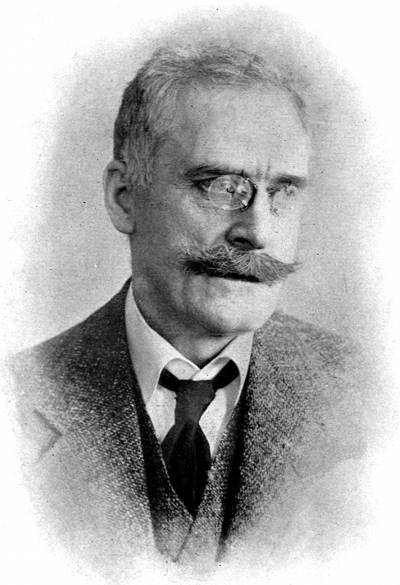 Knut Hamsun