Unicursal Curves by Method of Inversion. — NODAL CUBICS. — CUSPIDAL CUBICS. [2] — SYSTEMS OF CUBICS THROUGH NINE POINTS. — UNICURSAL QUARTICS. — TRINODAL QUARTICS. — NODAL BICUSPIDAL QUARTICS. — TRICUSPIDAL QUARTICS. — QUARTICS WITH A TRIPLE POINT. — SYSTEMS OF QUARTICS THROUGH SIXTEEN POINTS.
BY
HENRY BYRON NEWSON.
This paper contains a summary of the work done during the last school
year by my class in Modern Geometry. Since many of the results were
suggested or entirely wrought out by class-room discussion, it becomes
practically impossible to assign to each member of the class his
separate portion. Many of the results were contributed by Messrs. M. E.
Rice, A. L. Candy, H. C. Riggs, and Miss Annie L. MacKinnon.
The reader who is not familiar with the method of Geometric Inversion
should read Townsend’s Modern Geometry, chapters IX and XXIV; or a
recent monograph entitled, “Das Princep der Reziproken Radien,” by C.
Wolff, of Erlangen.
When a conic is inverted from a point on the curve, the inverse curve
is a nodal, circular cubic.
This is shown analytically as follows: let the equation of the conic be
written
ax² + 2hxy + by² + 2gx + 2fy = 0 ;
which shows that the origin is a point on the curve. Substituting for
| |
x |
|
y |
| x and y |
——— |
and |
—— , |
| |
x² + y² |
|
x² + y² |
we have as the equation of the inverse curve
ax² + 2hxy + by²
+ 2(gx + fy)(x² + y²) = 0.
The terms of the second degree show that the origin is a double point
on the cubic; and is a crunode, acnode, or cusp, according as the conic
is a hyperbola, ellipse, or parabola. The terms of the third degree
break up into three linear factors, viz: gx + fy, x + iy, and x - iy,
which are the equations of the three lines joining the origin to the
three points where the line at infinity cuts the cubic; thus showing
that the cubic passes through the imaginary circular points at infinity.
Since the above transformation is rational, it follows that there
is a (1, 1) correspondence between the conic and the cubic. This
fact is also evident from the nature of the method of inversion. The
cubic has its maximum number of double points, viz: one; and hence is
unicursal. This unicursal circular cubic may be projected into the most
general form of unicursal cubic; the cuspidal variety, however, always
remaining cuspidal.
By applying the method of inversion to many of the well known theorems
of conics, new theorems are obtained for unicursal, circular cubics.
If one of these new theorems states a projective property, it may at
once by the method of projection be extended to all unicursal cubics.
Examples will be given below.
The following method of generating a unicursal cubic is often useful.
Given two projective pencils of rays having their vertices at A and
B; the locus of the intersection of corresponding rays is a conic
through A and B. Invert the whole system from A. The pencil through A
remains as a whole unchanged, while the pencil through B inverts into
a system of co-axial circles through A and B, and the generated conic
becomes a circular cubic through A and B, having a node at A. Now
project the whole figure and we have the following:—given a system
of conics through four fixed points and a pencil of rays projective
with it and having its vertex at one of the fixed points, the locus
of the intersection of corresponding elements of the two systems is
a unicursal cubic, having its node at the vertex of the pencil, and
passing through the three other fixed points.
Unicursal cubics are divisible into two distinct varieties, nodal and
cuspidal. The nodal variety is a curve of the fourth class and has
three points of inflection, one of which is always real. The cuspidal
variety is of the third class and has one point of inflection (Salmon,
H. P. C., Art. 147). Each of these varieties forms a group projective
within itself; that is to say, any nodal cubic may be projected into
every other possible nodal cubic, and the same is true with regard to
the cuspidal. But a nodal cubic can not be projected into a cuspidal
and vice versa.
In applying this method of investigation to the various forms of
unicursal cubics and quartics, only a limited number of theorems are
given in each case. It will be at once evident that many more theorems
might be added, but enough are given in each case to illustrate the
method and show the range of its application. It is not necessary to
work out all the details, as this paper is intended to be suggestive
rather than exhaustive.
If an ellipse be inverted from one of its vertices, the inverse
curve is symmetrical with respect to the axis; it has one point of
inflection at infinity and the asymptote is an inflectional tangent.
This asymptote is the inverse of the circle of curvature at the vertex.
The cubic has two other points of inflection situated symmetrically
with respect to the axis. Hence the three points of inflection lie on
a right line, a projective theorem which is consequently true of all
nodal cubics. The axis is evidently the harmonic polar of the point
of inflection at infinity. Since the axis bisects the angle between
the tangents at the node, it follows that the line joining a point of
inflection to the node, the two tangents at the node, and the harmonic
polar of the point of inflection, form a harmonic pencil. There are
three such lines, one to each node, and three harmonic polars; these
form a pencil in involution, the tangents at the node being the foci.
Since the asymptote is perpendicular to the axis, we have by projection
the following theorem:—through a point of inflection I, draw any line
cutting the cubic in B and C. Through P the point of intersection of
the harmonic polar and inflectional tangent of I, draw two lines to B
and C. The four lines meeting in P form a harmonic pencil. The point
of contact of the tangent from I to the cubic is on the harmonic polar
of I. Any two inflectional tangents meet on the harmonic polar of the
third point of inflection.
The locus of the foot of the perpendicular from the focus of a conic
on a tangent is the auxiliary circle. Inverting from the vertex, there
are two points, A and B, on the axis of the curve, such that if a
circle be drawn through one of them and the node, cutting at right
angles a tangent circle through the node, their point of intersection
will be on the tangent to the curve where it is cut by the axis.
Projecting:—through a point of inflection I of a nodal cubic draw a
line cutting the cubic in P and Q; there are two determinate points on
the harmonic polar of I, which have the following property:—draw a
conic through P, Q, and the node touching the cubic; draw another conic
through one of these points, P, Q, and the node cutting the former, so
that their tangents at their point of intersection, together with the
lines from it to P and Q form a harmonic pencil; the locus of such a
point of intersection is the tangent from I to the cubic.
If three conics circumscribe the same quadrilateral, the common tangent
to any two is cut harmonically by the third. Inverting from one of the
vertices of the quadrilateral: if three nodal, circular cubics have
a common double point and pass through three other fixed points, the
common tangent circle through the common node to any two of the cubics
is cut harmonically by the third; i. e., so that the pencil from the
node to the two points of intersection and the points of contact is
harmonic. Projecting this:—given three nodal cubics having a common
node and passing through five other fixed points; let a conic be passed
through the common node and two of the fixed points, touching two of
the cubics. The pencil from the common node to the points of contact
and the point where the conic cuts the third cubic is harmonic.
The following theorem may be proved in similar manner:—given a system
of cubics having a common node and passing through five other fixed
points; let a conic be drawn through the common node and two of the
fixed points; the lines drawn from the points where it cuts the cubics
to the common node form a pencil in involution.
A variable chord drawn through a fixed point P to a conic subtends a
pencil in involution at any point O on the conic. Inverting from O:—a
system of circles through the double point of a nodal circular cubic
and any other fixed point P, is cut by the cubic in pairs of points
which determine at the node a pencil in involution. Projecting:—a
system of conics through the node of a unicursal cubic, two fixed
points on the curve, and any fourth fixed point, is cut by the cubic in
pairs of points which determine at the node a pencil in involution.
We give another proof of the theorem that the three points of
inflection of a nodal cubic lie on a right line. This is easily shown
by inversion and is a beautiful example of the method.
There are three points on a conic whose osculating circles pass through
a given point on the conic; these three points lie on a circle passing
through the given point.[1]
(Salmon’s Conics, Art. 244, Ex. 5.) By inverting from the given point
and then projecting, we readily see that there are three points of
inflection on a nodal cubic which lie on a right line. If the above
conic be an ellipse, the three osculating circles are all real; but if
it be a hyperbola, one only is real. Hence an acnodal cubic has three
real points of inflection, while a crunodal one has one real and two imaginary.
The reciprocals of many of the theorems of this section are of interest
and will be given under Quartics.
Inverting the parabola from its vertex we obtain the Cissoid of
Diocles. The focus of the parabola inverts into a point on the cuspidal
tangent which I shall call the focus of the cissoid. The circle of
curvature at the vertex of the parabola inverts into the asymptote of
the cissoid. This asymptote is also plainly the inflectional tangent,
and the point at infinity is the point of inflection. The directrix
of the parabola inverts into a circle through the cusp of the cissoid
having the cuspidal tangent for a diameter. Hall calls this the
directrix circle. The double ordinate of the parabola which is tangent
to the circle of curvature of the vertex inverts into the circle
usually called the base circle of the cissoid.[3]
The cissoid may fairly be called the simplest form of the cuspidal
cubic. Its projection and polar reciprocal are both cuspidal cubics. I
shall now deduce from the parabola a few simple propositions for the
cissoid, and then extend them to all cuspidal cubics.
(1) It is known that the locus of the intersection of tangents to the
parabola which are at right angles to one another, is the directrix.
Inverting:—the locus of the intersection of tangent circles to the
cissoid through the cusp and at right angles to each other is the
directrix circle.
(2) For the parabola, two right lines O P and O Q, are drawn through
the vertex of the parabola at right angles to one another, meeting the
curve in P and Q; the line P Q cuts the axis at a fixed point, whose
abscissa is equal to its ordinate. Inverting:—two right lines, O P and
O Q, are drawn at right angles to one another through the cusp of the
cissoid, meeting the curve in P and Q; the circle O P Q passes through
the intersection of the axis and asymptote.
(3) If the normals at the points P, O, R, of a parabola meet at
a point, the circle through P O R will pass through the vertex.
Inverting:—through a fixed point and the cusp of a cissoid, three and
only three circles can be passed, cutting the cissoid at right angles;
these three points of intersection are collinear.
From the geometry of the cissoid we see that if any line be drawn
parallel to the asymptote, cutting the curve in two points, B and C,
the segment B C is bisected by the axis. Hence, projecting the curve
we have the following theorem:—any line drawn through the point of
inflection is cut harmonically by the point of inflection, the curve,
and the cuspidal tangent. Thus the cuspidal tangent is the harmonic
polar of the point of inflection. The polar reciprocal of this last
theorem reads as follows:—if from any point on the cuspidal tangent
the two other tangent lines be drawn to the curve, and a line to the
point of inflection, these four lines form a harmonic pencil. These are
fundamental propositions in the theory of cuspidal cubics.
(4) Projecting proposition (1) above, we have the generalized
theorem:—through the point of inflection draw any line cutting the
cubic in B and C; through B, C, and the cusp draw two conics tangent to
the cubic, and intersecting in a fourth point such that the two
tangents to the conics at their point of intersection, together with
the two lines from it to B and C, form a harmonic pencil; the locus of
all such intersections is a conic through B, C, and the cusp having the
point of inflection and the cuspidal tangent for pole and polar.
(5) Reciprocating (4) we have:—through any point on the cuspidal
tangent draw the two other tangents, B and C, to the cubic. Touching B,
C, and the inflectional tangent draw two conics, such that the points
of contact of their common tangent, together with the points where
their common tangent cuts the tangents B and C, form a harmonic range;
the envelope of such common tangents is a conic having the cuspidal
tangent and the point of inflection for polar and pole.
(6) Projecting (2) we obtain the following:—through the point of
inflection draw any line cutting the curve in B and C; take any other
two points on the cubic such that the pencil from the cusp, O, O (B P C
Q) is harmonic; the conic passing through O B P C Q will pass through
the intersection of the cuspidal and inflectional tangents.
(7) Reciprocating (6):—from any point on the cuspidal tangent draw two
other tangents, B and C, to the cubic; take any two other tangents, P
and Q, such that the range cut from the inflectional tangent by B, C,
P, Q, is harmonic; the conic touching B, C, P, Q, and the inflectional
tangent will also touch the line joining the point of inflection and
the cusp.
(8) Projecting (3):—through the point of inflection draw any line
cutting the cubic in B and C; through the cusp O and the points B and C
on the cubic and any other fixed point P, three, and only three, conics
can be passed, such that the tangent to the conic and cubic at their
remaining point of intersection, together with the lines from it to B
and C, form a harmonic pencil; these three points of intersection are
collinear.
Let U and V be the equations of two given cubics, then U + kV is
the equation of a system of cubics through their nine points of
intersection. Twelve cubics of this system are unicursal, and the
twelve nodes are called the twelve critic centres of the system. (See
Salmon’s H. P. C., Art. 190.)
Let the equation of the system be written briefly
a + ka₁ + (b + kb₁) x + (c + kc₁) y + u₂ + u₃ = 0 ;
one, and only one, value of k makes the absolute
term vanish; hence one, and only one, curve of the system passes
through the origin, which may be any point in the plane. Make the
equation of the system homogeneous by means of z, and
differentiate twice with respect to z; we obtain thus the equations
of the polar conics and polar lines of the origin with respect to the system.
The polar conics of the origin are given by
3(a + ka₁) + 2{ (b + kb₁) x + (c + kc₁)y } + u₂ = 0 ;
thus showing that the polar conics of any point, with respect to the
system of cubics, form a system through four points. The polar lines of
the origin are given by
3(a + ka₁) + (b + kb₁) x + (c + kc₁)y = 0 ,
which represents a pencil of lines through a point.
Suppose now the origin to be at one of the critic centres; then for a
particular value, k₁, all terms lower than the second degree must vanish, so that
| ║ |
a |
b |
c |
║ |
|
| ║ |
|
|
|
║ |
= 0. |
| ║ |
a₁ |
b₁ |
c₁ |
║ |
|
The factors of the terms of u₂, which involves k₁,
represent the tangents at the double point to the nodal cubic, and also the
polar conic of the origin with respect to this nodal cubic. Hence a
critic centre is at one of the vertices of the self-polar triangle of
its system of polar conics. The opposite side of this triangle is the
common polar line of the critic centre with respect to its system of
polar conics, and hence it is also the common polar line of the critic
centre with respect to the system of cubics. The four basal points of
the system of polar conics lie two and two upon the tangents at the
double point of the nodal cubic.
When the origin is taken at one of the nine basal points of the system
of cubics, a and a₁ both vanish. Hence it is readily seen that a
basal point of a system of cubics is also a basal point of its system
of polar conics and the vertex of its pencil of polar lines.
Suppose two of the basal points of the system of cubics to coincide,
then every cubic of the system, in order to pass through two coincident
points, must touch a common tangent at a fixed point. The common
tangent is the common polar of its point of contact, both with respect
to the system of cubics and to its system of polar conics. Hence the
union of two basal points gives rise to a critic centre. The self-polar
triangle of its system of polar conics here reduces to a limited
portion of the common tangent. This line is not a tangent to the nodal
cubic, but only passes through its double point.
Suppose three of the basal points of a system of cubics to coincide,
such a point will then be a point of inflection on each cubic of the
system. For, in the last case, if a line be drawn from the point of
contact of the common tangent to a third basal point of the system,
such a line will be a common chord of the system of cubics. Suppose,
now, this third basal point be moved along the curves until it
coincides with the other two; then the common chord becomes a common
tangent, which cuts every cubic of the system in three coincident
points, and hence is a common inflectional tangent.
Since the polar conic of a point of inflection on a cubic consists of
the inflectional tangent and the harmonic polar of the point, and since
the polar conics of a fixed point with respect to a system of cubics
pass through four fixed points, it follows that in a system of cubics
having a common point of inflection and a common inflectional tangent
the harmonic polars of the common point of inflection meet in a point.
Since the common inflectional tangent is the common polar line of the
common point of inflection, it follows that such a point is a critic
centre of the system of cubics. One cubic of the system then has a
node at the common point of inflection of the system, and forms an
exception. The line which is the common inflectional tangent to the
other cubics of the system cuts this also in three points, but is one
of the tangents at the double point; the other tangent at the double
point goes through the vertex of the pencil of harmonic polars.
It is evident that the nine basal points of a system of conics may
unite into three groups of three each. The cubics will then all have
three common points of inflection, and at these points three common
inflectional tangents. These three points all lie on a line.
When four basal points of the system of cubics coincide, such a point
is a double point on every cubic of the system. This is easily shown
as follows, using the method of inversion. Let a system of conics
through four points be inverted from one of the four points. The system
of conics inverts into a system of cubics, having a common node and
passing through three other finite fixed points and the two circular
points at infinity. Since the common node counts as four points of
intersection, it follows that any two cubics of the system, and hence
all of them, intersect in nine points. This system can be projected
into a system having a common double point and passing through any five
other fixed points.
A number of theorems concerning the system of cubics can easily be
inferred from known theorems concerning the system of conics. Since two
conics of the system are parabolas, it follows that two cubics of the
system are cuspidal. Since three conics of the system break up into
pairs of right lines, it follows that three cubics of the system break
up into a right line and a conic. Each right line and its corresponding
conic intersect in the common double point. The line at infinity cuts
the system of conics in pairs of points in involution, the points of
contact of the two parabolas of the system being the foci; it follows
on inversion that the pairs of tangents to the cubics at their common
node form a pencil in involution, the two cuspidal tangents being the foci.
If the four basal points of the system of conics lie on a circle,
this circle inverts into a right line, and one cubic then consists of
this right line and the lines joining the centre of inversion to the
circular points at infinity. This theorem may be stated for the system
of cubics as follows: if the conic determined by the five basal points
of the system of cubics (not counting the common double points), break
up into right lines, the line passing through three of the five points,
together with the lines joining the other two points to the common
node, constitute a cubic of the system.
If three of the four basal points of the system of conics lie on a
line, the conics consist of this line and a pencil of lines through
the fourth basal point. Inverting from this fourth point and then
projecting, we have a system of cubics consisting of a pencil of lines
and a conic through the vertex and the four other fixed points. Hence,
when the five fixed points of such a system of cubics lie on a conic
through the common node, this conic is a part of every cubic of the
system. If we invert the above system of conics from one of the three
points on the right line, and then project, we obtain a system of
cubics which consists of a system of conics through four fixed points,
and a fixed right line through one of these four points. Hence, if
two of the five basal points of such a system of cubics be on a line
through the common node, this line is a part of every cubic of the
system.
If a system of conics having one basal point at infinity be inverted
from one of the remaining basal points, this point at infinity inverts
to the center of inversion, and we obtain a system of cubics having
five coincident basal points and hence passing through only four
others. The system of cubics is now so arranged that one tangent at
their common double point is common to all. Only one cubic of the
system is cuspidal. As before three cubics break up into a right line
and conic.
If two of three basal points of the system of conics be at infinity,
the system of cubics obtained by projection and inversion has six
coincident basal points and hence only three others. This system has
both tangents at the common node common to all cubics of the system. If
the two basal points at infinity in the system of conics be coincident,
all the conics are parabolas, and hence all the cubics of the system
are cuspidal and have a common cuspidal tangent.
If three of the basal points of the system of conics be at infinity,
the conics consist of the line at infinity and a pencil of lines
through the finite basal point. Inverting from the latter, we obtain a
system of cubics with seven coincident basal points. This system is
made up of a pencil of lines meeting in the seven coincident basal
points together with the two lines joining this to the other two basal
points of the system. These two lines are part of every cubic of the
system.
If one of the remaining basal points be moved up to join the seven
coincident ones, one of these fixed lines becomes indeterminate, and
the system of cubics through eight coincident points consists of a
fixed line through the eight coincident points and the ninth fixed
point together with any two lines of the pencil through the eight
points. If the nine basal points coincide, any three lines through it
form a cubic of the system.
The inverse of a conic from any point not on the curve is a nodal
bicircular quartic. This is shown by inverting the general equation of
the conic
ax² + 2hxy + by² + 2gx + 2fy + c = 0 ;
| |
x |
|
y |
| by substituting for x and y |
——— |
and |
——— , |
| |
x² + y² |
|
x² + y² |
we get the equation
ax² + 2hxy + by² + 2(gx + fy)(x² + y²) + c(x² + y²)² = 0.
The origin is evidently a double point on the curve, and is a crunode,
acnode, or cusp according as the conic is a hyperbola, ellipse, or
parabola. The factors of the terms of the fourth degree, viz: (x +
iy) (x + iy) (x - iy) (x - iy), show that the two imaginary circular
points at infinity are double points on the quartic, which is thus
trinodal. Hence this nodal, bicircular quartic can be projected into
the most general form of the trinodal quartic. Trinodal quartics are
unicursal.
If the conic which we invert be a parabola, the quartic has two nodes
and one cusp. If the conic be inverted from a focus, the quartic has
the two circular points at infinity for cusps. This is best shown
analytically as follows: let the equation of the conic, origin being at
the focus, be written
| x² |
|
y² |
|
2aex |
|
b² |
|
| —— |
+ |
—— |
+ |
—— |
- |
— |
= 0. |
| a² |
|
b² |
|
a² |
|
a² |
|
Inverting this we have
| x² |
|
y² |
|
2aex(x² + y²) |
|
b²(x² + y²)² |
|
| —— |
+ |
—— |
+ |
—————— |
- |
————— |
= 0. |
| a² |
|
b² |
|
a² |
|
a² |
|
Now transform this equation so that the lines joining the origin to the
circular points at infinity shall be the axes of reference. To do this
let x + iy = x₁ and x - iy = y₁;
| |
x1 + y1 |
|
x1 - y1 |
| ∴ x = |
——— |
and y = |
——— |
| |
2 |
|
2i |
Making these substitutions and reducing we have (dropping the subscripts),
| (x² + 2xy + y²) |
|
(x² - 2xy + y²) |
|
4aexy(x + y) |
|
b²x²y² |
|
| —————— |
- |
—————— |
- |
—————— |
- |
————— |
= 0. |
| a² |
|
b² |
|
a² |
|
a² |
|
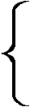
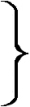
Making this equation homogeneous by means of z, we have
| |
 |
(x² + 2xy + y²) |
|
(x² - 2xy + y²) |
 |
|
4aexy(x + y) |
|
b²x²y² |
|
| z² |
—————— |
- |
—————— |
- |
—————— |
- |
————— |
= 0. |
| |
a² |
|
b² |
|
a² |
|
a² |
|
which is the equation of the quartic referred to the triangle
formed by the three nodes. We are now able to determine the nature of the node at
the vertex (y, z). Factor x² out of all the terms which contain it;
and arrange thus:
| |
|
z² |
|
z² |
|
4aexyz |
|
b²y² |
|
| x² |
— |
- |
— |
- |
——— |
- |
—— |
| |
a² |
|
b² |
|
a² |
|
a² |
|
| |
|
yz² |
|
yz² |
|
2aexy² z |
|
| + 2x |
— |
+ |
— |
- |
——— |
| |
a² |
|
b² |
|
a² |
| |
y²z² |
|
y²z² |
|
| + |
— |
- |
— |
= 0 . |
| |
a² |
|
b² |
|
The quantity which multiplies x² represents the two
tangents at the double point (y, z); but this quantity is a
perfect square and hence we have a cusp. In this way the point (x,
z) may be shown to be a cusp. Lastly, when a parabola is inverted
from the focus, we obtain a tricuspidal quartic.
The trinodal quartic can be generated in a manner analogous to that
shown for the nodal cubic. Let two projective pencils of rays have
their vertices at A and B, the locus of intersection of corresponding
rays is a conic through A and B. Invert from any point O in the plane,
and we obtain two systems of co-axial circles, O A being the axis of
one and O B of the other. The locus of intersection of corresponding
circles is a bicircular quartic having a node at O. Projecting the
whole figure we have the following theorem:—two projective systems
of conics through O P Q A and O P Q B generate by their corresponding
intersections a trinodal quartic having its nodes at O, P, and Q, and
passing through A and B.
It is evident that the quartic generated in this way may have three
nodes, one node and two cusps, two nodes and one cusp, or three cusps,
depending upon the nature of the conic inverted and the centre of
inversion. Making this the basis of classification we thus distinguish
four varieties of unicursal quartics. To these must be added a fifth
variety, viz: the quartic with a triple point. Each of these varieties
will be considered separately.
The method of treating unicursal quartics given in this and the next
four sections is in some respects similar to that suggested by Cayley in
Salmon’s Higher Plane Curves. But the method here sketched out is very
different in its point of view and much wider in its application,
yielding a multitude of new theorems not suggested by Cayley’s method.
The quartic with three double points is a curve of the sixth class
having four double tangents and six cusps (Salmon’s H. P. C. Art. 243).
Hence its reciprocal is of the sixth degree with four double points,
six cusps, three double tangents, and no points of inflection.
The locus of intersection of tangents to a conic at right angles to
one another is a circle. Inverting:—the locus of intersection of
circles through the node and tangent a nodal, bicircular quartic and
at right angles to one another is a circle. Projecting:—through the
three nodes of a quartic draw two conics, each touching the quartic
and intersecting so that the two tangents to the conics at their point
of intersection, together with the lines from it to two of the nodes,
form a harmonic pencil; the locus of all such intersections is a conic
through these two nodes. Whenever the two tangents to the quartic from
the third node, together with the lines from it to the other two nodes,
form a harmonic pencil, this last conic breaks up into two right lines.
Any chord of a conic through O is cut harmonically by the conic and the
polar of O. Inverting from O and projecting:—from one of the nodes of
a trinodal quartic draw the two tangents to the quartic (not tangents
at the node); draw the conic through these two points of contact and
the three nodes; any line through the first mentioned node is cut
harmonically by this conic, the quartic and the line joining the other
two nodes.
If a triangle circumscribe a conic, the three lines from the angular
points of the triangle to the points of contact of the opposite sides
intersect in a point. Inverting and projecting:—through the three
nodes of a quartic draw three conics touching the quartic; through the
point of intersection of two of these conics, the point of contact of
the third, and the three nodes draw a conic; three such conics can be
drawn and they pass through a fixed point.
The eight points of contact of two conics with their four common
tangents lie on a conic, which is the locus of a point, the pairs of
tangents from which to the two given conics form a harmonic pencil.
Inverting and projecting:—two connodal trinodal quartics have four
common tangent conics through the three nodes; their eight points
of contact lie on another connodal trinodal quartic; if from any
point on the last quartic four conics be drawn through the nodes and
tangent in pairs to the first quartics, any line through a node is cut
harmonically by these four conics.
The eight common tangents to two conics at their common points all
touch a conic. Inverting and projecting:—two connodal trinodal
quartics intersect in four other points; eight conics can be drawn
through the three nodes tangent to the quartics at these points of
intersection; these eight conics all touch another connodal trinodal
quartic.
A series of conics through four fixed points is cut by any transversal
in a range of points in involution. Inverting and projecting:—a series
of connodal trinodal quartics can be passed through four other fixed
points; any conic through the three nodes cuts the series of quartics
in pairs of points which determine at a node a pencil in involution.
The conic touches two of the quartics and the lines to the points of
contact are the foci of the pencil.
If the sides of two triangles touch a given conic, their six angular
points will lie on another conic. Inverting and projecting:—if two
groups of three conics each be passed through three nodes and tangent
to the quartic, their six points of intersection (three of each group)
lie on another connodal trinodal quartic.
If the two triangles are inscribed in a conic, their six sides touch
another conic. Inverting and projecting:—if two groups of three conics
each be passed through the three nodes of a quartic so that the three
points of intersection of each group lie on the quartic, these six
conics all touch another connodal trinodal quartic.
A triangle is circumscribed about one conic, and two of its angular
points are on a second conic; the locus of its third angular point is a
conic.—Inverting and projecting:—if three conics be drawn through the
three nodes of two connodal trinodal quartics so that they all touch
one of the quartics and two of their points of intersection are on the
other quartic, the locus of their third point of intersection is a
connodal trinodal quartic.
A triangle is inscribed in one conic and two of its sides touch a
second conic; the envelope of its third side is a conic. Inverting and
projecting:—if three conics be drawn through the three nodes of two
connodal trinodal quartics so that their three points of intersection
lie on one of the quartics and two of them touch the other quartic, the
envelope of the third conic is another connodal trinodal quartic.
The theorems of this section are stated in the most general terms and
are still true when one or more of the nodes are changed into cusps. It
is therefore not necessary to give separate theorems for the case of
one cusp and two nodes.
A quartic with one node and two cusps is a curve of the fourth class,
having one double tangent and two points of inflection (see Salmon).
Hence its reciprocal is also a nodal bicuspidal quartic, a fact of
which frequent note will be made in this section.
The inverse of a conic with respect to a focus is a curve called
Pascal’s Limaçon. From the polar equation of a conic, the focus being
the pole, it is evident that the polar equation of the limaçon may be
written in the form:
where e and p are constants, being respectively the eccentricity and
semi-latus rectum of the conic.
From the above equation it is readily seen that the curve may be traced
by drawing from a fixed point O on a circle any number of chords
and laying off a constant length on each of these lines, measured
from the circumference of the circle. The point O is the node of the
limaçon; and the fixed circle, which I shall call the base circle, is
the inverse of the directrix of the conic. This is readily shown as
follows:—the polar equation of the directrix is r = p / (e cosx). Hence
the equation of its inverse is r = (e cosx) / p, which is the equation of
the base circle of the limaçon.
The envelope of circles on the focal radii of a conic as diameters
is the auxiliary circle. Inverting:—the envelope of perpendiculars
at the extremities of the nodal radii of a limaçon is a circle with
its centre on the axis and having double contact with the limaçon.
Projecting:—from any point on a nodal bicuspidal quartic draw lines to
the three nodes and a fourth line forming with them a harmonic pencil;
the envelope of all such lines is a conic through the two cusps and
having double contact with the quartic; the chord of contact passes
through the node and cuts the line joining the cusps so that this point
of intersection, the two cusps, and intersection of the double tangent
with the cuspidal line form a harmonic range. Reciprocating:—on any
tangent to a nodal bicircular quartic take the three points where
it cuts the two inflectional tangents and the double tangent, and a
fourth point forming with these a harmonic range; the locus of all such
points is a conic touching the two inflectional tangents and having
double contact with the quartic; the pole of the chord of contact is
on the double tangent; join this last point to the intersection of the
inflectional tangents and join the node with the same intersection;
these four lines form a harmonious pencil.
If the tangent at any point P of a conic meet the directrix in Q, the
line P Q will subtend a right angle at the focus O; the circle P O Q has
P Q for a diameter and hence cuts the conic at P at right angles.
Inverting:—from any point P on the limaçon draw O P to the node O;
draw O Q perpendicular to O P meeting the base circle in Q; P Q is
normal to the limaçon at P. Projecting:—from any point P on a nodal
bicuspidal quartic draw lines to the three nodes and a fourth harmonic
to these three; from O draw lines to the two cusps and a fourth
harmonic to these two and the line O P; the locus of the intersection
of the fourth line of each pencil is a conic through the three nodes.
Call this the basal conic of the quartic. Reciprocating:—on any given
tangent to a nodal bicuspidal quartic take its points of intersection
with the double tangent and the inflectional tangents, and a fourth
point harmonic with these; on the double tangent take its points of
intersection with the given tangent and the inflectional tangents, and
a fourth point harmonic with these; the envelope of the lines joining
the fourth point of these two ranges is a conic touching the double and
inflectional tangents.
The locus of the foot of the perpendicular from the focus on the
tangent to a conic is the auxiliary circle. Inverting:—draw a circle
through the node tangent to a limaçon; draw the diameter O P of this
circle; the locus of P is a circle having double contact with the
limaçon, the axis being the chord of contact. Cor.; the locus of the
centre of the tangent circle is also a circle. Projecting:—through the
three nodes of a nodal bicuspidal quartic draw any conic touching the
quartic; the locus of the pole with respect to this conic of the line
joining the two cusps is a conic; draw the chord O P of the first conic
through the node O and the pole of the line joining the two cusps; the
locus of P is a conic through the cusps, having double contact with the
quartic.
If chords of a conic subtend a constant angle at the focus, the
tangents at the ends of the chords will meet on a fixed conic, and
the chords will envelope another fixed conic; both these conics will
have the same focus and directrix as the given conic. Inverting:—draw
two nodal radii of a limaçon O P and O Q, making a given angle at O;
the envelope of the circle P O Q is another limaçon; the locus of the
intersection of circles through O tangent to the limaçon at P and Q is
another limaçon. These two limaçons have the same node and base circle
as the given one. Projecting:—through the node O of a nodal bicuspidal
quartic draw a pencil of radii in involution; let O P and O Q be a
conjugate pair of these nodal radii; the envelope of the conic through
P, Q, and the three nodes, is another quartic of the same kind: also
draw conics through the three nodes tangent to the quartic at P and Q;
the locus of their point of intersection is another quartic of the same
kind. These three quartics all have the same node, cusps, and base conic.
Every focal chord of a conic is cut harmonically by the curve, the
focus, and directrix. Inverting:—every nodal chord of a limaçon is
bisected by the base circle. Projecting:—every nodal chord of a nodal
bicuspidal quartic is cut harmonically by the quartic, the base conic,
and the line joining the two cusps. Reciprocating:—from any point
on the double tangent of a nodal bicuspidal quartic draw the other
two tangents to the quartic and a line to the intersection of the
inflectional tangents; the fourth harmonic to these lines envelopes a
conic.
Since the limaçon is symmetrical with respect to the axis, it
follows that the two points of inflection are situated symmetrically
with respect to the axis. Hence the line joining the two points of
inflection is parallel to the double tangent. Therefore by projection
we infer the following general theorem for the nodal bicuspidal
quartic: the line joining the two cusps, the line joining the two
points of inflection, and the double tangent meet in a point. Also the
fourth harmonic points on each of these lines lie on a line through
the node. Reciprocating:—the point of intersection of the cuspidal
tangents, the point of intersection of inflectional tangents, and the
node all lie on a right line. From the node draw a fourth harmonic
to this right line and the tangents at the node; draw a fourth line
harmonic to this right line and the inflectional tangents; draw a
fourth harmonic to the cuspidal tangents and this right line; these
three lines all meet in a point on the double tangent.
A tricuspidal quartic is a curve of the third class with one double
tangent and no inflection. Its reciprocal is therefore a nodal cubic.
We shall begin by reciprocating some of the simpler properties of
nodal cubics. Since the three points of inflection of a nodal cubic
lie on a right line, it follows that the three cuspidal tangents of a
tricuspidal quartic meet in a point. The reciprocal of the harmonic
polar of a point of inflection is a point on the double tangent, found
by drawing through the point of intersection of the three cuspidal
tangents a line forming with them a harmonic pencil. Three such lines
can be drawn and it is not difficult to distinguish them. All six lines
form a pencil in involution, the lines to the points of contact of the
double tangent being the foci. I shall call such a point on the double
tangent the harmonic point of the cuspidal tangent. Since any two
inflectional tangents of a nodal cubic meet on the harmonic polar of
the third point of inflection, it follows that any two cusps of a
trinodal quartic and the harmonic point of the third cuspidal tangent
lie on a right line. Since the point of contact of the tangents from a
point of inflection of a nodal cubic is on the harmonic polar of the
point, it follows that the tangent to the tricuspidal quartic at the
point where it is cut by a cuspidal tangent passes through the harmonic
point of that cuspidal tangent.
The inverse of the parabola from a focus is the cardioid; and the
inverse of the corresponding directrix is the base circle of the
cardioid. The cardioid projects into a tricuspidal quartic and its base
circle projects into a conic through the three cusps which has the same
general properties as the base conic of the nodal bicuspidal quartic.
The circle circumscribing the triangle formed by the three tangents
to a parabola passes through the focus. Inverting:—three circles
through the cusp, and tangent to a cardioid, intersect in three
collinear points. Projecting:—three conics through the three cusps
of a tricuspidal quartic and touching the quartic intersect in three
collinear points. Reciprocating:—if three conics touch the three
inflectional tangents of a nodal cubic and the cubic itself, their
three other common tangents intersect in a point.
Circles described on the focal radii of a parabola as diameters touch
the tangent through the vertex. Inverting and projecting:—from a
point on a tricuspidal quartic lines are drawn to the three cusps and
a fourth line forming a harmonic pencil; the envelope of this fourth
line is a conic through the three cusps and touching the quartic at the
point where the latter is cut by one of the cuspidal tangents. There
are three such conics, one corresponding to each cusp. At any cusp the
tangent to its corresponding base conic, the cuspidal tangent, and the
lines to the other two cusps form a harmonic pencil. Reciprocating:—on
any tangent to a nodal cubic take the three points of intersection
with the inflectional tangents and a fourth point forming with these a
harmonic range; the locus of this fourth point is a conic touching the
three inflectional tangents and the cubic. The tangent to the cubic
where it is touched by the conic goes through a point of inflection.
On any inflectional tangent the point of contact of this conic, the
point of inflection, and the points of intersection of the other two
inflectional tangents form a harmonic range.
The circle described on any focal chord of a parabola as diameter will
touch the directrix. Inverting:—the circle described on any cuspidal
chord of a cardioid will touch the base circle. Projecting:—through a
cusp C draw any chord of a tricuspidal quartic meeting the quartic in P
and O; draw a conic through P, O, and the other two cusps so that the
pencil at P formed by the tangent to the conic and the lines to the
cusps is harmonic; all such conics will touch the base conic of the
cusp C. Reciprocating:—from O, on any inflectional tangent of a nodal
cubic, draw two tangents P and Q to the cubic; draw a conic touching
the tangents P and Q and the other two inflectional tangents so that
the range on one of these tangents formed by the point of contact of
the conic and the intersection of the three inflectional tangent is
harmonic; the envelope of all such conics is a conic touching the three
inflectional tangents.
The directrix of a parabola is the locus of the intersection
of tangents at right angles to one another. Inverting and
projecting:—through any point P on the base conic of a cusp C of the
tricuspidal quartic, two conics can be drawn through the three cusps
and touching the quartic; their two tangents at P and the lines to the
other two cusps form a harmonic pencil; their two points of contact
lie on a line through C. Reciprocating:—from any point on one of the
inflectional tangents to a nodal cubic draw the two tangents P and Q;
draw two conics each touching the cubic and the three inflectional
tangents, one touching P and the other Q; the envelope of their other
common tangent is a conic touching the three inflectional tangents;
the two points of contact of any one of these common tangents and
the points where it cuts the other two inflectional tangents form a
harmonic range.
Any two parabolas which have a common focus and their axes in opposite
directions cut at right angles. Inverting:—any two cardioids having a
common cusp and their axes in opposite directions cut at right angles.
Projecting:—two tricuspidal quartics having common cusps and at one
of the cusps the same cuspidal tangent, but the cusps pointed in
opposite directions, cut at such an angle that the tangents at a point
of intersection and the lines to the other two cusps form a harmonic
pencil. Reciprocating:—two nodal cubics have common inflectional
tangents and on one of them the points of inflection common, but the
branches of the curve on opposite sides of the line; any common tangent
to the two curves is cut harmonically by the points of contact and the
other two inflectional tangents.
Circles are described on any two focal chords of a parabola as
diameters; their common chord goes through the vertex of the parabola.
Inverting:—circles are described on any two cuspidal chords of a
cardioid; the circle through their points of intersection and the cusp
goes also through the vertex of the cardioid. Projecting:—through one
of the cusps of a tricuspidal quartic draw two chords; draw conics
through the other two cusps and the extremities of each of these chords
so that the pole of the line joining the other two cusps with respect
to each of these conics is on the corresponding chord; the conic
through the points of intersection of these two conics and the cusps
passes also through the point where the cuspidal tangent of the
first mentioned cusp cuts the quartic. Reciprocating:—on one of the
inflectional tangents, of a nodal cubic take two points P and Q;
draw a pair of tangents from each of these points to the cubic; draw
two conics each touching a pair of these tangents and the other two
inflectional tangents, so that the polars of the point of intersection
of the other two inflectional tangents with respect to each of those
conics pass respectively through P and Q; the conic touching the common
tangents to these two conics and the three inflectional tangents
touches also the tangent from the first mentioned point of inflection
to the cubic.
Since a triple point is analytically equivalent to three double points,
a quartic with a triple point is unicursal. Such a quartic is obtained
by inverting a unicursal cubic from its node. The equation of such
a cubic may be written
u₂ + u₃ = 0 ,
where u₂ and u₃ are
homogeneous functions of the second and third degree respectively in
x and y. Hence the equation of the inverse curve is
u₃ + u₂(x² + y²) ,
which shows that the origin is a triple point and the quartic
circular. By projecting this all other forms may be obtained.
The nature of the triple point depends upon the relation of the line at
infinity to the cubic before inversion. Thus the line at infinity may
cut the cubic in three distinct points all real, or one real and two
imaginary, in one real and two coincident points (an ordinary tangent),
or in three coincident points (an inflectional tangent). Hence the
quartic may have at the triple point three distinct tangents all real,
or one real and two imaginary, one real and two coincident, or all
coincident.
This quartic may be generated in a manner similar to that used for the
curves already discussed. We showed in the section on nodal cubics that
a system of conics through A, B, C, D, and a projective pencil of rays
with its vertex at A generate by the intersection of corresponding
elements a cubic with a node at A. Invert the whole figure from A and
then project:—the pencil of rays remains a pencil; the system of
conics becomes a system of unicursal cubics having a common node at A
and passing through five other common points; the cubic inverts and
projects into a quartic with a triple point at A, passing through the
five other common points of the system of cubics.
The three points of inflection of a nodal cubic lie on a right line.
Inverting:—there are three points on a circular quartic with a triple
point whose osculating circles pass through the triple point, and these
three points lie on a circle through the triple point. Let these three
points be designated by A, B, and C. The lines from the triple point O
to the points A, B, C, and the common chord of the osculating circles
at two of them form a harmonic pencil. Through one of these points, A,
and the triple point draw a circle touching the quartic; the point of
contact is on the common chord of the osculating circles at B and C.
From theorems which we have already proved for a system of cubics
having a common node and passing through five others fixed points,
we can infer other theorems for a system of quartics having a common
triple point and passing through seven other fixed points. For example,
any conic through the common double point and two of the fixed points
is cut by the cubics in pairs of points which determine at the node a
pencil in involution. Hence any cubic having its node at the common
triple point and passing through any four of the fixed points is cut
by the quartics in pairs of points which determine at the common
triple point a pencil in involution. Again, the pairs of tangents to
the cubics at the common double point form a pencil in involution, the
two cuspidal tangents being the foci of the pencil. Inverting:—the
line at infinity (which passes through two of the fixed points, i. e.
the circular points) cuts the system of circular quartics in pairs
of points in involution. Projecting:—a line through any two of the
seven fixed points cuts the system of quartics in pairs of points
in involution. Since the line at infinity touches the inverse of a
cuspidal cubic, it follows that any line through two of the fixed
points will touch two of the quartics of the system; these points of
contact are therefore the foci of the involution.
Other theorems on such a system of quartics will be given in the
next section.
Let U and V represent a system of quartics through sixteen points.
Since the discriminant of quartic is of the 27th degree in the
coefficients it follows that there are 27 values of k for which the
discriminant vanishes, and hence 27 quartics of the system which
have double points. As in case of cubics these 27 points are called
the critic centres of the system. Let the equation of the system of
quartics be written
u₄ + u₃ + u₂ + u₁ + u₀ = 0.
In a manner similar to that employed for cubics, we find the equation
of the polar cubics of the origin with respect to the system to be
u₃ + 2u₂ + 3u₁ + 4u₀ = 0.
The polar conics of the origin are given by
u₂ + 3u₁ + 6u₀ = 0 ;
and the polar lines of the origin, by
u₁ + 4u₀ = 0 .
The origin may be any point in the plane and hence we conclude that
only one quartic of the system passes through a given point and that
the polar cubics of any point form a system through nine points. The
polar conics of any point form a system through four points and the
polar lines meet in a point.
If one of the critic centres be taken for origin, we can readily see
that such a point is also a critic centre on each of its systems of
polar curves. It is thus at a vertex of the self-polar triangle of
its system of polar conics and the opposite side of the triangle is
the common polar line of the critic centre with respect to each of
the systems of curves. The tangents at the node of the nodal quartic
coincide with those of its polar cubic and these we know coincide with
the lines which constitute its polar conic.
If two of the sixteen basal points coincide, such a point is a critic
centre. The argument is the same as for a system of cubics. We can also
see that two of the basal points of each of its systems of polar curves
coincide at the critic centre. The sixteen basal points of the system
of quartics may unite two and two so that it is possible to draw a
system of quartics touching eight given lines each at a fixed point.
If three of the basal points of our system of quartics coincide, all
the quartics have at such a point a common point of inflection and a
common inflectional tangent. The demonstration is the same as that
already given for cubics. The system of polar cubics of such a point
also have this point for a common point if inflection and the same
tangent for a common inflectional tangent. I prefer to show this
analytically for the sake of the method. The equation of the system of
quartics having the origin for a common point of inflection and the
axis of y for a common inflectional tangent may be written
u₄ + u₃ + { (B + kB₁)xy + (C + kC₁)y²
} + (A + kA₁)y = 0 .
The equation of the polar cubics of the origin is therefore,
u₃ + 2{ (B + kB₁)xy + (C + kC₁)y²
} + 3(A + kA₁)y = 0 ,
which proves the proposition. The properties of the system
of polar conics of such a point are therefore the same as those already proved
for cubics. One quartic of the system has a double point at the common
point of inflection of the others.
When four basal points coincide they give rise either to a common point
of undulation or a common double point on all the quartics of the
system. The equation of the system having a common point of undulation
may be written
u₄ + (A + kA₁)x²y + (B + kB₁)xy² + (C + kC₁)y³
+ (D + kD₁)xy + (E + kE₁)y² + (F + kF₁)y = 0 .
There is one value of k for which the last term vanishes, and hence the
origin is a critic centre. The polar cubics of the point of undulation
break up into a system of conics through four points and the common
tangent at the common point of undulation. For the equation of the
polar cubics is
y{(A + kA₁)x² + (B + kK₁)xy + (C + kC₁)y²
+ 2(D + kD₁)x + 2(E + kE₁)y + (F + kF₁)} = 0 .
The system of polar conics of the origin consequently breaks up into
the line y = 0 and a pencil meeting in a point. The common tangent at
the common point of undulation is also the common polar line of the
point of undulation.
When the four coincident basal points form a common double point on
the quartic, it is not difficult to show that two of the quartics are
cuspidal at this point. The polar cubics of the common double point
form a system having the same point for common double point. The
tangents to the quartics at the common node constitute the system of
polar conics and form a pencil in involution. Twelve of the sixteen
basal points may unite in three groups of four each and the system of
quartics is then trinodal and passes through four other fixed points.
This is the system obtained by inverting a system of conics through
four points and then projecting.
A few special cases should be noticed here. If the four fixed points
and two of the nodes lie on a conic, this conic together with the two
lines from the third node to the first two constitute a quartic of
the system. If the four fixed points lie on a line, the quartic then
consists of this line and the sides of the triangle formed by the
nodes. If the three nodes and three of the fixed points lie on a conic,
the system of quartics then consists of this conic and a system of
conics through the three nodes and the fourth fixed point. A special
case of a system of quartics with three nodes is a system of cubics
having a common node and passing through five other fixed points
together with a line through two of them.
If a fifth basal point be moved up to join the four at the common node,
the quartics have one tangent at the common node common to all. If
six basal points coincide they have both tangents at the node common
to all. In this case one of the quartics has a triple point at the
common node of the others. If seven basal points coincide, one of these
tangents is an inflectional tangent as well. If eight points coincide,
both are inflectional tangents.
When nine of the basal points of a system of quartics coincide, the
quartics have a common triple point. This is nicely shown by inverting
a system of nodal cubics from the common node. The inverse curves form
a system of quartics having a triple point and passing through seven
other fixed points. The common triple point on two quartics counts for
nine points of intersection and the seven others make the requisite
sixteen. From our knowledge of a system of cubics having a common node
it is readily inferred that three of the quartics must each break up
into a nodal cubic and a right line through the node. If the seven
fixed points of the system of quartics lie on a cubic having a node
at the common triple point, the system of quartics then consists of
this cubic and a pencil of lines through the node. If two of the seven
fixed points lie on a line through the common triple point, the system
of quartics then consists of this right line and a system of cubics
through the other five points and having a common node at the common
triple point.
The system of cubics having a common node may have one, two, or three
of the other basal points at infinity; and these may be all distinct
or two or three of them coincident. Whence we infer that if the system
of quartics have ten coincident basal points, one of the tangents at
the triple point is common to all the quartics of the system. If eleven
basal points coincide, two of the triple-point tangents are common to
all the quartics. If twelve coincide, all three triple-point tangents
are common. These triple-point tangents may be all distinct, two
coincident, or all three coincident.
If thirteen basal points coincide, the system of quartics then consists
of the three fixed lines joining the multiple point to the other three,
together with a pencil of lines through the multiple point. If fourteen
points coincide, two lines are fixed and these with any two lines of
the pencil form a quartic of the system. If fifteen points coincide,
only one line is fixed and each quartic consists of this line and any
other three of the pencil. When all sixteen points coincide, any four
lines through it form a quartic of the system.
In this paper cubic and quartic curves only are considered. I expect
in a future paper to extend the methods herein developed to curves of
still higher degrees. Many of the present results can be generalized
and stated for a unicursal curve of the nth degree. I have purposely
omitted all consideration of focal properties of these curves. There
are also many special forms of interest which do not properly belong to
a general treatment of the subject.
NOTE A.
The theorem concerning the three points on a conic A, B, and C,
whose osculating circles pass through a fourth point O on the conic,
is due to Steiner. From the properties of the harmonic polars of
the points of inflection on a nodal cubic we may infer many other
theorems concerning the points A, B, and C on a conic. Let the cubic be
projected into a circular cubic and then inverted from the node. Its
points of inflection A₁, B₁, C₁ invert into the points A, B, and C. The
harmonic polar of A₁ inverts into the common chord O P of the circles
osculating the conic at B and C; and similarly for the other harmonic
polars.
The pencil O {A B P C} is harmonic. Any
circle through A and O meets the conic in S and T so that the pencil O
{A S P T} is harmonic. The two circles through O
and tangent to the conic at S and T intersect on O P. If two circles
be drawn through O and A intersecting the conic one in S and T and the
other in U and V, the circles O S U and O T V intersect on O P; so also
the circles O S V and O T U. But one circle can be drawn through O and
A and tangent to the conic; its point of contact is on O P. Let l, m,
and n be three points on the conic on a circle through O. Draw the
circles O A l, O A m, and O A n intersecting the conic again in l₁, m₁,
n₁; l₁, m₁, n₁, are also on a circle through O, and the circles through
l, m, n and l₁, m₁, n₁ intersect on O P.
NOTE B.
From the fundamental property of the Cissoid of Diocles we can obtain
by inversion an interesting theorem concerning the parabola. In
the figure of the Cissoid given in Salmon’s H. P. C. Art. 214,
A M₁ = M R, whence A M₁ = A R - A M; or A R = A M + A M₁. Inverting
from the cusp and representing the inverse points by the same
letters, we have for the parabola
| 1 |
|
1 |
|
1 |
| ——— |
= |
——— |
+ |
——— . |
| A R |
|
A M |
|
A M₁ |
This result is interpreted as follows:—draw the circle of curvature at
the vertex of a parabola; this circle is tangent to the ordinate B D
which is equal to the abscissa A D; draw a line through A cutting the
circle in R, the ordinate B D in M, and the parabola in M₁; then
| 1 |
|
1 |
|
1 |
| ——— |
= |
——— |
+ |
——— . |
| A R |
|
A M |
|
A M₁ |
Draw the circle with centre at D and radius A D; any chord of the
parabola through the vertex is cut harmonically by the parabola, the
circle, and the double ordinate through D.