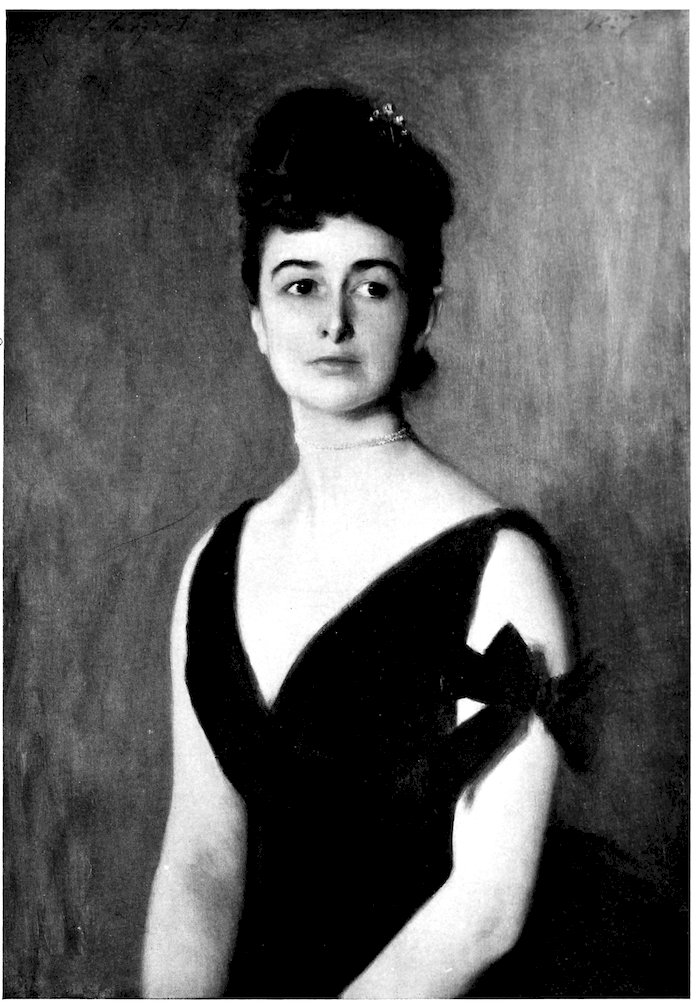
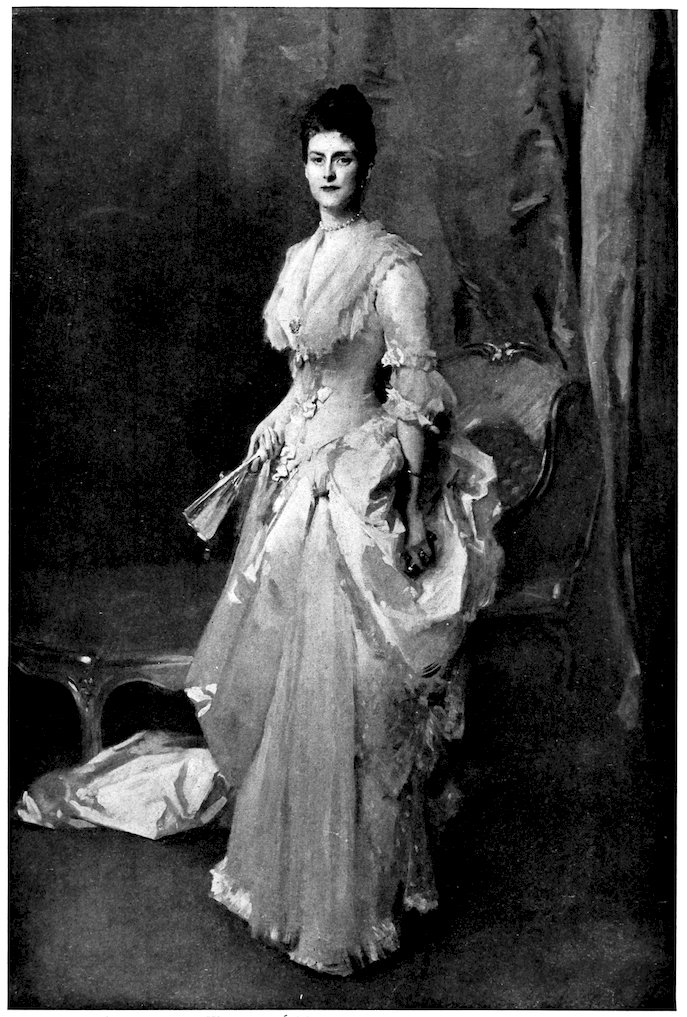
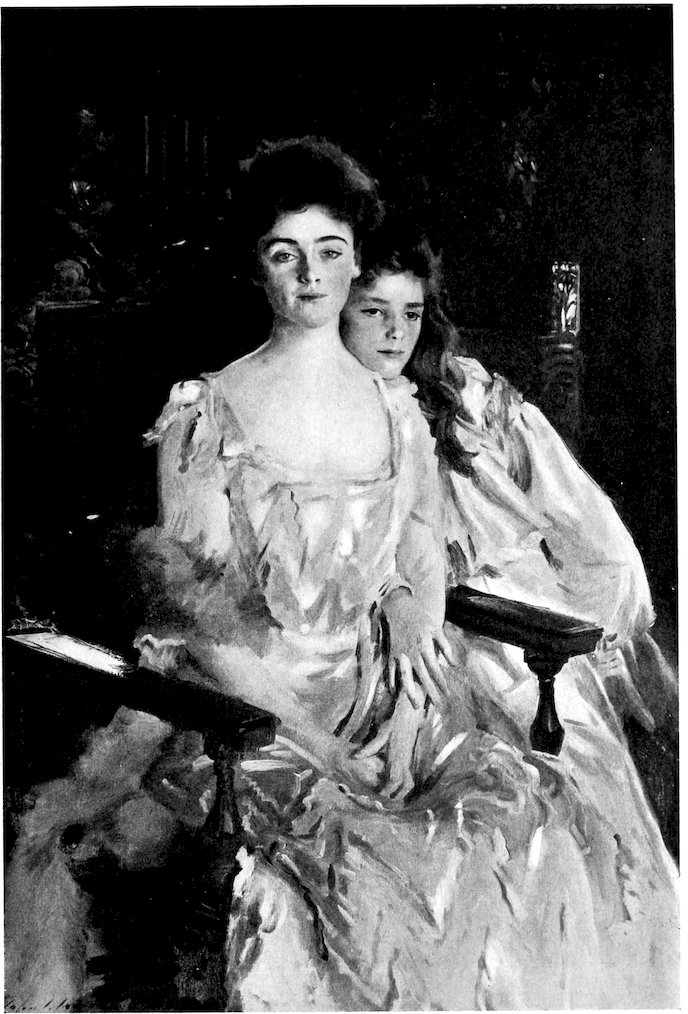
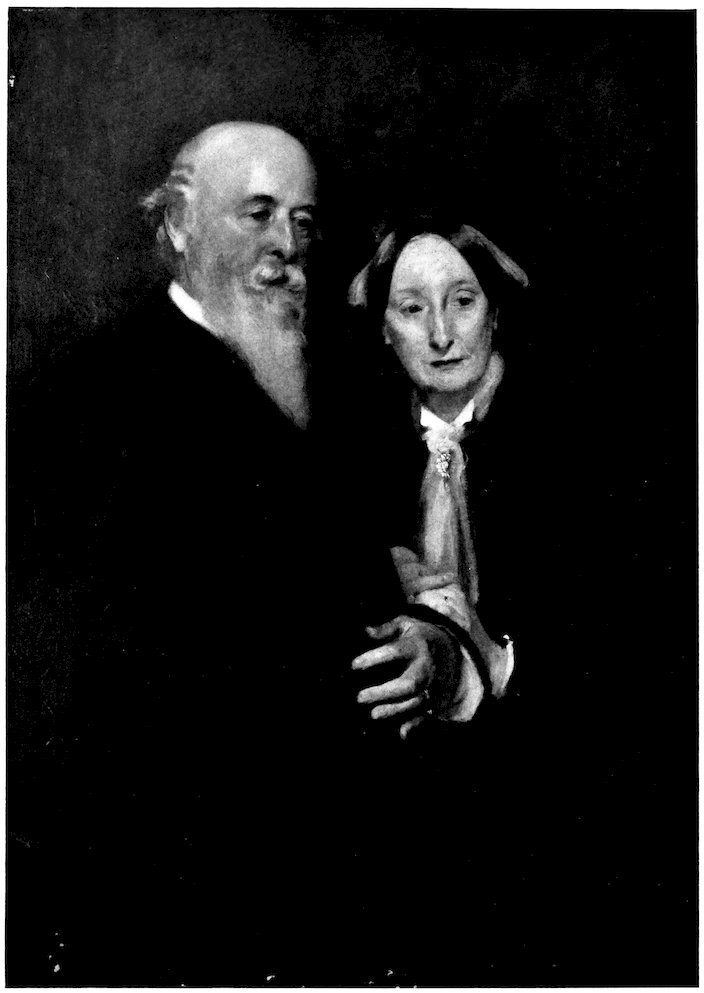
RETROSPECTIVE EXHIBITION OF IMPORTANT WORKS of John Singer Sargent FEBRUARY 23RD to MARCH 22ND 1924
Transcriber’s Note:
The cover image was created by the transcriber and is placed in the public domain.
Copyright 1924 by Painters and Sculptors Gallery Association, Inc. All rights reserved for all countries. :: Printed in the United States of America. :: :: Photographs by Peter A. Juley & Son
GRAND CENTRAL ART GALLERIES — TRUSTEES — OFFICERS
| President | Walter L. Clark |
| Vice President | Robert W. DeForest |
| Secretary and Treasurer | Walter S. Gifford |
FOREWORD
The Painters and Sculptors Association is a non-profit-bearing organization established solely to further interest in American Art, and to increase the sales of the work of the living American Painter and Sculptor. The Association is one of contributing artist members and subscribing lay-members, numbering about one hundred and fifty each. This membership is not local; the artists are from various regions extending from coast to coast, while the lay-group is composed of those interested in Art in all of the larger cities of the United States, and including Presidents and Vice-Presidents of ten of the great Museums, together with many officers and directors of these Institutions. There are representatives from New York, Boston, Philadelphia, Brooklyn, Rochester, Buffalo, Washington, D. C., Baltimore, Norfolk, Atlanta, Montclair, Newark, Cleveland, Canton, Dayton, Akron, Aurora, Chicago, Moline, Rockford, Joliet, Detroit, Milwaukee, Minneapolis, St. Louis, Kansas City, Denver, Los Angeles and San Francisco. This makes of the Painters and Sculptors Association a national organization in its extent and far-reaching in its interest. This makes it a clearing house and not merely a local sales place.
According to the plan of the organization of the Painters and Sculptors Association, each of the lay-members has pledged an annual subscription of six-hundred dollars for three years, thus providing for that period a subsidy. Each of the artist members presents to the association, as his membership fee, one of his works a year, for three years, this period having been agreed upon as a proper duration to test the practicability of the plan. At the end of the year each of the lay-members has the privilege of receiving one of the works of the Artist members.
Delano and Aldrich, architects, have designed and planned the Galleries, numbering at present fourteen. The galleries as they are now open to the public constitute the largest and handsomest salesrooms in either Europe or America, and there is no other place where the work of so many American artists can be seen or where the exhibit can constantly rotate and yet maintain its high standard of excellence. In the eleven months during which they have operated they have been visited by over 110,000 people. In this time it has been demonstrated conclusively that a sales place may partake of the excellence of standard, the beauty of installation, the atmosphere, the character, and the dignity of a modern museum and yet impart quite another form of message. Ownership, and the joy of possession, are the elements in the psychology of the Painters and Sculptors Association.
The Association is under the direction of seven men who are nationally known as business executives, and who contribute their time and experience absolutely without remuneration.
The sales during the past months have been most encouraging. A number of portrait commissions have been placed, while important paintings and bronzes were installed in leading museums.
The First Annual Exhibition, and several of the series of one-man exhibitions have been given and will be followed by more. Several out-of-town exhibitions have been held, when the number of sales was most flattering. Pictures were assembled and shipped from this gallery to Rome. Assistance was rendered the National Academy of Design, the Corcoran Biennial, and the Pennsylvania Academy of Fine Arts, The Art Institute of Chicago, and The Carnegie Institute at Pittsburgh in their exhibitions this season.
LAY MEMBERS — NEW YORK CITY — CHICAGO, ILL. — BOSTON, MASS. — NEWARK, N. J. — MONTCLAIR, N. J. — PHILADELPHIA, PA. — HAZELTON, PA. — ST. LOUIS, MO. — AURORA, ILLINOIS — WASHINGTON, D. C. — NASHVILLE, TENN. — INDIANAPOLIS, IND. — ROCKFORD, ILLINOIS — AKRON, OHIO — MILLBROOK, N. Y. — MINNEAPOLIS, MINN. — JOLIET, ILLINOIS — BUFFALO, N. Y. — KEWANEE, ILLINOIS — KANSAS CITY, MO. — NORFOLK, VIRGINIA — LOS ANGELES, CALIFORNIA — DUBUQUE, IOWA — PITTSBURGH, PA. — CLEVELAND, OHIO — DETROIT, MICHIGAN — ROCHESTER, N. Y. — MILWAUKEE, WISC. — DAYTON, OHIO — BALTIMORE, MD. — DULUTH, MINN. — CANTON, OHIO — ATLANTA, GEORGIA — DENVER, COLORADO — SAN FRANCISCO, CALIF. — MOLINE, ILLINOIS — ST. PAUL, MINN. — TOLEDO, OHIO — STOCKHOLM, SWEDEN — BROOKLYN, N. Y. — WHIDBY ISLAND, WASHINGTON
PAINTER MEMBERS
SCULPTOR MEMBERS
An Appreciation
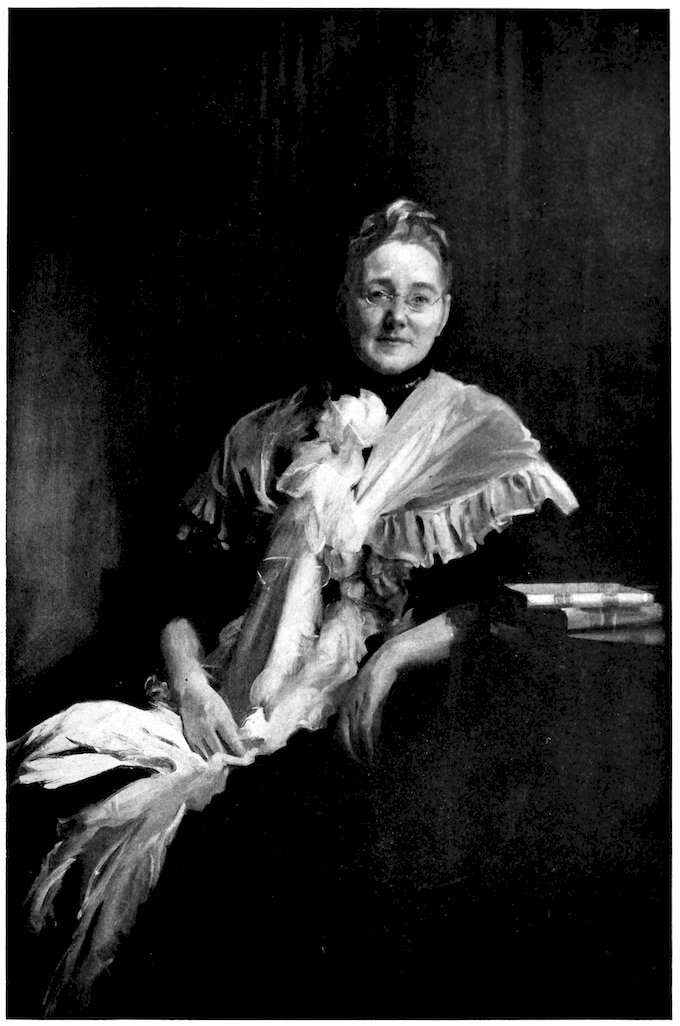
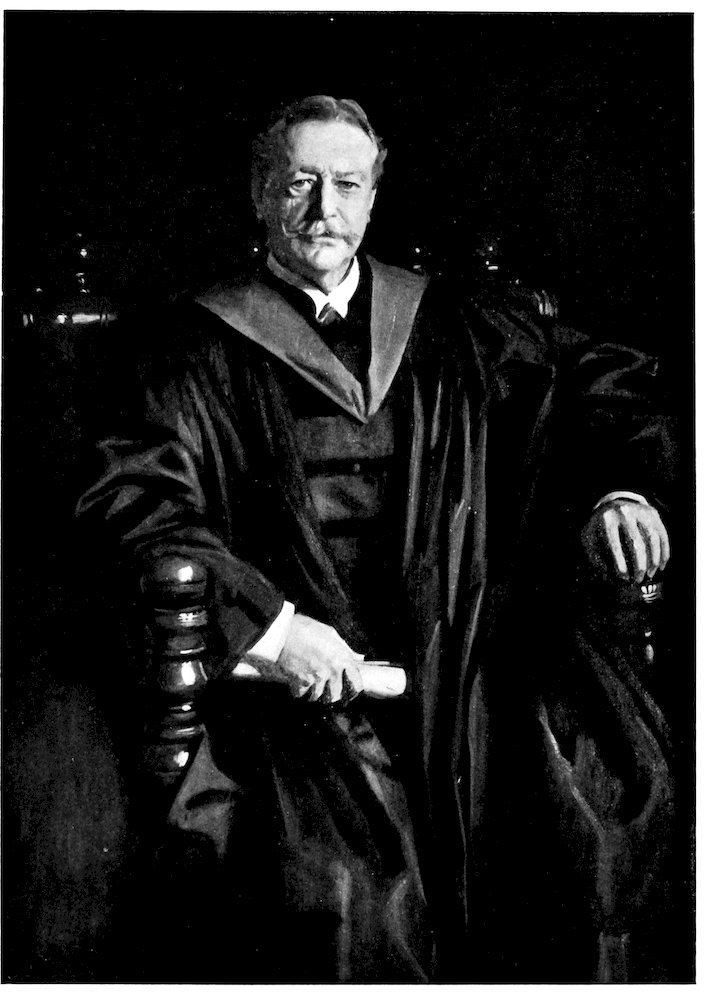
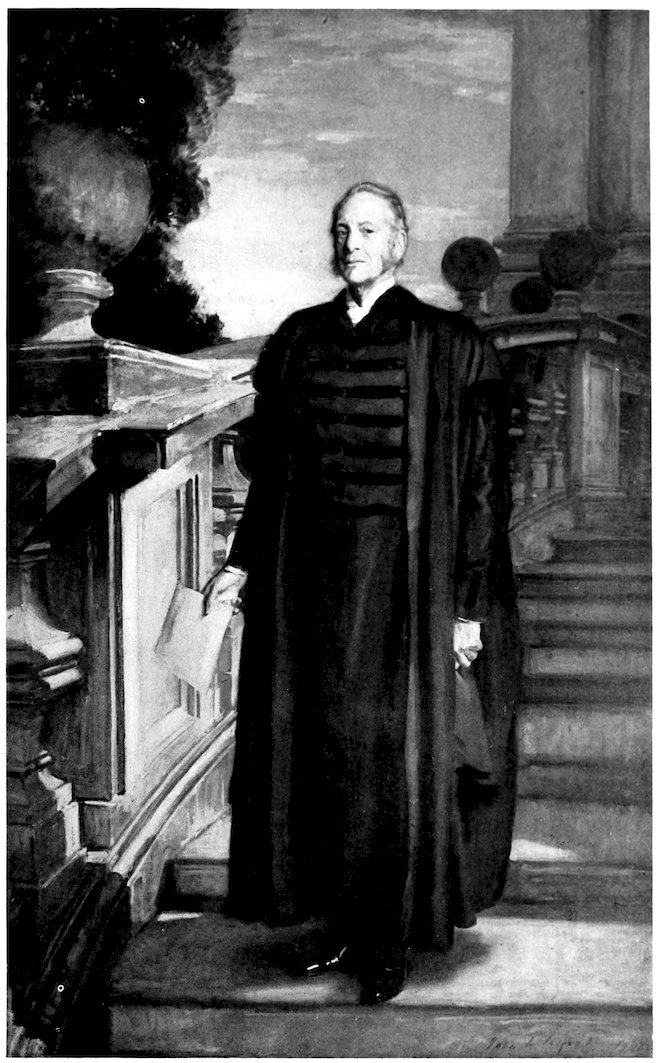
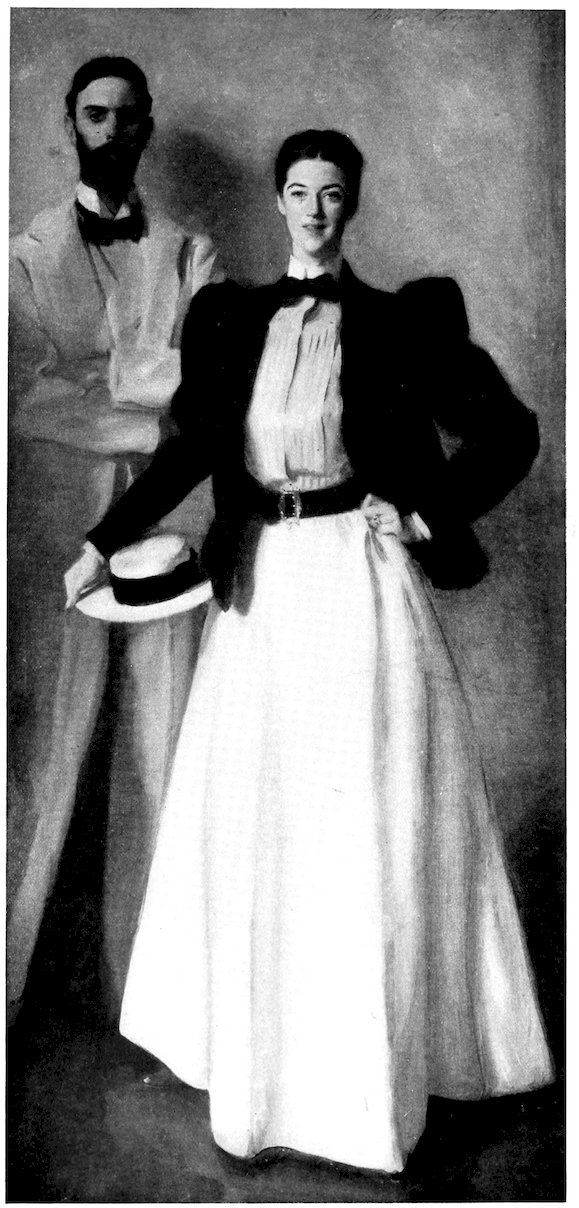
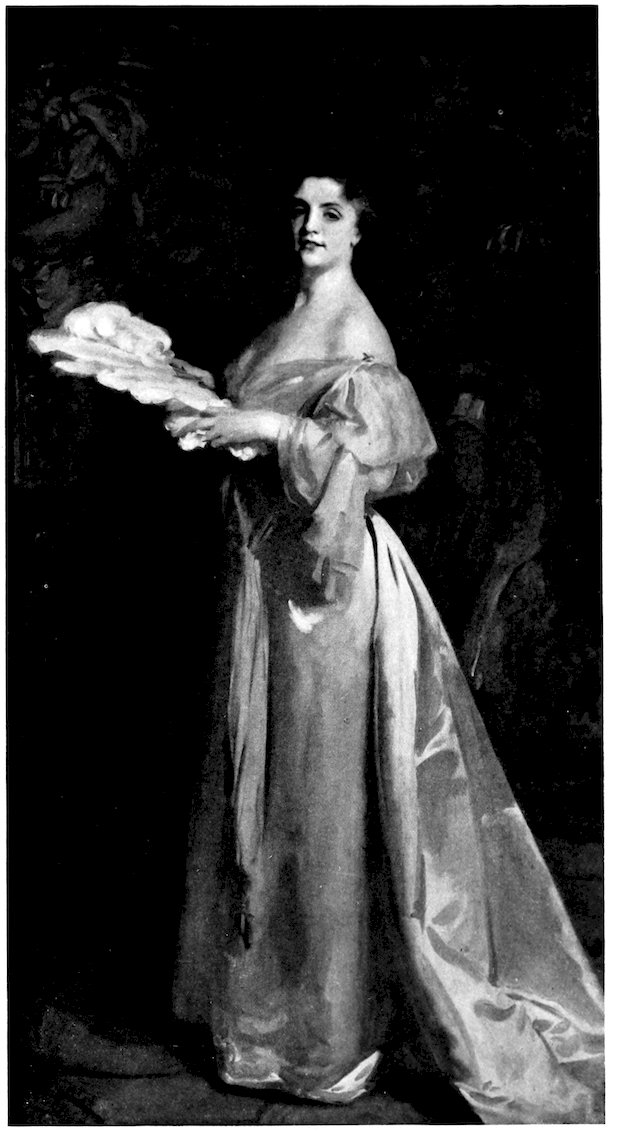
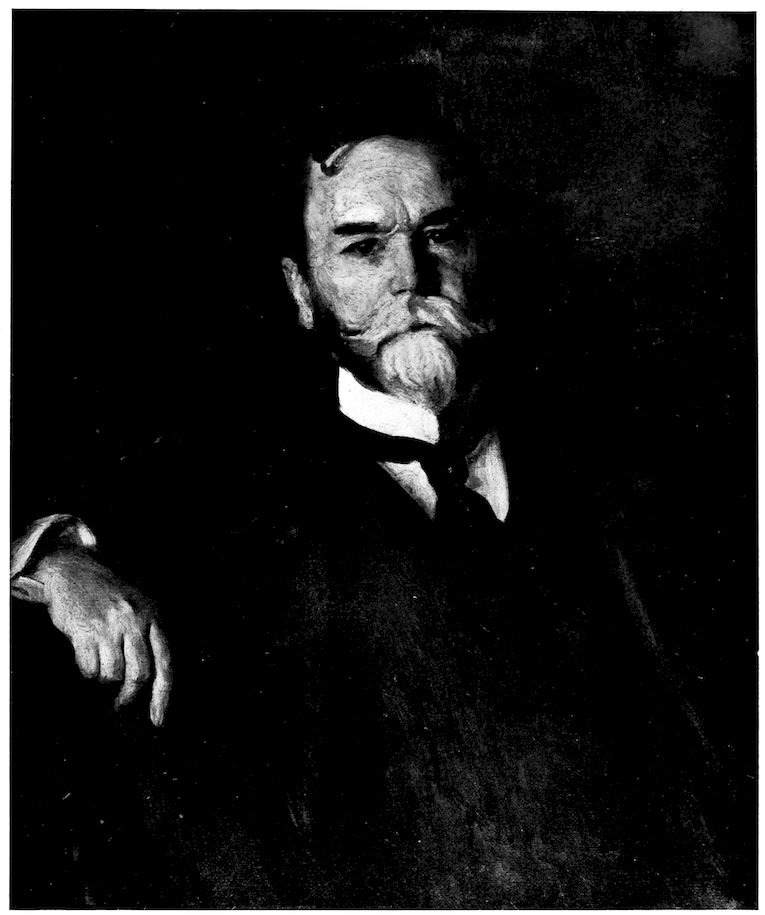
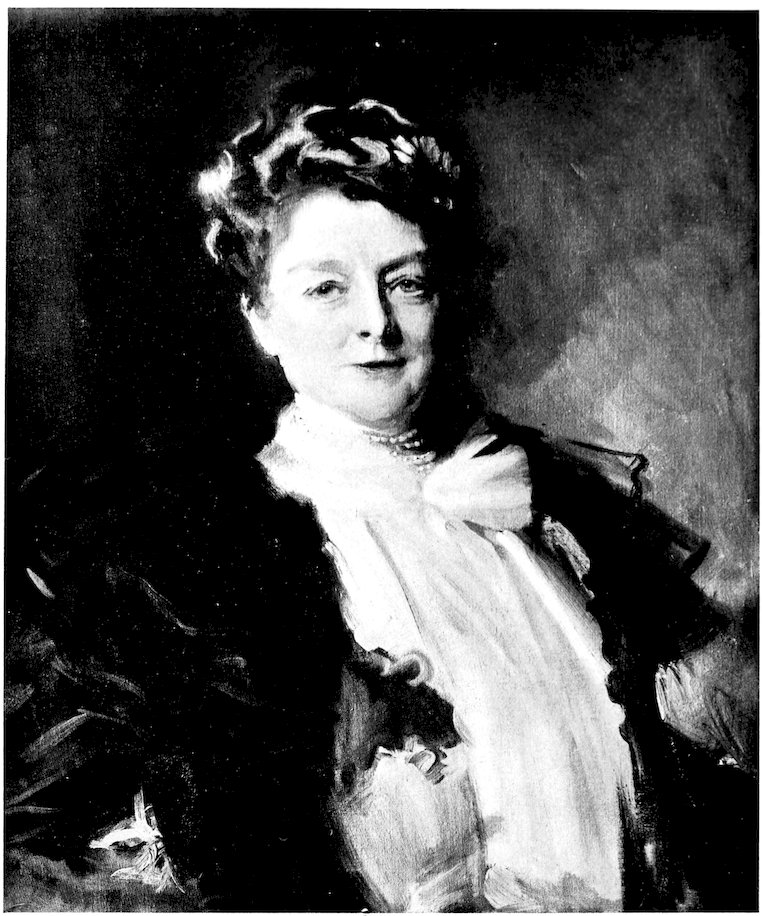
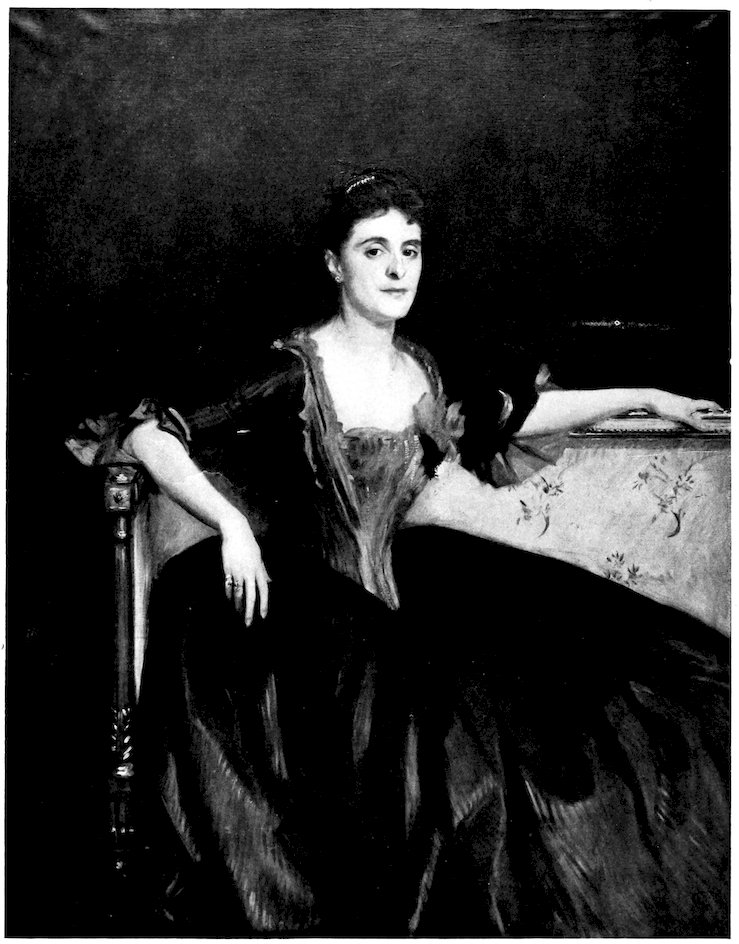
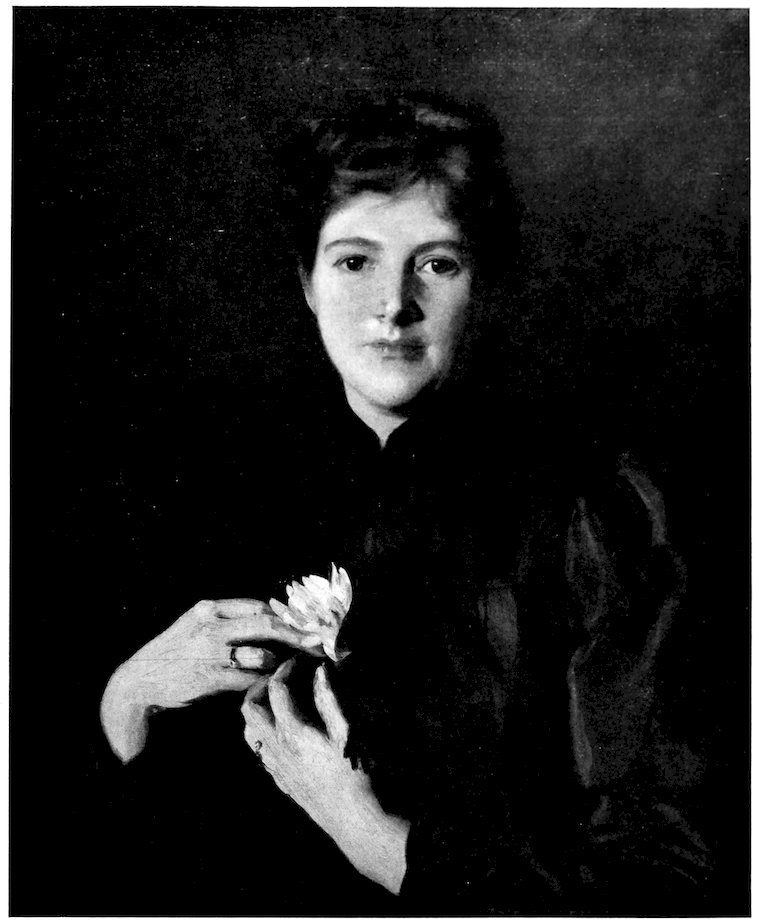
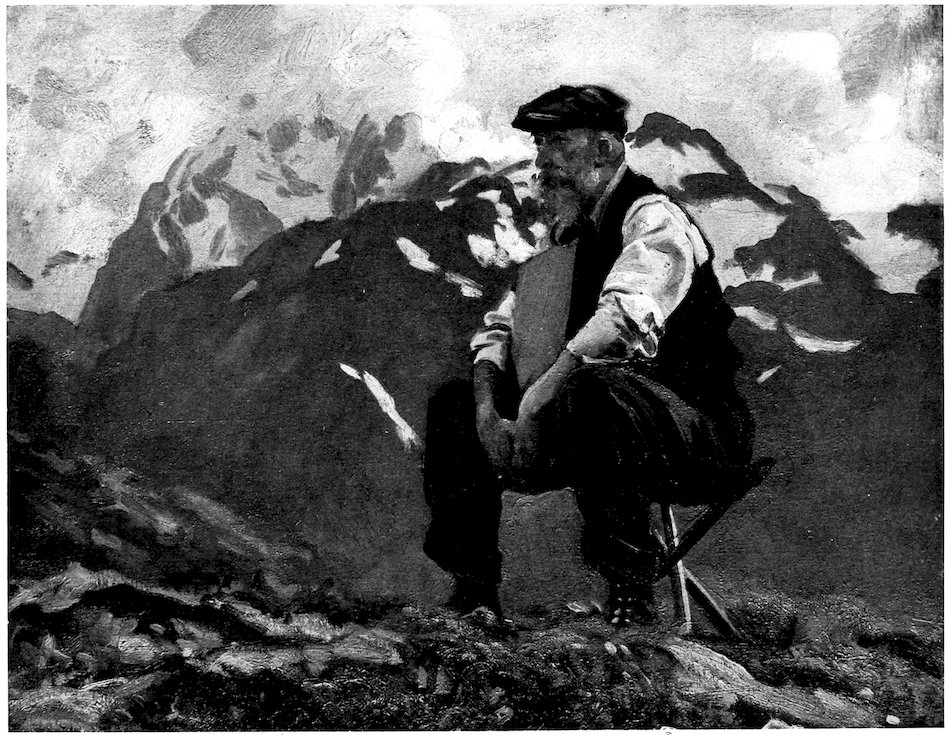
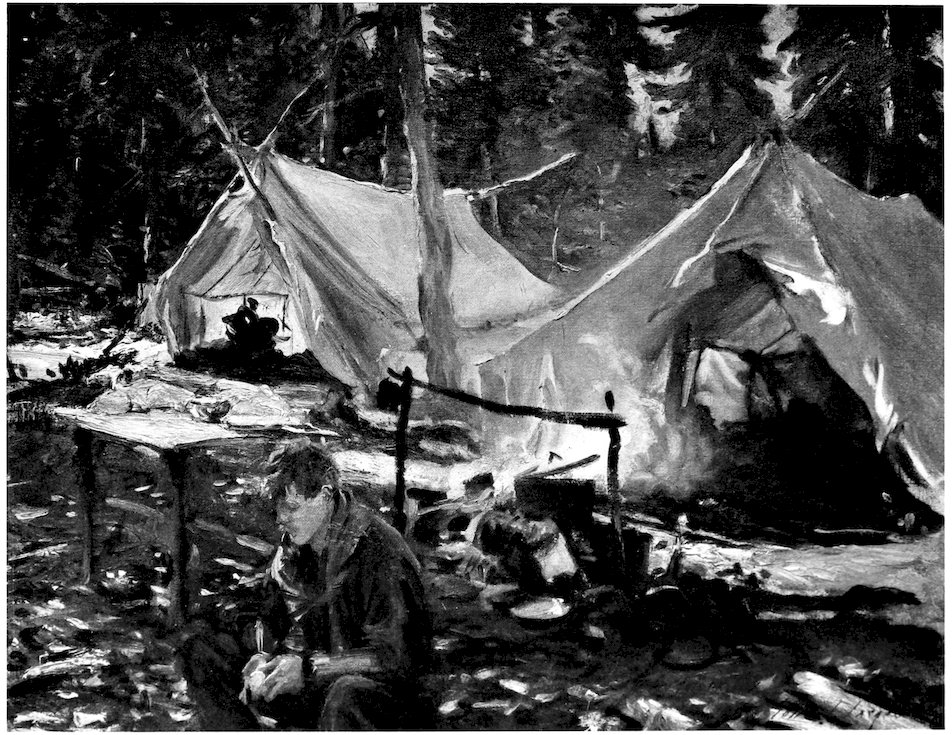
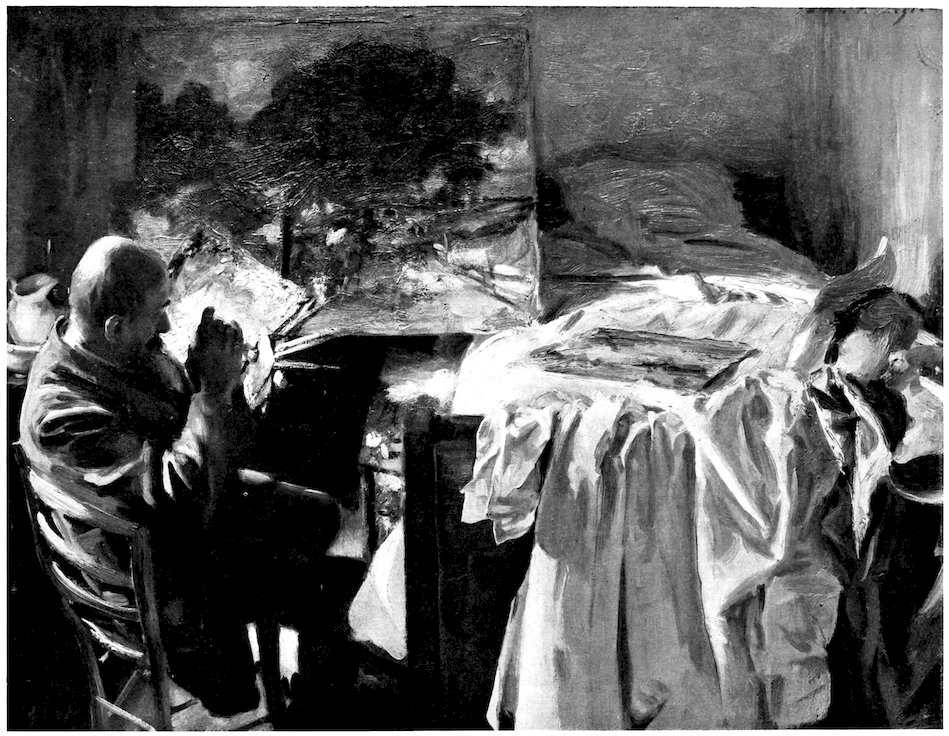
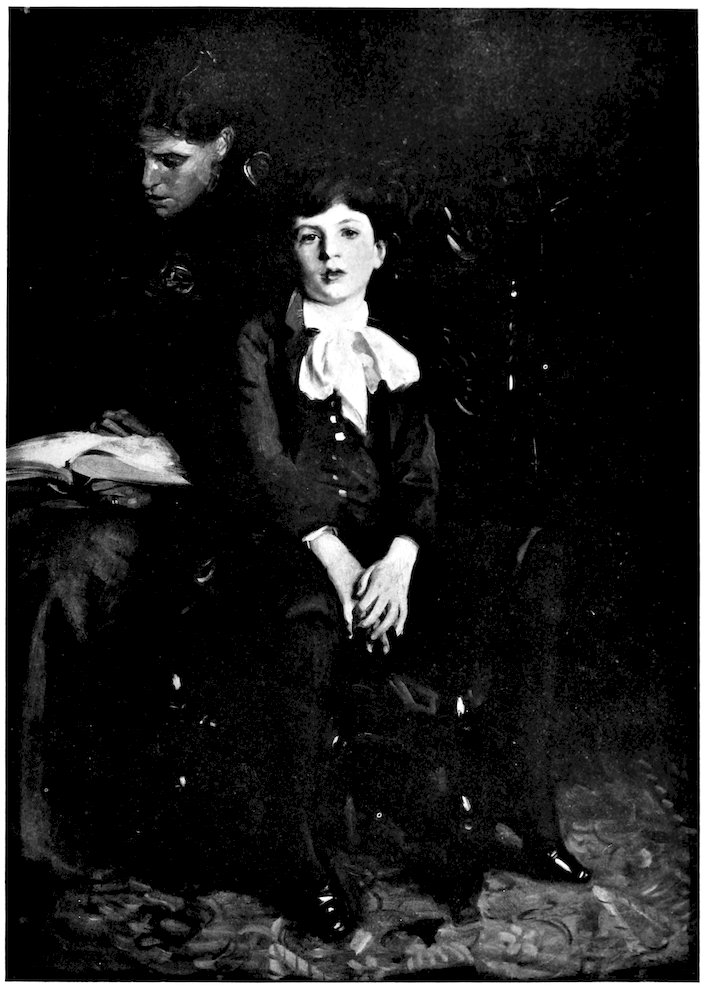
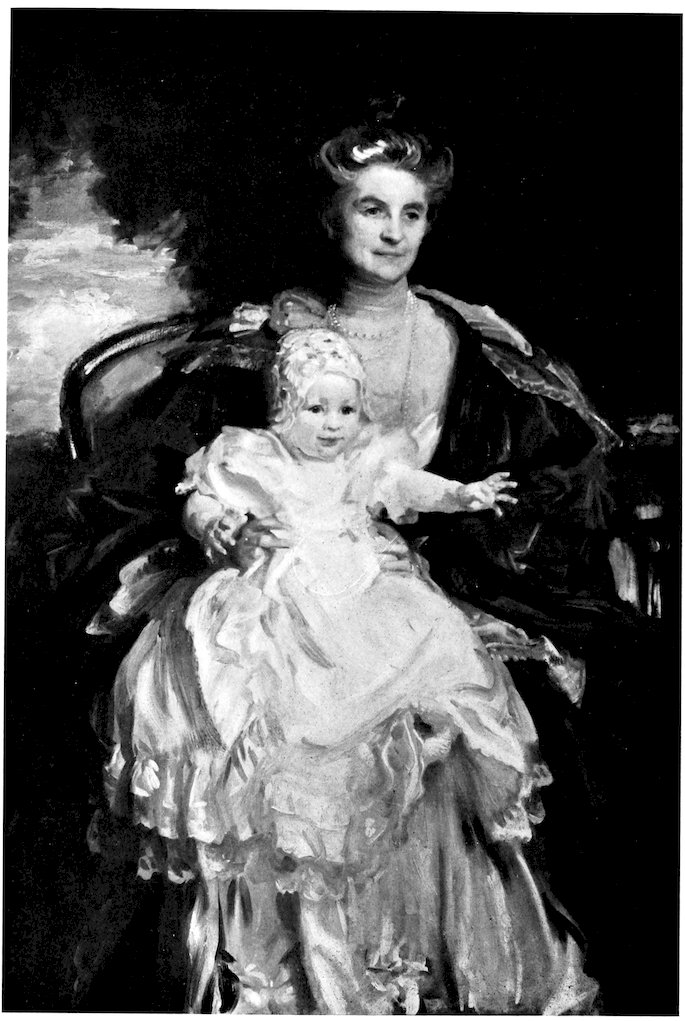
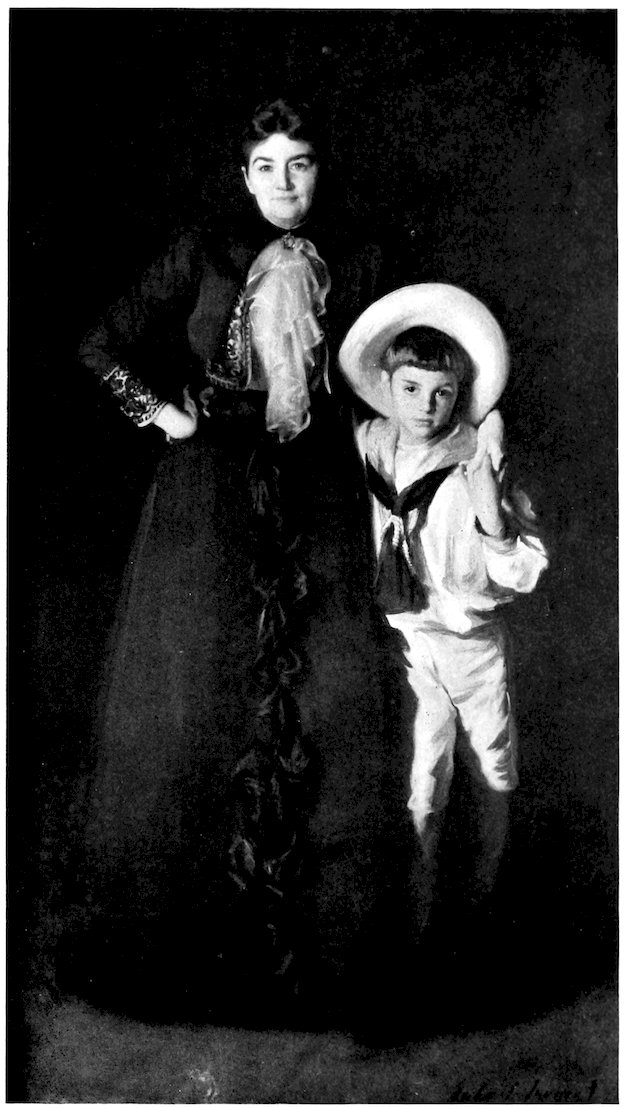
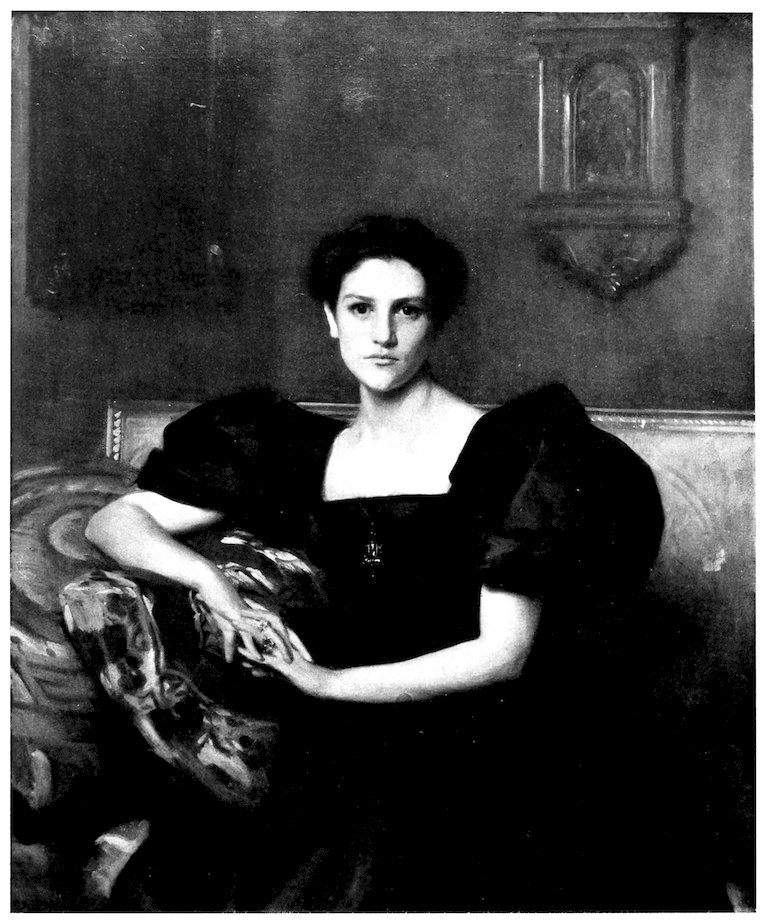
An Exhibition of the works of Mr. John Sargent is the most important event of the kind that could at this moment happen anywhere, as he is the foremost living painter in the world. So far as one can judge the work of a contemporary, one is justified in predicting immortality for these compositions. Sargent belongs among the great portrait painters of all time, his pictures revealing the mysterious but unmistakable stamp of genius. In fact, everything he does shows this quality, which makes his painting the envy of competitors, and the pride and glory of American art. He has no successful living rival, but is in a class by himself. So true is this, that if I were asked to name the greatest living American, I should unhesitatingly name John Singer Sargent.
This Exhibition is for the benefit of the Endowment Fund of the Painters and Sculptors Gallery Association, with which Mr. Sargent has from the beginning been in active cooperation.
“ Masters of American Paintings ”
“John Singer Sargent has been a favored child of the Muses, and early reached a maturity for which others have to labour long and in the face of disappointments. He, however, has never had anything to unlearn. From the first he came under the influence of taste and style, the qualities which to this day distinguish his work.... With a facility that was partly a natural gift, partly the result of a steady acceptance of the problems presented, he proceeded to absorb his master—Carolus-Duran. Sargent absorbed his breadth of picturesque style, his refined pictorial sense, his sound and scientific method, not devoid of certain tricks of illusion and his piquant and persuasive modernity.... Later, Sargent visited Madrid, and came under the direct spell of Velasquez. The grand line he had learned while a boy, and from Carolus the seeing of colour as coloured light, the modelling in planes, the mysteries of sharp and vanishing outlines appearing and reappearing under the natural action of light, a realism of observation at once brilliant and refined, large and penetrating. Finally, from all these influences, Sargent has fashioned a method of his own.
“How shall one describe the method? It reveals the alertness and versatility of the American temperament. Nothing escapes his observation, up to a certain point at least; he is never tired of a fresh experiment; never repeats his compositions and schemes of colour, nor shows perfunctoriness or weariness of brush. In all his work there is a vivid meaningfulness; in his portraits, especially, an amazing suggestion of actuality. On the other hand, his virtuosity is largely French, reaching a perfection of assurance that the quick witted American is, for the most part, in too great a hurry to acquire; a patient perfection, not reliant upon mere impression or force of temperament. In the abounding resourcefulness of his method there is a mingling of audacity and conscientiousness; a facility so complete that the acts of perception and of execution seem identical, and an honesty that does not shrink from admitting that such and such a point was unattainable by him, or that to have obtained it would have disturbed the balance of the whole. Yet, this virtuosity, though it is French in character, is free of the French manner, as indeed of any mannerism. This skill of hand is at the service of a brilliant pictorial sense. Like a true painter, he sees a picture in everything he studies. It gives to each of his canvases a distinct aesthetic charm; grandiose in some, ravishingly elegant in others, delicately quaint in a few, but all of them variously characterized by grandeur of line, suppleness of arrangement, and fascinating surprise of detail; used with extraordinary originality, but always conformable to an instinctive sense of balance and rhythm.
“Sargent is not of the world in which he plays so conspicuous a part, but preserves an aloofness from it and studies it with the collectedness of an onlooker interested in the moving show and in its general trends of motive, but with an individual sympathy only occasionally elicited. Sargent has his grip upon the actual, and while in relation to the world and people about him he is almost a recluse, he has delighted his imagination with the seemings and shows of things and with their material significance.”
Modern Artists
“Beyond all question Sargent is the most conspicuous of living portrait painters. Before his eyes pass in continuous procession the world of art, science, and letters, the world financial, diplomatic, or military, and the world frankly social. To-day comes a savant, a captain of industry, or a slender, troubled child. Tomorrow it will be an insinuating Semetic Plutus; next week may bring some fresh-tinted Diana, radiant with vernal bloom. Everyone from poet to general, from duchess to dark-eyed dancer, finds place in this shifting throng....
“With the entrance of Sargent into the arena of art cherished conventions disappear in sorry discomfiture. With a dignity and a technical mastery which compel both respect and enthusiasm he tramples upon tradition whenever tradition stands in his way. It is useless to scan these canvases in the hope of finding various qualities which for centuries have been deemed the touchstone of portraiture. Contemplation and reflection are by no means the rule. That adjustment of diverse elements which makes for balanced composition is often lacking. That endearing love of tone for its own sake is frequently absent. The vigorous outline of Holbein, the rich sobriety of Titian, or the permeating magic of Leonardo find but faint echo in the work of this modern innovator. With almost disdainful independence he has declined to repeat the triumphs of the great forerunners. In place of their ideals he has substituted ideals which are resolutely his own. However you may regard his contribution, it is impossible not to recognize its insistent novelty. Once in possession of the underlying facts, there should be no trouble in reading aright the salient, positive art, this art which by turns persuades and repels. Yet one cannot divine just why these high-bred women are so animated, or why the soldiers and statesmen are so emphatic, without first peering beneath the exterior. Though Sargent may himself remain dexterously on the surface, the spectator cannot. It is not enough to watch this conjurer perform his trick; we must see how it is accomplished.
“So dazzled has the majority been by what is called the man’s cosmopolitanism that the real racial basis of his nature has been over-looked.... Sargent is American in his fundamental instincts. His adaptability and his very lack of marked bias bespeak the native complexity of his origin. It cannot for a moment be maintained that the French paint themselves as Sargent paints them, or the English either. His art is neither Gallic nor British, it is American, and the chief reason why it is so different from most Anglo-Saxon art is because it is so superior, not because it is unAmerican. In any case the sense of motion remains Sargent’s personal conquest, possibly, even, his chief contribution to portraiture.
“In Sargent’s portraits women are in the act of starting from their chairs and men are on the very point of speaking. Here is a dancer whose yellow skirt still swirls in elastic convolutions; there stands a painter lunging at the canvas with sensitively poised brush. All is restless, vivid, spontaneous. One and all these creatures vibrate with the nervous tension of the age. Other artists have given calm, or momentarily arrested motion. Sargent gives motion itself. With a technique facile as it is assertive this magician of the palette, this paganini of portraiture, has lured us into a new world, a world which we ourselves know well—perhaps too well—but a world hitherto undiscovered by painting.”