The sea islands of South Carolina and
Georgia are grouped in a nearly continuous
chain along the coast, between the
mainland and the sea. They are flat, with
only a few slight elevations here and there;
and there is not, over their whole area, a
single boulder, pebble, or gravel bed, nor any
spot where the ledge rock comes to the surface.
The soil at first seems to be sandy;
but you soon discover that it has mingled
with it a fine black loam and is extremely
productive. It yields the "sea-island cotton,"
a variety of long fibre, formerly much
valued for certain purposes of textile manufacture.
There is no sod or turf, like that
of the Northern states, but the fields not
under cultivation produce a tall thin grass,
which is soon trampled out of existence by
passing wagons or by soldiers on the march.
In the clearings are the live oak and the
great magnolia, both evergreen. The palmetto
is also a conspicuous object, and the
dwarf palmetto grows abundantly under the
shadow of the pine woods. Everywhere there
is a large proportion of hard-wood shrubs
and trees with polished, waxy-looking, evergreen
leaves.
There are many extensive plantations,
where the owners often remain during a
large part of the year. Their houses are
not grouped in villages, but scattered at a
considerable distance apart, each on its own
plantation, with the negro cabins usually in
long lines at the rear or on one side. The
roads from one plantation to another run
through the pine woods, or over the plains,
bordered on each side by cotton or corn fields,
and marking the only division between them.
There is seldom to be seen such a thing as
a rail fence, and of course never a stone wall.
Hilton Head, where we were now encamped,
was one of the largest of these islands.
It was twelve miles long, in a general
east and west direction, and about five
miles in extreme width, north and south. At
its Port Royal end, the sand bluffs rose to the
height of eight or ten feet above the beach,
giving the name of "head" more especially
to this part of the island; elsewhere they
were generally much lower. Along its sea-front
there was a magnificent beach, ten
miles long, broken only at one place by a
creek fordable at half tide. At frequent
intervals on this route there were marks of
the slow encroachment of the sea upon the
land. Often you would come upon the
white, dry stump of a dead pine, standing
up high above the beach on the ends of its
sprawling roots, like so many corpulent
spider legs. Once it grew on the low bluffs
above high-water mark, as its descendants
are doing now. But the sea gradually undermined
its roots and washed out the soil
from between them, till it gave up the ghost
for want of nourishment, and in time came
to be stranded here, half-way down the
beach. It looked as if the tree had moved
down from the bluffs toward the water,
though in reality the beach had moved up
past the tree. The same thing was going
on all along the coast in this region. There
were trees on the very edge of the bluff,
with their roots toward the sea exposed and
bare, but with enough still buried in the
soil on the land side to hold the trunk upright
and give it sap; while here and there
was one already losing its grip and slowly
bending over toward the sea. When it has
nothing more to rest on than the sands of
the beach, its branches and trunk decay, but
its roots and stump remain for many years
whitening in the sun, like a skeleton on the
plains.
The chain of islands from Port Royal
toward Charleston harbor included Parry,
Saint Helena, Edisto, John's and James
islands; in the opposite direction, toward
the Savannah river, Daufuskie, Turtle, and
Jones' islands. Inside these were other
smaller islands, the whole separated from
each other and from the mainland by sounds
and creeks, sometimes broad but oftener
narrow and tortuous, through which small
steamers could find an inside passage from
Charleston to Savannah. This communication
was of course cut off when our troops
occupied Port Royal.
At Hilton Head I first made the acquaintance
of the southern plantation negro.
Every white inhabitant had disappeared, leaving
the slaves alone in possession. Their
inferior appearance, habits, and qualities, their
curious lingo and strange pronunciation were
in amusing contrast with those of the blacks
and mulattoes we had seen at the north.
When I met one of them near the Jones
plantation and asked him whether he belonged
there, his answer was this: "No
mawse, I no bene blahnx mawse Jones, I
bene blahnx mawse Elliot." Not having any
idea what he meant, I repeated the phrase
to General Viele, who had some familiarity
with the southern negro, and who gave me
the interpretation as follows: "No master,
I did not belong to master Jones, I belonged
to master Elliot." Mr. Elliot was
the owner of another plantation near by.
Soon after we took possession of Hilton
Head, negroes began to come in from the
neighboring islands, seeking shelter and
food. They generally appeared to rate themselves
at the value set upon them by their
former masters. One morning a young
black, of the deepest dye and most cheerful
expression of countenance, presented himself
at brigade headquarters, and on being
asked whether any others had arrived with
him, he said with a delighted grin: "Yes,
mawse, more 'n two hundred head o' nigger
come ober las' night." Most of the
field hands were of this description. But on
each plantation there was usually one man
noticeably superior to the rest in manner and
language. He was generally the leader in
their religious exercises, and had the gift
of the gab to no small degree; though his
uncontrollable propensity to the use of long
words and incongruous expressions often
gave a ludicrous turn to the effect of his
eloquence.
But whatever their grade of capacity or
intelligence, the negroes agreed in one thing.
They were well satisfied to live on the plantations,
without control of their former owners,
so long as the crops of the present season
would supply them with food. Their liberation
they knew was owing to the success
of the Union troops, and they showed a
much more intelligent comprehension of the
causes and probable results of the war than
they had been supposed to possess. But as
for doing anything themselves to help it on,
that did not appear to form part of their
calculations. They would work for their
rations when destitute, would obey when
commanded as they had been accustomed,
and they would aid the Union cause whenever
they could do so in a passive sort of
way. But we soon found that we must not
look to them for anything like energetic or
spontaneous action. This seemed a strange
indifference to a contest involving the freedom
or servitude of their race, and no doubt
accounted for much of the aversion afterward
felt by our troops to the project of
transforming some of them into soldiers.
But if we had remembered where the
negroes came from, perhaps we should not
have been so much surprised. Their ancestors
had been brought to this country from
the coast of Africa by slave-traders who had
bought them there. They were slaves already,
when they were taken on board ship.
They had been captured in war, or seized by
native marauders, who took them for the purpose
of reducing them to slavery and selling
them for profit. They were consequently
from the least capable and least enterprising
of the negro tribes in Africa; and their descendants
in this country were of the same
grade. If they could not resist being made
slaves by other negroes, how could they be
expected to take part in a war between
whites, even to recover their own freedom?
Of course there were exceptions to this.
In the month of May following, a boat's
crew brought away from Charleston harbor
the barge of the Confederate General Ripley,
and escaped with it to the naval vessels outside;
and not long afterward the negro
pilot, Robert Smalls, and his companions ran
the gauntlet of the forts in the night-time
with the steam-tug Planter, and delivered
her safely to the blockading fleet. But these
were rare instances, and nothing of the kind
happened at Hilton Head.
What the sea-island negroes appeared to
excel in more than anything else was handling
an oar, which they did in a way quite
their own. In their long, narrow "dug-outs,"
hollowed from the trunk of a Georgia
pine, each man pulling his oar in unison
with the rest, they would send the primitive
craft through the water with no little velocity.
In lifting and recovering the oar they
had a peculiar twist of the hand and elbow
that no white man could imitate; and their
strange sounding boat songs seemed to give
every moment a fresh impulse to the stroke.
These songs had no resemblance to the half-humorous,
half-sentimental "plantation melodies"
known to theatre-goers at the north.
They were more like religious rhapsodies in
verse. At least, they had many words and
phrases of a religious character; but mingled
together, in a kind of incoherent chant,
with many others of different significance, or
even none at all. It was not its meaning
that gave value to the song; it was its sound
and cadence. Sometimes the verse would
open with a few words of extempore variation
by the leader, and then the other voices
would strike in with the remaining lines
as usual. Oftener than not, the song was a
fugue, every one of the half dozen boatmen
catching up his part at the right second,
and chiming in all the louder and lustier
for having kept still beforehand. Once in a
while the passenger would be startled at seeing
an oarsman suddenly strike the one in
front of him a smacking blow between the
shoulders, at the same time injecting into
the melody a short improvised yell, by way
of stimulus and encouragement. Altogether,
I have seldom witnessed a more entertaining
performance than one of these semi-barbarous
vocal concerts in a South Carolina
dug-out.
Our brigade camp was in a large cotton-field
lying across the road to the northwest.
At the time of our arrival it was covered
with tall, scraggy bushes, their white balls
still ungathered; and for a night or two we
bivouacked in the deep furrows between
them. But they were soon removed and the
surface quickly trampled down into a serviceable
parade ground, with the regimental
camps extending along one side. Brigade
headquarters were in advance of the parade
ground, opposite the right of the line. At
one end was the general's tent, fronting
upon an oblong space, enclosed on its two
sides by the tents of the staff officers, orderlies,
and employees. Within the enclosed
space was a single live-oak, under which we
gathered in the evening round a fire, to
smoke our pipes and talk over arrivals, reconnoissances,
or projected expeditions.
For some weeks pork and hard-bread
were an important part of our fare. Our
private stores from the Oriental were soon
exhausted, and much of the commissary
supplies on the transport fleet had been
lost or damaged on the voyage down. Foraging
on the plantations did something;
and the general even secured a cow, which
he stabled alongside our camp. But she
was of very unprepossessing appearance.
Her only fodder was dry cornstalks; and
the milk she gave, in the opinion of most,
was worse than none at all. The same verdict
was rendered, after trial, on the native
beef. The most successful venture of this
kind was a young kid, secured in a day's
tramp, which I butchered and dressed myself,
as being the only one of the staff entitled
to rank as sawbones. After a time supply
ships and sutler schooners reached Port
Royal, and our days of short commons were
over.
But the most gratifying arrival was that
of our horses. They had been shipped with
many others, at the starting of the expedition,
on the steamer Belvidere, which
was among the missing when the fleet reassembled
at Port Royal; and hearing nothing
of her, we had given her up for lost.
In reality she had been very roughly handled
in the gale, and many of the animals cast
loose, trampled on and thrown overboard;
but she had managed to keep afloat and
make her way back to Fortress Monroe.
Here, after some delay, the remainder of
the live stock was reshipped and sent down
to Port Royal on another steamer. Fortunately
our own horses were among the survivors.
The process of getting them on shore was
something of a novelty. The ship could
hardly approach nearer than a quarter of a
mile from the beach; so they had to be
dumped into the sea and make a landing
for themselves. The way it was done
was this. A gangway was opened in the
ship's bulwarks, on the side away from
shore; and a gang-plank with cross cleats
laid over the deck to the opening. The
animal was then placed at one end, prepared
to "walk the plank" like a pirate's prisoner.
As he would never do this of himself if he
knew what was coming, he is half persuaded
into it and half forced. One man starts him
with a little gentle solicitation by the head-stall.
At the same time two strong fellows
clasp hands behind him, just above the hocks,
and as he steps forward they follow him
with increasing pressure toward the gangway;
so that by the time he comes in sight
of the awful void beyond, his motion is too
rapid for effectual resistance and over he
goes with a final splash.
Most horses, on coming to the surface,
after a short reconnoissance make straight for
the shore, where they are taken in hand by
men waiting for them. But some lose their
heads and swim away in the wrong direction,
so that they must be followed by boats
and captured or turned back; and a few
will persist in getting upon some marshy
island or mud flat, where they flounder
about until rescued with no little trouble
and difficulty. So we took the precaution,
for our own horses, to have a boat in waiting
alongside the ship, with a long halter
shank attached to the head-stall, by which
they could be guided to a safe landing.
On first coming up from his involuntary
plunge bath, the animal's expression is one
of unbounded astonishment and indignation
at the outrage; but he soon follows willingly
in the boat's wake, and, once on shore,
is quite contented to find himself again in
friendly hands.
Every one in a brigade camp thinks his
own horse the best of the lot. He listens
kindly to the eulogies of his comrades on
their respective mounts, but with full persuasion
that every one of them would exchange
with him if he would allow it. My
own animal was a bay stallion, hardly more
than fifteen hands high and slab-sided as a
ghost; and the deep hollows over his eyeballs
proclaimed that his tenth birthday was
already past. But he had plenty of lightning
in his veins, and there must have been
royal blood in his pedigree, though it was a
stolen one. He would go over broken
bridges wherever there were timbers enough
for a foothold; and I have taken him out
on a flatboat to the middle of a wide creek
and then walked him up a gang-plank to the
deck of a steamer without his showing the
least hesitation. Notwithstanding his slender
build, his power of endurance was extreme,
and the oddities of his disposition
were an unending source of surprise and entertainment.
The next enterprise of the expeditionary
corps was the siege of Fort Pulaski, at
the mouth of the Savannah river. It was
a formidable casemated work, situated just
inside the entrance, and guarding the approach
from below to the city of Savannah.
It could not be successfully attacked by the
navy, owing to its size and strength and the
narrow limits of the river channel giving no
room for the evolutions of a fleet. The
only place where land batteries could be
planted against it was Tybee island, between
it and the sea, where there were but
slender facilities for such an operation.
The island was half sand and half marsh.
On its sea-front was a shelving beach, backed
by a low ridge with a few stunted pines and
bushes; and on the land side there was little
more than a wide stretch of trembling morass,
in full view of the fort and commanded
by its guns. Nevertheless Captain Gillmore
reported that the thing could be done; and
early in December the Forty-sixth regiment
was detached from our brigade and sent to
occupy Tybee island. The city of Savannah
was fifteen miles above the fort, on the
south side of the river.
The part assigned to General Viele was
to establish a blockade of the Savannah
river, between the city and the fort. In the
month of January we struck camp at Hilton
Head and moved southwest to the farther
end of Daufuskie, the last of the islands
in that direction suitable for occupation by
troops. From Hilton Head in direct line it
was only fifteen or sixteen miles; but by the
circuitous water route through Port Royal
harbor, Scull creek, Calibogue sound,
Cooper river, Ramshorn creek, and New
river, it was nearly twice that distance. In
its general features the island was similar to
Hilton Head. Our quarters were on a
slightly elevated point, overlooking the lowlands
and waterways toward the Savannah
river, which was about three miles away.
In that whole interval there was absolutely
nothing to break the uniform level of the
landscape. It was at Daufuskie and thereabout
that we came to know the singular
network of land and water communication
that marks the region. From the knoll in
front of our headquarters you might see,
some distance away, the masts and smokestack
of a gunboat apparently sailing along
through the meadows. Her spars and perhaps
her bulwarks might be visible, with
nothing to be seen around them but a wide
expanse of grass-covered flats. Go where
she was, and you would find her in a creek
hardly wide enough for her to turn in, but
with ample depth of water and straight vertical
sides of black mud, like an enormous
ditch. Passing through one of these creeks
in a row-boat at half tide, with nothing to
be seen on either hand above the brink, and
other channels opening into it every half
mile or so, all looking alike, it would be
the easiest thing in the world to get lost,
and almost impossible to find your way
again without a guide. Steamers of light
draft and not too great length could pass
through most of these channels at the proper
tide.
On one occasion, after going down to
Hilton Head for some business connected
with the medical department, I took passage
at my return on the steamer Winfield Scott,
carrying one of the regiments destined
for Daufuskie. She left Hilton Head at
an early hour, and in the forenoon reached
the sinuous channels northwest of Calibogue
sound. She was rather a large vessel to attempt
the passage, but with due care and a
flood tide the pilot hoped she might get
through. On coming to a bend in the creek
she would run her nose against the opposite
bank, then back a little and try again, turning
slowly meanwhile, edging round by
degrees and rubbing the mud off the banks,
bow and stern, till she was clear of the obstruction
and ready to go ahead again. At
last she came to a turn that looked rather
easier than the rest, but where there was a
narrow spit at the bottom running out from
one side toward the other. In trying to
pass, the vessel grounded on this spit. It
was still flood tide, and with vigorous pushing
she might get over. So at it she went,
with all steam on and her paddles doing
their best. At each new trial she gained a
little, but it was harder work every time;
and she finally succeeded, at full high water,
in getting exactly half-way over. Fifteen
minutes later there was no chance. She
was stranded, helpless, on the bar, bow and
stern both sinking slowly with the ebb and
weighing her down past hope of deliverance.
In an hour or two her main deck began to
crack open, and it was all the men could do
to get a few horses across the widening
chasm to be landed on the neighboring
flats. Then we all disembarked and made
ourselves as comfortable as possible while
awaiting other means of transportation.
But the Winfield Scott never left that place
till she was taken away piecemeal. She
had weathered the November gale at sea, to
be wrecked on a sunshiny forenoon in Ramshorn
creek.
The troops at Daufuskie were a part of
the old brigade, together with the Sixth Connecticut,
two or three companies of artillery,
and a detachment of the First New York
Engineers. The last were extremely useful,
as much of the work to be done was of
an engineering character. The spot selected
for the first blockading battery was a part
of Jones' island called "Venus Point," on
the north shore of the Savannah river, four
miles above Fort Pulaski. To reach it
from Daufuskie we had to pass by boats
through New river and Wright river into
Mud river, and thence across the marshy
surface of Jones' island to Venus Point, a
distance altogether of nearly five miles. The
opening from Wright river into Mud river
was an artificial passage called Wall's Cut,
excavated some years before to enable steamers
from Charleston by the inside route to
get into the Savannah river. It had been
obstructed after the battle of Port Royal by
an old hulk placed crosswise and secured by
piles, to prevent the passage of our gunboats.
A company of the New York Engineers,
under Major Beard, opened the passage
again by removing the piles and swinging
the hulk round lengthwise against the bank,
where it now lay, a dismal looking object,
abandoned at last by friend and foe.
Military operations often seem to be going
on very slowly, especially to those at a
distance who are unacquainted with the local
conditions; but the work required for an enterprise
like the investment of Fort Pulaski,
as we soon found, cannot be done in a hurry.
First of all there must be night reconnoissances
by capable and well informed officers,
through intricate waterways and over pathless
islands, to learn the position of the enemy,
the obstacles to be encountered, and
the available points for occupation. After
that begins the labor of the troops.
Wharves must be built and roads cleared,
before the barges and steamers can be used
to advantage for transportation. Jones' island,
the intended location of the battery,
was like its neighbors, a marshy flat covered
with reeds and tall grass. Its surface
was so treacherous that a pole or a stick
could be thrust down through its superficial
layer of tangled roots into a fathomless underlying
quagmire of soft mud. Twice a
month, at the spring tides, it was flooded
almost everywhere to the depth of several
inches; and at no time would it bear with
safety a horse, a wagon, or even a loaded
wheelbarrow. For the transportation of
anything weighty over its surface to Venus
Point, it must have an artificial causeway.
Early in February the troops on Daufuskie
were set to work in the pine woods, cutting
down saplings of the proper size, and
carrying them on their shoulders to a newly
built wharf on the west side of the island.
Ten thousand of these poles were thus
brought from the woods to the water front,
there loaded on flatboats and towed round
to the landing place at Jones' island. There
they were laid crosswise on the surface, to
form a corduroy road, about three-quarters
of a mile in length, to Venus Point. Then
sandbags were carried over, to make something
like firm ground for the gun-platforms,
and a dry spot for the magazine. All the
work at this place had to be done in the
night time, as it was in full view of the
rebel steamers passing every few days up
and down the river.
At last all was ready for taking over the
armament of the battery. In the afternoon
I went over the corduroy toward Venus
Point, and at my return about dusk, two of
the guns were starting on the same road. It
looked then as if the officers and men in
charge would have no easy time of it, but
their difficulties turned out much greater
than I supposed. It took all that night and
the next to get the guns over and put them
in place. With the carriage wheels guided
on a double row of planks laid end to end,
taken up in the rear and laid down in front
as the procession moved on, the shifting
tramways were soon covered with the island
mud, smooth and slippery as so much mucilage.
When a wheel happened to get over
the edge of its plank, down it would go,
hub deep, in the soft morass; and then the
men must set to work with levers to lift it
out again, themselves immersed up to their
knees in the same material. Many of them
encased their feet and legs in empty sandbags
tied at the knee, for protection against
the all pervading mud. It was an exhausting
labor, sometimes almost disheartening;
but perseverance at last prevailed, and on
the morning of the twelfth the six guns
were all in position.
The next day I paid another visit to the
work at Venus Point to see how it looked.
It could hardly be called a fort. It was
only a place where some platforms had been
laid down and guns mounted, enclosed by
a low parapet, not so much to repel an enemy
as to keep out the tides. Nevertheless
it was named Fort Vulcan, perhaps because
it was better fitted for aggression than for
defense.
While I was there it happened that the
rebel steamer came down on her usual trip
from Savannah to Fort Pulaski, and the battery
opened on her for the first time. She
was an ordinary river steamboat, painted
white; and her name, the Ida, could be
read with a good glass upon her wheelhouse.
She evidently suspected something new at
Venus Point and hugged the farther edge of
the channel. After some shots had been
launched at her, the artillery officer in charge
invited me to try my hand at the game. So
I sighted one of the guns as well as I could
guess at her speed and distance, pulled the
lanyard, and watched the effect of the discharge
with no little interest. It was the
first time I had ever had the opportunity of
firing at a steamboat. As might be expected,
I failed to make a hit. At that distance
she seemed to be moving very slowly,
though she was no doubt making the best
of the time so far as she was able; and
while my thirty pound projectile was traveling
across the river, she was going down
stream fast enough to be quite out of its
way when it got there. Apparently she escaped
all the shots without serious damage,
for she kept on her course toward Fort Pulaski;
but she did not venture to risk it
again, and returned to Savannah by a circuitous
channel farther south.
A week later the passage was more effectually
closed by a second battery established
on Bird island, opposite Venus Point and
near the south bank of the river. This was
the same kind of low-lying flat with the
other islands in the neighborhood. When
I made a visit to the work some days afterward,
it was at the period of a spring tide,
and nearly everything beyond the parapet
was submerged. I was taken to the tent of
Major Beard, the commanding officer, in a
row-boat. The plank floor of the tent was
just above the water level; but the major
was lying, high and dry, in a bunk of rough
boards, smoking his pipe with an air of
supreme satisfaction. He had been from
the start most active and efficient in the
work of establishing the blockade, and he
now held the advanced position, where it
hardly looked as if he had ground enough
to stand on. He was commissioned as field
officer in the Forty-eighth New York, but
had been detached for some weeks on special
service at Hilton Head and Daufuskie.
During this time we had at brigade headquarters
several officers of the regular army,
whose acquaintance I greatly enjoyed.
Captain Gillmore, chief engineer of the
expedition, then about thirty-seven years of
age, was with us from the first. Cheerful,
hearty, enterprising, and wholly devoted to
his work, he was the moving spirit throughout.
He knew every detail of the engineering
and artillery service, and his knowledge
was exact and thorough. It was his
examination and advice that determined the
plan for the reduction of Fort Pulaski, and
he fixed upon the location of all the batteries
on Tybee island. The river blockade from
Daufuskie was a part of his scheme, and
while there he spared no pains or fatigue to
superintend everything and make sure that
it was done right. After this was completed,
he returned to Tybee island, to push
on the works at that place with the same unremitting
persistency. The capture of the
fort was the occasion of a well deserved advancement
in rank, and before the close of
the war he became major-general of volunteers.
Lieutenant James H. Wilson, topographical
engineer, and Lieutenant Horace Porter,
ordnance officer, were both busy under
Captain Gillmore's direction. Neither mud
and water, nor rain or darkness seemed to
discourage them; and they would come in,
after a night on Jones' island, wet, weary, and
famished, but as lively and talkative as ever.
Wilson was afterward a cavalry general,
and it was a part of his command that captured
Jeff Davis in his flight through Georgia
in 1865, the last brilliant exploit of the
war. Porter also became a general, and
served on the staff of General Grant through
the Petersburg campaign. Both were
transferred to the batteries at Tybee island
after finishing their work on Daufuskie.
General Viele's troops remained, to keep up
the river blockade, and prevent further supplies
reaching Fort Pulaski.
Our own headquarters had been shifted by
this time to a dwelling-house on the extreme
southernmost point of Daufuskie, about a
mile from the regimental camps. It was a
spacious well-built mansion, and from a sort
of open veranda on the roof there was a
wide prospect, including the mouth of the
Savannah river, with Tybee island and Fort
Pulaski on the opposite shore, a little over
three miles away. I sometimes went up
into this crow's nest before sunrise, to watch
the strange effect of the morning mist. At
that hour the landscape for miles around
was often covered by a low-lying bank of
white cloud, with a few clumps of trees or
small hillocks emerging from it here and
there like so many scattered islands, and
everything looking cool and still, without
a sign of animal life or human habitation.
Afterward, when the warm sunbeams began
to touch the surface of this cloudy sea, the
mists would slowly melt away into vapor,
and I could see the outlines of the roads
and fields and inlets and watercourses coming
out, one after another, like the markings
on a map. On two sides of the house was
a flower-garden with carefully trimmed beds
and walks, that had evidently been a favorite
with the owner. Roses and camellias
were in full bloom there in February and
March, and many other flowering shrubs
followed as the season went on. The cardinal
grosbeak nested among them almost
within reach of the windows, and the brown
thrush and mocking-bird reared their broods
but a short distance away.
There was a similar house toward the
eastern side of the island, which we occupied
for a brigade hospital. After obtaining
the necessary stores and appliances from
Hilton Head, it made a very convenient
and useful establishment. Here we placed
all the sick or disabled men, likely to need
a prolonged treatment; thus relieving the
regimental hospitals of all but their temporary
cases, and giving the chronic invalids a
better chance for convalescence and recovery.
We had a new topic of interest about this
time in the rebel iron-clad steamer Atlanta,
said to be approaching completion at Savannah.
The country had just passed through a
spasm of terror and relief at the unexpected
performances of the Merrimac and Monitor
at Hampton Roads; and after that, every
one had a realizing sense of the devastation
an iron-clad might accomplish in case there
were no Monitor to oppose her. We knew
that such a vessel was getting ready at Savannah;
and for some weeks it appeared
doubtful whether our control of Venus
Point and Bird island might not at any moment
come to a sudden termination. As a
matter of fact, the Atlanta was getting on
very slowly, and it was not until some
weeks after the fall of Fort Pulaski that she
could be put in condition to move. By
that time the monitor Weehawken was in
waiting for her; and on her approaching
and opening fire, disabled and captured her
in fifteen minutes. Nevertheless she was
the cause of no little foreboding on Daufuskie
during the months of March and
April.
Meanwhile Captain Gillmore was erecting
his batteries on Tybee island along the
western side of the sand ridge, toward the
fort. Every night, under the cover of darkness
and silence, his working parties traversed
a narrow causeway of fascines and
brushwood to the advanced positions, returning
before daybreak to their camps on
shore. As the low parapets and bombproofs
gradually rose above the surface, they
were shielded from view by clumps of
bushes carefully distributed along the front;
and lastly the heavy guns and ammunition
were transported with the same precautions
to their destination. After seven weeks of
this labor, everything was ready. Eleven
batteries, mounting sixteen mortars and
twenty guns, were arranged along a sinuous
line following the edge of the morass.
From the lookout on our house-top all was
in full view, Fort Pulaski on the right and
Tybee island with its concealed batteries on
the left. At that distance nothing was visible
to show the preparations on either side;
but the first gun would be seen and heard
from our position almost as well as on the
spot.
Early on the morning of April 10th it
began. A mortar at one of the batteries
gave the signal, and the rest chimed in, one
after another, as fast as the gunners could
get their range. By ten o'clock all were in
operation, mortars, columbiads, and rifled
guns throwing their shells at the parapet or
into the interior of the work, or battering
its nearest wall, at the rate of four discharges
per minute. They were answered with
equal activity by the guns of the fort. This
kept up all day long; the volumes of white
smoke rolling out from both sides, and the
reports, mellowed a little by the distance,
following each other across the river in
almost uninterrupted succession till nightfall.
Then the heavy cannonading was suspended;
but every five minutes a shell from
one of the mortar batteries was sent into
the fort, to keep its defenders uneasy and
prevent their repairing the damages of the
day.
From our point of observation we could
not tell what effect had been produced thus
far on the walls or parapets of either side;
but neither the fire of the fort nor that of
the batteries appeared seriously impaired.
It seemed likely that several days might
pass before a decisive result, and we waited
patiently to see what the morrow would
bring forth. We could not cross directly
to Tybee island without coming under the
guns of the fort, and could only get there by
the circuitous route of Hilton Head, which
would take far too much time, and would
not, after all, give us so good a view of both
sides as we already had. Moreover, a new
mortar battery was to be established that
night, from General Viele's command, on an
island above the fort, to bombard it from the
rear.
Next morning the music of the great
guns began again. Neither side seemed
disabled or disheartened, and the cannonading
went on much as it had done the day before.
But we had our own duties to perform,
and however interesting the spectacle
we could not watch it continuously. Early
in the afternoon I was at a little distance
from the house, when I missed all at once
the sound of the guns. One five minutes
passed by, and then another, but the silence
continued. What did it mean? Were the
batteries silenced, and the game played out
and lost? That was hardly likely, because
then the fort would no doubt become the
attacking party and keep on worrying the
batteries till they could be abandoned at
nightfall. Still this was only a surmise, and
we knew not what reason there might be
against it. Hastily regaining our observatory
on the roof, every available telescope
was leveled at the parapet of the fort, where
a white flag was visible in place of the rebel
ensign. Pulaski had surrendered.
I do not think any one expected the end
so soon. The fire of the fort had been
nearly as vigorous the second day as the
first. Its means of active defense were evidently
far from exhausted; and yet it had
given up the fight, as it were on a sudden,
while still able to hold its own and perhaps
tire out the enemy at last. But there was a
reason for this, which we learned soon afterward
on our visit to the place.
Of course every one was anxious to see
the captured fort. On the following day
General Viele with his staff went on board a
small steamer and started for the trip. This
time we were no longer obliged to take the
crooked route through Wall's Cut and
around Jones' island, but steamed directly
down into the Savannah river opposite the
fort. As we approached this frowning
stronghold that had so long held us at bay,
its effect was something to be remembered.
Its massive walls covering five or six acres
of ground, and its double row of heavy guns,
seemed well able to repel intruders. For
nearly three months we had looked at it with
a mingled feeling of desire and dread. It
would have been dangerous at any time to
show ourselves within a mile of it; and it
would have been a prison to any who should
venture within a few hundred yards. Now
we could tie up at the steamboat landing,
and walk over the long pathway to its gorge,
unchallenged by any but our own sentries.
Inside, it was a strange sight; the parade
ground was scored with deep trenches to
receive the falling shells, and the interior
walls were fenced with great blindages of
square hewn timbers at an angle of forty-five
degrees. For the garrison had been at
work on their side, almost as hard as the
besiegers. In many places the blindages
were splintered by shot and shell, and the
passage-ways beneath obstructed with the
torn fragments.
The main effect of the cannonading was
to be seen at the southeast angle of the fort.
The outer wall was crumbled and ruined to
such a degree that two of the casemates
were open at the front and their guns half
buried in the fallen débris; and the ditch,
forty-eight feet wide, was partly filled with
a confused heap of shattered masonry.
Here it was that Captain Gillmore had concentrated
the fire of his breaching batteries.
As an army engineer, he was acquainted
with the construction of Fort Pulaski; and
he knew that the powder magazine was located
at its northwest angle. This would
bring it, after the breaching of the opposite
wall, in the direct line of fire; and when the
shells from his rifled guns began to pass
through the opening and strike the defenses
of the magazine, no choice was left to the
garrison but surrender. They found themselves
in momentary danger of explosion,
and wisely lost no time in bringing the contest
to an end.
The siege of Fort Pulaski was a very
different affair from the battle of Port Royal.
One was a naval, the other a military victory.
At Hilton Head the troops could not
have landed anywhere except under the protection
of the navy; and after the reduction
of the forts there was no longer any enemy
to oppose them. At Pulaski the troops
took possession of Tybee island, which the
rebel commander had neglected or thought
it unnecessary to protect, and planted their
batteries on the only ground from which
the fort could be attacked. Some valuable
assistance was rendered by the gunboats
in patrolling the neighboring sounds
and inlets, but the main part of the work
throughout was that of the artillerist and engineer.
I do not know why the enemy failed to
interrupt this work by shelling the narrow
strip of land, more than a mile in length, over
which all the material for the batteries had
to be transported. They must have known
that something of this kind was the sole
purpose for which our forces had occupied
Tybee island; and their elaborate preparations
for defense inside the fort showed that
they were fully aware from what direction
the attack would come. Perhaps after the
fort was invested from above, they wished
to economize their ammunition for the final
struggle. Still one would think that a
few shells expended while the batteries
were in progress would be of more service
than an equal number after their completion.
But perhaps the enemy were not very
well acquainted with Tybee island, and supposed
that our troops could reach the front
by some other route than the one they were
really compelled to follow. Notwithstanding
the proximity of the island, it is possible
that the rebel commander did not know its
important features for military operations.
In General Barnard's Report on the Defences
of Washington in 1861, it appears that at
that time the engineer corps of the regular
army had no accurate surveys of the region
south of the Potomac river opposite the national
capital; so that the proper location
for a number of the defensive works could
not be fixed upon until after our troops
were in possession of the ground. He even
says that many of our engineer officers were
more familiar with the military topography
of the neighborhood of Paris than with that
surrounding the city of Washington. If
the defenders of Fort Pulaski in 1862 were
equally ignorant of Tybee island, it might
account for their apparent inactivity during
the siege operations.
Captain Gillmore did not rest satisfied
with the reduction of Fort Pulaski. He
made it the means of further information in
gunnery and military engineering. His records
showed the number of shots fired from
each gun and mortar during the bombardment,
the percentage of those which were
effective or failed to reach the mark, and the
depth of penetration of the different kinds
of projectiles in the walls of the fort; and
he compared the results with those given by
the best military authorities. It was the
first time that rifled cannon had been used
in actual warfare against masonry walls;
and he found that they could do more execution
at longer range and with less weight
of metal, than any of the older forms of
artillery. He showed that, with such guns,
walls of solid brickwork, over seven feet
thick, could be breached at the distance of
nearly one mile; more than twice as far as
it had ever before been thought practicable.
Had it not been for his confident and steady
persistence in this design, it is likely that
the occupation of Tybee island would have
been a useless enterprise.
After the fall of Fort Pulaski the troops
on Daufuskie island were released for other
duty. General Viele was ordered north,
and became the military governor of Norfolk
on its recapture from the enemy early
in May. Before the end of that month, I
was again at Hilton Head, acting as medical
director for the troops at that point.
[Here the manuscript ends, unfinished.]
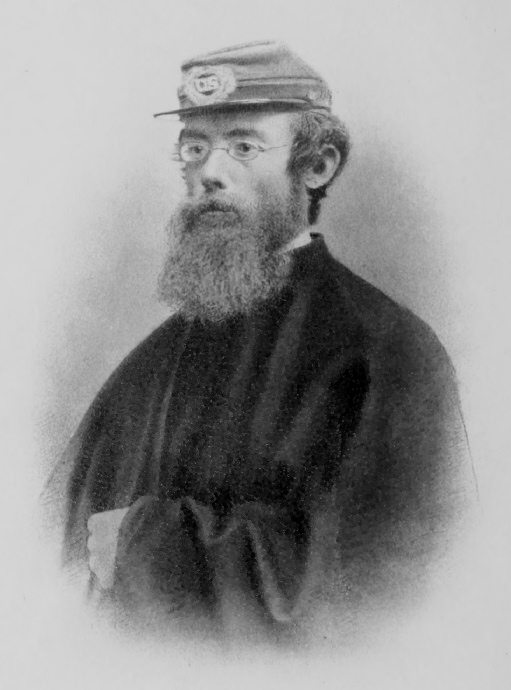
After Surgeon Dalton's service with the
Seventh Regiment of Infantry of The
National Guard of the State of New York,
he was commissioned by President Lincoln,
August 3, 1861, Brigade Surgeon of Volunteers
(afterwards Surgeon United States
Volunteers); served as Surgeon in Chief to
General Viele's command in South Carolina;
as Medical Inspector of the Department
of the South; and as Chief Medical
officer on Morris Island, South Carolina.
His health became seriously impaired by
his long continued service in the malarial
regions of the South, so as to incapacitate
him for duty, and he consequently resigned
from the Army, March 5, 1864.
As soon as his health, never fully restored,
permitted, he resumed his work as Professor
of Physiology at the College of Physicians
and Surgeons of New York; resigned in
1883; was elected President of the College
in 1884, and so continued until his death,
which occurred in New York, February 12,
1889, at the age of sixty-four years and
ten days.