COWES, ISLE OF WIGHT; 26, CONDUIT STREET, LONDON;
PARIS; and NEW YORK.
“At the Concours Hippique, we noticed a striking fact this year, that nearly all
THE people were dressed à la Redfern. And also in the Bois, one is not considered
at all ‘pschutt’ in the morning unless habittee par ce tailleur
celebre.”—Continental Times, Paris, April 12th, 1884.
“I heard a lady say lately she had never seen a Dress of Redfern’s on a
bad figure, but I expect the truth is that Redfern’s Gowns make a figure look
well, however little nature may have done for it.”—Life, Nov. 12th, 1884.
Specialities: WALKING & TRAVELLING GOWNS,
JACKETS, ULSTERS & RIDING HABITS,
Quiet, Lady-like Style, with Perfect Fit and Finish.
Full Sets of Newest Patterns and Designs, post free, from Cowes, where the
art of fitting perfectly without a personal visit is especially studied; or on
view at 26, Conduit Street, Bond Street, London.
JOHN REDFERN & SONS devote personal study and care to
each order entrusted to them.
ROWLANDS’ MACASSAR OIL
Serves and beautifies the hair; it contains no lead or mineral ingredients, and can be
had in a golden colour for fair-haired children and persons. Sizes, 3s. 6d., 7s., 10s. 6d.
equal to four small.
ROWLANDS’ ODONTO
Is the best and most fragrant preparation for the teeth.
All dentists allow that neither washes nor paste are as
efficacious for polishing the teeth and keeping them
sound and white as a pure and non-gritty tooth powder;
such Rowlands’ Odonto has always proved itself.
ROWLANDS’ KALYDOR
Is the most cooling, healing, and refreshing wash for
the face, hands and arms, and is perfectly free from any
mineral or metallic admixture; it disperses freckles,
tan, redness, pimples, and produces a beautiful and
delicate complexion.
ROWLANDS’ EUKONIA
Is a beautifully pure, delicate, and fragrant toilet powder. Each box has inside the lid a
certificate of purity from Dr. Redwood, Ph.D., F.C.S., &c. Sold in three tints, white, rose,
and cream, 2s. 6d. per box. Ask any Chemist or Hairdresser for Rowlands’ articles, of 20
Hatton Garden, London.
EVERY DAUGHTER OF JOHN BULL SHOULD READ
NEW
VOLUME
COMMENCES
WITH THE
NOVEMBER
MONTHLY
PART.
THEGirls Own Paper.
6d.
MONTHLY,
OR
ONE PENNY
WEEKLY.
LONDON: 56, Paternoster Row, AND OF ALL NEWSVENDORS.
FIELD & TUER Ye Leadenhalle Presse, E.C.
T. 4199.
TO MRS. JOHN BULL.
iii]
Dear Madam,
Now please not to frown, still less to cry
out, “Shocking!”
I assure you, you may turn over the leaves of this
book from beginning to end without fear of encountering
a single piece of indiscretion.
I know that fresh air and cold water are your
delight. You dearly love to shiver at the contact of a
dripping sponge; but your door is carefully closed,
and I have seen nothing.
It is not your undraped photograph that I publish,
it is the litany of your good qualities that I sing.
May I be allowed here to say freely what I think?
Well, dear Madam, I think that, if the human
race, including Mr. Bull your husband, felt for you
half the admiration which your charms and virtues
inspire in me, you would be justly proclaimed the
goddess of conjugal felicity.
Now you ought to give me a smile for that, I
think.
iv]
Open this little volume fearlessly, dear Madam,
and if you should light upon any mention—I will
not say of your faults, for most certainly you have
none—but of some few little oddities perhaps, do not
be offended; but remember that our real friends are
those who tell us the truth—en ami, of course—but
still who do tell it us.
Love in Marriage — Mrs. John Bull’s Bedroom — As
you make your Bed, so you must lie on it — Young
People, English and French — How it may sometimes
be an economy to take your Wife with you
when you travel on the Continent
The Beauty of English Women — Their Dress — Their
Hair — Advice to French Ladies — Hyde Park — Interior
of English Theatres — O Routine! such is
thy Handiwork!
The Word and the Thing — Little Essay on the English
Language — There is nothing like a good Telescope
if you want to see well — Master Dubius — Puritan
Parlance — Salvation Fair — May Meetings and
Spring Cleanings — Are you Pooty Well? — A Suitable
Menu
Reflections of an Innocent upon Women in general
and Englishwomen in particular — Epistle to John
Bull — Women’s Rights — A Stormy Meeting — Viragos
and other British Guys of the Sisterhood
of St. Catharine
The Governess and other Servants of Mrs. John Bull’s
Household — Lady-Helps — English and French
Servants — Burglar Chase: the Policeman is successful
for once
The Brune and the Blonde — Madame la Comtesse
d’A. and Lady B. chat a little about their husbands,
discuss their respective merits, and indulge in
several little confidences
The Teetotal Mania — Second Epistle to John Bull — The
darling Sin of Mrs. John Bull according to
a Venerable Archdeacon and a few Charitable
Ladies — A free-born Briton, member of the
Yellow Ribbon Army
In proposing the toast to the ladies at a City
dinner, one evening, Lord Derby expressed himself
in these terms:—
“Before appointing an Englishman to any post
of importance, the first question the electors ask is:
“‘What kind of a wife has he?’”
And, indeed, the English, who introduce diplomacy
into everything, place discretion above all
the qualifications that an English candidate sends
to the members of an electing board, in the form
of testimonials.
The chief thing required of a man who is to be
placed at the head of a Society, an Institution, a
College, is that he should know how to maintain
order and good discipline: not with fuss and
severity, but with calmness and discretion; and the
English are quite right, for self-control and discretion
are the two qualities that most fit a man for
x]
government. “Now,” the electors say, “if Mr.
So-and-So, who is one of our selected candidates,
cannot keep his wife in order, how will he keep a
thousand men or boys in order? If he cannot
maintain good discipline in his house, how will he
maintain it in our Society? If he is ruled by his
wife, it is his wife and not he whom we shall be
electing. Therefore Mr. So-and-So will not do
for us.”
Very proper reasoning.
How many talented men could I name, who will
owe to their wives, all their life-time, the honour of
being and remaining obscure heroes!
What is the main cause of England’s greatness
and prosperity? Simply this:
The thousands of small republics, all independent
each of the other, that are called Societies,
Hospitals, Colleges, etc., are governed, not by
idols that have hands and handle not, or by badly
salaried potentates who have eyes and see not, but
by energetic and clear-sighted men, who receive
immense salaries, but who, in return, devote to the
Institutions that they rule over, all the resources,
all the force of their minds.
Take the schools and colleges for instance.
I am convinced that, in Paris, a proviseur does
not know the names of more than thirty or forty of
the pupils attending his lycée. At any rate, there
xi]
are not twenty of them that he could recognise in
the street and call by their names. His emoluments
range from five to six hundred pounds a year.
In England, the head-masters of the great
Public Schools receive three, four, five, and even six
thousand pounds a year. Well, I guarantee that
these head-masters know individually every one of
the thousand boys or so that are under their care.
They know the place that each one occupies in his
class. The pupils are placed by the head-master,
according to their merit and aptitude, in such
and such form, in such and such department.
He will write to some parents, “Your son has no
taste for classics. I will put him in our modern
school to learn mathematics and science. I advise
you to make an engineer of him, an officer,” etc.
In France, work is generally in inverse ratio to
the emoluments.
In England, work is in proportion to the salary:
responsible work, at all events.
Take the Church.
English bishops are fortunate mortals, who
receive emoluments amounting to something like
eight and ten thousand pounds a year. But, over
here, a bishopric is no sinecure.
In France, the clergy of a diocese receive from
their bishop orders which they obey blindly; they
all teach the same dogma, and have no
xii]
competition to keep up; but, in England, everybody
reasons and argues: the young clergyman, fresh
from Oxford or Cambridge, has his own way
of interpreting the Scriptures, and the bishop
is constantly called upon to pacify, to conciliate
all his little clerical world who are for ever dogmatising,
discussing, disputing, in the pulpit,
in meetings, in the newspapers, and keep him on
the alert all the year round. If a French priest
shows signs of independence of thought, he is
treated as a rebel, and his case is soon settled;
public indifference to religious matters consigns
him to swift oblivion, when he has succeeded in
making a little noise, which happens very rarely;
but, in England, the priest who holds original
views is backed up by partisans who immediately
take up his cause; at any moment, he may set up
for a martyr and become a source of continual
annoyance to his bishop.
Above all things, the man in office must avoid a
scandal, what the English call in slang, a row. So
he must be discreet, conciliating, and an accomplished
diplomatist: such, I repeat, are the qualifications
of any man occupying a high and responsible
position in England.
Take the man of business, the City man. Everywhere
you find the same activity, the same feverish,
high pressure kind of life.
xiii]
Under these circumstances, the part that the
English woman has to play is clear enough: to
make her husband forget, in private life, the strain,
the rebuffs, the deceptions, the snubs and kicks that
he has to endure in public life; to prepare for him
a retreat in the calm atmosphere of which he may
refresh himself and acquire new strength; to do
the honours of her house with that liberality, that
generous hospitality, which are only met with
among the English; in short, to be satisfied with
a part which, when filled with that abnegation and
devotion of which the women of all countries are
capable, is no less beautiful for being a secondary
one.
Now, dear reader, if you will once more do me
the honour of accepting me as guide, we will visit
together those beautiful girls a trifle too emancipated,
those virtuous wives a little too much respected,
those good mothers perhaps a little neglected;
those women hospitable above all others, whose
ingenious forethought for the smallest needs of life
makes of a humble cottage a little palace of
cleanliness, order, and comfort.
I.
1]
JOHN BULL’S WOMANKIND.
Flirtation — Sweethearting — Love in the open air — Où il y
a de la gêne il n’y a pas de plaisir.
Seeing that the word flirtation seems to have been
definitely received into the French vocabulary, it
is natural to suppose that our language contained
no equivalent for it, or that the thing itself never
existed in France.
Flirtation is, in fact, an essentially English pastime.
No one flirts in France: we are more
serious than that in love affairs.
Some etymologists have thought that the verb
to flirt was formed from fleurette in the expression
conter fleurette; but the best authorities agree in
thinking that it took its origin from fleardian, an
Anglo-Saxon word which means to trifle; and thus
it seems possible that it may have some connection
with the verb fleureter, which, in old French,
2]
signified “to say little nothings,” whence plaisanter,
badiner.
However this may be, let us leave to savants the
task of deciding the matter, while we concern
ourselves about the thing itself. What, then, is
flirtation?
Flirtation is a very innocent little pastime. I
have read in the confession albums of young ladies
of good society, “What is your favourite occupation?
Flirting.” The answer is not in exquisite
taste, even from the English point of view, I admit;
but no one would think of taking it amiss ... all
the more so, I should add, because these confessions
are not meant to be taken very seriously.
Young girls who at a ball had made themselves
specially agreeable to certain of their partners, and
succeeded in drawing a few compliments from
them, might say, “We had such flirtation.”
To flirt, then, is to make a young fellow believe
that “on l’a remarqué, distingué,” as the Grande
Duchesse de Gerolstein says; it is to encourage
him by sweet smiles and tender wiles, to quit his
reserve and carry his gallantry almost so far as to
declare himself. This kind of thing would be
very dangerous with a young Frenchman; it leads
to no bad consequences with the young Englishman,
for flirtation is “attention without intention,” as
some one—I forget whom—has very aptly put it;
3]
and an Englishman is able to pay a lady attentions
without harbouring any intentions. I compliment
him upon it.
A woman who flirted would pass in France for
giddy, even fast: she knows her countrymen well,
and is aware, when she coquettes with them, what
she is exposing herself to. A young girl would
never even think of it. But, in England, men are
not so inflammable, and in flirting, a woman does
not play with fire. Witness the following little
scene, which gave me a quarter of an hour’s
diversion, at a conversazione given by one of the
great learned societies of London.
A young girl, lovely as an Englishwoman knows
how to be lovely, when she sets about it, stood in
the corner of one of the rooms talking with a young
fellow of eighteen or twenty.
You should have seen with what a mischievous
delight this little angel, or rather this little demon,
tortured the young booby, who appeared to me not
to know what to do with himself, or which way to
look, to escape the sight of a lovely and freely
displayed corsage, that rose and fell, a few inches
from his nose. “Poor dear child!” I thought
to myself, “how oppressed you appear to be!”
She seemed to be doing her utmost to sigh her
life away; and what amused me most, was that,
when the poor fellow appeared to have taken the
4]
firm resolution not to be tempted, his pretty
torturer stopped her chatter, and set to work to
fasten, with many careful and delicate touches, a
rose that threatened, at one moment to escape, at
the next to be swallowed in the heavy sea.
This little performance certainly lasted a quarter
of an hour, and really I pitied from the bottom of
my heart this poor Tantalus—if one may call
Tantalus a young innocent who did not attempt
to get nearer—when, to my great satisfaction, I
saw him beat a retreat. I felt relieved. So did
the poor fellow, I am sure.
A young Frenchman would soon have put an
end to such a game by taking some liberty that
the young girl, after all, would have only too
richly deserved.
Sweethearting is a very different thing: we come
now to love-making taken au sérieux. Sweethearts
are two young people who have confessed their
love to each other and have become mutually
affianced, with or without the consent of their
parents. This English word has an old-fashioned
flavour about it. It corresponds very much to
our bon ami and bonne amie. In speaking of the
intended husband of a lady of good society, you
would now rather use the word lover.
Sweethearting could hardly exist in France,
where the most firmly betrothed lovers scarcely
5]
ever have a chance of renewing their vows of love,
except in the presence of a future mother-in-law.
In England, sweethearting means to make love
openly; to take one’s choice about, to friends’
houses, to concerts, to the theatre, to parties, for
sentimental walks more or less solitary; to be
allowed a thousand charming little liberties; it
means, in a word, to play the comedy of love.
Of course, accidents will happen, it is inevitable:
carried away by the success of the play, the
best actors may forget themselves. But it
is far from being the rule: it is even a very rare
exception, especially in the educated classes.
It is a curious spectacle, in a country where
reserve, prudery, and propriety are carried to a
point of uncomfortableness, to observe the couples
of lovers walking about in the evening, holding
each other by the hand, by the waist, around the
neck, and, in rather deserted streets, forming
regular processions. I am not speaking of the
better classes, of course; but still I speak of the
lower middle class—of clerks, shopmen, and shopgirls,
very well dressed, and for the most part very
respectable. These couples go “sober, sober,”
like the “poor man” in the nursery rhyme, and,
with their eyes bent languishingly on each other,
appear to find very little to say with their lips.
When you pass and look at them, they seem to
6]
say to you: “You have been through it yourself,
old fellow, haven’t you? You know all about it:
there’s no need to mind you.”
The seats in the parks and public promenades
are occupied all the evening long by such couples.
These seats are made to hold three persons, but,
with a little management, they will accommodate
six. The occupants are there by the hour together,
each couple taking no notice of the others,
but clasped in a silent embrace, motionless and
rapturous. I have always admired these stoical
young Englishmen who can thus undergo, for
hours, this voluptuous treatment without any inconvenience.
One evening, in the month of March of last
year, I crossed Hyde Park to get to the Marble
Arch from Piccadilly. As I saw those couples
reposing at their ease on the grass, and not attempting
to disturb themselves for such a trifle as a man
passing, I thought to myself, “O free England!
to what lengths, after all, will thy love of liberty
carry thee!”
As I was waiting at the Arch for my omnibus, a
fine, good-humoured looking policeman was pacing
up and down. I went up to him, and began by
asking him if there would soon be a Bayswater
omnibus passing. Seeing him disposed to be
chatty, I said to him, “They seem to make
7]
themselves at home in the park, those lovers! They
don’t budge for anybody.”
“No, sir; no, not they,” he replied naïvely; “no
fear!” Où il y a de la gêne il n’y a pas de plaisir.
The policeman was evidently there at the
entrance of the park to protect the sweethearts,
and prevent anybody from disturbing them. I had
always wondered why policemen were stationed
outside the London parks, and never entered
them after dusk. I understand at last: one does
not take in everything at a glance.
II.
8]
Declarations of love — Kisses — Disobliging Britons.
I never much admired our manner of making
love declarations in France. We go down on our
knees, in our nineteenth-century costume, at the
feet of a woman whom we allow from her superior
height to contemplate us in all our servility. With
her sweet, downcast eyes, this little demon of
observation takes an inventory of our slightest
blemishes: of our hair, that is not so luxuriant
as it was; of our rounded upturned eyes, that
appear to be all whites; of a small wart, that we
fondly fancied no one noticed; of our dignity,
that we have abdicated in going on our knees, to
implore favours that we are destined to pay enough
for, Heaven knows, and which, after all, mean
promotion for her who grants them; for I maintain
that a woman who marries is promoted over her
sisters. Well I say it plainly, our part in this
9]
little scene is a supremely ridiculous one. If you
are not of the same opinion, gentlemen, put the
following question to yourselves: Should I ever
think of being photographed in such a position?
I await your reply.
They manage these things differently in England.
The favourite seat of young girls at home is a low
chair, an ottoman, or very often a simple footstool.
How often have I seen pretty daughters of Albion,
and that in the best society, sitting Turkish fashion
on the rug in front of the fire, on winter evenings,
caressing one another, or listening, while some
interesting novel was read aloud! These little
scenes, full of charm, have often suggested to me
sweet pictures of domestic happiness, in which
each one plays the part that, according to my
ideas, is most befitting.
Seated comfortably at your ease, you have near
you, but a little lower than yourself, the beloved
object of your dreams, or better still, the dear
companion of your daily life; in whose ear,
without dislocating your vertebræ, you can
murmur sweet words of love. All your defects,
if defects you have—and be sure of it, you are not
without some—are out of the range of her eyesight.
Over you, in perfumed waves, spread her beautiful
tresses that you caress, knot, unknot, and never
tire of playing with. With the eyes of a lover,
10]
and at the same time a protector, you admire the
graceful contour of her form, that vibrates with
pleasure at the sound of your voice, and her
eyes that seem to implore your protection and
thank you for the cloudless life you map out for
her. Thus seated, you might even, without fear of
annoying her, smoke your cigar while you hold
sweet converse, and build your castles in Spain.
I say, without fear of annoying her, for your wife
will certainly allow you to smoke, if she is not
a simpleton.
“Your husband in love savours somewhat of the
pacha,” some emancipated lady will perhaps exclaim.
Not in the least. We are not speaking of a
master and his slave, but merely putting in their
proper places the possessor and the possessed: the
one who will have the battle of life to fight, and the
one who will fit him for it, who will encourage him
by her tenderness and love, rejoice with him in his
joys, and cheer him in time of adversity: “a state
not of slavery, but of exalted duty.”
Ah! Madam, how I am filled with admiration
for you, when, meeting your husband, I hear him
say to me: “Excuse me, my dear boy, if I leave
you so quickly, but I am in a hurry to get home;
my wife is expecting me!” I know so many
husbands who are in no hurry to go home, and for
good reason.
11]
The kiss on the lips is almost the only one
practised in England.
Do not imagine, however, that this pleasant
little pastime can be indulged in as freely as you
might desire. No, here as elsewhere, the same
difficulty presents itself: the people that you may
kiss are those that belong to you; the people
whose lips you are forbidden to approach, are
those that belong to that stern Cerberus that the
French call Autrui.
I would willingly initiate you further, dear
inquisitive lady reader, into those little scenes of
intimacy, always so interesting, no matter whether
they pass amid English fogs or beneath Italy’s
pure sky; but, you see, in all the houses where I
have had the honour of being invited, I have
watched and observed in vain; I have scarcely
seen anything worth noting down. Those provoking
Britons always waited until I had left the
house to proceed to business.
III.
12]
Love in Marriage — Mrs. John Bull’s bedroom — As you
make your bed, so you must lie on it — Young People,
English and French — How it may sometimes be an
economy to take your Wife with you when you travel on
the Continent.
John Bull owes his success in this world—and
perhaps in the next also—to his indifference towards
woman, an indifference that he is fortunate enough
to owe to his peculiar organisation and the uniform
temperature of his blood, and which not only
enables him to keep a cool head before the charms
of the fair sex, but also to maintain them in a complete
state of submission.
The submission of woman to man is the basis of
every solid social system.
In John’s eyes, woman is almost a necessary
evil; a wife a partner of the firm; love-making a
little corvée more or less disagreeable.
13]
The Englishman is unquestionably well fitted for
making colonies, but badly formed for making love:
he has no abandon about him, cannot forget himself,
and passes his life in standing sentinel at the
door of his dignity. It requires more skill to make
love than to lead armies, said Ninon de Lenclos,
who was an authority.
Go to the theatre and you will hear the young
lover declare himself to his lady-love in about the
same tone as we should use at table in asking our
neighbour, “May I trouble you for the mustard?”
This “I love you” may be sincere, and is, I
doubt not; but it certainly can never have the
power of our “Je t’aime.” The English language,
in avoiding the second person singular, avoids
familiarity. Here a man says you alike to his
mistress and his bootmaker. Who among us does
not still feel a thrill of emotion and pleasure as he
thinks of the moment when, for the first time, he
grew bold enough to change vous into toi? Where
is the woman whose pulses did not quicken with
love at the sound of those words, Si tu savais
comme je t’aime, breathed low in her ear by her
accepted lover. It is true that in our high society
a man uses vous in speaking to his wife, but if he
loves her, vous is only for the gallery: there are
times when toi is indispensable.
After all, perhaps you sits better on an Englishman,
14]
with his respect for his wife: a respect of
which she must be a little inclined to complain
occasionally.
Only go and see John Bull’s house, and once
more, let me repeat that by John Bull I always
mean the middle-class Englishman, with an
income of from two to five hundred a year. You
will find it all very comfortable: drawing-room,
dining-room, library, breakfast-room. But the bedroom!
Ah! the bedroom! You see at a glance that
you are not in the temple of love, but in a refuge
for sleep and repose.
Of all the rooms in an English house, the bedroom
is the least attractive looking, the one that
has had the least care and money spent upon it:
it always looks to me like a servant’s room. No
little cosy arm-chairs; no pretty furniture; no
ornament. Few or no curtains.[1] You look in
vain for a boudoir, that green-room of the little
elf-god. No: six straight-backed fragile-looking
cane chairs; an iron or brass bedstead; a dressing-table
in front of the window; a chest of drawers;
a washstand, and a sponge-bath.
[1]
Many Englishmen are of opinion that curtains make a
bedroom unhealthy. Health is the first thing to be considered.
Nothing more. What! my dear Mrs. Bull,
15]
not even a screen! Is John no longer a man in
your eyes?
Better still. Would you believe that in very
good houses, I have seen, and very plainly too
... yes, positively, I have seen it on
the floor under the washstand?... I
have often noticed by the side of the English
bed, a little piece of furniture, resembling a music-box
in shape, which I think does not add much
poetical charm to the couch of Mr. and Mrs.
John Bull.
Such is the temple in which the Englishman
sacrifices to Venus.
You have probably heard it said, dear reader,
that a stranger never penetrates into the bedroom
in England. That is true, and may easily be
understood. However, should you call on an
Englishman and be persuaded to prolong your
visit a little, after some time he will be sure to
ask you if you would not like to go upstairs and
wash your hands. It is the formula.
When I say that the bedroom is quite devoid of
ornaments, I exaggerate a little: the walls are
adorned with illuminated texts from the Bible,
hung by means of ribbons. They are texts chosen
for their suitableness. “Thou God seest me,”
... etc. The best was one that I saw thus
posted up at the head of an English bed:
16]
“Watch and pray, lest ye enter into temptation;
for the spirit indeed is willing, but the flesh is
weak.”
One more word upon the English bedroom.
In making a bed in England, every covering is
not taken off separately, as it is in France, to be
replaced carefully one after the other, without the
slightest crumple. Here the whole is taken off, or
rather turned back, over the foot of the bed, the
feather bed is shaken, and the clothes returned to
their place as they came.
Cold as an Englishwoman, has said Alfred de
Musset. And as the illustrious poet was an
authority on women, we still say in France: froide
comme une Anglaise. Don’t believe a word of it;
it is a calumny. You form your judgment from
stiff collarettes that look as if they had never been
crumpled. In my mind, one of the Englishman’s
greatest faults is his not appreciating at their proper
worth such sweet charming women, all the more
attractive for their little air of propriety and
prudishness.
The finest Stradivarius would give forth but
sorry sounds in the hands of an ignoramus. How
can you expect women to look very lively when
they have to pass the first fifteen years of their
married life enceintes or en couches, suckling all the
17]
little John Bulls destined one day to introduce
cold beef and pickles in the four corners of the
Globe?
When a Frenchwoman gets married, her good
time begins; when an Englishwoman gets married,
her good time is over. Within a year her case
is settled: comme mars en carême. Thanks to
the liberty that is allowed to young couples,
there may be a little mistake in arithmetic made
occasionally. As I do not wish to seem to calumniate
for the pleasure of calumniating, I must
hasten to add that it is a very rare thing to hear of
an Englishman breaking faith where his attentions
have been too successful.
French men and English women generally live
very happily together in matrimony, often quite like
lovers.
On the contrary, English men and French women
seem to lead dull and wretched lives. Of course,
I am speaking of those that I know; I do not wish
to generalise, it would be absurd; and yet it seems
to me one might say that there were never two
beings who appeared to be less suited for each
other; as well try to marry the day and the
night.
Far be it from me to think of contesting the
virtue of Englishwomen. Women are born virtuous
18]
all the world over: this is one of the firm
convictions that I delight in holding. Is it
simplicity or innocence on my part? I do not
think so.
Only, I would remark that the virtue of an
Englishwoman runs less risk in a country where
young men are by temperament less enterprising,
by education more reserved, and by natural
awkwardness more shy with women than in Continental
countries.
I do not say this in order to be critical, quite
the contrary; and as, in making these observations,
my intention is not either to please the
French or to court the English, but simply to
write conscientiously what I think and what I see,
I will hasten to add, that I greatly prefer the
young Englishman of twenty, shy, awkward, and
childish as he may appear to our school heroes, with
his cricket and his football, to the young Frenchman
of the same age, who runs down women,
and looks at them with a bold and patronising air,
as he twirls his moustache.
The young English girl knows more of life than
the young French girl; she may be as pure, but
she is less innocent, less intact, and consequently
knows better how to take care of herself. A
young married woman will sometimes have a
young sister not out of her teens, to stay with her,
19]
during her confinement. Such a thing would
never be done in France. I do not say who is
right; I merely draw attention to the facts.
Unless a married woman courts danger, she runs
no risk, surrounded as she is by her children. All
these things are so many safeguards for the
Englishwoman of the middle classes. I say middle
classes; for, if one may believe the reports of
divorce cases published in the newspapers, it is
evident that the English upper classes cannot cast
the stone at their Continental neighbours.
As for the lower orders, I have resolved to
speak of them as little as possible in this volume.
The subject is as repulsive as it is stale.
Our worthy friend John Bull would doubtless
like to have his virtue discoursed upon at length.
He prides himself upon it not a little; he likes
it talked about.
Yet one would be almost tempted to believe
that he leaves all his superfluous stock of that
commodity in the cloak-rooms at Dover and
Folkestone, before embarking on board the boats
of the South-Eastern Railway Company. Good
heavens! But what an emancipated look he has in
Paris! What a metamorphosis! How the corners
of his mouth go up! How he throws his insular
reserve overboard! Why, this can never be John!
20]
Somebody must have substituted an inferior
article; he does not look half so good. And
when he returns home to his island, what endless
tales he has to tell about the immorality of Paris
and Brussels! Shocking! Dreadful!
Funny constitution! When he has had his
little round of a fortnight on the Continent, he
seems to resume his quiet, godly habits for the rest
of the year. How he must have improved each
shining hour!
The virtue of an Englishman is bounded on the
south by the English Channel; on the west by
the Atlantic Ocean; on the east by the North Sea.
“Why do you employ so many Germans in
your offices?” I asked one day of a great City
man.
——“Because they speak several languages,”
he replied.
——“But could you not find Englishmen who
have lived abroad, that would do as well?”
——“I could find plenty, no doubt; but I
should have no confidence in their steadiness.
You must not lose sight of an Englishman.”
——“You don’t mean it!” I cried. “Is that the
opinion you have of your countrymen?”
——“I don’t believe in the virtue of an
21]
Englishman on the Continent,” he replied
seriously.
——“What! You would not trust a....”
——“I would trust nobody.”
——“Not even a bishop?”
——“Not even a bishop.”
“Things are dreadfully dear in France; one
spends no end of money in Paris,” said another
Briton to me one day.
——“Do you think so?” I replied. “When I
am in Paris, and am staying at an hotel, I spend
but about twenty-five francs a day, and I live
like a prince.”
——“Frightfully dear! I tell you.”
——“And you talk of going again next month?”
——“Yes, but I shall have my wife with me.”
——“What! you will take your wife! You will
spend double as much then....”
——“Not at all, I....”
My islander checked himself; he felt he had
gone a little too far, and a deep blush spread over
his countenance.
“Oh! I beg your pardon,” I cried; “of course
you are quite right.... I was not thinking.”
Was I not a simpleton?
IV.
22]
The Marriage Ceremony in England — Civil Marriages — Elopements — Marriage
in Scotland — Show your
Credentials — One word more about the dot.
Marrying one of John Bull’s daughters is not all
honey.
One cannot help wondering how it comes to
pass that the English, who for centuries have been
reforming their religion in every sense imaginable,
have never yet turned their attention to making
the language of the Church as choice and
euphemistic as is the language of good society.
The Protestant Church alone seems to have
retained the sole privilege of calling a spade a
spade, or something worse still.
At the ordinary services, it does not so much
matter. The clergyman is at a certain distance
from the congregation, and when he reads you,
23]
from the Bible, a story that makes you tremble
for fear of what he will read next, you can comfort
yourself with the idea that the charming young
lady at your side has perhaps not been listening.
Besides, that which is addressed to everybody is
addressed to nobody; witness, the effect upon
Christians of all the sermons that have been
preached to them for nearly two thousand years.
But when it comes to going through the marriage
ceremony in church, it is quite another matter.
You are standing beside your bride, and close
to the clergyman who is facing you. Six or eight
bridesmaids, sometimes young girls twelve or
fifteen years old, are grouped behind the bride.
Breaking the profound silence, the minister thus
addresses you, not in Latin, but in plain English:
“Dearly beloved brethren, we are gathered together
here in the sight of God, and in the face of this congregation,
to join together this man and this woman
in holy matrimony; which is an honourable estate
... not by any to be enterprised, nor taken in
hand unadvisedly, lightly, or wantonly, to satisfy
men’s carnal lusts and appetites, like brute beasts
that have no understanding; but reverently, discreetly,
advisedly, soberly, and in the fear of God;
duly considering the causes for which matrimony
was ordained.” And then he goes on to say that it
was ordained for the procreation of children, for a
24]
remedy against sin, and to avoid fornication, that
such persons as have not the gift of continency
might marry and keep themselves undefiled
members of Christ’s body.
That is how the ball opens. It is promising, is
it not? You would give the world to sink through
the floor, or to be able to seize your dear little
wife, and fill her ears with cotton wool. You
blush, as you think of the sweet creatures in white,
blue, and pink, who are just behind you biting
their lips, and wondering what those brute beasts,
that have no understanding, have to do with the
ceremony, and you feel ready to fall on your
knees and implore the forgiveness of the innocent
young girl at your side, for having brought her
there to hear such things. And that which strikes
you with wonder, nay, with amazement, is that
just after, when the minister says to her, “Wilt
thou have this man to thy wedded husband ...
wilt thou obey him, and serve him, love, honour,
and keep him in sickness and in health?” she does
not indignantly exclaim:
“No, indeed, not for the world!”
Thus have the English, in their rigid puritanism,
managed to spoil a ceremony that might, and
ought, to remain engraven on the memory among
life’s sweetest souvenirs.
And yet, what beautiful words might be said to
25]
young couples, and that, without going out of the
Bible for them: the Bible, that finest monument
of English prose, so poetical at times, so grand,
yet so melodious always! Never was woman
painted in colours so poetical; never were her
duties traced with such a masterly hand as by
the famous King of the Hebrews; and one might
extract from the Proverbs and the Song of Solomon
a most charming lecture to be addressed to young
couples presenting themselves at the altar.
The language of the English Bible is incomparably
superior to that of the Bible in any other
idiom. It is like music, like trumpet blasts. With
the exception of the finest passages of Bossuet, I
know nothing, even in our splendid prose, that
could be compared with this great national epic.
The foregoing remarks on the Bible will perhaps
give pleasure to the English; not that I wrote
them with any such intention: it is simply the
exact truth.
Plenty of people in England do without the
religious ceremony. They are not free-thinkers,
for that; they are merely worthy people quite
orthodox, but who prefer the civil marriage as
being more simple.
They present themselves at the registrar’s office.
No need to produce any papers: the bridegroom
26]
gives his name and surname, as well as those of
the young girl he means to marry; the couple
declare their ages, in the presence of two witnesses,
and state whether they are spinster and bachelor,
or whether either or both have been through the
ceremony of marriage before. The registrar’s
book is signed, and there is an end of the matter.
By means of a licence, that may be obtained at
Doctors’ Commons for the sum of two guineas,
the trouble of having one’s banns published may
be avoided.
It is scarcely necessary to add that, when the
parents give consent to the marriage of their
children, the ceremony generally takes place in
church; but the registrar is a great resource, when
the parents are so cruel as to stand in the way of
the young folks’ happiness.
Elopements are very common in England. Do
not imagine, however, for an instant, that an elopement
means anything very romantic. No signal
or rope ladder at midnight; no carriage with
two swift steeds waiting at the corner of the next
street; no masked postillions, such as one is accustomed
to at the Ambigu Theatre. Nothing of the
kind. As I said in “John Bull and his Island,”
“A young girl goes out one fine morning to post
a letter, and, on her return, informs her parents
27]
that she is married.” Only; of course, it sometimes
happens that she does not return.
In the appendix will be found the account of a
case that has recently been tried in Dublin.[2]
The prisoner, aged forty-two, had been through
the ceremony of marriage five times.
But for marriage made easy, Scotland is the
place. There civil marriage, religious marriage,
all is unnecessary. You gather together your
parents and friends, present to them the young
girl to whom you are engaged, and tell them:
“This is the wife I have chosen.” The matter
is settled: you are married.
If I may believe certain Scotch novels, this
presentation even may be dispensed with. It is
sufficient for the young people to say to each
other: “I take you for my wife;” “I accept you
as my husband,” in order to be able to consider
themselves well and duly married. “A wedding
is all very well,” Sandy will tell you, “but for real
fun and enjoyment, give me a good funeral.”
I do not speak of these Scotch weddings with
the least intention of laughing at them. I think
those primitive customs simply admirable. Laws,
contracts, and other impediments of all kinds are
only made for rogues.
Compare this charming manner of getting married
28]
with the bothers and hindrances without end arising
from the necessity for producing the papers
exacted by the French bureaucracy, both religious
and civil: certificates of birth, certificates of baptism,
certificates of the death of parents you may
have lost, written consent of parents who are
unable to be present, billets de confession, and I
know not what besides; until you wonder Red
Tape does not demand your own certificate of
existence. It would seem as though the marriage
formalities in France had been invented with
the express idea of making young people shun
matrimony.
Dress coats are not worn at weddings in
England; they are only used for evening wear,
and are called evening coats. The bridegroom,
his best man, and the other gentlemen, are in
frock coats. The dresses of the bride and bridesmaids
are similar to those worn in France on such
occasions.
The bride is led to the altar by her father.
When the clergyman says: “Who giveth this
woman to be married to this man?” the father
advances, and replies: “I do.” The dear man
always appears to me radiant on these occasions;
with happy heart and beaming countenance he
answers: “I do.” It is true he gives his daughter,
29]
but as that is generally all he gives, it is a clear
profit for him: one mouth less to fill.
A suitor never thinks of asking for a dot with his
bride, as I have said elsewhere. I even added:
“Girls of the middle class in England have no dot;
or when they have, it is the exception, and not the
rule.” This assertion brought down upon me a
plethora of recriminations. “What, Sir,” wrote the
indignant British parents, “we give no dots to our
daughters! But, begging your pardon, we do so
when we have the means.”
All I can say is that the exceptions may be a
little more frequent than I thought, although I
doubt it; and whichever way the case may stand,
I know personally a great number of Englishmen
very well off, rich even, who have led their
daughters to the altar, dowered them with a few
chemises and handkerchiefs, and ... wished
them good luck.
The young couple manage as best they may.
V.
30]
After the Ball — My Wife makes me a little Confidence (from
the Diary of a Frenchman married to an Englishwoman).
I am not jealous; yet, every time I reach home
after a ball, I experience a certain feeling of relief
and satisfaction: I cannot help it.
When you have seen your wife whirled round a
room, in the arms of a score of men, who have
plunged their eyes in her corsage, inhaled the perfume
of her hair, held her waist and hand, felt her
near them at the distance of a hair’s breadth, you
are happy to find yourself once more alone with
her, and to feel that, after all, she is your very own.
Besides, there is another sentiment that animates
you. The dance has made your little wife radiant;
it has brought a new glow to her cheeks; her
eyes are brighter; her whole being seems to exhale
31]
I know not what intoxicating perfume; she is
lovelier than ever in your eyes; and those thousand
little jealous ideas that have been passing through
your head have added fuel to the flame of your
love ... in short, I know nothing more pleasant,
more delightful, than to return from a ball with
one’s wife, to a cosy fire-side, to thrust her little
feet into her satin slippers, to pull off her gloves,
and ask her for a cup of tea.
We had had a little room arranged quite expressly
for these tête-à-tête. We called it the
reposoir. We only used it on returning from the
play or a ball. What long confabulations we have
had in it! What delicious little chats its walls have
heard! And, thank Heaven, they often hear them
still: I do not see why I should not put all my
verbs in the present tense.
This sanctum is about the size of a nutshell:
there is just room for two. The furniture consists
of a table, a sofa, two inviting-looking arm-chairs,
and a Pleyel piano of the sweetest tone.
A Turkey carpet covers the floor, and two lamps
with blue tulip-shaped globes throw a soft, most
exquisite light over the room. When the curtains
are drawn, we can imagine ourselves alone in the
world.
My wife has more than once confessed to me
that, to her, the greatest pleasure about going to a
32]
ball or a theatre, was the thought of the little
reposoir all ready to receive us on our return, and
she never forgot to give strict orders with regard to
it before setting out.
I have more than once, at a party, caught her
throwing me little glances that seemed to say:
“Have patience, darling; Parker is just lighting us
a lovely little fire; in a few moments we shall be
all alone, and I will soon drive that frown from
your brow.”
One evening we came home and went to the
reposoir as usual, my wife radiant and lovely enough
to turn the head of a hermit, I a little sulky. I
took off her pelisse, laid it carefully on the sofa,
and threw myself dreamily into one of the chairs.
My wife took possession of the other, gave me a
wicked little glance, and unceremoniously burst
out laughing in my face.
“I am sure you are jealous. Don’t tell me
you are not,” she added, placing five glowing
perfumed fingers on my lips.
——“Well, yes, I am; it was not nice of you
to waltz with that great fop of a....”
——“Now don’t talk about that; I was punished
enough for it. I never saw such an awkward
fellow.”
——“It served you right.”
33]
——“Come, don’t scold me. I had it in my
head—I don’t know why—that it was to be a
polka. You know very well that I don’t care to
waltz with anybody but you. First of all, because
you waltz beautifully, and then, with you there is
no danger.”
——“There is no danger? What do you
mean?”
——“Did I say that?”
——“You did.”
——“Oh! I don’t know what I say. Yes, as I
was remarking, you waltz beautifully ... only....”
——“Only....”
——“Only you go too fast.”
——“Too fast! How can that be? The waltz
should be rapid, giddy.”
——“Oh! you silly! Ahem! I mean to say,
you are wrong.”
——“Explain yourself, sweet one.”
——“Well then, I mean that I like a waltz to
be slow, dreamy, sad, almost dying away; I should
like them composed entirely of the kind of airs
they generally begin with—slow and solemn.”
——“What!” I exclaimed, “you don’t like the
intoxicating kind of waltz?”
——“You know nothing about it,” replied she
cunningly.
——“I tell you I am an inveterate waltzer.”
34]
——“That proves nothing at all.”
——“I tell you a waltz should be an intoxicating
whirl.”
——“Just at the end, perhaps; though I am not
so sure of that either. Listen, I’ll show you the
kind of movement I like.”
And, seating herself at the piano, my wife began
to play a few bars of the Colonel waltz.
“That is a waltz,” she said, seating herself on my
knees, and laying her head upon my shoulder.
——“Indeed!” I replied, growing reflective.
“I say, darling, if you don’t mind—I don’t know
why I ask you that again, but more than ever ...
I had rather you waltzed with no one but me.”
——“Oh! you need not ask me; and if that
poor fellow had not set about it so awkwardly, I
should very soon have thanked him and excused
myself.... Just time enough to perceive that it
was a waltz: and that would have settled it, you
may be sure.”
——“I don’t follow you at all.”
——“It is so lovely to waltz with you! You
are not afraid to hold me firmly, and besides ...
when I get giddy, I just lay my head on your
shoulder and close my eyes, and then I feel quite
safe.”
——“It’s a curious thing. The waltz makes
me a little giddy too, but still I....”
35]
——“Well, you are not like me.”
——“Does it make your head swim?”
——“What a dear old goosey you are!”
——“Not such a goose as I look.... Once
more, what on earth is the effect that the waltz
does produce upon you?”
——“I ... do not know.”
——“Try to find out.”
And as I foresaw that my wife was about to
make me a little confidence, and my wife’s confidences
have always deeply interested me, I turned
down the lamps, made her turn her back to the
light, and applied an attentive ear to her pretty
mouth.
“Now, come,” I said to her; “do tell me.”
——“I am sure, I don’t know.”
——“Oh yes, you do.”
——“It’s only nonsense....”
——“All the more reason why you should say
it out. Go on, my own darling: there is nothing
so dangerous as nonsense turned inwards.”
——“Little shivers ... ever so small ...
you know.... Don’t kiss me in the neck: you’ll
make me shriek....”
——“Little frissons!... Where?”
——“All over....”
——“Humph! I begin to understand the
danger you were speaking of just now.... Now,
36]
darling, explain yourself more clearly, you know;
I have not got it yet.”
——“I adore you!” she said rising, and, taking
my head in her two hands, she kissed me tenderly.
We took a delicious cup of tea together, and it
was agreed that in future my wife should only
waltz with me.
It would appear that, when I waltz, I do not set
about it too awkwardly. At any rate, it is the
conclusion that I drew from our resolution.
VI.
37]
The Beauty of Englishwomen — Their Dress — Their Hair — Advice
to French Ladies — Hyde Park — Interior of
English Theatres — O Routine! such is thy handiwork.
The French women are more graceful and more
piquant than the English; but they are less healthy
and less fresh-looking. Their eyes are brighter,
their mouths much prettier, and their figures a
great deal finer; but their complexion is not so
clear, nor nearly so fine.
Regular walks and baths are the secret of the
health and beauty of the English woman. She
fears neither draught nor douche. She sleeps with
her window open, and, on rising, inundates herself
with cold water. In winter weather, the least
hardy wrings a hard towel in water, and rubs
herself with it from head to foot to promote the
circulation of the blood, till her skin shrieks for
38]
mercy. The appetite thus awakened, she descends,
fresh and vigorous, to breakfast heartily on eggs
and cold meat, and then sets out for the lawn-tennis
ground, or goes about her daily task.
It is in the fields, or on the lawns of their
gardens; always in open air, that most Englishwomen
pass six months of the year.
The neck is very freely displayed in England
by ladies in evening dress; less so, however, than
formerly, I am told. It would seem as if, starting
from the head downwards, an Englishwoman did
not mind how much she uncovered herself: provided
she does not show her feet, she is happy.
When the streets are muddy—and Heaven knows
what black, dirty mud we have in London—you
will never see the women lift their skirts as they
walk; they seem by instinct to prefer getting them
muddy to the waist. Consequently, the gentleman
who follows a neat pair of ankles in Paris is never
seen in London.
The Englishwoman’s skin is generally fine, and
beautifully white and smooth; satin and alabaster;
a neck like the swan’s. The shoulders and hips
are frequently too narrow; and, unfortunately,
the bosom is too often a quantité négligeable in
the enumeration of an Englishwoman’s charms.
But when there is something to display, good
39]
heavens, how proud they are of it! They carry
it like church banners.
The first thing that strikes one in Paris on
arriving from England is the embonpoint of the
women. By the powers! they seem to be having
a good time under the Republic. What development!
What exuberance! Ladies, it is really
alarming: a little moderation, pray, or you will
soon have to throw your corsets over the hedge.
The Englishwoman walks on the flat foot, and
lets her arms hang; the Frenchwoman puts her
toes to the ground first, and her arms are folded
in front of her: it is more graceful, but not so
comfortable. The last time I visited Paris, I saw
with pleasure that the high, pointed heels, that
were stuck in the centre of the sole, had begun
to give place to the English heels: this is a great
progress.
And, mesdames, since you are beginning to
imitate what is sensible in the English toilette,
allow me to give you a piece of advice that your
husbands will be very pleased to see you follow.
It is you who have the honour of setting the
fashion to the civilized world. You wear your
clothes so gracefully, and you are so charming,
that even a frying-pan would look pretty on your
heads. But I object to your hats and bonnets.
40]
Yes, those tyroliens, loaded with feathers, aigrettes,
pompons, birds, fruit, and what not, are very dear
and exceedingly ugly. You seek too much to
attract to your hats that attention which should be
bestowed entirely on your matchless eyes.
The wife of a clerk in Paris with about a
hundred and fifty pounds a-year, will tell you that
it is impossible to get a decent bonnet for less
than forty or fifty francs. What folly! I know
perfect ladies in England, who, for about five or ten
shillings, make their own, and charming bonnets
they are: simple, quiet, and most stylish. In
England, only dealers in cast-off clothing would
think of getting themselves up in those gigantic
constructions, covered with currants, cherries—when
shall we have the pumpkin?—that I noticed
in the windows of the grand bonnet shops in
Paris.
Come, mesdames, turn over a new leaf. Let
me recommend you, for instance, the little
“Princess” bonnet, so called because of the partiality
shown for it by the Princess of Wales. It
is a simple little form, made of straw, framed in
velvet, that is not perched on the top of the head,
but encases it, just leaving a small chignon visible
at the back. How pretty women look in it! I
would recommend also the Peg Woffington hat,
which completely frames the face. Every picture
41]
needs a frame to throw up its beauty, as even a
child in art knows. How else explain why the
nun’s head-dress, the hood, the turban, and the
mantilla are so becoming to all young women?
Try these coiffures, ladies, and I assure you that
you will find them charming. Real distinction
consists in simplicity, as you know very well,
and you are quite pretty enough to be able to do
without those absurd piles of head gear, that do
not suit you at all, and that must seriously
interfere with your husbands’ peace of mind. Do
not wait until your milliners introduce the reform.
It is to their interest to persuade you that the more
furbelows you put on, the prettier you look. Take
the matter into your own hands: put on a little
Princess bonnet next Easter, and all the nymphs of
the Bois de Boulogne will drive to their milliners,
and order one of the same pattern, on their way
home from the Avenue des Acacias.
Englishwomen wear their hair very simply dressed,
even at balls. I admire that. To my taste, those
locks, a little curly and rough on the top of the
head, and coiled into a knot at the back of the
neck, are much prettier than the complicated
monuments that are the production of some
fashionable hairdresser’s brain, and need a hundred
hair pins to keep them together. These
42]
edifices that have taken hours to build, seem to
awaken no idea in the mind, unless it be the
idea of the length of time it would take to undo
them, and the danger of touching them, lest the
symmetry should be spoiled. On the contrary,
those loosely twisted knots suggest a thousand
charming ideas to the mind. Everything about a
woman should be suggestive. You fancy you are
going to see two pretty round arms uplifted to
fasten the swaying tresses. And that is the
prettiest movement of a woman, much the prettiest,
you will admit. Besides this, the unfastening is
but the work of an instant, and “o’er a neck’s rose-misted
marble” flows a mantle of gold or ebony.
Yes, decidedly the English way of doing the hair
suggests many pretty thoughts.
Love feeds on suggestion: I had almost said on
illusion. The greatest charm about a woman’s
dress lies less in what it displays than in what it
only hints at. As an illustration, take the success
of a dress that was a great favourite in England
two years ago. It was fastened at the neck; but,
lower down, it yawned open, as if burst through
the pressure of abondance de biens, showing little,
but leaving much to be guessed at. It was
provoking and exceedingly piquant. Besides—let
us say here all we think—this kind of bodice
allowed a little cheating, and the dissimulation of
43]
a small salt-cellar here and there, which naturally
made it very popular in England.
It is all very well for the fair sex to tell us that
it is out of pure vanity they delight in dressing
prettily. I do not believe a word of it. I should
not dare to affirm that they did not take a secret
delight in eclipsing or crushing a rival, but I am
infatuated enough to believe that it is principally
to please us that they study to look lovely. It
seems to me then, that we ought to have a voice
in the matter, a consultative if not a deliberative
voice, and to be allowed to tell them the kind of
attire that pleases us most.
The more so, fair ladies, that it is one of our
privileges to pay the milliner’s bills.
Just as glaring and showy as are the colours the
lower class women array themselves in, just so
quiet and simple are those worn in the street by
ladies.
The dresses you see in the carriages, in Hyde
Park, are noticeable for their sober tints and a
studied, almost Puritan, simplicity.
There is something to the credit of Englishmen,
which may aptly be added here, and that is, that,
with the exception of the old or infirm, very few
gentlemen accompany the ladies in the carriages:
they are on horseback. You will see no young
44]
idlers of the order of St. Dandy and St. Dangler
lolling among cushions, taking their solitary drive
in Hyde Park to while away an hour or two. It
would be going a little too far to say that in
England every man works, although it would be
very near to the truth; but what is perfectly sure
is that they all have some occupation.
All display of toilette is reserved for the evening:
for balls, theatres, and dinners.
The auditorium of a London theatre presents a
very much more brilliant appearance than that of
a Parisian one. It is an exceedingly pretty sight
to see all the boxes, stalls, and dress circle full of
gaily dressed ladies; in fact, if you except the
Opera and two or three such houses as the Lyceum,
the Haymarket, and the St. James’s, it is, in my
opinion, about the only thing there is interesting
for a Frenchman to see in a London theatre, even
though he may understand English well. Evening
dress is not optional, it is compulsory; unless you
are bound for the upper regions of the house, the
attendants, before showing you to your place,
conduct the ladies who may accompany you, to
the cloak-room, where hats and bonnets are left.
Of course, most ladies drive to the theatre in
evening dress, and have no hat to remove.
It is needless to say that in England, where
routine is not so deep-rooted as in France, ladies
45]
are admitted to the stalls. And why should they
not be? They are the best seats in the house,
and why in most of our Parisian theatres they are
still closed to ladies, is something that passes my
comprehension.
Long ago: about two hundred years back, the
pit was not supplied with seats, and naturally
women did not go there. This is why the ground
floor, although now provided with excellent accommodation,
is still interdicted to ladies. It seems
too idiotic, but nevertheless, it is in vain one looks
for any other explanation.
Almost three hundred years ago men left off
wearing belts. And yet, in spite of that, on the
backs of our coats may still be seen the two
buttons that served for their support—and it is
probable we shall see them there many a year yet.
O Routine! such is thy handiwork.
VII.
46]
The Word and the Thing — Little Essay on the English
Language — There is nothing like a good telescope if
you want to see well — Master Dubius — Puritan Parlance — Salvation
Fair — May Meetings and Spring Cleanings — Are
you Pooty Well? — A suitable Menu.
It is the name of a thing that shocks an English
woman, not so much the thing itself.
That which we call a pair of indispensables goes
by the name of a pair of unmentionables over here.
If you remark in a room, that the trousers Mr. So-and-so
wears are always irreproachable, you will
send all the ladies behind their fans. If you were
to follow up the subject, you would soon create
a veritable panic in the room. But go to any
athletic meeting—to Lord’s Cricket Ground, or
Lillie Bridge—there you will see gentlemen who,
for all covering, have on their skin a thin flannel
47]
jersey, and drawers of the same, about the size of
a fig leaf; saturated with perspiration, these elementary
articles of the toilette cleave to the form as if
their wearers had come straight out of a bath.
Nevertheless, all around the course, looking,
admiring, and applauding, you will see a crowd
of the fair sex, that will convince you that an
Englishwoman’s eyes are not so easily shocked as
her ears.
In the room that contains the Elgin marbles, at
the British Museum, I have seen young girls shading
Apollos, whose nakedness was distressing.
The glance of the passer-by did not disconcert
them; with a firm hand, they continued their work
unmoved. I have more than once run away
blushing from those faithful reproductions.
Some English girls make studies from the nude
figure, under the guidance of a male professor. I
must add, however, in order to be just, that this
latter does not make his observations directly to
his pupils: the young ladies retire to another
room, while the master writes on the margin of
their drawings the remarks that their work suggests
to him. I am told that Sir Frederick Leighton,
the celebrated English painter, interdicts the undraped
model to his pupils of the Royal Academy,
of which he is President.
Everyone must still remember the indignation
48]
which was aroused among righteous upper circles
by the revelations of the Daily News, when that
paper had the courage to make known the atrocities
that were being committed in Bulgaria. The
ancient spinsters of philanthropic England have
never forgiven the great organ of the Liberal party
for having dared to enter into those details that
froze the whole civilized world with horror and
affright. “To think that I should have lived until
to-day,” wrote one of them to a Conservative paper,
“to read such things in a newspaper! Have we
lost all sentiment of shame? Must we women be
exposed to see these hideous, revolting accounts in
print? That such things should be is bad enough;
but that they should be described in detail ought
not to be allowed.”
Thanks to the courage of the lamented Mac
Gahan, the valorous correspondent of the Daily
News, these atrocities were brought to light, too
late, perhaps, to repair the evil already done, but
not too late to hinder the utter annihilation of a
poor nation, which was trying to shake off a shameful
yoke that had weighed it down for four centuries.
Let us hope that, in future, the worthy maiden lady
will not venture to open any other paper than her
Myra’s Journal and the Animal World.
I find the following anecdote in the Pall Mall
Gazette:—
49]
“A foreigner well known in English society sends
us the following amusing account of his bathing
experiences in England:—
“‘I have been much amused by your suggesting
to the ladies who object to bathers in the River
Thames the use of their inevitable companion, the
parasol. Let me relate what happened to me last
year while a temporary resident in a quiet seaside
place of great renown. I was in the habit of
bathing off a boat, for which purpose I was rowed
out a couple of hundred yards or so from the shore,
where I divested myself of my “many” clothes
and donned the “few” generally worn by bathers.
I practised this favourite pursuit of mine unmolested
for several days; but one fine afternoon I
indulged in a game of tennis with the vicar of
some parish or other in the neighbourhood, and he
gravely “took the opportunity” to inform me that
among his pious flock there were two venerable old
ladies, who—having a house facing the sea and
close to the spot whence I embarked for my daily
revelry—were much distressed in their minds by
my proceedings, and, as they had disburdened their
souls to him for consolation, he earnestly begged
me to see my way to relieve the old ladies from
their dire grievance. I told him I should get myself
rowed out a hundred yards further from shore,
and the good priest much applauded this resolution
50]
which would in his opinion prevent any further
mischief. However, the gods willed it otherwise.
The next day the vicar informed me—not without
a suspicion of a smile on his face—that the two
“venerable dames” could still see me quite plainly
... by means of a “capital binocular.”’”
We would rather not attempt to describe the
despair of the noble foreigner.
There is nothing like a good telescope, if you
want to see well.
That is evident.
The most striking feature of the English language
is euphemism: it is its very genius. So, “to be
taken in adultery” is in English law phraseology,
“to be surprised in criminal conversation.” Conversation!
Charming, is it not? A cosy talk, a bit
of a chat, you know.
If, in France, you must turn your tongue in your
mouth seven times before speaking, in England, you
must turn it at least eight. You get used to it in time.
In France, when something is offered us at table
we say: “With pleasure,” or “No, thank you, not any
more.” “Thank you,” alone, is sufficient, if you wish
to refuse. In England, thank you, alone, signifies
that you are ready to allow yourself to be helped to
such-and-such a dish, as I once or twice found to
my dismay and the distress of my poor stomach.
51]
However, these are not the usual ways of accepting
or refusing. At the family table, when the master
of the house asks you if you will have a little more
of the dish he has before him, if you are still
hungry, you reply: “I think I will.” If you are
satisfied, you answer: “I don’t think I’ll have any
more,” or, “I would rather not have any more.”
A Frenchman, taking leave of his friends, says:
“Well, I must leave you; so, good-bye,” and he
shakes hands and goes. An Englishman will say:
“I am afraid I must go.” He is afraid it must be
late; he thinks he must leave you; he fears so:
anyhow, he is not very sure; and if you were to
ask an Englishman if it is true that his nose is in
the middle of his face, he would reply that he hopes
and presumes it is in the place you mention:
“Dubius is such a scrupulous good man,
Yes, you may catch him tripping if you can.
He would not, with a peremptory tone,
Assert the nose upon his face his own;
With hesitation, admirably slow,
He humbly hopes—presumes—it may be so.”
I happened the other day to be travelling, in a
first-class carriage, with half a dozen young people
who were going to Hammersmith, to do a little
boating on the Thames. One of the young men
was smoking. Up comes the guard to the carriage
door. “You are not in a smoking-compartment,
52]
sir,” said he to the young fellow, “and I see you
are smoking.”
——“You make a mistake, I am not,” promptly
replied my smoker, who had taken his pipe from
his mouth at the approach of the guard, and was
holding it out of sight.
He was right: while he was answering the
guard, it was his pipe that was smoking, not he.
In a nation that boasts of its truthfulness, that
punishes perjury with transportation, but which
is not more virtuous than its neighbours, it was
necessary to find avec le ciel des accommodements,
and so white lies were invented: lies more or
less innocent.
How many good Englishmen do I know who
would not for the world say, “My God,” but who
get over the difficulty by saying mon Dieu or mein
Gott, as if the Deity only understood English!
But it is the Puritans that you should hear, if
you would form an idea of the genius of the
English language. Their phraseology hangs about
their tongues like so much treacle.
It is quite a study apart.
If you would be thoroughly edified, take a walk
along the Strand in the month of May.
There stands in this thoroughfare an immense
hall belonging to the Young Men’s Christian
53]
Association. This building, which ought to be called
Salvation Hall, is simply named Exeter Hall. It
is in this place that, from the first to the thirty-first
of May, the various angelical, evangelical,
and archangelical societies, successively hold their
annual conferences, called May Meetings.
It is Salvation Fair.
To Exeter Hall throng la gent trotte-menu from
all parts of the United Kingdom to do their souls’
spring-cleaning.
For a whole month, the air of the Strand is
impregnated with an odour of sanctity ... of
which it stands sadly in need, to speak the truth:
it is a spectacle thoroughly English, to see on one
side of a street—the north side of the Strand—edifying
groups, unctuous specimens of the most
austere virtue; on the other side, a few yards off,
groups of unfortunate, shameless women, dirty,
intoxicated, daring specimens of the lowest debauch:
on the right, hymns; on the left, obscene
songs: on the right, the Bible and the Gospel; on
the left, beer, gin ... and the rest.
In this pious society the note resembles the
plumage.
Look at the Puritan, trotting along the Strand,
going religiously to the meeting of his sect. He
walks with light, short, jaunty steps, his head a
little on one side. He is dressed in black shiny
54]
raiment, and a wide-brimmed felt hat covers his
head: it is the uniform of piety in England. He
wears all the imaginable symbols of English goodness,
including a brand-new piece of blue ribbon
in his buttonhole; and he carries his indispensable
umbrella in his hand. The umbrella is the
fidus Achates of every true-born Briton. You will
never see one of them so lost to the sense of propriety
as to carry a walking-stick to these meetings
of male and female cherubim.
Does he enter into conversation? he trusts you
are pretty well (pronounced pooty well). He will
never push his presumption so far as to imagine
that, in this world of trials and sufferings, you can
be quite well. We must not expect too much;
we must be content with the small mercies Providence
sends. Does he give you an appointment
for the morrow? “he hopes to have the pleasure of
seeing you, if the Lord will.” If you are to meet
together to pray, to dine, nay, were it only to take
tea, the invitation invariably bears the proviso,
D.V.
This prudent and wise person enters and leaves
the tabernacle of the West-end noiselessly. He
would walk upon eggs without breaking them. He
casts right and left little grimaces that are so many
forced smiles; then takes his seat, and says a short
prayer in his hands or in his hat. It is generally in
55]
their hats that the Englishmen of Low Church and
dissenting sects address their prayers to Heaven.
The secretary’s report of the state of the Association’s
finances is read to the audience; some
monotonous and endless hymns are sung; and an
edifying conference follows, showing the flourishing
condition of the society, and the benefits it
confers upon humanity in general, and its ministers
in particular.
The meeting then breaks up, and at the door,
little groups are formed, a great deal of hand-shaking
goes on, accompanied with felicitations on
the subject of the success of the good cause. Here
is a sample conversation that I caught one day in
passing, and which I give word for word:—
1st Cherub (male).—“How do you do, Mrs.
Jones? Are you pooty well?”
2nd Cherub (female).—“Pooty well, thank you;
are you pooty well?”
1st Cherub.—“Pooty well. How is dear
Miss Evans? Is she pooty well?”
3rd Cherub (female).—“Not very well; she
has such a bad cold!”
4th Cherub (male).—“Has she really? This
is a dreary world, is it not? Dear soul, I hope
she will take care of herself.”
5th Cherub (female).—“Glorious meeting, was
it not?”
56]
Chorus.—“Glorious, indeed!”
I make my way to the door of the Hall. The
entrance and lobby are covered with advertisements:
the programmes of the performances. In
this steeple-chase of people, who know how
to believe in God and make a snug little income
out of it, it is the General of the Salvation Army
that carries off the palm: he announces assets to
the amount of over 350,000 pounds sterling, and an
army of 500,000 soldiers, male and female, well
disciplined, and devoted to the cause. He has
outshone Messrs. Moody and Sankey, the American
evangelists, who, in 1875, were preaching
every evening to London audiences of thirty and
forty thousand persons, and that for months running!
It is all over. Mr. Sankey accompanies
himself on a harmonium; the general has big
drums, cymbals and trombones; long live the
general! Since the imprisonment of Miss Booth,
in Switzerland, the shares of the Salvation Army
have gone up steadily: there is no more lucrative
profession than that of a martyr, when it is properly
carried out ... and the “General” knows
how to battre la caisse et la remplir.
As in this weary world, people do not live on
the word of life alone, Exeter Hall keeps a
restaurant. I notice the bill of fare, posted up at
the door. This bill of fare fills my soul with
57]
sadness and regret. My illusions vanish; I am
no longer in paradise. I had expected something
in this way:—
Potage alleluia aux flageolets,
Petit Agneau sauce Pénitence,
Haricots bon jeune homme,
Lentilles sauce Esaü,
Crême à la Vertu,
Soufflé aux petits Anges,
Paradise pudding.
But I was doomed to be disappointed.
VIII.
58]
The Boas of the Aristocracy — The prettiest Women in
London — Shop girls — Barmaids — Actresses and Supernumeraries — Miss
Mary Anderson.
According to the account of Lady John Manners,
this is how the ladies of the upper classes in
England fare. As this haulte dame should be an
authority on the matter, not only will we accept
her statements as perfectly correct, but we will also
profit by her observations to draw some judicious
conclusions.
“In well-appointed sporting country houses,”
says Lady John Manners,[3] “before the ladies—indeed,
before most of the gentlemen—leave their
beds, dainty little services of tea and bread-and-butter
are carried to them. Sometimes the younger
men prefer brandy and soda. Fortified by these
59]
refreshments, the non-sporting guests come to
breakfast about ten. Four hot dishes, every sort
of cold meats that might fitly furnish forth a feast,
fruits, cakes, tea, coffee, cocoa, claret, constitute a
satisfactory breakfast, often prolonged till within
two hours and a half of luncheon. The important
institution of luncheon begins at two. Again, the
table is spread with many varieties of flesh and
fowl, hot and cold proofs of the cook’s ability,
plain puddings for those who study their health,
creations in cream for those who have not yet
devoted themselves to that never-failing source of
interest. Coffee is often served after lunch, which
is usually over soon after three. If a shooting
party has gone out, Norwegian stoves, crammed
with hot dishes of an appetizing character, have
been despatched to the scene of action. The
ladies gather round the tea-table about five, usually
showing much appreciation of any little surprises
in the way of muffins, or tea-cakes, provided by a
thoughtful hostess. When the shooters come in,
some will probably join the ladies, perhaps a few
may like a little champagne, but tea and talk tempt
the majority. Dinner is served at eight or half-past,
and two hours more are then spent at table.
After dinner, coffee is brought into the dining-room,
while the gentlemen smoke. It is whispered
that some of the ladies enjoy a post-prandial
60]
cigarette. Liqueurs and tea are offered during
the evening, and keep up flagging energies till the
ladies ostensibly go to bed, after a little money has
changed hands at poker or loo.” The gentlemen
then have whisky, brandy, claret, effervescing waters,
and lemons brought them, to help them support
existence till one or two o’clock in the morning.
Such is the ordinary of the aristocracy. Quite a
choker this ordinary, is it not?
Now this prodigious voracity seems to account
for many things.
But first, it is impossible not to admire the
wisdom of Providence in arming these carnivora, I
will not say with tusks of defence, but with those
tusks of attack that betray their nationality in any
part of the world.
We can understand now why English women
over forty have shrunken gums; we can understand
now why their poor teeth very sensibly protest
against their superhuman task, and slant outwards,
so as to get a little help from the gums in this
gigantic work of mastication; we understand at
last how it is that the eyes of most of the habituées
of Rotten Row seem to be starting from their
sockets, and you need not smile, for your eyes
would soon do the same, if your digestive apparatus
were kept in perpetual movement of deglutition.
It is a facial panic.
61]
The fact is that, in the fashionable promenade
of Hyde Park, you see very few pretty women.
With the exception of some children that certainly
are lovely, the majority of the faces you see in the
carriages are sulky and stupid-looking; they have
lobster eyes that throw you an indifferent and half-dead
glance: they are the faces of digesting boas
in a comatose state, the faces of women who seem
to have not a pleasure in life. No smiles, no
little graceful gestures of recognition from one
carriage to another: it is Madame Tussaud’s
exhibition out for an airing: a solemn and stupid
procession.
If you would refresh your eyes with the sight of
pretty faces, young, rosy, plump and fresh,—if you
would see them by the hundred, go and take a
stroll, between nine and ten o’clock in the morning,
in Regent Street, Oxford Street, New Bond
Street, and Piccadilly. There you will see the
prettiest national produce that John Bull has to
show you. The finest specimens of Englishwomen
are the assistants in the great drapery, bonnet and
mantle shops. The English tradesmen of importance,
who know their business, only employ
women that are young, pretty, in face and figure,
and well behaved; and the sight of these hundreds
of independent, respectable, and well-mannered
girls, going to their shops every morning, is one of
62]
the most refreshing and edifying to be seen in this
immense city.
I have many times accompanied ladies to bonnet
shops in the West-end, where I have sometimes
witnessed very amusing little scenes. I have
seen young spinsters of thirty-nine summers,
make a pretty shop girl put on all the hats in the
shop, and then go to the glass and try them on
one after another. The disappointed looks of
these poor dears were quite diverting. It is a
curious thing, they seemed to say to themselves,
making a wry face the while, none of these hats
suit me as they do that girl! And with what a
mischievous, wicked little smile, those pretty
milliners of twenty-five—that pitiless age—said:
“Oh! that hat suits you so beautifully!” I
admired the angelic patience with which they tried
the whole stock of the shop upon those ugly heads.
This occupation cannot fail to be often very amusing,
and in the evening, on returning home, what
funny stories they must have to tell each other!
It was in a fashionable milliner’s shop in New
Bond Street. A scarecrow in petticoats had just
chosen, after an hour’s hesitation, a sweet little
white hat, that a girl of twenty would have thought
too childish for herself. Two pretty assistants bowed
the lady out with a very grave look, and closed the
door. “I think women ought to expire at forty,
63]
don’t you?” said one of them to her companion.
And the two wicked creatures were near exploding
with fun.
The fashionable shops are not the only ones
that keep a good stock of nice-looking English
girls. Some of the finest specimens are to be seen
in the restaurants and buffets. Messrs. Spiers and
Pond have legions of them under their orders.
These magnificent daughters of Albion are of an
inferior social grade, but they are well behaved,
and, for the most part, remarkably handsome.
They are not so modest as to be unable to bear
the gaze of the sterner sex, or to allow a few
dandies to have a little flirtation with them over
their glass of wine; but still women who consent
to stand behind a counter from ten in the morning
to twelve at night, for a salary of about thirty
shillings a week, are evidently respectable. In the
case of a young and handsome woman, a modest
income is a certificate of virtue.
Once more, it is in the theatre that, in default
of talented actresses, you may admire beautiful
women. I am bound, however, to make an exception
here in favour of Mrs. Stirling, the greatest
comédienne in England, who, in spite of her talent
as a teacher, will leave no one after her to replace
her; of Mrs. Bernard Beere, so sympathique, so
refined; of silver-voiced Mrs. Bancroft, so gay, so
64]
sparkling with fun and mischief; of Miss Ellen
Terry, so gracefully youthful, frolicsome, and coaxing;
of Mrs. Kendall, the first among sentimental
heroines of the English stage, with her delicacy,
pathos, and irreproachable purity of diction.
With the exception of the actresses just mentioned,
you will see very little to admire on the
London stage but pretty women. And, after all,
this is not to be despised; one may pass an evening
very agreeably in looking at pretty faces and fine
shoulders, especially after dining à l’anglaise.
When you have partaken of the fifth repast spoken
of by Lady John Manners, your intellect is not very
exacting. So, I will not hesitate to advise you,
when you come to London, to go and see the
grand spectacular pieces, the Drury Lane pantomimes
included, even if the great impresario (to do
him justice, no one knows how to mount a play
as he does) were to mention, in his next advertisements,
that I gave you such advice.
It is impossible to speak of English actresses
without mentioning the beautiful American lady
who drew crowds to the Lyceum this year, in the
absence of Mr. Irving and Miss Terry, who were
at the time delighting the Yankees.
Miss Mary Anderson may boldly be proclaimed
the champion beauty of the world.
Her acting is good, but her beauty is such as to
65]
make one oblivious of her talent. Her face is
divinely sweet and beautiful; her gaze ingenuous,
her grace indescribable, her sculptural lines classic
in their purity; her proportions perfect: it is a feast
for the eyes. Gérard would not have desired a
more chaste or purer model for his Psyche receiving
the first kiss of Cupid.
IX.
66]
The Demi-monde — Sly Dogs — The Disreputable World — The
Society for the Protection of Women — Humble
Apologies for grave Mistakes.
In a country where, as M. Taine says in his
History of English Literature, religion and morality
are coins which you must have in your pocket
either good or counterfeit, the monde où l’on
s’amuse is here the monde où l’on se cache.
The demi-mondaine is not a prominent personage
over here, and the Englishman who glides into her
house at nightfall, with his coat-collar turned up to
his ears, and his hat lowered over his eyes, would
never think of taking her to a theatre or of putting
her into his carriage in Hyde Park. For this,
I think he deserves a good mark. Call it
hypocrisy if you like; it is deference to public
opinion, and I prefer the vice that hides its head
to the vice that gives itself airs.
67]
I heard with my own ears, a few years ago, in a
Parisian drawing-room, a lady of good society
compliment a young man on the pretty sinner she
had seen him with in a box at a theatre. And the
receiver of the compliment seemed mightily
pleased. His look said, “Yes, it is So-and-So, who
is on the best of terms with me.”
Men do not meet around the dining-table of the
English cocotte, nor in her drawing-room. They do
not go to her house to have a chat, much less to
pay her court: her sittings are held within closed
doors. It is not Aspasia nor Lais, it is a fine
animal of a girl that friend John pays a visit to,
when he has not time to go to Boulogne. He
returns home, and no one, not even his most
intimate friend, is the wiser for his little nocturnal
expeditions. Next day, with rosy cheeks and
downcast eyes, he accompanies his mother and
sisters to church, bearing a goodly number of
books of devotion under his arm.
Hypocrisy! you will cry. No, it is not. Unless
you accept La Rochefoucauld’s definition of
hypocrisy: “homage that vice renders to virtue;”
for, thanks to this hypocrisy, the virtuous woman
has not in public to yield her rightful place to the
other, who, conscious of her degradation, keeps in
the shade. The virtuous woman can reign, her
rights undisputed; and, in the inner family circle,
68]
the conduct of the young men is rarely a subject
of scandal for the ladies, who are the honour of the
house, and who certainly have a right to exact
a little consideration for their feelings.
I know a good Englishman, whose abode is about
nine miles distant from Brighton. Every Saturday
he pays a little anonymous visit to this town.
“What on earth takes you to Brighton every
Saturday?” said one of his sisters laughingly to
him one day.
——“My dear child, I go to have my hair
cut,” replied the sly dog, without wincing.
Next best to the whole truth, is the truth.
I know another, who, Briton though he be,
begins to feel the effects of the motion of the
Ocean, as he invests in a railway ticket at Charing
Cross. Yet this does not prevent his passing a
couple of days at Boulogne about once a fortnight.
He has never satisfactorily explained the reason of
these little trips to me. All I know is, that if you
want to tease him, you have only to say to him:
“You have been to Boulogne, I think?” or, “Do
you know Boulogne?”
There are no recognised houses of ill-fame in
England, a fact of which the virtuous John is
immensely proud. Not that there is much cause
for it. If English law refuses to officially recognise
69]
vice and to regulate it within four walls, it tolerates
it in the open air, in the streets, and above all,
in the parks; and I cannot see what public
morality gains by it, unless it be the encouragement
to deny, even in the face of evident facts,
something which is not recognised by law, and the
satisfaction of knowing that Nemesis follows the
nocturnal frequenters of the parks, in the shape of
colds in the head ... and the rest. I have
spoken elsewhere of the processions of Regent
Street and the Strand, of the fair that is held in
the shameless crowd that swarms about the Haymarket
and in the parks, from sunset to two in the
morning. I will not return to the subject; it
would be out of place to dwell long on the matter
and enter into sickening details. Thanks to the
efforts of Lord Dalhousie, one of the most popular
and intelligent members of the House of Lords, it
is probable that before long one of the most
hideous sights of London—a sight certainly unique
in Europe, will no longer meet the eyes of people
unfortunate enough to be out of doors after nightfall.
Lord Dalhousie will, I think, succeed in
passing an Act of Parliament which will close the
career of the streets to girls under sixteen. That
will be a grand improvement.
By-the-bye, it is high time that I should repair,
whilst I think of it, a grave error that I committed.
70]
I said, alas! I even put it down in black and
white, that there was a Society in England for the
protection of animals, and I was ill-inspired enough
to add, “a Society for the protection of women
does not yet exist.” Well, it appears it does.
You would never have thought it, would you?
Nor I either. Nothing is more certain, however:
this Society has existed for years, it appears.
Consequently, the other day, on taking up my
paper, I was not surprised to see that a London
magistrate had not feared to fine a brute of a
husband ten shillings, for having smashed his
wife’s head with the tongs.[4] My compliments to
a Society that inspires such terror in a magistrate
of the great city. After such an example as that,
few husbands will be opening their wives’ heads to
see what there is inside. Let me hasten to make
my most humble apologies to the Society.
All writers of books upon England mention the
fact that, in the lower classes, a man gets rid of a
lawful wife for the sum of a few shillings, and the
critics never fail to cry “Exaggeration!” “Caricature!”
Of course I did not escape the usual
diatribes on the subject. I can understand being
charged with having exaggerated, for I have remarked
this year in the papers, two cases of wives
having been sold for sixpence and a pint of beer
71]
respectively, whereas I had said that the price of
the transaction varied from half-a-crown to ten
shillings.
The article is going down, it is evident.
These cases must be much more frequent than
they would appear to be from newspaper reports.
Such transactions are naturally settled by private
contract, and, as the English take very good care
to keep at a respectable distance from these gentry,
unique in the world, there is no means of knowing
much about the matter. Now and then, some
idiot, who has got rid of his wife in this unceremonious
fashion, is simple enough to imagine that
he can go and marry another directly. Then,
accused of bigamy, he is sent to the Court of
Assizes, the papers publish the case, and the
affair thus comes to light.
The other day, a man who had married again
after having sold his first wife, said to his judge:
“My former wife is very happy with her new
owner, my Lord; set me free, let me go home to
my new wife, and I promise your Lordship that I
will feed her.” (Sic.)
The appeal was a touching one.
The judge condemned him to six months’
imprisonment.
Truly his Lordship had no bowels of compassion.
X.
72]
Reflections of an Innocent upon Women in General and
Englishwomen in Particular — Epistle to John Bull — Women’s
Rights — A Stormy Meeting — Viragos and
other British Guys of the Sisterhood of St. Catharine.
Woman is an objet d’art to be handled with circumspection,
and when one has a few little truths
to say to this last great gift of the Creator to man,
one must set about it carefully, I admit.
Nevertheless, seeing that woman was given to
us for our companion, more or less with our
consent, why should we not be able to say to her
politely, amiably, but frankly, addressing her collectively
in her person: Come, ladies, let us see
if we cannot arrive at some understanding. What
do you want? I hear you constantly loudly
demanding the emancipation of your sex.
You can do without us; and as for our
73]
protection, henceforth you’ll none of it. For
you, in times past, have we drawn the sword; to-day
you hold us scarce worthy to draw cheques at
your bidding. You would be man’s equal, as if
you ought not to be amply content with being
incontestably his superior. You have graces of
body and mind, in a word, you are angels, men pay
you a homage that falls little short of worship. Do
you crave fresh duties that you may place man
under new obligations? He will go bankrupt, I
assure you. Your first duties are to be tender,
true, and fair to see. You have every intention
of continuing to be the latter, we have no doubt,
but you mean to be tender and sweet no longer.
You mean to strike, as your sisters did in the days
of Aristophanes. Now, on what terms will you reinstate
us in your good graces? Will you change
lots with us? I do not suppose we should offer
much opposition to that; for if we Frenchmen
have the bump of amativeness, we pay dearly
enough for it to prevent our being likely to be
proud of it. Does it not seem to you that, all
things considered, you have the more enviable lot?
Dispensers of happiness, have you not the world
at your feet?
You want to be learned? But you are learned,
in the heart’s lore, by nature. You want to be
free? But we are your slaves confessed. You
74]
want to make the laws? But your lightest
word is law already. And besides, between
ourselves, do you not make your husbands vote
pretty much as you please, in the Chamber of
Deputies? You want to have more influence in
the higher councils? But are you not satisfied
with knowing that it was a woman who was the
cause of the fall of the human race; that a woman
has been the cause of every great catastrophe from
the siege of Troy down to the Franco-Prussian
war; that, in a word, woman has ever inspired our
noblest actions and our foulest crimes?
You are proud of saying that to your sex belonged
Joan of Arc, Jane Hachette, Charlotte
Corday, Madame de Staël, and George Sand.
Quite true; but, as I have had the honour of
telling you before, woman was intended to be a companion
for man. Now could you find me many
gentlemen who would have been happy to take to
wife anyone of the ladies I have just mentioned?
The rights of woman! what a fine phrase!
what a pretty farce! what a sonorous platitude!
No, dear ladies, be not led away by those
spectacled blue-stockings who seek to estrange us
from one another. The more you try to resemble
us, the more you lose your charm: electric fluids
of the same name repel one another; electric fluids
of opposite kinds attract each other.
75]
The name of woman will ever be glorious so
long as it is synonymous with beauty, tenderness,
sweetness, devotion, all the sacred troop of virtues;
it will be glorious, thanks to the Lucretias, the
Penelopes, the Cornelias, ancient and modern, to
the devoted daughters, the loving wives, the adorable
mothers, to the thousands of obscure heroines
who remind us, in the words of the poet of Antiquity,
that the most virtuous women have been
those whom the world has heard least of.
A witty French lady, who has also the talent of
being pretty and very amiable, reminded me the
other day that Madame de Girardin had said, that
out of a hundred women, you would find but two
stupid ones. If England possessed, or had ever
had a Madame de Girardin, we might possibly
read in some book, that out of a hundred English
women, you will find two witty. But this does not
prevent John Bull from getting on in the world.
Very much the contrary: England made all her
great conquests at a time when her women were
treated with about as much consideration as the
inmates of an Eastern harem, and it is to this
masculine independence, this indifference towards
women, that the success of the English may partly
be ascribed. Our mothers in France are matchless;
but they tie us to their apron-strings too
76]
much: they make us more supple and more
amiable, but they enervate us. From our mother’s
yoke we pass, after a short liberty, more or less
capable of improving us, to that of our wives. I
will repeat it, cry it upon the house-tops: from the
cradle to the tomb we allow ourselves to be led
like lambs by women. The chains are charming,
the servitude is of the sweetest! that I do not wish
to deny; but servitude it is none the less; and if
we are to go and found colonies, empires, in
Africa, China, and I don’t know where else, we
must have pioneers, and it is not the fine young
fellows, of whom the mothers of the present day are
so proud and so careful, that will go and transplant
our civilisation outside our dear fair country.
The Englishman leaves his mother without more
emotion or more ceremony than we should show in
taking leave of our landlord. If he be married,
he announces to his wife that he has decided to
set out next week for Australia. She gets his
trunks packed, an operation less lengthy in England
than in France, and off they go.
In our country, a woman follows her husband by
law; here she follows him by instinct. In France,
woman is a dream; in England she is a necessity,
a habit.
Condé and Turenne were led by women;
Wellington and Nelson ill-treated their wives.
77]
Corneille’s heroines are Roman women, with
hearts of gold, and wills of iron, full of sublime
devotion. Shakespeare’s heroines are, for the
most part, slaves or simpletons: Juliet is a spoilt
child, Desdemona a kind of submissive odalisque,
Beatrice a pretty prattle, and Ophelia a goose.
“Madam,” said a polite prince of the House of
Wasa to his wife, “we married you that you
might give us children, not advice.” A remark
worthy of Napoleon I. The Englishman says the
same thing to his wife. So Mrs. John Bull gives
her husband plenty of children, but very little
advice.
But things are altering. Thanks to the higher
education that is being administered to young
Englishwomen; thanks to Girton College, Newnham
College, the High Schools, and other institutions
that are being founded day by day, with the
object of stripping woman of the attributes that
render her so attractive in our sight, all that has
been said and repeated about the reserve, the
modesty, the innocence of the Englishwoman, the
virtues that made of her a model wife and housekeeper,
all this, I say, will soon be quite out of
date.
Formerly girls were sent to receive their education
at the hands of some good women who did
not teach them much, I am prepared to admit,
78]
but who did not fail to fit them to be good wives,
good mothers, and good housekeepers. Now they
are taught Latin and Greek, mathematics and
natural philosophy, political economy and medicine,
yes, medicine, and no one knows what
besides. They wear men’s hats known as wide-awakes
(much too wide awake to please most of
us), and masculine looking coats, and they stare
you in the face in manly fashion. When are the
trousers coming?
Take care, friend John, you are on a downward
and dangerous path. I see you presiding over
meetings of blue-stockings and hear you adding
your voice to theirs in their demand for women’s
rights. It seems to me that it is your future
happiness that you stake. You will have a wife
who will know the differential and integral calculus,
but will be all unskilled in the art of making those
nice puddings and pies you like so much. No
more warm slippers awaiting you by the fender;
instead of the song of the kettle on the hob, that
sweet household melody, you will hear the litany
of the Rights of Woman; no more kisses on your
wife’s half-closed eyelids, she will wear spectacles.
You will be able to console yourself, by taking
refuge in your club, and grumbling there to your
heart’s content, or by going to a restaurant and, at
the price of a tip, buying the right of blowing up
79]
the waiter. But remember that, to have a good
grumble in, there’s no place like home; and if your
dinner is not to your liking, why, you can blow
up your wife for nothing.
Some English ladies are moving heaven and
earth to get Parliament to pass an Act which will
allow them to vote. They will, perhaps, one day
go so far as to demand seats in the House of
Commons.
What is to be done with the women? Owing to
the emigration of the men, this is indeed a
problem that England will ere long have to solve
in one way or another.
“The emigration of two or three hundred
thousand of our women would be a great boon
to us,” said Lord Shaftesbury the other day;
“it would even be the greatest blessing that could
happen to England.” The wish is not a gallant
one, but it is sensible and practical.
It is even calculated that, if this wish could be
realised, the number of women that would remain,
would still surpass by 500,000 the number of her
Britannic Majesty’s male subjects.
Now, supposing that one day or the other every
man enters the holy estate of matrimony, the above
figures prove that, in this realm, about 800,000
ladies are condemned to a condition of single
80]
blessedness. Miss Miller, Miss Cobbe, and other
leaders of the Sisterhood of St. Catharine would
quickly remedy this sad state of things, if they were
allowed to vote, and one day to change the Parlement
into Bavardement.
Miss Cobbe, the destroying angel of Man’s rights,
exclaimed at a meeting held in London, on the
13th of June, 1884, that “she regretted that she
could not fight and pull down park railings to
accomplish her object.”
This is promising, is it not?
At the same meeting, Miss Miller announced her
intention of paying no more taxes.[5] “I will force
the tax collector,” she said, “to break into my
house and sell my goods by auction, when I shall
have a gathering of friends to protest against the
injustice done to women, with the full intention of
making my resistance more forcible and myself
more disagreeable and troublesome to the authorities
every year.”
[5]
To the great amusement of the peaceful inhabitants of
London, this lady has just carried out her threats. You will,
however, be glad to hear that her friends managed to restore
to her the distrained goods, so that the little performance
did not tell much on the lady’s purse.
This is energy worthy of a better cause.
It is needless to add that such ladies are mostly
unclaimed blessings, and that none of them set up
81]
as professional beauties. When a woman is beautiful,
she is generally content with playing a woman’s
part; when she is a mother, this sublime rôle is
sufficient for her. These tedious persons embrace
the thankless career of advocates of woman’s rights,
because they have never found anything better to
embrace. And these excellent ladies must not
put it into their heads that they have created
the part, for it existed in the days of Aristophanes:
Praxagora was neither more nor less ridiculous
than the present champions of Women’s rights.
It would be the reverse of generous for a man
to reproach a woman with being an old maid.
When a man does not marry, it is for want of an
inclination; when a woman does not marry, it is
for want of an invitation.
However that may be, the old maid is a social
failure, and, in England, almost a social evil. At
all events, she is a social nuisance, when she sets
up as an institution, a system, and claims the right
of being placed at the helm ex-officio.
It is quite right that the old maid should be
respected, when she consents to remain an obscure
heroine, and to devote to doing good the energies
that it is not her lot to be able to devote to the
sacred duties of a wife and mother; let her be
tolerated when she pounces upon her fellow-creatures,
in their houses, in omnibuses, and in
82]
trains, to try to convert them; let her be pitied,
when she is reduced to the necessity of wasting
her treasures of love on her cat and her parrot.
But when she talks of devoting her spare energies
to striking terror into the breast of man, it is high
time that some Member of Parliament should see
if there is no possibility of passing a bill through
the House (before she gets in) to dispose of her,
as widows are disposed of in Malabar.
XI.
83]
Women at Home — Daughters, Wives, Widows, and Mothers — Comparisons — The
Hospitality of Mrs. John Bull — Provincial
Life.
The young girl is the heroine of English society.
Free and accessible, she is more attractive as a
woman, but perhaps less tempting as a future wife,
than the timid and sweet young French girl.
She walks out alone, travels alone, and gives
you a shake of the hand that is enough to put your
shoulder-blade out of joint.
Her favourite occupations are walking and
riding, and the game of lawn-tennis, which develops
her form and her taste for flirtation. She carries her
head erect, her shoulders square, and, as you look
at the pump-handle swing of her arms, you feel that
if occasion required, she would be able to defend
herself and give the man, who treated her with
disrespect, a sound box on the ears.
84]
Her frank and fearless bearing is her surest protection:
it is the bearing of confidence and security.
The young married woman is much more fascinating
in France than in England.
The Frenchwoman gains her liberty when she
marries, the Englishwoman loses hers. The latter
becomes a minor for the rest of her days, from the
moment she has pronounced the fatal I will.
The former is, on the contrary, emancipated by
these magic words.
If the Frenchwoman has her own way in the
household, she has very often richly earned it. It
is, unfortunately, not rare to see parents offer to
their child, as a companion of her joys and sorrows,
a man of forty, bald and unwieldy, who, after
having run through health, fortune, and all the
romance he ever had about him, is willing to
bestow the rest upon her in exchange for her dot,
her youth, her beauty, and her virtues. It is a
fact, though a sad one, that the husband a French
mother most ardently desires for her daughter, is
a staid, serious man, a man of experience, a notary,
for instance. The notary is quoted very high in
the French matrimonial market.
It is a man of sound, ripe qualities, Madame,
that you want for your daughter. Ripe! sleepy,
you mean, no doubt. And your charming daughter,
who has perhaps woven her little romance, built
85]
her bright castles in Spain, as she danced with
some handsome young cavalier of twenty-five,
accepts your choice without a murmur. He is
still brisk, he is well preserved, you say to yourself:
a quiet, steady man, who will have only my
daughter’s happiness at heart. But, Madame,
does it never occur to you that the idea of the
fair young head of a girl of eighteen, pillowed
beside that bald or grey one, is nothing short of
revolting? When will you cease preaching to your
daughters the theory that a husband is a stupid
animal, created and sent into the world to buy
dresses and diamonds, and that it is seldom he is
in a position to acquit himself properly in this
respect at the age of twenty-five? A husband of
forty who places diamonds in his wife’s ears, that
may be very nice; but a husband of twenty-five
who lodges lovely kisses in his wife’s neck, that is
much nicer still. Give your daughters liberty to
make their own choice, as is done in England, and
you will soon see the kind of article they prefer.
Give your charming girls to fine young men who
love them; and, hand in hand, they will bravely
fight the battle of life, bring up numerous families
of robust children to brighten your declining
years, and will grow old together, always young
and handsome in each other’s eyes, as on the day
of their betrothal.
86]
In England, a woman marries whom she likes.
This system is not without its drawbacks. Thus
the sister of a well-known titled lady has become a
simple baker’s wife; and not long ago, I read in
the papers that a baronet’s daughter, who had
married one of her father’s grooms, sought to be
separated from her husband, because he did not
exactly treat her with the kindness he had always
shown to his master’s horses.
Every rule has its exception, every medal its
reverse side; but this does not prove the rule to
be a bad one, or the medal to be made of base
alloy. The liberty and confidence accorded, in
England, to youth and even to childhood, are much
better calculated to instil into them the sentiments
of independence, self-respect, and responsibility,
than the system of watchfulness and mistrust, in
which French children, whether at home or in
school, are brought up. When I spoke of youth
and childhood, I might have added that even the
very babies have their liberty; for, in England,
they are not swathed and transformed into little
mummy-like bundles; their heads are left uncovered,
their limbs unconfined, they can stretch and kick
to their heart’s content. Up to four or five years
of age, they wear no long stockings, but their little
calves are allowed to grow brown and hardy with
exposure to the summer’s sun and winter’s wind;
87]
yet, I am not aware that the English are less
straight about the legs or more bald about the
head, than the French, whom I would remind that
Jean Jacques Rousseau wrote, “The countries in
which the children are swathed, are the ones which
swarm with hunchbacks, and cripples of every
description.”
Air, air, more air! is the constant cry of our
children.
English girls rarely marry before they are twenty-two
or -three years old; many make very good
marriages, when they are close upon thirty.
In this country, marriages are not knocked up
in a few days, nor in a few months. A young man
of about twenty will engage himself to a girl of
eighteen, and the lovers remain thus engaged for
two, three, and four years.
For the young girl, it is a delightful time. During
her engagement, she enjoys almost all the pleasures
of matrimony, knows none of its cares; moreover
she is free. It is no wonder she often does her
best to make the pleasure last as long as possible.
She had rather murmur sweet nothings with her
lover, than shut herself up with him in a semi-detached,
and murmur against the price of coals
and butter.
88]
The day she marries, she is said to be settled,
that is, established, extinguished.
I do not wish to imply that, in an English
household, the wife does not find happiness
awaiting her; nothing is further from my meaning.
On the contrary, I should say that she could enter
upon her new life with more confidence than her
French sister, because the responsibility she
assumes is smaller, and because she has invariably
been taught how to keep house.
In France, the wife is the confidante, and, I say it
to her honour, the mistress of her husband. In
England, she is only the mistress of the household,
the housekeeper.
In France, it is generally the wife of a tradesman
who has charge of his books and his cash-box, and
never were either intrusted to better guardianship
than that of the goddess of order and economy
that men call la Française. If she happens to lose
her husband, she is capable of carrying on the
business without him, and I could name a great
number of important houses of business that are
managed by widows—the famous Bon Marché
among others. The emancipation of woman, in
France, is proclaimed by the frequency of the
inscription Mdlle. So-and-so, and Mdme. Vve. So-and-so,
over the shop doors. It is independence.
In England, a wife knows nothing of her
89]
husband’s affairs—not more than a clerk knows of the
affairs of his employer, and it would often be hard
for her to say whether he is on the road to riches
or to ruin. At the death of her husband, an
Englishwoman, who has not enough to live on,
becomes a governess, a lady companion, a housekeeper,
or a nurse. It is servitude.
An Englishman gives his wife so much a month
for the expenses of the house, and a certain sum
for her dress: her wages. It is without much
astonishment she learns one fine morning that
her husband is about to take her to a sumptuous
new home, or that circumstances, over which she
has no control, make it expedient that the removal
of their goods, by the back door, shall take place
next evening: she follows the furniture.
The Bohemian temperament of the Englishman
contrasts strangely with his habits of industry and
his reserve: it is a curious blending of the ant and
the grasshopper.
The Frenchman has but one aim, as he works:
to put by some money that shall bring him in a
little income, and allow him to retire from toil.
The Englishman spends as he goes. The workman
and the peasant, though they earned two
pounds a day, would be satisfied with the provision
made for them by the parish, should they outlive
their working days. The English house shows
90]
that its inmates take little thought for the morrow:
few cupboards, no wine cellars. I speak of London
houses, with rents rising to £100 a-year. The
Englishman orders in a dozen of wine at a time,
and keeps it in his sideboard. In France, the
ordinary provincial house is a veritable ant’s store.
Even the modest cobbler has a dark dry corner,
where he can put his hand upon a dusty bottle of
old Bordeaux the day that he has one of his family
to nurse, or an old friend to feast. The cellar is
to the Frenchman what the linen-press is to the
Frenchwoman, a sanctuary.
I am constantly hearing on all sides complaints
of the stagnation of business. The farmers make
loud lamentations: the earth refuses to yield them
her increase, and they can no longer make a living
on British soil.
Here is a great social problem that I should not
care to undertake to solve. However, from the
few observations that I have made, it seems to me
that many English farmers have not to seek very far
to find the cause of their want of success.
The farmer’s wife of other days was a worthy
unpretentious woman, who looked to everything
connected with the farm, rose at five in the
morning, superintended the servants, did her own
dairy work, and did not even disdain to feed the
91]
pigs. The farmer’s wife of the present day is often
a lady who, under pretext of not being able to pay
frequent visits to her friends, keeps open house
and does the honours of the farm with a grace
and liberality worthy of the princely hospitality of
an English country-seat. She rises at nine, or has
her breakfast taken to her bedside; she has horses
and carriages, ponies for the children, wagonettes
for pleasure parties, all the accoutrements of an
English nobleman’s house. Her time is passed
in picnics, drives, visits, and receptions. She
aims at keeping pace with the squire’s wife, but
has this difficulty to contend with, that whereas
the squire takes up his rents whether farming be
paying or not, the farmer must pay them, let the
year be a good or a bad one.
The tradesmen’s wives outshine the women of
the upper classes in the luxury of their toilette.
They are caricatures loaded with chains, necklets,
lockets, long earrings and feathers, as many as
they can carry. These ladies must be impatiently
awaiting the day when liberty or fashion will allow
them to wear two hats at once, and rings in their
noses. These walking feather-brooms form a
curious contrast with the pretty little Princesse
bonnets and simple attire of the English ladies of
good society.
My conscience almost reproaches me for having
92]
found fault with the kind of existence led by many
farmers’ wives, for I think I may safely affirm that
to their hospitality I owe the most delightful hours
of jucunda oblivia vitæ that I have ever passed in
my life. O conscience!
Just as extensive and varied as are the possessions
of John Bull, Esquire, just so restricted is
the domain of his wife.
When she has given her husband her heart and
its few little dependencies, her assets are reduced
to the incontestable qualities with which nature, as
a generous mother, has gifted her. It is true that
since the passing of the Married Women’s Property
Act, she has a right to possess property; but if she
sets the least store by her peace of mind and the
tranquillity of the household, she quickly gives up
to her husband the rights which he considers as
already his own in his quality of husband. You
see, he takes a wife for better, for worse, and if he
is no fool, he manages that it shall be for better.
It is very simple.
The Englishman is an astute diplomatist; he
knows how to rob the enemy of the sinew of war,
and consequently of all liberty of action. He
knows, too, how to make his wife understand in order
that she may take great care of him, that his will is
93]
only to be made in her favour, if she has served
him well.
A well-known American lady said not long ago,
that of all the ways of earning a living, marriage
was the hardest, most thankless, and least lucrative
for a woman. In justice, I should add, however,
that for one reason or another this lady had never
tried it.
I know of an Englishman who, about fifty years
ago succeeded in winning the hand of a rich girl,
and supplanting a lover to whom she had previously
plighted her troth. After having passed his life in
reproaching his wife for her infidelity ...
to the man she had jilted for him, this domestic
tyrant vouchsafed to depart this life last year, and
a few years of widowhood and peace seemed in
store for his wife. But alas! when the will of this
love of a husband was examined, it turned out
that though there was no mistake about the
widowhood, the peace was not so clear. He left
everything to his son, that is to say, his own
fortune and that of his wife which he had taken
possession of, and was not even polite enough to
restore to her. At the same time he charged his
son to pay that lady £100 per annum, as long as
she remained a widow: liberal treatment, was it
not? ... for a faithful old servant. As for
the supposition that it could enter into the head of
94]
the good woman to marry again, it was a joke in
very doubtful taste on the part of the worthy defunct.
She is at present in her seventy-third year. Her
son is fast ruining himself on the Stock Exchange
and the turf, so that her pittance of £100 a year is
not so safe as it might be. But, whatever may
happen, there is no danger that the poor lady,
urged by despair, will go and drown herself; she
would be too much afraid of rejoining her husband.
If you would study John Bull as a will maker,
open the Illustrated London News, which gives
testamentary news every Friday. The dearly
beloved wife—this is the formula—will often be
the object of your lively compassion.
If one may trust epitaphs, there are widows who
seem, however, far from having cause of complaint
against their poor defuncts.
I read on a handsome monument in Kensal
Green Cemetery:
“Here lies John Davies,
The friend of the friendless,
The most tender of husbands.”
And lower down, on the same stone:
“Here lies Thomas Millard,
The friend of the friendless,
and the
Tender husband of the Widow of John Davies
above mentioned.”
95]
I religiously pay a visit to Kensal Green
Cemetery every year. I am still young, and I
live in hopes of seeing the complete list of the
tender husbands of this exemplary widow.
A French widow remains the head of the family:
her authority is unquestioned.
On the death of her husband, the English widow
becomes a dowager: she abdicates the little power
she ever possessed in favour of her eldest son.
She has rarely been initiated into the affairs of her
husband, therefore it seems quite natural to her
that her son, a man, should take the reins of
government into his own hands.
The head master of a French lycée will tell you
that the sons of widows are generally the most
docile and hard-working pupils; the head master
of an English public school will tell you that
widows’ sons are generally lazy and wilful. An
English banker will also tell you that there are two
classes of clients with whom he does not care to
have dealings: widows and clergymen. “They
know nothing about business,” said the manager of
one of the large London banks to me one day.
“I fancy you calumniate the clergymen,” said I.
I know a French widow who, a year before
sending her son to school, set herself to work to
96]
learn Latin and Greek, that she might help him in
his studies.
Having thus gained a year’s start of her son, she
went with him till he reached the highest class.
Every French reader will recognise this French
Cornelia, when I say that, on the occasion of her
son’s carrying off the first prize at the Grand
Concours de la Sorbonne, she would not let him
receive a wreath of laurels at the hands of the
Prince Imperial who was presiding over the distribution
of prizes.
I know an English widow who, upon my remarking
to her that mothers in England seemed to have
scarcely any authority over their sons, replied that
it was quite natural it should be so; each sex had
its rôle in this world; men were made to command,
and women to obey. Look here, upon this
picture, and on this.
It is needless to say that when we affectionately
caress our mothers, we appear highly ridiculous in
the eyes of Englishmen. But so long as we love
our mothers, tenderly as we do; so long as we
make them our guides, confidants and consolers, we
shall have no need to be jealous of the English.
The mother’s influence, so great in France, so
insignificant in England, explains the difference in
the men of the two countries. In the Frenchman,
97]
you find, mixed with his manly qualities, qualities
and defects which are essentially feminine: quickness
of perception, amiability, the love of the
graceful rather than of the beautiful, a taste for
causerie,[6] or even a little gossip occasionally; in
the Englishman, the qualities and defects are not
tempered by the art or the desire of pleasing;
they have free play; whence inundations, avalanches
of virtue or vice.
[6]
This pastime cannot be English, since the English
language has no word for it.
The Englishman is the worshipper of practical
common sense, and if I had to give him a title, I
should call him His Solidity Master John Bull.
The Englishman is modelled on his father; the
Frenchman is modelled rather on his mother.
If I had to name the most eminently English
quality, without hesitation I would name—hospitality.
And as it is difficult, when making observations
on a foreign country, not to be led into comparisons,
I will add, at the risk of being taxed
with want of patriotism by those good French
jingos who believe the English to be semi-barbarians
living in a kind of eternal darkness—I
will add, I say, that English hospitality is much
more thoughtful and generous than French
98]
hospitality. The Frenchwoman is a human ant; she
is no lender: she only half opens her door. The
Englishwoman is like the grasshopper: she flings
wide the doors of her hospitality.
Go and pay a call in a French provincial house
... if you should faint, your hostess will offer
you a glass of eau sucrée; if she invites you to a
dance, she will offer you a cake and a cup of
chocolate. To be allowed a seat at her table,
you must be one of her own: her hospitality does
not extend beyond the family circle. She calls
regularly on her friends, who religiously return
her visits; but they are dry, state calls; and
arrived home, each one shuts herself in, and
double locks her door.
No one, who has lived long in the French provinces,
can wonder at the home life being a closed
letter for foreigners. The absurdities, retailed
about us in books which pretend to describe our
manners, prove it abundantly.
English provincial life is much more intellectual
and gay; people are more sociable, and intercourse
is freer. The young people of the well-to-do
classes belong to lawn-tennis and other athletic
clubs, and are constantly meeting together for
recreation in the environs of the town. These
daily meetings are the occasion of frequent
pleasure parties and picnics. People dine, take
99]
tea or supper, at each others’ houses. The inhabitants
of a little English town always seemed to
me like but one family. And the impromptu
dances, the musical evenings, the pleasant meetings
of all kinds! Not a week passes without some
pretext arising for a sociable gathering. I know
many a little town in which, all through the winter,
the inhabitants meet together in the church schoolroom
every Saturday. Some sing, others make
music, good readers read extracts of some
amusing book. The price of admission is one
penny: the sum thus gathered pays for lighting and
warming the room; if there is any surplus, it is
given to the poor. These penny-readings are
always well patronised.
This is a critical study which takes very much
the form of a panegyric, will perhaps exclaim some
of my compatriots, on reading these lines which
have but one ambition, that of being faithful.
But I would remark to these compatriots, who, I
must say, are not numerous, that there are two
kinds of patriotism, blind patriotism and intelligent
patriotism: that which will learn nothing from, nor
praise anything in, others, and that which seeks
edification and enlightenment, and knows how to
recognise qualities of which no nation is wholly
destitute.
It is to the latter patriotism that my remarks are
addressed.
XII.
100]
Mrs. John Bull at Home, on the .... R.S.V.P. — An
Intelligent Landlord — Meaning of the word “Concert” — The
Conversazione — The Royal Academy.
When you hear the postman’s loud rat-tat at your
door, do not rush with joy to your letter-box, for
instead of a reply which you have been impatiently
awaiting, you may find a little snare, conceived in
the following terms:
Mrs. John Bull
requests the pleasure of Mr. X’s. company.
Music at 9 o’clock.
R.S.V.P.
R.S.V.P.! The hint is good, act upon it:
Résistez Si Vous Pouvez.
101]
Use a little diplomacy, of course: “Mr. X.
presents his compliments to Mrs. John Bull, and
regrets exceedingly that an engagement already
made by Mrs. X. will prevent him from availing
himself of her kind invitation for the .....”
That’s it. Do not forget to name Mrs. X., and
to make her responsible for your deep disappointment;
by so doing, you will allow Mrs.
John Bull to suppose that if you had made the
engagement yourself, you would have done everything
in your power to get out of it, in order to
be able to go to her soirée musicale.
In these matters, you must imitate the English,
who are unequalled in diplomacy: when they
have something disagreeable to say to you, they
will invariably say it through their wives. For
instance, ask your landlord to do some repairs for
you; tell him it rains in his house; that you
are subject to rheumatism, and that his cardboard
barrack will be your sepulchre, if he does not
forthwith send you the mason and the carpenter.
Perhaps you think he will take pity upon you
and come to the rescue. Not he: not so silly.
He sends his wife instead. That lady makes her
appearance, looking anything but agreeable, and
not over polite. She tells you that tenants are
always full of complaints and there is no satisfying
them, that she wishes the house were at Jericho,
102]
that the draughts are necessaries of existence, and
if there were none, you would soon be poisoned
by the exhalations from the bricks, and that it
is evident you do not know when you are well
off. She wishes you a more contented mind in
the future, and takes her departure. Furious,
you write to your landlord to complain of the
unsatisfactory result of the interview, and receive
a reply somewhat in this style: “Sir, if it only
rested with me, you should not have to complain
long, but this is how the matter stands: the rent
of the house you occupy is my wife’s pin-money
(there is a good kind fellow for you now!), and
these matters concern her alone. I have done my
best to try and persuade her to do the repairs in
question, but I regret to have to tell you, without
success.” So, as the law in England favours the
landlord, and if your house should collapse while
you held an unexpired lease on it, your landlord
would not be bound to rebuild it, rather than
be frozen or drowned within doors, you have the
repairs done at your own expense, and there is an
end of it.
But let us come back to our soirée musicale,
or rather let us go to it, since, not suspecting
what was in store for us, we have accepted the
invitation.
At nine o’clock you present yourself. Your
103]
hostess comes forward, shakes hands with you, and
makes you welcome.
“How good of you to come, Mr. X—.”
——“It’s very kind of you to say so.”
——“Do you sing?”
——“No, I’m afraid I do not.”
——“I congratulate you then,” Mrs. Bull has
more than once whispered to me in reply.
——“Excuse me, but it is I who congratulate
you. I should be sorry to spoil your charming
evening....”
——“I must leave you, the music is going to
begin.”
The executants follow one another with a rapidity
that is bewildering. I have sometimes witnessed
prodigious feats at these private concerts. I have
heard as many as twenty-five songs in less than two
hours, and when I thought of the number of little
black dots on all those pages that had been turned
over, and of the seeming inability of the performers
to hit one of them right, I have said to myself:
“It is really too unlucky; never was there anything
so perverse. It is wonderful when one comes to
take into consideration the theory of chances.”
“Concert,” says Littré, “is action d’agir ensemble.”
Not so in England at musical parties: rather the
act of running after one another without being able
to catch one another. These good folks in their
104]
duets always seem to me to be singing vigorously
at each other: “You can’t catch me, you can’t
catch me!”
The piano is generally good, I mean the instrument;
although the French piano has more
sonority, and certainly more limpidity.
“Nos pianos sont un peu sourds,” said an amiable
hostess to me one day in French.
“They are lucky,” thought I.
The best thing to be done, when you find yourself
in for an evening’s music of this kind, is to
put a good face upon it, and keep quiet. After
all it is but an affair of ear scratches. One
survives it.
I was ill-inspired enough one evening to move
out of my corner. I had been in torture for about
two hours. “Come, old fellow,” I said to myself,
“this will never do: you must rouse yourself and
move about a little, you are getting tipsy listening
to this noise.”
A young man, with a coppery, metallic voice,
had just completed the massacre of that beautiful
song of Tito Mattel’s “Non è ver.” The execution
over, I rose, thinking the moment favourable, and
advancing to where the singer stood, I said to
him,
“What a lovely song that is, to be sure! and
how exquisitely you sing it.”
105]
——“It is my favourite,” he said to me, with
a triumphant glance.
——“You sing it with such taste too. Do
you know it in Italian?”
——“Sir! But I have just sung it in Italian.”
——“Really? I beg your pardon, I was so
much under the influence of the melody that I
was not listening to the words.”
“I am not in luck to-night decidedly,” I said
to myself as I returned to my seat, feeling rather
silly. “But, after all, I brought it on myself.”
A quarter of an hour later, my Briton seated
himself at the piano, and played a nocturne
rejoicing in the title of “Evening Breeze,” or
something equally original. I was told in confidence
that it was a piece of his own composition.
He played it correctly enough to satisfy a
mathematician, without putting more expression
into it than a musical-box would have done. For
that matter, if you would please a drawing-room
audience here, you must sing or play like a
machine; no refractory muscle must compromise
the British dignity.
The Englishman who shows his feelings loses
his self-control, and becomes an object for the
contemptuous pity of his compatriots. It is bad
form.
The sympathetic voice is unknown: people sing
106]
more or less loudly, more or less out of tune.
When the hostess comes and tells you: “This
gentleman is going to sing; he has a magnificent
voice,” that means that he has the voice of a
Stentor.
If I had to describe the nearest approach to the
effect produced on one by Mrs. John Bull’s soirées
musicales, I should say, intense pains which I can
only compare to toothache in the intestines.
Imagine yourself to be having a molar tooth
extracted from the depths of your stomach.
The musical evenings, passe encore: people
make a good deal of noise, and you have the
satisfaction of feeling that you are alive. Besides,
when the row is over, you sup; and, as I have
told you, Mrs. John Bull’s suppers are very good.
But there is something worse than the musical
party; it is the conversazione, so called, because at
this entertainment, you walk about a great deal
and converse very little.
On your arrival, you go and shake hands with
your host and hostess, then off you go: your card
of invitation is as good as a feuille de route. You
walk at a funeral pace, with slow and solemn steps,
until your knees give way, or your head swims.
107]
Then you steer for the buffet, and if you know
how to use your elbows, you get a cup of tea or
coffee, an ice, or a few biscuits. The buffet, being
generally the great attraction of the evening,
sustains a formidable siege, and you will not get at
it without a struggle or even a few bruises. But
after your first stage, you feel you must halt and
take some refreshment, even though it cost you
two or three blows: it is a case of necessity.
As soon as the inner man is refreshed, you must
put your best foot foremost and be off once more.
England expects every man to do his duty. As
to passing the evening at the buffet, it is not to be
thought of. You cast a sad glance at the ices à
la vanille and other nice things that you turn your
back on regretfully, and you start on your second
round, hoping on the way to be introduced to some
lady and to have an occasion to return to the buffet
with her. No whist tables at the conversazione,
few chairs, some albums to turn over. These
meetings, called conversazioni, but which might as
appropriately be called walking parties (or
ambulazioni?), are very favourite forms of amusement.
If they were not so crowded, you might
perhaps feel inclined to give your calves a good
rubbing, and start ahead to do in an hour the
three or four miles that are expected of you.
When you feel your legs becoming a prey to
108]
thousands of needles and pins, you seek out the
master of the house, and say to him, “Thank you
so much for a very charming evening.” He
invariably answers, “I am so glad you have
enjoyed yourself.” It is good form to make these
remarks without bursting out laughing in each
other’s faces.
John Bull, consummate master of the art de
s’ennuyer, never invented anything duller than the
conversazione; it is the ne plus ultra of the art.
The Royal Academy of Paintings, the London
Salon, opens on the 1st of May. If you call on
Mrs. John Bull during the months of May or June,
the first thing she will ask you is: “Have you
been to the Academy? What pictures did you
like best?” Now, the English are very good
judges of painting, and I am ashamed to say that,
for my part, I do not know a Van Dyck from a Van
Daub. As I might venture to reply: “I noticed
such and such a picture,” and create a poor impression,
I have found a way out of the difficulty
by the following very simple means. I get some
artist friend to point out to me a score of the best
pictures in the collection; I have a good look at
them, carefully commit their names to memory,
and set off to pay my calls.
“Have you been to...?” says Mrs. Bull.
109]
——“Oh! yes.... By-the-bye, did you
notice such and such a picture...?”
Thus I spare myself a great deal of trouble and
many blunders: first, two whole days looking at
the pictures, a stiff neck ... and, last but not
least, the annoyance of passing for an ignoramus,
which is always unpleasant ... especially
when it is the case.
I suspect many a worthy Englishwoman of going
to the Academy to see the new summer fashions.
As to the sons of Old Merry England, I have often
seen them take up their position at the buffet, and
devote their attention to the whisky and brandy
until the return of the ladies they brought with
them. By this means they are enabled to see at
the Academy twice as many pictures as the hanging
Committee have admitted.
XIII.
110]
Ladies of the Royal Family — Mrs. Christian — Minnie and
Alec — The Noble Lord the Poet-Laureate — Wanted an
English Academy.
Say to an English Conservative that Gladstone
is an old rascal, and Chamberlain a dangerous
demagogue, and he will exclaim: “You are
right.”
Say to a Liberal that Salisbury is a humbug,
Stafford Northcote an old woman, and Randolph
Churchill a political gamin, and he will reply:
“You have the measure of them.”
But venture to speak jokingly of the Queen, and
your Englishman, be he Liberal or Conservative,
will fly at you like a bull-dog.
The reason is simple enough.
According to the Conservatives, a Liberal Government
111]
never has done, and never will do, anything
right.
According to the Liberals, a Conservative Government
never accomplished, and never will accomplish,
anything but blunders or atrocities.
But in insulting the Queen, who can do nothing
wrong, and is thus placed in a position of safety,
removed from all party jealousies, you are insulting
England, and on this point the Englishman is
not to be trifled with; and indeed, be not deceived,
this is the very secret of his strength.
Happy the country that has sons ready, when
the hour of danger comes, to forget their own
quarrels, and rally as one man around her
standard!
Go to a theatre, a concert, to the athletic sports
of schoolboys, and when the band strikes up “God
Save the Queen,” to announce that the entertainment
is at an end, you will see every man and boy bare
his head, every face grow serious, and, in the midst
of this imposing silence, this solemn attitude, you
will be struck with admiration and respect for this
nation in whom the sound of a monotonous hymn
can awaken the deepest feelings of love for the
mother-country.
Yet this boundless respect is less an act of
homage to the monarchy than to a court, which is
untainted by the breath of scandal, and a virtuous
112]
Queen who understands the duties of a constitutional
sovereign so well, that the best informed
statesmen, whether Liberals or Conservatives, declare
that they know not to which side her heart leans.
Not that the Queen’s conservatism is not known
to be of the strongest kind; but she has always
had enough tact, and respect for the convictions of
her subjects, to dissimulate her personal sentiments
so far, that a statesman may always pretend not to
know them without seeming to insult the common
sense of his audience.
To read the speeches and decrees of the Queen,
studded as they are with the phrase “it is our royal
pleasure;” to hear her royal assent given to bills
passed by both Houses of Parliament under the
formula of La reyne le veult, you would believe
yourself in the Middle Ages, or at least in the
seventeenth century, under a despotic, absolute
monarchy. All these vestiges of old royal prerogatives
are carefully preserved in England, but
they are merely empty forms: the will of the
Queen is not more terrible than the Tower of
London, from which you can now emerge as
easily as you enter, and more easily too, for you
must pay sixpence to go in, and you can come
out for nothing at all. If a photograph could
sign documents, the Queen’s would replace her
quite well.
113]
“Gouvernement facile et beau,
A qui suffit, pour toute garde,
Un Suisse, avec sa hallebarde,
Peint sur la porte du château.”
The royal speeches and decrees are ratified and
signed by the Queen, and no doubt she previously
reads them or has them read to her, but not one
phrase is hers, and if you would form an exact
idea of her as a woman, it is not her speeches and
decrees that will help you.
In the second volume of the Queen’s “Life in
the Highlands,” published this year, you will look
in vain for the slightest allusion to politics; it is
the journal of a country gentleman’s wife, who
takes but small interest in anything outside the
family circle. It is the diary of a queen that gives
her people but one subject of complaint, which is
that they do not see enough of her.
Happy queen! happy nation!
With the exception of table d’hôte colonels’
widows, and Polish counts, who, in England as in
every other country trodden of man, know all the
secrets of all the royal families in the world, and
will tell you with a mysterious look: “Oh! the
Princess of So-and-So? I know on excellent
authority that she had to be married in all haste.”
Or: “You know that little baby the Countess of
... had the other day? Dear child! it will
114]
never know what it owes to His Royal Highness;”
with the exception, as I say, of these worthies,
you will never hear anyone in England tell you
shady stories about one of the ladies of this court,
so pure and strict on the subject of conduct, that
it is said the Queen will not suffer a woman
separated from her husband to be presented to
her, even were she a marchioness or a duchess.
It is by setting the example of a pure life; by
allowing her people to govern themselves as they
think fit; by sympathising in the joys and sorrows
of her humblest subjects; by creating bonds of
affection between the cottage and the throne, that
this Queen, this model mother, has inspired in her
subjects a love that is akin to worship.
The Queen’s daughters are artists. One has
exhibited at the Royal Academy; another has
published some of her sketches in a monthly
magazine. You see them constantly visiting
picture galleries and painters’ studios.
Their education has been such as a careful
middle-class mother would give to her daughters,
and everyone knows that at the Swiss Cottage, at
Osborne, the young princesses learned to sew and
keep house.
In 1866, Princess Alice, the wife of Prince
Louis of Hesse, who in 1877 succeeded to the
115]
grand-ducal throne of Hesse-Darmstadt, wrote to
her mother, the ruler of the greatest empire in the
world: “I have made all the summer out walking
dresses, seven in number, with paletots for the girls,
not embroidered, but entirely made from beginning
to end; likewise the new necessary flannel
shawls for the expected. I manage all the nursery
accounts and everything myself, which gives me
plenty to do, as everything increases, and, on
account of the house, we must live very economically
for these next years.”
The letters of the Princess Alice, in which the
house-mother is seen in every line, were published
in German a few years ago. Princess Christian of
Schleswig-Holstein has just given them to the
world, in English. The letters reveal in all its
beauty the character of this Princess, who lavished
the care and tenderness of a heart full of filial
love upon her father in his last illness, and exactly
seventeen years after, fell a victim to the devotion
with which she nursed her husband and children
through the terrible malady that was raging at
the time throughout the Grand-Duchy of Hesse-Darmstadt.
I was one day in Soho Bazaar with two or three
English ladies. A few steps from us the Princess
Christian of Schleswig-Holstein, accompanied by
her husband, was making some purchases. After
116]
having chosen what she required: “You will send
me these things,” she said to the young person
who had served her.
——“To what address?”
——“To Buckingham Palace.”
——“What name, madam?”
——“Oh!... Mrs. Christian!” cried the
Princess gaily, at the same time glancing at her
husband, with an expression that betrayed her
enjoyment of the fun of the thing.
Marie Antoinette, the haughtiest of queens,
loved to play the shepherdess.
In the month of September, 1883, the Poet
Tennyson saw a little of the King of Denmark’s
Court. Seated one evening near the young
Empress of Russia and her sister the Princess of
Wales, he felt ill at ease, not knowing by what
title he ought rightly to address those royal ladies:
“I do not know,” he said to them, “what I ought
to call you?”
“Oh!” cried the charming Princess of Wales,
“there is no difficulty: Minnie and Alec, to be
sure!”
The Princess’s name is Alexandra, and that of
the Empress of Russia Marie Fedorovna.
Surely this was a very pretty answer, and such
as one would expect from the Princess en vacances.
117]
Poor Tennyson! Mr. Gladstone has raised him
to the peerage. The Poet Laureate of England
has consented to change his glorious name into
that of Lord Tennyson. For a long while, the
news was treated by the republic of letters as a
hoax or a poor joke; but, alas! the report was
only too true. The graceful Saxon bard, who has
so sweetly sung of King Arthur and his knights of
the Round-Table, takes his seat in the House of
Lords, just like Mr. Guinness, the manufacturer of
double stout. Ah! quel honneur, Monsieur le
Sénateur!
It is a very shabby trick Mr. Gladstone has
played him.
The word esquire seemed quite ridiculous
enough after the two names: Alfred Tennyson;
but Lord Tennyson! No, it is almost too much
for one’s ears.
Where is the Frenchman who says Monsieur
Victor Hugo in speaking of our immortal poet?
And yet imagine, if you can, something still more
unseemly, fancy he had to be called Monsieur le
baron Victor Hugo, and you will be able to form
an idea of the public feeling here, when it was
known that Tennyson was going, of his own free
will, to stick the title of Lord in front of his name.
No one ever thought of reproaching Lord Byron
for being titled: it was an accident; he was but
118]
eleven years old when he inherited the title and
property of his great uncle. It is said that he
wept for joy on learning the honour that the
accident of birth had conferred upon him. What
bitter tears Tennyson must have shed upon seeing
himself, at the close of his brilliant career, the noble
lord the Poet Laureate! It is a perfect suicide.
There was, too, in the genealogy of Alfred
Tennyson wherewith to satisfy the most ardent
craving for distinction: among his ancestors are to
be found princes, kings, and even saints.
The Laureate’s descent from John Savage,
Earl Rivers, implies descent from the first three
Edwards, Henry III., John, the first two Henrys,
William the Conqueror, Edmund Ironsides,
Ethelred, Edgar, Edmund I., Edward the Elder,
Alfred, Ethelwulf, and Egbert: then Edward III.,
being the son of Isabelle, daughter of Philip the
Fair, one may count Saint Louis, Philip-Augustus,
and Hugh Capet, among the Laureate’s ancestors.
And these are not all. The St. James’s Gazette,
which a short while ago gave the entire
genealogy, showed that to the above names might
be added those of Ferdinand III., King of Castile
and Leon, canonised by Pope Clement X., the
Emperor Frederick Barbarossa, and several
Scottish kings.
This is a grand array of noble names, or I am
119]
no judge. What can have demoralised the descendant
of such men?
Was it the voyage to Denmark?
Could it be a visit to the Court of Copenhagen,
at a time when the Czar of all the Russias, the
Czarina, and the Princess of Wales were there?
Surely, even that was not enough to turn the head
of the most illustrious son of Albion.
What is Lord Tennyson going to do in the House
of Lords? Will he vote, he who has never mixed
in politics, except perhaps when he was about
twenty (a long time ago), and the tone of his
writings was decidedly Radical? His presence in
this august and venerable assembly will prove once
more that it is of no use looking upon the House
of Lords as a serious legislative body.
But, alas! England has no National Academy.
Almost the only rewards she has to offer a man of
genius are a pension, a seat in the House of
Lords, or a corner at Madame Tussaud’s.
XIV.
120]
The Governess and other Servants of Mrs. John Bull’s Household — Lady-helps — English
and French Servants — Burglar
Chase: the Policeman is successful for once.
In an English home the governess is a little more
than a servant, a great deal less than a guest. Her
wages are inferior to those of the cook, who
seldom fails to remind her of it when she has a
chance. The butler patronises her, and if he sees
her looking a little pale, he will gallantly offer her
a glass of port on his own responsibility. The
word sir almost rises to the lips of the poor outcast
when she addresses this important personage.
Her position is humiliating and wretched. Everyone
in the house seems to have a definite place,
except the poor governess. There is no welcome
for her in the drawing-room; there is no room for
her in the kitchen. The family find her presence
121]
a restraint; the servants think her proud and
cordially hate her. With none is she at her ease.
She regrets that she did not take an engagement
of simple nurse; then she might have had an
occasional chat with the lady’s-maid, and her
existence might have been tolerable.
I read the following advertisement in my newspaper:
“A young lady, daughter and sister of
clergymen, desires to enter a good family as
governess to children from eight to twelve years of
age, to teach English, drawing, music, arithmetic,
French and German (acquired abroad). A salary
willingly accepted.”
There is nothing startling for me in this
advertisement. I know governesses who have
turned themselves into walking encyclopædias in
return for their washing and the right of partaking
of scanty fare at the family table; and many are
there, who, disgusted with their thankless calling,
turn shop girls, earn from £50 to £70 a year,
and are well treated by their employers.
Many young girls belonging to families in easy
circumstances go out as morning governesses for
the sake of adding a little to their pocket-money.
They have their homes and are independent; they
are not subjected to the constant mortifications
the poor resident governess has to endure.
A few certificated ladies, knowing how to
122]
command respect and good salaries, manage to render
their position pretty tolerable.
Offer to give an Englishman lessons at two
shillings an hour, and he will look upon you as
a poor, needy wretch, and tell you “It’s too dear.”
Put on a high and mighty look, and ask him for a
guinea, and his eyes and mouth will grow round
with respect; he will probably make you a respectful
bow and, with a few flattering words, pay what
you ask: experto crede.
I extract the following from the report of a case
which was lately heard at the Court of Queen’s
Bench.
A young governess claims the sum of £7 10s. for
six months’ lessons. Her mistress refuses to pay her,
because she left before the expiration of the term;
upon which the plaintiff states that she had been
struck by her mistress in the presence of the children,
and had left in consequence. The case is tried:
Judge.—“Did you sign a twelve months’ engagement?”
Governess.—“No, my lord, I should never think
of signing such a thing.”
Judge.—“Why?”
Governess.—“Because at the end of six months
I always need a rest.”
Judge.—“I can understand that. I don’t doubt
that before long you will find engagements of three
123]
months’ duration quite long enough to satisfy you.”
(Laughter).
Governess.—“Neither do I, my lord.” (Renewed
laughter).
Later on the Judge addresses the defendant.
Judge.—“Do you admit having struck the
plaintiff?”
Defendant.—“Yes, my lord, I gave her a slap.”
Judge.—“In the presence of your children?”
Defendant.—“Yes, my lord; the plaintiff had
insulted my little boy.”
Judge.—“In what way?”
Defendant.—“She had called him ‘rude little
fellow’ and ‘little idiot.’ Your lordship will quite
understand that I could not put up with such
conduct in a governess.”
And, as she pronounced the words in a governess,
the look of disgust on the face of the excellent
lady must have been a sight to be seen. It would
have been a charity to offer her a glass of water to
rinse her mouth.
Who would be a governess and highly educated?
But unfortunately the fact is that in England a
governess rarely is very highly educated. She
becomes a governess much as many a man becomes
a schoolmaster: to take revenge on the backs of a
rising generation for mortifications endured in the
battle of life.
124]
Private teaching is a pis aller; it is a career, not
lucrative it is true, but that you can embrace ...
when you have tried all kinds of employments without
succeeding at any, and things are looking
bad.
When England possesses a teaching body recognised
as professional; when no one will be permitted
to teach without having previously obtained a
certificate of capacity, a thing required of the
apothecary’s assistant; when the law forbids the
dispensing of adulterated instruction, the governess
will be able to hold up her head: she will have in
her pocket a certificate of superiority over the
mother of the children confided to her care; she
will no longer have to blush for her calling, but, on
the contrary, will be able to take a pride in it.
Correctly speaking, there are few servants in
England; there are young ladies (pronounced laïdies)
who, for a certain indemnity which they seldom
deserve, consent to black your boots, clean your
knives, wash dishes, and at the price of your tranquillity,
save you the trouble of doing some rather
disagreeable things, which you could easily do for
yourself, if you had been taught better principles
of equality in your youth, and had been brought
up in habits more in accordance with the progress
of democracy.
125]
In America, among John Bull’s cousins, you
find no more servants: there are lady-helps whom
the mistress of the house treats on terms of equality.
The negro alone still consents, for a consideration,
to lend the boots of the Yankee a little of the
brilliant ebony of his own ugly muzzle. The
lady-helps require references. Before engaging
themselves, they make inquiries of the lady-helps
who have preceded them, as to the character of
the lady of the house, who, it is to be hoped, will
soon have to keep her character book. The consequence
is that many American ladies have given
up house-keeping and taken to living in hotels.
A friend of mine visited America in 1876, the
year of the Exhibition in Philadelphia. Provided
with letters of introduction to several important
personages in Washington, he looked forward to
passing a pleasant time in American society. He
soon received an invitation from a senator to go
and pass a few days in his country-house near
Washington. My friend accepted with alacrity,
and repaired to the senator’s residence on the
following Saturday: it was a fine country house, it
appears. After a very pleasant evening, spent with
the family, he retired to his room, and went to bed,
charmed with the two pretty daughters of his host,
between whom he had had the pleasure of sitting,
at table. Next morning, he rose, and after making
126]
an irreproachable toilette, gently opened the door
to seize his boots. Great was his surprise to see
them just in the same condition as they were the
night before, when he had put them outside the
door. They had not been touched. Was it an
oversight or a mystification? What was to be
done? My good friend was lost in conjecture,
when the senator happened to come up, and seeing
his guest’s rueful countenance, tapped him lightly
on the shoulder, and said: “My dear fellow, how
careless I am! I quite forgot to tell you last night
where to find the brushes and blacking.”
But let us return to the daughters of John Bull.
In France, a servant is recognised by her little
clean and coquettish-looking muslin cap; here she
is known rather by her feathers. The Frenchwoman
of the lowest classes has the love of linen,
it is her ambition to have her cupboards full of it;
not so the Englishwoman, she ignores it: while
she is washing her chemise, she has none to put on
her body. The French servant, in the provinces
at all events, puts by her wages, so as to be able
one day to retire to her native village and live on
her little income. The English servant spends
her modest wages on feathers, furs and furbelows
of all sorts. It is in the blood.
A French lady of my acquaintance had a young
housemaid, in whom she took an interest. Seeing
127]
that the girl spent all her earnings on worthless
finery, and that the remonstrances she addressed
to her on the subject produced no effect, she wrote
to the mother, begging her to give her daughter
some good advice: “Your daughter may perhaps
one day marry some steady workman: you should
teach her to be economical and careful,” said she.
The mother came in a furious state. “Mind your
own business,” cried she to my friend; “my
daughter is as good as you, I suppose. Can’t she
be free to spend her money as she likes? I wonder
what next! She does your work and doesn’t interfere
with your affairs! It’s a pity you don’t stay
in your parlour and leave the kitchen alone.” And
this excellent mother, indignant, immediately took
her daughter away.
In England, servants must be kept at a distance
if you care in the least for your comfort; you give
them their orders, you do not talk to them.
In France, we still have good old servants whom
we can treat familiarly without fear of their taking
any liberty on that account. In our good homely
provincial life, which is not sufficiently admired
and appreciated abroad, because it is ignored, it is
not rare to see an old cook living on her five or
six hundred francs a year, and to whom the
children of her former master and mistress send a
dainty dish or a bottle of old wine, whenever there
128]
is a fête in the family. No, our home life is not
understood. Because we are light-hearted and see
the sunny side of things, we are called frivolous:
we, the most economical and hard-working nation
in the world. If we are not colonists like the
English, it is because we are too fond of our homes,
it is because we cannot bear to leave our beloved
country. No, our family life is a closed letter for
foreigners; I repeat it. Yet, it is of our homes
that we may justly be proud, for it is there that
beat some of the warmest hearts on earth. In the
humblest French families, we find love, freedom
and happiness, thanks to the cheerfulness and
charming bonhomie of the father, thanks to the
kisses of the adorable mother; and it is not the
coldness and solemnity of the British family circle,
that a son leaves without a tear, or the slightest
emotion, to go and settle in New Zealand or some
other colony at the other end of the world, that
can compare very advantageously with the charm
of intimacy and unrestraint which reigns around
the French hearth. The great problem to solve
in life, is not only how to make colonies, but how
to be happy and make happy those who live with
us in the hallowed family circle.
This problem we have solved.
But there I am digressing again, I am very
much afraid, and forgetting that I was going to
129]
talk to you, gentle reader, about English servants.
Forgive me, but really I have my head stuffed full
of all the things that I hear said about us by
English people who study French life on the
Boulevard des Italiens between eleven o’clock and
midnight, or in novels of which all the heroes and
heroines are stock exchange roués and disreputable
women.
Upper servants ask from £30 to £50 a year.
In an ordinary middle-class house, where you have
to be content with the general servant, that is to
say the maid-of-all-work, who does none properly,
and that you pay from £15 to £20 a year, the
ladies of the house have to make the beds and
cook the dinner. Her acquaintance with culinary
art seems to be confined to the boiling of potatoes,
and she appears to pass the greater part of her time
in scrubbing the kitchen floor and cleaning the
steps in front of the house. This latter operation
is performed, kneeling, by means of a stone ad hoc,
and damp cloths that are dipped in a pail of water
and wrung out with the hands. Why this hard
work is not done with a broom, which would save
half the labour, and all the lumbago and diseases
of the knees that are the consequences of it, I
cannot imagine.
There is no affection whatever between mistress
130]
and maid, not even the slightest attachment, and
it is rare to see a servant longer than twelve
months in the same house. According to the
servant, one place is as good as another; according
to the mistress there is not much to choose between
the maids. For the slightest reason a change is
made, “This won’t suit me. Good-day, good-bye.”
When the servant is ill, she is promptly
despatched to the hospital; when the mistress is
ill, a sister, a friend, or a nurse is called in, so
that between drawing-room and kitchen there exist
none of those sentiments of gratitude which might
hinder the growth of that great English virtue—independence
of the heart.
Of all the girls of the lower classes, servants
are the most sought after for wives: and the reason
is not far to seek. Generally smart-looking and
well-dressed, with a little cap of lace and ribbon,
that adds greatly to their comeliness, coquettishly
stuck on the top of the head, and the bust generally
well-developed by the exercise of the arms, these
girls are much more attractive than the sluts of
the English lower orders; but accustomed in
service to spend their earnings upon unbecoming
finery, and to waste coals they have not to pay for,
they must make but very poor wives for artisans.
As I said just now that the English servant is
known by her feathers, I must explain that the
131]
little lace head-dress of which I have just spoken
is only worn in the house. If a servant has to go
out, were it but to cross the road, she takes off her
cap and puts on her hat and plumes.
Every English servant, in fact, every English
girl who is not hunchbacked, has her lover, and
ladies think it quite natural that she should ask
permission to go walking about with him, and
sweethearting one or two evenings in the week.
The permission is invariably accorded, unless the
“young man” happens to be a grenadier or some
other red-coat in the service of Her Majesty, of
whom the English lady is just as suspicious as the
Parisienne is of the cousin or the pays of the
French servant. You see, these fine fellows of six
feet high are irresistible, with their hair parted in
the middle and well plastered with pomade, with
their tight trousers and their odoriferous penny
cigars! Besides, in the army, there is no trifling
with time: love affairs are managed much like
Her Britannic Majesty’s enemies: tambour battant.
Of all the sweethearts of the domestic servant,
the policeman appears to me to enjoy his good
fortune the most quietly and securely. This
peaceful official has admirable facilities for making
a good choice. As he stalks leisurely up and down
132]
the street on duty, he is not long in discovering
the prettiest pair of eyes on his beat; and one of
the surest protections against burglars in London
is to have a pretty servant. I can assure you the
policeman will take the safety of your house to
heart. He will even, in his zeal, go so far as to
come and see, between ten and eleven at night,
whether your door is well fastened. If you should
be keeping late hours any evening, and he should
perceive a glimmer of light through the venetians,
his guardian of the honest and peaceful citizen
will not hesitate to knock discreetly at your door.
On your presenting yourself, he will apologise:
“He was afraid some one might have got in.”
You thank him warmly, congratulating yourself
that the payment of your income tax, which is
partly devoted to recompensing the policeman
for his trouble, insures you the full and undisturbed
enjoyment of your goods and chattels, and
does away with the necessity for your sleeping with
one eye open. As you watch him retire with a
smile on his lips, you have no hesitation in
ascribing his radiant look to the satisfaction born
of a sense of duty fulfilled; and, as a Government
official is always glad to have an opportunity of
showing the zeal with which he accomplishes his
duty, you doubt not that the worthy fellow was
delighted you opened the door to him yourself,
133]
for this opportunity he would have lost
if your pretty servant had gone to the door
instead, and, most decidedly, it was not in the
hope of seeing her that he paid you this little
nocturnal visit.
It was in the month of March of last year.
I was sitting in my study reading one evening,
when the door opened suddenly and my servant
entered breathless.
——“Oh! sir,” she cried, “there is a burglar in
the house; the policeman is below, if you would
come and speak to him!”
I did not wait to be asked twice, but ran downstairs
as fast as I could. The policeman was at
the area door, his bull’s eye in his hand.
——“I have just seen a man on the roof of your
house, sir,” said he to me. “If you will go up
and watch to prevent him from getting in at the
windows of the upper story, while I search the
garden and go round the house, he can’t escape
us.”
It seemed to me that the gallant policeman
assigned me a more dangerous post than the one
he reserved for himself; but after all, as I had
more interest than he in preventing the robber
from entering my house, I went upstairs and lay in
134]
ambush, having taken care to arm myself with
the strongest stick I could find in the hall.
I remained at my post of observation for a good
quarter of an hour.
Tired of awaiting my burglar, who gave no more
sign of life than a corpse, I returned at last to the
kitchen to see what success the policeman had
met with. He had caught nobody.
——“I can’t see anything of him, sir; the rascal
must have got away.”
——“But how?” I exclaimed; “burglars have
not the power of rendering themselves invisible like
Mahdis.”
——“I can’t make it out at all,” replied the worthy
guardian of the public peace evidently embarrassed.
And taking up his lantern, that he had placed on
the kitchen table, he wished me “Good-night”
and retired.
——“Did you see anyone or hear any noise,” I
asked the servant.
——“No, sir.”
——“You have had a fright all the same; you
are looking quite excited.”
——“Oh! yes, sir, I was rather frightened,”
said she.
I went back to my study a little bit reflective.
Policemen, like gendarmes, are all alike. And yet
it seemed to me that the face of the one I had just
135]
spoken to was not unfamiliar to me, and that it
was he that I had espied one evening from behind
my curtain, taking the measure of my servant’s
waist as they stood at the gate together.
The end of this true story of brigands is, that the
girl left my service in the following month of May to
get married, and that in the end of the same year,
a lusty little policeman made his entry into the
world, crying: “Stop thief!” at the top of his
voice.
I always consider that policeman as wanting
in the first duties of politeness and gratitude in
not asking me to stand godfather to the youngster.
It was the least he could have done.
XV.
136]
In the Smoking-room — Causerie.
(John Bull, Esquire, and Monsieur, his neighbour, talk on
matrimonial matters.)
J. B.—“So, my dear fellow, you are going to be
married, it is quite decided.”
Monsieur.—“Yes, quite.”
J. B.—“And who is the lady, if I may be so
bold?”
Monsieur.—“A charming English girl.”
J. B.—“Ah! charming, of course.... But
what else?”
Monsieur.—“What else? But that is already a
great deal, it seems to me. What would you
have, my dear sir? A pair of heavenly blue
eyes....”
J. B.—“I congratulate you.”
Monsieur.—“A lovely figure....”
137]
J. B.—“A lovely figure! My dear fellow, my
countrywomen get all that over from Paris. The
Bon Marché supplies any amount of lovely figures
at six or seven francs apiece.... For a Frenchman,
you seem to be going in for matrimony
rather young.”
Monsieur.—“That is true; but a bachelor’s life
is so dull and so dear in England! I am
getting tired of it. Besides, I don’t know, but I
fancy there is something about the English life
that induces one to marry. Existence in England
is wretched, unless you have a house of your own.
There are no cafés ... your clubs and restaurants
are dismal ... and your women are
delightful ... how can one hesitate long? In
one of the suburbs of London, I have discovered
a dear little house, hidden under linden-trees, and
covered with virginia creepers, jasmine, and honeysuckle.
It took my fancy, and as I looked at the
two big bolts on the front door, I thought to
myself that, after paying the rent and taxes, it
must be pleasant to push over the bolts and feel
oneself master of something.... The feeling
grows, and sets one thinking that it is time to be
getting a little property together.... Yes,
decidedly the best thing to be done in England is
to marry.”
J. B.—“The young lady has money, I
presume?”
138]
Monsieur.—“I don’t know in the least, my
friend. You do not imagine, I suppose, that I
went to my future father-in-law, and asked him
what he was going to give his daughter on her
wedding day, as the custom is in France.”
J. B.—“No, of course not. Ah! you Frenchmen
are bad diplomatists. There is no need to
ask such questions point-blank ... you can
make inquiries ... satisfy yourself.”
Monsieur.—“I am quite in the dark on the
matter.”
J. B.—“And if your wife proves to be penniless?”
Monsieur.—“Well, in that case, we must live
carefully, that is all.”
J. B.—“My dear fellow, I am very much afraid
you are going to make a fool of yourself.”
Monsieur.—“Why, how many times have I
heard you speak of marriage as a duty, a sacred
institution!”
J. B.—“Yes; but I don’t see why it should not
be a useful one at the same time.... For my
part, I have a weakness for the Three per Cents,
I don’t mind owning it.”
Monsieur.—“And I have a weakness for pretty
women.”
J. B.—“You’ll get over it. And if your wife is
pretty now, she will not be so always. Englishwomen
139]
are not so talented as their French sisters
in the art d’accommoder les restes, you know.”
Monsieur.—“I shall have a clever wife.”
J. B.—“Her cleverness will cease to strike you,
when you have lived with her a little while.”
Monsieur.—“An excellent pianist.”
J. B.—“Before six months are over, you will
know all her pieces by heart.... There is
nothing serious about all these things. Marriage
improves a woman’s position from a social point of
view; a man is wrong who does not take care that
it improves his, from a financial point of view.”
Monsieur.—“I am no speculator.”
J. B.—“Neither am I, and this is the very reason
why I like the Three per Cents. Beauty fades,
ephemeral charms disappear, and solid qualities
remain. Girls that have money want to be married
as well as those that have none; it would be
unfair, my dear boy, to pass them over, because
they have money. Your Balzac says that a man
who sets foot in his wife’s dressing-room is
either a philosopher or a fool. I go further than
Balzac, and maintain that a man who marries
must be a philosopher or a fool, unless he takes
advantage of it to improve his position. You
speak of love, my dear fellow, but matrimony is
the very profanation of love. It is only in
Eastern countries that love and woman are
140]
properly understood. It is habit that kills love; in
the East, women are slaves that do not live with
men from morning to night: they appear before
their husbands only from time to time, and
exhaling the most exquisite perfumes. But, in
Europe, upon my word, they believe themselves
their husbands’ equals.... In England, they
take cheese and stout before going to bed. You
see them with their heads covered with curls, and
you think how pretty they look, don’t you? But,
my dear innocent fellow, don’t you know that to
obtain those lovely curls, the sweet creatures must
go to bed with their heads loaded with waving-pins
and curl-papers? Yes ... it is thus that
your wife will probably adorn herself for the night
in order to be beautiful ... not for you at the
moment, but for other people, you perhaps
included, on the morrow. On the morrow, mark
you, my boy! When you have undergone this
kind of treatment for a few months—I give you
twelve, if you are a good diplomatist—you will
penetrate into your wife’s apartment with about as
much emotion as you would enter the ’bus for the
Bank. No, matrimony is dinner without dessert;
no little delicacies, no luxuries: a continual, eternal,
sempiternal pot-au-feu.... Respect, esteem, if
you like....”
Monsieur.—“Whose fault is that, my dear Mr.
141]
Bull? A woman is what her husband makes
her; it is Balzac who says that too. In love,
as in cookery, you have but one sauce.... It is
possible to respect a woman, and at the same time
to be in love with her: respect and esteem are the
daily bread of matrimony; but a little honey on it
now and then does no harm.”
J. B.—“Moonshine—childishness—nonsense—my
dear sir!”
Monsieur.—“Call it nonsense and childishness,
as much as you like; but happiness is made up of
all kinds of nonsense, abandon—a word, by-the-bye,
for which you have no equivalent in English—hearty
laughter, good kisses and the like; such
nonsenses have a far more pleasant sound to my
ear than the sacred bonds of matrimony, the gravity
of family life....”
J. B.—“Mon cher ami, it is easy to see that you
come from a frivolous country, where the women
lead the men by the nose....”
Monsieur.—“And the men enjoy it.”
J. B.—“A social system that is not built upon
the submission of woman is shaky.”
Monsieur.—“And what about happiness ... and
joy? Where do you look for them? In your
banking account?”
J. B.—“One would think you had a supreme
contempt for banking accounts, upon my word.”
142]
Monsieur.—“Not I. Peace of mind may come
from a good banking account, I admit, but joy
comes from the heart.... Matrimony seems to
me to be the finest institution going, I assure you;
and I think it a great fault of novelists to end their
stories with the marriage ceremony.... If ever I
turned novelist—Heaven protect me and the
public from such a calamity!—my story should
open with orange blossoms and old slippers, and I
should not disdain a pretty little plump mother in
her thirties, as a heroine for the middle chapters of
my book.”
J. B.—“I was congratulating you just now upon
the news of your marriage ... but it is the young
lady that I should like to congratulate from the
bottom of my heart. My dear fellow, if you get
spreading those ideas of yours about this country,
we matter-of-fact Britons shall soon look in vain
for women who will marry us.... And whilst you
are on the chapter of confidences, you might
initiate me into your secret and tell me how
you do away with ... the little drawbacks of
matrimony.”
Monsieur.—“I do not do away with them, but I
foresee them and am prepared to meet them.”
J. B.—“Very good; but how?”
Monsieur.—“I cannot say that I have plans of
campaign well marked out ... but, in my own
143]
mind, I say to myself: In matrimonial life, a little
diplomacy is necessary to prevent its becoming
humdrum, and I fully intend that my conjugal life
shall not be humdrum. The bond and habit are
the two mortal enemies of love. Bonjour, contrat!
adieu, amour! Well, since legal marriage was
invented by some idiot or scoundrel, it is for a
sensible man to make the best of it, and to forget,
as quickly as possible, all the incongruous nonsense
that has been dinned into his ears, about
marriage being a stern reality and a rather disagreeable
undertaking. I am going to try it; but
I start with the firm intention of being and remaining
my wife’s lover. I shall do my best to forget
that I am married. The illusion of the stage is all
gone for him who penetrates behind the scenes.
We shall each have our own quarters. Madame
will sometimes allow Monsieur to conduct her to his
room; sometimes it will be Monsieur who will
glide into Madame’s, when all around is hushed in
slumber. We shall each have a room that will be
closed to the other: the boudoir for Madame, the
study for Monsieur. These two retreats I look
upon as the strongholds of love in matrimonial
life.”
J. B.—“Well done.”
Monsieur.—“Let me explain. A man who would
continue to inspire esteem and love in a sensible
144]
wife, must not live constantly in her society. To
keep up a certain prestige in her eyes, he must
lead a busy life, and if ever he has nothing to do,
he must be able to appear as if he had. Therefore,
when I have nothing particular in hand, I
shall lock myself into my study. There I shall
read the paper and smoke a cigar; but before
shutting myself in, I shall be careful to ask my
wife to kindly see that I am not disturbed, as I
shall be busy all the morning, or all the afternoon,
as the case may be. On the other hand, when
Madame has her vapours, or does not feel very
sociable, she will retire to her boudoir and send
me word that she is indisposed. In this boudoir,
that I shall have coquettishly furnished, she will
receive a friend, read a novel, rest and dissipate
her ill humour. By this arrangement, we shall
only be together when we feel attracted towards
each other, and I shall not be doomed to pass
whole evenings yawning in my wife’s society. Why
should a man do before his wife that which would
be considered the height of rudeness, if she were
any other woman?”
J. B.—“Ah! my dear fellow, it is a fine thing to
be young! Your illusions are wonderful. I rather
like that growlery idea of yours, though: never
show your wife that she is entitled to expect amiability
from you at all seasons, without having any
145]
effort to make to obtain it. People get none the
worse served for being a little hard to please, in
all circumstances of this life. I suppose you have
not informed the lady in question of these plans of
yours?”
Monsieur.—“Indeed I have, my dear Mr.
Bull, and what is more, she approves highly of
them....”
J. B.—“Well, my dear fellow, since you have
made up your mind to go in for matrimony, I am
glad to see that you are preparing to rob it of its
drawbacks. When a man has entered into a
compact that he cannot draw out of, he is a fool if
he does not do his best to turn it to his own advantage....
But I fancy the ladies must be expecting
us in the drawing-room.”
Monsieur.—“Let us go and join them.”
XVI.
146]
The Brune and the Blonde — Madame la Comtesse d’A.
and Lady B. chat a little about their husbands, discuss
their respective merits, and indulge in several little
confidences.
(The scene is laid in a small drawing-room.
The two friends are seated, engaged in needlework.)
Lady B.—“How beautifully you embroider,
dear! You use your needle to perfection. That
little pink bird is exquisitely shaded. I should
never get to blend my colours as you do. And
how your fingers fly!”
La Comtesse.—“Ah ça! you think, I daresay, that
we Frenchwomen only know how to read novels.”
Lady B.—“Indeed I don’t; on the contrary, I
know very well that you are wonderfully clever
with your needle. But what you are doing there
is too delicate for slippers, don’t you think so?
147]
Those colours will be so quickly soiled, especially
if the Count has my husband’s trick of crossing
his feet when he is sitting or lounging in his easy
chair.”
La Comtesse.—“They are only for the bedroom.
I don’t like men in slippers, it makes them look
shorter, and authorises them to take little liberties
in one’s company—to cross their legs, and so on;
I shall have heels put to these, I will not have
my husband lose a particle of his height in my
eyes. And you, dear, what is that you are about?”
Lady B.—“A kind of calotte. We call it a
smoking-cap in English.”
La Comtesse.—“You don’t mean it?”
Lady B.—“Why not?”
La Comtesse.—“How old is Lord B.?”
Lady B.—“Thirty-two.”
La Comtesse.—“And you are going to let him
wear a cap like that? (Laughing heartily.) But,
ma chère, the forehead is the finest part of a man.
If you tolerate a skull cap, we shall soon see you
knitting him night-caps. It’s a sloping and dangerous
path you are on. There’s divorce ahead....”
Lady B.—“Oh! I like to see men at their ease
about the house.”
La Comtesse.—“At their ease! And supposing
you do, that’s not a reason for making them frights.
They are quite ugly enough as they are. Besides,
148]
you will make that poor Lord B. horribly susceptible
to cold in the head. Do you know anything
more ridiculous than a man with his nose
turned into a noisy trumpet? I should never be
able to help laughing in his face; it would be no
use my trying.”
Lady B.—“For shame!”
La Comtesse.—“It takes such a trifle to spoil a
man. Just take the case of the Marquis de P.;
he is a splendid-looking man, a gentleman every
inch; the carriage of a king. Would you believe
it, the marchioness, who, it is said, is as much in
love with him as when they were first married, lets
him wear spectacles? He looks for all the world
like a German doctor in them.”
Lady B.—“But what if he is short-sighted?”
La Comtesse.—“A fine reason that! Les lunettes
sont des remèdes d’amour. As if he couldn’t wear a
pince-nez or an eye-glass. I rather like an eye-glass,
don’t you?”
Lady B.—“No, indeed, I think them horrid.”
La Comtesse.—“Do you really? Now, I think
they give a man a little air of impertinence that is
not disagreeable. On young fellows, I admit,
they are detestable; but on a man over thirty, I
assure you, I rather like them.... Why, dear,
nearly every gentleman wears an eye-glass in
England!”
149]
Lady B.—“That is true, but they do not use
them to stare rudely at every woman they meet.
I consider Frenchmen dreadful offenders in that
respect.”
La Comtesse.—“Englishmen are indifferent
towards women.”
Lady B.—“That’s quite a mistake, my dear;
their apparent indifference is really respect, and,
thanks to that respect, we can go where we like in
peace and safety. I don’t mind telling you that I
have my doubts about the real motives of the
politeness of Frenchmen.”
La Comtesse.—“How can you talk like that?
you, who come from a country where a man thinks
nothing of pushing past a lady and making her
stop in the street, or of entering a railway carriage
before her! No matter where he may be, a
Frenchman will always stand aside to let a woman
pass....”
Lady B.—“Yes, to have a better look at her.
Now, at the theatre, for instance, to me they are
particularly annoying, your Frenchmen. Between
the acts, they come and stand about in the corridors
and near the boxes, and there, a yard or two
from you, they will examine you in detail through
their opera-glasses. You may think yourself
lucky if they do not forthwith pass all sorts of
remarks about you. That kind of thing annoys
150]
and insults a woman. You may call it gallant, if
you like; I call it rude.”
La Comtesse.—“Rather impertinent, I will
admit.”
Lady B.—“Impertinent, indeed! that is a mild
word for it. Do you know, one evening—it was
at the Opera—I was in a box ... a little
décolletée ... en losange, you know ... it
was very fashionable in 1880.”
La Comtesse.—“It will come in again, you may
be sure, c’était mutin en diable.”
Lady B.—“What did you say it was?”
La Comtesse.—“I said it was mutin en diable.
Does that shock you?”
Lady B.—“Yes, a little: it reminds me of an
expression of my husband’s.”
La Comtesse.—“What expression?”
Lady B.—“I don’t like to tell you.”
La Comtesse.—“What nonsense, dear; it’s only
between ourselves: nobody else can hear.”
Lady B.—“Well then, it was one evening on
coming home from a banquet, he told me I was
damned pretty.”
La Comtesse.—“Did he? (kissing her.) Well, so
you are.”
Lady B.—“How would you say that in French?
Would you say jolie à faire ... damner?”
La Comtesse.—“Jolie en diable would be better.”
151]
Lady B.—“I forgave him that night; he had
been dining, as only our husbands in England
know how to dine.... When my husband
comes home late, I always wait up for him. Do
you for yours?”
La Comtesse.—“Of course I do, always.
Besides, when the Count has dined out, he is so
entertaining.”
Lady B.—“I cannot say the same of Lord B.:
he is a little bit dull in his cups.”
La Comtesse.—“Well, dear, you were saying
that you were at the Opera one night in a low-necked
dress, and that....”
Lady B.—“Yes, true. I was forgetting; do
lend me a needleful of your pink silk....
Oh! that is soon told: it was neither an event
nor an adventure. As I told you, I was seated
in my box.... Well, during one of the
entr’actes, two gentlemen came and took up
their position in front of me, and never took
their eyes off my corsage the whole time. I was
indignant.”
La Comtesse.—“You were wrong. When we indulge
our coquetry to satisfy our vanity, we ought
to be willing to put up with the consequences.”
Lady B.—“To satisfy our vanity! How do
you mean?”
La Comtesse (smiling).—“Come now, I appeal
152]
to you: is it simply to be a little cooler that we
have our bodies cut low?”
Lady B.—“No, of course not; we like to be
décolletées, because it is the fashion; because, if we
did not, we should appear ridiculously prudish and
outlandish. Alas! we are the slaves of fashion!”
La Comtesse.—“My dear, if your form resembled
the poor little Baronne de S.’s, do you believe that
any fashion in the world would make you wear
a low-necked dress?... You would soon
reconcile to yourself the thought of appearing
prudish, ridiculous, and outlandish.”
Lady B.—“Then you excuse those two impertinent
creatures?”
La Comtesse.—“I am almost inclined to do so. I
do not see why a man should not take a pleasure
in looking at that which it seems to give us pleasure
to show.”
Lady B.—“Well, I can only tell you that such a
thing would never have happened to me in England.”
La Comtesse.—“I can quite believe that. I have
seen your countrymen look at Vesuvius as unmoved
as if they had been looking at the chimneys of
St. Etienne or Birmingham.... Besides, my
dear, had you not a fan with you to protect you?”
Lady B.—“I have taken note of what you said
just now, you know; that if women are coquettish,
it is to satisfy their vanity. Perhaps you will
153]
succeed in explaining to me why there are women
who carry their coquetry as far as la galanterie?”
La Comtesse (seriously).—“A coquette satisfies
her own vanity; a woman who misconducts herself
satisfies the vanity of a man. She is a fool.”
Lady B.—“Ah! that is better (a few moments’
silence). By the bye, have you seen Lady G.
lately? Poor little woman! is she not an inconsolable
widow?...”
La Comtesse.—“I saw her last Tuesday. I
found her better ... she was beginning to be a
little more reasonable.”
Lady B.—“I saw her the day after Lord G.’s
death. She was in a pitiable state.”
La Comtesse.—“So did I; but that was nothing
... it was on the day itself that you should
have seen her.... She was beside herself ...
she had completely lost her reason.... You
should have heard her reciting the litany of her
husband’s good qualities. What qualities, what
virtues people discover in their dead relatives, to
be sure: did it never strike you so?... They say
Lord G. has left her all his fortune, at least all that
he could leave her.... It is no light matter
being left a widow in England: ... your
husbands are very shrewd, do you know! English
wives have a great interest in taking every care of
their husbands.”
154]
Lady B.—“Such is not Lady G.’s case, however.
Her husband leaves her his fortune on
condition she remains a widow. If she re-marries,
she loses all her rights.”
La Comtesse.—“Well, well, that is tyranny, or I
never understood the word. Not content with
having been a despot all his life, he must continue
after his death to make his wife feel an authority
that he can only exercise by proxy. There! really,
it is only in England that you find husbands of
that stamp.”
Lady B.—“I don’t agree with you. I think a
husband shows his wisdom in protecting his wife
against the fortune-hunters that might be attracted
by her money.”
La Comtesse.—“But a woman is not a baby that
does not know one thing from another ... and if
your husbands did not treat you as minors....”
Lady B.—“Besides, after all, you must admit
that if a man loves his wife, it is not pleasant for
him to think that there is perhaps an individual
who is only waiting for him to die, in order to
marry his widow and enjoy comfortably a fortune
that has perhaps cost him great trouble to amass.”
La Comtesse.—“I do not admit any such
injunctions. A woman is capable of devotion and
fidelity. But as for imposing upon her a sacrifice
for which she is to be paid, I call it insulting. I
155]
should never feel anything but contempt for the
memory of a husband who had treated me in such
a way.... I should marry again and have done
with him and his money.”
Lady B.—“I can forgive jealousy in those who
love deeply; at least I excuse it.”
La Comtesse.—“And so can I, but what you
were speaking of a moment ago is not jealousy, it
is vanity, the vanity of a tyrant.... A propos
of vanity and wills, have you heard about the will
of M. de R.... No? Well then, this is the
kind of vanity I admit of: M. de R. kept up his
reputation of a humorist and a good husband to
his last moment. What did he do the night before
his death but send for his notary, and, before his
friends and relatives who were present, dictate to
him the following will: ‘I have loved my wife
dearly, and I know that my wife has loved me
dearly, and will regret me. I leave her all I have,
to do as she pleases with, without having to
consult anyone. I authorise her to marry again;
I even advise her to do so; I do not fear competition.’
Now, I can assure you that though Madame
de R. is only thirty-five, and very pretty, she will
never marry again. That is a French husband,
my dear.”
Lady B.—“I am very willing to believe all you
tell me about French husbands, and love in
156]
married life, but why do not your novels show us
something of that domestic happiness?”
La Comtesse.—“Ah! I stop you. You are
going to speak to me of novels that treat of
impossible society, of blasé men and light women:
but we have others, my dear Lady B. If we have
‘Nana,’ we have also ‘Le Roman d’un Brave
Homme,’ ‘L’Abbé Constantin,’ ‘Le Maître de
Forges;’ ... I could name them by the hundred.
By the bye, have you ever read ‘Monsieur,
Madame, et Bébé’?”
Lady B.—“Have I read it! Ten times at
least, and I shall read it many times more yet.”
La Comtesse.—“I congratulate you.”
Lady B.—“It was Lord B. who made me read
it.”
La Comtesse.—“Lord B. is a sensible man.
That delightful book ought to be in every household
... like the Bible: it is a regular treatise on
happiness in married life. How many times have
the Count and myself passed delightful hours
together reading a chapter or two of those
charming descriptions!—My husband is a very
good reader.—And how many chapters have we
put in practice! How many of those lovely little
scenes have we played!”
Lady B.—“How fond of you your husband
must be!”
157]
La Comtesse.—“It is twelve years ago that we
were married: twelve years of cloudless happiness....
The Count grows handsomer every year.
He is rather stern-looking, you know, but I like
that in a man. When he frowns, he is superb ...
and then, it is so easy to chase his frowns away:
he is so good, so generous, ... so attentive.
Would you believe it? he makes me a regular
declaration every time he sees me in a new dress.”
Lady B. (laughing).—“Really! He must have
a pretty milliner’s bill to pay at the end of the
year! Ha! ha! ha! There now, positively, I
have broken my needle. Lend me another, dear,
will you?”
La Comtesse (giving her a needle).—“There is
one.”
Lady B.—“Thank you! Oh! what a lovely
marquise you have on. Those diamonds are
magnificent; I never saw you wear it before.”
La Comtesse.—“No, it is one of the Count’s
last follies. I must tell you that yesterday I had
a little shopping to do at the Louvre. The
Count proposed to accompany me. I accepted
with joy, and we set off. But just as we arrived at
the door of the shops his heart failed him, he
hesitated. ‘After all, my dear,’ he said to me, ‘I
will not go in, I will come and fetch you. Do
you think you will be long getting what you want?’
158]
‘I don’t know, two hours perhaps; what are you
going to do all that while?’ ‘Don’t trouble about
me, I shall be here at five o’clock exactly ... do
not keep me waiting.’ A rendez-vous with my
husband is something sacred; I have never yet
kept him waiting. Men always hate to be kept
waiting, military men especially, it makes them
horribly ill-tempered. So at five o’clock I came
out and found my gallant husband at the door.
‘Where have you been?’ I asked him. ‘Oh, I
have been strolling about dear.’ He looked a
little bit mysterious; I immediately guessed that
he had been up to mischief. Between you and
me, men are not very clever you know in hiding
their secrets. The Count betrays his like a child.
His eyes publish them immediately: you can read
there as in an open book. He did not attempt to
defend himself long. Monsieur had been strolling
in the galleries of the Palais Royal and had
bought me the ring that you see: the diamonds
are worth at least a hundred pounds. Now I ask
you, my dear Lady B., if after that one dare trust
one’s husband out of sight an instant?... It
did not prevent his having a good kiss when he
reached home though, I can assure you. Heaven
knows how near I was to giving it to him in the
Place du Palais Royal.”
Lady B.—“How delightful it is to hear you
159]
talk like that; it does one good (looking at her
embroidery). This cap is horrible ... just do
look at that blue and green: ... do they not
clash?”
La Comtesse.—“Take my advice, and put it
aside. Embroider a cigar-case for Lord B. I
did a beauty for the Count: his initials and
coronet in dark blue on a pearl grey ground....”
Lady B.—“That is a good idea.—(Drawing
nearer the Countess.)—Has the Count ever taken
you to a cabinet particulier?”
La Comtesse.—“Many times.”
Lady B.—“Lord B. says a man cannot take
his wife to a cabinet particulier.”
La Comtesse.—“My dear, you are not forced to
exhibit your marriage certificate to the waiter.
The Count considers that a lady can go anywhere
with her husband, and, for my part, I don’t
see why all the nice places should be reserved for
certain characters, and the honest women have to
content themselves with the Bouillons-Duval.
Those are my ideas, you know.”
Lady B.—“They are mine, too, to a certain
extent, but I fear that....”
La Comtesse.—“I fear, ma belle, that your
husband respects you a little too much. I don’t
dislike the Count’s making me ... blush ...
sometimes.”
160]
Lady B.—“Oh! Lord B. would never do that....
It is I that have made him blush several
times.”
La Comtesse.—“Yes? You are charming. Tell
me all about it!”
Lady B.—“That would be very hard.”
La Comtesse.—“Do send me your husband’s
photograph. I should so like to have in my
album the portrait of an English lord who blushes
when his wife shocks him.”
Lady B.—“By the bye, you have not told me
what a cabinet particulier is like.”
La Comtesse.—“Oh! they are nothing very
wonderful: little rooms coquettishly furnished ...
all the pleasure is in the novelty, the strangeness
of the thing; ... it is droll to disguise oneself
as ... the mistress of one’s own husband.”
Lady B.—“Oh! do tell me more about it.”
La Comtesse.—“You want me to shock you,
then?”
Lady B.—“All women enjoy being shocked
... a little, you know ... not too much.”
La Comtesse.—“Well, then, dear—it was nearly
ten years ago—I was at a ball with my husband.
About one o’clock in the morning, I had just
been waltzing with him, we saw there was going to
be no supper ... and we were getting as
hungry as wolves.
161]
“‘I say, darling,’ said the Count to me,
‘I am terribly hungry; don’t you think it is
time to go home?’
“‘But, my dear, we shall find nothing to eat at
home.’
“‘No?—never mind, we will find a way out of
that difficulty pretty soon; we are en carnaval;
we will go and sup at the Maison Dorée.’
“No sooner said than done; we left the ball-room,
jumped into the brougham, and in a few
minutes we were ... in a cabinet particulier.
The Count had a little sardonic, triumphant
expression, that made me feel a little uneasy, but
what was to be done? I tried to look as dignified
as possible, when the waiter came in to receive
his orders. With his wife, a man does not commit
great extravagances: the Count ordered oysters, a
lobster salad, some cold chicken, ices, and a
bottle of iced champagne. I had never seen my
husband so gay, so bright, so witty.... Oh!
how lovely it is to be adored by one’s husband!...
At dessert the Count became somewhat
enterprising ... I mean very enterprising!
Fortunately the waiter came in....”
Lady B.—“Without knocking?”
La Comtesse.—“Without knocking; they are
accustomed to it.... They see such things, you
know.”
162]
Lady B.—“It must be high fun for them.”
La Comtesse.—“Not at all ... habit, you see
... they would much rather be in bed, I can
assure you. Well, as I was telling you, the waiter
came in for my husband’s orders. ‘Waiter,’ said
he, ‘you can go now. Bring some coffee ...
when I ring.’ The waiter bowed and retired.
You should have seen with what ease the Count
gave him this order.... Oh! you know, it was
easy to see he had had ... a little experience
... it was not the first time he had supped in a
cabinet particulier.”
Lady B. (seriously).—“How can you suppose
such things?”
La Comtesse.—“How can I? (kissing her.) Dear
child, how refreshing you are! However, what
is perfectly certain is that, although rather light-headed
with the two glasses of champagne that the
Count had poured out for me, I saw quite clearly
that he was locking the door.”
Lady B.—“Oh! I should have screamed.”
La Comtesse.—“I had a great mind to; but
what was the good? No law protects a woman
from her husband; you know that. We have no
Woman’s Protection Society in France yet; you
have, you see.... I had risen indeed, but the
Count had seized me in his arms.... By the
way, don’t you think there is something curiously
163]
fascinating in the idea of a woman in the strong
arms of the man she loves and who adores her
... as they stand, she helpless, almost perdue
... perdue in the arms of your husband, it is
not dangerous ... on se retrouve, you know ...
he, holding her up, and gazing into her face with
eyes that seem to devour her....”
Lady B.—“Don’t talk about it.”
La Comtesse.—“Then....”
Lady B.—“Call the waiter, and let us have the
coffee, my dear Comtesse: it is high time.”
La Comtesse.—“I will do something better than
that: I will give you a cup of tea ... à
l’anglaise.” (She rings.)
XVII.
164]
The Teetotal Mania — Second Epistle to John Bull — The
darling Sin of Mrs. John Bull, according to a venerable
Archdeacon and a few charitable Ladies — A free-born
Briton, Member of the Yellow Ribbon Army.
The Blue Ribbon Army numbers at the present
time more than 600,000 soldiers, it is said. A
little patience, and the water drinkers will soon be
as numerous as the drunkards. What spectacles
of eccentric contrasts! Picture to yourself children,
urchins of three or four years old, decorated with
the blue ribbon; men and women persuaded into
pledging themselves in writing that they will never
touch wine, beer, or any other alcoholic drink.
What folly! and, at the same time, what a confession
of weakness! Is it not, in fact, asking them to
sign that, since they do not know how to stop when
they have quenched their thirst, they will swear to
165]
touch no drink whatever? And you, John, my
friend, you are satisfied with this progress; you
rub your hands with pleasure and admiration; you
are going to close your taverns, and forbid your
grocers to sell wines, beer, and spirits: are you
simple enough to imagine that a people is to be
made virtuous by Act of Parliament? Your
parsons and old maids, who know that about a
hundred million pounds sterling is annually spent
upon alcohol, move heaven and earth to divert
this golden stream into the coffers of the Church,
to take it out of the devil’s clutches and give it to
God; and you take all they say for Gospel, without
perceiving that you are simply working for a
few shrewd speculators, who are delighted to have
an opportunity of trading upon your pretensions
to virtue, in order to cover themselves with both
profit and honour.
Do you remember, for instance, that a little
while ago, the Gospel Temperance Society of
Edinburgh was hard up, because it had to pay a
hundred pounds sterling to a gentleman who,
during a whole month, had talked himself hoarse in
trying to prove to the inhabitants of Auld Reekie
that, if they would ensure their welfare in this
world ... and the next, they must drink nothing
but water, and that the said Society had also to
pay the hotel bill of this good apostle, a bill that
166]
amounted to £52 13s.? By Jove! More than
fifty-two pounds for a month’s board and lodging!
Water is expensive in Edinburgh!
Do you not think that your working classes
would look much healthier, if instead of weak tea
and bread more or less buttered, you made them
breakfast off good soup, or even drink a glass of
sound home-brewed ale? It is not total abstinence,
but moderation, that should be preached: moderation,[7]
a word that seems to be fast dying out of your
vocabulary. It is not wine, but vice, that makes
the drunkard, says the Chinese proverb; it is not
the wine or the beer then, but the vice, that it
should be your effort to suppress.
[7]Temperance means moderation (temperare), and not total
abstinence.
In medio veritas et virtus; but the motto of your
island unhappily seems to be In extremis dementia.
Your arms carry too far, and you kill nothing.
All those insensate doctrines make a few fanatics
and hypocrites, but comparatively few serious
proselytes, and, moreover, they tend to produce
the most violent reactions. Besides, do not forget
that your tea which you swallow in such quantities,
your lemonade, and all the tribe of artificial and
teetotal drinks, have made you bilious, old fellow;
yes, bilious, dyspeptic, hypochondriac, morose, and
crabbed; and you ought to know that no Divine
167]
law forbids us to enjoy the good things that
Providence has strewn around us for our use,
though the law of Nature does teach us to use
them with discretion.
You laugh at us because, when we are at table
with our family, we do not scruple to cover our
chest with our serviette; you are much amused at
our commercial travellers, who, at a table d’hôte,
bravely tie it around their necks, and set to work
as if they meant to do serious execution, and you
exclaim, “What gluttons! How they eat!”
But you are a little bit jealous, dear boy, that is
all. Yes, at table, we set aside our cares, we are
happy, we talk and laugh with our wives and
children, and make the pleasure last as long as we
can. And if we have found the secret of happiness
and gaiety, we inspire more envy than pity,
believe me; and if you had not ruined your digestion
with your tea and other unhealthy slops, if
you were to forget a little of your insular dignity
while you are at table, and make a little progress
in your cookery, you would probably find that,
after all, gaiety is an excellent thing, even if it
should come from a good digestion.
I know very well you will reply that your only
aim in this world is to secure your salvation in the
next. I know this takes up a great deal of your
time; but as it does not prevent your taking a
168]
great interest in your banking account, and a
thousand other little mundane matters, I conclude
that, if you, like ourselves, hope to reach paradise
one day, like ourselves also, you are not in a hurry
to set out. Really, do leave us alone with your
tea, cocoa, and other salvation potions. Drink
water, if it suits your taste; for England is a free
country. But for goodness’ sake, let other people
drink what they like.
Anyhow, take care: do not overshoot your
mark. Drunkenness no longer exists in a deep-rooted,
hideous form, except among the lower
classes of your great towns, and this is a much
better state of things than existed when Members
of Parliament were called to order for putting their
feet on the table in front of the Speaker. And it
should be added that, thanks to education, even
your lower classes are becoming more sober. As
for asking for an Act of Parliament, to prevent
peaceful citizens from going to buy a bottle of
cognac of their grocer, it is utter folly.
Finally, John, remember that one of your bishops,
not long ago, refused to sign a similar petition to
the House of Commons, saying that he had rather
belong to a nation of drunkards than a nation of
slaves.
169]
It was in the coquettish town of Torquay, in the
month of March, 1884.
I was present at an immense tea-and-bread-and-butter-meeting,
held under the auspices of the
Temperance Society, and presided over by a
venerable archdeacon. As I looked around me at
the long Lenten-looking faces, silent and damned,
to use the energetic expression of the poet Shelley,
swallowing their tea in little sips, and nibbling their
bread and butter with their eyes lifted heavenward,
I thought to myself: Yes, I have said and
will maintain it: nothing is more beautiful,
nothing is more edifying, than to contemplate
John as he imbibes this angelical beverage.
I had duly partaken of a slice of bread and
butter, and swallowed my two cups of tea, as
stoically as any of the members of this edifying
congregation, when an old maid, sitting next me,
who, since the proceedings began had not opened
her mouth, except to yawn at regular intervals like
a machine, ventured to break the solemn silence:
“Oh! sir,” she said, addressing me, “what a
grand meeting this is! Ours is a glorious cause!”
——“I do not doubt it, madam,” I replied.
“When this interesting tea party is over, there is to
be an address, I believe?”
——“Yes; Archdeacon ... will say a few
words.”
170]
——“What is the object of this meeting? The
closing of public-houses on Sundays, I presume?”
——“Oh, dear no! we want to do something
better than that. The public-house is not the
greatest evil we have to fight against. We want
to send a petition to Parliament to get the law
repealed that allows grocers and pastrycooks to
sell wine, beer, and spirits.”
——“Really!” I exclaimed.
——“Yes, the public-house is only frequented by
the lower classes; their sphere of action is, therefore,
limited; but drunkenness among the women
of the middle classes is greatly on the increase.
Under pretence of buying a cake at the confectioner’s,
they enter the shop with the intention of
drinking wine; under the pretext of sending their
servants to buy groceries, they send for brandy, and
get tipsy at home. So we have said to ourselves:
The confectioner and the grocer are the enemies
we have to fight.”
——“I am afraid you calumniate your countrywomen,”
I suggested.
——“It is the sad truth; you will hear the
Archdeacon presently: he has terrible tales to tell.
Yes, sir, the grocers do more harm to our cause
than the publicans. It was Mr. Gladstone that
granted the grocers their licences, because it is
well known that most grocers are Liberals.”
171]
——“I see,” I said to my neighbour. “And as
the publicans are Conservatives, you would like
them to enjoy the monopoly of the sale of alcoholic
poisons. It is a little electoral manœuvre. Excuse
me if I do not quite appreciate your philanthropical
sentiments. But I see that the company is
rising to go to the meeting; I will do myself the
pleasure of going to hear what the Archdeacon has
to say.”
The proceedings began with prayer and the
singing of the hymn, “Rescue the perishing.”
When the hymn was finished, the venerable Archdeacon
who presided rose, and began to deliver
his address, from which I give you the following
passages:—
“Over and over again, we have had it in evidence
that the secret drinking of the home has been
traceable, not to habits picked up in the public-house,
but rather to the means of intoxication
supplied through the grocer’s shop. Of this there
is not the slightest doubt, and when we remember
that one of our famous judges, not long ago, traced
most of the terrible wife-murders, not to the
drunkenness of the husbands, but to the drunkenness
of the wives, who had made their homes so
wretched that their husbands were aggravated into
committing the crime; when we remember further
that, from all sides, there comes evidence that,
172]
however successful our other efforts are in the
temperance cause, drunkenness is increasing
amongst a certain class of the population, and
that this is more or less traceable to the grocers’
licences, we shall conclude that we are bound to
try and do something to remove this special cause
of temptation from the homes of our brothers and
sisters. Not long ago, I was taking part in a
mission in a town some distance from Torquay,
and, in a very poor neighbourhood, I met the
wife of an artisan coming out of one of the grocer’s
shops. She had a basket upon her arm, and in
it were the usual groceries. The woman allowed
me to look into the basket, and there underneath
all was the unmistakable bottle of spirits. I went
into the shop under the pretence of getting change
for a sovereign, and during the short time I was
there, six or eight women came in and purchased
spirits.”
“Between ourselves,” I whispered to my
neighbour, “it would have been more generous
of the very reverend gentleman, if he had made a
little purchase of the grocer he was getting up
evidence against, instead of asking him for a
favour.”
I continued to lend an attentive ear.
“In a railway station refreshment room, before
half-past nine in the morning, the following scene
173]
passed before my eyes:—Three very respectably-dressed
good-looking shop girls, evidently going out
for a holiday, went straight to the bar and ordered,
in the most unblushing way, a glass of bitter beer.
Shortly afterwards, a fourth girl joined them, and
she as unblushingly asked for three pennyworth of
spirits, which she drank on the spot.... Not
long ago, in this very town, I was in a well-known
refreshment shop, and whilst I was there, a lady,
respectable in appearance, with a child by her side,
and a carriage waiting outside to take her home,
consumed no less than three glasses of sherry one
after the other. This was utterly unnecessary in
the middle of the day, and it was probably
unknown to the lady’s husband.... You will help
us, I am convinced, to put a stop to this state of
things; you will sign the petition we are about to
send to Parliament, and in which we ask our
representatives to remove a very great cause of
temptation from the homes of many of our brethren
by withdrawing the grocers’ licences.”
The Archdeacon was followed on the platform
by some ladies, who gave the audience the benefit
of their own experiences with regard to the drunken
habits of Englishwomen; after which the hymn,
“To the work,” was sung; for if, in France, everything
ends in songs, in England everything ends
in hymns.
174]
“Why,” I said to my spinster friend, “there is
no common sense in all this. What! no more
arguments than that! Because a few women have
been to buy a little brandy of their grocer, with the
most innocent intention perhaps, you are going to
ask Parliament to prevent free and honest citizens,
who object to going to the public-house, from
getting a bottle of wine with their groceries. It is
absurd.”
——“Not at all,” she replied; “I have been
drinking nothing but water for forty years and
more, and the day we all become water drinkers,
we shall be a holy nation.”
——“A nation of lunatics,” thought I; and
getting out of this atmosphere as quickly as I could
I jumped into a cab and drove to the station. As
I alighted, I noticed that my cabby had a bit of
yellow ribbon in his buttonhole.
“Hallo!” I said to him, “what decoration do
you call that?”
——“Ah! you have been with the water
drinkers, to the Blue Ribbon meeting, sir; I
belong to the Yellow Ribbon Army, I do.”
——“Indeed,” cried I; “and what do they
do in the Yellow Ribbon Army?”
——“Why,” he answered; “you eats what you
like, and you drinks what you like, and you don’t
care a damn for nobody.”
175]
By Jove! it was quite a treat to see a man again
after having passed the evening with such a lot of
old women.
“Here, old fellow,” said I to this free-born Briton,
who had one of those good open faces such as you
see so often in Devonshire, “take this, and go and
drink my health;” and I turned away to the ticket
office, reconciled with mankind.[8]
[8]
I know a clergyman who has just been obliged to give
up an excellent living, for having refused to comply with the
request of the squire of the neighbourhood, that he should
adorn himself with that certificate of stupidity, that decoration
of reformed drunkards, the Blue Ribbon.
The clergyman is a simpleton. To get or keep a good
living, I would not hesitate to put a piece of blue ribbon in
my buttonhole: it is so easy to put it in one’s pocket, while
one takes a glass of grog or generous Bordeaux.
XVIII.
176]
New Salvation Agencies — Priestess Rubbers — Asinus
asinam fricat.
Whitaker’s Almanack for 1884 announces sixteen
new religious sects or associations certified to the
Registrar-General.
To my great regret, I notice the disappearance
of the Rational Christians. This leaves a net gain
of fifteen associations: a very respectable figure,
it must be admitted. Here are the names of the
sixteen new sects or associations in question:—
Children’s Special Service Association;
Christian Soldiers;
Church Army;
Church of England (unattached);
Free Salvation Army;
Gospel Army Mission;
177]Gospel Band;
Israel, New and Latter House of Jews;
King’s Own Army;
Latter-Day Saints;
Members of the Church of England;
Methodist Army;
Mission Army;
Pilgrim Band;
Positivists;
Young Women’s Christian Association.
Do not be surprised, if before long you see,
figuring on the list of new religious sects, the
Materialists and the Atheists or Bradlaughites.
I say religious sects, for in this country, even the
Atheist raises his unbelief to the dignity of a
religion, and builds, or rather gets built—which is
more intelligent—a little conventicle of his own.
In France, religion is a monopoly; in England,
it is a race, a steeple-chase.
In France, a new idea, a theory that sees the
light and meets with success, is the foundation of
a new school; in England, the foundation of a new
church.
You will soon hear also of a sect that will
be immensely popular, I do not doubt: it is
the sect of the Rubbers, or to give them a
more technical name, the Frictionary Christians.
That it is of American importation, it is scarcely
needful to add. This is what the English papers
178]
of the 5th February, 1884, say on the subject:—“A
writer in the Boston Advertiser (U.S.) of
January 18th, gives an account of what he considers
to be a new development of a very common form
of hysteria. This new development is the latest
doctrine of a sect founded some years ago in Park
Street, Boston, under the name of Christian
Scientists; the meeting being attended by devout
if not strictly philosophical or scientific ladies.
The new doctrine is this: Matter in itself, they
say, is inert, insensate, lifeless, and unpotential;
the power which animates matter is divine. Illness
is want of vital power, therefore want of divinity.
A mind healer is a person who is full to superabundance
upon his own cognizance of the Almighty,
and who is willing to allow his, or more generally
her, superfluity or abundance to overflow into the
person of some patient in whom it is declared
the presence of disease proves the absence of the
Lord. The process is of the simplest. The healer
sits down with her back in contact with the corresponding
portion of the patient’s person, and for
the moderate price of a dollar an hour allows the
supposed divine influence to filter from vertebræ
to vertebræ.”
Now this is what I call easy and convenient,
and I might even add, most pleasant; you rub and
rub until your salvation is an accomplished fact.
179]
If your priestess is a nice smooth-backed plump
young woman, the operation cannot fail to be
pleasant as well as novel.
As you see, it is the embrocation of salvation,
and nothing more. Success warranted after a few
applications.
If the Rubbers are in search of a motto or a
trade-mark, I would suggest: Asinus asinam fricat.
XIX. The Vicar’s Wife. Fragments. — I. — II. — III.
180]
The Reverend Bartholomew Goodman, vicar of
E... was the only representative of orthodoxy
in that pretty little town of Devonshire. Though
rheumatic, this salaried believer in apostolic succession
was, correctly speaking, neither saint nor
martyr. He had a wife and children, and, one
year with another, his living brought him in
about five hundred pounds.
He dogmatised but little, he would have feared
to fail in respect towards his Alma Mater, the
Anglican Church, in seeking to defend her, or
prove that she only had the sole monopoly of the
salvation of souls. Being no great theologian, but
endowed with a simple soul and decidedly middling
abilities, he contented himself with preaching to
his flock the old story, as he was pleased to call
the doctrine of Christ.
181]
His sermons were very mediocre productions
of the mind, in spite of the time he spent over
their manufacture; and when his wife would pity
him for all the labour they cost him, he would
answer with a sigh: “My dear, it is true my
sermons do take up a good deal of my time, but
it is those who are obliged to listen to them that
you should pity, and not me.”
This excellent man had his hobby, as indeed
every Englishman has, especially if he be a bit of
a theologian; he firmly believed that the English
nation was none other than the ten tribes of Israel,
who disappeared after the destruction of Jerusalem.
The matter formed a never-ending subject of
discussion for him, and when he chanced to come
across a good soul ready to listen to him, he grew
animated and almost eloquent over his theme.
The idea was ever present with him, and if he
retired to rest at night, beside his virtuous spouse,
without having discovered some new proof of the
identity of the House of Israel with the British
nation, he would exclaim with Titus, “I have
lost a day.”
Of all the domestic animals that drew breath
about the vicarage there was not one more docile
and useful, in the eyes of Mrs. Bartholomew
Goodman, than the reverend gentleman, her
husband.
182]
The worthy lady had taken the management of
the parish into her own hands. In her estimation,
her husband was a good, well-meaning vicar,
incapable of anything beyond the writing of his
sermons. As these sermons were dull enough to
send one to sleep standing up, and it was usual
to listen to them in a sitting posture, their chance
of doing good was but small. Besides, added
Mrs. Goodman to herself, sermons never converted
anybody yet. The blackest sinner does not
recognise his own portrait in the descriptions of
the lost that fall from the preacher’s lips. No,
when the sermon is over, each hearer goes away
very well satisfied with himself, simply reflecting
on his homeward way: “Poor Smith! or poor
Brown! how straight the vicar preached at him
this morning!” It is always to one’s neighbour
that the satires of the stage or the diatribes of the
pulpit apply, and that is why no one thinks of
getting angry at church or in the theatre.
To produce any effect upon the sinner, you
must adopt arguments ad hominem; you must
beard the animal in his den. This rôle of
champion of the Church militant Mrs. Goodman
had marked out for herself. Satan never found
himself confronted with a more formidable enemy.
Mrs. Goodman, it should be explained, seemed
to be built for battle: six feet high, alert and thin
183]
as a greyhound, with little piercing eyes, a complete
and formidable-looking cage of teeth, an aquiline
nose, curving boldly downward towards a long flat
chin that it seemed to threaten one day to join;
everything about this soldier of the faith denoted a
resolution equal to the most arduous undertaking,
a resolution that neither rebuffs, ridicule, nor danger
could shake.
At the voice of his wife, the good vicar was
wont to tremble with respect and apprehension.
In England, where wives are so docile, so
respectful and submissive to their husbands, the
wife of the clergyman seems to be an exception to
the rule. It is easy to understand why. It is
always more or less the garb that makes the monk.
For us, the priest means the black cassock and the
white surplice, that is to say austerity and innocence.
Whether it be prejudice or not, it seems
difficult to reconcile the idea of a priest’s life with
that of a husband, even the most saintly husband
on earth. You may call your wife your chaste
spouse as much as you like, it will always mean
that she is chaste towards others, that she is
faithful to you; but after all, how shall I explain
myself? Well ... I never heard that the
children of the clergy fall from the moon into their
mother’s arms: that is all I can say.
I never could understand that curious being, a
184]
married priest. I mean the veritable priest by
vocation, the pastor of souls, the evangelist. We
are not treating here of those clergymen who are
savants, professors, writers, perfect gentlemen
indeed, thorough men of the world, taking the
expression in its best sense; still less are we
treating of those clergymen who enter Holy Orders
because it gives a good standing in life, and increases
their chance of making a rich marriage,
and who do not turn Mahometans, because the
Mahometan faith is not fashionable in England,
and would open up to a man no lucrative career.
The evangelical parson, who would be horrified
at the idea of taking his glass of whisky without
first having said grace over it, and who, in our
opinion, can scarcely fail to accord to the bliss of
matrimony less anticipated gratitude than he
bestows on his glass of grog;[9] this man must
appear strange indeed, incomprehensible to a
woman who is witness of all his little failings—taking
for granted that he has no defects, and of
course no vices—to a woman, that little Argus-eyed
observer, who is, I say, witness of a thousand
actions which prove to her that this priest is only
a man ... like other men. For us, on the contrary,
a priest is not like other men; scarcely is he
185]
a man in our eyes. No, I cannot realise the idea;
it is beyond my conception. The slit-up surplice
that I dare not name, for, in shape, it is the most
ridiculous-looking garment of a man’s wardrobe....
No, no! in the bedroom, this oracle and
his wife must certainly be unable to keep their
countenance.
The wife of a Protestant minister has a thousand
and one occupations which render her important,
and these occupations are more manly than those
of her husband: she puts his theories into practice.
He makes sermons and collections; she distributes
alms, visits the sick, organises associations, fêtes,
bazaars, concerts, lectures, tea-parties at a shilling
a head; she is the dispenser of all the favours of
the vicarage.
Now, place woman on a footing of equality with
man, and her natural instinct will soon place her
on a pedestal from which she will exercise authority
overbearingly. I say overbearingly, for woman
being born to be protected, when she takes the
upper hand, does so like a parvenue; that is,
fussily, indiscreetly.
This natural instinct Mrs. Goodman possessed
in the highest degree; her husband could have
given evidence upon the point.
The vicar’s wife had other reasons for believing
186]
herself superior to her husband. She was of
aristocratic origin, and pretended to be descended
from the Irish kings. For that matter, we may
take the opportunity of remarking that we have not
yet met with any Irish people that were not descended,
in a straight line, from the ancient kings
of Ireland. If we were to believe the excellent
Hibernians, our Louis XII. never half so well
earned the title of Father of the People as these old
monarchs of Erin. The exploits of Hercules are
mere child’s play by the side of the tours de force
of those lusty Celts.
Proud of her ancestors, Mrs. Goodman often
reminded the poor pastor of his obscure birth. “I
ought to be the wife of a bishop,” she would sometimes
say to him, when he did not seem sufficiently
lost in admiration before her. “Alas, would that
you were, my dear!” thought the worthy man.
And as he was good-natured and had no reason
for wishing harm to the chief of his diocese, the
wish died on his lips and was almost inaudible.
We believe we have said enough to prove that
the Rev. Bartholomew Goodman found his purgatory
in this world, which must have been, for his
Christian soul, a great consolation and even a
source of joy, since the Protestant religion does
not admit of the existence of this place of purification
in the next.
187]
One morning in the spring of the year 188...
Mr. Goodman, vicar of the parish of All Angels,
sat in his study writing his two sermons for the
following Sunday.
As we have said elsewhere, sermons are read
from the pulpit in England; at least, this is the
practice of Anglican clergymen, and we have explained
the reason why.
Now, as for centuries past, the hundreds of
religious reviews, magazines, and newspapers, have
been publishing sermons, when a clergyman has
a rather limited allowance of imagination, these
periodicals furnish him with the materials for
edifying the faithful on Sundays; he has but to
copy old sermons. For proof of this, you need
only take a peep at the great reading-room of the
British Museum any Saturday of the year. Every
seat is monopolised by the ministers of the hundred
and odd religious sects who have set themselves
the task of wiping out from the registers of
the next world the thousand and one little stains
that John Bull has contracted in this. It is a sight
worth looking at to see them poring over old dusty
volumes, from which is to be extracted the balm
that is to give fresh life to the flocks confided to
188]
their care. While listening to the scratching of
these hundreds of quills as they flew over the
paper I have sometimes said to myself: “Some
folks earn their salaries easily.” And yet the
public good should be the first consideration,
and, after all, I do not know that there is any harm
about copying a sermon. On the contrary, why
not follow the advice that Voltaire gives in the
Dictionnaire Philosophique, at the chapter of Eloquence?
This is what he says after having spoken
of Massillon: “Such masterpieces are very rare;
besides, everything has become common-place.
Those preachers who cannot imitate these great
models would do well to learn them by heart, and
(supposing they have that rare gift, a talent for
declamation) recite them to their congregation,
piece by piece, instead of holding forth in a
wearisome manner upon themes as stale as uninstructive.”
The regular Saturday visitors of the British
Museum are quite of the same opinion, only, as
to commit to memory two sermons a week, and
sometimes more, would take up too much of the
precious time that they owe to the spiritual family
that have to be fed with the Word of Life, they
copy them off, and read instead of reciting them:
it is an economy of labour.
“Whenever I wish to move my hearers,” said a
189]
worthy parish priest one day, “I repeat some
Massillon to them.”
But the fact is that pulpit eloquence is not much
encouraged in England. A really eloquent preacher
would approach too nearly to the actor to please a
people so susceptible in religious matters. He
would not inspire confidence. The Englishman
likes dogma before all things; torrents of eloquence,
à la Bossuet, would make him look askance at the
preacher; phrases polished and studied like those
of Flechier, expressions elegant and graceful, like
those of Massillon, would awaken suspicions in
his mind; what he prefers is argument pure and
simple, and leaves to the lower orders the pleasure
of being terrified by revivalists.
We were speaking of English pulpit eloquence
one day to an important member of the political
world. “English pulpit eloquence!” said he to
me, “we have none.”
——“Yet, I heard Canon X. preach in the
Abbey the other day,” I said, “and I assure you
I never heard anything more graceful; he fascinated
me. He is an eloquent preacher at all
events.”
——“Yes,” replied he, “Canon X. is a very
good speaker, it is true ... but, my dear sir, if
he could only hold his tongue, he would be a
bishop.”
190]
The canon in question has just been made a
bishop after all; but only a colonial bishop at the
antipodes. If our English readers recognise him,
I offer them the primeur of the anecdote.
Our good Vicar had just copied out his morning
sermon; but as he wanted, in the evening, to
thunder from the pulpit against romanism, ritualism,
methodism, socinianism, secularism, materialism,
and all those evils in ism, which, added to his
rheumatism, rendered his existence almost intolerable,
he was, at the moment mentioned at the
opening of the chapter, just in the fire of
composition. He wanted to take his congregation
by storm, and, like Calchas, he was preparing his
thunder.
But it was chiefly the Salvation Army that
aroused his ire; it was for these Sabbath breakers,
that would come and shout and gesticulate under
his very windows, yelling blasphemous songs,
accompanied by trombones, cornets, concertinas,
drums, and tambourines: it was for these that he
reserved his most powerful batteries and his
avalanches of anathemas.
He had chosen as his text for the occasion, the
fifth verse of the sixth chapter of the gospel
according to St. Matthew: “And when thou prayest,
thou shalt not be as the hypocrites are: for they
191]
love to pray standing in the synagogues, and in the
corners of the streets, that they may be seen of
men.”
The good clergyman would have liked to take
for his text merely the latter part of this verse, for
in the depths of his honest heart, it seemed to him
that this verse in its integrity ought to be
interpreted thus: “When thou prayest, do not as
the hypocrites do, neither pray in the temples nor
in the streets,” that is to say, “Pray not in public
to be seen of men.” And he knew very well that
this interpretation of it was corroborated in the
following verse, which says: “But thou, when thou
prayest, enter into thy closet, and pray to thy
Father which is in secret.”
The Holy Scriptures in English seem to be so
written that each sect shall be able to take that
which suits its theories, and reject all that does
not. It is thus that the hundred and eighty-four
religious beliefs of England are founded upon the
Scriptures, and that out of the same Scriptures
each of them condemns its hundred and eighty-three
rivals.
Yet, in spite of this, all these self-styled seekers
after the truth live in peace, in perfect harmony.
The nation is so accustomed to liberty that
religious eccentricity appears to them a simple and
natural thing. But the ministers of all the
192]
denominations agree to differ from the Gospel on
the matter of meeting together in public to pray.
Their unanimity on this point is easy to understand.
Indeed, what would become of the priests
and the lawyers, if every man were free to plead
his own cause before God and men? Besides, so
long as man is human, he will always be pleased
to have an occasion of advertising his virtue, and
he who would make a short prayer in his closet
with the door shut, makes a very long one in the
temple, before his fellow-creatures whom he edifies
with his piety.
The Vicar, with his head buried in his hands,
was absorbed in the deepest reflections, when the
door of the library was opened suddenly, and
Mrs. Goodman entered hurriedly, a book in her
hand.
This book was a copy of the New Testament,
revised and corrected by the Commission for the
revision of the Holy Scriptures.
“Well, this is a pretty state of things!” cried
that lady breathlessly, as she dropped into an easy
chair.
——“What is the matter, my dear?” asked the
Vicar.
——“What is the matter! What is the matter
indeed! A pretty question to ask! The matter
193]
is that we are ruined; that before very long, thanks
to the bishops and the rest, whose business it is
to look after the interests of our Holy Church, the
country will soon be full of materialists and
infidels.”
——“Come, come; what is all this about, my
dear?” said the reverend gentleman quietly.
——“What is it about! Ah! my dear, it is
easy to see you are paid by the State, from the way
in which you take things. There, read that, and
see what you think of it. It’s a very pretty state of
things truly! What is it coming to? Who is to be
trusted? We are betrayed, swindled, lost....”
——“But, my dear, once more, who is it you
are so bitter against? I cannot see what can have
put you into such a state of mind.”
——“Ah! really! You don’t see that, instead
of keeping that precious phrase that sums up
Christianity: ‘What shall it profit a man if he
gain the whole world and lose his own soul,’ the
New Version has: ‘What shall it profit a man if
he gain the whole world, and lose his own life’?”
——“I see it very well; but read the reference:
or his soul. You have not looked at the foot of the
page.”
——“That hesitation only makes the matter
worse. The translators had much better have said
frankly what they mean.”
194]
——“The Greek word psuche signifies soul as
well as breath, life.”
——“Much I care for your Greek,” cried Mrs.
Goodman, indignant. “Do your congregation
know anything about Greek? What will they think
of us? That for centuries past, the Church has
been deceiving them and making them pay tithes
for nothing. Can’t you see that this change is
tantamount to saying there is no hell? Just as well
say that our Saviour never spoke of the other
world, that everything He said applies to the life
here below, and that His precepts were only given
to teach the people to be happy in this world. It
is frightful to think of! We must not be surprised
at anything after this. The next thing I shall
expect to see, is the bishops rallying round the
Unitarians and denying the divinity of Christ.
That there is no such place as purgatory, I am
quite ready to admit; but if there is no hell,
while I am in Heaven, where will the sinners be,
my poor Barty? where will the sinners be?”
This little pet name, that the worthy lady only
called her husband by on great occasions, made
the good Vicar feel sure that his wife had come
to him to seek some consolation. He accordingly
set about trying to pour balm on her wounds.
“Calm yourself, my dear wife,” he said to her;
“calm yourself. To tell you the truth, I attach
195]
but a secondary importance to the New Testament,
and you know it; this is between ourselves. We
are Christians undoubtedly; but our glorious
origin, traced from the Old Testament, is a title
much more sacred to us. So that we are descended
from Abraham, Isaac, and Jacob, that we are the
chosen people of the Lord, what matters anything
else to us?”
And in this matter the reverend gentleman was
right. The religion of the English is more Jewish
than Catholic, and it might safely be affirmed that
an Englishman of the old school would sooner
suffer one to speak jokingly of any of the saints
than of one of the characters of the Old Testament,
even though it might be Mrs. Potiphar, or one of
the ladies of the Lot family.
“No, my dear,” continued the Vicar; “be sure
that no harm can befall us. We are the just and
holy nation, the heritage of the Lord.”
——“That is all very well ... for the future
world,” replied Mrs. Goodman; “but for the present,
I do not see how you are going to explain to
the congregation a change that appears to me to
overturn the structure of our Church completely.
If we do not maintain our precepts, we are done
for. The Church should be consistent. Look at
the Pope: with his dogma of infallibility, he is still
on his throne.”
196]
——“After all, my dear, if one did away with
hell, there would be no great harm done, and our
greatest dignitaries of the Anglican Church are of
this opinion, you know.”
——“Do away with hell!” cried Mrs. Goodman;
“if you take that line, we may as well shut
up the Church.”
——“You excite yourself for nothing, my dear,
and you are wrong to express yourself in such a
way.”
——“Protest then.”
——“Against whom, against what would you
have me protest? The authorities of the Church
have decided the alteration; we subalterns have
but to bow to their decision. Besides, I shall tell
my congregation that in the New Version life
means future life.”
——“Very good, Barty; a good idea, for, be
sure of it, you can’t get on without any hell:
it is the fear of the devil that keeps the masses in
submission.”
——“My dear wife, I assure you once more,
that if there is a hell, it matters not to us: the
House of Israel—that is to say, the British
nation—will be saved to the last soul.”
——“And the others?”
——“What others?”
——“Why, the French, the Germans, the
197]
Italians, the Chinese, and the rest. What will
become of them? Won’t there be any of them
in Paradise?”
——“A few perhaps, but in very inferior places,
you may be sure.”
——“Who dies will see,” said Mrs. Goodman.
——“Just so; make yourself comfortable; calm
yourself, and have no fear for the future. And
now let me finish my sermon for to-morrow.”
——“Don’t talk to me of your sermons; you
have enough of them, there in your cupboards, to
preach from, for the rest of your days.”
——“My dear, it is a sermon of my own
composition that I am preparing.”
——“That will be a treat for the congregation!
Come, put away all that, and drive me to the
station; the carriage is ready.”
——“It is impossible, my love; I have several
letters to write.”
——“You can write them to-morrow.”
——“You would not have me write letters on a
Sunday!” cried the Vicar.
——“Can’t you date them the day before?
Really, Barty, I did not think you were so simple
as that.”
——“Besides,” added the worthy Mr. Goodman,
“I have several places to go to, a lot of bills to
pay: the tradesmen are bothering me....”
198]
——“Send them some tracts to remind them
that humility and patience are Christian virtues.”
——“That does not pay in these days.”
——“Whose fault is it? How can you expect
that those people will believe in you, when you
don’t believe in yourselves?”
——“My dear, my dear, I beg you will not
renew that subject. You give me a headache.
Come, you are right to make me go out; I will
drive you to the station.”
Of all the tasks Mrs. Goodman set her husband,
the one the reverend gentleman dreaded most
was driving out his model wife. The thought of
being able to return alone, and finish his sermon
in peace, however, made him put a cheerful face
upon it.
The station was four miles distant from the
vicarage, and part of the journey consisted of a
long steep hill to climb.
Mrs. Goodman, in her quality of member and
agent of the Royal Society for the Protection of
Animals, never failed to make her husband alight
at the foot of the hill. “You are not going to
make poor Bob drag you up?” said she: “get
down and walk: you get stouter every day; a walk
will do you good.” The poor Vicar, heavy and
asthmatical, alighted, and puffing, coughing, and
199]
breathless, he followed as best he could to the top
of the hill, regretting as he went that husbands
were not included among the animals protected by
the Society.
Arrived at the station, he took a ticket, placed
his wife comfortably in the corner of a carriage,
and was about to quit the station, when that lady
called out to him: “Barty, be sure you don’t
forget to walk when you come to the hill.”
“Certainly, my dear,” said the good parson,
whom the sight of his wife, starting in a direction
opposed to that of the vicarage, rendered facetious;
“if you like, I’ll put Bob in the carriage, and
push behind ... and the Society for the Protection
of Animals will award you a gold medal at
least.”
The engine whistled. The Vicar waved his
hand to his wife, and returned to his carriage,
promising himself to do the return journey at a
good pace.
At the foot of the hill, Bob turned his head,
according to his wont, to see if his load were going
to obey the injunctions of his benefactrice; he
even went so far as to bring up, in order to allow
the Vicar to get down more comfortably; but
that gentleman pretended not to understand the
proceedings of the intelligent animal; he even
administered to Bob two or three sharp strokes of
200]
the whip, which made him grow reflective. Mrs.
Goodman’s protégé thought it prudent to step out a
little more smartly, and in less than half an hour he
had got over his four miles.
The Vicar had his horse put in the stable, the
carriage in the coach-house, ordered tea to be
taken to him in his library, and to his great satisfaction,
was able to terminate the sermon that had
been ruminating in his mind so long.
In the parish of All Angels, the children of the
poor went every Sunday to a Bible-class held in
the church schoolroom.
The first class was under the direction of the
Vicar’s wife. Proceedings commenced at three
with prayer; then a hymn was sung, and the
classes began.
In these Sunday classes, passages of the Bible are
read and explained to the children by the teacher.
On the Sunday in question, Mrs. Goodman had
chosen as the subject of her lesson the twenty-eighth
chapter of Isaiah. As soon as the hymn
was over she began to read:
“Woe to the crown of pride, to the drunkards
of Ephraim, whose glorious beauty is a fading
flower....
201]
“Behold, the Lord hath a mighty and strong one,
which as a tempest of hail and a destroying storm,
as a flood of mighty waters overflowing, shall cast
down to the earth with the hand.
“The crown of pride, the drunkards of Ephraim,
shall be trodden under feet.”
“You have heard the marvellous words of the
great prophet,” cried the worthy lady. “Well, my
dear children, Isaiah meant to say, that God
would punish man’s wickedness, vanity and
sensuality, and all these prophecies have been
fulfilled. That city of gold means Paris, the new
Babylon; the crown of pride means France. The
strong and mighty one is the Emperor of Germany,
who, ever since the day on which he married his
son to the daughter of our beloved queen, has had
the blessings of the Lord showered upon him.
“This interpretation of the passage I have just
read you was the one presented by the dear
lamented Dr. Macleod to our gracious sovereign,
and Her Majesty was pleased to consider that the
words of Isaiah were quite wonderful for the way
in which they seemed to describe France. What
need have we of a surer authority?
“And, indeed, is it not easy to recognise at a
glance that proud and perverse nation which does
not even keep the Sabbath holy? Do you know,
my dear children, that these Sabbath-breakers
202]
hold horse-races and go to theatres on Sundays?
Yes, you can scarcely believe it—our upright,
honest minds refuse to believe in such monstrous
iniquity—yes, newspapers are printed,
bought, and read on Sundays. I even saw once,
though I could scarcely believe my eyes—I positively
saw in the public gardens, on that sacred
day, little boys and girls of the better classes
playing with their hoops and dancing in front of
their parents, who seemed to see no harm in it
whatever. It is the abomination of desolation, and
I do not hesitate to say it: the Jews and Mussulmans
are better than such people; for, after all, if
they do not worship the Saviour, at least they
worship God. I prefer the savages, who worship
the sun, to these infidels who worship nothing at
all, and just go down on their knees before a few
candles to save appearances.”
——“Please, ’m,” said one little maid timidly,
“papa says that the French are Christians.”
——“No, my child, they are papists, which is
quite another thing. Most of them are nothing
at all. Those who believe in the Pope give him
money and receive of him, on a certain day fixed
in advance, plenary indulgences that allow them,
up to that time, to offend God as much and as
often as they please. I am sure your papa would
not apply the name of Christian to such pagans.
203]
But, make your mind easy, dear; I will go and
talk with your papa one of these days.
“Then,” continued Mrs. Goodman, “see what is
the result: the day of vengeance and chastisement
arrives. A handful of English soldiers annihilates
millions of the French: the hordes of Bonaparte
are overwhelmed by the few soldiers of the Duke
of Wellington.
“And why?
“Ah, why! Because our noble soldiers believed
in God and prayed to Him.”
——“Oh! ma’am,” then cried another little girl,
“haven’t those wicked French people any prayers?”
——“I can scarcely tell you, my dear child,
but I doubt it very much. And even if they had,”
said the worthy lady, not in the least disconcerted,
“you may be sure that the Lord has something
else to do besides listening to such rubbish. For
prayer to have any effect, the supplicant must have
grace, that is, he must have received permission to
lay his supplication at the feet of his Maker. And
this grace we only,—we, a God-fearing nation, the
descendants of Abraham, Isaac, and Jacob, we the
chosen children of the Lord, have in abundance.
We are the allies of the God of Israel who has
said: ‘The children of Israel shall keep the
Sabbath, to observe the Sabbath throughout their
generations, for a perpetual covenant.’ And again:
204]
‘Moreover also I gave them my sabbaths, to be a
sign between me and them, that they might know
that I am the Lord that sanctify them.’
“Now, I ask you, who is it that observes the
Sabbath? First, there are the Jews. Then the
English and Americans. As I have already explained
to you, and as the Vicar has many times
proved to you in the pulpit, the Americans are
none other than the tribe of Manasseh, and the
Jews are all that remain of the perverse tribes of
Judah and Levi. The English are therefore the
children of the house of Israel. Yes, my children,
it is a glorious fact, and you may well be proud of
it. So keep your covenant with the Lord who
will always recognise you by this sign. I know
wicked children who laugh and play on Sundays.
Avoid their bad example, and you will one day go
to the realms of the blessed, where there reigns an
eternal Sabbath.”
The last phrase did not produce in Mrs. Goodman’s
pupils the enthusiasm she looked for.
Many of them grew reflective over it, as visions
of scoldings, punishments, solemn silence, stern
looks, and tract-reading, presented themselves to
their memory and formed anything but an attractive
subject of contemplation.
One little girl even went so far as to burst into
a torrent of tears on reaching home.
205]
“What is the matter, my darling?” asked her
mother.
——“Oh! mamma,” cried the poor child,
bathed in tears, “Mrs. Goodman says in heaven
it’s Sunday all the week.”
——“Well, what then?”
——“Oh!” sobbed the distressed innocent,
“if I am a very good girl all the week, shan’t I
be allowed to go down to hell to play with the
little devils on Saturdays?”
It is time I should say that Mrs. Goodman is
not at all an imaginary character. I have had the
pleasure of enjoying the excellent lady’s company
many times. On these occasions, I have had
explained to me how the history of Napoleon can
be plainly read in the Apocalypse of Saint John,
how all the great historical events, from the battle
of Hastings down to that of Tel-el-Kebir are
spoken of as inevitable by Isaiah, Ezekiel, and
other prophets.
You can explain everything with the help of the
Bible: as its name indicates, it is the book par
excellence. I have heard educated people, apparently
in possession of their mental faculties, tell
me that the victories of General Wolseley in Egypt
were foretold in the third chapter of Jeremiah and
206]
the eighteenth verse. I must tell you that this
was before the successes of the Mahdi.
However, among all the prophets, it is Isaiah
that bears off the palm. The Vicar of All Angels
passed a whole evening in showing me the French
Revolution under quite a novel aspect, by the aid
of the sixty-six chapters of Isaiah.
Mrs. Goodman also taught history to her Sunday
School class, after the same fashion, Bible in hand.
It seems to me an error to seek to put the
religious convictions of children to the proof.
Those castles of abstractions that they build out of
obedience must give way at the first shock. The
thousand little fibs that are told to children, with a
worthy intention, no doubt, cannot fail sometimes
to sow in their souls profound impressions and
doubts that are not easily uprooted. I speak from
the experiences of my own childhood.
It was on a Sunday, in the month of June, 1856,
at the time of the grand fêtes at Cherbourg. I was
to make my first communion the Sunday following!
Heaven knows how I prepared for it with all the
fervour of my young soul; how I prayed constantly
for faith; how I returned to the tribunal of
penitence twice and thrice daily, fearing lest I
might have left some small peccadillo unconfessed.
207]
On the Sunday in question, we were about thirty
children assembled in the church for catechism.
The curé, who was present, begged the priest to
let him say a few words to us: “My dear children,”
he began, “I have a great piece of news to announce
to you. His Majesty the Emperor is at
present in Cherbourg. Next Sunday, the day of
your first communion, he will be passing through
this town, and he invites you all to dine with him.”
We looked at each other in silence, and if we
had not been in such a sacred place, we should
certainly have jumped with joy. As soon as I got
home, I imparted the great news to my mother.
My good mother, who saw that I was almost
smacking my lips in advance over the thought of
the tartes à la crême that the Emperor could
scarcely fail to offer us, and who was always of
opinion that you should never disappoint children
if you would gain their confidence, merely replied:
“Really? it is an extraordinary thing! After all,
it is a capital idea of the Emperor’s! But unfortunately,
emperors are folks whose time is very
much occupied, and it may happen that he should
have to return to Paris before being able to keep
his engagement. But, make your mind easy, we
will invite your aunt, godmother, and our friends,
and we will celebrate the day worthily, so that you
may not forget it, I will promise you that.” My
208]
dear mother knew that we had been deceived. I
had swallowed the pill confidently.
On the following Thursday, we met together
again for catechism. Seeing the curé among us,
we expected he had come with some fresh announcement,
and we lent an attentive ear to what
might be coming. And indeed, no sooner had we all
taken our seats, than he rose, and, addressing us,
said: “My dear children, I have a great and
glorious piece of news to tell you to-day. I told
you last Sunday that the Emperor invited you
all to dine with him on the day of your first communion.
Well, it is something better than that:
it is not the Emperor, it is God who on Sunday
next will receive you at His table.”
Was it the fault of the priest, or of children
eleven years old, that, at this announcement, all
our little round faces lengthened visibly? We
had been imposed upon. That was the idea that
we dared not confess to ourselves, though it was
undoubtedly present in our minds.
I remember hearing my mother say, years afterwards,
that she had never forgiven that priest for
sowing seeds of doubt in my mind, at an age when
confidence is unlimited and deceptions so acutely
felt.
XX. APOTHEOSIS OF THE DAUGHTERS OF JOHN BULL.
209]
(Scenes of disappointment in Paradise in the year 19..)
Jennie.—“My dear Susie! At last! How glad I
am to see you!”
Susie.—“At last! my dear: why at last? I
came straight up ... without any hitch, as you
may imagine.”
Jennie.—“Oh! of course ... I only thought
... that is, you used to long so after Paradise ...
that I began to wonder that you were so long
making up your mind to leave the vale of tears
and misery: ... would you believe there were
moments when I used to be almost afraid you
would put an end to yourself?”
Susie.—“Well, yes: I certainly used to long to
be gone. But it is so hard to be sure that one is
ready. No, I used to pray that I might be
210]
permitted to serve Him long on the earth, where
He has so few servants; and I would say to myself:
The longer I live the more good I shall be able
to do.”
Jennie.—“Yes, I quite understand you, dear ...
besides, between ourselves, it is all very well to
run down that poor Earth, but it has its redeeming
points, you know.... By the way, I must tell
you, I have such an anxiety on my mind. Do
you know, I have been searching everywhere for
my husband for years ... I have been into every
corner of the place, and there is not a soul whom
I have not asked if the poor fellow had been seen....
He has not arrived yet, that is evident; ...
and I can’t help telling you that I begin to be
dreadfully afraid....”
Susie.—“Your husband, my love? He is getting
on capitally: he is the picture of health, and seems
to grow younger every day.”
Jennie.—“You don’t mean it! Is it possible!
I had been told he was inconsolable, and was
wasting away. Poor dear! I fancy I see him now
as he stood by my bedside. ‘If you go, I shall
not be long for this world,’ he said to me.”
Susie.—“Ah! well, my dear, make your mind
easy, he is better, he has got over it.”
Jennie.—“Heaven be praised! And yet—I
know it’s selfishness—but I should like to have
him here with me.”
211]
Susie.—“But has nobody told you he is married?...”
Jennie.—“Married! I don’t believe a word
of it.”
Susie.—“It is true enough, though. I took tea
with his wife not more than a fortnight ago.”
Jennie.—“Fancy the wretch! What a set the
men are to be sure!... And what woman
has been mad enough to tie herself to him? the old
grumbler, old tyrant, old miser ... the....”
Susie.—“Hush, my love; remember where you
are.... Besides, between ourselves, I don’t
believe he is over happy.”
Jennie.—“Serve him right ... the idea ...
at his age too.... Perhaps he thought he was
going to be married for his good looks, the idiot!”
Susie.—“At his age! He calls himself fifty-five....”
Jennie.—“He tells falsehoods; he is sixty, and
over.... Oh! if ever I come across him
here!... I....”
Susie.—“He has married a very religious
woman ... she makes him go to every
service ... he is a pattern to all his townsmen.”
Jennie.—“It just serves him right! but who
is the woman?”
Susie.—“Sarah Robinson.”
212]
Jennie.—“What! the widow of Robinson, the
chemist of High Street?”
Susie.—“Just so.”
Jennie.—“And you say she is religious! Well
well, she must have changed since my time, and
no mistake. Of course, you know the stories that
used to be told about her.... She was no
better than she should be, my dear, that is certain
... and....”
Susie.—“Well, she is a model of piety now.”
Jennie.—“Oh! enough of this subject. There,
let us talk of something else.... Let me see,
when was it you arrived here?”
Susie.—“Yesterday morning, at twenty past
eight. Everything seems so strange to me ...
this calm ... but what I can’t get over is to
see the negroes, the Chinese, the savages;
what a number of them are here! ...
those that our missionaries converted, I
suppose. What a blessed work, our foreign
missions! Only I fancy all those converts ought
to have a place ... how shall I explain
myself? ... marked out for them. To speak
candidly, I quite expected to see our glorious
nation treated with a great deal more consideration
than it seems to be.”
Jennie.—“Yes, isn’t it strange? I can’t understand
it at all.”
213]
Susie.—“Would you believe it, I had to wait
two mortal hours at the gate yesterday morning,
and, when at last my turn came, Saint Peter never
even got up to welcome me ... and pay me
a compliment or two?... It would have
been nothing but polite, I am sure; for, after all,
where would Paradise be without us? Who
is it that proclaims the glory of God at the
four corners of the universe, I should like to
know?”
Jennie.—“Yes, indeed; who but ourselves? I
can assure you I am very disappointed. Where is
the realisation of all the promises our dear minister
used to hold out to us?... The kingdom of
heaven is England’s inheritance; we are the
chosen of the Lord ... and I don’t know
what else.... It looks to me as if anybody
could get in.... It is very mixed, to
say the least. We are treated just like anybody
else ... positively if I was not seated between
a Cardinal and a Zulu at the Seraphim’s concert
last night!”
Susie.—“Can it be possible?”
Jennie.—“It is a fact ... I have even been
assured ... but I’ll never believe it unless I
see it ... that there were.... But, just look
how everyone is crowding towards the great
entrance gate ... who can have arrived?”
214]
Surely enough the noise of trumpets, tambourines,
cornets, concertinas, a frightful hubbub,
had just burst on the ears of the elect, who were
rushing to the gate to find out the meaning of
these sounds, so strange in those regions of rest
and harmony. In the midst of the crowd of
new-comers was to be seen a woman brandishing
an umbrella, gesticulating, vociferating, and
appearing to be in a state of great indignation.
Saint Peter had just made his way through the
agitated crowd.
Saint Peter.—“My children, calm yourselves, I
beg. And you, madam, come in quietly, please; we
allow no such noises here. What is it you want?”
Mrs. Bull.—“Well, I never! you seem to take
a very high tone with me, I fancy; who are you
to speak to me like that?”
Saint Peter.—“I am Saint Peter; and you?”
Mrs. B.—“Indeed! and what if you are? Do
you think you are going to have it all your own
way here? Do you know that I am a Field-Marshal
of the Salvation Army?”
Saint Peter.—“Madam; not so loud, pray.”
Mrs. B.—“Six thousand soldiers under my
orders. We will see if I am to be treated
anyhow. The idea! A pretty reception for a
woman like me!”
Saint Peter.—“Will you listen to me a moment?”
215]
Mrs. B.—“A contributor to the War Cry, the
official gazette of the elect ... a million copies
printed every week ... three-hundred thousand
pounds receipts ... original inventor of the blood-and-fire
pomade and tooth paste ... admiral of
the Salvation Fleet.”
Saint Peter.—“Can you spare a moment that
I may put in....”
Mrs. B.—“Barracks all over England ...
allies all over the world.”
Saint Peter.—“Will you allow me to....”
Mrs. B.—“It is easy to see that nobody reads
the papers here, or you would all know who I am.
Who am I indeed! (turning to her suite). Did
you ever hear such a thing? Who am I?”
Saint Peter.—“But, once more, madam....”
Mrs. B.—“Wait a minute, I will just introduce
you to my staff ... you will see who I am ...
who we are.... Sallie, speak to the gentleman.”
Saint Peter.—“But I have no time to listen
to....”
Happy Sallie.—“I am the American tambourinist....
I rescue souls tambour battant.”
Mary Ann.—“I am Captain of the 4th detachment
... allow me to play you a hymn of my
own composition” (takes up her cornet).
Betsy.—“I am the solo-singer of Clapton Barracks;
let me sing you something.”
216]
Saint Peter.—“My good people, do you take
these sacred regions for a Whitsuntide fair? Dear,
dear! who sends me all these folks up here? Will
you have done this moment; it’s horrible!”
Mrs. B.—“Now then, make room for my
followers, and let us be shown to the Seraphs’
Hall....”
Saint Peter.—“My worthy friends, I am ready
to forgive you. You have got into the wrong train:
your tickets are for Bedlam.... Have the
goodness to retire.”
Mrs. B.—“Retire! Ah! if the General were
only here, we should not be treated like this. We
call upon you to show us to the places that are
reserved for us.”
Saint Peter.—“I do not know you.”
Susie.—“I play the Alleluiah trombone.”
Saint Peter.—“There they are, at it again! Go
to Jericho, with your Alleluiah trombone, your
tambourines, your field-marshal, your captains,
and blood and fire soldiers.... Those English
people will drive me mad.... Once more, will
you move on? You see very well that you are
causing an obstruction, there are elect behind you
who cannot pass in.... Upon my word, those
English people look upon Paradise as a British
possession. (All at once the sweetest music is
heard; the sound of harps becomes more and more
217]
audible.) My friends, have the goodness to stand
quite still for a few minutes in a respectful
attitude, whilst these blessed ones are passing.”
(Twelve seraphs, resplendent with light, advance,
preceded by lutes and harps; they smile as they pass
before Saint Peter; they continue on their way.)
Mrs. B.—“Who are those blessed ones so
dazzling with light?”
Saint Peter.—“They are six-winged seraphs of
the first hierarchy, who have been here nearly five
hundred years; and I may take the opportunity of
telling you that they have never given me the
slightest trouble. Gentle, peaceful....”
Mrs. B.—“But who were they on earth? To
what sect did they belong?”
Saint Peter.—“They are Incas, of the ancient
empire of Peru.”
Mrs. B.—“What! savages! people who wear
rings in their noses! Well, I never thought to be
insulted like this.”
Saint Peter.—“A more virtuous people never
existed on earth, madam; it is virtue put into
practice that we reward here, and not fine-sounding
theories. In our eyes, he who has given
a drop of water and a morsel of bread to a poor
fellow-creature is more worthy than he who has
discovered a new interpretation of the Holy
Scriptures. He who has done a good deed without
218]
ostentation, stands higher here than he who has
sounded a trumpet, and gone to publish his virtue
in the streets and temples. But I should only be
wasting time if I tried to explain these things,
which do not seem to be in your line. Consider
yourselves very fortunate not to be turned out of
doors with your trumpets, your drums, and all your
noisy and warlike trappings ... and I will trouble
you to pass on into the gardens to repose yourselves
after your journey, and meditate upon the
indulgence of....”
Mrs. B.—“Well, this is the climax! A sermon
to me...! (to her companions): Let us go in, my
friends; and we must have patience, I suppose.
The General cannot fail to be here before very
long. We will then form a committee, and call an
immense meeting of all the English people that are
here ... we will see if it is not possible to place
the keys of Paradise in better hands. (To Saint
Peter): Au revoir, Saint Peter, we shall meet
again.”
While this little scene had been passing at the
entrance of Paradise, two of our old friends had
just met at the corner of one of the prettiest groves
in the realms of the elect.
219]
Mrs. Goodman.—“My dear Bartie! It is you, at
last!”
The Reverend B. Goodman.—“Ah! my love, you
here! How good it is to see a face one recognises!
Come and sit with me a little on this seat. (They
sit down.) What a lot you must have to tell me!...
Well?”
Mrs. G.—“Well?”
Rev. B. G.—“What a disenchantment, eh!”
Mrs. G.—“If we had only known!”
Rev. B. G.—“If we could only send a messenger
down to tell all those worthy people!”
Mrs. G.—“Well! and how about your theory of
the ten tribes found? To hear you talk, my poor
Bartie, there was going to be no room here for
anybody but ourselves....”
Rev. B. G.—“I can’t make it out at all; it
bewilders me. Just fancy, my dear, I arrived here
last week in the company of a bishop. At the gate,
Saint Peter asked us for our names and qualifications.
I was not long getting through mine, of
course; then up speaks the bishop, in his finest
tones, and says: ‘John Thomas, lord-bishop of
* * *’ ‘Bishop!’ replies Saint Peter, ‘well
... never mind, you may come in all the same.’
Now, what do you think of that all the same?”
Mrs. G.—“Insolent in the extreme. Ah! my
dear, that’s nothing.... Ever since I have been
220]
here, I have had constant mortifications; my
nerves are irritated every moment by what I
see and hear—it is to be hoped I shall get used
to it—but it is very trying.... Turn this way.”
Rev. B. G.—“What for?”
Mrs. G.—“Don’t look, I tell you; there are the
Watsons just passing; I don’t want to speak to
them.... Fancy their being here! I am sure
I always thought they would be cooked! ...
rolling in riches, and yet putting threepenny bits
in the collection-box! ... and refusing to
subscribe to the old spire restoration fund. They
got in cheaply, and no mistake!... It is all very
well to talk, but the best way of proving your
interest in a good cause is to put your hand in
your pocket.... Ah! one sees strange things
here.... I hope you mean to speak at the
meeting, Bartie dear?”
Rev. B. G.—“What meeting, my love?”
Mrs. G.—“What meeting? Ah! my poor dear,
don’t you know anything about it? Really, one
would think you had just fallen here from the
moon.... How like you!... Alas! always
the same apathy; you have not changed a bit. But
thanks be, there are energetic people here, who
have the grievances of their countrymen at heart
... we shall protest against the indifference
that we meet with on all sides here. We shall call
221]
attention to all that we have done on earth, stand
upon our rights, and get up a petition.”
Rev. B. G.—“I suppose you belong to the
organising committee?”
Mrs. G.—“I have placed all my energy at the
disposal of the committee. Ever since I have
been here I have been longing to devote my feeble
powers to the revindication of our rights to the
undivided heritage of the highest abode in the
realms of the blessed.... Saint Peter, who, I
am bound to say, is very obliging, has kindly
consented to take the chair.... I have had
such a great deal to do.”
Rev. B. G.—“As secretary?”
Mrs. G.—“Exactly: the part of organising secretary
is one that I have always had a great taste
for, as you know ... one does not change
at my age. Do you see all those people going
towards the orange gardens? it is there that the
meeting is to be held.... There are the
Watsons coming back this way; ... they are
evidently going to the meeting. Well, all I can
say is, they must be bare-faced enough to go and
protest ... however!... Look! positively,
they have espied us.... Let us get up ...
it is impossible to avoid them now.”
Mrs. Watson.—“Ah! it is our dear vicar! dear
Mrs. Goodman, what a happy thing! at last, thanks
222]
to the initiative taken by zealous compatriots, we
are to carry our complaints before the tribunal of
justice.... In an hour the meeting begins....
Shall we walk together?”
Mrs. G.—“With pleasure.”
Mrs. W.—“On the way we shall be able to
talk of old times and the friends we left in our
dear little town.... Ah! Mrs. Goodman, they
little dream of what we are doing on their behalf.”
Mrs. G.—(Aside to her husband)—“What
impudence! we indeed!”
(The group, now followed by an immense crowd,
proceeds towards the orange gardens.)
GRAND DEMONSTRATION.
INDIGNATION MEETING.
Saint Peter took the chair at eight o’clock
precisely. In a few graceful and feeling remarks
he explained the object of the meeting and then
called upon the secretary to read to the audience
the minutes of the last meeting of the organising
committee.
Mrs. G.—(This lady on rising was greeted with
three rounds of applause.)—“Blessed Saint, ladies
and gentlemen. At its last meeting the temporary
committee of organisation arrived at the following
223]
decision: ‘Whereas from time immemorial, those
of the elect who are of British origin have made
fruitless complaints on the subject of the treatment
which they meet with in Paradise, the committee
decides upon holding a meeting of the said elect
to take into consideration the best means of putting
an end to such a regrettable state of things, a state
of things which threatens to disturb the harmony
of these blessed realms.’”
The President.—“I call upon Miss Evvins to
address the meeting.”
Miss Evvins.—“Against the fact that all nations
seem to reign here, we have nothing to say. That
the divine mercy should embrace even the most
irreligious people, we can comprehend, and we
bow to such a decision; but when we see people
who were converted by our own paid missionaries,
for instance, occupying places here higher than
our own, and treated with respect that is not
bestowed upon ourselves, we think it our duty to
protest against such a state of things. If each
one is to be rewarded according to his work we
certainly do not receive our due. We might as
well be mere Zulus.” (Groans and hisses.)
A Zulu.—“My ancestors, it is true, practised
virtue; but I can assure the honourable speaker,
that since we made the acquaintance of the
English, we have not been much better than they.”
224]
Several voices.—“Turn him out!” (The Zulu
is seized upon and ejected.)
Miss Evvins.—“It is by persuasion, and not by
violent means, that we wish to obtain redress for
our grievances....”
Mrs. B.—“I ask to be allowed to say a few
words.”
Miss E.—“We have drawn up a petition to
this effect, which we shall ask you to sign, and
which is worded as follows: ‘Considering that
the British nation is the most virtuous on earth,
and that she alone sets an example to the world
by her piety, her religious researches, her religious
associations, her respect for petty nations, her
chivalry towards oppressed peoples, her contempt
for filthy lucre, her sobriety, and other no less
virtuous qualities; the undersigned members of
the great and glorious British family humbly ask
that such virtue may receive the reward it
deserves.’” (Hear, hear.)
The Rev. B. Goodman.—“I should like to
propose an amendment, or rather to suggest a
change in the wording of the petition that we have
just heard read.”
The President.—“The Reverend Mr. Goodman
will propose an amendment.”
Mrs. B.—“I asked leave to speak before the
reverend gentleman.”
225]
The President.—“We will hear you after.”
Mrs. B.—“I want to speak at once....”
The President.—“I tell you that....”
Mrs. B.—“I protest. It’s a shame!”
The President.—“But I tell you, you shall....”
Mrs. B.—“I will speak all the same. You
make a grand mistake, if you think my mouth is
to be closed in that fashion. I can tell you all,
that we shall obtain nothing by persuasion. Here,
as well as in the world we have left, it is by
strong measures and threats that one obtains
one’s ends.” (Order, order.)
The President.—“You have already despised my
authority. If you use threats, I shall refuse you
permission to speak further....”
Mrs. B.—“It is a swindle!” (Order, order.)
The President (rising).—“Retract the word
swindle. Do you imagine yourself in Seven
Dials?”
Mrs. B.—“I shall retract nothing. If in a week’s
time, I am not placed on a throne resplendent
with light, I shall make myself objectionable: I
shall break the park railings, pull up the flowers,
trample on the beds, and turn everything upside
down.... I will keep you busy, I promise you.
I have only just come.... I’ll get up a meeting
of my own, by-and-bye....”
226]
The President.—“I order the expulsion of the
interrupter.” (After a great struggle, in which the
lady, looking like a destroying angel, strikes out
right and left, she is turned out, not without
difficulty.)
The President.—“Now that order is restored, I
call upon the Reverend Mr. Goodman to address
the meeting.”
Rev. B. G.—“In place of the words, ‘Considering
that the British nation is the most virtuous on
earth,’ I propose that the following be substituted:
‘Considering that the British nation is none other
than the lost ten tribes of the House of Israel, the
holy nation chosen of the Lord.’ Ladies and
gentlemen, I am thoroughly convinced that....”
A voice (interrupting).—“But, as the Lord reigns
in these realms, would it not be much more
simple to ask Him if we really are, as the reverend
gentleman declares, His chosen people? It seems
to me that, by adopting this course, a great deal of
time and trouble might be saved.”
Several voices.—“Let the amendment be put to
the meeting.”
The amendment is voted almost unanimously.
The President announces that thirty millions,
four hundred and ninety-five thousand, nine
hundred and sixty-four persons have expressed the
desire to address the meeting for the purpose of
227]
enumerating the different virtues of the British
people in general, and the meritorious deeds of
each one in particular. But, seeing that the hour
is advanced, and that, besides, the petition is
agreed to, he proposes to declare the meeting at
an end.
After a unanimous vote of thanks to the
President for the courtesy with which he acceded
to the wishes of the Committee, and the kindness
with which he promised to attend to the petition,
the meeting broke up at a quarter to twelve.
XXI. John Bull and his Island: Postscript.
228]
Pauperism has been, for some time, the question
of the day in England, the burning question, as
they say over here. John is making theories.
Theories! he was wont to exclaim, the British
nation can afford to laugh at theories. This is the
remark that a Conservative, possessed of more
pretension than foresight, made one day before
Thomas Carlyle.
“My dear sir,” replied the apostle of force in
England, “the French nobility of a hundred years
ago said they could afford to laugh at theories.
Then came a man and wrote a book called the
‘Social Contract.’ The man was called Jean
Jacques Rousseau, and his book was a theory,
and nothing but a theory. The nobles could
229]
laugh at his theory; but their skins went to bind
the second edition of his book.”
Yes, John, my friend, you are quite right to
make theories: it is high time. But do not neglect
to put them into practice: open your museums
and picture galleries on Sundays, and shut a few
public-houses;[10] do not rest content with sending
missionaries to your poor, to tell them that they,
like you, may one day dwell in the mansions of
the blessed; make them taste a few of the sweets
of this life, amuse them, help them to shake off
the stupefying influence of drink; teach them little
by little that you do not mean to support them in
idleness and drunkenness, and that Unions and
other houses of refuge for old age are not instituted
to encourage them to be careless and thoughtless
for the morrow. Try to make thinking men of
them; at present they are but slaves. Unfortunately
for you, all these people can read.
Beware of the day on which they get sober.
Take care of your skin: it is not impossible that
there may be yet a good deal of binding to be
done.
“At the four corners of Trafalgar Square, the
London Place de la Concorde, four pedestals are to
230]
be seen. Three are surmounted by statues, the
fourth is waiting.”[11]
If England is short of heroes, let her install
General Booth on the fourth pedestal; but for
goodness and symmetry’s sake, let her set someone
upon it.
The statue of Queen Anne, that stands in front
of St. Paul’s Cathedral, in the heart of the City, has
been wanting a nose for the past five or six years.
For a shilling she might be provided with a beauty.
Yet no; the fat aldermen of Beefsteakopolis, who
dine at three or four guineas a head, and have lately
spent twelve thousand pounds upon a ridiculous
and hideous monument that stands at the entrance
to the part of London that is under their jurisdiction,
refuse a nose to the sovereign in whose reign
lived the great Marlborough, hero of Blenheim
and Malplaquet. Yet nobody can doubt that a
nose would be very useful to the poor thing,
neglected by John Bull, and stuck up there, in one
of the most furiously draughty spots in London.
“One of the largest tea houses is not ashamed
231]
to publish the following advertisement in all the
public thoroughfares and railway stations of England:—‘We
sell at three shillings a pound the same
tea as we supply to dukes, marquises, earls, barons,
and the gentry of the country.’ The poor viscounts
are left out in the cold: it is a regrettable oversight.”[12]
The oversight has been repaired; I congratulate
both the viscounts and the firm. Who says books
serve no purpose? Why, princes and bishops
have been added. If only Her Majesty would be
kind enough to give Cooper Cooper’s tea a
trial!
“The day the House of Lords reject any important
measure passed by the Liberals, it will
have dealt its own death-blow.”[13]
The operation is being performed the House
having just rejected Mr. Gladstone’s Franchise
Bill. If it has not dealt its own death-blow, it has
had a narrow squeak!
How ill-inspired the lords must be in seeking
a quarrel with John Bull, who has no wish to do
them any harm! If I were a peer of this realm, I
fancy I could make myself the most amiable and
submissive being in the world. I would again say
232]
to John: “Now, look here, my dear fellow, you
know the House of Lords is convenient in one
way, because it spares you the trouble of holding
two elections. It will always be my endeavour to
make myself agreeable. I have forty or fifty thousand
a year, and if you think I am going to be angry
at anything the Commons may do, why, you make
a huge mistake. I know I am a fifth wheel to the
State coach, but you are too gentlemanly to remind
me of it, if I do not make you feel that a fifth
wheel can sometimes play the part of a bâton dans
les roues. I will imitate the good example set by
the Queen: when you want the Liberals, you shall
have them; when you want the Conservatives, you
shall have them. You, on your part, must continue
to hold me in respect, and call me the noble lord
as hard as ever; I shall, as before, take precedence
of intellect and wealth; I shall patronise literature
and art, by scattering among my countrymen—for
a consideration—the valuable libraries and art
treasures left me by over-conservative forefathers,
and protect the drama by keeping more actresses
than ever. Surely, old friend, we ought to be able
to rub along together.”
If the House of Lords should succumb, it will
have the consolation of knowing that its ruin has
been wrought by its most ardent friends, and not
by its enemies. For that matter, a Government or
233]
Constitution generally does die at the hands of its
friends à outrance.
I also said: “The two great political parties
are of about equal strength.... The Irish party
however, grows more national every day, and the
Government may before long have to reckon
seriously with it.”[14]
The failure of the Egyptian campaign has
greatly diminished the popularity of the Liberal
party, and it is more than probable that, if it
obtain the victory in the next election, its majority
in Parliament will be reduced to about a score.
The partisans of Irish autonomy number forty: it
therefore seems pretty clear that Mr. Parnell, the
head of the Irish Home Rule party, will ere long
be Viceroy of England. Friend John will have
to choose between two rather bitter pills: granting
Ireland her independence, or conquering the
Sister-Isle vi et armis. The prospect is not a
brilliant one.
THE END
APPENDIX.
234]
(A.)—At the Dublin Commission Court, before Mr. Justice
Lawson, on Saturday, the 7th June, 1884, Brian Dennis Molloy,
a wretched-looking man of 45, son of a magistrate for the
Co. Mayo, and who, on the death of his father, will become
entitled to £1,000 per annum, was indicted for bigamy. The
prisoner has married five times, the last person with whom he
went through the ceremony being his own first cousin, a lady
of about 40, Miss Robertina Greene, who has an income in
her own right of £400 per annum. There was only one
formal charge against the prisoner. Several of his wives
were in court, and towards them he assumed a most amusing
expression, pretending affection for them by sighing audibly
as he recognised them. He said, “My Lord, might I sit
down? I feel very weak; I am not able to stand; I have
been in prison for the last two months.” This permission
was accorded. Mr. Stephen Curtis, barrister, appeared for
the accused.—Mr. M’Caffrey, assistant clerk of the Crown,
then read the indictment against the prisoner for having on
the 16th August, 1871, at Brownlow-hill, Liverpool, married
Elizabeth Mary Clancy while his lawful wife, Jane Molloy
(née Murray), was still alive. The latter was in court—a grey-haired
woman, who seemed to feel very much her position.
235]
The prisoner pleaded not guilty. Mr. Curtis said he would
be able to shorten the case, for substantially their defence was
that the prisoner was insane. He had always been a person
of weak intellect, and had often been in a state of dangerous
lunacy, having been four times in lunatic asylums, both in
this country and on the Continent. The prisoner belonged
to a most respectable family, amongst whom there had been
instances of insanity.[15]—Dr. Banks was examined, and deposed
that he had been physician to the Prisoner’s family for
a number of years. He declined to answer with regard to
other members of the family; but with regard to the accused
he said that at one time he was labouring under symptoms of
insanity, and had been placed in a private lunatic asylum. He
also understood that he had been confined in two lunatic
asylums in Bruges, and that he escaped from one recently.—Mr.
Justice Lawson: What do you think of his mind now?
Witness: I think he is an imbecile. He is of very weak
mind.—Mr. Curtis: Do you think he is capable of discerning
right from wrong?—Witness: Certainly not as regards
his matrimonial alliances (laughter).—Serjeant O’Brian:—Oh,
we believe the man to be insane; but I never heard of
a more captivating character (laughter). No less than four
ladies have succumbed to his winning influence. Here Miss
Greene, who had been intently reading a newspaper during
the proceedings, looked up and smiled, whilst another of the
ladies, Miss Cassidy, laughed aloud.—Mr. Justice Lawson:
There is no accounting for taste (laughter).—Serjeant
O’Brian: You know, my Lord, when men are afflicted
women are the ministering angels (laughter).—Mr. Justice
Lawson directed the Jury to find that the Prisoner was
236]
insane.—The Prisoner was found guilty of the charge alleged,
and on the verdict being entered the Jury found that the
Prisoner was insane at the time he went through the ceremony
of marriage. He was then ordered to be detained in
an asylum during the pleasure of his Excellency the Lord
Lieutenant.—When leaving the dock Molloy, who himself
looked the picture of misery, smiled to each of the women.—An
extraordinary passage at arms took place between two
of Molloy’s “wives” during the interval when the Court
was at luncheon. When the Prisoner was sent down to the
cells Miss Robertina Greene, the last of the ladies who
changed her name for Molloy, requested permission to speak
to her “husband,” but the request was refused. Miss Clancy,
another of the ladies, had been on a similar mission, and
with like ill-success. She was standing outside the cell,
close to Miss Greene, when the latter turned round and
poured a torrent of abuse on her. She said that most of
Miss Clancy’s clothes belonged to her (Miss Greene). Miss
Clancy, a good-humoured looking girl, merely smiled at this
statement, several of her friends joining in the laughter.
[15]
No doubt a man who marries five times is mad; but for the comic
facility with which marriage can be contracted in England, such scandalous
scenes would never happen.
Mr. Macfarlane asked the Secretary of State for the
Home Department if his attention had been called to a case
tried at the Thames Police-court, in which a man named
Joseph Dennis was found guilty of assaulting Norah Driscoll
by striking her in the right eye and knocking her down.
While on the ground he lifted her head up by the hair and
dashed it on the pavement, and kicked her on the left side.
She became unconscious, and was discovered in that condition
by a policeman. At Poplar Hospital it was found
237]
that two of her ribs were bent in. Mr. Saunders fined the
prisoner ten shillings and ten shillings compensation; and, if
he proposed to amend the law relating to brutal assaults.
Sir W. Harcourt.—I am not aware that there is any
defect in the law. Judges and magistrates have the power
to inflict severe sentences in cases of brutal assaults, but, of
course, they are not compelled to do so unless circumstances
require; and I have no power to overrule their discretion by
saying that magistrates or judges should pass higher sentences
than they think fit to do.
Mr. Macfarlane gave notice that when the Bill of the
hon. member for Glasgow (Mr. Anderson) for the Prevention
of Cruelty to Animals got into Committee, he should
move to include women in the schedule (laughter).
(C.)—In case it should appear incredible that an Englishman
should say grace before taking a glass of grog, I give
the following anecdote, the veracity of which I vouch for.
A clerical friend of mine, Vicar of the Parish of ——, and
late professor of mathematics at one of the great English
military colleges, was one evening taking a glass of whisky
and water with a Presbyterian minister. Before carrying
his glass to his lips, the latter suggested to his companion
that one of them should repeat grace.
“Not over whisky and water, my friend, it would be a
farce,” answered the Vicar.
——“My congregation would be ashamed of me if I
took a glass of whisky without first saying grace,” said the
Presbyterian.
——“Now, just see how congregations differ,” said the
other; “mine would be ashamed of me, if I said a prayer
over a glass of toddy.”
238]
Another anecdote, while I am on the subject of grace-saying.
This one is an old English veteran.
An evangelistic parson and a Quaker were seated at table
together in the dining-room of an hotel. The evangelist,
seeing a chance of displaying his piety, said to the quaker:
“Had we not better say grace?”
——“Friend,” replied the quaker, “if you like, we can
be silent a few moments.”
Be silent a few moments! that is rather out of the line
of the evangelist; he does not like to hide the light of his
piety under a bushel.
A respectable-looking working man applied to his Worship
under the following circumstances. He said he had been
working with a number of other men at a wharf in the
neighbourhood of Tooley-street, and at the finish of their
labour they were paid, and they were given two tickets for
beer to be obtained at a public-house in the neighbourhood.
He demanded his full wages, as he had no wish to go to a
public-house; but the foreman refused to give him the
money. He wanted to hear whether it was a legal transaction.—Mr.
Bridge asked him if he was paid in a public
house.—Applicant replied in the negative. They were paid
in the office.—Mr. Bridge asked if the publican refused to
give them money for their tickets.—Applicant replied that
the clerk had told them the tickets were for beer. They
were made out for a certain public-house.—Mr. Bridge
advised them to go to the proprietor of the works and
demand the money.—Applicant said they had done so, and
the foreman had refused to pay it; he told them they should
239]
keep the tickets. He considered it a great hardship upon
sober workmen that they should be compelled to accept
beer tickets as their wages.—Mr. Bridge thought so too, and
told him he might have summonses against the foreman and
the publican, but he could not promise him success, as he
had doubts as to the construction of the Act of Parliament.[16]
[16]In harvest time, it is still legal for farmers to make their
labourers drink part of their wages.
PRESS OPINIONS OF John Bull and his Island.
(FIFTY-SECOND THOUSAND.)
PALL MALL GAZETTE.
“A clever, slap-dash French book; * * * * * * *
ought to have an even better run in England than on the other
side of the Channel.”
JOURNAL DES DEBATS.
“So personal and so remarkable a book cannot fail to obtain
an immense success.”
SATURDAY REVIEW.
“The tone of this decidedly clever and amusing book is
pleasant.”
FRANKFURTER ZEITUNG.
“A most amusing book.”
LE TELEGRAPHE.
“Nothing so vivid and decisive has been written since
M. Taine’s Notes on England.”
AMERICAN BOOKSELLER.
“* * * * * * has made all the sensation which was
prophesied for it. * * * * shows a wonderful knowledge
of English life and manners.”
DAILY NEWS.
“* * * hit off to the life.”
LE VOLTAIRE.
“* * * * * * is the book of the season, the event of
the day.”
REVUE POLITIQUE ET LITTERAIRE.
“Light, gay, pretty, sparkling, and entertaining.”
LE GENEVOIS.
“A true vision of John Bull.”
LE CLAIRON.
“This volume is most gay and picturesque.”
LITERARY WORLD.
“The volume, once taken up, is not easily laid aside.”
PUNCH.
“A capital book.”
EXTRACTS FROM Field & Tuer’s Book List. THE LEADENHALL PRESS, E.C.
“Far more piquant and amusing even than ‘John Bull and his Island,’ to
which it is the companion volume.”
John Bull’s Womankind. By Max O’Rell,
Author of “John Bull and His Island.” First Edition, Twenty-five
Thousand. LONDON: Field & Tuer, The Leadenhall Press, E.C.
John Bull and his Island. Translated from
the French by the Author, Max O’Rell. Fiftieth Thousand. THE
book. ALL booksellers. LONDON: Field & Tuer, The Leadenhall
Press, E.C.
Amateur Atkins: A Volunteer’s experiences
related in the Letters of Private Samuel Bagshaw to his Mother.
Illustrated with many clever silhouettes. LONDON: Field & Tuer,
The Leadenhall Press, E.C.
[One Shilling.
“The first of a valuable series of historical sporting books.”
Football: Its History for Five Centuries.
(Historical Sporting Series, No. 1.) By Montague Shearman and
James E. Vincent. LONDON: Field & Tuer, The Leadenhall
Press, E.C.
[One Shilling.
Cheap and revised edition.
The Pyramids and Temples of Gizeh. By
W. M. Flinders Petrie. Containing an account of excavations
and surveys carried on at Gizeh during 1880-1-2; with the application
of the results to various modern theories of the pyramids. (Illustrated.)
LONDON: Field & Tuer, The Leadenhall Press, E.C.
[Six Shillings.
Cheap and revised edition in one volume.
Bartolozzi and his Works. (Dedicated by permission
to Her Majesty the Queen), Biographical, Anecdotal and Descriptive.
By Andrew W. Tuer. LONDON: Field & Tuer, The
Leadenhall Press, E.C.
Tree Gossip. By Francis George Heath.
LONDON: Field & Tuer, The Leadenhall Press. E.C.
[Three-and-Sixpence.
“A collection of sentences, each a valuable sermon in itself.”
Sermons in Sentences: Being selected passages
from the Sermons of Ralph Brownrig, Bishop of Exeter. By the
Rev. A. A. Toms, M.A. LONDON: Field & Tuer, The Leadenhall
Press, E.C.
[Half-a-Crown.
“Should be read by literary aspirants.”—Graphie.
John Oldcastle’s Guide for Literary Beginners.
LONDON: Field & Tuer, The Leadenhall Press, E.C.
[One Shilling.
Decently and in Order: A few hints on the
performance of the Orders for Morning & Evening Prayers,
with a brief notice of mistakes which now commonly occur. By a
Clergyman. LONDON: Field & Tuer, The Leadenhall Press, E.C.
[One Shilling.
“Excruciatingly funny.”—The World.
English as She is Spoke: or a Jest in Sober
Earnest: Ninth Edition. LONDON: Field & Tuer, The Leadenhall
Press, E.C.
[One Shilling.
“Deliciously humorous.”—Detroit Free Press.
English as She is Spoke: or a Jest in Sober
Earnest. “Her Seconds Part.” (new matter.) LONDON:
Field & Tuer, The Leadenhall Press, E.C.
[One Shilling.
Amongst the Shans. By Archibald Ross
Colquhoun, A.M.I.C.E., F.R.G.S., Author of “Across Chrysê.” With
upwards of Fifty whole-page Illustrations. LONDON: Field & Tuer,
The Leadenhall Press, E.C.
[In preparation, Twenty-one Shillings.
“Possesses a felicitous charm.”—Daily Chronicle.
Reasonable Apprehensions and Reassuring
Hints: Papers designed to attract attention to the Nature of Modern
Unbelief, and to meet some of its fundamental assumptions. By the
Rev. Henry Footman, M.A. LONDON: Field & Tuer, The Leadenhall
Press, E.C.
[One Shilling.
“A treat.”—Sportsman.
Christmas Entertainments, Illustrated with
many diverting cuts—a reprint of the very amusing and scarce 1740
edition, an original copy of which would now command more than
twice its weight in gold. LONDON: Field & Tuer, The Leadenhall
Press, E.C.
[Sixpence.
“Full of important information.”—Pictorial World.
The Truth about Tonquin: Being The Times
Special Correspondence. By Archibald R. Colquhoun, F.R.G.S., &c.,
Author of “Across Chrysê,” &c. LONDON: Field & Tuer, The Leadenhall
Press, E.C.
[One Shilling.
The Opening of China. Six Letters reprinted
from The Times on the present condition and future prospects of China.
By A. R. Colquhoun, Assoc. Mem. Inst. C.E., F.R.G.S., Author of
“Across Chrysê,” etc., Special Correspondent of The Times in China.
With an Introduction by S. H. Louttit. LONDON: Field & Tuer,
The Leadenhall Press, E.C.
[One Shilling.
“A weird and fascinating story which has the merit of being true.”
The True Story of Mazeppa: The Son of
Peter the Great: A Change of Reign. By Viscount E. Melchior
de Vogue. Translated from the French by James Millington.
LONDON: Field & Tuer, The Leadenhall Press, E.C.
[Six Shillings.
“A most thoughtfully considered and valuable treatise.”
Socialism of To-day. By Emile de Laveleye.
Translated from the French by Goddard H. Orpen. Including
“Socialism in England,” by the Translator. LONDON: Field & Tuer,
The Leadenhall Press, E.C.
[Six Shillings.
“The work of an open-hearted and plain-spoken experienced conservative
of the most pronounced type.”
Autobiography of Tracy Turnerelli, “The
Old Conservative.” A Record of Work, Artistic, Literary and
Political, from 1835 to 1884. LONDON: Field & Tuer, The Leadenhall
Press, E.C.
[Six Shillings.
“A quaint specimen of the literature of our great-great-grandparents.”
Old Aunt Elspa’s A B C. Imagined and
Adorned by Joseph Crawhall. LONDON: Field & Tuer, The
Leadenhall Press, E.C.
[One Shilling, or Coloured throughout Two-and-Sixpence.
“As amusingly treated as the same author’s A B C.”
Old Aunt Elspa’s Spelling. Imagined and
Adorned by Joseph Crawhall. LONDON: Field & Tuer, The
Leadenhall Press, E.C.
[One Shilling, or Coloured throughout Two-and-Sixpence.
“An explanatory and curiously suggestive guide.”
Thought-reading, Or Modern Mysteries Explained:
Being Chapters on Thought-Reading, Occultism, Mesmerism,
&c., forming a Key to the Psychological Puzzles of the Day.
By Douglas Blackburn. LONDON: Field & Tuer, The Leadenhall
Press, E.C.
[One Shilling.
“As the brightest of poets have passed away,
Now it’s left between Tennyson and James Gay.”
Canada’s Poet: By “Yours alway, James Gay”
(Of the Royal City of Guelph, Ontario), Poet Laureate of Canada, and
Master of all Poets. LONDON: Field & Tuer, The Leadenhall Press,
E.C. “As amusing as English as She is Spoke.”
[One Shilling.
“Throw physic to the dogs.”
“Fining Down” on Natural Principles without
Banting. By James Millington. “O that this too too solid
flesh would melt.” LONDON: Field & Tuer, The Leadenhall Press,
E.C.
[Sixpence.
“A valuable and quaintly pretty addition to the literature of old-fashioned
costumes.”
Our Grandmothers’ Gowns. By Mrs. Alfred
W. Hunt. With Twenty-Four Hand-coloured Illustrations, drawn
by George R. Halkett. LONDON: Field & Tuer, The Leadenhall
Press, E.C.
LORD BEACONSFIELD ON THE CONSTITUTION.
“What is he?” and “A Vindication of the
English Constitution.” By “Disraeli the Younger.”
[The Earl of Beaconsfield, K.G.] Edited with an anecdotical preface by
Francis Hitchman, author of “The Public Life of the Earl of Beaconsfield,”
&c. LONDON: Field & Tuer, The Leadenhall Press,
E.C.
[Two-and-Sixpence.
“A volume to delight in.”—Pall Mall Gazette.
Olde ffrendes wyth newe Faces: Adorn’d
with suitable Sculptures by Joseph Crawhall.The many hundreds
of cuts being all hand-coloured, the issue is necessarily limited. Table
of the matter herein contained: I.—The louing Ballad of Lord Bateman.
II.—A true relation of the Apparition of Mrs. Veal. III.—The
Long Pack: A Northumbrian Tale. IV.—The Sword Dancers. V.—John
Cunningham, the Pastoral Poet. VI.—Ducks and Green Peas,
or the Newcastle Rider: a Tale in Rhyme. VII.—Ducks and Green
Peas: a Farce. VIII.—Andrew Robinson Stoney Bowes, Esq. IX.—The
Gloamin’ Buchte. LONDON: Field & Tuer, The Leadenhall
Press, E.C.
[In one thick 4to Volume, Twenty-five Shillings.
“Old and young will alike derive amusement and pleasure from turning
over its delightful pages.”—Globe.
Chap-book Chaplets: Adorn’d with suitable
Sculptures by Joseph Crawhall.The many hundreds of cuts being
all hand-coloured, the issue is necessarily limited. Contents of the Volume:
I.—The Barkshire Lady’s Garland. II.—The Babes in the Wood.
III.—I know what I know. IV.—Jemmy and Nancy of Yarmouth.
V.—The Taming of a Shrew. VI.—Blew-cap for me. VII.—John and
Joan. VIII.—George Barnwell. LONDON: Field & Tuer, The
Leadenhall Press, E.C.
[In one thick 4to Volume, Twenty-five Shillings.
“Illustrations pleasing: sonnets we like much: binding novel.”—Spectator.
When is your Birthday? or a Year of Good
Wishes. Set of Twelve Designs by Edwin J. Ellis, with Sonnets
by the Artist. LONDON: Field & Tuer, The Leadenhall Press, E.C.
[Twenty-one Shillings.
“A quaint little volume.”—Pall Mall Gazette.
Ye Oldest Diarie of Englysshe Travell: Being
the hitherto unpublished narrative of the pilgrimage of Sir Richard
Torkington to Jerusalem in 1517. Edited by W. J. Loftie, B.A., F.S.A.
Author of “A History of London,” &c., &c. LONDON: Field & Tuer,
The Leadenhall Press, E.C.
[One Shilling.
“The interest of the volume is inexhaustible.”—The Times.
London Cries: With Six Charming Children
printed direct from stippled plates in the Bartolozzi style, and duplicated
in red and brown, and about forty other Illustrations including ten of
Rowlandson’s humorous subjects in facsimile, and tinted; examples by
George Cruikshank, Joseph Crawhall, &c., &c. The text by Andrew
W. Tuer, Author of “Bartolozzi and his Works,” &c. LONDON:
Field & Tuer, The Leadenhall Press, E.C.
One Guinea: Large Paper Signed Proofs (250 only) Two Guineas:
Large Paper Signed Proofs on Satin (50 only) Four Guineas.
The twelve quaintly old fashioned and beautiful whole-page illustrations
are eminently adapted for separate framing.
“A most attractive volume.”—The Times.
Bygone Beauties: “A select Series of Ten
Portraits of Ladies of Rank and Fashion,” from paintings by
John Hoppner, R.A., engraved by Charles Wilkin; annotated by
Andrew W. Tuer. LONDON: Field & Tuer, The Leadenhall Press,
E.C.
[Large Folio, Twenty-one Shillings.
Quaintly beautiful portraits of beautiful women and eminently adapted for
separate framing. Single examples of the original prints fetch at an
auction several pounds.
“Amusement and information combined.”
Tennis Cuts and Quips, in Prose and Verse,
with Rules and Wrinkles. Edited by Julian Marshall, author of
“The Annals of Tennis,” Hon. Sec. All England Lawn Tennis Club,
Wimbledon. LONDON: Field & Tuer, The Leadenhall Press, E.C.
[Two-and-Sixpence.
“May be cordially commended.”—Liverpool Daily Post.
Are we to Read
or What
is the Best Print for the Eyes? By James Millington. With an
Introduction by R. Brudenell Carter, F.R.C.S. (Illustrated.) LONDON:
Field & Tuer, The Leadenhall Press, E.C.
[One Shilling.
“In every way attractive.”—Harper’s Magazine.
Prince Pertinax: A Fairy Tale. By Mrs. Geo.
Hooper, Authoress of “The House of Raby,” “Arbell,” &c. Illustrated
with Twenty-six drawings in sepia by Margaret L. Hooper and
Margaret May. A charming present. LONDON: Field & Tuer,
The Leadenhall Press, E.C.
“An amusing bibliographical curiosity. Will be relished
by printers and their patrons: for the latter a needful
glossary of terms is not forgotten.”
(1) Quads: for Authors, Editors,
and Devils. Edited by Andrew W. Tuer. Midget
folio (Royal 304mo.), pp. 160. Measures one by one-and-a-half
inches. Printed in pearl type on bank-note
paper. Enshrined in vellum. LONDON: Field &
Tuer, The Leadenhall Press, E.C.
(Demy 16mo. One Shilling.)
“Will be relished by printers and their patrons: for the latter a needful
glossary of terms is not forgotten.”
(2) Quads [Enlarged Edition with extra
matter] for Authors, Editors, and Devils. Edited by Andrew
W. Tuer. LONDON: Field & Tuer, The Leadenhall Press, E.C.
“An amusing and covetable curiosity.”
(Demy 16mo. Seven-and-sixpence.)
(3) Quads within Quads: for Authors, Editors,
and Devils. Edited by Andrew W. Tuer. “A book and a box, or
rather two books and a box, and yet after all not a box at all, but a
book and only one book. Quads within Quads is the larger edition of
Quads bulked out at the end with extra leaves of paper fastened together,
and hollowed out in the centre, and in the little nest so formed
reposes a copy of the miniature Quads.” Bound in extra stout vellum
with silken strings. LONDON: Field & Tuer, The Leadenhall
Press, E.C.
“With Bad Paper, one’s Best is impossible.”
The Author’s Paper Pad (Issued by the Proprietors of
The Leadenhall Press.) Contains, in block form, fifty sheets
of paper, fibrous and difficult to tear as a piece of linen, over
which—being of unusual but not painful smoothness—the
pen slips with perfect freedom. Easily detachable, the size
of the sheets is about 7½ × 8¾ in., and the price is only that
usually charged for common scribbling paper. The Author’s
Paper Pad may be comfortably used, whether at the desk,
held in the hand, or resting on the knee. As being most
convenient for both author and compositor, the paper is
ruled the narrow way, and of course on one side only.—Sixpence
each, 5/- per dozen, ruled or plain.—FIELD & TUER.
Publishers and Printers, The Leadenhall Press, London, E.C.
STICKPHAST is as necessary to an
Editor for securing
clippings as the inevitable scissors.” STICKPHAST
PASTE for office and household
use. Large bottle, with strong useful book-binder’s
brush. One Shilling. If your stationer hasn’t it,
trial bottle sent direct from Factory by Parcels Post securely
packed for fifteen stamps. Much cheaper and cleaner than gum.
No more messy fingers or messed edges to papers. Keeps good
and sweet always & “sticks-fast.” Largely used in Her Majesty’s
Government Offices. Beware of evil-smelling and worthless
imitations. In gallon jars 6/6. Stickphast Factory (in same
building as The Leadenhall Press) 50, Leadenhall Street, London,
E.C. Established nearly a quarter of a century.—[Advt.]
“Myra’s Journal” deals in a complete and ample way with all
the latest novelties in Dress.—Daily Chronicle.
Published on the First of each Month, Price 6d., by post, 8d.
MYRA’S JOURNAL is the most ladylike and economical Fashion
Magazine in the world; its increasing circulation in the United
Kingdom, the Colonies, Empire of India, and the United States, attests its
success and popularity.
Each Number contains from 32 to 48 pages letter-press, music size,
profusely illustrated with the newest Paris Models of Chapeaux, Mantles,
Costumes, and Toilettes for Ladies, Young Ladies, and Children.
A BEAUTIFULLY-COLOURED FASHION PLATE, showing
the New Modes of Dress, and the Fashionable Colours and Materials.
Twice a year, May and November, a TREBLE-SIZE FASHION
PLATE is given.
A LARGE DIAGRAM SHEET, for cutting out Full-size Models
of all kinds of Articles of Dress for Ladies and Children. Cut by the first
Couturières of Paris.
A FULL-SIZED CUT-OUT PAPER PATTERN of a Fashionable
Model in every Article of Dress.
ORIGINAL ARTICLE FROM PARIS. By the Comtesse de
B——.
SPINNINGS IN TOWN. By The Silkworm.
HINTS AND SUGGESTIONS FOR THE ALTERATION
OF DRESSES in a Fashionable and Economical manner.
MODELS DIRECT FROM LES GRANDS MAGASINS DU
LOUVRE, the First House in Paris, their Latest Fashions, and accounts
of what is most in vogue in the Capital of Fashion.
Etiquette, Health, and Personal Attention, Needlework, Books and
Authors, the Cuisine.
House Furniture and Furnishing, Miscellaneous, &c.
A FREE EXCHANGE is open to all who have Articles to dispose of
or barter for.
MYRA’S JOURNAL is the acknowledged authority on all Dress, and
can be obtained through any Bookseller or Newsagent in the World,
or direct from the Publishers,
IT is within the experience of everyone that he has
something which he no longer wants and that he
wants something that he has not got. The simplest
way out of the difficulty is to make an
exchange, or to sell the one and buy the other
with the proceeds. All that is wanted is a common ground
on which other persons similarly situated can meet and
arrange their mutually advantageous transactions, and this
ground is to be found in The Bazaar, Exchange and Mart,
which practically brings all the United Kingdom to one market
place, and thus, let a person be in never so remote a district, he
has not the least difficulty in disposing of or procuring every
description of personal property expeditiously and at a trifling
expense. As The Globe has very truly said of it, “Like all grand
conceptions the process is remarkable for its simplicity.”
One very remarkable feature of the system is that it enables
Private Ladies and Gentlemen to effect exchanges
or sales without the slightest inconvenience or publicity, and
as a matter of fact the medium is freely used by persons of the
highest social standing.
It is impossible within the limits of an advertisement to
convey more than a very slight idea of the almost universal
utility and interest of The Bazaar, or to describe the various
methods adopted by its conductors to safeguard and assist those
who use it, and we can therefore only urge the readers of this
to purchase a copy at any railway bookstall or newsagent’s and
judge for themselves, as we are certain that they will find in it
much that is both valuable and amusing; and they will admit
that this unique journal (for there is no other like it either at
home or abroad) is well worth its price, 2d. The Bazaar has
now been established for 15 years, and its present success has
been attained by reason of the thorough way in which its
scheme has been carried out and its great practical value
to the public.
OFFICE: 170, STRAND, LONDON.
RAPHAEL TUCK & SONS’
ARTISTIC CARDS
For Christmas, New Year, Valentine, Births, Birthdays, Weddings, Scripture Text Rewards,
Easter and Condolence. SATIN TABLETS FOR HAND-PAINTING.
Floral Studies,
Landscape, Figure, and
Animal Studies.
The “Triptych,”
Japanned Enamelled
Metallic Fire Screens
For Winter Use.
HALF-A-GUINEA.
Of all Stationers and Art Furnishing
Stores throughout the
world.
Artistic Stove Screens.
The Mirror, the Easel, the Threefold,
the Fourfold, the Horse Shoe, and
the Shield. Entirely New Designs furnished by
Leading Artists.
The Patent “Easel”
MUSIC STAND.
In Walnut, Mahogany, Oak,
or Ebonized.
An Elegant Novelty for the
Refined Musical Home.
ONE GUINEA.
Every Card and every Article issued by us bears our Trade Mark on either Base or Back.
R. TUCK & SONS, Fine Art Publishers, 72 & 73, Coleman Street,
CITY, LONDON.
HANCOCKS’ WORCESTER
MOIST WATER COLORS will paint on China,
Paper, Silk, Millboard, Canvas, &c., with no other Medium
than Water. They have no Scent and cannot blister in firing.
Whole and half-pans and tubes, same prices as ordinary moist
water colors. Send for list to
HANCOCK & SON, Ceramic Art Color Works, Worcester.
GREENSILL’SCELEBRATED MONA BOUQUET
THE ONLY GENUINE, THE
SWEETEST & MOST DURABLE
PERFUME EXTANT.
BEWARE OF COUNTERFEITS
AGENTS: HOVENDEN, OSBORNE, GARRETT & CO.,
G. TAYLOR, PARTON & SON.
STICKPHAST PASTE,
as a cheaper and cleaner Adhesive, is said to be
RAPIDLY DISPLACING GUM in the Government
Offices.”—The Weekly Echo. With strong,
useful brush. One Shilling. All Stationers.
Just Published, New Edition, revised and extended, price 2/-, handsomely bound.
JOHN BULL’S NEIGHBOUR
IN HER TRUE LIGHT.
Being an Answer to some recent French Criticisms.By A BRUTAL SAXON.
“We regard the work as meriting attention.”—Queen. “There is a large element of truth
in the charges the author prefers against the French national character.”—Scotsman. “The
philippic is cleverly handled.”—Le Clarion. “Its ability is undeniable.”—Publishers’
Circular. “Selling like wild-fire.”—Telegraphist.
Unrivalled for obtaining at the shortest notice a considerable number of duplicates of writing,
plans, music, &c., in indelible black. No press, no washing off, no melting required. Those
having hitherto used the ELECTRIC PEN, the TRYPOGRAPH, the HEKTOGRAPH,
&c., are respectfully invited to see the process at the
General Copying Apparatus Depot, 16, Queen Victoria-st., Bank, London, E.C.
Specimens, Price Lists, and Copies of Testimonials, sent free on application.
Prices, complete, from One Guinea. Easily worked by a lady or an office boy.
NEVER BUY SHAM JEWELLERY.
We sell the real article just as cheap.—Vide Press Opinions.
THE GOLDSMITHS’ HALL-MARKED JEWELLERY COMPANY,
95, STRAND, and at BEAUFORT BUILDINGS, LONDON, W.C.
Warranted
Real Gold, Hall-Marked.
WARRANTED
REAL DIAMONDS.
No. 5.—Lady’s Solid Half-Hoop
Ring, real gold, hall-marked, set with
five real diamonds of lovely colour
and great purity.
Price 21/-, registered, post free.
No. 6a.—Lady’s Buckle Ring, real
gold, hall-marked, set with two real
diamonds of singular purity and great
lustre.
Price 17/6, registered, post free.
Warranted
Real Gold, Hall-Marked.
WARRANTED
REAL DIAMONDS.
Money returned if goods are not as represented. All kinds of expensive Jewellery kept in stock.
Cheques and P.O.O. to be made payable to the Manager, Mr. C. Locket, and, for security,
crossed “and Co.” Illustrated Catalogues and Press Opinions post free.
With Wringer & Mangler Combined.
Will wash from three to ten times as many clothes in a given
time as any other Machine in the Market.
Thirty Shirts, or a mixed quantity, twelve or fourteen pounds
in weight, can be THOROUGHLY and EASILY Washed in
three or four minutes in the THOROUGH WASHER by any
Child ten years old.
Catalogues, &c., Free by Post.
The THOROUGH WASHING MACHINE COMPANY,
BURNLEY, LANCASHIRE.
PATENTED.
An Eminent Medical Practitioner Writes:—
“Southall’s Sanitary Towel is one of the most valuable
inventions for woman’s comfort I have seen in the quarter of
a century I have been in practice.”
Approved for accouchement and general use. A desideratum
of the highest importance for health. Increased cleanliness.
Less liability to chill. Diminution of risks of
disease. No washing. Convenience in travelling. The
Towels are sold at 1/- and 2/- per dozen, and can be obtained
of Ladies’ Outfitters the world over, or sample packets
of one dozen will be forwarded by Parcels Post for 1/3, or
2/3, and of six dozen, 6/6 and 12/6, from the Patentees:
For protection against useless and injurious imitations, the
label on each packet bears the signature of the Patentees.
PEPPER’S
QUININE and IRON TONIC.
HEALTH. STRENGTH. ENERGY.
Great bodily strength.
Great nerve strength.
Great mental strength.
Great Digestive STRENGTH
follows the use of PEPPER’S
QUININE AND IRON TONIC.
Bottles, 32 doses. Sold by Chemists everywhere.
Refuse Imitations. Insist on having
Pepper’s.
PEPPER’S
TARAXACUM & PODOPHYLLIN.
A Fluid Liver Medicine, made from DANDELION AND MANDRAKE ROOTS.
Good for Liver Disorder & Indigestion.
The best Antibilious Remedy.
Without a particle of Mercury.
Safest & surest Stomach & Liver Medicine.
Clears the Head and cures the Headache.
Regulates the Bowels.
Bottles, 12 doses. Sold by most Chemists.
Decline imitations; many Chemists professing
their own to equal Pepper’s renowned
Liver Preparation.
SULPHOLINE
LOTION. THE CURE FOR SKIN DISEASES!
IN A FEW DAYS Eruptions, Pimples, Blotches entirely
fade away.
BEAUTIFULLY FRAGRANT. PERFECTLY
HARMLESS. CURES OLD-STANDING
SKIN DISEASES. IT REMOVES EVERY
KIND OF ERUPTION, SPOT, OR BLEMISH,
AND RENDERS THE SKIN CLEAR,
SMOOTH, SUPPLE, AND HEALTHY.
Sulpholine Lotion is sold by Chemists.
Bottles, 2s. 9d.
LOCKYER’S SULPHUR
HAIR RESTORER.
The Best. The Safest. The Cheapest.
Restores the Colour to Grey Hair.
Instantly stops the Hair from fading.
Occasionally used, Greyness is
impossible.
Where the Sulphur Restorer is applied scurf cannot
exist, and a sense of cleanliness, coolness, &c.,
prevails, which cannot result from daily plastering
the hair with grease. Sold everywhere, in large
bottles, holding almost a pint, 1s. 6d. each. Be sure
to have Lockyer’s.
“THE BLOOD PURIFIER.”
Old Dr. Jacob Townsend’s
SARSAPARILLA
Has been long used by the Medical Profession in all Skin
and Blood Diseases. Pimples, Gout, Scurvy, Sores on the
Neck and Legs, Dropsy, Impaired Health, and for cleansing
the system of all impurities, which, when suffered to
remain, surely destroy life.
G. C. Kernott M.D., London, says:—“I strongly recommend
it in cutaneous diseases and all impurities of the blood.”
Read the following letter of a distinguished Churchman:—“The Hon. the Dean of Lismore requests
Dean, Steel & Co. will send him two bottles of their Old Dr. Jacob Townsend’s Sarsaparilla. The Dean has
no objection to their publishing that he has found their Sarsaparilla very useful in his family.”
Sold in Bottles, 2s. 6d., 4s. 6d., 7s. 6d., and 11s., by all Chemists, &c.
OLD DR. JACOB TOWNSEND’S SARSAPARILLA PILLS
Are highly recommended for Bilious Affections, Indigestion, Liver, and Stomach Complaints.
“I know nothing equal to it for distressing Coughs.”
“I believe the best medicine for the Throat & Lungs.”
“The Tamarind has been quite a boon to me.”
“Invaluable to Speakers and Singers.”
Thirty Drops on Lump Sugar.
1s. 1½d. and
2s. 9d.
per bottle.
Saving 7½d.
in larger
size.
All Testimonials guaranteed Truthful. A 2/9 bottle per parcel post, carriage free.
AGENTS—Barclays, 95, Farringdon Street; Hooper, London Bridge; Sangers, 489,
Oxford Street; Duncan, Flockhart & Co., Edinburgh; Apothecaries Co., Glasgow.
All Wholesale Houses, and any Pharmacist or Chemist in the kingdom.
J. A. TURNER, Pharmacist, LIVERPOOL.
BEWARE
OF IMITATIONS!
BROWN’S PATENT “DERMATHISTIC” CORSET
BONES, BUSKS AND SIDE STEELS PROTECTED BY LEATHER.
SOLD EVERYWHERE.
Avoid Worthless Imitations.
The QUEEN, November 17th, says: “‘There is nothing
like leather,’ and the novel idea of covering with kid those
parts which wear out first, seems a most practical idea.
The Dermathistics are shapely, neatly sewn, and the
leather adds but little to their weight.”
MYRA, December 1st, says: “An ingenious method for
ensuring durability. The leather adds in no way to the
bulk, while it gives a decided added support to the figure,
besides preventing wear. They are very comfortable.”
YOUNG LADIES’ JOURNAL, May 1st, says: “The
Dermathistic Corset is elegant in form, light in weight,
and marvellously strong, and is particularly adapted to
Ladies who ride, play at Lawn Tennis, or who are fond of
Boating.”
The WAREHOUSEMAN AND DRAPER, March 1st,
says: “The Dermathistic has been steadily growing in
favour since its introduction; its merits are not, however,
even yet so well known as they deserve to be, and in many
cases Drapers, we think, might with advantage introduce
it more freely, for the very durable appearance of this
shapely and really serviceable Corset could not fail to prove
an attraction to their customers.”
BLACK AND ALL COLOURS,
No. 1.
No. 2.
No. 3.
No. 4.
5/11.
7/11.
10/6.
15/6.
EVERY PAIR STAMPED.
For Measurement: Circumference of Abdomen and Hips.
BAILEY’S PATENT ABDOMINAL BELTS.—Highly commended by all
the Medical Papers. Several hundred unsolicited testimonials have been received
from Medical men and others. Undoubtedly the greatest improvement ever effected.
The hips are free. “Cannot shift or ruck up.” Self-adjusting. Price 45s., 35s., 25s.—Address
the Superintendent, the Ladies’ Department. New Catalogue free.
BAILEY’S ELASTIC STOCKINGS.—Accurately fitted, upon which the
utility of these articles entirely depends. Strong, light, and porous. Cotton, 5s.,
6s. 6d.; Silk, 7s. 6d., 10s. 6d., 14s. 6d., 17s. 6d. each. For measurement send the
circumference at calf, ankle, and instep. New Catalogue free.
BAILEY’S TRUSSES.—Covered in Gum Elastic, indestructible, perfectly impervious,
and very cheap, suitable for Infants or the bath. (The necessity of wearing a
Truss, especially in a warm bath, is not generally understood.) Trusses with or without
springs. Every known description manufactured on the premises. Trusses
repaired and recovered. The most difficult cases are courted. New Catalogue free.
BAILEY’S IMPROVED CHEST-EXPANDING BRACES.—Invaluable
for growing children. Price 12s. 6d. State age. New Catalogue free.
BAILEY’S AIR AND WATER BEDS.—On Sale or Hire. Crutches,
Enema Apparatus, &c. New Catalogue free.
W. H. BAILEY & SON, 38, Oxford Street, London, W.
AT A GREAT SAVING TO THE PURCHASER!
Ladies, send letter or post card, and you will receive,
POST FREE, Sample Patterns, with Prices,
of all the LEADING NOVELTIES OF
The B. M. Co., by trading direct with the public,
have effected a revolution in the Styles and Fabrics
of Dress Materials. Carriage Paid to any part of
the United Kingdom on all orders over £1. The
Century Cashmeres, as exhibited at the Health
Exhibition, are in ever-increasing demand. Be
particular to address in full; please write at once,
mention John Bull’s Womankind.
REGISTERED TRADE MARK.
For over Forty Years the Medical Profession have approved of this pure Solution
as the best remedy for Acidity of the Stomach, Heartburn, Headache, Gout and
Indigestion; and as the safest aperient for delicate Constitutions, Ladies,
Children and Infants.
SOLD BY CHEMISTS THROUGHOUT THE WORLD.
CAUTION—See that “DINNEFORD & Co.” is on every Bottle and Label.
The Best, Quickest, & Most Agreeable Remedy for
RHEUMATISM, BRONCHITIS, SORE
THROAT, NEURALGIA, LUMBAGO, &c., IS
Smedley’s Chillie Paste.
IT GIVES INSTANT RELIEF AND DOES NOT BLISTER.
If applied when the first symptoms appear, one application will usually effect a complete cure
and avert what might otherwise be a severe illness.
In 1s. 6d. and 2s. 9d. Bottles of all Chemists, or post free from the Sole Proprietors, HIRST, BROOKE & HIRST, LEEDS.
SMITH’S COLCHESTER DIGESTIVE OR LIVE-LONG CANDY.
No Household should be without this most valuable and Palatable Digestive Stimulant.
A small piece taken after a meal is an effectual Preventative to Indigestion, or
taken at bed-time, by its warmth-giving and Stomachic properties, Promotes Sleep. A
small piece dissolved in the mouth when exposed to damp and cold Warms the Chest, and
prevents those injuries which arise from Chills. It is invaluable to all Sportsmen.
The Marquis of Waterford writes (in 1884):—“I find your Candy most useful.”
At 1s. 1½d., 1s. 9d., and 4s. 6d. (post, 1s. 4d., 3s., and 5s.), of all Chemists.
Be careful to buy only that prepared by J. C. SHENSTONE, Manufacturing Chemist, COLCHESTER.
SOLD BY THE PRINCIPAL DRUGGISTS.
JACKSON’S INCENSE SPILLS.
A sparkling means of incensing a domicile, and of exorcising
evil smells.
An Enchanter’s little wand, that on being fired becomes to the
receptive as a Medium which quickens the fancy, be its mood
grave or gay, kindly leading the captive to that ladder, the top
of which reaches through the clouds to the borders of Fairyland.
IN BOXES AT 6d., OR BY POST SEVENPENCE.
JACKSON’S CHINESE DIAMOND CEMENT.
Surpasses in neatness, in strength, in cheapness, and retains
its virtues in all climates. It has stood the test of time, and
in all quarters of the Globe.
In Bottles at 6d. and 1s., by post 1/2.
JACKSON’S RUSMA.
For the removal of Hair from the Arms,
Neck, or Face, as well as Sunburn or Tan
from the Skin.
The activity of this depilatory is notable. It works without
noise. It leaves a whole skin and a clean complexion.
In Bottles at 1s., by post for 1/2.
FROM THE LABORATORY OF THOMAS JACKSON, Strangeways, MANCHESTER.
Window Blinds! Window Blinds!
Use the Patent Metallic Enamelled Venetian Window Blind.
ALWAYS CLEAN. PREVENTS INFECTION. CHEERFUL.
MORE DURABLE THAN ANY OTHER.
By Washing can be made to look Equal to New after Years of Wear.
Send for Testimonials, Prices, and Estimates to Hodkinson & Clarke,Limited, WHO ARE MANUFACTURERS OF
The Latest Improved and Most Artistic Window Blinds. Venetians, Rollers, Cane, and Stained and Painted Glass Blinds.
Canada Works,
Small Heath,
BIRMINGHAM.
2, Chiswell St.,
Finsbury, LONDON.
Minster Buildings,
12, Church St.,
LIVERPOOL.
“WHEN GEORGE THE FOURTH WAS KING,”
Gold
Medal,
Adelaide,
1881.
Needham’s
Polishing Paste.
Order of Merit,
Melbourne, 1880.
Diploma of Merit,
Vienna, 1873.
Was first
introduced to
the Public.
It is the Oldest
and Best Preparation in the Market for Cleaning and Polishing
“JOHN BULL’S WOMANKIND”
who buy Cod Liver Oil should always have
Peter Möller’s.
Peter Möller is the Inventor of the Process used,
and Manufacturer of Cod Liver Oilonly. His
attention is given solely to the preparation of this invaluable
medicinal food in its highest state of perfection, and the
measure of his success is shewn by the award of NINETEEN
FIRST PRIZES at FIFTEEN EXHIBITIONS. PETER
MÖLLER was THE ONLY MANUFACTURER to whom
TWO GOLD MEDALS were awarded at the International
Fisheries Exhibition for Cod Liver Oil.
It is sold in Capsuled Bottles only by Chemists, Grocers, &c.
Newest
Invention!
Greatest
Novelty!
THE Y & N PATENT
DIAGONAL SEAM CORSET.
Patented in England and on the Continent. Will not
split in the Seams nor tear in the Fabric. Exquisite
Model. Perfect Comfort. Guaranteed Wear.
MADAME MARIE ROZE writes:—“I have very much
pleasure in stating that the two pairs of Corsets you have made
for me are a great success. They fit perfectly, and are far superior
in every way to all the English and French Corsets I
have tried.”—Yours truly, MARIE ROZE MAPLESON.
LE FOLLET says:—“A novel invention in Corsets admirably
calculated to prevent the very disagreeable occurrence of
split seams. The cut is very good and becoming, and may be
adapted to any figure with advantage.”
THE QUEEN says:—“These Corsets are a new departure.
The material is cut on the cross, and the component parts being
also arranged diagonally, the seams have no strain. They are
admirably modelled, exquisitely neat and strong, and the workmanship
all that could be desired.”
Beware of worthless imitations.
Every genuine Y & N Corset is stamped “Y & N Patent
Diagonal Seam Corset, No. 116” in oval.
Gold Medal, New Zealand Exhibition, 1882; GOLD MEDAL, HIGHEST AWARD FOR
CORSETS, LONDON INTERNATIONAL EXHIBITION, 1884.
Sold by all Drapers and Ladies’ Outfitters.
Corner’s
Patent Cinturon de Cuero CORSET.
LADIES who appreciate a GOOD FITTING
CORSET, that will bear any strain without
stretching in the waist, or becoming unshapely
through wear, will find that the “CINTURON
DE CUERO,” or Leather Waist Corset, has
been admirably designed to meet both these requirements.
The Leather is used in such a way that it forms
a Band or Belt, and, while rendering the waist
perfectly unstretchable, imparts a charming sense
of comfort to the wearer; the original size and
shape of the Corset being thus always retained,
gives an elegant appearance to the figure, and considerably
increases the durability.
BLACK AND ALL COLOURS,
5s. 6d. to 15s. 6d.
From Drapers and Ladies’ Outfitters throughout
the Kingdom, through the principal Wholesale
Houses.
SWEARS & WELLS’
CELEBRATED OUTFITS FOR SCHOOLS AND COLLEGES.
MESSRS. S. & W. (Prize Medallists Paris Exhibitions, 1867 and 1878) respectfully draw
the attention of Parents and Guardians to the unrivalled facilities their Establishment
affords for fitting out Young Gentlemen for Private and Public Schools and Colleges,
as the Stock on view comprehends every requisite first-class article of attire and utility, and
the well-known reputation of the Firm as Juvenile Outfitters is a guarantee that the goods,
specially selected and enumerated in the following list, possess all the necessary qualifications
for their various purposes:
Socks
Knickerbocker Hose
Underclothing
Bathing Drawers
Sponges and Bags
Shirts
Collars, Cuffs
Collar Boxes
Gloves
Boots and Shoes
Travelling Rugs
Portmanteaus
Ties, Scarfs
Neckerchiefs
Scarf Pins
Studs, Links
Braces, Belts
Hand Bags
Towels, Sheets
Pillow Cases
Leggings
Pocket Handkerchiefs
Umbrellas
Knives
Suits for Best Wear
Suits for School Wear
Suits for Cricketing
Suits for Boating
Suits for Football
Suits for Riding
Pea Jackets
Overcoats
Dressing Gowns
Hats, Caps
Hat Cases
S. & W.’s Students’ Celebrated Solid Leather Dressing Cases, with Warranted Fittings, 27s. 6d. and 34s. each.
Inventory of Clothes required for the various Public Schools, Fashion Sheets, Patterns of
Materials, and Measurement Forms forwarded Post Free.
NEW DEPARTMENT FOR BOOTS AND SHOES. (Boots and Shoes for Infants, Children, Ladies and Gentlemen.)
MESSRS. SWEARS & WELLS, in compliance with the continuous request of many of
their Patrons, have the gratification of announcing to their Customers the opening of a SHOW
ROOM for the Sale of Boots and Shoes. This arrangement completes their series of Departments,
and thereby enables them to supply entire Outfits for Schools and Colleges, also for
their numerous connections in India, the Colonies, the United States, and Foreign Countries.
DEPARTMENTS:
Hosiery (Children’s, Ladies’, and Gentlemen’s), Glove (Children’s, Ladies’, and Gentlemen’s),
Shirts and Collars (Children’s and Gentlemen’s), Tie and Scarf, Parasol, and Umbrella;
Juvenile Tailoring, Hat & Cap; Girls’ Costume; Infants’ and Ladies’ Underlinen; Children’s,
Ladies’, and Gentlemen’s Boots and Shoes.
192, REGENT STREET, W.
MORSONS’ PREPARATIONS OF
Highly recommended by the Medical Profession
As Wine in Bottles at 3s., 5s. & 9s.; Lozenges, 2s. 6d.
and 4s. 6d.; Globules, 2s., 3s. 6d., and 6s. 6d.; and
Powder as “Medicinal Pepsine,” at 2s. 6d. and 4s.,
and “Porci,” a more concentrated preparation than
the Medicinal, at 4s. 6d. each. Sold by all Chemists.
THE popularity Pepsine has acquired as almost a specific for Chronic
Dyspepsia, Indigestion, &c., is due to the fact that it is the
nearest possible production of the active principle of the gastric juice of
the stomach. Unfortunately, like all other inventions of a like nature, Pepsine
has been not slightly discredited by the spurious Manufactures that have
been issued from time to time; it is therefore necessary as a guarantee of its
efficacy to see that each bottle bears the Makers’ name.
THE MOST EFFICACIOUS TONIC.
TASTELESS, AND
NEITHER STAINS NOR
INJURES THE TEETH.
———
DOES NOT
CONSTIPATE or DISTURB
THE DIGESTION.
London Medical Record, March
15, 1877, says:—“‘Bravais’ Iron’
is tasteless, free from styptic
character, and appears in the most
simple state of combination, that
is to say, merely united with
oxygen and water, without the
presence of acids. It is a most
energetic preparation. It is the
beau ideal of a ferruginous tonic.
We regard it as a therapeutic of
great value.”
Invaluable in all cases of general
weakness or debility, and is taken
with the greatest facility on a
small piece of sugar or bread, or
in a glass of wine before meals.
Sold by all the PRINCIPAL CHEMISTS and DRUGGISTS, in Bottles
in portable Card Cases, with Drop Measure complete, 3s. and 4/6 each.
Pamphlets, with full Particulars and Testimonials, Post Free on application to the Agency and Wholesale Depot, 8, IDOL LANE. LONDON, E.C.
“Is as nearly tasteless as Cod Liver Oil can be.”—Lancet.
“Has almost the delicacy of salad oil.”—British Medical Journal.
“No nauseous eructations follow after it is swallowed.”—Medical Press.
It can be borne and digested by the most delicate; is the only oil which does not “repeat,”
and for these reasons the most efficacious kind in use.
In Capsuled Bottles only, at 1/4, 2/6, 4/9, and 9/. SOLD EVERYWHERE.
ALLEN & HANBURYS, Plough Court, Lombard Street, LONDON.
The “Nonpareil” is the richest, softest, and most becoming
Fabric ever produced, and is pre-eminently suited for Ladies’
indoor and outdoor Costumes, Boys’ Suits and
Children’s Dress. Of all Drapers
everywhere. Every yard
is stamped on
the back
The
finer
qualities
are equal in appearance
and wear better
than the very best Lyons Silk Velvet,
and cost only a quarter of the price.
Can be purchased of all leading retailers at from 2s. to 6s. per yard.
Wholesale Agents: J. H. Fuller, 92, Watling Street, London. John R. Taylor, 51, Miller Street, Glasgow.
By Special Royal Appointment.
Spearman’s Devon Serges
Thousands of Customers testify that no other article woven equals this in general utility.
According to the Queen “It has no rival.”
On Sale all the Year round. Pure Wool only. New Colours, Checks & Mixtures.
For Ladies’ wear, beautiful qualities, 1/6 to 4/6 the yard. For Children’s wear, capitally
strong, 1/3 to 2/ the yard. For Gentlemen’s wear, double width, 2/6 to 10/6 the yard.
The Navy Blues and the Blacks are fast dyes. On receipt of instructions samples will be
sent post free.
N.B.—Any length cut, and Carriage Paid to principal Railway Stations.
SPEARMAN & SPEARMAN, PLYMOUTH.
ONLY ADDRESS. NO AGENTS.
14, Holborn Viaduct and 5, Lisle Street, Leicester Square, LONDON.
All the great Road Races for either Bicycles or Tricycles have
been won on Machines of our make.
One Stamp for Catalogues, List of Patrons and Testimonials.
BAYLISS, JONES & BAYLISS.
SAMPLES AND LOW PRICES
ON APPLICATION.
Catalogues of Solid & Tubular Bar Fencing, Iron Hurdles, Gates, Wire Fencing, Rick Stands,
Chain Harrows, Dog Kennel Railing, Galvanized Wire Netting, &c., &c., free on application.
BAYLISS, JONES & BAYLISS, VICTORIA WORKS, WOLVERHAMPTON, And 3, CROOKED LANE, KING WILLIAM STREET, London, E.C.
Please mention John Bull’s Womankind.
Wm. POLSON’S CORN FLOUR.
The Original and First Manufactured in Great Britain.
UNRIVALLED FOOD OF HEALTH FOR CHILDREN AND INVALIDS.
The Best Known Material for
PUDDINGS, CUSTARDS, CAKES, BLANC MANGE.
Ask forMOIR’S
TABLE JELLIES.
SOUPS IN GLASSES.
CURRY POWDER.
POTTED MEATS, &c.
Purveyors to H.R.H. The Prince of Wales.
TOUGHENED GLASS
CELEBRATED FOR ITS EXTRAORDINARY STRENGTH.
Proprietors:—
THE TOUGHENED GLASS COMPANY, Limited, 75, LEADENHALL STREET, E.C.
TO THE DAUGHTERS OF JOHN BULL!
Save Time, Labour, Temper, and Money by Using BRUCE’S OIL COOKING STOVES
The Cheapest and quickest method of Cooking known.
Absolutely Safe. No Smoke, Smell, Dirt, or Danger.
Portable. No Flues or Fixing. The “Household Friend,”
the latest invention, and most successful Oil Stove ever
offered to the Public. It cooks a joint 10 lbs., dinner
for 6, with 3 courses in 3 hours, cost 2½d. Complete,
with ½-gall. Kettle, Saucepan, Steamer, Fry-pan, Meat
Tray and Grid, Funnel and pair Scissors, fitted with
4 large moveable Burners, Indicators, and the new
Plate Warmer to heat 1 doz. Plates, securely packed in
strong Box, 35s. The well-known BAZAAR says:
“We have no hesitation in recommending it; trustworthy,
well finished, a marvel of cheapness, and The
Best Oil Stove of its kind in the Market. The
Maker, with great fairness, offers to change it or return
the money if not approved of.” Send for Descriptive
Illustrated Price Lists of all kinds of Petroleum, Cooking
and Heating Stoves, and Lamps specially suited for residents in the Country and Abroad,
where the difficulty of obtaining a trustworthy article is so much felt, post free, to any part
of the World. Buy direct of the Maker, and save 30 per cent.
J. B. BRUCE,Wholesale, Retail, and Export,
90, BLACKMAN STREET & 74, LANT STREET, LONDON, S.E.
Annual Sale over Half-a-Million.
SOLD BY
ALL
GROCERS.
McCall’s Paysandu
Ox Tongues.
In various sizes, 1½ to 3½ lbs. in Tins.
Delicious for Breakfasts, Luncheons & Suppers.
Liebig COMPANY’S
EXTRACT OF MEAT.
The ONLY BRAND WARRANTED GENUINE by BARON LIEBIG.
CAUTION!
Numerous inferior and low-priced
substitutes being in
the market with misleading
titles, labels, and portraits
of the late Baron Liebig,
purchasers must insist upon
having the
Liebig COMPANY’S
Extract of Meat.
THE FINEST
MEAT-FLAVOURING
INGREDIENT.
Invaluable & efficient
Tonic for Invalids.
N.B.—Genuine ONLY with
facsimile of Baron Liebig’s Signature,
in Blue Ink across Label.
Cooper, Cooper & Co. SELL THE FINEST TEA THE WORLD PRODUCES AT
Per3s.Pound.
And Magnificent TEAS at 2/6 and 2/- a Pound,
as supplied to Princes, Dukes, Marquises, Earls,
Viscounts, Barons, Bishops, and the County Families
of the United Kingdom.
Samples and Book about TEA post free on application to Cooper, Cooper & Co.,
CHIEF OFFICE— 50, KING WILLIAM STREET, LONDON BRIDGE.
BRANCH ESTABLISHMENTS— 63, BISHOPSGATE STREET WITHIN, E.C.
268, REGENT CIRCUS, W.
35, STRAND (near Charing Cross), W.C.
7, WESTBOURNE GROVE, W.
334, HIGH HOLBORN, W.C.
LONDON.
HEAL & SON.
BEDSTEADS.
3ft. IRON FRENCH from 10s. 6d.
3ft. BRASS FRENCH from 48s.
200 FIXED FOR INSPECTION.
BEDDING.
MATTRESSES, 3ft., from 11s.
A NEW SPRING MATTRESS, warranted good and
serviceable, at a very Moderate Price.
3ft., 28s.; 3ft. 6in., 32s.; 4ft., 36s.; 4ft. 6in., 40s.
THIS WITH A TOP MATTRESS—
3ft., 20s.; 3ft. 6in., 23s.; 4ft., 26s.; 4ft. 6in., 29s.
Makes a most comfortable Bed and cannot be surpassed at the price.
HEAL’S PATENT SOMNIER ELASTIQUE PORTATIF
of which 30,000 have been sold, is the best Spring
Mattress yet invented, 3ft., 40s.; 5ft., 63s.
GOOSE DOWN QUILT, 1 by 1¼ yds., 10s.
BLANKETS, 2 by 2½ yds., 9s. 6d. per pair.
BEDDING CLEANED & REMADE.
BEDROOM FURNITURE.
PLAIN SUITES from £3.
DECORATED SUITES from £8 10s.
ASH and WALNUT SUITES from £12 12s.
300 SUITES ON VIEW.
SCREENS, suitable for Bedrooms, 21s.
EASY CHAIRS from 35s.
COUCHES from 75s.
DINING TABLES from 70s.
DINING-ROOM CHAIRS in Leather from 24s.
BOOKCASES from 38s. & BOOKSHELVES from 7/6.
WRITING TABLES from 25s.
OCCASIONAL TABLES from 10s. 6d.
CHAIRS & SOFAS RESTUFFED & RECOVERED.
English and Foreign Carpets. A Bordered Seamless Carpet from 26s.
Illustrated Catalogue of Bedsteads and Bedroom Furniture with Price List
of Bedding, free by post.
HEAL & SON, 195 to 198, TOTTENHAM COURT ROAD
New Patterns, Post Free, with other Fashionable
Fabrics in all the Newest Tints.
Under the Direct Patronage of the Courts of Great
Britain, Germany, Russia, France, Austria & Italy.
EGERTON BURNETT’S ROYAL SERGES
Include the Best Makes of this Indispensable Material, and can be relied on to stand
Wind and Weather on Land and Sea, in Summer or Winter,
for LADIES’, GENTLEMEN’S, or CHILDREN’S WEAR.
They can be had in any Colour or Quality, from the finest and lightest, suitable for Tropical
Climates, to the warm heavy makes capable of Resisting an Intense Degree of Cold.
Prices for Ladies, 1/2½ to 4/6 per yard.
Extra Strong for Gentlemen and Boys’ Wear.
(54 in.) from 2/11 per yard.
The QUEEN says:—“It is pre-eminently useful, and recommends it to practical minds
and purses of all lengths.”
Carriage Paid on Orders over 20s. to any Railway Station in
ENGLAND, IRELAND, or SCOTLAND.
EGERTON BURNETT, No. 12, Wellington, SOMERSET.
Dr. J. COLLIS BROWNE’S
Is the Best Remedy known for Coughs, Consumption, Bronchitis,
Asthma.
Effectually checks and arrests those too often fatal Disease known
as Diptheria, Fever, Croup, Ague.
Acts like a charm in Diarrhœa, and is the only specific in
Cholera and Dysentery.
Effectually cuts short all attacks of Epilepsy, Hysteria, Palpitation
and Spasms.
Is the only palliative in Neuralgia, Rheumatism, Gout, Cancers,
Toothache, Meningitis, &c.
The Right Hon. the EARL RUSSELL has graciously favoured J. T. DAVENPORT with
the following:—“Earl Russell communicated to the College of Physicians that he received a
despatch from Her Majesty’s Consul at Manilla, to the effect that Cholera had been raging
fearfully, and that the ONLY remedy of any service was CHLORODYNE.”—See Lancet,
December 1st, 1864.
CAUTION.—The extraordinary medical reports on the efficacy of Chlorodyne, render it
of vital importance that the public should obtain the genuine, which bears the words “Dr.
J. Collis Browne’s Chlorodyne.”
Sole Manufacturer—J. T. DAVENPORT, 33, Great Russell Street, London, W.C.
AT HOME OR ABROAD, I ALWAYS HAVE WITH ME Lamplough’s Pyretic Saline,
Which forms a most Invigorating, Vitalising, and Refreshing Draught.
Drs. PROUT, MORGAN, TURLEY, GIBBON, SPARKS, DOWSING, STEVENS,
and many other Medical Men, have given unqualified Testimony to the importance of the
discovery and the immense value of THIS GREAT REMEDY
As possessing elements most essential to the restoration
and maintenance of health, with perfect
vigour of Body and Mind.
It gives instant relief in Headache, Sea or Bilious Sickness,
Constipation, Indigestion, Lassitude, Heartburn,
and Feverish Colds; and prevents and quickly relieves or cures
the worst form of Typhus, Scarlet, and other Fevers, Smallpox,
Measles, and Eruptive or Skin Complaints,
and various other altered conditions of the Blood. It is the cure for
Cholera. “It
‘SAVED MY LIFE,’
For the Fever had obtained a strong hold on me. In a few days I was quite well.”—Extract
from Letter of C. Fitzgerald, Esq., formerly Correspondent of the Manchester Guardian
in Albania.
CAUTION.—Dr. Wilson writes:—“We all know how much rubbish is put into the
market in imitation of it.”
In Patent Glass-stoppered Bottles, 2s. 6d., 4s. 6d., 11s., and 21s. each.
To be obtained of any Chemist or Patent Medicine Dealer, and of H. LAMPLOUGH, 113, HOLBORN, LONDON, E.C.
By
Special Appointments
to H. M. the Queen,
and H. I. and R. H.
the Crown Princess
of Germany.
CAMBRIC POCKET HANDKERCHIEFS
ALL PURE FLAX. SAMPLES AND PRICE LISTS POST FREE.
Children’s, hemmed for use,
1/8 per dozen.
Ladies’
2/11 per dozen.
Gents’
3/11 per dozen.
Hemstitched.
Ladies’
5/6 per dozen.
Gents’
7/3 per dozen.
“The Cambrics of Robinson & Cleaver have a world-wide fame.”—Queen.
IRISH LINENS.
Real Irish Linen Sheeting, fully bleached,
2 yards wide, 1/11 per yard; 2½ yards
wide, 2/4½d. per yard (the most durable
article made, and far superior to any
foreign manufactured goods).
Roller Towelling, 18 in. wide, 3½d. per yd.
Surplice Linen, 8½d. per yard.
Linen Dusters, 3/3; Glass Cloths, 4/6 doz.
Fine Linens and Linen Diaper, 10d. yard.
Samples post free.
IRISH DAMASK TABLE LINEN.
Fish Napkins
2/11 per dozen.
Dinner Napkins
5/6 per dozen.
Table Cloths, 2 yards square,
2/11½d. each.
Table Cloths, 2½ yds. by 3 yds.,
6/11 each.
Kitchen Table Cloths
11½d. each.
Strong Huckaback Towels,
4/6 per dozen.
Monograms, Crests, Coats of Arms, Initials, &c., woven & embroidered. Samples post free.
Who are the Really Great and Successful Men in this World?
HUXLEY wisely says:—“Those who take
honours in nature’s university, who learn
the laws which govern men and things
and obey them, are the really great and successful
men in this world.... Those who won’t
learn at all are plucked; and then you can’t come
up again. Nature’s pluck means extermination.”
The simple meaning is, when ailing, pay no attention
to the regulation of your diet, exercise, or
occupation; attempt no conformity to the laws of
life, or when you have drawn an over-draft on the
bank of life, &c., avoid the use of ENO’S FRUIT
SALT and you will be surprised to learn of the
body what
A Frail and Fickle Tenement it is, which,
like the Brittle Glass that Measures Time,
is often Broke, ere half its Sands are Run.
THE FESTIVE SEASON.—Experience shows that porter, mild ales, port wine, dark
sherries, sweet champagne, liqueurs, and brandies, are all very apt to disagree, while
light white wines and gin or whisky, largely diluted with soda-water, will be found the
least objectionable.
ENO’S FRUIT SALT is particularly adapted for any constitutional weakness of the
liver. It possesses the power of reparation when digestion has been disturbed or lost,
and places the invalid in the right track to health. A world of woe is avoided by those who
keep and use Eno’s Fruit Salt; therefore no family should ever be without it.
USE ENO’S FRUIT SALT.—Or as a health-giving, refreshing, cooling, invigorating
beverage, or as a gentle laxative and tonic in the various forms of indigestion, USE
ENO’S FRUIT SALT.
ALSO GOUTY OR RHEUMATIC POISONS from the blood, the neglect of which
often results in apoplexy, heart disease, and sudden death.
USE ENO’S FRUIT SALT, prepared from sound, ripe fruit. What every travelling
trunk and household in the world ought to contain—a bottle of ENO’S FRUIT
SALT. Without such a simple precaution, the jeopardy of life is immensely increased.
“All our customers for Eno’s Fruit Salt would not be without it upon any consideration,
they have received so much benefit from it.”—Wood Brothers, Chemists, Jersey.
FROM ENGLAND TO SYDNEY, on board the Samuel Plimsoll.—“Dear Sir,—I have
just received a letter from my daughter, who sailed for Sydney last April as assistant
matron of the Samuel Plimsoll, in which she says: ‘I am sorry indeed, dad, to hear how
the winter has tried you. Make up your mind and come out here. You will never regret
it, and don’t forget to bring some ENO’S FRUIT SALT. It was the only cure on board
for sea-sickness. I gave it nearly all away to those who were ill, which seemed to revive
them, and they soon began to rally under its soothing influence.’—I am, dear Sir, yours
faithfully, Truth. 6, Asylum-road, Old Kent-road, S.E., Sept. 14, 1883—Mr. J. C. Eno.”
DIRECTIONS IN SIXTEEN LANGUAGES HOW TO PREVENT DISEASE.
SUCCESS IN LIFE.—“A new invention is brought before the public and commands
success. A score of abominable imitations are immediately introduced by the unscrupulous,
who, in copying the original closely enough to deceive the public, and yet not
so exactly as to infringe upon legal rights, exercise an ingenuity that, employed in an
original channel, could not fail to secure reputation and profit.”—Adams.
CAUTION.—Legal rights are protected in every civilised country. Examine each bottle,
and see the capsule is marked ENO’S FRUIT SALT. Without it you have been
imposed upon by worthless imitations. Sold by all Chemists.
PREPARED ONLY AT ENO’S FRUIT SALT WORKS, HATCHAM, LONDON, S.E., By J. C. ENO’S PATENT
Transcription
Quads For
Authors, Editors
& Devils
edited by AND: W. Tuer.




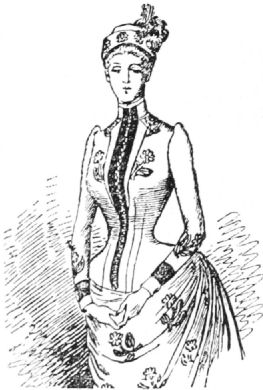
 THE Girls
 or What
is the Best Print for the Eyes?







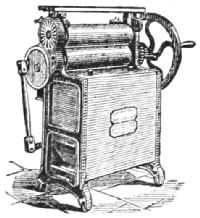
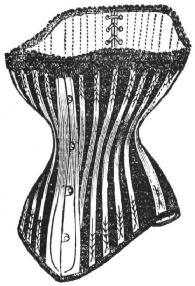


 REGISTERED TRADE MARK.




 Use the Patent Metallic Enamelled

 Paste.
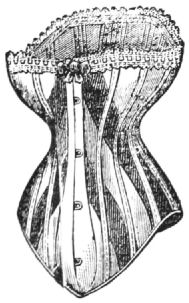
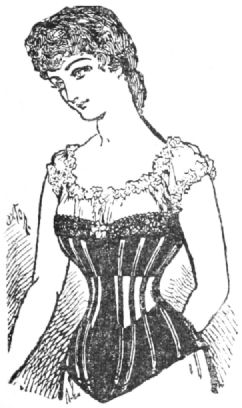





 Appointment.



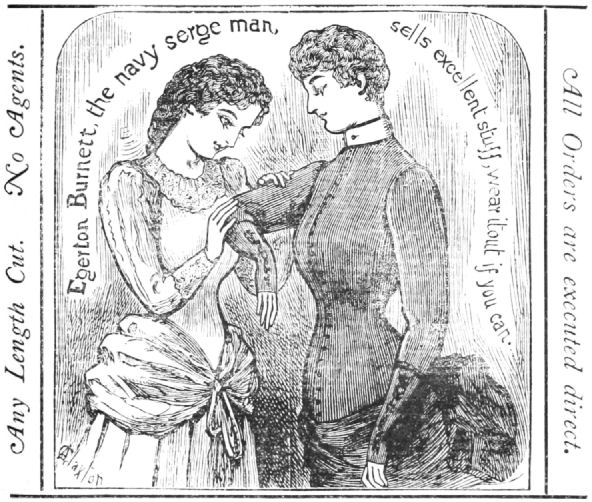




 Successful Men in this World?