Adams, Abigail, New York house at Richmond Hill, 16;
on removal of capital to Philadelphia, 116;
on Philadelphia, 125;
and Mrs. Bingham, 128, 129.
Adams, Abijah, bookkeeper for editor of Independent Chronicle, imprisoned for libel, 394, 395.
Adams, John, begins ‘reign’ as Vice-President, 3;
troubled as to proper titles for the President and Vice-President, 3;
on reception of President in Senate, 3;
what is the Vice-President when the President is in Senate?, 3;
writer of ‘Discourses of Davilla,’ published in Fenno’s Gazette, 17;
on Hamilton, 37;
Jeffersonians attempt to defeat for Vice-Presidency in 1792, 181;
elected, but by small margin, 183;
candidate for Presidency, in 1796, 310;
suspects trickery, 312;
retains Washington’s Cabinet, 314;
sketch of, at time of entering on Presidency, 316-26;
Maclay on, 317;
his vanity, 318;
jealousy of Washington, 319;
difficult in conference, 320;
not in sympathy with democracy, 322;
his love of country, 323;
moral courage, 325, 326;
war with France threatened, 339;
sends special mission to France, 345;
reports failure of envoys to France, and recommends Congress to authorize warlike measures, 363;
is ignorant that Hamilton through McHenry is dictating policy, 363;
action on publication of X Y Z papers commended, 366;
pulls down the pillars, 412;
is troubled about French situation, 412;
offers command of army to Washington, 412, 413;
conspiracy in Cabinet in favor of Hamilton, 412, 413;
nominates Hamilton, Pinckney, and Knox as major-generals, 413;
Federalist conspirators bombard him with suggestions that Hamilton should be second in command, 414;
war plans all in Hamilton’s hands, 418-28;
is ignorant of much going on, 426;
considers sending new mission to France, 428;
submits questions to Cabinet, for new negotiations with France or a declaration of war, 429;
Cabinet conspirators with Hamilton write war Message, 429;
A. rewrites Message, 429, 430;
is conscious of Cabinet conspiracy, 430;
appoints Minister to France, 430;
contest with Senate over confirmation, 430, 431;
agrees to compromise, 432, 433;
confounds his Cabinet conspirators, 436-38;
depressed by Federalist defeat in New York elections in 1800, 455, 456;
suspects Hamilton, 456;
dismisses McHenry and Pickering from Cabinet, 456, 457;
defeated for Presidency, 486;
relations with Jefferson, on quitting office, 489, 490.
Adams, John Quincy, on speculation by Congressmen, 47;
on Madison, 57.
Adams, Samuel, defeated for Representative to First Congress by Fisher Ames, 1;
looked to by Jefferson for aid in forming opposition party in Massachusetts, 144;
chosen by Jefferson as lieutenant, 144;
presides at meeting in Boston on Jay Treaty, 278.
Adams, Thomas, editor Boston Independent Chronicle, 152;
prosecuted under Sedition Law, 393-94.
Adet, ——, Minister to United States, from French Republic, credited with efforts to influence election in 1796, 311.
Alien Bill, aimed at Irish immigrants, 374;
French residents frightened and sail for France, 376;
passed by close vote, 379.
Allen, John, Representative from Connecticut, 379.
American Minerva, on party feeling, 232.
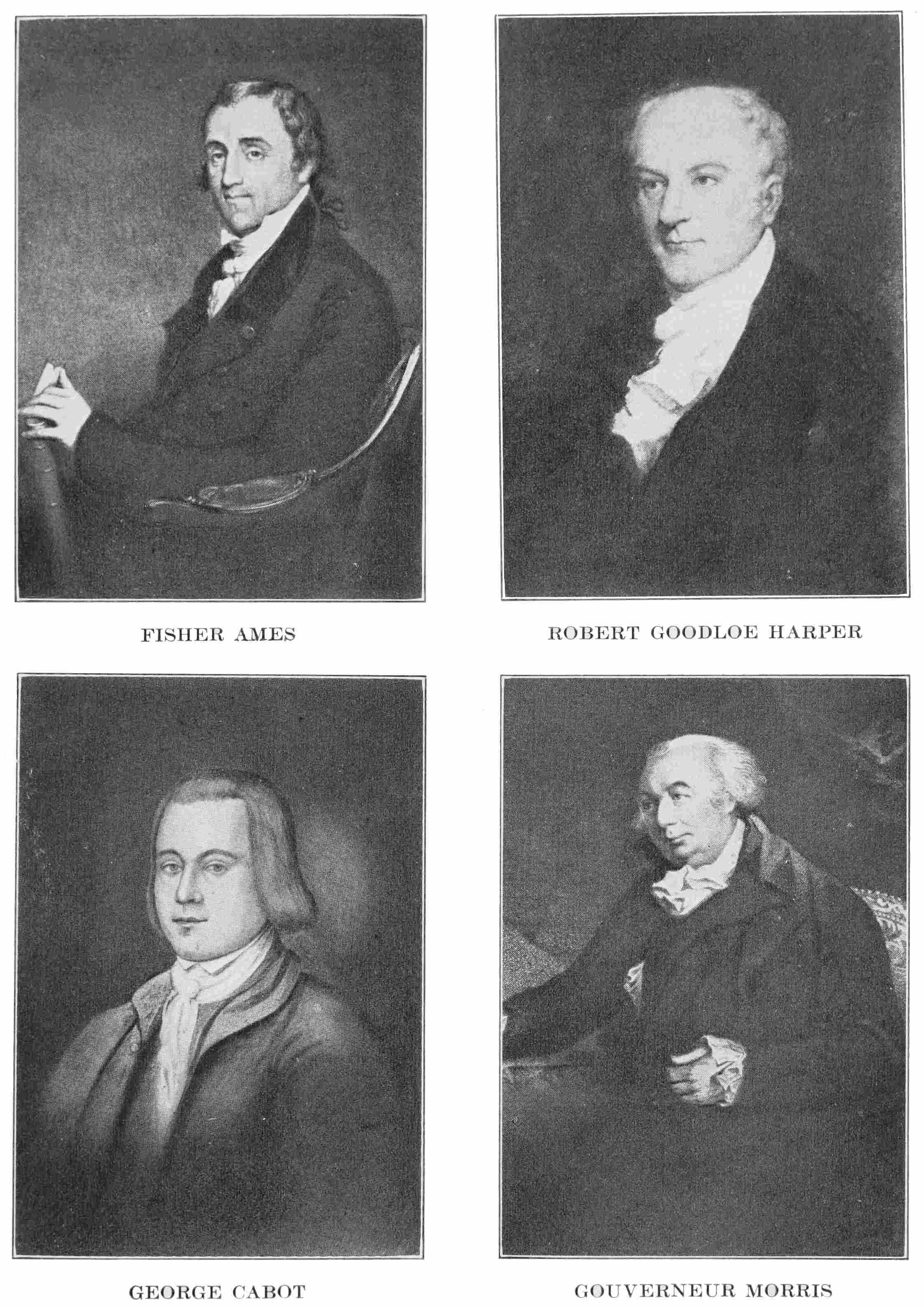
Ames, Fisher, Representative from Massachusetts, elected over Samuel Adams, 1;
cynical over prospect of improvement in form of government over old Confederation, 1;
not impressed by his fellow Congressmen, 1;
on cost of Federal Hall, 2;
on titles, 6;
Hamilton’s defender in House, 47;
on Madison, 51, 52;
disgusted with contest for site of permanent capital, 65;
on proposed amendment to Excise Bill, 73;
defends doctrine of ‘implied powers,’ 76;
elected director of Bank of United States, 90;
on Giles’s resolutions attacking Treasury management, 201, 203;
on yellow fever epidemic in Philadelphia, 237;
on Madison commerce resolutions, 240, 241;
sketch of, 302-04;
makes strong plea in House for appropriations to carry out Jay Treaty, 305, 306.
An Examination of the Late Proceedings of Congress Respecting the Official Conduct of the Secretary of the Treasury, pamphlet published in Philadelphia, 205;
authorship attributed to John Taylor of Caroline, 206.
Assumption, favored by North, where most of State indebtedness was unpaid, 59;
opposed by Virginia, whose debt was largely paid, 59;
defended by Madison, 61;
lobbying for passage of bill, 61;
uneasiness of friends of, 61, 62;
Hamiltonian press comments, 63;
adopted after Hamilton’s bargain with Jefferson, 65, 68.
Aurora, The, on the Jay Treaty, 273, 274, 276, 277, 280, 286;
on Hamilton’s Reynolds pamphlet, 355, 356.
Austin, Ben, rope-maker, Jeffersonian organizer in Massachusetts, 144.
Bache, Benjamin F., editor Pennsylvania Daily Advertiser, 152.
Bank of the United States, Hamilton’s Report on, 74;
bill for establishing, 75, 76;
debate on bill in Congress, 75, 76;
constitutionality questioned, 76;
fears of veto, 77;
much speculation in stock, 87, 88;
members of Congress involved, 89;
charges of ‘corrupt squadron,’ 89;
election of directors, 90;
public indignation, 90;
bill introduced to reimburse for loan to Government, 190.
Bard, Dr. John, fashionable physician, 15.
Barnwell, Robert, Representative from South Carolina, on Giles’s resolutions attacking Treasury management, 203.
Beckwith, ——, British Agent at Philadelphia, cultivates Madison, 80;
Jefferson on, 80;
protests Jefferson’s commendation of Paine’s Rights of Man, 83.
Biddle, Charles, resolutions of welcome to Genêt prepared at home of, 219;
leads parade in honor of Genêt, 220.
Bingham, Marie, daughter of Mrs. William Bingham, 130.
Bingham, William, elected director of Bank of United States, 90.
Bingham, Mrs. William, social leader in Philadelphia, 127, 128;
one of her fashionable gatherings described, 131-35.
Bishop, Abraham, Jeffersonian organizer in Connecticut, 145.
Black Friars, New York City club, 10.
Bloodworth, Timothy, on Excise Bill, 72;
lieutenant for Jefferson in North Carolina, 150.
Bond, Phineas, British Consul in Philadelphia, 244.
Boudinot, Elias, speculator in public securities, 62, 170;
on Giles’s resolutions attacking Treasury management, 201.
Bowen’s Wax Works, Philadelphia, 138.
Bradford, William, classmate of Madison at Princeton, 157.
Breckel, Van, Dutch Minister to United States, entertains lavishly, 13.
Breckenridge, John, of Kentucky, in conference with Jefferson on Alien and Sedition Laws, 407;
author of the Kentucky Resolutions, 408;
sketch of, 408, 409.
Brown, John, Jeffersonian leader in Kentucky, 180.
Burk, John D., editor of New York Time Piece, arrested for sedition, 405.
Burke, Ædanus, Representative from South Carolina, makes vicious attack on Hamilton and his financial measures, 62.
Burke, Edmund, and the French Revolution, 82.
Burr, Aaron, on wines in Philadelphia, 126, 147;
Jefferson moves to attach him to his party, 147;
fellow student of Madison at Princeton, 157;
possible candidacy of, for Vice-President in 1792, 181;
leader of Jeffersonians in New York election of 1800, 448;
sketch of, contrasted with Hamilton, 449;
combines forces with Society of Tammany, 451;
his campaign methods, 452-54;
urged for the Vice-Presidency in 1800, 455;
secures copy of Hamilton’s pamphlet attacking Adams, publishes it in The Aurora, 478.
Butler, Pierce, Senator from South Carolina, 9;
a ‘democrat’ whose associates were aristocrats, 134;
votes against ratification of Jay Treaty, 280.
Cabot, George, sees irrevocable ruin of country, 63;
pained at attitude of Madison, 63;
candid friend and supporter of Hamilton, 63;
elected director of Bank of United States, 90;
on meeting in Boston on Jay Treaty, 278;
on Washington’s hesitation in signing Jay Treaty, 285.
Callender, James Thomas, author of pamphlet, The Prospect Before Us, indicted and convicted under Sedition Law, 400-02;
defended by William Wirt, 401.
Capital of the Nation, battle on permanent site for, 64, 65;
bargaining to trade votes on Assumption, 65;
bargain between Hamilton and Jefferson on location of, 65, 67;
Hamilton indifferent as to location, 65;
Virginians and Marylanders want it at Georgetown, 65;
Jefferson’s part in bargain, 66.
Carrington, Edward, letter from Hamilton to, in 1792 campaign, 180.
Carroll, Charles, of Carrollton, Senator from Maryland, on titles, 5;
elected director of Bank of United States, 90;
mentioned for Vice-President in 1792, 181.
Certificates of indebtedness, issued to soldiers of Revolution, in lieu of cash, bought up by speculators, 44, 45;
Hamilton’s plans for redemption by funding scheme known in advance to members of Congress and friends, 46.
Charleston City Gazette, on the Jay Treaty, 281.
Chase, Samuel, Judge, and Mrs. William Bingham, 131;
presiding justice in Alien and Sedition trials, 398, 400-02.
Chateaubriand, Viscount de, on Philadelphia, 123, 125.
Chestnut Street Theater, Philadelphia, 137, 185.
Church, Mrs. Angelica, sister-in-law of Hamilton, 12;
letters on Hamilton, 39.
Cincinnati, Society of the, 48.
City Tavern, Philadelphia, 119.
Clinton, George, newspaper attack on Hamilton’s funding plans ascribed to, 50;
Jeffersonian leader in New York, 147;
in bitter fight with John Jay for governorship of New York in 1792, 178;
urged to become candidate for Vice-President in 1792, 181;
receives votes of four States, though not an avowed candidate, 183;
Jeffersonian candidate for Governor in New York election of 1800, 452.
Clymer, George, Representative from Pennsylvania, on Assumption, 58, 62;
dinner party at house of, described, 126, 127.
Cobbett, William, author of reply to Priestley’s addresses, 259;
proprietor of Porcupine’s Gazette, q.v.
Columbian Centinel, on Funding Bill, 57;
letters to, on Madison and the Funding Bill, 57;
‘Publicola’ (John Quincy Adams) attacks Jefferson, Paine, and democracy, 84;
on Jeffersonians, 152;
on Freneau’s attacks on Hamilton, 164;
on speculative craze, 176, 178;
on Indian expedition of St. Clair, 175;
on Hamilton’s vindication of official conduct of Treasury, 199;
on French Revolution, 207, 211;
on relations with England, 220;
on the Jay Treaty, 278;
on prospects of war with France, 366;
war propaganda, 370, 371.
Congress, meets in New York City, 1;
Washington and Adams declared elected, 2;
ceremonial forms and titles excite much discussion, 3-6;
first tariff measure in, 19;
executive departments established, 19, 20;
jealousy of executive, 20;
Hamilton’s Report on Public Credit debated, 44 ff.;
debate on Funding Bill, 48 ff.;
scandal over speculation by members in certificates, Bank stock, and scrip, 89;
‘corrupt squadron,’ 89;
bill to pay loan from Bank of United States hotly debated, 190-92;
Giles’s resolutions condemning Hamilton, debates on, 199-203;
resolutions defeated, 203;
Madison’s resolutions on Jefferson’s Report on Commerce, 240;
Non-Intercourse Act, as reply to England’s high-handed seizure of American vessels, 244;
debates in Senate on Jay Treaty, 272;
debate in House over right to have papers as to treaty, 298;
Alien Bill, debates on, 374-79;
Sedition Bill, debates on, 378, 380.
Connecticut Gazette, on French Revolution, 211, 212;
on Genêt, 219.
Cooper, Dr. Thomas, scientist and physician, indicted under Sedition Act, 398;
convicted and imprisoned, 399;
refuses to ask for pardon, 399.
Coxe, Tench, Assistant Secretary of Treasury under Hamilton, and location of capital, 65.
Croswell, Joseph, poem by, on French Revolution, 208.
Dallas, Alexander James, one of Jefferson’s leaders in Pennsylvania, 148;
aids in preparations for reception of Genêt, 219;
efforts of, in case of brig Little Sarah, 227, 228;
defends Duane in prosecution under Alien Law, 396, 397.
Davie, William R., on opposition to Jay Treaty, 281.
Dayton, Jonathan, 148;
scandal over retention of public funds, 466.
Democratic Party. See Jeffersonians.
Democratic Clubs, organized, 222, 223;
Federalists insist they must be abolished, 260;
condemned by Washington in Message, 261.
Democratic Societies. See Democratic Clubs.
De Moustier, French Minister to United States, Jefferson on, 108.
Dodd, William E., quoted on Jefferson, 96.
Duane, William, editor of The Aurora, arrested and prosecuted under the Alien Act, 396, 397;
is acquitted, 397;
indicted for sedition, 397;
assaulted and beaten by soldiers, 420;
prosecuted under Sedition Law, 442.
Duer, William, financial failure of, in 1792 starts panic, 176, 177;
threatens damaging revelations from debtors’ prison, 187.
Dunlap, William, historian of American theater, 10.
Dwight, Timothy, on newspapers, 156.
Ellsworth, Oliver, Senator from Connecticut, on titles, 4;
and the Assumption Bill, 62;
on French Revolution, 209;
efforts of, to induce Washington to send Hamilton on special mission to England, 247;
on Washington’s delay in signing Jay Treaty, 285.
Emmet, Thomas Addis, Irish refugee (brother of Robert Emmet), of the New York Bar, 375.
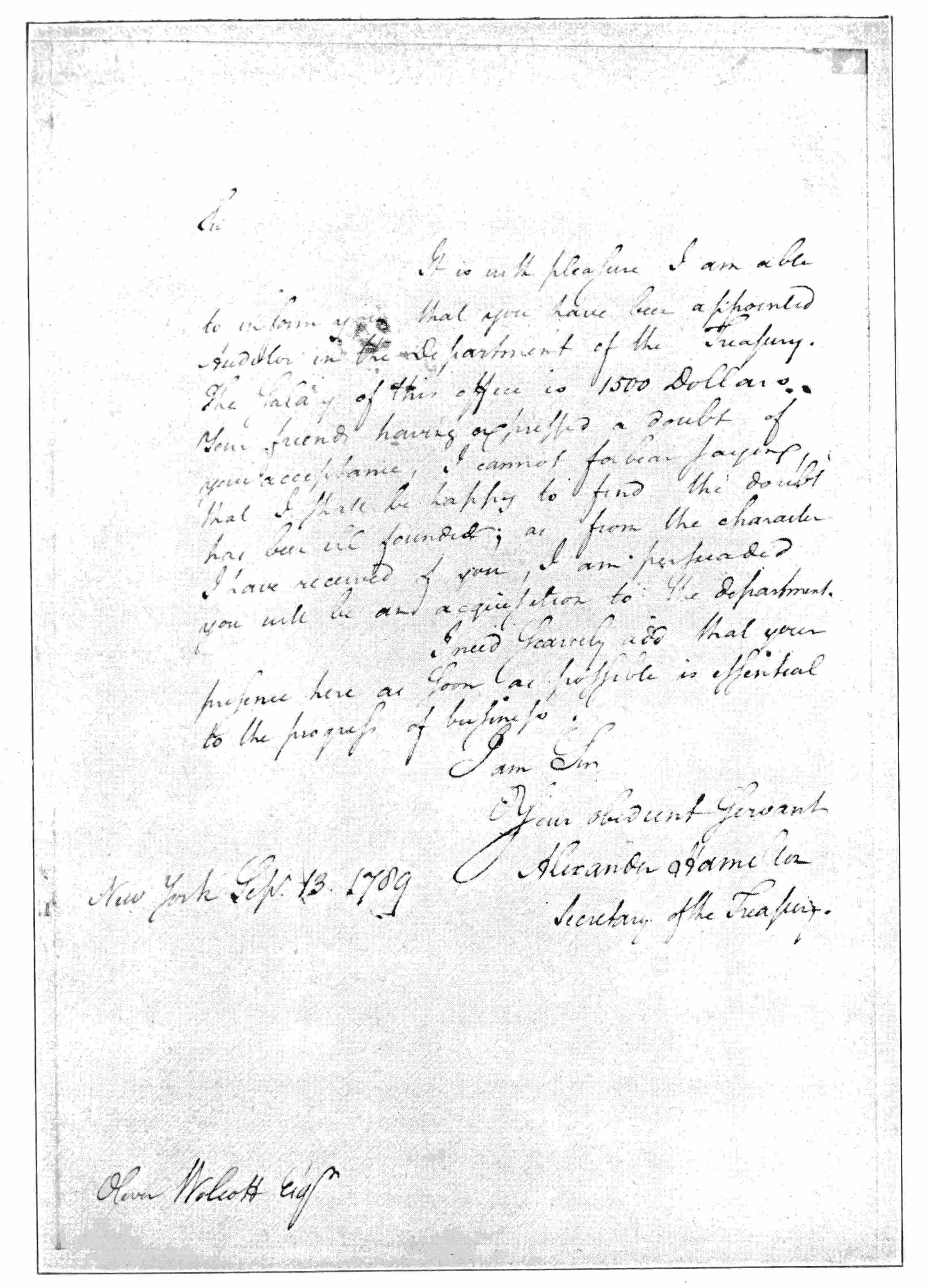
Everleigh, Nicholas, appointed Comptroller of the Treasury, 21.
Excise Bill, warm debate on, in Congress, 71, 73;
amendment proposed to prohibit revenue officers interfering in elections, 73;
debate on duration of tax, 73.
Fairfax estate, Virginia, litigation over, 281.
Federal Gazette, Freneau in, opposes Bank Bill, 78.
Federalists, policy to capitalize politically
popularity of Washington, 41;
from beginning under domination of Hamilton, 140;
favored by commercial, intellectual, and professional classes, 140;
leaders men of strength in most of the States, 140, 141;
opposition to, inevitable, 144;
denounce Democrats as conspirators, 151;
attack Jeffersonian newspapers in Federalist organs, 203, 204;
sympathies with royalists in French Revolution, 207, 208;
enforce policy of neutrality in French Revolution wars, 216;
force recall of Genêt, 231;
avert war with England and send Jay to negotiate treaty, 247;
leaders induce attacks on ‘Democratic Societies,’ 261;
defend Jay Treaty, but with wry faces, 285-88;
refuse to confirm nomination of Rutledge as Chief Justice, 289;
pass Alien and Sedition Acts, 375-80;
efforts of leaders to force war with France, 412-28;
mean war to be a Federalist war, 412;
Hamilton is to conduct war with no interference from Adams, 412;
secure appointment of Hamilton as second in command, 415;
conspire to prevent Jeffersonians from securing commissions in army, 416;
war not popular among the people at large, 418;
raising funds for war purposes difficult, 418;
taxes for war arouse resentment, 419;
recruiting slow, 421;
public refuse to believe there is to be a war, 421, 422;
Logan’s visit to France upsets Federalist war plans, 423, 424;
the war hawks disappointed, 425, 426;
Federalists determined on war, 426, 427;
Cabinet conspirators write war Message for Adams, 429;
scheme to override Adams, 430;
caucus, 430;
friends of Adams’s policy in majority, 430;
losing ground politically in 1799, 440;
plan for changing method of counting electoral votes in Presidential election, 441, 442;
bill passes Senate, but fails in the House, 442, 443;
spring elections of 1800 show tide running against them, 448, 451-55;
under Hamilton’s influence leaders plan to defeat Adams for Presidency, 455-58;
hints at secession from Federalist leaders in case of Jefferson’s election, 468, 470;
party split hopelessly on publication of Hamilton’s attack on Adams, 481, 482;
defeated in election, leaders conspire to have electors vote for Burr, 491;
Hamilton opposed to plan, 491-501;
plan fails, after much balloting, 506.
Fenno, John, protégé of Hamilton, establishes Gazette of the United States, 4;
his paper aspires to be the ‘court journal,’ 4;
King and Hamilton interested in financing paper, 153, 154;
patronage of government printing, 154;
death of, from yellow fever, 381.
Fenno, John Ward, son of founder of Fenno’s Gazette, continues publication, 381.
Fitzsimons, Thomas, Representative from Pennsylvania, speculator in certificates, 47;
Hamiltonians meet at lodgings of, 58;
and the Assumption Bill, 62;
Hamilton’s lieutenant in the House, 186;
introduces resolution asking Hamilton to report plan for redemption of part of national debt, 186;
resolution precipitates sharp debate, 186, 187;
on Giles’s resolutions attacking Treasury management, 201.
Florida Tea Garden, New York City, 10.
Ford, Paul Leicester, quoted, on Jefferson, 199.
France, revolution in, effect of, in United States, 207;
asked to recall Genêt, 216;
Adams sends mission to, 345;
envoys unsuccessful, 363;
publication of X Y Z papers, 364, 365;
Adams recommends preparations for war with, 365.
Franchise, in 1789 limited in most of the States, 142;
property qualifications, 142;
Jefferson and, 142.
French Revolution, the, its influence in the United States, 207, 208;
Hamiltonians instinctively hostile to purposes of, 208;
denounced by leading Federalist Senators, 209;
supported by Jefferson, 210;
sympathy for, of the common people, 213;
enthusiasm for the French, 213, 214;
enthusiasm for, heightened by arrival of Genêt, 221, 222;
liberty caps and liberty poles, 222;
Democratic and Jacobin Clubs everywhere, 223;
Federalists alarmed, 223;
clubs denounced as vicious ‘nurseries of sedition,’ 223.
Freneau, Philip, ‘Poet of the Revolution,’ induced by Madison to establish newspaper, 154;
appointed to clerkship in Department of State, 155;
establishes National Gazette, 155;
Jeffersonians aided, 155;
at once assumes leadership, 155;
paper recognized as Jefferson’s organ, 155;
arouses Federalist rage, 156;
influence of paper felt in back country, 156;
classmate of Madison, Lee, Burr, and Brockholst Livingston at Princeton, 157;
rebel by nature, 158;
his career in the Revolutionary War, 158, 159;
Gazette carefully watched by Hamilton, 163;
attacks Hamilton’s policies, 164-68;
attacked anonymously in Fenno’s Gazette, 168;
his dignified reply, 168;
denies any connection of Jefferson with his paper, 169;
renews crusade against Hamilton’s financial policies, 195, 196;
contrast of newspaper with Fenno’s, 163;
criticisms of acts of Administration, 163;
‘Brutus’ article, 164;
‘Sidney’ articles open attacks on Hamilton, 164, 165;
controversy with Fenno, 166, 167;
charges Hamilton with authorship of anonymous articles in Fenno’s Gazette, 169, 170;
‘Patriot’ articles in National Gazette, 195-97;
analyzes votes in Congress vindicating Hamilton’s financial policies, 204;
on Genêt and French Revolution, 218, 219;
begins series of attacks on Washington, 221.
Funding of debt, Hamilton’s scheme for, well received, 44;
protests against, because of speculations in certificates, 45.
Funding Bill, acrimonious debate on, in Congress, before passage, 48 ff.
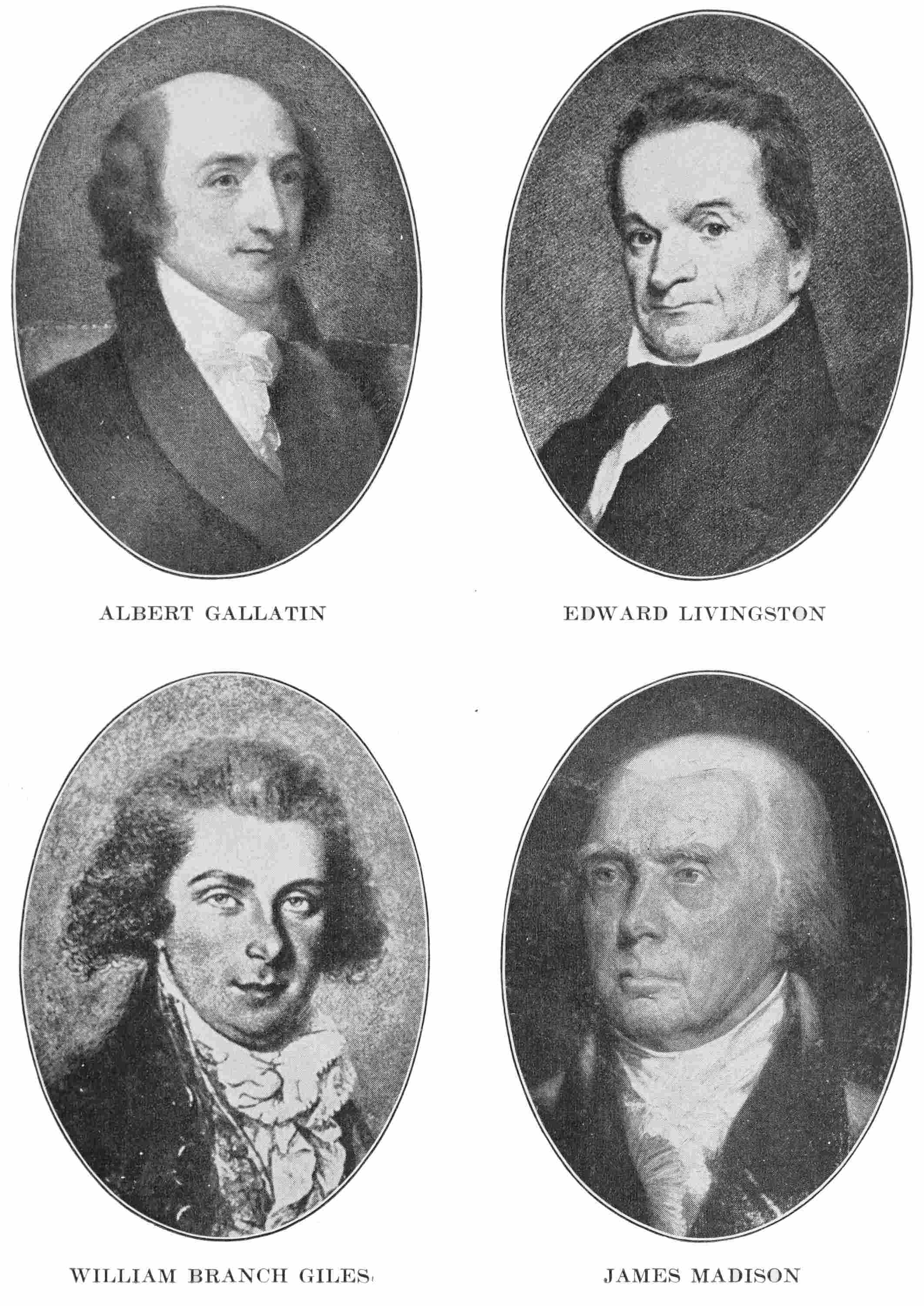
Gallatin, Albert, Representative in Pennsylvania Legislature, denounces Hamilton’s Excise Bill, 70;
leading Jeffersonian in Pennsylvania, 149;
elected to Senate from Pennsylvania, but not allowed to take seat, on technicality, 289;
elected as Representative, 289;
sketch of, 292-94.
Gates, Horatio, Jeffersonian candidate in New York elections of 1800, 452.
Gazette of the United States, ‘court journal,’ 4, 10;
Adams’s ‘Discourses of Davilla’ published in, 17;
Fenno defends speculation in public securities, 48;
Fenno in, on criticisms of proceedings of Congress, 57;
on Funding Bill, 57;
attacks in, on ‘demagogues,’ 63;
on Bank, 79;
Fenno’s verses on passage of Bank Bill, 79;
probably established with aid of Rufus King, 153;
Hamilton interested in raising money for, 154;
tone pro-English, 154;
received government patronage, 154;
controversy with National Gazette, 166-70;
Fenno engages in controversy with Freneau, 166, 167, 169;
on Hamilton’s defense of official conduct of Treasury, 199;
on Boston Argus, 203;
on French Revolution, 211;
on attacks on Washington, 221;
‘Pacificus’ letters in, by Hamilton, 225, 226;
attacks on Jefferson, 233;
on the Jay Treaty, 282.
Geisse’s Tavern, Philadelphia, 121.
General Advertiser, on defeat of Jay by Clinton in New York election, 178.
Genêt, Edmond Charles, Minister from the French Republic, arrives in Charleston, 124;
enthusiastically received everywhere, 218;
his progress to Philadelphia continuous ovation, 218;
formally welcomed at Philadelphia by people, 219, 220;
cordially received by Jefferson, 220;
cold reception of, by Washington, 220;
impudent conduct of, 224.
Giles, William Branch, Representative from Virginia, in favor of Excise Bill, 71, 72;
opposes Bank Bill, 76;
organizer for Jefferson in Virginia, 149;
opposes bill to repay loan from Bank of United States, 190, 191;
his personal characteristics, 192;
a giant in debate, 194;
selected by Jefferson to lead in attacks on Hamilton’s financial policies, 195, 197;
presents resolutions demanding information from Secretary of the Treasury, 197;
presents resolutions condemning Hamilton’s conduct in management of Treasury, 199-203;
in conference of Jeffersonian leaders, 205;
on Madison commerce resolutions, 241.
Golden Lion, the, Philadelphia tavern, 120.
Goodrich, Chauncey, on adoption of French Revolution titles, 222.
Gove, Christopher, prominent Massachusetts Federalist, 47;
speculates largely in certificates, 47.
Granger, Gideon, Democratic leader in Connecticut, 145.
Gray’s Gardens, on the Schuylkill, 121, 122.
Graydon, Rev. Alexander, on yellow fever epidemic in Philadelphia, 237.
Greenleaf, Thomas, editor New York Journal, 152.
Grenville, Lord William Wyndham, negotiates treaty with John Jay, 269-71.
Grout, Jonathan, opposes Bank Bill, 76.
Gunn, Georgia Senator, votes for ratification with Jay, 283;
burned in effigy along with Jay, 283.
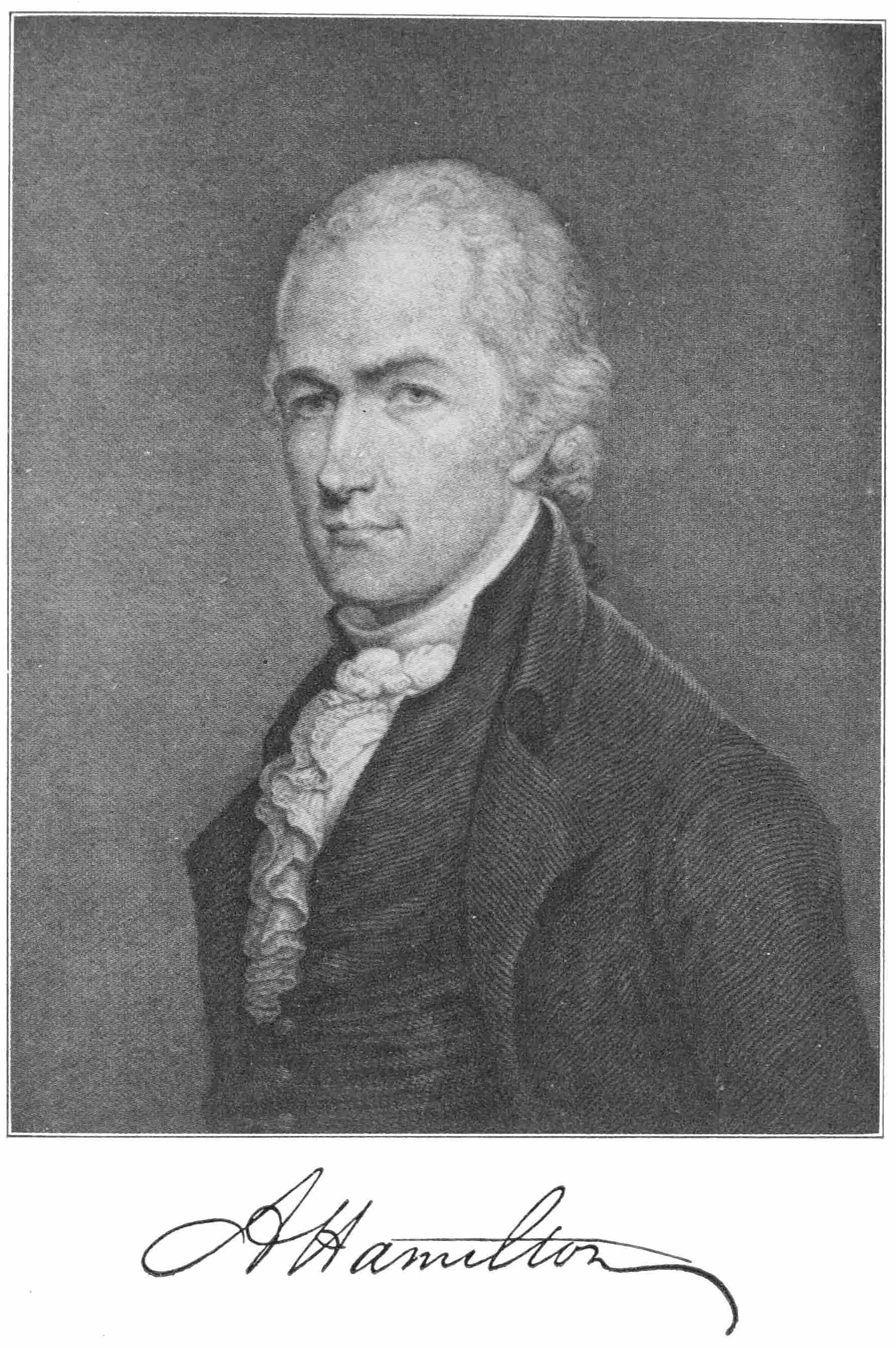
Hamilton, Alexander, an interested spectator at Washington’s inaugural, 7;
appointed Secretary of the Treasury, 21;
a portrait, 22-42;
his personal appearance, 22;
his birth, illegitimate, 23;
his mother brilliant and high-strung, 23;
his ambition always military, 24;
comes from the West Indies to America, 25;
his genius that of writer and thinker on governmental affairs, rather than as soldier, 25;
his Federalist writings, 26;
master of invective, 26;
a persuasive orator, 26, 27;
refused permission by Congress to present his reports personally, 27;
essentially an aristocrat, 28;
ideal of government ‘the rule of gentlemen,’ supported by a strong military force, 29;
distrusted always a democracy, 29;
held public opinion of no value, 29;
disapproved of the Constitution as adopted, but urged its ratification as better than nothing, 30;
his own plan presented to the Constitutional Convention radically different from that adopted, 30, 31;
his republic to be an aristocratic republic, with the States as States abolished, 31;
took little part in Constitutional Convention, 32;
large factor in making the Convention possible, and in securing ratification of Constitution, 32, 33;
his sense of system, 33;
capable of long-sustained exertion, 33, 34;
a hard fighter, 34;
honesty, 34;
as a party leader, lacking in tact, 35;
never consulted, but directed, 35;
egotistical and vain, 36;
lacking in judgment in handling of men, 36;
unnecessarily offended sensibilities, 36, 37;
lacked sympathy always with the ‘common man,’ 37;
affectionate in his family relations, 38;
with his equals socially delightful companion, 38;
inordinately fond of women and their society, 38, 39;
always of delicate rather than robust health, 39, 40;
not a church member, but a believer in religion, 40;
attitude toward his chief, 41;
obsessed by idea of a strong government, 45;
believed necessary to enlist propertied interest, 45;
indifferent to unpropertied classes, 45;
active in interest of Funding Bill, 49;
bargains with Jefferson on location of new national capital, 66-68;
at high tide of popularity, 69;
considers himself Prime Minister, 69;
offends other Cabinet members, by dictatorial manner, 69;
indifferent to public opinion, 70;
prepares Excise Bill, 70, 71;
takes personal charge of Excise Bill in Senate, 73;
National Bank Bill, 74;
enunciates doctrine of implied powers, 75;
breaks with Jefferson when J. advises Washington Bank Bill is unconstitutional, 78;
Fenno’s Gazette his organ, 154;
Report on Manufactures filed with Congress, 161;
interests capital in developing Passaic Falls, 162;
portrait by Trumbull subscribed for, 162;
attention attracted by Freneau’s Gazette, 163;
believes Jefferson responsible for attacks in paper, 166;
attacks Freneau anonymously, 168;
tries to drive Jefferson from the Cabinet, 169;
in Fenno’s Gazette attacks Jefferson, 172;
denies his own unfriendliness to Constitution, 173;
complains of Jefferson’s interference with Treasury Department, 173;
warns Adams of effort to defeat him in 1792 campaign, 181;
possible candidacy of Aaron Burr for Vice-President maddening, 181;
makes strenuous efforts in Adams’s behalf, 181;
urges Adams in dictatorial terms to his duty, 182;
blackmailing of, by Reynolds, 187;
tells complete story of relations with Reynolds’s wife to deputation from Congress, 188-90;
amazes House by reports, 198;
his official conduct of the Treasury vindicated by Congress, 203;
alarmed at enthusiasm for French Revolution, 214;
urges Washington to return to Philadelphia, 214;
takes matters into his own hands and decides on proper policy of Jefferson’s Department of State, 215;
prepares list of questions for Washington to submit to Cabinet, 215;
his position on the reception to be given Genêt, 215;
writes series of papers for Fenno’s Gazette justifying policy of Neutrality in French Revolution struggle, 225, 226;
is answered by Madison, 226;
aided by Genêt’s conduct, 227;
is stricken with yellow fever, 237, 238;
sees risk of war with England, 245;
is mentioned as special envoy to England, 246;
declines to have his name considered, 247;
goes in person to put down Whiskey Insurrection, 254-56;
plans to crush the Democratic Societies, 256;
is aided by Washington’s attack on Societies, in Annual Message, 262, 264;
prepares to leave Cabinet, 266;
considers his work finished, 266;
opens law office in New York, 268;
plans to direct Federalist Party in Congress by correspondence, 268;
dubs Jay Treaty an ‘execrable thing,’ 271;
is injured in rioting in New York, 276, 277;
consults with leading Federalists on campaign of 1796, 308;
distrusts Adams, 308;
H. and King decide to offer support to Patrick Henry, 308, 309;
H. turns to Thomas Pinckney, 310;
plans to bring in Adams second, 311;
publishes pamphlet on relations with Mrs. Reynolds, 355;
advises Adams through McHenry on French situation, 362;
prepares to play trump card—X Y Z papers—to force war with France, 364;
advises moderation in framing Alien and Sedition Bills, 376, 377;
is nominated Major-General in prospective war with France, 413;
schemes to be made second in command, 414;
directs fight against Adams through his tools in Cabinet, 414;
in correspondence with Miranda, South American adventurer, 427, 428;
opposed by Burr in 1800 New York elections, 448—55;
contrast between H. and Burr, 449;
plans election of Presidential electors he can control, with view of defeating Adams, 451;
power broken with defeat of Federalists in New York in 1800, 454;
tour of New England in 1800, 459;
schemes against Adams in contest for Presidency, 459-65;
writes pamphlet attacking Adams, not intended for general publication, 477, 478;
effect of pamphlet when published, 479, 480.
Hamilton, Mrs. Alexander, daughter of General Schuyler, 134.
Hamilton, William, and trees in Philadelphia, 117.
Hammond, George, British Minister to United States, 246;
more friendly to Hamilton than to Jefferson, 246.
Hancock, John, Jefferson’s aide in forming new party, 144.
Harper, Robert Goodloe, president of Jacobin Club of Charleston, 223;
Representative from South Carolina, 346;
sketch of, 347;
on the Sedition Bill, 379, 380.
Harrowgate Gardens, Philadelphia, 121.
Hawkins, Benjamin, Senator from North Carolina, in conference with Jeffersonian leaders, 205.
Henry, Patrick, on Assumption, 60;
Hamiltonians offer him support for Presidency, 309;
declines overtures made through John Marshall, 309.
Higginson, Stephen, on Jay Treaty meetings in Boston, 278.
Holt, Charles, editor of New London Bee, convicted of sedition, 403, 404.
Humphreys, William, secretary to Washington, 119.
Hutchinson, Dr. ——, in yellow fever epidemic in Philadelphia, 237.
Independent Chronicle, letters to, on Funding Bill, 57, 58;
on Funding Bill, 58;
on First Congress, 79;
correspondents to, reply to letters of ‘Publicola,’ 85;
other letters in, defend ‘Publicola’ letters, 85;
on Freneau’s paper the Federal Gazette (National Gazette), 155;
on Indian expedition of St. Clair, 175;
on speculative craze, 176, 177;
on Jay Treaty, 281, 283, 284;
on X Y Z papers, 364.
Indian Queen, Philadelphia tavern, 120.
Iredell, James, Senator from South Carolina, on Genêt, 218.
Izard, Ralph, Senator from South Carolina, on titles, 5;
and the Assumption Bill, 62;
on John Adams, 316.
Jackson, James, Representative from Georgia, later Senator, opposes Hamilton’s financial measures, 45, 49;
on funding of debt, 49, 50;
on Assumption, 60, 61;
on Excise Bill, 71, 72;
opposes Bank Bill, 76;
aids Jefferson in organizing party, 150.
Jackson, William, secretary to Washington, 119.
Jackson, Mrs. William, sister of Mrs. William Bingham, 135.
Jacobin Club, Democratic Club of Charleston, 223.
Jarvis, Dr. Charles, of Massachusetts, Jeffersonian leader, 144;
on French Revolution, 208;
unsuccessful candidate for Congress against Fisher Ames, 257.
Jay, John, considered by Washington for post of Secretary of the Treasury, 21;
defeated for governorship of New York, in 1792, 178;
appointed special Minister to Great Britain, 247, 248;
obnoxious to Jeffersonians, 248;
his experience in diplomacy, 248;
bitter fight in Senate over confirmation, 249;
concludes treaty with Great Britain, 269-71;
is denounced when provisions of treaty are published, 274;
burned in effigy, 274.
Jay Treaty, the, called ‘Grenville Treaty’ by Jeffersonians, 269;
negotiated by John Jay and Lord Grenville, 269-71;
provisions of, 271;
dubbed by Hamilton an ‘execrable thing,’ 271;
debated at length in Senate, 272;
efforts of Senators to prevent publication, 272;
storm of denunciation over its provisions, 273;
rioting in many places, 274-76;
endorsed at instance of Federalists by chambers of commerce, 279;
mob spirit on account of, in Boston, 279;
protests against, from Charleston, 280, 281;
meetings in opposition to, throughout the country, 281-85;
demands for papers and instructions as to, made by House before making appropriations required to carry it out, 298;
papers refused by President, 298.
Jefferson, Thomas, shocked at unrepublican tone of New York society, 12;
bargains with Hamilton to aid in passage of Assumption Bill, 66;
afterward claimed Hamilton had deceived him, 67;
letters of, on Assumption, 67;
letters on Treasury policies, 74;
gives Washington written opinion on constitutionality of Bank Bill, 77;
relations with Hamilton strained, 78;
tour through New England, 79, 81;
writes letter commending Paine’s Rights of Man, which printer uses as preface to pamphlet, with J.’s name and official title, 83;
J. embarrassed, 83;
Adams angry at J.’s supposed reference to him, 84;
J. explains and Adams satisfied, 85;
J. pleased with effect of newspaper turmoil, 85, 86;
position as friend of the ‘man of no importance’ established, 86;
comment on speculative craze, 87;
makes political issue of speculation by Federalist Congressmen, 90;
begins work of organizing an opposition party, 90;
a portrait of the man, 92-113;
personal appearance, 92;
careless in dress, 92;
dignified, but shy, 93;
thought lacking in frankness, 93;
glance shifty, 93;
entertaining talker, 94;
maternal ancestry aristocratic, 94;
father a Western pioneer, 95;
J. a Westerner with Eastern polish, 95;
educated at William and Mary College, 95;
well trained in the law, 96;
influenced by Locke’s writings, 96;
J.’s democracy inherent, 96;
as member of Virginia House of Burgesses, attacks system of land entail and law of primogeniture, 97;
never forgiven by Virginia landed aristocracy, 98;
as U.S. Minister to France, intimate of Lafayette, 98;
popular with all classes, 98;
familiarizes himself with French life in the country, 99;
diplomatic reports illuminating, 99;
comments on French system of government, 99;
not hostile to monarchy, 100;
reports to Jay on rioting in Paris, 100;
intimate of the Girondists, 100;
returns to America before the Terror, 101;
a humanitarian, 101;
opposed to capital punishment save for treason, 101;
a humane master, 102;
hostile to slavery, 102;
wrote the Ordinance of the N.W. Territory, 102;
not an atheist nor hostile to Christian religion, 103;
contributed regularly to support of clergy, 103;
hated by the clergy for forcing separation in Virginia of Church and State, 104;
so-called atheist law, 104;
his view of creation, 104, 105;
not hostile to the Constitution and favored its ratification, 105;
called Convention ‘an assembly, of demigods,’ 105;
first impressions of Constitution unfavorable, 105;
an ardent friend later, 106;
writes Madison praising The Federalist papers, 106;
writes Washington, hoping a Bill of Rights will be added, 106;
his views on, quoted from his Autobiography, 107;
without a peer in the mastery of men, 107;
his understanding of mass psychology, 107;
a voluminous letter writer, 107;
valued the press as engine of democracy, 108;
captivating in personal contacts, 108;
led rather than drove, 108;
original ‘Easy Boss,’ 108;
not an orator, 109;
disliked contentious debates, 109;
had great self-control, 109;
never belittled his enemies, 110;
admired Hamilton’s ability, 110;
estranged from John Adams for years, revived in last years the old friendship, 110;
not an idealist, but an opportunist, 110;
a resourceful politician, 111;
his diversified interests, 112;
loved art in all its forms, 112;
arranged in Paris for statue of Washington by Houdon, 112;
visited by Humboldt, 113;
interested in mechanical and scientific inventions, 113, 114;
the life of the farmer his chief interest, 113;
democratic in sympathies, but lived as an aristocrat, 138;
finds commercial interests, professions, and major portion of press Federalist, 140;
notes resentment of farmers and old Revolutionary soldiers, 141;
notes dissatisfaction with Excise Law, 141;
fears doctrine of implied sovereignty, as undermining sovereignty of States, 141;
problem to reach and arouse masses, 142;
material for opposition party abundant, 142;
J. notes local parties in opposition in every State, 143;
problem to consolidate and broaden local into national issues, 143;
chooses leaders in various States with keen judgment, 143-50;
efforts directed to broaden franchise, 151;
importance of a national newspaper, 152;
sends letter of resignation to Washington, 166;
grows more dissatisfied with policies of Government under Hamilton’s leadership, 168;
is attacked by Hamilton in newspapers, 169;
refuses to be drawn into newspaper controversy with Hamilton, 173;
official associations and social relations, unpleasant, 173;
writes to personal friends with much bitterness of Hamilton’s attacks, 173, 174;
tries to drive Hamilton from Cabinet, and fails, 203;
no match for Hamilton in field of finance, 206;
sees new issue in position of Federalists on French Revolution, 210;
ardent in support of French, 210;
believes American Republic bound up with success of French Revolution, 210;
senses the sympathies of the ‘people of no importance,’ 213;
his position on question of receiving Genêt, 216;
agrees to Proclamation of Neutrality, 216;
urges Madison to reply to Hamilton’s articles on Neutrality, 226;
and the brig Little Sarah, 228;
Genêt’s conduct obnoxious to J., 228;
plans to divorce Jeffersonians from Genêt, 229;
discusses with the President as to Genêt, 230;
prepares letter to American Minister at Paris asking Genêt’s recall, 230;
socially ostracized in Philadelphia, 232-33;
resigns his portfolio as Secretary of State, 233;
his correspondence with both British and French Ministers, impartial, 238;
Report on Commerce, and Algerine piracy, 238, 239;
returns to private life, 239;
plans to force fighting in congressional elections of 1794, 256-58;
lives in retirement at Monticello, but active in political plans, 259;
indifferent as to Presidency contest in 1796, 307;
concerned as to health, 307;
his letter to Philip Mazzei on American politics, 308;
Democrats decide in 1796 on J. as their candidate for President, 308;
J. receives only three votes less than Adams, and hence is chosen Vice-President, 312;
J.’s letter to Mazzei again brought up, 351;
bitterly attacked in Fenno’s Gazette, 352;
toasted on Washington’s Birthday at Harvard College, in satirical vein, 353;
J. silent under slanderous attacks in newspapers, 353;
his social ostracism in Philadelphia continues, 354;
Jefferson plans opposition to Administration policy toward France, 363, 364;
the Sprigg Resolutions, 363, 364;
publication of X Y Z papers, 365, 366;
his party seeks, on his advice, to moderate war feeling, 374;
outraged by passage of Alien and Sedition Laws, 407;
moves for their repeal, 407;
conference at Monticello, 407;
inspires Virginia and Kentucky Resolutions, 407, 408;
fears insurrection, 418;
election of, as President in 1800, inevitable, 441;
no rival in his party, 444;
his political genius, 444-48;
elected President, 486;
his meeting with Adams in Washington, 489, 490;
farewell to Senate, 507;
inauguration, 509, 510.
Jeffersonians, party of opposition organized by Jefferson (called ‘Jeffersonians,’ ‘Jacobins,’ ‘Democrats,’ and other names, officially ‘Republicans’), 144-50;
take advantage of divisions among Federalists, 151;
‘Jeffersonian insolence,’ 151;
make gains in the congressional elections, 1792, 180;
strong in Virginia, 180;
five States carried by, in 1792, 183;
gains by, in election of 1794, 312;
sweep West and South in 1796, 312;
embarrassed by publication of X Y Z papers, 364, 365;
aided by excesses of Federalists in pushing prosecutions under Sedition Act, 365-411;
win in New York elections of 1800, 455;
confident in Presidential campaign of 1800, 465-85;
elect Jefferson President, 506.
Johnson, Samuel, of North Carolina, on Assumption Bill, 63;
chosen director of Bank of United States, 90;
on Jay Treaty, 281.
Jones, Willie, North Carolina leader of Jeffersonians, 149.
Jumel, Madame, 39.
Kentucky Resolutions, written and introduced in Legislature by Breckenridge, at suggestion of Jefferson, 408.
King, Rufus, Senator from New York, on Assumption, 60;
Federalist leader in Senate, 60;
and the Assumption Bill, 62;
discouraged at apparent failure of Assumption Bill, 63;
chosen director of Bank of United States, 90;
on French Revolution, 209;
conference of Federalist leaders in Philadelphia lodgings of, 247;
on business in Senate, 298, 299;
on suppression of Irish rebellion, 375;
protests release by British of Irish prisoners, 375.
Kirby, Ephraim, Democratic organizer in Connecticut, 145.
Knox, Henry, Secretary of War, 13;
resents Hamilton’s interference with War Department purchases, 69;
attacked by Jeffersonians for mismanagement of St. Clair expedition against the Indians, 175;
on reception of Genêt, 215.
Knox, Mrs. Henry, a Mrs. Malaprop, 15.
Langdon, John, Senator from New Hampshire, Democratic leader in New Hampshire, 146;
votes against Jay Treaty, 282.
Laurance, John, Representative from New York, on Madison’s amendment to Funding Bill, 55;
and Assumption Bill, 62;
on Excise Bill, 72;
elected director of Bank of United States, 90;
on Giles’s resolutions attacking Treasury management, 201.
Lear, Tobias, secretary to Washington, 119.
Lee, Richard Henry, Senator from Virginia, on question of titles, 5;
fellow student of Madison at Princeton, 157.
L’Enfant, Pierre Charles, designs Federal Hall, New York City, 2;
employed by Hamilton in planning city of Paterson, 162.
Little Sarah, brig, 227.
Livermore, Samuel, on effect of amendment to Excise Bill, 73.
Livingston, Brockholst, classmate of Madison at Princeton, 157;
in New York elections of 1800, 452.
Livingston, Edward, Representative from New York, sketch of, 290, 291;
asks that the papers and instructions pertaining to Jay Treaty be laid before the House, 294;
debate on resolutions of, on Jay Treaty, 294-97;
resolutions of, on Jay Treaty, adopted, 297;
on the Alien Bill, 378;
on the Sedition Bill, 379.
Livingston, Robert R., Chancellor of New York State, defeated for Senate through influence of Hamilton, 36;
leading Jeffersonian, 147.
Logan, Dr. James, Philadelphia, friend of Jefferson, 138;
his visit to France, 423-26.
London Tavern, Philadelphia, 120.
Lyon, Matthew, Democratic leader in Vermont, 146;
ridicules Federalist practice of framing Reply to the President’s Message, 350;
attacked in newspapers, 350, 351;
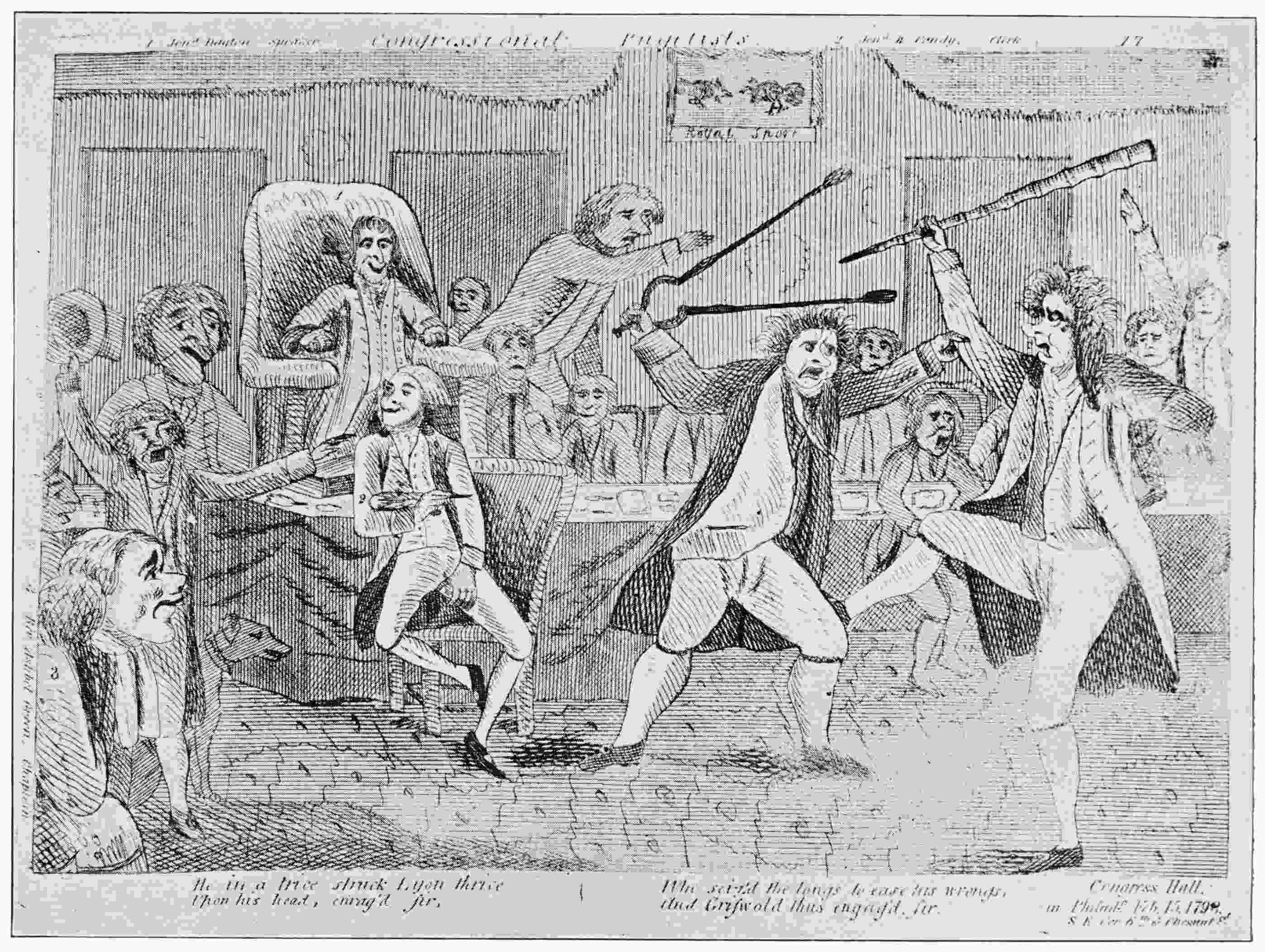
in disgraceful wrangle with Griswold, 360;
attacked by Griswold, and rough-and-tumble fight ensues, 361;
victim of Reign of Terror, under Sedition Act, 386-88.
McClenachan, Blair, and Jay Treaty, 276.
McCormick, Dan, his House of Gossip, 15.
McHenry, James, on Hamilton, 38;
member of Washington’s military family, 39;
in 1792 campaign, 181, 182;
on John Adams, 324;
Adams’s Secretary of War, sketch of, 334-38;
dismissed by Adams, 456.
Maclay, William, Senator from Pennsylvania, moved to laughter over matter of titles, 4;
on Hamilton’s funding scheme, 44, 45;
on speculations of Congressmen, 47, 48;
has plan, substitute for Funding Bill, 56;
on his colleague, Scott, 56, 61;
on Assumption, 61;
on Vining, of Delaware, 61;
letters to, from Rush and Logan opposing Assumption, 61;
approached by Morris to join in land speculations, 61, 62;
on attitude of Congressmen and speculators and Assumption, 62;
on Hamilton and Congress, 68;
on Excise Bill, 73, 74;
on Bank Bill, 75;
Jefferson’s aide in Pennsylvania, 148;
on French Revolution, 209;
on John Adams, 317.
Macon, Nathaniel, North Carolina, organizer for Jefferson, 150;
in conference of Jeffersonian leaders, 205.
Madison, James, Representative from Virginia, on Congress, 3;
on titles, 6;
seeks postponement of first tariff measure, 19;
on Hamilton’s Report on Public Credit, 46;
on Funding Bill, 51;
part in framing Constitution, 51;
contributions to The Federalist, 51;
not an orator, 52;
consulted often by Washington, 53;
cultivated by Hamilton, 53;
loved as a son by Jefferson, 53;
proposes an amendment to discriminate between original owners and purchasers of public securities, 53, 54;
Federalists and speculators much disturbed, 55, 56;
on resolutions of commercial organizations, 55;
amendment to Funding Bill, voted down, 56;
votes for Assumption Bill, 61;
letter to Monroe, 63;
and bargain on Assumption Bill, 66, 67;
opposes principle of Excise Bill, but votes in favor, 72;
on Hamilton’s doctrine of implied powers, 76;
advises Washington Bank Bill is unconstitutional, 77;
tours New England with Jefferson, 79, 81;
writes articles, attacking Hamilton’s policies, for National Gazette, 169;
defends Jefferson’s position on Constitution, 172;
attacks Fenno’s ‘unmanly attack’ on Jefferson, 172;
on Giles’s resolutions attacking Treasury management, 201;
replies to Hamilton’s Neutrality articles, 226;
prepares resolutions based on Jefferson’s Report on Commerce, 240;
attacked by Federalists, 240, 241;
excitement in the country, merchants denouncing and populace favoring M.’s Resolutions, 242-44;
marriage to Dolly Todd, 259;
author of Virginia Resolutions, 409.
Marshall, John, Representative from Virginia (afterward Chief Justice of the United States), appointed special envoy to France, 345;
his return made an occasion for riotous celebration, 368, 369;
opposes the Alien and Sedition Laws, in letter to Porcupine’s Gazette, 382;
opposes plans of his party (Federalist) for change in electoral count, 442;
appointed Secretary of State by Adams, 457.
Martin, Luther, the ‘Federalist bull-dog,’ attacks Jefferson, 352, 353.
Maryland Journal, on Hamilton, 69;
on Assumption, 71;
on speculation, 88;
on speculative craze, 177.
Mason, Stevens Thomson, Senator from Virginia, publishes Jay Treaty, 273.
‘Men of no importance,’ feeling among, against Funding and Assumption Bills, 70;
and Excise Bill, 70, 71.
Mercer, John Francis, Representative from Maryland, organizer for Jefferson in Maryland, 149;
on Giles’s resolutions attacking Treasury management, 201, 203.
Mifflin, Thomas, Governor of Pennsylvania, 148;
orders militia to parade in honor of President, 359.
Mingo-Creek Society, Democratic Club, 262.
Miranda, Francesco de, soldier of fortune and adventurer, proposes revolutionary scheme in South America, 427;
in correspondence with Hamilton, 427;
holds out lure of Florida and Cuba to United States, 427.
Monroe, James, Senator from Virginia, of deputation from Congress to Hamilton on the Reynolds charges, 187;
Minister to France, 341, 342;
banquet in honor of, in Philadelphia, on return from France, 358;
confers with Jefferson and Democratic leaders, 358.
Moore, Thomas, poet, on Jefferson, 90.
Moreau de Saint-Merys, threatened with prosecution under Alien Law, 405, 406.
Morris, Gouverneur, on Hamilton’s speech in Constitutional Convention, presenting plan for Constitution, 32;
Minister to France, 339-41.
Morris, Robert, Senator from Pennsylvania, on titles, 6;
through business partner, speculated in certificates, 46;
legislative agent of Hamilton, 47;
discusses with Hamilton on location of capital, 65, 66;
rents his residence in Philadelphia as Presidential residence, 119;
Hamilton outlines his Bank policy to, 74;
on Genêt, 217.
Morris, Mrs. Robert, intimate of Mrs. Washington, ‘second lady in the land,’ 131.
Morse, Anson, D., quoted, 142.
Muhlenberg, Frederick A. C., Speaker of the House, pokes fun at Senators on titles, 5;
favors Assumption Bill, 58;
one of deputation from Congress to Hamilton on the Reynolds charges, 187.
National Gazette, on Hamilton’s Report on Manufactures, 161, 163;
attacks in, on Hamilton, 166-70;
attacks in, on Washington, 221;
attacks Hamilton’s conduct of the Treasury, 196, 197;
presents analysis of vote vindicating Hamilton’s management of Treasury, 204;
on French Revolution, 207, 211, 212;
on Genêt, 218, 219, 220;
prints Madison’s reply to ‘Pacificus’ letters in Gazette of United States, 226.
Naturalization Act, 264.
Neutrality, Proclamation of, in war between French Republic and England, 216;
dissatisfaction of people, 217, 220;
flouted by both French and British, 224;
justified by Hamilton in brilliant series of articles in Fenno’s Gazette, 225, 226;
the case of the Little Sarah, 227, 228.
New Hampshire Gazette, on the Jay Treaty, 282.
New York, Argus, on the Jay Treaty, 275, 277, 278, 282, 283.
New York City, capital of the Nation in 1789, 1;
First Congress meets in, 1;
preparations for Washington’s Inaugural, 2, 3, 7;
inaugural ball, 7, 8;
life in, 8, 10;
narrow streets, and muddy, 10;
theatrical productions, 10, 11;
cost of living, 12;
tone of society not republican, 12;
republican ‘court,’ 13, 15;
Wall Street fashionable residence street, 15;
slave market and whipping-post prominent in 1789, 9, 10;
taverns, theaters, 11;
yellow fever epidemic, 380.
New York Daily Advertiser, on First Congress, 79;
‘Publicola’ letters in Columbian Centinel answered, 84, 85.
New York Journal, on Assumption, 63, 64.
New York Register, on Madison’s amendment to Funding Bill, 177.
New York Time Piece, on X Y Z papers, 365.
Newspapers, stories in, as to speculations in public securities, 50;
on the Funding Bill, 57, 58;
on Assumption, 71;
on Bank, 78, 79;
on Jefferson and Paine’s Rights of Man, 84, 85;
on speculative craze, 88, 89, 176, 177;
on Hamilton’s Report on Manufactures, 161;
on attacks on Hamilton’s financial measures, 163, 165;
Federalist and Jeffersonian organs, 166-70;
Hamilton’s attacks in, on Jefferson, 172;
on Indian expedition of St. Clair, 175;
on election of Clinton Governor of New York, 178;
in campaign of 1792, 181-83;
crusade against Hamilton, 196;
on Hamilton’s defense of his financial policy, 198, 199, 203, 204;
on French Revolution, 207, 211, 212;
on Genêt, 218-20;
attacks on and defense of Washington, 221;
on the Democratic Societies, 253;
on the Whiskey Insurrection, 254, 255;
on the Jay Treaty, 273-83;
in campaign of 1796, 310, 311;
on the debates in Congress on trouble with France, 350-61;
on the X Y Z papers, 364, 365;
on supposed French outrages, 366-71;
on Alien and Sedition Bills, 374-81;
in Presidential campaign of 1800, 444-85.
Nicholas, George, Kentucky Jeffersonian, challenges Harper to debate on Sedition Law, 406.
Nicholas, Wilson Carey, of Virginia, in conference with Jefferson at Monticello on plans to repeal the Alien and Sedition Laws, 407.
Noailles, Viscount de, visitor to Philadelphia, 135;
appointed Minister by Royal Princes at Coblentz, received by Washington, 219;
Bache’s Daily Advertiser on, 234.
O’Eller’s tavern, Philadelphia, 119, 121, 136;
dinner at, to Genêt, 220.
Order of the Cincinnati, Jefferson on, 262.
Otis, Harrison Gray, on Hamilton, 38;
on Philadelphia, 123, 124;
Representative from Massachusetts, 346;
sketch of, 346.
Paine, Thomas, Rights of Man reply to Burke’s Reflections upon the French Revolution, 82;
publication of pamphlet in Philadelphia creates sensation, 82, 83;
Jefferson’s letter to printer used as preface, 83;
newspaper controversy, 83, 84.
Parsons, Theophilus, pessimistic in campaign of 1792, 179.
Paterson, New Jersey, manufacturing city promoted by Hamilton, 162.
Paterson, William, Senator from New Jersey, and the Assumption Bill, 62.
Pennsylvania Gazette, on Bank Bill, 78;
on speculation, 88.
Perry’s Gardens, New York City, 10.
Philadelphia, social background, 116-39;
capital removed to, 116;
appearance of city in 1790’s, 117;
government departments closely connected, 118;
private houses rooming-houses for Congressmen, 120;
lack of ‘respectful manners’ of the ‘common people,’ noted by travelers, 121;
life of working and middle classes not easy, 123;
society luxury-loving and aristocratic, 123;
English influence prominent, 124;
social life, free manners, 126, 127;
yellow fever epidemic in 1793, 235-38.
Philadelphia Advertiser, on Hamilton, 162.
Philadelphia County Brigade, 275.
Philosophical Society, Philadelphia, 138;
Jefferson at rooms of, 138.
Pickering, Timothy, and the Africa incident, 287;
writes of British to John Quincy Adams, 287;
Secretary of State under Adams, sketch of, 326-31;
ignores requests of Adams in French troubles, 430;
delays preparation of instructions to French mission, 434;
dismissed by Adams, 456, 457.
Pinckney, Charles, of South Carolina, joins Jefferson, 150;
elected to Senate, 383.
Pinckney, Charles Cotesworth, Minister to France, 342;
joined with Marshall and Gerry in special mission in France, 345;
Federalist candidate for President in 1800, 459 ff.
Pinckney, Thomas, Minister to Great Britain, his efforts to stop British violations of Neutrality Proclamation, 224;
set aside in negotiations of Jay Treaty, 269;
sketch of, 309, 310;
selected by Hamilton and King as Federalist candidate for President, in 1796, 310.
Pintard, John, chief of Tammany Society, 148.
Porcupine’s Gazette, active in urging war with France, 350-60;
publishes Martin’s attacks on Jefferson, 352, 353;
abusive to Democrats, 354, 355;
on Lyon-Griswold fight in House, 361.
Powell, Mrs. Samuel, aunt of Mrs. William Bingham, 132.
Priestley, Joseph, English liberal, addresses Tammany and other ‘Democratic Societies’ in New York, 259.
Randolph, Edmund, Attorney-General under Washington, considers Hamilton’s Bank Bill unconstitutional, 77;
on reception of Genêt, 215;
succeeds Jefferson as Secretary of State, 239;
and French Minister Faucet, 285;
is dismissed from Cabinet, 286.
Read, Jacob, Senator from South Carolina, denounced in Charleston for supporting Jay Treaty, 281.
Reign of Terror, Alien and Sedition Laws produce, in 1798, 380-82;
continued through two years, 383;
riotings, 384;
victims, 386-93, 398-406.
Report on Manufactures, Hamilton’s, 161;
newspaper comments on, 161.
Report on the Public Credit, Hamilton’s, 43-68;
debated in Congress, 44.
Reynolds, James, seeks to blackmail Hamilton, 187.
Ricketts, John, proprietor of the Circus, Philadelphia, 138.
Rights of Man, by Thomas Paine, copy lent by printer to Jefferson, 82;
in returning borrowed copy to printer Jefferson writes note commending pamphlet, 83;
Jefferson’s note used by printer as preface, 83;
effect of publication, 83, 84;
newspaper controversy over, 83, 84.
Rittenhouse, David, scientist and friend of Jefferson, 149;
and Jefferson in library of Philosophical Society, Philadelphia, 156;
aids in preparations for reception of Genêt, 219;
president of Democratic Club of Philadelphia, 223.
Rochefoucauld-Liancourt, Duc de La, on Philadelphia, 124, 125;
in Philadelphia, 135.
Rush, Dr. Benjamin, writes letters to Maclay against Assumption, 61;
on Paine’s Rights of Man, 84;
letter to Burr, 147;
Jefferson’s friend, 149;
in yellow fever epidemic in Philadelphia, 237.
Rutledge, John, denounces Jay Treaty, 280;
appointment as Chief Justice not confirmed, 289.
Saint Cecilia Society, Democratic Club in Charleston, 223.
St. Clair, General Arthur, failure of expedition against Indians made issue by Jeffersonians in campaign of 1792, 175.
Schuyler, Philip, father-in-law of Hamilton, elected Senator from New York, 36;
letter of Hamilton to, on Washington, 41, 42;
and the Assumption Bill, 62.
‘Scrippomony,’ Jefferson on, 87.
Sedition Bill, purpose to crush Jeffersonian press, 376, 377;
debates on, in Congress, marked by disorder, 378;
passed by small margin, 380.
Sedgwick, Theodore, speculator in public securities, defends Funding Bill, 48, 49;
on funding of debt, 48, 49, 50;
on Madison’s plan to amend Funding Bill, 55;
speech on the Assumption Bill, 62;
and Excise Bill, 72;
and amendment to Excise Bill, 73;
on Giles’s resolutions attacking Treasury management, 201;
recommended Adams’s nomination as Vice-President, in 1789, 325;
on results of 1798 elections, 383.
Sedgwick, Mrs. Theodore, 134.
Sherman, Roger, Representative and Senator from Connecticut, on titles, 3.
Sign of the Sorrel Horse, Philadelphia tavern, 119.
Smith, Mrs. Margaret Bayard, on Jefferson, 92, 93.
Smith, Samuel, on Madison commerce resolutions, 241.
Smith, Jeremiah, on Philadelphians, 116.
Smith, William, Representative from South Carolina, on Madison’s amendment to Funding Bill, 55;
chosen director of Bank of United States, 90;
on Giles’s resolutions attacking Treasury management, 201, 203;
on Madison’s commerce resolutions, 240, 242.
Southwark Theater, Philadelphia, 137.
Speculation, in government securities, 44-47;
members of Congress involved, 46-48;
in stock and scrip, 87;
fraud and counterfeiting, 88;
Hamilton shocked and concerned, 88;
bubble bursts in 1792, 176;
Hamilton’s policies charged as cause of panic, 177;
newspaper comments on, 177.
Spooner’s Vermont Journal, on the Jay Treaty, 283.
Steele, John, North Carolina, 181.
Stewart, Mrs. Walter, daughter of Blair McClenachan, social leader of Philadelphia, 132.
Strong, Caleb, Senator from Massachusetts, 9;
and the Assumption Bill, 62.
Sullivan, James, lawyer, pamphleteer, and orator for the Democrats, 145.
Tammany, Sons of, rival organization to Society of the Cincinnati, 148;
at first non-partisan, then fervid Jeffersonians, 148.
Tariff, in First Congress, 19;
in Second Congress, 161;
Hamilton’s Report on Manufactures excites little attention, 161.
Taylor, John, of Caroline, a Jeffersonian leader in Virginia, 149, 150;
Jeffersonian leaders confer at home of, 205;
pamphlet analyzing vote in Congress vindicating Hamilton, attributed to, 205, 206;
introduces Virginia Resolutions in Legislature, 409.
Tilley, Count, 135.
Treaty with the Southern Indians, Washington’s attitude on presentation to the Senate, 21, 22.
Trumbull, John, paints portrait of Hamilton, 162.
Tucker, George, editor of Blackstone’s Commentaries, 169.
Twining, Thomas, in Philadelphia, 120.
United States Chronicle, on Freneau’s attacks on Hamilton, 164.
Venable, Abraham B., of deputation from Congress to Hamilton on the Reynolds charges, 187.
Vermont Journal, on Hamilton’s Passaic Falls scheme, 162.
Vining, John, Representative from Delaware, and Assumption, 61;
Maclay on, 61.
Virginia Resolutions, written by James Madison, and introduced in Legislature by John Taylor of Caroline, 409;
contemporary opinions of, 409-11.
Wadsworth, Jeremiah, Representative from Connecticut, speculator in certificates, 47 n.;
sneers at soldiers of Revolution, 55, 56;
elected director of Bank of United States, 90.
Warville, Brissot de, and Mrs. Bingham, 128, 129.
Washington, George, reception on arrival in New York, 6, 7;
inaugurated President, 7;
bored by dignities and ceremonial of office, 16, 17;
his solemn dinners, 18;
presents in person treaty with Southern Indians for ratification by Senate, 20;
annoyed by proposal to refer treaty to committee, 21;
rents house of Robert Morris in Philadelphia, 119;
endeavors, unsuccessfully, to effect reconciliation between Jefferson and Hamilton, 171;
Hamilton refuses to discontinue attacks in Fenno’s Gazette, 172;
and the French Revolution, 214;
issues Neutrality Proclamation, 216;
and Jefferson in the case of the Little Sarah, 228;
reluctantly accepts Jefferson’s resignation, 233, 234;
appoints Jay special envoy to Great Britain, 247;
attacks Democratic Societies in Message, 261;
delays signing Jay Treaty, 285;
his prestige used to make Treaty more acceptable, 286;
is attacked by Democratic press, 286-88;
refuses to comply with request of House for papers pertaining to Jay Treaty, 298;
refuses to be a candidate for a third term, 308;
accepts chief command of army in prospective war with France, 413;
selects Hamilton, Pinckney, and Knox as major-generals, 413.
Washington City, new capital, in 1800, 486-89;
‘city of magnificent distances,’ but mud roads, 487.
Whiskey Boys, the. See Whiskey Insurrection.
Whiskey Insurrection, the, 250-56;
grew out of enforcement of Excise Law, 251;
Hamilton active in suppressing, 254-56;
ringleaders arrested, harshly treated, and jailed, 255;
most of prisoners acquitted on trial, 255;
two convicted, but pardoned by Washington, 256;
tempest in a teapot, 256.
Williamson’s Gardens, New York City, 10.
Willing, Thomas, business partner of Robert Morris, elected director of Bank of United States, 90.
Wingate, Paine, on Federal Hall, 2.
Witherspoon, John, president of Princeton, 157.
Wolcott, Mary Ann, sister of Oliver Wolcott, afterward Mrs. Chauncey Goodrich, 134.
Wolcott, Oliver, of Connecticut, on Hamilton’s religious views, 41;
mouthpiece for Hamilton, 59, 60;
on Philadelphians, 116;
on demonstrations against Jay Treaty, 275;
Adams’s Secretary of the Treasury, sketch of, 331-34.
Wolcott, Mrs. Oliver, called ‘the magnificent,’ 134.
Wythe, George, Virginia lawyer and politician, 96;
presides at meeting in Richmond denouncing Jay Treaty, 282.
X Y Z papers, Federalists familiar with, before publication, 364;
Hamilton sees trump card in them for war party, 364;
Jeffersonians kept in ignorance, 364;
excitement intense on publication, 365, 366;
‘millions for defense, but not one cent for tribute,’ a clarion call, 366;
rioting in Philadelphia, 367.
Yellow Cat, the, Philadelphia tavern, 120.
Yellow fever, in Philadelphia, 237, 238;
in New York, Boston, and Philadelphia, 380.
![Image unavailable.]](https://openoldbooks.sgp1.digitaloceanspaces.com/books/jefferson-and-hamilton/images/cover.jpg)